
BLUETTI, a technology pioneer in clean energy, is launching the new Elite 400 in Australia on March 9, 2026. Packing 3840Wh energy in a wheeled chassis, the Elite 400 delivers serious battery backup for anyone needing mobile energy at home or outdoors – without being stuck in one place.
It handles everything from suburban outages and weekend BBQs to market stalls, outdoor events, and off-grid farm work, without the noise, fumes, or hassle of a traditional generator.
Big power on wheels, no compromise
At first glance, the Elite 400 looks like a travel suitcase with a pull rod, two solid wheels and integrated handles. The mobile design redefines what a high-capacity portable power station can do, allowing one person to roll this nearly 4kWh powerhouse from garage to ute, gravel or concrete with ease.
Once in place, it delivers 2600W of continuous AC pure sine wave power, with up to 3,900W of power lifting for high-startup appliances. That’s enough to run fridges and freezers for street stalls, power tools at outdoor worksites, or sensitive audio systems during beach parties.
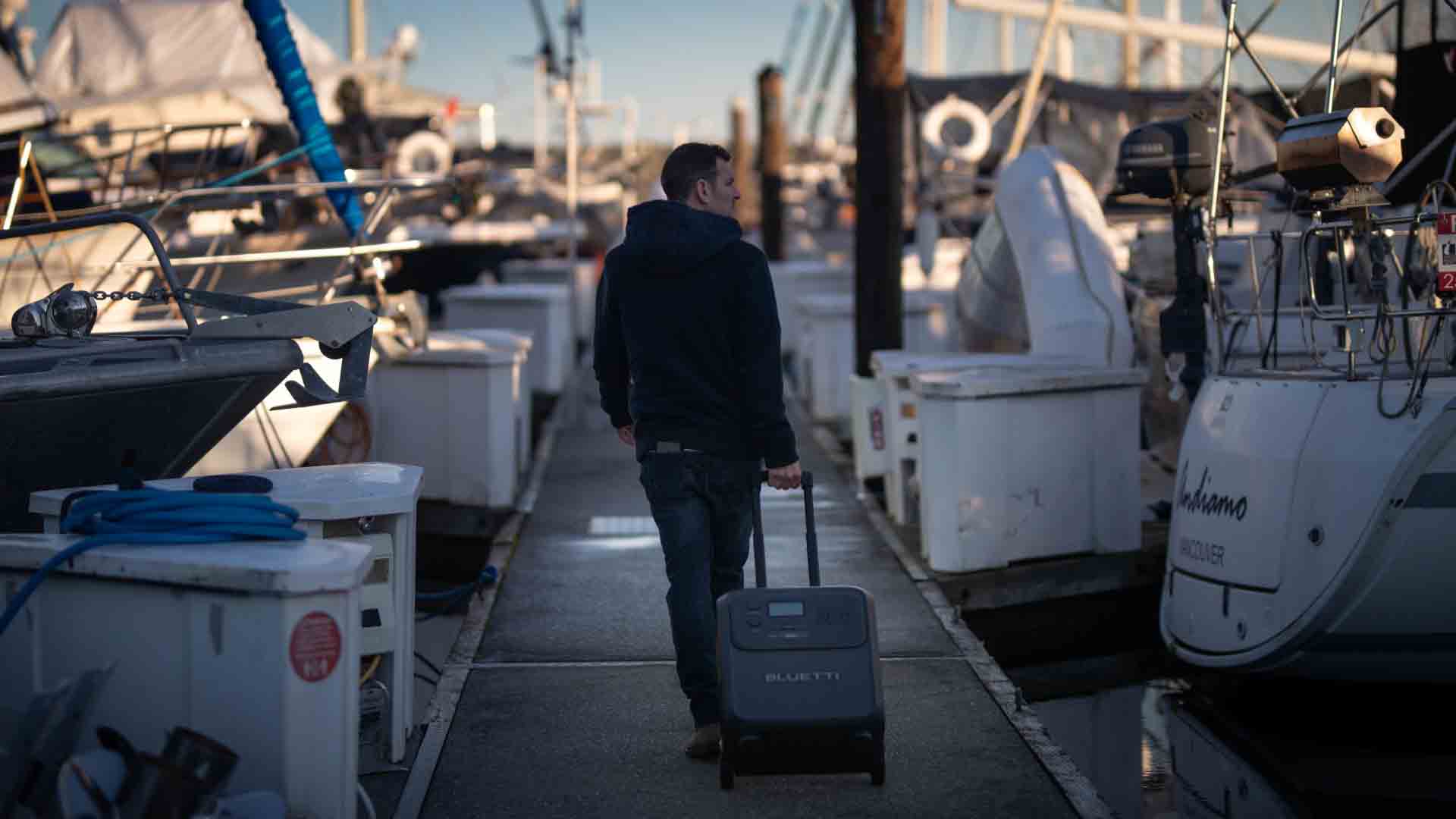
All-day runtime for camps, stalls and events
With seven output ports including two AC outlets, two USB-A, two high-speed USB-C ports, and a 12V car socket, the Elite 400 can power multiple devices without juggling plugs. Stallholders can keep their EFTPOS terminals charged, lights on, and music speakers playing for hours.
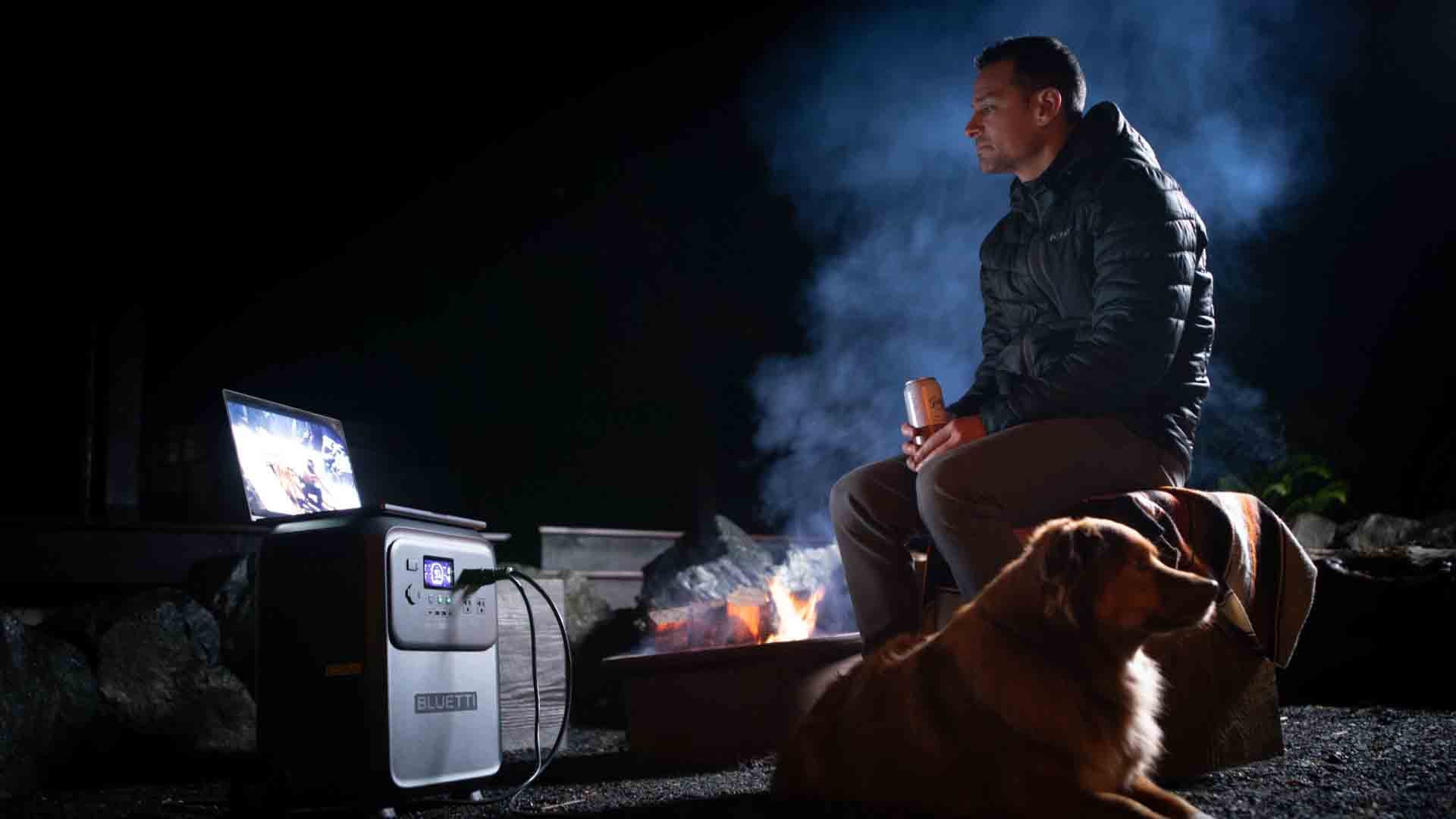
A single full charge can run a 50W portable fridge for more than 131 hours, a 1000W ice maker for around 3.2 hours, or recharge a 60Wh laptop up to 45 times. For campers and outdoor hosts, it means a reliable power supply without constant re-fuelling, emissions or noises, which are often restricted or outright banned in public areas.
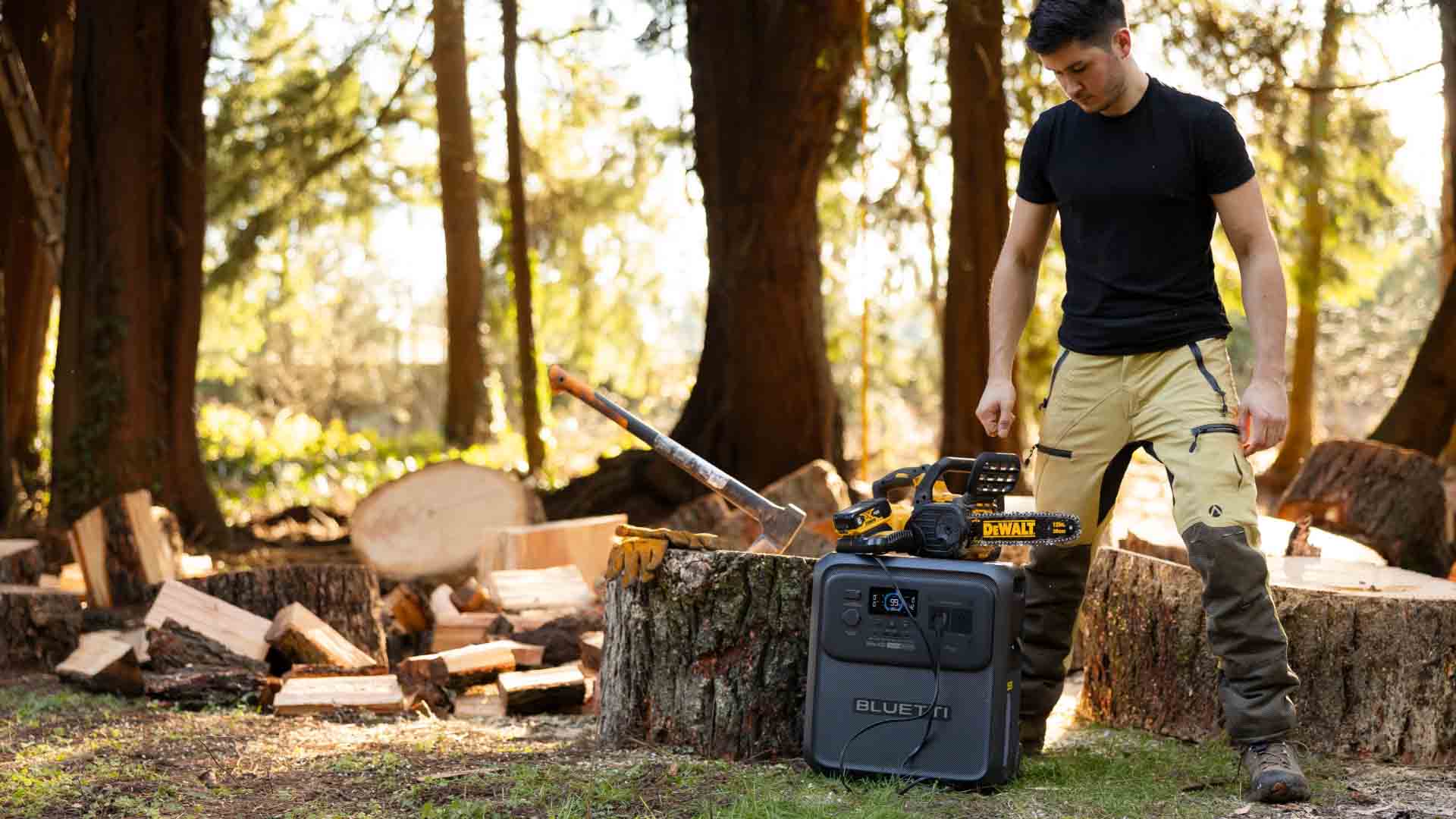
Fast charging that keeps up with real life
Charging speed matters for large-capacity power stations, and this is where the Elite 400 quietly flexes. It supports 2300W AC fast charging, cutting down wait times between uses.
Add up to 1000W of solar input, and combined charging peaks at 3300W, pushing the battery to 80 per cent in around one hour under ideal conditions. That’s a major win for Australians relying on solar during daylight hours, especially on solar farms, remote caravan parks, or properties where grid access is limited.
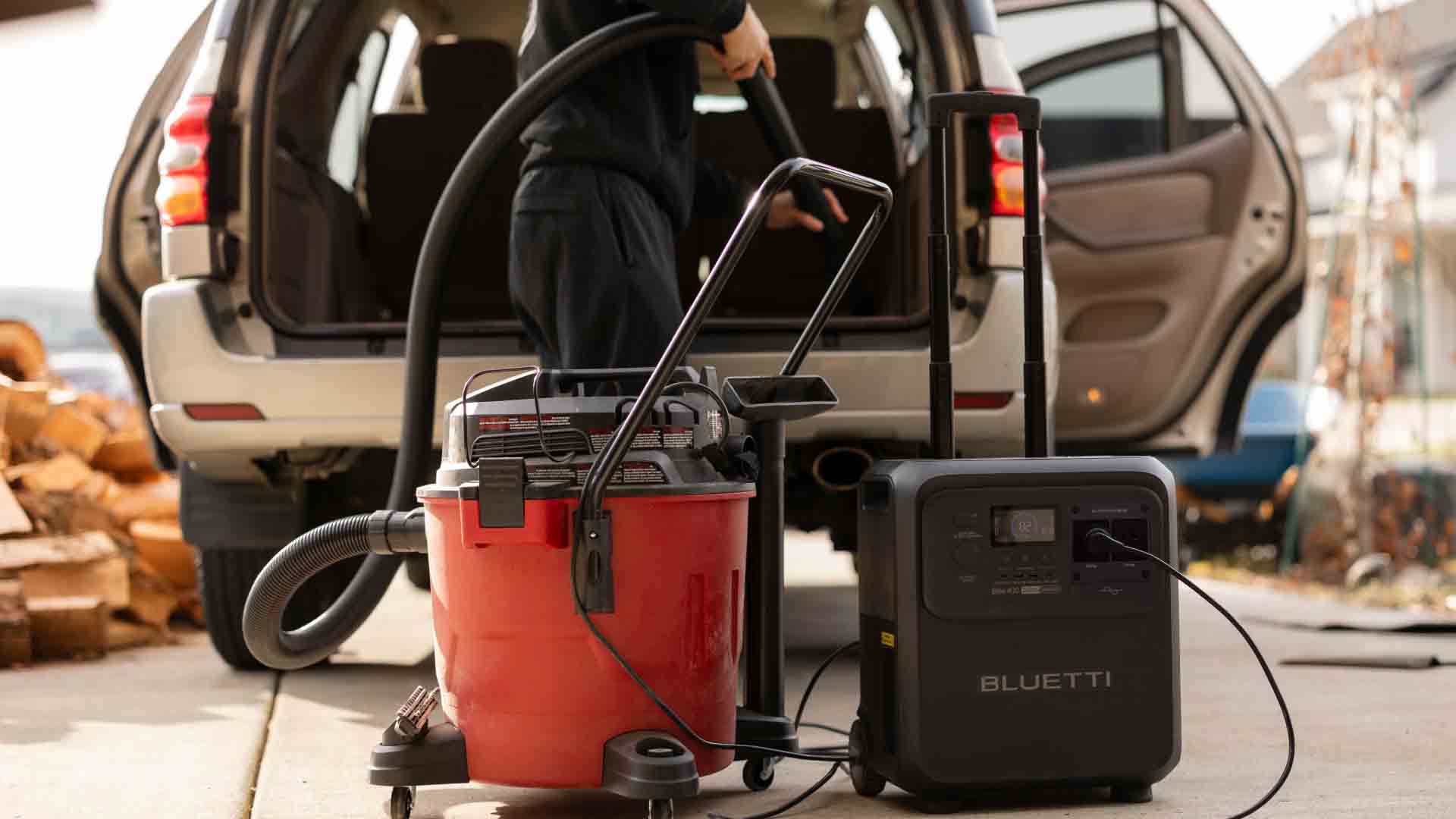
Smart backup for everyday power confidence
At home, the Elite 400 also works as a dependable backup system, with a 15ms UPS switchover that keeps essential devices running through sudden outages. Internet routers, fish tank pumps, medical devices, and home offices stay online without interruption.
Its ultra-low 3W idle power draw allows the unit to sit on standby for extended periods without quietly draining itself. Through BLUETTI app via Bluetooth or Wi-Fi, users can monitor power in real time, schedule charging during solar-heavy hours, and remotely manage connected devices. Whether used as a home battery to offset peak rates or to turn the A/C on before getting home, it offers power that fits around modern Australian routines.
Pricing and availability
The BLUETTI Elite 400 portable power station will be available in Australia from March 9, 2026, via the official BLUETTI Australia website, priced at AUD $2999. Customers can use the code 4X4400 for an additional 6% launch discount.
About BLUETTI
BLUETTI is a global clean-energy brand focused on portable power, solar integration, and energy resilience. Known for combining robust engineering with practical design, BLUETTI continues to develop power solutions that support everyday living, outdoor exploration, and off-grid independence.
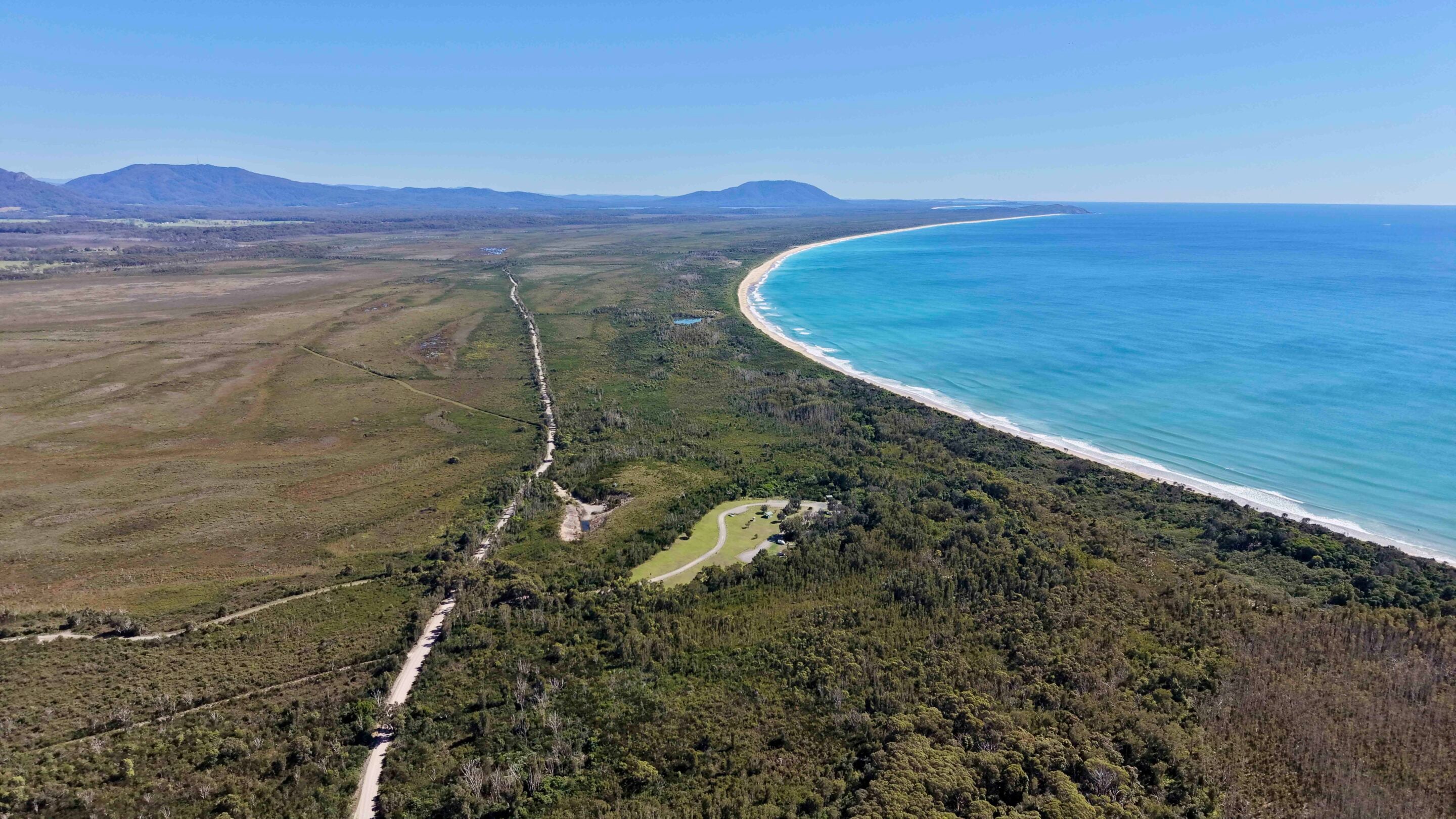
The last time I spent time in the beautiful Crowdy Bay NP was just after the devastating fires that ripped through the North Coast a few years ago. Today, the trees are coming back with a vengeance, the heathlands are blooming, and the animals have returned.
Crowdy Bay National Park is a hidden gem, lying an easy four hours north of Sydney on the Mid North Coast between Taree and Port Macquarie. Captain Cook sailed past in 1770 and spotted a group of Aboriginal people on the headland, naming it Crowded Head. Over time, the name changed. To the north, he spotted three near-identical mountains, which he named the Three Brothers Mountains – something he believed was unique, though the Birpai people had been calling them this for years.
The Birpai people had an abundance of food in the lower rivers and forest areas, feeding on shellfish, oysters and crayfish. In the forests there were emu, kangaroo and turtle, providing a good source of protein. They knew when to move to the coast by observing the movement of the hairy caterpillar, which coincided with the annual mullet run in the bay. Shell midden sites have been found and are now protected within the park, with some dating back 6000 years.
Exploring Camden Haven and North Brother Mountain Lookouts
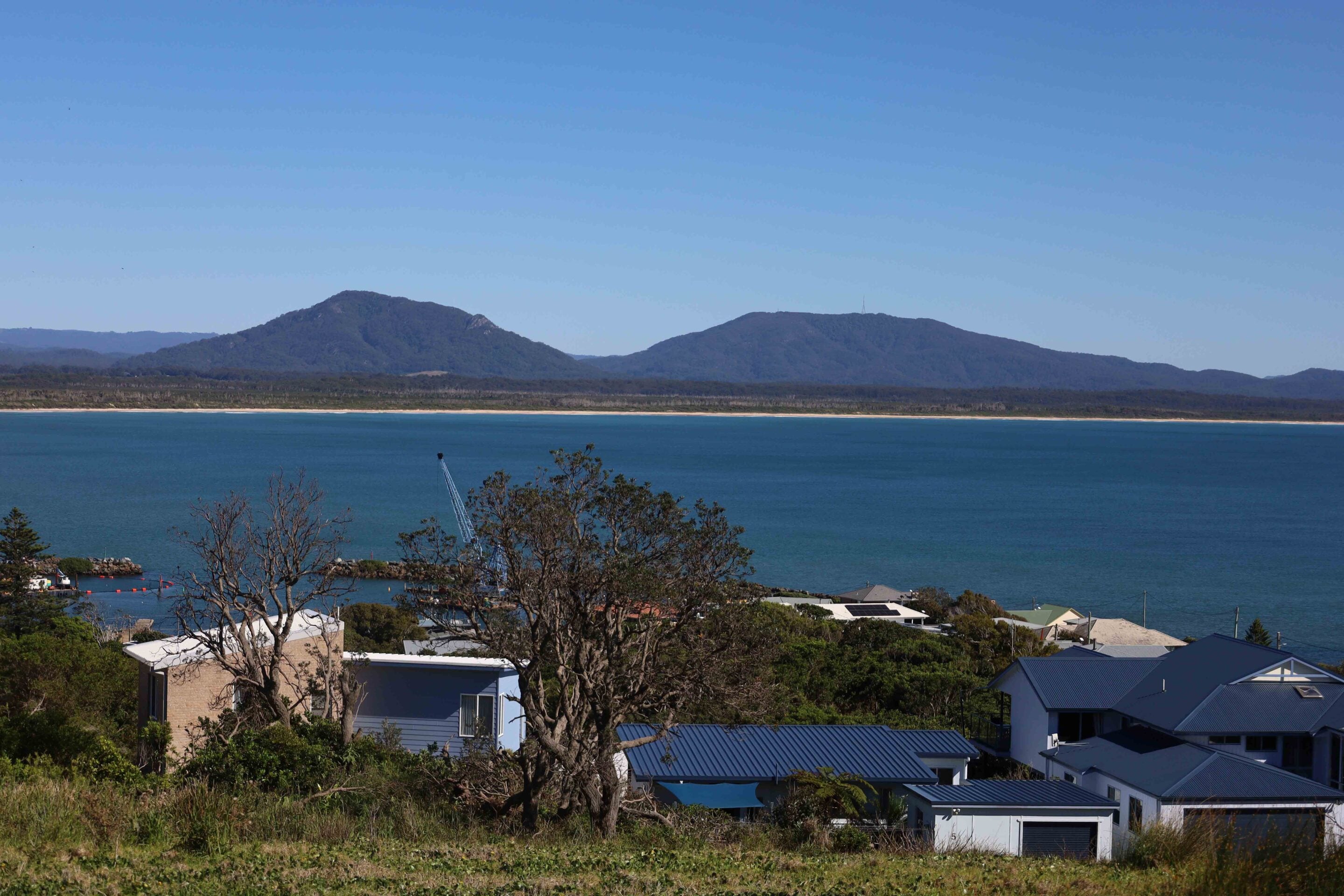
My trip started at Camden Haven, high on North Brother Mountain, where the views to the north were absolutely stunning along the coast.
Also known as Dooragan Mountain – which translates to ‘north’ in the Birpai language – it is now declared a national park. The park lies within the ancestral lands of the Birpai people, who view the mountains as culturally significant, with stories passed down through generations.
There are several walking tracks around the top of the mountain, winding through pockets of rainforest and leading to various lookouts. One in particular looks south over Crowdy Bay NP – the Don Johnson Lookout. Johnson was a passionate conservation advocate and a driving force behind the push to have Crowdy Bay declared a national park.
Camping Highlights: Diamond Head, Indian Head and Kylie’s Beach
Heading south from Camden Haven into Crowdy, you’ll find the first – and most popular – camping area, Diamond Head.
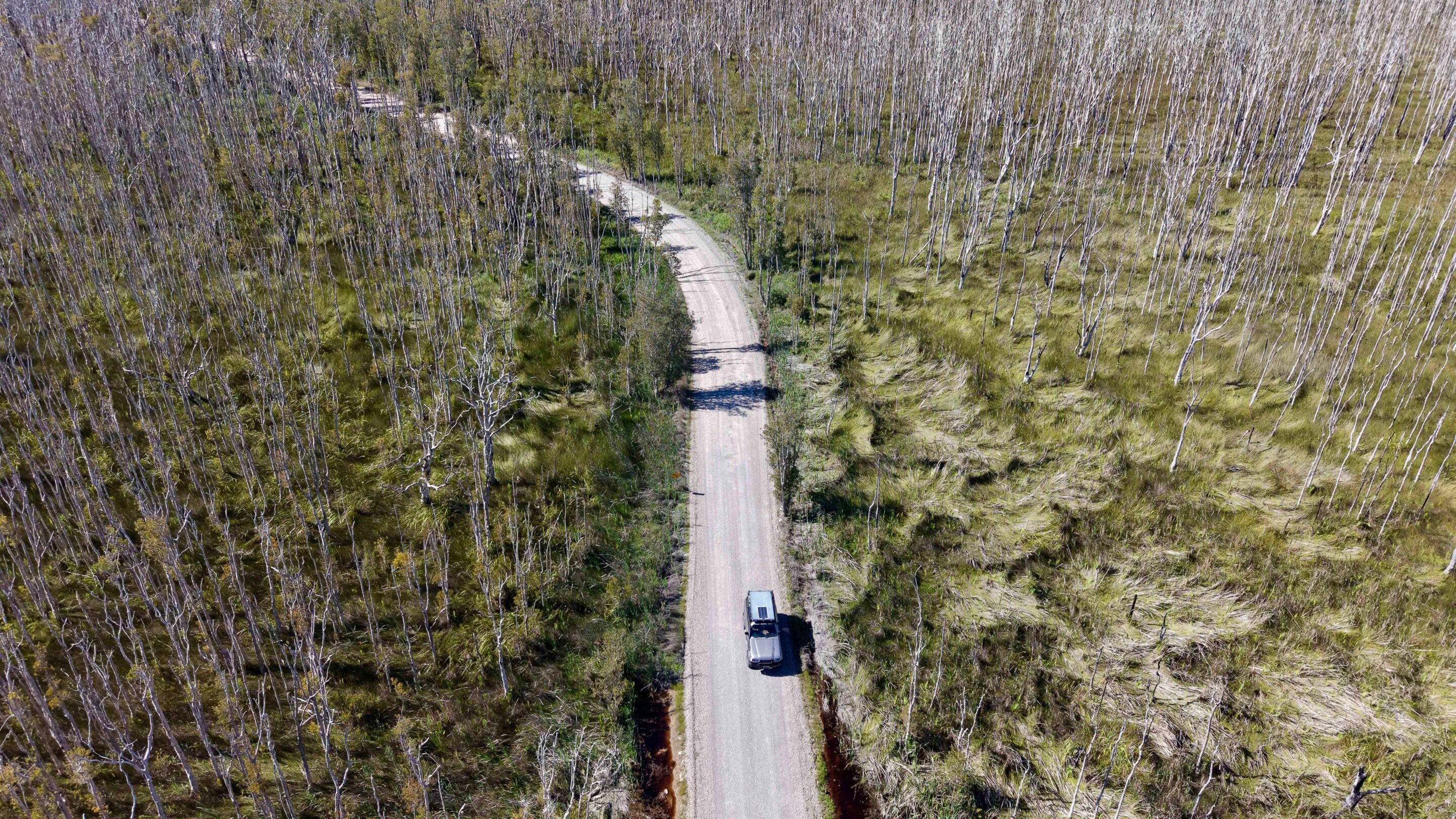
It’s a favourite with families thanks to its formal amenities and walking tracks to Dunbogan Beach. Diamond Head Road cuts a path through Crowdy, passing through a complex mix of littoral rainforest, coastal heathland, salt marshes and eucalypt forest.
During the destructive fires five years ago, most of the park was wiped out. Slowly, the landscape has regenerated, but there are still signs that some trees may never re-grow. I also noticed that since the fires there are more gates blocking some of the side access tracks, presumably to protect more fragile areas during the regrowth stage.
The next camping area along is Indian Head campground, which is my go-to stopover. It features large grassed areas, basic facilities, fires are allowed, and quite often the wildlife hangs around enjoying the same space as the campers.
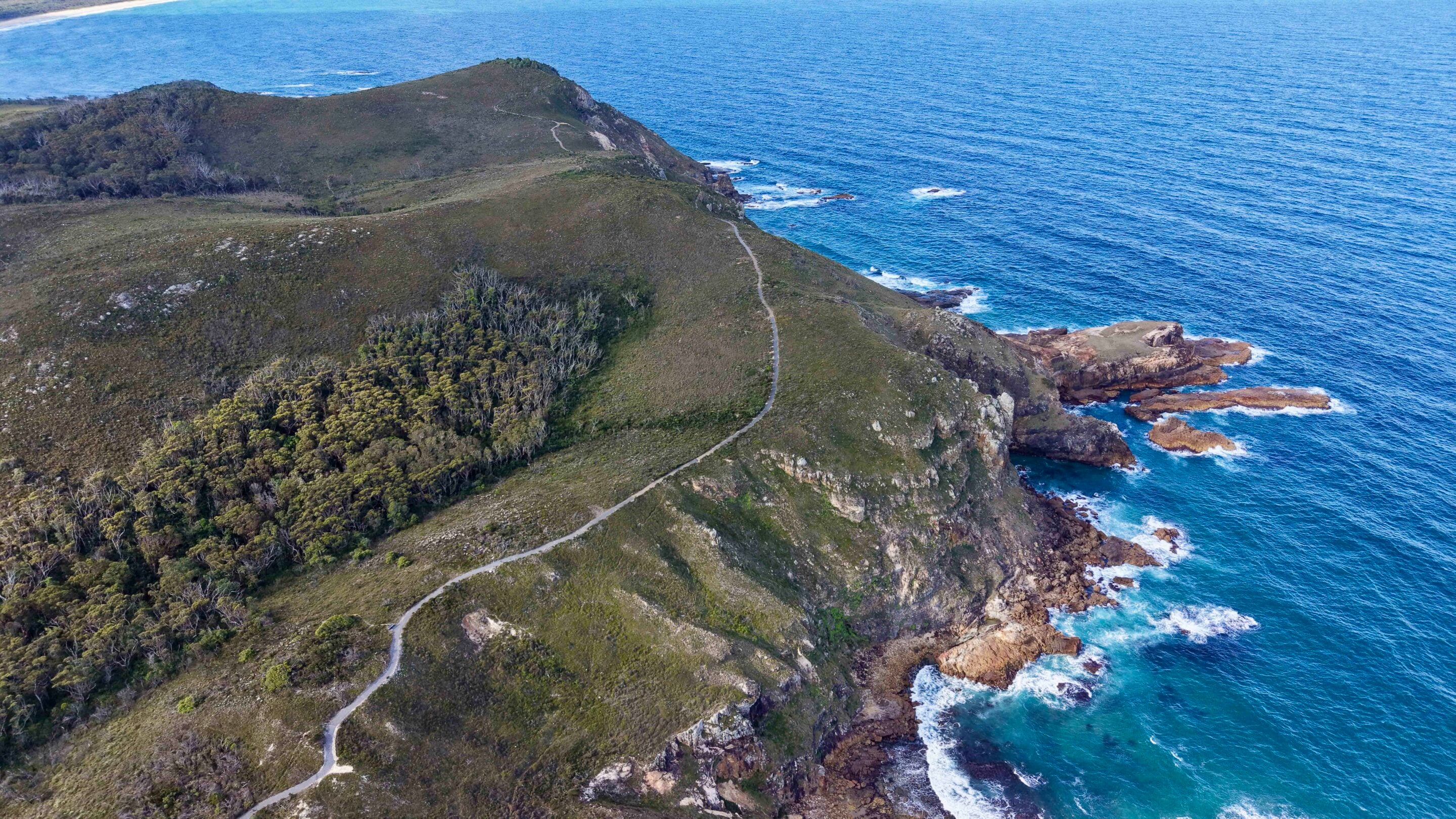
Indian Head has a couple of walking tracks, including one out to the headland with stunning views along the coastline and down to Split Rock and the bridge, as well as a track to the historic Kylie’s Hut. The original timber slab hut was built in 1940 by reclusive local farmer Ernie Metcalfe as a writing retreat for Kylie Tennant. She fell in love with the area and the story surrounding old Ernie, and wrote many books from the hut, including one about him titled The Man on the Headland. The hut was rebuilt after the fires, but the original foundations can still be seen next to the new structure.
You don’t need a big four-wheel drive for the roads through Crowdy, as they’re suitable for AWD vehicles, although they can get a little corrugated and dusty during busy periods. The next camping area is Kylie’s Beach, which can get quite busy during the holidays thanks to its direct beach access for walkers and 4x4s. You’ll need a permit to drive on the beach here, and tides play a big part too, as the sand can get quite soft. When conditions are right, you can drive all the way south along the beach to Crowdy Head.
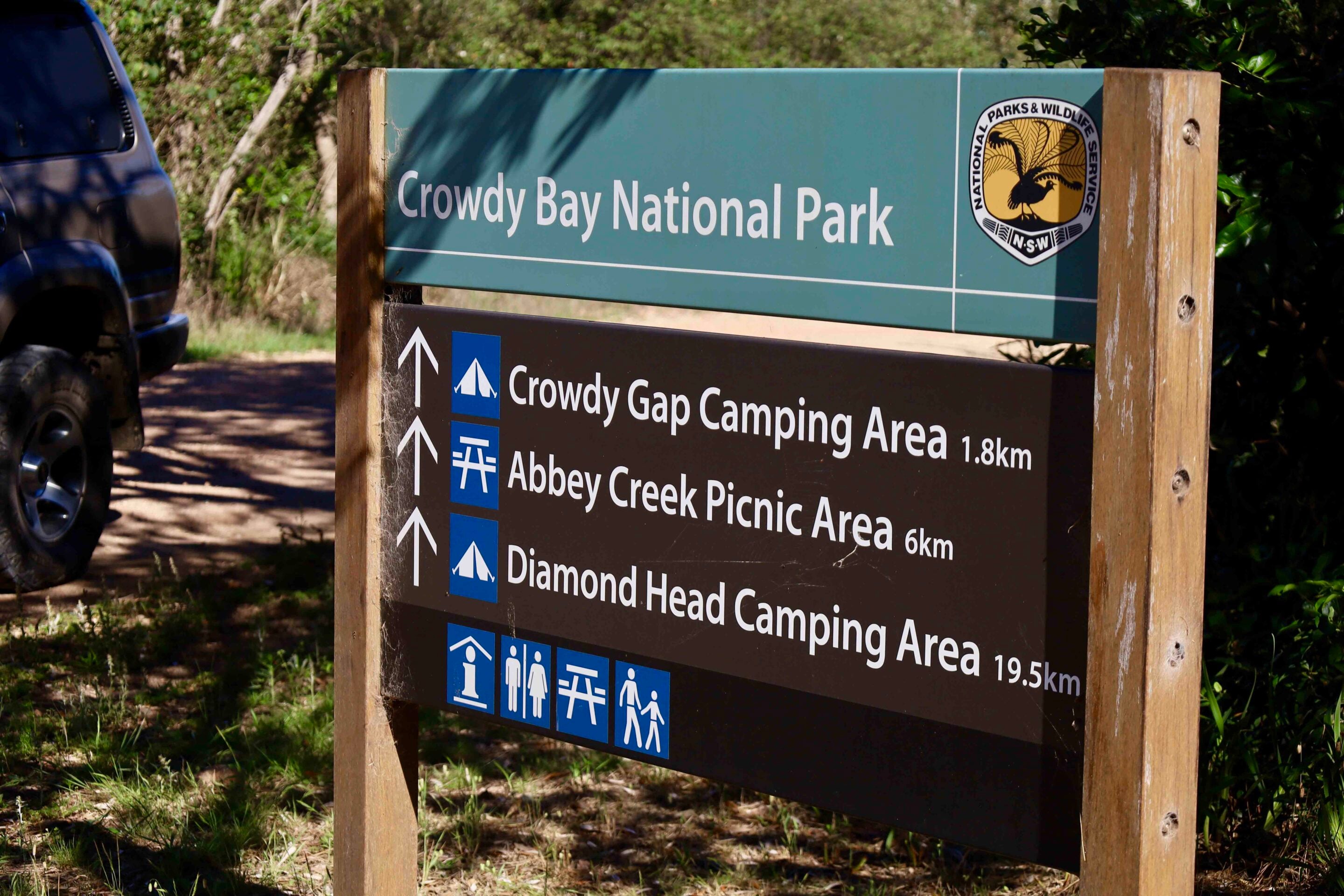
Further south is the last campground, Crowdy Gap, which has a more national park feel, with bollards and regimented campsites. Facilities include cold outdoor showers, drop toilets, and fires are permitted off the ground. The campground is surrounded by coastal banksias and black sheoaks, where you can smell the salt air and hear the crashing waves.
This was once the site of an old dairy farm before being declared a national park in 1972. The area was previously privately owned, with houses and gardens scattered throughout, and there was even a bush racecourse on the western side of the road, which has now all but grown over.
Discover Crowdy Head Village, Lighthouse, and Coastal Adventures
Just seven kilometres away is the fishing village of Crowdy Head.
It’s a sleepy little place these days, with an eco resort, surf club and a takeaway shop. Sitting high on the headland above the harbour is Crowdy Lighthouse. Built in 1878 to guide ships through the Manning River, it was manned by a lone lighthouse keeper until full automation in 1972. It’s another fine example of an early stone building that has stood the test of time through high winds, rain and the forces of Mother Nature. Nearby, the foundations of the old lighthouse keeper’s cottage can still be seen.
The bay at Crowdy is well protected, making it ideal for kids to take a dip, and there’s often great snorkelling around the surrounding rocks. While exploring the park, keep an eye out for endemic native species including koalas, echidnas, wallabies and bandicoots, as well as black cockatoos feeding on the nuts of sheoak trees. You might even spot a white-bellied sea eagle cruising along the coastal strip.
It’s possible to explore all of these camp areas, Kylie’s Hut and Crowdy itself in one day, but you need to ask yourself: what’s more important – the journey or the destination? Crowdy Bay National Park may not be large in size, but it holds a lot within.
Quick facts
Crowdy Bay National Park is located 350km north of Sydney on the Mid North Coast of NSW.
Crowdy is the perfect coastal escape within easy reach of Sydney, offering a choice of multiple campgrounds. Nature lovers will enjoy the headland walking tracks, stunning vistas and an impressive coastline where you can fish or walk to your heart’s content. The wildlife seems to love it too, with wallabies and goannas roaming the camps and, overhead, plenty of coastal birdlife. The campgrounds have showers and bins, and fires are allowed in season.
After upgrading the GVM on my Isuzu D-MAX, it made sense to look at the next most important part of the setup – stopping power.
Bigger loads mean more strain on the brakes, and with more off-road adventures on the cards, I wanted a braking system that could handle the heat, dust and rugged terrain of Australia’s outback. That’s when I turned to Bendix and its Ultimate 4WD Brake Upgrade Kit. Installed by the team at Opposite Lock Wodonga, the experience didn’t just stop at improved performance – I was lucky enough to watch the full installation from start to finish.
JUMP AHEAD
- Why upgrade?
- What you get in the Bendix Ultimate 4WD kit
- Installation at Opposite Lock Wodonga
- On and off-road performance
- Maintenance and longevity
- Verdict
Why upgrade?
Upgrading a GVM allows you to carry more gear legally, but it also adds significant weight to your setup.
That extra weight affects stopping distances, increases brake temperatures and can lead to fade when the going gets tough. The factory braking system on the D-MAX performs well for standard loads, but throw in a canopy, drawer system, dual batteries, long-range tank, rooftop tent and all the recovery gear, and you’re suddenly asking a lot more from your brakes than they were designed to handle.
That’s where the Bendix Ultimate 4WD Brake Upgrade Kit steps in – a purpose-built system designed for touring rigs that work hard both on and off the bitumen.
What you get in the Bendix Ultimate 4WD kit
Bendix designed this upgrade as a complete, vehicle-specific package rather than a random mix of aftermarket parts.
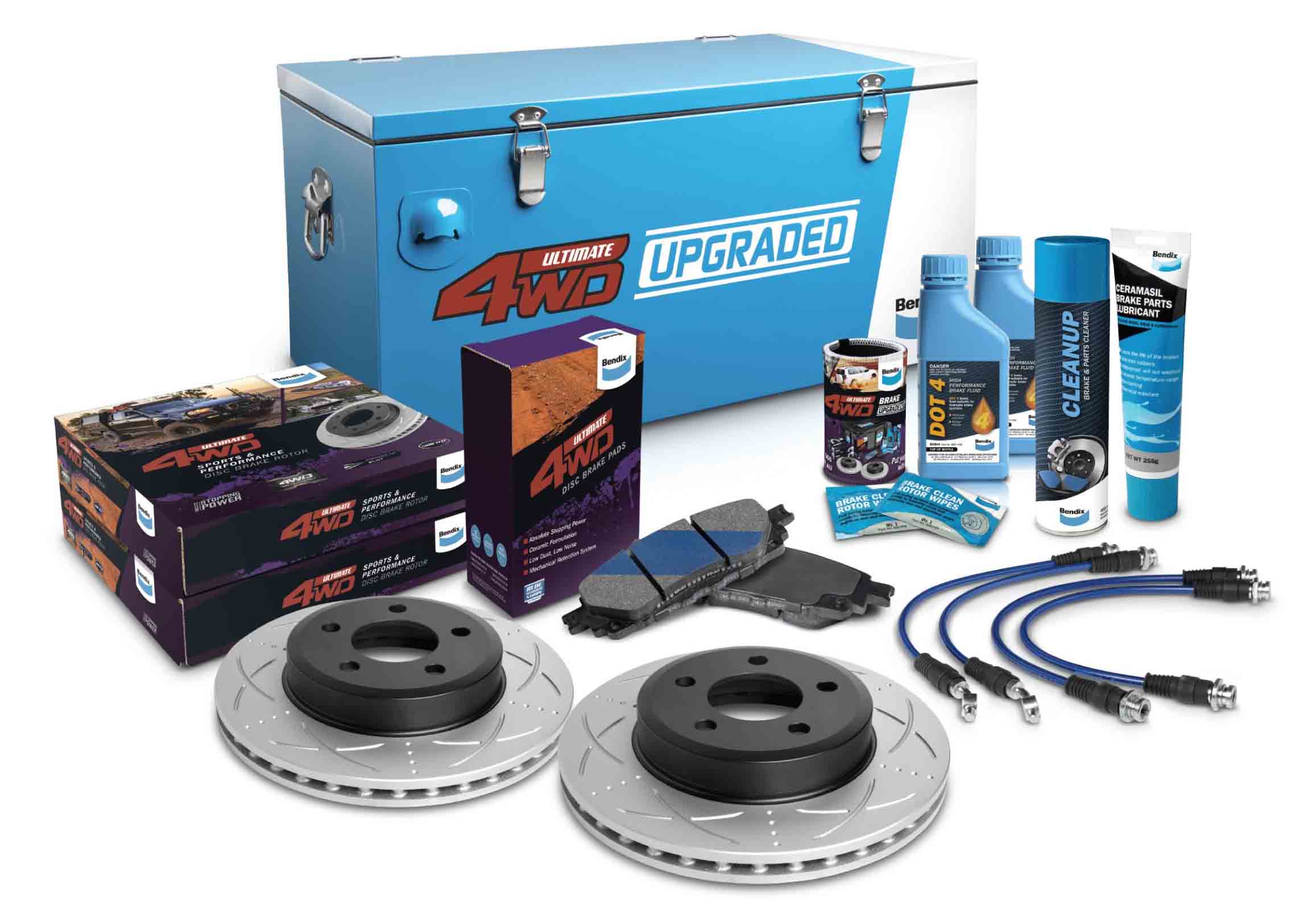
Everything you need comes in one box – or, in this case, one ice box – containing rotors, pads, braided lines, fluid and all the accessories. It’s a clever bit of branding, and yes, the 60-litre ice box is absolutely reusable at camp to keep the beers cold, or at home when resting a smoked brisket. The main components are:
- High-carbon slotted rotors: Engineered for better thermal stability and heat dissipation. The slots and dimples help clear gas, water and mud, maintaining consistent friction in harsh off-road conditions.
- Ultimate 4WD brake pads: Made with a heavy-duty ceramic formulation, they offer strong, consistent bite with reduced noise and dust – something that’s especially welcome on long road trips. They also feature Bendix’s MRS (Mechanical Retention System), which keeps the pad material locked to the backing plate even under extreme conditions.
- Braided brake hoses: A significant upgrade from standard rubber lines, these stainless-steel braided hoses provide a firmer pedal feel and enhanced resistance to expansion when temperatures rise.
- Heavy-duty brake fluid and accessories: The kit includes Bendix brake fluid, cleaning wipes, lubricant and all mounting hardware, making it a genuine plug-and-play solution.
For the D-MAX, Bendix has tailored the setup to match factory specifications, so everything bolts straight on – no cutting, grinding or modification. Exactly what you want for a professional install and peace of mind on the road.
Installation at Opposite Lock Wodonga
The crew at Opposite Lock Wodonga have fitted countless 4×4 upgrades, but they were clearly impressed by the Bendix kit.
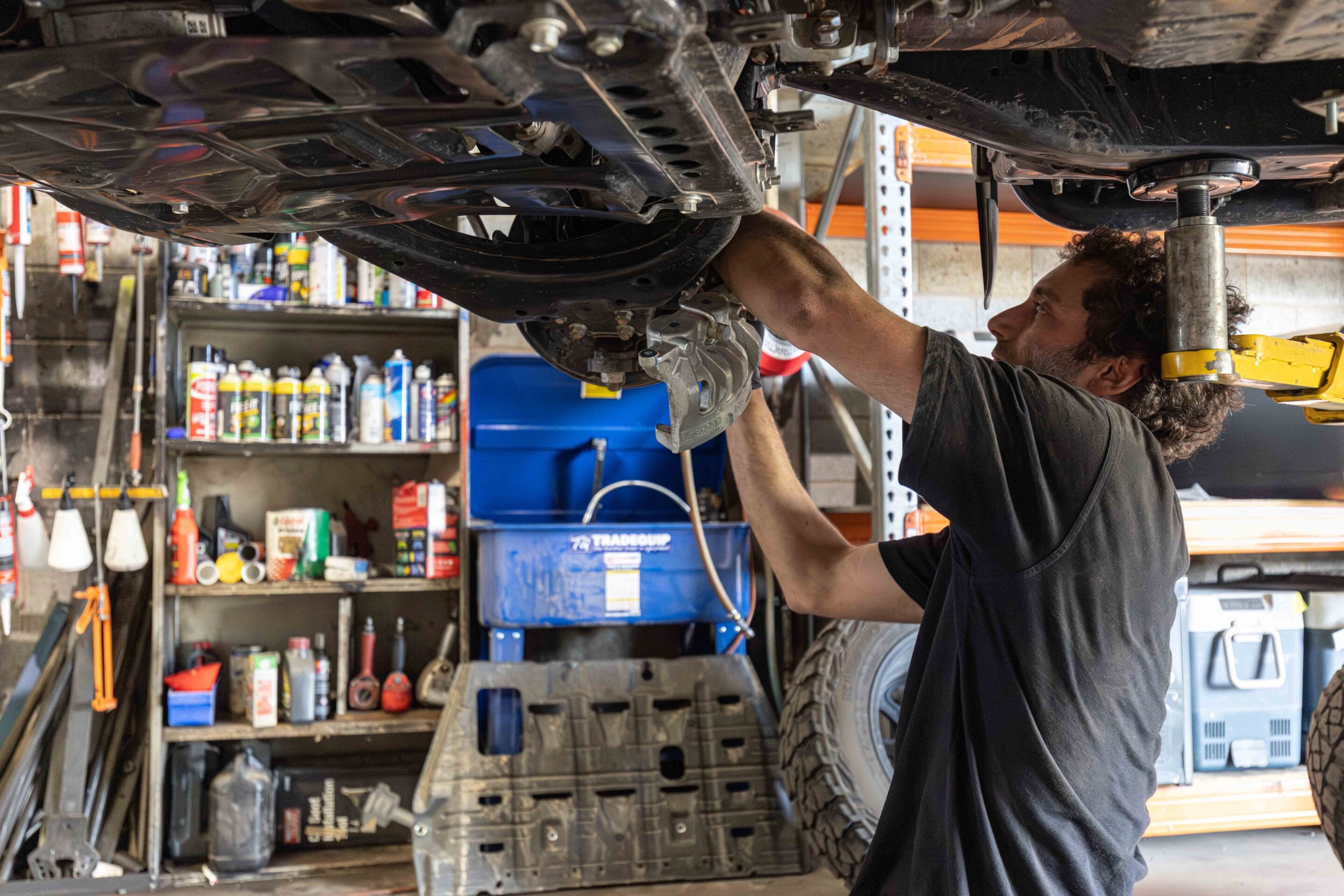
Massi, the technician who handled my install, commented that it was one of the most complete kits he’d worked with – everything needed was included in the box, except the tools. The process began with removing the factory rotors, pads and lines. Each hub surface was cleaned thoroughly to ensure a perfect mounting face for the new rotors.
The slotted rotors went on next, followed by the Ultimate pads after lubricating the required points with Ceramasil Brake Parts Lubricant. The braided lines were carefully routed and secured, with Massi double-checking that they cleared the suspension components and wouldn’t rub at full steering lock.
Bendix Cleanup Brakes & Parts Cleaner was then used to remove any residue from the rotors and fittings. Once everything was torqued to spec, the system was bled with fresh DOT 4 fluid until the pedal felt firm and responsive. The whole job took around three hours, and it was clear the kit had been designed to fit correctly from the start – no fiddling, no mismatched parts, just a straightforward install done right.
On- and off-road performance
Once installed, the improvement in stopping power was immediately noticeable. Pedal feel was firmer, braking response more linear, and the D-MAX pulled up with confidence even when fully loaded.
On the blacktop, the Bendix Ultimate kit delivered smoother, quieter braking. In everyday driving, there was none of the squeal or vibration that sometimes comes with performance pads. Instead, it felt controlled, progressive and predictable.
Off-road is where the real test began. Steep descents, loose gravel and technical climbs put any braking system under pressure, but the Bendix kit handled it all with ease. One standout feature was how well the brakes integrated with the D-MAX’s existing systems. When the Emergency Brake Assist (a feature I could happily do without) kicked in, there was no screech or chatter – just smooth, consistent braking. The ABS and traction control systems also worked seamlessly with the new setup, providing confident control on steep, rugged terrain.
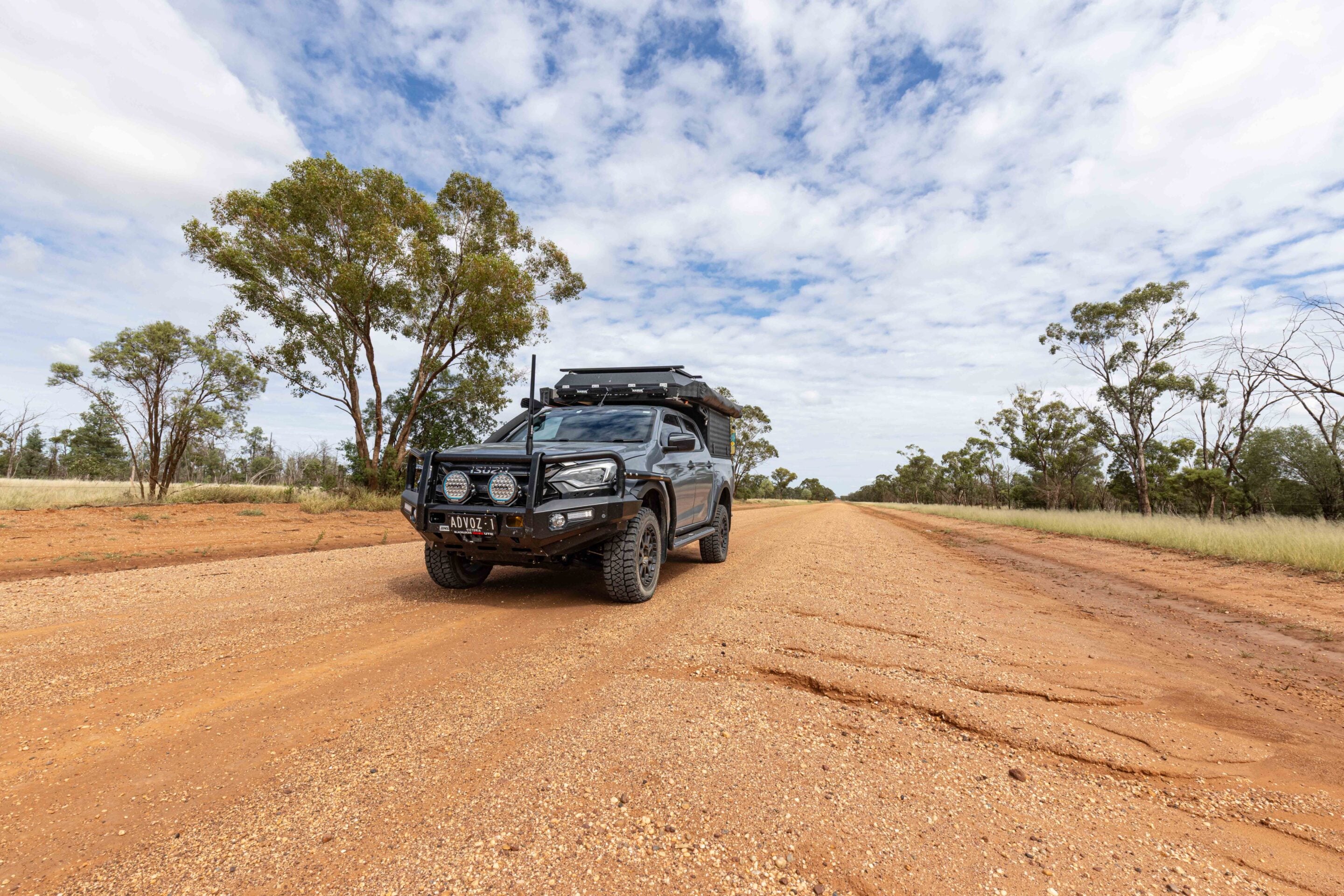
Even after repeated braking on long downhill runs, there was no noticeable fade. The ventilated rotors kept temperatures in check, while the advanced friction materials maintained consistent grip and modulation. It gave me confidence that, no matter the conditions, the D-MAX could stop safely and effectively.
Bendix designed the Ultimate 4WD range with the harsh realities of outback touring in mind. From dusty desert tracks to muddy creek crossings, these brakes are built to resist corrosion, shed water and mud quickly, and maintain stopping power under load. The high-carbon metallurgy of the rotors improves heat dissipation and strength, while the multi-layered shim technology in the pads reduces noise and vibration. The result is a system that feels refined on-road and unshakably tough off-road.
After putting them through their paces on everything from the High Country to the corrugations of the Canning Stock Route, I can safely say these brakes have transformed the way the D-MAX performs when the going gets steep, rough or slippery.
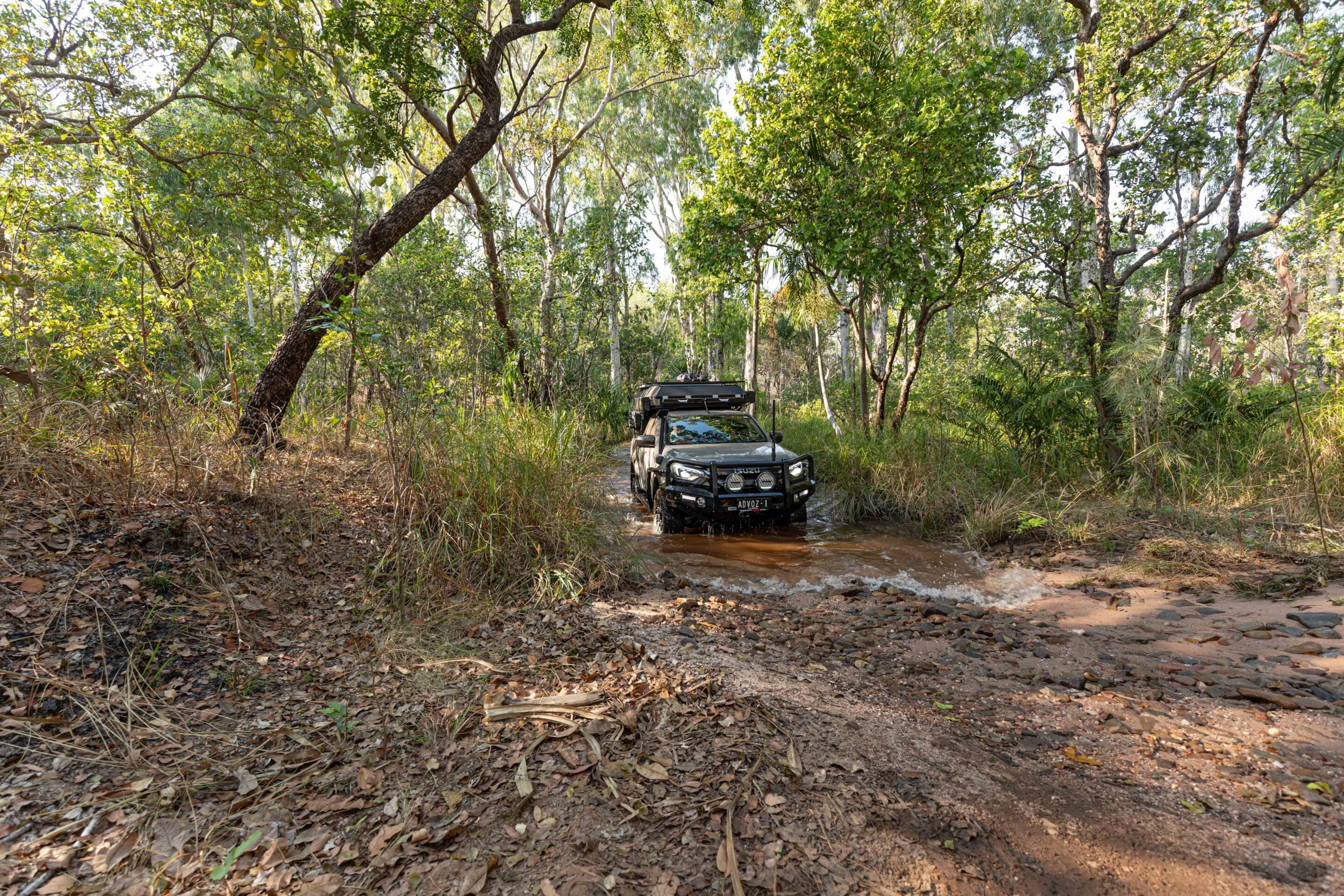
Maintenance and longevity
A sound brake system relies on proper maintenance, and Bendix has made that straightforward.
Using the Cleanup Brake and Parts Cleaner along with Ceramasil Lubricant helps keep everything performing at its best. The DOT 4 high-performance brake fluid also ensures reliable braking under heavy loads and high temperatures – essential for long touring trips with a GVM-upgraded rig carrying extra weight. Rotors and pads will eventually wear, as they all do, but based on Bendix’s track record I expect them to last well and perform consistently between services.
Verdict
What really sets the Bendix Ultimate 4WD kit apart is how well it’s tailored to modern touring setups.
This isn’t a generic upgrade – it’s built for the realities of GVM upgrades, larger tyres and the extra weight that comes with canopy setups, roof tents and off-grid gear. Bendix has drawn on decades of experience in the braking industry to create a system that delivers OEM-level smoothness with a noticeable boost in performance. It’s engineered, tested and proven for Australian conditions – and you can tell.
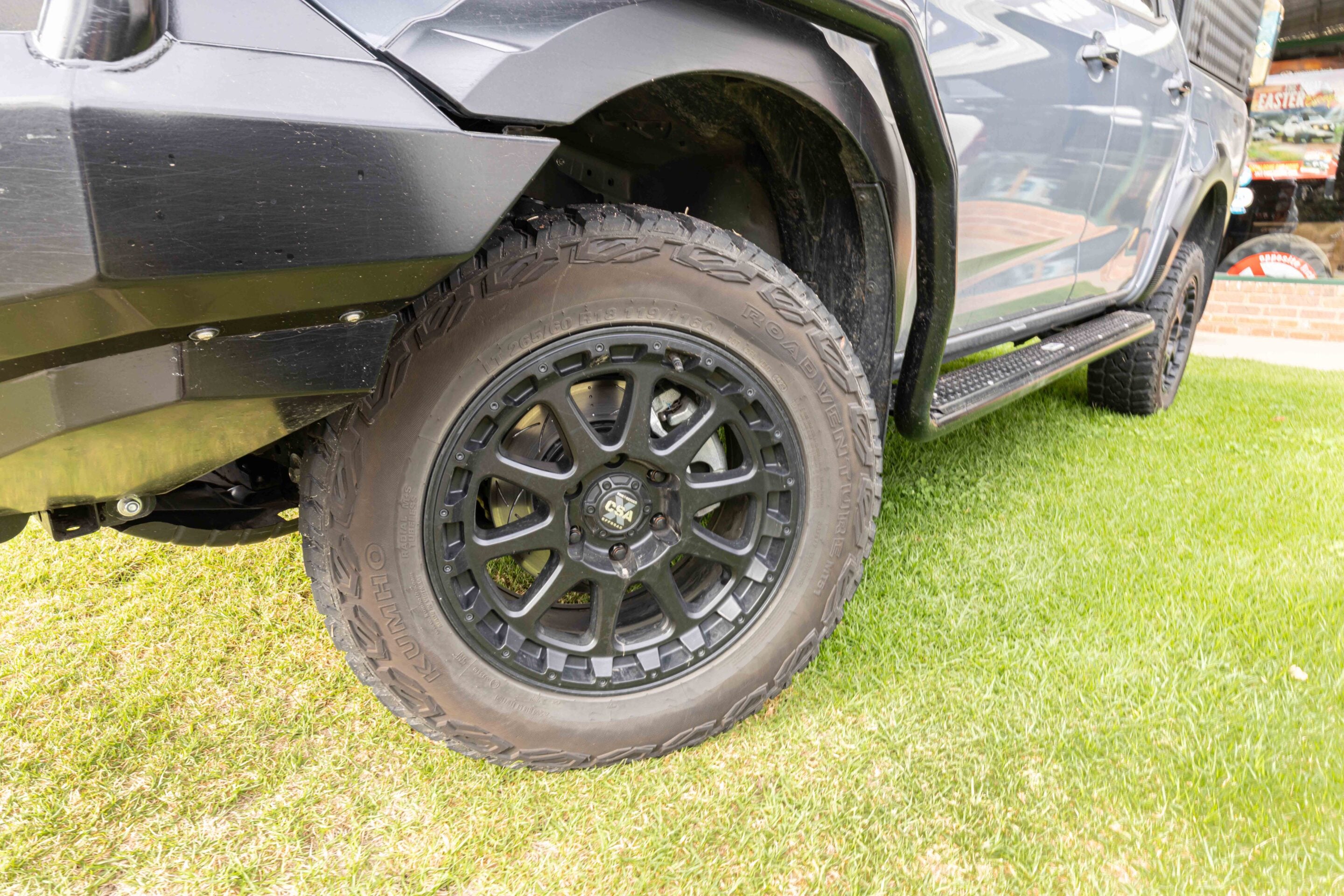
The Bendix Ultimate 4WD Brake Upgrade Kits are available through Bendix stockists right across Australia, making them easy to source no matter where you’re based. Whether you’re fitting them yourself or having them installed by a professional, support and spare parts are never far away.
Upgrading to the Bendix Ultimate 4WD Brake Upgrade Kit was one of the best decisions I’ve made since fitting the GVM upgrade. It’s a complete, well-engineered solution that boosts confidence behind the wheel and makes the D-MAX safer and more capable in every driving situation.
Whether you’re towing, touring or tackling the most challenging off-road tracks, these brakes deliver reliable performance and peace of mind. Bendix has nailed it with this kit, and it’s an upgrade I’d recommend to any serious four-wheel driver who wants their stopping power to match their vehicle’s performance.
RRP: $1199
I wake with a splitting headache, my body aching and my thoughts scattered. It takes twenty minutes to muster the energy to crawl out of the swag, and Katie feels no better. Even with nets over our heads to keep the blowflies at bay, breakfast only makes us feel worse.
Severe headaches, joint pain, sore throats, dripping noses and a strange sense of disconnection – the symptoms are all too familiar. A rapid antigen test from the first-aid kit confirms it. We’re in one of the most remote places on the planet, and we have COVID-19. After months of planning and preparation for the toughest desert crossing of my life, the unexpected has struck. Our Madigan Line adventure has just taken a serious turn.
What is the Madigan Line?
In the winter of 1939, Cecil Madigan, along with nine men and a camel train, set out to cross the heart of the Simpson Desert – a feat never before attempted by Europeans.
Nobody knew what Madigan would find, or if a crossing was even survivable. The successful expedition cemented his name in history as one of the great explorers of outback Australia, and the route he pioneered through endless sand became known simply as the Madigan Line.
Eighty years later, Madigan’s route is little more than a string of GPS waypoints and has become the pinnacle of remote desert crossings in Australia – even the world. The track demands more than thirteen hundred dune crossings and passes no towns or development of any kind. There are no wells for drinking water, and certainly no fuel stations. Crossing the Simpson on the Madigan is no joke.
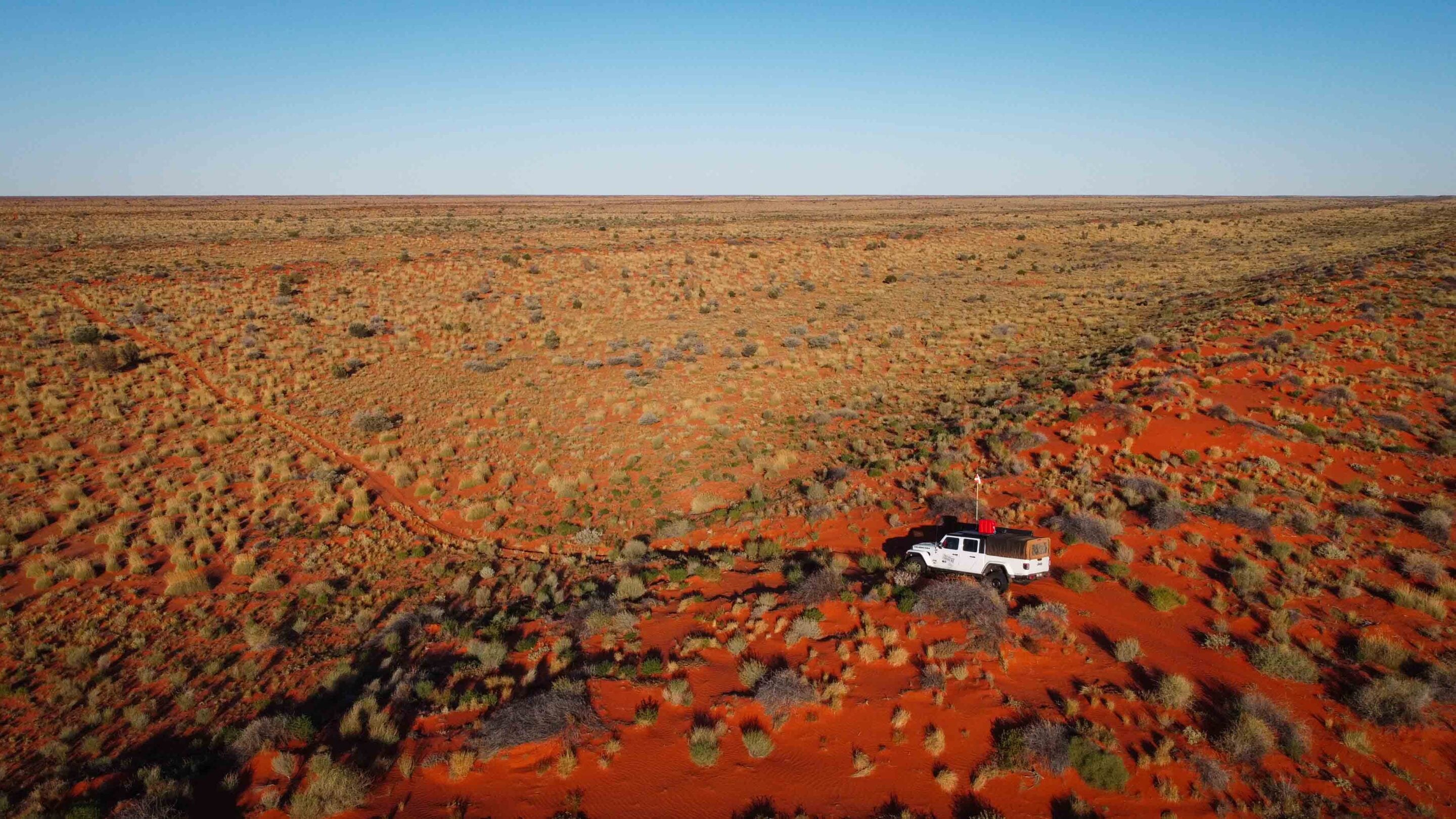
Preparing for the desert crossing
The Madigan is not the most popular route across the Simpson, and because vehicles must travel west to east, it’s unlikely we’ll encounter anyone over the 7-10 days it takes to make the crossing. We must be entirely self-sufficient.
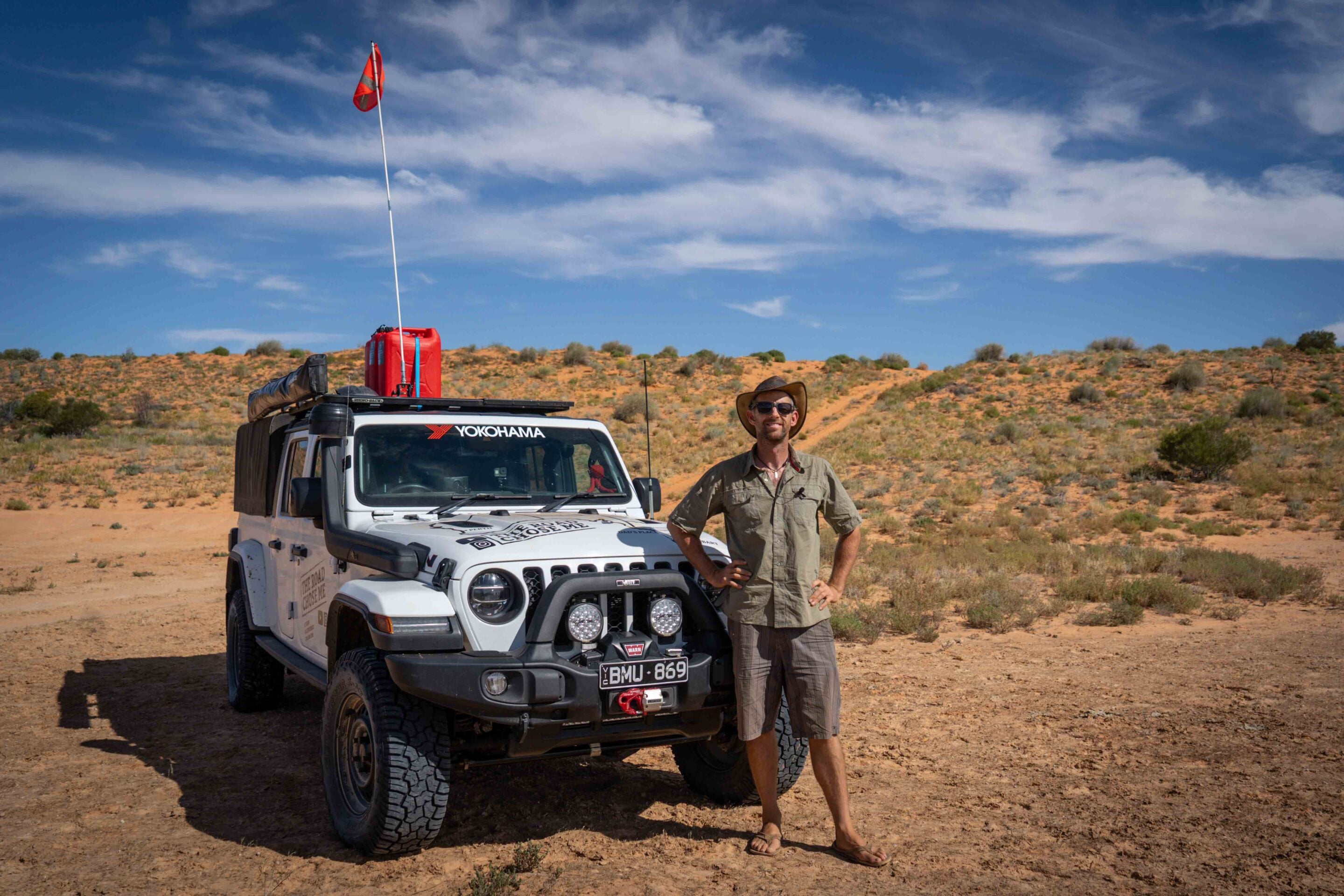
I designed and built the Gladiator specifically for the Australian outback, and the modifications and systems have performed flawlessly to date. In preparation for the Simpson, Katie and I have practised recoveries in soft beach sand and crossed hundreds of dunes on Goog’s Track in South Australia. The Jeep has never given me a moment of doubt, and we’ve come to trust our lives to this vehicle.
I’ve been running calculations for fuel, drinking water and food for weeks, aiming to strike a delicate balance. While I’m confident we can carry enough petrol, we simply don’t have the capacity to haul water or food for more than 10 or 12 days at a stretch. While we want to enjoy our time in the desert, I’m well aware we need to keep moving.
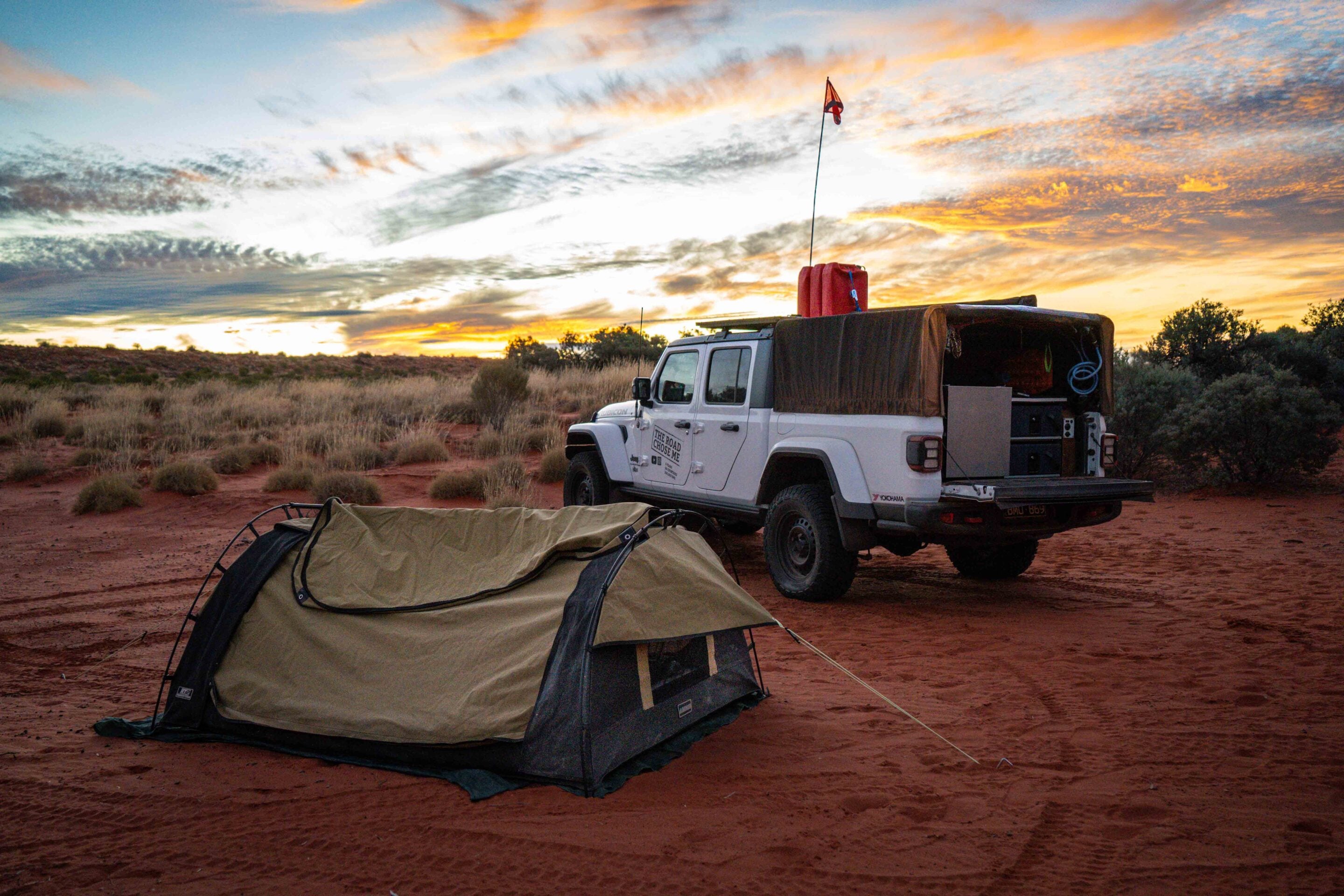
In addition to the 60L drinking-water tank and 10L shower supply, we add 20L of emergency water stored in the passenger compartment in two rugged containers – insurance in case of a puncture or pump failure in the main tank. We resupply in Alice Springs, stuffing the fridge and drawers with as much food as we can carry.
I’ve seen the Gladiator’s fuel use climb as high as 33L/100km in soft sand, which multiplies out to a serious amount of petrol for nearly 800km across the desert. As an added complication, we can’t buy or carry regular unleaded in Central Australia. For decades, petrol sniffing was a major health crisis in remote communities, so chemical experts replaced the aromatics in unleaded with compounds that can’t be inhaled. This “low-aromatic unleaded petrol” has transformed previously decimated communities, and for obvious reasons regular unleaded is now illegal. Real-world reports of running the low-aromatic fuel in modern, fuel-injected engines vary widely, although chemical experts confirm consumption is generally worse.
With the main and auxiliary tanks full, the Gladiator carries 155L of petrol. With three jerries on the roof and another two in the tub, we’re hauling a total of 255L – an expensive fill at $2.70 a litre.
Entering the Simpson Desert
South of Alice, the corrugations on the Finke Road get progressively worse until, hours later, we’re bumping along in first and second gear, very mindful of the extra weight on the roof.
We camp at the Mount Dare Hotel, one of the most remote and iconic outback pubs on the continent. For those entering the Simpson, this is the last outpost of civilisation and a final chance to grab supplies and fuel.
In the morning I top off the main tank with the most expensive fuel of the trip and drop tyre pressures to 20psi all round, expecting rough roads early on and knowing I can go much lower if and when the sand turns seriously soft. There’s no doubt lower pressures would provide more grip, though they’d also mean higher fuel consumption. As always, I’m hyper-aware of the need to balance our precious resources.
Tackling the Simpson Desert’s dunes
We travel on good gravel roads for a couple of hours before arriving at the abandoned cattle station of Old Andado.
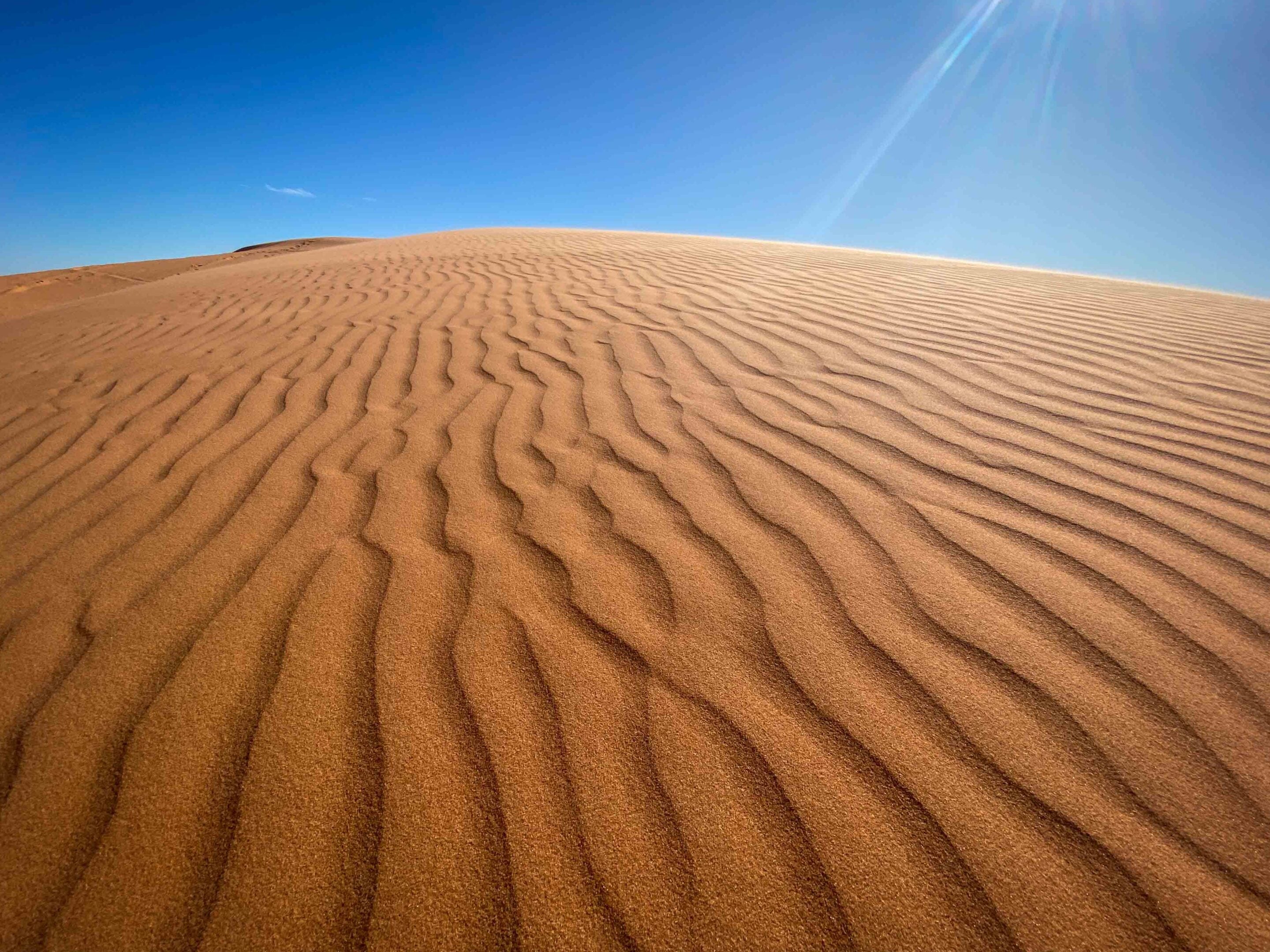
Wandering through the ruins, it’s hard to imagine living this far from the rest of the world, literally on the edge of survivability. Nearby, a bright red dune stands tall, clearly marking the beginning of the desert. Both excited and a little anxious, I can’t help but count “one” out loud as we climb up and over the first big dune. Created over millions of years and continually shaped by the wind, the dunes of the Simpson are the longest in the world, stretching in a near-perfect straight line for nearly 200km north to south. Like much of inland Australia, their vivid colour comes from rusting iron ore within the sand.
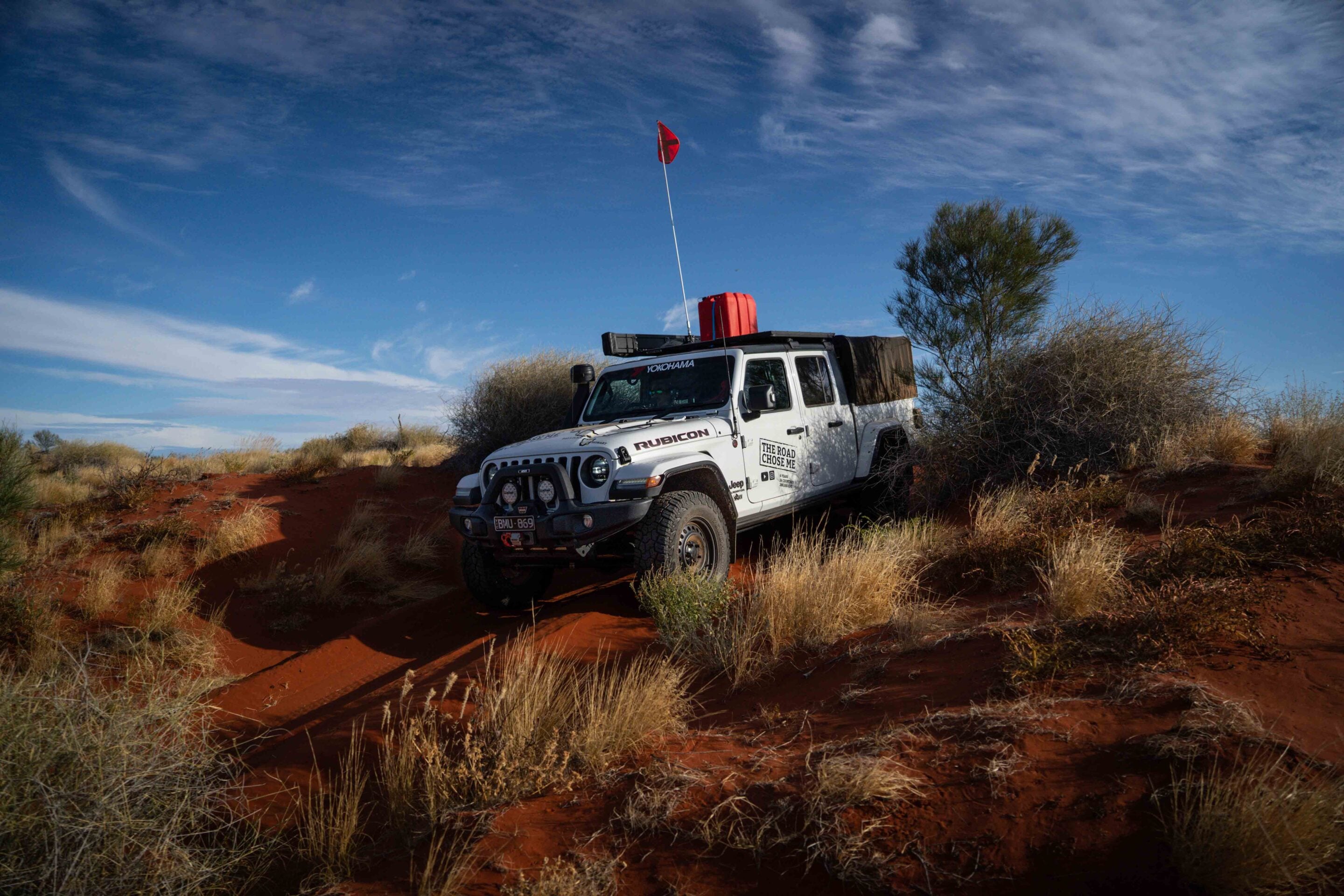
Because all the dunes run from north to south, we must climb directly up and over every single one as we push east. The dunes vary in height from 20 to 40m, and are spaced consistently across the desert floor, with a few hundred metres of flat sand between each crest. Once the initial excitement wears off, we settle into the routine that will define the next week of our lives. For 10 or 15 seconds we crawl slowly up the soft face of a dune, carrying just enough speed to crest without breaking traction and tearing up the sand. Most dune faces are so steep we see nothing but blue sky, trusting the track will continue down the other side. At the top we pause briefly to take in the view before coasting down to the desert floor and beginning again.
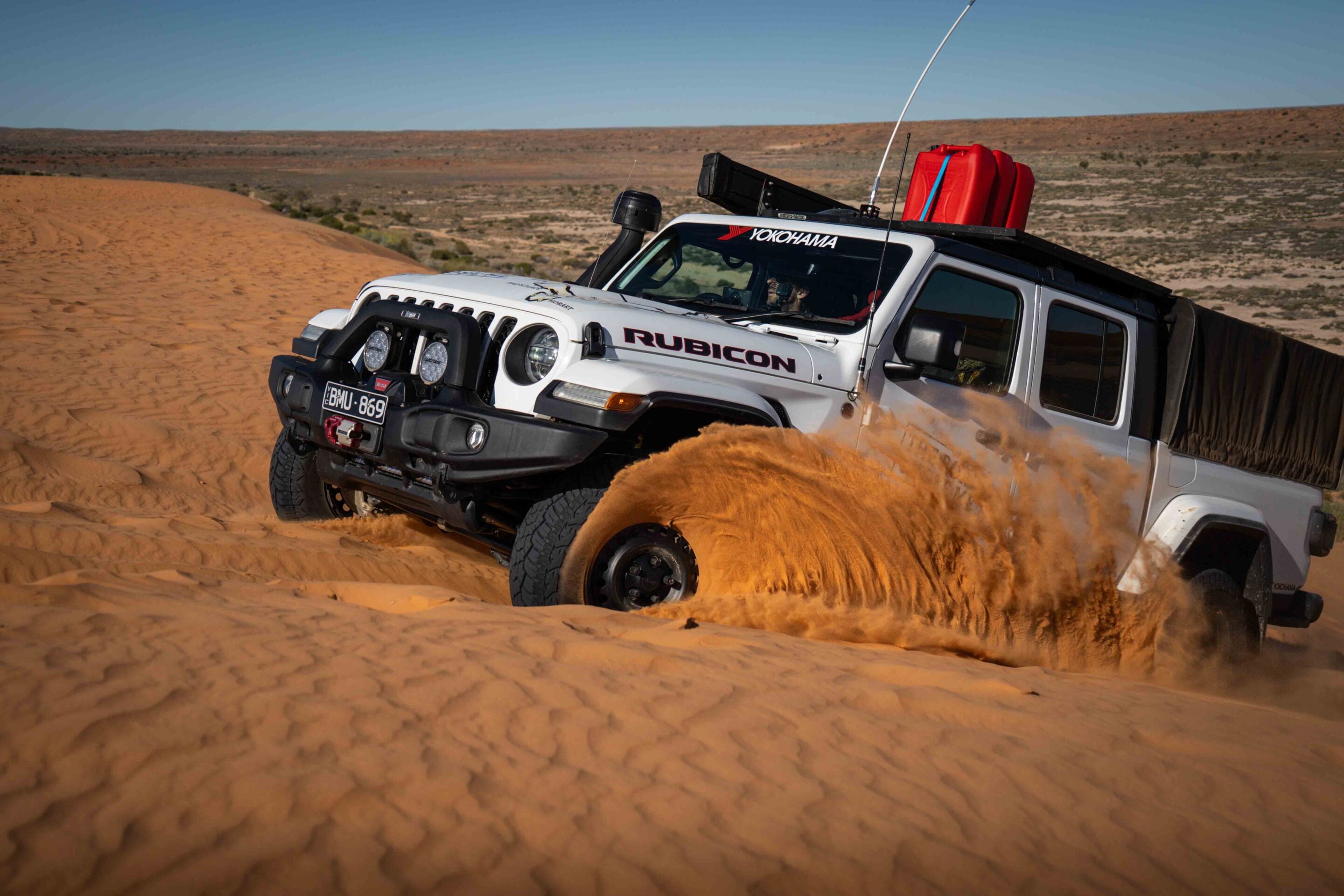
I find myself constantly inching higher in my seat, trying to peer over the tip of the bonnet to glimpse the track as early as possible. On many dune crests I scramble to make a sharp turn revealed only once the nose of the Jeep tips down.
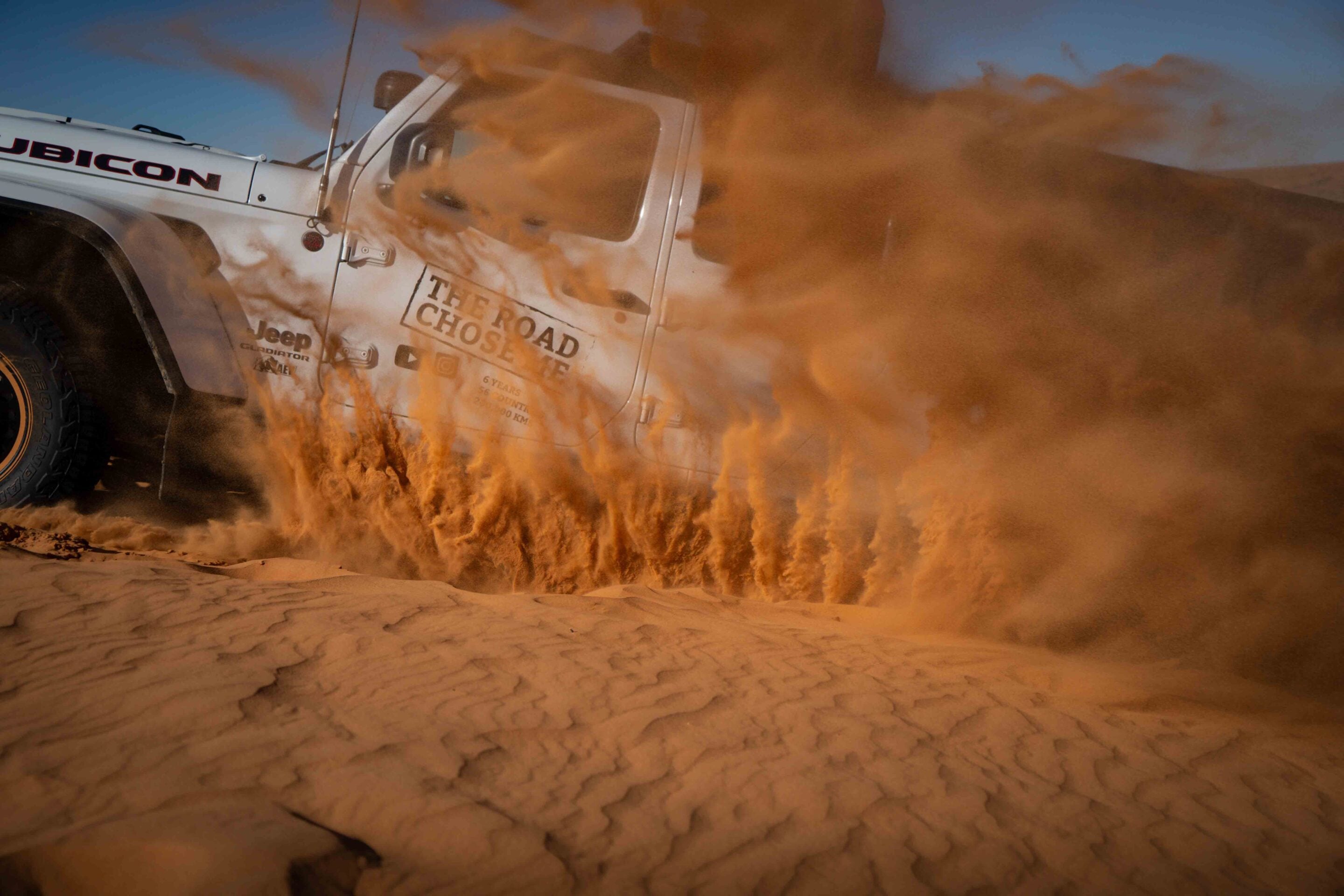
After just 30 minutes I lose count of the dunes we’ve crossed, focusing on the task at hand while absorbing the immense nothing that surrounds us. There are no buildings, no side tracks and only the occasional stand of scraggly mulga on the flats. The track is windblown and faint, dotted with animal prints big and small. With drifting sand constantly reshaping the surface, it could easily be a week since another vehicle passed. Thanks to the wide contact patch from our low tyre pressures, the Jeep maintains steady momentum as we inch across the ocean of sand.
For our first night we stop beside a huge dune at Camp 1A – the first of Madigan’s original campsites – each marked with a small post and placard, a constant reminder we’re literally following in the tracks of a bona fide legend. Blowflies are a constant battle in the Australian outback and can be bad enough to drive a person mad. In their desperate search for moisture, they swarm into the corners of our eyes and mouths. While they don’t bite, their unceasing companionship quickly frays the nerves and makes eating an unpleasant affair.
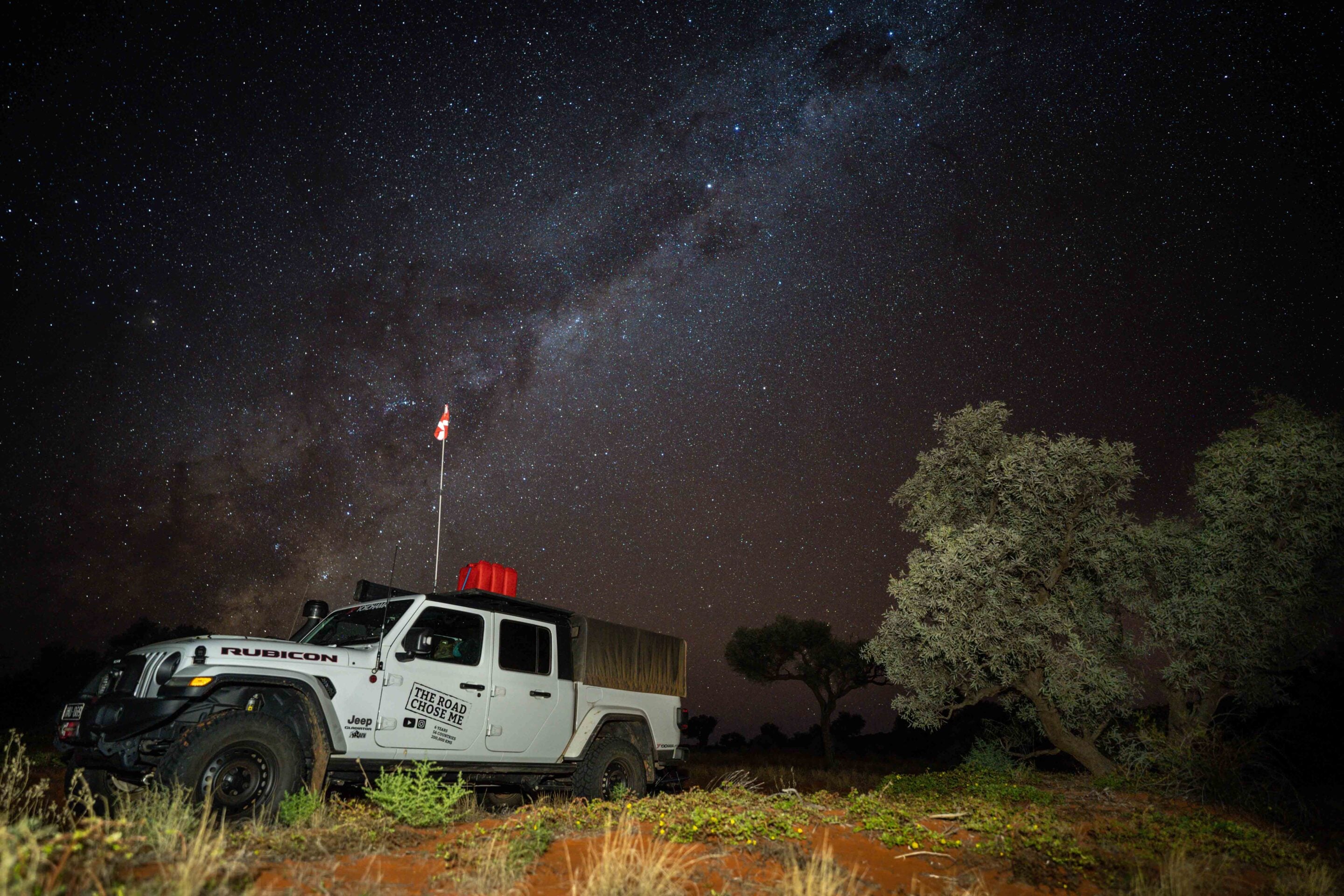
Mercifully, the flies vanish after dark and we can fully appreciate a stunning display of stars – easily the best I’ve seen anywhere on the planet. Thanks to the tilt of the earth, the southern hemisphere faces the galactic core, resulting in breathtaking night-time entertainment. I sit for hours trying to take it all in while Katie puts herself to bed early with a headache and sore joints.
Unexpected challenges in the desert
I’ve done my best to plan for known unknowns like tyre failure, a radiator puncture or personal injury, and now it’s the unknown unknown of COVID-19 that has blindsided me.
Of all the places I imagined we might catch the virus, one of the least populated regions on earth was never on the list. We must have picked it up in Alice Springs, and only now are the symptoms kicking in. Over the next hour we talk through our predicament, trying to make a decision – no easy task given the extreme lethargy and increasing brain fog.
With a positive test there’s no longer a legal requirement to self-isolate, but the health advice strongly recommends staying away from others for seven days. Out here that means we should either make camp somewhere remote and wait it out, or press on and minimise contact with anyone we might possibly encounter. If we chose to sit still, we’d burn seven days doing nothing but battling the heat and flies, then still need to drive two days back to Alice Springs to resupply before returning to this point. Our other option is simply to keep going.
We’ll be alone for the next seven to 10 days anyway, so in a strange twist of fate the desert is actually the most practical place to isolate ourselves. With our aching bodies neither of us loves the thought of continuing along the extremely rough, sandy track, but we downright loathe the idea of sitting still for seven days while the flies host endless parties on our faces. Forward it is.
Life among the sand dunes
The brain fog and out-of-body vagueness we’re feeling, combined with the isolation and repetitive desert scenery, is disorienting, and the hours blur into one giant sand dune.
I feel like a cork adrift in an ocean of huge swell rolling across the desert floor. Negotiating the enormous red folds in the desert becomes our entire world, and I wonder if we’re moving across the waves at all, or if we’re stuck in place while the swell slides by underneath us.
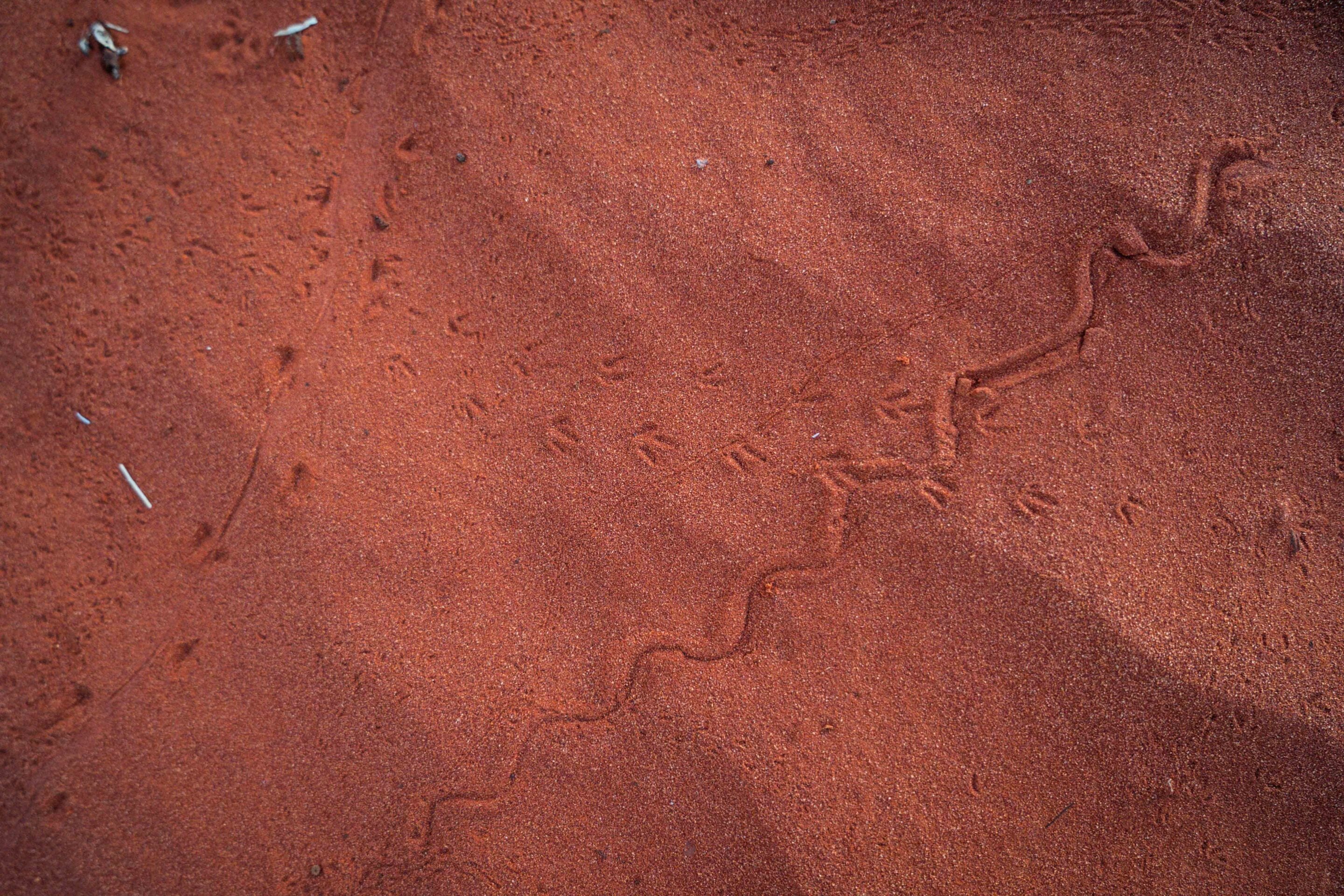
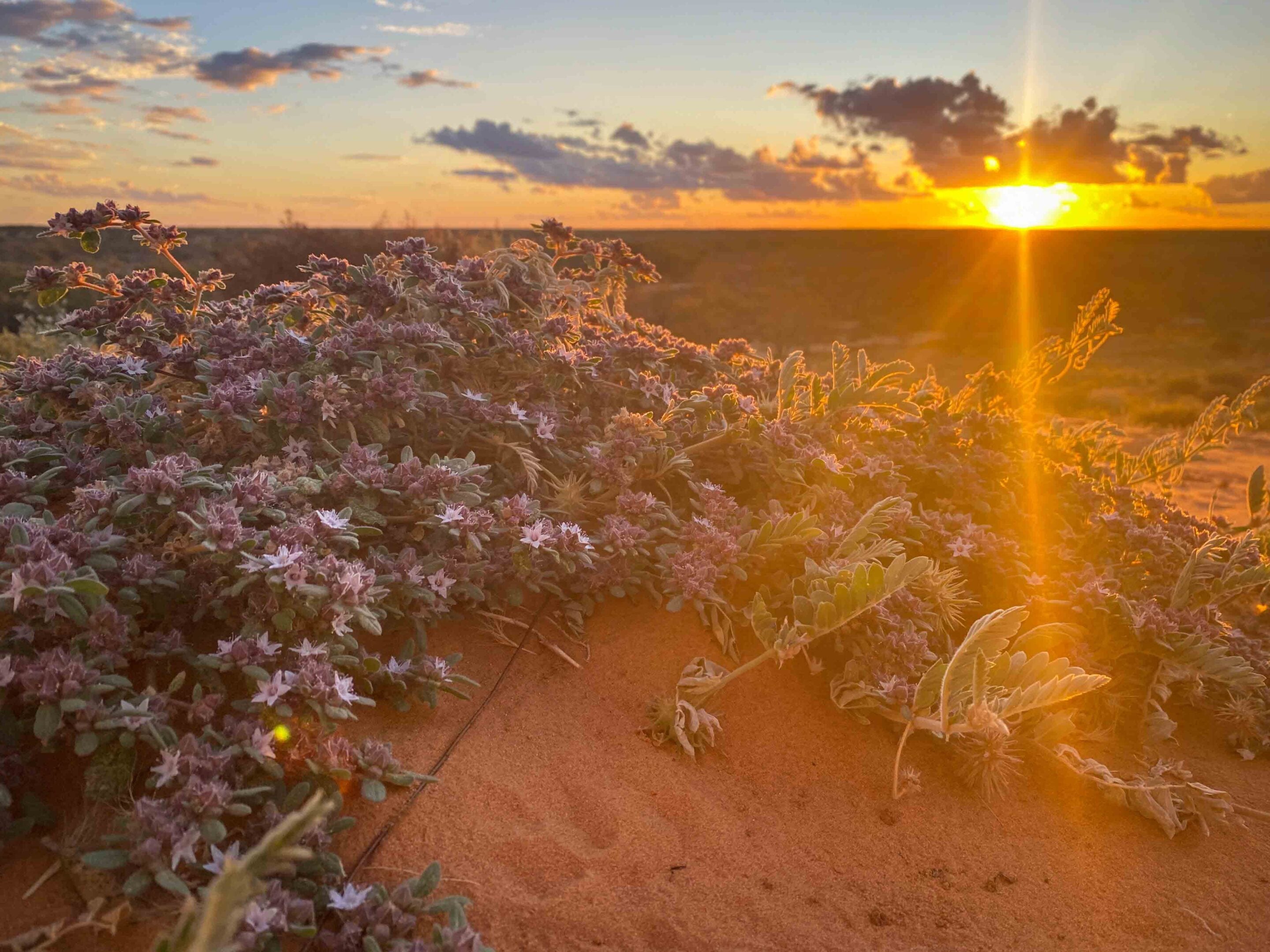
Much of Australia has experienced higher-than-average rainfall and severe flooding in recent years, and as a result even the sparse vegetation found in the Simpson is lush and green by desert standards. Greenery clings to the dunes, including wildflowers in an array of colours. Grasshoppers and lizards of various sizes dart off the track as we approach, and each morning our own tyre marks in the sand are criss-crossed with tracks – some of which are clearly snakes. Seemingly only active at night, we spot only one large tiger snake early in the crossing. Katie is not impressed when I casually mention the venom can be lethal, and almost certainly so without quick access to a hospital.
From the crest of a larger dune we spot a caravan of wild camels, walking single file along the next dune in our path. There are about 10 animals of various sizes, and they don’t appear to be in any hurry. Originally brought to Australia from the Middle East to explore the vast interior deserts, camels were a vital part of Australia’s development. Camel caravans led by Afghan traders were used until the early 20th century, and many railways and remote mining towns were built using camels as the primary mode of transport.
Once their usefulness came to an end, however, the camels were released onto the land and are now an invasive pest, with more than a million animals destroying habitat and competing for food and water with native wildlife on an immense scale. Superbly adapted to harsh desert conditions, camels thrive throughout central Australia, and despite enormous culling operations conducted by helicopter, their numbers and destruction only grow with each passing year.
We’re roughly 500m from the camels, so I shut off the engine and watch silently as they wander along the dune, slowly but surely moving closer. Always looking for an excuse to stretch our legs, we jump out and begin walking along the sandy track. Soon the massive dune obscures our direct line of sight, and we’re able to get within 100m of the smelly animals. With some crafty sneaking between scrubby bushes we creep another 50m closer, and for the first time I’m able to really appreciate their size.
The group is made up of two huge males escorting what I assume are six females and a couple of teenagers. When one of the big males spots us, he doesn’t react as I’d expected. Instead of running away, he turns and walks directly towards us.
Over the next five minutes he closes to within 20m before it occurs to me this may not be such a good idea. We’re now a long way from the safety of the Jeep, and I have no idea how these enormous wild animals might react if startled. We slowly make our retreat without turning our backs, and for a few hundred metres we reluctantly play follow-the-leader. First the big male, then the others continue to walk towards us, bobbing their heads and looking at each other quizzically, sizing us up. They seem more curious than aggressive, and I’m relieved when they lose interest and we make our retreat without incident.
Overnight I’m woken by the loud howls of a pack of dingoes, causing my skin to tingle and the hair on my arms to stand on end. They sound very close to camp, and I make out at least half a dozen separate animals, including one extremely small pup attempting to join the chorus. The nearly full moon has risen high overhead, casting bright light across the barren landscape, though I’m unable to catch a glimpse of our visitors as I lie silently.
In the morning I follow a maze of fresh tracks around the perimeter of our campsite, and I’m happy to see they didn’t come within 30m of our sleeping swag. While dingo attacks on adults are extremely rare, with only a few documented cases in Australia’s history, this far from other people I do feel particularly vulnerable.
Remote desert isolation
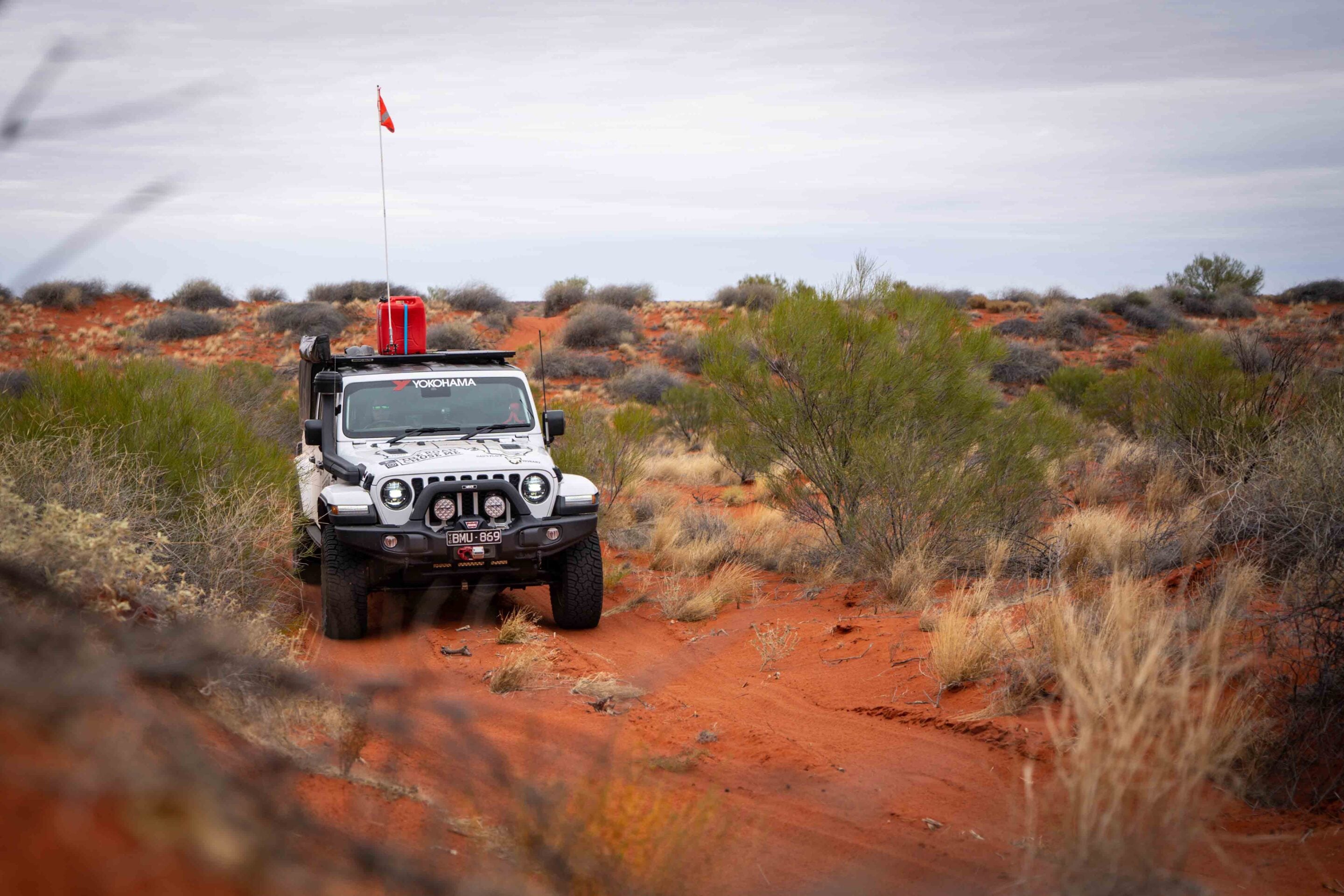
Days into the desert we still haven’t seen another vehicle, nor heard so much as a crackle in reply to our call-outs on the CB radio. On day five I smile as I use my turn signal to turn onto the Hay River Track, where we travel south for an hour before again turning east onto the Madigan.
Old barbed-wire fences, sheets of corrugated iron and the occasional pile of cattle bones signal our gradual return to civilisation and Adria Downs cattle station on the eastern edge of the desert. Camp is at a dry waterhole, and at dusk we see kangaroos, a lone emu on patrol and a flock of huge pelicans pass low overhead. All sure signs of water. I feel myself instinctively slow down, not yet ready for our time in the desert to end.
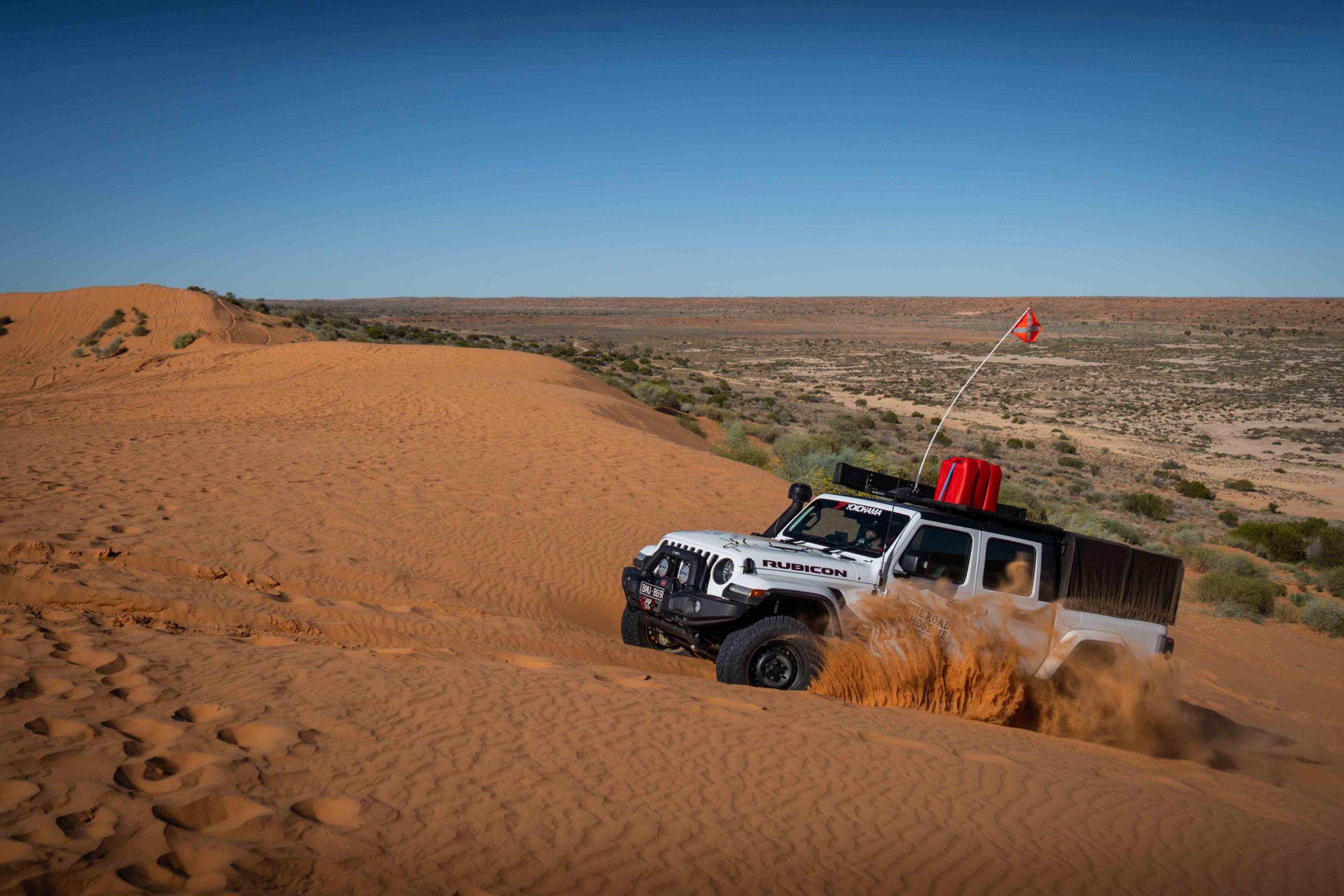
Early on the last morning we arrive at Big Red – the most famous, and possibly biggest, dune in the Simpson. Multiple tracks run up its impressive face, each varying in difficulty, and I fancy the Jeep to take on the steepest of them all. To increase grip I further lower tyre pressures to 12psi, and with the automatic transmission in manual mode I bump down gears as the dune steepens and the Gladiator powers to the top with momentum to spare. While low-end torque and fuel economy are the hallmark traits of diesel engines, there’s no doubt the higher horsepower of petrol engines is far superior for big dune climbs.
We enjoy the stunning view and stay atop Big Red for almost an hour, soaking in the silence and our final moments alone in the desert. Twenty minutes later, at the edge of Birdsville, I can’t help but wave at the first vehicle we see, and with our seven-day isolation now complete, we’re free to dive in.
Lessons from the Madigan Line
It took Madigan 25 days to cross the Simpson, verifying his earlier conclusion that the area was a wasteland. Although his report was conclusive, within 20 years the region was being criss-crossed by petroleum exploration – which turned up precisely nothing.
Madigan’s meticulous planning and experience meant his camel-train crossing went off without a hitch, and it’s regarded as the last of the great Australian exploration adventures. While bouncing along the track I often thought of Madigan and wondered what must have been going through his mind all those years ago. When he emerged in Birdsville he was hailed a hero, and went on to a life of research and academia, becoming a leading authority on central Australian geology and geography.
Planning is all good and well, but it’s the unknowns that jump out to bite us and throw the best-laid plans out the window. Catching COVID in one of the most remote regions on the planet was not something I ever considered, and we were forced to adapt to the situation as it unfolded.
We covered 765km over seven days and crawled up and over more than 1000 sand dunes. The solitude and enormity of the desert left a lasting impression on both of us, and it’s unlikely we’ll ever forget our time in the Simpson. Isolating for seven days in one of the biggest deserts on the continent did make for a good story over cold beers at the Birdsville pub that night, and after a few pats on the back I felt just a little closer to Madigan.
As is often the case, the desert had a final trick to play. Less than 12 hours later, under police escort, we were the last vehicle to leave Birdsville through rapidly rising floodwater before the town was cut off.
Ford Australia’s engineering hub faces potential job cuts as the company seeks government support.
The facility employs around 1400 engineers, one of the country’s largest automotive design teams, which helped develop the Ranger and Everest and has contributed to vehicles for both domestic and international markets.
Ford CEO Jim Farley recently highlighted challenges posed by the 2025 New Vehicle Emissions Standard (NVES), which penalises manufacturers for high CO₂ emissions, saying the regulations make the local operation “not sustainable”.
Farley warned the Australian government it faces a choice. “We have to work with your government, because we have to be competitive on speed and cost here in Australia versus China or Vietnam or other places,” he said. “And there is a premium for innovation. So, we’re willing to pay, but your government has to decide if they want engineers in your country or do you want to be a country of hairdressers and bankers?”
“They need to decide if they want to help us equalise the cost differential, because this is among the most expensive places to have engineers on the planet,” he added. “It can’t sit on the sidelines and pretend like that’s not a choice. It’s a choice because that engineering can be done in a lot of other places cheaper and faster.”
Ford has previously reduced staff, including 400 redundancies in 2023, and now aims to preserve 1500 Australian jobs if government intervention is provided. Talks with officials are planned this weekend. The outcome could affect future Ranger and Everest development, vehicles that are central to Ford’s global 4×4 line-up.
The New Vehicle Emissions Standard, introduced in 2025, is designed to push car makers toward more fuel-efficient vehicles, including EVs and plug-in hybrids. Manufacturers face financial penalties if a significant portion of their new vehicles exceed CO₂ thresholds.
Remote touring is one of the best things you can do with a capable 4×4, but it’s also where small mistakes can quickly snowball into bigger problems.
Most experienced travellers will tell you the same thing – preparation, planning and common sense matter more than how much gear you’ve bolted to the vehicle. Whether you’re heading into the High Country, tackling desert tracks or setting off on a long outback run, avoiding these common mistakes will make your trip safer, easier and far more enjoyable.
1. Overloading your 4×4 and ignoring GVM limits
One of the most common touring mistakes is simply carrying too much gear.
Drawer systems, fridges, roof racks, spare parts, water, fuel and camping equipment can add weight quickly. Many touring vehicles exceed their Gross Vehicle Mass without the owner realising it. Overloading stresses suspension, brakes and tyres, increases fuel consumption and raises the centre of gravity, especially when gear is stacked on the roof. Suspension upgrades alone don’t change the legal carrying capacity.
Before heading away, weigh the vehicle fully loaded, remove anything that isn’t genuinely necessary, and understand your vehicle’s payload limits. For serious touring builds, an engineered GVM upgrade may be worth considering.
2. Poor weight distribution
Even if your vehicle is technically under its legal weight limit, how you pack it can dramatically affect handling and safety.
Heavy items mounted high on a roof rack, positioned far behind the rear axle, or stacked unevenly can make the vehicle feel top-heavy and unstable, especially on corrugated roads, steep climbs or side slopes. This can lead to unpredictable steering, increased body roll, and a higher risk of tyre spin or rollovers in tricky terrain. It also places extra strain on suspension components and can accelerate wear on tyres and bearings.
The basic rule is simple: Keep heavy items low, close to the vehicle’s centre of gravity, and evenly distributed from side to side. Place fuel, water, recovery gear, and fridges as close to the floor and between the axles as possible. Lighter, bulkier items such as tents, sleeping bags, and camping chairs can go higher or on the roof.
3. Relying entirely on phone reception
Mobile coverage disappears quickly once you leave towns or main highways, and even well-travelled tracks can have dead zones.
Many new travellers assume their phone will be enough for communication or navigation, but relying solely on it can leave you stranded or off-course. In remote regions, a satellite communicator, satellite phone, UHF radio, or even a portable Starlink terminal can be critical for emergencies or staying in touch.
For navigation, supplement your phone with offline maps, a dedicated GPS unit or even Hema printed maps – tools that don’t rely on mobile coverage – to ensure you can still find your way if reception fails. Regularly checking your route before leaving camp and noting key waypoints can also prevent getting lost in unfamiliar terrain.
4. Not lowering tyre pressures
Tyre pressure is one of the most important factors in off-road performance, yet many drivers forget to adjust it for the terrain.
Running highway pressures on sand, corrugations, mud or rocky tracks reduces traction, increases the risk of punctures, and places extra stress on suspension components. Lowering tyre pressure allows the tyre to better conform to the ground, increasing the contact patch, improving grip and helping absorb impacts from rocks or washouts. It also reduces vibration and wear on the vehicle over long stretches of rough terrain.
Even small adjustments can make a big difference. For example, dropping pressures by just 5 to 10psi on sand can drastically improve flotation, while on rocky tracks slightly lower pressures reduce the chance of tyre cuts. Investing in a quality tyre pressure gauge and an air compressor to adjust pressures on the move is one of the simplest and most effective ways to boost off-road capability.
5. Travelling without recovery knowledge
Owning recovery gear doesn’t automatically mean you know how to use it safely. Winches, snatch straps, traction boards and shackles can damage your vehicle – and even cause serious injuries – if used incorrectly.
Before heading into remote terrain, familiarise yourself with basic recovery techniques and practice them in a controlled environment. Make sure all your gear is rated for your vehicle, in good condition, and correctly stored for easy access.
Having a simple recovery plan before leaving camp can make all the difference. For instance, knowing where to anchor a winch, how to rig a snatch strap correctly, or how to use a traction board to self-recover can save hours of stress and prevent dangerous mistakes. A calm, methodical approach is almost always more effective than rushing into a risky recovery under pressure.
6. Ignoring fuel planning
Fuel availability in remote areas can be inconsistent, and distances between stops are often longer than they appear on a map.
Factors such as headwinds, heavy loads, low-range driving, steep climbs, or soft sand can dramatically increase consumption, sometimes doubling what you’d expect from highway figures. Always calculate your fuel needs conservatively, and carry a safety margin beyond the planned route – extra jerry cans or an auxiliary tank can be a lifesaver on long outback runs. Running low on fuel in remote terrain can leave you stranded hundreds of kilometres from the nearest town, with no guarantee of help.
Planning ahead also means knowing where reliable refuelling points are, checking station opening hours, and accounting for detours or delays. A little preparation can mean the difference between completing a remote track comfortably and limping into the next town on fumes.
7. Skipping vehicle maintenance before the trip
A long trip is not the time to discover worn suspension components, failing batteries, leaking hoses, or other hidden issues.
Even small faults can escalate quickly when you’re hundreds of kilometres from the nearest workshop, turning a minor inconvenience into a major problem. Basic pre-trip checks should include tyres and tyre pressures, wheel bearings, brakes, suspension bolts, belts, hoses, fluid levels, battery condition and cooling system performance. Don’t forget to inspect lights, recovery points and any aftermarket accessories that may have loosened during previous trips.
Performing preventative maintenance is far cheaper, faster and less stressful than dealing with a breakdown in the bush. Taking the time to carefully inspect and service your vehicle before leaving can make the difference between a smooth, safe journey and an expensive, frustrating recovery.
8. Driving too fast on rough tracks and corrugations
Corrugations and rough tracks punish vehicles driven too fast.
Excessive speed generates heat in tyres, shocks, and suspension components, increasing wear and the likelihood of failures such as blown shocks, broken springs, or even tyre delamination. Extended runs over corrugated roads are particularly punishing on heavily loaded vehicles. High speeds can also make steering twitchy, reduce traction and increase the chance of losing control on loose surfaces or around corners.
Slowing down reduces stress on the vehicle, allows tyres and suspension to absorb impacts more effectively, and gives the driver more time to react to washouts, rocks, ruts or wildlife. Simple practices, like dropping speed on long corrugated stretches, maintaining consistent momentum and scanning the track ahead, can prevent damage and improve overall control.
9. Underestimating the environment
Conditions can change quickly in remote areas, often catching travellers off guard.

Tracks can become impassable after rain, river crossings can rise unexpectedly, and temperatures can swing dramatically between day and night. Even familiar routes can present unexpected hazards such as washouts, sand drifts or fallen trees.
Always check local conditions before entering remote tracks, including recent trip reports, shire updates or ranger information. Be prepared to change plans if conditions deteriorate, and allow extra time in your itinerary for delays. Carrying additional water, food and essential supplies is critical, as weather events, mechanical issues or track closures can extend your trip unexpectedly.
Good planning also includes having a backup route or exit strategy, and making sure someone knows your intended path and expected return.
10. Rushing the trip
Trying to cover too much distance is one of the easiest ways to turn a touring adventure into a stressful grind.
Long driving days increase fatigue, put extra strain on the vehicle, and leave little time to enjoy campsites, scenery or side tracks. Allow extra time in your itinerary and resist the urge to push on just to tick off more kilometres. Some of the best experiences come from slowing down, exploring hidden tracks, taking unplanned detours, or simply enjoying a scenic spot for longer than expected.
Flexible scheduling also gives you room to respond to unexpected delays, whether that’s track closures, river crossings or mechanical issues.
Special mentions
Running the wrong tyres for the trip
Not all tyres are suited to long remote touring. Worn all-terrains, thin sidewalls or overly aggressive mud tyres can increase the risk of punctures depending on the terrain. Choosing a durable light-truck construction tyre suited to the trip can make a major difference to reliability.
Poor water crossing preparation
Water crossings can end a trip quickly if approached carelessly. Not checking depth, current or the condition of the exit bank is a common mistake. Walking the crossing first and choosing the right line can prevent engine damage or a difficult recovery.
Entering obstacles without checking the line
Steep climbs, rock shelves and technical sections often look very different from the driver’s seat. Taking a few minutes to walk the obstacle and assess traction points can prevent underbody damage, tyre cuts or unnecessary recoveries.
Forgetting basic spares
You don’t need to carry a full workshop, but a few simple spare parts can save a trip. Belts, radiator hoses, fuses, wheel studs and a proper tyre repair kit can turn a potential recovery job into a quick trackside fix.
Poor convoy communication
When travelling in a group, clear UHF communication makes everything smoother – from calling oncoming vehicles on narrow tracks to coordinating recoveries. A simple channel plan before leaving camp avoids confusion once you’re on the track.
Driving a 4×4 in Australia isn’t always about getting from A to B – it’s about covering long distances safely, handling rough terrain, and getting the most out of your trip.
Whether it’s gravel roads, bush tracks, creek crossings or sandy beaches, off-road driving demands focus, skill and patience. However, even the most experienced drivers have their limits. Poor towing practices, slow-moving vehicles in the wrong lanes, and disregard for basic trail etiquette can turn what should be an enjoyable adventure into a stressful grind. From convoy chaos to campsite frustrations, these are the top 10 pet peeves that consistently test the patience of Aussie 4×4 drivers 👇
1. Slow crawlers in the fast lane
Nothing frustrates a 4×4 driver heading to the bush more than someone slowly cruising in the overtaking lane. Whether you’re towing a camper trailer or loaded with gear for a week-long trip, you don’t want to be stuck behind someone doing 70km/h while the road ahead is clear. The right lane is for overtaking – period. A little awareness can save hours and keep you out of the horn-happy queue of drivers waiting to get past.
2. Roundabout hesitation
Even seasoned 4×4 drivers get annoyed by indecision in roundabouts. Urban traffic is a prelude to the bush, and hesitation here can back up convoys of rigs on the way to tracks. The classic scenario: a driver waves everyone through, then stalls halfway around. Convoy etiquette or not, a quick decision keeps traffic moving and avoids unnecessary frustration.
3. Lane-changing without signalling
Lane discipline is critical, especially when heading to a remote track or camping spot with friends. A sudden lane change without indicating is more than annoying – it’s dangerous. In 4×4 convoys, signalling isn’t just polite, it’s essential. One abrupt move can ruin the flow, scatter dust, or even result in a collision on gravel roads where stopping distances are longer.
4. Tailgaters
Tailgating is bad enough on bitumen, but add a fully-loaded 4×4 with a trailer, recovery gear and camping supplies, and it becomes a serious hazard. Aggressive drivers behind your rig increase stress and risk, especially on narrow roads, winding passes or gravel. Maintain distance, keep cool, and plan overtaking opportunities safely – it’s better for everyone.
5. Slow trucks on hilly highways
Australia’s road network often includes long, steep gradients leading to popular off-road destinations. Slow-moving trucks on these hills test patience, particularly when your 4×4 is towing. Overtaking safely can be tricky with blind crests and limited space. Experienced drivers know the key is planning your passes early and spotting opportunities, but some trucks just make you grind your teeth all the way to the top.
6. Distracted drivers
A 4×4 driver’s nightmare is a phone-addicted driver on gravel roads or approaching a creek crossing. One lapse of attention can turn a minor inconvenience into a full recovery scenario. Off-roaders rely on everyone else being aware of their surroundings, and distracted drivers can create dust clouds, bottlenecks, or even collisions on tight tracks. Hands-free is a must, but even then – eyes on the road.
7. Poorly parked campers
Trailhead and campsite etiquette is crucial. Nothing irks 4x4ers more than vehicles taking up two spaces, blocking tracks, or leaving gear strewn across communal areas. Space is precious in the bush, especially at busy campgrounds. Being respectful keeps the camping experience enjoyable for everyone, and avoids that awkward moment of reversing a 4×4 out of a tight spot because someone parked like a cowboy.
8. Inconsistent speeds on gravel tracks
Inconsistent speeds on dirt roads are a dust-cloud nightmare. A convoy moving steadily at 40km/h suddenly slowed to 25km/h by an unsure driver creates frustration, spreads dust, and churns up the track unnecessarily. Smooth, predictable driving helps maintain convoy rhythm, reduces risk of accidents, and keeps everyone’s rigs clean – or at least cleaner than they would otherwise be.
9. Caravan creep on narrow tracks
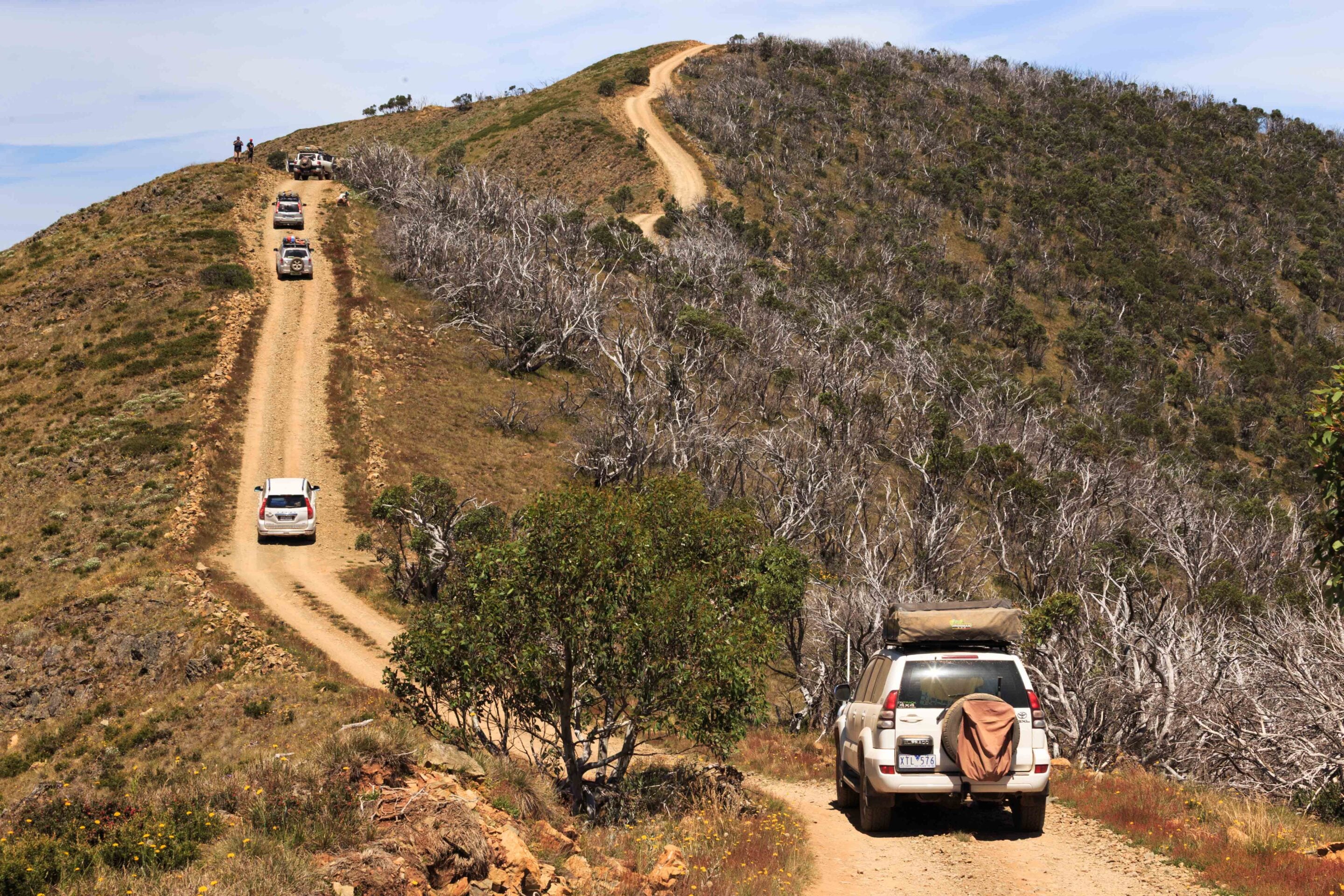
Caravans and off-road trailers are a common sight, but slow rigs on single-lane bush tracks can be soul-destroying. The “caravan creep” phenomenon happens when drivers assume everyone behind is patient. Experienced 4×4 drivers know that a little awareness – pulling over at widening spots or letting faster rigs past – keeps the adventure flowing. It’s simple courtesy, but often forgotten.
10. Signal misuse at intersections or track turns
Even in the bush, signalling your intentions matters. Turning off a main track without indicating or stopping in awkward places can leave the convoy guessing. A small courtesy – like hand signals if visibility is poor or using indicators where possible – prevents confusion and ensures everyone gets to the next adventure point safely.
Special mentions
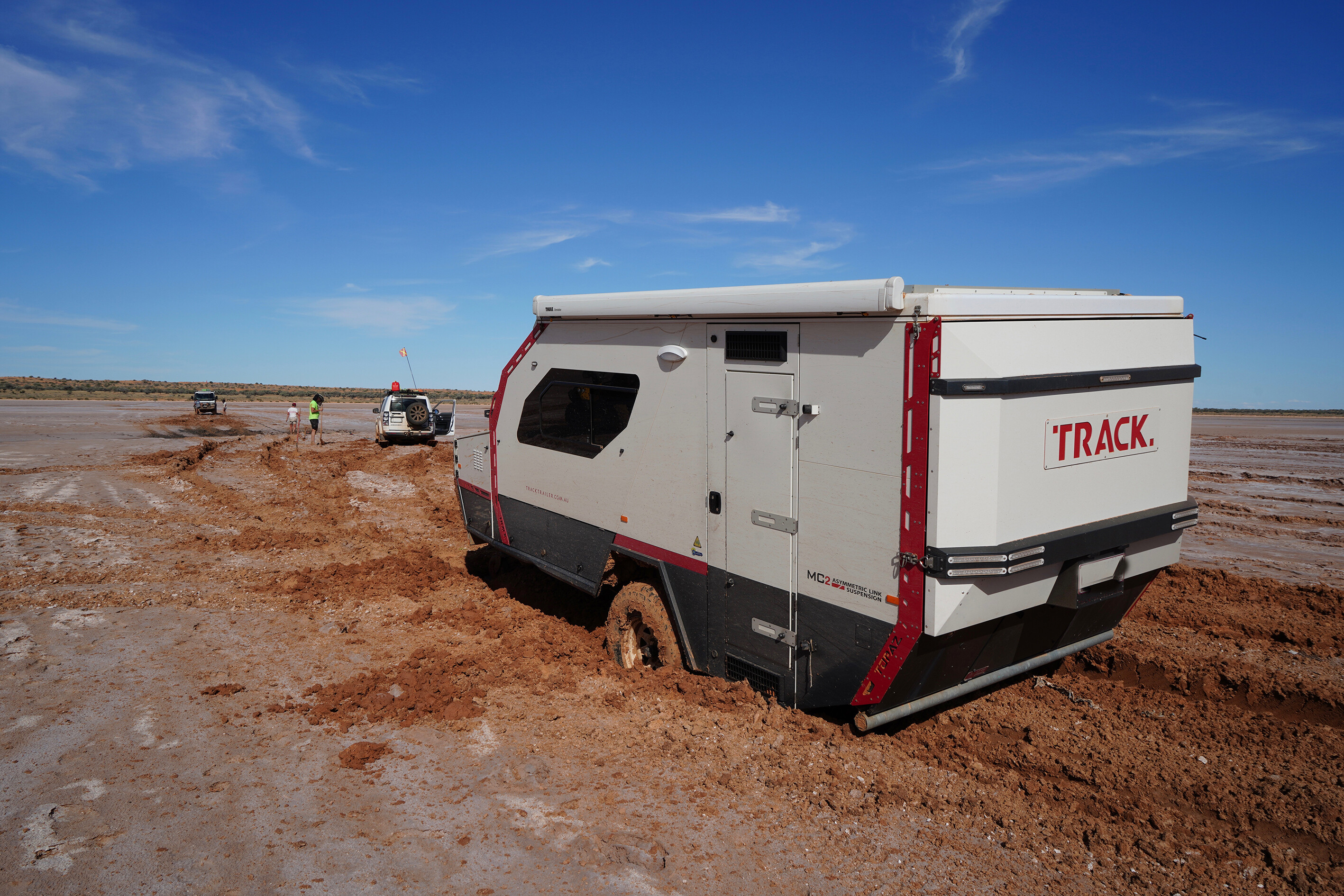
- Bogged rigs in tight spots: Watching someone get stuck in mud or sand in a narrow track and holding up the convoy.
- Improper recovery practices: Using winches, straps, or jacks without care – especially near other vehicles – can be frustrating and dangerous.
- Excessive dust on narrow tracks: Drivers who don’t slow down on dirt roads can blind the vehicles behind, making navigation tricky.
- Trail marking ignorance: Ignoring signs or veering off marked tracks, damaging fragile terrain.
- Unprepared drivers: People hitting remote tracks without recovery gear, spare tyres, or even basic tools, slowing down the convoy for everyone.
- Overloading vehicles: Pushing rigs past safe limits, causing unnecessary strain on suspensions and drivetrains.
- Speeding on single-lane bush tracks: Treating off-road tracks like racetracks, putting others at risk.
Whether you’re on tarmac, gravel, or deep in the bush, Aussie 4×4 drivers know patience is a virtue – but only to a point. Respect for fellow drivers, good convoy etiquette and basic courtesy make trips smoother, safer and more enjoyable.
While many enthusiasts will argue that the GQ and GU Patrols represent the pinnacle of Nissan 4x4s, the current Y62 model makes a strong case for claiming that title itself.
Those earlier Patrols were undeniably rugged, tough and easy to adapt for serious off-road use, but as an all-round touring 4×4 wagon – with modern convenience, performance and comfort – the Y62 is hard to beat. Despite the lack of a diesel engine option and the move to fully independent suspension, the Y62 has become a firm favourite with off-road touring fans. The aftermarket has well and truly jumped on board, supplying the gear owners need to take their modern Patrols just about anywhere, and we’ve seen plenty of great examples of the breed kitted out to the extreme.
Along with the modern luxury and go-anywhere capability of the Y62, a huge part of the model’s appeal comes from its stonking VK56 V8 engine. It’s a cracker of a mill, with a full-throttle soundtrack that could wake the dead, and despite its modern design it can still be easily modified to extract even more performance.
JUMP AHEAD
- Choosing the Y62 Patrol
- Off-road modifications
- Touring equipment
- Interior changes
- Verdict
- Upgrades and modifications
Choosing the Y62 Patrol
Russell has owned an impressive array of 4×4 vehicles over the years, including multiple LandCruisers, Land Rover Defenders, a RAM TRX, a V8 Jeep Grand Cherokee, and even a Mercedes-Benz AMG G63 G-Wagen.
There were plenty of V8 engines among that fleet, with the TRX’s supercharged Hemi and the G63’s twin-turbo mill among the standouts, so it comes as no surprise that he was drawn to the V8 Patrol. With the Y62 being the last of the V8-powered Patrols, Russell set his sights on one. He bought a new Patrol Ti-L in 2023 and set about transforming it into something to match the capable 4x4s he’d owned in the past.
“I wanted to build a practical, robust, yet luxurious, world-class performance tourer that is grand off the grid yet suitable for a night out on the town or a day at the beach,” Russell told 4X4 Australia. “This full-size 4×4 SUV is equipped to adapt to every facet of life, with the power to tow my favourite toys and ability to navigate the unexpected.”
To realise his Patrol dream, Russell worked with the team at EC Offroad, who were able to carry out all of the modifications and improvements needed to take the vehicle well beyond anything Nissan ever intended.
“The team at EC Offroad hit it out of the park and my expectations were well and truly met,” Russell said. “I was impressed with the knowledge they showed and could not believe the quality of their workmanship and attention to detail. They are definitely a complete one-stop shop!”
Off-road modifications
The transformation of the Patrol at EC was a ground-up project, so let’s start at ground level as we detail the many additions and modifications.
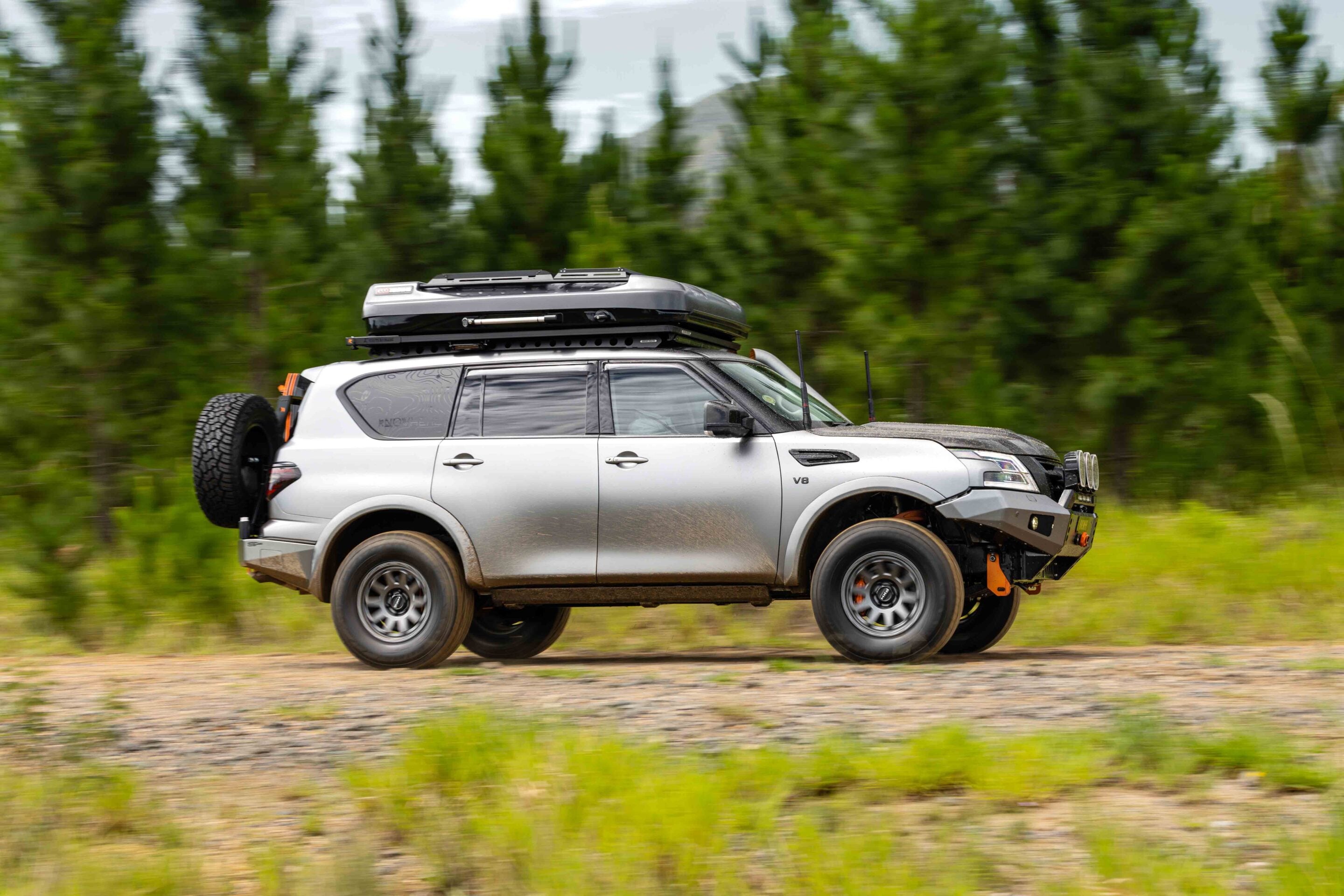
The Patrol now rides tall and confidently on a set of 35-inch Yokohama all-terrains mounted on FXH-02 alloy wheels. FXH is a collaboration between Australia’s Harrop Engineering and Forgeline Wheels in the USA, and the 02s are a rugged yet stylish design that suits the Patrol well.
Suspension has been beefed up with billet control arms front and rear, Dobinsons heavy-duty springs, and a set of Airbag Man bellows in the rear. The upgrades haven’t just lifted ride height, they’ve also delivered a 4499kg GVM and an 8000kg GCM, improving both payload and towing capability.
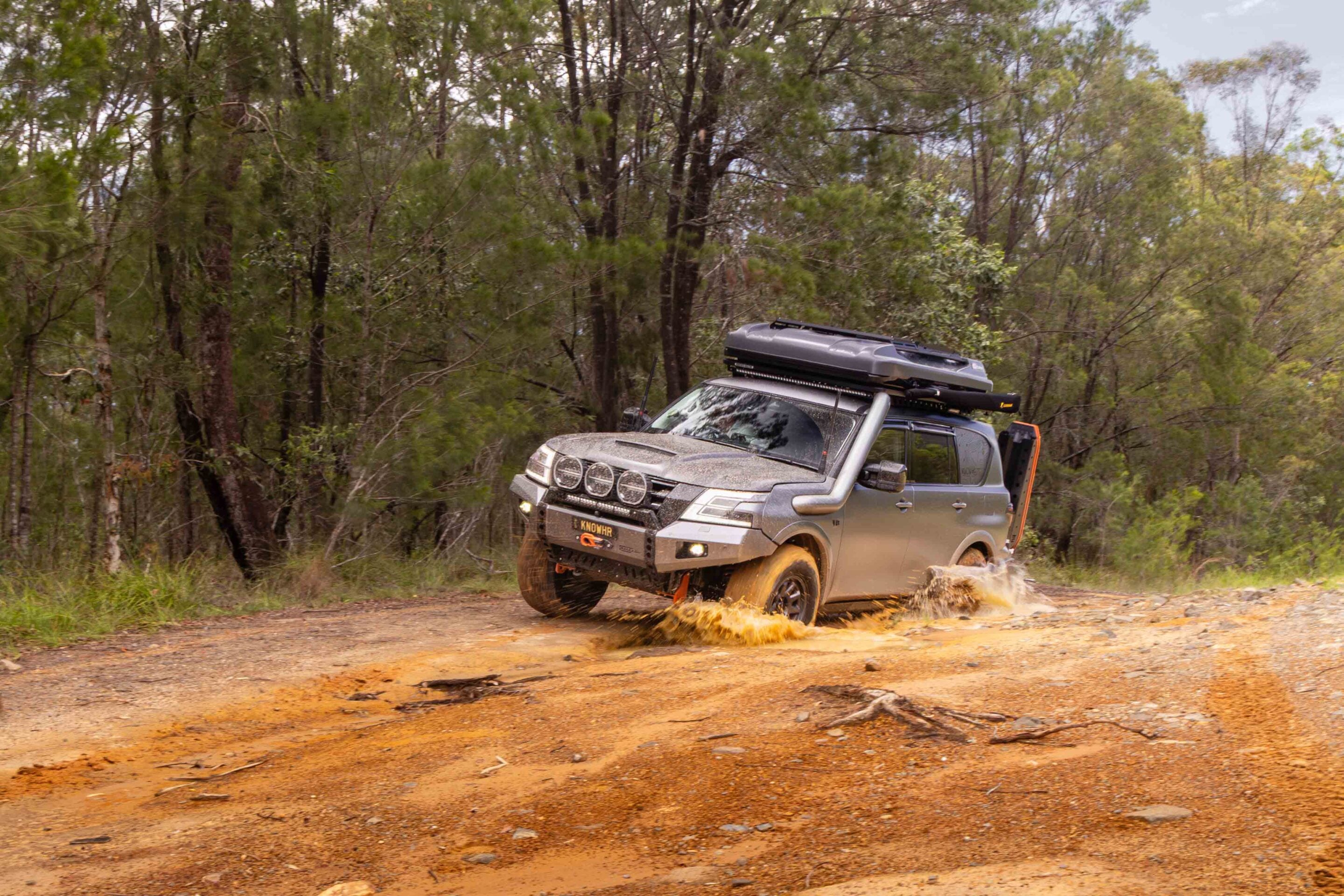
Both front and rear diffs have been dropped using DMW billet kits, with much of the hardware custom powder-coated in a contrasting orange finish. The suspension retains Nissan’s clever HBMC system, which does away with conventional sway bars and instead uses individual suspension hydraulics to control body roll and pitch, while still allowing maximum wheel travel off-road.
Also under the vehicle you’ll find a set of Harrop headers and a 3-inch cat-back stainless-steel exhaust system with high-flow cats, allowing the VK56 to realise its full breathing potential while maintaining a sweet V8 soundtrack. Tucked under the rear is a 120-litre auxiliary fuel tank which, combined with the Patrol’s standard 140-litre tank, gives Russell plenty of touring range from the bellowing V8.
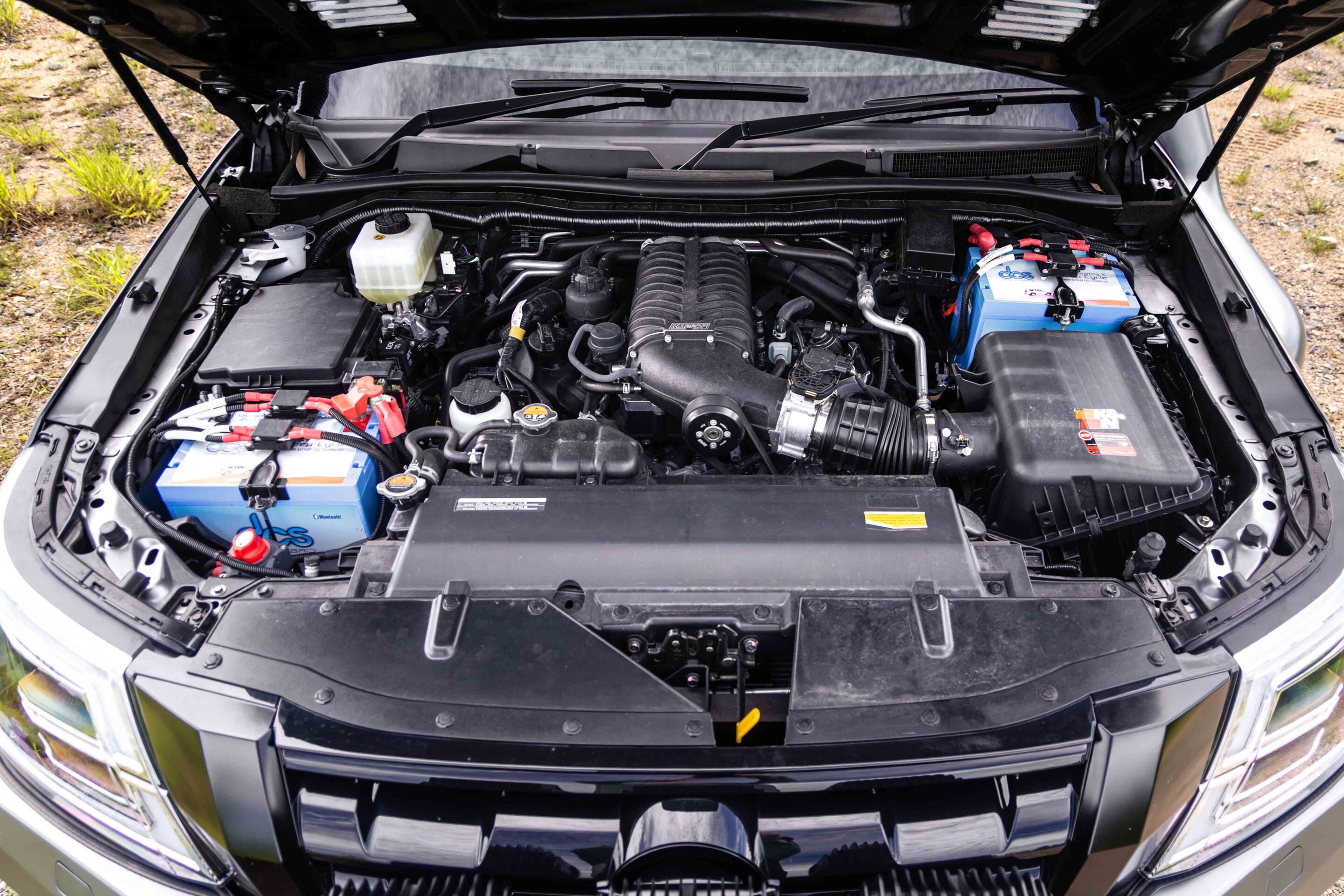
Feeding air into the Nissan V8 is a TVS 2300 supercharger from Harrop Engineering, drawing through an EC Offroad5-inch stainless-steel snorkel. The supercharger sits snugly atop the V8 in the engine bay, where it’s joined by a pair of DCS lithium batteries – one dedicated to starting duties and the other powering accessories, of which there are plenty.
Touring equipment
In the cargo area, the Patrol is fitted with a set of MSA 4×4 drawers with a power drop slide mounted on top, carrying a 75-litre dual-zone Dometic fridge in and out of the vehicle.
There’s also an onboard air compressor for topping up the Yokohamas after beach runs, along with a solar panel mounted to the roof rack to help keep the batteries charged. Also atop the Rhino-Rack is an ARB Altitude rooftop tent, Clevershade 180-degree awning, Starlink Mini antenna, Lazer Lamps light bar, and a rear-facing work light.
Lazer Lamps also handles the forward-facing illumination, with a trio of Sentinel driving lights mounted atop the Raslarr Engineering front bumper, which also carries the GME UHF antenna and a Carbon 12K winch. Melbourne-based Raslarr Engineering also fabricated the rear bar, which supports the spare wheel, Maxtrax carrier, and roof access ladder.
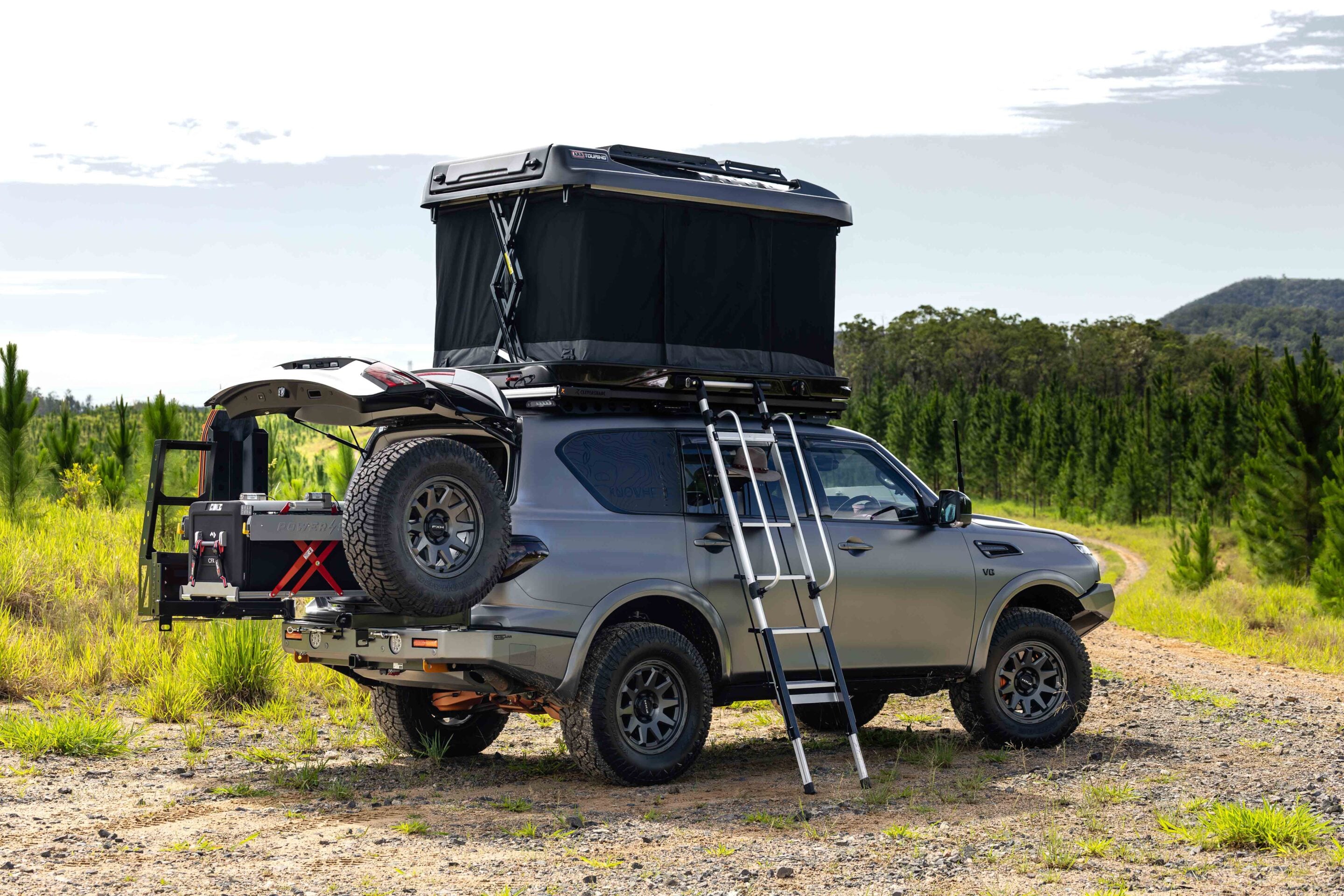
Interior changes
A common complaint among Y62 owners and would-be buyers has been the lack of factory interior upgrades as the model entered its later years.
While the cabin remained big and spacious, the absence of meaningful updates left the Patrol trailing rivals when it came to technology and features. Having spent time in the Middle East and seen first-hand the updates fitted to left-hand-drive Y62s – upgrades Australian models missed out on – Russell had a clear idea of what he wanted to do with his own vehicle.
He had EC Offroad completely strip out the cabin and install sound-deadening throughout the floors, doors and roof. The multimedia screen and HVAC controls were replaced with a Middle East–spec centre stack, adding Android Auto and Apple CarPlay, while also relocating the screen to a far more ergonomic position than the standard Australian-spec setup.
The analogue dash cluster was replaced with a NISMO-style digital display, delivering a far more modern appearance along with added functionality, while a set of seat covers protects the factory leather pews. In-cab communications are handled by a GME UHF radio, a Cel-Fi phone signal booster, and the Starlink Mini system mounted on the roof.
In the cavernous cargo area there’s a set of MSA 4×4 roller drawers and a 75-litre Dometic fridge, accessed via a power drop slide, with a water tank mounted underneath.
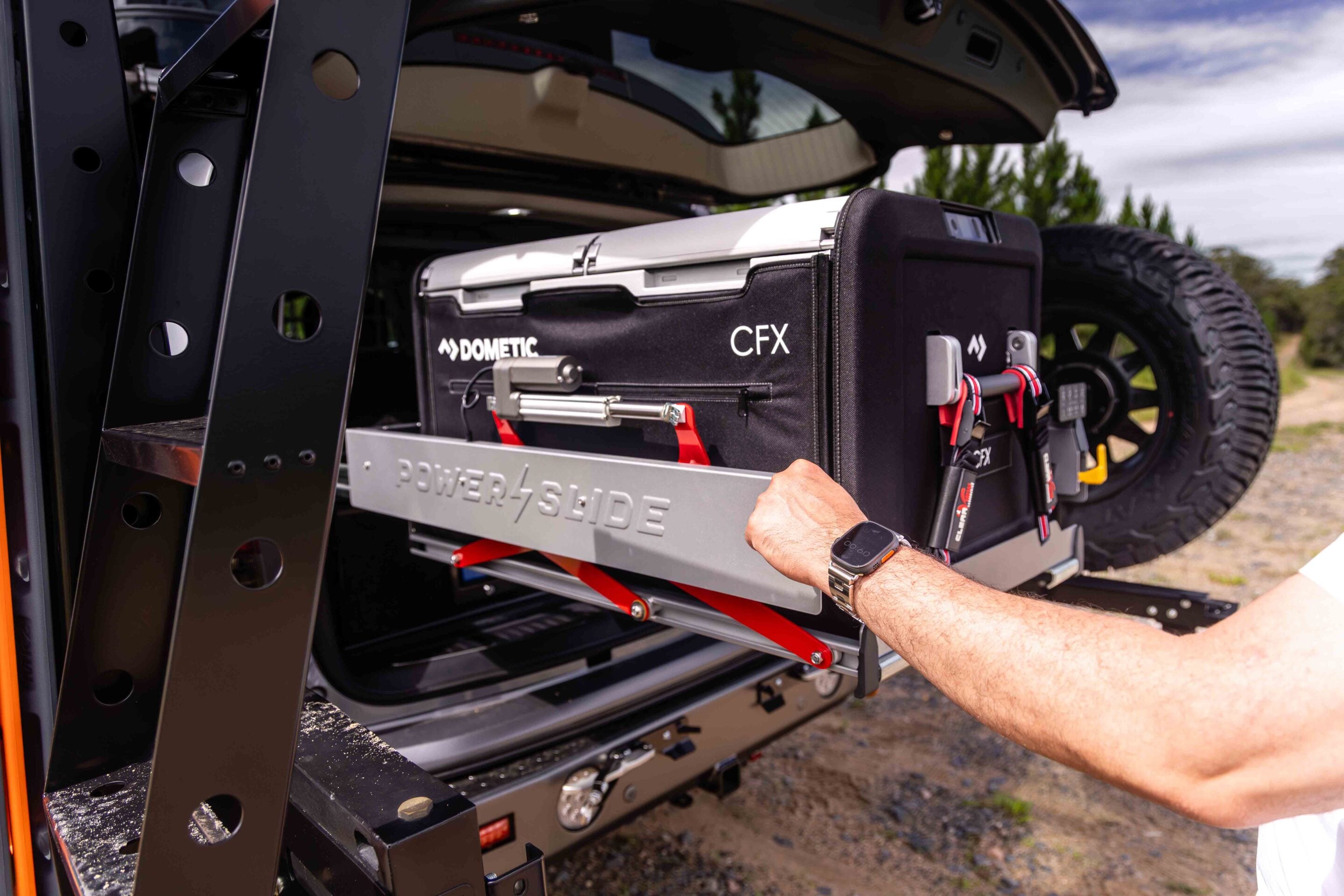
Verdict
With Russell’s vision and planning backed by the capable build team at EC Offroad, you could argue he now has the ultimate touring Y62 to explore and enjoy.
It’s a wagon many of us would be happy to own, but judging by his list of previous 4x4s, there may be more to come. Russell did let slip that another AMG G63 is on order, along with plans for a bigger off-roader to carry more gear.
“I love my Patrol,” Russell exclaimed. “It’s the culmination of a lifelong dream since childhood. However, my wife demands more creature comforts, such as an indoor shower and toilet, but that’s not going to happen in the Patrol. Don’t like towing, so now looking into building the next ‘beast’ thing!”
Russell added special thanks to Tony and the team at EC Offroad. “I would like to thank Tony, Cale, Justin, and the whole team at EC Offroad in Yatala wholeheartedly. I was impressed with the knowledge they showed and could not believe the quality of their workmanship and attention to detail.”
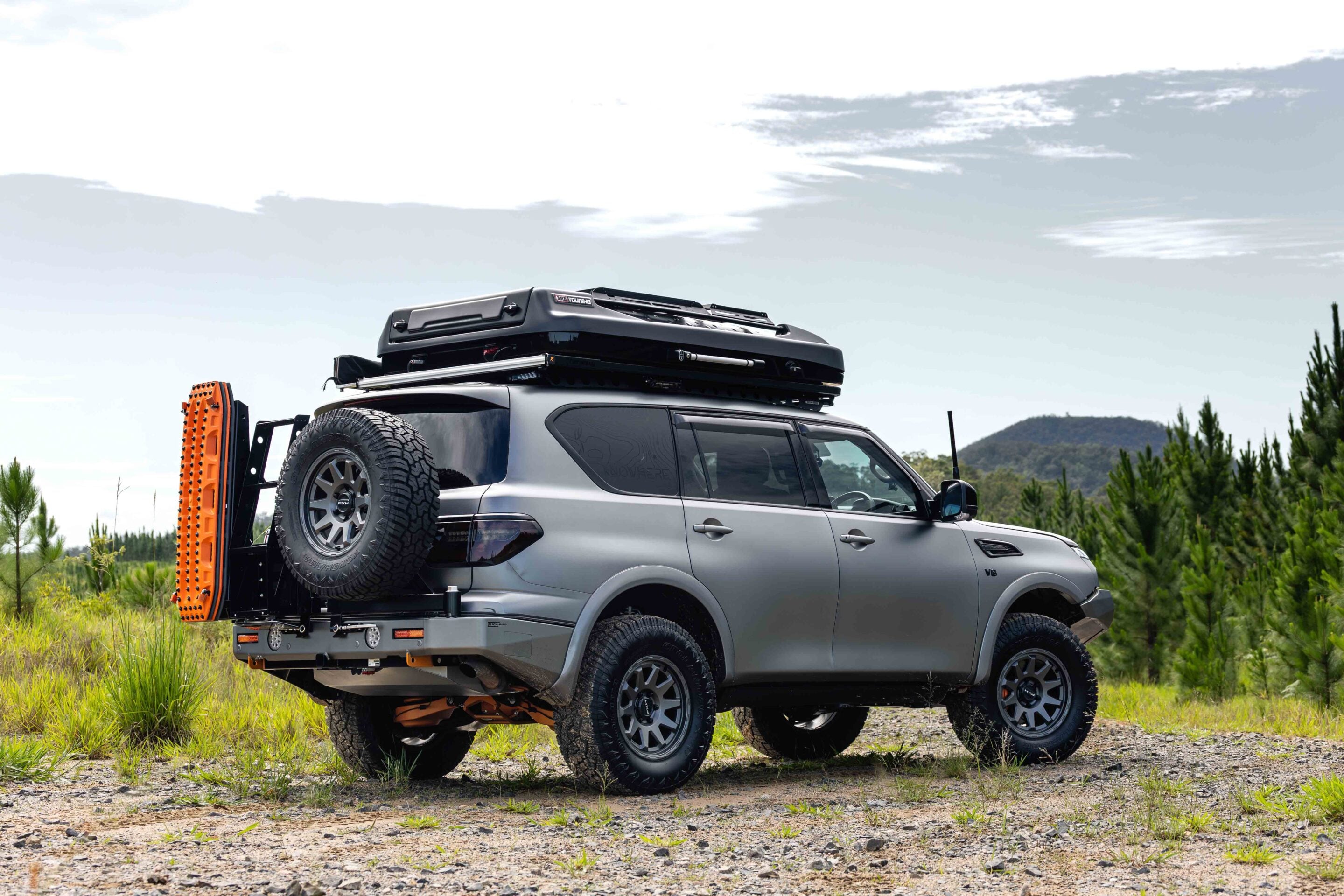
Upgrades and modifications
Wheels and tyres
- 35-inch Yokohama all-terrain tyres
- FXH-02 alloy wheels (Harrop Engineering × Forgeline Wheels collaboration)
Suspension and driveline
- Billet control arms (front and rear)
- Dobinsons heavy-duty springs
- Airbag Man rear airbag bellows
- Diff drop kits (front and rear) – DMW billet kits
- Suspension hardware powder-coated in orange
- Retains factory HBMC hydraulic suspension system
- Upgraded 4499kg GVM
- Upgraded 8000kg GCM
Engine and performance
- Harrop TVS 2300 supercharger
- Harrop headers
- 3-inch stainless-steel cat-back exhaust system
- High-flow catalytic converters
- EC Offroad 5-inch stainless-steel snorkel
Fuel system
- 120-litre auxiliary fuel tank
- Combined capacity with factory tank: 260 litres
Electrical and power
- Dual DCS lithium batteries
- Solar panel on roof rack
Exterior and protection
- Raslarr Engineering front bar
- Raslarr Engineering rear bar
- Spare wheel carrier
- Maxtrax carrier
- Rear ladder for roof access
Recovery and communication
- Carbon 12K winch
- GME UHF antenna
- GME UHF radio
- Cel-Fi phone signal booster
- Starlink Mini satellite internet antenna
Lighting
- Lazer Lamps Sentinel driving lights (3)
- Lazer Lamps light bar
- Rear work light
Roof setup
- Rhino-Rack roof rack
- ARB Altitude rooftop tent
- Clevershade 180-degree awning
Cargo and touring setup
- MSA 4×4 roller drawers
- MSA power drop slide
- 75L Dometic dual-zone fridge
- Onboard air compressor
- Underbody-mounted water tank
Interior and tech
- Full cabin sound-deadening (floors, doors, roof)
- Middle East–spec centre stack conversion
- Android Auto and Apple CarPlay integration
- Relocated infotainment screen (ergonomic position)
- NISMO-style digital instrument cluster
- Seat covers
Now that our 79 Series project build has been passed across the block at Slattery auctions – under the hammer from March 6 – it’s time to introduce our builds for 2026.
We were thinking about focusing on an older 4×4 to show what can be done on a reasonable budget, but then there were those among our team who wanted to stick to a new model build. Then we had an idea: Why don’t we do both, side-by-side? It immediately appealed to all of us. So we went and bought a 2026 HiLux SR5 double-cab, as it is the newest vehicle on the market. And, as we speak, we’re scanning the listings at Slatterys to find another HiLux that’s around 10 years old. There’s a few on there, so I don’t think it will be long before we have one in the shed.
The plan is to work with our industry suppliers to accessorise and upgrade both Toyotas, to make them competent outback tourers and see how they line up. It’ll also give us real-world evidence on whether it is worth buying new, or if you can achieve the same result with an older car built on a budget.
Our build process will follow a clear four-phase journey:
- We’ll start by exploring ownership decisions, weighing a new HiLux against an older model and whether it’s smarter to invest in the new vehicle or buy an older Hilux and use the savings to significantly enhance its capability.
- Next, we’ll document every product fitted to either car, showing how accessory choices and build costs differ depending on touring goals.
- The builds will then be tested in real-world conditions, evaluating the vehicles and all accessories and upgrades.
- Finally, both rigs will be brought together for direct comparison, revealing total costs and offering a final verdict on which strategy delivers the best result.
The new HiLux will be pieced together by the team in Melbourne, while the older rig will be handed over to our mate, Dex Fulton, up in the Blue Mountains, where he’ll apply his many talents to it. It promises to be a fun challenge and one we’re all looking forward to.
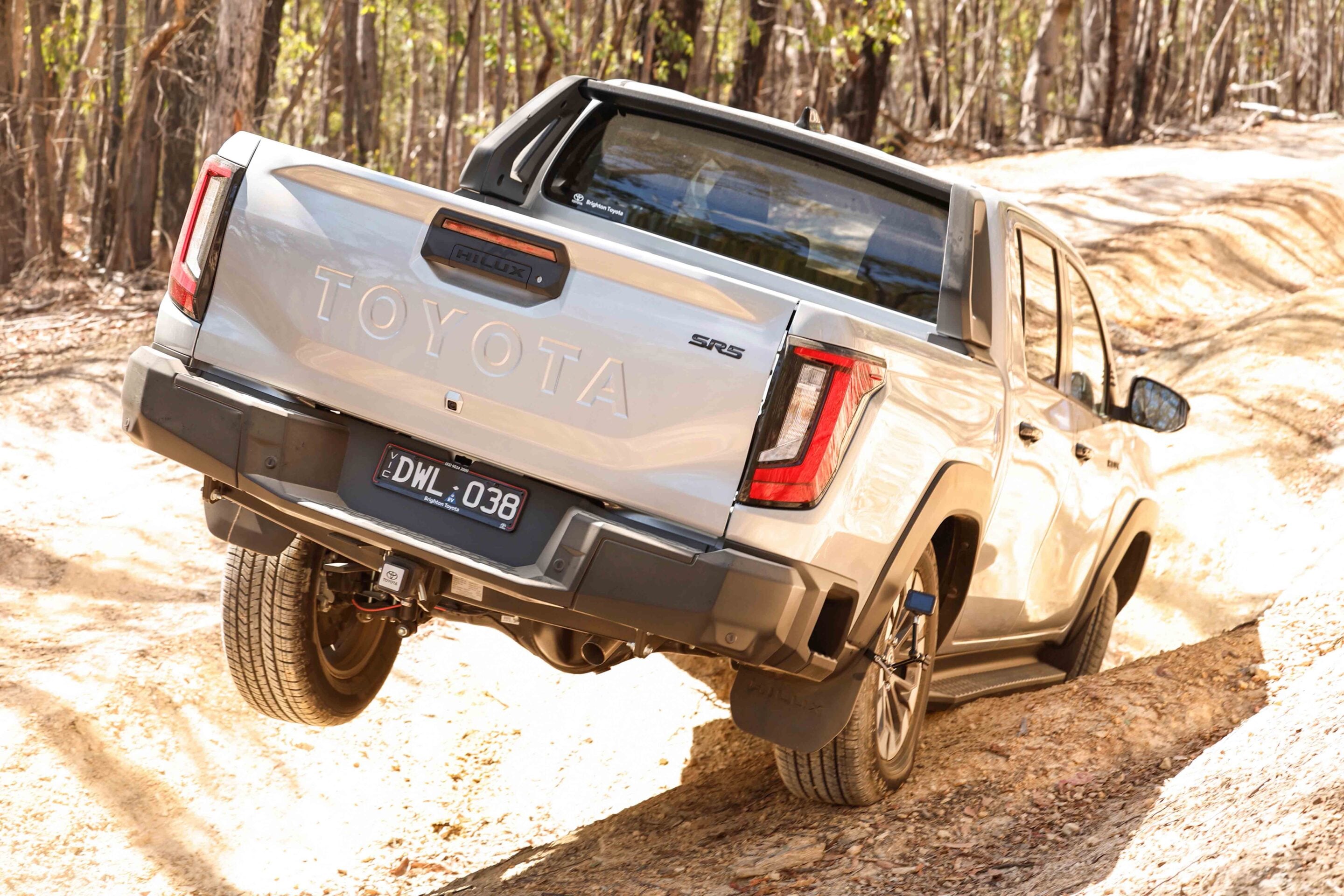
Our 2025 Toyota LandCruiser 79 Series GXL dual-cab that’s soon to go under the hammer via Slattery Auctions provides a glimpse at the quality of aftermarket kit we’ll use for the HiLux builds. It features Terrain Tamer suspension and GVM upgrades including strengthened coils, parabolic leaves, bushes, shocks, and a rear anti-sway bar.
Protection and recovery gear includes an Ironman 4×4 Apex bull bar, side steps and sliders; a Frontier 12,000lb winch, and Scope nine-inch LED driving lights. The rear axle has been track-corrected by Multidrive Technology. Electrical upgrades include a custom Lithium Ultra Slim 200 Ah battery to power fridges and accessories. Performance enhancements include an ECU tune, four-inch Manta exhaust, Safari intake snorkel, oil catch can, and an upgraded Xtreme Outback clutch.
Our BYD Shark will also be sold via Slattery Auctions later this year. It has been transformed into a proper outback rig with an MSA 4×4 tub fit-out, heavy-duty drawers, fridge slide, integrated lighting, roof rack, fridges, and recovery gear. Shark-specific Ironman 4×4 accessories, including a suspension lift and GVM upgrade, raised the payload to 1140kg.
Keep an eye on our website and socials over the coming months to follow our old-versus-new HiLux journey.
The all-new DENZA B5 and B8 have proven their off-road capabilities by conquering Beer O’Clock Hill.
Both vehicles – the B5 in Leopard guise and the B8 six-seater – overcame the tricky climb at Queensland’s Springs 4×4 Park, a notoriously steep and slippery 100-metre ascent that features a 55-degree slope at its steepest point – enough to stop experienced off-roaders in their tracks.
The trials were part of BYD and DENZA Australia’s push to fine-tune their vehicles for Australia’s unique conditions. Aside from standard factory-fitted DiSus-P intelligent suspension, the cars were only modified with Mickey Thompson TM1 Baja Boss All-Terrain 275/55 R20 tyres, as well as traction, torque and throttle software adjustments. The B5 Leopard also carried a prototype aluminium frontal protection kit and roof rack as part of DENZA’s upcoming OEM-approved accessory range.
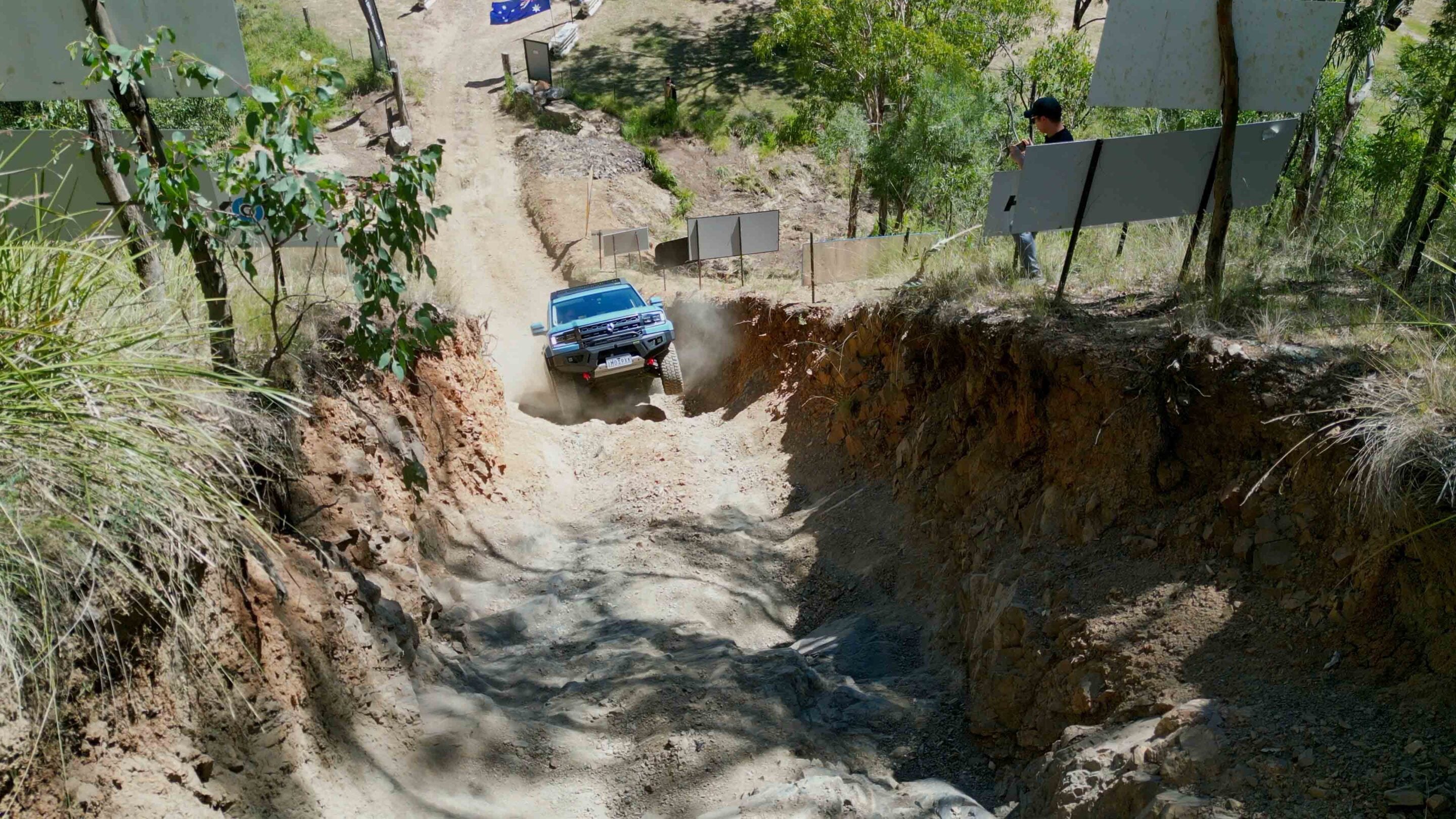
With Mountain and Crawl modes engaged, front and rear differentials locked, and low-range selected, both the B5 and B8 powered up the climb without much struggle – even over the infamous uphill rocky mogul that often halts less-capable rigs. The vehicles then handled the downhill run equally smoothly.
“Beer O’Clock Hill is one of the toughest tests in the country, and we are delighted that both the DENZA B5 and DENZA B8 conquered it with authority,” said Mark Harland, DENZA Australia Chief Operating Officer. “Learnings are shared with our Research and Development teams as part of our commitment for continuous refinement and product improvement.”
Data from the test will be sent to DENZA’s R&D teams in China, with new off-road enhancements to be rolled out to Australian B5 and B8 owners via over-the-air updates.
The B5 range comprises Standard and Leopard trims, both running a dual-motor 4WD system producing 425kW and 760Nm. A 31.8kWh battery delivers up to 90km of electric-only range (WLTP) and supports 100kW DC fast charging. The Leopard adds off-road hardware including hydraulic adaptive suspension, front and rear electric differential locks, and a 3000kg towing capacity. The five-seat interior features a 15.6-inch rotating touchscreen, 12.3-inch digital driver display, Nappa leather trim, 11 airbags, a 360-degree camera, and 1064 litres of cargo space.
Sitting above it, the B8 is offered in six- and seven-seat layouts and produces 450kW and 760Nm, using the same 31.8kWh battery with DC fast charging increased to 120kW. Fuel capacity is 91 litres. Off-road equipment includes hydraulic suspension, electric differential locks – front and rear on the six-seat variant – and a 3500kg towing rating.
Inside, the B8 adds heated, ventilated and massaging seats, captain’s chairs in the six-seat version, premium leather trim, an integrated cooler/hotbox, a 15.6-inch rotating touchscreen, 12.3-inch driver display, an 18-speaker audio system, 14 airbags, and a 360-degree camera.