News

Gallery 1
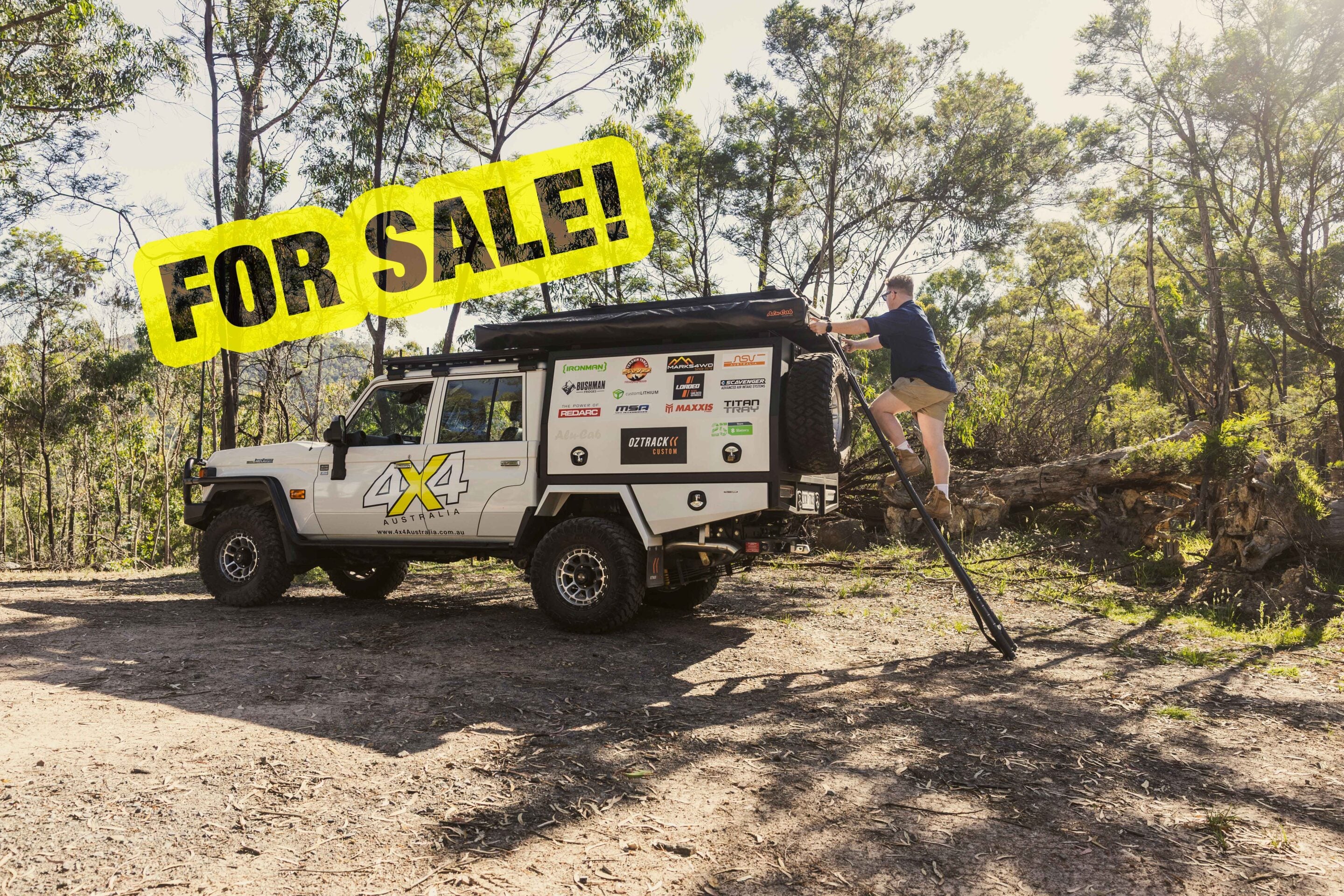
Our big 79 Series build from 2025 is currently under the hammer at Slattery Auctions!
Yep, that’s right, you could own our custom Cruiser, one of the final V8-diesel 79 Series LandCruisers to reach Australia. We set out to turn this GXL dual-cab into a genuine outback tourer, not just a showroom rig, equipping it with suspension upgrades, GVM enhancements, protection, recovery gear and touring essentials from brands we knew would perform in the field.
Across the build, we tested it hard – from dust and corrugations on a three-week convoy from Tilpa to K’gari, to the heat, sand and relentless tracks of the Simpson Desert. Every challenge proved that the LandCruiser wasn’t just kitted out for show, it was ready for the harshest conditions the Aussie bush could throw at it.
Let’s take a look at the build from go to whoa 👇
Suspension and GVM upgrade
The first upgrades took place before the Cruiser was even registered. We headed to Terrain Tamer, a hub for Toyota replacement parts, to fit a suspension overhaul that included a GVM upgrade. Completed under the Second Stage Manufacturer (SSM) program, the work is nationally certified and approved.
We went with the kit that raised the GVM from 3510kg to 3950kg, adding 440kg of payload. The GVM upgrade essentially replaces the factory suspension with Terrain Tamer’s ‘Smart’ coil springs up front, parabolic leaf springs at the rear, upgraded suspension bushes, and replacement shock absorbers, while also adding a rear anti-sway bar – something Toyota doesn’t include from the factory.
Every component in the kit has been tested to handle the increased weight associated with the higher GVM and carries approval from the relevant national authorities.
Recovery and protection
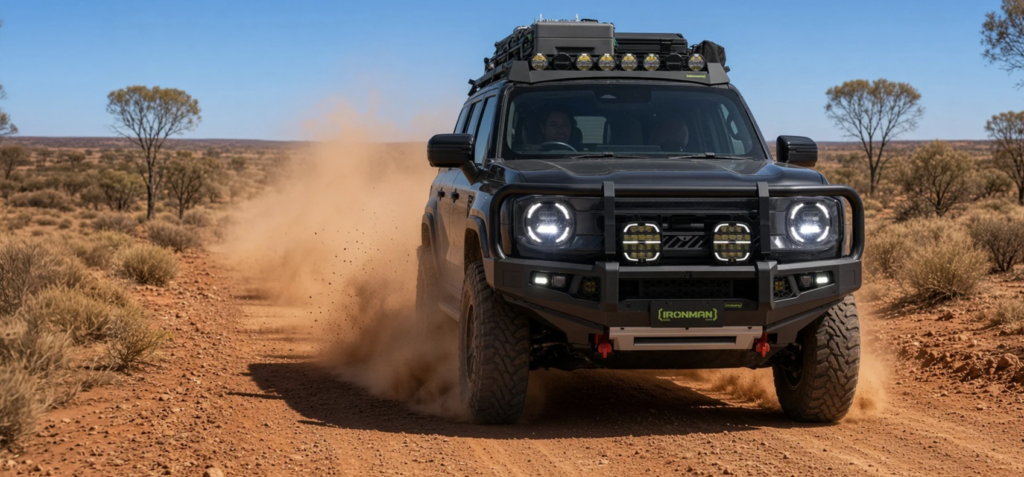
A key component of any serious 4×4 build is protection, and for our VDJ79 we teamed up with Ironman 4×4, who supplied everything we needed for the Cruiser.
Up front, we fitted a new Apex bull bar designed specifically for the facelifted 2024 70 Series, along with premium steel side steps and sliders with side rails, a Frontier 12,000lb winch, Cube lights, and a pair of Ironman Scope nine-inch LED driving lights. The bull bar also has provisions for extra lights and antenna tabs mounted at the furthest points of the hoop to keep antennas out of the driver’s line of sight. Recovery points sit under the bar, paired with a 4mm-thick bash plate for added protection.
The Scope lights offer a two-mode output – full or 80 percent dim – and function as spot and spread lights in one, with the side lights doubling as DRLs when the spotties aren’t in use. Mounted via a factory dash blank, the driver can adjust output on the fly. At full power, the lights throw up to 1 lux at 1770m, with a 5700K colour temperature that’s easy on the eyes.
Side rails run from the hoops down to the side steps, protecting the guards and reinforcing the bull bar in the event of a heavy impact. With the side steps mounted to the chassis, the rails triangulate the bull bar mounts for additional strength, giving confidence that the front end can handle the worst the outback can throw at it.
Rear track correction
One of the most talked-about aspects of VDJ LandCruisers is the difference between the front and rear wheel tracks. To address this, we sent our Cruiser to Multidrive Technology in Geelong.
Modifying a vehicle’s track requires engineering approval, and Multidrive’s solution carried Second Stage Manufacturer (SSM) approval, making it nationally compliant when done before registration – a simpler route than retrofitting post-registration, which requires state-level approval and re-certification if the vehicle is later moved interstate.
Multidrive offers two rear track widening options for the 70 Series. The first, the Tru Tracker, uses bolt-on stub axles and wider shafts but is limited to a GVM of 3780kg. For our Cruiser, with its 3950kg Terrain Tamer upgrade, we chose the higher-rated option.
The 3950kg solution uses a remanufactured OEM axle housing with billet sections welded between the centre and outer ends, extending the factory buttressing for extra strength. The original diff centre, brakes and mounting points are retained, with new brake lines and all necessary hardware supplied to accommodate the wider track. The result is a robust, certified rear end that matches the front track and can handle the increased payload.
NSV Smart Air Compressor
While at Multidrive, we dropped into NSV Australia to fit its Smart Air Compressor kit. The unit mounted neatly under the passenger seat, out of the way but still easy to access, using the OE seat mounts with no additional drilling or fabrication. The wiring harness plugged directly into the Cruiser’s harness, making it truly plug-and-play.
The single-pump compressor is rated at >50 L/min @ 40psi, with a maximum working pressure of 150psi and a duty cycle of 20 minutes on, 40 minutes off. While not as fast as a twin-pump unit, its real strength is in its smart control panel, mounted on the passenger side dash. It allows you to set the tyre pressure for on-road, sand, gravel or heavy loads, attach the screw-on hose, and let the pump inflate or deflate tyres automatically. The panel switches the compressor off once the desired pressure is reached.
The kit is built to OE standards, ensuring high-quality fittings and reliable performance. In fact, the same system is offered as a factory accessory for the Toyota Tacoma in the USA, highlighting its durability and engineering pedigree.
Loaded Gibb 1675 alloy wheels
As our 4×4 builds grow bigger and heavier, we knew upgrading the wheels and tyres was just as important as suspension when increasing GVM. Many OE alloys and aftermarket wheels aren’t rated to handle the higher loads, which can compromise safety and performance.
For our LC79, we went with Loaded Wheels’ new-for-2025 Gibb 1675 alloys. Named after the rugged Gibb River Road in the Kimberley, each wheel carries a 1675kg load rating, ensuring they can handle our Cruiser’s 3950kg GVM. Loaded’s flow-form manufacturing makes the wheels stronger without adding unnecessary weight, while leaving space for large brake rotors found on modern 4×4 brakes.
Marks 4WD High Clearance tow bar
The standard Toyota tow bar, like most aftermarket units, does its job for towing but hangs lower than necessary under the tray, making it one of the first points to scrape off-road. To fix this, we fitted a Marks 4WD High Clearance tow bar, which integrates the hitch receiver into the main crossmember, raising the lowest point of the bar.
The redesign shaves 60mm from the bottom and, combined with higher mounting points, increases overall clearance by 95mm. Recovery points at each end add extra functionality for off-road use. The one-piece design is also up to 50 percent lighter than some OEM bars, yet retains full strength, maintaining the factory 3500kg towing and 350kg ball download capacities.
Australian-made and direct-bolt-on for single- and dual-cab 79 Series LandCruisers, the bar comes with all hardware, spacers, hitch pin and clip. We simply reused the Toyota wiring and tow ball, adding an optional Mister Hitch adjustable hitch from Marks 4WD for extra flexibility.
Maxxis RAZR MT772 mud-terrain tyres
We fitted our Cruiser with Maxxis RAZR MT772 mud-terrain tyres in LT295/70R17. The deep tread provides excellent traction in mud and protects the tyre carcass from punctures. Maxxis’ specially developed rubber compound resists chipping and tearing, prolonging tyre life, while the three-ply sidewalls and aggressive shoulder blocks offer extra protection and grip when rubbing against rocks or logs.
Despite their aggressive profile, the 772s remained relatively quiet on-road, and the size struck a balance – taller than a standard 33-inch tyre but not a full 35, with a narrower tread for compatibility with the Cruiser’s build. Each tyre carries a load rating to match the 3950kg GVM and a speed rating far beyond anything we expected to reach.
Scavenger Advanced Air Filtration snorkel
While fitting gear at Marks 4WD, we also had a Scavenger’s Advanced Air Intake Snorkel installed. Unlike a standard raised intake, the Scavenger snorkel is engineered to reduce airborne contaminants – dust, grit and even water droplets – before they reach the airbox filter, helping keep cleaner air entering the engine.
The snorkel bolts to the A‑pillar like a typical unit, but its intake faces across the windscreen to draw in pressure‑fed air and uses cyclonic pre‑separation to siphon contaminants out to the atmosphere before they can hit the filter. Once pre‑filtered air reaches the upgraded Freudenburg filter in the OE airbox, it is cleaner than stock, reducing dust build‑up and protecting the engine’s internals.
The whole system is made in Australia from UV‑stable polyethylene to handle outback conditions, and comes with all fittings and instructions for a proper install. Marks took about half a day to remove the factory intake and fit the Scavenger snorkel. The difference was noticeable immediately: Induction and wind noise dropped significantly, and even at highway speeds the snorkel was much quieter than stock, improving overall driving comfort.
Bushman DC85‑X and DF30‑HD fridges
The DC85‑X quickly became our go-to fridge thanks to its rugged construction, thoughtful design, and canopy-friendly usability. It was easy to access even when fully loaded, impressively quiet, and offered large door shelves, room for tall bottles, and a six-litre internal freezer. Underpinned by Bushman’s Secop Danfoss compressor rated for tropical conditions, it maintained consistent temperatures while drawing minimal power – ideal for extended touring where power conservation is crucial.
The DF30‑HD drawer acted as a secondary fridge. While it didn’t feel as premium in isolation, it performed reliably under high ambient temperatures and rough tracks, keeping perishables cool and ready. Together, the fridges offer dependable cooling and storage flexibility, with the DC85‑X handling daily use and the DF30‑HD providing backup for longer trips or extra capacity.
Across sustained off-road travel, including corrugated desert tracks, this combination proved essential, keeping food and drinks secure and chilled no matter the environment.
Terrain Tamer Suspension Seats
One of the most noticeable comfort upgrades was a set of Terrain Tamer Suspension Seats, which we put through their paces on the Simpson Desert crossing.
Initially firm, the seats became highly comfortable once weight and recline settings were adjusted. The suspension and lumbar support smoothed out corrugations and harsh bumps, significantly reducing fatigue over long days behind the wheel. The seats hug occupants firmly, which may feel snug for larger frames, but the support pays off on long-distance runs.
MSA 4×4 touring gear
To keep gear organised and secure over 5000km of outback travel, we fitted a full suite of MSA 4×4 touring gear, which proved invaluable.
The MSA Explorer Aluminium Storage Drawer System kept recovery tools, hand tools, cameras and food neatly organised. Even fully loaded, the drawers ran smoothly and remained rattle-free over corrugated tracks. Above the drawers, the MSA 4×4 Drop Slide allowed easy access to a 75-litre fridge without us having to climb over gear. Gas struts assisted movement, and the slide locks securely even on uneven ground.
MSA canvas seat organisers and barrier bags added everyday usability, giving dedicated spaces for maps, radios, torches and jumper leads. Power-fold towing mirrors improved rearward visibility for towing or loaded setups, while the E830 drawer module offered quick, rattle-free access to essential gear like tyre deflators and recovery equipment. Built-in LED lighting enhanced visibility at night.
ICOM IC‑410PRO In‑Cab UHF radio
Reliable communication is vital on remote tracks, so we fitted an ICOM IC‑410PRO in-cab UHF radio. The IC‑410PRO is solid and rugged, with a simple, easy-to-read display that avoids complex menus. MIL-SPEC construction ensures reliability, and the radio maintains signal in hilly or tight terrain where cheaper models falter. While the handheld mic required a separate antenna and speaker, the system delivers clear, dependable communications which is crucial for safety, convoy coordination, and long-distance remote travel.
Rola Titan MKIII roof rack
The addition of a Rola Titan MKIII roof rack gave the Cruiser a purposeful, ready-for-anything look. The channel-style design allowed us to mount accessories like shovels, awning brackets and jerry cans quickly, with the ability to reposition or remove them on the fly without tools. Even when fully loaded, the racks caused minimal wind noise and handled rough terrain without unnecessary bulk or weight. For touring, camping and hauling gear over long trips, the system performed reliably and quietly, proving its expedition-ready credentials.
Custom Lithium Ultra Slim 200Ah battery
We installed a Custom Lithium Ultra Slim 200Ah battery to power fridges, cooktops, inverters and other accessories. At just 22kg and measuring 610mm x 405mm x 71mm, it installed neatly against the headboard without taking up valuable space.
Australian-made in Brisbane, the battery features a built-in Battery Management System protecting against overcharge, overheating and electrical faults. Wired via our Redarc charger, it fired up reliably and maintained charge even after months of inactivity. Its slim form factor and high capacity made it ideal for powering multiple appliances on extended tours, while local warranty and support provided peace of mind.
Alu-Cab Gen 3-R Expedition rooftop tent (removed before sale)
For sleep and downtime, we fitted an Alu-Cab Gen 3-R Expedition rooftop tent. Used extensively on beach and desert camps, it proved more than a simple bed – it became a living space.
The hard-shell tent popped up effortlessly with gas-strut assist and packed down quickly. Its aluminium shell felt robust and expedition-ready, and the design minimised canvas pinching during pack-down. Inside, a reclining backrest and fold-down table allow route planning, reading, or downtime even in bad weather.
Large windows and durable canvas provide good ventilation, and solar-ready cabling allow simple connection of lights or devices. The firm mattress is supportive, and though the internal width could feel snug for some, the tent’s practical design and comfort more than justify its place on the Cruiser.
HP-F Stage 1 power and drivability upgrade
Finally, we upgraded the Cruiser’s V8 with Horsepower Factory Stage 1 modifications. Torque increased to 650Nm and power to 195kW, with more usable torque arriving earlier in the rev range.
The package includes a four-inch Manta exhaust, snorkel-head intake, oil catch can, and upgraded clutch from Xtreme Outback. Dyno testing confirmed strong gains over stock, and road testing showed tangible improvements: the exhaust added a deeper note, top-gear cruising improved, and steep off-road climbs were easier.
These upgrades gave the V8 the performance and drivability required for extended touring, ensuring it could handle both highway runs and rugged off-road tracks with confidence.
If you’ve been dreaming of owning a fully built, adventure-ready LandCruiser, this VDJ79 is your chance. Keep an eye on Slattery Auctions and be ready to place a bid – opportunities like this, combining rare final-series V8 power with a fully certified outback-ready build, don’t come around often.
Follow 4X4 Australia on Google
Get more 4x4 news, reviews and gear stories from 4X4 Australia in your Google feeds.