Toyota’s 250 Series 4×4 wagon was created to be many things in many markets around the world. In the US it’s simply known as the LandCruiser 250, while here in Australia and many other markets it’s the LandCruiser Prado.
If you dig through all the 250 Series models in all the markets it is sold in, you’ll find a variety of powertrains, from the 1GD-FTV diesel that powers our Prados, to turbocharged petrol four-cylinders in the US market, plus other engines around the world. The top of the available powertrains to grace the 250 platform is the V35A-FTS twin-turbocharged petrol V6 engine and, in Australia, that engine is only offered in the Lexus-badged GX550.
While most Lexus vehicles will never see mud on their tyres, let alone be used for aftermarket product development, the vehicle you are looking at here was bought just for those reasons.
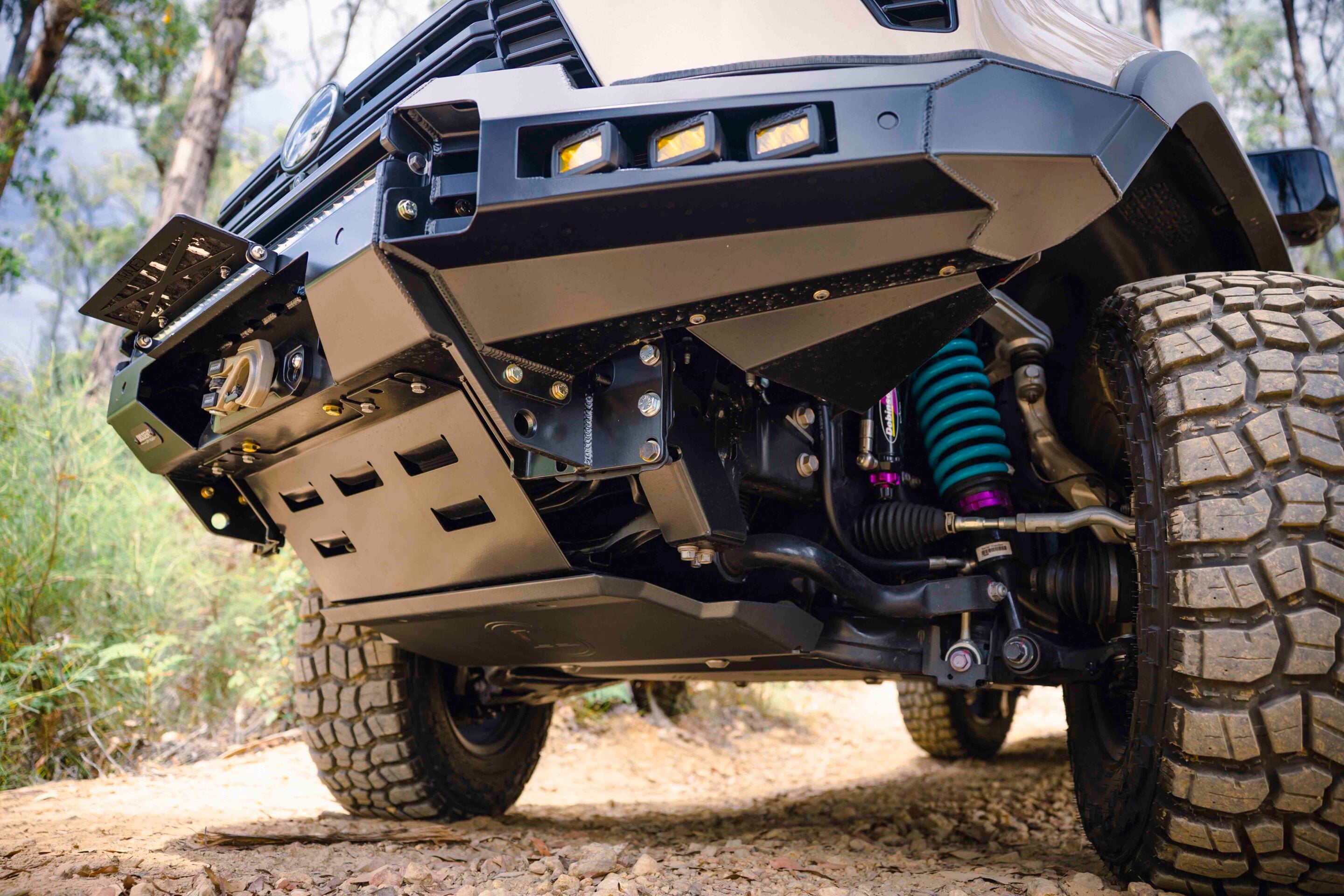
Built for the Australian aftermarket
“The GX model had not been offered to the Australian market before,” said Rob from Razed Products. “We purchased this as an opportunity to enter a niche market for our accessories.”
Razed Products (↗) produces a range of gear to make carrying, storing and securing gear in and on 4×4 vehicles simpler. While you’re more likely to see its products on a Toyota Prado than a Lexus GX, the GX Overtrail offered another cool way to test and display them.
The Overtrail is the off-road variant of Lexus vehicles. As well as the GX550 Overtrail, Lexus also offers an LX Overtrail, which is based on the 300 Series LandCruiser. They say the Overtrail is the most off-road-focused version of the Lexus model, but that doesn’t mean it can’t be improved upon.
Lexus’s off-road hardware includes Toyo all-terrains on 18-inch wheels, Multi-Terrain Select (MTS) and e-KDSS suspension, which allows the front and rear sway bars to be disconnected automatically in rough terrain by using the MTS drive modes. The GX550 already has a rear locking diff, however there isn’t a front locker.
GX550 gets a serious off-road upgrade
The Razed crew upped the off-road ante by fitting 295/70R18 Kenda Klever muddies on Lenso Marvel 18-inch alloy wheels, and swapping the suspension out for a Dobinsons MRR remote-reservoir set-up, giving an extra three inches of ride height and full adjustability.
Also under the Lexus you’ll find Razed underbody protection, comprising 5mm aluminium plates shielding the sump, radiator, engine, front diff, driveshaft, transmission and transfer case.
On the front of the vehicle, a replacement bumper from Dissent Offroad adds further protection and clearance for rocky drives. The sweet-looking metal bumper also allows for the Carbon 12K winch to be fitted, and it also conceals a 30-inch Hardkorr light bar.
Up on top of the Lexus is an early version of Razed Products’ own Australian-made roof rack. These will be coming to market soon and include plenty of neat features. Of course, the rack is fitted with Razed hardware for mounting the Maxtrax and other accessories.
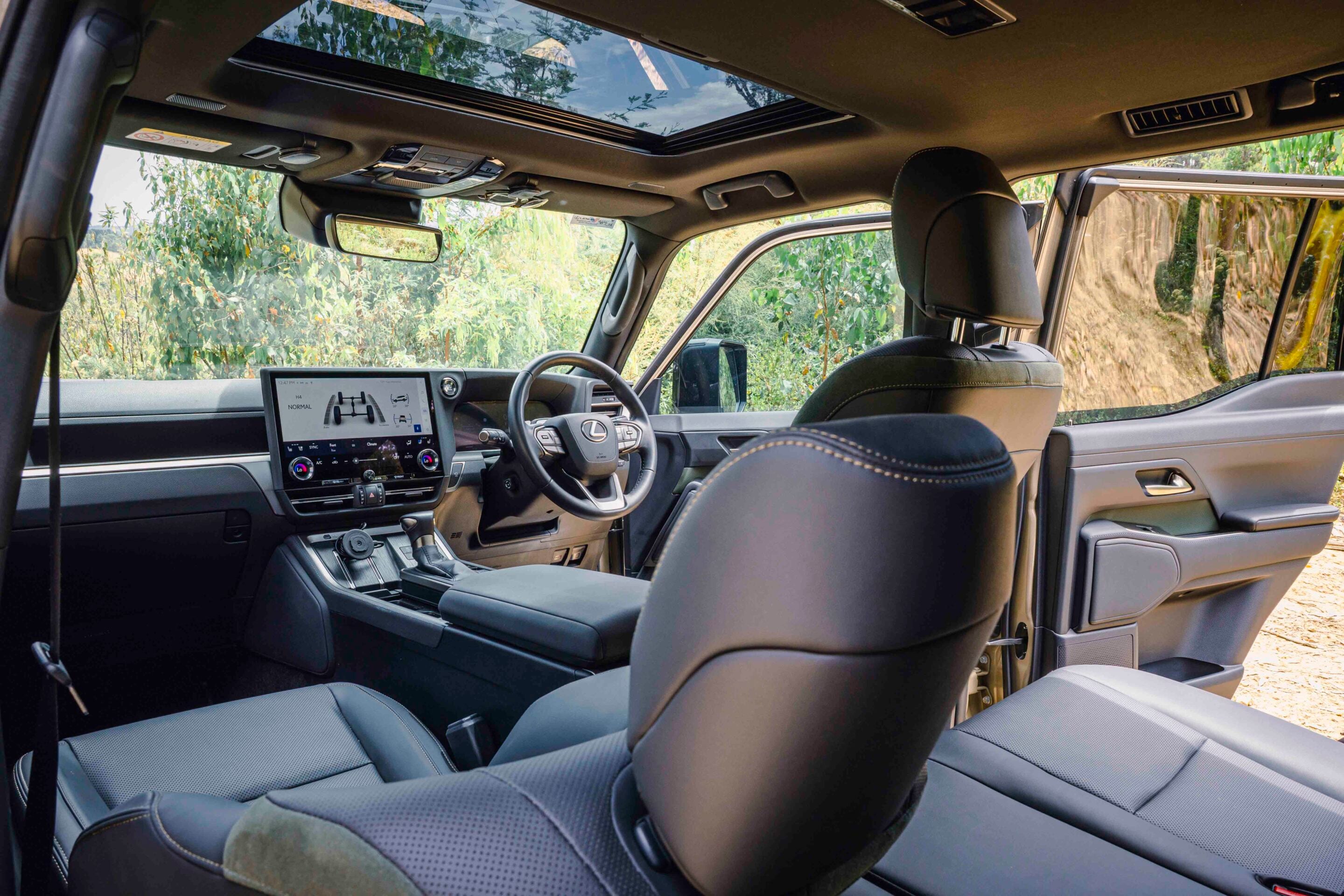
Luxury meets serious touring practicality
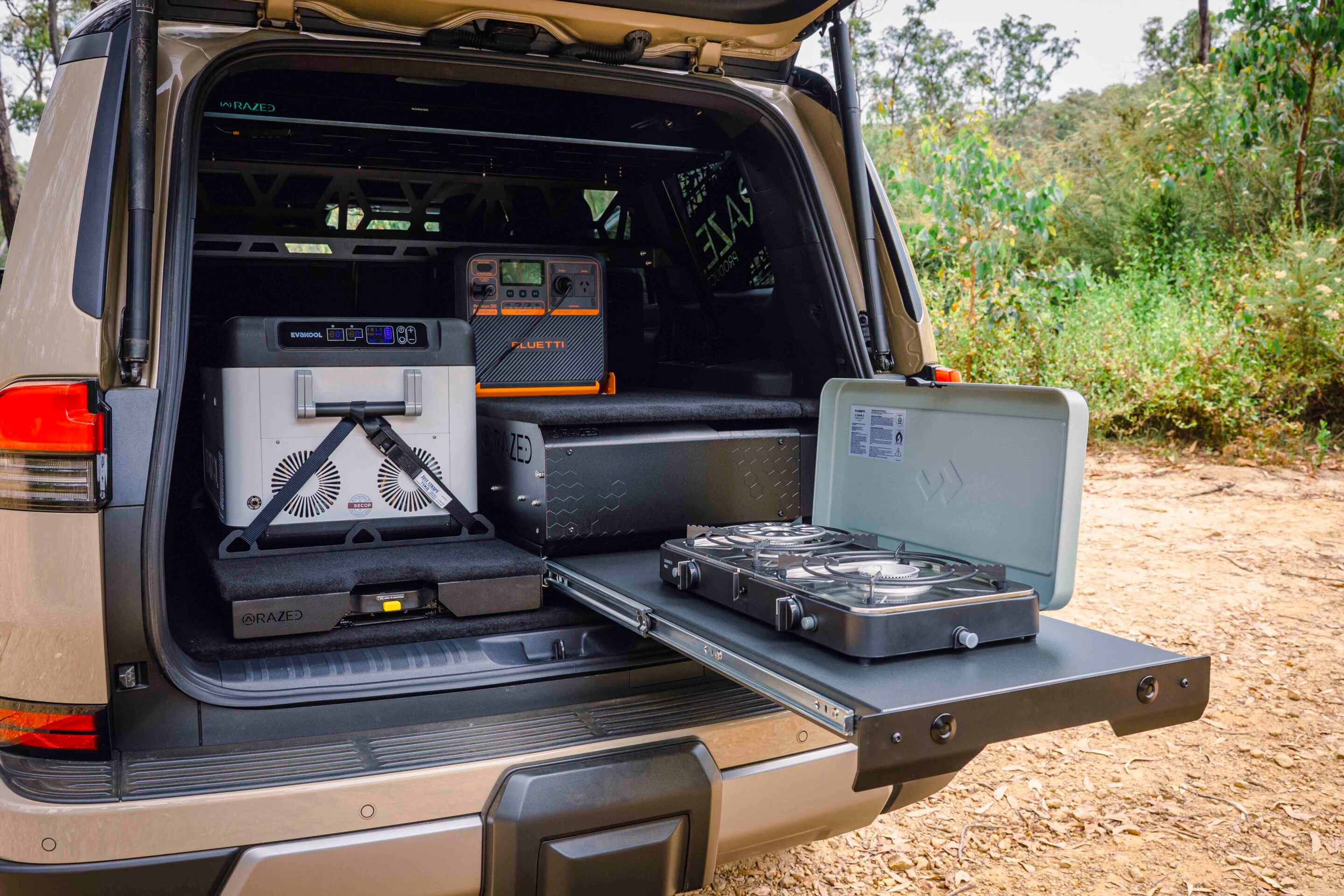
More of Razed’s handiwork is revealed when you open the back of the Lexus, with one of the company’s false-floor set-ups providing a solid and flat platform on which to mount equipment. This includes Razed Altitude drawers, a Razed fridge slide carrying an EvaKool fridge and a Razed storage shelf.
Not so obvious are the concealed Razed air-compressor mounting bracket securing an ARB compressor, the power and air-outlet panel, and the hidden 12-volt system. This includes a Lifetek Lithium LiFePO4 battery (225Ah), Victron Orion XS 50A DC/DC charger, Victron solar charger and a 2000W 12V-240V inverter from Invicta.
When you add in the Bluetti unit stored in the back, this Lexus has power to burn, and it’s not all from that 650Nm twin-turbo engine. Of course, all of the Razed storage accessories fitted to the Overtrail will also fit a 250 Series Prado.
The GX550 gives the Prado Lexus luxury, while the Overtrail features add capability. Razed has turned the dial up to 11 in both regards to create the ultimate Lexus.
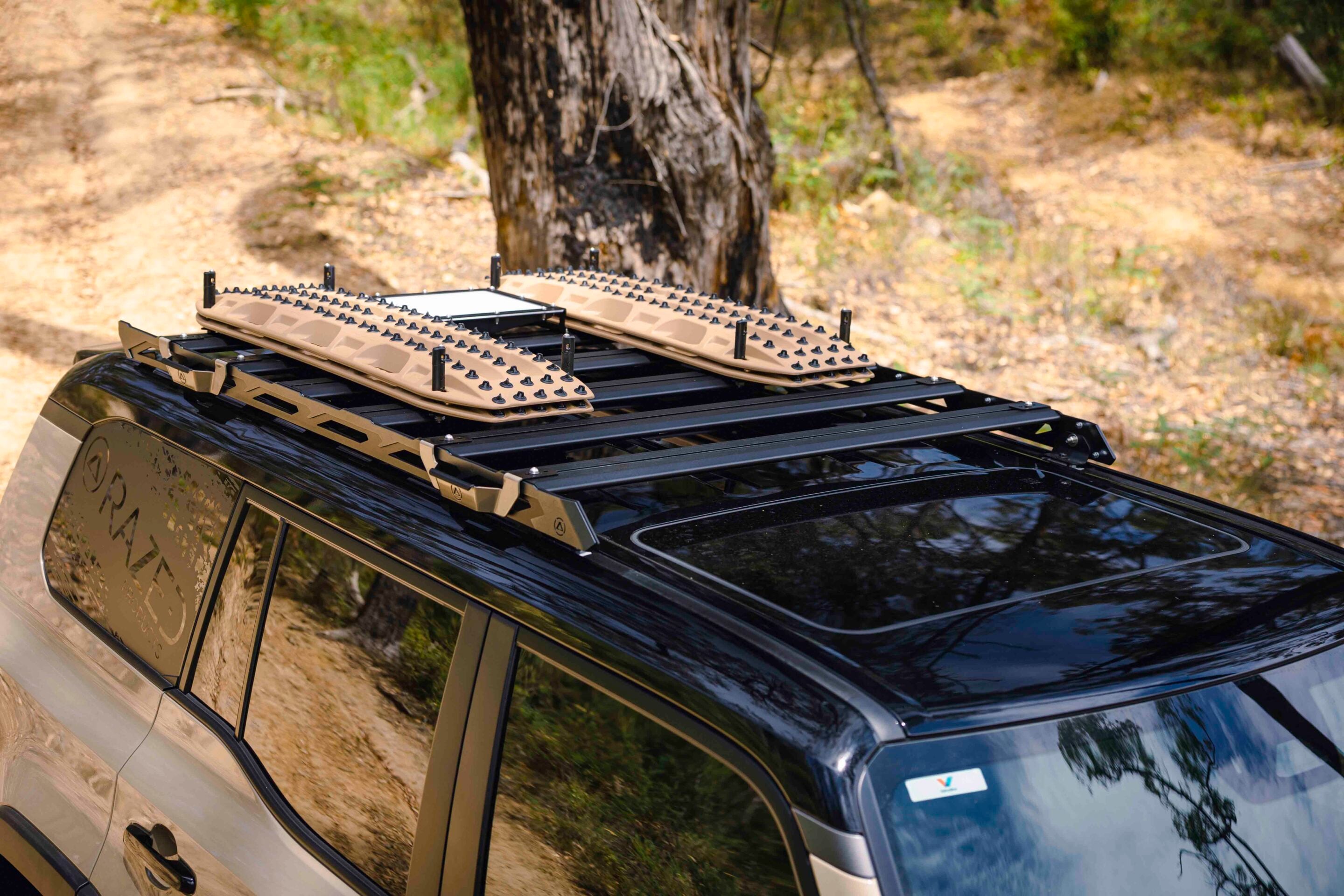
Mods and products
- Toyo all-terrain tyres
- Kenda Klever 295/70R18 mud-terrain tyres
- Lenso Marvel 18-inch alloy wheels
- Dobinsons MRR remote-reservoir suspension
- Razed underbody protection
- Dissent Offroad replacement bumper
- Carbon 12K winch
- Hardkorr 30-inch light bar
- Razed Products Australian-made roof rack
- Maxtrax recovery boards
- Razed false-floor system
- Razed Altitude drawers
- Razed fridge slide
- EvaKool fridge
- Razed storage shelf
- Razed air-compressor mounting bracket
- ARB air compressor
- Razed power and air-outlet panel
- Lifetek Lithium LiFePO4 225Ah battery
- Victron Orion XS 50A DC/DC charger
- Victron solar charger
- Invicta 2000W 12V-240V inverter
- Bluetti power unit
Electric utes are starting to arrive in Australia, but choices remain limited. Interest is growing as buyers look for 4×4 EV alternatives, though range, towing capacity and off-road ability remain key concerns.
A handful of models are confirmed or expected for the Australian market, offering competitive towing, payload and off-road performance tailored to local conditions. This guide covers electric utes currently available in Australia and those set to arrive soon, giving buyers a clear picture of what’s on offer and what’s coming 👇
- MG U9 EV
- KGM Musso EV
- Ford F-150 Lightning
- LDV eTerron 9
- Chevrolet Silverado EV
- GMC Hummer EV
- Rivian R1T
- Tesla Cybertruck
- Tembo Tusker
- Riddara RD6
- Isuzu D-MAX EV
- JAC T9 EV
- Toyota HiLux BEV
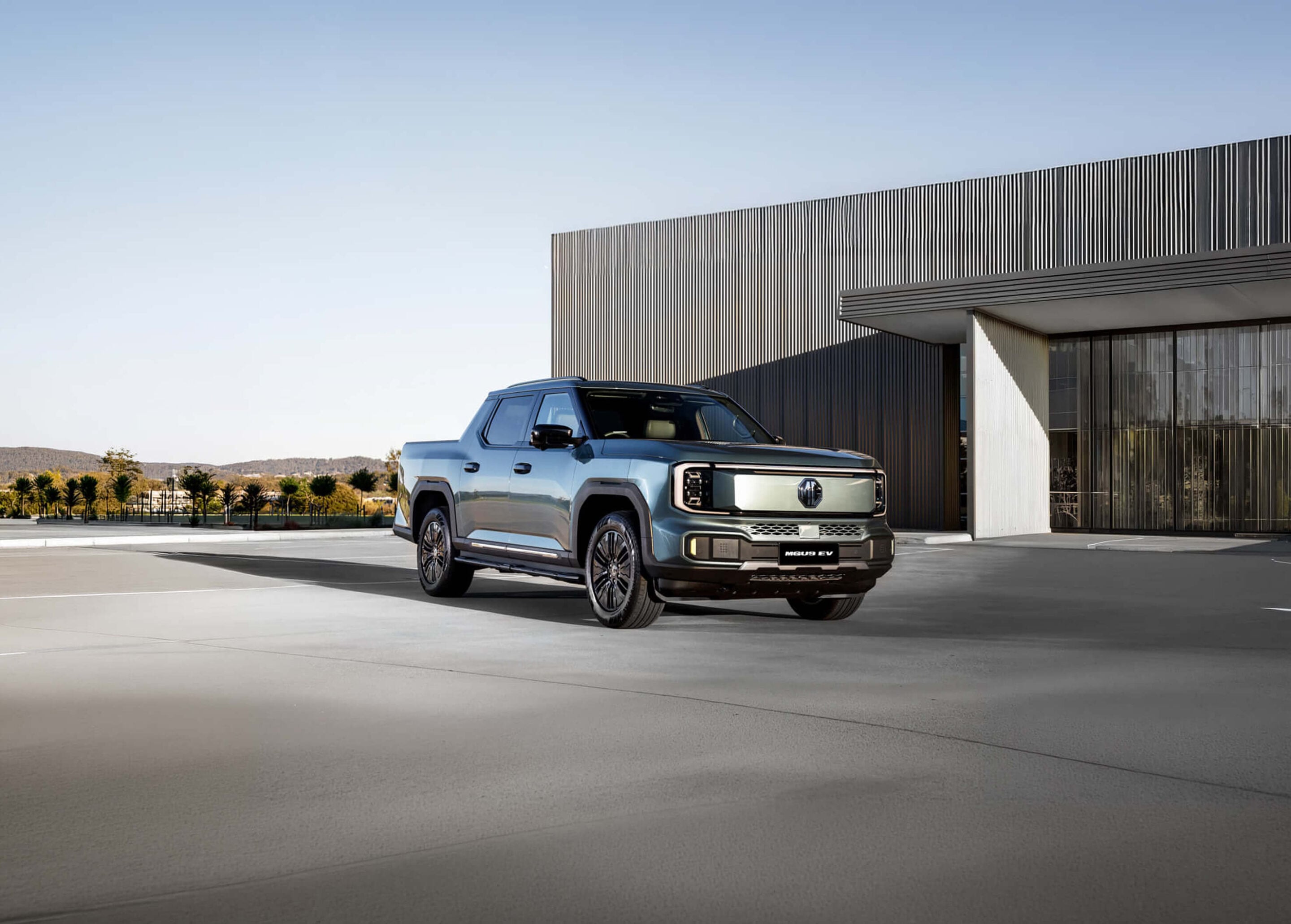
MG U9 EV
The MG U9 EV is an upcoming electric dual-cab ute that MG has confirmed for Australia, although there’s still no word on local pricing or exactly when it will arrive.
It was shown in Australia at the 2026 Melbourne Motor Show and is closely related to the LDV eTerron9, sharing much of the same underlying hardware. MG’s Australian website currently lists it as “coming soon”.
Australian approval documents reveal a dual-motor all-wheel-drive system producing 325kW, with 125kW from the front motor and 200kW from the rear. It’s also rated to tow 3500kg braked, while payload is listed at 685kg.
The approval documents also list 18-, 19- and 20-inch wheel options. MG hasn’t confirmed the Australian battery specs yet, but the closely related eTerron9 runs a 102.2kWh LFP battery and claims up to 430km of WLTP range. It also has the same 325kW dual-motor setup and can DC fast-charge from 20 to 80 per cent in about 40 minutes.
KGM Musso EV
The KGM Musso EV has officially launched in Australia, with deliveries underway through select dealerships from late 2025.
Built on a unibody platform, it’s offered in single‑motor front-wheel drive and dual‑motor all-wheel drive. The AWD system produces 266 kW and 630 Nm, paired with an 80.6 kWh LFP battery delivering a WLTP range of 380 km. AC charging (11 kW) takes around 10 hours, while DC fast charging (300 kW) reaches 80 per cent in 36 minutes. Braked towing is 1,800 kg, payload is 805 kg, and the 1‑speed automatic drives the wheels. Pricing starts at $64,000 drive‑away for the AWD.
Inside, the Musso EV blends comfort, technology, and convenience with dual-zone climate control, ventilated and heated seats, heated leather steering wheel, power-adjustable seats, and a walk-up welcome system. It features a 12.3‑inch touchscreen, 12.3‑inch digital cluster, ambient lighting, Apple CarPlay and Android Auto, rear-seat sleep mode, electric park brake, and regenerative braking paddles. Exterior highlights include LED headlights and DRLs, front fog lights, black roof rails, and 17‑inch alloys.
Safety is comprehensive, with 8 airbags, adaptive cruise control, autonomous emergency braking, lane-keeping and lane-change assist, cross-traffic warnings, driver attention monitoring, stability and rollover protection, hill start and descent control, trailer sway control, and multi-collision braking. With its combination of range, capability, and advanced features, the Musso EV offers a versatile and competitively priced fully electric ute for Australia.
Ford F-150 Lightning
For now, the Ford F-150 Lightning is still available in Australia as a fully electric alternative to traditional 4×4 utes. Converted to right-hand drive by Advanced Manufacturing Queensland (AMQ) and sold through specialist importer AusEV, it blends rugged utility with zero-emission performance.
However, Ford is discontinuing the current battery-electric Lightning in favour of a new extended‑range electric (EREV) model. Pairing electric motors with an onboard petrol generator, the EREV promises more than 1125 km of total range, signalling a major shift in Ford’s EV strategy. For Australia, this means existing EV Lightnings will remain available through AusEV while supplies last, with the next‑generation EREV expected in right‑hand drive around 2027. In January 2026, AusEV slashed prices of its Pro variant to $109,990+ on‑roads to clear remaining stock.
Equipped with a 131kWh battery, the EV Lightning delivers up to 515km of range and offers a 4.5-tonne towing capacity, alongside a 1-tonne payload. It is also the only vehicle-to-grid/home-approved EV in Australia, allowing owners to power their homes during outages.
LDV eTerron9
The LDV eTerron 9 is set to arrive in Australia in 2026 as the brand’s flagship battery-electric ute.
It will offer both single‑motor rear‑wheel drive and dual‑motor all‑wheel drive, with the AWD system producing 325 kW combined and the RWD version delivering 200 kW. A 102 kWh LFP battery is expected to provide up to 430 km of range, while braked towing capacity reaches 3.5 tonnes, matching the diesel Terron9.
The eTerron 9 shares the same dimensions as its diesel counterpart: 5500mm long, 1997mm wide, 1,860 mm high, with a 3,300 mm wheelbase and a ground clearance of 230 mm. Pricing for Australia has not been confirmed, but details will be released closer to its 2026 launch.
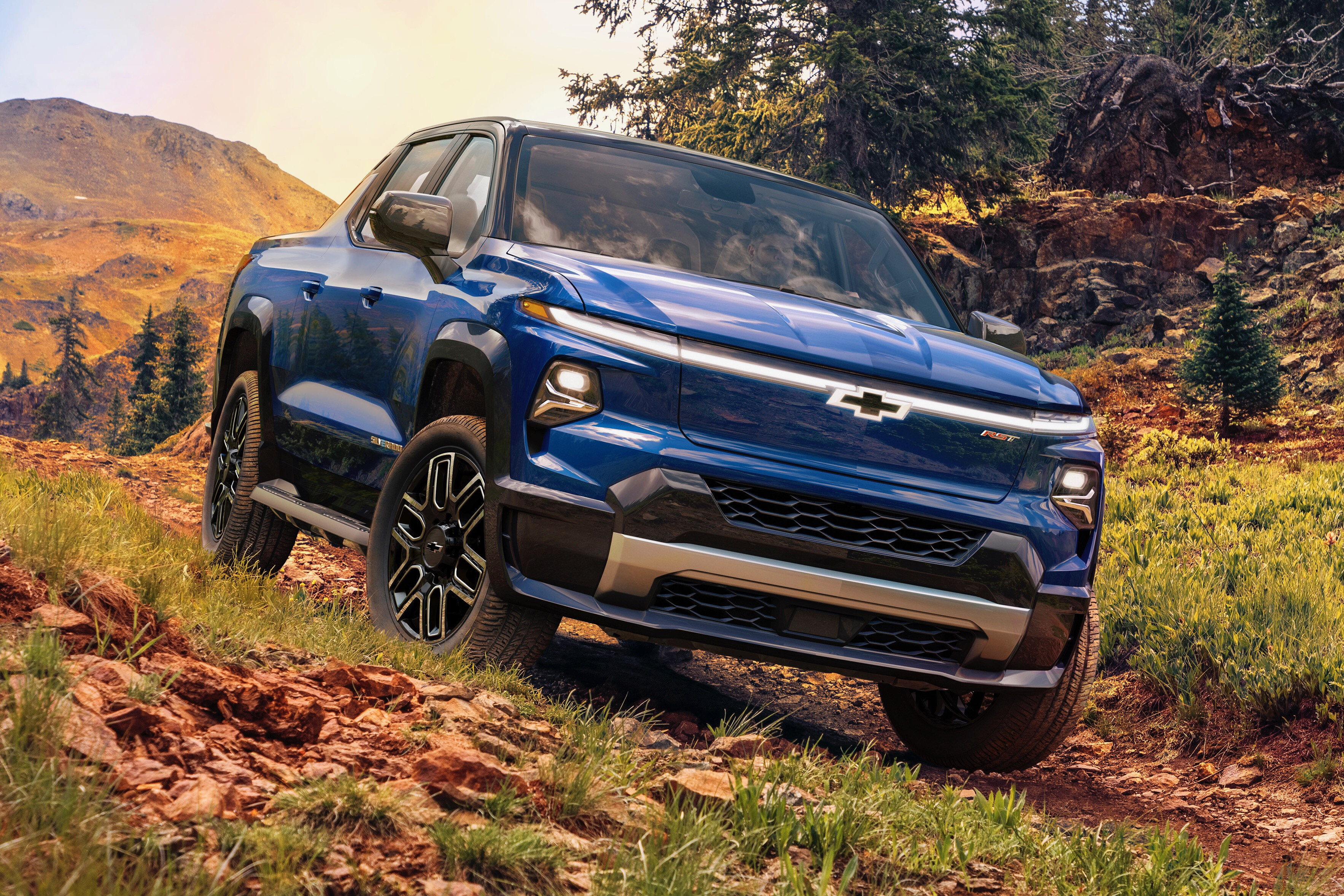
Chevrolet Silverado EV
The Chevrolet Silverado EV is a full-size all-electric ute built on GM’s Ultium platform, offering dual-motor all-wheel drive with up to 541kW and 1051Nm in performance trims.
Depending on the battery and variant, it can deliver up to around 780km of range and supports heavy-duty towing of roughly 4500 kg, making it suitable for work or lifestyle use. Global trims include the fleet-focused Work Truck, the retail-oriented RST/Max Range, and the off-road Trail Boss, with features such as 350kW DC fast charging, adaptive air suspension, four-wheel steering, configurable tailgate and Midgate, and exportable onboard power.
The Silverado EV is not officially sold through Australian dealers, but right-hand-drive conversions by specialist importers like Autogroup International make it accessible for local buyers seeking a full-size American electric ute experience.
GMC Hummer EV
The GMC Hummer EV is a full-size all-electric 4×4 now available in Australia via right-hand-drive conversions by Autogroup International, fully engineered to meet Australian Design Rules.
These remanufactures use OEM components and ISO‑certified processes, ensuring the vehicle drives and performs as intended. Both SUV and pickup (SUT) body styles are offered. The SUV includes a dual-motor 2X with 570hp and around 480 km range, and a tri-motor 3X producing 830 hp, 0-100 km/h in 3.5 seconds, and roughly 515 km range. Signature off-road features – CrabWalk, Extract Mode, adaptive air suspension, four-wheel steering – carry over to the right-hand-drive models, alongside a premium interior with large infotainment screens.
While there’s no official GMC dealer network in Australia, these conversions provide immediate access to a fully compliant, extreme off-road electric 4×4, backed by local support and warranty.
Rivian R1T
The Rivian R1T is an all-electric mid‑size ute available overseas in dual‑motor and quad‑motor all-wheel-drive configurations.
The quad-motor setup provides advanced torque vectoring, while adjustable air suspension raises clearance to 381 mm. Acceleration is brisk, with 0-97 km/h in the low-three-second range depending on battery and motor choice. Battery options span 105kWh, 135kWh and 149kWh, delivering 370-645 km of range under WLTP/EPA testing. The cabin features a 12.3‑inch digital cluster, 15.6‑inch touchscreen, multiple drive modes, and utility options such as the Gear Tunnel.
In Australia, the R1T is not officially sold and no RHD consumer version exists. A small number of left-hand-drive units have been imported for mining and industrial use by WA-based MEVCO, and a test mule was spotted on Melbourne roads in late 2025. These vehicles are typically limited to private sites and aren’t road-legal for general public use.
Tesla Cybertruck
The Tesla Cybertruck has appeared at a few events in Australia, but it is not officially for sale locally and no right‑hand‑drive ordering or pricing has been confirmed.
Prototype units shown at showcases give Australians a close look at the polarising design, signalling Tesla’s broader intent to expand into right‑hand‑drive markets – potentially once RHD production and compliance are finalised. Globally, the Cybertruck is offered in dual‑motor and tri‑motor AWD configurations with robust towing capacity (around 4990kg) and an estimated range around 515km on USA testing cycles. Features include adaptive suspension, four‑wheel steering and large digital displays.
In early 2026 Tesla moved to cut prices in the US, introducing a more affordable Dual‑Motor AWD model starting around US$59,990 (roughly A$85,000) and trimming the top‑end Cyberbeast variant to about US$99,990 (roughly A$142,000) as part of a range‑wide reset to stimulate demand after slower than expected sales. Despite these pricing adjustments overseas, the Cybertruck remains unavailable to Australian buyers in regular production form.
Tembo Tusker
The Tembo Tusker is a fully electric ute launched in Australia in 2024 by Tembo, a global specialist in EV conversions.
It is available in single‑cab (Tusker‑S) and dual‑cab (Tusker‑D) body styles, with 65kWh and 77kWh battery options delivering around 330km to 400km of range on a single charge. Designed for practical work use, the Tusker offers a 1000 kg payload and an unbraked towing capacity of 750kg, while still being fully approved for public roads. Tembo’s expertise in electrifying utility vehicles – including its e‑LV conversion kits trialled locally since 2018 on Toyota LandCruisers and HiLux utes – underpins the Tusker’s design and reliability for Australian conditions.
The Tusker is currently on sale in Australia, primarily aimed at commercial buyers but also available for private purchase. Retail pricing starts from approximately $74 000 plus GST and on‑road costs, with Tembo managing full on-road registration and delivery.
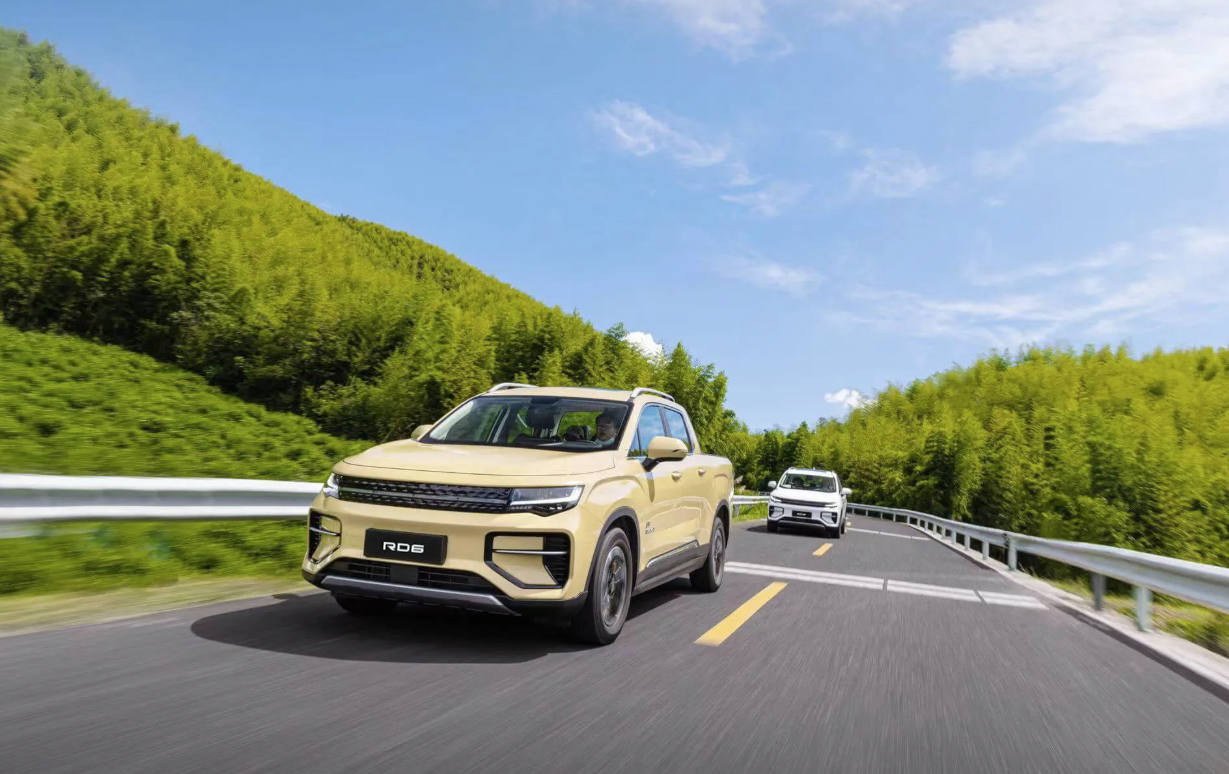
Riddara RD6
The Riddara RD6, an all-electric dual-cab ute from Geely’s Radar brand, is poised to enter the Australian market.
It offers RWD and AWD variants, with power ranging from 200kW/384Nm (RWD) to 315kW/594Nm (AWD), and 0 to 100 km/h times of around 7.3 and 4.5 seconds respectively. Battery options deliver 385-500 km of range (CLTC), and AWD models can tow up to 3000 kg braked.
Inside, the RD6 features a 14.6‑inch touchscreen, digital instrument cluster, dual‑zone climate, and utility-oriented comfort for work or off‑road use. Right‑hand-drive production has been confirmed, and the RD6 has launched in Thailand, making an Australian release possible in 2026, though pricing and full specifications are yet to be announced.
Isuzu D-MAX EV
The Isuzu D‑MAX EV is a fully electric version of the popular midsize ute, with right-hand-drive units expected in Australia in 2026.
While Isuzu Ute Australia has not confirmed local availability or pricing, the EV features a dual-motor full-time 4×4 system producing 140kW and 325Nm, paired with a 66.9kWh battery delivering about 263km WLTP range. Payload is listed at 1010kg and braked towing capacity 3500kg, matching the diesel D‑MAX.
In 2025, Isuzu UK announced pricing will start from £59,995. That works out to around $117,000 AUD before on-road costs. First deliveries in the UK are expected in March 2026, following an official launch in February. However, there’s been no confirmation yet for an Australian release.
JAC T9 EV
The JAC T9 EV is a fully electric dual‑cab 4×4 ute showcased in Australia, though local sales and pricing have not yet been confirmed.
JAC has also begun mining-industry trials in Western Australia to test performance and battery durability under harsh conditions. It pairs an 88 kWh LFP battery with a dual-motor AWD system producing 220 kW and 516 Nm, offering an estimated 330 km WLTP range. Practicality is retained with a 900 kg payload, a tub sized for a standard Australian pallet, and vehicle-to-load functionality for powering tools or campsite gear.
While timing for a full Australian rollout is unclear, the T9 EV remains one of the more realistic near-term electric 4×4 ute options for tradies, fleets, and off-road enthusiasts.
Toyota HiLux BEV
The Toyota HiLux BEV is set for release in the first half of 2026, though pricing has not yet been announced.
Toyota’s first alternate-fuel HiLux is a full battery-electric vehicle, powered by dual electric motors and a 59.2kWh lithium-ion battery, with the SR5 double-cab expected to deliver an NEDC range of around 315km. Fast charging from 10 to 80 per cent is expected to take about 30 minutes via a 150kW DC charger, or a full 10 to 100 per cent AC charge in about 6.5 hours.
Available as a double-cab ute or cab-chassis in SR and SR5 grades, it retains the ladder-frame chassis with the battery protected underneath. Motors send 205Nm to the front and 268Nm to the rear through full-time AWD, paired with a five-mode Multi-Terrain System (Rock, Sand, Mud, Dirt, Moguls). Off-road capability mirrors diesel models: 700 mm wading, 29° approach, 25° departure, 218mm ground clearance. Payload is 715kg, with 2000kg braked towing.
Primarily aimed at commercial users in industries like mining and farming, the HiLux BEV has been tested for over a year with BHP, while Toyota is also developing a hydrogen fuel-cell (FCEV) version slated for 2028.
After a year of testing, touring and modifying our BYD Shark 6, it’s time for the ute to find a new home.
The Shark is soon to be up for auction through Slattery Auctions (↗), with 23,889km on the odometer. The auction starts at 5pm AEST on August 14, 2026, and finishes at 7pm AEST on August 19, 2026.
We bought the Shark to see how the plug-in hybrid ute would handle real-world use, and it’s spent the past year being progressively kitted out for touring and off-road adventures. Along the way, we worked with some of our trusted aftermarket suppliers to turn the standard ute into a much more capable and practical touring rig.
First, the basics. The BYD Shark is a plug-in hybrid ute powered by a 1.5-litre turbocharged petrol engine and dual electric motors. The system produces 321kW and 650Nm, with the electric motors driving all four wheels. A 29.58kWh Blade Battery provides an official electric driving range of around 100km, while the petrol engine gives the Shark a claimed combined range of more than 800km.
The Shark uses a dedicated hybrid transmission and has selectable driving modes, including EV and hybrid operation. It rides on independent suspension front and rear and came from the factory with 200mm of ground clearance. That was one of the areas we targeted with our aftermarket upgrades, particularly given how much extra gear we wanted to carry.
Ironman 4×4 was first on the tools, fitting a Raid replacement front bumper with an integrated light bar, Ironman spotlights, rated recovery points and underbody protection. The winch-compatible bar is made from 4mm aluminium to keep weight down, while an IM 2.5 Heavy suspension kit added 30mm of ground clearance and improved the Shark’s ride and control both on and off the road.
At the rear, a Hayman Reese X-Bar added three built-in rated recovery points and an integrated tow hitch. Raceline alloy wheels were fitted with 285/60R18 Cooper Discoverer AT3 tyres, giving the Shark a tougher footprint and tyres better suited to off-road use. A matching spare was carried on a Rola Titan Tray roof rack.
MSA 4×4 then sorted out the tub with full-length aluminium roller drawers and a drop slide for an Evakool dual-zone fridge (the fridge isn’t part of the sale unfortunately). The setup made it much easier to carry and access touring gear, while a Utemaster Centurion canopy was fitted over the tub to keep everything protected from the elements.
The Shark also got a proper outback workout, heading into the Simpson Desert alongside a 79 Series LandCruiser. The Shark completed the trip and added some serious real-world experience to its long-term test.
Now it’s time for someone else to take the keys. With the aftermarket gear already fitted and 23,889km on the clock, our Shark is ready for its next chapter.
There are destinations in this great country of ours that I keep coming back to, like a moth to a flame.
Some people keep crossing the Simpson, while others tackle the Cape every year. I keep getting drawn back to the national parks of outback Queensland, with one in particular constantly pulling me back through the gates: Bladensburg National Park.
Maybe it is the sheer scale of the place. Maybe it is the combination of history and harsh beauty. Or maybe it is because every time I visit, the park feels completely different. Dry years paint the landscape in dusty browns and greys, while the wet transforms the country into a sea of green Mitchell grass stretching to the horizon. This latest visit came after the big rains and flooding events of 2025, and Bladensburg was unlike anything I had seen before.
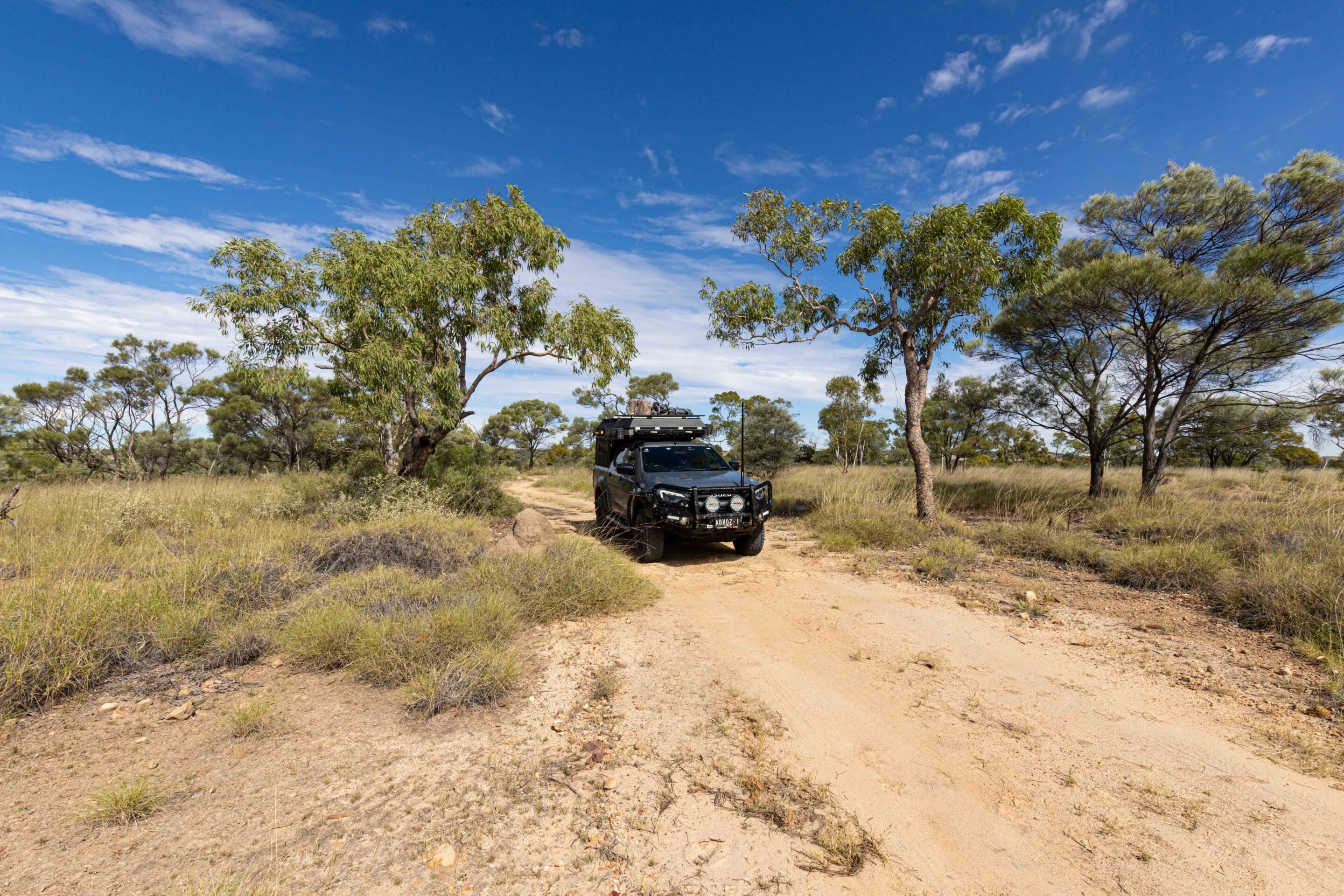
Bladensburg after the floods
The wind was blowing an absolute gale as I rolled into the park.
A falcon perched awkwardly on top of a fence post, struggling to stay balanced in the crosswind. Hunting would have been hard work for the bird that day. Around it, the Mitchell grass stood taller and greener than I had ever seen it in this park. Kangaroos grazed contentedly across the plains, while emus wandered through the fresh growth, enjoying the abundance the rain had brought.
The drive into Bladensburg is deceptively simple. Sitting just outside Winton, the park feels accessible, but once you are within its boundaries the modern world quickly fades away. This was once a vast sheep station, and evidence of that pastoral past remains everywhere you look.
Bladensburg also carries deep scars from Australia’s frontier history. One of the first stops along the Route of the River Gums is Skull Hole, a place of striking beauty and terrible sadness. The waterhole itself is picturesque, framed by rock and river gums, but its history is dark. It is believed that around 300 Aboriginal people were massacred here by Queensland’s Native Mounted Police in retaliation for an attack on a wagon carrying station supplies, after an Aboriginal woman had reportedly been assaulted. Standing there today, it is impossible not to feel the weight of what happened.
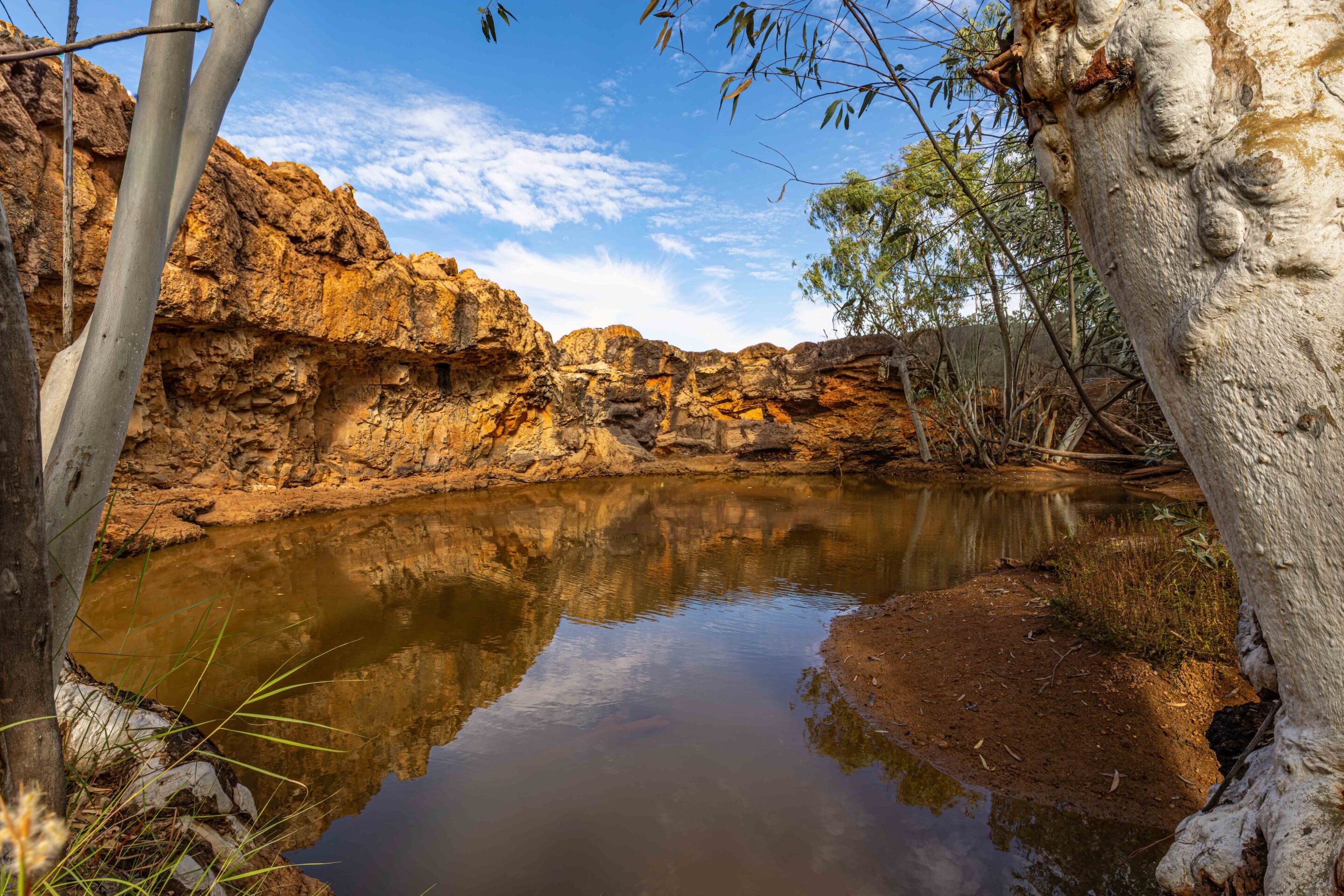
I am surprised there is not more interpretation at the site explaining the events that unfolded here, because places like this matter. They are part of the story of the outback, whether we are comfortable confronting that history or not. Even when water is trickling into the waterhole, I have always found Skull Hole a confronting place to visit. Beautiful, yes, but also haunting.
Not far away is Engine Hole, although the track there remains closed following major damage from the wet weather in 2025. It is a shame, because Engine Hole is one of the park’s best picnic spots, tucked beneath magnificent river gums beside the creek. Hopefully, repairs progress quickly because it is a cracking little corner of the park.
The impacts of the flooding are still obvious across Bladensburg. Heavy rain and flooding linked to the remnants of Cyclone Alfred hit parts of the park hard in March 2025. Soil erosion washed through the campground and roads, while some facilities suffered extensive damage.
One casualty was the excellent Bough Shed campground, which sadly remained closed at the time of travel while repairs continue. Queensland Parks and Wildlife Service (↗) hopes to reopen it soon. That closure is disappointing because Bough Shed has long been one of my favourite outback campgrounds. Set beside Surprise Creek beneath shady river gums, it is one of those places where the camp chair comes out early and somehow stays out all afternoon.
I have spent many nights camped there listening to butcherbirds and corellas calling through the river gums as the fading afternoon light washed across the plains. Even Surprise Creek Top Crossing had changed dramatically since my last visit. Where there were once deeper washouts and rougher approaches, sand has now filled many of the holes, and the crossing is considerably tamer.
In fact, much of Bladensburg appears to have been graded recently. Tracks that once bounced and rattled your vehicle relentlessly are now smoother and more accessible than I have ever seen them. Some experienced four-wheel drivers may miss a little of the challenge, particularly on Scrammy’s Drive. Still, it also means more travellers can comfortably experience this spectacular part of outback Queensland without needing a heavily modified setup.
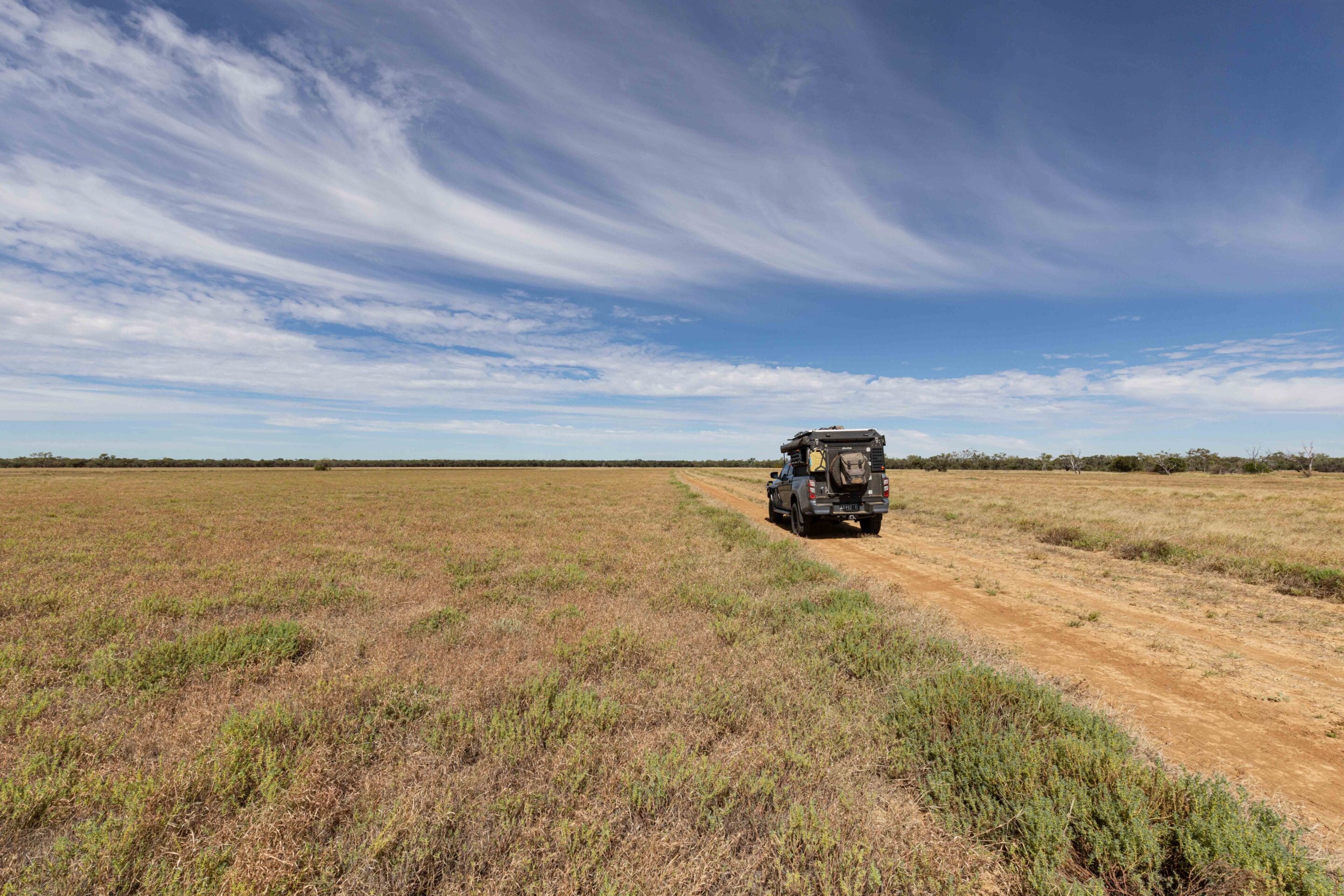
Exploring the route of the river gums
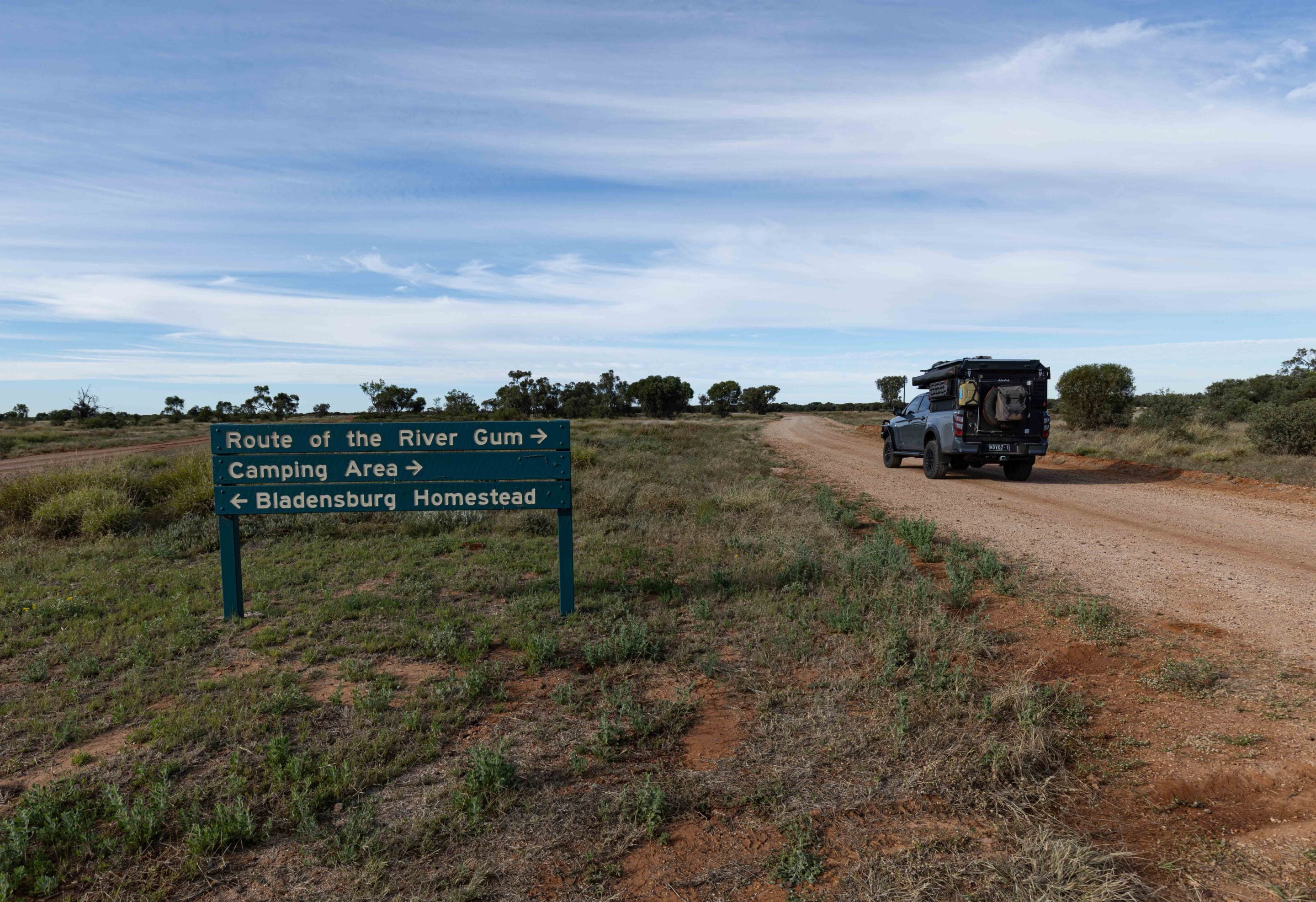
The Route of the River Gums is certainly accessible to most vehicles in dry conditions. It winds through creek country lined with coolabahs and river red gums before linking together many of the park’s historical attractions.
Wildlife was everywhere during this visit. The amount of feed around the park after the rain was staggering. Big red kangaroos bounded across the plains, while emus wandered through the grasslands in small groups. At one point, I startled a flock of bustards, or plains turkeys as they are often known out here, which lifted awkwardly into the wind before disappearing across the Mitchell grass plains.
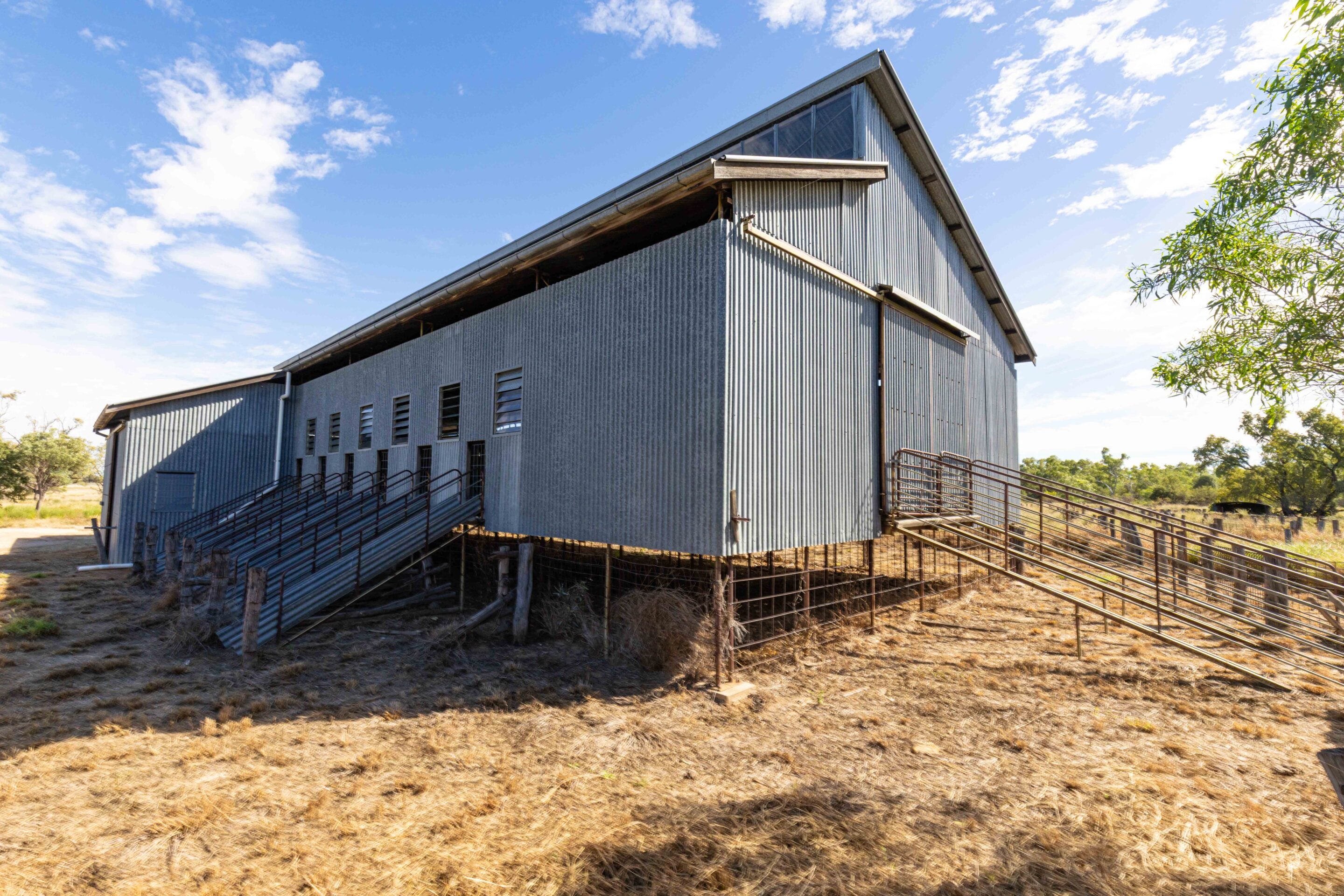
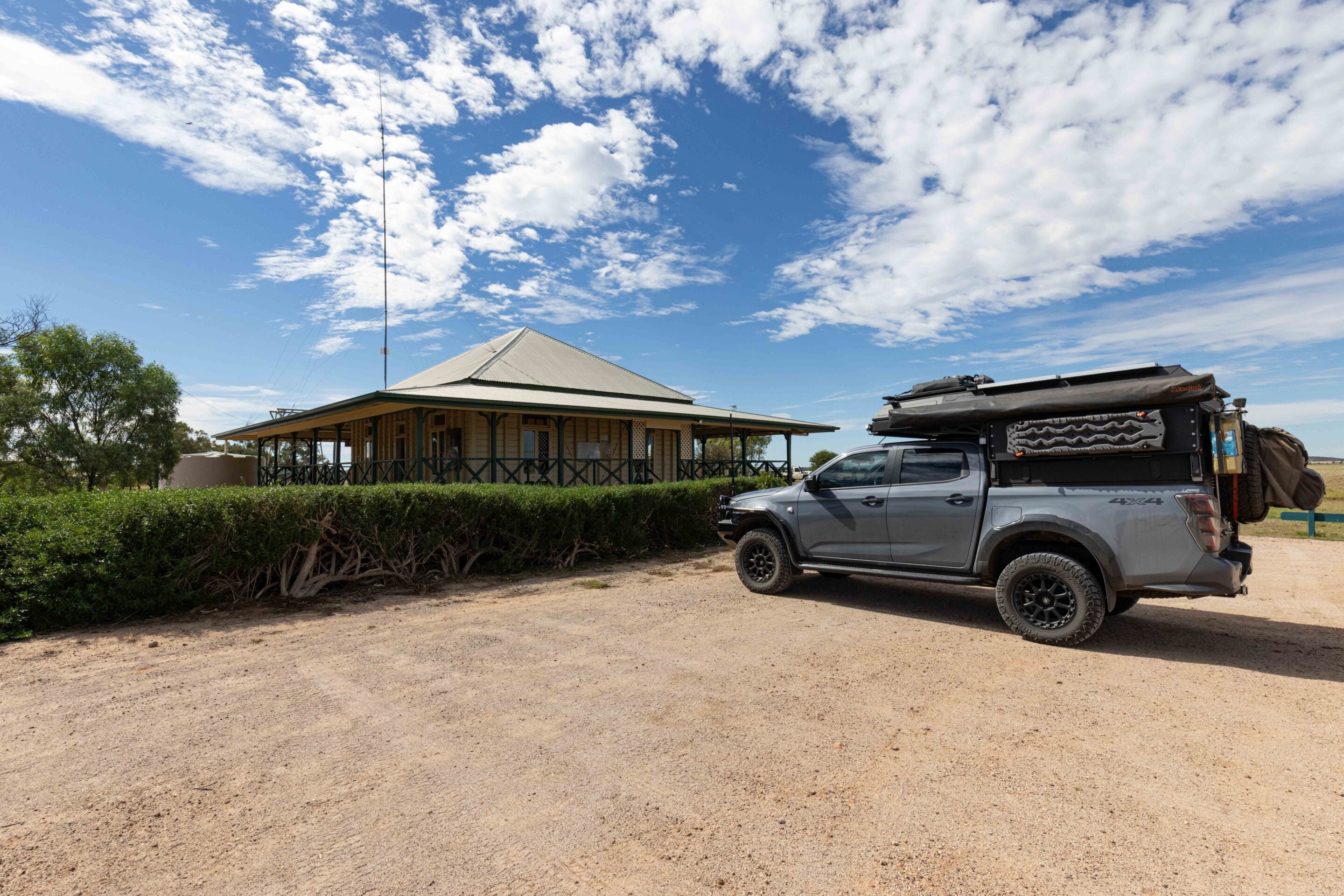
Crossing Mistake Creek at Shorty’s Crossing eventually brings you to the homestead precinct, the historic heart of Bladensburg. The old woolshed immediately grabs your attention.
History at the Bladensburg Homestead
This place once supported enormous numbers of sheep, and in 1919 the property reportedly carried around 67,700 sheep, the highest total recorded on the station.
Back then, shearing season was a major operation, with an overseer, shearers, wool classers, rouseabouts, a wool presser and a cook all working through the intense outback heat. The original shearing shed was built in 1925 because, prior to that, sheep were taken elsewhere to be shorn. Sadly, that shed was accidentally destroyed by fire in the early 1960s, reportedly after being burnt down by the manager’s son. The replacement shed standing today dates from the mid-1960s.
Walking through it now is strangely quiet. The smell of lanolin is sadly absent, and the frantic energy that once filled the shed is long gone, but the building still tells stories if you slow down and look closely enough. The homestead itself provides a fascinating insight into both the property’s pastoral history and the country’s cultural significance to the Koa people. Inside, interpretive displays explain the natural and cultural values of the landscape through the eyes of the Traditional Owners, while also documenting the hardships faced by those who attempted to run sheep and cattle in this unforgiving environment.
Outside, it is worth wandering through every outbuilding. The old store, the bookkeeper’s office and the surrounding structures all help paint a picture of station life in remote Queensland more than a century ago. I still marvel at the simplicity of the old meat houses that somehow kept food cool and usable through brutal summers long before refrigeration arrived in the outback.
Scrammy Drive
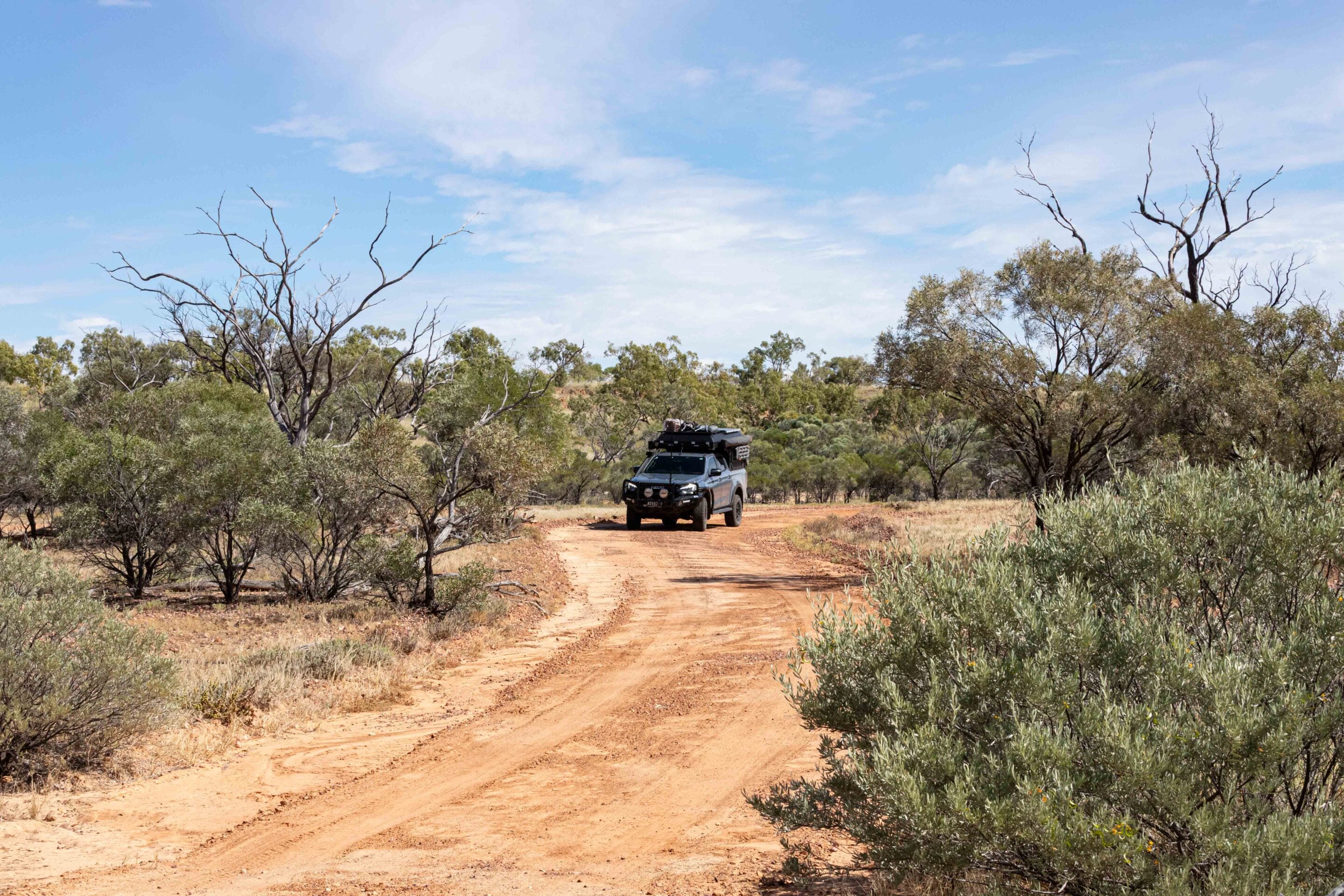
From the homestead, the adventure really begins. Scrammy Drive remains the signature four-wheel drive route in the park, and while it has become more accessible in recent years, it is still best tackled in a high-clearance four-wheel drive.
The route quickly transitions from Mitchell grass plains into rougher country scattered with gibbers, spinifex and gidgee woodland. Following the rain, much of the landscape was almost unrecognisable from previous visits. Green growth softened the harshness of the gibber plains, and sections that usually looked dry and dusty now appeared alive.
At times, it was difficult even to tell where the gibber country ended and the black-soil plains began. History is hidden throughout Scrammy Drive. At one point, the area even hosted a racecourse for training horses for the Winton races. Looking across the open country, you can almost picture stockmen and horses working this landscape in another era.
Then there is the grave of baby Delia Dalrymple. Sitting quietly beside the track in the middle of nowhere, the small grave is a confronting reminder of just how harsh life in the outback once was. Delia died in January 1887 after a short illness believed to have been related to teething complications. Today, her lonely gravesite still sits out among the spinifex and gibbers, exposed to the same heat, storms and isolation that defined life here more than a century ago.
Further along, the track begins climbing gently onto the escarpment country. Older visitors to Bladensburg may remember this section being rougher and more challenging than it is today. These days, the climb has been tamed somewhat, although the rocky base still keeps speeds down and ensures the suspension gets a workout.
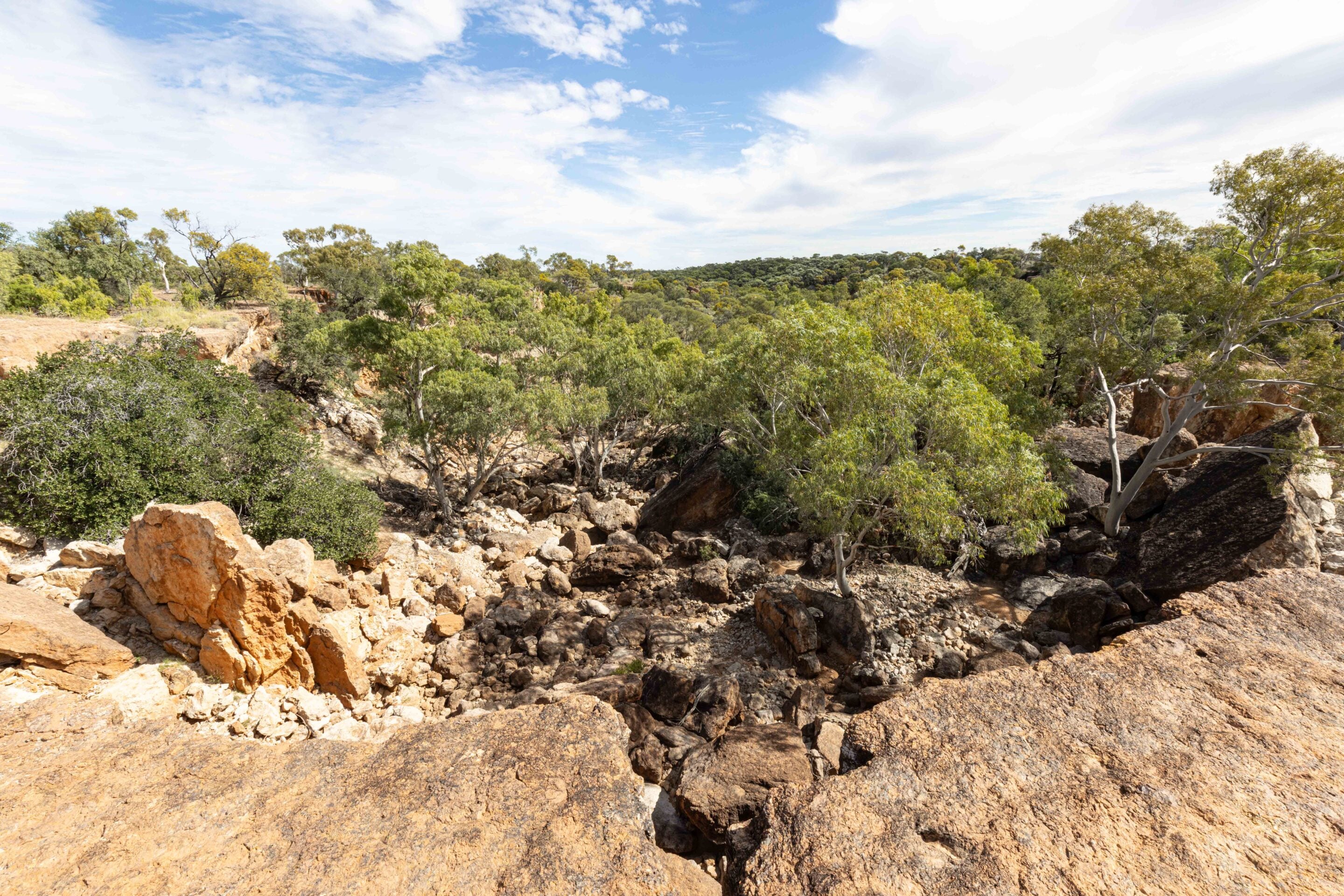
One old windmill now lies collapsed beside the track, slowly rusting back into the landscape. Eventually, the track reaches Scrammy Gorge, one of the standout lunch stops in the park. The gorge walls are impressive but fragile, and you can clearly see where sections continue to crack and collapse over time. It is a reminder that this landscape is constantly changing.
Scrammy Jack and the Channel Country
From here, it is only a short drive to Scrammy’s Waterhole and the lookout beyond.
The story behind Scrammy himself adds another layer to the park’s fascinating history. Scrammy Jack, whose real name was John Toon, worked as a boundary rider on the old Bladensburg run. He lived a solitary existence beside the waterhole, with supplies occasionally dropped off for him, but otherwise avoided human contact as much as possible.
In January 1893, Scrammy drowned in the waterhole and his body was later found there. Today, the waterhole is peaceful and surrounded by birdlife. Finches dart through the trees, while bush doves and whistling kites patrol overhead. It is hard to imagine the isolation Scrammy must have experienced living out here alone.
The final run out to Scrammy’s Lookout has also changed since my last visit. A rocky creek crossing that once added a fun technical element to the drive has since been filled in, another sign of how the park roads have evolved after recent weather events and grading work.
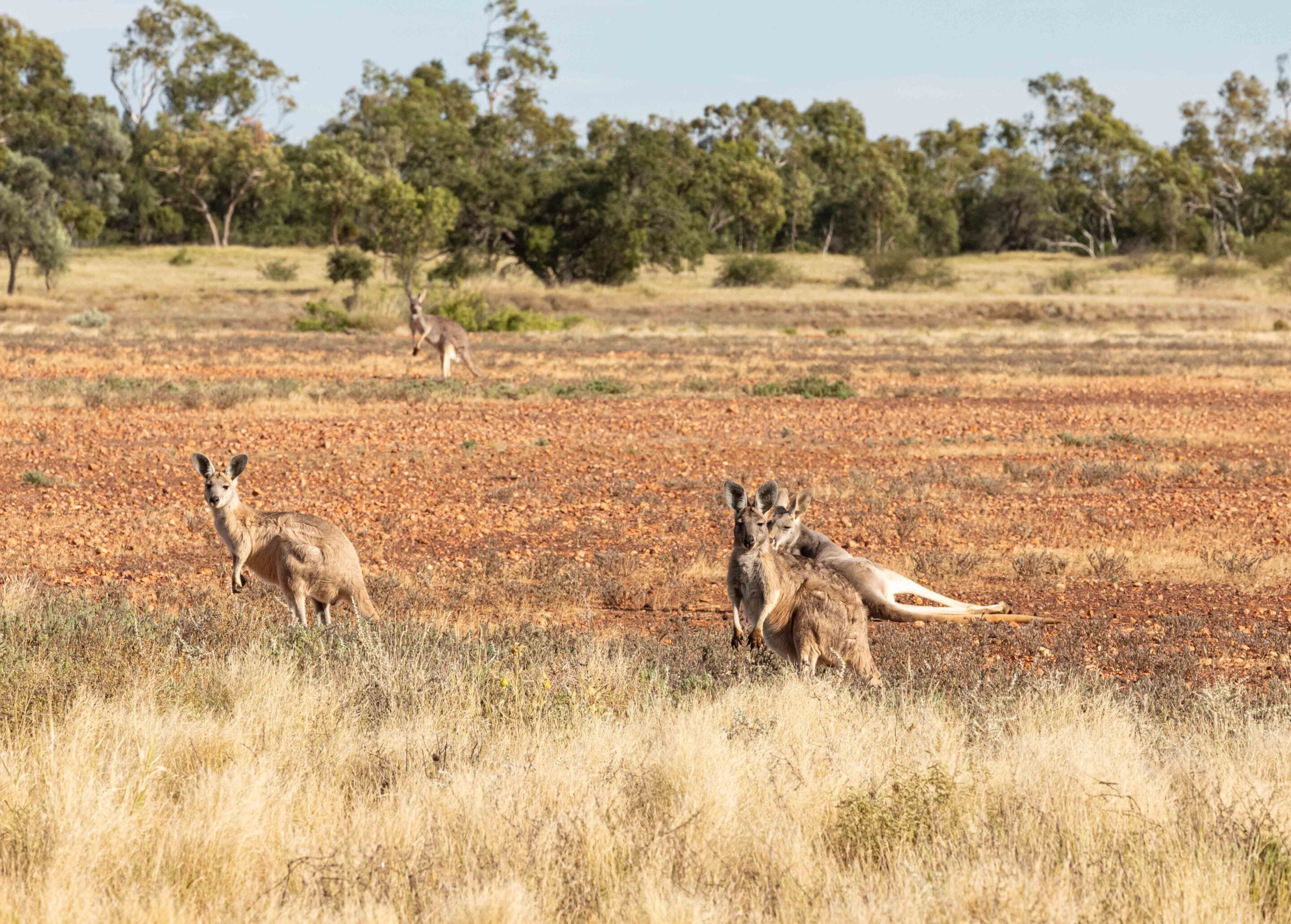
Honestly, once you reach the lookout, none of that matters. The view is extraordinary. From the escarpment edge you can see endless Mitchell grass plains rolling away into the distance toward Queensland’s Channel Country. It is one of those landscapes that makes you stop talking for a while. The scale is difficult to comprehend, and you could easily sit there for hours simply watching the light and shadows move across the country below.
That is the thing about Bladensburg. This place is layered with stories. It is a landscape shaped by the Koa people over thousands of years. A place marked by violence and tragedy during frontier settlement. A station that battled drought, flood and isolation while trying to survive in harsh country. And now it is a national park still at the mercy of nature, recovering from floods one season and baking through drought the next.
Every visit feels different because the landscape itself is constantly changing. Yet somehow, the spirit of the place always remains the same. Bladensburg is not Queensland’s toughest four-wheel drive destination, and it is not trying to be. What it offers instead is something deeper. Big landscapes. Genuine history. Solitude. Wildlife. Campgrounds beneath river gums. Escarpments glowing red in the afternoon sun.
It is outback Queensland at its absolute best. And every time I leave, I already know I will be back again.
Bladensburg National Park FAQ
Where is Bladensburg National Park?
Bladensburg National Park is in outback Queensland, with Winton the gateway to the park and the best place for fuel, supplies and accommodation.
When is the best time to visit Bladensburg National Park?
The cooler months between April and September are the most comfortable time to explore Bladensburg National Park. Winter days are ideal for camping and touring, while summer temperatures can be extreme. Following good rain, the park transforms with green Mitchell grass, abundant birdlife and flowing creeks, although wet weather can also close tracks and campgrounds. Always check park alerts and road conditions before travelling.
What do I need to take to Bladensburg National Park?
Take recovery gear, including a snatch strap and a shovel, along with a tyre repair kit, compressor, UHF radio, plenty of drinking water, food and supplies, sun protection, insect repellent, and camping gear if staying overnight. There are no services in the park. A camera or binoculars are also worthwhile for wildlife viewing.
Is Bladensburg National Park suitable for 4WDs?
The Route of the River Gums is suitable for most vehicles in dry conditions and provides easy access to many of the park’s historic sites. Scrammy’s Drive requires a high-clearance 4×4, particularly after rain, with rocky sections, creek crossings and escarpment country. Recent grading has made some sections easier than in previous years, but conditions can change quickly following wet weather.
Can you camp at Bladensburg National Park?
Camping is available at Bough Shed; however, check with QPWS (↗) as it may be closed during flood recovery works. Bookings are essential. Free camping is available outside the park at Long Waterhole and Mistake Creek, or there are caravan parks in Winton. I recommend the Tattersalls Hotel Caravan Park.
What are the best reasons to visit Bladensburg National Park?
Bladensburg National Park offers big outback views from Scrammy’s Lookout, rich pastoral and Indigenous history, excellent wildlife and birdlife, easy access from Winton and scenic high clearance 4×4 touring on Scrammy’s Drive.
Where can I check park alerts and road conditions?
For current park alerts, camping bookings and road conditions, check the Queensland Parks website (↗) before travelling.
GWM has officially revealed its new Cannon Hi4-T PHEV.
It will sit below the larger Cannon Alpha PHEV in GWM’s range and will give the brand two plug-in hybrid utes in Australia. Both use the Hi4-T system and offer 3500kg towing, but the Cannon Hi4-T is smaller and more affordable, with a 33.1kWh battery and 310kW/750Nm compared with the Alpha’s larger 37.1kWh battery and 300kW/750Nm.
Pricing and final Australian specifications are yet to be confirmed, but GWM says the Hi4-T will be one of Australia’s more affordable PHEV utes.
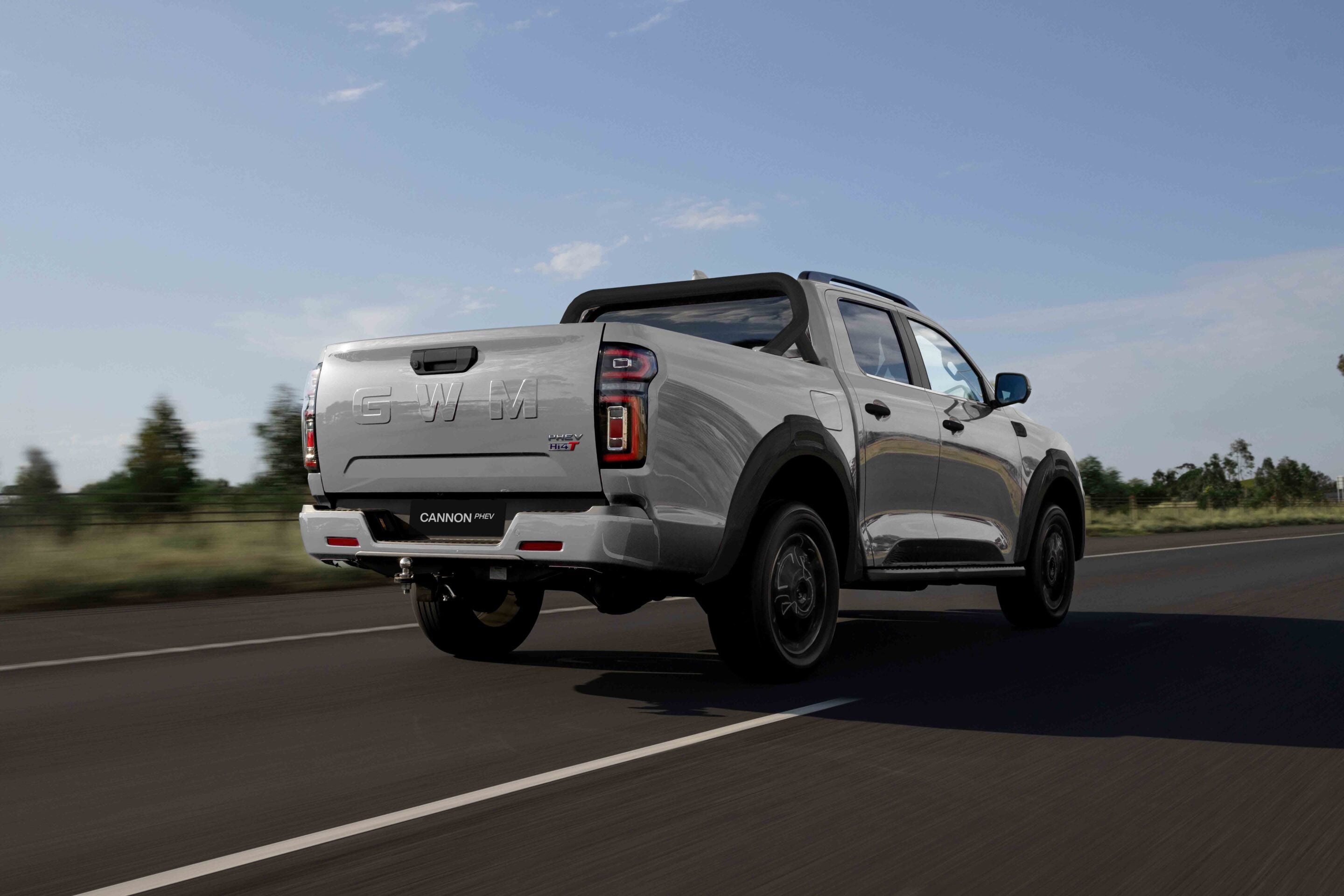
The 2.0-litre turbo-petrol engine works with a high-output electric motor to produce 310kW and 750Nm. Unlike many hybrid systems, GWM’s Hi4-T setup retains a traditional transmission and mechanical four-wheel drive, although the company hasn’t yet confirmed the Australian model’s full four-wheel-drive hardware or off-road specifications.
Claimed fuel consumption is 2.4L/100km on the NEDC test cycle. The 33.1kWh battery provides up to 115km of electric-only range, while GWM claims a total driving range of 1037km. The Cannon Hi4-T also has a 3500kg braked towing capacity, matching the figure offered by many diesel-powered utes.
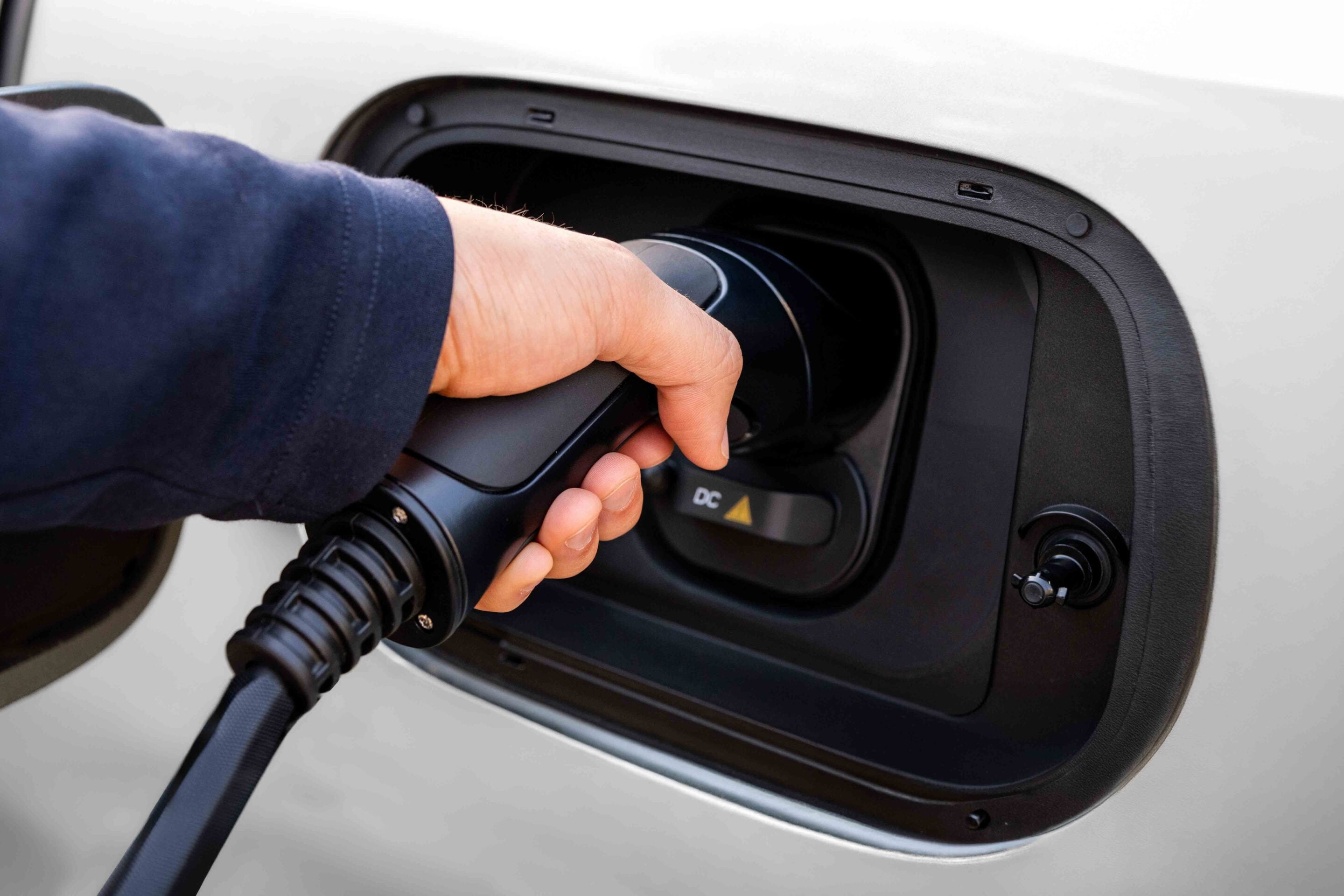
It also gets V2L, with integrated 230V outlets in the tub for running power tools, camping equipment and other electrical gear.
Can it really replace a diesel 4×4?
The big question is whether the Hi4-T can deliver its efficiency without sacrificing the capability expected from a serious 4×4.
It has 310kW, 750Nm, mechanical four-wheel drive, 3500kg towing and more than 100km of claimed EV range, but there’s still plenty we don’t know about how it will work off-road. The battery and electric hardware will add weight, making the final kerb weight and payload important figures for anyone planning to use the Cannon for touring, towing or work.
GWM is yet to reveal Australian-market details including payload, ground clearance, approach and departure angles and suspension specifications, which will give a better indication of how the Hi4-T stacks up against conventional diesel utes once it arrives.
GWM will announce pricing, further specifications and Australian availability closer to launch.
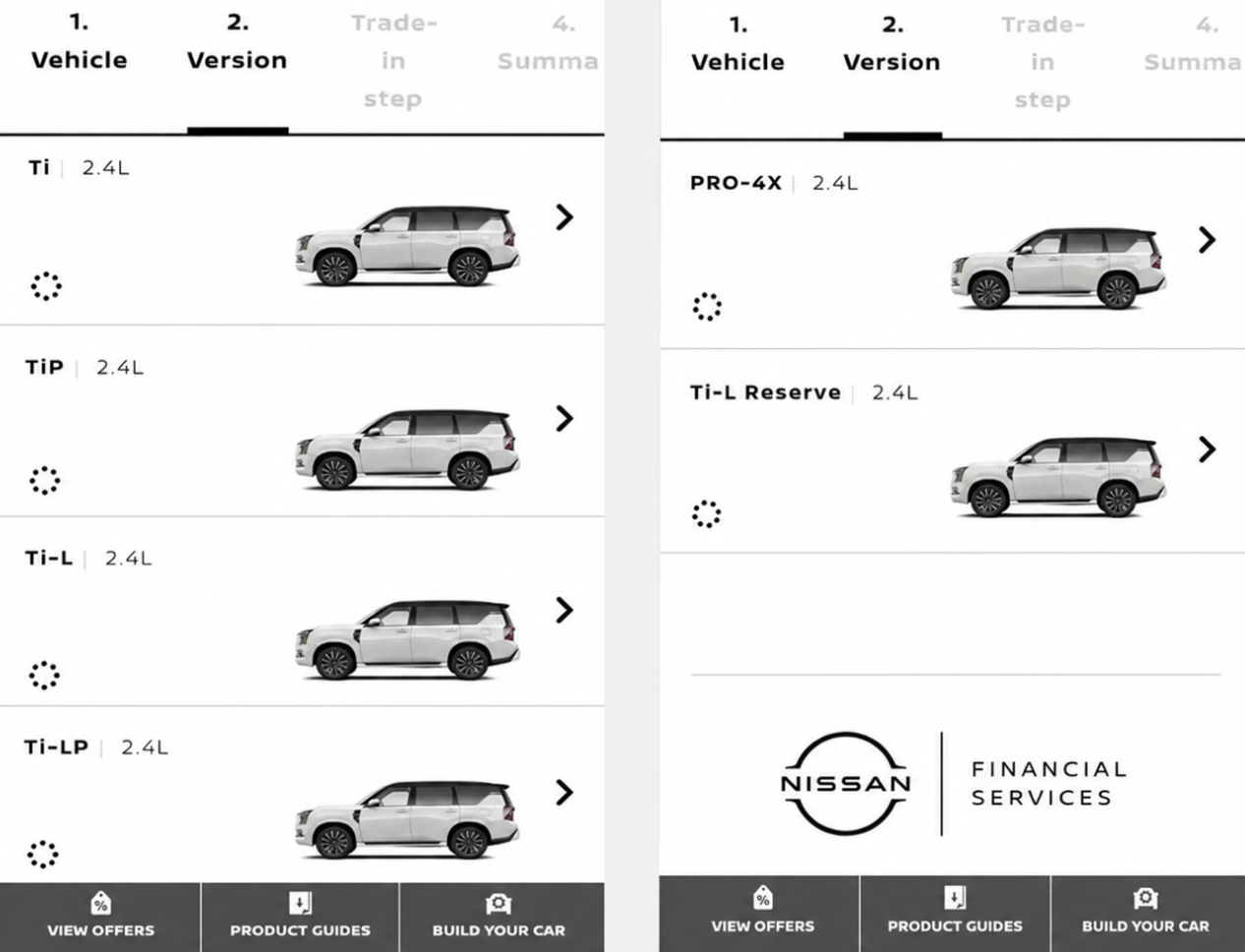
Nissan Australia has accidentally let the cat out of the bag on its upcoming Y63 Patrol model line-up, with details briefly appearing on the company’s own finance calculator.
The slip-up has forced Nissan to confirm what’s coming to Australia at launch, including a six-model range featuring Ti, Ti-L, Pro-4X and Ti-L Reserve variants. The website also listed ‘TiP’ and ‘Ti-LP’ grades, with Nissan is yet to explain exactly how the TiP and Ti-LP grades will fit into the Australian range.
The new Patrol is due in Australian showrooms in the first quarter of 2027, with orders set to open later this month. First revealed globally in September 2024, the Y63 has been spotted testing on Australian roads and represents a major change for Nissan’s large SUV.
Gone is the outgoing Patrol’s 5.6-litre V8, replaced by a 3.5-litre twin-turbo V6 producing 317kW and 700Nm. That’s 19kW more power and 140Nm more torque than the outgoing V8, with drive sent through a nine-speed automatic.
The new engine also develops peak torque earlier in the rev range, which Nissan says should help when towing, climbing hills and tackling off-road conditions. It also borrows technology from Nissan’s GT-R program, including a scavenger oil pump designed to maintain consistent engine lubrication during extreme off-road driving, including steep inclines and off-camber terrain.
Adaptive Air Suspension is expected to be available on selected grades, potentially including the more premium versions of the Patrol range. It allows the Patrol to raise itself in Off-Road Mode for improved approach, breakover and departure angles, while also lowering the vehicle when parked to make getting in and out easier or loading cargo.
The system automatically lowers the Patrol at speeds above 90km/h and raises it again below 70km/h. Nissan’s Intelligent Dynamic Damping, or e-Damper technology, will also be available with the Adaptive Air Suspension system, continuously adjusting to changing road and terrain conditions.
The Y63 also brings a significant step up in technology and comfort, with selected grades getting Nissan’s Monolith display with dual 14.3-inch screens and a Head-Up Display. Front seats can be fitted with massage functions, while first- and second-row passengers get Nissan’s ‘zero-gravity’ seats.
Another Patrol first is Biometric Cooling, which monitors passenger temperatures and adjusts the climate control when the vehicle is started. Selected variants will also get a 12-speaker Klipsch premium audio system with a 12-channel, 600-watt amplifier.
Nissan is yet to reveal pricing or the full specifications for each Australian grade, but the accidental finance calculator listing gives us our first look at how the Y63 Patrol range will be structured locally.
There’s a reason you see custom Patrols everywhere.
Few 4x4s have the same combination of toughness, aftermarket support and proven off-road hardware. From the old GQ and GU through to the Y62, the Patrol has given owners a solid base for everything from remote-area touring to serious off-road work.
That versatility shows in the builds featured here. Y62s are loaded with drawer systems, fridges, lithium batteries, winches and roof racks for long-range travel, while the GU and GQ Patrols go much further with TD42 and Cummins engine swaps, big lifts, lockers, reduction gears, beadlocks and 35- or 40-inch tyres.
These Patrols have also travelled well beyond the usual Australian tracks, with builds tackling Cape York and the Victorian High Country, while others have ventured through Patagonia and across the United States. From relatively simple tourers to heavily modified trail rigs, these Patrols show just how far the platform can be pushed.
SUBMIT YOUR PATROL BUILD
Want to see your Patrol build here and in the mag? Jump on over to the 4X4 Australia Facebook page and show us your rig!
2016 Nissan Y62 Patrol
Submitted by Dean Brooke
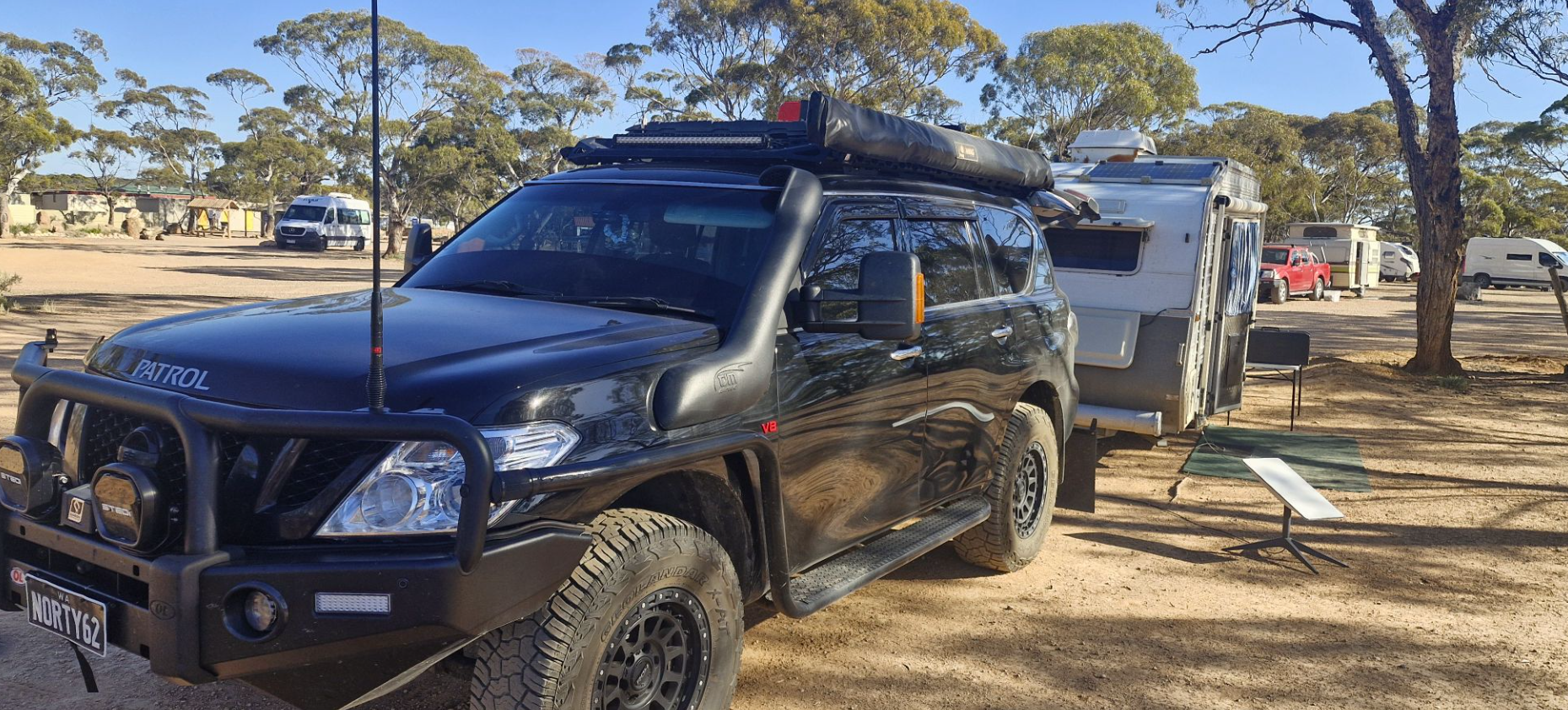
Dean’s Y62 is set up as a fully kitted long-range tourer, with barely a system left untouched.
A two-inch lift pairs Blackhawk control arms with Tough Dog airbags in the rear, while ROH rims are wrapped in 305/75R16 Yokohama all-terrain tyres. Up front is an Opposite Lock bullbar carrying a 12,000lb Carbon Offroad winch, with two Stedi Type-X Pro spotlights and a GME UHF radio. A TrailMax roof rack carries TredPro recovery boards and a 270-degree Foxwing awning, with Kings side lights and, at the rear, two Stedi reverse lights and a Stedi light bar.
In the back sits a 60L drawer fridge and a homemade drawer system housing a 170Ah AGM battery, an air compressor and air hose reel, a cargo barrier, a 12V oven and an XForce exhaust, along with plenty of other touring gear.
1998 Nissan GU Patrol
Submitted by Andrew Fossati
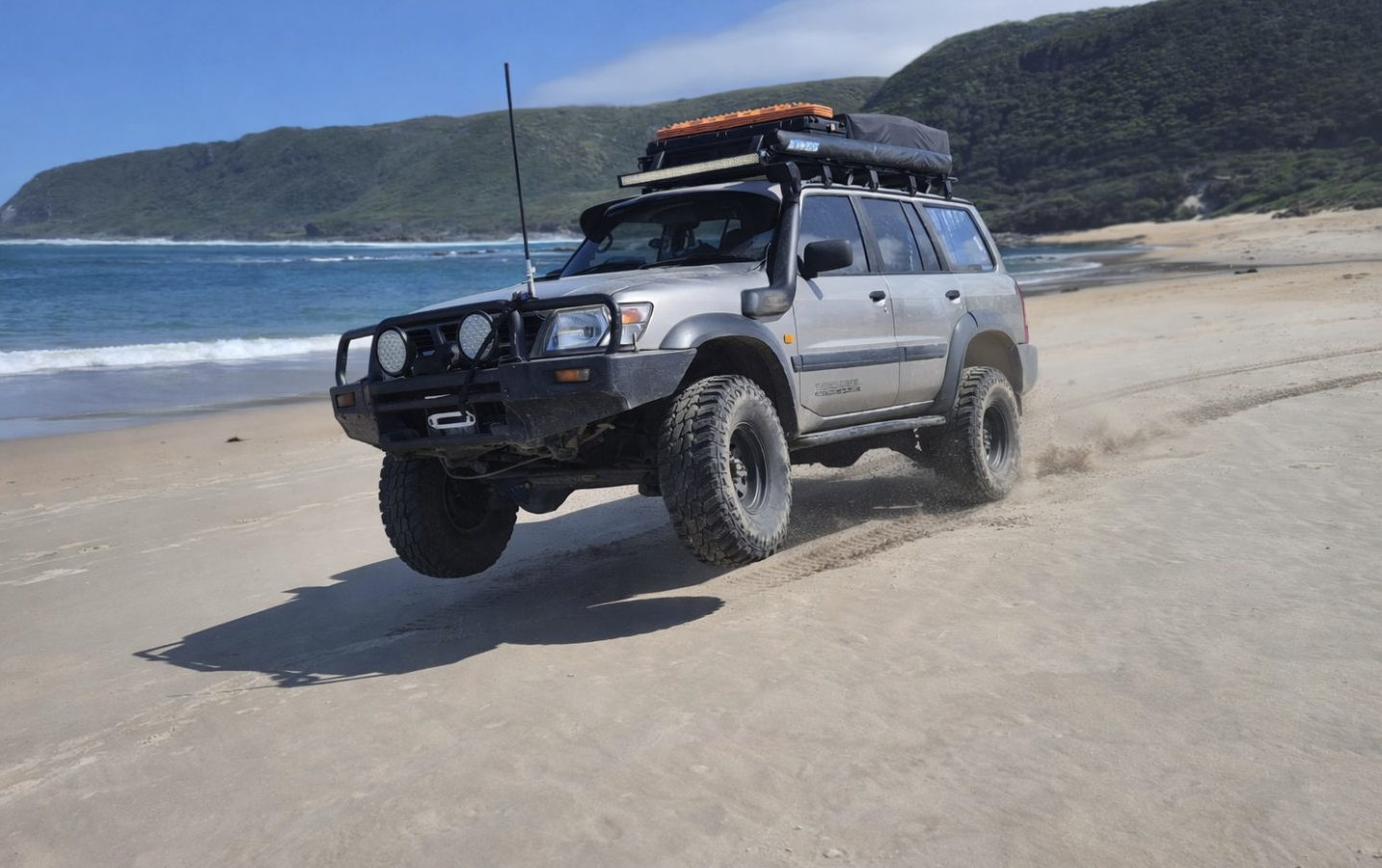
Andrew’s GU Patrol left the factory bone stock, but a TD42 engine swap two years later set it on a very different path.
The GU was purchased completely stock, running a 2.8-litre turbo-diesel engine. Two years on, that engine was swapped for a TD42, paired with a custom Highmount turbo setup running triple turbos through to the rear of the vehicle. Underneath, four-inch coils give the rig 14 inches of travel at the rear and 12 inches up front, all sourced from Superior Engineering.
The rear carries a custom fit-out with three drawers, a 75L fridge, a 12V system and onboard air, along with a twin-locked Kings winch and a front-mount intercooler. Inside, a custom roof console, cargo barrier and VE SS leather seats on Hurricane rails round out the build.
The west coast of Tasmania has proven the toughest test yet, with a long weekend spent tackling the Ring River track, the climb up Mt Cumberland and Montezuma Falls, though the clutch failed on the way home.
2013 Nissan Y62 Patrol
Submitted by Seth Hambley
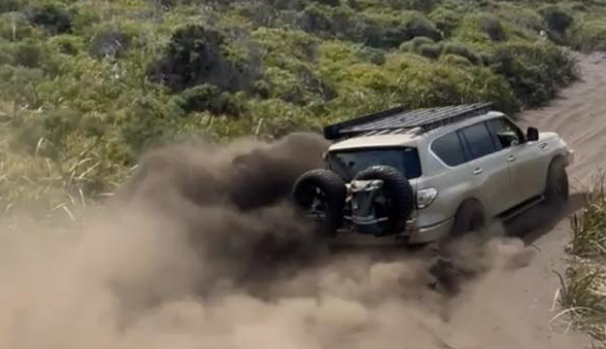
Seth’s Y62 pairs serious power with serious touring capability, headlined by a Harrop supercharger conversion.
Under the bonnet sits a Harrop 2300 supercharger paired with a Manta exhaust system. A two-inch Ironman 4×4 lift and 35-inch tyres handle the height and clearance, while an ARB Sahara bullbar sits up front and a Kaymar rear bar covers the back. A full 12-volt system with a drawer setup in the rear rounds out the touring kit.
The Patrol has covered plenty of ground through WA’s south-west, with its toughest test yet coming at Bornholm during summer, where extremely light, powdery sand made for the biggest challenge; the Bornholm hill climb remains the best place Seth has taken it.
Nissan GU Patrol
Submitted by Will Grimmett
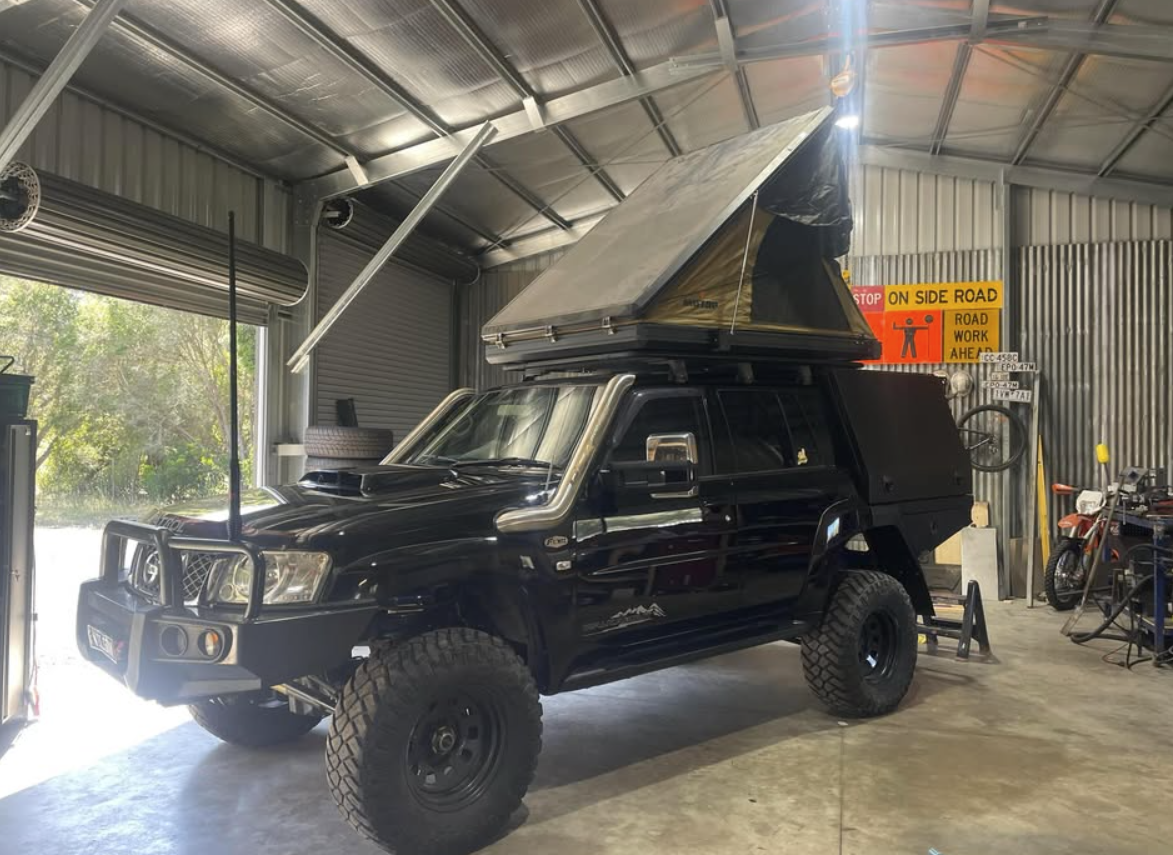
Will’s GU Patrol is built as a serious touring contender, with a 5.9-litre Cummins under the bonnet.
The 5.9-litre Cummins runs through a four-speed automatic, with braced diffs, hydroboost brakes and brand new brake assemblies underneath. A chopped full canopy, custom-built for touring, houses a 200Ah lithium battery and a 2000W inverter powering a pull-out electric cooktop. Twin lockers and a full ST-L leather interior pack round out the build. Built and finished, the Patrol stands as one of the more serious touring GU builds on the road.
Nissan Y61 Patrol GL
Submitted by Juan Pablo Velasquez Mast
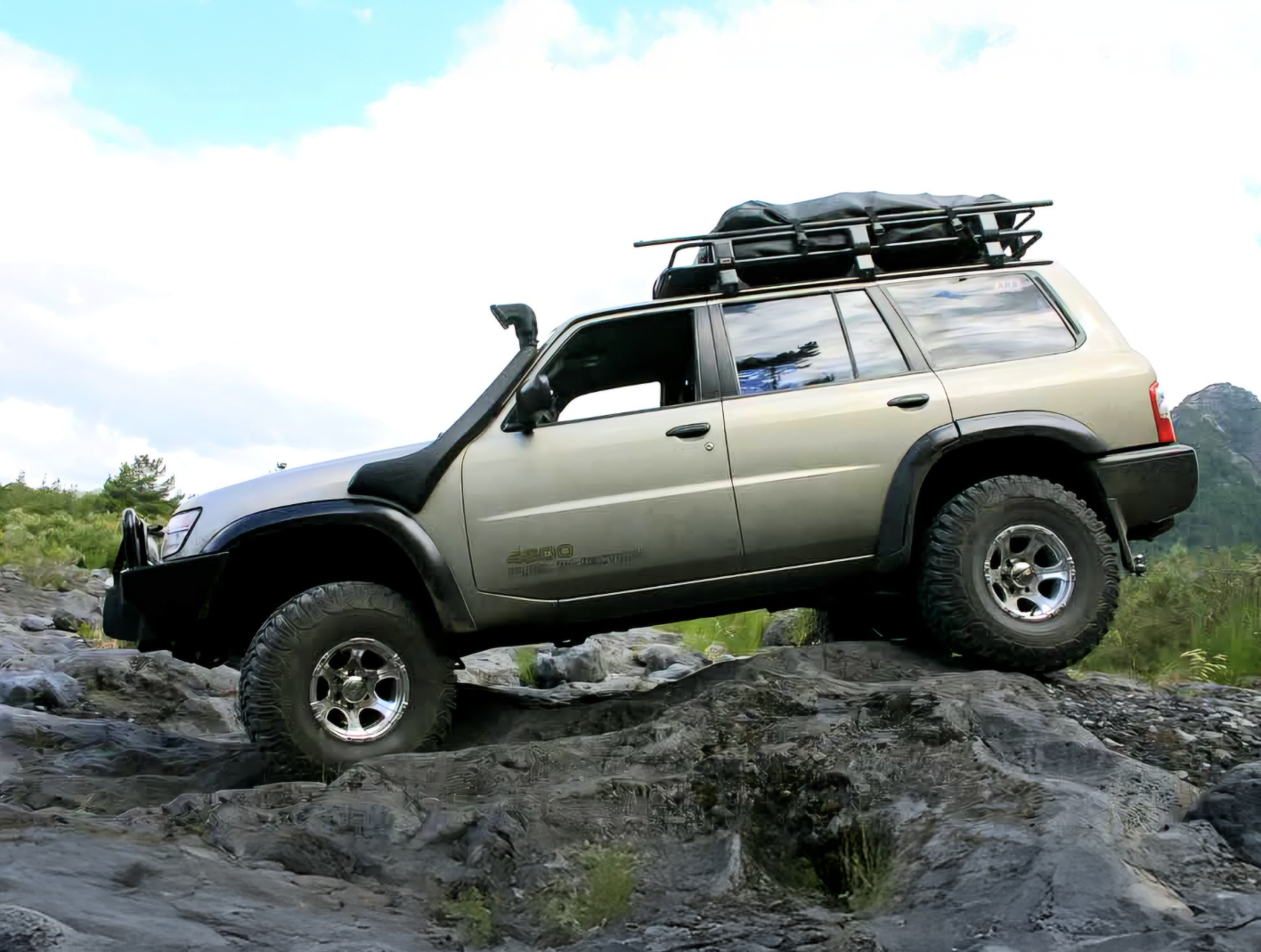
Juan’s Y61 Patrol proves the platform travels just as well through South America as it does through the Outback.
Located in Chile, the GL model long-wheelbase Y61 (GU) is close to standard Australian specification, running a five-speed manual, TB45E engine and 4.11 diffs. Modifications include a three-inch stainless steel exhaust with a Borla muffler, an ARB bumper fitted with Solis LEDs, a Safari snorkel, a four-inch OME lift, and 35-inch KM3 tyres on 15-inch Dick Cepek wheels.
An ARB roof rack, ARB awning and ARB steering stabiliser round things out, along with a 60-inch Hi-Lift jack for recovery. The Patrol has covered plenty of ground through Patagonia without a single mechanical issue.
2023 Nissan Patrol Y62
Submitted by Tegan and Stuart Vanhamburg Stokes
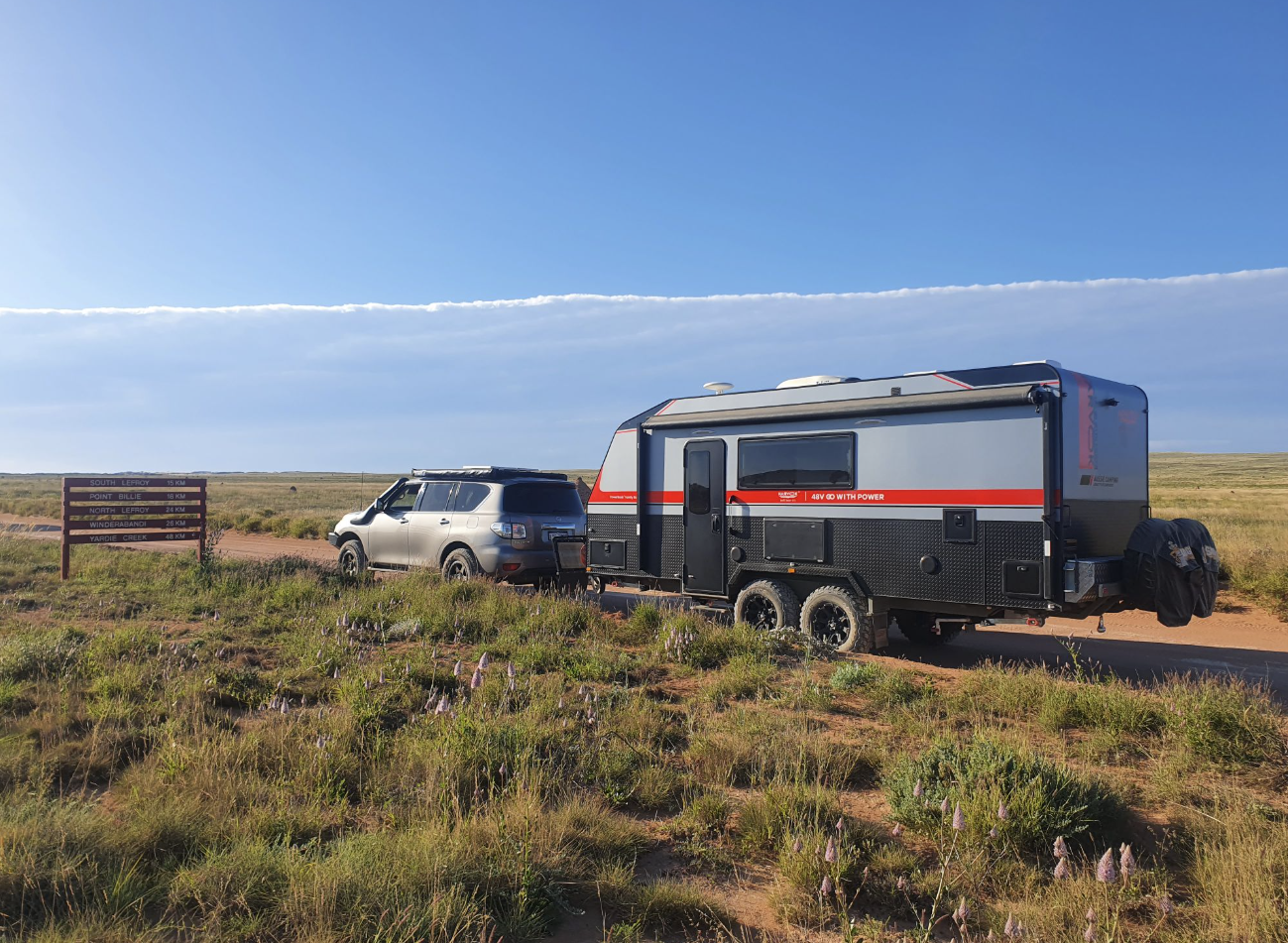
Tegan and Stuart Vanhamburg Stokes’ Y62 has covered 270,000 kilometres and is still running on its original timing chain.
Mods include a two-inch lift, a DASH Offroad front bar, a full exhaust and tune, a homemade rear drawer system, and an iTechworld lithium battery. The Patrol has covered the Goldfields, Exmouth, Esperance and South Lefroy on its travels.
2024 Nissan Y62 Patrol
Submitted by Adrian Trimnell
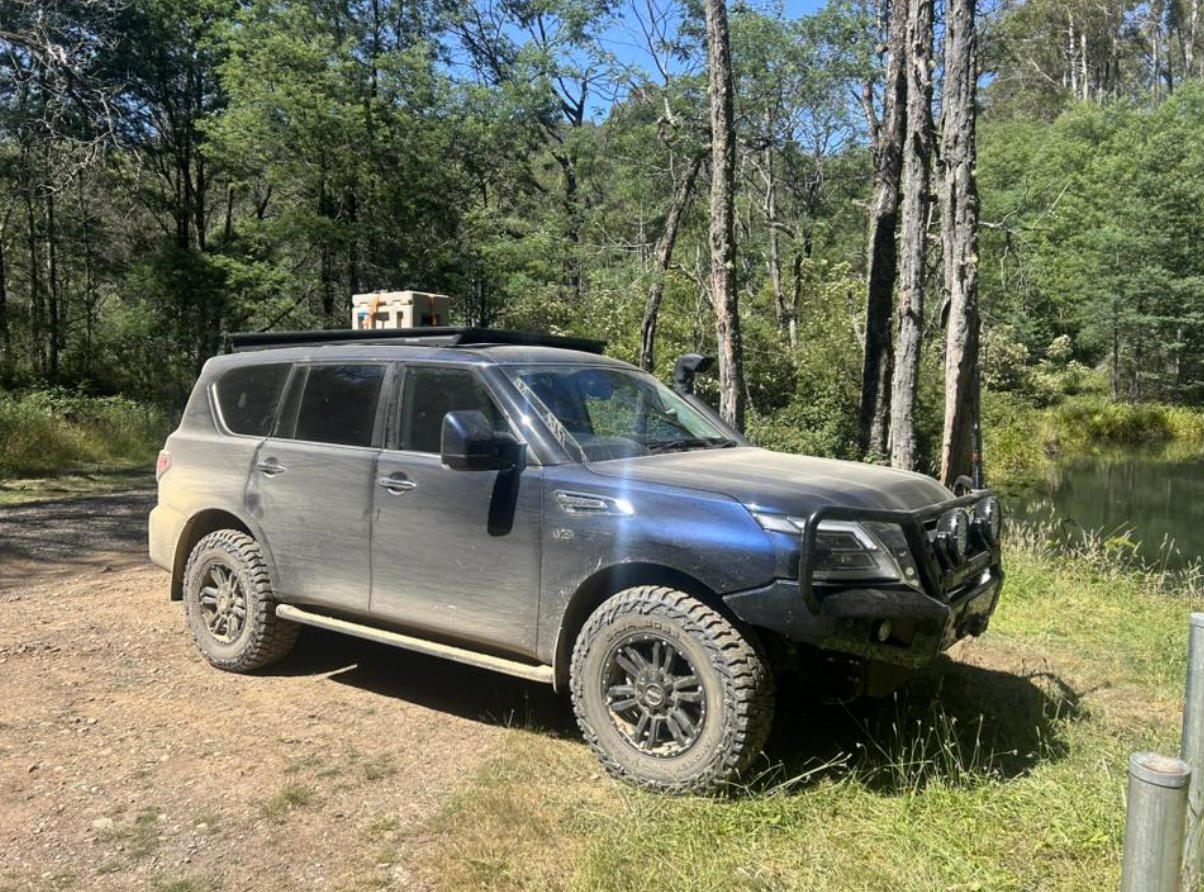
Adrian Trimnell’s Y62 is set up as much for towing as it is for chasing gold, with a pre-rego GVM upgrade leading the changes.
A pre-rego DMW GVM upgrade, fitted with a DASH Offroad Interlock airbag kit, sits at the heart of the build, supported by a Raslarr hooped bar and a Carbon winch up front. ROH Vapour rims are wrapped in Mickey Thompson Baja Boss tyres, with Altiq lighting rounding out visibility.
The rig carries a GME UHF, a Safari snorkel, next-gen Clearview towing mirrors and an ARB Base Rack, powered by a 120-amp-hour slimline battery mounted under a false floor in the rear. A Redarc DC-DC charger and Redarc Towpro brake controller handle charging and towing electronics, alongside a TAG towbar and an ARB twin-motor compressor. A BushWrapz Pro completes the exterior protection.
Adrian uses the Patrol to chase gold as often as he can, with regular trips to Woods Point, Bright and Beechworth.
2024 Nissan Patrol
Submitted by Andy Boult
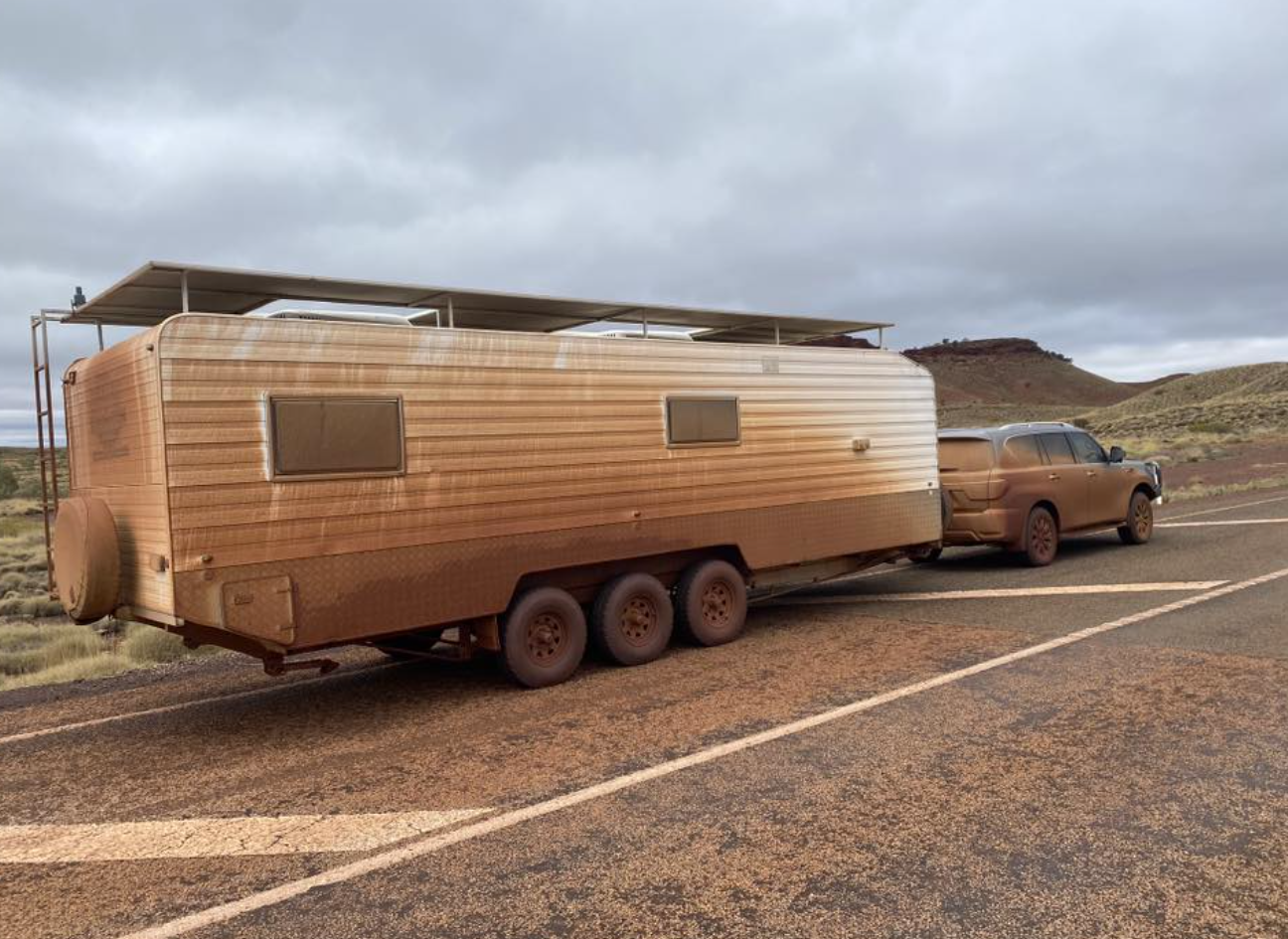
Andy’s Patrol plays support vehicle to a fleet of mining caravans, and it’s kept deliberately simple for the job.
The 2024 TDI runs heavier rear coils and Airbag Man airbags, with a front lift added to match the new rear height. Andy has found that keeping a vehicle closer to stock brings fewer problems on the road, a philosophy he applies across the four VDJ79 utes he also runs, each fitted with airbags, heavier coils, a remap, a three-inch single exhaust and a DPF delete.
Andy hires exploration mining caravans into some of Australia’s most remote places, recently double-snatching five vans over sandhills for two days near Finke in the Northern Territory, deep in the Simpson Desert.
2024 Nissan Patrol
Submitted by David Callow
David’s Patrol is built as a serious long-range tourer, anchored by a Raslarr bull bar and a heavyweight electrical setup.
Up front sits a Raslarr bullbar, with a rear bar and bash plates still to come. Custom-painted KMC rims are wrapped in 35-inch Yokohama rubber, and a GME UHF is mounted on a Vogue mirror using Pirate Camp Co brackets. Stedi lights cover the rig front to rear.
A Carbon winch handles recovery duties, backed by an Enerdrive 40-amp DC-DC charger, a 40-amp AC charger and a 200-amp-hour slimline lithium battery, all mounted under a homemade aluminium false floor. An ARB twin compressor with an air tank sits in the rear, alongside a Renogy 2000-watt inverter.
Kaon window MOLLE panels add extra storage, while an ARB Base Rack carries a Darche rooftop tent and a 180-degree freestanding awning with 400-watt solar. A Bushman 85L upright fridge lives in the back, with aluminium drawers and a pantry still to be built. Moreton Island was David’s favourite trip so far, taken when the Patrol was just a week old.
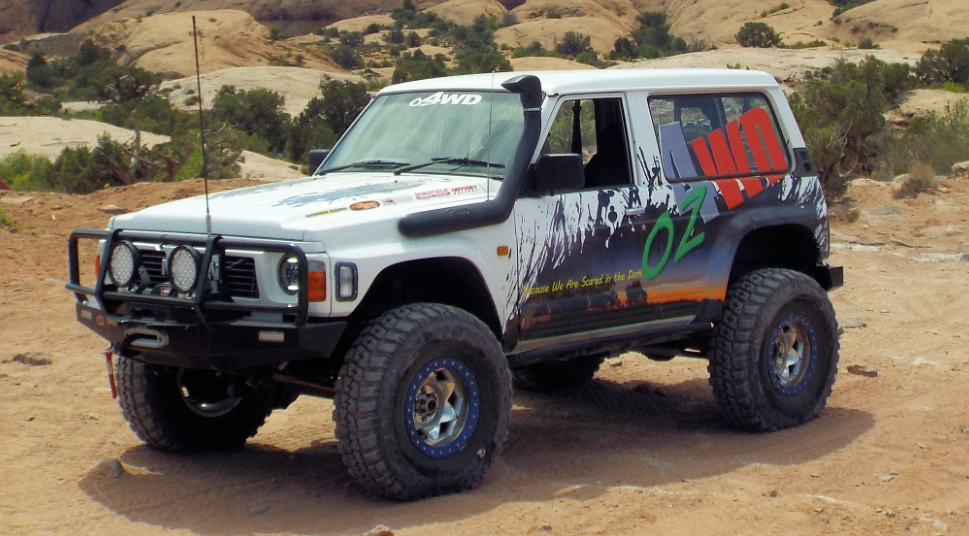
1988 Nissan Patrol MWB
Submitted by Richard Griffey
Richard’s 1988 Patrol has been reworked from the ground up, including a 300mm rear axle relocation to convert it to medium-wheelbase.
The MWB conversion was achieved by moving the rear axle back 300mm. Power comes from a TD42 turbo-diesel matched to an RE4 automatic transmission fitted with an Advanced Automatics valve body, which connects to dual Nissan Patrol transfer cases using an old Marks 4WD adapter.
Axles are sourced from a GU, running 4.6 gears and ARB air lockers, with 17-inch beadlock wheels wrapped in 37-inch Federal Couragia tyres. An ARB bullbar sits up front, with Warn winches front and rear, a Safari snorkel and a custom rear bar. Inside stays largely stock aside from Recaro seats.
Originally built in Brisbane, Richard now lives in Nashville, Tennessee, where the best place he has wheeled it is Moab, Utah, home to trails few Australians get to experience.
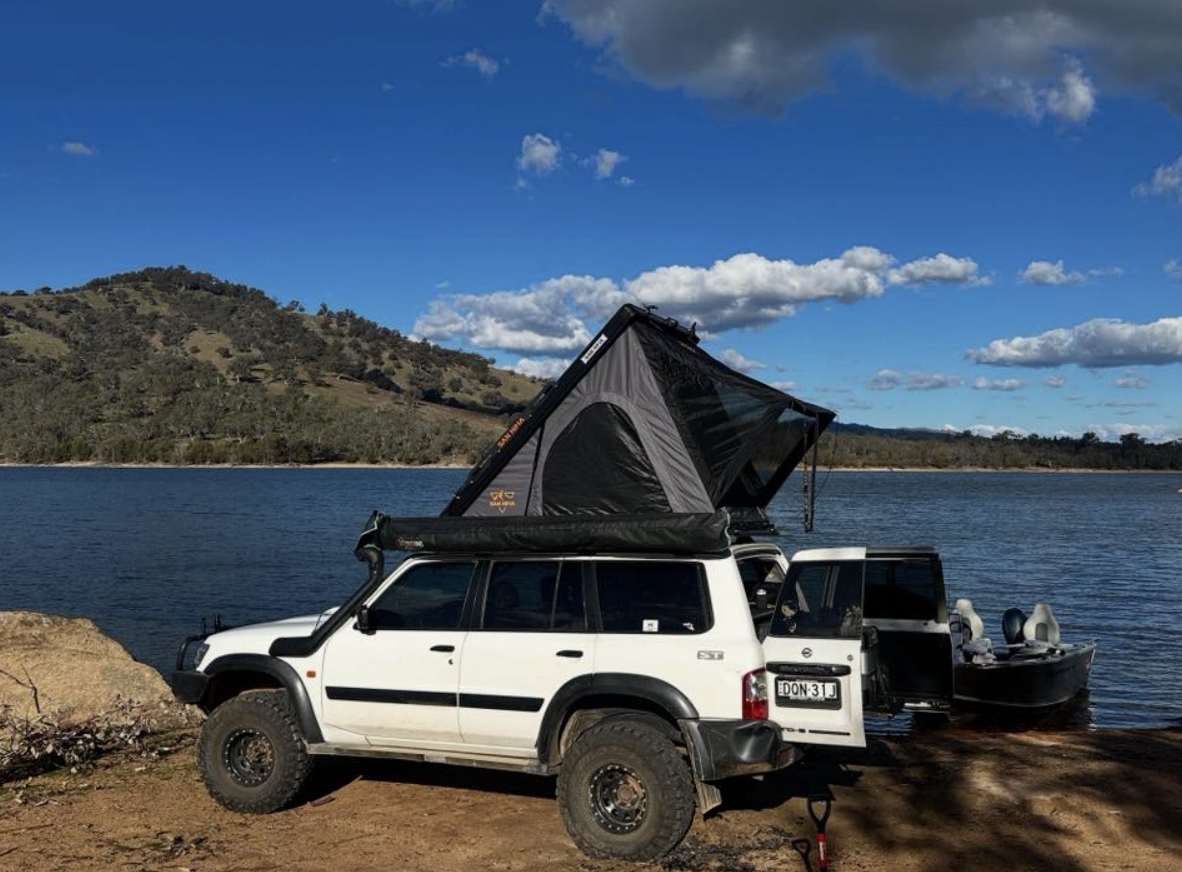
2003 Nissan Patrol
Submitted by Steve Penrose
Steve Penrose’s GU Patrol still leans on its factory TD42Ti power, backed up by a front locker for the tough stuff.
This 2003 GU runs the trusty TD42Ti engine and rolls on 35-inch tyres, with a front air locker and reduction gears providing the low-range strength for serious off-road work. The Patrol has tackled Cape York, including the Old Telegraph Track and the Old Coach Road.
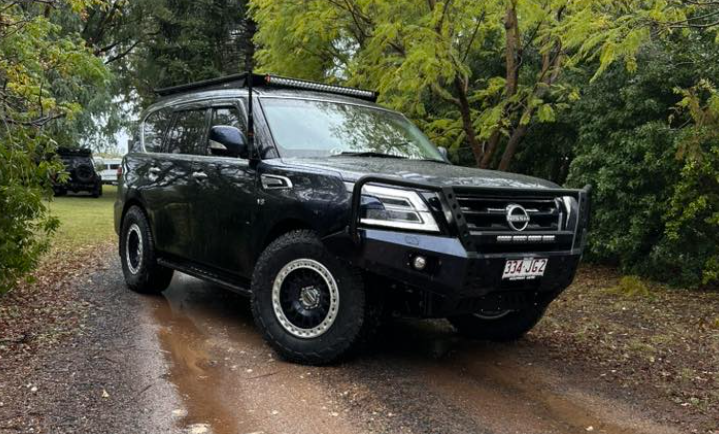
2019 Nissan Y62 Patrol
Submitted by Charlie Kimble
Charlie Kimble’s Y62 pairs serious power with a genuine touring setup, headlined by a Harrop supercharger conversion.
A 2300 Harrop supercharger with a 75mm pulley and VIS fuel pump sits under the bonnet, backed by Pacemaker headers, a PDC stainless snorkel and airbox. A four-inch lift runs Ontrack billet lower rear control arms and billet front upper control arms, with 40mm front and rear diff drops and a Harrop front e-locker. It rolls on 20-inch King wheels wrapped in 35-inch BFG A/T KO2 tyres.
A Dash front bar and Raslarr rear bar with a spare wheel carrier and jerry can holder bookend the vehicle, with a Dash three-quarter rack carrying a 170W fixed solar panel. Inside, a Full Boar drawer setup houses a built-in Travel Buddy and Evakool drawer fridge. A 12,000lb winch, Ironman 4×4 Scope spotlights and Narva Ultimas on the roof rack round out the lighting and recovery gear. The build represents a serious, ground-up touring setup for the Y62.
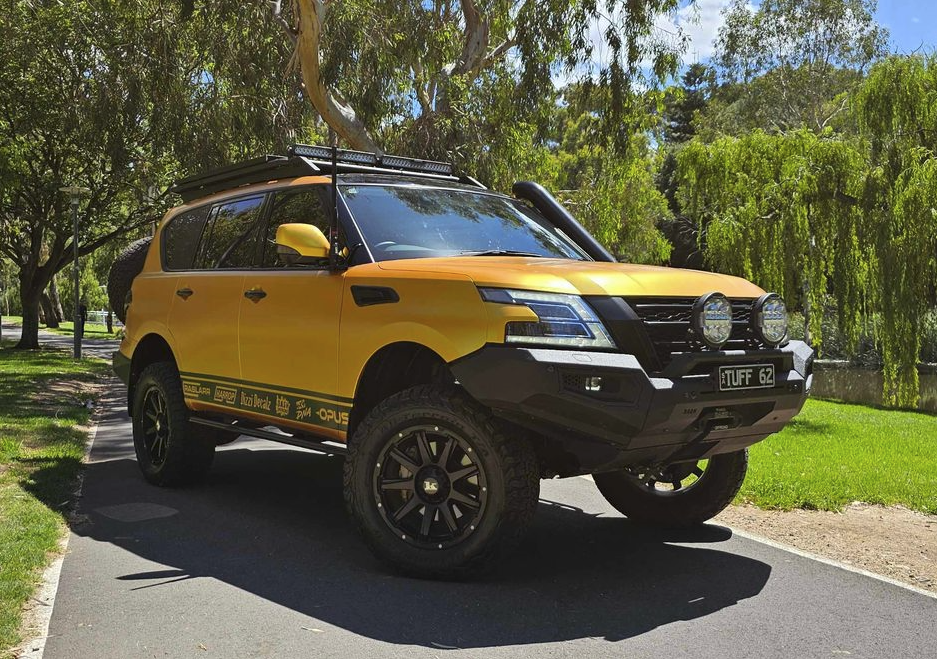
2005 Nissan GU Patrol
Submitted by Michael Thompson
Michael Thompson is building this Series 4 GU into a super tourer, with the finishing touches still to come.
Currently under construction, the build is due to be finished within 10 to 12 weeks. Dobinson remote reservoir shocks and springs sit alongside heavy duty arms all round, all-braided lines and rear tower braces, with Emuwing gullwings and 35-inch tyres. Custom bar work, built by Michael himself, pairs with a four-inch snorkel and airbox combo. A roof rack carries a 270-degree Darche awning, backed by an LRA long-range tank, a 24V lithium battery system and a 12V dual battery system.
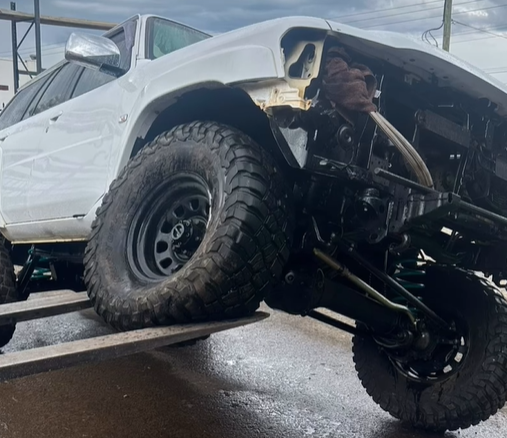
1991 Nissan GU Patrol TD42
Submitted by Brett Gambrill
Brett’s TD42-powered GU is built for serious trailered touring, with a spec list to match.
The TD42 runs a 12mm fuel pump, a front-mount intercooler, a bonnet-entry snorkel and a 20G turbo pushing 35psi. Underneath sits a double triangulated four-link with Xlink, 16-inch coilovers, three-inch hydraulic bump stops, 4.88 diff centres, front and rear ARB lockers, and 85 per cent transfer case reduction gears. It rolls on 17-inch beadlock rims wrapped in 40-inch Maxxis Treps, with Blackhawk radius arms and a rear sway bar tying it together.
Recovery comes from a 24-volt Gigglepin winch backed by a 24-volt alternator and two 1800CCA lithium batteries, along with an ARB dual compressor. Roof sliders, front and rear bars and a GME XRS round out the build. Brett trailers the rig around Australia, mainly to the Watagans close to home, along with most 4×4 parks across New South Wales and Queensland, and Killingsworth.
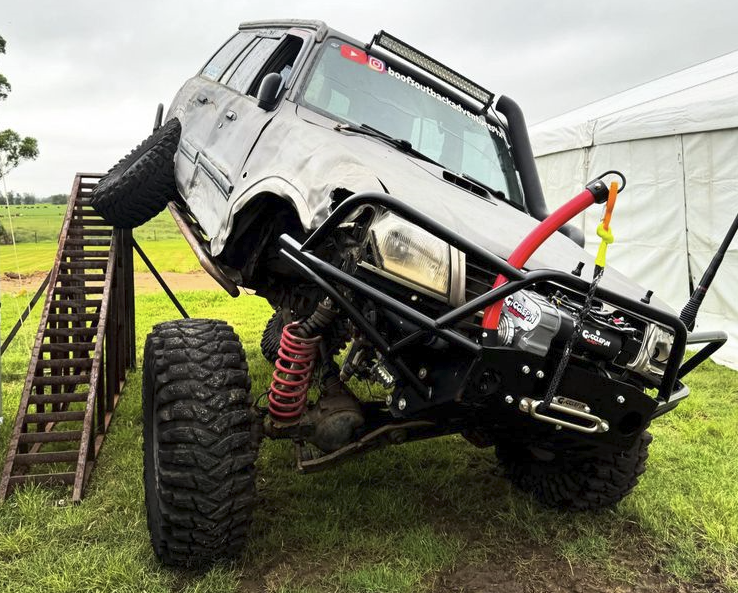
2004 Nissan Patrol GU
Submitted by Brett Cleary
Brett Cleary’s rebuilt GU wagon pairs a 4.5-litre Cummins conversion with an NCOP certified suspension upgrade.
A sturdy three-inch lift runs heavy-duty Dobinson springs, backed by NCOP certified upgrades. Under the bonnet, a 4.5-litre Cummins engine pumps out 220hp and 800Nm, mated to a manual five-speed gearbox and 3.5 ratio diffs, with 35-inch rubber underneath. Inside, factory Patrol seats sit alongside a 13-inch Android screen, while a custom Manta Ray bonnet cowl helps with engine cooling. Twin snorkels and a fully incorporated electrical system complete the build.
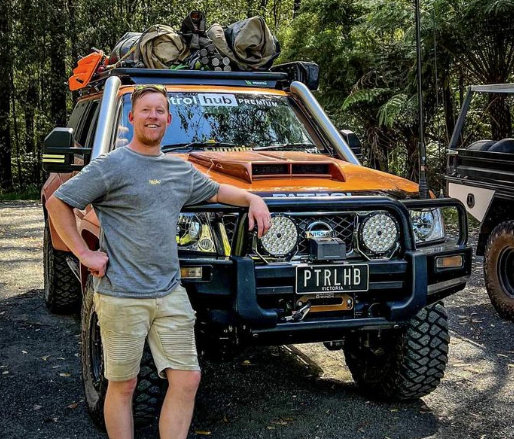
2006 Nissan Patrol
Submitted by Ash McBain
Ash McBain’s Patrol trades its original heart for a BMW power plant, built as much for the snow as the sand.
The Patrol runs a 2012 BMW X5 N57 engine mated to an 8HP70X transmission swap, sitting on a three-inch EFS MRP suspension lift with Icon wheels wrapped in 35-inch rubber. K’gari would probably be Ash’s favourite place to take it, though a Victorian High Country mission in the snow runs a close second.
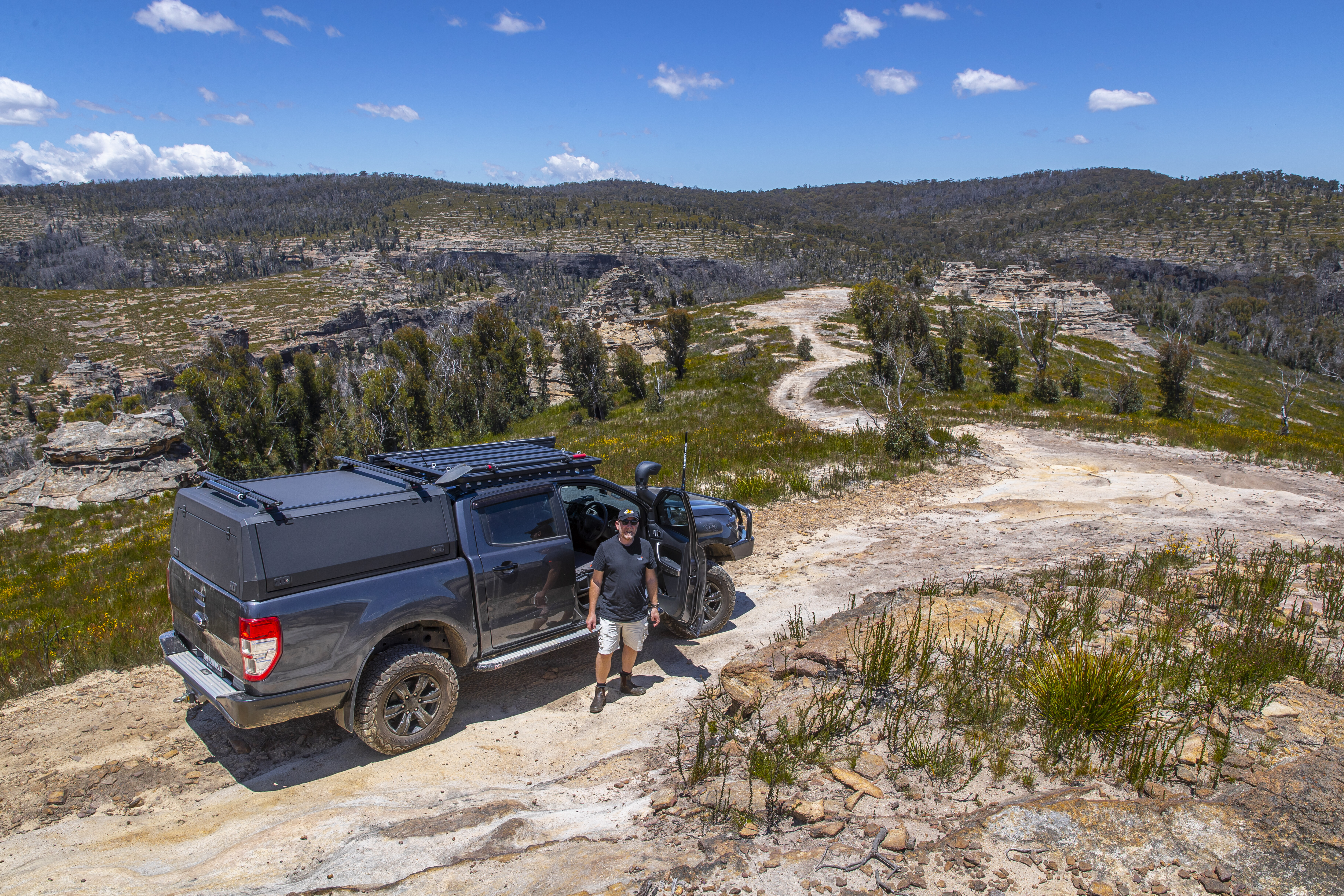
As the saying goes, what goes up, must come down, and this is obviously true of four-wheel driving. If you drive up a hill, eventually you’re going to have to come back down.
And depending on the conditions, driving downhill can be a lot scarier than driving uphill. As the vehicle speed picks up on descent, your instinct will be to apply the brakes to slow down, but in particularly steep and slippery conditions this can result in the front wheels locking, which will lead to a loss of steering control … and you definitely don’t want this to happen. Even if the vehicle is equipped with an anti-lock braking system (ABS), stomping on the brake pedal can be next to useless if there’s not much traction available.
Firstly, take a good look at the terrain ahead, so you are aware of what to expect when driving down the hill and what you need to avoid. You also need to understand how your vehicle works, what features it is equipped with that will aid your descent, and how to best set it up for the terrain ahead.
How to assess the terrain before a steep descent
In any off-road driving situation, it is important to have a handle on the terrain you’re about to drive.
Sometimes you can judge this from the driver’s seat, by looking out the windows and by feeling how the vehicle responds to steering, accelerator and brake inputs; but sometimes the best way to see what’s coming up is to get out of the vehicle and walk the track first.
In the case of descents, you will need to ascertain how steep the hill is and what condition the track is in, looking out for off-camber sections, undulations and washouts, as well as obstacles such as rocks, holes, muddy sections, vegetation and tree roots.
You should also look for potential hazards off to the sides of the track, such as rocks or trees that may cause a problem if you stray from the track, or dangerous drop-offs that need to be avoided. While you’re walking the track, feel around with your feet to gauge how much traction is available.
You should also keep an eye out for run-off areas and suitable anchor points in case you need to use recovery gear to belay the vehicle safely down any treacherous sections. If you have a capable person travelling with you who can act as a spotter to direct you from outside the vehicle, find a good place for them to stand so they are visible to you but will not be in danger if you lose vehicle control.
Make sure the driver and the spotter understand the hand signals that will be used, and if radios are available they should communicate with each other via in-vehicle and handheld UHFs.
Before you head off-road
The more intimate the knowledge you have of your vehicle, the easier you will find it to drive in off-road situations.
In the case of steep descents there are certain vehicle attributes to be aware of and to know how to use, such as how to lock hubs (where fitted) and engage four-wheel drive in part-time 4×4 vehicles, or how to ensure the centre diff is locked in full-time 4×4 vehicles.
Most 4x4s with genuine off-road capability will also have low-range gearing, and you will need to know how to engage this before starting a descent. In old-school 4x4s, low range is mechanically selected via a lever, whereas many modern vehicles will have an electronic dial or a button to select low range.
No matter what type your vehicle is equipped with, make sure you know how to use it and ensure that low range is selected when you need it to be; there’s usually a light on the dash to indicate this. Some 4×4 vehicles will have a super-low first gear ratio, sometimes called a crawler gear, and this should be selected for steep descents.
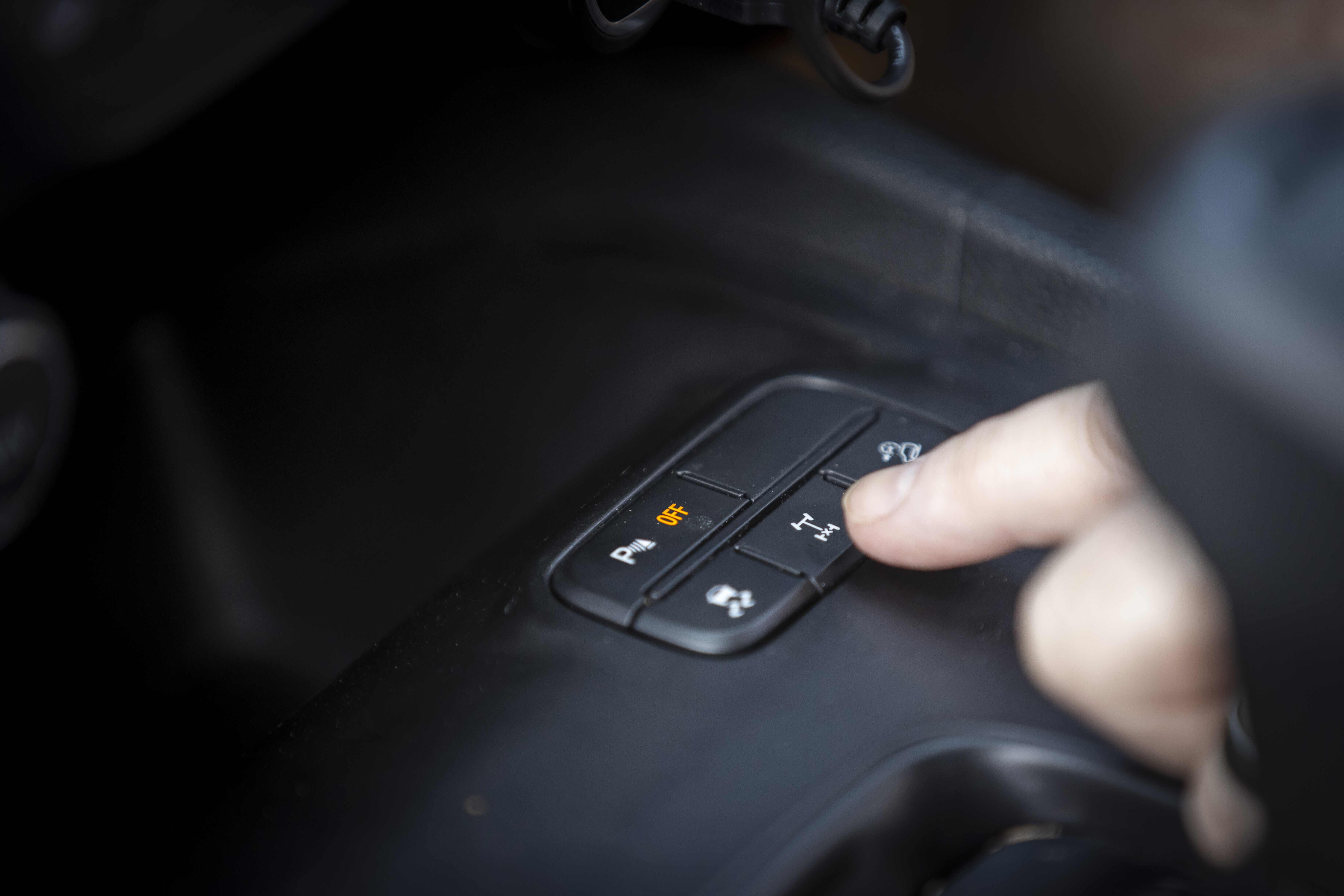
Other vehicle features that can aid safe descents include electronic traction aids such as ABS, traction control, hill descent control and selectable drive modes, while mechanically locking diffs are also beneficial.
On some vehicles, even the handbrake (or park brake) can be a useful tool for steep descents, but this is of greatest benefit on vehicles where the handbrake is a transmission-mounted drum set-up, so when applied it operates on all four wheels. An effective handbrake that only operates on the rear wheels can also be helpful, as it can retard progress without affecting steering, but such a set-up doesn’t really offer a lot of braking effect on steep descents, as most of the vehicle weight is over the front axle.
You should also be aware of the vehicle’s ground clearance and have an idea of how much suspension travel it has when tackling steep descents, as you will have a better understanding of what type of terrain you’ll be able to drive over before grounding the underside or running out of wheel travel. Of course, this only comes with experience; the more you drive the vehicle in different off-road situations, the easier it will become, and soon even the gnarliest descents will become second nature. But let’s not get ahead of ourselves.
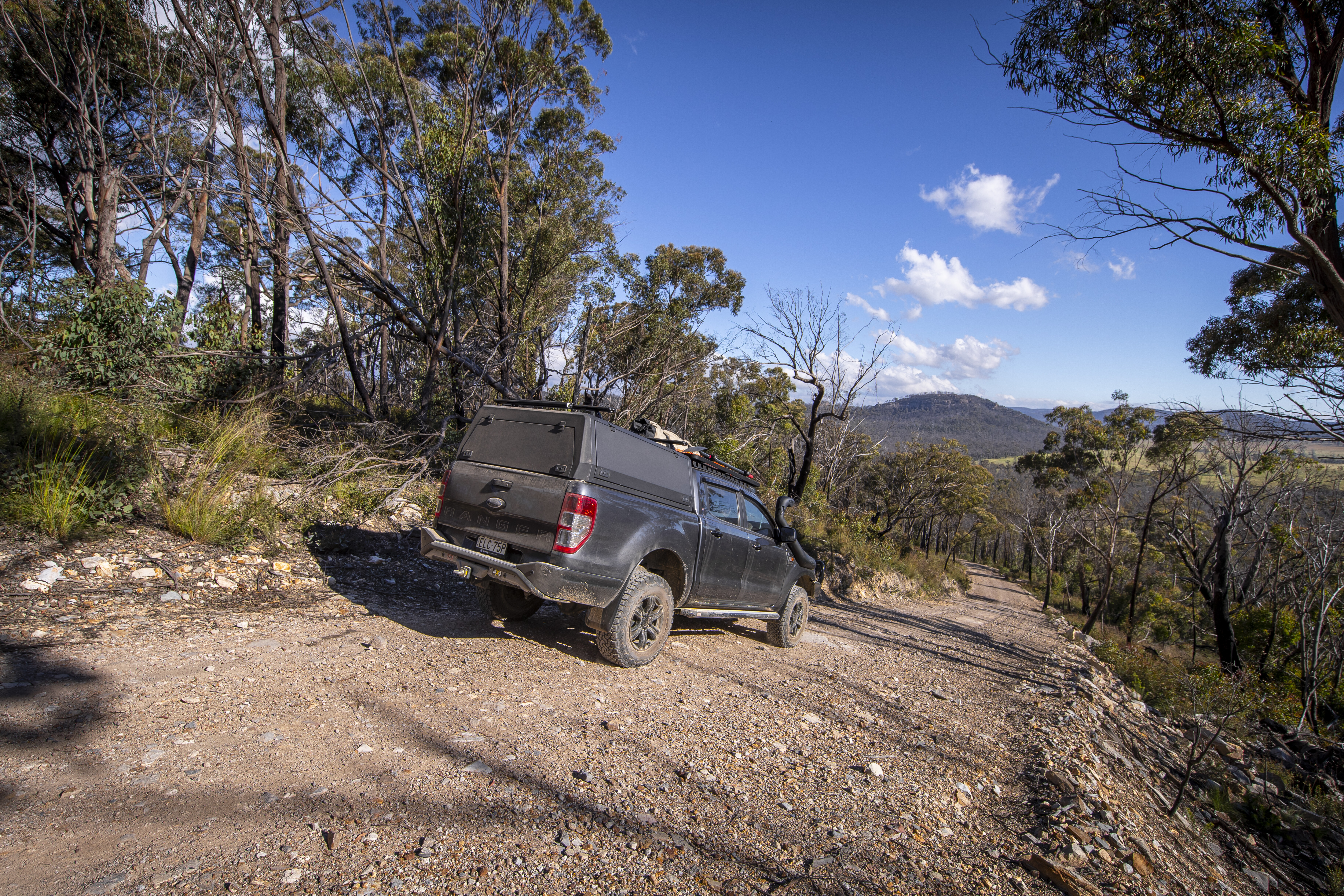
Tyre pressures for steep off-road descents
Setting the correct tyre pressures to suit different terrain types is important when driving down steep off-road descents.
Lowering tyre pressures for off-road terrain lengthens the tyre footprint and provides more traction, and good traction is critically important on steep descents. Dropping air pressure also allows the tyres to more easily flex as they drive over uneven terrain such as sharp rocks and tree roots, which minimises the chance of tyre damage. If your vehicle is equipped with tough Light Truck (LT) tyres, you will be able to lower tyre pressures more than if it’s fitted with Passenger (P) construction tyres.
As a general rule, if your usual road pressures are around 35psi, and you’re running LT tyres on your vehicle, you can drop pressures to around 22psi for rough off-road tracks.
How to prepare your 4×4 before descending
Once you’ve examined the descent and you’re happy to proceed, you need to set up your vehicle for the task at hand.
Make sure your tyre pressures are set and your hubs are locked (if fitted), and then engage low range and select first gear, no matter whether your vehicle has a manual gearbox or an automatic transmission. If you find that first gear is too slow for the descent, you can always upshift to second, but if you start off in too-high a gear and the speed starts getting away from you, you won’t always be able to shift back down to first.
If the descent is quite undulating and there’s a chance you will exceed the vehicle’s suspension travel, engage the rear locker if fitted. This will ensure both rear wheels will rotate at the same speed even if one of them is lifted off the ground, which will give you more vehicle control on the descent. It will be much more difficult to steer the vehicle if you engage the front diff lock, so try to avoid doing so unless you become stuck.
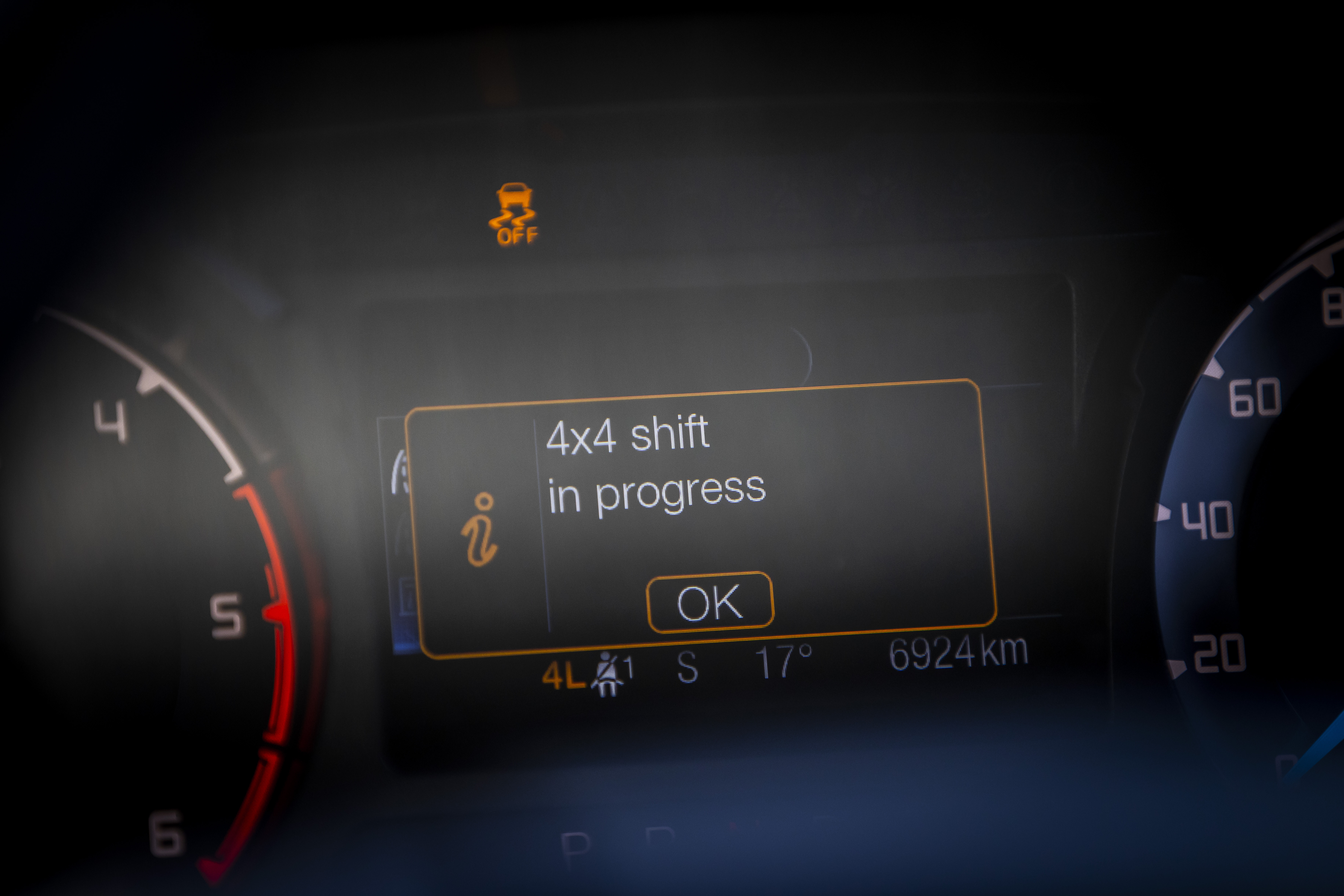
If your vehicle is equipped with selectable drive modes such as ‘sand’, ‘rocks’ or ‘mud and ruts’, select the mode that best describes the terrain. These modes tailor the vehicle’s throttle response, traction control levels and ABS sensitivity to best suit the terrain. If you have height-adjustable suspension, select the highest mode for rocky or undulating descents where you think you’ll need all the ground clearance you can muster.
What about Hill Descent Control? The better HDC systems on the market allow you to adjust vehicle speed using the up and down cruise control buttons, usually in 1km/h increments down to as low as 1km/h, but even these systems are not suited to all steep descents. HDC systems rely on the vehicle’s brakes to keep speed in check, and although they can do this without the wheels locking up, on very long descents, such as those you might find in alpine regions, using the brakes will generate a lot of heat. This heat not only affects the brakes themselves but also other mechanical components such as wheel hubs and axle seals.
Bear in mind that you’ll occasionally find water crossings at the bottom of steep descents; if you do, give your vehicle’s mechanical components time to cool down before plunging into cold water. If you don’t, water can get sucked in through the seals, contaminating the oil in the engine, gearbox, transfer case and diffs.
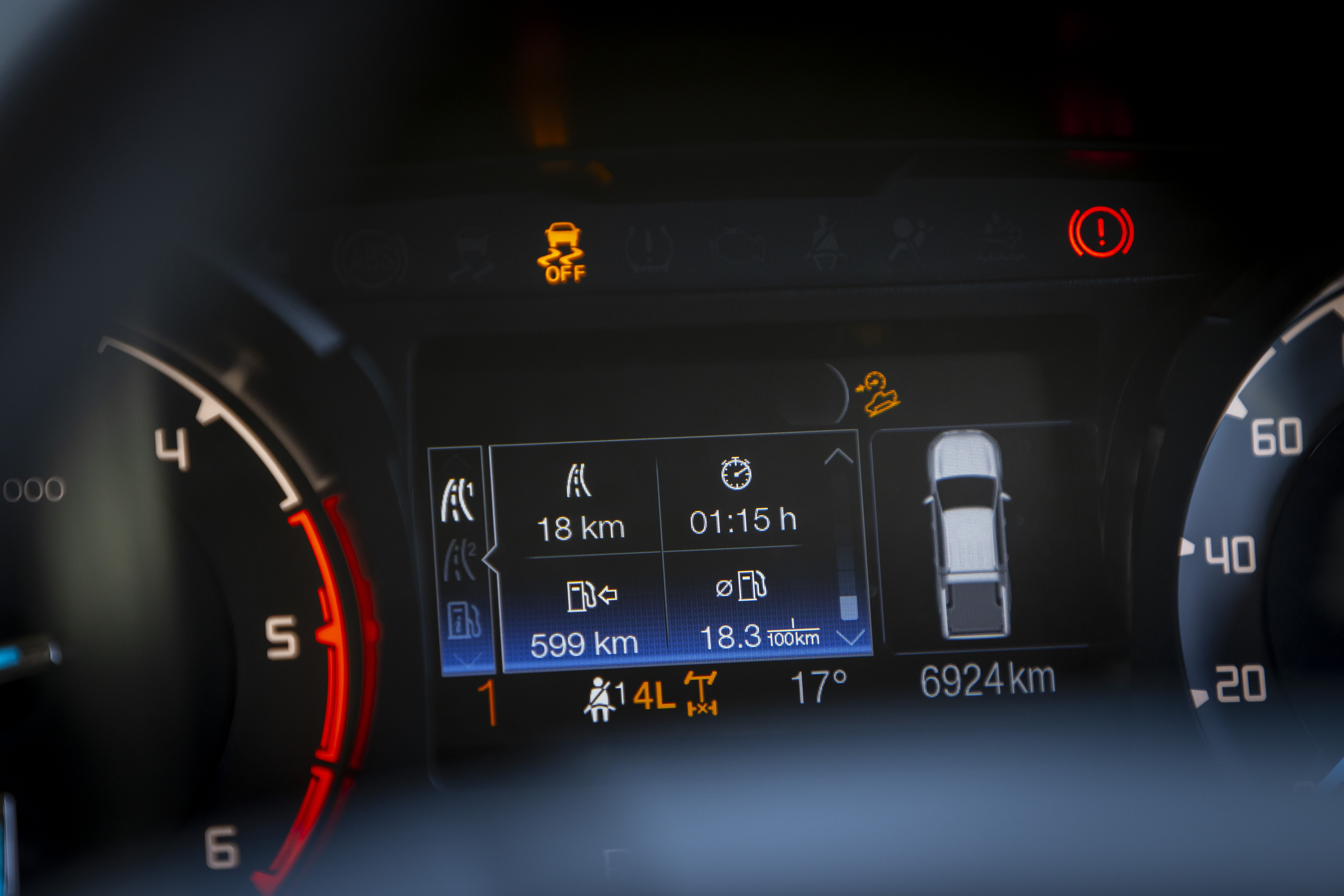
How to safely drive down a steep hill
Once you’ve set the vehicle up to tackle the descent, gradually release the brakes, drive slowly over the edge, and let gravity do the work for you.
Unless the hill is extremely steep and the vehicle’s low-range gearing isn’t keeping speed in check, try to avoid applying the brakes. On a long descent, you might feel the speed is too slow in low-range first, but only shift up to second or third if you know you’ll be able to safely slow down again if you need to, such as for a tricky section of track up ahead.
As you descend the hill, you will need to adjust the speed to suit the changing track conditions. If the track is muddy, make sure any vehicles ahead have cleared the descent before you set off. There will often be visible wheel tracks in muddy terrain; if you can see that these tracks lead to where you want to go, and you think you have enough available ground clearance, drive in the tracks rather than trying to fight them. If the tracks are too deep or they spear off into the scrub, you’ll want to straddle them as much as possible, and then try to drive out of them if you slide in.
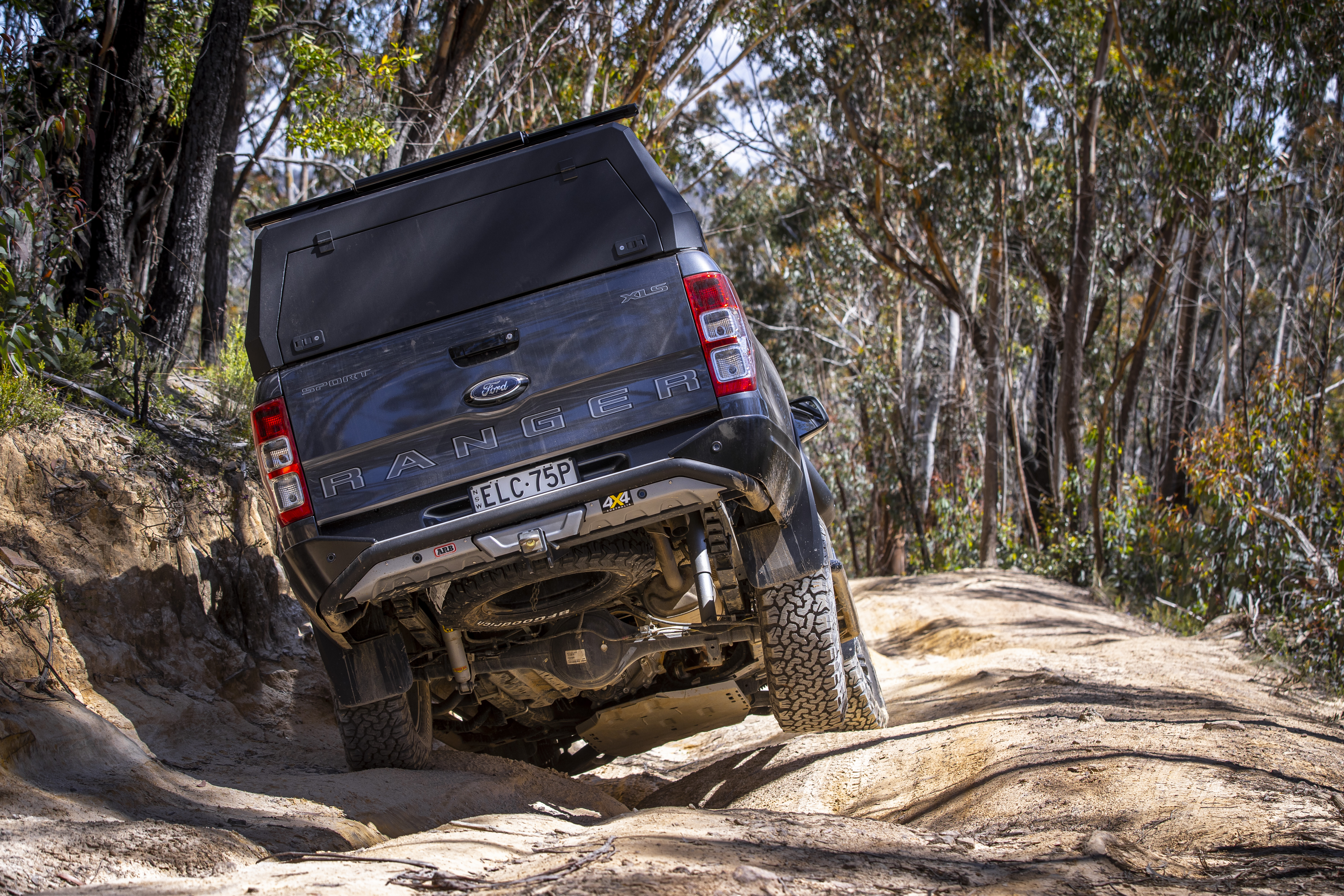
On a rocky descent with reasonable traction, you’ll probably need to use the brakes to ease over big drop-offs without damaging the vehicle, but don’t stab at the pedal, gently apply brake pressure to avoid wheel lock-up.
If driving a manual 4×4 vehicle and you’ve slowed down so much you’re going stall the engine, don’t worry; it’s better to stall than to push on the clutch pedal, because once that clutch is disengaged the vehicle can begin to roll down the hill and you will have little control over it. If you do stall, again don’t push on the clutch pedal; simply turn the key in low first with the clutch pedal out and the vehicle should start driving down the hill again.
On steep descents, you won’t always be able to see what’s directly ahead such as when driving over obstacles or cresting drainage mounds, so keep your speed in check in case there’s a steep drop on the other side. If you have a spotter and can stop before a tricky section of track, ask them to get out and direct you. If you are able to and want to stop on a steep descent for any reason, get on the UHF and let others in your party know what you’re up to so following vehicles don’t proceed until the track is clear.
Descending vehicles generally have right of way when they encounter oncoming vehicles climbing a track, but if there’s room and you are able to safely pull up, let oncoming vehicles go past. Finally, try to keep the vehicle pointed down the hill at all times and try to avoid driving across steep tracks or you could roll your vehicle.
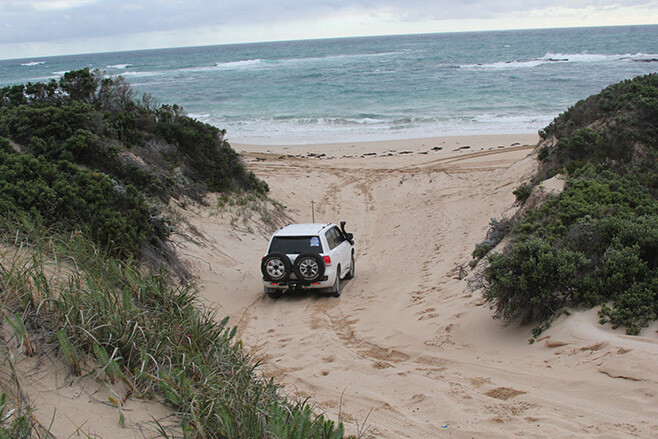
How to safely descend steep sand dunes
Driving down steep sand dunes is very different to any other kind of descent. Sand dunes have a shallow windward side and a steep leeward side, and the latter, sometimes called the slip face, can be up to 34 degrees steep.
The method of safely descending a steep slip face is to slowly drive over the edge in low-range first or second gear and then let gravity do the work. You won’t need to apply braking pressure as the soft sand on the slip face will arrest vehicle speed, so stay off the brake pedal and point the vehicle directly down the face of the dune.
As you approach the base of the dune, get ready to accelerate, as this is where the sand is often at its softest, and the last thing you want to do after you’ve pulled off an impressive dune descent is get stuck at the bottom. Look out for abrupt drop-offs or step-ups though, as these could see the front of your rig digging into the sand if you hit them too fast.
What to do if you get into strife on a descent
The most difficult aspect of steep descents is keeping your speed in check, especially in slippery mud.
If you start off nice and slow, you will have a better chance of maintaining a steady speed on the descent, but if you start too fast it can be nigh impossible to slow down once your speed has picked up.
Whatever you do, try to avoid applying brake pressure, because if you lock up the front wheels, not only will you be unable to slow down, you also won’t be able to steer. Although it might seem counter-intuitive, sometimes the only way to regain steering on slippery downhill sections is to get on the accelerator and drive your way out. Once you have regained steering control, ease off the accelerator as soon as possible and try not to get on the brakes until there’s more traction available.
If you find yourself stopped halfway down a slippery, muddy hill, and you’re terrified by the prospect of completing the next part of the descent, try dropping your tyre pressures some more. I once dropped pressures to about 5psi to get out of a super slippery situation and was amazed at the traction it afforded me; but make sure you re-inflate the tyres as soon as it’s safe to do so to avoid damaging them.
Recovery gear for steep 4×4 descents
If you end up in a situation where you have no steering control or you have inadvertently driven off the track, you’ll need to turn to your recovery gear.
On muddy hills a shovel can be used to dig artificial wheel tracks that can help you steer the vehicle, and on rocky tracks recovery boards can be used to bolster sections of track that might need building up.
If you’re in a convoy, sometimes the safest way to descend a steep bit of track hill is to belay off another vehicle using a winch. This can be slow and laborious, but it’s better to take your time than damage the vehicle. Always carry a complete recovery kit when driving off-road and make sure you know how to use it. A winch should be complemented by:
- Winch-extension strap
- Tree-trunk protector
- Snatch blocks
- Shackles
- Long-handle shovel
- Recovery boards
- Snatch strap or kinetic recovery rope
- Protective gloves
Job complete
Once you’ve made a safe descent, don’t forget to return vehicle settings to suit the terrain ahead, and reinflate your tyres if necessary.
If you heard any bangs and crashes on the way down, take a look around and under your rig to inspect for damage. Oh, and if you left your spotter halfway up the hill behind you, don’t leave without them.
What to do
- Study the terrain ahead and walk the track if necessary
- Know your vehicle systems and how to best use them
- Adjust tyre pressures to suit the terrain
- Use low-range gearing to keep your speed in check
- Adjust vehicle speed to match the terrain
What not to do
- Apply brakes and lock up the steering wheels
- Descend the hill until vehicles have cleared the track
- Stop on the track without warning others in your convoy
- Disengage the clutch on a steep descent
- Leave your spotter behind in the bush
Frequently Asked Questions
What gear should you use when descending a steep hill?
Make sure your tyre pressures are set and your hubs are locked (if fitted), and then engage low range and select first gear, no matter whether your vehicle has a manual gearbox or an automatic transmission.
Should you use the brakes when driving down a steep hill?
Unless the hill is extremely steep and the vehicle’s low-range gearing isn’t keeping speed in check, try to avoid applying the brakes. On a rocky descent with reasonable traction, you’ll probably need to use the brakes to ease over big drop-offs without damaging the vehicle, but gently apply brake pressure to avoid wheel lock-up.
What tyre pressures should you use for steep off-road descents?
As a general rule, if your usual road pressures are around 35psi, and you’re running LT tyres on your vehicle, you can drop pressures to around 22psi for rough off-road tracks.
Should you use Hill Descent Control on steep descents?
The better HDC systems on the market allow you to adjust vehicle speed using the up and down cruise control buttons, usually in 1km/h increments down to as low as 1km/h, but even these systems are not suited to all steep descents.
Should you use a diff lock when descending a steep hill?
If the descent is quite undulating and there’s a chance you will exceed the vehicle’s suspension travel, engage the rear locker if fitted. It will be much more difficult to steer the vehicle if you engage the front diff lock, so try to avoid doing so unless you become stuck.
What should you do if you lose steering control on a steep descent?
Whatever you do, try to avoid applying brake pressure, because if you lock up the front wheels, not only will you be unable to slow down, you also won’t be able to steer. Although it might seem counter-intuitive, sometimes the only way to regain steering on slippery downhill sections is to get on the accelerator and drive your way out.
How should you descend a steep sand dune?
The method of safely descending a steep slip face is to slowly drive over the edge in low-range first or second gear and then let gravity do the work. You won’t need to apply braking pressure as the soft sand on the slip face will arrest vehicle speed, so stay off the brake pedal and point the vehicle directly down the face of the dune.
What recovery gear should you carry for steep descents?
Always carry a complete recovery kit when driving off-road and make sure you know how to use it. A winch should be complemented by a winch-extension strap, a tree-trunk protector, snatch blocks and shackles. Make sure you have a long-handle shovel and recovery boards, and if travelling in convoy a snatch strap or kinetic recovery rope … and always wear protective gloves when using recovery gear.
What should you do after completing a steep descent?
Once you’ve made a safe descent, don’t forget to return vehicle settings to suit the terrain ahead, and reinflate your tyres if necessary. If you heard any bangs and crashes on the way down, take a look around and under your rig to inspect for damage.
- UPDATE 1: From the showroom to the tracks
- UPDATE 2: Mods tested in the Vic High Country
- UPDATE 3: Bigger tyres give the Grenadier a boost in the bush
- UPDATE 4: Grenadier to the rescue
- UPDATE 5: Mud and maintenance
- UPDATE 6: Final fling
Part 1: From the showroom to the tracks
“What kind of car is that?” It’s a question I’ve been asked many times in the first month of driving the Grenadier.
Is it a Land Rover? Is it electric? Is it Chinese? Not many people seem to know exactly what it is. The only other vehicle I’ve driven that causes this much confusion is my 1968 Country Buggy. Yep, Google it.
By now, most people know the story of why the Grenadier was created. Man drives Defender. Defender stops being made. Man decides to build his own four-wheel drive to replace his much-loved Defender – but better. That man is Sir Jim Ratcliffe, owner of Ineos, Manchester United and a large part of the Mercedes F1 team.
I owned a 2015 Defender back in 2023 in the UK, and I’ve also owned a 1976 VW Kombi. In many ways, the Kombi and Defender feel like a closer driving experience than the Defender and Grenadier. Yes, the Grenadier looks a little like an old Defender, but that’s where the similarities stop. I was lucky enough to go on a few of the Grenadier’s Australian development trips in the Outback a few years back. These were all pre-production vehicles and not final spec. They were rough and still being worked on by engineers, but even then I could tell they were highly capable, and I was looking forward to driving the production model.
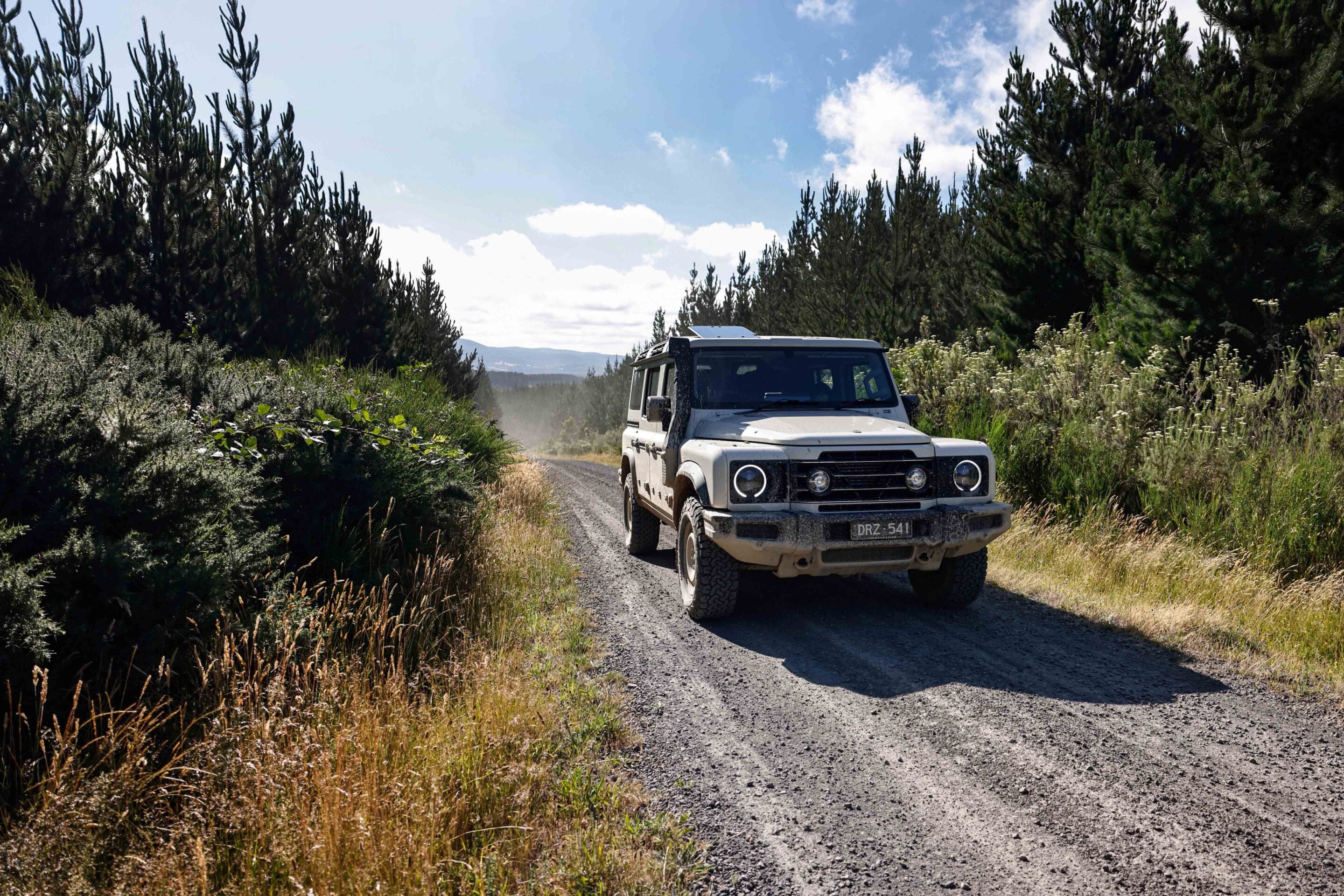
Fast forward to late 2025 and I’m picking up my long-term Grenadier. I’ve gone for a Trialmaster Station Wagon in Scottish White (apparently named after one of Sir Jim’s Scottish mates and his white legs), powered by the BMW B57 diesel engine. I opted for steel wheels, leather trim, heated seats and Safari Windows. The base price is $120,000, plus $8670 in options.
The Trialmaster comes standard with front and rear diff locks, a raised air intake, Class III 1-7/8” NAS tow hitch and electrics, and an access ladder. I also had factory rubber mats added. There are no carpets in this vehicle and that’s exactly how I like it – rubber mats and a vinyl floor are the best.
The very first thing you notice when you drive a Grenadier is the steering. It doesn’t self-centre very quickly compared to most other vehicles. Once you’re aware of this and get used to the steering technique required, it’s fine. Just be ready for it. The Recaro seats are very comfortable and help soak up the kays, plus they look cool. Rear passengers also get a Recaro bench seat, and I like how high it sits you in the back. It’s great for kids, as it makes it easier to look out of the vehicle, placing rear passengers at a similar head height to those in the front.
I picked up the Grenadier just before the start of the summer holidays, and it’s proven to be a great beach vehicle. Having no carpets makes it super easy to get sand out, and the interior utility rails work well when you’ve got lots of gear to tie down in the back.
I strap the surfboards to the roof, with four factory rails fitted. I’m planning to get a roof rack, but more on that later. Running to and from the beach is fun, and the kids have found it to be a great family vehicle so far. It’s not really what this vehicle is designed for, though. Yes, it will do the day-to-day tarmac stuff just fine. The 550Nm of torque that the BMW engine pumps out makes keeping up with traffic easy as well.
It was time to head off-road, so I pointed it toward Lerderderg State Park. I’ve photographed and driven many four-wheel drives up here, so it’s a great place to get to know the Grenadier. The first thing I do once I hit the dirt is flick the low-range selector lever across to lock the centre diff. This also automatically turns off the ESC.
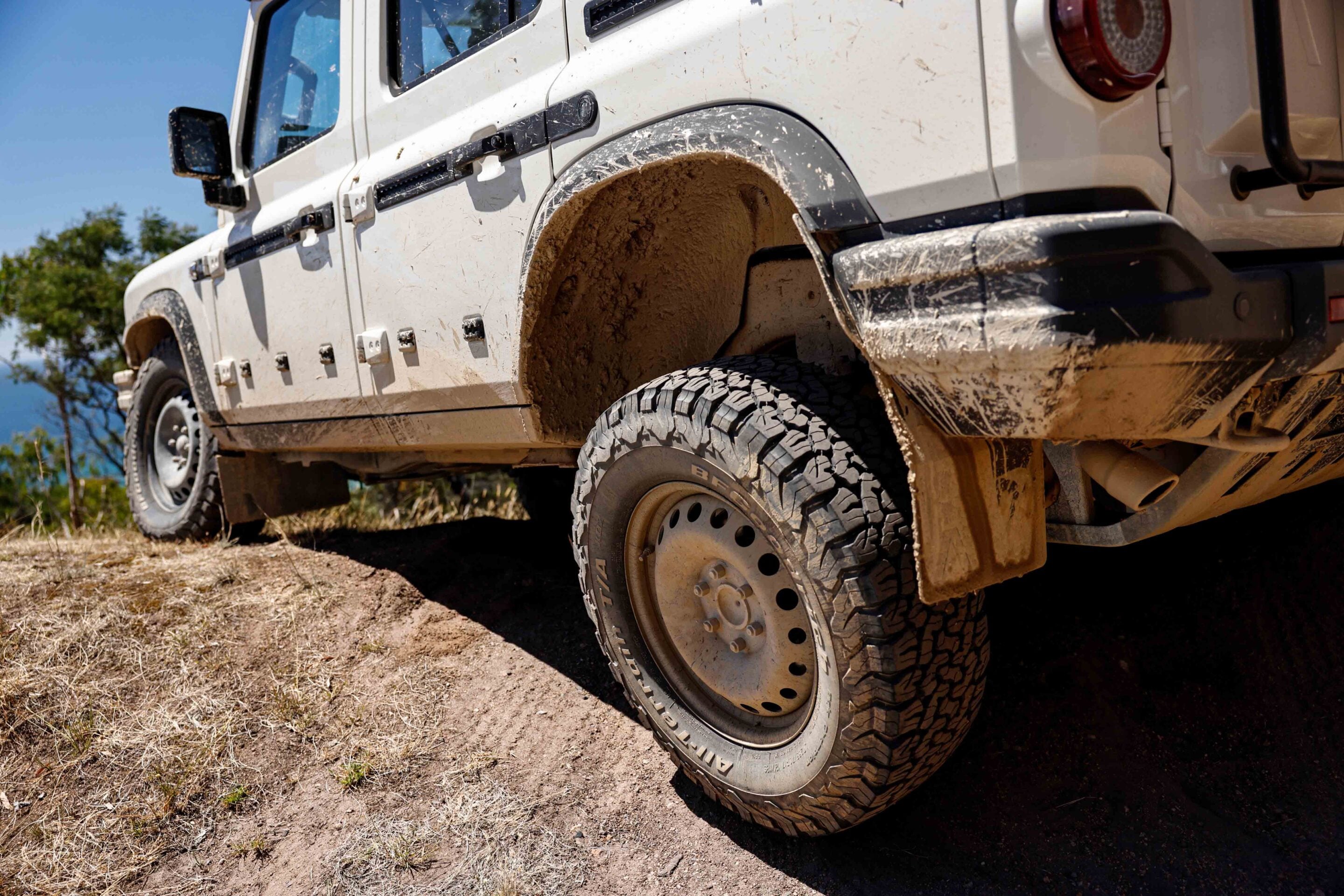
I leave it in high range to begin with. The ride on gravel roads is excellent and, as I start to push it a little harder, it actually feels light on its feet and keen to turn in sharply. I then head to some fairly steep, rutted tracks. I select low range and start driving up the first climb. The Grenadier has solid axles front and rear, which gives it excellent wheel articulation. I try engaging the rear diff lock and it just walks up the track. No need to even try the front diff lock – I need to find a harder track. That will have to wait until my next trip, though. My first experience off-road has shown that the Grenadier is highly capable, and I’m going to enjoy finding gnarlier places to drive it.
One thing that takes a while to get used to is having the speedo in the centre display rather than directly in front of you. Living in Victoria and constantly stressing about being 3km/h over the limit, I sort of wish it was straight ahead. My other small gripe is that the driver’s-side wiper misses a chunk of the windscreen near the A-pillar. It only becomes an issue if you really get the vehicle and screen super muddy, but I do notice it.
Plans? We’re going to throw some factory and non-factory accessories at the Grenadier while we have it, starting next month. Can’t wait.
- Kilometres this month: 4780km
- Average fuel use: 11.7L/100km
Part 2: Mods tested in the Vic High Country
The Grenadier wave is alive and well. I used to get the Jeep wave back when I had a JK Wrangler and was wondering if Ineos owners would do the same. Well, they do! I even got a wave from a guy in a 110 Defender – maybe the sun was in his eyes?
This month has seen quite a few kays racked up in the Grenadier. I wish I could say they were all off-road kays; sadly not. As a daily driver, though, I’m really enjoying the Grenadier. It has such a nice ride – comfortable on the tarmac and even better when you hit the dirt. I think they’ve done a great job with the suspension tune.
I headed up to Mt Disappointment in Vic this month to shoot a HiLux vs Ranger comparo. One of the tracks we drove was pretty gnarly and it was the first time I needed the rear diff lock. Once engaged, the Grenadier just walked up in low range – no issue. The way it moulds itself to the terrain is amazing to watch. It also does all the hard work for you. I tried picking the worst lines and it just ate them up.
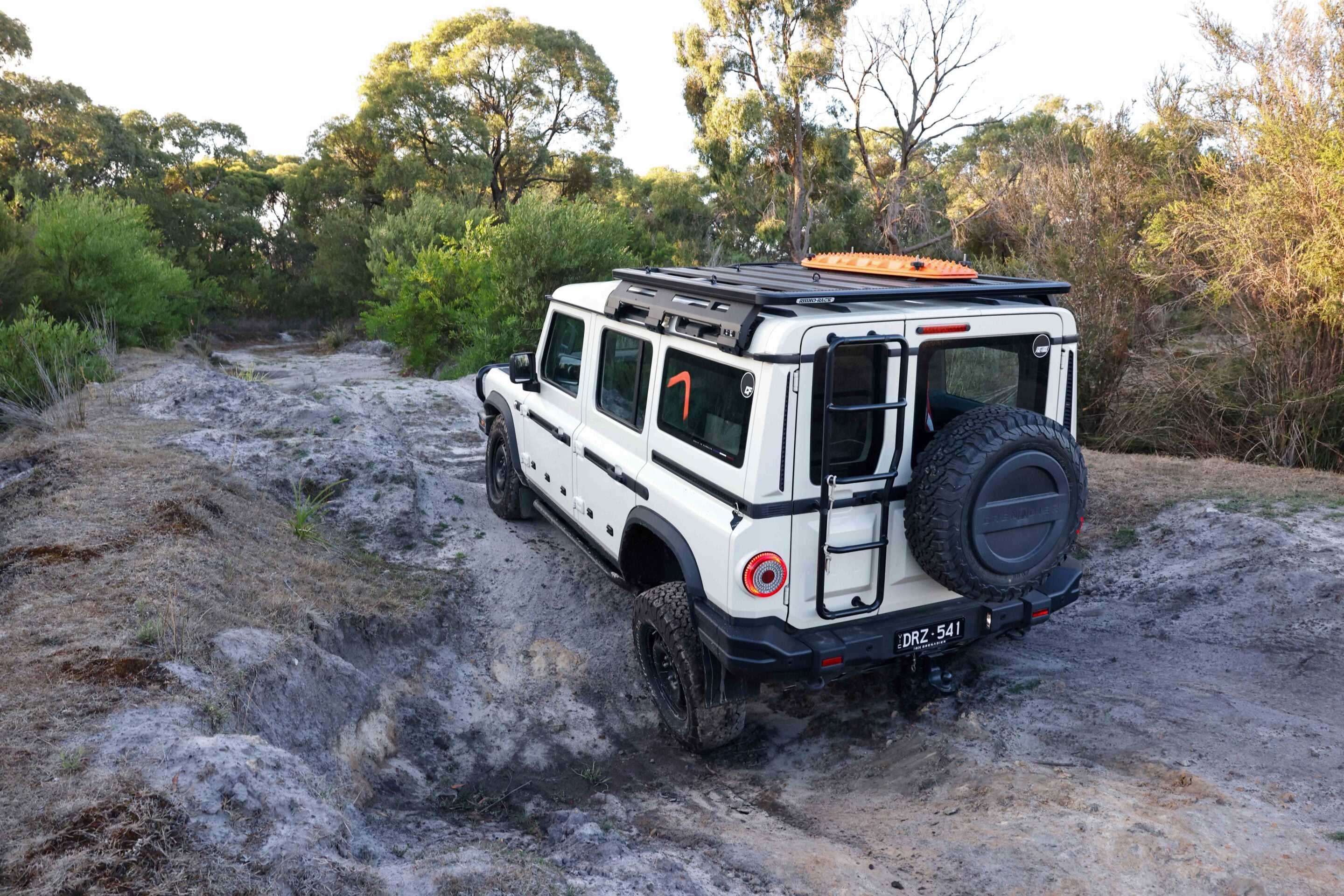
I used the freshly fitted Rhino-Rack Pioneer platform to photograph the utes from. I went for the three-quarter length option as it still allows me to open the safari windows. It was $3688 plus fitting. It’s great now – the factory ladder on the back door actually goes somewhere! I also fitted a set of MaxTrax up on the platform – thanks Matt.
A factory Ineos roo bar ($2720), rock sliders ($1921) and checker plates ($560) were also fitted. The roo bar is a smart design that works with the existing factory bumper. You just take a couple of caps off and it bolts straight on. Job done! The rock sliders are also well designed and solid. They bolt directly to the chassis rails and offer a twin-tube setup. The checker plates sit on top of the front guards and allow up to 120kg load. Luckily I’m only 103kg, so I’ve been up there quite often just because I can.
Hopefully I won’t have to test out the roo bar. The rock sliders, however, have had their first slide. Yes, it was a little painful, but I figure that’s what they’re for. They feel super strong and can take the weight of the Grenadier no worries. Plus, the scratches are underneath so I can’t see them.
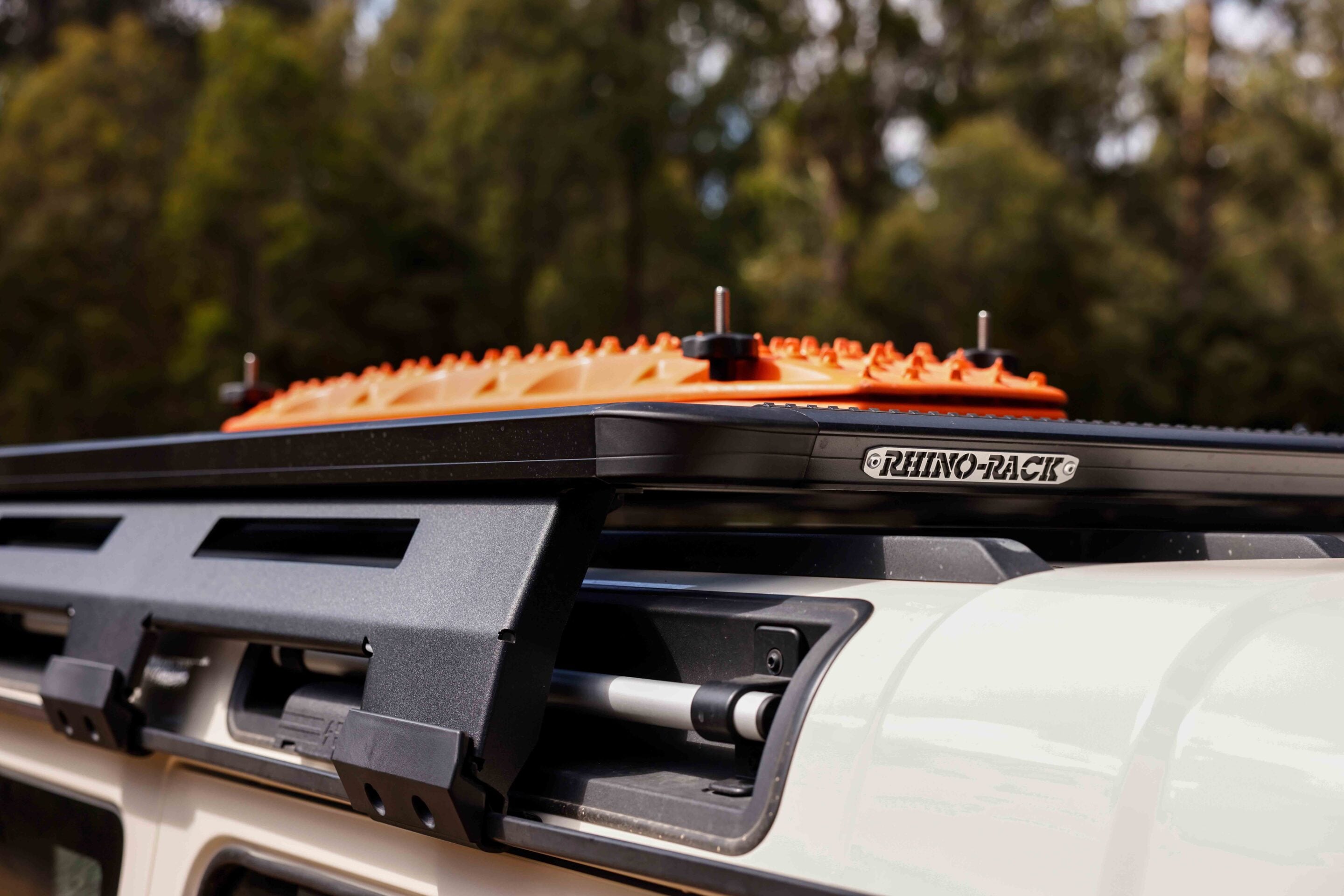
I had to top up the AdBlue this month. It gave me a warning that it was running low, which was handy. The front parking sensors have been triggering at random. Apparently it’s some dirt stuck on the edge of a sensor that’s setting it off. No big deal, as you can manually turn them off and it stops the beeping. I might try giving them a proper clean.
Next mods? I want to try a bigger tyre size. The standard 265s are fine and do a great job, but I’d love to see those guards filled a little more. Maybe a 295? Mud-terrains? Let’s see what happens.
- Kilometres this month: 5300km
- Average fuel use: 12.4L/100km
Part 3: Bigger tyres give the Grenadier a boost in the bush
New tyres for the Grenadier this month. I had my local tyre store (thanks Tyrepower Mornington) fit five BFGoodrich Mud Terrain KM3s in a 295/70R17 size, at $590 each.
The original BFG All Terrains weren’t worn out and were still doing a great job; I just wanted to try a bigger size than the standard 265/70R17 tyres fitted as stock. I had a set of KM2s on a JK Wrangler about 15 years ago, so it is going to be interesting to see how the KM3s compare.
Standing the 295 Mud Terrains next to the original tyres, the size difference is noticeable without being extreme. I think it’s a worthwhile upgrade for the Grenadier, especially considering it’s on stock ride height and wheels. I also like that BFG has done away with the white lettering – I was never a fan. Clearance to the brake lines has reduced slightly, but I don’t think it will be an issue. There are also no signs of rubbing, even with the suspension fully articulated, which is reassuring.
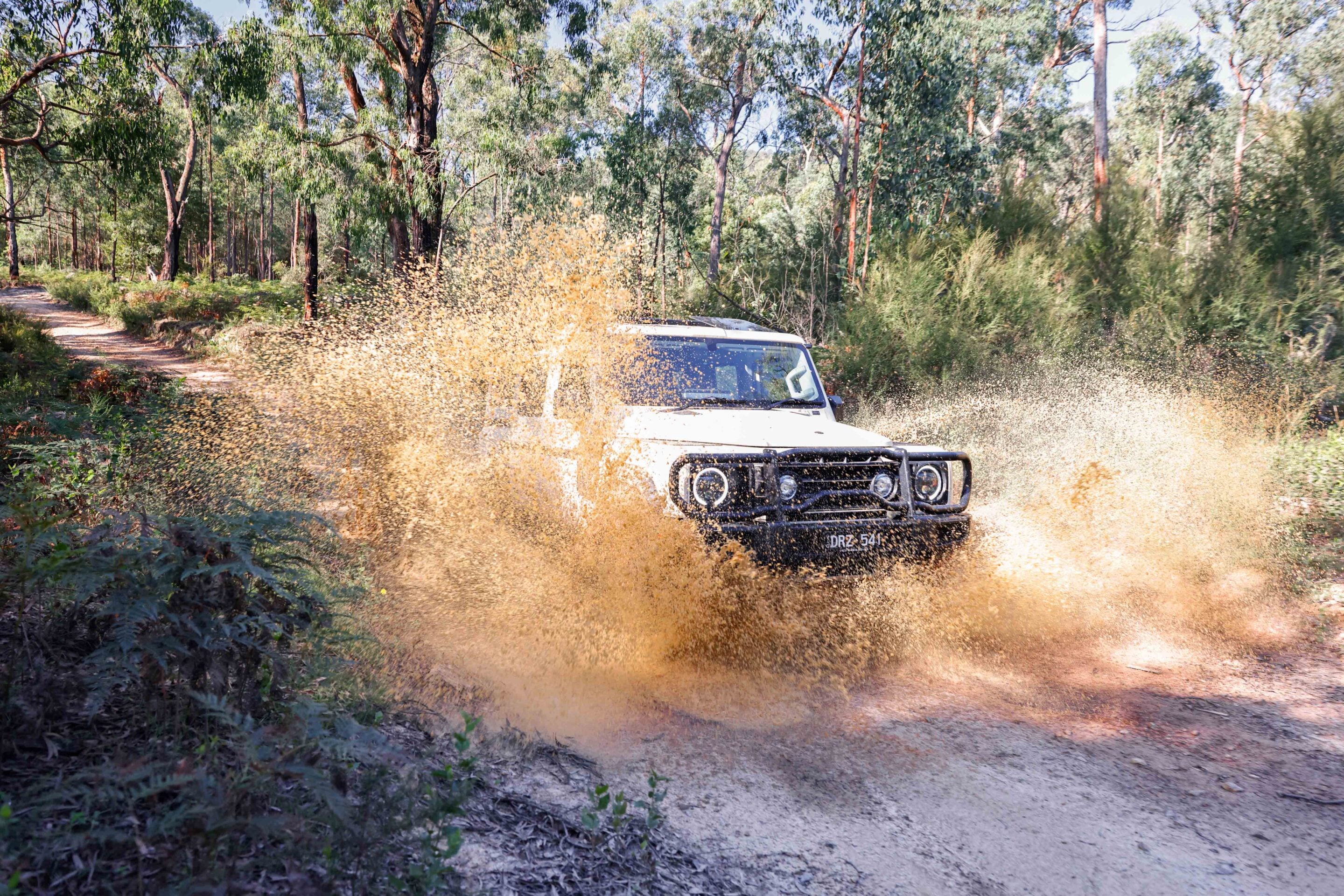
With the first opportunity, I headed to the Yarra Valley in search of mud. It’s been a dry summer in Victoria, so finding mud hasn’t been easy. The only option was to head to Toolangi State Forest, where I knew I’d be guaranteed to find some. To get there, I had a fair amount of highway driving to cover. The KM3s are definitely louder on-road than the ATs, but nothing you couldn’t live with, even as a daily driver. You do feel a touch more tyre roll through corners because of the taller sidewalls, but overall the ride is better. It’s simply a more comfortable experience now, both on- and off-road.
Before any mud could be sprayed, I found Rocky Track, dropped the Grenadier into low range and began the climb. If you’re familiar with Rocky Track, you’ll know it’s a very challenging drive. I completed the first section fairly easily with the centre and rear diffs locked. The aggressive sidewalls on the KM3s helped bite into the rocks and push the Grenadier forward.
The second section is much tougher, and line choice really matters. With the front locker engaged, I continued to make forward progress. The rock rails were taking a beating and things were getting pretty serious. I’m confident the Grenadier would have made it to the end of Rocky Track, but I chose not to push on. With just the two of us in one vehicle, it wasn’t worth the risk. If we got stuck – or worse – there was no one around to help. It’s a serious track.
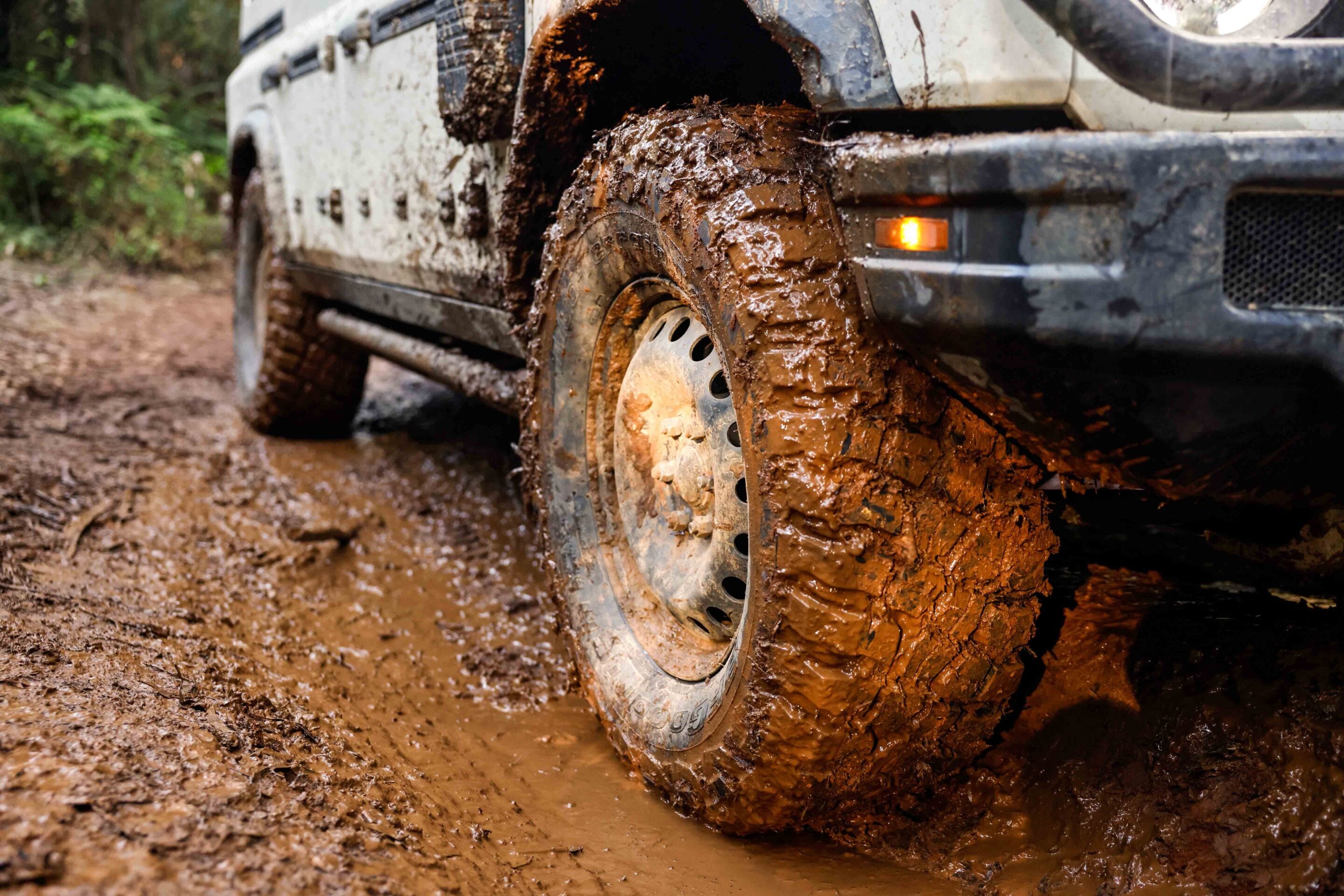
So my son William and I headed off in search of muddy tracks, and we found them. The KM3s performed exactly as you’d expect in sloppy conditions. Where the ATs would turn into slicks, the KM3s cleared mud far more effectively. I’m really impressed with the BFGoodrich Mud Terrain KM3s so far and happy I opted for the larger size.
They suit the Grenadier perfectly and make it an even more capable vehicle. I also fitted the new MAXTRAX Recovery Shovel this month. It’s a clever storage solution, with the shovel and extension handle integrating neatly with MKII and Extreme MAXTRAX boards. Hopefully I won’t need to use it too often.
One thing I would like for the Grenadier is a way to shade the safari windows. Don’t get me wrong, I really like them and at least one side is nearly always open, but there are times when the sun is directly overhead and some sort of shade system would be ideal. Maybe that’s my next mod?
- Kilometres this month: 4650km
- Average fuel use: 12.7L/100km
Part 4: Grenadier to the rescue
Are you busy right now? We have a slight need for a tow from a 4×4.
This was a message I received on a rainy Wednesday afternoon at around 1pm. Do you need help? I wrote back. Yes please! The message had come from my son Charlie’s friend, Sylvan. He was in a hired MG hatchback on a steep dirt road, doing P-plater things, and it had just started raining heavily. Yes, I do have a 4×4, I thought. So, I headed off to try and help.
The first thing I thought when I arrived at the muddy location was that he had put in a decent effort to get that far down the track in a 2WD hatch! It was a rental car, after all. A car that, now, was going nowhere under its own steam.
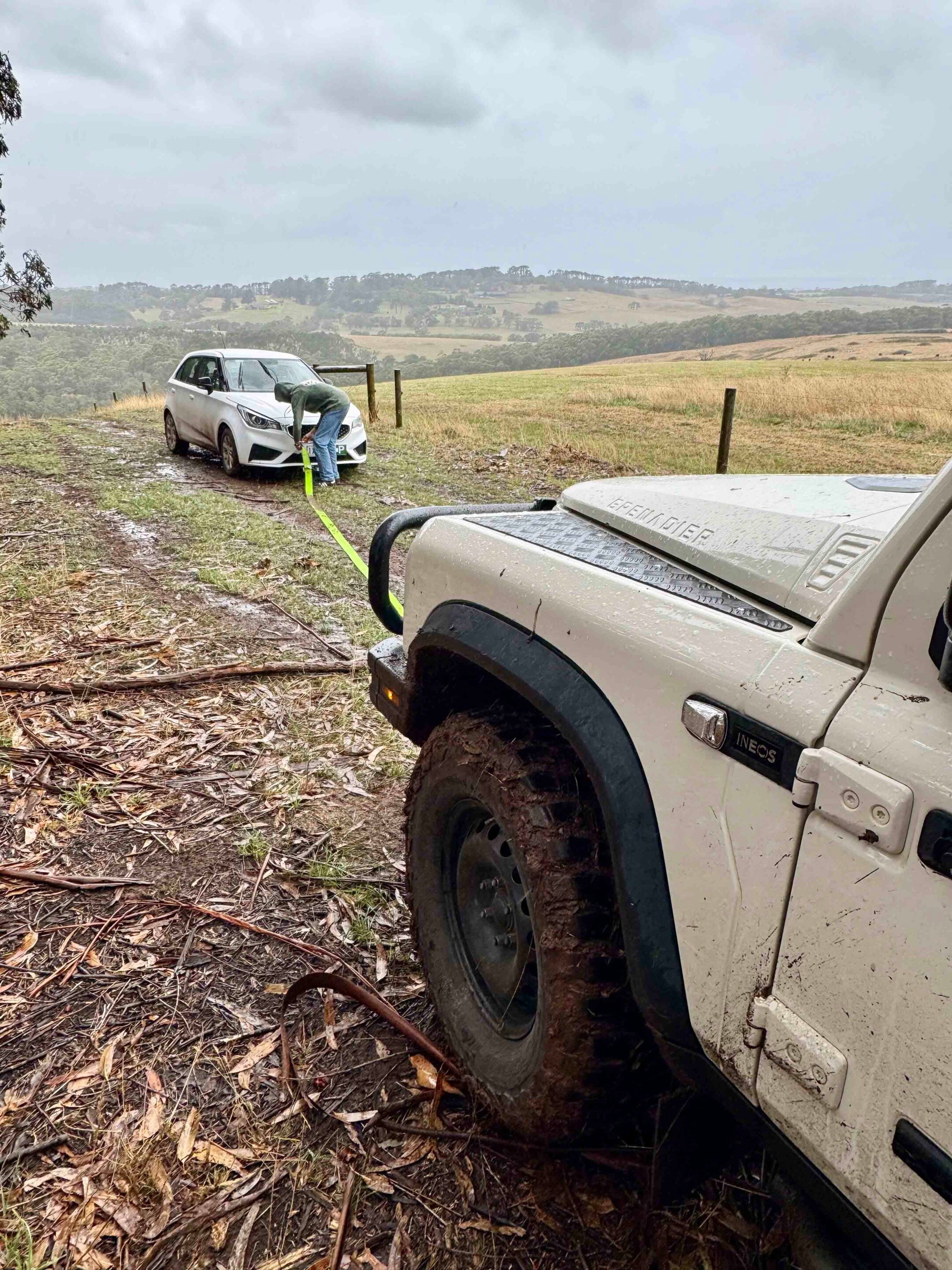
We were on a slippery track between farms near Red Hill and the rain was getting heavier. At this point, I was very happy that I had recently switched to BFG Mud Terrains; they were about to get a proper workout. So, I positioned the Grenadier close enough to the stricken rental, secured the snatch strap and gave Sylvan some brief instructions. With the Grenadier in low range, I started to reverse up the track slowly, waiting for the slack to be taken up.
This gentle approach just didn’t work. As soon as the slack was gone, the INEOS was spinning all four wheels on the spot, gymkhana-style, and we were going nowhere. For a second, I thought we might actually be cooked here, as the track was getting worse by the minute. So, take two, and the plan this time was to use some speed and hopefully snatch the hatch into forward movement.
With Sylvan ready, it was go time. I also engaged the rear diff lock on this attempt. I drove the Grenadier backwards at a brisk pace and, when the slack took up this time, the MG lunged forward. Now the Grenadier was doing it easily and I towed the rental car all the way up the hill. Sylvan and I were both really impressed with how well the Grenadier got this job done. A quick pressure wash on the MG and no one will ever know!
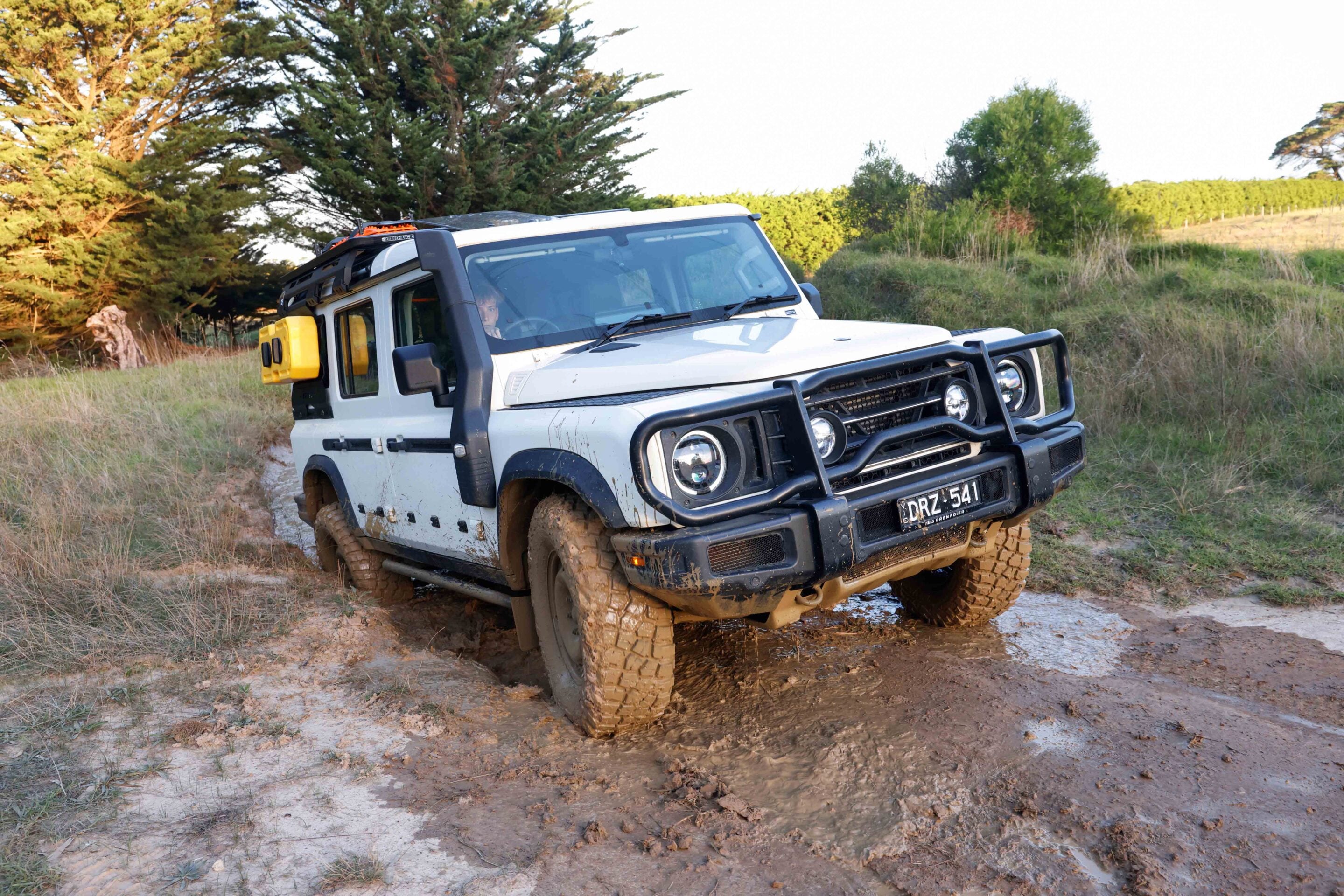
This month, the Grenadier received some new bits in the form of an XSPEC 30L gravity-feed diesel tank with a 12V transfer pump (↗). On the passenger side, we also had an XSPEC storage locker (↗) and an XSPEC 20L lockable jerry can holder (↗) fitted with an ONTAP 22L portable shower (↗). These products were mounted to the Grenadier with the XSPEC rear-window utility frame (↗).
We tried out the ONTAP portable shower while out surfing for the day with my son William. It’s really simple to use. Just fill it up before you head out and then insert the plug into a 12V outlet. The Grenadier has one in the rear load area, which is great.
The storage locker next door is also really handy. I stored the hose and seven-function spray gun in there, along with some snacks. I could also see the shower system being really useful to spray down mountain bikes after a day off-road. All these products from Expedition HQ are well designed and very well integrated into the Grenadier. Hopefully, I won’t have to fill up the 30L diesel tank too often, as fuel prices this month were hectic!
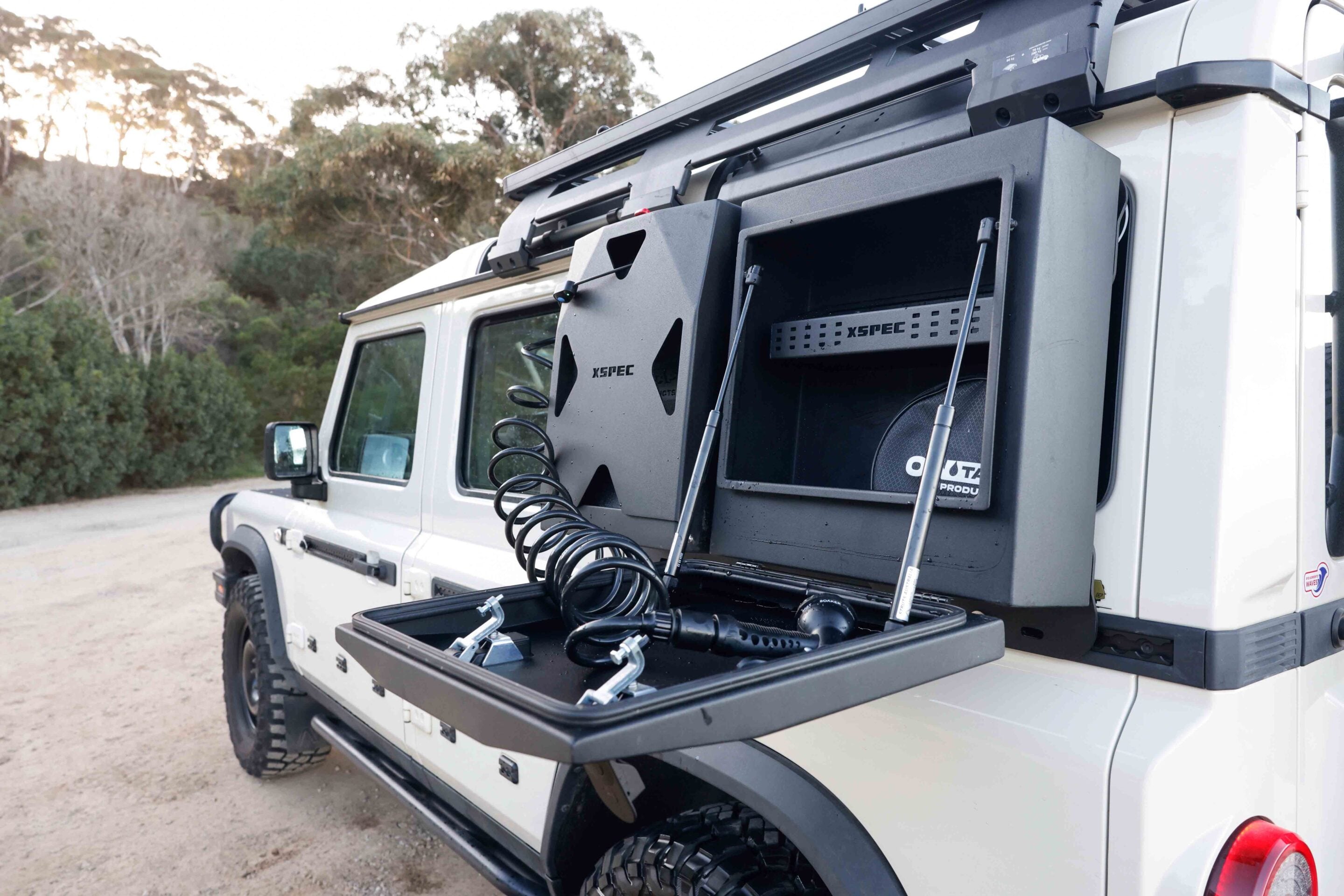
Also this month, the Grenadier’s front windscreen took a beating. I was on a narrow country road – the type where you need to drop a wheel into the gravel – when a big tipper truck passed me in the opposite direction. It managed to throw up enough rocks that I had three cracks appear all at once. Great!
I feel the upright design of the Grenadier windscreen – much like my old Wrangler’s as well – makes it more prone to getting stone chips. Not much you can really do, though. The Grenadier is asking me to be serviced, so I’ll let you know next month what the INEOS dealer service experience is like.
- Kilometres this month: 2300km
- Average fuel use: 12.5L/100km
Part 5: Mud and maintenance
A 15,000km service, new factory accessory and a proving-ground hill climb keep the Grenadier busy this month.
So after kindly asking me to have its first service done, I booked the Grenadier in at Cupra Brighton – yes, they service and sell Ineos as well. It’s the closest dealership to where I live on the Mornington Peninsula. Still, at 85km away it’s not really that close. This is the downside of having a vehicle from a smaller manufacturer; you just don’t have a dealership in every suburb. Hopefully the service is good and I will forget about the distance to get there.
The Grenadier was in for its first service at 15,000km. When I dropped the Grenadier off at the dealership, Lincoln, to his credit, made it all happen around my busy work schedule. It’s really great when a service centre has this flexibility, and also nice to deal with just one person who can get the job done efficiently.
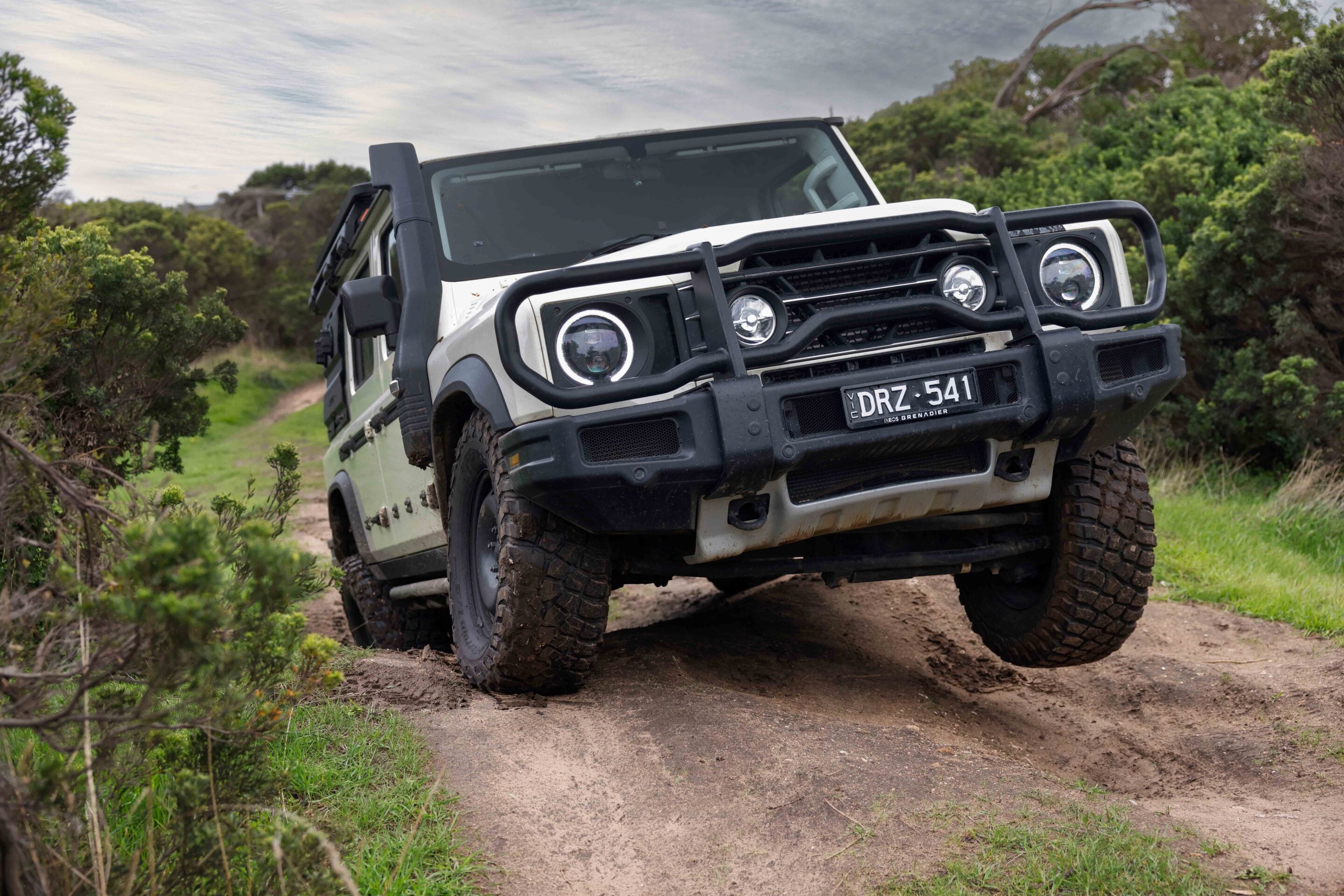
I did feel bad that I dropped the Ineos in for service with mud dripping off it. Hopefully they were thinking that at least I use it properly, and not upset at me for making the workshop floors filthy. Sorry!
I received the call from Lincoln to come and pick up the Grenadier. It was ready to go. For the first service they changed the engine oil, air filter, HVAC filter, water-separator filter – so many filters! – and also changed the oil in the front and rear diffs. Total cost was $975.
They gave the Ineos the best clean it has ever had. It actually looked Scottish White again! While I’m not a fan of shiny tyre spray on 4×4 tyres, the BFG Mud-Terrains looked brand new and actually black for once. I have to admit I didn’t want to get it muddy for a week or so after that, so I stuck to mall crawling and posing with all the other pristine off-roaders on Sorrento’s main street.
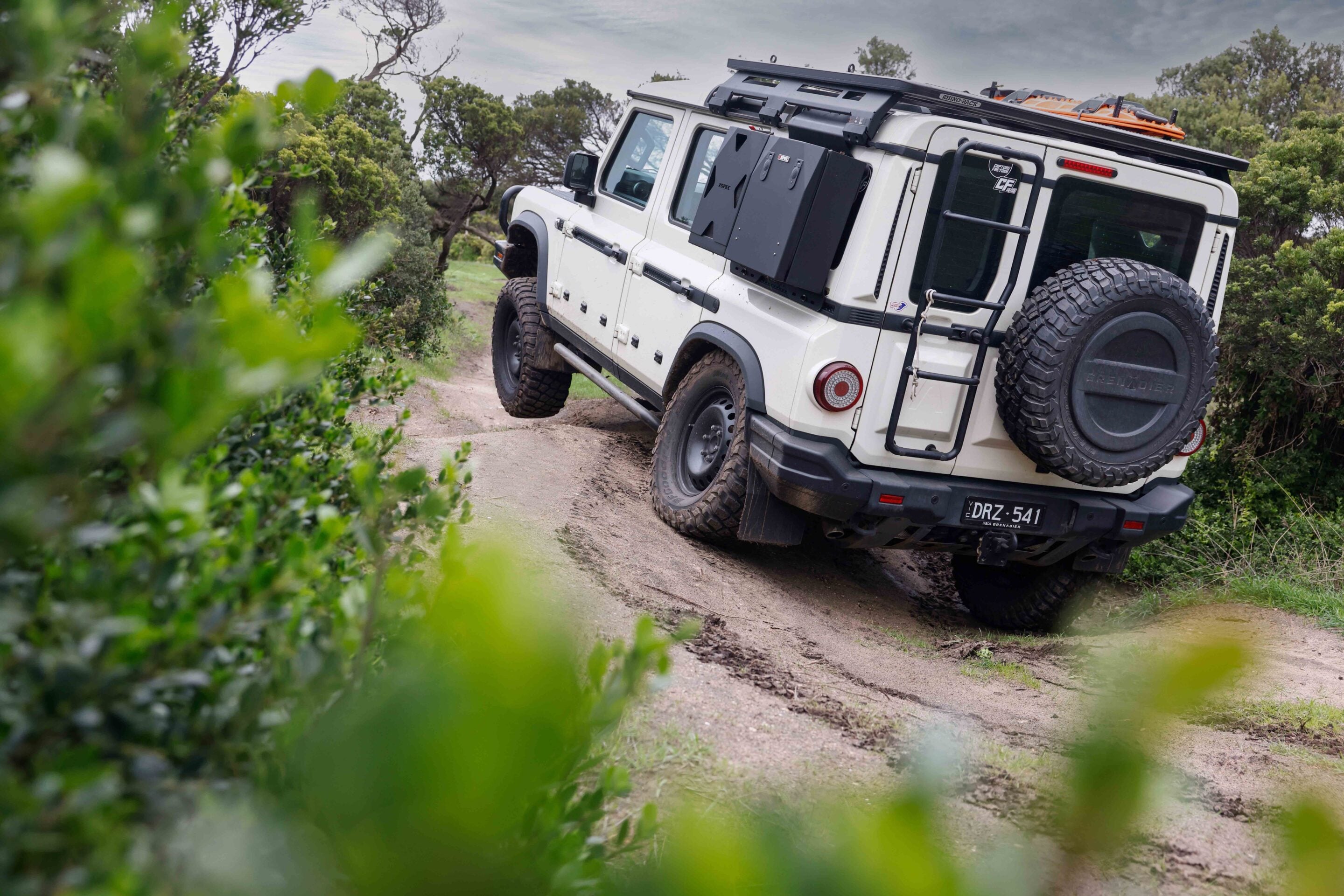
Mods this month? I fitted an Ineos factory accessory, the Tailgate Table (↗). It bolts inside the larger rear door and sits flush when not being used. It’s simple to fold out and gives you a handy flat surface for tools, equipment or even campsite cooking gear. I use it to hold my camera bag when I’m out on a shoot and have the rear of the Grenadier opened up. The black finish means it blends in perfectly. It does occasionally give a little rattle when you’re on a really rough dirt road, but I can live with that.
The KM3s have been seeing some action as it’s winter now. I have put the rear skid plate to good use as well. Not many 4x4s have a factory rear bash plate and when I first saw it I thought it may be overkill. Recently, however, I have noticed wear marks on it, so it does get used and, in doing so, protects what’s under it – mostly the exhaust system. The front bash plate has also seen some action, as it now has a very slight bend to it.
The Grenadier spent much of the past month parked up at the airport as I have been on back-to-back automotive launches. I did get to have some fun though. One of these launches was at the former Holden Proving Ground at Lang Lang. While everyone was having lunch, I jumped in the Grenadier and headed out to the 4×4 test area. There is a fairly steep gravel climb that really tests a stock 4×4. Not everything makes it up here, so I went up in the Grenadier in high-range 4×4 with no drama at all.
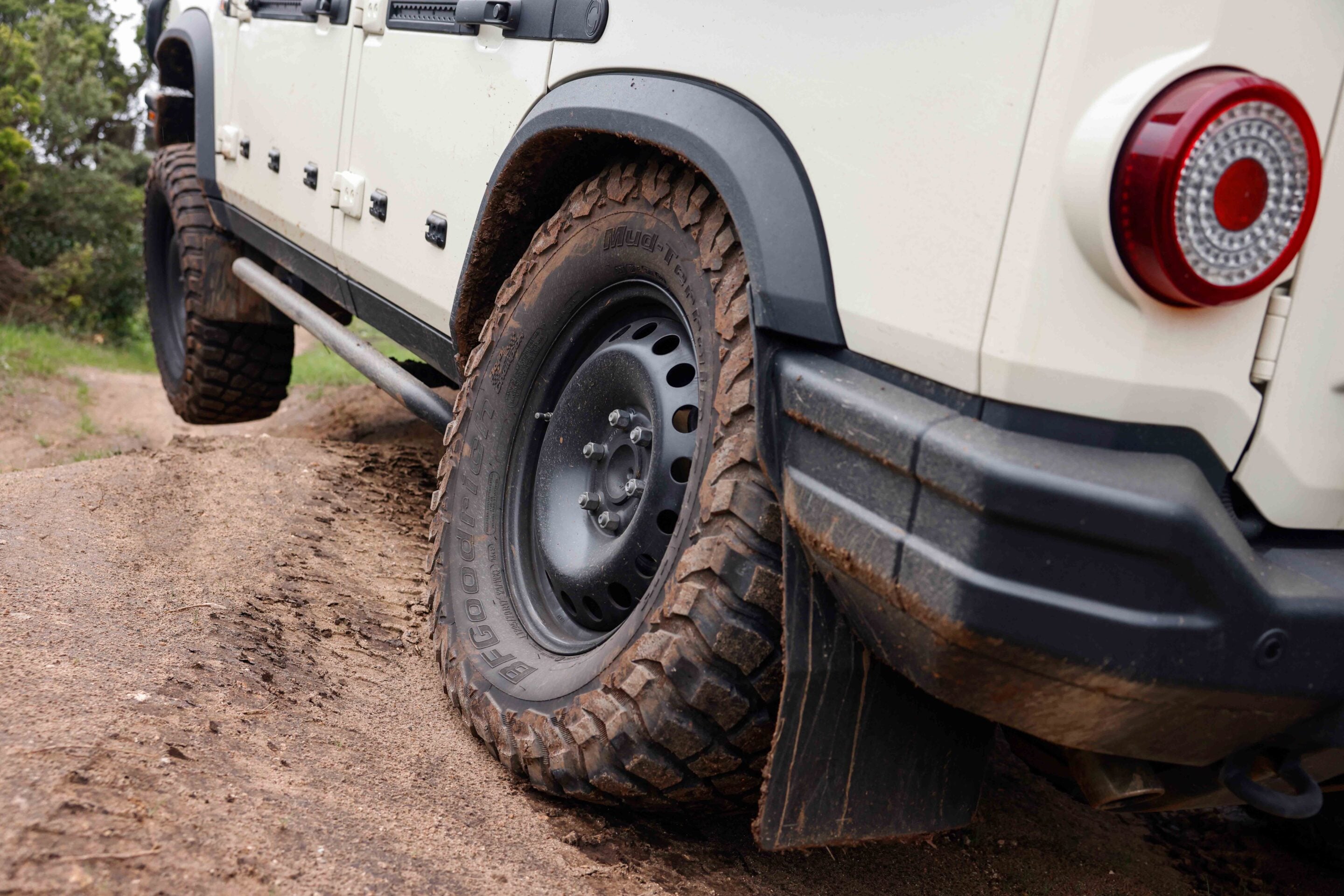
Bored with that climb, I spotted a way steeper one that I think was designed for tanks to go up. I wanted to try it, but the angle seemed more than 45 degrees and it looked scary. Do I do it or not? I was also missing lunch, so with that I gave it a crack.
Low range and all three diffs locked, I started to climb. All I could see was sky and I thought it might topple backwards, such was the steepness of the thing. I gave it more throttle than I should’ve, as I wanted it over with.
The Grenadier popped over the top and I was up! It managed it really easily and I headed back before the pies got cold.
- Kilometres this month: 1650km
- Average fuel use: 12.9L/100km
Part 6: Final fling
After six months and nearly 24,000km, the Grenadier has gone back to INEOS.
Over the time I had it, it became part of the family. It wasn’t afraid of getting dirty, having kids clambering all over it or being driven hard. In fact, I think it enjoyed those things and loved the punishment.
It took a while to get used to the steering, as it was slow to self-centre. The 2026 Grenadier has an updated steering system that self-centres more quickly and naturally. I became accustomed to the steering in my vehicle, though, and actually quite liked it. It gave the Grenadier character.
Before it went back, I still managed to have some fun in it this month and added another accessory in the form of a Yakima bike rack. I thought it was time to charge up my e-bike and start riding again. Because e-bikes are heavy, I needed a heavy-duty rack suited to off-road driving. I went for a Yakima StageTwo rack, priced at $1299 (↗), as it can carry two bikes weighing up to 32kg each. It also sits high and out of the way, so it is less likely to get hung up when driving off-road.
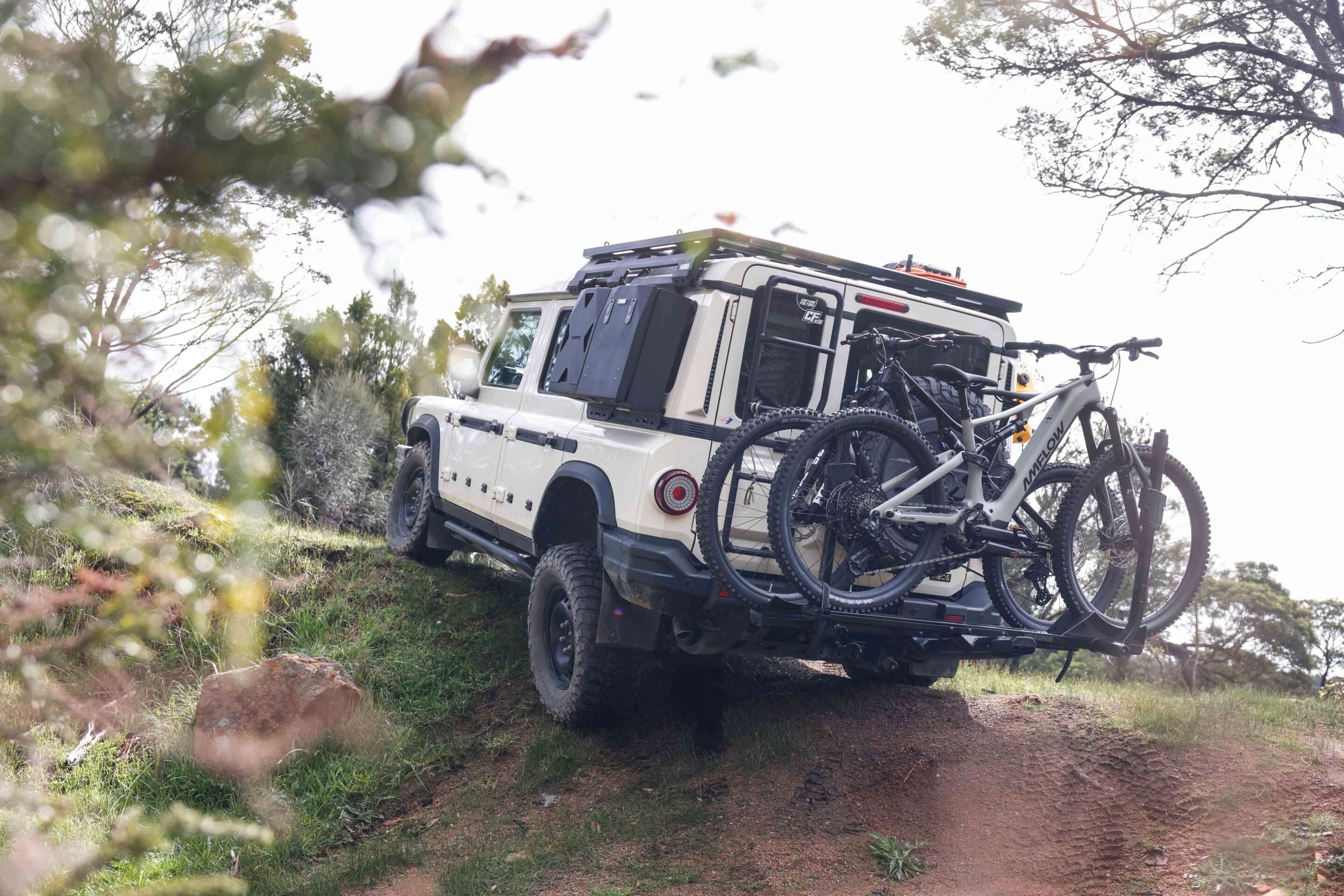
I decided to take the Grenadier back to Lerderderg State Park for our final adventure together. This was the first place I drove it properly, so it seemed fitting to finish where we started. The major difference was that I picked up the INEOS in summer and it was now the middle of winter.
Shortly after we arrived, it began to rain, which ramped up the difficulty. This time, though, the Grenadier was wearing BFGoodrich Mud-Terrain KM3s instead of the standard BFGoodrich All-Terrains, making them the perfect tyres for the conditions.
I’m always amazed by how much articulation the Grenadier has, especially at the rear. Watching it mould itself over the terrain never gets old. I reckon INEOS hit a sweet spot with the suspension tuning, making the 4×4 highly capable in the rough stuff while still keeping it comfortable and predictable on-road.
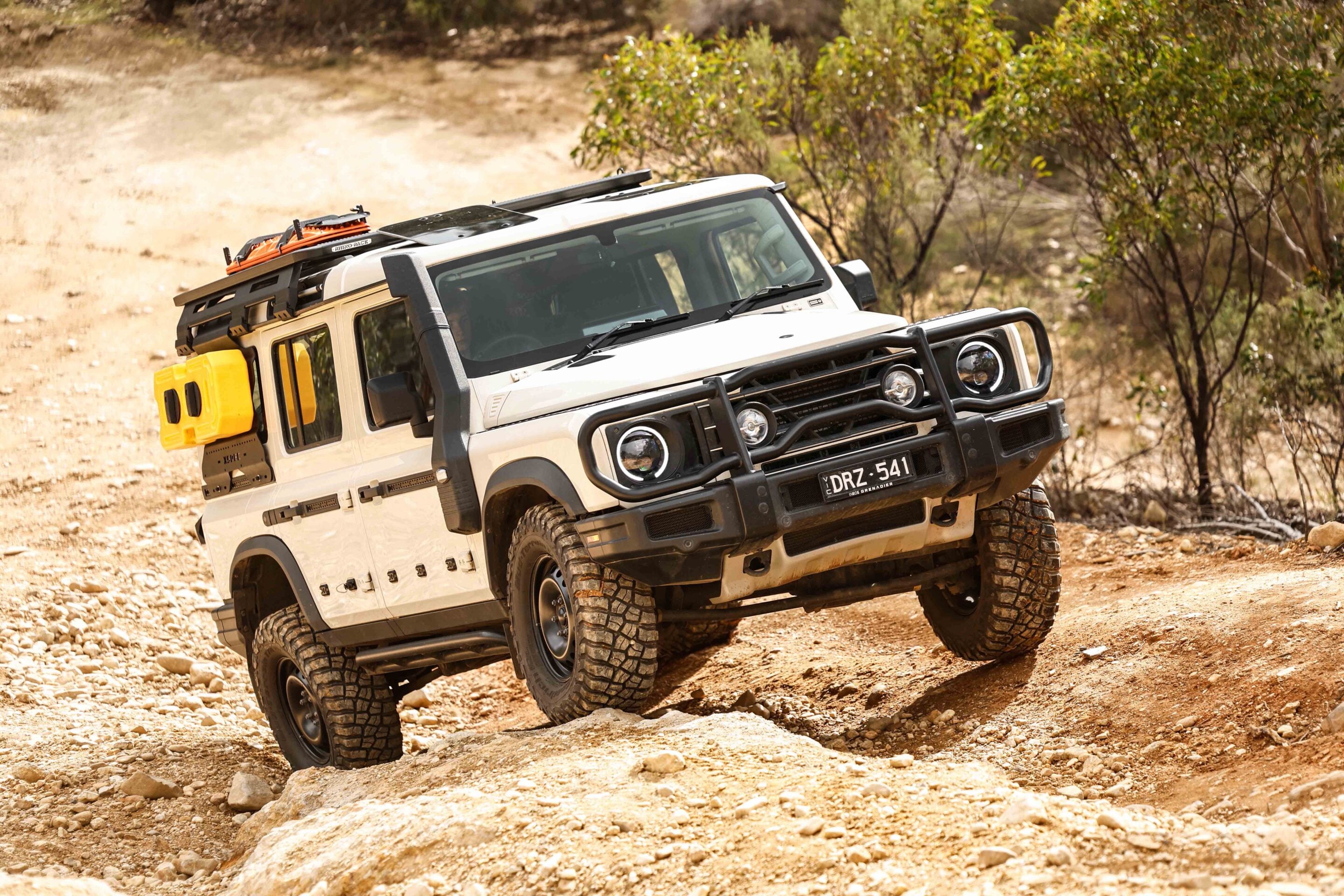
The KM3s have been great tyres and are surprisingly easy to live with on-road. I tackled most tracks in low range with the centre diff locked, only engaging the rear diff lock on some of the gnarlier uphill sections. Engaging the third diff lock – the front – feels like finding a cheat code in a PlayStation game. With all three locked, the Grenadier feels unstoppable. The suspension is a major plus, as I mentioned earlier. The BMW engine is a beast, with plenty of torque, and when paired with the eight-speed ZF automatic it makes the Grenadier feel both quick and exceptionally smooth.
The Recaro seats are excellent, and rear-seat passengers get them too, which is a great touch. The Grenadier is also simple to use: you just get in, turn the key – yes, an actual key – and go. There aren’t a million modes to choose from, and it doesn’t constantly beep at you or tell you how to drive. It feels solid and well built, like something you could own for a long time. It also comes well equipped from the factory while remaining easy to modify with aftermarket gear.
As for the negatives, the location of the USB-A and USB-C ports drove me nuts. They’re tucked away in the centre-console armrest and are awkward to access. The limited dealer network may also mean travelling some distance for servicing, depending on where you live. The only real issue I experienced occurred this month, when several ESC warning lights appeared. I took the Grenadier to Brighton INEOS, where the team checked it over, reset the system and sent me on my way.
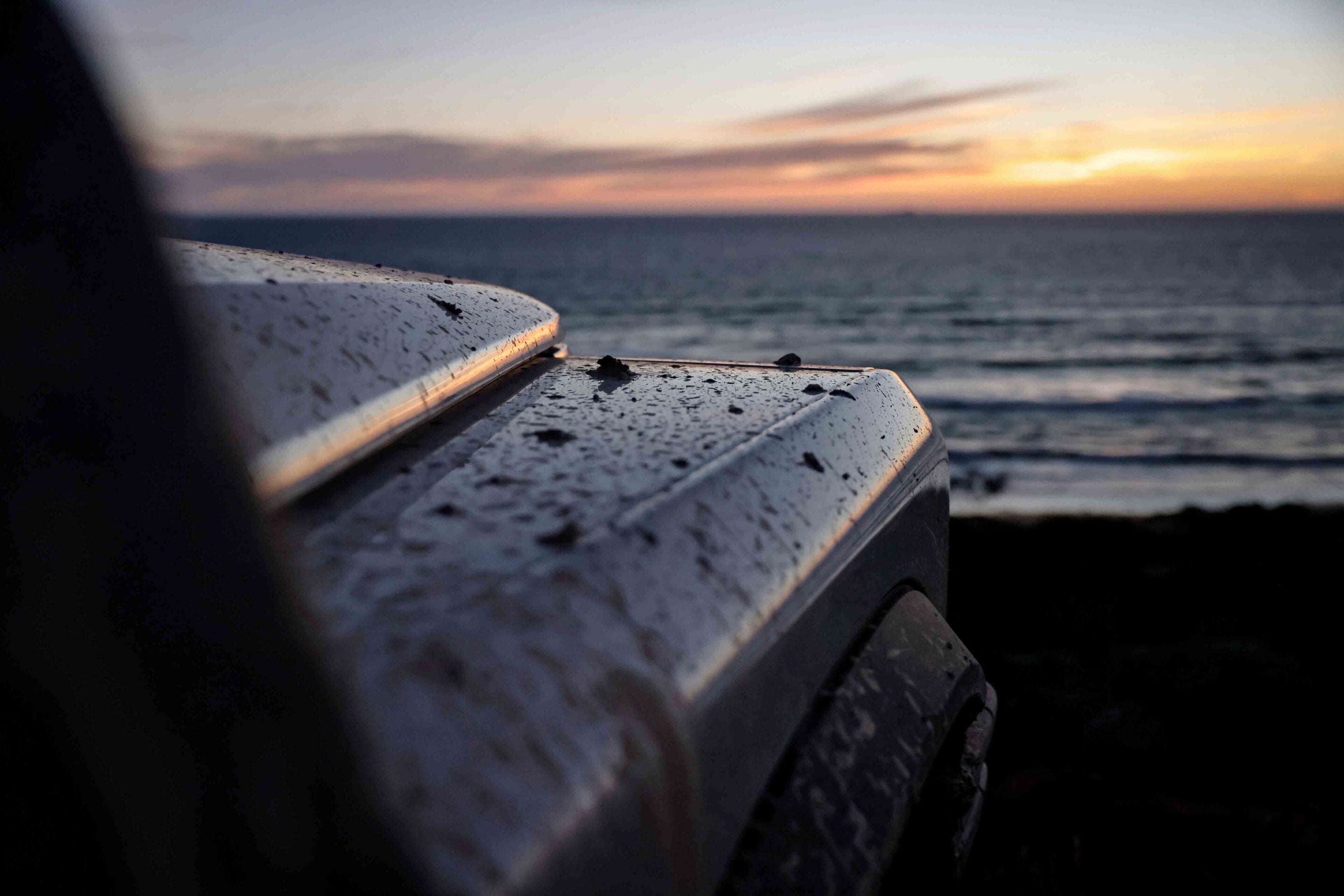
Looking back over the past six months, it’s been great not only to drive the Grenadier and explore its huge capability, but also to add aftermarket gear and make it more suited to my needs. It was especially rewarding to see the vehicle progress from the prototype stage – including trips through the Australian outback – to spending six months with the production version.
I’d recommend the Grenadier to anyone looking for a highly capable off-roader that also works as a comfortable family 4×4. Best of all, it has loads of character. I’m really going to miss it.
- Kilometres this month: 2810km
- Average fuel use: 14.4L/100km
The Toyota HiLux has finally knocked the Ford Ranger off the top spot on the monthly sales charts, becoming Australia’s best-selling 4×4 ute in July 2026 after months of Ranger dominance.
According to the latest VFACTS report, Toyota sold a total of 4119 HiLux 4×4 variants in July, edging ahead of the Ranger’s 3827. The result is likely to reflect improved availability of new stock.
The Isuzu D-MAX, BYD Shark and Mitsubishi Triton were the next best-selling 4×4 utes, with 1292, 1216 and 1081 sales respectively. Further down the list, the newest utes to hit the Australian market are still finding their feet, with sales well behind the established players. Nissan’s Navara recorded just 212 sales in July, while Kia’s Tasman managed 355 units.
In the more budget-friendly segment, the GWM Cannon/Cannon Alpha recorded a combined 719 sales in July. LDV recorded 209 sales for the T60 and 162 for the Terron9, while the KGM Musso managed 179 sales ahead of its updated model, which is nearing release. The Foton Tunland recorded 139 sales, followed by the MGU9 with 85 and JAC T9 with just 57.
The Prado also secured the top spot for Toyota on the SUV charts, with 2082 sales in July. This put it ahead of the Ford Everest (1697), LandCruiser 300 Series (1399) and Isuzu MU-X (1080).
In a one-two-three punch for Toyota, the Japanese brand remained Australia’s top-selling manufacturer in July 2026, with 20,409 sales, ahead of BYD on 7857, Kia on 6553, Mazda on 6458 and Ford on 6400. Interestingly, of the top five, BYD was the only brand to record year-on-year growth, up from 4607 sales in July 2025, while Toyota, Kia, Mazda and Ford all recorded declines.
LCV sales slide in July
Australia’s light commercial vehicle (LCV) segment recorded a significant decline in July 2026, with sales falling 14.4 per cent compared with the same month last year.
A total of 19,207 light commercial vehicles were sold in July 2026, down from 22,437 in July 2025. Year-to-date sales have also fallen 10.0 per cent, with 145,520 vehicles sold to the end of July compared with 161,737 over the same period last year.
The decline was even more pronounced in the PU/CC 4×4 segment, which fell 15.2 per cent year-on-year in July. Sales dropped from 17,351 units in July 2025 to 14,705 in July 2026. Year-to-date sales in the PU/CC 4×4 segment are down 11.6 per cent, with 110,858 vehicles sold to the end of July 2026 compared with 125,456 during the same period in 2025.
Petrol and diesel continue to fall
The shift away from petrol and diesel also continued to accelerate in July 2026 compared with July 2025.
Diesel sales fell 21.6 per cent year-on-year to 24,773, while petrol sales dropped 30.2 per cent to 27,894. Meanwhile, EV sales more than tripled, rising 206.1 per cent from 6072 to 18,589. PHEV sales also surged 157.0 per cent, from 4031 to 10,359, while conventional hybrid sales increased 5.1 per cent, from 17,769 to 18,684.
Within the light commercial vehicle market, the broader trend was largely mirrored, with diesel sales down 15.3 per cent and petrol falling 33.0 per cent in July 2026 compared with July 2025. Electric LCV sales rose from just 23 to 285 units, while hybrid sales increased 42.1 per cent. PHEV sales, however, fell 8.9 per cent, likely reflecting the shift towards EVs.
Year to date, Australians have purchased 127,244 BEVs from all sources, representing 17.3 per cent of the total market. Federal Chamber of Automotive Industries chief executive Tony Weber warned that charging infrastructure needs to keep pace with the rapid growth in EV uptake.
“There is a risk that the rapid increase in electric vehicle uptake in 2026 will outpace the supply of public charging infrastructure. Governments and the private sector must work together to ensure that the public charging network meets growing demand particularly in regional areas and for motorists who do not have access to charging at home.
“Accessible and dependable charging will be critical to maintaining consumer confidence as electric vehicles become a larger part of Australia’s new-vehicle fleet,” Weber said.
| Top-selling 4x4s in July 2026 | |
|---|---|
| 1. Toyota Hilux | 4119 |
| 2. Ford Ranger | 3827 |
| 3. Toyota Prado | 2082 |
| 4. Ford Everest | 1697 |
| 5. Toyota LC300 | 1399 |
| 6. Isuzu D-MAX | 1292 |
| 7. BYD Shark | 1216 |
| 8. Mitsubishi Triton | 1081 |
| 9. Isuzu MU-X | 1080 |
| 10. GWM Cannon/Cannon Alpha | 719 |
| Top-selling 4x4s so far in 2026 | |
|---|---|
| 1. Ford Ranger | 28,649 |
| 2. Toyota Hilux | 23,981 |
| 3. Ford Everest | 12,830 |
| 4. Toyota Prado | 11,184 |
| 5. BYD Shark | 10,709 |
| 6. Isuzu D-MAX | 10,704 |
| 7. Mitsubishi Triton | 9850 |
| 8. Isuzu MU-X | 8644 |
| 9. Toyota LC300 | 7850 |
| 10. GWM Cannon/Cannon Alpha | 6443 |