Reviews

Gallery 1
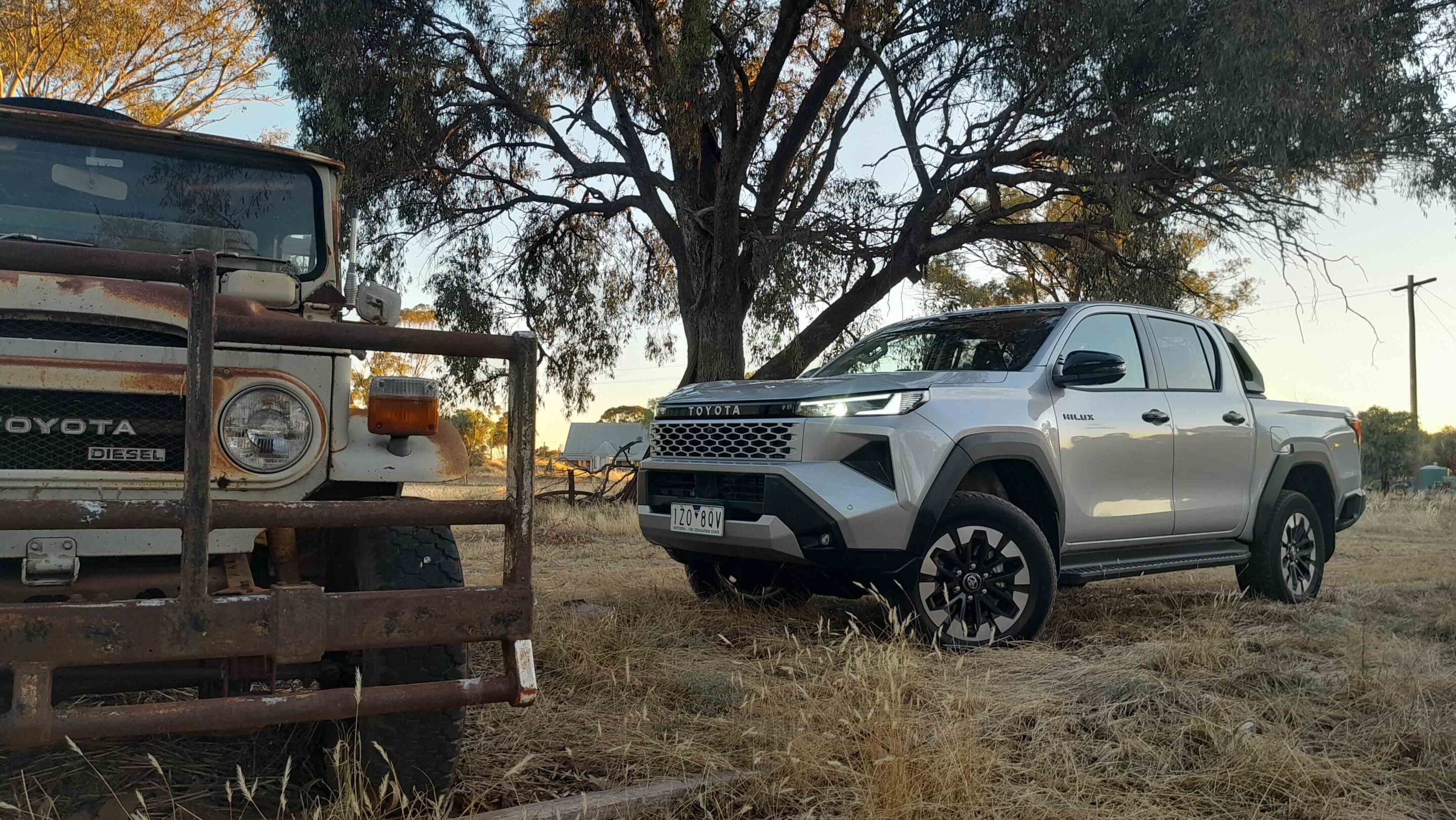
There are some things about a Toyota HiLux that you can just take at face value.
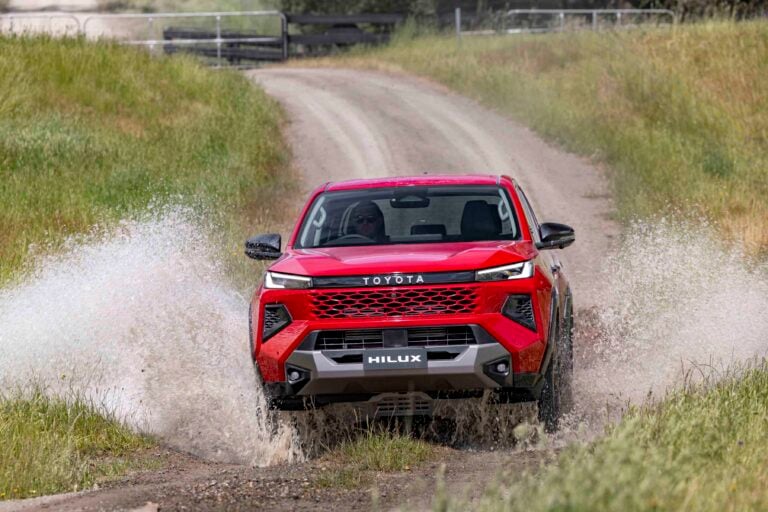
You know, for instance, that it’ll be pretty phenomenal off-road. It will tow 3500kg and cart around a tonne in the tub. It’ll be a bit tight inside (mainly the rear pew) but it will offset that with the practicality that is the dual-cab’s calling card. And the same should go for the new model released late last year, right?
The carried-over 2.8-litre turbo-diesel is a known quantity, to be sure, and since Toyota likewise cut-and-pasted many of the basics of the vehicle for this latest version, we kind of know everything there is to know. Or do we? See, websites like this one are very practiced at taking a new vehicle and hurling it into the mulga in the interests of science and consumer information. See what works; see what breaks.
But we also happen to know that, for many Australian families, the HiLux will be the main form of transport in the driveway throughout the year and will be called upon to do more or less everything a 4×4 could ever be reasonably asked to do. And that includes loading up and hitting the tarmac for the annual interstate journey (to satisfy those contractual family commitments) otherwise known as the Christmas road trip.
At which point the HiLux will either rise to the challenge on pure merit or perhaps come up a bit short thanks to the usual dual-cab compromises. And don’t be thinking this stuff isn’t important to would-be buyers: The glamorous off-roady stuff is fine, but the other 50 weeks of the year are where you really learn about a vehicle. And since Toyota sells better than 50,000 HiLuxes here every year, that’s a lot of schlepps to the supermarket and the school run. And Christmas road trips.
1
Cargo and cabin compromises
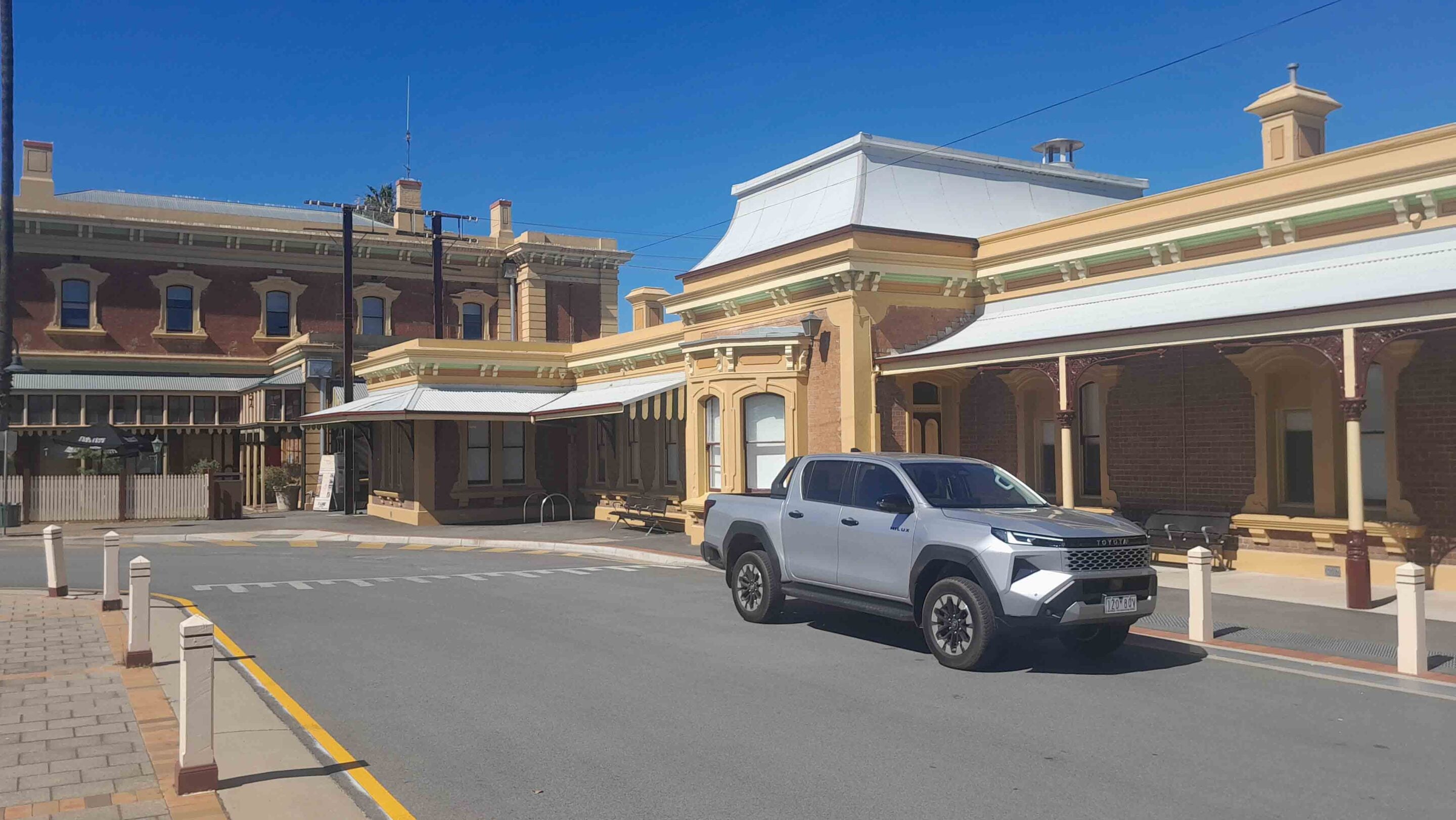
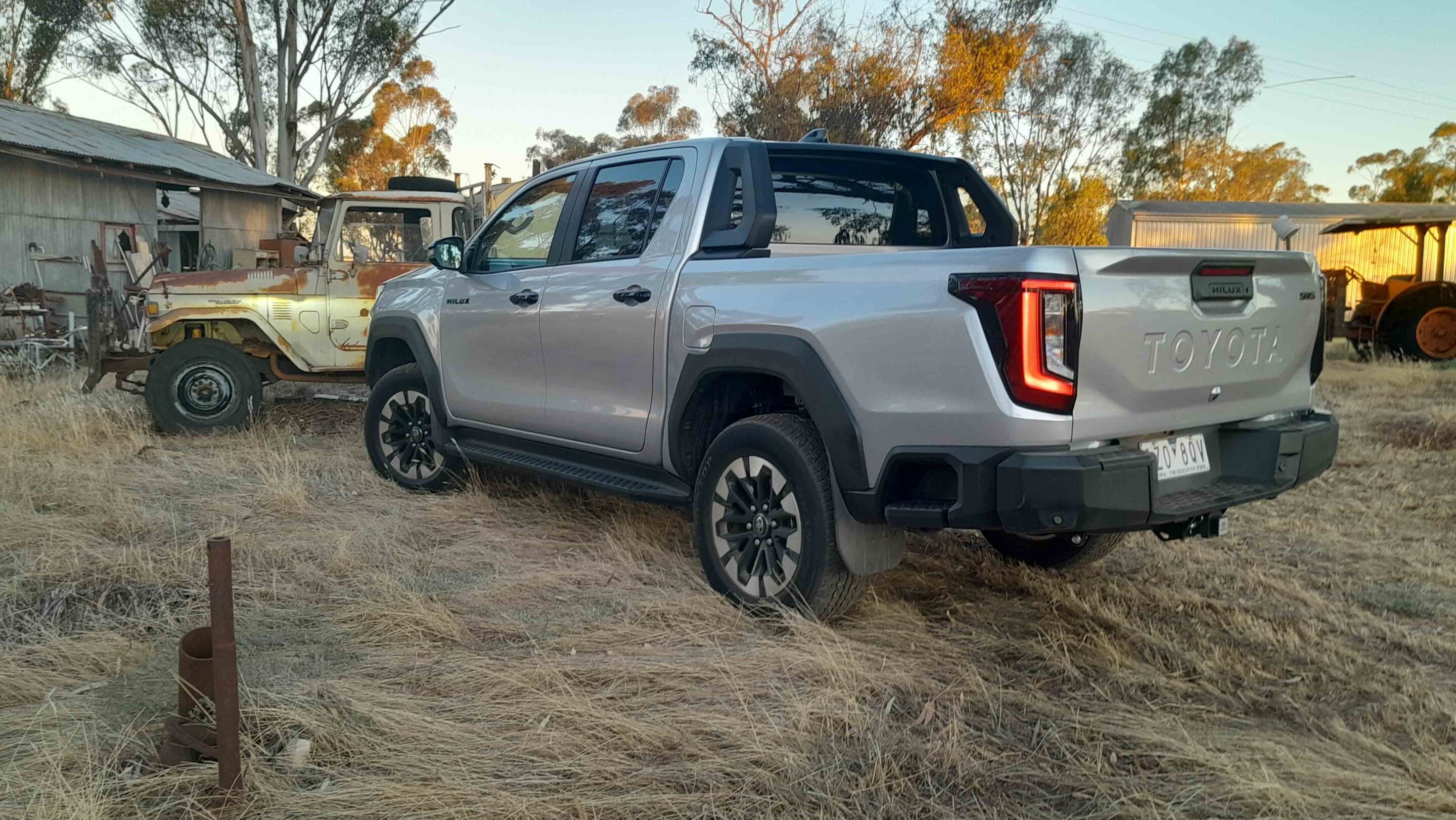
First impressions are less than stellar. And that’s purely down to the fact that this version, the $63,990 SR5, doesn’t come with a tonneau cover of any sort (well, our test vehicle didn’t, anyway).
This means two things. Firstly, that you can’t legally place anything in the tub without securing it with ropes or straps (and half the supplied tie-down points are located too high on the tub sides to be truly useful. Also, how do you tie down a cake?). Secondly, even if the SR5 did come with a vinyl tonneau, it would be about as secure as an idiot’s password, so that rules out valuable stuff like laptop bags, nice luggage and anything else you can’t live without. The `sports bar’ in the tray also blocks access to the front corners of the tub and is, simply, a frippery too far.
The upshot is that all that stuff needs to go on the back-seat and suddenly, your five-metre-plus dual-cab is a two-seater. Oh, and if you have the typical amount of gear for a couple of weeks away, it’ll be pretty tight in there, ruling out the chance for the passenger to recline their seat and sleep while you listen to the cricket on the (digital) radio. The on-board complaints department will be busy. Ask me how I know.
1
Driving, comfort and controls
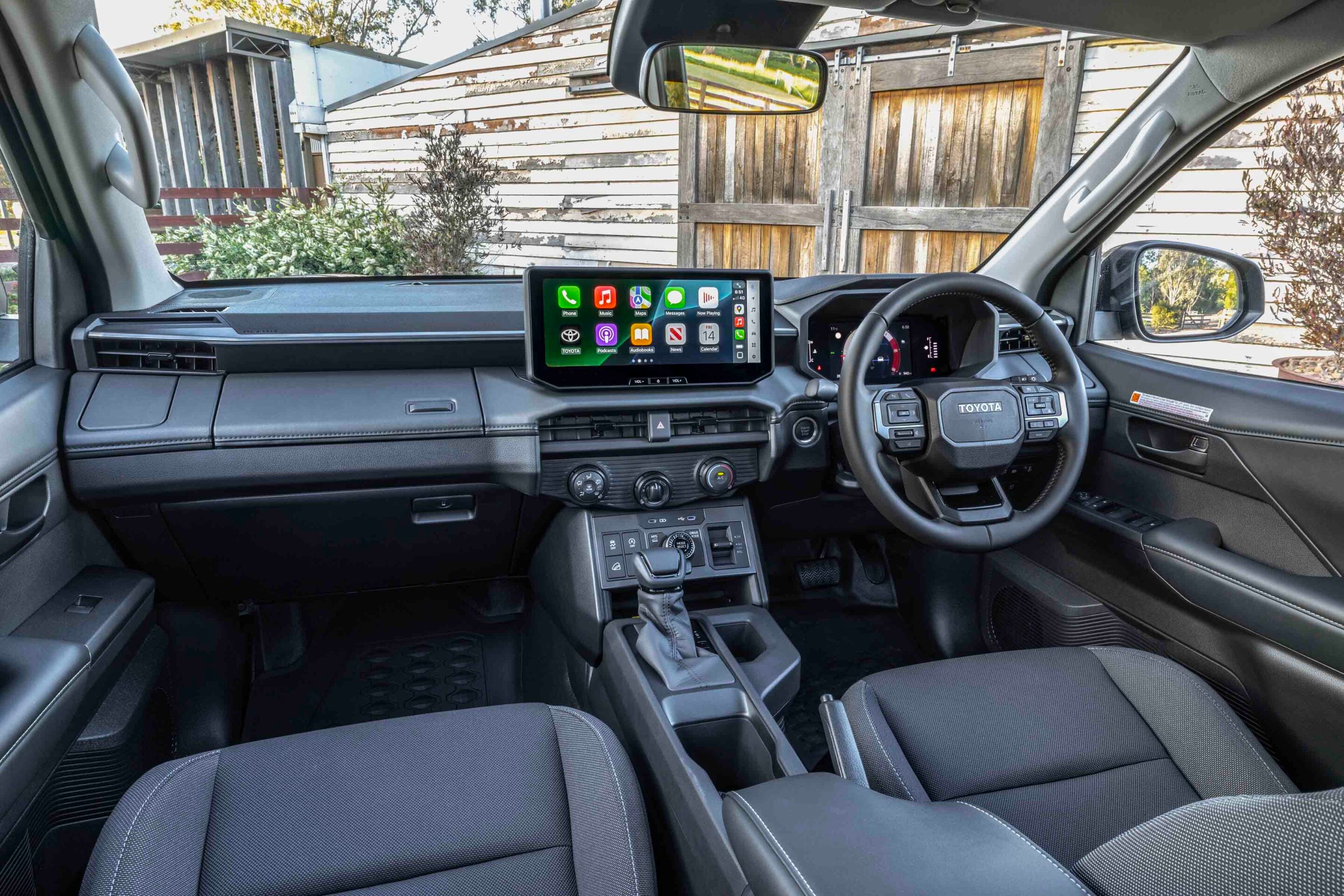
The other constant annoyance is the driver-info interface. You might imagine that in 2026, setting a trip meter and checking it as you motor along would be a simple matter. A one-button job, even.
Nope. The HiLux demands that you (at rest) dial up the options you wish to see on each screen, and then display them one by one. You want to see Trip A as well as your average fuel economy? Bad luck. At least, I couldn’t arrange it in the 10 or so days I shared with the SR5 on the road. From memory, the new RAV4 has a much more logical, user-friendly interface and, hopefully, that will make it to the HiLux at the next facelift (hopefully sooner).
The rest of the interior with its Prado-themed layout is a better deal and there are some really thoughtful touches such as having a big, easy-to-find button for the stop-start function (which you’ll punch every time to avoid the rumblings of the 2.8 starting up at every green light) and the tyre-pressure monitoring system which includes the spare tyre. Not only does this mean it’s harder to ignore (or simply forget about) the condition of the spare, but also, that if you do have to fit it in the bush, you’ll still be able to monitor all four tyres in use.
1
That legendary Toyota air-conditioning is also worth a shout, and the HiLux’s 22°C felt like 19°C of anybody else’s degrees. Less brilliant is the active cruise-control which (typically, and this isn’t just Toyota) leaves too big a gap between you and the car in front, inviting drongos to zip up the inside and slot in between, forcing you another spot back every time. And for some reason, the cruise would happily sit for kilometres on a flat road, showing one click slower than your preset speed. Beats me.
But, otherwise, the cruise in the HiLux has one good trick up its sleeve. Unlike most cars, the Toyota doesn’t cancel the cruise-control when you dip the clutch. So, instead of having to rush the 100km/h limit, shift into sixth and then hit the cruise button, you can re-engage the cruise in fifth gear, let the engine easily haul up to the set limit and then clutch it into sixth to maintain cruise altitude. Sounds small, but it’s a biggie.
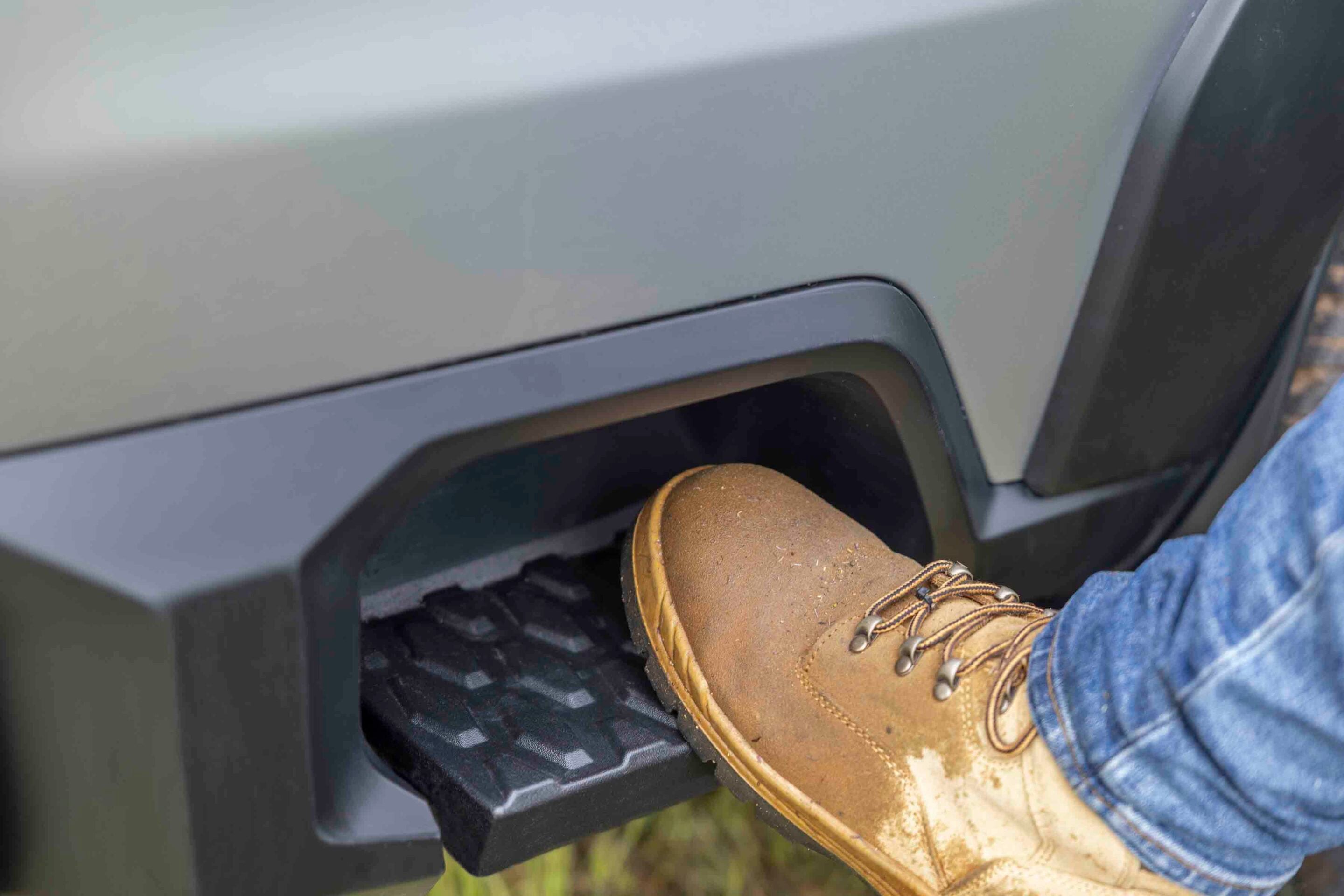
In a cabin-access sense, there’s evidence that the ladder-on-frame construction method has its limitations. Those mainly refer to the small door openings which, since you have to use the side-steps to get over the seat bolster, means you also need to duck your head to get it inside with the rest of you. Okay, so I’m long in the body, but plenty of bigger blokes than me drive HiLuxes.
1
Sticking with the ease of access thing, the bonnet misses out on gas rams, relying on the old-school manual strut. Who cares? Me and anybody else for whom a morning once-over of the engine bay is a habit formed over decades of road trips. The flipside is that the tailgate does get a pair of gas struts, making it easier to lift back into position.
The engine is utterly familiar, although the one thing that makes us wonder is why Toyota continues to offer a manual transmission such as the six-speed in our test ute. There’s nothing wrong with the clutch or shift action, but when you consider that an automatic is nicer in traffic, better for towing and often way better in the bush (particularly in sandy country) the buying proposition for the manual is getting pretty skinny. Throw in the fact that you lose 80Nm of torque compared with the auto, and we’ll take the self-shifting HiLux, thanks.
The ratios of the manual ’box seem pretty long and spread out, too. You won’t be taking off in second, but sixth is so tall that it’s not really viable below 100km/h and a level of vibration under load at sub-1500rpm is your reward for trying it. For all that, the engine is pretty much done by 3500rpm, so that leaves a fairly narrow rev band to use if you’re going to keep the engine happy. Overtaking on the highway? Back to fifth for best results.
11
But we can tell you that the manual ’box doesn’t harm fuel economy in any meaningful way, and across 3500km, around 90 per cent of which was on highways at the posted limit (thank you NSW’s double-demerit welcome gift) we recorded a pretty handy 7.9L/100km average. You’d take that any day.
Of course, some things never change (especially when you don’t re-engineer them) and the HiLux faithfully follows generations of dual-cab tradition by being a bit ornery on rough roads at speed. The shameful state of this country’s roads right now means there’s an endless supply of opportunities to test this, and it remains that the plush-factor goes downhill fast when lightly laden and storming across pock-marked bitumen. Faster, bumpy corners can also produce a bit of a sideways shimmy, too, and while it’s never as bad as the live-axle shuffle of older designs, the HiLux always needs a hand on the wheel in such situations.
Naturally, the HiLux features the latest driver aids which, thankfully, weren’t required on this journey. But it remains that the lane-keeping assistance seems a bit keen to push the car to either side depending on what it’s seen (a white line on the road and not the semi coming the other way, usually). And the self-braking function that operates when you’re reversing seems half-baked when confronted by something as perilous as an untrimmed bush lining the driveway.
Verdict
As a means of getting you safely around in a transport-module kind of way, the HiLux is still one of the better dual-cabs.
Okay, it doesn’t represent a huge leap forward technically, and we’re on the side of the commentators who say the 2026 model is a facelift rather than a new model. But 3500km up and down the eastern seaboard in rush hour proves the point that the Toyota can still cut it. Which means it still remains to see who (other than the Ford Ranger) is going to catch up first.
Pros
- Reliable 2.8L with strong towing and hauling
- Excellent highway fuel economy
- Smart interior features: Stop-start and TPMS
Cons
- Cargo space limited without a tonneau cover
- Tight rear seats reduce long-trip comfort
- Clunky driver-info interface for trip stats
| 2026 Toyota HiLux SR5 specs | |
|---|---|
| Engine | Inline 4-cylinder turbo-diesel |
| Capacity | 2755cc |
| Max Power | 150kW@3000-3400rpm |
| Max Torque | 420Nm@1400-3400rpm |
| Transmission | 6-speed manual |
| 4×4 System | Part-time dual-range 4×4 |
| Construction | 4-door ute and tub on ladder chassis |
| Front Suspension | Independent double wishbone with coils |
| Rear Suspension | Live axle on leaf springs |
| Tyres | 265/60R18 on alloy wheels |
| Kerb Weight | 2215kg |
| GVM | 3090kg |
| Payload | 900kg |
| Towing Capacity | 3500kg |
| GCM | 6300kg |
| Seating Capacity | 5 |
| Fuel Tank Capacity | 80L |
| ADR Fuel Consumption | 7.1L/100km |
| Departure Angle | 26 |
| Approach Angle | 29 |
| Ground Clearance | 224mm |
2026 Toyota HiLux pricing
| Variant | 48V | Transmission | Price |
|---|---|---|---|
| WorkMate single cab-chassis | No | AT | $45,990 |
| WorkMate double cab-chassis | No | AT | $52,490 |
| WorkMate double cab pick-up | No | AT | $53,990 |
| SR extra cab-chassis | No | AT | $54,990 |
| SR double cab-chassis | No | MT | $54,990 |
| SR double cab-chassis | Yes | AT | $57,990 |
| SR double cab pick-up | Yes | AT | $59,490 |
| SR5 double cab pick-up | No | MT | $63,990 |
| SR5 double cab-chassis | Yes | AT | $64,490 |
| SR5 double cab pick-up | Yes | AT | $65,990 |
| Rogue double cab pick-up | Yes | AT | $71,990 |
| Rugged X double cab pick-up | Yes | AT | $71,990 |
Follow 4X4 Australia on Google
Get more 4x4 news, reviews and gear stories from 4X4 Australia in your Google feeds.

We recommend
-
 Reviews
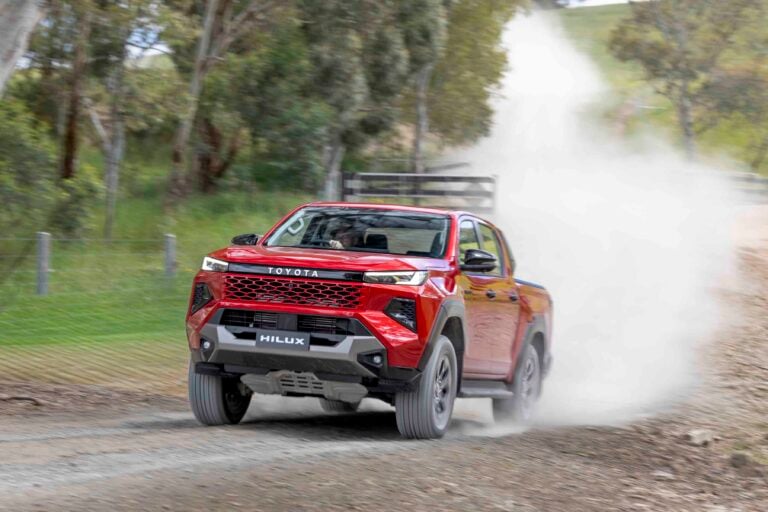
2026 Toyota HiLux Review: Australian launch drive
Tough, simple and capable – the 2026 HiLux sticks to what works
-
 Reviews
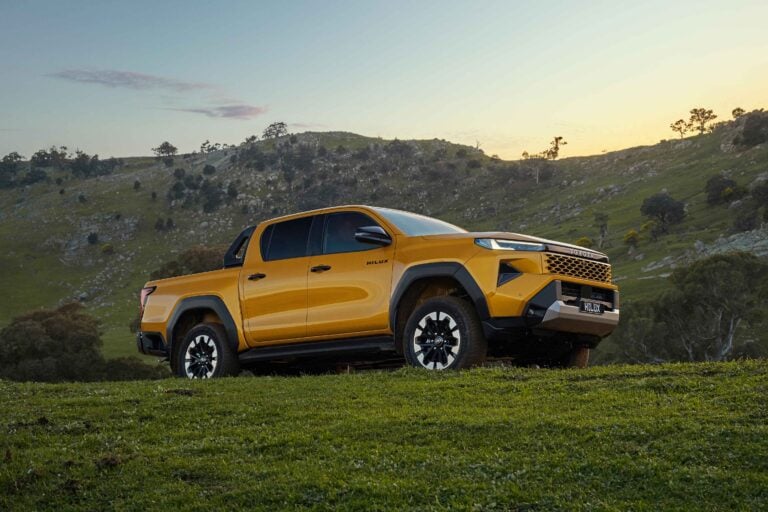
2026 Toyota HiLux: Our first drive impressions
Is the new HiLux an improvement over its hugely successful predecessor? We sample it to find out!
-
 News
NewsANCAP data reveals HiLux as safest ute in Australia in 2025
ANCAP 2025 results confirm the Toyota HiLux leads the ute segment