Advice

Gallery 1
You’ve just bought a new ute with a 3500kg towing capacity. That means you can hook up a three-and-a-half-tonne van and head for the Gibb River Road, right? Not quite.
Towing capacity is only one number in a chain of figures that all have to stack up before you’re legal and safe. Get any one of them wrong and you’re either over a limit you didn’t know existed, underinsured in a claim you thought was covered, or worst case, pushing the physics of a two-tonne outfit down a corrugated descent with more weight on the back than the chassis was designed to handle.
The problem is that these numbers interact. Your towing capacity is capped by the towbar rating. Your payload is eaten into by every accessory you’ve bolted on since the vehicle left the factory. Your GCM ceiling means that the heavier you load the tow vehicle, the less you can legally put on the trailer. Each figure constrains the others, and the one you haven’t checked is usually the one that catches you out.
None of it is complicated once you know what each term actually means and how they relate to each other. Here’s what each of them means 👇
JUMP AHEAD
- Vehicle weights
- Payload
- Trailer weights
- Towing capacity
- Towball loading
- How GCM and towing capacity interact
- GVM upgrades: more payload, done legally
- NHVR and state rules: where the thresholds change
- FAQs
Vehicle weights
Tare weight is the vehicle empty, all fluids present, but only 10 litres of fuel in the tank. Manufacturers use this figure for compliance plates.
Kerb weight is heavier: the vehicle with a full tank of fuel and no occupants, luggage or accessories. The moment you bolt on a bull bar, fill a water tank or put a passenger in the seat, you are above kerb weight.
That distinction matters more than most buyers realise. Tare is measured with only 10 litres of fuel; kerb weight assumes a full tank. On a ute with an 80-litre tank, that difference alone is around 58kg. The compliance plate payload figure is calculated from tare, which makes it look more generous than it really is. By the time you fill the tank to drive off the dealer’s lot, you have already used 58kg of your payload budget. Factor that in from the start rather than discovering it at a weigh station on the way to the Simpson.
Gross vehicle mass (GVM) is the maximum the vehicle can legally weigh in total: Kerb weight plus every kilogram of payload including passengers, gear, accessories and towball down weight. Every ute, wagon and 4×4 has a GVM stamped on its compliance plate. Do not exceed it.
Gross combination mass (GCM) is the maximum combined weight of the tow vehicle at its GVM plus the trailer at its ATM. This is the ceiling for the whole outfit and it is often the constraint that catches people out, even when the tow vehicle and trailer both look fine in isolation.
1
Payload: The number that actually runs your trip
Payload is simply your vehicle’s GVM minus its kerb weight, and it represents every kilogram you are allowed to add to the vehicle before it becomes illegal.
Passengers, fuel beyond a standard tank, recovery gear, a fridge, a rooftop tent, a bullbar, a winch, water, food, and towball down weight all come out of that payload budget.
On a modern dual-cab ute with a GVM of 3200kg and a kerb weight of 2300kg, the payload is 900kg. That sounds reasonable until you start adding it up. Two adults alone account for around 160kg. A quality steel bull bar with a winch is another 120kg. You are at 280kg before the camping kit, the dual battery system, the water tank or the towball load. Payload is the constraint that bites hardest on a fully kitted touring rig, and it pays to know your number before you leave the driveway.
Trailer weights
Trailers, caravans and horse floats are assessed by two different total weight figures, and mixing them up is where people get into trouble.
Aggregate trailer mass (ATM) is the tare weight of the trailer plus its maximum payload, measured when it is uncoupled from a vehicle. This is the number most manufacturers quote as “gross trailer weight.”
Gross trailer mass (GTM) is the weight carried on the trailer’s own axle when it is hitched and loaded. GTM is always lower than ATM because it excludes the portion of weight transferred onto the tow vehicle via the towball.
The gap between ATM and GTM is not a rounding error. Take a caravan with an ATM of 3000kg. The GTM, which is the weight on the van’s own axle when hitched, might be 2700kg. The remaining 300kg is the towball down weight, transferred onto the tow vehicle. That 300kg now sits inside the tow vehicle’s GVM budget, not the trailer’s. So while the van weighs 3000kg in total, the tow vehicle is carrying 300kg of it. This is why two setups with identical trailer weights can produce very different loads on the tow vehicle, depending on how the trailer is balanced.
Towing capacity
The towing capacity figure quoted by manufacturers is the maximum trailer ATM the vehicle is rated to pull.
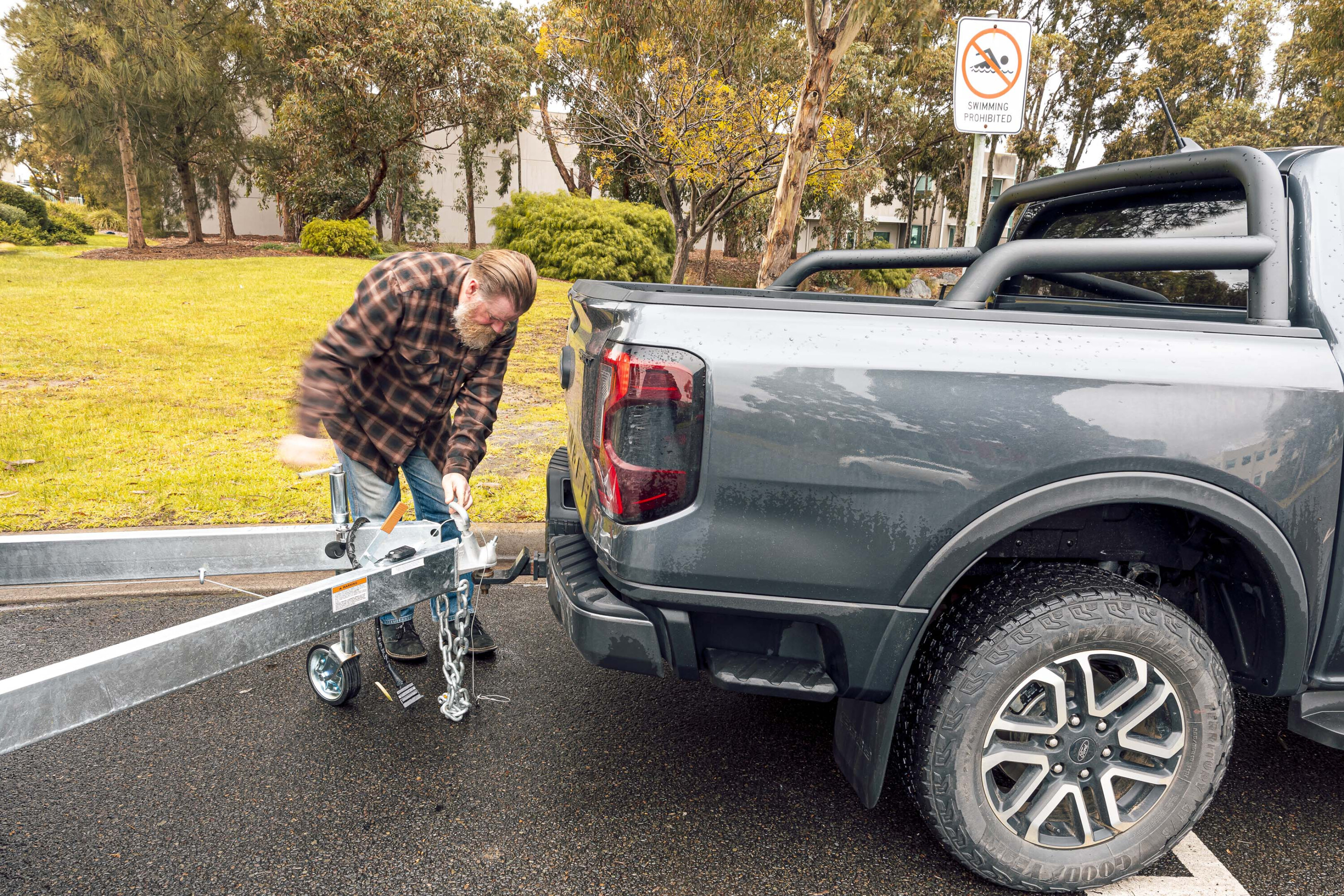
Braked towing capacity is the commonly quoted figure: The maximum ATM of a trailer fitted with its own brakes. Most serious rigs pulling anything over 750kg will need a braked trailer. Unbraked towing capacity is capped at 750kg for all passenger and light commercial vehicles in Australia, regardless of what the tow vehicle is capable of.
The tow vehicle’s rating and the towbar’s rating are not always the same figure, and the lower number always wins. A vehicle rated at 3500kg towing with a towbar rated at 3000kg is a 3000kg outfit. Check the towbar compliance plate, not just the vehicle spec sheet.
1
Towball loading
Also called towball down weight, this is the vertical load the trailer exerts on the tow ball when hitched. It is often overlooked, and leaving it out of your weight calculations is a reliable way to end up over GVM without realising it.
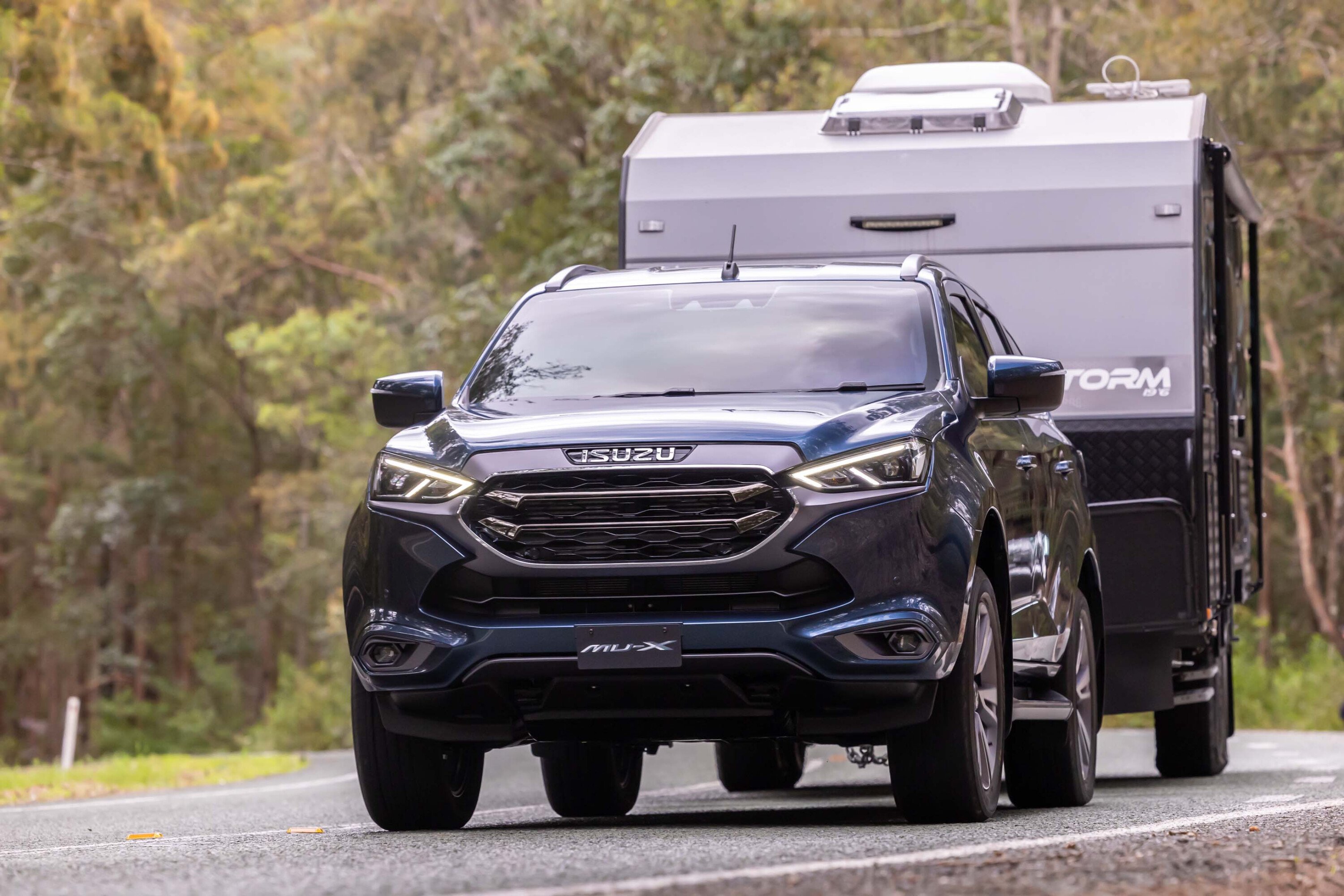
The rule of thumb is 10 per cent of trailer ATM. A properly loaded 3000kg caravan puts around 300kg of downward force on the towbar. That 300kg counts against your vehicle’s GVM, not just the trailer’s weight budget. A front-heavy van shifts more weight onto the towball. A rear-heavy van reduces towball load but creates instability at speed. Neither extreme is the go. Aim for towball down weight in the range of 10 per cent of ATM and check it with a towball scale before a long run, not after.
A trailer that is front-heavy or sitting at a different angle to the tow vehicle can exceed towball loading limits even if the trailer itself is inside the rated towing capacity. Get the balance right.
1
How GCM and towing capacity interact
This is where the arithmetic matters. Say your vehicle has a maximum GCM of 6000kg and a braked towing capacity of 3500kg. In theory, that leaves only 2500kg of GCM headroom for the tow vehicle. Fine on paper.
Now add real-world equipment: ARB bullbar with winch (around 120kg), Ironman 4×4 lift kit and accessories (50kg), MAXTRAX and recovery gear (20kg), dual battery system (30kg), full touring load including water, food and camping kit (250kg), two adults (160kg). You are at or past 2500kg before the towball down weight is added. Every kilogram over that GVM limit cuts directly into your legal towing capacity.
A buffer of 10 to 20 per cent below the rated towing capacity is not conservative. It is the difference between a legal setup and a fine, a voided insurance claim, or an unsafe rig on a corrugated outback track.
GVM upgrades: More payload, done legally
A GVM upgrade is the most direct way to legally carry more weight in a laden touring rig.
Approved by engineers and complied through an authorised modifier, a GVM upgrade raises the maximum the vehicle can weigh in total, which increases usable payload without changing what you put in the vehicle. Common upgrades on dual-cab utes push GVM from the factory figure by 200 to 400kg, depending on the platform and the modifier. Brands such as Ironman 4×4, Dobinsons and ARB offer complied GVM upgrade packages for most popular platforms.
The upgrade typically involves uprated suspension components and an engineering certificate, and it must be declared to your insurer. It does not increase towing capacity, and it does not change the GCM ceiling. What it does is give a heavily kitted rig the legal headroom it needs to carry a real touring load without sitting outside the compliance plate figure every time it leaves home.
1
NHVR and state rules: where the thresholds change
Once your gross combination mass exceeds 4500kg, a different regulatory framework applies.
Below that threshold, your outfit is governed by standard Australian road rules applicable to light vehicles. Above it, the National Heavy Vehicle Regulator takes over, and the requirements around mass management, load restraint and driver obligations become more demanding. For a touring rig towing a large caravan, crossing the 4500kg GCM mark is easier than it sounds: a 2800kg tow vehicle plus a 2000kg ATM van gets you there. It is worth calculating your GCM before you buy the van, not after.
Individual state and territory rules can also apply for things like towing with a learner or P-plate licence, trailer lighting requirements, and load restraint standards. The National Heavy Vehicle Regulator website and your state’s transport authority are the right places to verify current requirements, since these details change and vary by jurisdiction.
FAQs
Q: Can I tow my maximum rated capacity and fully load the vehicle at the same time?
A: Rarely. GCM limits mean that adding weight to the tow vehicle reduces available towing capacity. The two figures work against each other.
Q: Does towball weight reduce towing capacity?
A: Not directly, but it counts against GVM, which reduces the margin available for payload and therefore affects how much you can legally tow in a real-world setup.
Q: What happens if I exceed GVM or GCM?
A: Fines, potential insurance issues, and a vehicle that handles poorly. On snotty tracks or in an emergency stop situation, an overloaded outfit is genuinely dangerous.
Q: What buffer should I aim for?
Ten to twenty per cent below all maximum ratings. It keeps you legal, keeps the insurer onside, and leaves room for the gear you always forget to account for.
Follow 4X4 Australia on Google
Get more 4x4 news, reviews and gear stories from 4X4 Australia in your Google feeds.

We recommend
-
 Advice
NB2 registration: What it is and why it matters before you build
NB2 sits well outside most 4WD builds. But if you're turning a Silverado 2500 HD or Ram 2500 into a serious expedition rig, understand it before you build
-
 Gear
GearWhat is a GVM upgrade and do you really need one?
The ins and outs of upgrading the GVM of your 4WD, and why it might be a bad idea for some
-
 News
NewsToyota to offer factory HiLux GVM upgrade in Australia
Factory-fitted upgrade boosts HiLux payload by up to 435kg while retaining full warranty