4x4 Comparisons


Gallery 1
As if there wasn’t already enough competition between the long-established brands in the 4×4 ute segment – Toyota, Nissan, Ford and Mitsubishi – we now have an onslaught of new brands entering the market, all wanting a piece of what is still a relatively limited segment.
It’s a captivating battle and one that not all players will survive, whether they’re established names or newcomers. Here we’ve lined up a pair of 4×4 utes – one from an established manufacturer and the other from a brand that has been with us for a few years now.
Some onlookers might consider GWM a new brand to the Australian market, but it’s been more than 15 years since the first V220 and 240 utes arrived here. Great Wall was the first Chinese manufacturer to make a serious push into the Australian market and it has come a long way since then, now offering a broader range of vehicles. But has it come far enough to challenge one of the oldest names in the game?
Isuzu is one of the original midsize truck manufacturers, even if its vehicles weren’t always sold here under that name. The Chevy LUV and Holden Rodeo were both produced by GM’s Japanese partner Isuzu but wore more familiar badges in Australia. Isuzu has also come a long way in this country, building a formidable reputation with thousands of owners and dedicated fans while establishing its own brand identity. But has it done enough to stave off the tsunami from China and secure its future here?
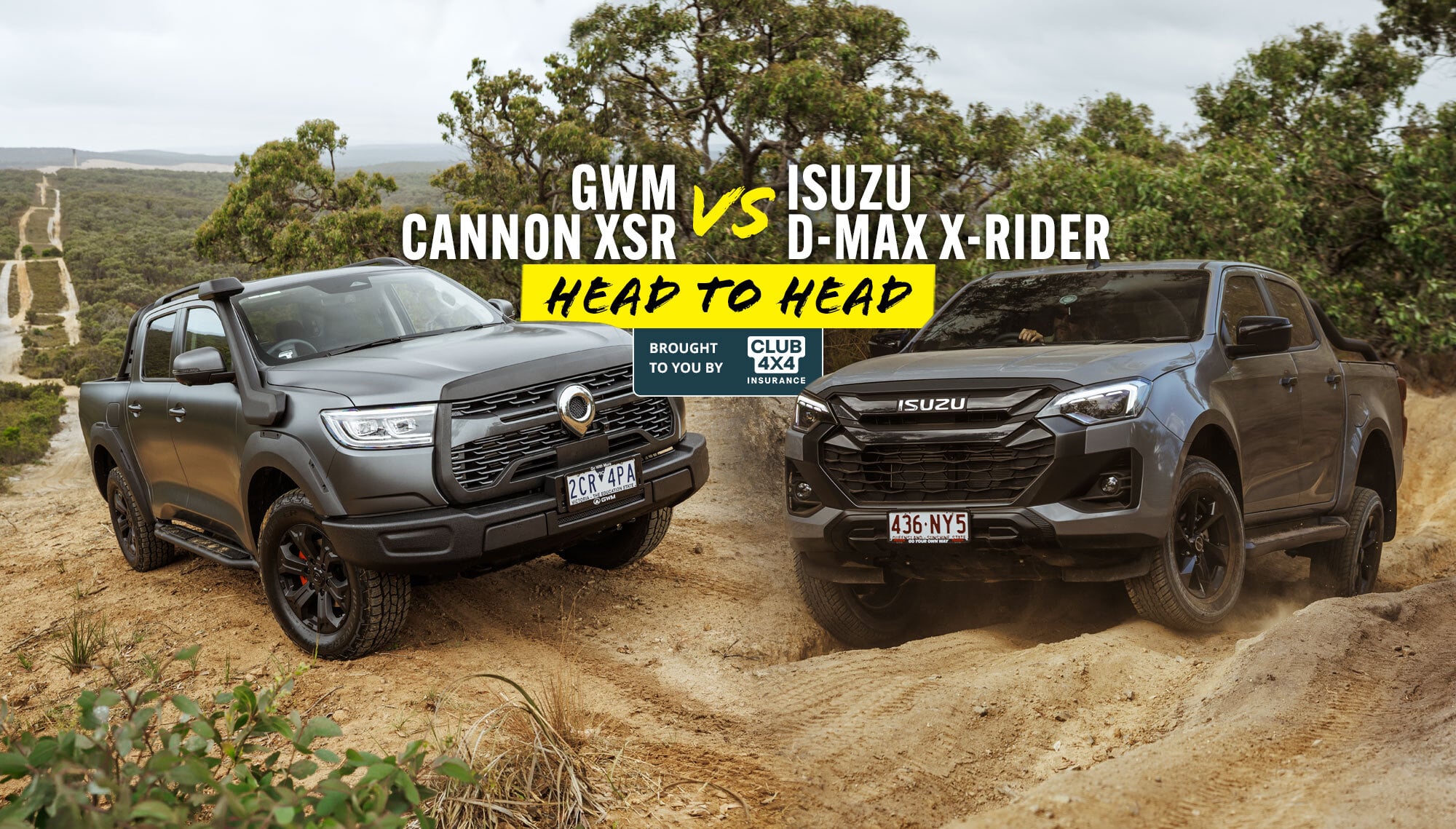
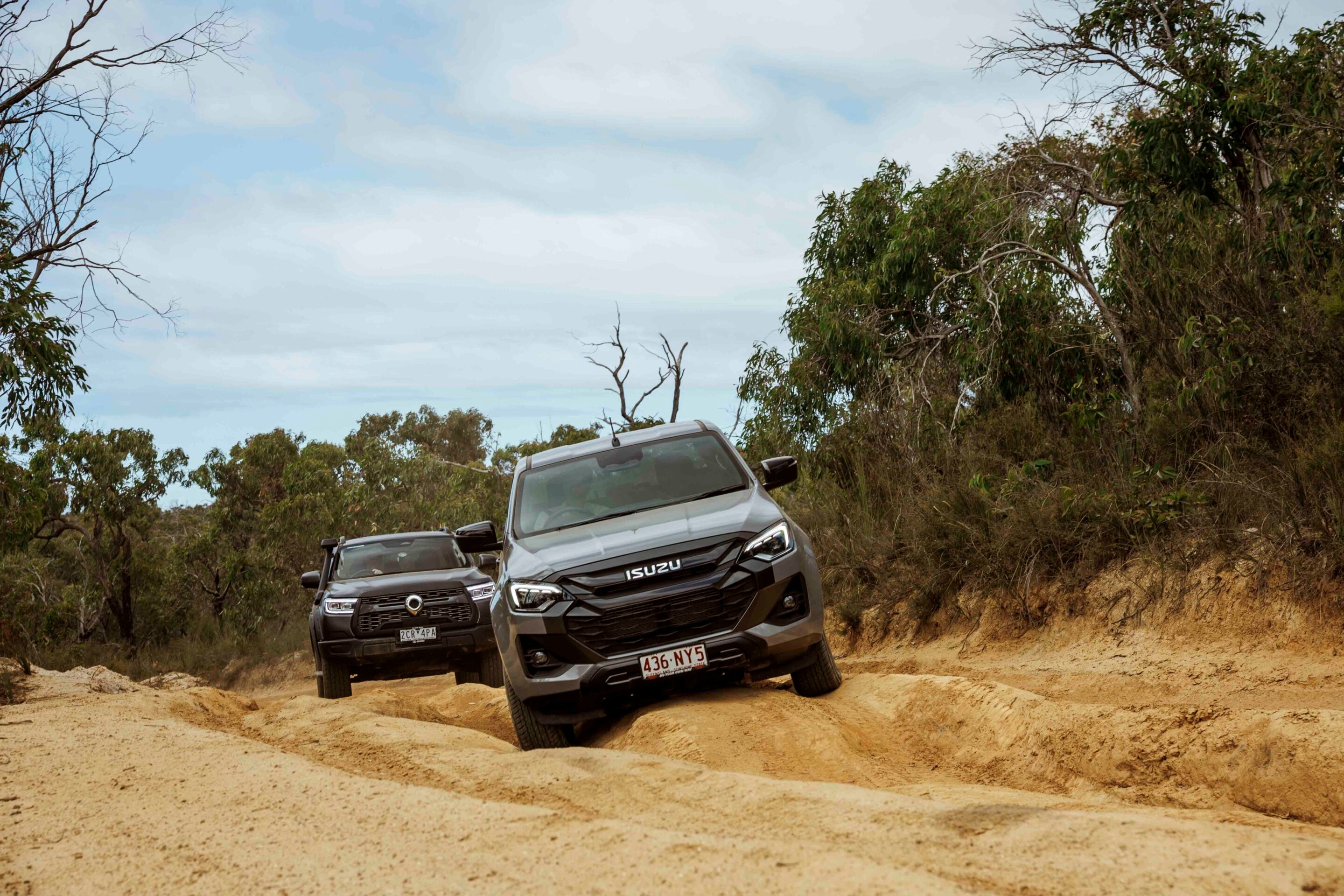
Let’s find out as we pit the latest models from each brand head-to-head. For this comparison we have the Isuzu D-MAX X-Rider, priced from $59,500 plus on-road costs and powered by the new 2.2-litre engine. Up against it is the Cannon XSR, available at a drive-away price of $50,990.
Why did we choose the Isuzu with the new 2.2-litre engine instead of the venerable 3.0L 4J? The latter is getting on in years and its longevity in the modern market is uncertain, while the 2.2 is the new powerplant paired with an 8-speed automatic transmission. This is the driveline Isuzu Ute Australia will be backing into the future, whether the buying public likes it or not. The same D-MAX LS-M X-Rider costs another $2000 if ordered with the 3.0-litre engine and 6-speed transmission.
JUMP AHEAD
1
GWM Cannon XSR
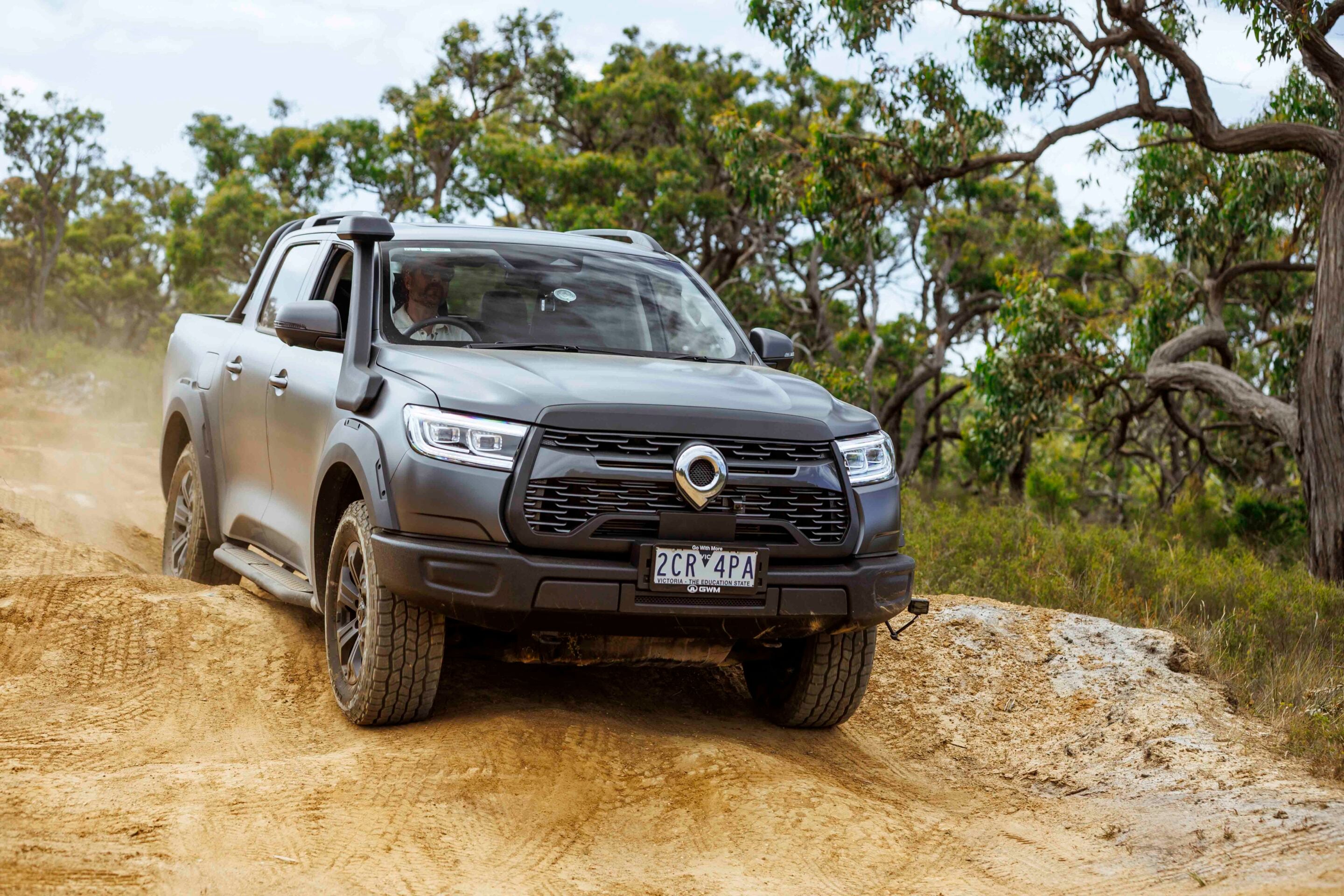
The Cannon XSR might be around $10K cheaper than the X-Rider D-MAX, but it’s the vehicle here with the most equipment as standard – and it’s not just gimmicky tech features.
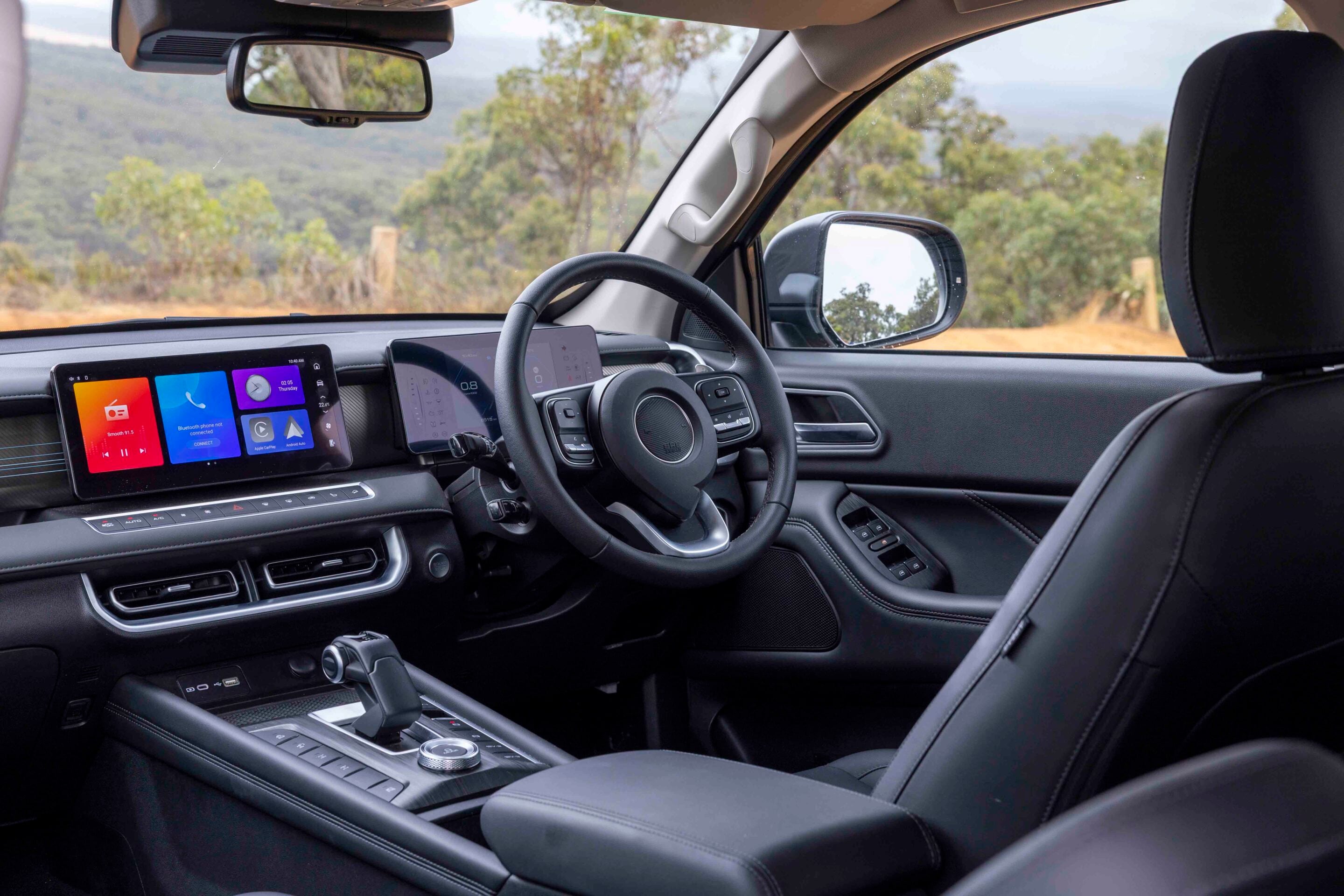
Among the standard hardware are front and rear locking differentials, a Tank Turn function, Cooper all-terrain tyres, an air-intake snorkel, steel side steps, additional off-road drive modes, a model-specific grille and a distinctive matte grey paint finish. Slip inside and the XSR greets you with leather-trimmed seats that are heated and ventilated up front with six-way power adjustment for the driver and four-way for the passenger, a heated steering wheel, a 360° camera system displayed on a 12.3-inch touchscreen with wireless Apple CarPlay and Android Auto, a wireless phone charger, power sunroof, seven airbags and a TPMS.
1
Regular Cannon models include the full suite of ADAS safety features that help them achieve a five-star ANCAP rating, but the XSR’s steel side steps and other hardware mean it misses out on functions such as emergency lane keeping, smart dodge, blind-spot detection, rear collision warning and door-open warning. As a result, it doesn’t receive the same top safety ranking. Important systems such as ABS, ESC, parking sensors and SRS airbags remain, but the full safety suite isn’t present.
The Cannon is powered by GWM’s 2.4-litre diesel engine backed by a 9-speed automatic transmission and a part-time dual-range transfer case. The single-turbo engine produces 135kW at 3600rpm and 480Nm between 1500-2500rpm, which moves the Cannon along well on highways and back roads.
Things are less impressive at low speeds off road. This can largely be attributed to poor throttle calibration, which makes smooth control difficult. There’s noticeable lag when the accelerator is applied before the engine responds and surges forward. The lag can even be enough to catch you out when pulling into traffic, meaning extra caution is required, and it makes smooth low-speed driving harder than it should be.
1
The 9-speed automatic works well and the inclusion of shift paddles is a bonus. It’s a shame the XSR misses out on the full-time 4×4 system offered on some lower grades in the Cannon range. The independent front suspension and leaf-sprung live rear axle have a very firm tune, making the ride jiggly on rough roads and verging on harsh on rutted tracks. Wheel travel is reasonably good, however, and the setup should handle a load well.
The XSR retains the Cannon’s 3500kg towing capacity and has an 875kg payload. The cargo tub is basic but practical, with a spray-in liner, four tie-down points and a step that folds out from the tailgate as well as integrated steps in the corners of the rear bumper.
Isuzu D-MAX X-Rider
While the Cannon XSR is a fully loaded high-spec model, the X-Rider Isuzu is more of a dressed-up lower grade.
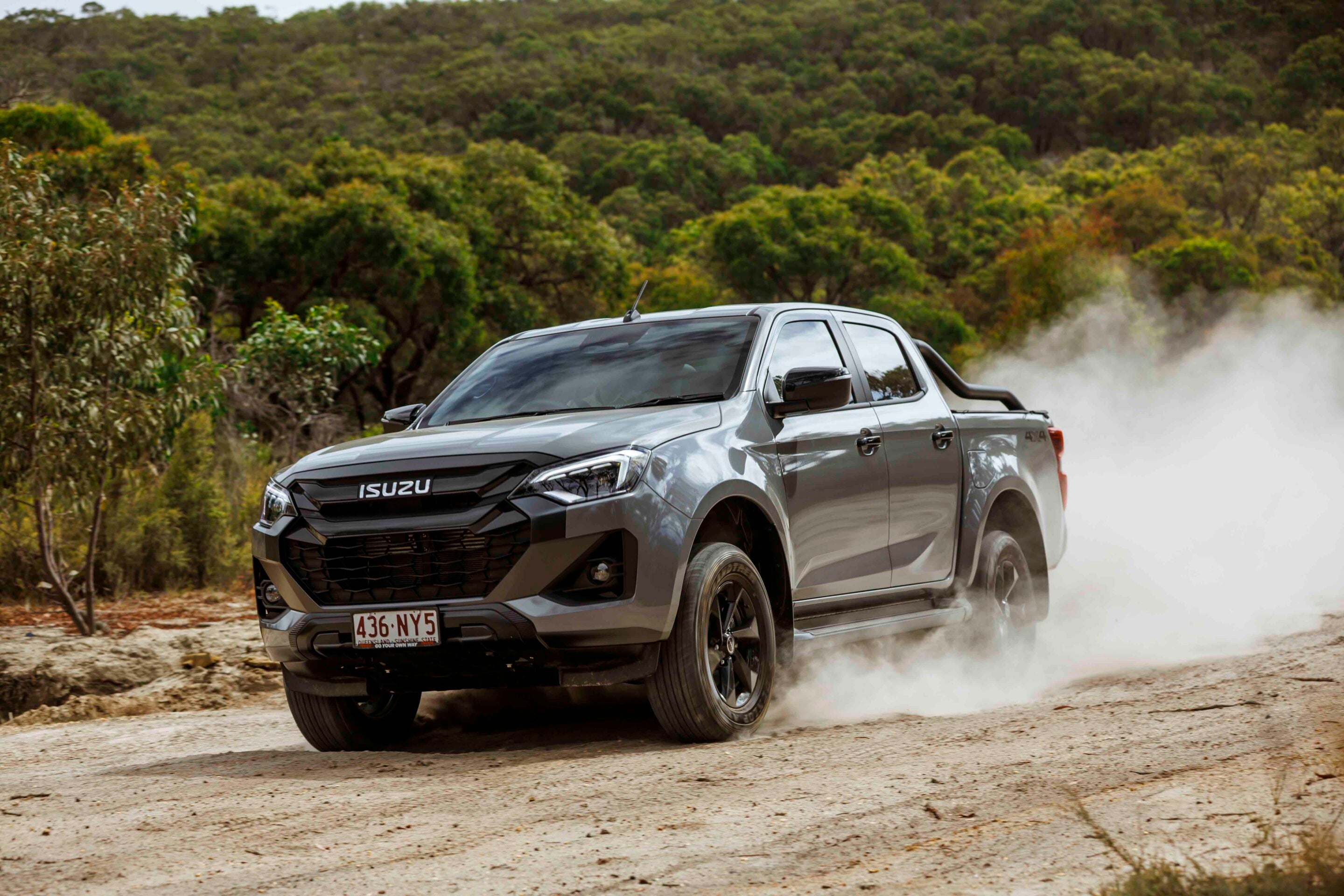
The D-MAX X-Rider differentiates itself with darker trim and finishes that give it a more premium look without a big price jump. This includes a gloss-black grille and 17-inch alloy wheels, grey grille surrounds and sidesteps, black B-pillars, a satin-black sportsbar and a black tonneau cover over the cargo tub. The cargo tub includes tailgate lift assist and four tie-down points but lacks power outlets or lighting.
The darker theme continues inside with a black headlining, piano-black trim on the steering wheel and black cloth seat upholstery. The D-MAX interior features an 8.0-inch multimedia screen with both wired and wireless Apple CarPlay and Android Auto. It also displays 4×4 drive modes, an inclinometer and electrical system information. Audio comes via four speakers and the driver’s information display is a 4.2-inch screen. There’s no wireless phone charger but there are plenty of USB ports.
1
Isuzu’s ADAS suite includes AEB with turn assist, forward collision warning, intelligent adaptive cruise control with stop and go, traffic sign recognition, lane departure warning, lane departure prevention, lane keep assist, emergency lane keeping, blind-spot monitoring, rear cross-traffic alert, rear cross-traffic braking, welcome headlight function, trailer sway control and eight airbags. Isuzu’s ADAS systems have sometimes been criticised for being intrusive, but IUA has recalibrated them over the years to improve usability and added a steering-wheel button that disables some functions.
Isuzu’s new RZ4F-TC 2.2-litre four-cylinder diesel engine produces a claimed 120kW and 400Nm from 1600-2400rpm, and is designed to meet Euro 5 emissions standards. It replaces the previous entry-level 1.9-litre engine that never gained much popularity in the D-MAX. The new 8-speed automatic transmission comes from Aisin, while the transfer case remains a traditional part-time dual-range unit. Only the rear differential receives a driver-selectable diff lock.
The old 3.0L Isuzu engine was never particularly powerful but it earned a strong reputation for durability and fuel efficiency. The smaller 2.2 doesn’t give away too much in terms of acceleration, helped by the two extra transmission ratios, but it’s still no powerhouse. It’s yet to prove itself in terms of long-term durability, but it is, at its core, an Isuzu diesel engine.
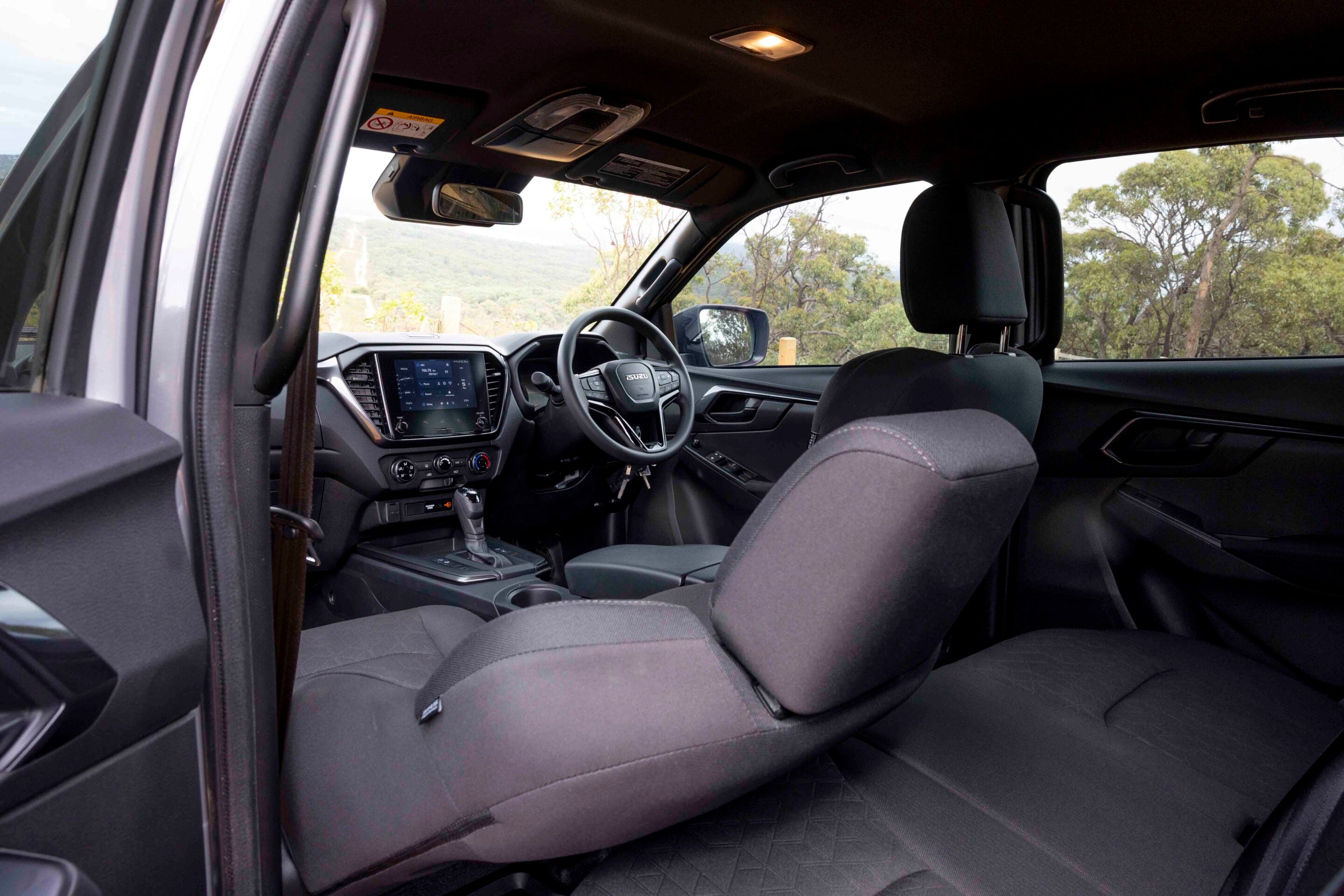
1
The 4×4 system is a conventional dual-range part-time setup with a rear diff lock. When driving off road you’ll need to engage the Rough Terrain button to ensure the electronic traction control works effectively. Suspension is likewise traditional with independent front suspension and a leaf-sprung live rear axle. The X-Rider uses the three-leaf pack setup. Unladen it rides firm but it remains composed when the going gets rough on poor tracks.
This well-sorted feel is the key difference between the D-MAX and the Cannon. The Isuzu feels better put together, easier to operate and more refined. While the X-Rider is based on a lower model grade and lacks some luxury features, it doesn’t miss out on anything essential.
Ownership
The Isuzu D-MAX is covered by a six-year warranty, with up to five years of flat-price servicing with 15,000km intervals, and up to seven years of roadside assistance.
GWM’s customer-care program offers a seven-year/unlimited kilometre new-car warranty, five years of roadside assistance with 24/7 support, and five years of capped-price servicing.
Verdict
While the Cannon is bigger inside and outguns the D-MAX in terms of premium features and off-road hardware, the Isuzu feels like the more solid and better put-together vehicle.
It’s simpler, does everything asked of it without fuss, steers and rides better, and overall feels like the more sorted 4×4. The Great Wall promises a lot with its range of features and off-road hardware, but it still needs refinement. The suspension tuning and throttle calibration in particular leave the vehicle feeling unfinished.
Time will tell how both brands fare in the future, but GWM is growing rapidly and investing heavily in development both in China and here in Australia.
| Off-road specs | GWM Cannon XSR | Isuzu D-MAX X-Rider |
|---|---|---|
| Approach Angle | 30 | 26.9 |
| Ramp Over Angle | N/A | 23.3 |
| Departure Angle | 26 | 23.9 |
| Ground Clearance | 228mm | 235mm |
| Wading Depth | 700mm | 800mm |
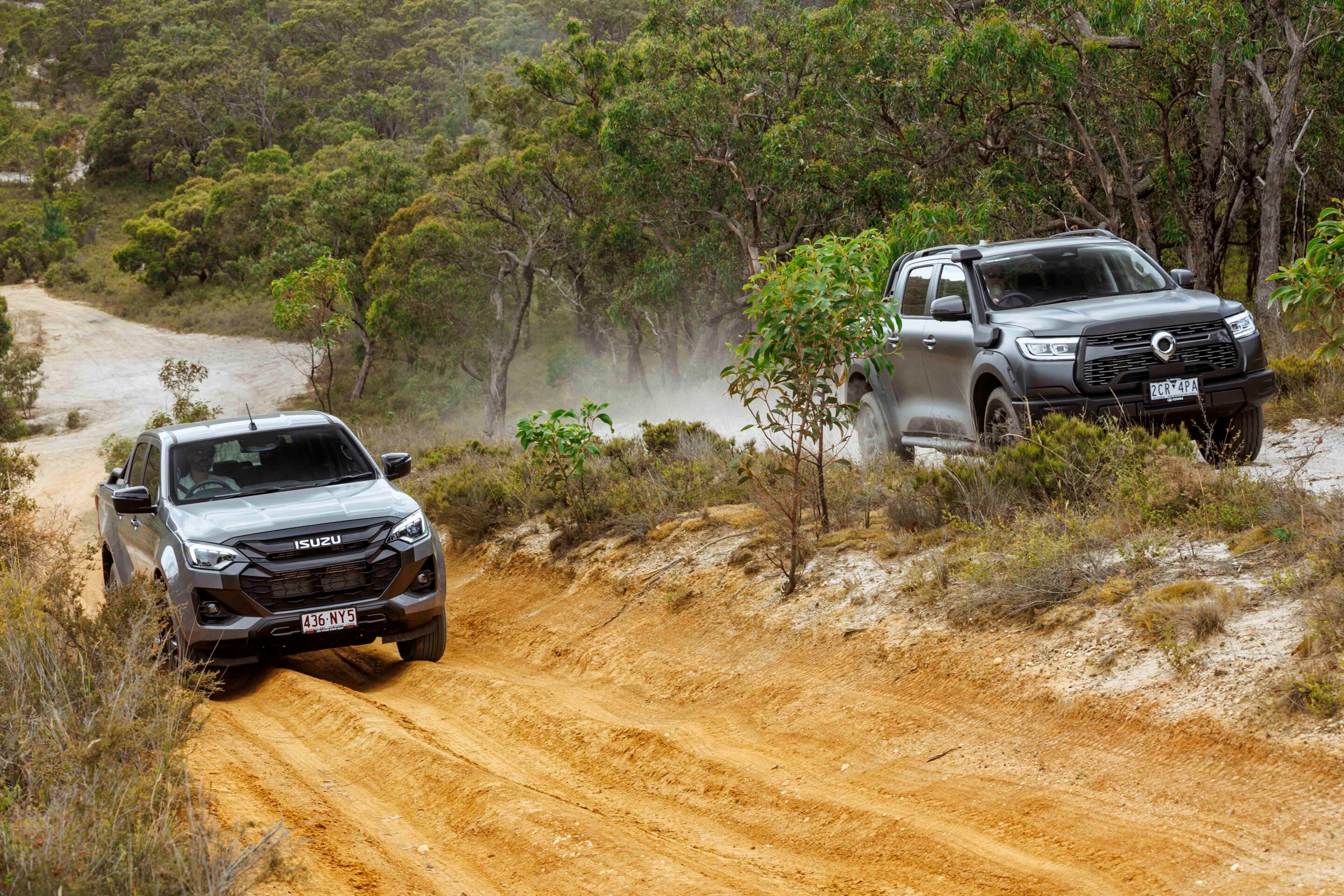
46
Specs
| Specs | GWM Cannon XSR | Isuzu D-MAX X-Rider |
|---|---|---|
| Price | $50,990 drive away | $59,500 + ORC |
| Engine | I4 diesel | I4 diesel |
| Capacity | 2.4L | 2.2L |
| Max Power | 135kW @ 3600rpm | 120kW @ 3600rpm |
| Max Torque | 480Nm @ 1500-2500rpm | 400Nm @ 1600-2400rpm |
| Transmission | 9-speed automatic | 8-speed automatic |
| 4×4 System | Part-time / dual-range | Part-time / dual-range |
| Construction | Double-cab, ladder-frame, tub | Double-cab, ladder-frame, tub |
| Front Suspension | IFS, wishbones, coil springs | IFS, wishbones, coil springs |
| Rear Suspension | Live axle, leaf springs | Live axle, leaf springs |
| Tyres | 265/65R18 A/T alloys | 255/65R17 A/T alloys |
| Kerb Weight | 2330kg | 2010kg |
| GVM | 3205kg | 3100kg |
| GCM | 6300kg | 6000kg |
| Towing Capacity | 3500kg | 3500kg |
| Payload | 875kg | 1090kg |
| Seats | 5 | 5 |
| Fuel Tank | 78L | 76L |
| ADR Fuel Consumption | 8.4L/100km combined | 7.1L/100km combined |
Follow 4X4 Australia on Google
Get more 4x4 news, reviews and gear stories from 4X4 Australia in your Google feeds.

We recommend
-
 News
NewsAustralia’s cheapest 4x4 utes in 2026: Budget dual-cab guide
Looking for a capable 4x4 ute in Australia without breaking the bank? Here’s a rundown of the most affordable dual-cab options
-
 News
NewsOne-off D-MAX Concept X show car is up for sale!
The Concept X is a factory-backed, one-off D-MAX built for extreme off-road capability!
-
 News
News2026 Isuzu D-MAX and MU-X get new 2.2-litre engine and eight-speed auto
Isuzu Ute Australia has introduced a more efficient 2.2-litre diesel with an eight-speed auto for the 2026 D-Max and MU-X range