
Toyota has revealed the new LandCruiser FJ, a more compact addition to its 4×4 line-up.
Designed for off-road agility, the FJ brings a simpler, lighter approach compared with the Prado and 300 Series. The FJ is built on the same IMV platform as the HiLux and Fortuner, pairing proven underpinnings with a shorter, more manoeuvrable footprint. It is designed for drivers seeking genuine off-road capability in a compact package, while carrying forward the LandCruiser’s renowned durability.
Here’s how the three models compare based on the FJ prototype specifications revealed by Toyota 👇
Dimensions
| FJ (Prototype) | Prado (Altitude) | 300 Series (Sahara) | |
|---|---|---|---|
| Length (mm) | 4575 | 4990 | 4980 |
| Width (mm) | 1855 | 1935 | 1980 |
| Height (mm) | 1960 | 1980 | 1950 |
The LandCruiser FJ is the most compact of the trio, making it potentially more nimble on tight tracks and narrow trails. The Prado adds length and width, while the 300 Series tops the range in width, giving it a commanding road presence and a more spacious cabin for long-distance touring or family use.
Powertrain
| FJ (Prototype) | Prado (Altitude) | 300 Series | |
|---|---|---|---|
| Engine | 2.7L petrol (2TR-FE) | 2.8L 4-cyl turbo diesel | 3.3L twin-turbo V6 diesel |
| Max power (kW) | 120 | 150 | 227 |
| Max torque (Nm) | 246 | 500 | 700 |
| Transmission | 6-speed automatic | 8-speed automatic | 10-speed automatic |
| 4×4 system | Part-time 4WD | Full-time, dual range with lockable diffs | Full-time, dual range with lockable diffs |
Performance and capability increase progressively across the line-up. The FJ’s 2.7L petrol engine is modest but suits light-duty off-road driving, while the Prado’s 2.8L turbo-diesel delivers both strong torque and good fuel efficiency. The 300 Series, with its 3.3L twin-turbo V6, dominates in power and torque, making it the heavy-duty option for towing, loaded touring, and extreme off-road conditions.
Transmission and 4×4 systems follow a similar pattern: the FJ keeps it simple with part-time 4WD, the Prado adds full-time dual-range with lockable diffs, and the 300 Series uses the same advanced 4×4 system as the Prado but with a 10-speed automatic for smoother shifts under load.
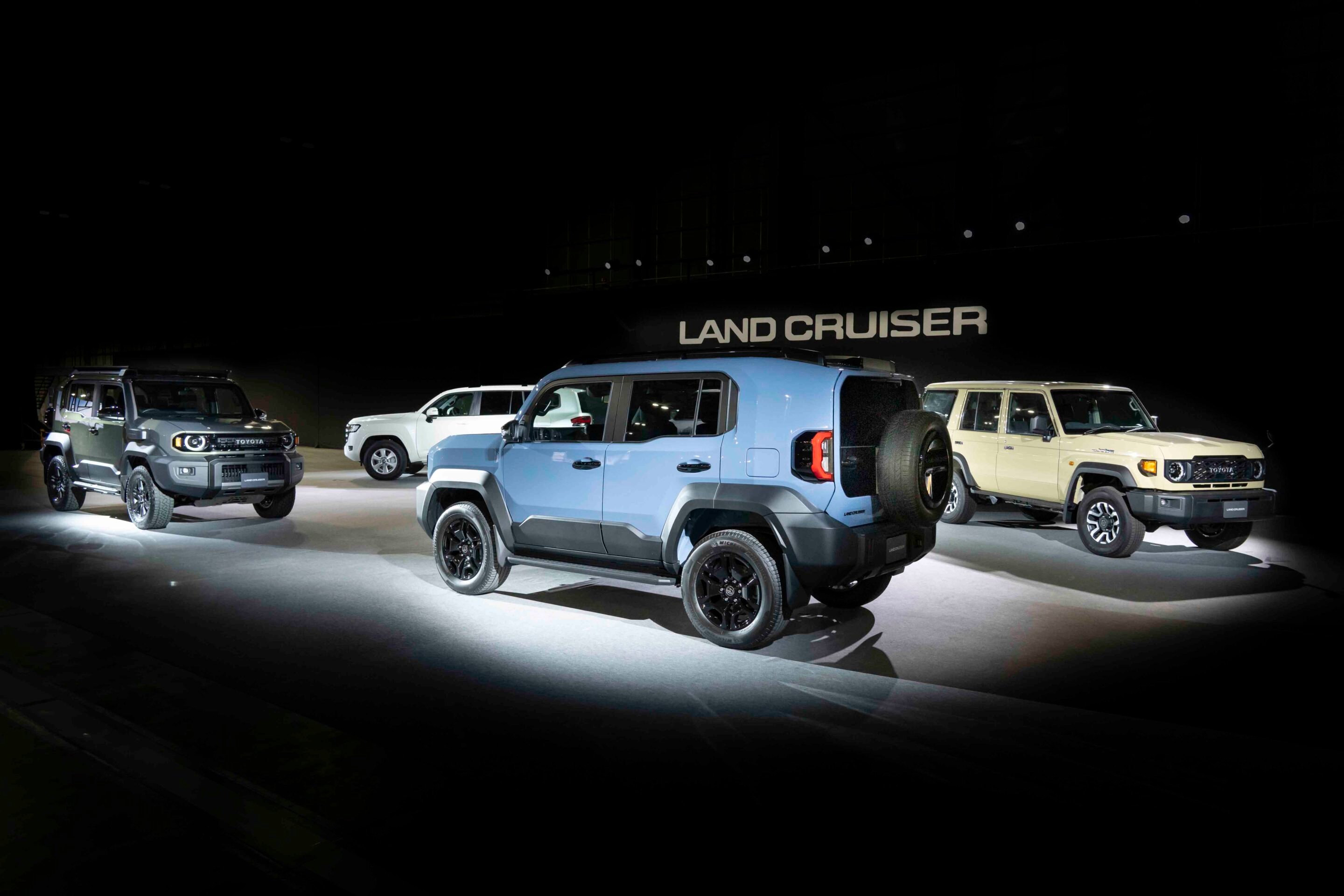
At first glance, the new LandCruiser FJ appears perfect for off-road enthusiasts who prioritise manoeuvrability over size and luxury. The Prado remains a versatile middle-ground option, offering a balance of comfort, capability and efficiency. The 300 Series continues to set the benchmark for full-size SUVs, combining size, power and advanced drivetrain technology for those who need maximum towing, payload and off-road capability.
Unfortunately, there are currently no plans to bring the FJ to Australia.
Toyota has revealed the new LandCruiser FJ, a compact off-roader that will sit alongside the 300 Series, 70 Series and 250 Prado.
The mini LandCruiser will make its public debut at the Japan Mobility Show in Tokyo from October 30 to November 9, before going on sale in Japan in the middle of 2026. There are currently no plans to bring the FJ to Australia.
The FJ rides on the same IMV platform used by the HiLux and Fortuner, combining proven underpinnings with a shorter, more manoeuvrable footprint aimed at those who want genuine off-road ability in a smaller package. Toyota says the new model has been engineered to carry forward the LandCruiser’s trademark durability and off-road capability while offering a more accessible and customisable entry point.
The design sticks close to LandCruiser tradition, with a boxy cabin and simple proportions that prioritise interior space and practicality. A rectangular body with chamfered edges – in tandem with squared-off bumpers and flared guards – gives it a tough, purposeful stance. Both front and rear bumpers are removable and segmented so that only damaged sections need replacing, a smart touch that will appeal to anyone who actually uses their rig off-road. Round headlights, reminiscent of older FJ models, are also available for buyers chasing a more classic look.
Inside, Toyota says the horizontal dash makes it easier to gauge the vehicle’s angle on uneven terrain, and key controls are grouped close to the driver to reduce distraction. Forward visibility is enhanced by a low-set cowl and beltline, making it easier to place the vehicle on tight tracks or rock steps. Toyota Safety Sense, including the latest Pre-Collision Safety System, will come standard.
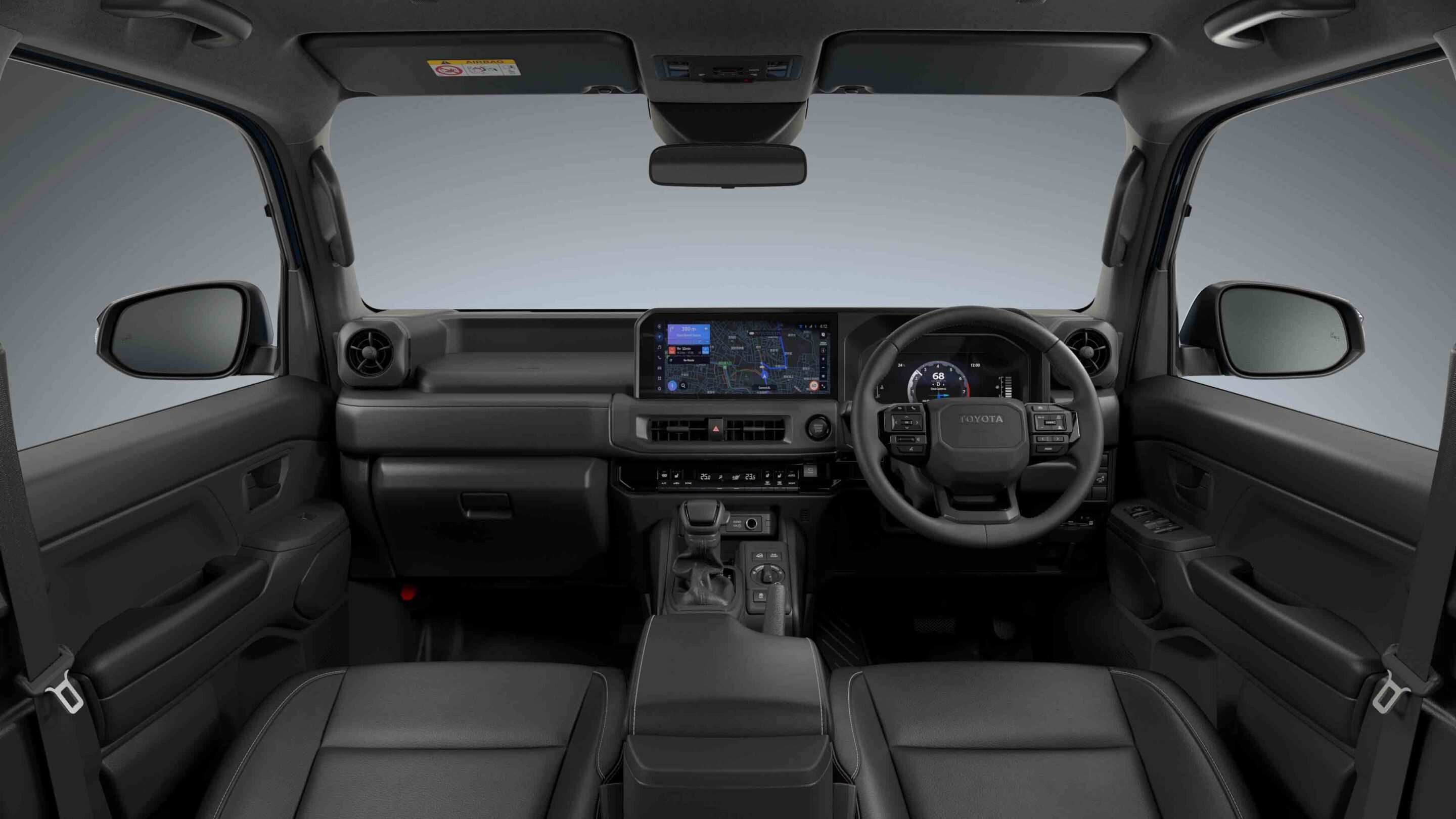
Under the skin, the FJ’s chassis has been reinforced with extra underfloor bracing and a higher level of body rigidity. Toyota says it offers wheel articulation on par with the 70 Series (not something to brag about, mind you), while its wheelbase is 270mm shorter than the Prado 250’s – cutting the turning circle down to 5.5 metres. Ground clearance and approach angles are said to be close to those of the 70 Series, meaning it should perform well on technical terrain.
Toyota is also planning to release a range of factory accessories throughout the model’s life, including MOLLE panels for attaching gear, off-road protection, and various styling and storage upgrades.
| Specification | Land Cruiser FJ (Prototype) |
|---|---|
| Length (mm) | 4575 |
| Width (mm) | 1855 |
| Height (mm) | 1960 |
| Wheelbase (mm) | 2580 |
| Seating capacity | Two-row, five-passenger |
| Engine | 2TR-FE 2.7-litre petrol engine |
| Driveline | 4WD (part-time system) |
| Transmission | 6-speed Super ECT |
| Maximum output | 120kW (163 PS) |
| Maximum torque | 246Nm |
The Land Hopper
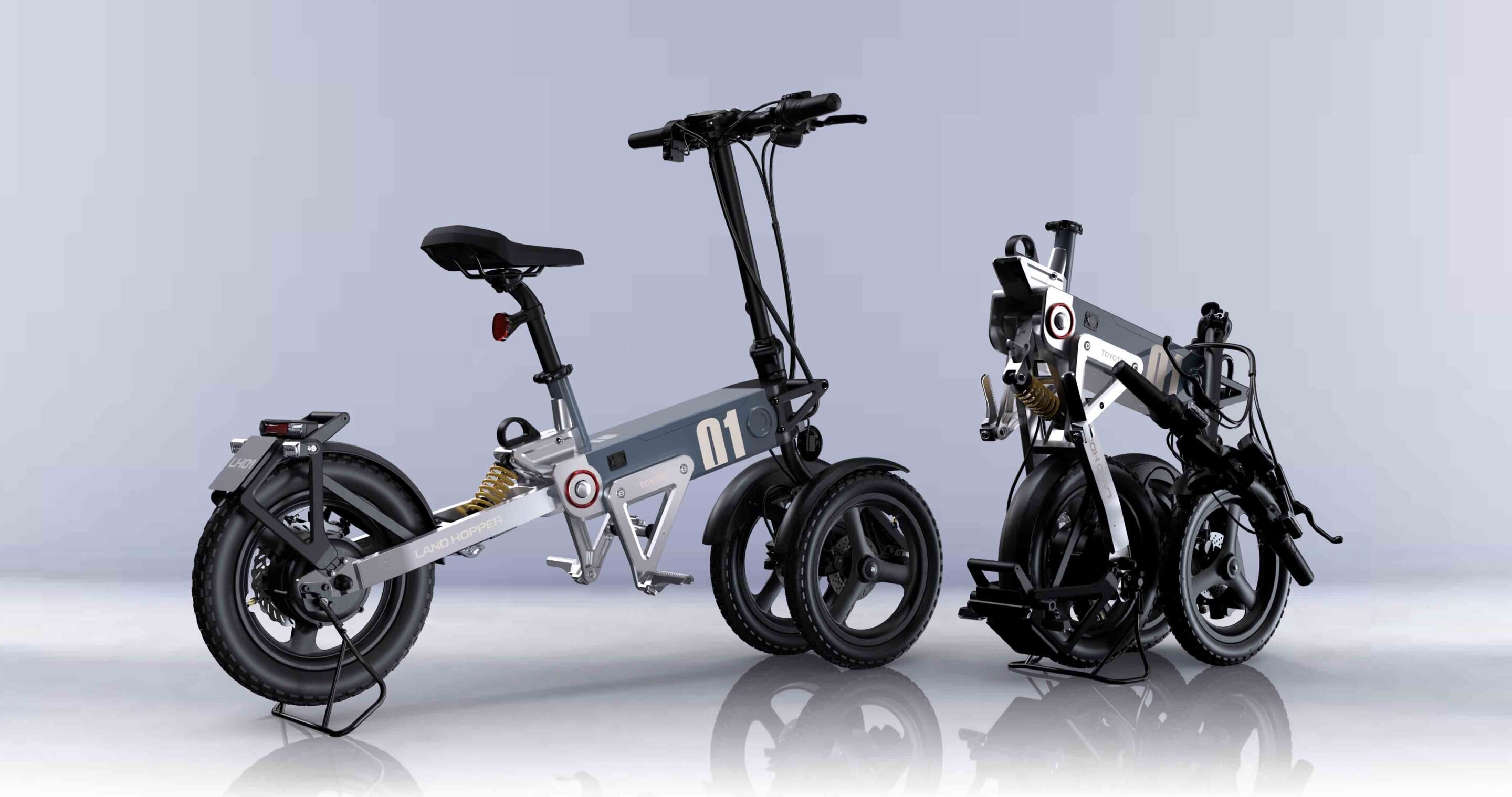
Alongside the FJ, Toyota is developing the Land Hopper, a small electric personal mobility vehicle that can fit in a 4×4’s cargo area. Designed for exploring trails and campsites beyond where a vehicle can go, it’s part of Toyota’s broader plan to extend the LandCruiser brand’s “go anywhere” philosophy beyond the car itself. If nothing else, it looks pretty cool.
A Rivian R1T was recently observed in Melbourne, with an image posted to the CarsAustralia Reddit page.
The vehicle was fitted with Victorian registration and displayed a “Left Hand Drive Engineering Evaluation Vehicle” sticker across its tailgate, indicating it is part of Rivian’s local testing program.
The R1T is an all-electric, mid-size pickup developed for both on-road and off-road use. It is available in quad-motor all-wheel-drive and dual-motor configurations. The quad-motor version provides independent power to each wheel, offering torque vectoring for improved traction and control on uneven terrain.
Rivian claims the vehicle can accelerate from 0–60mph (0–97km/h) in around three seconds. The dual-motor variant is optimised for efficiency while still maintaining strong performance. The R1T features an adjustable air suspension, which can raise the vehicle to 381mm (15 inches) of ground clearance for challenging terrain.
Battery options include 105kWh, 135kWh and 149kWh packs, delivering EPA-estimated ranges of approximately 372km (231 miles), 505km (314 miles), and 645km (401 miles), respectively. Charging can be accomplished via standard AC or DC fast chargers, the latter allowing rapid top-ups during longer journeys.
The cabin is minimalist but functional, featuring a 12.3-inch digital instrument cluster and a 15.6-inch central touchscreen. Drive modes allow the driver to adjust suspension, throttle and steering characteristics for conditions such as towing, off-road driving, sport or energy conservation. Utility features include the “Gear Tunnel” for extra storage, reinforced underbody protection, and optional accessories such as a collapsible camp kitchen or rooftop tent. Safety systems include lane-keeping assist and adaptive cruise control, with hands-free driving expected in future software updates.
In Australia, the R1T is currently limited to mining operations. Western Australia-based MEVCO imports the vehicles and retrofits them for mining fleets, including modifications for both surface and underground use.
As these vehicles are left-hand drive, they are not yet available for general public sale, but their appearance on local roads indicates Rivian is evaluating the market and infrastructure for a potential wider launch.
Australia’s full-size 4×4 ute market continues to impress, with models like the Ram 1500 Rebel, Chevrolet Silverado ZR2, Ford F-150 Lariat, and Toyota Tundra Limited offering strong towing capability, high payloads, and serious off-road potential.
Each ute delivers its own combination of power, geometry, and features, making the choice highly dependent on the type of driving and terrain you expect to tackle. Let’s take a deep dive into the spec sheets 👇
Price and powertrain
| Model | Price (AUD) | Engine Type | Max Power | Max Torque | Transmission |
|---|---|---|---|---|---|
| Ram 1500 Rebel | $141,950 | Bi-turbo petrol I6 | 313kW | 635Nm | 8-speed auto |
| Chevrolet Silverado ZR2 | $141,500 | 6.2L V8 petrol | 313kW | 624Nm | 10-speed auto |
| Ford F-150 Lariat | $140,945 | Turbo petrol V6 | 298kW | 678Nm | 10-speed auto |
| Toyota Tundra Limited | $155,990 | Turbo V6 petrol hybrid | 326kW | 790Nm | 10-speed auto |
The Ram 1500 Rebel and Chevrolet Silverado ZR2 both provide 313kW, with the Rebel using a bi-turbo inline-six engine and the Silverado a 6.2L V8 petrol engine. The Ford F-150 Lariat has slightly lower power at 298kW but offers 678Nm. The Toyota Tundra Limited delivers the highest torque at 790Nm thanks to its turbo V6 hybrid system, also producing the highest total power at 326kW.
Drivetrain, suspension and chassis
| Model | 4×4 System | Chassis Type | Front Suspension | Rear Suspension |
|---|---|---|---|---|
| Ram 1500 Rebel | On-demand dual range 4×4 | Ladder frame | IFS, coils | Multi-link live, coils |
| Chevrolet Silverado ZR2 | 4WD with 2-speed transfer case | Ladder frame | Independent, DSSV | Independent, DSSV |
| Ford F-150 Lariat | 2WD, 4×4 Auto, 4×4 High & Low Range | Aluminium ladder chassis | IFS, coils & stabiliser | Live axle, leaf springs |
| Toyota Tundra Limited | Part-time / dual range 4WD | Ladder chassis | IFS, coils & stabiliser | Four-link live, coils |
Suspension and chassis design shows the intended use of each vehicle. The Silverado ZR2 uses fully independent double wishbone suspension with DSSV dampers both front and rear. The Ram 1500 Rebel offers a multi-link live rear axle for a balance of comfort and off-road capability. The Ford F-150 Lariat has a live rear axle with leaf springs for versatility in towing and moderate off-road use. The Toyota Tundra Limited combines a part-time dual-range 4WD system with a four-link rear axle, optimising towing and efficiency rather than extreme off-road geometry.
Towing, payload and dimensions
| Model | Kerb Weight | GVM | GCM | Towing Capacity | Payload | Seats | Fuel Tank |
|---|---|---|---|---|---|---|---|
| Ram 1500 Rebel | 2642kg | 3505kg | 7711kg | 4500kg | 893kg | 5 | 98L |
| Chevrolet Silverado ZR2 | 2583kg | 3300kg | 6851kg | 4128kg braked | 717kg | 5 | 91L |
| Ford F-150 Lariat | 2555kg | 3265kg | 7270kg | 4500kg braked | 710kg | 5 | 136L |
| Toyota Tundra Limited | 2778kg | 3536kg | 7825kg | 4500kg braked | 758kg | 5 | 122L |
Payload and towing figures highlight the practical capabilities. The F-150 Lariat has the largest fuel tank at 136L, supporting longer trips. The Ram 1500 Rebel and Toyota Tundra Limited offer similar towing capacities of 4500kg braked. The Silverado ZR2 carries slightly less payload and lower towing capacity but remains suitable for general 4×4 use.
Fuel economy
| Model | ADR / Combined |
|---|---|
| Ram 1500 Rebel | 10.74L/100km |
| Chevrolet Silverado ZR2 | 11.7L/100km |
| Ford F-150 Lariat | 12.5L/100km |
| Toyota Tundra Limited | N/A |
Fuel efficiency varies across the group. The Ram 1500 Rebel achieves the lowest combined consumption at 10.74L/100km. The Silverado ZR2 consumes slightly more at 11.7L/100km. The F-150 Lariat reports 12.5L/100km combined. The Tundra Limited does not have an ADR figure but maintains efficient hybrid performance relative to its torque and size.
Off-road geometry
| Model | Approach Angle | Ramp-Over Angle | Departure Angle | Ground Clearance |
|---|---|---|---|---|
| Ram 1500 Rebel | 20.9 | 19.2 | 22.2 | 242mm |
| Chevrolet Silverado ZR2 | 31 | 17 | 19.3 | 296mm |
| Ford F-150 Lariat | 24 | 19 | 26.3 | 239mm |
| Toyota Tundra Limited | 23 | N/A | 21 | 216mm |
The Silverado ZR2 has the highest ground clearance at 296mm. The Ram 1500 Rebel has 242mm clearance with approach and departure angles of 20.9 and 22.2. The F-150 Lariat has a 26.3 departure angle and 239mm clearance. The Tundra Limited has 216mm ground clearance with 23 approach and 21 departure angles.
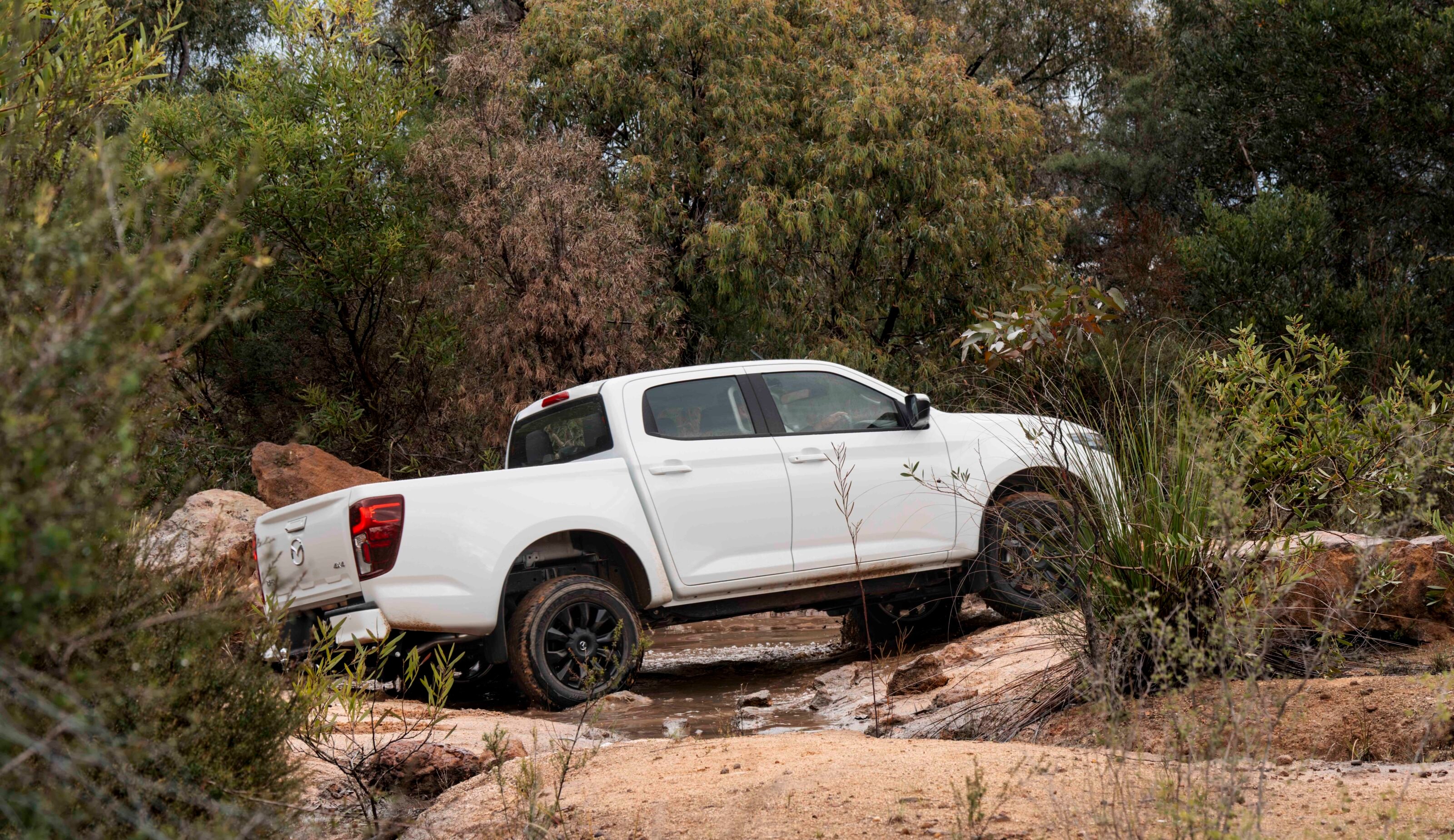
Following hot on the heels of last month’s Isuzu D-MAX 2.2 launch, Mazda Australia has rolled out its version of what is essentially the same midsize 4×4 ute.
For those new to the party, the current Mazda BT-50 is essentially a facelifted and rebadged Isuzu D-MAX — and if you’re going to partner with any ute manufacturer, Isuzu has proven to be a solid choice for Mazda.
So, when Isuzu ditched its entry-level 1.9-litre diesel engine in favour of a new, more powerful 2.2, you didn’t need to be Nostradamus to predict Mazda would soon follow suit.
JUMP AHEAD
Expanded line-up
For Mazda, the 2.2 engine will be offered in four of the 18 variants in the BT-50 line-up, starting with the single-cab XT and double-cab XS 4×2 models, and extending to the 4×4 double-cab XS with a choice of cab-chassis or ute tub configurations.
The remaining variants in the range are still powered by the legendary 4J 3.0-litre Isuzu engine, which now adds a stop/start idle feature to its repertoire.
The new 2.2-litre four-cylinder diesel engine produces 120kW at 3600rpm and 400Nm from 1600-2600rpm, with fuel use as low as 6.3L/100km. That improved efficiency is aided by the fitment of a new eight-speed automatic transmission in place of the six-speed still shackled to the 3.0-litre engine.
BT-50 4×4 models powered by the 2.2 engine offer the same 3500kg towing capacity and 1000kg-plus payload as their 3.0-litre stablemates, so there’s no compromise there.
The old 1.9 engine could only muster 110kW and 350Nm, and our only experience with it was in a loaded vehicle where it really struggled with the weight on hills – making the 2.2 a worthwhile step up. Mazda also used this model update to drop the manual gearbox from the BT-50 range altogether.
The addition of idle stop/start on the 3.0-litre BT-50 is said to help cut fuel consumption from 7.7-8.0L/100km (depending on model grade) to 7.1-8.0L/100km for the same vehicles. The 3.0-litre/six-speed auto BT-50 combination continues to produce 140kW and 450Nm.
Driving impressions
Whether you’re on a budget or chasing better fuel efficiency, the 2.2-litre-powered Mazdas aren’t a bad option.
The eight-speed auto makes the driveline feel much more refined and smoother, although the upshift calibration can still be a little aggressive at times – something that’s even more noticeable in the older 3.0-litre/six-speed ’box.
As a driver, you’ll find yourself planting your right boot harder on the go pedal than you ever recall doing in the 3.0, but doing so gets the BT along well enough. It’s no rocket ship – not that this is what this ute is about.
The 2.2 is a vocal engine when pushed hard, and the diesel clatter is quite noticeable in the cabin. However, it quietens down once you ease off and settle into a steady highway cruise. Our BT-50 was relatively unladen aside from a few factory accessories, but we reckon you’d hear a lot more of the engine with a heavy load on board. By contrast, the 3.0-litre engine seems to grunt along with the same level of noise no matter how much you load it up.
The eight-speed transmission helps the smaller-capacity engine stay within its optimal power band, depending on load and throttle input, and this goes some way toward making up for the reduced grunt.
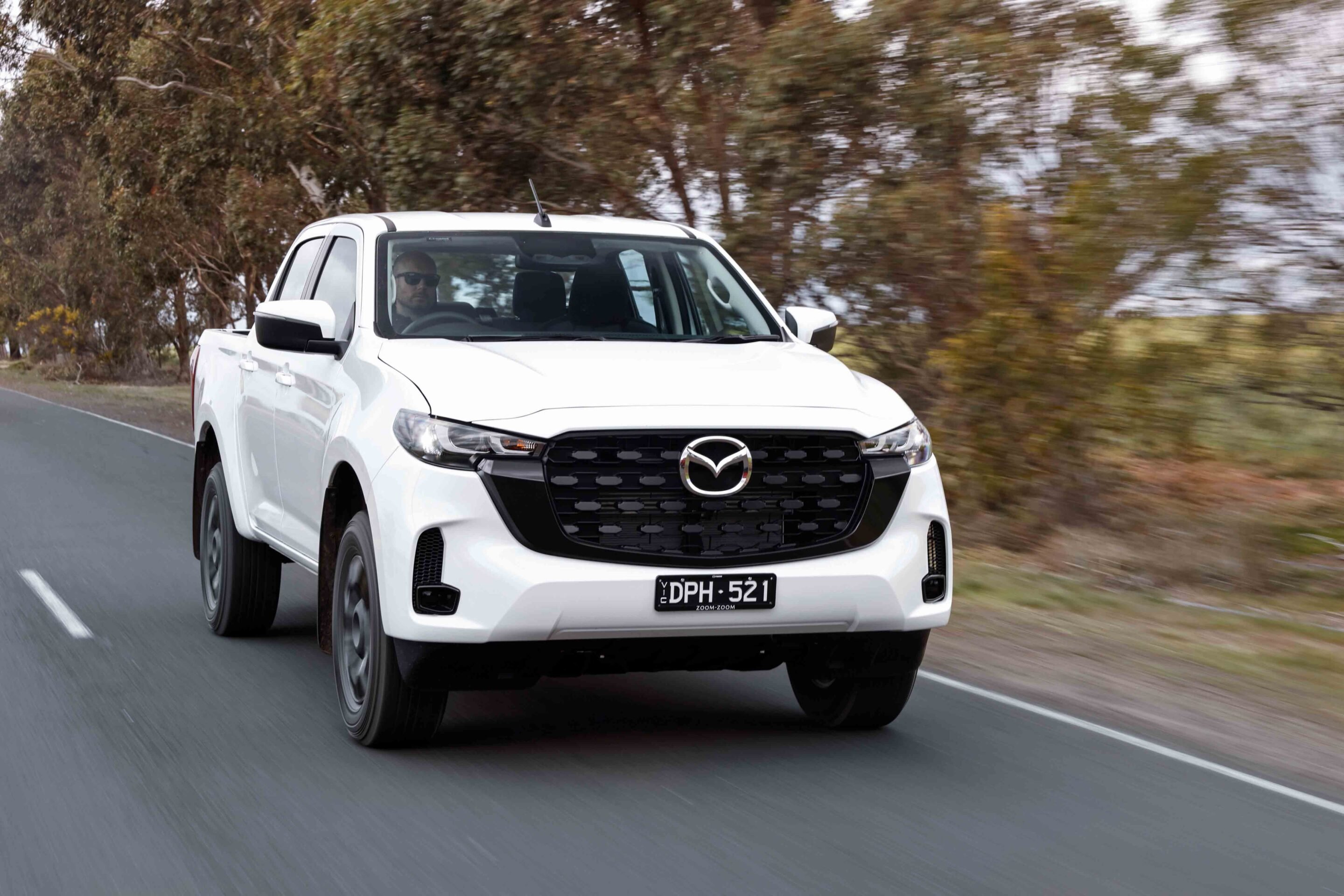
The 400Nm output is a little underwhelming for a new diesel engine when you consider the figures from sub-2.5-litre units from Ford, Nissan, Mitsubishi and Kia – even if some of those mills benefit from multiple turbochargers. Still, Isuzu has always taken a conservative approach to engine tuning, favouring reliability over outright performance – and that philosophy is exactly what’s given its 3.0-litre diesel such legendary status.
We didn’t get any off-road driving in with the 2.2, but like the 3.0 BT it features part-time 4×4 with high and low range, a rear differential lock, and a rough-terrain mode that’s needed to make the traction control effective.
Interior, equipment and comfort
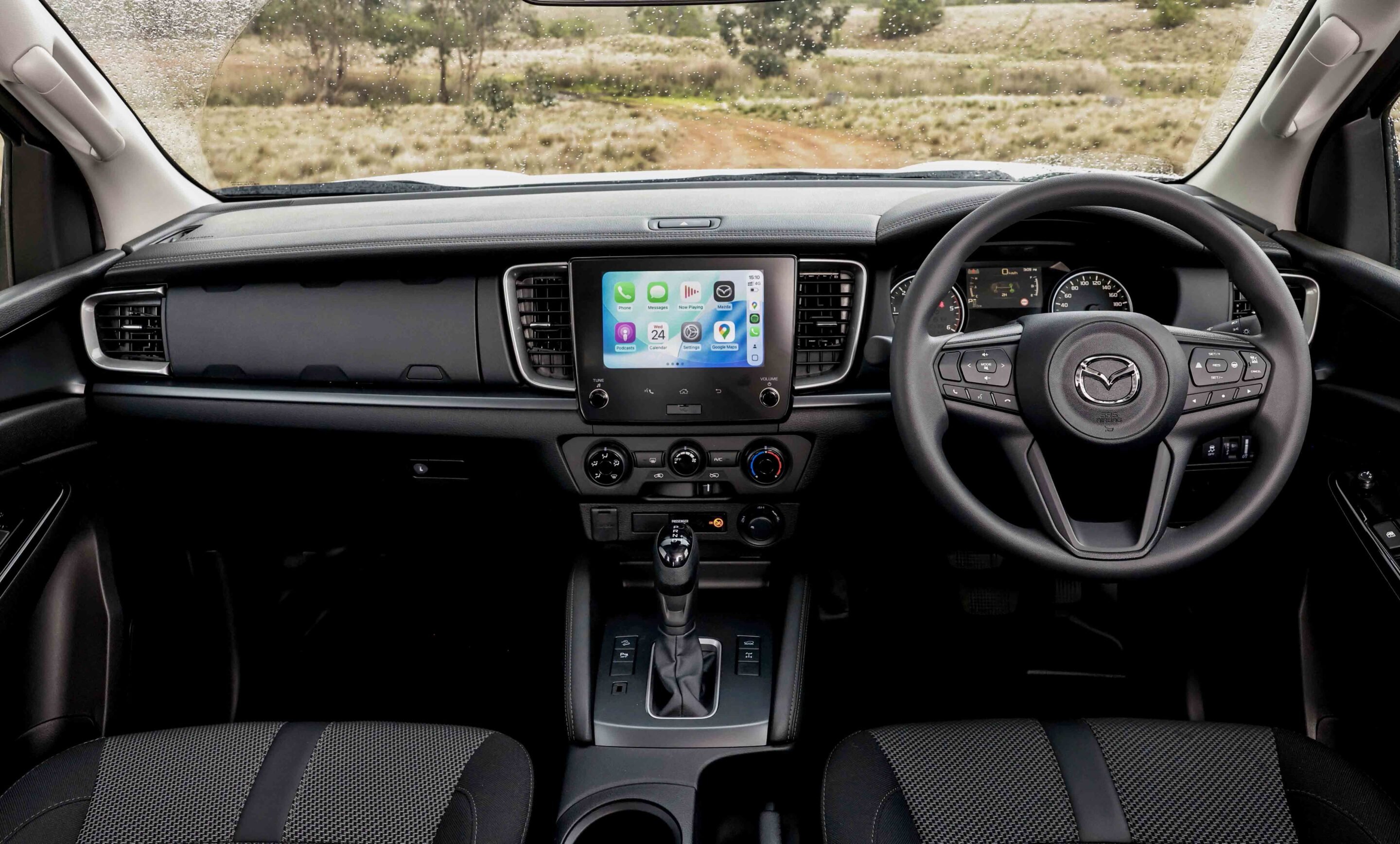
The 2.2 BT-50 retains all the interior and safety features found elsewhere in the range, bearing in mind that this is a lower-grade model – so expect cloth seats and single-zone climate control.
The XS double-cab pick-up we drove on the day came equipped with 17-inch alloys, LED lighting, a soft-touch tailgate, single-zone air-conditioning with rear vents, vinyl floor covering, and an eight-inch multimedia screen with wired Apple CarPlay and wireless Android Auto.
The full suite of ADAS systems carries over from the higher grades. The cabin and tub are both spacious, and we particularly like the storage space under the rear seat in the double-cab. While it misses out on the leather trim and the comfort and convenience features of the higher grades in the BT-50 range, the XS isn’t missing any essentials.
Verdict
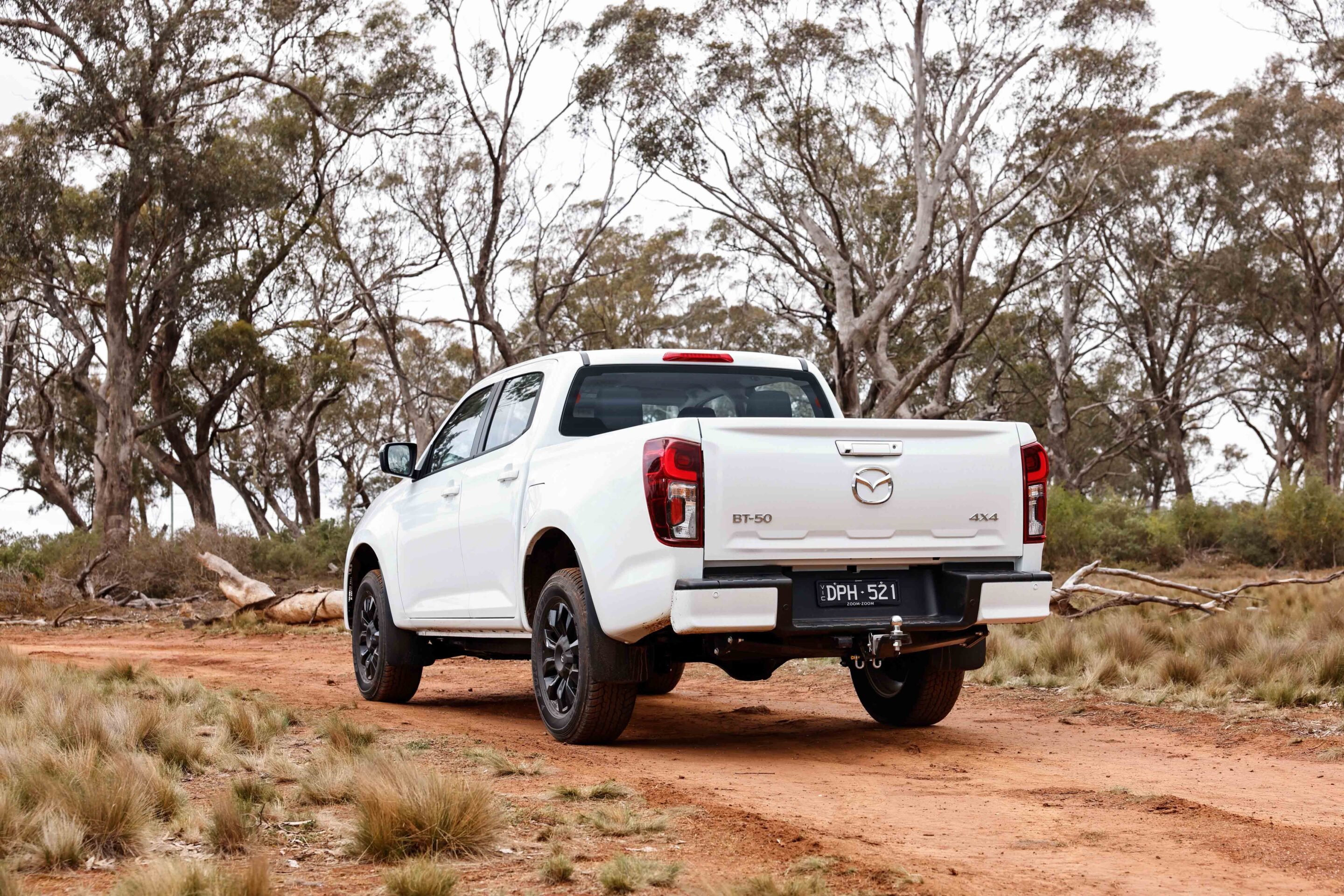
The BT-50 isn’t at or near the top of the midsize 4×4 ute pack, but it’s far from the bottom – sitting instead among the crowded middle ranks.
Having a choice of drivelines gives it a small point of difference, but it’s still essentially the same as the D-MAX, and the Ford Ranger also offers multiple powerplant options. As always when it comes to this segment, buyers are spoiled for choice.
Specs
| Mazda BT-50 XS 2.2 dual-cab pick-up | |
|---|---|
| Price | $54,720 +ORC |
| Engine | I4 diesel |
| Capacity | 2164cc |
| Max power | 120kW @ 3600rpm |
| Max torque | 400Nm @ 1600-2400rpm |
| Transmission | 8-speed automatic |
| 4×4 system | Part-time, dual range |
| Crawl ratio | 43.6:1 |
| Construction | 4-door cab and ute tub on ladder chassis |
| Front suspension | IFS with coils |
| Rear suspension | Live axle on leaf springs |
| Tyres | 255/65R17 on alloy wheels |
| Kerb weight | 1961kg |
| GVM | 3000kg |
| GCM | 6000kg |
| Towing capacity | 3500kg |
| Payload | 1139kg |
| Seats | 5 |
| Fuel tank | 76L |
| ADR fuel consumption | 6.6L/100km |
| Approach angle | 30.0 |
| Ramp-over angle | 23.9 |
| Departure angle | 23.3 |
| Ground clearance | 235mm |
| Wading depth | 800mm |
In the market for a new 4×4, or ready to take the plunge into the lifestyle? These are the new and facelifted 4x4s en-route to Australia 👇
JUMP AHEAD
- Next-gen Nissan Navara
- Denza B5 and B8
- Foton Tunland
- LDV eTerron9
- Ford Ranger Super Duty
- Toyota LandCruiser 300 Performance Hybrid
- JAC Hunter PHEV
- Toyota HiLux
- Nissan Patrol
- BYD YangWang U8
2026 Nissan Navara: Q1, 2026
Nissan has revealed its next-gen Navara, the all-new D27, with a global launch taking place in Australia. Heavily based on the Mitsubishi Triton’s platform, it retains the same mechanicals and sheet metal, except for locally tuned suspension by Melbourne’s Premcar, featuring new twin-tube dampers.
Styling cues distinguish it as a Navara, including a three-slot bonnet, corporate grille, and C-shaped rear lights. The line-up will include ST-X, Pro-4X, and likely an entry-level trim, with a Warrior variant confirmed.
Specs and pricing haven’t been revealed yet, but as it’s a Triton twin, under the bonnet will sit the 2.4‑litre bi-turbo diesel producing 150kW and 470Nm, paired with a six-speed automatic and Mitsubishi’s Super-Select 4WD system (Nissan’s Super 4WD Terrain Selector) with seven drive modes and optional rear diff lock. Payloads range from 950–1047 kg, towing up to 3500 kg, with 228 mm ground clearance.
The D27 is larger than the outgoing D23, with more interior space and a tray 46 mm longer. Inside, expect a nine-inch central screen, seven-inch dashboard display, 360-degree camera, wireless connectivity, and charging. The new Navara will arrive in Australian showrooms in Q1 next year.
2025 Denza B5 and B8: November 2025
BYD will launch its premium Denza sub-brand in Australia in November 2025 with two plug-in hybrid SUVs targeting off-road and touring buyers.
The five-seat B5 and three-row B8 both use BYD’s DMO ladder-frame platform with off-road hardware, including locking differentials and adaptive suspension. Local pricing is unconfirmed, though in China the B5 starts around $61,500 and the B8 about $80,600.
The B5 pairs a 1.5‑litre turbo-petrol engine with twin electric motors and a 31.8kWh battery for 505kW and 760Nm, while the B8 uses a 2.0‑litre turbo-petrol plus twin e-motors and a 36.8kWh battery for 550kW and 760Nm. Both claim 0–100km/h in 4.8 seconds, offer multiple off-road modes, and feature high-tech interiors, with the B5 sporting a 15.6-inch rotating display and the B8 a 17.3-inch unit with dual passenger screens and a 50-inch AR head-up display.
2025 Foton Tunland: Late 2025
The Foton ute is set to make a comeback in Australia, with a new line-up of “new energy” and internal combustion engine models confirmed to arrive late in 2025.
While it may not retain the Tunland name, the ute was last seen in Australian dealerships in 2019. Now, with Inchcape as the brand’s new distributor, its return is imminent. However, details about the upcoming models remain under wraps.
In other markets, the 2023 Foton Tunland G7 (short wheelbase) and Tunland V9 (long wheelbase) are powered by a 120kW 2.0-litre four-cylinder turbo-diesel engine, paired with either a six-speed manual or an eight-speed automatic transmission. The V9 also features a 48V mild-hybrid system, although these variants were never available in Australia.
LDV eTerron 9: Late 2025
The all-electric eTerron 9 is set to launch in Australia, while the turbo-diesel Terron 9 is already available locally.
The eTerron 9 offers either a single 200kW rear motor or a dual-motor setup producing a combined 325kW. The Terron 9 is powered by a 2.5‑litre turbo-diesel engine delivering 163.5kW.
Both models share identical dimensions: 5,500 mm long, 1,997 mm wide, 1,860 mm high, with a 3,300 mm wheelbase. Ground clearance is 230 mm for the electric variant and 220 mm for the diesel, and both can tow 3,500 kg braked and 750 kg unbraked. Release dates and pricing for the eTerron 9 are yet to be confirmed.
Ford Ranger Super Duty: Early 2026
Ford Australia will launch the 2026 Ranger Super Duty in early 2026, targeting buyers who need a heavy-duty 4×4 ute capable of competing directly with the 79 Series LandCruiser.
Built for tough industries like mining, forestry and emergency services, the Ranger Super Duty offers a substantial 4500kg gross vehicle mass and towing capacity, along with an 8000kg gross combination mass. This makes it a powerful, ready-to-work option straight from the factory, eliminating the need for aftermarket upgrades. The ute will come in three cab styles, catering to a range of professional and recreational needs. Ford’s introduction of this model reflects a growing demand for factory-built, high-capacity work vehicles that meet stringent performance and durability requirements.
Toyota LandCruiser 300 Performance Hybrid: Early 2026
Toyota has unveiled its first hybrid LandCruiser, with the new 300 Series set to arrive in Australia in the first half of 2026.
It features a 3.5-litre twin-turbo petrol V6 paired with an electric motor in a parallel hybrid setup, making it the most powerful production LandCruiser to date. While final figures are yet to be confirmed, Toyota says the hybrid will offer more power and torque than the current 3.3-litre twin-turbo diesel (227kW/700Nm).
This marks a key step in Toyota’s move towards electrification. Reassuring off-road enthusiasts, Toyota says the hybrid system has been engineered for “true off-road capability and reliability”, with smooth throttle response even in tough terrain. The powertrain has been rigorously tested in extreme conditions, including deserts and mountains in the Middle East.
JAC Hunter PHEV: Early 2026
The JAC Hunter PHEV is set to launch in Australia in the first quarter of 2026.
It made its global debut at the Melbourne Motor Show in April 2025. This plug-in hybrid dual-cab ute features a 2.0-litre turbo petrol engine combined with dual electric motors, producing an impressive 385kW and 1000Nm. For comparison, the BYD Shark delivers 321kW/650Nm, and the Ranger PHEV offers around 207kW/697Nm.
The Hunter uses a lithium iron phosphate battery that provides an electric-only range of at least 100km, and it includes a vehicle-to-load system for powering appliances at campsites. Inside, the cabin resembles the T9 turbo-diesel model, with a 10.4-inch touchscreen and a fully digital 10.25-inch instrument cluster.
BYD Yangwang U8: Early 2026
The luxury plug-in hybrid SUV from BYD’s premium Yangwang sub-brand is expected to launch in Australia by early 2026, with RHD development said to be underway.
The U8 features a quad-motor setup delivering a combined output of up to 880kw, enabling exceptional off-road capabilities and performance. The U8 boasts a 37kWh battery, offering an electric-only range of more than 100km, and includes advanced features such as 360-degree tank turns, crab mode, and the ability to float on water, thanks to its IP68-rated waterproofing. Inside, the cabin is equipped with multiple screens, premium materials, and advanced infotainment systems.
2026 Toyota HiLux: Mid 2026
A new HiLux is expected to land in Australia in 2026, and, with the Ford Ranger dominating the sales charts, it can’t come soon enough for Toyota.
Speculation still surrounds the next-gen Toyota HiLux. Spy shots from Thailand confirmed earlier reports that the HiLux may not be an all-new model but rather a heavily updated version of the current vehicle. Reports also indicate it will retain the ageing IMV platform, with significant changes to the front and rear ends, including a new hood, bumper, grille and headlights.
However, the mid-section will remain largely untouched. The industry is still waiting for confirmation and information from the Japanese marque, but expect electric versions of the venerable ute.
2026 Nissan Patrol: Late 2026
The all-new Y63 Nissan Patrol is scheduled to arrive in Australia in late 2026, with right-hand-drive production set to commence that year.
However, Nissan Australia has indicated that the launch could occur up to six months earlier, depending on demand in other markets. The V8 will be gone, but the upcoming Y63 Nissan Patrol won’t be lacking in power. It will feature two V6 engine options: a 3.5-litre twin-turbo V6 producing 425hp (317kW) and 700Nm, and a naturally aspirated 3.8-litre V6 making 236kW and 386Nm. While it won’t have V8 muscle, the Y63 will become the most powerful factory Patrol ever offered. Early pricing estimates put the Patrol at about $90,000.
Already arrived in Australia 👇
2026 MGU9: OUT NOW!
MG has launched its first dual-cab ute in Australia, the MGU9, priced from $52,990 for the Explore to $60,990 for the Explore Pro.
Sharing a platform with the LDV Terron 9, it stands out with a multi-link rear suspension, Turnover End Gate, and optional Electrically Foldable Rear Cabin Access Panel, combining SUV-like comfort with rugged utility. All models use a 2.5-litre turbo-diesel four-cylinder producing 160kW and 520Nm, paired with an eight-speed ZF automatic and BorgWarner 4×4 system.
With 220mm ground clearance, 550mm wading depth, 3,500kg braked towing, and three grades offering features from LED screens to leather seats with massage/ventilation, the MGU9 targets a mix of practicality, off-road capability and premium touches.
Ford Ranger PHEV: OUT NOW!
The Ford Ranger PHEV will join the Australian line-up in mid-2025, with production beginning in South Africa in late-2024.
It features a 2.3-litre turbo-petrol four-cylinder engine combined with a 75kW electric motor and an 11.8kWh battery, offering an electric-only driving range of more than 45km and maintains a towing capacity of 3500kg.
The Ranger PHEV was globally unveiled on September 16, 2024, at the IAA Transportation Show in Hanover, Germany. It will be available in the Wildtrak, Sport, and XLT variants, as well as a new exclusive Stormtrak edition. Deliveries are expected to start in 2025.
2025 Kia Tasman: OUT NOW!
Kia has officially launched its Tasman ute in Australia.
The Australian-spec Tasman is powered by a 2.2-litre diesel engine producing 154 kW and 441 Nm, paired with an eight-speed automatic transmission, allowing a 0–100 km/h sprint in 10.4 seconds. Its suspension features a double-wishbone front and a rigid rear axle with leaf springs, complemented by Kia’s Sensitive Damper Control and Hydraulic Rebound Stop technology. The ute also offers an 800 mm wading depth.
Three trims are on offer: Baseline, X-Line, and X-Pro. The X-Line adds 18-inch alloy wheels with highway and all-terrain tyres, while the X-Pro is geared for off-road use, with 28 mm higher ground clearance (252 mm total), 17-inch all-terrain tyres, an automatic rear Electronic Locking Differential, and an X-Trek mode for low-speed off-road driving.
All-wheel drive is standard on the X-Line and X-Pro, with an optional AWD for the Baseline. AWD variants feature selectable modes for Sand, Mud, Snow, and Rock, enhancing capability across challenging terrains.
2024 Mitsubishi Triton: OUT NOW!
The bigger, bolder and more expensive next-gen Triton launched in 2024, with the popular ute now trading blows with the big hitters of the segment – Ford’s Ranger and Toyota’s HiLux.
Mitsubishi essentially rebuilt the Triton from the ground up, thoroughly reworking everything from the dimensions (bigger in every way), chassis, engine, interior and driving dynamics. Plus, towing capacity finally meets the industry standard of 3500kg.
All Tritons released at launch were powered by a new Mitsubishi-built 2.4-litre twin-turbo DOHC 16V MiVEC diesel, which develops 150kW at 3500rpm and 470Nm from as low as 1500rpm – an increase of 17kW and 40Nm compared to the old model.
2024 Isuzu D-MAX: OUT NOW!
A facelifted D-MAX arrived locally in the first quarter of 2024.
The venerable ute received a new-look front end, updated “triple-armour” LED tail-lights, and minor interior tweaks including an updated infotainment software with much-needed wireless Android Auto connectivity – previously only available with wireless Apple CarPlay.
At the front, the D-MAX now wears redesigned headlights, a new grey or ‘black chrome’ grille, and a new lower bumper with an integrated air vent. Plus, the D-MAX gets new wheel designs, and the flagship X-Terrain gets more aggressive wheel arches. The D-MAX also received a ‘rough terrain mode’ borrowed from the MU-X. The 3.0-litre turbo-diesel engine remains unchanged.
2024 Isuzu MU-X 1.9: OUT NOW!
Isuzu introduced an MU-X with the option of a 1.9-litre turbo-diesel engine that generates 110kW and 350Nm.
The 1.9-litre diesel in the MU-X produces 110kW and 350Nm – down 30Nm and 100Nm compared to the familiar 150kW/450Nm ‘4JJ3-TCX’ 3.0-litre four-cylinder turbo-diesel. Available in LS-M and LS-U variants, the new powertrain sees the MU-X’s entry price fall $1500.
2025 Isuzu MU-X facelift: OUT NOW!
The facelifted MU-X landed in Australian showrooms early in 2025.
The updates largely mirror the changes made to the facelifted D-MAX, which includes a revised front end with a larger grille, a new fighter jet-inspired bumper with an air curtain to improve aerodynamics, revised LED headlights, updated tail-lights with a new internal signature, a black connecting strip, and new 18- or 20-inch alloy wheel designs.
On the inside, the MU-X gets new 8- or 9-inch central touchscreens with an updated infotainment system. It also gains USB-C charge ports, physical volume and tuning controls, capacitive shortcut buttons for the media controls, an available 7-inch semi-digital instrument cluster, updated front seat patterns, and traffic jam assist.
2024 Jeep Wrangler: OUT NOW!
An updated Wrangler arrived in Jeep dealerships in the first half of 2024, with the Wrangler’s 209kW/347Nm 3.6-litre ‘Pentastar’ petrol V6 replaced by a 200kW/400Nm 2.0-litre turbo-petrol ‘Hurricane’ four-cylinder.
The revised model also received new tech – most notably a full-floating Dana rear axle on Rubicon models – subtle design changes and improved safety features such as the addition of side curtain airbags in the first and second rows.
A larger 12.3-inch Uconnect 5 widescreen with wireless Apple CarPlay and Android Auto are also implemented. Plus, the Wrangler is available with a new Warn winch from the factory, and an increase in towing capacity to 2268kg.
2024 Toyota LandCruiser Prado: OUT NOW!
The 2025 Toyota LandCruiser Prado has officially launched in Australia, with the all-new SUV boasting a five-model line-up: GX, GXL, VX, Altitude and Kakadu.
The 2.8-litre turbo-diesel four-cylinder engine, assisted by 48-volt V-Active technology, produces peak outputs of 150kW and 500Nm, and it’s mated to a new eight-speed automatic transmission and a full-time all-wheel drive system, dual-range transfer case and a centre lockable limited slip differential.
2024 Lexus GX: OUT NOW!
An upmarket Prado twin is also out now in Australia, marking the first time the Lexus GX is sold in Australia – despite being on sale in the US for more than 20 years.
The GX arrived with a 3.5-litre twin-turbo V6 and 10-speed auto. A 2.4-litre turbo-petrol hybrid is expected to be added to the showroom after the initial launch.
As is the case with the Prado, the GX rides on Toyota’s latest TNGA-F body-on-frame platform. All GX models have full-time all-wheel drive with a low-range transfer case and a locking Torsen limited-slip centre diff.
2024 Ford F-150: OUT NOW!
Ford’s updated version of its best-selling F-150 pick-up landed with Australian customers late in 2024.
The facelifted F-150 receives a new grille and bumpers, as well as LED headlights and tail-lights. A ‘Pro Access’ split tailgate is an option on Lariat variants. While updated on-board tech includes Ford’s latest version of its BlueCruise hands-free driving functionality, as well as an exit warning system that alerts exiting drivers of vehicles and pushbikes.
The Australian line-up is expected to remain with two trim levels – both available in short wheelbase and long wheelbase guise.
2024 BYD Shark 6: OUT NOW!
The BYD Shark 6 is on sale in Australia, sharply priced at $57,900.
The BYD Shark showcases advanced DM-O (dual-mode off-road) technology, combining a 170kW 1.5-litre turbocharged engine with dual electric motors for a total output of 320kW. It offers three terrain modes – Sand, Mud, and Snow – and boasts an estimated range of 800km.
This body-on-frame, four-door ute features a PHEV-designed frame, with a double wishbone front suspension and a similar rear setup. Interior highlights include a 12.8-inch infotainment system, a 10.25-inch digital instrument cluster, a 360-degree camera, wireless charging, and an NFC key card.
2025 INEOS Grenadier Quartermaster: OUT NOW!
The first Grenadier ute, dubbed the Quartermaster, on sale now in Australia.
Much like the Grenadier wagon, the Quartermaster ute features a full box-section ladder frame chassis, heavy duty solid beam axles, a two-speed transfer case, and up to three locking differentials. Unlike the wagon, though, the Quartermaster comes with uncompromising load-carrying ability.
Priced from $105,000 plus on-road costs, the Quartermaster stretches the Grenadier ladder-on-frame chassis wheelbase 305mm to 3227mm – for a total 5400mm length – with a tray able to fit a 1200mm by 800mm European pallet. The Quartermaster is available with either a diesel or petrol powertrain, and both are BMW 3.0-litre turbocharged inline six engines. These are mated to a ZF eight-speed automatic transmission that sends power to all four wheels.
2024 Toyota HiLux 48V: OUT NOW!
Toyota unleashed its facelifted 48V HiLux in the first half of 2024. with the 48-volt mild-hybrid powertrain offered on SR, SR5 and Rogue 4×4 variants.
The mild-hybrid powertrain uses will use an electric generator and lithium battery that provides an additional 12kW and 65Nm – in conjunction with regenerative braking – to the 2.8-litre four-cylinder turbo-diesel engine.
2024 GWM Tank 500: OUT NOW!
With dimensions to compete against the LandCruiser 300 Series, but at a fraction of the price, the GWM Tank 500 adds 100mm in length to the smaller Tank 300 and uses a 3.0-litre turbocharged V6 petrol mild hybrid set up with a nine-speed automatic.
Increasing the appeal of the budget SUV will be a luxurious interior, with the large off-roader getting four sculpted bucket seats, leather upholstery surrounded by brushed-aluminium and woodgrain-look trims.
Despite these lux underpinnings, the Tank 500 is competitively priced at $73,990 (drive-away).
2024 GWM Cannon Alpha: OUT NOW!
GWM has released its Cannon Alpha range, with the Lux turbo-diesel starting at $51,990, the mid-range Ultra turbo-diesel priced from $57,990 and the range-topping Ultra hybrid from $64,990 (all driveaway).
The latter utilises a 2.0-litre turbo-petrol hybrid engine that delivers outputs of 255kW and 648Nm, marking the Cannon Alpha as the first ute in Australia to be available with a full hybrid powertrain. GWM says the petrol-hybrid engine will consume 9.8L/100km of unleaded.
The two non-hybrid variants are powered by a 2.4-litre turbo-diesel engine that generates 135kW and 480Nm, with an official fuel consumption figure of 8.9L/100km. All vehicles utilise a nine-speed automatic transmission and are coupled with a Torque On Demand (TOD) four-wheel drive system that features a Borg Warner transfer case.
GWM Cannon: OUT NOW!
The smaller sibling to the Cannon Alpha, the Cannon, arrived early in 2025 with the same 135kW/480Nm 2.4-litre turbo-diesel engine and 3500kg towing capacity.
The Cannon features revised exterior styling consisting of a new grille and lower front bumper, and a new wheel design. Plus, an overhauled interior includes a reconfigured dash with a larger infotainment touchscreen and digital instrument cluster. The Cannon also adopts the gear shift lever as found in the GWM Tank.
GMC Yukon Denali: OUT NOW!
GMC has launched its large Yukon SUV in Australia.
Only one variant is available to purchase in Australia – the Yukon Denali – and it is equipped with a mountain of premium products, headlined of course by the same powertrain which drives the Silverado 1500: a 313kW/642Nm 6.2-litre V8 petrol engine, mated to a 10-speed automatic transmission.
Inside, the SUV is outfitted with a 16.8-inch infotainment touchscreen, a panoramic sunroof, a head-up display, and Bose speakers embedded in the headrests. The second row offers a premium experience as well, with captain’s chairs featuring the same leather upholstery and headrest speakers. The right-hand drive conversion will be handled by the Walkinshaw Group.
JAC T9: OUT NOW!
The affordable faction of the popular dual-cab ute segment has expanded with another Chinese newcomer.
The JAC T9 is available in two variants, a base-spec Oasis ($42,662 before on-road costs) and a top-of-the-range Haven ($45,630). The T9 is powered by a 125kW/410Nm 2.0-litre single-turbo four-cylinder diesel engine matched to an eight-speed automatic and part-time four-wheel-drive system.
The JAC T9 comes with a 3000kg towing capacity; a 76-litre fuel tank; and a suite of active safety technology. JAC has also confirmed an all-electric T9 will arrive in Australia in the future, and all JAC models will be covered by a seven-year/unlimited-kilometre warranty. ANCAP has awarded the JAC T9 dual-cab ute full safety marks in August 2024, with the five-star score applying to all 2.0-litre diesel variants sold in Australia.
Toyota Tundra: OUT NOW!
Toyota Australia has confirmed the 2025 Tundra full-size pick-up is now in local dealerships.
After a nine-month evaluation involving 300 leased vehicles, the Tundra is imported from the USA in left-hand-drive configuration and converted to right-hand-drive by the Walkinshaw Group in Melbourne. This marks the first instance globally where Toyota has authorised such a program.
The Tundra is built on Toyota’s TNGA-F platform, shared with the LandCruiser 300 Series, allowing the use of some LC300 components in the conversion process. It is powered by a 3.5-litre twin-turbo V6 engine generating 326kW and 790Nm, coupled with a 10-speed automatic transmission and part-time dual-range transfer case, offering a towing capacity of 4500kg and a payload of 758kg. Pricing starts at an eye-watering $155,990.
2025 Mazda BT-50 (facelift): OUT NOW!
Mazda has released the 2025 BT-50, with the facelifted model now in dealerships across Australia.
Key exterior updates include new LED headlights, an enlarged logo on the grille, revised bumpers, fresh alloy wheels, and redesigned tail-lights. Inside, the BT-50 features a new nine-inch infotainment system with wireless Android Auto and Apple CarPlay, retaining tactile controls for volume and climate. The driver display has also been upgraded.
New Advanced Driver Assistance Systems (ADAS) include improved cameras, Traffic Jam Assist, and enhanced automatic emergency braking for pedestrians and motorcyclists. More information and pricing will be revealed closer to its launch in 2025.
Isuzu D-MAX Blade: OUT NOW!
Isuzu has a new flagship model sitting atop its D-MAX model line-up, with the Walkinshaw-fettled D-MAX Blade landing in dealerships from November 1, 2024.
The all-new Blade launched with a price of $76,990 drive-away – IUA says this is a special introductory price, so expect that to rise in 2025. That price tag means it only costs marginally more than the former flagship D-MAX X-Terrain (at $70,500 before on-road costs), and despite no change to the powertrain there’s plenty of Walkinshaw treatment included.
You don’t have to be Einstein to know that midsize 4×4 utes are hot property in Australia right now.
Their blend of capability, versatility, performance and comfort makes them hugely appealing – so much so, they’re currently the best-selling vehicles in the country. Ute buyers are spoilt for choice, with dozens of models on the market and five times as many variants to pick from.
Choosing the right one can be heaven or hell, depending on how you look at it. Once you’ve decided on and bought your ute, the whole process starts over again – selecting and fitting the accessories and modifications to make it just right for you.
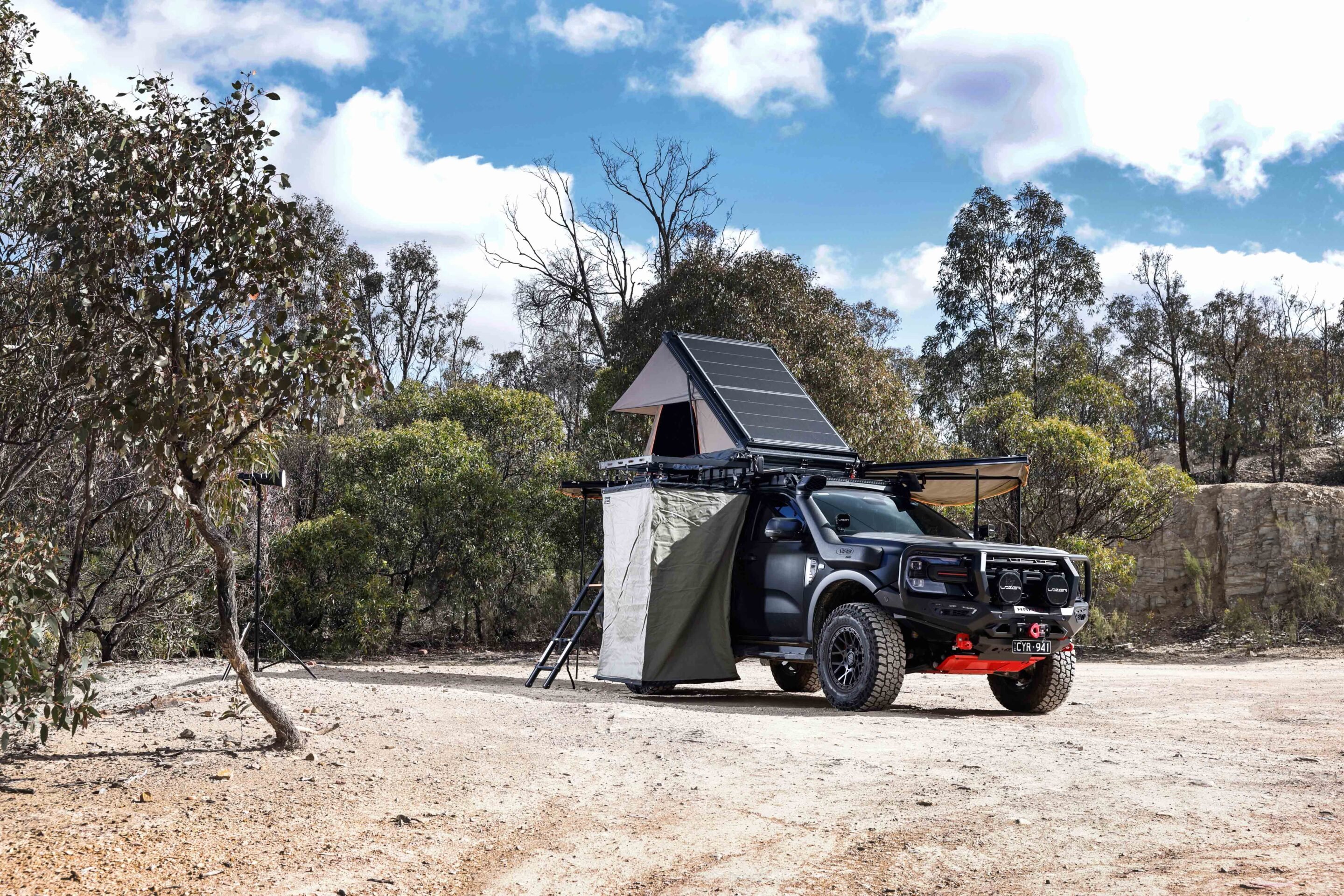
For Melbourne’s Arden Packeer, it was a matter of selection, so he tried out as many models as he could before laying down his hard-earned cash.
“I looked at a bunch of different options and test drove a few – including the HiLux, 79 Series, D-MAX and RAM – but kept coming back to the Ranger for its look and the comfort inside the cabin,” Arden told us. “I love the look of the big American trucks, but the Ranger hit the sweet spot of size and capability in my opinion.”
Early in ’24 he took delivery of a shiny black 2024.5 Ranger Wildtrak V6 and set to work building it to suit his needs. Arden might not be Einstein either, but he’s smart enough to know a good thing when he drives it, and he put a detailed plan in place to modify it.
“The original concept was to build a ‘tough tourer’ – something capable as well as comfortable for a planned trip around Australia, and to get me to places to take photos and travel with my kids.”
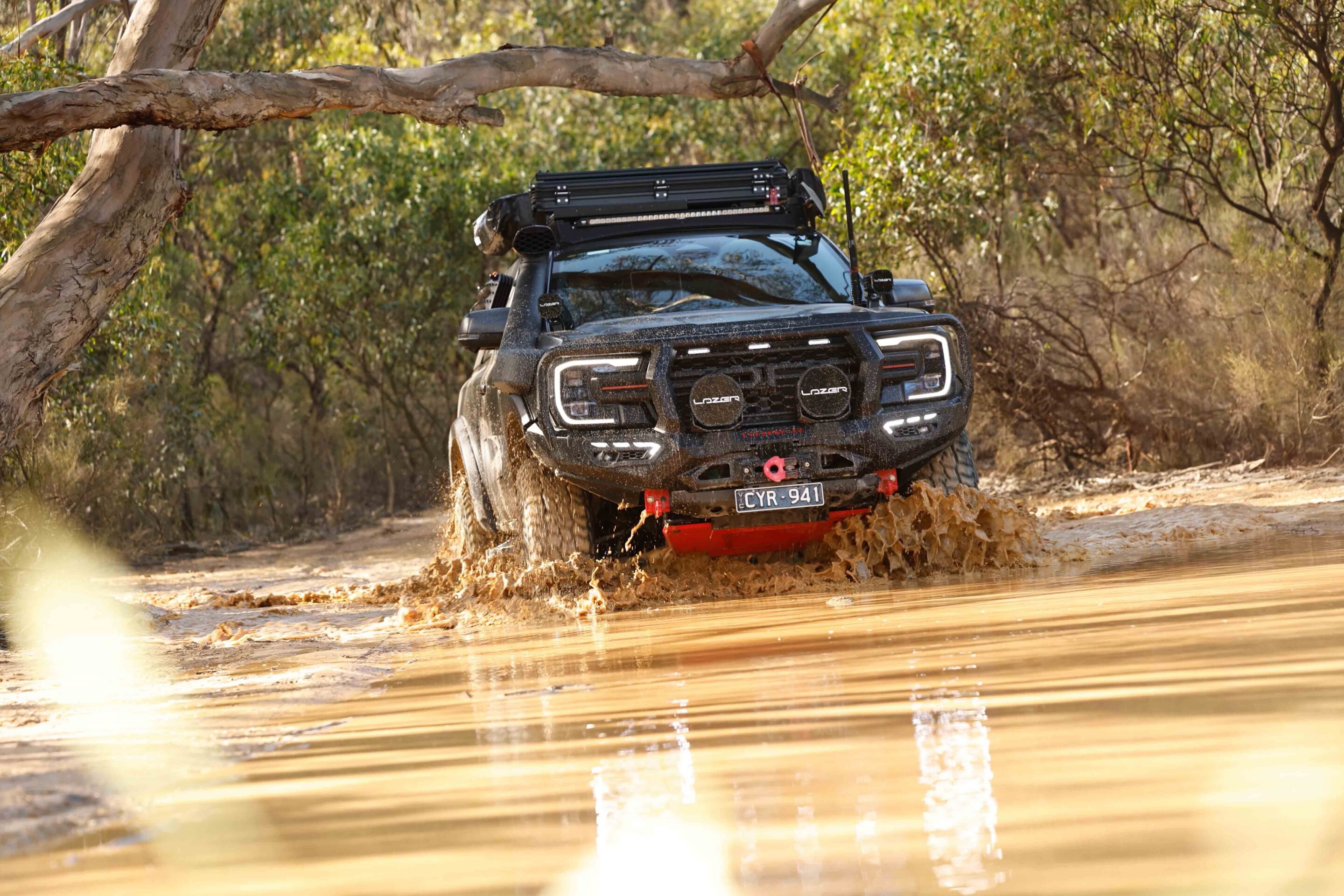
Stage One and Two: Suspension, protection and canopy fit-out
The comprehensive build has taken place in stages, with the first happening pre-registration with help from the Ford dealer. This included an ARB BP-51 suspension kit with a GVM upgrade to 3650kg. A set of 285/70R17 Mickey Thompson Baja Boss AT tyres were wrapped around ROH Crawler wheels and bolted on under EGR flares.
To protect the Ranger on off-road adventures, a comprehensive kit of Hamer accessories went on – including an Atlas Plus bullbar, Nova rear bar, Hamer side steps and underbody protection. Paint protection comes courtesy of an Xpel Stealth matte wrap, giving the Ranger its dark look.
To improve storage and carrying capacity, a Front Runner roof rack was fitted up top and a tub-topping Centurion canopy from Utemaster went on the back.
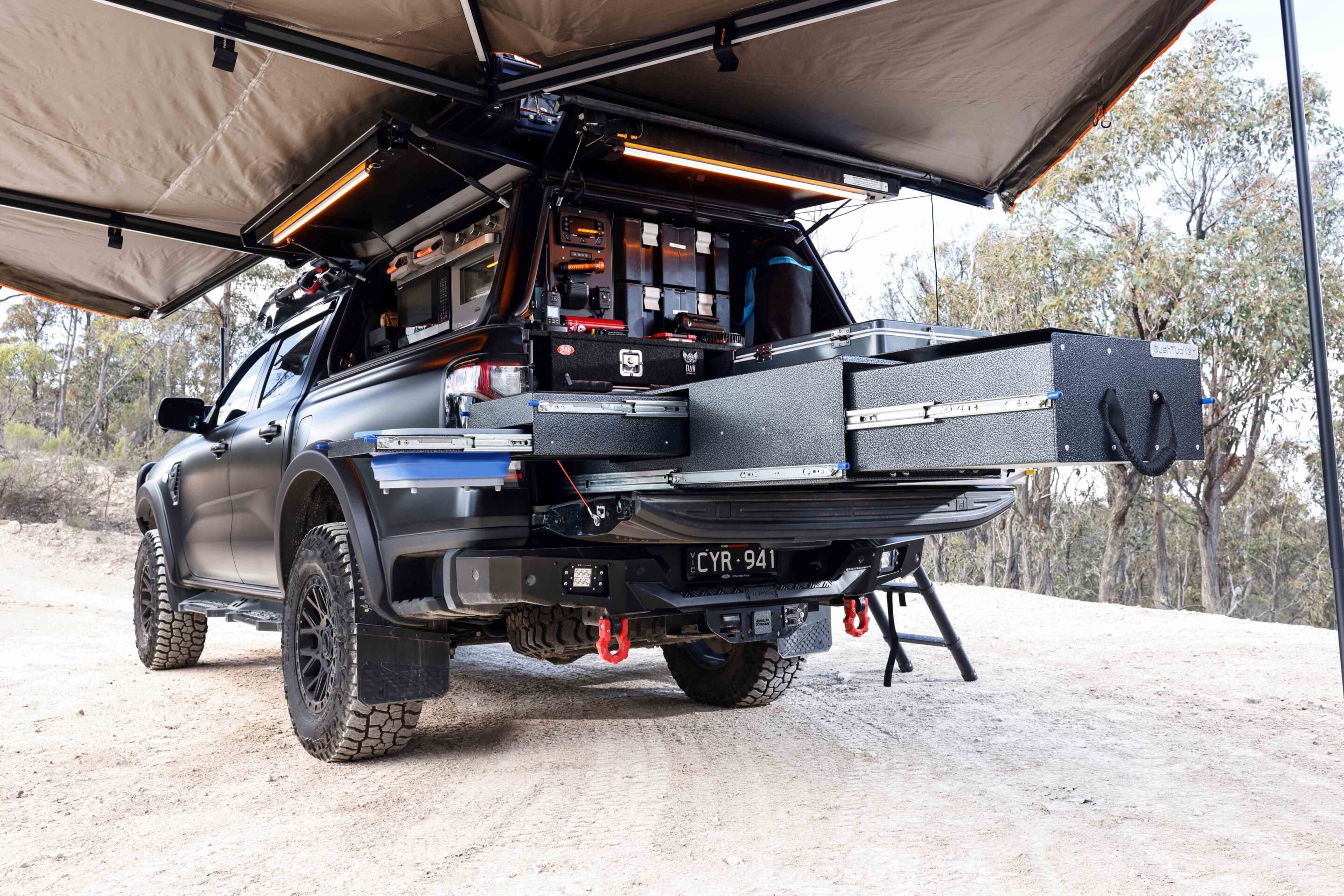
“I wanted to build something with a tub canopy as I didn’t like the look of the large tradie-style canopies, so it was a compromise between weight and capability. I didn’t want to compromise on quality, so I went with what I thought was the best of breed.”
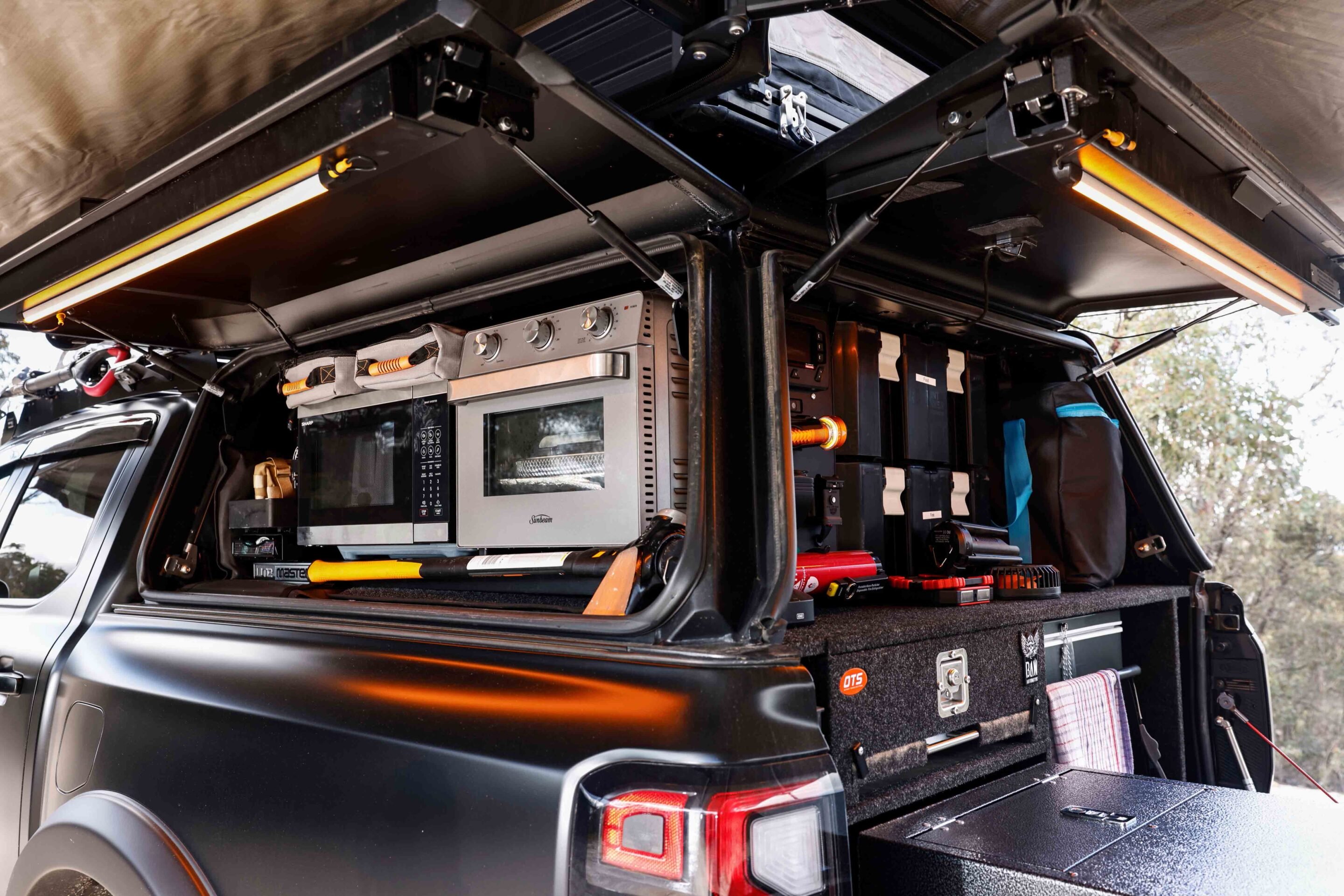
Stage two of the build was the extensive fit-out of the canopy, carried out after the ute was sent to BAW Automotive in Queensland. We’ve featured a few of BAW’s own builds in these pages over the years and they’ve always been first-rate, so it’s easy to see why Arden chose to have Dave, Brent and the crew there do the work.
This stage included an extensive 12-volt system with Redarc’s finest kit powering accessories and keeping the Custom Lithium 400Ah battery charged. The Redarc gear comprises a 3000W RS3 inverter, Alpha 100 BMS, 1280 TVMS with a pair of RedVision screens (one in the canopy and one inside the ute), plus 400W of solar panels mounted on top of the Streamline rooftop tent, which itself sits on a Utemaster canopy rack.
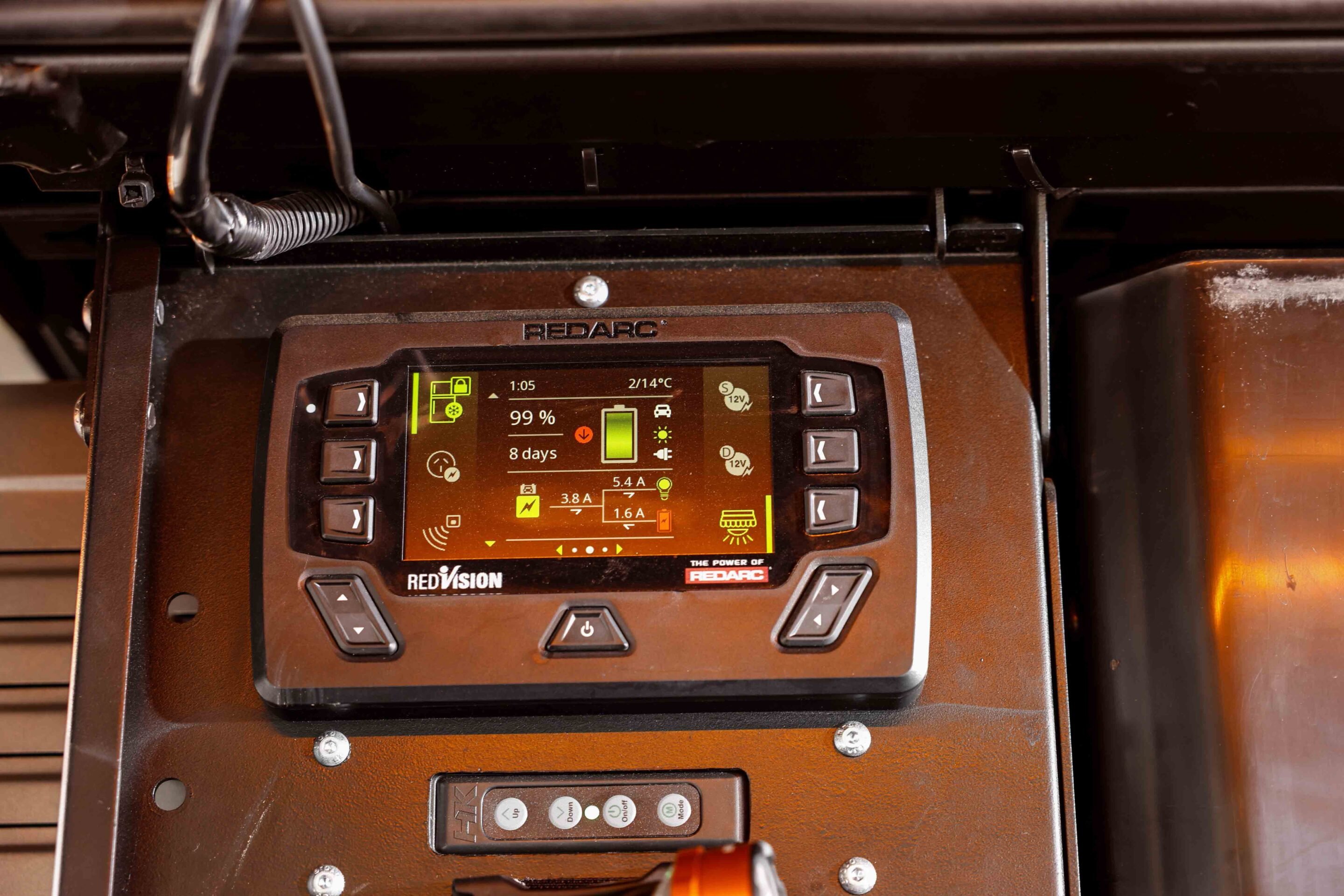
Drawing on all that power is a kitchen’s worth of appliances, including a 60-litre Engel fridge, coffee machine, microwave oven, induction cooktop and a Jolica hot water system. The pull-out kitchen also features a custom sink, Pak Offroad 40-litre water tank and drawer system, plus enough lighting to fill a nightclub. Lighting is fitted above and below the Ranger, with Lazer ditch lights, rack lights and a light bar.
BAW did more than just the fit-out, also installing a Brown Davis 145-litre replacement fuel tank, Safari Armax snorkel, Manta 3-inch exhaust, ARB Air Locker up front to complement the factory rear locker, an ARB air compressor and a Darche 270° awning.
If, like me, you’re thinking this Ranger already has just about everything you could bolt on – stand by, because there’s a Stage Three!
Stage Three: Sound, interior and testing
With the Ranger back in Melbourne, Arden turned his attention to the sound system and, with help from SSV Thomastown, built a killer setup.
Up front are Focal K2M Frak tweeters and Focal K2M Series 3 midrange drivers in custom-made pillar pods, with Focal K2M Series 6.5-inch woofers in the doors and a Focal Sub25 KXS (slim) in a custom box under the seat.
Driving the system is an Audison SR6600 six-channel D-Class amp, Audison BitOneHD signal processor, and Audison DRC MP with a custom cup-holder mount, plus a Focal mono amp for the sub and a Focal FDS 4.350 amp for the rear. A PAC AmpPRO integrates the setup with Ford’s Sync4 system, working seamlessly with the factory gear.
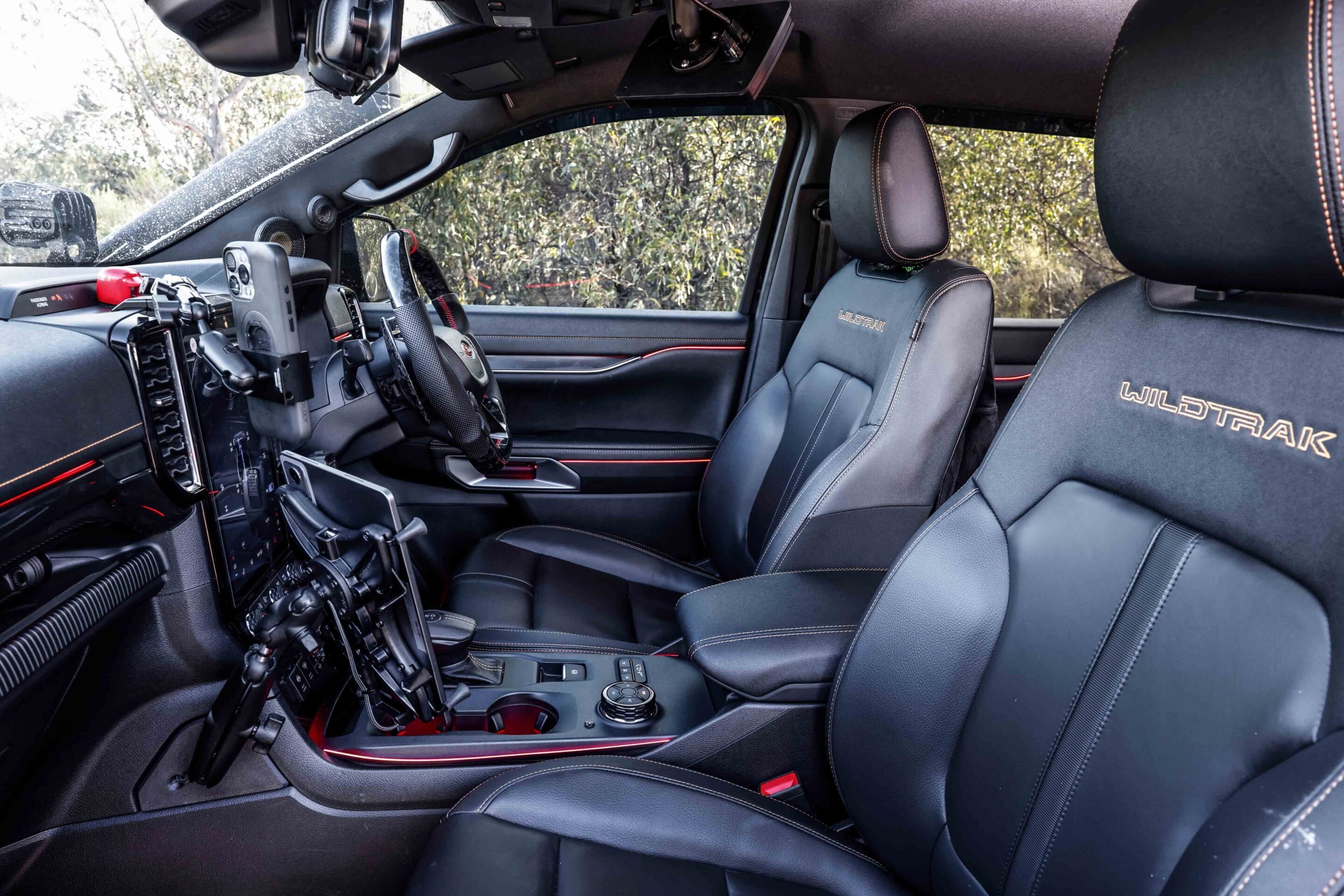
Also inside is an Illumo Ambient Zone Kit, used throughout along with sound deadening on the roof, floor and doors. The steering wheel is a custom-made unit with Raptor-style paddle shifters for easier control of the 10-speed auto. Ahead of it sits a Raptor-style dash cluster with additional functionality and modes unlocked using Forscan.
Other interior additions include switch and Molle panels from Pirate Camp, a GME UHF radio and an EVC throttle controller. Aside from the controller and transmission shifter, the V6 diesel and 10-speed auto remain some of the only components left stock on Arden’s Ranger.
While Arden says the Ranger is complete for now, he admits he’d like to fit a set of 35-inch tyres, have it engineered to suit, and see how that affects performance. The longer outback adventures are still to come, but Arden has already been testing the Ranger’s capabilities on some of the Victorian High Country’s most iconic tracks.
“I’ve done Billy Goats, Blue Rag and Crooked River, but my favourite was the Buffalo Ranges track up to Mt Murray. Similar views to Blue Rag, but one of the longer ridgeline drives in the High Country.”
The best thing about the project vehicles we have at 4X4 Australia is working with the amazing aftermarket businesses that contribute and supply the gear to make them special.
In 2025 we’ve built up a couple of special 4x4s – the BYD Shark and the LandCruiser 79 Series – fitting them with top-notch gear to create better off-road touring vehicles.
We had a specific target for these builds, with both set to tackle a Simpson Desert drive, and we wanted to make sure they were up to the task. The PHEV Shark in particular was a bit of an unknown quantity, so we ensured we had the back-up needed to get it across the desert – hopefully under its own steam, but with help on hand if required.
Thanks to our amazing suppliers and drivers, both vehicles crossed the Simpson relatively unscathed, and the corresponding video below is well worth a watch 👇
With many of these suppliers in town for the Melbourne 4×4 Show – and conditions in the mountains perfect for an alpine drive – we invited them to join us for a couple of days of off-road touring in the hills.
Not everyone could make it, but we welcomed crews from Ironman 4×4, Marks 4WD, Evakool, MSA 4×4, Terrain Tamer, Piranha Offroad and Slattery Auctions. Of course, not all of the suppliers involved in the vehicles could join the trip, but it was a great crew and a manageable number of rigs to convoy over the mountains.
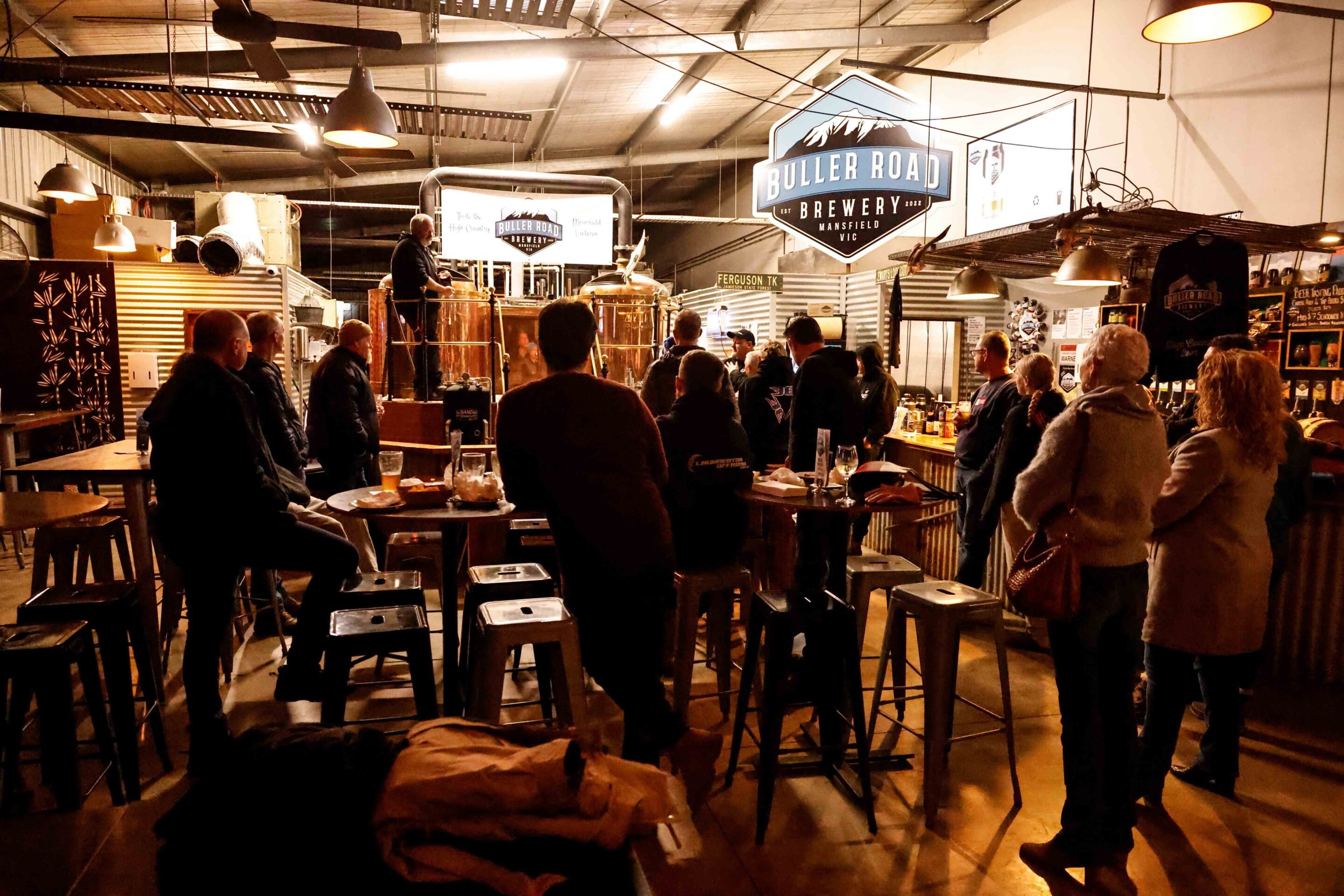
We based ourselves at the foot of the mountains in Mansfield, specifically at the Buller Road Brewery, where Adam from the brewery offered to lead our convoy over Mt Skene in the hope of scoring some snow-driving experience. The group was a mixed bag of vehicles with varying capability, so that had to be taken into consideration – not all of them were up to following Adam’s portal-equipped LandCruiser wherever it could go.
The Jamieson-Licola Road takes you up over Mt Skene, and it’s one of the few places in the High Country where you can find a good snow drive, with most other high-altitude tracks closed for winter. The road over Mt Skene is also closed, but you can drive it with a permit from 4WD Victoria, and with permits for each of our vehicles we headed up the hill.
It’s a long climb up the road from the hamlet of Jamieson, and in a few places we had to negotiate around fallen trees or break out the chainsaw to clear the way. Soon enough we were seeing patches of snow on the sides of the track, growing ever larger as we neared the summit.
Unlike the last time we attempted a convoy over Skene – when the snow was so deep it eventually turned us back – there was relatively little fresh snow on the summit this time. That made for a fun but straightforward drive to the top, where we were able to pull up and grab some pics in and around the patches of snow.
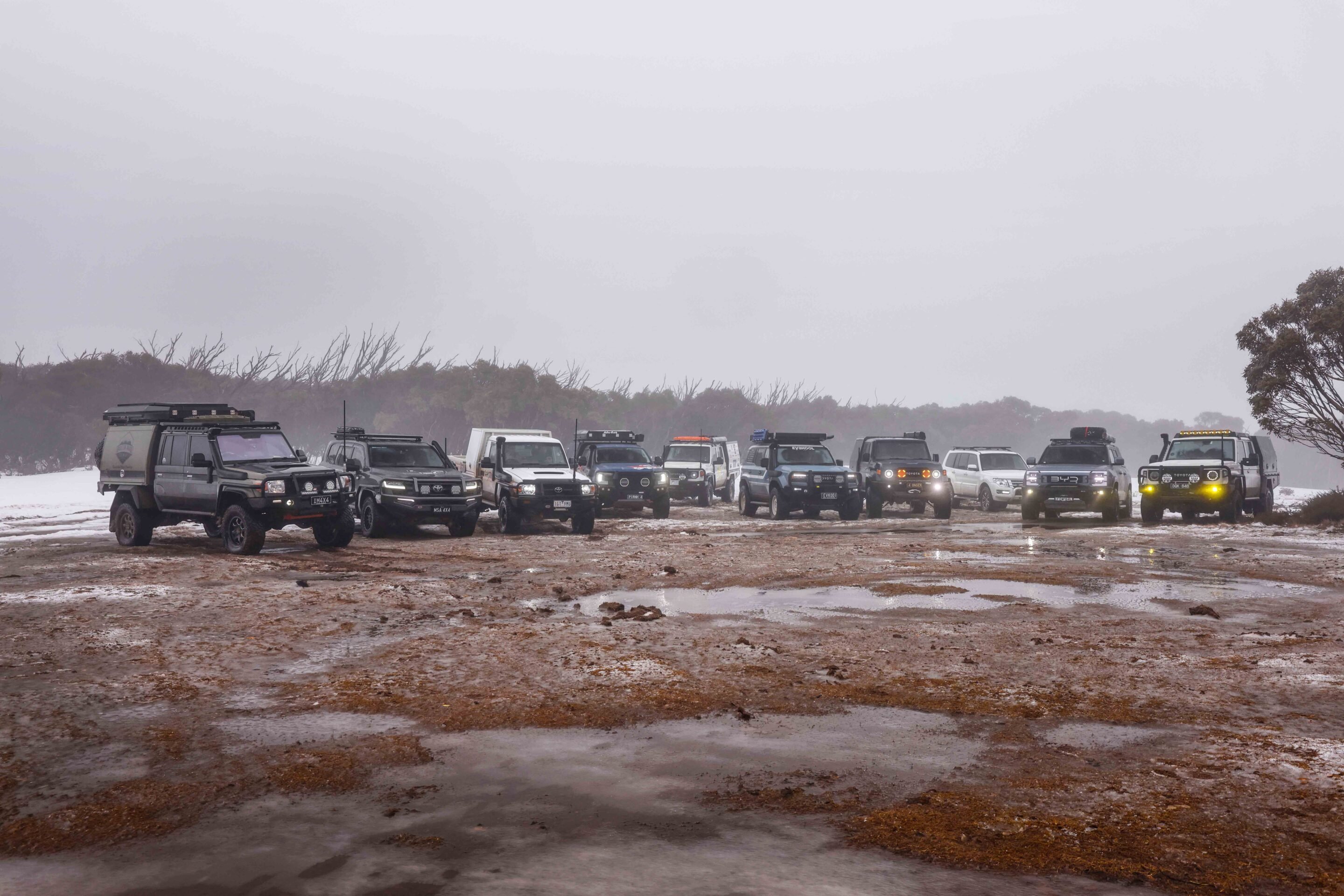
Of course, a cold front rolled through in the following days and dumped plenty more snow in the Alps, but any day wheeling in the mountains beats a day in the office. Soon enough we mounted up and continued on.
In some places, the drive down the mountain was more challenging than the climb up, with trickier terrain to contend with. More fallen trees across the track and wet, slippery descents tested the drivers’ skills on the way down, while a couple of river crossings made for great photographic opportunities.
When we finally emerged on the Woods Point-Jamieson Road, it was still another hour or so back to Mansfield, where we congregated at the Buller Road Brewery for a great night of tasty food and an excellent selection of beers, all brewed on-site.
With Mansfield being the start or finish point for so many 4×4 adventures, the Buller Road Brewery is the perfect stop-off for a feed and a brew – you won’t be disappointed.
While some of the crew had to leave the next morning, Ironman’s Mark Berger led a convoy of the remaining rigs up to Mt Terrible. The run included more epic four-wheel driving, sensational scenery, a touch more snow and plenty of camaraderie.
It’s this camaraderie that makes 4×4 trips so special – visiting amazing places, testing our skills and the ability of our vehicles, and spending time with mates. By the end, you always find yourself planning the next trip.
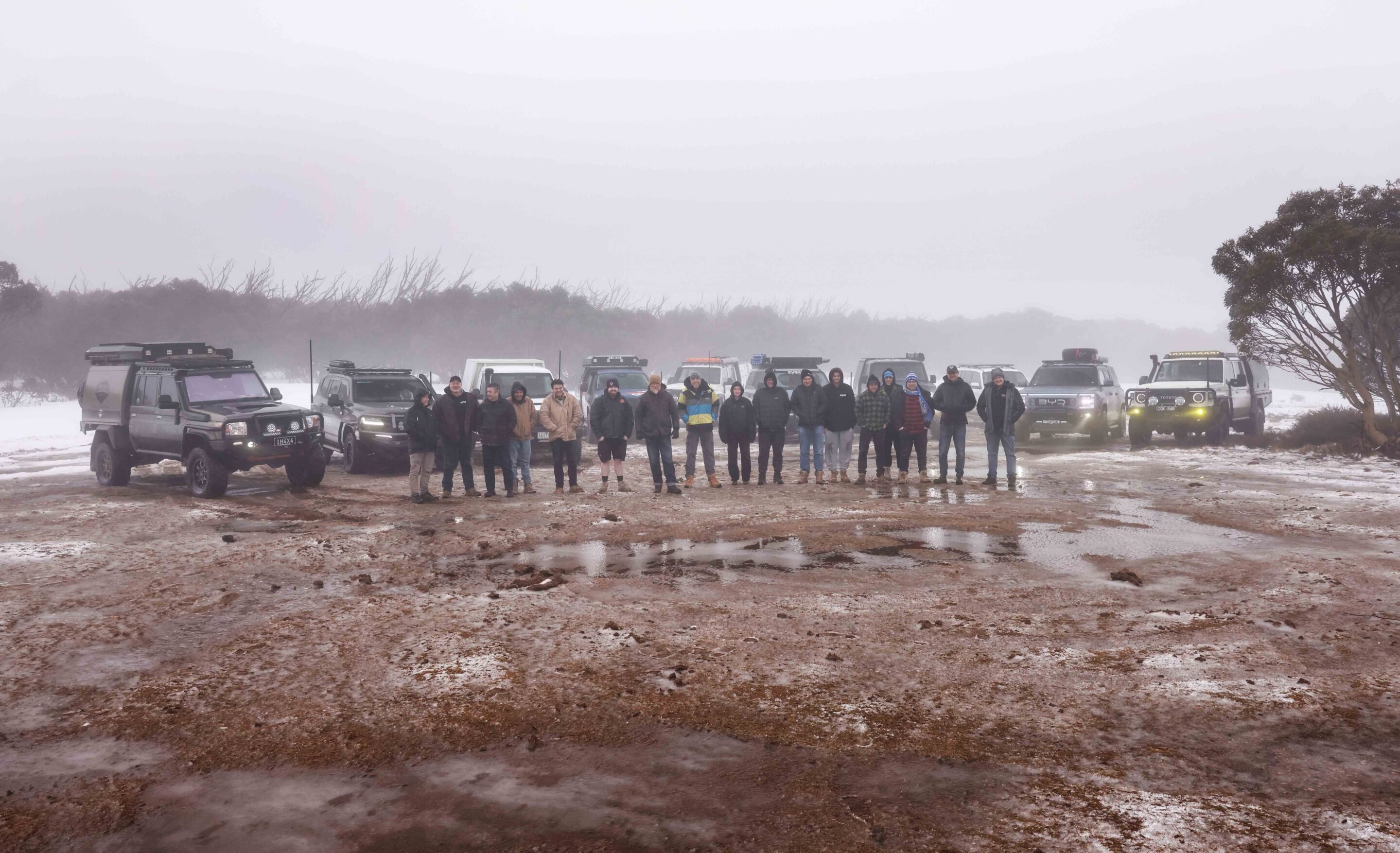
For us at 4X4 Australia, it’s a way of thanking and spending time with those who support our vehicle builds and our publications, in a friendly atmosphere we all enjoy – and one that lets us talk shop without talking business. We thank all of our supporters, especially those who took the time to join us on this adventure.
We’re already planning the next one!
When it comes to 4×4 touring in Australia, diesel has long been the fuel of choice.
There are plenty of reasons for this preference: Old carburetted petrol engines in Series Land Rovers, Land Cruiser FJs and G60 Datsuns were prone to vapour lock whenever the mercury climbed towards 40°C, leaving you stranded in the heat; carrying petrol in jerry cans was always riskier than carrying diesel; and diesel delivers greater torque, efficiency and touring range for the same volume of fuel.
In more recent times, the arrival of factory-built turbo-diesel engines delivered even more grunt and improved fuel economy, making them especially appealing to long-distance travellers.
Toyota has long offered LandCruisers with a choice of petrol or diesel powertrains, but as modern diesels improved in both performance and efficiency, the petrol options steadily fell out of favour. The LC200 was the last model sold here with both fuel types, but Toyota Australia eventually dropped the petrol variant due to a lack of demand.
At the time, Toyota was selling eight to 10 times more LandCruisers than Nissan managed with its Y62 Patrols, month after month. The Y62 is a great wagon – I’ve always loved driving it – but being petrol-only, it never came close to matching the Cruiser’s sales.
So it caught my attention when Toyota’s sales and marketing boss, Sean Hanley, said at the reveal of the LC300 Hybrid that he doesn’t see much of a future for diesel in Australia beyond the next decade.
Toyota is hedging its bets on future fuels every which way, with BEV, EV, ICE, hydrogen and hybrids all represented in its showrooms. Hanley says there’s no single perfect fuel for every application, adding: “At Toyota, we are committed to a multi-pathway approach to decarbonisation, providing appropriate powertrains for different applications.”
While the Performance Hybrid petrol LandCruiser is just one of those pathways, there will be many more. Hanley sees hydrogen taking over from diesel as the fuel of choice for heavy vehicles and other applications where diesel has long been king. This would require significant infrastructure to store, transport and deliver the fuel across the country, not to mention changes to the vehicles themselves. Toyota Australia is already investing heavily in this space, but there’s still a long way to go.
I find it hard to believe we’ll see this change within the next 10 years, but there will no doubt be shifts along the way. What I am sure of is that I’ll still be filling my LandCruiser with diesel at remote outposts in outback Australia for the rest of my days.
Isuzu Ute Australia (IUA) recently rolled out a new 2.2-litre engine and eight-speed automatic gearbox, to be offered alongside its proven 3.0-litre ‘4J’ in D-MAX and MU-X models, and we got to drive it.
The long and short of it is that the new Euro 5 RZ4F engine replaces the underwhelming 1.9-litre unit it’s based on, with the redesigned powerplant producing a claimed 120kW/400Nm (up 10kW/50Nm), and it’s backed by a new Aisin-sourced eight-speed auto. It also gets fuel-saving technology like Idle Stop Start (ISS) – but the 3.0-litre now gets that, too.
In listening to its customers, IUA has given the 2.2 models a full 3500kg braked towing capacity, compared to the 3000kg rating that hamstrung the 1.9 models, making the new powertrain as capable as its big brother on paper.
Customers will pay for the new engine and ’box though, with the 2.2-litre models priced around $1500 higher than their 1.9-equipped counterparts, and the price hikes extend to the 3.0-litre models adding between $1500 and $2500 to sticker prices across the range.
The cheapest 4×4 D-MAX is now the SX 3.0 single-cab chassis at $46,200 (up $1500), and the cheapest dual-cab is the SX 2.2 at $50,700, while the entry-level 4×4 MU-X LS-M 2.2 starts at $55,900 (up $1500). The budget manual ’box models are also gone for good, with IUA offering only self-shifters from here on in.
This is the price we’re all paying for the New Vehicle Efficiency Standards (NVES), as manufacturers fight to avoid hefty fines by bringing CO2 emissions down. The new engine spits out 174g of CO2 per kilometre in the D-MAX and 177g/km in the MU-X, so it comes in below the 2025 threshold of 210g/km for light-commercial vehicles. Next year that threshold drops to 180g/km and by 2027 it will drop again to 150g/km, meaning at best this 2.2-litre engine buys IUA a year or two, before it’ll be faced with hefty fines for every vehicle sold.
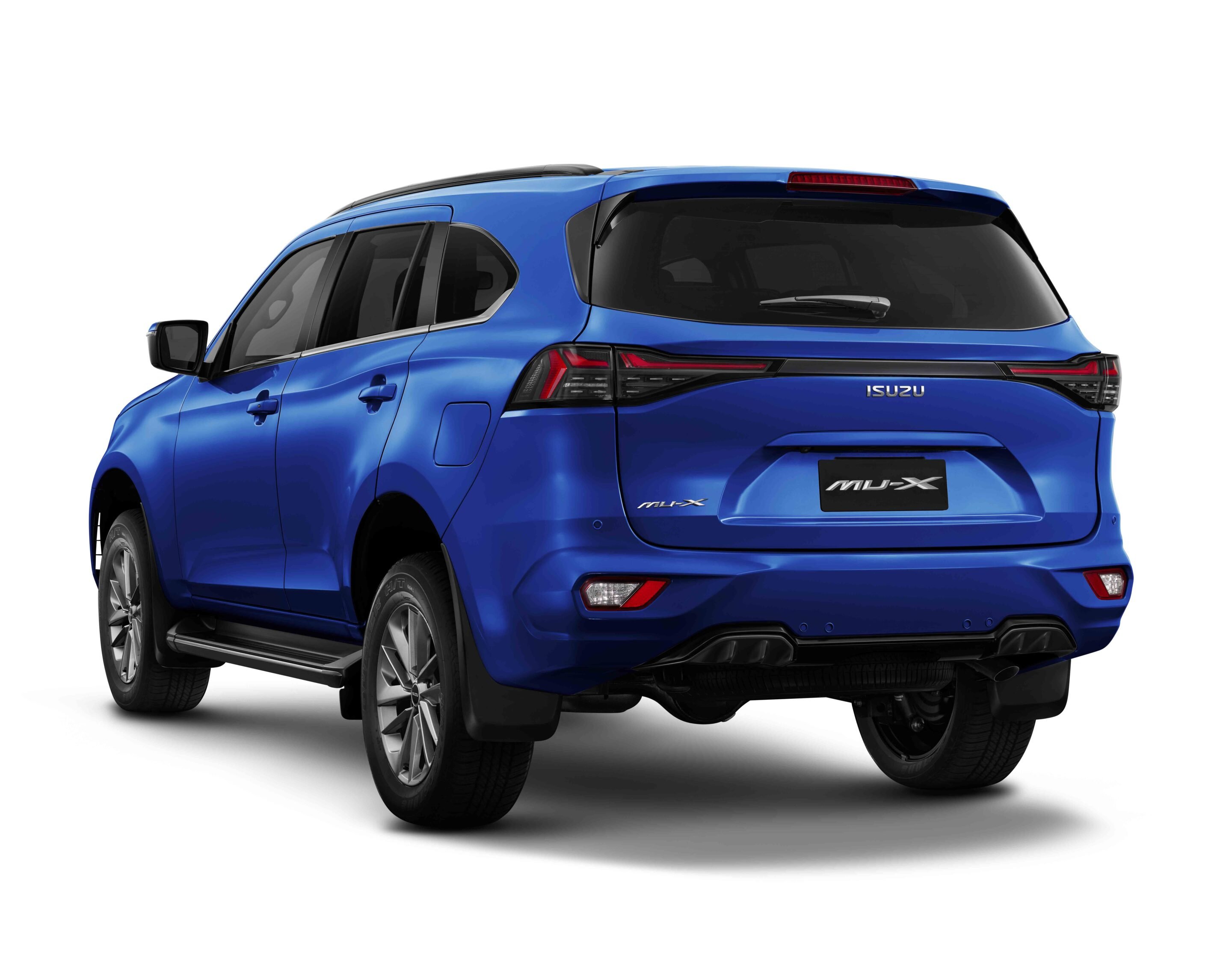
As other brands like Toyota and Ford pursue hybrid technology in a bid to clean up their diesel models, Isuzu appears to have abandoned its mild-hybrid system, which featured – in very limited numbers – on its now-scrapped 1.9-litre engine in Thailand.
We weren’t able to get anyone ‘in the know’ at IUA to confirm or deny the likelihood of a new mild-hybrid system for the 2.2-litre engine, and none would outline whether hybrid technology is planned for the brand’s Australian models in the future. Nor would executives elaborate on the previously announced electric D-MAX model, suggesting that for the foreseeable future none of their models will feature electrified systems of any type.
Then there’s the fact the new 2.2-litre engine is only Euro 5, despite IUA’s truck-making sister brand Isuzu Trucks offering Euro 6 engines across its entire range of light- and medium lineup (and soon heavy-duty models too). Isuzu Trucks has even managed to get its 4JZ1 – the commercial vehicle version of the 3.0-litre owners have come to love – to be Euro 6 compliant, albeit at the expense of requiring AdBlue.
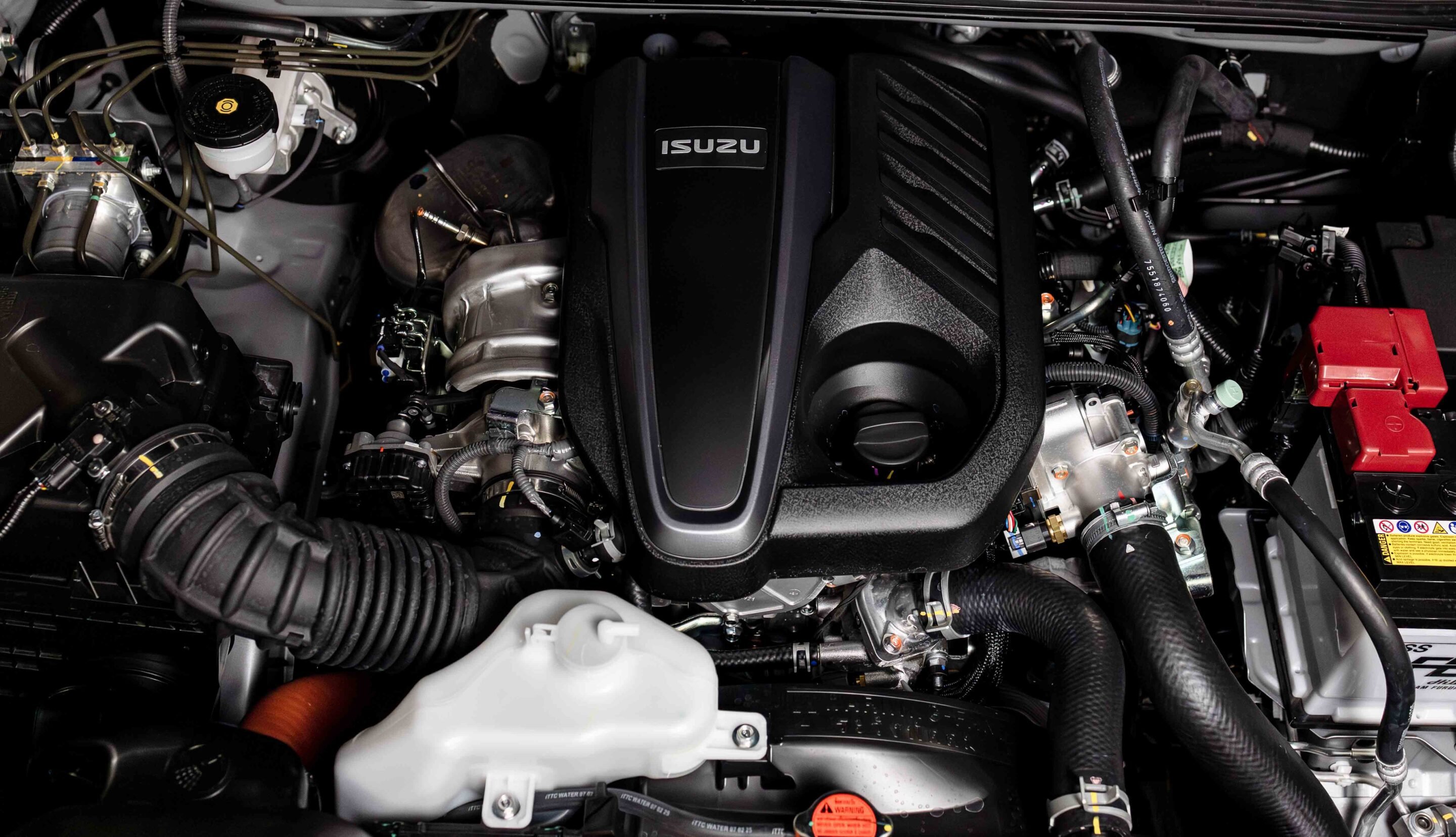
“In terms of the Euro 6 engines there (at Isuzu Trucks), it’s a different ADR category,” explained IUA Senior Product Manager, Aaron Carty, when asked about the Euro 6 4J engine. “So for us, we’re striking the balance between what the consumer wants and likes, versus compliance and regulation. So when the time comes that we have to be Euro 6, we’ll be Euro 6, but right now it’s more cost-effective to provide a vehicle that’s compliant to the current regulations.”
When asked if the 3.0-litre models will receive the eight-speed automatic, senior executives at IUA ruled it out, calling into question the engine’s future here. Even with the new stop-start system, IUA confirmed that the 3.0-litre engine emits 187g/km of CO2, and the MU-X is worse at 200g/km, meaning next year’s 180g/km threshold will likely hurt the 4J.
Confusion about IUA’s future models aside, they gave us the keys to a handful of 2.2-equipped D-MAX and MU-X variants and told us to drive from the Royal Pines Resort on the Gold Coast, out to Swan Gully 4WD Park for some testing – a proposition we were quite okay with.
How does it drive?
As an owner of a 3.0-litre D-MAX, I went into this test with low expectations, especially after rather disliking the 1.9-litre engine on the handful of occasions I drove it – from its strained power to the clattery racket it made.
But the 2.2-litre is a very different beast, quiet and refined, and the eight-speed behind it is a serious step-up from the six-speed that’s starting to feel a little bit dated and isn’t without its quirks – like the inconsistent converter lockup and gear selection.
This new eight-speed ’box is decisive in its gear choices, quick to change and feels like it has a tighter lockup when on and off the throttle. The six-speed works with the 4J, using the engine’s torque ride the ratios, but it would without a doubt have let the smaller engine down, as it did for the 1.9-litre.
“I think the 1.9-litre engine might have highlighted some of the six-speed’s weaknesses, and vice versa, even though that gearbox works so well with the 3.0-litre,” Aaron told us, when discussing the move to an eight-speed transmission.
The new gearbox goes a long way in compensating for the 50 missing Newton metres, and during part-throttle, around-town use the lack of grunt is barely perceptible, even for someone who’s in a 3.0-litre almost everyday. Where the six-speed will hold a gear, relying on the 4J’s propensity to lug, the eight-speed drops a cog but to its credit does so quickly and without confusion. Owners who drive mostly around town are probably going to prefer the eight-speed, because it’s smoother, quicker and more efficient.
Another benefit of the new ’box is that it offers six low-range gears compared to four in the six-speed transmission, which could be felt when crawling up and down some of the rocky sections around Swan Gully. The six-speed has a tall first gear that can run away a bit downhill, but this transmission feels pretty damn good everywhere.
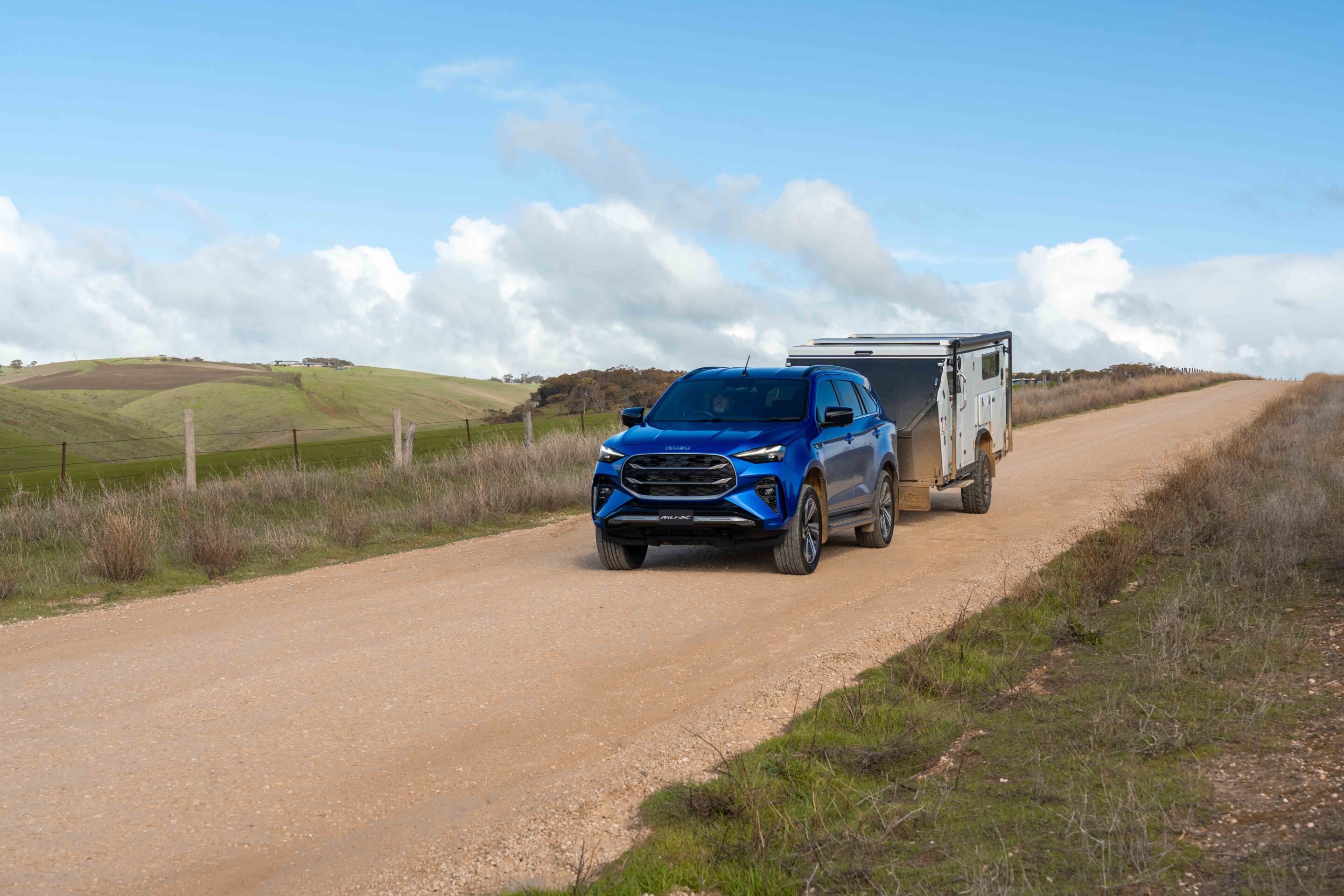
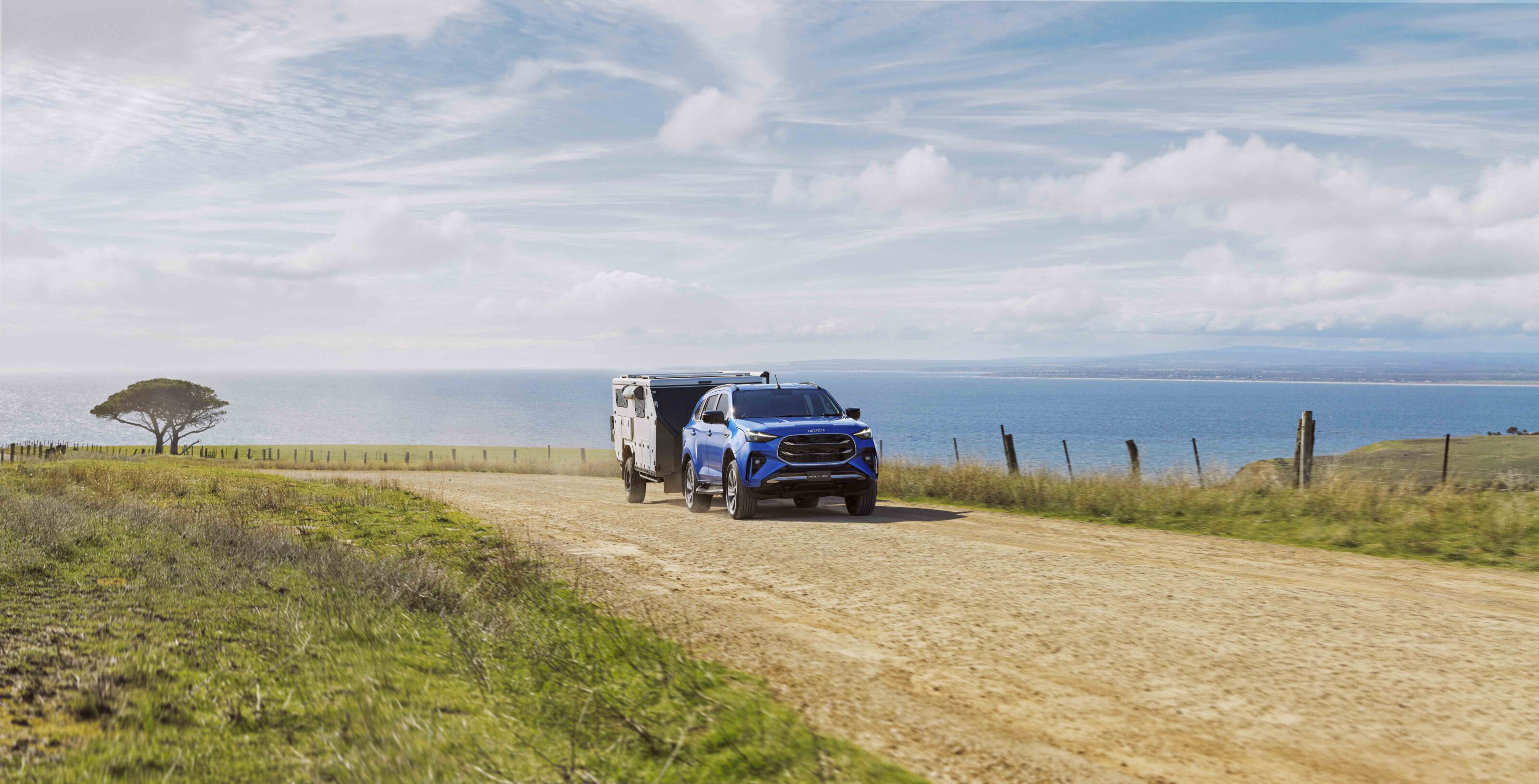
Manually hold gears, or tow, and the downrated power becomes noticeable, as I soon discovered. I was given the chance to tow a two-tonne Lifestyle Campers off-road camper behind a 2.2 D-MAX for the final stretch of on-road driving, as well as during some light off-road work at Swan Gully, and that’s when this engine started to feel a little bit underwhelming.
Up hills or when accelerating from a stop, it was a foot-flat affair to keep the little engine singing. Ideally, we’d like to put three or more tonnes behind it, to see if it can handle it, but if you’re pulling those kinds of weights you probably aren’t interested in a downsized engine.
Once back in an unladen MU-X, it was time to tackle the gnarlier trails. I really couldn’t feel much of a difference, compared to the 3.0-litre models, with the gearbox making good use of the engine’s power. Then there’s the excellent Rough Terrain Mode, which dials the braked traction control (or nerd lockers) to 11, making it almost boring to wheel one of these – it’s that good.
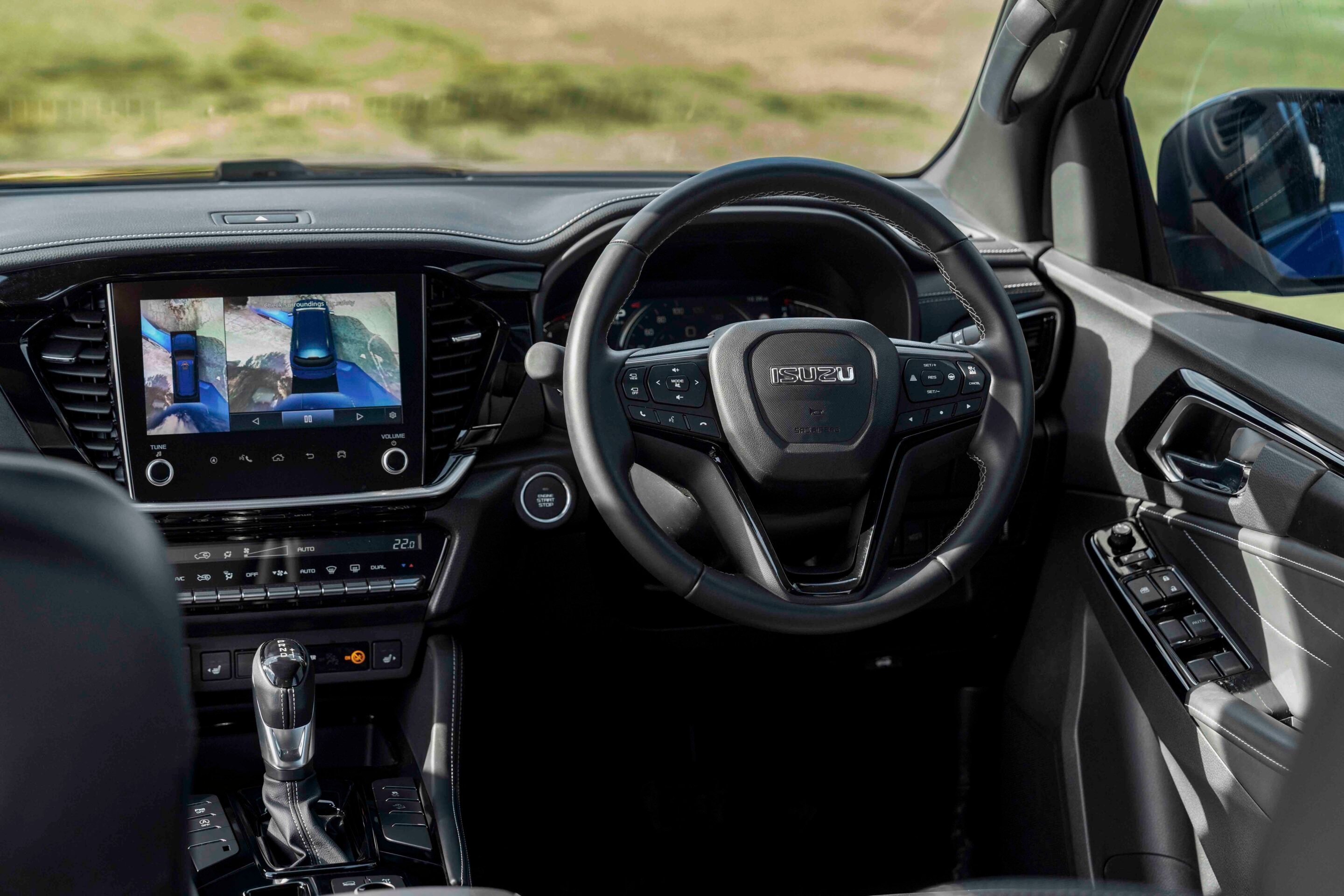
IUA claims the new engine sips 6.6L/100km in the D-MAX and 6.9L/100km in the MU-X, beating out even the 1.9-litre’s drinking habits by 0.3-0.9L/100km. While the gearbox probably contributes, it’s the use of an Idle Stop Start (ISS) system that really brings the consumption down. Now, I’m not a fan of stop-start, both because it’s hard on cold engines, batteries and starter motors, but also because it’s annoying in traffic. In summer it’s most annoying, because it shuts the A/C off.
Credit where it’s due, though, the Isuzu system is smart. It won’t shut down the engine if it’s cold (or hot), if there’s steering lock applied, if the air-con is turned right up, or if the battery temp is outside of its optimal range. As I discovered, the system also turns off when in low-range. Isuzu has fitted a larger battery to compensate for the extra starts, and you can always turn it off with the press of a button. Once I’d tried the system out, that’s exactly what I did.
As far as overall vehicle dynamics, the new models steer, stop and drive the same as their larger engined-siblings on- and off-road. It’s only when you plant it that the slight lack of power becomes evident. They also get all the same standard fare, like a part-time 4×4 system with locking rear diff, ADAS safety systems, modern infotainment with wireless phone mirroring, and from the outside they look identical. The new models also retain the five-star ANCAP rating.
Verdict
I could live with the new powertrain in a daily driver, with the occasional off-road trip thrown in. However, until Isuzu achieves power ratings on par with other downsized diesels like Ford’s 2.0-litre bi-turbo (157kW/500Nm) or Nissan’s 2.3-litre turbo-diesel (140kW/450Nm), this is an option best suited to city-dwellers.
We just hope the mighty 4J lives on into the future, perhaps utilising the Euro 6 smarts of the Isuzu Trucks equivalent, or a hybrid system to put it on par with Toyota and Ford. At this stage, though, it all feels a bit up in the air.
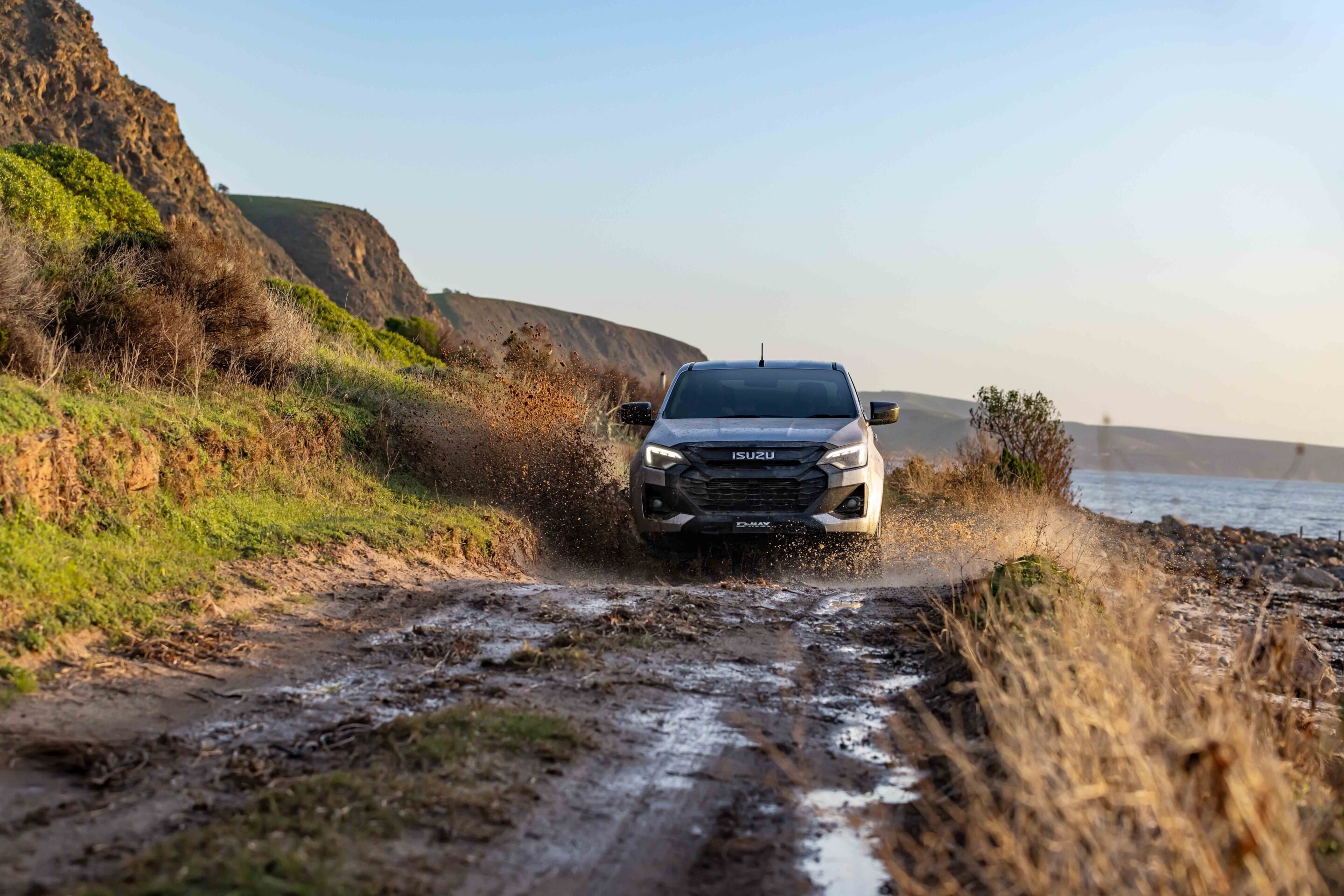
2026 Isuzu D-MAX pricing
| Model | Engine / Transmission | Price (AUD) |
|---|---|---|
| Single Cab Chassis SX | 3.0L AT | $46,200 |
| Space Cab Chassis SX | 3.0L AT | $49,700 |
| Crew Cab Chassis SX | 2.2L AT | $50,700 |
| Crew Cab Chassis SX | 3.0L AT | $52,700 |
| Crew Cab Chassis SX | 3.0L AT | $53,200 |
| Crew Cab Chassis LS-U | 3.0L AT | $63,500 |
| Crew Ute SX | 2.2L AT | $52,200 |
| Crew Ute SX | 3.0L AT | $54,200 |
| Crew Ute LSM X-RIDER | 2.2L AT | $59,500 |
| Crew Ute LSM X-RIDER | 3.0L AT | $61,500 |
| Crew Ute LS-U | 3.0L AT | $65,000 |
| Crew Ute LS-U+ | 3.0L AT | $68,000 |
| Crew Ute X-TERRAIN | 3.0L AT | $73,000 |
| Crew Ute BLADE | 3.0L AT | $80,900 |
2026 Isuzu MU-X pricing
| Model | Engine / Transmission | Price (AUD) |
|---|---|---|
| LS-M | 2.2L AT | $55,900 |
| LS-M | 3.0L AT | $57,900 |
| LS-U | 2.2L AT | $62,900 |
| LS-U | 3.0L AT | $64,900 |
| LS-T | 2.2L AT | $71,400 |
| LS-T | 3.0L AT | $73,400 |
| X-TERRAIN | 3.0L AT | $77,100 |