
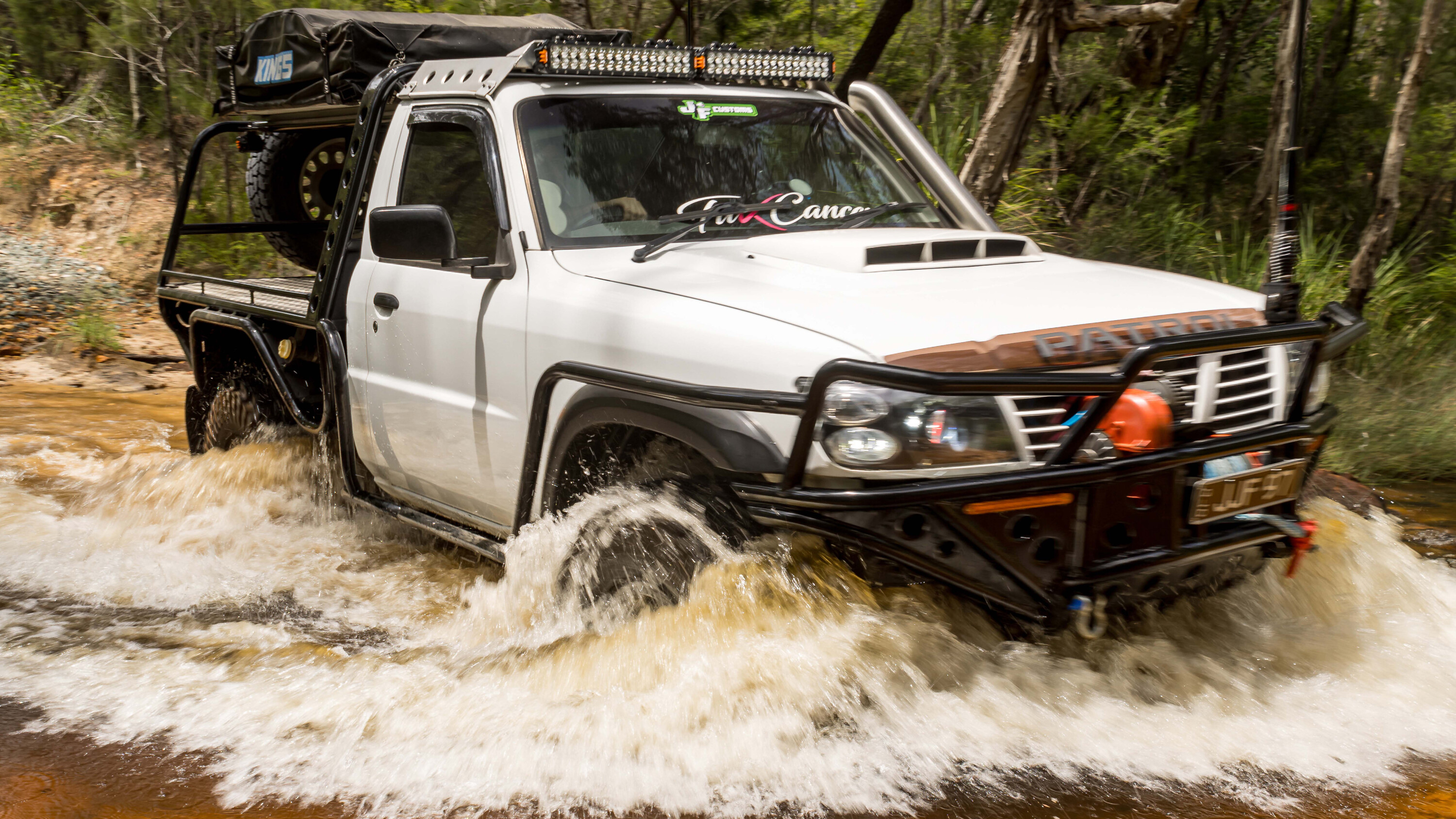
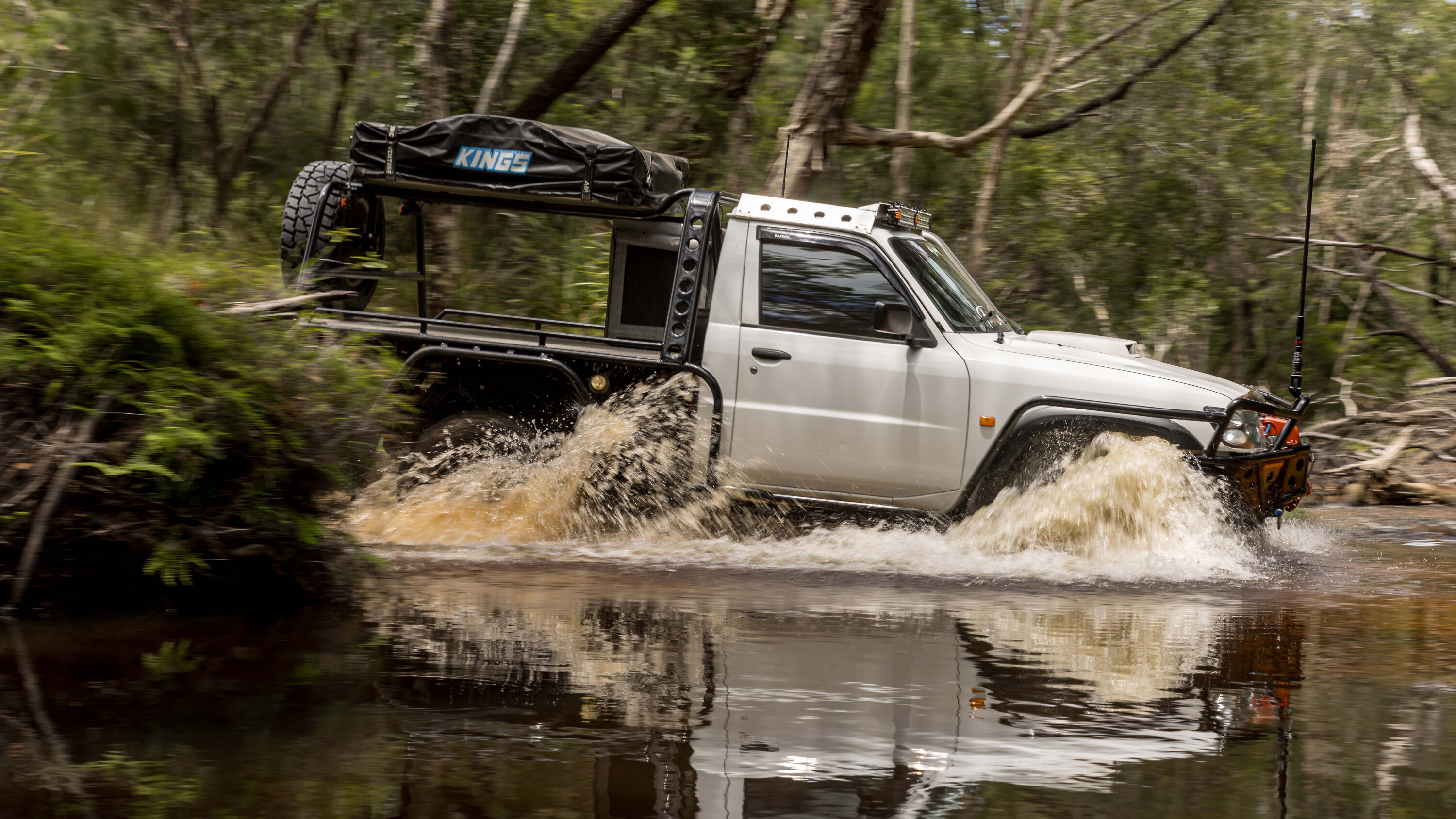
If something’s worth doing, it’s worth doing properly. Yep, it’s an old adage, but in the case of this uber-tough GU Patrol ute, that well-worn saying sure does bear true.
When Jarrod Francis, a boilermaker by trade, first bought this ute back in 2015, his plans were relatively straightforward: build up what was then a near-stock Patrol for touring purposes, to allow himself and his partner to explore anywhere in Oz. That’s it.
Well, that was it, but after attending a few off-road comps, the plan began changing, and Jarrod decided to venture down a more challenging path…
1
All the reasons why
Previously, Jarrod had owned a 1999 Toyota HiLux Extra Cab, so he was already a fan of what a 4×4 ute offers off-road travellers.
So, when it came time to look for another vehicle as a base for touring, a ute was foremost in his mind – and one that was robust and easy to work on (he intended to do a lot of work himself, through his business, JF Customs).
To that end, there are few off-road vehicles with as worthy a reputation for toughness as the Nissan GU Patrol and its near-bombproof TD42T 4.2-litre six-cylinder turbo-diesel donk. When this example (with five-speed manual gearbox) popped up for sale, back in 2015, it was, as Jarrod says, “a good, solid foundation to start off modifying and exploring with family and friends, with the intention to set it up as a tourer.”
1
As well as that reliable engine, he was also a big fan of the Patrol’s front and rear live axles, and the ease of access to spare parts for Nissan Patrols.
When it first lobbed in Jarrod’s garage, the Patrol had minimal add-ons, with aluminium side-steps, electric brakes and a set of airbags accompanying the rear leaf springs, while the engine had relatively low kilometres on it, for its age. In other words, a nice base for a tourer – a role it performed with aplomb.
Then, about 18 months later, things changed, with Jarrod looking to go all out, building a vehicle that not only retained its touring capabilities, but could also tackle the most difficult terrain if and when required. And for that capability, he had a unique approach in mind…
1
Playing the long game
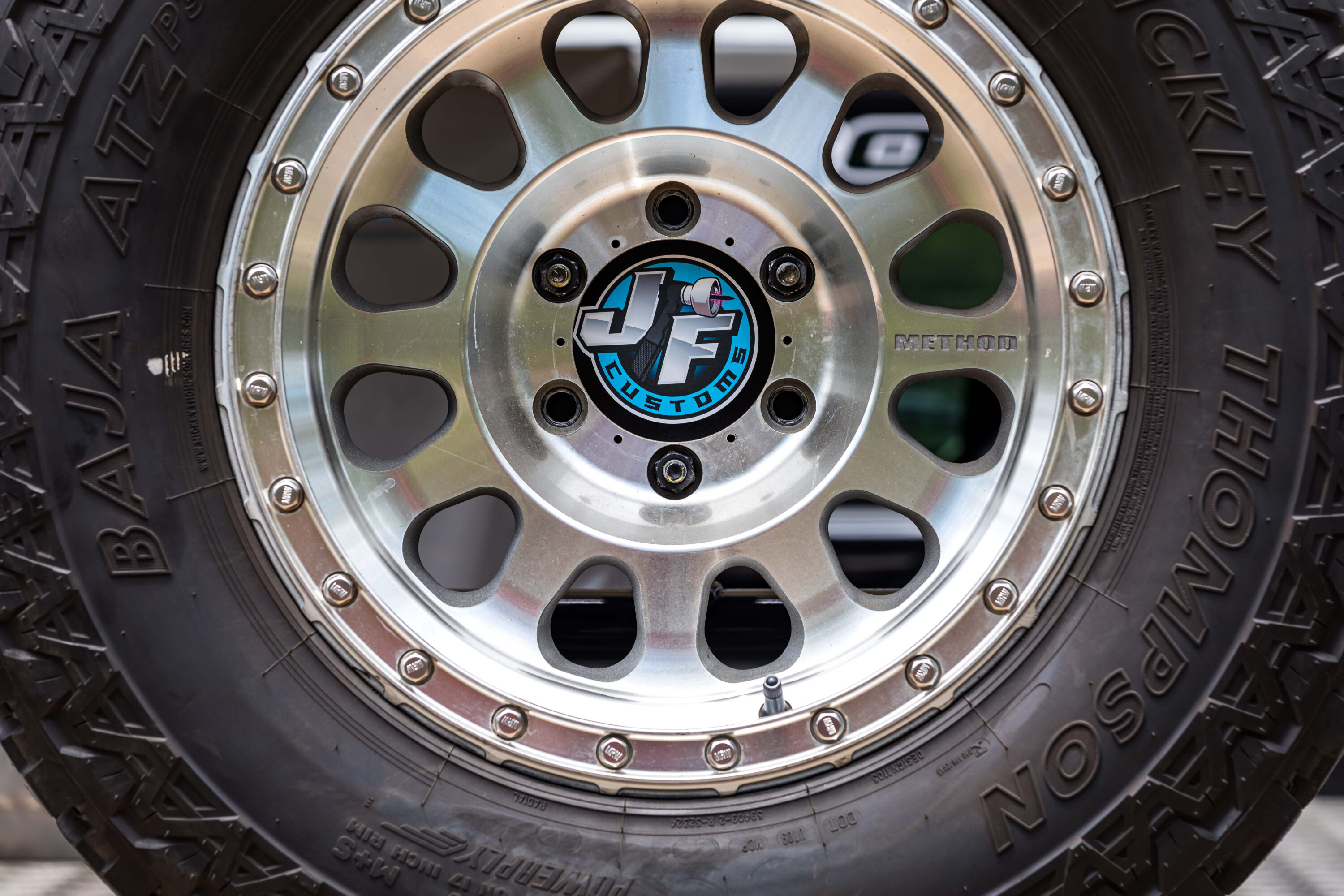
To start with, Jarrod was quite happy with the Patrol’s leaf-spring rear-end; as a touring rig, it’d be expected to lug plenty of camping gear, but after a couple of years, Jarrod was looking for a lot more wheel travel as his off-road explorations took him into ever more difficult terrain.
He was also keen to fit much larger tyres (check out those 37s for serious rubber!) for the more serious rock-crawling duties the Patrol may encounter.
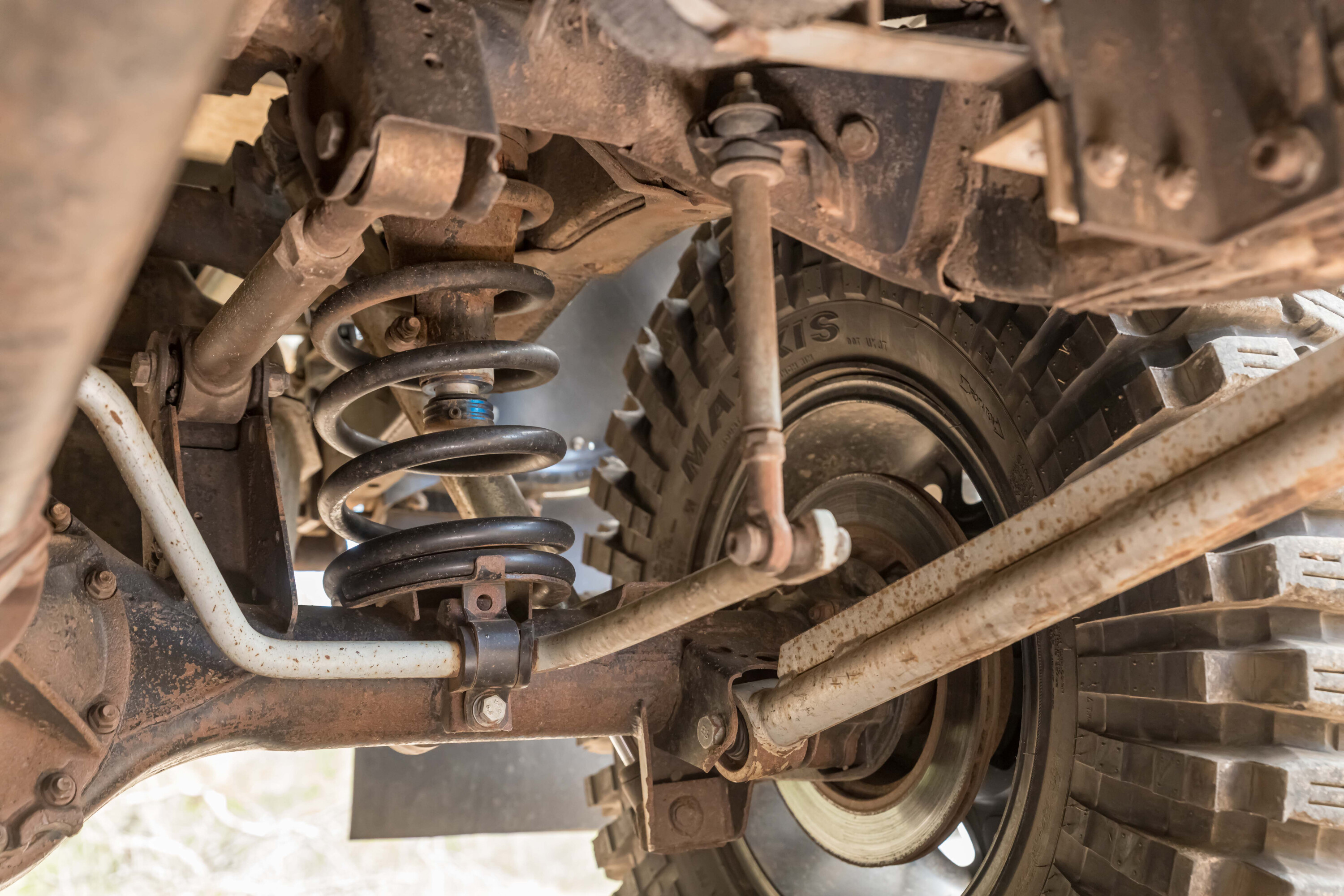
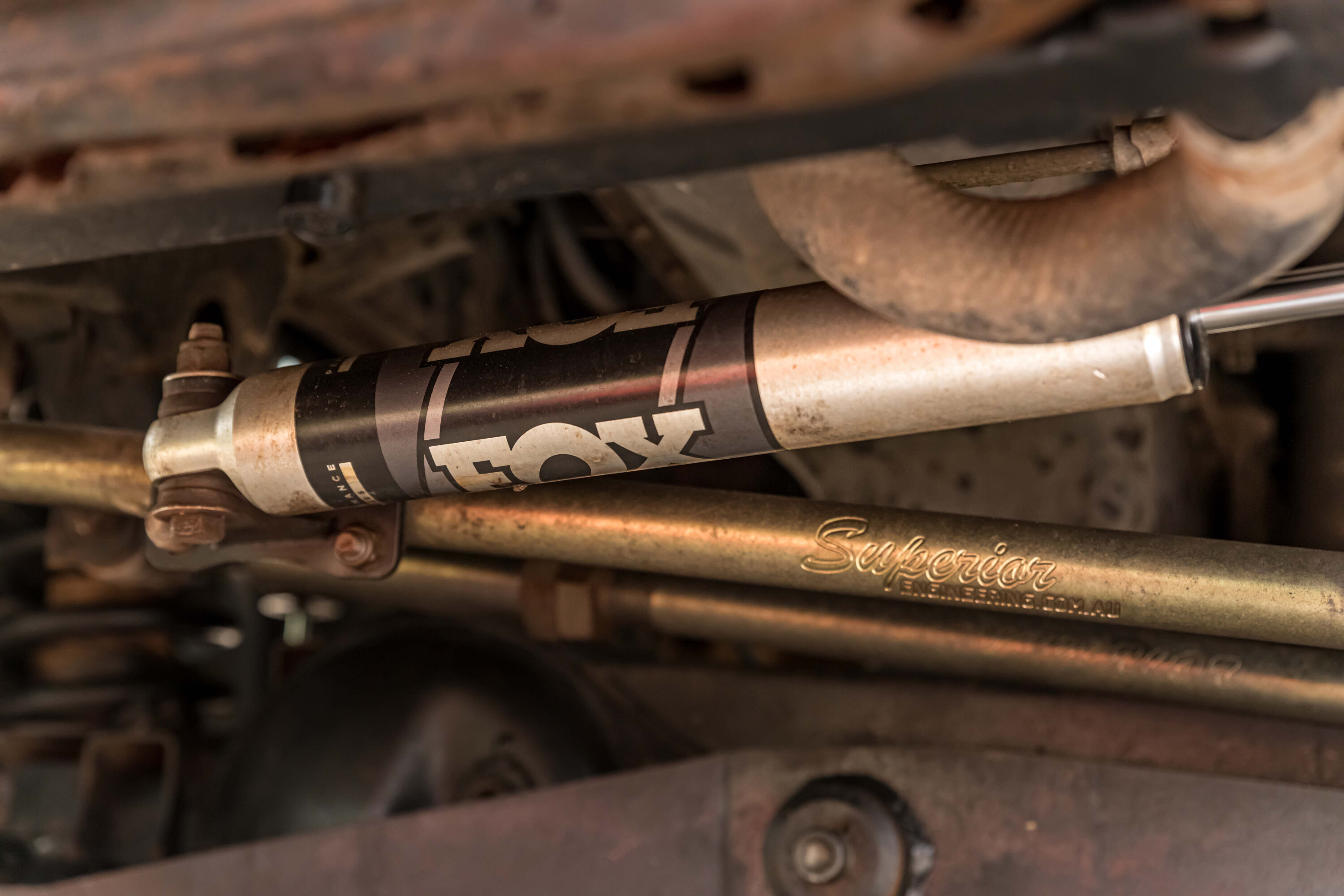
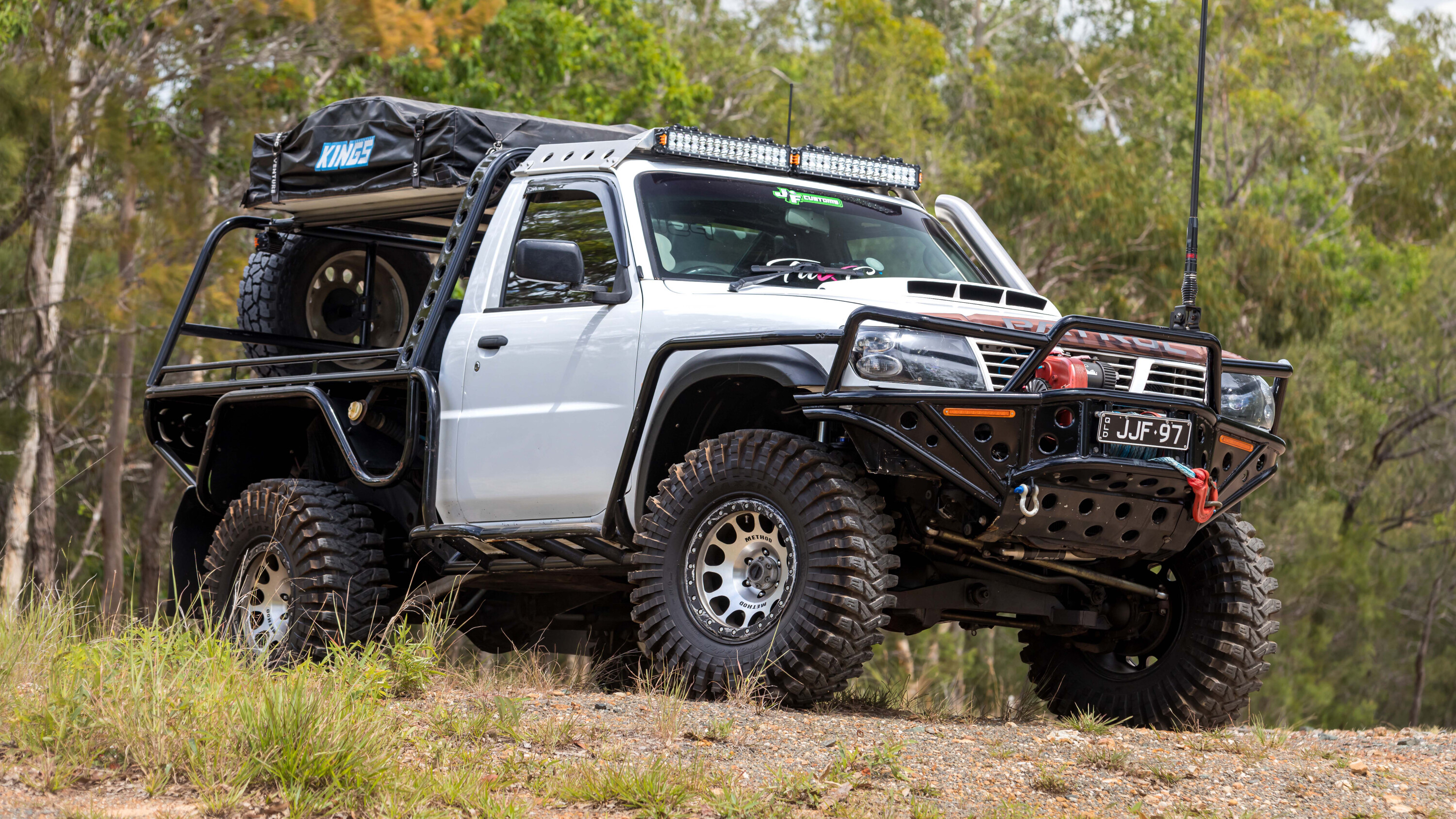
Enter a coil-spring conversion, with a four-inch lift, that features a PSR Hybrid Long Arm setup at the front and Superior Engineering (SE) Long Arm kit at the back, accompanied by SE sway bars front and rear, adjustable uppers and Panhard (rear), along with plenty more goodies, all working in conjunction with trick Fox Factory 2.0 adjustable remote-reservoir dampers.
1
And yes, before you ask, Jarrod modified the chassis and then fitted the new suspension by himself.
“I hooked in over three days of an Easter weekend and chopped all the leaf springs out and went straight from leaf springs to the Superior Engineering long arms,” he recounts. “I then got my hands on a set of the PSR long arms for the front.”
A couple of years later Jarrod added an X-Link up front for even more travel, while he deemed the remote-res Fox shocks to be the perfect choice for damping duties and, since fitment, he’s been very happy with them – and the setup’s overall performance.
“It’s phenomenal. Chalk and cheese.” Jarrod reckons. “It completely changed the drivability of the vehicle; from forever picking wheels up – you’d slightly go on a bit of a rutted-out section, it’d pick a wheel up – whereas now, it hardly ever picks a wheel up. It’s a bit of a point and shoot rig, really.”
1
The personal touch
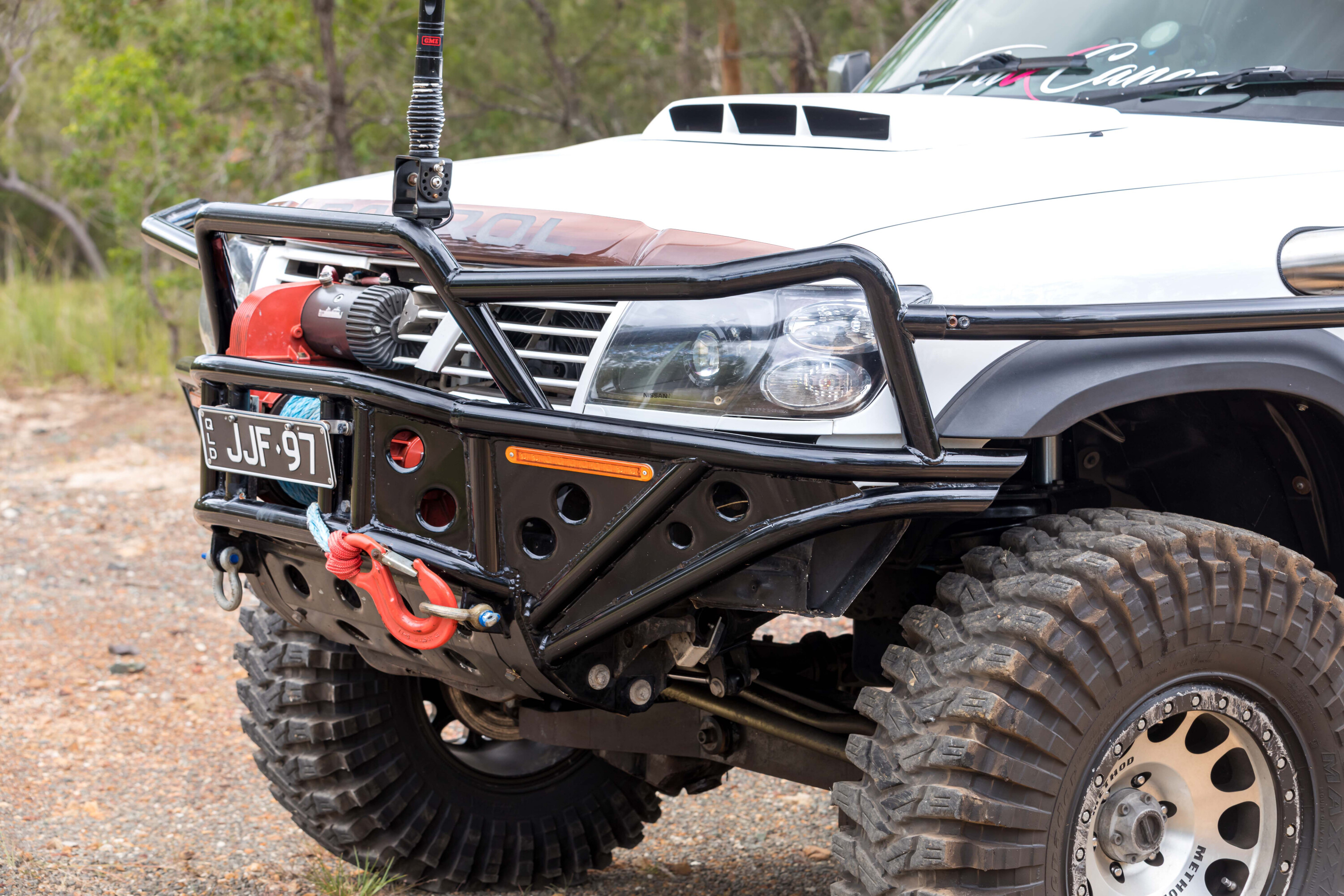
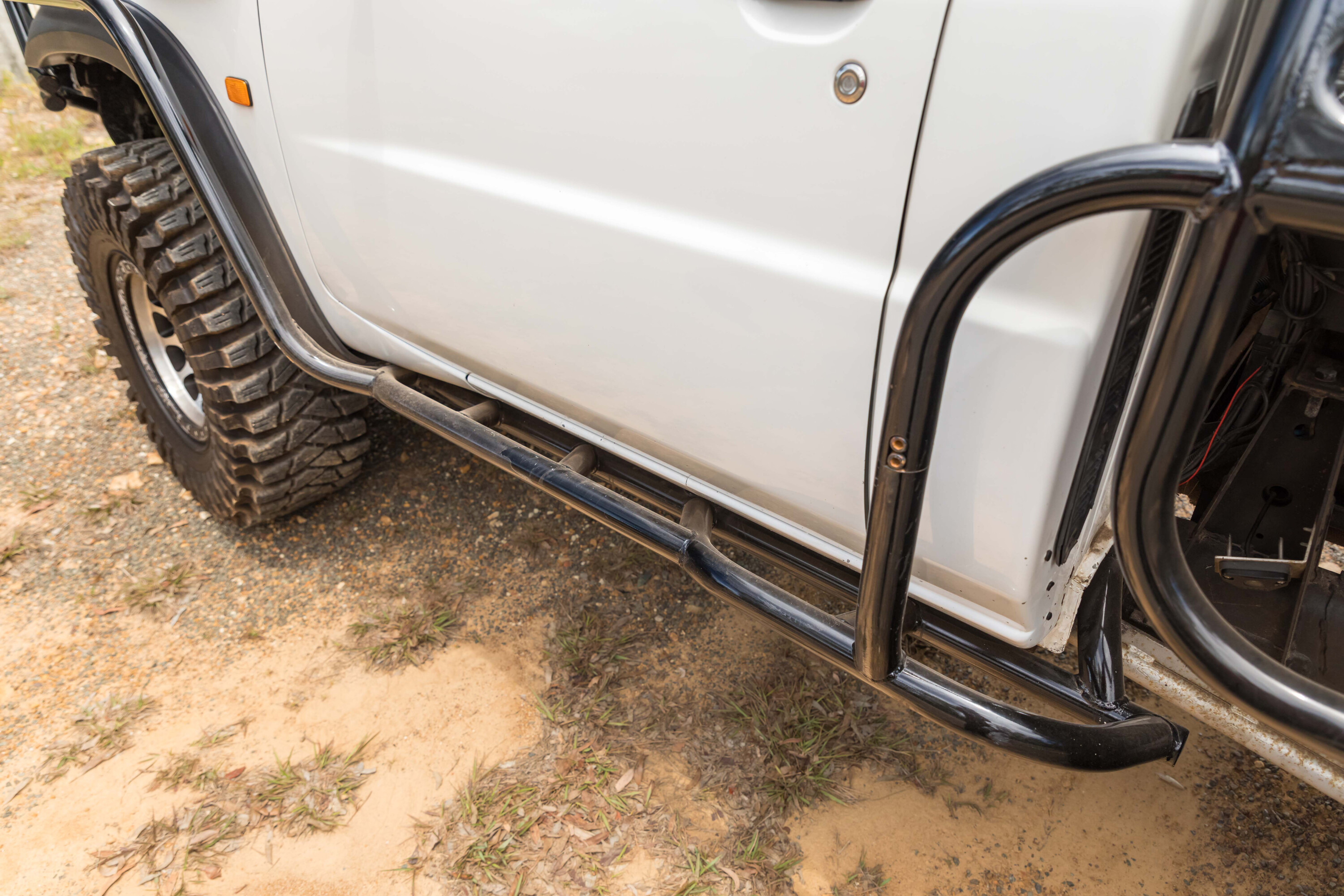
Looking at the Patrol, whether from above or when crawling underneath, it’s hard not to be impressed by the sheer amount of protective bar-work fitted to it.
Again, this fully custom setup (including the rear tray – more on that later) is all Jarrod’s handiwork; being very handy on the tools means he could build exactly the system he wanted for optimum protection of his own vehicle’s unique features, plus be able to house the two winches (a Warn 10,000lb up front and a Runva 11XP at the rear).
It was a big job but one that Jarrod was determined to get exactly right, no matter how long it took.
1
“It was sort of just a case of not so much trial and error, but build one part, go out, drive for a while, get a feel for it.” he says.
“If I needed to modify something or add something, put an extra piece in or redesign the whole structure, I could do that. It was sort of piece by piece, so to speak.”
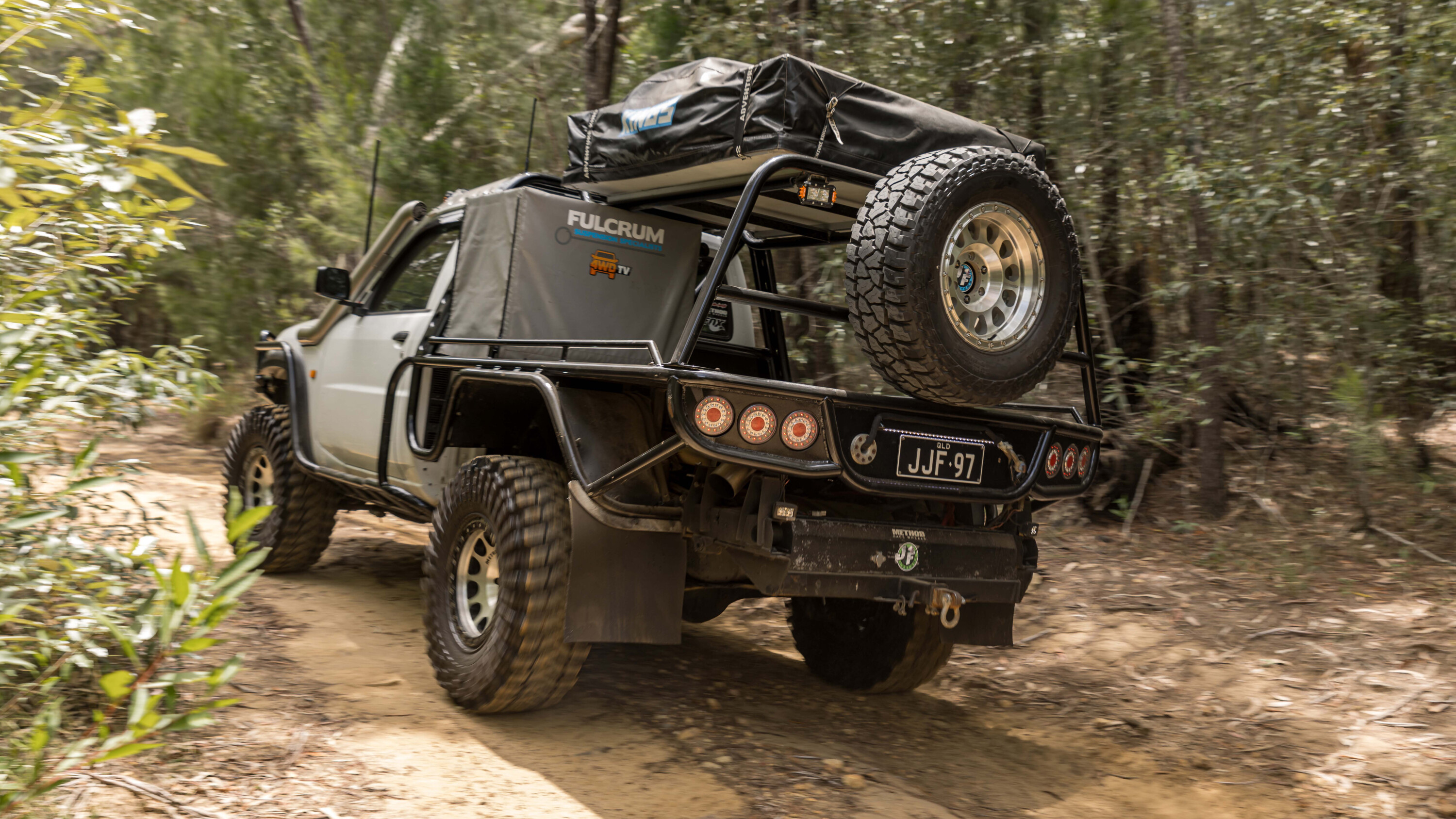
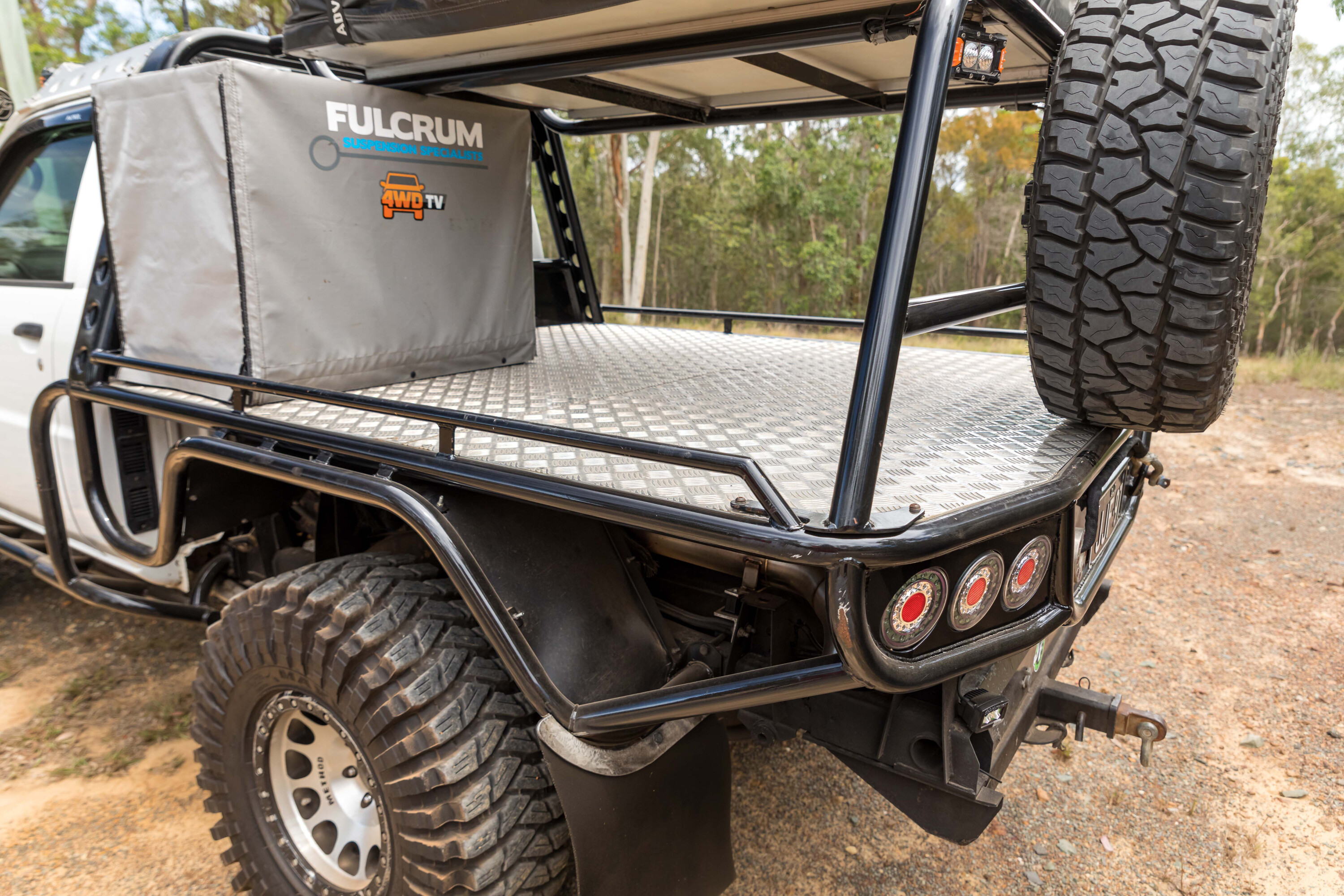
This same go-for-it attitude was used in the design of the Patrol’s steel rear tray – the vehicle’s third, following on from the one it came with at purchase, plus a cheap ‘inbetweener’ to use while Jarrod figured out the final design for the Patrol’s cargo-carrying area.
Reflecting his aims of maximum versatility for the vehicle (and retaining some fuel economy), Jarrod applied a ‘modular’ ideal to the tray design, knowing that he’d need something that was easy to ‘swap over’ from rock-crawling duties to touring time (for which he swaps over from those beefy 37s to smaller 33-inch rubber), hence the notable amount of empty space (barring the fridge box).
1
“Because I do a lot of serious four-wheel driving, and a lot of the places I go to are hours away, I put the 37s on the back and I can put my spare 33 up against the headboard as well,” he explains. “If I’m running just the bare tray, it sort of gives me quite a bit of space with just the fridge box on there.
“But then, if I’m doing a lot of touring, I’ll just leave the 33s on, put the spare tire on the back end of the rooftop frame, and then I’ve got plenty of storage under there for just space crates and jerry cans and other little bits and pieces.”
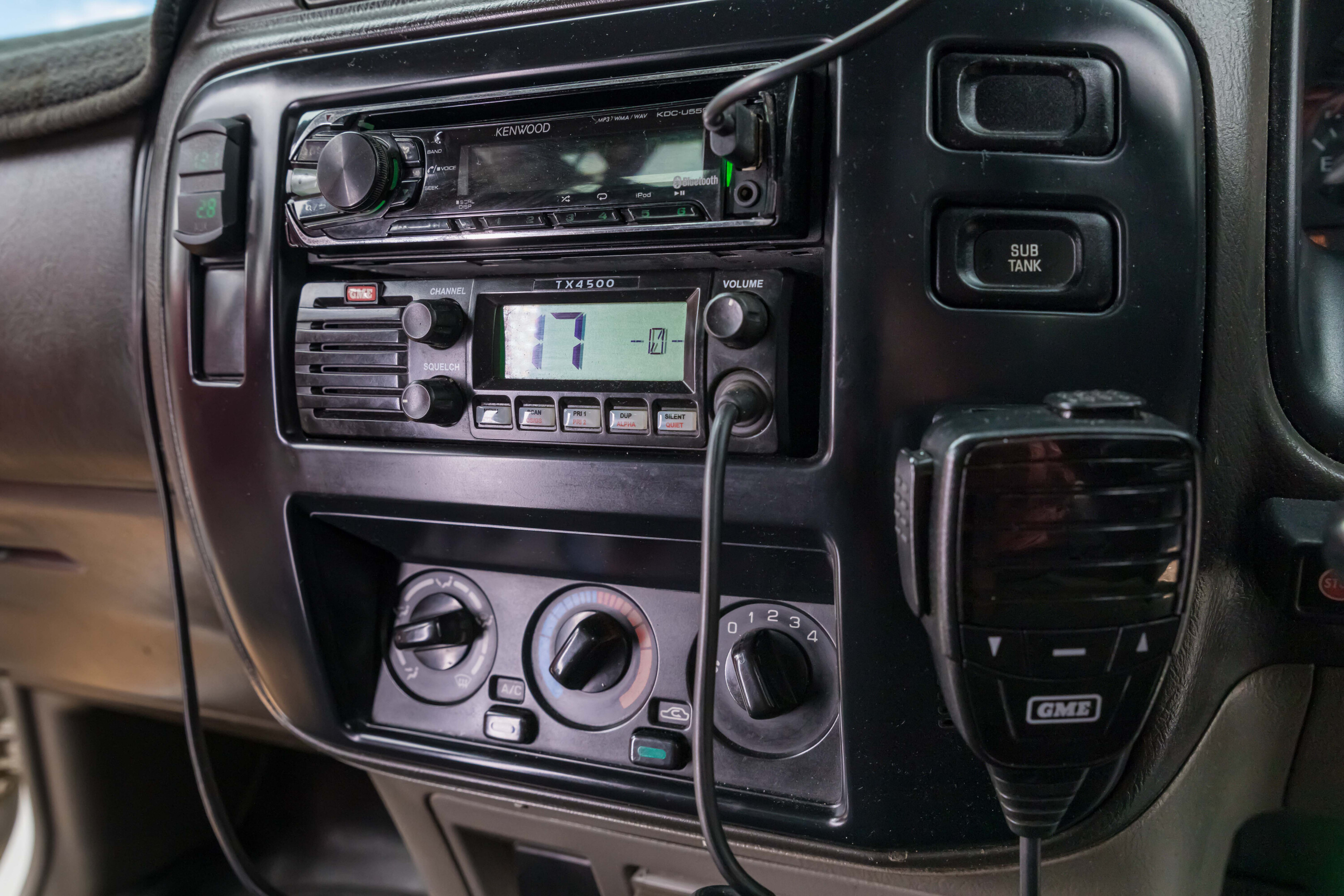
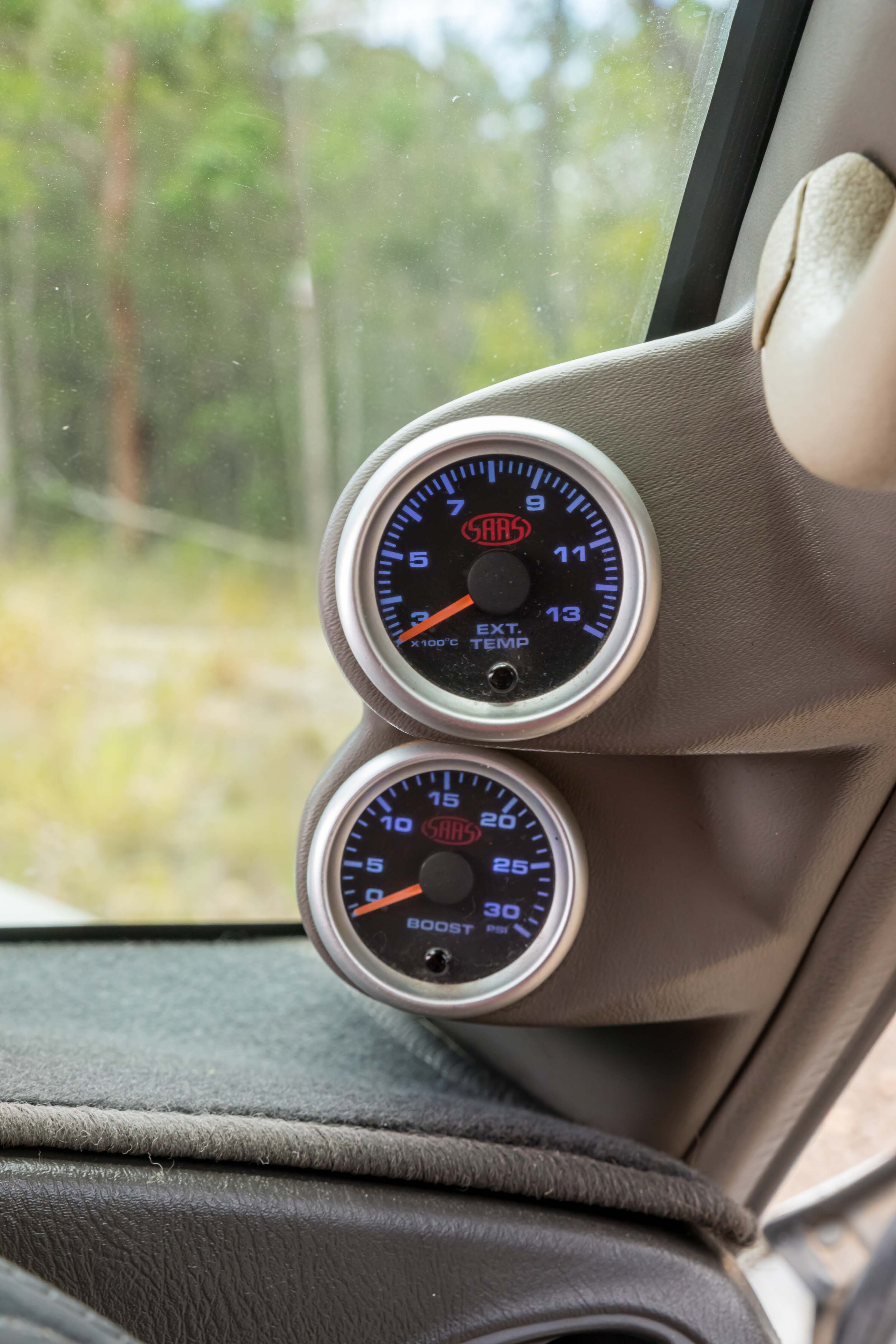
Yep, it’s clever, common-sense stuff. Speaking of which, that same level-headed approach has been applied to the Patrol’s interior, with only minor mods done and all with a practical purpose. Indeed, besides the impressive Kenwood stereo system, Jarrod has kept mods to a minimum, with just additional gauges to monitor the Patrol’s drivetrain, along with the fitment of a GME UHF radio.
1
Power up
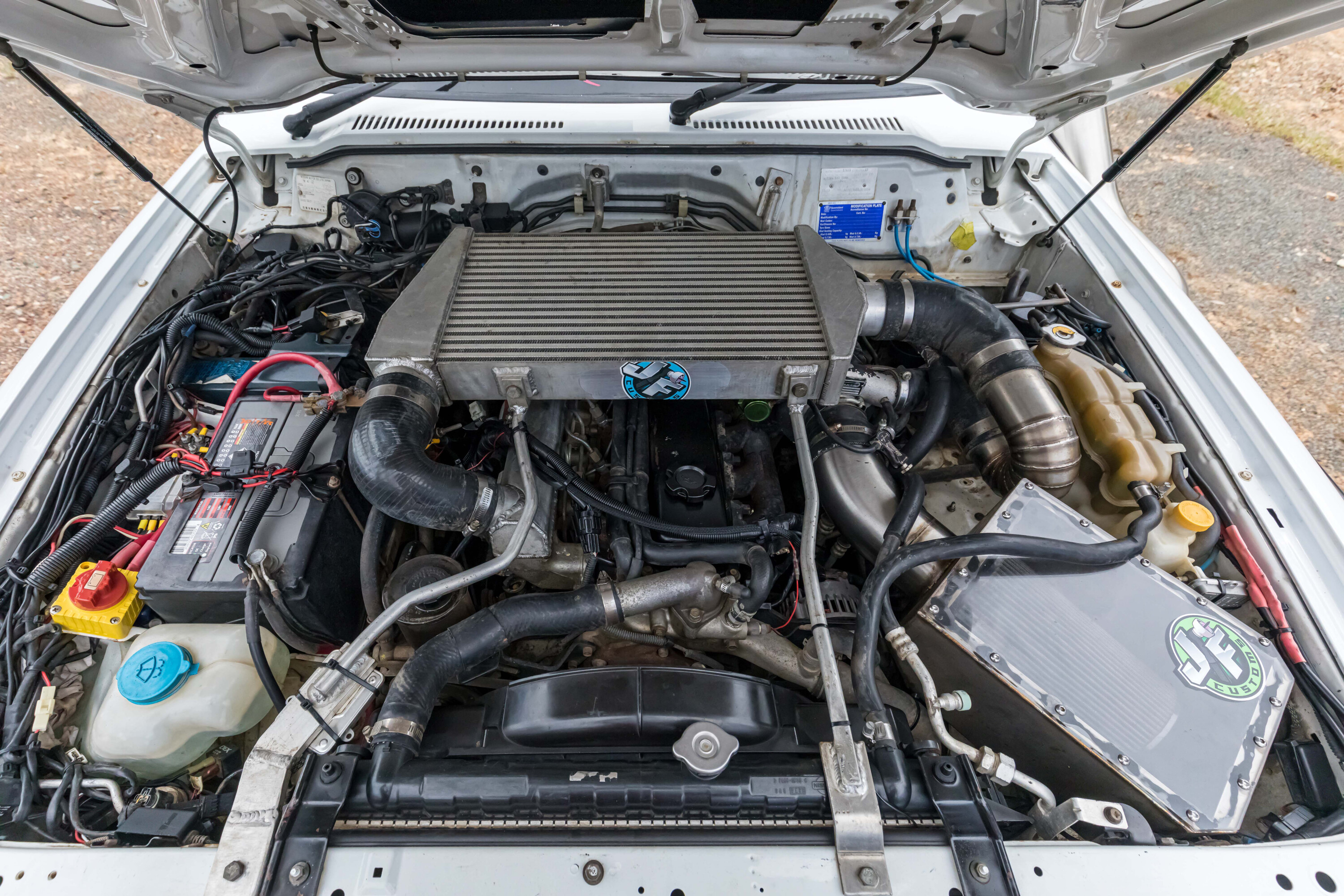
Jarrod’s focus on the engine revolved around it producing a bit more grunt, without affecting driveability – or reliability.
This led him to the team at Diesel Pump Caboolture, who added a 12mm mechanical fuel pump, Performance 4×4 18G 60mm ported rear housing and a Radius Fabrications high-mount manifold. It was here that Jarrod utilised his boilermaker skills, under his JF Customs business banner, fabricating a front inlet manifold and a top-mount intercooler.
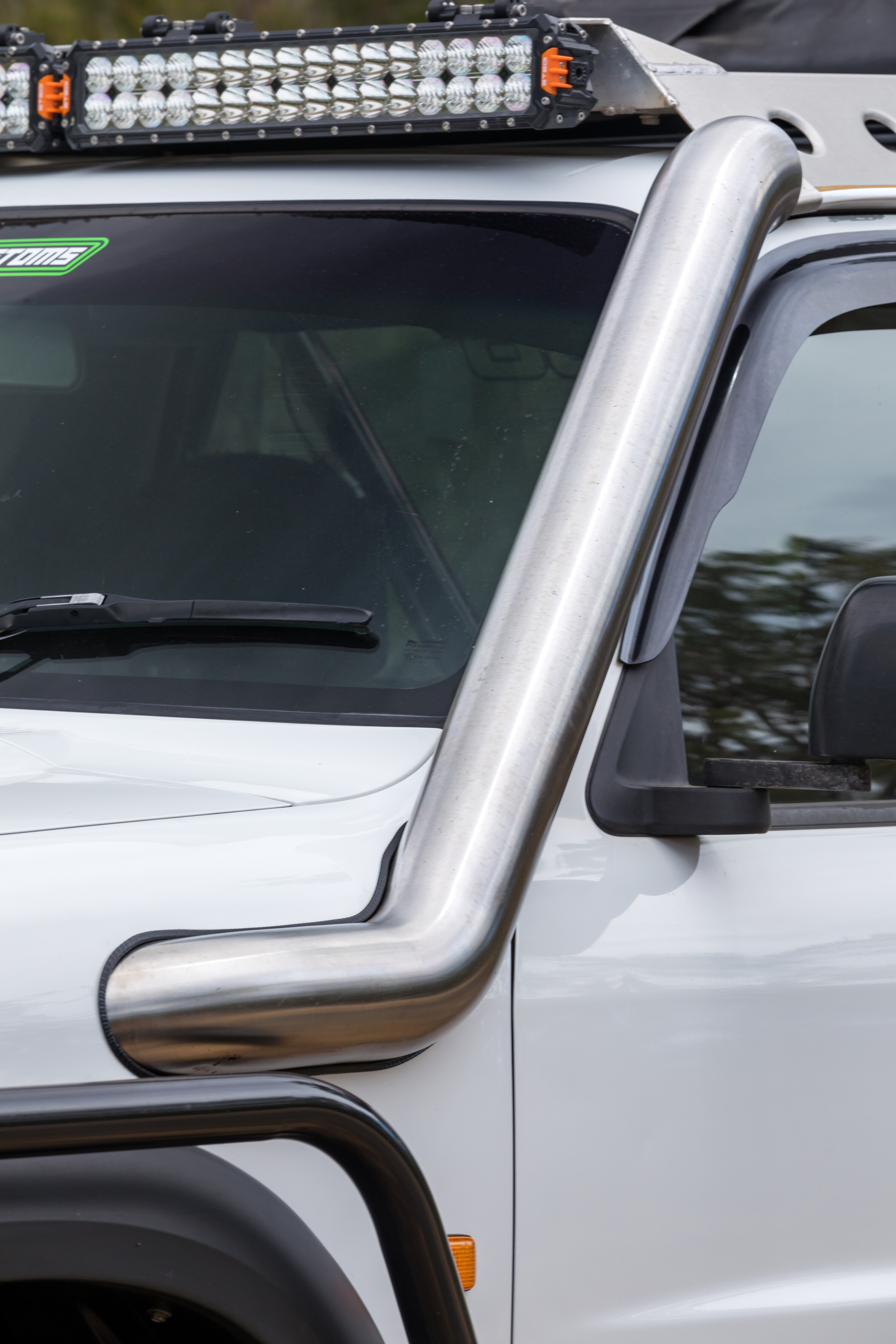
The drivetrain has also copped a set of Marks 4WD Adaptors reduction gears, a modified tailshaft, a seamless four-inch Fabulous Fabrications snorkel and – again, thanks to Jarrod’s metallurgical magic – a four-inch stainless exhaust, which involved a slight tussle to fit.
1
“It was quite a mission,” Jarrod laughs. “Because I originally started off with a 3.5-inch system, and then had a bit of stainless laying around at home, I thought I might bump it up and do a four-inch [to] see if it changes the note.
“Probably the trickiest part was trying to do the dump pipe, because it had to be all the little segments like a lobster back to get a nice, tight radius, but then also sort of kick around a bit to clear all the chassis and the side of the motor. It was quite involved.”
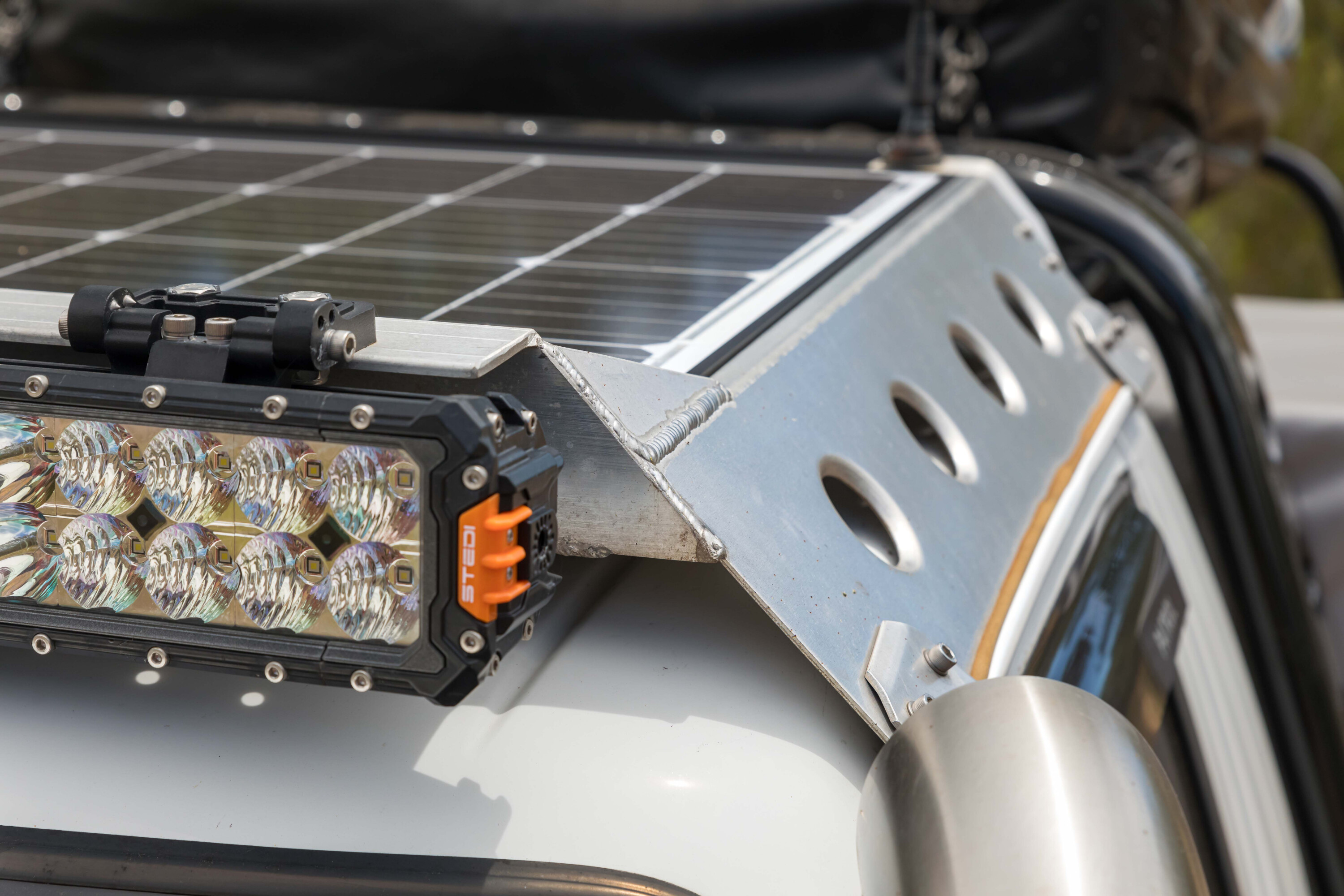
Power of a different kind – electrical – is well thought-out in this crawler/tourer rig, too. Yet again, Jarrod’s keenness to just muck-in has seen him fabricate the aluminium roof rack to mount the LED lightbars and to house the 140W solar panels that, in turn, feed into a 40-amp Redarc DC-DC charger that sends power to two auxiliary batteries under the rear tray.
1
Pride and no prejudice
The end-result that is this Patrol is a huge credit to Jarrod’s hands-on attitude and also his patience; by doing the work himself he has saved literally thousands of dollars, but he reckons the full build would add up, conservatively, to well over 2000 hours.
By not rushing in, he’s been able to think about what he really wanted from the vehicle, then planned it out meticulously, and made it happen.
Jarrod’s innovative thinking and hard work have not gone unnoticed either; a number of people have contacted him for their own 4×4 projects after seeing the Patrol – it is, after all, a very impressive showcase for his skills and knowledge – and he’s busier than ever as a result.
In short, for those wondering what a bit of planning and patience can do in regard to building a custom 4×4, this tough Patrol does an awesome job of providing an answer.
2
1
1
1
1
MORE
Everything Nissan
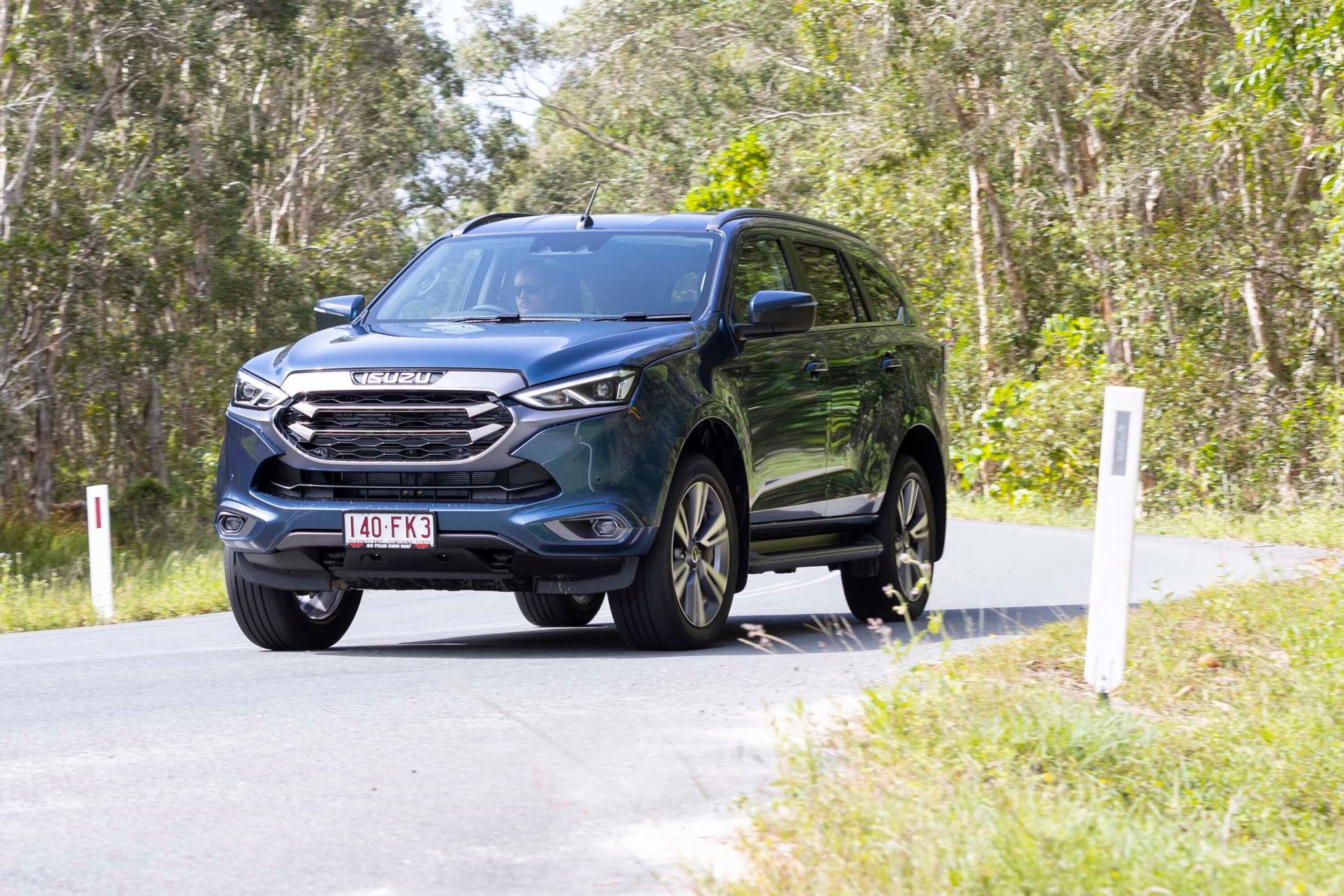
The 2023 Isuzu MU-X LS-T is the top-of-the-line variant in the MU-X range, offering a blend of off-road capability and on-road comfort. With a robust and well-respected 3.0L turbo-diesel engine and a host of luxury features, it’s an off-roading SUV that’s sure to impress.
Pricing and Features
Priced at $67,400 for the 4×4 configuration and $61,400 for the 4×2 (both before on-road costs), each version of the MUX LS-T comes with a six-speed automatic transmission. Isuzu has a current offer of $65,990 drive-away for their 4×4 option with no expiration date announced at the time of writing.
1
The 3.0-litre engine churns out 140kW of power and 450Nm of torque. Standard features include a 9.0-inch infotainment system and LED daytime running lights, while LS-T luxury perks include 20-inch alloys, leather-accented seats, in-built satellite navigation and a premium eight-speaker sound system.
An extra two colour options are also added over the LS-M grade at a $650 premium.
Safety
Awarded a five-star ANCAP rating in 2022, the MU-X LS-T comes with a comprehensive suite of safety features including eight airbags, forward collision warning, lane-keep assistance, lane departure warning and rear cross-traffic alert.
Key Rivals
Alongside the Isuzu MU-X LS-T are key rivals with higher-spec options including:
Should I Put It on My Shortlist?
If you’re seeking a large SUV that offers comfortable highway driving alongside tried and tested off-road capability then the MUX LS-T is sure to tick a lot of boxes. The range of creature comforts in the LS-T will create that extra bit of luxury in your daily commute or four-wheel-driving adventure.
MORE
Everything Isuzu
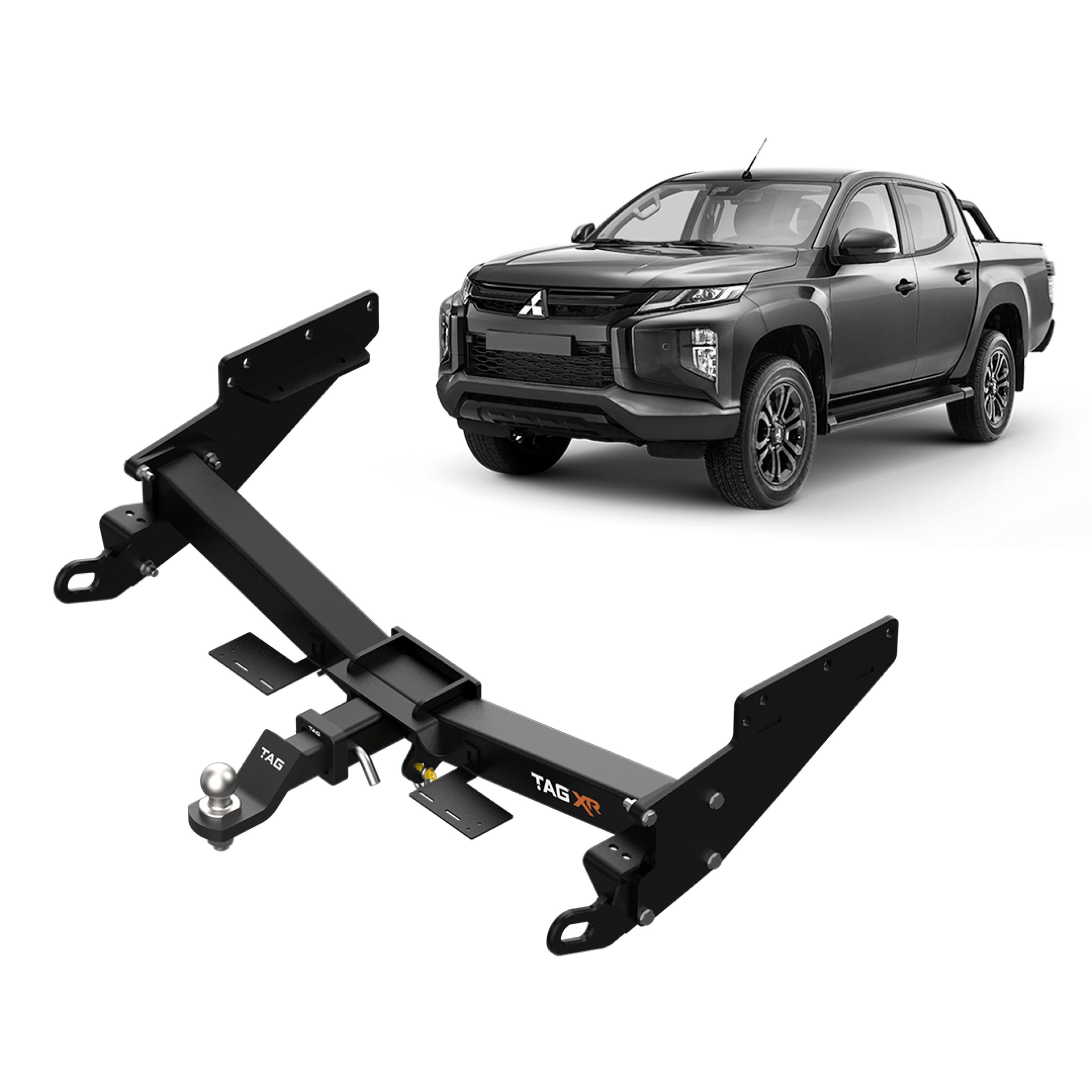
TAG has just released a 4×4 Recovery Towbar to suit the Triton Styleside ute for models 05/2015+.
This includes two WLL 4000kg load-rated recovery points integrated into the three-piece-design side arms. The bevelled edges of the recovery points are designed to suit soft shackles.
TAG has been designing and manufacturing towbars in Australia for more than 40 years, so it knows a thing or two about producing towbars that meet the stringent standards of ADR62/01.
Designed and manufactured in Brisbane to suit the 3100kg tow rating and 310kg tow ball weight of the Triton, the towbar includes a 65mm x 65mm extreme duty reinforced crossbar for added strength.
1
An improved departure angle is achieved with the flush chassis-mounted profile, ensuring you won’t need to worry about dragging the rear of the Triton when tackling gnarly off-road tracks.
The 4×4 Recovery Towbar includes dual trailer and Anderson plug mounts, and it’s finished with a highly durable Duratech black powdercoat.
The 50mm square hitch receiver is rated Class 4, and TAG will throw in the extreme duty hitch rated at 3500kg, a shiny zinc tow ball, pin and clip, and d-shackles.
TAG tells us installation should only take 40 minutes, but I’m sure DIYers might take longer than that.
You can expect to pay $1195 directly from TAG, but that doesn’t include shipping or installation.
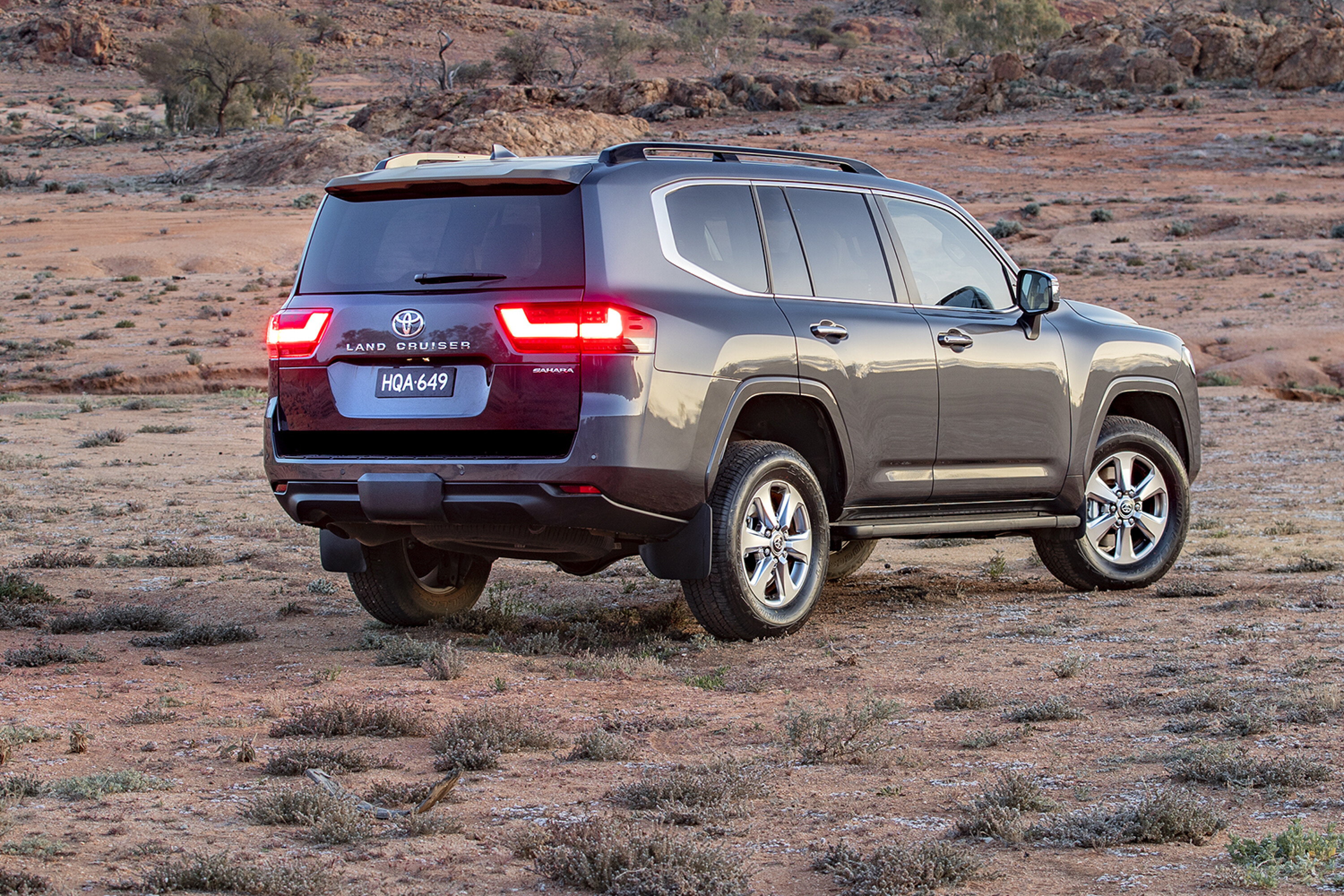
Since it arrived in 2021, the LandCruiser 300 has been a highly regarded and sought-after vehicle.
This full-size four-wheel drive delivers exceptional performance in various areas: impressive off-road capabilities, confident towing capacity, ample space for the entire family, and enjoyable on-road handling.
With a wide range of models available, it caters to a diverse group of buyers looking for large family hauling ability, towing capacity and four-wheel drive capability.
Models range from the basic GX with its practical vinyl flooring and cloth seats to the stylish GR Sport, designed for enhanced off-road prowess.
1
JUMP AHEAD
- Pricing
- What body styles are available for the LandCruiser 300?
- What key features do I get if I spend more?
- How safe is the LandCruiser 300?
- How comfortable and practical is the LandCruiser 300?
- How much boot space does the LandCruiser 300 offer?
- I like driving, will I enjoy this car?
- Which LandCruiser 300 engine uses the least fuel?
- What is the LandCruiser 300’s towing capacity?
- How long is the warranty and what are the LandCruiser 300’s servicing costs?
- Which version of the LandCruiser 300 does Wheels recommend?
- What are the LandCruiser 300’s key rivals?
Pricing
| 2023 Toyota LandCruiser 300 pricing | |
|---|---|
| GX | $94,301 |
| GXL | $106,101 |
| VX | $118,301 |
| Sahara | $135,501 |
| GR Sport | $142,101 |
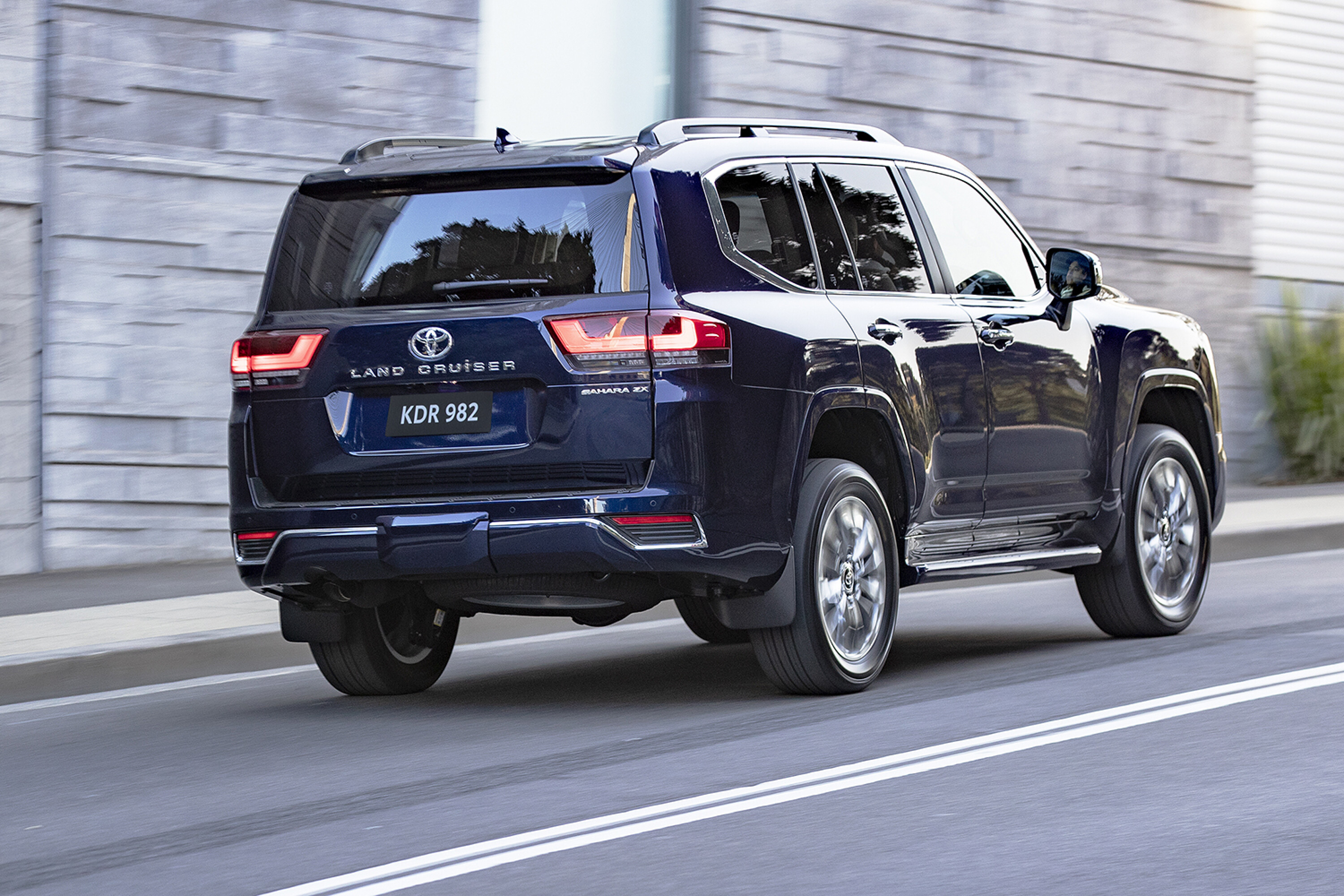
| Sahara ZX | $142,101 |
| Prices exclude on-road costs | |
1
What body styles are available for the Toyota LandCruiser 300 series?
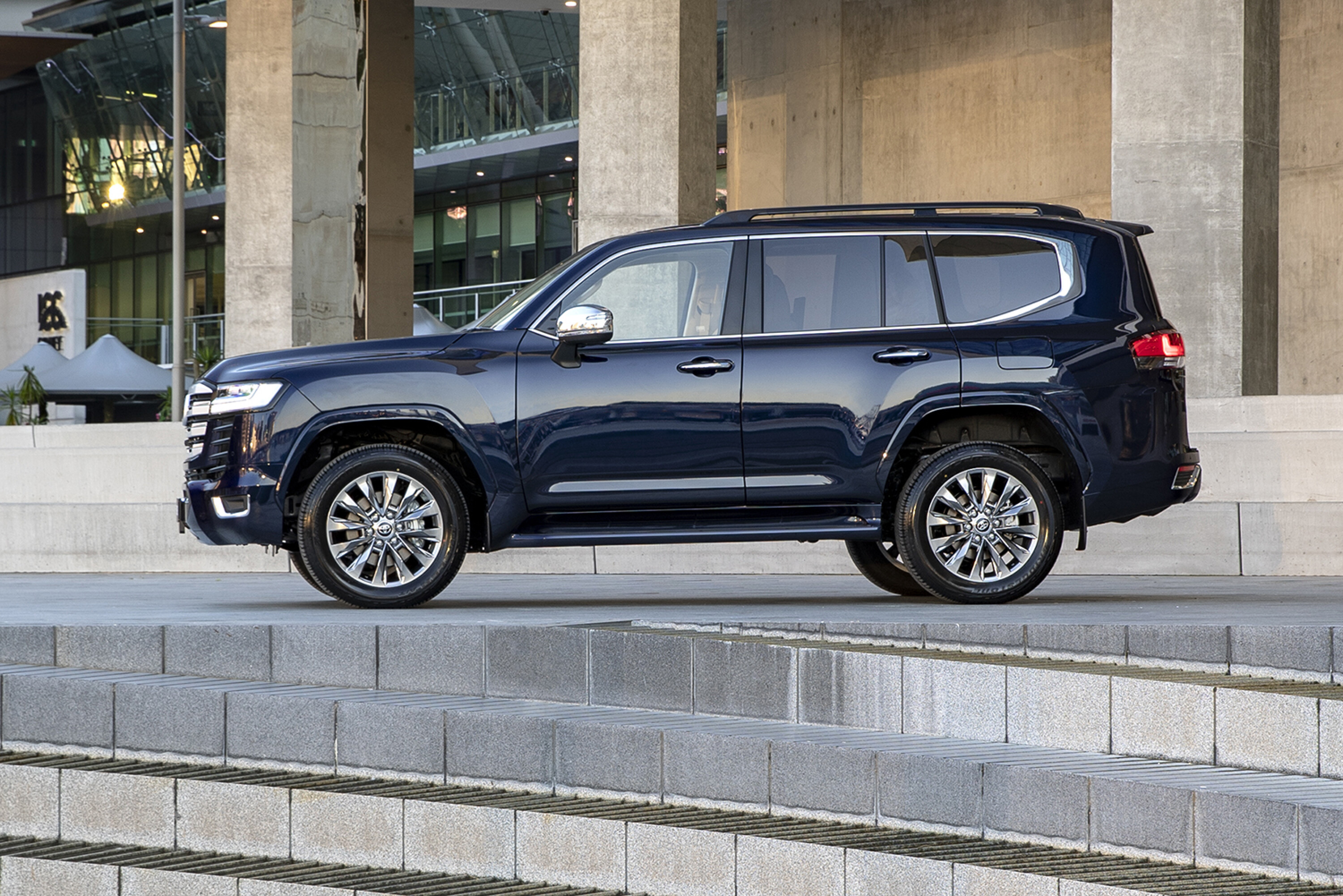
The Toyota LandCruiser 300 is available only as a five-door 4WD wagon with one powertrain shared across all models, the 3.3-litre turbo-diesel V6 with 10-speed automatic transmission and dual-range full-time four-wheel-drive system.
Of the six LC300 variants, three are five-seaters and three are seven-seaters.
1
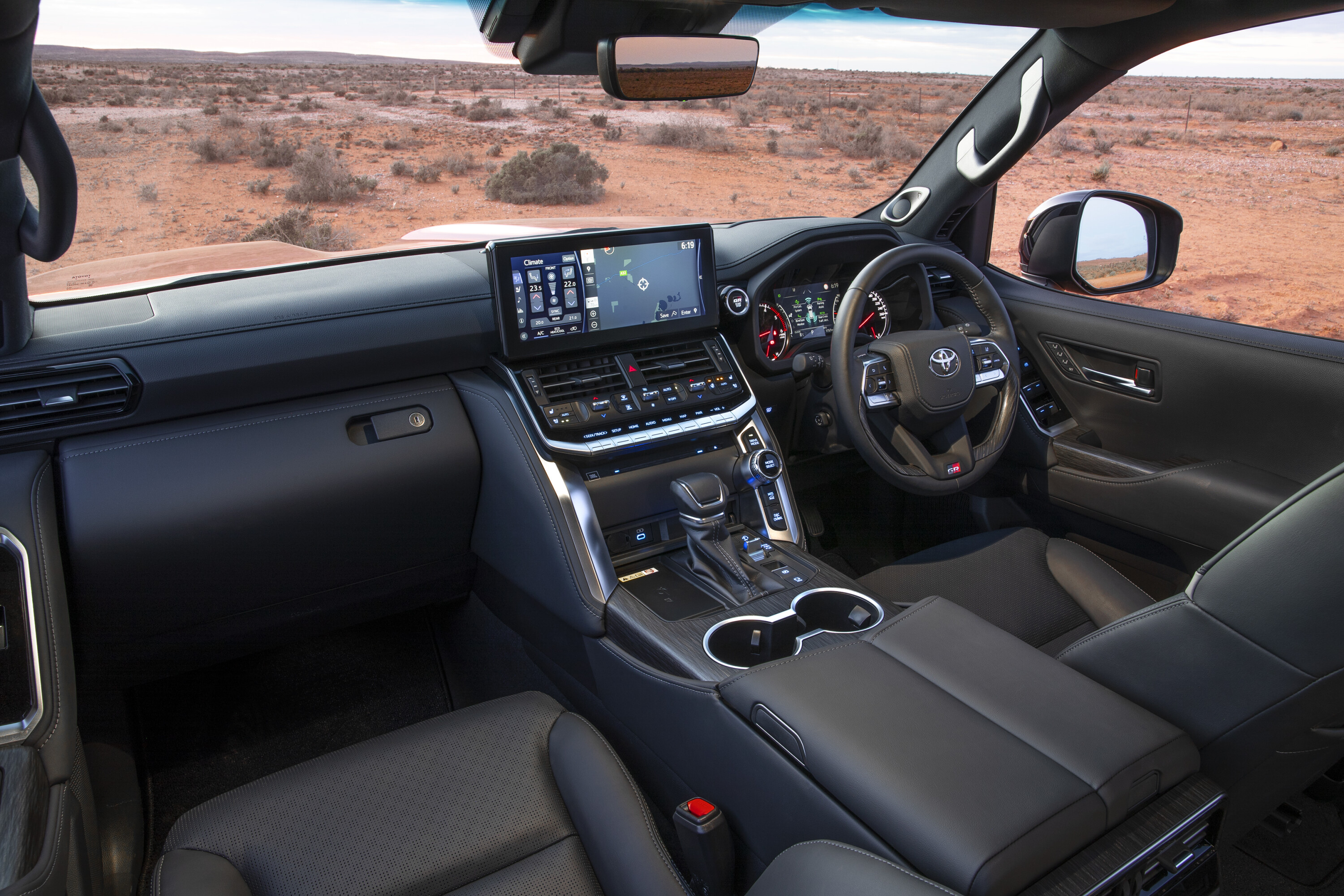
What features are standard in every Toyota LandCruiser 300 series?
The features listed below are standard in the entry-level model and will appear in higher-grade models, unless replaced by more premium equivalent features.
| 2023 Toyota LandCruiser 300 standard features | |
|---|---|
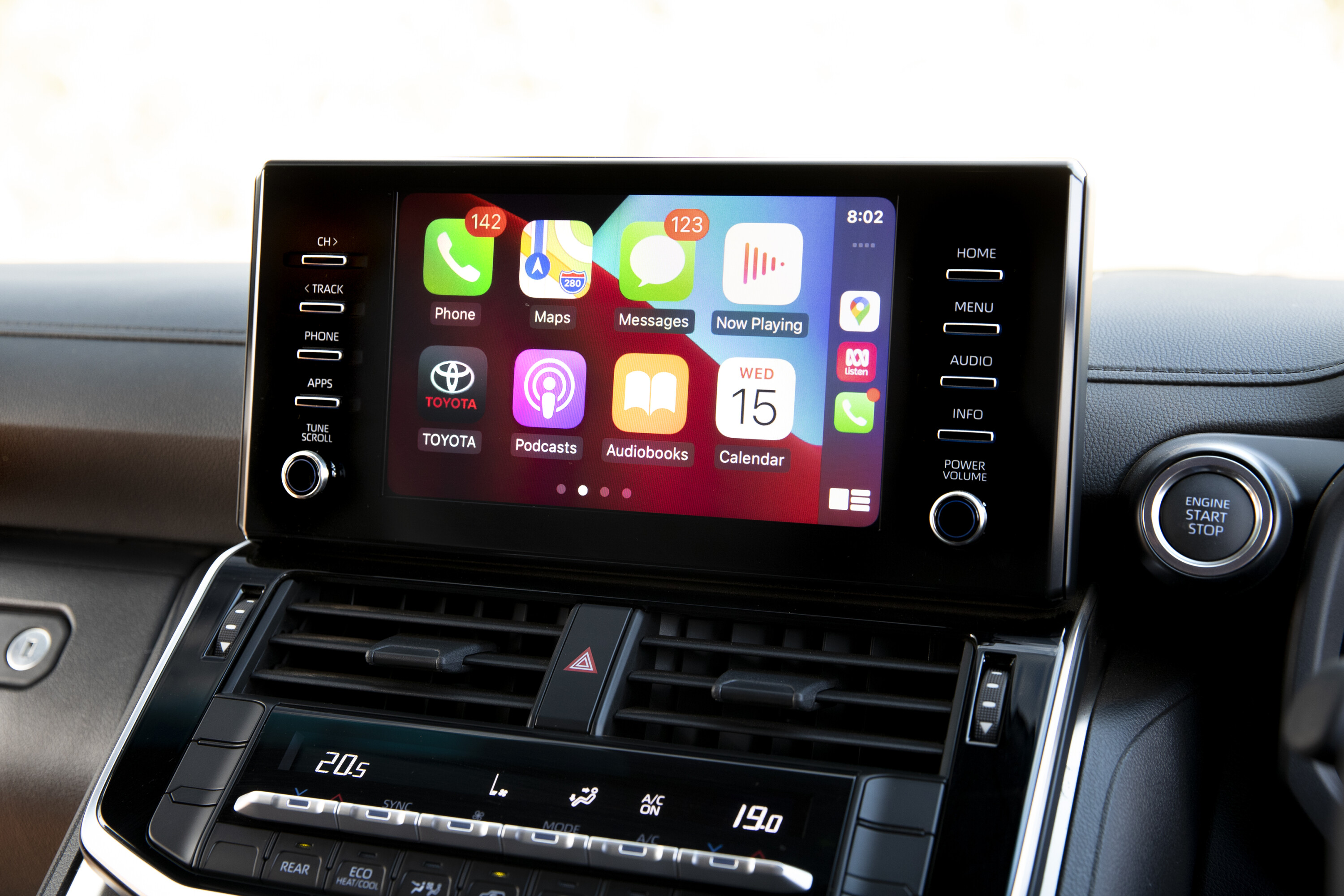
| Colour 9-inch touchscreen, and auxiliary socket and one USB input socket. | Rain-sensing windscreen wipers. |
| Bluetooth connectivity for phone calls and audio streaming, and Android Auto/Apple CarPlay, which lets you display smartphone apps on the touchscreen and control them from there (or by voice). | Power-adjusted side mirrors. |
| A 4.2-inch digital dashboard multi-information display. | Shark fin antenna. |
| Toyota Connected Services free 3-year subscription, giving access to stolen vehicle tracking, automatic collision notification, SOS emergency call and myToyota Connect app. | A snorkel, to ensure water does not get into the engine when crossing water. |
| Reversing camera. | Active safety features including autonomous emergency braking, forward collision warning, lane-keeping assist. |
| Sound system with at least six speakers. | Controls on the steering wheel for operating the cruise control, the sound system and Bluetooth. |
| Dual-zone climate control. | An automatic transmission. |
| Active cruise control. | A 3500kg maximum (braked) towing capacity, with350kg maximum towball download. |
| Smart Keyless entry and start that doesn’t require you remove your keyfob from your pocket or bag. | A trip computer that presents fuel use and distance information. |
| An electric park brake switch frees up space on the centre console. | Steel 17-inch wheels, and a full-size steel spare wheel. |
| One-touch power windows (all doors). | Hill-assist control, which operates the brakes automatically to make take-offs on hills easier. |
| Vinyl flooring. | Downhill brake control, which can regulate speed automatically on steep downslopes when driving off-road. |
| LED daytime running lights. | Ten airbags: two directly in front of the driver and front passenger; one alongside each front occupant to protect the upper body; and a curtain airbag on each side protecting the heads of front and rear occupants. |
| Headlights that switch on automatically when itu2019s getting dark and turn on and off high beam automatically. | Electronic stability control, which can help the driver to control a skidding car. All new cars must have this feature. |
1
What key features do I get if I spend more?
The LandCruiser GX is the least-expensive model and is the only one to come standard with signature ‘working’ 4WD wagon equipment such as vinyl flooring, cloth seats, steel wheels and a snorkel.
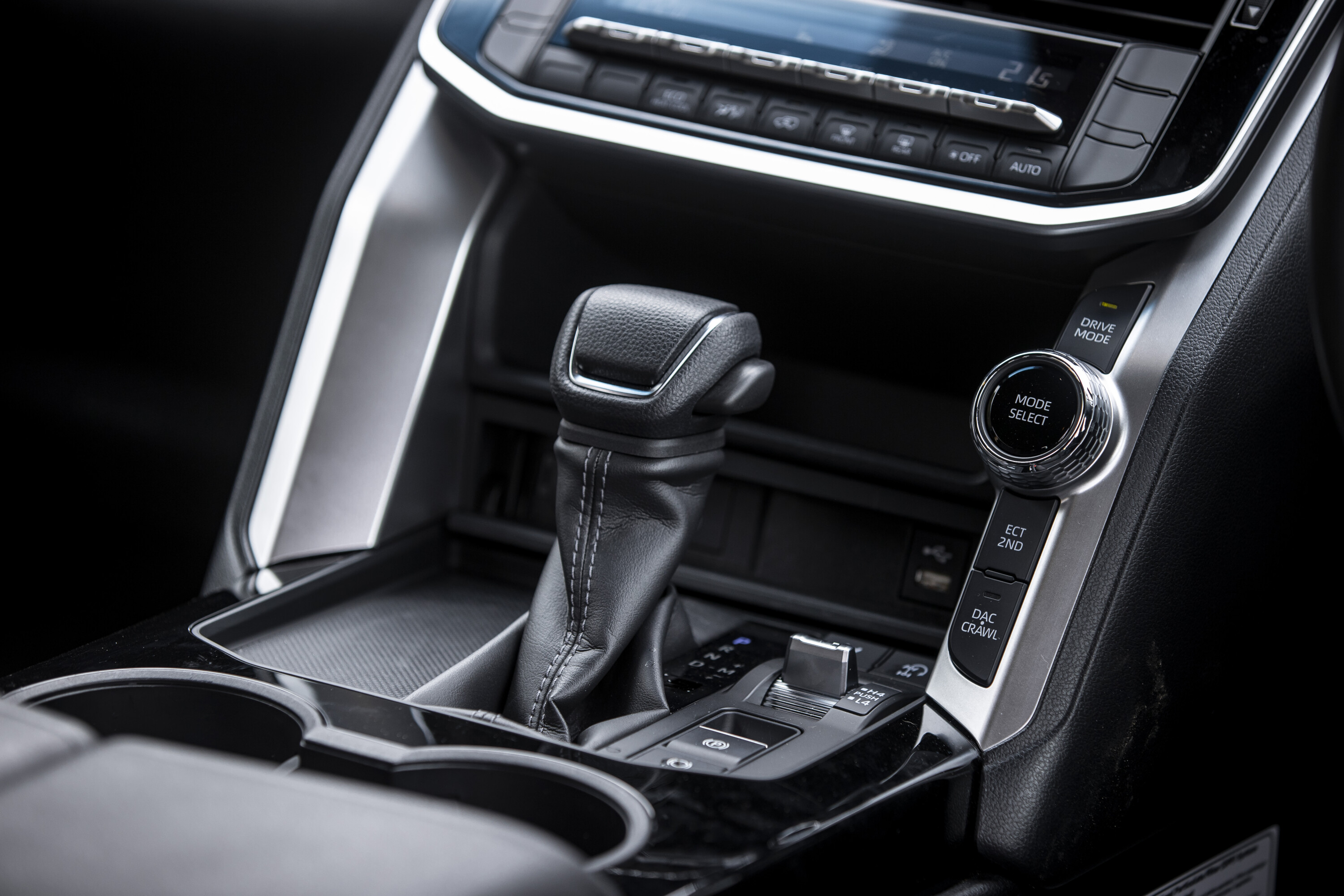
It really lacks the technology and luxury of upper-spec models. The dash layout is similar across the LC300 range, but you do notice more hard plastics and fewer features in the stripped-back GX model.
But due to the GX’s lower kerb weight, payload capacity is the highest in the LC300 range, with 785kg to play with.
1
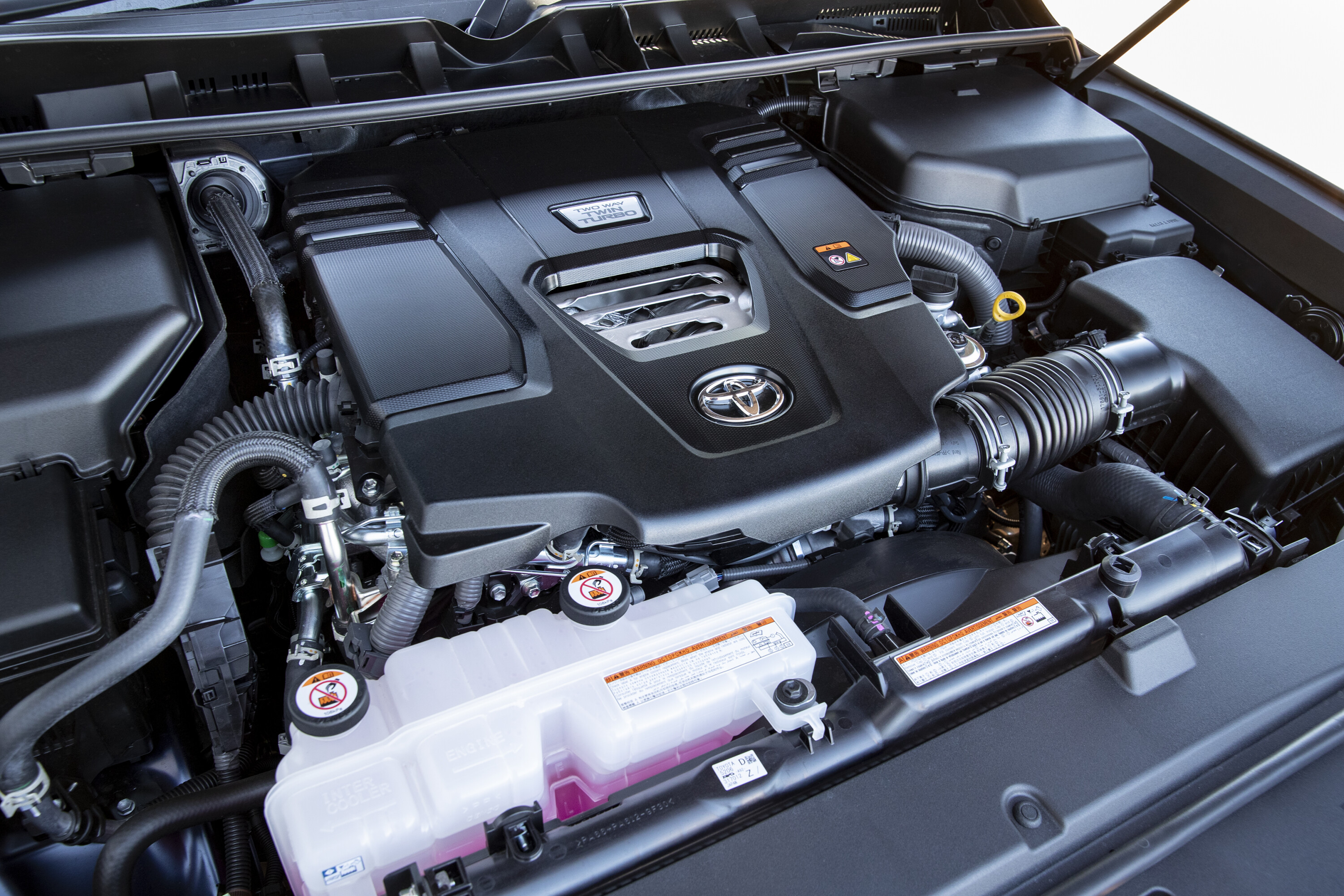
The GX shares its twin-turbo V6 engine, 10-speed auto and full-time 4WD mechanicals with the rest of the LandCruiser 300 range.
More popular with private buyers is the next model grade, the GXL which is nearly $12,000 more expensive.
At least you get carpet (but lose the snorkel) as well as seven seats across three rows (with side curtain airbags that extend to the third row), blind-spot monitoring and rear cross-traffic alert.
1
The LandCruiser GXL also brings:
| 2023 Toyota LandCruiser 300 GXL features | |
|---|---|
| Wireless phone charging. | Variable intermittent windscreen wipers. |
| Five USB charging ports. | Front fog lights. |
| Multi-Terrain Select, to adjust various traction systems, both in low- and high-range. | Roof rails. |
| Parking sensors, front and rear. | Aluminium side steps. |
| Back guide monitor, which overlays predictive lines on the rear parking camera screen when reversing. | Rear privacy glass. |
| Auto-dimming and tilting heated door mirrors. | Bigger 18-inch alloy wheels. |
Paying more again for a LandCruiser VX gets you those features plus:
| 2023 Toyota LandCruiser 300 VX features | |
|---|---|
| A 12.3-inch colour touchscreen display. | Tilt and slide sunroof. |
| Embedded satellite naviagation. | Multi-terrain monitor, with panoramic view monitor. |
| A 7-inch digital dashboard multi-information display. | u2018Premiumu2019 18-inch alloy wheels. |
| Psuedo-leather accents on all seats. | Projector Bi-LED headlights with auto levelling and headlight washers. |
| Heated/ventilated driveru2019s and front passengeru2019s seat. | LED front fog lights and turn signals. |
| 8-way power-adjustable driveru2019s and front passengeru2019s seat. | Puddle lamps. |
| 40:20:40 folding 2nd row seat. | Premium side steps. |
| Power-adjustable steering wheel. | Premium grille. |
| Smart Keyless entry and start that doesn’t require you remove your keyfob from your pocket or bag. | Chrome window mouldings. |
| 4-zone climate control. | Powered tailgate that automatically opens if you wait behind it for a few seconds while carrying the smart key. |
1
The LandCruiser Sahara is next up on the model walk and brings more equipment including:
| 2023 Toyota LandCruiser 300 Sahara features | |
|---|---|
| Leather-accented seats. | Head-up display. |
| Heated steering wheel. | Dual rear-seat entertainment. |
| Heated and ventilated 2nd row outer seats. | Chrome-accented exterior door mirrors and door handles. |
| Driveru02bcs seat memory u2013 3 memory settings. | Rear footwell illuminated entry lighting. |
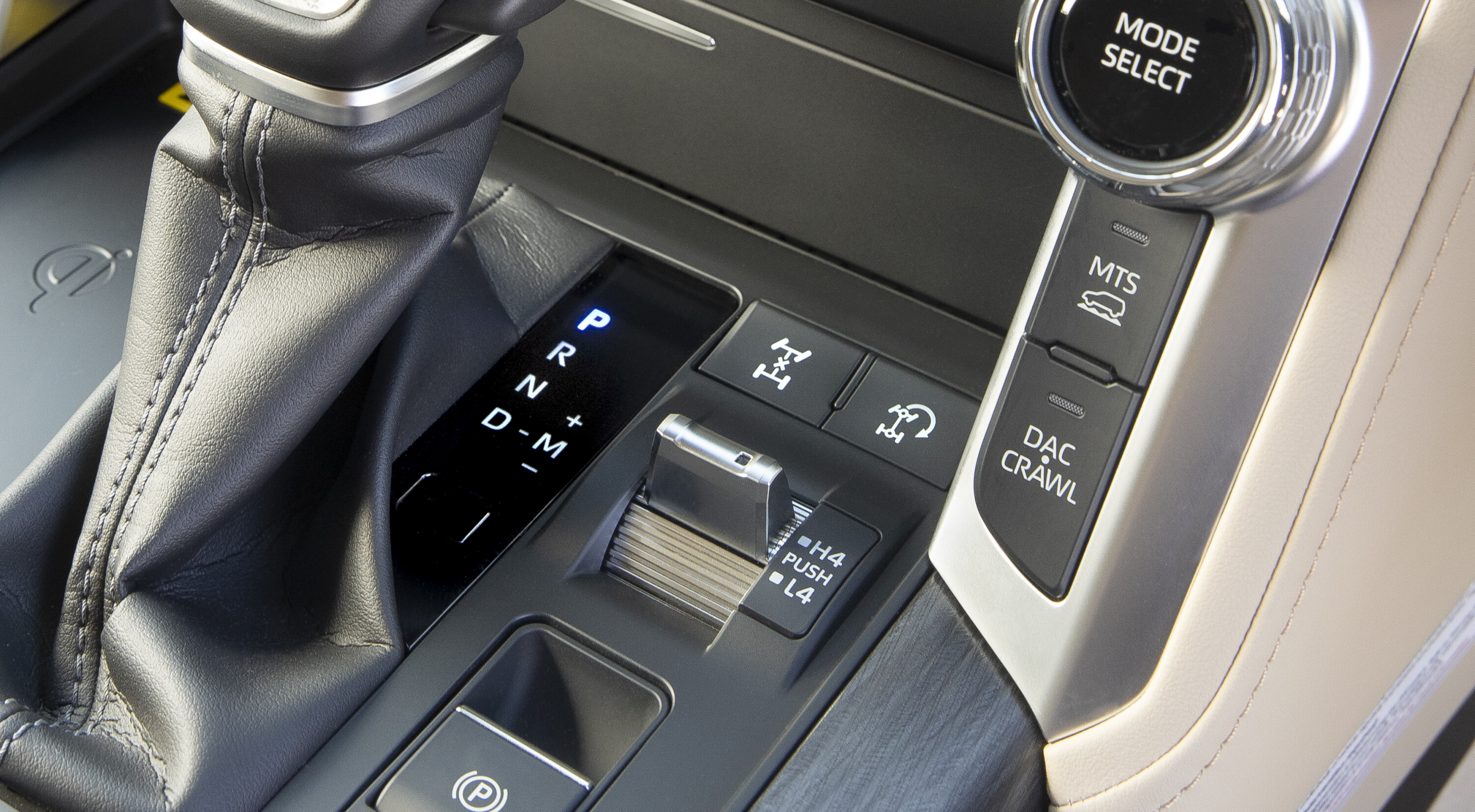
| Power-fold third-row seats. | Centre console cool box. |
| Sequential turn signals u2013 front and rear. | Powered tailgate. |
| JBL 14-speaker audio system. | |
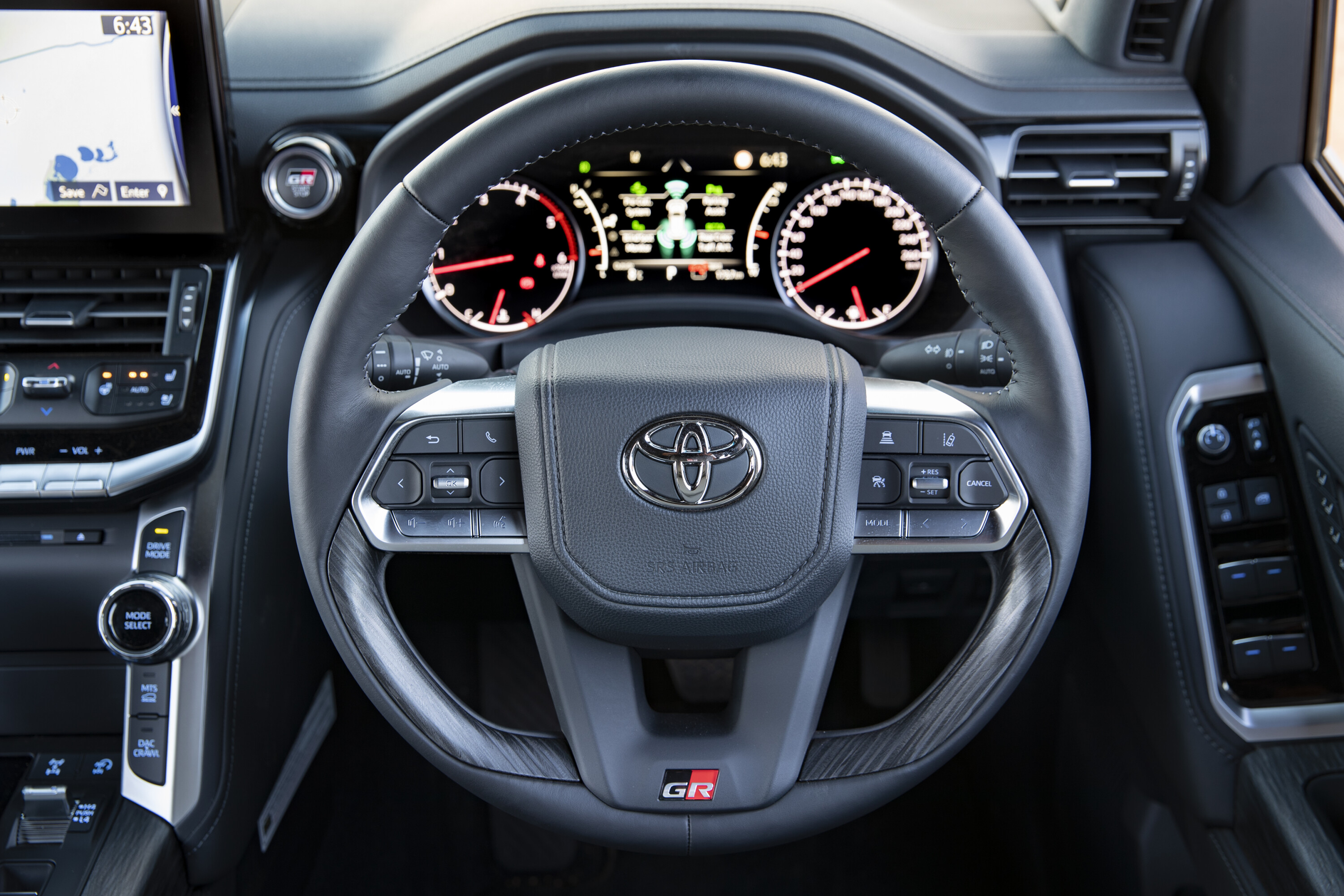
The LandCruiser GR Sport is next up in price and is the off-road performance model. Key differences over a Sahara include:
| 2023 Toyota LandCruiser 300 GR Sport features | |
|---|---|
| Five-seat capacity. | Adaptive High Beam System. |
| 3 USB charging ports. | Electronic-Kinetic Dynamic Suspension System. |
| No rear seat enertainment. | Front and rear differential locks. |
| Black 18-inch wheels. | Adaptive Variable Suspension. |
| Unique mesh grille, front and rear lower bumpers and black wheel arch mouldings. | |
1
The luxury-focused LandCruiser Sahara ZX matches the GR Sport on price and adds these features over a Sahara:
| 2023 Toyota LandCruiser 300 Sahara ZX features | |
|---|---|
| Five seater capacity only. | Unique carbon-look interior trim. |
| 3 USB charging ports | Sequential turn signals u2013 front and rear. |
| Adaptive High Beam system | 20-inch alloy wheels. |
| Adaptive Variable Suspension. | Unique lower exterior trim, side steps and wheel arch mouldings. |
| Rear torque-sensing differential | |
1
How safe is the Toyota LandCruiser 300 series?
Every LandCruiser 300 offers what Toyota calls Toyota Safety Sense.
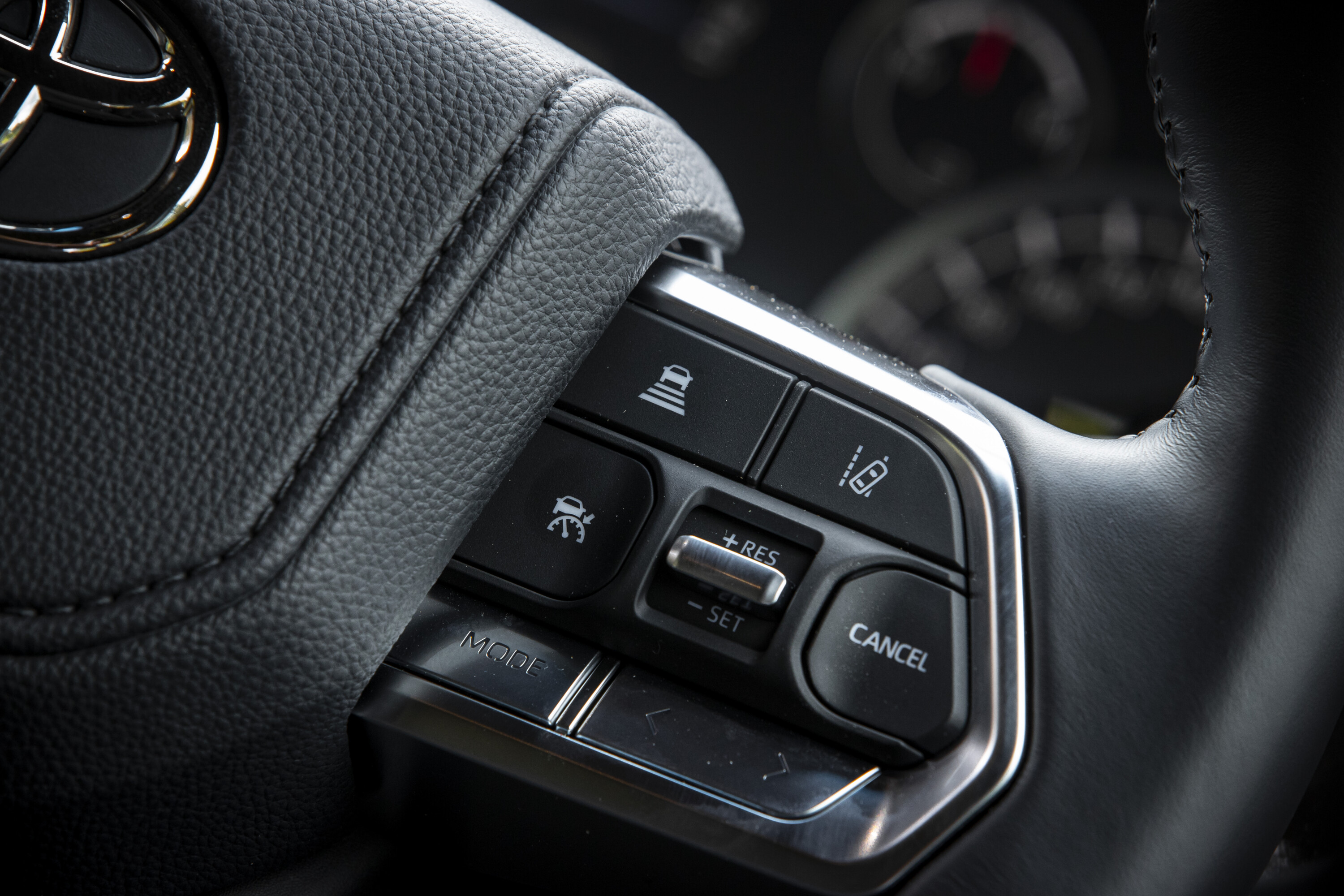
This includes autonomous emergency braking (AEB) with pedestrian and daytime cyclist detection, adaptive cruise control (all speed), speed sign recognition, automatic high beam and lane departure alert with brake-to-steer. It also has a reversing camera and, as part of its stability control suite, trailer sway control.
From GXL and up, blind-spot monitoring, rear cross-traffic alert and front and rear parking sensors are also standard.
1
The LandCruiser 300 in VX trim and up also includes lane trace assist with steering wheel vibration.
Meanwhile, the LandCruiser GR Sport and Sahara ZX add adaptive high beam to their safety suites.
The Australasian New Car Assessment Program (ANCAP) rated the Toyota LandCruiser 300 at five stars for safety, its maximum, in January 2022.
1
How comfortable and practical is the Toyota LandCruiser 300 series?
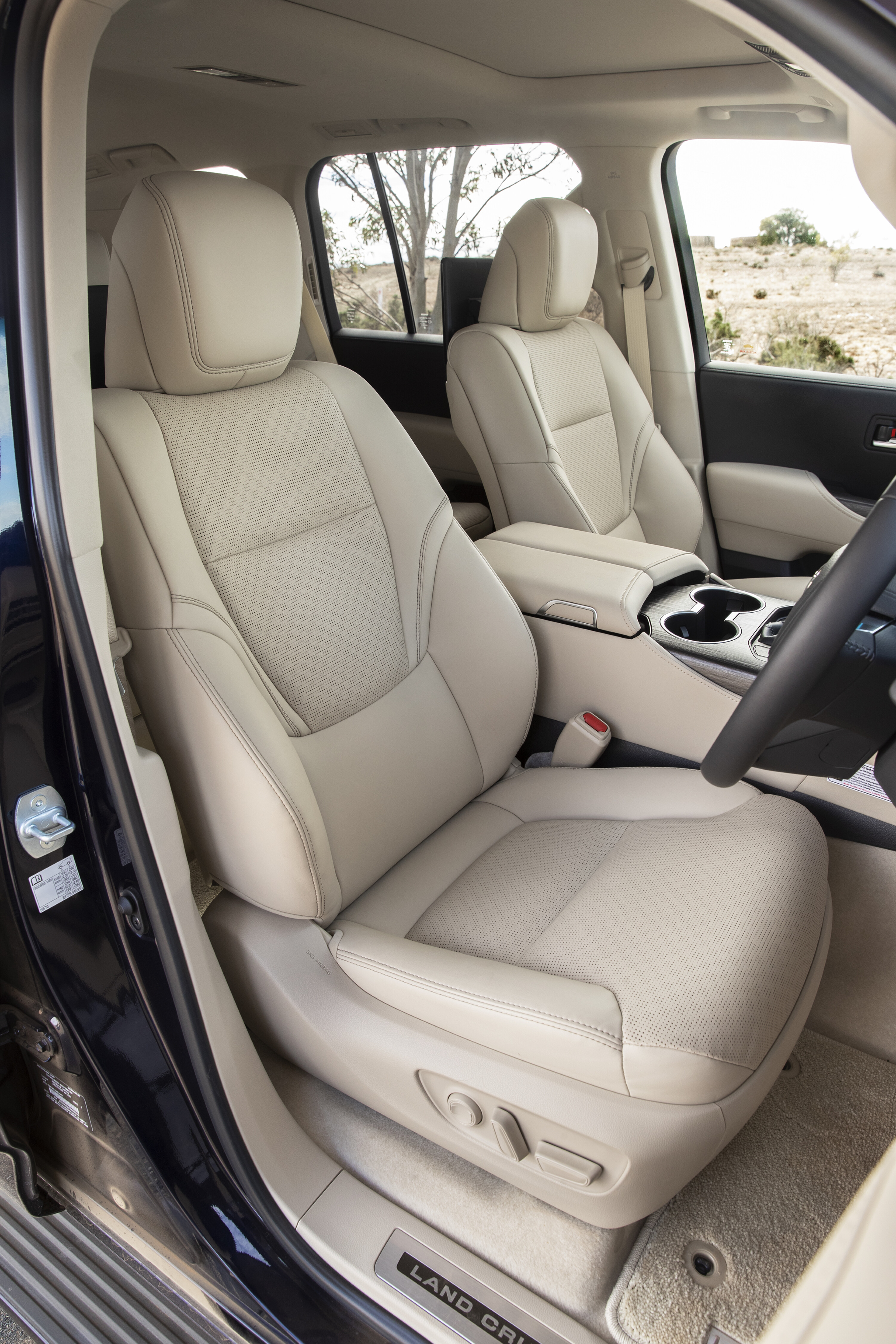
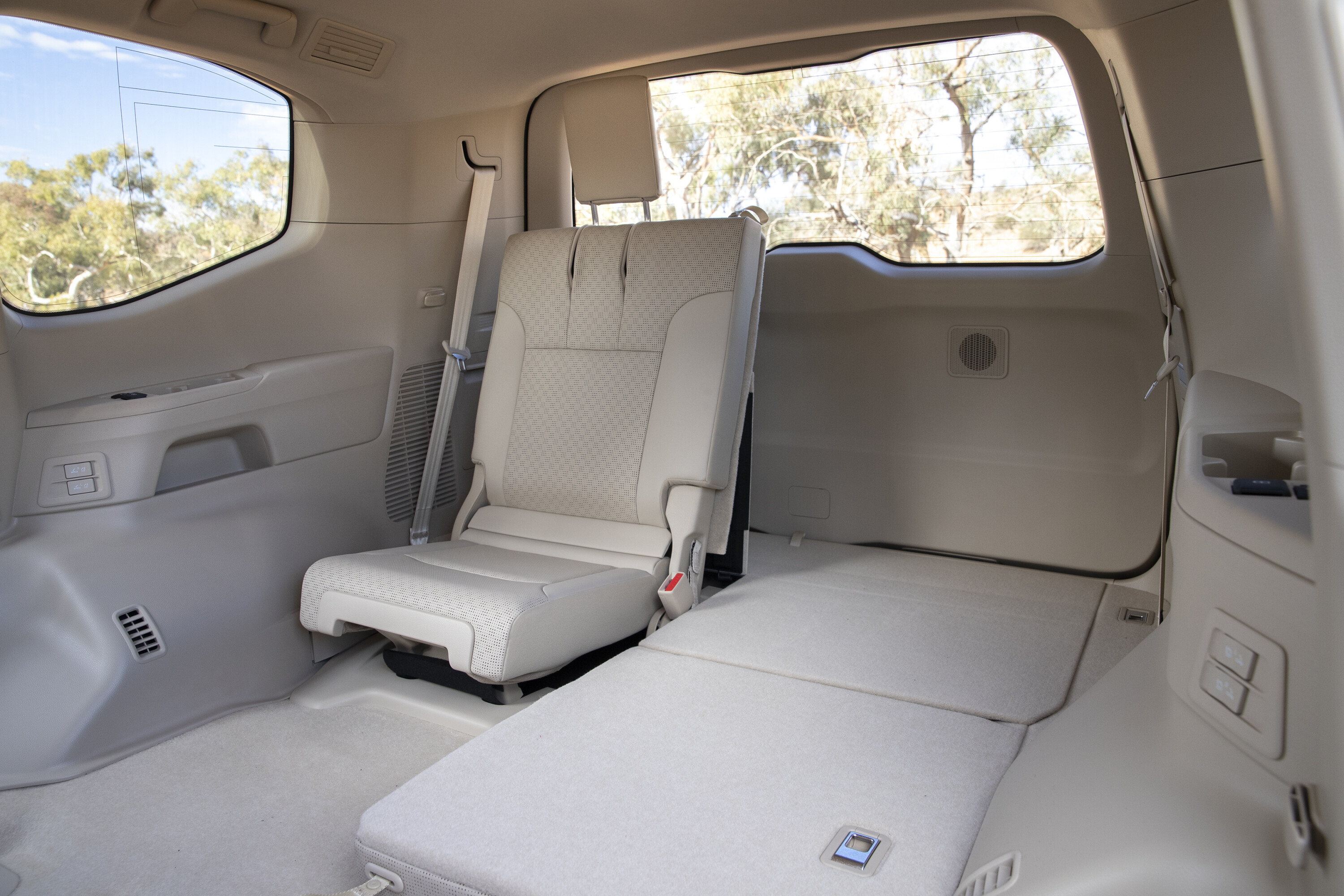
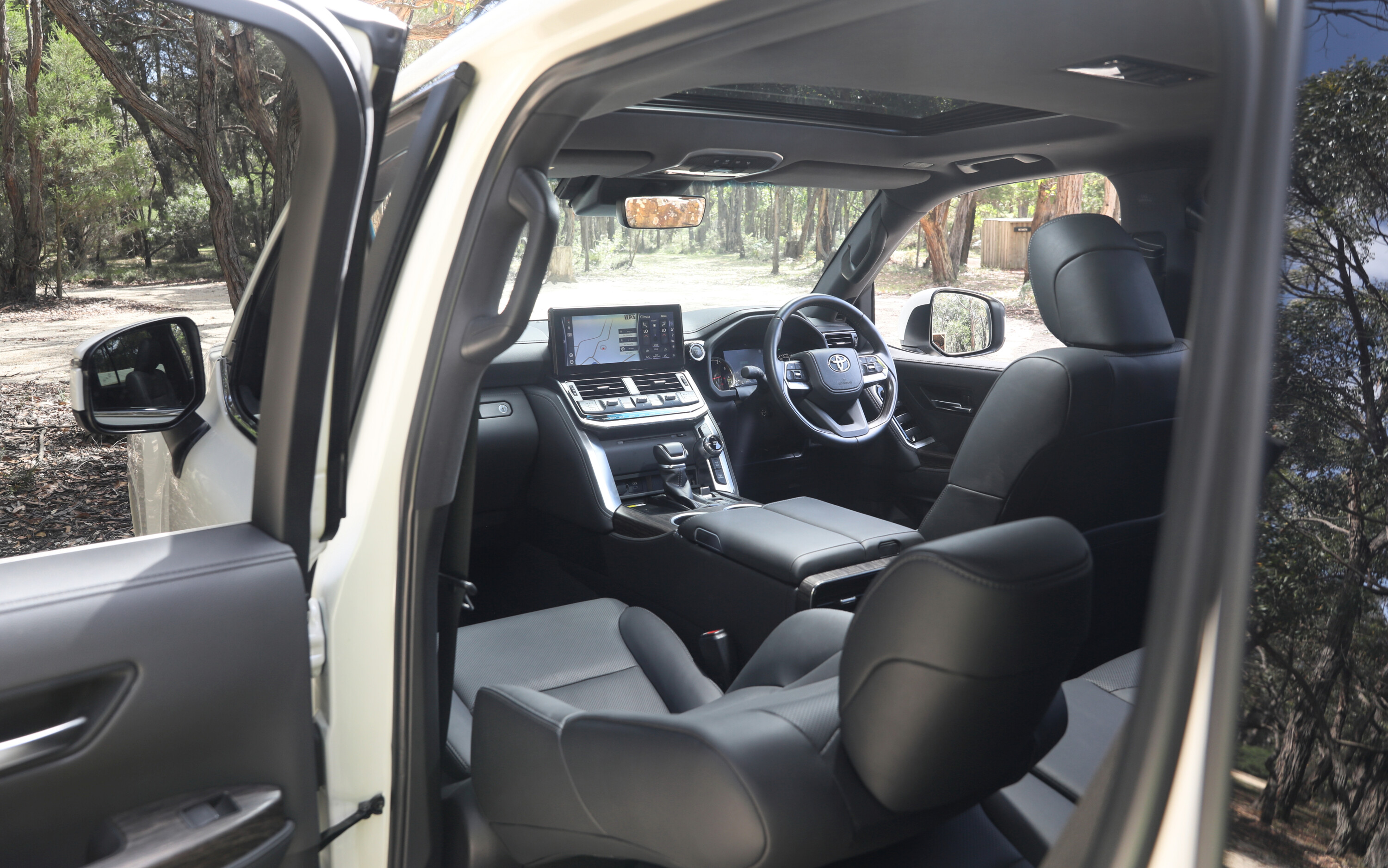
Inside the LandCruiser GX you are greeted with vinyl flooring and five cloth seats (no seven-seat option in the GX), both inclusions I’m a fan of in a four-wheel drive.
The dash layout is similar across the LC300 range, but you do notice more hard plastics and fewer features in the stripped-back GX model.
There is a distinct lack of USB points in the GX, which is a minor gripe but an important one, with only one USB-A and one USB-C in the front. There are no USB points in the rear, but there is a 12V plug – I would recommend buying a simple adaptor to convert that to USB.
1
There are six cup holders, 10 airbags, dual-zone automatic climate control and an electric park brake.
A basic and small infotainment unit is provided – as you’d expect in a base model – but the GX has a few tricks up its sleeve such as six speakers (which sound pretty good), Bluetooth compatibility, voice recognition, and Apple CarPlay and Android Auto compatibility.
However, at the back of the GX you’ll notice a one-piece lift-up rear tailgate, which isn’t a great idea.
1
By design, it sits very low when opened.
I complained about this with the new Isuzu MU-X, but the 300 Series is worse – you will hit your head on it if you aren’t careful. I definitely miss the split tailgate found on previous LandCruisers, a practical place to make a sandwich or to sit on and watch the world go by.
The seats are basic but comfortable enough for long stints behind the wheel, and there’s plenty of headroom for taller drivers.
1
How much boot space does the Toyota LandCruiser 300 series offer?
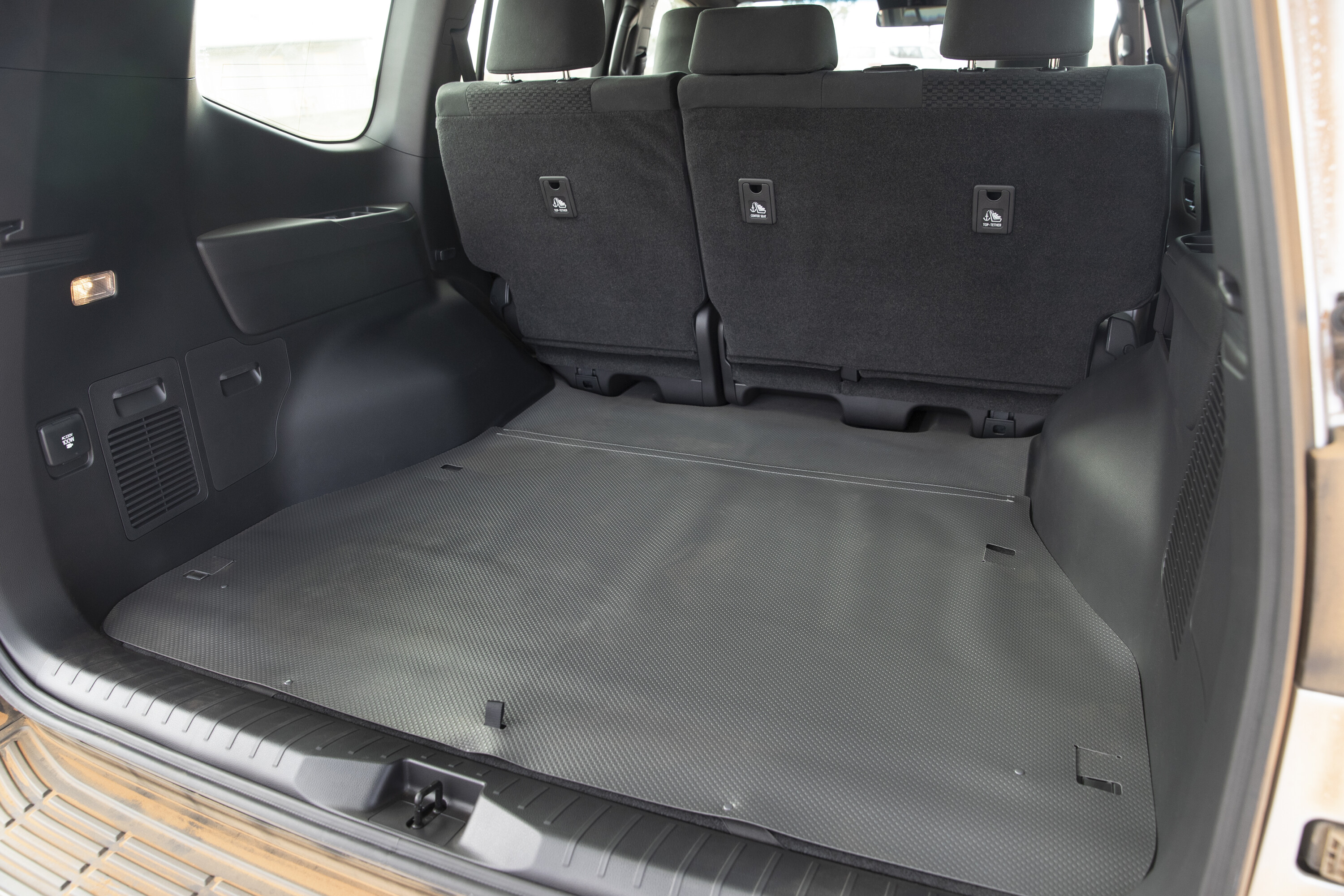
The big ‘Cruiser is very good at carrying a mountain of luggage, thanks to 1131 litres of cargo space in the five-seat models, which is 126L more than the seven-seaters offer with their third rows folded.
Although now a one-piece tailgate, it does reveal a large opening, which makes it easy to load bulky items. There are four tie-down points here and a 220V, 100A power outlet, but no 12V socket.
1
I like driving – will I enjoy this car?
Not as a sporting proposition, no. But as a long-distance tourer capable of devouring the harsh Aussie environment, this vehicle is one of the best you can buy.
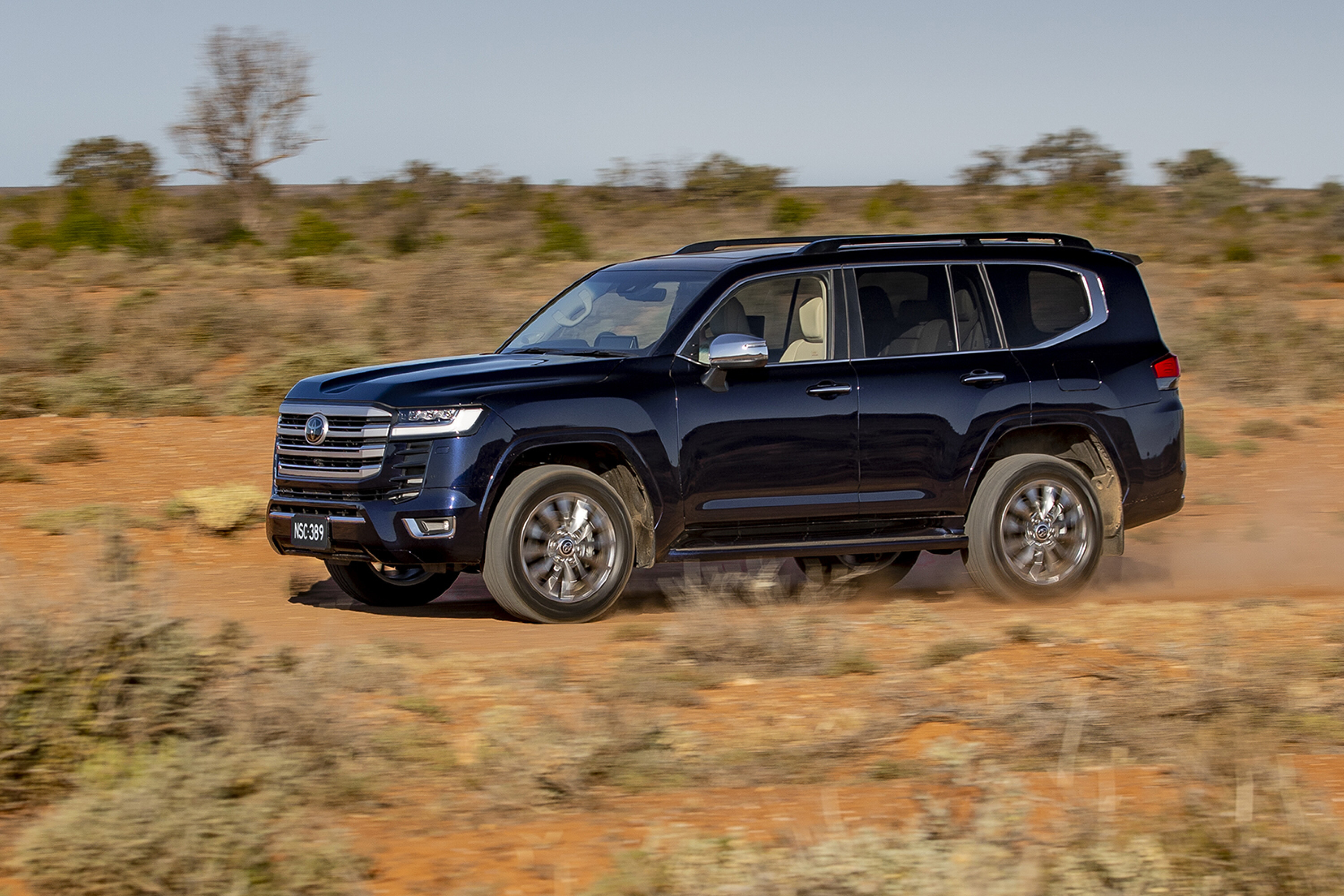
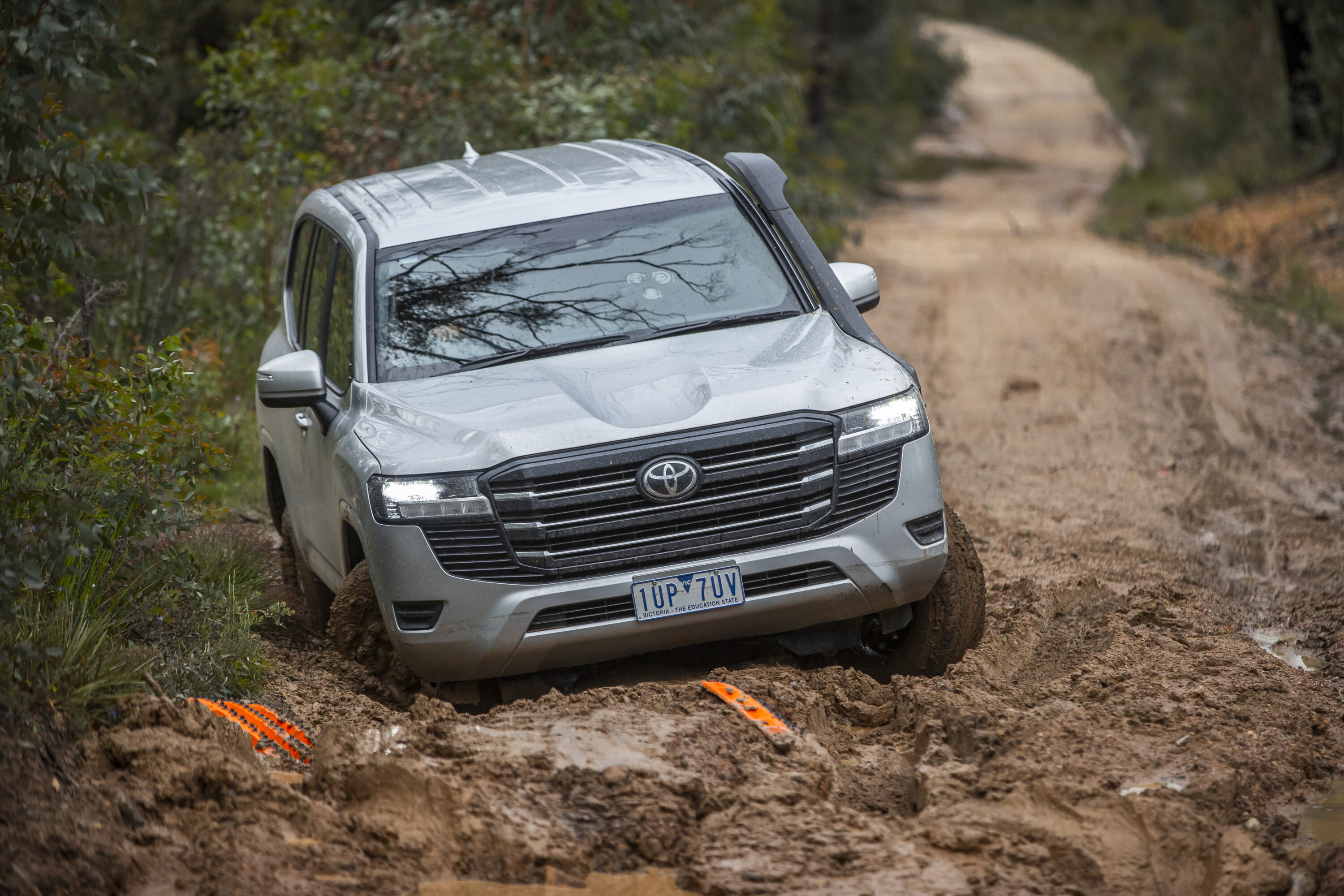
The LC300 rides on Toyota’s new TNGA chassis which it shares with the Tundra pickup truck in the USA that was launched around the same time as this new ‘Cruiser. It’s still a body-on-frame design but now employs more high-strength steel in key areas to improve stiffness, while using aluminium in some suspension components to reduce weight.
Suspension is a double wishbone, coil sprung independent setup at the front and live rear axle at the back, located by multi-links and riding on coils.
1
The GX’s coil-sprung suspension performs brilliantly, with a firm yet progressive feel. Steering is also nicely weighted and direct for such a large wagon – full points there.
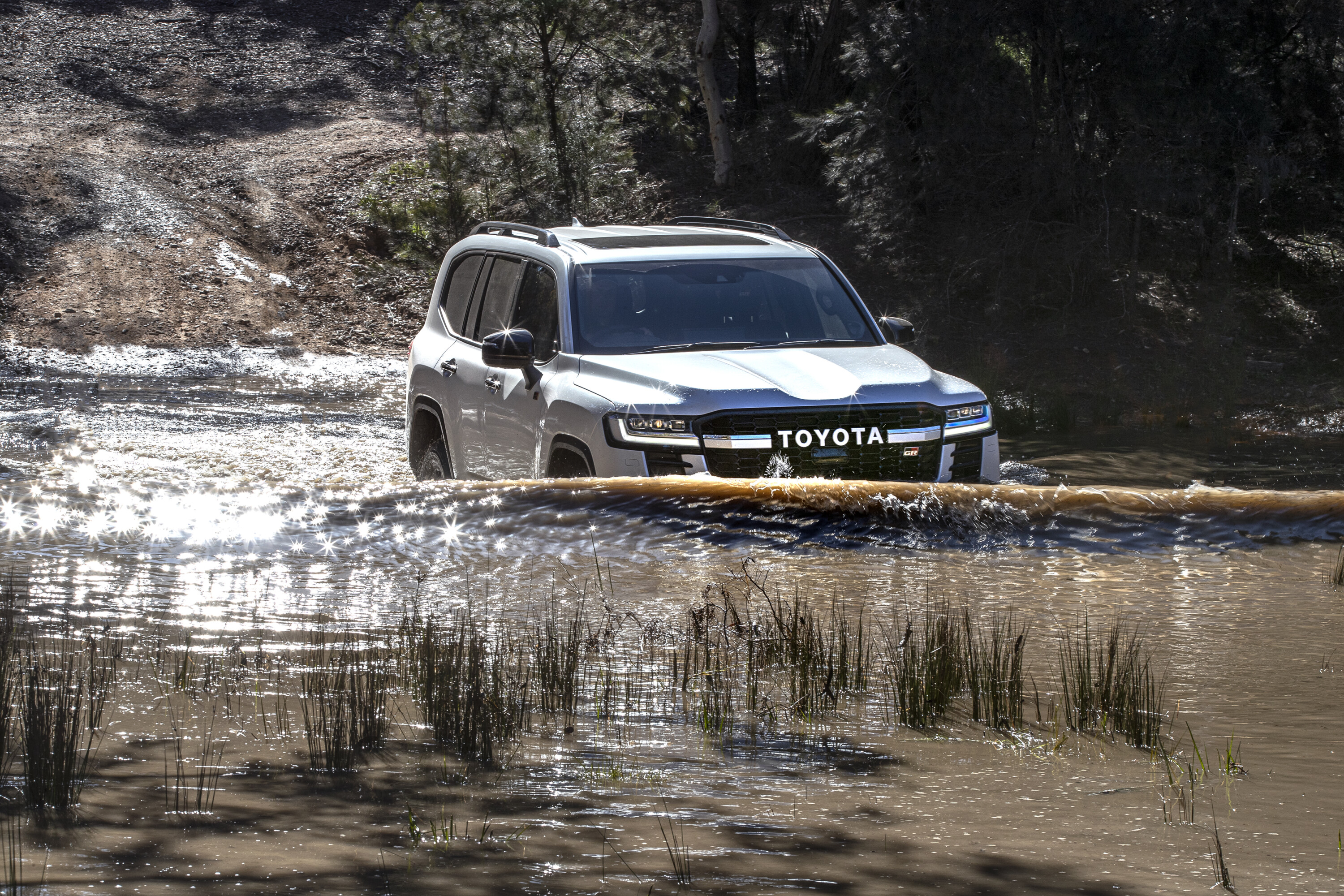
Meanwhile, the GR Sport and Sahara ZX get adaptive dampers that enable you to select Comfort, Sport or Sport+ settings to suit your driving preference and style.
The GR Sport’s E-KDSS system works on the front and rear sway bars to lighten the tension on them when driving at low speeds off road, and tighten them up for firmer body control at higher speeds on road.
1
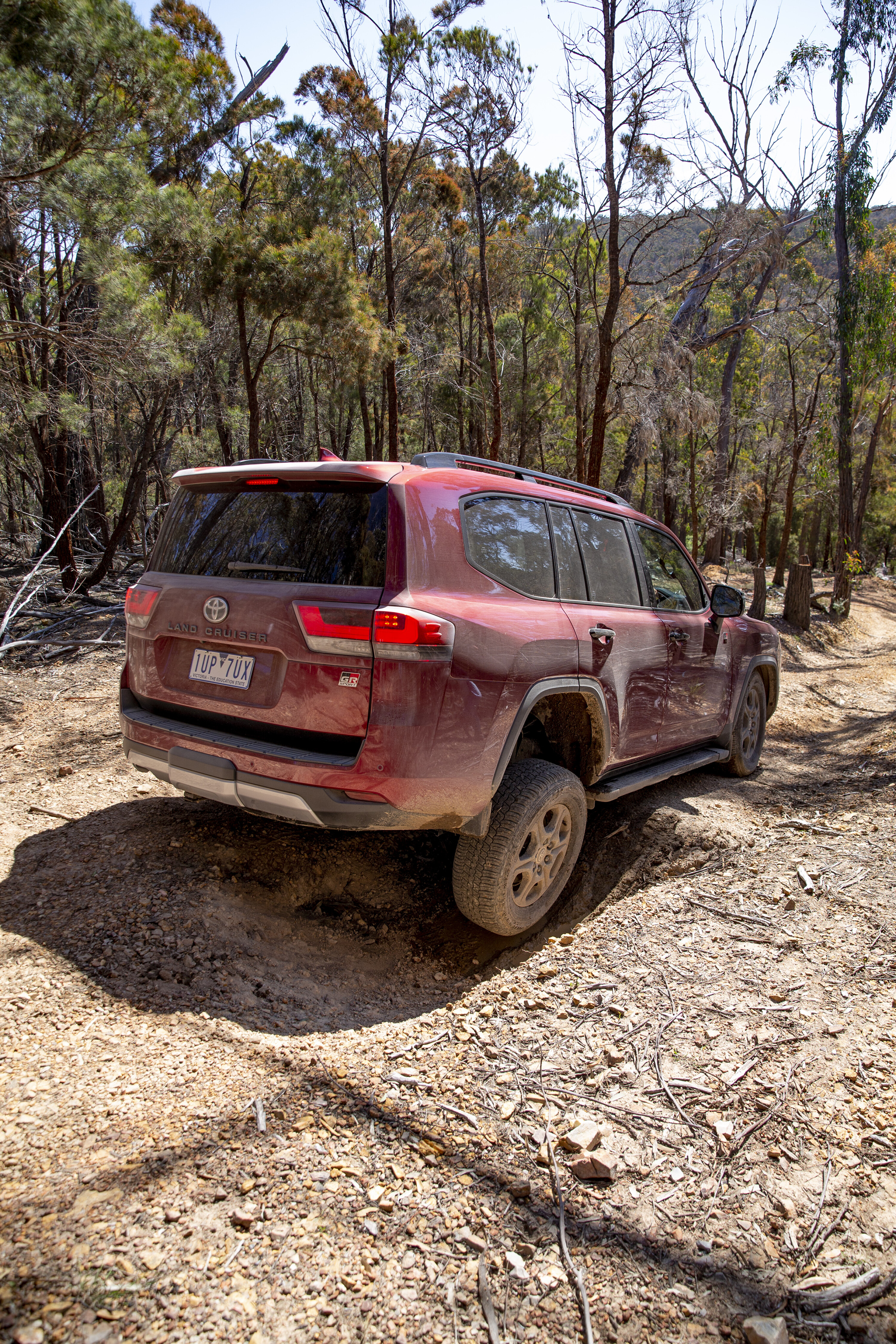
It is a further development of the old KDSS to now automatically disconnect the sway bars when required off-road to give the most axle articulation.
All that kit delivers a ride and handling characteristic that is still instantly recognisable as LandCruiser. It’s soft and supple, soaking up road bumps, and pitches and wallows when pushed hard. Even in Sport and Sport+ mode, the handling is still soft. Then again, the LandCruiser has no sports car pretensions.
It’s a vehicle that’s designed to soak up anything the road can dish up to it while covering hundreds of kilometres per day. And it does that very well.
1
- What is a Powertrain or Drivetrain?
- Power vs torque
- Car suspension explained
- Automatic transmissions (‘gearboxes’) explained
- Chassis control systems explained
- Car vs Ute vs SUV: How the vehicle you buy should guide the way you drive
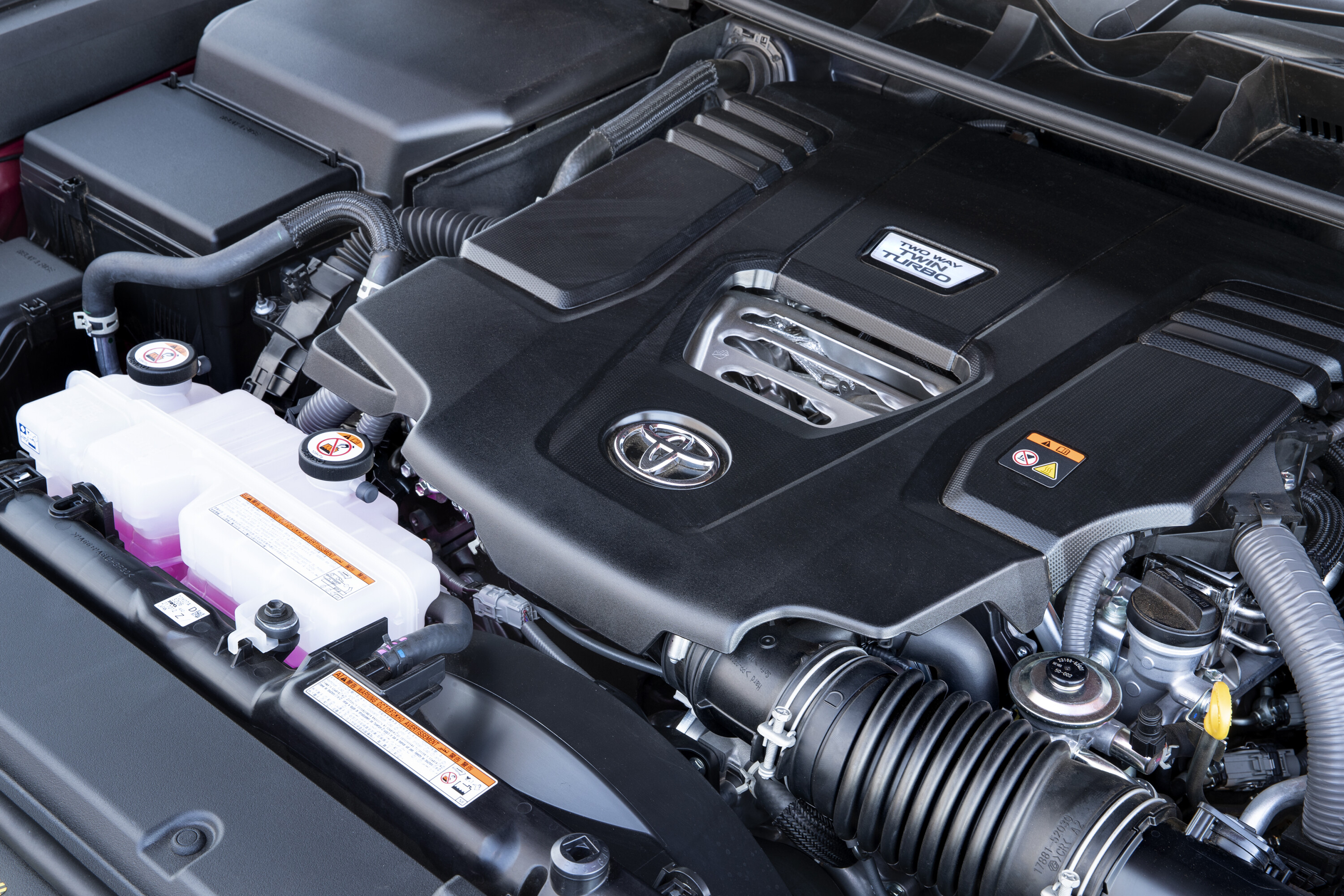
The 3.3-litre V6 turbo-diesel engine fitted to all LC300s uses a claimed 8.9 litres/100km on the official test (city and country combined).
Fuel capacity is down compared to the 200 Series LandCruiser, with 110 litres split between 80L main and 30L sub tanks. Toyota says this is due to the more efficient V6 used in the LC300, and it’s also a quick and easy way to shave overall weight off the vehicle.
By our calculations, you’d be getting just shy of 1000km before both tanks are bone dry, which is respectable.
Paired with a 10-speed automatic transmission and all-wheel-drive traction, the V6 is a stout performer. It pulls well through the rev range and feels particularly peppy in the mid-range. Low-down torque is tractor-like when crawling off-road, and it even sounds good when being pushed.
1
What is the Toyota LandCruiser 300’s towing capacity?
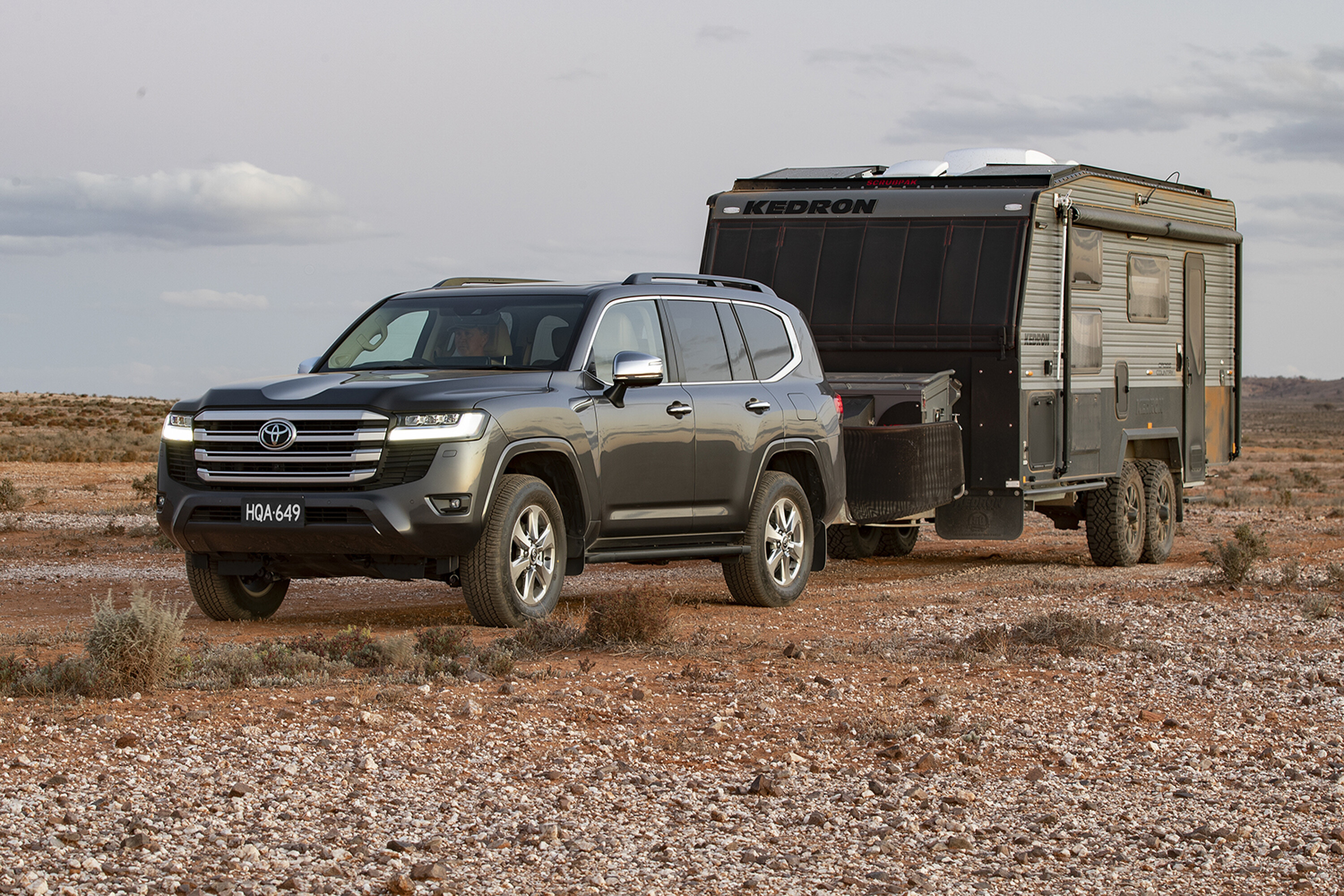
The Toyota LandCruiser 300 series has a braked towing capacity of 3500kg, with a tow ball download rating of 350kg.
1
How long is the warranty and what are the Toyota LandCruiser 300’s servicing costs?
The Toyota LandCruiser has a five-year/unlimited-kilometre warranty, but it can be extended by a further two years for the powertrain.
Called the Toyota Warranty Advantage Extended Engine and Driveline coverage, this warranty is for seven years from delivery, provided the vehicle is properly serviced and maintained.
The LandCruiser 300 series requires servicing every six months or 10,000km, whichever comes first. Toyota’s capped-price servicing offer is $400 per interval, meaning you’ll pay $4000 for scheduled servicing over five years.
1
Which version of the Toyota LandCruiser 300 series does Wheels recommend?
This is hard to answer as the LandCruiser 300 has become a lot more expensive than its long-time competitor, the (now ageing) Nissan Patrol.
Like the Land Rover Discovery, the LandCruiser has gone upmarket, with no change from $100,000 once on-road costs are added for even the most-affordable GX model.
1
While the simplicity of the GX has a certain appeal as a supremely capable work vehicle or off-roader – if the company is paying – it is hard to see where the money has gone if you’re a private buyer.
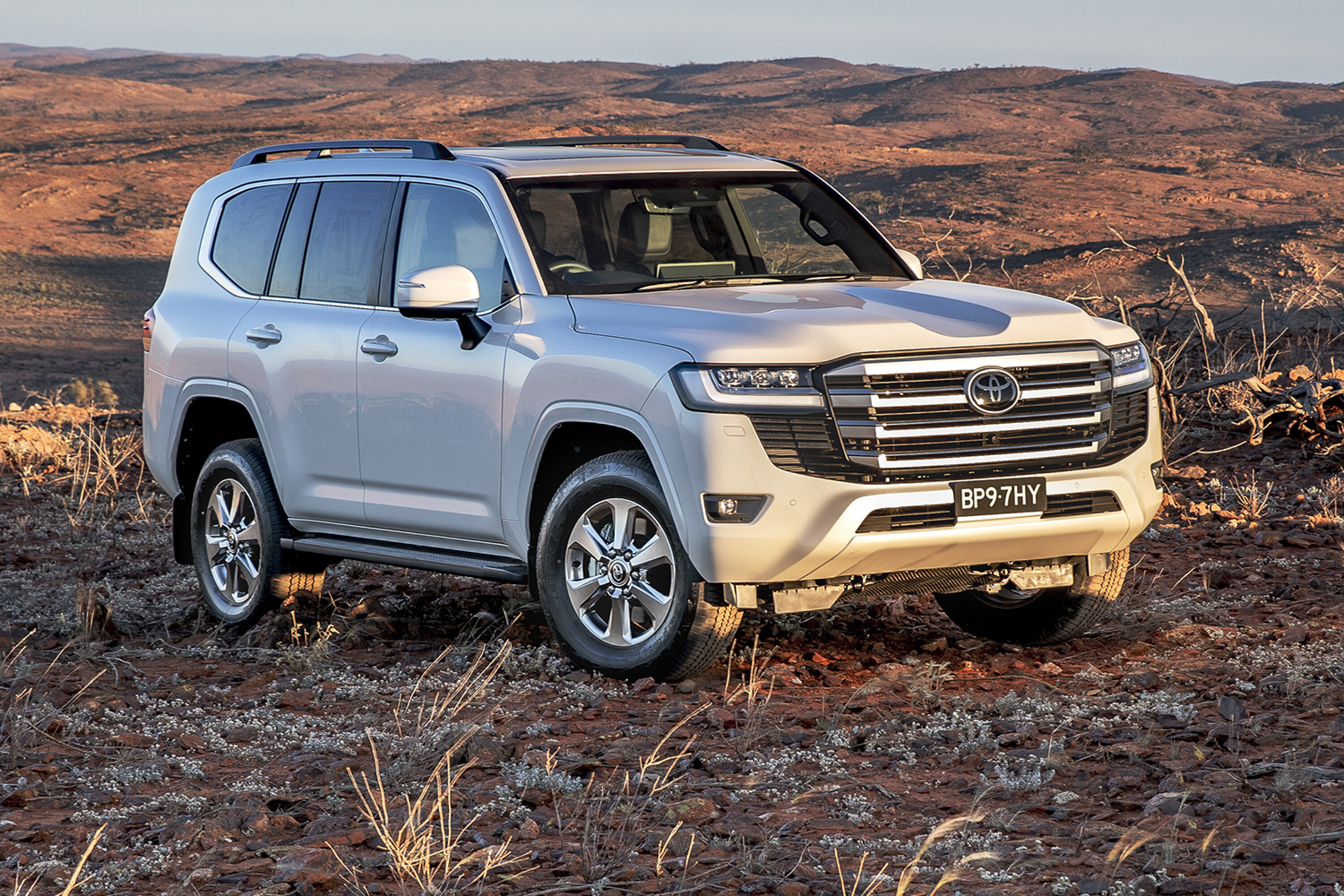
So if you’re going to dip into the piggy bank for more than six figures, you may as well go for the GXL, at $106,101 (plus on-road costs). For a family wagon that doubles as the holiday outback tourer (and/or heavy-duty tow vehicle), this seven-seat model has real appeal.
1
What are the Toyota LandCruiser 300’s key rivals?
u2b06ufe0f Back to top
MORE
Everything Toyota
More guides to help you choose the best car & tyres for your needs
- All tyre news & reviews
- Longest warranties & capped-price servicing period
- Buy new or used?
- Best cars for your teenager
- Must-have features for new drivers
- Active safety tech explained
- Australian road rules explained
- Does driving slower save fuel?
- Does my car need the pricier fuel?
- Help, I’ve used the wrong fuel!
- What is a hybrid car?
- How long do tyres last?
- What shoes should I wear to drive?
- What to do after buying a new car
- How much does LCT add to a car’s price?
- The ‘check engine’ light just came on…
- Is it illegal to drive too slowly in Oz?
- FWD v RWD v AWD – which is safer?
- How much can my large SUV tow?
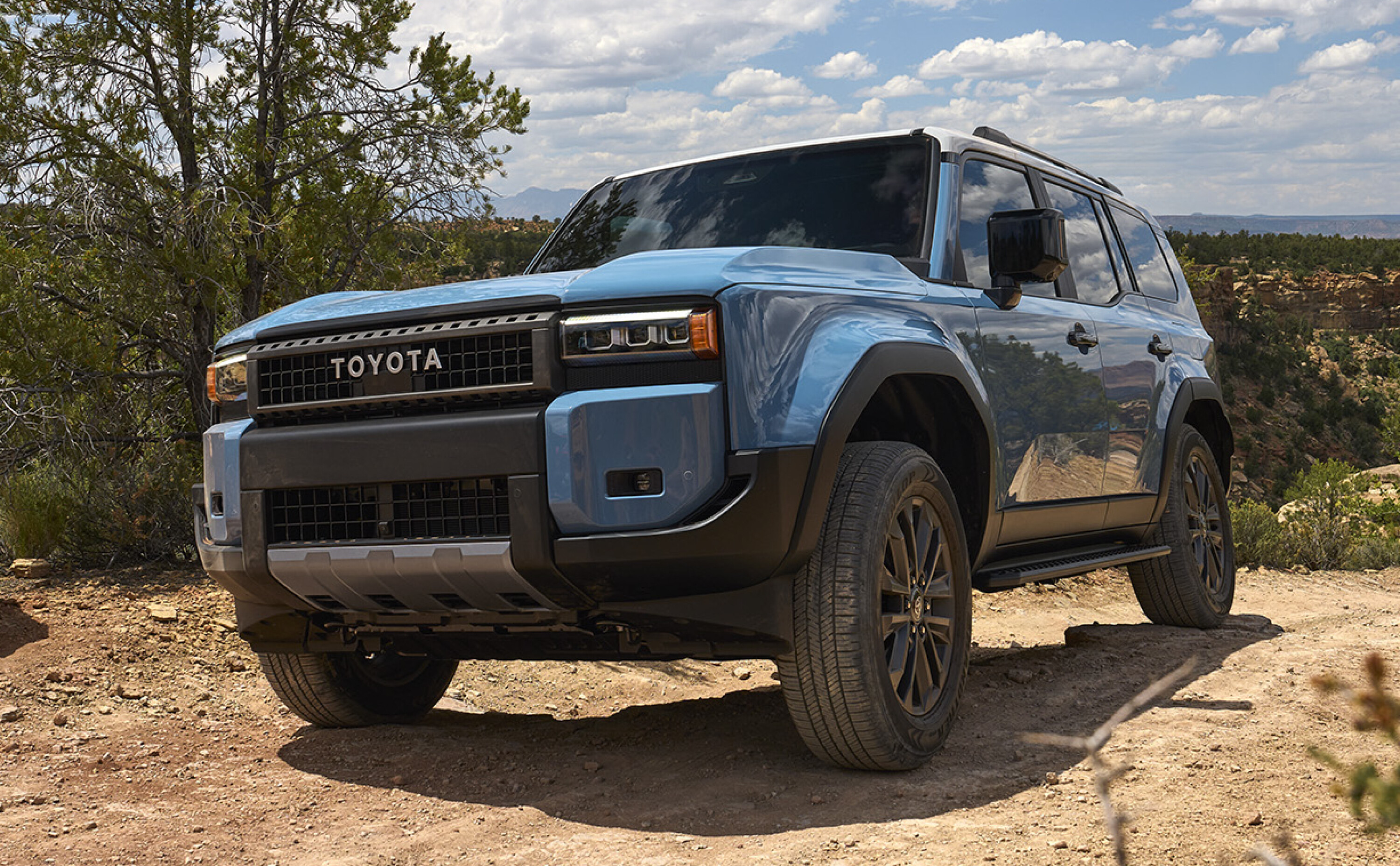
It might never stop feeling strange to look at a Toyota, any Toyota, and think “that’s a good looking car” – but here we are. The Japanese giant is turning out winner after winner.
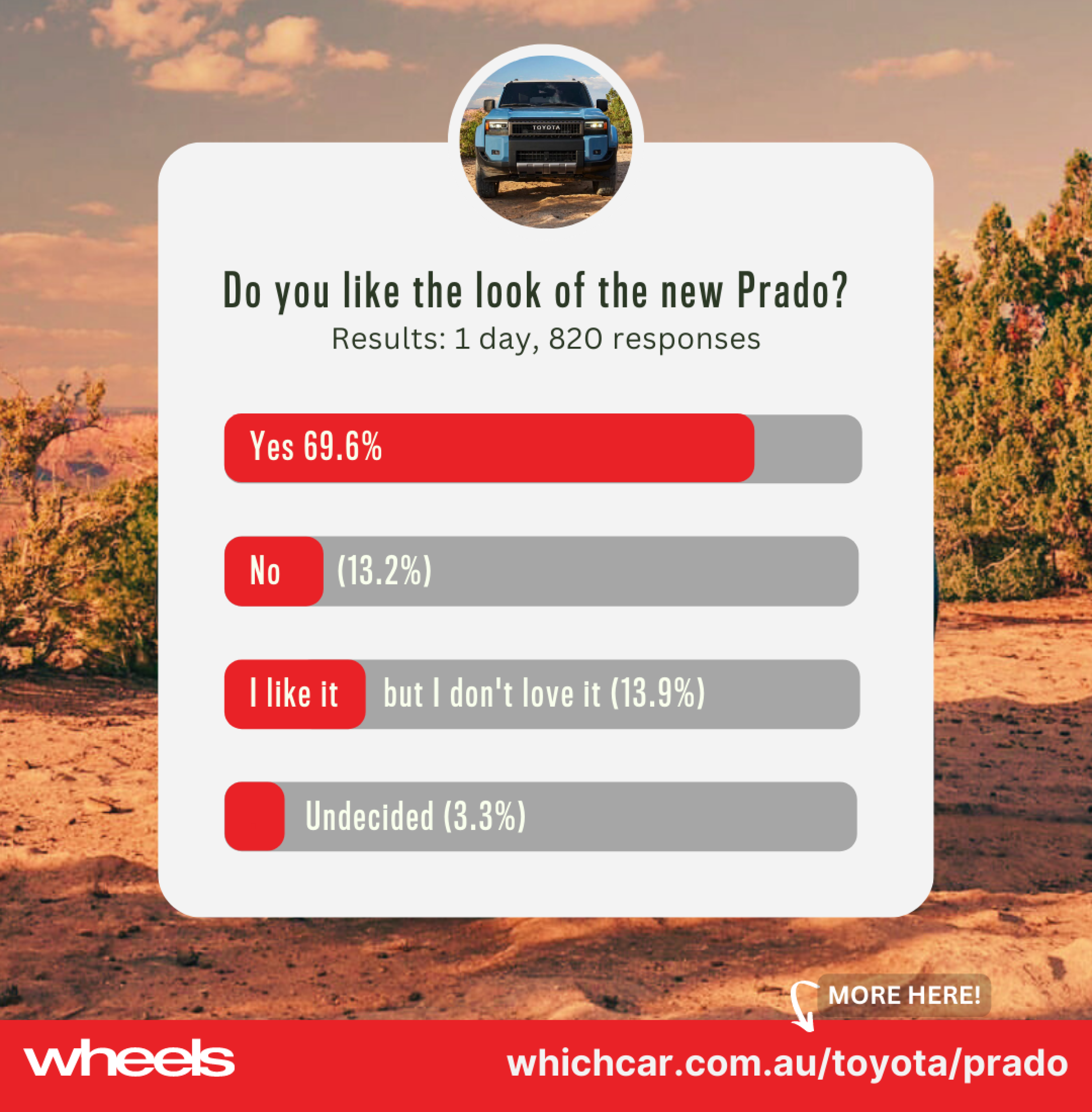
Yet, as always, it depends on who you ask. Well, we asked you about the Prado yesterday, and the verdict appears to be sealed: it’s a looker.
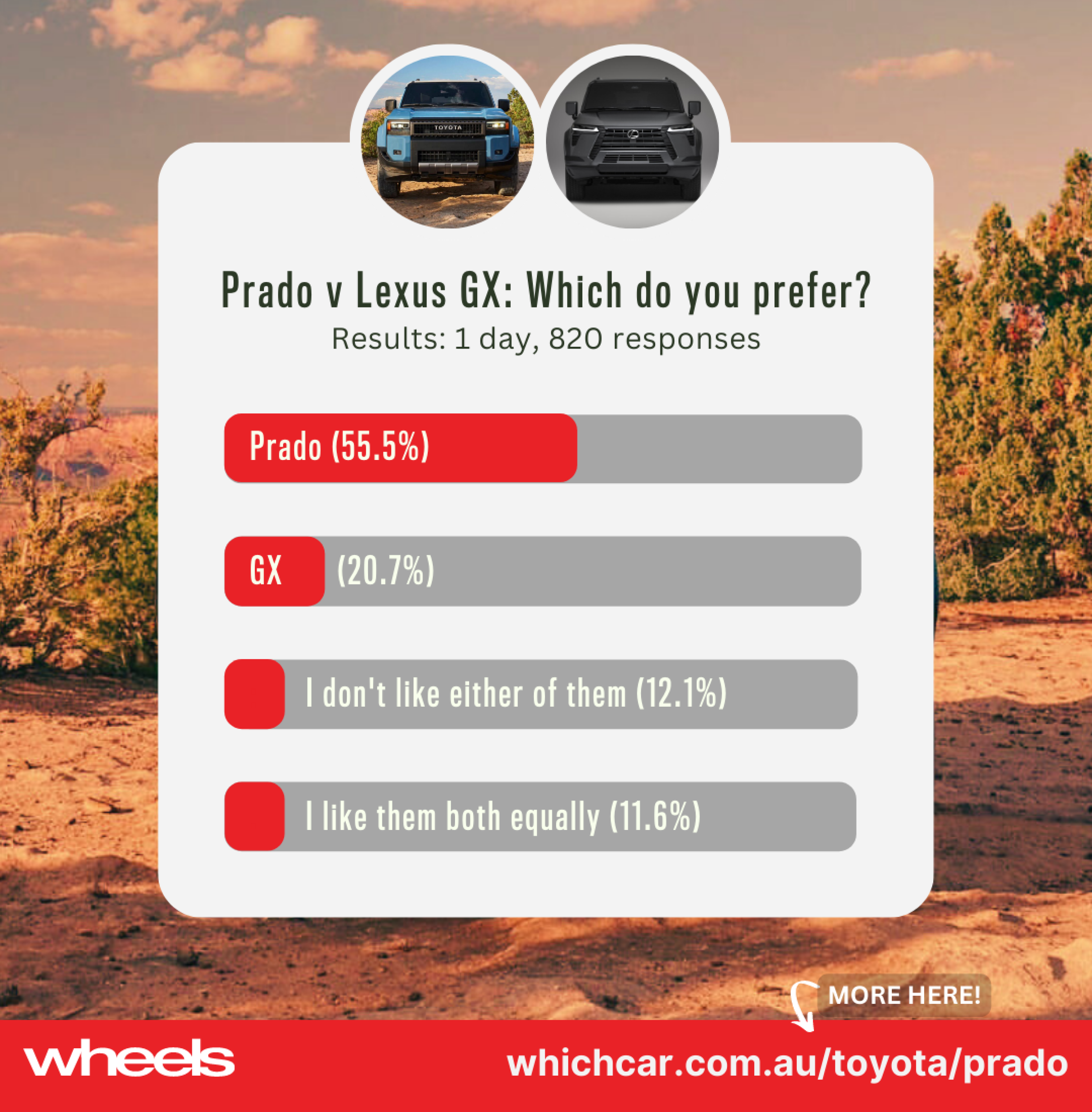
In fact, you like it even more than you like the Lexus GX. Folks seemed to love the Lexus GX when it was revealed in June – strangely before the related Prado, as if to cement the notion that Lexuses aren’t just rebadged Toyotas.
1
Regardless, it appears clear that while the GX looks compelling, the boxy styling through the profile (if not at the front, where it’s been sharpened to the Lexus look) is clearly more at home on the very retro-themed Prado.
We threw a poll into yesterday’s reveal story, and here’s how it’s looking as of 11:30am today. (It’s still live, so if you haven’t voted, get over there!)
1
1
In the comments
Here’s a few select reader comments from our reveal story.
Loving it
Not so much…
Over on Instagram
We’ve also got a poll running on our Instagram page, asking which headlight design you prefer.
Australia is only getting the squared version – for now, at least, because you never know what’ll happen in the coming years – but we’re keen to know which 60 Series tribute you like better.
(You’ll need to be on mobile to vote, and the post may not display correctly below – this is an Instagram problem, not at our end!)
https://www.instagram.com/p/Cvdi-7fAXDi/
Get up to speed on the new Prado
The stories below will give you a guide to everything we learned about the new Prado when it was unveiled. All fresh stories published since then will be found on our Toyota Prado model page here.
2024 Toyota Prado coverage
- 2024 TOYOTA PRADO REVEALED
- Spec battle: New Prado v LandCruiser 300 Series
- 2024 Toyota Prado: Everything we know
- What is the towing capacity of the new Prado?
- New Prado: What YOU think so far!
- BONUS: New 70 Series facelift revealed
- A 2025 Prado ute? Yes please!
- ALL PRADO NEWS & REVIEWS
It’s looking like a similar result on Facebook, with more ‘reaction votes’ going the Prado’s way.
You can also join the conversation on our Facebook post announcing the Prado’s global unveiling. ?
MORE
Everything Toyota
Get up to speed on the new Prado
The stories below will give you a guide to everything we learned about the new Prado when it was unveiled. All fresh stories published since then will be found on our Toyota Prado model page here.
2024 Toyota Prado coverage
- 2024 TOYOTA PRADO REVEALED
- Spec battle: New Prado v LandCruiser 300 Series
- 2024 Toyota Prado: Everything we know
- What is the towing capacity of the new Prado?
- New Prado: What YOU think so far!
- BONUS: New 70 Series facelift revealed
- A 2025 Prado ute? Yes please!
- ALL PRADO NEWS & REVIEWS
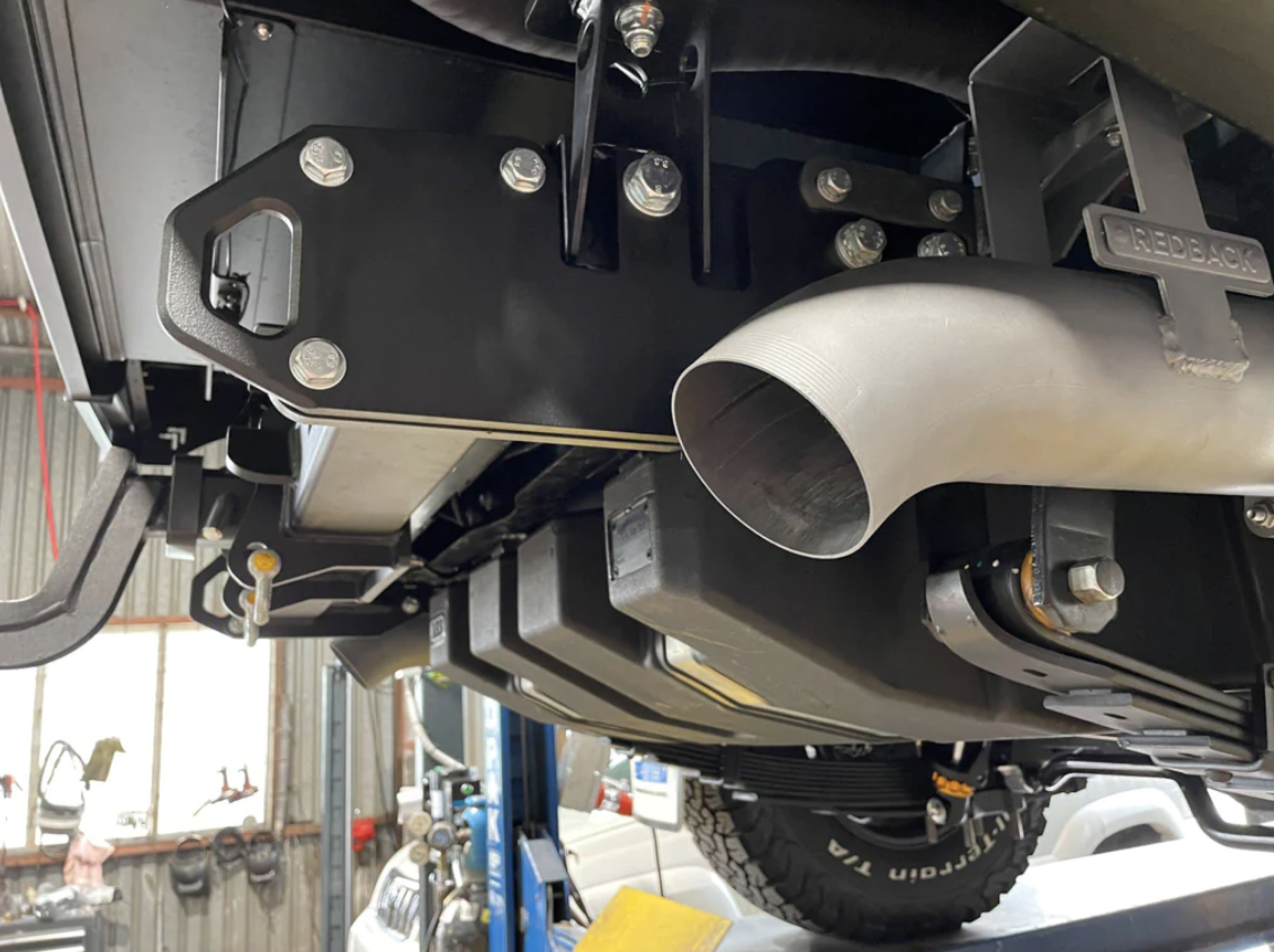
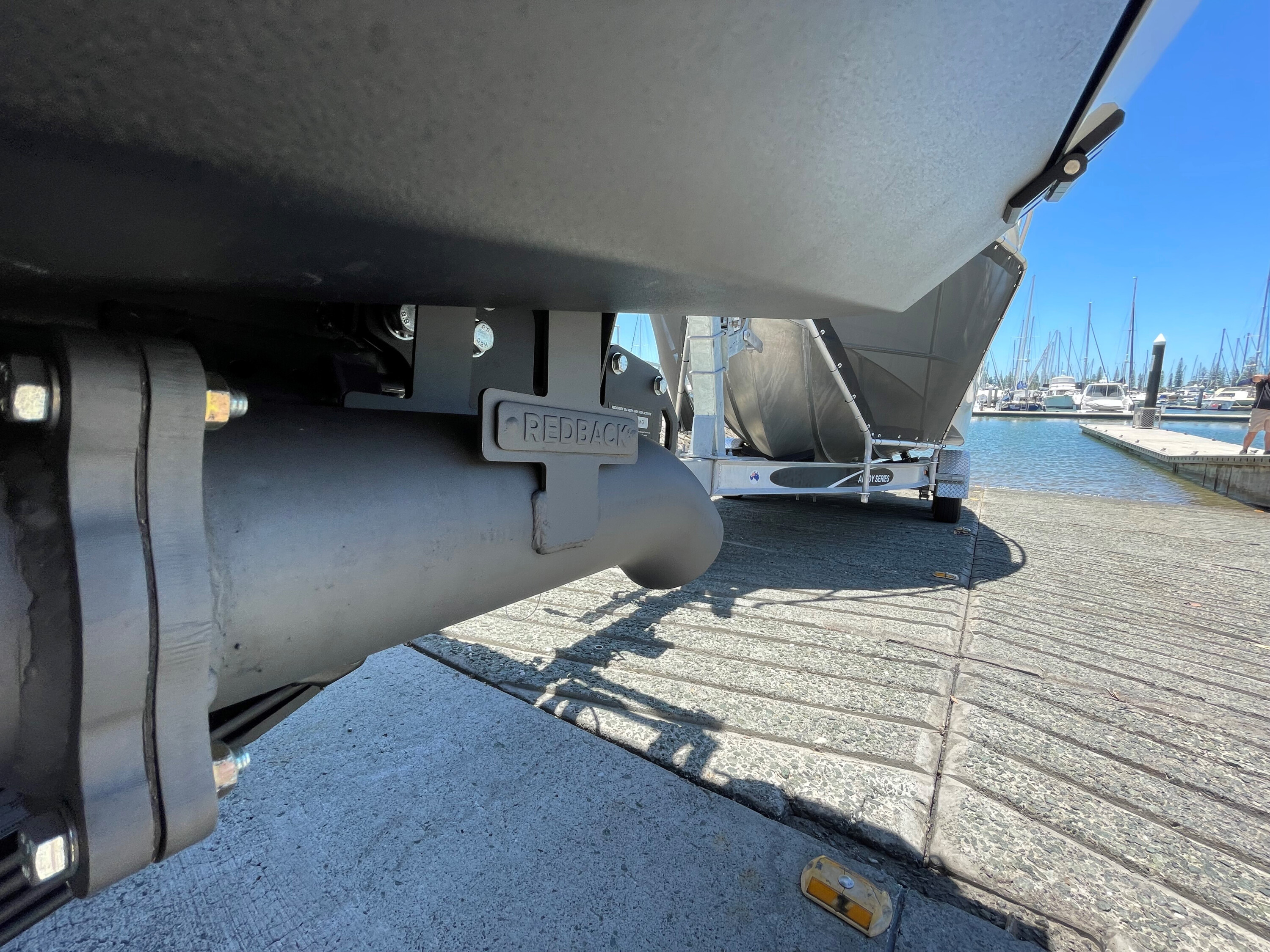
It shouldn’t be surprising that Redback Exhausts has engineered a twin exhaust system that will improve the sound, efficiency and aesthetics of your 79 Series LandCruiser.
Redback Exhausts have been in the exhaust business for 30 years and its systems are proudly Australian made.
Redback utilises electrical mandrel benders in the production of its exhausts. While this is considerably more expensive than hydraulic benders, the outputs are more accurate and consistent. This is exactly what you want when it comes to upgrading the exhaust system on your 4WD.
1
The Redback Extreme Duty twin four-inch exhaust kit for the 79 Series dual-cab ute has been engineered to maximise its usability with a slot on top of the tip’s brackets that allows installers to adjust the tips to wherever you want them.
You won’t need to relocate any shock absorber remote reservoirs, either. Redback has even ensured the dual exhaust won’t snag on your long-range fuel tank, specifically the ARB Long Range fuel tank.
This kit is designed to suit dual-cab DPF models only – if you have airbags installed, you’re out of luck and you’ll need to install the single four-inch kit.
Latest Gear Guides




1
The four-inch exhaust system is a twin DPF back exhaust with 409 stainless-steel tubes coated with premium heat-proof paint. The flange plates are 10mm thick and use four bolts to connect, and the fire ring gaskets are pressed.
There is a removable plug boss for the EGT, and the hanger brackets are extreme duty. When it comes to sound, the only option is a twin straight-through pipe; however, more sound options are expected shortly.
Redback offers to double the extended warranty from five to 10 years if you purchase the kit from Redback online or from an authorised Redback 4×4 dealer, or if you register your purchase using the online warranty registration form.
Expect to pay from $2099 for this exhaust kit, and add a bit more for shipping and installation.
Key Points
- All three body styles retained
- 1GD engine backed by six-speed automatic
- On sale late in 2023
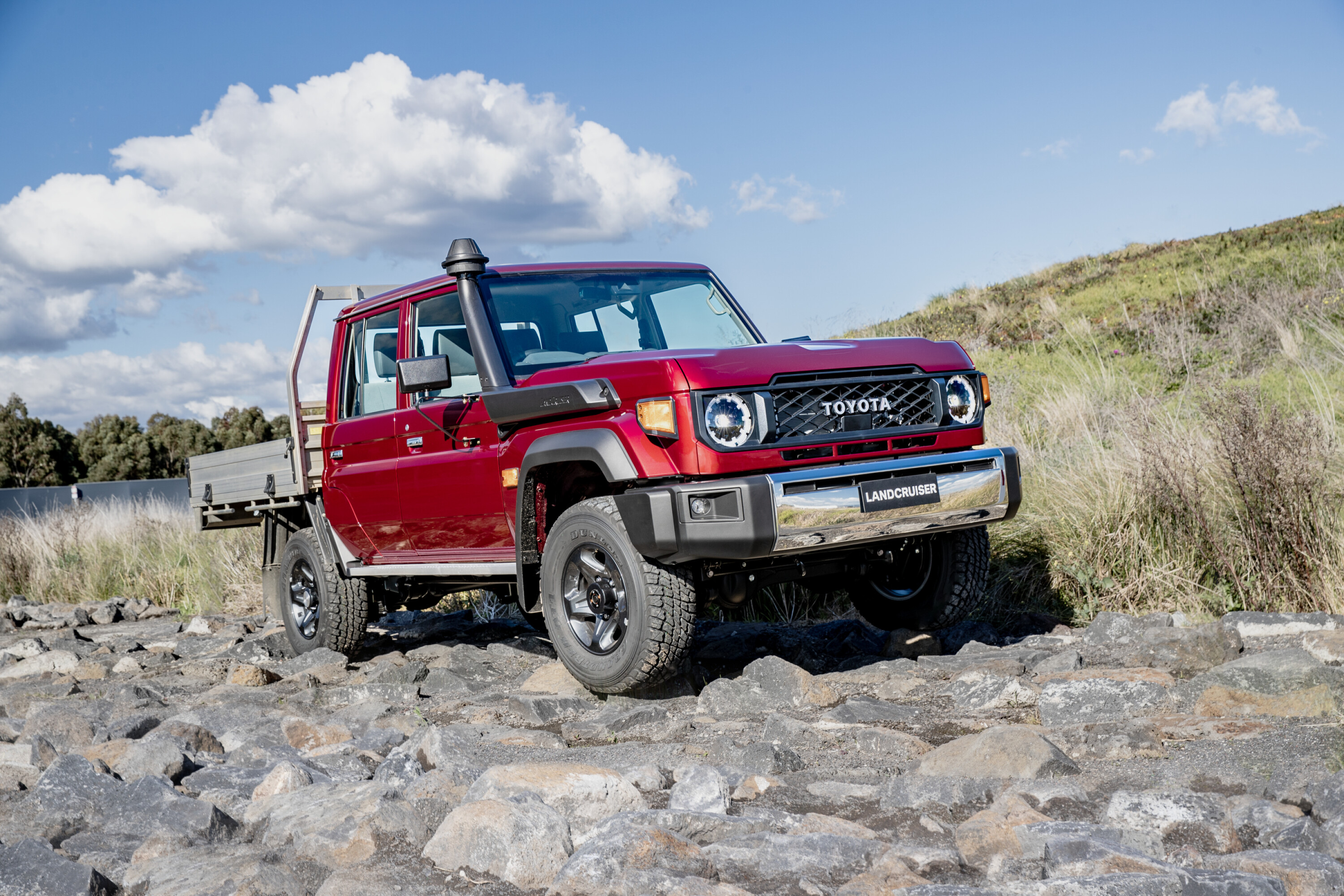
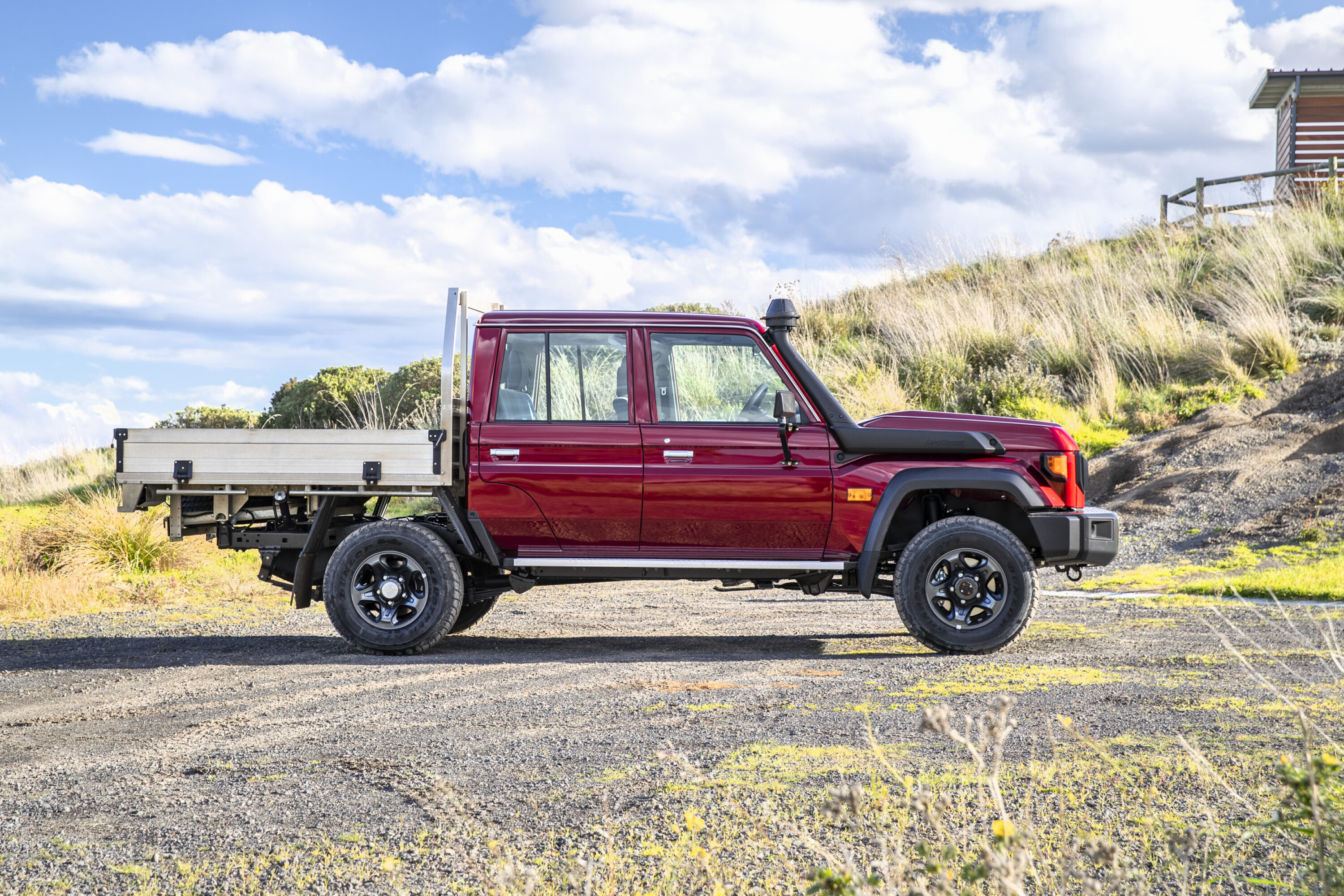
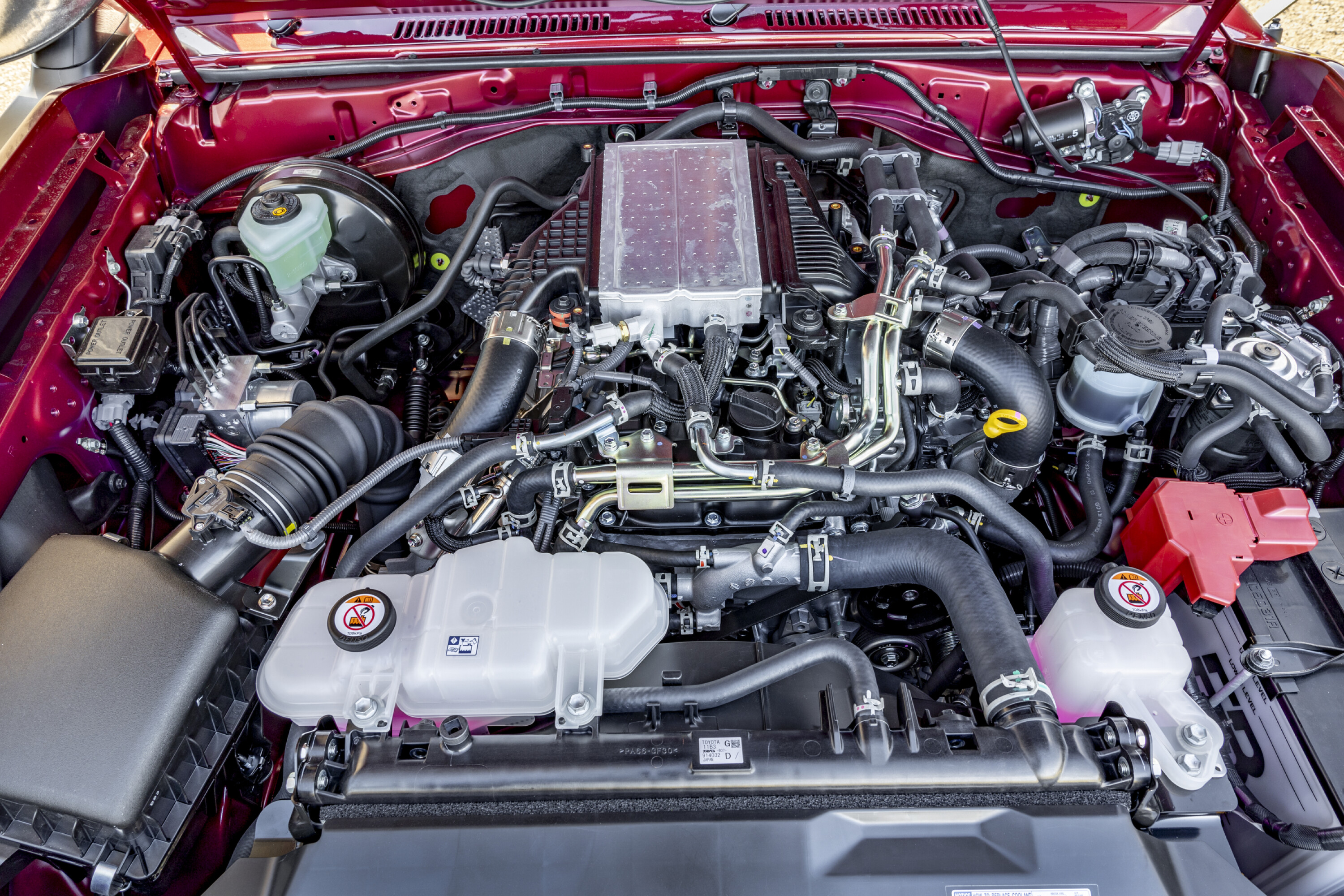
The prices of 1VD-powered Toyota LandCruisers just spiked as Toyota announced the 2024 LandCruiser 70 Series range will be powered by the 1GD 2.8-litre four-cylinder diesel engine backed by an automatic transmission, but the good news is that the V8 remains for the time being.
The 1DG engine familiar with us from the current Prado, Fortuner and HiLux vehicles still makes the same 150kW at 3400rpm and 500Nm between 1600rpm and 2800rpm.
This gives it 70Nm more torque than the existing V8 diesel engine in its standard form, but who leaves their V8 diesel standard? The stock 1VD engine makes a lazy 151kW at 3400rpm and 430Nm from 1200rpm to 3200rpm.
1
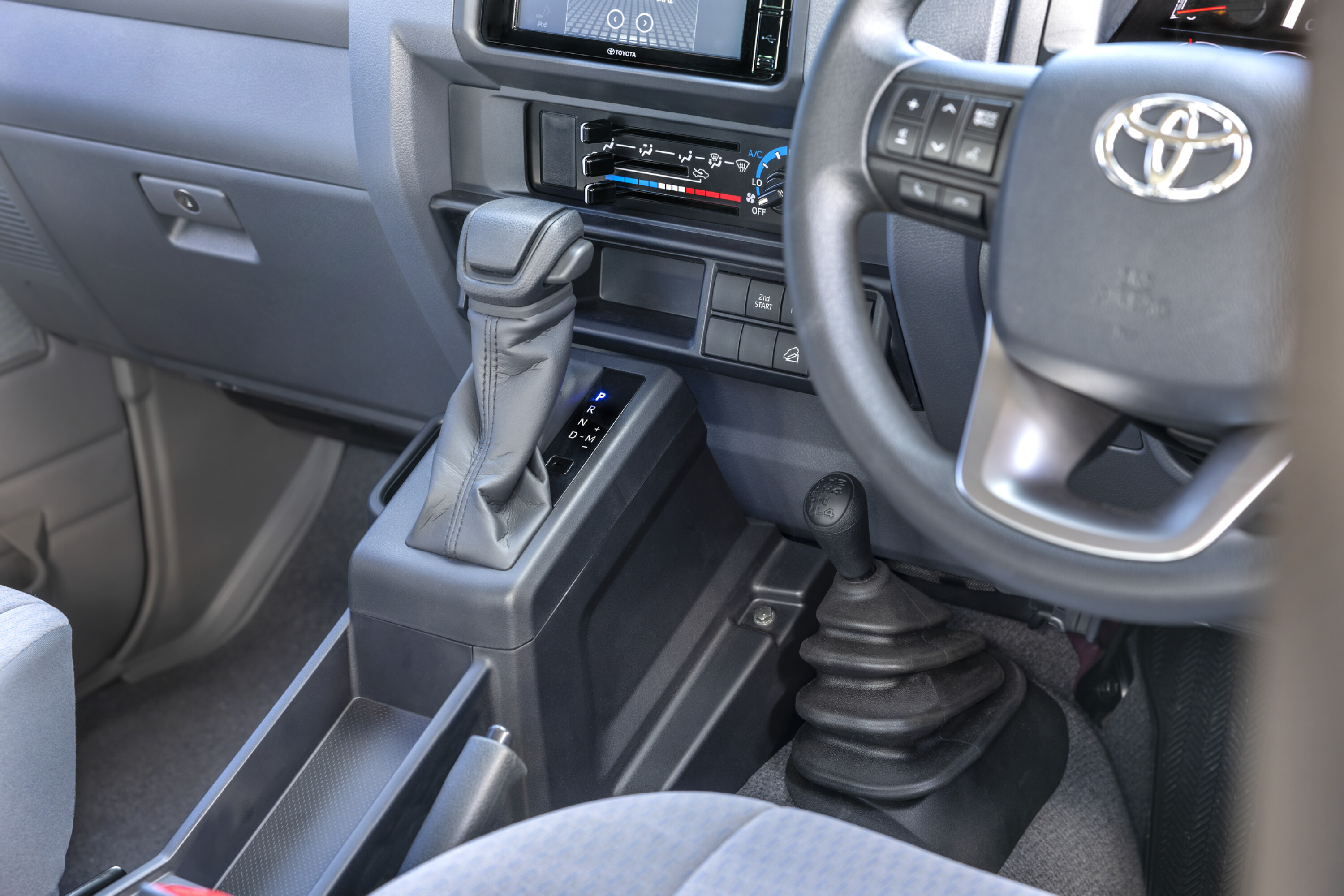
Big news for many is that the four-cylinder LC70 will get an Aisin six-speed automatic transmission, and this will be the first time a factory auto has been offered in a 70 for more than 25 years.
Rumours of this move have been around for some time now, with four-cylinder-powered 70 prototypes being tested in Australia three to four years ago and stories of them getting around.
The 1GD-powered 70 will be sold alongside the 1VD V8 manual gearbox models.
1
The confirmation of the revised 70 Series range comes alongside the reveal of the new 250 Series LandCruiser, which will be the 2024 Prado when it lands here later in 2024.
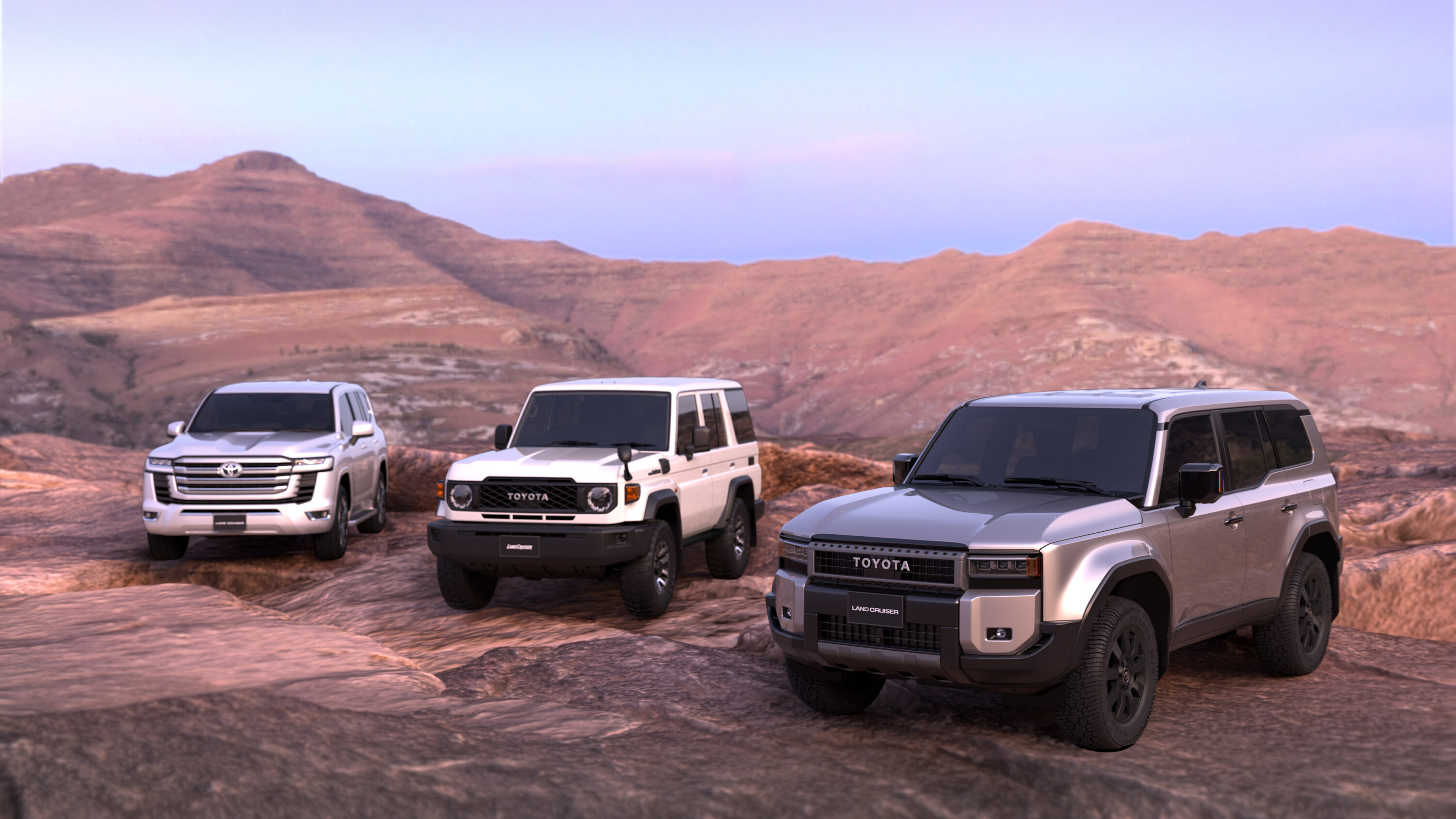
The 2024 70 Series range gets a revised front end with softer styling and a welcome return to round headlights. Inside there’s a new instrument cluster and centre console, with a 4.2-inch multi-information display for the driver and a 6.7-inch touchscreen with wired Apple CarPlay and Android Auto.
Improved safety equipment includes lane departure alert, road speed sign assist and automatic high beam.
1
While the retention of the V8 engine in the 2024 70 Series will be a welcome relief for many, particularly the enthusiast market, the inclusion of a four-cylinder option will appeal to many business operators and mining segment users who need a rugged and reliable 4×4 vehicle to get on with the job.
This workhorse will become more usable with the inclusion of the automatic transmission, which will also appeal to those who tow or have previously steered away from the 70 Series range because one wasn’t offered.
1
The 2024 Land Cruiser 70 Series range will continue to be offered in three LC79 single-cab grades (Workmate, GX and GXL), and Workmate and GXL grades for LC79 double cab, LC78 Troop Carrier and LC76 Wagon variants.
Both the 1GD/automatic and 1VD/manual powertrains will be available in all variants except for the LC76 Workmate, which will be 1GD/auto only.
Pricing and full specifications will be available closer to launch late in 2023.
The 2024 Toyota Prado has debuted in Japan and the United States before its local launch in mid-2024.
Snapshot
- 2024 Toyota LandCruiser Prado revealed
- First all-new model in 14 years
- Due in Australia in mid-2024
It has launched alongside a significant update for the venerable LandCruiser 70 Series ute and wagon, due in local showrooms later this year with an optional four-cylinder diesel and automatic transmission.
As expected, the latest ‘250 Series’ Prado is related to the new Lexus GX due in Australia next year, and closer than ever to the full-size LandCruiser 300 Series with an identical wheelbase.
The new Toyota Prado has formed the basis for the return of the LandCruiser in North America after the previous 200 Series was discontinued there in 2020.
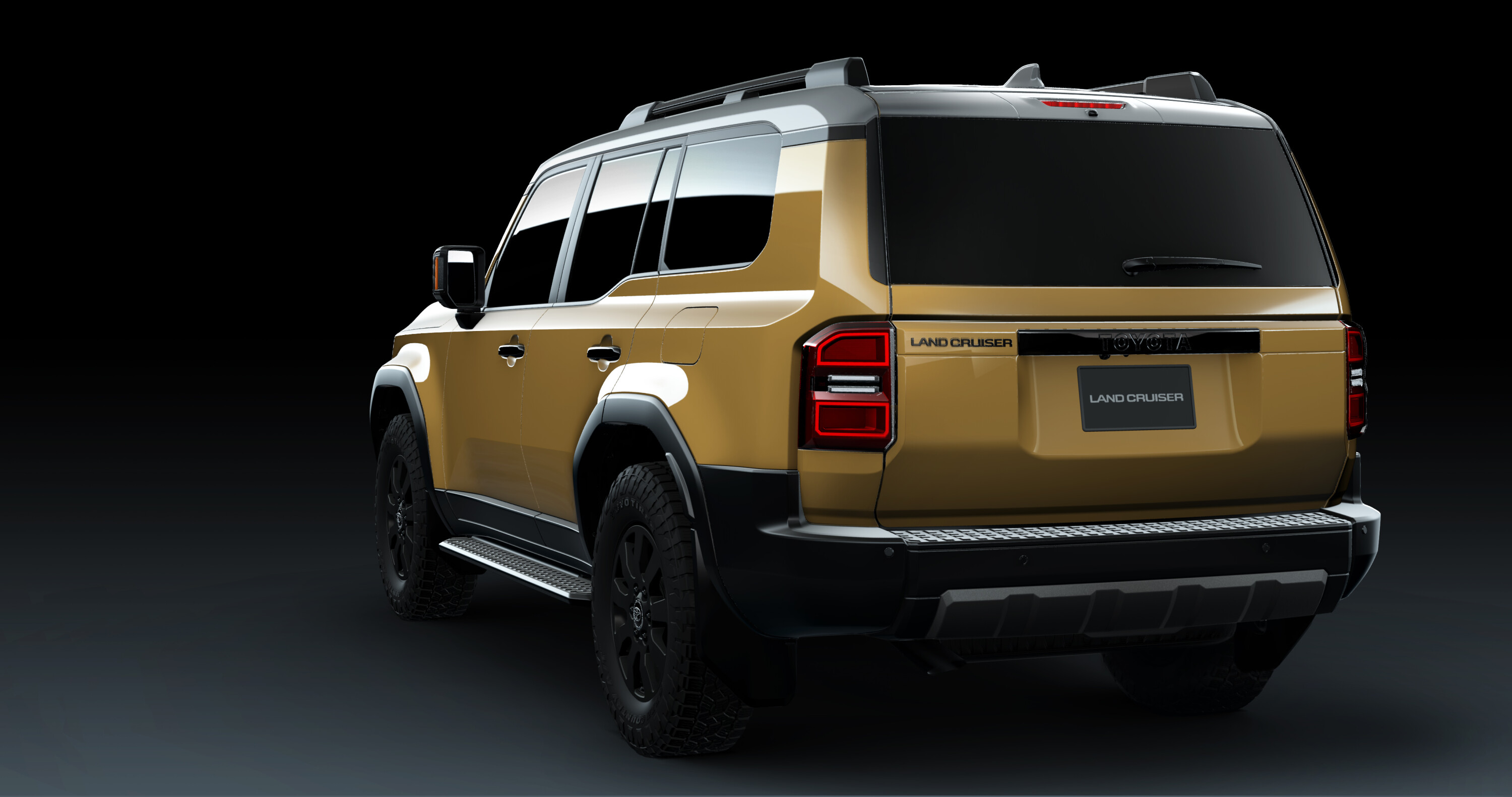
In some markets, it will feature two design themes, with round headlights inspired by LandCruisers of generations past or a luxury-focused version with a modern grille and rectangular headlights.
1
Get up to speed on the new Prado
The stories below will give you a guide to everything we learned about the new Prado when it was unveiled. All fresh stories published since then will be found on our Toyota Prado model page here.
2024 Toyota Prado coverage
- 2024 TOYOTA PRADO REVEALED
- Spec battle: New Prado v LandCruiser 300 Series
- Spec battle: New Prado v ‘old’ Prado
- Spec battle: New Prado v Fortuner
- Spec battle: New Prado v Ford Everest
- 2024 Toyota Prado: Everything we know
- What is the towing capacity of the new Prado?
- New Prado: What YOU think so far!
- BONUS: New 70 Series facelift revealed
- A 2025 Prado ute? Yes please!
- ALL PRADO NEWS & REVIEWS
- 2024 TOYOTA PRADO REVEALED
- Spec battle: New Prado v LandCruiser 300 Series
- Spec battle: New Prado v ‘old’ Prado
- Spec battle: New Prado v Fortuner
- Spec battle: New Prado v Ford Everest
- 2024 Toyota Prado: Everything we know
- What is the towing capacity of the new Prado?
- New Prado: What YOU think so far!
- BONUS: New 70 Series facelift revealed
- A 2025 Prado ute? Yes please!
- ALL PRADO NEWS & REVIEWS
Globally, it will wear LandCruiser 250 badging – but the Prado nameplate will live on in Australia, with the new model due here in mid-2024.
The current Toyota Prado available in showrooms today dates back to 2009 and is fitted with a 2.8-litre four-cylinder diesel shared with the HiLux in Australia.
The latest 250 Series will launch with five powertrains globally, including two LandCruiser-first hybrids.
1
A 48-volt mild-hybrid version of the current four-cylinder diesel will be offered in Australia with an identical 150kW and 500Nm.
It will be matched to a new eight-speed torque-converter automatic, full-time four-wheel-drive, and a starter motor-generator for “improved actual fuel economy” and a “quiet engine startup and smooth initial take-off”.
1
JUMP AHEAD
- First-ever LandCruiser hybrid!
- Engines, drivetrains, off-road, and towing capacity
- Exterior design and dimensions
- Interior design and technology
- How much will the new Prado cost?
- Availability
1
First-ever LandCruiser hybrid!
In Australia, the first LandCruiser hybrid will be in the form of mild 48-volt assistance for the familiar 150kW/500Nm 2.8-litre four-cylinder diesel, also coming to select HiLux variants in 2024.
The addition of 48-volt technology is said to help improve fuel consumption in urban settings, while the transmission has shifted to an eight-speed torque-converter unit, up from six speeds.
A full-hybrid 2.4-litre turbo-petrol with 243kW and 630Nm and an eight-speed automatic transmission will be standard-fit in North America and China.
It is the same unit in the new Toyota Tacoma, which features a single electric motor and a 1.87kWh lithium-ion battery pack.
The Tacoma’s hybrid system is more truck-like, with the electric motor sandwiched between the engine and transmission.
1
Engines, drivetrains, off-road, and towing capacity
Other powertrains available globally, but not for Australia, include a non-hybrid 2.8-litre diesel with six- or eight-speed automatics, a 207kW/430Nm non-hybrid turbo-petrol, and a 120kW/246Nm 2.7-litre naturally-aspirated petrol.
Under the skin, the Prado rides on Toyota’s latest TNGA-F body-on-frame platform shared with the LandCruiser 300, Lexus GX and LX, and the Tacoma and Tundra utes.
Toyota claims a 50 per cent increase in frame rigidity and a 30 per cent increase in overall rigidity compared to the current Prado, which is based on a HiLux platform.
1
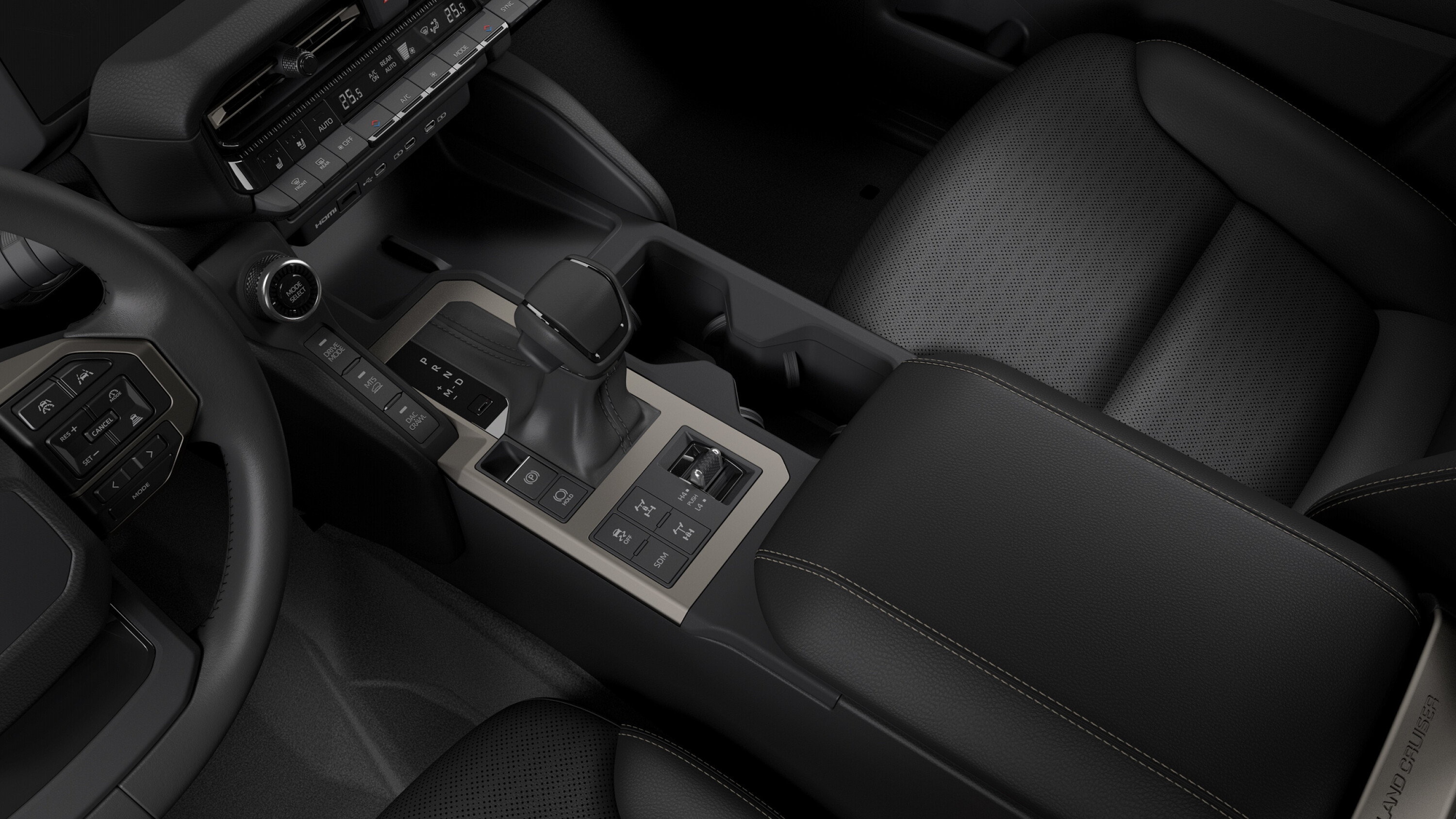
The new Prado will have a full-time all-wheel drive system with a low-range transfer case and a locking centre differential.
It features an electronic locking rear differential and front a sway-bar disconnect system. Unlike hydraulically-actuated KDSS, the new system allows stabiliser-bar disconnection on demand via a button in the cabin. This should make for excellent articulation without sacrificing road-holding.
Electric power steering replaces the hydraulic system to increase steering feel, and it has improved wheel articulation to allow the wheels to stay on the ground.
Toyota said the functionality of the multi-terrain monitor and terrain mode selector is enhanced.
1
Improvements applied to the Prado’s twin-under-the-skin, the Lexus GX, are also expected, such as high-mount double-wishbone front suspension, a ‘finetuned’ coil spring rate, increased caster trail and minimised king pin offset for enhanced stability.
In addition, the GX features a four-link rigid axle with lateral control arms at the rear, and the front and rear suspension feature independent telescopic valves and friction control modules.
For the GX, towing capacity has increased to 3628 kilograms in North America, suggesting the Prado could feature an Everest and MU-X-matching 3500-kilogram capacity – up 500kg over the Prado’s current 3000kg limit.
Toyota has yet to confirm towing capacities for diesel Prado variants, but the turbo-petrol hybrid is limited to 2.7 tonnes in the United States.
1
Exterior design and dimensions
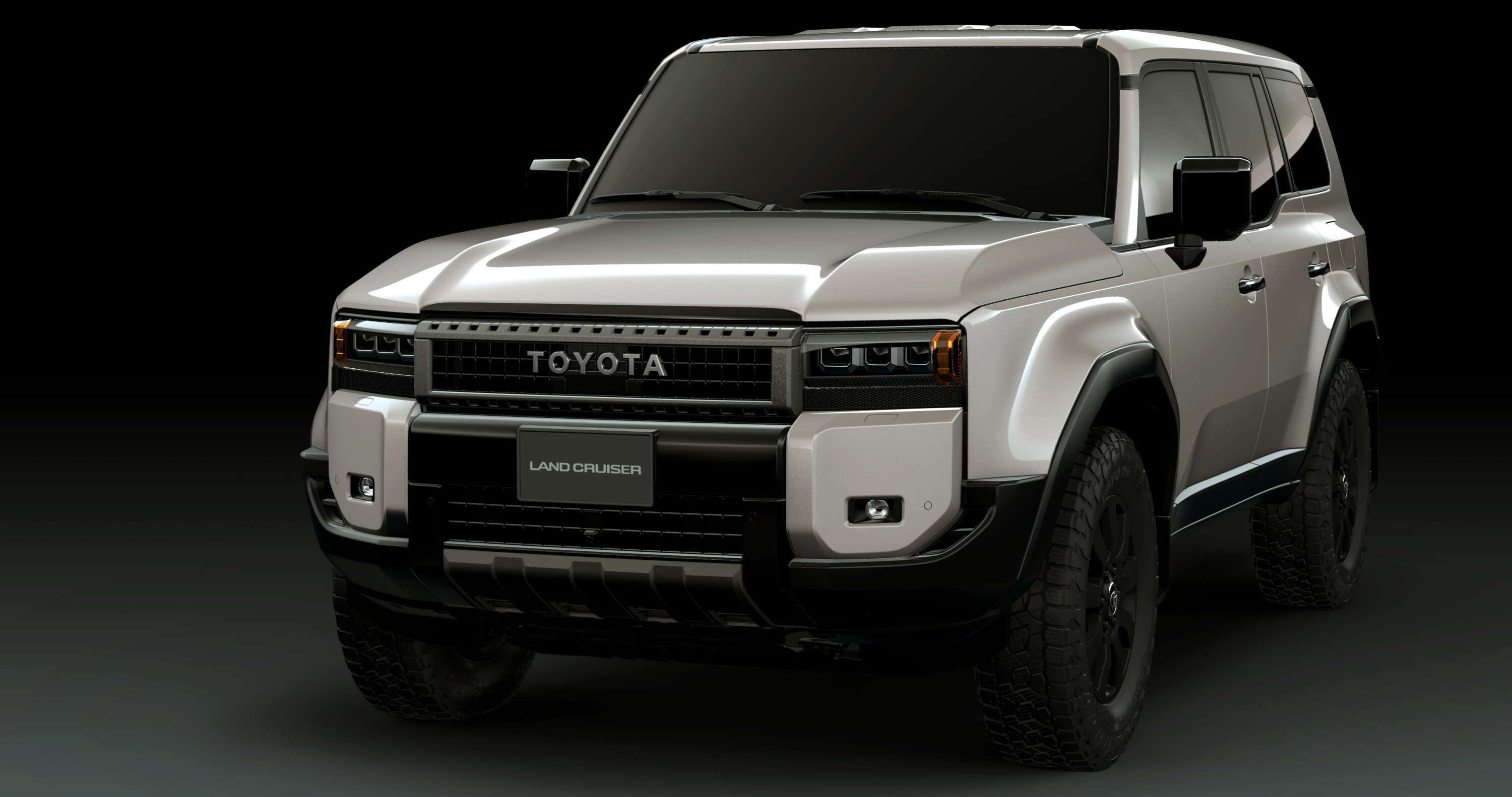
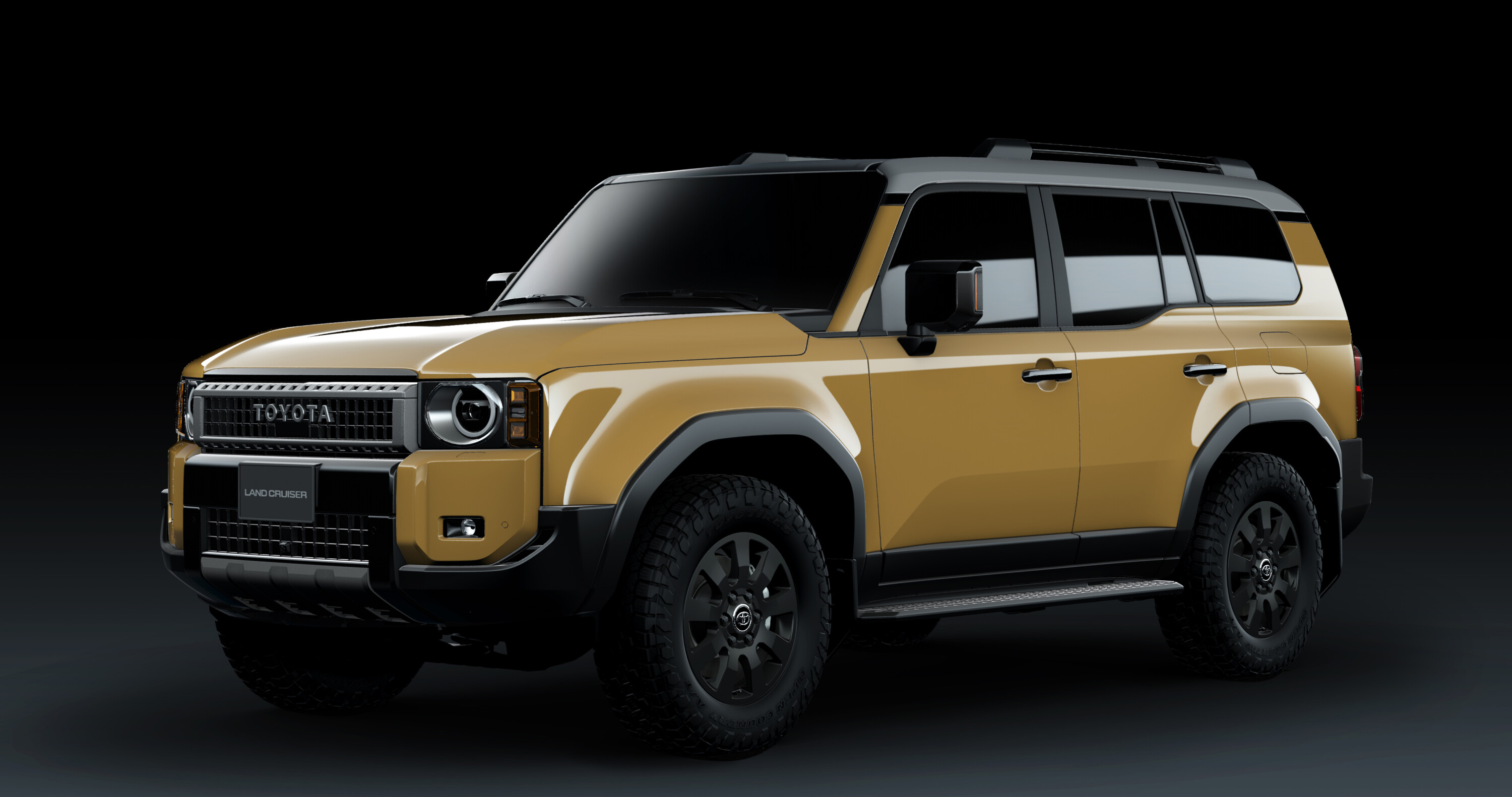
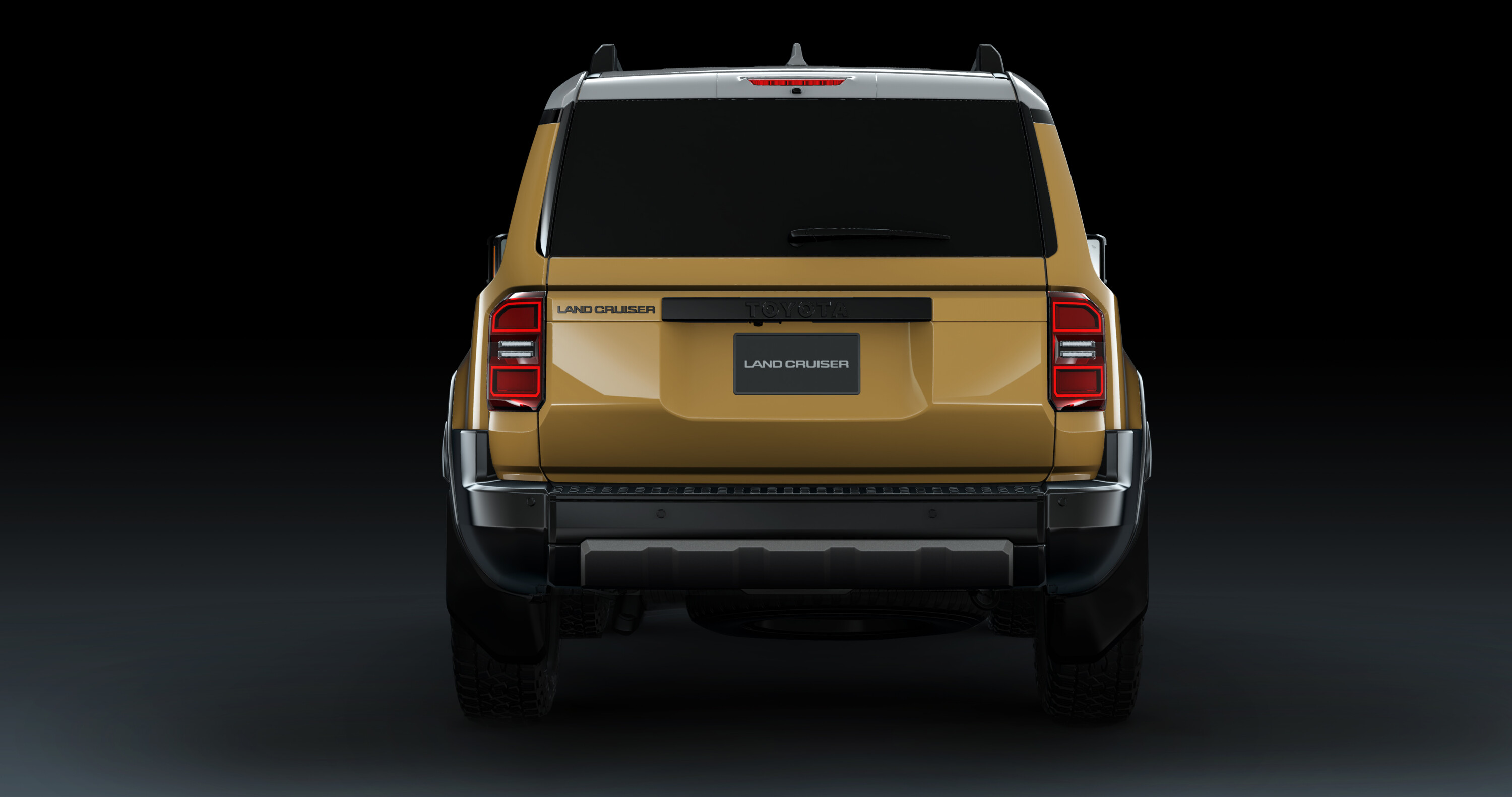
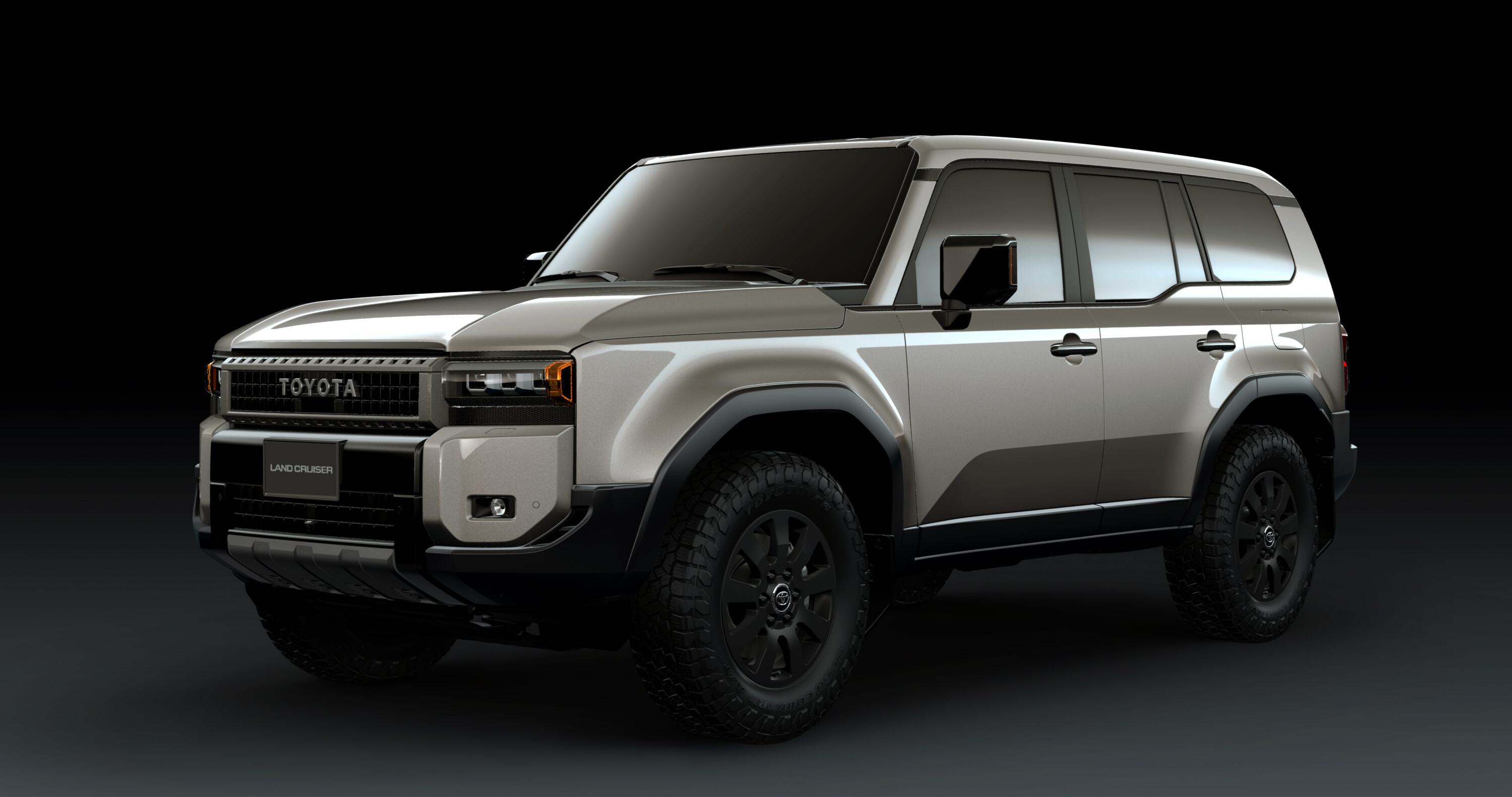
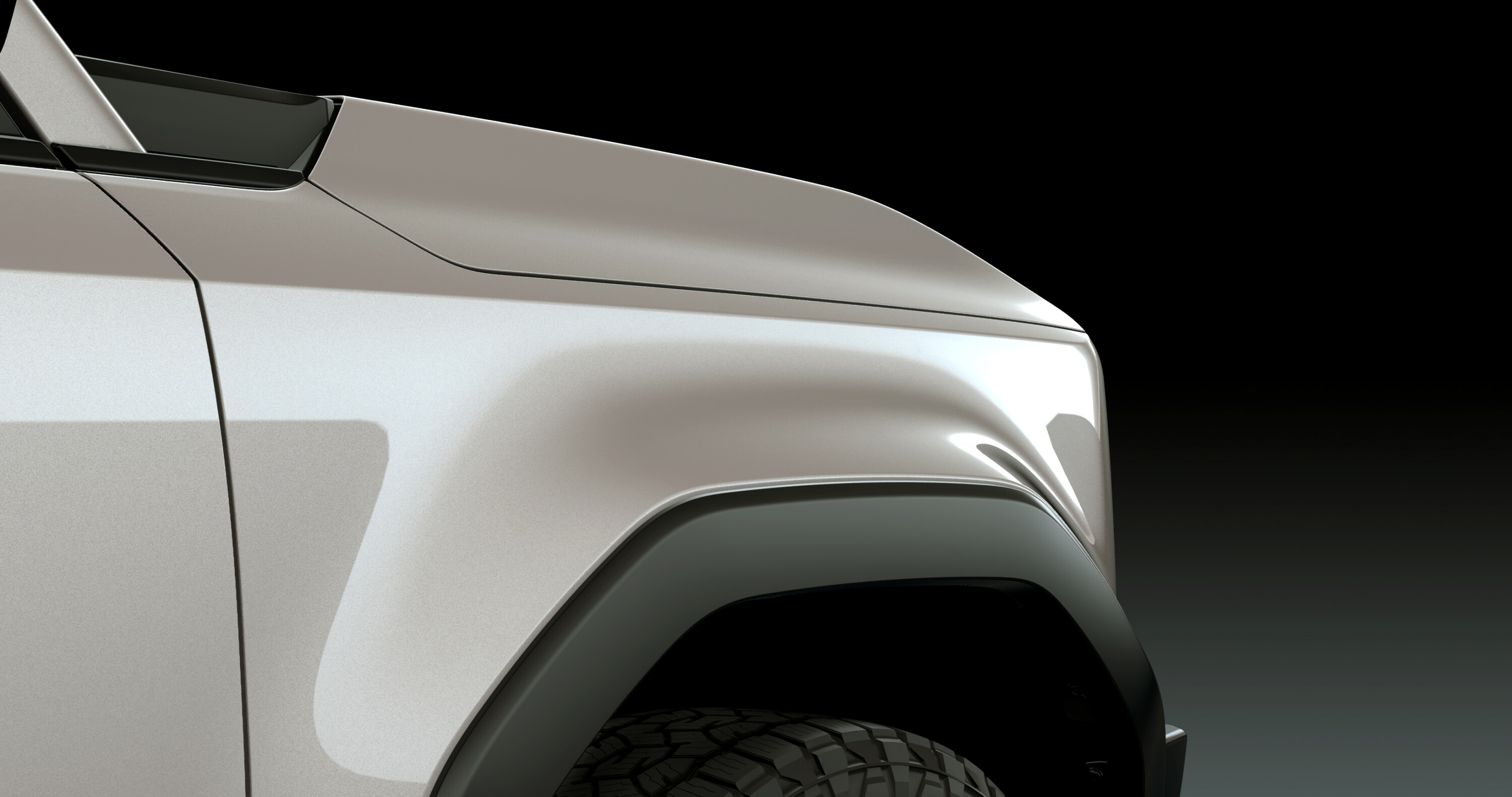
The latest Prado has a more-rugged body similar to a Land Rover off-road SUV, with a squared-off rear end, an upright A-pillar, and a higher bonnet line.
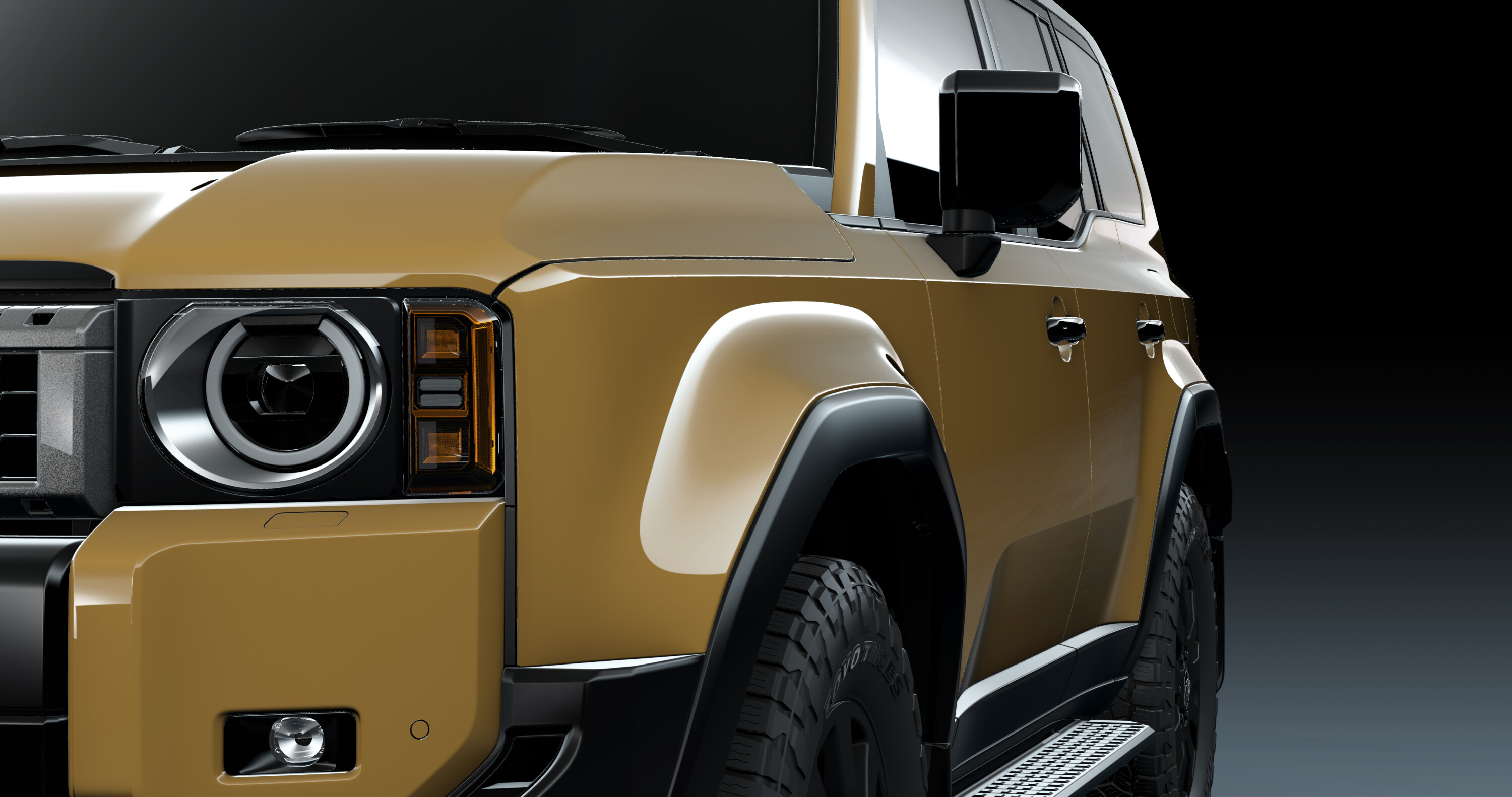
As expected, it shares the same body panels through the profile as the Lexus, but the Prado receives harder-wearing unpainted pieces.
A simple rectangular grille sits proudly in the centre with a spelt-out Toyota badge, joining square LED headlights, slim LED fog lamps, and a prominent skid plate.
1
The chiselled bonnet – first introduced to Prado in 2017 – is widened to improve forward visibility.
Moving to the rear, the Prado again keeps it simple and retro, with new smaller tail lamps that hark back to the first Prado – instead of the taller units that have previously reached up the D-pillar.
The same body panels are used for the Lexus, but the tail lamps are split in half – with a filler panel beneath – and a light bar runs along the tailgate to connect the corner lights as one long signature design.
1
2024 Toyota Prado dimensions
Measuring 4925mm long, 1980mm wide and 1870mm tall, the new Prado is 100mm longer, 95mm wider and 20mm taller than before.
It has an identical 2850-millimetre wheelbase to the LX and LandCruiser 300 – up 60mm over the current Prado.
The Prado’s characteristic barn door – offered with an external-mounted spare wheel or ‘flat’ tailgate – has made way for an electric lift-up tailgate similar to the LandCruiser 300 and other SUVs.
MINI MATCH-UP: 2024 Prado vs 2023 Prado, Lexus GX, Ford Everest & LandCruiser 300
Note: Table scrolls horizontally to reveal more columns.
| Prado (new) | Prado (old) | Lexus GX | Everest Platinum V6 | 300 Series Sahara | |
|---|---|---|---|---|---|
| Length | 4925mm | 4995/4825mm (flat tailgate) | 4950mm | 4940mm | 4980mm |
| Width | 1980mm | 1885mm | 1980mm | 1923mm | 1980mm |
| Height | 1870mm | 1850mm | 1920mm | 1841mm | 1950mm |
| Wheelbase | 2850mm | 2790mm | 2850mm | 2900mm | 2850mm |
| Ground clearance | TBC | 220mm | TBC | 226mm | 245mm |
| Approach/departure angles | 31/22u00ba | 30.4/23.5u00ba | 26/22u00ba | 30.2/25u00ba | 32/25u00ba |
| Kerb Weight | TBC | 2350kg | TBC | 2488kg | 2630kg |
| Payload | TBC | 640kg | TBC | 662kg | 650kg |
| Towing Capacity (braked) | 3000kg)”}”>TBC (>3000kg) | 3000kg | 3000-3600kg* | 3500kg | 3500kg |
| Engine | 2.8L turbo-diesel four-cyl mild-hybrid | 2.8L turbo-diesel four-cyl | 3.4L TT petrol V6 | 3.0L turbo-diesel V6 | 3.3L turbo-diesel V6 |
| Transmission | 8spd automatic | 6spd automatic | 10spd automatic | 10spd automatic | 10spd automatic |
| Power | 150kW | 150kW | 260kW | 184kW | 227kW |
| Torque | 500Nm | 500Nm | 649Nm | 600Nm | 700Nm |
| Claimed fuel use | TBC | 7.9L/100km | 13.8L/100km* | 8.5L/100km | 8.9L/100km |
1
Interior design and technology
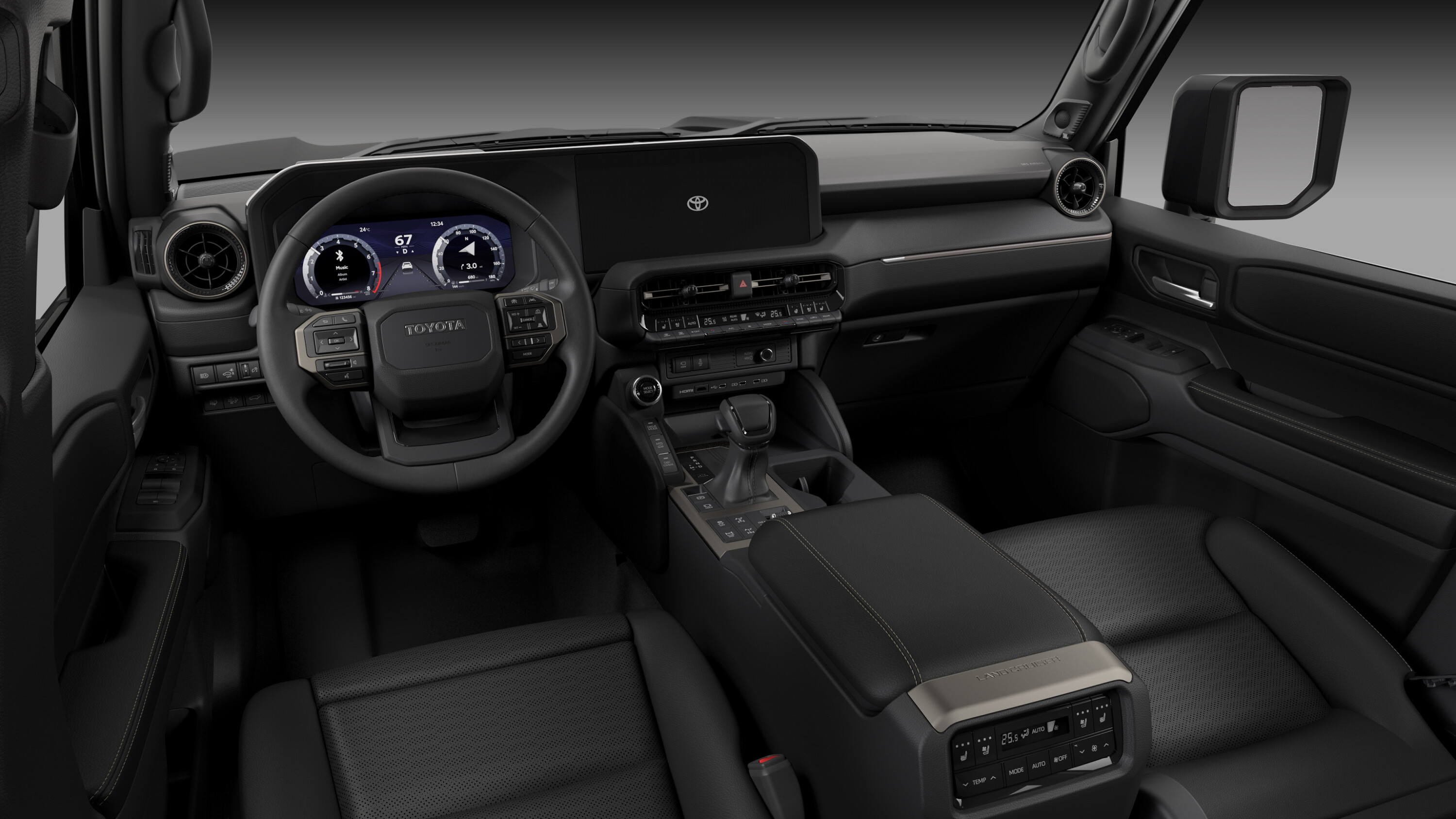
Inside, the Prado has a more rugged appearance than the luxury-focused GX – but the fundamentals are similar.
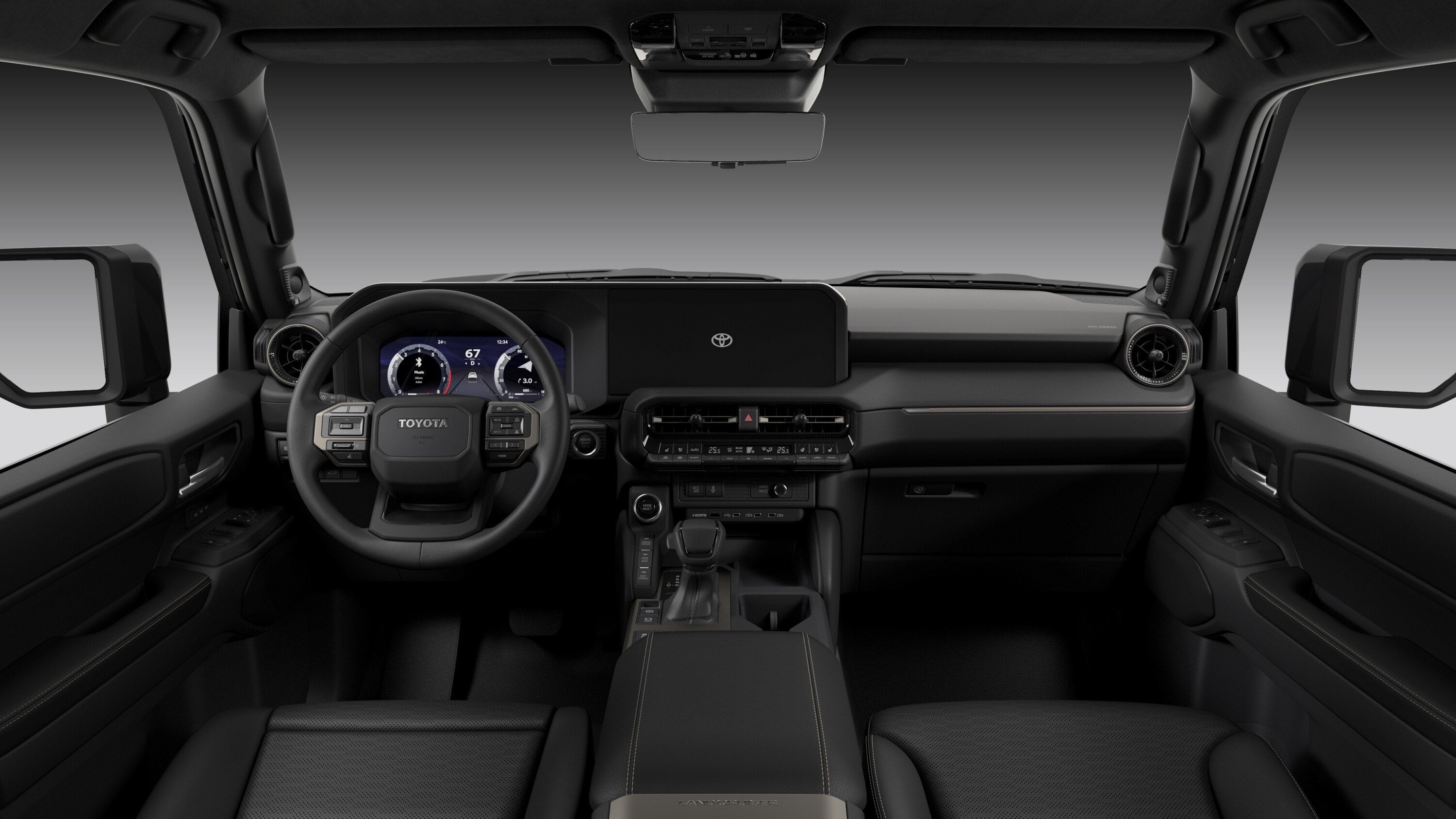
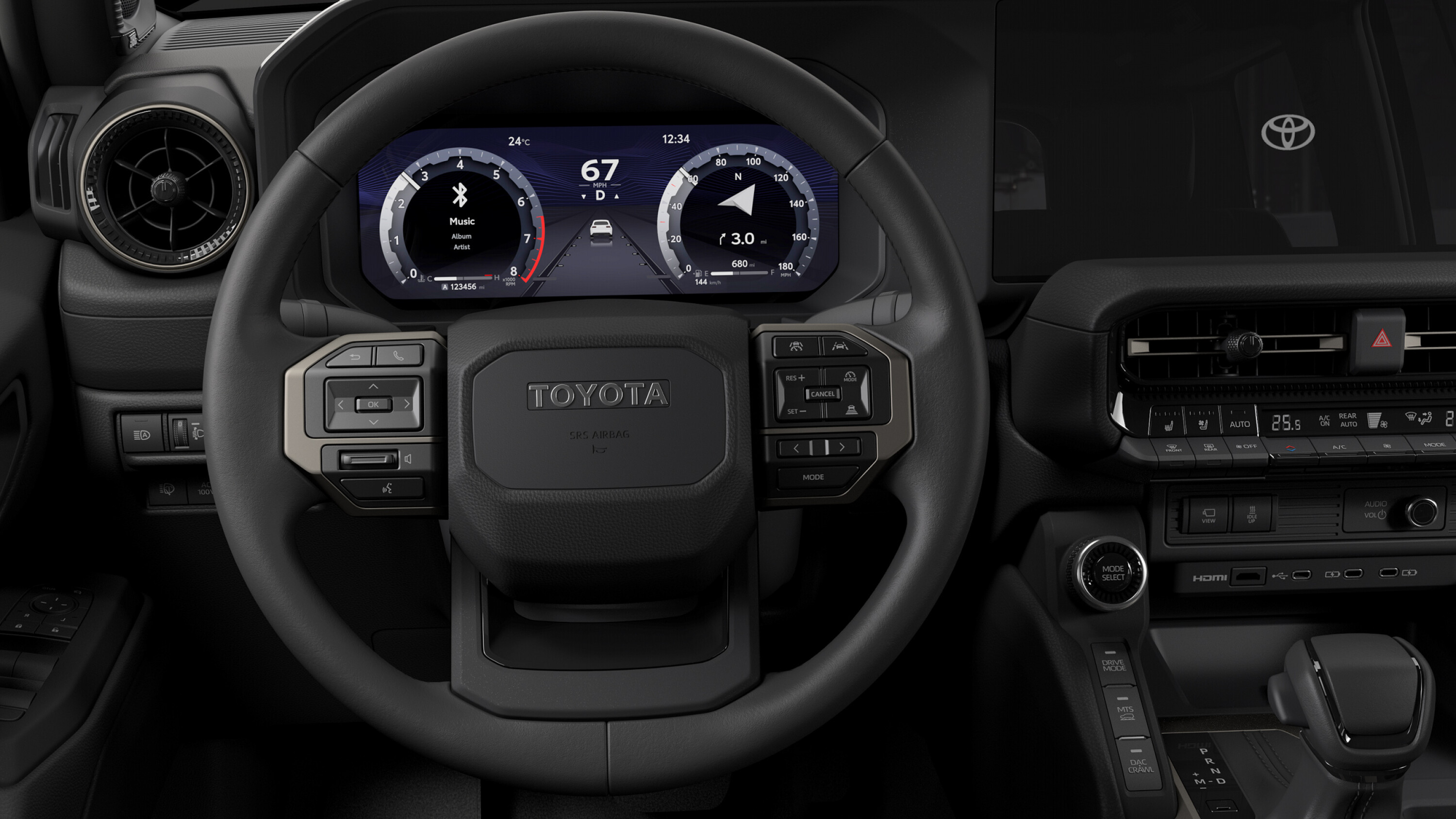
It boasts a significant technological step forward over the current Prado, with a 12.3-inch infotainment system running Toyota’s latest software. It will feature wireless Apple CarPlay, over-the-air software updates, Connected Services, and USB-C ports.
1
A 12.3-inch digital instrument cluster sits ahead of the driver, replacing analogue dials and a small 4.2-inch multi-information display.
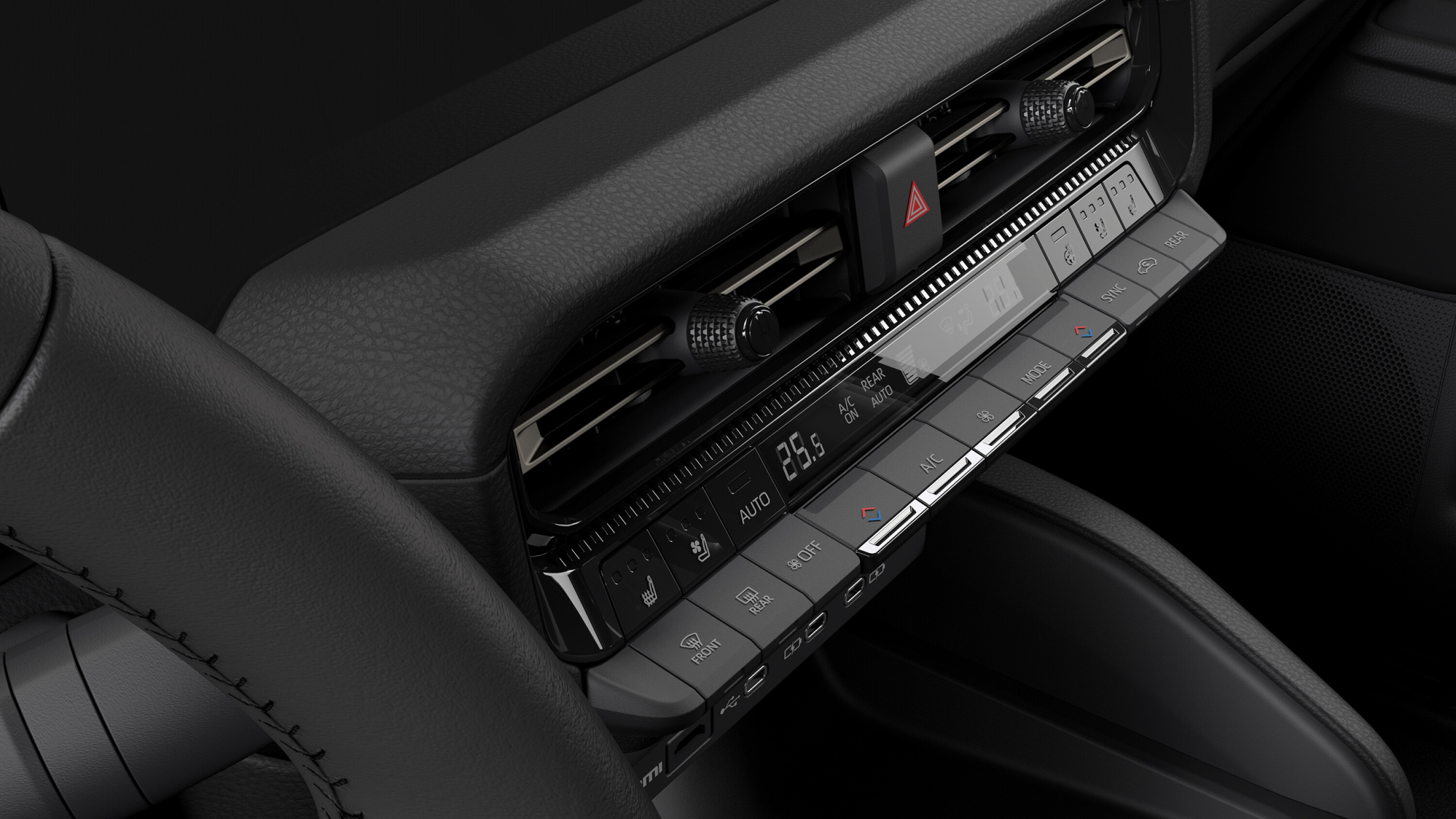
As before, there will be seating for five or seven passengers, with a familiar line-up expected where the entry-level GX should have five seats, and all other variants will score seven.
Available features include heated and ventilated front seats, a cooled centre console, a 2400kW inverter in North America, and eight-way power-adjustable front seats.
Toyota has confirmed its latest active safety technology, including lane-trace assist, will be available.
1
2024 Toyota Prado price details
What will the new 2024 Prado cost in Australia?
Australian pricing for the new Prado is still to be revealed, but it’s likely to cost a lot more than the current $62,830 starting price – which is only for the specs-bare entry-level GX model.
In the US, Toyota has said the new Prado will be priced in the US$50,000 range – which converts to just over $83,000 Australian dollars.
Local specification is sure to differ from the US market’s equipment list, however, so a direct currency conversion is rarely a valid comparison.
Availability
The new 2024 Toyota Prado will arrive in local showrooms mid-year, with more details – including specific timing, pricing and features – to be announced closer to its Australian launch.
“Australian customers appreciate the vast capability of the LandCruiser Prado, from use as a family vehicle, to off-roading, towing and long-distance touring, which is evidenced by its huge popularity,” said Toyota Australia vice president of sales and marketing, Sean Hanley.
“The all-new Prado takes everything that customers love about the Prado to a new level, with even greater performance, capability and technology, as well as bold new styling inside and out.”
August 2, 9am: 2024 Toyota Prado leaked
1
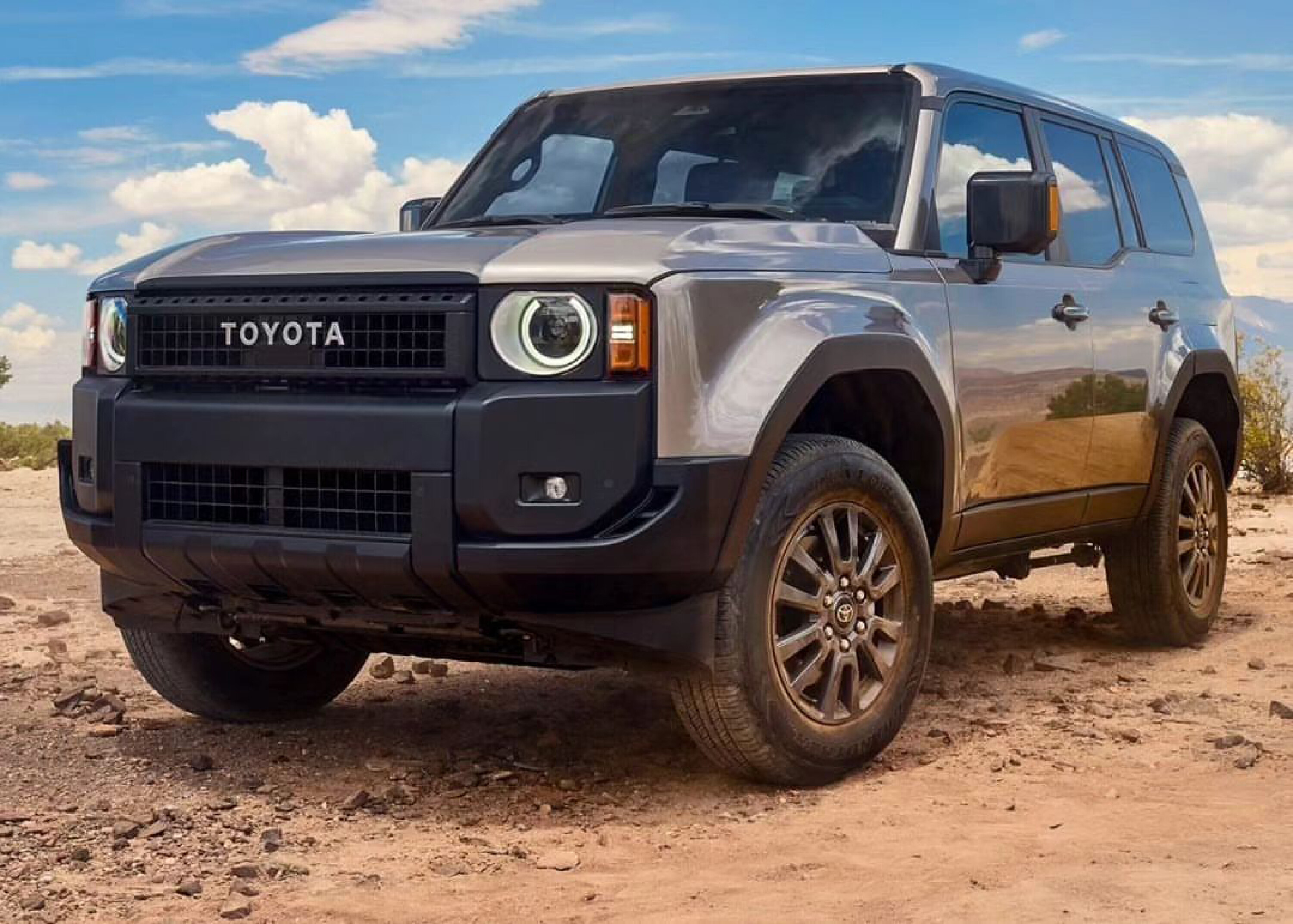
The 2024 Toyota Prado has been given an unscheduled early unveiling online, thanks to prolific Instagram page Kurdistan Automotive Blog.
This is our first proper look at the new Prado. Toyota Australia had confirmed with Wheels Media last week that no details or images would be given under embargo – but, as always, the overseas media appear to have the details in advance. And, as often happens, it’s come online early.
What do you think of the new-look Prado? It’s been teased for months now, but it was the new Lexus GX – a more premium companion to the Prado, unveiled in early June – that gave buyers their first look at the Toyota version’s styling.
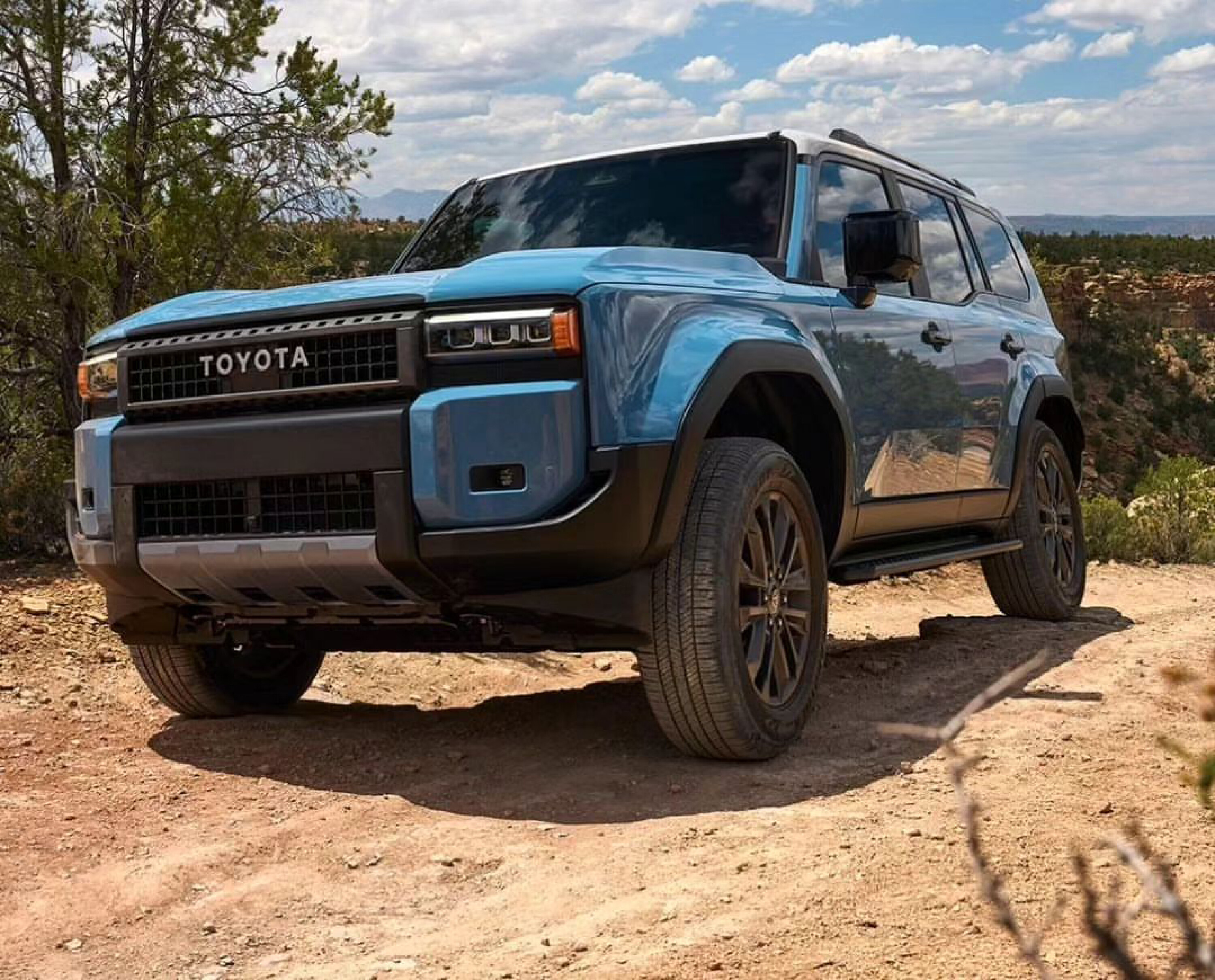
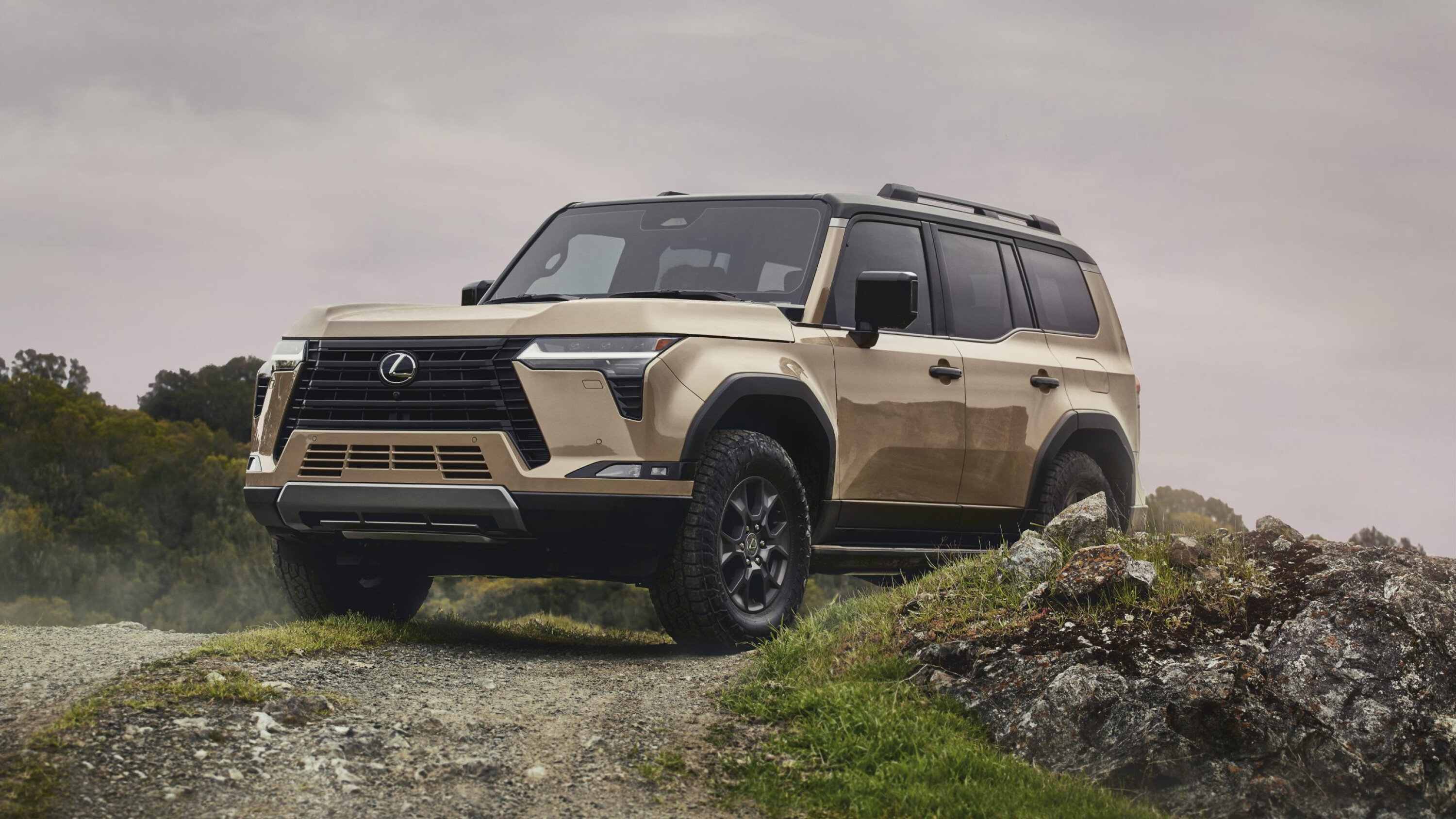
As expected, the new Prado and GX share the same body panels through the profile, although the GX gets gloss body-coloured cladding in place of the Prado’s harder-wearing unpainted pieces.
1
1
1
The big differences are at the front and rear, although it’s the front end that bears the most distinctly different styling. For the GX, there’s the familiar ‘spindle’ grille and slim headlights, terminating at a uniquely angled-off quarter panel for a sharper point.
In Prado form, there are two front-end designs, with rectangular and round headlight options – both featuring as a tasteful throwback to LandCruisers of generations past. A simple rectangular grille sits proud in the centre of both faces, along with minor cosmetic differences across the lower bar.
1
1
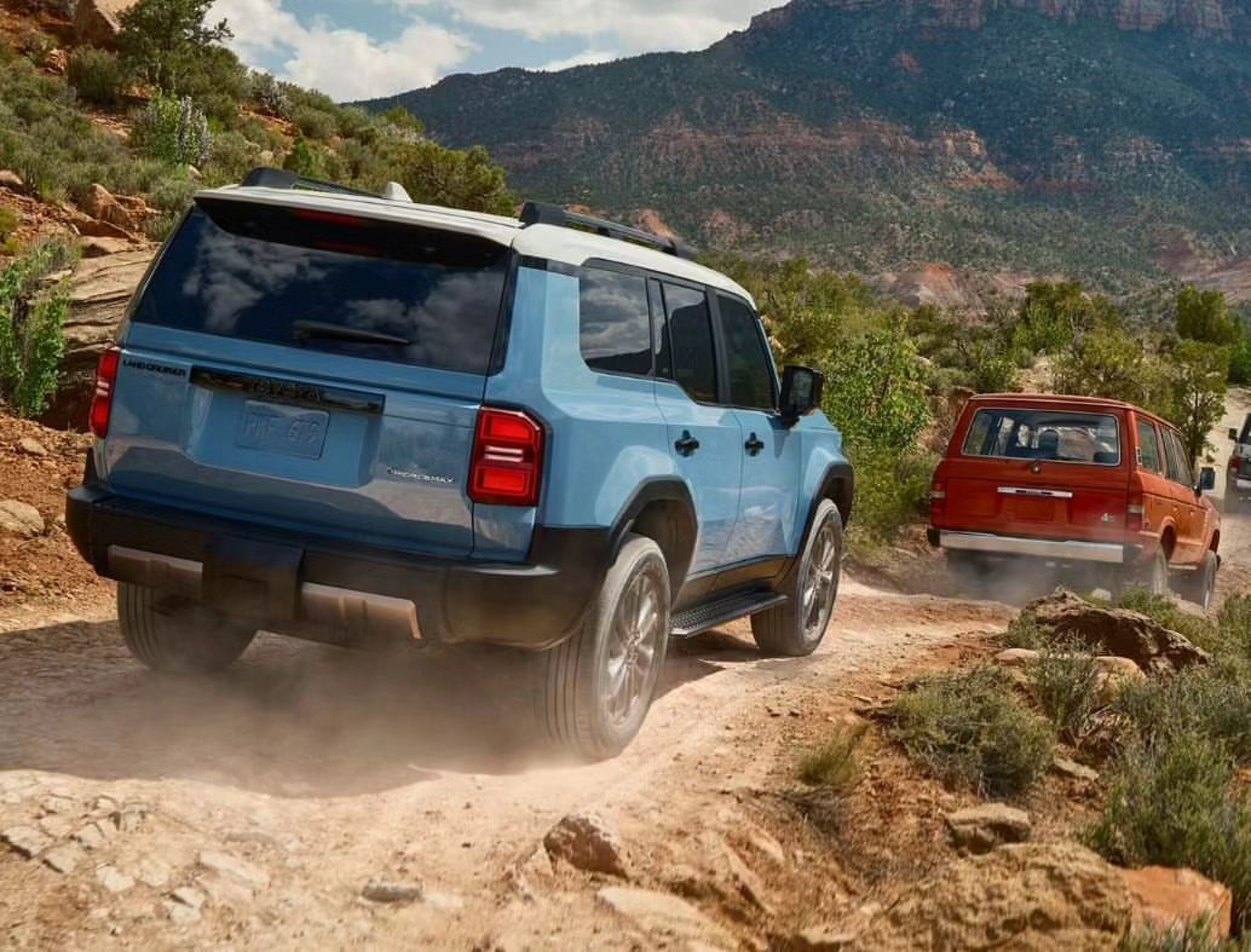
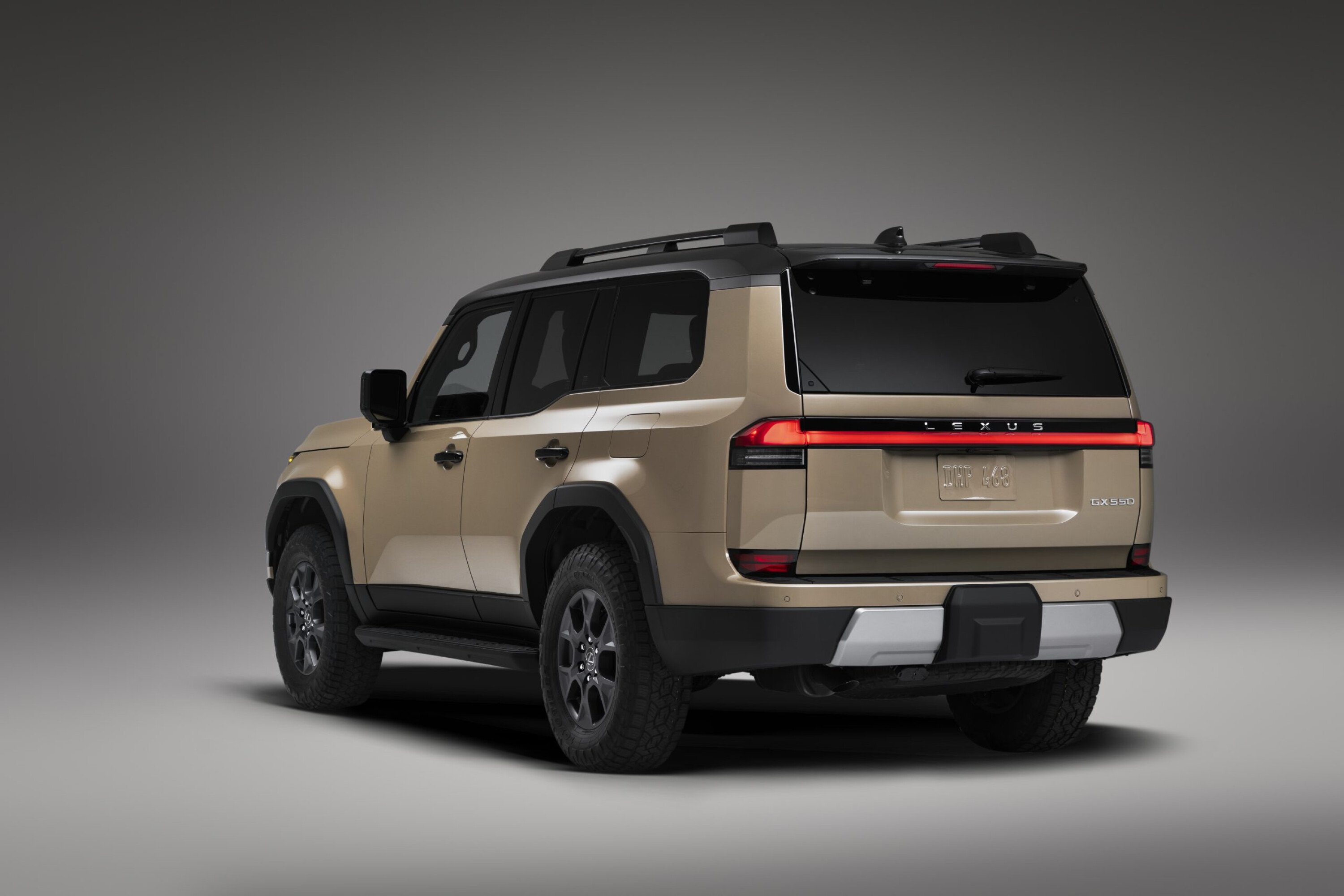
Moving to the rear, the Prado again keeps it simple and retro, with new smaller tail lamps that hark back to the first Prado – instead of the taller units that have previously reached up the D-pillar.
For the Lexus, the same body panels are used, but the tail lamps are split in half – with a filler panel beneath – and a light bar runs along the tailgate to connect the corner lights as one long signature design.
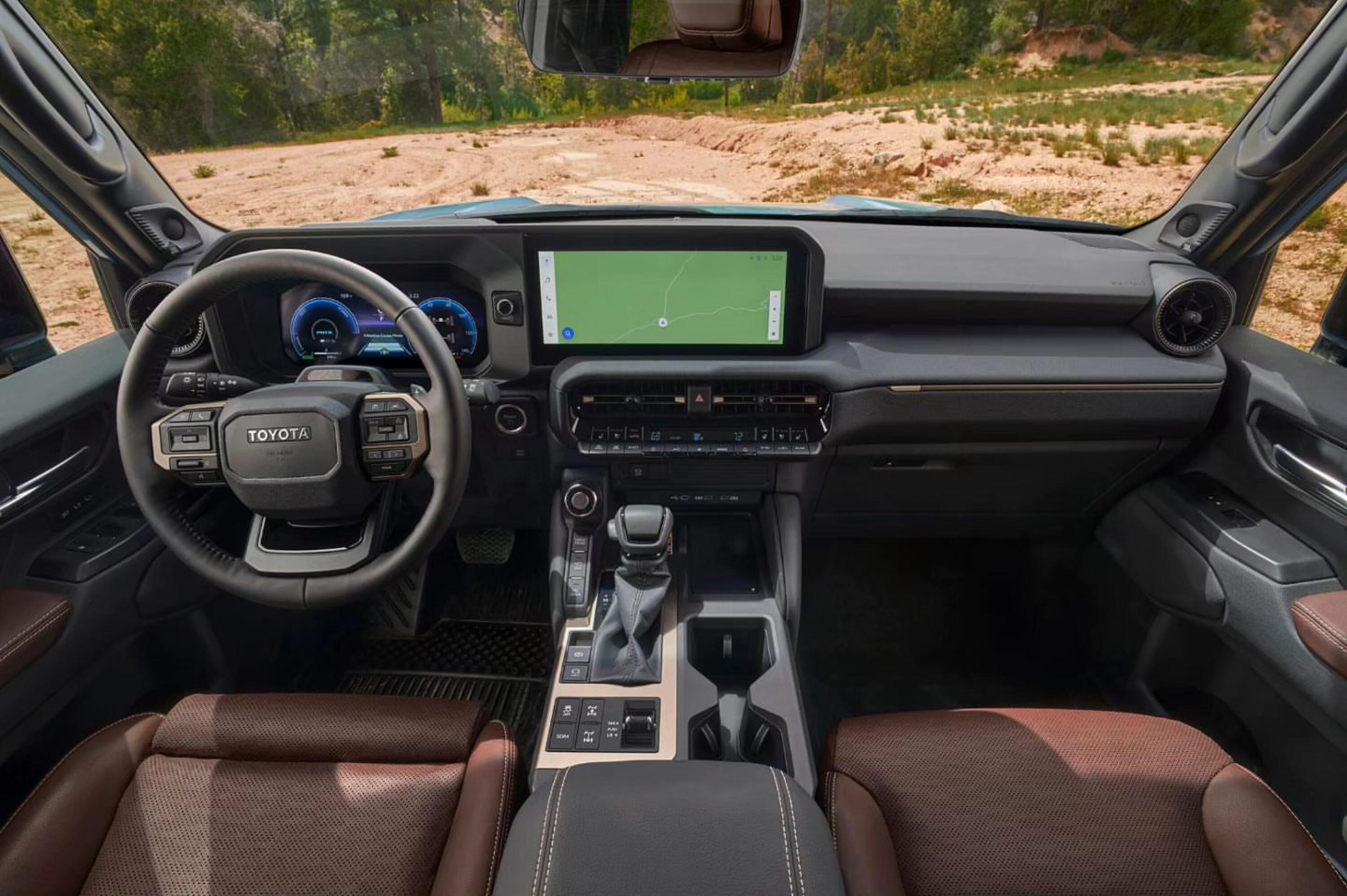
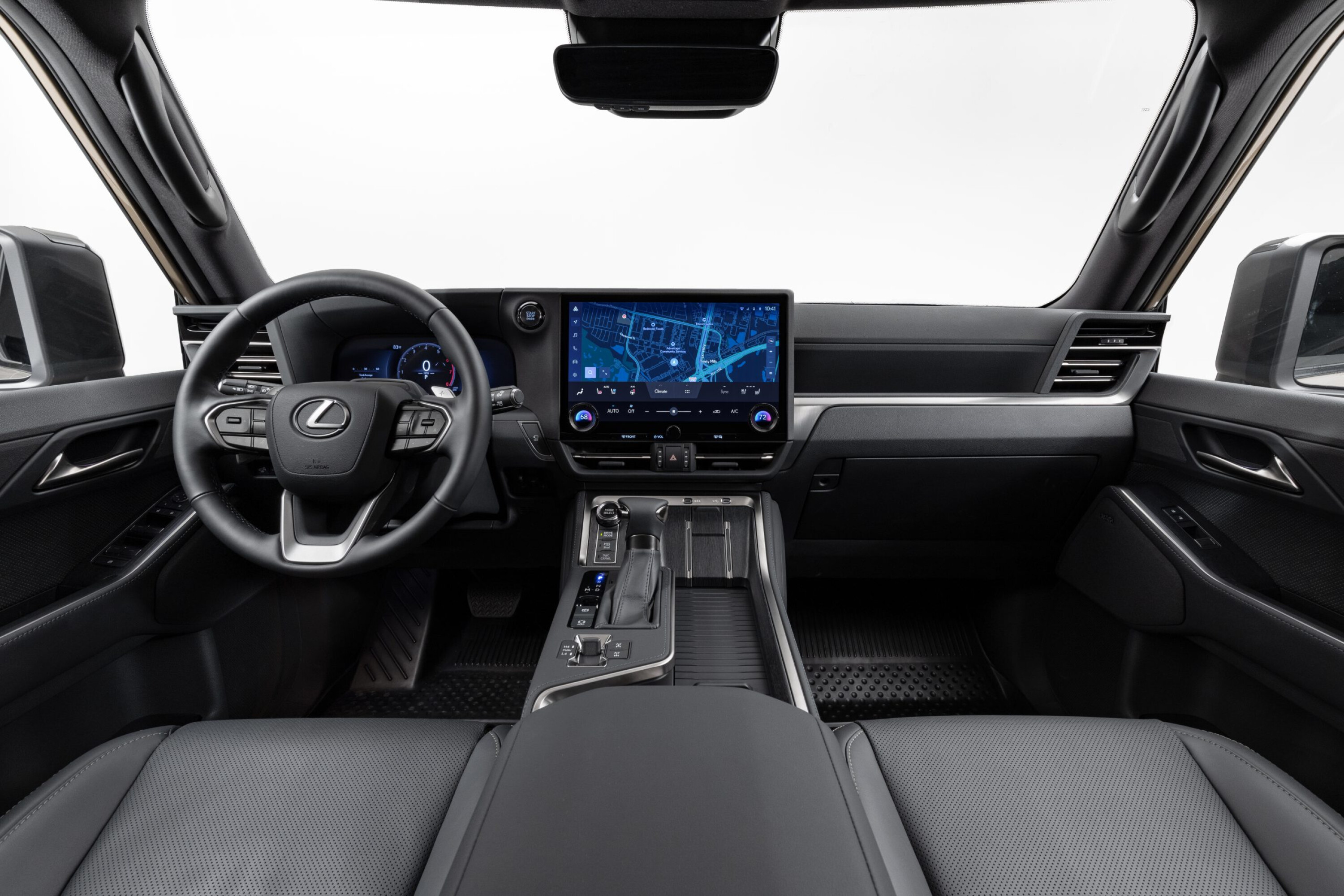
Moving inside reveals more significant changes, with the Lexus featuring a taller main display, along with a Lexus-specific steering wheel, dashboard design and centre console. The doors also appear to be different, although the Prado’s door details are obscured in shadow for now.
1
1
Jump into the comments to tell us which design you prefer.
EDITOR’S NOTE
With the official reveal still to come, this story will continue to develop through the day. Check back from around 11:30 for the first official details.
You can also hit our ‘Everything we know’ story here for all of the details we believe to have been confirmed in reports overseas.
MORE
Everything Toyota
Another tidy selection of 4x4s sent in by our readers this month. Keen to see yours published in our magazine or online? Then send us a photo via our Facebook page.
2012 PX Ford Ranger
1
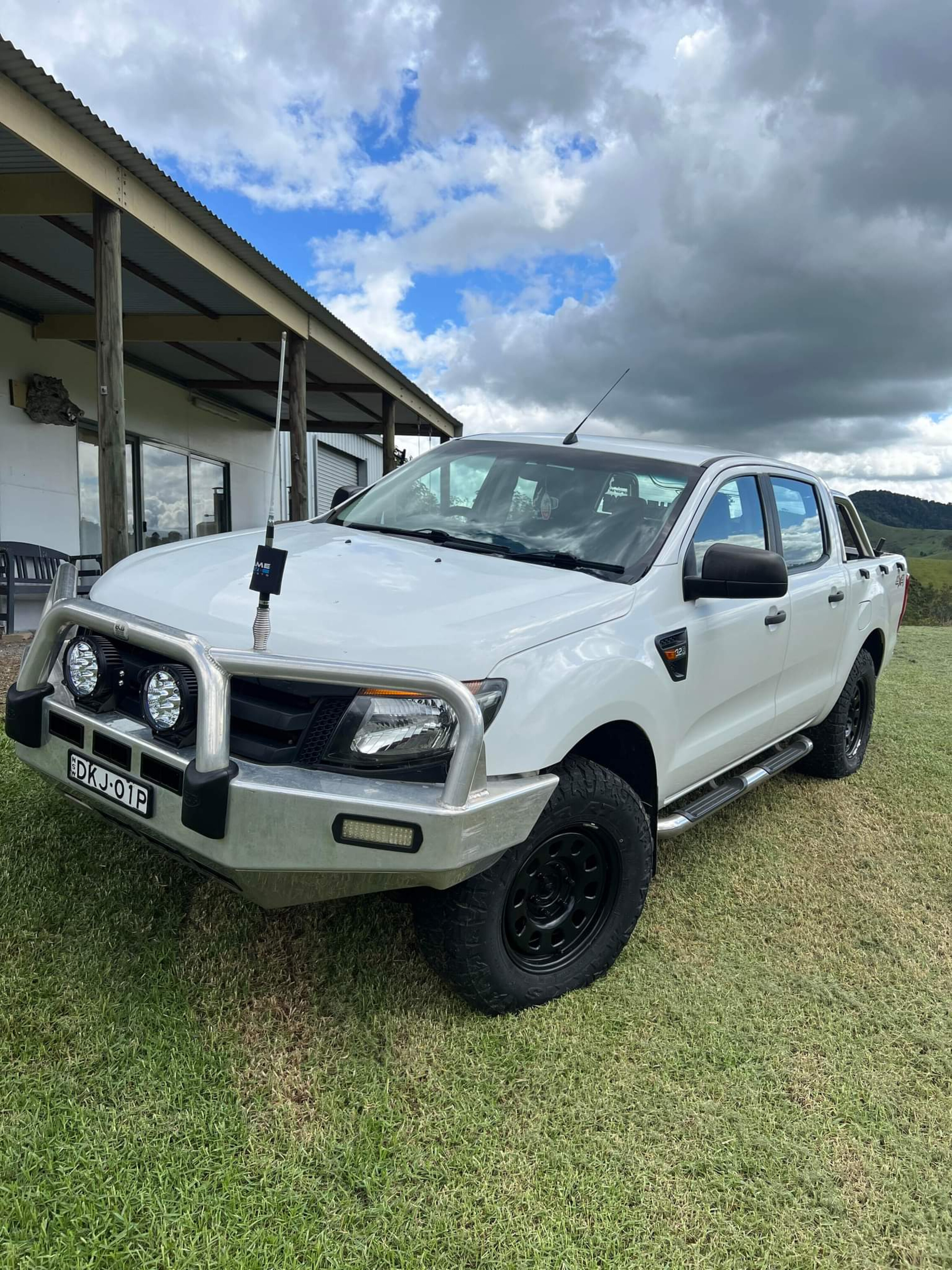
Not many mods, just some new rims and tyres. Plus it’s running leaf springs in the back and independent suspension up front, as well as a new three-inch Outback exhaust. I’m going to start building a custom touring set-up soon – Tom Lewis
SWB HiLux
1
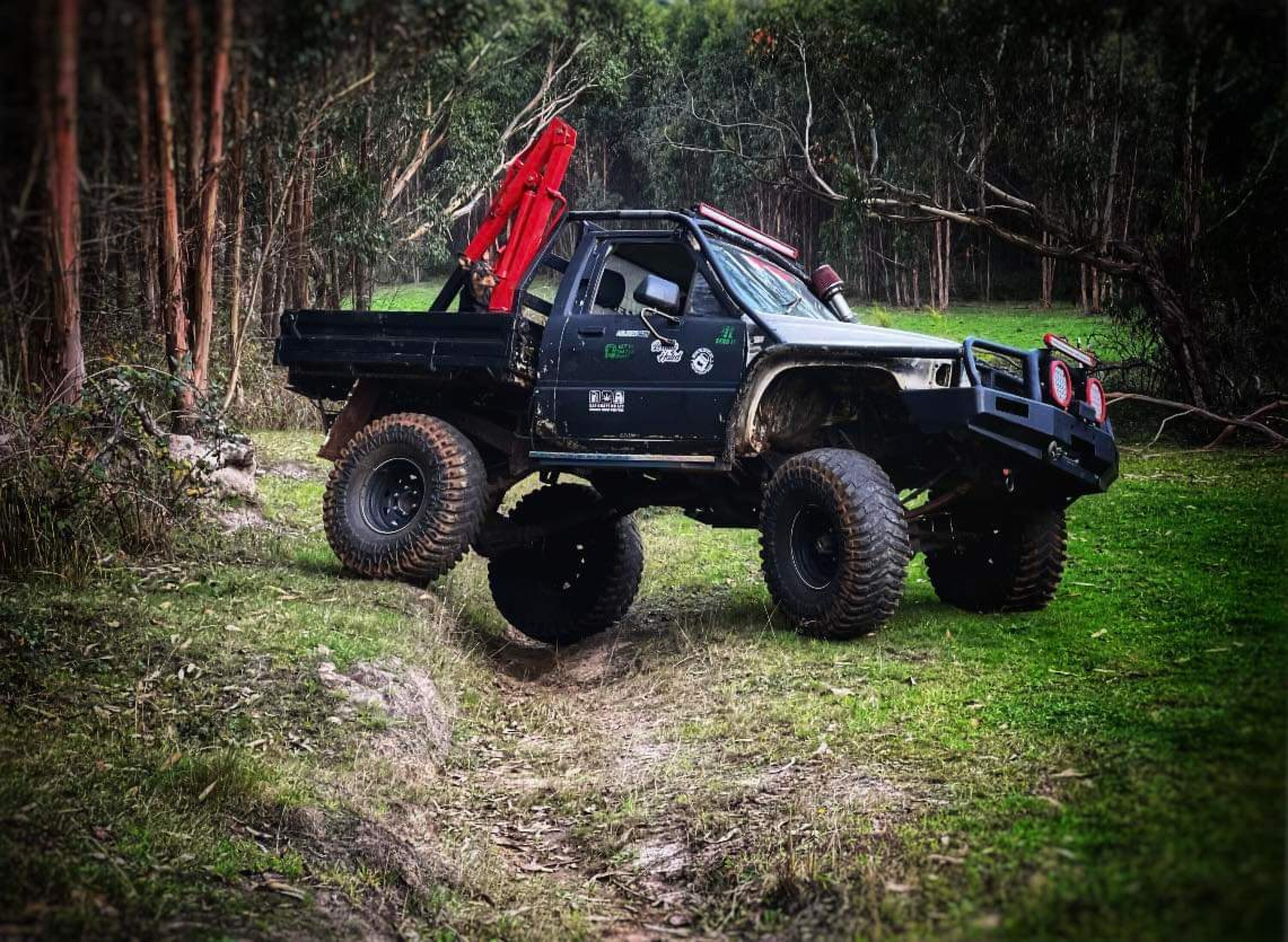
This is a short-wheelbase Hilux that was handbuilt from a rolling long-wheelbase shell. My partner grabbed it out of the paddock as a shell and built it into what it is now, and he doesn’t give himself the credit he deserves for this, so I thought this would belong here. The rollcage was built out of an old trampoline, and the lift kit out of scrap metal. All cut and welded back together as a short-wheelbase and done with hand tools at home – Sarah Marie Hume
2014 Toyota HiLux N70
1
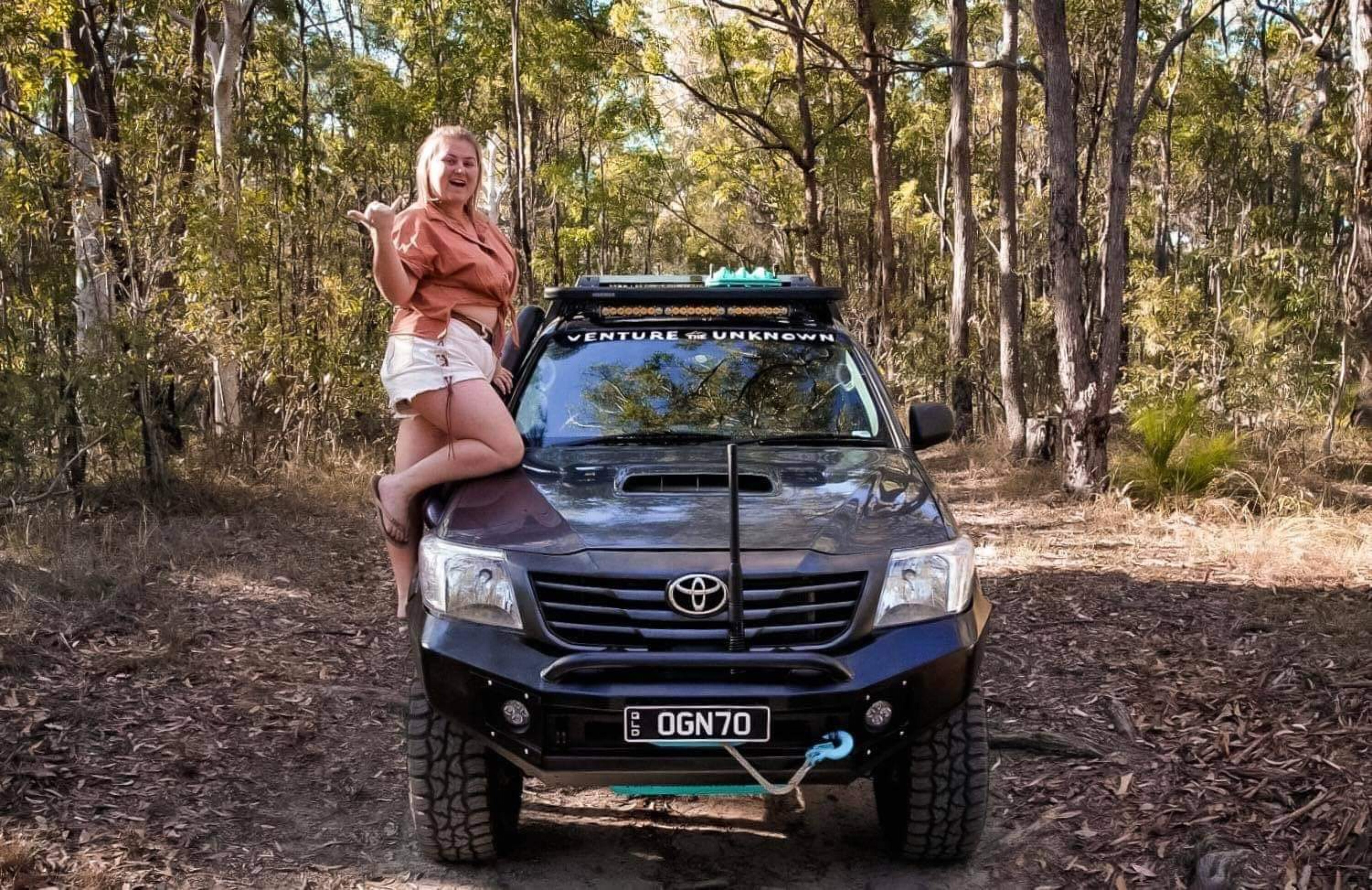
This preloved rig already had a fair bit of work done to it before purchase. This Hilux is the first rear coil conversion done by Superior Engineering. Plus, it has front and rear lockers, upgraded intercooler, and a 3.5-inch exhaust system with a 200hp tune. It is due for some upgrades and some TLC.
Plan is to replace the roof rack, battery system and give it a makeover. We will be rebuilding the rear coil conversion with Superior Engineering and replacing front and rear shocks. We plan to use the Hilux to travel Australia, while working on different stations – Emma
2012 Nissan Navara
1
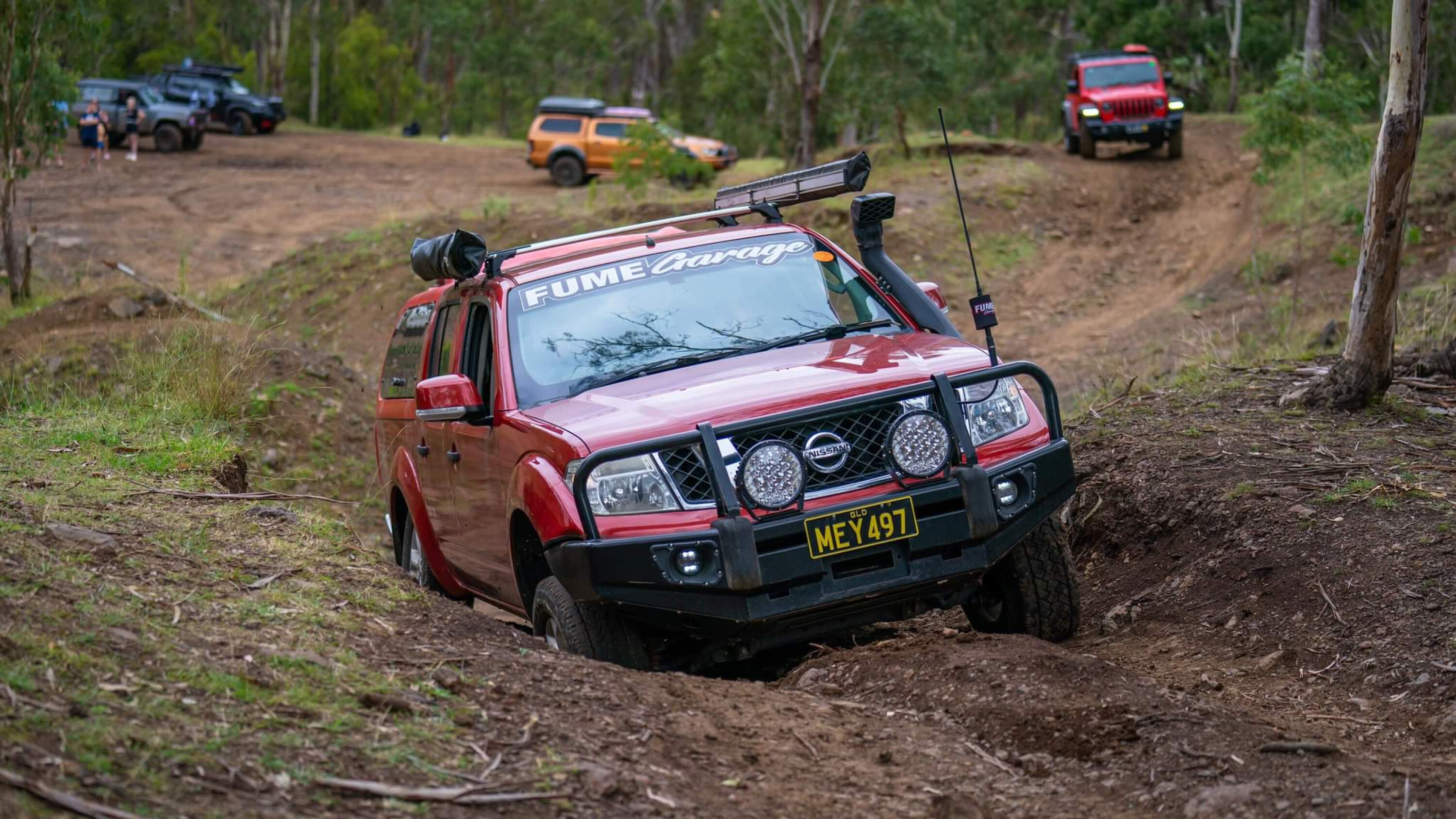
I bought my Navara in 2021, stock as a rock. I’ve put in a two-inch lift, bullbar, snorkel, UHF, and added a canopy and dual battery set-up. February 2023 saw a DIY clutch delete on the beach, so she got a new heavy duty clutch and single mass flywheel conversion. The plan for Vanellope is bigger tyres, new wheels, a bigger lift and a tray conversion – Meya
2019 Nissan Navara STX NP300

1
I’ve done a bit of cosmetics, just changing the grill and a bit of chrome-delete. I’ve put a GME system in it and attached it to the bonnet, as well as a 12v system in the tub. I’ve also put a throttle controller in to help with the throttle response and added a catch can to keep her running right.
I’d love to do a tray set-up with a canopy and rooftop tent, as well as a bullbar and twin stainless snorkel set-up to a custom air box. I wouldn’t mind putting a bigger lift in to fit some bigger tyres as well.
I love taking my pride and joy out on the weekends on trips with the SEQ Adventure girls to the bush and beaches, testing out her capabilities and learning what the car and myself can drive – Chanelle
1999 Nissan Patrol RD28

1
We get a lot of hate being an RD, but I love her and she gets me everywhere I need to go. It’s pretty stock at the moment. I have put mud tyres on and have drawers in the back. I would love her to be fully set-up for travelling around. Next on my list is a snorkel and lift, after I have put the new turbo and exhaust in. I love beach driving and, of course, hitting the tracks and getting muddy – Livy
Latest Gear Guides
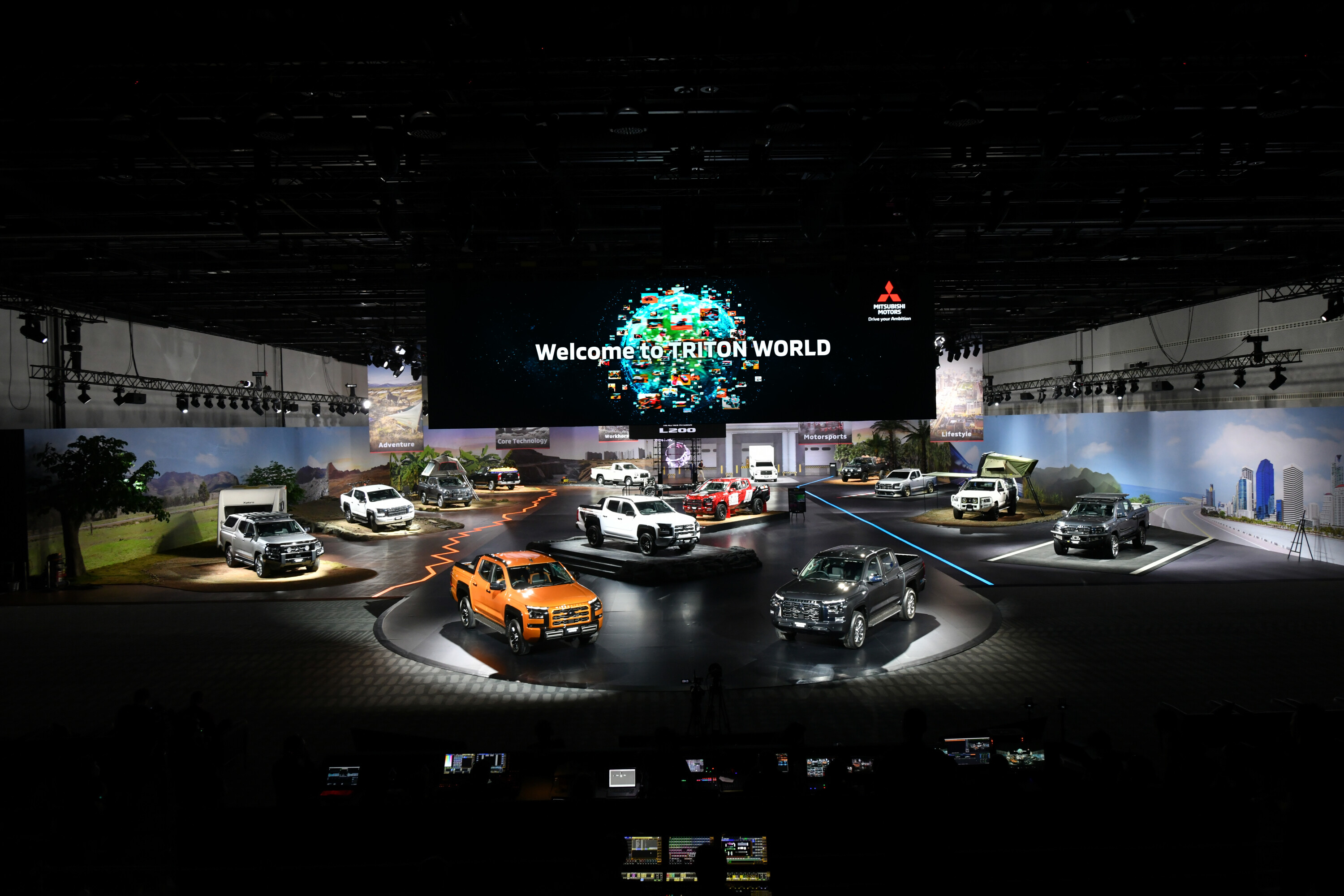
As the 2024 Mitsubishi Triton press conference concluded, a dramatic light show accompanied curtains lifting on ‘Triton World’ – an all-ute mini Motorshow at Bangkok’s Queen Sirikit National Convention Centre.
A total of 14 utes were present, from a 4×2 Thai base variant with a dot matrix head unit and a lowered race car concept through to fully-loaded models relevant to the Australian market.
Our design department was deeply involved in [TJM’s] development, so we are improving how to work with accessory suppliers
1
On stage right was a surprise for Australian media, a trio of TJM-accessorised Tritons were on the floor. They ranged from lightly roo-barred Durian carriers to full-fat camping setups – and Mitsubishi is very much aware of Ford’s relationship with ARB.
Arranged by the Thai arms of each company, the current TJM-Mitsubishi relationship is not the same as the tight-knit partnership between ARB and Ford Australia, but Mitsubishi isn’t against working more closely in the future.
“We have been talking with TJM for accessories for the new Triton, which isn’t what we’ve done in the past… This time, our design department was deeply involved in those developments, so we are improving how to work with accessory suppliers”, president and CEO of Mitsubishi Motors Corporation, Takao Kato, told 4X4 Australia.
To have the kit ready for the Triton’s reveal, the TJM team would have needed access to the cars for 3D modelling and measurement work, as well as evaluating how the changes affect the vehicle – for example, the suspension kit and integration of the radar sensor for the AEB system.
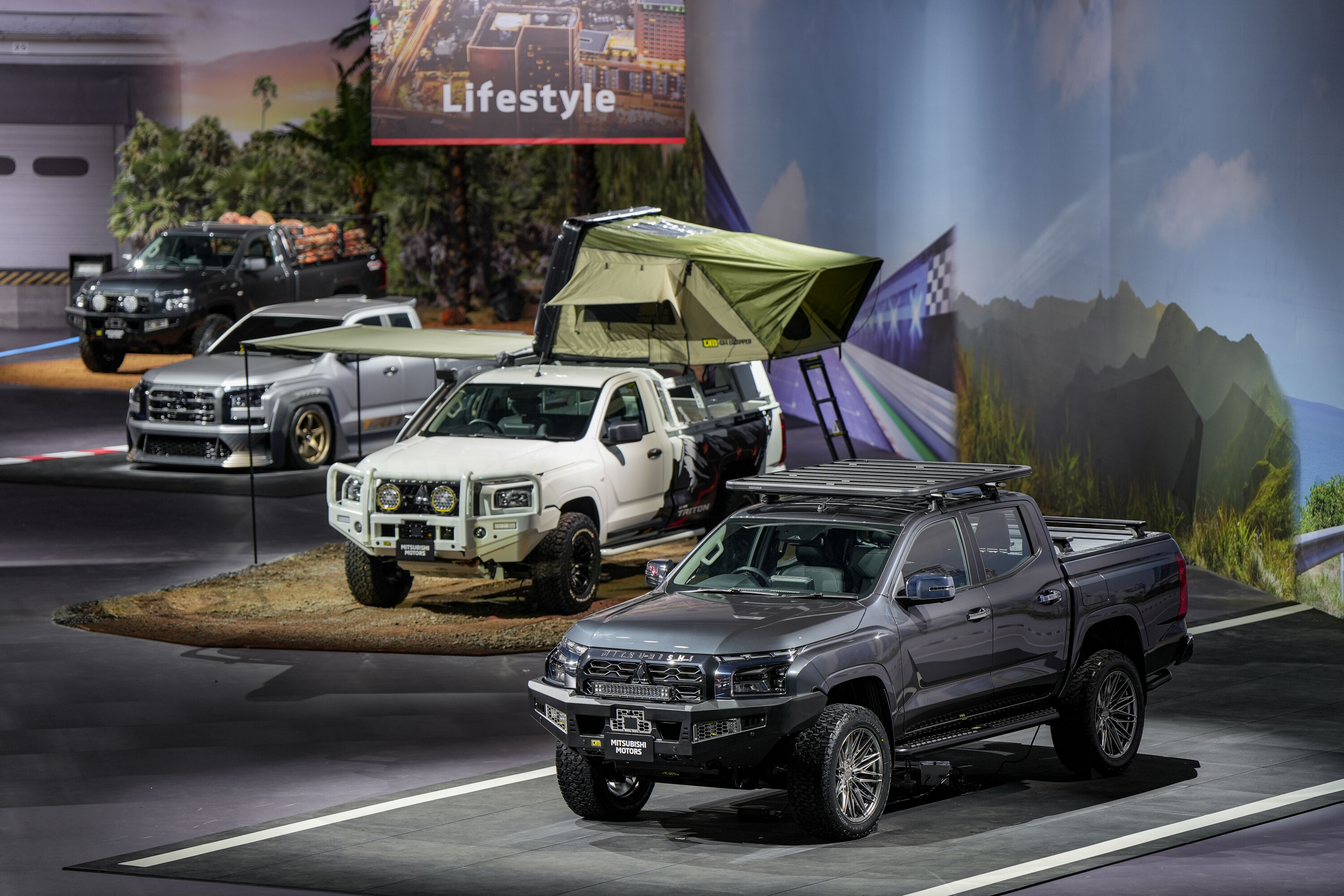
1
“I know that Ford is working with ARB, and that’s really significant, they are actually one team already. Compared with that, we are not there yet”, said Kato-san, admitting that Mitsubishi has been paying close attention to Ford’s relationship with ARB.
TJM parts won’t be sold in Australian Mitsubishi dealerships – at least initially – but the Japanese carmaker’s genuine accessories that were developed locally in South Australia will be available from the ute’s February 2024 on-sale date.
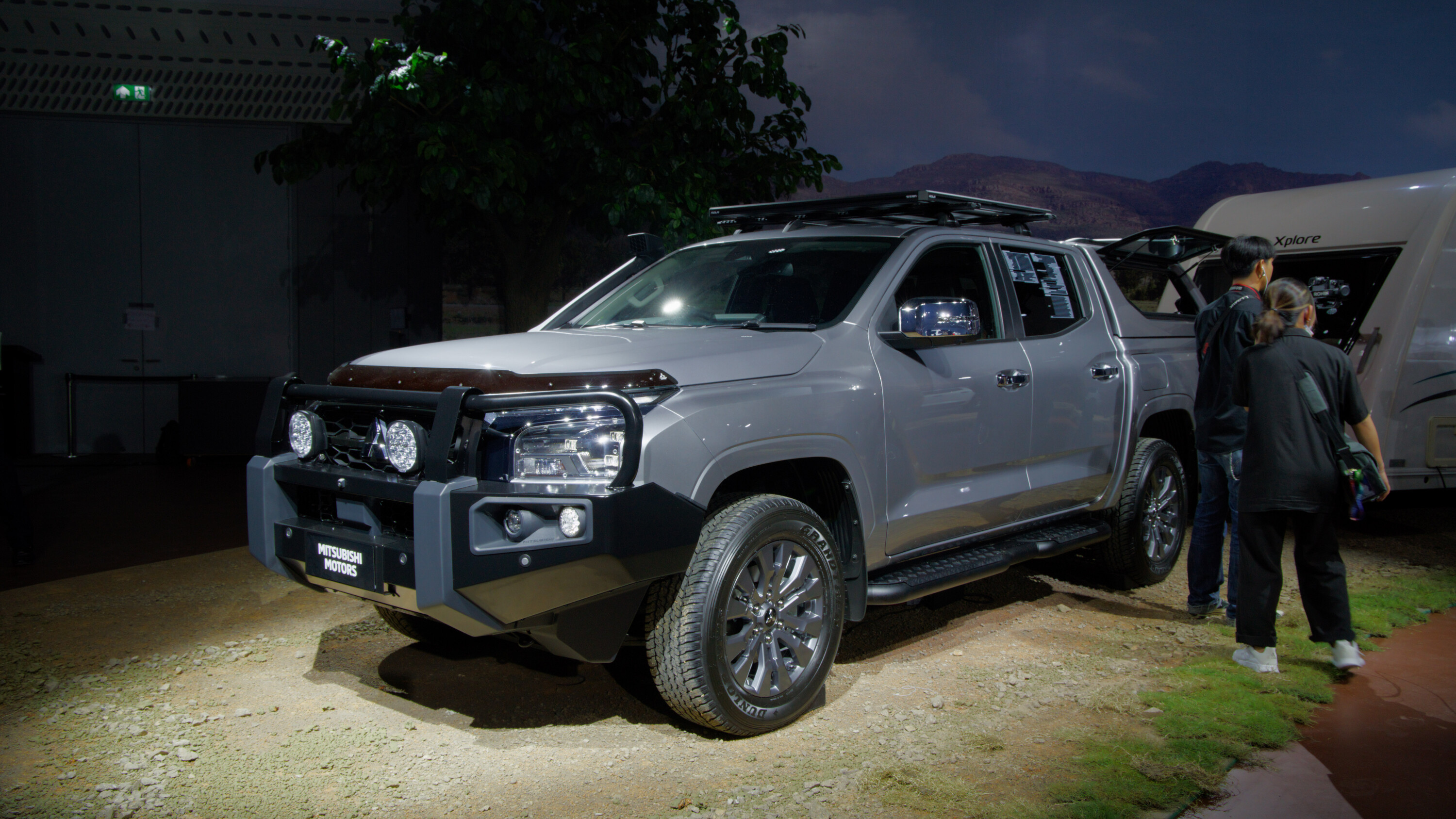
1
Mitsubishi Triton Genuine accessories
Mitsubishi Australia has been hard at work developing genuine accessories at its South Australian home base for our market.
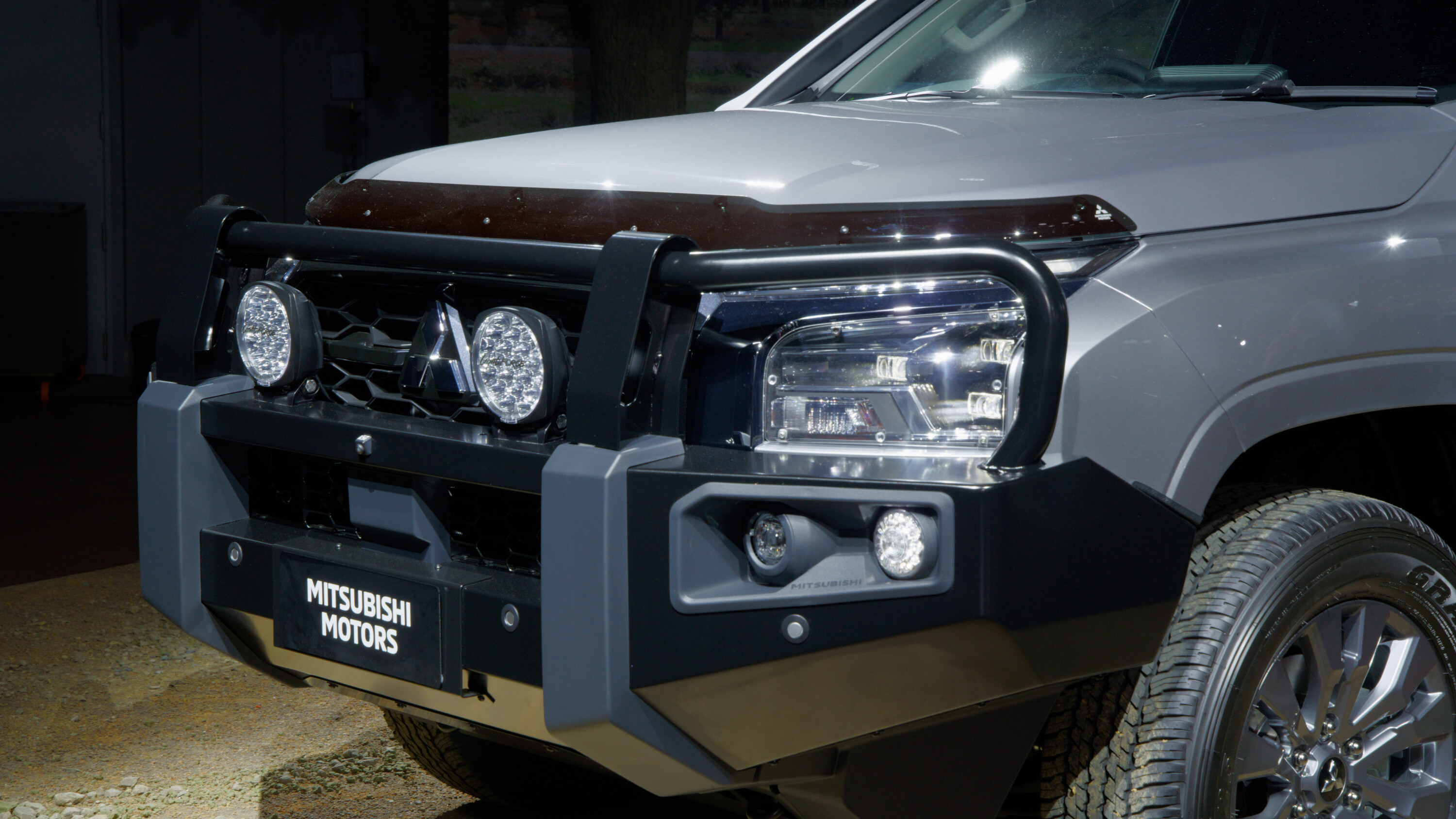
Aside from the unadorned high-spec black and orange cars on the stand – effectively a GLS and GSR – there was a fully-accessorised white Aus-spec GSR hooked up to a (large-for-Thailand) caravan to emphasise the 150kW/470Nm Triton’s improved 3.5-tonne towing capacity.
3
It features all the kit from Mitsubishi’s genuine accessories catalogue, including:
| Mitsubishi Triton genuine accessories | |
|---|---|
| Roo bar with integrated foglights and AEB compatibility | Rear protection bar |
| Winch cradle kit | Roof base rack |
| Underbody protection (front, steel) | Canopy with opening side windows |
| LED spotlights | 12-volt power outlet in the tub |
| Headlight protectors | Tailgate dampers |
| Bonnet protector | Spray-in bed liner |
| Snorkel kit | Tub tie-down system |
| Steel side steps | Rubber floor mats |
Mitsubishi is yet to announce accessory pricing for the 2024 Triton.
TJM Triton accessories
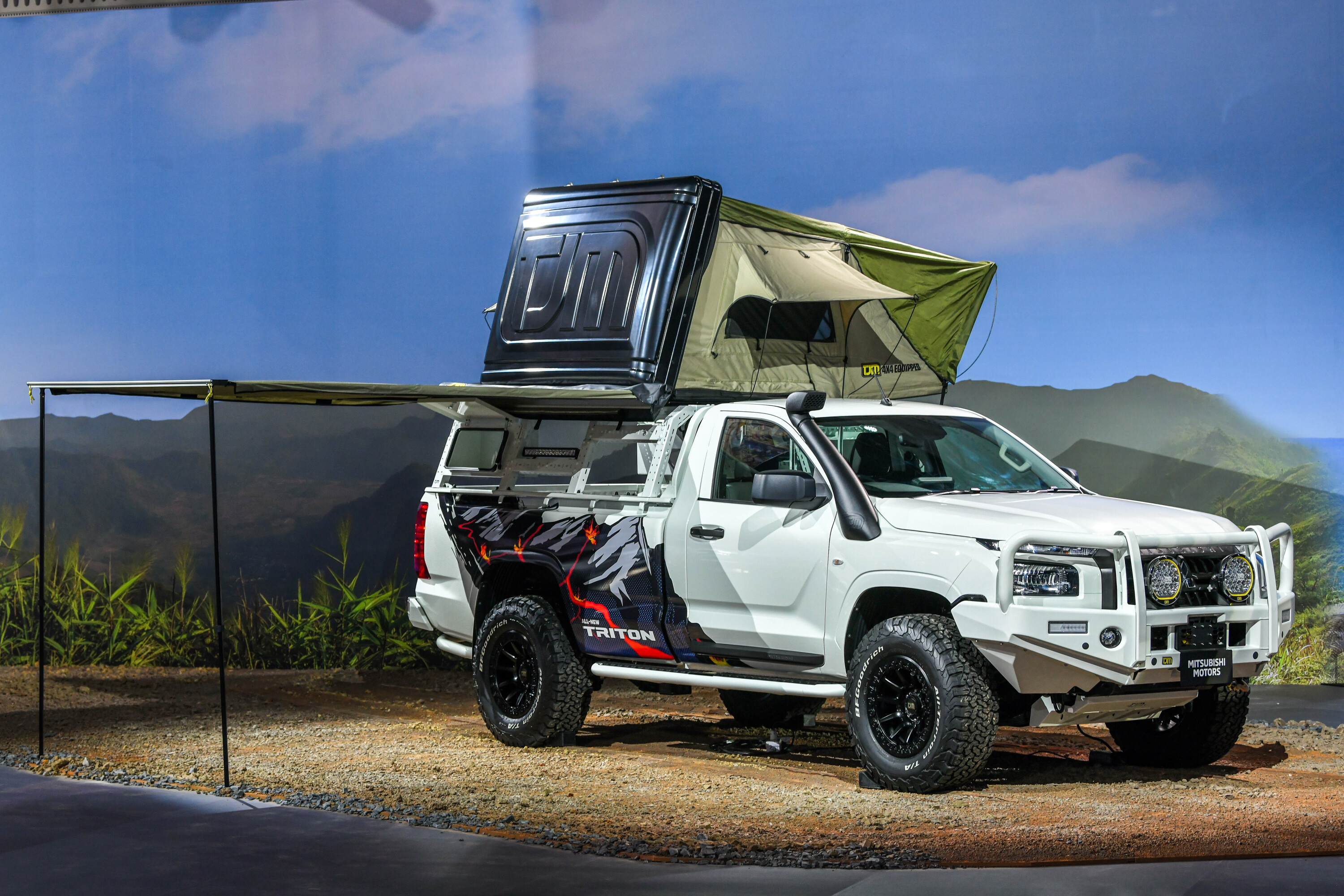
Though Mitsubishi’s Japanese arm showed interest in further collaboration, as it stands the accessories will be sold through TJM suppliers only, in Thailand and the ASEAN region initially, with Australian introduction likely in the future.
13
Fitted to the most highly accessorised vehicle on show were the following parts:
| Mitsubishi Triton TJM accessories | |
|---|---|
| TJM T13 steel bull bar with LED light bar and integrated winch | TJM rear bumper bar |
| TJM under-body protection | TJM snorkel kit |
| TJM steel side steps | TJM suspension kit (no stats on lift) |
| TJM kitchen unit | TJM bed rack |
| TJM side panel toolbox | TJM wheels with BF Goodrich K02 |
| Sample TJM roof-top tent | TJM awning |
“We’re excited to see this work finally come to life with Mitsubishi Motor Thailand,” said deputy MD of TJM Thailand, Trin Yiamyongchai. “The agile relationship we have with Mitsubishi has enabled us to produce accessories that will allow Triton customers to create bespoke vehicles that align with their exact needs and lifestyle.
“Our range of accessories for the Triton empowers our customers to do exactly that, they can add the precise elements they need to make a real difference in whatever they choose to do”, added Mr Yiamyongchai.