Is the Ineos Grenadier the Defender you should be buying? Let’s find out…
Love or hate the Land Rover Defender, its place in off-road history and fourbie folklore is undeniable.
Personally, I have countless Landie memories from growing up in southwest rural Britain with a collie on the passenger seat and a bale or two in the back, so it’s very much the former for me.
And, like many, it was with sadness that I learned JLR would put the iconic Defender out to pasture, ending a bloodline that effectively started in the 1940s.
Perhaps in denial of the looming end, like many enthusiasts around the world, you considered grabbing one of the extraordinarily expensive final editions and squirrelling it away in a shed somewhere.
Or perhaps you thought about picking up an older version to maybe restore or just hold onto for posterity’s sake.
Whatever romantic notion you may have considered to preserve the Defender in either its aluminium-bodied form or simply the memory, I bet you didn’t once think about approaching Land Rover and offering to buy the tools and manufacturing rights to save the model from an untimely end.
But that’s exactly what Ineos CEO Jim Ratcliffe did.
Despite having the backing of one of the largest industrial chemicals companies in the world, negotiations didn’t go well. Land Rover declined any offer from Ineos and the Defender’s fate remained sealed, but this only made Jim and his team more determined to offer the world something that Land Rover couldn’t or wouldn’t.
Five years later, the Defender name lives on in a milder monocoque model that has little in common with the original aside from a cool retro interpretation of its styling.
Undeterred to produce an heir to the traditional Defender throne, however, Ineos has produced something completely extraordinary – the Grenadier.
1
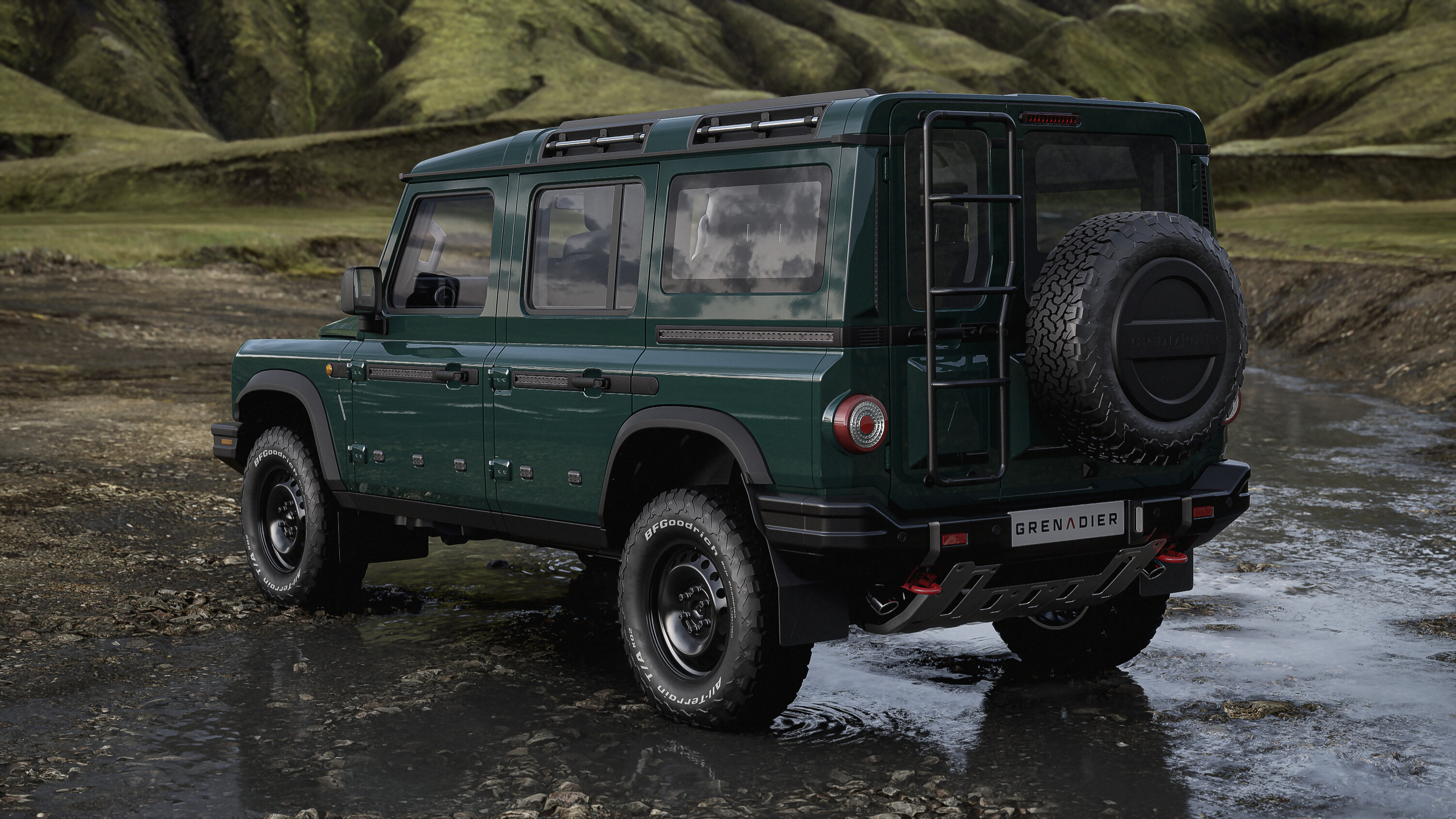
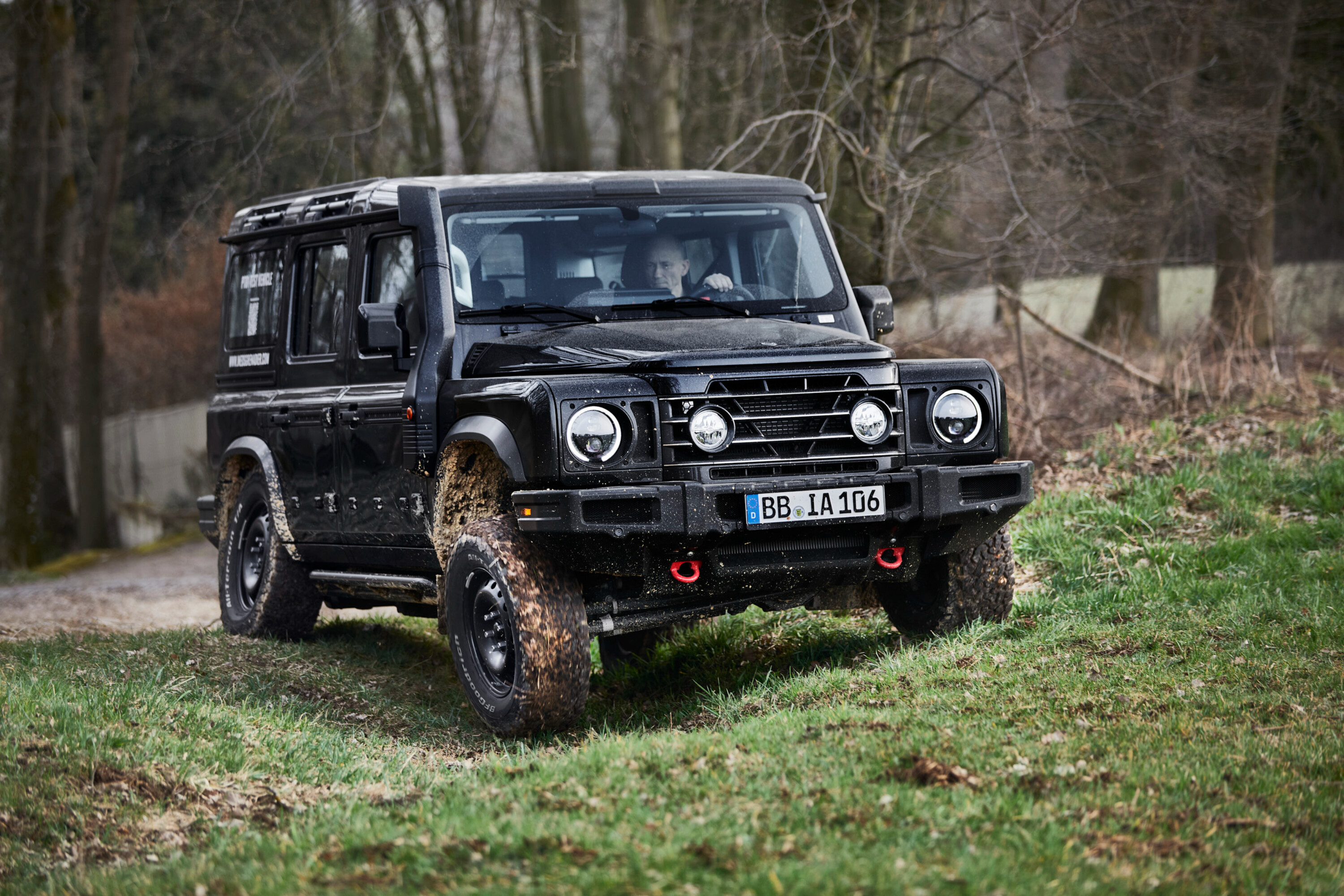
Unlike the modern Defender that has reimagined the original boxy design through a contemporary lens, the Grenadier sails as close to Land Rover’s largely un-evolved design as the legal winds would allow it. In fact, the courts ruled in favour of Ineos following a challenge by JLR.
But under the incredibly similar façade including the flat panels, classic round headlights, garden-shed glasshouse and curved shoulder line lies a fascinating machine that couldn’t be more different to the now-defunct Defender.
Actually, it’s at this point that we will cease making comparisons with the Defender. At its international launch in Scotland, it took 30 seconds of driving to realise that the Grenadier does not deserve comparison to a model as dated and essentially flawed as the dear old Land Rover.
1
Instead, Ineos’s first model is a paradox of traditionalist engineering and off-road purity, combined with deceptively modern and refined touches. Thank you, Land Rover, but Ineos will take it from here.
While every attempt was made to keep design and engineering in-house, the start-up needed to enlist the help of an established heavyweight to find the right drivetrain, and at the Grenadier’s core you’ll find a choice of BMW petrol and diesel engines.
Opt for the B57 straight-six 3.0-litre twin-turbo diesel and the Grenadier has 550Nm and 183kW under the right pedal. Go for the B58 petrol equivalent and those figures shift to 450Nm and 210kW.
While both silky sixes are still fairly prolific in the BMW family, with the help of powertrain development specialist AVL, Ineos extensively remapped this pair of powerplants for its own purposes.
1
In the case of the diesel, the rev limit was slightly lowered, while power and torque were pared back in the petrol; both in the name of longevity.
With both engines, an eight-speed ZF automatic transmission sends power to the dirt via all four wheels and a pair of live axles.
If you’re looking for a true objective comparison therefore, the Jeep Wrangler, Suzuki Jimny and Toyota LandCruiser 70 Series are the only models on the current market that roll on a full live-axle chassis but, as our first ride in the Grenadier demonstrated, it’s not really that simple.
By now it should be obvious that Ineos has confidence in the Grenadier’s all-terrain ability, choosing not the dry plains of South Africa or the Australian outback for its international debut, but the frozen and utterly inhospitable Scottish central Highlands in mid-winter.
1
Here, you’ll find almost every nemesis for an aspiring 4×4 newcomer from saturated peat bogs through slippery rock gardens, deep ruts, mud craws, icy wading and even beaches – albeit freezing loch sands and not the kind we’re used to in the other hemisphere.
Whether you opt for the Trialmaster with 17-inch steel wheels or the Fieldmaster that wears 18-inch alloys, both are equipped with BF Goodrich T/A Baja Champion rubber providing a good basis for grip.
Just days before our arrival, the Central Highlands were plunged into a minus 10ºC cold snap but the following thaw had forced water up through the boggy soil, turning the surface into a slick of mud and slush.
The Ineos approach to progress in challenging terrain is not through electronics and insidious intervention of traction control, but honest and obvious mechanical grip.
1
For almost all the steep inclines we attempted, low range and a locked centre differential (via a traditional mechanical lever) were sufficient to tackle very low-friction surfaces. For the really tough stuff, electrically locking front and rear diffs can be called on for substantially more traction.
It was only later when the way ahead turned rocky with strong streams of meltwater did we engage all locked differentials via the cool ceiling-mounted buttons. In some of the most challenging conditions Scotland could muster, the Grenadier made progress look easy.
An occasional knock from the rear suspension suggested the five-link set-up can bind at the limit of its travel but the Grenadier has a spooky ability to keep all four wheels in contact with the prevailing surfaces.
1
Wheel articulation is good in all corners and the hill descent system is easily the smoothest we’ve experienced, carefully controlling vehicle speed rather than allowing the car to run away before intervening with a panicked attack from the ABS. Overall, the Ineos has commendable composure in even the nastiest conditions.
Exceptional off-road ability is what the Grenadier pertains to from the brochure to its utilitarian looks, so it’s perhaps not surprising that it delivers on those promises. Far more surprising, however, are its manners when it returns to the road.
A deeply compromised on-road ride is something all-terrain enthusiasts have long accepted in exchange for the toughness and ability of live-axle, ladder chassis vehicles, but the Grenadier demonstrates that there is another way.
While its suspension setup sends a little shudder through to occupants along with a bit of body roll too, its composure is absolutely the best that a twin live axle can deliver.
1
It even usurps some independent leaf-sprung rear arrangements. In keeping with tough 4×4 hardware, steering is courtesy of a traditional steering box which provides a low-and-slow ratio – with damping – that is good for off-road negotiation and requires more than 3.5 turns lock-to-lock. This takes some getting used to on-road, with a little wander in-lane, but the precision is good with plenty of weight.
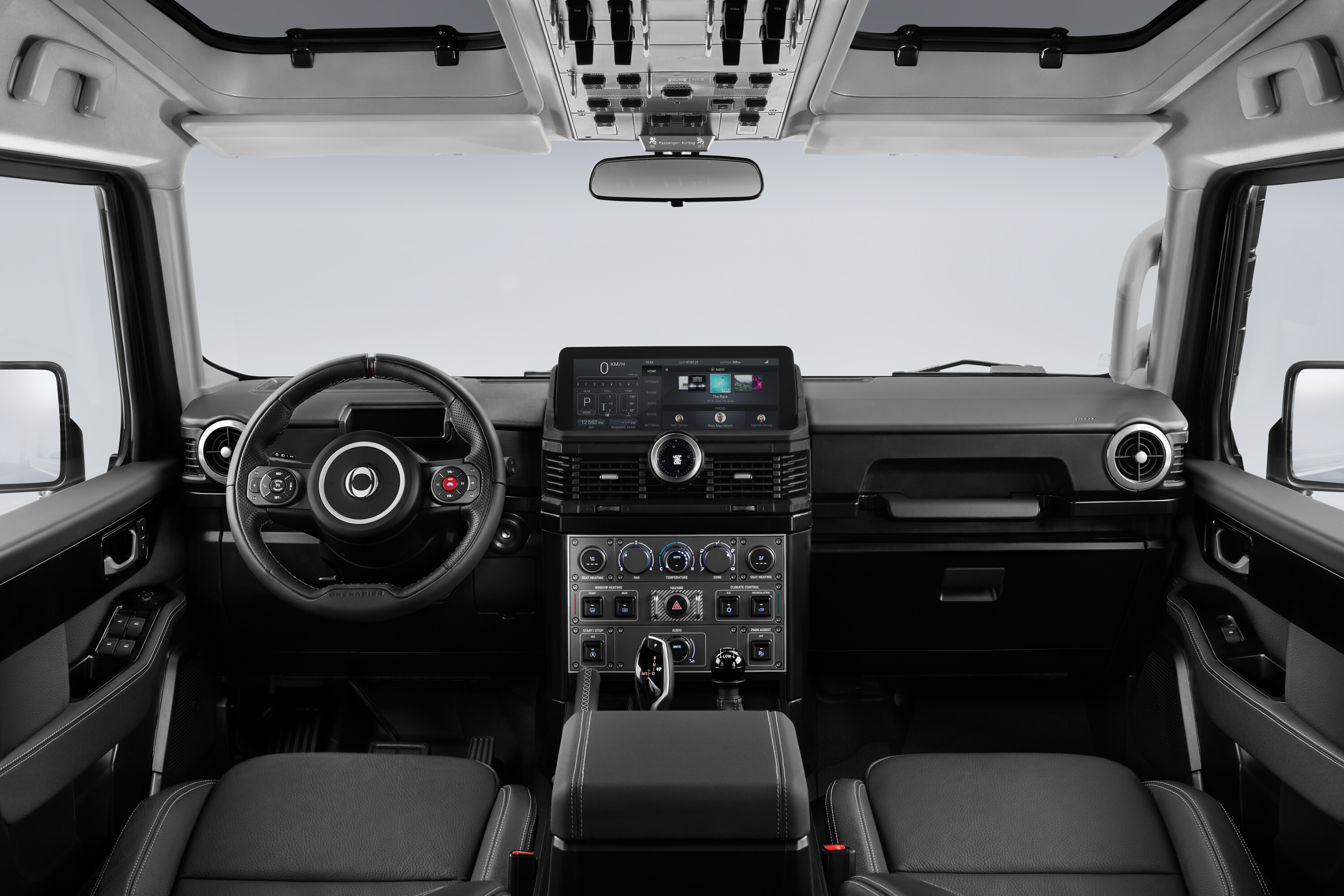
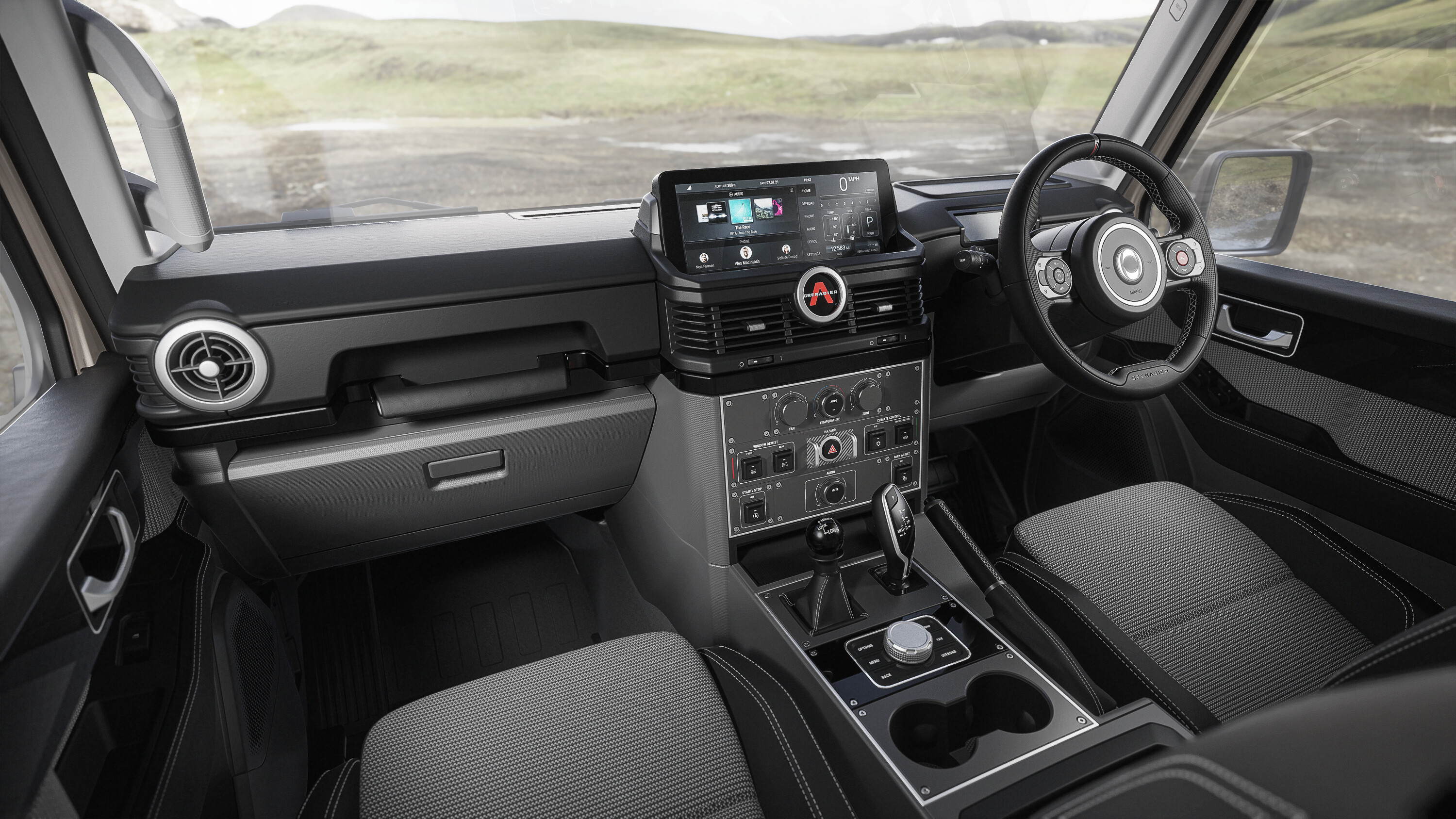
Seats are courtesy of Recaro and ultra-supportive but not intrusively bolstered and even verge on sporty, while the central switch panel is another interior centrepiece that initially appears to be style over substance but quickly proves itself as a practical highlight.
The tough industrial-looking switches even extend to the ceiling where the various off-road modes are located with a brilliant aesthetic and all with the same hose-out IP rating of the cabin.
Order a Fieldmaster and the delightful safari windows above each front seat are included. They can pop up for ventilation or lift out completely for unrivalled light and air.
1
Like virtually every Grenadier feature, anything can be optioned to any variant for almost unlimited customisation possibilities.
For example, the safari windows standard to the Fieldmaster can be added to the Trialmaster, while the Trialmaster’s dual locking diffs can be donated to the Fieldmaster for an additional charge.
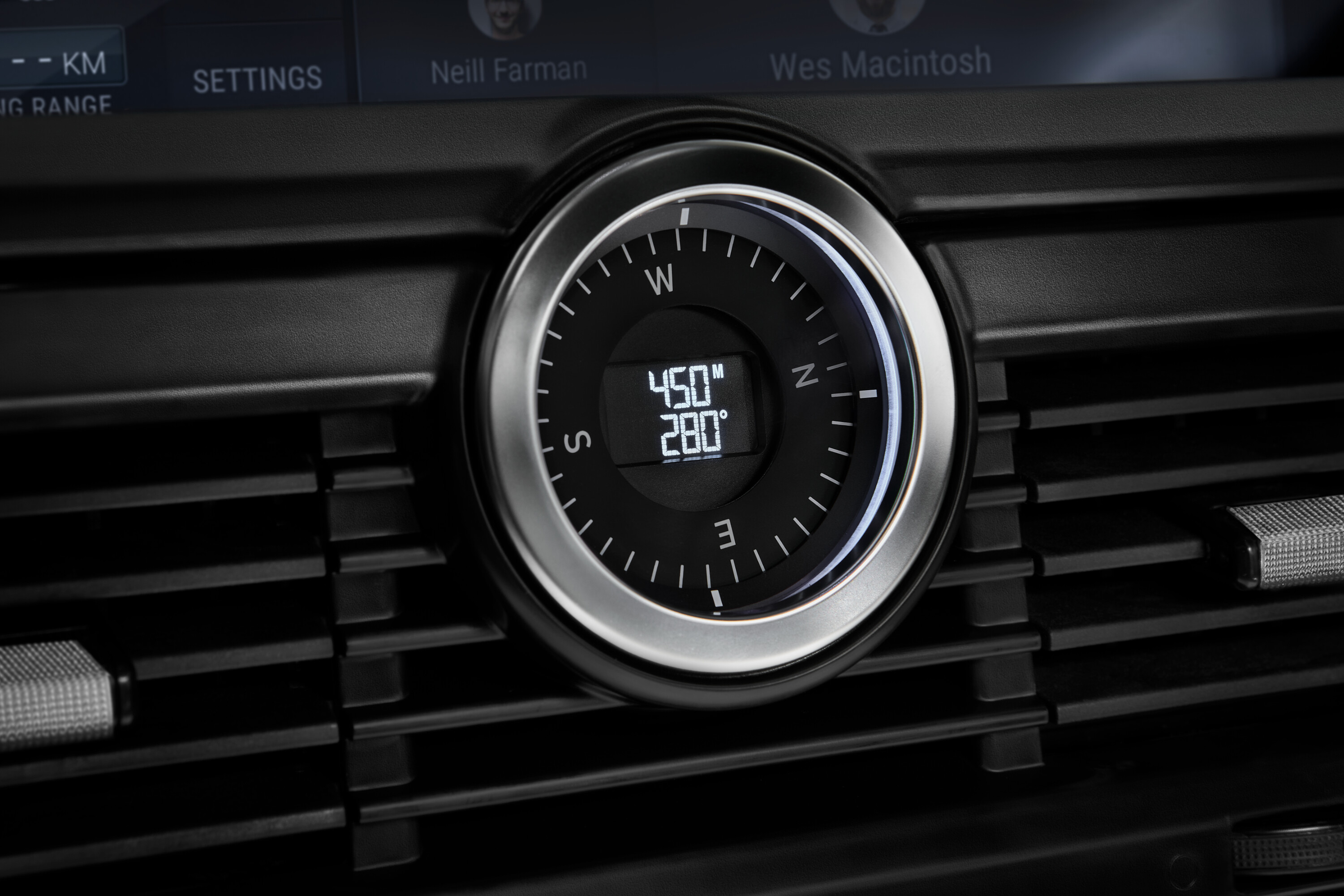
But while there are plenty of traditional touches, the Grenadier also has one foot in the 4×4 future. There’s no instrument cluster, with only a warning light binnacle between the steering wheel and the road. Instead, all vehicle information is displayed on the central touchscreen.
Despite its initial utilitarian appearance, the Grenadier is not as austere as you might imagine – but then neither is its price. When the Grenadier was first announced, Australian pricing started at $84,500 before on-road costs but since then, global supply and logistics problems have pushed the point of entry up to $97,000 before on-road costs.
It seems a bit steep until you see what’s included.
Accessory to a good time
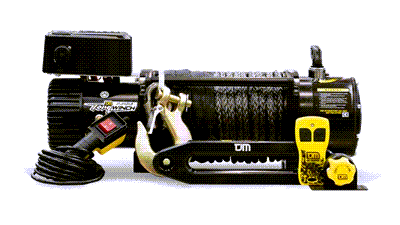
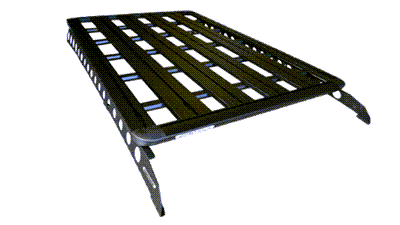
Ineos understands the 4×4 community’s passion for personalisation and is offering a decent list of custom options for the Grenadier. Partnering with Red Winches, Rhino Rack and Gearmate, the range of factory-backed extras already includes everything from a fold-out tailgate table through a 5.5-tonne rope winch, to a full 150kg-rated roof rack and Batwing side awning.
⛰
Ineos Australia CEO Justin Hocevar explained that third-party specialists were important for boosting the Grenadier’s flexibility, including South Australian firm Redarc which had been enlisted to design auxiliary battery electrics and the option to install lithium-ion power.
⛰
“We’re still open to talk to others,” said Hocevar. “We know that we can deliver some accessories for customers but there’s a range of other things that we won’t do. Allowing others (suppliers) to come in with their own areas of expertise provides further flexibility for customers.”
⛰
Hocevar explained that a number of customers had been enquiring about long-range fuel tanks, fit-out of drawers, sliding fridges and electric brake controllers, prompting the company to continue exploring aftermarket and factory-endorsed options.
1
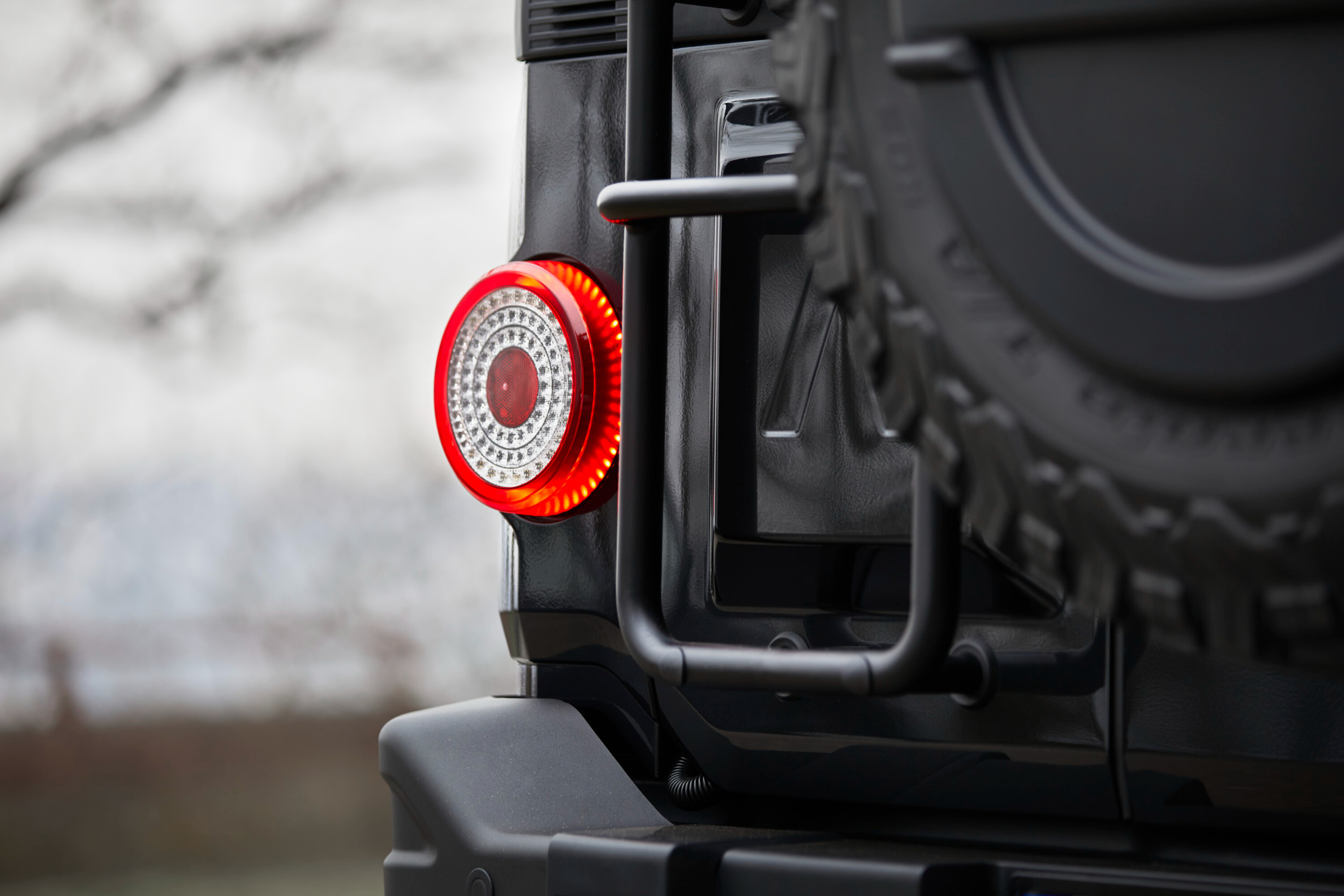
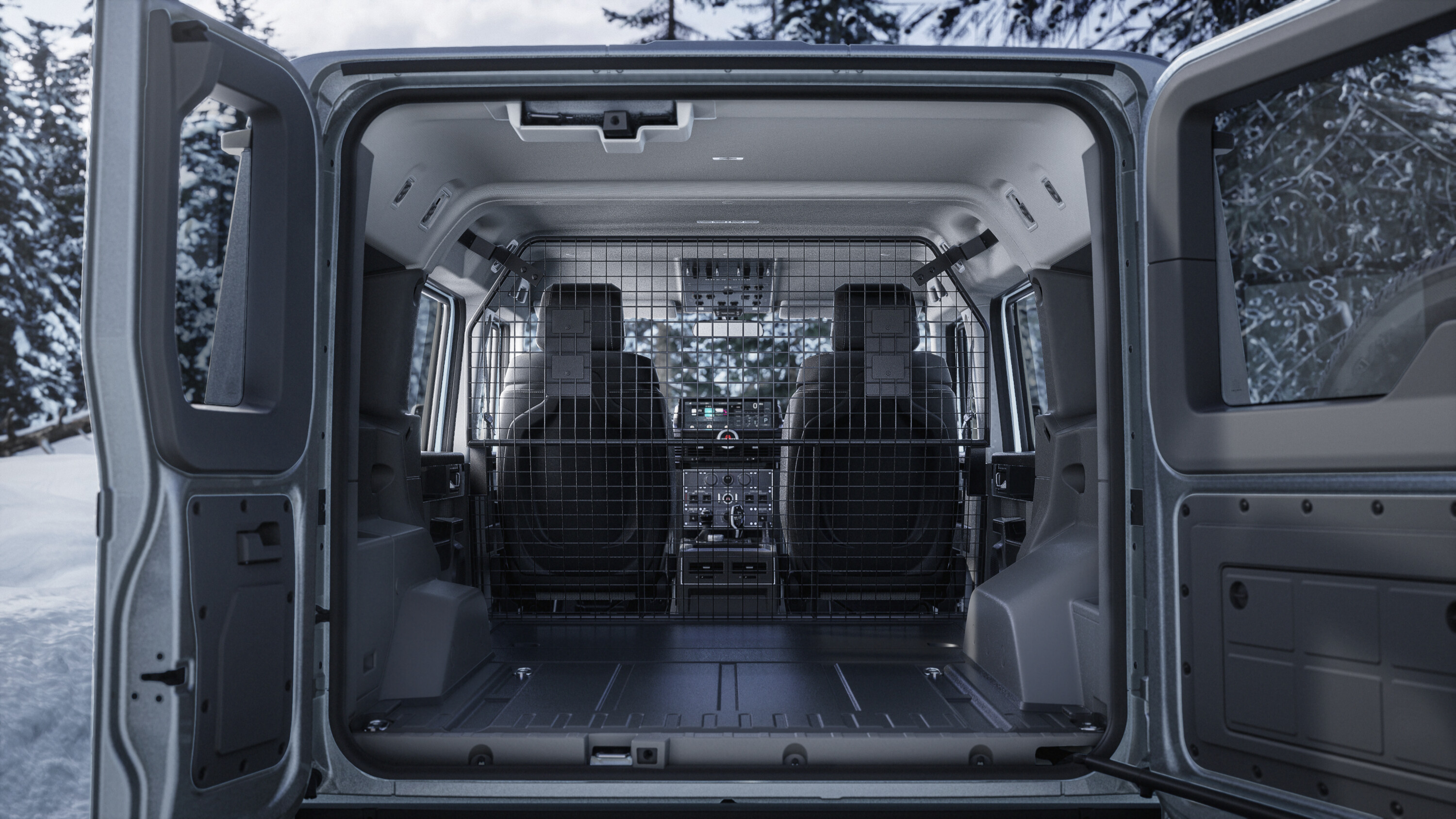
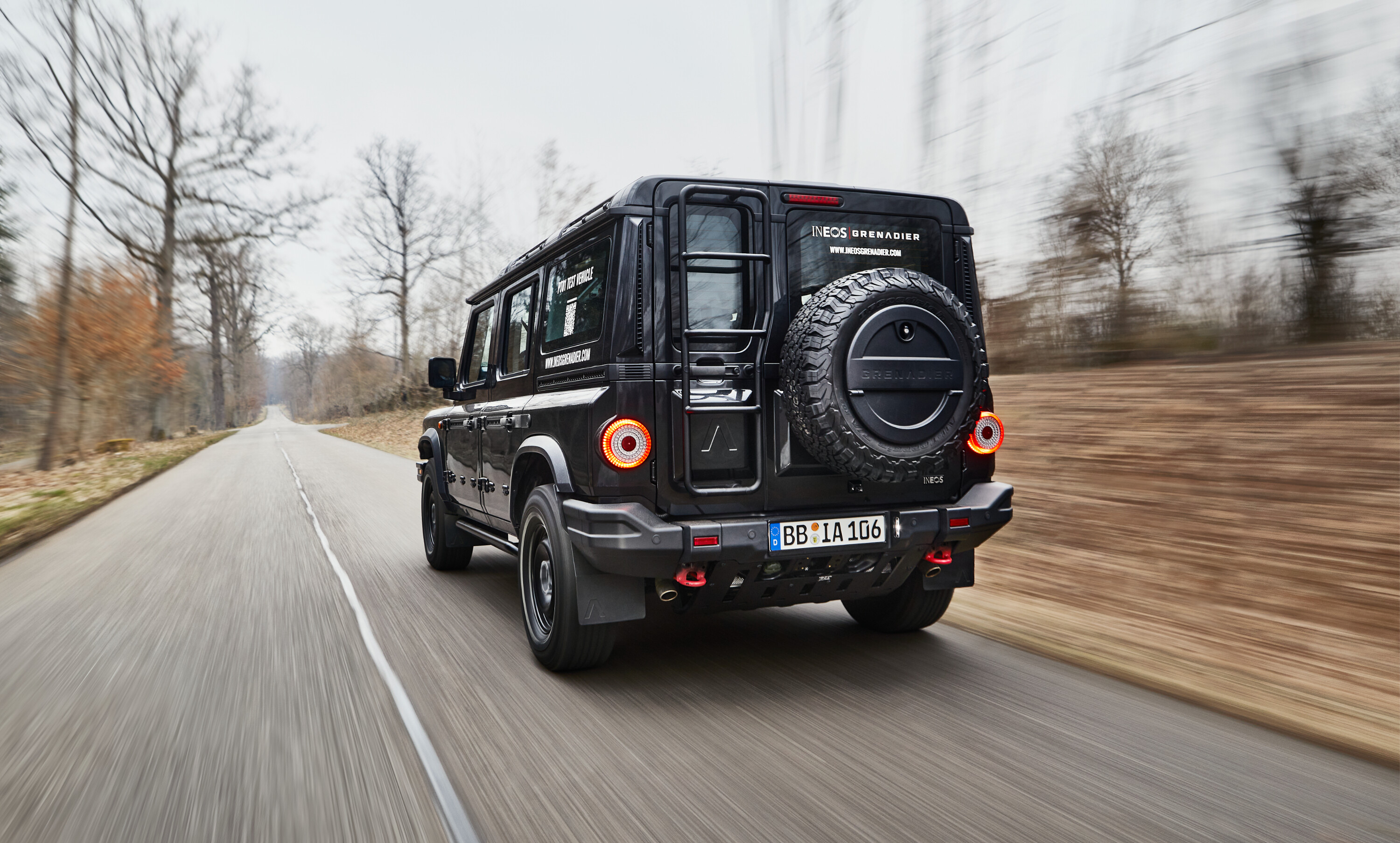
The Grenadier’s body is perforated along each flank with Airlineschiene – the railing used to secure commercial airline seats – allowing almost infinite accessory fixing options. A roof access ladder fitted to the asymmetric rear doors can support up to 140kg, a vertical towing interface is not limited to the commonplace ball hitch and can accommodate everything except a fifth wheel.
A dedicated electrical system management screen allows the vehicle’s power systems to be closely monitored – a genuine boon for campers and serious off-road modifiers. Chequer plate panels on the front wings are reinforced beneath to support the weight of an adult climber and your choice of rock sliders or side steps are part of the deal.
I was prepared to forgive the Grenadier a lot. Its off-road ability is so wonderfully versatile that a choppy on-road ride akin to the Wrangler would be acceptable.
1
The odd switch that looks like it’s borrowed from another manufacturer would be equally alright for a brand that’s trying to focus on the big things in its infancy, as would a few squeaks and rattles in a hardworking foray model.
As it happens, the Grenadier asks for none of this preferential treatment and is unbelievably well-rounded and complete. But how different this story could have been.
Inside sources report that Land Rover’s Defender line and tooling was feeling its age as badly as the model itself, with tired presses and stretched jigs compromising the quality of finished products.
Although designing the Grenadier from scratch has been a monumental amount of work for the Ineos team, there’s not a single member who wishes they could have done it the ‘easy way’.
I can’t help but wonder what the Grenadier would be if Ratcliffe’s plan A had come off. It would have been a success in itself to see an iconic model preserved for a few more years but, in the face of adversity, Ineos has produced a machine that sets a new standard for off-the-shelf off-road ability combined with innovative refinement and manners.
The Ineos Grenadier is not just the machine the Defender could never have been, there’s really nothing else quite like it.
The upcoming 2023 Porsche 911 Dakarwill offer recovery boards if it gets stuck off the beaten track – and there’s a local connection.
Key Points
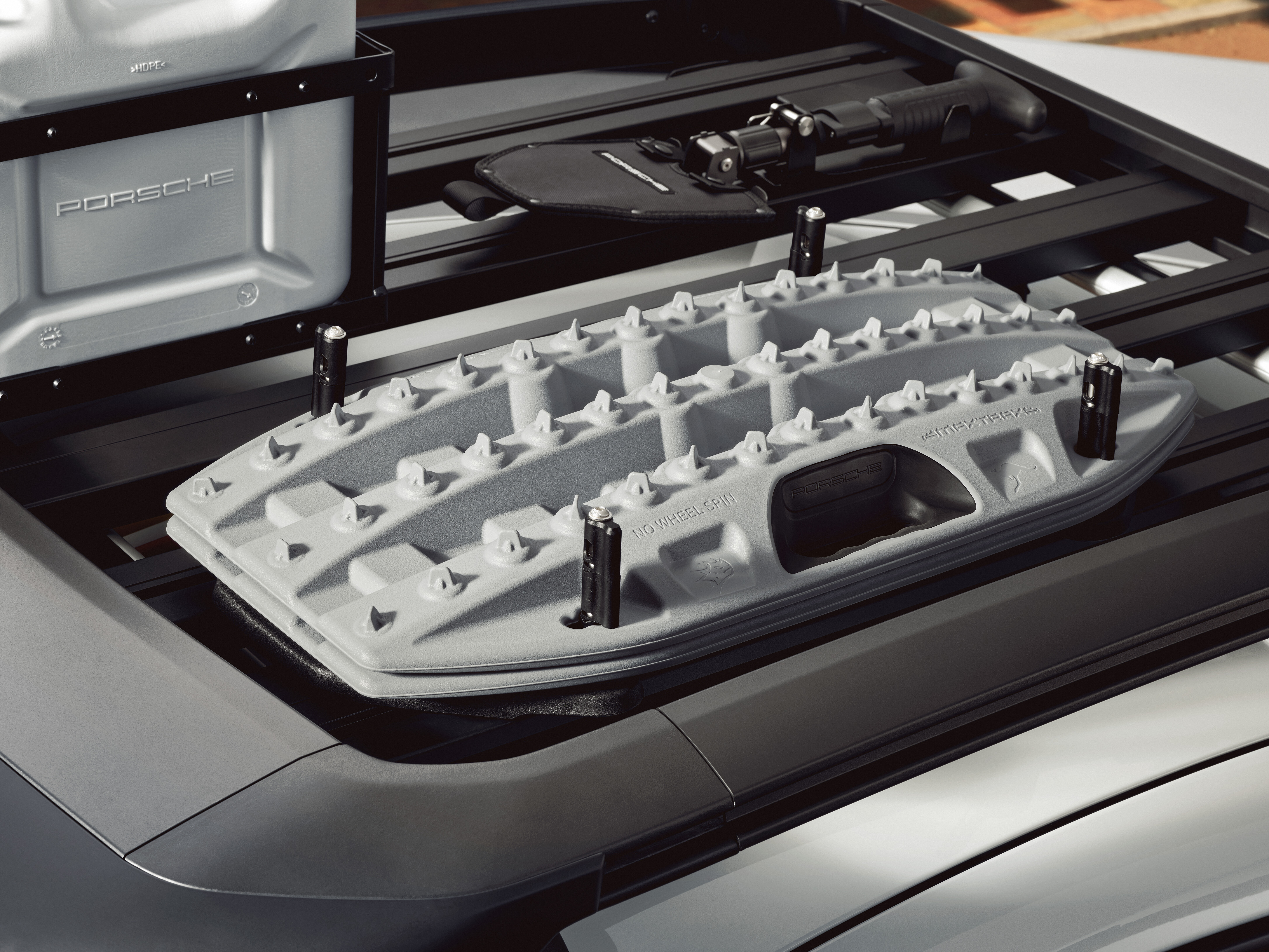
Australian-made MaxTrax Minis now offered by Porsche for 911 Dakar
The 640mm Minis ideal for limited roof storage space
Exclusive grey colour co-branded Porsche-MaxTrax
MaxTrax is an Australian-invented and manufactured item that will be familiar to many off-roaders, while many others might have seen the bright orange plastic boards strapped to the roof racks of 4×4 vehicles.
The boards are designed to help get a bogged vehicle unstuck by putting them under the tyres and then driving up onto them and out of the obstacle in a safe and easy manner. It’s a simple idea, and many have copied MaxTrax with limited success.
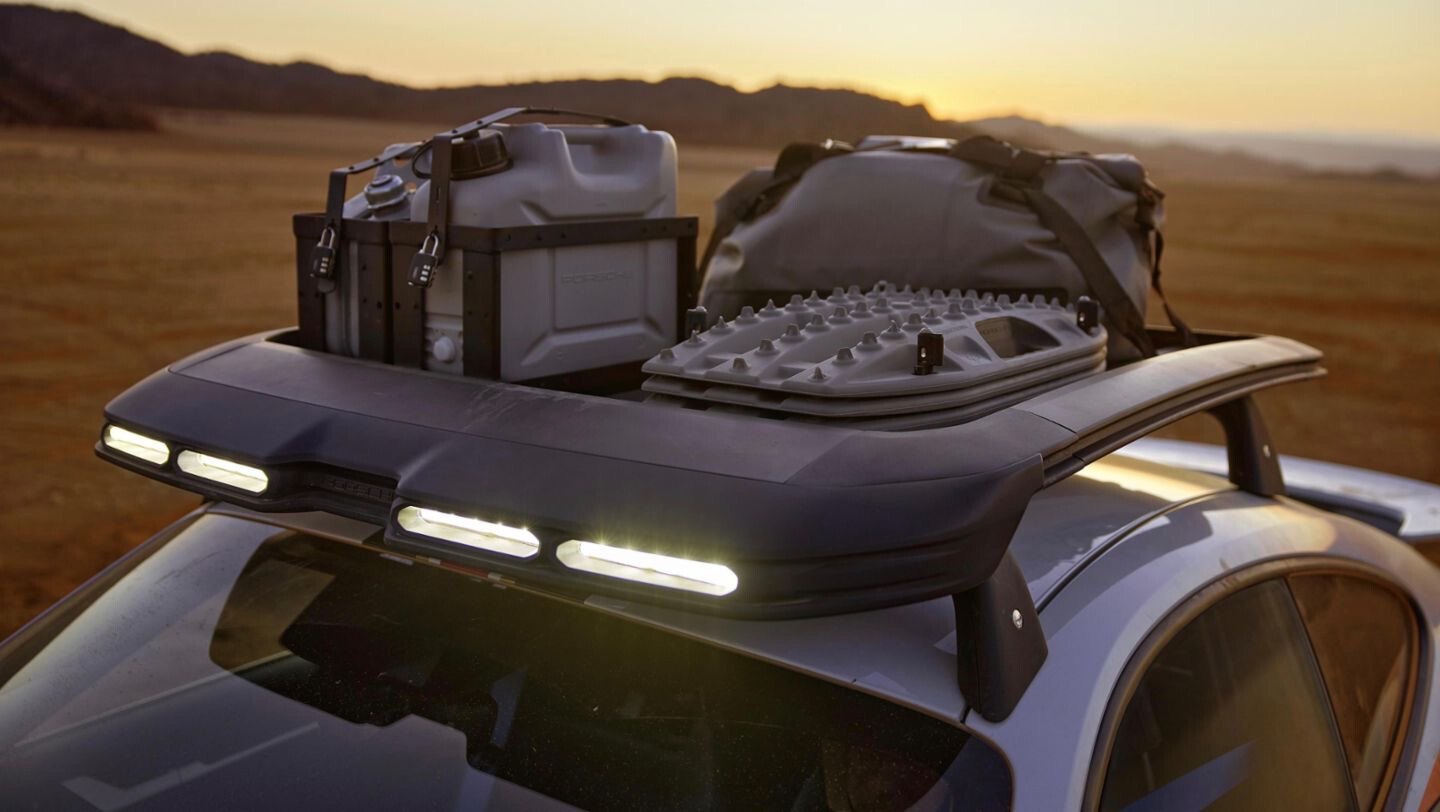
Porsche has recognised the value of such a product and partnered with the brand to offer special MaxTrax ‘Minis’ for the 911 Dakar. The Minis are just 640mm in length, while standard MaxTrax measure 1150mm – so these are perfectly suited to vehicles with limited storage space or a short roof like the 911.
If you option the 911 Dakar with the official ‘Roof Transportation System’, you can also fit the MaxTrax mounting pins to secure them on board.
While the MaxTrax being offered by Porsche are made to the same specifications as all other MaxTrax using the unique UV-stabilised, flexible and tough, engineering-grade reinforced nylon material, they are exclusive in their grey colour – and the fact that they are co-branded with Porsche and MaxTrax.
1
This is quite unique for Porsche accessories, which are normally branded exclusively with Porsche, but the MaxTrax brand is included to show that these are genuine Australian-made products.
A set of regular MaxTrax Minis retail for $199, and while there is no price listed for the Porsche-branded product, we dare say it will be considerably more costly.
The humble swag has come a long way since the thin roll of canvas that served as bedding for the pioneers, explorers and drovers of this country in the early years of the colony. The canvas is now waterproof, tear-resistant and is supplemented by a mattress, mozzie netting and support poles.
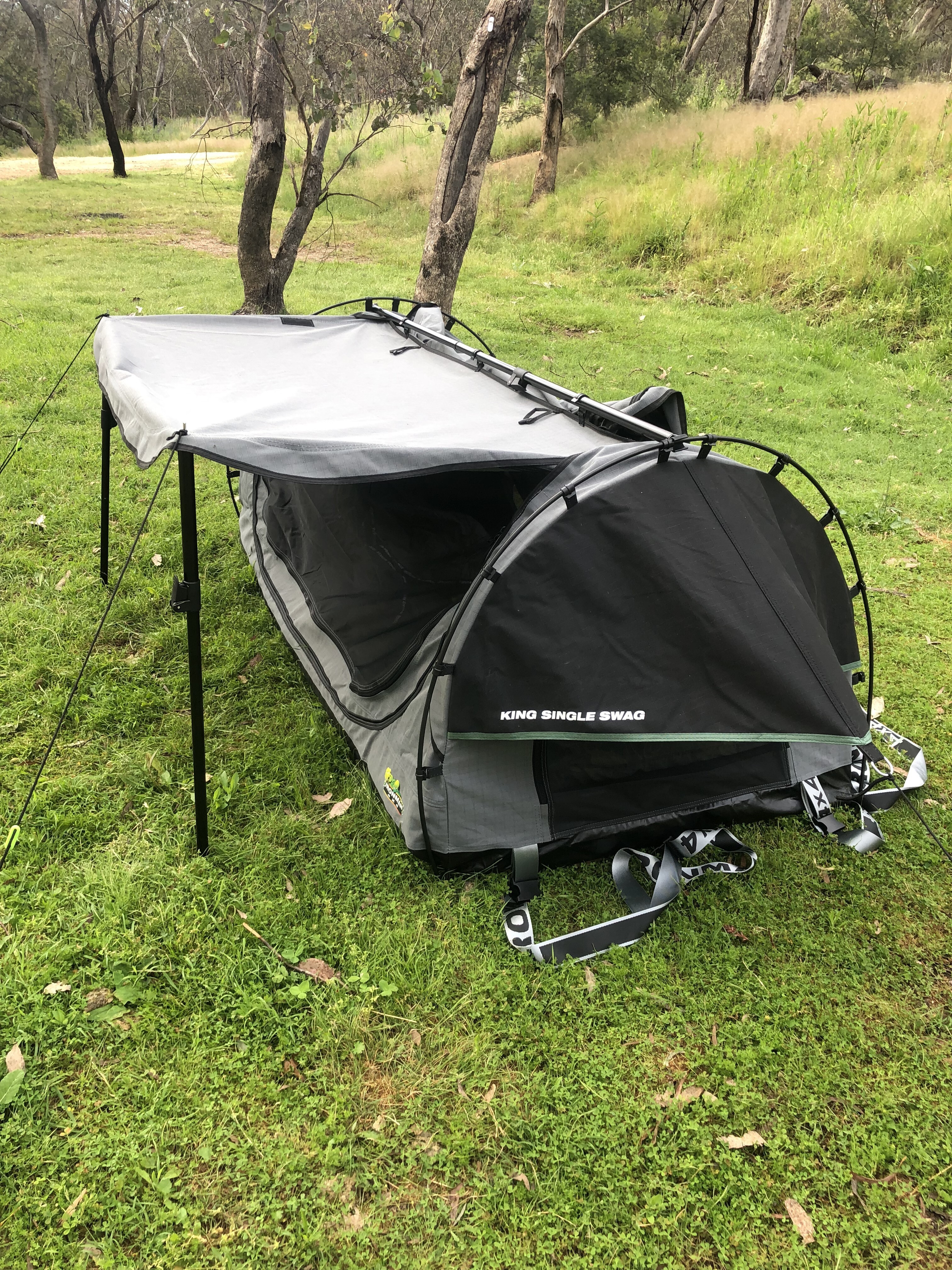
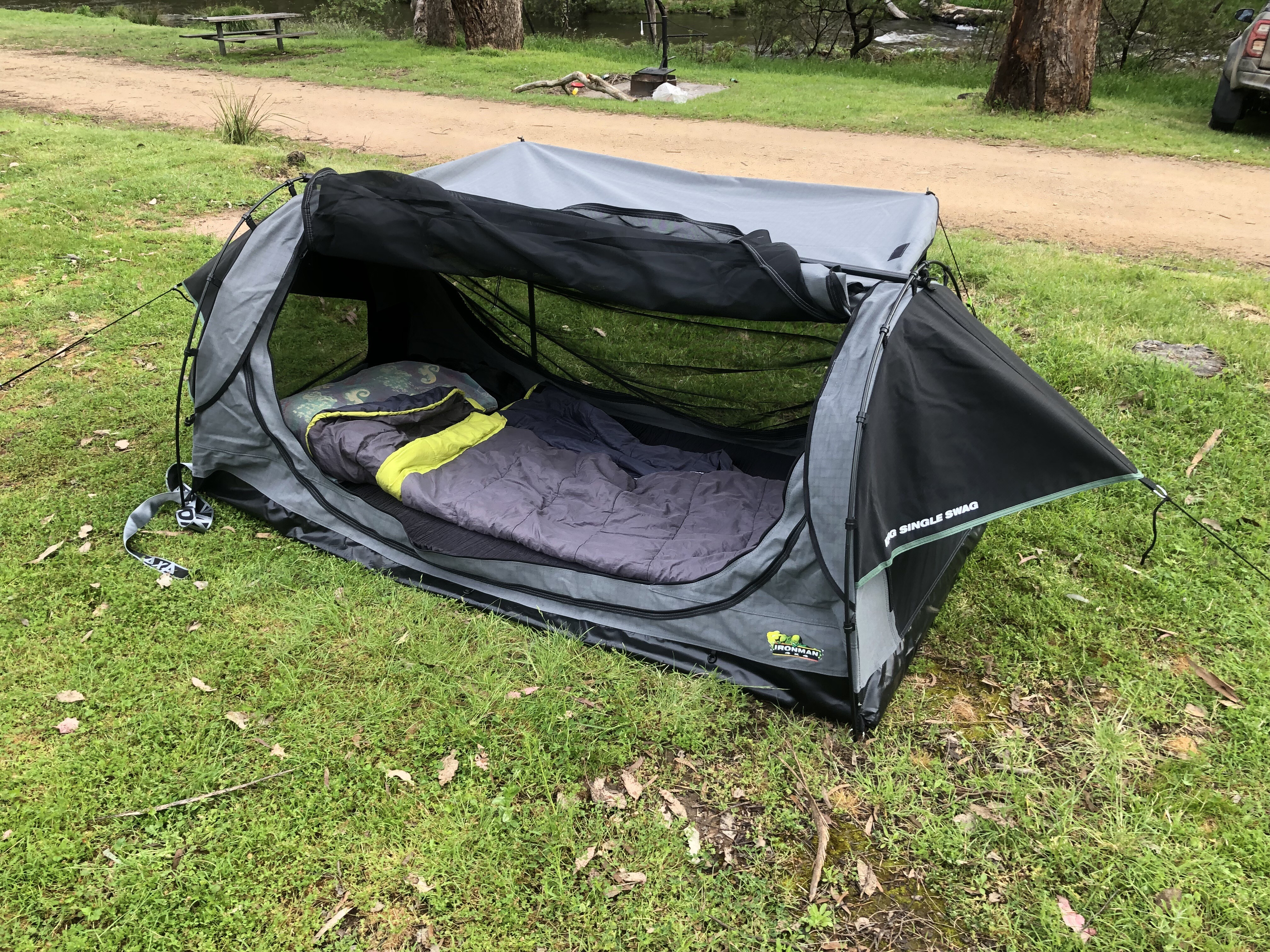
Nowhere is the latest generation of personal swags more epitomised than in the new Ridge Pole Swags from Ironman 4×4. Not only does it come with all the aforementioned features, but it has a veranda and a place to keep your boots dry and critter-free!
The Ironman Ridge Pole Swags come in King Single and Double sizes for $439 and $479, making them great value for money. We got our hands on a King Single version and have used it on a couple of trips in the Victorian High Country.
1
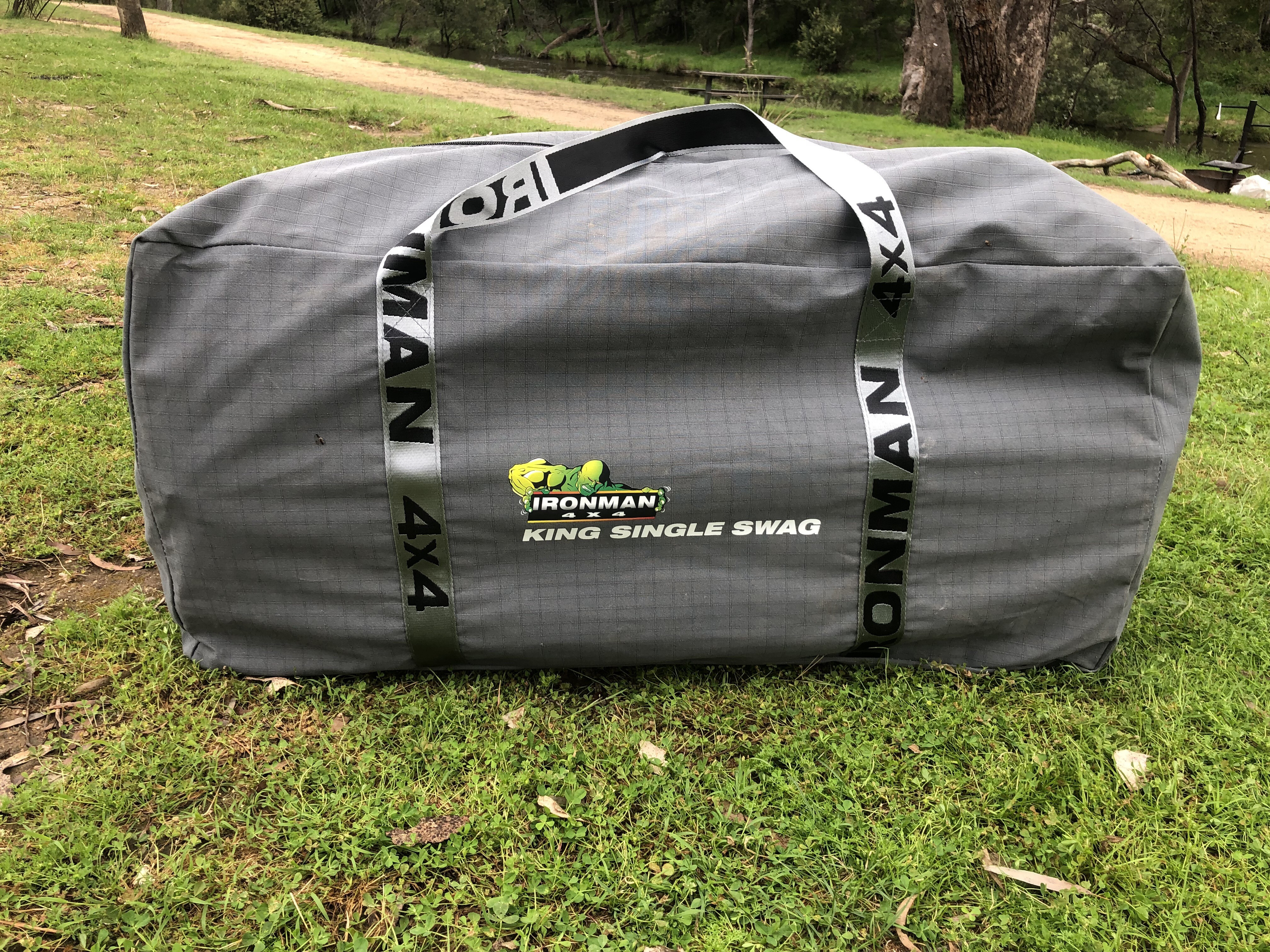
Unpacking the Ironman swag for the first time, it was great to see it comes with a heavy-duty canvas bag which always comes in handy to protect your swag from the elements if you’re carrying it in the back of a ute or on the roof of your 4×4.
Also in the bag are all the tent pegs and guy ropes you’ll need, the ridge pole and awning poles, mattress and separate boot bag. I’ve since been using the boot bag as a place to store all these ancillaries when they go back in the big bag. And yes, it does all fit back in the bag at the end of the day.
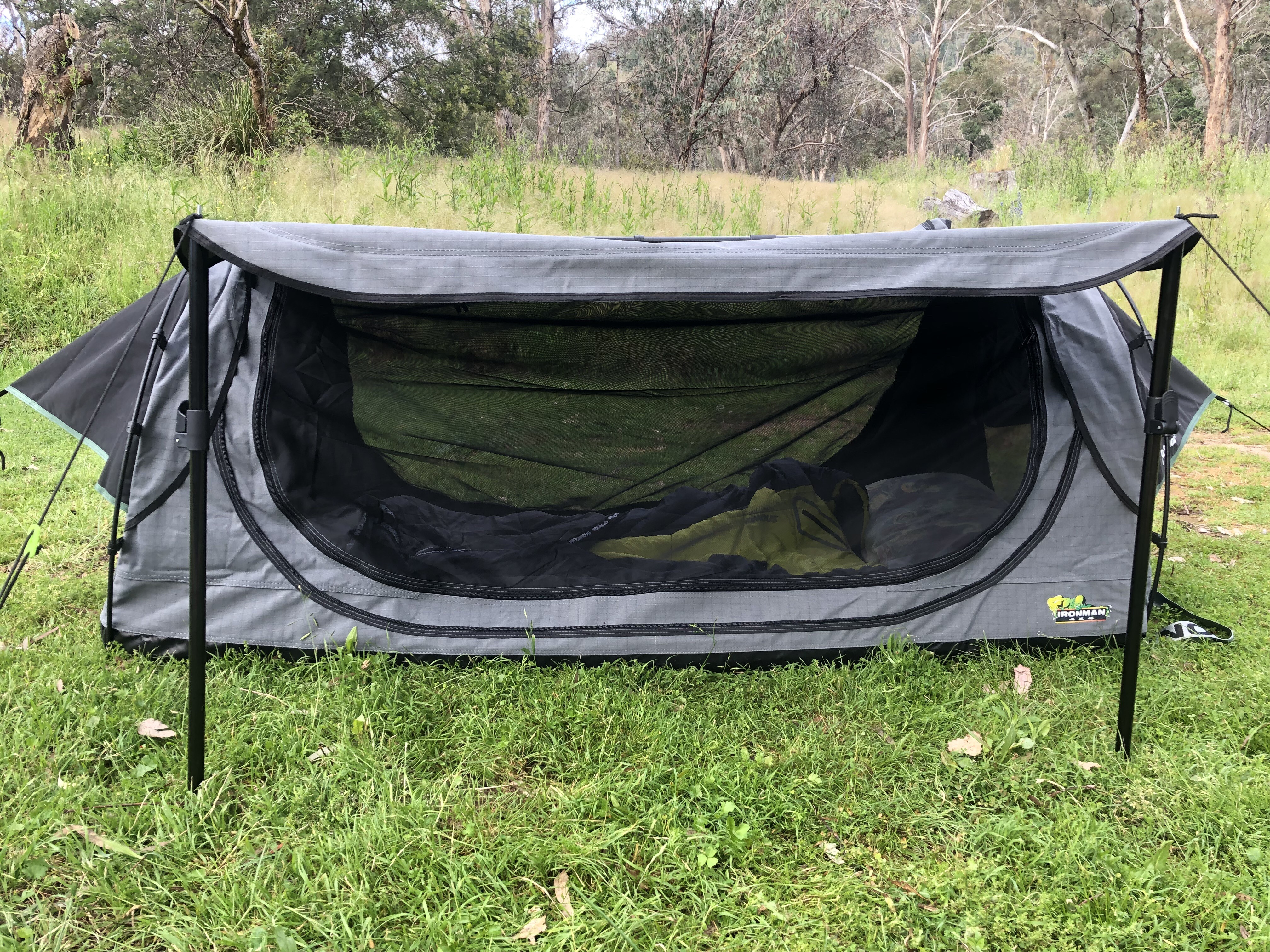
The swag is relatively easy to erect. Flexible, elasticised bows snap in place at each end and the ridge pole extends in place between them to keep the swag upright. Loop a guy rope through the hoods at each end, secure them with a peg and the swag is ready to jump inside.
1
I’ve owned double-hoop swags before and, while they are a great design, I’ve found that no matter how taut you secure the ties at the ends, the canvas inevitably sags in the middle and encroaches on the interior space. The ridge pole design alleviates this problem by keeping constant pressure on the end loops, to maintain the shape of the swag. You could even use it without tying down the ends if you needed to get in quickly in poor weather.
The main material is 420gsm polycotton Ripstop fabric, while the base is PVC to prevent dampness creeping in. The canvas is water-rated to 800mm and seems to have a water-repellent coating on it. The zippers all feel like good quality units that should last years of use.
Inside the Ironman swag is plenty of room for one person, and a couple could even sleep in here at a pinch. The King Single is a full metre wide, while the 2150mm length should accommodate all but the tallest people. The Double Ridge Pole swag has the same length but is 1400mm wide. The 700mm of height allows you to prop up on your elbow and move around a bit, but you can’t fully sit up to put your boots on in the morning.
1
There are internal pockets to store belongings, and loops at the top where you can hang a light if needed. The panels at each end zip open to allow flow-through ventilation and are protected from the rain by hoods that pull out with the guy ropes.
Need more ventilation? Both sides of the swag fully zip open, and you can either roll the canvas up and secure it to the ridge pole with the attached loops or prop them up on the awning poles for a covered veranda open to your favourite camp view.
With the sides open you are still protected from bugs by the sandfly-proof mesh, which again can be opened up on both sides, making this a very versatile swag.
1
The included mattress is a thick 70mm high-density foam piece that takes up the full floor area of the swag. I have been mounting my swags on a stretcher for a few years now, so I was a bit concerned about dropping back on the ground with this swag. I needn’t have been concerned as this mattress is made for comfort and I barely felt the ground beneath me and got a great night’s sleep on it.
The only negative of the thick and comfy mattress is that it means the swag rolls up quite fat, but I rolled it up with my pillow and sleeping bag left inside and it still goes back in its protective bag without much of a fight. Fully packed up like this, it only just fits under the hard tonneau cover of an N80 Hilux.
To date, I’ve had a few windy nights with some light rain in this swag but haven’t encountered heavy rain yet. The previously mentioned water-repellent canvas should protect against that, but so far no problems with any water ingress inside the swag. And the wind didn’t bother it, either.
On clear, warmer nights I’ve opened it up for more airflow and enjoyed the breeze and sound of a nearby river – the perfect camp.
I’m looking forward to more time in the Ironman swag as it’s become my favourite, and I’m no longer carrying a stretcher around as well. Not only is it doing a great job, but for the price the Ironman swag is great value.
Keen to see your four-wheel drive in an upcoming instalment of Readers’ Rigs? Head on over to our Facebook page and send us a few snaps.
Mitsubishi Pajero
1
I’ve owned my Pajero for two years and it was the best decision; they are very much underrated and it has never let me down. A unique mod is that I installed the rear drawers on to gas struts, to access underfloor storage where my third-row seats used to sit. It’s amazing how much room would be wasted if I didn’t have access to this space.
If you want to see how these rear drawers work, you can check it out on my YouTube or Instagram: @BIA4X4. I recently got back from Moreton Island and it was amazing to be able to explore the island, especially the north and western side. – Bia Neves Mcalister
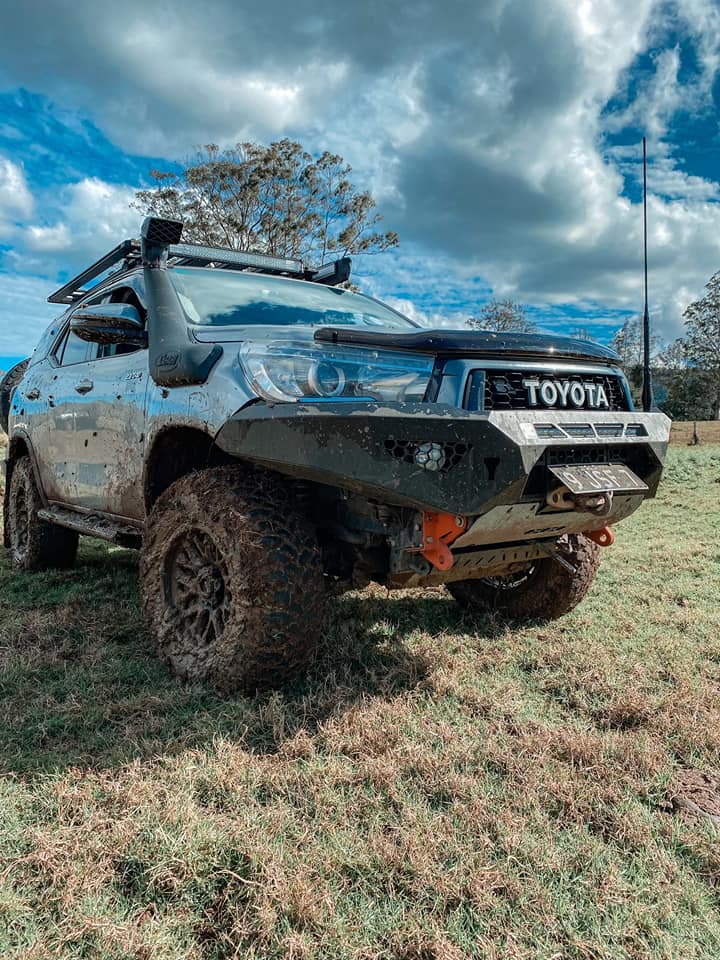
2018 Toyota Fortuner
1
She has a three-inch lift, custom rear bar and a 12-volt set-up, plus heaps more –and she’s done a full lap around Australia. – Josh Farmer
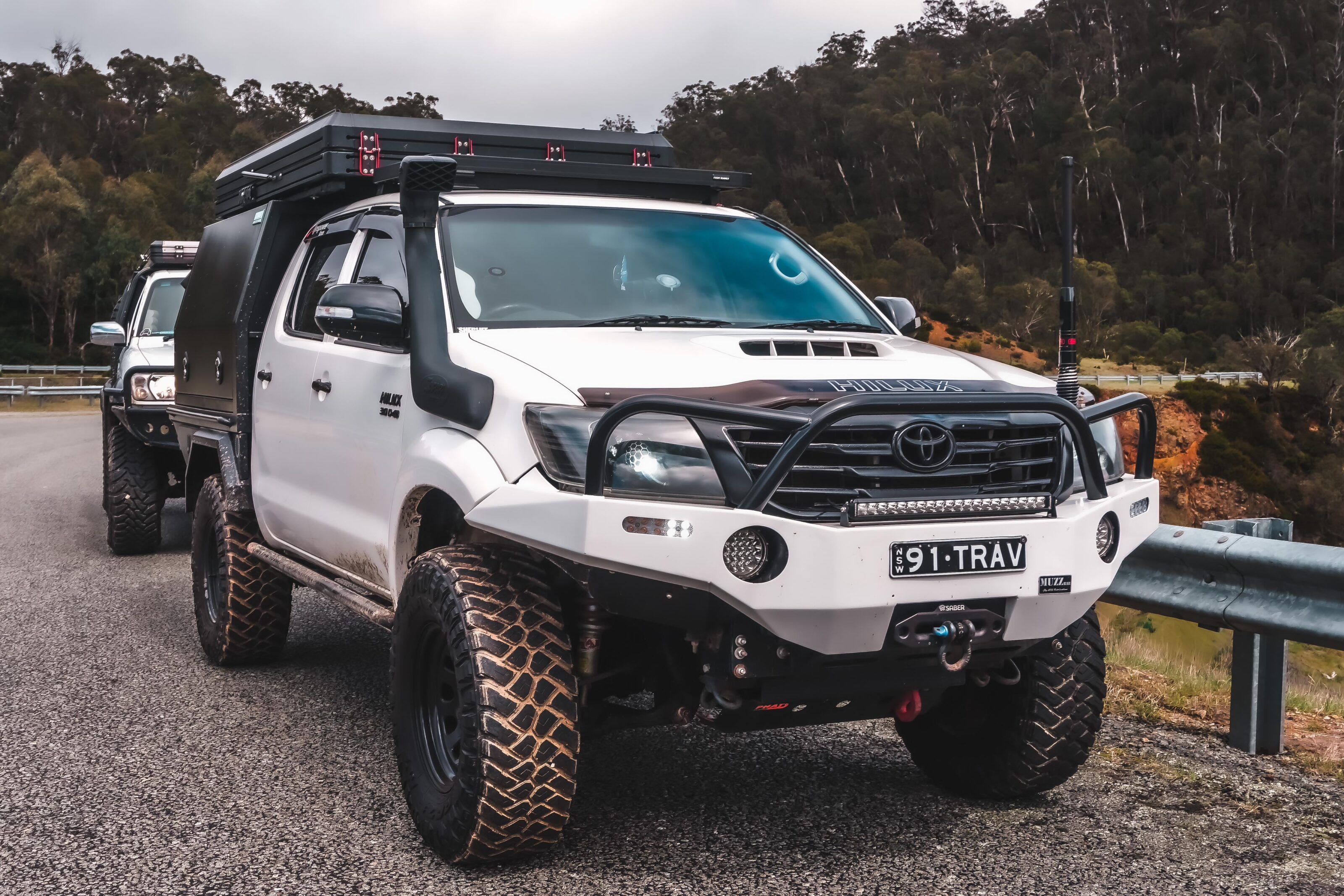
2011 Toyota Hilux
1
Mods include a two-inch lift, with UCAs and a diff drop; 285/75R16 Maxxis Razr MT tyres; an extended 145-litre fuel tank; upgraded diff ratios; Muzz bar; LED light bars; a Bush Company rooftop tent; 12-volt kit-out; and more. Since this photo was taken, I have added a tray and canopy, custom retrofitted headlights and regeared the differentials. – Travis Keuneman
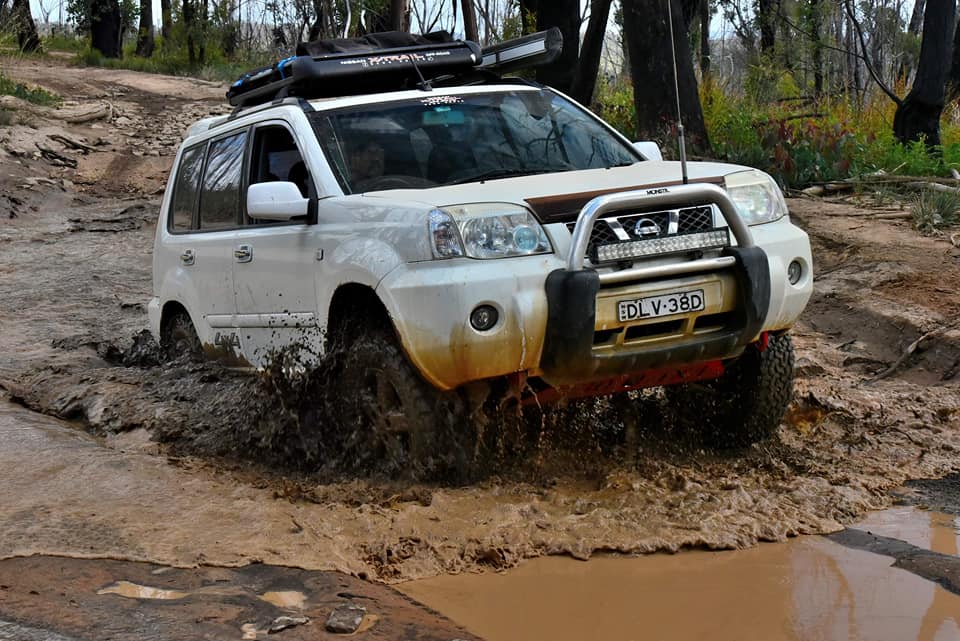
2010 T30 Nissan X-Trail
1
I have done exhaust mods and added under-protection. Plus, the car also has a Superior Engineering two-inch strut spacer lift, and I have gone an inch up in tyre size. – Mat Belgrove
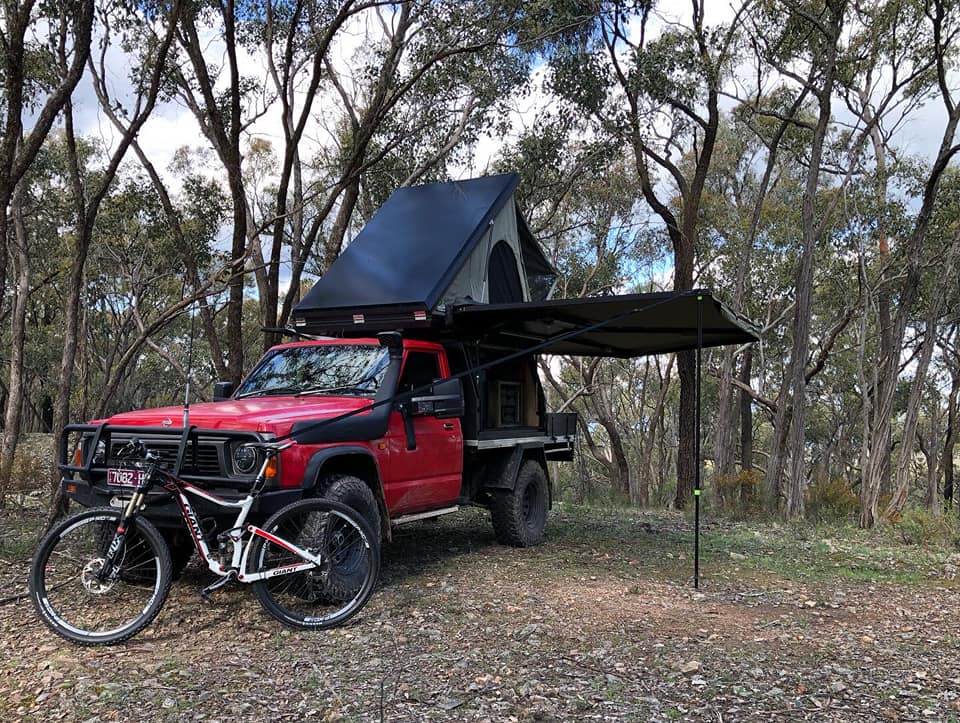
Nissan GQ Patrol
1
This low-kilometre GQ Patrol ute has been set up for camping and touring. It features a two-inch lift; 33-inch MT tyres; front locker; bar with winch; shortened tray; T.C Boxes canopy with 195amp/h Redarc battery system; upright fridge; Ironman 4×4 rooftop tent and 270-degree awning; and a 70-litre water tank beneath the tray. – John Partridge
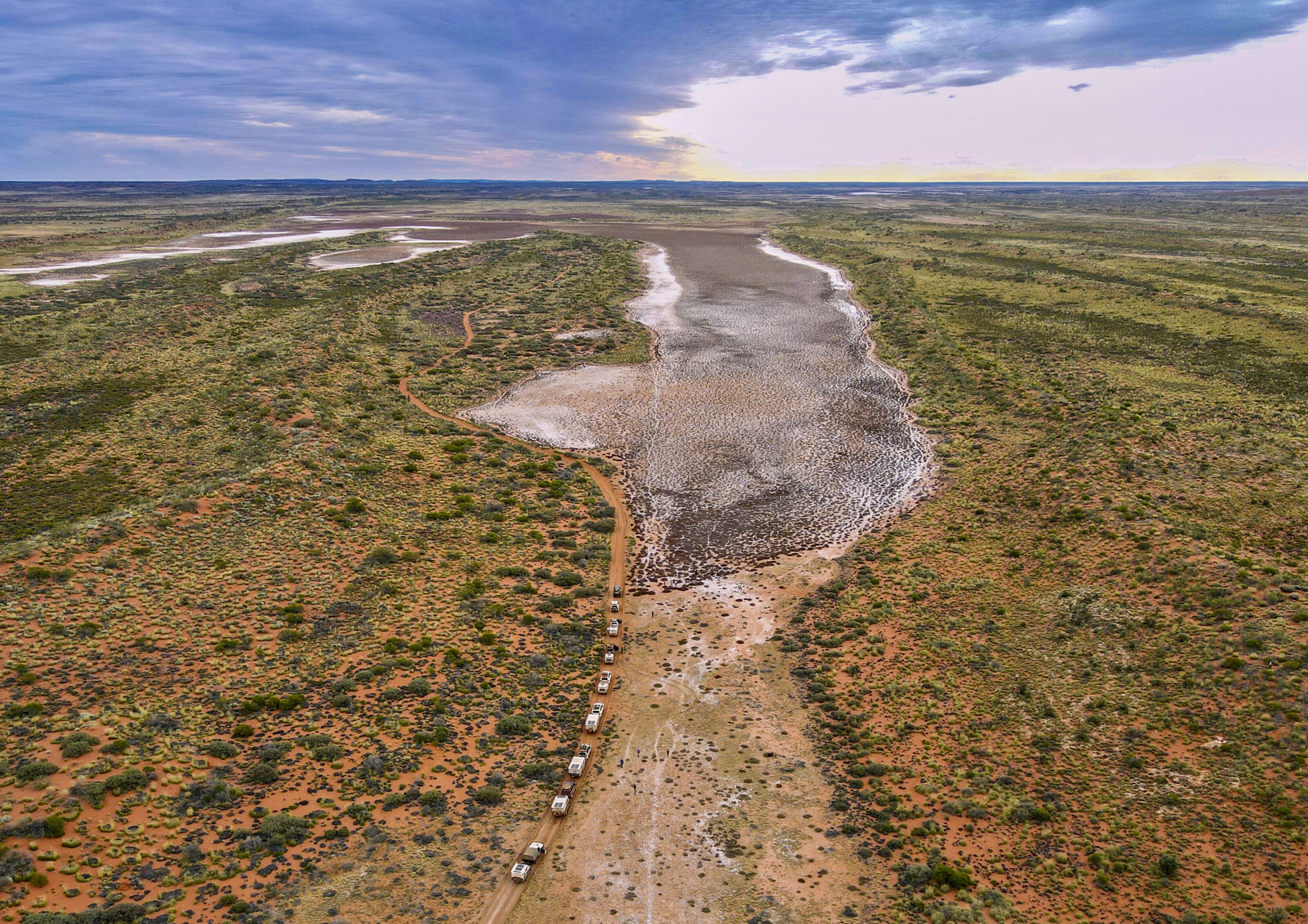
The change was dramatic! Less than 12 months previously, the lake was full to the brim with life-giving water. Now, while its surface glittered like the mirror of an inland sea, it was all but a mirage; only in the centre of the once expansive lake was there a hint of moisture, but even that was nothing more than a thin veneer of water over mud that was fast becoming desiccated, cracked and dry.
I was disappointed, having thought that once full and with rain in the intervening months since my last visit, there would be enough water to revel in this inland oasis. But, like most surface-water sources in the vastness of the Gibson Desert, they are ephemeral expanses subject to wind and unrelenting sun; their existence measured in days and weeks, not months or years.
1
On a large coolabah on the edge of the drying pan, a group of 10 or so white-faced herons perched forlornly and dispirited, their fate sealed by the vanishing waters and their retreat back to more permanent reservoirs cut off by the expansive sea of sand now devoid of any life-giving succour and any hope of escape. They were doomed, and they seemed to know it.
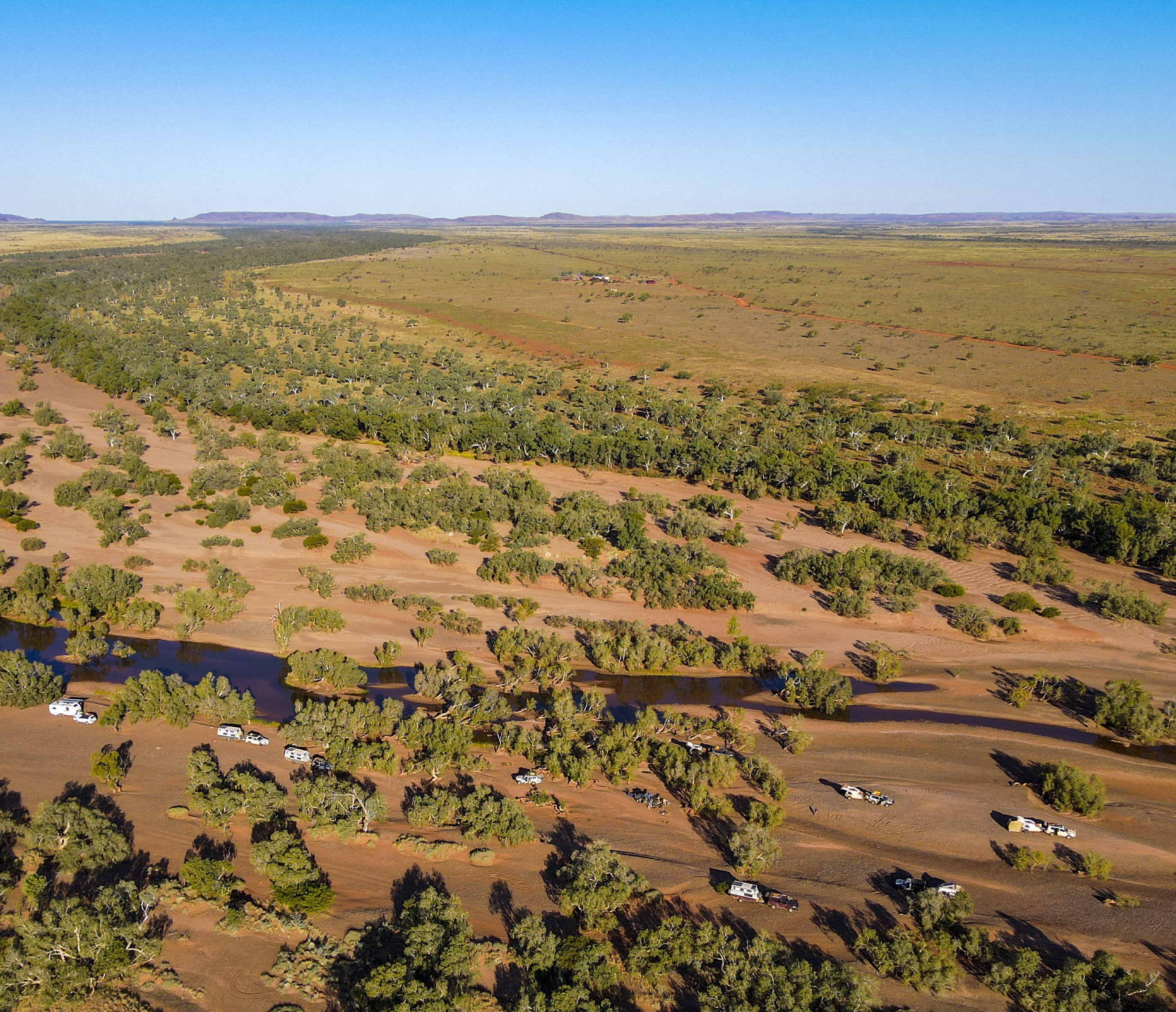
Our fate wasn’t anywhere near as assured, permanent or as dramatic, and we decided to camp on the flat dry pan well away from the spinifex and scrub that dominated the surrounds. And while there was little or no water, Lake Cohen, just off the north-south track that is the Gary Highway, makes for a pleasant camp; it’s just better when it is full of water.
Coast to coast
Our small group of adventurers, part of Moon Tours’ legendary Coast to Coast Expedition, had begun their adventure in Ceduna on the far west coast of South Australia.
After wandering north, taking in little known goldfields near Kingoonya and experiencing a delightful and interesting stay at Mt Eba, a sheep property in the centre of SA, we turned west along the Anne Beadell Highway. This route, with its many challenges and adventures, not to mention atomic bomb sites, had us enthralled for five days, before we joined the easy going of the Great Central Road to the Aboriginal-owned Tjukayirla Roadhouse.
1
Leaving the relative confines of civilisation that Tjukayirla offers, each and every vehicle was full to the brim with fuel in readiness for the long haul of more than 1000km to the next drink of diesel. We backtracked a short distance and swung on to the David Carnegie Road, the route north being well-defined and easy, well, at least for a time. That night’s camp was in an area recently burnt and devoid of the cursed spinifex that covers vast swathes of country here.
Next morning for a few hours we explored the area around Breaden Bluff, the area named by David Carnegie during his 1896-97 expedition that crossed Western Australia from Coolgardie to Halls Creek and back again. The low escarpment that makes up the bluff is riddled with caves and overhangs, many showing signs of where animals had sheltered – and some even indicating past human habitation.
Empress Spring
Some 20km or so farther north, we suddenly came to a small clearing, the Hema Navigator on my dash indicating we were close to David Carnegie’s famed Empress Spring. Led to this water source by a friendly Aboriginal, he named it in honour of Queen Victoria.
Today, it is much the same as when Carnegie discovered it – save for a small bronze plaque on a nearby boulder indicating that a modern-day politician had been here in 1996 and named the route we had been traversing, leading to this lonely spot, the ‘David Carnegie Road’.
1
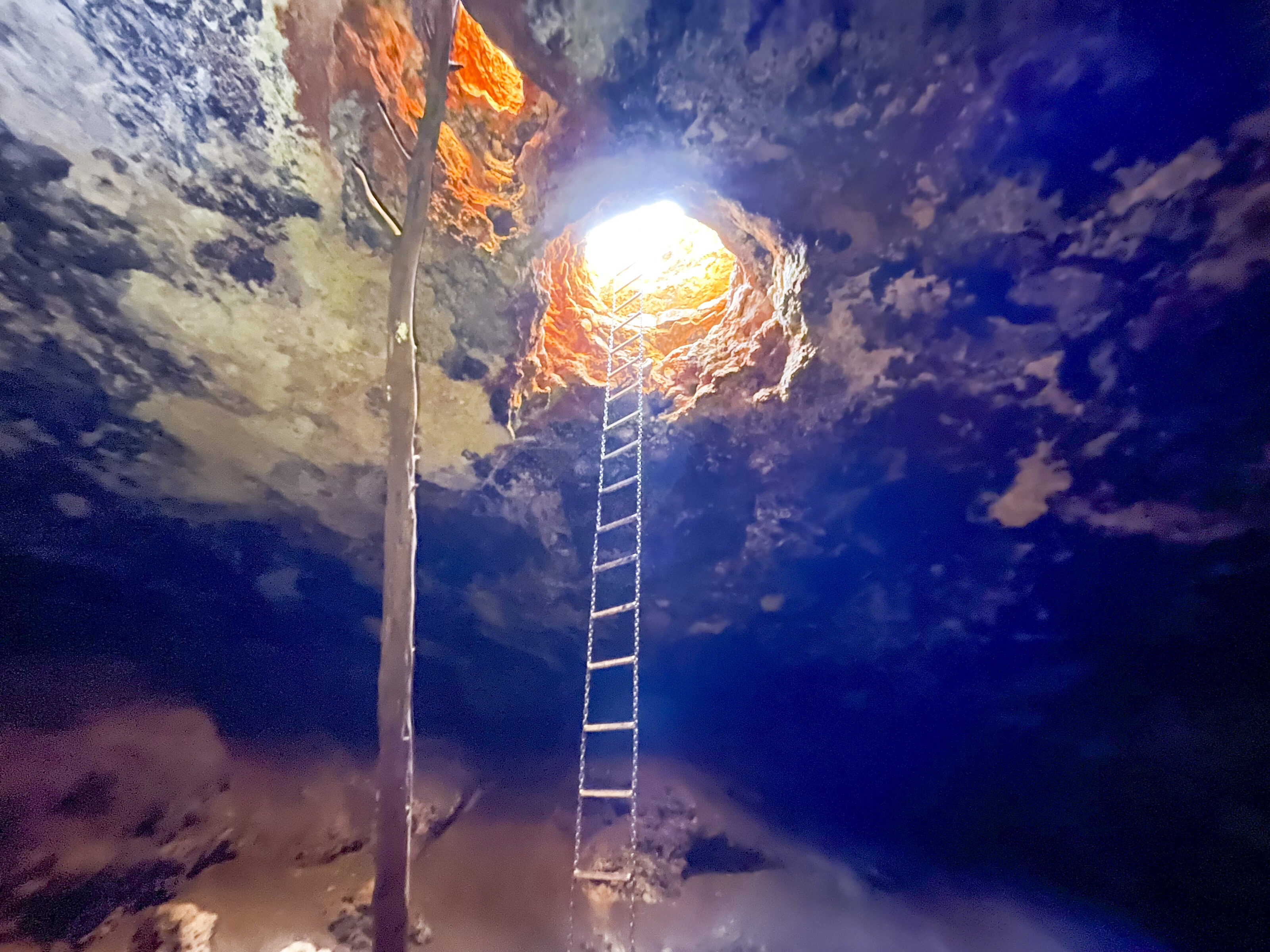
In a depression amongst the surrounding natural limestone sheeting that occasionally showed itself through the red sand, a small hole drops into a large cavern, the access made easier by a chain ladder supported, somewhat dubiously, by a steel bar resting on a small pile of limestone rocks.
Seven metres down, the floor of the cavern slopes away into an ever-narrowing tunnel which leads to a small pool of permanent water, some 16 metres from the entrance hole.
While wandering bands of Aboriginals have long depended on this source of water, so too do hundreds of zebra finches which fluttered around us, disturbed by our presence but unwilling to fly very far away from the only source of water for many kilometres. They are gutsy little birds, having to fly into the darkness to reach the life-giving fluid, something they have to do each and every day.
Go Aussie
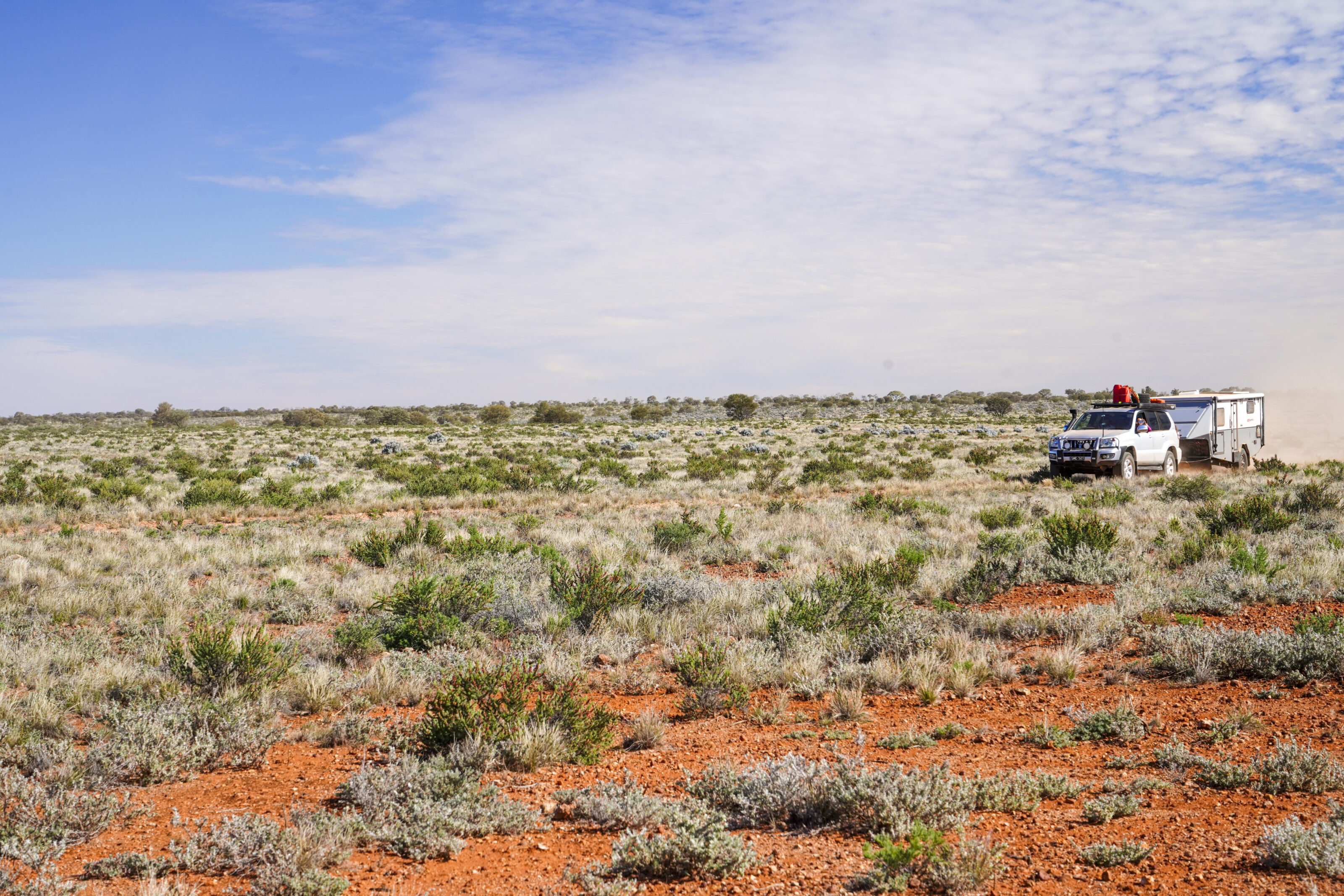
North of the spring, the route deteriorates, being a two-track and eroded in places with the scrub closing in from both sides, while the route twitches this way and that amongst the trees and branches. Along this section, we passed an abandoned camper, adding to the toll we had seen along the Anne Beadell.
The lesson was simple enough, if you want to take a camper or trailer of any sort through this seemingly boundless desert country, make it a good one, preferably a well-known Australian-made off-road unit.
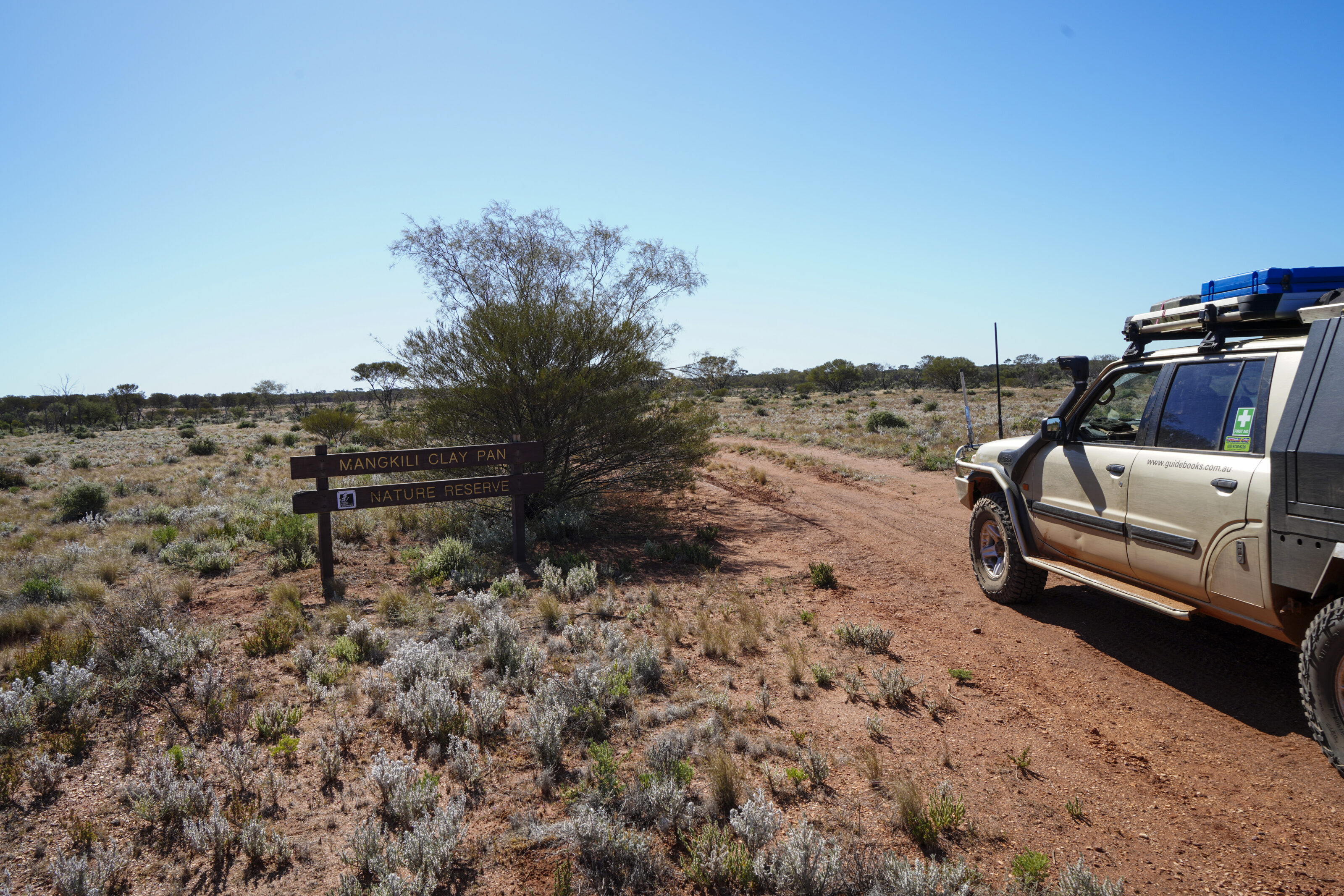
Meeting with the Gunbarrel Highway at Mangkili Claypan, we turned east along this famous outback road which became a track as it cut across a vast sea of seeding spinifex. Established by Len Beadell and his Gunbarrel Road Construction Party in the 1950s, the then-graded route was the first across the desert to link the Stuart Highway south of Alice Springs to Wiluna in the goldfields of WA.
1
That evening we pulled into the small clearing surrounding the Geraldton Bore, its life-giving waters an attraction for us and for the dozens of finches that call the bushes and trees here, home.
We had stopped early as one of the camper trailers had a singing wheel bearing, and as clothes were washed, dinner cooked and beers drank, we changed both the inner and outer bearings. This is a relatively easy operation if you have the knowledge and the spare parts to do that. It’s a lesson in self-sufficiency that everyone who comes out here should be aware of.
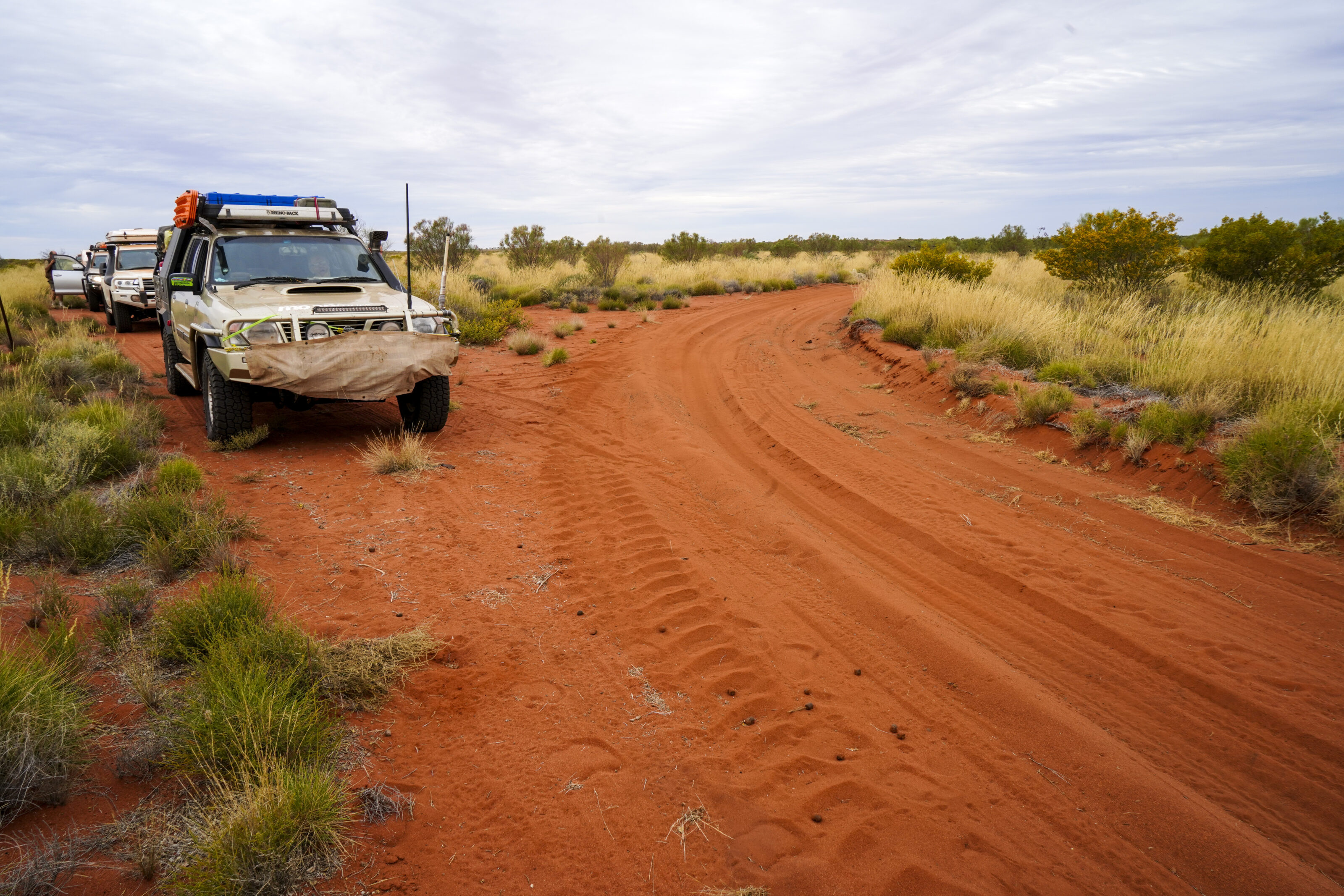
Turning north at Everard Junction, we met up with our drying Lake Cohen and after a night there we pushed on to Windy Corner, turning westward again, but this time pushing through scrub that had overgrown the two faint wheel marks known as the Talawana Track, another of Len Beadell’s roads.
The going was slow, especially after a couple of the rigs suffered a puncture, making it just four for the whole trip amongst our group. While substantial enough, it was a small price compared to the previous trip 12 months earlier when we had suffered a lot more punctures and damage. That trip also saw us forced to turn around about 10km west of Windy Corner, when we came across a lake cutting the Talawana Track.
1
This year the route was free of water but all that moisture meant that the scrub growth was thick and at times we were forced to cut trees and branches out of the way and just push our way through.
The spinifex was tall and thick, sprouting from the centre strip of the track; the danger of not checking beneath the vehicles at regular intervals was reinforced by the five vehicles we came across burnt out from the highly combustible spinifex catching alight.
The relief amongst the convoy was palpable coming to Midway Well, with the now recently graded Talawana Track continuing westward. With mineral exploration going on unchecked and increasing in size and scope, many of the existing tracks have been regraded and new ones established. Our speed increased to an unheard of 30 to 40km/h and we met with the Canning Stock Route, just north of Well 24, in what had seemed an unattainable goal a few hours previously.
That evening, we pulled up below some red bluffs north of Well 23, the clearing at the well once a major fuel dump now overgrown and little used. Continuing on along our mining access road next day, we refuelled at the friendly Parnngurr Aboriginal Community, and yarned to the headmaster of the local school and the store manager who opened specifically for us – they were the first people, outside our group, we had seen since leaving Tjukayirla a week previously.
Our vehicles drank heavily from the underground tanks before every one of us raided the well-equipped general store for everything from meat and vegies, to milk and ice creams.
Karlamilyi National Park
Refreshed and refurbished, we headed on and turned north into the Karlamilyi (Rudall River) National Park, camping on its southern boundary amongst a delightful stand of white gums. Sadly, the bore and hand pump that was once here and was a great source of delightful water is no longer available, which is a great shame.
Wandering northwards into the heart of the park – the largest in the state and one of the most remote – we camped at different places along the way, having the areas to ourselves and enjoying the refreshing waters of Kalkan Kalkan Soak and Tjingkulatjatjarra Pool, amongst others.
1
With the area dotted with a variety of habitats along with pools of permanent water, the bird life through here and the amazing variety of flowering plants were a delight to the senses and in stark contrast to the seemingly endless sand plains and spinifex we had travelled through.
Imagine our surprise (and disappointment) though, when we visited the famed Desert Queens Baths to find three separate groups of a couple of cars each camped there. After the solitude we had experienced since joining the Anne Beadell Highway nearly three weeks previously, it was a rude awaking of the impending meeting with civilisation that was edging ever closer. Still, we made the most of it, as you do.
After passing the huge workings and mullock heaps of the Telfer Goldmine we turned westward once more, meeting the bitumen before stopping overnight at the Meentheena Veterans Retreat. The camp here is situated close to the waters of the Nullagine River and it was where all of us enjoyed a hot shower (the first in weeks), before sitting around a great campfire yarning and drinking a coldie or two.
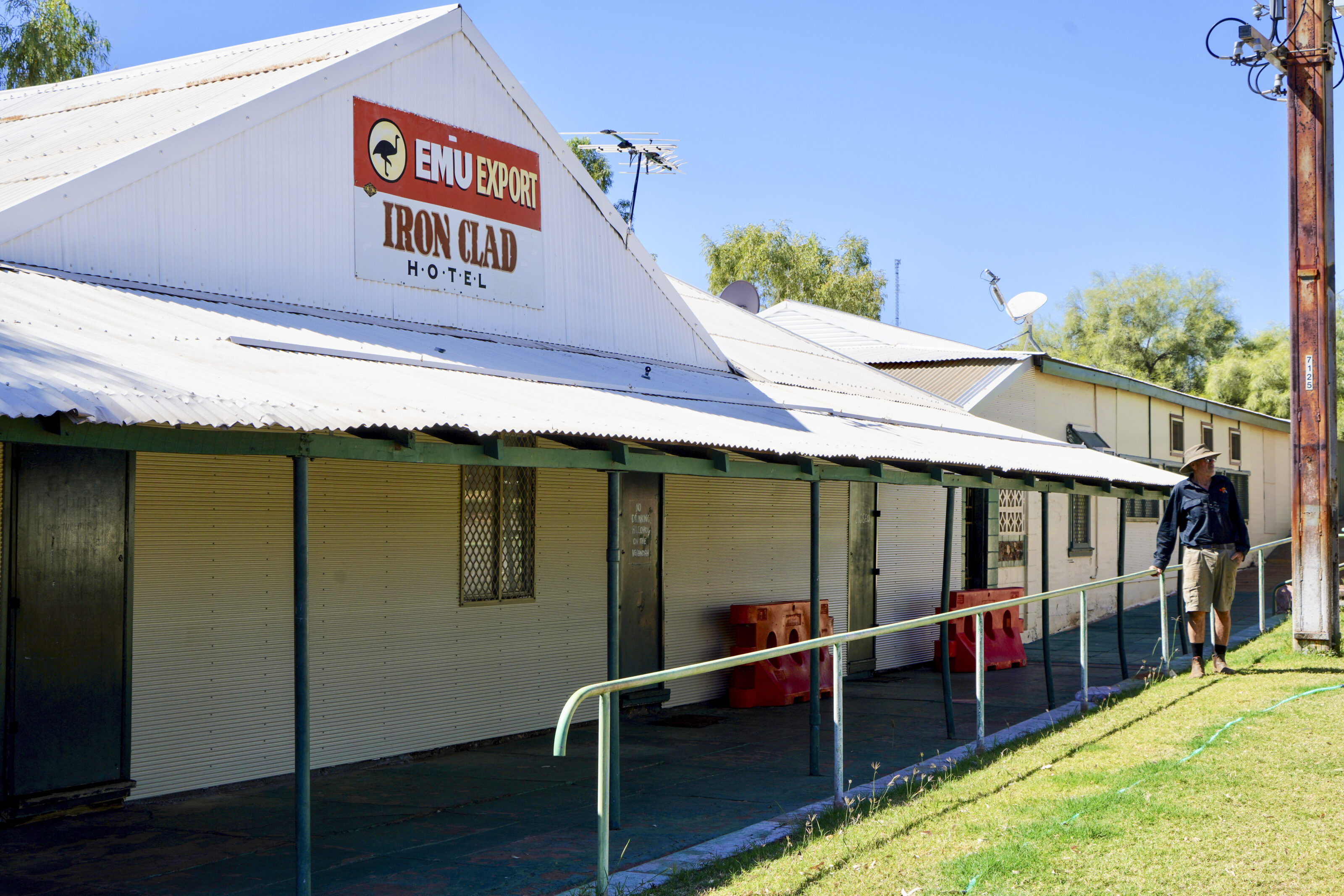
Iron Clad Hotel
Marble Bar with its famous Iron Clad Hotel was the next stop, and that evening was spent on the wide sandy bed of the De Grey River, our last bush camp before we followed a not-so-old but still disused railway line west, from what was the Shay Gap mines, to the Great Northern Highway.
1
That evening our camp at Pardoo Station was just a stone’s throw from the Indian Ocean – our Coast to Coast expedition was complete, and while we counted the cost in tyres, bent rims (only steel rims were bent, surprisingly), a few broken brackets, some crook wheel bearings that needed replacement along with patched-up shock absorber mounts, we thought we had come through remarkably unscathed.
For that, we celebrated in fine style with a group cook-off and a host of drinks and surprises before we headed off on our own separate adventures; but that is another story for another day.
Top 5
01: Emu A-bomb sites
Along the Anne Beadell Highway in SA you’ll come across Emu Field, a flat sandstone plateau in the Great Victoria Desert, where in 1953 the UK conducted two nuclear tests known as Operation Totem. The site was surveyed by Len Beadell in 1952, with a village and airstrip subsequently constructed for the Totem testing program. Stone monuments at the ground-zero points can be visited by tourists (with approval of the RAAF Woomera Test Range, who control access to the area).
02: Len Beadell’s roads
The Gunbarrel Highway is the best known of Len Beadell and his work crew’s road-building exploits last century, which opened up large chunks of isolated desert regions in SA, WA and the NT. In all, Len and crew created 6000km of new roads from the late 1940s to the early ’60s. Known for his humour, Beadell named his unsealed roads and tracks as ‘highways’ and had a penchant for naming several of them after family members: Anne Beadall Highway (wife), Connie Sue Highway (daughter), Gary Highway (son) and Jackie Junction (daughter) to name a few.
03: Desert Queen Baths
Desert Queens Baths are a series of permanent, spring-fed freshwater gorge rock pools, which are part of Denny Creek, a tributary of the Rudall River, located within Karlamilyi (Rudall River) National Park, some 500km south of Broome. Karlamilyi is said to be the only national park in Australia that encompasses an entire seasonal river system in the arid zone, and lies at the junction of the Great Sandy and Little Sandy Deserts.
04: Empress Spring
Empress Spring, also in the Great Victoria Desert, is a unique waterhole as it’s a large underground cavern that is now accessed by a chain ladder. Explorer David Carnegie named the waterhole after Queen Victoria in 1896, after being guided to the spring by a local aboriginal following many days without finding water. You can get to Empress Spring via the Gunbarrel Highway to the north or the Great Central Road to the south.
05: Indian Ocean
Nothing better after a long desert crossing than a paddle in the warm waters of the Indian Ocean on the far NW coast of WA.
Travel Planner
You need to be well-prepared and experienced to travel this remote country. Best to travel in a group. If you are not experienced, consider travelling with a tag-along group or a 4WD club. Moon Tours (see: www.moontours.com.au) specialise in taking camper trailers and camper vans (only Aussie-made ones need apply) into remote areas of Australia. They run a Coast to Coast Expedition each year.
For info on permits required to travel these remote desert tracks, click here.
Fuel and limited stores are available at:
Ilkurlka Roadhouse – Ph: (08) 9037 1147
Tjukayirla Roadhouse – Ph: (08) 9037 1108
Parnngurr Aboriginal Community – Ph: (08) 9176 9051
Camping is also available at:
Kingoonya – Ph: (0409) 401 715
Mt Eba Station – Ph: (08) 8672 8930
Meentheena Veterans Retreat – Ph: (0497) 004 491
Pardoo Station – Ph: (08) 9176 4930
Further reading:
Hema Maps, Great Desert Tracks Atlas & Guide is an invaluable resource for this huge region of Australia.
For more on Len Beadell, the roads he made and the adventures he had, and to source his many books, see: www.lenbeadell.com.au
We’ve just returned from another bush trip where we went in search of the source of a river and it struck me that it was something I’ve been doing for a long time.
My first river source that I searched for and reached, was the Murray River. Australia’s longest stream, its beginnings are pretty nondescript, one would have to admit.
It’s source, deep within the peaks of the Great Dividing Range, below the rounded dome of Mt Pilot where the man-made and designated border between NSW and Victoria begins a straight-line pitch to the east coast at Cape Howe, springs from, well, three springs, each lying 40 to 50 metres from each other.
1
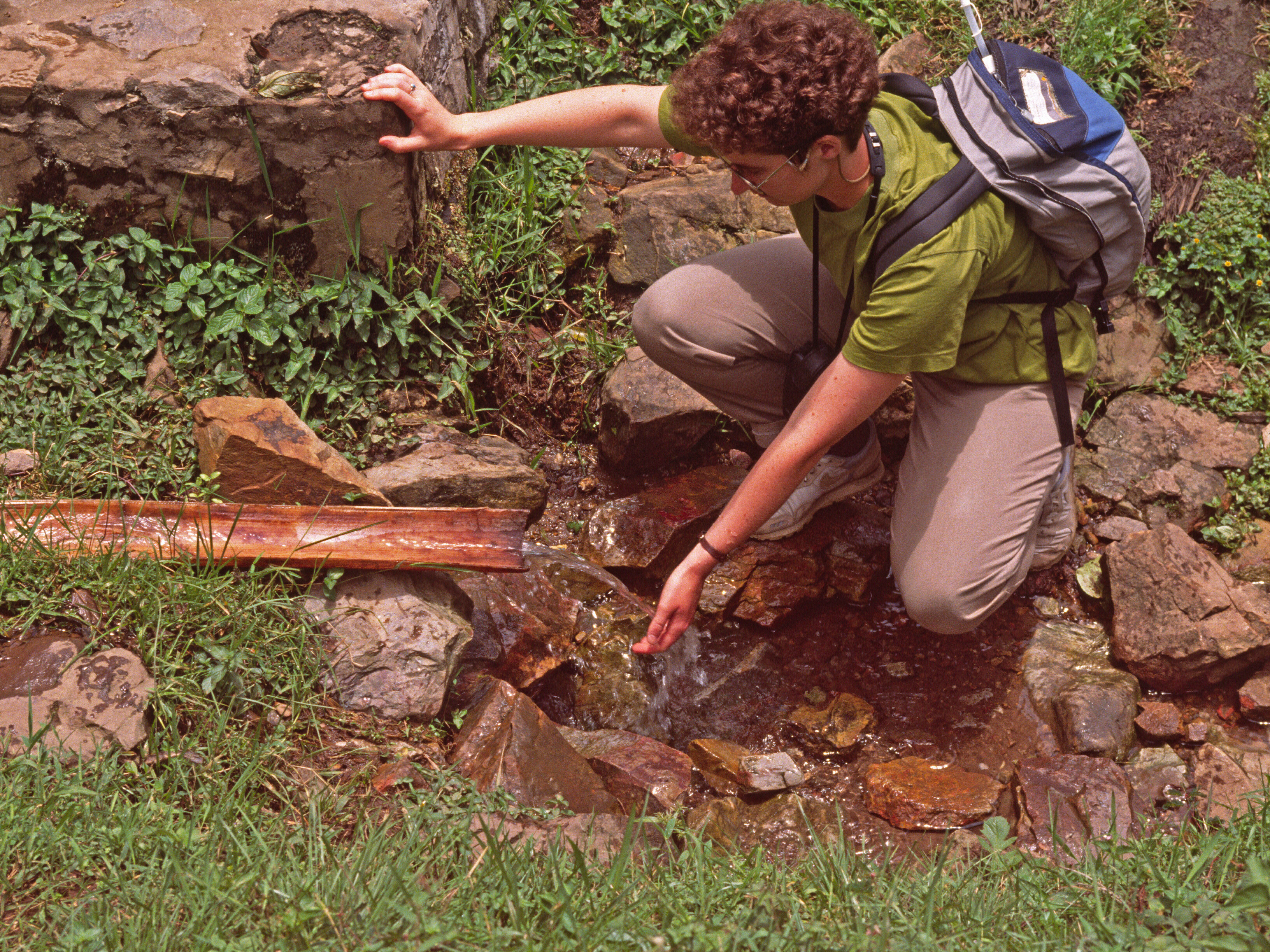
The spring closest to Cape Howe is marked by a low cairn of rocks first erected by the surveyors, Alexander Black and Alexander Allan in 1870-72 when they had been tasked with the job of establishing the straight-line border between the, then, two colonies.
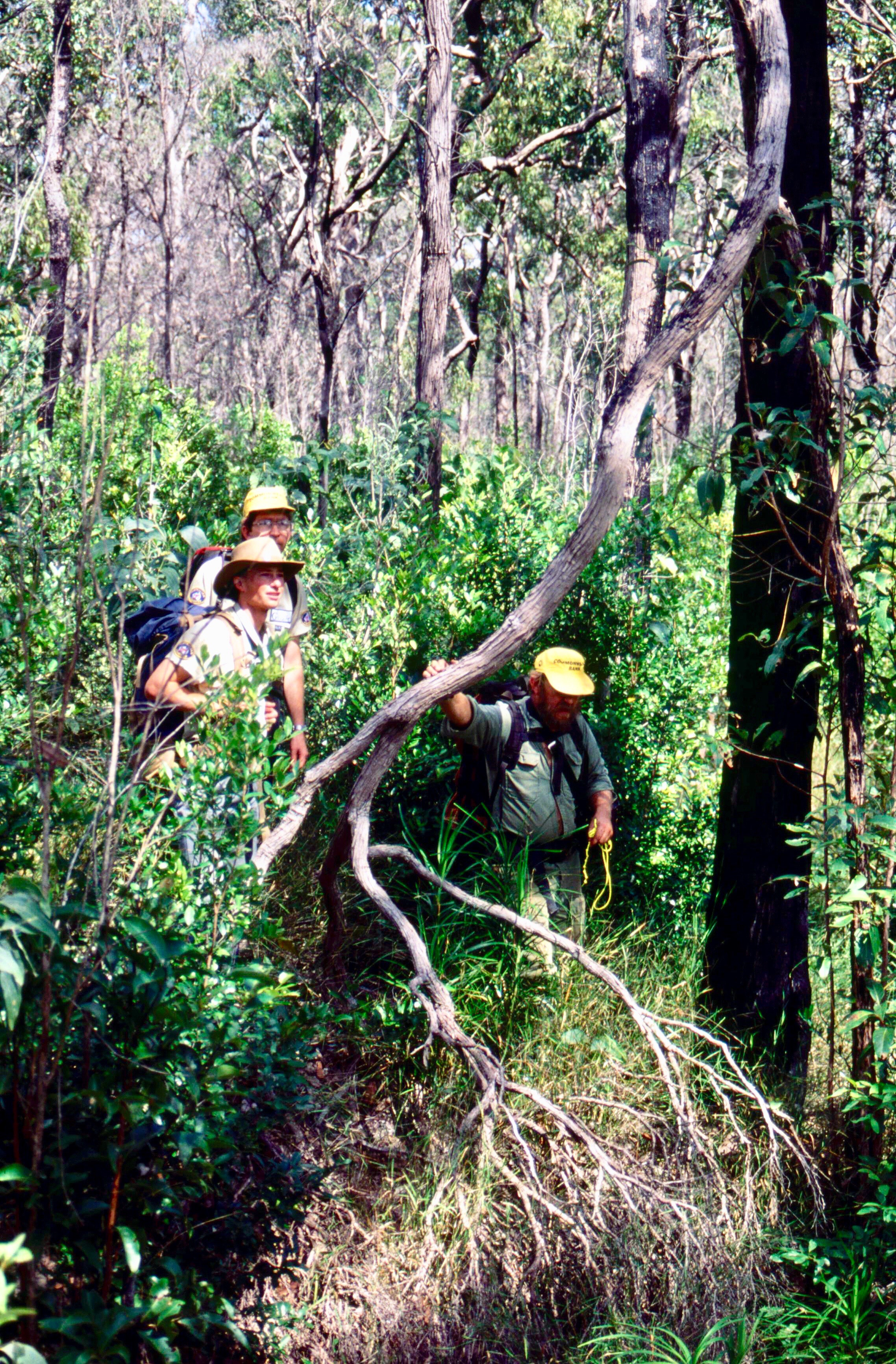
I was young and fit back in 1974 when we walked into this lonely spot a few kilometres from Cowombat Flat, a near mythical snow plain excluded to most visitors today by bureaucratic decision makers. From that lonely small spring we had walked downstream to where we could begin rafting the river; our plan to travel from source to sea.
The next few rivers sources came rather quickly, as I teamed up with adventurer Peter Treseder and headed north to Cape York back in the mid 1990s.
1
The first river we tackled was the mighty Jardine when we walked to its start point and followed its banks until we could start paddling the inflatable canoes we had in our backpacks.
Two other streams quickly followed; both on Cape York. The Eliot, a clear running tributary of the Jardine but today more well-known by travellers as the setting for the incredible Indian Head Falls was the first, followed by the Dulhunty, a river crossed by all Cape York 4WD adventurers.
More recently, and away from the threat perceived or real from any crocs, I went in search of the source of the Murrumbidgee River, high up amongst the snow plains and snow gums of the Snowy Mountains. Leaving our Cruiser parked at the end of the trail us mere mortals are allowed to go in a motorised vehicle, I got on my mountain bike and peddled my way to the crest of some low hills and walked to where the river begins.
1
Between those adventures, we had been in search of the Nile in Burundi in Central Africa, which was hardly an epic, and then, just a couple of years back, went and found the source of the Mississippi River at Lake Itasca in north-central Minnesota.
Which brings me to the latest stream I’ve followed from its source. This one didn’t end up in the sea like most streams do, but petered out into a series of ever drier lakes in desert country in Western Victoria. The Wimmera River may be Victoria’s longest river that doesn’t terminate at the sea, but I was surprised to find that it wasn’t the only one.
Such excursions, seeking sources and even following those streams to their conclusion are great ways to get into remote country away from the maddening crowds and the well-worn path of other four wheelers.
You have a wide choice, really only limited by your imagination and the map of Australia. Go out and seek a source, you’ll revel in the experience!
Ford’s next-gen Ranger continues to lure buyers, with the Blue Oval ute posting the strongest sales figures in January 2023 on both the overall and 4×4 charts.
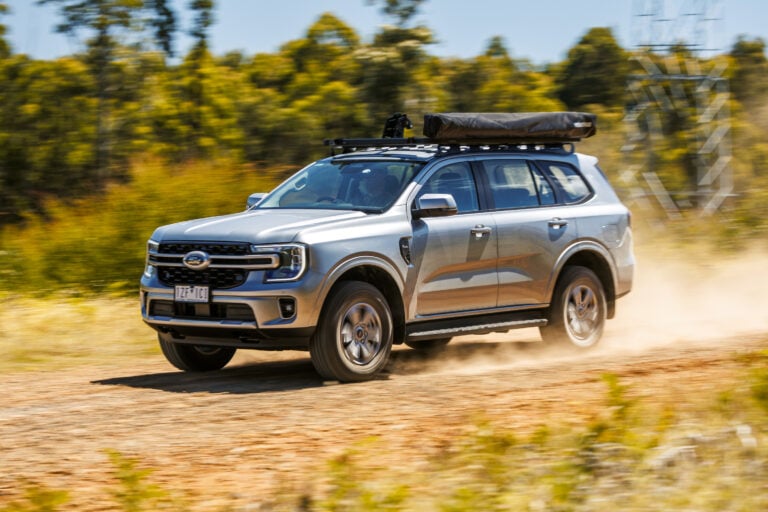
The Ranger shifted a total of 4250 4×4 units for the month – 4749 when you combine 4×2 and 4×4 sales – positioning it with a healthy sales buffer above its perennial rival, the Toyota HiLux.
Toyota’s ageing HiLux continues to sell well, securing second spot on both the 4×4 (3044 sales) and overall (4131) charts, despite a new model looming.
1
Isuzu’s D-MAX was the third best-selling 4×4 in Australia in January, posting 1637 deliveries, a spike of 12.6 per cent compared to the same time last year.
The Ford Everest also posted a strong start to 2023, with a total of 1230 next-gen deliveries arriving in new driveways – this represents a sales growth of 68.5 per cent compared to January 2022 and positions the Everest as the best-selling large SUV in Australia.
GWM’s Ute is the most popular of the budget utes available in Australia, with the Chinese ute’s 716 sales for the month securing a top 10 appearance. It leads the LDV T60 with 587 sales and the SsangYong Musso with 308 sales.
1
In the $100K+ battle between the Chevrolet Silverado and RAM 1500, the RAM remains more popular with buyers – 405 sales versus 225.
Overall vehicle sales increased by 11.9 per cent in January 2023, compared to the same month last year, with a total of 84,873 new vehicles delivered for the first month of the year.
Of these sales, SUVs (46,698) and LCVs (18,546) accounted for a whopping 76.9 per cent of deliveries. The LCV market in particular was up by 1.6 per cent (287 sales) compared to January 2022.
“This data is the best January result since 2018 and shows that the industry is continuing to recover following years of supply chain disruption and delay,” FCAI Chief Executive Tony Weber said.

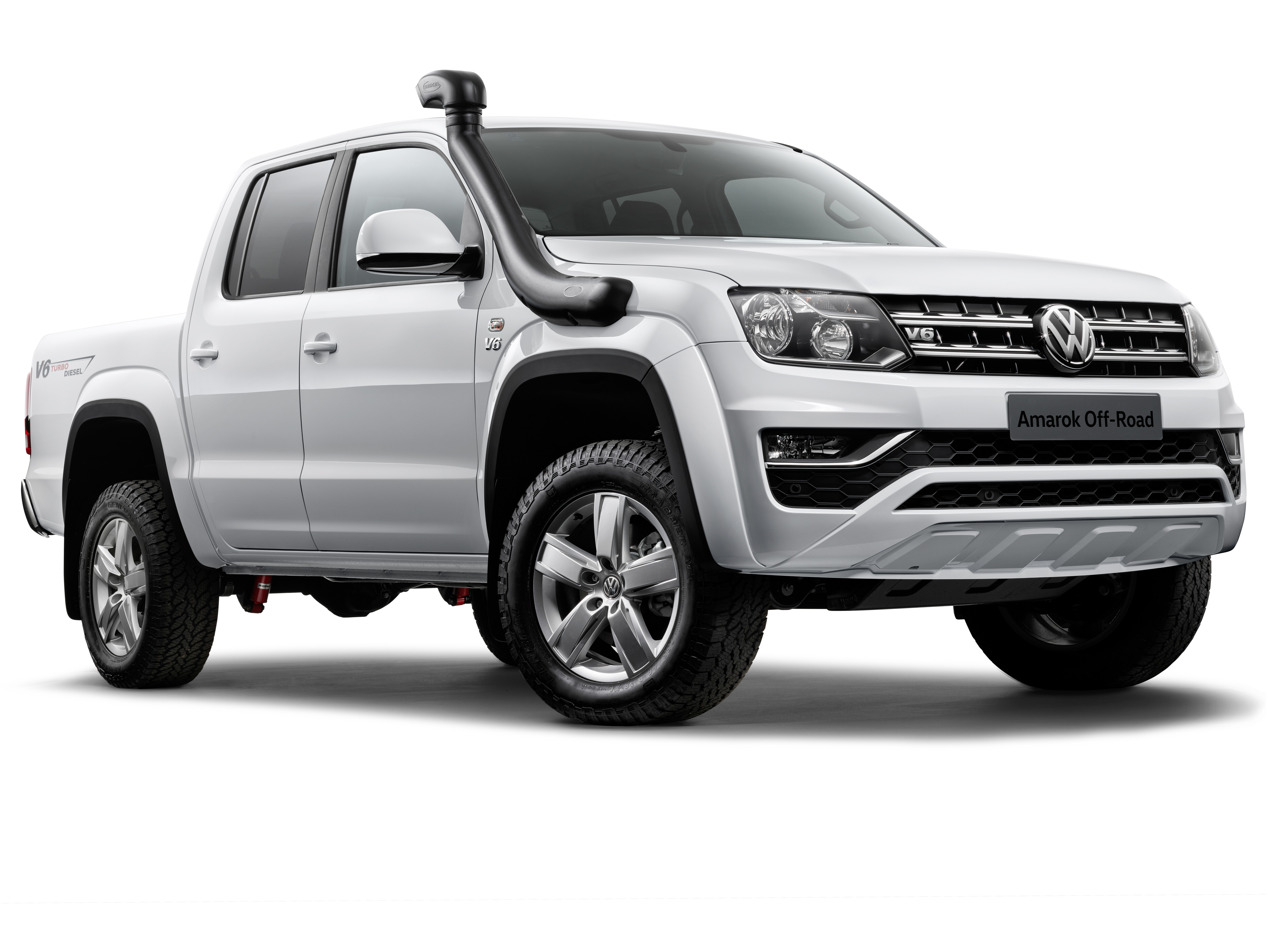
With the global reveal of the 2023 Volkswagen Amarok done and dusted, we now have a better understanding of what we will be receiving here in Australia early next year.
We know the next generation VW Amarok is based off the new Ford Ranger platform, so as you could imagine the specs between both models are fairly similar, except when it comes to interior and exterior design.
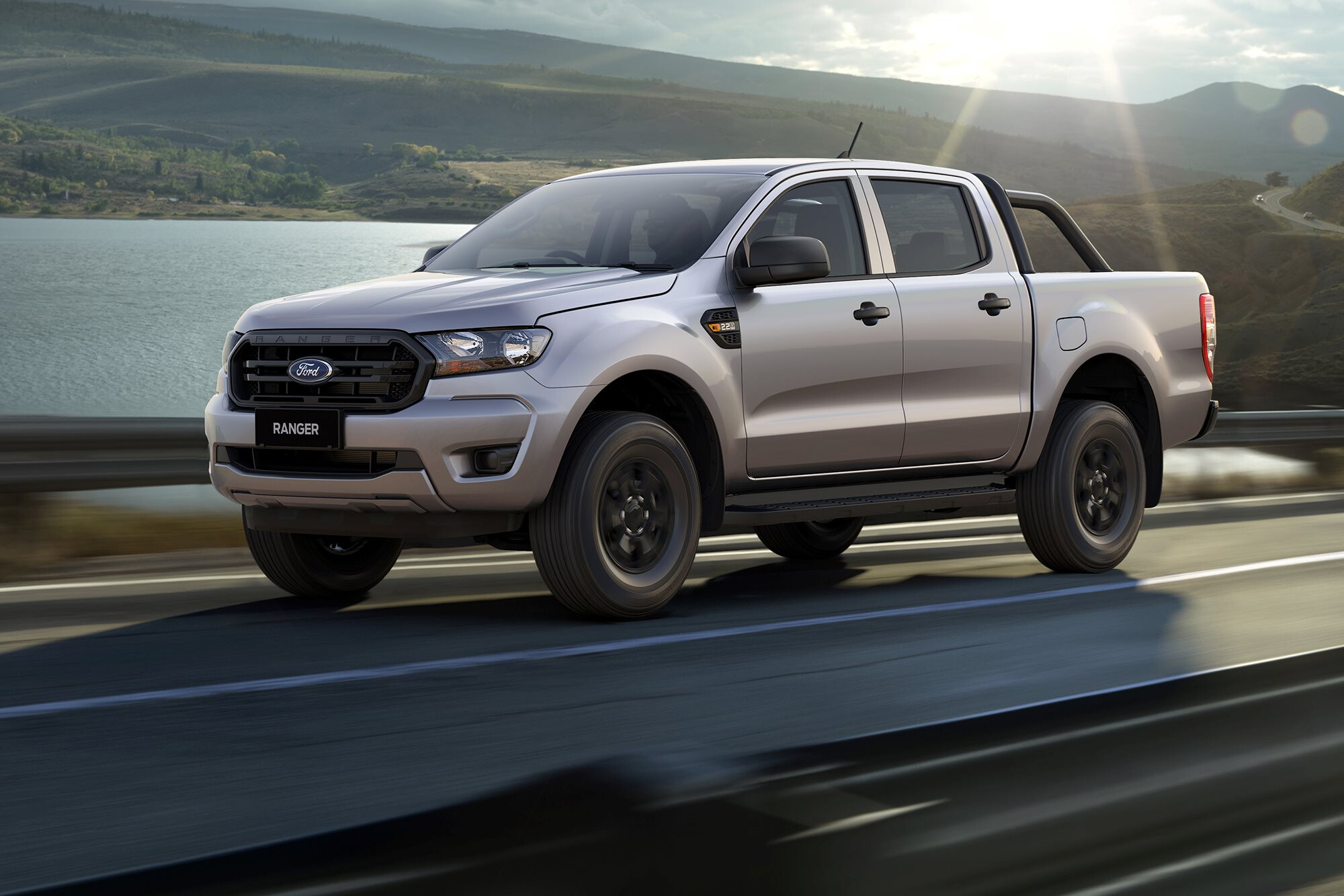
What we can do though, is take a closer look at the previous generation FordRanger and VW Amarok, and see just how different the 2023 models will be on paper. Let’s dive in…
December 7: NEW AMAROK DRIVEN! Words & Video
We’ve finally driven the new-gen 2023 Volkswagen Amarok, with Jez jetting (Jet jezzing?) to South Africa for a world’s-first spin in the new ute. Get our full story below.
July: New Ford Ranger review – it’s here at last
The new 2023 Ford Ranger is now on sale in Australia, and the local media launch has been run. The Wheels and 4×4 Australia teams have both driven the new Ranger, and you can find their stories at the links below.
2022 & NEW 2023 VW Amarok v 2022 & NEW 2023 Ford Ranger: SPEC BATTLE!
1
As you can see from the below data, there are some subtle differences which are worth discussing in terms of overall specs.
Wading depth has been increased from 500 millimetres to 800mm on the 2023 Amarok, however this was already the case with the 2022 Ford Ranger. Still, it’s good to see in improvement.
The 2023 Ford Ranger is slightly longer on paper than the 2023 Amarok, yet they both share the same wheelbase – which makes perfect sense considering they share the same chassis.
The Ford takes the win ever so slightly when it comes to rampover and approach angles, however not by much; and for those who fit aftermarket suspension and bull bars, this would be a moot point essentially. Still, it’s interesting to see the models compared side by side, and see how they have evolved through the generations.
We now know Volkswagen will offer five different engines in the 2023 Amarok lineup, all turbocharged, four diesels and one petrol.
Historically, the previous generation Amarok offered two engine choices: a 2.0L bi-turbo diesel engine and a 3.0L V6 turbo-diesel engine.
The previous generation Ford Ranger had three engines offered throughout its lifetime, the larger 3.2L 5-cylinder turbo-diesel engine, a 2.0L bi-turbo and a 2.2L turbo-diesel.
Just how much will the 2023 Volkswagen Amarok cost? Wonder no more, as we have just received official pricing from Volkswagen Australia.
For the 2023 Volkswagen Amarok range, there are five models available. The Amarok Core, Amarok Life, Amarok Style, PanAmericana, and Adventura, and below is a cost breakdown of all models.
Those with eagle eyes may have noticed the February 2023 issue of 4X4 Australia has had a bit of a haircut – yep, the magazine is now about 20mm shorter in height.
Fear not, though, as our very talented designer, Jamie, has tweaked the page layouts to squeeze in just as much content per usual.

Headlining the new-look mag is a custom 2021 Isuzu D-MAX X-Terrain that has been transformed into a behemoth 6×4 tourer. The crew at Six Wheeler Conversion were tasked with mounting the third axle (undriven) beneath the chassis, with the owners completely revamping the suspension system to suit. A stunning canopy sits atop, among a long list of 4×4 accessories.
1
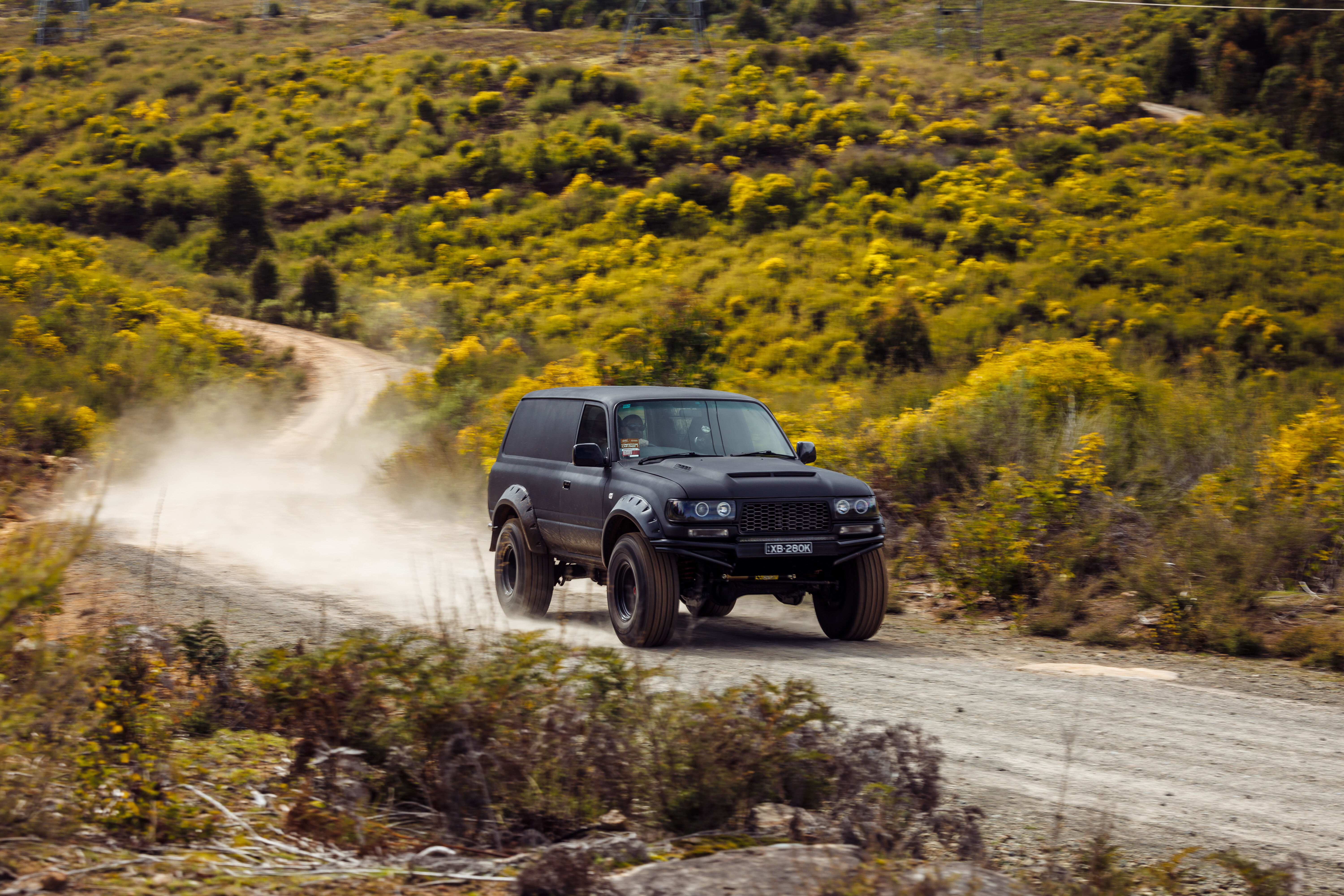
We also ran a microscope over two more custom builds for this issue: an uber-cool V8-powered 80 Series LandCruiser dubbed Frank the Tank, and an unstoppable ex-military Land Rover 110 Perentie 6×6 GMV that has been built for seriously remote travel.
1

We flew Stateside to sit in the driver’s pew of a 2022 Ford Bronco in Black Diamond guise, and we left asking ourselves, “Why the hell isn’t Ford bringing these to Australia?”
1
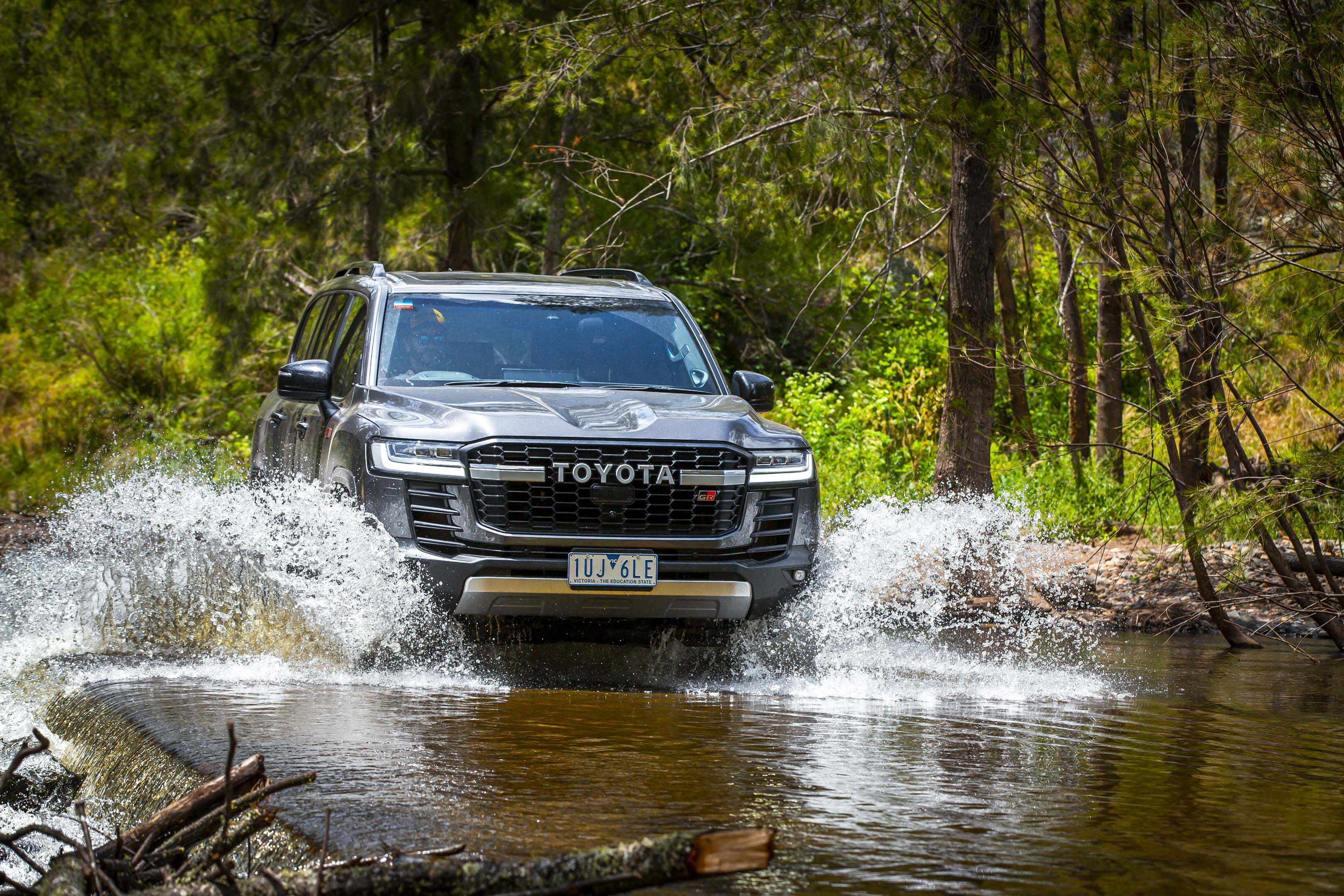
Closer to home, Evan took a 300 Series GR Sport to untamed country, to see how one of the top-tier 300 Series variants on the market in Australia handles rocky terrain. That it comes standard with diff locks is a good start – albeit peculiar as to why it’s not offered in the lower grades.
1
Our MU-X build is nearing completion, but there are still a few more products to add before we part ways with it. This month we secured a set of RacksBrax brackets to the roof rack, before attaching an OZtrail 270-degree BlockOut awning. Reviews of both are inside this issue.
1
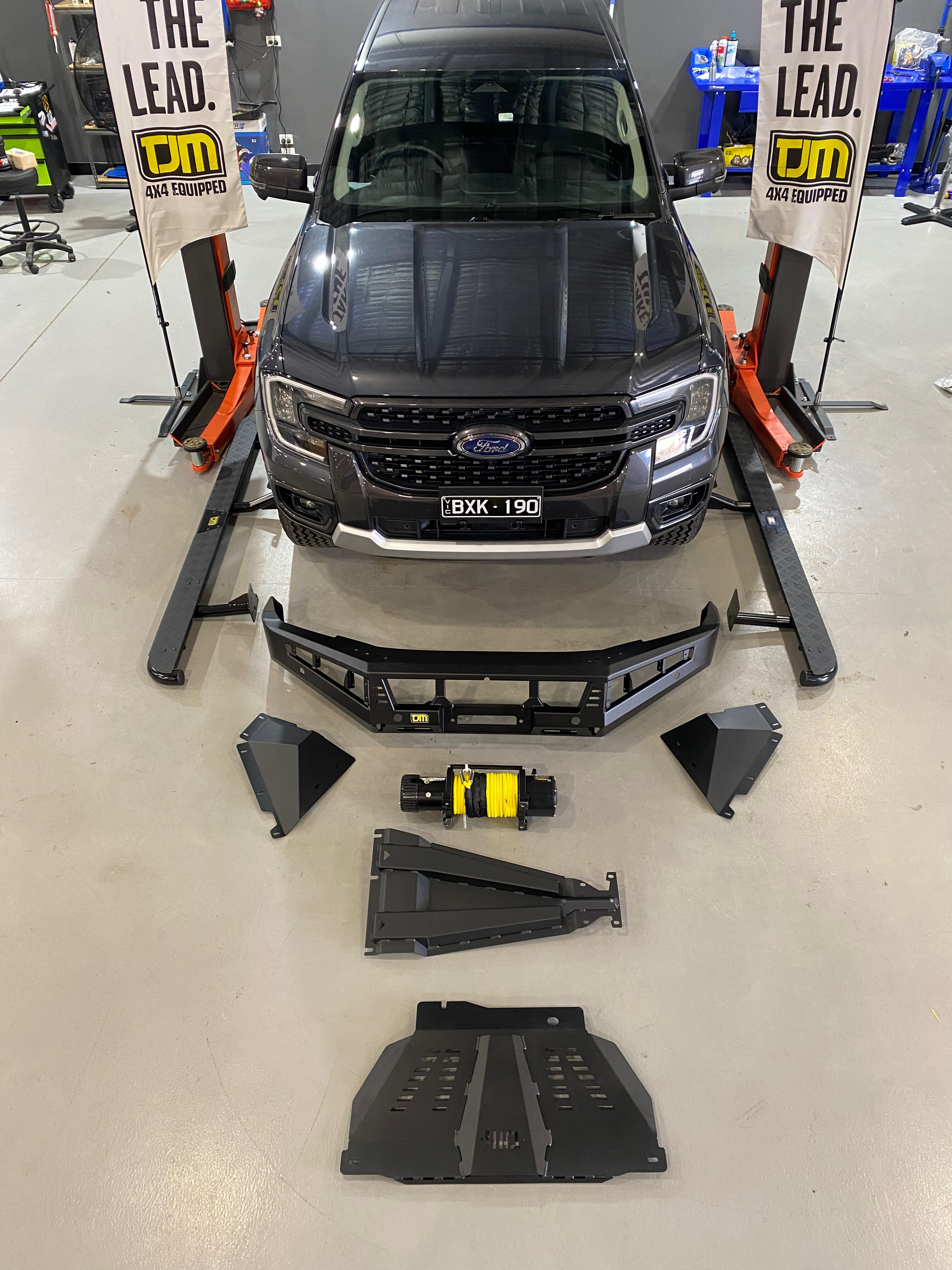
Work on our 2023 Ranger build has also begun, with TJM adding a winch, protection equipment and its Venturer bar this month.
Dave Isaacs, the owner of this mint 2021 Ford F350, tells us he is in the process of entering semi-retirement and has taken delivery of a larger 4.5-tonne caravan to enjoy in his new-found spare time.
Having owned a large range of four-wheel drive utes beforehand, including a new Nissan Navara, Hilux N70, D40 Navara and a 200 Series LandCruiser he had converted to a ute, owning another four-wheel drive was always going to be on the cards for this next phase in his life … it just needed to be bigger and better this time around.
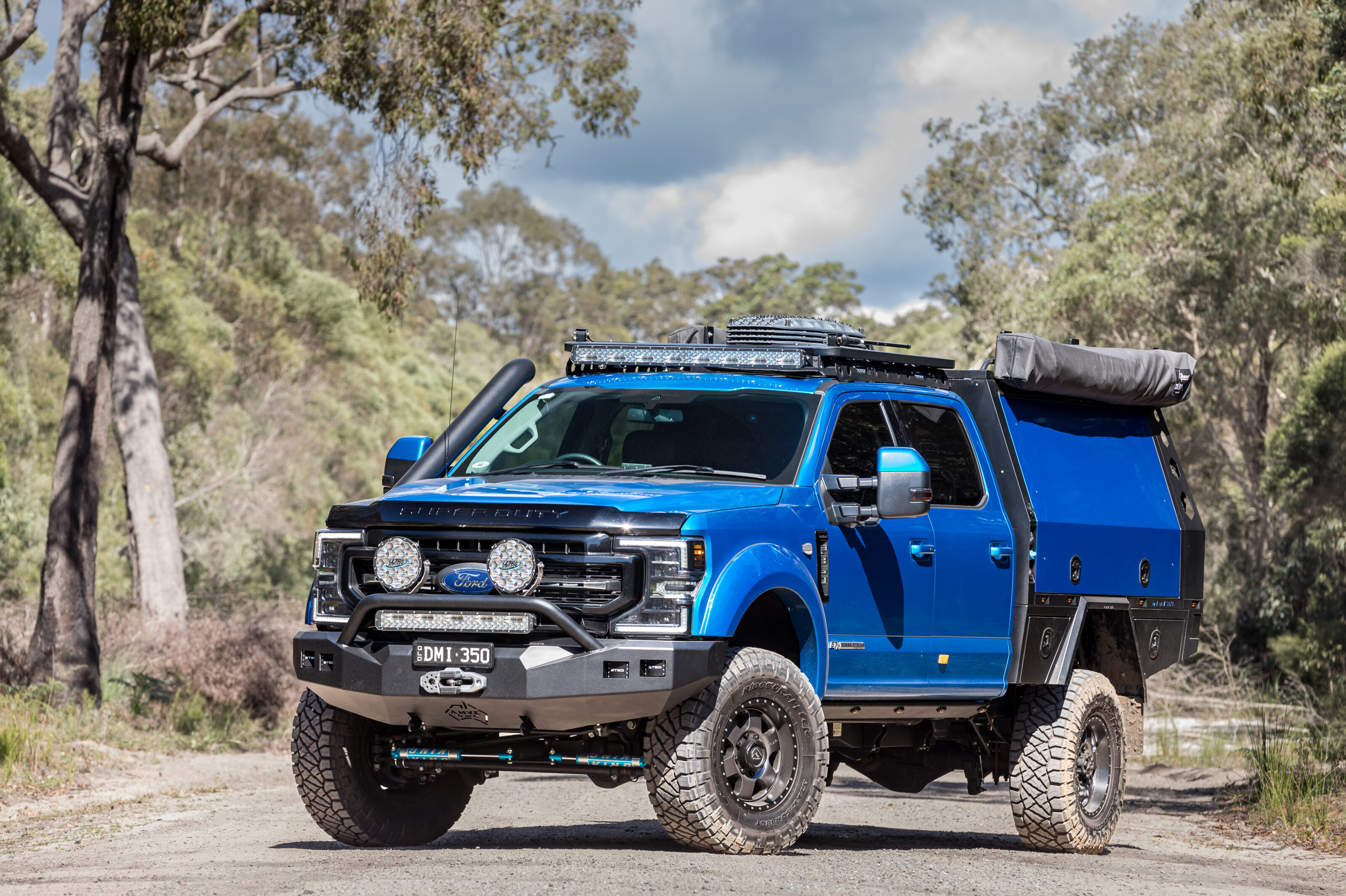
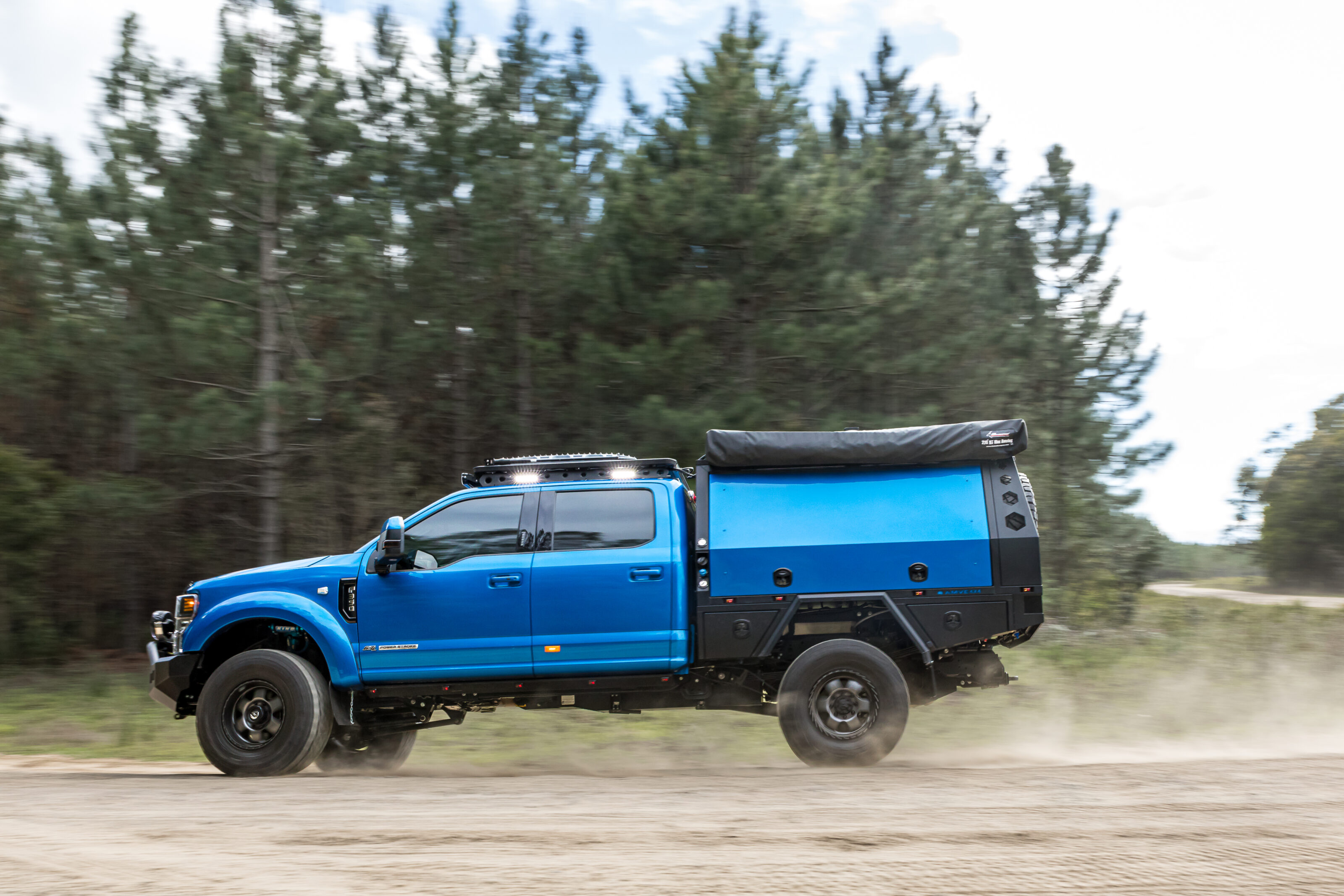
That is the main reason he purchased this 2021 Velocity Blue Ford F350 Lariat Tremor brand new, with not a single modification undertaken at the time of purchase. As he wanted not only a tow rig capable of tugging his caravan but also a capable tourer, it was never going to stay stock for long.
When we asked him about the build process, Dave said there were zero issues encountered along the way, which is refreshing but not surprising considering the top-notch companies he has enlisted to help with the build.
For now, he’s comfortable in the knowledge he can travel anywhere he wants in comfort, and is planning on touring Australia with his Bushtracker caravan in tow. Let’s take a closer look at this beaut Ford F350 that is just as happy blasting through sand dunes, as it is eating up Outback corrugated roads.
Lights and 12V power
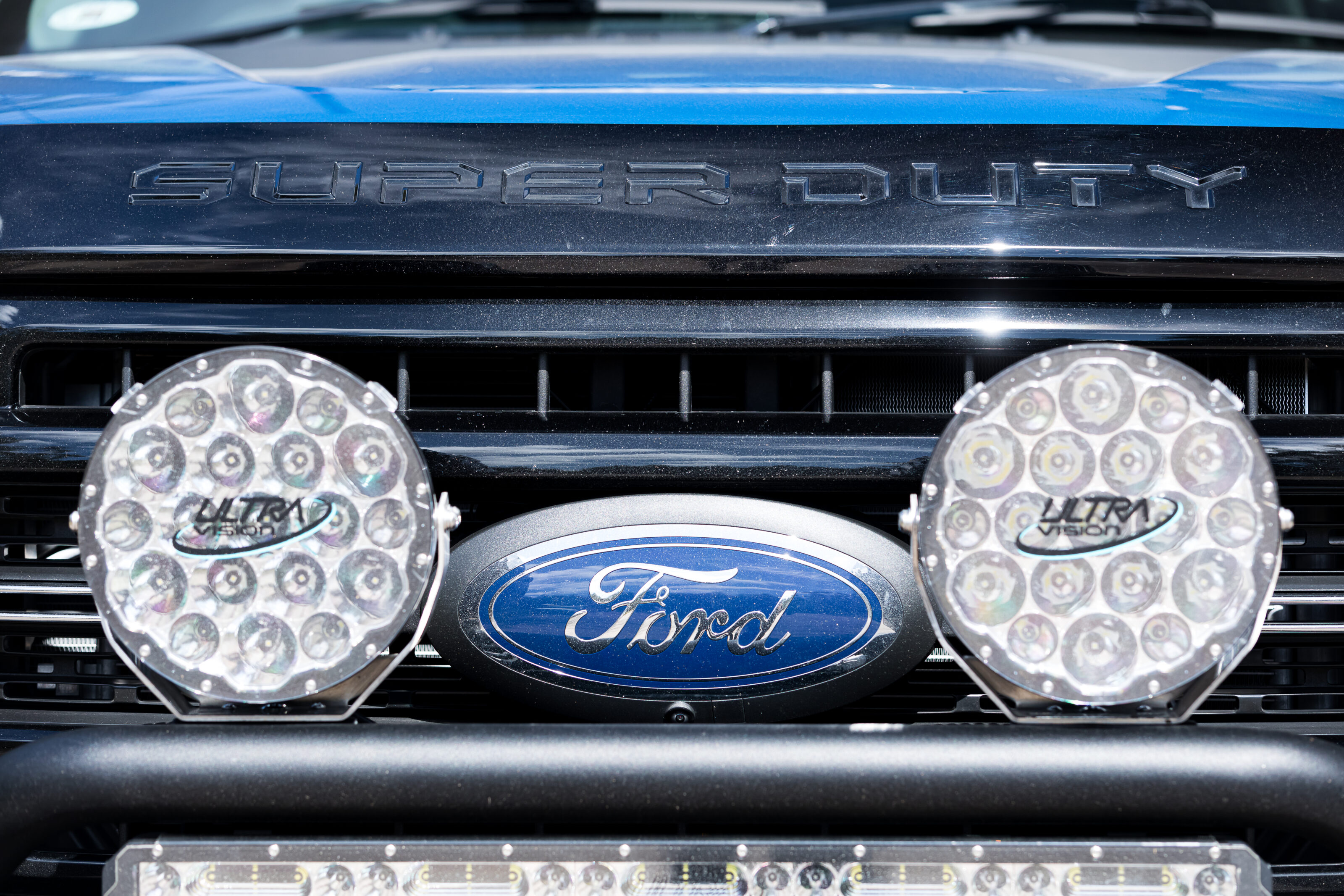
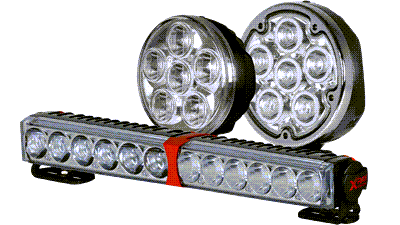
It’s a cliché, but it sure does seem like Dave is scared of the dark considering how much LED lighting adorns his pride and joy. On the front AMVE alloy bumper are a pair of Australian-made Ultra Vision Nitro 180 Maxx LED driving lights, which also feature a handy high/low function, allowing Dave to adjust the lights for the terrain he’s driving.
As well as the LED driving lights, Dave also has a 30-inch Ultra Vision LED lightbar mounted to the bar as well as a 45-inch Ultra Vision LED light bar mounted to his Rhino-Rack roof platform. Four Stedi fog lights have been bolted in the recess of the front bar, and his headlights have been upgraded to Maritimo XB LED units, rounding out a very complete lighting package.
1
In terms of camp and work lighting, Dave has Ignite Lighting LED work lights above the rear wheels, Ultra Vision Atom flush-mounted LED reverse lights, and four Ultra Vision LED work lights fitted inside the roof rack, two per side, to help illuminate campsites late at night.
As this is a tourer, Dave has installed two high-quality Invicta 200amp lithium batteries with Bluetooth capability, both of which are charged by a Redarc Manager 30 charger, with an additional 50amp Redarc DC-DC charger to allow the big F Truck to be charged up from any charge point. If parked up at camp for a few days, Dave opted to have two 180W Redarc solar panels mounted up, which is more than enough power to keep him remote for days on end.
Suspension
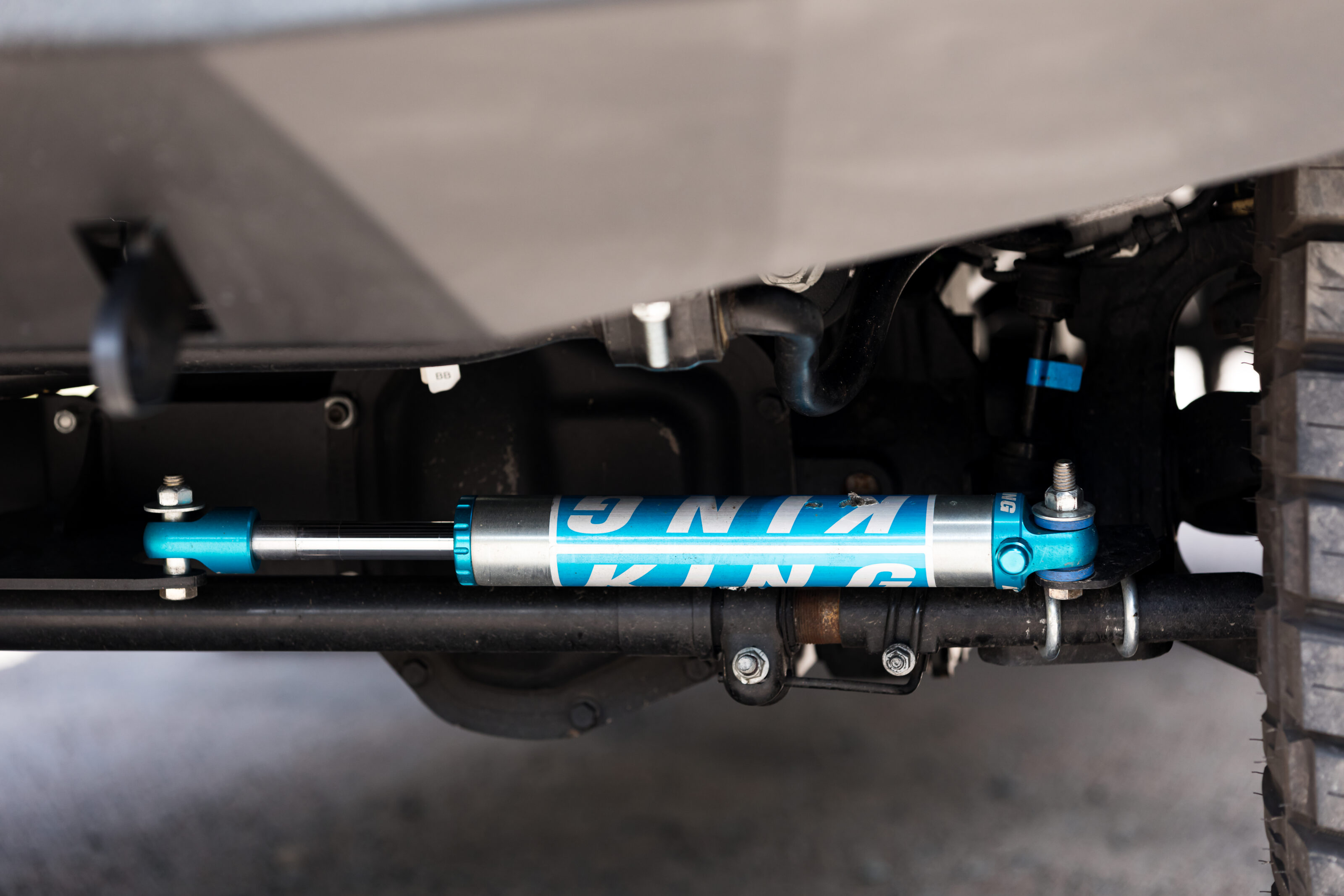
A big vehicle needs big suspension, and Dave has not done things by halves here. On the front end, the second most obvious addition is twin King steering dampers bolted to the steering arm, which not only look impressive but help the big F350 track true and take any shimmy out of the front end.
1
The most obvious addition, however, would have to be the installation of King coil-over shocks providing a four-inch lift, which was fitted up by Todd at Seven Slot Off Road in Ormeau, Queensland.
At the back of the Ford, Dave had the Seven Slot team give his vehicle the King shock-absorber treatment, but he has stayed with leaf springs in the rear which also provide four inches of lift. Dave tells us he is stoked with this package, which handles well on-road, off-road and when towing his heavy caravan.
Touring mods
As the main brief for this build is to be able to travel anywhere in Australia, comfortably and easily, Dave has gone to town with his F350 when it comes to touring modifications.
The most obvious one being the lovely AMVE 4X4 canopy which bolts directly to the chassis and has the factory central locking wired up to anything that opens and shuts. Dave has decked this out with all his electrical gear, as well as a Pro Eagle three-tonne Big Wheel jack and recovery gear.
There is also a slide-out kitchen with built-in pantry, internal slide-out drawer system on the driver’s side, a 140L Dometic upright fridge and an additional 40L Evakool drawer fridge secured to the passenger’s side. In the passenger-side toolbox, you’ll find an ARB twin compressor with 20L air tank, vital for pumping those meaty 37s back up to road pressures.
1
For protection from the elements, Dave has gone all out with a Bush Company XT 270-degree awning fitted to the passenger side and a Bush Company 180-degree awning on the driver’s side.
Water and fuel are critical for remote travel, and Dave has increased the capacities of both. Starting with a 230L Transfer Flow replacement fuel tanks, which if isn’t something to shrug your shoulders at, Dave has then added a further 180L of fuel storage with an Australian-made Brown Davis auxiliary fuel tank mounted in the original spare-wheel recess. Water-wise, Dave has had a 150L stainless-steel food-grade water tank fitted up, which is hooked to a pump as well as two outlets.
Power
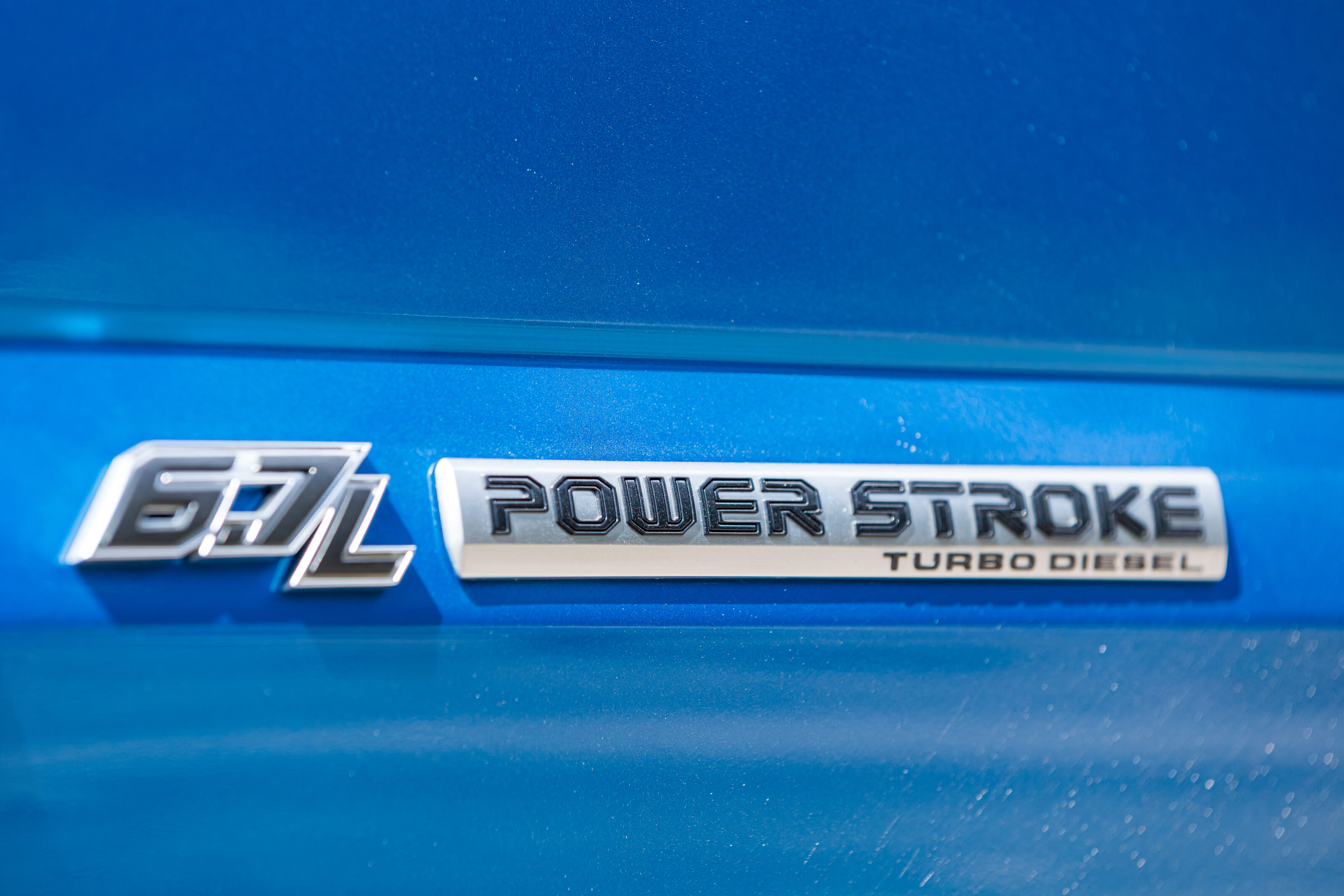
The 6.7L V8 turbo-diesel Ford Power Stroke engine found in Dave’s F350 is no slouch in factory form, producing a claimed 475hp at 2600rpm at the flywheel.
While this is an impressive number, why not make a good thing even better if you can? Dave had the team at G&L Performance in Brisbane handle a high-performance custom tune to the big rig. The tune features five different mapping settings, so Dave can dial in more (or less) power when he sees fit.
1
As well as the engine tune, a custom automatic gearbox tune was done at the same time, and the diff ratios swapped out to 4.3:1 ratio with the installation of a front locker to match the rear factory diff lock, to help spin the big 37-inch Nitto tyres.
Engine internals remain stock, with the only other addition being a five-inch AMVE snorkel with custom airbox to help the big diesel breathe easier. And the result? Dave tells us that his F350 now makes 560hp and 1500Nm conservatively. That should be enough to pull that ‘van of yours, mate.
Special thanks
Dave would like to thank the following people and companies for their hard work seeing his dream build come to life: Jamie, Jayden and the staff from AMVE 4X4, Reece from G&L Performance, Todd from Seven Slot Off Road, VDC Corporation, Harrisons F Trucks, Gavin from Auto Karma, Byron from Tint a Car Milton, and Northfield Car Sound.