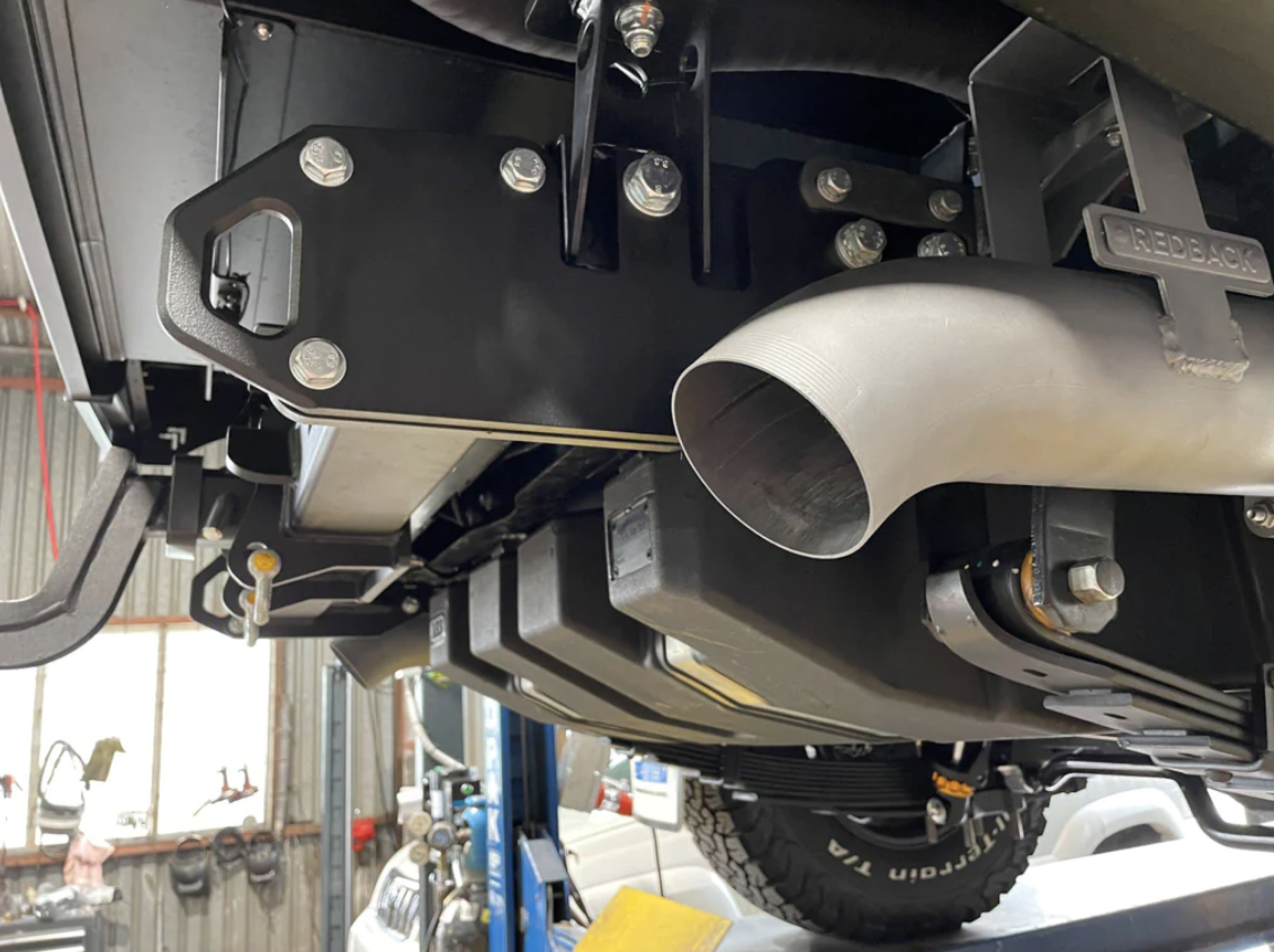
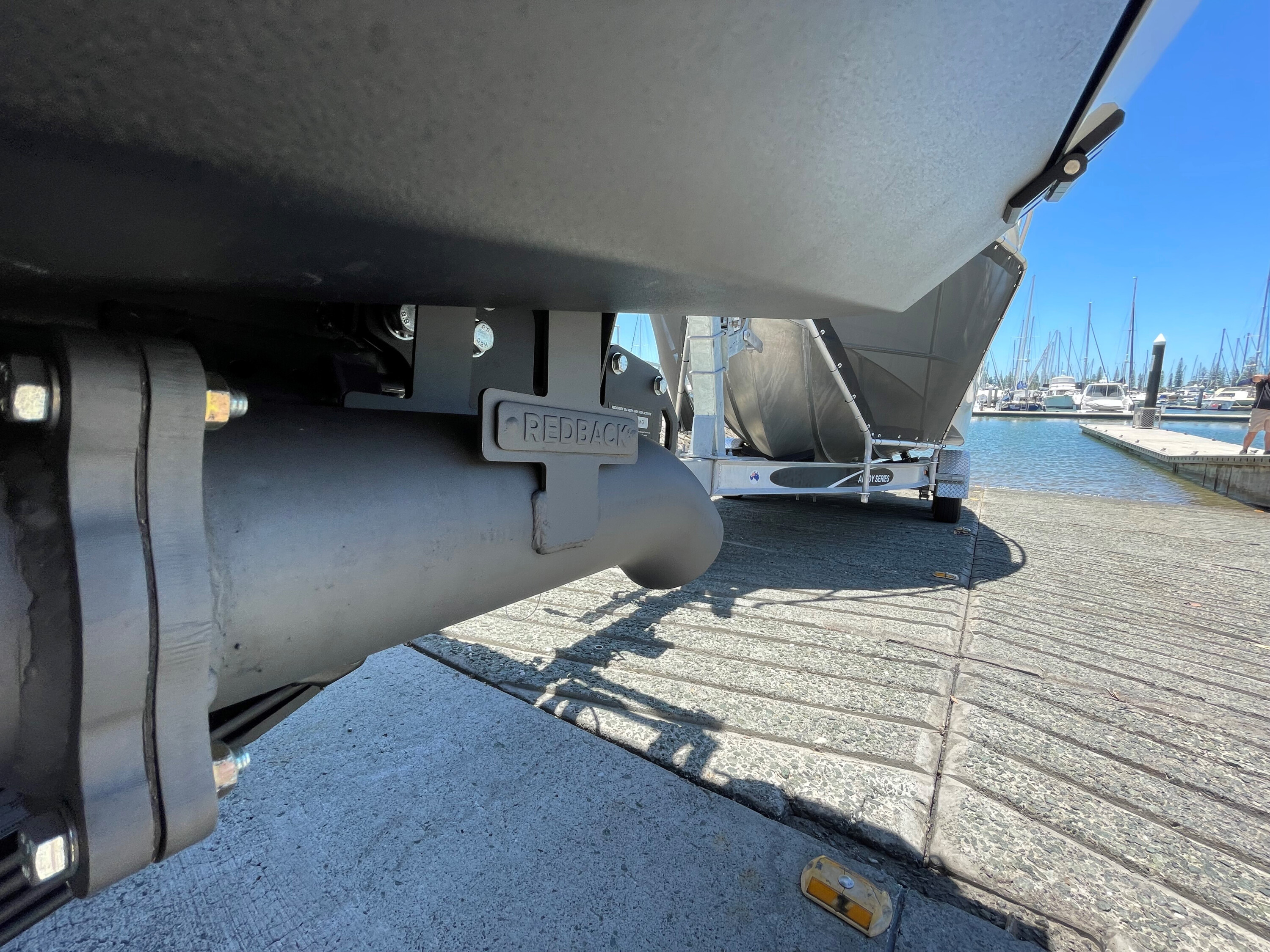
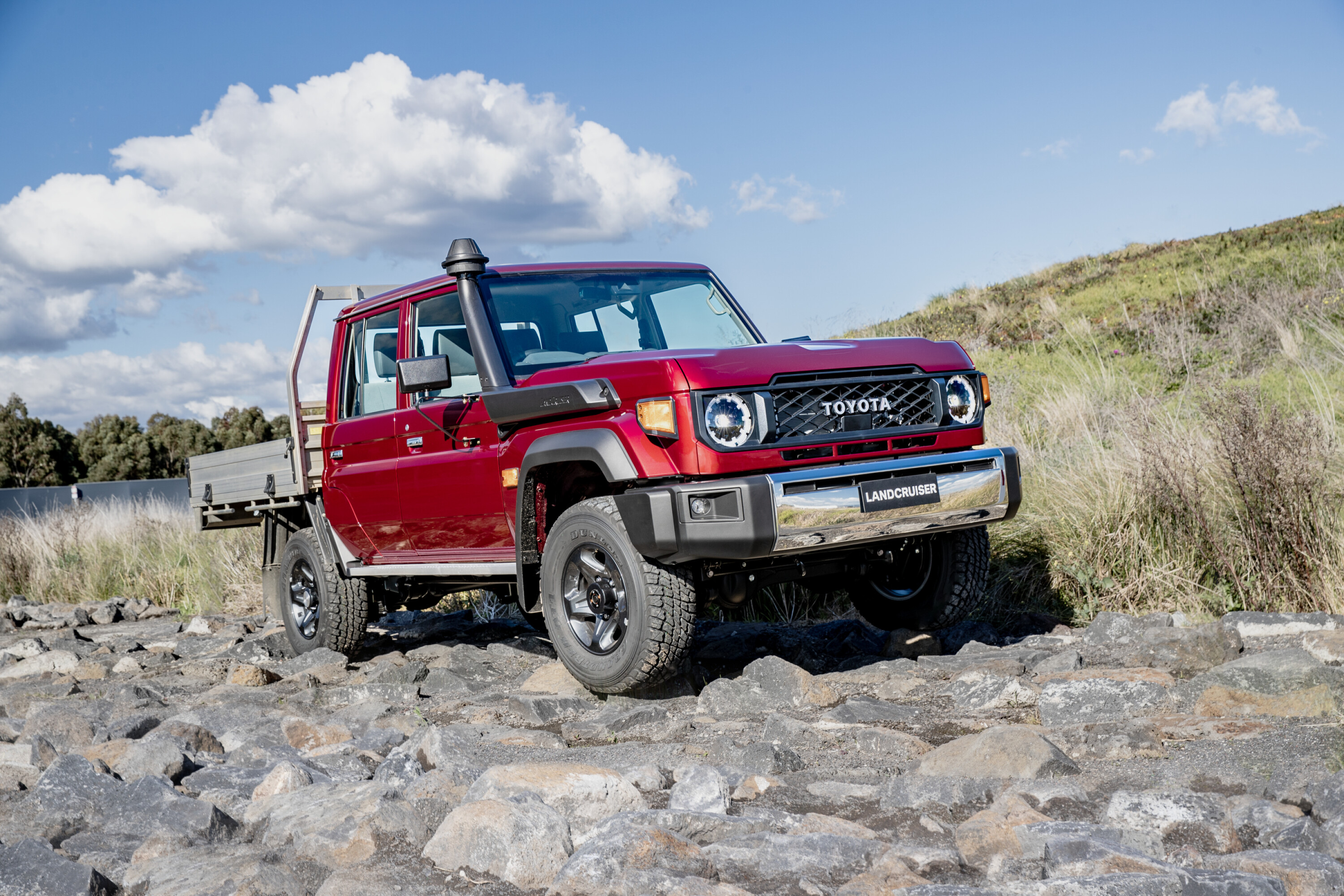
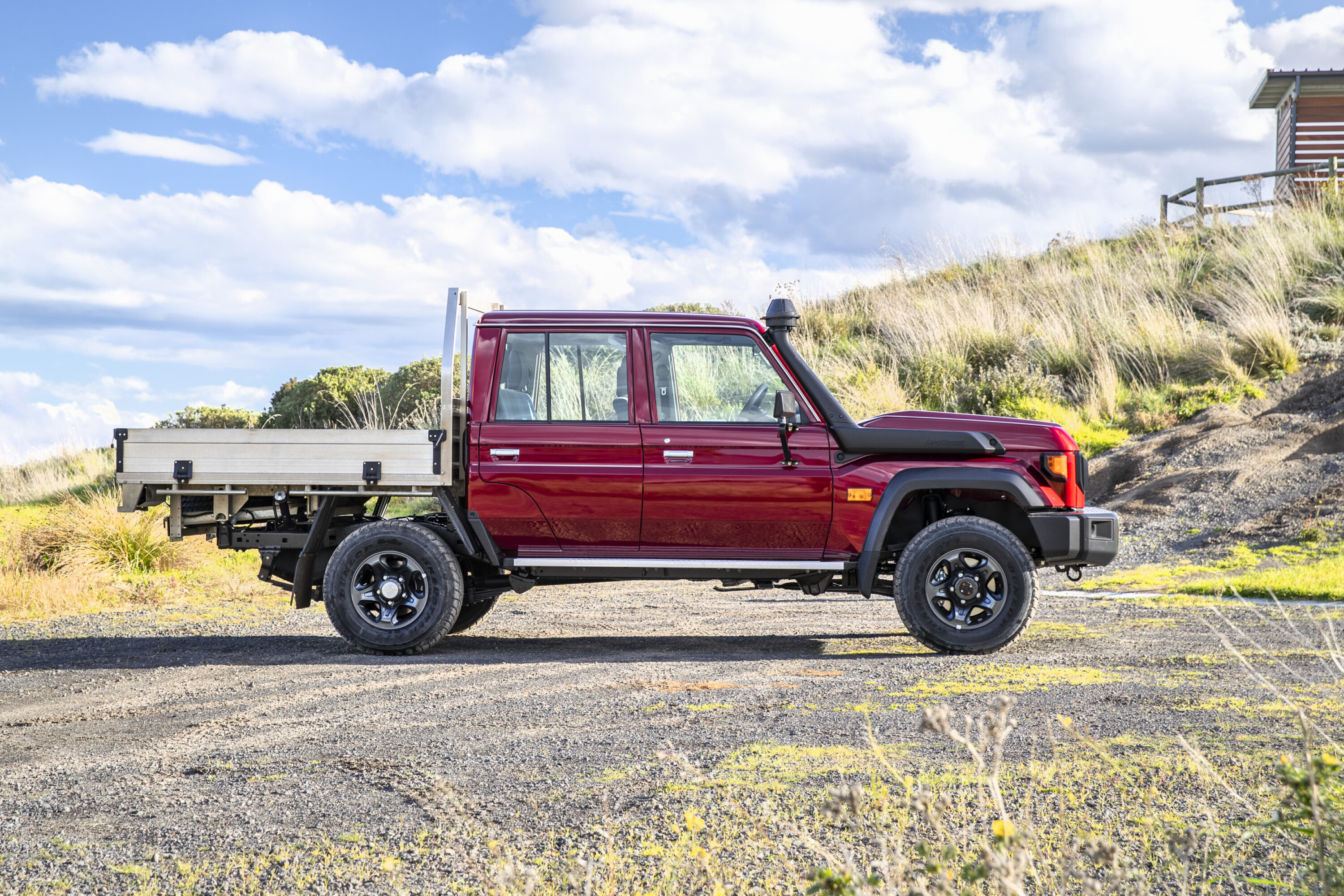
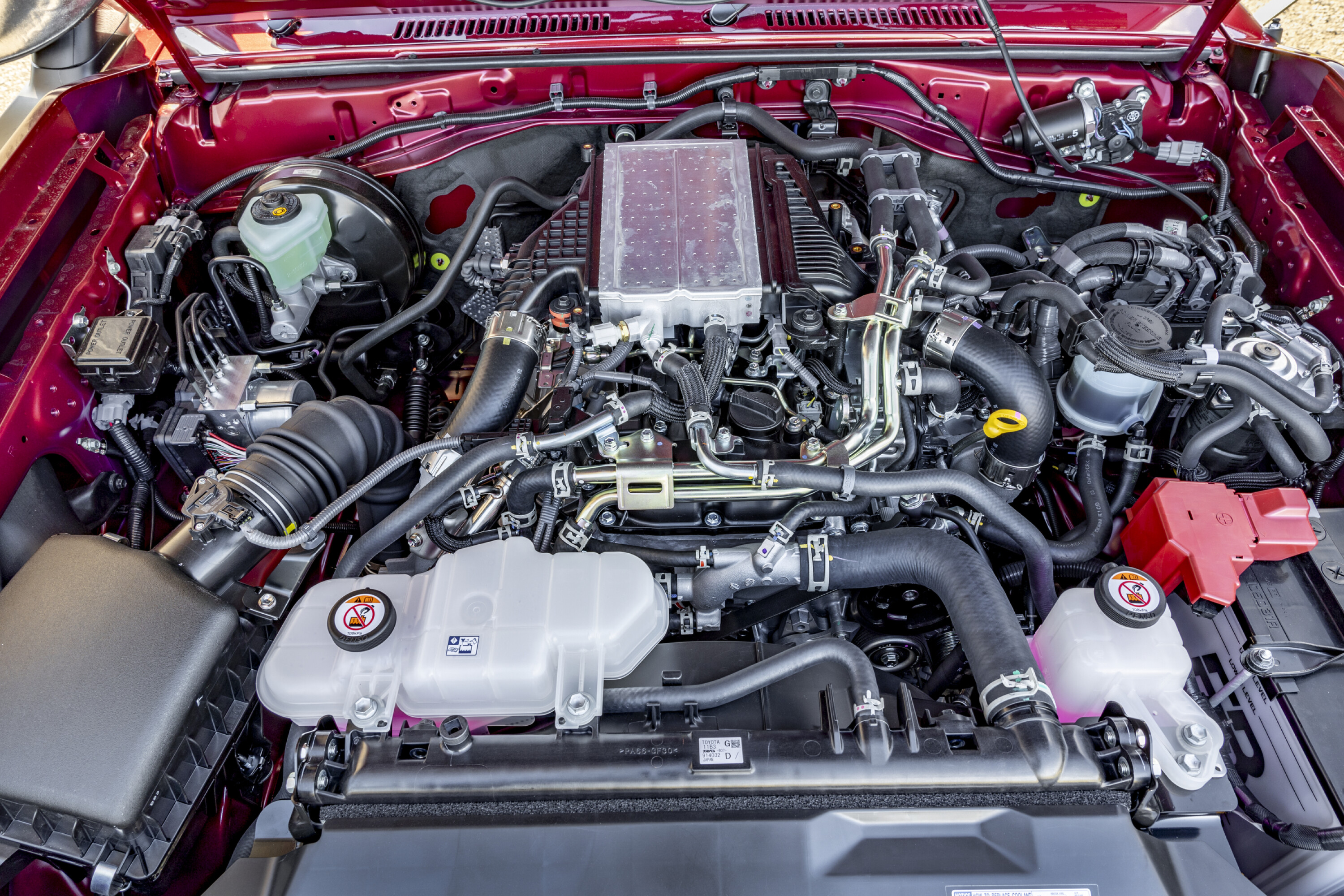
It shouldn’t be surprising that Redback Exhausts has engineered a twin exhaust system that will improve the sound, efficiency and aesthetics of your 79 Series LandCruiser.
Redback Exhausts have been in the exhaust business for 30 years and its systems are proudly Australian made.
Redback utilises electrical mandrel benders in the production of its exhausts. While this is considerably more expensive than hydraulic benders, the outputs are more accurate and consistent. This is exactly what you want when it comes to upgrading the exhaust system on your 4WD.
The Redback Extreme Duty twin four-inch exhaust kit for the 79 Series dual-cab ute has been engineered to maximise its usability with a slot on top of the tip’s brackets that allows installers to adjust the tips to wherever you want them.
You won’t need to relocate any shock absorber remote reservoirs, either. Redback has even ensured the dual exhaust won’t snag on your long-range fuel tank, specifically the ARB Long Range fuel tank.
This kit is designed to suit dual-cab DPF models only – if you have airbags installed, you’re out of luck and you’ll need to install the single four-inch kit.
The four-inch exhaust system is a twin DPF back exhaust with 409 stainless-steel tubes coated with premium heat-proof paint. The flange plates are 10mm thick and use four bolts to connect, and the fire ring gaskets are pressed.
There is a removable plug boss for the EGT, and the hanger brackets are extreme duty. When it comes to sound, the only option is a twin straight-through pipe; however, more sound options are expected shortly.
Redback offers to double the extended warranty from five to 10 years if you purchase the kit from Redback online or from an authorised Redback 4×4 dealer, or if you register your purchase using the online warranty registration form.
Expect to pay from $2099 for this exhaust kit, and add a bit more for shipping and installation.
The prices of 1VD-powered Toyota LandCruisers just spiked as Toyota announced the 2024 LandCruiser 70 Series range will be powered by the 1GD 2.8-litre four-cylinder diesel engine backed by an automatic transmission, but the good news is that the V8 remains for the time being.
The 1DG engine familiar with us from the current Prado, Fortuner and HiLux vehicles still makes the same 150kW at 3400rpm and 500Nm between 1600rpm and 2800rpm.
This gives it 70Nm more torque than the existing V8 diesel engine in its standard form, but who leaves their V8 diesel standard? The stock 1VD engine makes a lazy 151kW at 3400rpm and 430Nm from 1200rpm to 3200rpm.
Big news for many is that the four-cylinder LC70 will get an Aisin six-speed automatic transmission, and this will be the first time a factory auto has been offered in a 70 for more than 25 years.
Rumours of this move have been around for some time now, with four-cylinder-powered 70 prototypes being tested in Australia three to four years ago and stories of them getting around.
The 1GD-powered 70 will be sold alongside the 1VD V8 manual gearbox models.
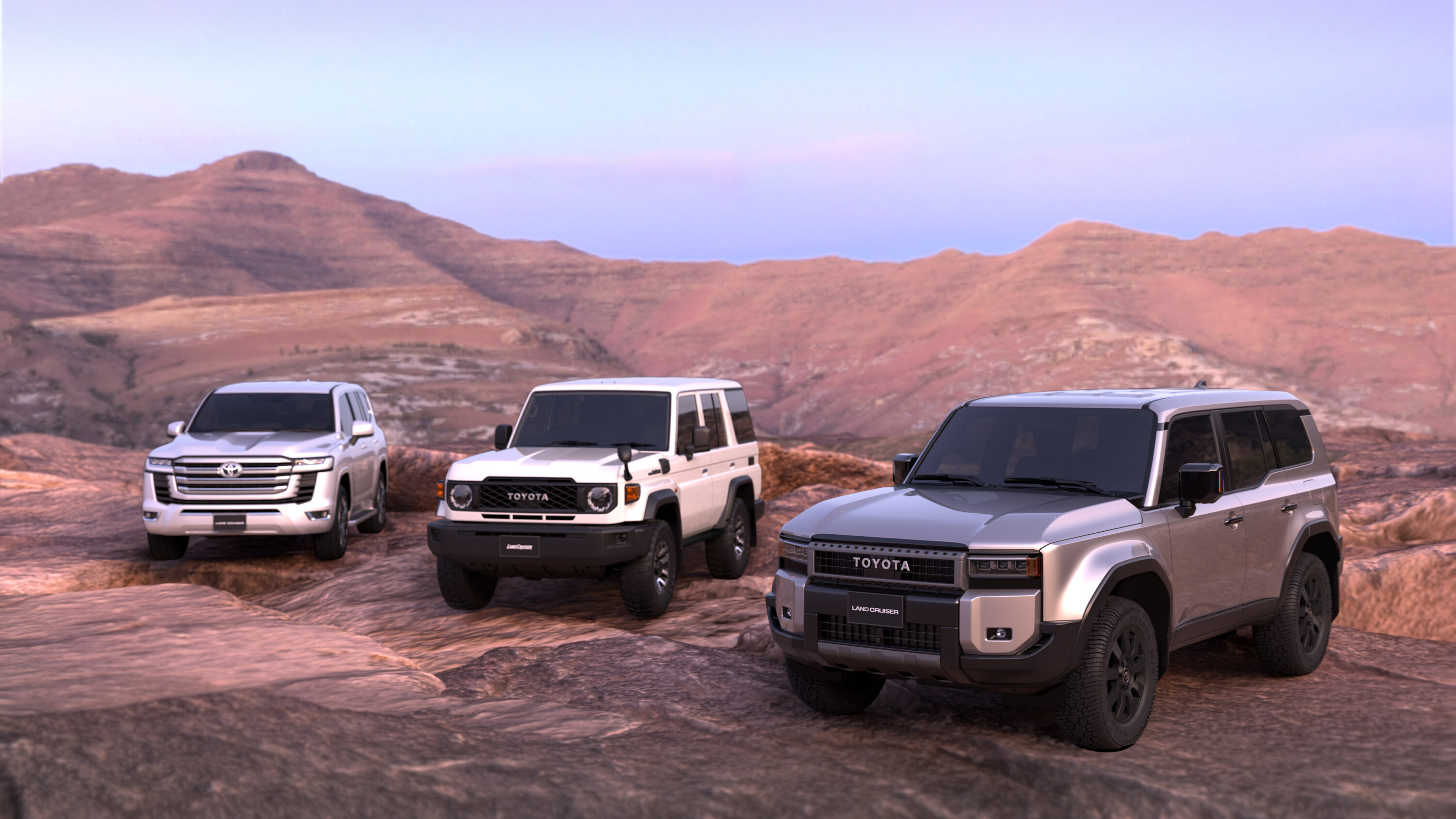
The confirmation of the revised 70 Series range comes alongside the reveal of the new 250 Series LandCruiser, which will be the 2024 Prado when it lands here later in 2024.
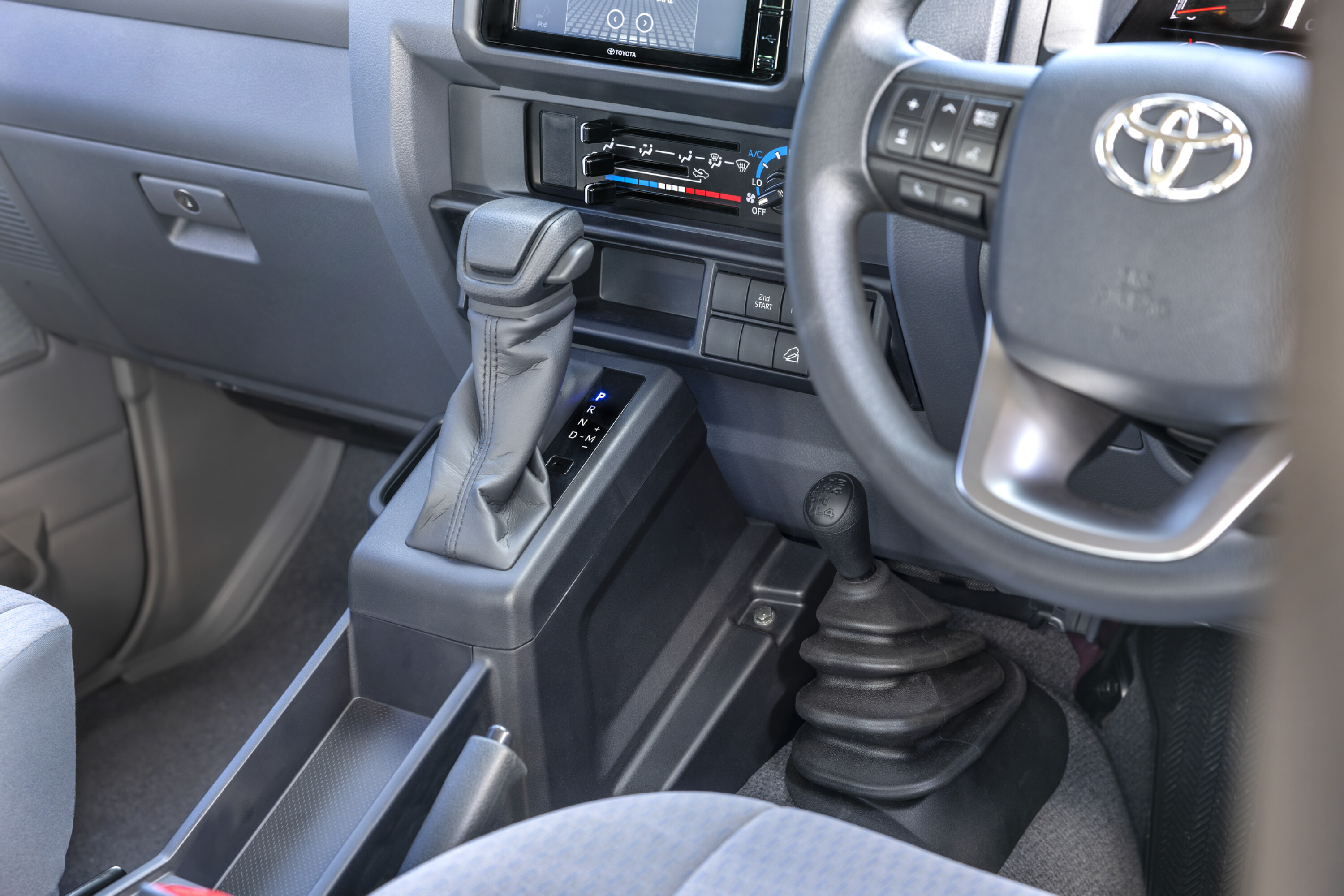
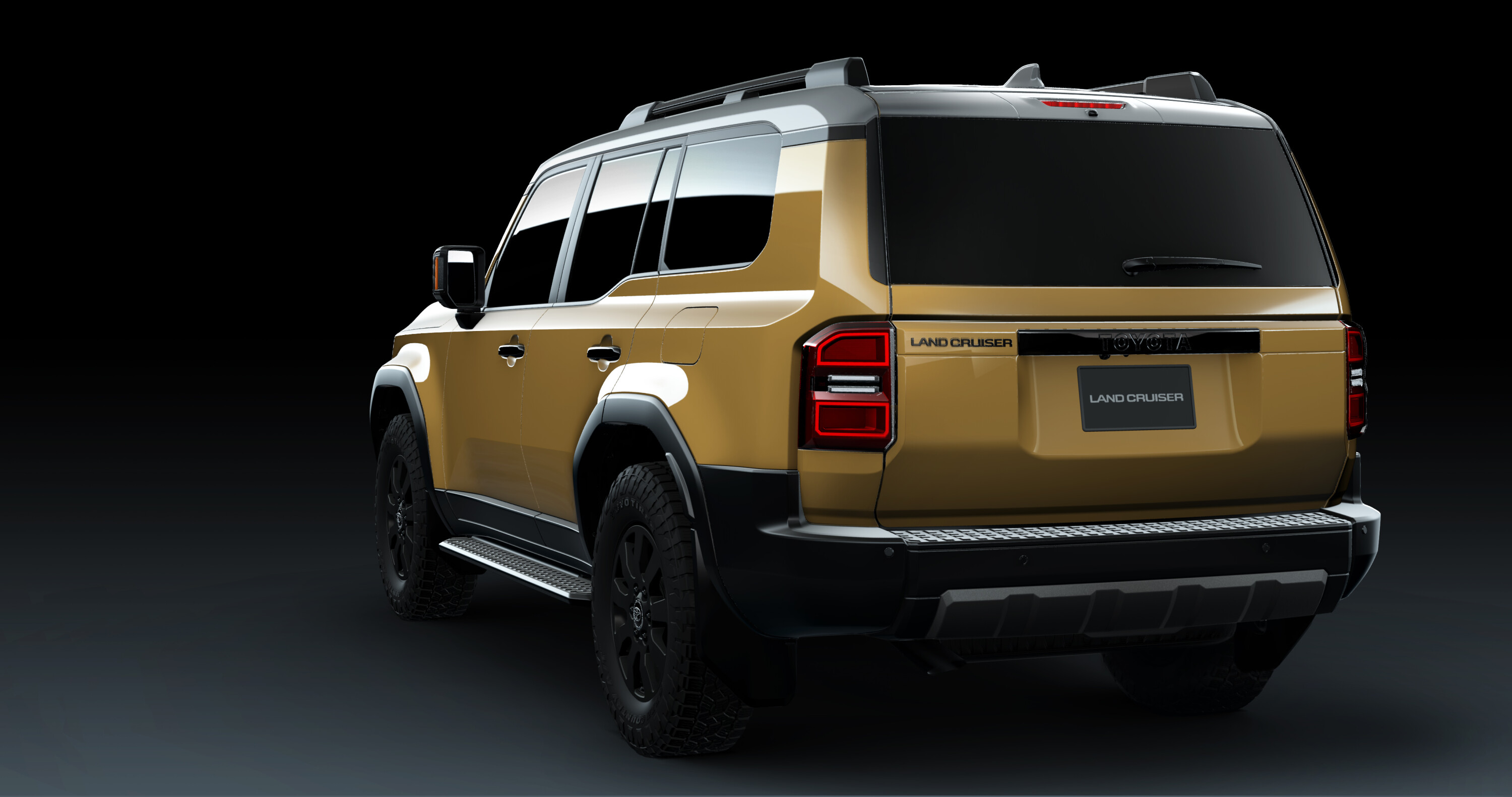
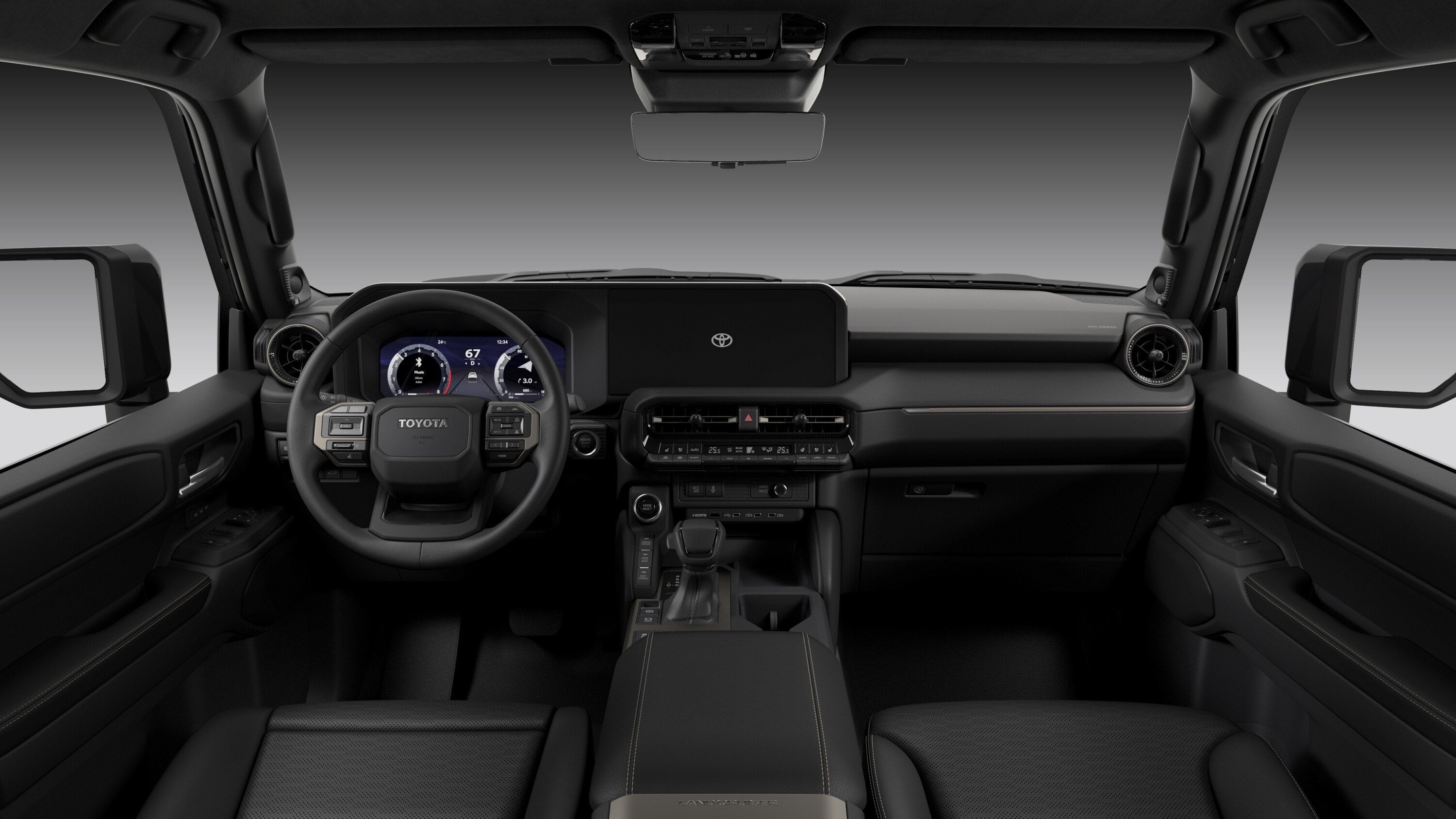
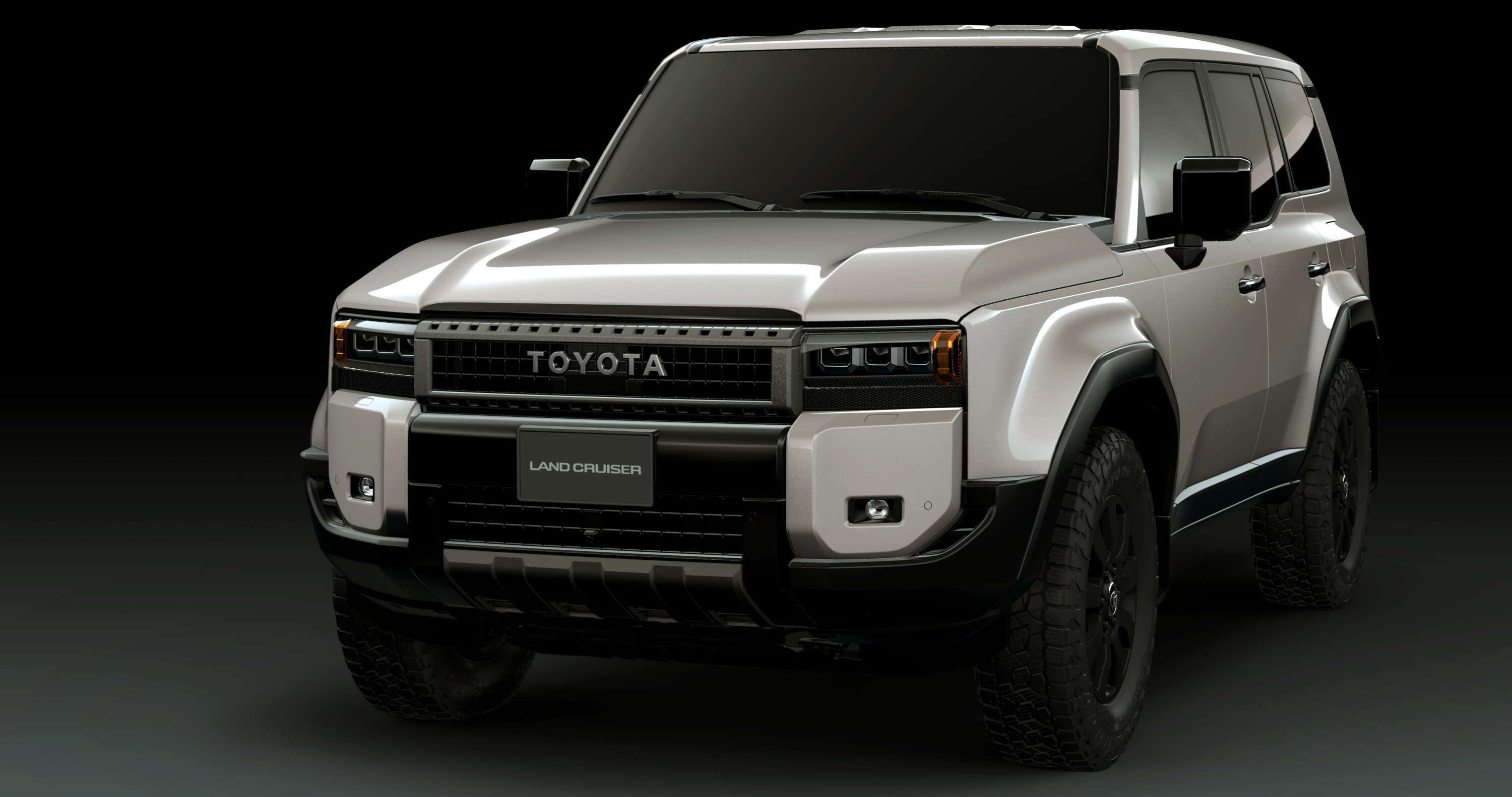
The 2024 70 Series range gets a revised front end with softer styling and a welcome return to round headlights. Inside there’s a new instrument cluster and centre console, with a 4.2-inch multi-information display for the driver and a 6.7-inch touchscreen with wired Apple CarPlay and Android Auto.
Improved safety equipment includes lane departure alert, road speed sign assist and automatic high beam.
1
While the retention of the V8 engine in the 2024 70 Series will be a welcome relief for many, particularly the enthusiast market, the inclusion of a four-cylinder option will appeal to many business operators and mining segment users who need a rugged and reliable 4×4 vehicle to get on with the job.
This workhorse will become more usable with the inclusion of the automatic transmission, which will also appeal to those who tow or have previously steered away from the 70 Series range because one wasn’t offered.
1
The 2024 Land Cruiser 70 Series range will continue to be offered in three LC79 single-cab grades (Workmate, GX and GXL), and Workmate and GXL grades for LC79 double cab, LC78 Troop Carrier and LC76 Wagon variants.
Both the 1GD/automatic and 1VD/manual powertrains will be available in all variants except for the LC76 Workmate, which will be 1GD/auto only.
Pricing and full specifications will be available closer to launch late in 2023.
The new Toyota Prado has formed the basis for the return of the LandCruiser in North America after the previous 200 Series was discontinued there in 2020.
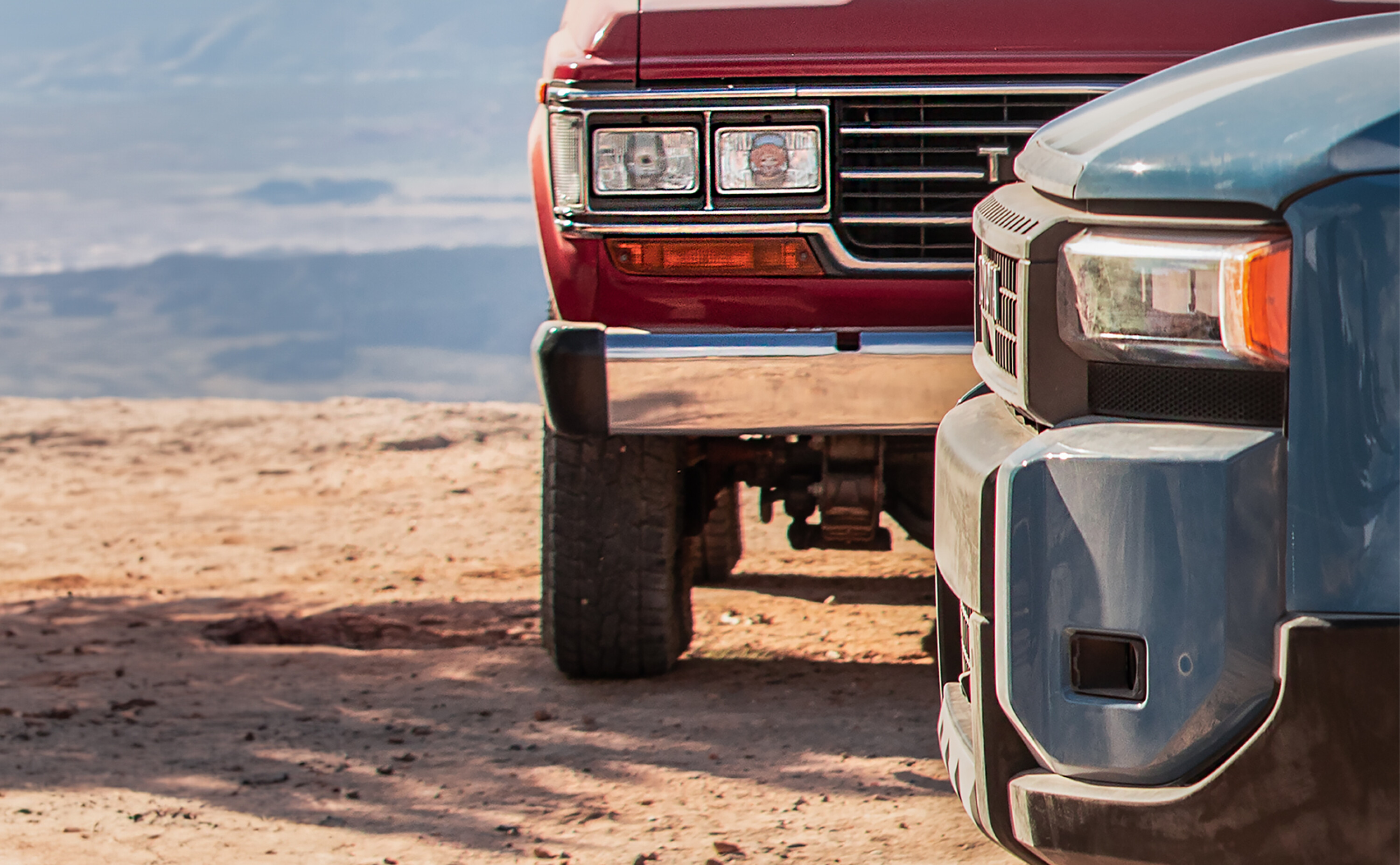
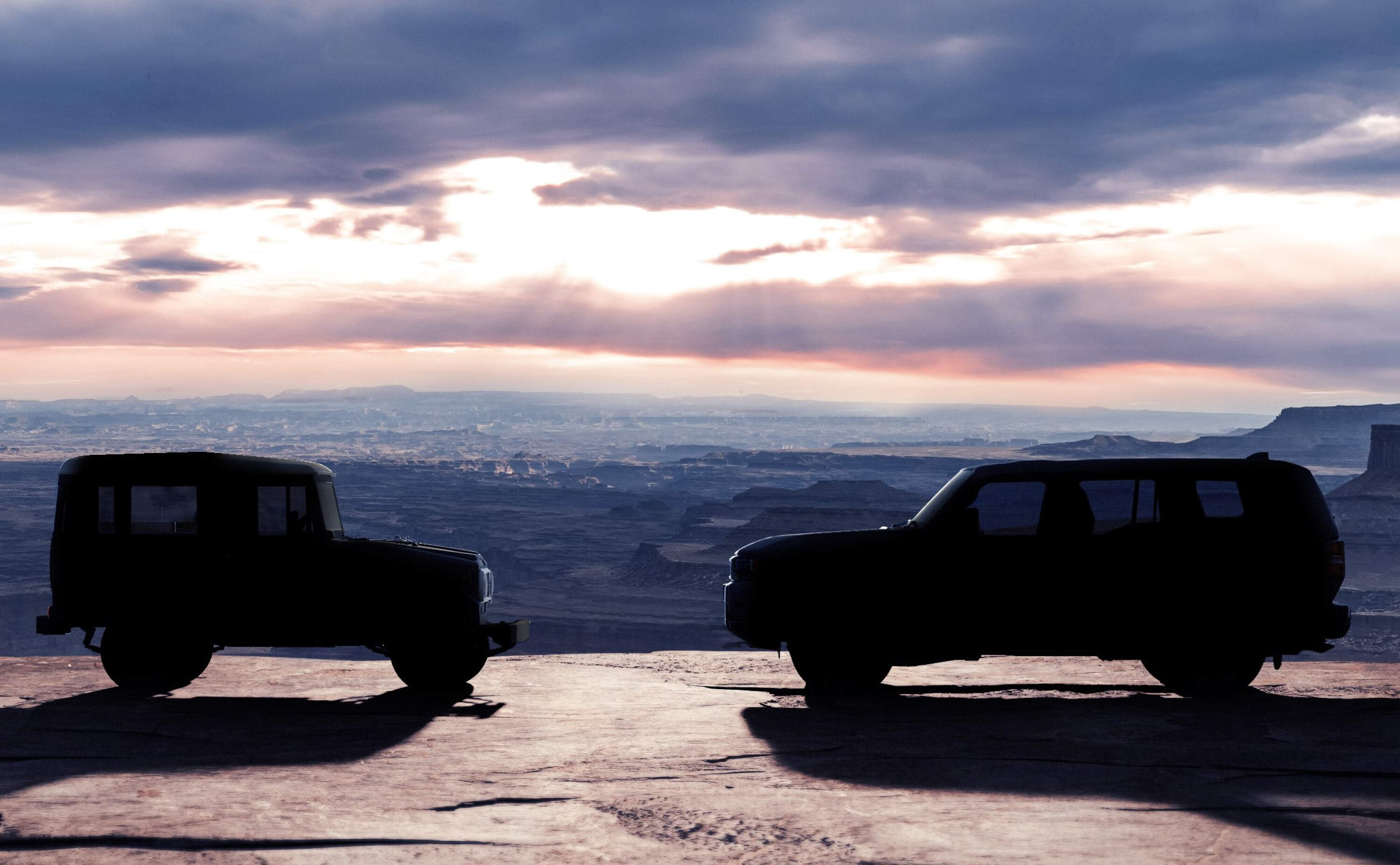
In some markets, it will feature two design themes, with round headlights inspired by LandCruisers of generations past or a luxury-focused version with a modern grille and rectangular headlights.
1
Get up to speed on the new Prado
The stories below will give you a guide to everything we learned about the new Prado when it was unveiled. All fresh stories published since then will be found on our Toyota Prado model page here.
Toyota Australia has confirmed local versions will solely feature the latter setup, with rectangular headlights.
Globally, it will wear LandCruiser 250 badging – but the Prado nameplate will live on in Australia, with the new model due here in mid-2024.
The current Toyota Prado available in showrooms today dates back to 2009 and is fitted with a 2.8-litre four-cylinder diesel shared with the HiLux in Australia.
The latest 250 Series will launch with five powertrains globally, including two LandCruiser-first hybrids.
1
A 48-volt mild-hybrid version of the current four-cylinder diesel will be offered in Australia with an identical 150kW and 500Nm.
It will be matched to a new eight-speed torque-converter automatic, full-time four-wheel-drive, and a starter motor-generator for “improved actual fuel economy” and a “quiet engine startup and smooth initial take-off”.
In Australia, the first LandCruiser hybrid will be in the form of mild 48-volt assistance for the familiar 150kW/500Nm 2.8-litre four-cylinder diesel, also coming to select HiLux variants in 2024.
The addition of 48-volt technology is said to help improve fuel consumption in urban settings, while the transmission has shifted to an eight-speed torque-converter unit, up from six speeds.
A full-hybrid 2.4-litre turbo-petrol with 243kW and 630Nm and an eight-speed automatic transmission will be standard-fit in North America and China.
It is the same unit in the new Toyota Tacoma, which features a single electric motor and a 1.87kWh lithium-ion battery pack.
The Tacoma’s hybrid system is more truck-like, with the electric motor sandwiched between the engine and transmission.
Engines, drivetrains, off-road, and towing capacity
Other powertrains available globally, but not for Australia, include a non-hybrid 2.8-litre diesel with six- or eight-speed automatics, a 207kW/430Nm non-hybrid turbo-petrol, and a 120kW/246Nm 2.7-litre naturally-aspirated petrol.
Under the skin, the Prado rides on Toyota’s latest TNGA-F body-on-frame platform shared with the LandCruiser 300, Lexus GX and LX, and the Tacoma and Tundra utes.
Toyota claims a 50 per cent increase in frame rigidity and a 30 per cent increase in overall rigidity compared to the current Prado, which is based on a HiLux platform.
1
The new Prado will have a full-time all-wheel drive system with a low-range transfer case and a locking centre differential.
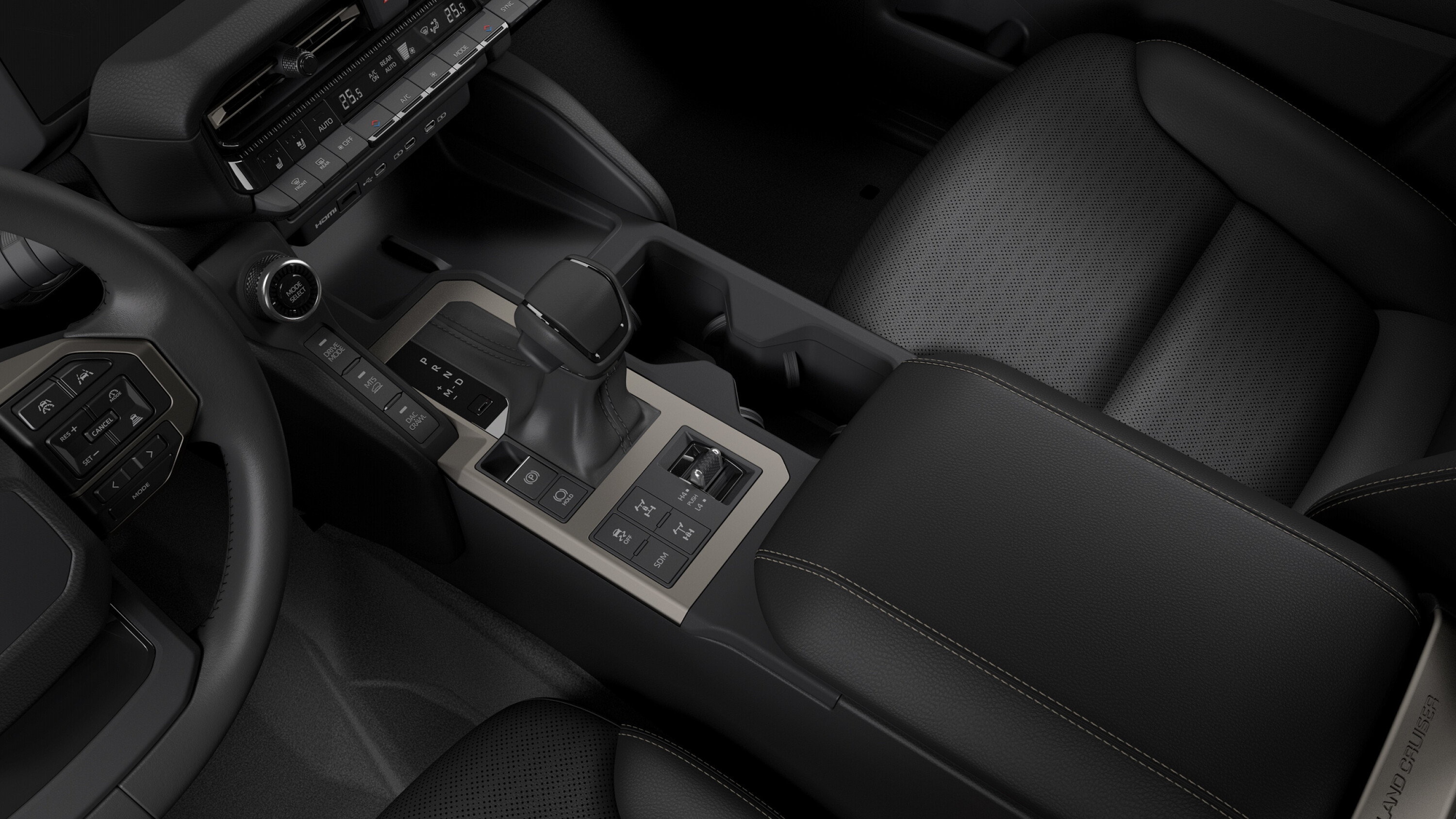
It features an electronic locking rear differential and front a sway-bar disconnect system. Unlike hydraulically-actuated KDSS, the new system allows stabiliser-bar disconnection on demand via a button in the cabin. This should make for excellent articulation without sacrificing road-holding.
Electric power steering replaces the hydraulic system to increase steering feel, and it has improved wheel articulation to allow the wheels to stay on the ground.
Toyota said the functionality of the multi-terrain monitor and terrain mode selector is enhanced.
1
Improvements applied to the Prado’s twin-under-the-skin, the Lexus GX, are also expected, such as high-mount double-wishbone front suspension, a ‘finetuned’ coil spring rate, increased caster trail and minimised king pin offset for enhanced stability.
In addition, the GX features a four-link rigid axle with lateral control arms at the rear, and the front and rear suspension feature independent telescopic valves and friction control modules.
For the GX, towing capacity has increased to 3628 kilograms in North America, suggesting the Prado could feature an Everest and MU-X-matching 3500-kilogram capacity – up 500kg over the Prado’s current 3000kg limit.
Toyota has yet to confirm towing capacities for diesel Prado variants, but the turbo-petrol hybrid is limited to 2.7 tonnes in the United States.
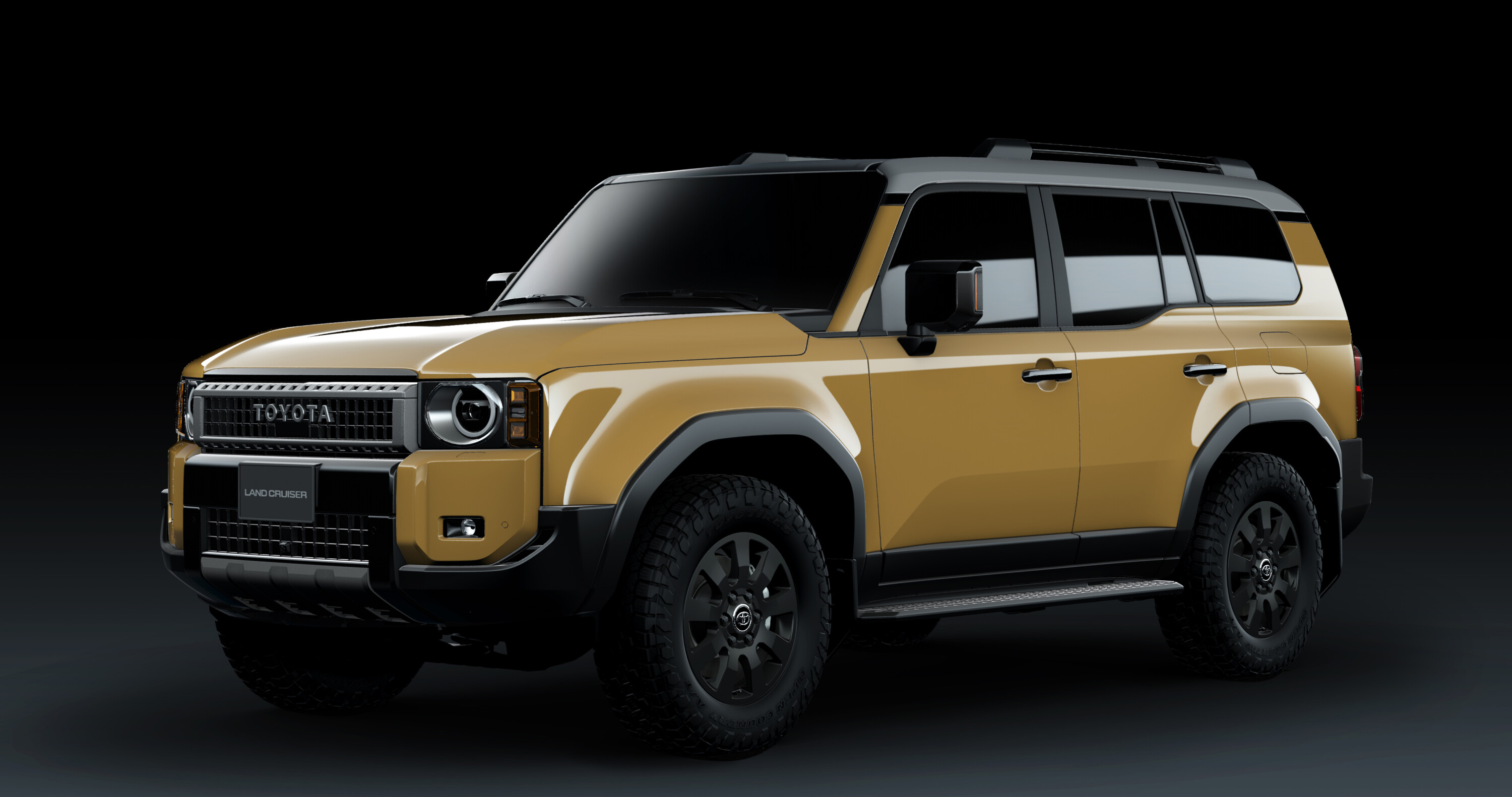
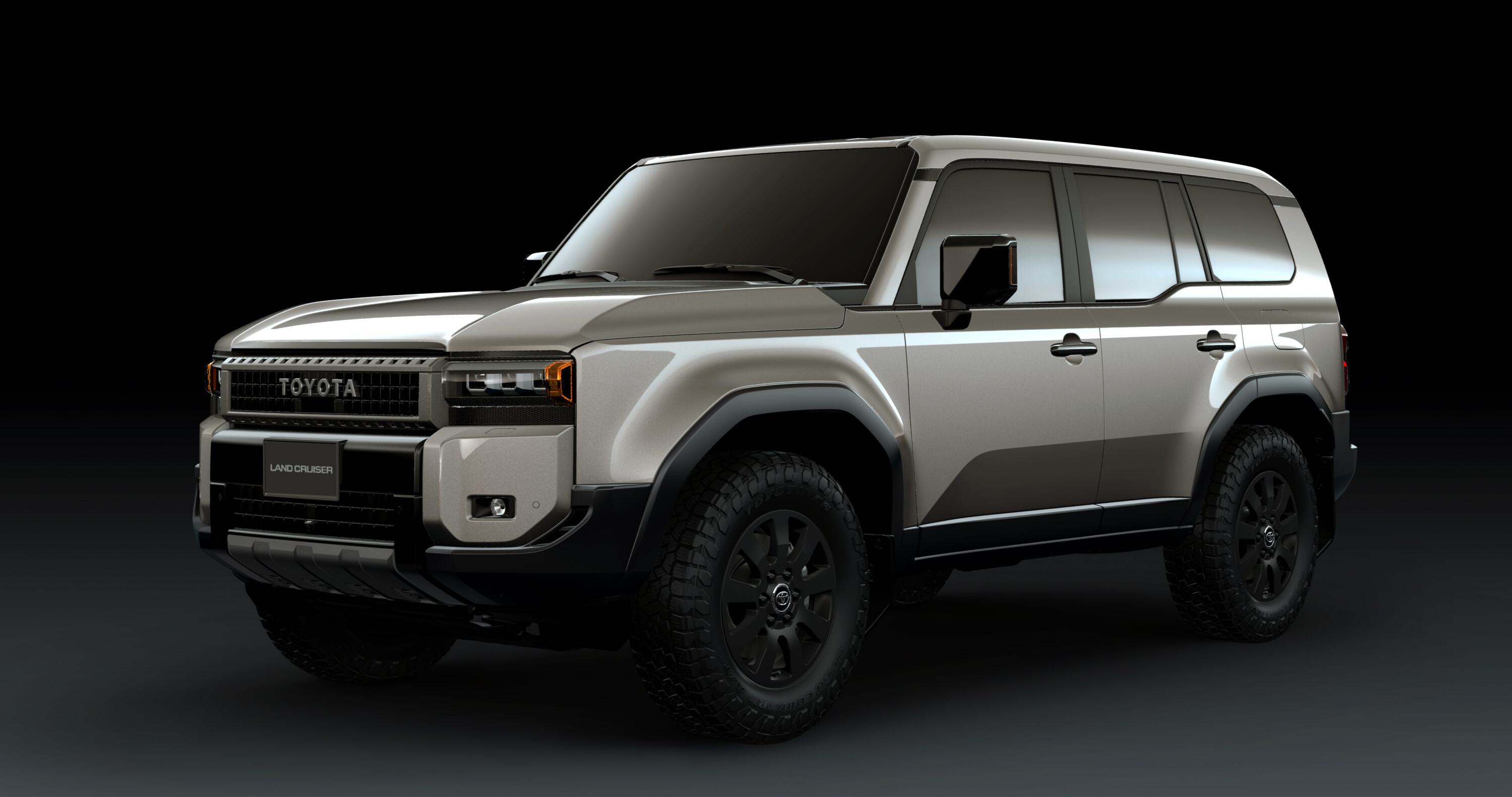
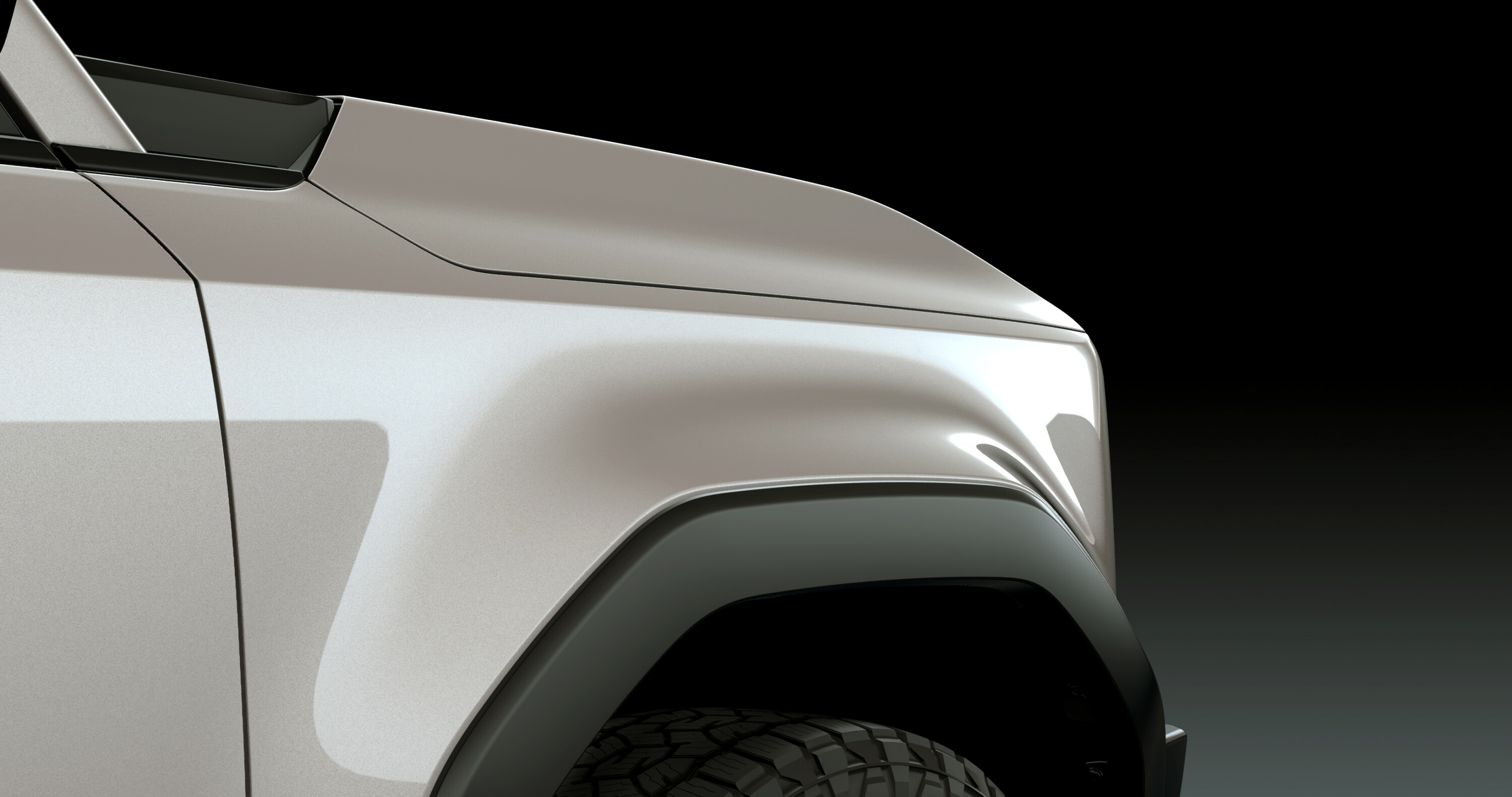
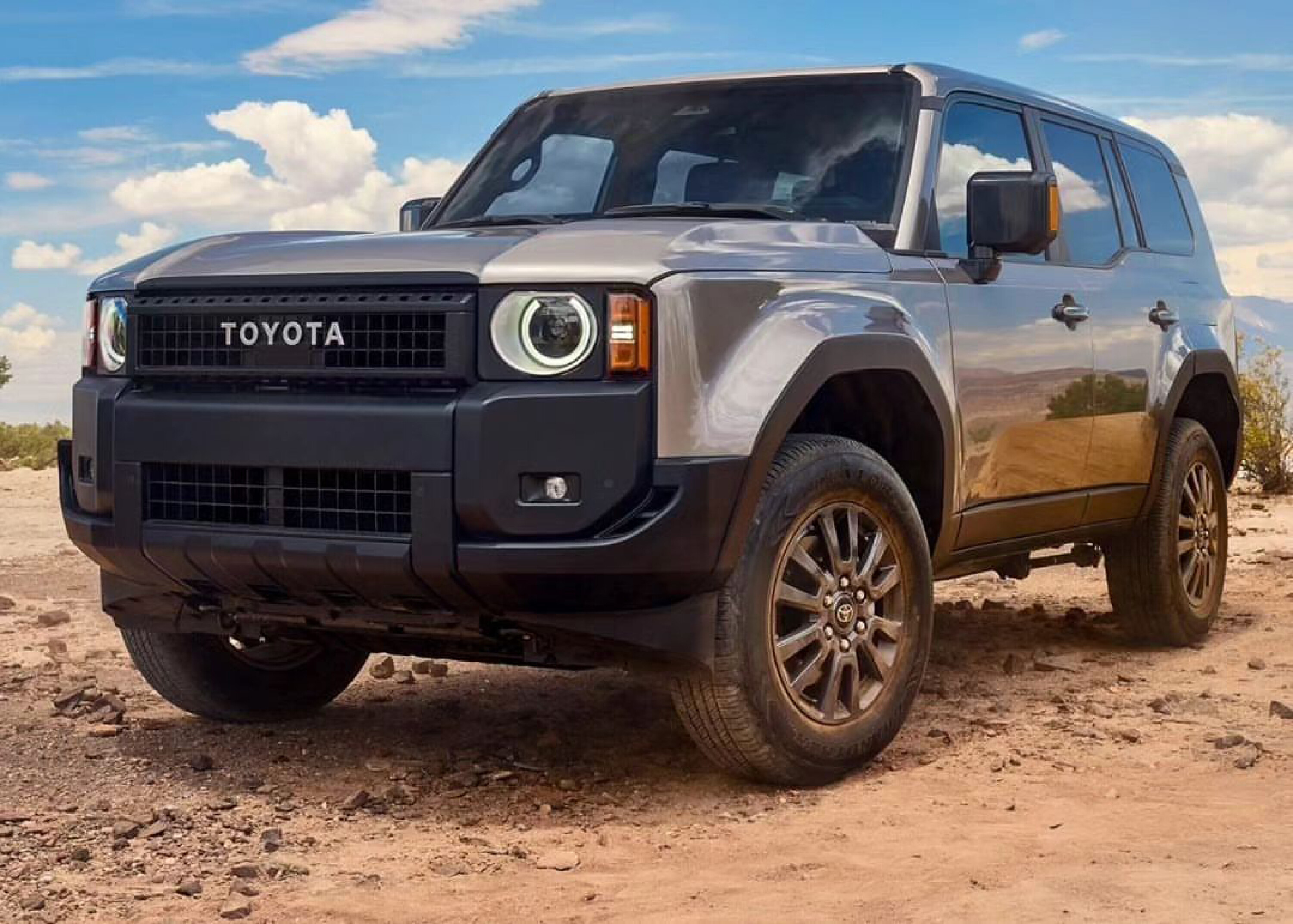
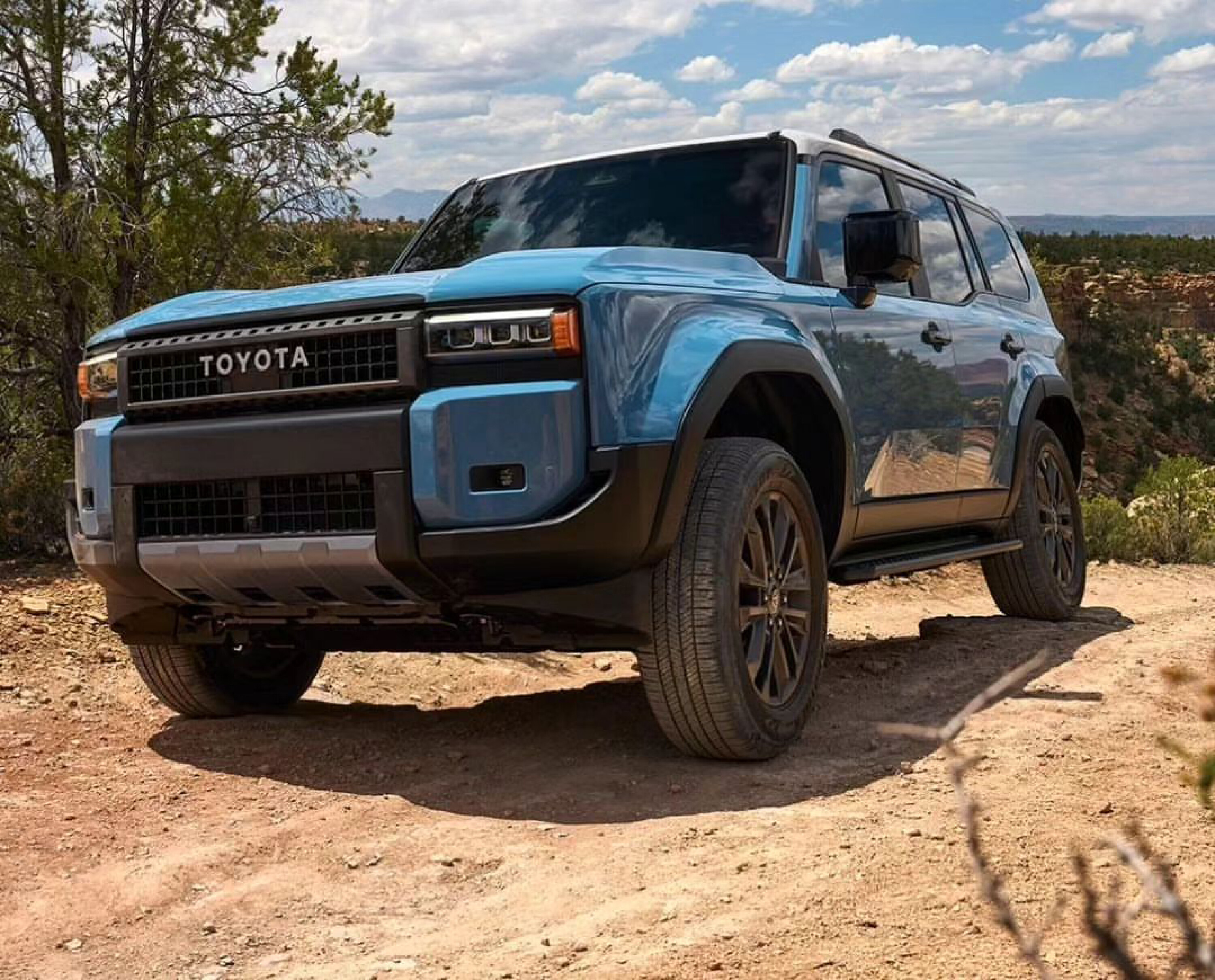
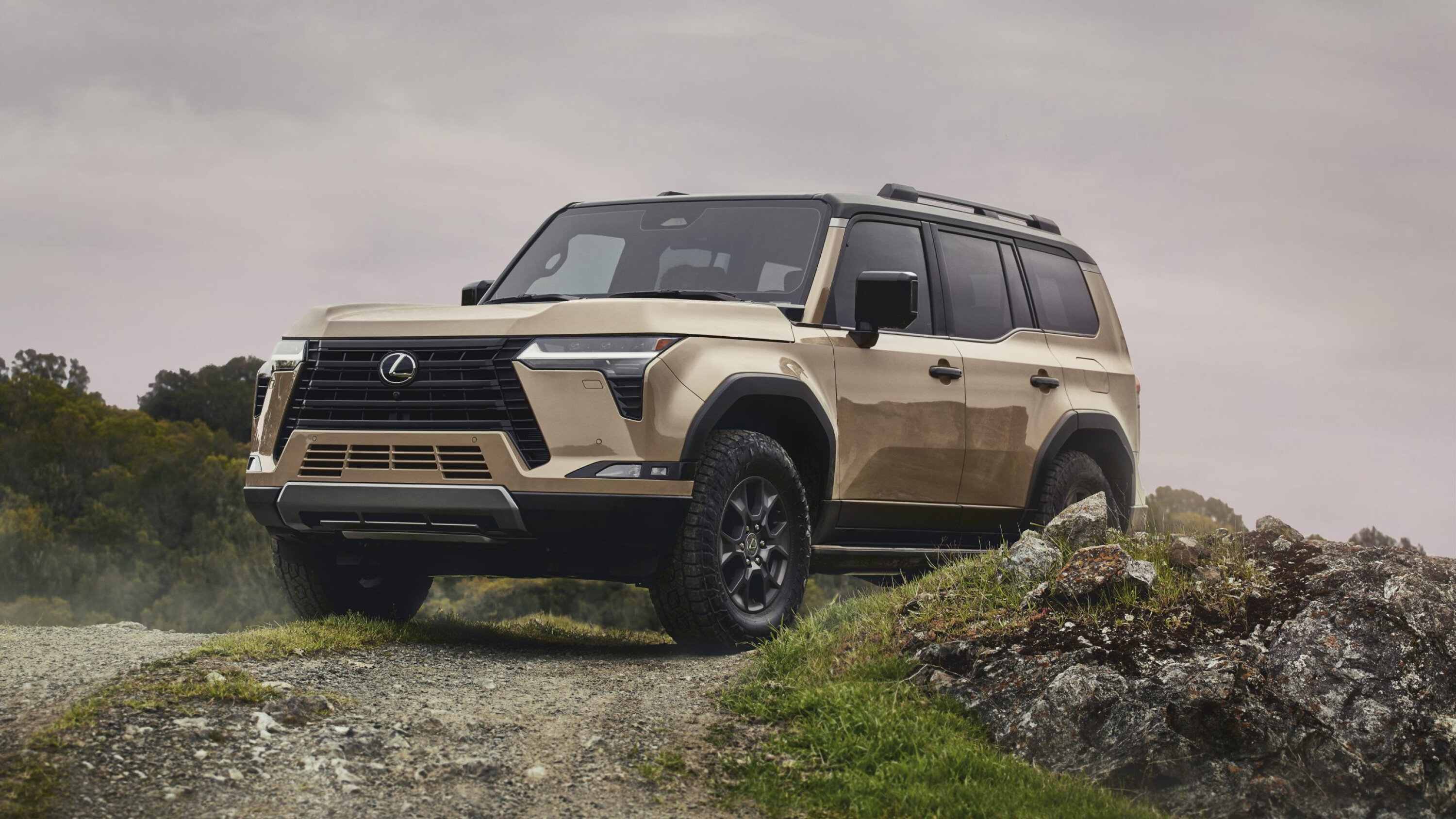
The latest Prado has a more-rugged body similar to a Land Rover off-road SUV, with a squared-off rear end, an upright A-pillar, and a higher bonnet line.
As expected, it shares the same body panels through the profile as the Lexus, but the Prado receives harder-wearing unpainted pieces.
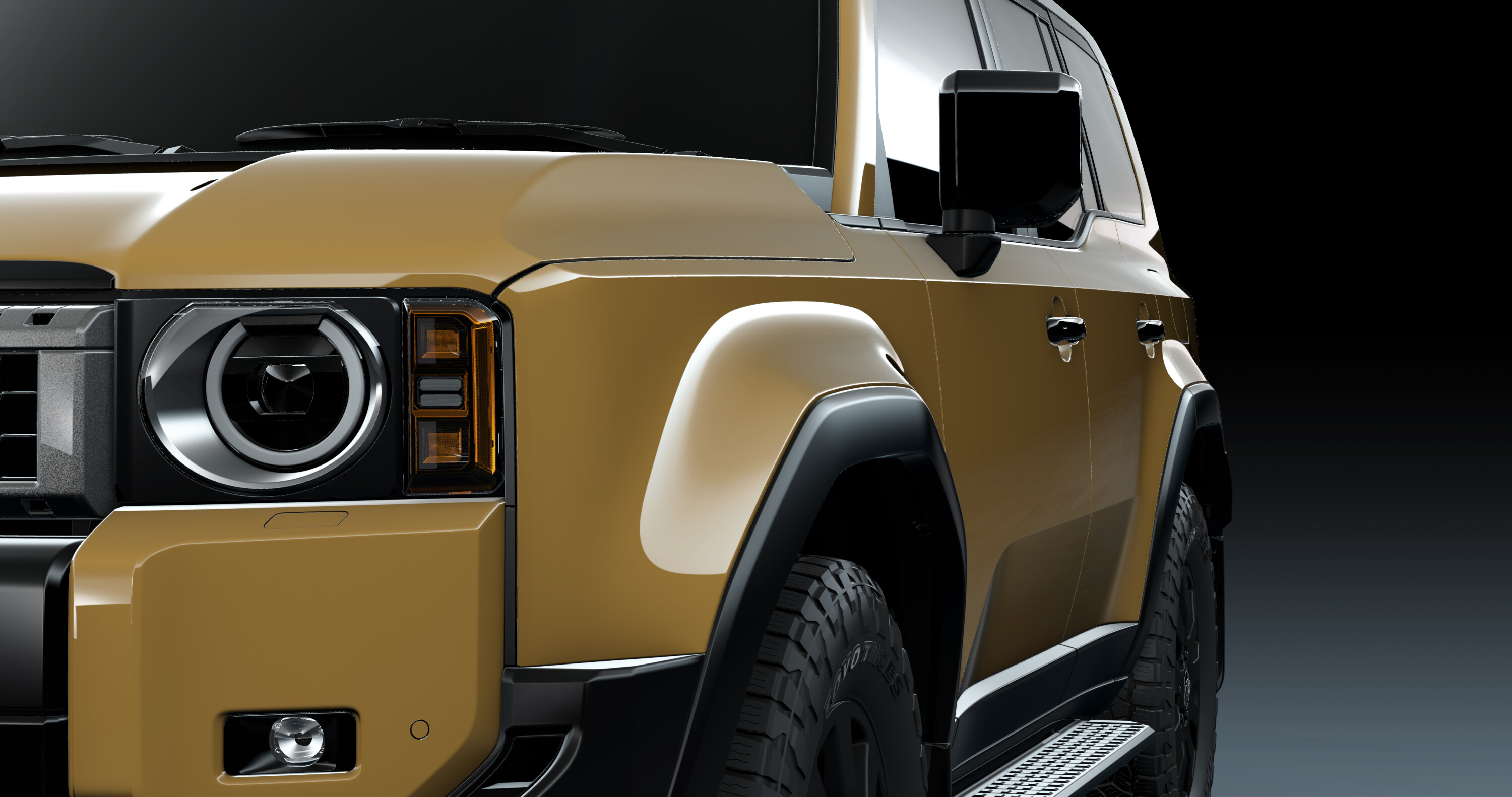
A simple rectangular grille sits proudly in the centre with a spelt-out Toyota badge, joining square LED headlights, slim LED fog lamps, and a prominent skid plate.
1
The chiselled bonnet – first introduced to Prado in 2017 – is widened to improve forward visibility.
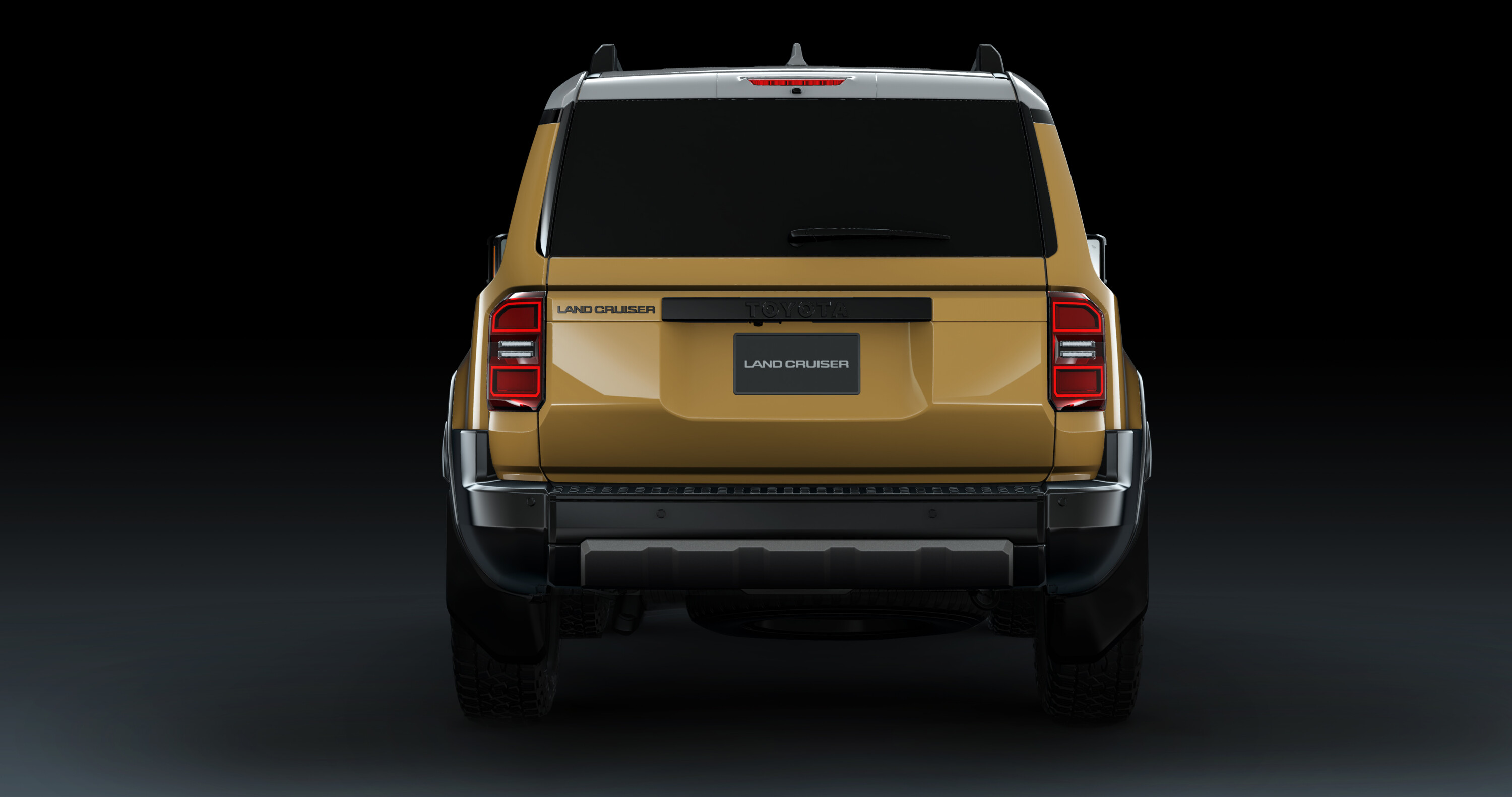
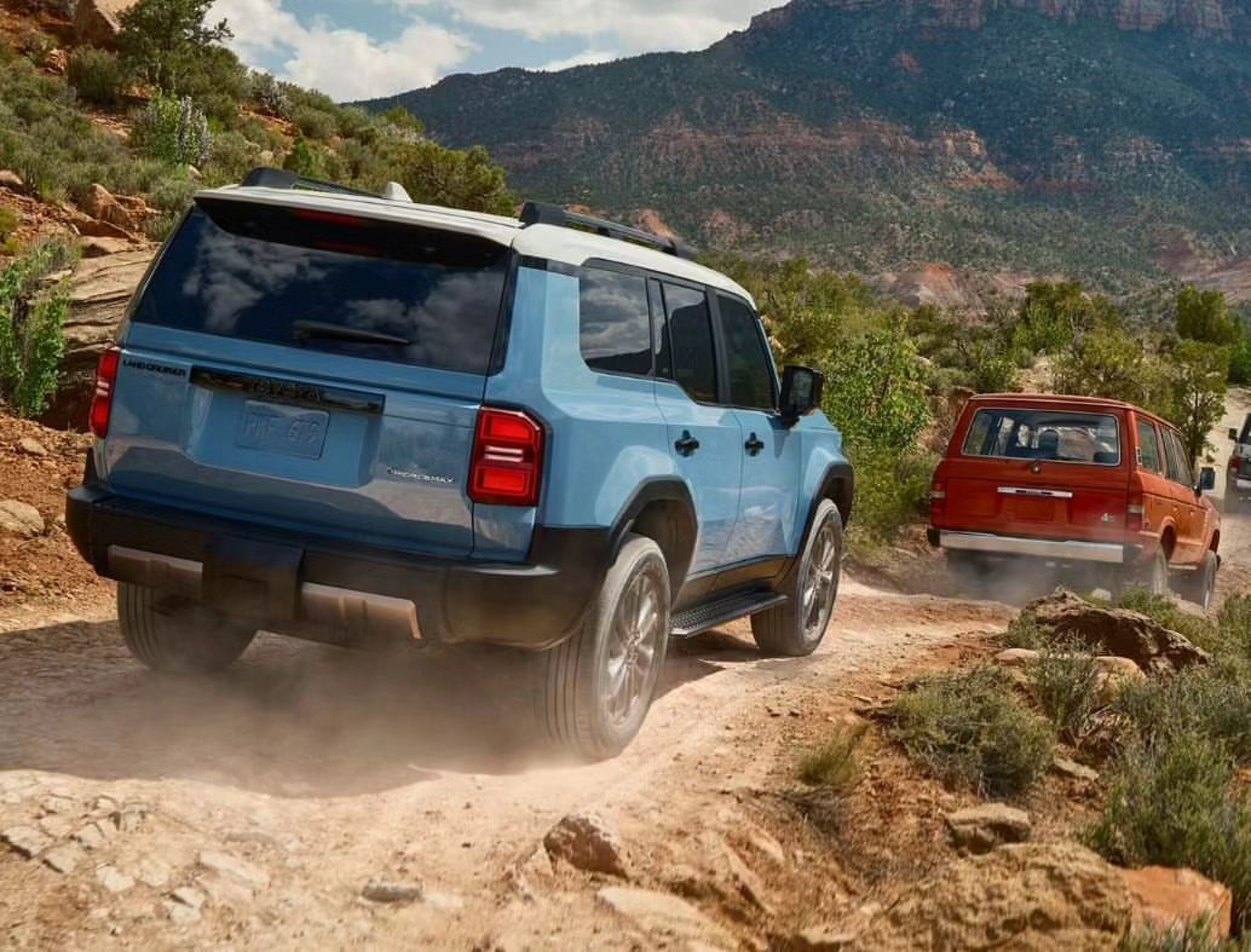
Moving to the rear, the Prado again keeps it simple and retro, with new smaller tail lamps that hark back to the first Prado – instead of the taller units that have previously reached up the D-pillar.
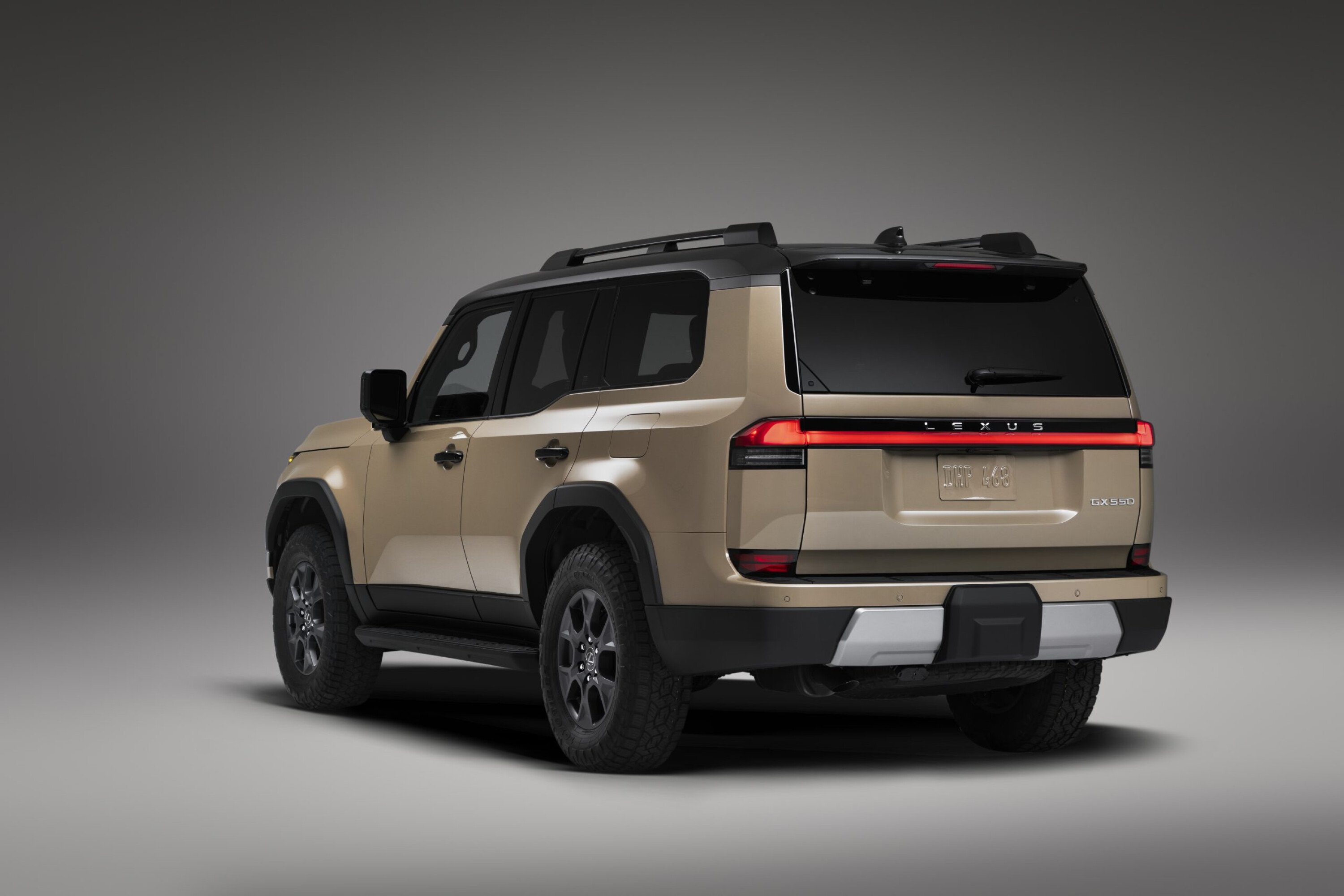
The same body panels are used for the Lexus, but the tail lamps are split in half – with a filler panel beneath – and a light bar runs along the tailgate to connect the corner lights as one long signature design.
1
2024 Toyota Prado dimensions
Measuring 4925mm long, 1980mm wide and 1870mm tall, the new Prado is 100mm longer, 95mm wider and 20mm taller than before.
It has an identical 2850-millimetre wheelbase to the LX and LandCruiser 300 – up 60mm over the current Prado.
The Prado’s characteristic barn door – offered with an external-mounted spare wheel or ‘flat’ tailgate – has made way for an electric lift-up tailgate similar to the LandCruiser 300 and other SUVs.
MINI MATCH-UP: 2024 Prado vs 2023 Prado, Lexus GX, Ford Everest & LandCruiser 300
Note: Table scrolls horizontally to reveal more columns.
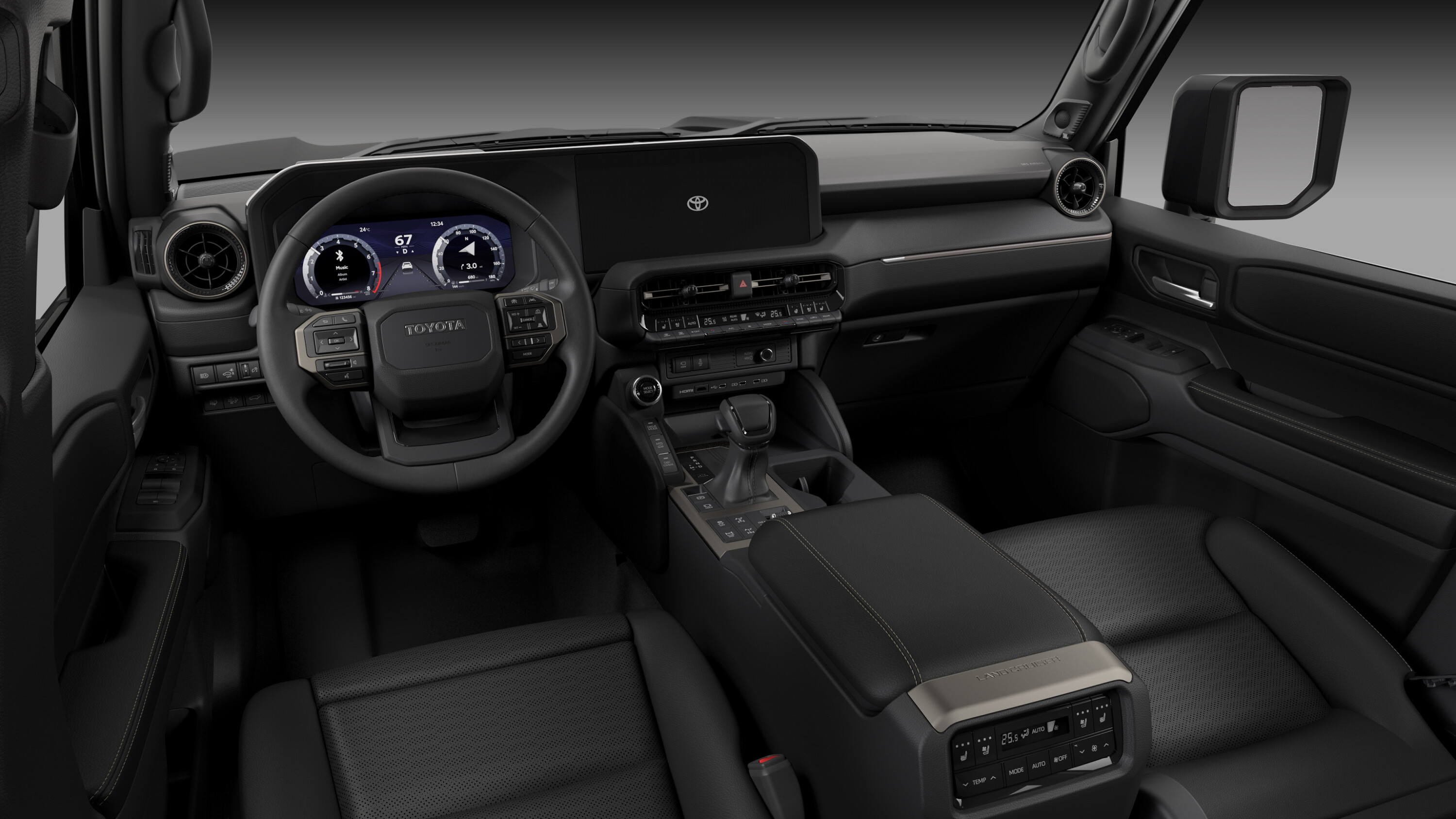
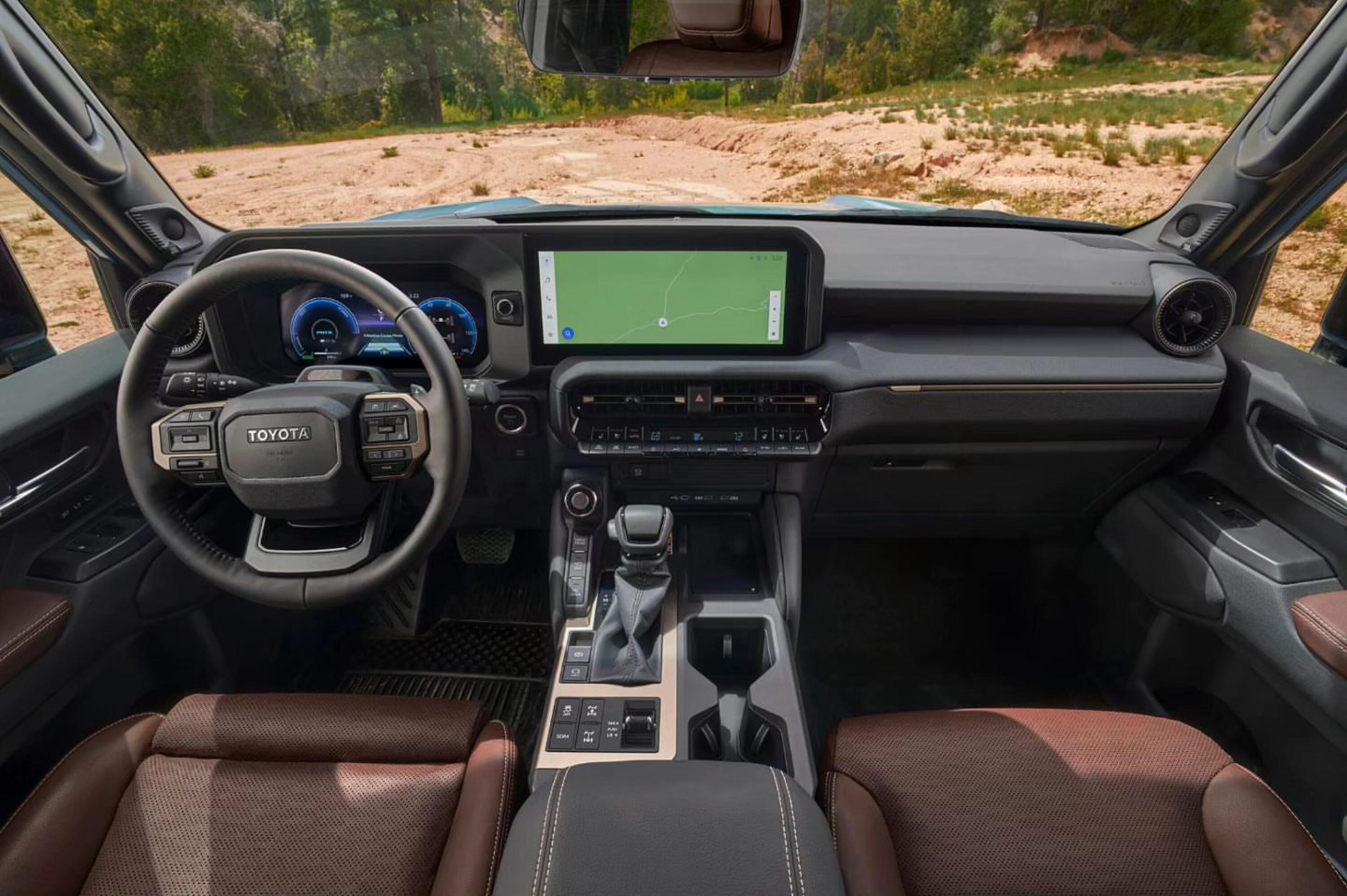
Inside, the Prado has a more rugged appearance than the luxury-focused GX – but the fundamentals are similar.
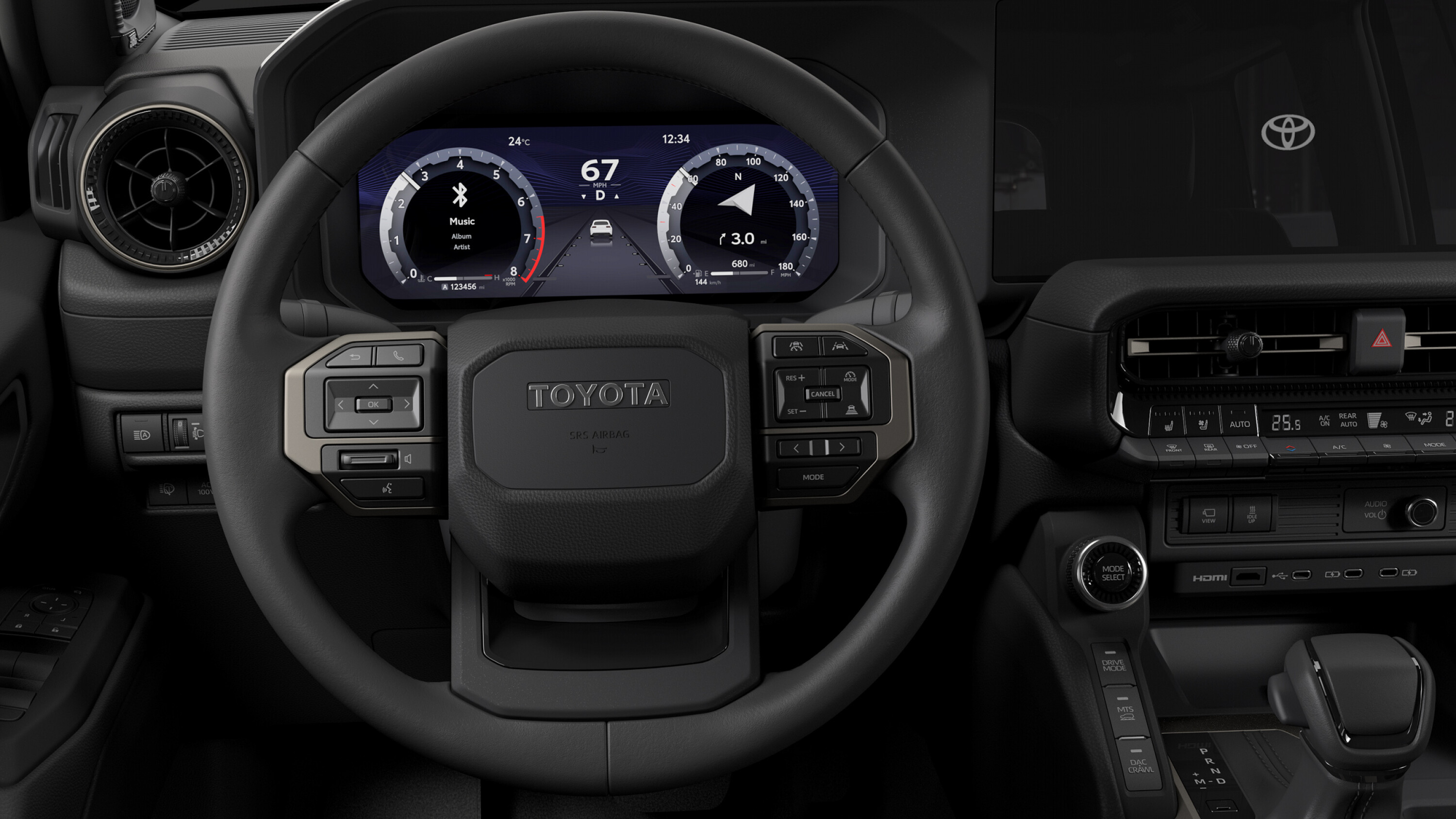
It boasts a significant technological step forward over the current Prado, with a 12.3-inch infotainment system running Toyota’s latest software. It will feature wireless Apple CarPlay, over-the-air software updates, Connected Services, and USB-C ports.
1
A 12.3-inch digital instrument cluster sits ahead of the driver, replacing analogue dials and a small 4.2-inch multi-information display.
As before, there will be seating for five or seven passengers, with a familiar line-up expected where the entry-level GX should have five seats, and all other variants will score seven.
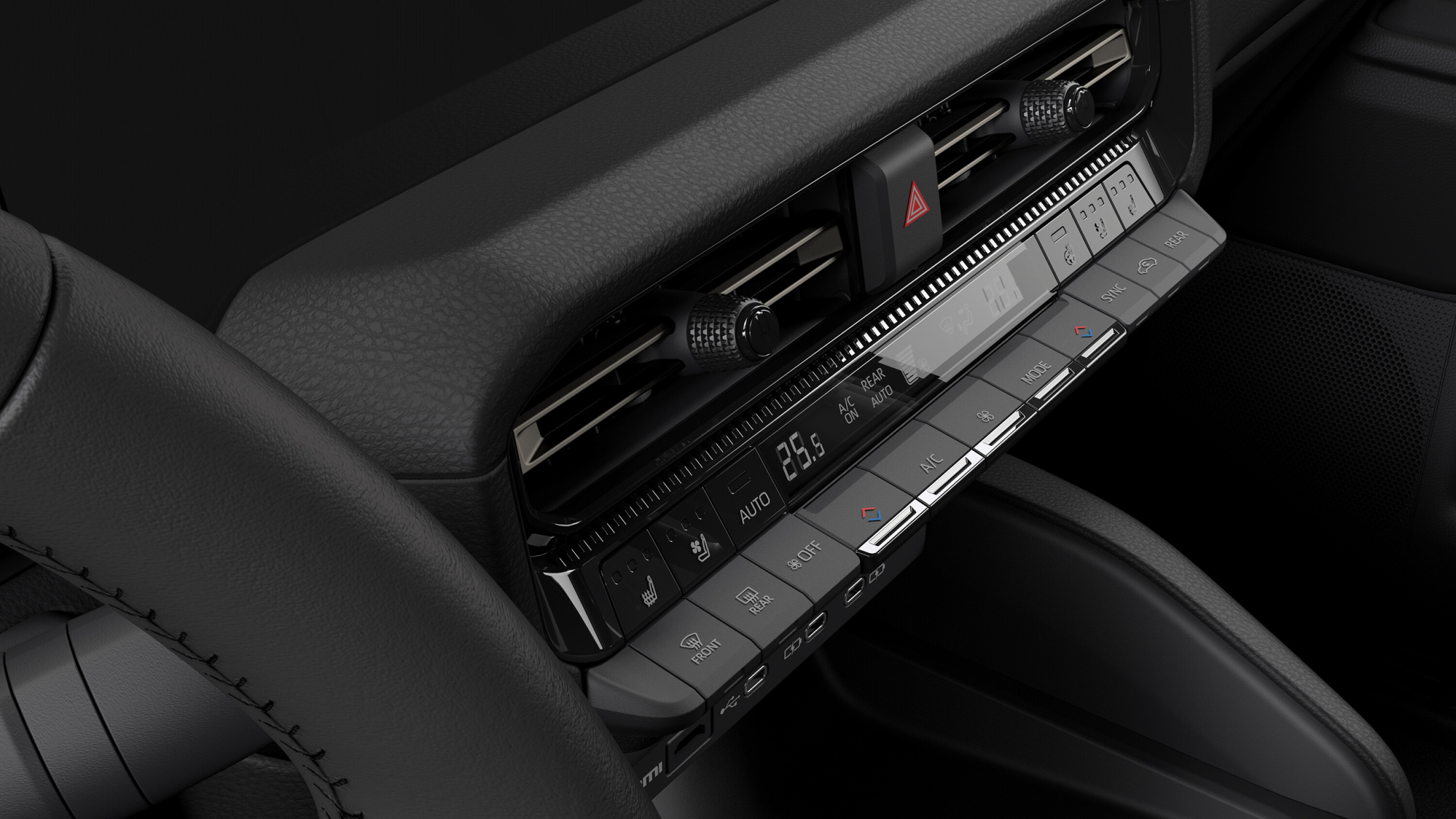
Available features include heated and ventilated front seats, a cooled centre console, a 2400kW inverter in North America, and eight-way power-adjustable front seats.
Toyota has confirmed its latest active safety technology, including lane-trace assist, will be available.
Australian pricing for the new Prado is still to be revealed, but it’s likely to cost a lot more than the current $62,830 starting price – which is only for the specs-bare entry-level GX model.
In the US, Toyota has said the new Prado will be priced in the US$50,000 range – which converts to just over $83,000 Australian dollars.
Local specification is sure to differ from the US market’s equipment list, however, so a direct currency conversion is rarely a valid comparison.
Availability
The new 2024 Toyota Prado will arrive in local showrooms mid-year, with more details – including specific timing, pricing and features – to be announced closer to its Australian launch.
“Australian customers appreciate the vast capability of the LandCruiser Prado, from use as a family vehicle, to off-roading, towing and long-distance touring, which is evidenced by its huge popularity,” said Toyota Australia vice president of sales and marketing, Sean Hanley.
“The all-new Prado takes everything that customers love about the Prado to a new level, with even greater performance, capability and technology, as well as bold new styling inside and out.”
The 2024 Toyota Prado has been given an unscheduled early unveiling online, thanks to prolific Instagram page Kurdistan Automotive Blog.
This is our first proper look at the new Prado. Toyota Australia had confirmed with Wheels Media last week that no details or images would be given under embargo – but, as always, the overseas media appear to have the details in advance. And, as often happens, it’s come online early.
What do you think of the new-look Prado? It’s been teased for months now, but it was the new Lexus GX – a more premium companion to the Prado, unveiled in early June – that gave buyers their first look at the Toyota version’s styling.
As expected, the new Prado and GX share the same body panels through the profile, although the GX gets gloss body-coloured cladding in place of the Prado’s harder-wearing unpainted pieces.
1
1
1
The big differences are at the front and rear, although it’s the front end that bears the most distinctly different styling. For the GX, there’s the familiar ‘spindle’ grille and slim headlights, terminating at a uniquely angled-off quarter panel for a sharper point.
In Prado form, there are two front-end designs, with rectangular and round headlight options – both featuring as a tasteful throwback to LandCruisers of generations past. A simple rectangular grille sits proud in the centre of both faces, along with minor cosmetic differences across the lower bar.
1
1
Moving to the rear, the Prado again keeps it simple and retro, with new smaller tail lamps that hark back to the first Prado – instead of the taller units that have previously reached up the D-pillar.
For the Lexus, the same body panels are used, but the tail lamps are split in half – with a filler panel beneath – and a light bar runs along the tailgate to connect the corner lights as one long signature design.
Moving inside reveals more significant changes, with the Lexus featuring a taller main display, along with a Lexus-specific steering wheel, dashboard design and centre console. The doors also appear to be different, although the Prado’s door details are obscured in shadow for now.
Jump into the comments to tell us which design you prefer.
EDITOR’S NOTE
With the official reveal still to come, this story will continue to develop through the day. Check back from around 11:30 for the first official details.
You can also hit our ‘Everything we know’ story here for all of the details we believe to have been confirmed in reports overseas.
Another tidy selection of 4x4s sent in by our readers this month. Keen to see yours published in our magazine or online? Then send us a photo via our Facebook page.
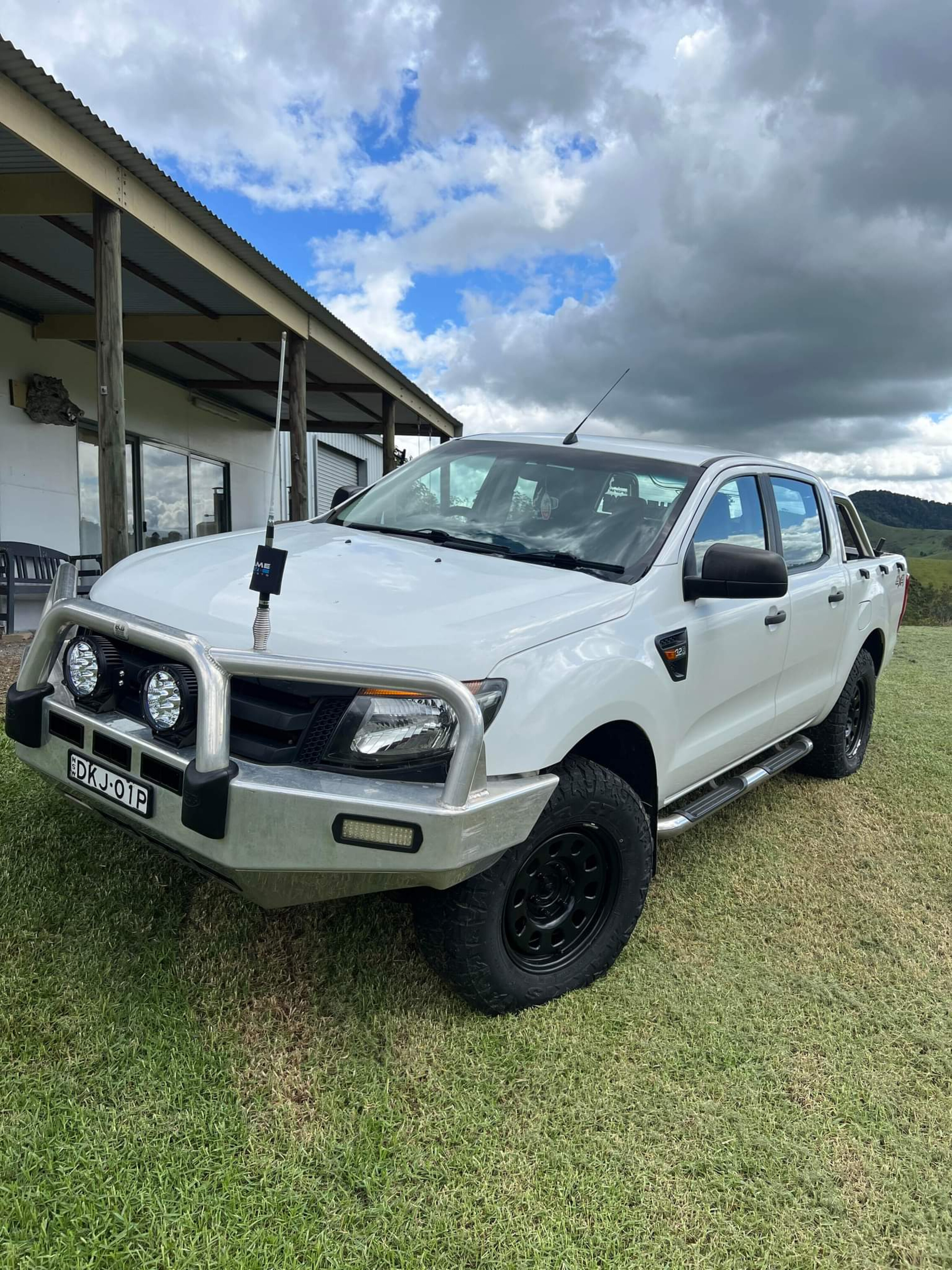
2012 PX Ford Ranger
1
Not many mods, just some new rims and tyres. Plus it’s running leaf springs in the back and independent suspension up front, as well as a new three-inch Outback exhaust. I’m going to start building a custom touring set-up soon – Tom Lewis
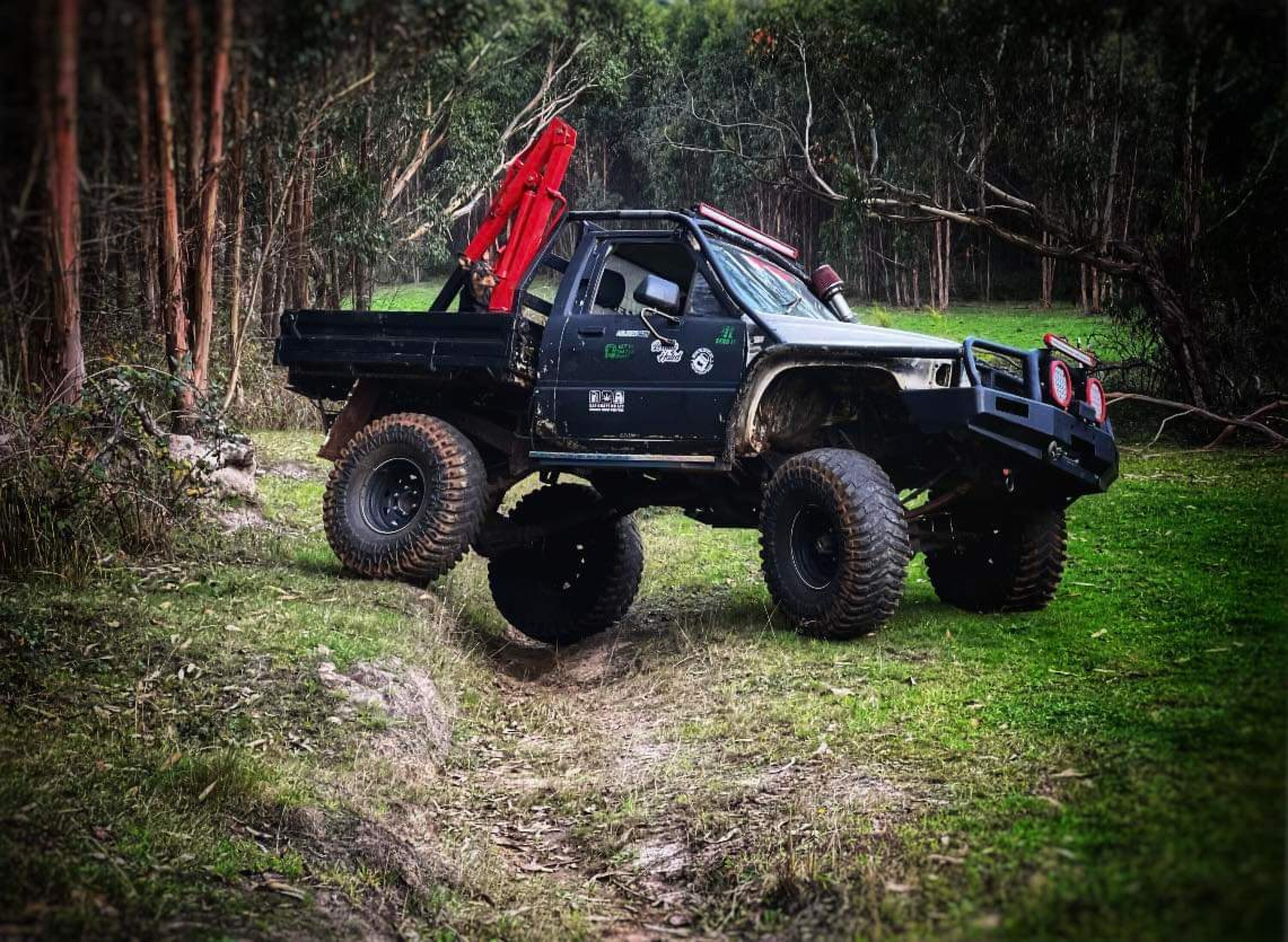
SWB HiLux
1
This is a short-wheelbase Hilux that was handbuilt from a rolling long-wheelbase shell. My partner grabbed it out of the paddock as a shell and built it into what it is now, and he doesn’t give himself the credit he deserves for this, so I thought this would belong here. The rollcage was built out of an old trampoline, and the lift kit out of scrap metal. All cut and welded back together as a short-wheelbase and done with hand tools at home – Sarah Marie Hume
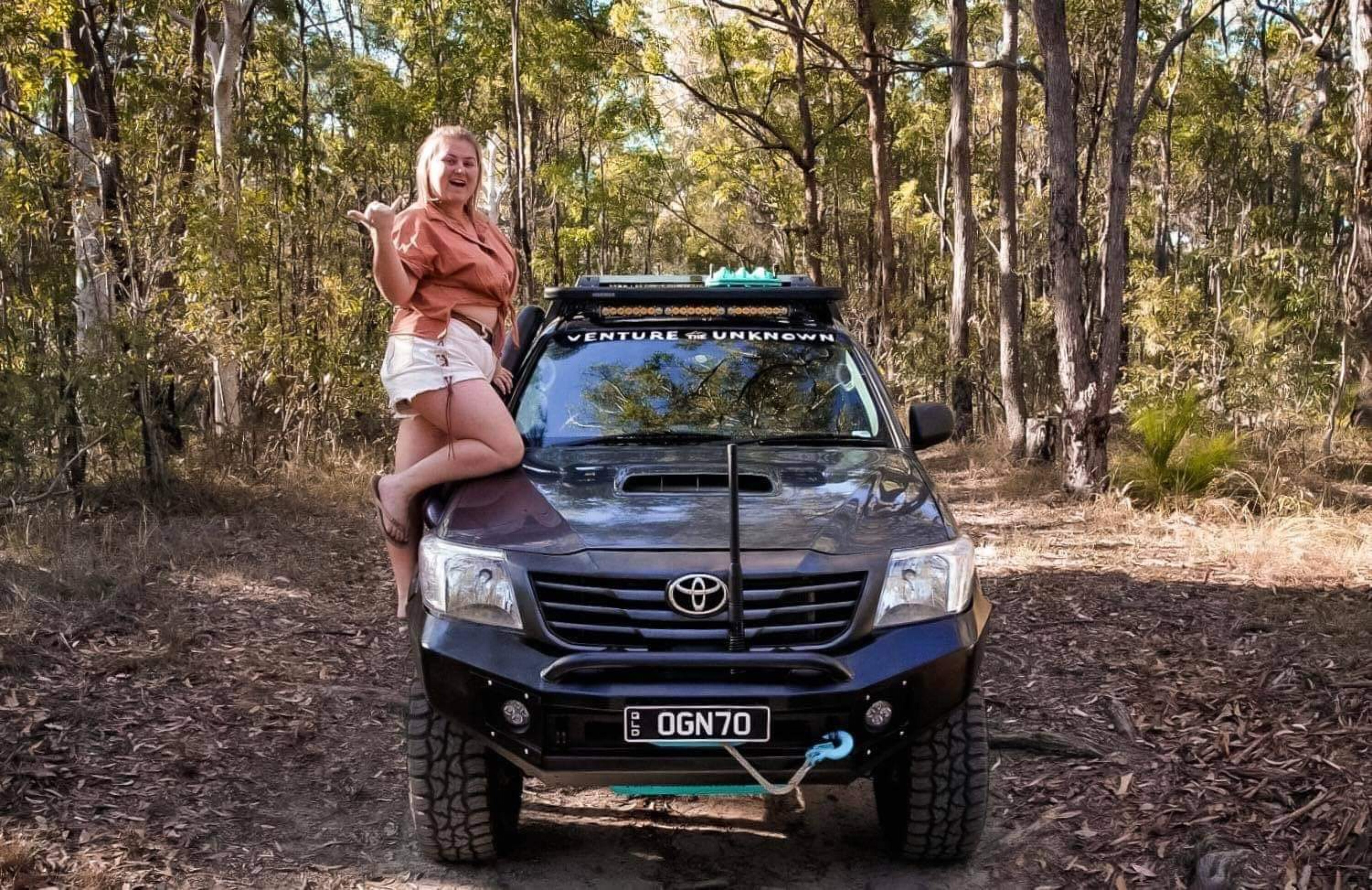
2014 Toyota HiLux N70
1
This preloved rig already had a fair bit of work done to it before purchase. This Hilux is the first rear coil conversion done by Superior Engineering. Plus, it has front and rear lockers, upgraded intercooler, and a 3.5-inch exhaust system with a 200hp tune. It is due for some upgrades and some TLC.
Plan is to replace the roof rack, battery system and give it a makeover. We will be rebuilding the rear coil conversion with Superior Engineering and replacing front and rear shocks. We plan to use the Hilux to travel Australia, while working on different stations – Emma
2012 Nissan Navara
1
I bought my Navara in 2021, stock as a rock. I’ve put in a two-inch lift, bullbar, snorkel, UHF, and added a canopy and dual battery set-up. February 2023 saw a DIY clutch delete on the beach, so she got a new heavy duty clutch and single mass flywheel conversion. The plan for Vanellope is bigger tyres, new wheels, a bigger lift and a tray conversion – Meya
2019 Nissan Navara STX NP300
1
I’ve done a bit of cosmetics, just changing the grill and a bit of chrome-delete. I’ve put a GME system in it and attached it to the bonnet, as well as a 12v system in the tub. I’ve also put a throttle controller in to help with the throttle response and added a catch can to keep her running right.
I’d love to do a tray set-up with a canopy and rooftop tent, as well as a bullbar and twin stainless snorkel set-up to a custom air box. I wouldn’t mind putting a bigger lift in to fit some bigger tyres as well.
I love taking my pride and joy out on the weekends on trips with the SEQ Adventure girls to the bush and beaches, testing out her capabilities and learning what the car and myself can drive – Chanelle
1999 Nissan Patrol RD28
1
We get a lot of hate being an RD, but I love her and she gets me everywhere I need to go. It’s pretty stock at the moment. I have put mud tyres on and have drawers in the back. I would love her to be fully set-up for travelling around. Next on my list is a snorkel and lift, after I have put the new turbo and exhaust in. I love beach driving and, of course, hitting the tracks and getting muddy – Livy
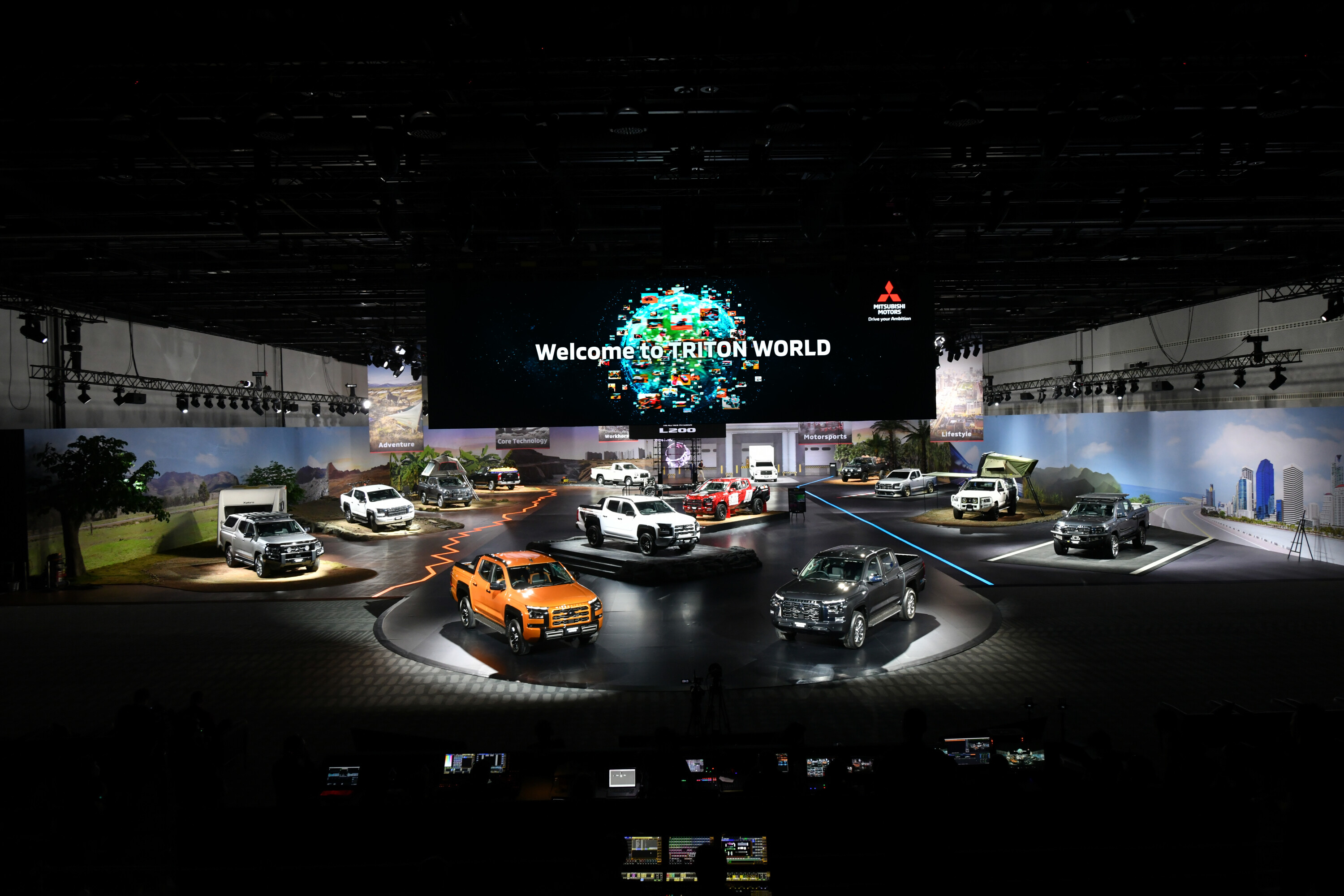
As the 2024 Mitsubishi Triton press conference concluded, a dramatic light show accompanied curtains lifting on ‘Triton World’ – an all-ute mini Motorshow at Bangkok’s Queen Sirikit National Convention Centre.
A total of 14 utes were present, from a 4×2 Thai base variant with a dot matrix head unit and a lowered race car concept through to fully-loaded models relevant to the Australian market.
Our design department was deeply involved in [TJM’s] development, so we are improving how to work with accessory suppliers
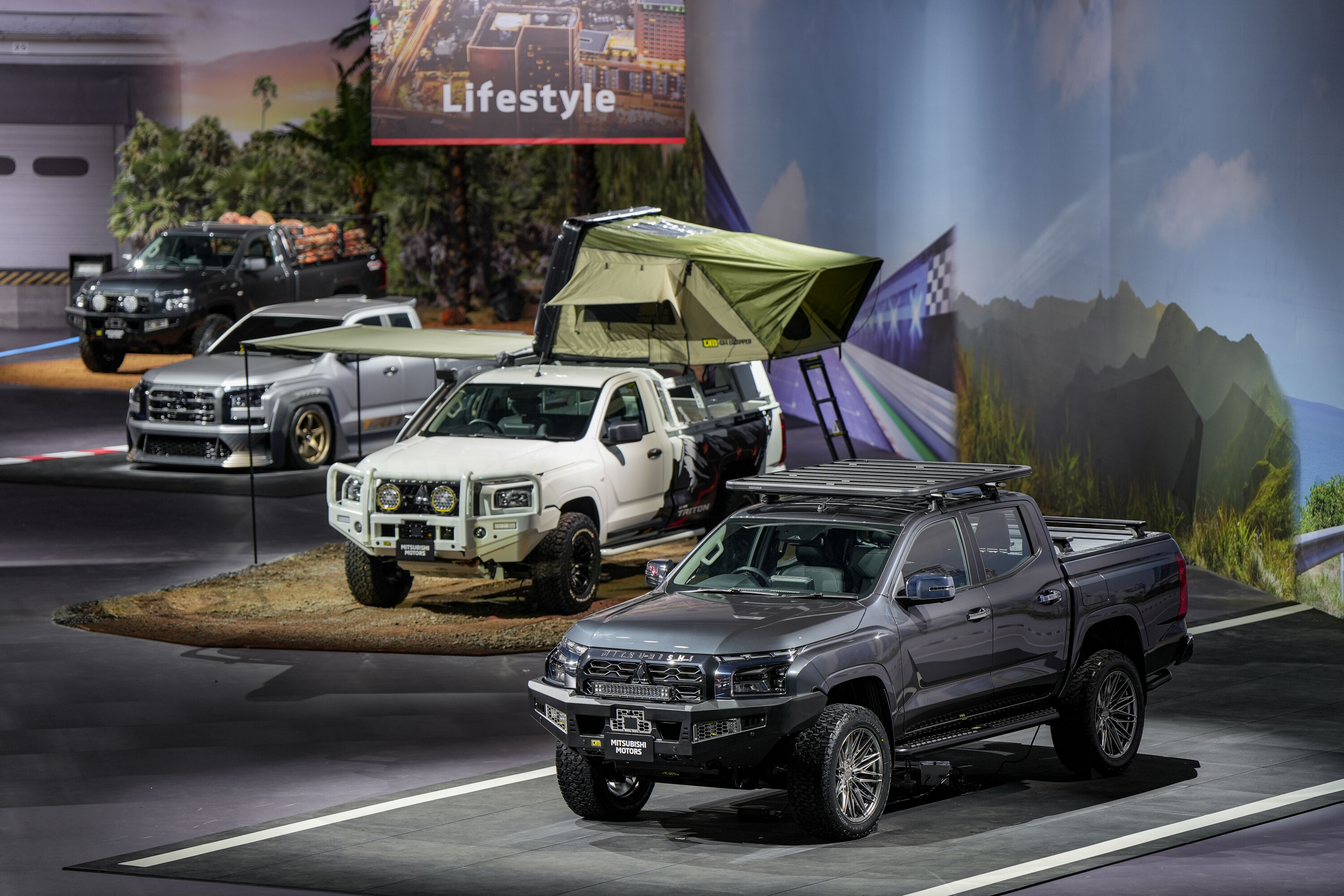
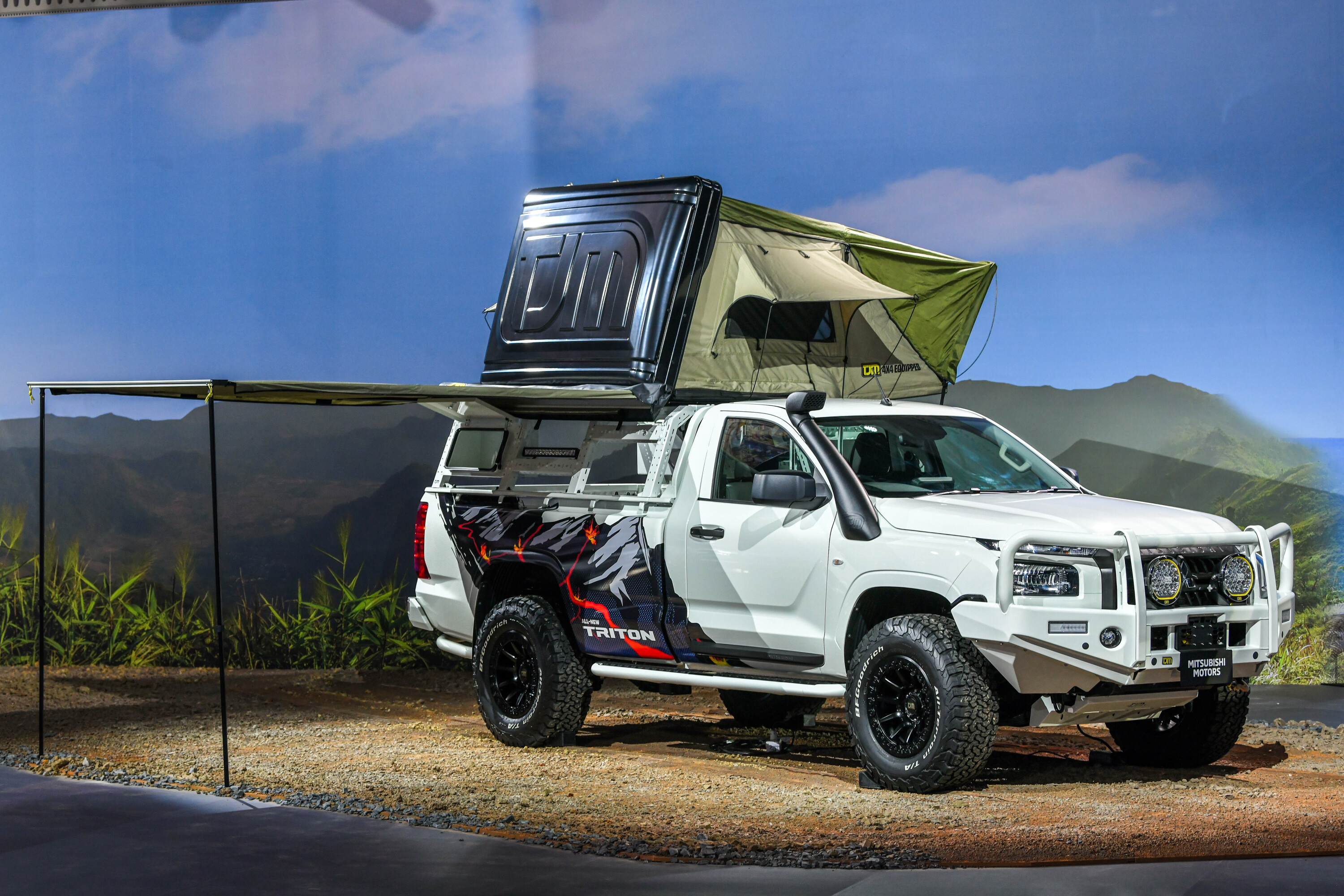
On stage right was a surprise for Australian media, a trio of TJM-accessorised Tritons were on the floor. They ranged from lightly roo-barred Durian carriers to full-fat camping setups – and Mitsubishi is very much aware of Ford’s relationship with ARB.
Arranged by the Thai arms of each company, the current TJM-Mitsubishi relationship is not the same as the tight-knit partnership between ARB and Ford Australia, but Mitsubishi isn’t against working more closely in the future.
“We have been talking with TJM for accessories for the new Triton, which isn’t what we’ve done in the past… This time, our design department was deeply involved in those developments, so we are improving how to work with accessory suppliers”, president and CEO of Mitsubishi Motors Corporation, Takao Kato, told 4X4 Australia.
To have the kit ready for the Triton’s reveal, the TJM team would have needed access to the cars for 3D modelling and measurement work, as well as evaluating how the changes affect the vehicle – for example, the suspension kit and integration of the radar sensor for the AEB system.
“I know that Ford is working with ARB, and that’s really significant, they are actually one team already. Compared with that, we are not there yet”, said Kato-san, admitting that Mitsubishi has been paying close attention to Ford’s relationship with ARB.
TJM parts won’t be sold in Australian Mitsubishi dealerships – at least initially – but the Japanese carmaker’s genuine accessories that were developed locally in South Australia will be available from the ute’s February 2024 on-sale date.
1
Mitsubishi Triton Genuine accessories
Mitsubishi Australia has been hard at work developing genuine accessories at its South Australian home base for our market.
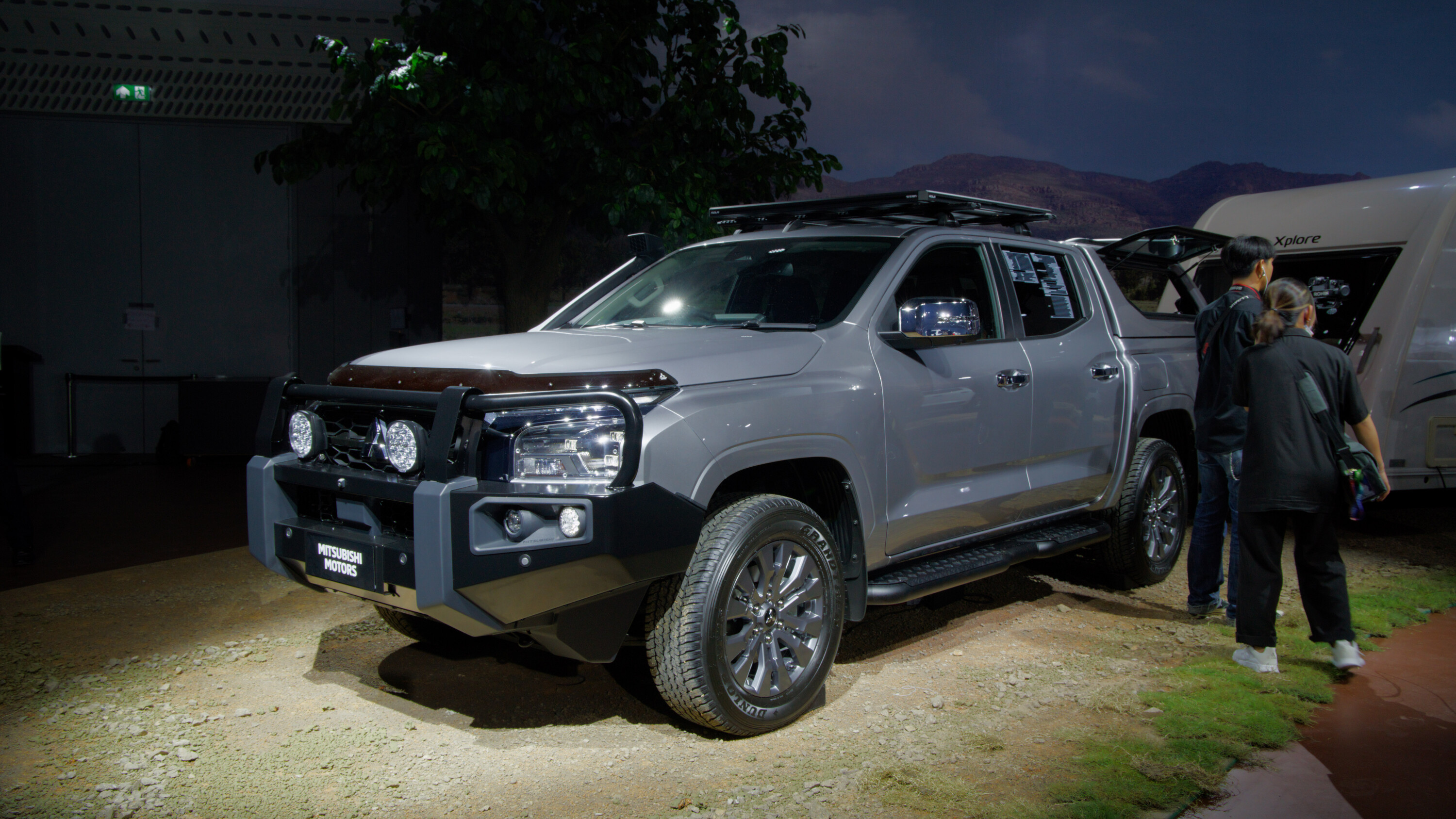
Aside from the unadorned high-spec black and orange cars on the stand – effectively a GLS and GSR – there was a fully-accessorised white Aus-spec GSR hooked up to a (large-for-Thailand) caravan to emphasise the 150kW/470Nm Triton’s improved 3.5-tonne towing capacity.
3
It features all the kit from Mitsubishi’s genuine accessories catalogue, including:
Mitsubishi Triton genuine accessories
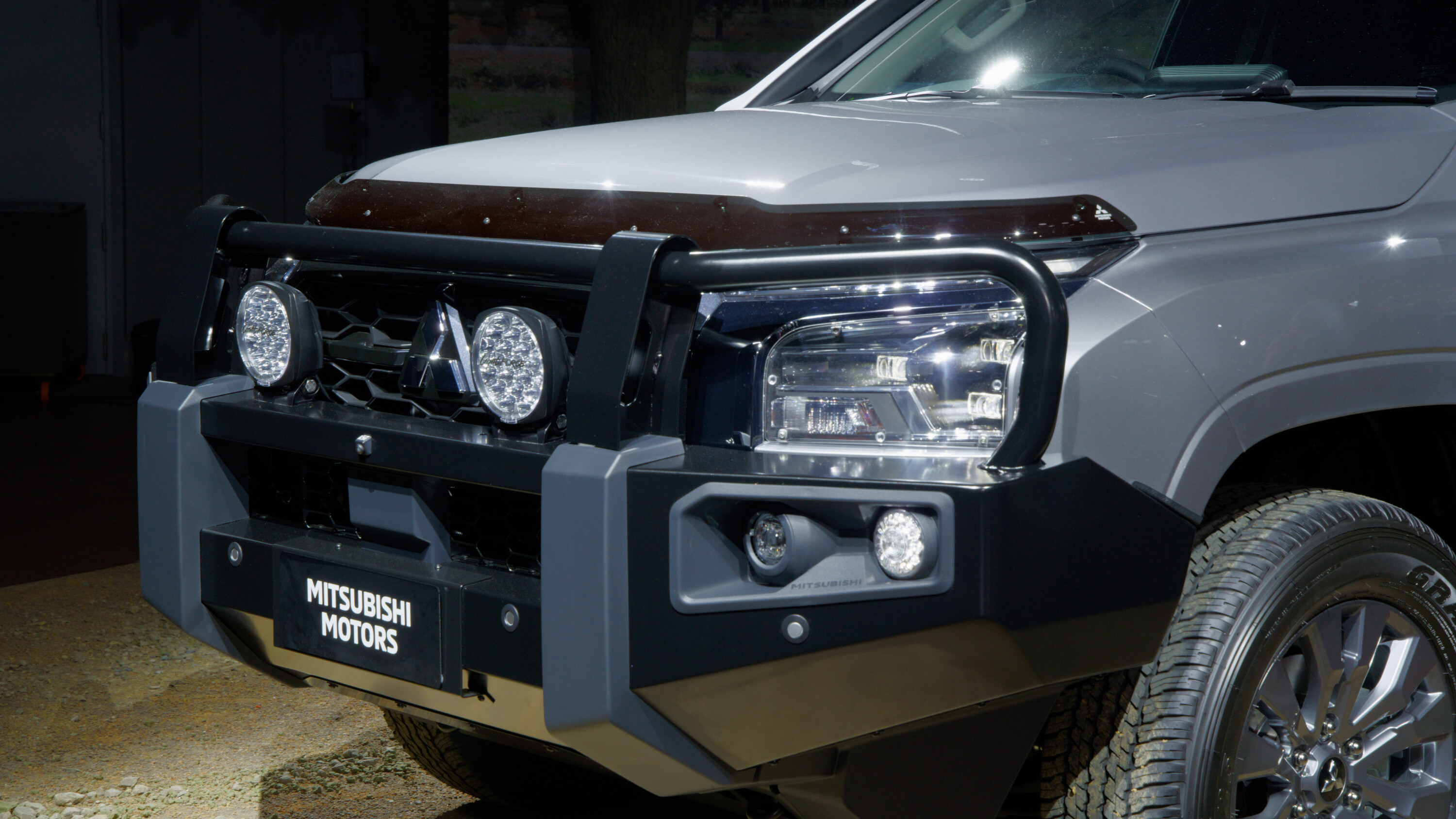
Roo bar with integrated foglights and AEB compatibility
Rear protection bar
Winch cradle kit
Roof base rack
Underbody protection (front, steel)
Canopy with opening side windows
LED spotlights
12-volt power outlet in the tub
Headlight protectors
Tailgate dampers
Bonnet protector
Spray-in bed liner
Snorkel kit
Tub tie-down system
Steel side steps
Rubber floor mats
Mitsubishi is yet to announce accessory pricing for the 2024 Triton.
TJM Triton accessories
Though Mitsubishi’s Japanese arm showed interest in further collaboration, as it stands the accessories will be sold through TJM suppliers only, in Thailand and the ASEAN region initially, with Australian introduction likely in the future.
13
Fitted to the most highly accessorised vehicle on show were the following parts:
Mitsubishi Triton TJM accessories
TJM T13 steel bull bar with LED light bar and integrated winch
TJM rear bumper bar
TJM under-body protection
TJM snorkel kit
TJM steel side steps
TJM suspension kit (no stats on lift)
TJM kitchen unit
TJM bed rack
TJM side panel toolbox
TJM wheels with BF Goodrich K02
Sample TJM roof-top tent
TJM awning
“We’re excited to see this work finally come to life with Mitsubishi Motor Thailand,” said deputy MD of TJM Thailand, Trin Yiamyongchai. “The agile relationship we have with Mitsubishi has enabled us to produce accessories that will allow Triton customers to create bespoke vehicles that align with their exact needs and lifestyle.
“Our range of accessories for the Triton empowers our customers to do exactly that, they can add the precise elements they need to make a real difference in whatever they choose to do”, added Mr Yiamyongchai.
Going bush can sometimes mean you’ll be driving for days to get to your destination.
But what if we told you there is a pristine property in New South Wales with a country-by-the-coast feel to it not far from a major town?
Sure, NSW isn’t blessed with an abundance of island-camping options like Queensland, but it makes up for it in offering top-notch bush camping stays like this one, and the description ‘awe inspiring’ would be doing Wave Hill Station an injustice.
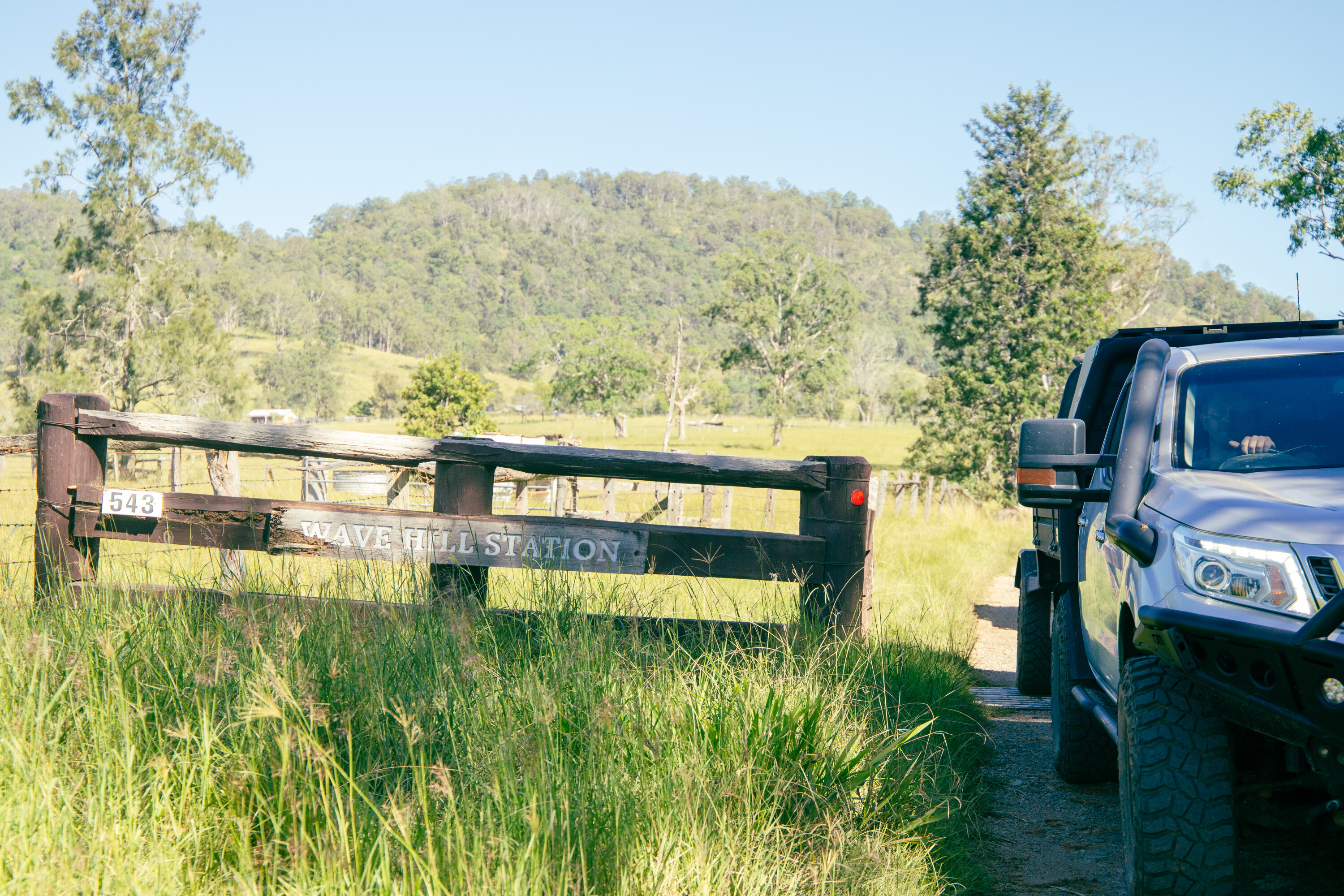
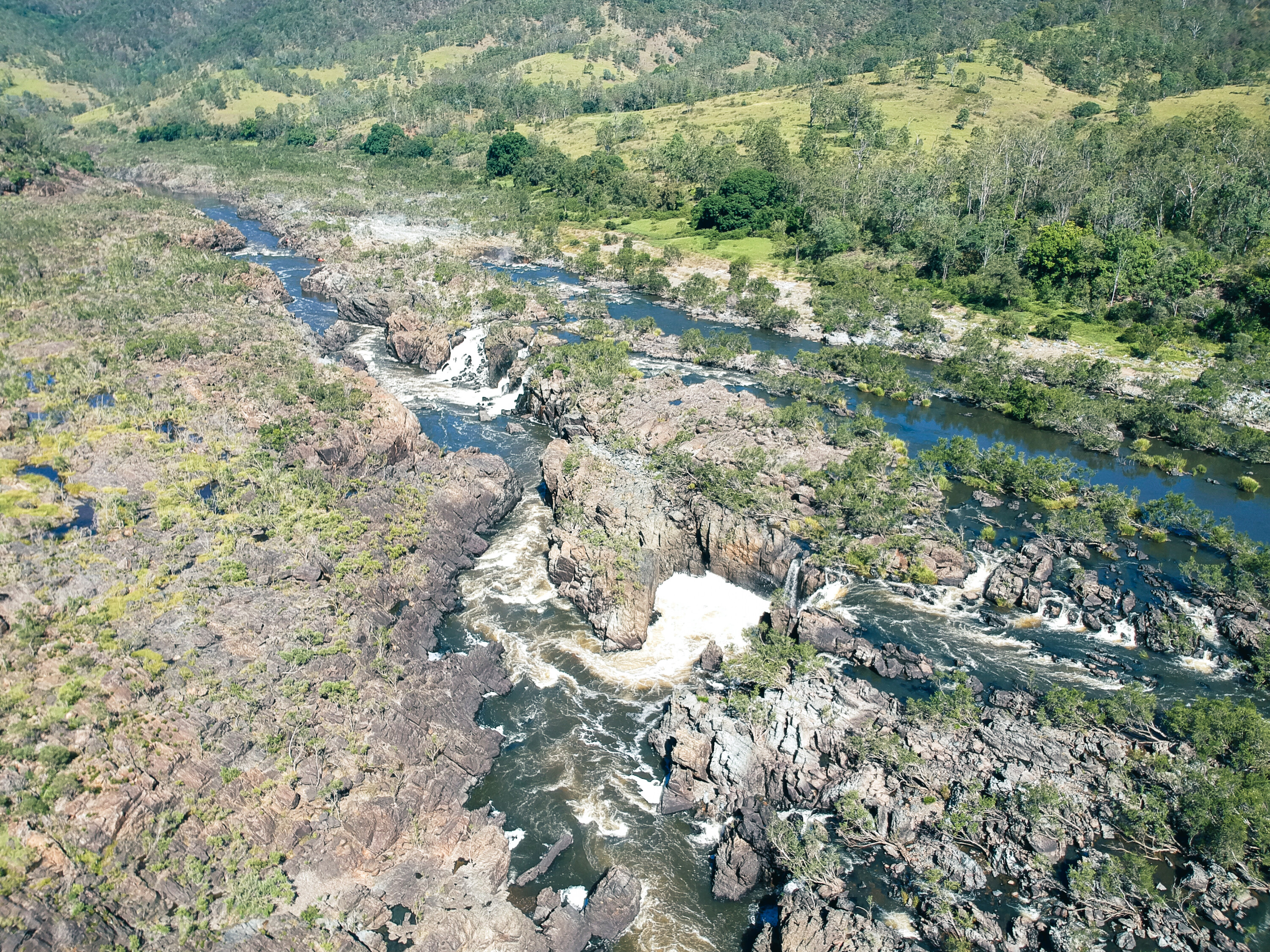
Wave Hill Station and Farmstay is a 5000ha working cattle property situated along the Clarence River, just a couple of hours from Grafton, within the foothills adjacent to the Gondwana Rainforests.
This area is well known for its excellent bass fishing, more so at the waterfalls, as well as providing pristine views of the Clarence Valley – the scenery here is simply breathtaking.
Once you’ve arrived at the property, checking in is simple. You will most likely be greeted at the gate by the owner Steve, but if he’s otherwise engaged there are labelled mailboxes for each campsite and accommodation option, in which you will find all the information you need. Remember, Wave Hill is a working cattle property, so if you come to a closed gate, make sure you close after you.
1
It’s hard to comprehend the wide variety of terrain that Wave Hill is situated on, and there are plenty of tracks to explore. These dry-weather-only tracks are rocky in areas, and will require a reasonably capable four-wheel drive vehicle to traverse, but they are well maintained.
The campsites are approximately 9km from the homestead and accessing them can take up to an hour as they are so spread out; on the plus side, you have plenty of space to yourself.
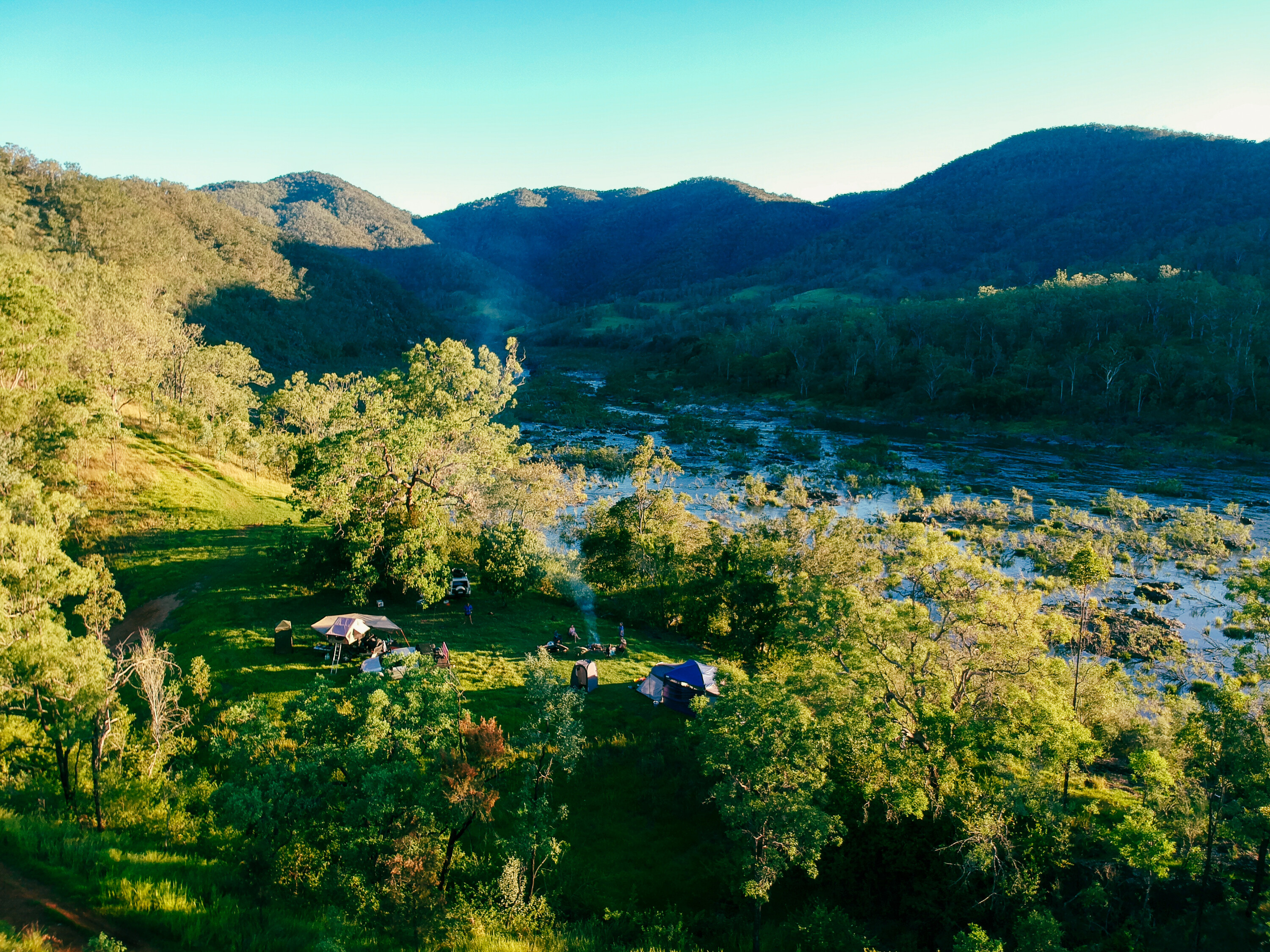
The campsite we were lucky enough to enjoy is called the Top Gorge Back Channel Site, which is situated at the entrance of the Mann and Clarence Rivers.
Perched up high on a hill, this large grassy campsite is secluded and the views are endless, making it an absolutely awesome spot to pitch camp for a week. It is also within walking distance to the Safari Tents just over the hill, which offer a glamping experience for those who don’t want to pitch their own tents.
There is plenty of firewood here and the firepit is situated so that you have a fantastic view of the valley; pull up a pew, crack a coldie and indulge in a cheese board… it doesn’t get any better than this.
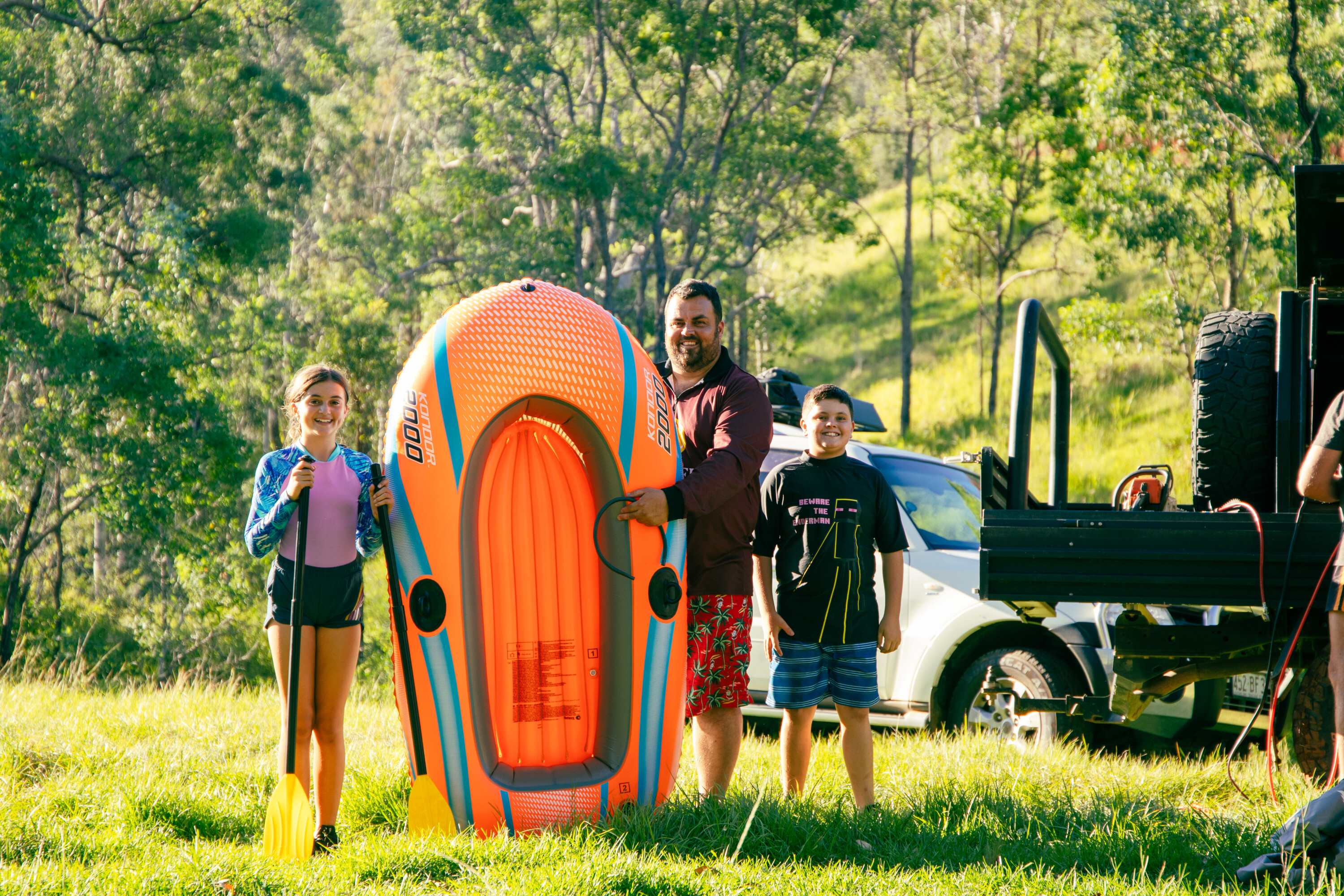
While this particular campsite does not have easy access to the water – you have to climb down the rocks to go for a dip – just down from camp there are calm waters that are a great place for the kids to swim and use their floaties.
1
Launching kayaks can be done a few hundred metres from camp, around the corner from one of the cottages where the landscape is flatter for easy access, but be warned, the current is quite strong because you are at the top of the waterfall and Wave Hill Station strongly recommends you wear personal buoyancy devices and helmets at all times.
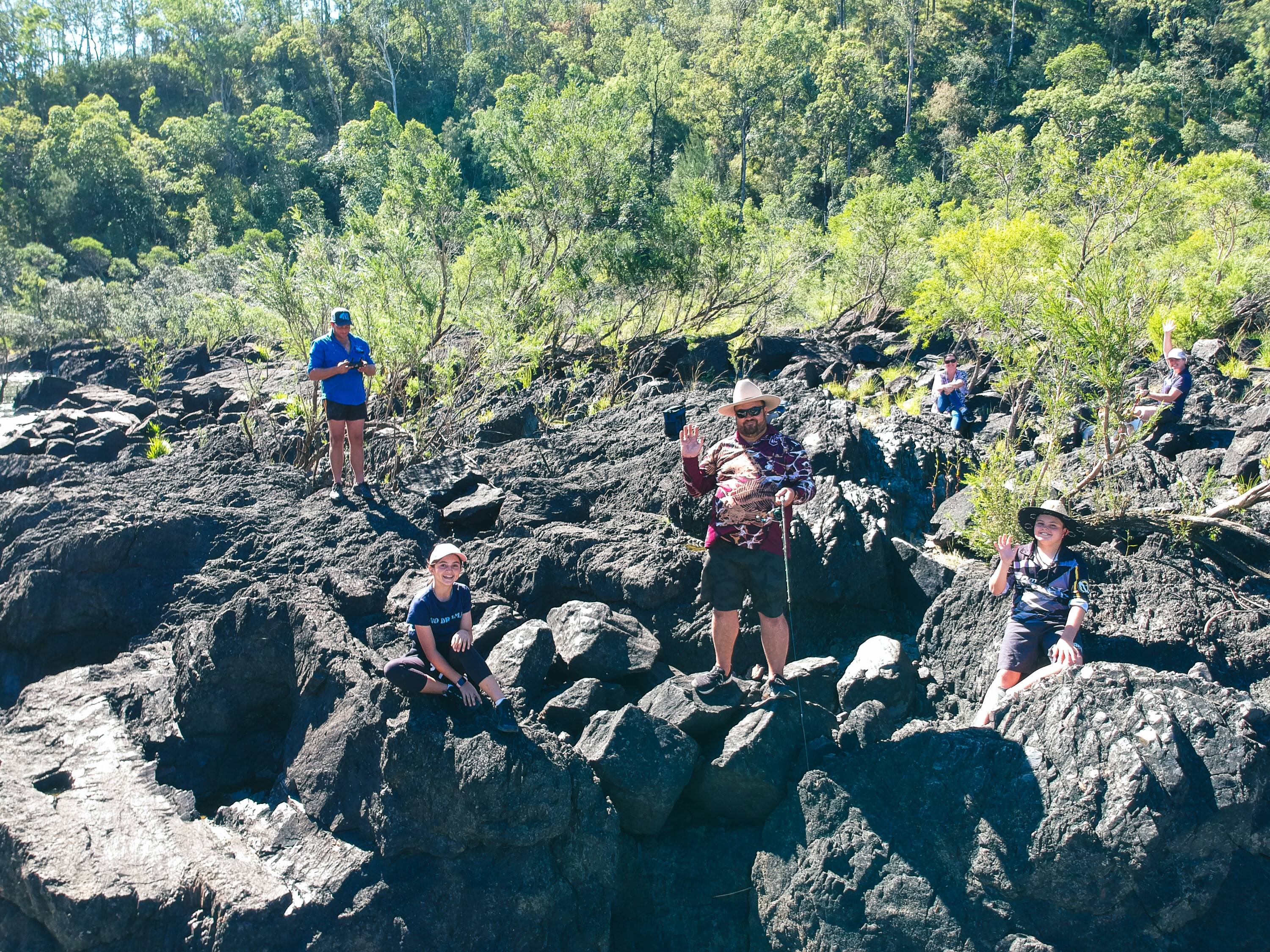
If fishing is your thing, there is a walking track not far from the Top Gorge Back Channel campsite. It crosses just in front of the Safari Tents and then becomes quite narrow and overgrown in sections, but there are handrails along the more difficult sections of this 200m-long track.
Once you get to the bottom of the track, you’ll be greeted by the thundering sound of water pumping over the rocks. The best spots for fishing for bass are in the backwash where they hide from the strong current and wait for a feed.
1
Good footwear is advisable as the rocks are pretty rugged here, however once you land your first fish you’ll soon forget about such trivial matters. Wave Hill Station has a catch-and-release fishing protocol, so please abide by this request.
Sitting by the edge of a river that’s roaring with so much power and energy really makes you appreciate the thousands of years it’s taken the water to carve through the rock. It’s astounding and you can understand why the owners of this place love it too.
If camping isn’t your thing, other accommodation options include the aforementioned Safari Tents that overlook the gorge, as well as a lodge with views of the river.
1
For those who don’t have a four-wheel drive to explore the property, guided horseback tours can be arranged, or for those who want something a little more sedate, you can sit back and read a book at one of the two cottages near the homestead, or you could even make use of the tennis court.
There really is something at Wave Hill Station for everyone. A visit here, if only once, will have you champing at the bit harder than a 47cm bass to get. It is affordable, close to town yet so secluded that you’ll just want to put down your devices and take it all in.
Five essential things to do
There’s a dry-weather 4WD track around the property.
The bass fishing is fantastic, but there is a catch-and-release policy.
There are calm waters for the kids to swim in and places to launch a kayak.
Accommodation ranges from camping to glamping and even lodges and cottages.
Arrange a horseback tour of the property, or make use of the tennis court.
Contact info
Wave Hill Station
Address: 543 Carnham Road, Fineflower via Grafton, NSW, 2460
Email: [email protected]Phone: (02) 6647 2145 or 0428 472 145
The best time to catch Steve is between 12pm and 1pm daily or after 6pm.
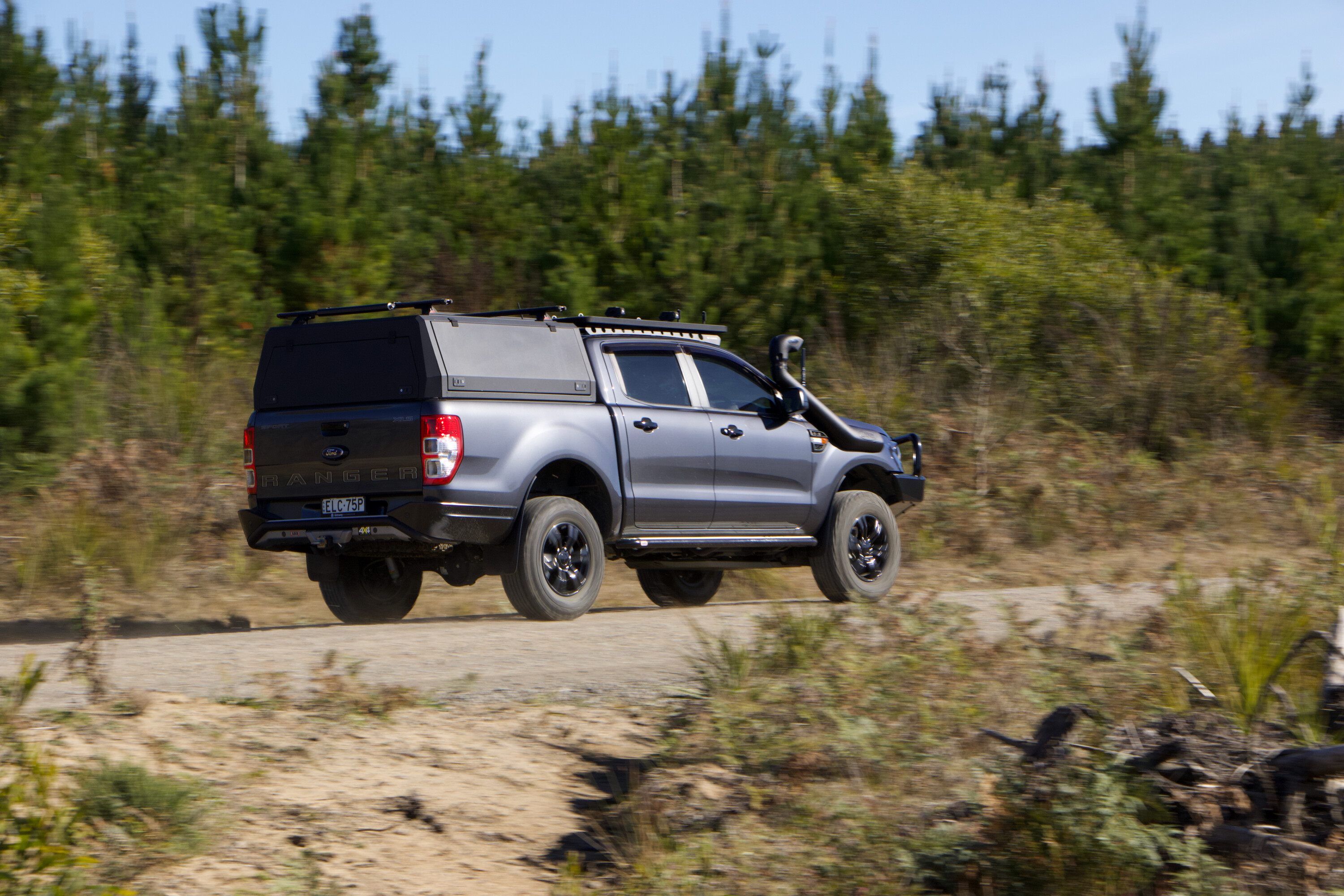
After several years of old Land Rover Defender ownership, I decided it was time to treat myself (and my family) to a more comfortable touring 4×4 … one with a few little luxuries such as air-conditioning and power windows.
So, towards the end of 2020, amid COVID lockdowns, I started scouring the internet for a reasonably priced dual-cab ute.
I spotted plenty of kitted-out second-hand dual-cab utes in my price, but I was keen on a new vehicle so I could build it up from scratch, just how I wanted it. And while I considered several models, deep down I knew I wanted a Ford Ranger.
1
After all, I have tested just about all of the 4×4 utes on the market and I reckon the Aussie-developed Ranger is the pick of the bunch, despite the age of the design and the fact it’s just about to be superseded by a new model.
I opted for cubic capacity over tech when it came to the engine and driveline, choosing the older-generation 3.2-litre five-cylinder turbo diesel; after all, there’s no replacement for displacement, right?
And while I would have been happy with the six-speed manual gearbox, my wife Renata prefers an auto tranny, and as she occasionally drives me home from the pub, she easily won that debate.
1
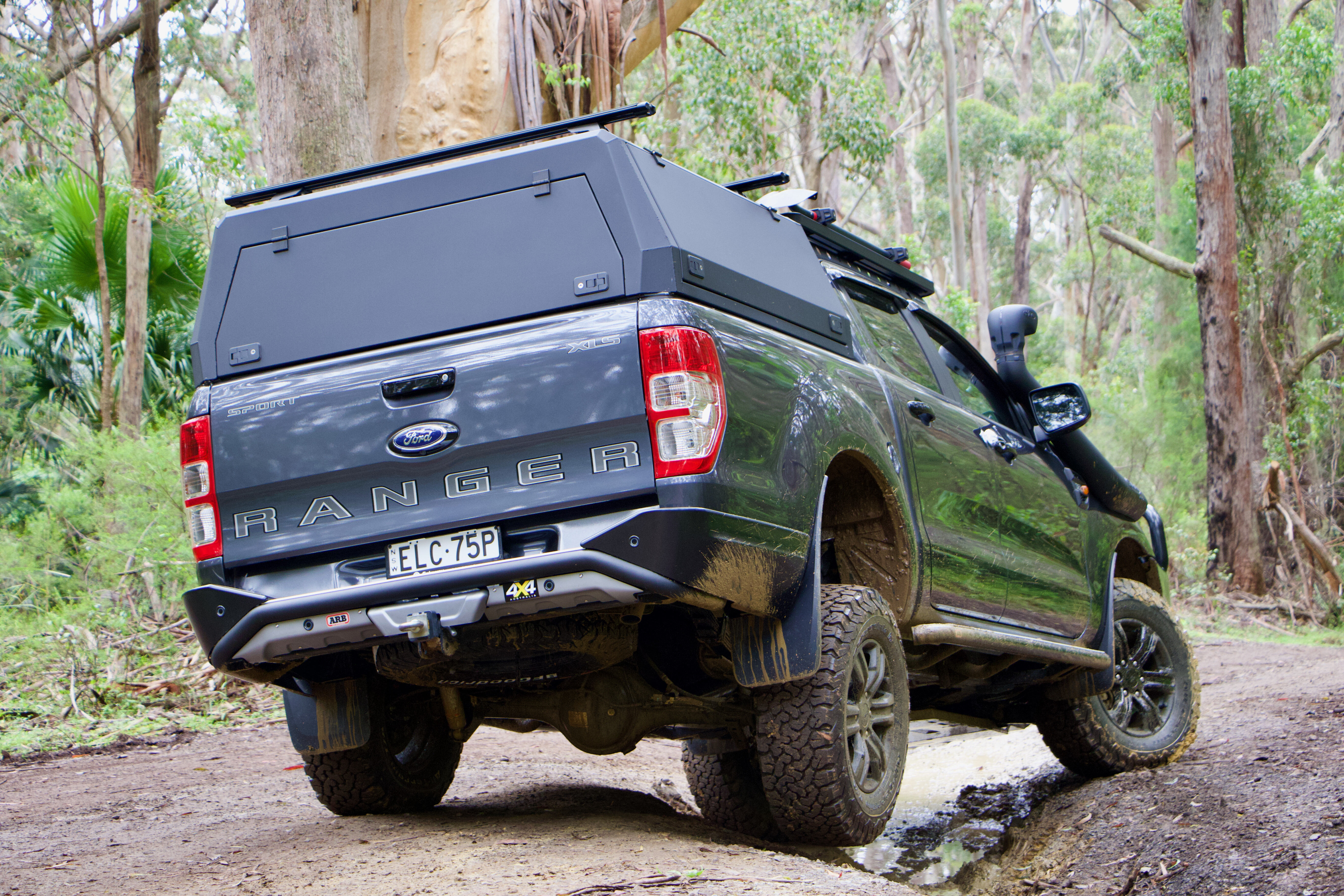
As for spec, I wanted all the safety tech available, but didn’t need superfluous comfort and convenience items. To my mind, the Ranger XLS Sport offered the best in terms of equipment for the price, and I picked this one up just in time for Christmas 2020 for $51,640 drive-away.
Standard kit includes 17-inch alloys, dual-zone climate control, auto headlights and high-beam, lane-keep assist, sat-nav, reversing camera, parking sensors front and rear, DAB+ digital radio, and bed liner. Options in the drive-away price included Meteor Grey paint and slimline weather shields front and rear.
I wrote a list of all the gear I wanted to fit to the Ranger and then started pricing items. The idea was to kit the vehicle out with everything I thought I’d need for touring, and then fit new tyres right before getting the suspension sorted.
1
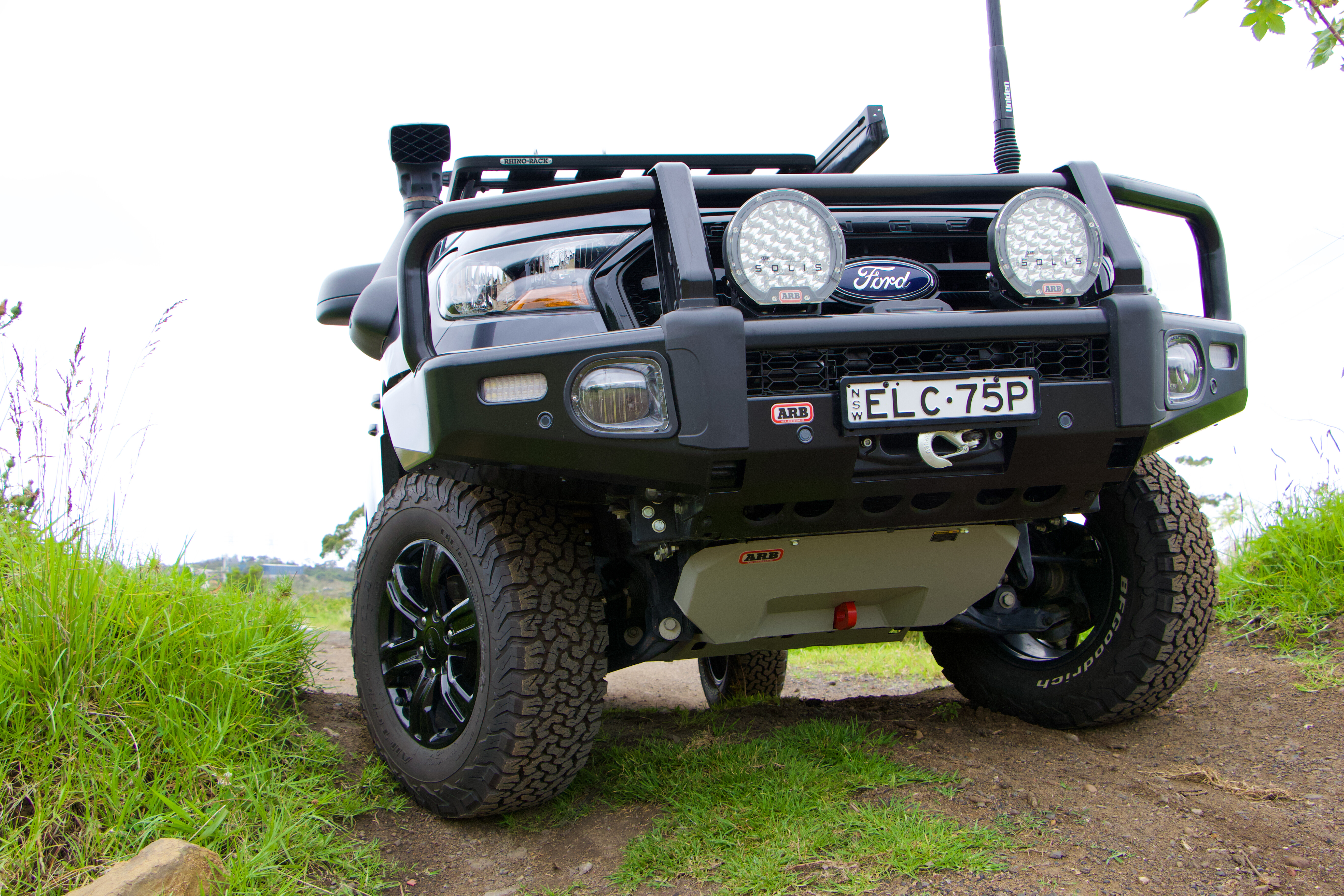
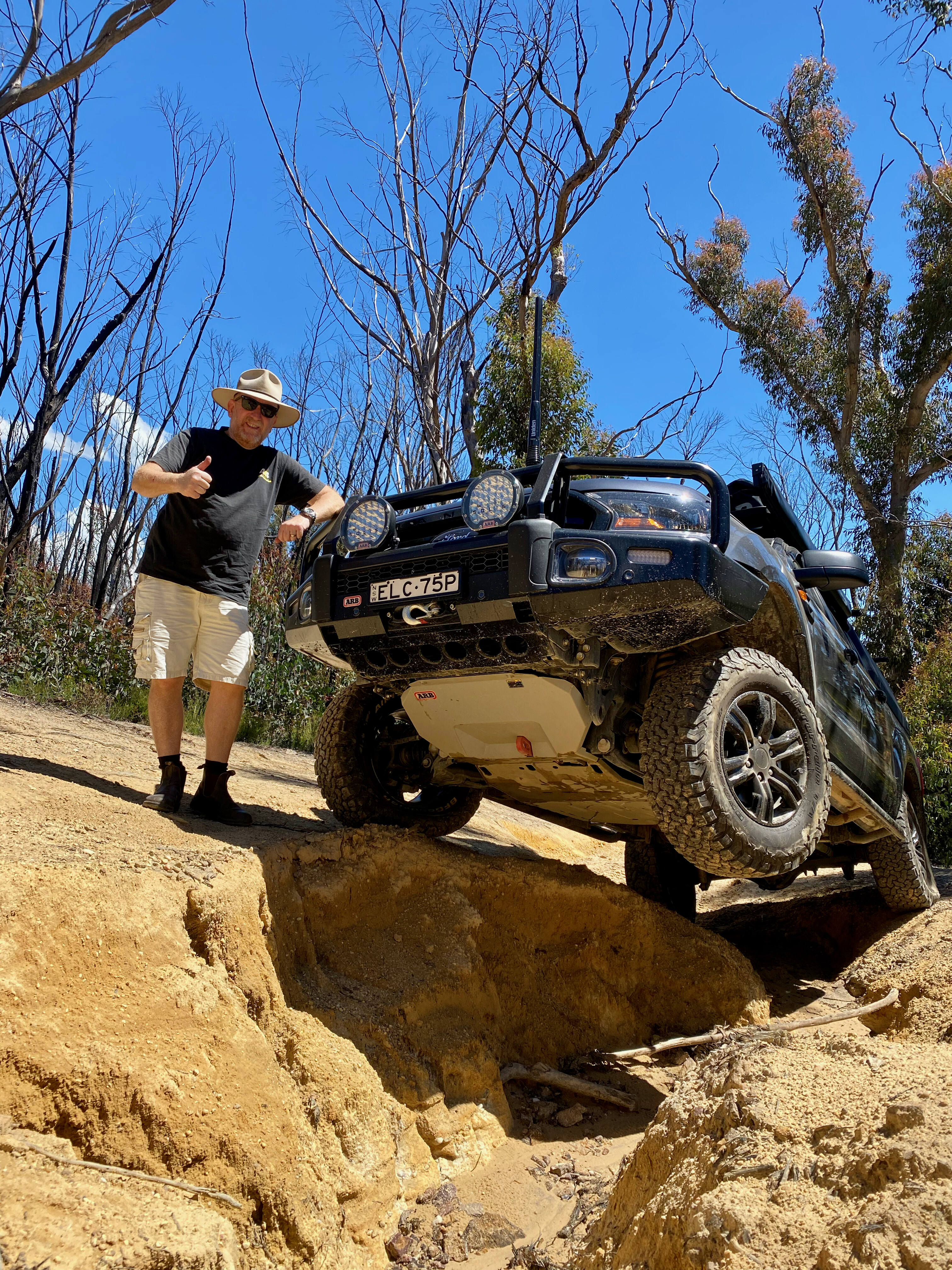
The first stuff to go on was bar work, consisting of ARB Summit bullbar, side-steps and rear-step towbar, along with an under-vehicle protection plate and front recovery point. The bar is home to a Warn VR EVO 10-S electric winch, and a pair of ARB Solus driving lights. While all this gear was being fitted, the excellent team at ARB Wollongong also fitted a Safari Armax snorkel.
I’ve run BFGs for many years on many vehicles and reckon the All-Terrains are a good compromise for on- and off-road use
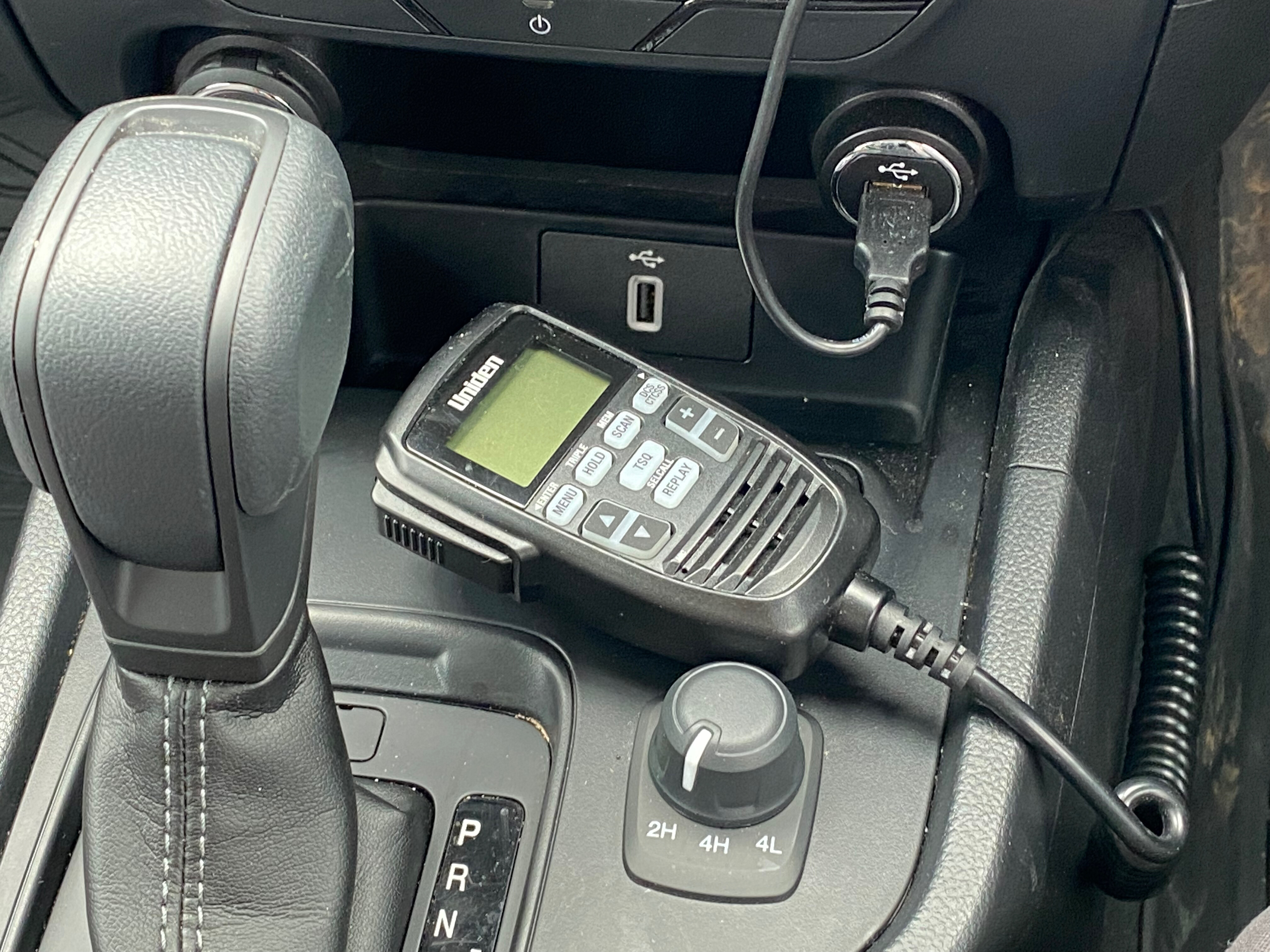
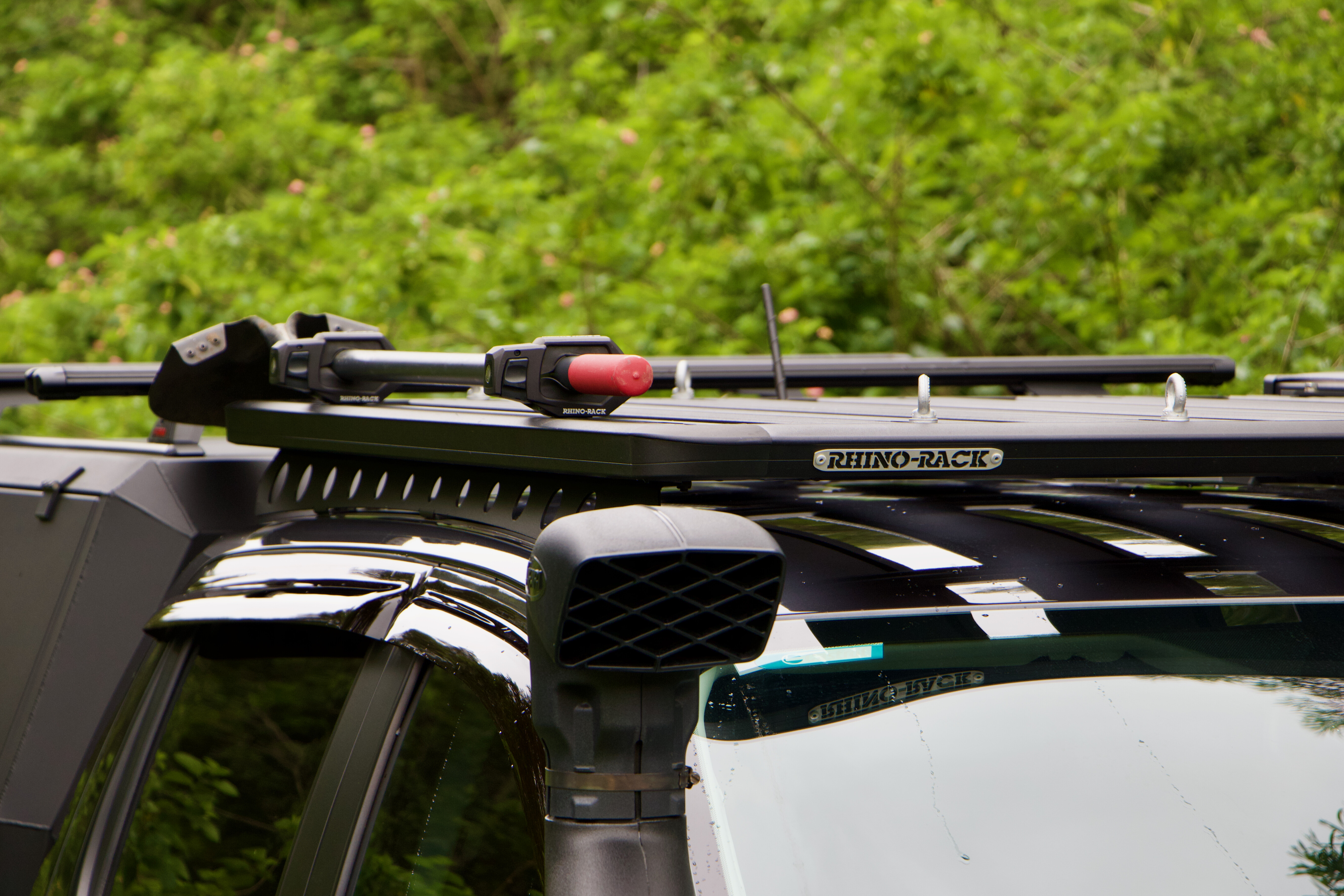
I then set about installing a Navman dashcam with a built-in TPMS, and a Uniden UH9060 radio mated to a Uniden ATX970S antenna, while up top, I had a Rhino-Rack Pioneer platform fitted to that company’s Backbone system.
The Ranger stayed like that for a while until I found the right canopy. At the top of my list was a Kiwi-made Utemaster Centurion canopy or an Aussie-made Camp King canopy, as I wanted to retain the Ranger’s tub with deep lift-up doors on each side for easy access.
1
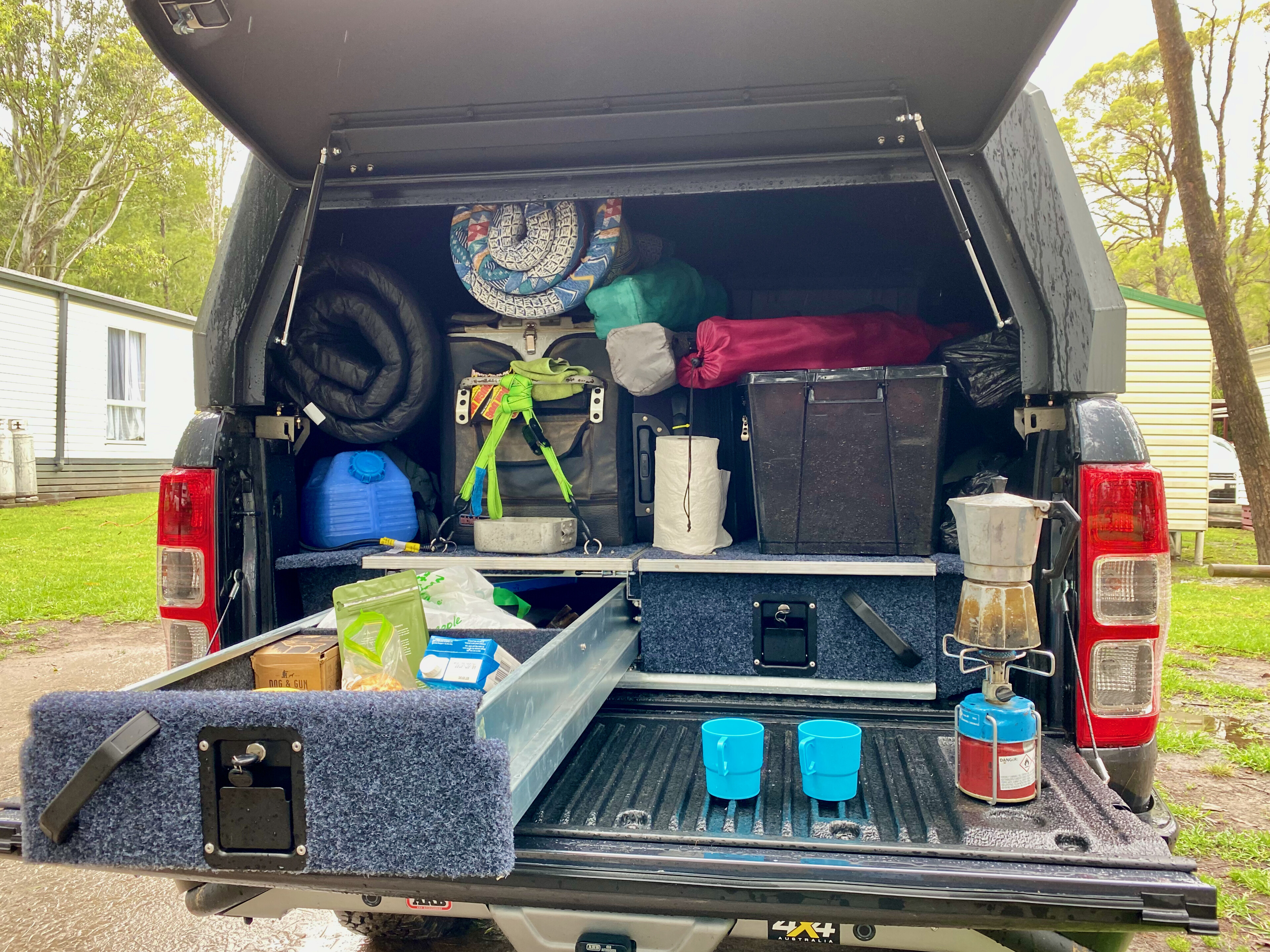
I eventually settled on a more affordable (imported from China) no-name aluminium canopy. The design is fantastic and it mounts to the tub’s cargo tie-down points, but the supplied mounting hardware wasn’t great and I had to make several modifications to fit it securely. I’ve since fitted a drawer system and rubber seals around the tailgate to keep dust out.
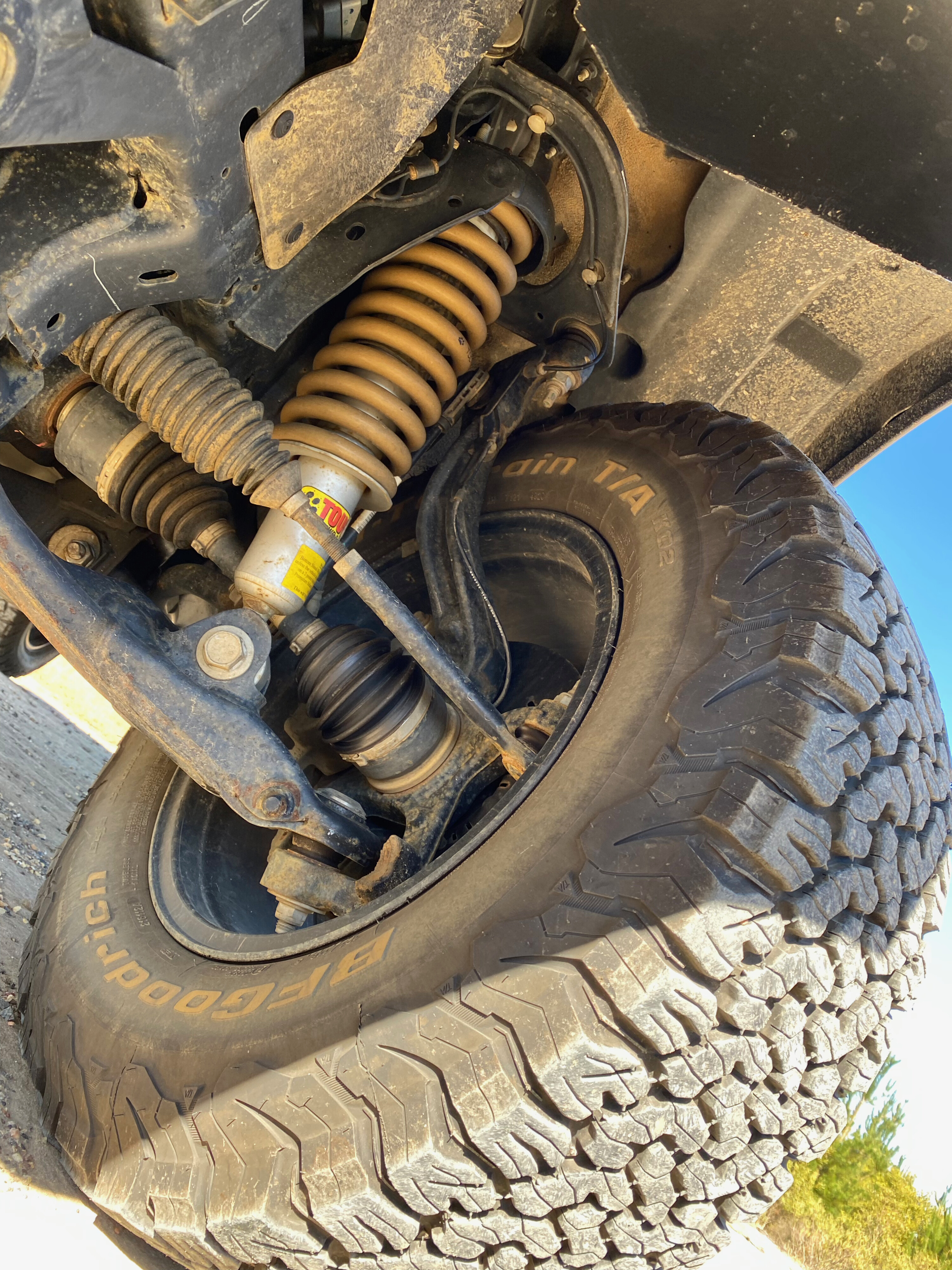
Next on the shopping list were tyres, and I opted to fit BFGoodrich All-Terrain KO2s, which is the same rubber I had on my Defender. In fact, I’ve run BFGs for many years on many vehicles and reckon the All-Terrains are a good compromise for on- and off-road use, and they stand up well in terms of wear and resistance to damage.
The standard tyre size on the XLS Sport is 265/65R17, and while I could have gone as big as a 285/70R17, I didn’t want the rubber extending beyond the guards and I didn’t want to mess up fuel economy too much, so I went with a more conservative LT265/70R17. These are fitted to the standard black alloys.
1
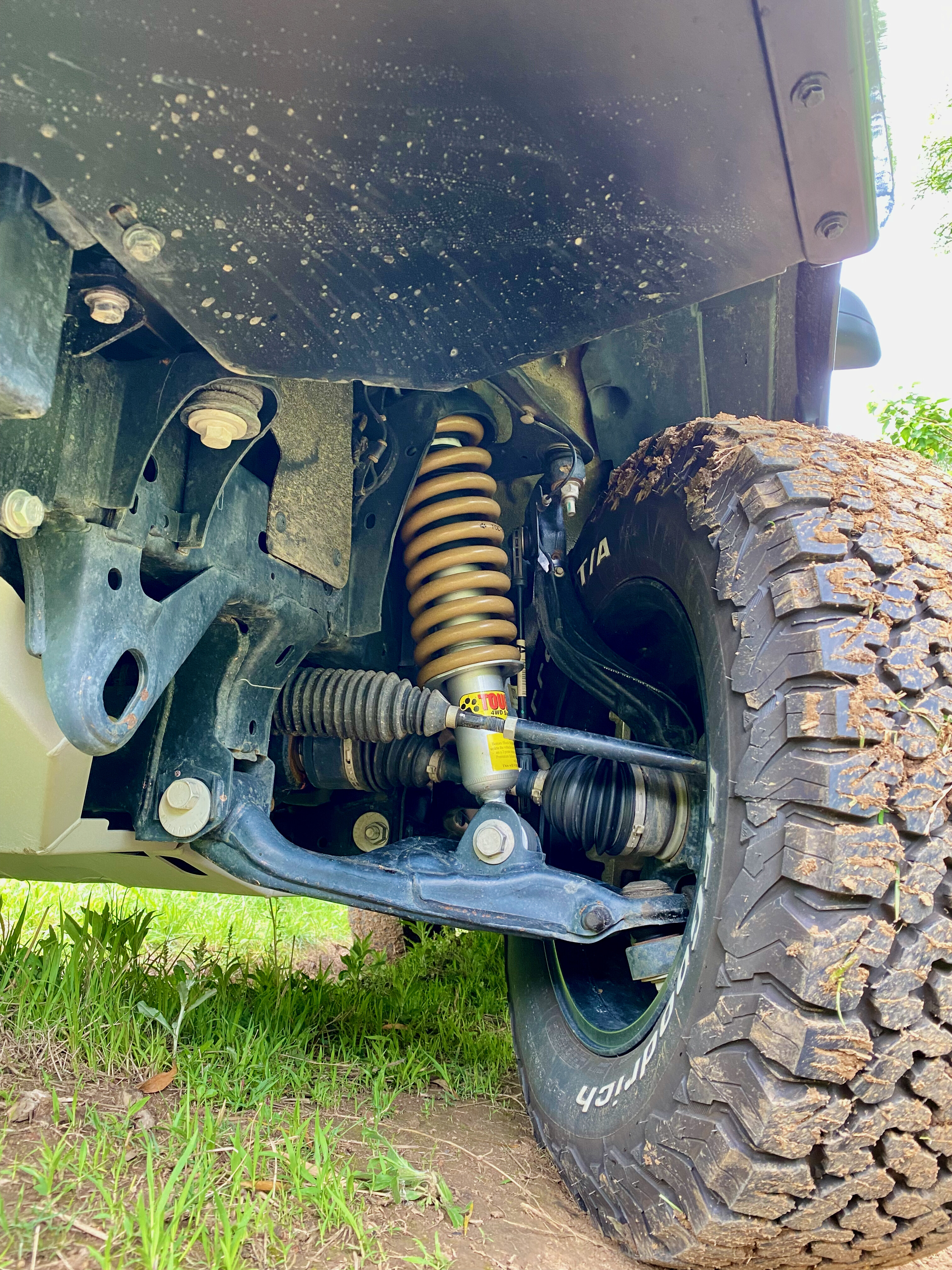
The final step in the build was suspension, which was only fitted about 500km ago. It consists of Tough Dog springs to suit the weight of the steel bullbar, winch and driving lights up front, and a constant 300kg load at the rear.
The shocks are Tough Dog 41mm Foam Cells and the kit also includes bushes, greasable pins and shackles, and a transmission spacer to account for the 50mm lift. Once fitted, the Tough Dog team gave the Ranger a full wheel alignment.
Unlike my old Defender, it keeps my right leg dry when it’s raining
As I write this, the Ranger has just gone in for its 12-month service with only 6690km showing on the odometer (bloody COVID) but hopefully it’ll get a lot more use in 2022 with border restrictions easing. I’ve been keeping a detailed record of fuel consumption since Day One and, as expected, it has been increasing as I’ve added gear, climbing from a base of 10.7L/100km when I first picked it up to as high as 14.3L/100km on the last fill, which included a couple of hundred clicks of off-road driving.
So far, I’m happy with the Ranger; it’s comfortable on-road and capable off-road, and unlike my old Defender, it keeps my right leg dry when it’s raining. Upcoming additions will include an oil-water separator and an oil catch can kit. I’ll keep you posted.
Price (as tested): $51,640
Average fuel use: 11.9L/100km
Total kilometres: 6690km
The 2022 4X4OTY trip was fantastic, and we learnt a lot about the vehicles on test.
One of the vehicles in this year’s line-up was a Ford Ranger with the 2.0-litre bi-turbo-diesel four-cylinder engine, and it was interesting to compare its performance with my 3.2-litre turbo-diesel five.
Despite the bi-turbo’s higher power and torque, I’m pleased I opted for the 3.2 five-pot, which I reckon has much more character and works better with its six-speed auto than the 2.0L engine does with its 10-speed auto.
1
One of the disadvantages of my choice to go with 3.2 is higher fuel consumption. The trip computer on the bi-turbo we’re currently testing says it’s averaging 10.1L/100km, and there’s no way my 3.2 would ever be that economical. Even when it was in standard trim, the best I ever saw was 10.8L/100km, and this figure has climbed to around 13.5L/100km now I have a bunch of accessories fitted.
One of the disadvantages of my choice to go with 3.2 is higher fuel consumption
I was conscious of the potential to mess up the fuel economy when fitting accessories, which is one of the reasons I went for 265/70R17 all-terrain rubber instead of wider and taller 285s. The modest upsize in tyre diameter also meant my speedo wasn’t put out too much, and in fact is now more accurate than when the standard 265/65R17 tyres were fitted.
The other accessory that probably has the greatest impact on fuel economy, at least on the open road, is the roof-rack system I have fitted, which is a Rhino-Rack Pioneer platform on that company’s backbone system. I also have a pair of Yakima crossbars fitted to the canopy.
1
The roof-rack set-up also adds to wind noise at speeds above 80km/h, but slightly increased noise and fuel consumption are prices I’m prepared to pay for the added convenience of being able to secure gear to the roof.
When out four-wheel driving I can throw bulky items like swags and recovery boards up on the Pioneer platform, and when heading to the water on weekends I can put the kayaks up on the Yakima crossbars; I have also fitted a ladder roller to make it easier to load and unload the boats.
Of course, fuel economy is also reduced when driving around town or off-road due to extra weight, and with steel ARB bar-work front and rear, as well as steel side-steps, the Ranger has packed on the pounds – a bit like its owner – but again, this is the price I’m more than happy to cop.
As well as offering protection, the bullbar is a platform for accessories (Warn winch, ARB driving lights and Uniden antenna), while the ARB side-steps and rear bar have already copped a beating off-road. I’m glad I went for the standard black powder-coat finish on the bar-work rather than colour coding, as it will be easier to touch up at home after the inevitable scrapes from off-road driving.
I’ll let you know what I think of some of the other accessories I’ve fitted in the next shed update.
Total kilometres: 7484
Kilometres since last update: 794
Average fuel use: 12.0L/100km
It’s been a few months since the last update on my Ford Ranger and in that time it’s only covered a paltry 5000km, but a fair chunk of that has been off-road.
Yep, the Ranger is parked safely at home for much of the time, but when there’s work to do, or I want to get away for the weekend with my family, it gets plenty of dirt under its wheels.
Despite being buried and bogged, the body work looks as good as new
Since the last update the Ranger has been subjected to several work trips with Offroad Images’ Michael Ellem to shoot a series of ‘How To’ features and videos for 4X4 Australia and, as a result, it has been buried up to its axles in sand, bogged in deep mud, teetered over the edge of a rocky drop-off, and subjected to several steep climbs and descents.
1
Despite being buried and bogged, the body work looks as good as new. The same can’t be said for the ARB side rails and ARB rear-step towbar, which have copped a fair beating off road, but that is what they are designed to do and, other than scratches, there is no damage to report. Ditto for the ARB UVP (under-vehicle protection) plate, which also wears battle scars from many contacts with terra firma.
Ride quality is impressive and body roll is well-controlled when cornering, despite the extra weight
The LT265/70R17 BFGoodrich All-Terrains are wearing well and show no signs of chipping across the tread face or damage to the sidewalls despite all the off-road punishment. The BFGs are about due for a rotation, and as I managed to pick up an extra matching alloy wheel to replace the OE steely that Ford supplies, I’ll throw the spare into the mix.
I’m impressed with the Tough Dog suspension, both on the road and off it. The Ranger is carrying a fair bit of weight thanks to its steel bar and Warn VR EVO 10-S winch fitted up front, and its canopy and drawer system down the back, yet it sits nicely on the road at a smidge under 75mm higher than standard, of which around 50mm can be attributed to the suspension and around 25 to the slightly larger-than-standard tyres. The ride quality is impressive and body roll is well-controlled when cornering, despite the extra weight.
1
And a fair bit of that weight is now up high thanks to a 68kg OZtrail Tarkine 1400 rooftop tent I recently fitted above the canopy on a pair of Yakima roof bars. While I could have fitted the RTT to the Ranger’s Rhino-Rack Pioneer Platform, 68kg would have been right on the limit of dynamic roof load, which is reduced significantly when driving off road with the Pioneer set-up.
The Yakima bars are good for 100kg though, and I have been assured by the importer of the canopy that it is too. I’ve already given the OZtrail RTT a run on a weekend getaway.
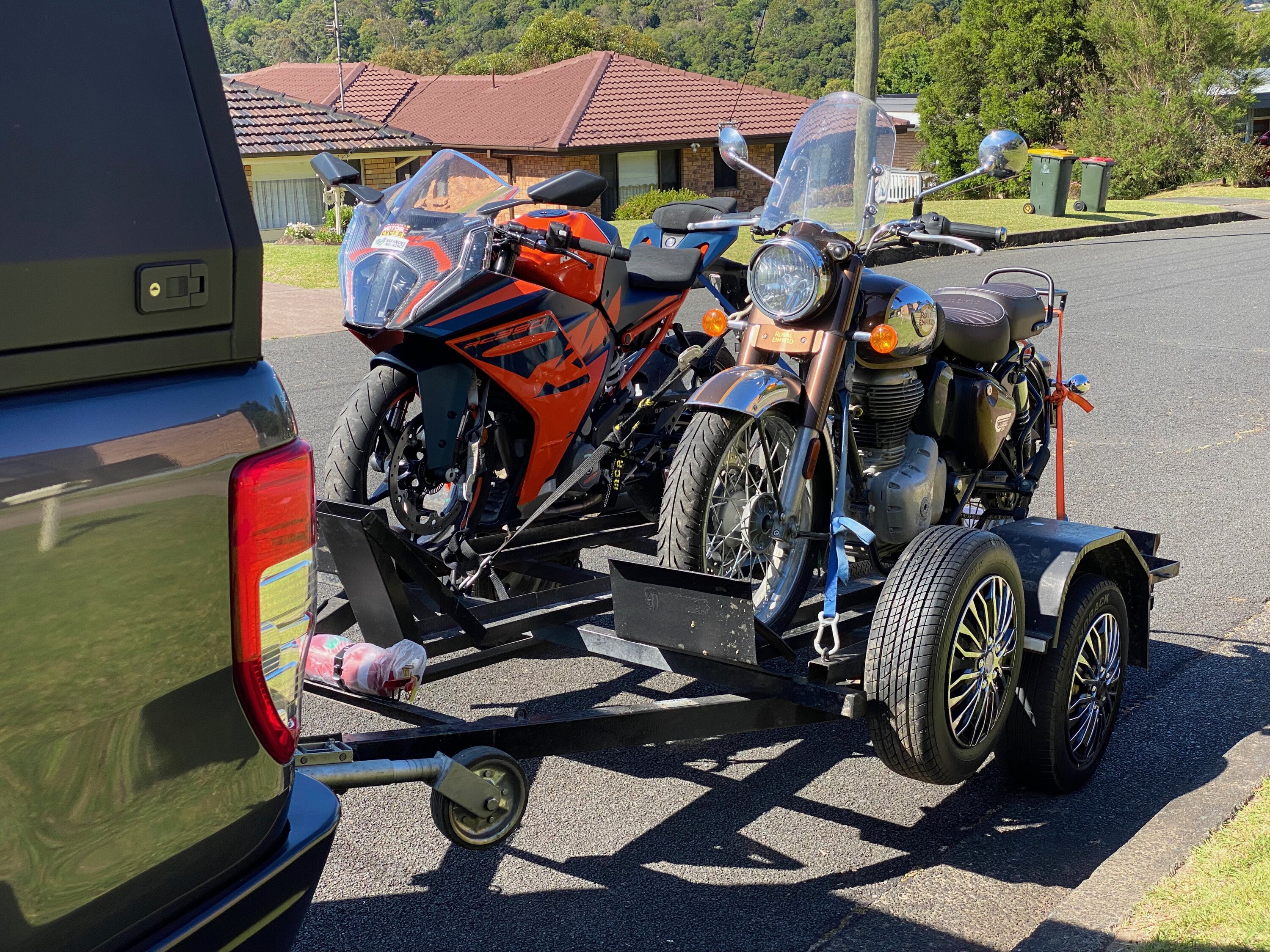
I have also been using the Ranger to tow a bike trailer, and to keep an eye on the bikes I recently installed a Gator rear-view camera/mirror that I picked up at Supercheap Auto. The Gator is also handy for keeping an eye on following traffic that I haven’t been able to monitor since fitting the canopy, and it also acts as a rear-view dashcam so if someone runs up the back of the Ranger I’ll have video evidence.
1
Another handy little bit of kit I picked up recently was a Quad Lock Wireless CarPlay Adaptor. This little device plugs into the Ranger’s USB port in the centre console and then connects to your phone via Bluetooth, allowing for wireless CarPlay. It connects automatically when you get in your car so you can leave your phone in your pocket.
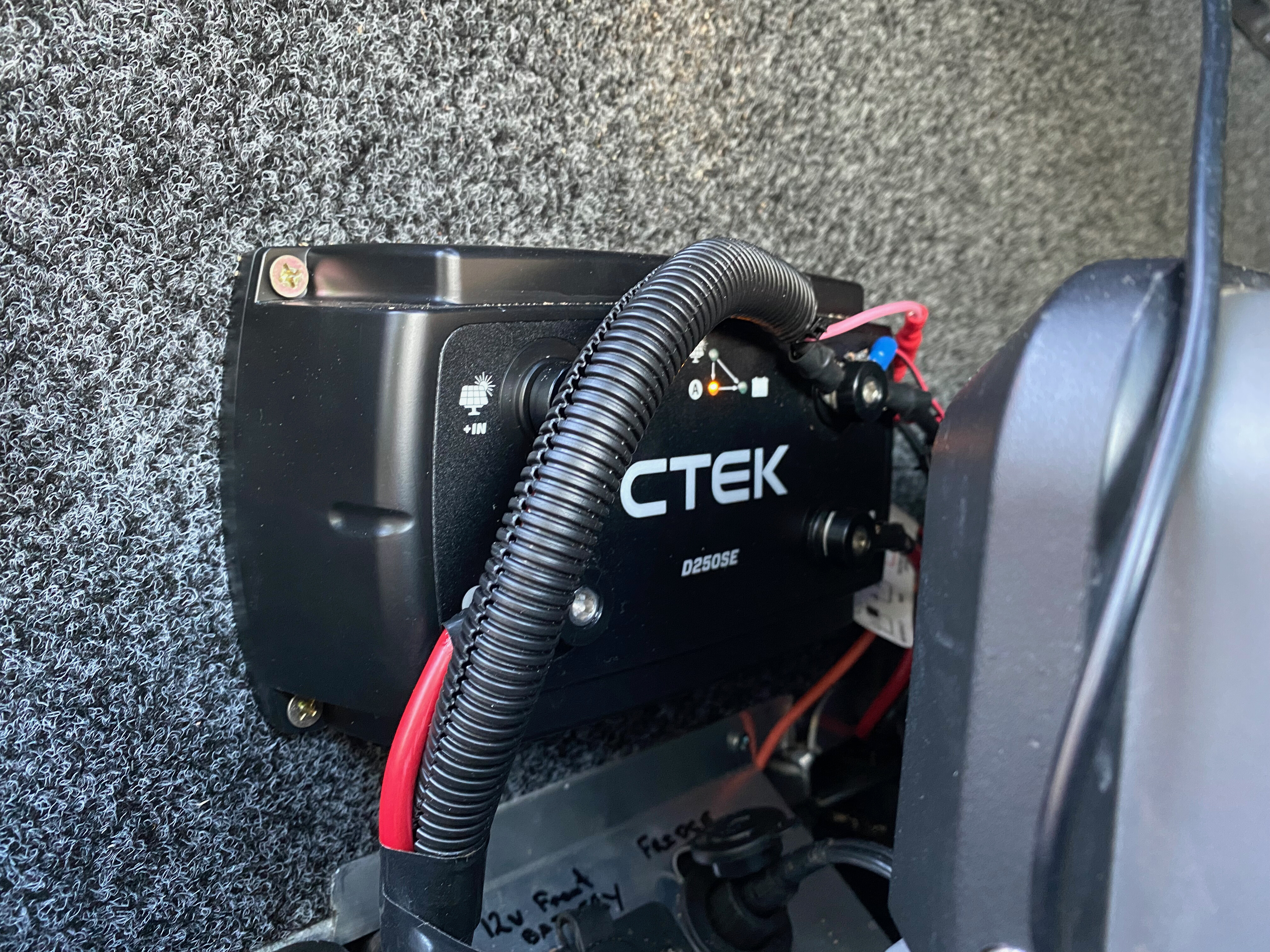
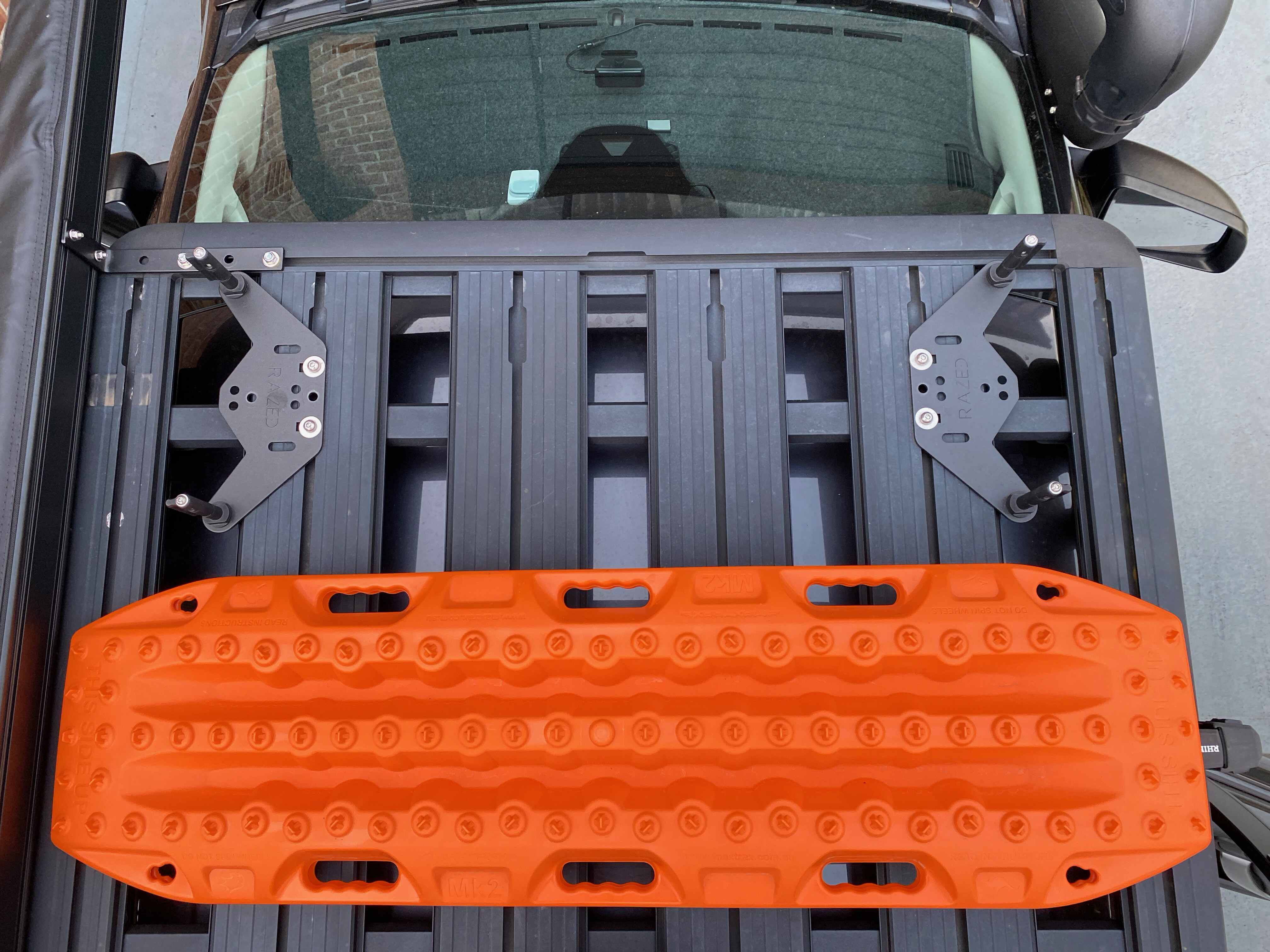
Other gear fitted since the last update includes a 100Ah slimline lithium battery, a CTEK DS250SE battery charger, 12V and USB outlets in the drawer system, and a Razed Products MaxTrax Flush Mounting Kit.
The Ranger recently scored a minor service and there are no faults to report. About six months ago, however, I kept getting a message on the FordPass app that there was a problem with an airbag sensor and I should take the Ranger to a dealer for inspection. Apparently there was a loose sensor plug down by the driver’s seat which was quickly sorted.
1
Speaking of the FordPass app, it’s bloody fantastic; I can check the odo, lock and unlock the doors, and reset the alarm if it goes off … all from my phone. I can even start the engine on hot days to get the air-con going to cool down the cabin before I hop in. The app also shows me where the vehicle is parked and reminds me when a service is due. It’s the little things like this that improve the ownership experience.
As you’d expect, fuel consumption has been on the rise as I have added accessories and gear to the Ranger since I have owned it, it’s now up to 12.6L/100km. The highest consumption to date has been 14.6L/100km when towing my bike trailer, and since I fitted the rooftop tent it’s been averaging 13.3L/100km. The RTT will be coming off when not in use.
Total kilometres: 12,767
Kilometres since last update: 5283
Average fuel use: 12.6L/100km
The Ranger has only done another couple of thousand clicks since the last update but as usual much of that has been in the dirt for product testing and photo shoots and, as a result, it now sports a few more scuff marks.
Overall the paint has held up well for a vehicle that lives outside in the weather. I started using Meguiar’s Hybrid Ceramic Wax on it not long after I bought it, and that seems to have done the trick, keeping the water beading off for at least a few weeks before I need to reapply it. Some of the window rubbers are starting to fade, however, especially on the driver’s side that cops the afternoon sun.
As mentioned in the last update, the ARB side-rails and the ARB rear-step towbar are a bit scratched up. I knew this was likely to happen when I fitted the bar work, which is why I opted for a black powder coat finish rather than colour matching it to the vehicle’s paint. When it starts looking too ratty, I’ll respray it.
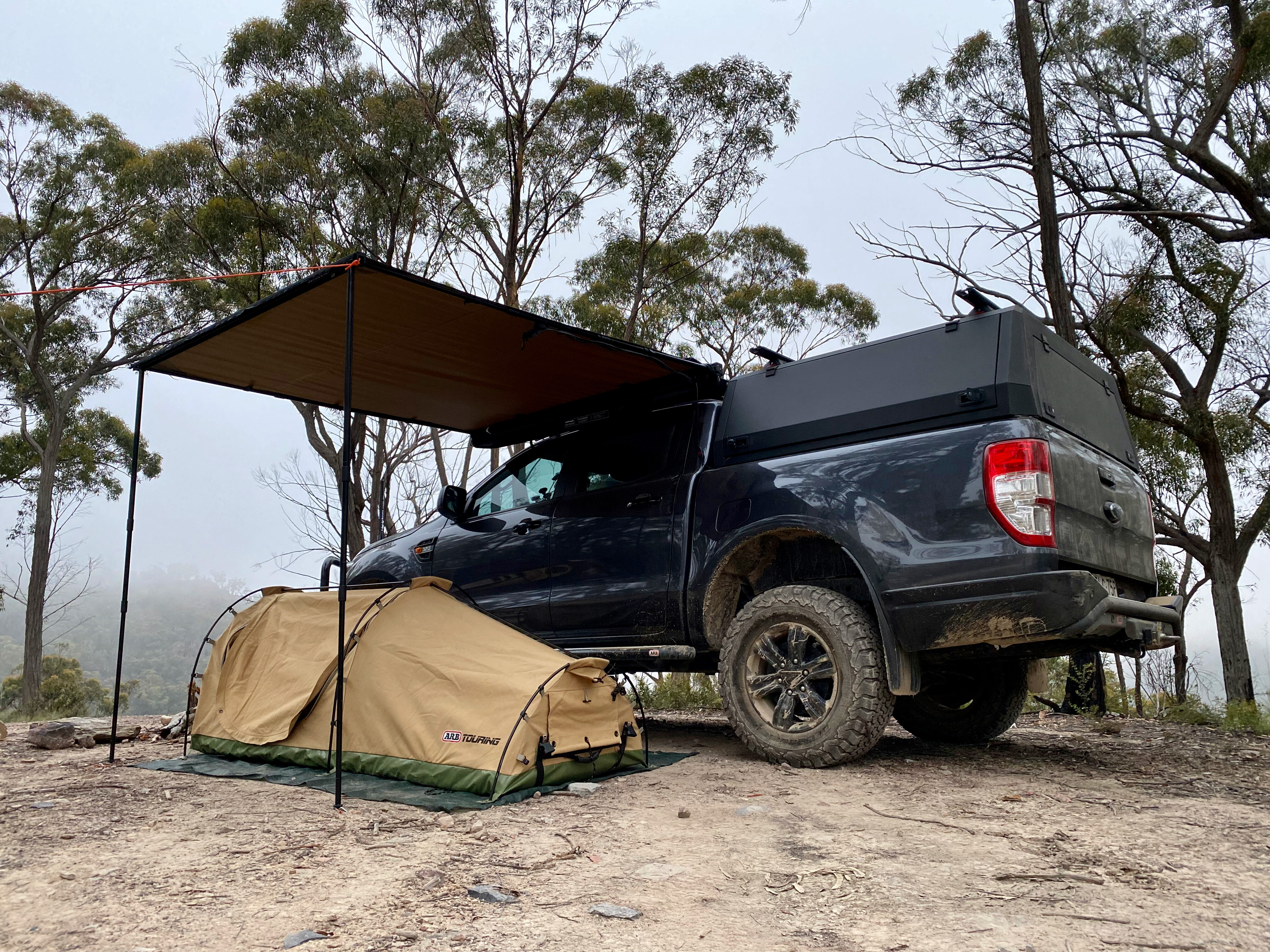
Other than off-road driving, over the warmer months I used the Ranger to haul kayaks down to the local waterways. My tandem Hobie is a long unit, so it spans the Yakima roof bars fitted to the canopy and the Rhino-Rack Pioneer Platform on the vehicle’s roof.
Lifting it up on to the roof is no easy task, so I have fitted a ladder roller to the rear roof bar, which makes the job more manageable. I can get another single kayak up there with the Hobie strapped down, which is perfect for our three-person family.
1
I also occasionally hitch a bike trailer to the Ranger to shuffle test bikes around the place. The trailer itself only weighs 180kg, so with a couple of bikes on there the total weight is less than 600kg, which hardly influences vehicle performance or even fuel consumption.
Average fuel consumption, which I have been measuring since Day 1, is 12.7L/100km, which isn’t great, but the roof bars and platform obviously add a fair bit of wind resistance, and I often carry a fair bit of gear in the back. And remember, a lot of that driving includes off-road work which, as you know, is also thirsty work.
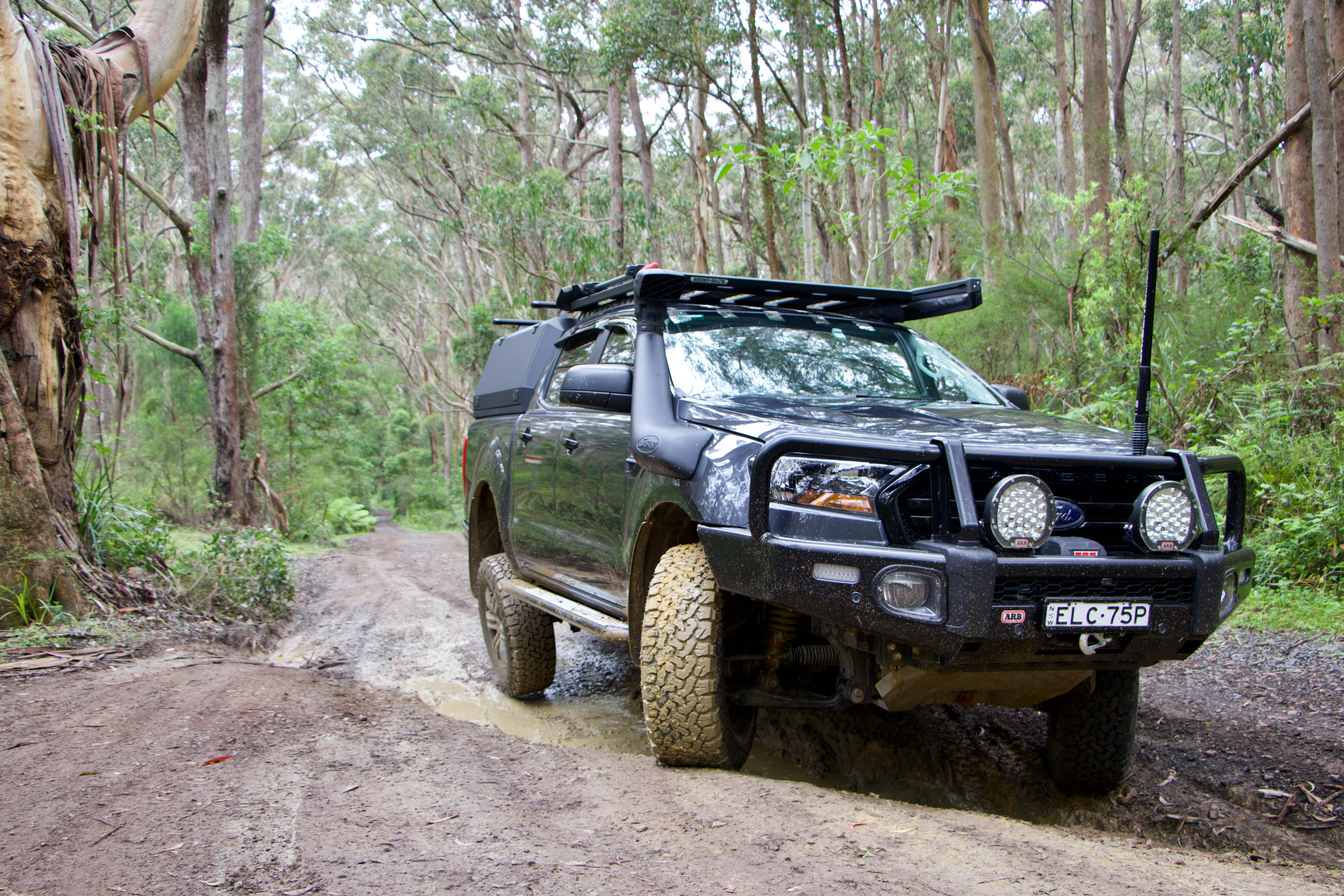
While I wouldn’t drive the Ranger over some of the off-road tracks I used to drive my diff-locked Defender on, I am impressed by its off-road performance. The modest 75mm lift provided by the Tough Dog suspension system, and the slightly taller than standard LT265/70R17 BFGoodrich All-Terrains, means it rarely bottoms out on a well-chosen line, and when it does the bar-work protects the body.
2
The combination of the OE rear locker and the Ranger’s traction control has never left me wanting for more, and so far I have only needed to use the Warn VR EVO 10-S winch and other recovery devices when shooting instructional videos for 4X4 Australia… touch wood.
The Tough Dog suspension handles a heavy load well; when fully loaded up with rooftop tent and all the camping gear, the Ranger maintains a slight nose-down profile, and provides a good combination of ride quality and control. It can be a little harsh over corrugations, but most utes are, and much of that harshness can be tuned out by simply lowering tyre pressures.
On-road performance is excellent. Sure, the Ranger isn’t fast, but the engine makes decent torque down low, and it works well with the six-speed auto, which holds on to gears well when you want it to and shifts with a livelier attitude when you flick it over to Sport mode.
2
In XLS Sport specification, the Ranger has an odd mix of tech that includes ‘normal’ cruise control (not adaptive), yet it has lane-change assist (which I rarely activate). It also has auto high beam, but again I flick the high beam off manually before blinding oncoming traffic.
One bit of tech it misses out on but sorely needs is LED lighting. The standard halogen headlights are appalling, and I am seriously considering replacing them with LED units. Long distance lighting is great, however, thanks to the ARB Intensity Solis LED driving lights fitted up front.
The last service at my local Ford dealer cost the projected $299, with no nasty surprises. I have refrained from fitting any devices to retune the ECU or reprogram the throttle response, as the Ranger’s 3.2-litre five-cylinder diesel makes more than enough grunt for my needs. I have also decided against fitting a catch can, although I often wonder if this is a decision I will one day regret. I’ll let you know.
1
I’m very happy with the Ranger to date. I always wanted a new 4×4 that I could build up from scratch and looking back on the last couple of years of upgrades I don’t think there’s a lot I would do differently.
As well as the tyres, suspension, bar work and winch, I have fitted the aluminium canopy, a drawer system, a 100Ah slimline lithium battery, a dashcam with built-in TPMS, UHF, rear-view camera and a few other bits and pieces.
I guess you could call it a moderately modified 4×4, set up for daily driving and touring, but still reasonably capable off-road.
Total kilometres: 14,859
Kilometres since last update: 2092
Average fuel use: 12.7L/100km
Pricing for Toyota’s new halo ute has been confirmed ahead of a September release.
Key Points
Priced from $73,990 before on-road costs
Existing 2.8-litre engine bumped 15kW and 50Nm!
Extensive suspension mods and bigger rubber on board
Hitting Aussie shores in September
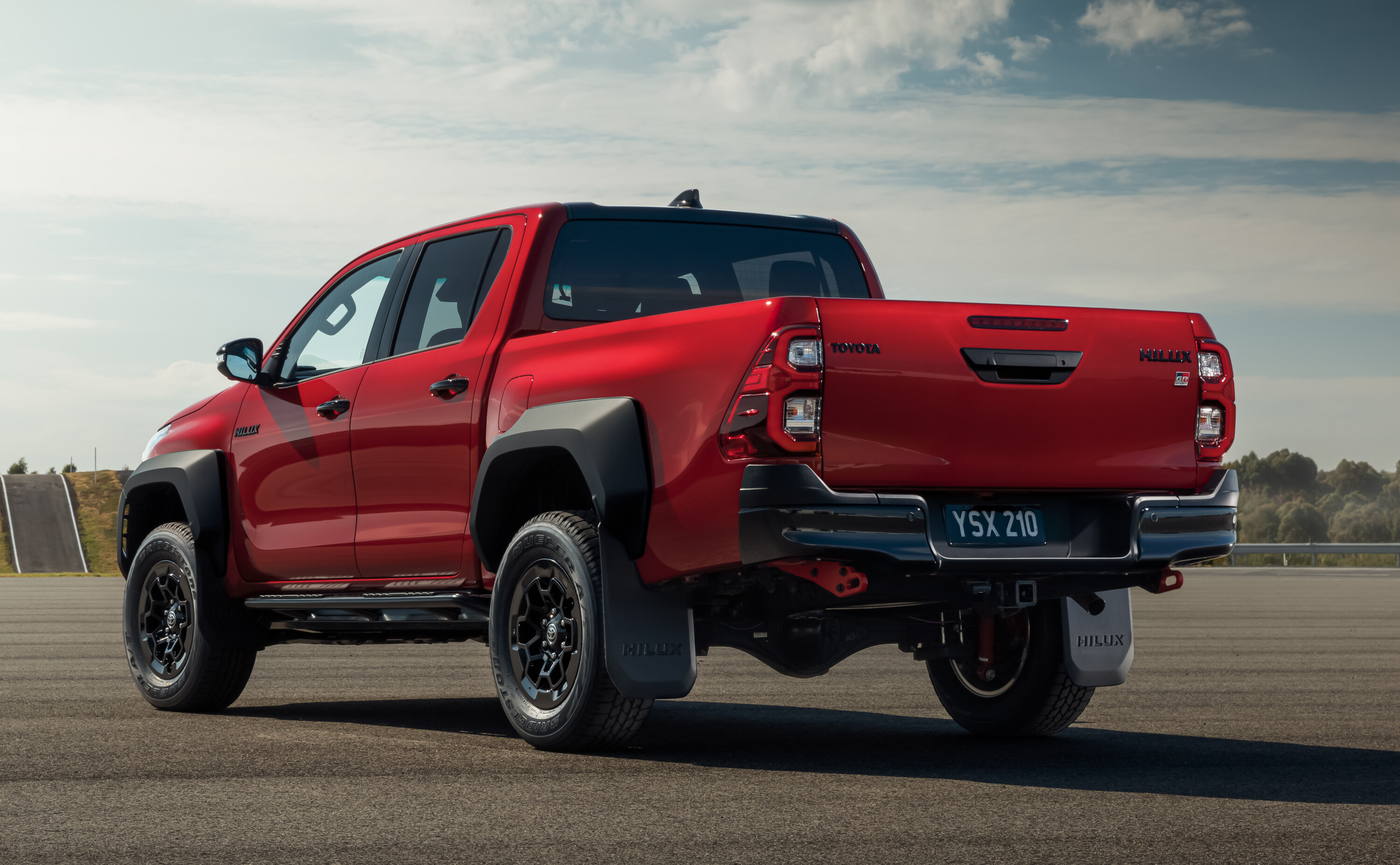
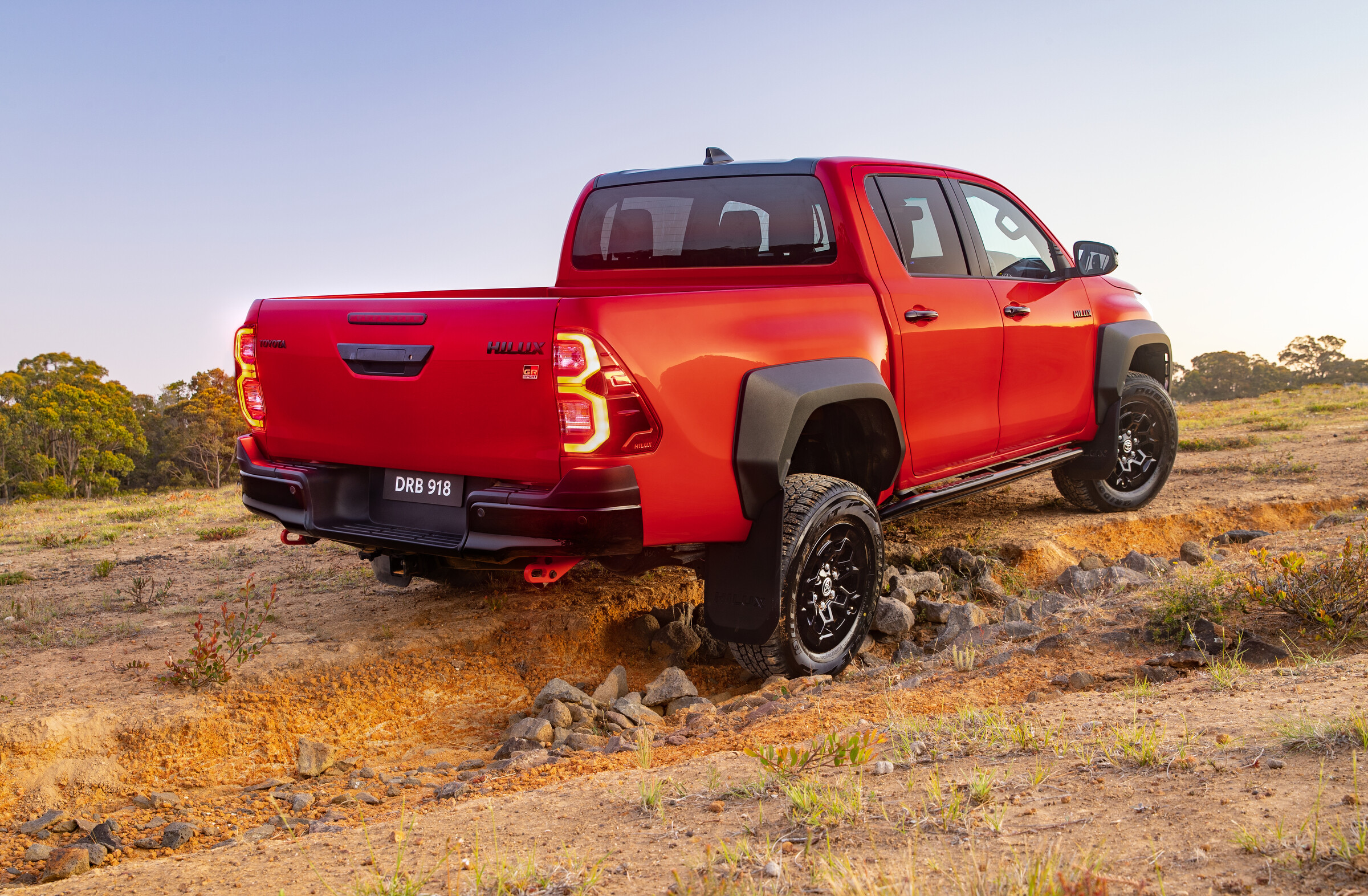
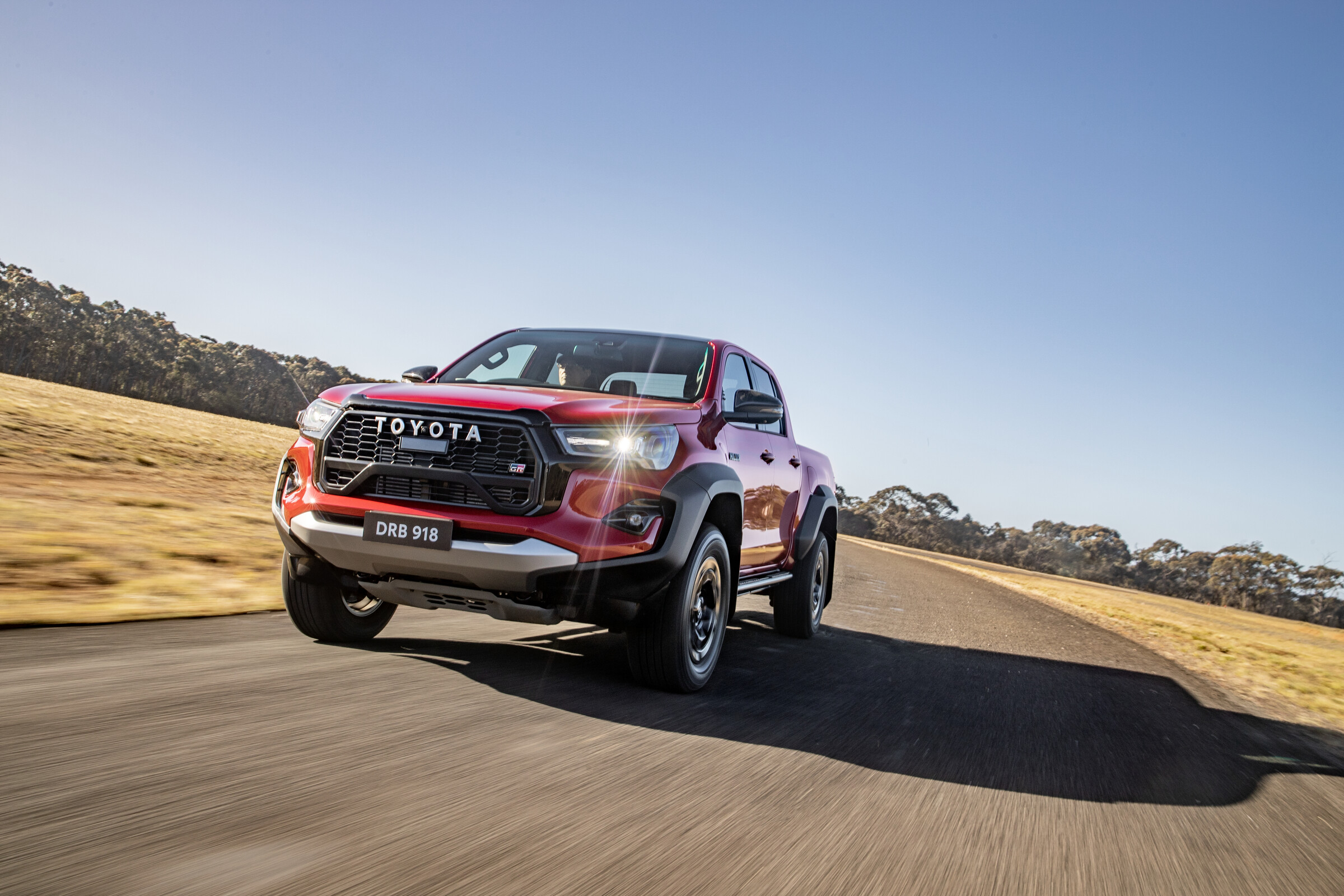
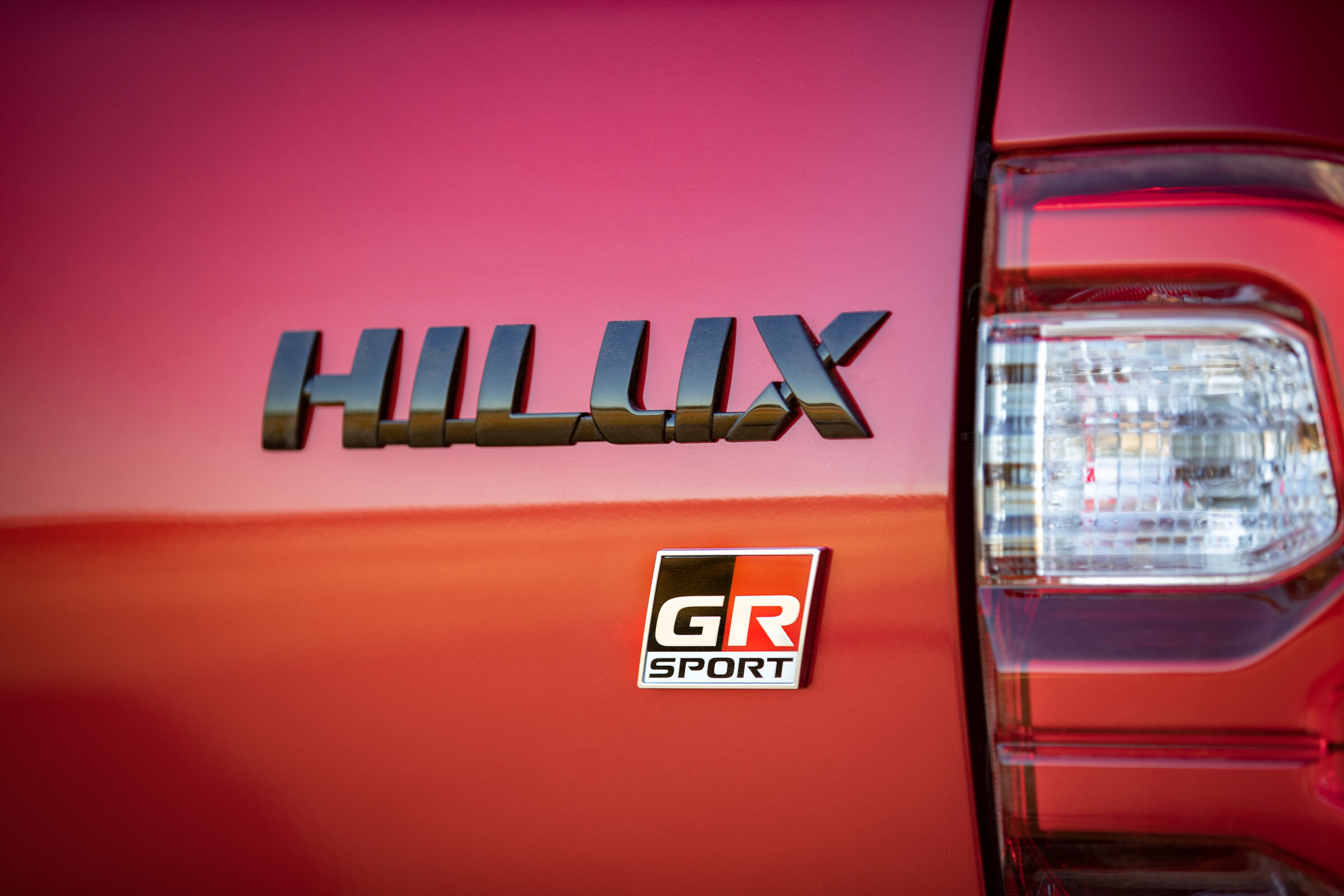
Taking the torch from the wide-body HiLux Rogue, the even tougher and more powerful 2024 Toyota HiLux GR Sport is set to hit Australian shores in September from $73,990 before on-road costs.
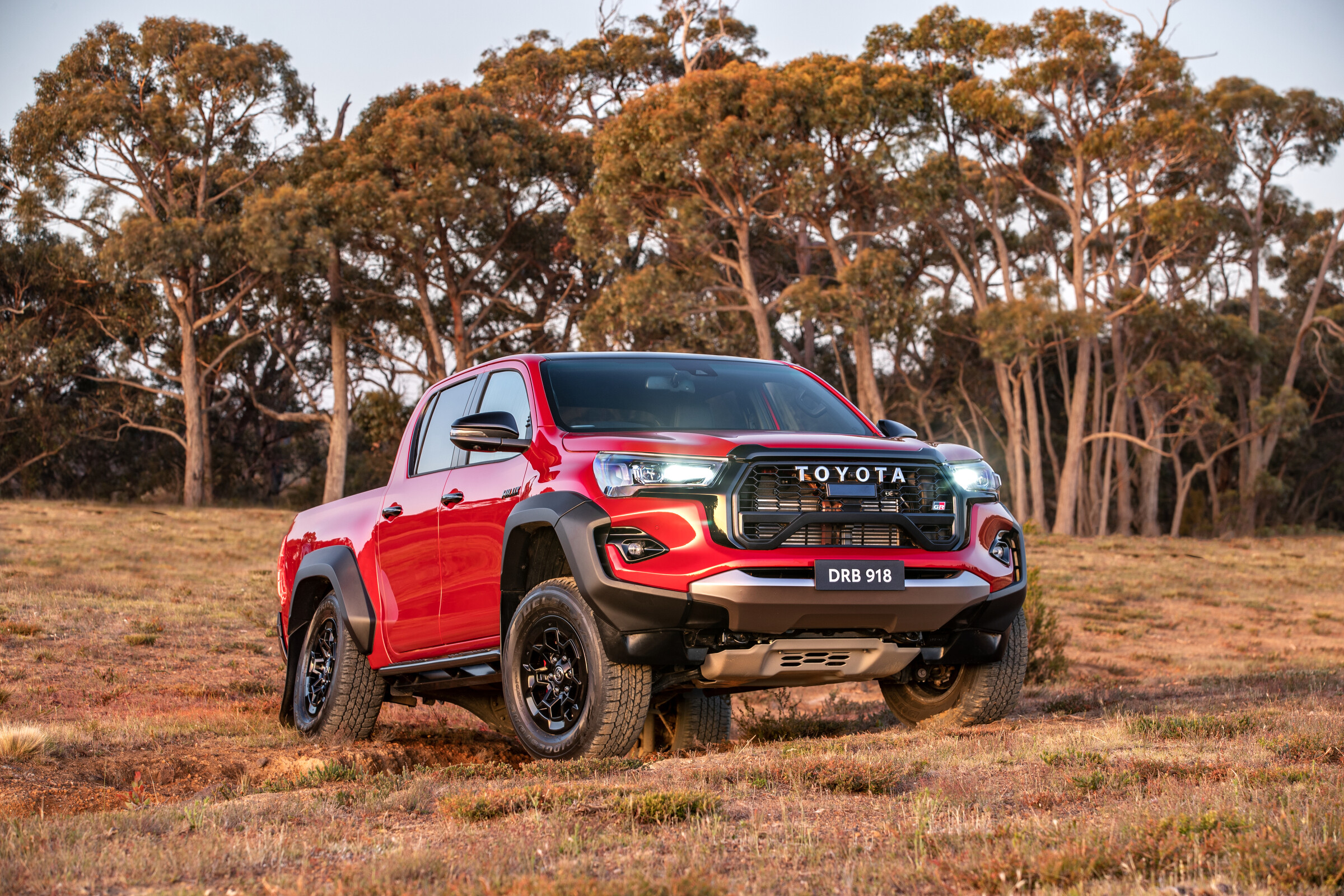
Riding 15mm taller than core HiLux models and with 135mm wider front and 155mm broader rear tracks aggro GR Sport is packing more than just exterior tweaks.
Under the bonnet, Toyota has liberated an extra 15kW and 50Nm (bringing totals to 165kW and 550Nm) from the 2.8-litre turbo-diesel four-cylinder, while a six-speed automatic and selectable 4×4 system transfer grunt to the road – and dirt.
The GR Sport also commands a sizeable $3225 premium over its wide-body Rogue compatriot. Toyota dealers are accepting orders for the new HiLux GR Sport now.
2024 Toyota HiLux wide-body pricing (figures are before on-road costs)
Toyota HiLux Rogue 4×4 auto
$70,765
Toyota HiLux GR Sport 4×4 auto
$73,990
Our original story, below, continues unchanged.
Snapshot
Up 15kW, 50Nm, wider tracks, modified suspension
Rival for Navara Warrior, Ranger Raptor
Most powerful HiLux sold in Aus
H2 2023 Australian release confirmed
January 6: Toyota details new HiLux GR Sport halo model, and it’s a very different beast from the examples that’ve been trading under the same name in South Africa, Thailand and Japan.
The new model becomes the third GR Sport HiLux permutation to emerge, and will take the reins as our HiLux flagship from the Australian-developed Rugged X at its Australian release in the second half of 2023.
With its 15kW power and 50Nm torque bumps, rally-inspired wide body design, 155 millimetre wider rear track and retuned suspension, it’s the most serious production HiLux yet.
“[HiLux GR Sport] has been designed to turn heads with aggressive in-your-face styling that’s reinforced by a healthy performance boost, enhanced high-speed handling and even better grip on dirt roads,” vice president sales, marketing and franchise operations, Sean Hanley told Wheels.
“Thanks to the extensive involvement of our local designers and engineers, HiLux GR Sport is a fun-to-drive vehicle that will bring new capabilities and excitement to the adventure lifestyles of Australian customers.”
The latest instalment in the GR brand, the HiLux GR Sport is a new take on the naming convention.
Thankfully, the HiLux GR Sport goes much further than the light visual changes made to Yaris Cross and C-HR GR Sport trims, but without quite such heavy re-engineering as full GR versions of Yaris and Corolla.
Under the bonnet is the familiar 2.8-litre turbo-diesel four-cylinder making 165kW of power at 3000rpm and 550Nm of torque at 2800rpm – increases of 15kW and 50Nm over a normal ’Lux.
The six-speed automatic transmission has been re-tuned with a stronger torque converter lock-up, sportier calibration, and the addition of paddle shifters. The HiLux retains its selectable 4WD system with low-range transfer case and locking rear differential.
To enhance its off-road capability Toyota has widened the GR Sport’s front track by 140mm and rear track 155mm compared to a regular HiLux.
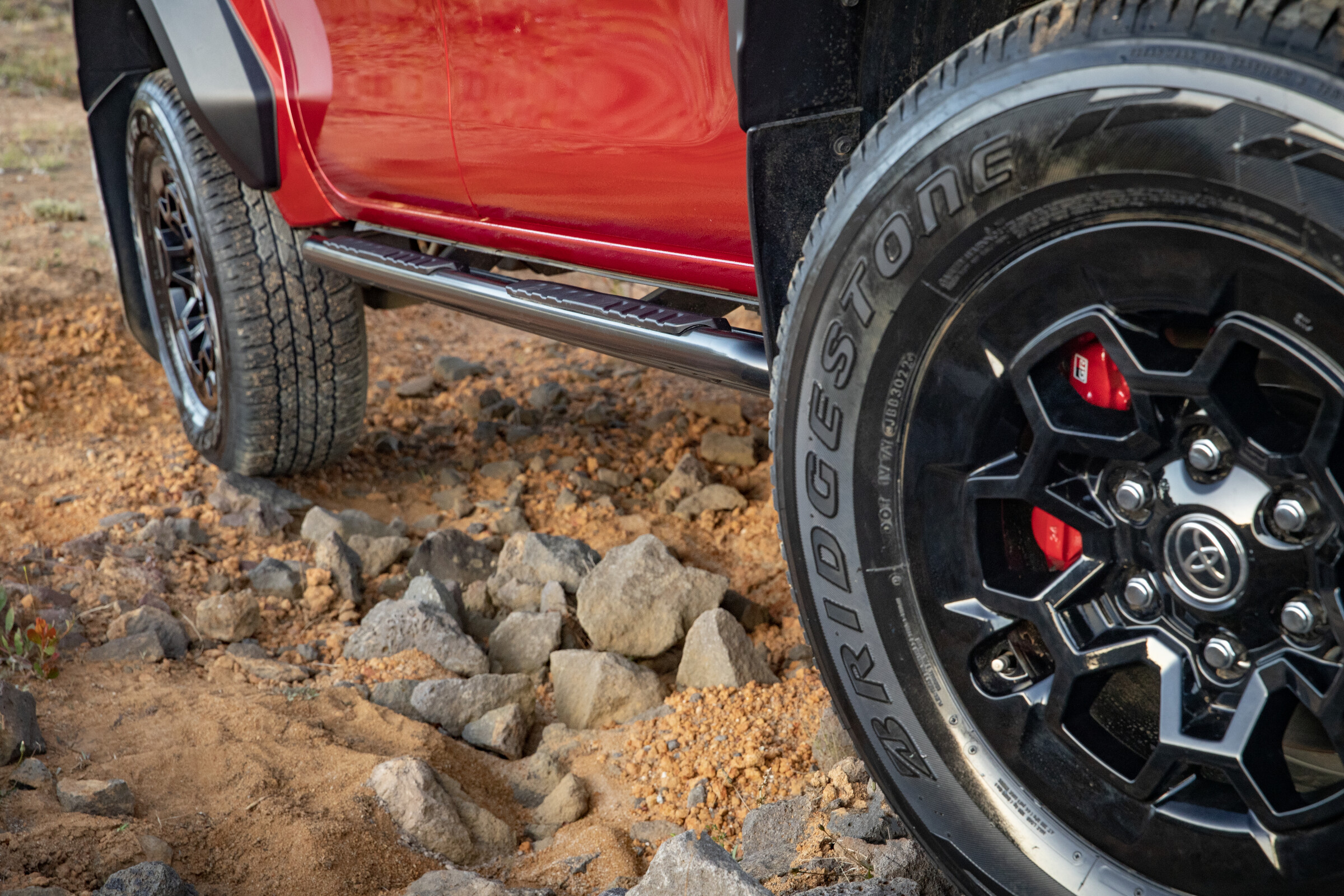
This means redesigned suspension wishbones and a heavy-duty rear axle are needed. There are also satin black over-fenders fitted to the HiLux GR Sport to cover the new 17-inch alloy wheels shod in 265/65 R17 Bridgestone Dueler all-terrain tyres.
Keeping the rubber in contact with terrain are new monotube dampers with more rebound and compression control as well as better heat management, along with stiffer front coil springs. These changes should add support off-road while also sharpening handling up on the black stuff.
1
Measuring 1880mm tall, the HiLux GR Sport sits only 10mm taller than a Rogue, though Toyota did not claim an increased ride height from springs.
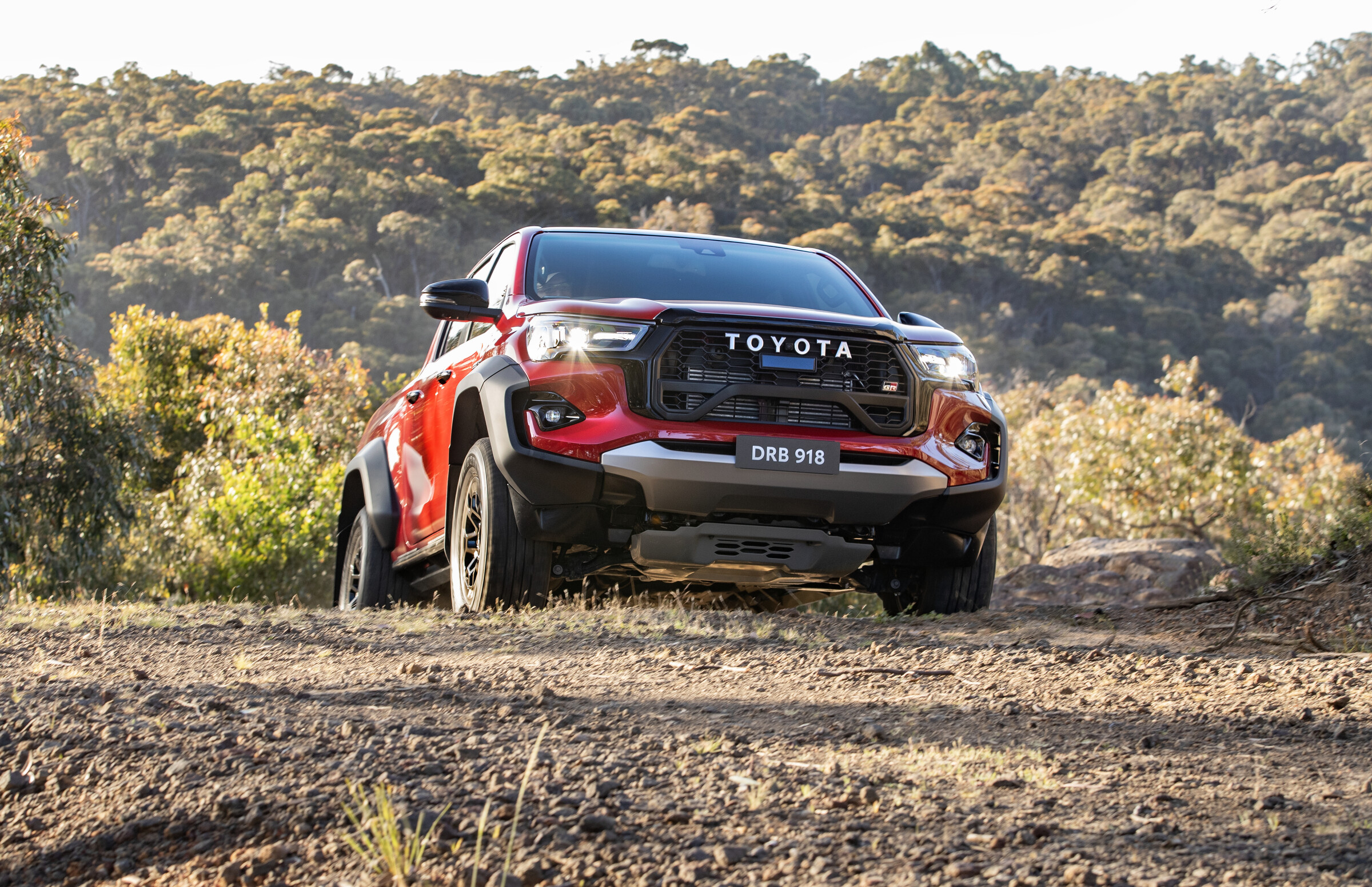
The GR HiLux boasts a 30-degree approach angle and 26-degree departure angle thanks to re-profiled front and rear bumpers. There is also a skid plate beneath the engine, rock sliders and red recovery points for enhanced off-road protection.
With plenty of input from Australia – where the HiLux is our best-selling vehicle – the GR HiLux’s tougher looks centre around its broader stance; Dakar-inspired, says the brand, its set off with plenty of black detailing around the car.
Toyota says the front bumper’s design is motorsport inspired and said to improve the HiLux’s approach angle. There’s a black mesh grille with bold ‘Toyota’ script set in, and red brake calipers, naturally. Toyota visited a wind-tunnel to evaluate any visual changes before signing off.
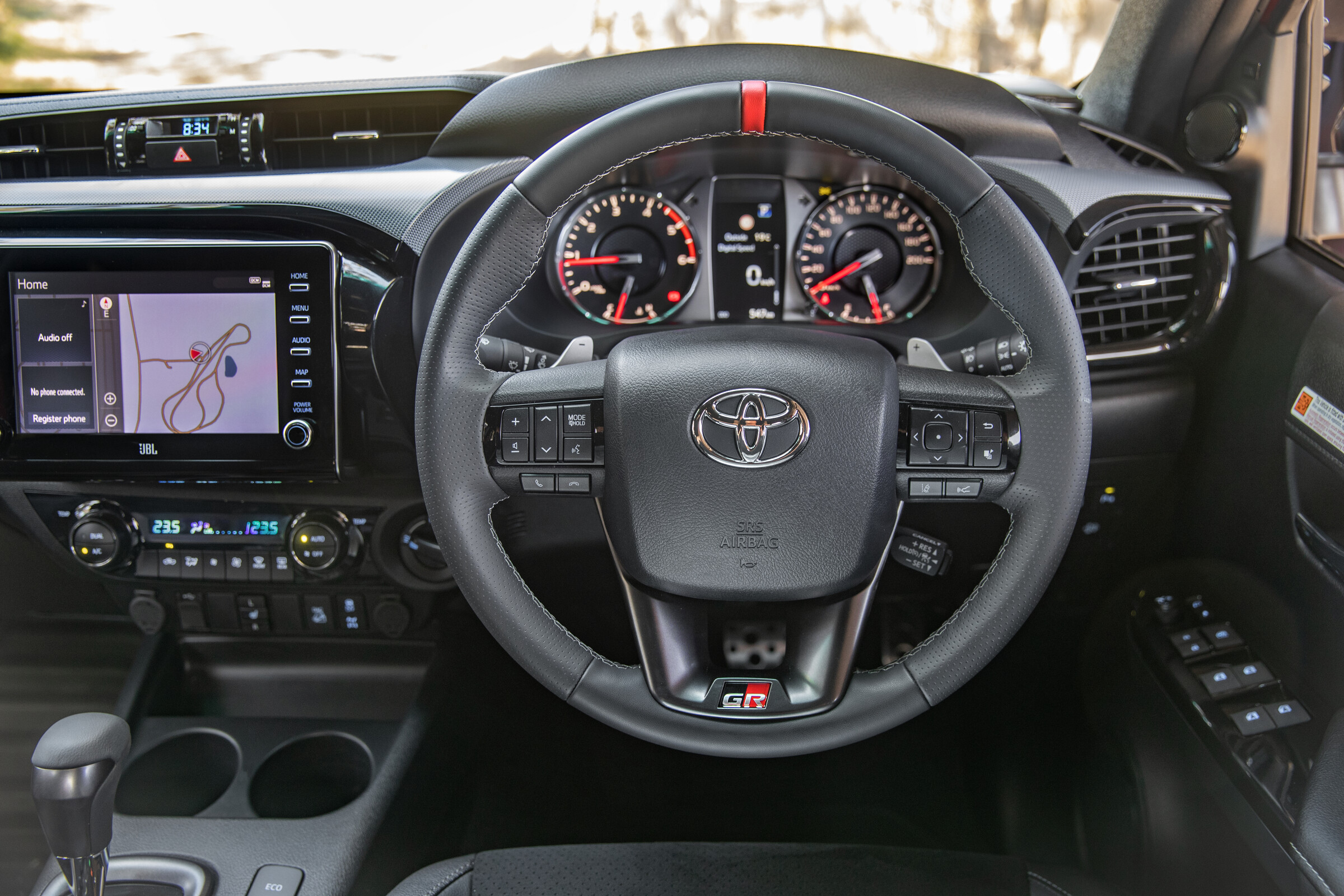
Inside is a familiar 8.0-inch touchscreen, and the GR HiLux is fitted out similarly to an SR5 but with some key differences.
Notably, the red ‘dead-ahead’ marker on the leather-appointed steering wheel, suedecloth-centred seats, red seat belts, GR branding on the headrests and in the tub liner.
Toyota has said that the GR HiLux is likely to hit Australian showrooms in the second half of the year (following July 1), but exact dates are yet to be confirmed.
Likewise, the GR HiLux’s pricing is yet unknown. With the current Rugged X priced at $70,750 before on-road costs, expect the GR Sport to command more cash given its extra performance panache.
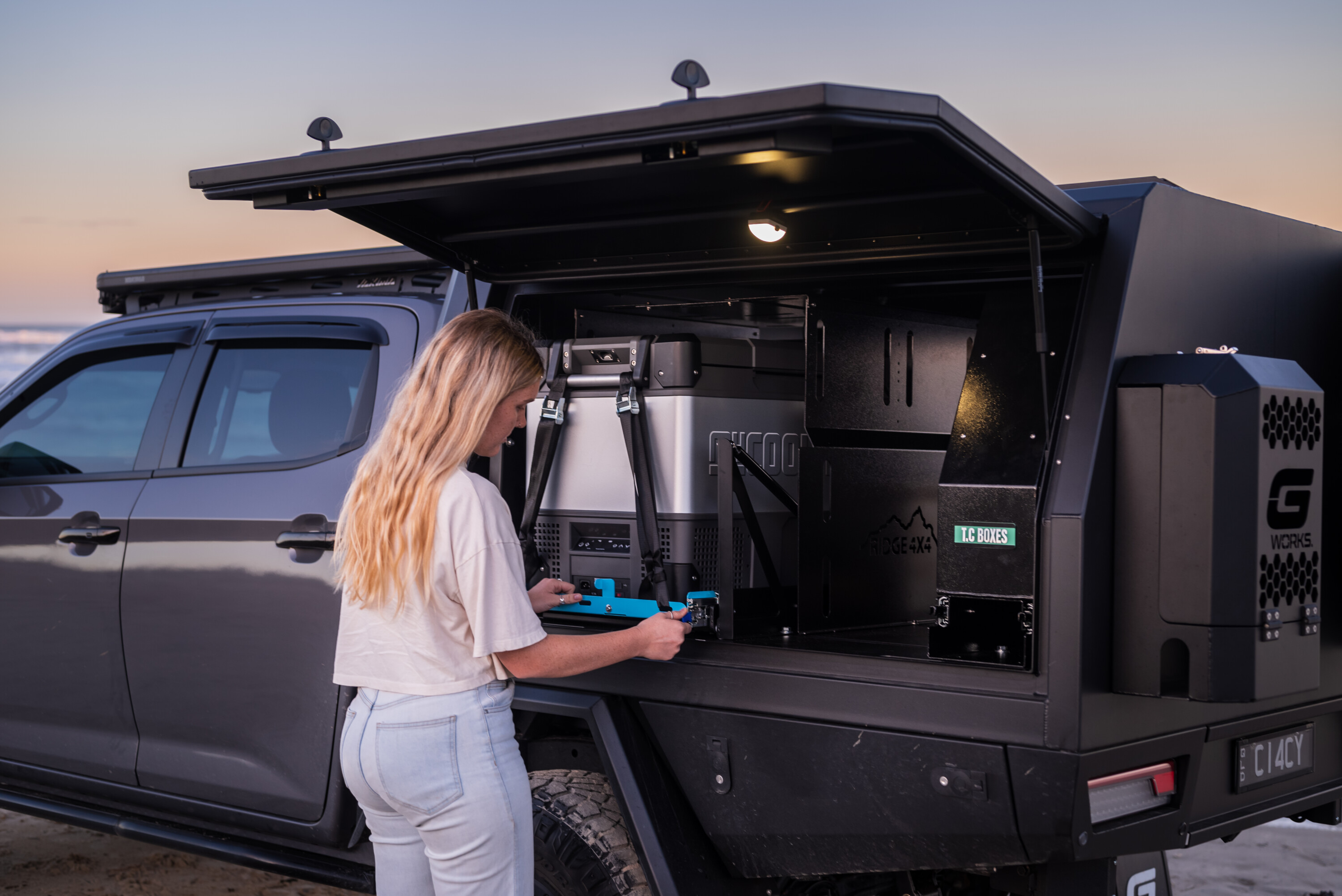
Ridge 4×4 has designed and engineered a range of durable and practical fridge slides that offer an excellent bank for your buck and take the hard work out of getting a cold beer every time.
The Ridge 4×4 fridge slides come in a range of sizes to suit most sizes of camping fridges from 40 litres to 80 litres and everything in between.
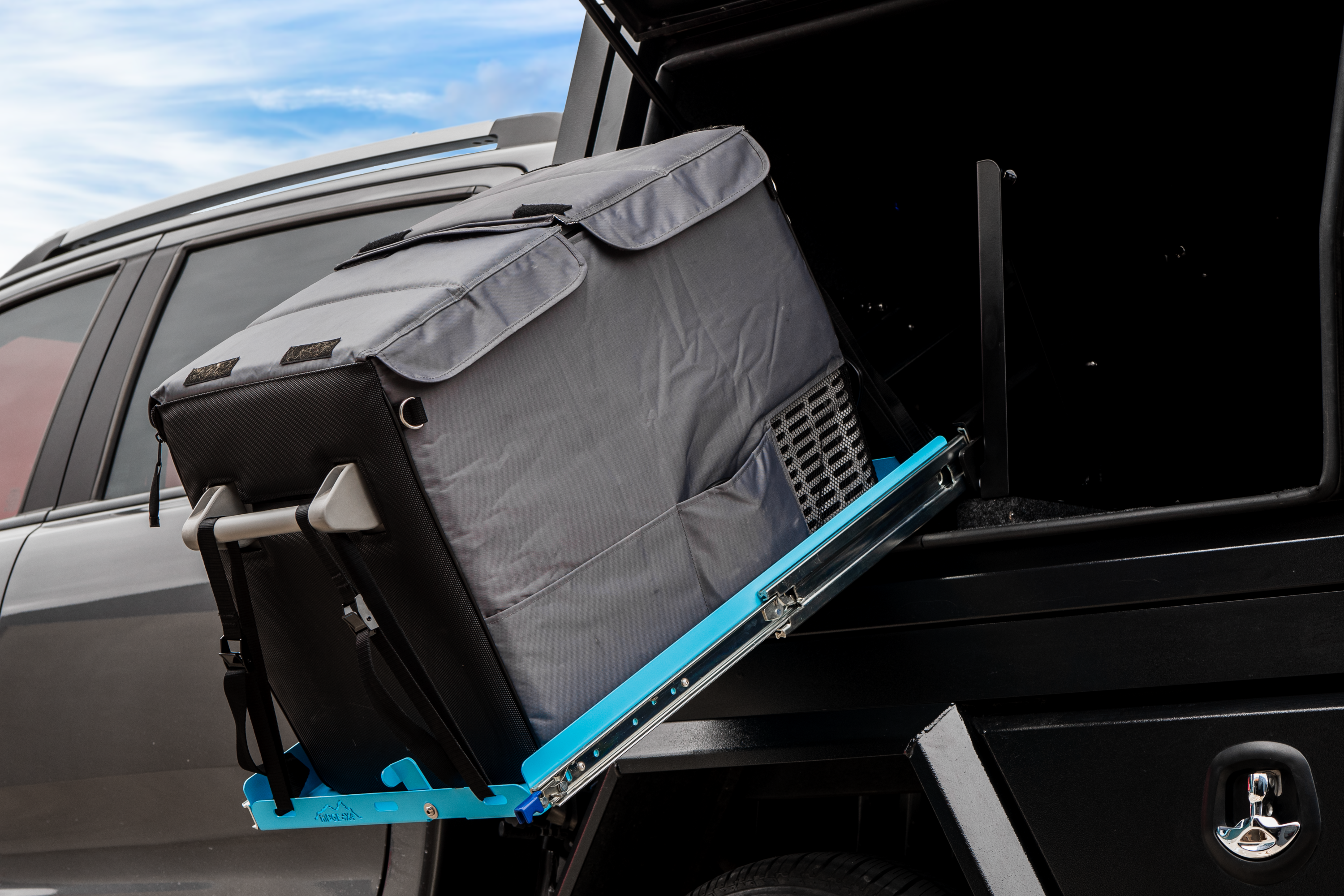
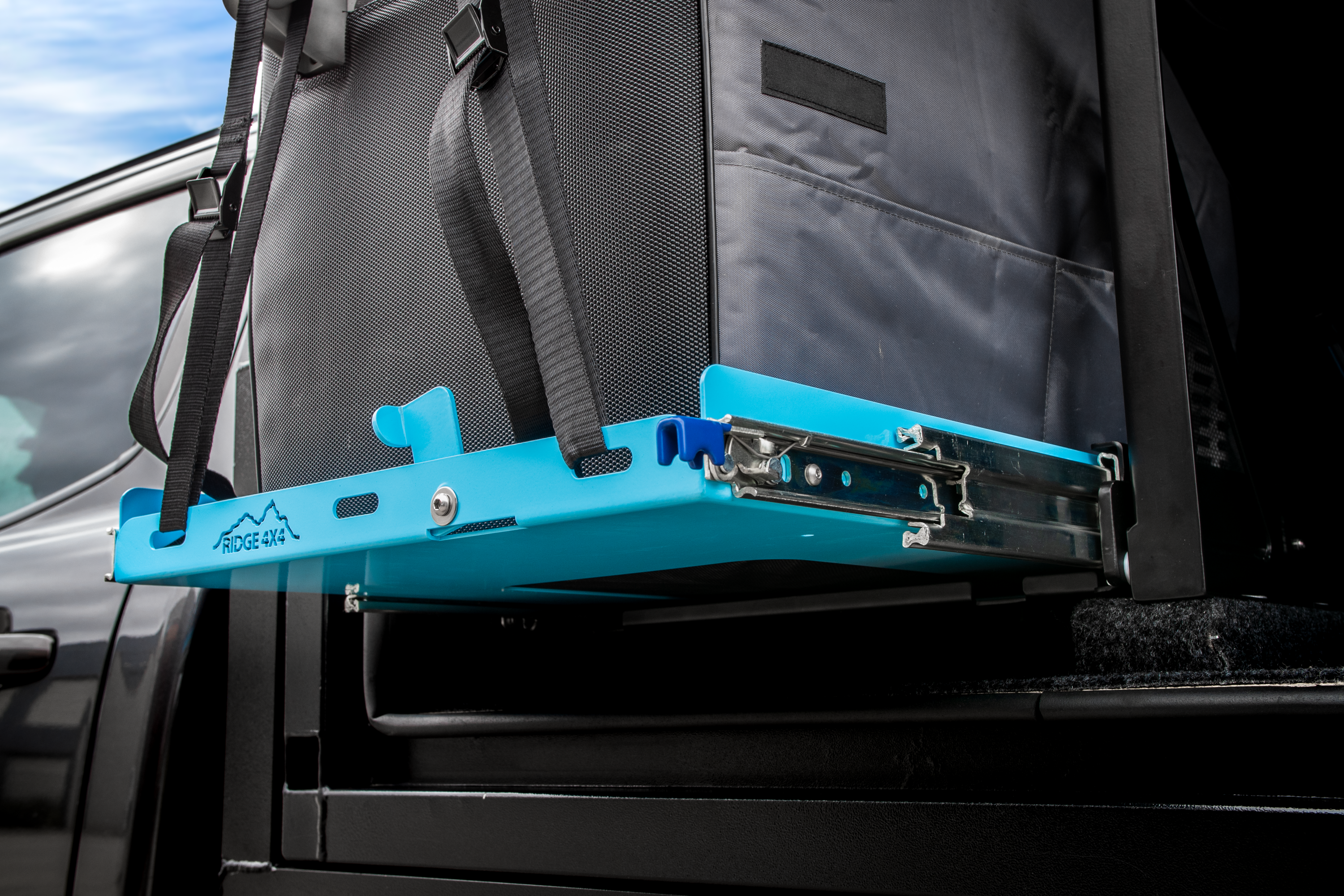
They are also available as a plain fridge slide-out, a slide-out with a cutting board that slides out independently to the fridge, or a tilt fridge slide-out with 50kg gas strut assistance, perfect for lifted 4WDs or people with short legs.
The fridge slides are manufactured from a 2mm steel plate and are welded to add strength. They feature tie-down points to safely secure your fridge and locking slides that prevent your fridge from moving during transit.
The slides are finished off with a tough powder coat in the signature Ridge 4×4 blue. The plain fridge slide starts at $199, the cutting board fridge slide begins at $299, and the tilt fridge slide is available from $349.
“Ridge 4×4 was founded in 2017 with one simple objective: to take the 4×4 world by storm. Since then, the team has worked tirelessly to provide the everyday Aussie with affordable, durable and practical camping gear and equipment,” said Matt Steven, Ridge 4×4 CEO.
“At Ridge 4×4, we are all about exploring the beautiful land that we call home. Whether you’re roughing it in the bush or kicking back on the beach, we’re here to help you ‘Chase Your Next Adventure’,” added Matt.
“At Ridge 4×4 we don’t only design and engineer the products, we also rigorously test them to ensure that they are going to withstand even the harshest of the Australian elements!
“From our relatively small product offering at launch, consisting of only a couple of fridge and kitchen slides, we’ve worked hard to significantly expand our range to meet the demands of the growing Australian camping market.
1
“As we move forward, our goal is to maintain our position as an industry leader by continually enhancing and expanding our product line to meet the needs of Aussie campers,” Matt concluded.
Ridge 4×4 may be new kids on the block when it comes to 4×4 and camping gear, but we think they are well on the way to building a brand that lives and breathes what many others of us do, getting out and enjoying the outdoor lifestyle with top notch equipment.
There’s been a lot of talk about the new Toyota Prado on the back of the reveal of the 2024 Lexus GX in the USA and the knowledge that the GX will be coming to Australia for the first time.
Also that the Yanks will be getting a Toyota-badged version of the GX, which will be the new LandCruiser there as they don’t get the LC300.
Of course, the Lexus GX has always been based on the mid-size Toyota 4×4 wagon which Australians know all too well as the Toyota Prado, and this will be the bones of the successor to the long-serving 120/150 Series Prado next year.
So what do we know about it?
The 2024 Prado/GX will ride on a version of Toyota’s TNGA-F ladder-frame chassis, as found under the LandCruiser 300 Series, Toyota Tundra and Toyota Sequoia models.
Under these vehicles it features all-coil-sprung suspension, with a live axle at the rear and independent at the front, to perfectly fit the well-established mould of the Prado.
Using this platform opens up a range of possible powertrains for the next Prado including petrol- and diesel-fuelled combustion engines, hybrid and EV options.
Of course, we’d love to see the LC300’s twin-turbo V6 diesel, or a version of it, in the Prado, as we know it will fit and we reckon it might need it to compete with the V6 diesel-powered Ford Everest here.
Toyota may prefer to use a hybrid petrol powertrain as the premium offering in Prado, and there are several available already in the USA including turbocharged V6 and inline four-cylinder petrol mills that offer ample outputs.
However, hybrid and EV powertrains add weight to a car, take up space and infringe on GVM, all of which are the nemesis of four-wheel drivers choosing modern vehicles for overland travel.
It’s likely the 1GD-FTV 2.8-litre diesel engine currently found in Prado, HiLux and Fortuner will be retained as the main choice for the new Prado. Plus, it has recently been revealed that it will feature mild-hybrid 48-volt technology in the new year, as well as 165kW/550Nm outputs in the HiLux GR Sport. There have been reports out of Japan of a full hybrid variant of the 1GD engine to come as well.
1
Whatever the powertrain, we can expect the next Prado to have the same or better off-road abilities as the current model, with a dual-range transfer case and the full complement of A-Trac electronic aids including Crawl Control. One can pray for a GR Sport variant with e–KDSS and front and rear locking differentials as found under the 300.
Something I expect we will lose is the Prado’s class-leading fuel capacity, which dropped from 180 to 150 litres in the changes from 120 Series to 150 Series.
I very much doubt we’ll see Toyota mounting the spare wheel on the back door of the new car, as they have on all previous generations of Prado – so with the spare going under the back of the car, there will be no space to add additional fuel capacity.
1
We’ll have to wait for the aftermarket industry to come up with replacement rear wheel carriers and long-range fuel tanks.
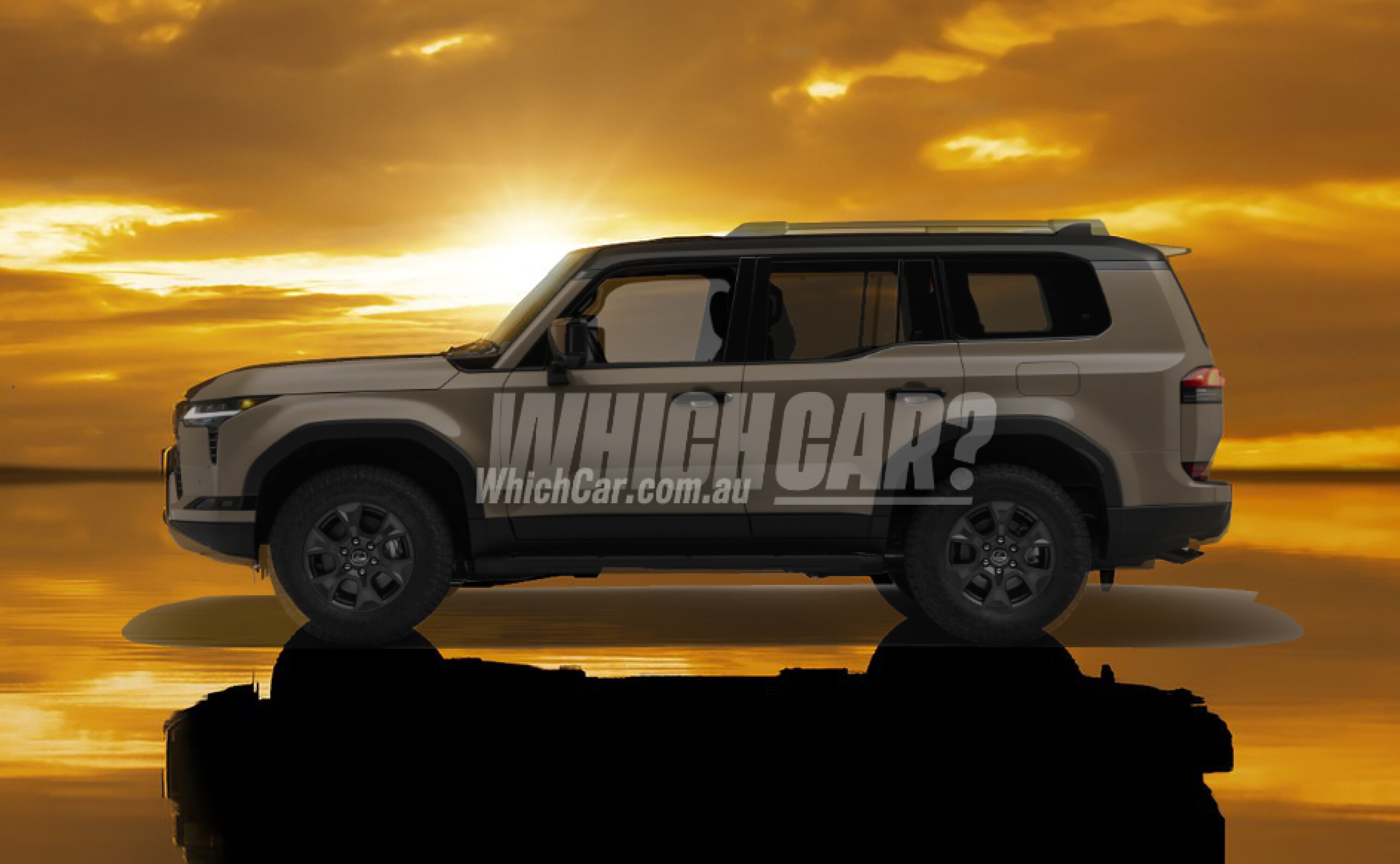
The Lexus GX has been shown in full production form and we love its boxy, purposeful design. Expect this to be exactly the same on the Prado, with only the bolt-ons such as tail-lights, trim and front end differing.
At the launch of the 120 Series Prado we asked the visiting Toyota executives if we would see a horizontal grille on any variants of the Prado, as we saw on some high-spec 90 Series models. We were told that no, the vertical grille was a signature design element of the Prado.
1
We’ve seen a few com-gen renderings of the 2024 GX with a vertical Prado-like grille grafted on, and they look like Chinese knock-offs of a Prado. We prefer the renderings coming out of the USA of what their 2024 LandCruiser will look like, using a much more modern and Cruiser-like front-end. We can only hope the Prado adopts this as well, and we have produced our own rendering along those lines (see main image).
The unveiling of the US-bound LandCruiser and our Prado version is taking place on August 2, with the launch not likely until mid-2024.
An all-new Prado has been a long time coming and we’re looking forward to what is delivered by Toyota. Hopefully we’re not disappointed.