
The Toyota HiLux has bounced back to reclaim the title of Australia’s best-selling 4×4, outselling the Ford Ranger in October after the Ford took the honours in September.
The HiLux recorded 5228 4×4 sales for the month, compared with 4556 for the Ranger. Add 4×2 sales and the HiLux was also Australia’s best-selling vehicle overall, with 5954 sales against 4841 for the Ranger.
The Toyota RAV4 was third overall with 4718 sales, followed by the BYD Sealion 7 (2524), Toyota Prado (2397), Chery Tiggo 4 Pro (2178), BYD Atto 2 (1943), BYD Shark 6 (1843), Geely EX5 (1789) and Ford Everest (1741).
Toyota Australia Vice President Sales, Marketing and Franchise Operations John Pappas said increased vehicle supply was helping reduce wait times for customers.
“Since securing additional vehicle supply for Australia in recent months, we’re seeing the benefits flow directly to customers, with improved availability and shorter wait times across a range of key Toyota models,” Mr Pappas said. “This additional supply has supported a strong October result and positions us well for a particularly strong finish to 2026 as more customers take delivery of their vehicles.
“It is clear that Australians trust the performance, durability and reliability of HiLux, which was the best-selling vehicle in the country last month. Securing extra stock means we can deliver more vehicles to our valued customers, which helps showcase the true popularity of Toyota with Australian buyers.”
Toyota remained well ahead of the other manufacturers, recording 20,649 new-vehicle sales in October. BYD was second with 10,025, while Ford finished third on 7310. Toyota sales were up 4.7 per cent year-on-year, while BYD surged 153.2 per cent. Ford sales went the other way, slipping 3.4 per cent.
The year-to-date figures tell an even bigger story. BYD sales are up 106.9 per cent so far in 2026, while Toyota is down 13.9 per cent and Ford has fallen 12.8 per cent.
Ranger still leads the year-to-date 4×4 race
The Ranger still has the upper hand across the year, with 40,300 sales to the end of October. The HiLux is chasing on 37,466, with the Toyota Prado (18,062) and Ford Everest (17,944) some way back in third and fourth.
The BYD Shark is making a decent fist of its first full year in the rankings, sitting fifth on 15,429 sales. It is ahead of the Isuzu D-MAX (14,519), Mitsubishi Triton (12,716), Isuzu MU-X (11,379), Toyota LandCruiser 300 Series (11,017) and GWM Cannon/Cannon Alpha (8764).
Further down the ute charts, the Kia Tasman recorded 275 sales in October, with the Nissan Navara not much further ahead on 288. The Volkswagen Amarok managed 224, while the Mazda BT-50 did better with 668 sales, although it remains outside the top 10.
In the more affordable 4×4 ute ranks, the GWM Cannon and Cannon Alpha combined for 763 sales, comfortably ahead of the LDV T60 (500), Foton Tunland V7/V9 (134), KGM Musso (81), MG U9 (55) and JAC T9 (34). At the opposite end of the market, the Chevrolet Silverado and Silverado HD combined for 260 sales, ahead of the Ford F-150 (158), Ram 1500 (138) and Toyota Tundra (85).
The Toyota Prado continued to lead the 4×4 SUV market, with 2397 sales in October. The Ford Everest followed on 1741, while the Toyota LandCruiser 300 recorded 1230 sales. The Isuzu MU-X managed 823, ahead of the Nissan Patrol on 445.
The GWM Tank 300 and Tank 500 recorded 326 and 185 sales respectively. BYD’s Denza brand is also starting to find its feet, with the B5 recording 220 sales in October and 2092 for the year so far. The larger B8 added 128 sales for the month, taking its 2026 tally to 1453.
Ute sales remain under pressure
The light-commercial vehicle market is still doing it tough.
October sales totalled 21,469, down 2.6 per cent on the 22,053 recorded in October 2025. The bigger picture isn’t much brighter, with 205,797 LCVs sold so far this year compared with 230,763 at the same point in 2025, a drop of 10.8 per cent.
The PU/CC 4×4 segment was almost dead even with last October, recording 16,804 sales against 16,802. However, year-to-date sales are still down 12.3 per cent, with 157,214 4×4 utes sold compared with 179,259 over the same period last year.
Despite the softer commercial vehicle numbers, Australia’s overall new-vehicle market had a better month, recording 103,325 sales in October 2026. That’s up 3.8 per cent on the same month last year, although the mix of vehicles Australians are buying continues to change.
EV and PHEV sales continue to climb
Petrol and diesel sales continue to head in the opposite direction, with both fuel types recording sizable year-on-year declines as EV and PHEV sales surge.
Petrol sales fell 35.9 per cent compared with October 2025, dropping from 36,807 to 23,605. Diesel was also down, falling 14.7 per cent from 30,073 to 25,649. Meanwhile, battery-electric vehicle (BEV) sales jumped 228.7 per cent, from 6291 to 20,677. Plug-in hybrid (PHEV) sales weren’t far behind in terms of growth, climbing 148.6 per cent from 4724 to 11,745.
The year-to-date numbers paint a similar picture. Petrol sales are down 27.6 per cent in 2026, with diesel falling 16.3 per cent. BEV sales have surged 171.2 per cent, while PHEVs are up 126.7 per cent. Combined BEV and PHEV sales reached 32,422 in October. That’s now well ahead of either petrol or diesel individually, with the traditional fuel types recording 23,605 and 25,649 sales respectively.
“Consumers are making rational choices and are attracted to options that reduce their costs. Despite continuing pressure on household budgets and higher borrowing costs in 2026, the October result shows there is extraordinary resilience in new vehicle demand,” said Tony Weber, FCAI chief executive.
“This increase in new vehicle demand, especially BEVs, must be supported by reliable and accessible charging infrastructure that keeps pace with demand.”
| 4×4 sales: October 2026 | |
|---|---|
| 1. Toyota HiLux | 5228 |
| 2. Ford Ranger | 4556 |
| 3. Toyota Prado | 2397 |
| 4. BYD Shark | 1843 |
| 5. Ford Everest | 1741 |
| 6. Toyota LC300 | 1230 |
| 7. Isuzu D-MAX | 1179 |
| 8. Mitsubishi Triton | 895 |
| 9. Isuzu MU-X | 823 |
| 10. GWM Cannon/Cannon Alpha | 763 |
| 4×4 sales: Year-to-date | |
|---|---|
| 1. Ford Ranger | 40,300 |
| 2. Toyota HiLux | 37,466 |
| 3. Toyota Prado | 18,062 |
| 4. Ford Everest | 17,944 |
| 5. BYD Shark | 15,429 |
| 6. Isuzu D-MAX | 14,519 |
| 7. Mitsubishi Triton | 12,716 |
| 8. Isuzu MU-X | 11,379 |
| 9. Toyota LC300 | 11,017 |
| 10. GWM Cannon/Cannon Alpha | 8764 |
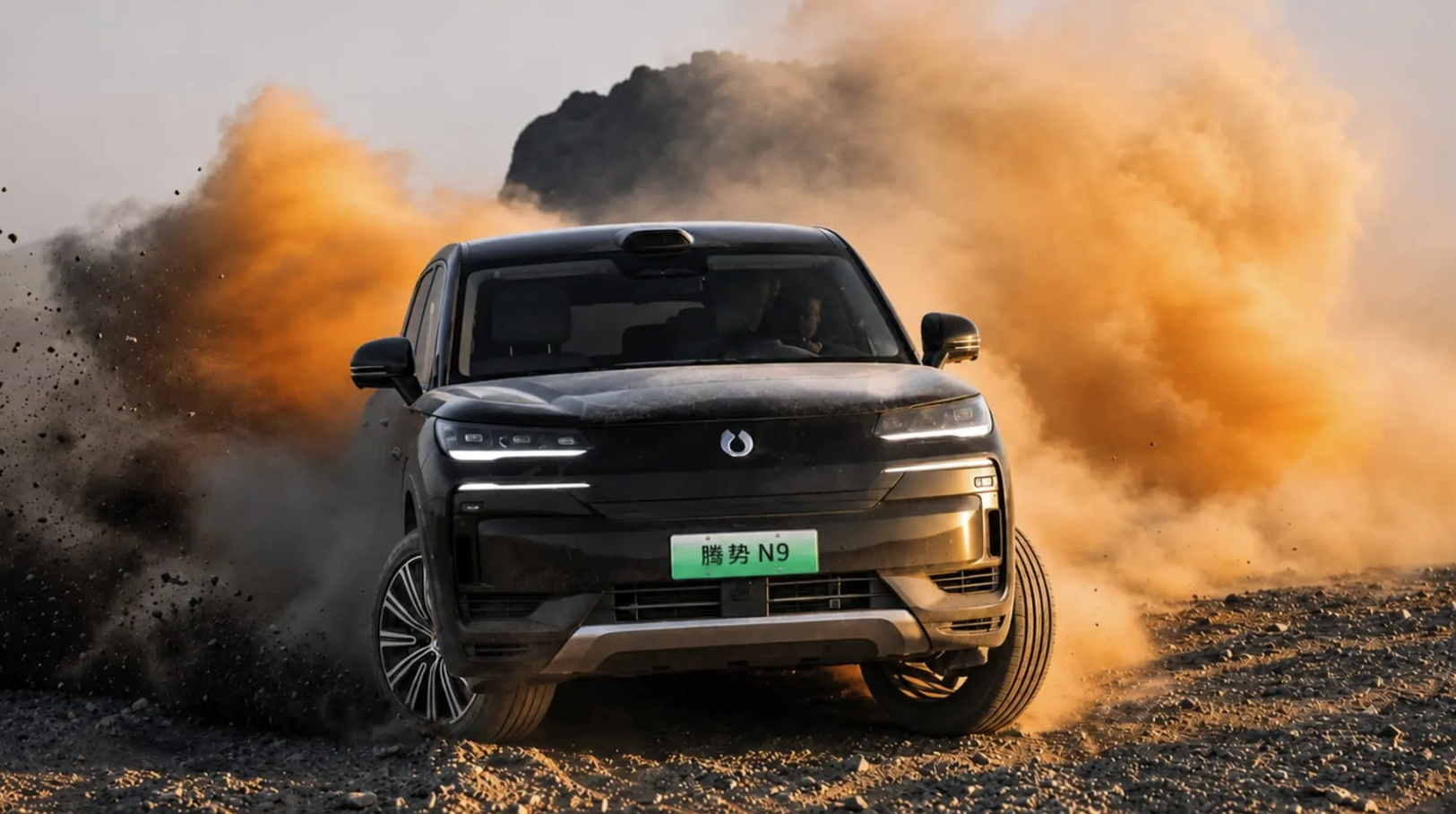
BYD’s Denza N9 luxury SUV is set to gain an all-electric version, with Chinese regulatory filings revealing a tri-motor AWD system producing 890kW.
Chinese automotive publication CarNewsChina (↗) reported the model’s appearance in filings published by China’s Ministry of Industry and Information Technology (MIIT), detailing its powertrain, dimensions and weight.
The Denza N9 EV will use three electric motors, with a 270kW unit at the front and two 310kW motors at the rear. Combined output is 890kW (1194hp), with a listed top speed of 240km/h.
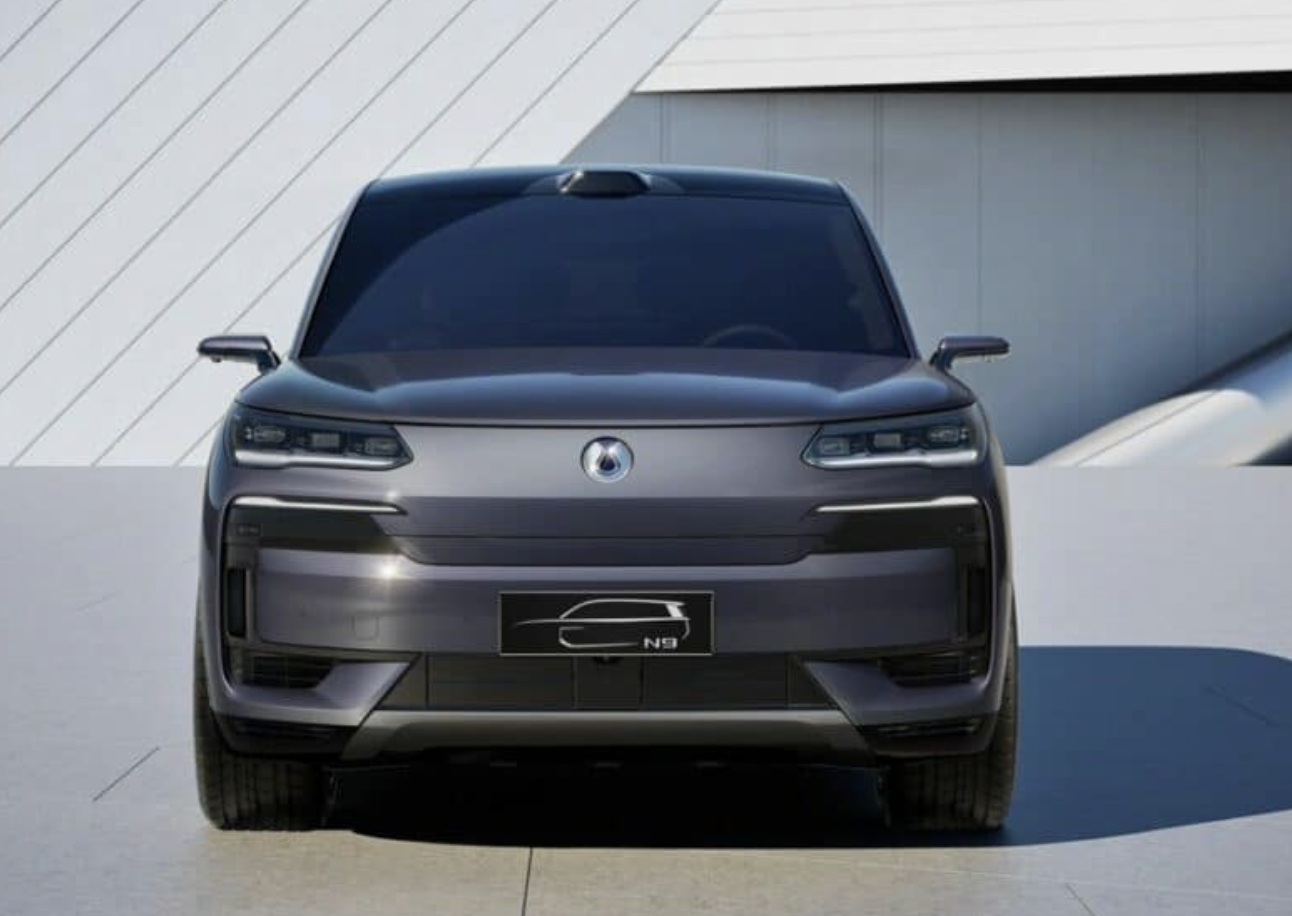
The SUV measures 5270mm long, 2030mm wide and 1830mm tall, with a 3125mm wheelbase. Kerb weight is listed at either 3105kg or 3180kg, depending on specification, while gross vehicle weight is a hefty 3760kg. Five- and six-seat configurations are listed, along with a roof-mounted LiDAR sensor and optional 22-inch forged alloy wheels.
The electric N9 uses a lithium iron phosphate (LFP) battery supplied by BYD subsidiary FinDreams. Battery capacity, driving range and charging specifications have not yet been disclosed.
Will the BYD Denza N9 come to Australia?
An Australian arrival remains possible, but BYD has yet to confirm plans to bring the Denza N9 here.
The plug-in hybrid N9 has already appeared in Australian regulatory certification documents, while BYD’s ultra-luxury Yangwang U8 received Australian Design Rules (ADR) certification in October 2026. The 880kW, four-motor SUV’s approval covers the five-seat standard-wheelbase model, although certification does not guarantee a local launch.
The all-electric N9 is a separate development, and there is currently no indication it has been certified for Australia or earmarked for local release. BYD has made no announcement about local availability.
FAQs
How much power does the BYD Denza N9 EV produce?
The Denza N9 EV has a reported combined output of 890kW from three electric motors.
Is the BYD Denza N9 fully electric?
The new version is fully electric, while the existing Denza N9 sold in China is a plug-in hybrid.
How heavy is the BYD Denza N9 EV?
Kerb weight is listed at 3105kg or 3180kg, depending on specification.
Will the BYD Denza N9 come to Australia?
BYD has yet to confirm Australian availability for either the electric or plug-in hybrid version.
Ford is preparing a new, more affordable midsize ute for international markets, with the potential to slot below the Ranger as a cheaper alternative in Australia.
The new pick-up was confirmed by Ford CEO Jim Farley during the company’s third-quarter earnings call, with a 2027 launch planned. The move is part of Ford’s push to attract new customers and compete with increasingly popular Chinese ute brands.
“Alongside strengthening our best franchises, we’re opening new paths to grow at more affordable price points next year. We’ll be launching our pickup for international markets.
“We expect the base material cost for this truck to be 20 per cent lower than today’s Ranger, just as the Maverick has done in the US. This truck is designed to bring new customers into the Ford truck line-up internationally at a cost structure that allows us to compete, in this case with China,” Farley said.
The lower production costs should give Ford scope to position the new model below the Ranger, although its eventual pricing and market positioning are yet to be revealed.
An Australian launch is far from certain. Ford Australia has yet to comment on whether the new ute will be offered locally, and there has been no confirmation of a right-hand drive version.
The pickup is a separate model from the Maverick sold in North America and the upcoming all-electric Fathom ute. It will add another model to Ford’s global ute line-up rather than replace the Ranger.
Ford has yet to reveal the new ute’s name, platform, powertrain or manufacturing location. But if it does make it to Australia as a more affordable alternative to the Ranger, would you consider one?
FAQs
When will the new Ford ute launch?
Ford plans to launch the new midsize ute in international markets in 2027.
Will the new Ford ute come to Australia?
An Australian launch has not been confirmed, but Ford’s international-market plans leave the door open.
Will it be cheaper than the Ranger?
Ford expects its base material costs to be 20 per cent lower than the current Ranger, suggesting it could be positioned as a more affordable alternative.
Is it the electric Ford Fathom?
No. The new midsize pickup is a separate model from the upcoming all-electric Fathom ute.
Will it be available in right-hand drive?
Ford has yet to confirm a right-hand drive version or an Australian export program.
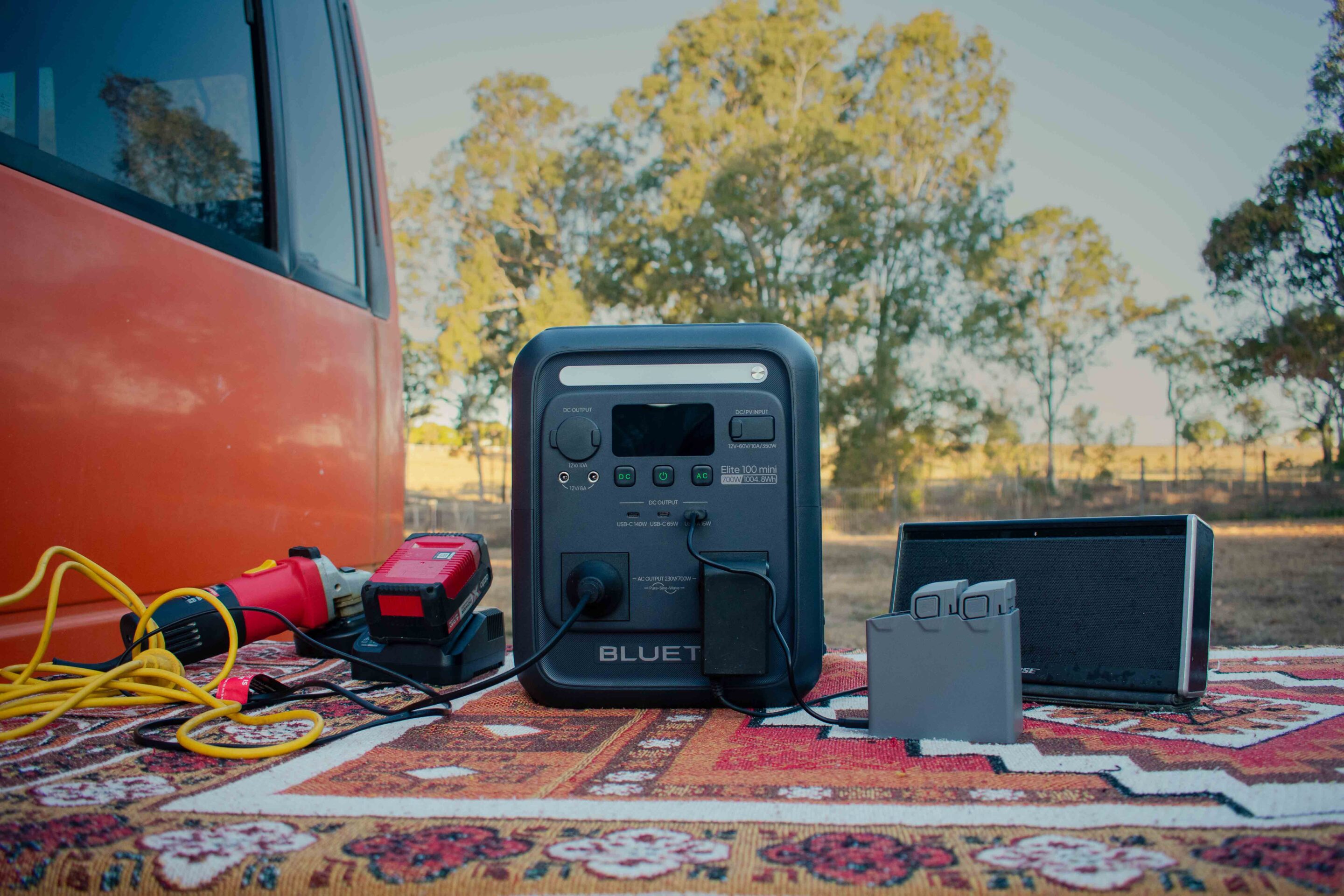
BLUETTI (↗) has launched its Elite 100 mini portable power station (↗) in Australia, billed as its smallest and lightest 1kWh-class power station to date, weighing just 10.7kg.
The Elite 100 mini stores 1004.8Wh of energy and occupies around 45 per cent less volume than BLUETTI’s AC180 power station. Its slim, vertical design makes it easier to pack into the vehicle for a weekend exploring the Flinders Ranges or a longer trip deep into the outback.
It delivers 700W of continuous AC output, with a Power Lifting Mode allowing it to run compatible resistive appliances rated up to 1400W. There are eight output ports, including a 140W USB-C connection for charging compatible laptops.
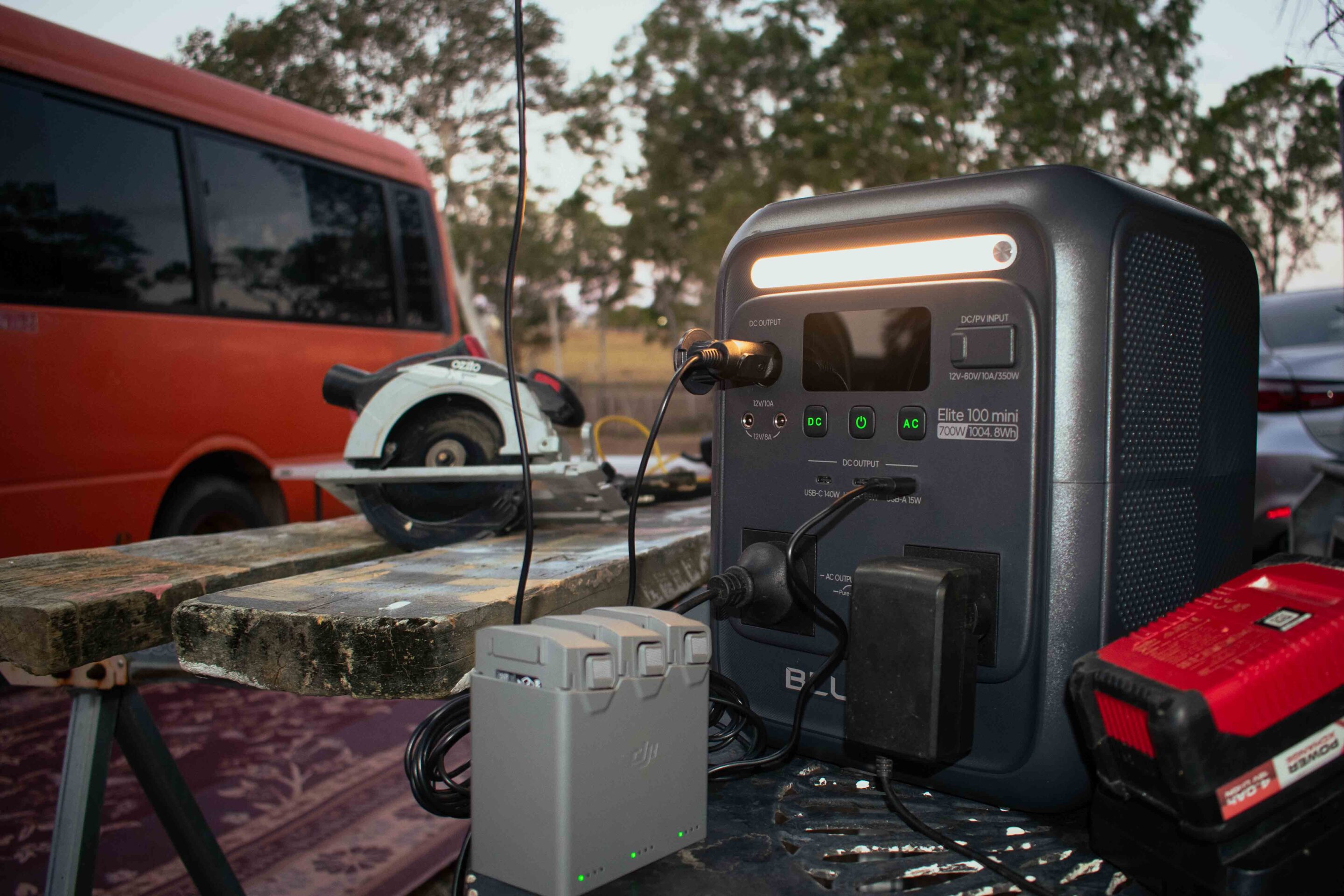
BLUETTI says the battery can charge a laptop up to 13 times, a smartphone more than 34 times or run a portable fridge for more than 34 hours, although actual performance will depend on the device and operating conditions.
The Elite 100 mini uses LiFePO4 battery cells rated for more than 6000 charge cycles to 80 per cent capacity. It also features an integrated LED light with warm, cool and SOS modes, which BLUETTI claims can operate continuously for up to 11 days.
For touring applications, the Elite 100 mini solar generator (↗) can be paired with BLUETTI’s Charger 1 DC-DC alternator charger (↗) for charging while driving. It also supports solar charging through compatible panels.
At home, UPS functionality allows the power station to switch to battery power within 10 milliseconds of a mains outage, keeping connected essentials such as routers and modems running.
Australian pricing
The BLUETTI Elite 100 mini is available on the BLUETTI Store (↗), priced at $699 for the standalone unit (↗), with an introductory offer running until November 18. Buyers can also receive an extra six per cent off using promo code 4X4mini6 at checkout.
- Elite 100 mini standalone (↗): A$699
- Elite 100 mini + 100W solar panel (↗): A$999
- Elite 100 mini + 200W solar panel (↗): A$1199
- Elite 100 mini + Charger 1 (↗): A$999
BLUETTI Elite 100 mini features
- Battery capacity: 1004.8Wh
- Battery chemistry: LiFePO4
- Battery lifespan: More than 6000 charge cycles to 80 per cent capacity
- AC output: 700W continuous
- Power Lifting Mode: Up to 1400W for compatible resistive appliances
- Charging ports: Eight output ports
- USB-C output: Up to 140W
- Weight: 10.7kg
- Lighting: Integrated LED with warm, cool and SOS modes
- UPS switching: 10 milliseconds
- Charging options: Mains, solar and compatible DC-DC alternator charger
Quickfire FAQs
How much does the BLUETTI Elite 100 mini cost?
Australian pricing starts at $699 for the standalone unit, rising to $1199 for the 200W solar panel bundle.
How much battery capacity does it have?
It has 1004.8Wh of stored energy, placing it in the 1kWh power station category.
How much does it weigh?
The Elite 100 mini weighs 10.7kg.
What is its continuous power output?
It delivers 700W of continuous AC output, with Power Lifting Mode supporting compatible appliances up to 1400W.
Can the Elite 100 mini be charged while driving?
Yes. It can be paired with BLUETTI’s Charger 1 DC-DC alternator charger.
What type of battery does it use?
It uses LiFePO4 battery cells rated for more than 6000 charge cycles to 80 per cent capacity.
A suspension lift is a popular starting point for a new Toyota N90 HiLux, but choosing a kit by ride height alone can miss the bigger picture. The right setup needs to suit the vehicle’s weight, driving conditions and how its suspension will be used.
A daily-driven dual-cab doing occasional beach work has different needs from a heavily loaded tourer spending weeks crossing the country. Regular corrugations, rocky tracks, towing and carrying accessories all place different demands on suspension.
TJM’s XGS range (↗) offers different approaches to suspension performance, from the all-round Roamer to the adjustable Remote and the more specialised Rugged. For owners whose accessories and equipment push the vehicle’s carrying capacity, the XGS GVM Plus may also be worth considering.
| Driving scenario | What to prioritise | TJM option to consider |
|---|---|---|
| Tradie / daily driver | Everyday ride comfort, predictable handling and spring rates suited to tools, accessories and regular loads. | XGS Roamer for everyday work and occasional touring. |
| Touring | Controlled damping on corrugations, springs matched to touring gear and consistent performance on long trips. | XGS Roamer for general touring, or XGS Rugged for more demanding rough-road travel. |
| Touring with a camper | Suspension matched to the loaded vehicle, towing demands and extended rough-road travel. Adjustable damping can help adapt the ride to changing conditions. | XGS Remote for adjustable compression and rebound damping. Consider XGS GVM Plus if an approved increase in carrying capacity is required. |
| Regular rough tracks and corrugations | Heat management, suspension control and spring rates suited to the vehicle’s loaded weight. | XGS Rugged for demanding terrain, or XGS Remote for additional damping adjustment and a remote reservoir. |
These are starting points, not universal fitment recommendations. The right setup depends on vehicle compatibility, accessories, loaded weight and intended use. A GVM upgrade doesn’t override other vehicle or towing limits.
What each XGS option offers
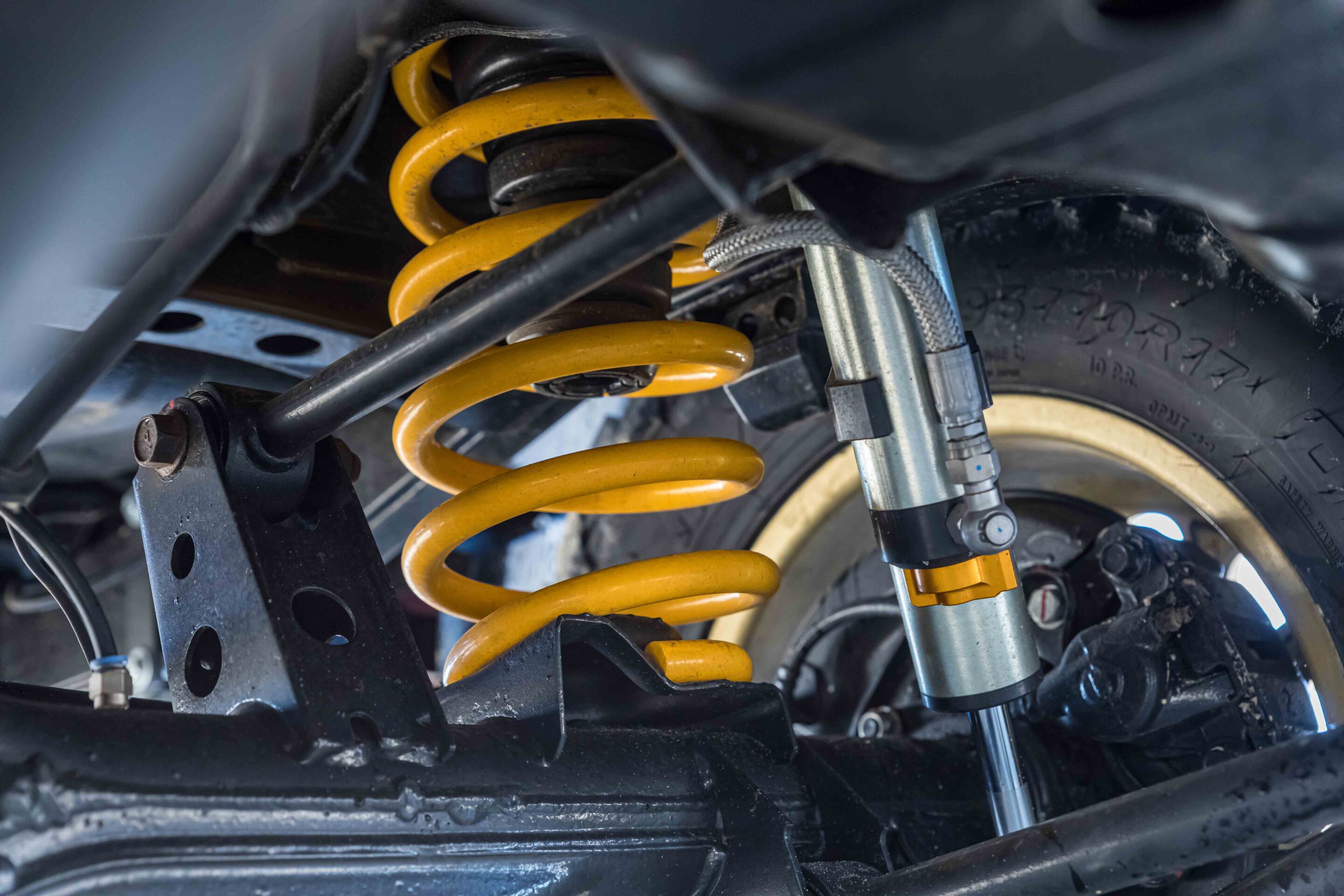
XGS Roamer: The all-rounder
For a HiLux that spends most of its time on the road but regularly heads away for weekends or longer trips, XGS Roamer (↗) is worth considering.
Roamer uses nitrogen-charged twin-tube shock absorbers with an 18mm hard-chromed piston rod and 40mm piston bore. Its multi-stage, velocity-controlled valving is designed to respond to changing suspension speeds and terrain, balancing everyday ride comfort with the control needed for touring and weekend off-roading.
Spring selection is just as important as the shock absorbers. A HiLux carrying a bull bar, canopy, drawers and touring equipment needs springs matched to its actual load. Choosing a kit simply to achieve a particular lift can leave the vehicle riding poorly if the spring rates don’t suit the weight.
XGS Rugged: for demanding terrain
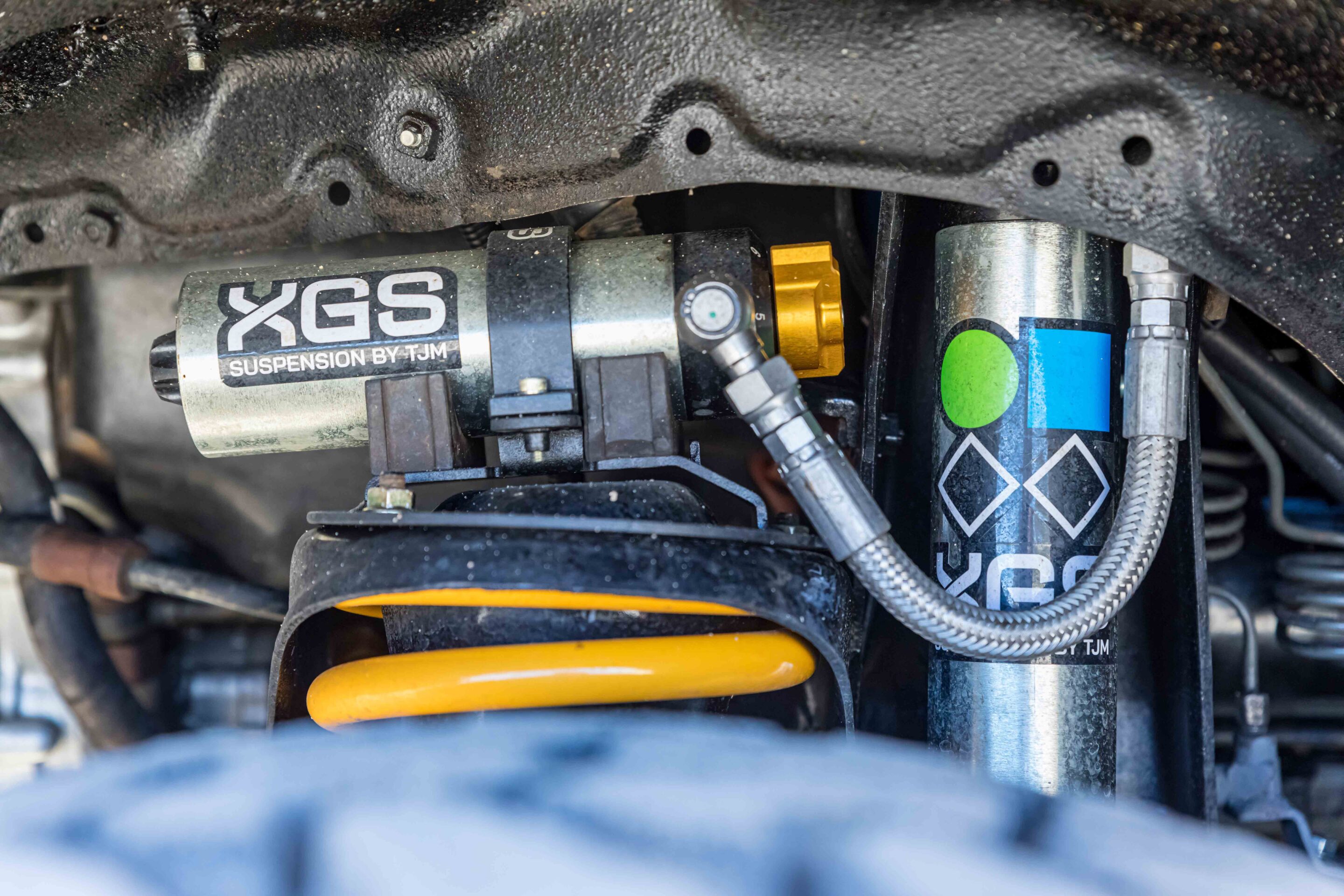
Corrugations and rough tracks put repeated demands on shock absorbers. As the oil inside a shock heats up, damping performance can fade, reducing the control it provides over suspension movement.
XGS Rugged (↗) steps up to a monotube shock absorber with a 52mm piston bore. In this design, a floating piston separates the damping oil from pressurised nitrogen gas, while the oil’s contact with the cylinder wall helps dissipate heat. This construction is designed to manage demanding conditions and reduce shock fade during sustained corrugated-road driving.
Rugged also features adjustable front struts and multi-stage, velocity-controlled valving, designed to respond to changing suspension speeds and help maintain control when carrying heavier loads on and off the road.
For owners who regularly tackle rough tracks, corrugations and demanding touring routes, these features are worth considering alongside spring rates suited to the vehicle’s load. Correct setup and appropriate driving speeds remain essential, particularly over prolonged rough sections.
XGS Remote: adjustable damping
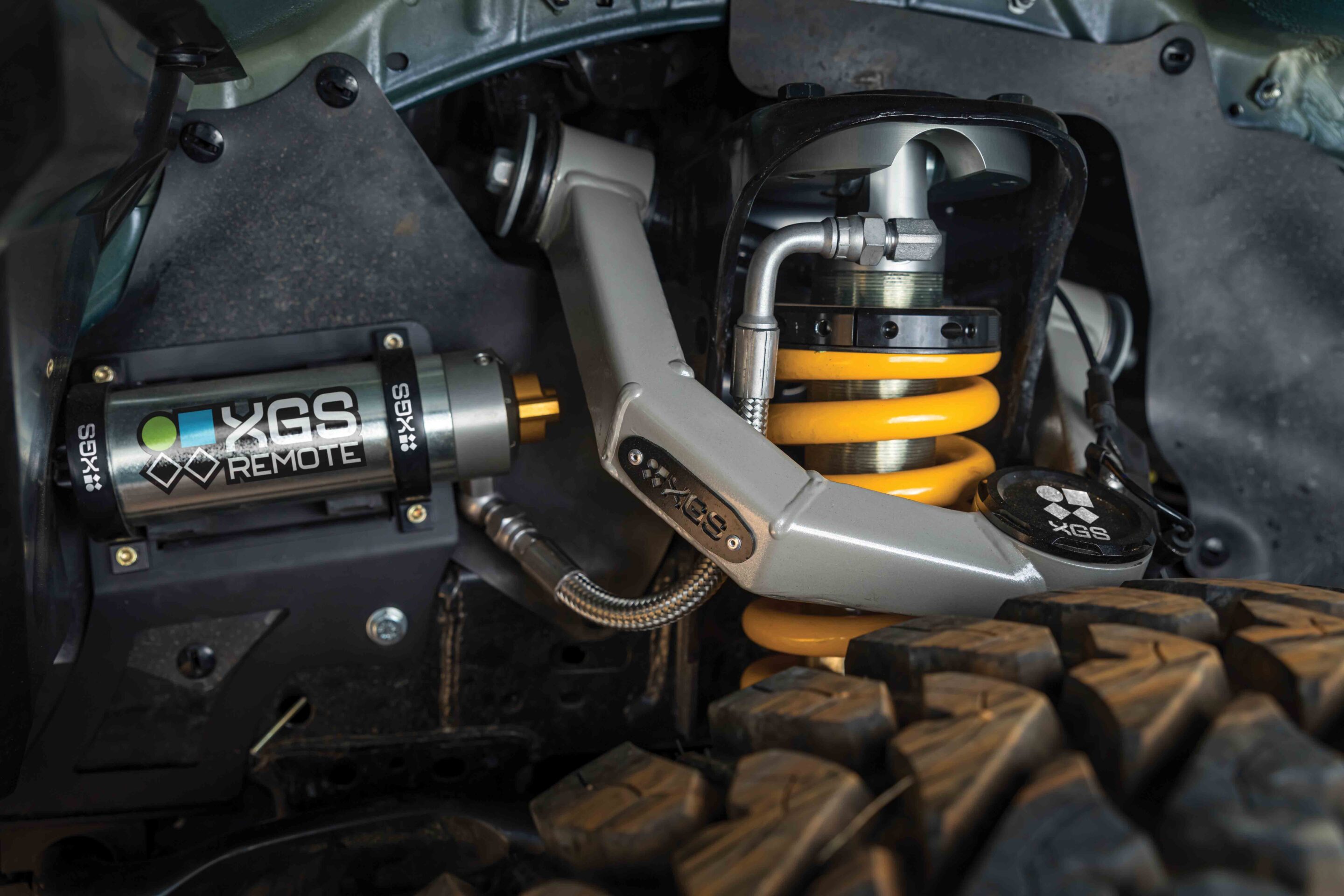
XGS Remote (↗) builds on the Rugged’s 52mm piston bore and monotube design, adding a remote reservoir that doubles the shock absorber’s oil capacity. The additional oil volume helps manage heat and supports consistent damping during demanding use.
Remote also incorporates a hydraulic bump stop within the shock absorber. This provides progressively increasing resistance as the suspension approaches the end of its compression stroke, helping manage harder impacts and improve control when driving over bumps and corrugations with a load on board.
Its key point of difference is eight-stage adjustment of both compression and rebound damping. Compression adjustment changes how the shock responds as the suspension compresses, while rebound adjustment controls how quickly it extends again. Drivers can tune the response to suit different terrain and loads, rather than relying on one fixed setting.
That flexibility can be useful for a HiLux that shifts between daily driving, touring and heavier off-road work. However, damping adjustment isn’t a substitute for selecting the correct springs. The vehicle still needs to be set up for its regular load, and adjustments won’t compensate for exceeding weight limits or using unsuitable spring rates.
XGS GVM Plus: for heavier loads
A suspension lift doesn’t automatically increase a vehicle’s legal carrying capacity. HiLux owners planning to add accessories, carry touring gear or tow a camper should calculate the finished vehicle’s weight and check whether the standard gross vehicle mass (GVM) will be sufficient.
TJM’s XGS GVM Plus range (↗) is designed to increase approved load-carrying capacity while maintaining ride quality on and off the road. Depending on the application, kits include the required suspension components, which can include leaf springs, X5K spring-steel coil springs, bushes and installation hardware. Any increase in GVM must be approved for the specific vehicle and application, and it doesn’t override other limits such as towing capacity or tyre ratings.
A GVM upgrade should be considered as part of the overall build, rather than an automatic addition to every lift. The right setup depends on the vehicle’s expected loaded weight and how it will be used.
Don’t overlook upper control arms
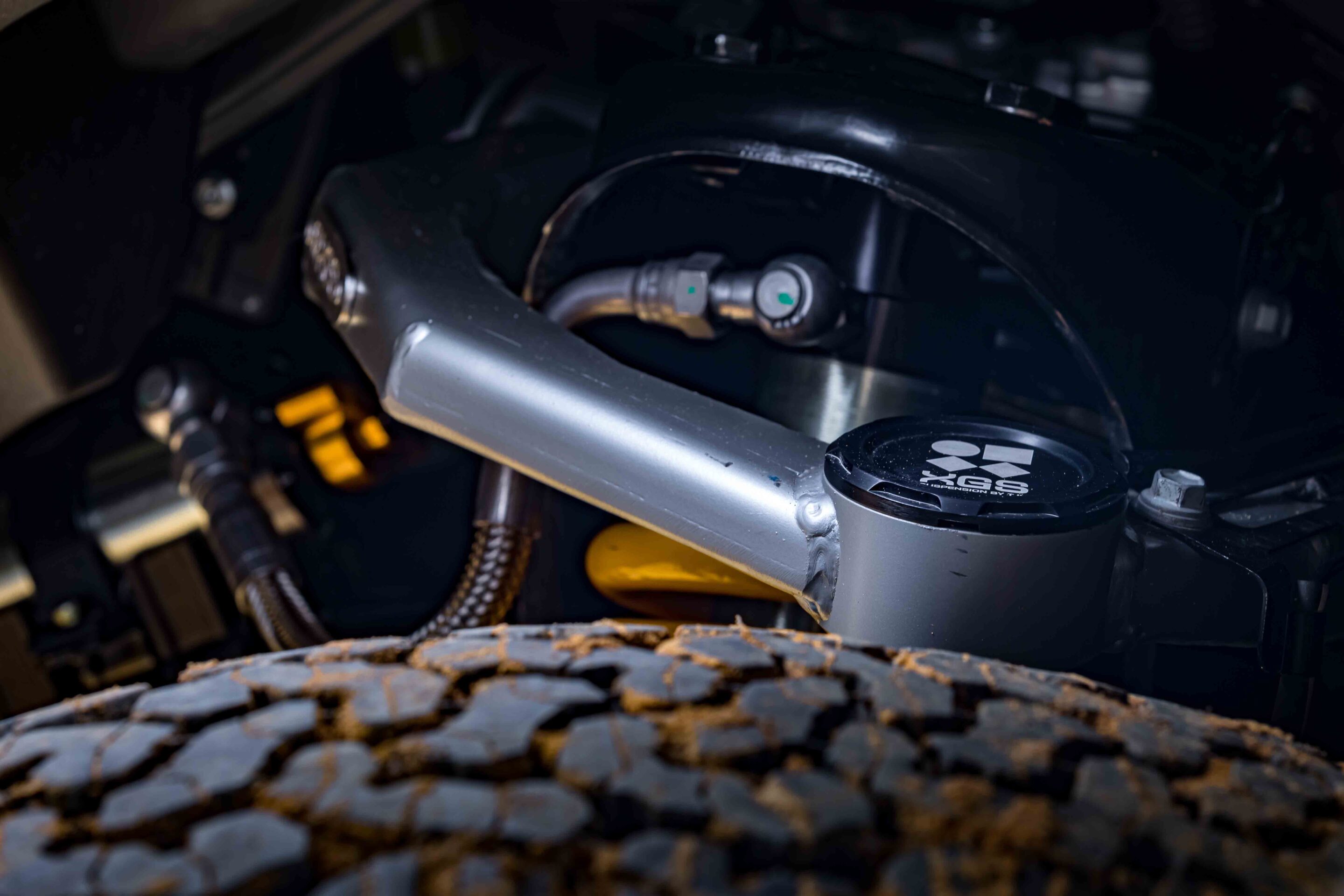
Lifting a HiLux can change front suspension geometry and make it harder to achieve the correct wheel alignment using factory adjustments alone. TJM’s XGS upper control arms (↗), designed and made in Australia using high-quality components, provide additional adjustment, with up to three degrees of extra caster and camber correction specified, depending on the application.
Developed using 3D computer-aided design, the arms retain a footprint similar to the original equipment components while revising the geometry and ball-joint positioning for lifted suspension setups. TJM also says the design provides additional wheel clearance and has been tested with a range of aftermarket wheels to help minimise the risk of contact.
Upper control arms aren’t required for every lift. Whether they’re needed depends on the vehicle, lift height and alignment results. A wheel alignment after installation is essential to confirm the suspension can be adjusted to the appropriate specifications.
Choose for the HiLux you will actually drive
The best suspension upgrade isn’t necessarily the one that delivers the biggest lift or the most adjustment. It’s the one that suits the vehicle’s weight, terrain and intended use.
For everyday driving and general touring, XGS Roamer is an option to investigate. For sustained rough-road use, consider the benefits of a monotube design such as XGS Rugged where it’s available for your vehicle. If adjustable damping is a priority, XGS Remote offers more scope to tailor suspension response. And if accessories and equipment are pushing carrying capacity, discuss XGS GVM Plus before the build begins.
Tell your suspension specialist how the HiLux will be used, what accessories are planned and how much weight it will carry. That information is a better starting point than choosing a lift height first.
It’s no secret that off-road driving and remote travel are tough on a vehicle. Days of pounding corrugations, scrabbling for traction and fording deep water are enough to make most 4x4s cry for mercy.
This is why it’s so important for those of us who journey into the bush, particularly people who travel with only one or two rigs, to have the right tools and equipment on hand and a working knowledge of how to use them. Being able to effect strong and dependable trackside repairs can make all the difference between throwing in the towel and moving on with the adventure. Here is a short list of some of the more common repairs you will likely have to make at some stage.
1: How to plug a flat tyre when 4WD touring
Punctures happen, even with today’s high-quality rubber compounds. Gibber stones, tree roots and miscellaneous trail debris can all cause a flat. Being able to quickly plug the leak and get back on track is simply the price of entry for remote touring. Travelling without a tyre repair kit (which are extremely affordable) isn’t Sparta, it’s madness.
2: How to replace a CV joint on the track
Solid axle, IFS, it doesn’t matter. Play in low range enough and sooner or later you’re going to pop a CV. Being able to swap it out for the spare in your kit is an essential skill to have. The good news is it’s not that hard. The bad news is you’re going to get greasy. But hey, it’s all part of the fun and no good story starts with “the trip went super smoothly…”
Oh, and don’t forget the Loctite (↗) when throwing it all back together, eh? Having to re-tighten hub nuts or steering arm fasteners every few hundred km is nobody’s idea of relaxing.
3: Emergency gasket repairs in the bush
4x4s can leak under normal daily driving. Throw in a bunch of high-load driving, big revs, sinking mechanical components in muddy water and towing the boat or caravan over some inhospitable terrain, and it’s no wonder the odd leak springs up. Obviously, carrying an entire gasket catalogue for your vehicle is a bit extreme, but having a tube of quality RTV gasket sealant on hand is a no-brainer.
Diff pumpkin leaking? Get it flexed up so the oil drains to one side, whip the pumpkin out or cover off (depending on your diff type), seal it back up and you’re back on your way. Airbox letting in dust (2.8L Toyota owners, we’re looking in your direction)? A light smear of RTV on the sealing surface will get you home without incident.
Turbo wastegate letting precious boost escape? Some copper gasket maker will have you sorted in the time it takes the turbo to cool down. Also, let’s not forget about the fact that if you don’t have these things on board, you’ll almost certainly need them. If they’re packed in the tool kit, you’ll rarely require their services. Cheap insurance if you ask us.
4: How to fix common 4WD electrical problems
Just ask any old Land Rover owner or bloke who installed all of his 12V accessories using the old twist-n-tape method, or worse, Scotchlok connectors, what their number one reliability issue is, and they’ll answer: electrical issues.
The shaking, rattling and (hopefully not) rolling that many 4x4s go through also mucks with your electrical terminations and connections. The rule of thumb is: if something’s not working, check the grounding points first. Chances are they’re loose or not offering a good enough connection. Remove the fastener, remove any paint or dirt that’s preventing the ground from being established, throw a good wipe of dielectric grease on everything and reassemble. Fixes the problem 70 per cent of the time, every time.
5: Daily 4WD checks to prevent breakdowns
Okay, this isn’t so much a repair as a good guideline for preventative maintenance, but running a spanner over things that can work loose from corrugations is an important item on your daily checklist when travelling remote. Off-road travel is a fastener’s worst nightmare and stuff works loose all the time.
This is where a quality thread-locking compound like Loctite (↗) is your best friend. Check all your usual bolt-on stuff like awnings, racks, bar work, mounting brackets and driving lights. A tube of Loctite 243 (blue) will see you clear of a lot of trouble in our experience.
It’s not so much about being able to rebuild your entire vehicle; it’s more about being self-sufficient and being capable of repairs to get you back to civilisation. A solid tool kit that’s tailored to your rig (metric spanners won’t help you on your 1970 F-Truck) and the right products to help shore up any leaks, damage or unforeseen parts coming loose will see you out of all but the most serious of mishaps.
FAQs
What are the most common trackside repairs when 4WD touring?
Tyre punctures, CV joint failures, gasket leaks and electrical faults are among the more common repairs.
What should you carry in a 4WD repair kit?
A tyre repair kit, basic tools, spare parts, RTV gasket sealant, dielectric grease and Loctite (↗) are useful inclusions.
Can you replace a CV joint on the track?
Yes. Carrying a suitable spare CV joint and knowing how to fit it can help get you moving again after a failure.
How can you fix a gasket leak in the bush?
RTV gasket sealant can provide an emergency repair for certain leaks, including differential covers and airbox sealing surfaces.
Why should you check your 4WD after driving corrugated roads?
Corrugations can loosen fasteners and electrical connections. Regular checks of accessories, mounting brackets and other fittings can help prevent problems.
We all have our own house rules, and it’s simple etiquette to respect those of others.
Some are standard fare, like taking off muddy boots before walking inside or flushing the dunny after use. They’re obvious and fair requests to make of anyone visiting my castle. Others might seem a little strange to some folk but, given the homeowner rules the roost, what they say goes. The way I see it: like it or leave!
But it seems many homeowners forget their own rules, whether standard or strange and left-of-field, as soon as they head bush. Why? A lack of respect for public or other people’s land, regardless of whether they’re paying for the privilege of using it or soaking up a freebie. Some folk seem to figure that if no one’s watching, they don’t have to worry about the mess they leave behind. Maybe it’s laziness or just downright self-righteousness, but they reckon the usual rules don’t apply to them. These are the people who will eventually have us all locked out of our own public and private backyards.
Bush etiquette rules every 4×4 owner should know
Just like at home, many of the rules we must abide by are unwritten.
Most are common sense; some are learned from parents and friends when you first go camping; some are picked up by observing what others do and realising what should be done to look after our land; and some are learned from publications like 4X4 Australia.
Don’t trot out the old furphy that if something isn’t written on a big, fancy signpost planted in front of you, you don’t have to abide by a particular rule, request or reasonably well-known etiquette. Nope, ignorance and disrespect are no excuse.
Read on for a few standard and not-so-common examples of etiquette we regularly see disregarded. Some are in the not-too-bad basket, others are annoying, while some are downright disgusting – to the point that some grubs shouldn’t be allowed out in our great outdoors, judging by some of the things we’ve witnessed over the years.
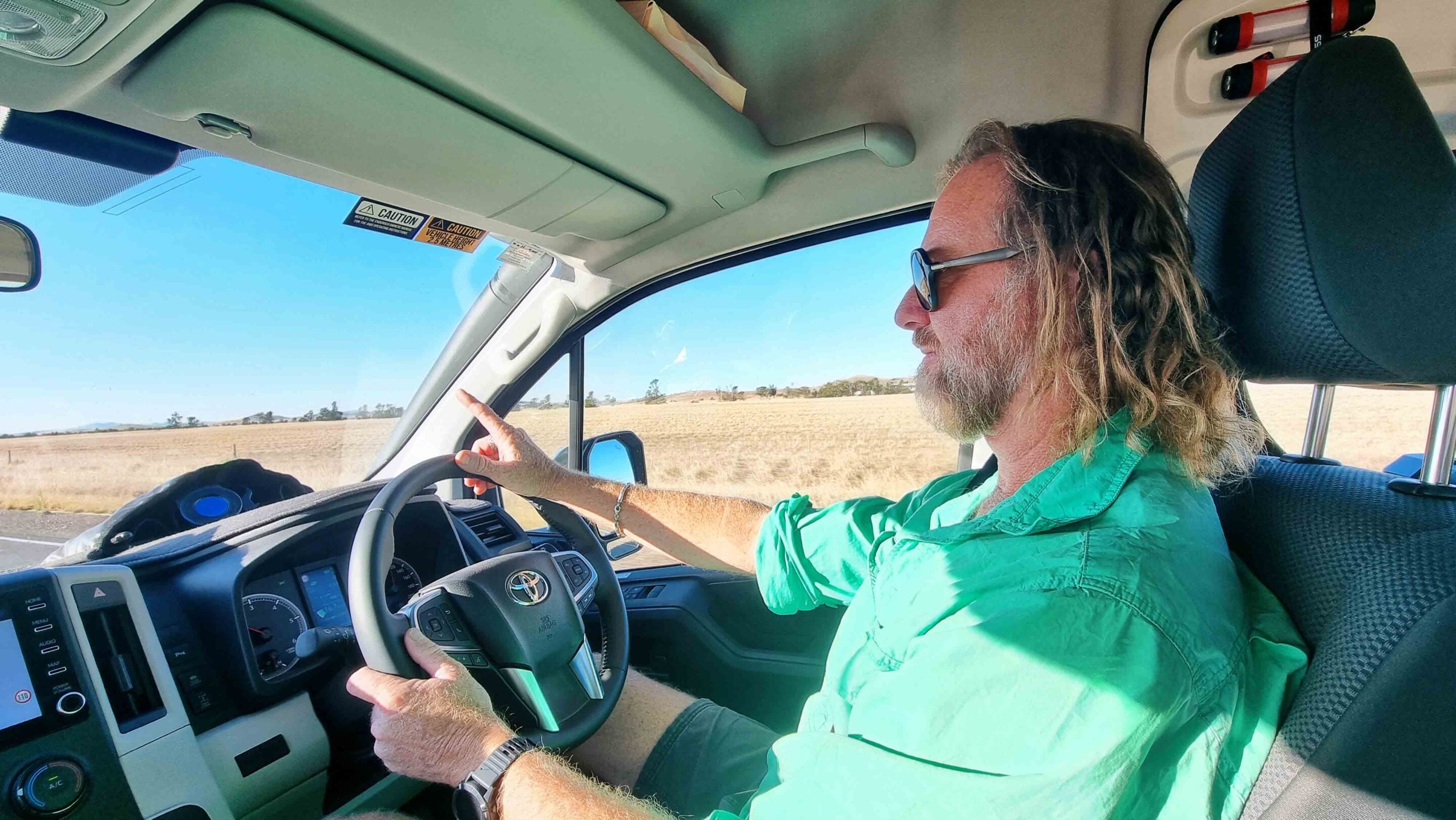
Dispose of toilet paper and human waste properly
Leaving toilet paper to blow around in the breeze, lying on top of the ground for animals to scrounge or presuming it’ll magically disappear when you leave is the number-one problem we see while travelling around Australia.
Remoteness is no barrier to people leaving their poo tickets behind for all who follow to see. Nope, we’ve witnessed plenty of dunny paper, from easy-to-reach coastal campsites to remote central Australian desert scenes, rolling along the ground. Proof that it’s not just city folk in cars having a weekender, but also four-wheel drivers with all kinds of setups who are able to reach our far-flung, beautiful spaces.
No, it’s not just the crap and skid-marked dunny paper we see floating around campsites – ladies and gentlemen, you’re all to blame. Yes, I know we all need to dump a load (almost) every day, but have the decency to discard it properly.
Then there’s the odd piece of toilet paper scattered around the bush, even when there’s no sign it was used for anything more than a quick toilet stop. Whatever the reason, if you use toilet paper, take it with you or dispose of it properly. Leaving it behind because you think a small piece doesn’t matter is still littering, and it quickly spoils an otherwise pristine campsite. Come on, people, it’s not that hard to clean up after yourself in the bush. You keep your own home clean of crap and dunny paper, so have the decency to do the same while out in the bush.
Perhaps, along with the calls from some for mandatory towing licences for all those who travel with caravans, all travellers, campers, tourers and people who wander beyond their front doorstep should complete a course in ‘How to Crap in the Bush’! If you don’t follow simple bush toileting etiquette, don’t jump up and down whinging when once-pristine places keep getting locked up.

Never leave broken glass behind
Nothing ticks me off more than walking on broken glass and having my feet slashed because of someone else’s ignorance and stupidity.
Yeah, I wear appropriate footwear most of the time, but there are occasions when I’m barefoot at camp, on the beach or while swimming, and having to deal with broken glass is a surefire way to turn me into a cranky pants with a foul mouth.
Fair enough, accidents happen. If you bust a glass bottle, pick up every piece. Don’t throw it in the fire; glass generally won’t melt or burn away in a campfire. Badly cut feet can mean a trip to the local hospital for stitches – if there is one anywhere near you.
Extinguish campfires properly and prevent bushfires
We all love a campfire; it’s mesmerising, good for the soul and a great place to have a long yarn with mates.
A campfire also has the ability to attract strangers, turning them into potential mates, whether temporary or lifelong. That same fire can help ward off biting insects and other prowling nighttime critters. Here’s the kicker: Most people presume that once the flames have died down and the coals have turned black, that’s the end of the heat. No siree; that third-degree, foot-scalding heat can linger for hours, particularly if the coals have been covered with dirt or sand.
The best way to quickly and safely extinguish your campfire is with plenty of water. Spreading the coals and leftover timber over a wider area can help them cool more quickly, but make sure there’s no residual heat before you leave the site.
Regardless of the time of day or night, if you have a fire, keep an eye on it and make sure it can’t spread into surrounding grass or scrub and start a bushfire. Embers can travel surprisingly high and far and start spot fires, so be especially vigilant in windy conditions. If there’s a total fire ban, don’t light up. It’s that simple.
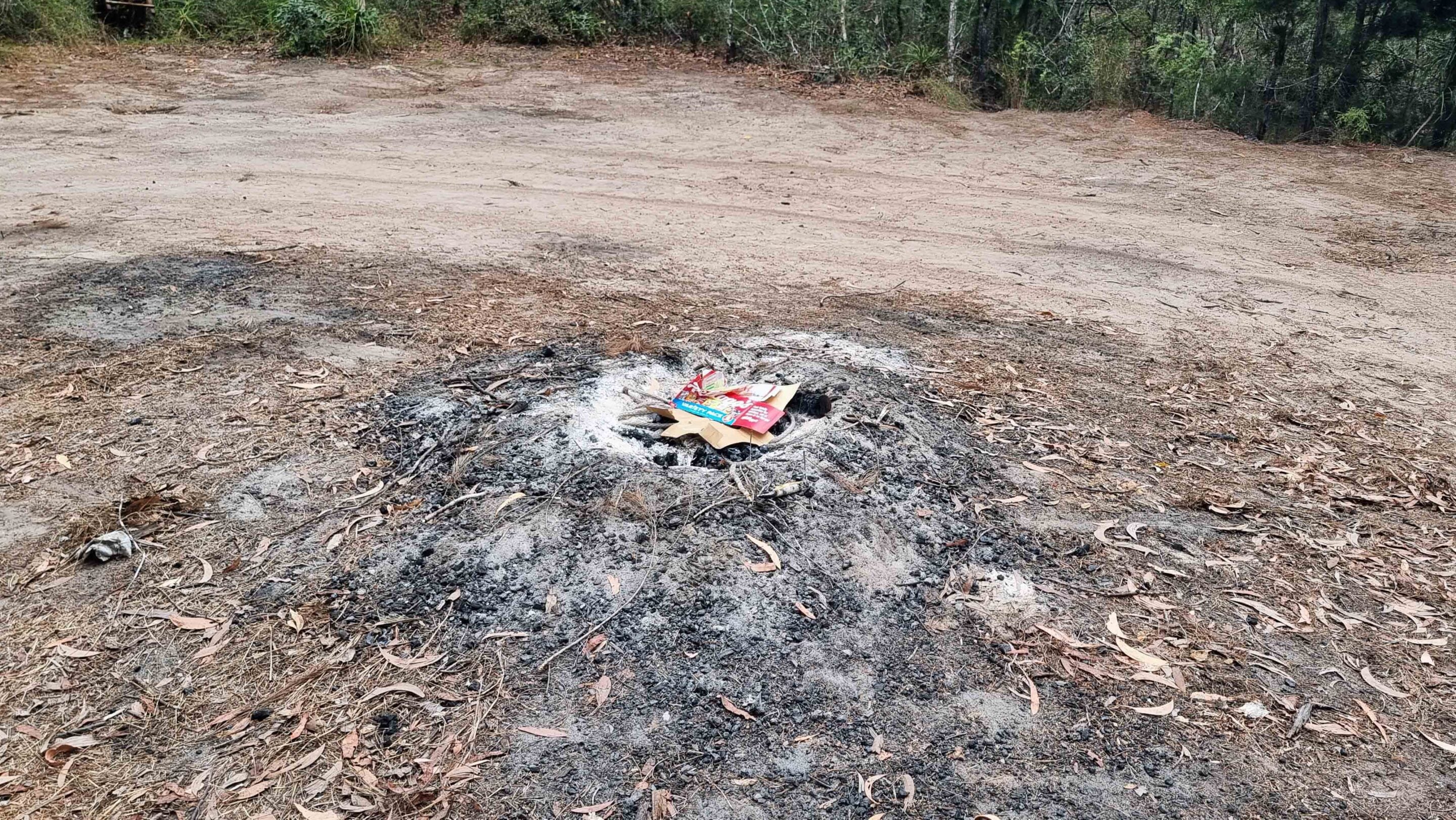
Take all your rubbish with you
Simply put: If you take it in, be prepared to take it out.
Plenty of remote areas don’t provide rubbish bins, so take it all with you and dispose of it appropriately. Sure, some food scraps will break down, but consider what wildlife might try to eat them and whether they could cause harm.
And I can assure you, it’s not always travellers passing through who leave rubbish behind. Some of the filth I’ve witnessed on recent trips has included food tins, nappies and drink containers scattered around campsites and surrounding bush, with no attempt made to clean it up or take it away. Whoever you are and wherever you come from, that sort of behaviour has no place in the bush.

Don’t let drinking ruin the campsite
Yep, I love a cold drink or two at the end of a hot day, sitting around the campfire and chilling out in the evening.
But those who can’t control their drinking and get loud, obnoxious and disrespectful need to think about the consequences of their actions. No one wants to hear loud-mouthed yobbos swearing, carrying on like tossers and thinking they can out-drive everyone as they stagger over to their vehicle and give it a heroic rev. Your half-cut driving skills serve no purpose and impress no one. Don’t drink and drive on public or private land – the consequences could be life-ending.
Respect other campers and keep the noise down
I love my music at home, while driving and at the campsite. The volume varies depending on a few factors, including who’s watching and listening to me sing.
Seriously, though, no matter what your musical taste, keep the volume down at campsites so you don’t disturb fellow campers. Sound can travel a long way at night and over water – especially when your neighbours don’t share your taste in music. While caravan parks often have noise curfews, use your common sense at free camps, national parks or anywhere else out in the wilds of our great country.
Respect other people’s personal space. Sure, wave and say g’day as you wander past someone else’s campsite, but don’t assume you can wander in unless you’re invited. You wouldn’t walk uninvited into someone else’s home in the suburbs, would you?
If space permits, don’t set up camp right beside someone who’s already there. I’ve politely asked people to move on when they’ve decided to set up right next to me. Give each other the space we all head bush to enjoy.
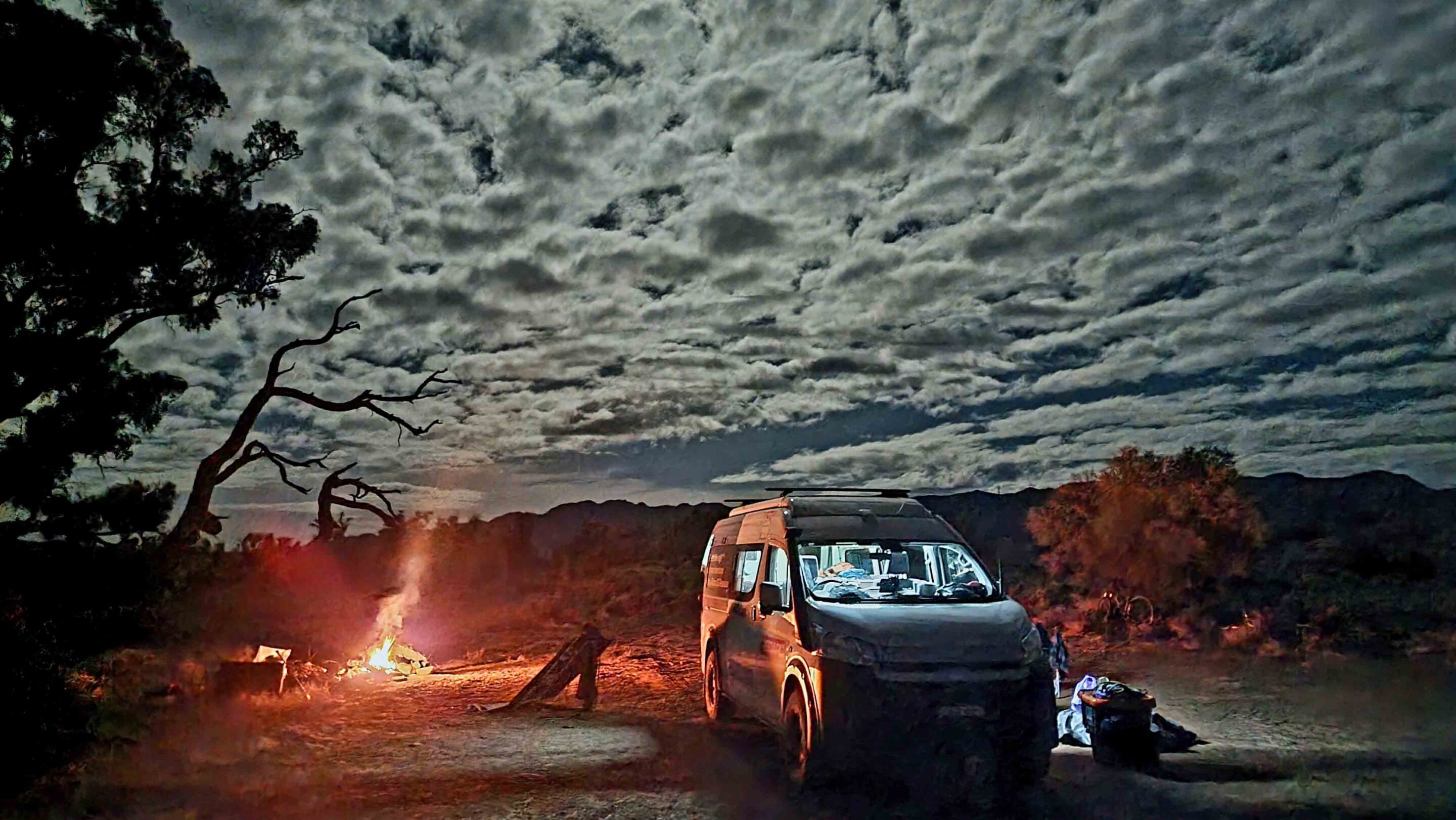
Follow basic 4×4 driving and track etiquette
Written and unwritten, there are plenty of simple procedures and techniques to follow when driving away from the city lights – without getting too dictatorial or bossy about it.
When approaching oncoming traffic on dirt roads, slow the hell down and move over to your left to avoid dusting fellow road users and throwing stones at their windscreens. The number of times I’ve had my windscreen hit by stones flicked up by drivers travelling at full tilt is frustrating as hell. I get it, you want to maintain an optimal speed over corrugations, especially when towing a caravan, but don’t think for one moment that you automatically have right of way or that you won’t be flicking stones hell west and crooked.
I’ve been pelted with stones a few times lately by drivers towing caravans who refuse to slow down. Let’s just say the offenders are usually well down the road by the time they get to miss what I have to say about their disrespectful, nonchalant driving skills … or lack thereof. Maybe you have no idea of the damage you’re causing or simply don’t care. Either way, if you see other drivers furiously waving their arms at you, take a moment to wonder what you might be doing to upset them.
It’s not just out on the faster dirt roads, either. When you’re cruising into a campsite, have the decency to slow down so you don’t spread dust over other campers. Sure, if the wind is blowing in an unfavourable direction you can’t totally prevent it, but keep an eye on the conditions and your rear-view mirrors to see where your dust trail is going.
No, I don’t wave to every driver while in towns or cities unless I know them. But out bush and in remote areas, it’s standard etiquette to wave to oncoming vehicles. It’s also common for vehicles tackling rougher sections of track very slowly to come to a complete stop, wind down the windows and have a chinwag for a minute or … ten. It might just be a general g’day, or you might swap track conditions, let each other know if other vehicles are following in a convoy or pass on interesting information about something worth seeing up ahead – bush telegraph-style info.
On narrow or single-lane tracks, two 4x4s obviously can’t pass each other unless one or both move off the track. While there are no set rules as to who should move over, much of it comes down to common sense: Whichever vehicle can most easily find a suitable space to pull aside is the one that moves. In general, if you’re heading downhill, give way to those coming uphill. There are plenty of situations where this may not be practical, though, so each encounter should be judged on its merits and handled with a bit of common sense and courtesy.
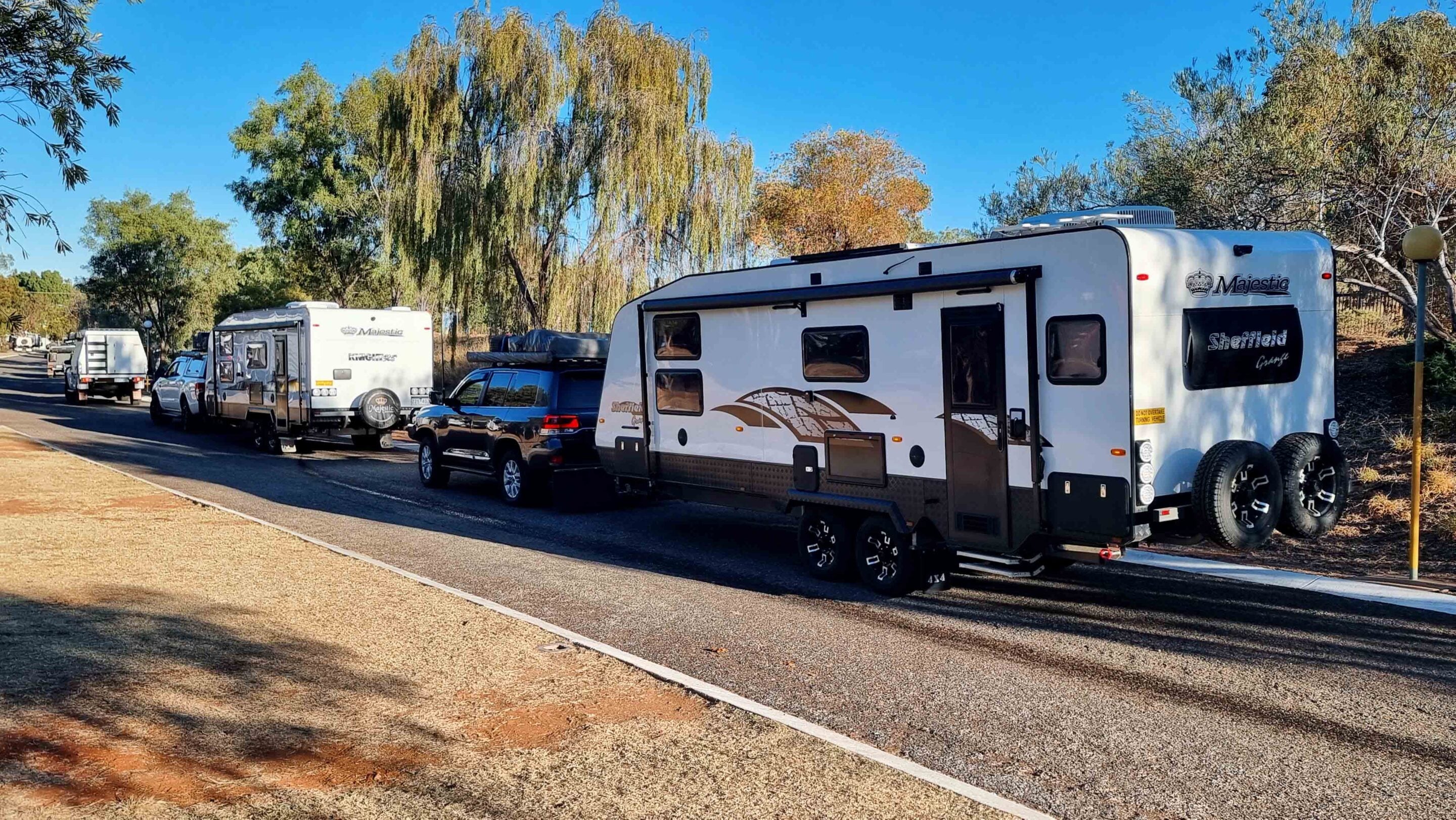
Don’t be that pig-headed driver who barges ahead, stays in the middle of the track and expects everyone else to move for them. Sometimes size matters; larger 4×4 RV trucks and 4x4s towing caravans can’t get off the track as easily as smaller vehicles. Trucks and road trains need plenty of room, so when it’s safe to do so, pull well over and give them space. You’ll reduce the chance of stone strikes and dust ingress in your 4×4, and the truckie will appreciate your help in keeping the big rig rolling.
On beaches, in general, keep left just like you would on a road. Using your indicator is a great way to let others know which side you intend to pass on. Many beaches are gazetted roads, so road rules apply. When approaching pedestrians, slow right down and avoid driving too close to them. It can be hard, if not impossible, to hear an approaching vehicle over the crash of the waves, so expect unpredictable behaviour from pedestrians, especially kids. For safety’s sake, give them plenty of space.
Don’t drive like a tool. Ripping up tracks, tackling challenging obstacles in 2WD, hooning, chucking doughnuts or doing circle work will damage the area and could see us all locked out. The damage you do to your own vehicle, or the risk of hitting others, is inexcusable. Take it easy out there and everyone will get to enjoy the place.
Leave gates the same way you found them. If they’re shut, close them after you go through. If they’re open, leave them open. You should have a UHF radio fitted to your 4×4, so use it when approaching other vehicles in less-than-favourable situations. Talk to people and let them know your intentions, or ask what theirs are.
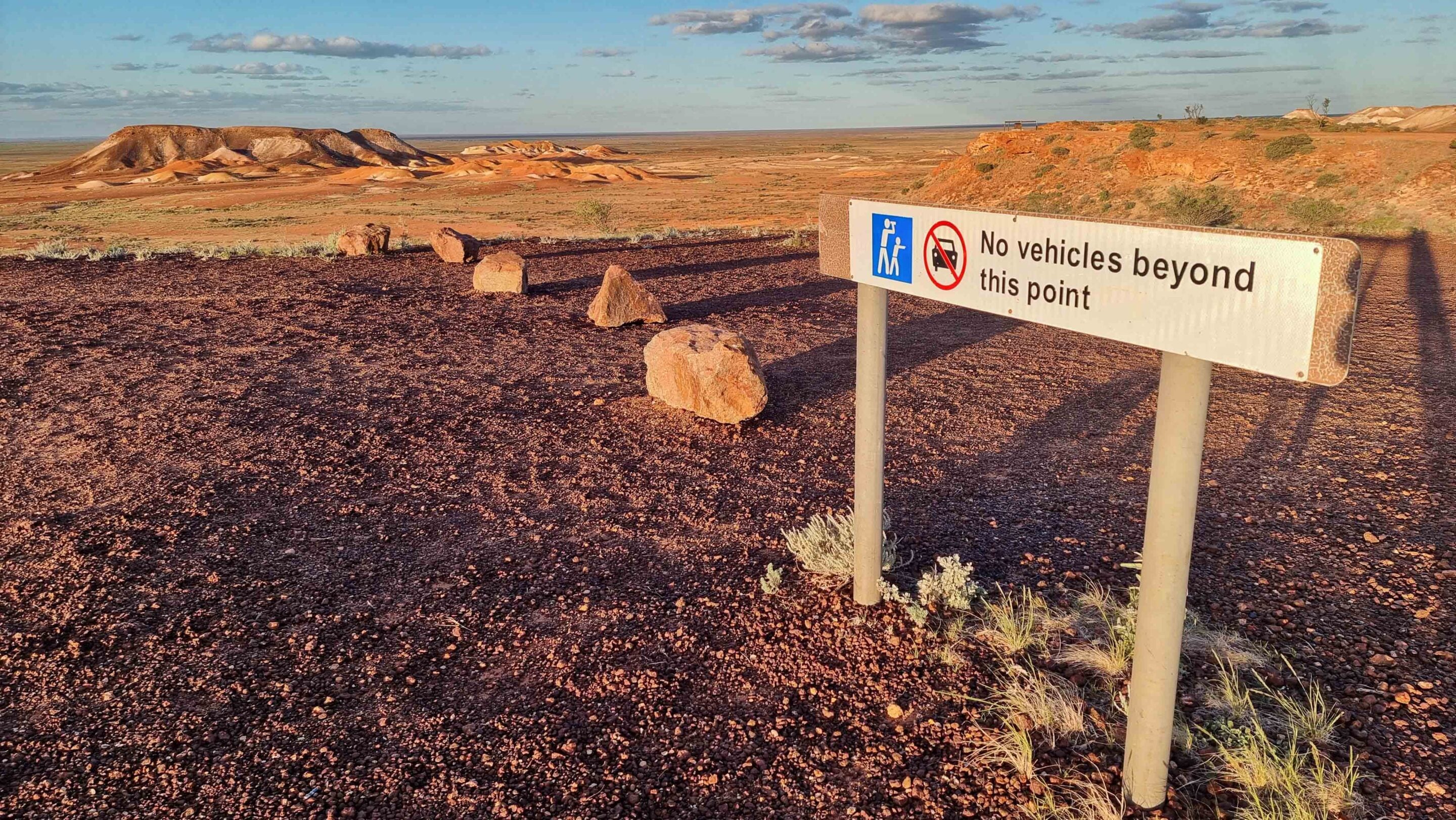
Stay on designated tracks and resist the temptation to create new ones. If there’s a tree down, try to remove it if it’s safe to do so. If there’s a bog hole or a stretch of slop you need to traverse, get out and walk it first to work out the best way through. Most of the time, staying on the existing track is best.
Watch out for and give way to horse riders, pushbike riders, walkers and motorcyclists. You’re in a mostly air-conditioned armchair on wheels, so it makes sense to show some respect by slowing down, giving them plenty of room and passing at a safe speed.
Smokers: Yes, it’s your right to smoke. It’s my right not to have to suck your second-hand fumes into my lungs. And it’s everyone’s right not to have the bush set alight by the ignorant flick of a cigarette butt out the window. Stub your butt out properly in an ashtray, or another suitable container, make sure it’s completely extinguished and keep it in your own vehicle until you can dispose of it properly.
Be prepared to help when things go wrong
Not everyone is mechanically minded, a bush mechanic or capable of spinning spanners to fix a mishap when they’re a long way from the safety of home or the nearest roadside assistance.
But carrying adequate tools, spares and assorted odds and ends to help repair your vehicle is a must. Don’t expect others to break out their gear to help you. If someone does offer to lend a hand, pitch in where you can rather than sitting back and watching. Offer payment in cash or liquid gold. Most folk won’t accept it, but always make the offer.
The same goes for recoveries. If you get stuck, be prepared with your own recovery equipment. Don’t presume others will pull out theirs and, if their gear gets damaged helping you, offer to pay for it. Snatch straps, winch ropes and other recovery gear can easily be damaged and aren’t cheap.
If you see someone broken down, bogged or otherwise in trouble, stop and offer help. Even if you can’t fix the problem, it’s always reassuring to have someone on your side when you need it – even if all they can offer is communication, a cold drink or advice on how to get to the next town.
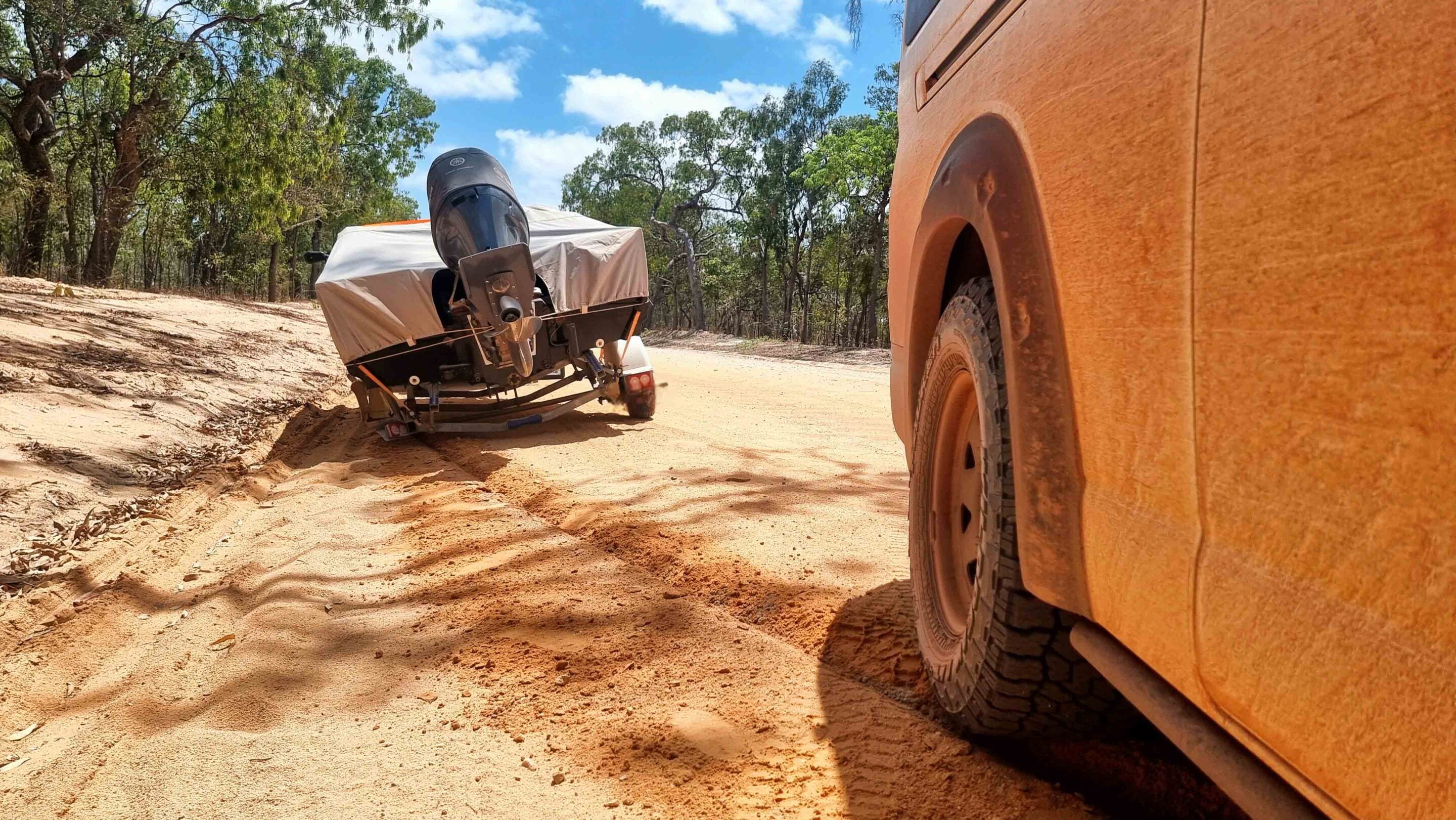
Slow down and watch out for wildlife and livestock
Slow down and keep an eye out for animals – wild or livestock.
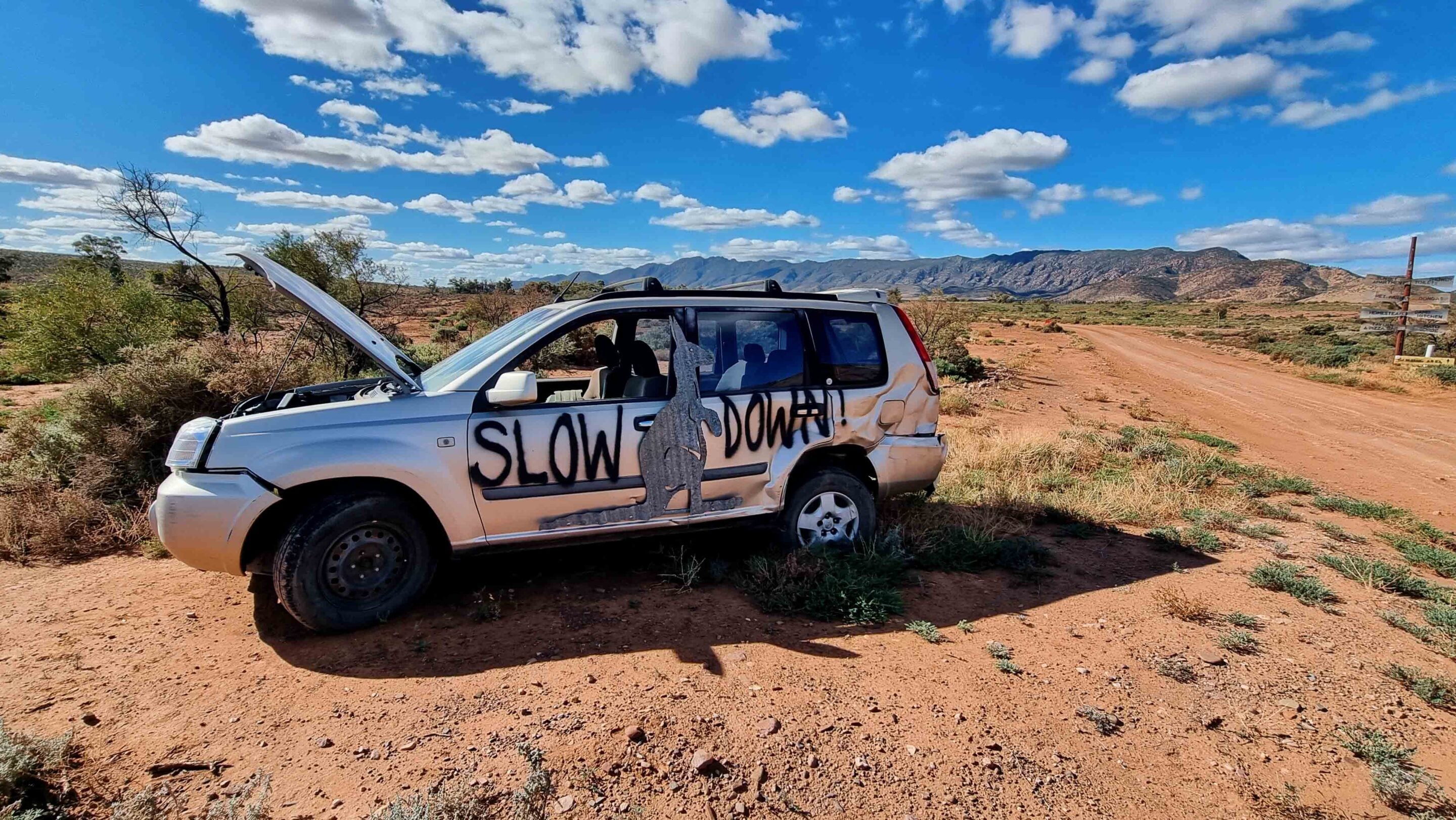
Regardless of signage, time of day or night, hot or cold, drought or flood, there’s always a danger of an animal strike while driving our outback roads and tracks. Don’t rely on your bullbar, driving lights or perceived driving skills to magically prevent you from coming head to head with a beast. The faster you go, the greater the chance you’ll hit something sooner or later.
Follow the rules and keep the bush open to everyone
There are dozens more unwritten rules of the bush, caravan parks, camping areas and beaches.
Don’t walk through other people’s campsites, don’t do an oil change straight into Mother Earth, don’t crap near a waterway, don’t encroach on farmers’ land, don’t chase or disturb livestock and don’t litter the highway, bush, beach or anywhere else like a disrespectful grub.
If you’re up for travelling our great land without destroying it, observe a few basic rules and a bit of simple etiquette, then get out there, explore, have an adventure and enjoy all Australia has to offer. If not, your stupidity, ignorance, selfishness and disrespect will eventually have us all locked out.
It all comes down to common sense, which seems to be in short supply with some people these days. So, if you can’t follow a few basic rules of the bush, stay at home instead of buggering it up for the rest of us.
Rules to remember
- Dispose of toilet paper and human waste properly
- Never leave broken glass behind
- Extinguish campfires properly
- Take all your rubbish with you
- Drink responsibly
- Keep noise down and respect other campers
- Follow on- and off-road etiquette
- Help others when things go wrong
- Slow down and watch out for animals
Frequently Asked Questions
Can you leave toilet paper in the bush?
No. Take used toilet paper with you or dispose of it properly. Leaving it behind is littering and spoils campsites.
Can you throw glass bottles into a campfire?
No. Glass generally won’t melt or burn away in a campfire. If you break a bottle, collect every piece and dispose of it properly.
What’s the best way to extinguish a campfire?
Use plenty of water. Spreading coals and leftover timber can help them cool faster, but make sure there’s no residual heat before leaving.
Who gives way on a narrow 4×4 track?
Generally, whichever vehicle can most easily find a suitable spot to pull aside should move. Vehicles travelling downhill should usually give way to those coming uphill.
Should you slow down when passing other vehicles on dirt roads?
Yes. Slow down and move left when approaching oncoming traffic to avoid throwing stones and dust at other road users.
Should you help other drivers who get stuck or break down?
Yes. Stop and offer assistance where possible, even if it’s just a cold drink, communication or advice.
A new-generation GR Sport is reportedly set to join the Toyota HiLux range in 2027.
South African publication Cars.co.za (↗) reports Toyota South Africa Motors has confirmed the ninth-generation HiLux range will gain a GR Sport flagship, with the model expected to arrive sometime next year. The news was revealed by Andrew Kirby, president and CEO of Toyota South Africa Motors, during an interview at Naamsa’s SA Auto Week 2026 event in Durban earlier in October.
The new GR Sport has yet to be revealed, and Toyota has not confirmed whether it will retain the widebody configuration of the previous GR Sport. However, this is considered likely due to the popularity of the previous model and the investment involved in developing its wider track.
The powertrain is also unconfirmed, although Cars.co.za (↗) expects the new model could retain the uprated 2.8-litre four-cylinder turbo-diesel from the previous GR Sport. It produces 165kW and 550Nm, compared with 150kW and 500Nm in the standard engine. A six-speed automatic transmission and four-wheel drive are also expected to be standard.
The new model is tipped to feature over-fenders, model-specific wheels with chunky tyres, upgraded suspension, a bespoke front-end design and GR branding. Interior upgrades are also anticipated.
The HiLux GR Sport arrived in Australia in 2023, based on the previous-generation model. It featured wider tracks, upgraded suspension and an uprated 2.8-litre turbo-diesel producing 165kW and 550Nm. The model has since been discontinued.
Toyota Australia has yet to confirm whether the new HiLux GR Sport will return to Australia.
Frequently Asked Questions
When is the new Toyota HiLux GR Sport expected?
The new model is reportedly due to launch in South Africa sometime in 2027.
Will the new HiLux GR Sport have a widebody design?
It has not been confirmed, but the wider track is expected to return.
What engine will the new HiLux GR Sport use?
The expected powertrain is an uprated 2.8-litre turbo-diesel producing 165kW and 550Nm, although this remains unconfirmed.
Will the new HiLux GR Sport come to Australia?
Toyota Australia has yet to confirm whether the GR Sport will return to the local HiLux range.
Australian buyers can now order a remastered Defender Classic V8 for the first time, but the bespoke off-roader will cost more than $400,000 before delivery and local taxes.
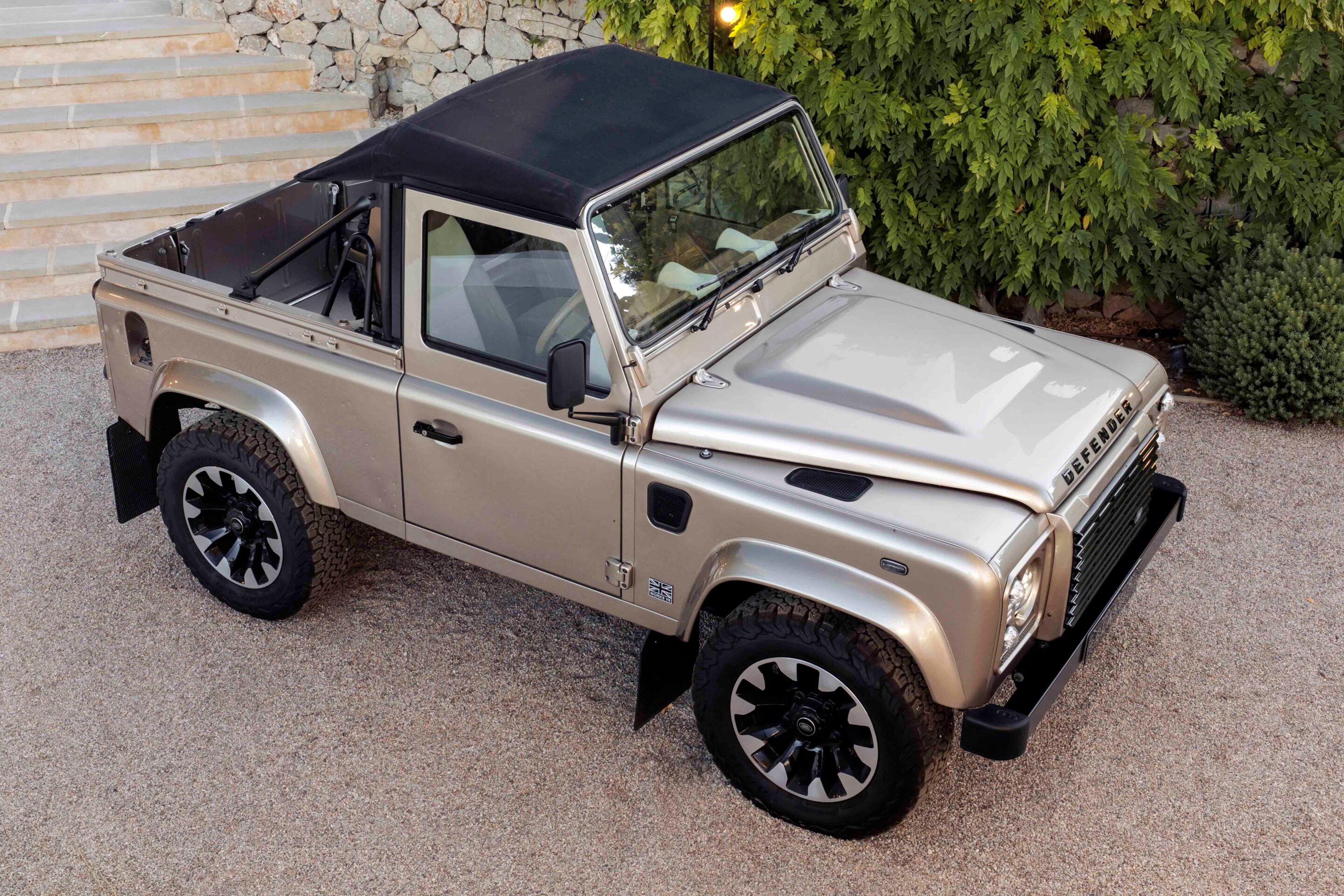
The Defender Classic V8 is remastered through Land Rover’s Works Bespoke programme, with each vehicle starting life as a donor Defender built between 2012 and 2016. Buyers can choose from three body styles: the 90 Station Wagon, Soft Top and 110 Station Wagon, before specifying colours, interior trims and accessories.
Under the bonnet is a naturally aspirated 5.0-litre petrol V8 producing 298kW and 515Nm, paired with an eight-speed ZF automatic transmission and all-wheel drive. The remastered Defender also receives upgraded suspension and brakes, including Eibach springs and anti-roll bars, Bilstein dampers and four-piston Alcon brakes.
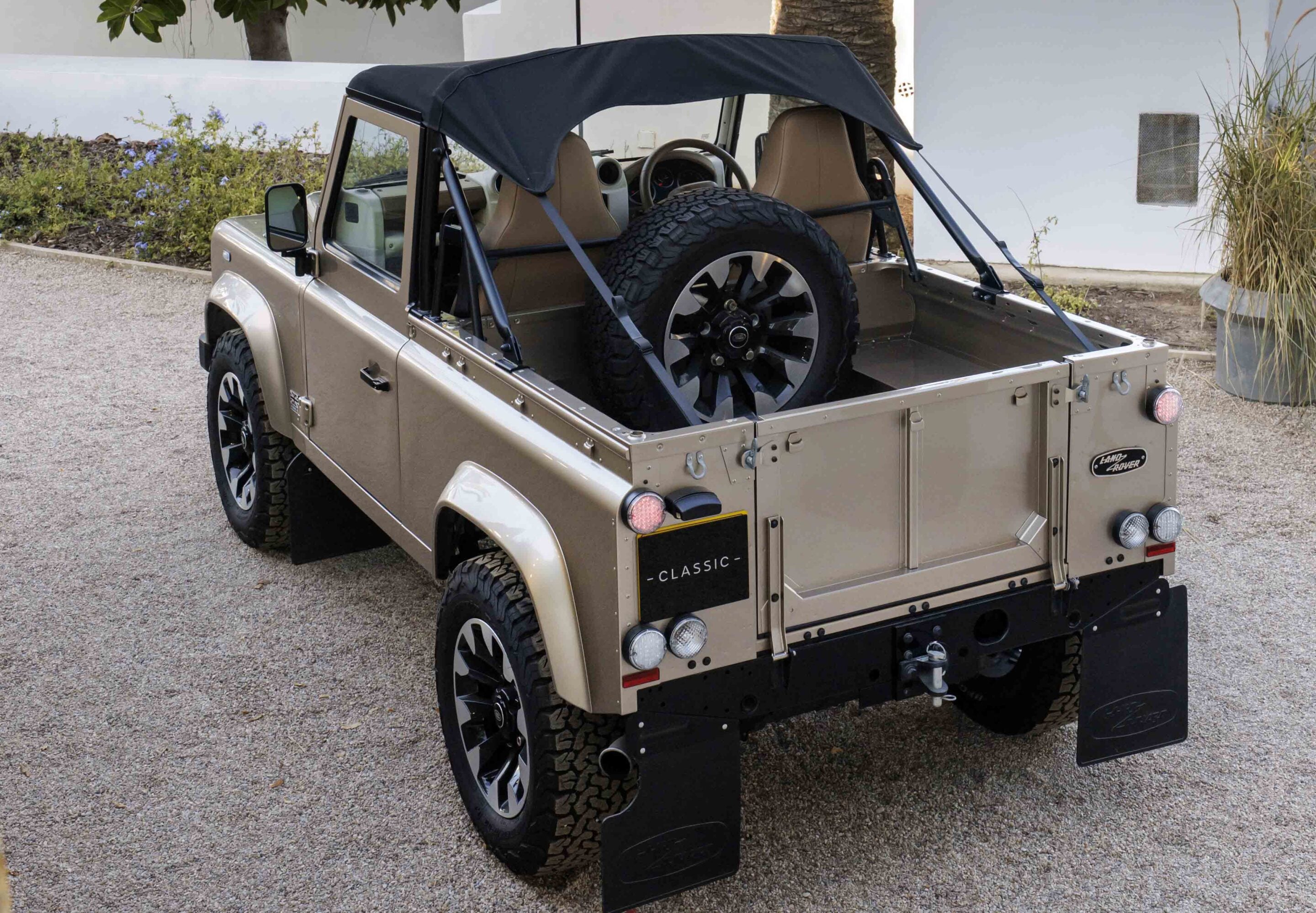
Australian customers can begin the ordering process using an online configurator before working with Defender Classic specialists to finalise their vehicle’s specification. Exterior options include Heritage and Extended colour palettes, or a custom colour through a match-to-sample service. Buyers can also choose between three grille designs, black or silver exterior packs, and 16-inch Wolf steel wheels or 18-inch Sawtooth alloys.
For those planning to take their Classic V8 off-road or touring, a range of accessories is available including side steps, a roof rack, ladder, expedition cage and winch. The optional Explorer Pack adds further touring equipment, including a Ply Guys camper conversion that turns the rear of the cabin into a living space, while a roof-mounted tent box and ladder are also available.
Inside, the Classic Defender layout is retained but modern features have been added, including wireless Apple CarPlay and Android Auto, satellite navigation and DAB radio through a 4.8-inch touchscreen. A larger nine-inch touchscreen and reversing camera can also be specified, while buyers have a choice of five standard monotone interior colours or eight duotone combinations. Premium seats are optional, while selected models can be fitted with Recaro seats.
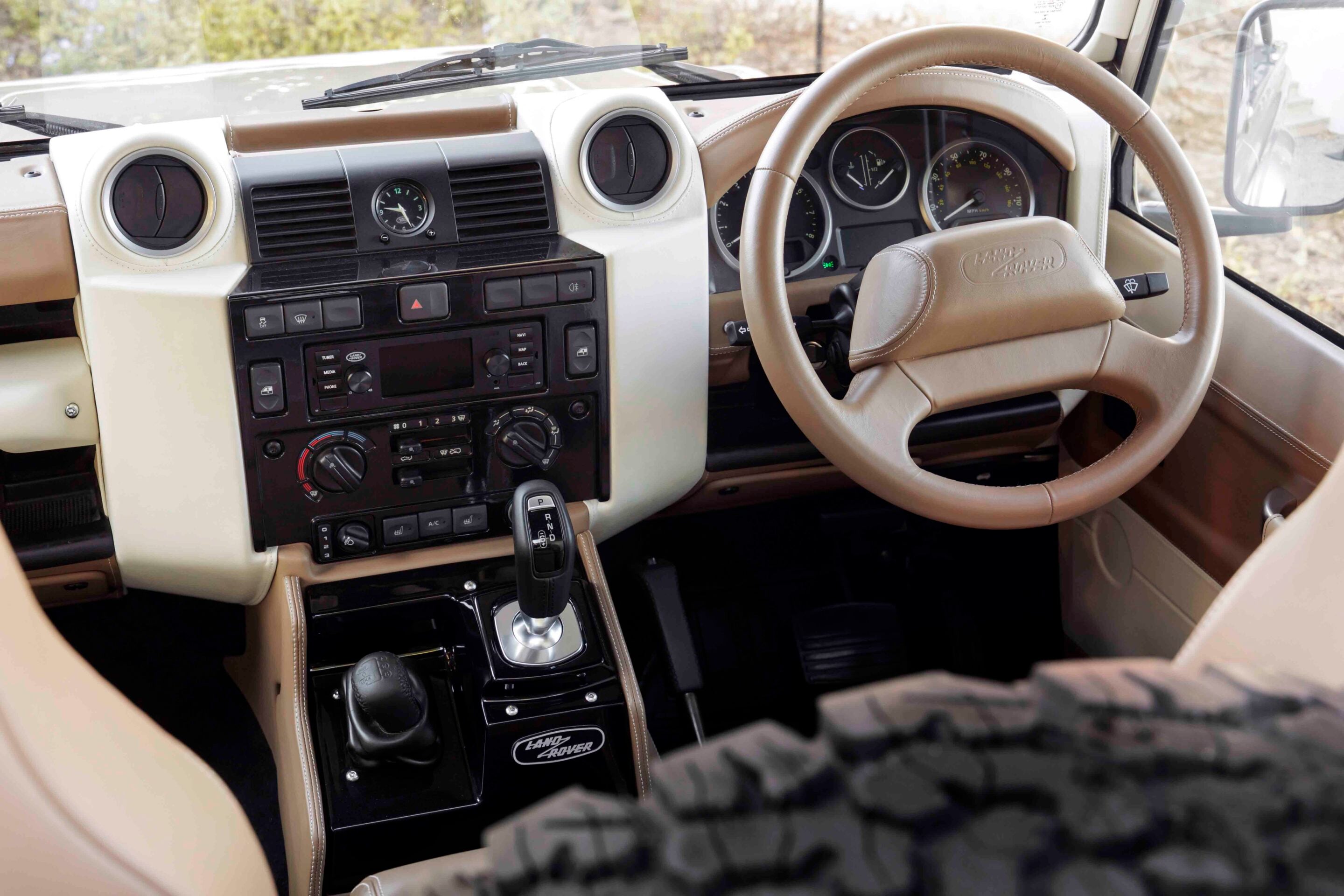
“Since its introduction, our Works Bespoke programme has become the ultimate expression of Defender Classic ownership, with clients commissioning highly individual vehicles tailored to their personal tastes and lifestyles,” said Dominic Elms, Director of Defender Classic.
“The programme has enabled our teams to showcase extraordinary levels of craftsmanship, creativity and attention to detail, with every Defender Classic V8 handcrafted to an individual’s specification. As we expand into new markets, we look forward to helping new clients bring their vision to life through a truly custom commissioning experience.”
V8 power has a long history in the original Defender and its predecessors, dating back to the 1979 Series III Stage 1. The 5.0-litre Defender Classic V8, introduced in 2018, was the first official V8-powered Defender since 1998, with later limited editions including the Islay, Trophy and Churchill models. Land Rover expanded its Works Bespoke programme in 2024, allowing buyers to create a fully personalised Defender Classic V8.
Prices for the Defender Classic V8 start from £209,000 (approximately $420,000), plus delivery and local taxes. A Sunset Gold Soft Top is also available for immediate purchase.
Frequently Asked Questions
How much does the Defender Classic V8 cost?
Prices start from £209,000 (approximately $420,000), plus delivery and local taxes.
Can you buy the Defender Classic V8 in Australia?
Yes. Australian customers can now commission one for the first time through Land Rover’s Works Bespoke programme.
What engine does the Defender Classic V8 use?
A naturally aspirated 5.0-litre petrol V8 producing 298kW and 515Nm.
What body styles are available?
The 90 Station Wagon, 90 Soft Top and 110 Station Wagon.
Can the Defender Classic V8 be customised?
Yes. Buyers can choose exterior colours, interior trims, wheels, grille designs and off-road accessories, with further bespoke options available.
| Spec | Defender Classic V8 |
|---|---|
| Engine capacity | 4999cc |
| Cylinders | Naturally aspirated V8 petrol (EU5) |
| Power | 298kW @ 6000rpm |
| Torque | 515Nm @ 5000rpm |
| Transmission | Eight-speed automatic with Pistol Shifter |
| Drivetrain | All-wheel drive, two-speed transfer box, heavy-duty front and rear differentials, torque-biasing centre differential |
| Front suspension | Live beam axle, Eibach coil springs and anti-roll bar, Bilstein telescopic dampers, Panhard rod and radius arms |
| Rear suspension | Live beam axle, Eibach coil springs and anti-roll bar, Bilstein telescopic dampers, A-frame and trailing links |
| Front brakes | Alcon four-piston calipers, 335mm discs |
| Rear brakes | Alcon four-piston calipers, 300mm discs |
| Wheels and tyres | 16-inch heavy-duty steel wheels, mud-terrain tyres |
| Steering | Power-assisted recirculating ball |
| 0-100km/h | 5.9 seconds (90) / 6.1 seconds (110), estimated |
| Top speed | 170km/h |
A gorge is a narrow valley carved between hills or mountains, typically with steep, rocky walls and a river or stream running through it. Warrabah National Park is a picture-perfect example.
It’s remote, you need to be self-sufficient, there are plenty of activities and it helps if you have a 4×4 to get there. Located on the western slopes of Australia’s Great Dividing Range, the park was declared in 1984 and covers nearly 5000 hectares along 20km of the Namoi River.
My trip started at the small town of Manilla, 80km north of Tamworth. Manilla has basic facilities, including a mechanical workshop and supermarket, and is the last stop to fuel up.
Getting into Warrabah
Head north from Manilla across the Namoi River, then turn onto Fossickers Way.
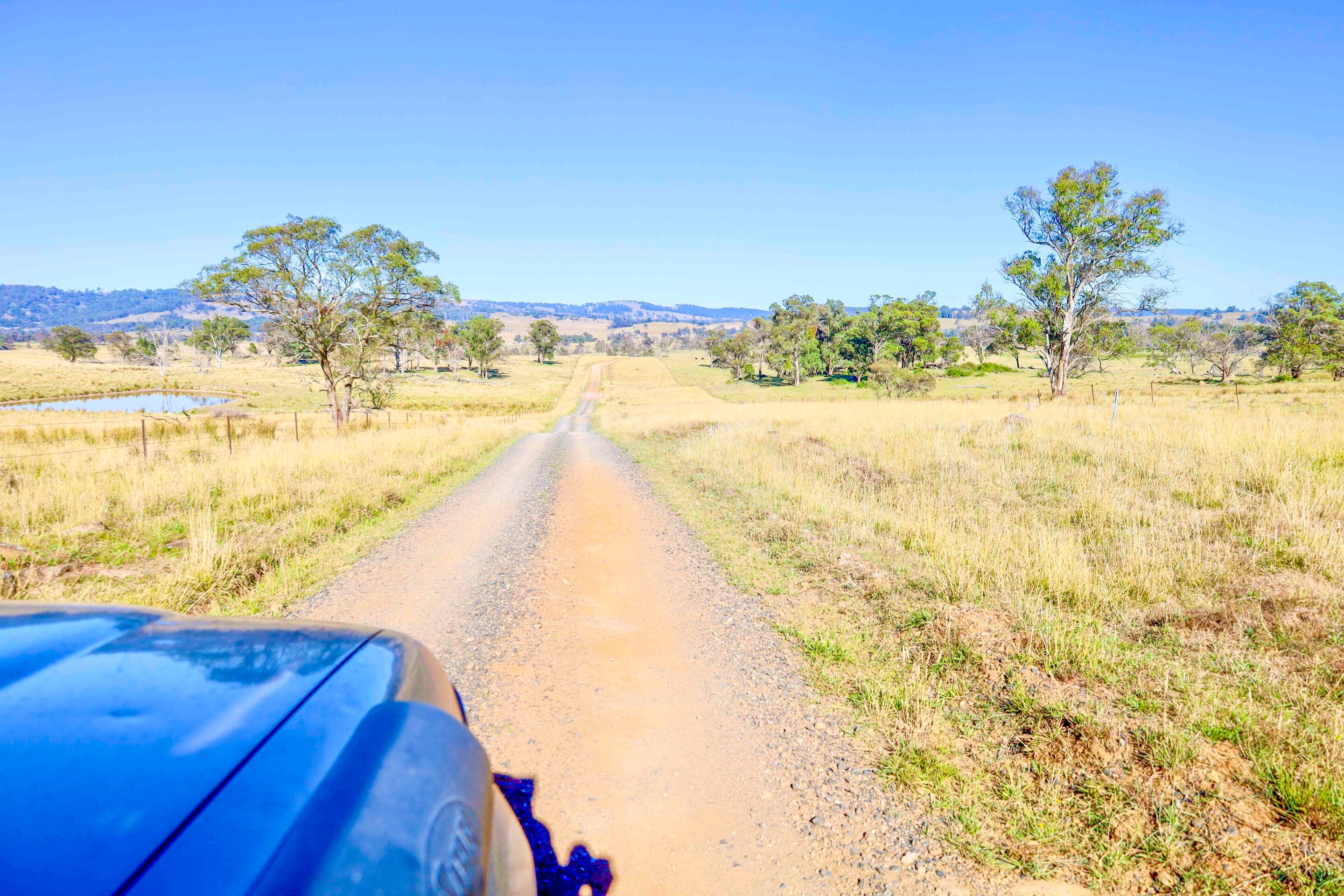
The first 15km follows a narrow sealed road winding past hobby farms and old buildings. Once you hit the dirt, the farms give way to huge pastoral stations and cropping areas beside the Namoi River. You’ll soon cross the Nandewar Ranges, which explorer John Oxley first recorded in 1818. There are several turns towards Warrabah, but these are well signposted.
Entering the park, you’re greeted by information boards covering the ecology, camping locations and other important park details. If you haven’t booked online, you may need to return to an area with phone service, as reception is patchy around the campgrounds.
Camping beside the Namoi River
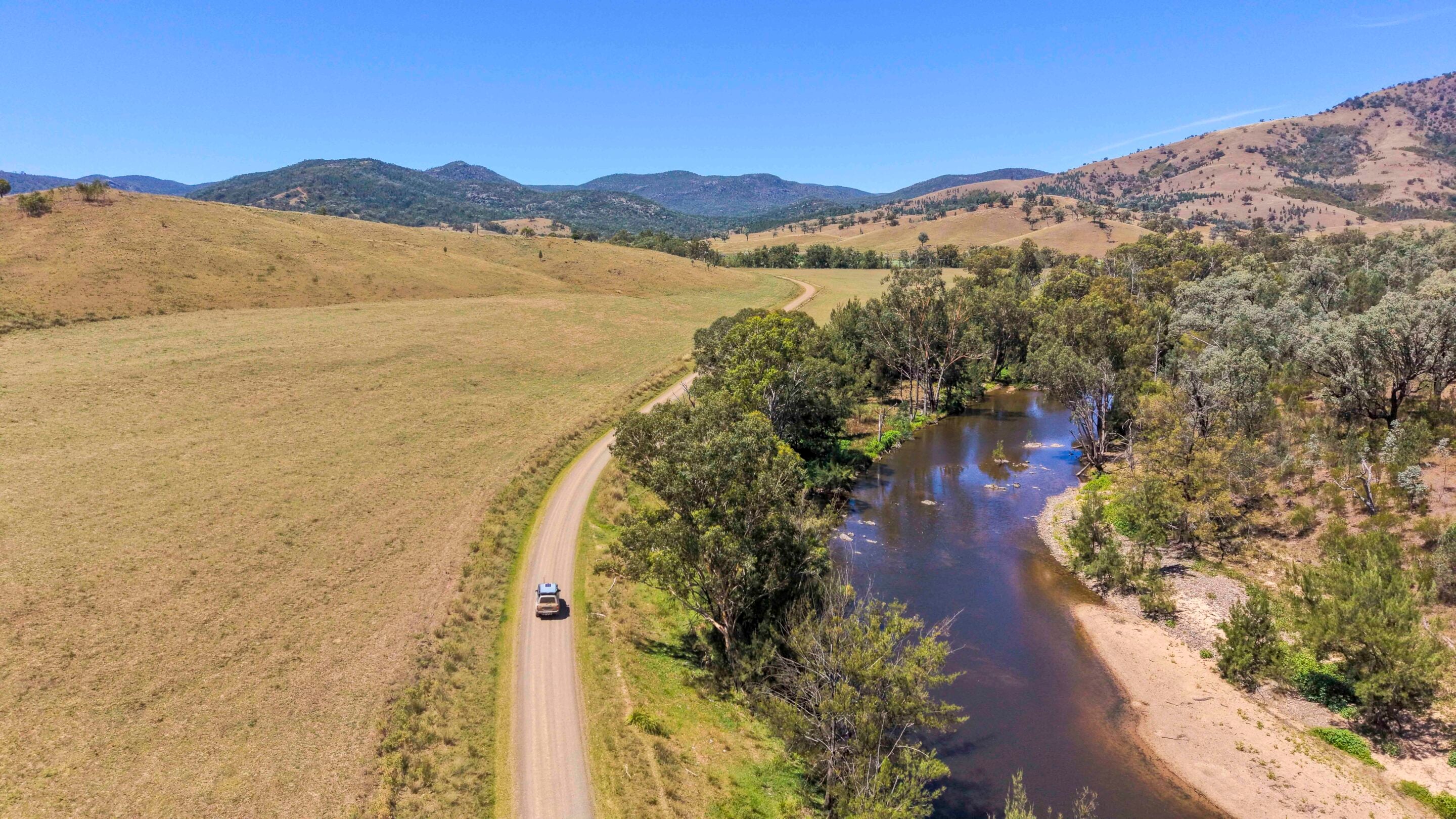
The main campground sits right on the Namoi River, with plenty of sites for tents and camper trailers, along with composting toilets, firewood bins and barbecues.
The river has carved an impressive gorge through the Nandewar Range. Huge granite boulders line the water as it burbles along, creating pools where you can fish for yellowbelly, Murray cod, redfin and carp. A wide variety of wildlife frequents the river, from little willy wagtails and shags to lizards and snakes. If you’re a morning person, you might spot a platypus in the deeper pools.
The park lies on the rugged Nandewar Range, part of a belt of granite that extends 200km towards Queensland. Its woodlands form an important corridor for wildlife, with large areas of grassy white box woodland. This habitat is threatened in many other parts of northern NSW by land clearing and bushfires. Out here, you need to come prepared for any season. Stinking hot days and chilly nights down around zero are common, even in summer. Winter days are cold and the nights bitter.
Another option for those with a capable 4×4 and an off-road trailer is the remote Gum Hole camping area, just 3km from the main campground. Access is by 4×4 only. The track is steep and narrow, passing between huge granite boulders and along the ridgeline before dropping down to Gum Hole.
The campground at Gum Hole is great, with some sites offering their own barbecue fire pit and table. At the southern end, there’s a composting toilet. There are no bins, so take your rubbish with you to help keep vermin away and the park clean. Camping at Gum Hole gives you privacy away from the main campground and lets you explore more of this rugged area.
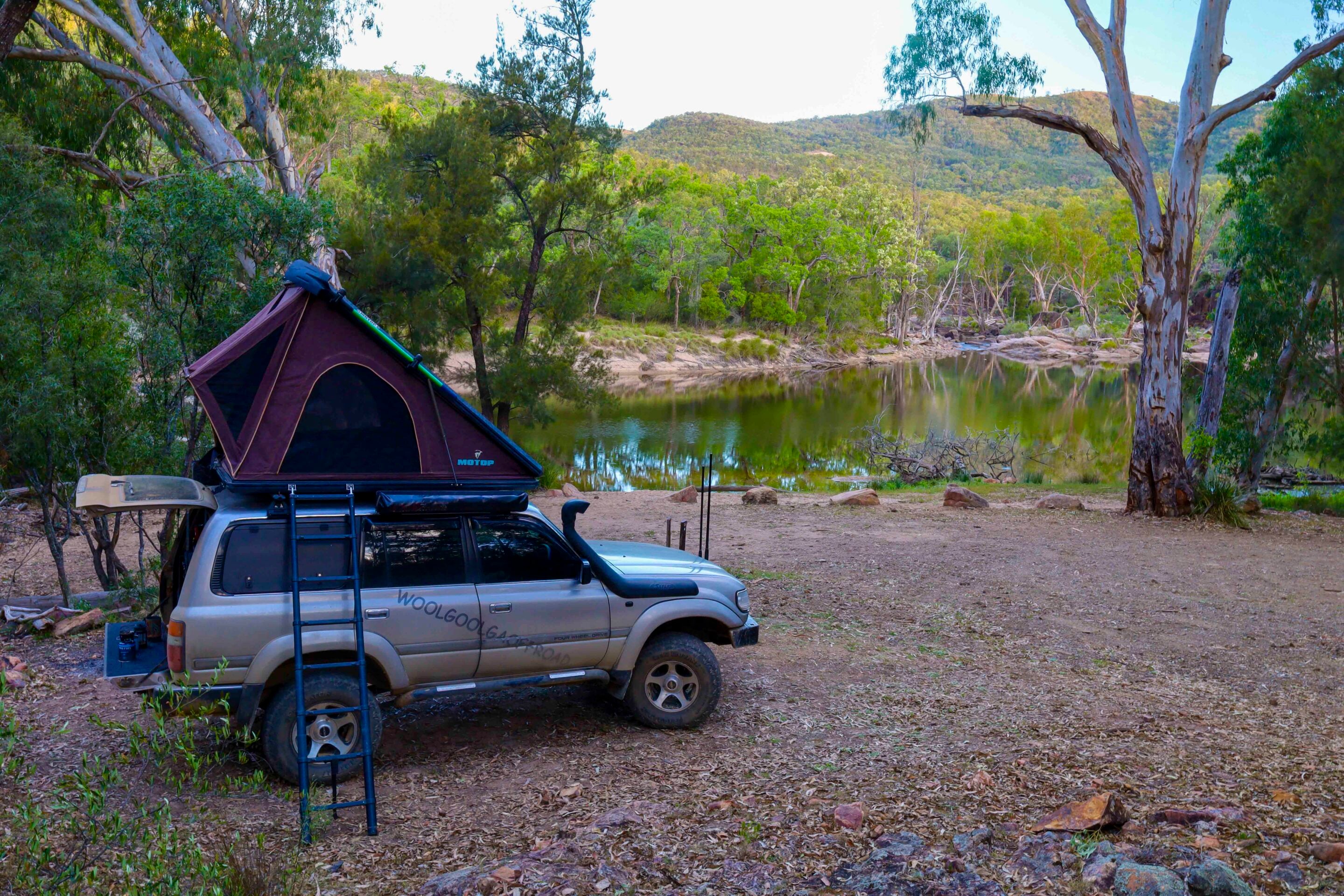
Exploring the Namoi River gorge
There are several walks from the campground along the riverbank into the gorge in both directions, but the best heads downstream. This takes you along the steep-sided gorge, where 20m-high rock formations frame fantastic views.
Keep an eye out for signs of just how high the Namoi River can rise during floods, with debris caught in trees and piles of driftwood left high and dry. This is a great area to cast a few lures and try your luck in the deep pools or, in summer, try riding the rapids. Most walkers with a moderate level of fitness can follow the river, combining rock hopping with swimming. If you’re willing to climb to some of the higher peaks, you’ll be rewarded with views into more of Warrabah’s rugged country and along the Namoi.
After kicking back for several days, breathing the clear mountain air and just chilling out, you can take an alternative route out of the park. Head east to explore more of the tablelands surrounding the Nandewar Range.
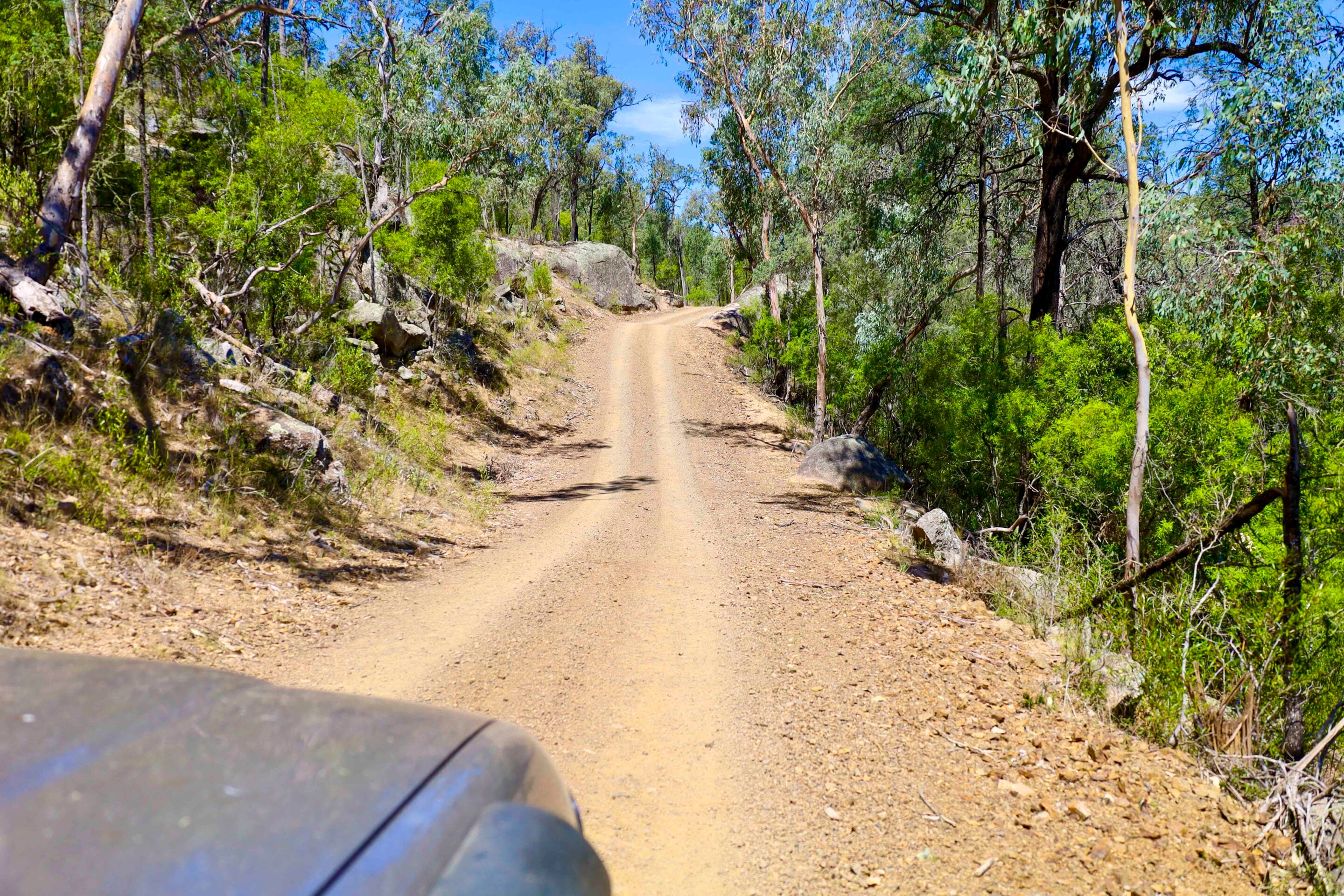
The scenic drive to Uralla
Head back past the main campground and continue out of the park for 10km, then turn left onto Glenbarra Trail near the big old shearing shed. Keep an eye out for two graves, including that of Sarah Abbott, who died in 1898 aged just four. Other family members are buried here too.
Nearby, old buildings and yards overlook the Namoi River. Squatters reportedly moved to the area in the mid-1800s, beyond the limits of settlement, to start a new life. They were attracted by prime sheep-grazing land, while the discovery of gold in nearby Rocky River swelled the area’s population. The Glenbarra Trail heads down to a much larger crossing of the Namoi River, where you’ll need to check the water flow and depth. After rain, the river can be around 30m wide. The trail forks beyond the crossing, so keep left.
As you travel through the localities of Balala, Retreat and Kingston, you’ll pass a number of old buildings in the paddocks that have been listed on the Register of the National Estate. The Glenbarra Trail becomes Balala Retreat Trail, and you know civilisation isn’t too far away as sheep stations give way to boutique horse studs, wineries and cropping areas. Brushgrove is where the dirt ends, but there’s little more here than a quaint, restored school building that operated from 1954 to 1964.
At Uralla, you’ll be pleasantly surprised by the cafés, pie shops and microbreweries. It’s a beautiful historic town lined with old-style streetlights, and a heritage walk takes in more than 50 buildings dating back to the mid-1880s.
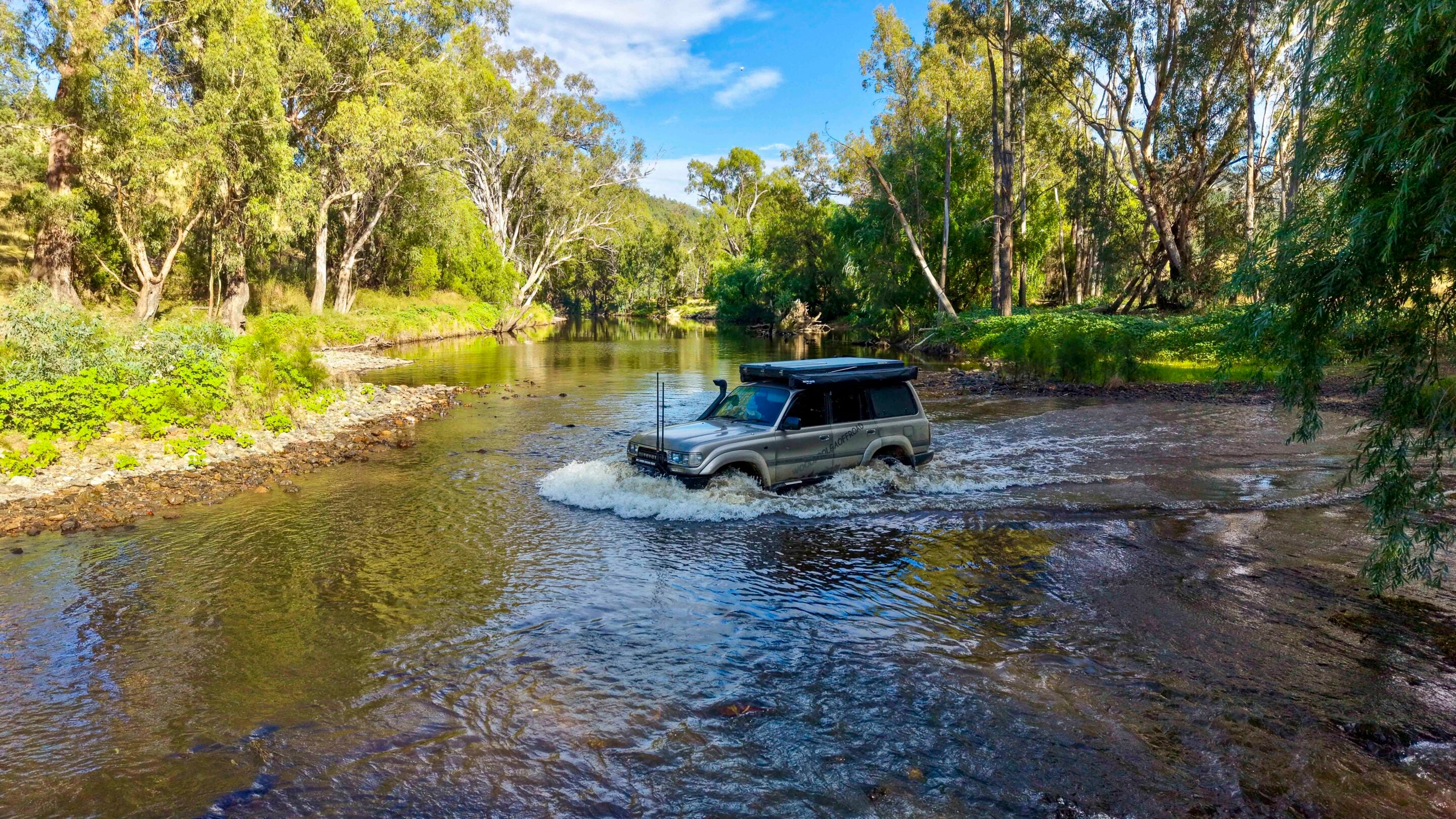
Discovering Uralla’s bushranger history
Bushranger Captain Thunderbolt (aka Frederick Ward), who roamed the Uralla area in the 1860s, is buried in the old Uralla Cemetery, and there are many references to him around town.
To the south is a rock from which Thunderbolt ambushed travellers. Today, it’s more of a graffiti rock than a historic landmark. In town, roads bear his name and an exhibition at McCrossin’s Mill Museum highlights his time in the area, including his death on 25 May 1870, when he was shot and killed by Constable Alexander Walker during a highway robbery. However, local accounts claimed it was his uncle, William Ward, posing as Thunderbolt, who was killed rather than Frederick.
Another must-do in Uralla is a visit to Gostwyck Church, along Gostwyck Road, a 10-minute drive out of town. The chapel was dedicated to the memory of Major Clive Collingwood Dangar MC, who died in World War I. He was the grandson of Henry Dangar, who emigrated in 1821 and worked as an assistant surveyor to explorer John Oxley, surveying land and exploring river systems across the New England region.
The Gothic-style chapel is a stunning example of English architecture, with an oak interior and roof shingles. Massive oak trees surround the ivy-covered chapel, making it popular with photographers all year round.
The New England region has so much to offer, with its distinct seasons and many national parks. Warrabah is a great example: visitors can relax beside the Namoi River, explore the nearby rugged Nandewar Range, then head to Uralla for its unique charm and bushranger history.
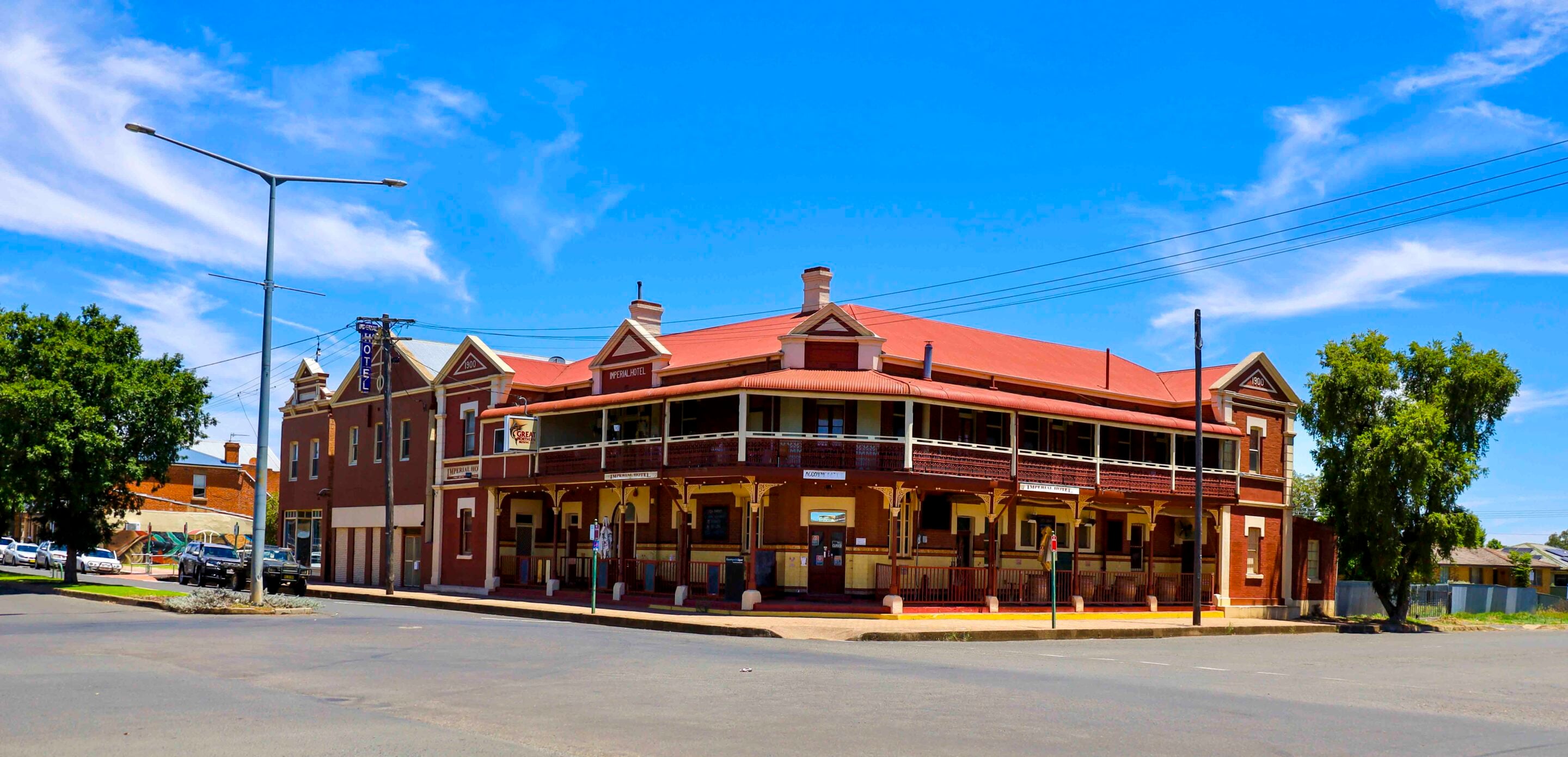
Warrabah National Park quickfire FAQs
Where is Warrabah National Park?
Warrabah National Park lies between Uralla and Manilla on the New England Tableland in NSW. The Namoi River runs through the park, which features dramatic gorges and granite boulders. Once bushranger country, it’s now a peaceful destination for nature lovers.
How do you get to Warrabah National Park?
From Manilla, 80km north of Tamworth, head north across the Namoi River and turn onto Fossickers Way. Follow the sealed road for around 15km before continuing along the unsealed roads towards the park. The route is well signposted, with several turns leading to Warrabah.
What can you see and do at Warrabah National Park?
Visitors can explore hiking trails, spot native wildlife, fish in the Namoi River or enjoy time on the water during the warmer months. The park has two camping areas with basic facilities, suitable for off-road campers and 4x4s.
Can you camp at Warrabah National Park?
Yes, there are two camping areas with basic facilities. Campsites must be booked online through the NSW National Parks and Wildlife Service website.
Do you need a 4×4 to visit Warrabah National Park?
A 4×4 is recommended for accessing the park, particularly the remote Gum Hole camping area, which is only accessible via a steep, narrow 4×4 track.
Can you swim and fish at Warrabah National Park?
Yes. The Namoi River offers opportunities for swimming, fishing and exploring natural pools. Fish species include yellowbelly, Murray cod, redfin and carp. Swimming and riding the rapids are popular options during summer.
Is there mobile phone reception at Warrabah National Park?
Phone reception is limited around the park’s campgrounds, so visitors should plan ahead and book campsites online before arriving.
What is there to do around Uralla?
Located between Tamworth and Armidale, Uralla offers breweries, a heritage walking trail and plenty of historic shops to browse.
What is Uralla famous for?
Uralla is closely associated with bushranger Captain Thunderbolt, who roamed the area during the 1860s. Visitors can explore his history through museum exhibits, his rock hideout, gravesite and local monuments.