Gear

Gallery 1
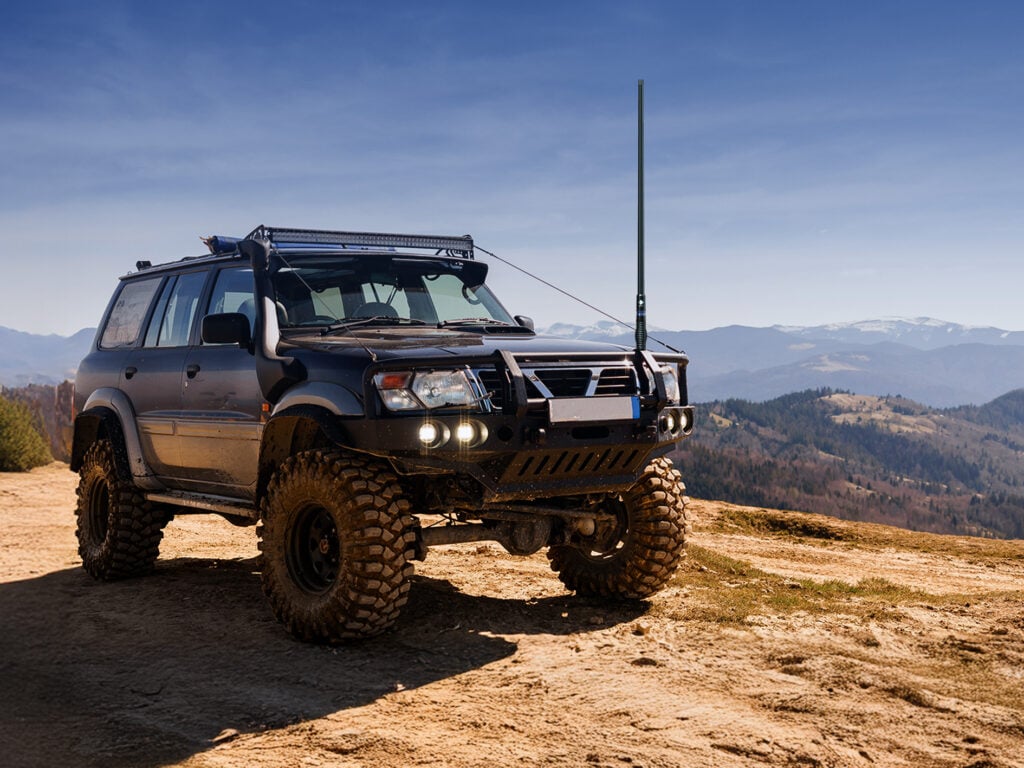
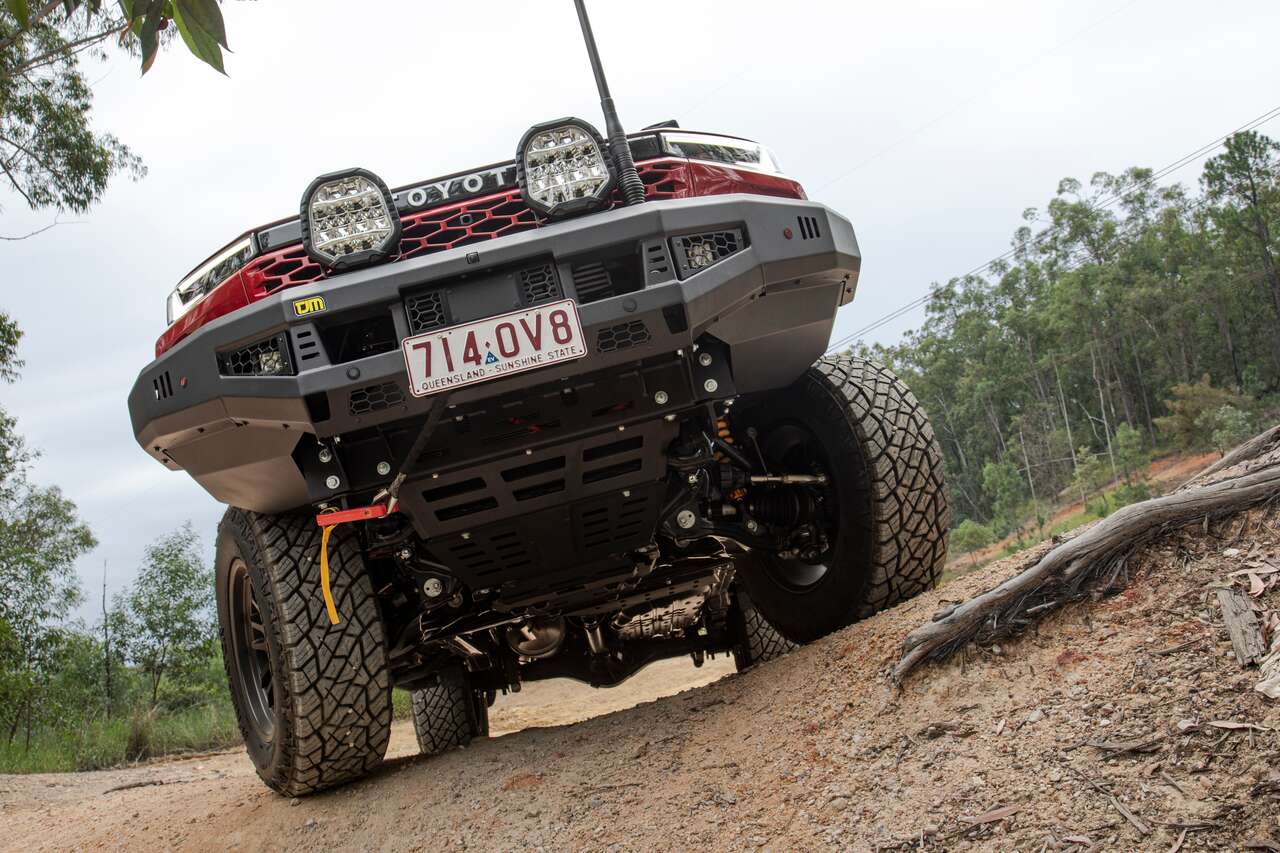
From vehicle protection to mounting a winch or driving lights, or simply preparing for touring and work duties, a bull bar remains one of the most popular 4WD upgrades.
According to the team at TJM, one of the most common mistakes owners make is underestimating how quickly weight adds up once accessories, recovery gear and touring equipment start finding a home on the vehicle.
By the time a vehicle is set up for work, touring or off-road travel, it can be carrying significantly more weight than it was originally designed for. The bull bar itself usually isn’t the problem; it’s the cumulative effect of everything fitted afterwards.
Understanding how that weight affects suspension, handling and vehicle performance is an important part of planning any build.
How much weight does a TJM bull bar actually add?
A TJM bull bar installation is a common upgrade for 4×4 owners looking to improve front-end protection and functionality without unnecessary weight penalties.
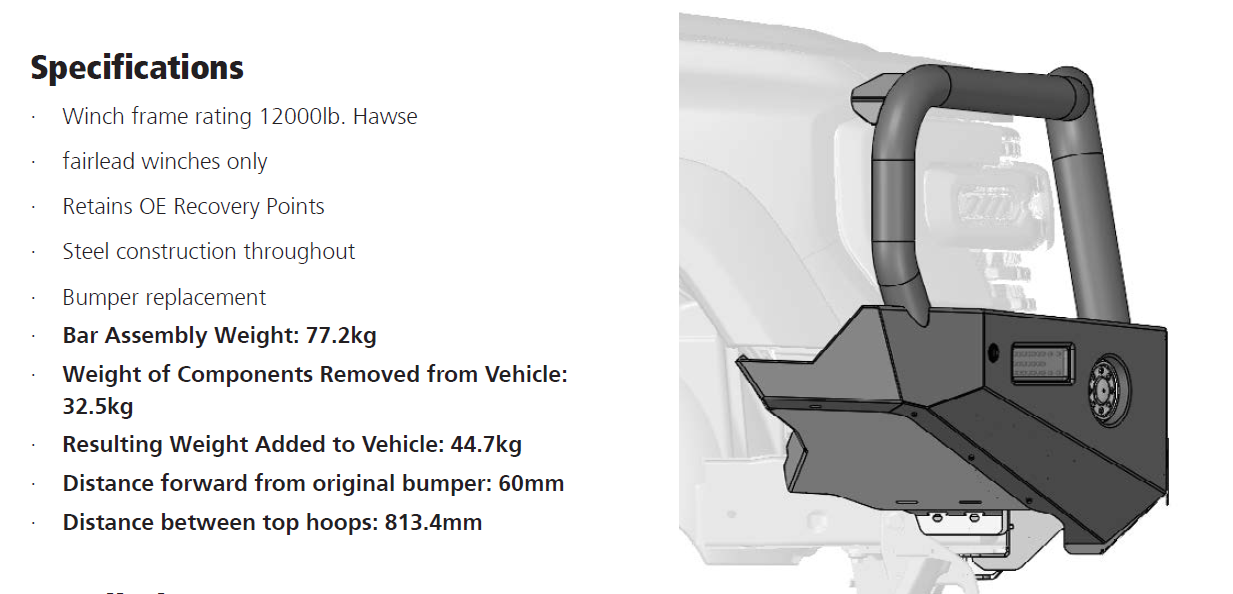
TJM designs its bull bars to integrate closely with the vehicle’s chassis, often replacing bulky factory bumpers with purpose-built, high-strength alternatives that can be lighter depending on the configuration. In many cases, especially when moving from heavy OEM steel assemblies, this can help reduce or better distribute front-end weight while still adding recovery points, winch compatibility and improved approach angles. The result is a more balanced setup that maintains protection for off-road use while avoiding excessive front axle load that can affect steering response and suspension performance.
1
Here’s a practical front-end weight breakdown for a typical TJM-equipped touring or off-road setup. The weight figures are approximate and will vary depending on vehicle application, mounting hardware and chosen accessories.
| Component | Approx. Weight |
|---|---|
| TJM Outback Bar | Approx. 99kg |
| TJM Venturer Bar | Approx. 79kg |
| TJM Tradesman Bar | Approx. 71kg |
| TJM 9500lb Synthetic Rope Winch | Approx. 32kg |
| TJM 9500lb Steel Cable Winch | Approx. 35kg |
| Pair of TJM Driving Lights / Spotlights (7- to 8.5-inch) | Approx. 6kg to 9kg per pair |
| Single TJM Ultima 215 Light | Approx. 3.5kg to 4kg each |
| UHF Aerial / Antenna (typical radome style) | Approx. 0.7kg to 1.5kg |
| Light Bar (21-inch single row) | Approx. 2kg to 4kg |
| Mounting Brackets / Wiring / Hardware | Approx. 2kg to 5kg |
| Full Front-End Setups (examples) | Estimated Added Weight |
|---|---|
| Tradesman Bar + Synthetic Winch + Spotlights + Aerial | Approx. 112kg to 118kg |
| Venturer Bar + Synthetic Winch + Spotlights + Aerial | Approx. 120kg to 126kg |
| Outback Bar + Synthetic Winch + Spotlights + Aerial | Approx. 140kg to 146kg |
Not every bull bar installation includes a winch. Where winches are fitted, synthetic rope remains by far the most common choice due to its lighter weight and ease of handling.
Choosing between the TJM Outback Bar and TJM Tradesman Bar
The TJM Outback Bar (↗) and TJM Tradesman Bar (↗) are two of TJM’s most popular bull bar options, suited to a wide range of touring, work and recreational applications.
Both feature 63mm steel tubing, integrated accessory mounting provisions, airbag-compatible designs and a comprehensive 3-year warranty.
Available across many of Australia’s most popular 4WDs and utes, including the Toyota LandCruiser, Nissan Patrol, Ford Ranger, Toyota HiLux, Mitsubishi Triton and Isuzu D-MAX, both bars are designed to provide vehicle protection without compromising everyday usability.
For most buyers, the decision comes down to vehicle application, preferred styling and the accessories they intend to run, rather than any major difference in overall protection.
Why suspension matters once accessories are added
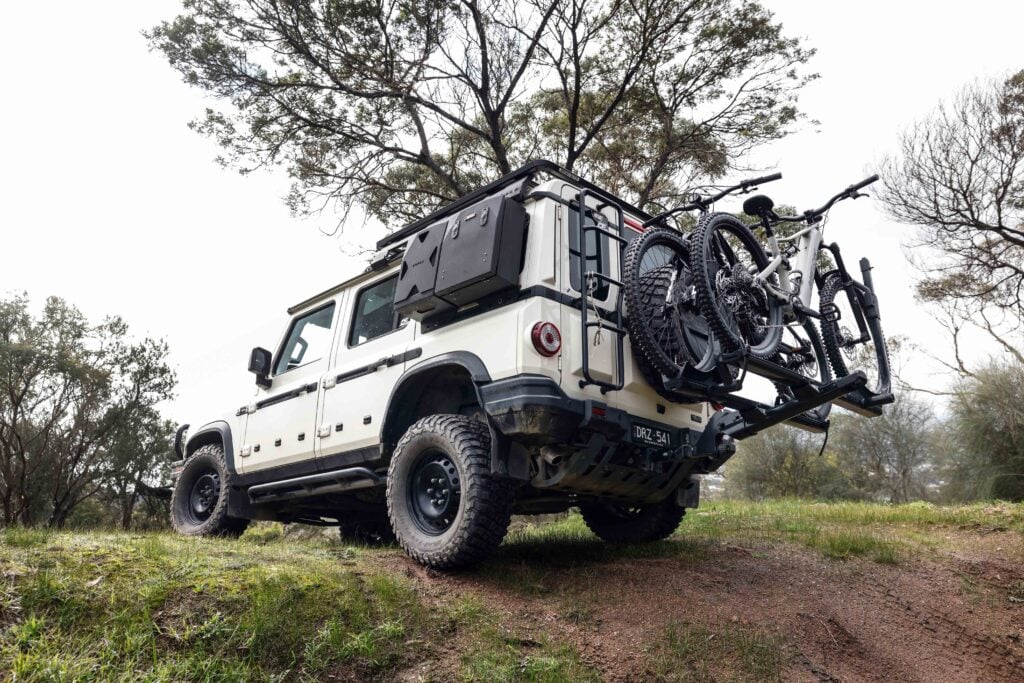
A bull bar is rarely fitted in isolation. A fully equipped touring or work ute can carry additional weight in several areas, including:
- Bull bar, rear bar, side protection and side steps
- Winches and recovery equipment
- Underbody protection
- Canopies and storage systems
- Dual battery systems
- Drawer systems and slide-out kitchens
- Camping gear and luggage
- Tools and trade equipment
- Passengers and towing equipment
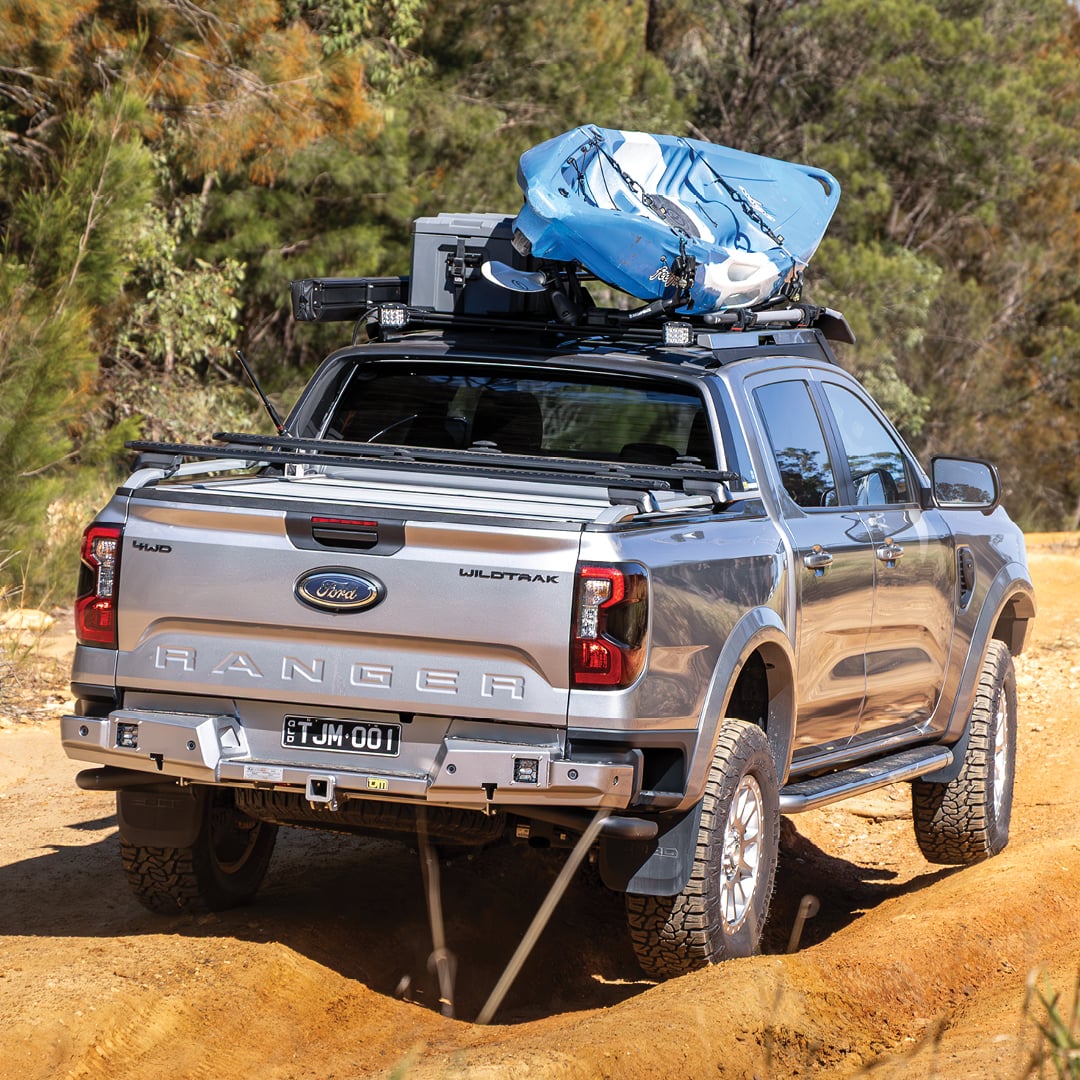
While front-end accessories contribute additional weight, many vehicles carry substantial loads over the rear axle through canopies, drawers, fridges, rooftop tents, recovery gear and touring equipment. Suspension should be considered as a complete vehicle system, not just a front-end upgrade.
A balanced suspension setup takes both front and rear axle loads into account, helping maintain ride height, vehicle handling and overall stability.
What happens when suspension isn’t upgraded?
Many factory suspension setups begin to struggle at this point. Once additional weight is added, common issues can include:
- Front or rear-end sag
- Reduced suspension travel
- Increased bottoming out
- Vague steering feel
- Extra nose dive under braking
- Increased fuel consumption
Factory suspension does a good job within the vehicle’s original design parameters. The challenge comes when accessories, equipment and cargo are added over time, often increasing vehicle weight well beyond what the standard suspension was designed to manage on a daily basis.
In many touring and work vehicles, rear-end accessories and cargo can contribute more total weight than front-end accessories. Considering the entire vehicle load rather than individual components helps avoid an uneven stance and ensures suspension performance remains consistent.
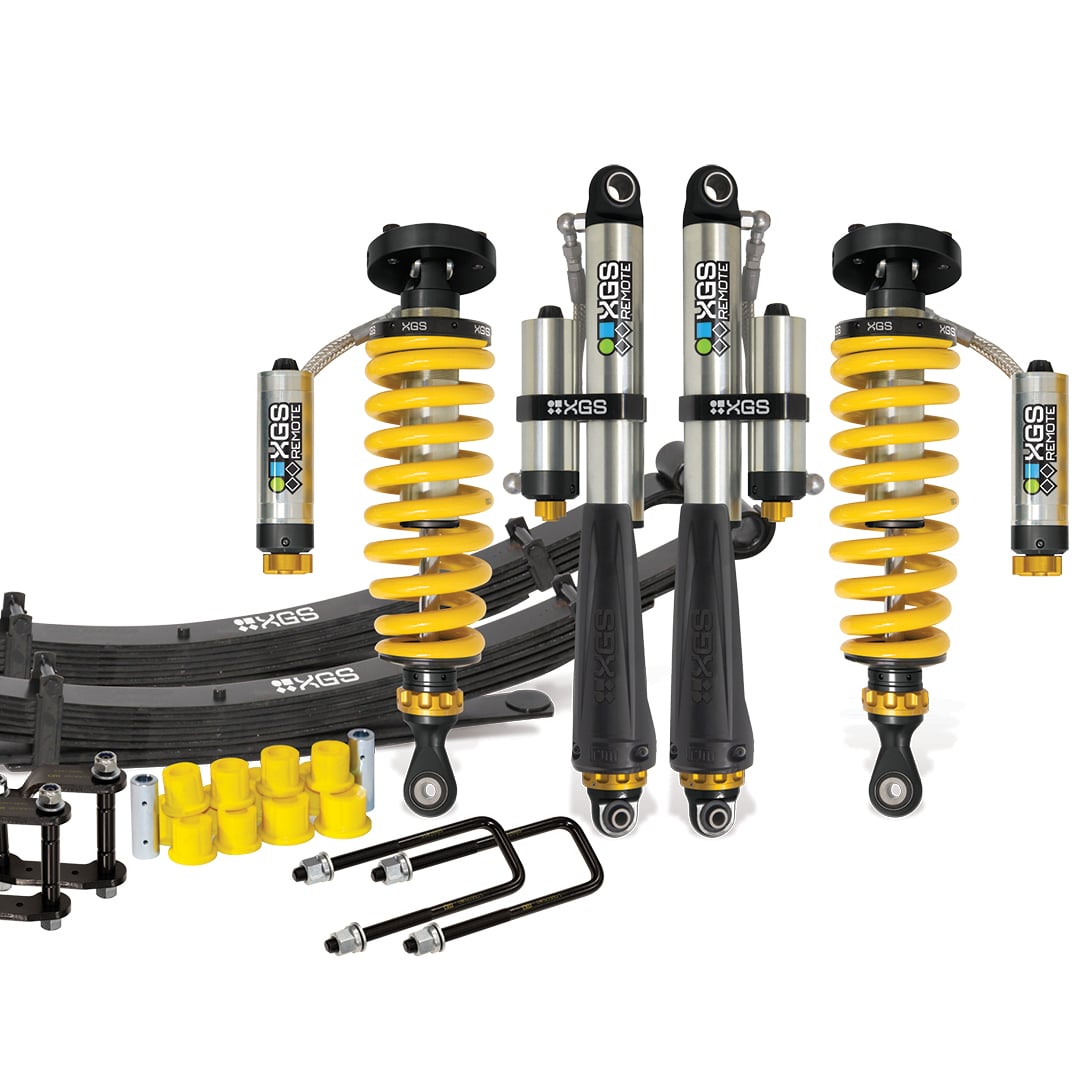
This is why TJM says XGS suspension should be considered as part of the upgrade process rather than as an afterthought once problems appear.
1
Matching suspension to the vehicle setup
The conversation around suspension often focuses on lift height, but that’s only part of the picture. The real goal is matching spring rates and shock absorbers to how the vehicle is actually used and how much weight it regularly carries.
A lightly accessorised daily driver requires something very different to a fully loaded work ute carrying tools or a touring vehicle towing a caravan around Australia. The TJM XGS suspension range (↗) is built to match that need. Instead of one generic setup, the XGS range is built around different vehicle weights and applications.
| XGS Kit | Best For | Key Difference | Typical Build Style |
|---|---|---|---|
| XGS Roamer | Everyday driving and weekend touring | Comfort-focused ride with improved handling and load support | Daily driver with light accessories |
| XGS Rugged | Towing, trades and heavier touring loads | Increased durability and load-carrying capability | Bull bar, canopy, drawers and towing setups |
| XGS Remote | Serious off-road touring and constant heavy loads | Adjustable high-performance suspension with maximum control | Fully loaded touring rigs and harsh terrain use |
Why shocks matter just as much
Springs support the load, but shock absorbers largely determine how the vehicle feels and responds on the road and off it. As vehicle weight increases, quality shock absorbers become increasingly important for:
- Controlling body movement
- Reducing shock fade
- Maintaining tyre contact off-road
- Helping suspension perform consistently across varying terrain
The TJM XGS range (↗) includes several different shock options depending on vehicle use, from touring applications through to larger-bore shocks designed for heavier off-road setups.
For vehicles regularly travelling long distances on remote roads, increased oil capacity and larger shock bodies can help improve cooling and maintain more consistent damping performance.
It’s not always about going higher
A common misconception in the 4WD world is that suspension upgrades are all about getting the vehicle higher off the ground. Many suspension upgrades are actually carried out to:
- Carry weight properly
- Improve ride control
- Restore ride height
- Maintain suspension geometry
A moderate 30-50mm lift remains one of the most common suspension upgrades, providing improved clearance and tyre fitment while maintaining everyday drivability.
Nationwide support wherever you travel
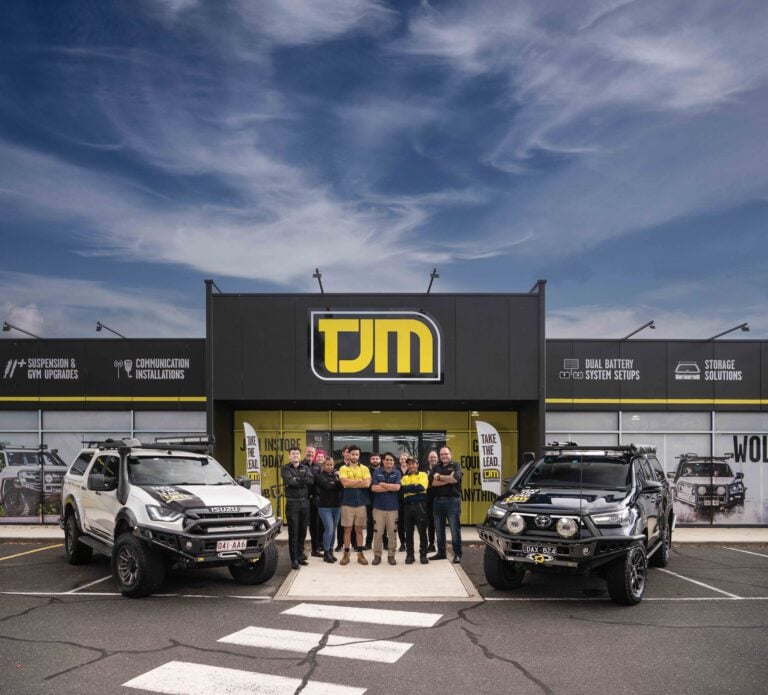
One advantage of choosing TJM is access to a nationwide network of stores and authorised fitment centres across Australia.
Whether it’s professional installation, technical advice, after-sales support or warranty assistance, customers can access support wherever work or adventure takes them.
1
A balanced setup makes all the difference
A bull bar on its own is rarely the issue. More often, it’s the combined weight of protection equipment, recovery gear, storage systems, camping equipment, tools and everyday cargo that changes how a vehicle rides and handles.
Viewing the vehicle as a complete system, not just a collection of individual accessories, makes the difference. Matching suspension to the total load helps maintain ride quality, handling, safety and off-road capability, whether the vehicle is used for work, touring or everyday driving.
If you’re unsure which setup best suits your vehicle, TJM’s nationwide store network (↗) can provide advice on selecting the right bull bar and suspension package for your intended application.
Follow 4X4 Australia on Google
Get more 4x4 news, reviews and gear stories from 4X4 Australia in your Google feeds.