Gear


Gallery 1
If there’s one thing that murders 4WDs quicker than just about anything this side of a land mine, it’s corrugations.
Those pesky little undulations can rattle your rig into an early grave quicker than bad driving, lack of maintenance and even rust. Just ask anyone who’s done the Peninsula Developmental Road (PDR) at the start of the dry before the grader has gone through or travelled the western edge of the Simmo after a bad storm. Corrugations are a killer.
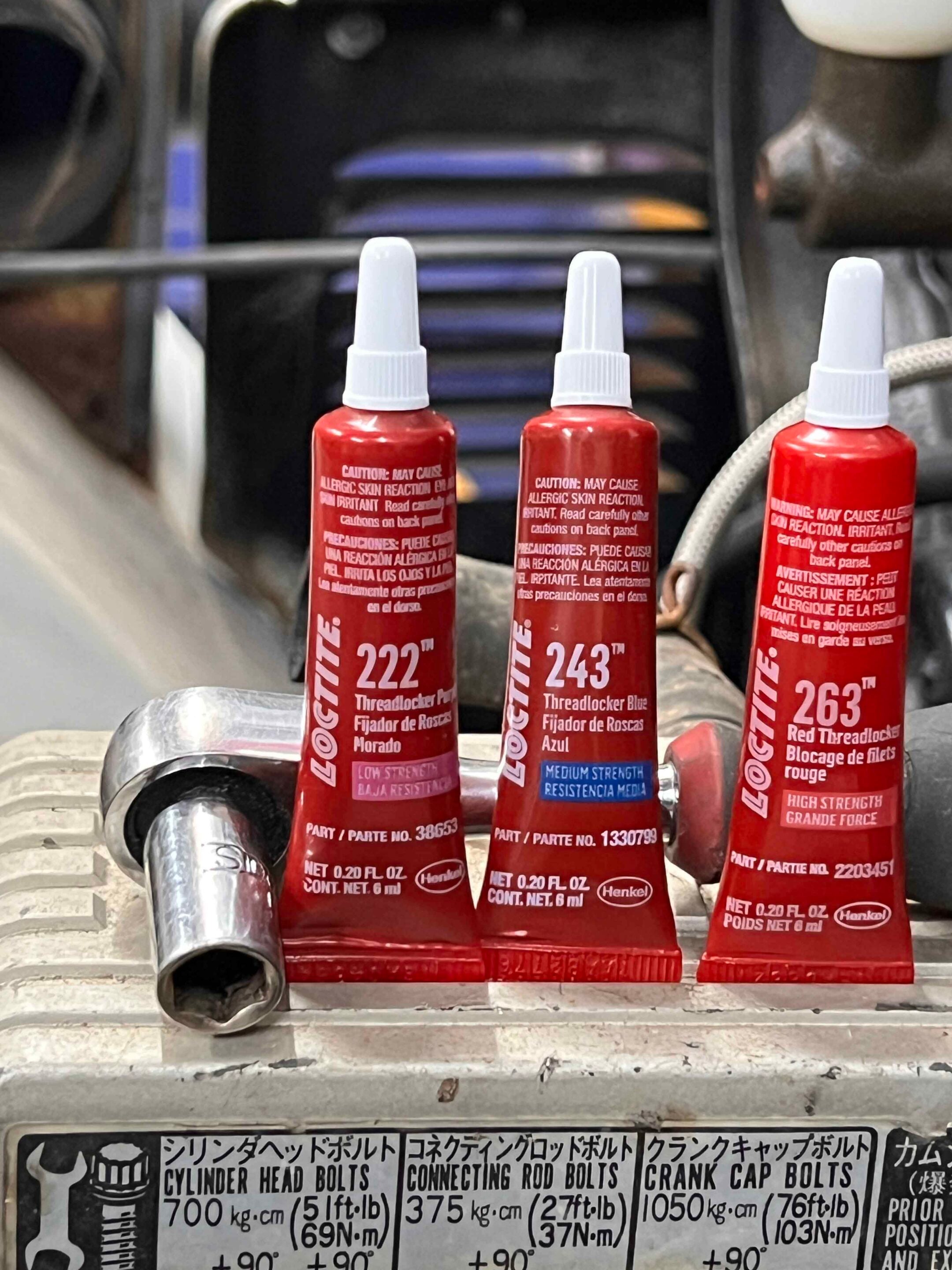
However, with a little prep work and a tube of Loctite (↗), you can pretty much negate the effects of corrugations completely. We’re not suggesting you can attack them at warp speed at road pressures, but it sure is nice knowing your awning is going to arrive with you to your next campsite.
1
Areas prone to vibration damage
A nut and bolt work together as a fastener system, using a clamping force to hold parts in place.
When corrugation-induced vibrations are introduced, that mechanical bond can slowly work its way loose and before you know it you take a corner at speed and watch as your roof rack boomerangs into a boab tree. So checking your rig ahead of a trip is a no-brainer. Here are a few common areas where nuts and bolts are notorious for wiggling loose.
- Roof racks: Vibrations are introduced to the chassis through the tyres and suspension, working their way up through the body and eventually the kinetic energy is dissipated out via the roof. But not before the bolts holding your rack in place have been well and truly rattled.
- Bull bars: Front bars are some of the most common things to work their way loose, especially if they’ve been used during an animal strike or even tweaked on an off-road obstacle.
- Awnings: Same as racks, awnings are mounted up high and are prone to vibration-induced bolt-loosening. Hardly the thing you want to find out at speed or when a strong gust of wind rips through your campsite.
- Battery trays: Having a place to mount your auxiliary battery is great. Until you realise it’s come loose and has been allowing your battery to bounce around and created the perfect set of circumstances for a vehicle fire. No thanks.
- Canopies: Ute canopies are one of the last things we check before leaving. Once they’re on they’re on, right? You would be amazed how many people arrive at camp after a long drive, take a lean up against their ute and are quite surprised when the canopy leans with them.
- Drawers: Drawers commonly contain a lot of weight, which can introduce a bunch of extra inertia on the retaining bolts during vibrations. Ignore them at your peril. Well, maybe not “peril” exactly, but it’s still not fun trying to re-line up an overloaded set of drawers with their mounts. Don’t ask how we know.
- Leaf springs: The nuts that secure the u-bolts which attach the springs to the diff hosing are one of the more common fault locations, especially if you’ve had some fresh suspension installed before your trip. Checking them regularly on any trip is cheap insurance.
1
What Loctite does
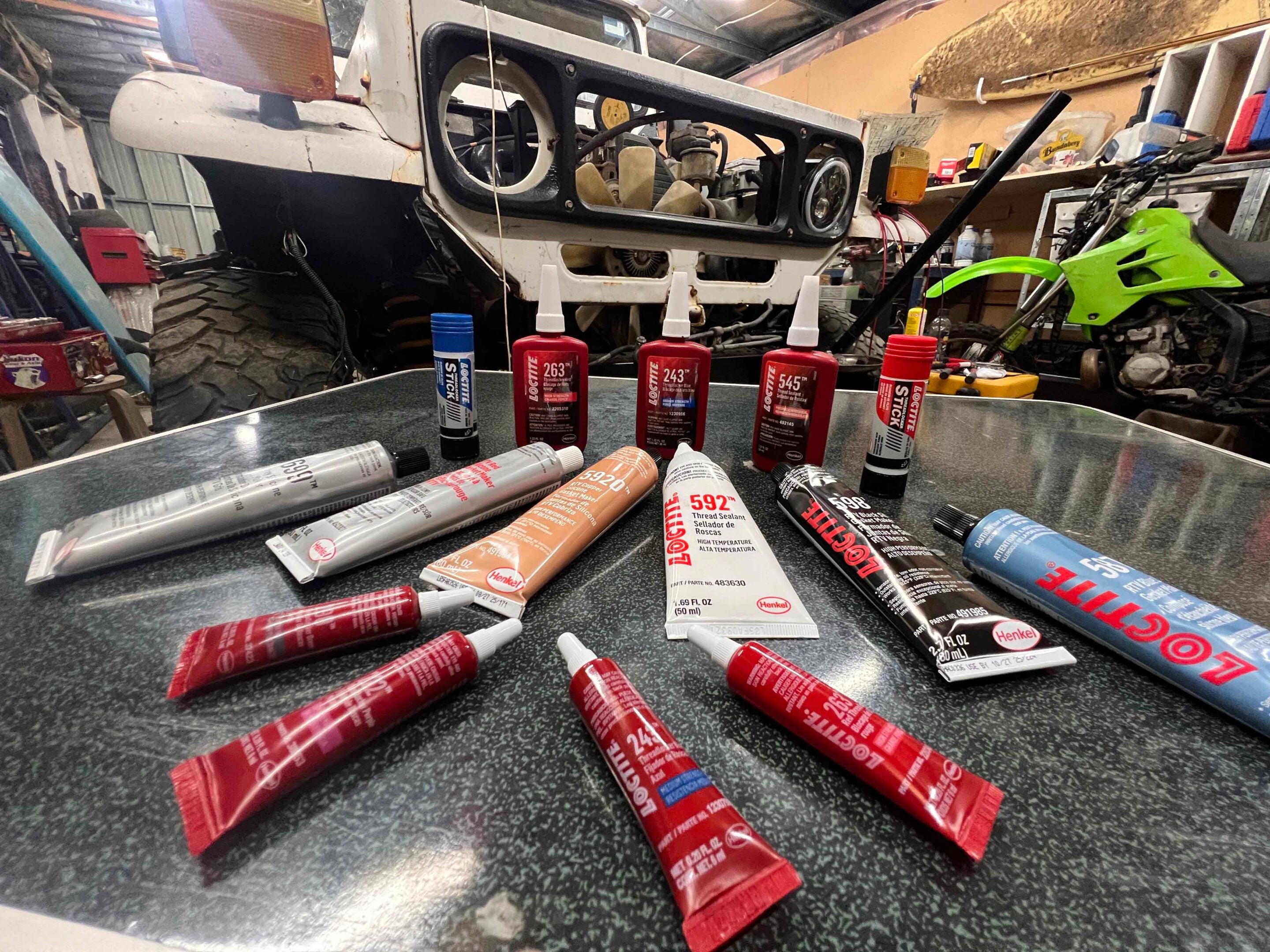
Thread-locking compounds such as Loctite (↗) are anaerobic adhesives.
This means that when their liquid form is added to the tiny gaps between threads, the lack of air activates the compound, and it turns into a solid plastic. This not only locks the nut and bolt in place but also prevents it from rattling loose under even extreme vibrations.
Locking the threads isn’t the only benefit. The compound also fills the tiny gaps between the threads, helping seal them from water, mud and other contaminants that can lead to corrosion. That’s particularly useful on a 4WD, where fasteners regularly cop a dose of moisture, dirt and everything else the bush can throw at them.
By helping keep corrosion out of the threaded connection, Loctite can also make future disassembly easier when something needs to be serviced or removed. That’s a handy bonus for anyone who does their own maintenance
When applied to nuts or bolts in an area of high vibration, such as the ones above, Loctite maintains the desired clamp load by holding the applied torque value and prevents them from coming loose, avoiding damage to either the accessory, the vehicle or both.
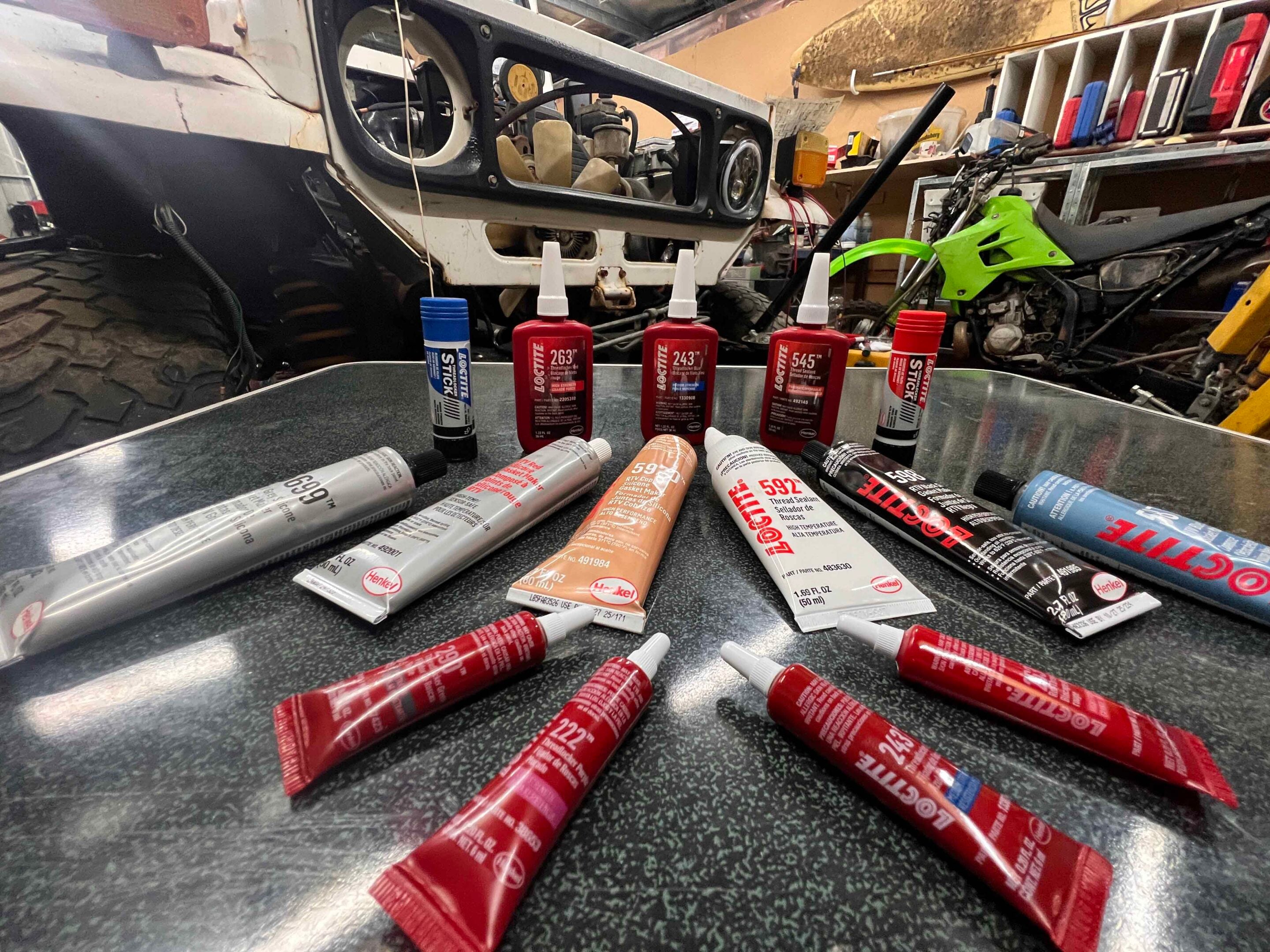
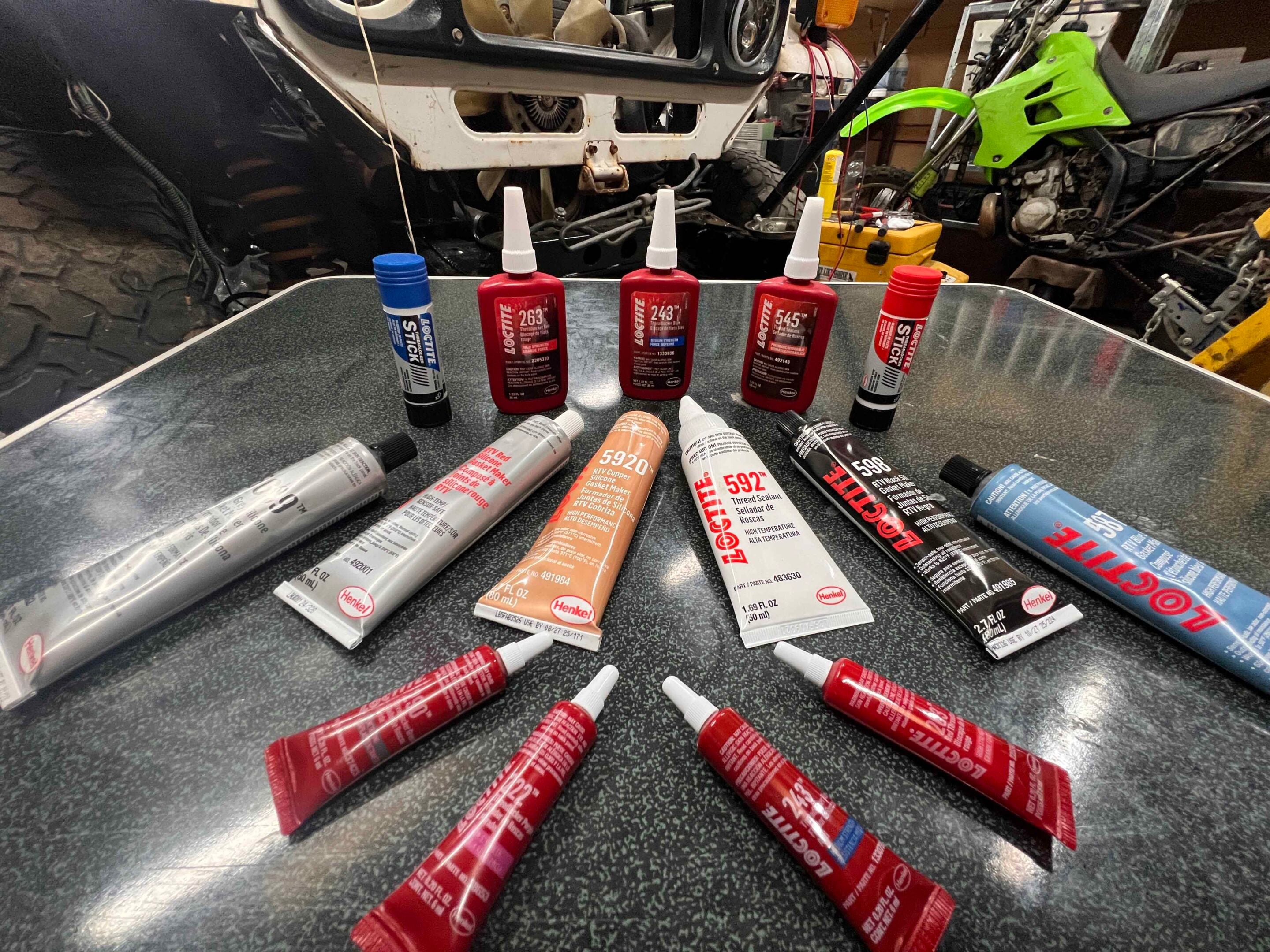
If the bond needs to be undone down the track for any reason, a lot will depend on the locking compound you have used. Blue Loctite, which is the most widely used and go-to for most 4×4-based applications, will simply turn to dust when a large amount of torque is applied, such as by a ratchet or rattle gun. If red Loctite was used, some heat may be needed to slightly soften the compound so the nut can be undone. The red heavy-duty locking compound is more for nuts and bolts that are never to be expected to be loosened again, such as on bull bars, battery trays or suspension components.
1
What else does Loctite do?
Fun fact: Loctite is not just about thread locking.
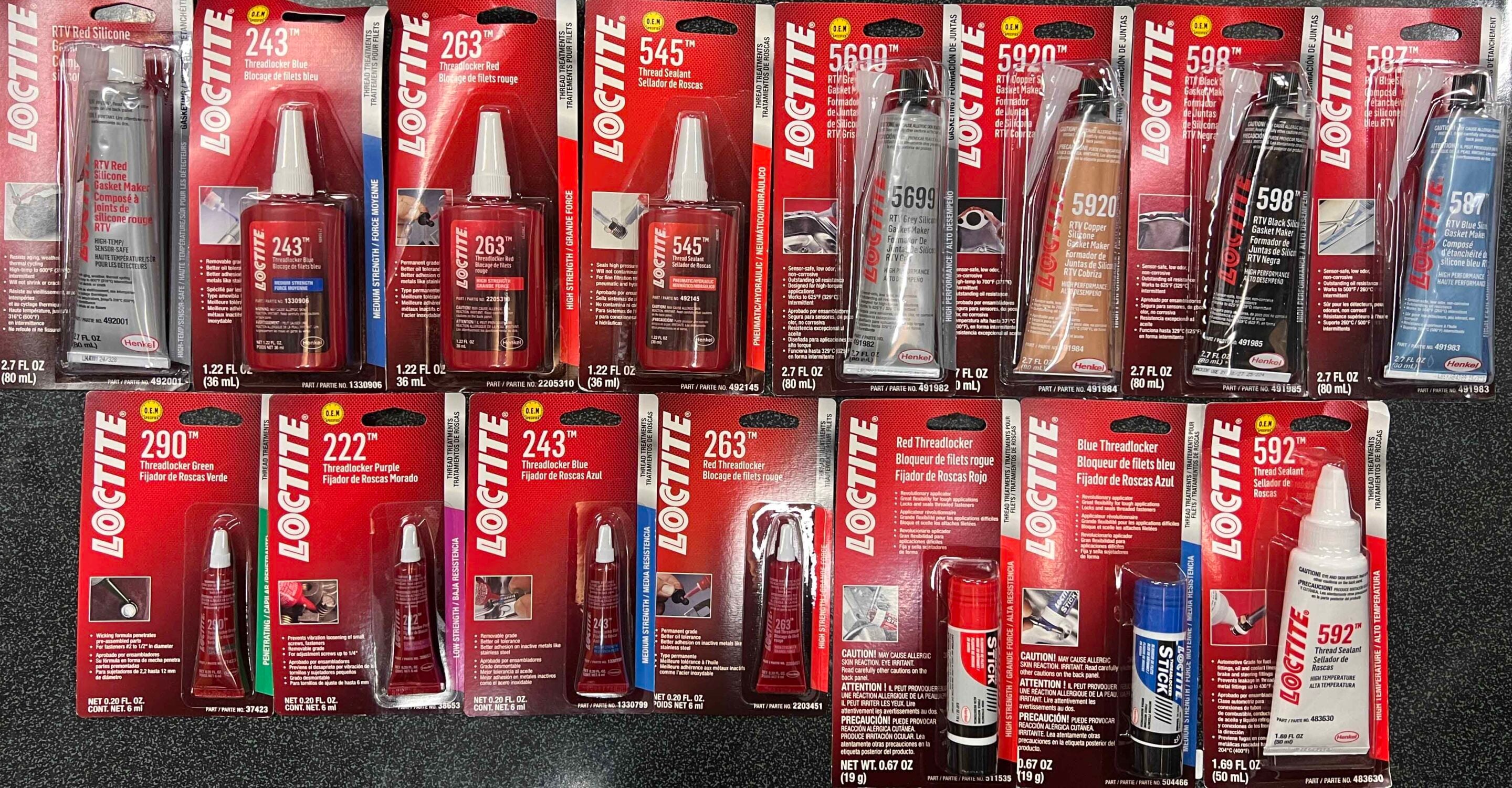
They also do a range of RTV silicones and gasket makers, which as you’d expect, are of the highest quality. Such products are fantastic to have on hand during servicing and maintenance of your rig and have about a billion uses when fixing or installing things.
They can be used as insulation, adhesive, sealant and, as the name spells out, for gaskets when you can’t get a genuine replacement because this job you started six hours ago was only meant to take 20 minutes and now all the shops are closed.
1
Practical examples
Sooner or later, when you head bush you’re going to experience a breakdown or mechanical failure. It’s the price of entry. However, we’ve been on countless trips where it’s been painfully obvious that a bit of prior prep could have minimised the risk, and eventual outcome.
The first that springs to mind is a rooftop tent that came loose on a run down the back of Robe in SA. The owner had taken the tent off his rack between trips and quickly bolted it back on the night before leaving. Luckily he noticed it bouncing around in the breeze and pulled up before too much damage could happen. A couple drops of blue Loctite on the mounting bolt threads and a couple of nuts borrowed from an inner guard mount and the crisis was averted. He reported a few months later that the tent was still snugly mounted without a drama.
The second is a steering arm coming loose from an old LandCruiser. This actually isn’t that uncommon; they’re known for shaking themselves apart. Luckily the nuts and cone washers were found not too far from where the steering stopped playing the game. A little red Loctite later and they were torqued to spec. The owner reported they were still holding tight after a few hard wheeling trips. Unfortunately, the other side also let go the following trip. They received the same treatment and six months later they’re both still sitting pretty.
Just goes to show, with the right pre-emptive maintenance and having the correct tools on hand you can avoid a lot or fix what you can’t.
Follow 4X4 Australia on Google
Get more 4x4 news, reviews and gear stories from 4X4 Australia in your Google feeds.