Gear


Gallery 1
Everyone knows that, without a little preparation, corrugations can shake every nut and bolt in a car loose.
It’s basically like hitting your entire vehicle’s nut and bolt catalogue with a very small rattle gun, then repeating it a few thousand times over hundreds of kilometres of corrugations. Small, jarring impacts can eventually vibrate even the tightest of nuts and bolts out of their torque setting. Obviously, this is far from ideal, and something needs to be done before leaving.
Where fasteners come loose
To be fair, most vehicles leave the factory with some sort of thread-locking compound applied to the bolts in areas prone to rattling loose.
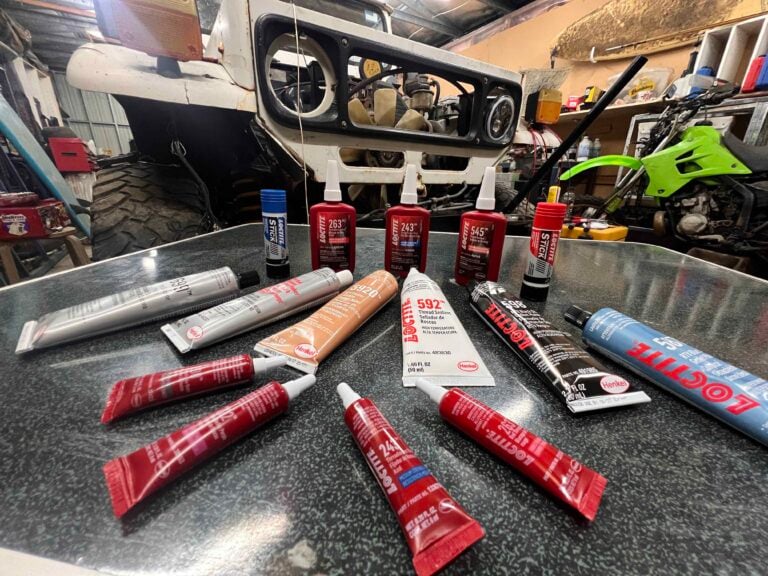
However, when most of us bolt on accessories, we often neglect to use Loctite (↗) or rely on nuts with a nylon locking collar. They work great until you have to undo the nut. Once it’s retightened, the locking collar can lose part of its original prevailing torque. We’re talking things like roof racks, bar work, snorkels, mounting brackets and canopies. If it bolts onto your rig, it can be vibrated off. At least, it can without prior treatment of the fasteners.
What happens when fasteners loosen
As mentioned, corrugations act as a jarring force over many kilometres.
This can loosen fasteners to the point where the accessory can move around, damaging whatever it’s mounted to or even coming free altogether. We’re sure we don’t need to paint you a picture of what can happen if a slider or roof rack breaks free when navigating a bend in the track at speed. Let’s just say that minor vehicle damage is the best-case scenario. Serious injury (or worse) can and does occur.
1
How to prevent fasteners coming loose
You’re likely going to service your rig before a decent-sized trip anyway. It’s good practice and allows you to give everything an eyeballing before heading somewhere that roadside assistance has never even heard of, let alone will come to help you out.
While you’re under your 4×4, give your accessories the once-over with a spanner or socket. If you’re unsure whether thread-locking compound has been applied, it’s a great opportunity to undo the fastener and apply some. It’ll take you an hour or so to do the whole vehicle, but it sure beats fishing your lightbar out of a croc-infested river.
Application is easy. A couple of drops is all you need on the thread of the bolt where the nut is going to be tightened. If you’re bolting something into a blind hole, put a couple of drops into the hole on the thread near the bottom. The liquid is forced upwards through the action of tightening the bolt, so this will avoid pushing it out of the hole before the proper torque has been reached.
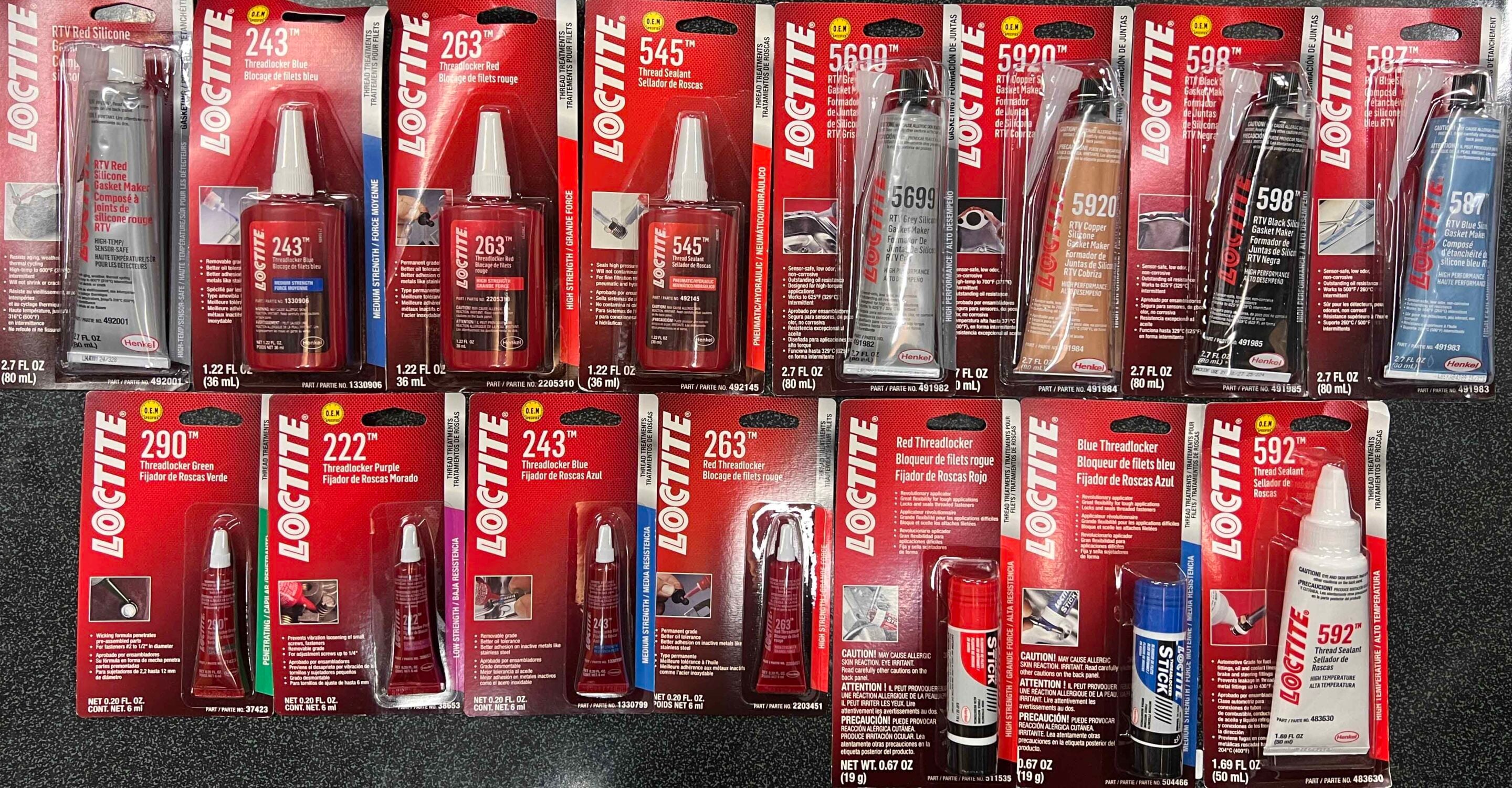
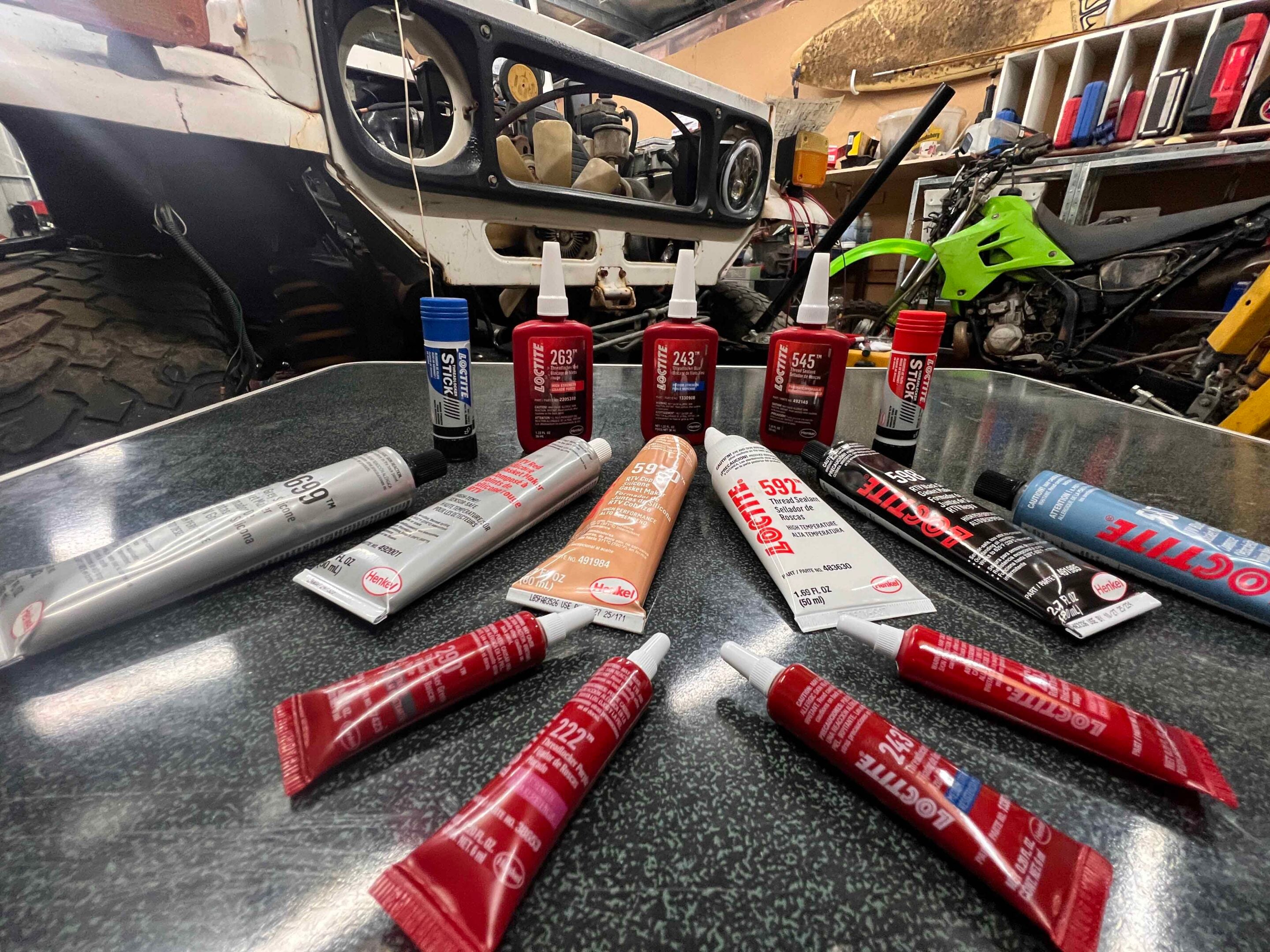
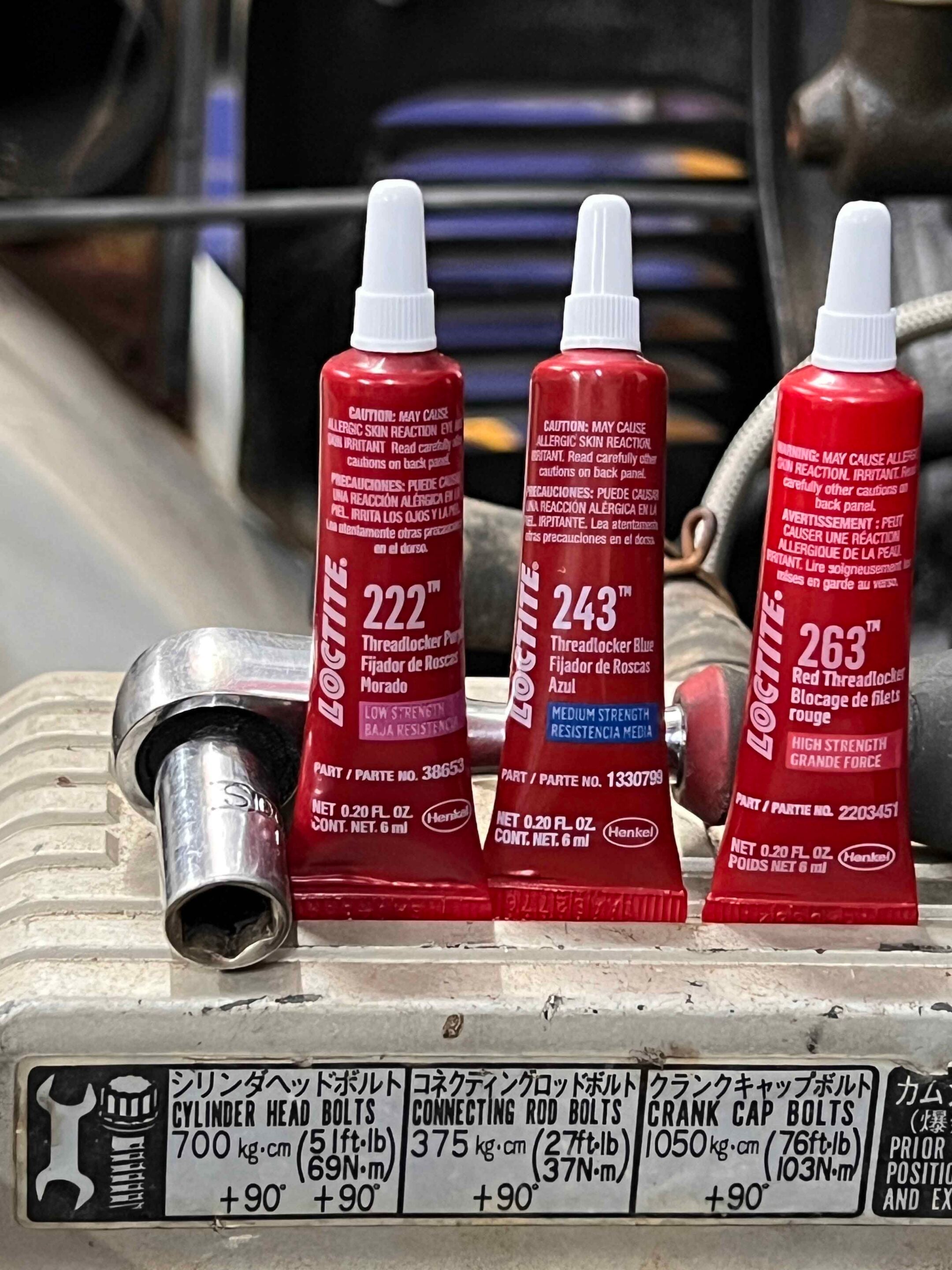
Once the fasteners have been torqued, the lack of air will allow the Loctite (↗) to cure and form a solid plastic-like material, which will prevent the fastener from rattling loose. Don’t be fooled by the ‘medium-strength’ thing either. High-strength is not always better. The medium-strength blue Loctite is the go when attaching UHF aerial brackets, driving lights, canopies, recovery board mounts, roof racks, awnings and most accessories. If you ever do need to remove such accessories, a quick crack of the ratchet or a hit with the impact gun will simply turn the hardened plastic to dust, and you can easily undo the fastener.
Red high-strength Loctite is more for stuff that should never need undoing, like bull bars or sliders. If they do need removing, heat via an induction tool may have to be applied to soften the Loctite before removal while hot.
1
Why threadlocker is worth using
You could be forgiven for thinking that tightening things to their torque spec is enough, and for 95 per cent of driving, you’re correct.
However, when hitting off-road obstacles (corrugations being the worst), it really is only a matter of time before things shake loose. There are, of course, alternatives to thread-locking compounds, such as Nylock nuts and Nord-Lock washers. Both have their place, but both have their downsides and are considerably more expensive than a simple bottle of Loctite. On top of that, your Loctite can be used multiple times, whereas the others will only ever suit a single application.
If a better solution ever pops up, it’ll probably be invented by Loctite (↗) anyway. Until then, having a bottle on hand is one of the cheapest forms of insurance and preventative maintenance money can buy.
Follow 4X4 Australia on Google
Get more 4x4 news, reviews and gear stories from 4X4 Australia in your Google feeds.