RRP: $44.99
AVAILABLE FROM: www.woodslanepress.com.au [↗]
WE SAY: A great guide to 25 of the best and most varied treks showcasing one of the best parts of Australia.

The latest guide book in the series is titled 4WD Treks of Northeast NSW and it focuses on one of my favourite parts of Australia. Often overlooked by adventurers, the NSW coast has many and varied tracks and destinations to explore by 4×4 and most of the ones contained in the book can be accessed by light-duty all-wheel drive vehicles.
From Coopernook in the south to the beaches of Brooms Head in the north, and as far west as the Carpet Snake Trail near Emmaville up in the New England, the book covers a wide expanse of terrain focusing on 25 treks in total.
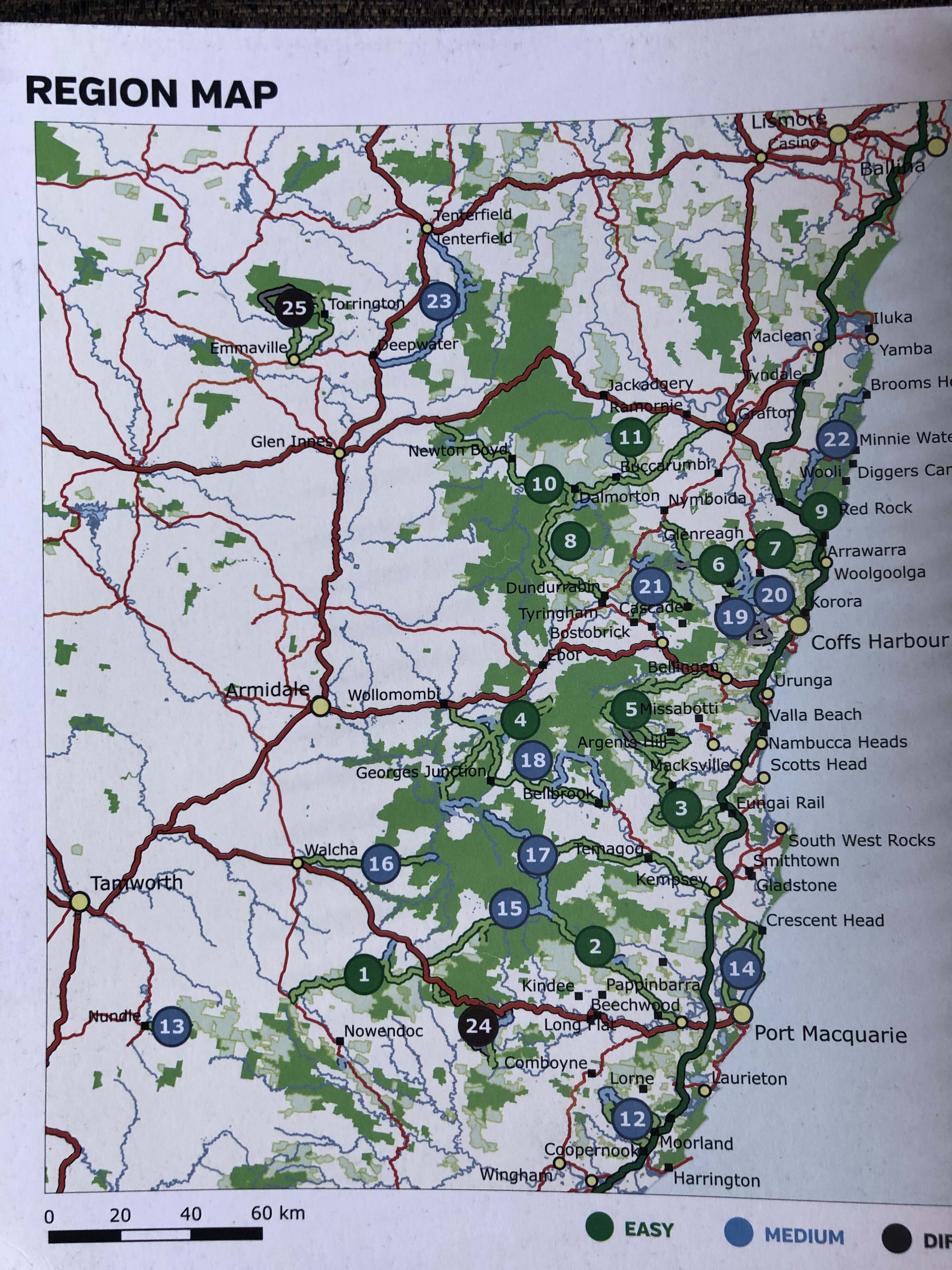
Simple, easy to read ‘mud maps’ are given for each trek as well as detailed turn-by-turn directions with travel distances and drive times.
Whether it’s beach or bush, there’s something for every traveller on the NSW north coast and they are all here in this guidebook. Some of my favourite locations listed among the treks include Station Creek camp at Pebbly Beach, the river and rainforest experiences around Nymboida, the tracks of Yuragir and the deep valleys reached within The Cells.
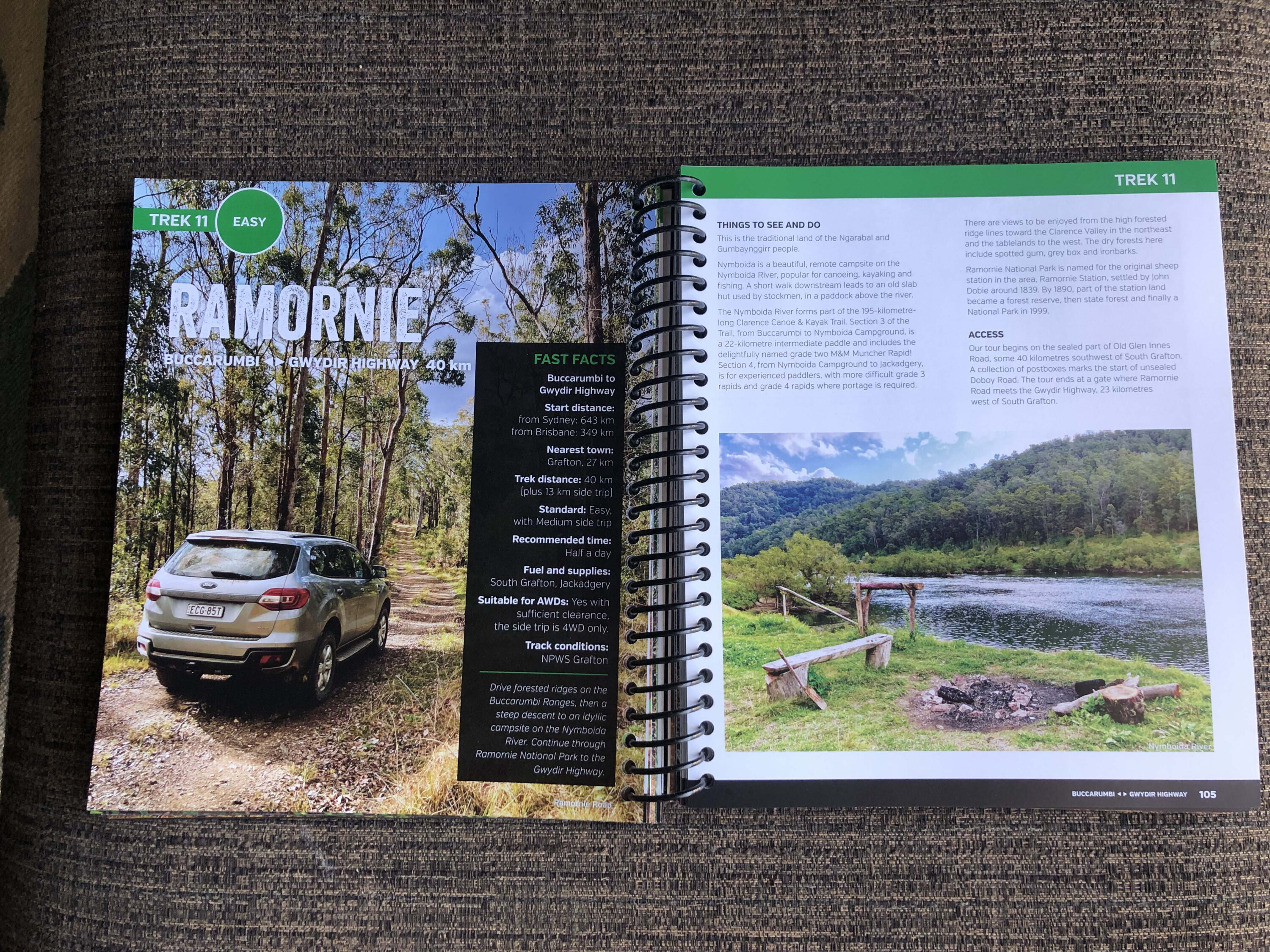
This encourages the reader to get out and explore the northeast with the confidence of knowing what to expect, what to look out for and what not to miss along the way. With careful planning you can link multiple treks to create an adventure lasting weeks, and taking in all this amazing part of Australia has to offer.
4WD Treks of Northeast NSW is a spiral bound, full-colour, 134 page book with many photos from each place and destination, as well as plenty of information.
It is available online along with other Woodslane and Boiling Billy publications at www.woodslanepress.com.au [↗].
RRP: $44.99
AVAILABLE FROM: www.woodslanepress.com.au [↗]
WE SAY: A great guide to 25 of the best and most varied treks showcasing one of the best parts of Australia.
It’s a place where early explorers deemed the land perfect for pastoralism, and bushrangers roamed. Today the whole area is a mix of tourist drives, farmlands and boutique villages.
The New England region covers an area from Newcastle in the south up to the Queensland border on the top of the Great Dividing Range. Across the west side the farmland is very much similar to the UK, with wet winters with blizzard conditions and pretty warm summers.
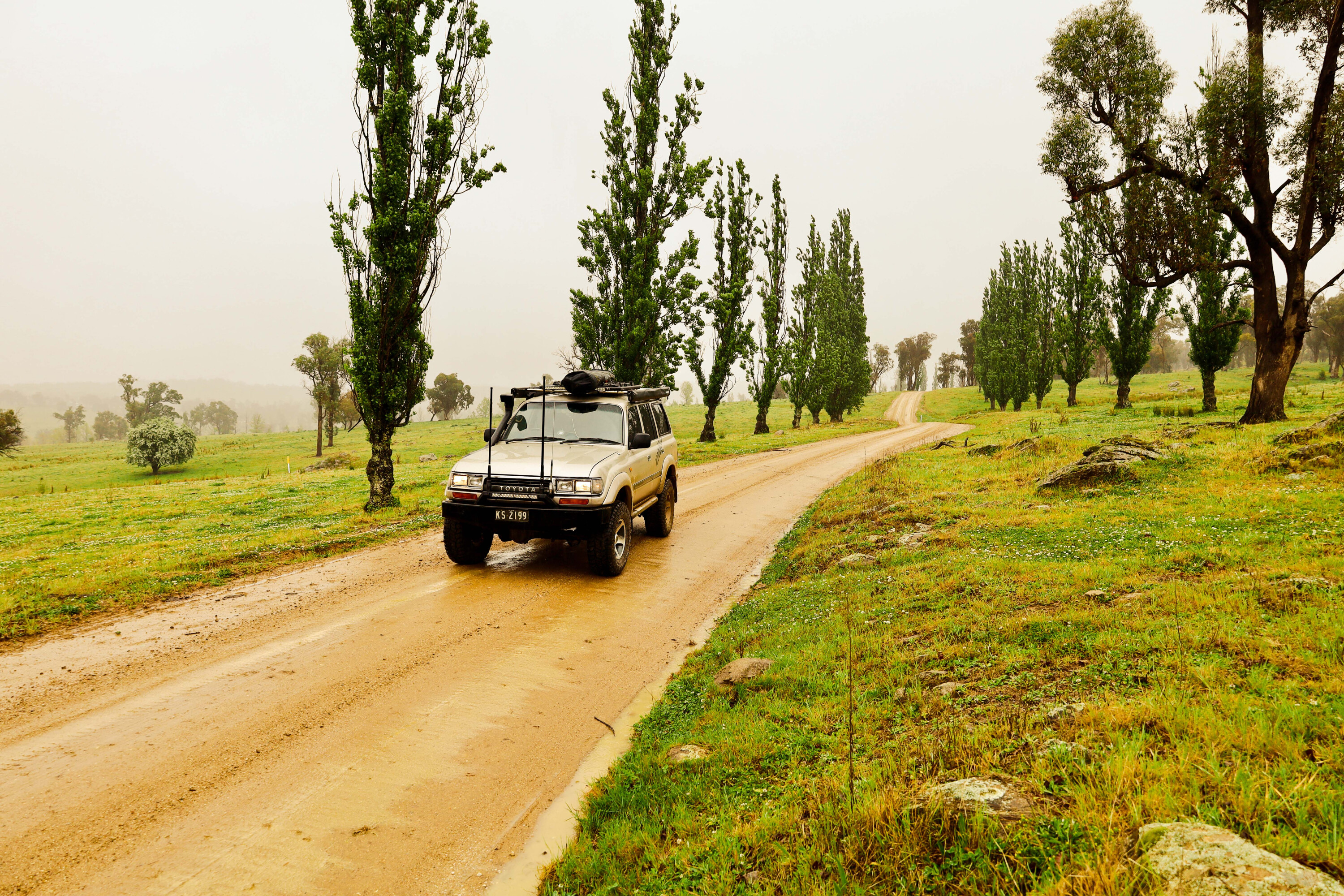
The tourist trade flocks to these areas for the multitude of wineries, coffee emporiums, boutique stays, natural wonders and festivals.
Now while there’s not really a lot of challenging four-wheel driving in the area, it’s a great place to explore for a few days. One area in particular is around Ebor, midway between Sydney and Brisbane on the tablelands. This is true gorge country, where over millions of years the constant weathering has carved out an amazing landscape.
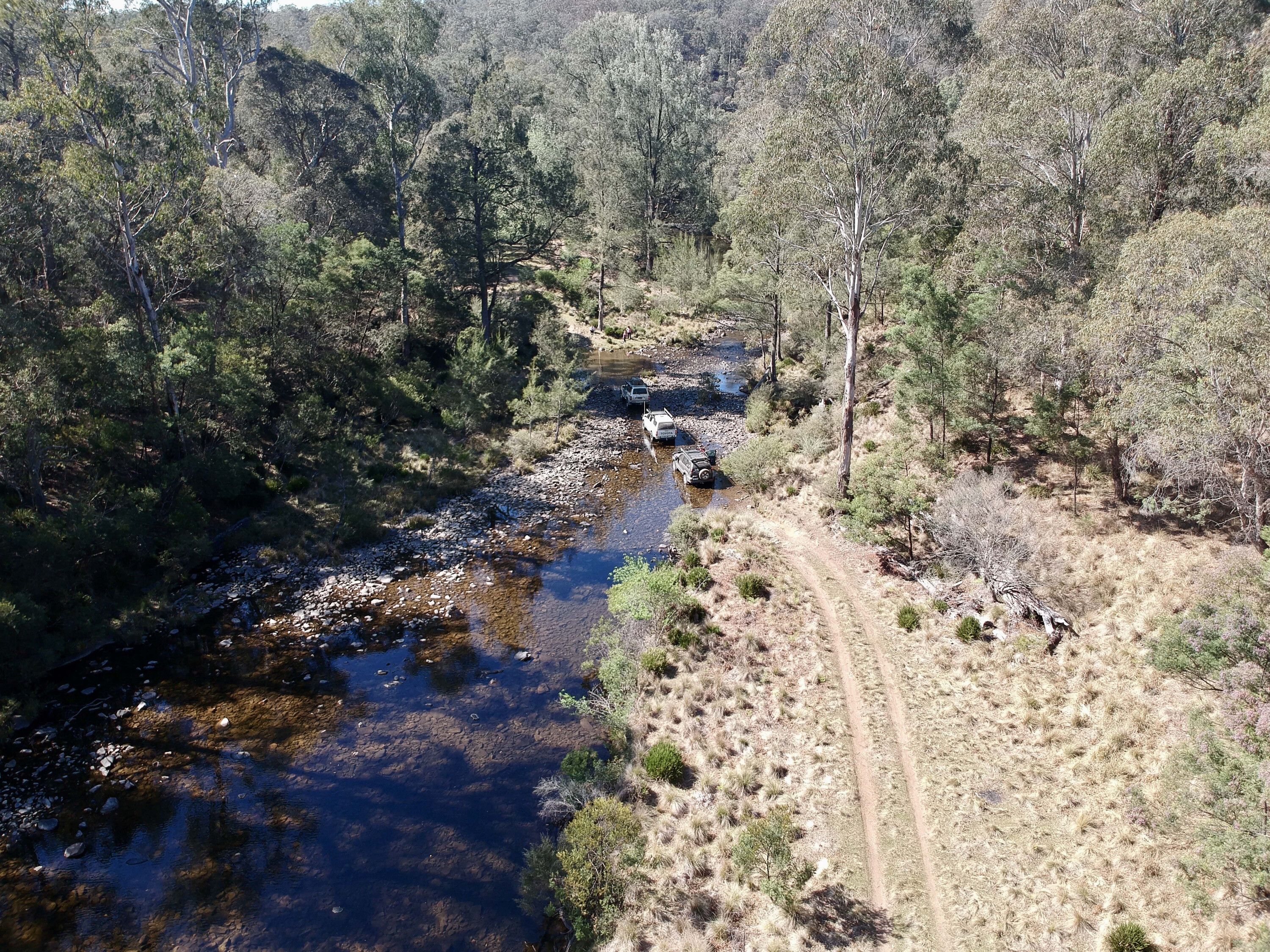
Grab one of the many tourist maps and create your own adventure out here.
The area is surrounded by national parks and wilderness areas, but there’s still some amazing touring tracks, plenty of history to explore and the waterfalls in the area are said to have some of the longest drops in the country, while Round Mountain in Cathedral NP is the highest point north of the snowfields.
One of our favourite camping spots is in Styx River State Forest. Surrounded by national parks it’s a beautiful little pocket where tree ferns grow under tall gums in the cool climate and where camping is free down on Wattle Flat beside the river. The area is peaceful and while you won’t find much in the way of diff-busting tracks, it’s all about exploring the region and winding down.
My advice for exploring New England? Grab one of the many tourist maps and create your own adventure out here. With a good GPS or the right map, the listed locations are easy to find. Be prepared for weather changes as you can get three seasons in one day.
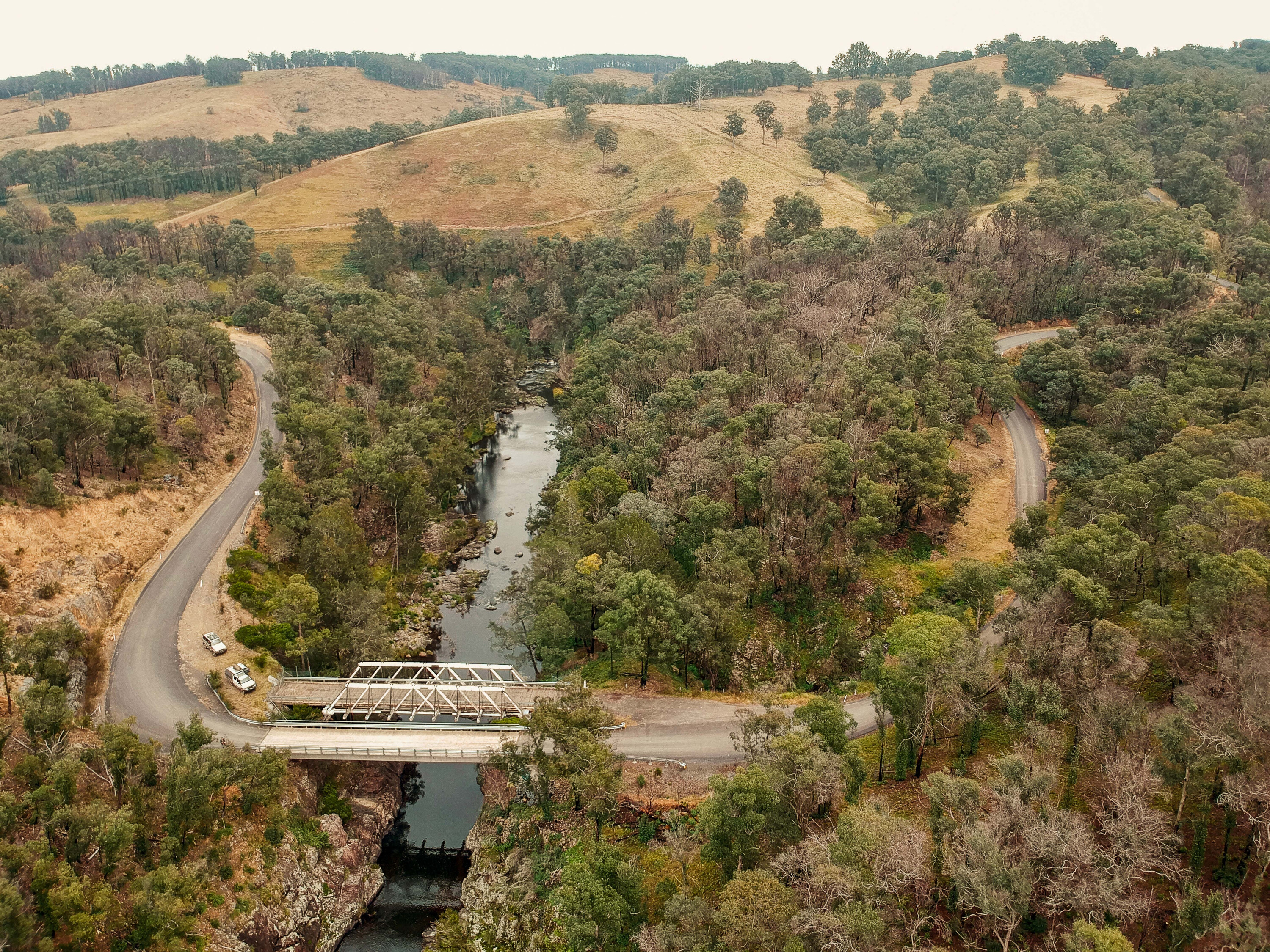
One of the most significant in the area was the Ebor volcano, 65km east of Armidale. It’s reported to ahev been very active over a period of 30-60 million years ago.
The lava flows from the massive upheavals that this volcano created extend for several hundred kilometres in a 360 degree arc all the way to Barrington Tops and west to Mount Kaputar. This is evident from the rich red farming and grazing land that the mid-north coast is renowned for, and the floodplains to the west where the basalt soils are black.
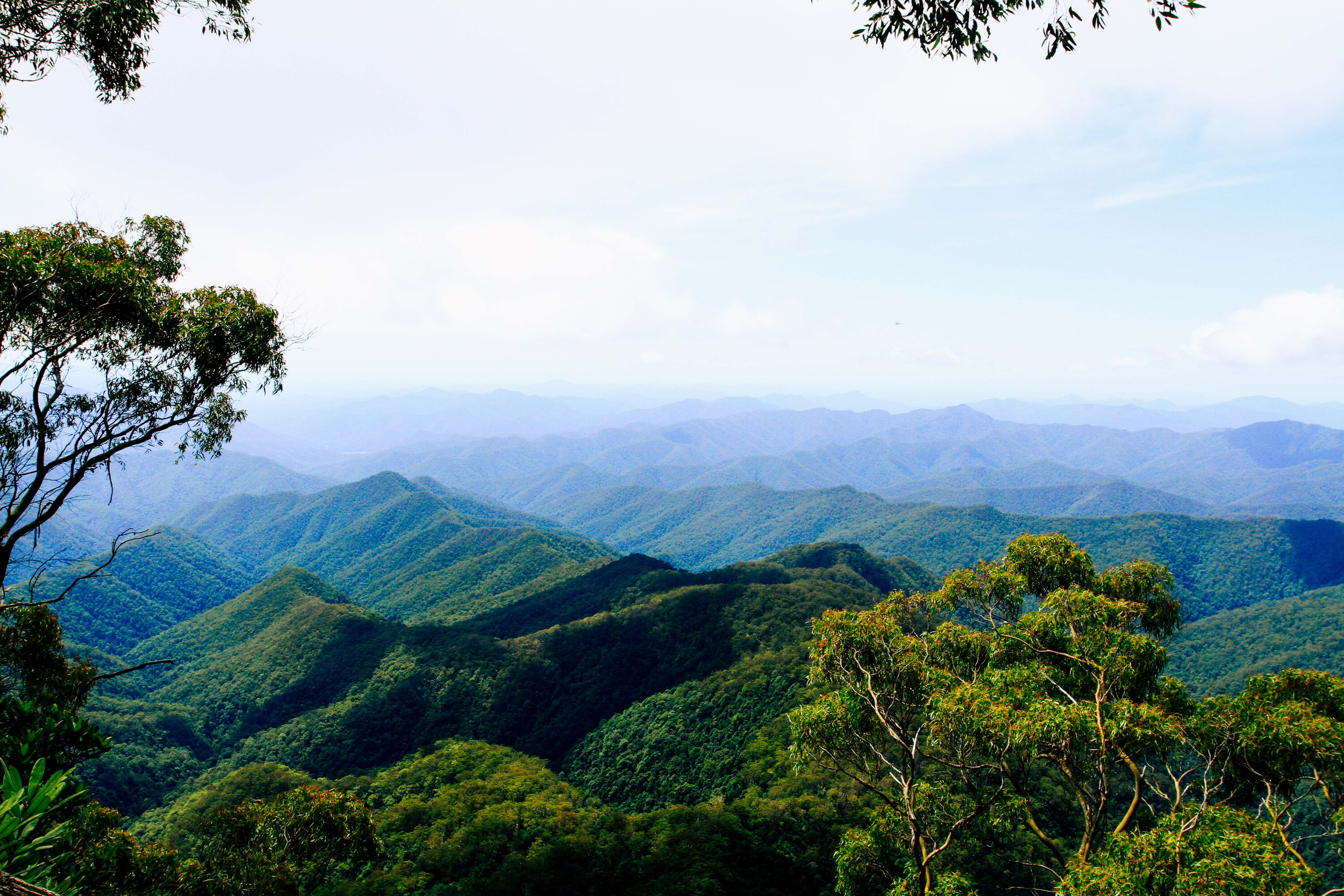
The New England National Park, which surrounds the Ebor Volcano, plays a significant part in the protection and preservation of a wide diversity of flora and fauna, and this was recognised in the late 1980s when it was declared a World Heritage listed area.
While there’s no four-wheel driving here, the walking tracks and lookouts make up for it. Some walking tracks wind their way into the wilderness areas and others loop around the ridge through the cold climate forest.
The 300m thick rim of the Ebor Volcano can be viewed from the nearby Point Lookout on a clear day, which at 1565m above sea level offers stunning views into the wilderness areas that surround the rim and down across the coast.
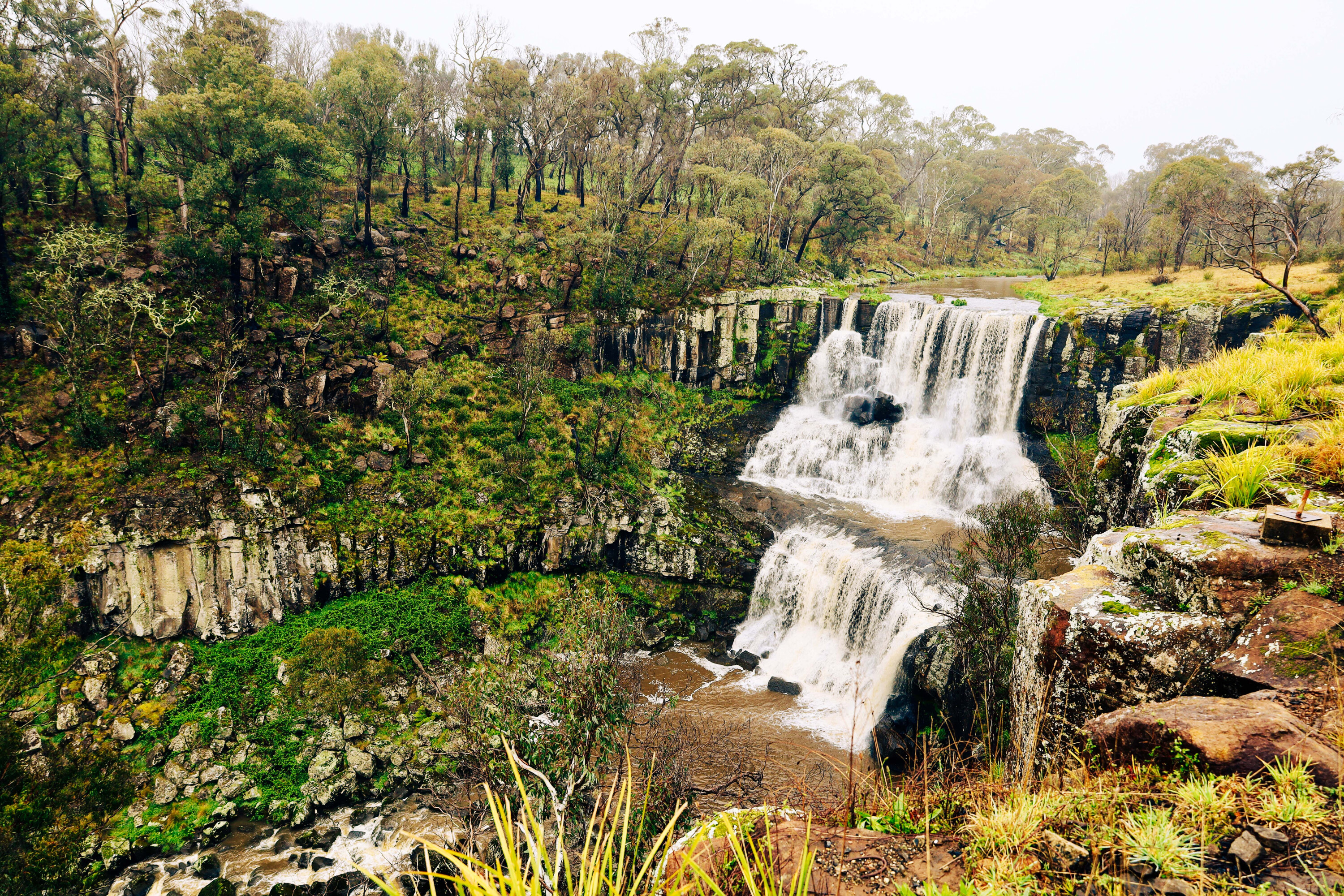
At this altitude you can see cold-tolerant snow gums covered in thick moss, yet in the valleys below the gorges are filled with near inaccessible rainforest pockets. This area has created its own environment: there are high rainfall periods that flood the surrounding lower lying land; freezing winters where snow falls on a regular basis; and summer periods where the dry heat can leave you feeling dehydrated.
This volcanic area is reportedly home to more than a thousand different species of plants and trees, with the altitude ranging from sea level to 1610m, and some species are found nowhere else in Australia.
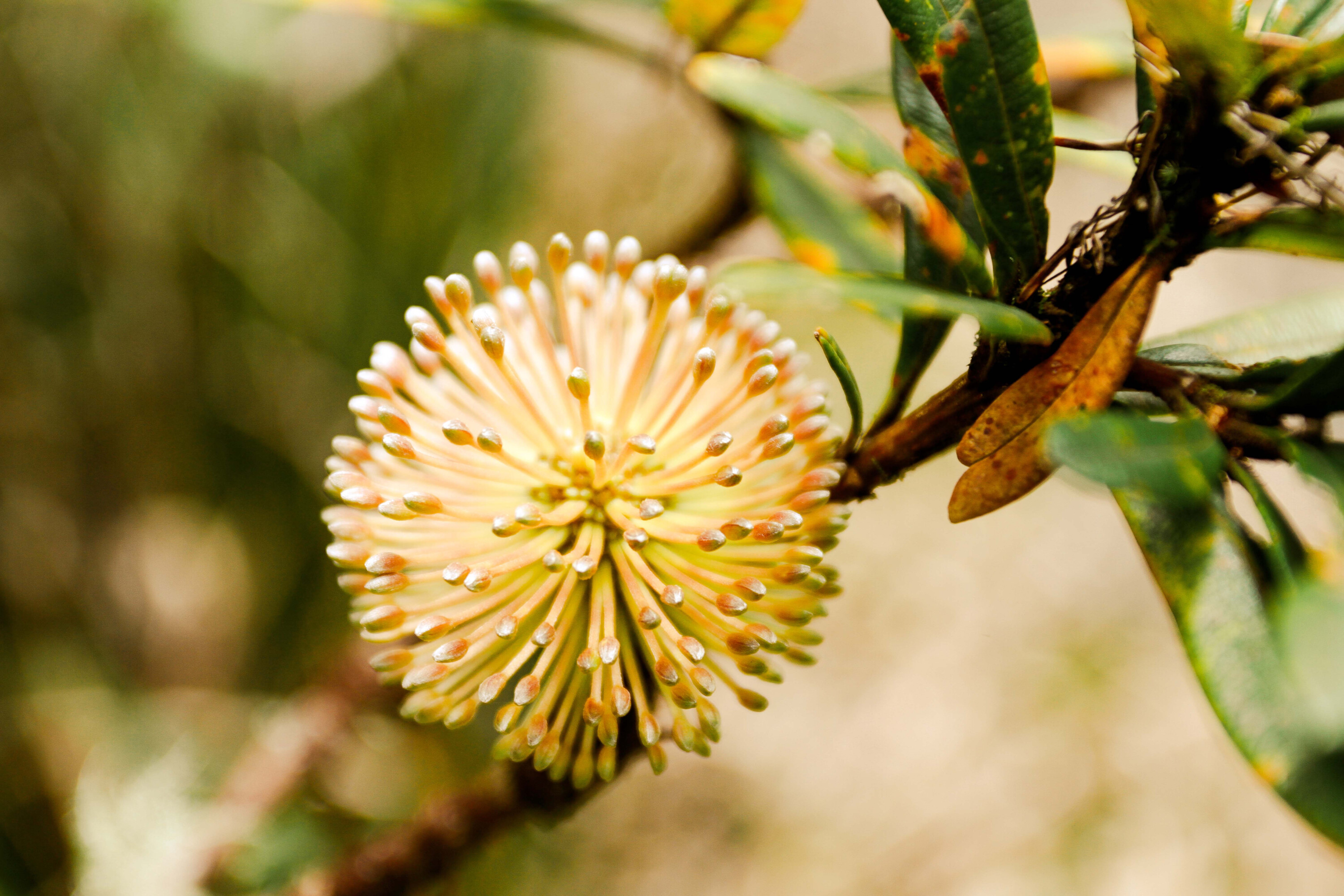
Entering the park there’s a great information board that provides an insight on what you can expect to find within the park, such as camping, history and the ecology of the area. It’s an easy 8km drive that winds its way around huge granite boulders and through the cold-climate forest to the camping areas.
Barokee Campground caters for both daytrippers and campers, with a pit toot, fire places and supplied firewood. The main focus of the park is the three-hour return walk to the top of Cathedral Rock.
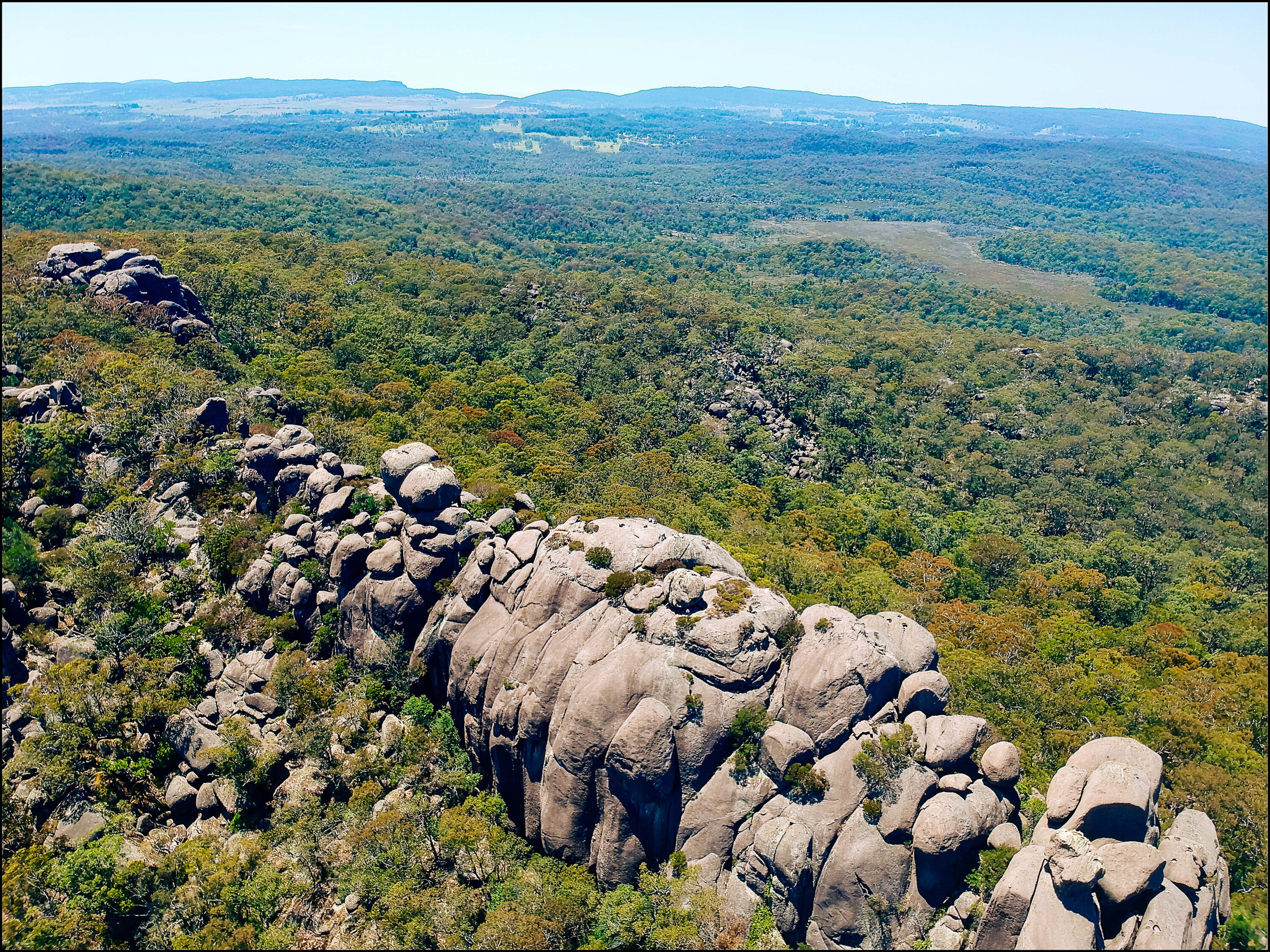
The track follows the rock formations, and you’ll be ducking under overhangs before the final challenge of scrambling over boulders. You’ll need to grab the chain to pull yourself up the last rock.
When you reach the summit the 360° views are stunning, looking over valleys and across to other granite tors (free standing rock formations) in the distance. It’s interesting to note that these granite formations are located only within Cathedral Rock NP, and nowhere else in the region.
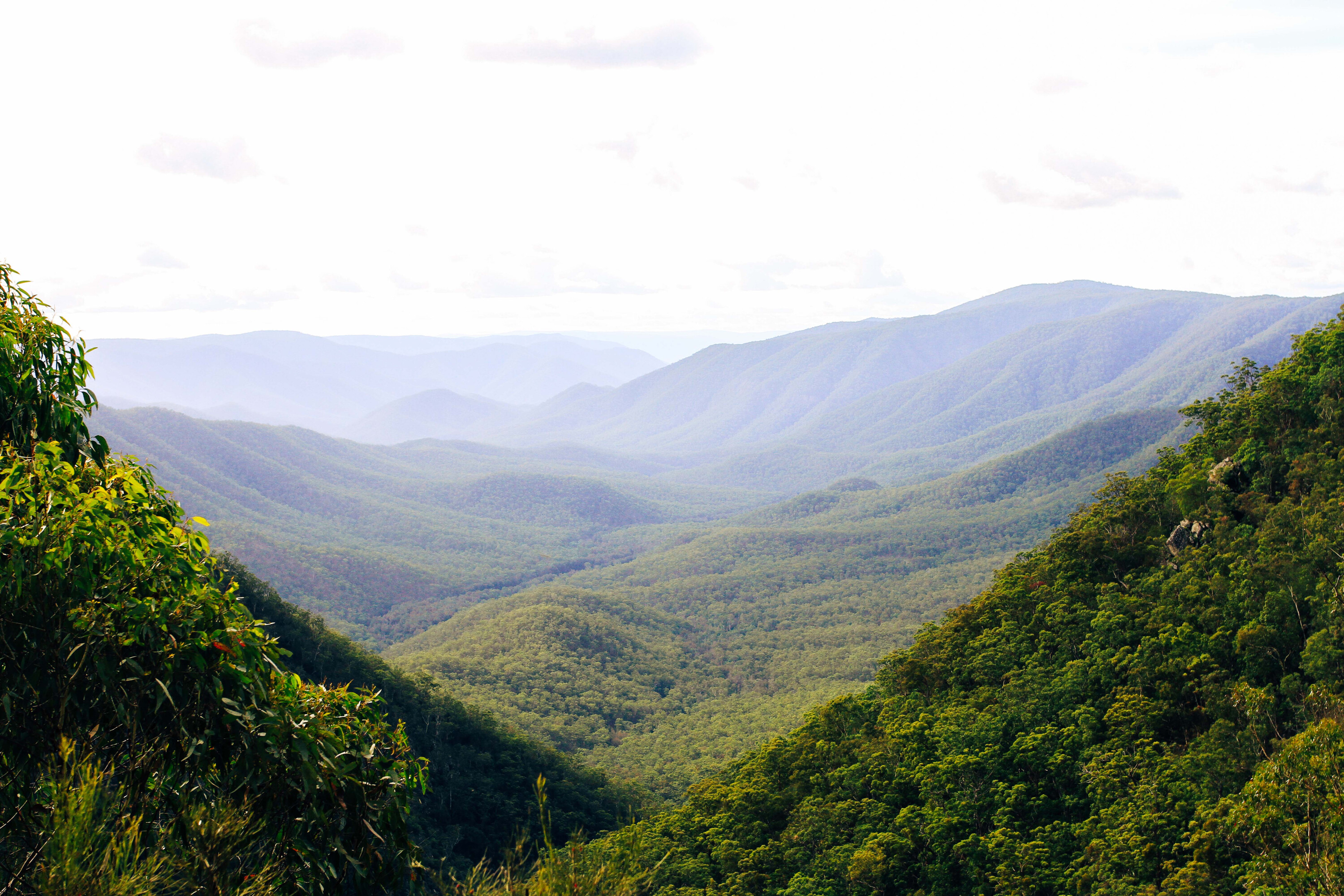
We watched soaring raptors at eye level as they looked down for prey, and also spotted some of the biggest rock skinks we have ever seen, scrambling around on the rocks and keeping an eye on our every move.
After the scramble back down, the loop track heads around the base of these giant granite boulders and back to camp. You will pass the walking track to Native Dog campground on the outskirts of the park. The rocks here are from the Ebor Volcano eruptions that occurred millions of years ago.
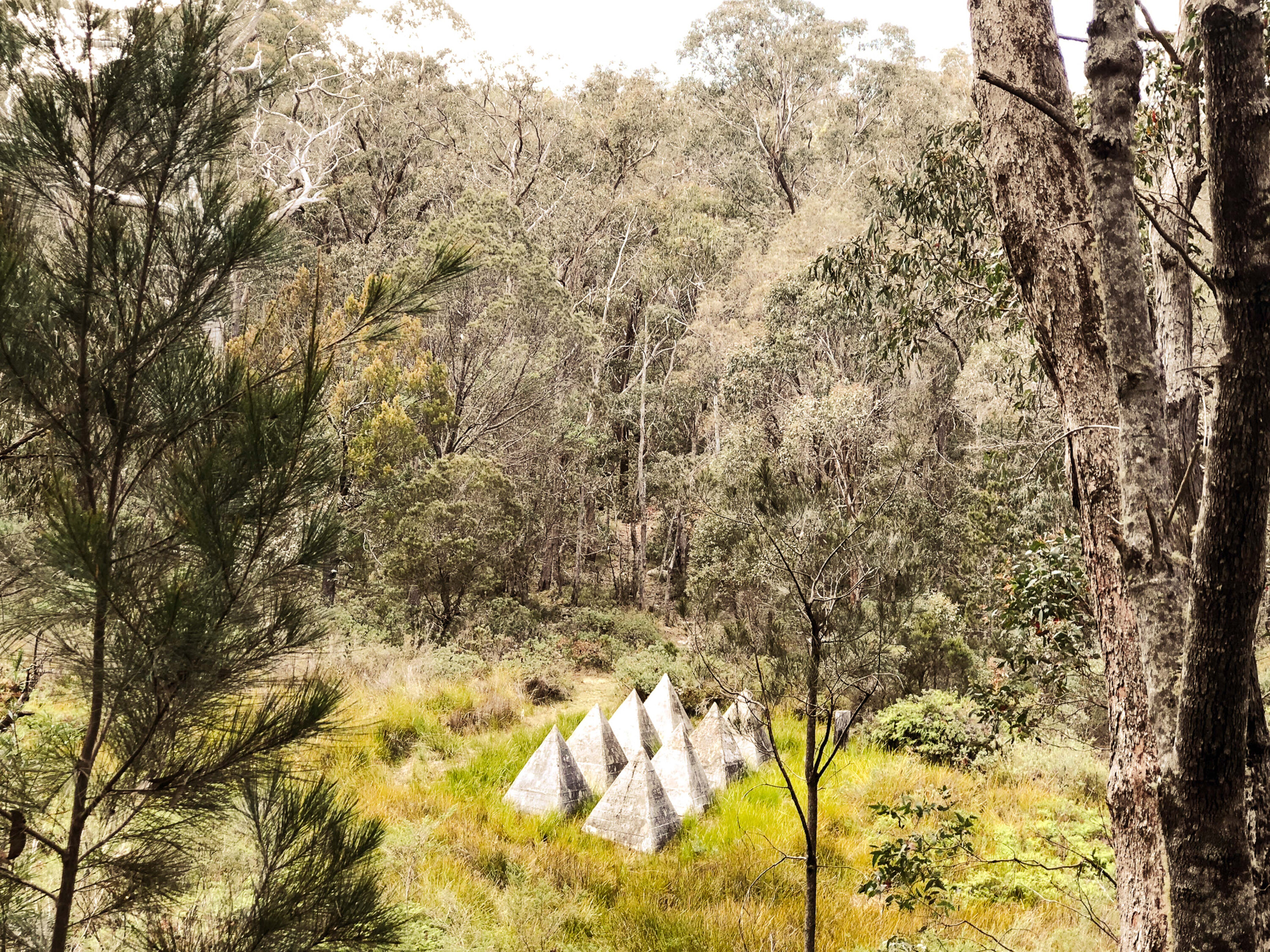
Strategically placed here back in 1942 in case the Japanese were to invade Australia, the barrier was designed to slow progress to the tablelands. Reportedly a 75-post barrier, we spotted about 50 odd, as several others had been burnt, attacked by white ants or had been knocked over.
There are eight triangle tetrahedra (triangle blocks) placed on the higher ground down near the swamp area, and these were positioned to force the tanks into the marsh areas.
One amazing find, however, was the tunnel under the old road that would have been loaded up with explosives and ignited if the enemy was on the road. There would have been a ton-and-a-half of explosives set for charge in the steel boxes that can still be seen inside the tunnel.
The digging of the tunnel initially involved two shifts of two men each, working 15 hours per day, six days per week. The tunnel is about 60-feet long with two arms branching off the end, and reports say it was 10-feet high; it’s now about 5-feet high and seems to be about 4 feet wide.
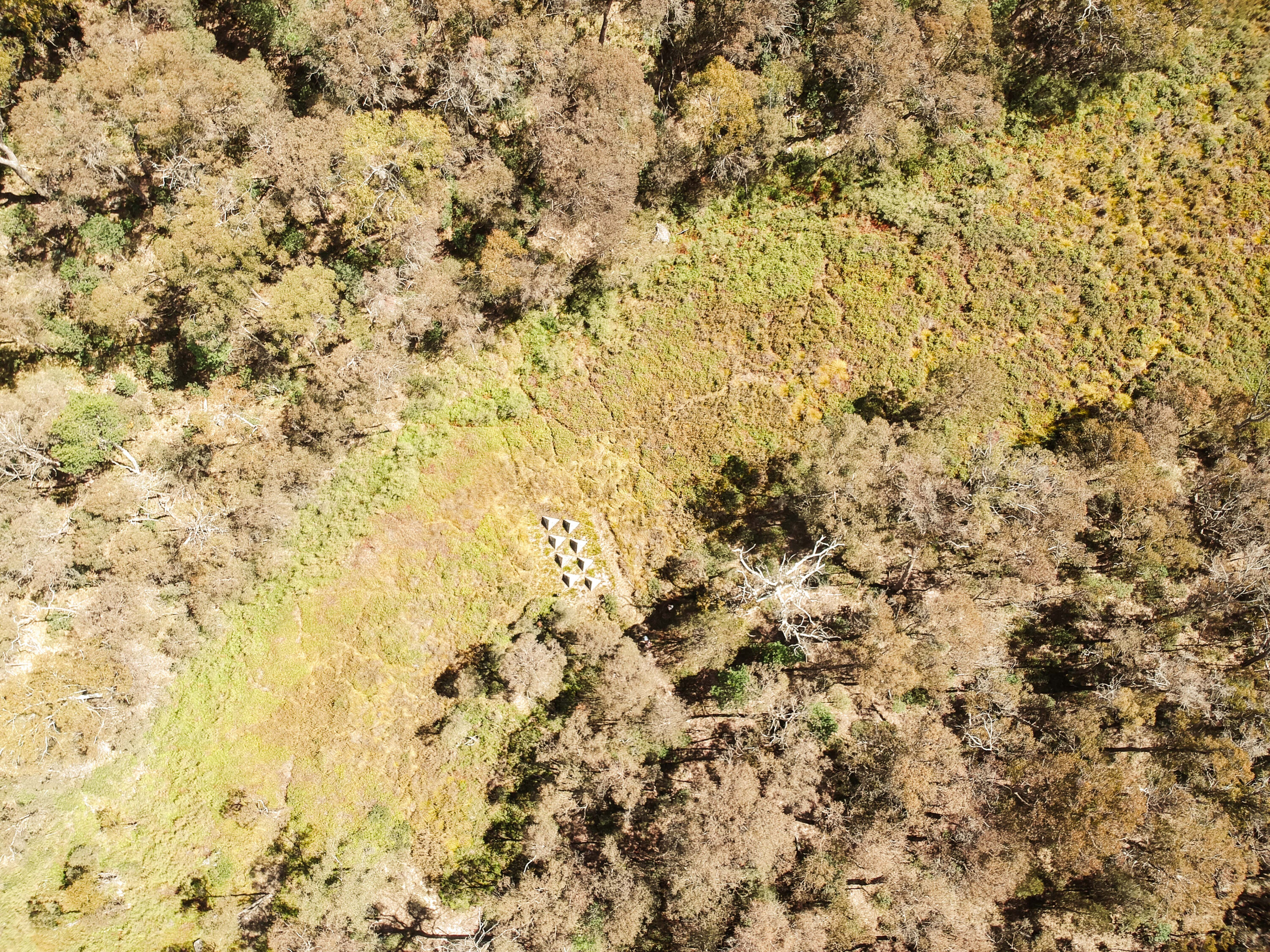
It’s hard to believe walking around here that this might have actually happened so far down the coast. I’m not sure why the enemy would want to target the cold New England area instead of staying down on the coast, but it was certainly viewed as a real threat.
This enemy deterrent was one of many along the east coast of Australia and in fact the steepness of the terrain from the tableland to coast, combined with the prevalence of deep gorges, the absence of navigable rivers and the heavily forested nature of the surrounding countryside, meant that the few easterly roads that existed in 1942 were of critical strategic importance. Now this area is listed by the National Trust. There are several walking tracks around these points of interest, and it’s an easy walk for the kids too.
Ebor: https://www.visitarmidale.com.au/explore/ebor [↗]
Ebor Falls: https://www.nationalparks.nsw.gov.au/things-to-do/lookouts/ebor-falls/learn-more [↗]
New England NP: https://www.nationalparks.nsw.gov.au/visit-a-park/parks/new-england-national-park [↗]
Cathedral Rock NP: https://www.nationalparks.nsw.gov.au/visit-a-park/parks/cathedral-rock-national-park [↗]
Yooroonah Tank Trap Barrier: https://www.nationaltrust.org.au/news/yooroonah-tank-traps-listed-on-national-trust-register [↗]
They have to pass through Normanton on their way there, so the National Hotel, better known as the legendary Purple Pub, is like a magnet.
It’s not just the silver nomads that enjoy a quiet beverage in the bar or maybe a meal in the beer garden, it’s also the families tackling the Savannah Way and the backpackers who are finally reaching our shores again.
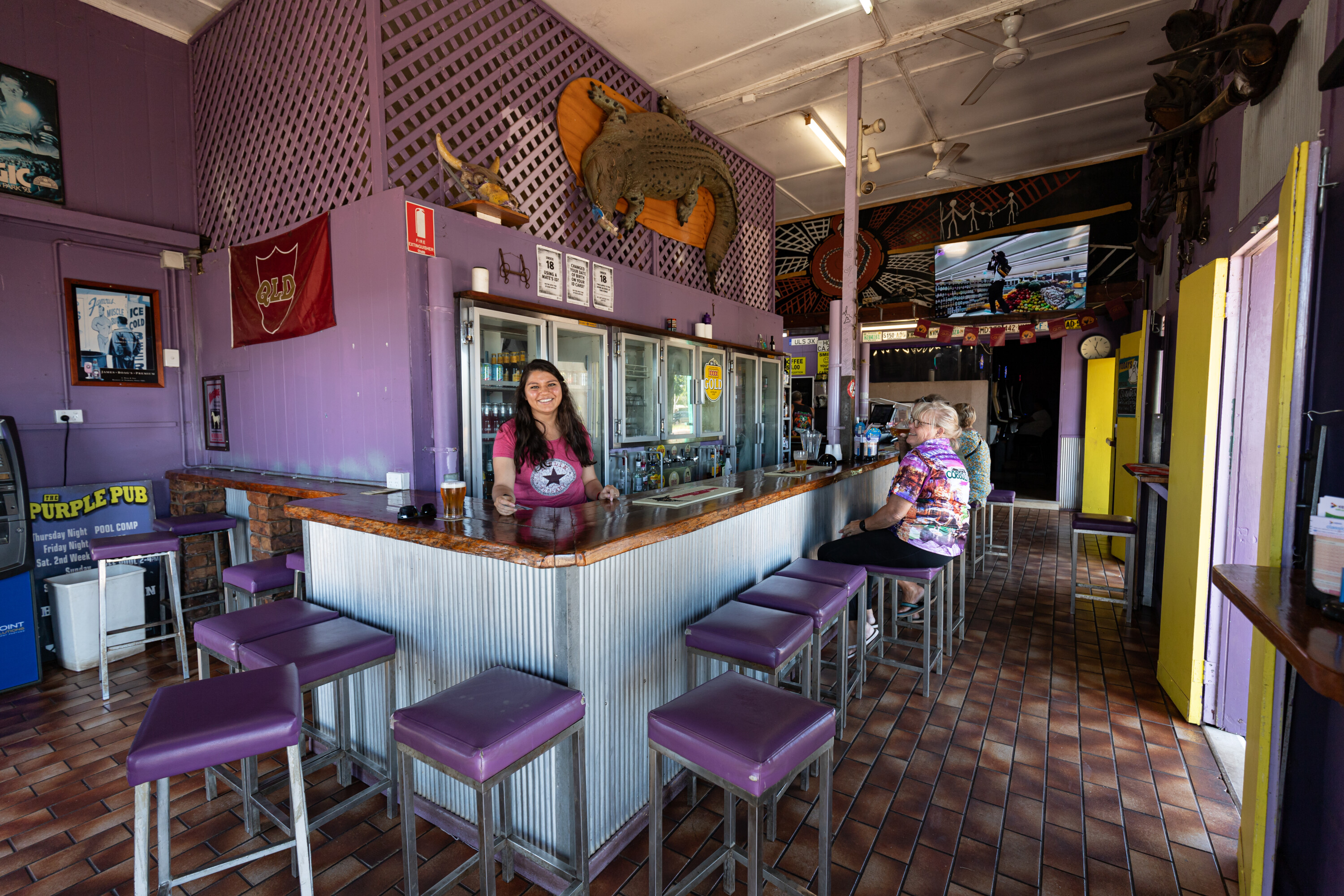
While sitting at the bar enjoying a cold beverage, I got talking to a mix of people, including a couple from Sydney on their first trip out here, an author from Brisbane who’d lived in Bali for 10 years and was now here trying to finish another novel, and one of the locals who enjoys meeting new people as they pass through.
It was great to be able to relax with a beer and talk about life with strangers.
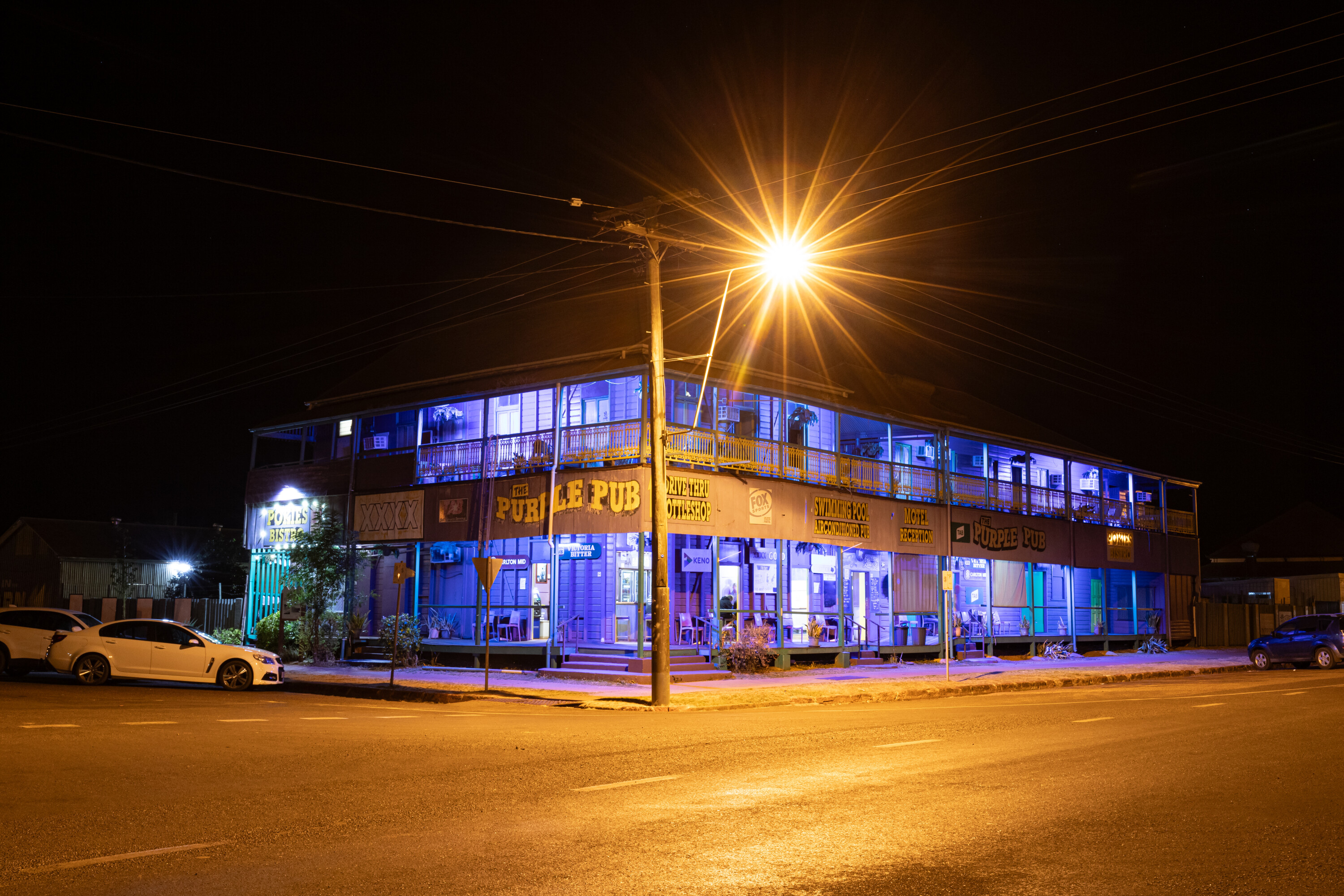
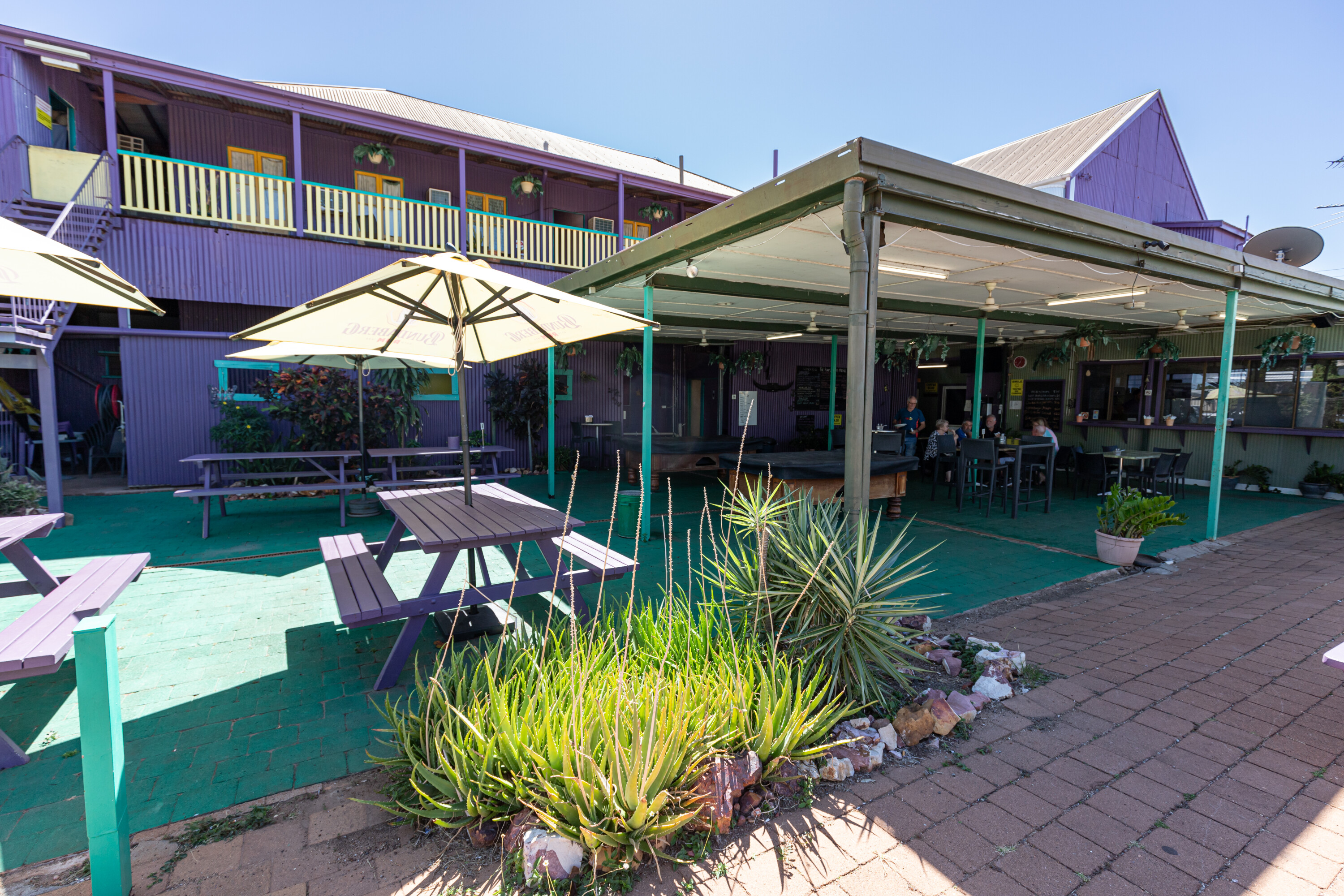
The building was painted a light mauve in 1968, and then in 1975 it was painted a few shades darker before the current purple was applied in 1979. The story goes that the order for paint was put in and it took a few months to arrive due to floods, and so by the time it arrived in Normanton, it had morphed into its current purple shade.
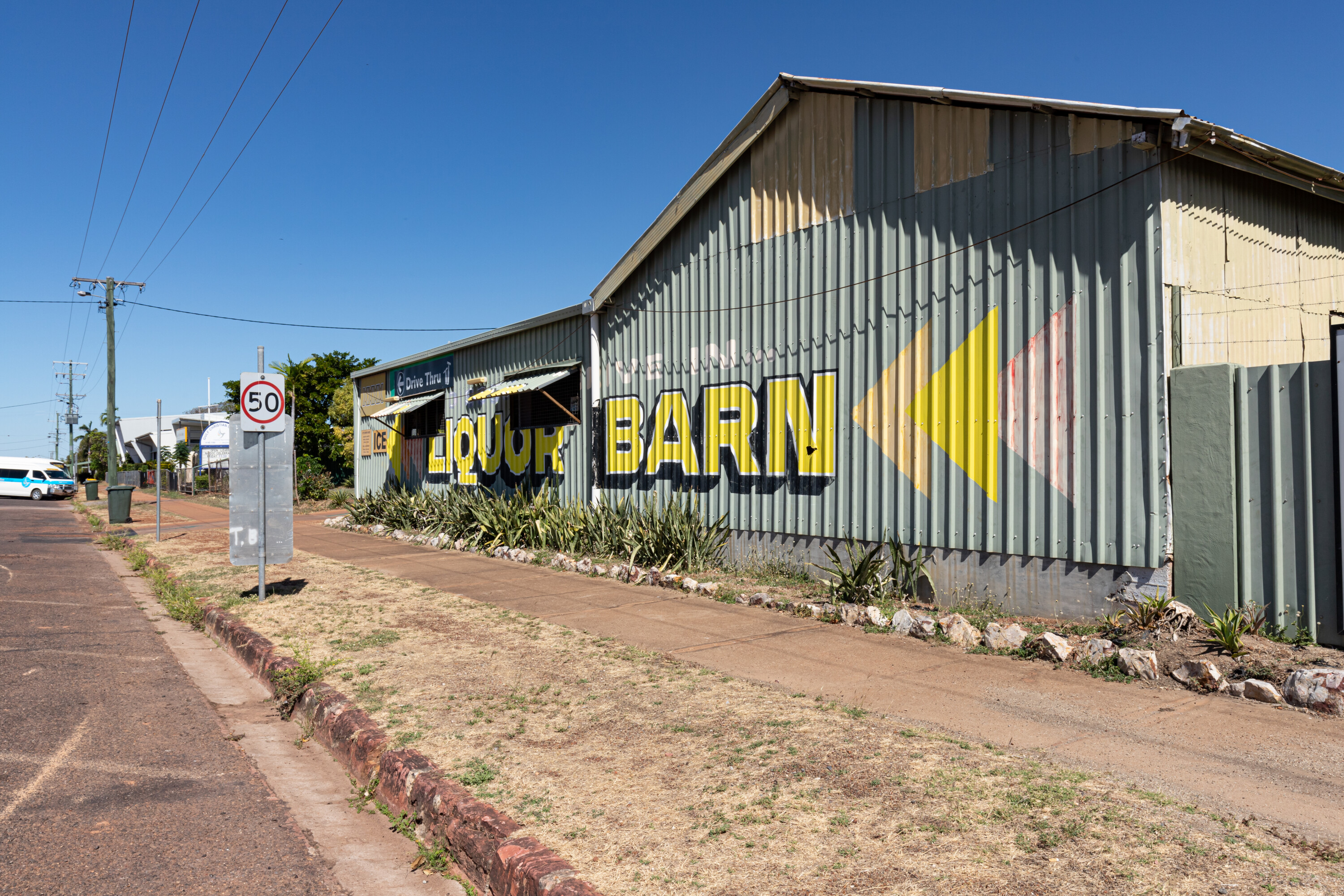
The Purple Pub has it all with a bar, bistro, beer garden, drive-through liquor barn and a motel. The beer garden includes a couple of pool tables and the menu is quite extensive with reasonable pricing for a pub this remote.
From January to March the Purple Pub is open from 10am to 6pm daily and from April to December from 10am to 7pm daily. The drive-through liquor barn supposedly has the same hours however it was closed on the Sunday we dropped by. Fortunately takeaways are available from the bar when the liquor barn is closed.
There’s a pool com held on Thursdays with plenty of people signing up to battle for ‘Top Gun’ status, and for those with good singing voices there’s a Karaoke Night on Fridays. From the racket I heard when camped across the road, I can assure you it doesn’t take much talent to have a go.
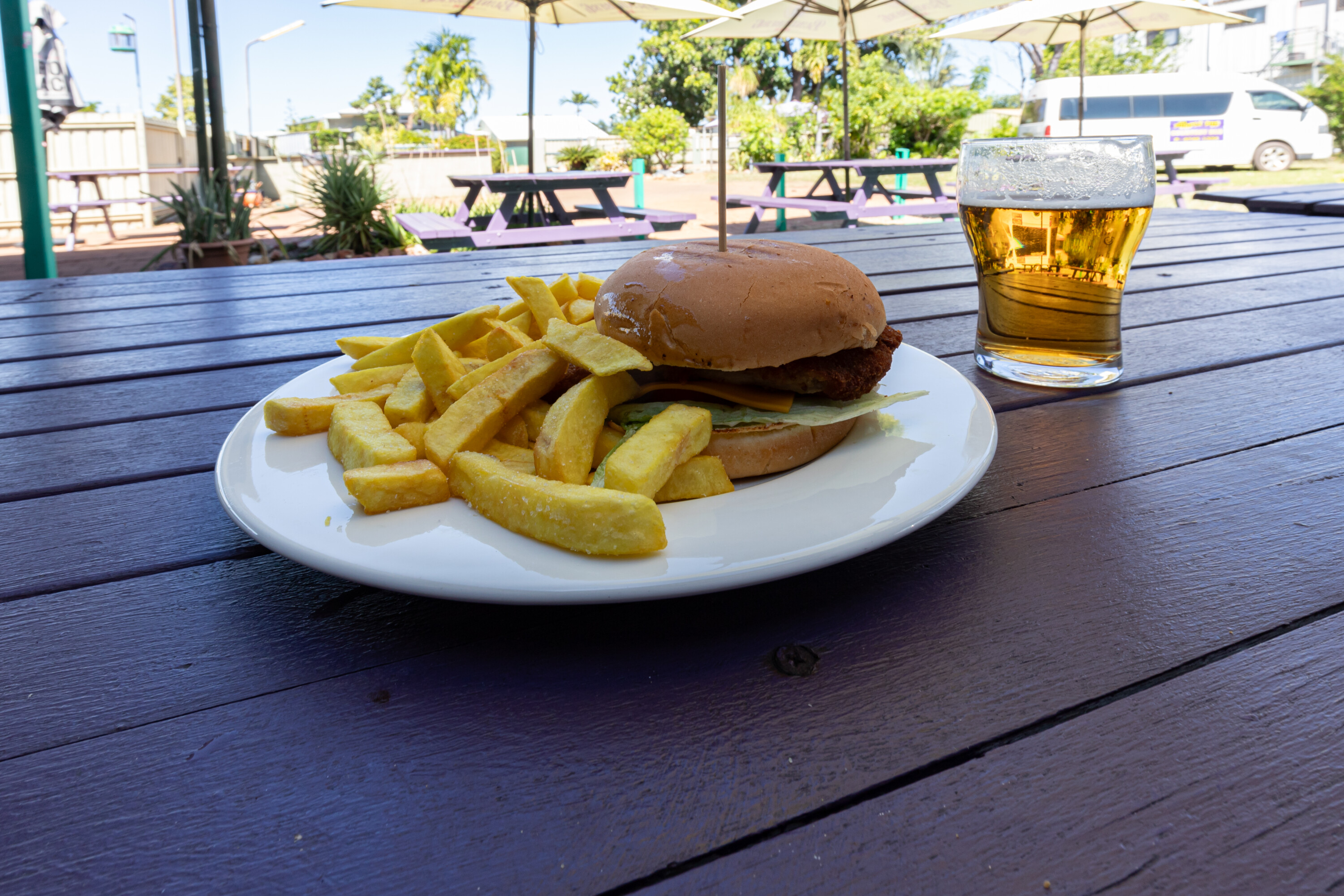
I sampled the Chicken Burger with chips for $12. The chips were crispy and seasoned perfectly and the schnitzel was larger than the bun. The tomato, chipotle mayonnaise and fresh lettuce added moisture and it was all washed down with an ice-cold Super Crisp.
You can’t miss the iconic Purple Pub as you drive through Normanton. It is a great spot to relax and chat with whoever else is in the bar, and if you can’t be bothered cooking, the bistro offers a good feed, including pizzas, while you can dine in or take away. It’s also a good idea to check out the pub after dark as the lighting is spectacular.
Hours: 10am to 6pm (Jan-Mar); 10am-7pm (Apr-Dec)
Beers: Great Northern Super Crisp, Great Northern Original, XXXX Gold, Brookvale Union Ginger Beer
Meals: Lunch and dinner from $12; pizzas also available. Dine in or takeaway. Coffee or tea.
Pub: National Hotel (Purple Pub)
Phone: (07) 4745 1324 or (07) 4745 1009
Email: [email protected]
Website: www.purplepub.com.au [↗]
Address: 92 Landsborough St, Normanton, Qld
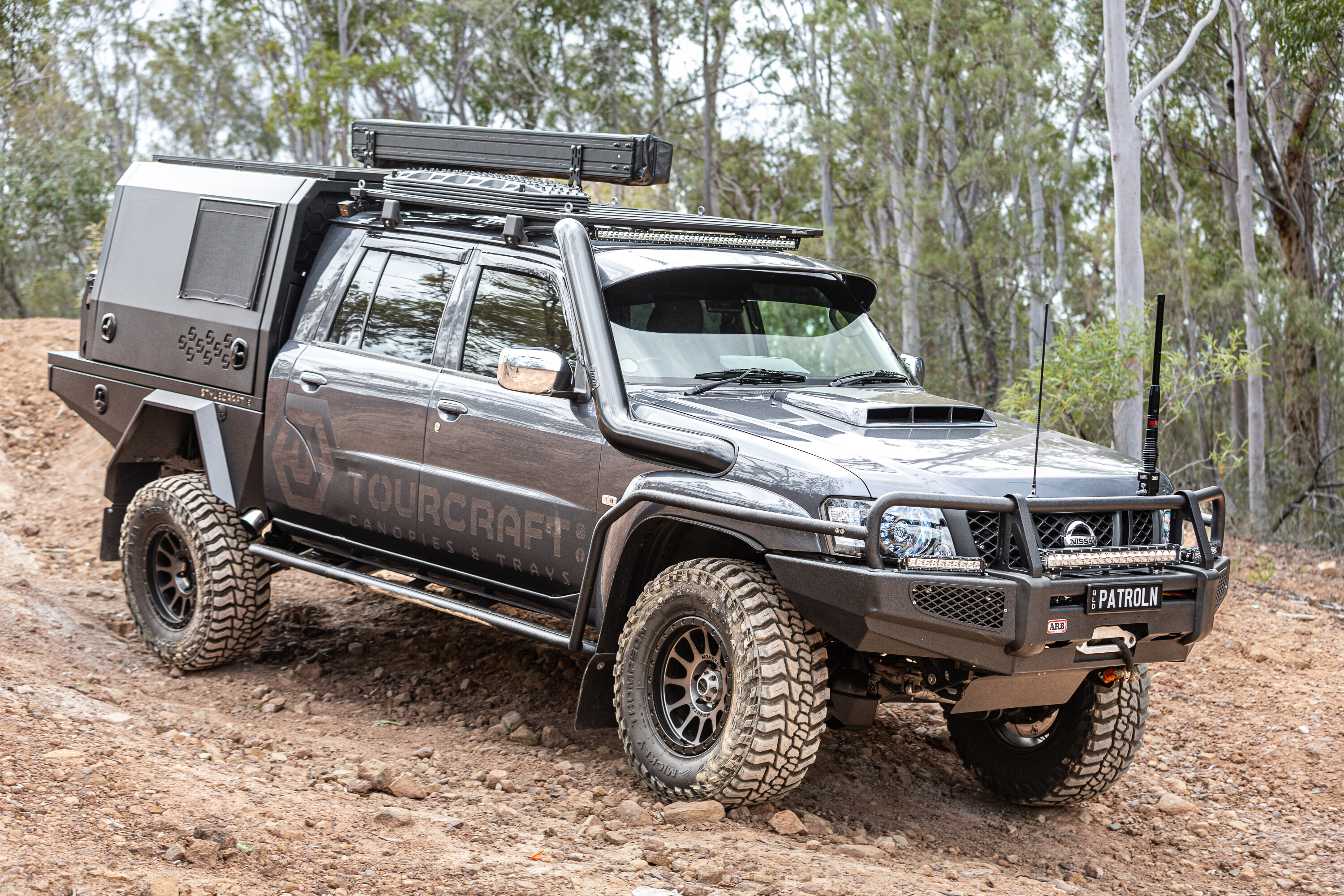
Every now and then, however, we come across a gem. A vehicle that’s so comprehensively built that it beggars belief. A rig that is not only finished to the utmost standards but resets the modification bar a notch or two higher than it was before.
They can render even the most steely-eyed journos weak at the knees and incapable of coherent thought.
By the time you’re considering the sheer audacity of expending so much time, energy and cost on a rig, none of which will ever be regained, you’re breathing with the aid of a paper bag.
This is one such build.
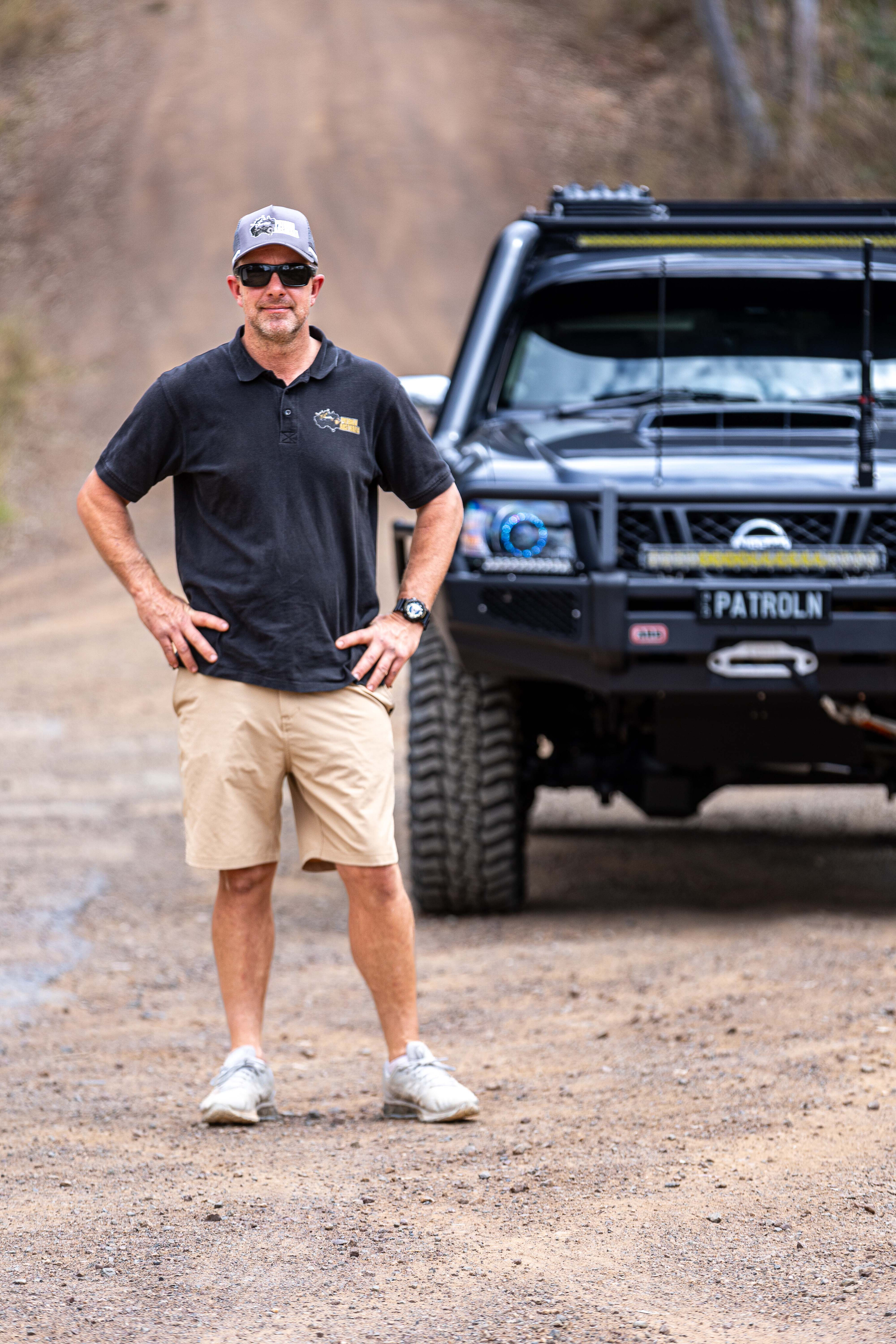
Modified GU Patrols are nothing new – people have been tweaking Nissan’s workhorse since they first came out – but very few are taken one to the level Mat Saban has taken his.
Mat has done them all to his Patrol, and much of it in the form of one-off custom touches that can take days, weeks, even months of work, so to use the word impressive would be to undersell it.
Take a look at the pics and tell us this isn’t one of the most comprehensively built rigs you’ve ever seen. Hats off to you Mat; it takes a lot to blow our minds but mission accomplished.
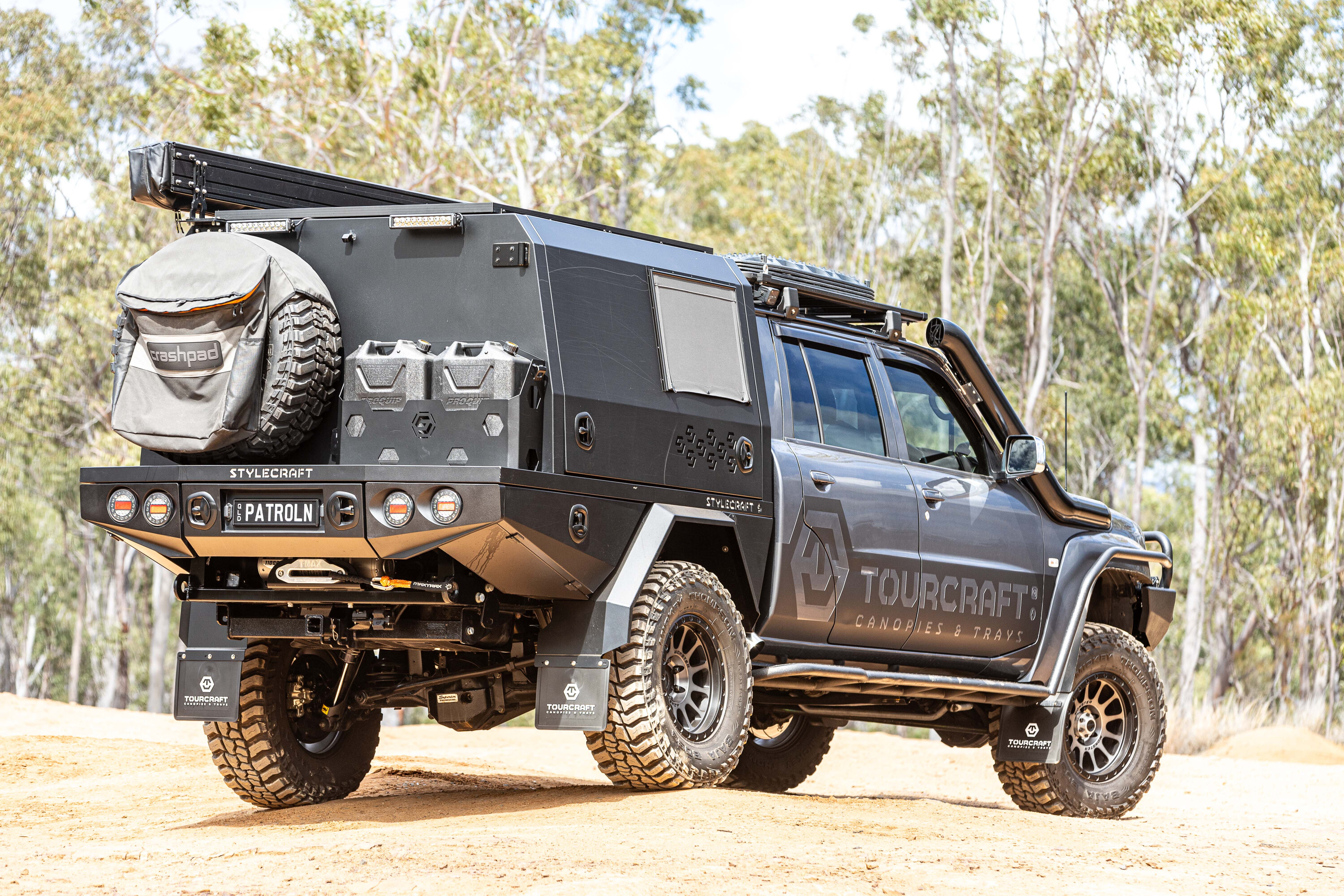
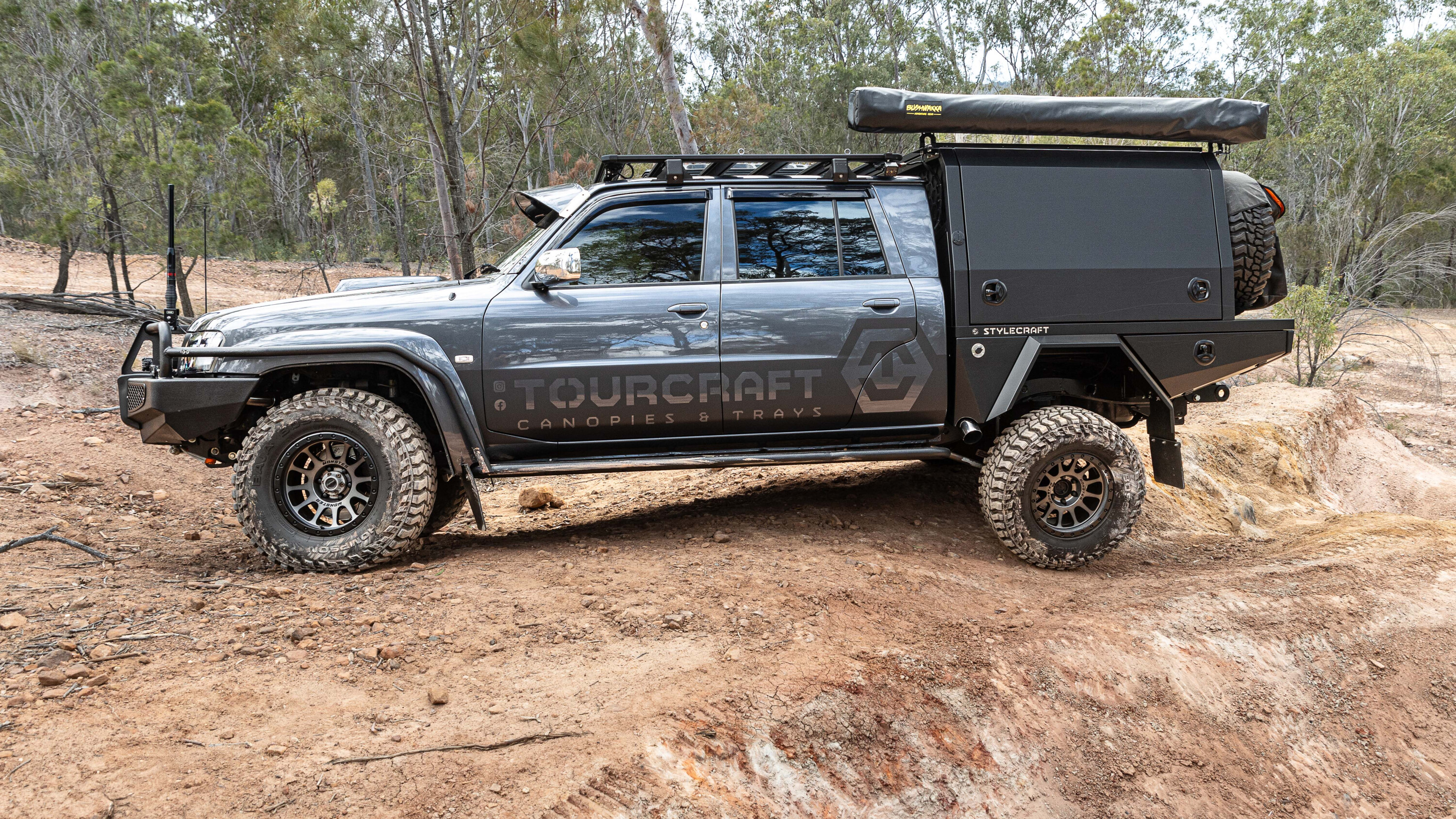
The GU’s chassis was stretched by a healthy 700mm, as well as being braced, and the much-needed coil-tower reinforcement welded on at the same time.
The standard Patrol wagon was artfully diced and sliced into dual-cab length and a standard Patrol rear wall grafted in. Sounds easy, but there were dozens of little tweaks and a slew of custom-made panels that had to be fabbed up to get it all Mickey Mouse, with Mat and his mate Jake handling the workload.
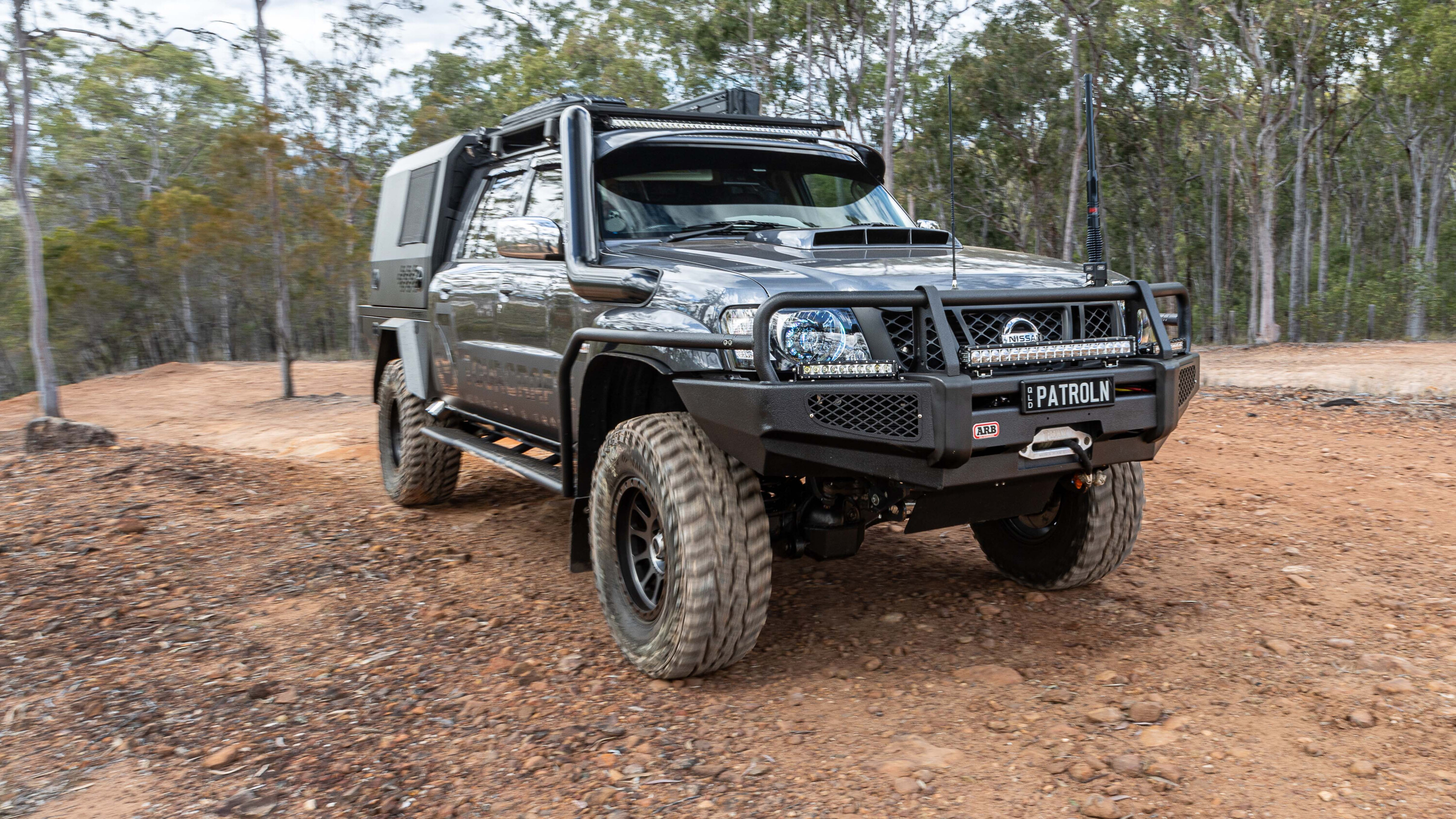
A standard ARB steel bullbar was modified to suit the gearbox coolers on either side and custom grille front pieces in either wing of the bar.
Mat then had DJZ Fabrications knock up a set of schmick-looking brush bars and sliders out of cold-drawn steel pipe – making the guards and sills essentially untouchable while off-road.
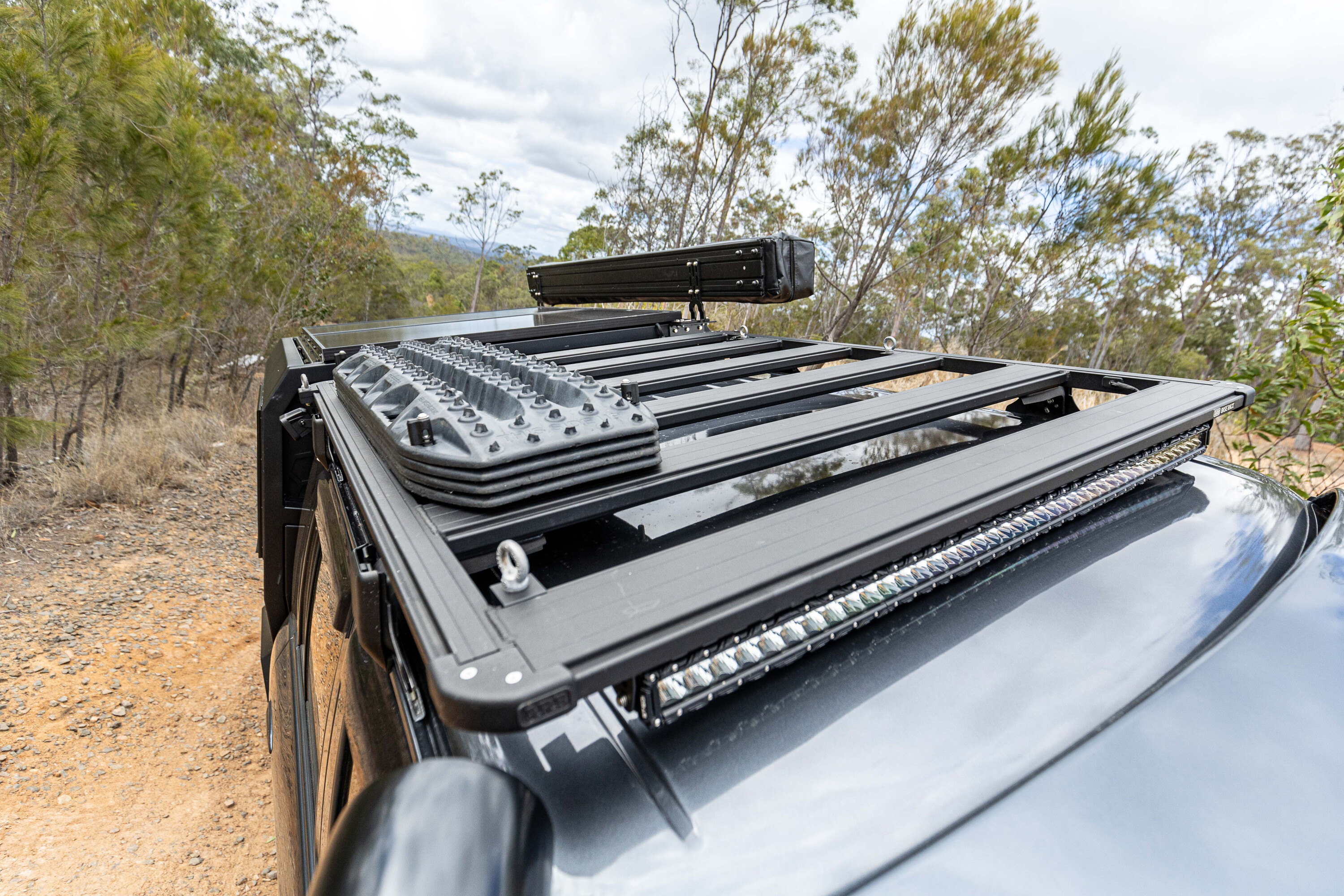
Roadvision work lights are placed strategically around the canopy and rack for camp or recovery lighting duties while the factory headlights have been turfed and replaced with Custom Steering Solutions replacement units, which literally outshine the stockers in every way.
Given Mat clearly does not do things by halves, he’s fitted up a T-Max 12,000lb electric winch on the front bar, and then a second T-Max 11,000lb electric winder out back, because that’s what all the cool kids do (and it really makes a lot of sense given a heap of recoveries require a rearwards pull).
He picked it up with the plan to swap in a TD42 backed up by the RE4, mating the better Patrol engine with the better transmission option – the best of both worlds, really. This plan worked extremely well, with Mat bumping power up in the old TD to a hefty 240hp and 700Nm through the auto on 35-inch rubber (for reference, that’s better than decent numbers for a TD42).
Unfortunately, as with a lot of worked TDs, the main bearing cap and block became victims of the crack epidemic, so Mat went back to the drawing board and decided to go with a computer controlled common-rail engine as a replacement.
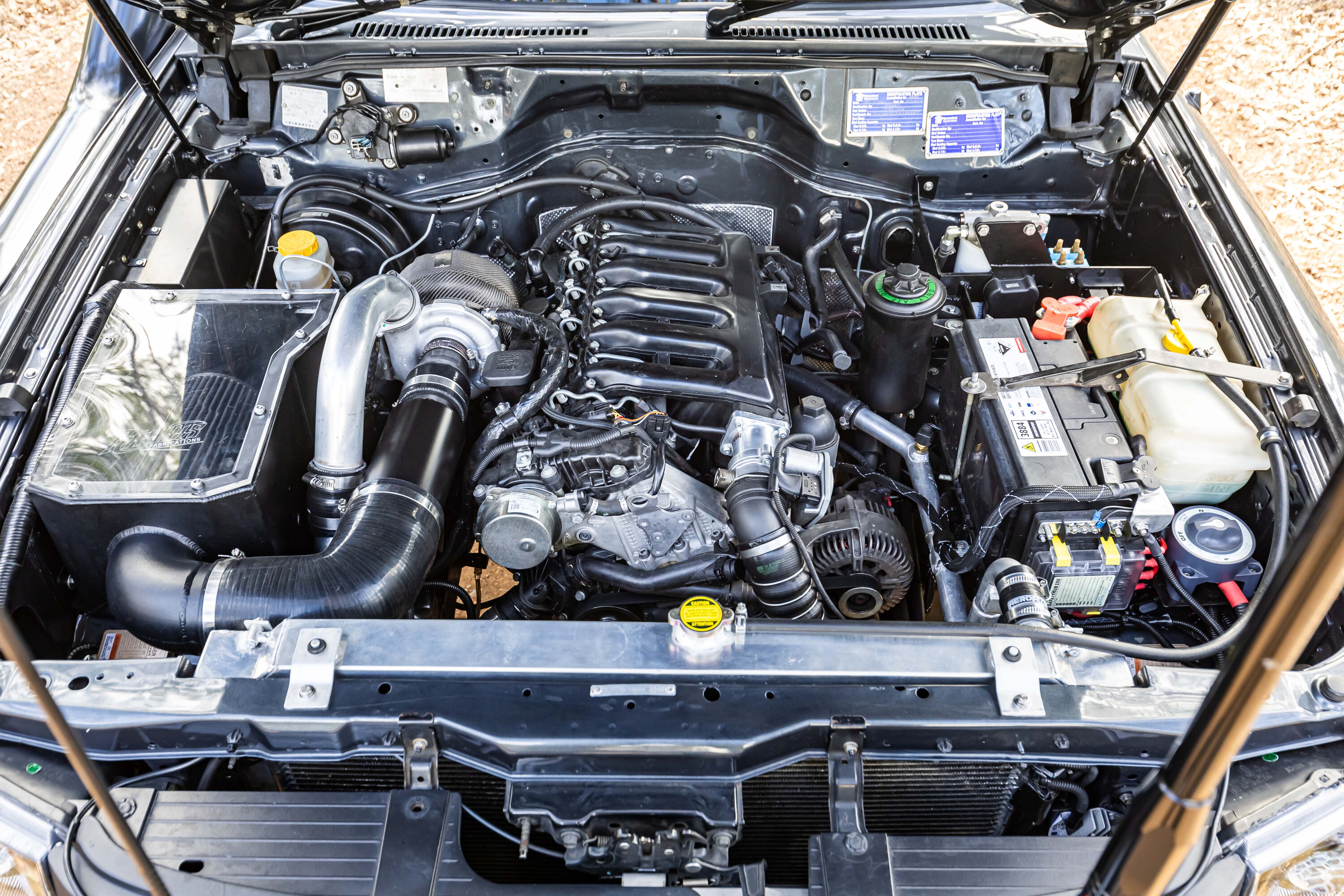
Of course, it’s never that easy. The RE4 was sent to JD transmissions for a full rebuild and billet torque converter, along with a Compushift 2 computer to make the internals do their thing. ASLmods supplied the M57 to RE4 adapter plate, but it had been designed around the older M57 iron blocks so Mat had to tweak the mounts to make it work with his alloy-block engine.
As with any conversion, there were a few niggles that needed sorting along the way. An electronic boost actuator that was earthed through the ECU needed to be grounded to the body, which caused a few late-night head-scratching sessions, but with the help of Ash from Fusion Fab Industries,
With only 136,000km on the new engine and with a full service history, the Beemer powerplant was barely run in and more than capable of putting out some big numbers on the dyno.
Despite that, Mat has been too busy enjoying driving his Patrol to worry too much about it, but he did mention a high-flow turbo and possibly larger injectors are next on the cards.
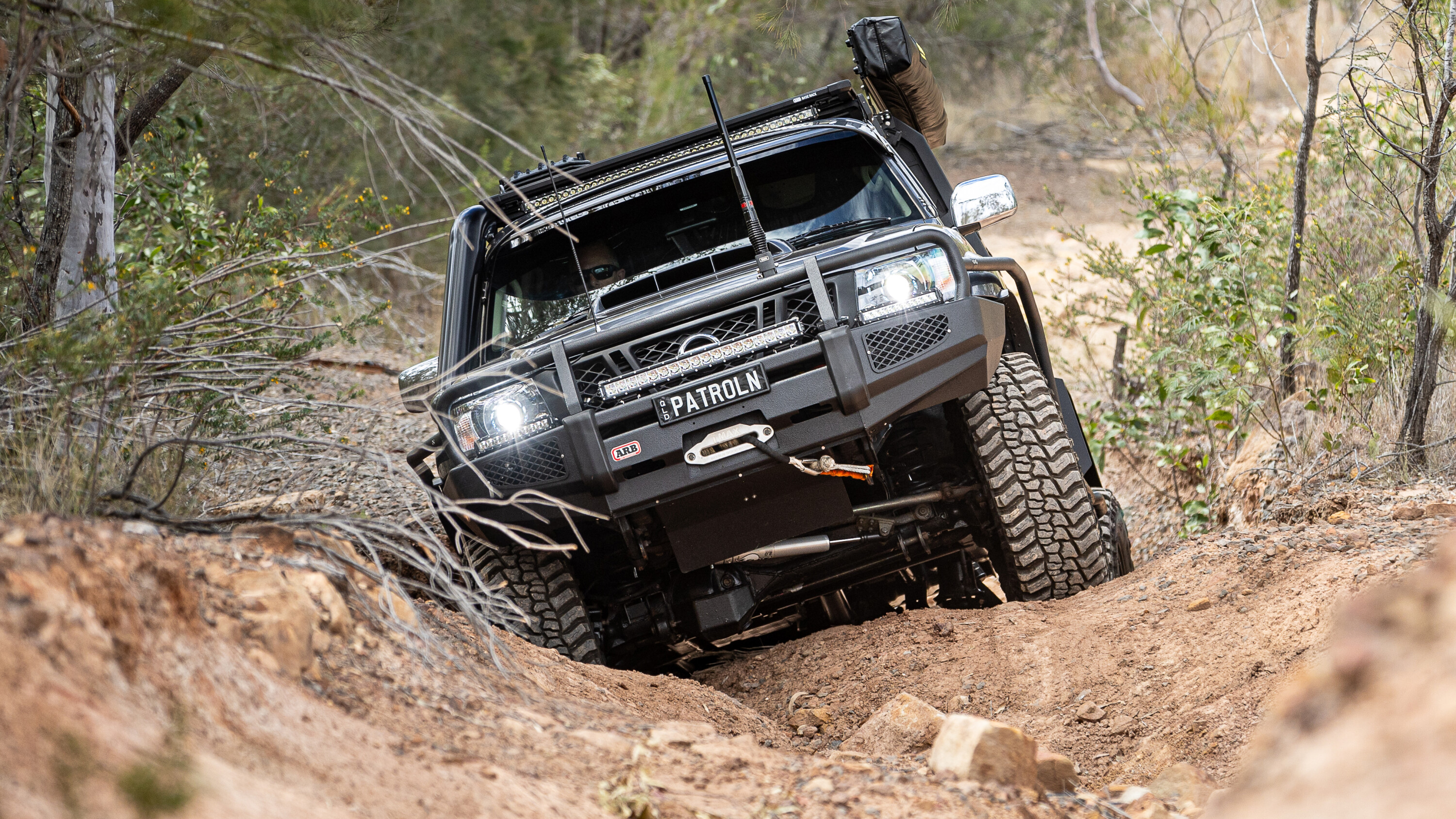
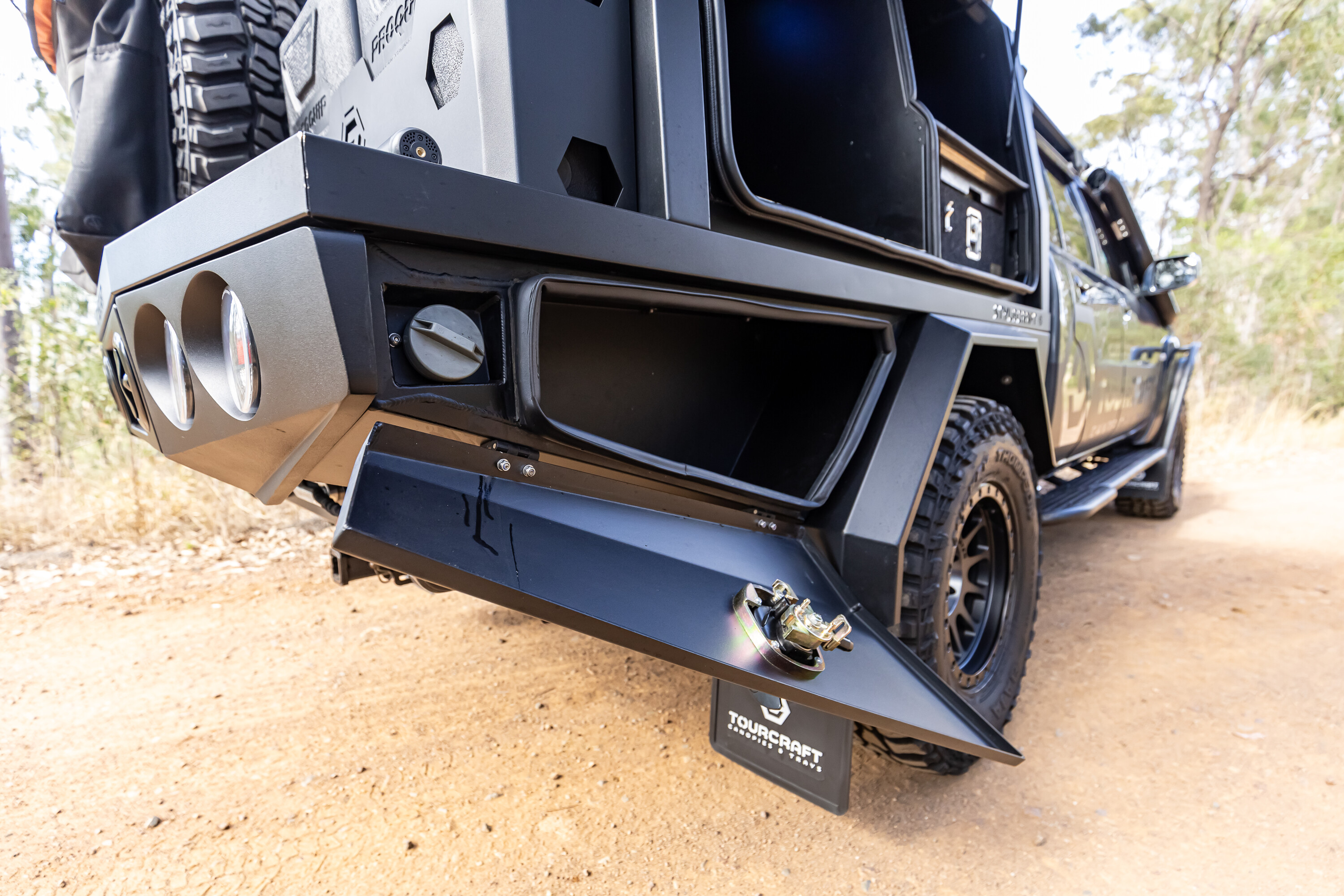
Still, he did add a 5-inch stainless steel snorkel to get the air in through a Radius Fabrications airbox, then the air-charge gets shot through the Dats Cool Fabrication front mount before being shoved into the combustion chamber, and the spent gasses are pushed out the back via a 4-inch custom stainless exhaust built by Mark from Tourtec and Derek from DJZ Fabrication.
The exhaust exits from twin 4-inch side pipes and Mat mentions it took 26 custom pieces in the new dump and crossover pipe, you know, just in case you were thinking something like this was easy.
A TB45 alloy radiator and twin 16-inch Spal fans were fitted up and the vehicle was then delivered to Dale at Performance 4X4 to be given a tune that saw it put down over 266hp and 690Nm to the rollers. That’s on 35s, too!
Well, standard transfer housing anyway; the interior has all been rebuilt and stuffed full of Marks Adaptors 63 per cent reduction gears by Hart Transmissions. The diff centres have been re-geared to 4.6:1 to account for the 35s, and the stock spider gear assemblies were replaced with TJM Pro Lockers at both ends.
Since he was there, Mat braced both diffs with Superior Engineering gear to make them as close to bombproof as it gets. And while the shopping cart was open on the Superior website he went ahead and ordered upgraded steering links and a Fox steering damper, which he installed at home.
Mat ditched the coils out back and bolted in a set of custom length Airbag Man rolling sleeve airbags
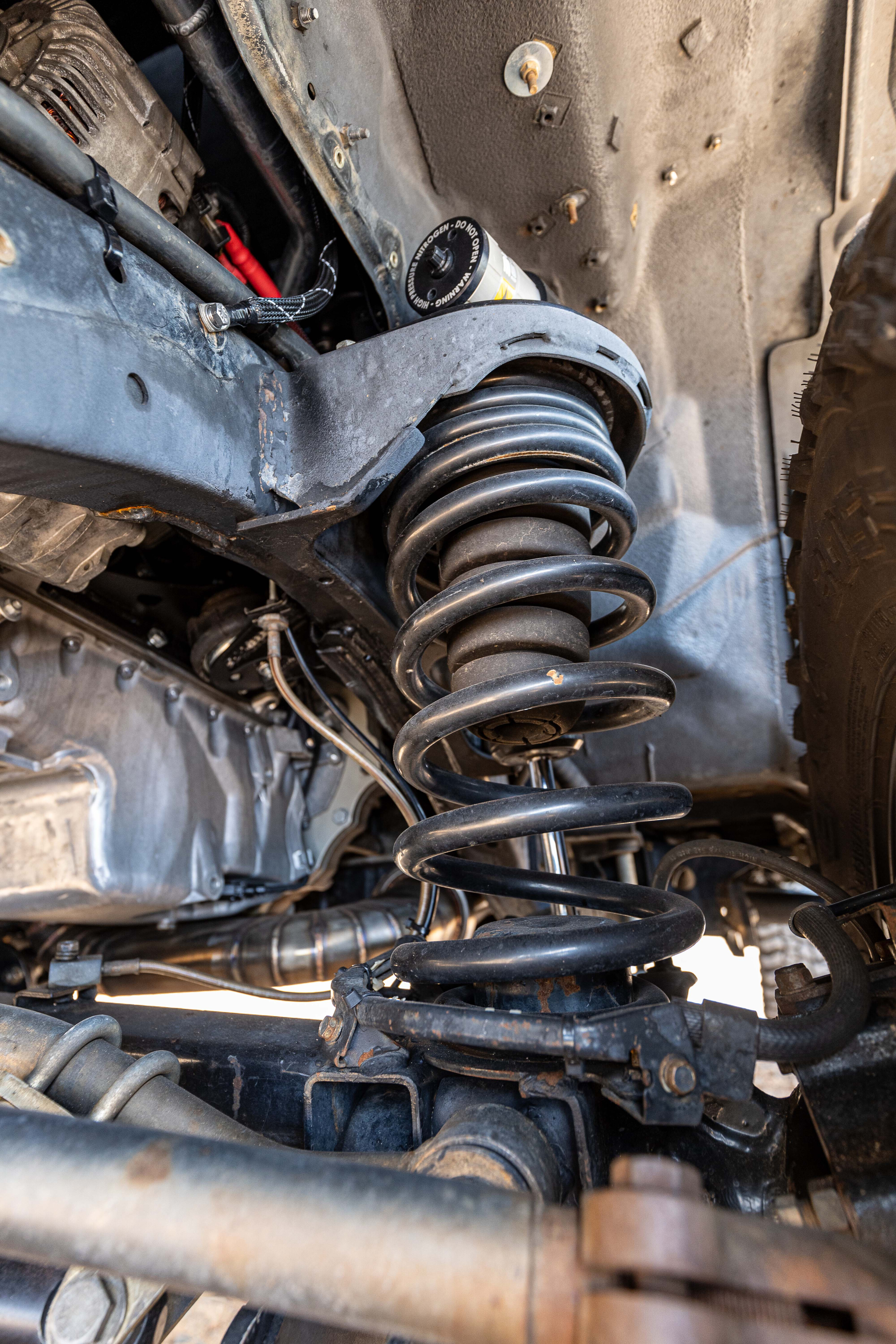
Superior Engineering was also called upon to hook Mat up with suspension; 4-inch higher coils went in at the front along with Superflex radius arms – which function to make the usually wheel-lift-happy factory arms work much better for off-road driving – as well as extended bumpstops and a Superflex swaybar to keep body roll to a minimum.
OME BP51 shocks control the compression and rebound over corrugations or larger rocks at all four corners.
Mat ditched the coils out back and bolted in a set of custom length Airbag Man rolling sleeve airbags, which are fully height adjustable and controlled from a remote keyfob.
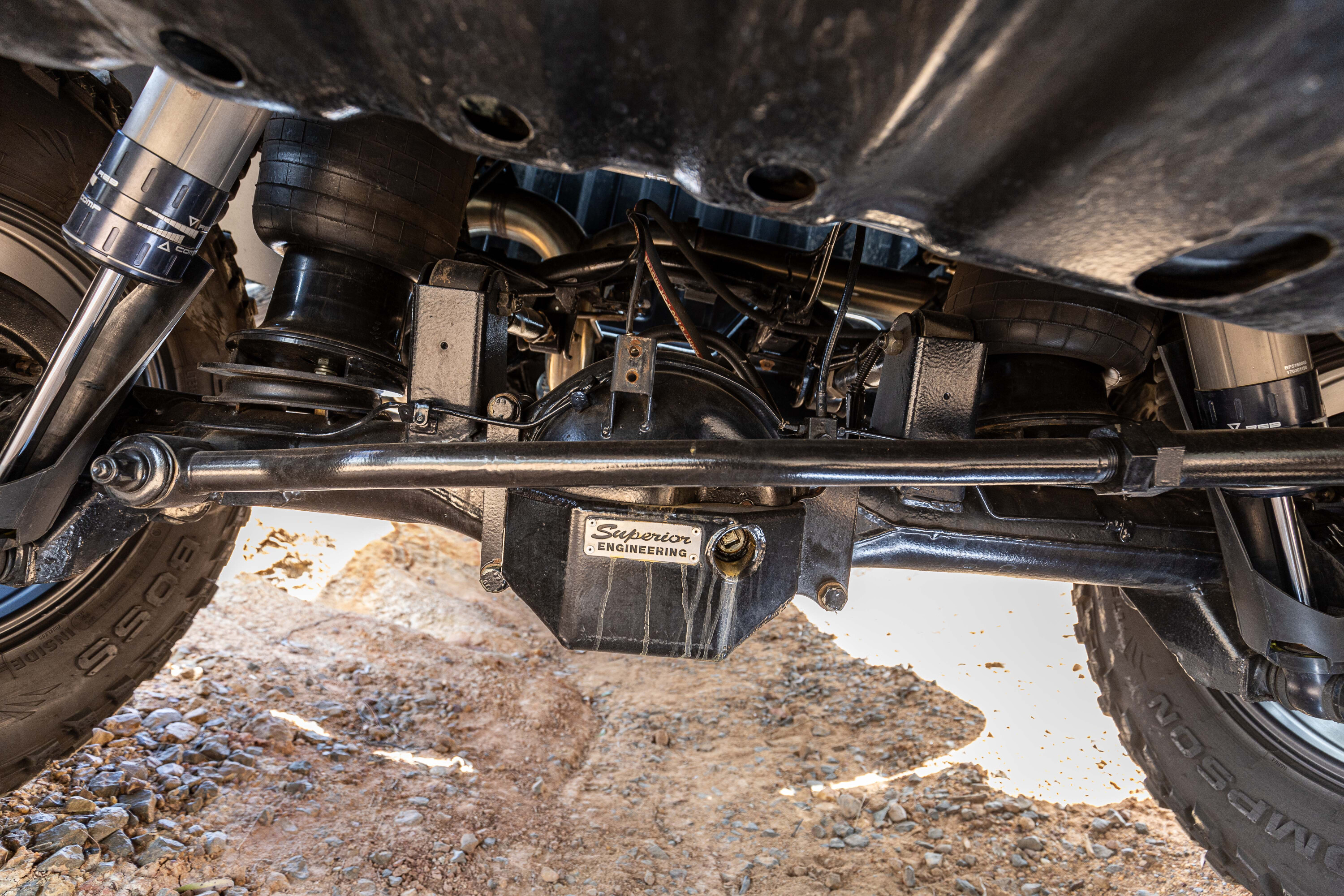
They’re pumped up by one of two on board ARB compressors – one for tyre inflation, one for the lockers and bags.
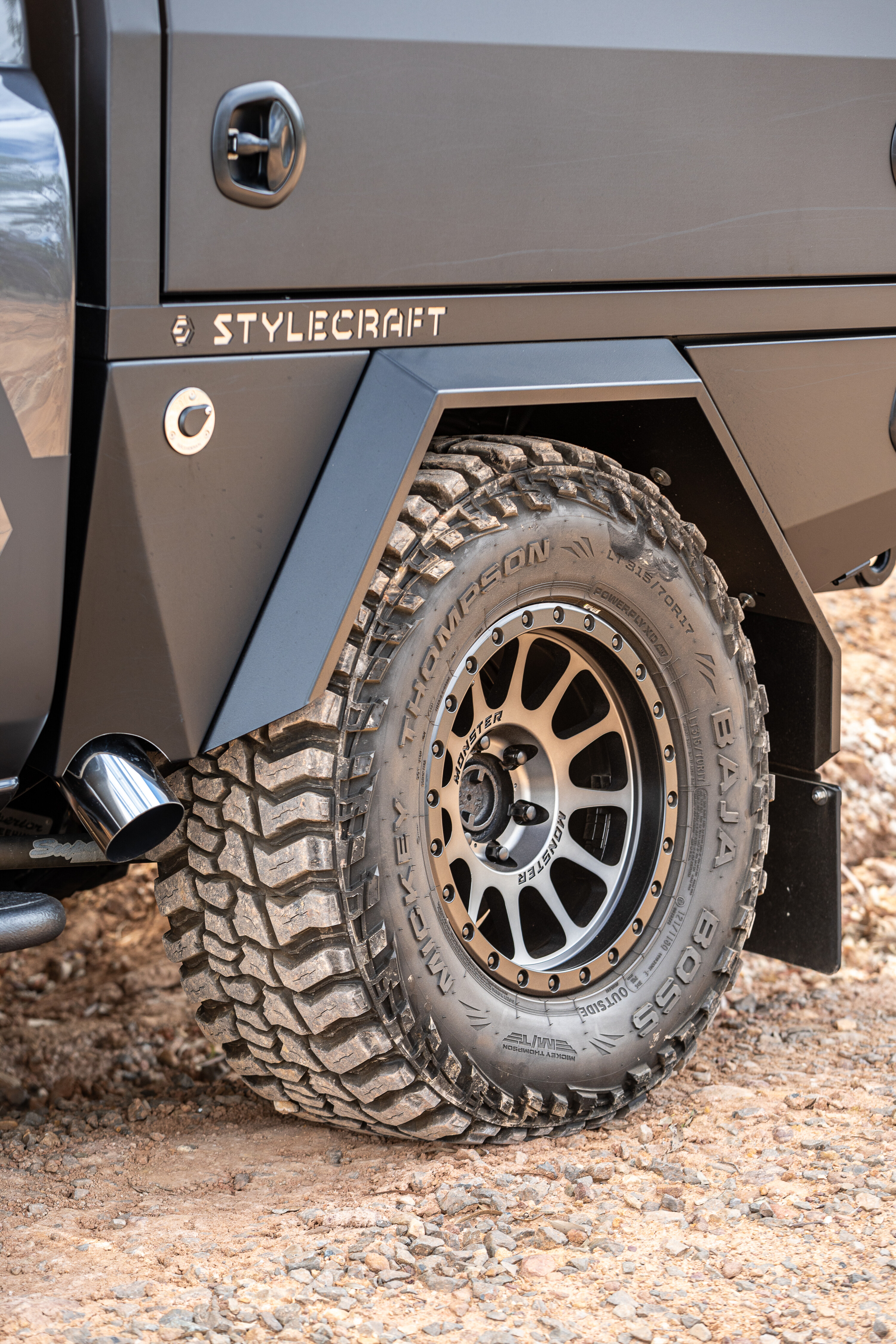
All of this suspension work allowed easy fitment of the 17×9 Monster Ammo alloy rims and 315/70R17 Mickey Thompson Baja Boss MTZ rubber.
And because Mat doesn’t like to leave any boxes unticked, the front brakes have also been replaced with custom made 355mm slotted rotors and six-piston callipers built by Rugged Brakes – the first Patrol in the country to have them. Rear brakes are controlled by a modified bias valve, with slotted rotors ramping up the cooling ability nicely.
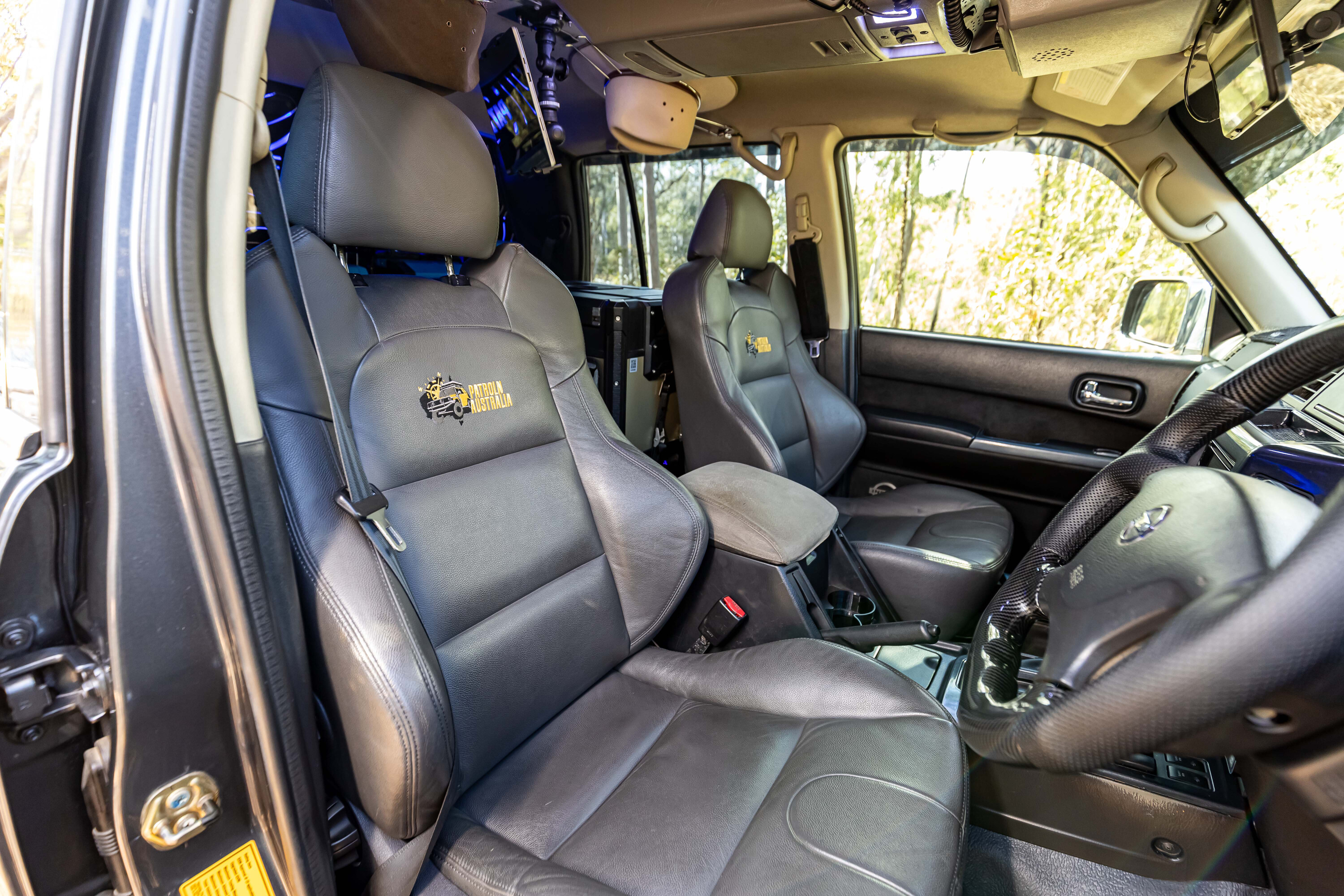
The front seats are custom made by Incharge Automotive and bolted in place with Hurricane adapters. The stereo has been upgraded with a comprehensive Pioneer sound system and the JRP 14in1 multi-gauge tells Mat pretty much everything he needs to know about what his vehicle is up to at all times.
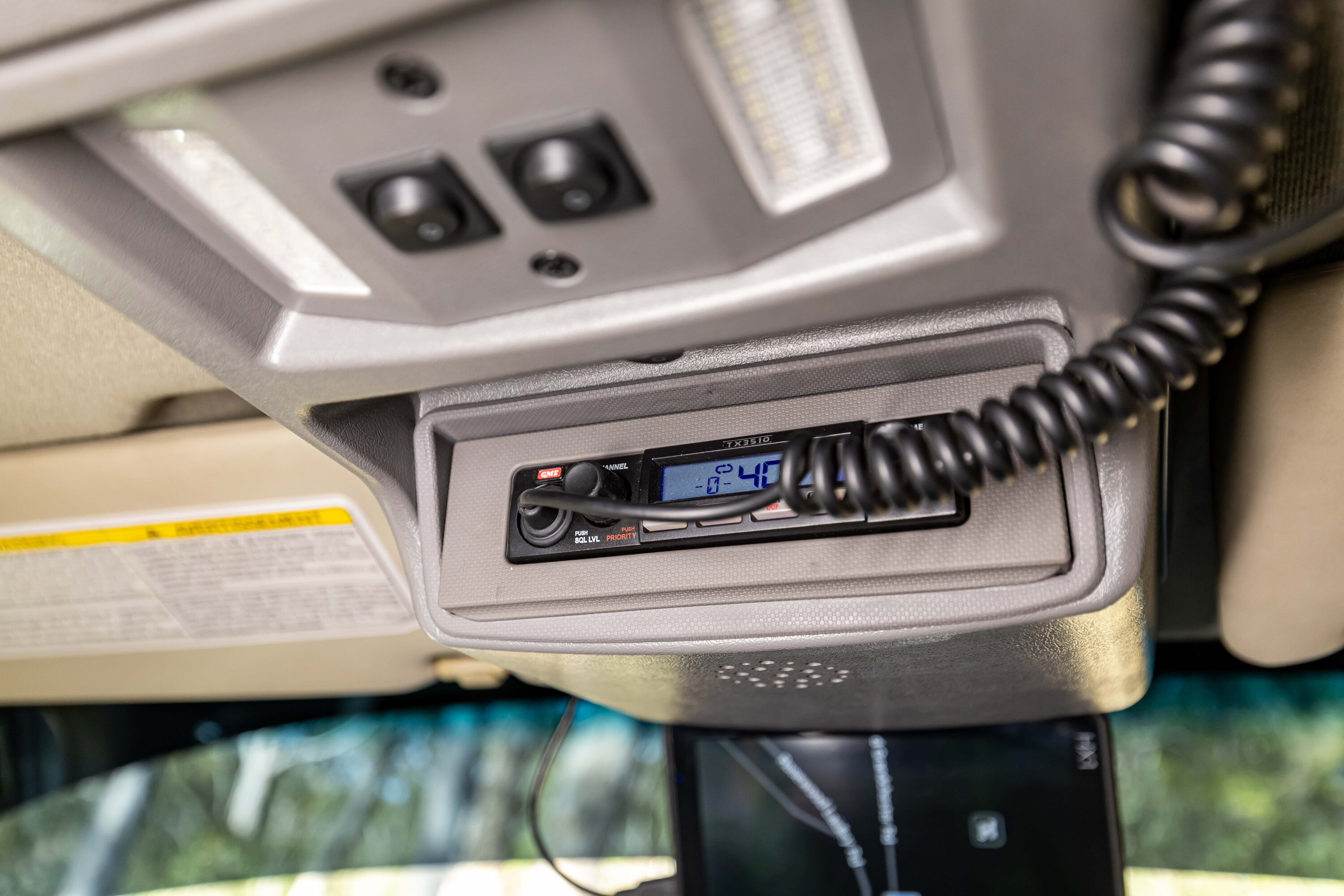
The tiller is a Custom Steering Solutions unit, and the comms are seen to by an array of GME products. A Hema HX-1 tells Mat how lost he is while a Thuraya SatSleeve lets him make calls if he feels like bragging about his latest adventure.
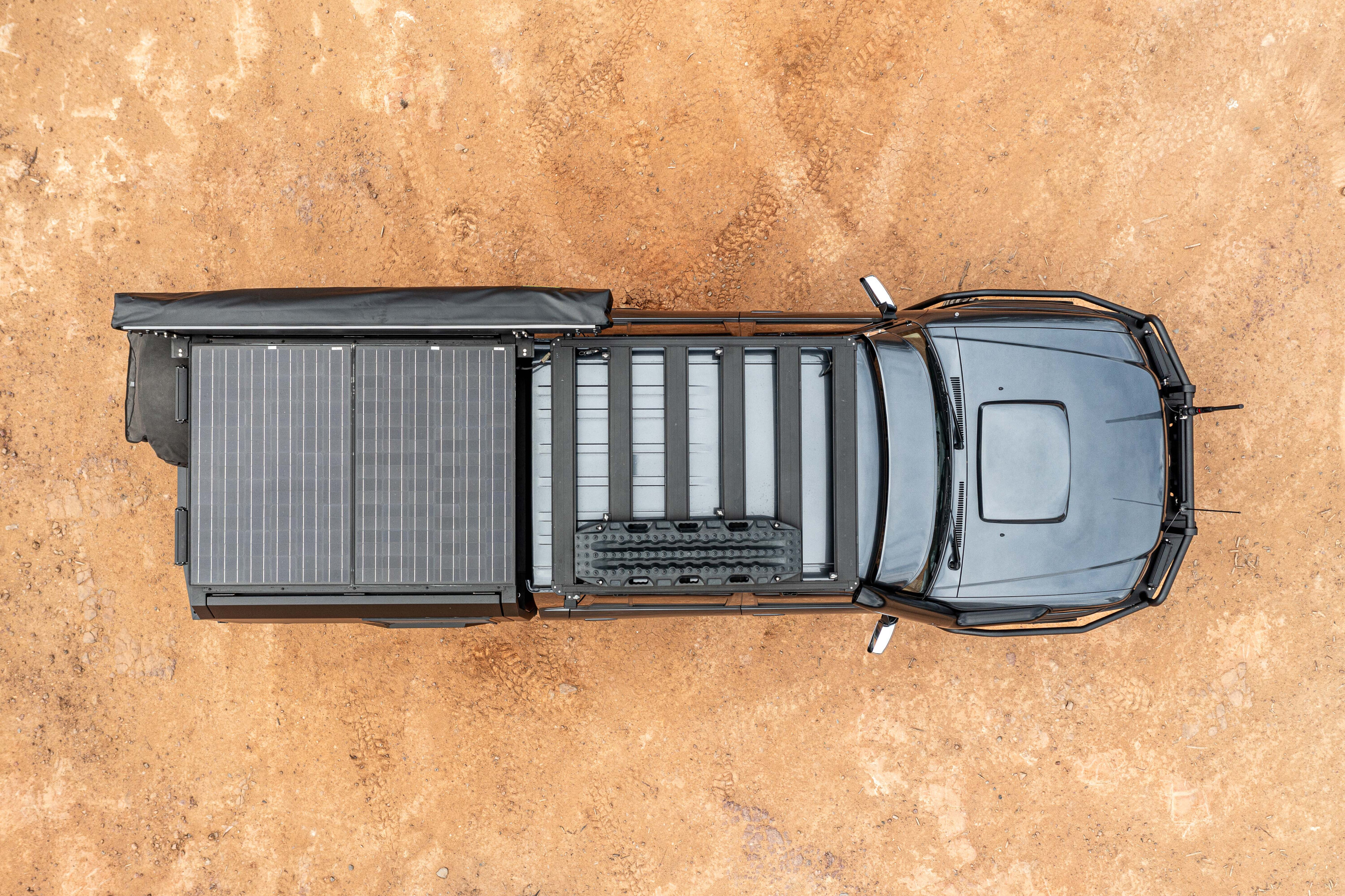
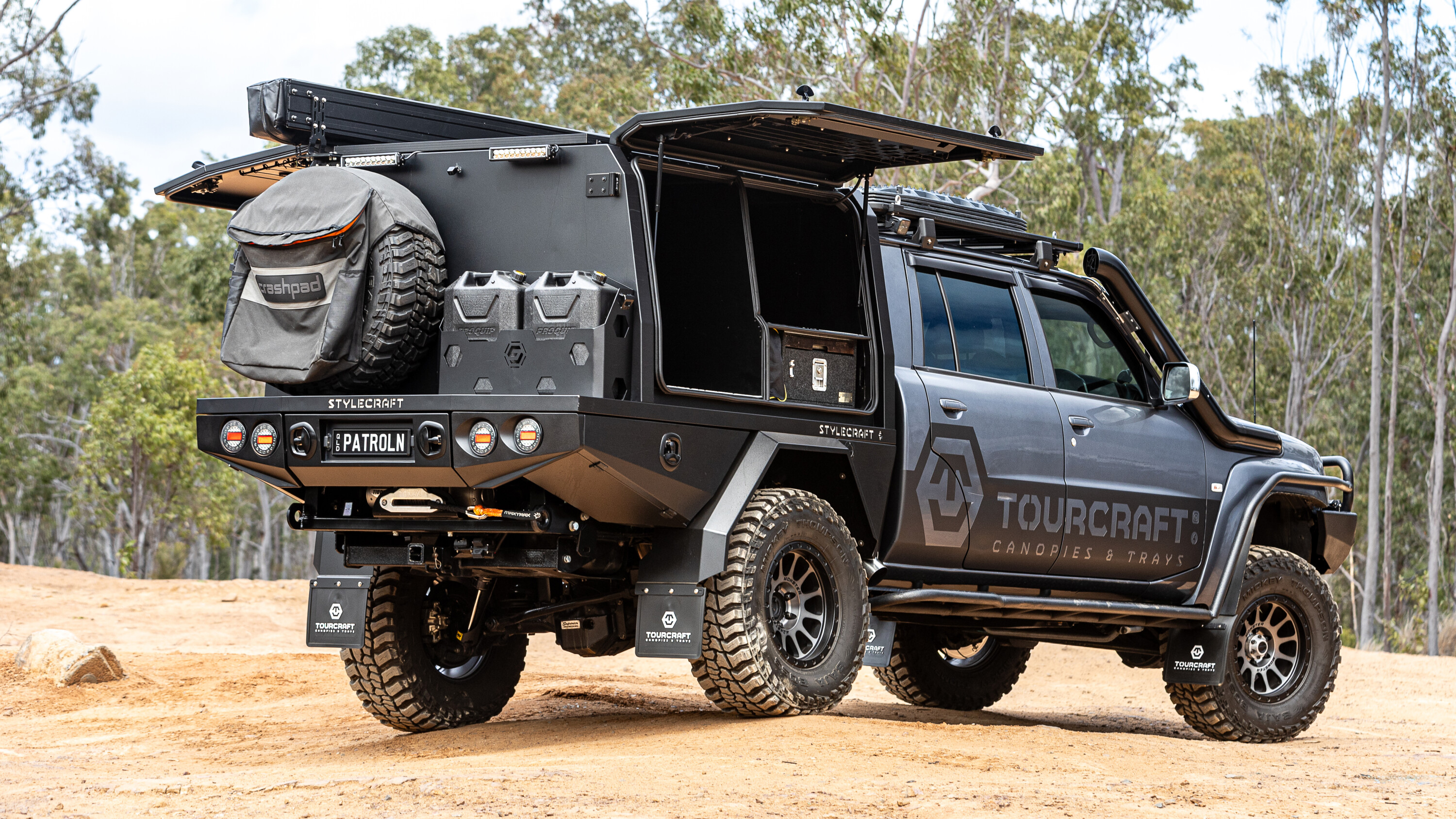
There’s a Drifta Drawer with table, a Tourtec custom kitchen and pantry, and a 40L poly water tank in the headboard fed by a 12V under-tray pump. There’s 300W of solar on the roof and a Smarttek hot water system for remote country showers.
The rear bulkhead holds twin jerries and the spare, a mount for the shower tent, 240V outlet and a pair of storage boxes.
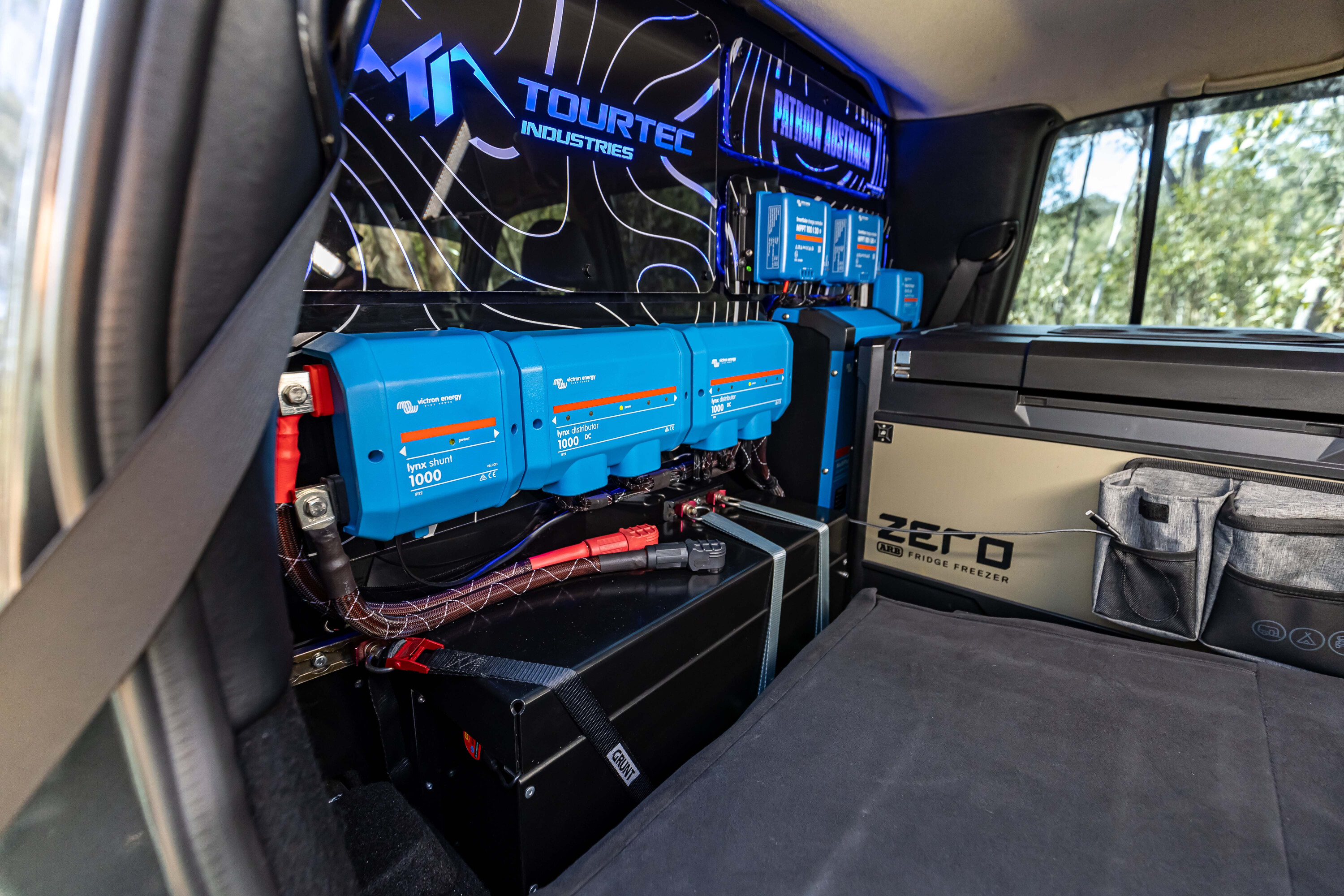
The heart of the system is a behind-the-back-seat custom-built 560Ah Lithium by Tourtec Industries.
The brains are courtesy of top-shelf Victron gear – twin 30A Smart Chargers, two 30A MPPT solar controllers, twin Lynx distributors, a Lynx shunt, a Multiplus 300W inverter and a Cerbo-S GX 9-inch screen to tell Mat what’s going on. Probably needed if he ever decides to power up his own Iron Man suit in a cave on the west coast of Tassie…
If this isn’t pretty much the ideal vehicle for the job we’d be hard-pressed to think of a better one. Of course, he has a few more things he wants to get done, but that’s to be expected from a build of this magnitude – they’re never finished.
We have to take our hats off to you mate; this has to be one of the most versatile, practical and downright impressive vehicles in the country. The most modified Patrol in the country? We’d love to see another rig step-up to challenge for the title.
While 70 Series LandCruisers take interior noise levels to new heights, its cavernous interior makes the Troopy not much more than an unrefined boom box. Having previously owned a 79 Series Cruiser, which I had lined myself with a well-known brand of sound deadening material, for this new Troopy with its wide open and bare interior, I knew I wanted something more effective.
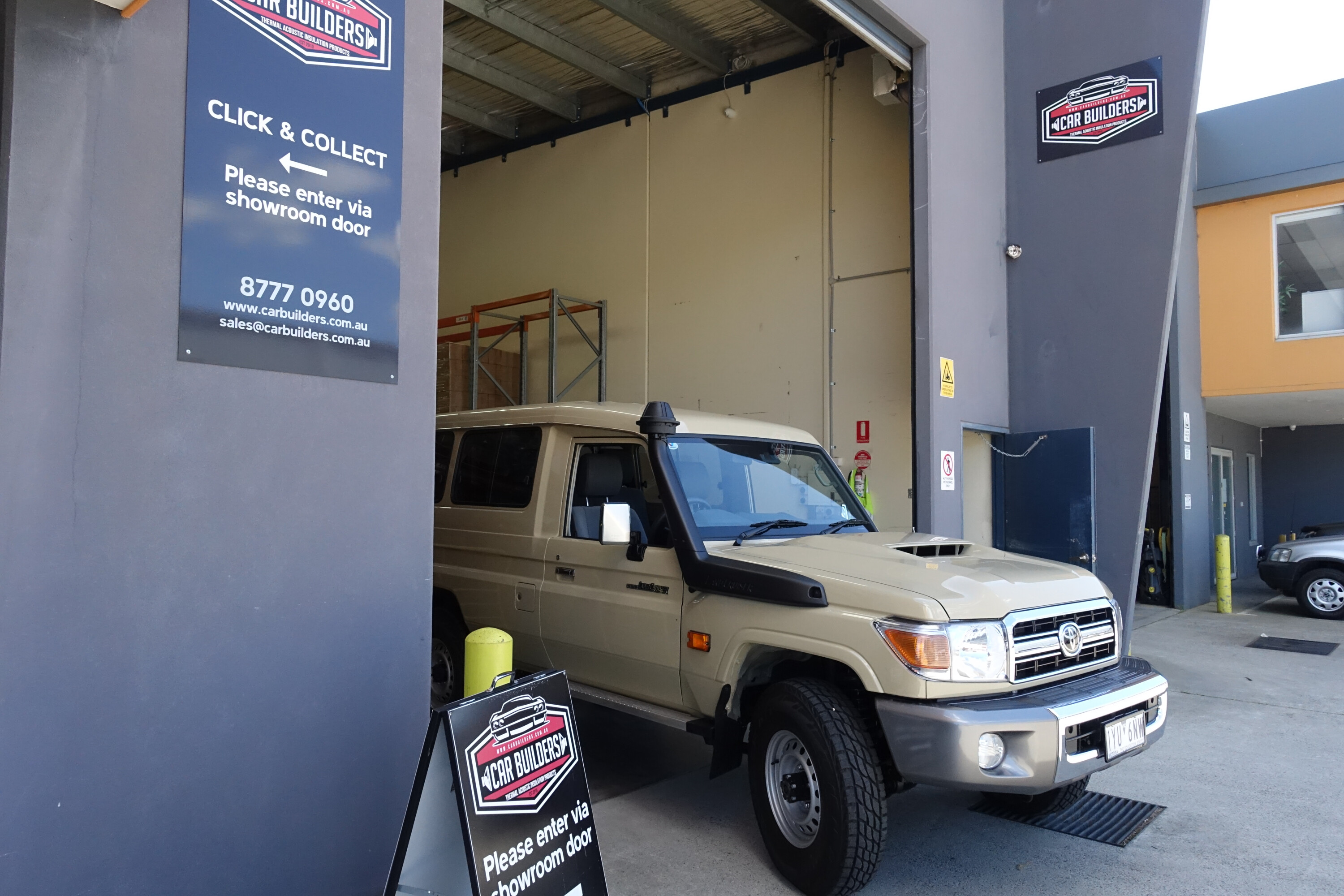
I ended up at Car Builders in Bayswater, Victoria, which specialises in supplying kits for DIY-type people wanting to reduce the noise levels in their vehicles. While there are a number of kits specifically for the Toyota TroopCarrier, there’s also a heap of vehilce-specific options for other 70 Series models, as well as all the popular 4×4 utes and wagons. For those doing the installation themselves, Car Builders can also supply all the equipment needed for installing the product.
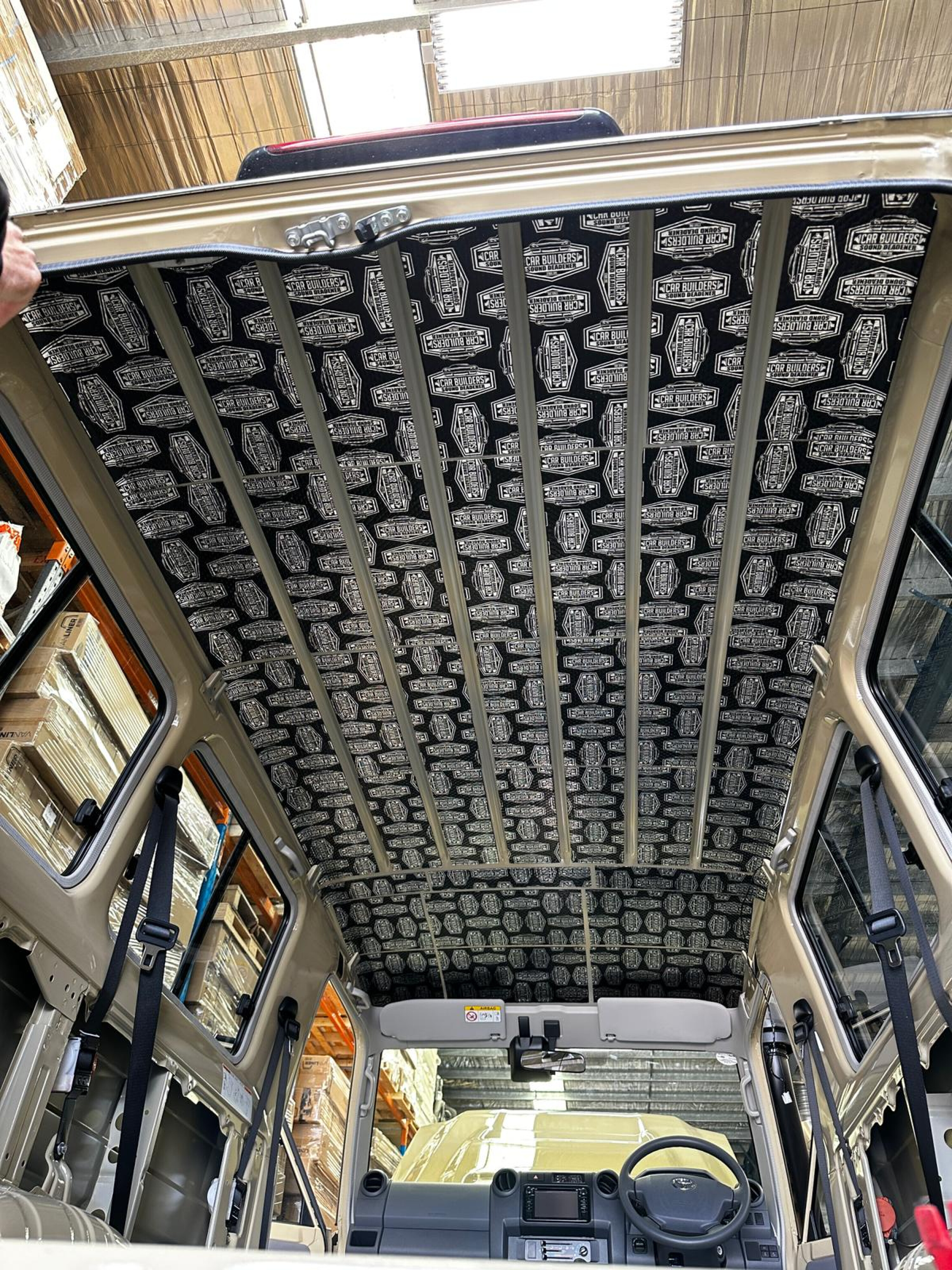
I opted for Car Builders to do the whole job, which was to supply and fit a premium pack which includes Sound Deadener that’s applied to the floor pan, rear firewall, roof and door skins, and a Mass Noise Liner which is a premium carpet underlay to cover the entire floor pan from front to rear firewall.
The Mass Noise Liner is laid over the top of the Sound Deadener and really helps tame the noise level in the Troopy. For the vast expanse of roof that the Troopy has, we fitted Sound Deadener only, which fits under the factory headliner. You can fit a 6mm thick Insul-Layer but you then have to replace the factory headliner with carpet or fabric, and that was something I didn’t think was really necessary.
All seats, internal skins on doors, and floor carpet, along with the factory headliner, are removed to fit the insulation and once installed everything is fitted back in place. The job was so neat and tidy that you couldn’t tell that anything had been added without a close inspection and lifting the edge of the factory carpet… but the driving experience was something else!
After the job was complete, I drove out onto the highway and immediately noticed the difference in the noise level inside the vehicle. Engine noise and road noise was greatly muted, as was wind noise once up to speed.
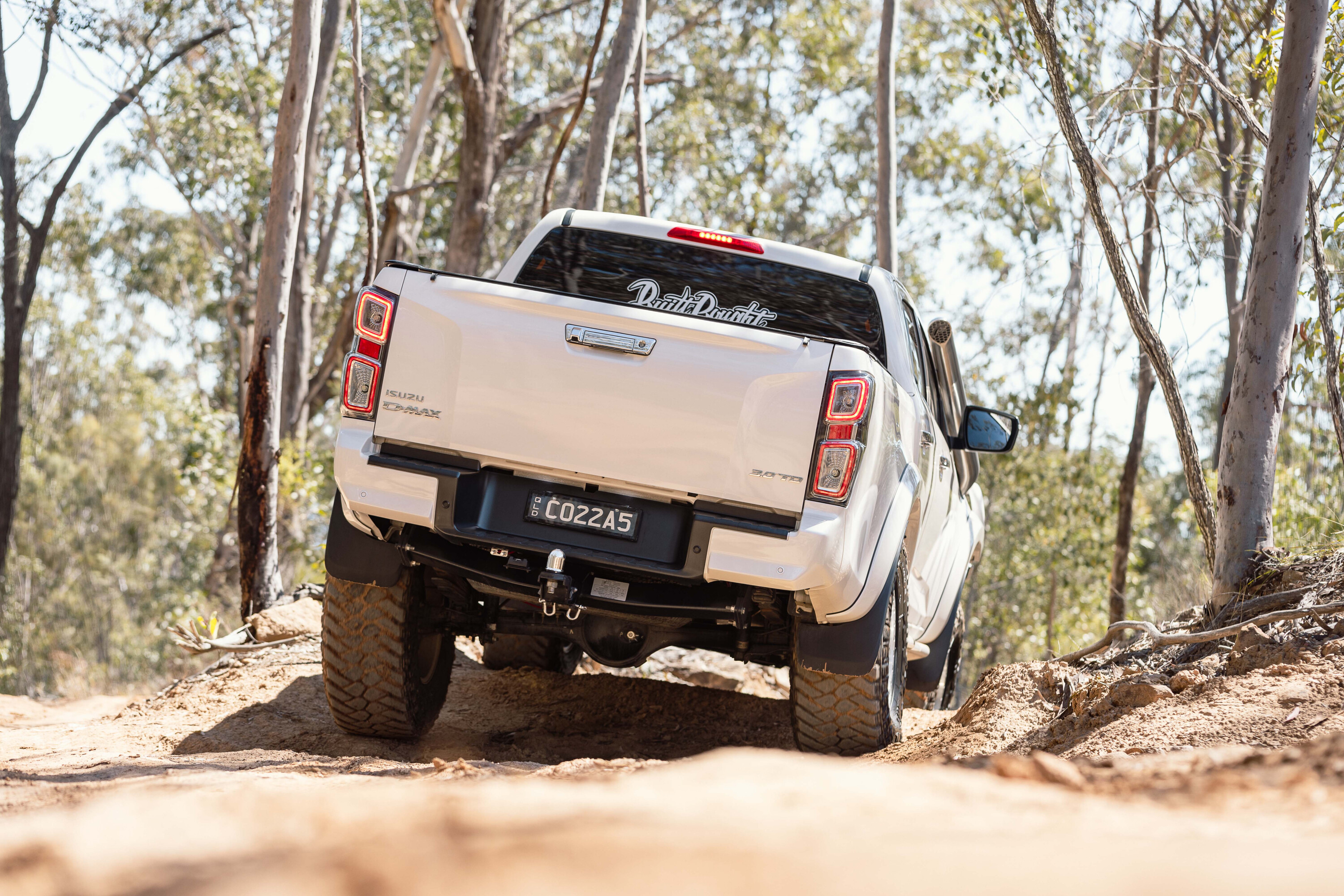
It doesn’t have the boat-ramp-champ cred of a HiLux or Ranger, and it’s not as budget-focused as a Triton, but it’s one of those 4X4s that gets the job done with little in the way of fuss or fanfare. And when you add a few improvements in a couple of key areas the D-Max transforms into an absolute weapon.
Just ask Cory Hoffman, the owner of this pearl-white stunner. He was getting around in an RG Colorado for a few years and liked its Isuzu 4J engine’s power delivery and fuel economy, so when it came time to update his ute, the D-Max was the logical choice.
“Plus, the whole Isuzu reputation for reliability thing, as well as the functionality, driveability and value for money, all made me feel secure in my purchase.”
So, what did Cory do when he was handed the keys to a brand spanking, 0km, zero-modifications Isuzu? The same as anyone with a penchant for ultra-tidy rigs – he got to work turning it into one of the cleanest, most functional and most capable D-Maxs in the country.
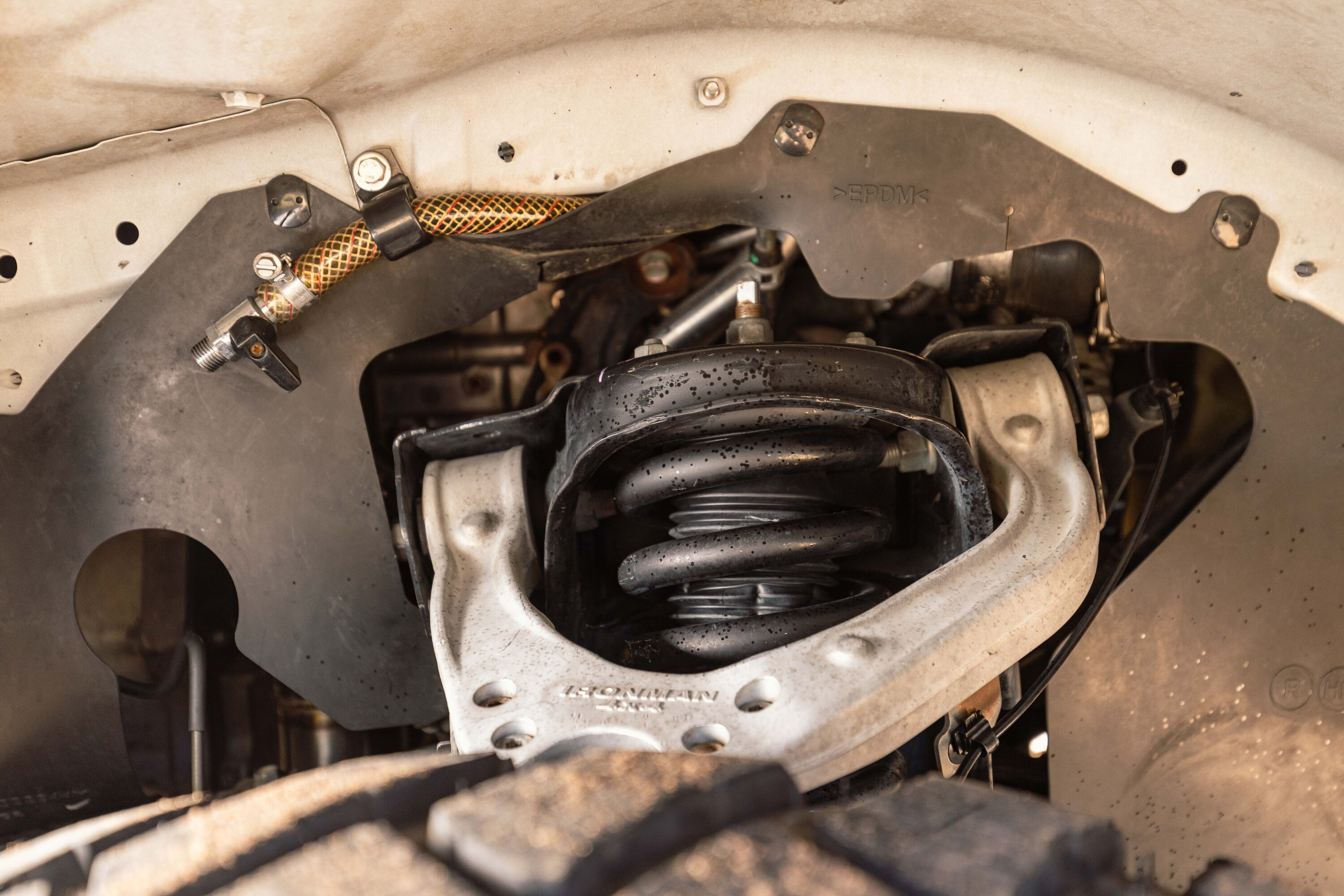
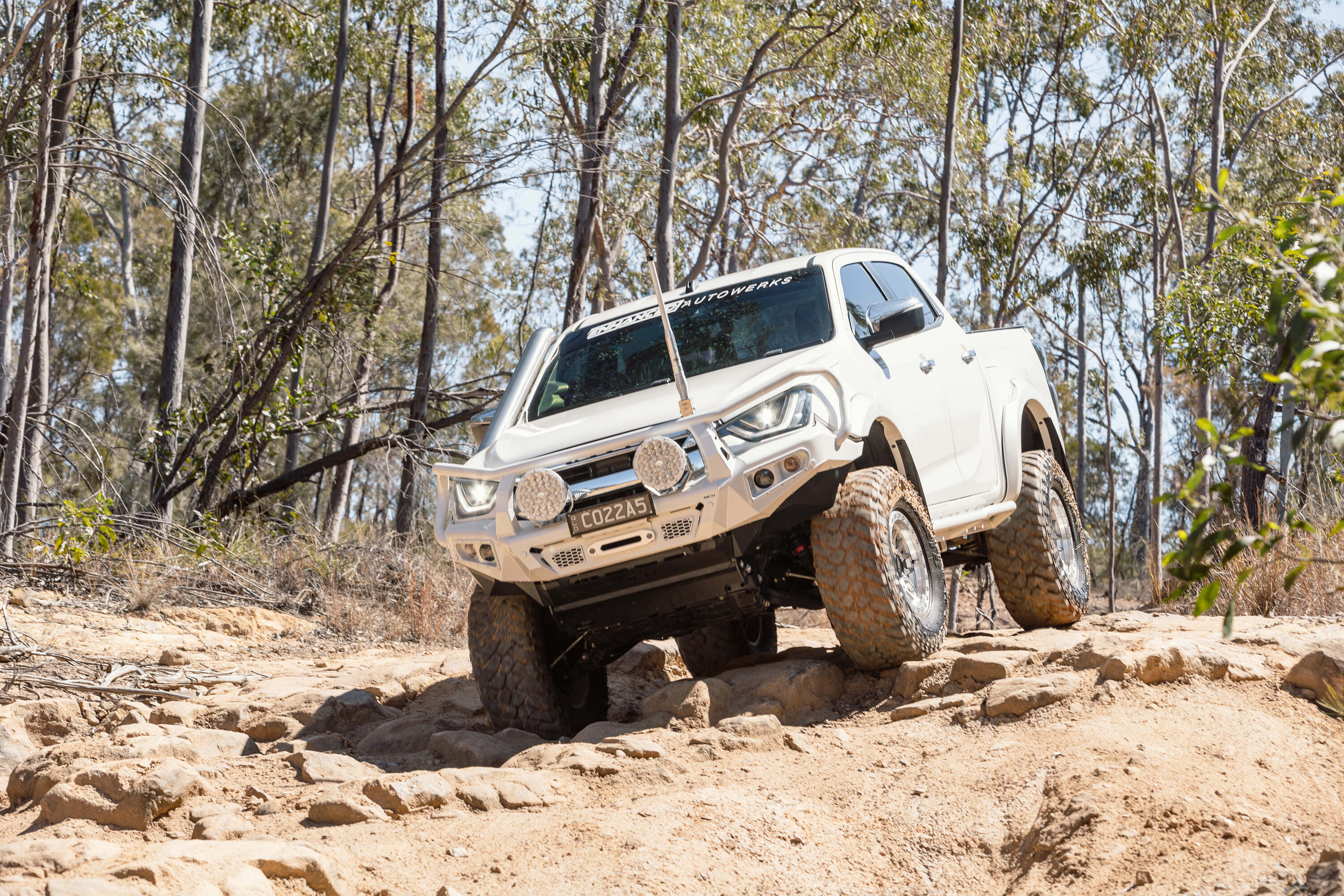
A 25mm body lift was installed by Munji 4X4 Accessories and a set of 100mm taller adjustable coilovers were bolted in courtesy of Performance Suspension Racing (PSR).
Of course, anyone who’s done this before knows you can’t just jack IFS up and expect it to work, but this wasn’t Cory’s first time on a bucking bull, and he was only just getting started. A PSR diff drop was also fitted to keep the half shaft angles within specs, and a set of Ironman 4X4 upper control arms and Roadsafe ball joints were slid into place to appease the bumpsteer gods.
Then he ran (not literally, thankfully) into issues with the increased angles on the lower control arms. The wheel alignment tabs kept getting knocked out of place when off-road. Munji 4X4 came to the rescue once again with some bolt-in strengthening plates and the front suspension has been handling everything like a champ ever since.
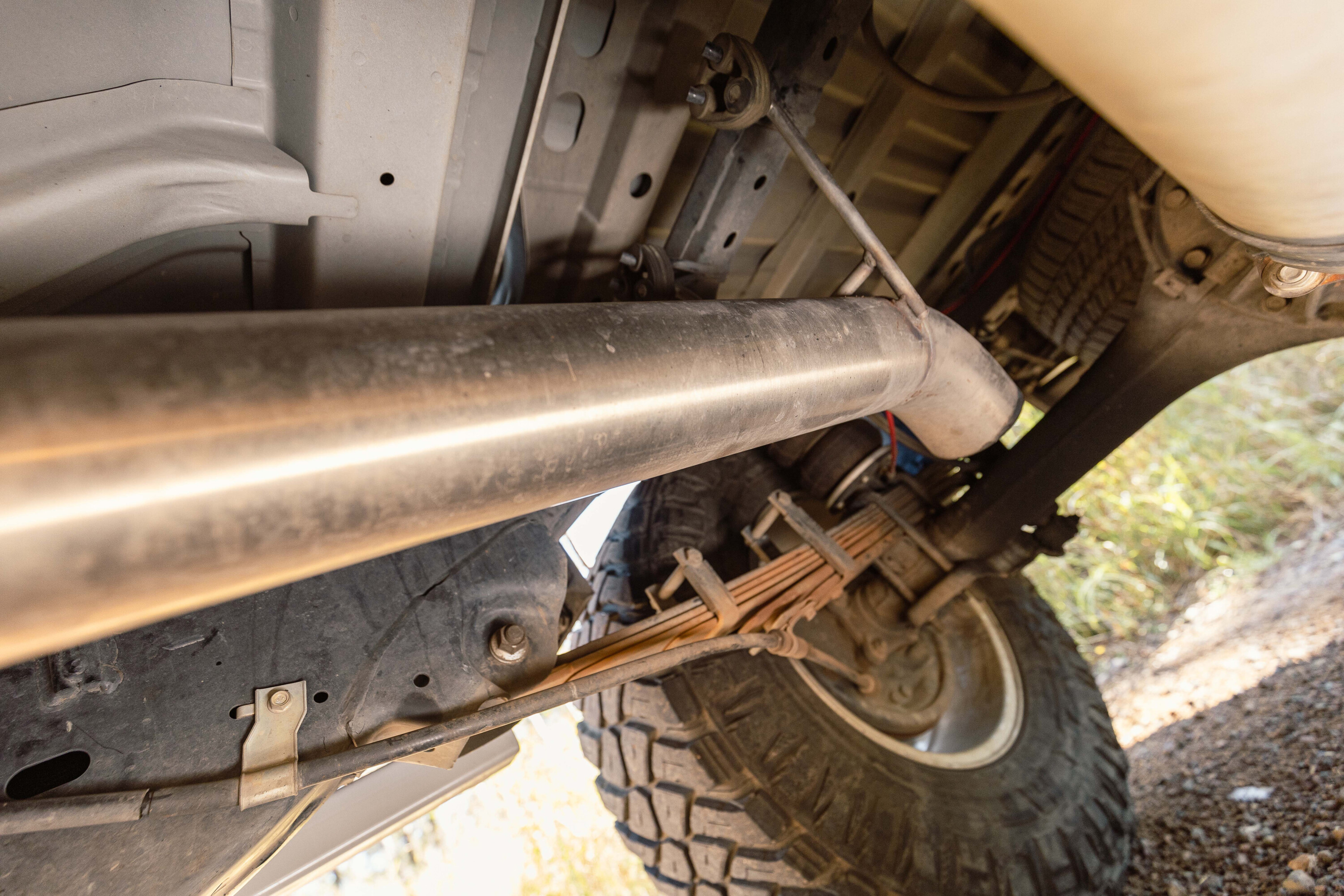
Down the back, the stock leaf springs were binned in favour of a set of EFS 150kg constant-rated spring packs, which were slotted in place over the top of the diff housing.
The upshot of all this suspension work? With some slight trimming of the body mounts, Cory was able to fit a schmick set of 17×9 All Terrain Industries beadlocked alloys that are wrapped with Maxxis’ finest RZR MT rubber, measuring in at an impressive 315/70R17 – or just under 35-inches for those who can remember when a six-pack cost two bob.
Also, by the time you read this, don’t be too surprised if Cory has already completed the coil-conversion he’s got planned. The bloke doesn’t like to muck around.
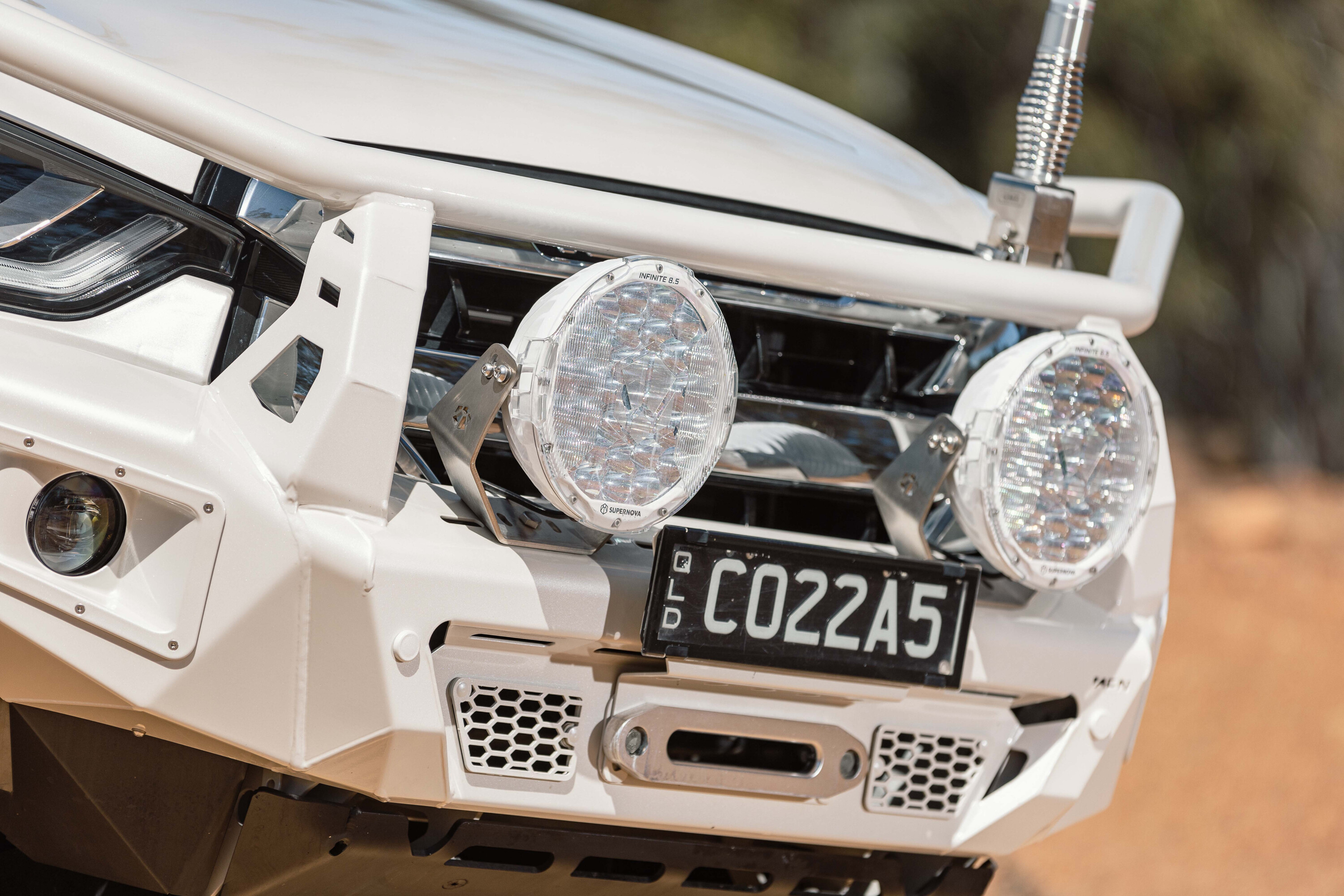
Supernova Infinite 8.5-inch Polar spotties share real estate on the front bar with a GME UHF antenna, while the 4-inch low-cut Fabwitz Industries snorkel maintains its chunky diameter all the way to the airbox, and nicely breaks up the blinding whiteness.
Six Supernova underbody RGB pod lights provide rock illumination on night runs and are protected by the custom colour-coded sliders built by Doyle’s Offroad Customs, which are kicked up and have had a top plate welded on for extra practicality and style points.
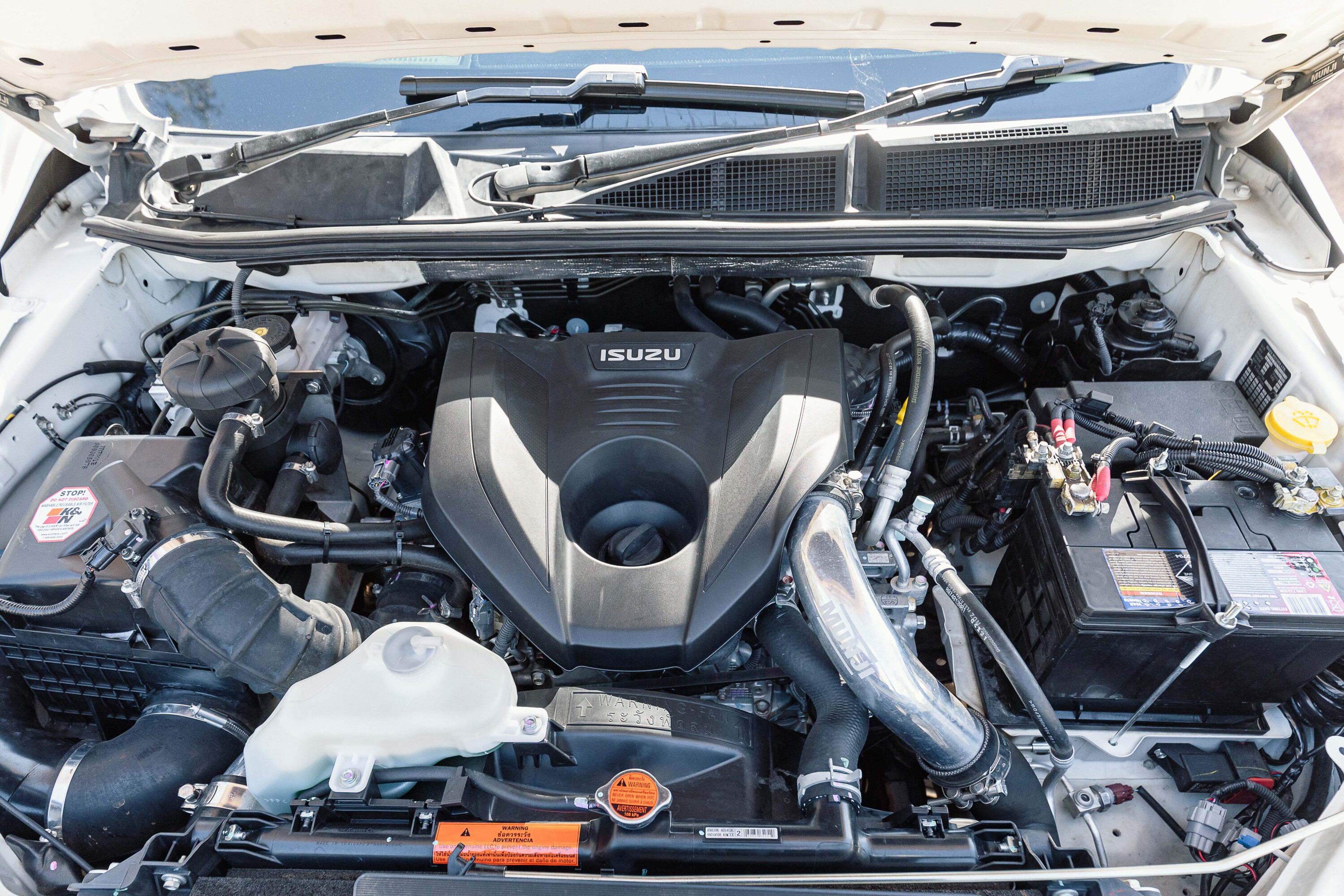
Munji 4X4 intercooler pipes keep the stock rubber hoses from going pop during high boost situations, while the same company also provided the nifty MAP sensor adapter that allows for easy drill-free boost gauge fitment.
A ProVent catch can keeps the intake manifold clear of oily residue and a pair of bonnet struts protects the back of your melon from whacks when checking the air filter after a dusty day out on the tracks.
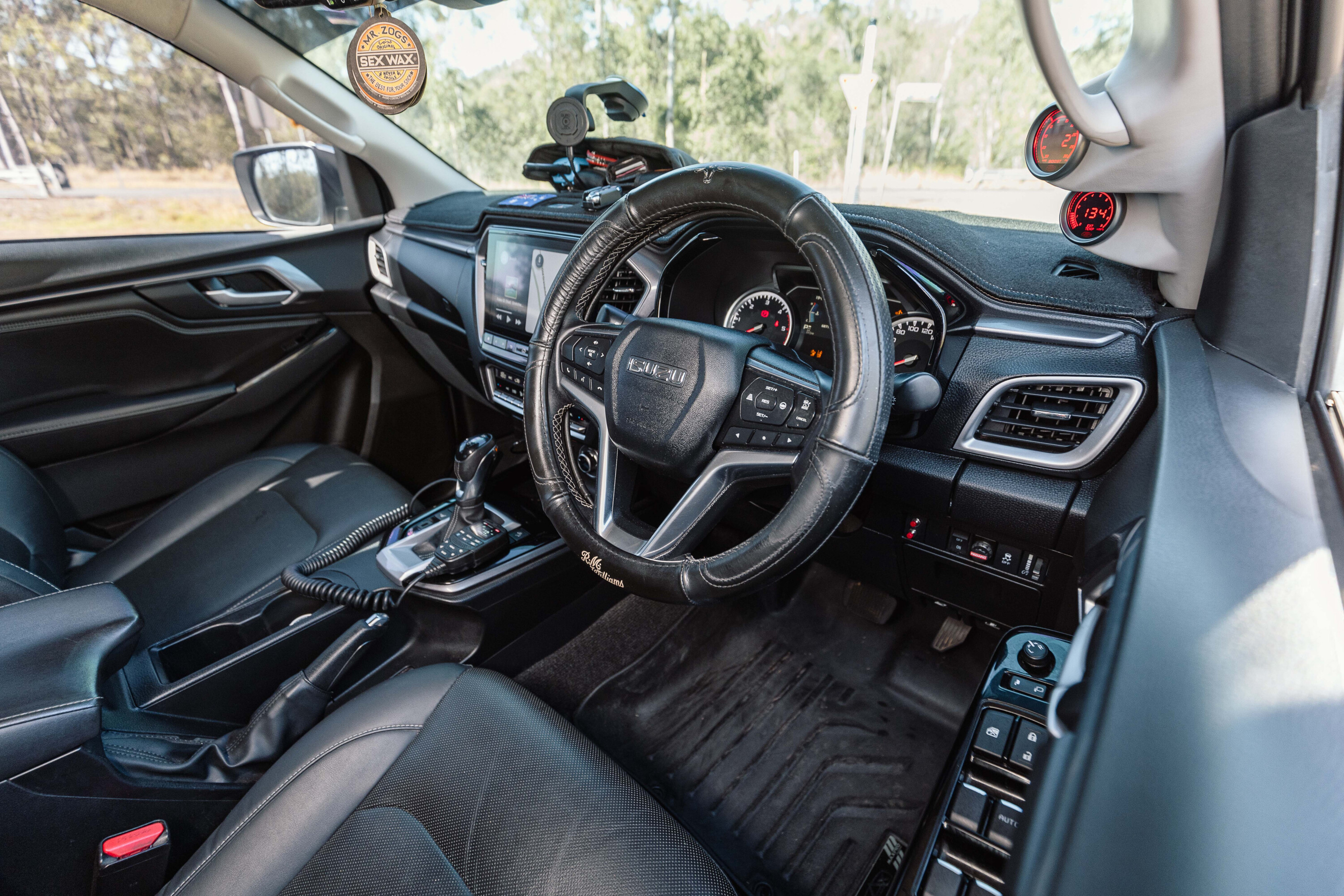
The seats are heated leather buckets, the infotainment unit has been equipped with Hema mapping and Cory has even added a bunch of Roadkill soundproofing to keep the noise from the muddies to a minimum.
The SAAS gauges are mounted into an A-pillar pod and the UHF handpiece is situated within easy reach for convoy communications.
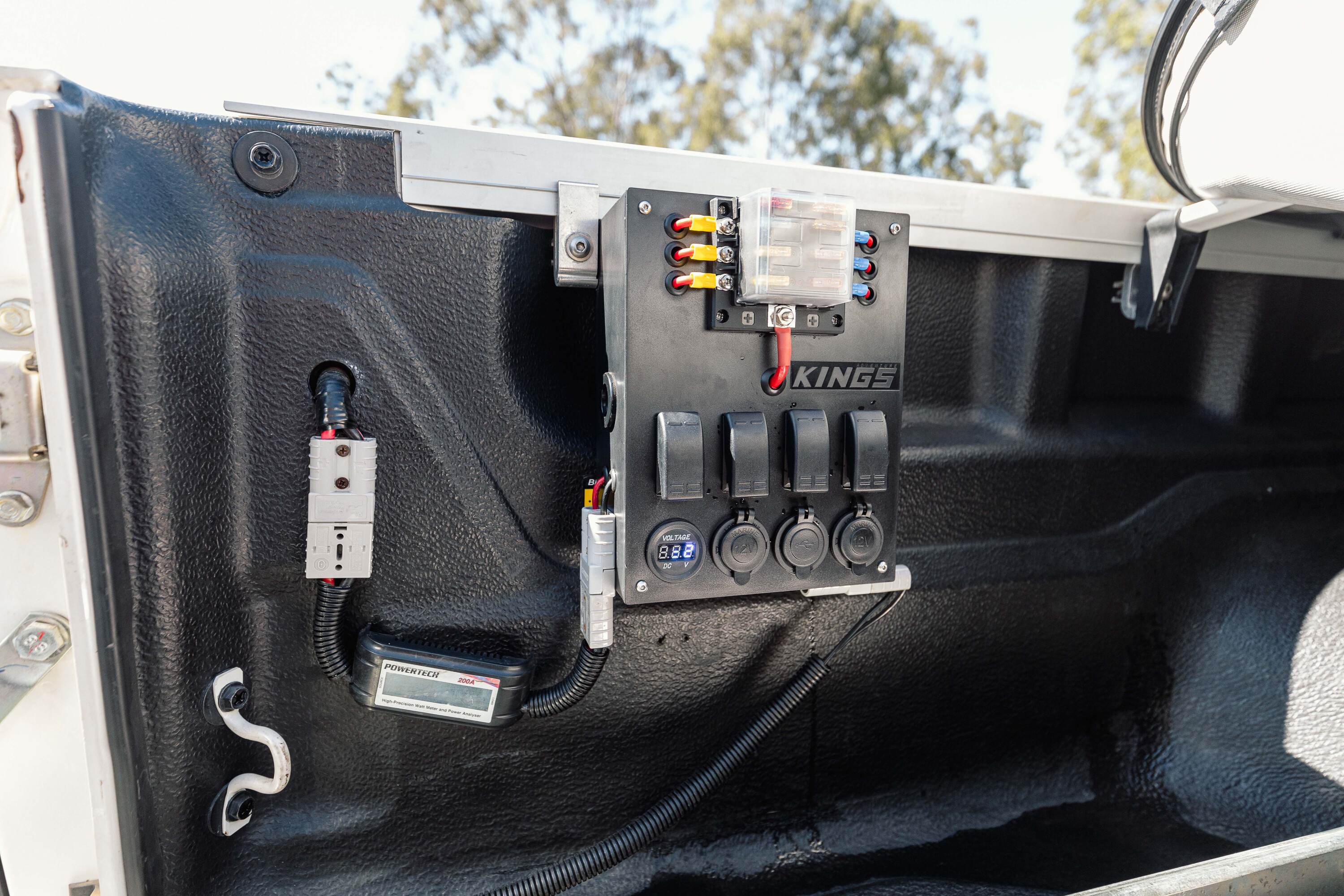
The otherwise wasted space behind the rear seat has been ingeniously filled with 110Ah of Baintech slimline lithium goodness, with a built in DC-DC 30A charger – more than enough to run the fridge and lights for a day or three.
Cory also wired in an anytime diff-lock override from Titan Offroad, which allows him to lock up the rear differential whether in 2WD, high or low range, unlike the factory option of only being able to lock her up in low.
Increasing 4×4 vehicle height has the direct effect of altering the vehicle’s wheel alignment. This in turn leads to premature tyre wear along with less responsive vehicle handling. Blackhawk 4×4 has come to the rescue with its Ultimate Adjustable Upper Control Arms, which have been designed to provide a variety of wheel alignment options that were previously unavailable with this level of finesse in 4×4 vehicle-specific suspension components.
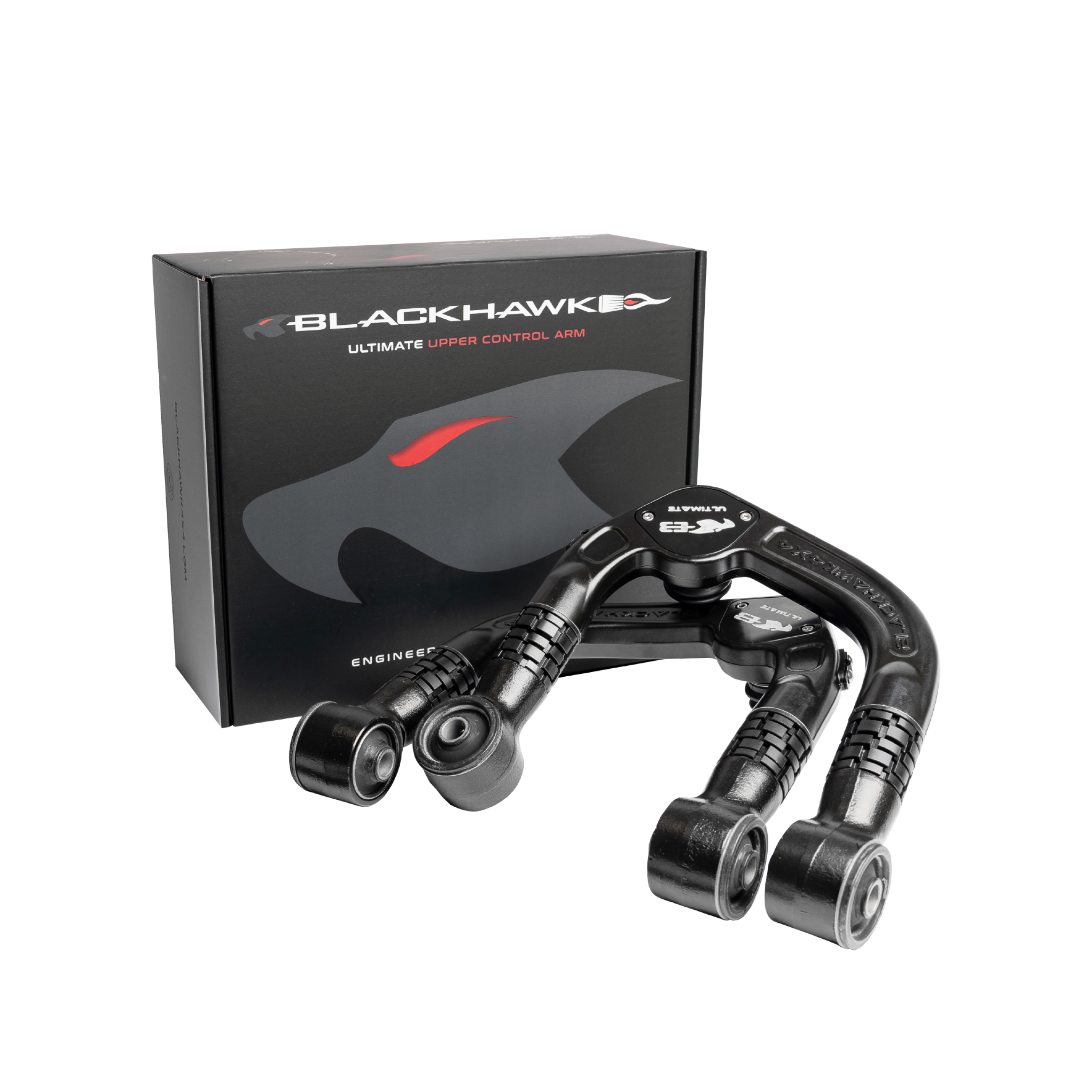
This new range of on-vehicle adjustable upper control arms allows easy adjustment, thereby alleviating handling issues by returning the suspension geometry and alignment back to factory specification or better. This also complements the travel available from many aftermarket suspension upgrades.
Troy Schipper, Research and Development Manager at Blackhawk 4×4, describes the control arms as a game-changer in the automotive industry.
“These arms embody excellence in engineering, providing unparalleled control, durability and performance. I couldn’t be more thrilled to introduce the Blackhawk Ultimate Control Arms to the world.
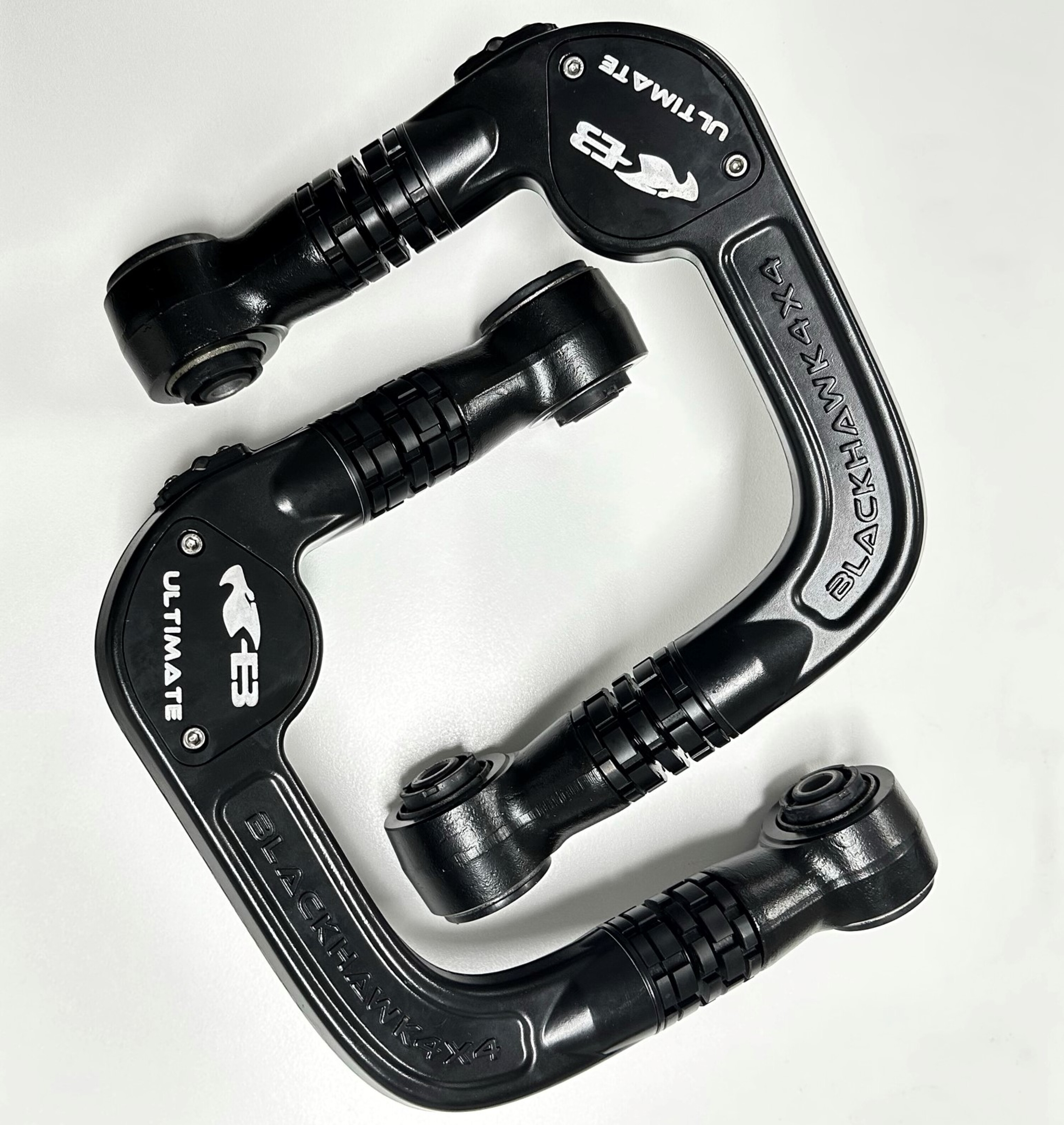
“Our team has poured countless hours of dedication and expertise into crafting this remarkable product, and we are genuinely excited to share it with automotive enthusiasts everywhere. These control arms represent a leap forward in performance and innovation, and we can’t wait to see how they elevate the driving experience for our customers.”
The Ultimate Adjustable Upper Control Arms include the practical features found in 4WD competition vehicles, refined to best suit harsh Australian off-road conditions. These suspension components also provide the durability and driveability to be expected from a premium quality manufactured product that meets and exceeds Original Equipment specifications.
Offering unrivalled innovation, each Blackhawk 4×4 Ultimate Adjustable Upper Control Arm includes a proprietary ball joint that provides a high degree of articulation, enabling more suspension travel. The unique design enables users to disassemble, service or rebuild the ball joint at any time using basic hand tools.
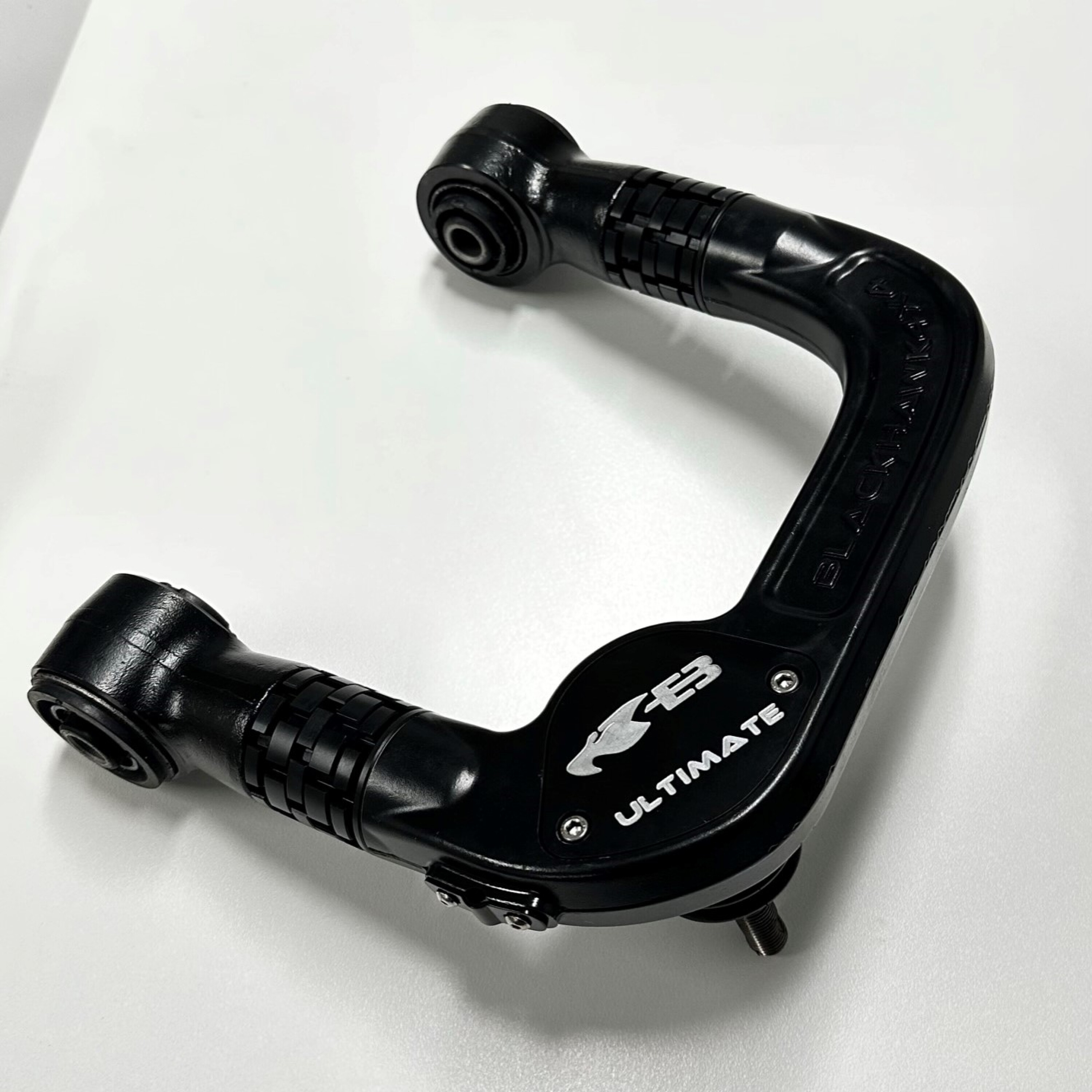
The innovative design of the control arms includes a patented on-vehicle adjustment capability with a built-in caster increase of one degree. This allows for precise camber and caster corrections for wheel alignments and positioning.
Each control arm features a forged aluminium 6082 mainframe that delivers superior lightweight strength that exceeds OEM specifications. They also feature maintenance-free high-quality rubber inner bushings and are finished with durable coatings that have been designed to withstand the harshest driving conditions. The threaded adjustment mechanism is nitride-hardened, ensuring longer thread life and superior corrosion control.
Importantly, all control arms are NCOP/ADR-compilable for street legal use when fitted by an accredited installer with engineer sign-off/certification. This offers customers total confidence in fitment and long-term use.
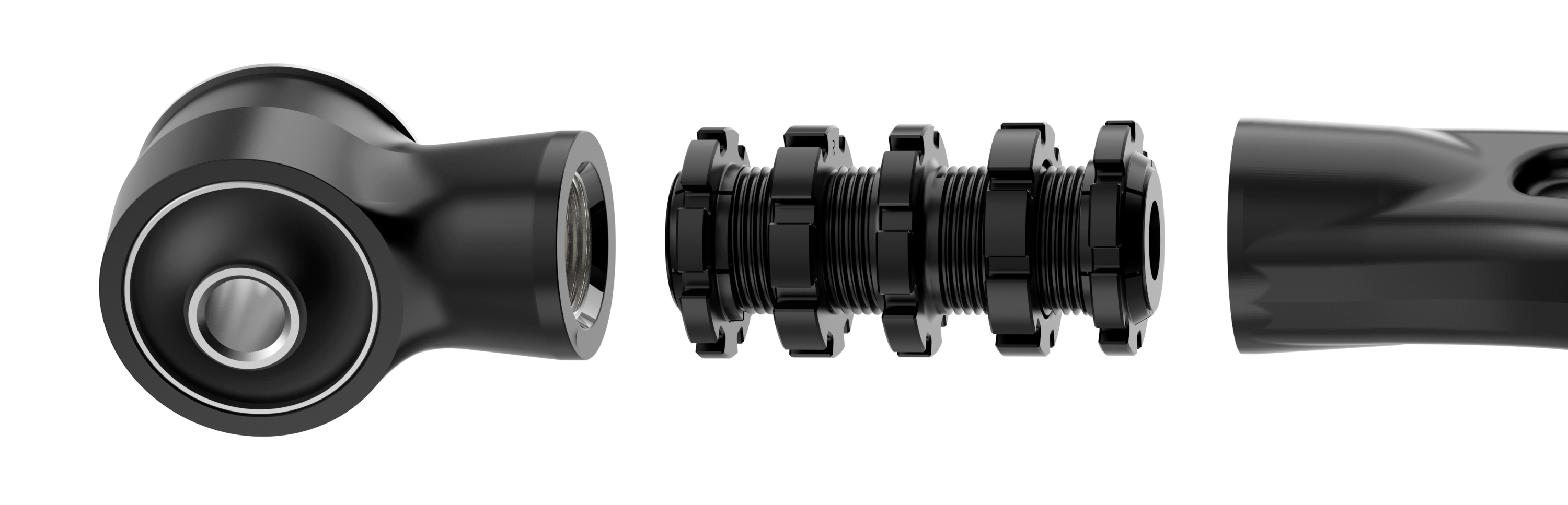
Providing customers with peace of mind is important when selecting upgraded 4×4 suspension components, and the range is subjected to rigorous product testing to ensure that this is the case. This includes Independent Finite Element Analysis (FEA) of UCA to NCOP VSB14.
Physical tests of the adjustment mechanism have also been carried out to simulate fatigue, overturn and skid loading to validate its FEA Engineering endorsement. The suspension components have also undergone physical torsion testing, along with a stringent ongoing local quality assurance program, and are backed by a comprehensive warranty for additional peace of mind.
Looking for something a little smaller? Check out our Medium SUV and Small SUV lists to see what’s coming for those segments in 2024.
With elegant styling and attention to detail inside and out, the Lyriq is the brand’s first foray into the luxury EV SUV segment globally. It rides on General Motors’ Ultium scalable architecture which allows batteries from 50kWh to 200kWh capacity – the Lyriq uses a 102kWh version.
The Tech uses rear-wheel drive and a single-motor powertrain in the US. The Sport shown to Wheels in November 2023 wore a ‘600e4’ designation, for 610Nm, electric and dual-motor four-wheel drive. Cadillac claims a 505km range for the Lyriq rear-wheel drive, and 10km less for the all-wheel drive.
An evolutionary design plays host to a 150kW/320Nm version of the familiar 2.0-litre turbocharged four-cylinder EA888 engine – up from 132kW – and is teamed with a seven-speed dual clutch automatic.
The cabin sees the gear selector relocated to the steering column, freeing up space, where there’s a larger 12.9-inch centre screen and wireless charging with seven seats and nine airbags standard. There’s a larger cargo area, up from 270 to 340 litres, expanding to 845 litres with the third-row down, while a new Dynamic Chassis Control system will be optional.
Torres’ styling has clear Jeep influences but also harps back to SsangYong’s Musso sold here in the late 1990s, but unlike the Musso, the Torres – we’re led to believe – runs an updated version of the Korando platform, making it a monocoque chassis.
The Torres launches with an opening price of $38,000 for the front-wheel drive Torres ELX, and is offered in a three-tiered range that tops out at $47,000 for the Torres Ultimate AWD. In the middle lies the $43,000 Torres Adventure which, like the ELX, is only offered in front-drive form.
The GX550 starts from $116,000 before on-road costs, with all variants powered by a 260kW/650Nm 3.5-litre twin-turbocharged V6 petrol.
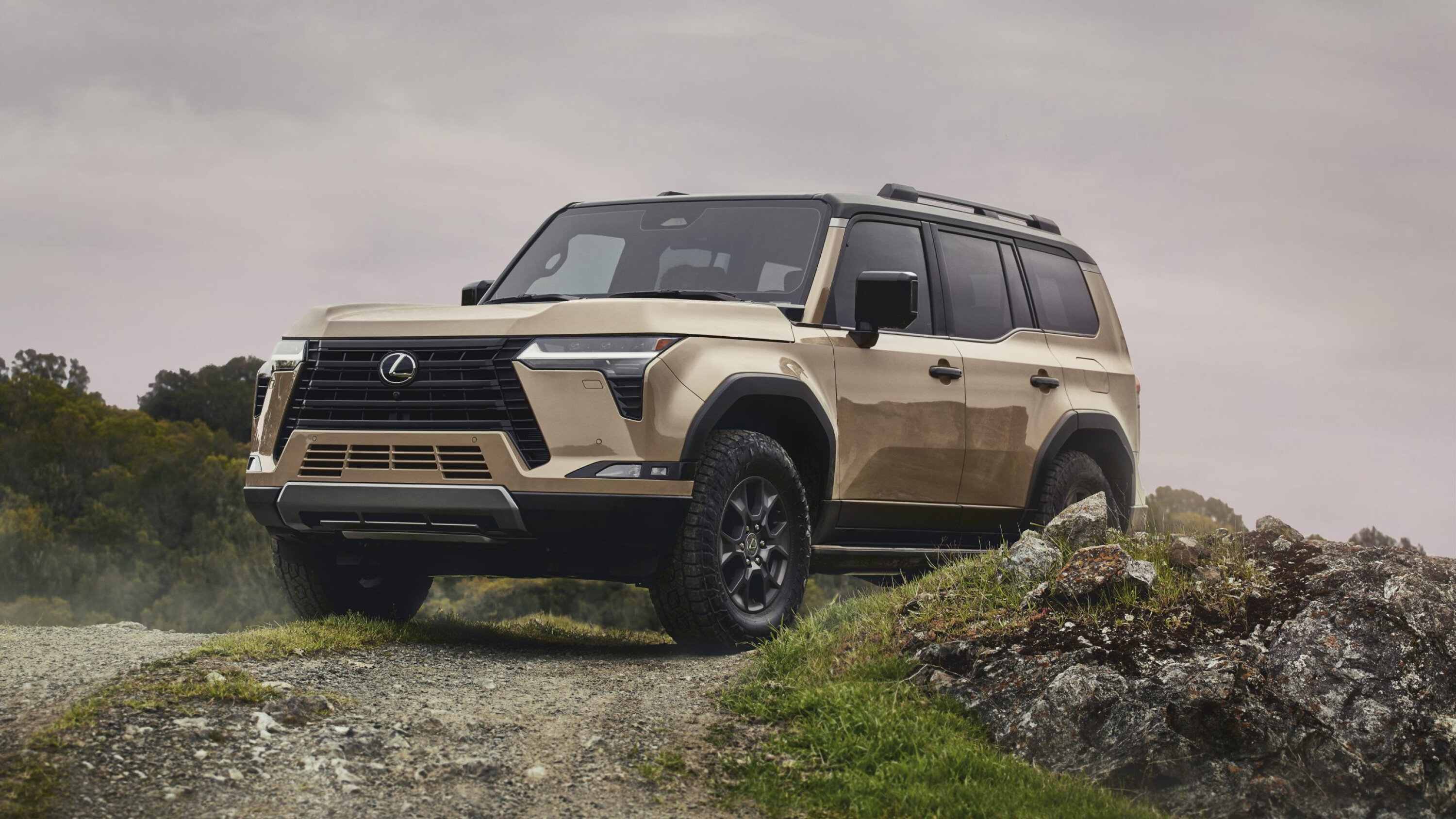
The Overtrail variant is sold as a five-seater with all-terrain tyres, black wheel arches, skid plate and the Electronic Kinetic Dynamic Suspension System from the 300 Series Landcruiser. The GX arrived with a 3.5-litre twin-turbo V6 and 10-speed auto, ahead of a 2.4-litre turbo-petrol hybrid expected to be added later on.
While it’s made in China, the Eletre – which means ‘coming to life’ in Hungarian (!) – uses the new Lotus-developed Electric Premium Architecture (EPA) and brings a convincing exterior and cabin finish.
Three variants – the $189,990 Eletre, $229,990k Eletre S and $279,990 Eletre R – use a 109kWh lithium-ion battery pack, with 450kW/710Nm in the entry level model bumped up to 675kW/985Nm for the Eletre R, which has a 0-100km/h claim of 2.95 seconds.
Eletre is uncharacteristically heavy for a Lotus, weighing up to 2640kg, but it also breaks with tradition with usable storage space in a 688-litre cargo area split between a boot and frunk (front-trunk).
The seven-seat CX-80 sits between the five-seat CX-60 and three-row CX-90 in terms of size and price, with all three using the same large SUV architecture and muscular styling direction.
The CX-80 is priced from $54,950 and the range is available with either a 3.3-litre straight-six mild hybrid petrol engine or a 3.3-litre straight-six diesel engine.
The Nappa leather-laden cabin steps up Mercedes’ opulence by adding a Maybach mode that animates the digital instrument cluster, with the back seat serving up twin 11.6-inch touchscreens which allow passengers to modify the navigation, among other commands.
Maybach claims the all-wheel drive electric powertrain delivers 484kW/950Nm and approximate 600km range, with the price expected to be well above $400k – cheap for a Maybach, really…
That means the same 2.4-litre diesel four-cylinder and eight-speed automatic, with 150kW (+17kW) and 470Nm (+40Nm), with improved towing capability – potentially 3500kg compared to the current car’s 3100kg – given Triton’s added muscle.
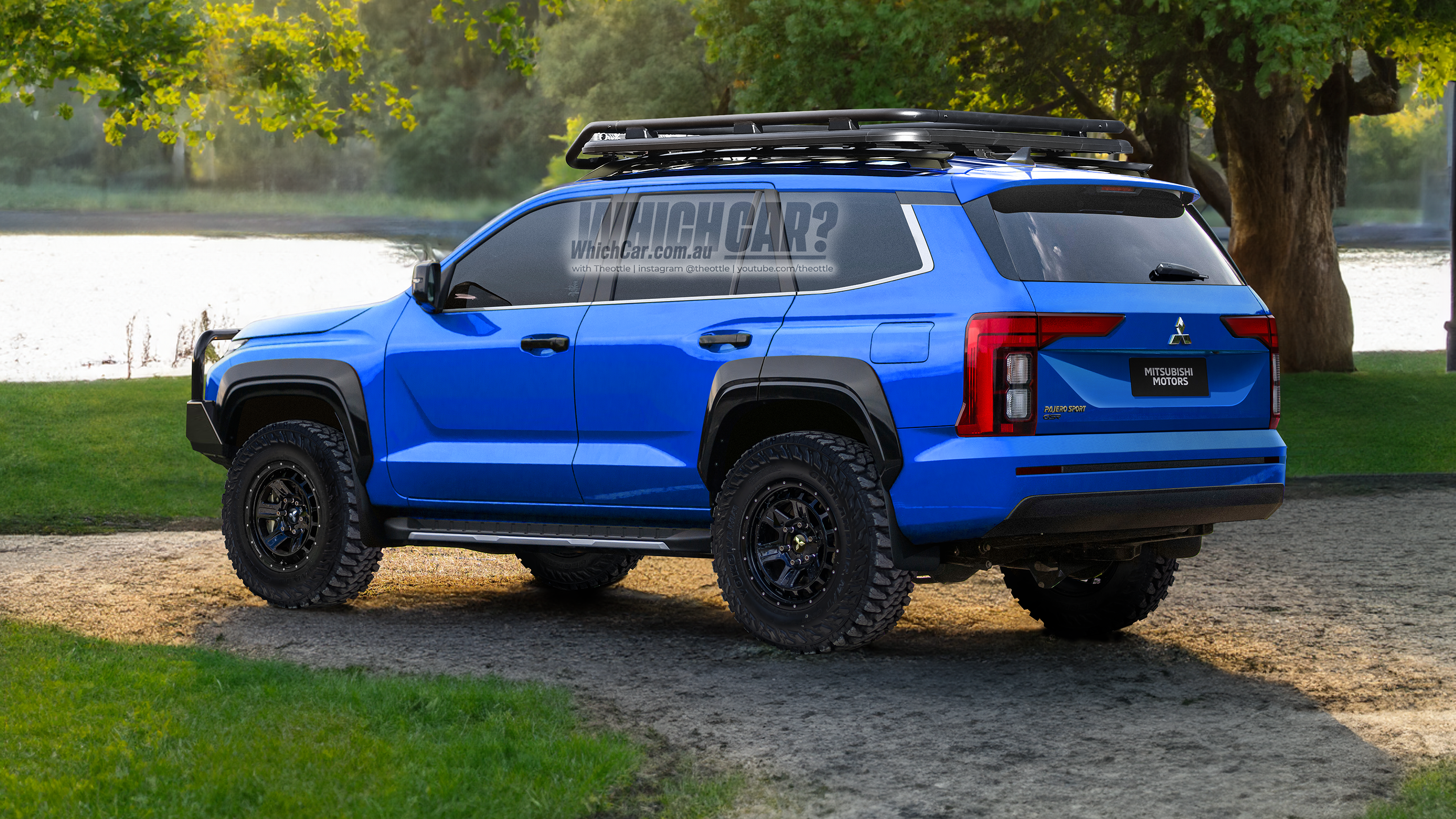
More cabin space and improved refinement should be by-products of the larger dimensions, but the question is – will there be a follow up to those wild taillights?
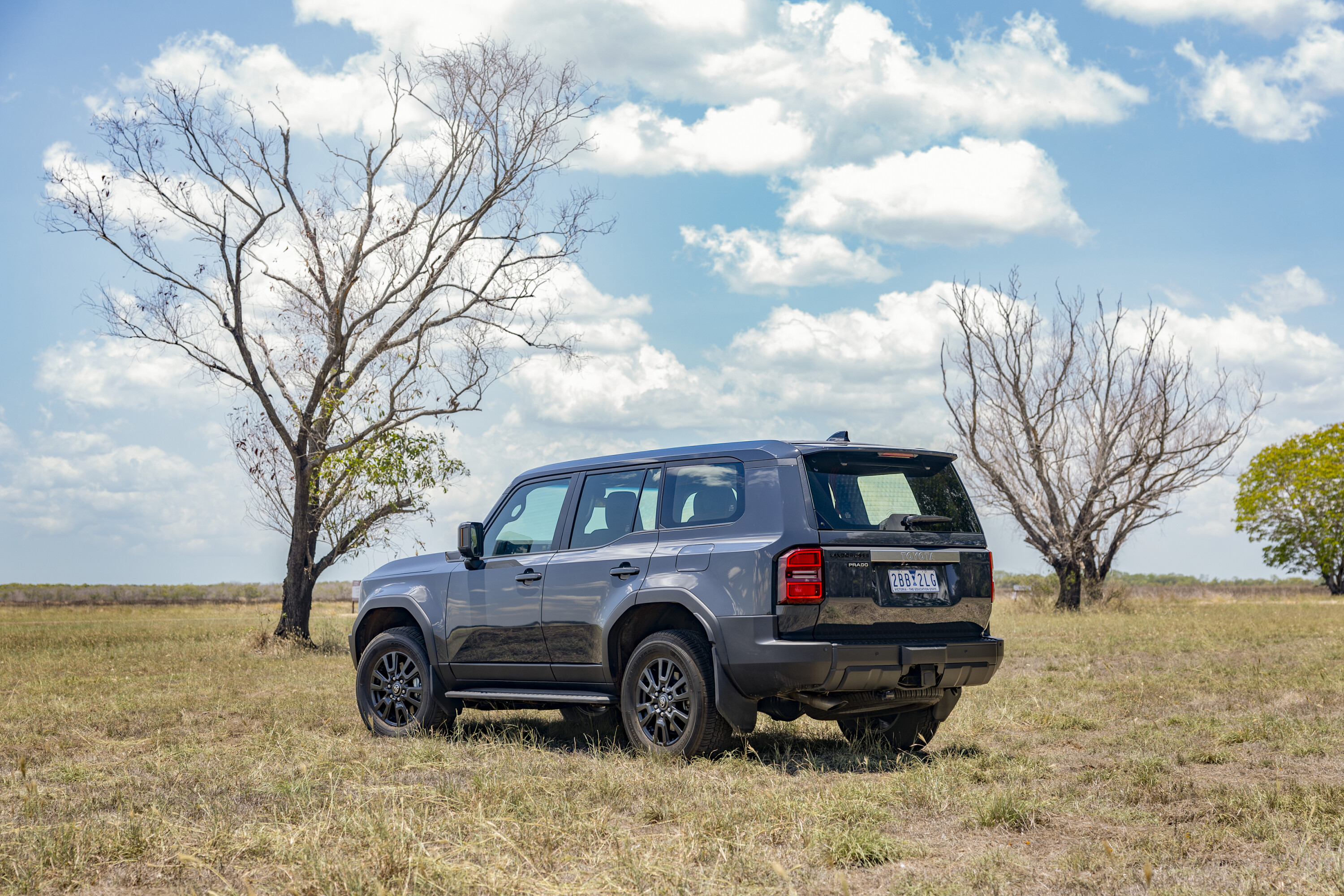
The 2.8-litre turbo-diesel four-cylinder engine, assisted by 48-volt V-Active technology, produces peak outputs of 150kW and 500Nm, and it’s mated to a new eight-speed automatic transmission and a full-time all-wheel drive system, dual-range transfer case and a centre lockable limited slip differential.
The Prado starts at $72,500 in GX trim and tops out at $99,990 for the Kakadu.
It rides on the dedicated electric SPA2 architecture that enables a host of advances including bi-directional charging and a LIDAR scanner enabling full self-driving capability down the track.
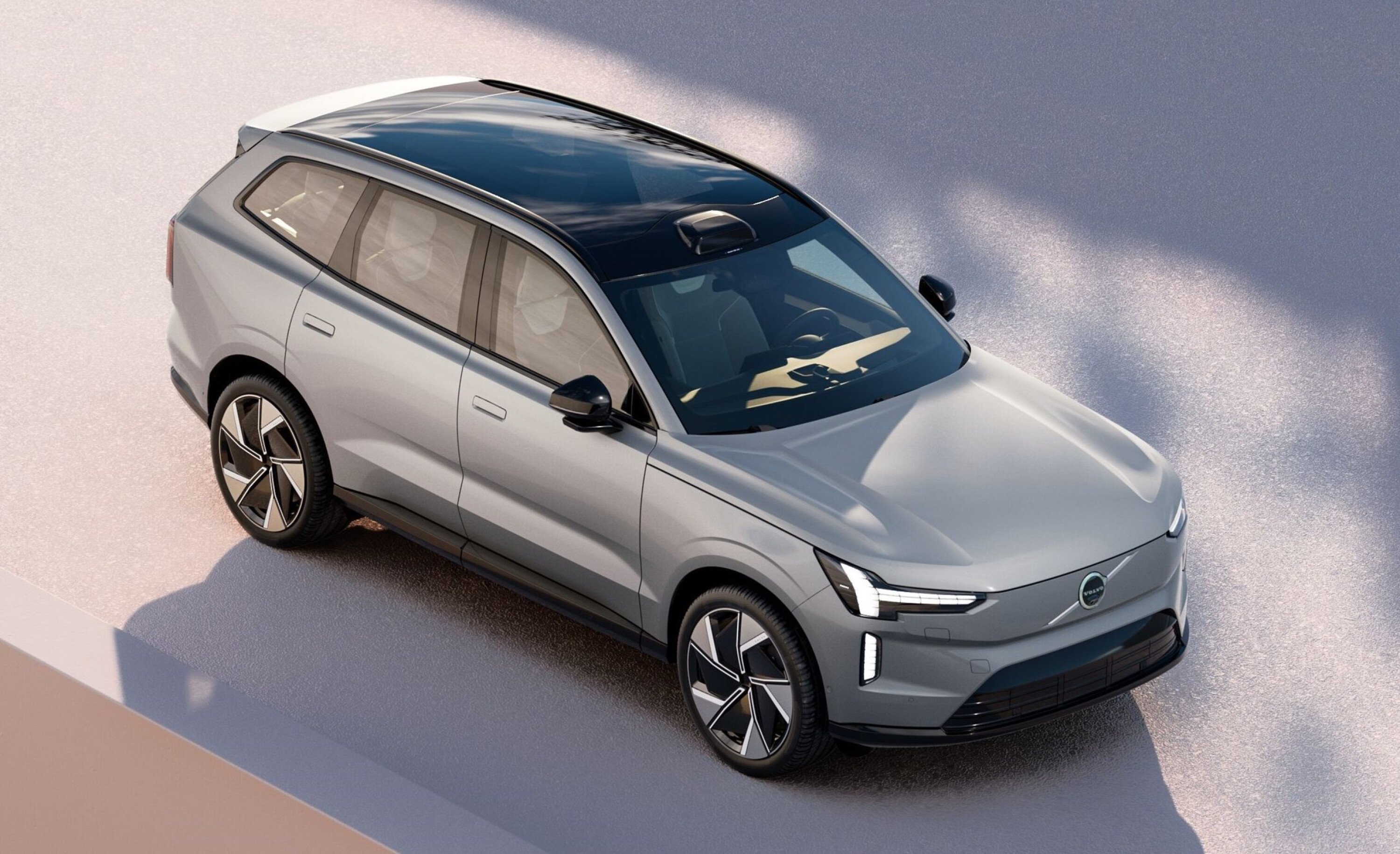
Volvo says it has a 600km range but is yet to confirm charging rate – or performance figures, both expected to be similar to the Polestar 3’s – but its bi-directional charging means it could power your home for set periods.
Pricing is expected to be around $140k.
Only one variant will be available to purchase in Australia – dubbed the Yukon Denali – and it’ll be equipped with a mountain of premium products, headlined of course by the same powertrain which drives the Silverado 1500: a 313kW/642Nm 6.2-litre V8 petrol engine, mated to a 10-speed automatic transmission.
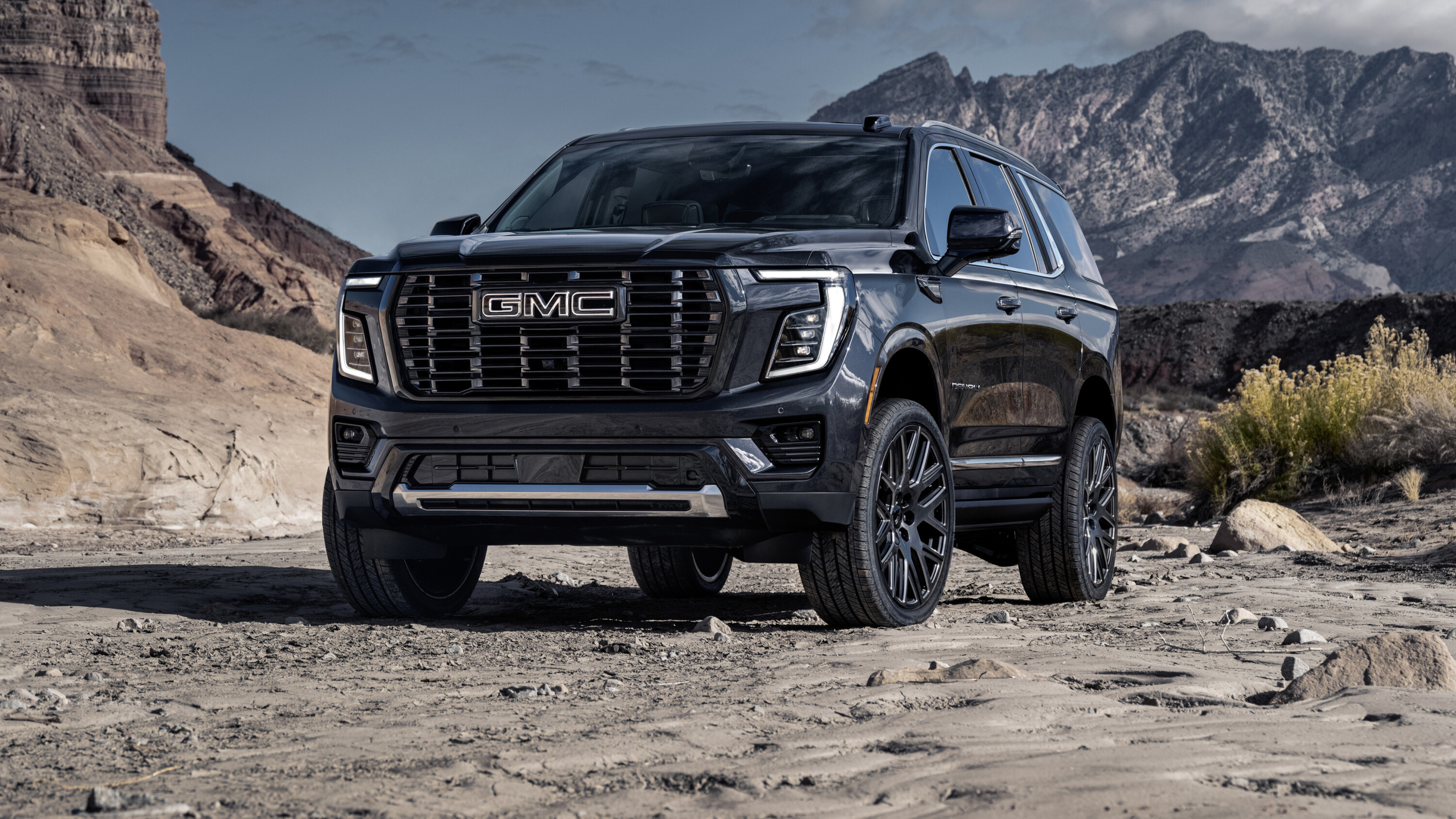
Inside, the SUV is outfitted with a 16.8-inch infotainment touchscreen, a panoramic sunroof, a head-up display, and Bose speakers embedded in the headrests. The second row offers a premium experience as well, with captain’s chairs featuring the same leather upholstery and headrest speakers. The right-hand drive conversion will be handled by the Walkinshaw Group.
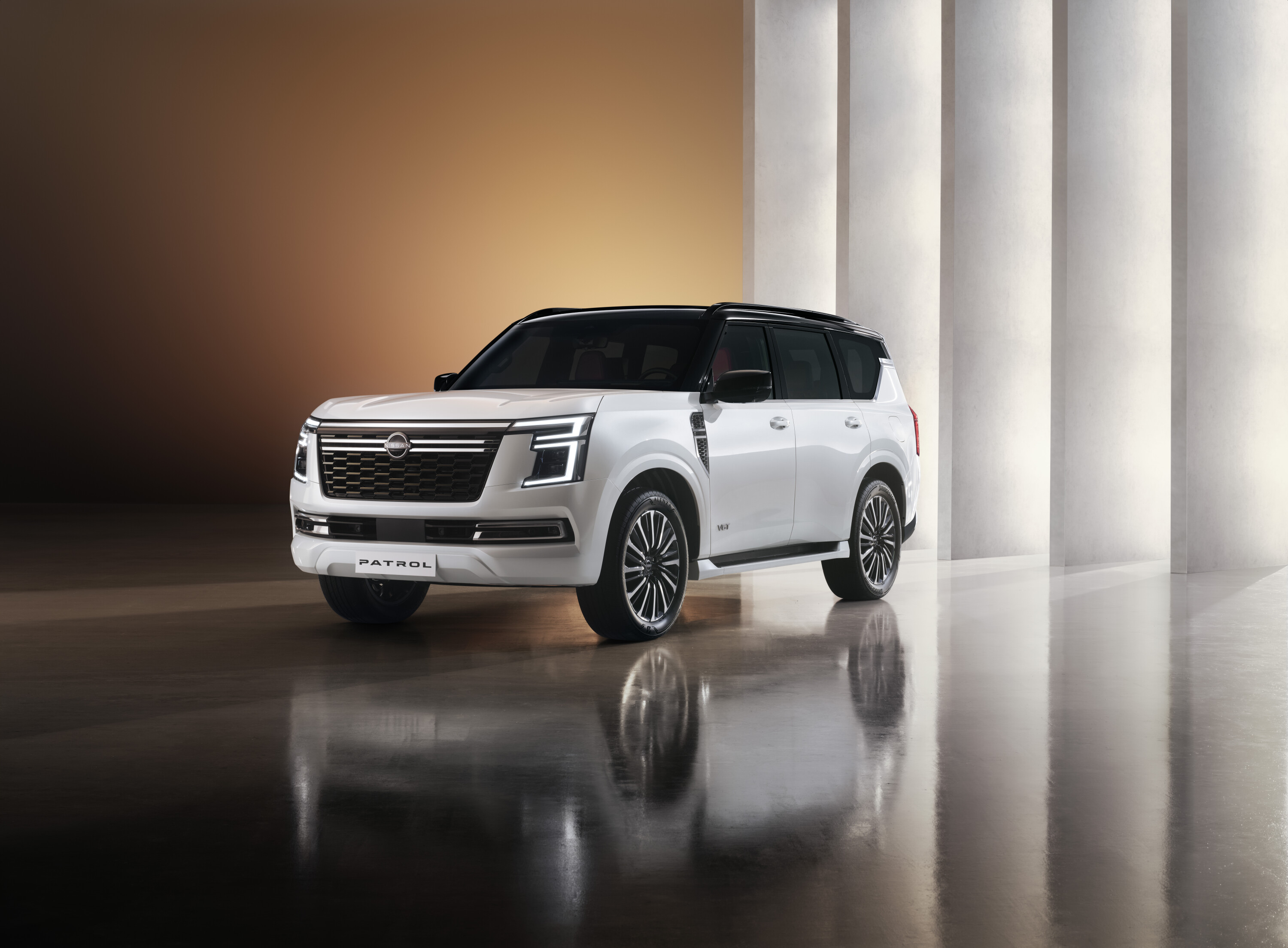
While it no longer features a V8 engine, Nissan has confirmed the Y63 Patrol will be powered by a 3.5-litre V6 twin-turbo, delivering 425hp (317kW) and 700Nm of torque, alongside a 3.8-litre naturally aspirated V6 producing 236kW and 386Nm. Although it’s no longer equipped with V8 power, the Y63 becomes the most powerful Patrol ever to come from the factory!
“Designed to be the pinnacle of engineering, the Pioneer 6 Platform is a leap ahead of our already impressive predecessors and challenges the boundaries of aerodynamics and durability,” Rhino-Rack says of its product.
Considering the earlier iterations of the product were extremely durable, well-designed and versatile, that’s quite a statement. So let’s take a closer look at how Rhino-Rack has markedly improved its all-new Pioneer 6 Platform.
The Pioneer 6 Series is Rhino-Rack’s strongest and most versatile roof rack to date, with advanced engineering that allows you to travel further, carry more gear and enjoy a quieter and smoother ride. Design upgrades have transformed the unit into a radically improved platform. It’s 20 per cent lighter utilising higher strength, lightweight alloys, for greater carrying capacity.
What truly sets the Pioneer 6 Series apart is its incredible potential for adventure through a comprehensive range of Rhino-Rack mounts and accessories. The Pioneer 6 Series boasts 25 per cent more usable channels and an extensive ecosystem of accessories, maximising every inch of the platform and enabling users to load more gear than ever. Don’t exceed the roof load limit of your vehicle, and there is a Load Rating calculator on the Rhino-Rack website that will help with this.
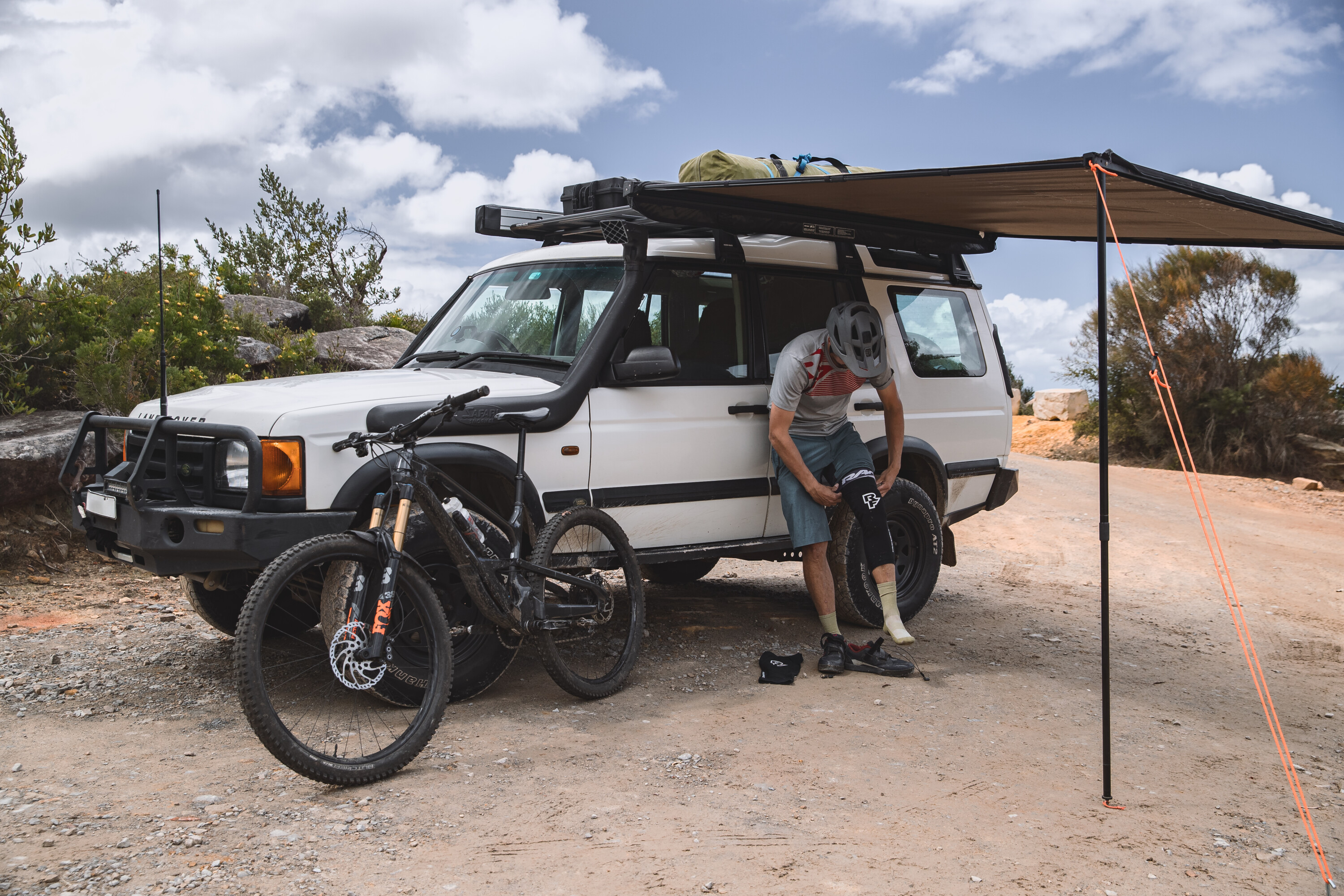
Integrated wiring capabilities and additional east/west mounting channels allow for quick and easy mounting for everything from recovery boards, kayaks, bikes and fishing rods. This versatility empowers individuals to swiftly transition from work to play, ensuring they’re always ready for their next adventure. Here’s a full list of accessories.
There’s also a whopping 60 per cent less drag, for a better on-road experience and fewer trips to fuel bowsers. This can be seen in the leading-edge design profiles of the underbars and front edge, as well as the use of detachable wind fairing inserts.
A number of mounting systems are also available, as they were on the previous generations, including Backbone, RCH and RCL, RX (for raised rails), and RL (for vehicles that have protruding gutter mounts).
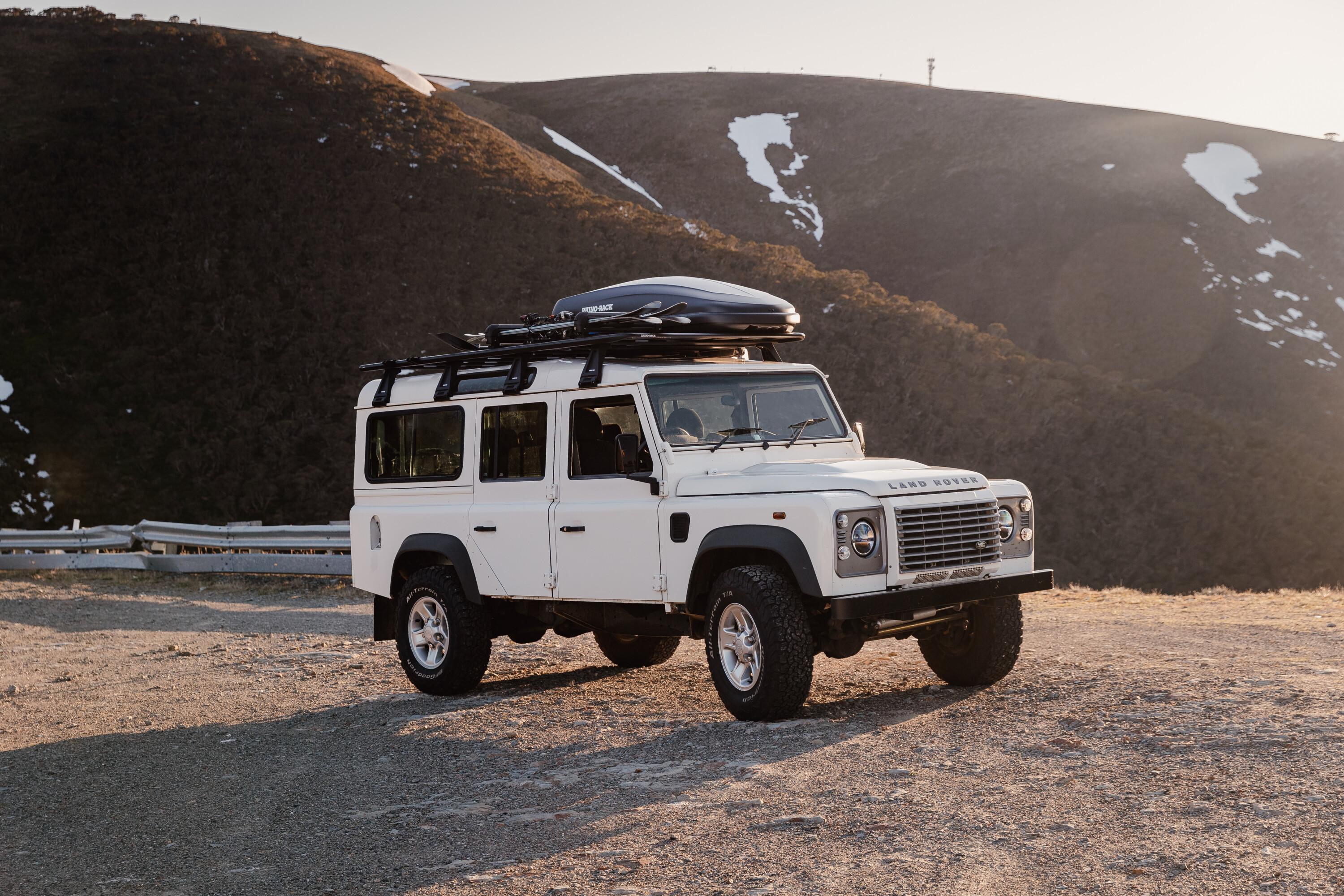
The Rhino-Rack Pionner 6 is built to be compatible with all the popular 4×4 vehicles in Australia, including the Toyota HiLux, Ford Ranger (including next-gen), Nissan Navara, Mazda BT-50, Mitsubishi Triton, Isuzu D-MAX, Volkswagen Amarok and Toyota LandCruiser (all series).
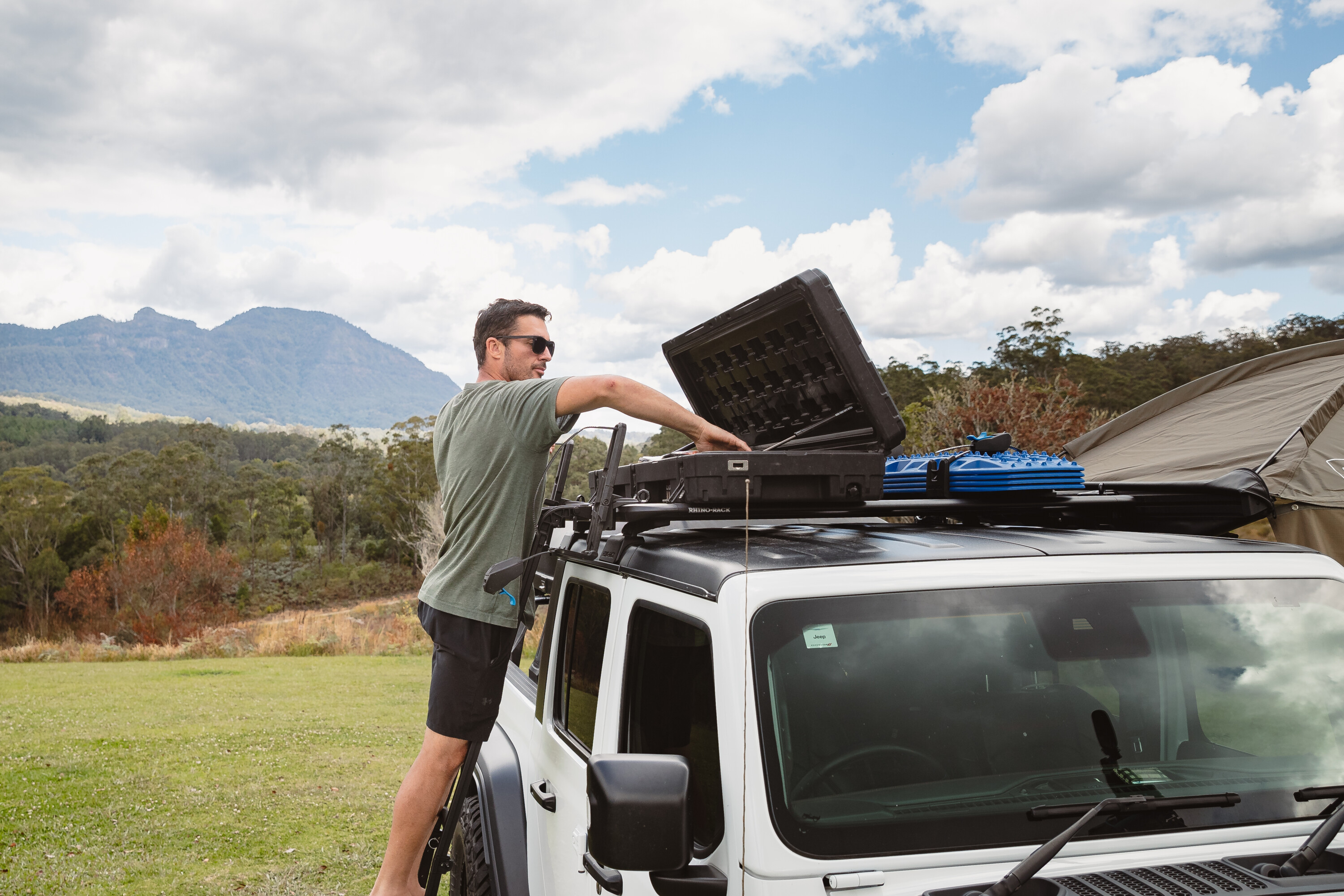
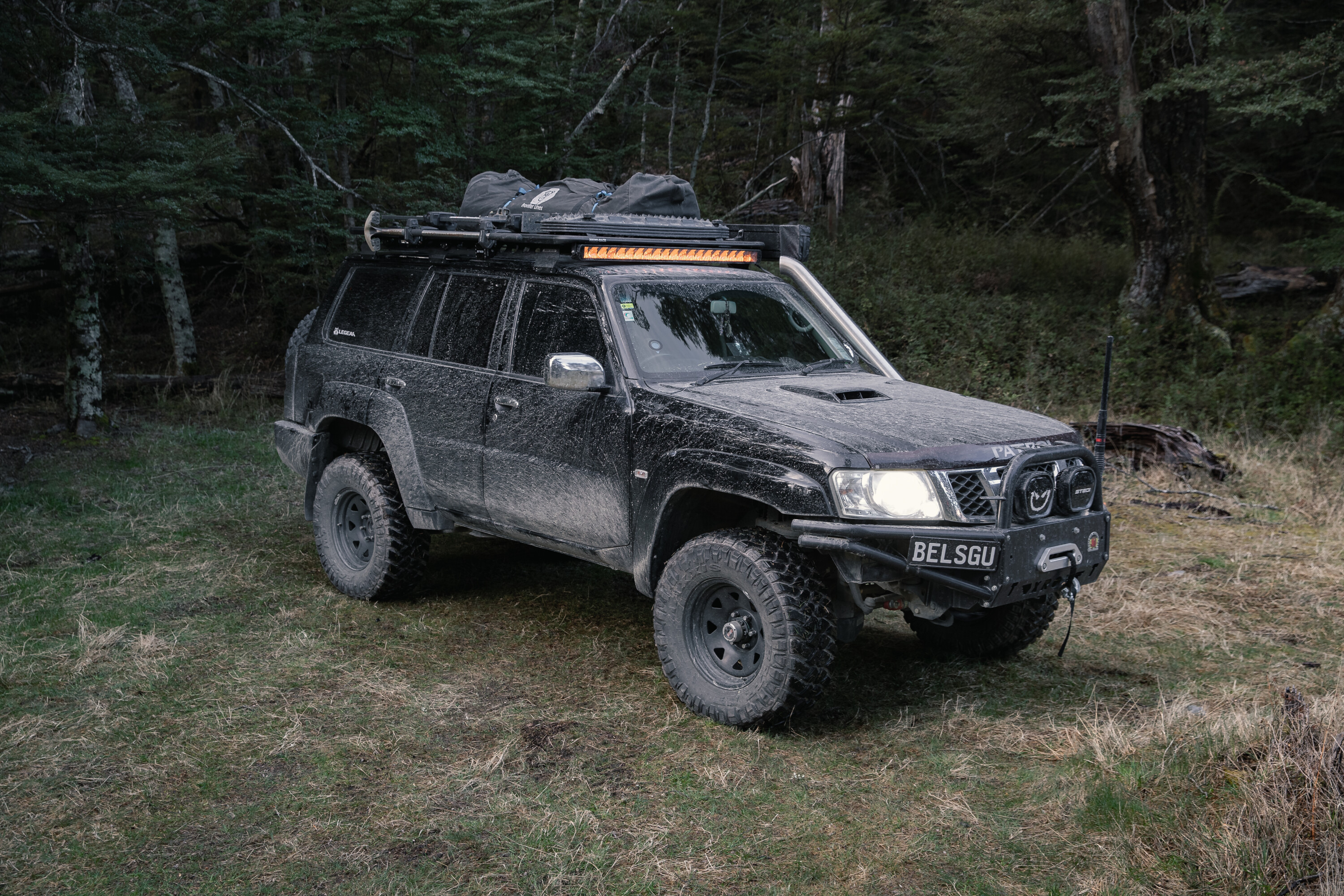
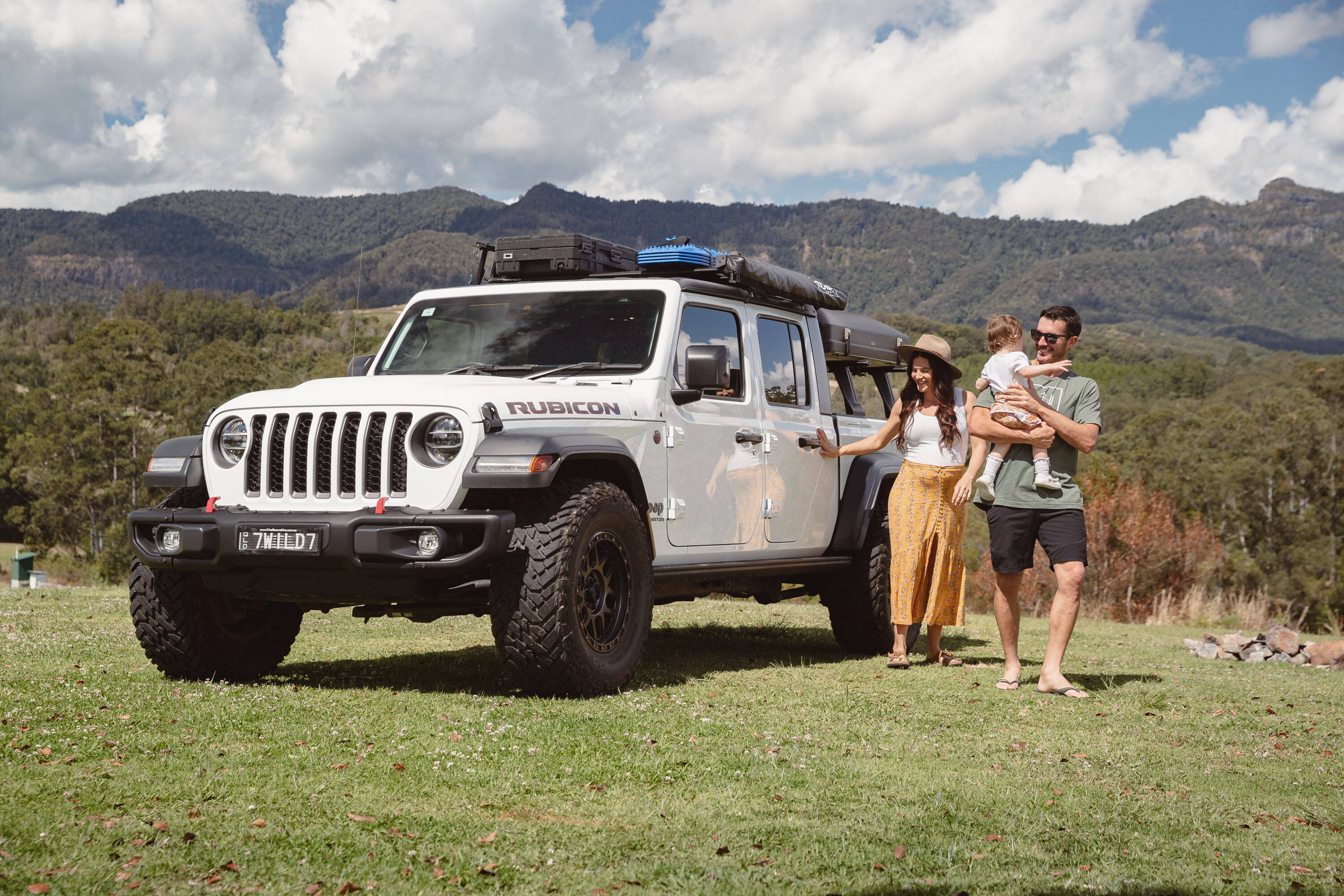
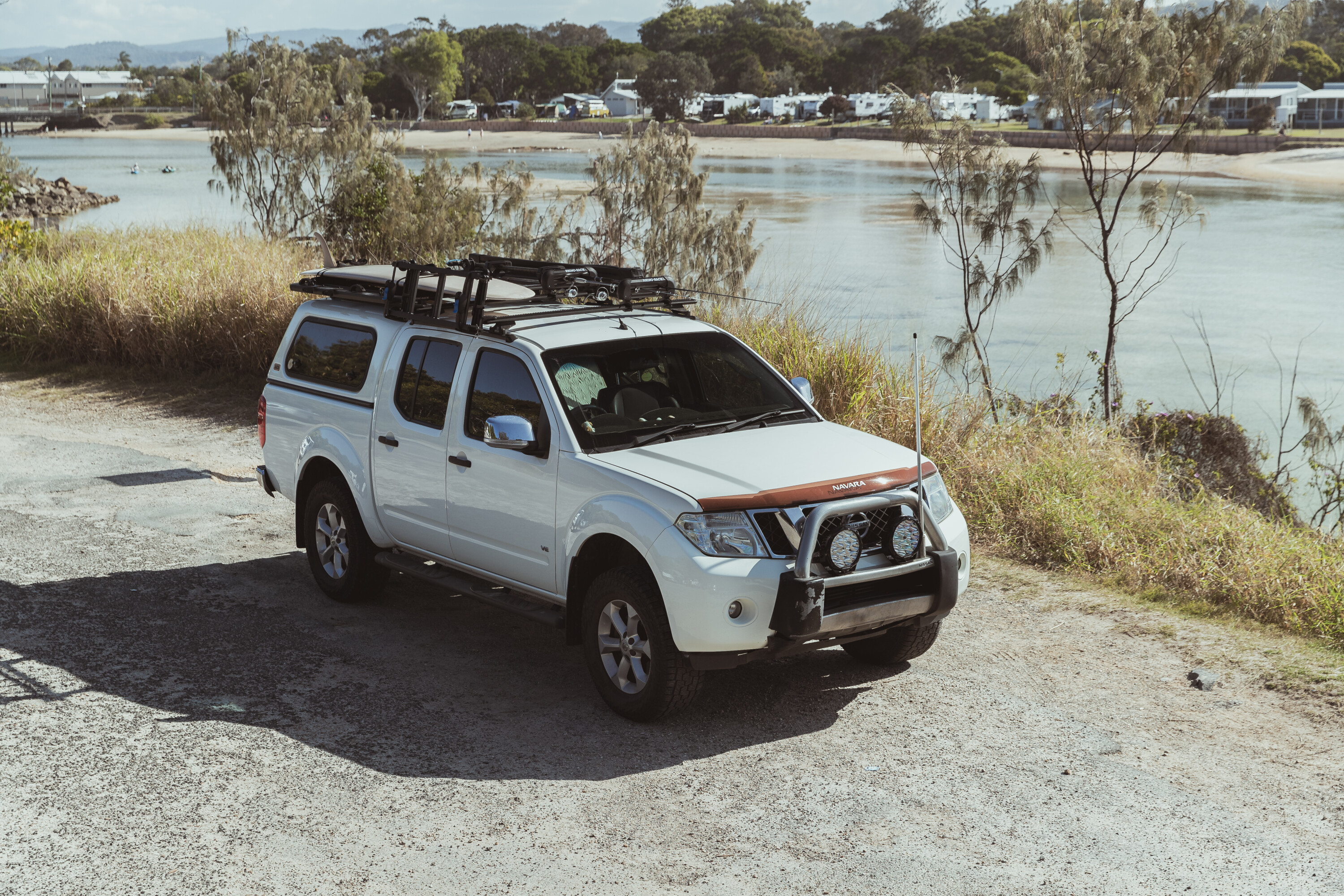
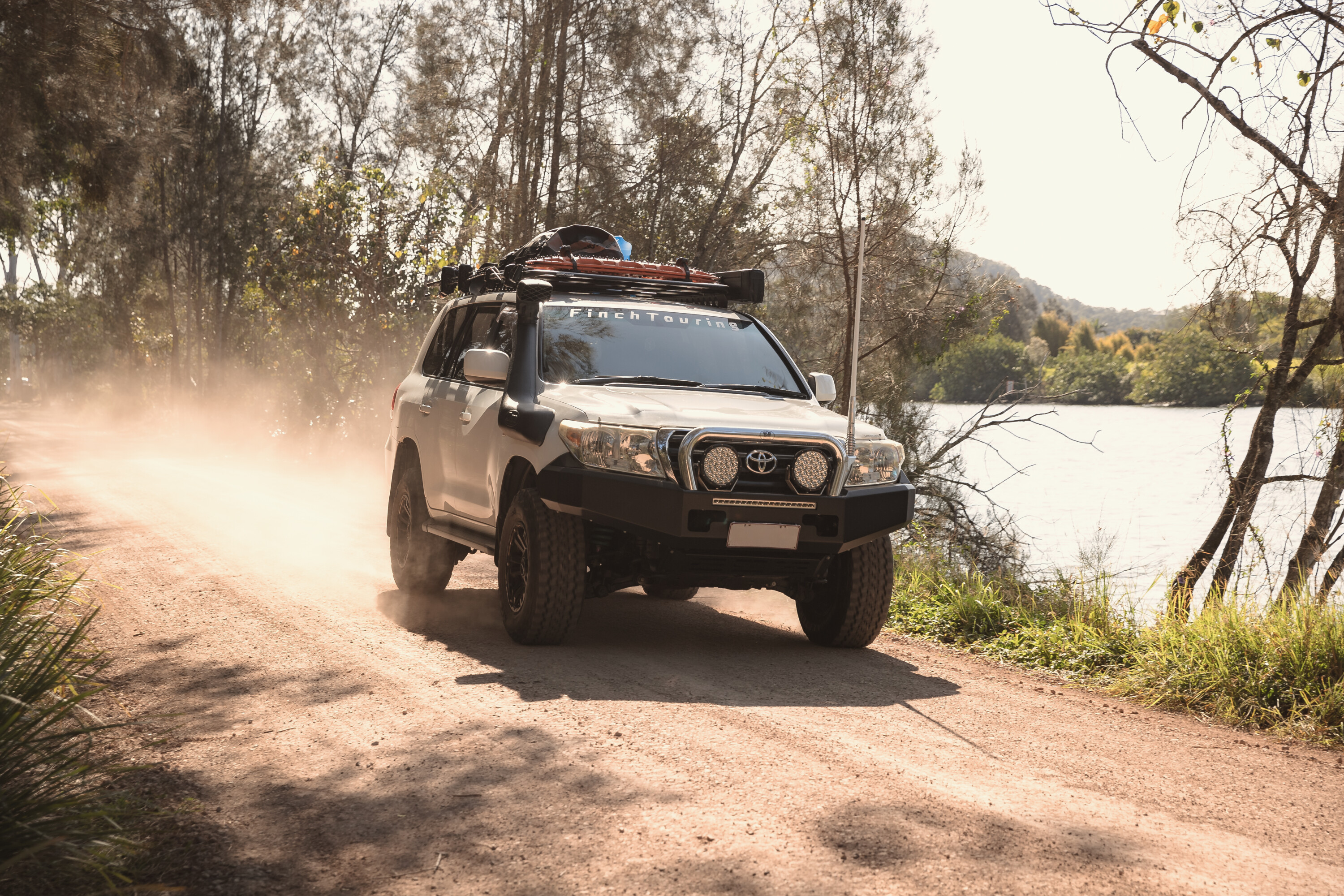
As part of the release of the all-new Pioneer 6, Rhino-Rack launched the Pioneer Your Adventure film series to showcase the all-new roof rack in the wild with seven adventurers and their unique touring set-ups. The film series follows the adventurers pictured below as they tailor their individual set-ups to visually showcase the set-up options and inspire people with what’s possible with their own builds.
| Vehicle | Setup | Price |
|---|---|---|
| Toyota HiLux Roof Platform | Pioneer 6 Platform with Backbone | RRP $2187 |
| Ford Ranger Roof Platform | Pioneer 6 Platform with Backbone | RRP $1910 |
| Mitsubishi Triton Roof Platform | Pioneer 6 Platform with Backbone | RRP $1869 |
| Nissan Navara Roof Platform | Pioneer 6 Platform with RX100 legs | RRP from $1493 |
| VW Amarok Roof Platform | Pioneer 6 Platform with Backbone | RRP from $1869 |
| Toyota LandCruiser Roof Platform | Pioneer 6 Platform with Backbone | RRP $2242 |
| Isuzu D-Max Roof Platform | Pioneer 6 Platform with Backbone | RRP from $1840 |
| Mazda BT50 Roof Platform | Pioneer 6 Platform with Backbone | RRP from $1840 |
The expanded range also covers RAM’s 1500 DT series models from MY18+. For Chevy Silverado owners, there is now a front Ultimate 4WD disc brake rotor option for models from 2020 onwards. Additionally, there’s now more on offer for the Ford Ranger, with rear Ultimate 4WD sports and performance disc brake rotors for PX3 and Raptor variants from 2018-2020.
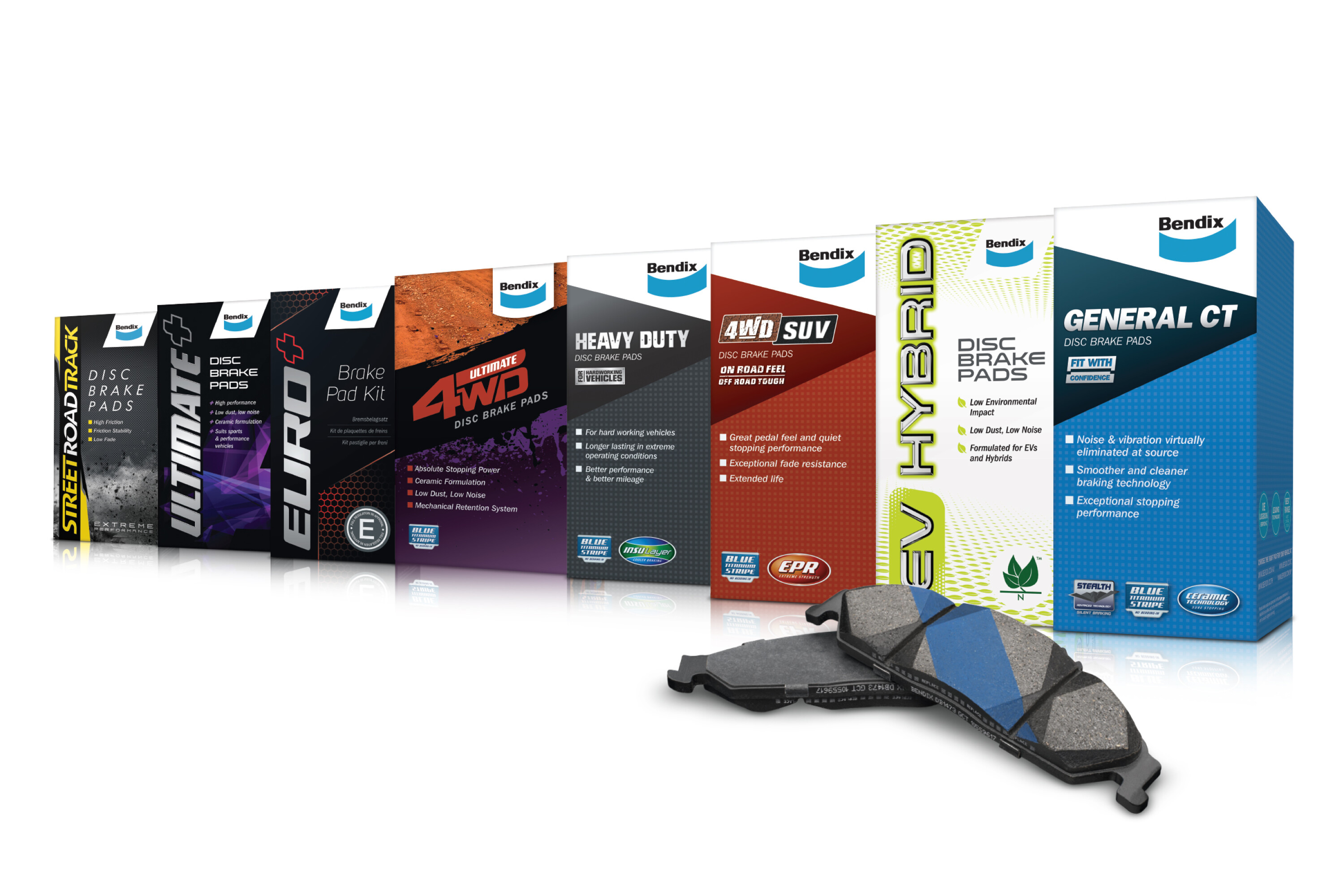
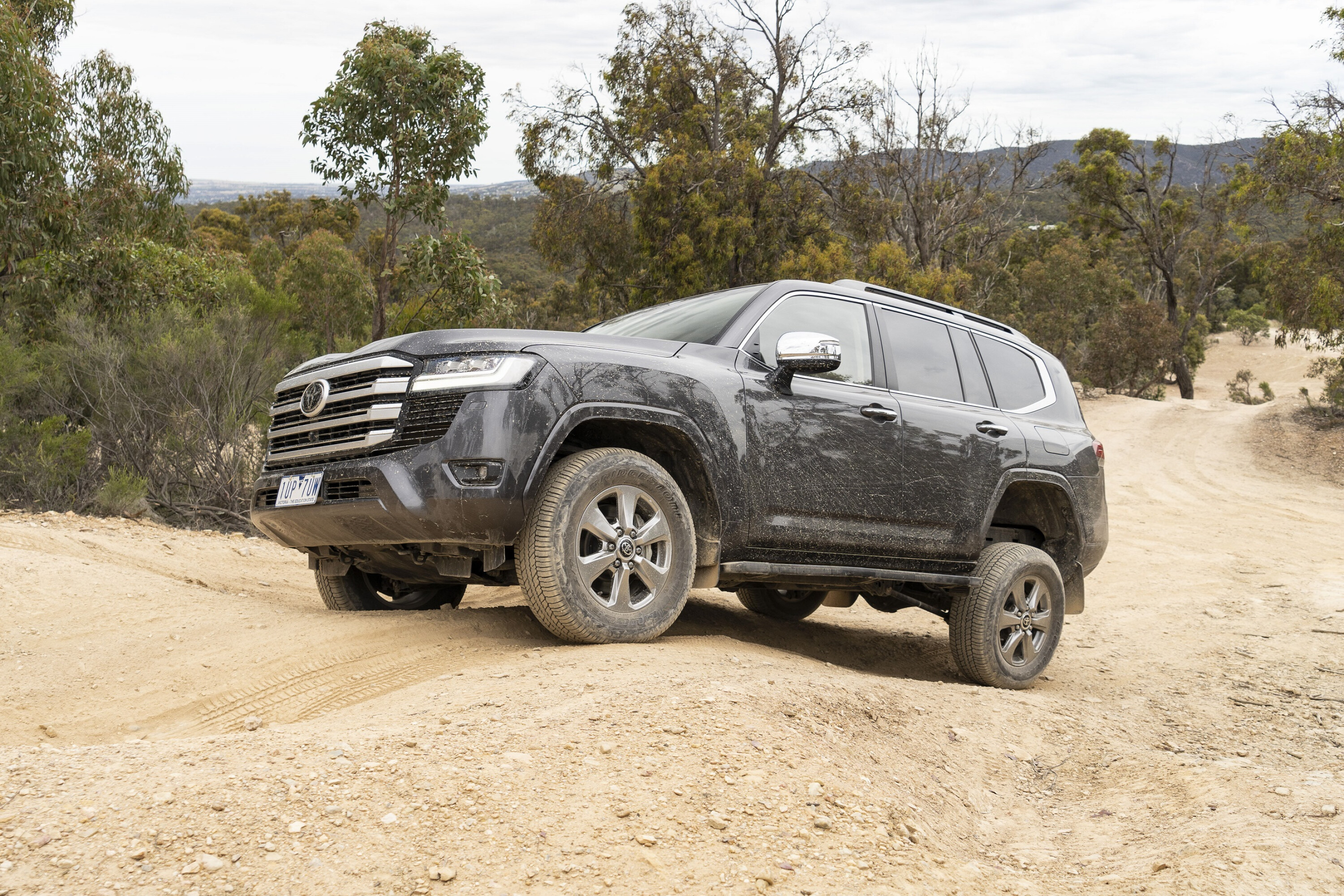
“The latest upgrades from Bendix provide additional braking performance for owners of large four-wheel drives such as the new 300 Series LandCruiser, along with several of the popular full-size American trucks,” said Ian Campbell, Bendix Product Manager.
“These models are already heavy in standard trim and, once they’re accessorised with bar work and the like, hundreds more kilograms of weight can quickly be added. Ultimate 4WD sports and performance disc brake rotors help restore the balance, providing more confident and safer braking.”
The rotors use specific metallurgy which increases rotor strength at elevated temperatures while also providing high wear resistance. This increases overall rotor durability and reduces the chance of warping when very hot. Other benefits include high-efficiency cooling pillars, which have been designed to channel cool air into the rotor, expelling hot air faster and increasing the resistance to thermal cracks.
Additional braking performance in this range is achieved through Bendix’s Diamond Tip Slot technology. This feature uses specially designed slots and V-shaped simples on the rotor surface to expel gasses, dirt and water more efficiently.