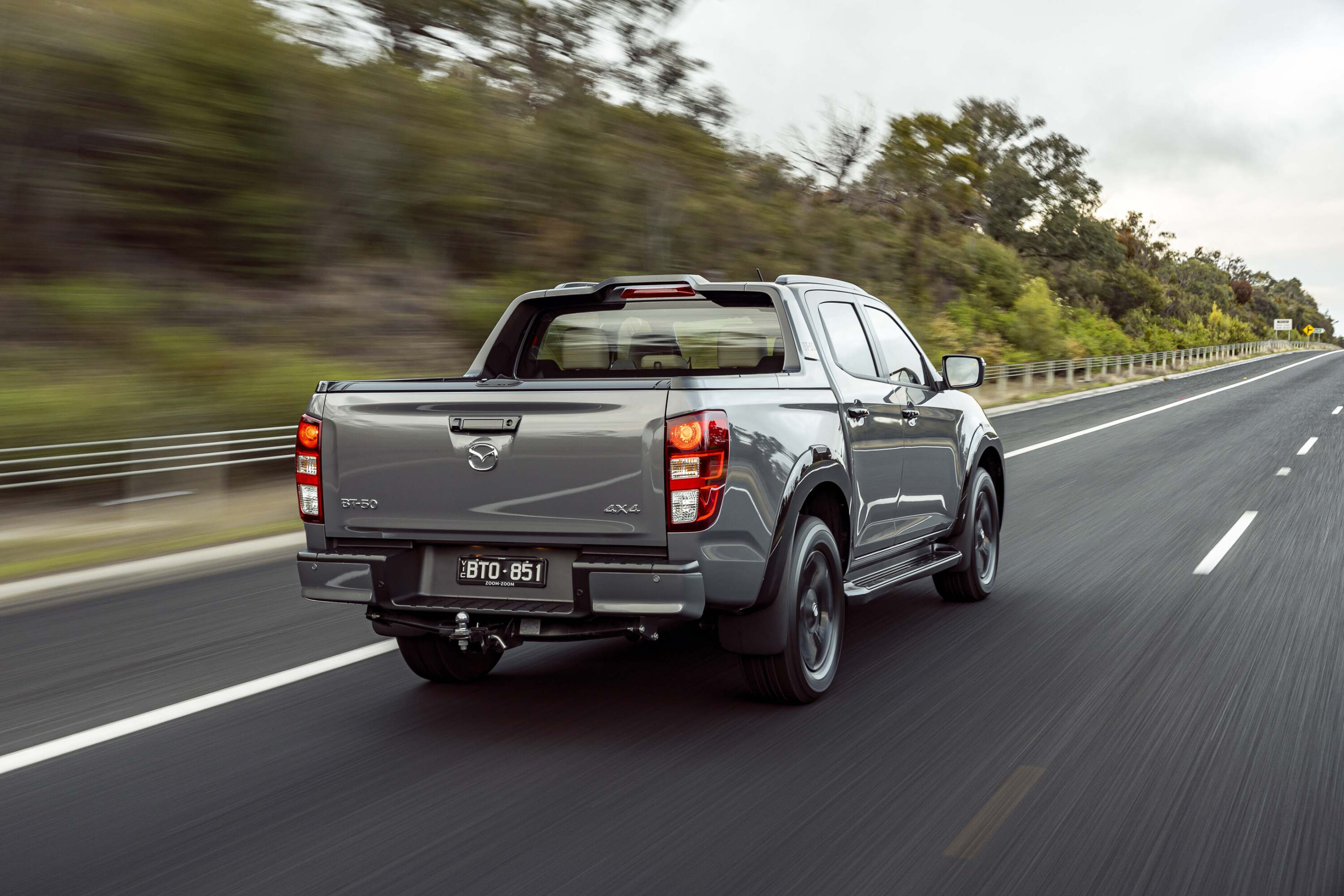
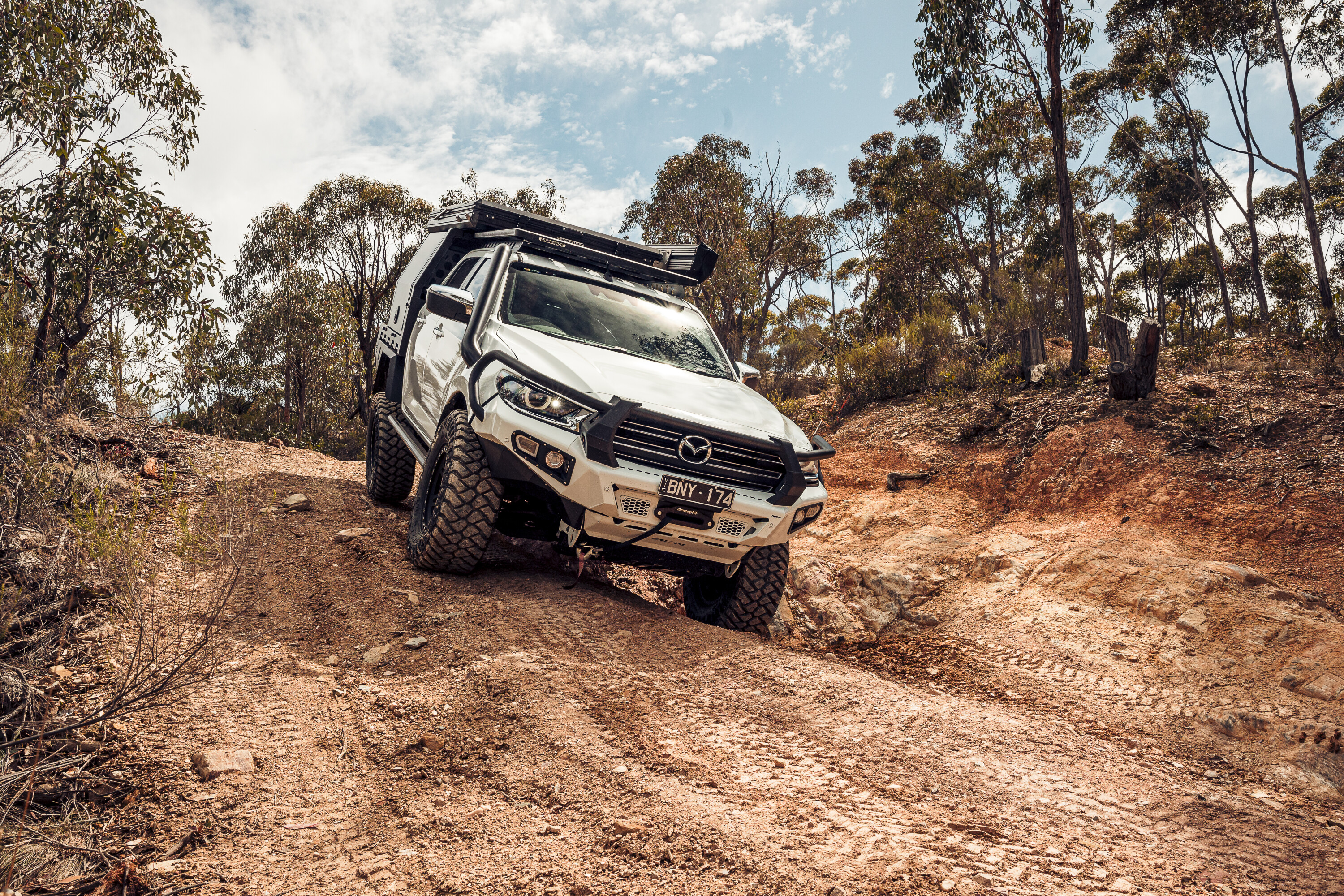
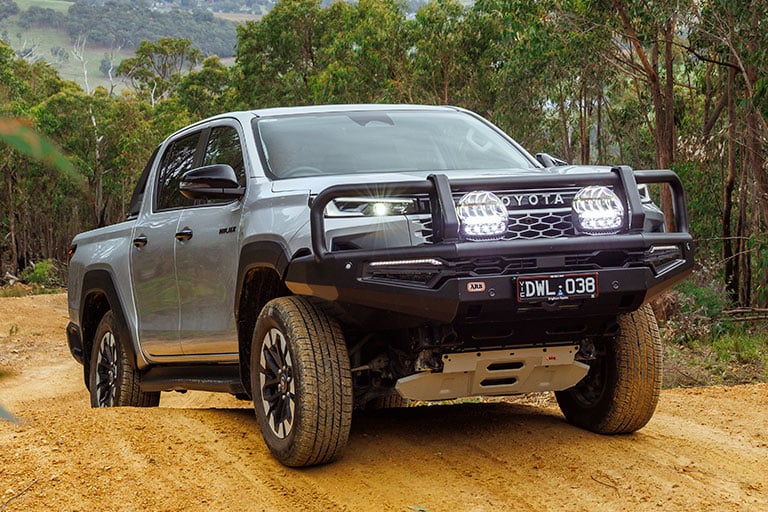
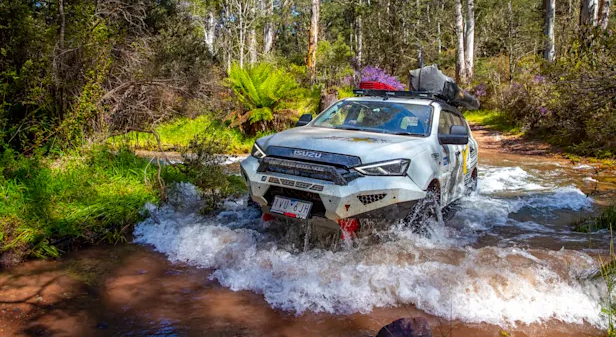
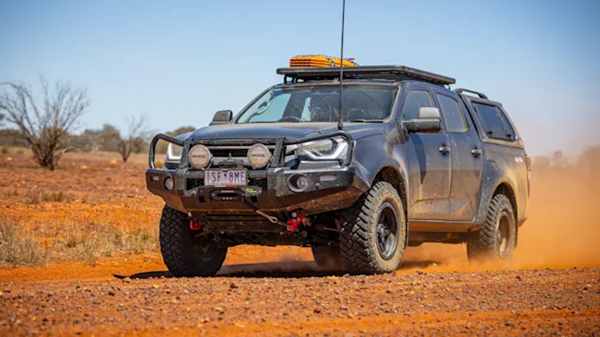
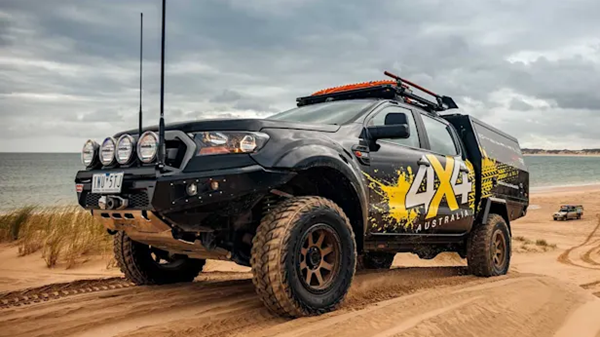
With the arrival of an updated Isuzu D-Max ute imminent, its Mazda BT-50 twin-under-the-skin is expected to receive similar upgrades.
While Mazda Australia remains tight-lipped about timing for the updated 2024 Mazda BT-50, it will likely follow closely behind the facelifted D-Max due imminently.
“You’ll have to wait and see on that one”, said Mazda Australia managing director Vinesh Bhindi when asked if the BT-50 will soon mirror updates applied to its D-Max donor car.
However, the BT-50 could feature new alloy wheel designs and more pronounced flared wheel arches for the SP variant – which has a similar treatment to the D-Max X-Terrain flagship model.
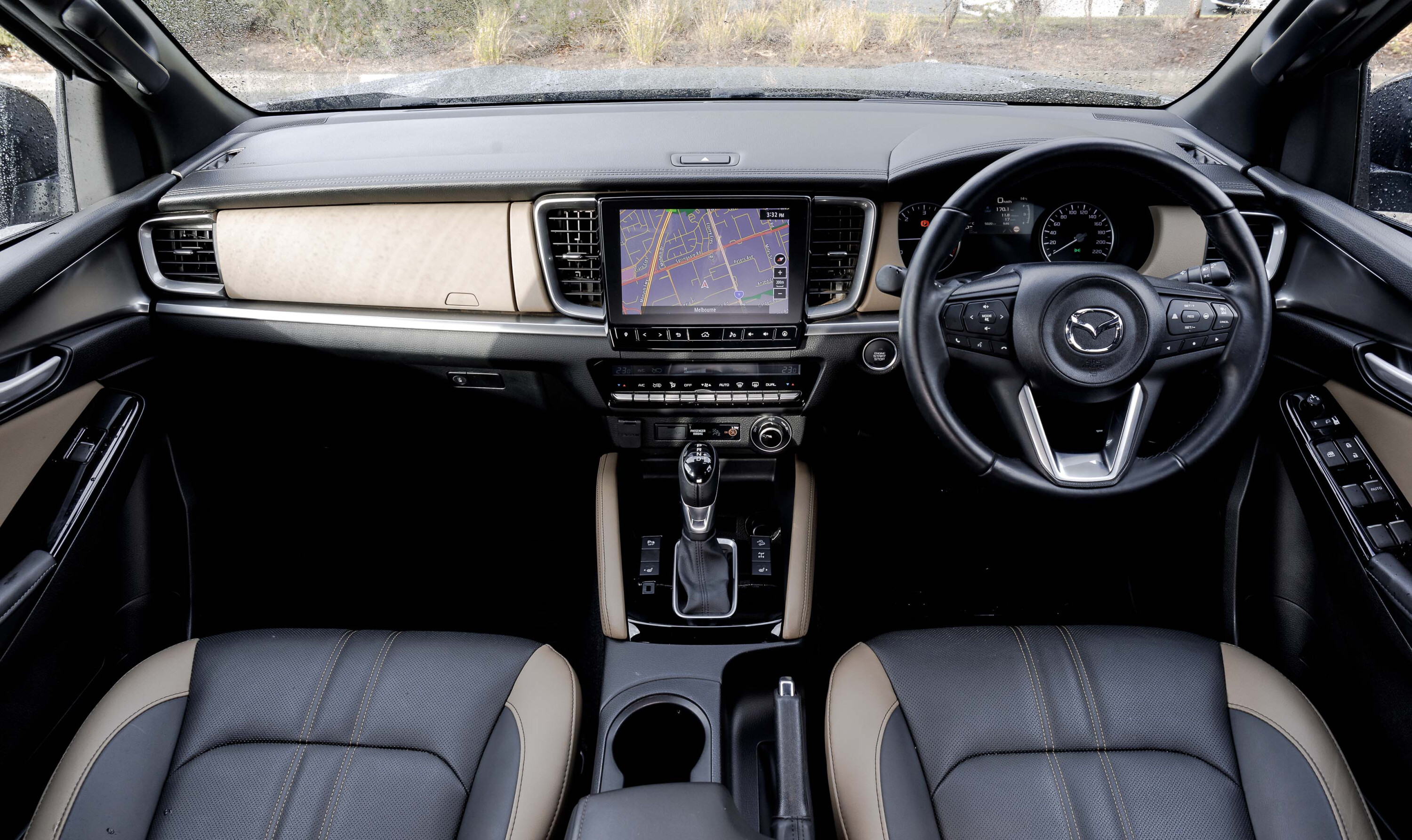
If the BT-50 were to follow the latest D-Max, it would receive wireless Android Auto, steering wheel-mounted paddle shifters, ventilated front seats, a 7.0-inch semi-digital instrument cluster (up from 4.2-inch), and front and rear USB-C charge ports (replacing USB-A).
The updated D-Max also features simplified, touch-sensitive shortcut controls for the infotainment system, and new volume and tuning dials to replace hard buttons.
First seen in the Isuzu MU-X off-road SUV, the BT-50 could also receive the same ‘rough terrain mode’ coming to the D-Max, which is said to sharpen the brakes and transfer torque to the wheels with the most traction when rock-crawling. It can also automatically engage the rear differential lock.
A “wider and more accurate” view has also been touted for the front camera module that enables the active safety technology to work, including autonomous emergency braking and adaptive cruise control.
1
The BT-50 is yet to receive a damped tailgate gas strut for tubbed ute models and automatic deactivation of the blind-spot and rear cross-traffic alerts when a trailer is connected, which were added to the D-Max line-up in Australia in 2022.
Ahead of the likely new model, Mazda Australia is currently offering 2023-plate examples of the BT-50 SP for $66,670 drive-away for ABN holders or $67,990 drive-away for private buyers.
This discounted price is less than the usual $68,510 before on-road costs, meaning the current national offer is around $6000 less than the standard drive-away price once on-road costs are added to the BT-50 SP’s recommended retail price.
The D-Max X-Terrain, the most equivalent model to the BT-50 SP, is permanently offered for $64,990 drive-away nationwide – less than its $67,500 recommended retail price.
It is unclear if Mazda plans to offer the SP or other BT-50 variants at a similar discounted price once 2023-built stock is cleared.
“No offer is permanent, but yes, there is a pretty good offer [on BT-50 SP] at the moment,” said Bhindi.
The Isuzu D-Max was Australia’s third most-popular vehicle in 2023 (31,302 sales), while the Mazda BT-50 (17,526) was the fourth best-selling ute – behind the Ranger (63,356), HiLux (61,111) and D-Max – and the nation’s 13th most-popular car.
As with most product upgrades, expect price increases for the updated 2024 Isuzu D-Max and 2024 Mazda BT-50 ute twins when both models arrive in Australia.
Get your 4×4 in the next issue of 4X4 Australia magazine by sending a photo to our Facebook page. Plus, we’ll publish it online! Here are six of the best from January 2024.
2017 Jeep JK Wrangler Sport
1
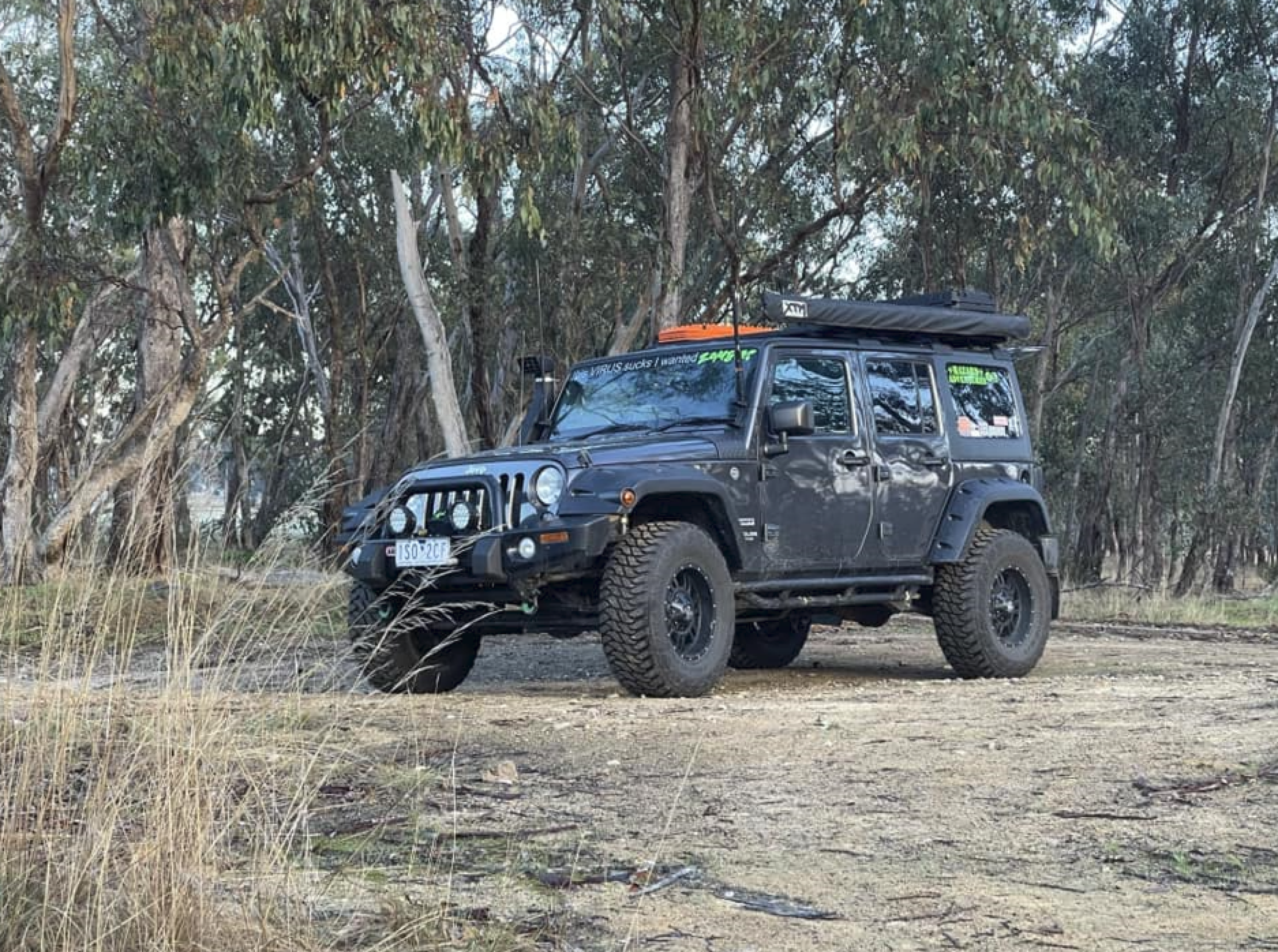
It’s the 2.8-litre diesel and it now has a 2.5-inch TeraFlex lift, with Falcon shocks sitting on 35s. Other mods include an AEV snorkel; ARB front bar with winch; rear drawer fridge; a flat platform for the dogs; Rhino-Rack roof rack with awning and Maxtrax storage. The best place I’ve taken it would be camping just out of Mitta Mitta, or the local tracks out near Lima, Boho and Strathbogie – Aaron Blanchard
2018 Nissan Navara NP300
1
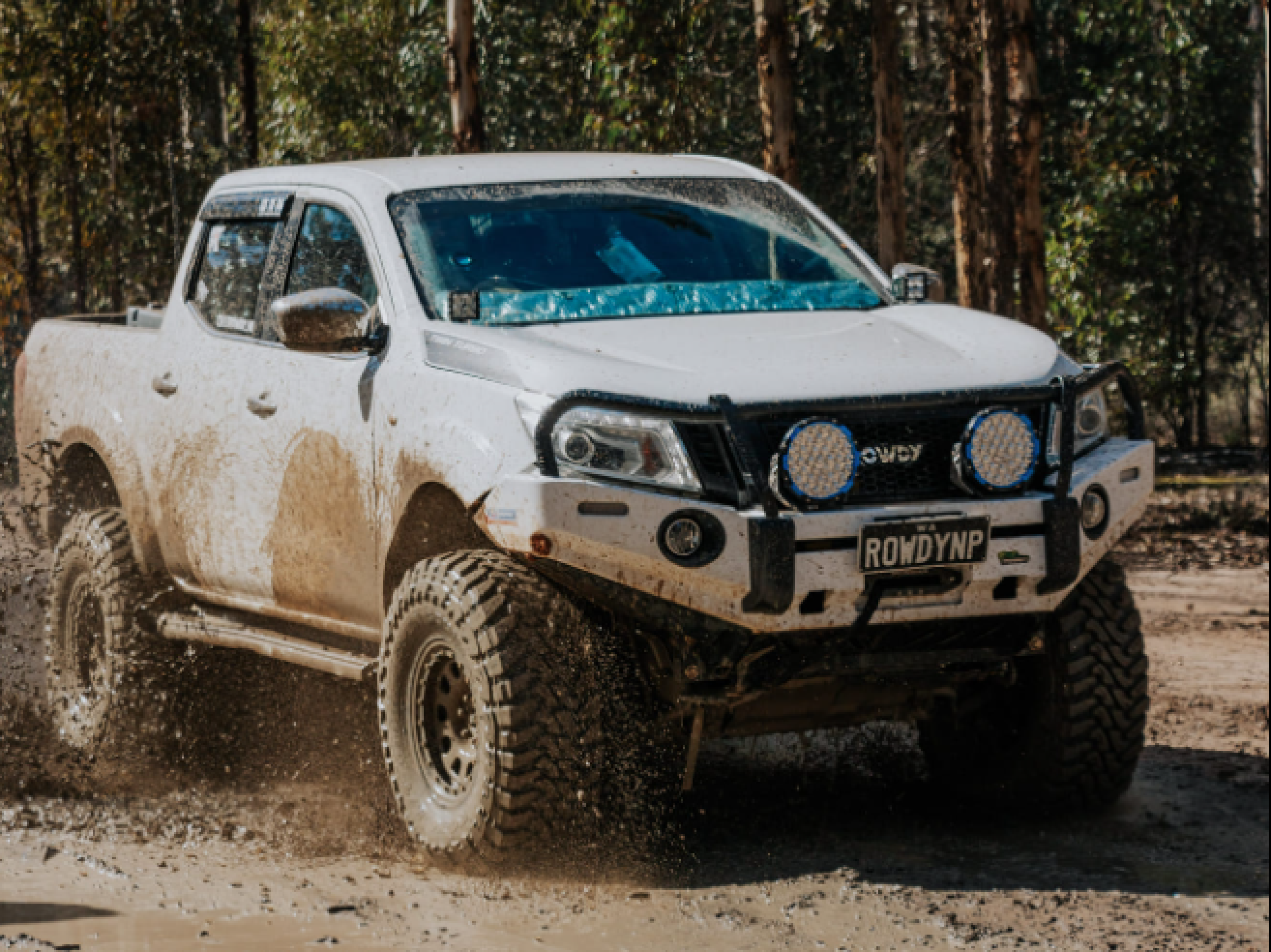
The Navara has a four-inch Superior Engineering lift with remote-res shocks and a two-inch body lift. It is running Toyo Open Country 35-inch muddies; an Ironman 4×4 Deluxe bullbar partnered with an Ironman winch with a matty_flexy79 custom grill insert and Stedi Type X pros. Inside we have some custom embroidered ‘ROWDYNP’ Superfit seat covers; a Extnix 10-inch head unit; an engraved ROWDYNP gear shifter; and a tyre pressure monitoring system from OBD2 Australia. It’s also equipped with a DPF delete and PPD Performance three-inch turbo back exhaust.
We mostly explore tracks such as Julimar, Brunswick, Mundaring power lines, Lancelin, Wilbinga and Waroona Dam. The best spot in terms of touring would have to be a trip we did this year to Shark Bay, around to Steep Point and throughout the national parks – Neesh Truscott
2000 Mitsubishi Triton V6
1
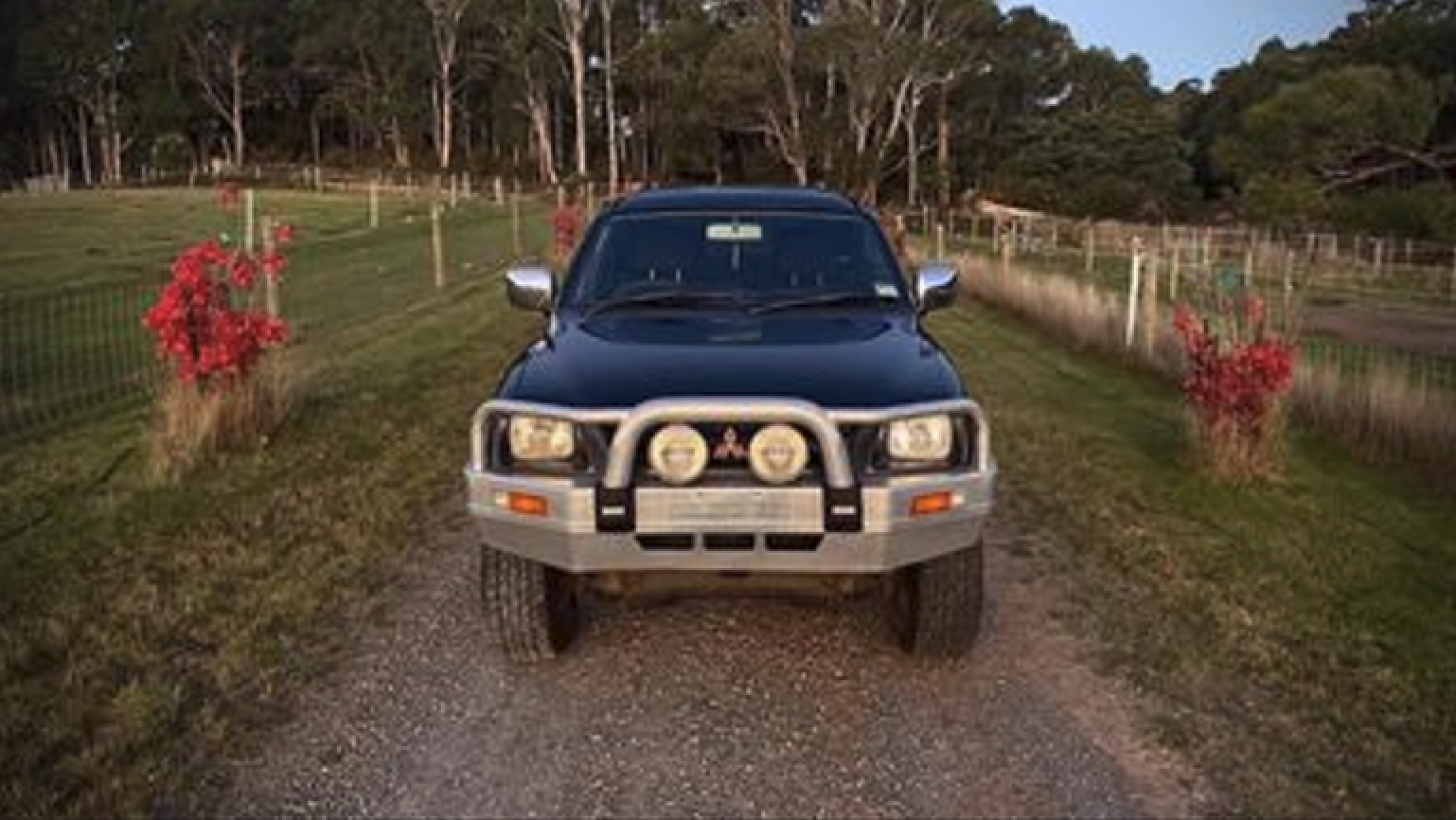
It has a genuine Mitsubishi bullbar, Carryboy canopy and liner, JRP temperature gauge and Lightforce spotlights. The best place it has been would have to be Stanley, Tasmania – Dylan Nichols
2011 Ford Ranger PK XL
1
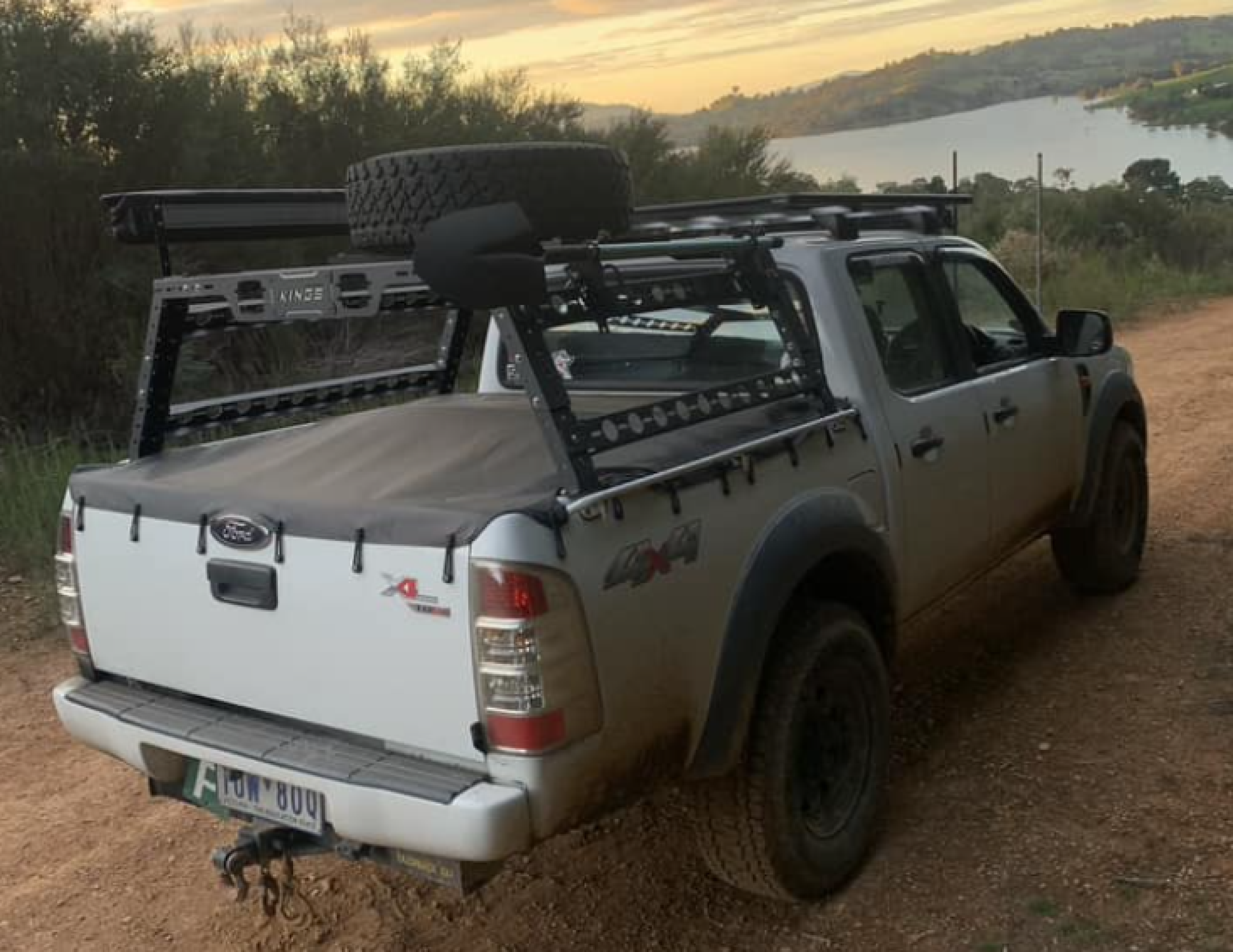
It has a three-inch stainless straight-through exhaust; 32.5-inch tyres; 16-inch Sunraysia wheels; and it’s currently getting a stainless snorkel put on. I’ve set the rig up for touring and camping, so the rear seats have been put down and a full setup has been done with a dual battery system, fridge, and storage system for food. In the rear I have full running water off a 50-litre Boab tank; full drawer system with a cooking setup that allows me to cook off my Weber; Kings tub rack with a custom-fabbed spare tyre holder; nudge bar with UHF antenna; and two LightFox LED light bars to finish it off.
I’ve taken it out for a few local 4x4ing sessions, and a few longer touring trips with family and friends down to Eildon and Goughs Bay where this photo was taken just before a night run tackling a few tracks. It’s currently getting ready for a trip down to SA, for a beach-driving session from Robe to Beachport – Lucas Caruso
2013 Toyota LandCruiser 200 GXL
1
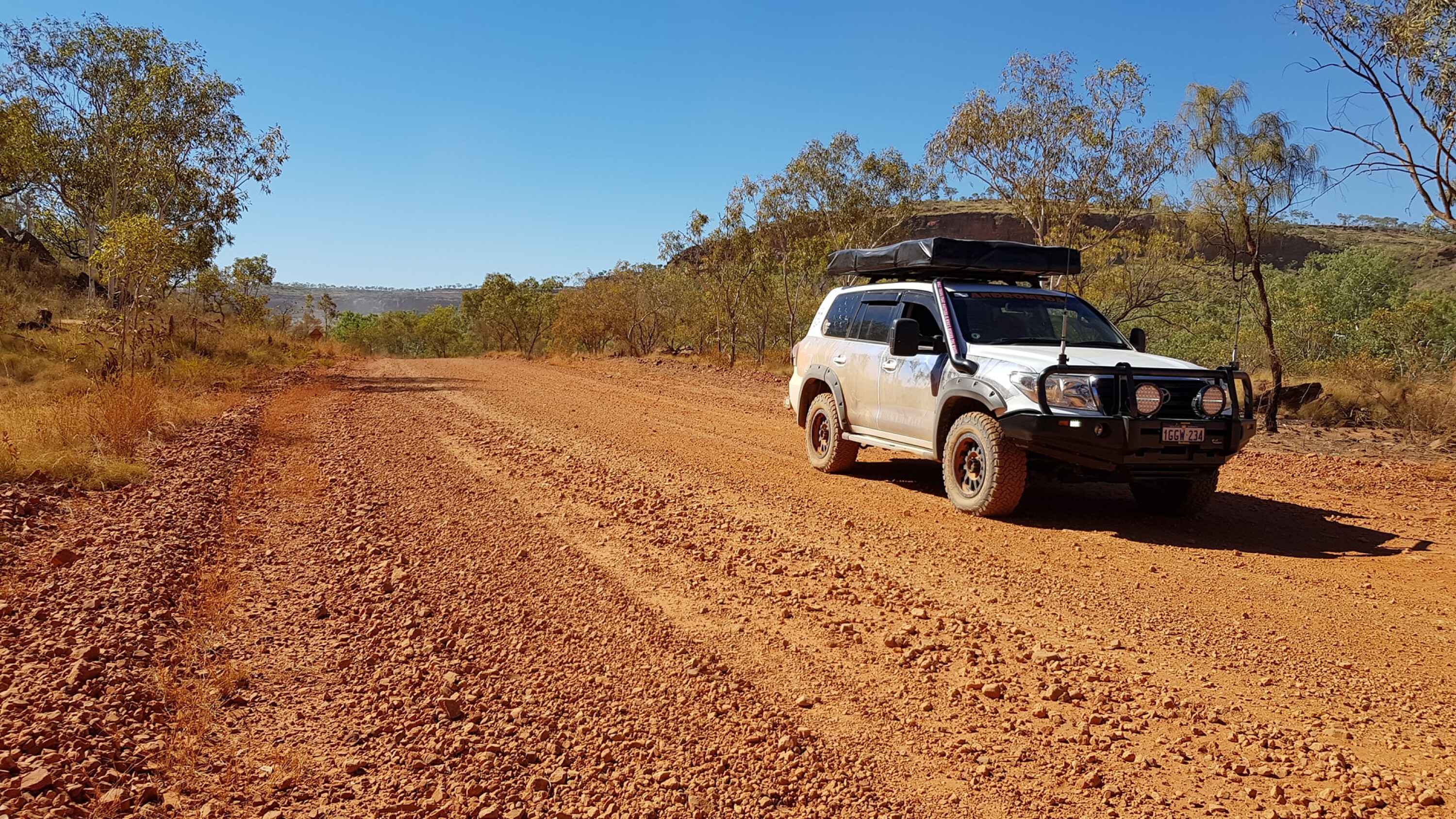
Heaps of mods and money spent and she goes incredibly well. It has a four-inch stainless steel snorkel and airbox; four-inch Manta Sports exhaust; engine and transmission tune; 18-inch rims and 33-inch KO2 tyres; Ironman Deluxe bullbar; ORS drawers; Waeco fridge; cargo barrier; overhead roof console; twp UHFs; 180-litre long-range tank; custom rear spare wheel and twin jerry can holders; Bush Barriers; iDrive; Rola Rack bars; upgraded Ironman spotties and lightbar; rear smaller lightbar; five Anderson plugs throughout; side flares; and a RTT which only goes on for Top End travel (because crocs).
When towing I stay on the blacktop, otherwise I take every dirt road possible heading back towards the house. The best places I’ve taken it? I don’t even know the name of the road. It was somewhere deep in the NT – three days of dirt roads and I only saw three cars/people. I have seen and experienced so much in this beast! I can’t wait to do more – Debs Benedetto
2021 Toyota LandCruiser 79
1
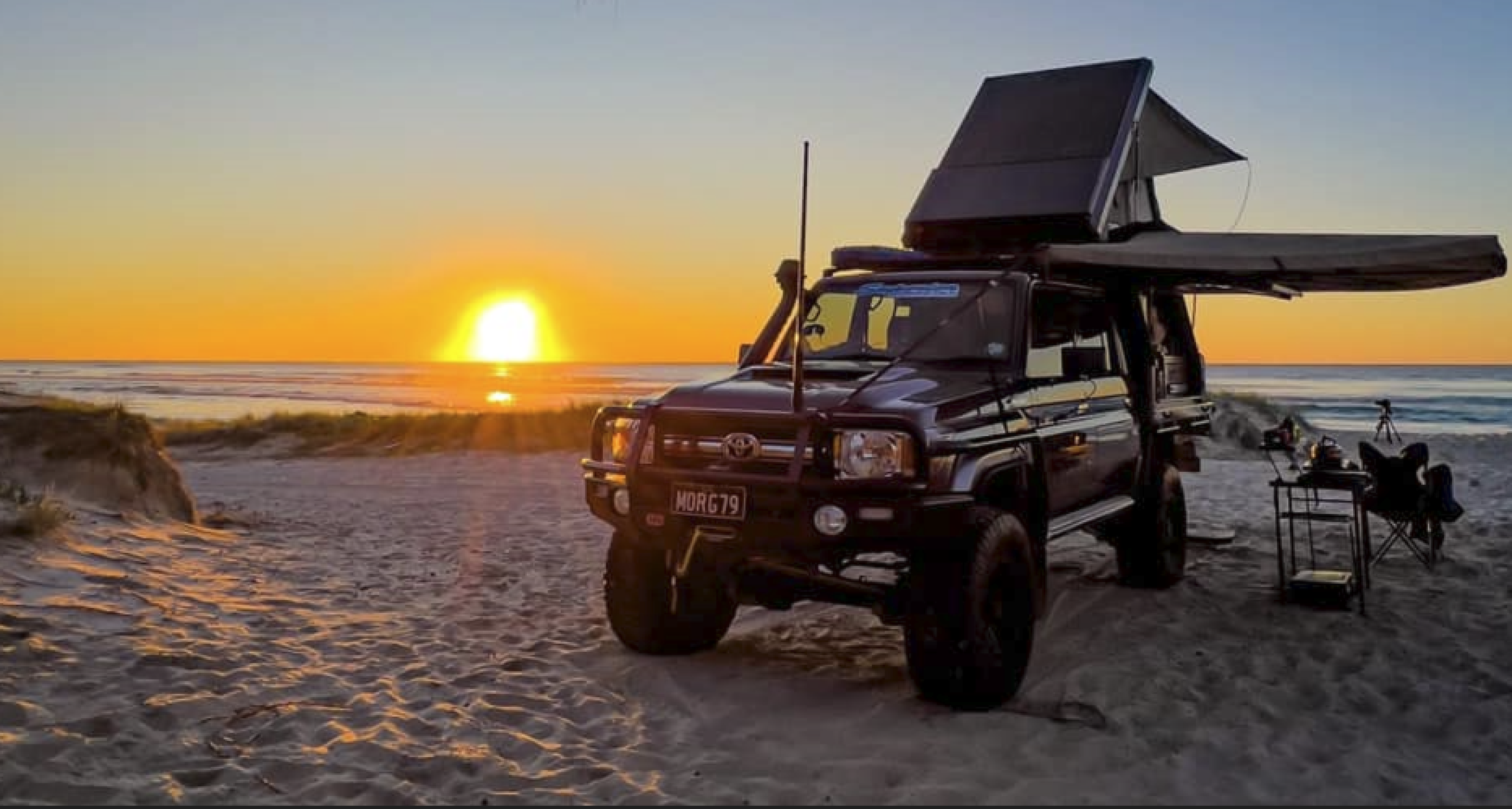
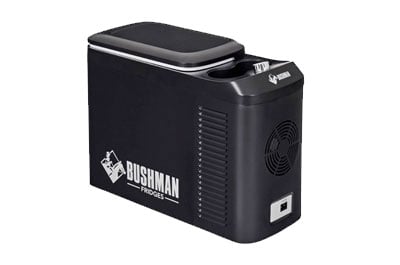
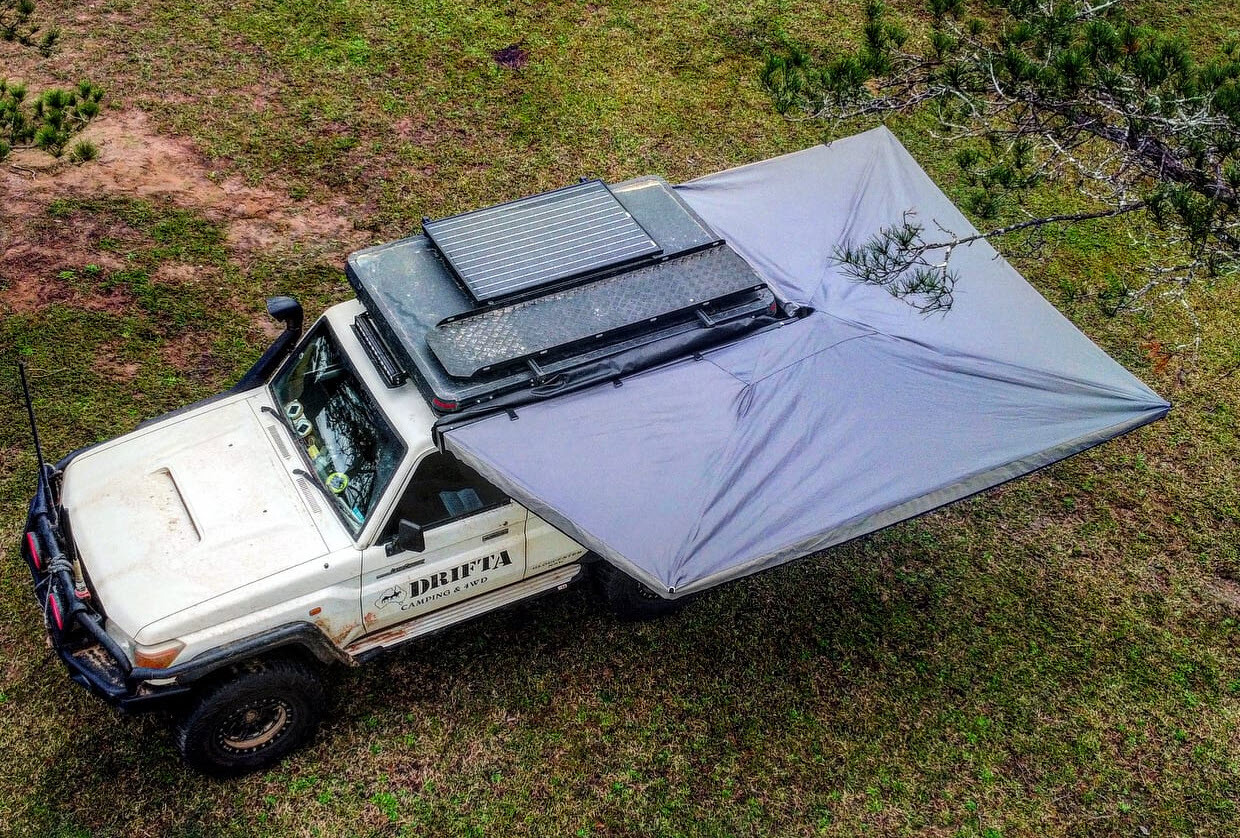
Equipment includes a Superior Engineering Outback Tourer bolt-in four-inch coil conversion with 35s, 2.5 remote res shocks and 4T GVM; Boss Aluminium tray and canopy; 70-litre water tank; Bush Company AX27 rooftop tent and 270 XT Max awning; 140W solar panel with REDARC BCDC1240D; Invicta 100Ah lithium battery; 130-litre Bushman upright fridge; 12,000lb Bushranger winch; and a north/south Department of the Interior roof console and centre console.
We live on the Fraser Coast and are pretty spoiled when it comes to locations we can hit regularly such as K’gari/Fraser Island, Double Island, Kinkuna… however, the Victorian High Country would have to be the top spot so far – Josh Morgan
Call me Ishmael, or don’t, it’s not really the point.
What matters is that 173 years ago, under the romantic but impractical glow of candlelight, old Herman Melville, quill in hand, embarked on a literary journey that would leave a mark as enduring as the oil stains of a Land Rover on every driveway it parked.
His opening volley in a gargantuan 200,000-word epic, Moby Dick, was as simple as it was profound. It wasn’t just about a bloke chasing a rather large, moody fish. No, it was the ultimate tale of obsession, a man versus nature saga, where Captain Ahab, that madman at the helm of the Pequod, throws caution to the ocean winds in his quest to nab Moby Dick, his own personal Mt Everest.
1
Fast forward to today, on the other side of the Pacific, Ian Stuck has been writing his own version of Melville’s epic.
After toying with an array of mechanical leviathans, from beefed-up Amarok’s to an LC79 so over the top we shot it for the cover of this very mag, Ian’s quest for automotive nirvana might just have reached its peak. Like Ahab, he’s been relentless, unyielding, in his pursuit of the ultimate machine. And he might have done it.
The white beast he’s put together isn’t just another tourer; it’s a testament to man’s unyielding desire to conquer the unconquerable, to build something so perfect, it would make even Melville put down his quill and stare in awe.
In a world where most are content with mediocrity, Ian, like Ahab, isn’t just chasing dreams, he’s lassoing them and dragging them into reality.
1
Making big bigger
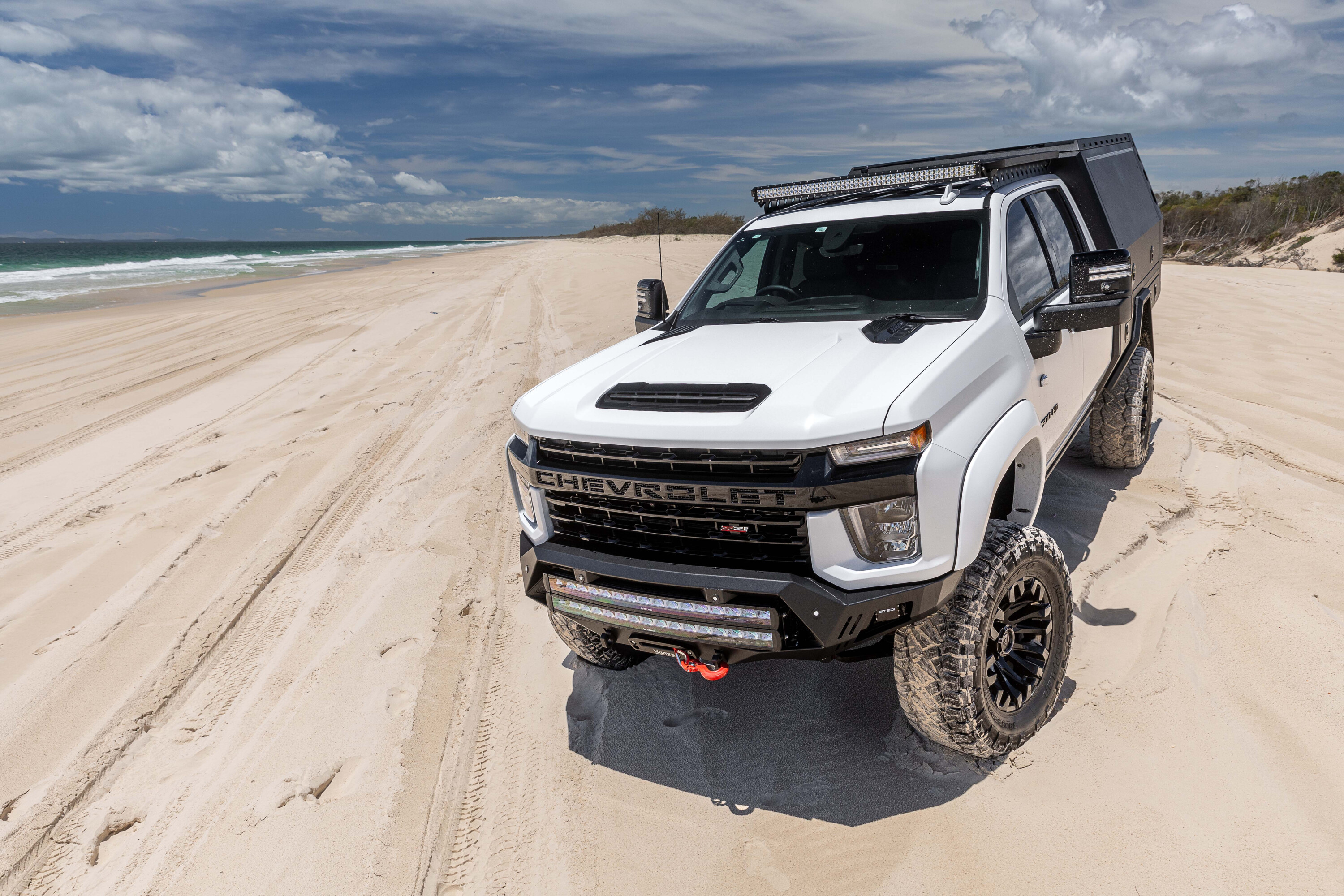
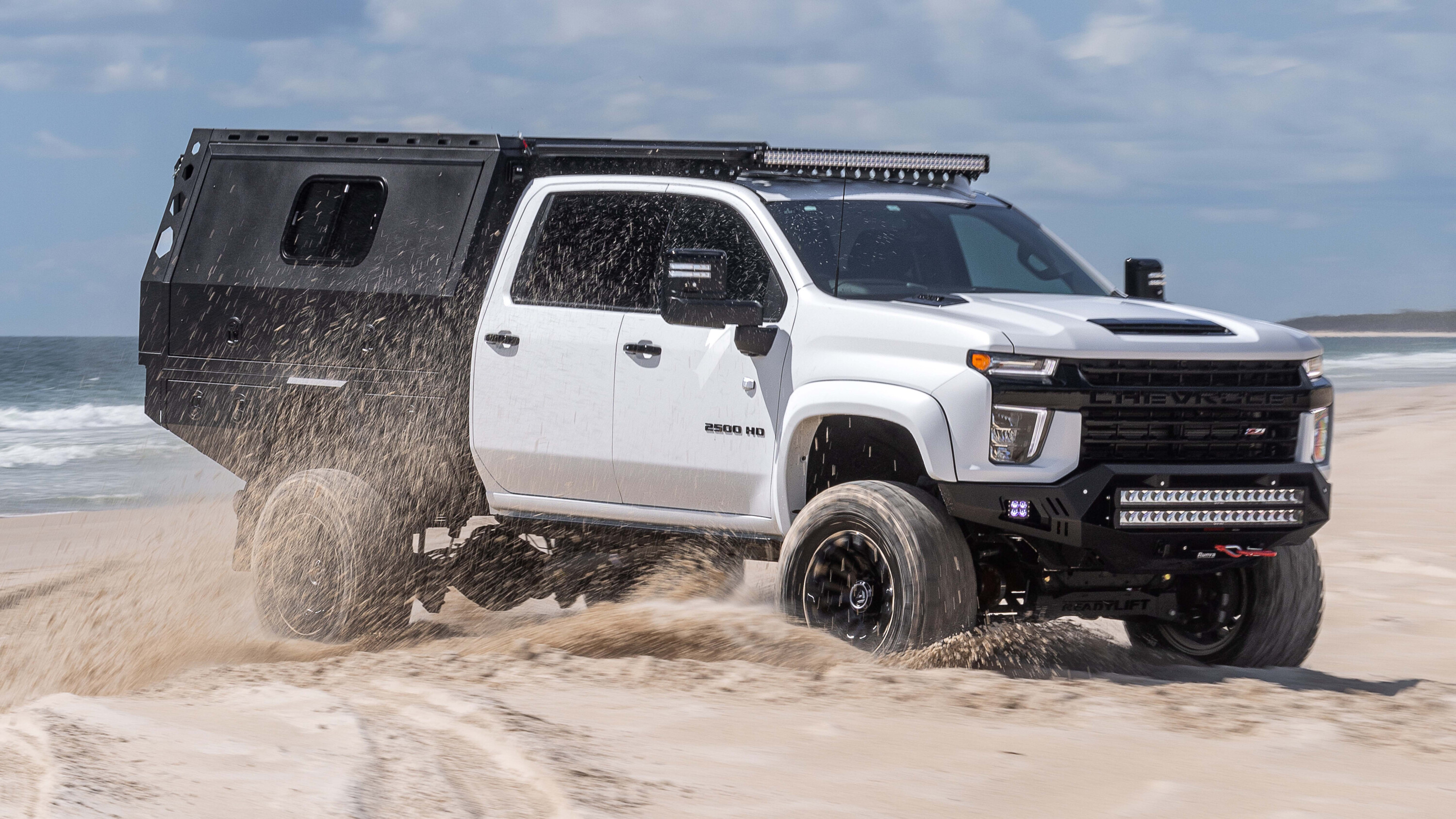
The 2023 Silverado 2500 you’re looking at has more than just its colour in common with the mythical Moby Dick.
It’s roughly the same size, too. At 6386mm long, 2263mm high, and tipping the scales at 3742kg in completely stock form, the Silverado 2500 is an absolute beast before you do so much as fit a set of floor mats.
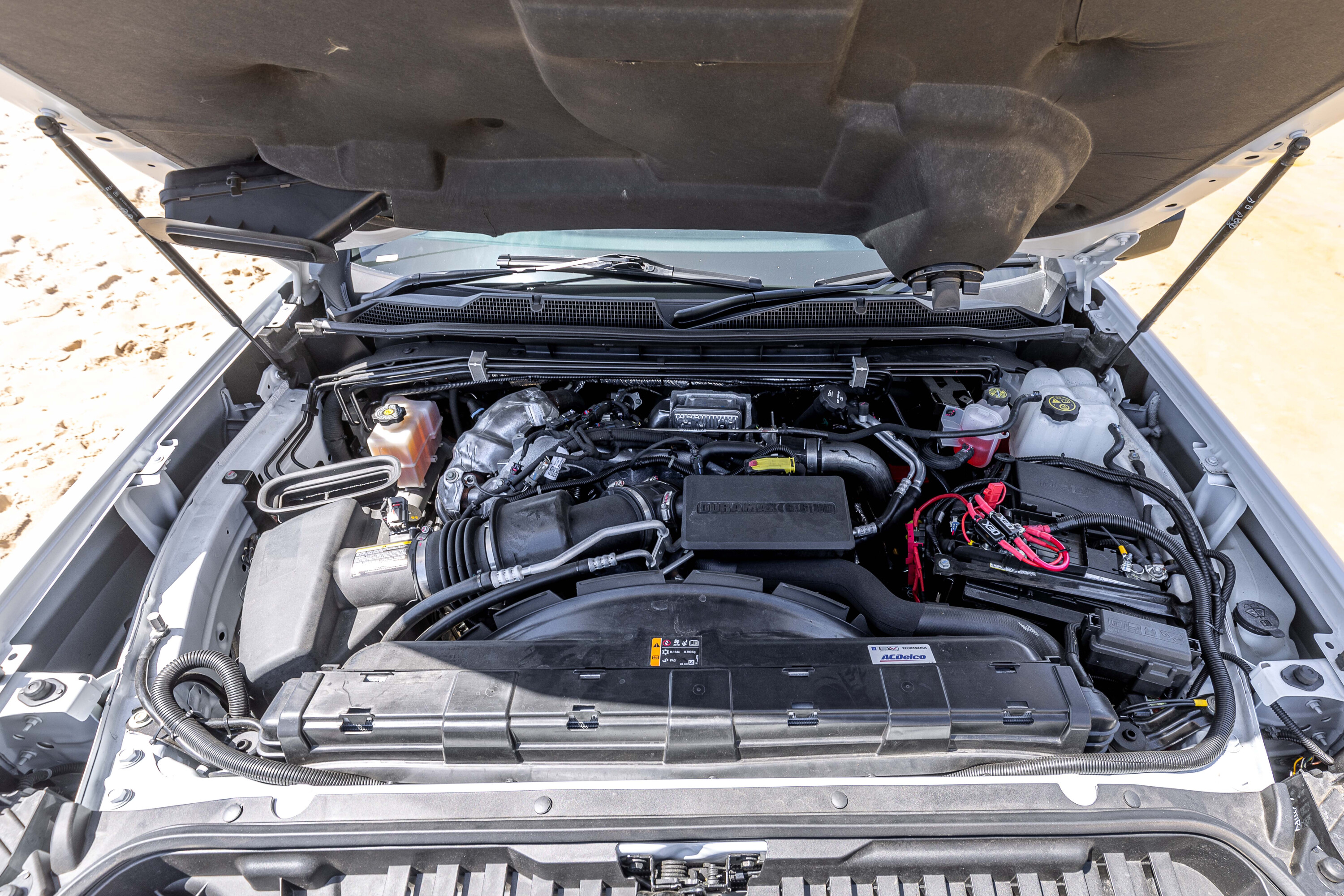
Don’t let its size fool you though; while a Silverado may not be the nimblest beast on either side of the Pacific, it’s certainly one of the most powerful. Under the bonnet, a 6.6L V8 turbo-diesel Duramax engine punches out 332kW at 2800rpm and an eye-watering 1234Nm of torque at just 1600rpm, backed up by a 10-speed auto.
1
It fires that drive front and rear through driveshafts the size of telegraph poles into diffs the size of anchors.
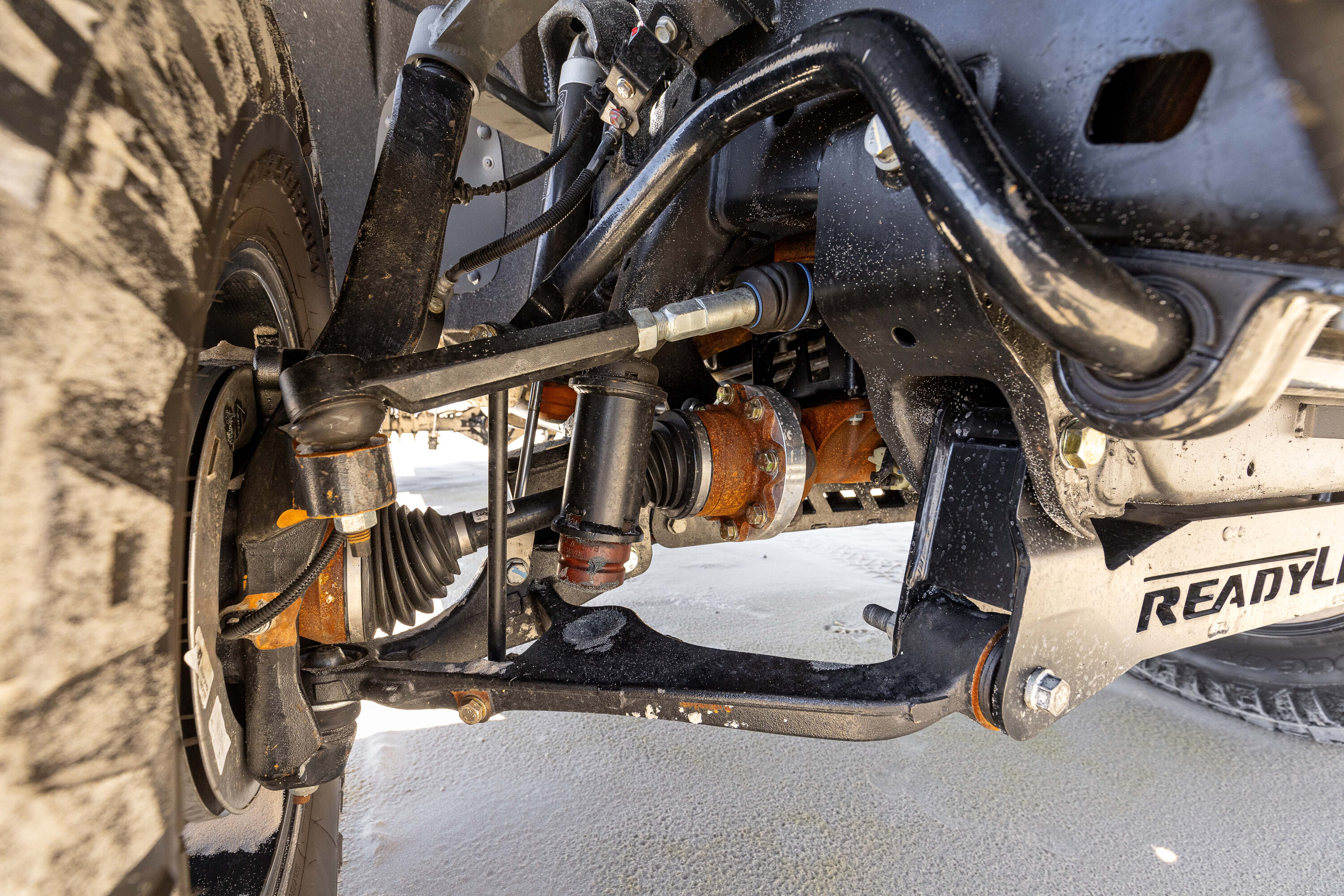
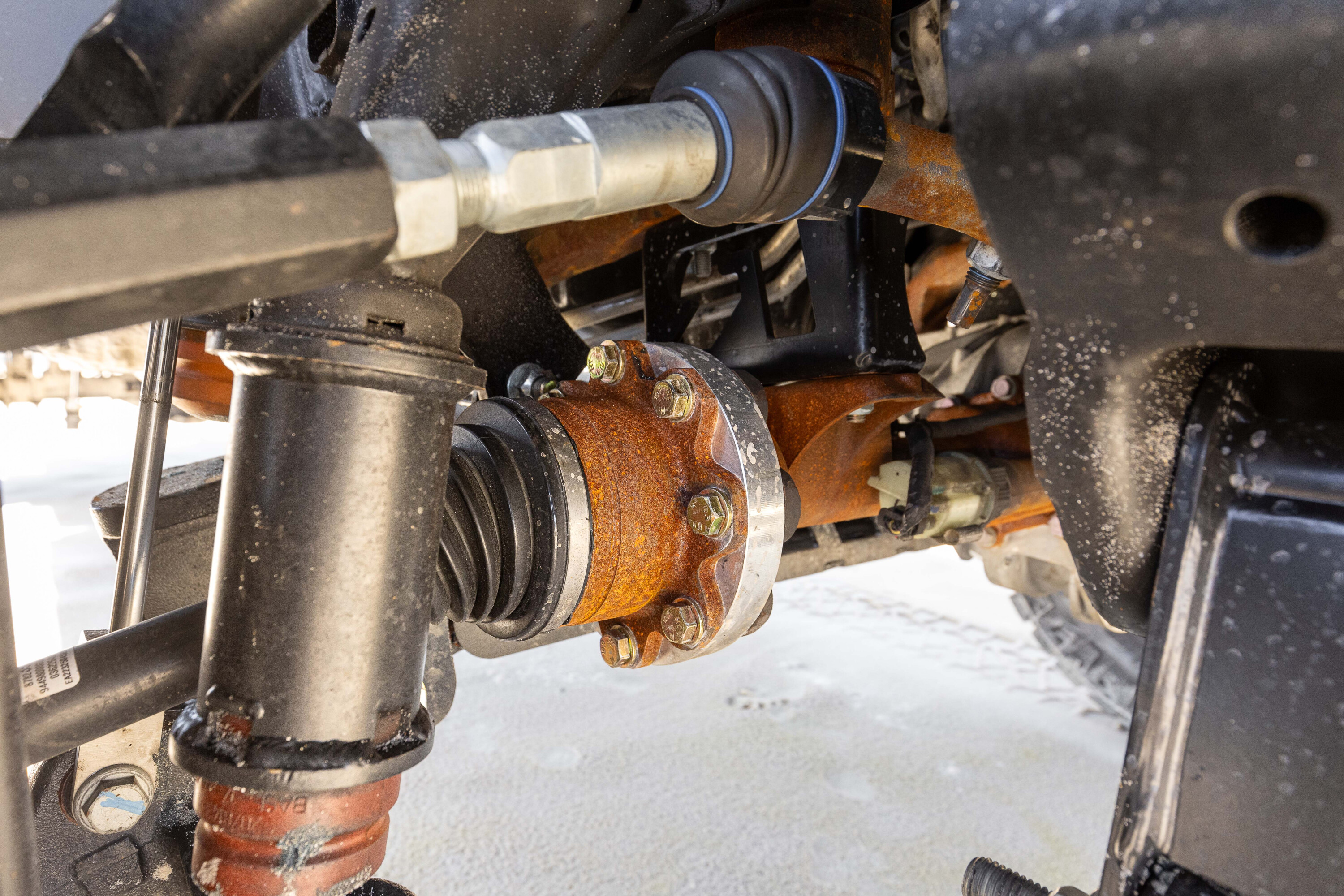
Up front, the independent suspension now sits the Silverado’s nose a full 8-inches higher thanks to a comprehensive lift kit from US-based Readylift. The kit features a diff drop to correct the CV angles, 5mm steel plate cross members for lower mounting of the control arms, tube steel upper control arms with beefed-up ball joints, and even fabricated steel spindles to round out the package.
While it was on the hoist for fitting up of the hard parts, AMVE 4X4 also slotted in a set of Rough Country heavy-duty forged tie-rod ends and a set of monotube Falcon 1.1 shocks.
1
A helper airbag setup was also given the nod from Boss Air Suspension on the Gold Coast
Down the back a set of 5-inch fabricated lift blocks give the Silverado a serious boost in height, with a set of Readylift leaf springs rounding out the package to a matching 8-inch over stock; that’s a huge 203mm ride height increase in Aussie numbers.
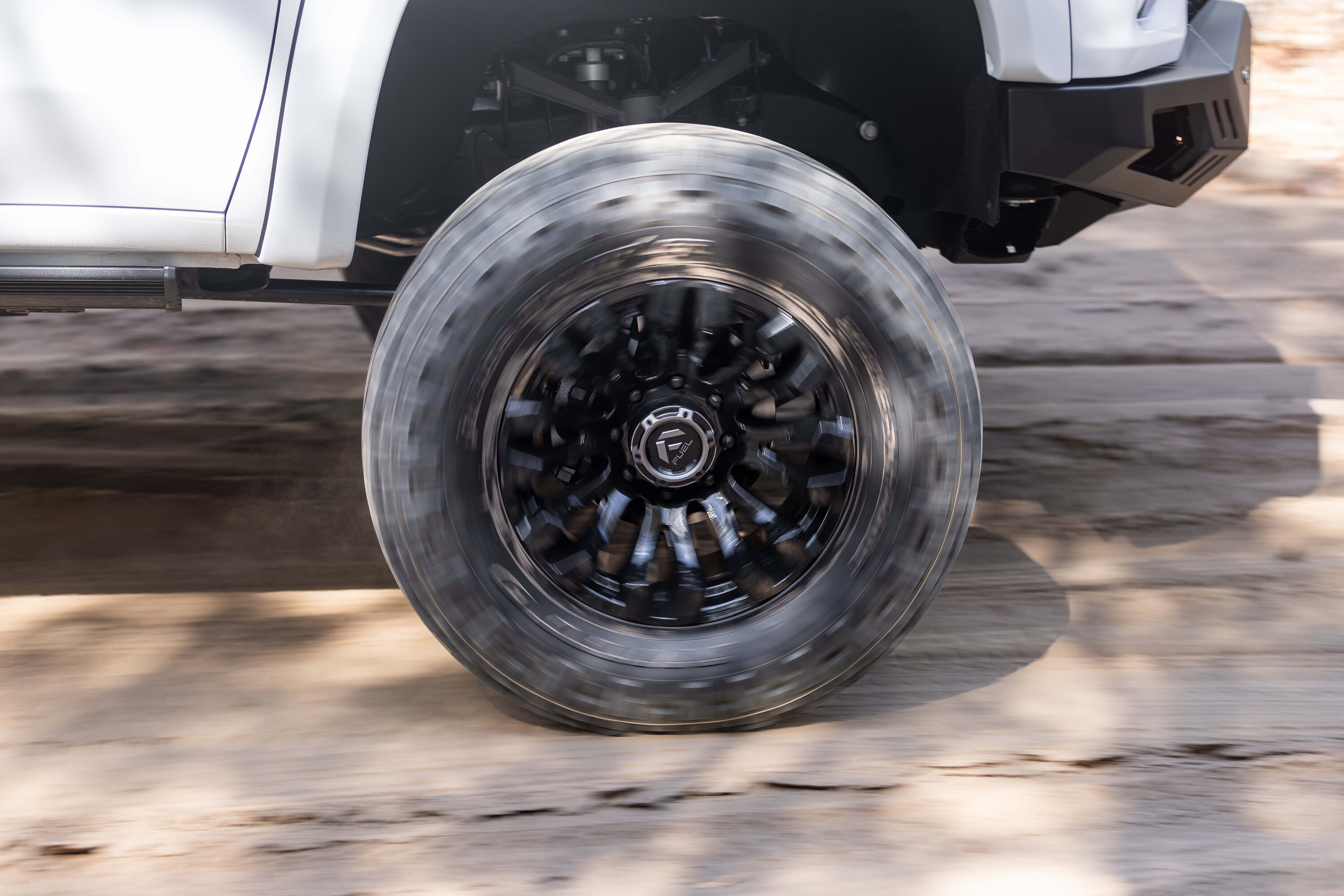
To help with the varying loads of touring versus play, a helper airbag setup was also given the nod from Boss Air Suspension on the Gold Coast. The combination has given Ian enough space to shoehorn in a set of Nittos Ridge Grappler tyres punching in at a huge 38-inch diameter and 13.5-inch width.
They’re wrapped around 20 x 10-inch Fuel Quake alloys with a -18 offset adding a little salt to the Silverado’s wheel track.
1
Light it up
Of course, a lift and some wheels and tyres aren’t enough to have you gracing the pages of 4X4 Australia, so Ian’s Silverado has copped some serious exterior upgrades too.
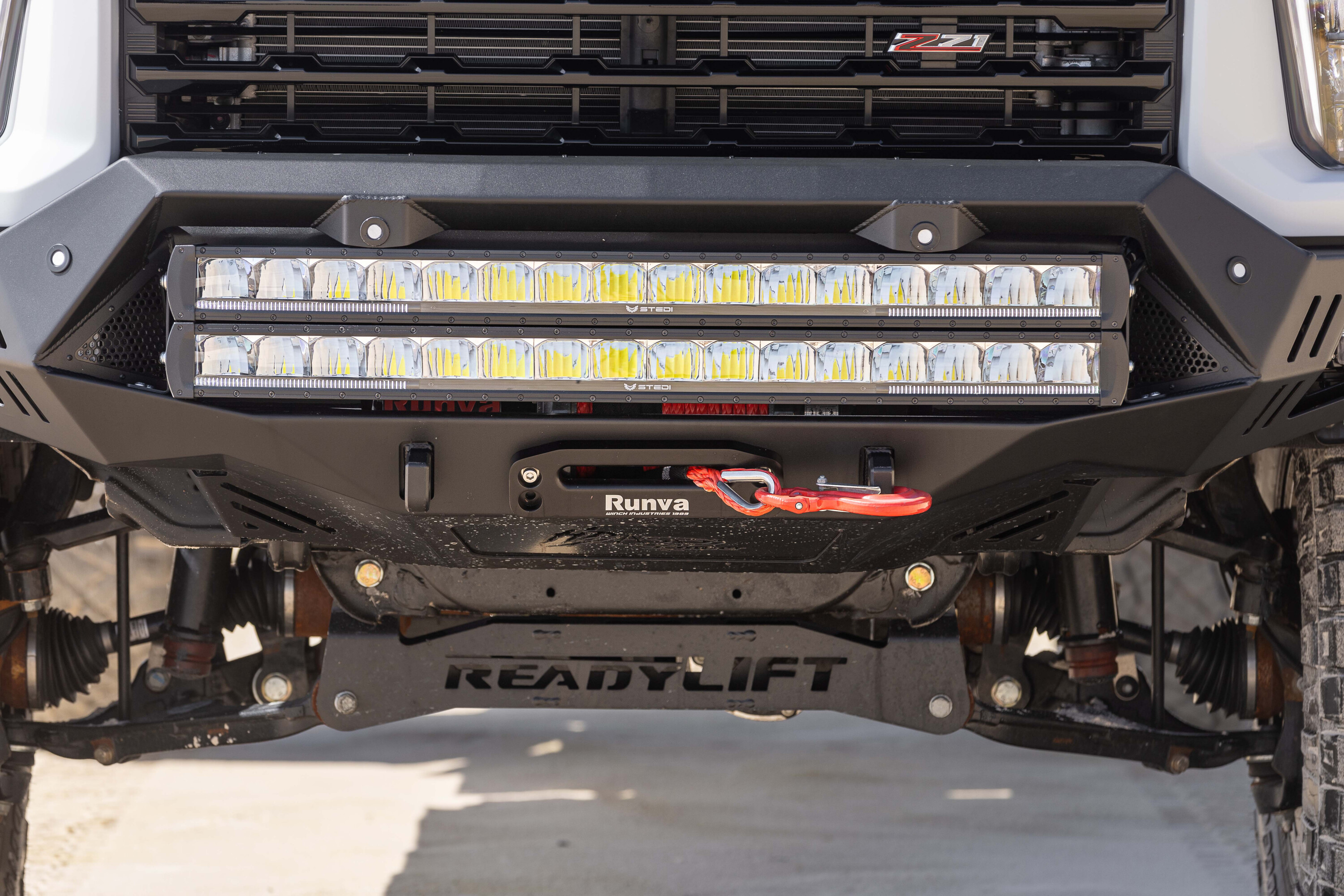
At the pointy end of the harpoon, an Addictive Desert Designs Bomber HD front steel bumper not only armours-up the Chevy’s soft bits but provides a mounting place for enough lighting to turn the North Start to dust. Mounted front and centre on the bar itself are two Stedi 40-inch curved dual-row LED ’bars.
Matching Stedi LED cube lights fill the side pockets as well. Hiding behind the lights is a Runva 12,500lb winch.
1
Should the combined 40,000-plus lumens of front-facing LEDs not get the job done, there’s another 23,000 lumens worth up top with a 50-inch double-row LED ’bar from Stedi finding a home mounted to the front of a Rhino-Rack Pioneer Platform.
Moving down the flanks and there’s a trio of goodies ensuring the body looks oh-so-clean for years to come. A set of colour-matched fender flares from Bushwacker keeps the salt and mud spray inside the wheel arches.
A full satin clear PPF wrap from Slick Azz protects the paint itself. There’s even AMP Research Extreme powered drop-down side steps that protect the sill panels while giving easy access to the Chevy’s hoisted interior. After all, it’s hard to look adventurous carrying a step ladder around to get into your ride.
1
The back story
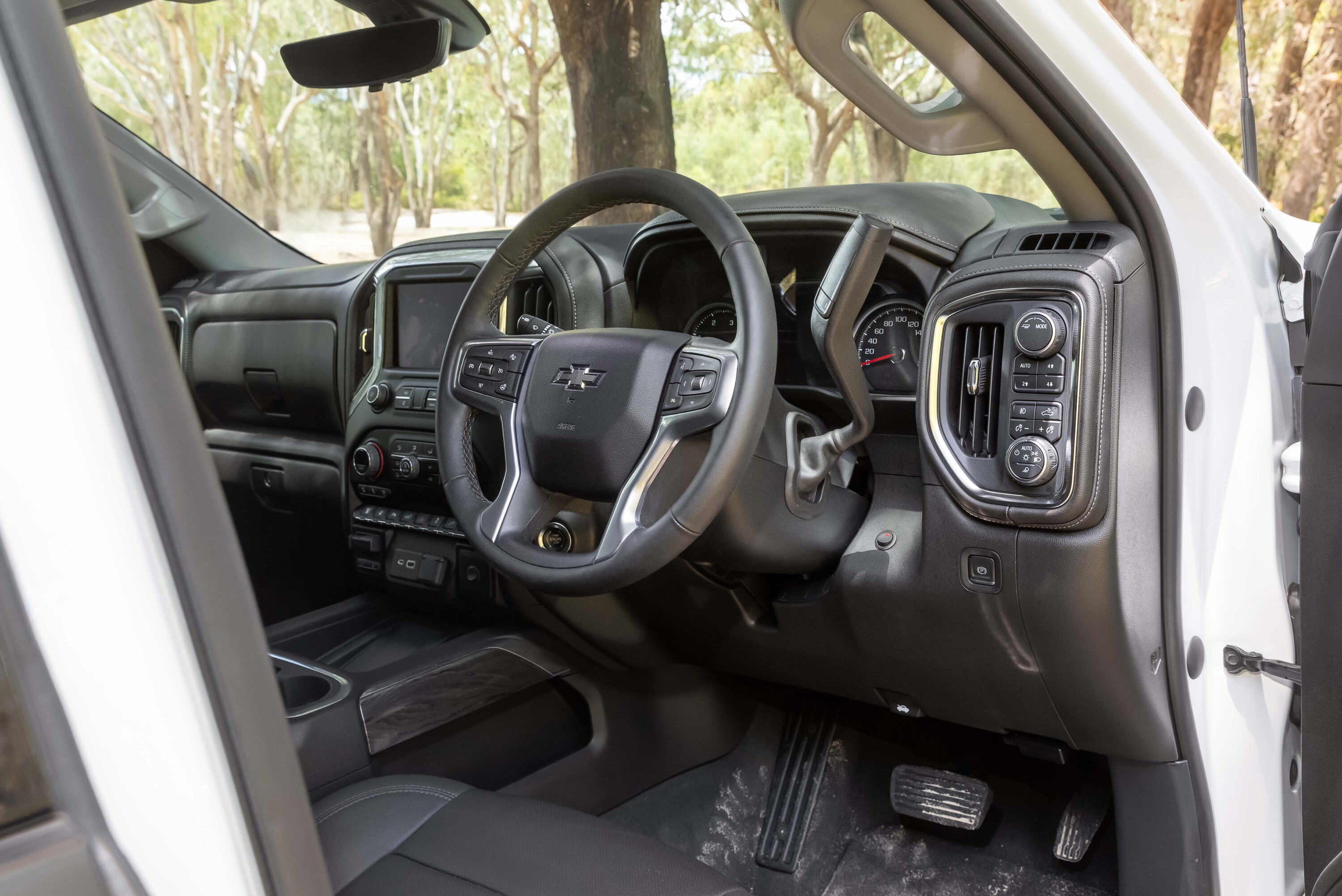
Down past the three-adult-wide leather-clad rear bench seat is where things turn from show to go.
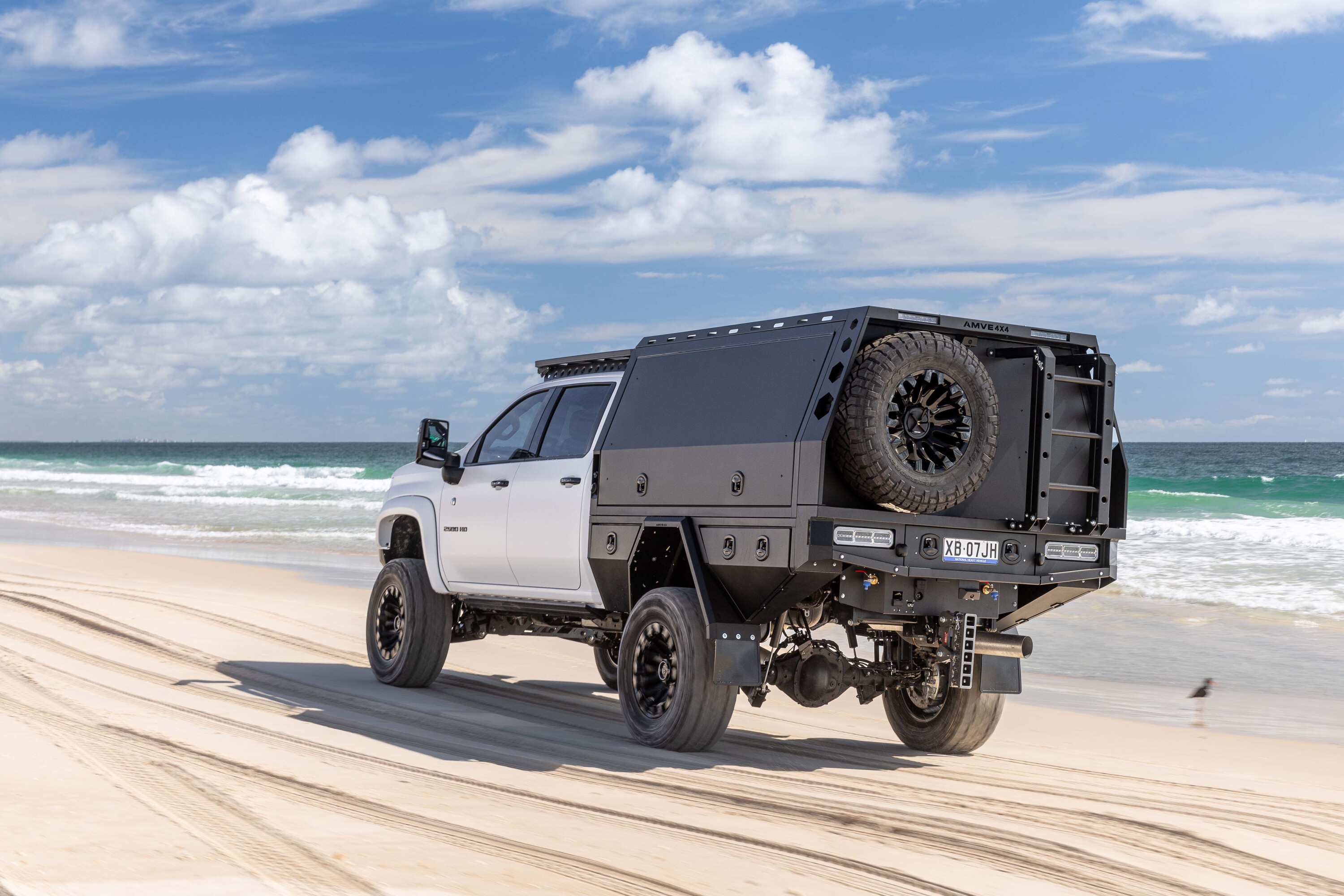
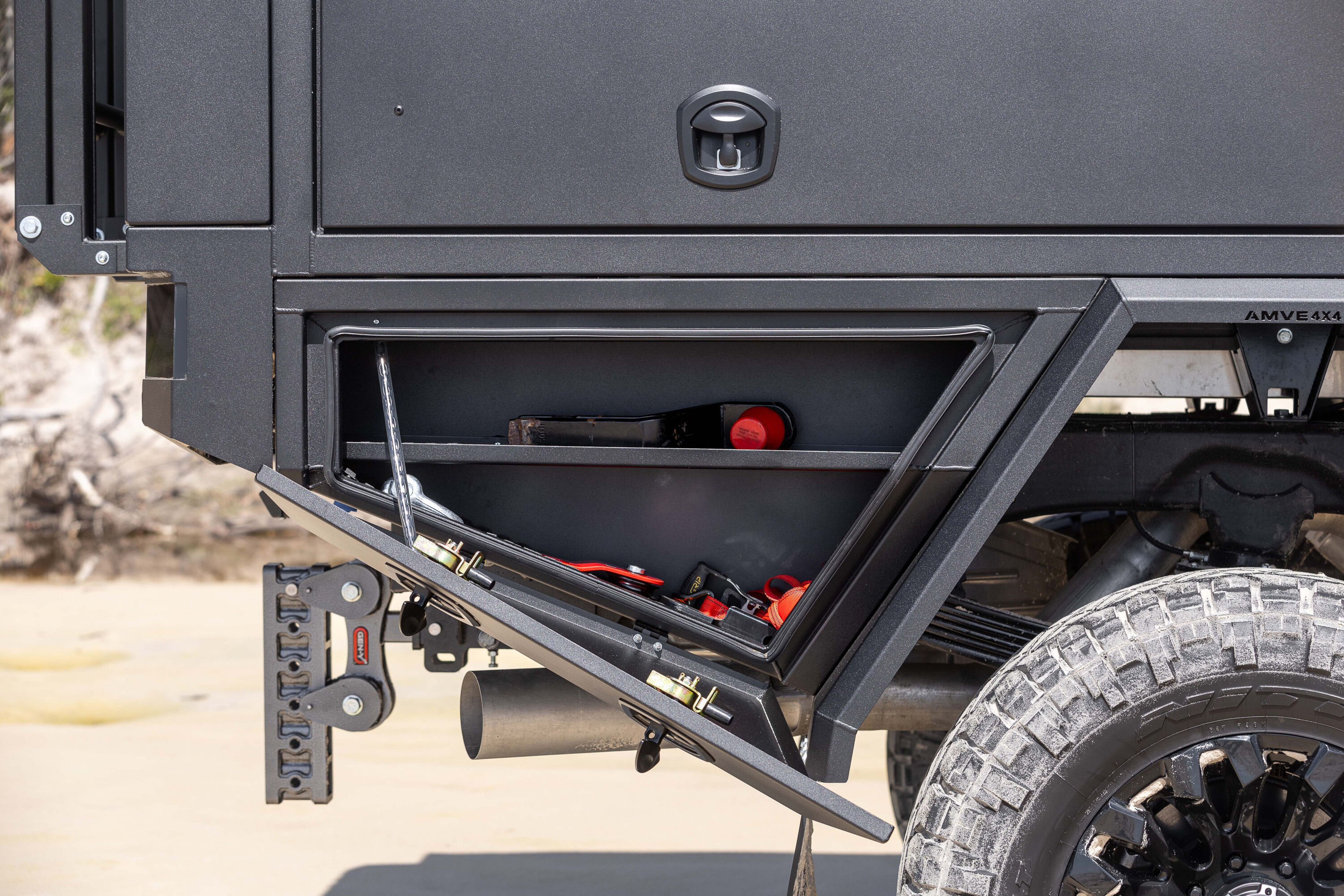
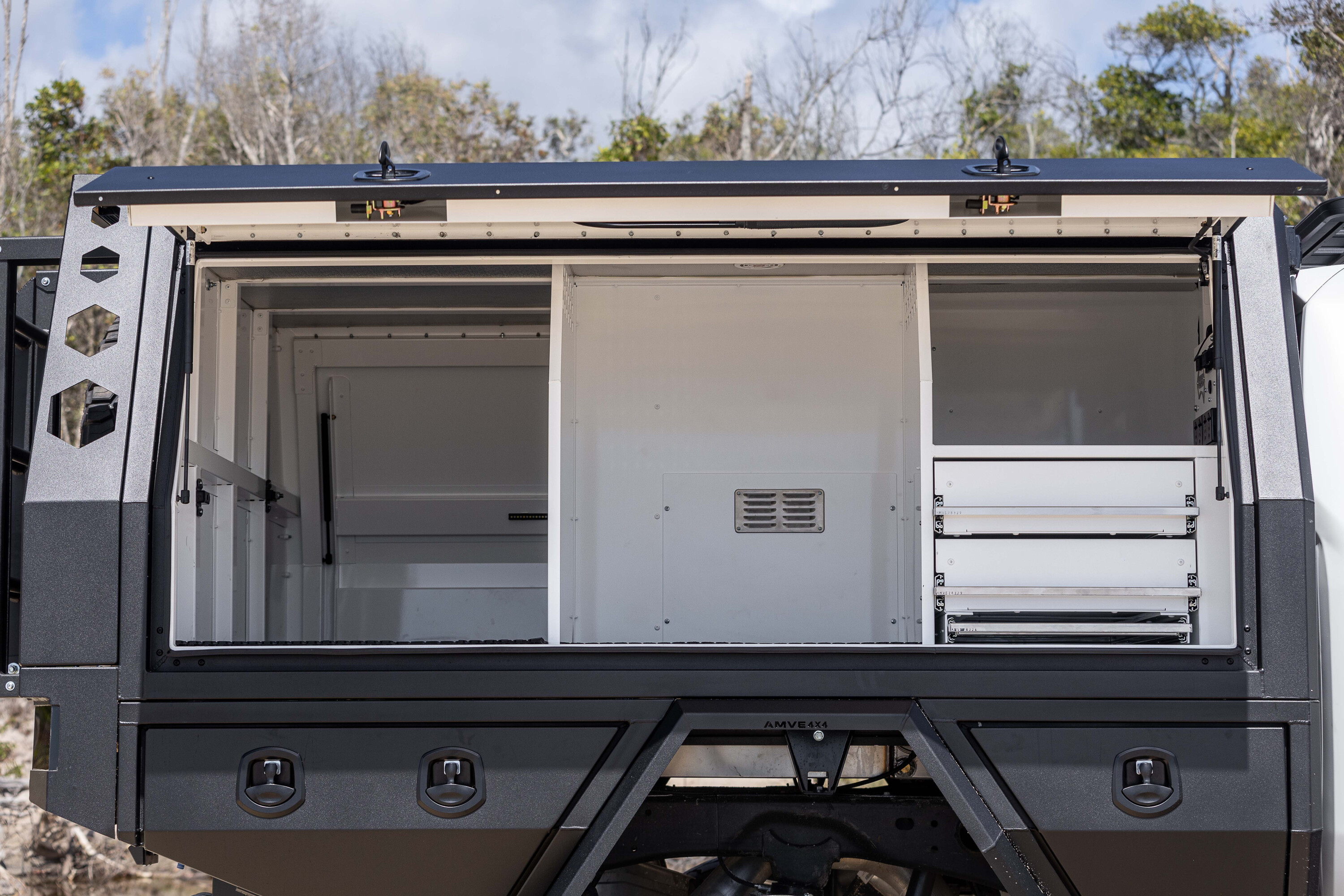
Kicking off the party is a banquet hall-sized canopy with AMVE 4X4 piecing together a 2400mm long specimen. Made almost entirely out of lightweight aluminium, the canopy features twin-skin construction, plenty lockable under tray storage boxes and a trundle tray big enough to charge rent.
There’s also a folding ladder up back, a full-length integrated roof rack and a sliding window with security mesh for airflow without sacrificing security. And that’s just the outside.
1
Open the Raptor-lined canopy doors and face a glistening white powder-coated interior fit for work and play.
Along the passenger side, AMVE 4X4 has kitted it out with an epic 12V Adventurer setup from the team at Enerdrive, which is powered by a 200Ah lithium battery with 40A AC and DC chargers. There’s a Simarine monitor and switch set up and a 2000W inverter. The package powers a plethora of 12V, 240V and USB outlets throughout the canopy.
It also provides plenty of grunt for the 130L Bushman upright fridge, a 25L 12V microwave, and the old touring favourite, the pie oven. On the driver’s side, there are bulk storage options as well as pull-out drawers and a prep bench.
1
Underneath the canopy, a little extra touring ability was added with a couple of custom tanks.
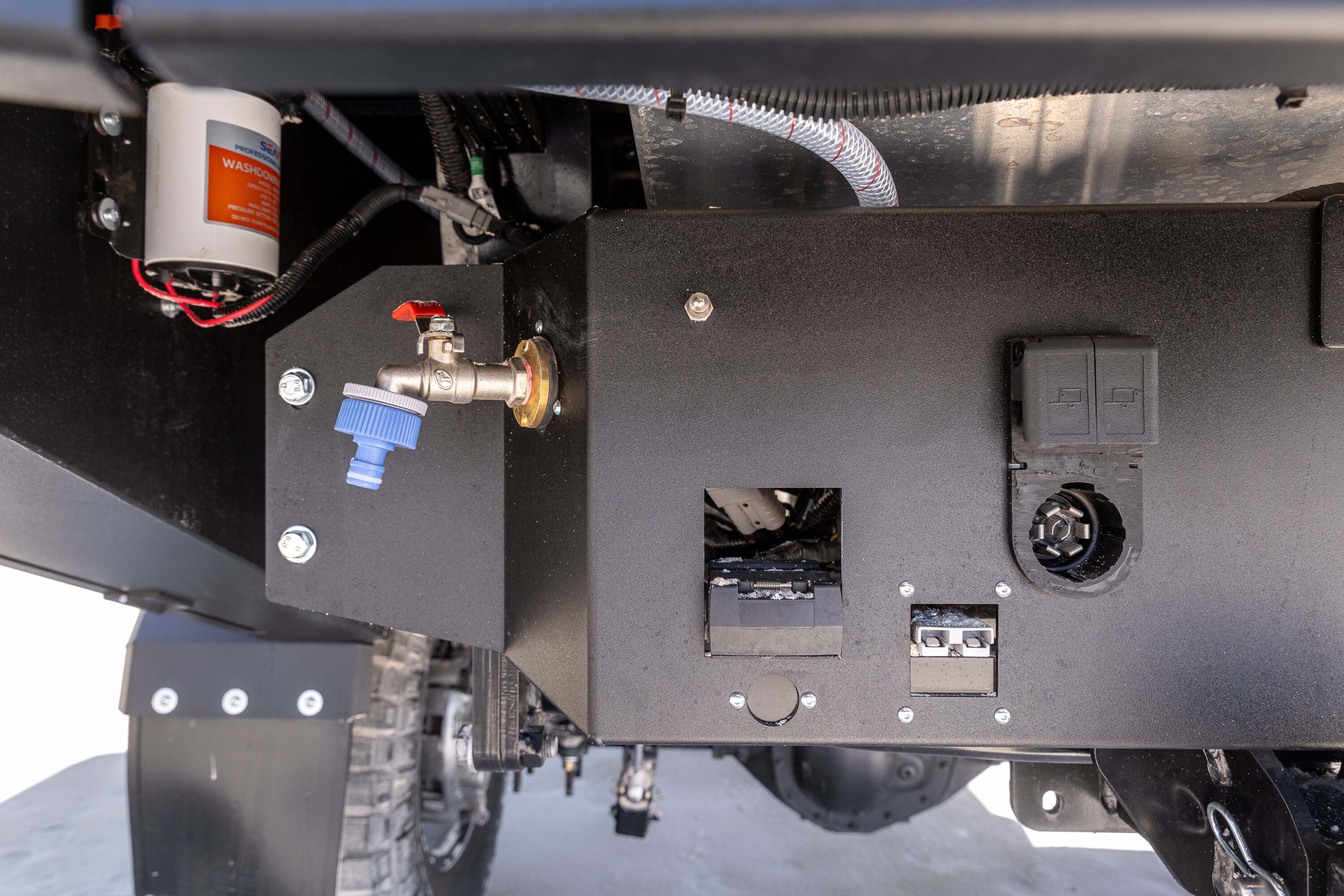
The aluminium offering stores an additional 100L of fuel, gravity feeding into the Chevy’s 136L main tank for a touring range well north of 1000km. There’s a 120L stainless tank full of drinking water plumbed into a 12V pump too.
With the sheer practicality of a camping setup on a full-size rig like Ian’s, it’s not hard to see why full-size American pick-ups are becoming more common in the Aussie bush.
Sure, they might not be the trick for tight winding switchbacks and dense overhead canopies, but if your idea of an epic adventure is motoring along the beach with the angry swell of the Pacific Ocean for a soundtrack then Ian’s endless pursuit just might be the greatest white whale of them all.
1
Monotube vs twin-tube
With so many 4×4 products on the market promising to enhance your vehicle and get you further than ever before it’s hard to decipher what’s useful tech info and what’s marketing buzzwords.
We can’t comment on things being game-changing, but we can lift the veil a little on shock absorber technology, specifically why so many people talk about monotube shocks being an upgrade from twin-tube designs. Surely more is better… right?
Well, not exactly. Y’see, when it comes to shock absorbers they all fundamentally do the same thing; when the shock opens or closes, a piston with tiny holes in it is pushed through oil. The resistance here is what absorbs the movement. The more resistant to movement, the stiffer the shock.
1
Some shocks can fine tune how the shock does this but the fundamental problem they all face is heat.
As the oil gets punched through the piston over and over again it can heat up and start to foam, which passes through the piston easier. It’s not hard to see how an hour of corrugations can make your shocks useless.
To stave off the oil foaming, gas-filled shocks keep the oil under pressure raising the boiling point, the same way a radiator cap works.
A monotube is one single compartment that contains a high-pressure nitrogen charge, and the shock oil separated by a floating piston. The benefits here are for a 50mm wide shock you’re getting near enough to 50mm width of piston so better control. The downside is denting the exterior body dents the interior too, causing all sorts of grief.
1
By comparison, a twin-tube shock will have a lower-pressure gas charge in an external liner.
The oil is in the inner compartment, the gas in the outer with nothing physically separating them. The benefit here is they can handle a ding or two before being destroyed and they’ll typically get longer travel for the same overall length. The cons are significantly less ability to fight off shock fade, they can’t be mounted upside down as the gas won’t stay where it should, and you get vastly less tunability for it as a result.
You can write entire text books on shock technology. Just know if you’re after cheap and cheerful twin tubes are good bang for buck, but if you’re after the best, monotube is all you need to know.
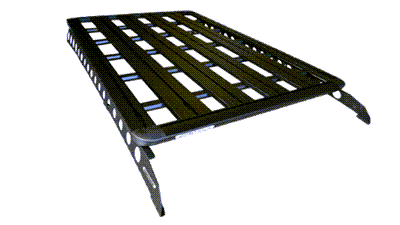
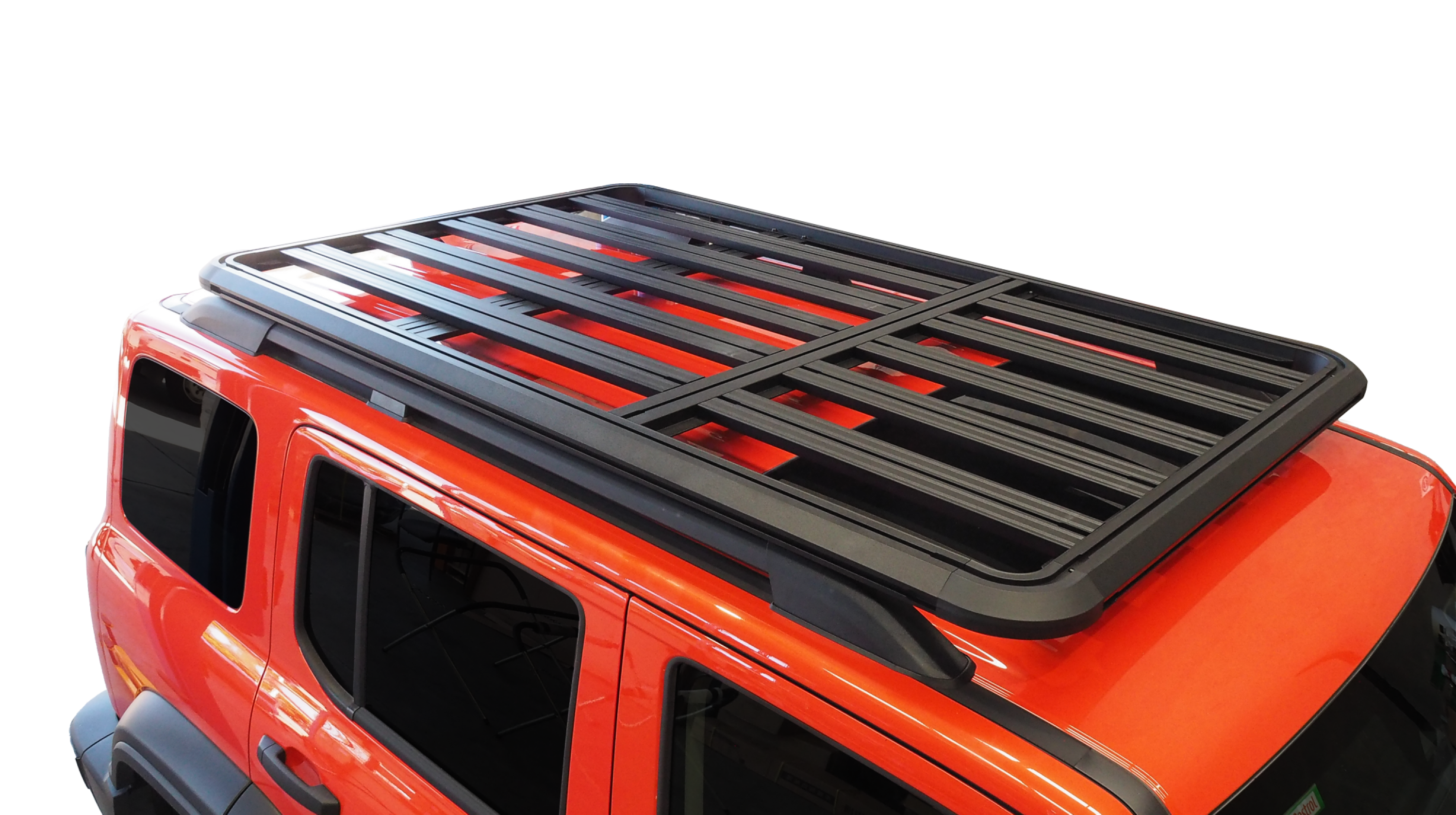
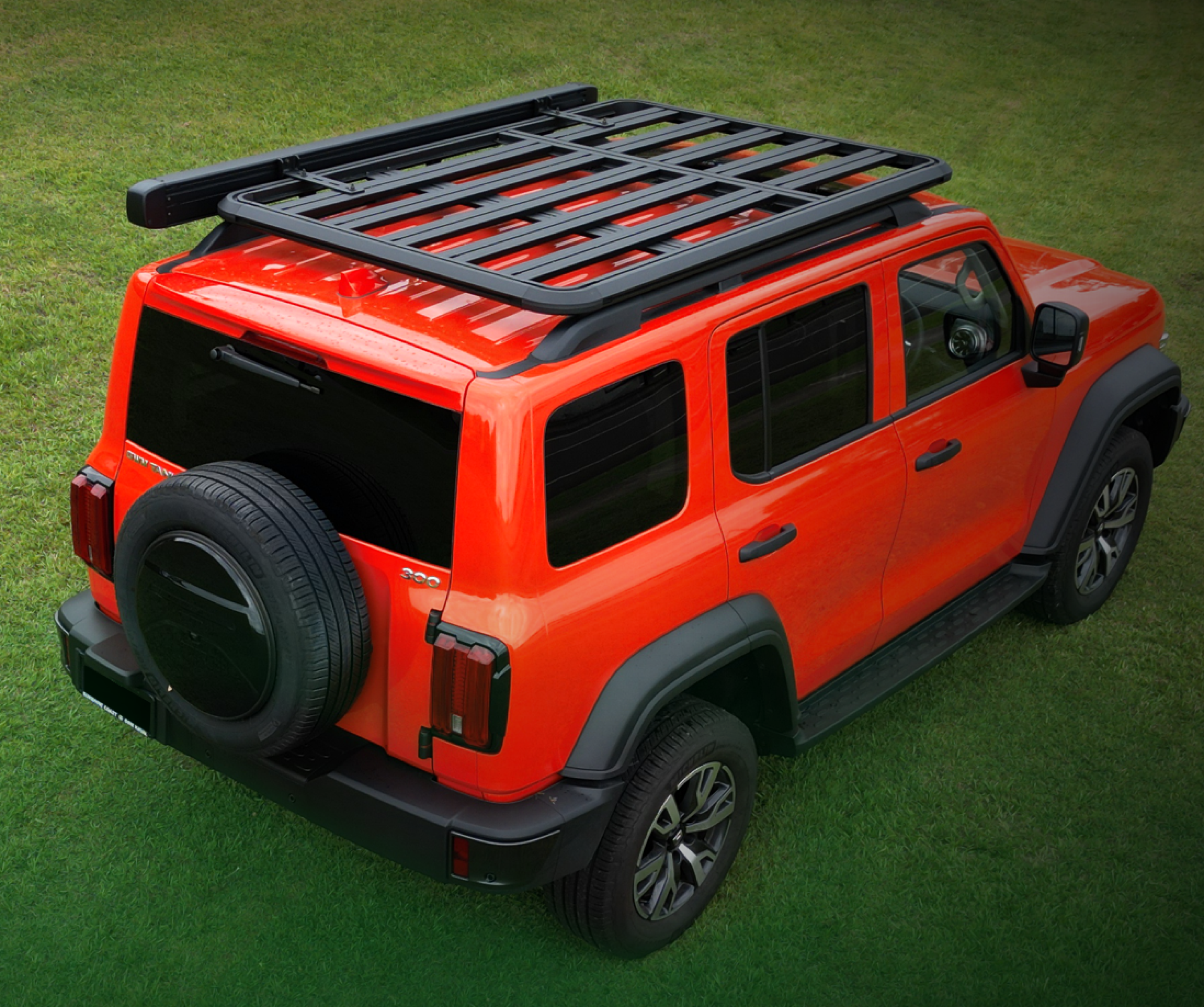
Combining strength, functionality and ease of use, this multi-functional roof platform is crafted from aluminium alloy 6063-T5 and provides a sturdy foundation for aftermarket accessories.
Powder-coated in a durable matte black finish, careful attention was paid to aesthetics as well as aero. The result is a high-functioning roof platform that toughens the look of the already aggressive-looking Tank 300.
1
Sunroof functionality is not impeded by the roof platform, which opens safely underneath the structure. The front panel directly above the sunroof can also be removed providing unrestricted views from the cabin.
A radiused front edge and low profile design aids in reducing wind noise, making this one of the quietest roof platforms on the market. Like all MAX 4×4 products, the MAX RACK is independently tested, with a particular focus on dynamic and static load strength tests.
Installation is a breeze, attaching securely to existing roof rails via the supplied mounting kit. Comprehensive fitting instructions are also included; however, with all load-carrying accessories MAX 4×4 recommends professional installation.
1
The supplied eye bolts allow for flexible positioning in the extrusion slots and can be used as tie-downs in various positions. The same slots are compatible with the vast range of T-Nut accessories, making this a truly versatile platform.
If you are looking for something that works as hard as it plays, the MAX RACK for the Tank 300 is a multi-functional roof platform that extends the functionality of the Tank 300 and is the perfect accessory for your next adventure.
The evolution of the awning has been nothing short of extraordinary over the past decade.
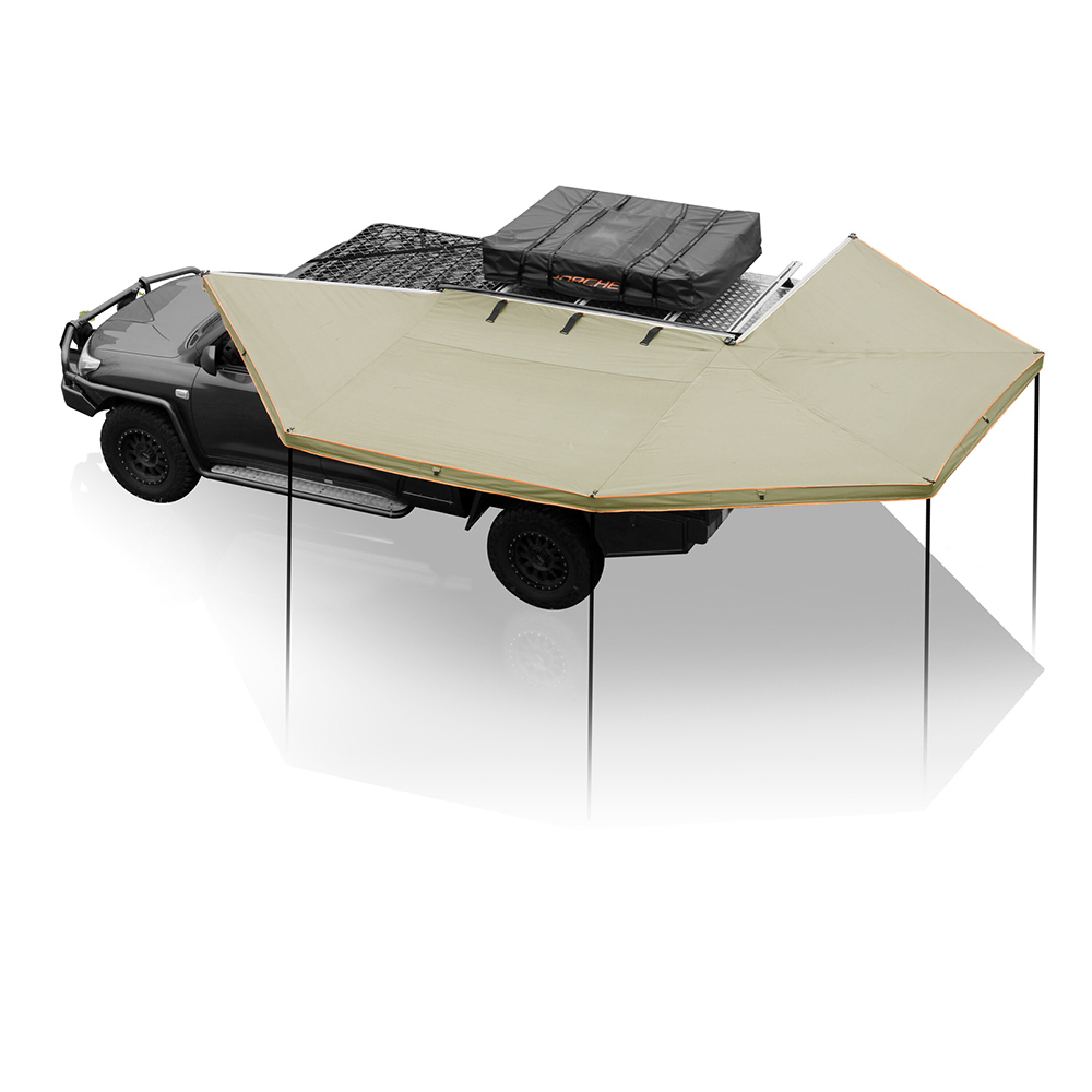
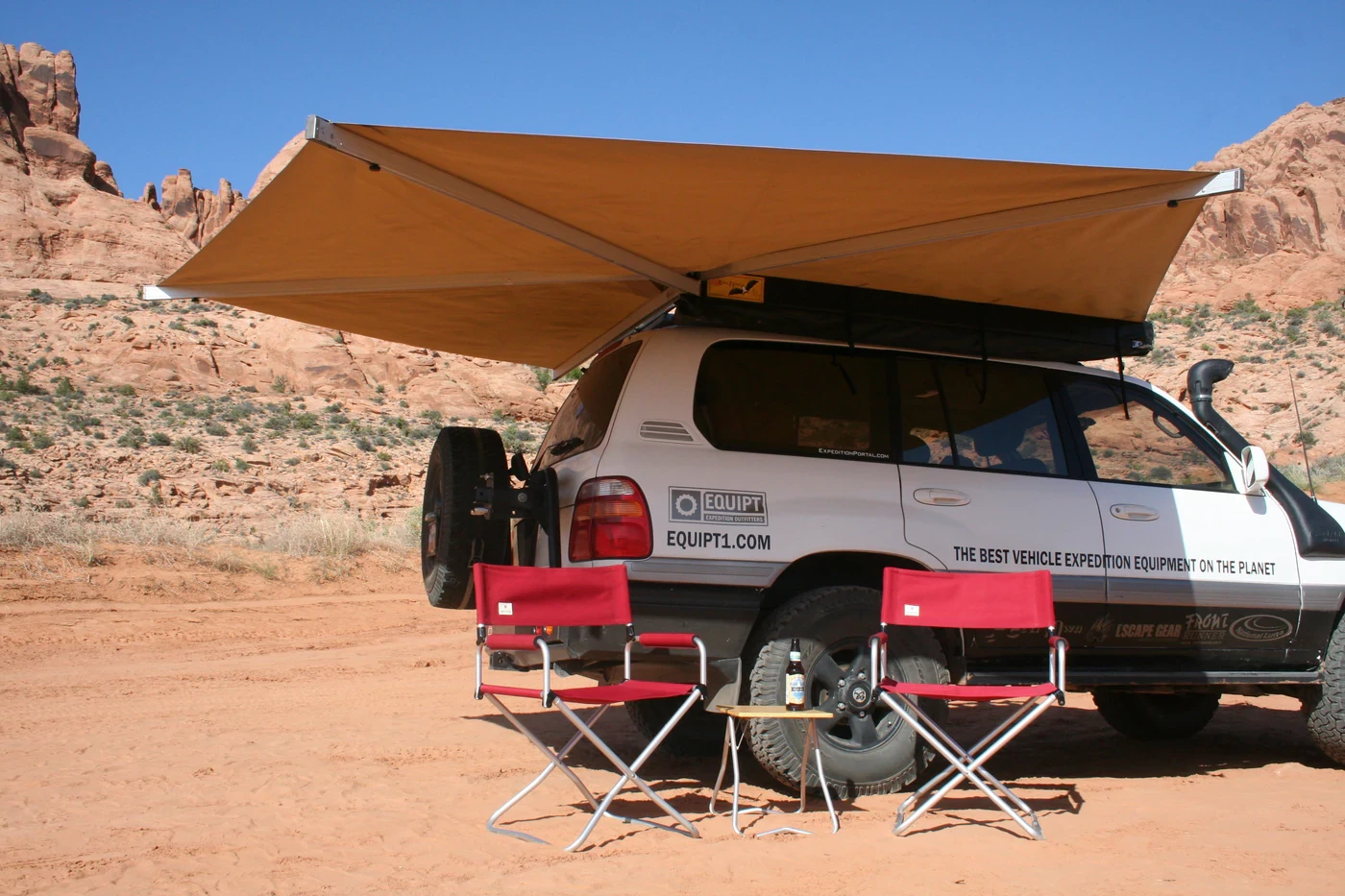
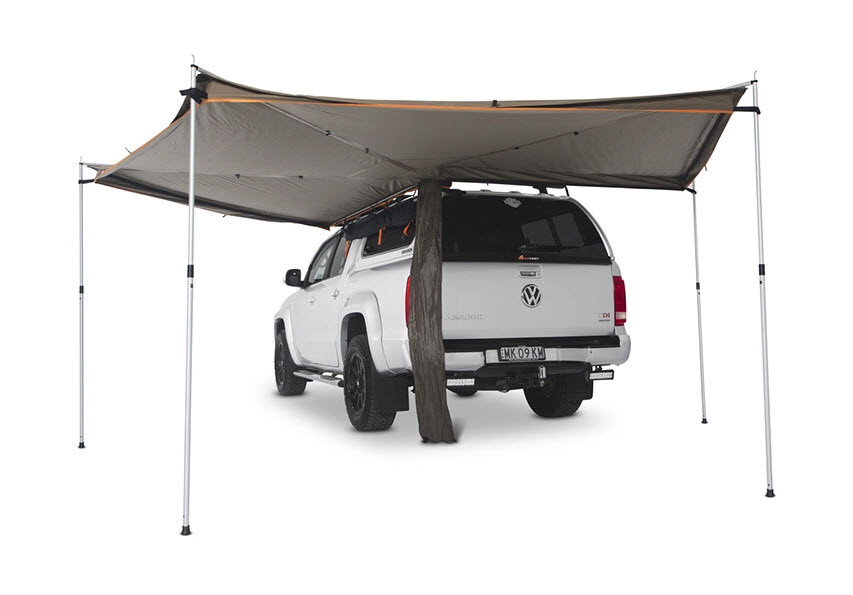
In a few short years we have transitioned from using cheap tarps supported with tent poles and guy ropes, to dedicated fold-out and peg-down canvas products. Now, the 270-degree units seem to be all the rage. They offer a massive amount of shade and protection from the sun and rain, and yet somehow manage to fold away as quickly and easily (in most cases) as the standard awnings of yesteryear.
Constructed from lightweight materials such as aluminium – and with many examples using high-quality canvas – the majority of the current 270 awnings are built to last. So, if you’re looking to keep the rain off your swag next time the weather turns sour, then have a good read through this guide!
The Tuff Terrain 270 Free Standing Awning is engineered for practical touring setups, where quick deployment, solid coverage, and quality hardware matter more than gimmicks.
Designed for Australian conditions, it provides 11.14 m² of shade in a true 270-degree layout, wrapping around the side and rear of the vehicle for usable shelter at camp or roadside stops. The canopy is made from 320 gsm poly-cotton canvas for durability, UV resistance, and reliable weather protection.
Waterproof and heat-stable, the fabric also breathes better than lighter synthetics. Four integrated dimmable LED strips offer both bright white light for tasks and softer amber light to minimise insect attraction.
Unlike many awnings that require add-ons, this comes as a complete system. Six twist-lock support poles are included—three pre-mounted on ball joints and three spare poles in a canvas bag for extended or adverse-condition support. Ratchet tie-down ropes, pegs, tension straps, and a 13 mm ratchet spanner (for tight roof-rack spaces) are all supplied.
Mounting is straightforward and versatile. Three heavy-duty brackets, Uni-Strut nuts, and U-bolts allow direct fitment to traditional crossbars or platform-style roof racks with no extra hardware needed. The result is a robust, no-nonsense awning built for serious 4×4 touring and frequent use.
The most innovative thing about the Eclipse product is not just that it’s a top quality product, but it’s also very versatile.
1
Designed for maximum shade and easy set-up and pack-down; it can be set up by one person. Hinged from both ends the Eclipse offers plenty of undercover area compared to other awnings on the market (approx. 11.5m2). However, with optional walls erected, up to 20.5 m2 of a sheltered area can be achieved. Each optional wall can be set up as a wind and weather break or as an upright awning extension, allowing the Eclipse to extend further up to 4.2 metres in total, featuring two pivoting alloy telescopic poles which are neatly stowed along the rafter when packing away.
Made from Darche’s proven and hard-wearing proofed polycotton ripstop canvas, a strong lightweight box tube alloy rafter system, and pivoting from heavy-duty steel and aluminium swivel hinge system, the Eclipse 270 is one of the most popular wrap-around awnings on our list, and for good reason.
The Kozi range from Darche is built more for the budget-friendly end of the market.
1
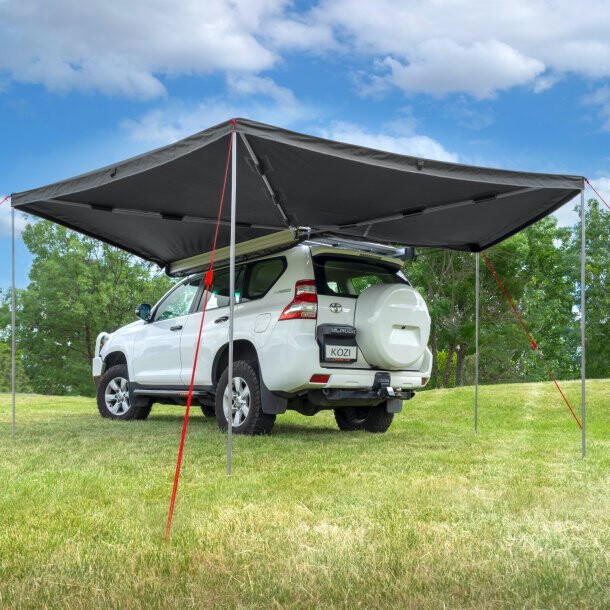
The Kozi 270 awning offers one of the best price points on our list. The ripstop canvas gives nearly 12m2 of coverage and a UPF50+ rating against the sun. Easy set-up for one person and aluminium pole construction makes this one of the best bang-for-buck 270 awnings on the market.
Looking for quality and durability at any price point? The Bush Company 270 XT Max needs to be on your shortlist.
1
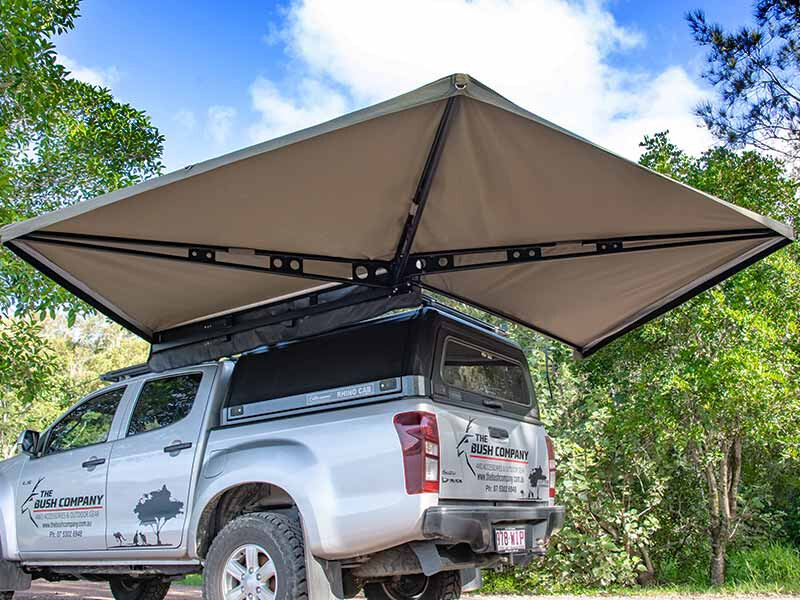
This innovative South African design features a solid 12m2 of coverage, a 60-second set-up time and a braced and gusseted extruded alloy composite construction, that’s paired with 316 marine-grade stainless steel hinges to provide enough strength for the swingin to be fully free-standing – no poles needed here. In extreme wind or rain there are guy ropes to secure the structure to the ground and guide water run-off.
The 270 XT Max features a 460gsm canvas travel bag, which The Bush Company says increases breathability and reduces the chance of mould and mildew; and the inside edge of the canvas has a 50mm-thick strip of Velcro for optional side wall attachment, so no more mucking around with zippers.
Coverage (m2)u00a0
12.0
Weight (kg)
33.5
Material
320gsm ripstop polycotton canvas
Packed dimensions (mm)
2300 (L) x 210 (W) x 150 (H)
Pros
No need for poles
Super high quality
Can be mounted directly to rooftop tent
Cons
Weight
Price
Diamond shape of awning can leave back door of wagons exposed
With approximately 10m2 of coverage available, the Eezi-Awn Bat is competitive on features but with a lower weight and price than many of the other offerings on the market.
1
Aimed at the weekend warrior market, the Bat is constructed of aluminium and 280gsm ripstop canvas, and comes with built-in height adjustable legs. The key feature is the impressively compact design that has the legs built into the fold-out arms, making set-up and pack down a smooth and easy process that prevents damage to the legs in transit. When underway, the awning is zipped into a PVC case in less than a minute, ready for the next stop on your adventure.
One of the original wraparound awnings, Oztent has updated its popular Foxwing awning with the Series II model.
1
Along with a black travel colour and upgrade mounts, the Foxwing comes with a range of “why don’t they all do that?” clever safety features such as reflective guy ropes and a CPAI-84 fire resistance rating – so you don’t need to worry too much about the campfire proximity. One-person set-up and a continuous external skirting to provide effective protection against rain means that, even though it’s one of the older designs on our list, it’s still got a lot going for it.
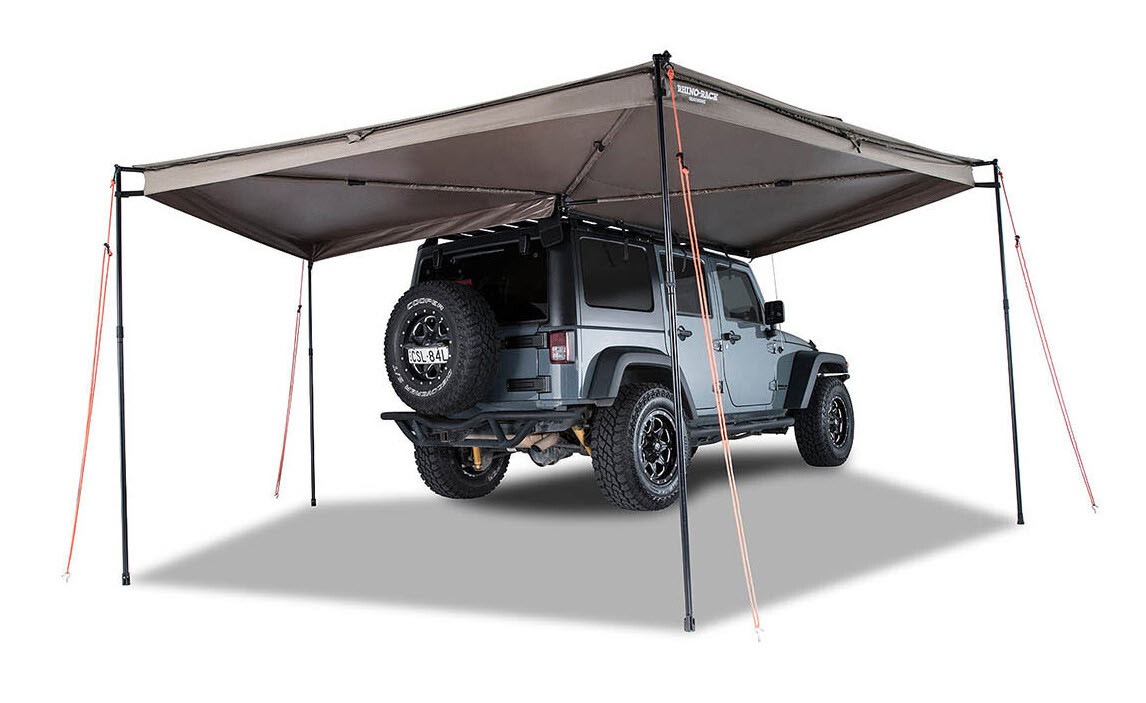
Designed by roof-rack experts Rhino Rack to work with both its products and Thule roof racks, the Batwing has been designed from the ground up to offer premium coverage.
1
With a host of handy features such as rare earth magnets on the arms (to keep them in place) and a heavy-duty PVC travel bag with integrated pole and peg bag, the Batwing is a fantastic addition to any adventure vehicle. It will accept many accessories from older model awnings too, so there’s no need to re-buy products you may already own.
One of our favourite inclusions on this awning is the ability to pack the legs away either fully extended or at a pre-set length to suit the individual vehicle it’s mounted to, making set-up at your next location more convenient. Reliable and solidly built, the Batwing has a lot to offer the weekend traveller.
Boss Aluminium is more known for its tray and canopy designs rather than its awnings, but apparently the story goes that when the Boss team were looking to outfit their own vehicles, nothing they found stacked up so they decided to build their own – as you do.
1
The result is a fully Australian-designed and -made awning that is strong enough – thanks to its ultra-beef arm design and reinforced tri-axis hinge – to not need any poles to keep it upright. Guy ropes can be attached in heavy weather, but for fair conditions it’s as quick and easy to set-up as it gets.
A host of well-thought-out inclusions for Aussie conditions include the central prop-arm that creates tension to allow water run-off, and the oversized canvas bag that more or less guarantees the awning will fit back inside. For a legitimate warranty-backed lifetime purchase, the Boss Aluminium 270 Awning is well worth a look.
Another product that’s both lightweight and easy to use is from the team at Drifta, with the Stockton 270 awning.
1
The awning is priced extremely well and offers a terrific amount of coverage considering how little material they use in the construction. Drifta is well known on the aftermarket scene for building tough, no-nonsense and easy-to-use products, and the Stockton 270 continues that tradition. If you want an awning that can handle both larger and weekend trips, then this could be the one for you.
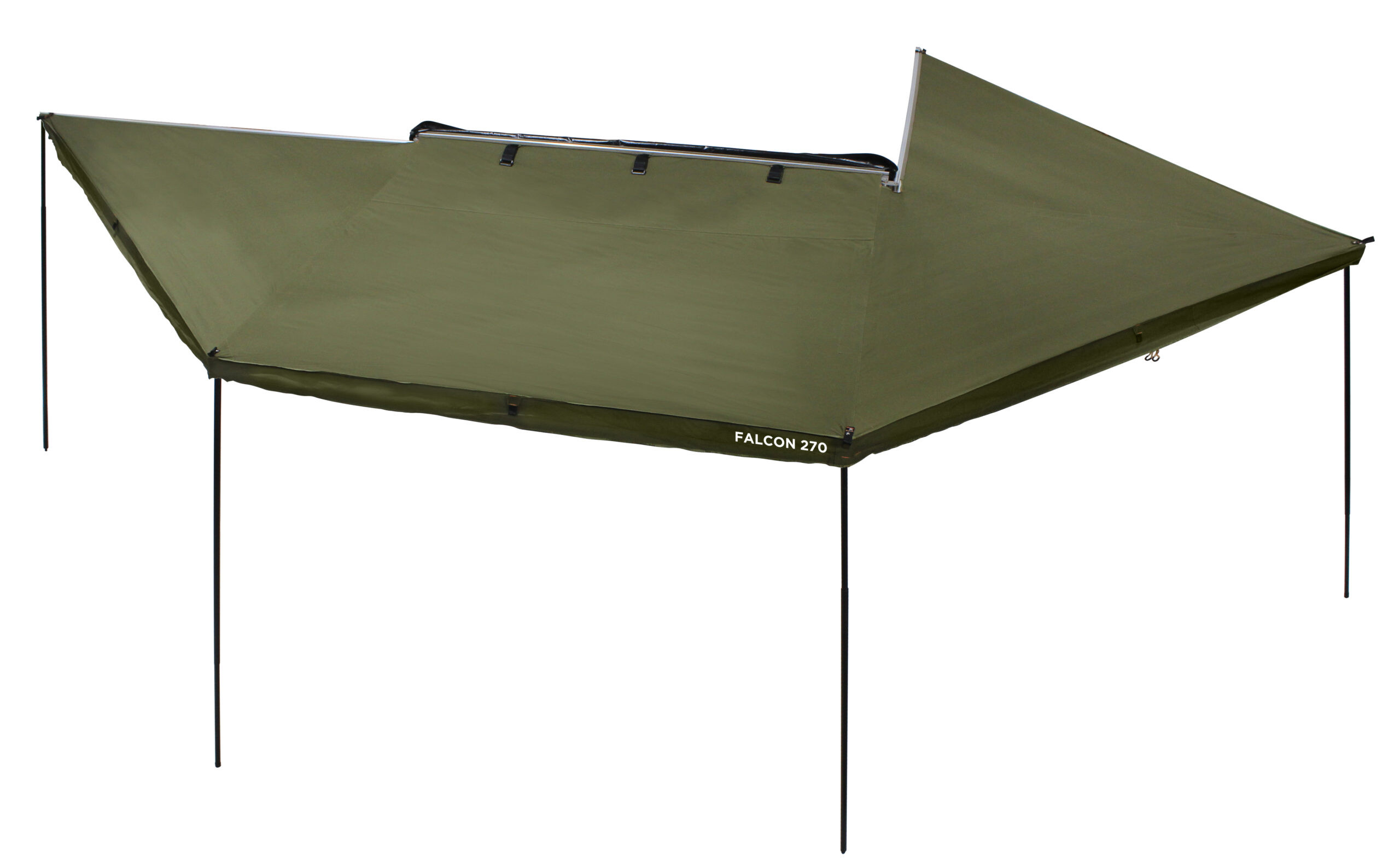
With its dual-hinge, two-pole design, the 23Zero Falcon opens up to a healthy 10m2 of coverage. When paired with the optional side walls, that figure balloons out to 25m2, which is enough to house a family of swags.
1
Constructed of extruded box aluminium rafters and cast aluminium hinges, the weight is kept surprisingly low, and set-up with one person is around the one-minute mark. The underside of the polycotton canvas is coated with 23Zero’s Light Suppression Technology (LST), which is a dark layer that effectively defuses sunlight and UV rays entering the shaded area – serving to keep you cooler in hot Australian conditions.
Coverage (m2)u00a0
10.0
Weight (kg)
19.0
Material
280gsm tear check canvas with LST coating
Packed dimensions (mm)
2140 (L) x 160 (W) x 200 (H)
Pros
Easy to set up
LST coating
Lightweight
Cons
Light duty extrusions
Triangle rear section may not fully cover wagon doors
Rain, hail or shine, you can’t beat vehicle-mounted awnings for the extra protection they provide at camp. The off-roader’s awning is a popular accessory for the four-wheeling community, and for good reason.
Not only do they provide valuable shelter from Australia’s unforgiving elements – heavy rain, strong wind and relentless sun – by adding walls and/or annexes, they create additional enclosed areas for punters to store equipment or to spend their time cooking and relaxing without being punished by flies, mosquitoes and the elements. Plus, they can be erected in the same amount of time it takes to pop open the fridge and crack the cap off your first coldy.
Not only does an awning provide timely shelter for a roadside cuppa or a quick snooze at camp, they can also prove invaluable if a vehicle breakdown occurs.
“There’s a reason why travellers are advised to stay with their vehicle when they break down in the outback, as exposure can be deadly,” said TJM’s James Jackson. “Anyone who has travelled in places like the Strzelecki or Simpson deserts knows that shade is hard to come by in these places, but if you have an awning you can create your own little oasis to have a cup of tea, make lunch or, in a worst-case scenario, wait for a good Samaritan in the case of a breakdown.”
While the idea of an awning may seem simple enough, it’s not an accessory you’ll want to skimp on when it’s time to swipe the credit card. There are many factors at play to ensure you get one that’ll stand up and protect when it’s needed most, and there’s no bigger challenge than the Aussie outback.
To dive deeper into the world of awnings, we spoke to a handful of industry experts from ARB, Alu-Cab/Ironman 4×4, TJM, and Darche.
Types of awnings
Side awnings are the most commonly used, mainly for their practicality and ease of operation. They’ll typically be mounted to the side section of a roof rack, providing ample sheltered space in the process.
Another option is a rear awning, which (quite obviously) is mounted to the rear of the vehicle’s roof rack/roof bars. Clearly, less space is afforded by mounting your awning to the rear. However, it’s quite common to see people with both side and rear awnings for an abundance of undercover capacity.
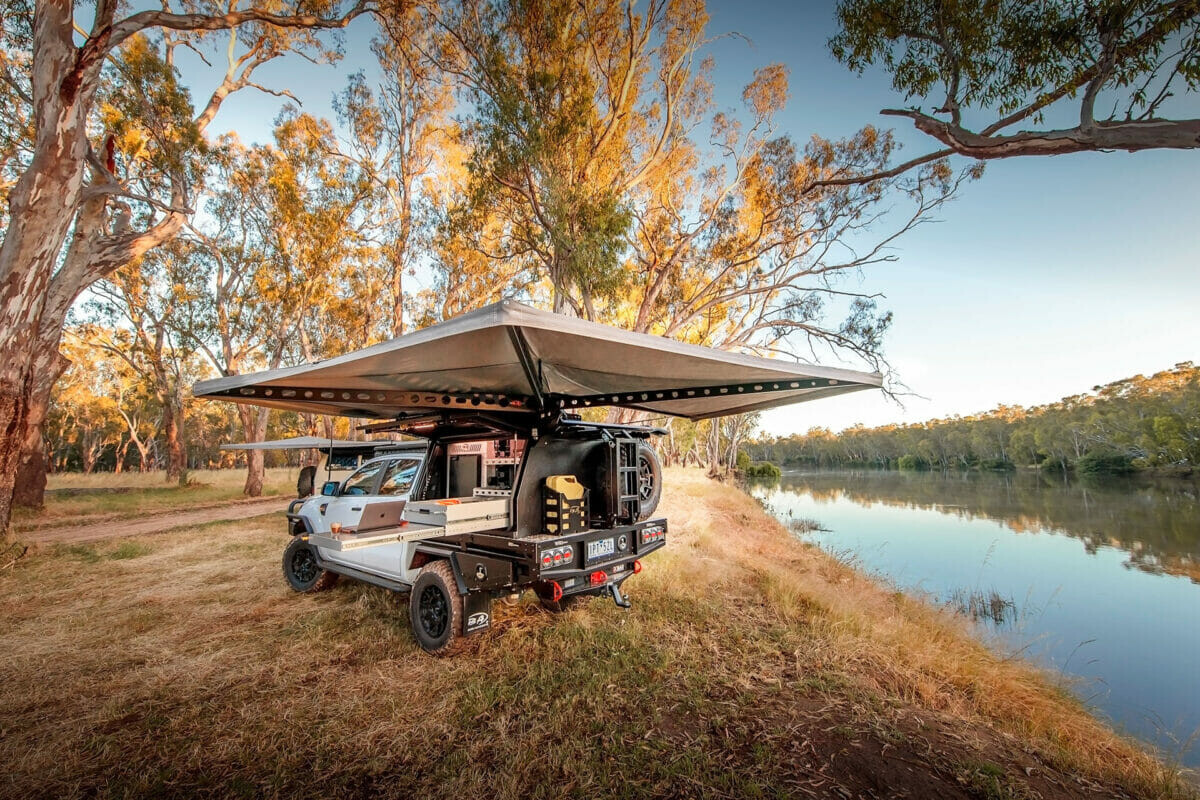
Instead of purchasing separate side and rear awnings, you could opt for a style called ‘270-degree awnings’. These differ from your ‘regular’ awnings by spanning out a full 270 degrees and providing plenty more sheltered space at both the side and rear of the vehicle. They typically unfold in much the same way as regular awnings, but they feature a hinge that allows the awning to unfold further. 180-degree awnings are another option that might better suit your set-up.
You can also opt for a retractable awning that utilises something like a spring-tensioned roller, which takes the manual work out of setting up and taking down.
Core components
When trawling aftermarket catalogues in pursuit of the perfect awning setup for you and your family, you’ll notice various sizes, configurations and designs – some with two poles, some with four; some with guy ropes, some without.
However, despite the differences in appearances, a quality-made awning will share the same core components. To ensure the awning will remain standing during high wind and heavy rain – and provide adequate UV protection and prevent water ingress – it’s important to ensure it has a selection of non-negotiable build features.
“Build construction is key,” advised TJM’s James Jackson. “An awning that is made well will set-up and pack away smoothly on the fifth or 500th time.
“Small details like the right-sized bag or case will make unzipping or zipping up simple; well-manufactured telescopic legs won’t get stuck when extending or collapsing; and overall build quality will mean the awning will stand strong in rough weather conditions, which is exactly when you want it to perform.”
It’s widely agreed that the best quality awnings are typically constructed using a polyester/cotton ripstop canvas, which is used for its high UPF50+ UV rating (the canvas in combination with the coating on the canvas provides the UPF50+ rating), overall durability, and its ability to prevent water ingress and withstand extreme conditions for prolonged periods.
“The thick ripstop canvas blocks the rays, and the materials are treated with PU (polyurethane) coating to stop (the rays) coming through,” advised ARB’s Shannon Alderwick. “Canvas is also a natural material for repellence and UV exposure.”
You’ll also be able to spot a sub-par awning courtesy of the quality of its stitching – if it’s badly stitched, steer clear.
In addition to the canvas material, it’s important to ensure the awning poles (and the pole joints and rivets) are built to a high standard, using quality material. Ideally, ensure the arms and joints are flexible, as they’re more prone to snap if they’re too rigid.
“Ironman 4×4 opt to use highly flexible plastic pole joiners which protect the awning in case of wind damage or squashing,” explained Hannah van der Sluys. “This is opposed to using aluminium pole joiners which can crack or bend out of shape.”
On this point, Shannon from ARB added that quality nylon joints are less likely to snap in high winds.
Other features to look for include extrusions that extend the full length; abrasion strips and pads; and additional accessories such as pegs and guy ropes. Most modern awnings will also feature embedded LED lighting strips, to ensure your camp setup kicks on long after the sun sets.
In addition to rigid/fixed joints and thin canvas, also avoid lightweight aluminium and extrusions, as this heightens the chance of failure down the track, and also check that the awning doesn’t hinder a rooftop tent from opening.
Wind resistance
An awning that will buckle at the first hint of a breeze is entirely useless for 4×4 travel. Experienced tourers will tell you how volatile the weather can be when exploring our vast continent, so it’s essential to have an awning that’ll survive strong winds, heavy rain and relentless sunshine.
“If the vehicle-mounting system is strong, the legs are made from strong materials and the design allows for flex in the joints – and you set up your awning correctly in terms of using guy ropes and setting your pole height – a high-quality awning can survive incredibly rough weather,” explained TJM’s James Jackson.
Ironman 4×4’s Hannah van der Sluys added: “Alu-Cabs’ 270-degree awning centre arm features an integrated drop-down pole that can be used to brace the awning for extra support. Additionally, each of the four awning arms boast a tie-down strap ideal for use in inclement weather conditions.”
An optional Alu-Cab Storm Kit is available, which offers additional anchorage and prevents rain water from pooling on the awnings canvas in extreme weather conditions.
Shannon Alderwick added that good guy ropes and pegs are invaluable assets to ensure your awning remains sturdy during windy conditions. “Use good guy ropes and pegs,” she said. “Don’t use steel pegs at the beach, purchase good quality sand pegs. And, if the wind is too strong, pull the awning down.”
Remember, it never hurts to smack additional pegs into terra firma for further support – plus, the use of guy ropes will keep your awning firmly planted in the soil. The weather can change quickly, so even if there’s not a breath of wind, it can change on a dime in the bush.
As Noel Anthony from Darche explained: “Always use guy ropes and poles, even in calm weather, and be prepared to pack away the awning if winds get too strong.”
Noel added that another handy tip to ensure the awning will survive strong winds is to park the vehicle so that the awning faces away from the prevailing wind rather than pointing into it.
Set-up and takedown
Once an awning is installed, typically to your roof-rack or roof-bar systems via supplied mounting brackets, to set up it’s simply a matter of rolling it out and unfolding the legs.
“Anyone who has done it once can set up a TJM awning in less than 30 seconds,” James Jackson advised.
Noel Anthony advised us that all Darche awnings come with instructions and can be set up by one person, and it should take no more than three minutes tops.
Setting up an ARB awning takes no longer, with Shannon Alderwick telling us that with a bit of practice, you will be set up in no time.
A great tip when it rains is to adjust one telescopic leg pole to be shorter than the other, so that the awning sits on an angle and the rain can more easily drain off. DARCHE awnings also feature gutter tubs, which is a useful addition to help with rain run-off.
When you’re ready to hit the road again, ensure the awning is rolled up tight and hugs the vehicle as tight as possible to ensure it doesn’t snag on branches when you’re out exploring.
After-sales support
As with any aftermarket purchase, it’s vital to ensure you purchase from a supplier that provides adequate after-sales support. Most of the reputable brands will offer substantial warranties for their products, and all of them will provide valuable assistance during your ownership of the awning.
4X4 Australia has been reviewing four-wheel drive vehicles, aftermarket products and camping gear for more than 40 years. When looking for the best swags in Australia there are some things that are essential to ensure you sleep soundly under the stars.
When we compared each of the swags in the list with hundreds out there we looked at the size, weight, durability and price. We also searched for additional features that make these swags stand out from the rest.
We looked at hundreds of user reviews and drew on our own experience sleeping in swags to make sure our recommendations are for the best on the market.
Disclosure: When you buy through our links, we may earn a commission. We also include products that we do not earn a commission from.
Snapshot
2024 Lexus GX: Initial Australian details
Available in three variants: Luxury, Overtrail and Sports Luxury
Full details u2013 including pricing u2013 due closer to mid-year launch
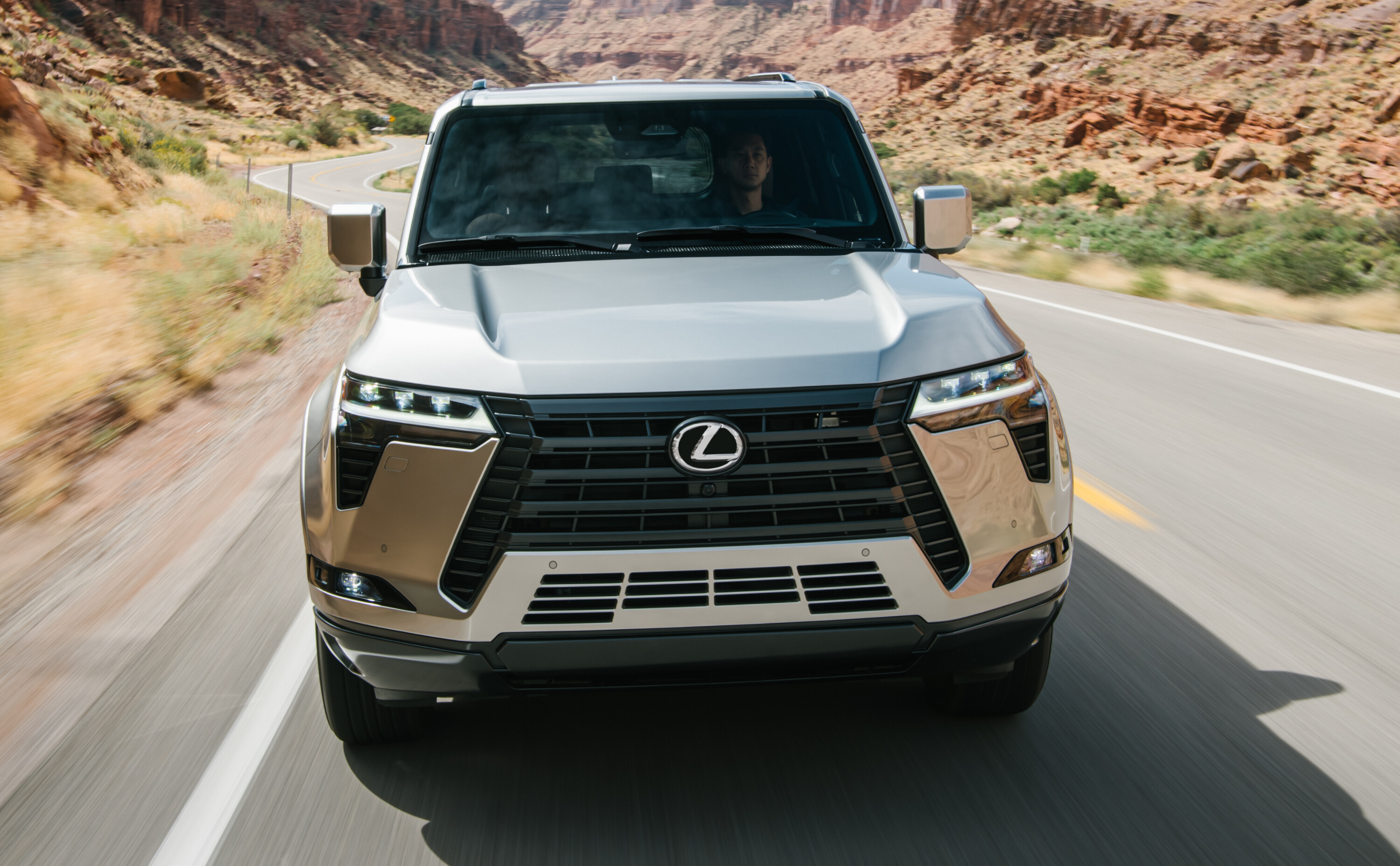
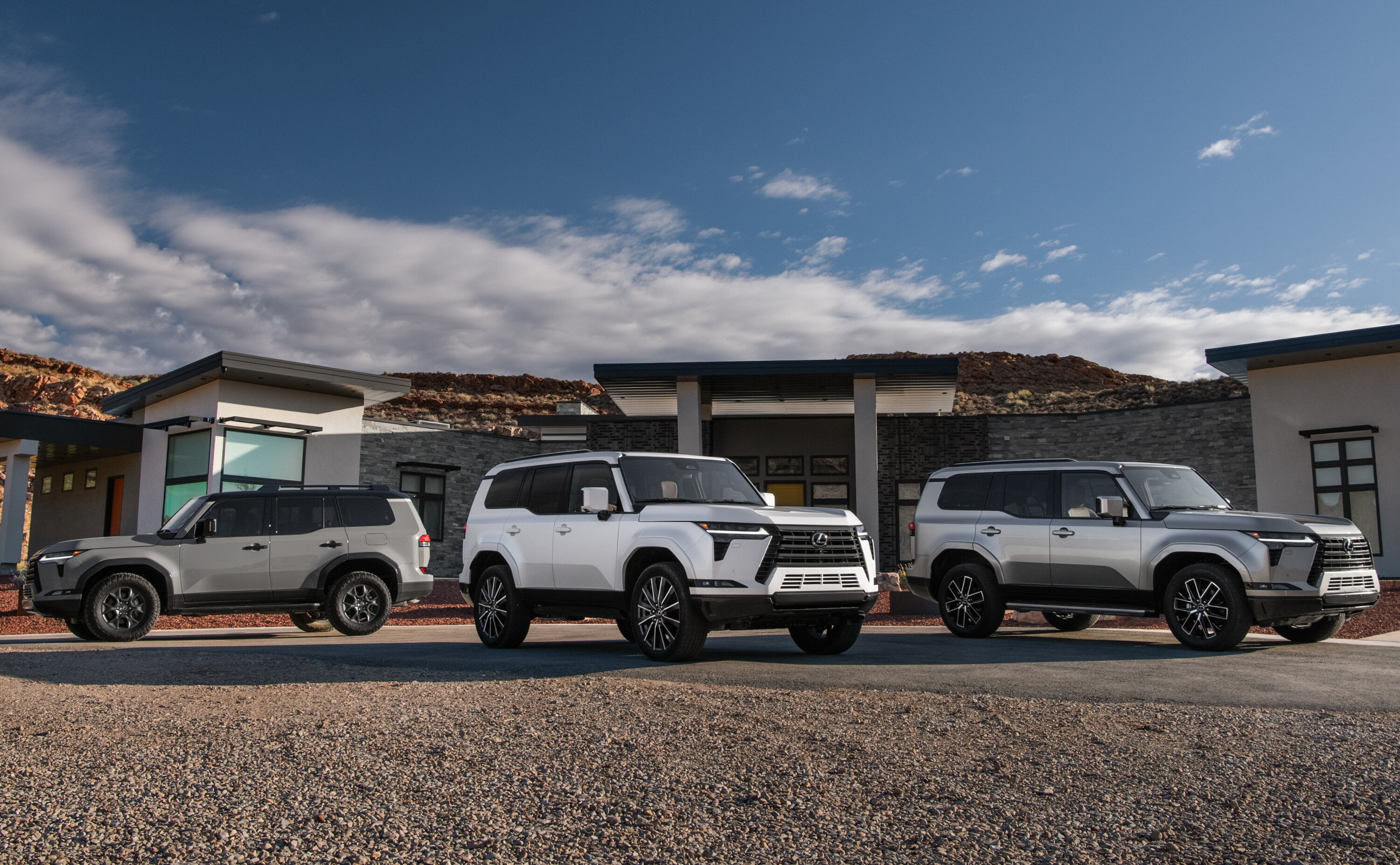
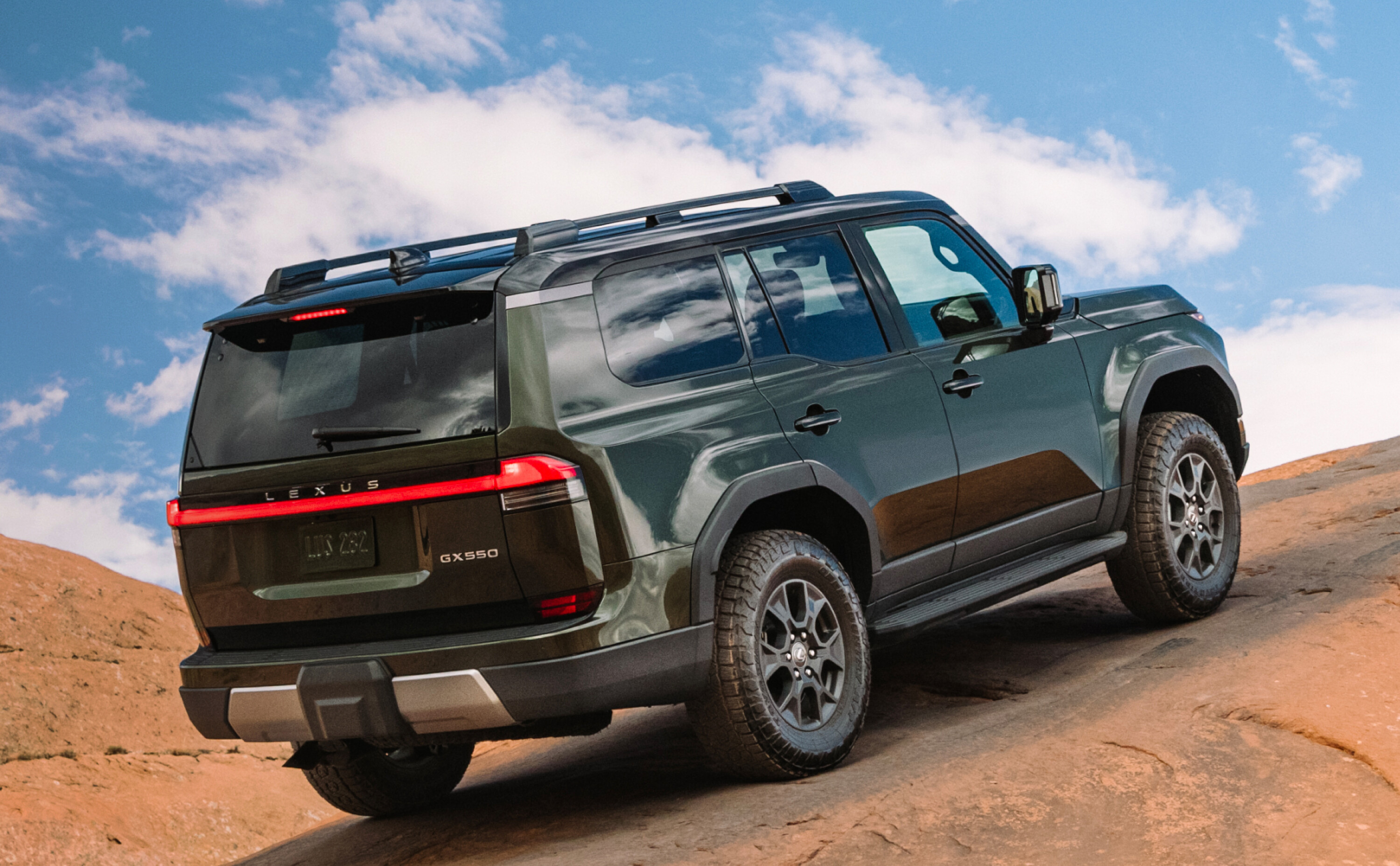
The 2024 Lexus GX four-wheel-drive large SUV – heavily based on the all-new Toyota Prado – is due in Australia mid-year.
Lexus Australia has confirmed the new GX 550 will be offered in Luxury, Overtrail and Sports Luxury variants, with all models powered by a 260kW/650Nm 3.5-litre twin-turbocharged V6 petrol.
The powertrain, borrowed from the related Lexus LX 600 flagship SUV and overseas versions of the Toyota LandCruiser 300 Series, is matched to a 10-speed torque-converter automatic transmission, a second-start function, and full-time four-wheel-drive with low-range and a locking centre differential.
Braked towing capacity for the Luxury and Overtrail is listed at 3500 kilograms, while the flagship Sports Luxury will be limited to 3130kg.
A petrol-electric hybrid Lexus GX with a 2.4-litre turbo-petrol four-cylinder could arrive later but a diesel version seems unlikely.
The Lexus GX 550 Luxury and Sports Luxury will offer seven seats, while the off-road-focused Overtrail variant will be limited to five seats – like a Toyota LandCruiser 300 Series GR Sport.
Individual second-row captain’s chairs will not be offered in the Lexus GX for the Australian market.
1
Standard equipment for the GX 550 Luxury includes 20-inch alloy wheels, a full-size spare wheel, dark grey or black leather-accented upholstery, dynamic auto-levelling LED headlights, rear privacy glass, and an electric tailgate with a fold-out glass hatch.
Eight-way power-adjustable front seats with lumbar and memory functions, heated and ventilated front seats, heated outer second-row seats, three-zone climate control, and power-folding third-row seats are also standard for the GX 550 Luxury.
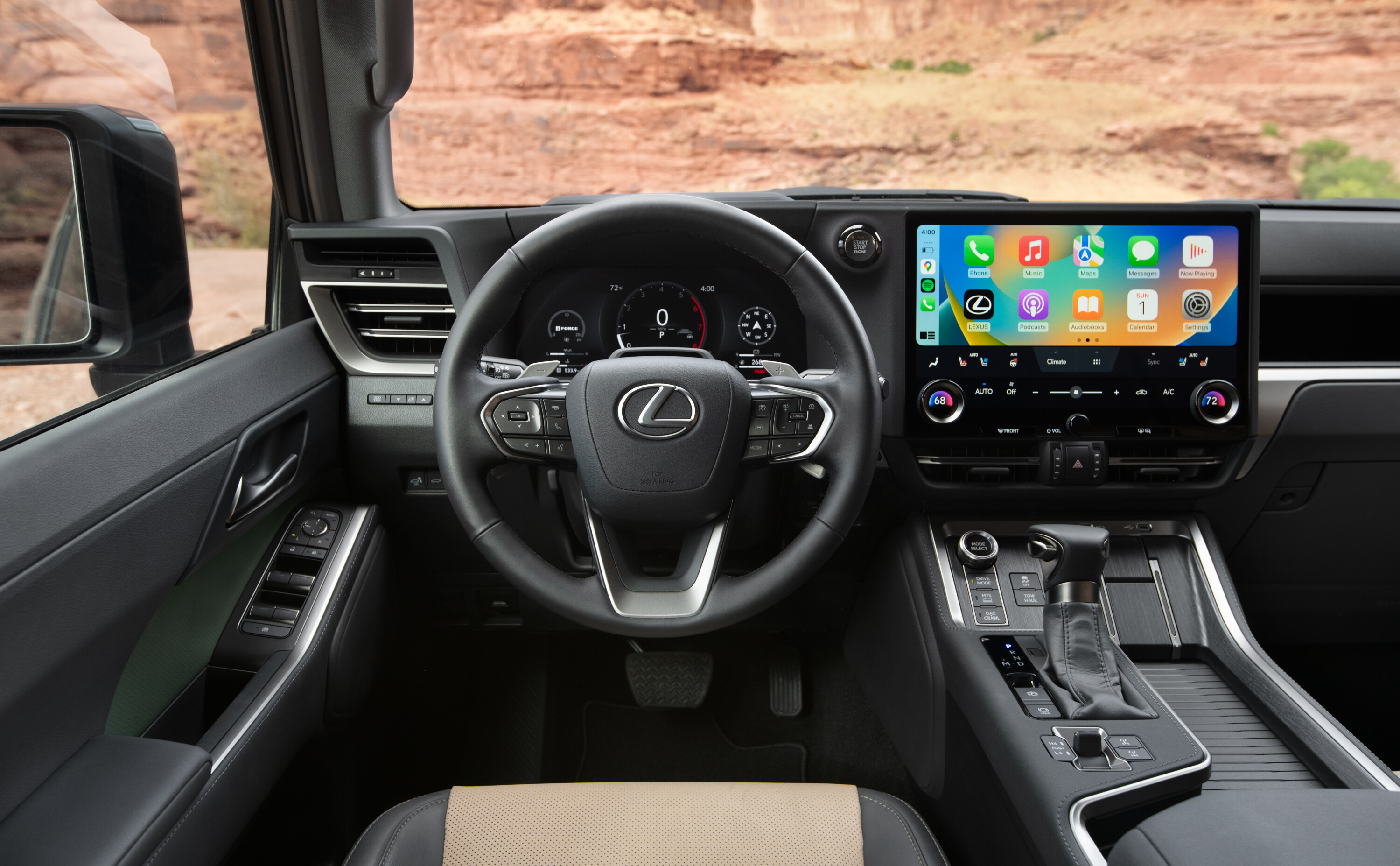
Inside, all variants will be fitted with a 14-inch infotainment system with wireless Apple CarPlay and Android Auto, a 12.3-inch digital instrument cluster, five USB-C ports, a wireless phone charger, a windscreen-projected colour head-up display, and a 220-volt rear power outlet.
A “full suite of Lexus Safety Suite active safety technologies” will be standard, along with nine airbags, a 360-degree camera system, and tyre pressure monitoring.
1
The GX 550 Sports Luxury adds 22-inch alloy wheels, “high-grade” headlights with adaptive high-beam, auto-extending side steps, a fixed panoramic roof, semi-aniline leather-accented trim, “unique ornamentation and instrument panel finish”, and a digital rear-view mirror.
It also features multi-colour interior ambient lighting, 10-way power-adjustable front seats with massage function, a refrigerated centre console storage unit, a heated steering wheel, adaptive variable suspension, and five configurable drive modes (up from three).
The Luxury and Overtrail feature an unbranded 10-speaker sound system, while the Sports Luxury adds 21-speaker Mark Levinson audio.
1
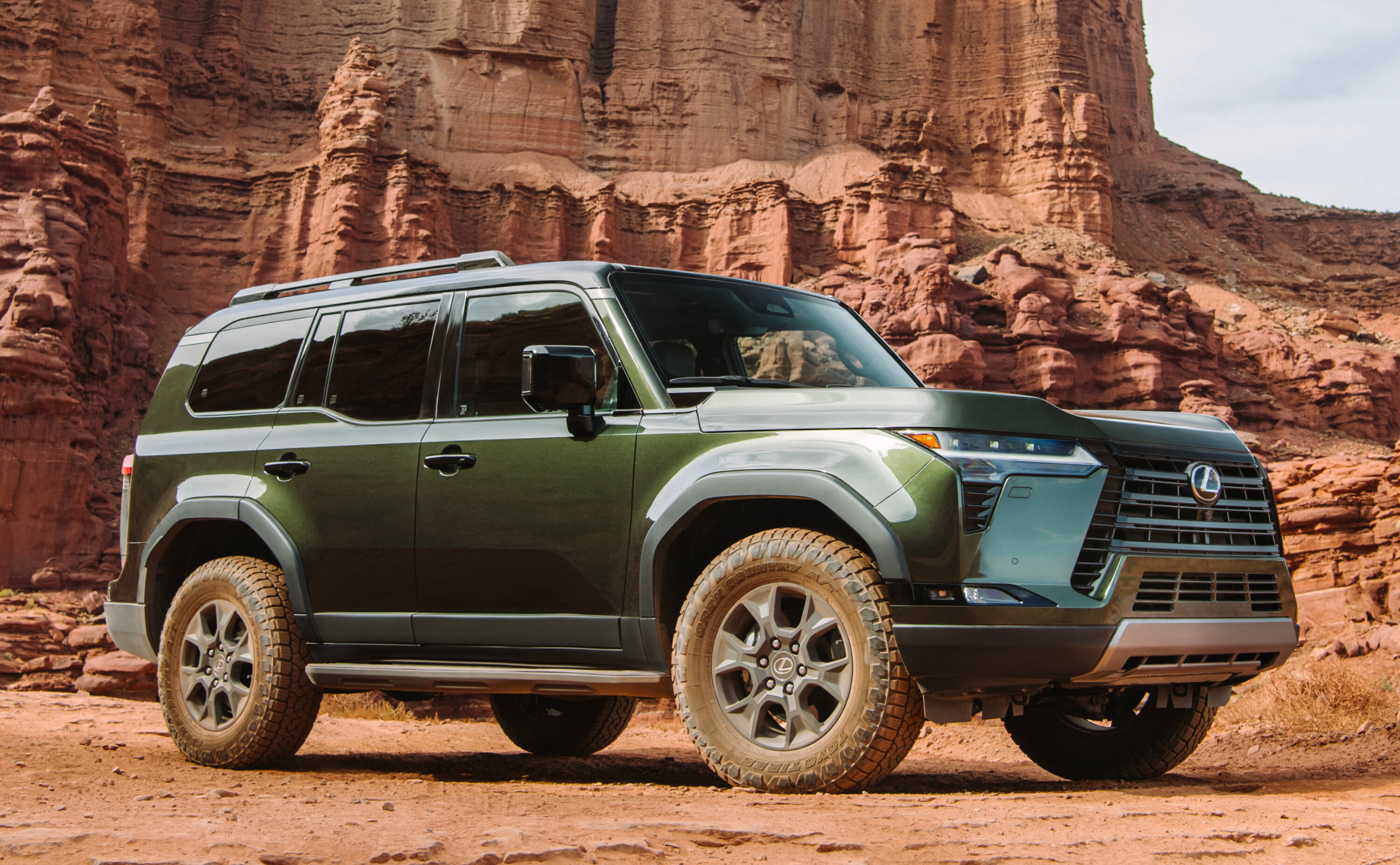
Aimed to “tackle the toughest Aussie terrain”, the five-seat GX 550 Overtrail sports different exterior styling with black 18-inch alloy wheels (down from 20 or 22 inches), 33-inch all-terrain tyres, extended wheel arch mouldings, aluminium skid plates, unique bumpers, blacked-out trim, and bridge-type roof rails
Under the skin, the GX 550 Overtrail has adaptive variable suspension, a locking rear differential, and the electronic Kinetic Dynamic Suspension System – which debuted in the LandCruiser 300 GR Sport – for “increased wheel articulation and improved tyre grip over uneven surfaces”.
It also has a multi-terrain select off-road traction control system, a multi-terrain monitor, downhill assist control, multi-stage crawl control, and a larger alternator to run ancillaries.
1
Inside, the Overtrail has olive green stitching and Ultrasuede accents, “stiffer seat bases with softer side bolsters”, different door ornamentation, an additional card-shaped smart key, and a refrigerated centre console storage unit.
Lexus Australia has confirmed seven exterior colours will be offered for the GX Luxury and Sports Luxury, while the Overtrail will have two single-colour or four two-tone finishes for the Overtrail
Full Australian details – including pricing and detailed specifications – are due to be announced closer to the launch of the 2024 Lexus GX around June or July.
Loaded to the gills, our February 2024 issue of 4X4 Australia is out now and en-route to letter boxes around the country.
Headlining this issue is a super-cool 2021 Mazda BT-50 GT – the one dominating the cover of the mag – which features a Rock Solid Premium tray, a MoTop rooftop tent, a Solve Off Road suspension package, and plenty more high-quality items.
1
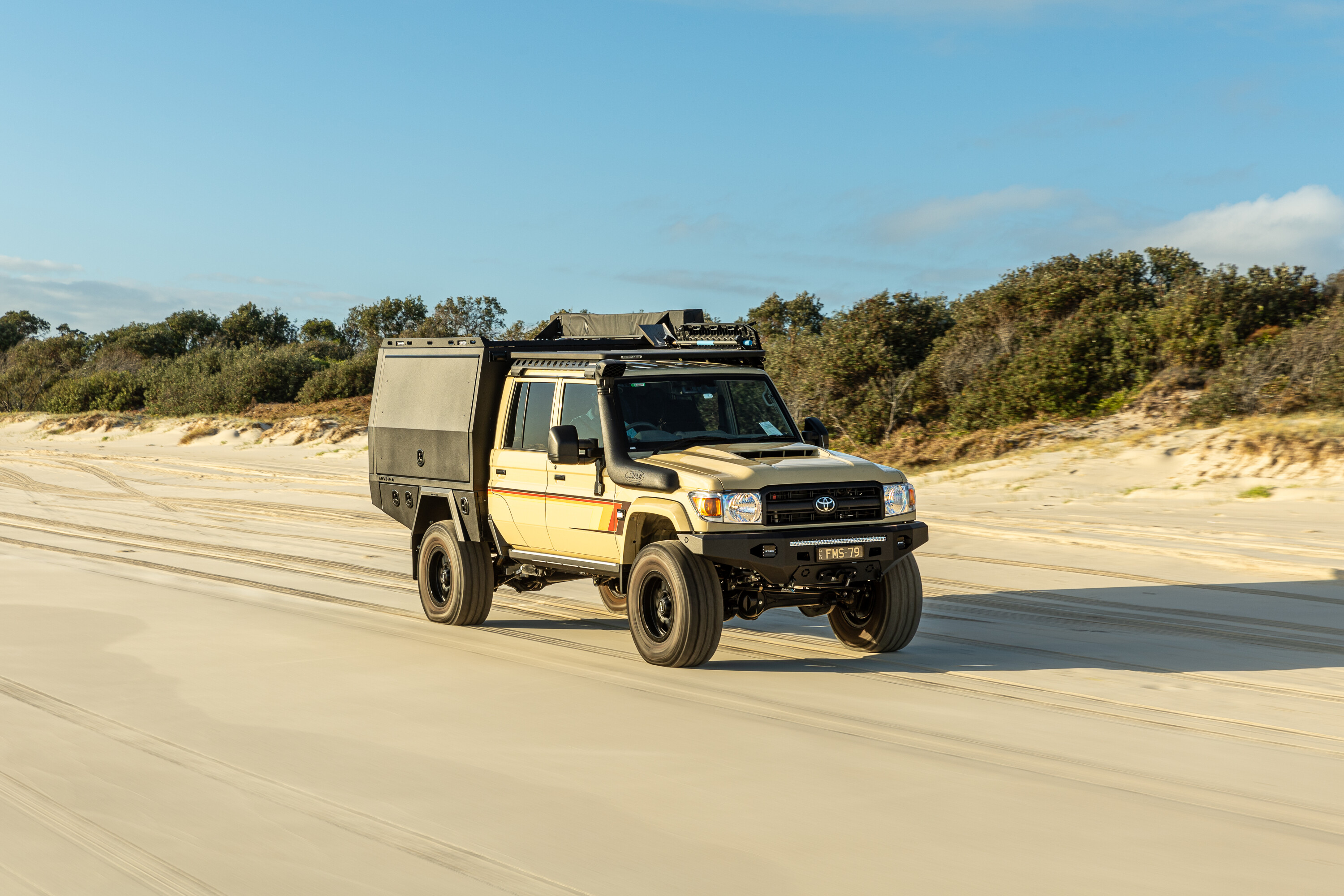
Another meticulously modified vehicle is a sandy taupe 79 Series LandCruiser that has been stretched, lifted and loaded with quality kit such as an engine tune by G&L Performance, AMVE canopy, 35-inch Baja Boss rubber, the full JMACX treatment, and loads more. Pick up a copy of the mag to read about both of these vehicles in detail.
1
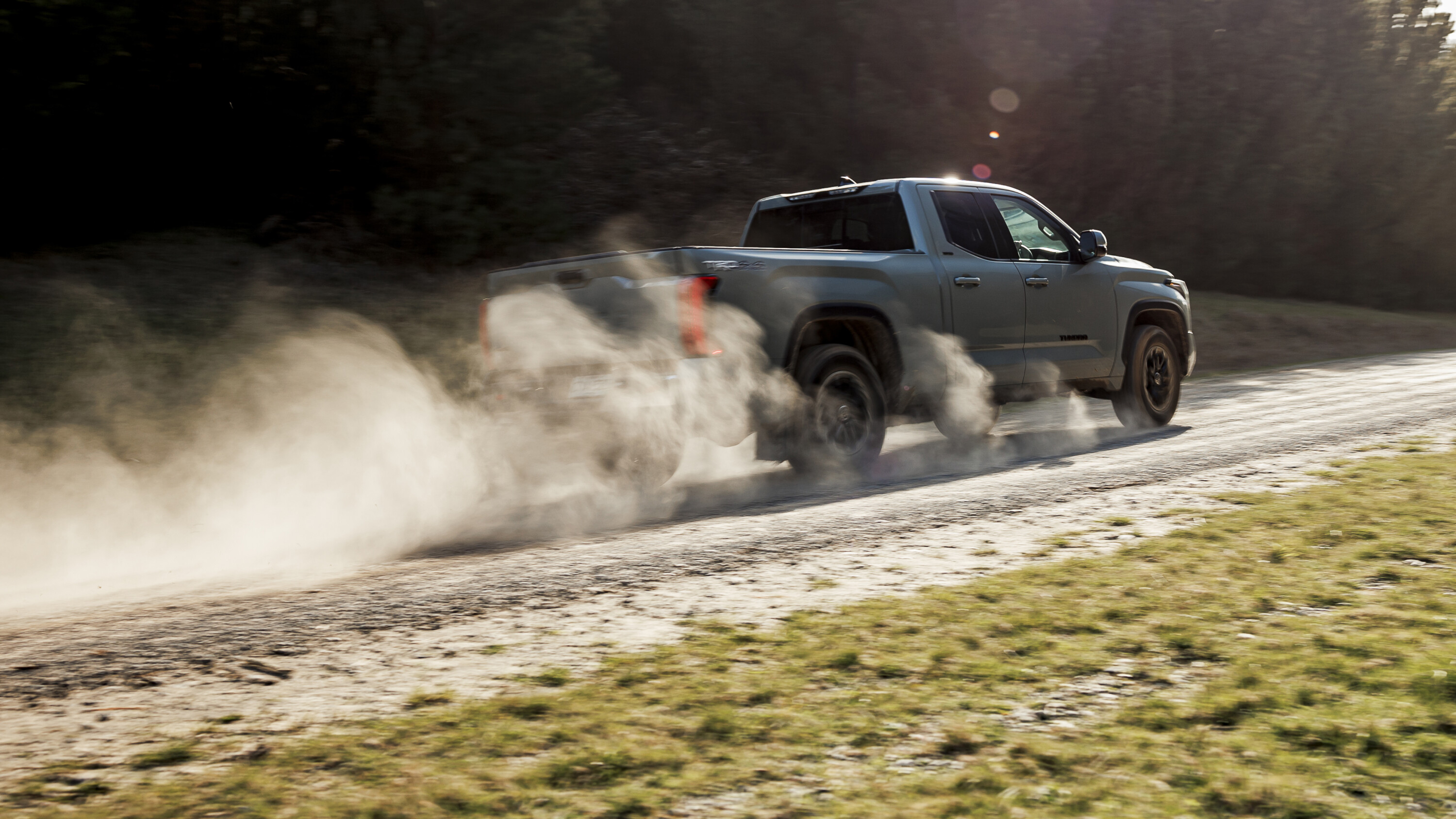
There are plenty of key cogs still to fall in place before we see the Toyota Tundra – re-engineered in partnership with Walkinshaw – in Australian showrooms, but progress is seemingly humming along nicely. Wheels magazine’s editor, Andy Enright, assesses the burly off-roader by taking it on an official drive on local soil.
1
All good things must come to an end and, with the last few pieces of the puzzle now fitted, it’s time to wrap up our Project Ranger build. It’s been a monumental transformation – the biggest build we’ve undertaken here at 4X4 HQ – and we look back on all the kit added, where we’ve taken it, and the issues encountered. We also reveal our next project car!
Speaking of our Ranger build, we take a close look at how the Maxxis RAZR mud-terrain tyres have fared after 15,000km. Plus, we load up and put a set of Maxtrax Xtreme recovery boards to the test.
1
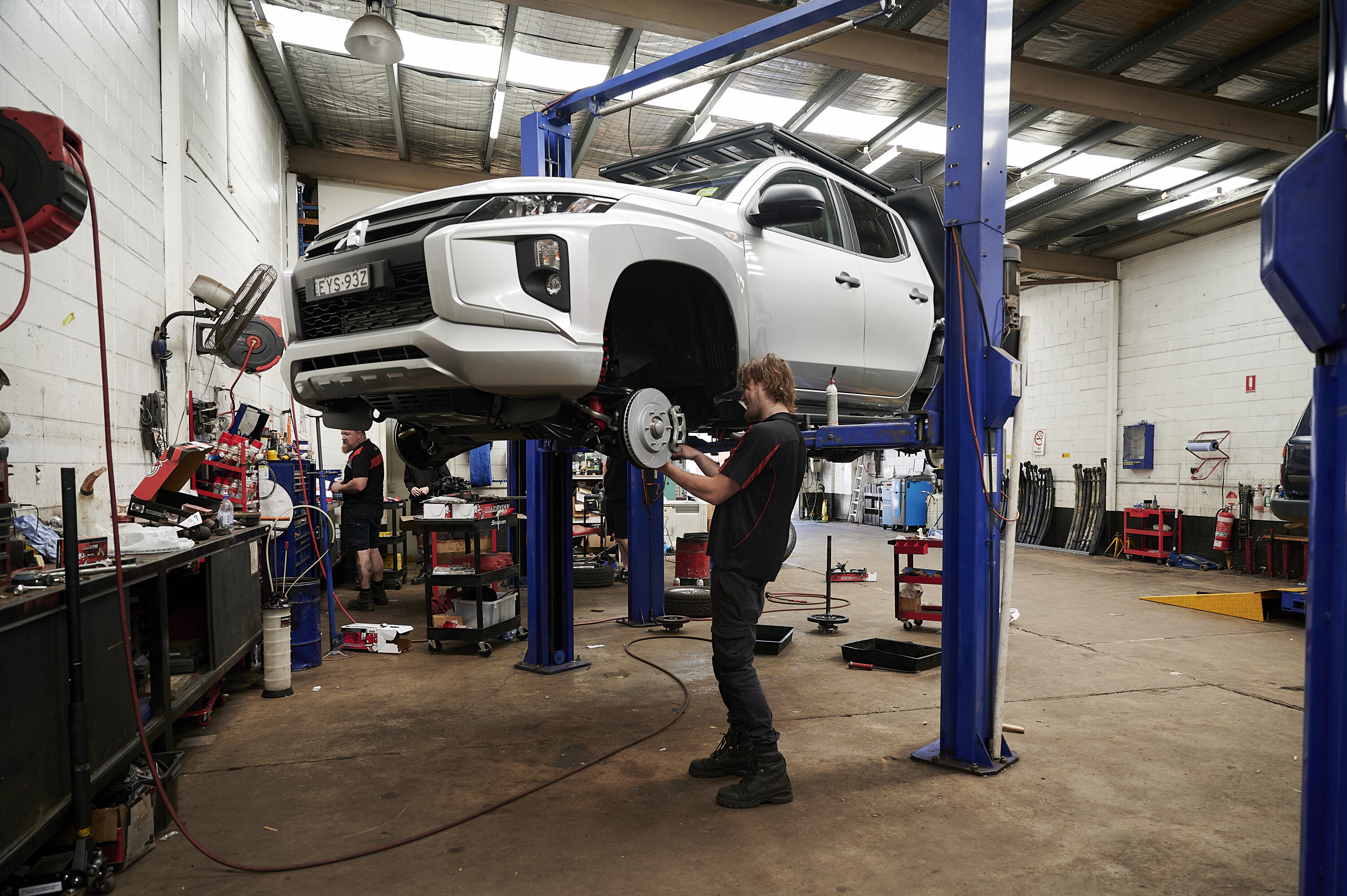
The tools may be down on our Ranger build, but work is continuing to ramp up with our Tradie Triton. In this issue, we’ve taken the Mitsubishi to the experts at Pedders for a suspension and brake installation.
1
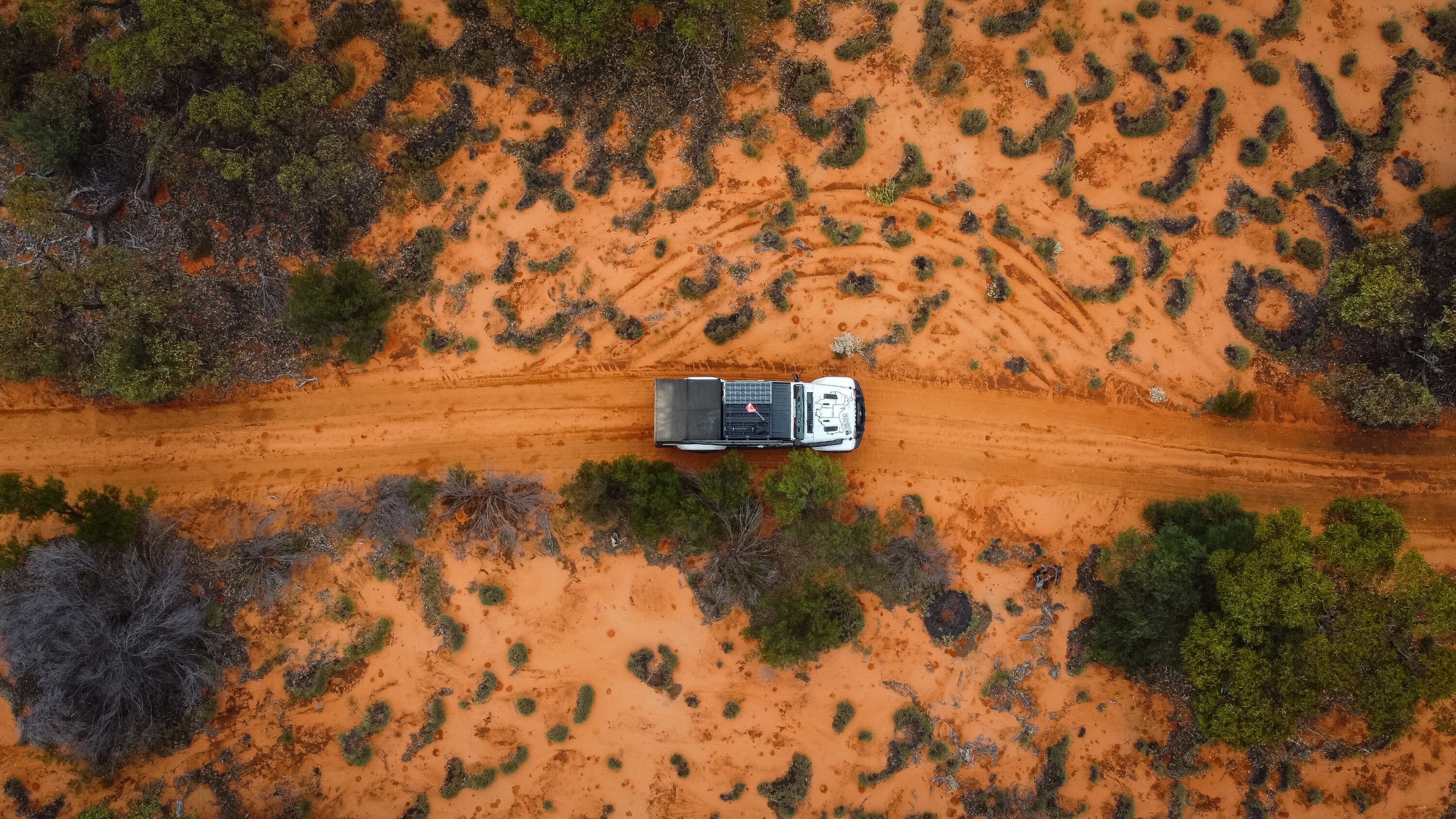
Dan Grec then points his Jeep Gladiator the the dusty trails of Googs Track in South Australia, cresting countless dunes in pursuit of the Red Centre.
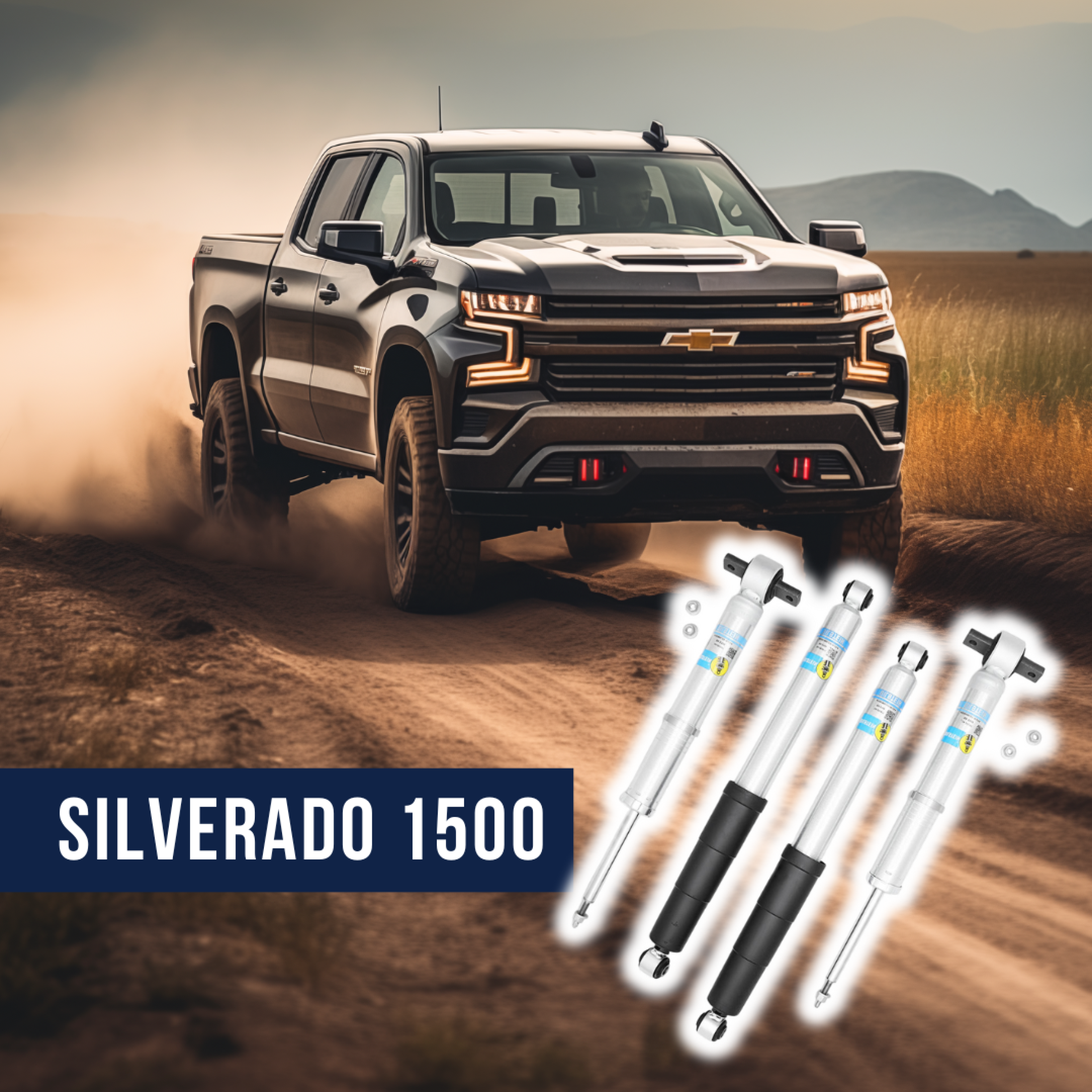
American trucks like the Silverado 1500, RAM 1500, and Ford F-150 are increasingly seen on Australian roads, and many owners are aware these vehicles are heavily raked from the factory – the rear end is higher than the front.
Fulcrum Suspensions, recognising this trend, offers a solution with its Bilstein Levelling Kits, designed to balance the vehicle by levelling the front with the rear; enhancing ground clearance at the front for a smoother, more even driving experience.
Fulcrum’s Bilstein Levelling Kits are specifically tailored for American trucks, featuring US-Spec Bilstein 5100 shocks. These shocks are not just any ordinary upgrade, they’re a game-changer for truck enthusiasts. With the ability to lift the front end up to 2.5 inches while maintaining the truck’s OEM springs, the original ride comfort is preserved. The zinc-coated body of the Bilstein 5100 shocks provides superb corrosion resistance, making them a durable choice for the varied Australian landscape.
The technical prowess of the Bilstein 5100s lies in their high-performance valving, offering maximum control and vastly improving stability under various conditions, whether it’s off-roading adventures or highway cruising.
1
These shocks are particularly beneficial for towing, significantly enhancing stability and control, reducing sway and the “boaty” feel often experienced in unmodified trucks. The innovative levelling mechanism of the shocks, with multiple grooves for a circlip, allows for adjustable spring seating, enabling easy vehicle height modification for perfect balance and alignment.
Fulcrum’s suspension upgrade redefines the driving dynamics of American trucks in Australia. By eliminating uneven stance and improving stability and control, the Fulcrum solution transforms these vehicles into a more balanced and enjoyable driving experience.
For those seeking the ultimate upgrade, consider complementing the Bilstein Levelling Kits with Polyair Airbag kits. These kits add another layer of stability and control, particularly useful for heavy towing and load-carrying, rounding out the suspension package and enhancing the truck’s performance to its peak potential.
Available now!
Bilstein Levelling Kits are available to purchase at fulcrumsuspensions.com.au | For further information, visit fulcrumsuspensions.com.au or call 1800 385 278. For trade customers, please contact 1300 360 922.
If it’s finally time to replace your Esky, we’re here to help you buy the best camping fridge for your needs.
When it comes to having fresh food and cold beer at the end of the day, a portable fridge makes camping life a lot easier; particularly if you’re planning on hitting the road for longer than a weekend getaway. So what is the best camping fridge in Australia?
The best portable camping fridges will have the capacity and features you need for specific camping trips. Whether you need a small one for a weekend away or a larger one for a lap of the map, we have you covered. We’ve also included a buyers’ guide to help you decipher which portable camping fridge is going to be the best addition to your individual camping set-up.
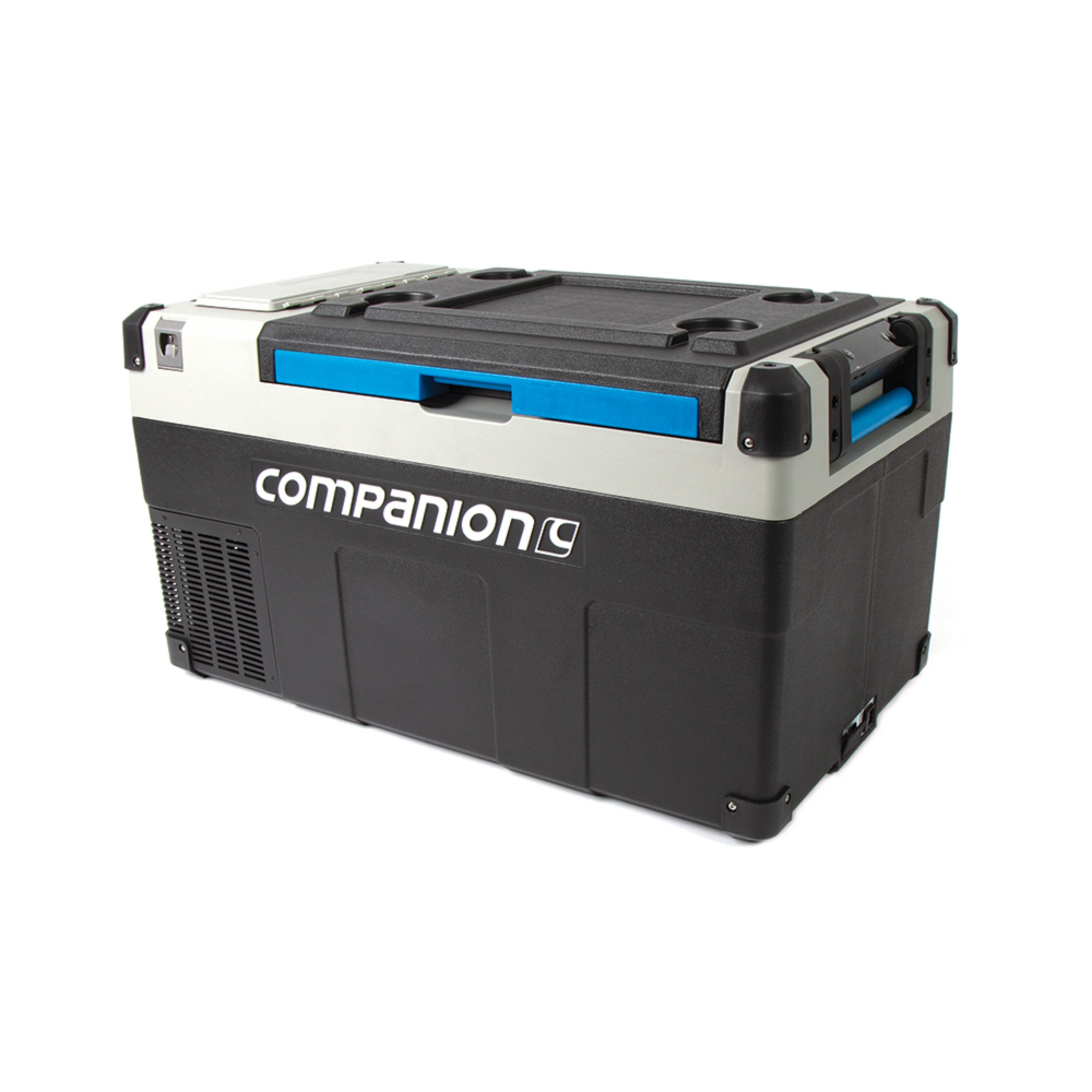
In a market packed with 12V portable camping fridges, it’s hard to find one with a point of difference. Companion’s Lithium Rechargeable camp fridges have just that, with an integrated 42AH lithium battery.
1
This means it can be used anywhere. Better still, the battery is removable and can be used to power other devices via the integrated USB ports. The fridge can still be run without the battery by simply connecting it to a 12V battery or 240V mains.
It’s a good thing this unit comes in large sizes, as having a fridge with its own battery will allow you to go off-grid for longer. You can load up the 65L single compartment or the 75L dual-zone and head out on the road without even thinking about stopping at the supermarket to resupply. The Lithium Rechargeable models use a Secop compressor, which keeps power usage low. Plus, you can boost the efficiency even further by buying an insulated cover.
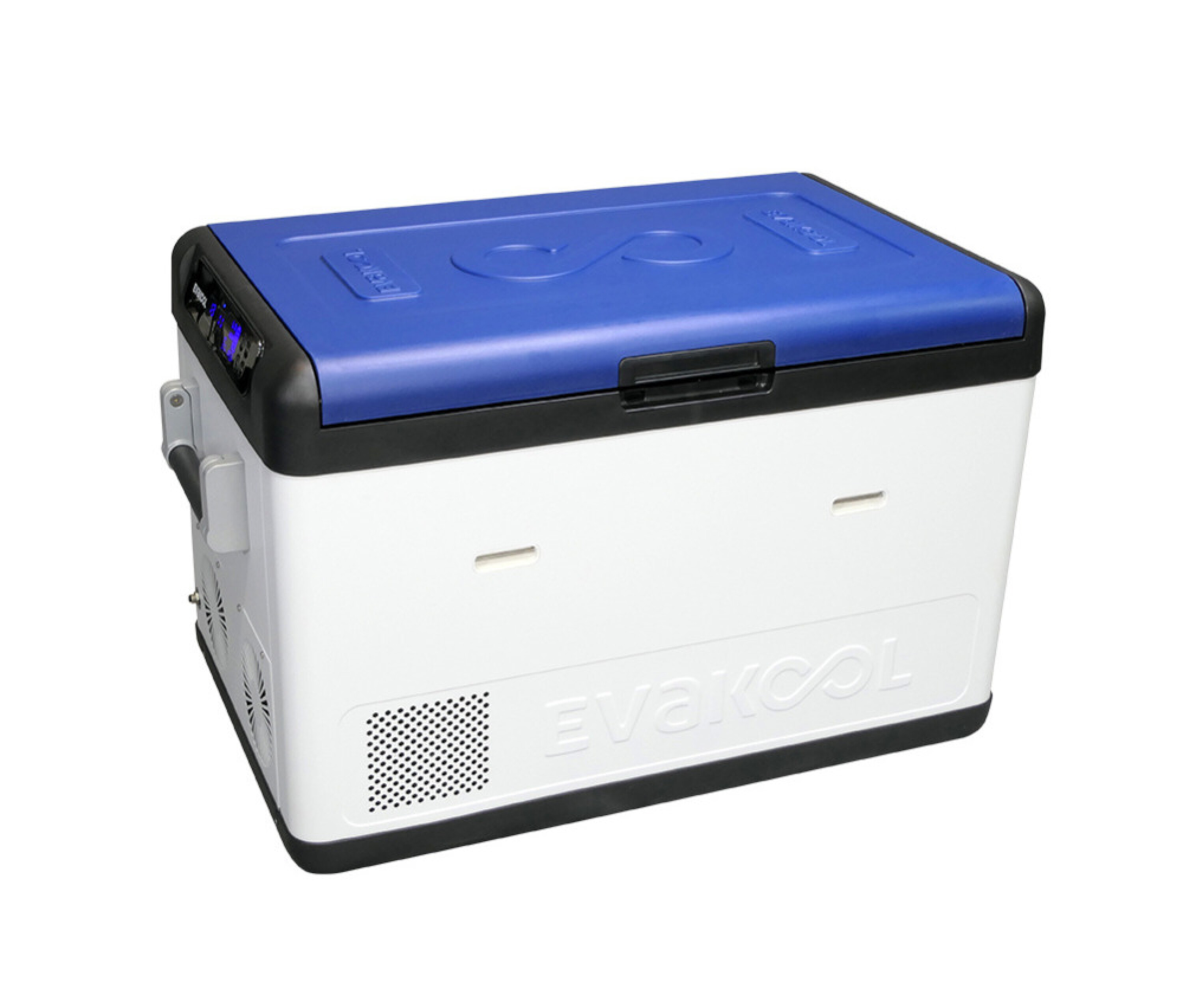
Evakool Down Under II portable camping fridges are made in Australia.
They have all the necessary durability and usability features, along with some smart designs that provide versatility for all kinds of camping adventures. The Down Under II comes in three sizes – 65L, 85L and 95L – and each has a Secop compressor for efficient cooling and freezing. You can control the temperatures via a smartphone app or the fridge’s digital display.
1
These camping fridge-freezers stand out from the pack with their usability. The two larger options (85L and 95L) have twin lids to access each side individually. The lids can also be completely removed or adjusted to open from either side. The 65L unit has a removable divider, meaning you can use it as one big fridge or as a dual fridge-freezer as needed.
Another great feature is the ability to turn one side off when not in use. This means you can buy a larger fridge for longer camping trips but not worry about wasting power if you are only going away for the weekend.
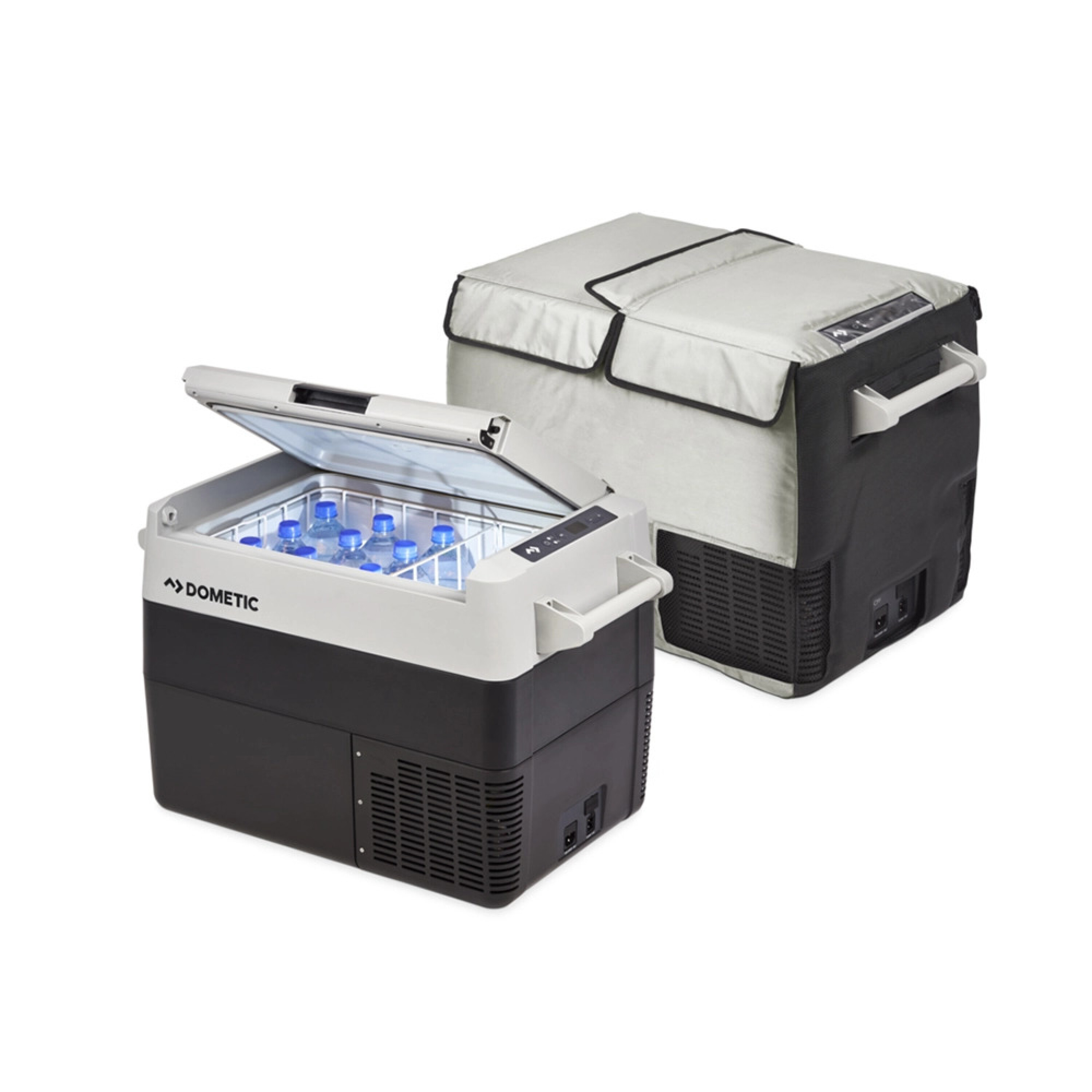
Dometic has great entry-level camping fridges in its CFF range. At the lower end of the price range, these camping fridges are built to last and packed full of useful features.
The fridges come in 20L, 44L and 70L capacities. The smaller two are single-compartment, while the 70L is a dual-compartment split into 40L and 30L. All models allow you to independently control the compartment temperatures for cooling or freezing.
1
All three fridges in the CFF range have a removable lid, and the 45L and 70L lids are double-sided, allowing you to open them in either direction. These fridges have a low power draw, and the 44L and 70L models come with their own insulated cover to better improve the efficiency. If you’re just getting into the market and want a solid entry-level camping fridge-freezer, Dometic’s CFF range is very enticing.
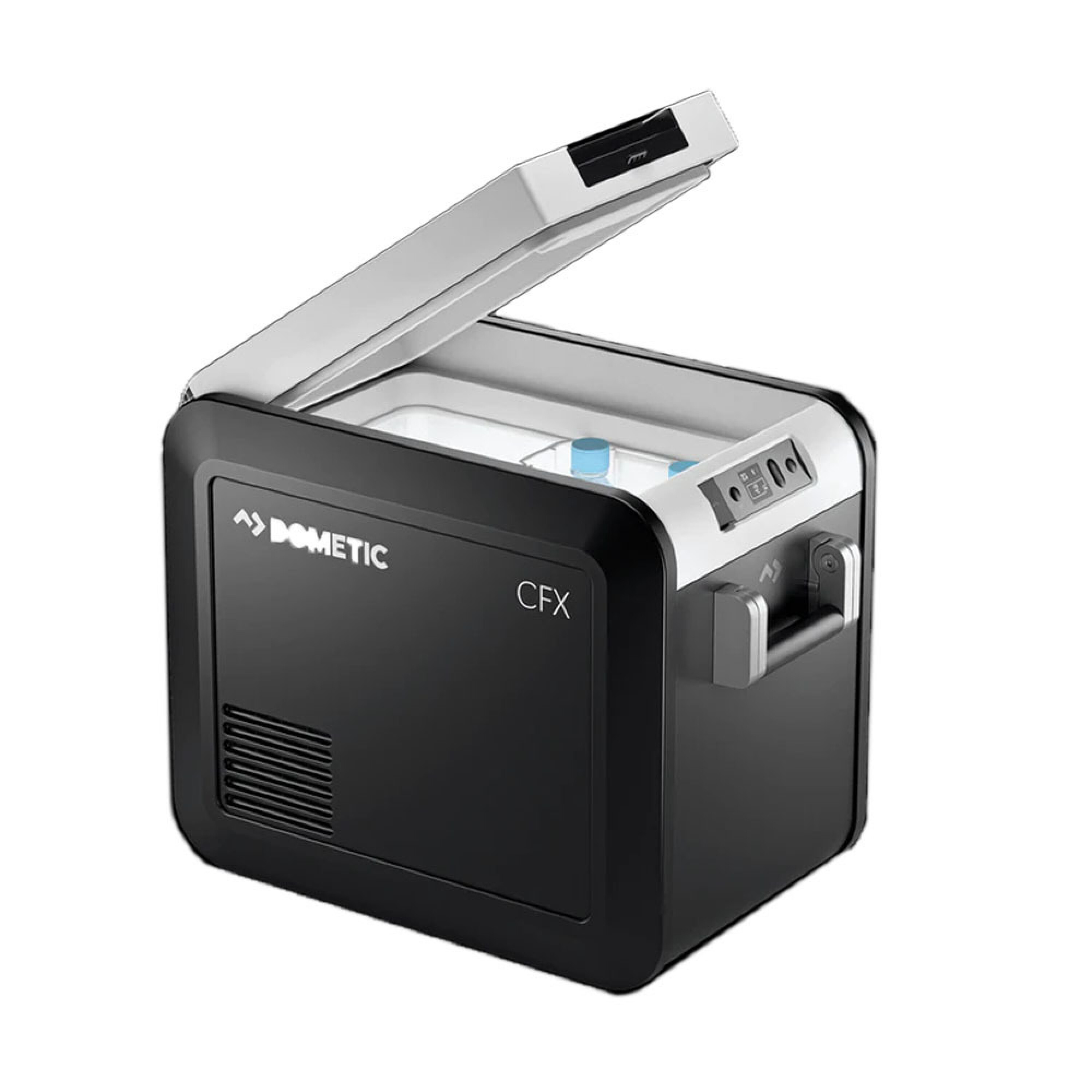
Dometic’s CFX3 camping fridge-freezers are built tough for the outdoors, while still incorporating the right technology for easy use and a long lifespan.
1
There are seven camping fridges in the CFX3 range, so no doubt there’ll be a size that’s right for you. Dometic has built its CFX range with durability in mind, but despite this they are at the lighter end for camp fridges thanks to Dometic’s Exoframe construction. All models use a VMSO3 compressor, which is built to last and will maximise efficiency.
You can grab a single-compartment fridge/freezer in 25L, 35L, 45L or 55L. Or upsize to a dual-compartment fridge-freezer in 75L or 95L. Then there’s a bonus 55L fridge-freezer, which is the only fridge on the market that includes ice trays and is capable of producing ice in just a few hours. A handy feature if you camp in the heat up north, or you like your evening beverage on the rocks.
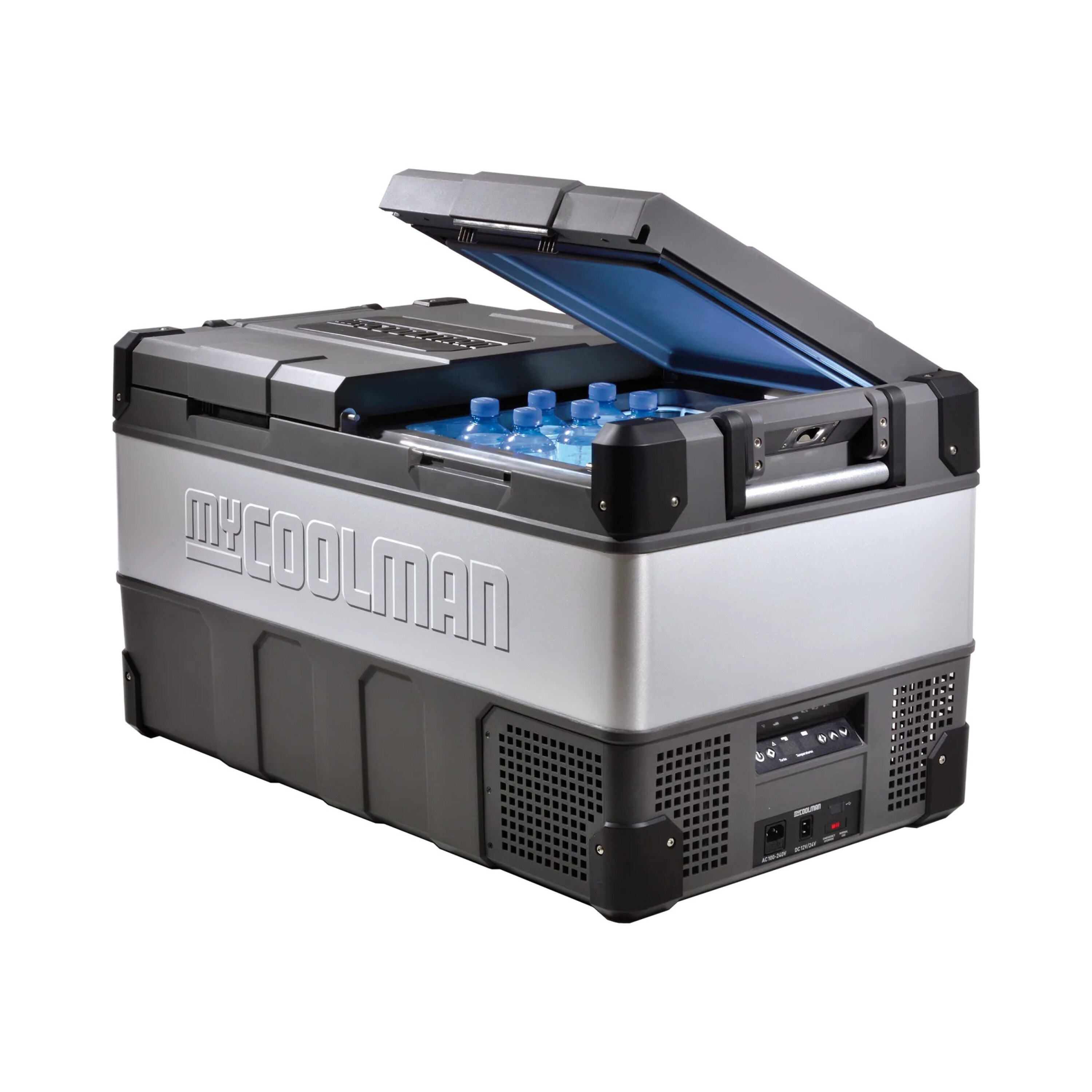
myCOOLMAN is quickly making a name in the industry with its quality camp fridges such as The Ultimate.
1
This 90L dual-zone fridge-freezer has some handy features like flush-folding handles and mounted bottle openers – and it is built to last. It has two compartments, 41L and 55L, and both can be set to different temperatures and controlled easily via the digital display or a smartphone app.
If you want to go further off-grid and need some extra battery power, you can grab a myCOOLMAN lithium power pack. Rather than lug a huge battery pack around, this purpose-built fridge-charging battery is compact and sticks to the side of the fridge using a magnet. It’s an additional cost and takes up a little extra space, but it will add more versatility to an already excellent camping fridge-freezer.
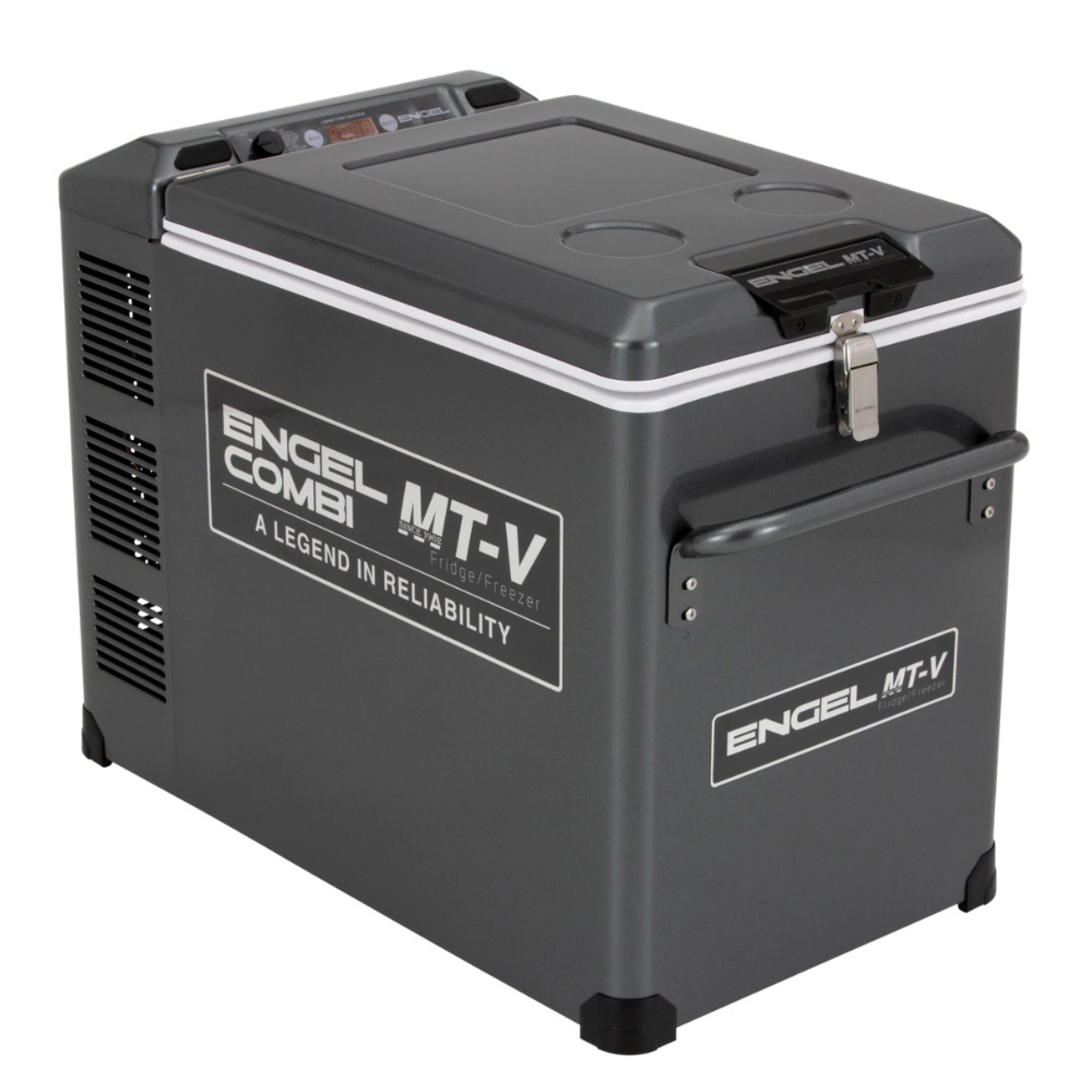
Engel’s MT-V Combi 39L camping fridge has one of the most versatile internal set-ups of any camping fridge listed here.
It has a removable cabinet divider which allows you to set up your own preferred configuration and operate it as a fridge, freezer or both simultaneously. The fridge has been designed for campers who like to change things up. If no two trips are the same for you, then you need a fridge-freezer that can keep up, and this is where Engel’s MT-V Combi comes in.
1
Depending on what you’re taking on your camping adventure – food, drinks, frozen items – it can be configured to keep everything fresh, chilled, cold or frozen. There are three different ways to configure this fridge: If you remove the cabinet divider you have the full 40 litres operating as a fridge; with the divider in you can have a 16L freezer and 23L fridge; or a 22L freezer and 17L fridge.
This fridge is powered by the Sawafuji Swing Motor for the lowest maximum power consumption. It is the latest model in the MT-V series of portable fridge-freezers – there’s also 57L and 75L dual-compartment fridges – but the only one with a removable divider.
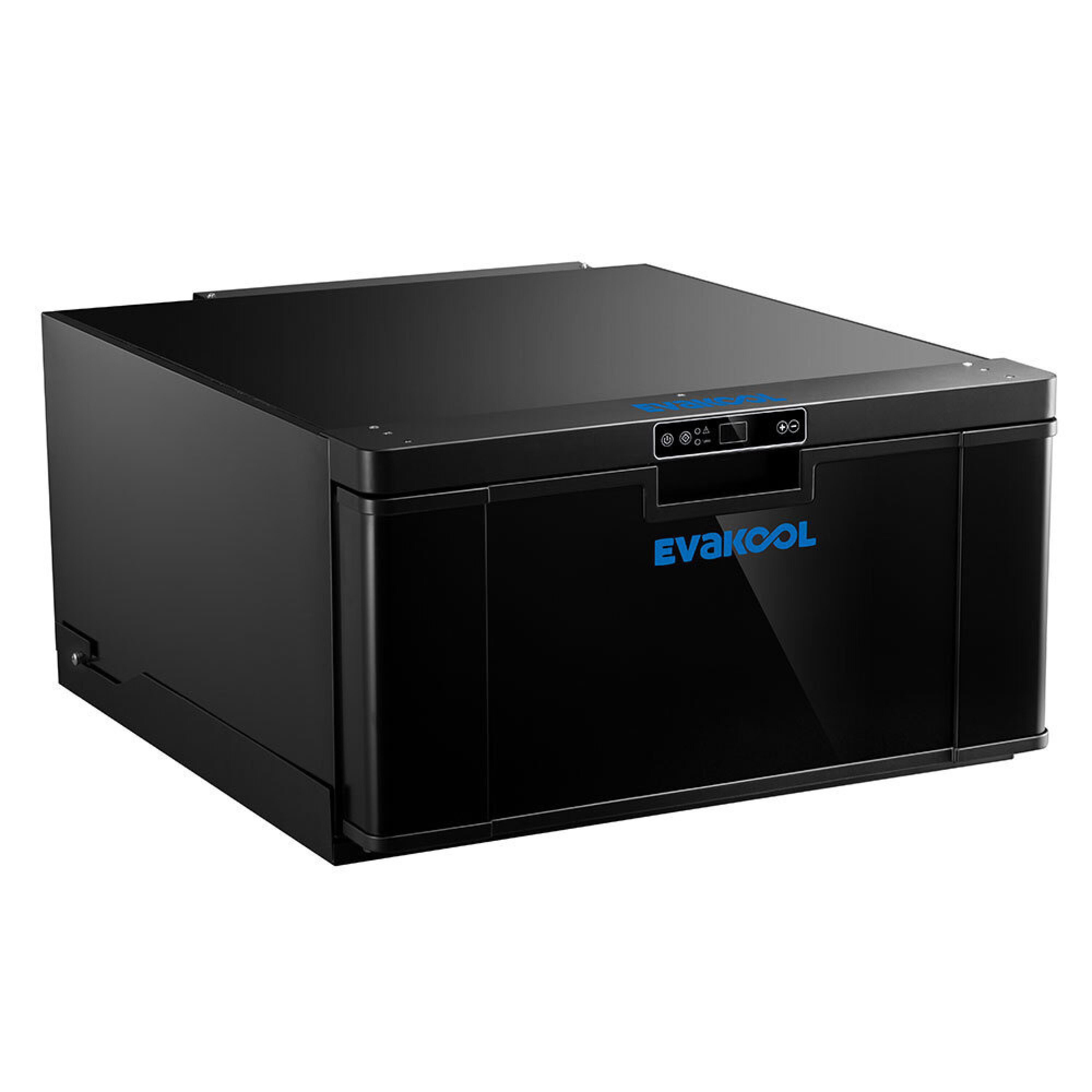
Drawer fridges are a great solution for campers who need to save on space, and we reckon Evakool has a great option.
1
It’s built to install in the back of a 4WD or ute and even comes with a mounting bracket, making it easy to install yourself. Simply bolt down the bracket and the fridge fits securely into it. While a lot of drawer fridges can only operate as a fridge, Evakool’s 40L can get to -16°C, allowing you to operate it as a freezer as well. This newer model has a Secop PBC 2.5 Compressor, which is covered by a five-year warranty to give you peace of mind.
The drawer-fridge design has flush sides, meaning there are no awkward handles. Plus you can stack things on top without having to remove them to open the fridge; simply grab the drawer handle with one hand and slide it open. It’s perfect for when you have a freshly cooked snag in one hand and need something to wash it down with.
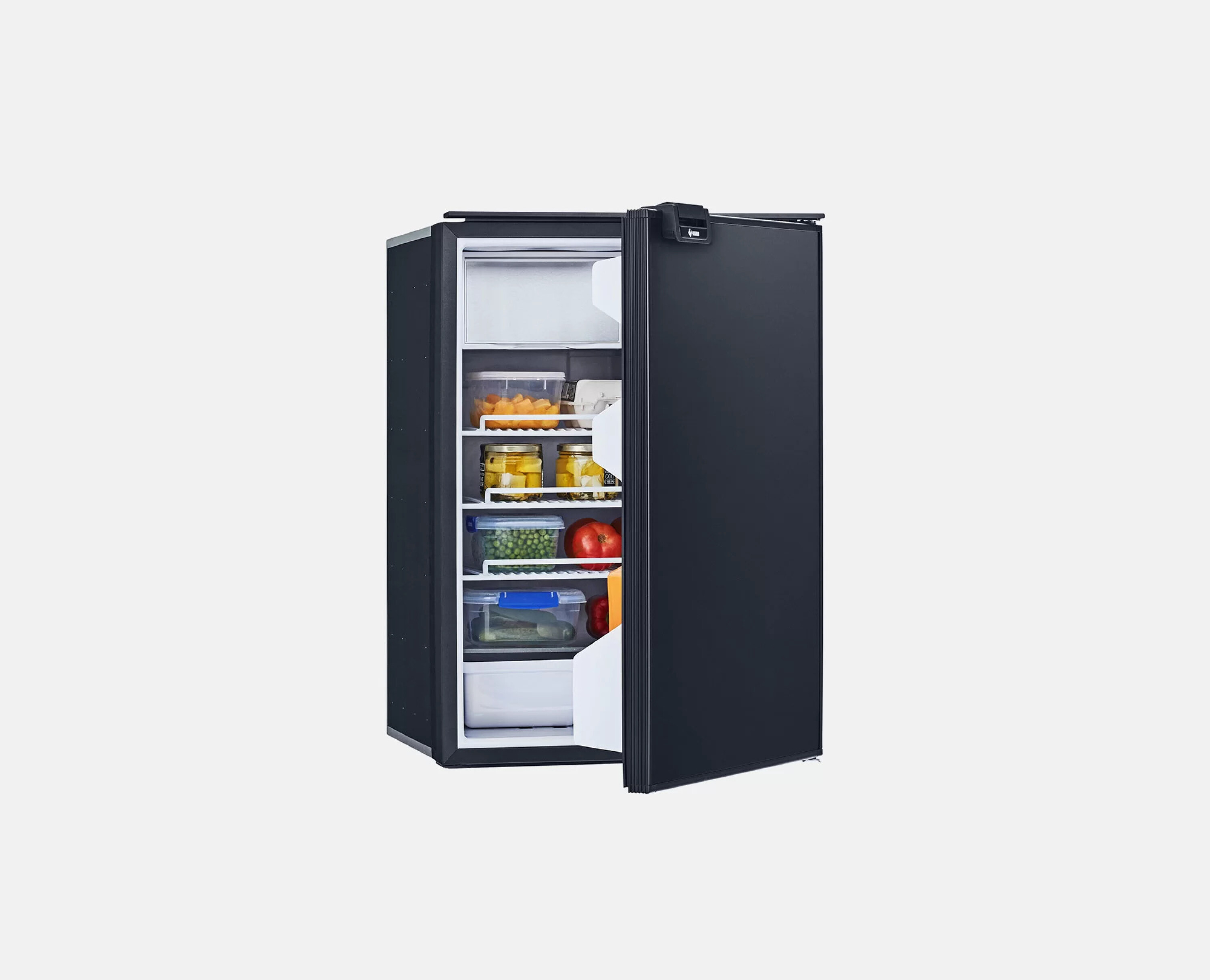
Designed by an Australian company, the DC130-X by Bushman is an efficient upright fridge-freezer that is built to handle bumps and hot-weather conditions.
1
This is the closest thing to taking your own fridge on the road. There is plenty of fridge space (124L), a 6L freezer, and even a vegetable crisper. Despite the spaciousness, the DC130-X is lightweight considering its size and capacity, and uses a Nidec Danfoss BD35 compressor which is built to last.
Despite having to permanently fix this fridge to your vehicle, it has adjustable shelves and a reversible door – so you can make it work for your own set-up. If you need a camping fridge with a large capacity, Bushman’s DC130-X upright fridge is well worth a look.
The majority of camping fridges listed here are chest fridges. These are the most popular and will meet the needs of most campers. They open from the top just like an Esky, and can have a single- or dual-compartment.
Most come with sturdy handles and inner baskets that make them easier to lift, carry and pack. However, they are heavy. And that’s before you fill them with barbecue meat. Depending on your set-up, you might need to opt for a fridge slide, which will be an extra expense and add extra weight to your rig.
Single-compartment chest fridges
Single-compartment or single-zone portable camping fridges have one inner compartment for storing food and drinks. This compartment can be set to one temperature within the fridge’s range – meaning you can use it either as a fridge or as a freezer. If you are only going to need one or the other, these are a good money-saver option.
Dual-compartment chest fridges
A dual-compartment or dual-zone fridge will have two inner compartments with the capability to control the temperature of each separately. This is great if you are wanting to refrigerate and freeze items at the same time. Some models have a removable compartment divider giving you more versatility to operate the fridge either as a single or dual fridge-freezer.
Upright fridges
Upright camping fridges have a front door that swings open, allowing easy access. They are lighter and more spacious than chest fridges. Most will have an inbuilt freezer section and storage space on the door just like a bar fridge. However, they are not built to be out in the open like chest fridges and will need to be fixed securely to your 4WD, ute or caravan. Keep in mind, they also require a bit more ventilation space than a chest fridge.
Drawer fridges
Drawer fridges are another good option for an easy-to-access portable camping fridge. Without the awkward handles or lids of a chest fridge, these beauties fit flush in your vehicle and when you need to grab something, you just slide the drawer open. These fridges will also need to be secured, so keep in mind they are not as portable as chest fridges.
Questions to ask when buying a camping fridge
How will you be using your camping fridge?
Consider how you plan to use your camping fridge – as this will play a big part in deciding what type of fridge to get. If you are happy to secure your camping fridge to your car and leave it there permanently, an upright or drawer fridge are great options. However, if you want the flexibility to remove the fridge when not in use, or when you reach your campsite, a chest fridge is the more versatile option.
How will you power your camping fridge?
The camping fridges here are two-way compressor fridges. They can be powered by either 240V mains power or a 12V battery. This means you can plug them into the mains at a powered campsite, or run them off a car battery, portable battery or solar. Check the fridge you are buying has the correct connectors included or you might have to buy them separately.
Having a dual-battery system in your car is the easiest way to power your camping fridge. It will allow you to keep the fridge running even when your engine is off and you won’t have to stress about draining your main battery. Otherwise, having an extra portable battery or solar panels are also a great way to run your camping fridge.
If you don’t have any of these – look into purchasing a power source along with your camping fridge, as we don’t recommend the stress of trying to run a fridge off your car’s main battery. Companion’s camp fridges have their own integrated 42AH battery, or the myCOOLMAN camp fridge has an optional battery pack at an additional cost.
How much power does a camping fridge draw?
Once you start looking at different camp fridges, take note of how much power they draw – this will give you an idea of how efficient they are and how often you’ll need to charge your power source to keep the fridge running.
Power consumption for camping fridges is measured in amps per hour (Ah/h). A single-compartment fridge may use 1 to 3amp per hour, while a freezer may use 2 to 4. Usually, camping fridges will use a lot of power to get to the required temperature and then require a lower power consumption to maintain that temperature.
We haven’t included the amps per hour, as it differs depending on what temperature you are running the fridge at. However, no matter what camping fridge you’ve got, there are a few standard things you can do to conserve power and make them run more efficiently:
A good quality compressor will limit the amount of power used
Keep your fridge in a cool spot, out of the sun
Check how much insulation is in the fridge and consider buying an insulated cover
Well-stocked fridges will use less power consumption (that sounds like an excuse to buy more beer).
What is the best capacity for a camping fridge?
Capacity of camping fridges is measured in litres. Many manufacturers also like to tell you how many cans you can fit inside. Portable camping fridges come in a large range of sizes, from 12 litres – good for a picnic or overnighter – to 130 litres in an upright camping fridge.
To find the right capacity, ask yourself a few of these questions:
How long will you be travelling for?
Will you go off-grid, or are there plenty of places to restock?
Are you taking food for a couple, or needing to feed a whole family?
Do you like camp cooking to include fresh food, or do you only need to keep a few essentials refrigerated?
What size and weight should a camping fridge be?
Along with the fridge’s capacity, you need to consider its size and weight. You might like the idea of buying a larger capacity fridge-freezer, but can your vehicle (and your back) handle it? If you’ve already got a car-load of camping gear, you’ll know the importance of light and compact when it comes to choosing what to pack. However, light and compact is not really what you sign up for when buying a fridge!
If you plan to lift your fridge out of your vehicle, look for small-capacity fridges or have a mate on hand to help. For larger fridges, adding a fridge slide will make it more accessible, however, this will add extra weight to your vehicle. To not max out your GVM, pay close attention to the weight of the fridge when empty, then consider that you’ll be adding weight, both by filling it and with any extra accessories you buy.
What extra features are handy in a camping fridge?
Often with camping gear, it’s the extra features that make adventuring in the outdoors a whole lot easier. Fridges are no exception – here’s what extra features to look for when buying one.
Durability
Make sure your fridge has a tough outer casing and sturdy handles, it should be built for the outdoors, and the rough and tumble of venturing off road. This is not just to protect your tomatoes and lettuce, but the fridge’s main components and in particular the compressor.
Baskets
Removable baskets make filling the fridge easier, as you can load them up at home and drop them in the fridge in your car.
Removable lids
Removable lids on chest fridges make access easier, particularly when taking baskets in and out.
Digital displays
A good digital display will be simple and easy to use, allowing you to check and change temperatures, monitor usage and switch the fridge on and off.
Charging ports
Many fridges now come with charging points to charge your other devices.
Smartphone apps
Some camping fridges can be paired via Bluetooth or Wi-Fi to a smartphone app that will allow you to monitor battery usage and change temperatures.
LED lights
An LED light inside the fridge will help you find that last choccy biscuit after the sun sets without having to grab the camping lantern.
What is a good price for a camping fridge?
The best camping fridge is going to last you for many years to come, and that means making an investment. We recommend buying a camping fridge from a well-known brand. They will have a better warranty and will be easy to contact if you need replacements or parts.
To save money on a camping fridge, simply do a good assessment of just how much capacity you need and exactly what you’ll use it for. It’ll save you from overspending and you’ll be able to find your own best camping fridge.
How we review products
4X4 Australia has been reviewing four-wheel drive vehicles, aftermarket products and camping gear for more than 40 years. When looking for the best swags in Australia there are some things that are essential to ensure you sleep soundly under the stars.
When we compared each of the swags in the list with hundreds out there we looked at the size, weight, durability and price. We also searched for additional features that make these swags stand out from the rest.
We looked at hundreds of user reviews and drew on our own experience sleeping in swags to make sure our recommendations are for the best on the market.
Disclosure: When you buy through our links, we may earn a commission. We also include products that we do not earn a commission from.
4X4 Australia recently joined rally champion and stunt driver Andrew Comrie-Picard at The Explorers Club (TEC) in New York City for the send-off of a round-the-world journey of epic scale, the Transglobal Car Expedition (TGCE).
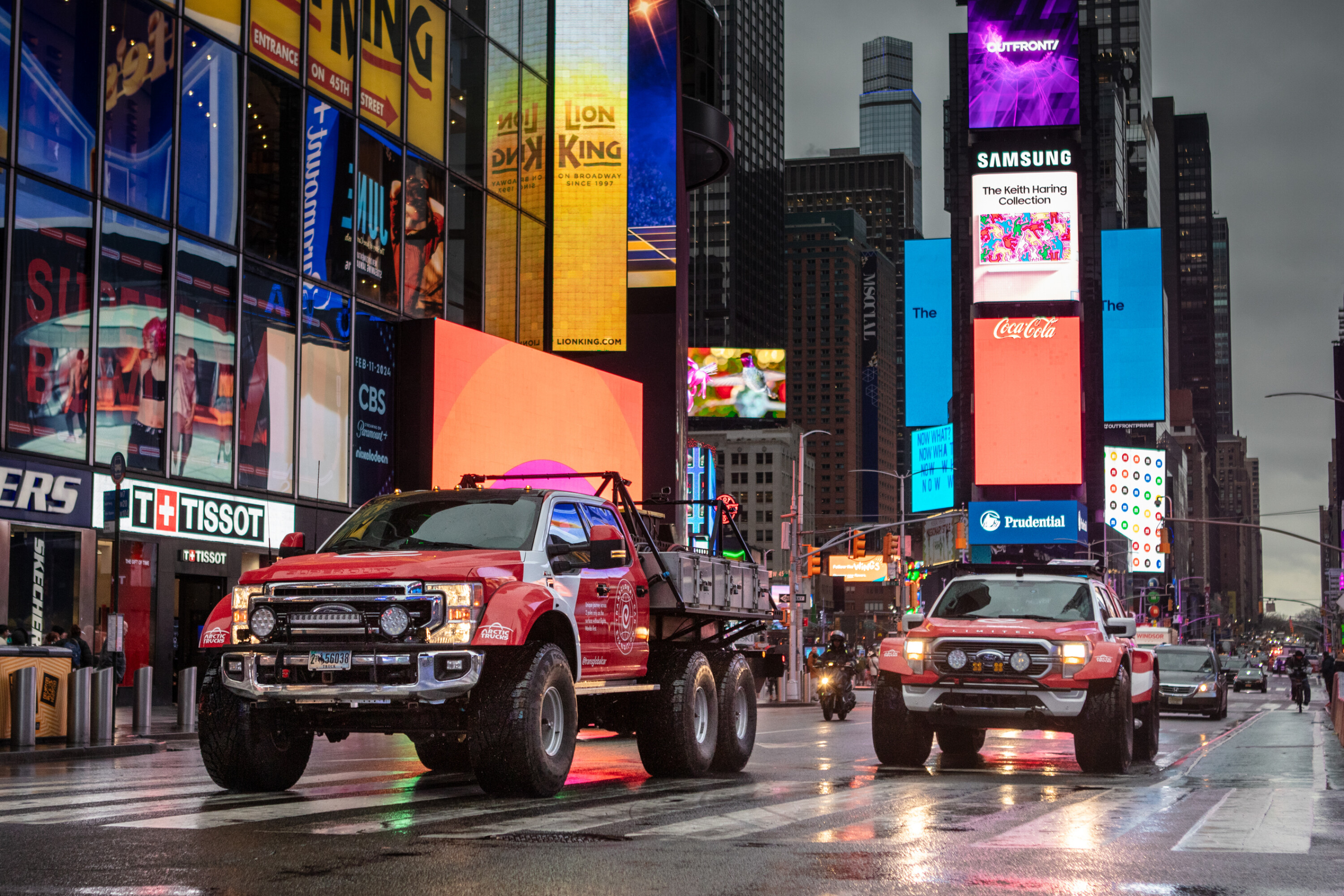
Hopping out of his 6×6 Ford Super Duty F-350, fitted with 44-inch tyres no less, we headed through a pair of weathered iron doors into hallowed ground. TEC is a place of legends, where a stroll through the membership archives reveals exploration icons such as Roald Amundsen, Robert Peary, Edmund P. Hillary and Neil Armstrong.
1
Andrew introduced us to the team, which included an international assembly of today’s foremost polar explorers and scientists: Arctic Trucks chairman Emil Grimmson, Vasily Elagin (creator of the Yemelya amphibian 6×6), Vasily Shakhnovsky (seven summits and two poles), and the list went on. The cast also included Dr. Christian Haas, an ice geophysics professor at the University of Bremen, and astronaut and engineer Paolo Nespoli.
Although the expedition will circumnavigate the globe from pole-to-pole, the inclusion of Haas and Nespoli are due to its groundbreaking scientific initiatives. While en route to the North Pole and Greenland, they will be toting electromagnetic induction (EMI) sounding equipment for the collection of accurate, real-time data on sea ice thickness.
1
The TGCE has also partnered with the Cosmic Pi project to document cosmic radiation at the magnetic pole, and NOIRLab’s Globe at Night, which focuses on the effects of light pollution. Due to the project’s scientific components, TEC sanctioned it as an official Flag Expedition, and one of their coveted red, white, and blue banners will join the team.
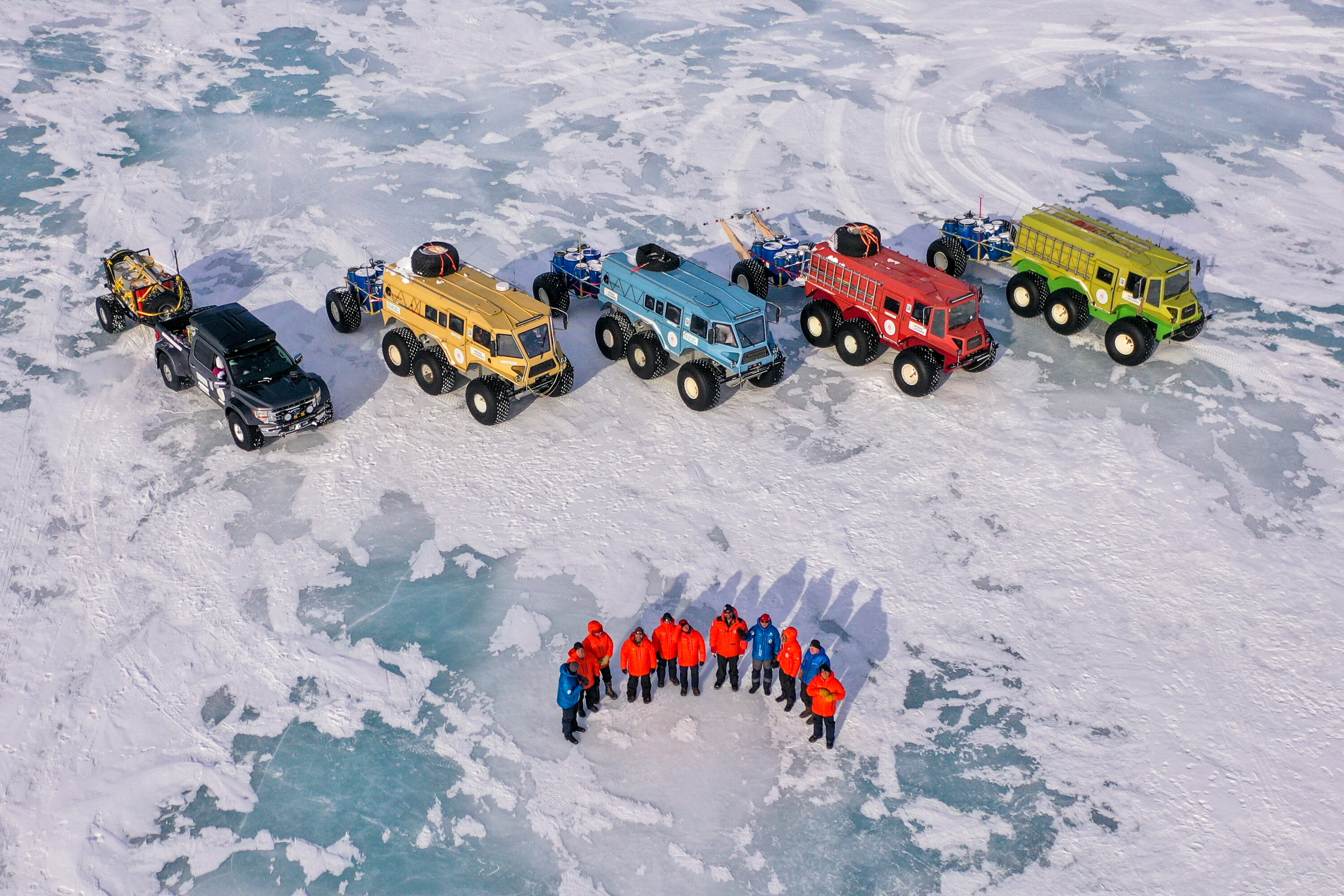
The fleet includes the Arctic Trucks AT44 Ford F-350 we were driving, an AT44 F-150 hybrid, a fleet of AT35 Expeditions, and of course the Yemelya amphibians. If they successfully reach the North Pole and Greenland without falling through the ice or being swallowed by a crevasse, they’ll ship to Europe, thread a path through the Middle East and down the breast of Africa on their way to Antarctica and the Amundsen-Scott South Pole Station.
After attempting a first vehicle traverse to Cape Journey, they’ll jump across the Straits of Magellan and up the spine of the Americas. After 50,000 kilometres, 30 countries, five continents, and 17 months, they’ll roll past Times Square and have gone full circle back to The Explorers Club.