
Here are a few top tips to keep your tyres from getting tired.
Tyres degrade with age
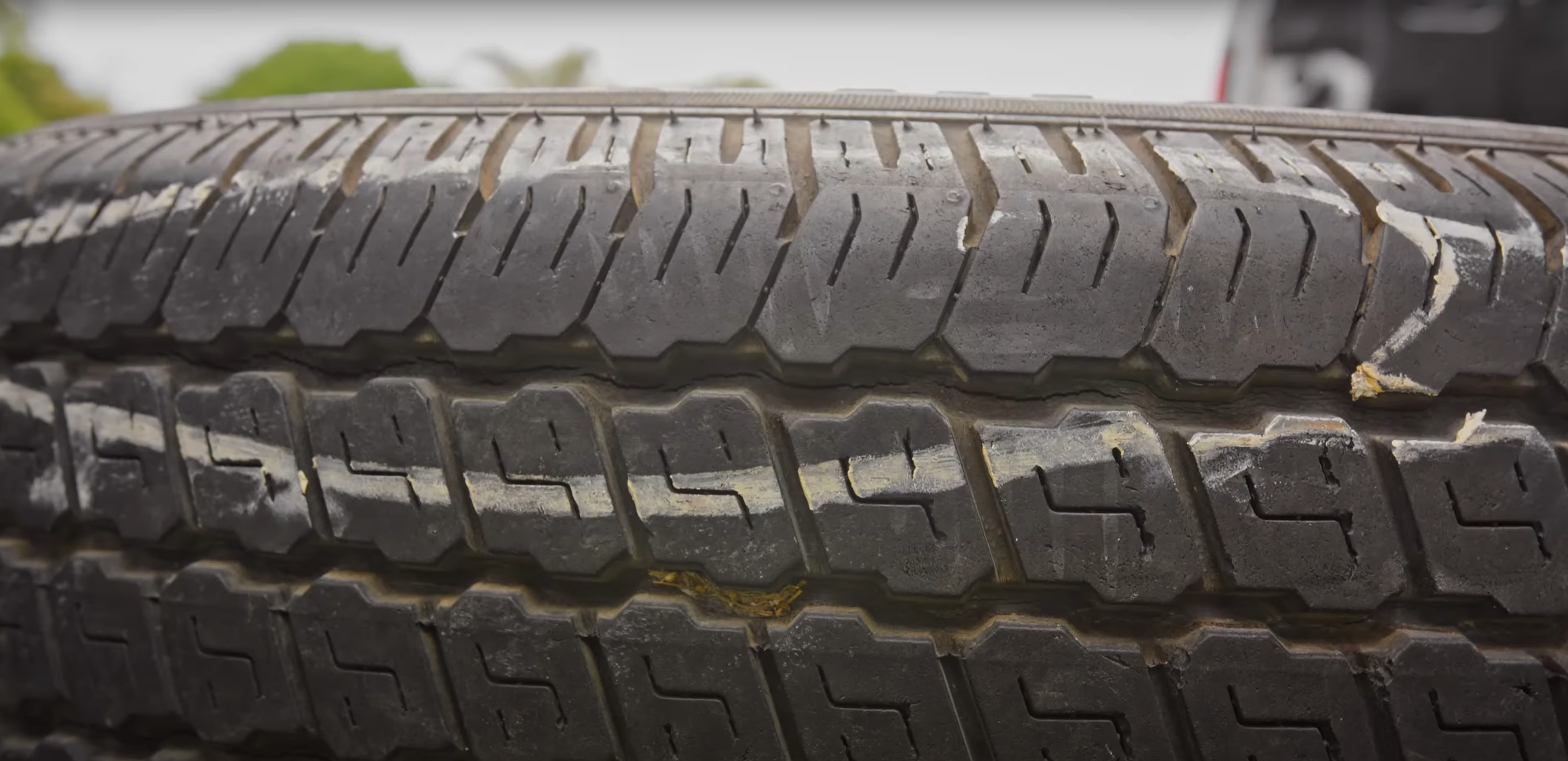
If your tyres are over five years old, they need to be checked for degradation by a reputable tyre business each year. And once they have reached 10 years old, they need to be replaced regardless of the tread left.
The age of your tyre is printed on the tyre wall. Look for where text starts with “DOT”. The last four digits of the code represents the week and year the tyre was made. For example, 4922 is the 49th week of 2022.
“A shockingly loud blast rocked the cabin. We were travelling at about 90km. The inside rear tyre exploded. We have a 32-foot Nullarbor motor home. The blast blew the wheel arch apart ripping the metal lining out and blowing the side panel off the RV. It damaged the fuel entry pipe and embedded steel into the outside tyre.
The damage was a real mess and an incredibly frightening experience. Always keep your tyres under the use by date. Not enough is done to make the market aware of this. My explosion is a great reminder for me to keep this in mind” – CMCA member
Tyre pressures
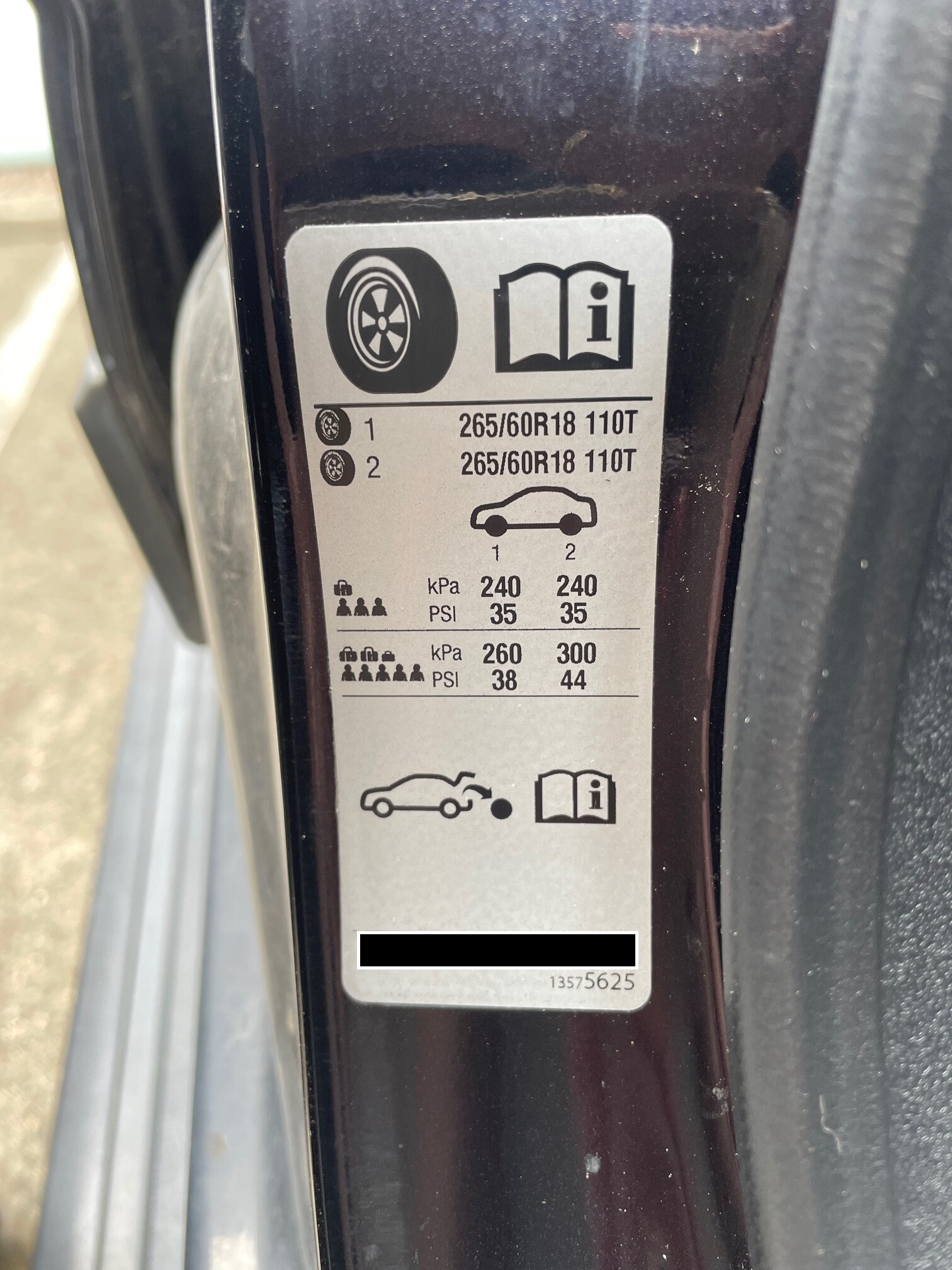
Keep tyres (including the spare) inflated to the recommended levels. Too much or too little air causes uneven wear, reduces handling and grip, and shortens the life of the tyres.Tyre pressure can be too low, and you will not be able to notice with the naked eye – so get yourself a tyre pressure monitor or check at the service station next time you fill up.Tyres on RVs typically carry more weight than standard vehicles which makes it even more important to have the correct tyre pressure. The tyre placard will stipulate the tyre pressure for your rig, and we recommend checking your tyre pressures before heading off on your trip.
Tyre treads
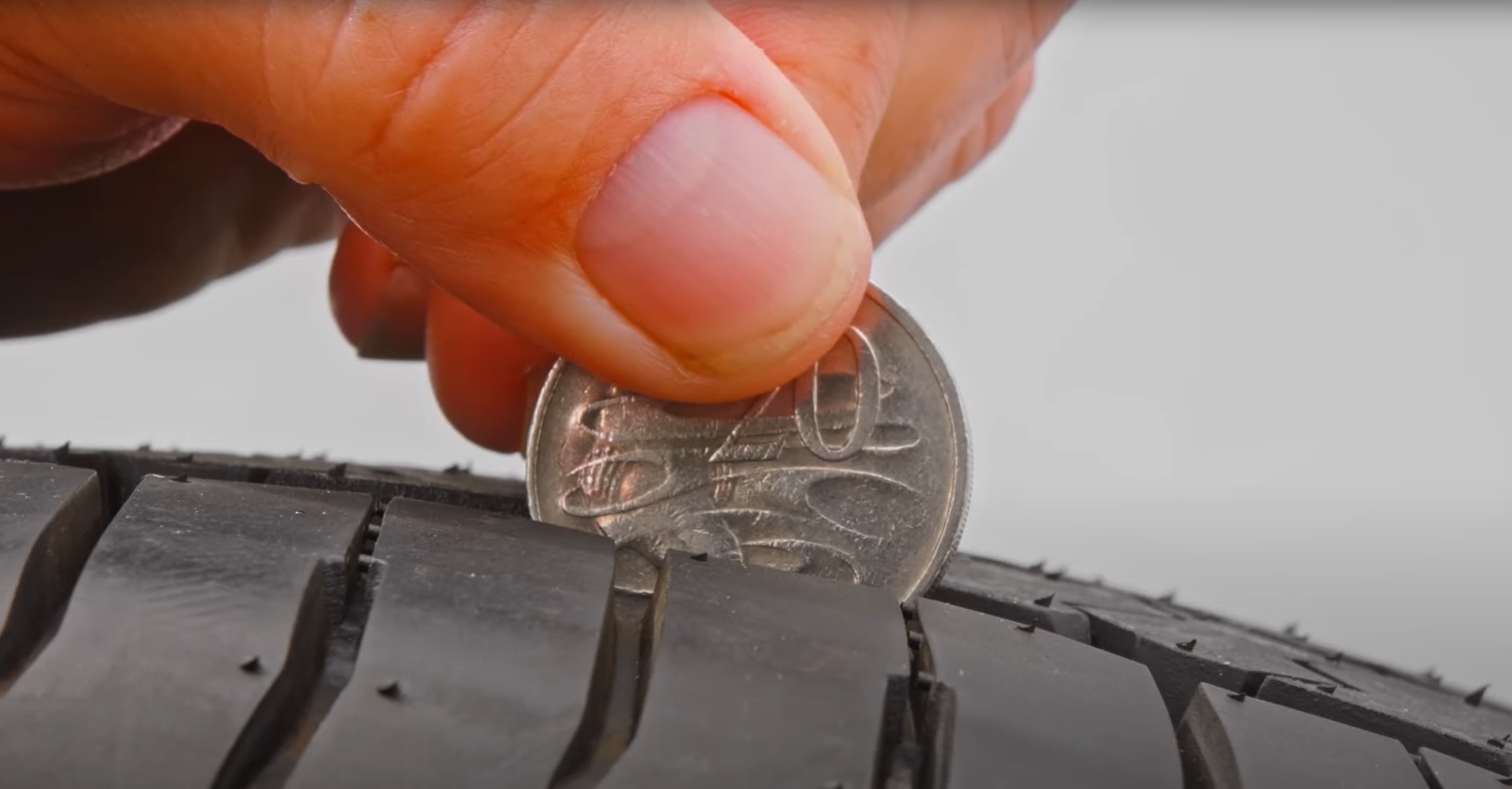
Inspect your tyres for uneven bulges, cuts and cracks. Remove any objects lodged in the tread and check for gouges or punctures.Tyres must be replaced before the tread depth falls to 1.5mm however we recommend you change tyres at 3mm. Most tyres have tread depth indicators as a guide or you can use a 20 cent coin. To measure your tyre’s tread depth, place an Australian 20c coin into one of the central circumferential grooves of your tyre. If the tread doesn’t reach the bill of the platypus, your tyre has less than 3mm of tread remaining. It’s time to invest in some new tyres to make sure you stay safe while driving.Unusual vibrations or uneven wear (bald) spots on tyres may suggest that a wheel balance is needed to avoid excessive loading to the vehicle’s wheel bearings and suspension.
Don’t forget your spare
You need to ensure that it has pressure and is suitable for use in an emergency.
More information
rvSafe is designed to increase road safety awareness and education specific to the RV industry. The project is funded through the Federal Government’s Road Safety Awareness and Enablers Fund and is proudly supported by the Campervan & Motorhome Club of Australia (CMCA). Find out more at rvSafe.com.au and cmca.net.au

Being aware of your RVs’ weight is more important than ever, yet it continues to be overlooked. Here’s a quick guide on why it is so essential.
Understanding campervan and motorhome weight
Understanding your motorhome weight is simple yet important. Keeping your vehicle within its weight limits will ensure you have a safe and stable vehicle on the road. You also need to know vehicle weight to ensure you have the correct licence for your chosen RV.
There are three weights to consider: tare weight, GVM and payload. You can check your vehicle’s compliance plate to find tare and GVM. Deduct the tare weight from the GVM to calculate your payload.
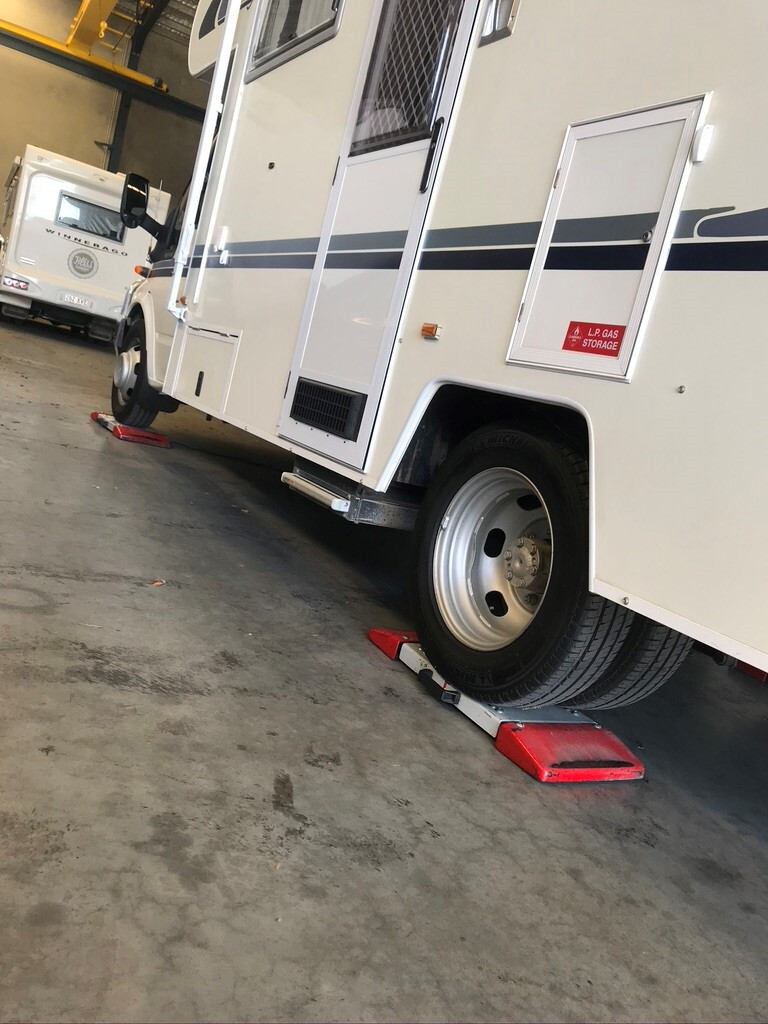
Please note, it is best to get your vehicle checked at a weigh bridge or portable weigh station to ensure you know the correct vehicle weight. Make sure you pack all your gear and take your passengers with you for the weigh-in.
If you are looking to tow a trailer or secondary car behind your motorhome, you will also need to take into account the motorhome’s towing capacity, tow ball mass and gross combined mass (GCM) as stipulated by the manufacturer.
Understanding caravan and camper trailer weight
Getting your caravan or camper trailer combination weights right is imperative as both the total weight and the way it is distributed affects both towing stability and braking ability. Plus, you do not want to get in trouble with the police, affect your vehicle warranty or have your insurance denied.
Calculating your vehicle weight can be cumbersome, and the simplest and safest thing to do is take your vehicle combination, loaded with all your gear and passengers, to a weigh bridge, or have a portable weigh station come to you.
If you are new to RVing and shopping for your first combination, it is important to do your research to make sure you consider the tow vehicle capacities, trailer weight and payload requirements.
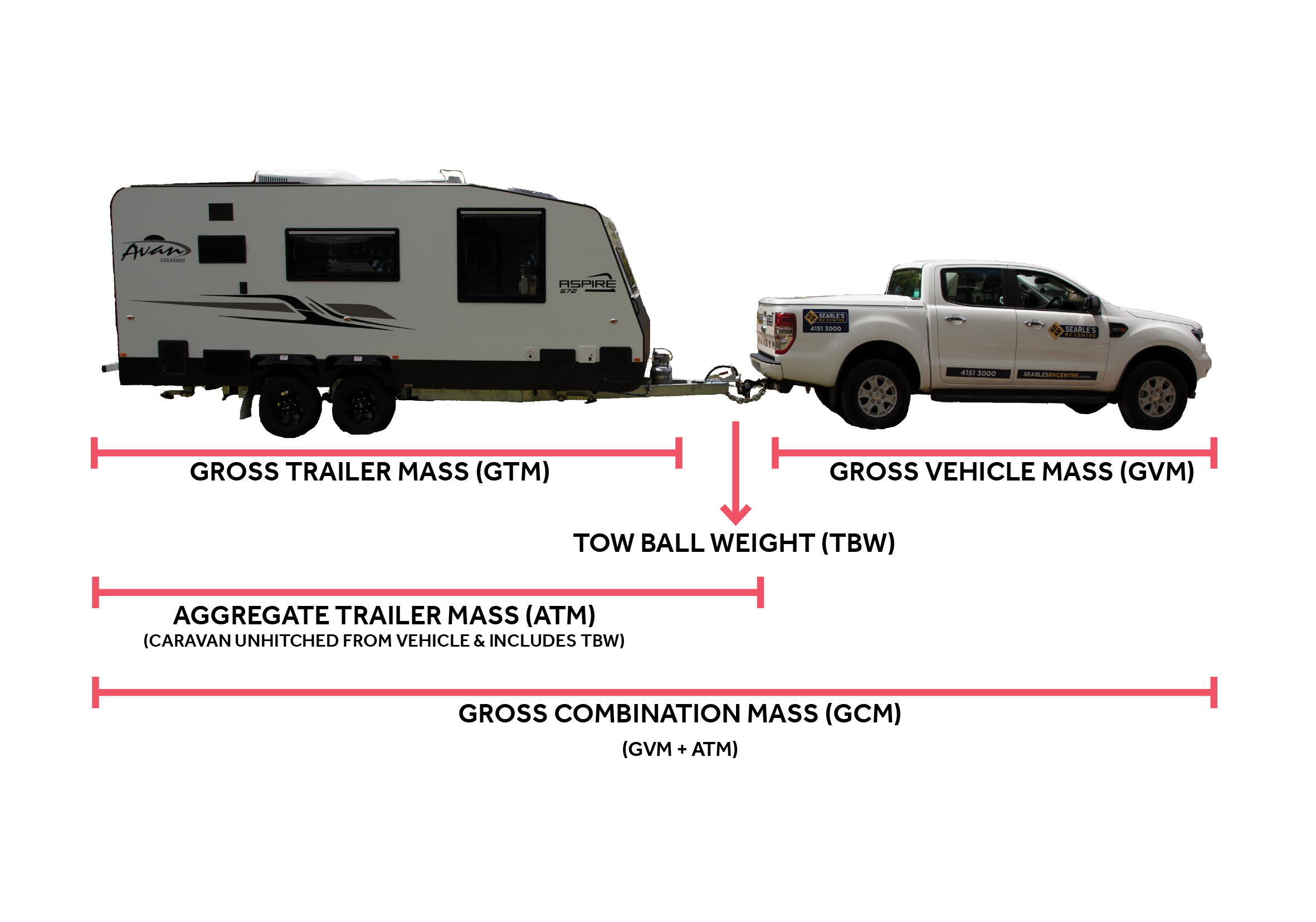
Manufacturers will specify some key weight limits. These can be found on the vehicle or trailer compliance plates, or check your owner’s manual.
You need to ensure your vehicle’s towing capacity (braked) is higher than your gross trailer mass. From here, there are four weight limits you need to check that you are within limits:
- Aggregate Trailer Mass – ATM
- Tow Ball Weight – TBW
- Gross Vehicle Mass – GVM
- Gross Combined Vehicle Mass – GCM
The ATM will be printed on your traileru2019s compliance plate, and the other three will be on your vehicleu2019s compliance plate and/or in the owneru2019s manual. You will need to have your vehicle weighed to ensure you have not exceeded your payload.
Understanding fifth-wheeler weight
When calculating the towing capacity of a fifth-wheeler you must consider the gross vehicle mass (GVM) and the gross combined mass (GCM). For example: GCM 6000kg – GVM 2950kg = fully laden trailer cannot exceed 3050kg.
The usual practice is to have 20 per cent of the fifth-wheeler weight carried by the tow vehicle; however, it must not exceed the legal payload allowance of the tow vehicle. Payload is calculated by subtracting the tare from the GVM.
There are many benefits of having a fifth-wheeler, including towing stability and a larger area in the RV; however, these will impact the payload of your vehicle. Make sure you do the maths before purchasing as you do not want to have a great vehicle but no payload left.
Understanding slide-on weights
If you are interested in getting a slide-on, you are going to need to know your vehicle payload. Check your vehicle’s compliance plate or owner’s manual to find out your gross vehicle mass (GVM) and tare weights. Payload is calculated by subtracting the tare weight from your gross vehicle mass.
The payload of your vehicle includes all the optional extras your vehicle may have such as the bull bar, roof racks, LED lights, winch, UHF, and awning. You will also need to include the weight of your fuel and passengers of your vehicle. Then you have the weight of your slide-on and all your gear (camping chairs, cookware, etc.) and personal items (food, clothing) and maybe you might also have a push bike and fishing gear.
If you already have a slide-on set up, pack all your gear and passengers and head to a weigh bridge and check your GVM.
If you are looking to purchase, make sure you do your research on your vehicle capacity, slide-on weight and inclusions, and then everything you need to take with you to make sure it’s a viable option for you.
Weight glossary
Tare weight
Tare Weight represents the unladen weight of the vehicle including all engine fluids and a 10-per-cent fuel reserve. It is important to note that this may not include dealer inclusions or optional fittings at the time of purchase.
Gross vehicle mass (GVM)
Gross vehicle mass is specified by the manufacturer and is the maximum legal loaded mass of the vehicle. It includes the weight of the car, fuel, vehicle payload, all passengers, plus tow ball weight if towing.
Gross combination mass (GCM)
Gross combination mass is the total permissible weight of the loaded vehicle and caravan together and is specified by the manufacturer.
Aggregate trailer mass (ATM)
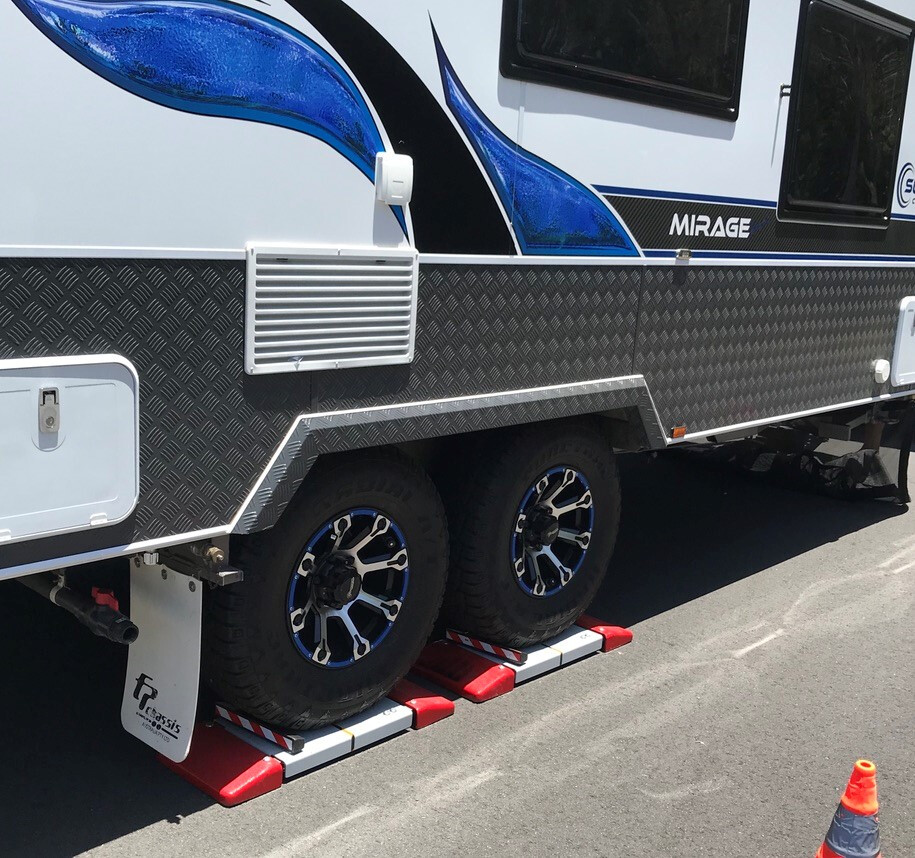
Aggregate trailer mass is the maximum total weight of the caravan or camper trailer. This is specified by the manufacturer and includes the tow ball weight.
Payload
Payload refers to the total weight you can add to your vehicle. This includes fresh and wastewater, gas bottles, personal items, clothes, bedding, food, etc. It can also include optional extras and aftermarket modifications such as awnings and driving lights. If you are towing, your tow ball weight must be included in your vehicle’s payload. You can calculate your caravan or camper trailer payload by subtracting the tare mass from the aggregate trailer mass (ATM).
Tow ball weight
Tow ball weight, also referred to as tow ball mass, is the weight pushing down on the tow ball by the coupling of the RV being towed.
More information
rvSafe is designed to increase road safety awareness and education specific to the RV industry. The project is funded through the Federal Government’s Road Safety Awareness and Enablers Fund and is proudly supported by the Campervan & Motorhome Club of Australia (CMCA). Find out more at: rvSafe.com.au and cmca.net.au
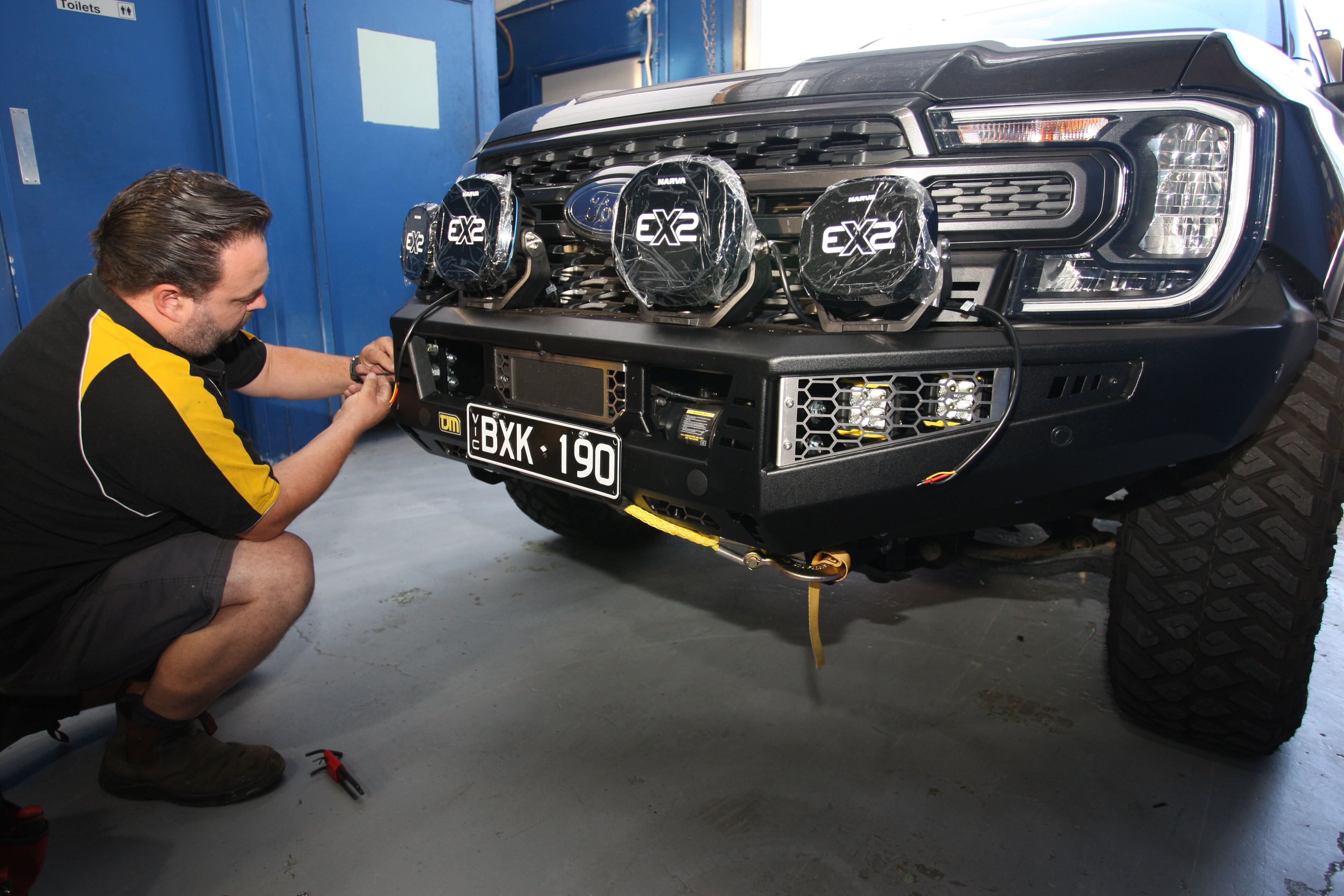
When it came time to search for lights for our latest Ford Ranger build we again sought out the latest products in what is a heavily populated and highly competitive market. And once again our friends at Narva delivered with the brand’s all-new EX2 LED lamps.
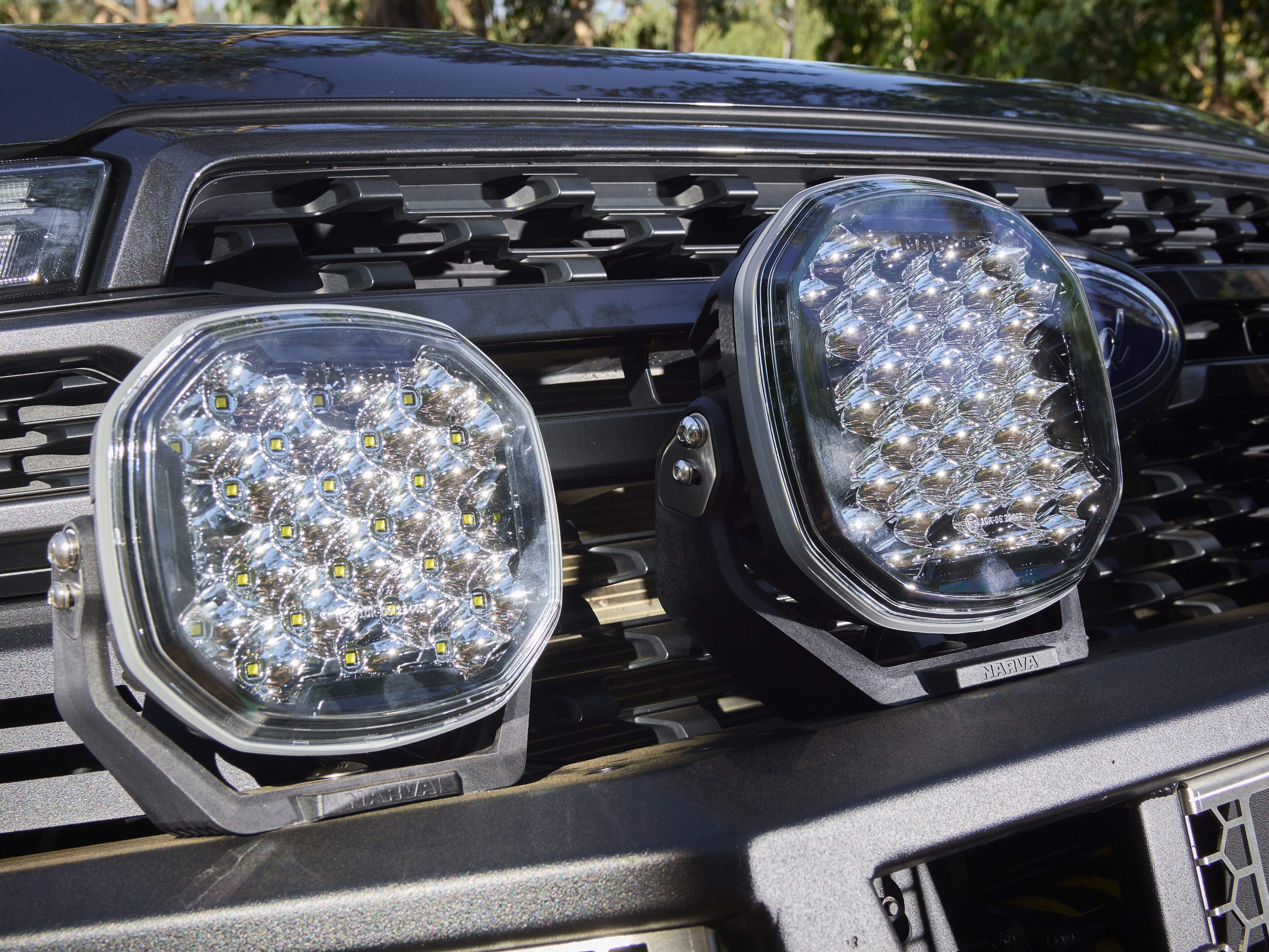
Once we fitted the loopless Venturer bumper from TJM we knew we’d need a particular looking lighting solution to complement the look of the bar, as well as the squared-off front-end of the RA Ranger. The wide grille and horizontal lines lend themselves to a lower, wider lighting solution and Narva has delivered with the EX2.
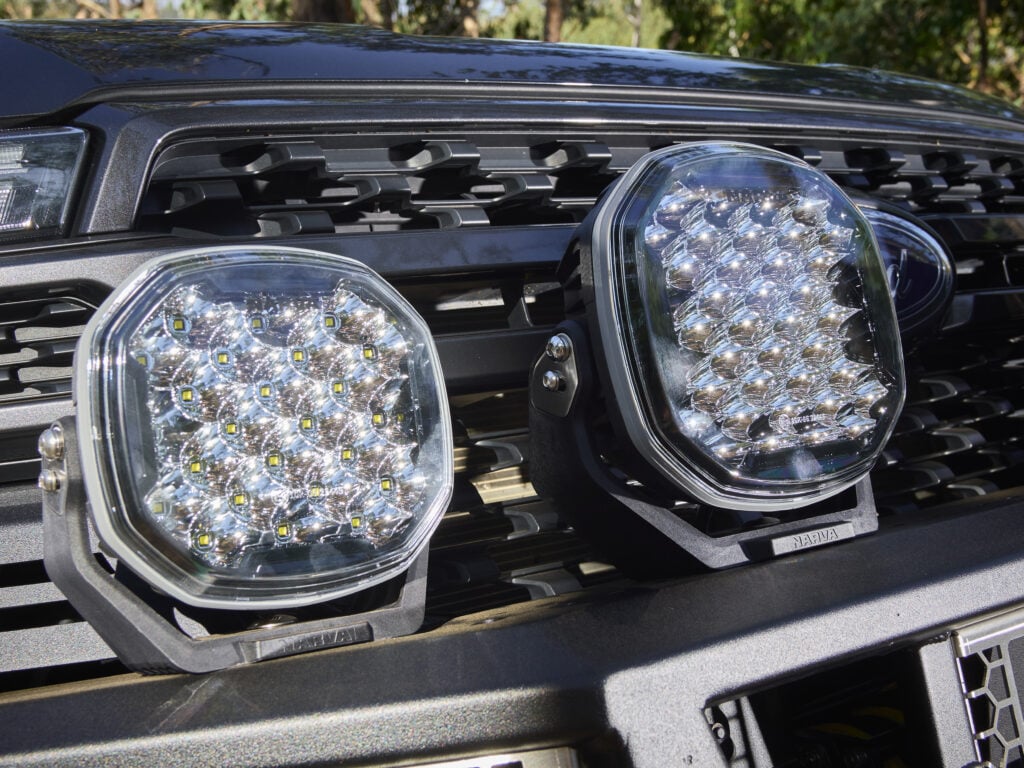
Excellent lights for the price and easy, harness-free installation.
Seven-inch EX2 LEDs: $550 (pair)
Nine-inch EX2 LEDs: $699 (pair)
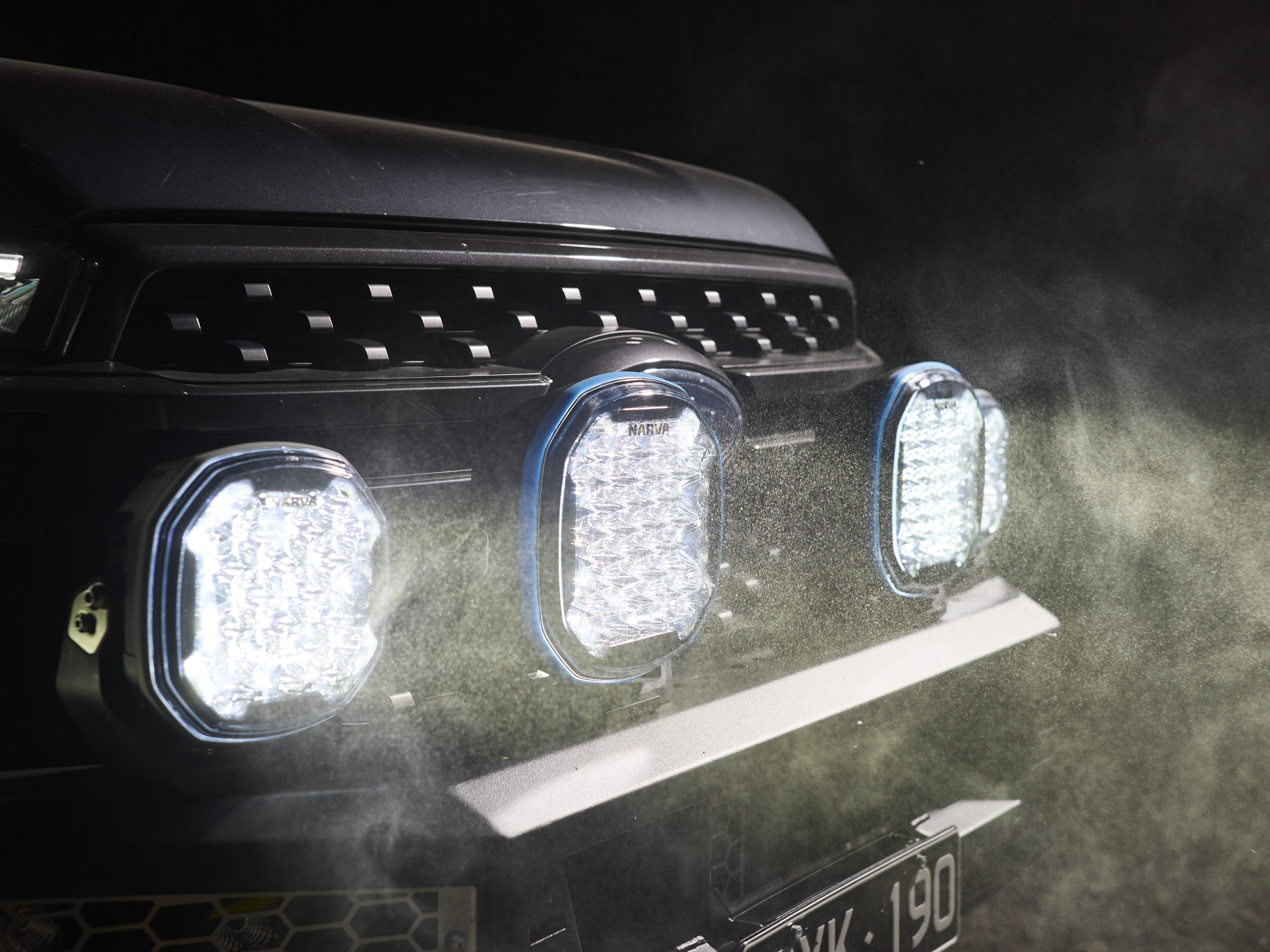
EX2 is a new range of LED lights for vehicles and they come in both seven- and nine-inch units with squared-off edges that perfectly suit the new Ford’s front-end. We ran a quartet of Narva Ultima 180s across the front of our PX Ranger but elected to try a pair each of the seven- and nine-inch EX2 lamps for this new build.
Narva EX2s will hit the market as a more affordable option than the company’s Ultima lamps but will debut with some exciting tech that makes them easier to install on most 4x4s.
The EX2 lights have internal switching meaning they can be installed without additional relays or even a wiring harness; just tap into the car’s high beam circuit, a fused power lead and earth, and they are right to go. No need to run any wires through the firewall or add relays or an additional harness.
Upgrade your Ranger
While tapping into the CAN Bus wiring of many modern cars can be risky for fear of damaging the sensitive electrical system, Ford took into consideration that many owners of Rangers and Everests will be fitting accessories such as driving lights, and so included labelled wires in the passenger-side footwell to tap in to, including one for the high beam circuit.
So we still had to run a wire through the firewall to pick up the high beam lead, but this worked well for our installation as we choose to fit separate switches for each set of lights so that the seven and nine inch pairs of EX2s can be controlled individually.
One thing Ford doesn’t consider when designing the interior of its cars is placement of auxiliary switches, (unless you want to pay for the factory roof-mounted ones) so we bought a switch panel from Pirate Camp Co. that fits neatly in between the centre stack and the console, and has positions for four Toyota-style push switches.
Narva supplied these and we ran individual switches for the seven- and nine-inch lights. The Pirate Camp Co. panel also relocates the factory USB port to a more accessible position, and it looks like it was always meant to be there.
The EX2 lamps use 5-Watt Cree LED chips to produce their light; 24 of them in the seven-inch units and 40 of them in the nine-inch lamps. These produce a claimed effective 12,000 lumens from a pair of the seven-inch lights and 19,400 lumens from the bigger nine-inch units. They are set in a hybrid spot/spread pattern making them ideal for a single pair light combo.
For the seven-inch lights this results in a claimed 1-Lux at 460m with a beam width of 45m, while the nine-inch lights punch out 1-Lux at 700m with a 60m beam width. Current draw is rated at 11.6A for the sevens and 19.2A for the nines, both rated at 23.5V.
Reading into those numbers you’ll find that the EX2s are not the most powerful lamps on the market, or even within Narva’s own range, but in reality, they are more than enough for the usage of your regular 4×4. The key here is the light temperature and the shape of beam, which is consistent and without any ‘shadows’ or dark spots. This is what really produces a superior quality of light for night driving on the darkest of bush tracks and outback roads.
Yes we’ve gone to extremes by fitting two pairs of them, but for driving on dark country roads we found that the outer seven-inch EX2s are perfect while we switch on the nine-inch EX2s for when we want light punched further ahead on longer outback-like tracks. This is another good reason to have them individually switched.
4×4 gear guides

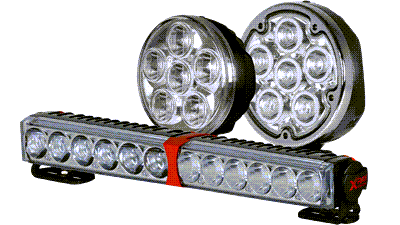
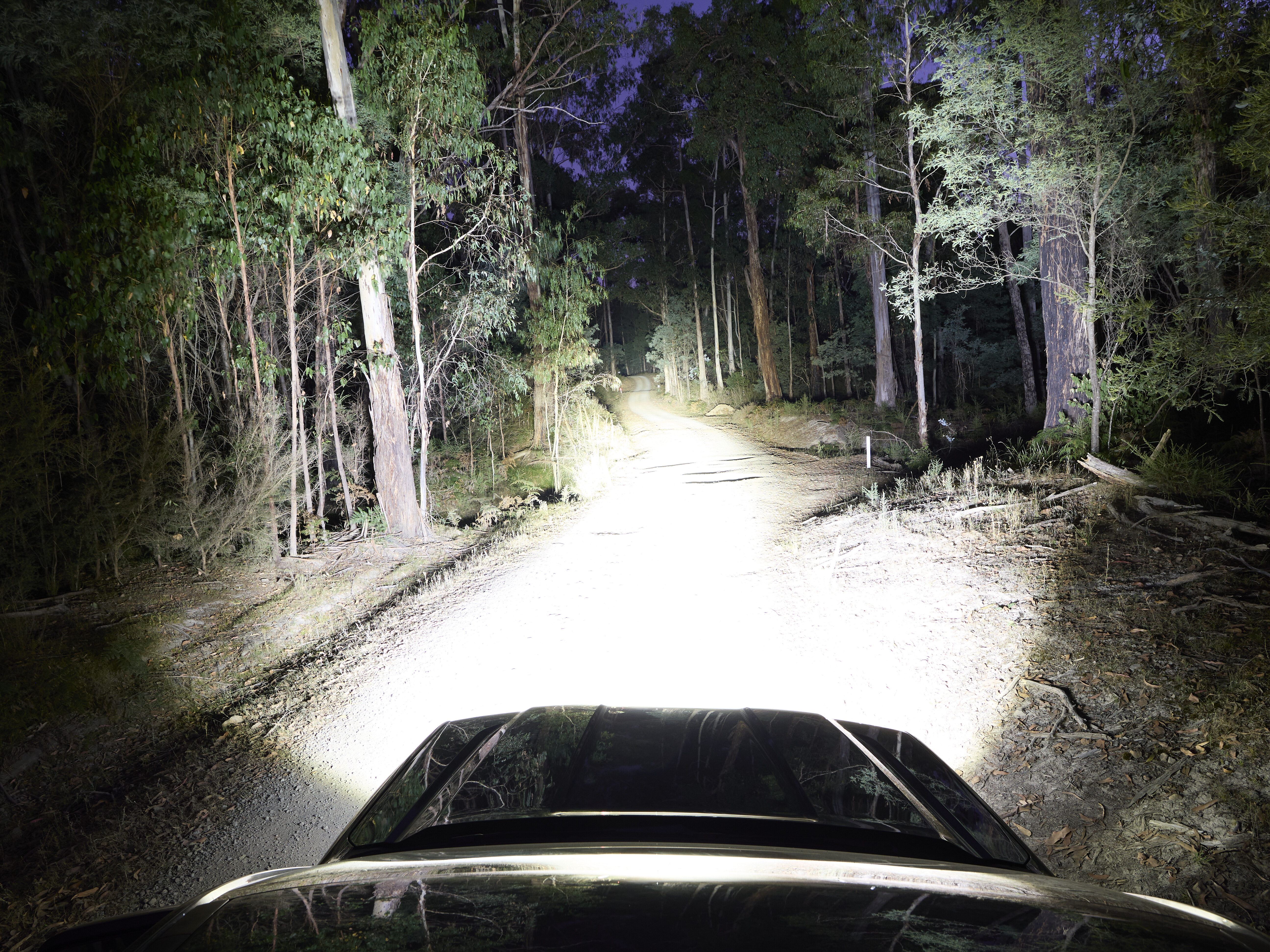
The performance of the EX2s is most striking when you need to kill them for oncoming traffic; it’s like the Ford’s factory LED headlights are not even on! This is even so when just running the seven-inch EX2s, so we reckon that a pair of the smaller lights will be sufficient for many drivers.
Being able to switch them individually also allows us to angle the outer seven-inch lights slightly outwards to give a wider view of what’s on the sides of the road while the nines are set straight ahead for maximum reach.
The EX2s have a colour temperature of 5700 Kelvin which means they are not too hot (bright) as to be dazzling to the driver when reflected back off road signs, yet have a colour closer to daylight than LED lights with a higher Kelvin. This results in less strain on the driver’s eyes during extended periods of night driving.
Built to last
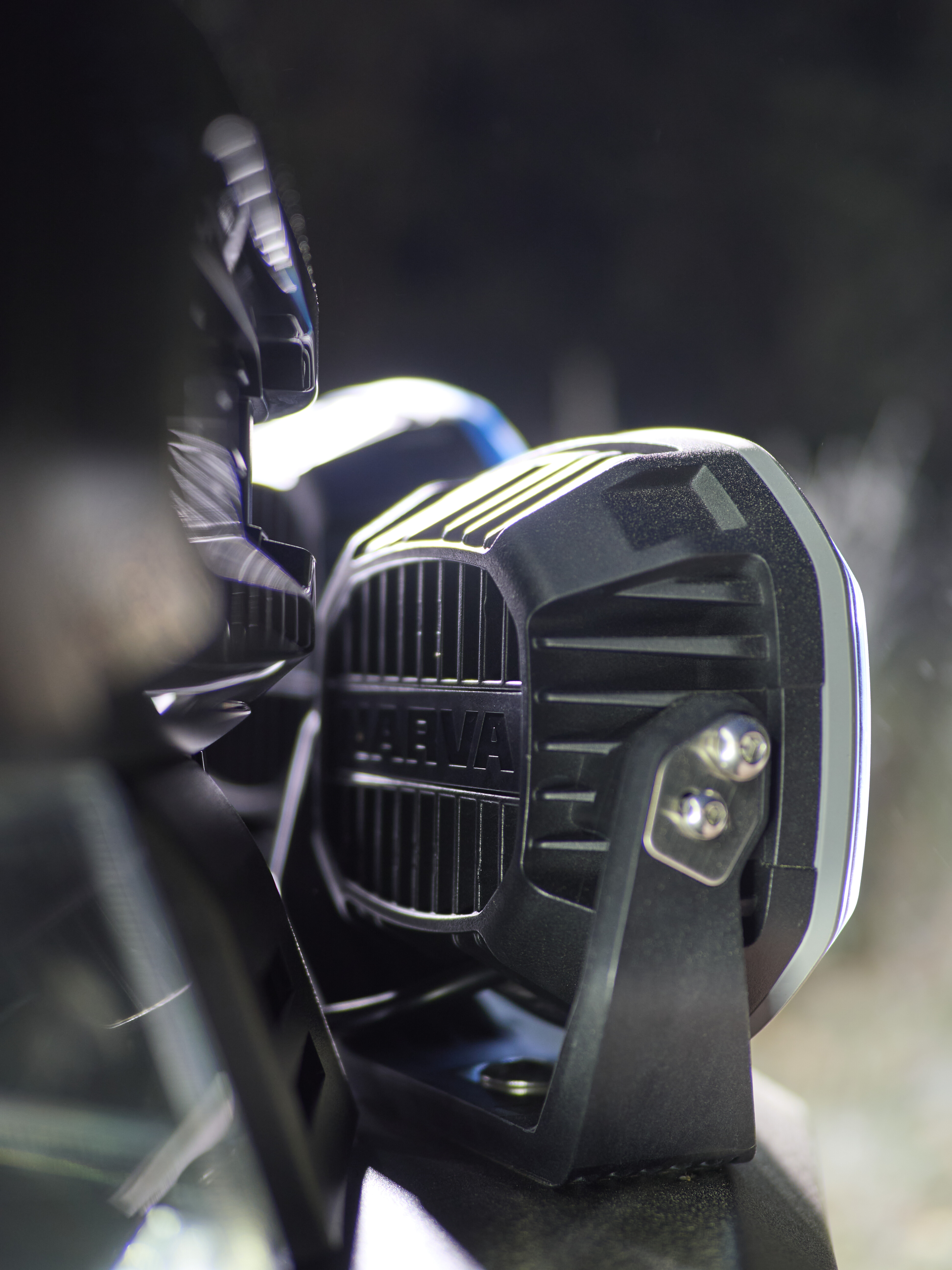
The Narva EX2 LEDs are housed in a die-cast aluminium body with a UV-resistant polycarbonate front lens and a durable composite mounting bracket. They are IP68 and IP69K rated for water and dust ingress, and the mounting hardware is all stainless steel so it won’t tarnish or rust.
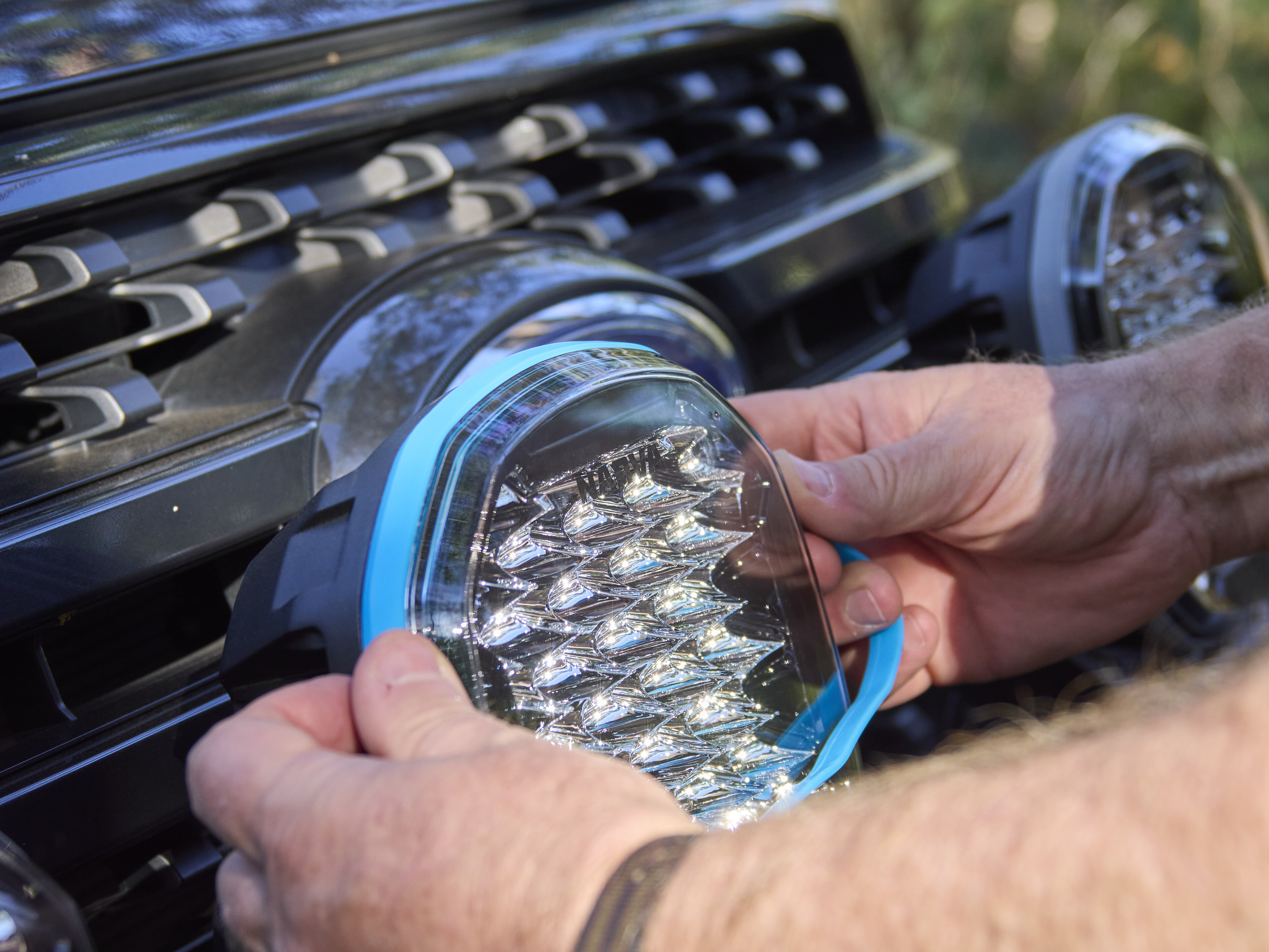
The Narva EX2 lights come with a seven-year warranty from the manufacturer. The EX2s come standard with black protective covers and they can be customised with other designs available from Narva. The lights can be further customised by replacing the trim rubbers with different colours. Electric Blue and Slate Grey trims come standard and there are plenty of other options available online from Narva.
There are also five- and six-inch versions of the EX2s, and these are just the first products to come in the EX2 range with more to come over the next year to create a comprehensive product line up.
The EX2 LED lights sit below the Ultima 180 Mk2 and 215 Mk2 LED lights in the Narva range, and they are priced accordingly at $550 and $699 a pair for the seven and nine-inch lights respectively.
We reckon they punch well above their price-point and with the easy harness-free installation they are the perfect light for the four-wheel driver building to a budget. And we reckon they really suit the front-end of our Ranger!
Excellent lights for the price and easy, harness-free installation.
Seven-inch EX2 LEDs: $550 (pair)
Nine-inch EX2 LEDs: $699 (pair)
4X4 Australia’s project builds
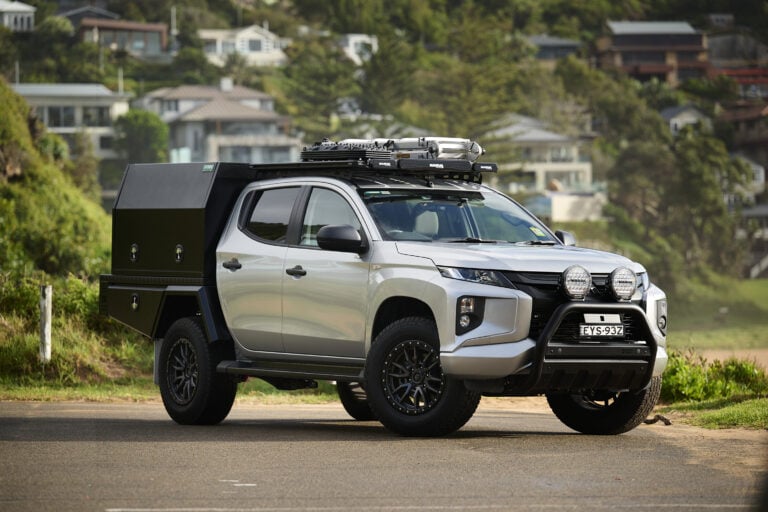
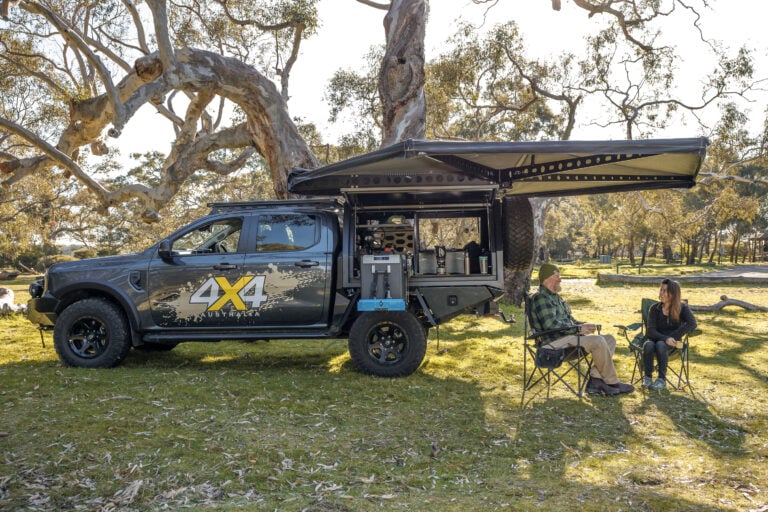
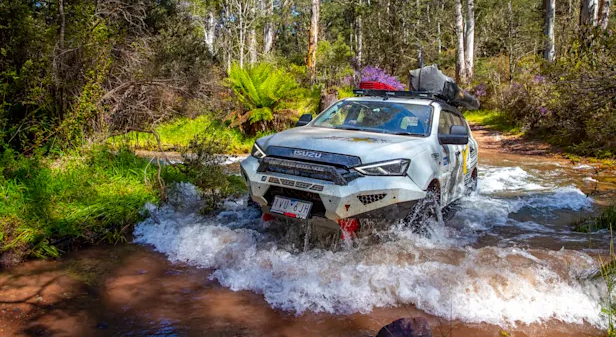
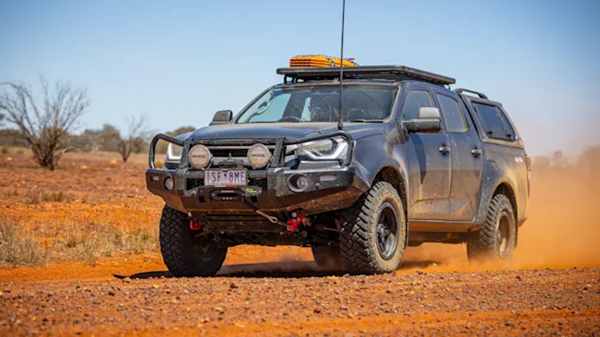
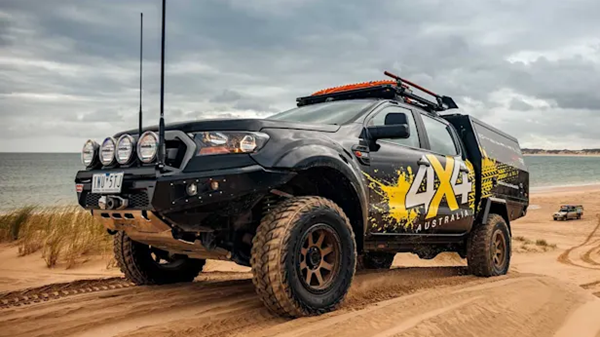
The April 2023 issue of 4X4 Australia is officially out now.
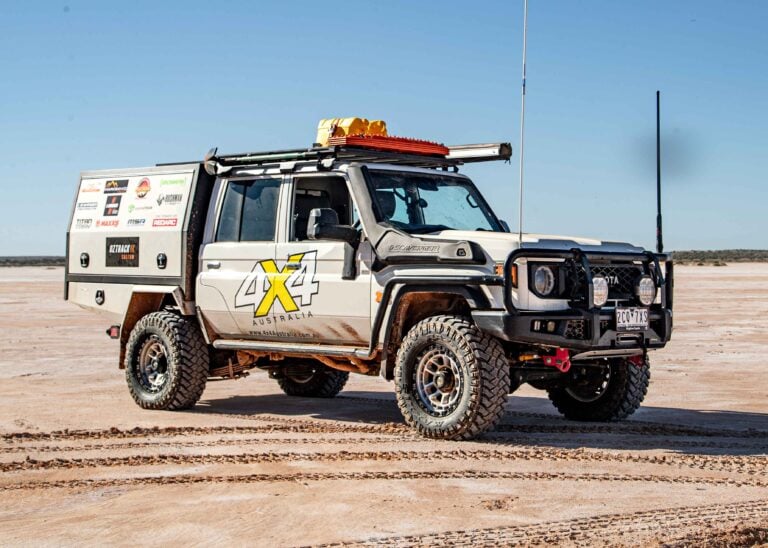
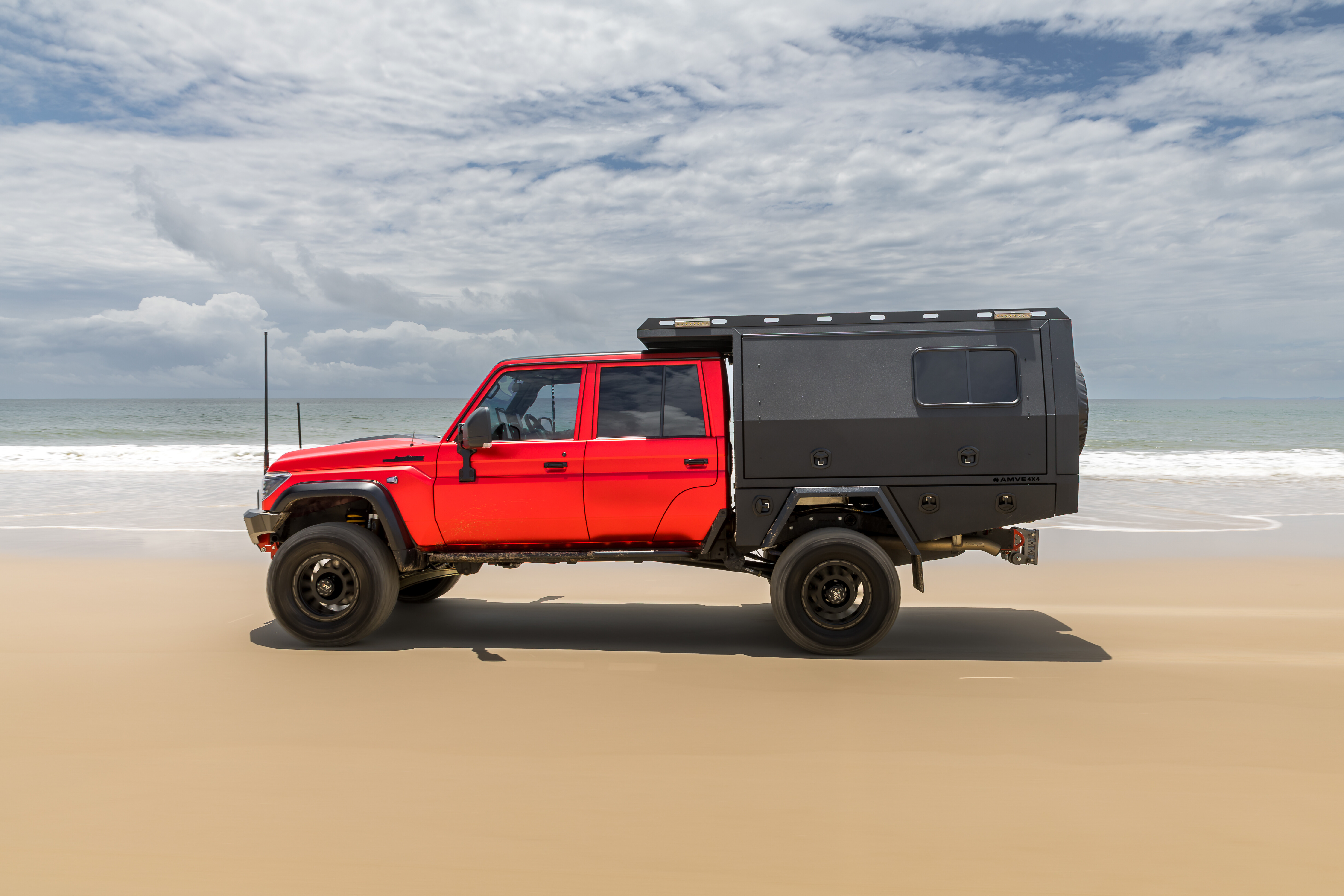
The custom-built Toyota LandCruiser 79 Series gracing the cover has been fastidiously assembled for family adventures. A chassis extension, GVM upgrade and suspension package by JMACX gave the Cruiser a new lease on life, and that oh-so-special custom-built AMVE canopy houses everything from an Enerdrive 12-volt power system to an Evacool fridge on an MSA 4×4 drop slide.
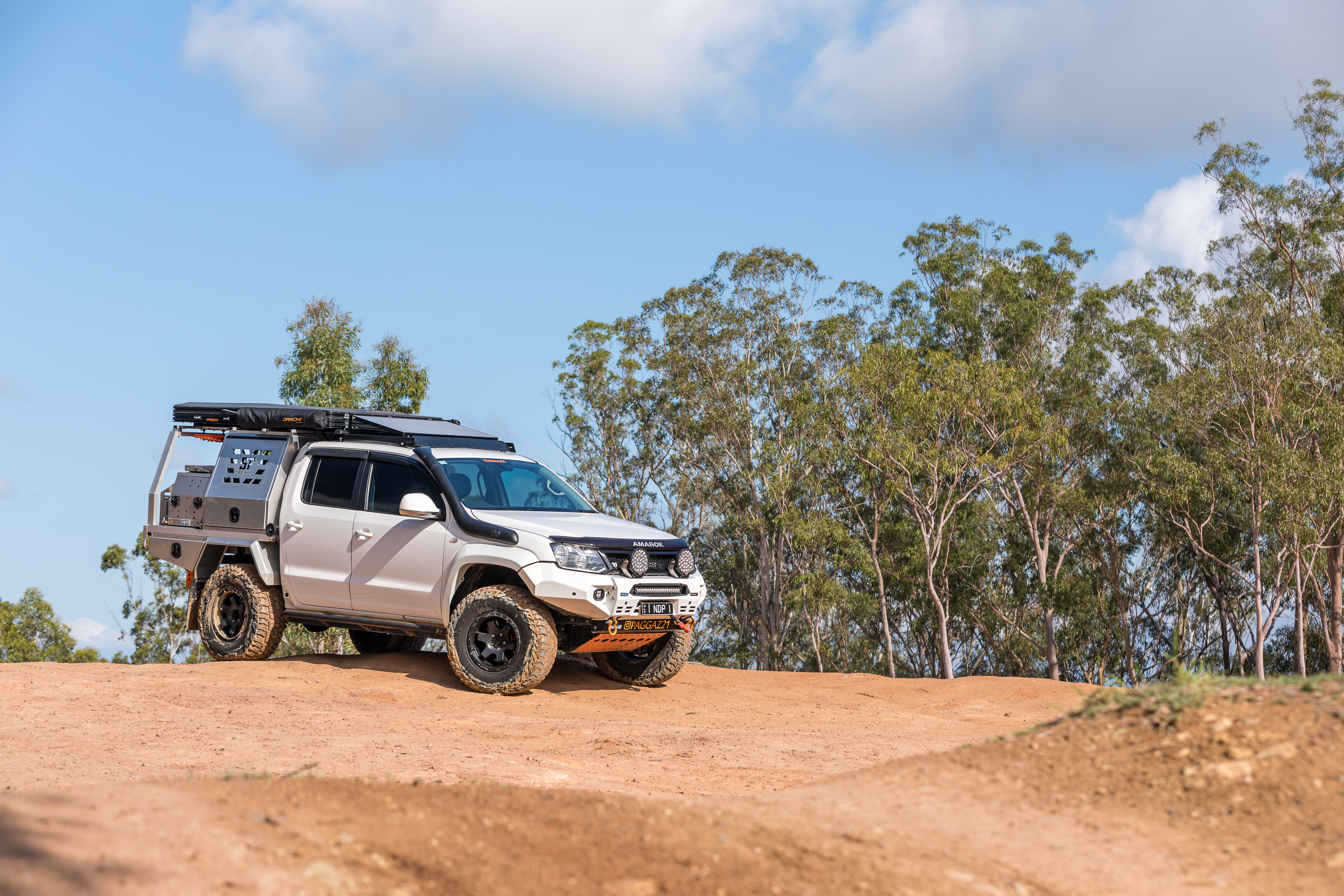
Not to be outdone, we’ve also featured a purpose-built Volkswagen Amarok V6 made to explore any and all remote tracks in Australia. It’s dressed head to toe in quality aftermarket accessories, and Swanny’s Fabrications in Brisbane takes all the credit for that schmick custom half-canopy build.
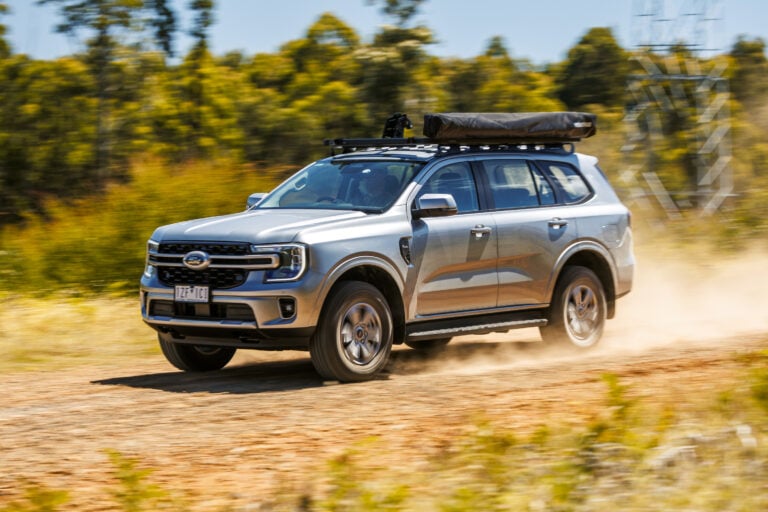
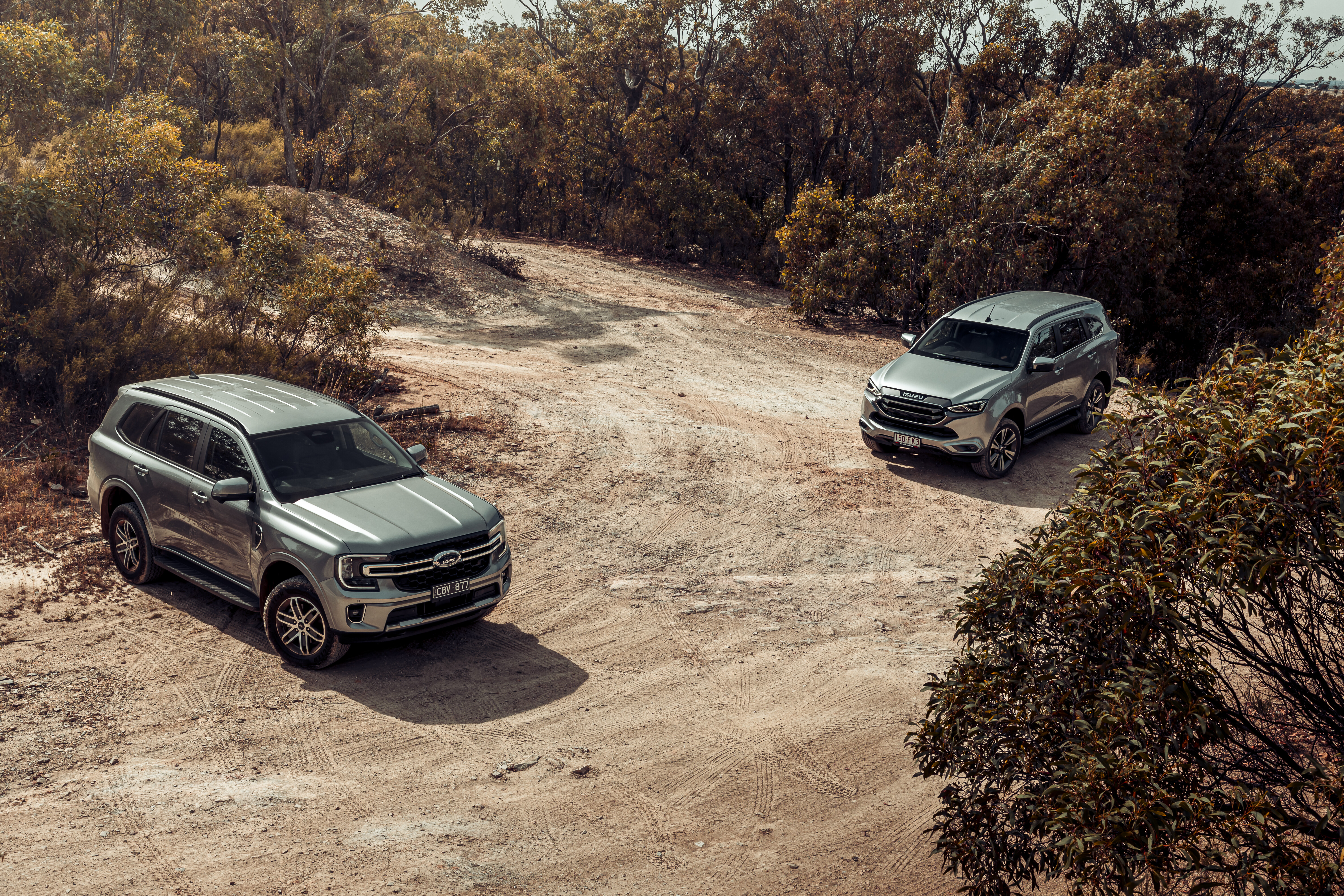
We then lined the all-new 2.0-litre-powered Ford Everest Trend against the ever-popular Isuzu MU-X LS-T, to see which seven-seater serves best at family duties. Can the ageing MU-X keep up with its next-gen rival?
Work on our Ford Ranger keeps ticking over, with lighting specialists Narva installing a set of all-new EX2 LEDs to our Venturer bumper bar. Available in both seven- and nine-inch configurations, the EX2 is a more budget-friendly version of Narva’s premium Ultima LEDs. A switch panel from Pirate Camp Co. not only keeps the Ranger’s console tidy, but it allows us to easily control the separate switches for both sets of lights.
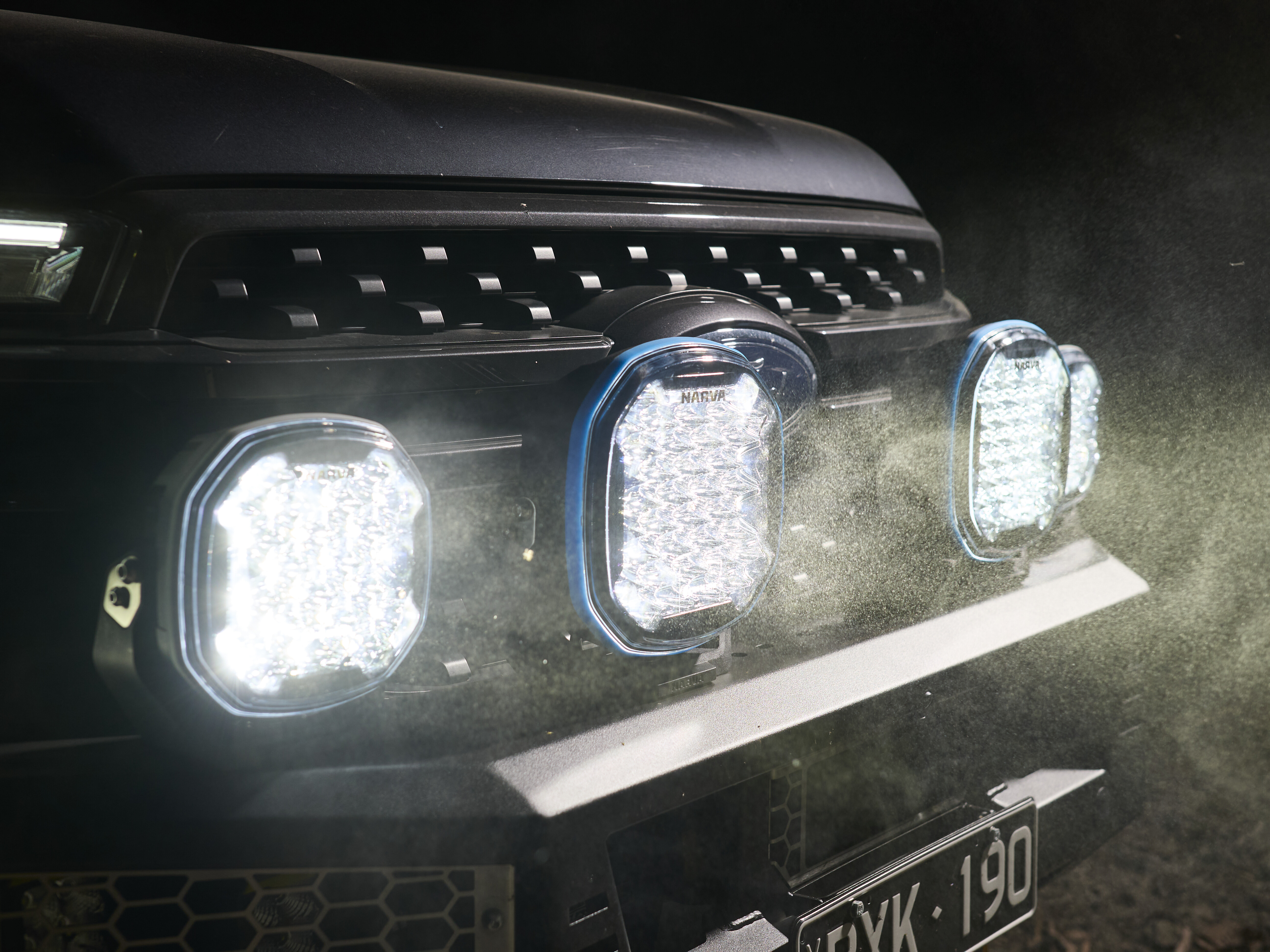
Upgrade your Ranger
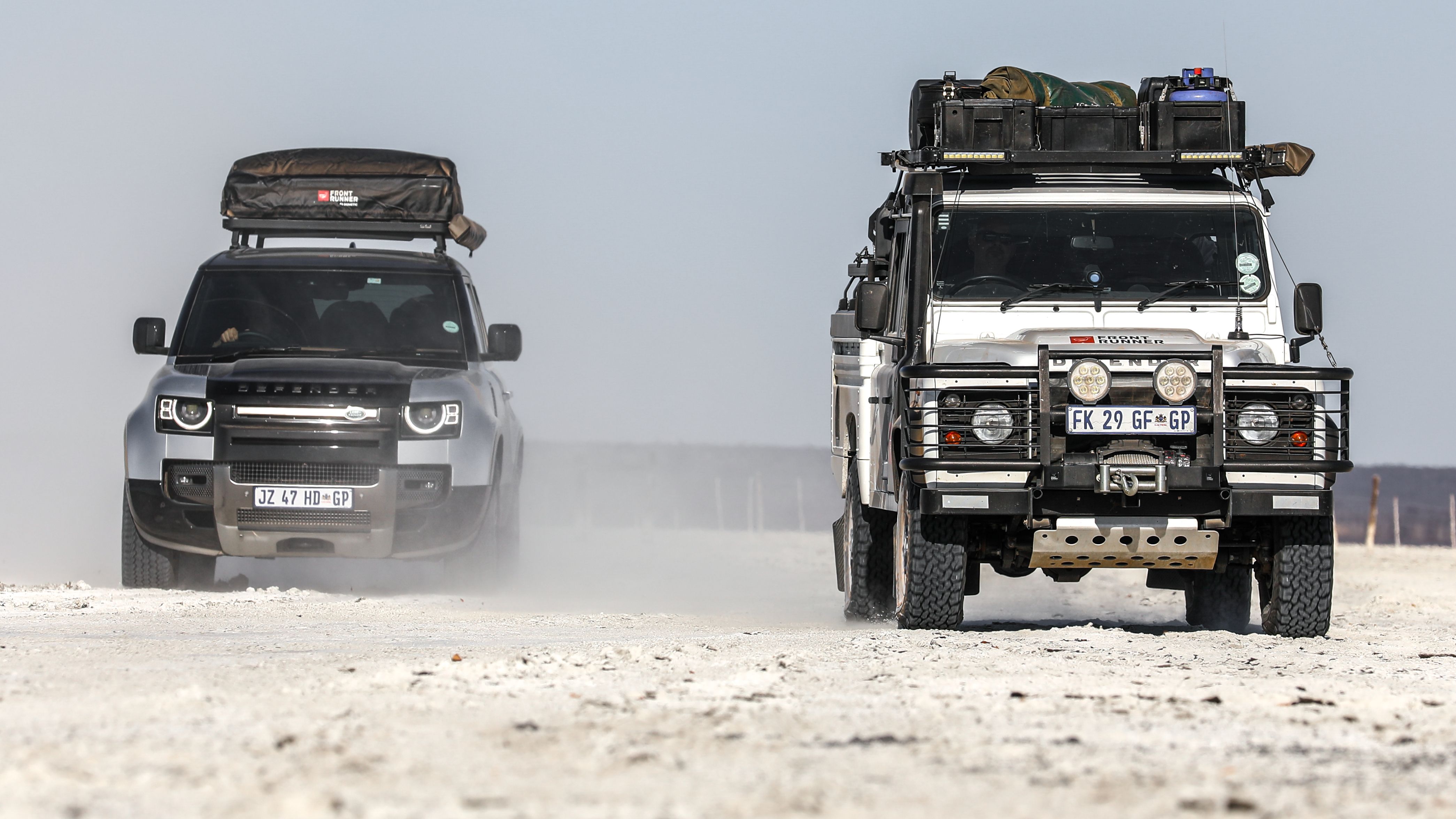
We ventured to Botswana in Africa to compare two Defenders from different eras: 2022 Defender 110 versus 2016 Defender 130. It’s an off-road adventure like no other, but does the tech-heavy new model still have the heart and soul of the older Defender?
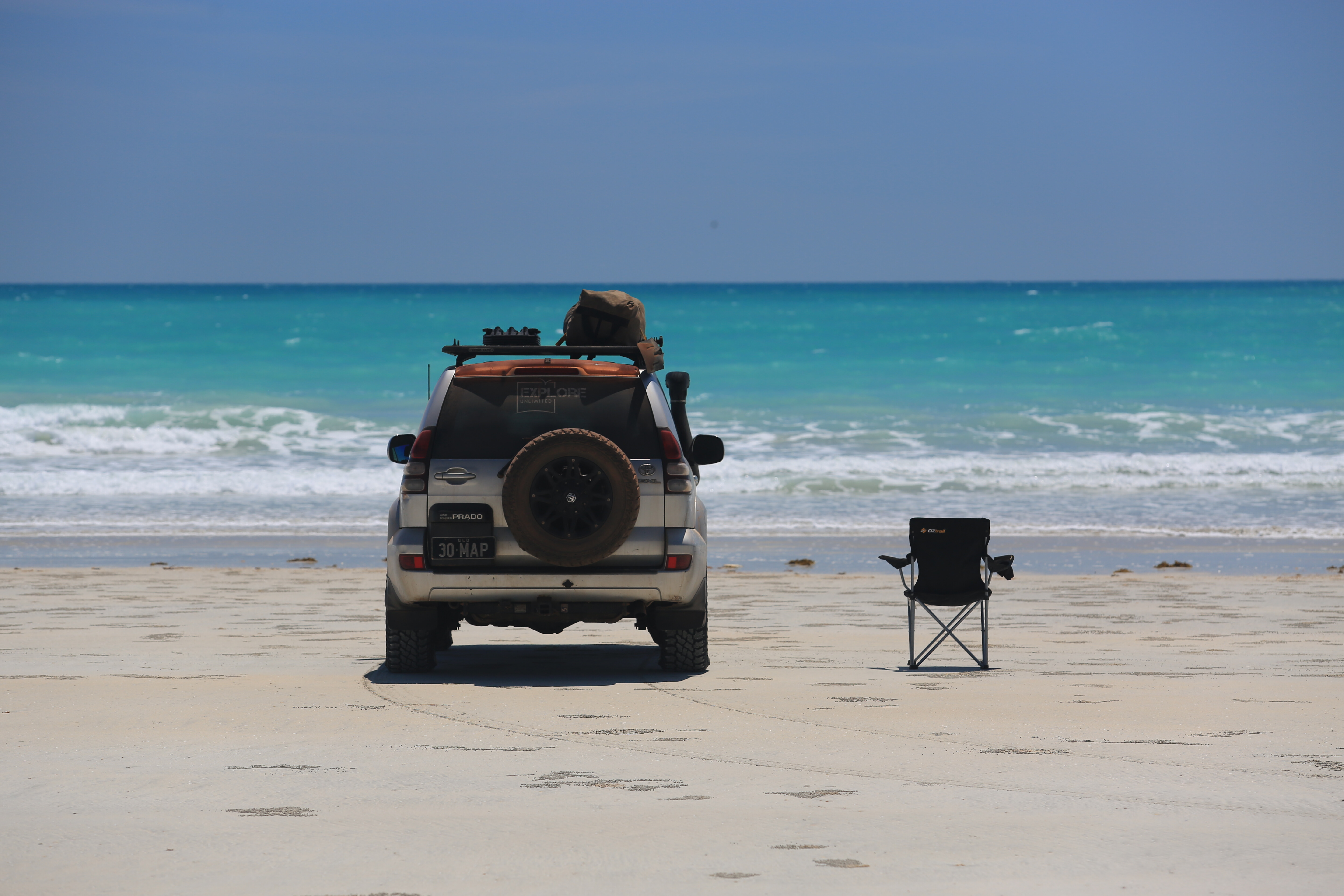
Closer to home, we explored the stunning and expansive beaches of Broome in WA; steered our 4x4s to the Oxley Wild Rivers National Park in New England, NSW; and traversed some lesser-known tracks on the western edge of Far North Queensland’s Atherton Tablelands.
Ron Moon connected and tested a Starlink comms system – thanks Elon; and we also reviewed a Front Runner Wolf Pack Pro storage case and a JetBoil Genesis Basecamp stove system.
What else is there?
- New 4×4 products
- News from around the world
- Updated 4×4 prices
- Travel advice and more
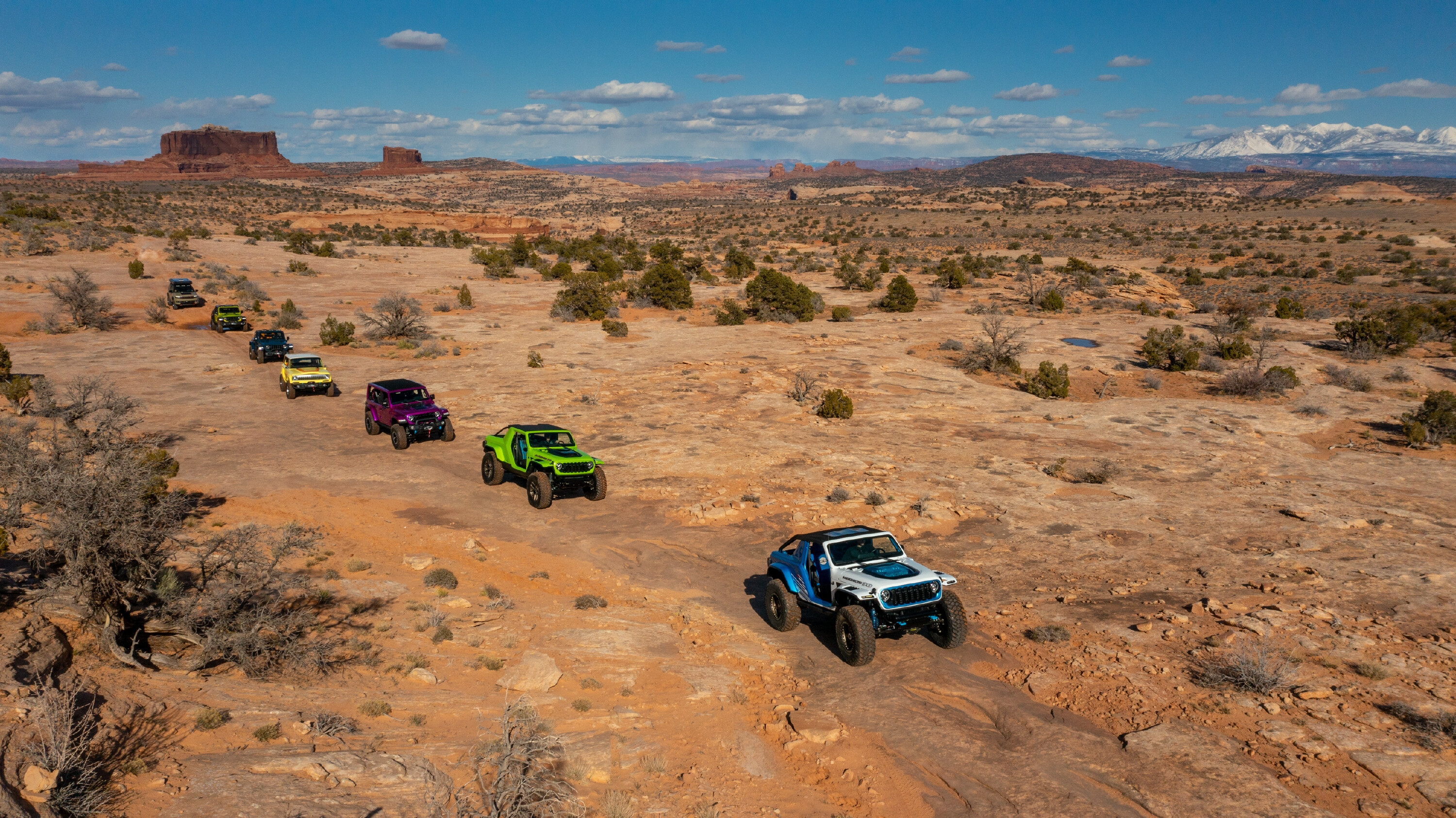
The 2023 Easter Jeep Safari will kick off in Moab, Utah this weekend, with seven unique concepts designed specifically for the event.
Now in its 57th year, the nine-day Easter Jeep Safari event is hosted by Moab’s Red Rock 4-Wheelers 4×4 club, with factory-backed support from the American brand.
While the show cars are largely developed as a bit of fun for Jeep’s design team, it can also provide a glimpse at future products – including an all-electric Wrangler, and upcoming off-road accessories set to be offered by Jeep Performance Parts.
JUMP AHEAD
- 1978 Jeep Cherokee 4xe Concept
- Jeep Gladiator Sideburn Concept
- Jeep Grand Wagoneer Overland Concept
- Jeep Scrambler 392 Concept
- All-electric Jeep Wrangler Magneto 3.0 Concept
- Jeep Wrangler Rubicon 4xe Concept
- Jeep Wrangler Rubicon 4xe Departure Concept
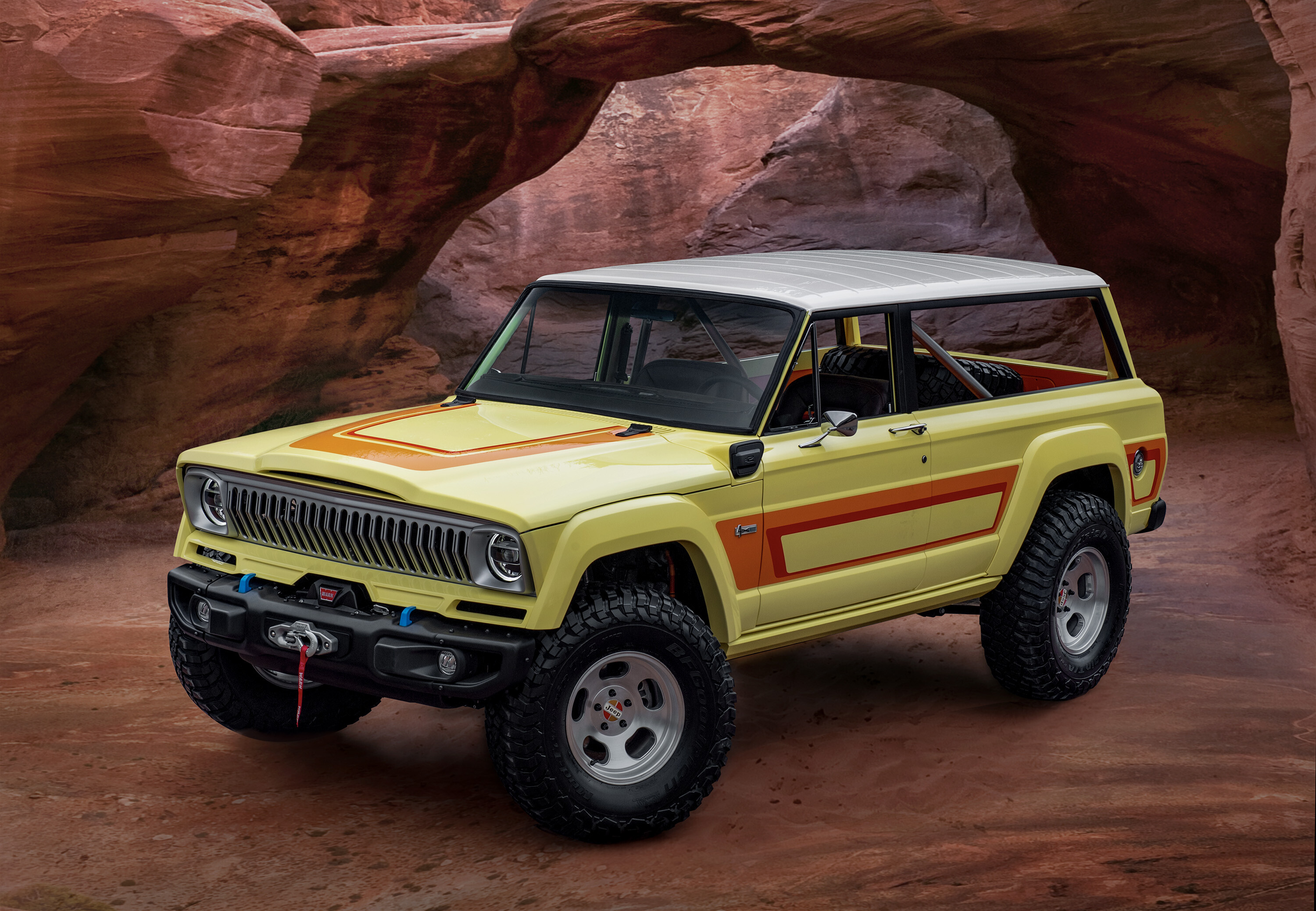
1978 Jeep Cherokee 4xe Concept
Jeep has travelled down memory lane with a resto-mod to the Jeep Cherokee SJ – a two-door version of the Wagoneer introduced in 1974.
The modernised concept – built from a run-down 1978 example purchased on Craigslist – was gutted to cater for the addition of the plug-in hybrid powertrain from a brand-new Wrangler 4xe.
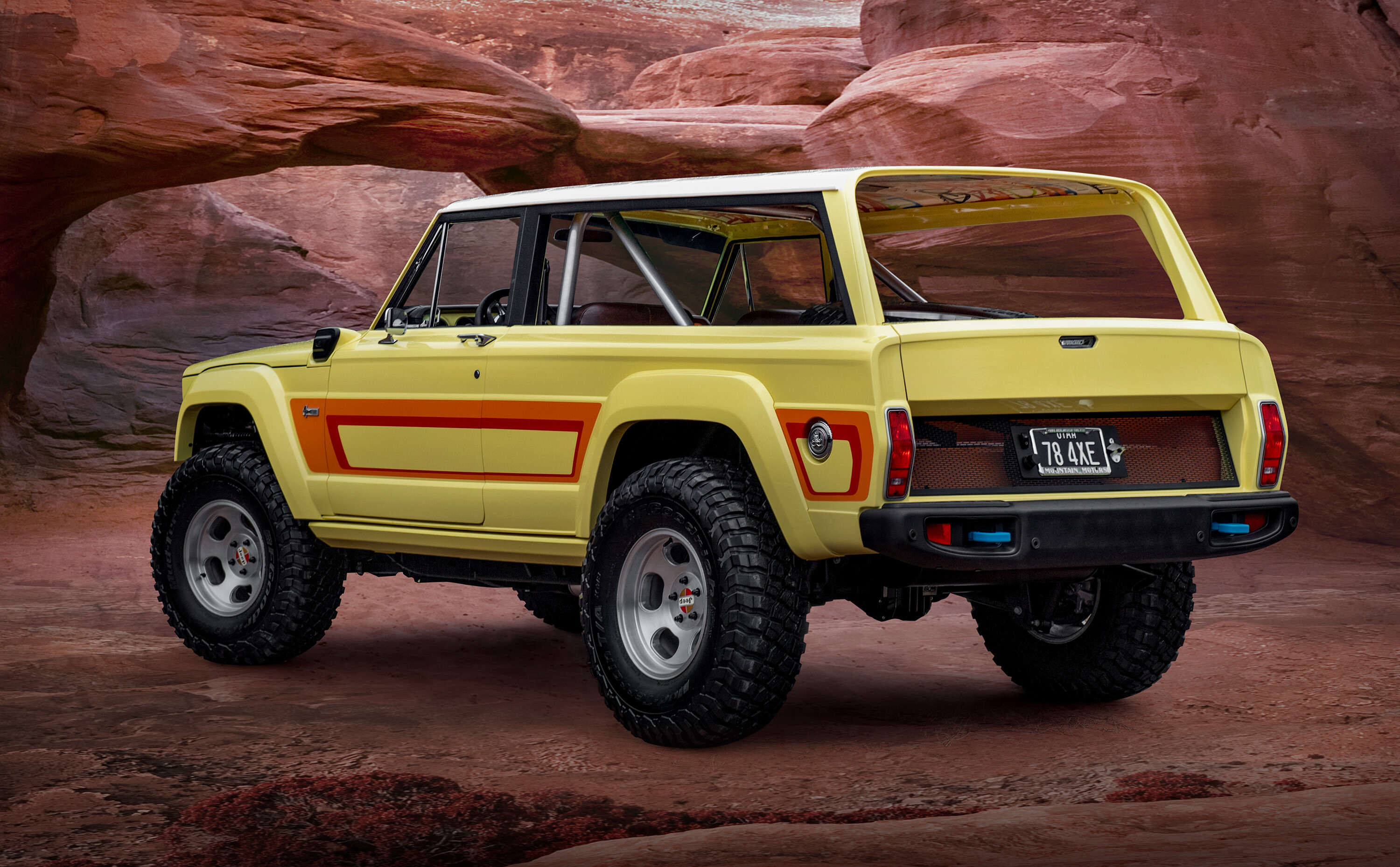
With inspiration from cars of the 1970s, the Cherokee 4xe features a multi-colour paint finish, 17-inch ‘slotted mag’ wheels, chunky 37-inch tyres, a four-point safety cage to replace the rear bench seat, and leather-trimmed bucket seats.
Under the bonnet, the Cherokee’s American Motors (AMC)-sourced engine is replaced by a modern 2.0-litre turbocharged four-cylinder, matched to an electric motor and an eight-speed automatic transmission – but Jeep has added a fuel cap from the AMC parts bin to acknowledge its past ownership by the now-defunct brand.
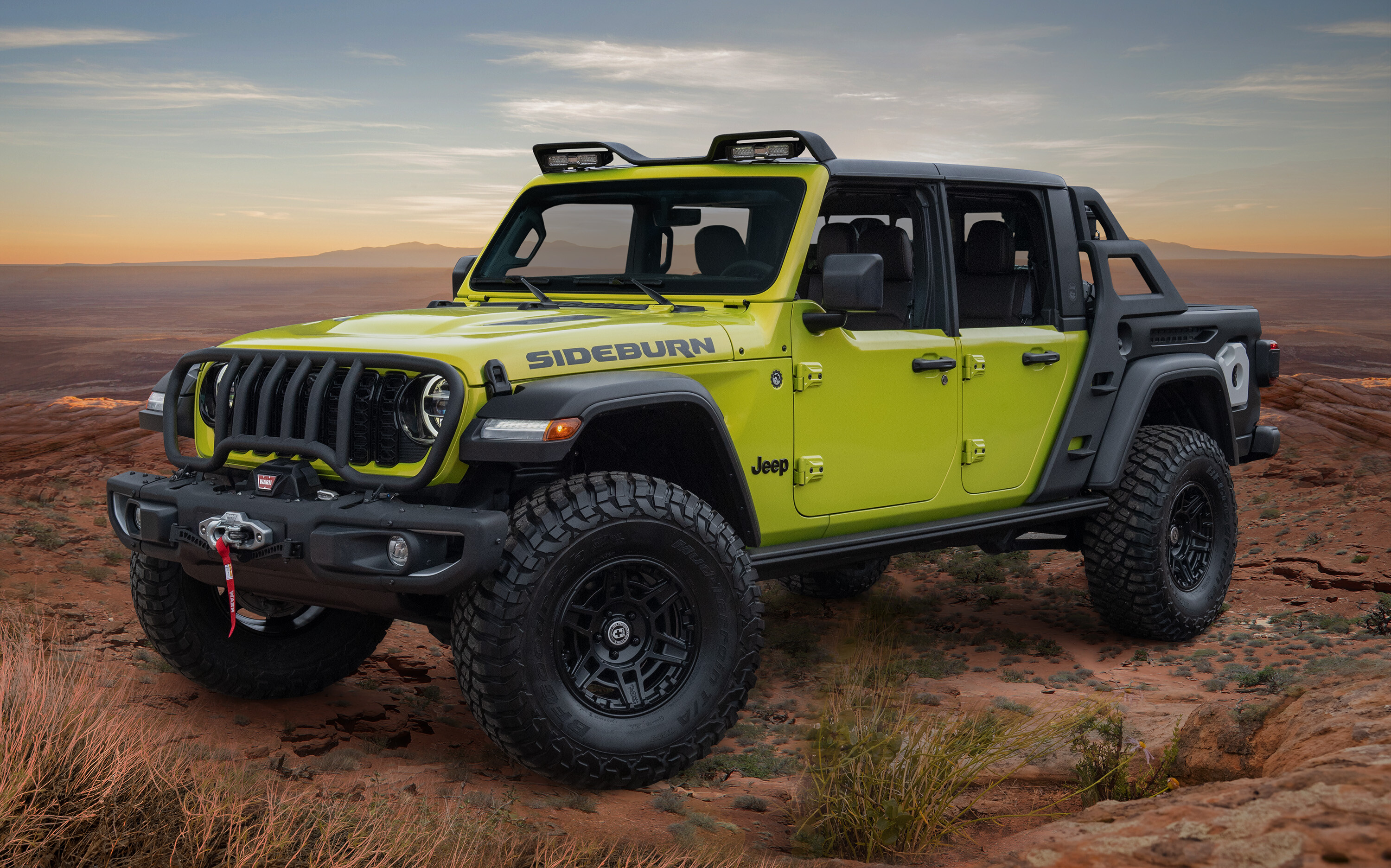
Jeep Gladiator Sideburn Concept
The Gladiator Sideburn Concept gains a Jeep Performance Parts (JPP) 2-inch lift kit and Bilstein-sourced shock absorbers with remote reservoir shocks.
Finished in ‘solar flash yellow’, it also features black HRE 17-inch FT1 six-spoke wheels and 37-inch BF Goodrich off-road tyres, while the front grille is taken from the related Wrangler 20th Anniversary Edition.
In addition, Jeep’s engineers have fitted a custom-designed tubular grille guard, a modified Rubicon bumper with a Warn winch, removable LED roof lights, and a concept sport bar made from carbon fibre and steel.
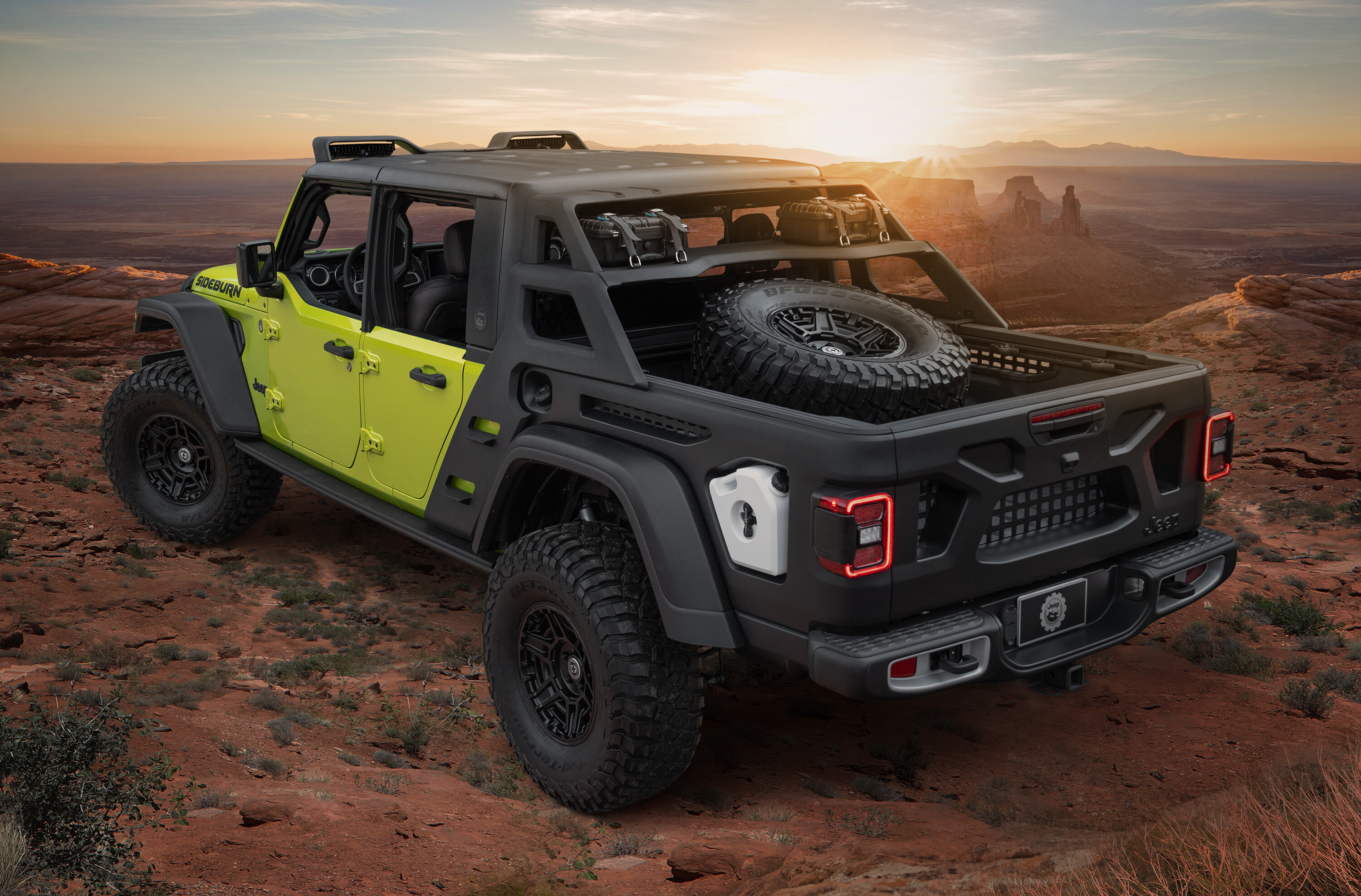
JPP, a Mopar sub-brand, also developed a custom limb-riser that “uses heavy-duty cables attached from the top of the [bonnet] latch to the back of the windshield header, directing loose branches and brush up and over the roofline, preventing potential damage to the [bonnet] and windshield.”
Inside, it gains a red-brown ‘vienesse relicate’ Nappa leather upholstery, a custom instrument cluster panel with a 3D topographical map of Moab, and a concept JPP heavy-duty vinyl floor system with integrated floor drains for interior hose-outs.
Jeep Grand Wagoneer Overland Concept
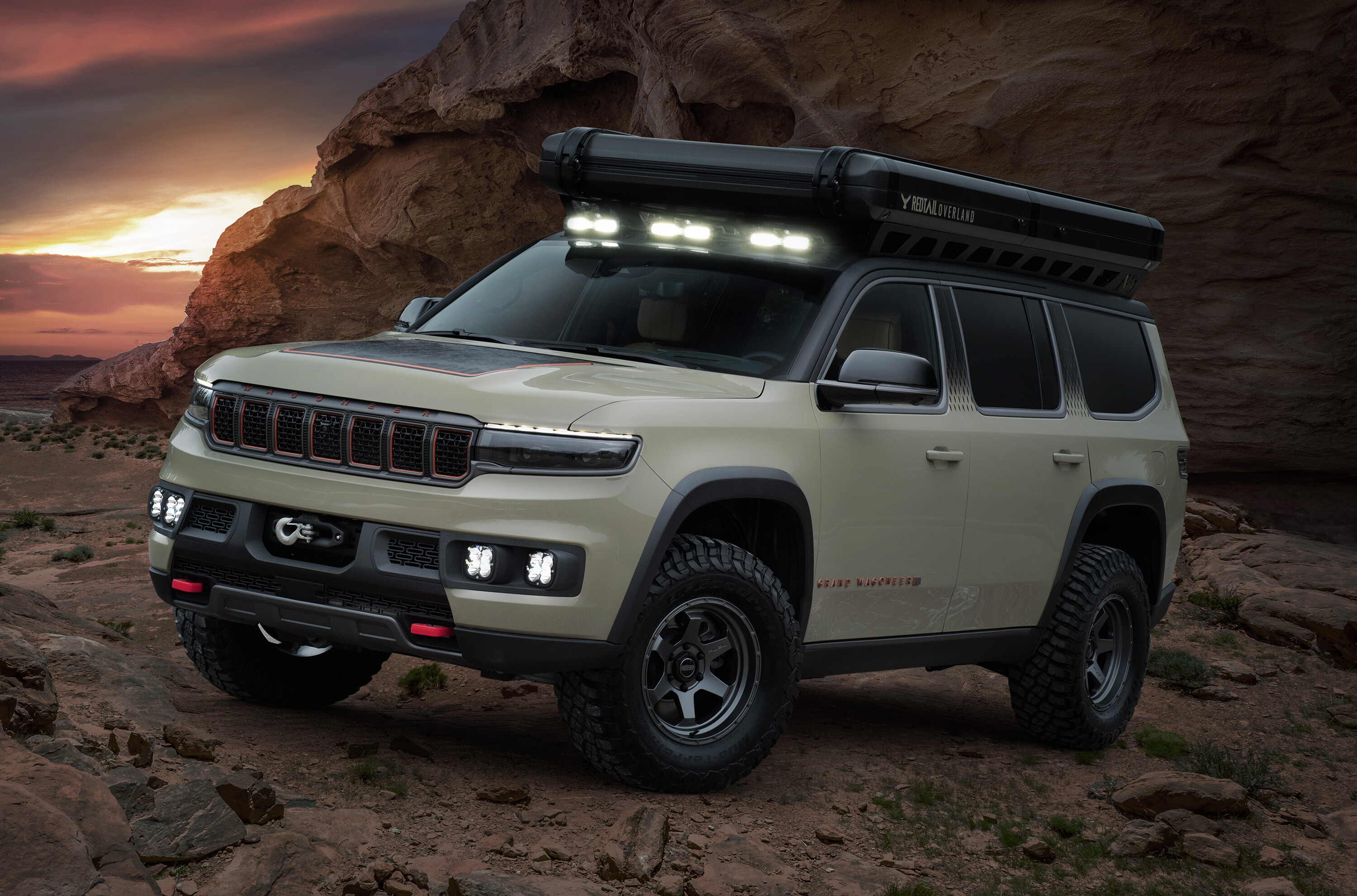
It’s not just Wranglers and Gladiators that get all the attention for the Easter Jeep Safari, with a camp-focus for a new Grand Wagoneer concept.
Based on the short-wheelbase Grand Wagoneer, the Overland Concept – powered by Stellantis’ new 380kW/678Nm 3.0-litre twin-turbo ‘Hurricane’ inline-six petrol engine – receives a custom-designed roof-mounted camper top by Redtail Overland.
The unit, known as the Skyloft, is constructed from lightweight carbon fibre to unfold in “around 10 seconds from the inside by simply pushing up with one arm.”
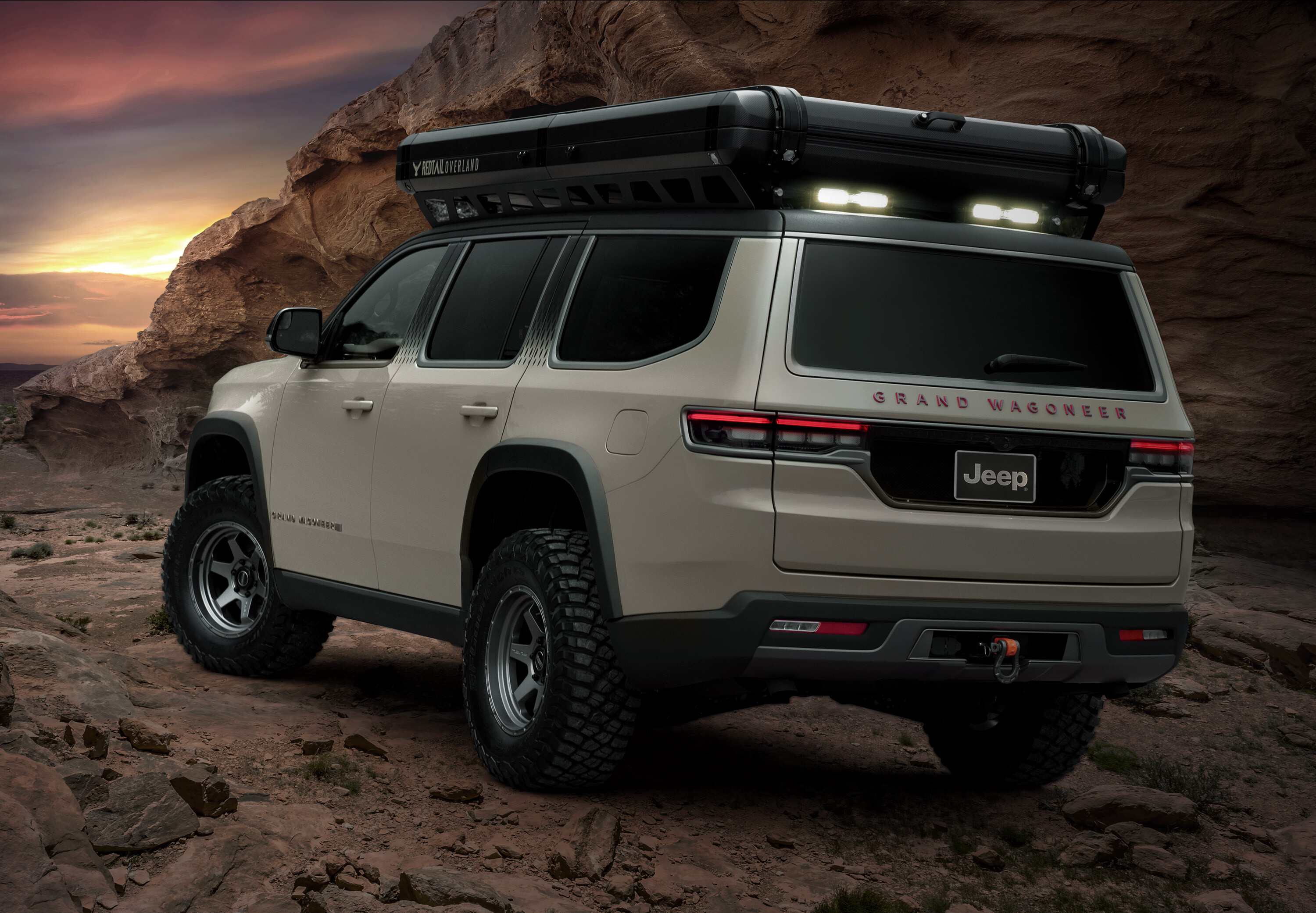
To install the pop-top camper, Jeep has removed the second- and third-row of seating – reducing the Grand Wagoneer from eight seats to just two – and created a weatherproof entrance to the upper level through the rear-most sunroof.
Inside, the Grand Wagoneer Overland Concept is fitted with two beanbags, a plush throw rug, pillows, and custom ambient interior lighting.
More than just the addition of a luxurious camper, the focus on off-road ability brings custom wheel arches a front winch, custom laser lights and unique bumpers, while the 18-inch alloy wheels and 35-inch tyres allow for a 38mm lift for increased ground clearance.
Jeep Scrambler 392 Concept
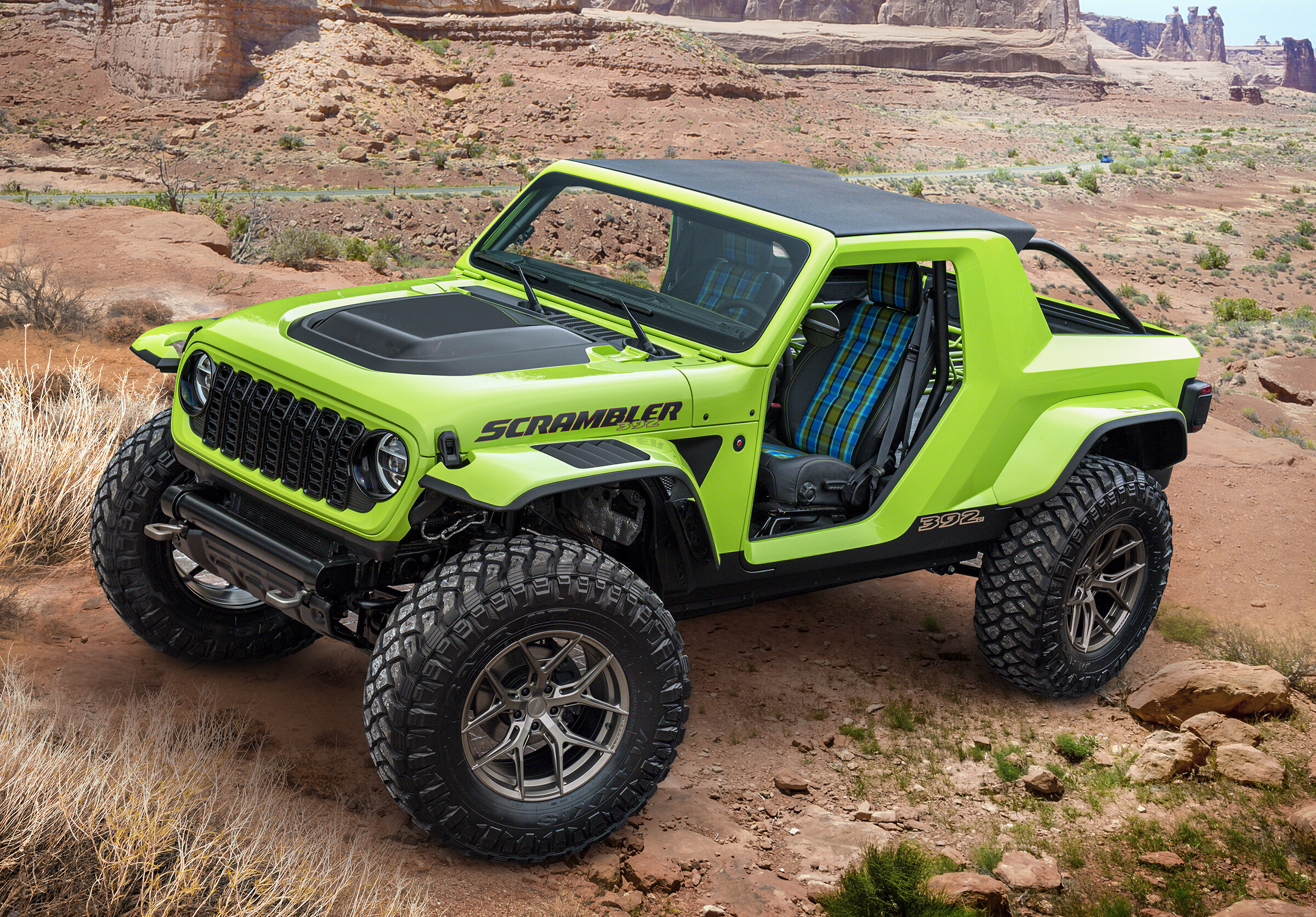
Inspired by the CJ-8 Jeep Scrambler convertible truck, the Scrambler 392 Concept blends the V8-powered Wrangler 392 – an LHD-only model – with the rear section from the Gladiator dual-cab ute.
While it has two doors, the Scrambler 392 is based on the four-door Wrangler Rubicon’s wheelbase – with the addition of carbon-fibre body panels, a lowered roof, wider rear arches, and lighter front and rear bumpers.
Under the skin, the Scrambler 392 concept is fitted with an AccuAir air suspension kit developed for the Wrangler and Gladiator, allowing for an on-the-fly lift ranging from 38mm to 140mm, controllable via the built-in controller or “through long-range Bluetooth on a wireless device.”
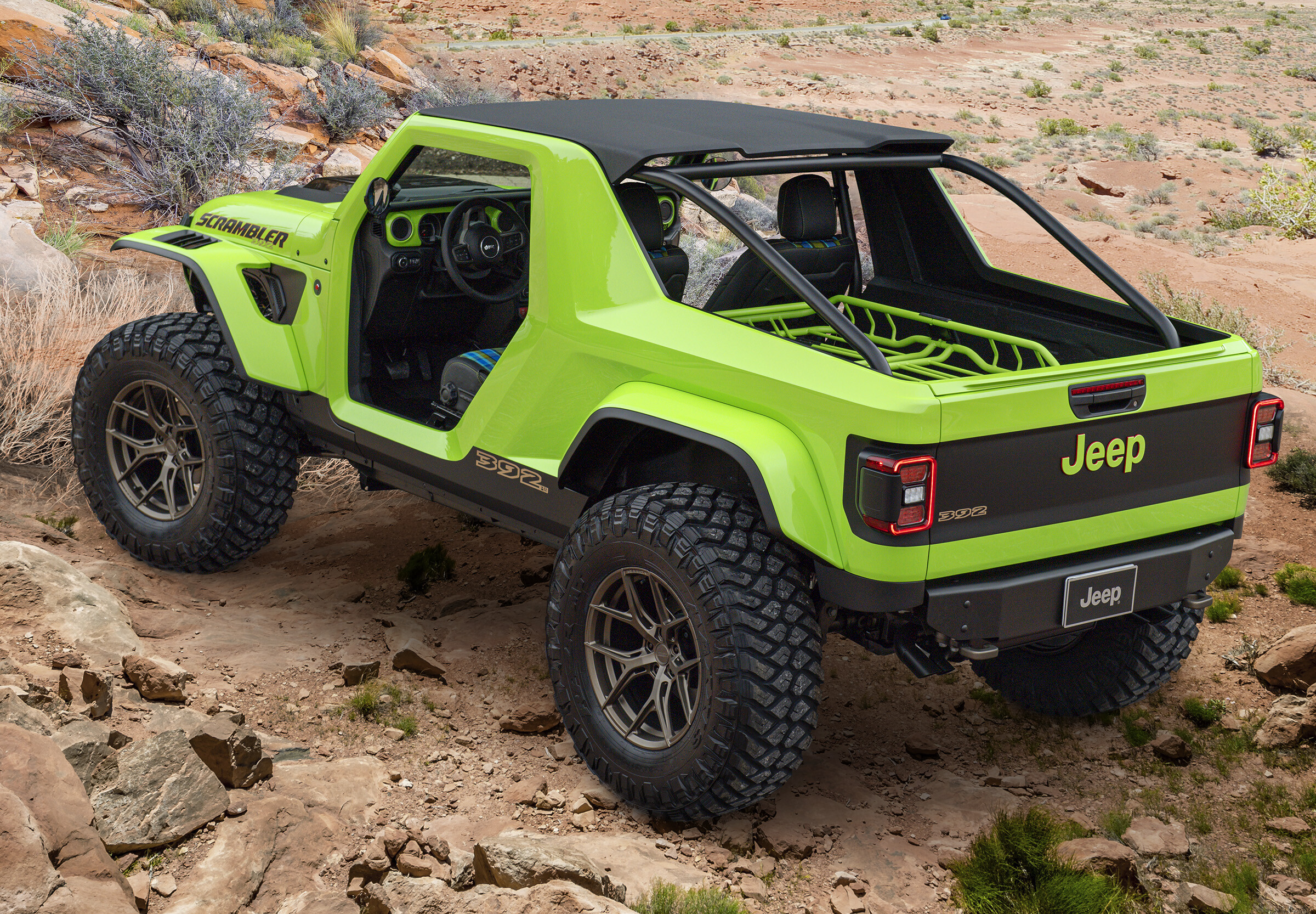
In addition, it sports 40-inch tyres, custom 20-inch alloy wheels, a sublime green exterior, and new seats with plaid blue inserts and green stitching in the cabin.
As mentioned, it is powered by the 6.4-litre Hemi V8 producing 350kW and 639Nm, as found in the North America-only Wrangler V8.
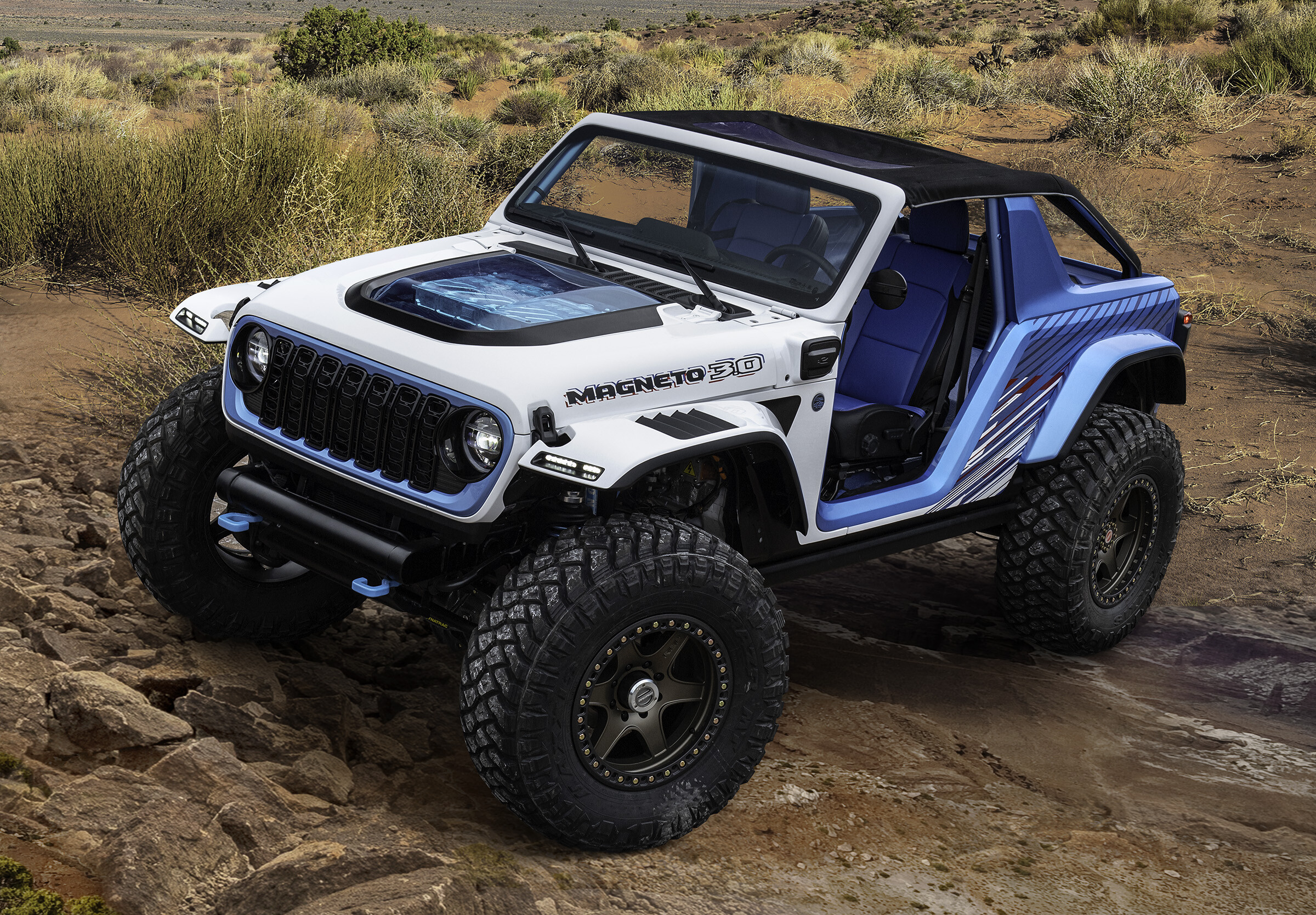
Jeep Wrangler Magneto 3.0 Concept
The latest all-electric Wrangler Magneto 3.0 Concept builds on the previous two examples unveiled in 2021 and 2022, respectively.
Unlike other electric vehicles, the modified Wrangler retains its six-speed manual transmission – a beefed-up version of the unit found in the Dodge Challenger SRT Hellcat – and low-range gearbox.
Building upon the previous show cars, the latest Magneto concept has two power settings, with a whopping 485kW and 1224Nm in a 10-second burst, or 213kW and 371Nm in standard mode – in line with the naturally-aspirated 3.6-litre V6 petrol.
A two-stage power regeneration mode has been added, with a hill descent mode available in low range for a ‘one-pedal’ rock-crawling experience.
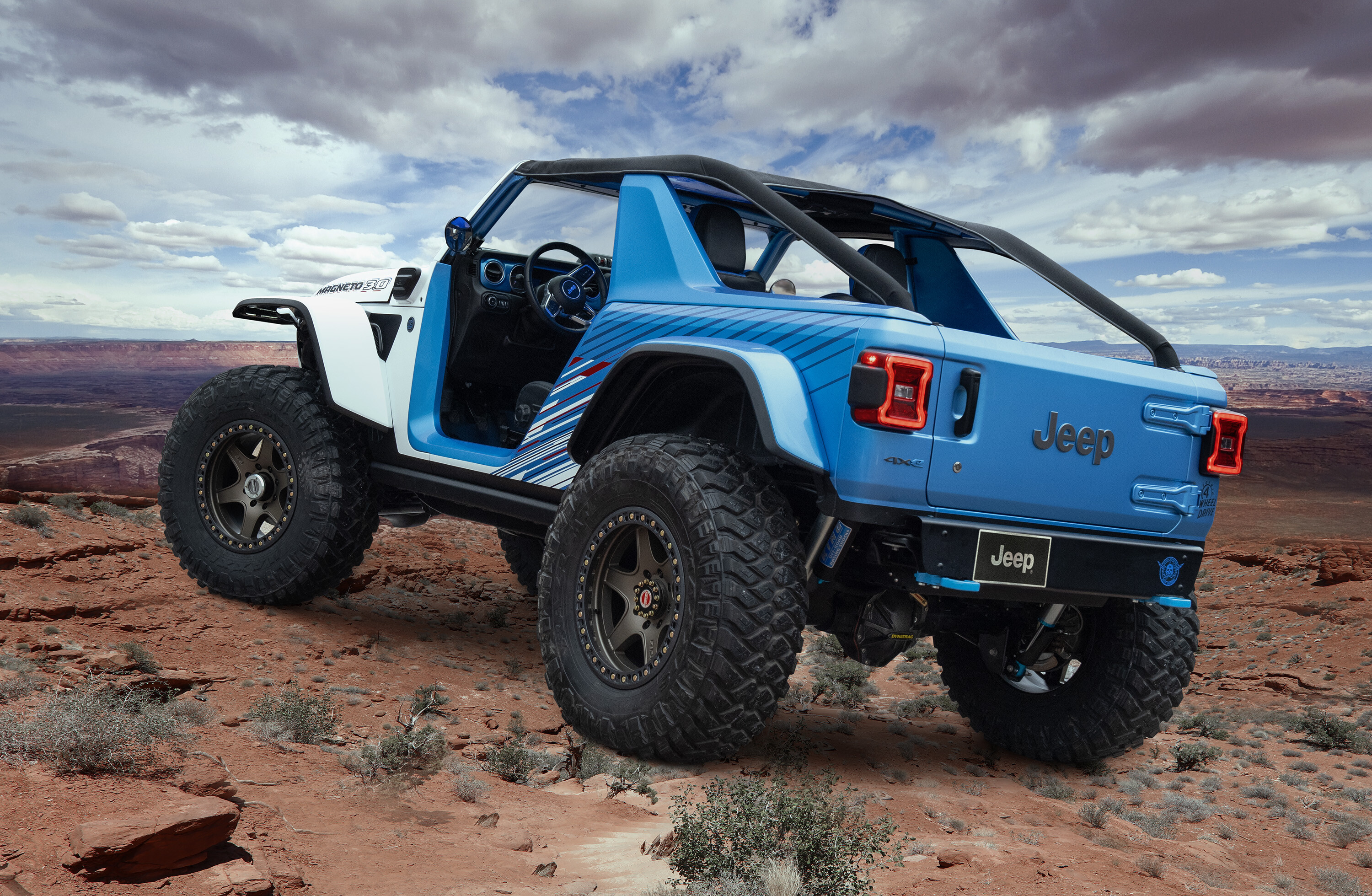
Compared to the previous editions, the latest Magneto has a modified door opening, a new B-pillar, a custom anti-roll bar, and a raked-back windscreen “to give the side view a ‘chopped’ roof feel without shortening the front glass.”
It also features 20-inch off-road beadlock alloy wheels, 40-inch mud-terrain tyres, a custom 3-inch lift, and off-road front and rear axles supplied by Dynatrac.
Jeep has introduced red exterior accents for the 2023 iteration, while the front seats have been re-trimmed in blue leather, and a Rhino-lined blue protective finish for the flooring.
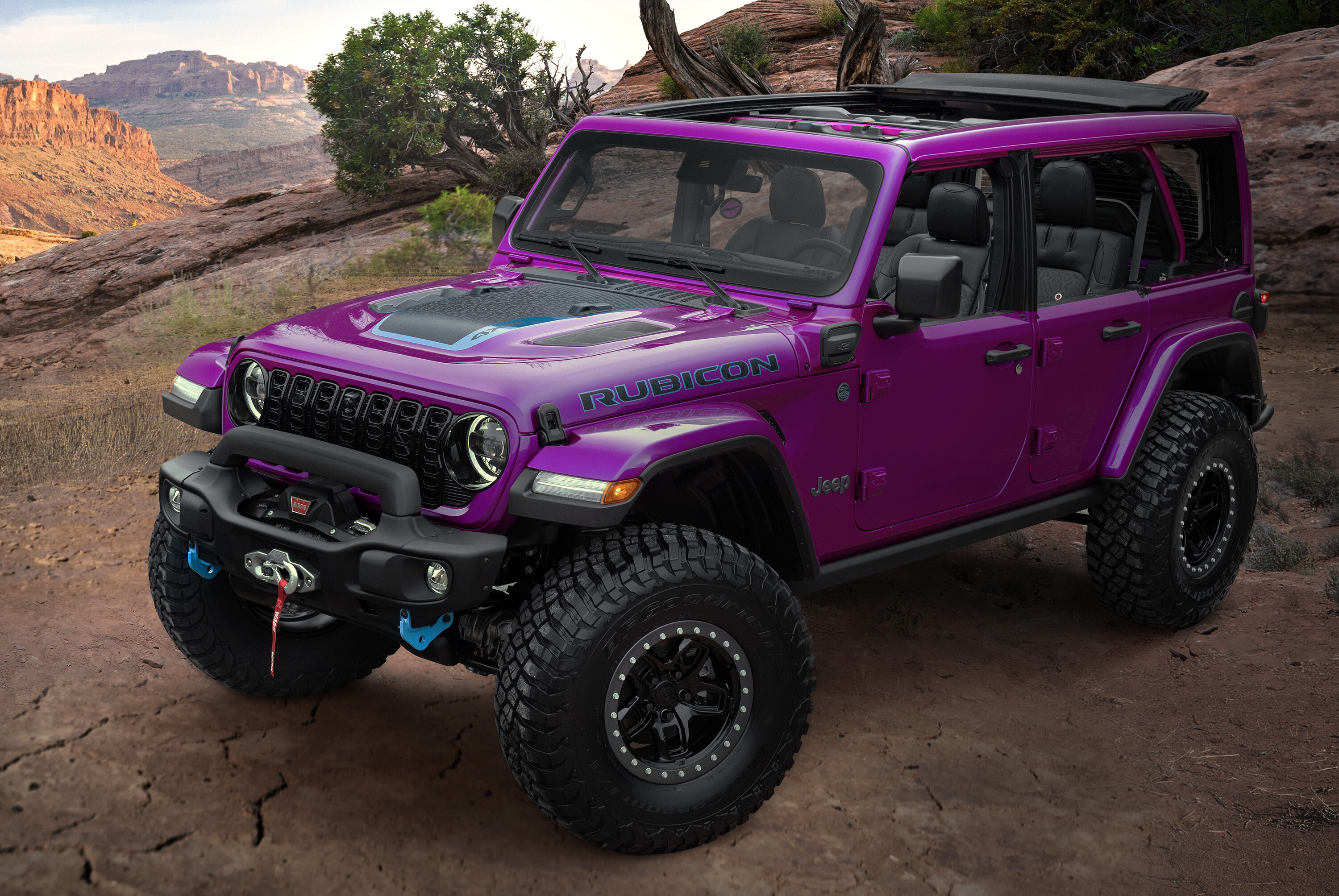
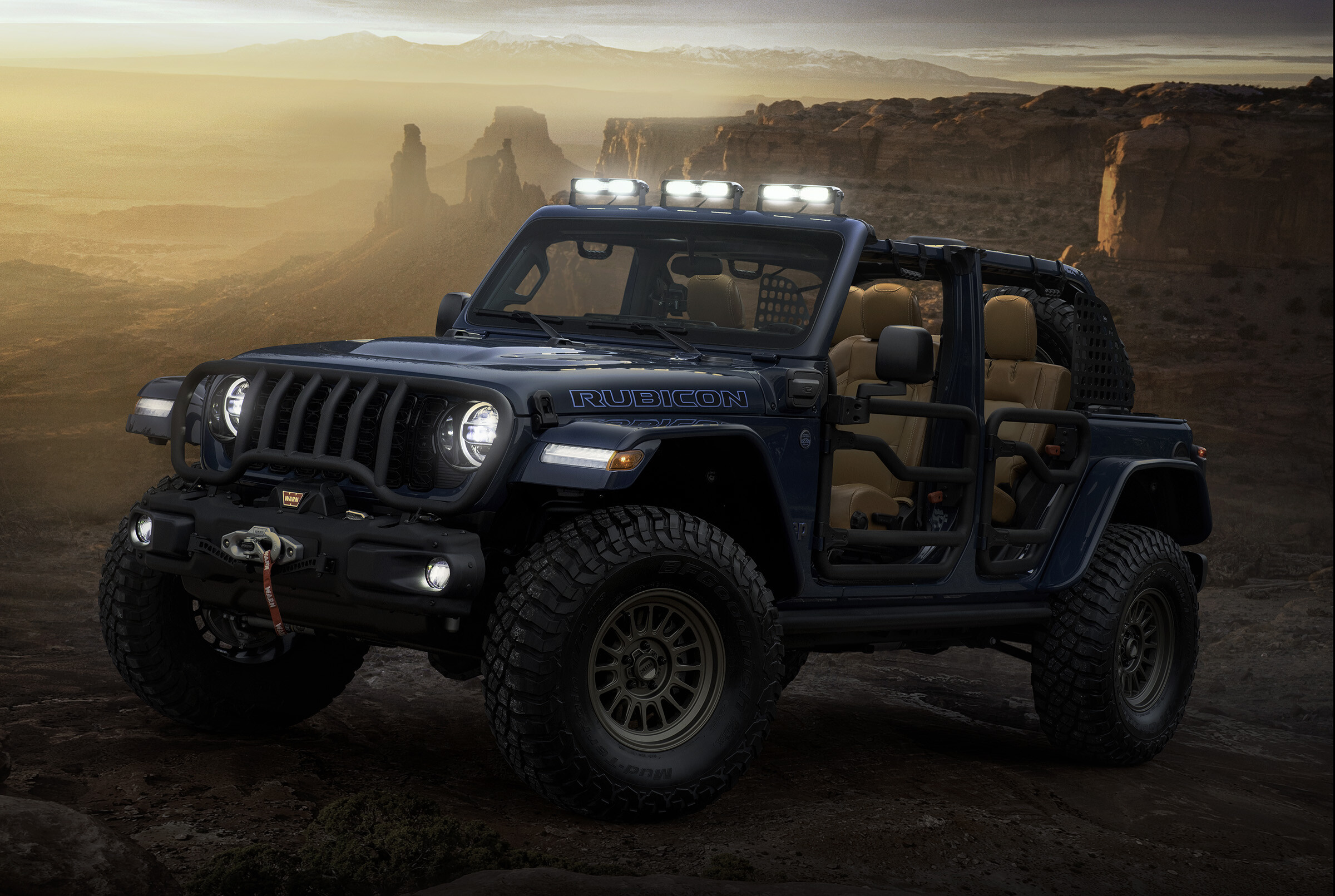
Jeep Wrangler Rubicon 4xe Concept
This concept could preview a future paint finish for the Wrangler, with inspiration from the limited-run Tuscadero colour available in 2021.
Jeep said it initially forecasted 3000 orders for the finish, but overwhelming demand led to production being extended for a month – and something similar is likely to return.
Enter the latest pink hue from Jeep’s design headquarters, which is said to switch from a purple-like finish in darker environments to a magenta-like look under the direct sun.
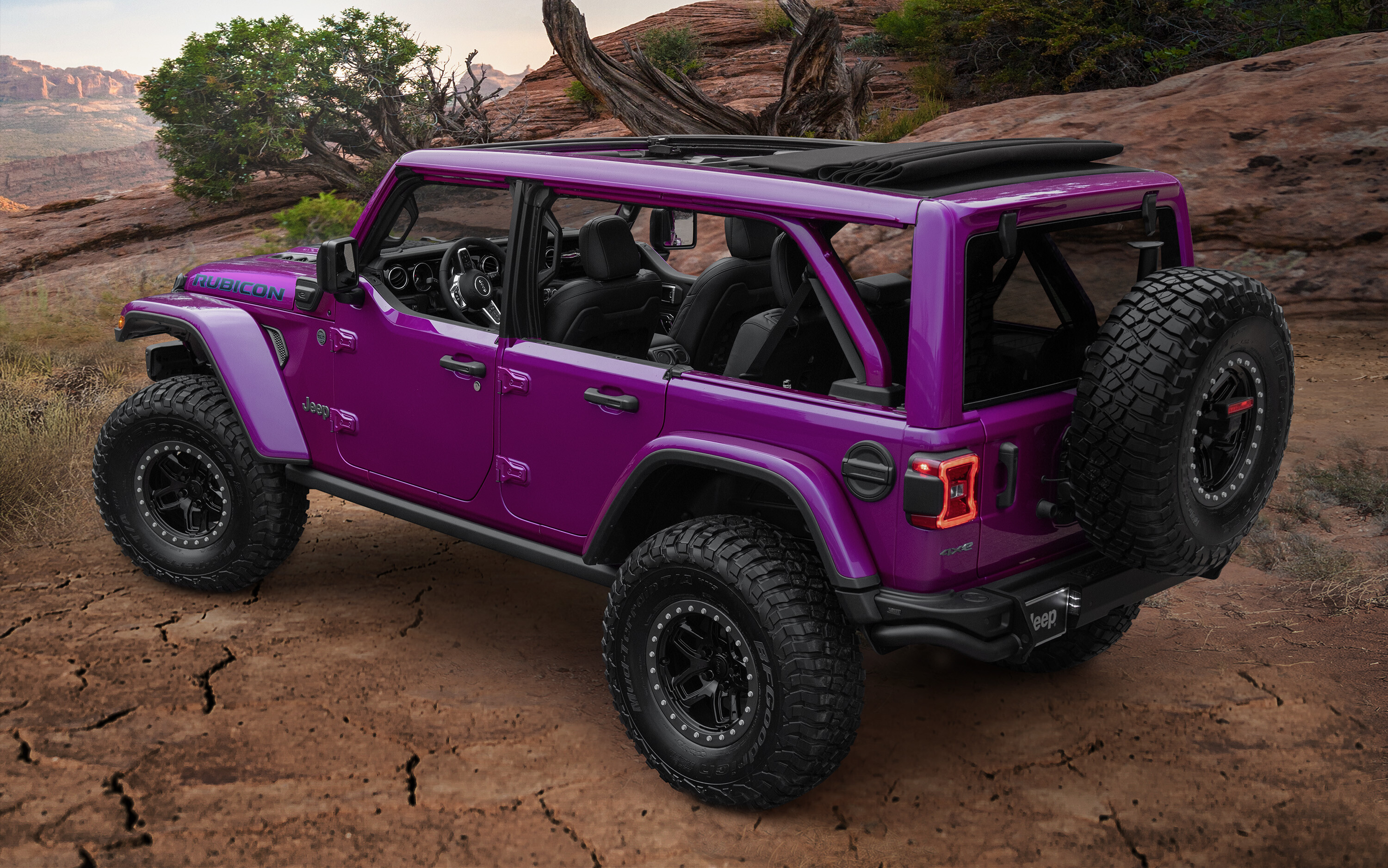
It also gains the front grille from the Wrangler 20th Anniversary Edition, and custom leather seats inside with magenta accents.
As with the Scrambler concept, there’s also an AccuAir air suspension kit, while it receives 17-inch gloss-black wheels from American Expedition Vehicles, which also supplied the front and rear bumpers, differential covers and a winch.
Jeep Wrangler Rubicon 4xe Departure Concept
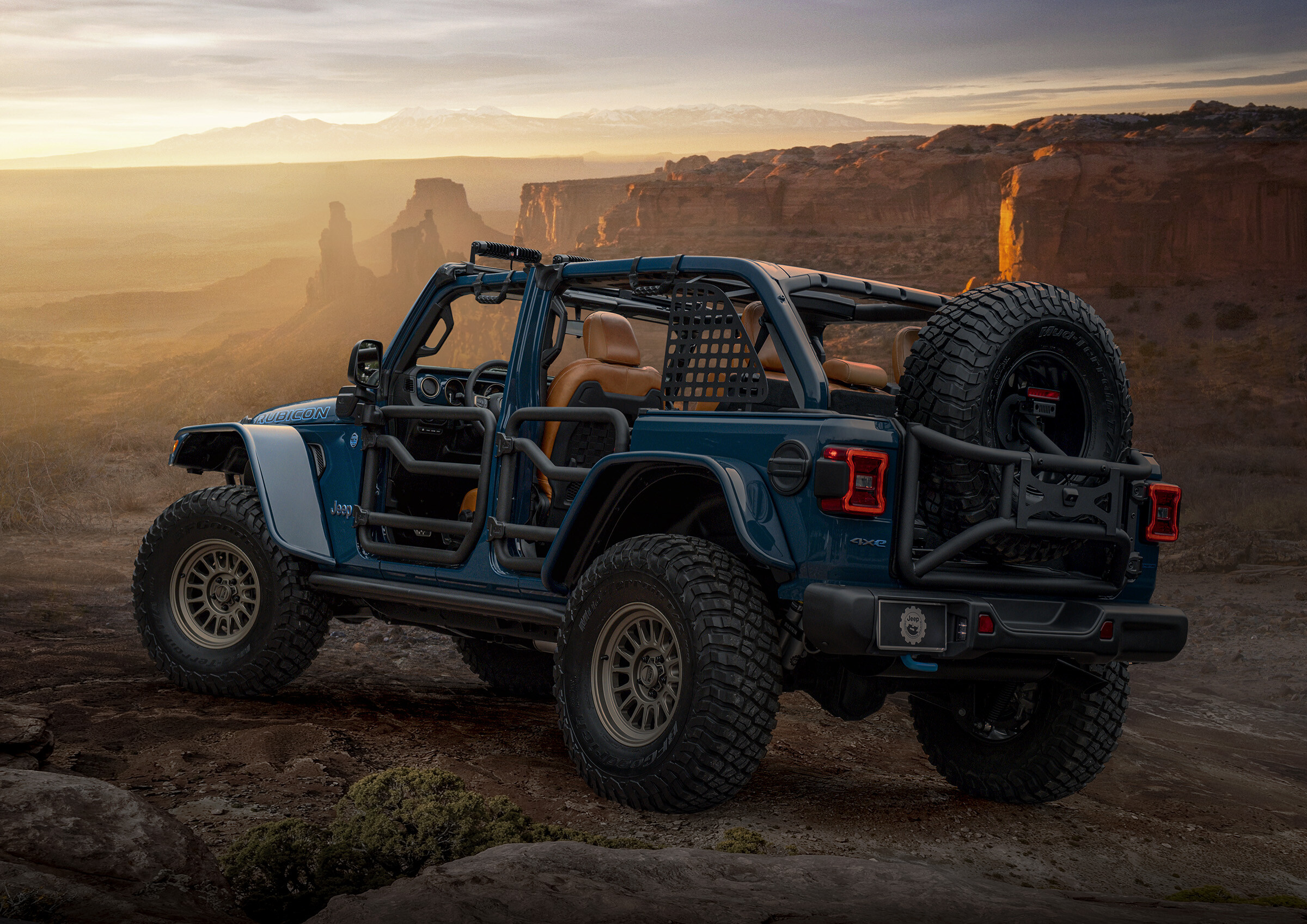
Based on a stock Wrangler 4xe plug-in hybrid, the Departure Concept is fitted with a slew of parts from the Jeep Performance Parts division.
This includes; 17-inch Vintage Bronze KMC Impact OL wheels, 37-inch BFGoodrich tyres, a 2-inch lift kit, Bilstein-sourced performance shock absorbers with remote reservoirs, and the 20th Anniversary front grille.
Other additions comprise a custom-designed tubular grille, wider flares, removable daytime running light covers, windshield-mounted rectangular LED lights, rock rails with mounted slider tubes, sports bar-attached storage panels, and a unique spare-wheel mount to provide more space – or to improve rear overhang when turned toward the cabin.
Australia’s Don Kyatt has continued its global expansion by opening a new facility in Chile, marking its eighth international and eighteenth overall branch.
It’s a far cry from the brand’s modest premises in Moorabbin, in Melbourne’s south-east, that acted as the company’s home when they first started trading in November, 1969.
Upgrade your 4×4
-
Bullbars
-
Underbody Protection
-
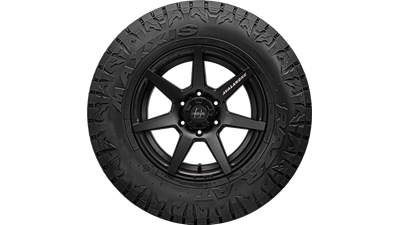
4X4 Tyres
-
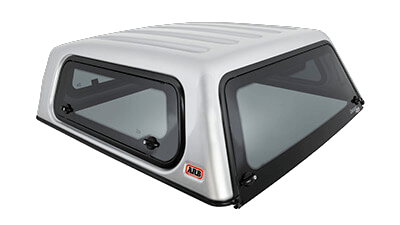
Canopies
-
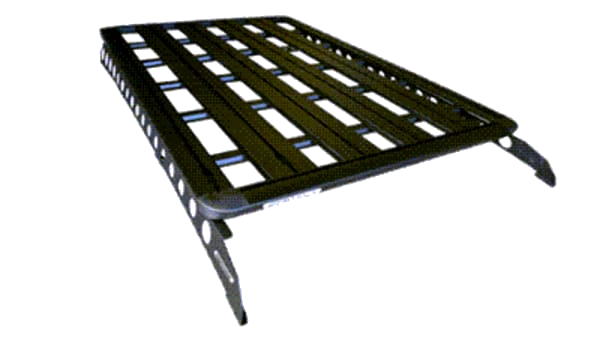
Roof Racks
-
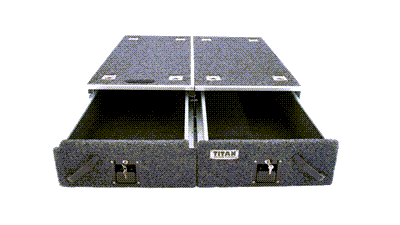
Storage
The Don Kyatt Group has only gone from strength to strength since then, opening branches Australia-wide to service every corner of the country. It has also expanded internationally, taking the Terrain Tamer and Flashlube brands into key markets such as Europe, New Zealand, Fiji, Papua New Guinea and, most recently, Africa.
The next step for the expansion of the company is into South America, with the new Chilean branch operating from the capital city of Santiago.
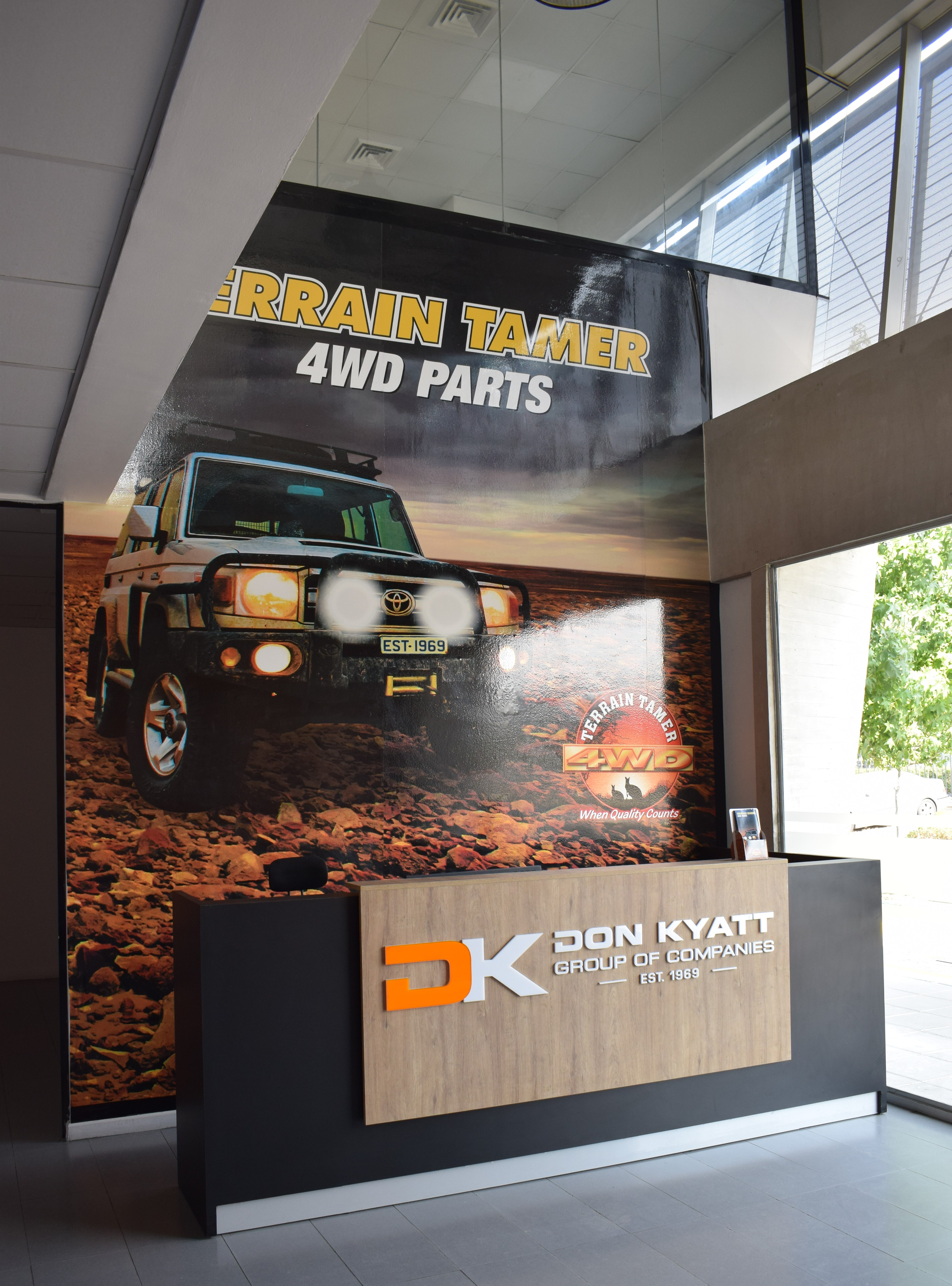
The new branch will act as a launching pad for the South American and Central American areas, which have previously proven to be strong markets for the export of the Terrain Tamer brand for many reasons; in particular, the extensive mining sector, which includes many large Australian companies such as BHP.
Additionally, South American consumption of LPG is among the highest in the world, lending itself as a key market for the export of the Don Kyatt Group’s additives and lubricants brand, Flashlube, and in particular, their original Valve Saver Fluid and kit products.
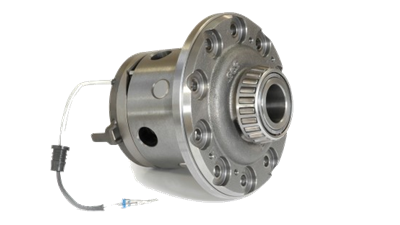
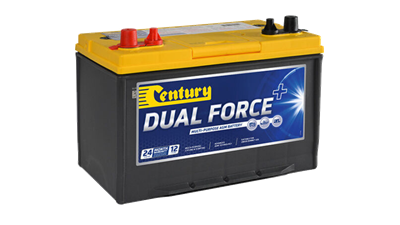
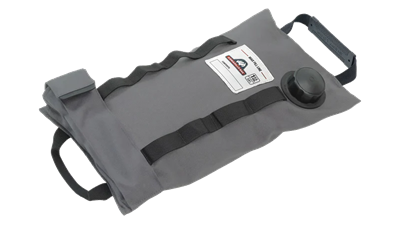
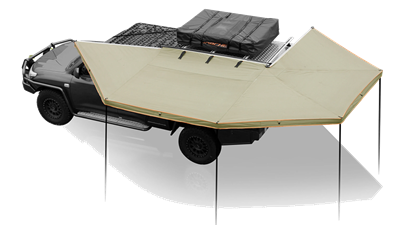
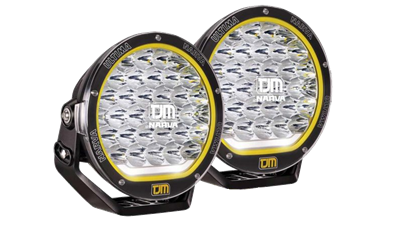
“Our brand’s beginnings are rooted in outback Australia and the extreme conditions that the terrain offers, and Chile has very similar environments, so it makes sense as a base for our operations in South America” said Brent Hutchinson,General Manager.
“We have been shipping to the region for 30 years, but it has been a slow process until now, so to have local stock holdings and to be able to service and grow our existing customer base more effectively changes the game for us.”
For more information and to see the extensive range of 4×4 parts and accessories on offer, visit donkyatt.com.au
The world’s most recognised brand of vehicle-mounted recovery winches has initiated a global recall of one of its most popular models, the Warn VR Evo. The recall covers more than 120,000 winches globally.
The problem isn’t with the winches themselves, but with the remote controller. In isolated cases, the circuit board within the hand-held remote can become corroded and cause a short that unexpectedly starts or stops the winch.
Affected models in the Warn VR Evo winch range
| VR Evo 8 | Part number W103250 |
|---|---|
| VR Evo 8-S | Part number W103251 |
| VR Evo 10 | Part number W103252 |
| VR Evo 10-S | Part number W103253 |
| VR Evo 10-S-103253 | Part number C3700-6KGOAAU |
| VR Evo 12 | Part number W103254 |
| VR Evo 12-Su00a0 | Part number W103255 |
| Spare remote control module | Part number W104218 |
We have been told there have been no reported cases of this happening to winches sold in Australia, but the recall has been made to ensure it doesn’t.The recall does not affect other models of Warn winches, only VR Evo models.Warn winches are imported and sold in Australia through ARB and Ateco Automotive. If you have one of the winches affected by the recall, you should contact the place of purchase to get the remote checked.
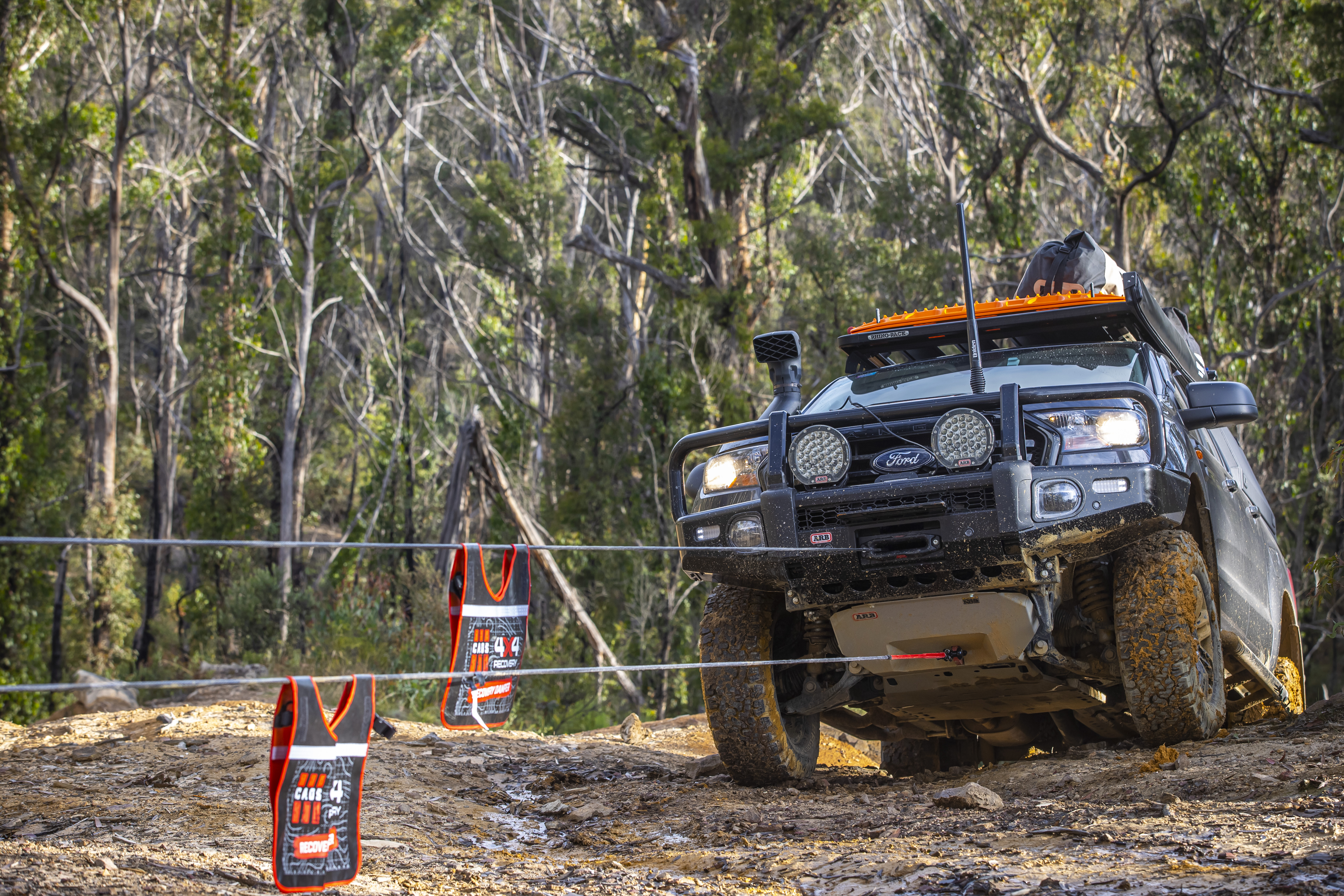
Once confirmed that it is covered by the recall, you will be sent a paid post satchel so send your remote in for inspection, and repair or repayment as required. The repair involves the application of a corrosion-protective coating to the circuit board of the controller.For more information or to find out if your Warn VR Evo winch is affected, visit:
- https://www.arb.com.au/warn-winch-recall
- https://www.productsafety.gov.au/recalls/ateco-automotive-%E2%80%94-warn-vr-evo-4×4-recovery-winches
TJM is one of Australia’s original and most successful 4×4 brands, and it has now been manufacturing and selling four-wheel drive accessories for 50 years.
Like so many great brands, TJM was born not as a business but from a need to find quality products for 4×4 vehicles. The landscape and marketplace might be very different today, but back in the early 1970s the sand islands off the coast of South-East Queensland were popular destinations for the few people who used 4×4 vehicles and buggies to get out and explore.
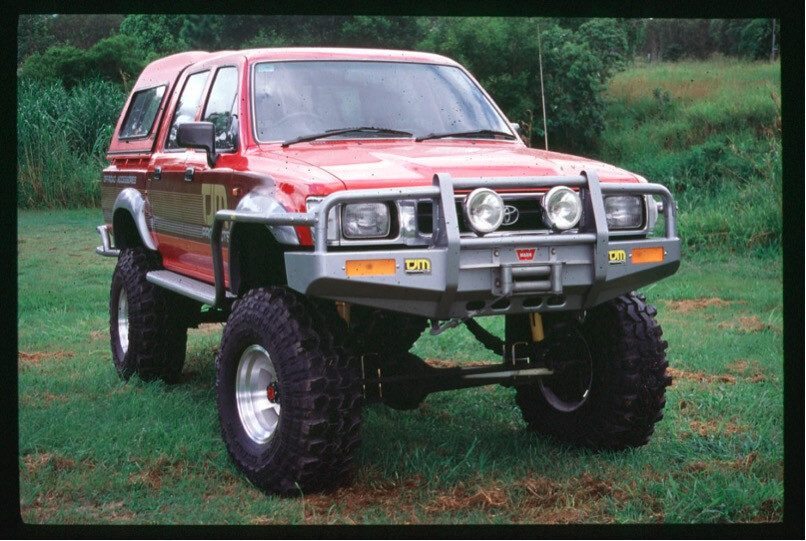
Among them were mates Lloyd Taylor, Cliff Jones and Steve Mollenhauer (the initials of their surnames for the company name) who wanted protective roll bars and bullbars for their vehicles but couldn’t find the gear they wanted anywhere.
As is the Australian way, the trio made their own, and demand for more of the products led to the creation of TJM, with the team fabricating 4×4 parts from a shed in the backyard of Lloyd’s mother’s house.As production and the range of products grew, the business moved to a factory and store in the Brisbane suburb of Geebung, which was to become the headquarters until 2009 when a fire destroyed the (much larger, by that time) factory and offices.

As both the market and popularity of four-wheel drive vehicles increased, TJM expanded to produce all manner of 4×4 accessories, from protection equipment to suspension components, roof racks and everything in between.From the early 1980s TJM began exporting its Australian-made accessories overseas to markets such as the USA and Japan, becoming a true Aussie success story. TJM was bought by mining and electrical company CMI in 1991, and the business continued to expand.The fire in Geebung brought big changes to the company, with production equipment lost and more of the production moving offshore. It took almost a full year to get back on track before a new headquarters and warehouse facility were built in Brendale, keeping the HQ in the company’s home city of Brisbane.
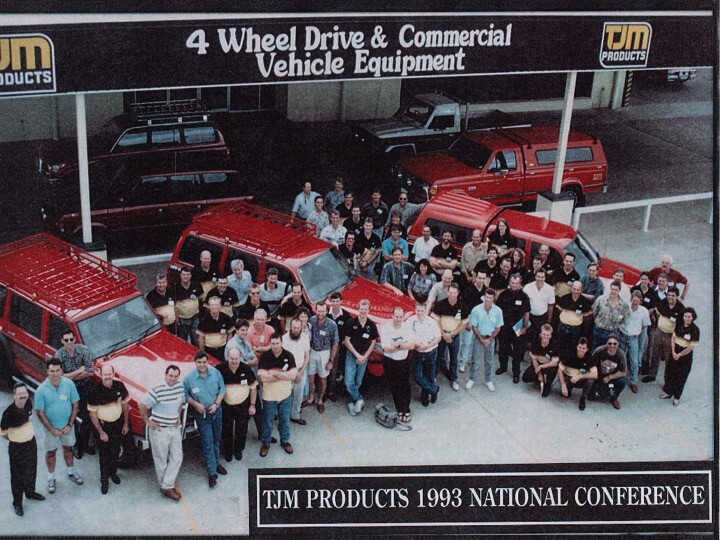
In 2015, CMI looked to focus its attention on its core mining and electrical business and TJM was purchased by Thai company Aeroklas, a brand best known for its ute canopies and accessories. Aeroklas still owns TJM as the company marks 50 years in 2023, and under its ownership it has opened flagship corporate TJM stores and expanded the business to now have more than 80 outlets across Australia. International and fleet sales remain strong and, with new markets opening up globally, it will continue to expand.“I’m looking forward to the next chapter of TJM, and I’m excited to see what the future holds.” said Group General Manager Greg Kelly, of TJM parent company Aeroklas Asia Pacific.
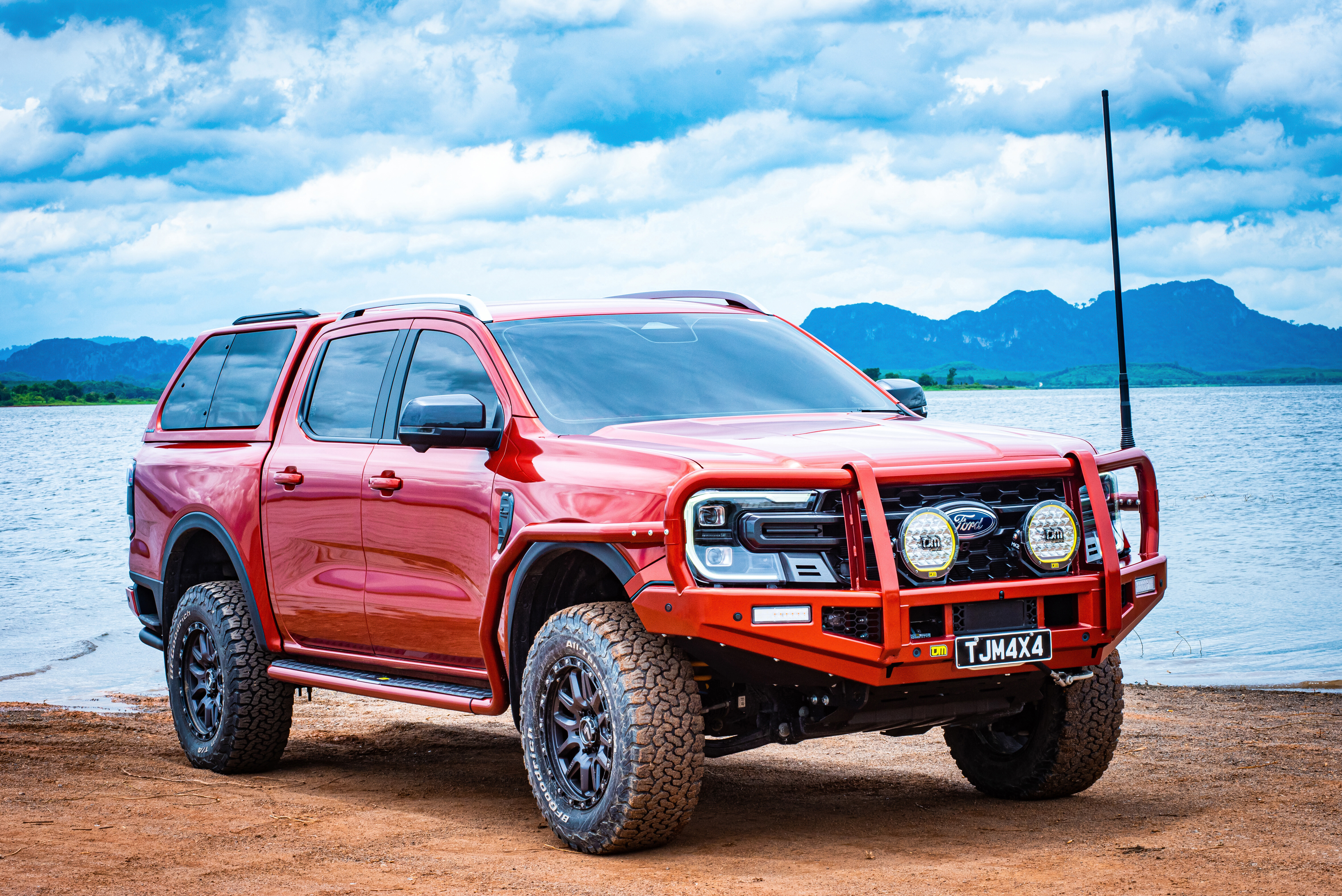
“From the day TJM started, the cornerstone of this iconic, great Australian brand has been innovation. It’s part of our DNA. We will continue to create enhancements to off-road vehicles that will delight and excite our customers. It’s what we do.”
4X4 Australia has enjoyed a long-standing relationship with TJM over the decades. In 1999, then-editor Ron Moon conducted a trans-continental drive from the west coast of Australia to the east with a convoy of TJM vehicles, staff and international guests.To see the full and extensive range of 4×4 products available from TJM and to find your local store, visit www.tjm.com.au
Mark Boxer, the owner and builder of this unique 80 Series LandCruiser, is a car guy through and through.
Not only does he love spending time getting his hands dirty building everything from his Ford Falcon drag ute to this V8-powered panel van-converted 80 Series, he also documents these builds through his company Hoon TV (we thoroughly recommend you check out his content).
Mark has had a few four-wheel drives over the years, including a highly modified Land Rover Discovery and a SWB Pajero, but decided he wanted to build an 80 Series LandCruiser this time around, after always being a fan of the 80 Series shape, overall ruggedness and reliability offered by the platform.
“Eighties have always been known for their reliability, and I always liked the shape right back to when my mate’s parents bought one brand new in 1994,” Mark tells us.
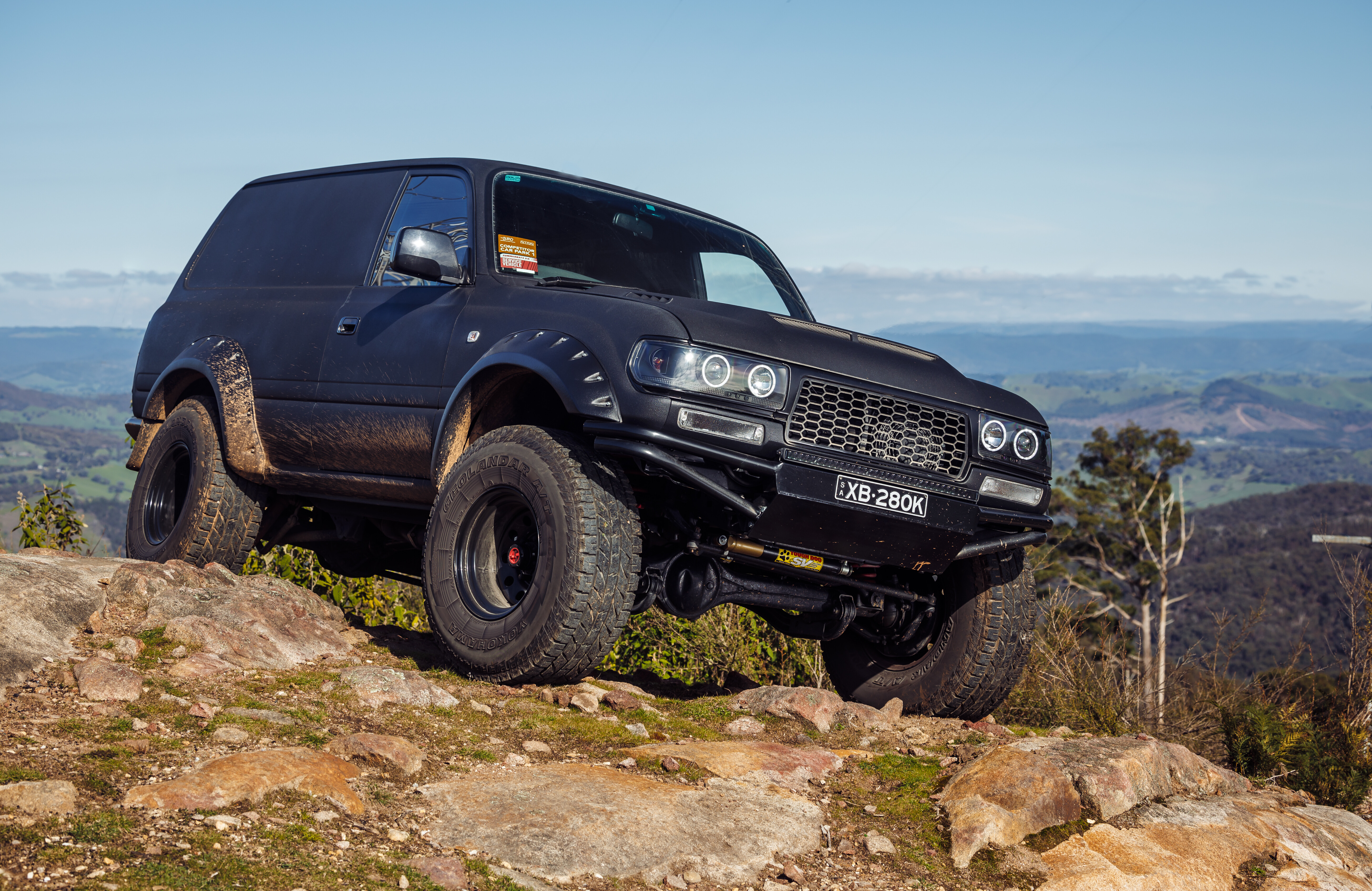
“I picked this one up, with typical 80 Series faded green paint and a few battle scars, from a retired couple who did lots of laps of Australia towing a caravan.
“It was pretty much stock, except for an alloy bullbar and LPG conversion, and had 450,000km on the clock when I decided to pull it all apart and begin the conversion. Not that you could tell that now, as everything is new or rebuilt – there wasn’t even a speck of rust in it,” he says.
Sounds like the perfect candidate for a full custom one-of-a-kind build. Let’s take a closer look at Mark’s 80 Series, he’s affectionately named Frank The Tank.
Engine and driveline
There was no way Mark was going to leave the stock 4.5-litre petrol-fuelled 1FZ-FE motor in this project, even though plenty of people have had good luck turbo-charging them for big power. No, Mark had his eyes (and ears) set on V8 power, and set about converting his 80 Series to a 6.0-litre L77 V8 engine from a VF Commodore W310 Walkinshaw.
Mark enlisted the help from the team at Marks 4WD Adaptors to supply the conversion kit, as well as the help of Jason from Tuff Mounts – apparently the whole conversion process was smooth sailing. Most of the work was carried out by Mark and his mates, with help from Mark’s contacts at Burson Auto Parts when he needed any new or upgraded parts. And the result? On the dyno, Frank The Tank now makes a very healthy 211kW at the wheels.
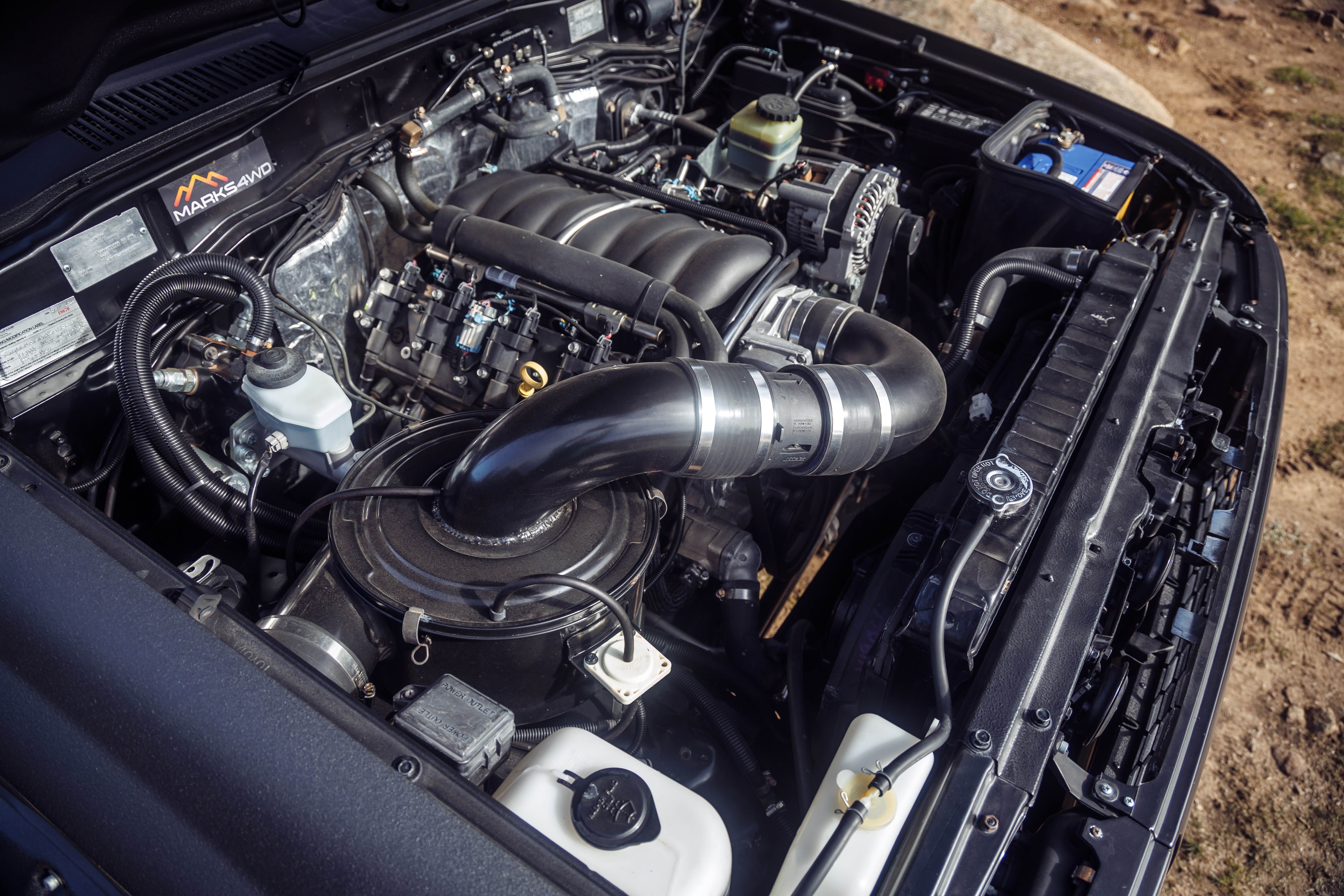
Advance Headers in Adelaide created and fitted the exhaust system for Mark’s 80 Series, to extract the most power and a nice note out of the big L77. This exhaust was fabricated from 3.5-inch mandrel-bent stainless steel, with extractors bolted to the heads. Advance Headers also ceramic-coated the exhaust, and added two mufflers to the system including an adjustable Varex muffler that allows Mark to determine how loud or quiet the system will operate.
The standard 80 Series transfer case has been retained and has proven to be up to task, as has the factory tailshaft – albeit beefed up by Hardy Spicer Adelaide. Cooling, on the other hand, needed a bit more work, with Mark enlisting the help of APM Radiators to rebuild an Adrad radiator to spec as well as include Davies Craig thermo fans, transmission and power-steering coolers.
Mark decided to go with a six-speed GM6L80E automatic unit, which was strengthened by MV Automatics in South Australia
Transmission wise, Mark decided to go with a six-speed GM6L80E automatic unit, which was strengthened by MV Automatics in South Australia. This is to be further enhanced in the future, as well as adding a Dominator 2500rpm stall converter, due to Mark’s other future plans which consist of installing a Harrop supercharger. Not that Mark thinks it needs more power, he just reckons they sound cool – and who are we to disagree.
Suspension, steering and brakes
With much more power on tap compared to the factory offering, Mark wasted no time improving vital steering, suspension and braking components for a reliable package. New Bendix rotors and pads, as well as new stock calipers from Burson, help the big 80 stop on a dime, especially when combined with a Marks 4WD Adaptors upgraded hydraulic brake booster, which applies double the line pressure to the system over stock.
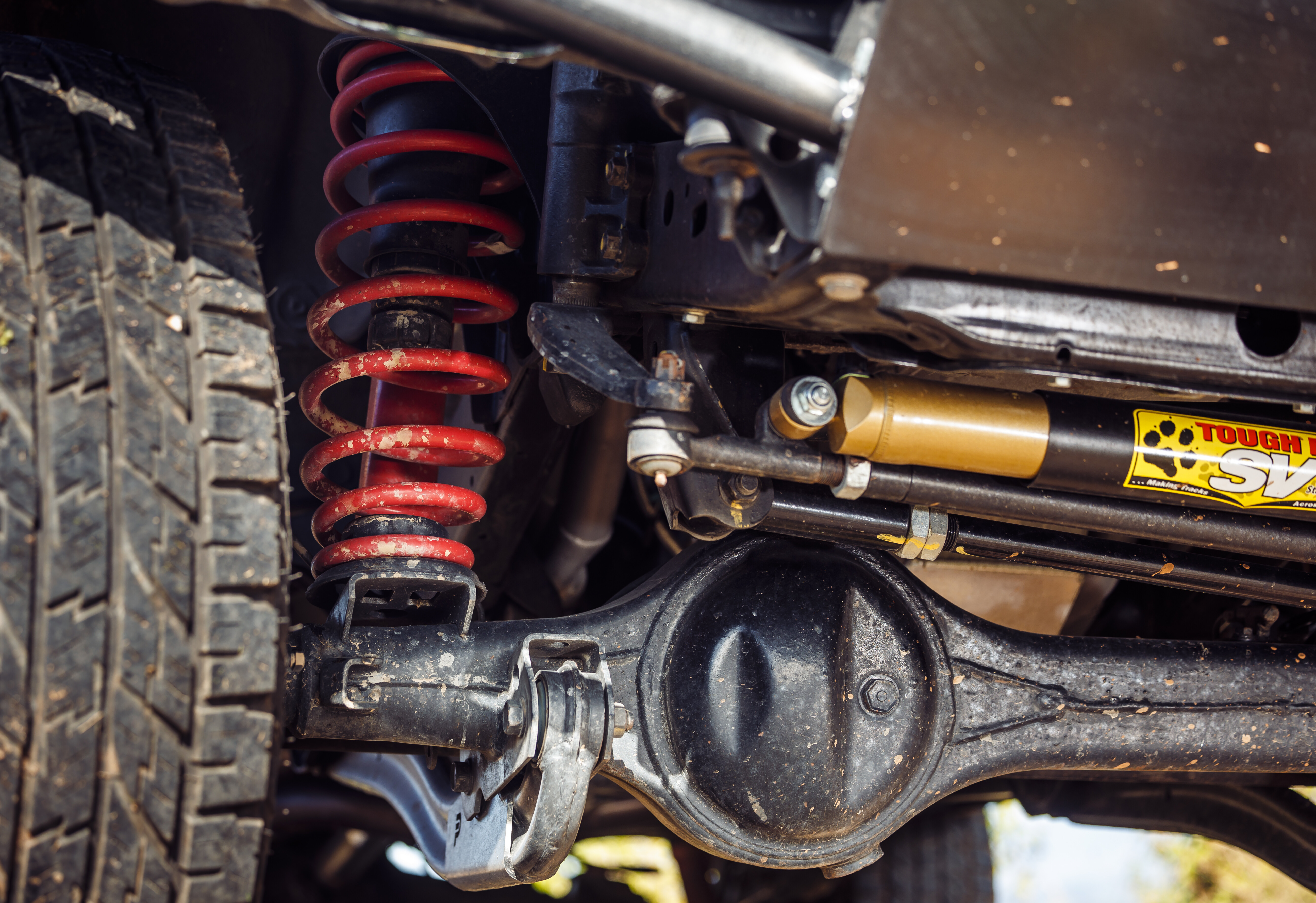
Pedders Keswick landed the job of upgrading the factory suspension, with Mark saying the team was a real help. The vehicle has been raised two inches overall using Pedders TrakRyder shocks and springs. SuperPro front radius arms were also fitted for castor correction, and longer lower trailing arms in the rear help with correcting the pinion angle while adding strength.
Pedders also fitted a new replacement steering box and Pedders drag link, then Mark added a Tough Dog adjustable steering damper, rounding out a neat yet nice and simple suspension package.
Body mods
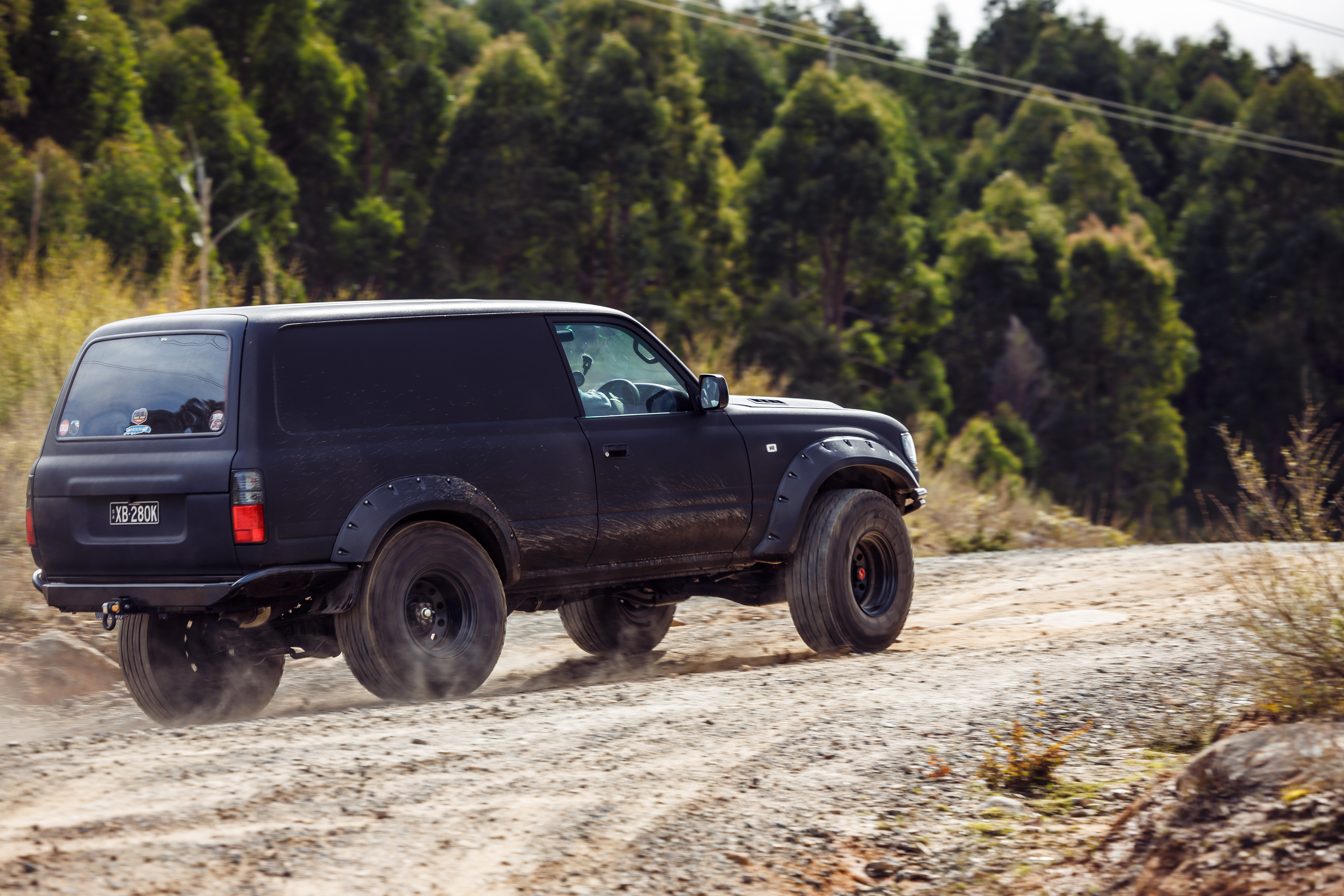
As the factory green paint job had seen better days, Mark saw this as an opportunity to do something different and converted his 80 Series into a two-door panel van.
“We fully welded up the doors and windows on the 80 Series to turn it into a panel van,” says Mark. “Everything is properly braced, with all gaps filled correctly and no corners cut. As well as the panel van conversion, we went one step further and removed all side trims, welded the holes, deleted all chrome off the vehicle, as well as deleting the rear wiper, washer and lock.”
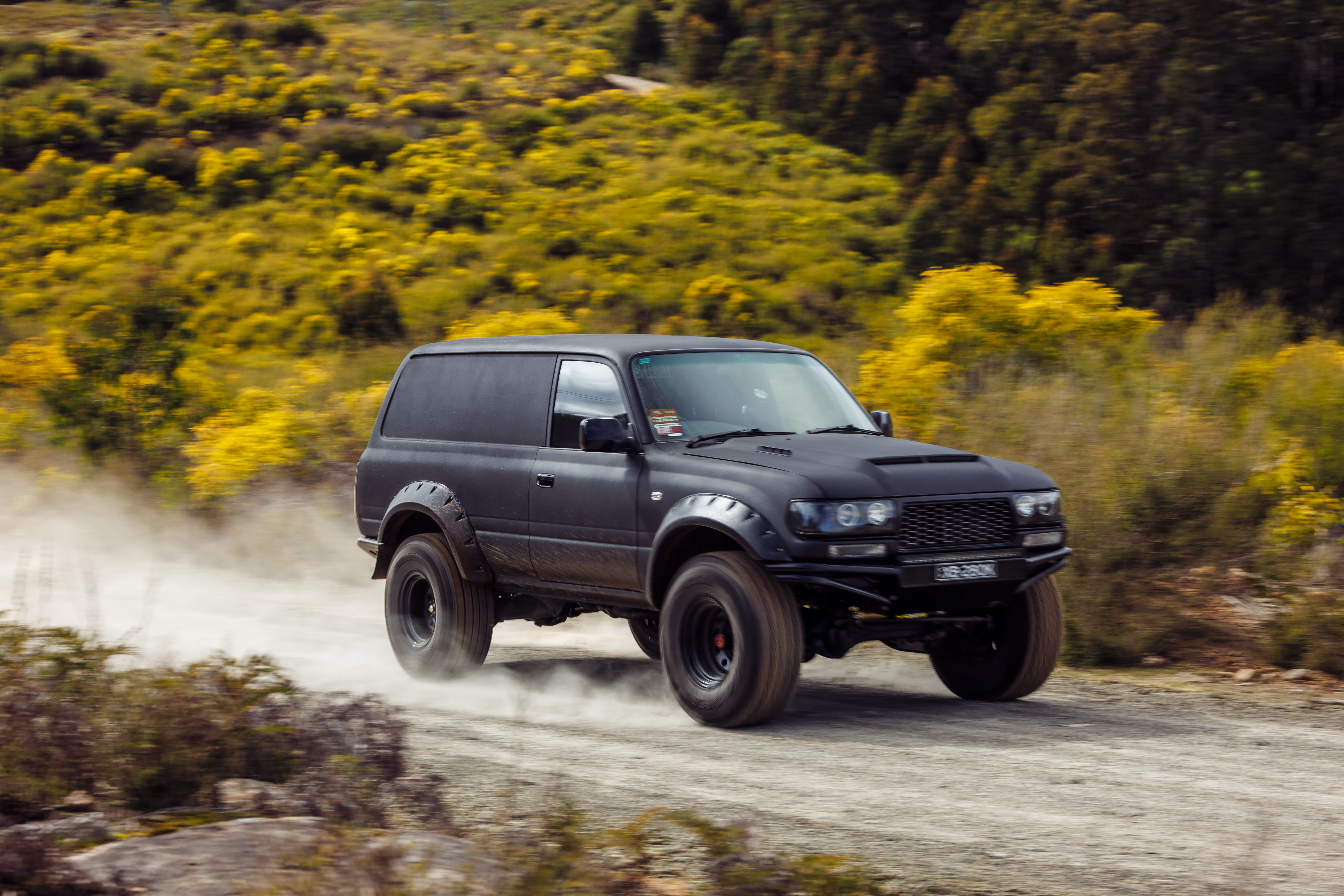
With the body work out of the way, the 80 was desperate for fresh paint, and Mark took the opportunity to apply a few coats of black Raptor Liner to the exterior. He also had a mate with CAD experience design a custom grille, and also fitted a Blits bonnet, a fully ADR-approved aftermarket bonnet that Mark says helps to improve airflow and cooling.
Inside the 80 Series, an internal four-point roll cage was fabricated and installed, and is used mainly as a place to mount a spare tyre as well as Mark’s high-lift jack. Seats were also upgraded to a set of FG Falcon items, bolted in place with a conversion kit from Huracan Fabrication, and they’re far more comfortable than the factory offerings. New seat belts were fitted at the same time, as well as a PVS steering wheel with full working audio controls and paddle shifting.
Mark also designed and built a custom centre console, which he had trimmed by Tony at Southland Trim, and the entire interior has been lined with Car Builders sound insulation and heat shielding to make the most of the Axis audio system complete with subwoofer. The 80 Series sounds good on the outside, so it may as well sound good on the inside too.
Touring mods
On the front of Frank, Mark and his mate Tore custom-built a steel-tube front bar which really suits the look of the vehicle. This was powder-coated instead of painted, and provides the perfect mounting platform for a Roadvision Stealth LED light bar which works well in conjunction with a set of upgraded projector-style headlights.
As this is Mark’s touring and cruising machine, he decided to upgrade the tyres to 35-inch Yokohama units, but stayed with an all-terrain pattern for the best of both worlds handling-wise. These are mounted to 16-inch Dynamic steel wheels, which are practical yet suit the blacked-out exterior to a tee.
Lockers rule off-road, and Mark is a smart dude, so while he had the diffs out to fit 4.1 ratio Terrain Tamer crown wheel and pinions, he had a rear Harrop ELocker installed at the same time. So far this is enough for his needs, and he has no plans to fit a front locker.
Special chromoly crush tubes were installed while the diffs were rebuilt, as were a set of heavy-duty billet floater axles from Road Runner Offroad to help add even more strength to the rear end – when you are turning 35s with a big V8, you need all the help you can get.
With thanks
While Mark was very hands on in the build of Frank The Tank, he says there is an army of people and companies that helped him throughout the build process, with special thanks going to:
- Anthony Hughes from Burson Auto Parts (plus the teams from Burson
- Edwardstown and Lonsdale)
- Sean Ryan from Automotive Content
- Melissa from Ryco Filters
- Ian from Bendix Brakes
- Leigh, Elliot and the team from Marks 4WD
- Ryan from Advance Headers
- Adrian and Brendan from Car Builders
- Tats from Yokohama Tyres
- Jamie from Raceworks
- Daniel and the team from Weldclass
- Sot from Speed Garage and MVE for the vehicle engineering
- Tore and the crew from Autostyle Warehouse
- Jason, Amanda, Perry and the team from Tuff Mounts
- Adam and Kevin from Pedders Suspension
- Simon from Tough Dog Suspension
- Chris from SA Installations
- Jamie from PVS Automotive
- Wendy from Blits Bonnets
- Mike from MV Automatics
- Brett and Damien from Graham West Dyno
- John and Milko from Davies Craig
- Craig from Mad Fab for the roll bar
- Darran from River Murray Auto Wreckers for sourcing such a great engine
- Oriental 4WD Wreckers for help with bits and pieces
- U-POL Australia – Raptor Liner suppliers
- Richard from Vehikool for helping set up the A/C system
- Cam from Solid Engineering
- Tony from Southland Trim
- Huracan Fab
- 3 Footed Monster mounts for capturing all build angles
Accessories list
- Marks 4WD Adaptors conversion kit
- Advance Headers exhaust system
- APM Radiators Adrad radiator
- Davies Craig thermo fans, transmission and power-steering coolers
- Dominator 2500rpm stall converter
- Bendix rotors and pads
- Pedders TrakRyder shocks and springs
- Pedders replacement steering box
- Tough Dog adjustable steering damper
- Blits bonnet
- Car Builders sound insulation
- Axis audio system
- Roadvision Stealth LED light bar
- 35-inch Yokohama tyres
- 16-inch Dynamic steel wheels
- Harrop ELocker
- Road Runner Offroad heavy-duty billet floater axles
Woolgoolga (or Woopi, to the locals) is quickly becoming a beachside boutique town, on the north coast of NSW.
The aborigines called it ‘Wei-gul-ga’ which came from a tree that bore berries and turned purple when ripe. Woopi is also known for its Sikh population, where they have made this town their home, built amazing temples and hold festivals each year; but it’s the hinterland located close to the coast that holds many interesting features.
Woopi was settled back in the 1870s and prior to that the Gumbaynggirr Aboriginal people had this place all to themselves, with excellent fishing, plenty of local animals to hunt, and cropping in the fertile soil.
By 1883, the early settlers saw the value of the timber in the hills and timber cutters soon moved in. Bush sawmills were established, and timber tramlines ran from the beach all the way into the hinterland to transport the heavy logs to waiting ships. With this, a huge (nearly 500m) jetty was built to accommodate the ships, to carry the timber away and to bring goods back to Woopi.
Originally, a shorter jetty was built by an early settler named William Pullen, but needing a longer one the government stepped in and extended it. Over the years, bashing from ships and storm damage soon made it unsafe. Sadly, in the 1960s the jetty was deemed dangerous and it was blown up and dismantled.
The infamous Buster (a local shipwreck icon) was moored here back in 1893 when a huge storm broke the ropes, and all 198 tonnes of Buster floated ashore where it now lays rotting away, only exposed at low tides after storms.
Timber and gold
In the bush, there are very few signs of any infrastructure the pioneers established; you might find the odd timber loading ramp and a 4WD track named after a bush hero, but nothing else.
The BAT (British Australian Timber Co) infrastructure has been pulled up, and rail lines and huge pulleys that ran cable to the hills from the harbour are now gone. The only significant piece of history left is a rail trolley with a log attached, hidden away behind the local art gallery.
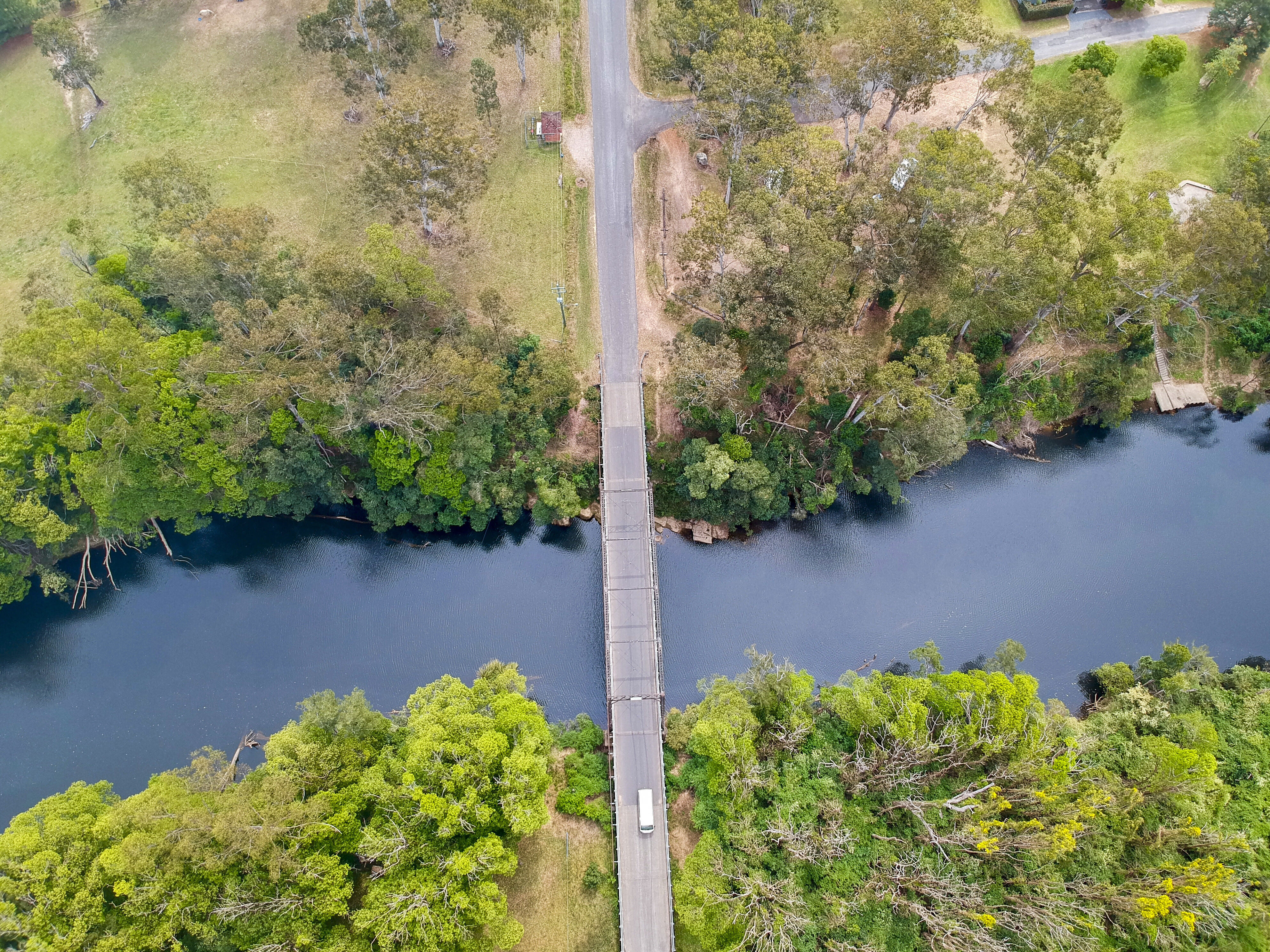
When the men logged the area, gold was also found in vast locations. One of the main mines was located right where the town pub (Seaview Tavern) is today; while up in the bush there are still shafts, drives and a section called Nuggety Gully where there was a small community.
Back in the 1940s there was a sugar mill around town, aeroplanes often landed and were tied up to the jetty, and the local community held horse races on the main beach. Bananas soon took over the landscape and at the turn of the century Sikhs were migrating to the town, where today Woolgoolga has the largest regional Sikh/Punjabi population in Australia.
Great Northern Mill
Where the bowling club now resides once stood the largest hardwood company outside of Sydney, owned by the Great Northern Mill. It was so large the company owned the tramlines that led into the forest. The first post office was built around 1892 inside a general store, but by 1898 a dedicated PO was built and was moved three times afterwards, finally finding a home where it is now in the original Woopi Plaza. Another building that has been lost is the Woolgoolga Theatre, which was built next door to the tavern up in River Street – sadly this building was never saved.
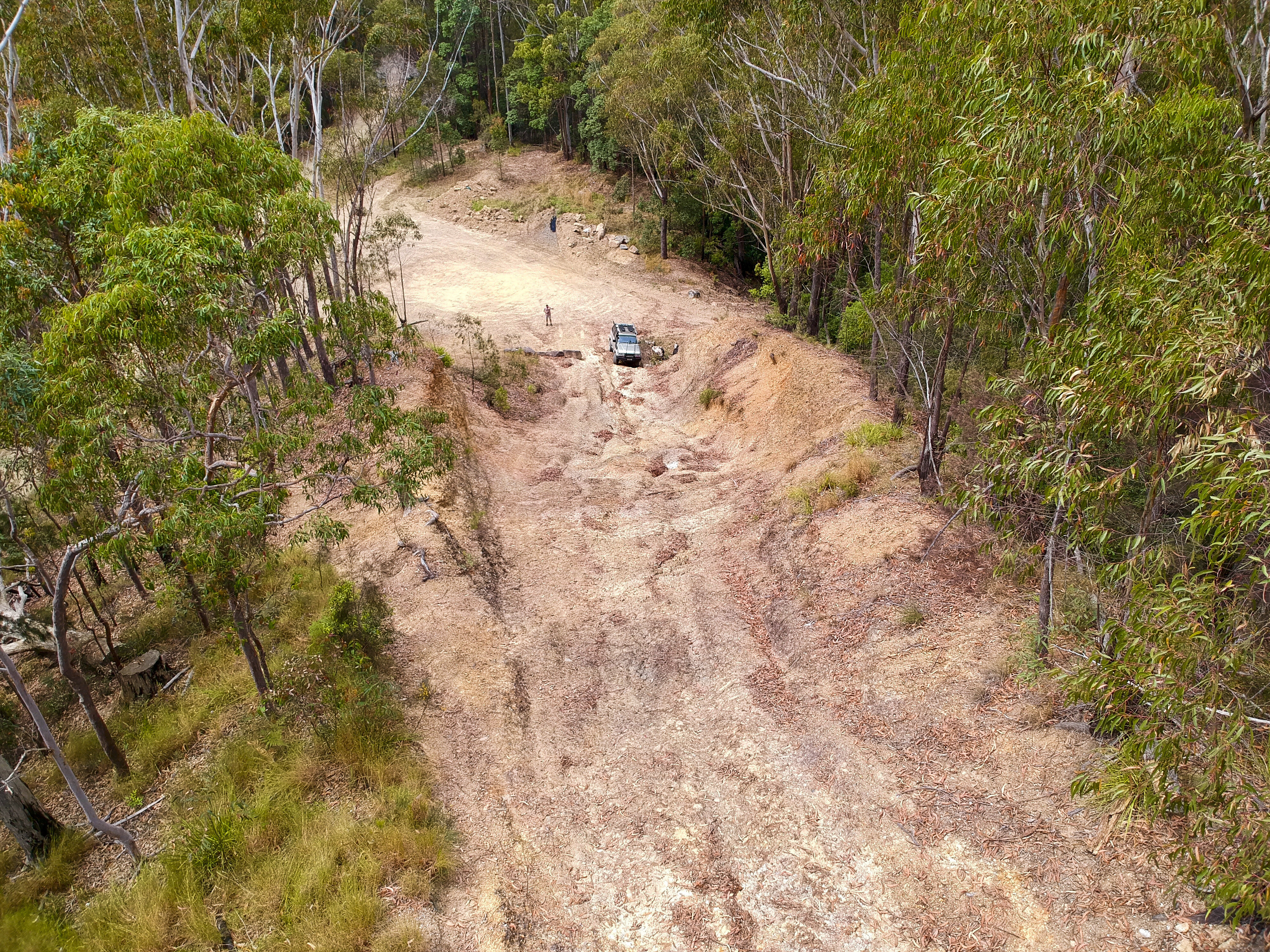
Today, Woolgoolga is known for its natural beauty, where there are plenty of 4WD trails leading to stunning views across the region and waterfalls that fall into beautiful rainforests. Woopi is also now known as a whale-watching capital due to how close the whales come to the headland. A small consolation for the area is a heritage walking trail around town that allows you to explore and discover a few of the iconic buildings downtown.
However, it’s the proximity of the mountains that also attracts hordes of people to the area, with mega amounts of off-road, motocross and walking trails scattered throughout the nearby forest. From Woolgoolga’s headland you can see just how close the Great Dividing Range comes down to the sea, and apparently it’s one of the closest on the whole east coast.
I have been exploring and driving the tracks here for nearly 30 years, and I might sound a bit biased but there’s nowhere else better to explore – it’s possible to head into the forest areas and not see another 4WDer or bike rider for days.
How close are the tracks?
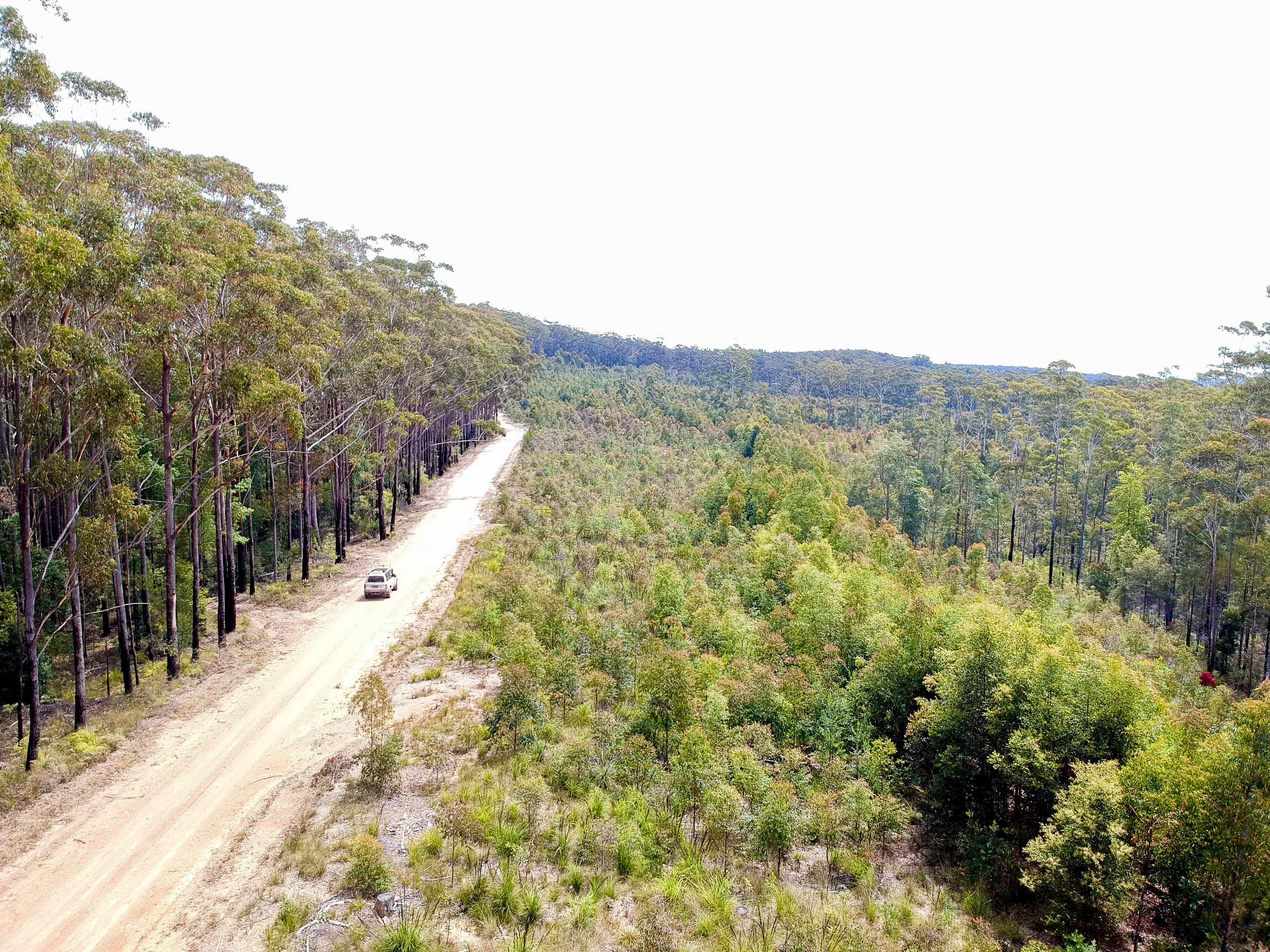
From Woolgoolga’s main street it’s an easy 5km drive west to the start of the maze of trails. The area is known for a mix of touring and challenging tracks because of the Great Divide, and the ridge-top views are to die for. You’ll often see the ocean on one side, and then just down the road along another spur the views to the west across farmlands are just as grand.
With the amount of solid tracks around the area there’s really no right or wrong way to head, but just remember if you head down some tracks it may lead to a funky hill climb out the other side. Weather plays a role in some of the tracks along the ridge lines, as severe rainstorms often gouge out ruts in the soft, slippery soil.
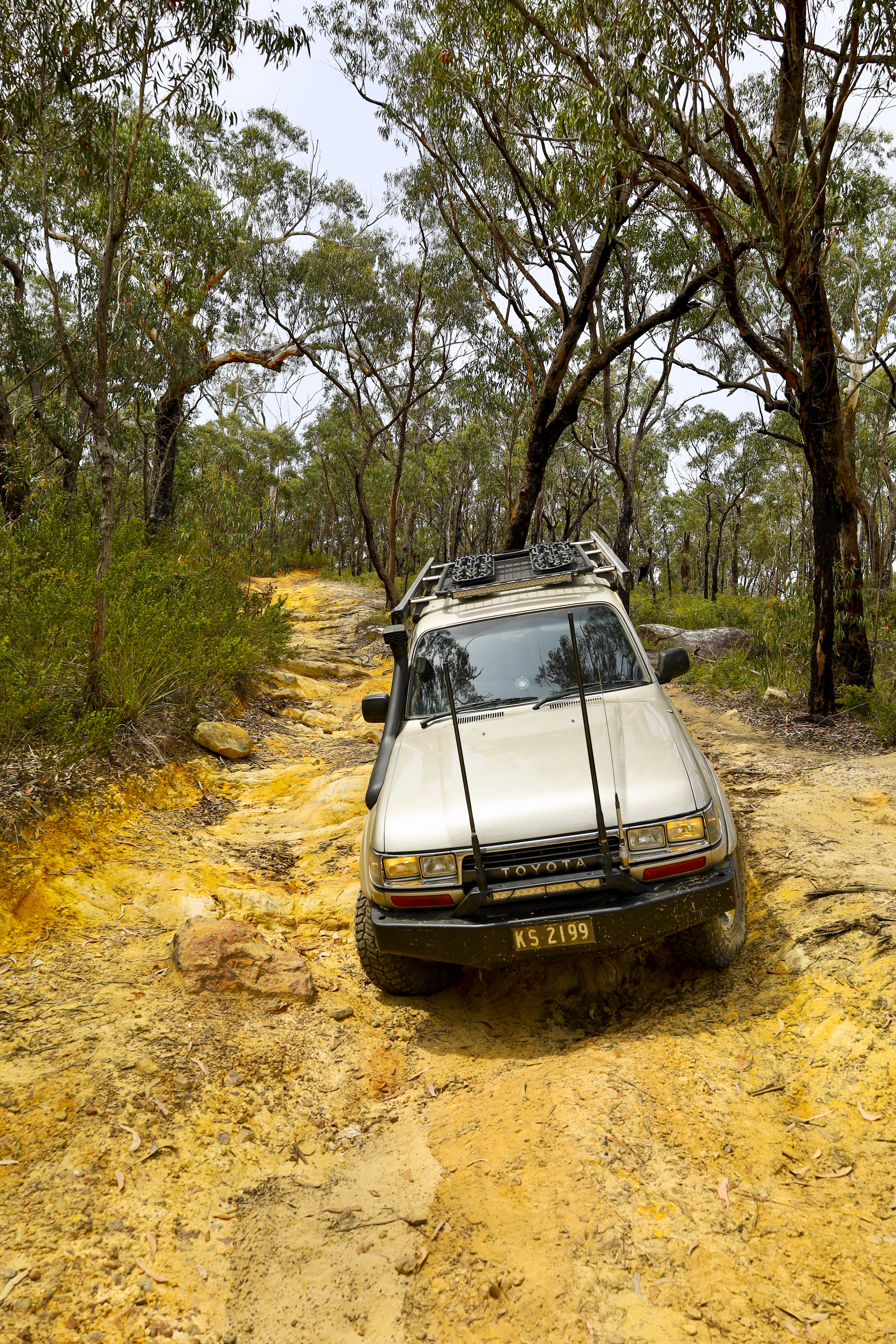
Several loop trails lead around different ridge-lines, down to waterfalls and along spur roads, eventually ending up in the next valley to the west at Glenreagh. The small country village has a bakery, a fuel and coffee shop, and a large dog outside The Golden Dog Hotel, iconic for its cold beverages and large feeds. It’s usually pretty packed on the weekends with locals, bike riders and 4WDers who head here for a feed then 4WD it back to the coast.
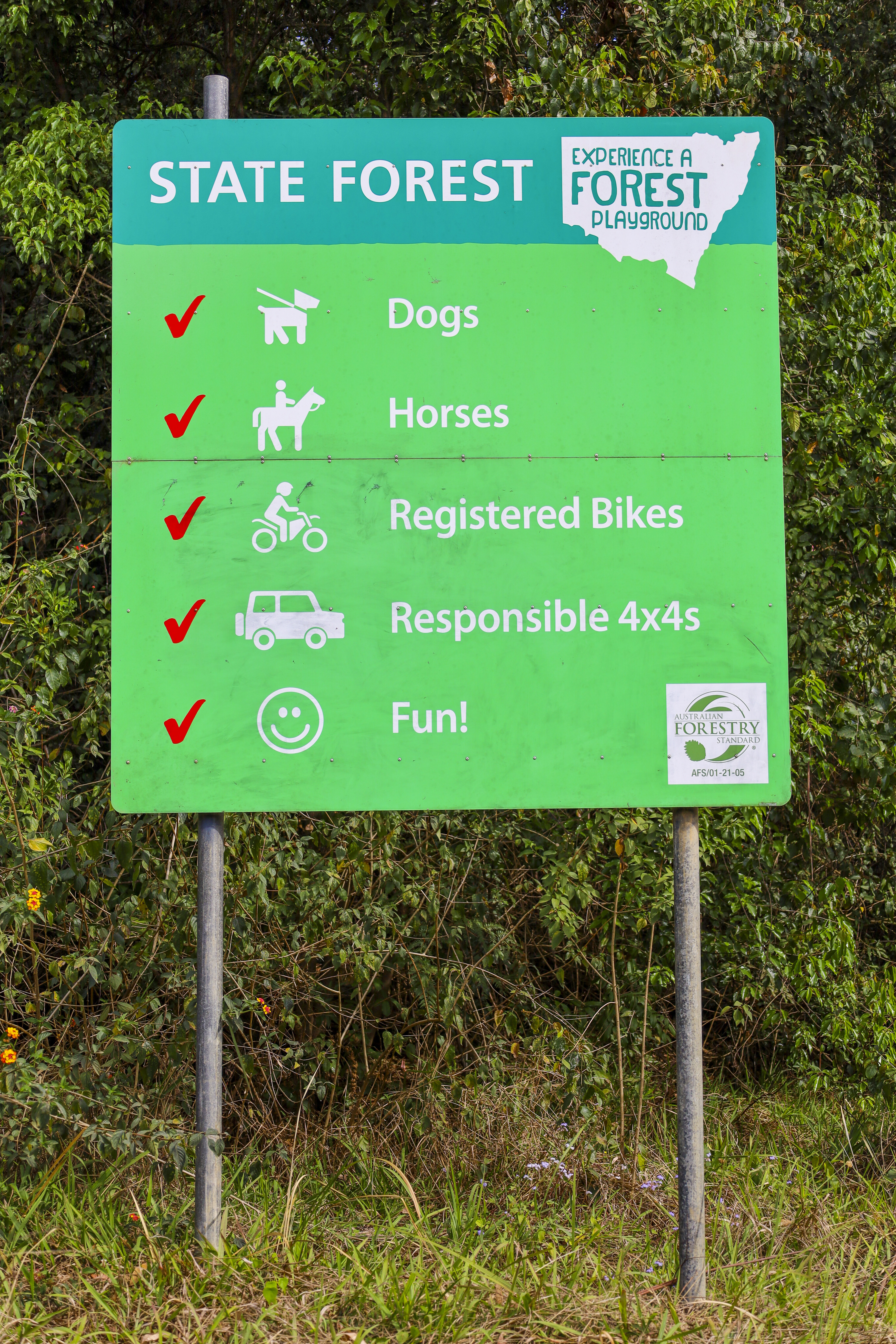
This region is known as the 4WD capital of NSW and there’s no shortage of challenging hardcore tracks. Names like The Steps, Jeep, Carnage, Cullens and the infamous Widow Maker will test both man and machine. Nearly all of the bush behind Woolgoolga is State Forest, so you can be rest assured there’ll be no locked-up areas; but active logging continues year round, so be wary of the warning signs and machinery. It’s definitely a bonus for 4WDers, as the machines clear overgrown tracks, fix rundown timber bridges and knock the lantana away from the tracks.
Camping options are top notch in the area, too. If you’re happy to free camp there are many areas to pitch a swag and wake up to beautiful sunrises, or hop across to the other side of the ridge and watch the sun go down. Along the coast there are hip caravan parks, a couple of great showgrounds in the area, and fancy resorts on the shoreline.
I can’t think of many other destinations where you can drop the other half off at the shops, kids at the beach and head bush with your mates so close to the coast, yet be back in time for dinner after knocking over some pretty cool tracks. My advice is to find some locals to guide you, use a good quality GPS that runs detailed 1:25 thou maps, and head into the local 4WD shop for more advice.
The Coffs Coast seems to have it all sorted.
Fast five
Where
Situated on New South Wales’ mid-north coast, Woolgoolga is some 25km north of Coffs Harbour. With two Pacific Ocean beaches, the picturesque town is popular with adventure seekers offering whale watching, surfing and fishing, as well as access to mountain bike and 4WD tracks.
Accommodation
As Woolgoolga is on the popular-with-tourists Banana Coast there is no shortage of caravan parks, hotels and resorts to base oneself. For those who like to free-camp, there are plenty of excellent spots in the adjacent forested ranges.
Glenreagh
Loop trails through the forests west of Woolgoolga eventually lead to the timber heritage town of Glenreagh in the Clarence Valley. Here you’ll find the popular Golden Dog Hotel offering great food, beer and accommodation. It gets busy here on weekends but is a top spot for lunch before off-roading it back to the coast.
Off-roading
Woolgoolga is regarded as the 4WD capital of NSW, (the author might be a bit biased in this-Ed) as almost all of the bush behind Woolgoolga is State Forest where there are no locked-up areas and a maze of tracks to tackle. Try out your off-roading abilities and your machine’s capability on tracks such as The Steps, Jeep, Carnage, Cullens and the infamous Widow Maker. Plus there are great views of the coast and farmlands to the west.
The Golden Dog
Out the front of the Golden Dog Hotel is a 4m tall 6m long Golden Dog statue. The story goes that the Golden Dog was a gold nugget found by a prospector back in the day and, as you may have guessed, it was in the shape of a dog.