

Looking for something a little smaller? Check out our Medium SUV and Small SUV lists to see what’s coming for those segments in 2024.
When it comes to off-road utes, the Isuzu D-Max is a quiet achiever.
It doesn’t have the boat-ramp-champ cred of a HiLux or Ranger, and it’s not as budget-focused as a Triton, but it’s one of those 4X4s that gets the job done with little in the way of fuss or fanfare. And when you add a few improvements in a couple of key areas the D-Max transforms into an absolute weapon.
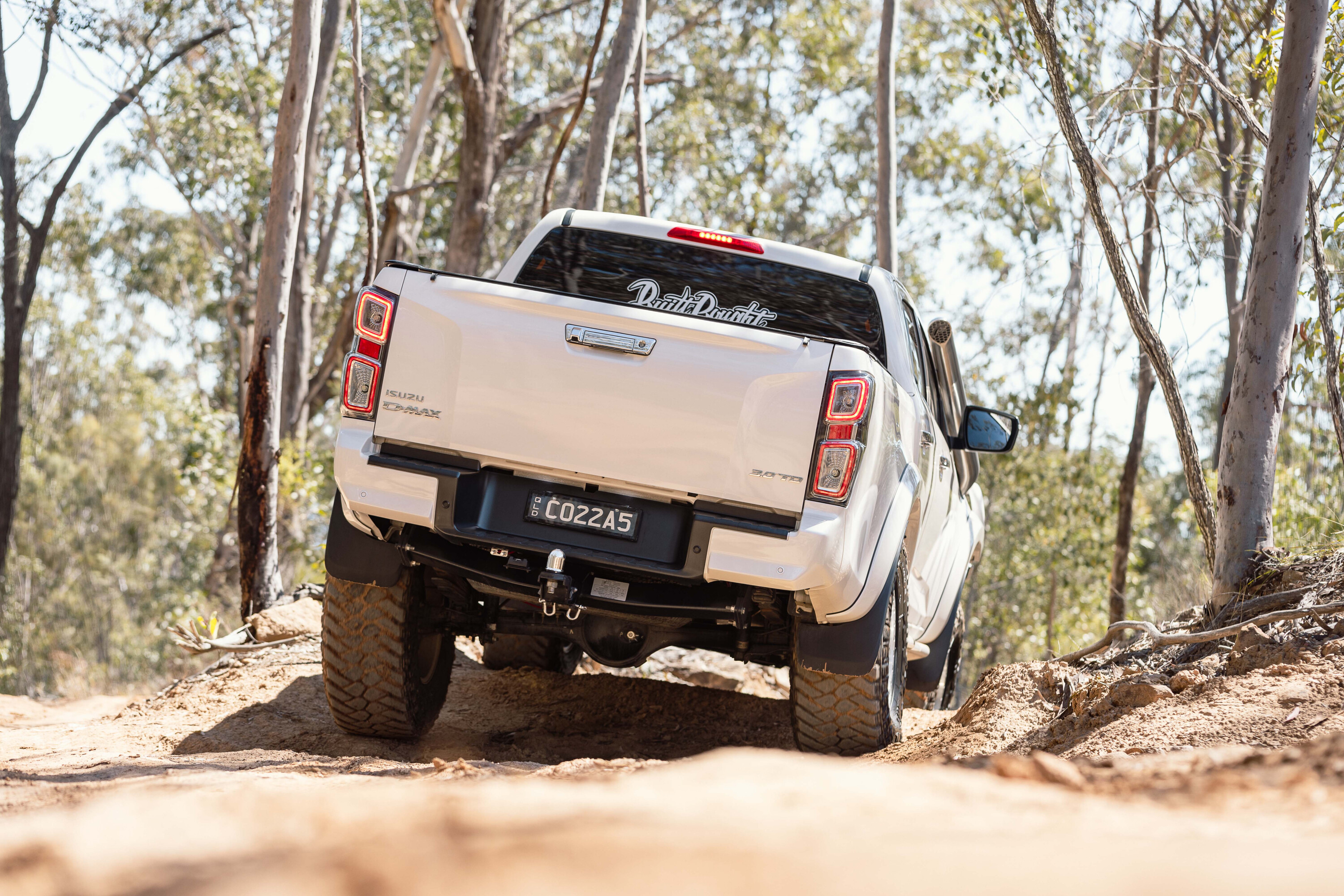
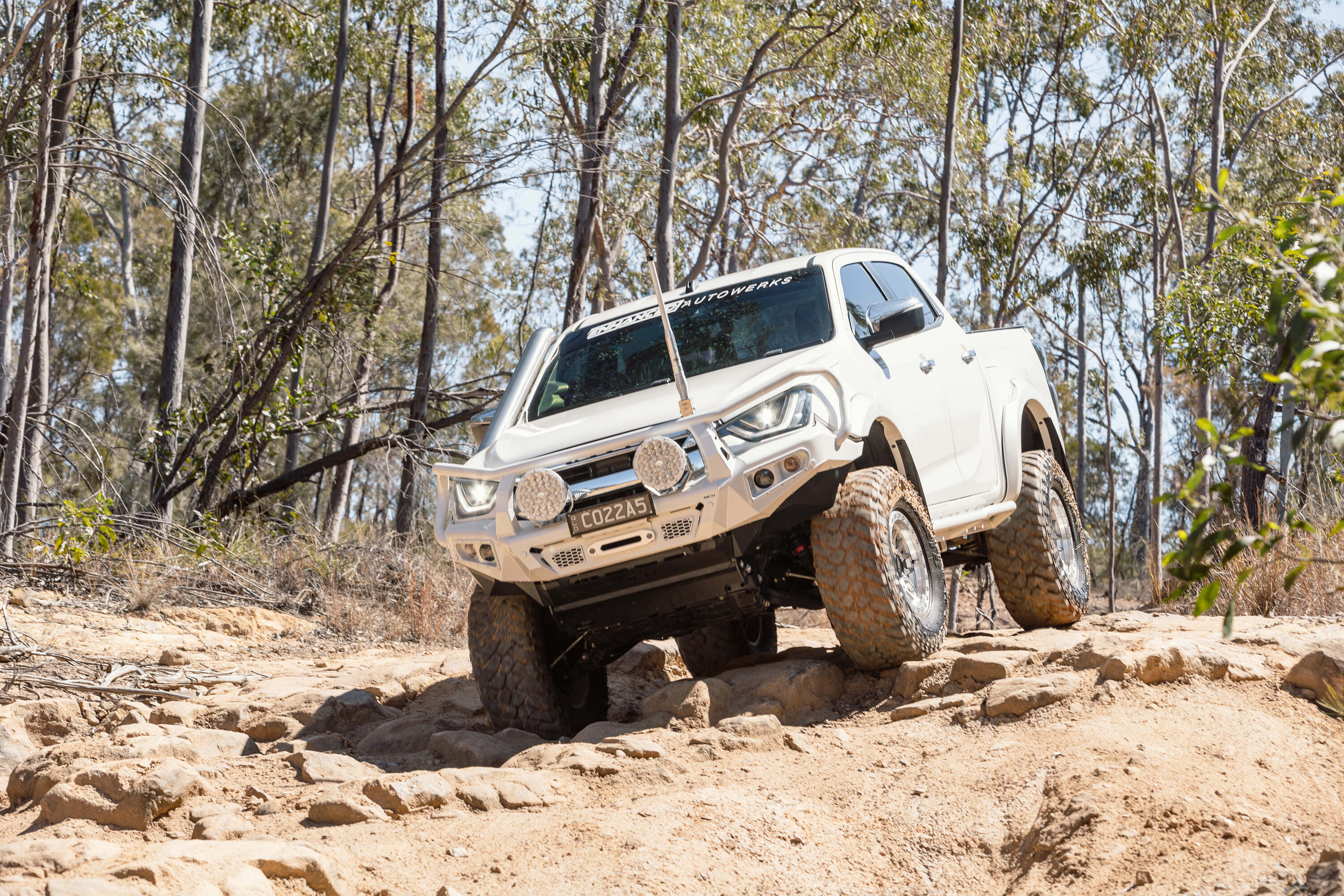
Just ask Cory Hoffman, the owner of this pearl-white stunner. He was getting around in an RG Colorado for a few years and liked its Isuzu 4J engine’s power delivery and fuel economy, so when it came time to update his ute, the D-Max was the logical choice.
1
“The interior, with its heated leather seats, fancy dash and large infotainment unit felt a lot more luxurious than the competition, and the 4JJ3 engine felt so much nicer to drive,” Cory tells us.
“Plus, the whole Isuzu reputation for reliability thing, as well as the functionality, driveability and value for money, all made me feel secure in my purchase.”
So, what did Cory do when he was handed the keys to a brand spanking, 0km, zero-modifications Isuzu? The same as anyone with a penchant for ultra-tidy rigs – he got to work turning it into one of the cleanest, most functional and most capable D-Maxs in the country.
3
Making the Ifs work
It’s no secret that lifting independent suspension is an exercise in compromise, and Cory knew he’d have his work cut out for him if he wanted to get some serious air under the Isuzu’s sills.
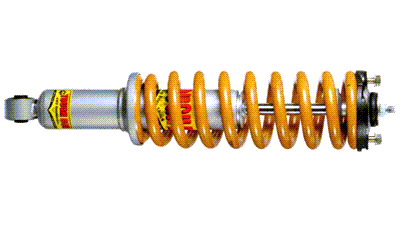
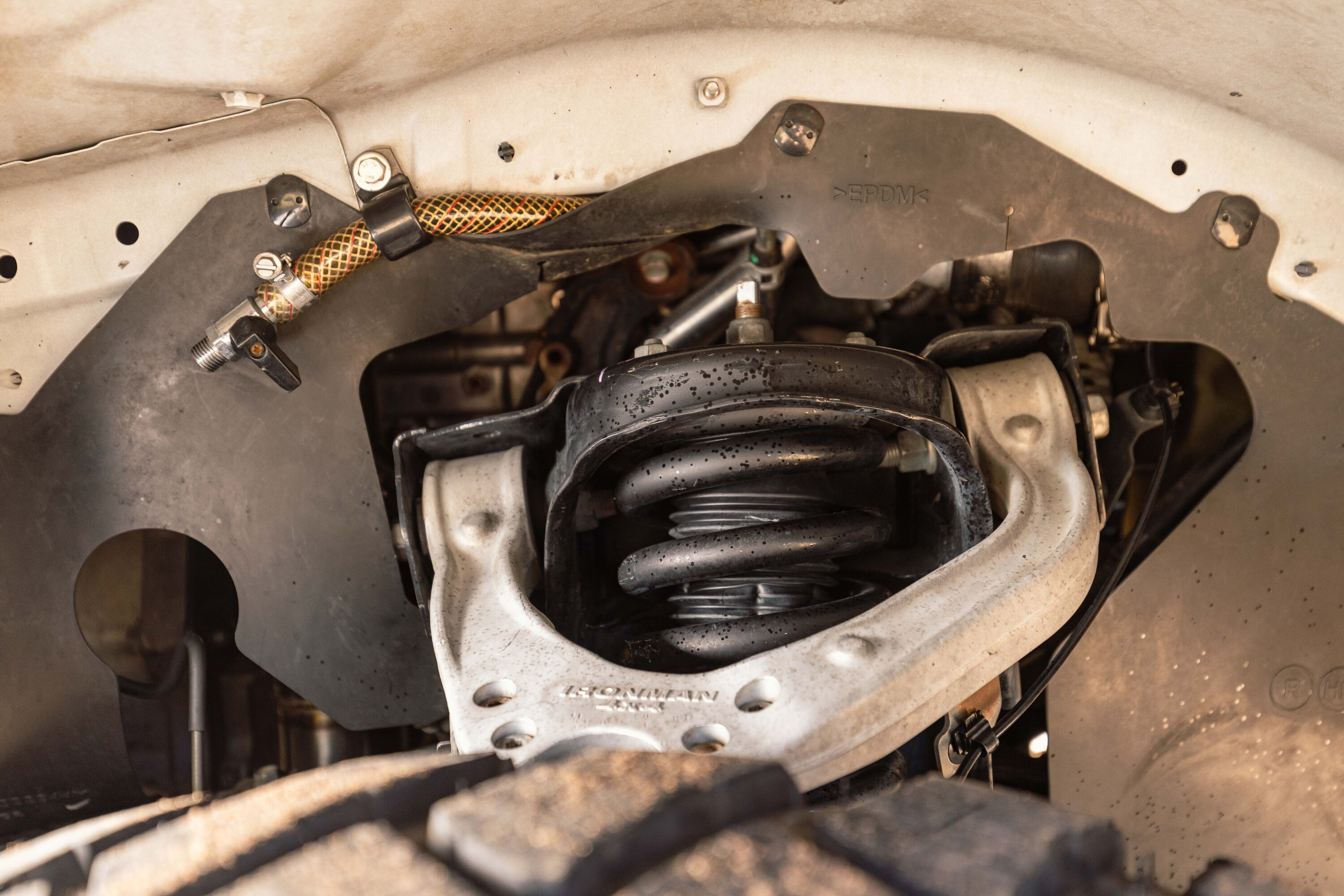
A 25mm body lift was installed by Munji 4X4 Accessories and a set of 100mm taller adjustable coilovers were bolted in courtesy of Performance Suspension Racing (PSR).
Of course, anyone who’s done this before knows you can’t just jack IFS up and expect it to work, but this wasn’t Cory’s first time on a bucking bull, and he was only just getting started. A PSR diff drop was also fitted to keep the half shaft angles within specs, and a set of Ironman 4X4 upper control arms and Roadsafe ball joints were slid into place to appease the bumpsteer gods.
1
Even after making all the right moves, Cory still ran into dramas with the inner CV boots, which needed to be swapped out for custom high-clearance units.
Then he ran (not literally, thankfully) into issues with the increased angles on the lower control arms. The wheel alignment tabs kept getting knocked out of place when off-road. Munji 4X4 came to the rescue once again with some bolt-in strengthening plates and the front suspension has been handling everything like a champ ever since.
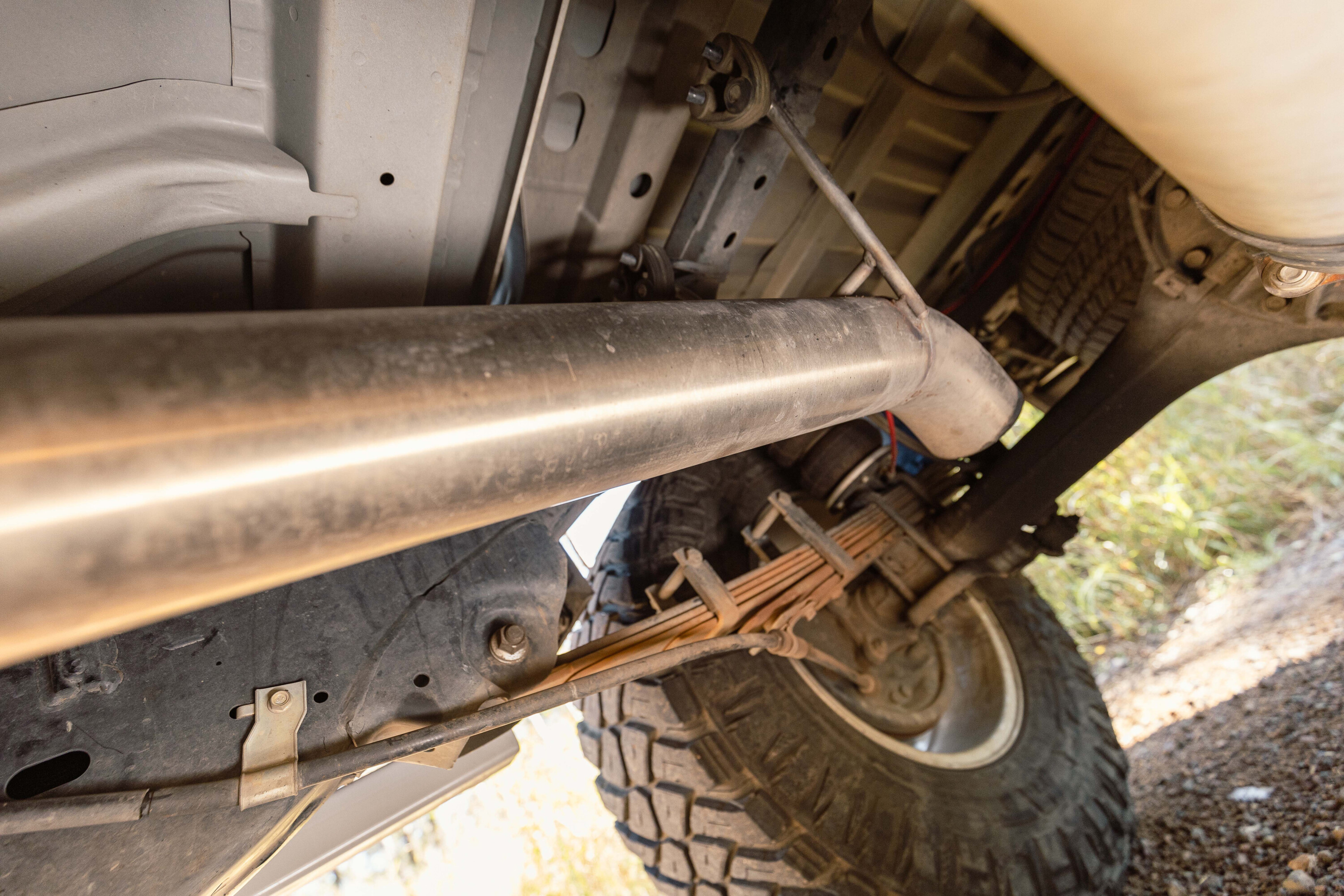
Down the back, the stock leaf springs were binned in favour of a set of EFS 150kg constant-rated spring packs, which were slotted in place over the top of the diff housing.
1
A set of greasable shackles keep the whole show moving smoothly and some Boss airbags make sure the spring rate can be tuned to suit whatever load Cory is hauling.
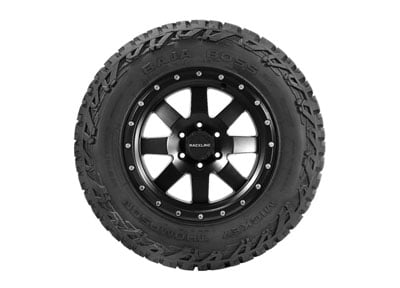
The upshot of all this suspension work? With some slight trimming of the body mounts, Cory was able to fit a schmick set of 17×9 All Terrain Industries beadlocked alloys that are wrapped with Maxxis’ finest RZR MT rubber, measuring in at an impressive 315/70R17 – or just under 35-inches for those who can remember when a six-pack cost two bob.
Also, by the time you read this, don’t be too surprised if Cory has already completed the coil-conversion he’s got planned. The bloke doesn’t like to muck around.
1
More mods
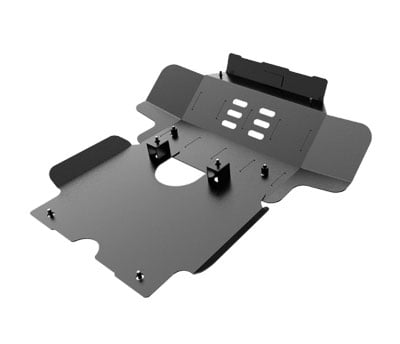
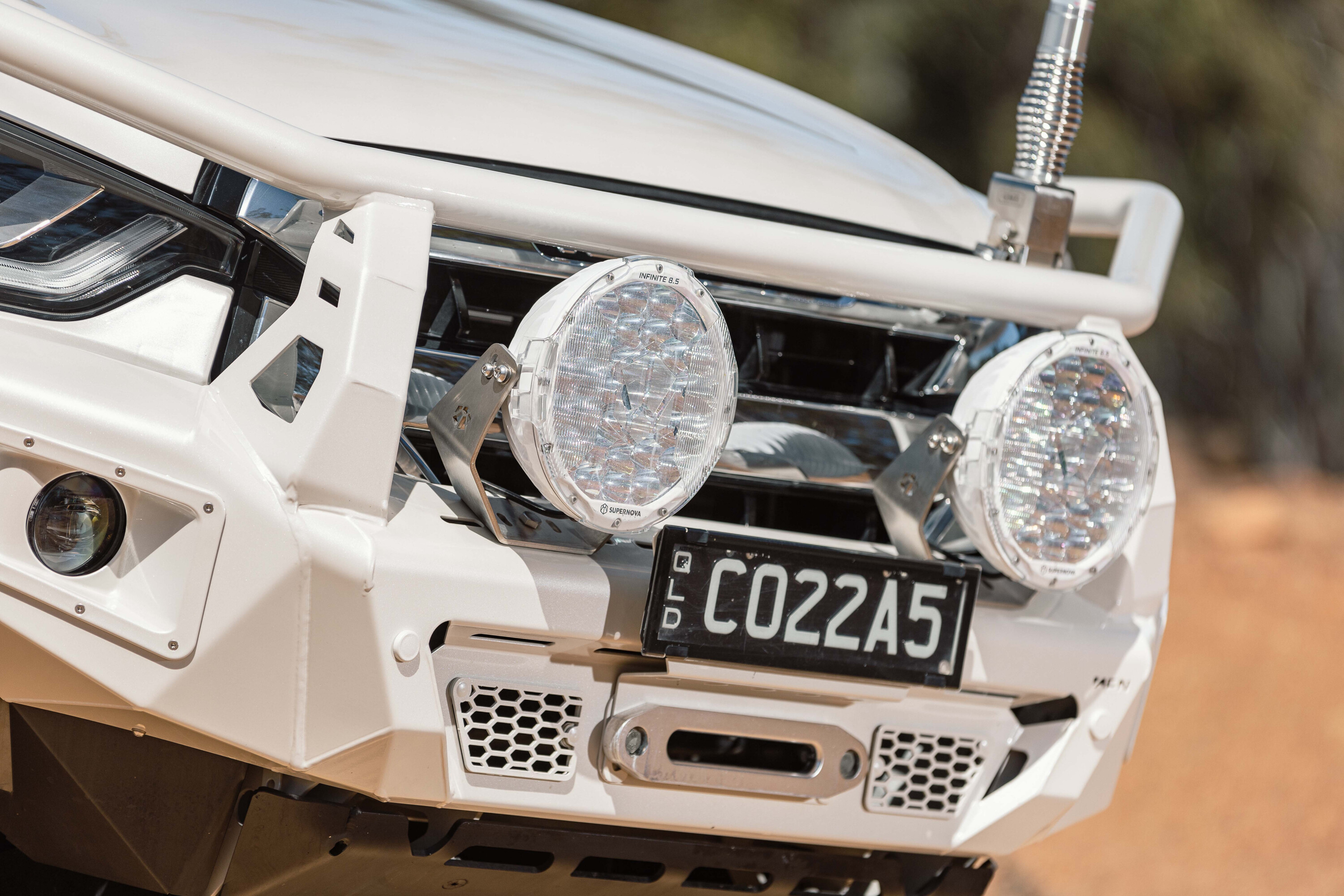
The fiddling didn’t stop at the suspension. Cory has also fitted a slew of custom colour-coded AFN bar work to his D-Max, with the triple-hoop bar backed up by an AFN bashplate.
Supernova Infinite 8.5-inch Polar spotties share real estate on the front bar with a GME UHF antenna, while the 4-inch low-cut Fabwitz Industries snorkel maintains its chunky diameter all the way to the airbox, and nicely breaks up the blinding whiteness.
Six Supernova underbody RGB pod lights provide rock illumination on night runs and are protected by the custom colour-coded sliders built by Doyle’s Offroad Customs, which are kicked up and have had a top plate welded on for extra practicality and style points.
1
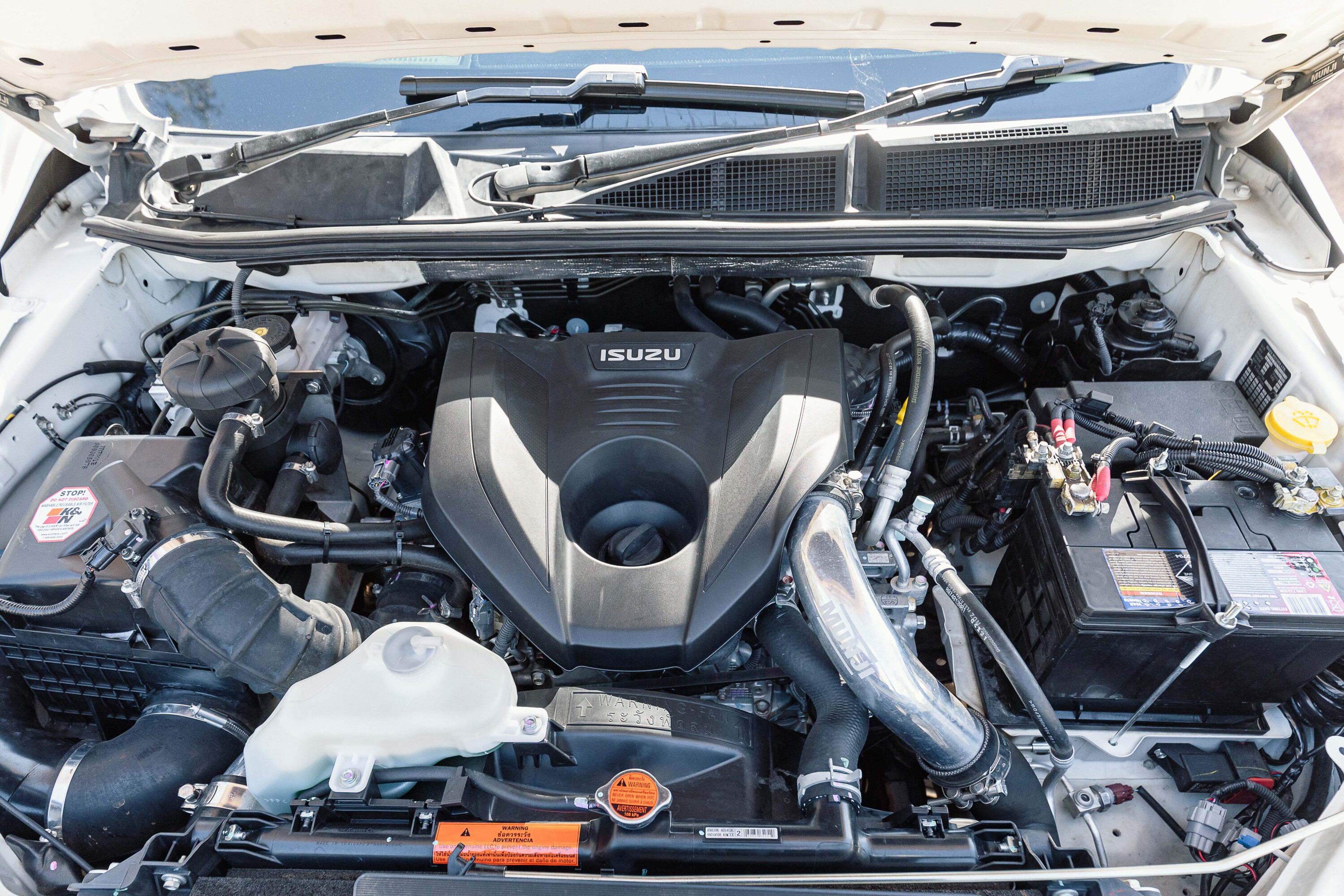
Given the vehicle is still under warranty, the engine mods have been kept to a minimum (the 4Js are pretty good from stock anyway) but Cory did add a 3.5-inch stainless exhaust that dumps at the diff thanks to Kuluin Mufflers.
Munji 4X4 intercooler pipes keep the stock rubber hoses from going pop during high boost situations, while the same company also provided the nifty MAP sensor adapter that allows for easy drill-free boost gauge fitment.
A ProVent catch can keeps the intake manifold clear of oily residue and a pair of bonnet struts protects the back of your melon from whacks when checking the air filter after a dusty day out on the tracks.
1
Inside job
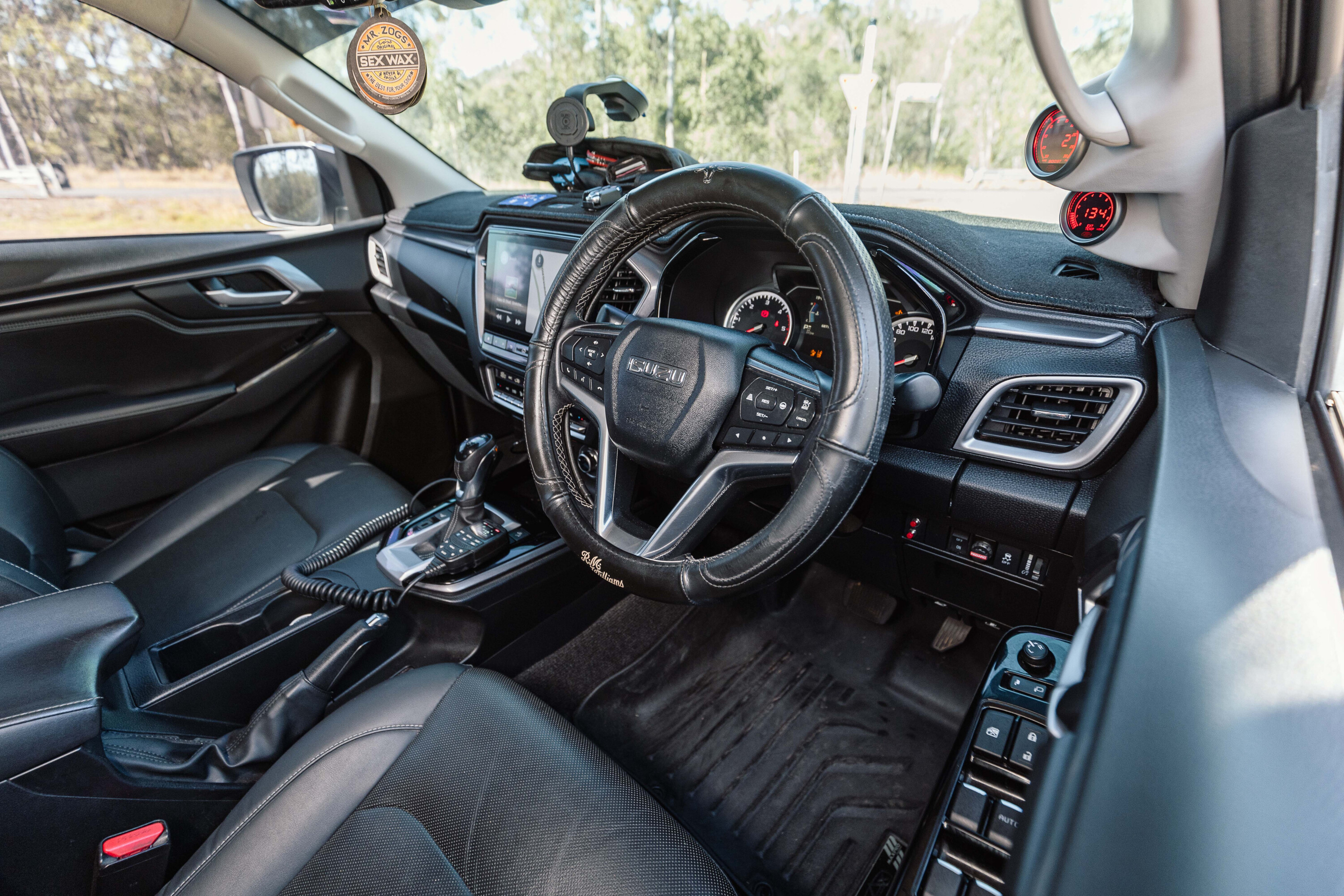
Given Cory’s D-Max is an LS-U variant, the standard interior is already a pretty nice place in which to spend a couple thousand outback kilometres.
The seats are heated leather buckets, the infotainment unit has been equipped with Hema mapping and Cory has even added a bunch of Roadkill soundproofing to keep the noise from the muddies to a minimum.
The SAAS gauges are mounted into an A-pillar pod and the UHF handpiece is situated within easy reach for convoy communications.
1
A Redarc Tow-Pro unit has also been installed for keeping the trailer in line under braking, and Alpine provided the speaker upgrades and kicker sub to keep the doof bumping on longer drives.
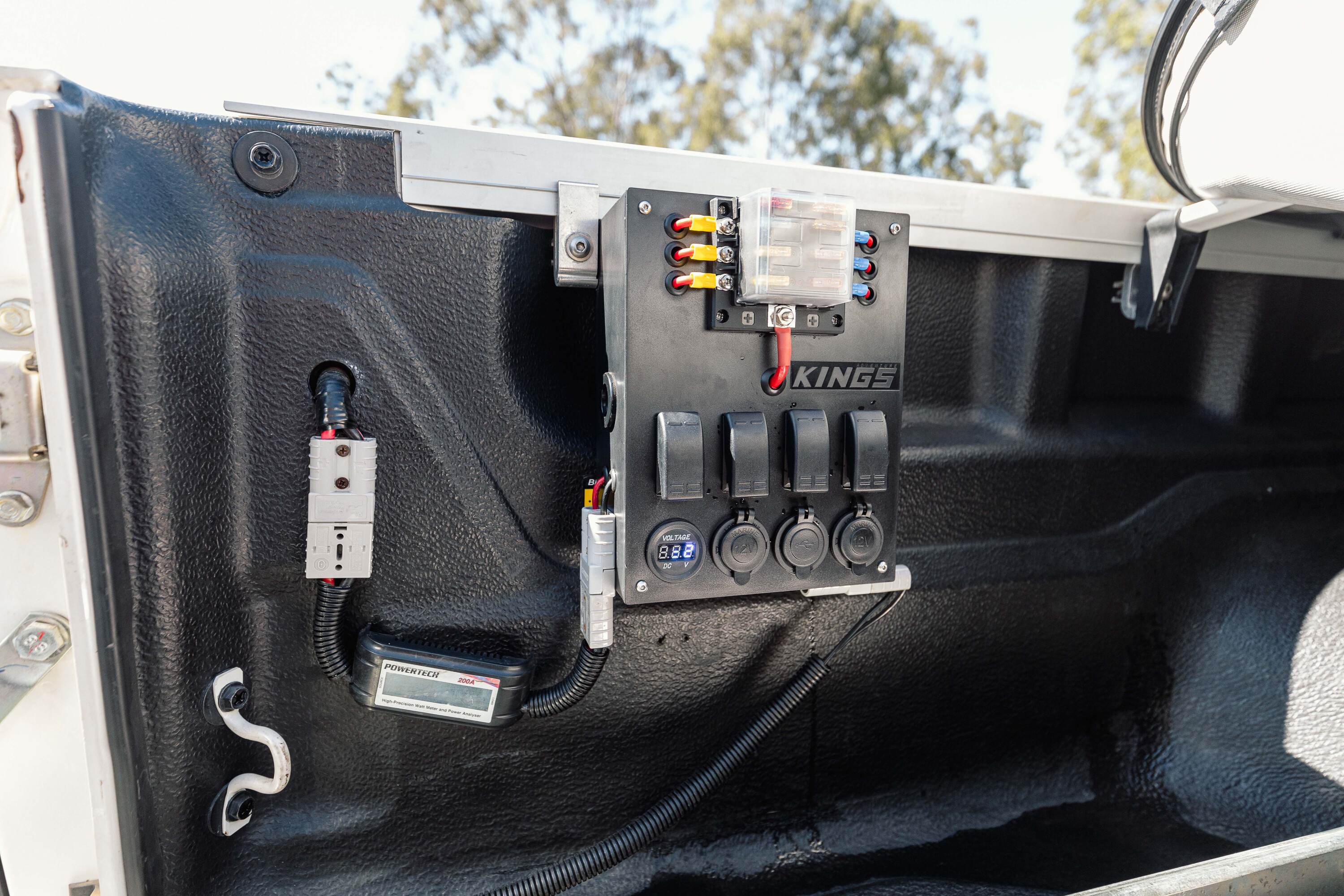
The otherwise wasted space behind the rear seat has been ingeniously filled with 110Ah of Baintech slimline lithium goodness, with a built in DC-DC 30A charger – more than enough to run the fridge and lights for a day or three.
Cory also wired in an anytime diff-lock override from Titan Offroad, which allows him to lock up the rear differential whether in 2WD, high or low range, unlike the factory option of only being able to lock her up in low.
MORE
Everything Isuzu Ute
Many 4WD owners invest significant money into their 4x4s, so it makes perfect sense to fit the highest quality suspension components when upgrading or enhancing the off-road capabilities of these vehicles.
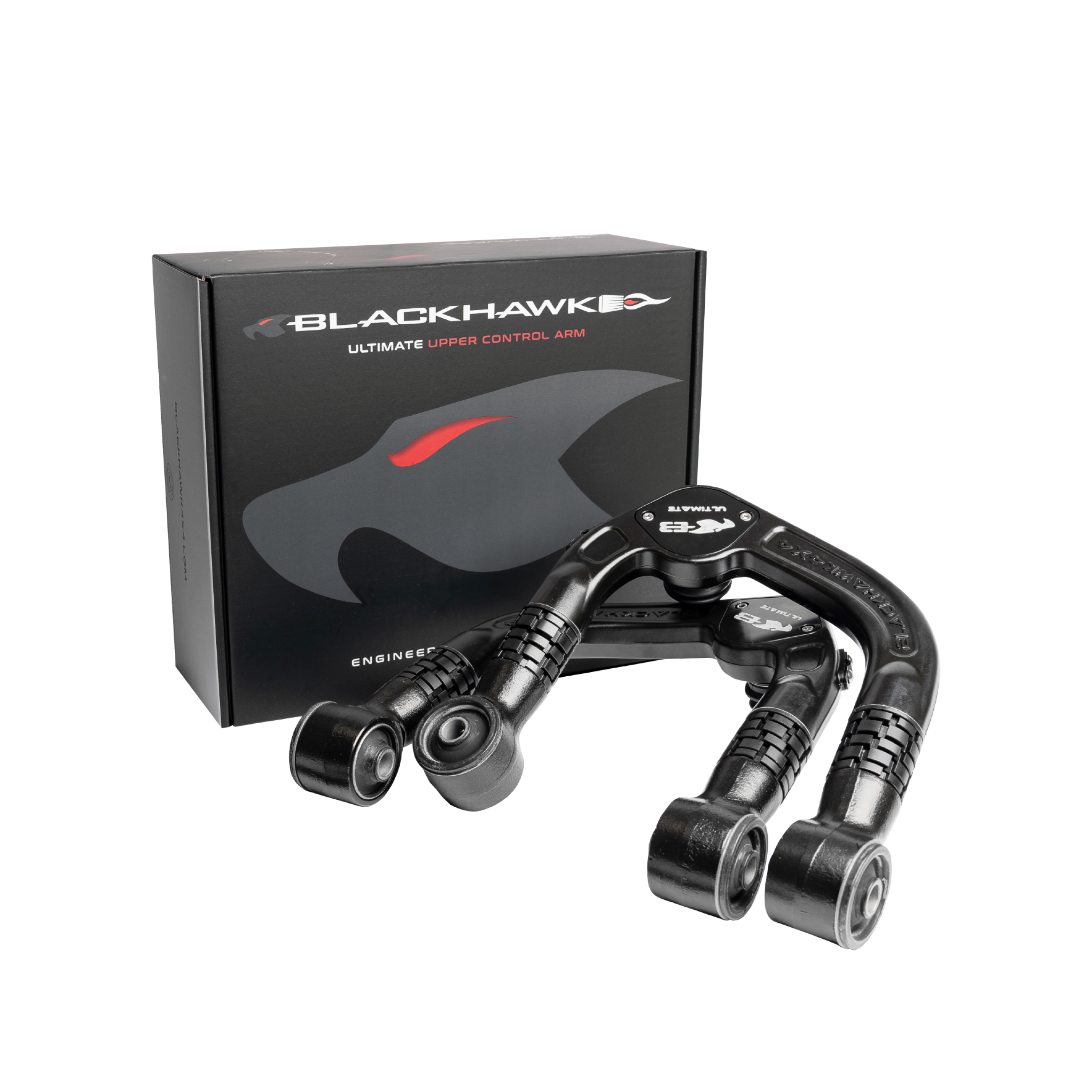
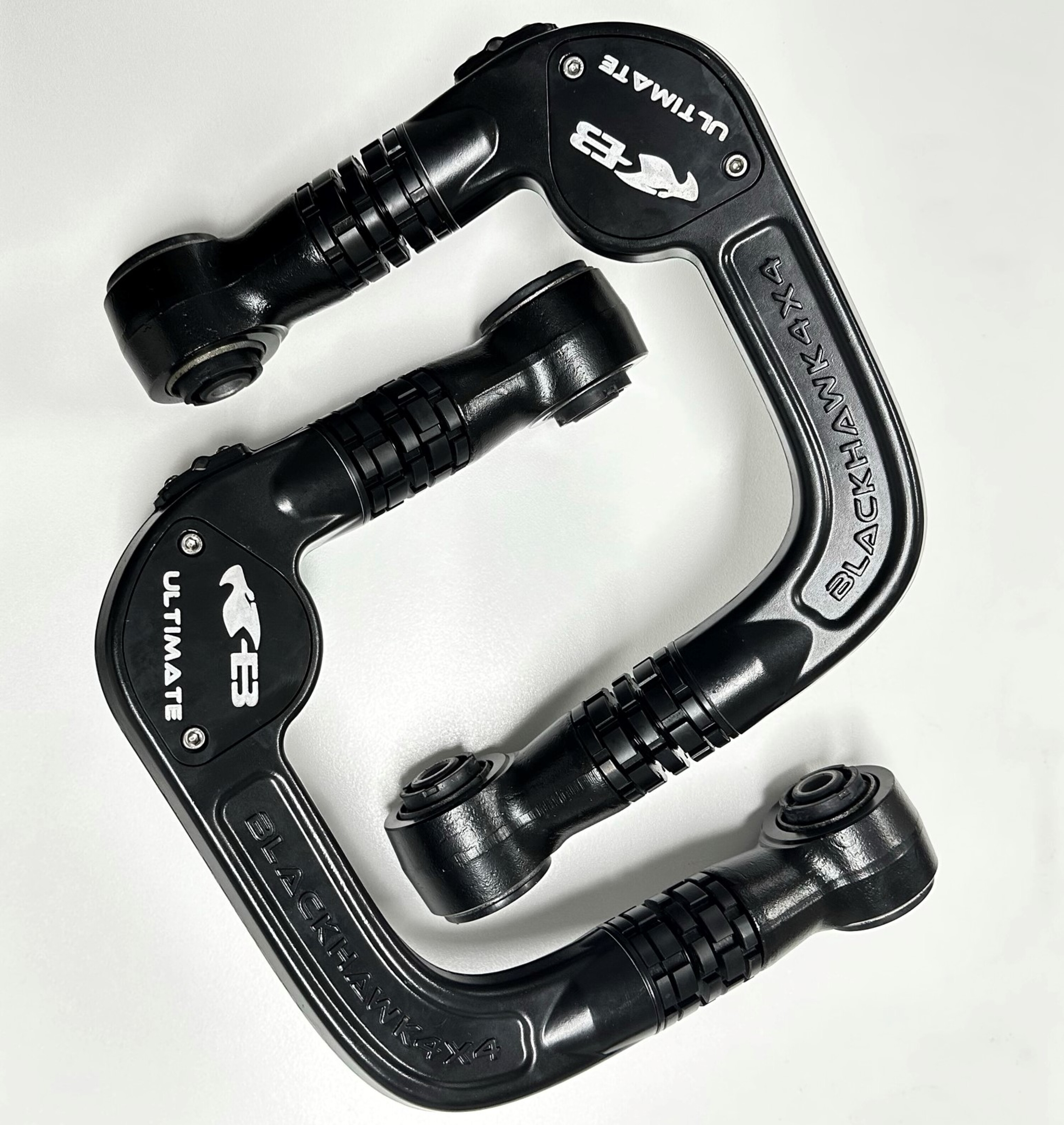
Increasing 4×4 vehicle height has the direct effect of altering the vehicle’s wheel alignment. This in turn leads to premature tyre wear along with less responsive vehicle handling. Blackhawk 4×4 has come to the rescue with its Ultimate Adjustable Upper Control Arms, which have been designed to provide a variety of wheel alignment options that were previously unavailable with this level of finesse in 4×4 vehicle-specific suspension components.
1
This new range of on-vehicle adjustable upper control arms allows easy adjustment, thereby alleviating handling issues by returning the suspension geometry and alignment back to factory specification or better. This also complements the travel available from many aftermarket suspension upgrades.
Troy Schipper, Research and Development Manager at Blackhawk 4×4, describes the control arms as a game-changer in the automotive industry.
“These arms embody excellence in engineering, providing unparalleled control, durability and performance. I couldn’t be more thrilled to introduce the Blackhawk Ultimate Control Arms to the world.
1
“Our team has poured countless hours of dedication and expertise into crafting this remarkable product, and we are genuinely excited to share it with automotive enthusiasts everywhere. These control arms represent a leap forward in performance and innovation, and we can’t wait to see how they elevate the driving experience for our customers.”
The Ultimate Adjustable Upper Control Arms include the practical features found in 4WD competition vehicles, refined to best suit harsh Australian off-road conditions. These suspension components also provide the durability and driveability to be expected from a premium quality manufactured product that meets and exceeds Original Equipment specifications.
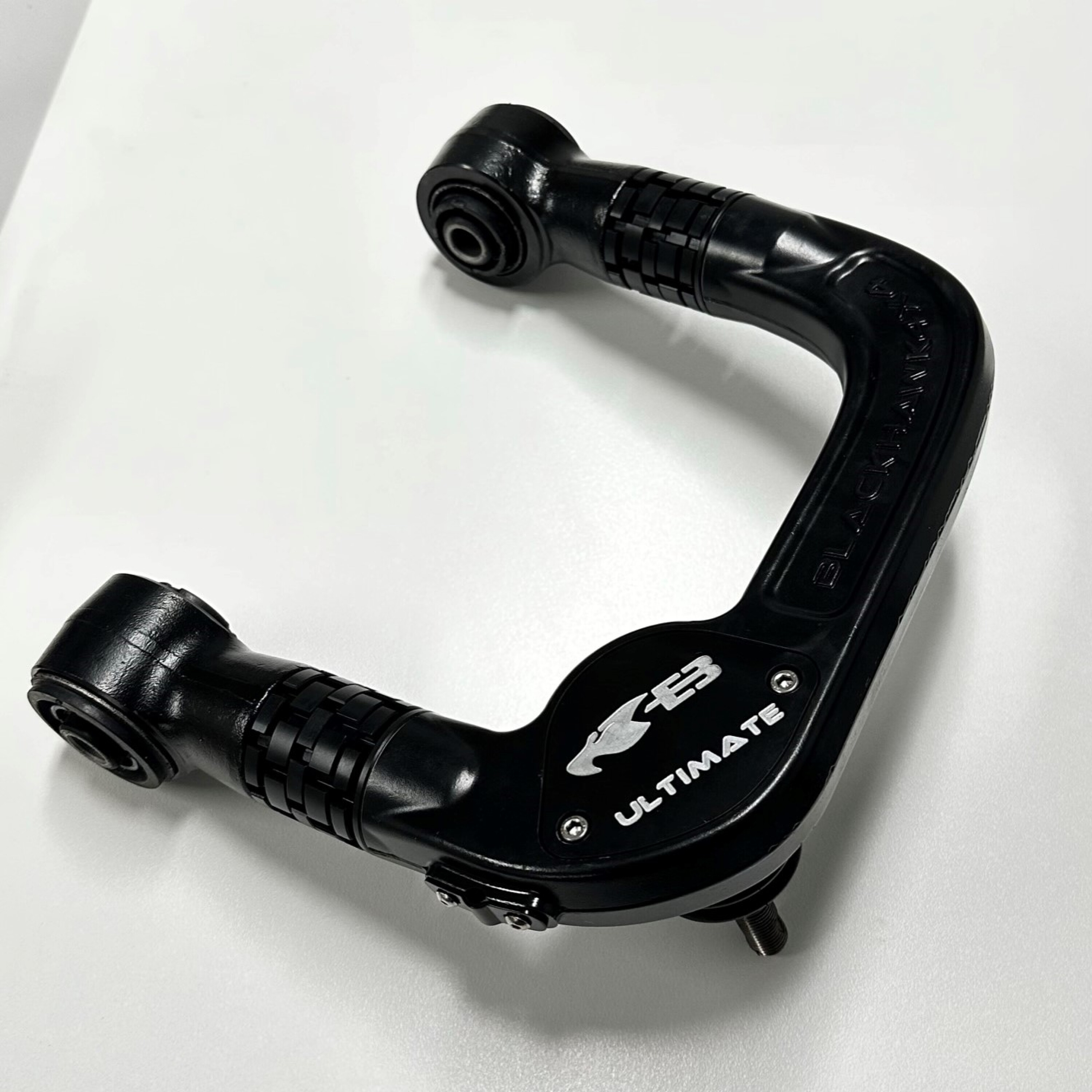
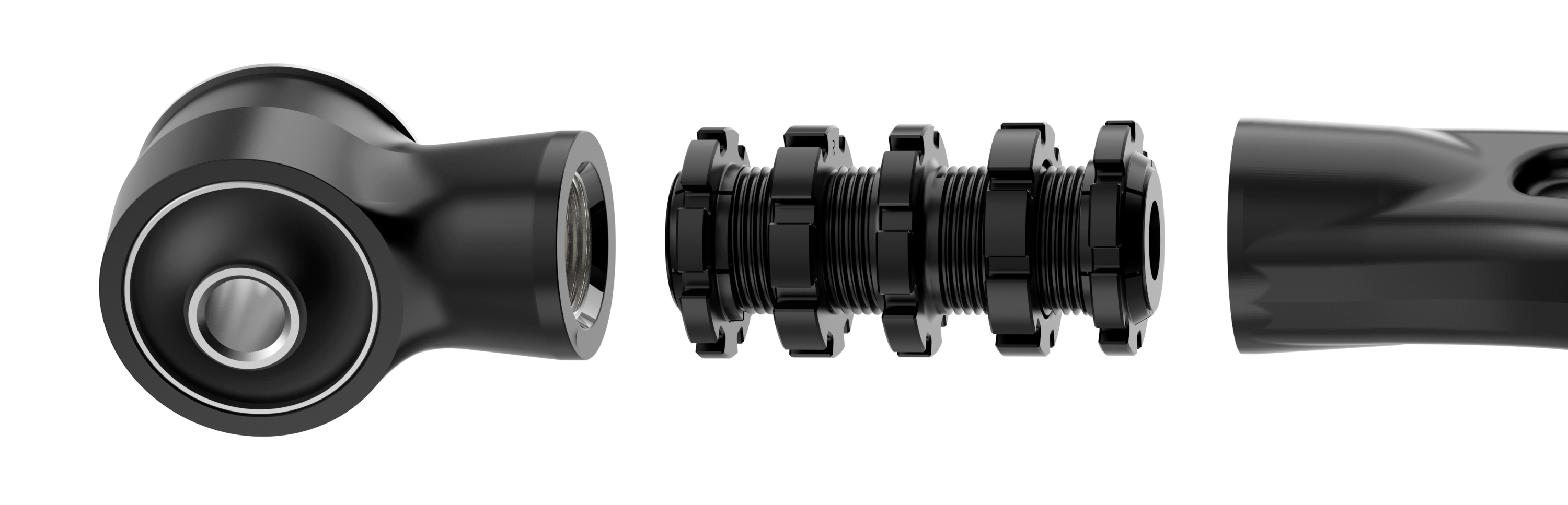
Offering unrivalled innovation, each Blackhawk 4×4 Ultimate Adjustable Upper Control Arm includes a proprietary ball joint that provides a high degree of articulation, enabling more suspension travel. The unique design enables users to disassemble, service or rebuild the ball joint at any time using basic hand tools.
1
The innovative design of the control arms includes a patented on-vehicle adjustment capability with a built-in caster increase of one degree. This allows for precise camber and caster corrections for wheel alignments and positioning.
Each control arm features a forged aluminium 6082 mainframe that delivers superior lightweight strength that exceeds OEM specifications. They also feature maintenance-free high-quality rubber inner bushings and are finished with durable coatings that have been designed to withstand the harshest driving conditions. The threaded adjustment mechanism is nitride-hardened, ensuring longer thread life and superior corrosion control.
Importantly, all control arms are NCOP/ADR-compilable for street legal use when fitted by an accredited installer with engineer sign-off/certification. This offers customers total confidence in fitment and long-term use.
1
Providing customers with peace of mind is important when selecting upgraded 4×4 suspension components, and the range is subjected to rigorous product testing to ensure that this is the case. This includes Independent Finite Element Analysis (FEA) of UCA to NCOP VSB14.
Physical tests of the adjustment mechanism have also been carried out to simulate fatigue, overturn and skid loading to validate its FEA Engineering endorsement. The suspension components have also undergone physical torsion testing, along with a stringent ongoing local quality assurance program, and are backed by a comprehensive warranty for additional peace of mind.
Priced at RRP $1399, various applications are now available for the current Toyota HiLux, 200 Series LandCruiser, Prado 120/150/FJ Cruiser and the Nissan NP300/D40/D23 Navara. More applications are to be added during 2024.
Seven seats or less, these are the large SUVs coming to Australia in 2024 and 2025. Which will be the most compelling for Aussie car buyers? Read on…
JUMP AHEAD
- Cadillac Lyriq (electric)
- Skoda Kodiaq
- SsangYong Torres
- Genesis GV80 Coupe + SUV facelift
- Lexus GX
- Lotus Eletre
- Mazda CX-80
- Mercedes-Maybach EQS
- Mitsubishi Pajero Sport
- Toyota Prado
- Volvo EX90 (electric)
- GMC Yukon
- Nissan Patrol
Cadillac Lyriq: Early 2025
Spearheading the Cadillac comeback – which will be an all-electric brand in Australia – is the $150k Lyriq, which despite its Large SUV measurements is being pitched as a mid-size luxury SUV.
With elegant styling and attention to detail inside and out, the Lyriq is the brand’s first foray into the luxury EV SUV segment globally. It rides on General Motors’ Ultium scalable architecture which allows batteries from 50kWh to 200kWh capacity – the Lyriq uses a 102kWh version.
While the local line-up is yet to be finalised, the Lyriq is offered in three trim levels in the US, starting with the Tech, then mid-spec Luxury and range-topping Sport.
The Tech uses rear-wheel drive and a single-motor powertrain in the US. The Sport shown to Wheels in November 2023 wore a ‘600e4’ designation, for 610Nm, electric and dual-motor four-wheel drive. Cadillac claims a 505km range for the Lyriq rear-wheel drive, and 10km less for the all-wheel drive.
Skoda Kodiaq: Early 2025
The second-generation seven-seat Kodiaq is bigger, sleeker, and adds a hybrid powertrain to its global line-up but will start off with a single petrol model when it arrives in Australia.
An evolutionary design plays host to a 150kW/320Nm version of the familiar 2.0-litre turbocharged four-cylinder EA888 engine – up from 132kW – and is teamed with a seven-speed dual clutch automatic.
The cabin sees the gear selector relocated to the steering column, freeing up space, where there’s a larger 12.9-inch centre screen and wireless charging with seven seats and nine airbags standard. There’s a larger cargo area, up from 270 to 340 litres, expanding to 845 litres with the third-row down, while a new Dynamic Chassis Control system will be optional.
SsangYong Torres: OUT NOW!
The first new SsangYong in Australian showrooms for more than five years, the Torres is a mid-sized SUV to rival the Toyota RAV4 and Hyundai Tucson.
Torres’ styling has clear Jeep influences but also harps back to SsangYong’s Musso sold here in the late 1990s, but unlike the Musso, the Torres – we’re led to believe – runs an updated version of the Korando platform, making it a monocoque chassis.
The Torres launches with an opening price of $38,000 for the front-wheel drive Torres ELX, and is offered in a three-tiered range that tops out at $47,000 for the Torres Ultimate AWD. In the middle lies the $43,000 Torres Adventure which, like the ELX, is only offered in front-drive form.
MORE
Everything Ssangyong
Lexus GX: OUT NOW!
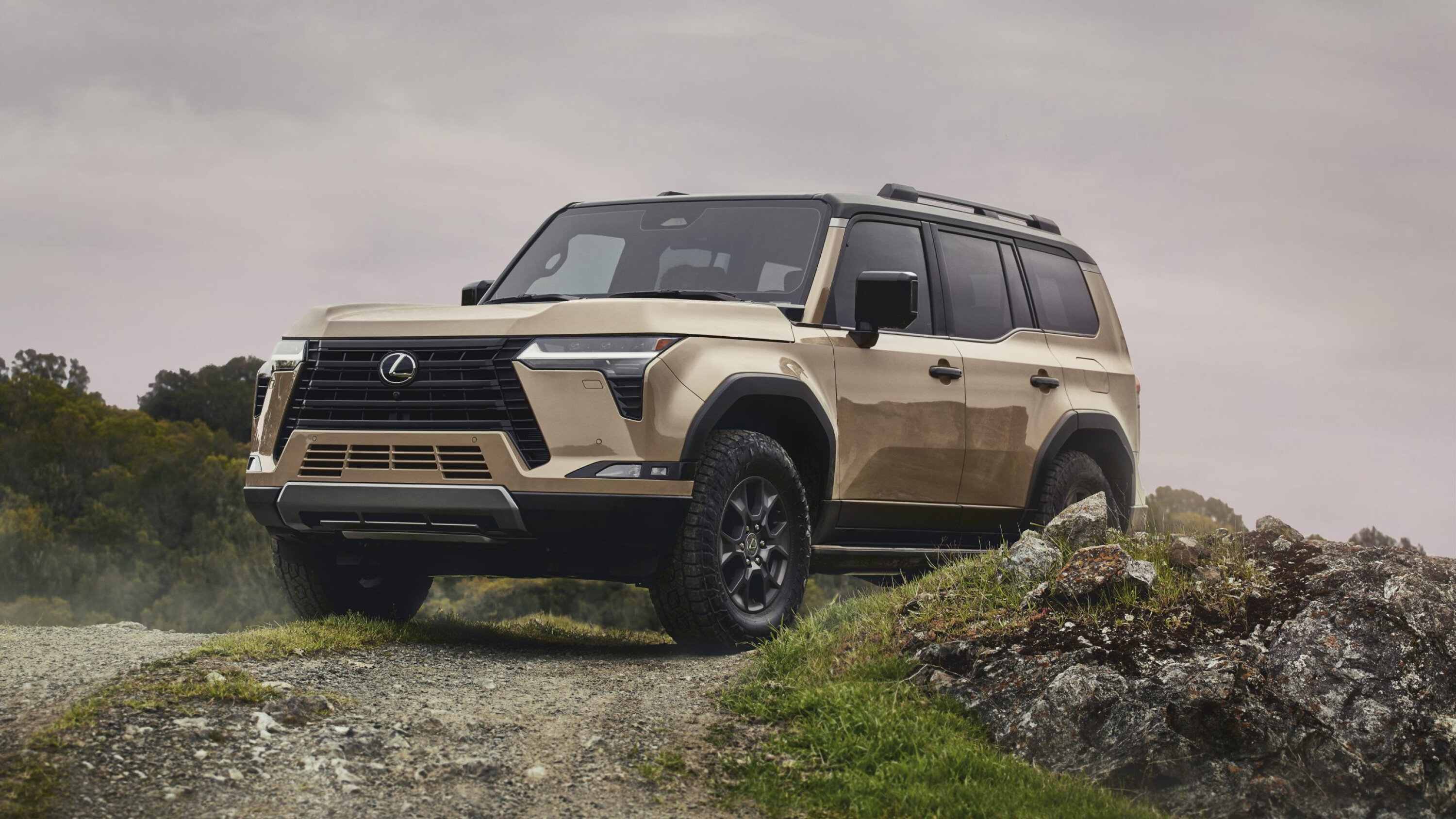
The luxury version of the new Toyota Prado arrived in Australian dealerships in May, ahead of the vehicle it’s based on.
The GX550 starts from $116,000 before on-road costs, with all variants powered by a 260kW/650Nm 3.5-litre twin-turbocharged V6 petrol.
1
The GX can be had in five-, six- or seven-seat guise, with individual captain’s chairs offered in the second row.
The Overtrail variant is sold as a five-seater with all-terrain tyres, black wheel arches, skid plate and the Electronic Kinetic Dynamic Suspension System from the 300 Series Landcruiser. The GX arrived with a 3.5-litre twin-turbo V6 and 10-speed auto, ahead of a 2.4-litre turbo-petrol hybrid expected to be added later on.
MORE
Everything Lexus
Lotus Eletre: OUT NOW!
Famed British sports car brand Lotus is making a genuine comeback – finally – and is showing it means business with the Eletre luxury SUV.
While it’s made in China, the Eletre – which means ‘coming to life’ in Hungarian (!) – uses the new Lotus-developed Electric Premium Architecture (EPA) and brings a convincing exterior and cabin finish.
Three variants – the $189,990 Eletre, $229,990k Eletre S and $279,990 Eletre R – use a 109kWh lithium-ion battery pack, with 450kW/710Nm in the entry level model bumped up to 675kW/985Nm for the Eletre R, which has a 0-100km/h claim of 2.95 seconds.
Eletre is uncharacteristically heavy for a Lotus, weighing up to 2640kg, but it also breaks with tradition with usable storage space in a 688-litre cargo area split between a boot and frunk (front-trunk).
Mazda CX-80: OUT NOW!
Mazda’s ‘premium push’ continues with the CX-80, a three-row SUV that, in tandem with the CX-90, replaces the 2017 Wheels Car of the Year, the Mazda CX-9.
The seven-seat CX-80 sits between the five-seat CX-60 and three-row CX-90 in terms of size and price, with all three using the same large SUV architecture and muscular styling direction.
The CX-80 is priced from $54,950 and the range is available with either a 3.3-litre straight-six mild hybrid petrol engine or a 3.3-litre straight-six diesel engine.
MORE
Everything Mazda
Mercedes-Maybach EQS: OUT NOW!
The ultra-luxury Maybach brand’s first electric model, the 5.2-metre long EQS 680 SUV sports the signature two-tone exterior colour scheme, dripping with chrome accents and 22-inch wheels polishing its vault-like look.
The Nappa leather-laden cabin steps up Mercedes’ opulence by adding a Maybach mode that animates the digital instrument cluster, with the back seat serving up twin 11.6-inch touchscreens which allow passengers to modify the navigation, among other commands.
Maybach claims the all-wheel drive electric powertrain delivers 484kW/950Nm and approximate 600km range, with the price expected to be well above $400k – cheap for a Maybach, really…
Mitsubishi Pajero Sport: 2025/2026
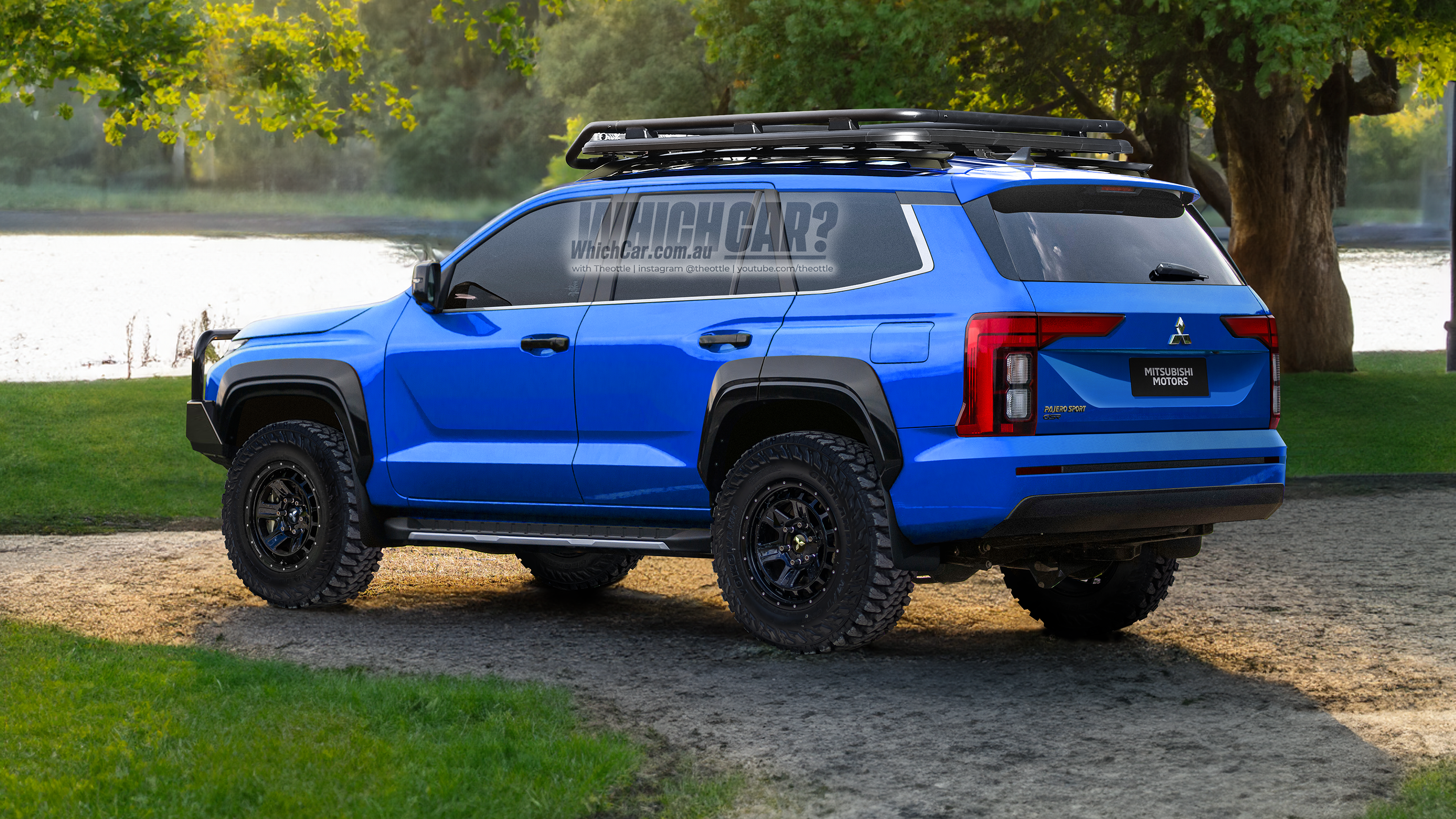
More space, more pace: a new Mitsubishi Triton means a new Pajero Sport SUV spin-off, with the SUV to take full advantage of Triton’s wider track, longer wheelbase and refreshed powerplants.
That means the same 2.4-litre diesel four-cylinder and eight-speed automatic, with 150kW (+17kW) and 470Nm (+40Nm), with improved towing capability – potentially 3500kg compared to the current car’s 3100kg – given Triton’s added muscle.
1
The line-up is expected to be the same, with the starter GLX 4×2 price leader through to the sport-tiled Pajero Sport GSR 4×4.
More cabin space and improved refinement should be by-products of the larger dimensions, but the question is – will there be a follow up to those wild taillights?
Toyota Prado: OUT NOW!
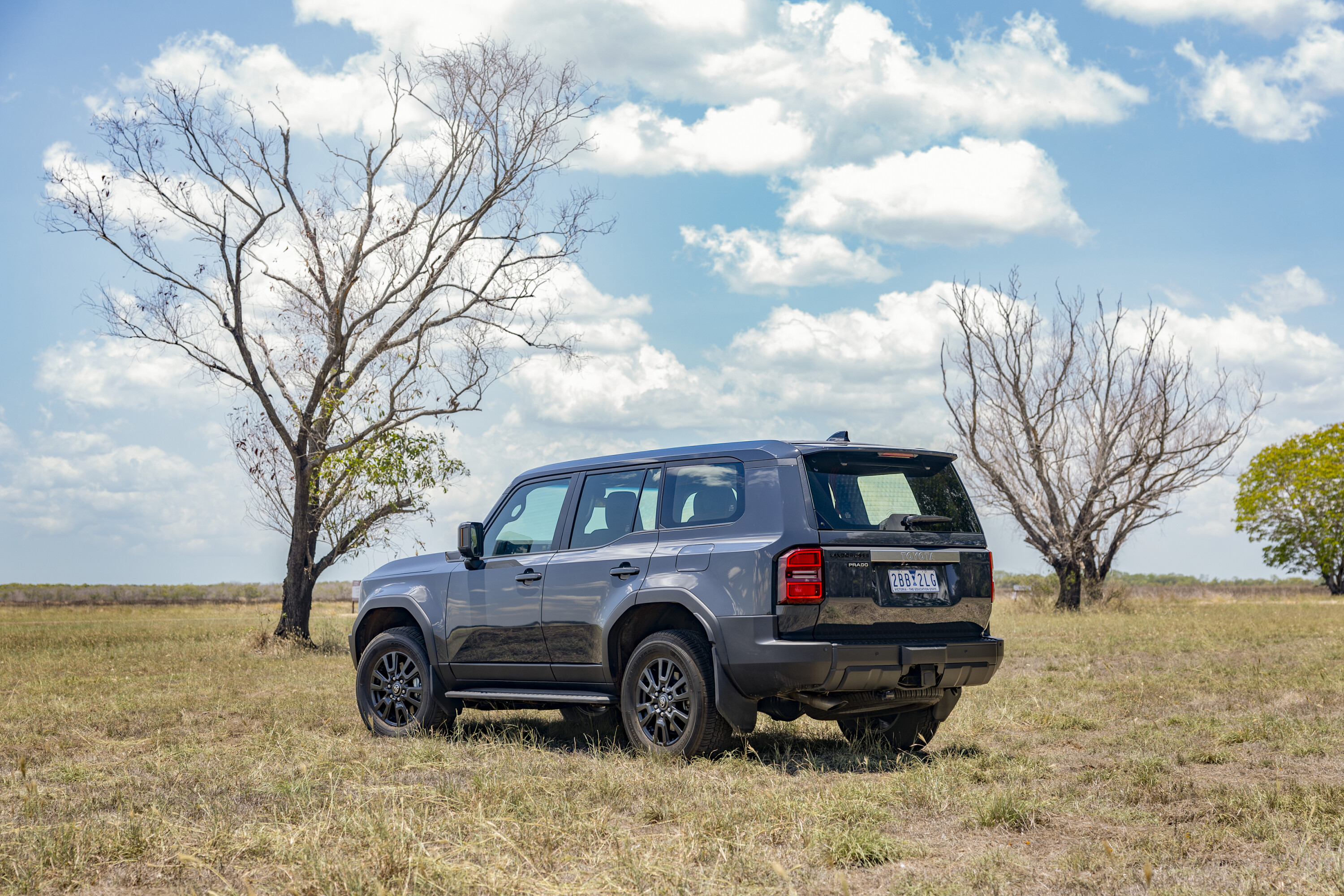
The 2025 Toyota LandCruiser Prado has officially launched in Australia, with the all-new SUV boasting a five-model line-up: GX, GXL, VX, Altitude and Kakadu.
1
The 2.8-litre turbo-diesel four-cylinder engine, assisted by 48-volt V-Active technology, produces peak outputs of 150kW and 500Nm, and it’s mated to a new eight-speed automatic transmission and a full-time all-wheel drive system, dual-range transfer case and a centre lockable limited slip differential.
The Prado starts at $72,500 in GX trim and tops out at $99,990 for the Kakadu.
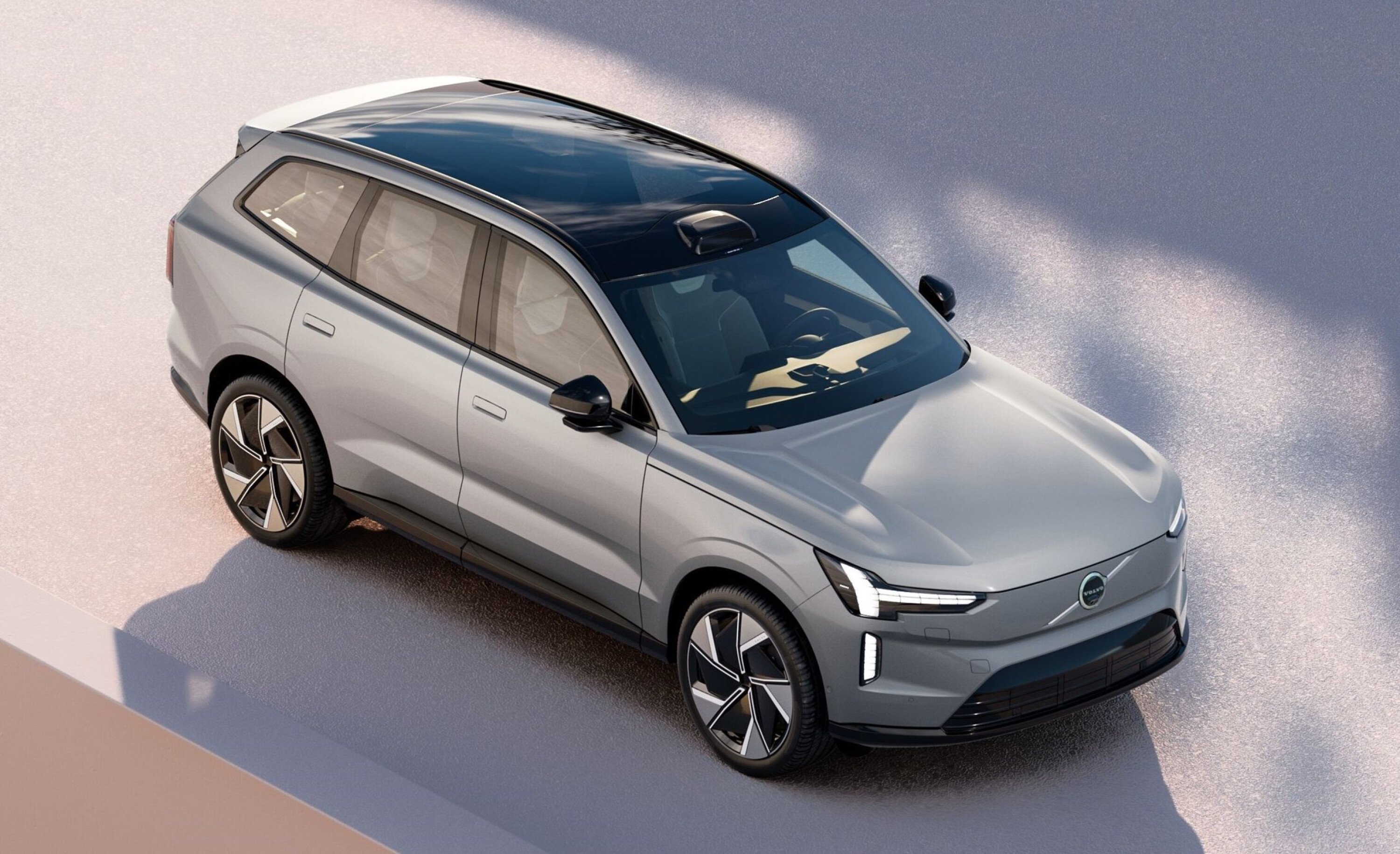
Volvo EX90: Mid 2025
The Volvo EX90 is the electric alternative to the diesel-powered XC90.
It rides on the dedicated electric SPA2 architecture that enables a host of advances including bi-directional charging and a LIDAR scanner enabling full self-driving capability down the track.
2
The EX90 will launch here packing a single powertrain using a dual-motor system producing 380kW/ 910Nm with a 111kWh battery pack and all-wheel drive.
Volvo says it has a 600km range but is yet to confirm charging rate – or performance figures, both expected to be similar to the Polestar 3’s – but its bi-directional charging means it could power your home for set periods.
Pricing is expected to be around $140k.
GMC Yukon: Early 2025
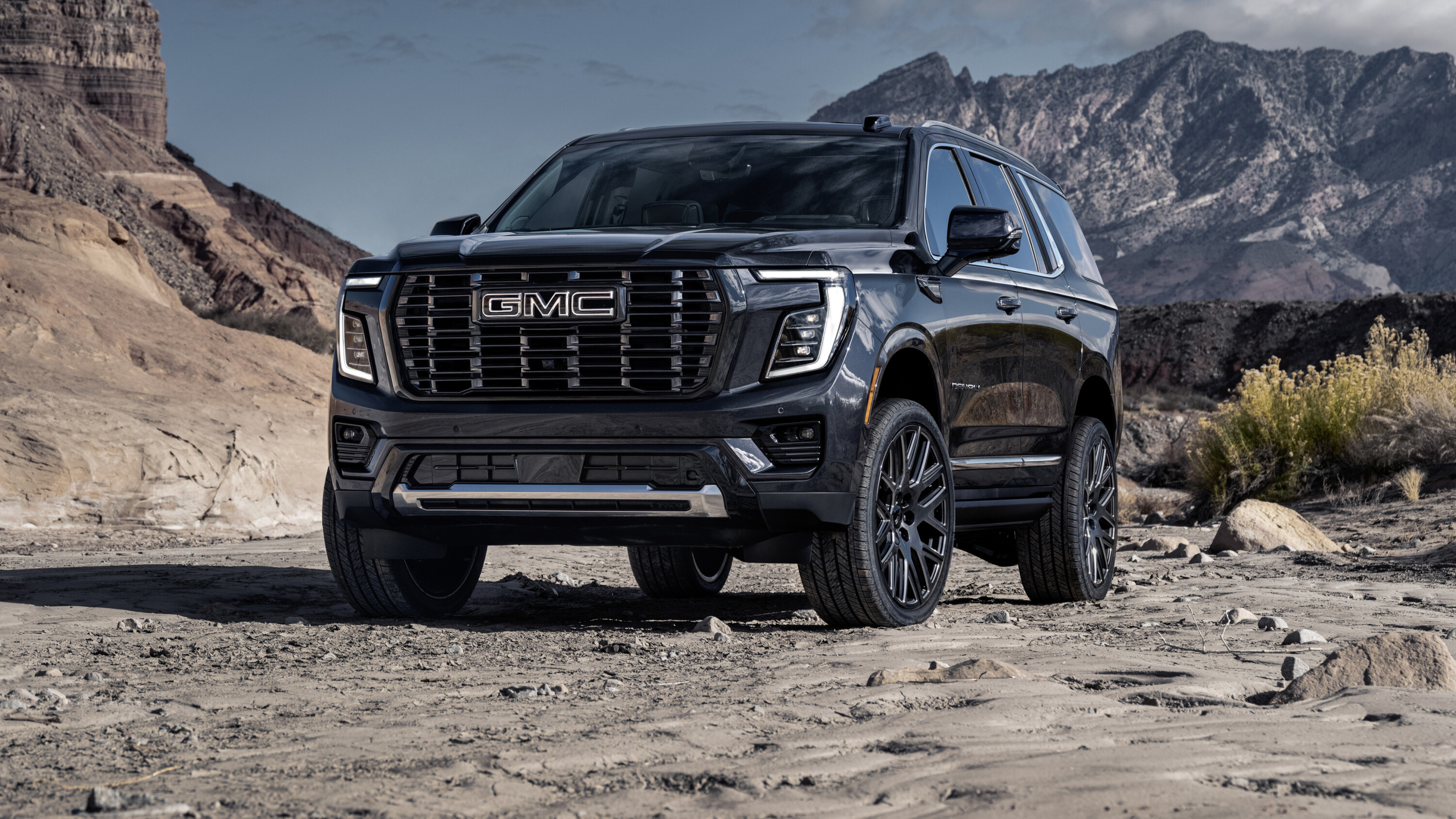
GMC has announced plans to bring its large Yukon SUV to Australia.
Only one variant will be available to purchase in Australia – dubbed the Yukon Denali – and it’ll be equipped with a mountain of premium products, headlined of course by the same powertrain which drives the Silverado 1500: a 313kW/642Nm 6.2-litre V8 petrol engine, mated to a 10-speed automatic transmission.
1
Inside, the SUV is outfitted with a 16.8-inch infotainment touchscreen, a panoramic sunroof, a head-up display, and Bose speakers embedded in the headrests. The second row offers a premium experience as well, with captain’s chairs featuring the same leather upholstery and headrest speakers. The right-hand drive conversion will be handled by the Walkinshaw Group.
Nissan Y63 Patrol: 2026/2027
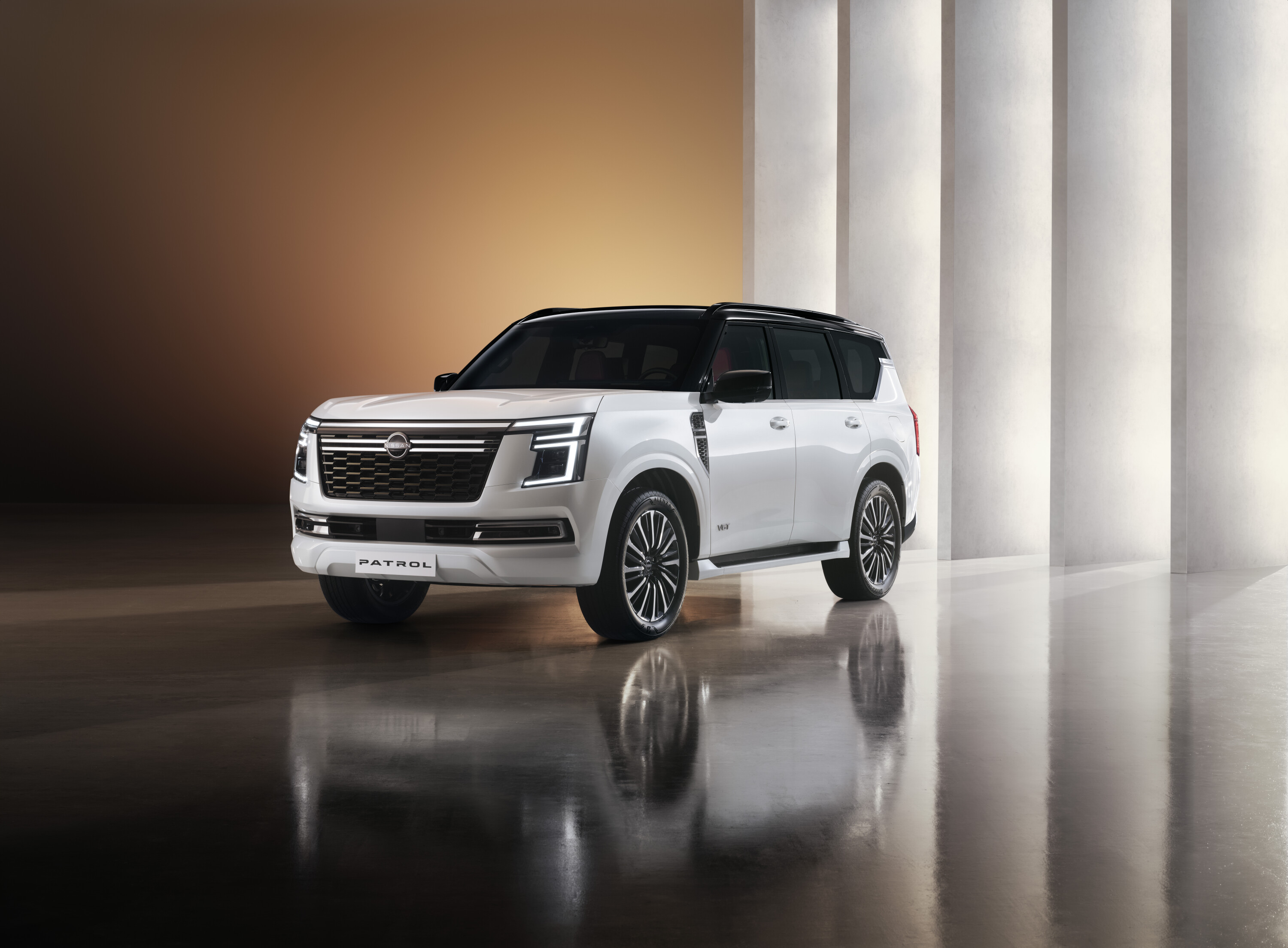
The new Nissan ‘Y63’ Patrol is on its way to Australia, with the seventh-generation model officially unveiled in Abu Dhabi in September 2024.
While it no longer features a V8 engine, Nissan has confirmed the Y63 Patrol will be powered by a 3.5-litre V6 twin-turbo, delivering 425hp (317kW) and 700Nm of torque, alongside a 3.8-litre naturally aspirated V6 producing 236kW and 386Nm. Although it’s no longer equipped with V8 power, the Y63 becomes the most powerful Patrol ever to come from the factory!
1
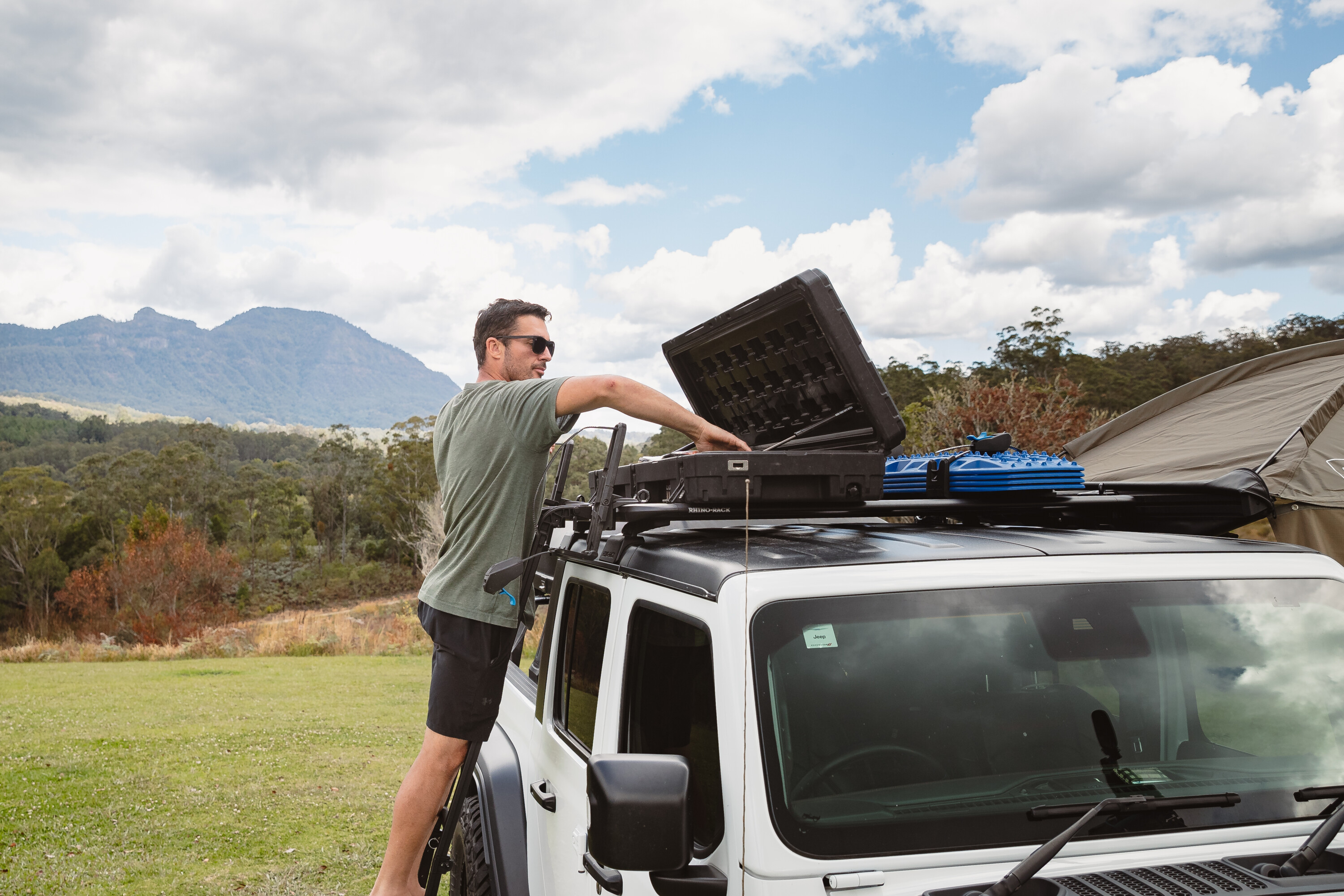
Rhino-Rack has introduced its Pioneer 6 Platform to Australia, an industry-leading roof rack built to be compatible with an extensive range of overlanding accessories.
“Designed to be the pinnacle of engineering, the Pioneer 6 Platform is a leap ahead of our already impressive predecessors and challenges the boundaries of aerodynamics and durability,” Rhino-Rack says of its product.
Considering the earlier iterations of the product were extremely durable, well-designed and versatile, that’s quite a statement. So let’s take a closer look at how Rhino-Rack has markedly improved its all-new Pioneer 6 Platform.
The Pioneer 6 Series is Rhino-Rack’s strongest and most versatile roof rack to date, with advanced engineering that allows you to travel further, carry more gear and enjoy a quieter and smoother ride. Design upgrades have transformed the unit into a radically improved platform. It’s 20 per cent lighter utilising higher strength, lightweight alloys, for greater carrying capacity.
What truly sets the Pioneer 6 Series apart is its incredible potential for adventure through a comprehensive range of Rhino-Rack mounts and accessories. The Pioneer 6 Series boasts 25 per cent more usable channels and an extensive ecosystem of accessories, maximising every inch of the platform and enabling users to load more gear than ever. Don’t exceed the roof load limit of your vehicle, and there is a Load Rating calculator on the Rhino-Rack website that will help with this.
Integrated wiring capabilities and additional east/west mounting channels allow for quick and easy mounting for everything from recovery boards, kayaks, bikes and fishing rods. This versatility empowers individuals to swiftly transition from work to play, ensuring they’re always ready for their next adventure. Here’s a full list of accessories.
There’s also a whopping 60 per cent less drag, for a better on-road experience and fewer trips to fuel bowsers. This can be seen in the leading-edge design profiles of the underbars and front edge, as well as the use of detachable wind fairing inserts.
A number of mounting systems are also available, as they were on the previous generations, including Backbone, RCH and RCL, RX (for raised rails), and RL (for vehicles that have protruding gutter mounts).
The Rhino-Rack Pionner 6 is built to be compatible with all the popular 4×4 vehicles in Australia, including the Toyota HiLux, Ford Ranger (including next-gen), Nissan Navara, Mazda BT-50, Mitsubishi Triton, Isuzu D-MAX, Volkswagen Amarok and Toyota LandCruiser (all series).
13
Pioneer Your Adventure
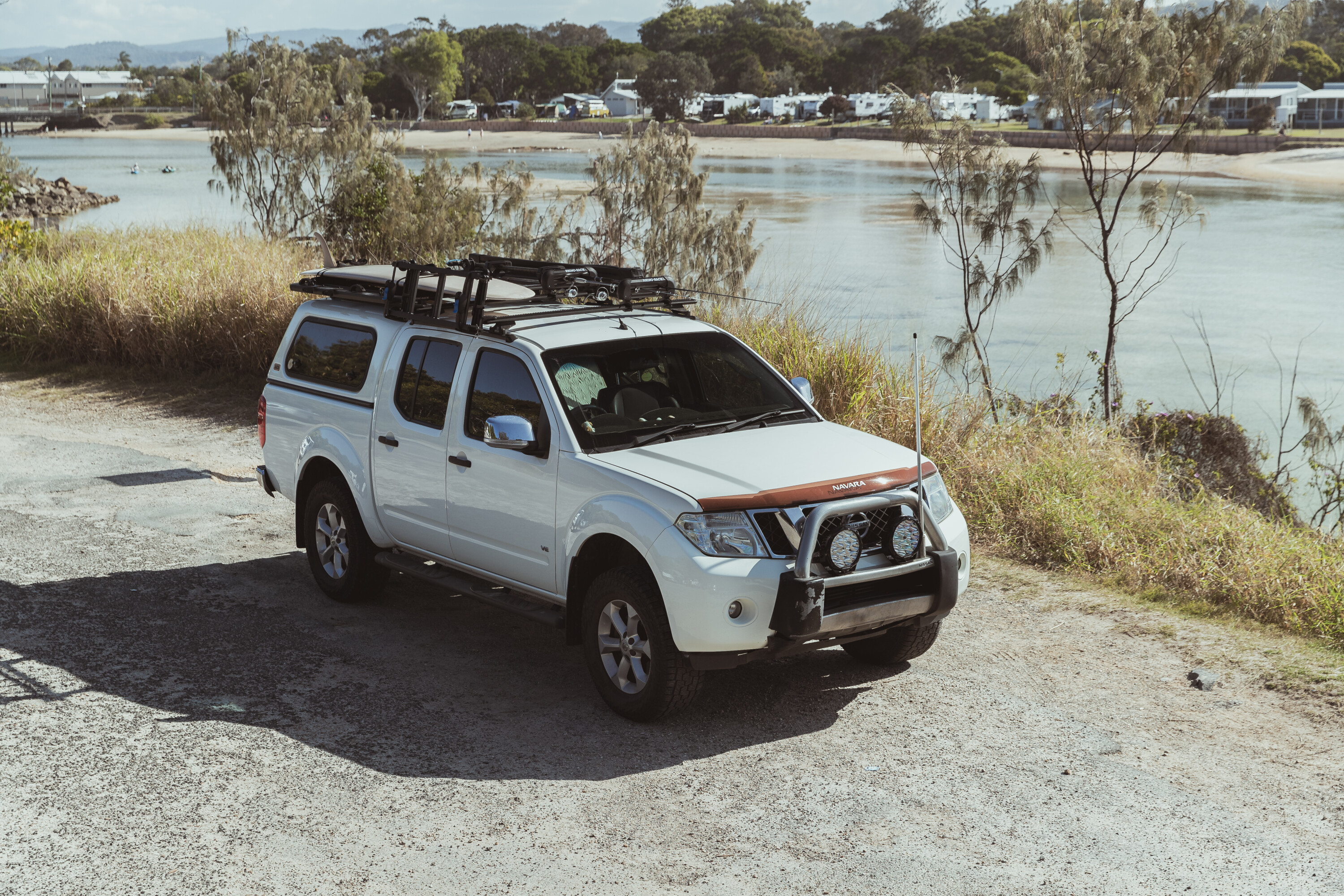
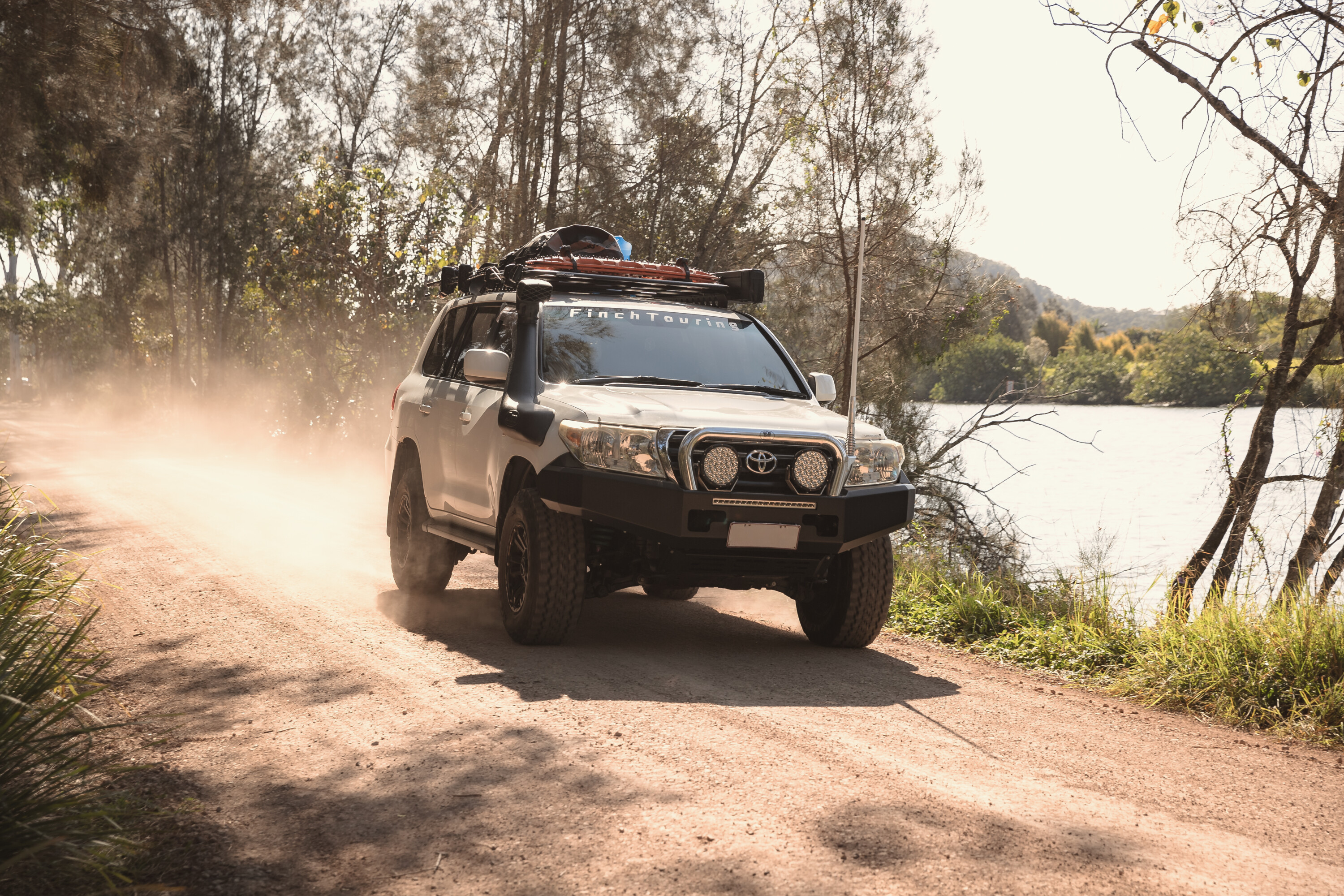
As part of the release of the all-new Pioneer 6, Rhino-Rack launched the Pioneer Your Adventure film series to showcase the all-new roof rack in the wild with seven adventurers and their unique touring set-ups. The film series follows the adventurers pictured below as they tailor their individual set-ups to visually showcase the set-up options and inspire people with what’s possible with their own builds.
WATCH all of the builds that are part of the Pioneer Your Adventure film series!
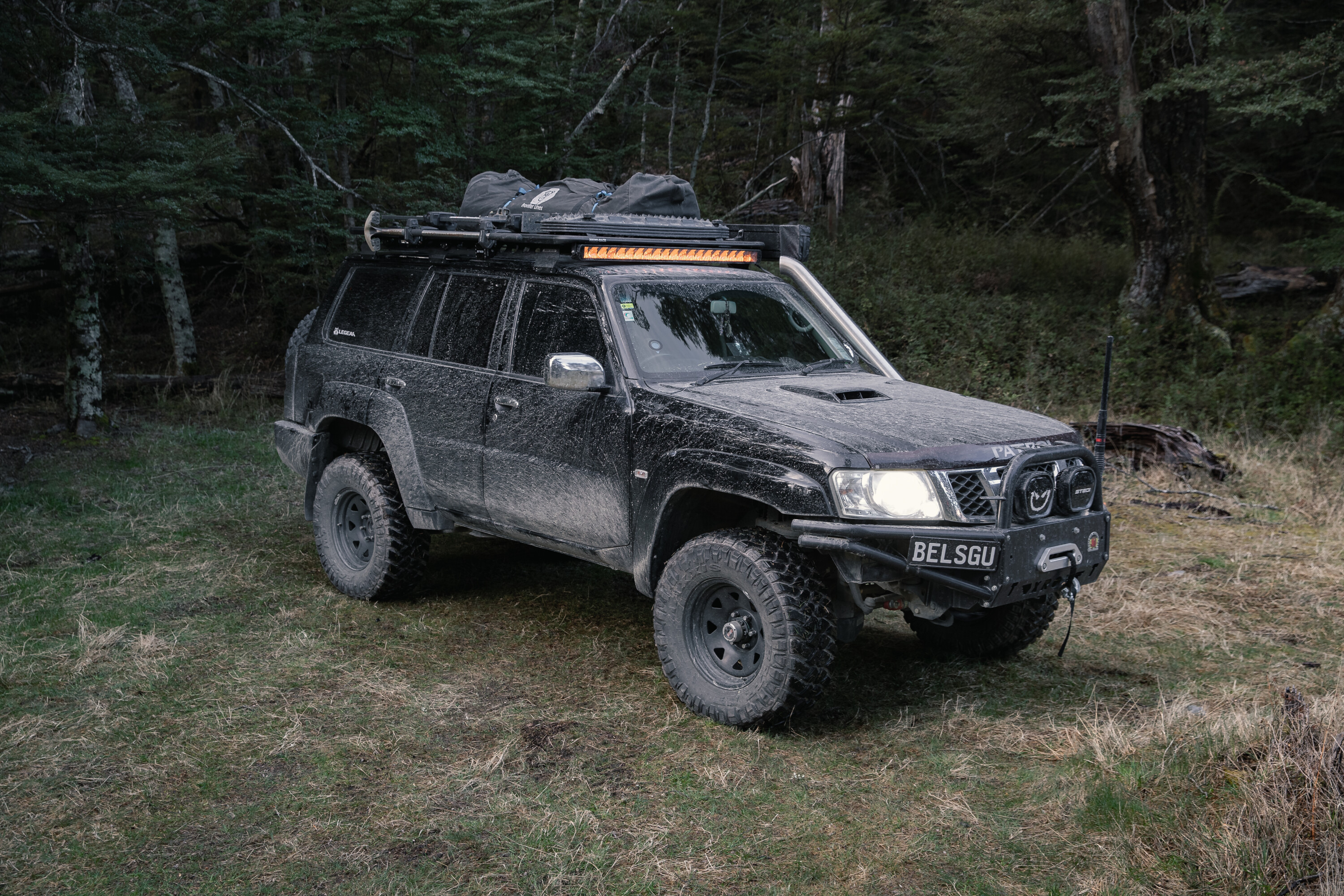
1
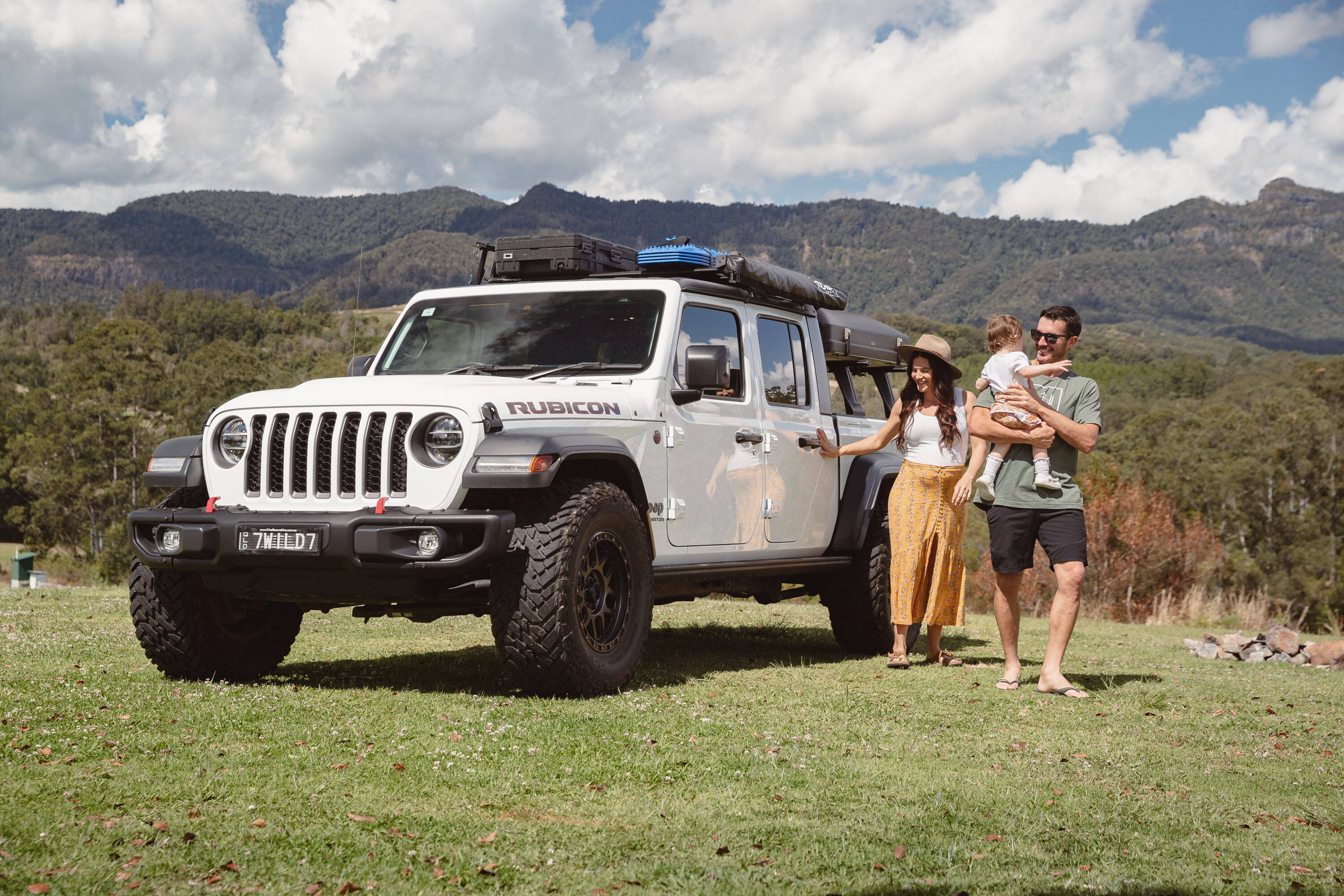
1
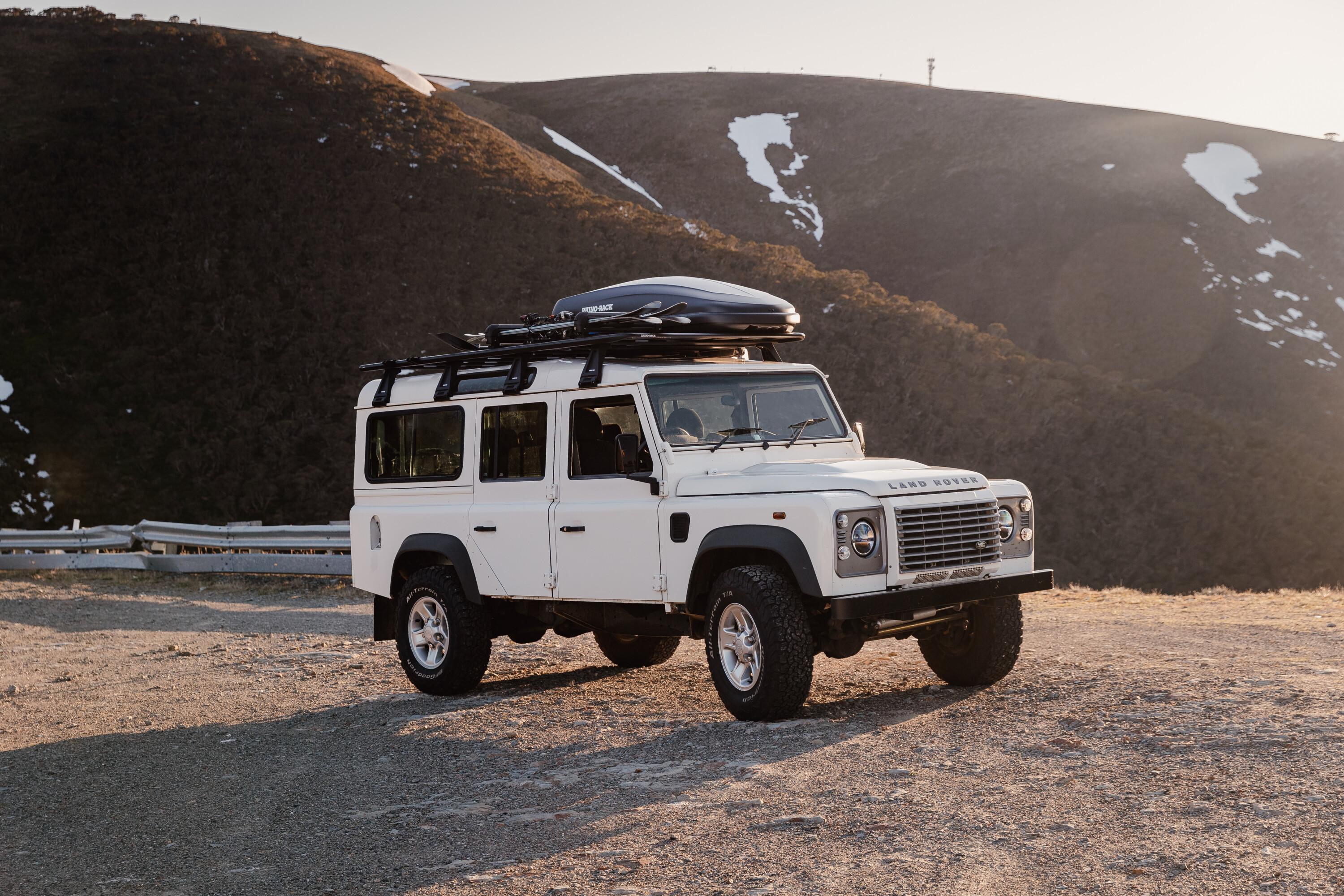
1
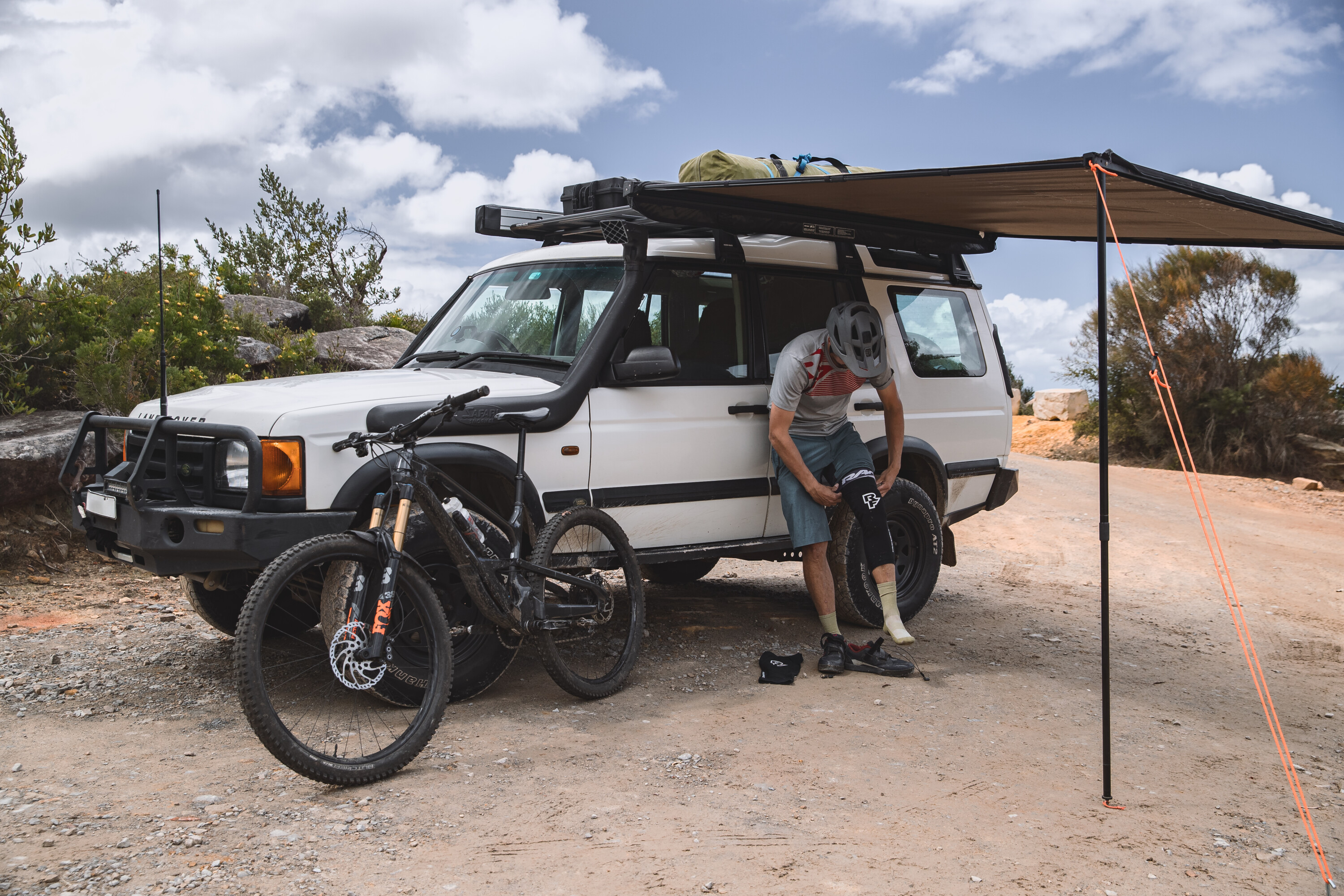
1
1
1
Pricing
| Vehicle | Setup | Price |
|---|---|---|
| Toyota HiLux Roof Platform | Pioneer 6 Platform with Backbone | RRP $2187 |
| Ford Ranger Roof Platform | Pioneer 6 Platform with Backbone | RRP $1910 |
| Mitsubishi Triton Roof Platform | Pioneer 6 Platform with Backbone | RRP $1869 |
| Nissan Navara Roof Platform | Pioneer 6 Platform with RX100 legs | RRP from $1493 |
| VW Amarok Roof Platform | Pioneer 6 Platform with Backbone | RRP from $1869 |
| Toyota LandCruiser Roof Platform | Pioneer 6 Platform with Backbone | RRP $2242 |
| Isuzu D-Max Roof Platform | Pioneer 6 Platform with Backbone | RRP from $1840 |
| Mazda BT50 Roof Platform | Pioneer 6 Platform with Backbone | RRP from $1840 |
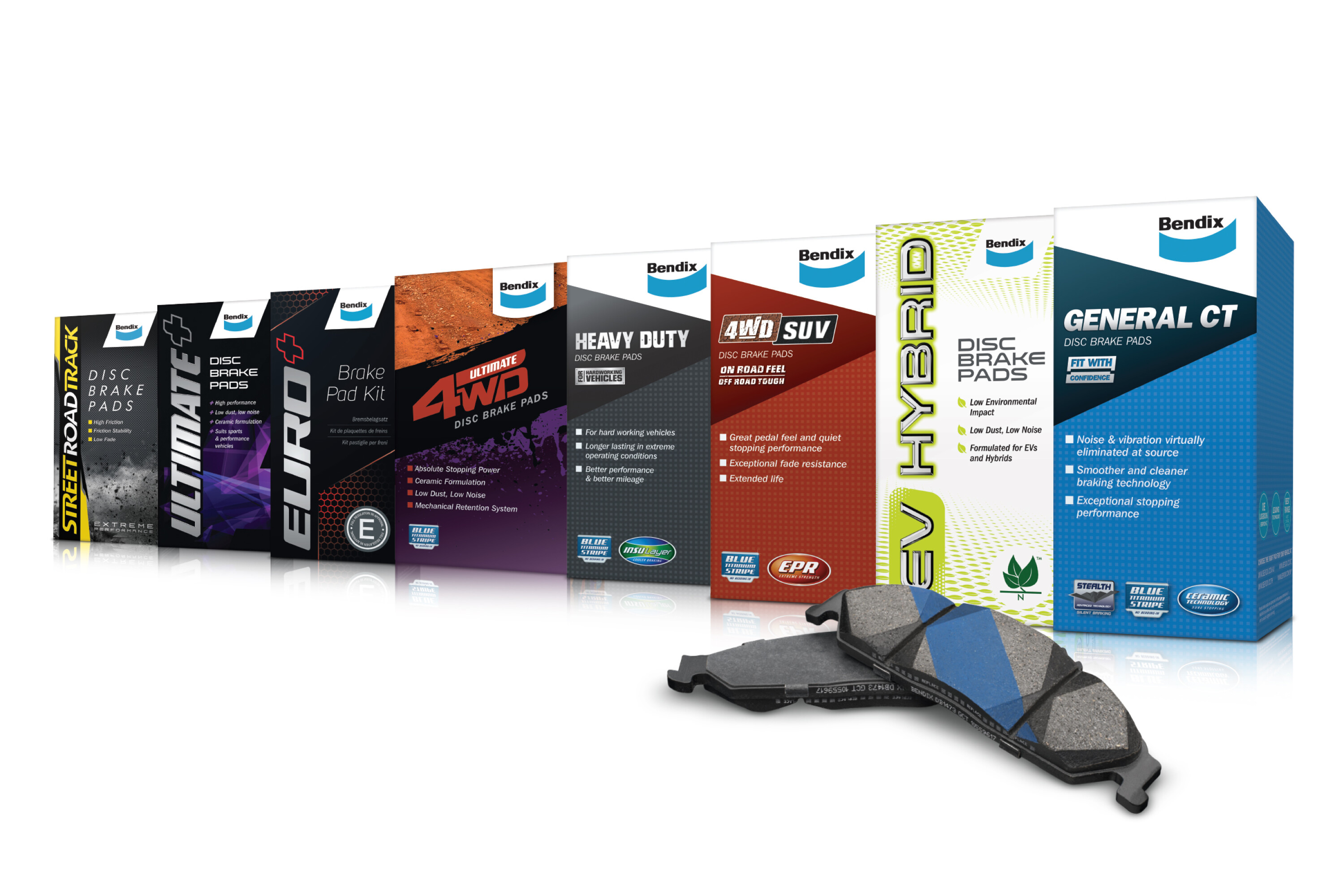
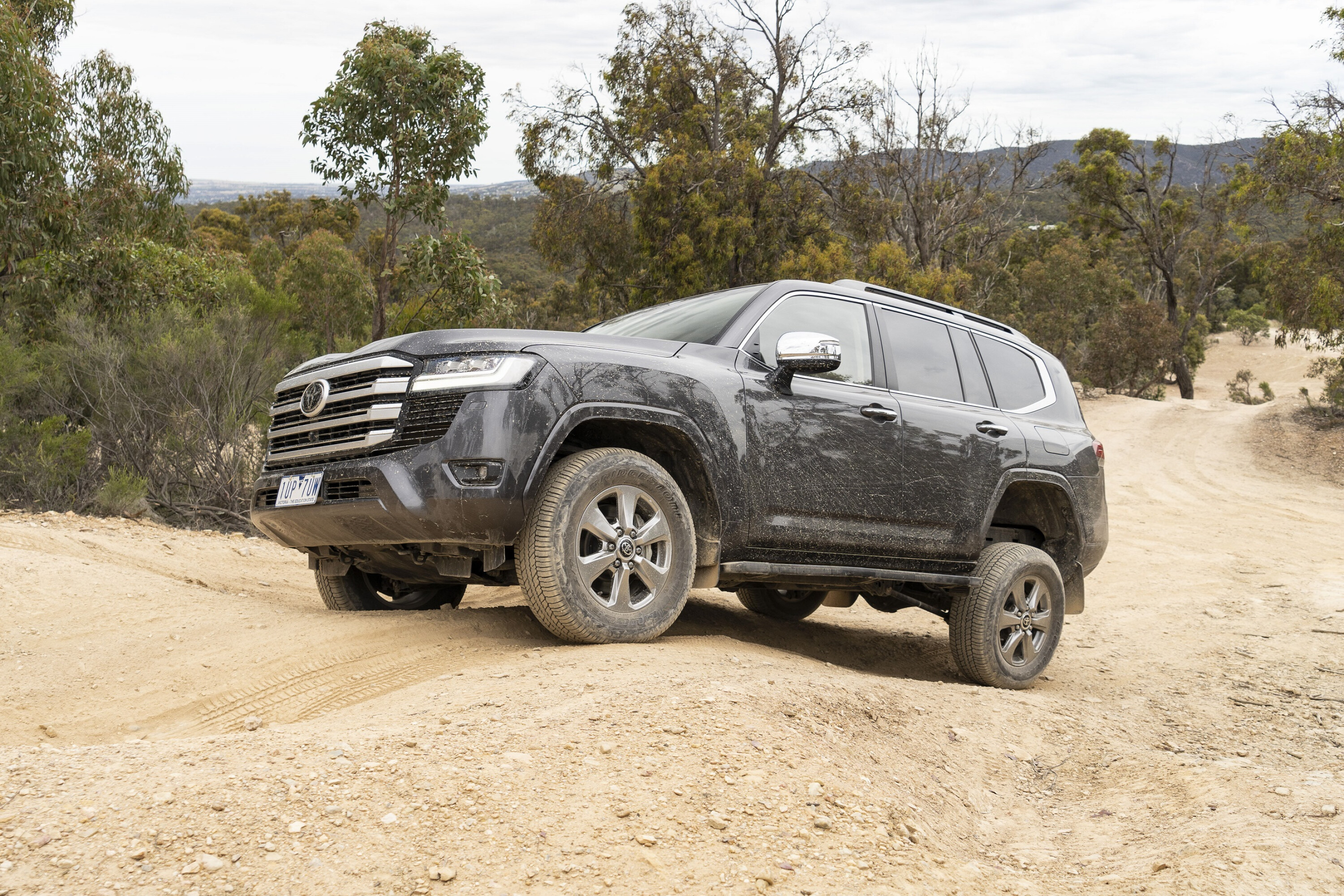
Toyota LandCruiser 300 Series owners can now access the many benefits of Bendix’s Ultimate 4WD sports and performance disc brake rotors, following the release of front and rear options for the LC300 and FJA300 variants from MY21+.
The expanded range also covers RAM’s 1500 DT series models from MY18+. For Chevy Silverado owners, there is now a front Ultimate 4WD disc brake rotor option for models from 2020 onwards. Additionally, there’s now more on offer for the Ford Ranger, with rear Ultimate 4WD sports and performance disc brake rotors for PX3 and Raptor variants from 2018-2020.
1
“The latest upgrades from Bendix provide additional braking performance for owners of large four-wheel drives such as the new 300 Series LandCruiser, along with several of the popular full-size American trucks,” said Ian Campbell, Bendix Product Manager.
“These models are already heavy in standard trim and, once they’re accessorised with bar work and the like, hundreds more kilograms of weight can quickly be added. Ultimate 4WD sports and performance disc brake rotors help restore the balance, providing more confident and safer braking.”
3
The rotors use specific metallurgy which increases rotor strength at elevated temperatures while also providing high wear resistance. This increases overall rotor durability and reduces the chance of warping when very hot. Other benefits include high-efficiency cooling pillars, which have been designed to channel cool air into the rotor, expelling hot air faster and increasing the resistance to thermal cracks.
Additional braking performance in this range is achieved through Bendix’s Diamond Tip Slot technology. This feature uses specially designed slots and V-shaped simples on the rotor surface to expel gasses, dirt and water more efficiently.
If you want to increase the number of storage and carrying solutions on the tub of your ute, look no further than the ARB Bed Rack.
Being modular, the Bed Rack system allows you to add mounting solutions to suit all your needs, whether it be a rooftop tent, recovery tracks, jerry cans or storage cases. The Bed Rack utilises the unique and innovative BASE Rack dovetail. This dovetail provides mounting solutions allowing you to mount gear on the top, underside, outside and inside of the Bed Rack rail.
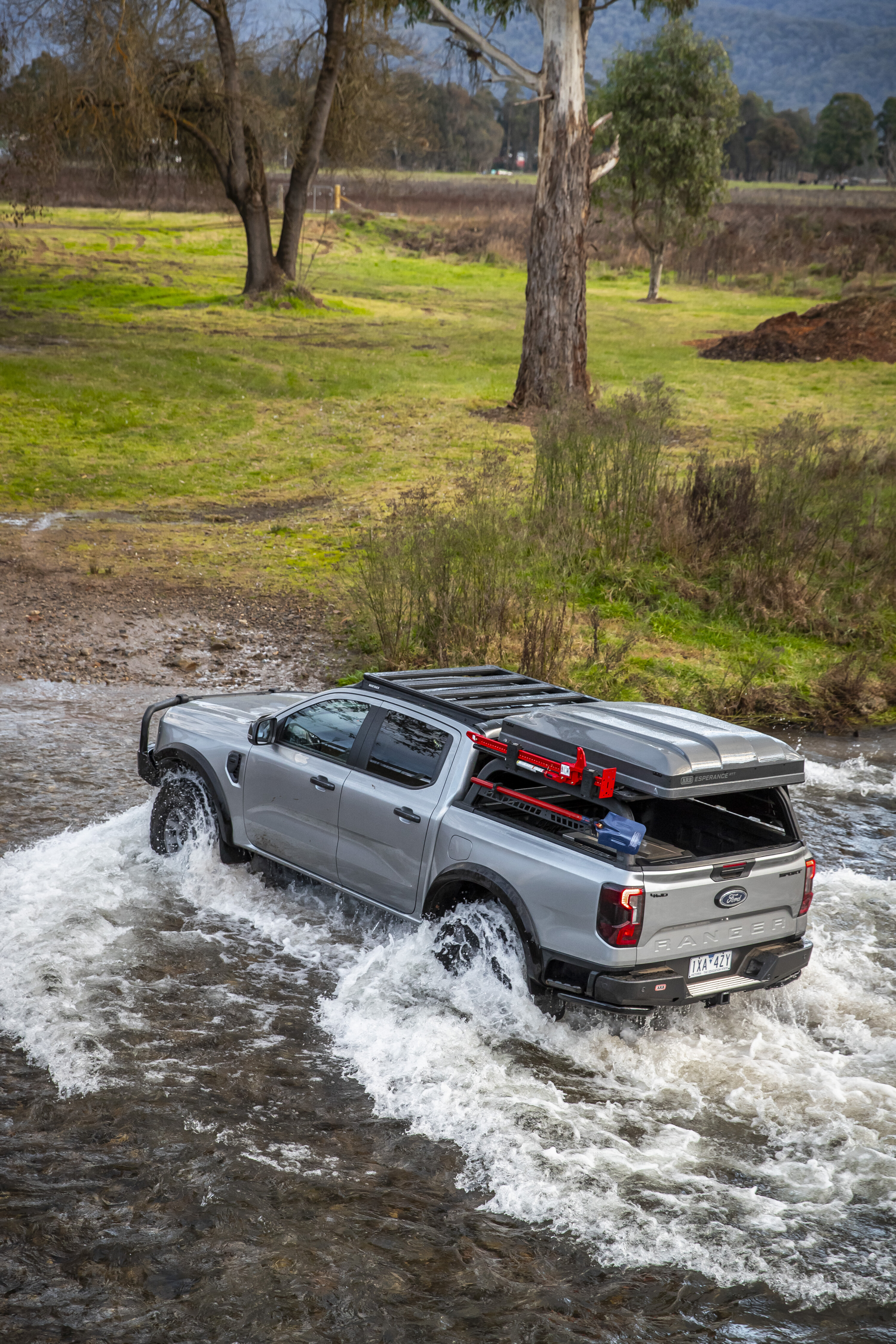
2
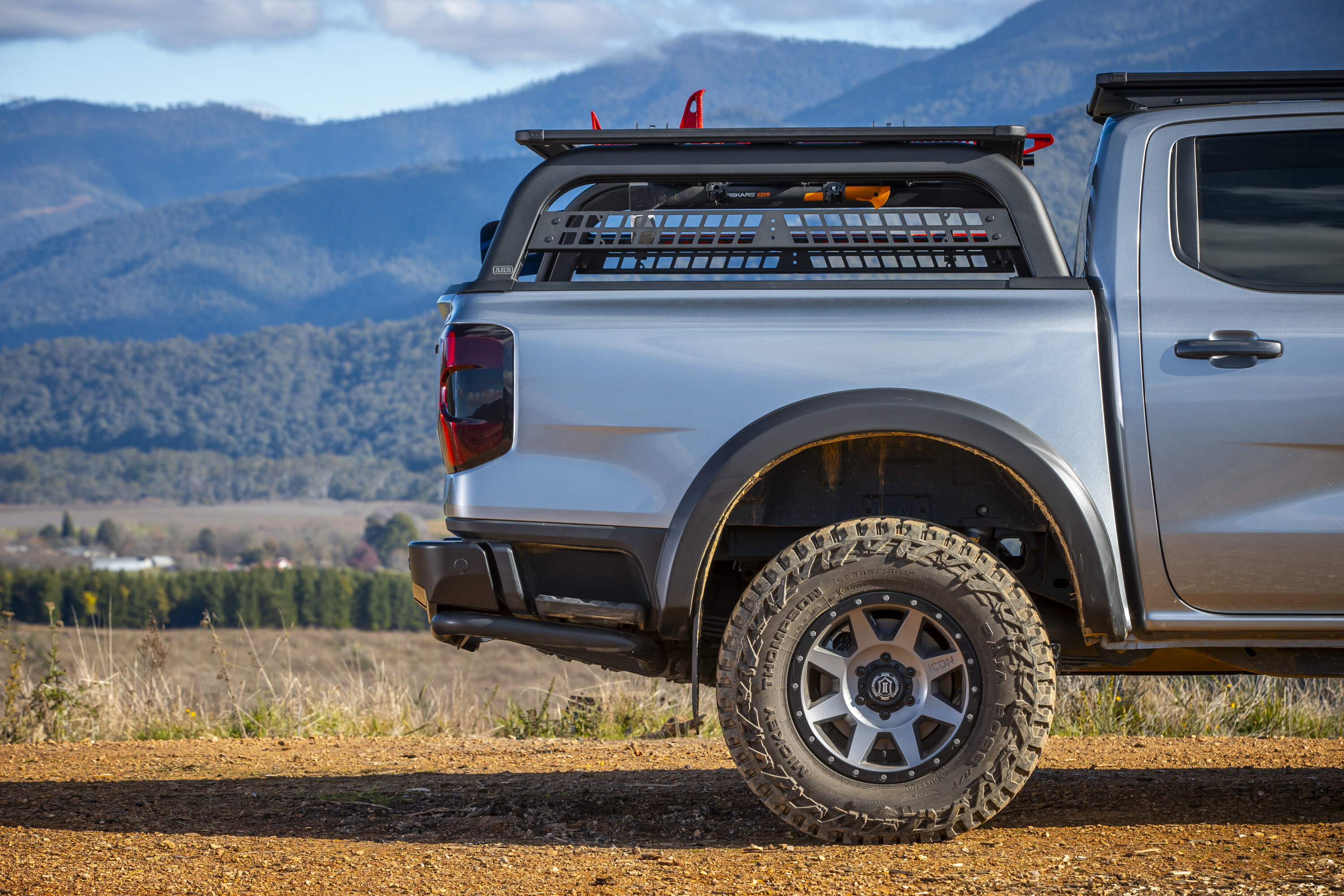
The north-south configuration doesn’t impede access to the load-carrying area of the tub, allowing taller items to be loaded if fitted with optional cross beams, great for loading items such as motorbikes, bicycles or your mate’s fridge. An extrusion in the aluminium frame allows wiring to run inside the extrusion for lights and power at the rack’s top or within a rooftop tent.
“Vehicle-specific mounting brackets and hardware have been developed which pick up on key locations of the vehicle tub and ensures that load is transferred into the structural areas of the vehicle,” said Mark de Prinse, product manager of fabricated products. “Mounting brackets can fit with or without tub liners fitted. Specifically for Ford Ranger the FLA-approved J brace is also required to supplement the mounting kit.”
1
Constructed from 6061 aluminium extrusion, the ARB Bed Rack is lightweight and strong and provides a load rating of 150kg that is not going to adversely affect the durability of the vehicle’s tub. The low-profile curved styling not only integrates with the vehicle but it reduces the height and wind drag caused by fitting rooftop tents.
Specific mount kits have been developed for both the Ford Ranger and Toyota HiLux to suit each vehicle’s specific tub, with more applications still to come.
Pricing
| Productu00a0 | Price |
|---|---|
| Bed Rack Mount Kit / Ranger MY22u00a0 | $1300 |
| Supplementary Brace Kit / 22+ Ranger Dcu00a0 | $182 |
| Supplementary Brace Kit / 22+ Raptoru00a0 | $226 |
| Bed Rack Mount Kit / Hilux 2015+u00a0 | $1300 |
| ARB Baserack 1255x1445u00a0 | $900 |
| Bed Rack Cross Bars Pr 1252mmu00a0 | $450 |
| Bed Rack Cross Bars Pr 1230mmu00a0 | $450 |
| Base Rack Mnt Kit To Bed Racku00a0 | $190 |
| Bed Rack Side Channel / Suit Hiluxu00a0 | $160u00a0 |
| Bed Rack Side Channel / Suit Rangeru00a0 | $160u00a0 |
| Bed Rack Single Mountu00a0 | $100 |
| Bed Rack Twin Support Mountu00a0 | $60 |
| Bed Rack Case Mount / Suit ARB Carry Case Singleu00a0 | $175 |
| ARB Carry Case (Single)u00a0 | $79.99u00a0 |
| Bed Rack Recovery Mountsu00a0 | $60u00a0 |
Being able to utilise a vehicle’s maximum tow rating is important for tradies who can expect to tow anything from trailers loaded with sand, stone or gravel to heavy machinery like excavators and loaders.
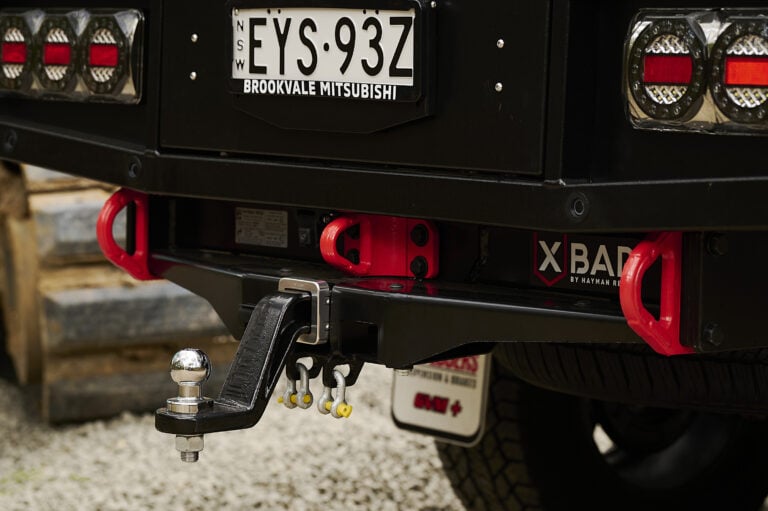
Then, when you throw in some weekend off-road adventures, with the requirements for improved departure angles and rear recovery points, you need a pretty specific towing setup. The Hayman Reese X-Bar ticks all those boxes.
There is an impressive list of features that contribute to the X-Bar’s capabilities, including a removable bash plate for increased protection underneath where it counts, and the availability of an extended drop forged ball mount that provides the correct ADR-compliant height for a standard trailer or caravan connection on vehicles with a 50mm suspension lift.
-
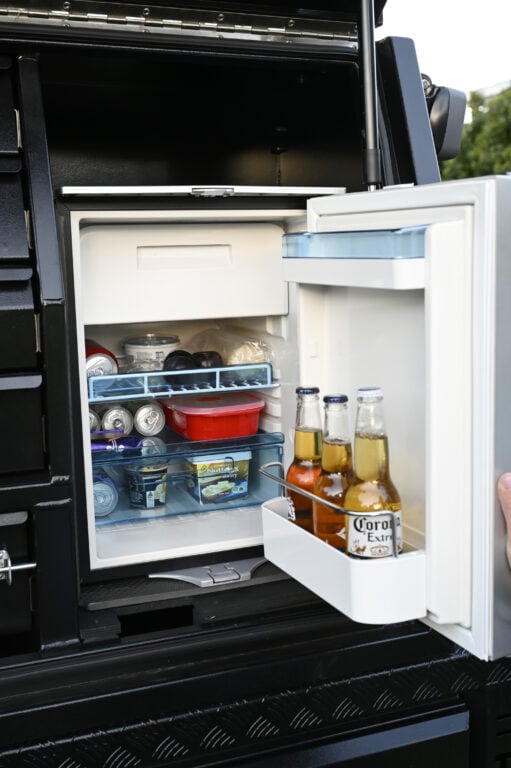
Dometic CoolMatic CRX 50 upright fridge
-
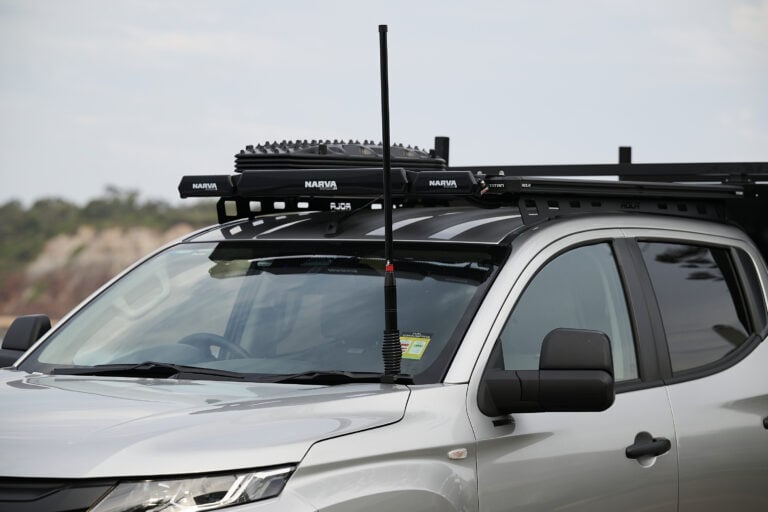
Cel-Fi GO mobile booster
-
MSA 4×4 towing mirrors
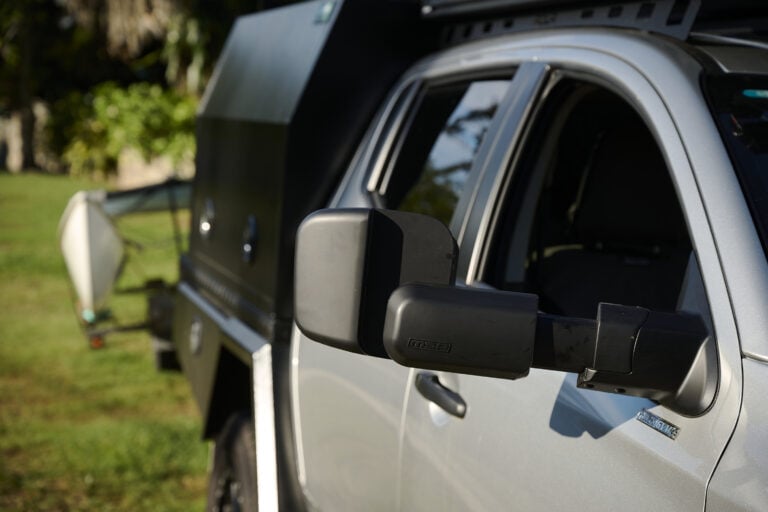
-
Projecta power management
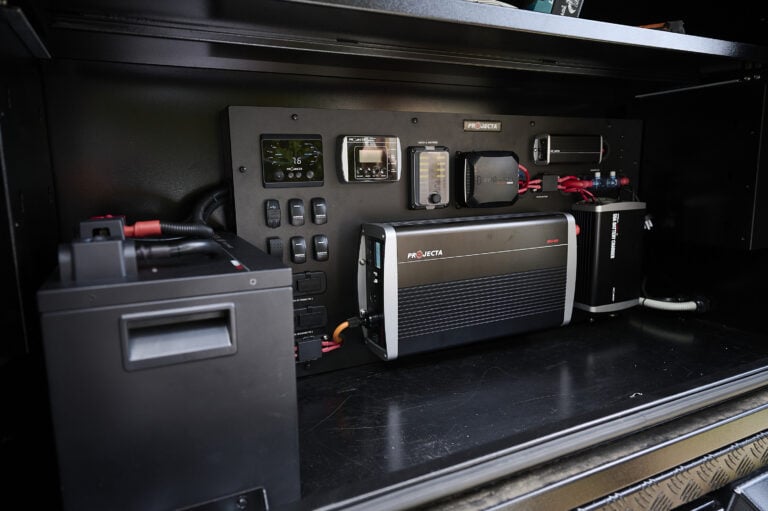
-
Narva LED lights
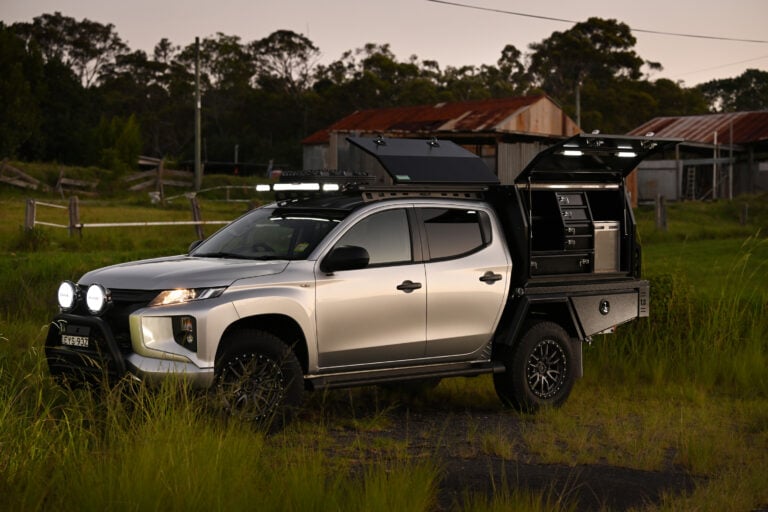
-
Pedders GVM and brake upgrade
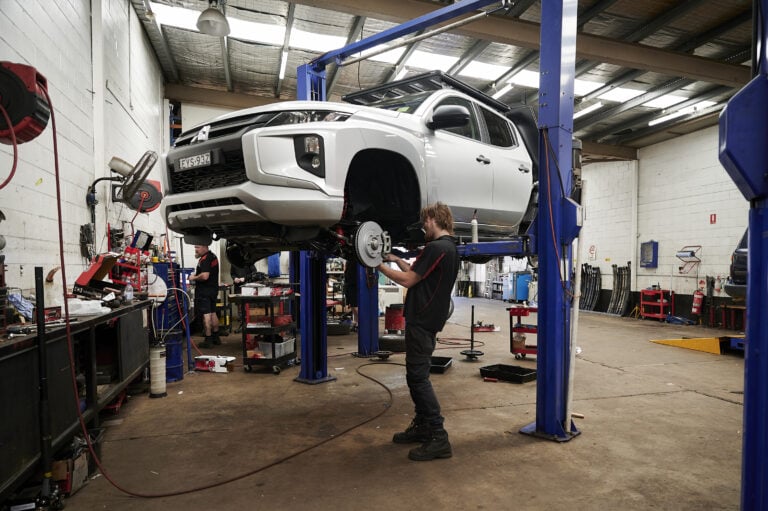
-
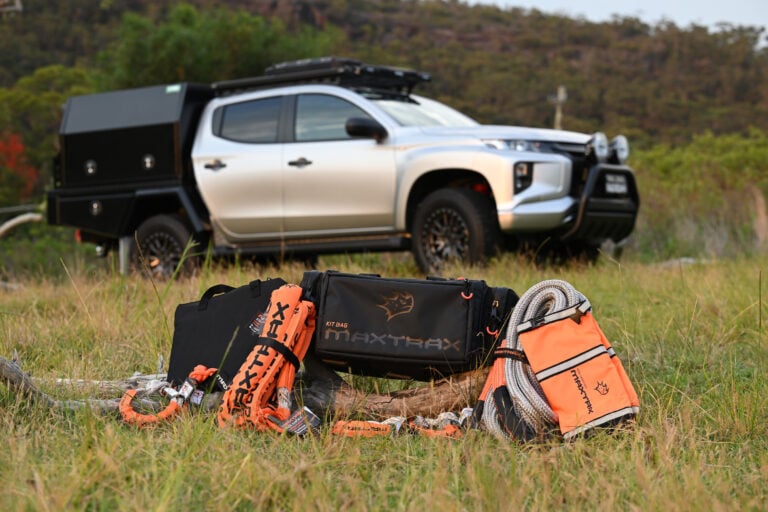
Maxtrax recovery kit
-
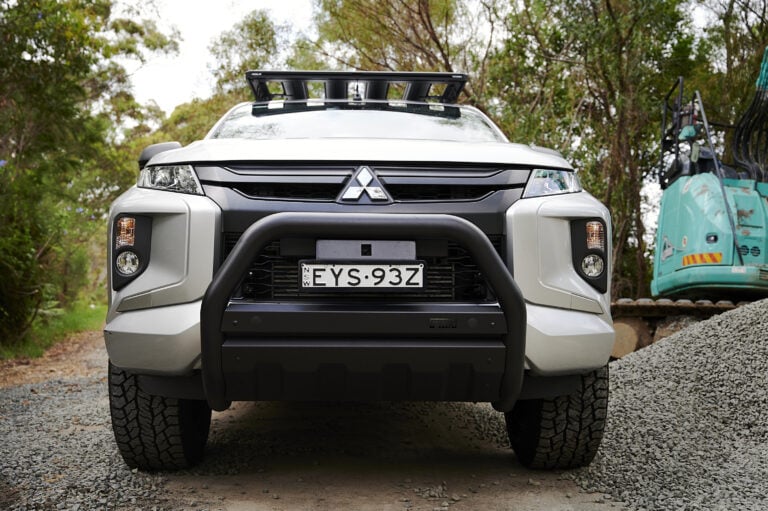
PIAK nudge bar
-
Hayman Reese X-Bar
-
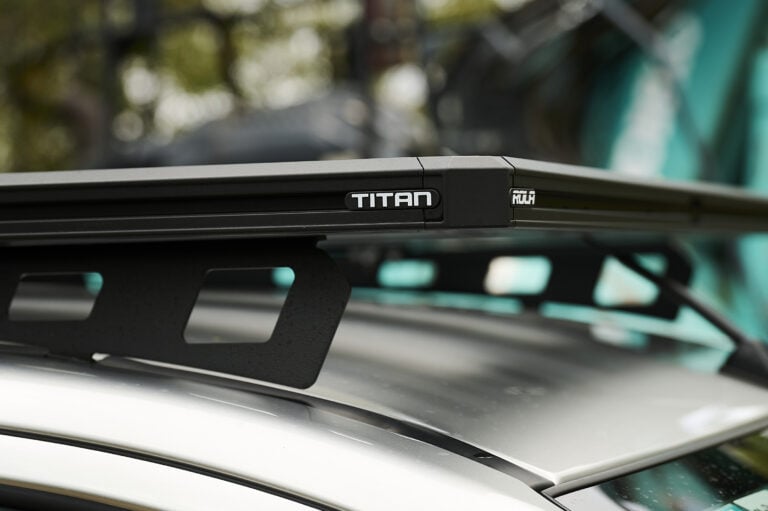
Rola MKIII Titan Tray
-
TruFit 3D mats
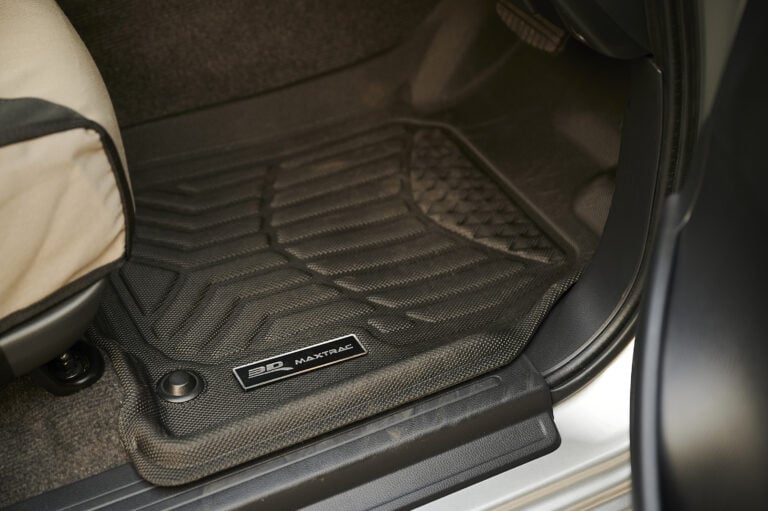
-
Fuel Rebel wheels
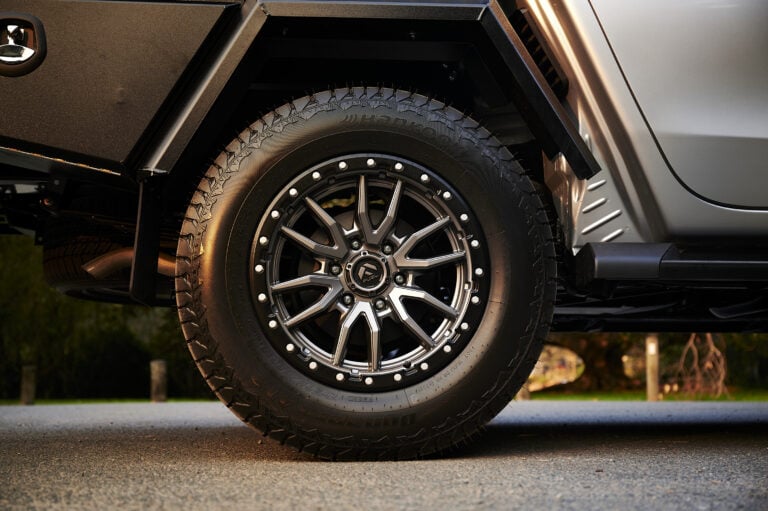
-
Hankook Dynapro AT2 tyres
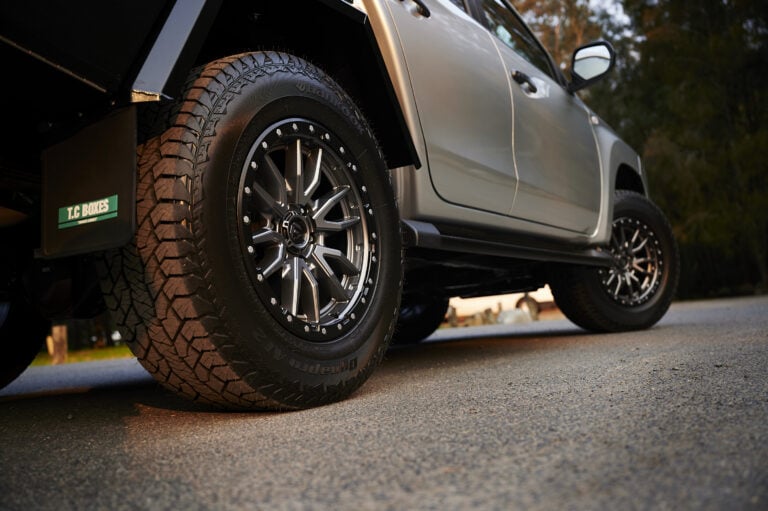
-
TC Boxes tray and toolbox
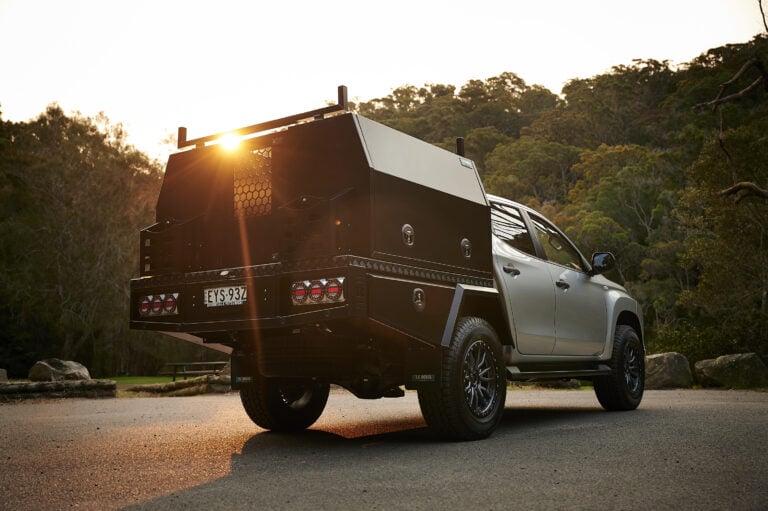
1
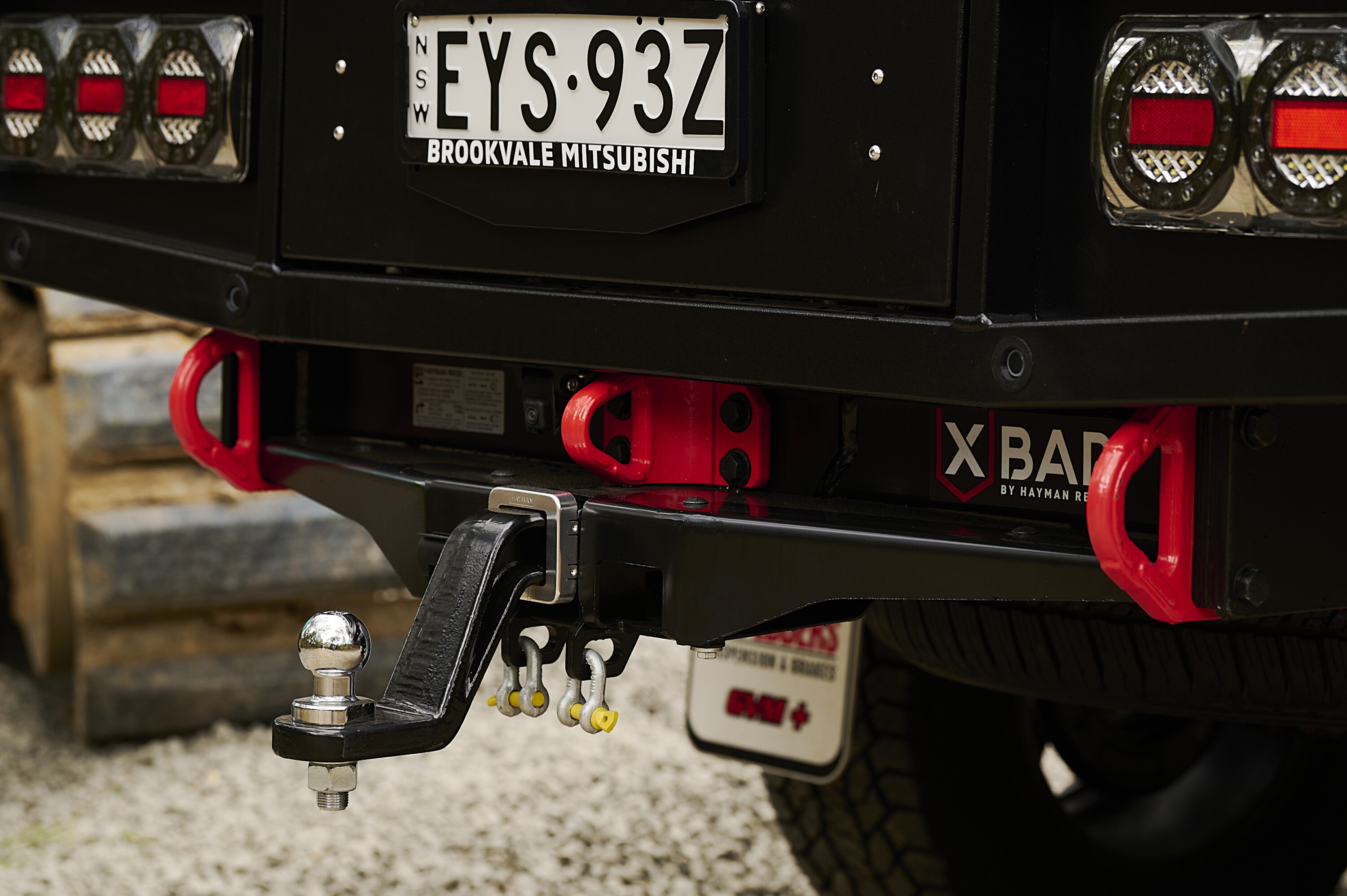
The trailer plug is mounted in an elevated position within the main channel of the X-Bar to keep it out of harm’s way, and reduce the risk of damage during off-road excursions or when navigating challenging building sites. It also contributes to the overall aesthetic and functionality of the tow bar. Next to the trailer plug are a pair of Anderson plugs that add an extra layer of versatility for users with specific electrical needs.
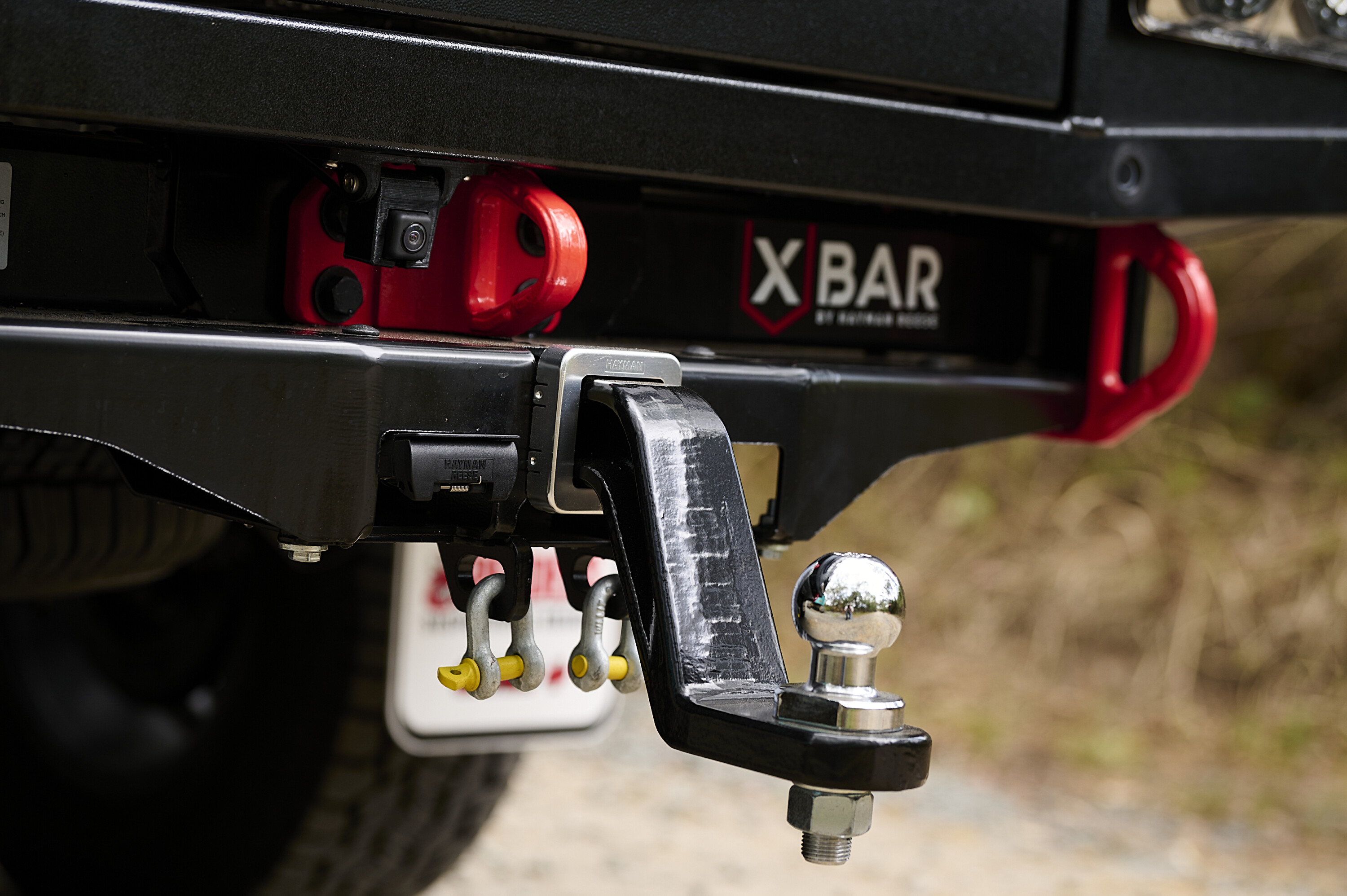
The X-Bar features two side-mounted forged recovery points rated at 4000kg each. These are painted red so they are easy to see and ready for quick attachment in urgent recovery situations. A centrally mounted recovery point is also easy to access and use, and this one is rated to a massive 8000kg.
1
The X-bar mounts quite high on the back of the Troton which ensures optimised departure angles for off-road driving, so this cleverly designed tow bar not only facilitates towing but it also enhances the vehicle’s performance in challenging terrains. And for tradies relying on their utes for work and play, this design consideration is important when navigating challenging environments.
As our Triton creeps closer to the finish line, it has been great to stand back and appreciate its gradual transformation as each key piece has been added to the build.
Want to see your 4×4 on the pages of 4X4 Australia? Then send us a photo to our Facebook page, and we’ll publish it online and in an upcoming magazine.
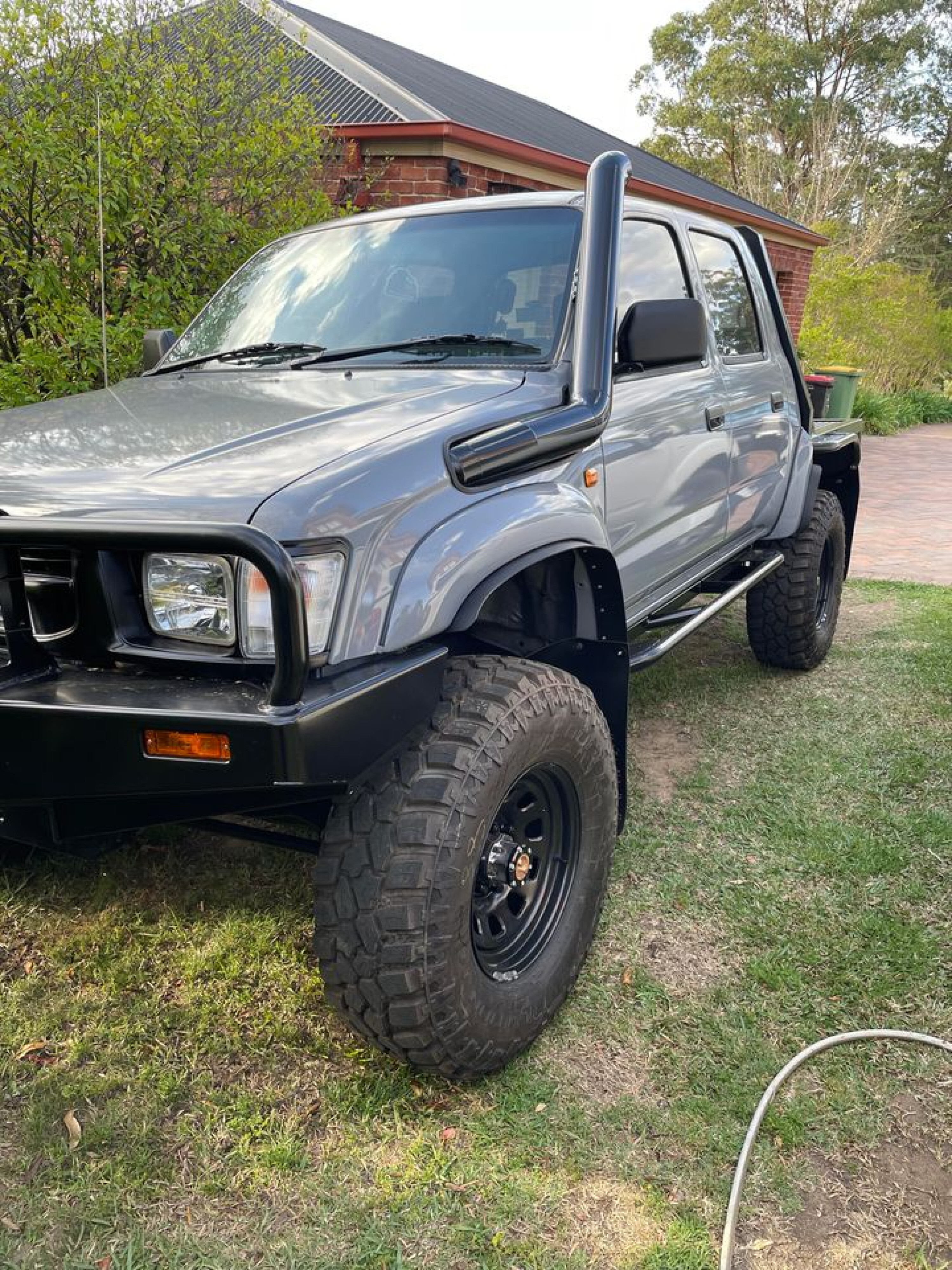
2001 Toyota SR5 HiLux
1
I’ve done 100 per cent of the work at home, which has taken me two years to complete. Mods include an ARB front bar with Warn 9500 winch; custom paint job which is Nardo grey; custom steel tray with tube guards; and custom rock sliders. I’ve also fitted a custom front-mount intercooler and TIG-welded stainless steel intake piping to suit, and welded up a custom three-inch exhaust system. I’ve converted the EFI diesel pump to a 12mm mechanical fuel pump with a high-flow turbo for just enough power to spin the muddies when I stomp on it.
For the front, I’ve cut all the IFS suspension out to fit an 80 Series LandCruiser diff with a factory front locker (rare as hen’s teeth), welding in coil/shock towers and custom flipped radius arms to make it a solid axle-swapped HiLux. It’s also running an 80 Series steering box.
For the rear, a custom diff housing has been made to accept an 80 Series diff centre, wheel bearings and brakes, with a custom set of true hardened axle splines at both ends. I’ve folded up my own leaf spring u-bolt flip plates and inverted the rear shocks, making all the custom mounts to suit – Mitch Kucinskas
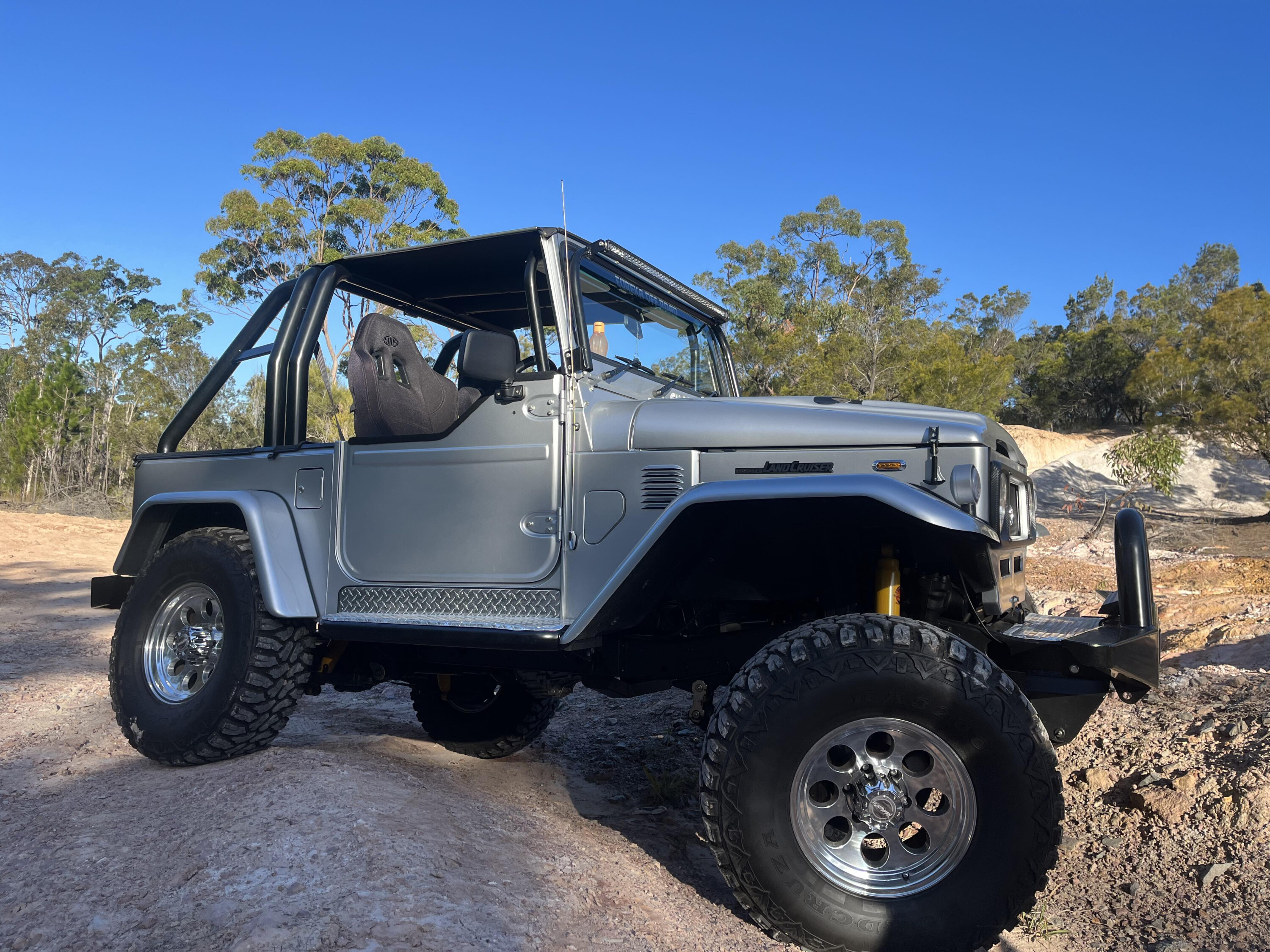
1982 Toyota FJ40
1
Barn-find wreck transformed! Kit includes a full reverse-shackle conversion; 80 Series diff conversion with a 350 Chev motor; Turbo 400 three-speed auto; six-point roll cage; bucket race seats; Auto Meter gauges; 35-inch tyres; and a six-inch lift. Full build from Eureka Off-Road – Jayde Serre
2022 Nissan Y62 Patrol TiL
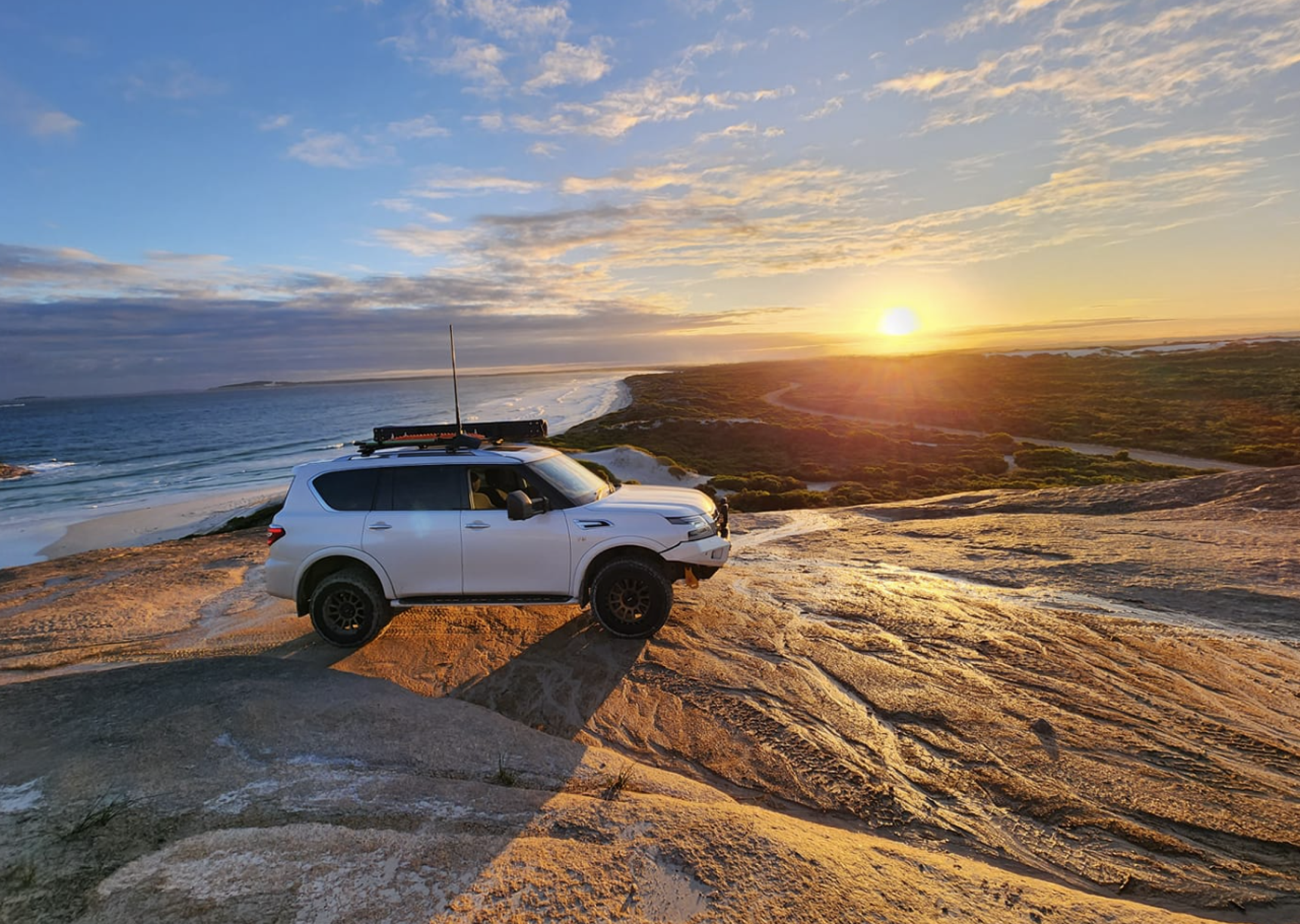
1
We’ve had the DMW Industries 4499kg GVM upgrade with two-inch lift. Tricked it up with a Raslarr front bar, carbon winch, Elite Podium wheels and a Bushwakka 270° awning. We’ve towed our 21ft caravan 35,000km around Australia so far and it’s going to be hard to beat going along the Gibb River Road. An absolute amazing part of the country and an epic journey to get there as well – Brenden Clark
2011 Toyota LandCruiser 76
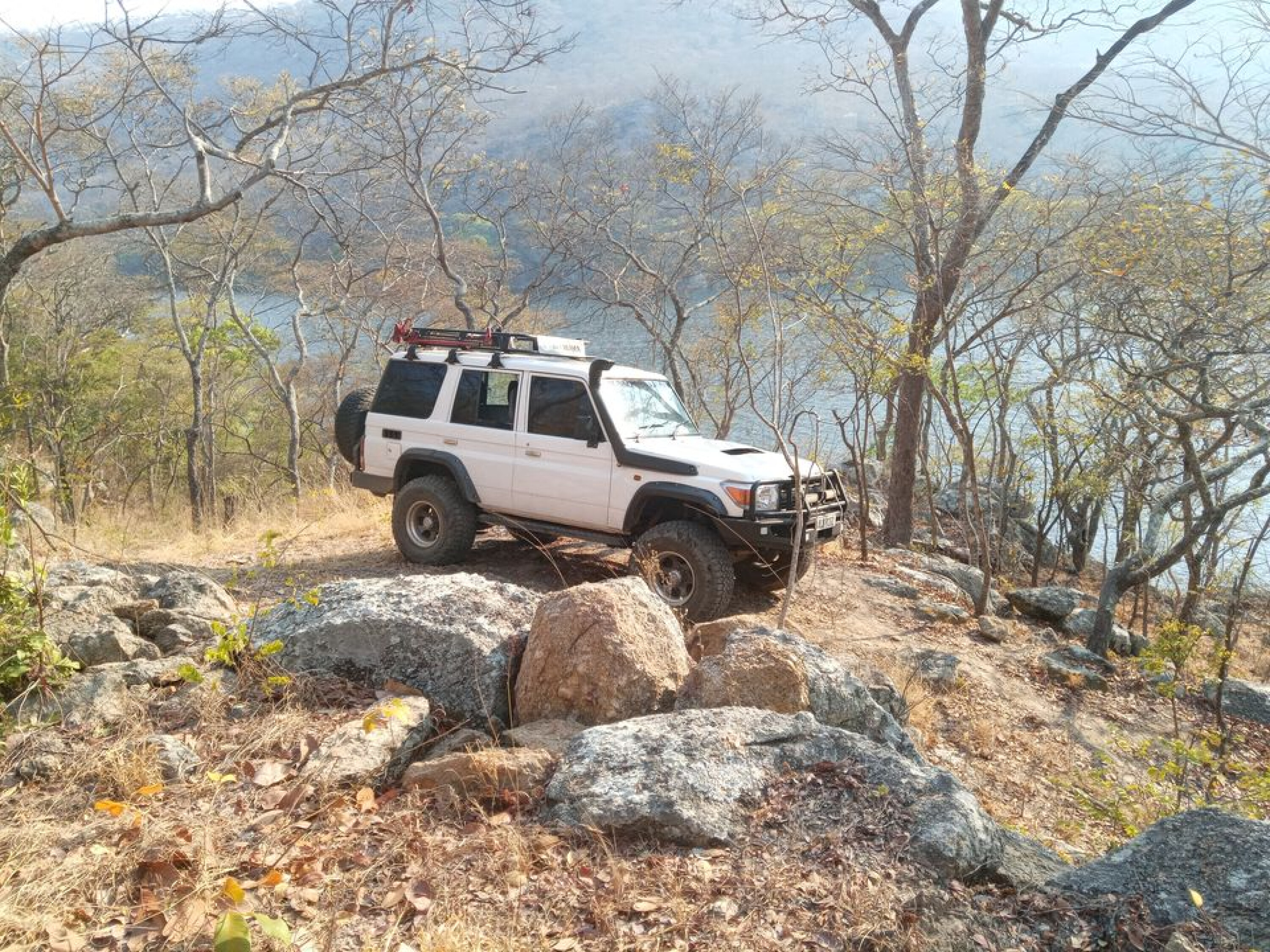
1
I have modified it a bit, with the main mod changing the tyre profile from the original 7.5-R16s to a Black Bear 315/75R16, a brilliant tyre that handles the terrian in the Great Escapement of Southern Africa perfectly – Reuben Siame
2022 Mitsubishi Triton GSR
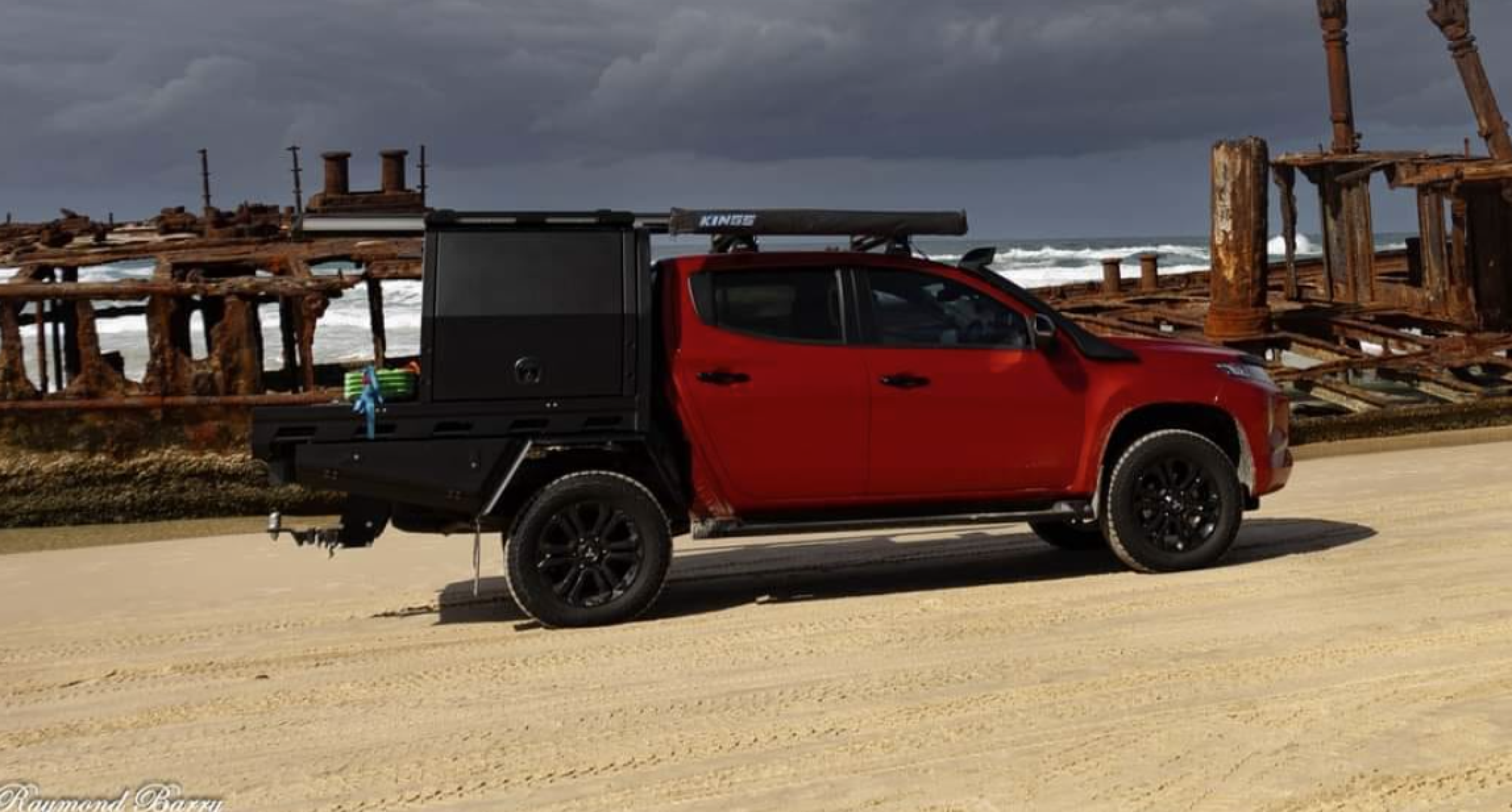
1
Still pretty much stock. I’ve just added a Mitsubishi alloy tray and canopy, and upgraded the rear suspension. Will be built for touring when finished. So far the best place I’ve taken it to is K’gari (Fraser Island) – Raymond Barry
2023 Ford Ranger Raptor
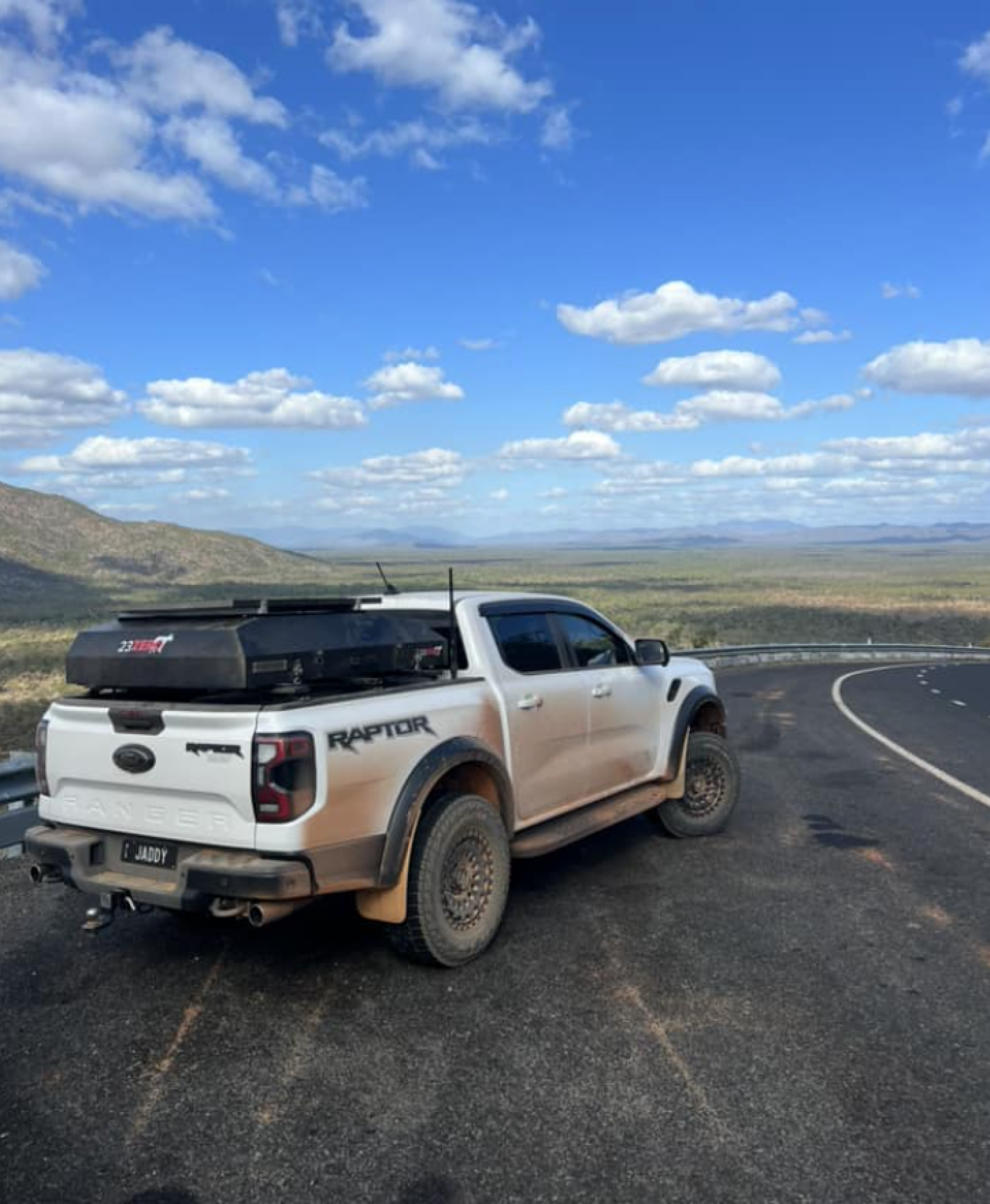
1
By far the best place I’ve been is Lakefield National Park in Cape York – camping, barra fishing and no phone reception. The Raptor has a two-inch King spring lift; Hussler rims; Falken Wildpeak tyres; 23zero roof-top tent; dual battery set-up, and a Uniden Hideaway UHF – Jadd Cohu
Latest Gear Guides
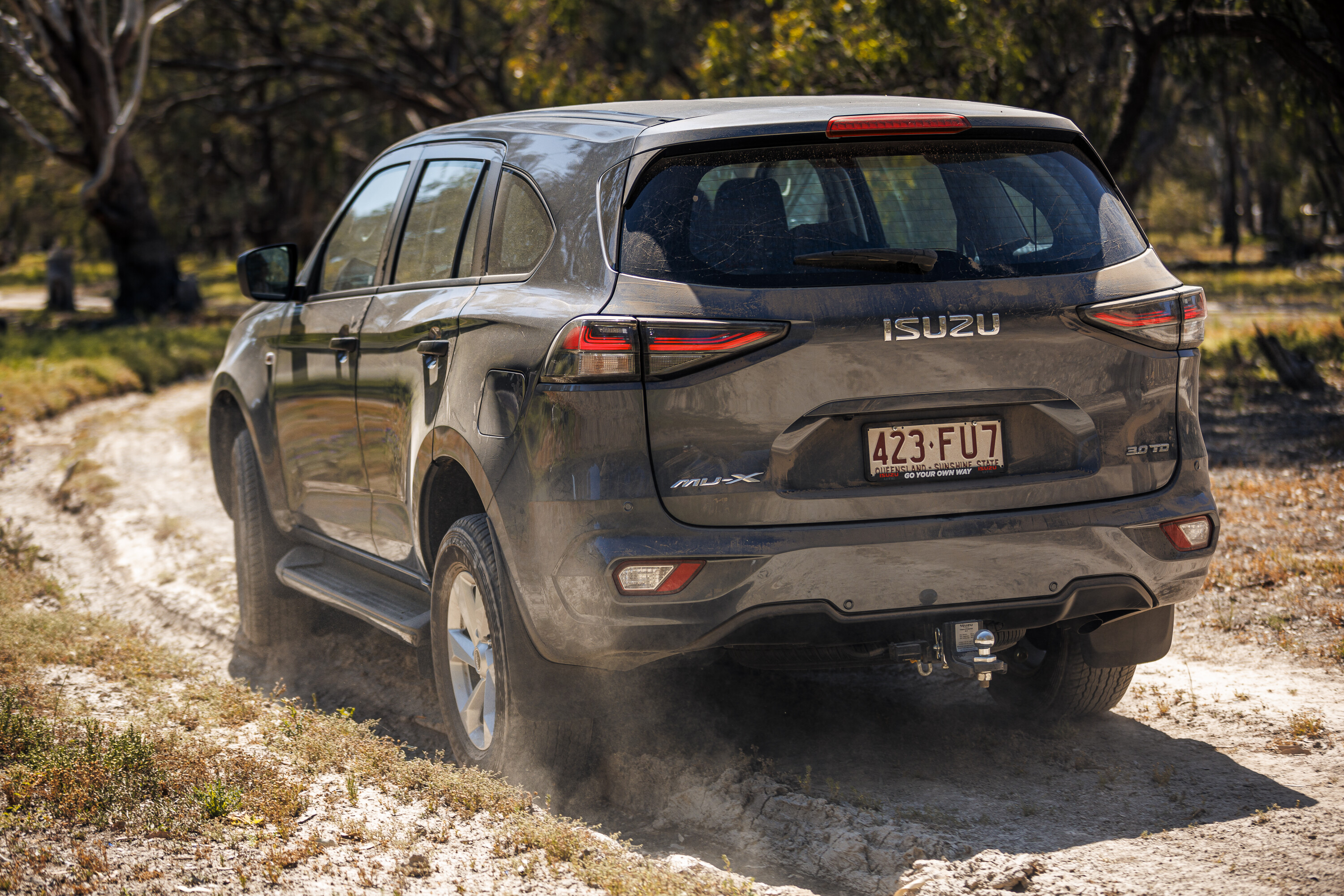
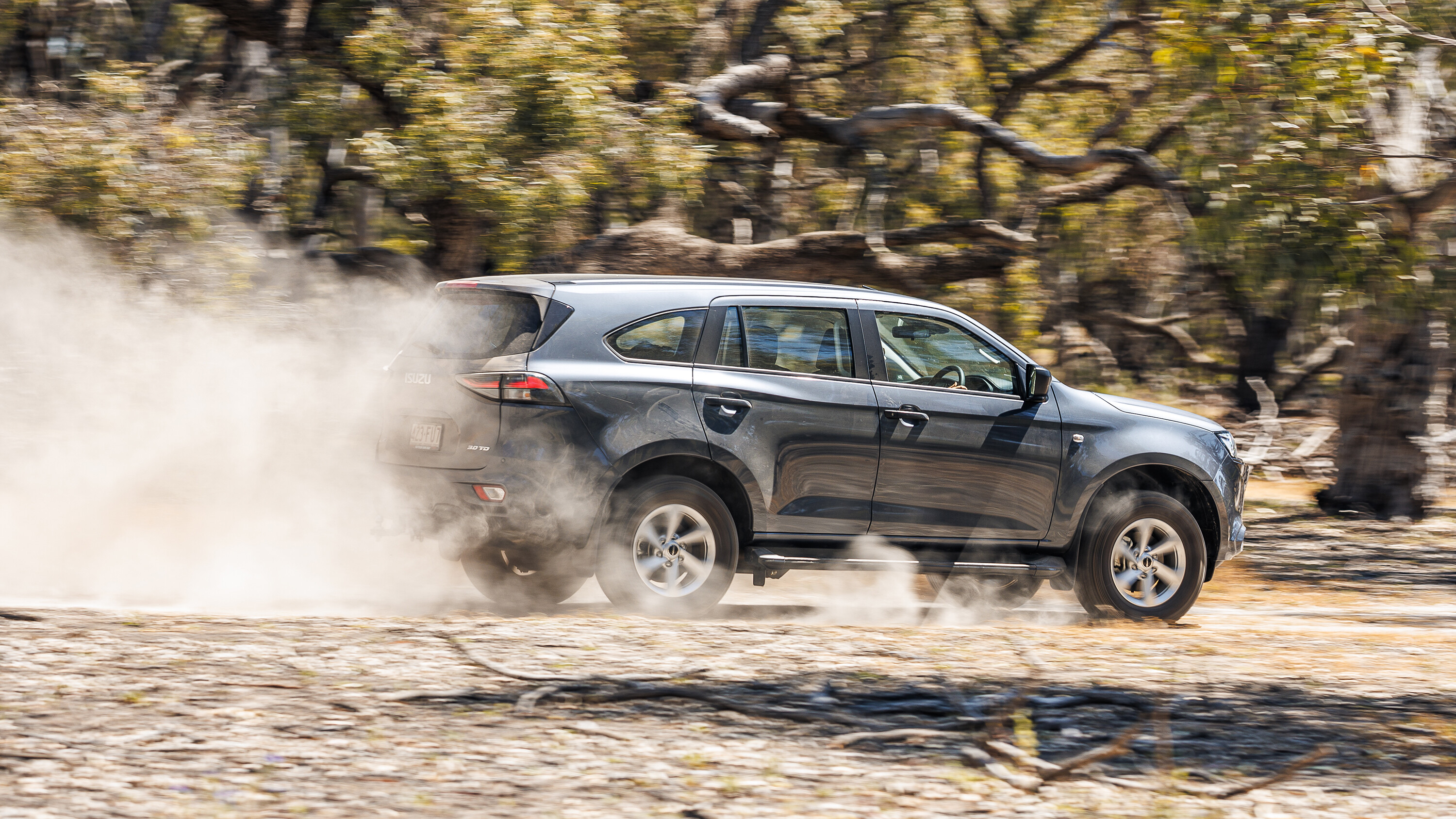
The 2024 Isuzu MU-X off-road large SUV will offer a smaller, cheaper engine option next year.
Isuzu Ute Australia said the 1.9-litre turbo-diesel from base versions of the related D-Max ute (and its Mazda BT-50 twin-under-the-skin) will be added to the seven-seat MU-X line-up sometime in 2024.
“IUA plans to introduce the Isuzu 1.9L engine available in some current D-MAX variants to the MU-X range in 2024,” said an Isuzu Ute Australia spokesperson.
1
“Exact timings and model range at this stage is not confirmed, but we will provide more information when it becomes available”
Available in the current MU-X overseas, the ‘RZ4E’ 1.9-litre turbo-diesel produces 110kW and 350Nm – down 30Nm and 100Nm compared to the familiar 150kW/450Nm ‘4JJ3-TCX’ 3.0-litre four-cylinder turbo-diesel.
Both powertrains are matched to a six-speed torque-converter automatic transmission.
If the D-Max is a guide, the 1.9-litre engine would likely be offered in the entry-level MU-X LS-M two-wheel-drive variant aimed at fleet buyers.
The price difference between a D-Max SX 1.9-litre auto and SX 3.0-litre auto is $2000, suggesting the MU-X’s entry price could fall to approximately $46,900 before on-road costs.
D-Max and BT-50 variants fitted with the 1.9-litre diesel have a reduced braked towing capacity of 2800 kilograms for the manual or 3000kg for the automatic, compared to 3500kg for 3.0-litre diesel versions of the MU-X, D-Max and BT-50.
1
The 1.9-litre MU-X is likely to also be limited to a three-tonne capacity.
An improved fuel consumption rating is expected with the 1.9-litre D-Max 4×2 dual-cab auto rated at 6.7L/100km compared to 7.7L/100km for an equivalent 3.0-litre variant – suggesting the 1.9-litre MU-X 4×2 could fall from 7.8L/100km to around 6.8L/100km, less than a four-cylinder bi-turbo Ford Everest 4×2.
Further details about the 1.9-litre 2024 Isuzu MU-X SUV are due to be announced at a later date.
MORE
Everything Isuzu
If you own a 76, 78 or 79 Series LandCruiser, you know that you can’t trust the handbrake as it is a useless accessory.
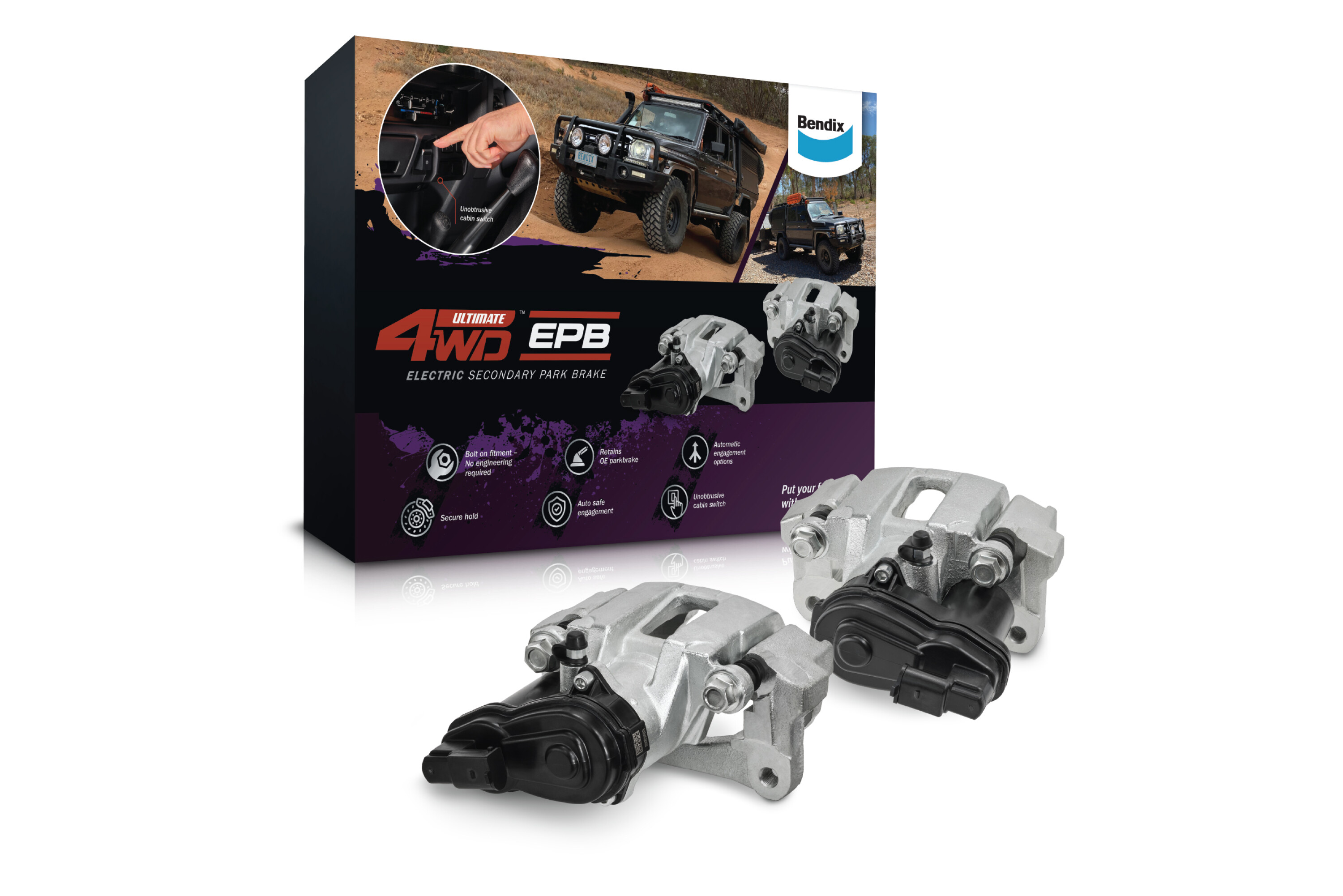
Bendix has launched its Electric Secondary Park Brake (EPB) for these vehicles which will change the way they are parked. The Bendix EPB provides additional holding ability as it features single-piston callipers that act on the rear disk brake rotors which minimise the likelihood of your 70 Series rolling away from you on steep hills.
For added versatility, the EPB can also be configured for automatically engaged functionality for instances such as when the driver’s door is left ajar when you jump out to open a gate. The EPB also has a ‘service mode’ that winds back the EPB to enable the brake pads to be changed, with instructions detailing this mode included in each kit.
3
“The new Bendix Electronic Park Brake was developed and tested over an 18-month period, and we’re very excited to now bring this product to market,” said Ian Campbell, Bendix Product Manager.
“For owners and regular users of LandCruiser 76, 78 and 79 Series – particularly those who tow or carry high payloads – the secondary brake is a revelation in the added surety and safety it will provide against rollaway,” he added.
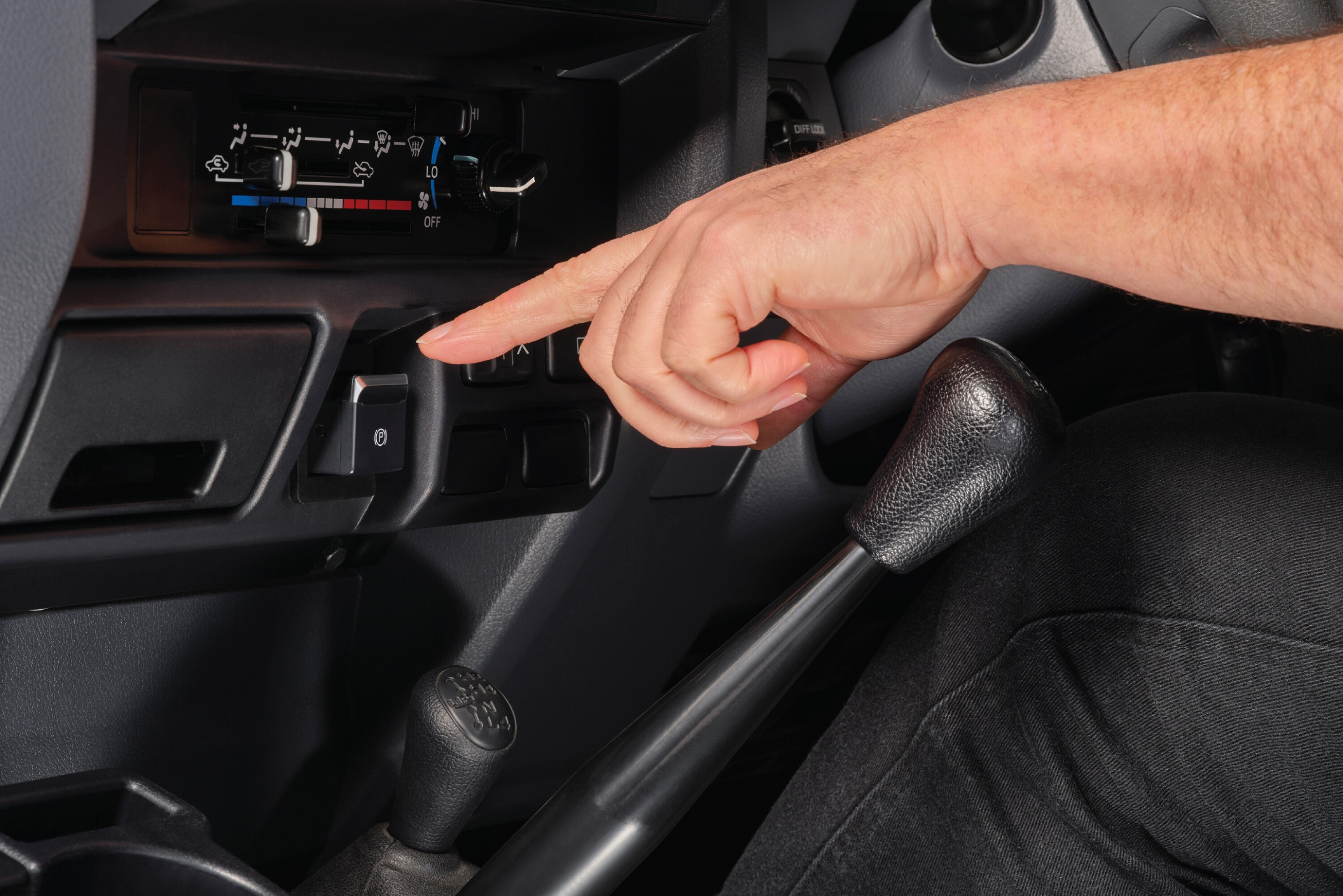
The new Electric Secondary Park Brake offers a ‘bolt-on’ fitment and complements the existing OE park brake, with no change to the vehicle’s hydraulic mechanism, brake pad shape or original hand brake necessary.
2
Fitting the EPB is a simple job for a mechanic with detailed installation instructions provided. Bendix suggests an experienced technician will take 60 to 90 minutes, with no special tools required. ADR compliance of the 70 Series is maintained and doesn’t require engineering certification once the EPB is installed.
Included in each EPB kit, which retails for $2799, are two brake callipers with EPB functionality, a wiring loom, the electronic control module, an OME-style control switch for dashboard installation and one pair of DB1200 Ultimate 4WD Brake Pads.