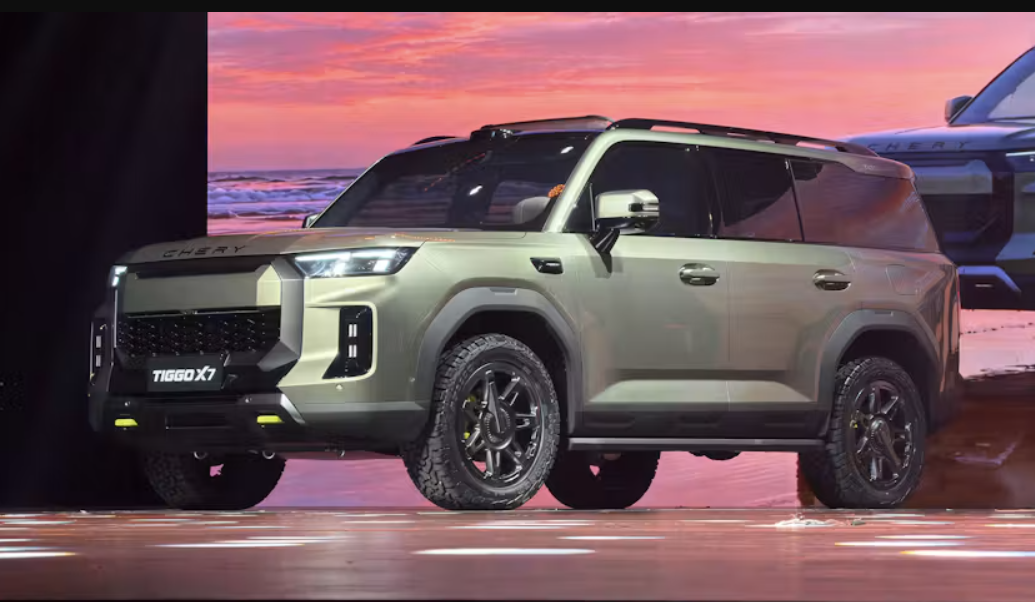
Chery has unveiled an off-road-focused version of its Tiggo 7 SUV, dubbed the Tiggo X7, with tougher styling and a range of features aimed at improving its ability away from sealed roads. But does it have the hardware to match its looks?
Revealed at the 2026 Chery International User Summit in Wuhu, China, the Tiggo X7 is the first in a new family of Tiggo X models. The off-road version gets increased ground clearance, chunky all-terrain tyres and six terrain-specific driving modes. These include settings for snow, mud, sand, rocks and water wading, although the sixth mode has not been detailed.
Those features could help on gravel roads and easier bush tracks, but tackling the Simpson Desert, rocky tracks in the Victorian High Country or muddy trails in North Queensland takes more than terrain modes and a rugged body kit.
Chery has yet to confirm whether the Tiggo X7 will have all-wheel drive or a proper four-wheel-drive system with low-range gearing. Differential locks, underbody protection and approach, departure and ramp-over angles also remain unconfirmed.
Its reported maximum towing capacity of 1500kg is modest compared with traditional off-road wagons, many of which can tow up to 3500kg. Australian-market specifications have not been confirmed.
The exterior features a squarer front end, prominent wheel-arch cladding and C-shaped rear LED tail-lights. The bumpers also feature trim designed to mimic recovery points, although their functionality has not been confirmed. Inside, the Tiggo X7 shares a layout with the updated Tiggo 7, including a landscape-oriented central touchscreen and digital instrument cluster.
Chery has not confirmed Australian availability, pricing or a local launch date.
Chery Tiggo X7 quickfire FAQs
What is the Chery Tiggo X7?
An off-road-focused version of the Tiggo 7 SUV and the first model in a new Tiggo X family.
Does the Chery Tiggo X7 even have four-wheel drive?
Chery has yet to confirm its drivetrain or whether it will feature low-range gearing.
What off-road features does the Tiggo X7 have?
It gets increased ground clearance, all-terrain tyres and six terrain modes, including settings for mud, sand and rocks.
How much can the Chery Tiggo X7 tow?
Its reported maximum towing capacity is just 1500kg.
Will the Chery Tiggo X7 come to Australia?
An Australian launch has not been confirmed.
The GWM Cannon Hi4-T plug-in hybrid ute has arrived at Australian dealerships, with customer test drives now available.
As previously reported, the Cannon Hi4-T is available in Lux and Ultra grades, with launch pricing starting at $47,990 driveaway for the Lux and $51,990 for the Ultra for eligible ABN holders. Private buyers pay $48,990 and $52,990 respectively, with these prices including a $2000 driveaway bonus.
The promotion was due to expire on October 31, but GWM has extended its introductory offers until November 30, 2026. Buyers can choose between the $2000 driveaway bonus and a $2000 fuel card, although the offers cannot be combined. Vehicles must be delivered by November 30 to qualify.
Once the promotion ends, the Lux will start at $49,990 driveaway for eligible ABN holders, making it Australia’s cheapest plug-in hybrid 4×4 ute on a standard ABN driveaway price.
The JAC Hunter PHEV Pro is priced at $49,988 plus on-road costs, while the Hunter X costs $54,844 plus on-roads. The BYD Shark starts at $55,900 plus on-road costs for the Dynamic, rising to $57,900 for the Premium and $62,900 for the Performance. The Ford Ranger PHEV starts at $59,000 driveaway for the XL.
The Cannon Hi4-T pairs a 2.0-litre turbo-petrol engine with GWM’s Hi4-T plug-in hybrid system to produce a combined 310kW and 750Nm. A 33.1kWh battery provides a claimed electric-only range of up to 115km on the NEDC test cycle.
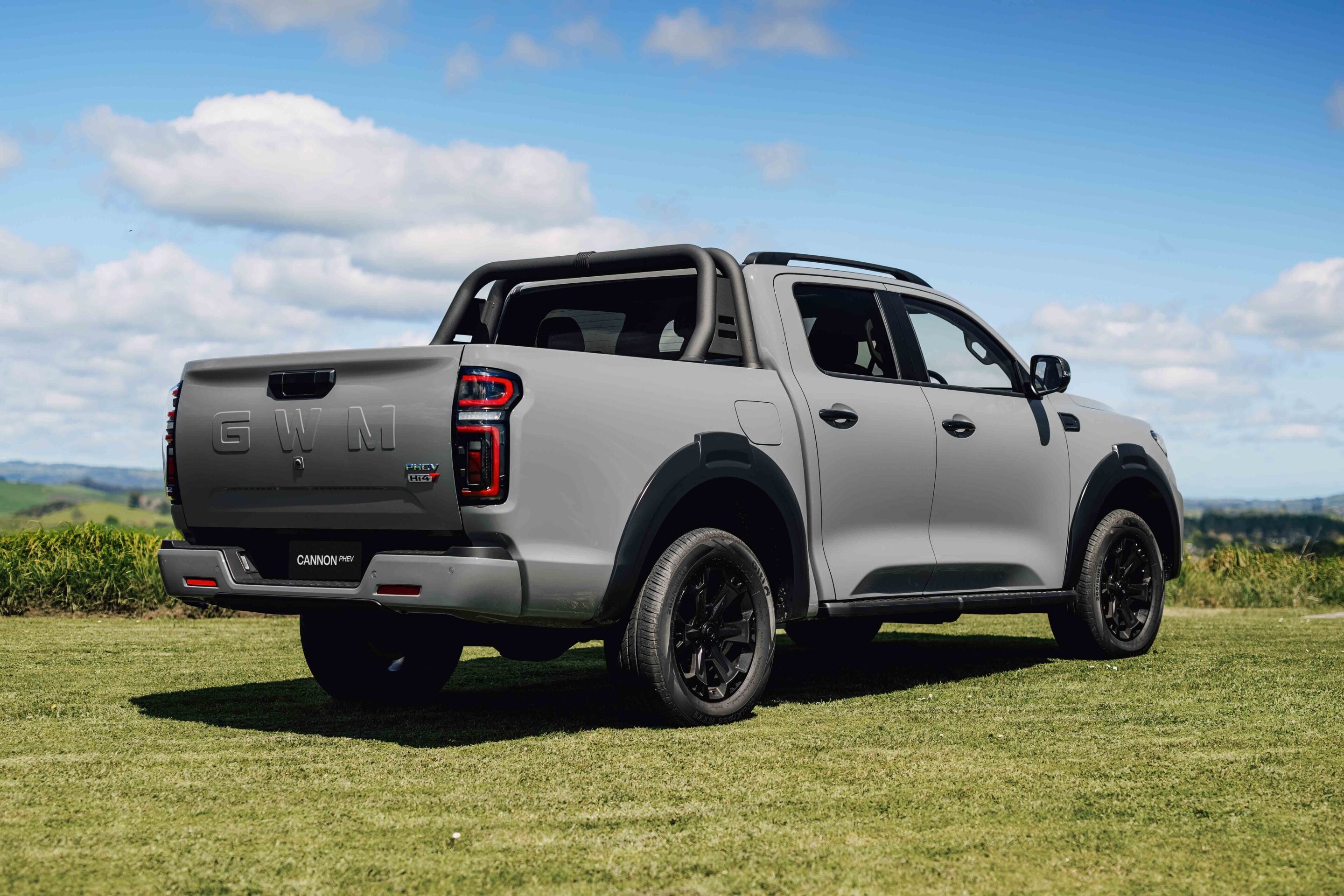
It also features a mechanical four-wheel-drive system and a braked towing capacity of 3500kg, combining plug-in hybrid efficiency with the hardware expected of a four-wheel-drive ute.
The new model joins the larger Cannon Alpha Hi4-T in GWM’s Australian line-up, expanding the brand’s PHEV range alongside its diesel offerings. GWM says it is now the only manufacturer in Australia to offer two distinct plug-in hybrid ute models.
Customers can contact their local GWM dealer to arrange a test drive. The launch offers are subject to terms and conditions and vehicle availability.
GWM Cannon Hi4-T PHEV FAQs
How much does the GWM Cannon Hi4-T PHEV cost?
Launch prices start at $47,990 driveaway for eligible ABN holders.
How far can the Cannon Hi4-T travel on electric power?
It has a claimed electric driving range of up to 115km on the NEDC test cycle.
How much can the Cannon Hi4-T tow?
It has a braked towing capacity of 3500kg.
What engine does the Cannon Hi4-T use?
It pairs a 2.0-litre turbo-petrol engine with a plug-in hybrid system.
When do the Cannon Hi4-T launch offers end?
The $2000 driveaway bonus or alternative $2000 fuel card offer applies to vehicles delivered by November 30, 2026.
Chery has partnered with Australian-owned Ironman 4×4 to offer a range of accessories for the upcoming Stockman, available to order through Chery dealerships.
The range includes an aluminium bull bar, steel side steps, roof rack, canopy, roller drawers, tow bar and suspension lift.
The APEX bull bar features a 12,000lb winch cradle, two rated recovery points and a 4mm front skid plate. The Raid roof rack has an optional light bar mount, while the Raid aluminium canopy is available with solid or glass doors, optional central locking, side storage, dog windows and roof bars. It weighs around 70kg fitted and is rated to carry 180kg dynamically or 380kg when stationary.
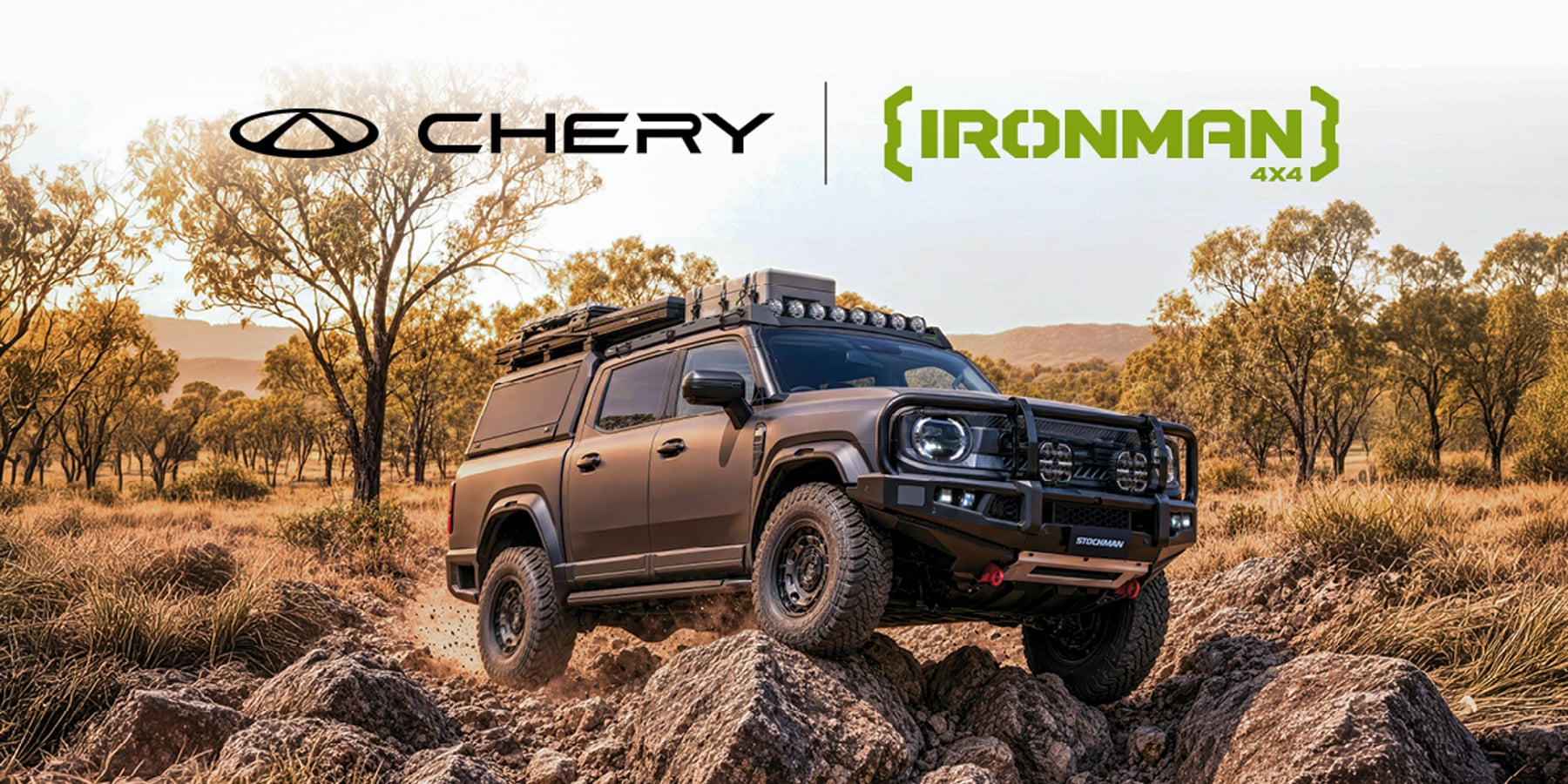
Storage options include aluminium roller drawers in various heights, with integrated fridge slides and wing panels. The rear-step tow bar is rated to the Stockman’s 3500kg towing capacity, while the IM2.5 suspension kit provides a 50mm lift front and rear, with spring options for constant loads of 200kg or 300kg.
The accessories have been adapted for the Stockman, with 5052 aluminium alloy used in relevant components. Ironman 4×4 says the range has been tested for structural performance, load capacity, corrosion, water ingress, lighting, durability and vehicle integration.
“No matter how capable the Stockman is, Australian off-roaders still want a bull bar, a lift, a canopy and a roof rack,” said Lucas Harris, Chief Operating Officer at Chery Australia. “This range is how they get that, backed by a trusted Australian brand.”
A federally approved gross vehicle mass (GVM) upgrade, including increased front and rear axle-load ratings, is also expected to follow the initial launch.
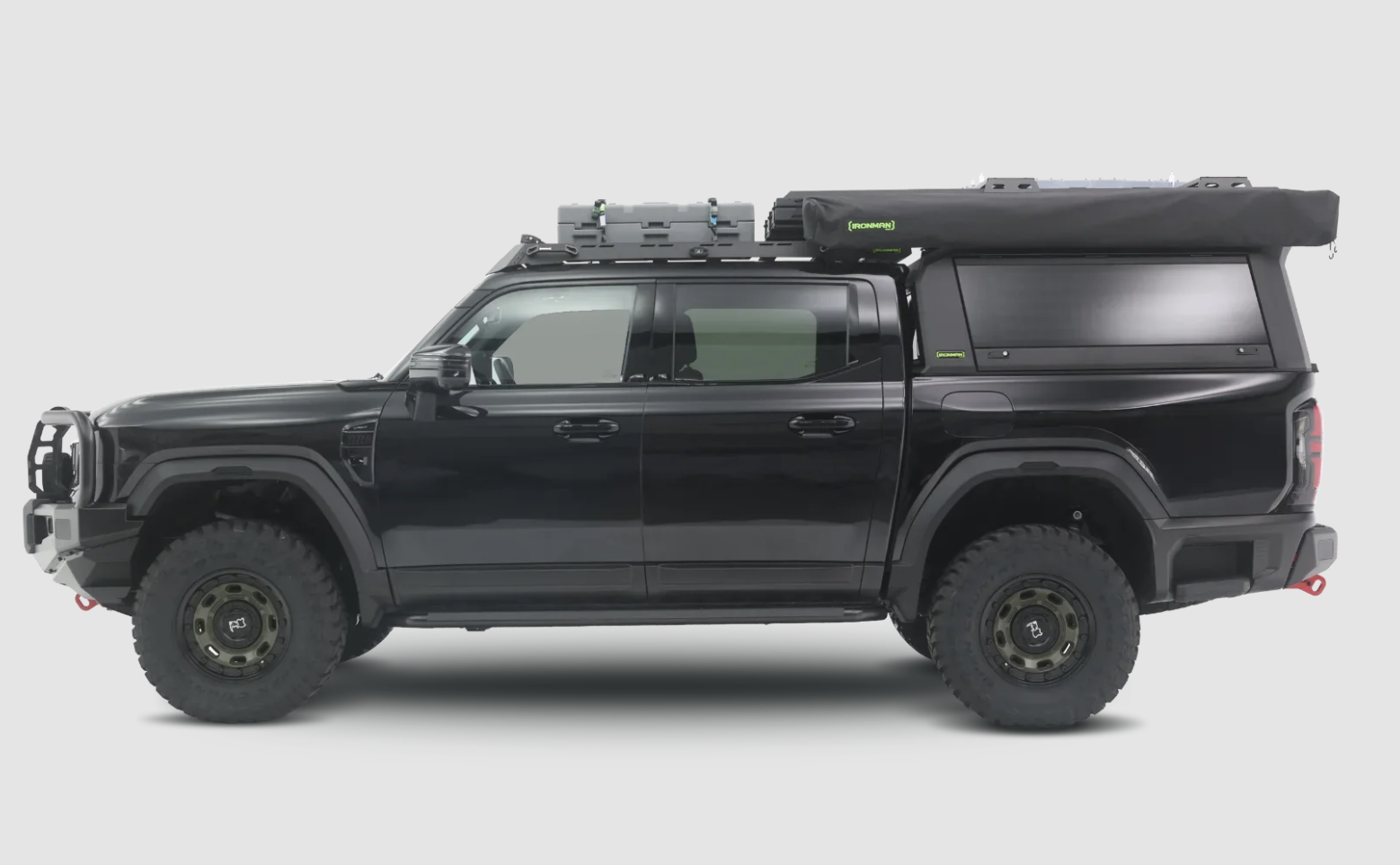
Ironman 4×4 has teamed up with other ute brands on factory-backed accessories, developing a range for the BYD Shark 6 in 2025 and working with Foton on genuine accessories for the Tunland V7 and V9 earlier in 2026.
The Stockman will be powered by a 2.5-litre turbo-diesel plug-in hybrid system producing a combined 350kW and 800Nm. Its 34kWh battery will offer up to 96km of electric driving range on the WLTP cycle. The ute will also feature four-wheel drive, front, centre and rear differential locks, more than 247mm of ground clearance, double-wishbone front suspension and rear leaf springs.
“The partnership gave us proper under-the-hood access to the Stockman,” added Chris Hole from Ironman 4×4. “That is why we will match Chery’s seven-year manufacturer warranty on Ironman 4×4 accessories ordered with the vehicle.”
The accessories can be ordered with a new Chery Stockman through local Chery dealerships.
Ironman 4×4 accessories available for the Chery Stockman:
- APEX bull bar: Triple-hoop aluminium bar, 12,000lb winch cradle, two rated recovery points and 4mm front skid plate.
- Premium side rails and steps: Steel steps with slip-resistant treads, available with or without side rails.
- Raid roof rack: Low-profile aluminium rack with optional light bar mounting.
- Raid canopy: Aluminium construction with solid or glass doors, optional central locking, side storage, dog windows and roof bars.
- Roller drawers: Aluminium drawers in various heights, with integrated fridge slides and wing panels.
- Rear-step tow bar: Rated to the Stockman’s 3500kg towing capacity, with integrated rated recovery points.
- IM2.5 suspension: 50mm front and rear lift, with spring options for 200kg or 300kg constant loads.
- GVM upgrade: Planned federally approved upgrade with increased front and rear axle-load ratings.
A lift kit might look like a straightforward purchase: Pick a lift height, choose your springs and shocks, and get it fitted.
However, raising a 4WD affects more than ride height. Other components must still operate safely and correctly once the vehicle is lifted. Some kits include only the main suspension components, while others include additional parts to maintain clearance, correct alignment or reduce strain on the driveline. That’s one reason two kits advertised at the same lift height can have quite different prices.
Not every 4WD needs every extra part. The key is knowing what your vehicle requires, what’s included in the kit and whether anything else needs to be addressed before fitment. Suspension specialists such as Superior Engineering (↗) can help identify which supporting components are needed for a particular vehicle and lift height.
Start with springs and shocks
Springs and shock absorbers are the core components of most suspension lift kits. Springs support the vehicle’s weight and establish ride height, while shocks control suspension movement over bumps and uneven ground.
Depending on the suspension design, a 4WD may use coil springs or leaf springs with separate shock absorbers. Some vehicles use struts, which combine the spring and shock absorber into one assembly.
These components need to suit the intended lift height, vehicle weight and type of driving. Spring selection also needs to account for permanent accessories and typical loads, but fitting heavier springs doesn’t automatically increase the vehicle’s legal payload or gross vehicle mass (GVM).
A spring and shock package might fit without trouble, but that doesn’t guarantee the rest of the suspension, steering and driveline will work correctly throughout their range of movement.
Which extra parts might you need?
The parts list depends on the vehicle and the finished setup. Some components are essential for a particular lift, while others are only needed when the height or suspension design calls for them. Superior Engineering (↗) offers suspension components and lift kit solutions, but the parts required will depend on the vehicle and the finished setup.
Extended brake lines
Brake lines need enough length to accommodate suspension movement, including when the wheels drop to full extension. A lift can leave the original lines too short. If a line becomes stretched, strained or caught as the suspension moves, it can be damaged and compromise braking. Extended lines may be needed to provide sufficient length and clearance. ABS wiring and other cables also need to be checked to ensure they aren’t stretched or damaged as suspension travel changes.
A small lift doesn’t automatically require longer lines, but the originals must be checked at full suspension extension. If they become taut or interfere with other components, the setup needs correcting before the vehicle is driven.
Sway bar links
Sway bars help control body roll through corners by linking the suspension on opposite sides of the vehicle. A lift changes the bar’s position and the angle of its links, which can affect how the system operates. Depending on the vehicle and lift height, extended or adjustable links may be needed to maintain suitable geometry and prevent binding or interference throughout suspension travel.
Camber and caster correction
Lifting a 4WD can alter wheel alignment, particularly on vehicles with independent front suspension. Camber is the inward or outward tilt of a wheel when viewed from the front. Caster is the steering axis angle when viewed from the side, influencing steering stability and how the wheel returns towards centre. Toe describes the direction the wheels point relative to each other when viewed from above.
If the lift pushes alignment outside the required specifications or beyond the factory adjustment range, correction parts may be needed. These can include adjustable upper control arms or replacement bushes designed to change alignment angles.
A wheel alignment after fitting is essential. If the settings can’t be brought within the appropriate specifications using factory adjustments, additional correction may be required to maintain predictable steering and limit uneven tyre wear.
Diff drop kits
A diff drop uses brackets or spacers to lower the front differential slightly relative to the chassis on some independent front suspension 4WDs. This can reduce front CV shaft angles after a lift, potentially reducing strain on their joints. A diff drop isn’t necessary or suitable for every 4WD, and it won’t correct every driveline issue. Its suitability and effectiveness depend on the vehicle, lift height and resulting CV angles.
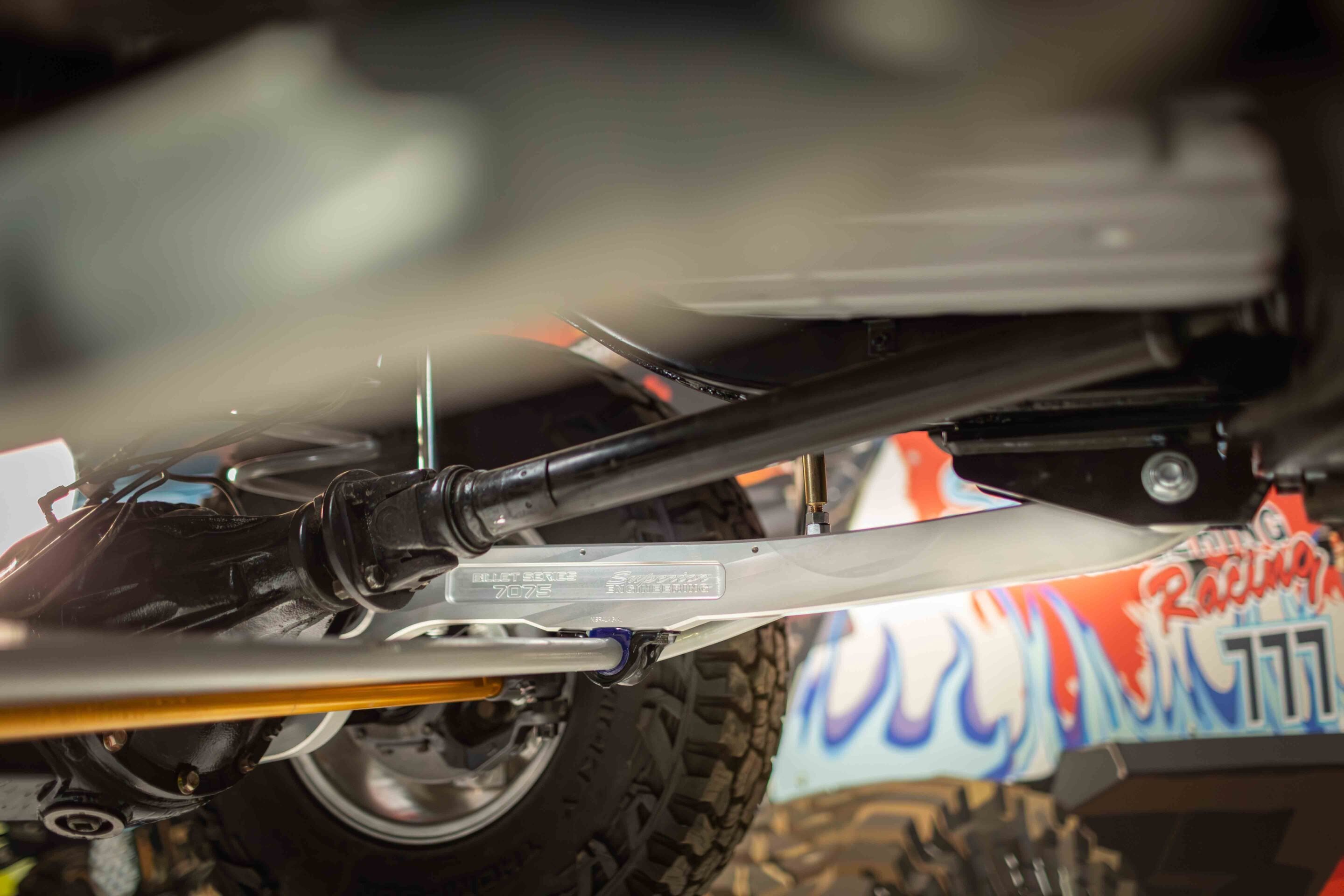
CV shafts and driveshafts
CV shafts transfer drive from the differential to the wheels while allowing suspension and steering movement. Driveshafts transfer power between the transmission, transfer case and differentials. A lift can push these components beyond their intended operating angles or available movement, leading to increased wear, vibration or binding. Taller lifts make these issues more important to check.
Depending on the vehicle, the solution may involve geometry correction, different shafts or other changes to the setup. Replacement CV shafts or driveshafts aren’t automatically required for every lift, but the standard components must remain within their operating limits.
Bump stops and extensions
Bump stops limit suspension compression, helping prevent tyres and suspension components from contacting parts of the vehicle they shouldn’t. They also help keep shocks and other components within their intended range.
Depending on the lift and suspension design, extensions or other changes may be needed to maintain clearance at full compression. The suspension must have enough room to move without the tyres hitting the bodywork or components binding. Bump stops are part of the system that controls suspension travel, so changing or removing them without checking the effects can create problems elsewhere.
Steering components
Some 4WDs need steering changes when lifted, particularly at greater heights. Depending on the design, this may involve a drag link, track bar or other components.
A drag link transfers steering movement to the wheels. A track bar, also known as a Panhard rod, is used on some solid-axle suspension designs to locate the axle sideways beneath the vehicle. If lifting changes how these components move relative to the suspension, the vehicle may develop bump steer, where suspension movement causes unwanted changes in steering direction.
Some solid-axle setups may also need a corrected or adjustable track bar to keep the axle properly centred. Not every lift requires replacement steering parts, but the system needs to be checked for correct operation throughout suspension travel.
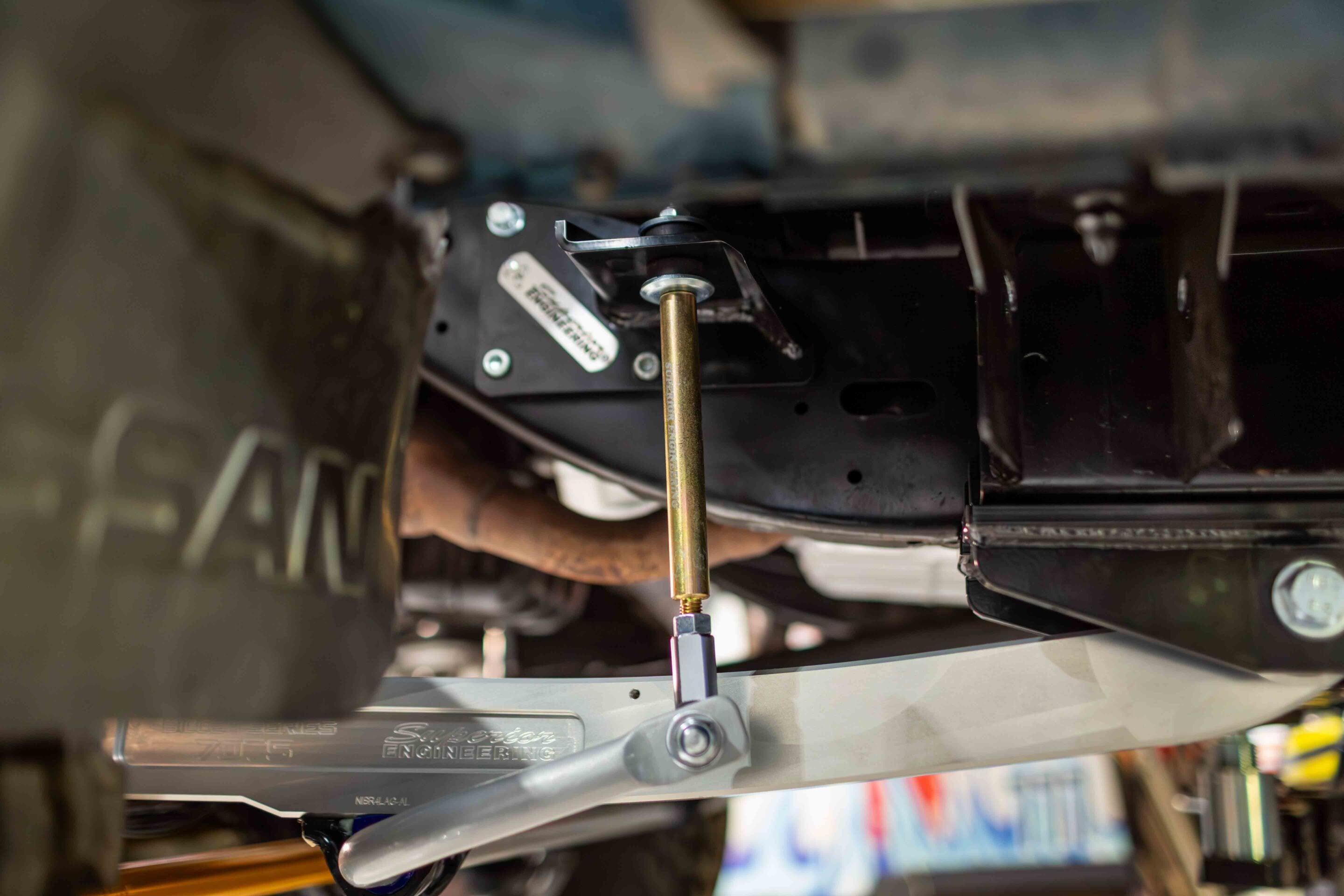
Does a two-inch lift need fewer parts than a three-inch lift?
Generally, a taller lift is more likely to need additional correction parts, but height alone doesn’t determine what’s required.
A two-inch lift on one 4WD may work with a straightforward spring and shock package, while another may need alignment correction, different sway bar links or extended brake lines. Vehicle design and suspension travel also influence the parts list. At three inches or higher, it’s particularly important to check CV and driveshaft angles, steering geometry, brake line length and suspension clearance. Some vehicles may need more substantial correction or replacement components.
Spacer lifts need similar scrutiny. A spacer raises ride height without necessarily replacing the original springs, but it doesn’t automatically correct suspension geometry or provide additional suspension travel. There’s no universal rule that every two-inch lift needs the same extras, or that every three-inch lift needs a particular set of upgrades. The parts list should match the vehicle and finished setup, not just the number on the box.
Why are some lift kits so much cheaper?
Price differences don’t always come down to brand or spring and shock quality. One kit may include only the main suspension components, while another includes supporting parts selected for that vehicle and lift height.
A cheaper kit isn’t automatically a bad buy if it suits the intended setup. The problem is comparing kits as though they’re identical when one may leave out parts your vehicle needs.
Before buying, check exactly what’s included. Ask whether the price covers everything required for the intended lift or whether brake lines, sway bar links, alignment correction or other components will cost extra. When comparing options, ask suppliers such as Superior Engineering (↗) to clarify what’s included in the kit and whether any additional components are required for your vehicle.
Factor those costs into the comparison. A lower advertised price can become less attractive if several additional parts are needed later. The more expensive kit isn’t automatically better either; what matters is whether its components are appropriate and the finished setup is complete.
Get the parts list right before fitting
The supporting parts you need depend on the vehicle, lift height, suspension design and how the 4WD will be used.
Before buying, ask for a parts list that identifies what’s included, what’s required for your setup and what’s optional. If you’re comparing quotes, make sure you’re comparing the same lift height and components, not just the headline price.
After fitting, have the wheel alignment checked and make sure brake lines, ABS wiring, steering and driveline components have adequate clearance and movement throughout suspension travel. Complete any necessary corrections before driving, and check the applicable state or territory modification requirements to ensure the finished setup is compliant for road use.
The aim isn’t to buy the biggest kit or bolt on every available extra. It’s to make sure the suspension, steering and braking systems work properly once the vehicle is lifted.
Fresh details on the Australia-bound Freelander 8 have emerged from a briefing for international media and partners in China, shedding new light on the export model’s plug-in hybrid powertrain, performance and off-road capability.
The first model from the revived Chery and Jaguar Land Rover joint-venture brand, the Freelander 8 is scheduled to reach Australia in 2027. While the brand’s international plans and some vehicle specifications have been outlined previously, the latest briefing provides further detail on the specification planned for export markets.
Unlike the Chinese-market version, which uses a range-extender system, the export Freelander 8 pairs a 2.0-litre twin-turbo petrol engine with electric motors on both axles. Combined outputs are quoted at 460kW and 662Nm.
A 34.12kWh lithium iron phosphate battery provides a claimed 110km of electric range under the WLTC cycle, with a total driving range of 886km. Charging includes 11kW AC capability and DC fast charging, with a 20 to 80 per cent charge taking less than 20 minutes. The SUV is claimed to accelerate from 0-100km/h in 5.8 seconds.
For comparison, the Chinese-market model uses a 1.5-litre turbo-petrol engine as a generator, with dual electric motors producing 610kW and 813Nm. Its larger 60.3kWh battery delivers a claimed 310km of electric range under the CLTC cycle.
The latest briefing also detailed the export model’s off-road hardware. Features include dual-chamber air suspension with continuously controlled damping, an electronic rear limited-slip differential and nine terrain modes. Ground clearance reaches 266mm, while the claimed wading depth is 900mm.
Measuring 5118mm long, 2050mm wide and 1926mm tall, the Freelander 8 has a 3040mm wheelbase. Five- and six-seat configurations are planned, with cabin equipment including a 46.3-inch mini-LED display and an available 23-speaker sound system.
Freelander has confirmed an Australian launch in 2027, but local pricing, specifications and the final model range have yet to be announced.
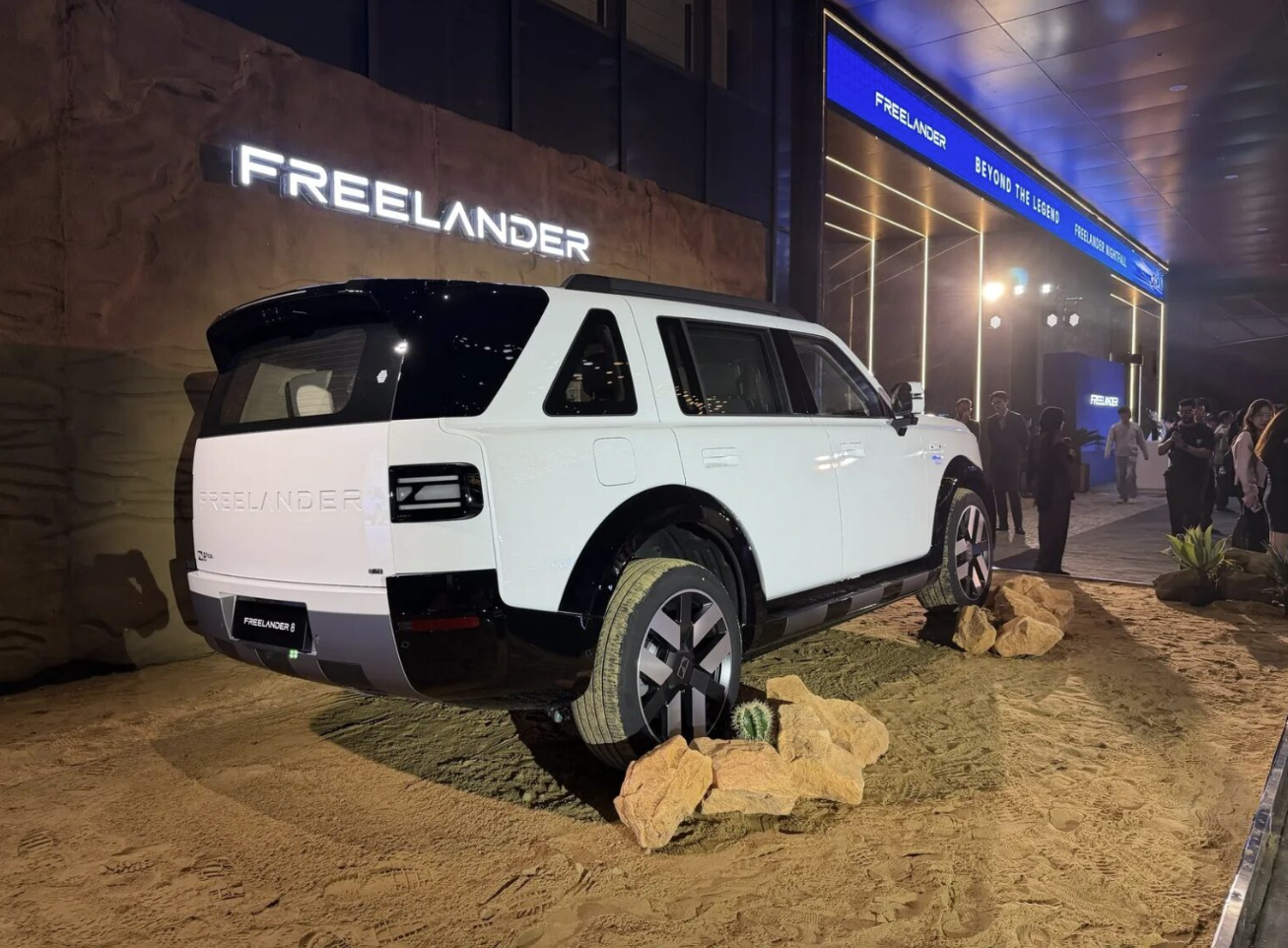
What we know about the Freelander 8
- Export powertrain: 2.0-litre twin-turbo petrol engine with electric motors on both axles.
- Power and torque: 460kW and 662Nm combined.
- Battery and range: 34.12kWh lithium iron phosphate battery, 110km electric range and 886km combined range (WLTC).
- Charging: 11kW AC charging and a claimed 20-80 per cent DC charge in less than 20 minutes.
- Performance: Claimed 0-100km/h acceleration in 5.8 seconds.
- Off-road hardware: Dual-chamber air suspension, continuously controlled damping, electronic rear limited-slip differential and nine terrain modes.
- Ground clearance and wading: Up to 266mm ground clearance and 900mm wading depth.
- Dimensions: 5118mm long, 2050mm wide and 1926mm tall, with a 3040mm wheelbase.
- Seating: Five- and six-seat configurations.
- Cabin technology: 46.3-inch mini-LED display and available 23-speaker sound system.
The Rockley Pub in the central-west of New South Wales played host to a gathering of more than 70 Ineos Grenadiers in October for the Quatermuster.
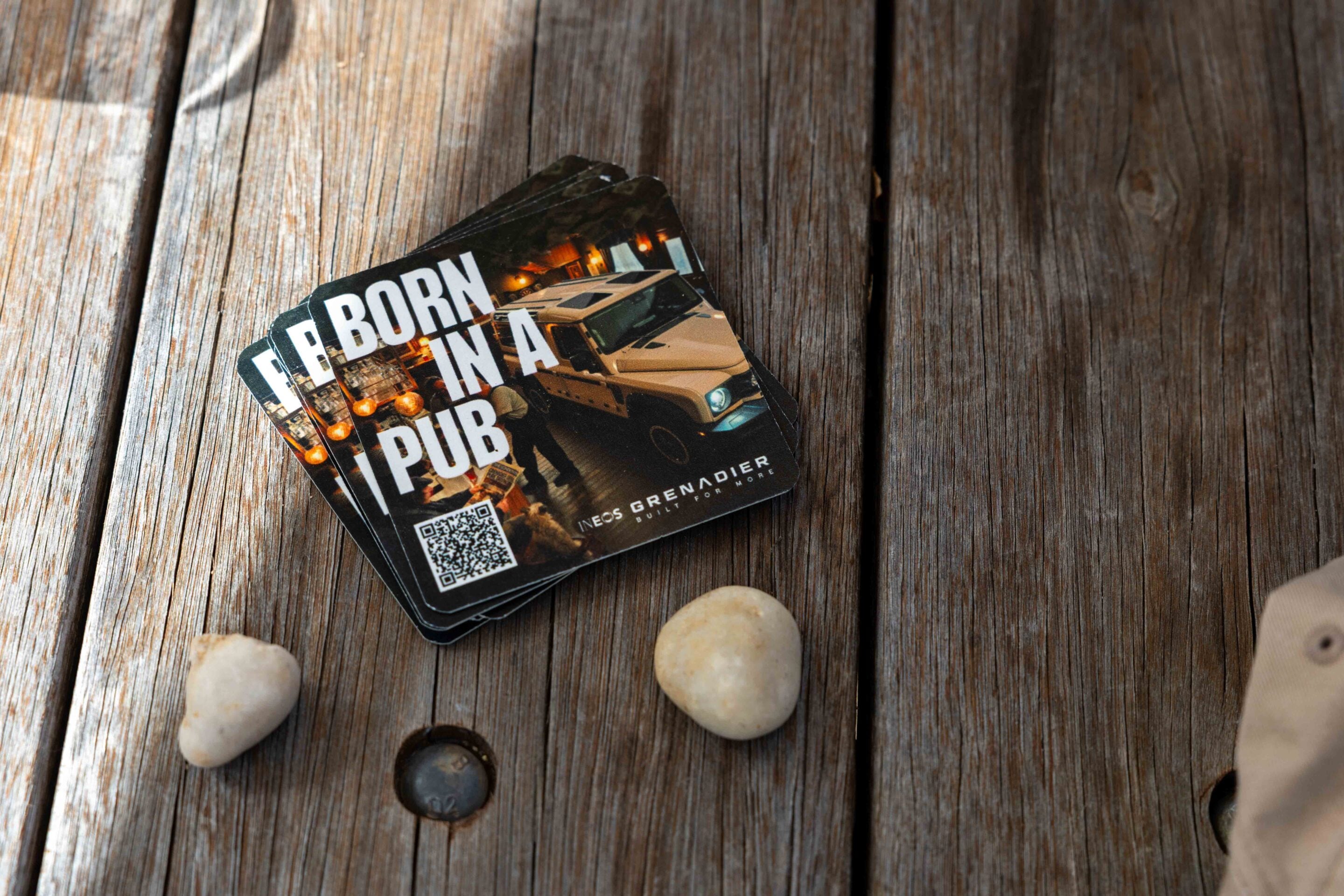
It was only fitting the event should be held at a pub, as the Grenadier was conceived in a British pub called the The Grenadier Hotel, with the original vehicle sketches jotted on a napkin.
More than 100 folks attended the weekend, making it the largest-ever gathering of Grenadiers in Australia and the Southern Hemisphere. Owners travelled from across the country including Queensland, Victoria and Tasmania, with some even traveling more than 2000km to attend the event. The event also saw customers make the journey all the way from London and Nairobi.
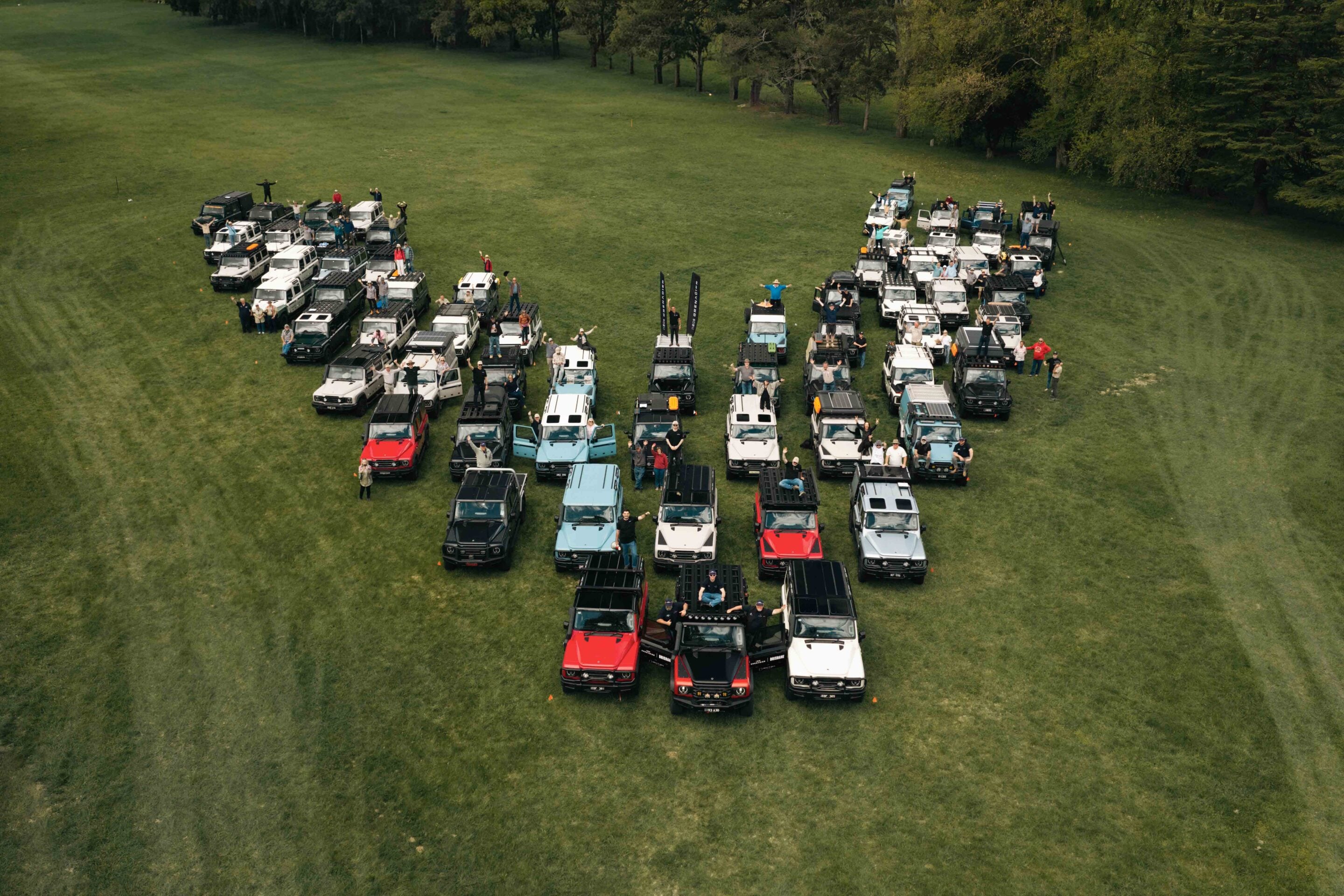
The guests enjoyed a weekend of fine food from chef Matt Moran, live entertainment, and tales from other Grenadier owners.
“It’s amazing seeing almost a hundred Grenadier owners gather here at Rockley,” said Justin Hocevar, Ineos Automotive APAC Regional Director. “The idea of the Grenadier was born in a pub in London – and now to be at an iconic Australian country pub to celebrate the brand feels particularly fitting.
“What makes this gathering so special is seeing all the different configurations of vehicles and how our customers are using their Grenadiers, whether in their work or the greater adventures they are going on,” he said.
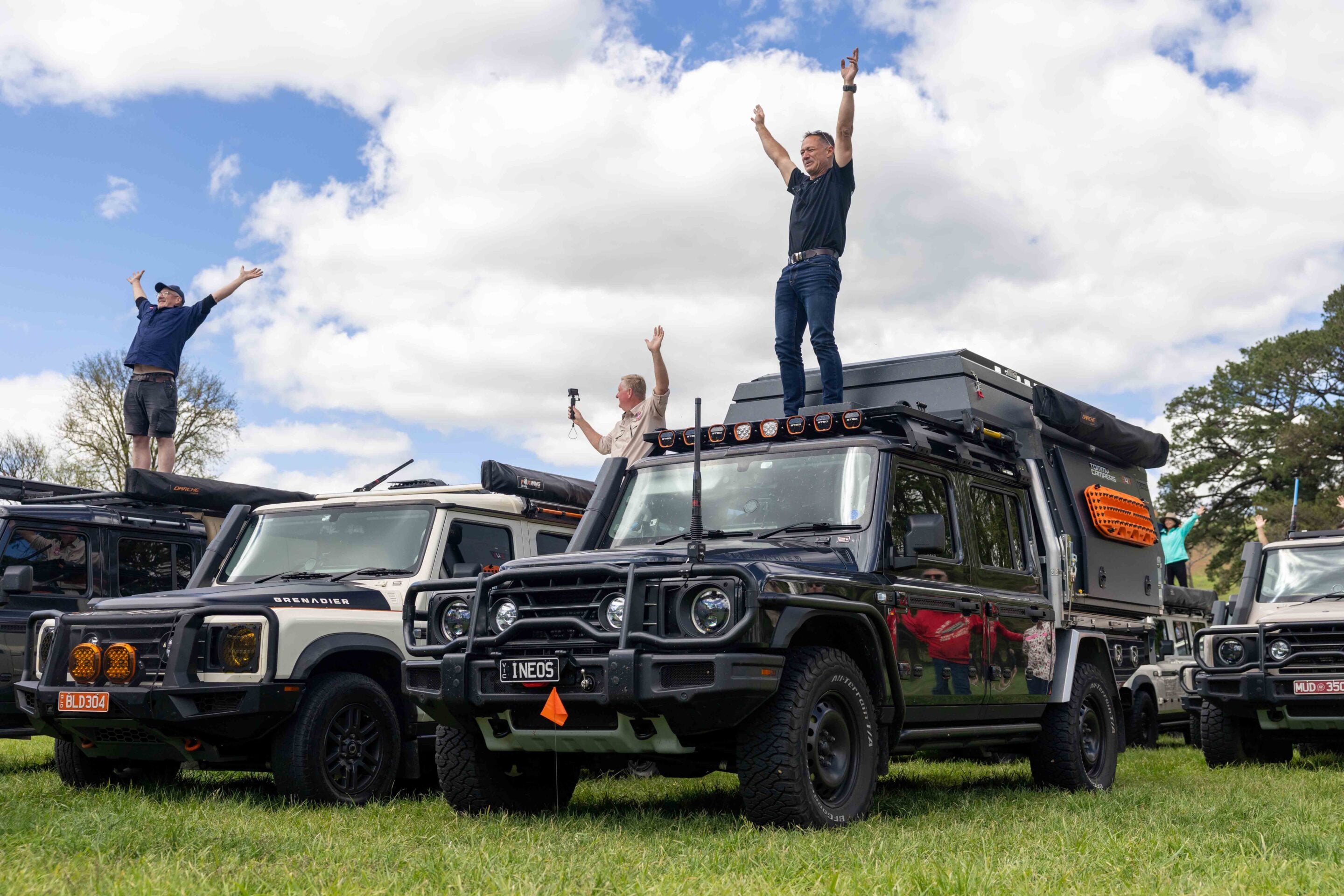
With the success of the QuarterMuster in 2026, plans are already afoot for a similar event in 2027. Ineos owners and anyone else interested should keep an eye on Ineos Australia’s social media for details of that event next year.
The Australian Ineos Grenadier range includes the Station Wagon, Utility Wagon and Quartermaster dual-cab ute, with five-seat capacity in the Station Wagon and a choice of BMW 3.0-litre turbocharged six-cylinder petrol and diesel engines. The Trialmaster is geared towards off-road utility, while the Fieldmaster focuses on comfort and premium features. Across the range, braked towing capacity is rated at up to 3500kg.
FAQs: Ineos Quartermuster
Where was the 2026 Ineos Quartermuster held?
The event took place at the Rockley Pub in central-west New South Wales.
How many Grenadiers attended the Quartermuster?
More than 70 Ineos Grenadier vehicles attended the gathering.
How many people attended the event?
More than 100 people attended the weekend.
Where did attendees travel from?
Owners travelled from across Australia, including Queensland, Victoria and Tasmania, as well as London and Nairobi.
Will the Quartermuster return in 2027?
Plans are already underway for a similar event in 2027, with details expected via Ineos Australia’s social media.
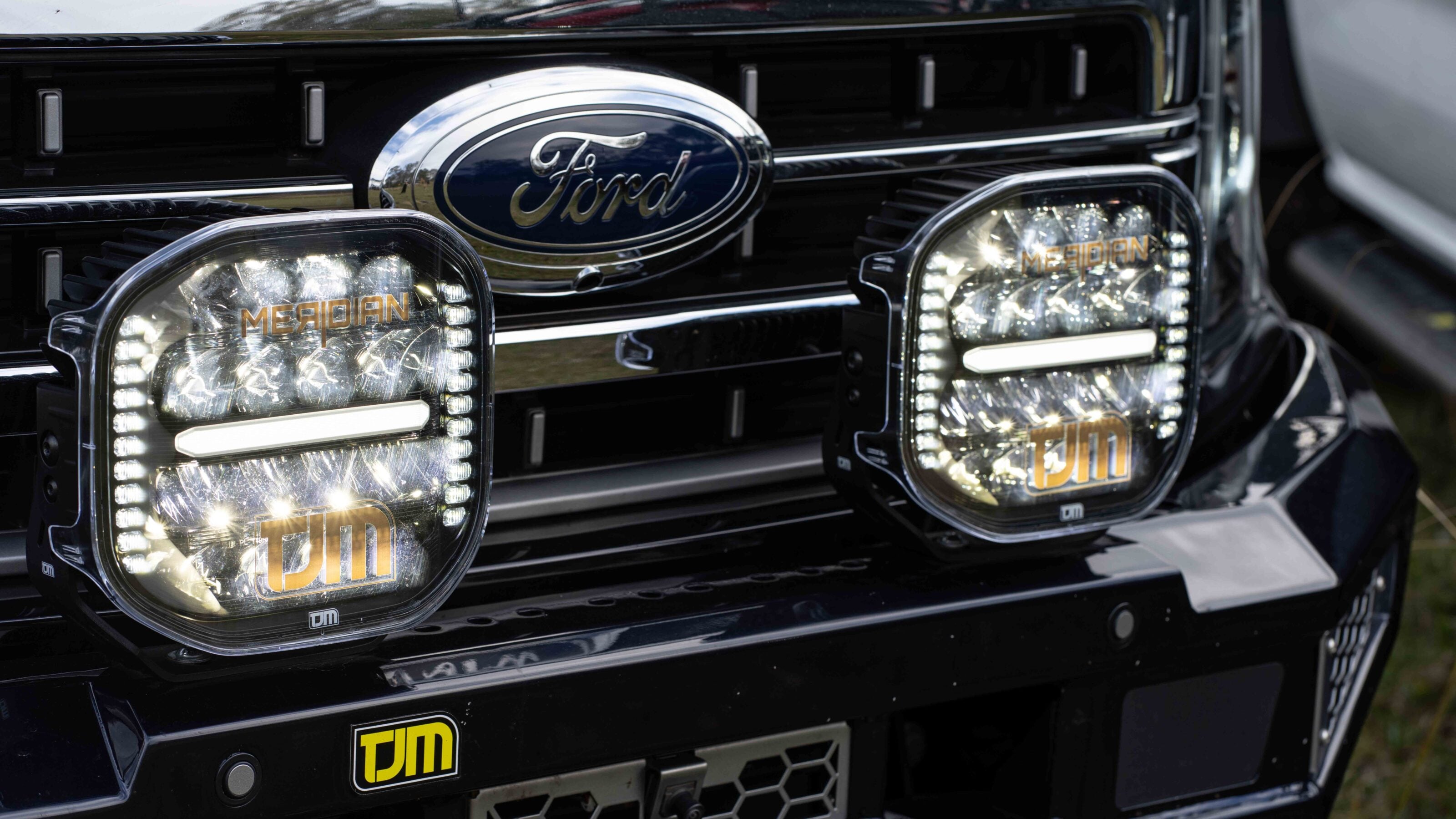
TJM has launched its new Meridian (↗) driving lights, with the new range positioned as the successor to its Seeker Series and designed to integrate with compatible TJM bull bars including the Outback, Venturer and Tradesman.
Available in 7- and 9-inch sizes, the Meridian (↗) combines a long-range combination beam with a wider spread of light, along with 5700K natural light and position-light functions. Fitted to a compatible TJM bull bar, the lights can form part of a broader front-end setup that also provides provisions for communications, recovery and winching.
The Meridian (↗) also features a tactical, blacked-out housing with deep-dish midnight reflectors and a satin-black finish. Construction includes an aluminium diecast housing, polycarbonate lens and stainless steel mounting bracket and hardware, with each light weighing 2.15kg including its bracket.
Understanding 1 lux
The 1 lux figure measures the distance at which a driving light produces exactly one lumen of light per square metre.
For context, 1 lux is the standardised minimum brightness required to comfortably read a newspaper in the dark, which is why the measurement is widely used as a benchmark for comparing driving lights and their usable long-range visibility.
A 1 lux distance figure indicates how far auxiliary lights can effectively illuminate potential hazards such as kangaroos, other wildlife, road debris or unexpected obstacles. Distance isn’t the only consideration, however, with beam width also important for visibility along the road shoulders and in the immediate strike zone ahead of the vehicle.
A broader spread of light can improve visibility in these areas, where wildlife may first appear and where drivers need to react quickly. Together, long-range illumination and a wide beam pattern can provide more time to identify hazards, assess the situation and respond when driving at night or on rural roads.
For a touring or work vehicle already being built around a TJM bull bar, that combination of long-range and broad illumination can be incorporated into the bar’s dedicated driving-light mounting provisions rather than treated as a separate front-end addition.
7-inch and 9-inch options
The Meridian’s combination beam is designed to provide both long-range illumination and a broad spread, with TJM stating that the beam reaches farther and wider than before. The 7-inch version produces a 1 lux distance of 842m per pair and a 1 lux breadth of 75m.
The 9-inch version increases the 1 lux distance to 1079m per pair, while its 1 lux breadth is 93m. Both versions use 12 x 10W LMP LEDs, produce a 5700K natural light and have raw/effective lumens of 13,080/7935 (bulb output). Both versions also feature a position light, with dynamic amber and white position lighting and an amber position light strobe function.
The Meridian package also includes black lens protectors, stainless steel mounting brackets and hardware, plus a wiring harness, meaning buyers don’t need to add a separate harness to get the lights wired up.
Designed for 12V and 24V vehicles
The Meridian (↗) has a 9-36V operating range, making it suitable for both 12V and 24V vehicles. The 130W lights draw 10.8A at 12V and 5.4A at 24V, while the position light is rated at 8W and the warning light at a maximum 10W.
Thermal management regulation and reverse polarity protection are included. The lights have IP68 and IP69K water and dust protection ratings, an IK08 impact rating and an operating temperature range of -30°C to +60°C, with EMC/ECE compliance.
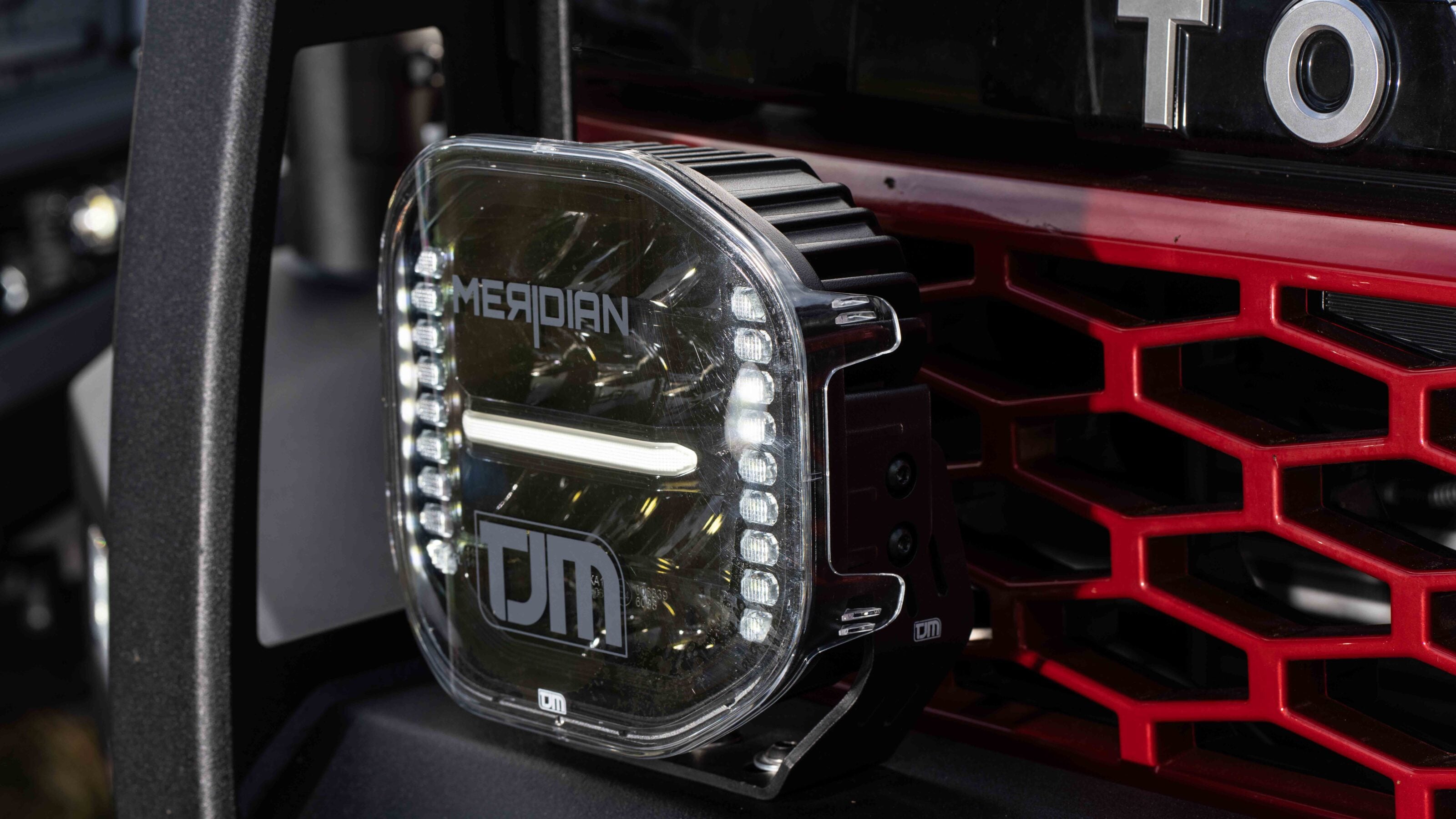
Part of a complete front-end setup
The Meridian (↗) is designed to work with compatible TJM bull bars, including the Outback, Venturer and Tradesman Bars, bringing the lighting system into the wider front-end protection setup.
TJM bull bars(↗) provide dedicated mounting provisions for driving lights, along with aerial mounting provisions, integrated and rated recovery points and winch compatibility. Depending on the specific application, that means fitting Meridian driving lights can be part of a broader setup covering lighting, communications, recovery and winching.
TJM also offers a three-year product warranty on its bull bars, adding another element to the wider front-end package.
Blacked-out design
The Meridian (↗) uses a tactical, blacked-out housing with deep-dish midnight reflectors and a satin-black finish. The design is intended to blend into the aesthetic of a 4×4 during the day, while the mounting provisions of compatible TJM bull bars allow the lights to be integrated into the vehicle’s front-end setup.
As mentioned, construction comprises an aluminium diecast housing, polycarbonate lens and stainless steel mounting bracket and hardware. Each light weighs 2.15kg including its bracket.
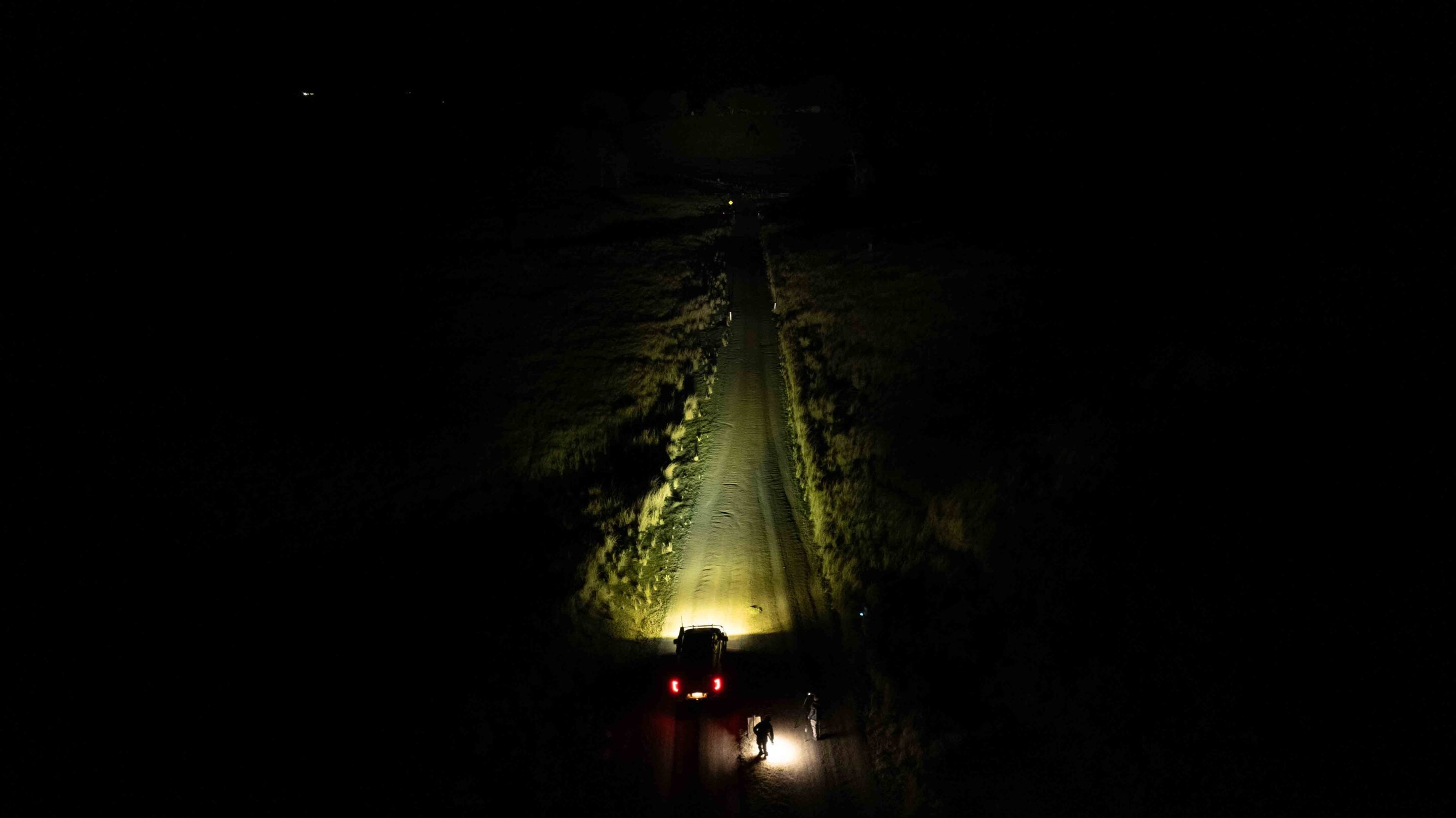
Included in the box
The Meridian package includes everything needed to get the lights set up, including the wiring harness that is often an additional-cost accessory with competing driving lights. The kit includes:
- 2 x TJM 9-inch Meridian driving lights
- 2 x black lens protectors
- 2 x stainless steel mounting brackets
- 2 x stainless steel hardware kits
- 1 x wiring harness
- 1 x user guide
TJM Meridian specs
| Specification | 7-inch Meridian | 9-inch Meridian |
|---|---|---|
| Wattage | 130W | 130W |
| Operating voltage | 9-36V | 9-36V |
| Current draw | 10.8A @ 12V / 5.4A @ 24V | 10.8A @ 12V / 5.4A @ 24V |
| LEDs | 12 x 10W LMP | 12 x 10W LMP |
| Position light power | 8W | 8W |
| Warning light power | 10W max | 10W max |
| Colour temperature | 5700K | 5700K |
| Beam pattern | Combination | Combination |
| Raw/effective lumens | 13,080/7,935 (bulb output) | 13,080/7,935 (bulb output) |
| 1 lux distance, pair | 842m | 1079m |
| 1 lux breadth, pair | 75m | 93m |
| Housing | Aluminium diecast | Aluminium diecast |
| Lens | Polycarbonate | Polycarbonate |
| Hardware | Stainless steel | Stainless steel |
| Protection | Reverse polarity protection | Reverse polarity protection |
| Operating temperature | -30C to +60C | -30C to +60C |
| Compliance | EMC/ECE | EMC/ECE |
| IP rating | IP68/IP69K | IP68/IP69K |
| Impact rating | IK08 | IK08 |
| Weight | 2.15kg single light + bracket | 2.15kg single light + bracket |
BYD’s ultra-luxury Yangwang U8 SUV has received Australian Design Rules (ADR) certification, appearing in the Australian Government’s road vehicle approval database.
The listing covers the standard-wheelbase, five-seat U8, powered by a 145kW 2.0-litre turbo-petrol engine and four electric motors, each producing 220kW. Combined system output is listed at 880kW.
The U8 uses its petrol engine to generate electricity for its electric drivetrain, with each wheel driven by its own motor. This allows precise control of power delivery and enables the SUV to perform a tank turn, rotating on the spot by driving the wheels on each side in opposite directions.
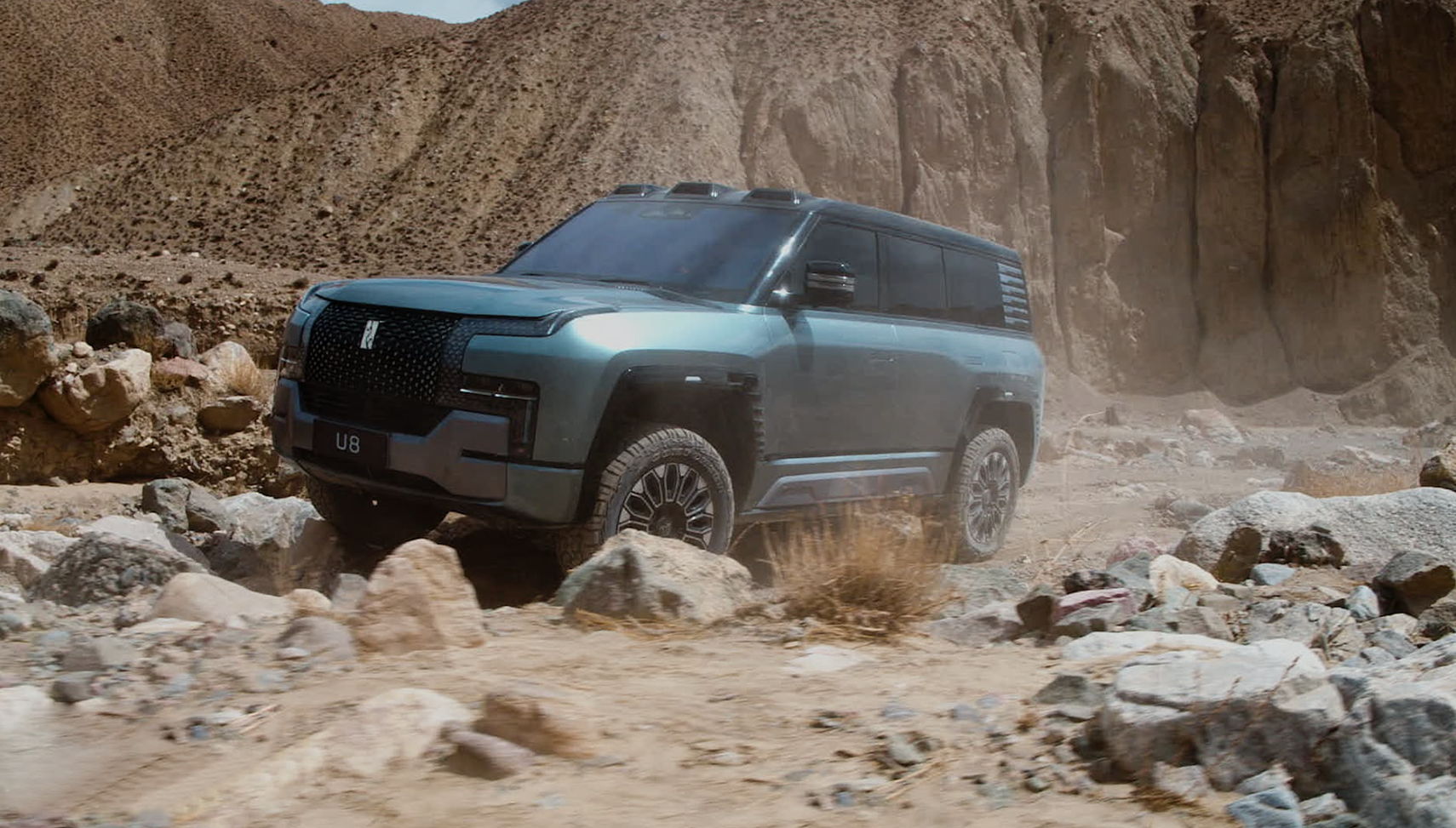
It can also crab walk by steering all four wheels in the same direction, while an emergency flotation function is designed to keep the vehicle afloat and manoeuvrable in deep water for a limited time.
Underneath, the U8 combines body-on-frame construction with locking front and rear differentials. The approval documents list a tare weight of 3644kg and a braked towing capacity of 3500kg, along with 20- and 22-inch wheel options.
The approval applies to the standard-wheelbase model, rather than the longer six-seat U8L. ADR certification confirms the specified vehicle has met relevant Australian regulatory requirements, but does not guarantee a local launch.
Last year, a right-hand-drive Yangwang U8 plug-in hybrid wearing heavy camouflage was spotted in Mansfield, Victoria,. It was the same vehicle, wearing the same number plates, that had been seen in Alice Springs a few weeks earlier.
BYD Yangwang U8 quickfire FAQ
How much power does the U8 produce?
Combined system output is listed at 880kW.
Is the U8 a hybrid?
Yes. Its petrol engine generates electricity to support the four-motor electric drivetrain.
How much can the U8 tow?
The Australian approval documents list a 3500kg braked towing capacity.
Can it really perform a tank turn?
Yes. Its four electric motors allow it to rotate on the spot by driving the wheels on each side in opposite directions.
Will the U8 be sold in Australia?
A local launch has not been confirmed, but gaining Australian Design Rules (ADR) certification is a big step towards that.
More than 3700 Ford F-150s have been recalled in Australia over a fault that could cause a fuel leak and potentially start a fire.
The recall affects 3745 2023-2026 Ford F-150 variants. What’s the issue? The fuel tank strap may not be properly secured to the vehicle’s frame rail and could come loose while driving, allowing the tank to move or detach and leak fuel. If the fuel comes into contact with an ignition source, it could start a fire.
The recall notice states the fault poses a fire risk that could cause serious injury or death to vehicle occupants and other road users, as well as damage to property.
Owners of affected F-150s will be contacted by Ford and asked to arrange an inspection and repair through an authorised Ford dealer. The repair will be carried out free of charge. Owners can check the official recall notice and affected VIN list (↗) to see if their vehicle is affected, or contact Ford’s Customer Relationship Centre on 13 36 73 for further information.
Australian-delivered F-150s are powered by a 3.5-litre twin-turbocharged EcoBoost V6 petrol engine producing 298kW and 678Nm, paired with a 10-speed automatic transmission. The XLT uses part-time four-wheel drive, while the Lariat and Platinum have full-time four-wheel drive. All variants have a maximum braked towing capacity of 4500kg, with short- and long-wheelbase configurations available.
Ford is also offering a discount on selected new vehicles until December 31, 2026. The offer includes 2024MY F-150 XLT, Lariat and Platinum variants in short- and long-wheelbase configurations through participating Ford dealers.
Ford F-150 recall FAQs
How many Ford F-150s have been recalled?
A total of 3745 Ford F-150s are affected.
What is the problem?
A fuel tank strap may not be properly secured and could come loose while driving.
What is the risk of the fault?
Fuel could leak and ignite, potentially causing a fire, serious injury or death.
How will Ford fix the problem?
Affected owners will be asked to arrange a free inspection and repair through an authorised Ford dealer.
How can I check if my F-150 is affected?
Check the official recall notice and affected VIN list (↗)
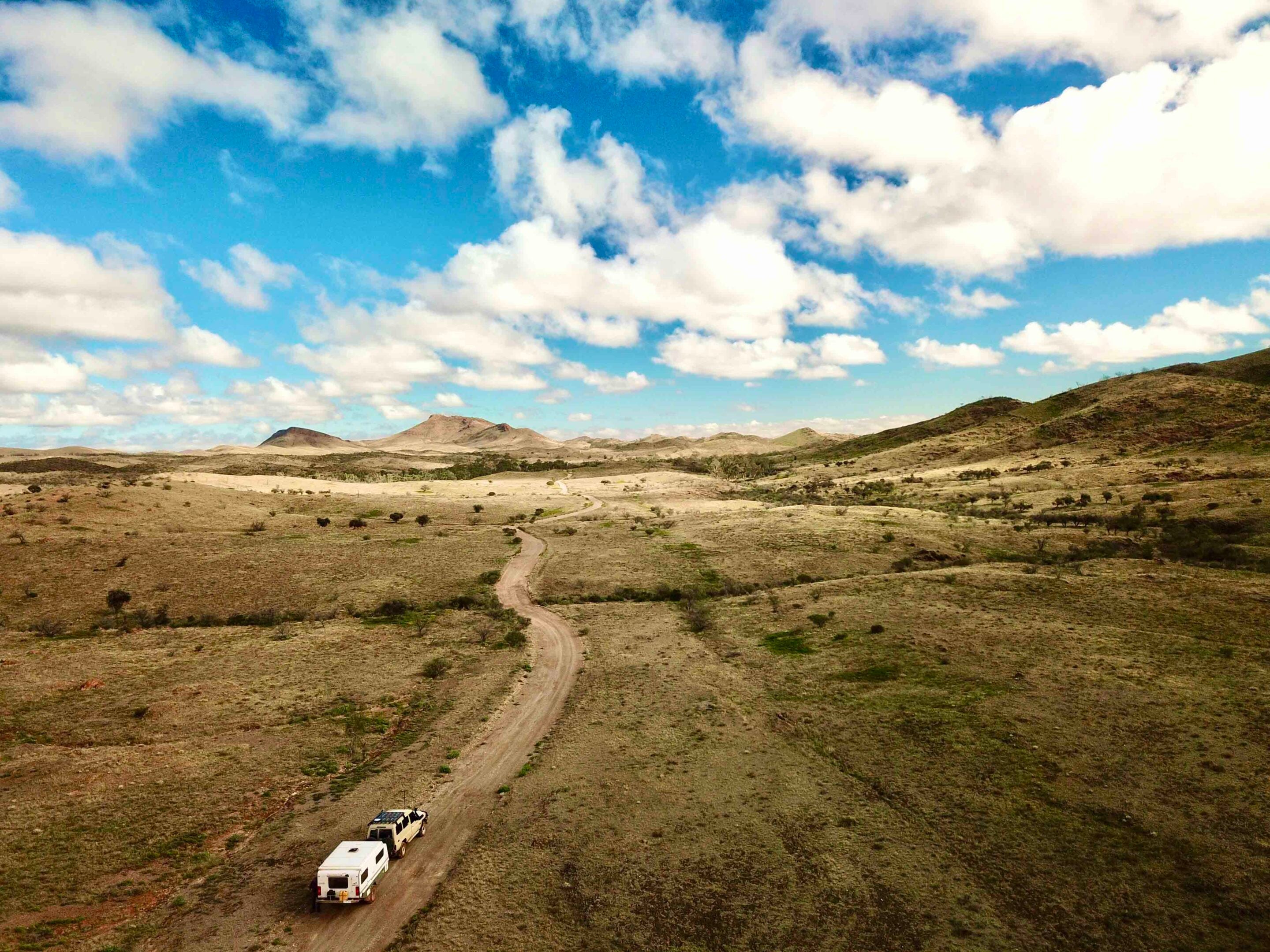
The track was rough and slow, cut by numerous small erosion channels, steep, short gullies and the occasional full-blown creek with washed-away banks and sloppy, gravelly beds.
Still, I only needed to slip back into first gear low-range a couple of times, while for the rest we cruised … well, bumped … along in low-range third or fourth. After crossing a wide, rocky creek bed lined with tall gums, our destination suddenly came into view as Grindells Hut appeared from behind a curtain of green.
Green! The country was actually verdurous, with the valley floors and lower slopes of the hills clothed in rich grass and herbage, while the trees along the creek had leaves that were virtually glowing with vitality. It was such a stark but delightful difference from when we were here five years or so ago, when the whole of northern South Australia and much of the inland was in a crippling, debilitating drought. Then, water was near impossible to find, while today nearly every creek had at least a trickle flowing down it.
Our unplanned journey to the northern Flinders had started a few days previously when we rolled into Broken Hill and found that many of the roads we wanted to take north of Tibooburra were closed due to the recent, somewhat incessant rain. We hung around for a day but, with no change in the road-closure outlook, headed down the blacktop to the small hamlet of Yunta, which today struggles on as not much more than a fuel outlet on the highway and a stepping-off point for the northern Flinders – our revised travel goal.
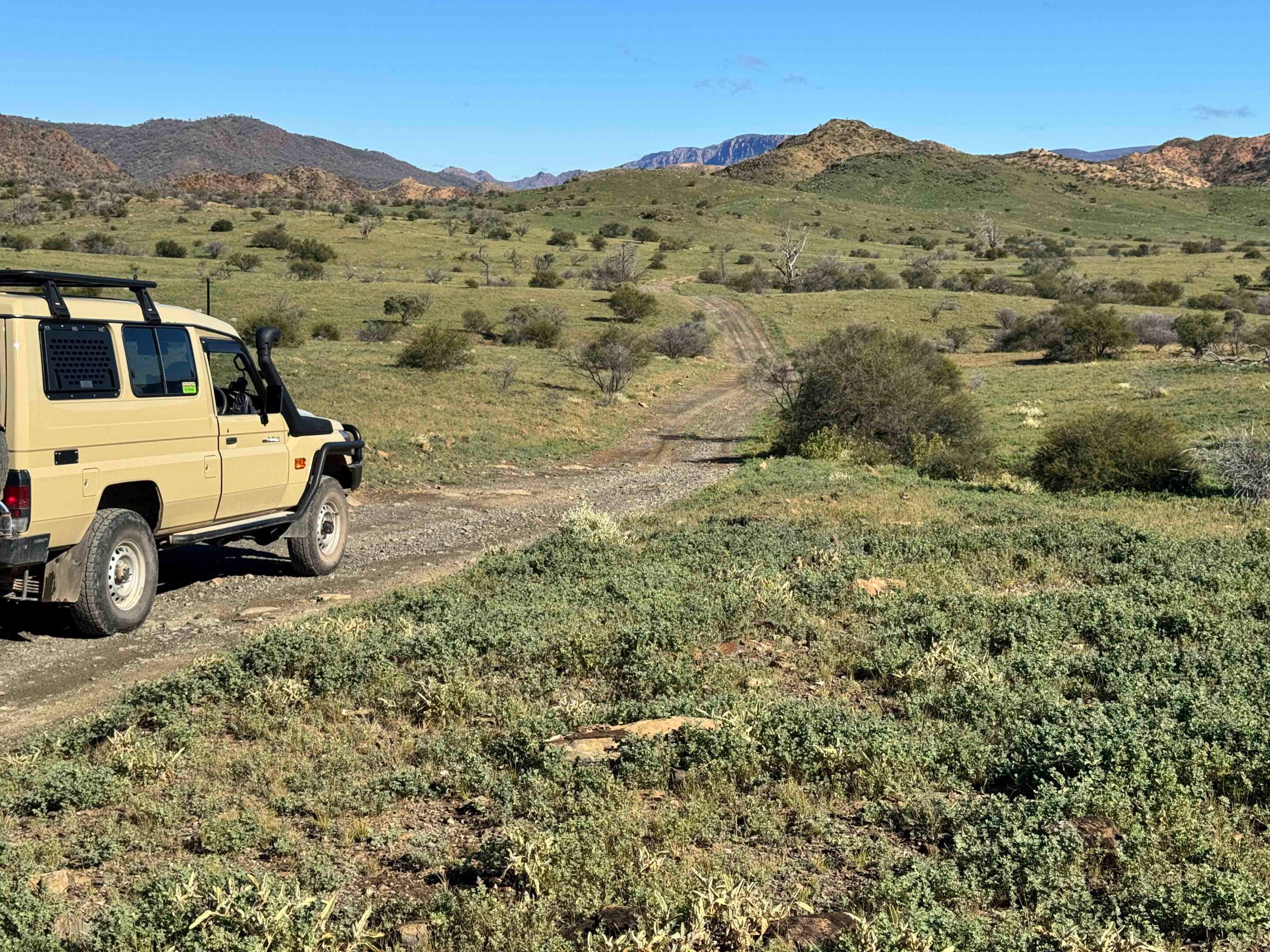
Outback trucking history at Yunta
One noticeable thing about Yunta, though, was the welcome sign and its tribute to one of the great pioneers of outback trucking, the legendary Harry Ding.
Beginning with a horse and cart in 1922, Harry bought a Model T Ford and started carrying people and supplies with it. In 1934, he moved his fledgling business to Yunta and, a year later, had trucks operating from Cockburn, Yunta and Olary, as well as Hawker and Lyndhurst. In 1936, he secured the fortnightly Marree-Birdsville mail contract, and one of his workers, Tom Kruse, initiated the challenging route, thereby ending the era of camel transport.
We know that route today as the Birdsville Track, although it’s so greatly improved from Harry’s day that it is almost impossible to compare. Business peaked for Harry in the early 1940s, with 20 trucks, nine mail runs and depots spread across northern SA. But he did much more for the outback before passing away in 1976.
At Yunta we turned north, the road soon turning to well-formed gravel as we came to Waukaringa, with the ruins of the old pub close to the road and the scattered remains of the gold mine that supported this small community a little further away. The main mining site is immediately obvious, with a tall stone chimney standing proud like a beacon beckoning us to explore, which we did.
Established in 1873, the site and nearby mines produced more than 1400kg of gold, worth about $270 million today, while the town peaked at more than 700 residents. The mine closed in the 1960s, while the town had shut up shop 10 years earlier. While mining occurred again in the 1980s and 1990s, it was a sporadic open-cut affair, and the remains of corrugated iron and plastic piping can, rather sadly, still be seen today.
Pushing on, the plains became even flatter as we approached the southern edges of Lake Frome, invisible to our eyes because of that vast, flat saltbush expanse. With rain threatening, we crossed a barely dry Wilpena Creek and, not wanting to stop out on these flat, bog-inducing steppes, pushed on until the hills of the northern Flinders offered some respite and a chance to pull up for the night.
Exploring the Gammon Ranges
The next day saw us dropping into the old Balcanoona homestead, now the national park headquarters for the Vulkathunha-Gammon Ranges NP.
There are a few short walking trails emanating from here, as well as the old shearing shed and holding yards to check out before heading on. On the road to Arkaroola, a turn-off west heads into the park and wanders through the ranges, sticking mainly to the valley floors unless forced to cut through a narrow gap in the surrounding hills to yet another valley running towards our next destination.
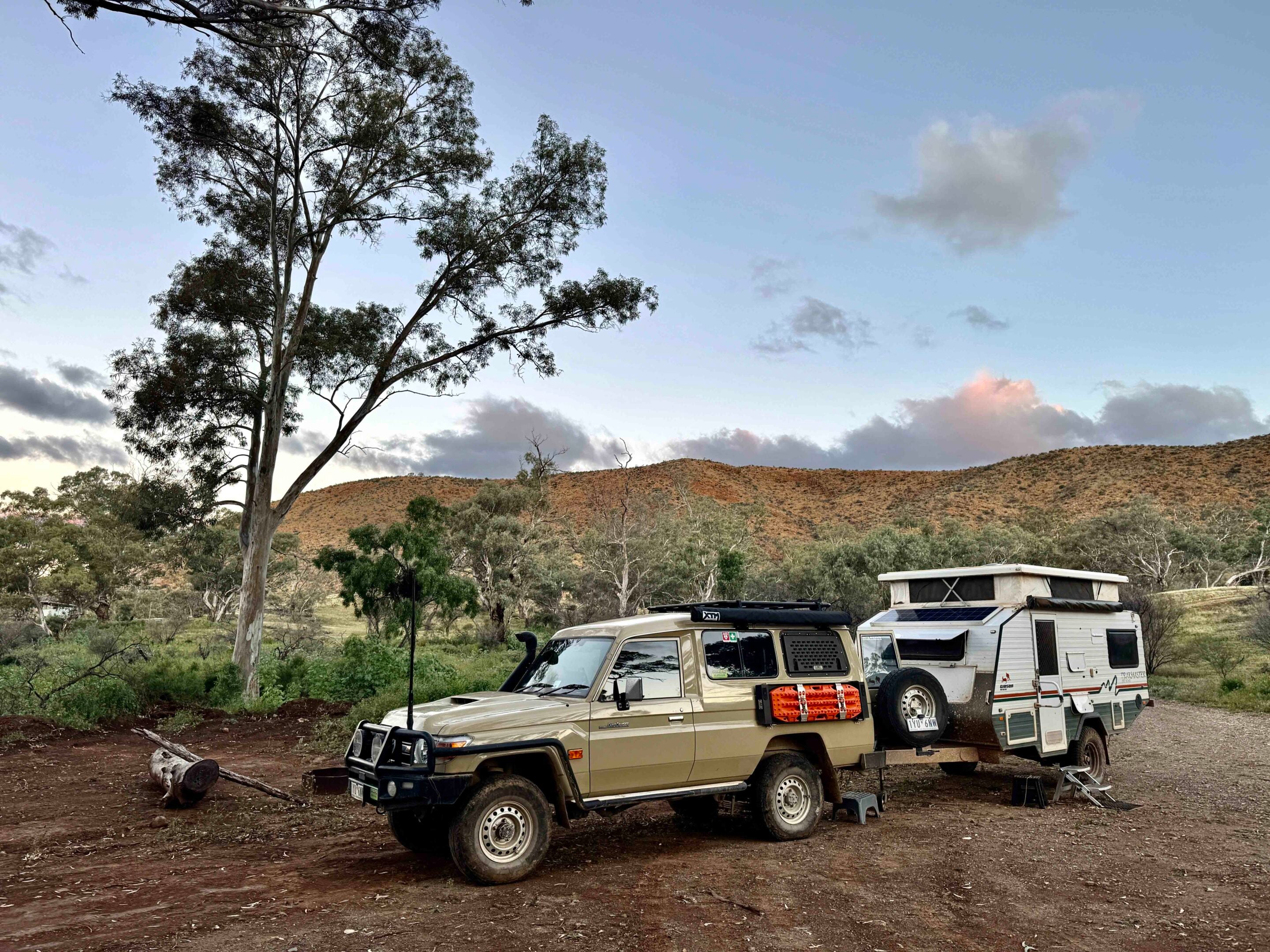
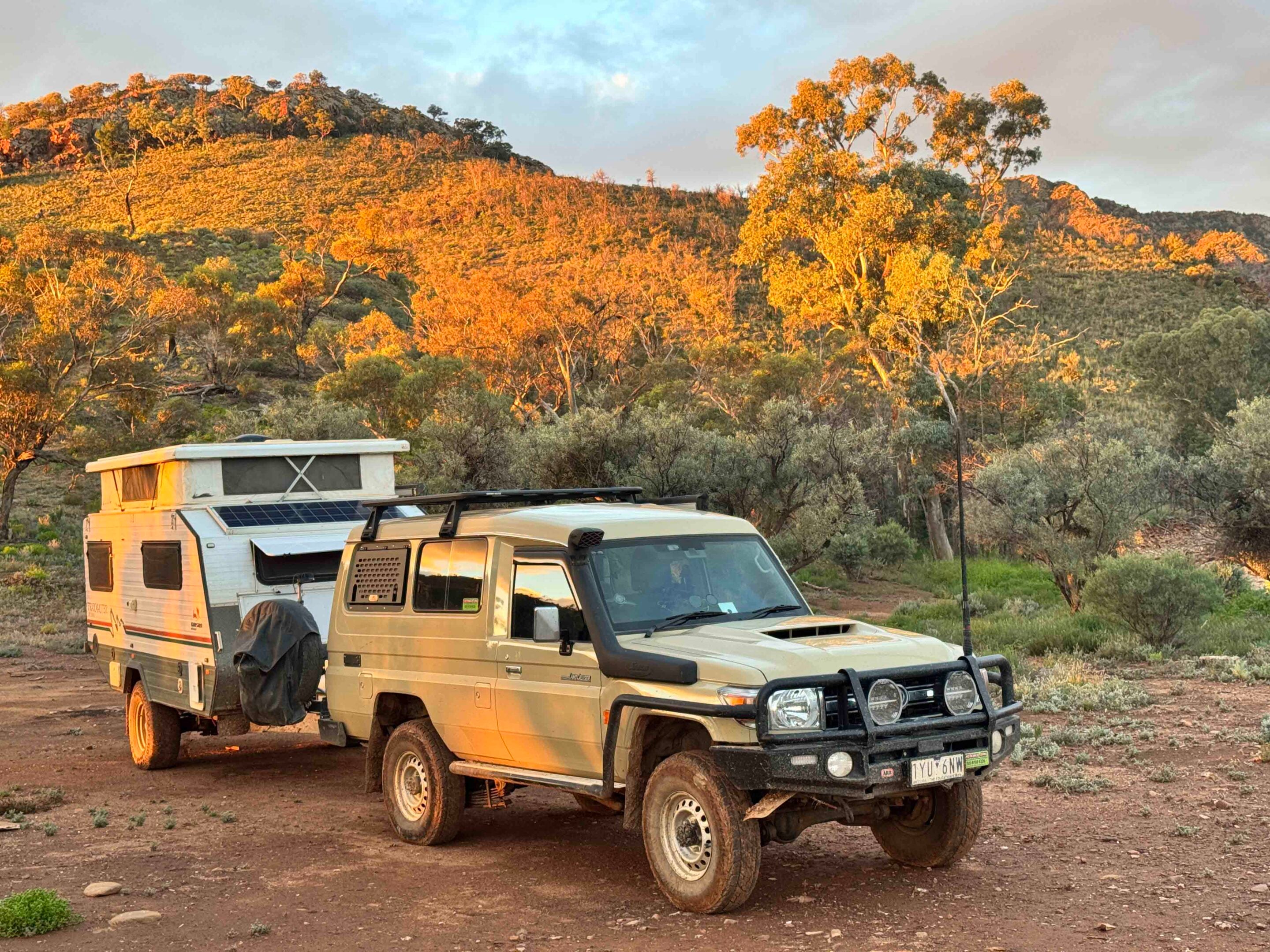
We set up camp on the edge of the creek below Grindells Hut, which is perched on a low hill in front of the main range. Today, the hut is the major focus for most visitors and offers basic accommodation if that is your bent. Its history, though, dates back to the late 19th century, when it was established by pioneer pastoralist John Grindell as a small cattle property.
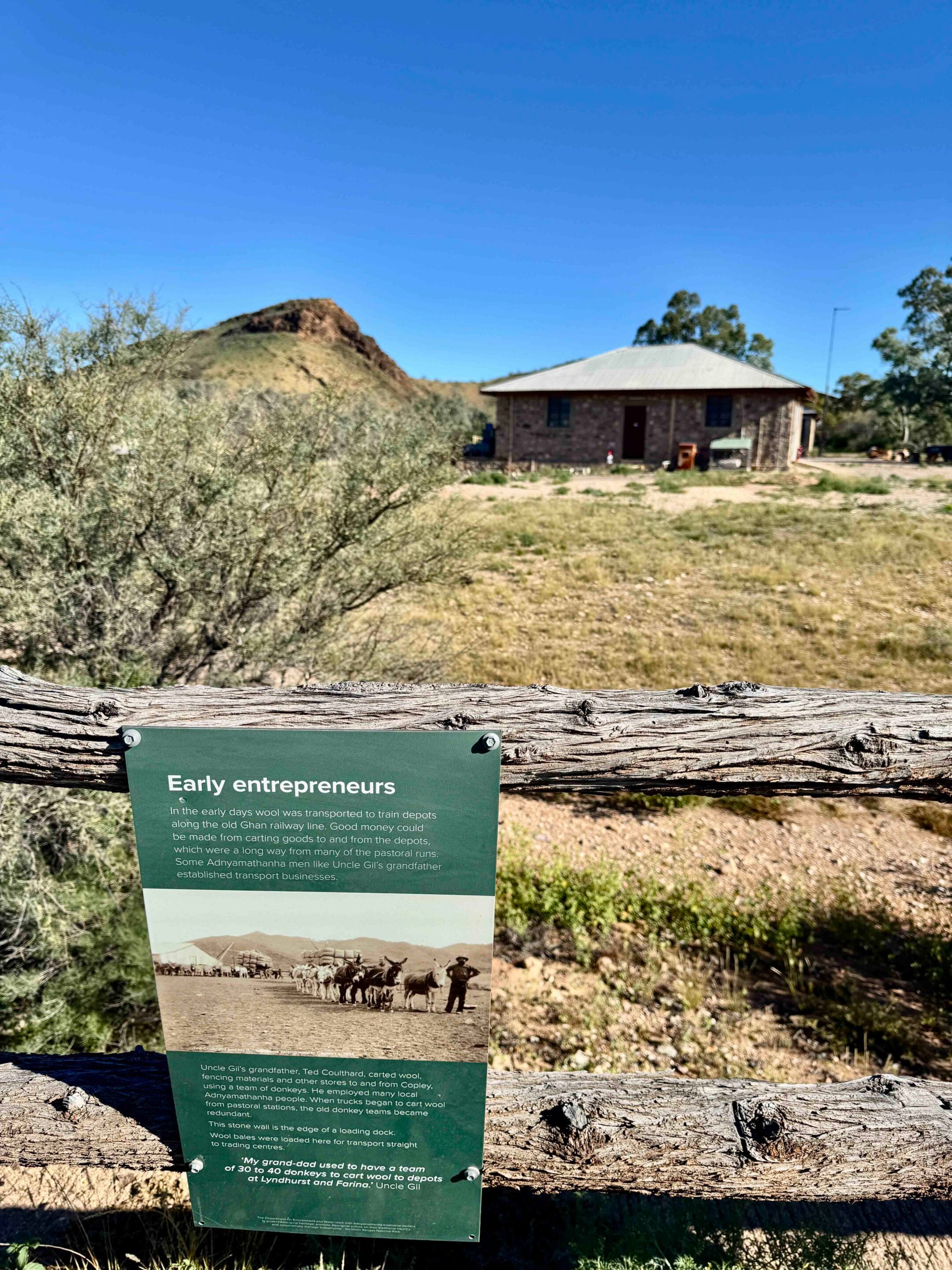
The original one-room hut still stands behind the newer building that acts as the focal point for today’s visitors. In August 1918, the place took a sinister turn when Grindell murdered his son-in-law, George Windsor Snell. A plaque now marks the site where Snell’s remains were found, and the grim history of the place is a reminder of the remoteness and isolation that drove men to such atrocities back then.
With so much verdancy surrounding us, the bush was alive with the sounds of birds twittering and revelling in the bonanza that nature was offering. Rather strangely, though, we never saw a yellow-tailed rock wallaby like we did when it was dry and they came into our camp looking for food and water. Today, I guess, the natural bounty allows them to wander more freely away from any man-made water point.
Flood-damaged tracks and remote outstations
The next day we tore ourselves away from this pleasant camp.
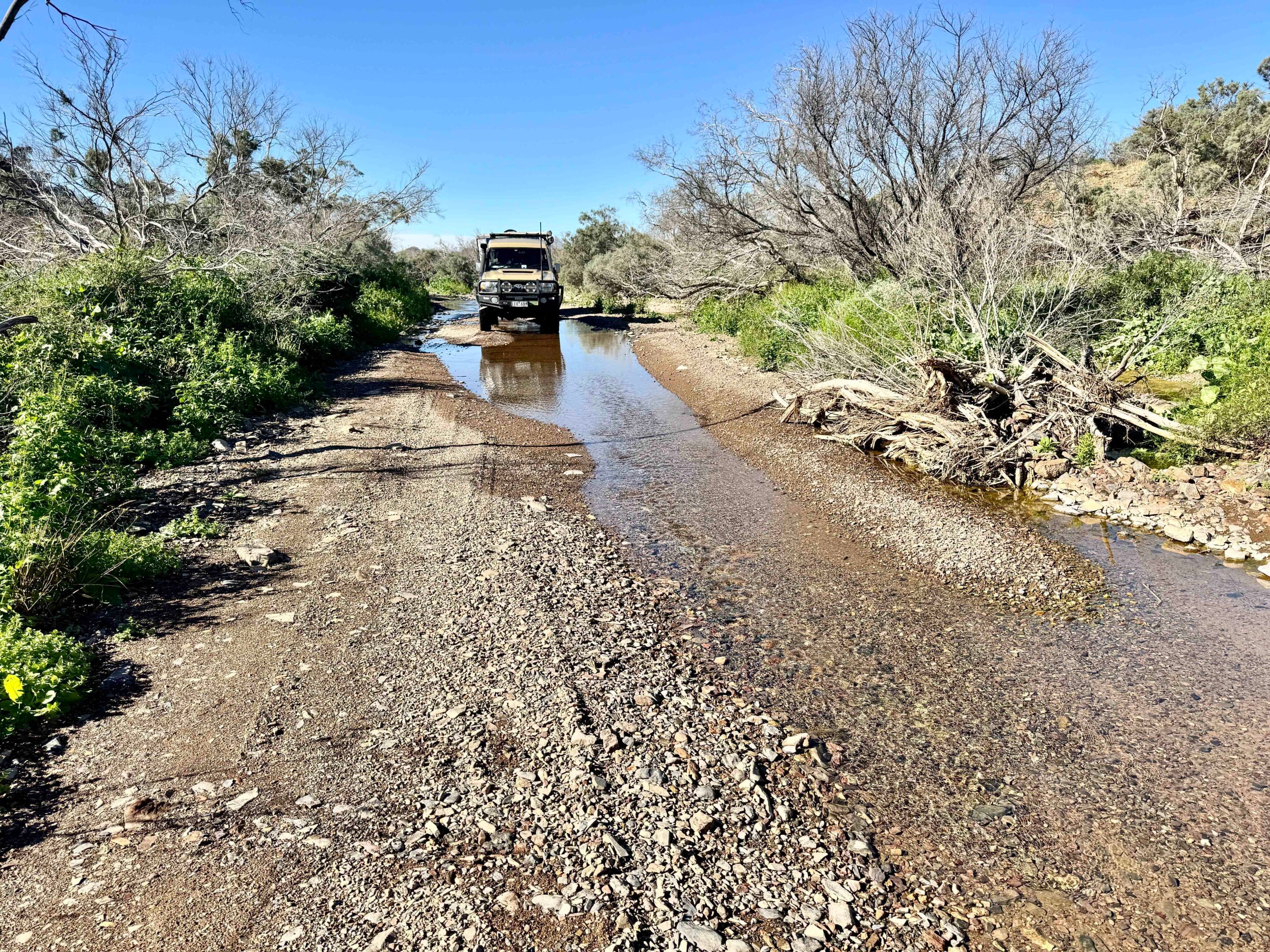
We headed along the Wortupa Track, which strikes almost directly north through the heart of the park, before we picked up the east-west Idninha Track that took us to Mainwater Creek and its washed-out crossing. You could imagine how much water poured down this valley by the amount of flotsam piled up against every large red gum that had been strong enough to withstand the onslaught. Some of those piles of wooden debris were higher than me.
We hadn’t seen anyone since leaving Grindells, and the small camping area at Mainwater Well was empty, so even though it was hardly lunchtime, we called it camp for the day. Later, with a sprinkle of rain threatening, a rainbow touched our camp … sadly, I couldn’t find any pot of gold at its colourful end.
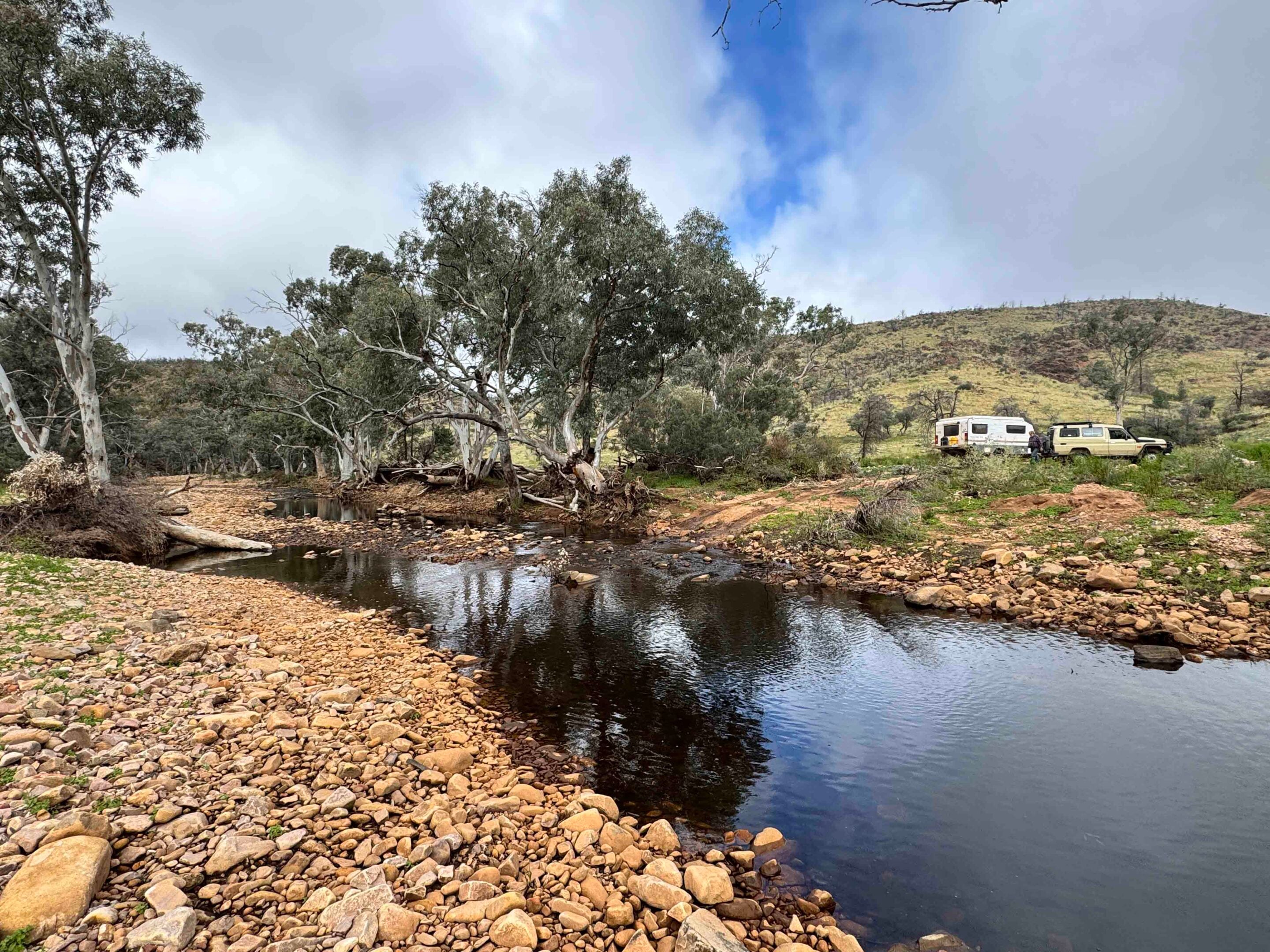
Pushing west, we came to yet another creek, where the crossing point had been thoroughly destroyed by the recent flood. The local park ranger had warned us about this crossing, with the barely used bypass track climbing a steep bank and running along the creek’s edge, where a vicious side-slope was a little daunting. Slow but sure got us through, and it was then an uneventful journey to the deserted outstation of Idninha.
While the building is in a fair state of repair, it had been locked up and barred, so you couldn’t enter it. The outbuildings, though, were derelict, victims of time, weather and white ants. This outstation had once served as living quarters for boundary riders and pastoral workers when Balcanoona was an active sheep station. It operated as such from 1856 to 1980, when Balcanoona became the heart of the then newly proclaimed Gammon Ranges NP.
Changing plans in the northern Flinders
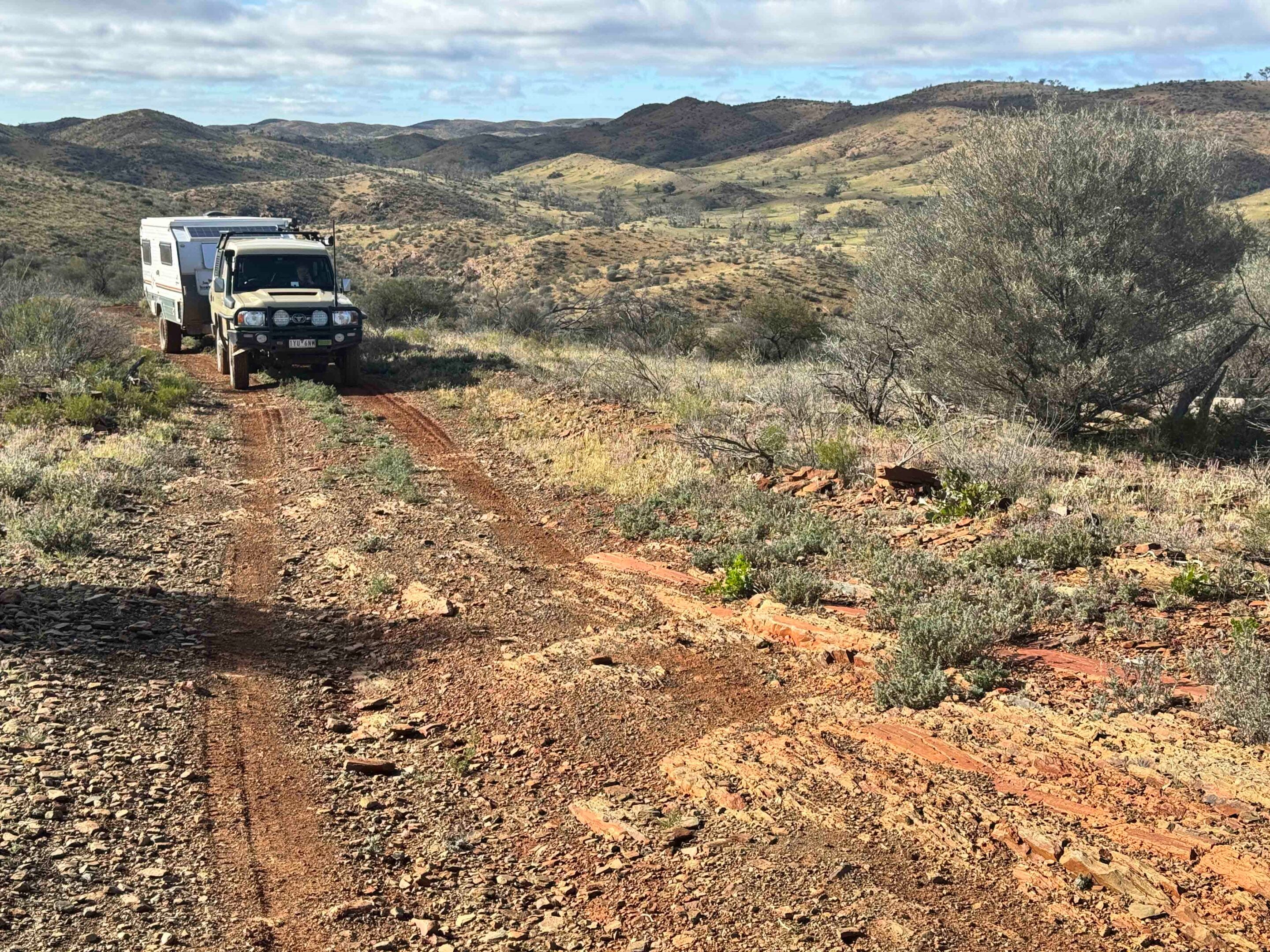
With rain threatening and showers making the track slippery, we wandered on, exiting the park and soon coming to the more major, but still dirt, Umberatana Road, meeting it just south of Yankaninna homestead.
That property is now owned by Operation Flinders (↗), an SA-based charity that provides young people who may have lost their way with the opportunity to face life challenges by being exposed to the great outdoors. Its major base seems to be at Owieandana homestead further south, and we were to meet up with a few of the volunteers who were running an eight-day trekking program for a number of groups of young people backpacking through this rugged environment.
While we wanted to check out an old smelter site and stone chimney on the property, the recent rains and activities going on with Operation Flinders meant we’d have to wait for another day, so we changed plans yet again. Just north of Owieandana homestead, we took the rough and somewhat eroded track that heads east, back into the national park, to the Arcoona campground, where Arcoona Bluff dominates the scene to the north, while the tree-lined Arcoona Creek winds in and around the camping area. There are no facilities at all here, but we were lucky to have water flowing briskly along the creek, which the trees and scrub were taking advantage of. In conditions like those we were experiencing, it was a top spot to stop.
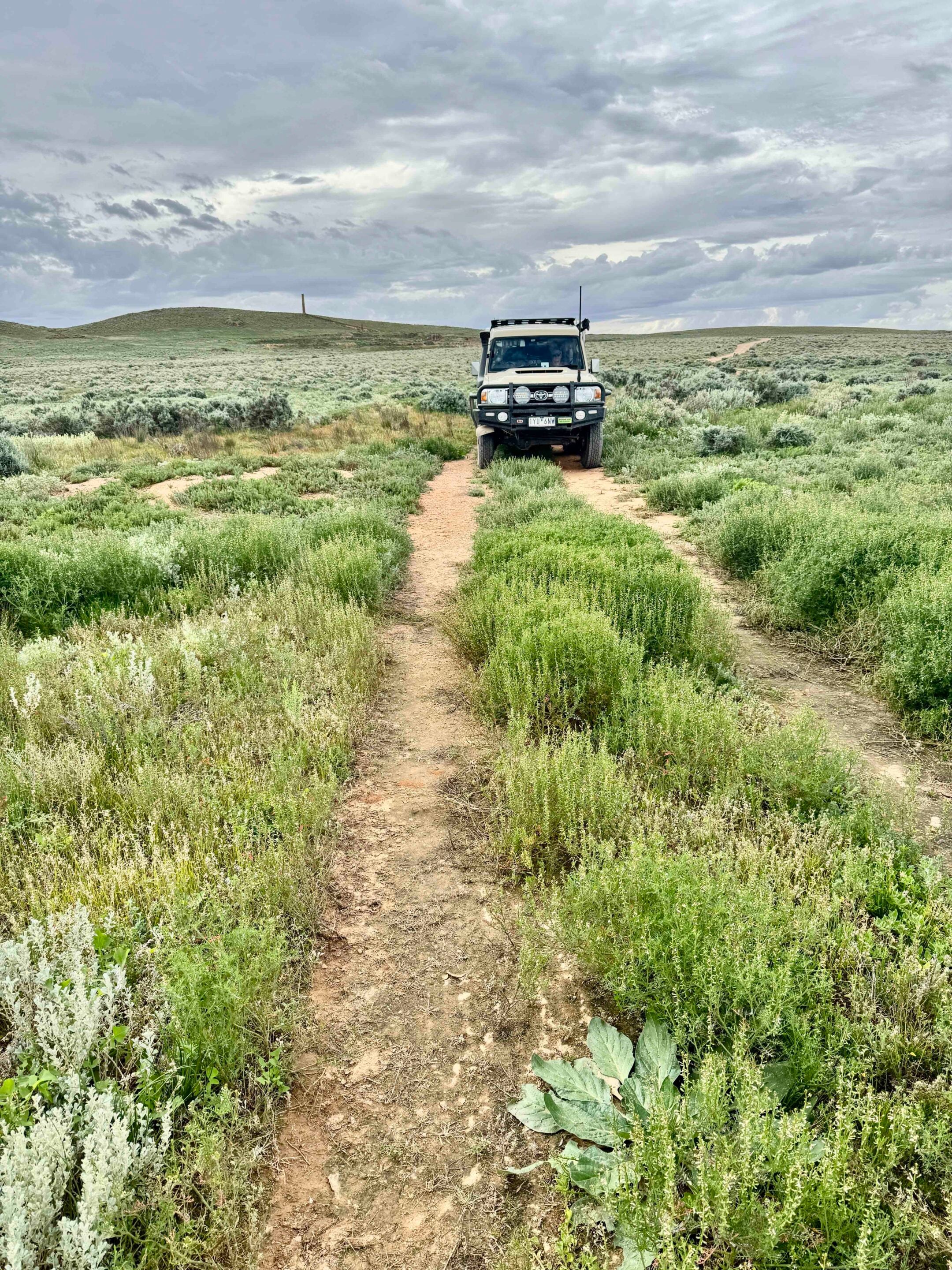
The next day, back on the Umberatana Road, we drove south, crossing the occasional creek that still flowed with a trickle of water or slopping through a muddy patch left over from the recent rains. With the dominant peak of Mt Serle off to our west, we came to the deserted homestead of the same name. Here there is an extensive collection of buildings, from the original stone huts and shearing shed to more modern structures. From here, the 17km-long Mudlu Vapu Yurra walking trail begins and ends, taking walkers on a seven- to nine-hour moderate hike along a ridge that climbs to the crest of Mt Serle. We thought we’d leave it for somebody keener and younger than us!
Just a few kilometres later, we came to the much more substantial Copley Road and turned west along this well-maintained route, which seemed like a highway after the last few days of tracks and worn and eroded station roads. The newly refurbished and reopened Beltana pub was calling, and we headed there, leaving our northern Flinders Ranges adventure behind but vowing once more to return to these impressive ranges and their ever-changing views and challenges.
FAQs: Northern Flinders Ranges
Where are the northern Flinders Ranges?
The northern Flinders Ranges and Vulkathunha-Gammon Ranges National Park are located north of Yunta in South Australia.
Where can you get fuel and supplies in the northern Flinders Ranges?
Fuel and basic supplies are available at Yunta, Copley and Leigh Creek. Carry sufficient food, water and fuel when travelling through the national park and surrounding station country.
What are the must-see attractions in the northern Flinders Ranges?
Highlights include Grindells Hut, the ruins of the old gold-mining settlement at Waukaringa, the historic Idninha outstation, Arcoona Bluff and the historic township of Beltana, including its pub.
Who was Harry Ding, and what was his connection to the outback?
Harry Ding was a pioneering outback transport operator who began with a horse and cart in 1922 before moving into motorised transport. Based in Yunta from 1934, he built a major trucking and mail delivery business across northern South Australia. In 1936, he secured the fortnightly Marree–Birdsville mail contract, with his worker Tom Kruse taking on the challenging route that became known as the Birdsville Track.
Where can you find out more about Harry Ding?
More information is available in his biography on the Australian Dictionary of Biography website (↗). You can also read his book, Thirty Years with Men, published in 1988.