News

Gallery 1
For generations, Australia’s affinity for trail exploration and remote‑area travel has made four‑wheel‑drive vehicles a staple of national life. Diesel engines, robust ladder‑frame construction and mechanical low‑range gearboxes defined the archetype of a capable 4×4 for decades.
Now, a new force is transforming that landscape: Plug‑in hybrid (PHEV) technology. Combining internal combustion engines with electric motors and high‑capacity batteries, PHEVs promise significant electric‑only driving for everyday use while preserving the ruggedness, towing strength and off‑road ability that buyers demand.
As of 2026, Australia’s PHEV 4×4 segment – utes and SUVs alike – is evolving rapidly, and the models below show just how diverse and capable that future is becoming.
JUMP AHEAD
- BYD Shark
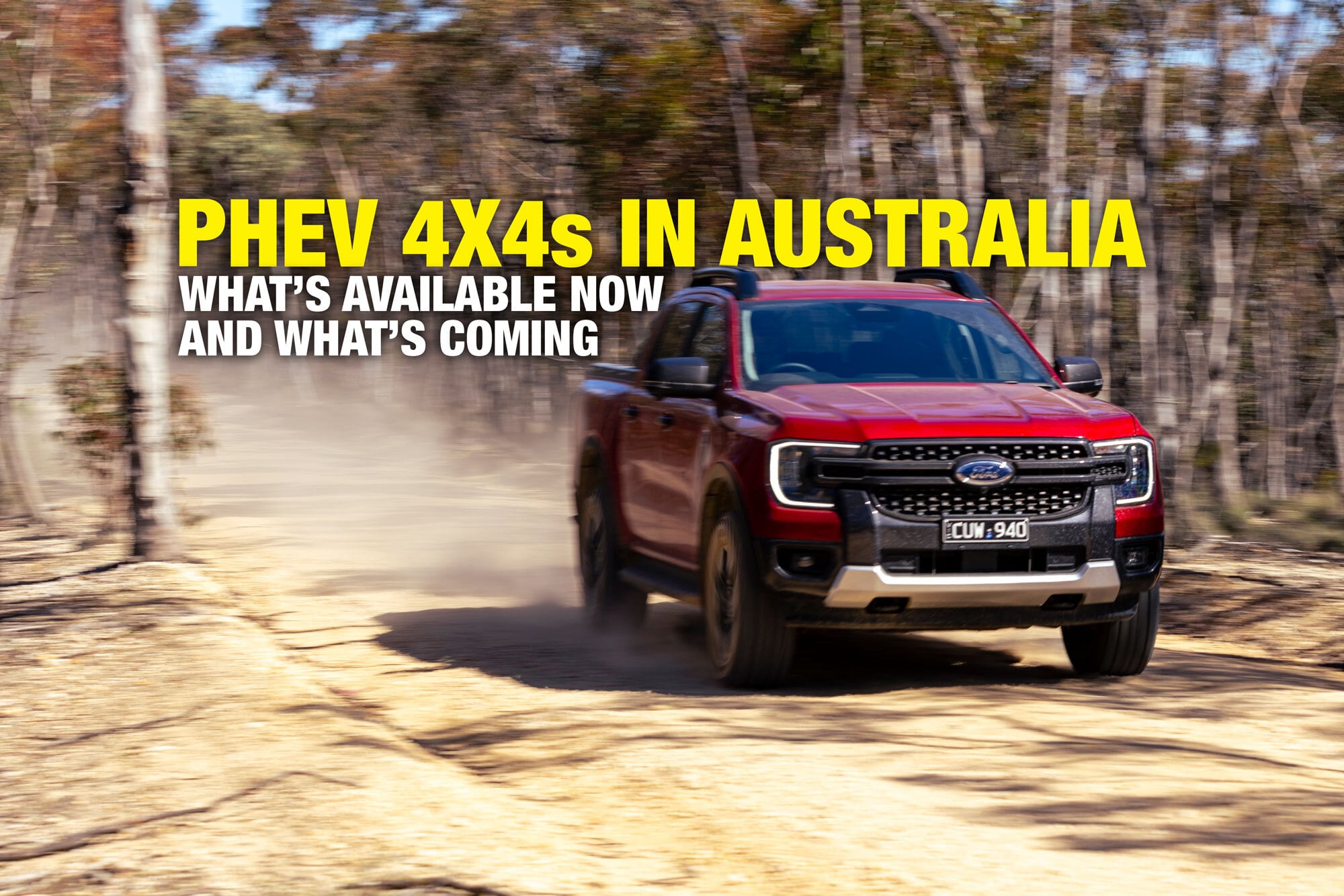
- Ford Ranger PHEV
- GWM Cannon Alpha PHEV
- JAC Hunter PHEV
- Chery Stockman
- Nissan Frontier Pro PHEV
- Land Rover Defender 110 P400e
- GWM Tank 300 Hi4-T
- GWM Tank 500 Hi4-T
- Denza B5
- Denza B8
- BYD Yangwang U8
- GWM Cannon Hi4-T PHEV
BYD Shark: Out now
The BYD Shark 6 was one of the first plug‑in hybrid dual‑cab utes to make a meaningful impact in the Australian market, attracting attention from both tradies and lifestyle buyers looking for a capable 4×4 that also cuts down on fuel costs.
At its heart is a 1.5‑litre turbo‑charged petrol engine paired with dual electric motors and a multi‑mode hybrid system that together deliver a combined output of around 321kW and 650Nm. The Shark’s 51.9kWh battery gives it a practical electric‑only range of roughly 90 to 100km under typical Australian driving conditions, meaning many owners can cover a full week of commuting and errands in EV mode alone. That electric capability also significantly reduces fuel consumption on urban trips, while regenerative braking and smart hybrid management further enhance efficiency.
Unlike conventional diesel utes, the Shark’s electrified drivetrain doesn’t use a mechanical low‑range transfer case. Instead, it relies on the dual motor setup – one electric motor per axle – to deliver instant torque to all four wheels. On paper, the Shark’s PHEV setup doesn’t match the deep crawl ratios of traditional low‑range gearboxes, but in real‑world conditions its electric torque and traction control systems allow it to perform capably on fire trails and moderate off‑road terrain.
Ford Ranger PHEV: Out now
Australia’s perennial best‑selling ute received its plug‑in hybrid makeover with a clear goal: retain what buyers love about the Ranger while adding electrified performance and efficiency.
The Ranger PHEV combines a 2.3L turbocharged petrol engine with a single electric motor and a 11.8kWh battery, producing a combined 207kW and 697Nm. This setup delivers smooth acceleration in urban driving and responsive torque when heading off the bitumen.
Ford has retained the Ranger’s 3500kg braked towing capacity and more than 800kg payload, ensuring it meets the practical needs of tradies and touring families. The electric-only range sits at approximately 50km, enough for short commutes and errands without engaging the petrol engine, reducing fuel use while maintaining rugged utility.
GWM Cannon Alpha PHEV: Out now
The Cannon Alpha PHEV brings a performance-focused edge to the electrified ute segment, combining a turbocharged petrol engine with an integrated electric motor in a parallel hybrid setup.
The system delivers strong combined outputs (300kW and 750Nm), with the electric motor providing instant torque to improve throttle response, low-speed control, and towing performance. A high-voltage lithium-ion battery enables a real-world electric driving range of over 100km, supported by multiple drive modes including EV-only, hybrid, and charge sustain. This allows most daily driving to be completed առանց fuel use, while still retaining long-distance flexibility.
Importantly, the Alpha keeps proper off-road hardware: a dual-range transfer case, selectable low range, and front/rear locking differentials on a ladder-frame chassis. Combined with the electric motor’s precise torque delivery, this setup provides better crawl control and load management than systems relying purely on electronic traction aids. It also comes with DC fast-charging capability, strong thermal management for the battery, and a braked towing capacity of 3500kg.
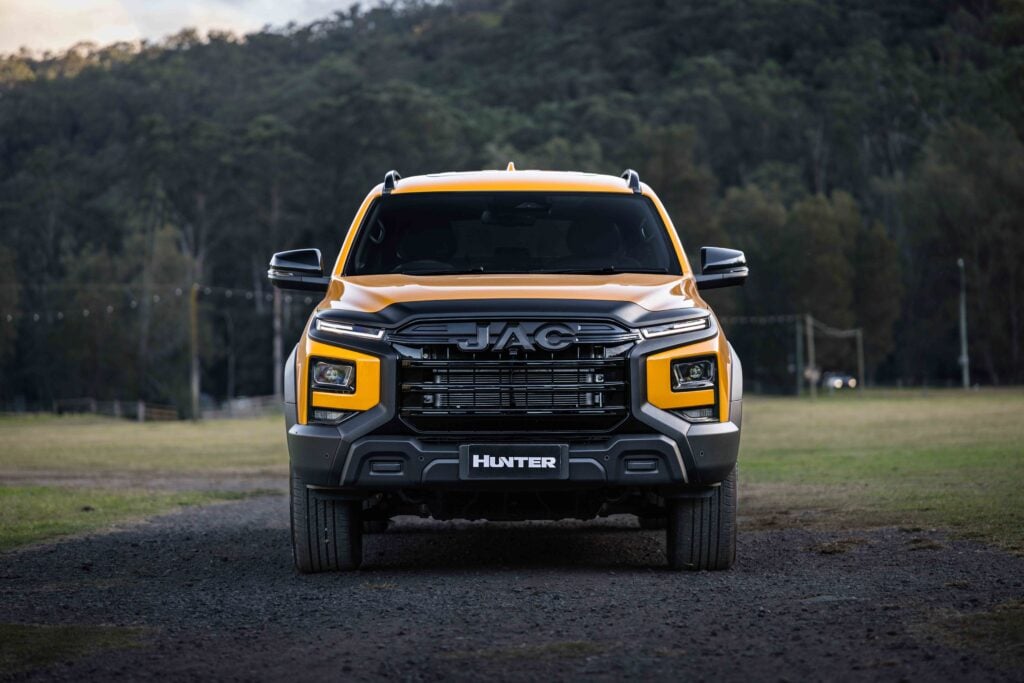
JAC Hunter PHEV: August, 2026
The JAC Hunter PHEV will arrive in Australia in August 2026, with the two-variant range priced from $49,988 plus on-road costs. The Hunter Pro starts at $49,988, while the flagship Hunter X is priced from $54,844.
JAC says the Hunter has undergone more than 100,000km of testing in Australia ahead of its launch, covering towing, load carrying, hot-weather conditions and a mix of on- and off-road driving.
Power comes from a 2.0-litre turbo-petrol engine working with electric motors on both axles. Combined outputs are claimed at 360kW and 1010Nm, with the PHEV system delivering up to 100km of electric-only driving range and a claimed 1005km total range. JAC quotes fuel consumption of 1.6L/100km on the NEDC cycle. Both versions carry a 915kg payload and are rated to tow up to 3500kg with a braked trailer.
The Hunter X builds on the Pro with front and rear differential locks, black exterior styling, heated front seats, a powered passenger seat, 360-degree camera, front parking sensors, power-folding mirrors, roof rails, rear privacy glass, puddle lamps and a 220V outlet in the tub. A front and rear differential lock package is available for the Hunter Pro for $1888, while the Hunter X can be fitted with an optional power sunroof for $1500.
Chery Stockman: Q4, 2026
Chery is preparing to launch the Stockman plug-in hybrid ute in Australia in Q4 2026, with a 2.5-litre turbo-diesel PHEV powertrain producing a claimed 350kW and 800Nm. Electric-only range is rated at up to 100km under the NEDC cycle, while claimed combined fuel consumption is 2.0L/100km.
The Stockman will be capable of towing up to 3500kg braked and 750kg unbraked. Its off-road hardware includes four-wheel drive, all-terrain tyres, triple differential locks, crawl control and tight-turn assist, with 247mm of ground clearance.
At 5450mm long, 2010mm wide and 1890mm tall, the Stockman rides on a 3250mm wheelbase and has a 1560mm x 1560mm cargo tub. Suspension comprises double wishbones up front and leaf springs at the rear, with Chery planning locally tuned suspension and driver assistance systems for Australian-market models.
Inside, the Stockman is set to offer leather upholstery, heated and ventilated front seats, wireless smartphone charging, dual-zone climate control and a premium audio system. A petrol-powered version is expected to join the range in 2027. Australian pricing, variant details and final specifications are yet to be confirmed.
Nissan Frontier Pro PHEV: Out 2026‑2027
Nissan Frontier has long been known for tough, no-nonsense 4×4 capability, and a plug-in hybrid version is increasingly likely as part of Nissan’s electrification push.
The Frontier Pro PHEV is expected to pair a 1.5-litre four-cylinder petrol engine with a transmission-mounted electric motor, producing around 320kW and 800Nm. A 33kWh battery is claimed to deliver up to 135km of electric-only range (CLTC), with fuel use rated at 6.9L/100km.
Utility remains a focus, with a 3500kg braked towing capacity keeping it competitive with diesel rivals. Timing is still unconfirmed, though an early 2027 window is widely anticipated.
Land Rover Defender 110 P400e: Out now
For buyers who want electrification without giving up serious 4×4 muscle, the Land Rover Defender 110 P400e remains one of the most compelling options on sale.
Land Rover has integrated a plug-in hybrid powertrain while preserving the Defender’s legendary off-road hardware, including a low-range transfer case, full-time all-wheel drive with locking differentials, and the Terrain Response system.
The P400e combines a 2.0-litre turbocharged four-cylinder petrol engine with an electric motor, producing a combined 297kW and 640Nm through an eight-speed automatic transmission. A 19.2kWh battery provides up to around 50km of electric-only driving under WLTP testing, making it practical for short urban trips without using fuel. Despite electrification, the Defender maintains serious capability, with a wading depth of up to 900mm, ground clearance reaching 291mm via air suspension, and a braked towing capacity of 3000kg.
On-road, the hybrid setup adds refinement, offering quiet EV operation in traffic and smoother power delivery; while off-road, the instant torque from the electric motor improves low-speed control on steep or slippery terrain. The result is a Defender that remains true to its heritage while providing meaningful efficiency gains.
GWM Tank 300 Hi4-T: Out now
The GWM Tank 300 Hi4‑T PHEV has quickly set a benchmark for electrified off-road capability.
Built on a ladder-frame chassis with part-time 4WD, low-range transfer case, and locking differentials, it keeps serious off-road hardware while adding hybrid efficiency. The Hi4‑T pairs a 2.0-litre turbo petrol engine with a 120kW electric motor through a 9-speed hybrid automatic, producing 300kW and 750Nm.
A 37.1kWh battery provides around 115km of electric-only range (NEDC) and contributes to a combined range of 955km, with 50kW DC fast charging and Vehicle-to-Load capability enhancing daily practicality. It also retains a 3000kg braked towing capacity, while features like crawl control, all-terrain modes, and adaptive safety systems make it versatile on- and off-road. Interior tech includes a 12.3-inch touchscreen with wireless Apple CarPlay and Android Auto, dual-zone climate control and wireless charging.
Demonstrating its real-world capability, the Tank 300 Hi4‑T PHEV has successfully climbed Australia’s challenging Beer O’Clock Hill in full production spec.
GWM Tank 500 Hi4-T: Out now
The GWM Tank 500 Hi4‑T PHEV is a larger, touring‑oriented hybrid 4×4 that brings serious capability to the segment alongside the Tank 300 Hi4‑T PHEV.
Like its sibling, it rides on a body‑on‑frame chassis with mechanical 4WD, low‑range gearing and multiple locking differentials, positioning it to compete with established full‑size wagons such as the Toyota LandCruiser Prado. Just like the Tank 300 Hi4‑T PHEV, the GWM Tank 500 Hi4‑T PHEV also conquered Australia’s challenging Beer O’Clock Hill in full production spec.
The Tank 500 Hi4‑T combines a 2.0‑litre turbo-petrol engine with a 120kW electric motor, driving through a 9‑speed hybrid automatic to deliver around 300kW and 750Nm. A 37.1kWh battery supports up to roughly 120km of electric‑only range (NEDC) and contributes to a combined driving range around 950km, with 50kW DC fast charging and Vehicle‑to‑Load (V2L) functionality enhancing flexibility. Braked towing capacity remains at 3000kg.
Denza B5: Out now
The Denza B5 joined the Australian market in early 2026 as a new contender in the large hybrid 4×4 space.
Built on BYD’s DM‑O Super Hybrid platform, the B5 combines a 1.5‑litre turbocharged petrol engine with dual electric motors and a 31.8kWh Blade battery, producing 400kW and 760Nm and offering roughly 90km of electric‑only range (WLTP) with up to 100kW DC fast‑charging support.
Unlike many crossover hybrids, the B5 is underpinned by a body‑on‑frame architecture with selectable low‑range gearing, electrically actuated front and rear diff locks and available adaptive (DiSus‑P) suspension, giving it traction and composure on gravel and more demanding surfaces as well as sealed roads. Its hybrid system is tuned to prioritise electric driving for daily use while seamlessly blending in petrol power for longer trips and challenging terrain, and a claimed combined range approaching 1000 km underscores its touring potential.
Pricing starting around $74,990 before on‑road costs places the B5 in direct sight of rivals such as the Toyota Prado, but it distinguishes itself with modern tech and strong power figures. Just like the Tank 300 Hi4‑T PHEV, the Denza B5 has proven its mettle by tackling Australia’s challenging Beer O’Clock Hill in full production spec.
Denza B8: Out now
The Denza B8 expands on the B5’s formula by adding seven‑seat flexibility, greater size and higher towing potential, making it especially appealing to families and touring enthusiasts.
Built on the same body‑on‑frame “Dual Mode Offroad” hybrid architecture as the B5, the B8 pairs a 2.0‑litre turbo-petrol engine with dual electric motors for a combined 425kW and 760Nm, helping it stand out in the large PHEV SUV space. The 36.8 kWh Blade battery supports over 100km of electric‑only range (WLTC) while enabling a claimed combined range approaching 900 to 950km thanks to its efficient hybrid system.
Underpinning the B8 is serious hardware for varied terrain and towing. It sits on a body‑on‑frame chassis with selectable low‑range gearing and electronically‑actuated diff locks, and seating is available in both six‑seat (6S) and seven‑seat (7S) layouts to suit different needs. Advanced adaptive suspension with DiSus‑P body control helps the B8 manage weight and remain composed on both highways and rougher tracks.
Inside, premium touches like a large touchscreen, high‑end audio and refined cabin materials support comfort on long journeys, while a broad suite of terrain and drive modes supports traction and confidence beyond sealed roads.
Just like the Tank 300 Hi4‑T PHEV, the Denza B8 has demonstrated real‑world capability by tackling Australia’s challenging Beer O’Clock Hill in full production spec.
BYD Yangwang U8: Late 2026 or beyond
The BYD Yangwang U8 is a full-size hybrid SUV built on BYD’s e4 platform with four independent electric motors and a 2.0‑litre turbo petrol engine as a range extender, producing around 880kW and 1280Nm.
Its 49kWh battery is expected to offer roughly 180km of electric-only range and about 1000km total CLTC range, with individual‑wheel drive and adaptive traction systems enabling precise torque vectoring and advanced maneuvers, including tank turn capability.
Right-hand-drive prototypes have been spotted testing in Australia, supporting a potential late‑2026 or early‑2027 arrival, though no official launch date is confirmed. If it arrives locally, the U8 would be one of the most advanced plug-in hybrid 4×4 SUVs, with its quad‑motor layout and advanced control systems offering capabilities beyond conventional hybrid SUVs.
GWM Cannon Hi4-T PHEV: Late 2026
GWM is preparing to add another plug-in hybrid ute to its Australian range with the Cannon Hi4-T PHEV, which is expected to arrive in 2026. It will sit below the larger Cannon Alpha PHEV and target buyers considering alternatives to established diesel-powered utes.
The Cannon Hi4-T pairs a 2.0-litre turbo-petrol engine with GWM’s Hi4-T plug-in hybrid system, with expected combined outputs of around 300kW and 750Nm. Despite its electrified powertrain, the Cannon Hi4-T is being developed with off-road and towing capability in mind. It will feature four-wheel drive and a confirmed 3500kg braked towing capacity, making it relevant to touring and towing applications.
GWM has yet to confirm Australian-market details including payload, electric-only driving range, pricing and final specifications. More information is expected ahead of its local launch.
Looking ahead
The rise of plug‑in hybrid 4×4 vehicles represents a significant shift for Australian buyers. These are not merely soft‑roader crossovers with AWD badges; they are vehicles engineered to balance electric efficiency with authentic four‑wheel‑drive capability.
For many owners, the appeal is simple: you can drive to work on electric power, then tow a caravan, haul gear or tackle remote tracks with confidence. The blend of hybrid technology and rugged engineering offers a path toward cleaner, more efficient motoring without sacrificing the durability and capability that 4×4 buyers hold dear.
In 2026, the PHEV 4×4 segment is still young, but it’s already delivering a fascinating array of options – from everyday utes and family SUVs to serious off‑road wagons. As battery technology improves and charging infrastructure expands, this electrified chapter in 4×4 history looks set to become one of its most exciting.
Follow 4X4 Australia on Google
Get more 4x4 news, reviews and gear stories from 4X4 Australia in your Google feeds.

We recommend
-
 News
NewsAustralia’s electric utes: Current models and future launches
What's out, what's coming and what's likely, in what is currently a very shallow segment
-
 Advice
Best mid‑range dual‑cab 4x4 utes in Australia for 2026 ($60-70K)
These mid-range dual-cabs hit the sweet spot for buyers, offering practical features, strong performance, and solid resale potential
-
 Advice
The best used 4x4 utes in 2026 and what to look for
Find out which used 4×4 utes are worth buying in 2026 and learn what to look for to avoid costly mistakes