4x4 Comparisons


Gallery 1
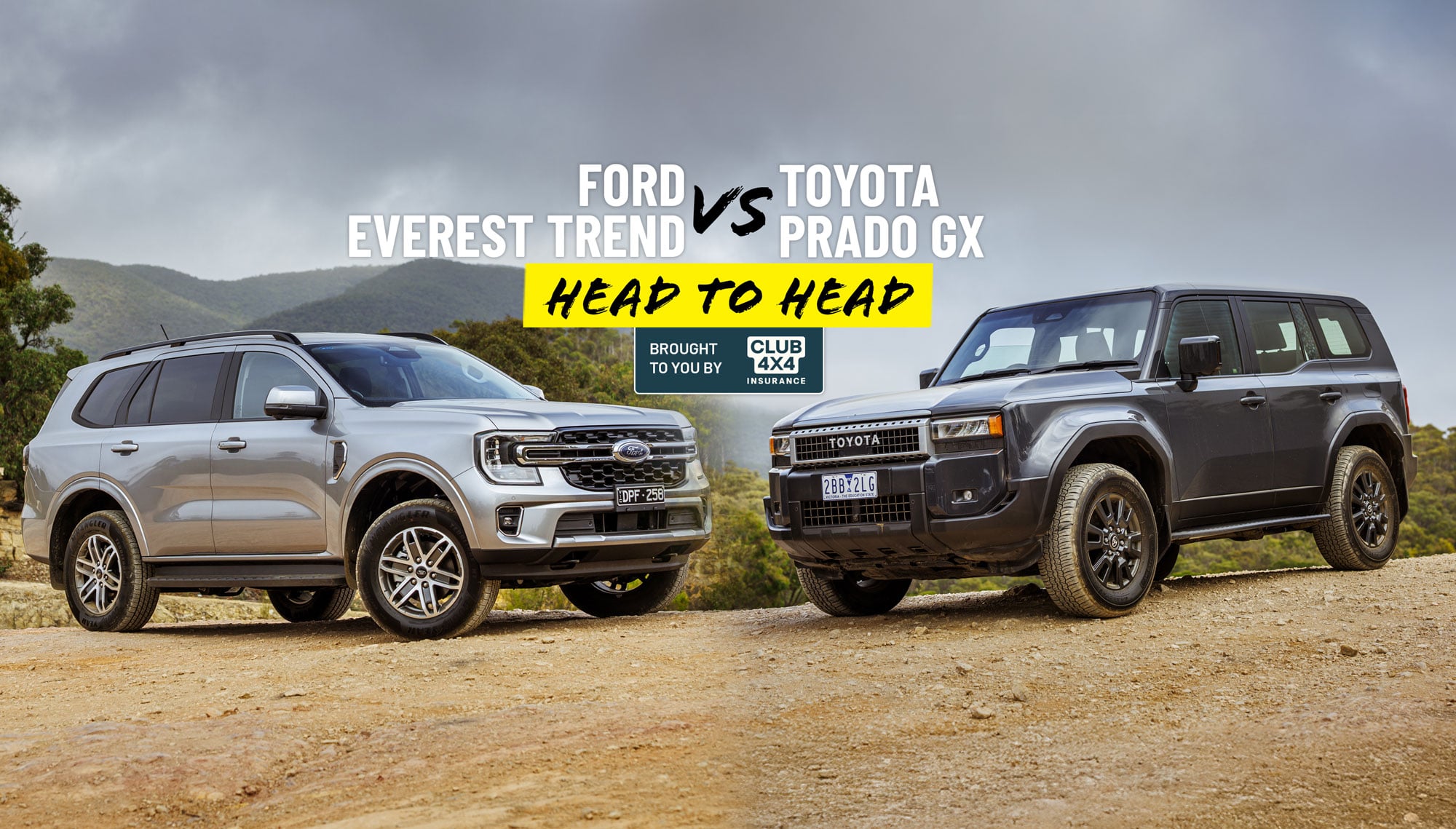
The Ford Everest and Toyota Prado were the best-selling 4×4 wagons in 2025, with a narrow margin between them. The Ford outsold the Toyota by just 55 vehicles over the year, which was the first year of sales for the Prado 250 Series.
While Australian new-vehicle buyers tend to favour the higher-specification premium variants in each model range – something dealers love thanks to the greater profit margins – there is still strong value to be found in the lower grades.
With this in mind, we’ve paired the base-model Toyota Prado GX with the Ford Everest Trend to see how they compare. The Prado GX starts at $72,500 plus ORC, while the Everest Trend bi-turbo comes in at $67,290 plus ORC. There is an Everest Ambiente below the Trend in Ford’s line-up, but one wasn’t available to us – and the Trend is a closer match to the Toyota in both price and specification.
JUMP AHEAD
Toyota Prado GX
The GX is the base variant in the six-model 250 Series Prado range, priced at $72,500 plus ORC, while the top-of-the-range Prado Kakadu will set you back $99,990 plus ORC.
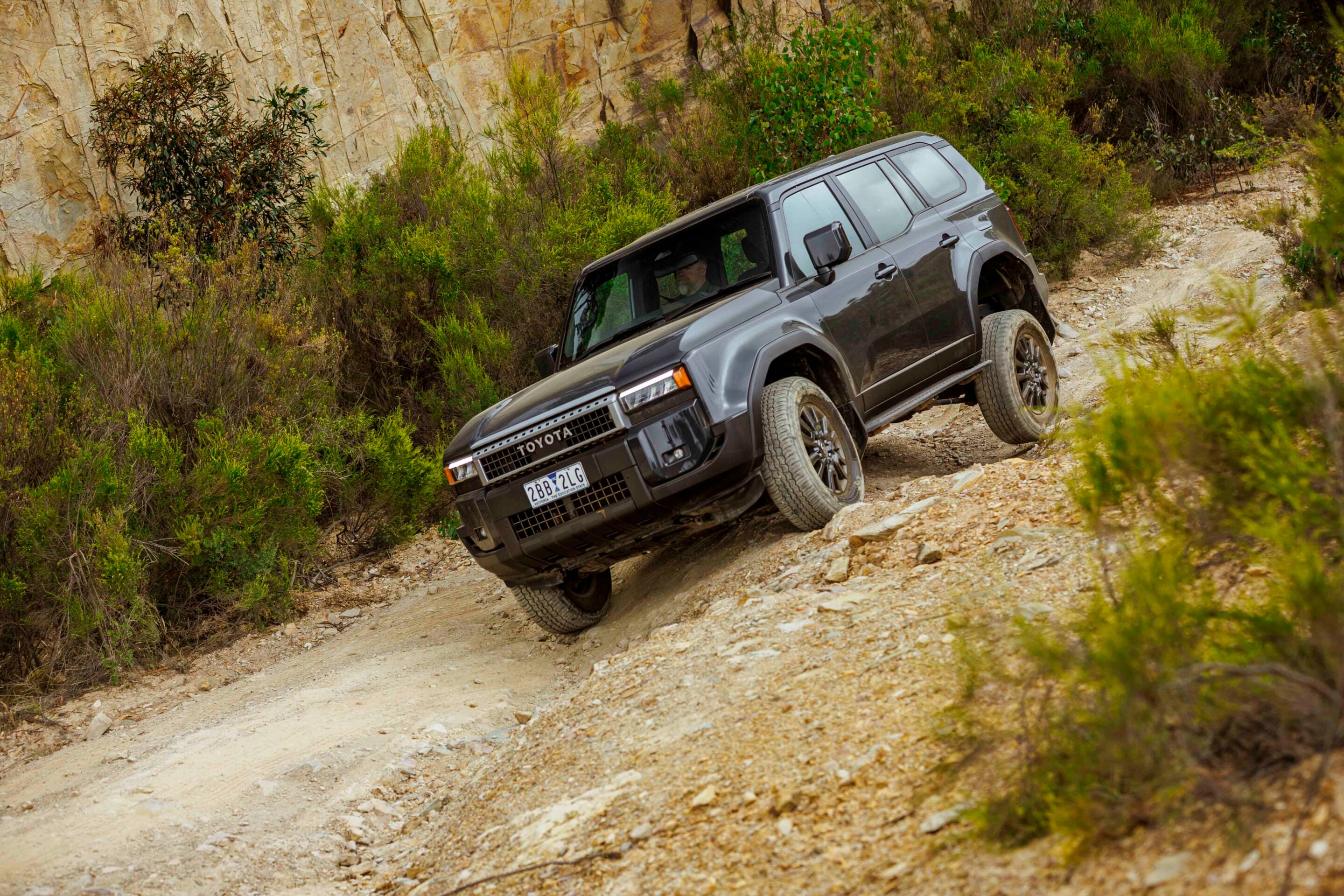
We said at the launch of the 250 Series that the GX was possibly the best variant in the line-up, as it was, at the time, one of only two models with just five seats, freeing up extra space in the cargo area for gear. The only other five-seat Prado was the $93k Altitude; however, Toyota has since introduced a Prado GXL in five-seat trim.
The GX isn’t just the cheapest model in the Prado range – it doesn’t miss out on any features you really want in a touring 4×4, leaving you with a bigger budget for the accessories you really want.
1
What equipment does the Prado GX get?
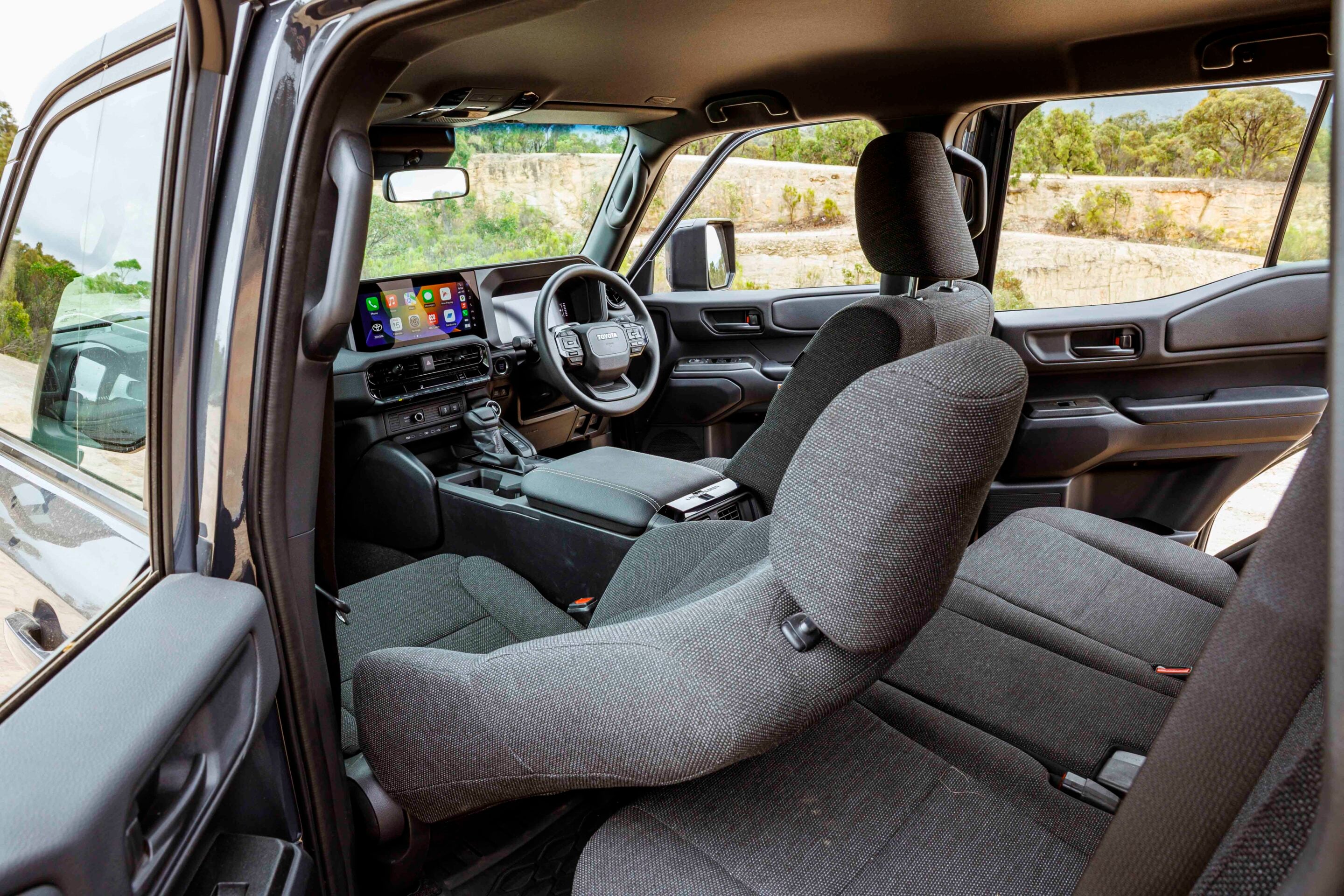
For a base model, the Prado GX isn’t short on standard equipment. Like the rest of the range, the interior is well equipped, starting with a premium 12.3-inch multimedia screen compatible with wireless Apple CarPlay and Android Auto, Bluetooth connectivity and cloud-based, in-built sat-nav. The Toyota sound system is impressive for an entry-level model, with a 10-speaker setup and a 200mm subwoofer handling audio duties.
GX and GXL Prados feature a seven-inch digital instrument display rather than the 12.3-inch screen fitted to higher grades, but it provides all the vehicle information needed for general use without unnecessary distractions. It still allows individual configuration to suit driver preferences.
The five seats are trimmed in comfortable cloth with manual adjustment, while the steering wheel is a hard plastic item. The steering column is adjustable for both reach and height.
The Prado’s tall cabin affords plenty of headroom for passengers, particularly in the rear. Overall cabin space is generous and easily accommodates a family on adventure trips. The lack of a third-row seat in the GX removes one of the most criticised aspects of the 250 Series – the amount of space those seats consume even when folded. There is still a slight rise in the floor to house the 48-volt lithium-ion battery, but it’s a far better outcome than the seven-seat layout.
1
Prado GX safety features
All Prados share the same level of safety equipment, so the GX isn’t left wanting in this area. Standard features include:
- Pre-collision system with autonomous emergency braking
- Pedestrian, cyclist, motorcyclist and oncoming vehicle detection
- Intersection collision avoidance support
- Emergency steering assist
- Acceleration suppression at low speeds
- Curve speed reduction
- Deceleration assist
- Lane trace assist with lane-departure alert
- Road-sign assist (speed signs only)
- Emergency driving stop system
- Blind-spot monitor with rear cross-traffic alert
- Safe exit assist
- Driver monitor camera
- Rear parking support brake
- Front and rear parking sensors
- LED lighting, including headlights
- Panoramic view monitor
- Reversing camera with guidelines
- Vehicle stability control with active traction control
- Anti-lock braking system
- Brake assist
- Electronic brake-force distribution
- Downhill assist control
- Crawl control
- Trailer sway control
- Nine SRS airbags
- Three rear ISOFIX child restraint points with top tethers
Toyota doesn’t list it as a safety item, but we’d argue tyre-pressure monitoring is more important than features such as active cruise control and auto high beam. If you want factory TPMS in a new Prado, you’ll need to step up to the VX.
Prado GX powertrain and performance
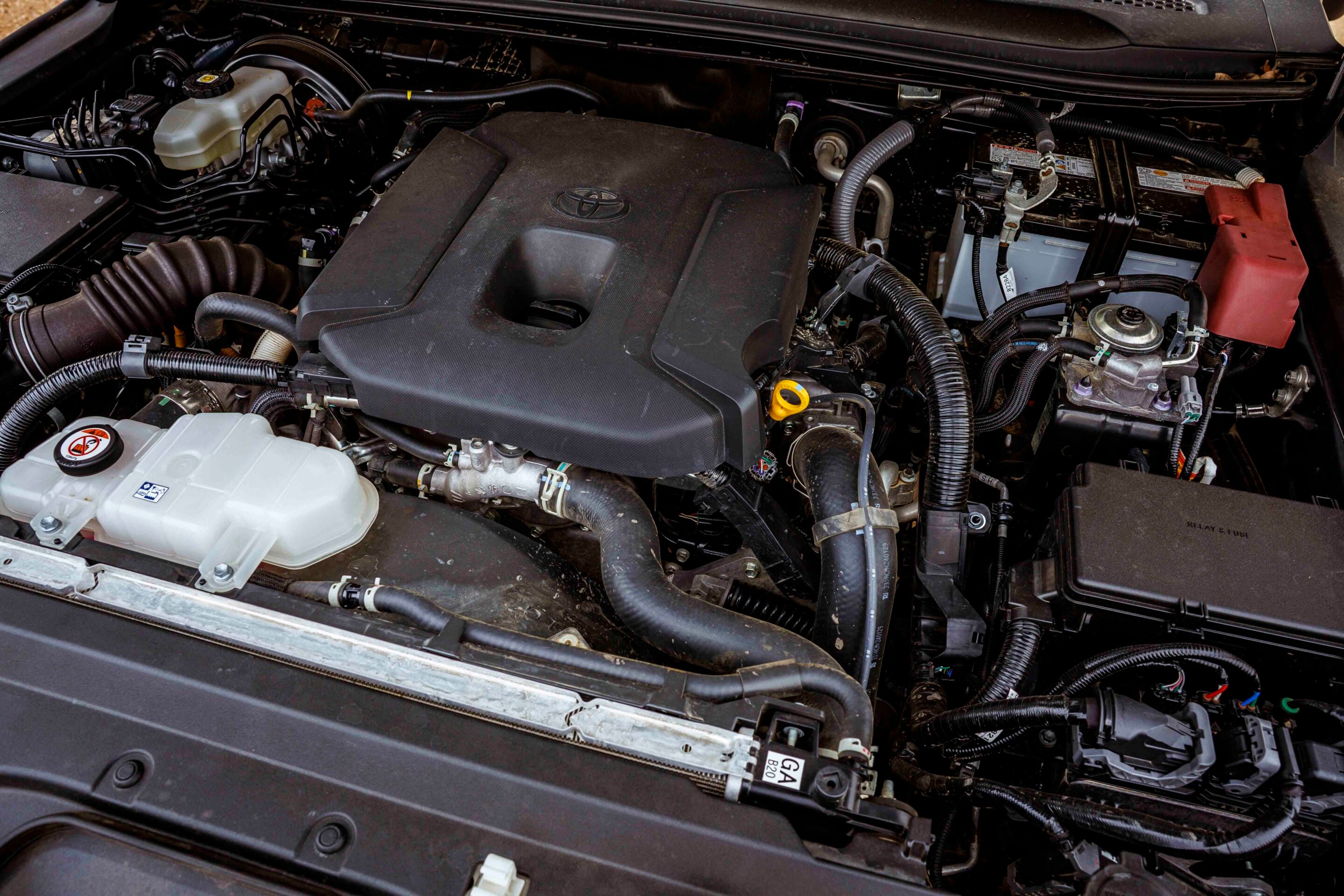
All 250 Series Prados are powered by Toyota’s 1GD-FTV 2.8-litre four-cylinder turbo-diesel engine paired with an eight-speed automatic transmission, so choosing the entry-level GX doesn’t mean missing out mechanically. The diesel is assisted by Toyota’s 48-volt V-Active technology, which doesn’t increase outputs – the engine still produces a respectable claimed 150kW/500Nm – but is well proven from its use in other Toyota models.
Four-wheel drive comes via a full-time, dual-range system with a lockable centre differential, but there’s no factory rear diff lock. Only the Altitude and Kakadu models are fitted with a rear differential lock from the factory. Thankfully, Toyota’s electronic traction control is sharp and effective at managing grip when the tyres break traction.
The GX also features Crawl Control and hill descent control, which work exceptionally well to maintain progress in low-grip situations without throttle input. Think of it as cruise control for off-road use, maintaining a set speed across varying terrain, and it’s especially beneficial for drivers with less off-road experience or confidence.
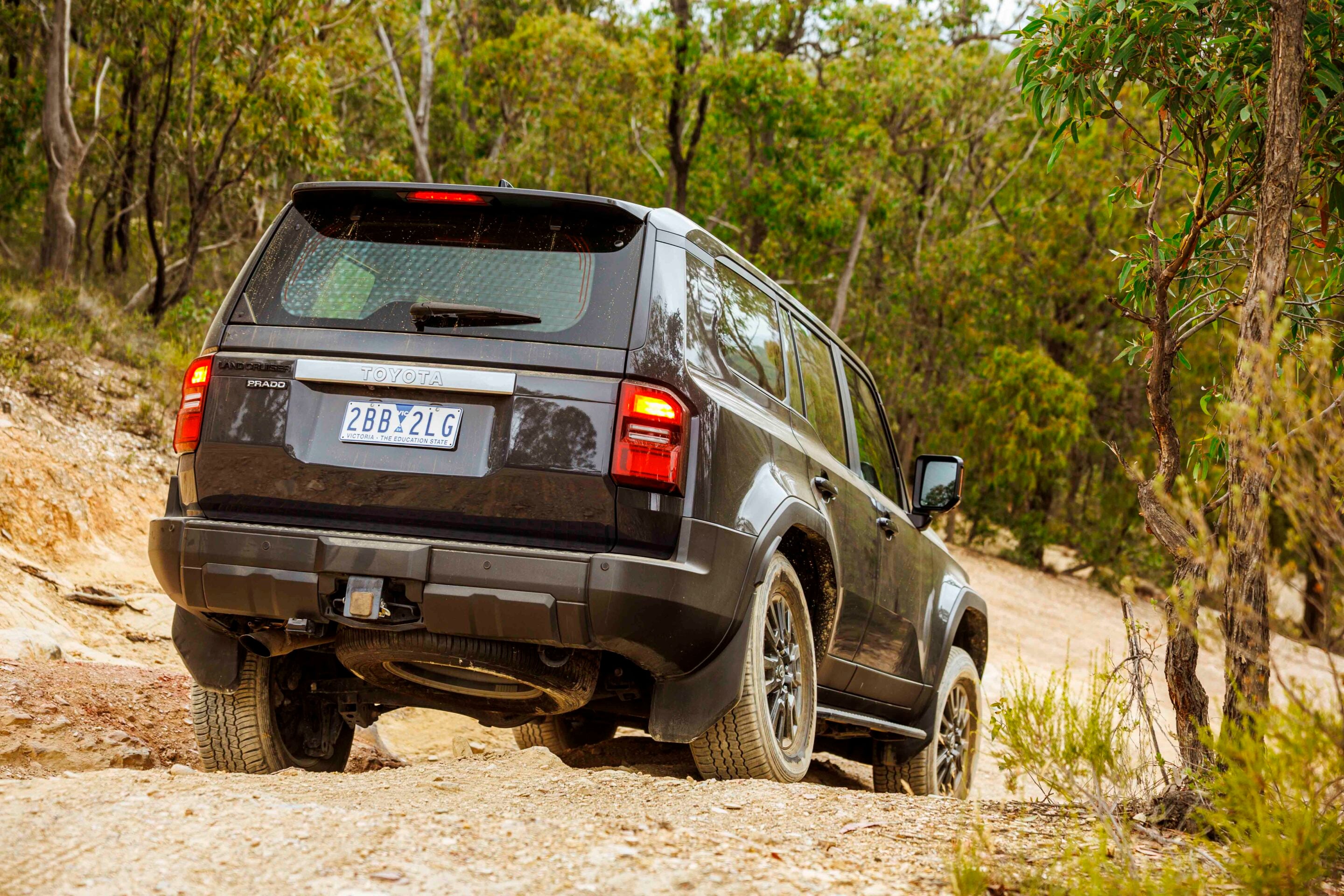
The Prado GX misses out on the Multi-Terrain Select modes fitted to higher grades, but that’s no great loss. Instead, it offers basic drive modes including Normal, Sport and Eco. The new Prado offers a 3500kg towing capacity, with an integrated towbar that’s pre-wired and ready to use.
1
Prado GX ownership considerations
Toyota 4×4 vehicles are renowned for their ruggedness and dependability, and there’s no reason to believe the 250 Series Prado will be any different.
Owners of the new Prado can expect a five-year, unlimited-kilometre warranty. Toyota Australia also offers five years of capped-price servicing for the LandCruiser Prado at $390 per service for the first 10 services, at intervals of six months or 10,000km – whichever comes first.
Emergency roadside assistance is provided through Toyota Emergency Assistance, extending coverage from five to seven years if the vehicle is serviced and maintained in accordance with the warranty and service book by a Toyota dealer. For anyone concerned about the lithium battery used in the 48V system, it’s covered by an eight-year/160,000km warranty (whichever comes first) if battery energy storage capacity falls below 70 per cent of its original capacity.
1
Ford Everest Trend
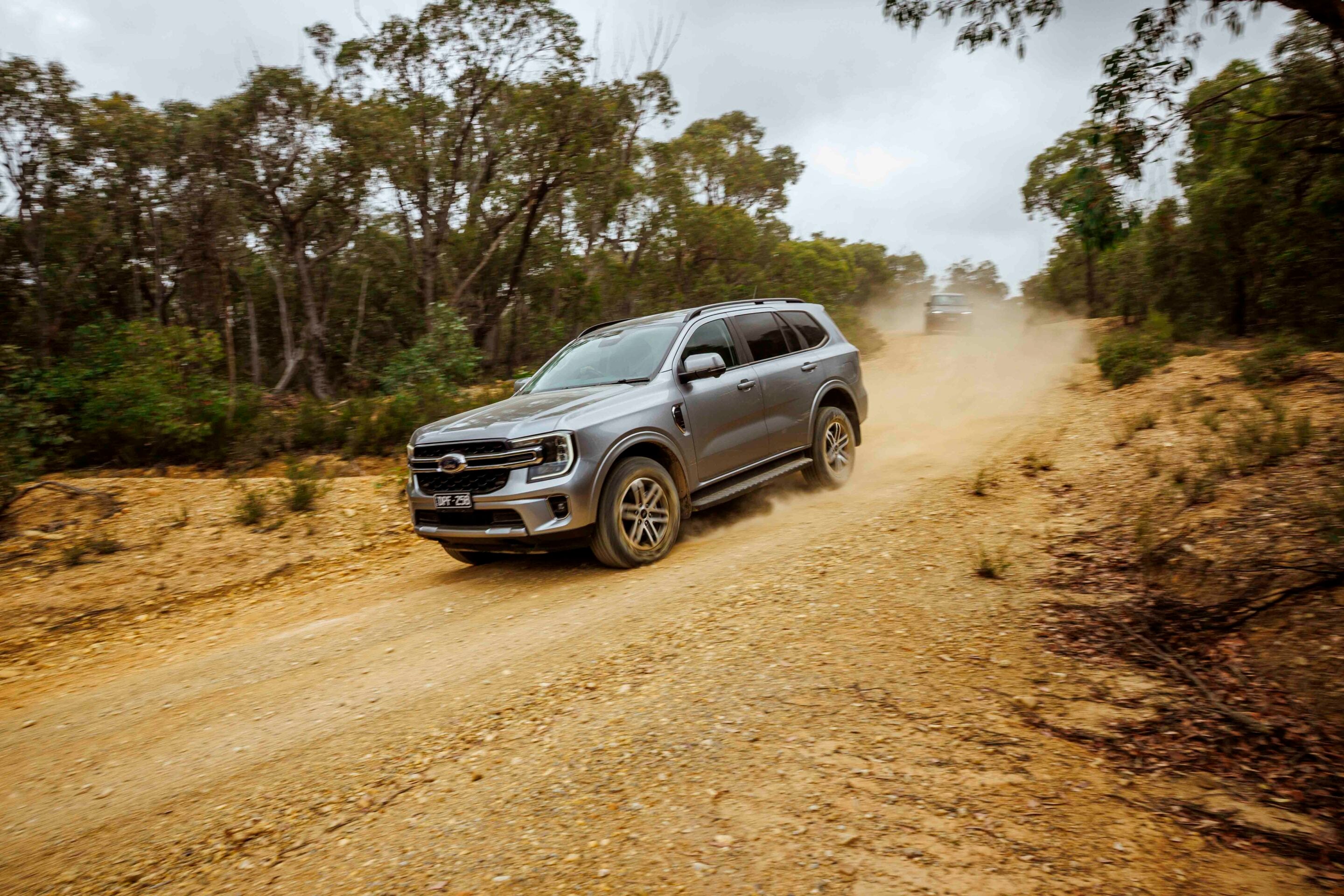
It feels like only yesterday we were welcoming Ford’s family fourby to our roads, but the Everest has now been with us for four years. Essentially a five-door wagon built on Ford’s T6 platform – shared with the Ranger ute – the Everest differs with a shorter wheelbase and a Watts-link, coil-sprung rear suspension designed to improve handling and comfort.
The Everest offers a choice of powertrains across the range, with either a 2.0-litre bi-turbo diesel producing a strong 500Nm or a 3.0-litre diesel V6, depending on model grade. It should be noted the bi-turbo diesel will be discontinued from Ford’s range this year, replaced by a 125kW/404Nm single-turbo 2.0L diesel, while the V6 will be offered across more models.
At the same time, the Everest Ambiente and Trend models will be discontinued and replaced by the Everest Active entry-level model, which will be offered with a choice of four- and six-cylinder diesel engines. For this test, we’re running the Everest Trend powered by the bi-turbo 2.0L engine. In specification, it’s the closest match to the Prado GX in both equipment and price.
1
What equipment does the Everest Trend get?
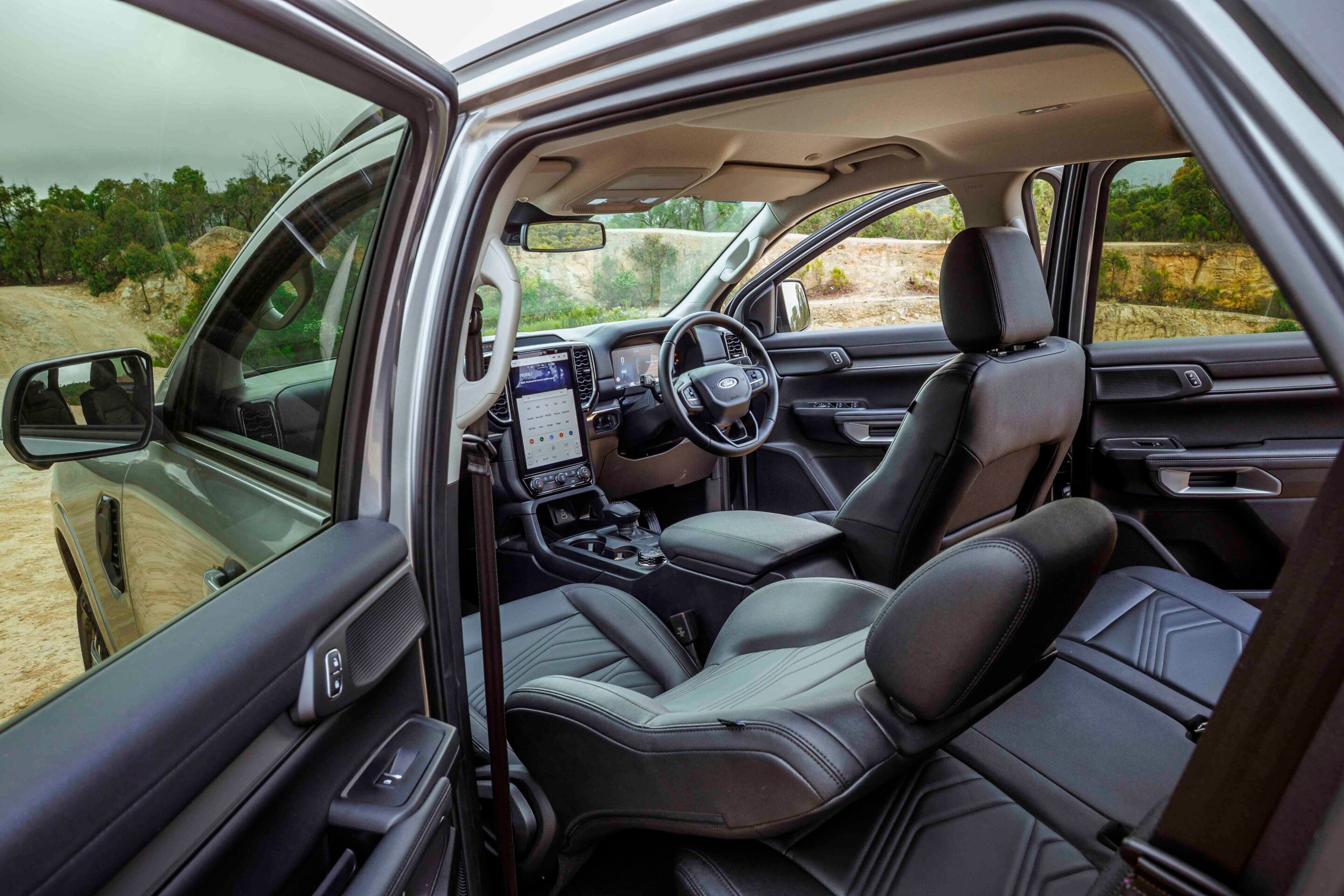
The Everest Trend might sit low in the model range, but it doesn’t feel that way thanks to its high level of standard inclusions. It comes standard as a five-seater, but this example was fitted with the optional third-row seat, making it a seven-seater. A key difference between the Everest and Prado is that the Ford’s third row folds flat into the floor, rather than sitting on top of it as the Prado’s third row does.
Ford describes the seat trim as ‘leather accented’, but it feels cheap and tacky, and we much prefer the Prado’s cloth upholstery. The driver’s seat has eight-way power adjustment; however, the front passenger seat lacks height adjustment. The steering column is adjustable for both reach and height, while the steering wheel is wrapped in soft leather.
The seats are firm yet comfortable, with plenty of space in the first and second rows, while the third row is best reserved for kids due to the relatively low roof height. Kudos to Ford for fitting roof vents for passengers in all three rows – again, something the Toyota doesn’t offer.
The multimedia screen is a 12-inch vertical unit, while the driver’s instrument cluster is an 8-inch display. The multimedia system features wireless Apple CarPlay and Android Auto, in-built navigation and eight speakers, along with a single wireless phone charger – something not offered in the Prado GX. The Everest Trend also includes a power-operated tailgate and a 400W inverter with a power outlet at the rear of the centre console.
1
Everest Trend safety features
The Everest Trend is fitted with a comprehensive suite of safety features, including:
- Nine airbags, including driver and passenger knee airbags
- Collision Mitigation, including AEB, Reverse Brake Assist and post-impact braking
- Lane keep assist
- Lane departure warning
- Front and rear parking sensors
- BLIS with cross-traffic alert and trailer coverage
- Digital reversing camera
- Anti-lock braking system
- Electronic stability control
Notably absent, again, is tyre-pressure monitoring. To get factory TPMS in the Everest range, you’ll need to step up to the top-spec Platinum.
Everest Trend powertrain and performance
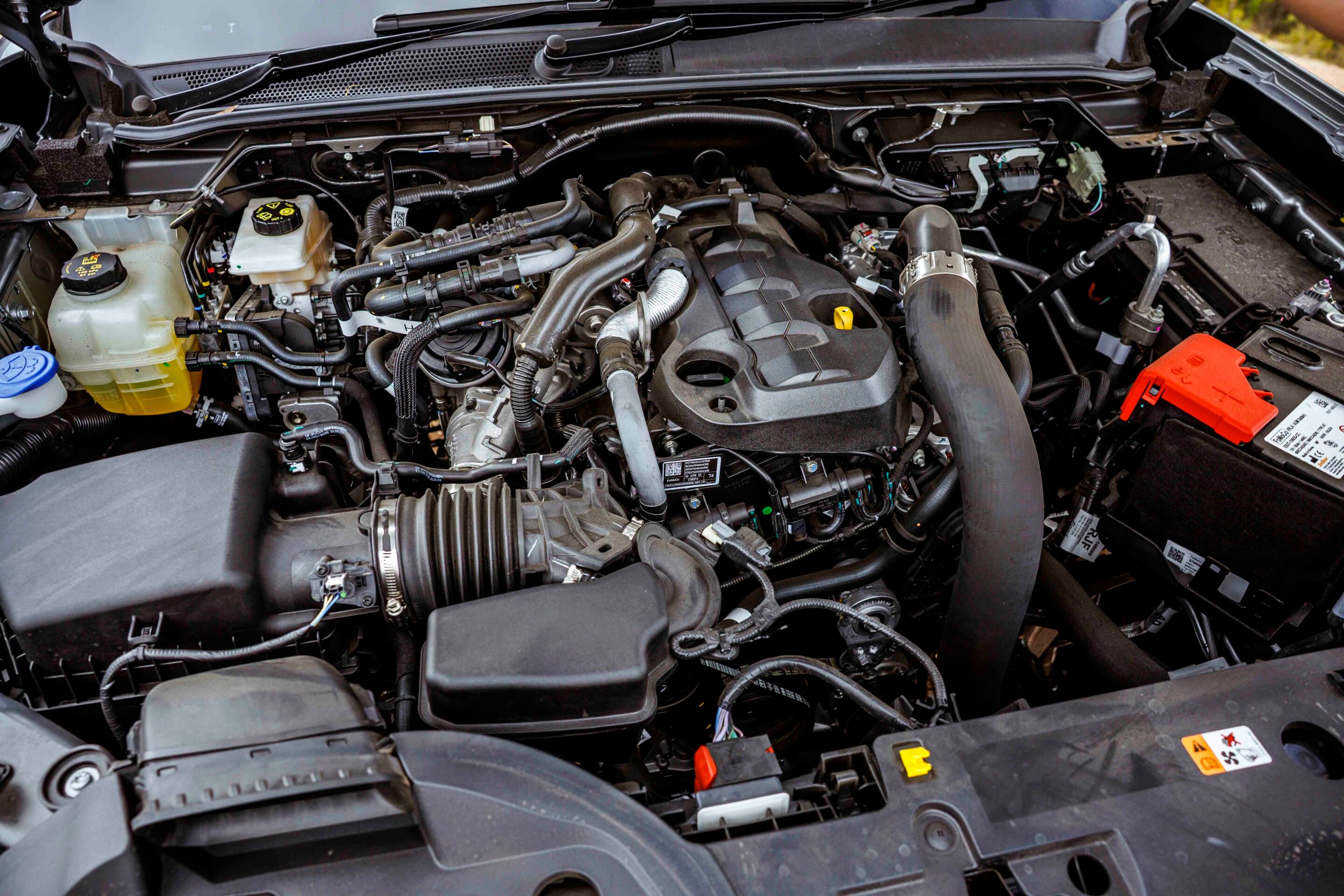
Ford’s 2.0-litre bi-turbo diesel engine is a cracker, especially when paired with the 10-speed automatic transmission as fitted to the Everest. With its claimed 154kW/500Nm outputs, it does everything you could ask of a family touring 4×4, and does so in a relatively refined manner. It’s smooth and quiet, and well matched to the 10-speed, which has been considerably updated and recalibrated since we first sampled it in earlier models.
The transfer case offers on-demand four-wheel drive, along with high- and low-range 4×4 and a two-wheel drive mode. The Trend also features a rear differential lock; in fact, a driver-selectable RDL is standard across all Everest grades.
The Trend’s drive modes include Eco, Normal, Slippery, Sand, Mud and Ruts, plus a Tow/Haul mode. In tow mode, Ford’s clever trailer tech becomes available, including setup, integration and a towing checklist, along with an integrated factory electric brake controller. All Everest 4×4 models have a 3500kg towing capacity. Suspension consists of a double-wishbone, coil-sprung independent front end, with a live rear axle using coils and a Watts link for lateral axle location.
1
Everest Trend ownership considerations
Ford 4x4s come with a five-year/unlimited-kilometre warranty, with Ford Roadside Assistance provided from the warranty start date. After the first 12 months, roadside assistance is extended for a further 12 months each time the vehicle is serviced at the recommended intervals by a participating Ford dealer. Ford also offers prepaid service plans for fleet buyers.
Off-road comparison
Both vehicles here are competent off-roaders, but they go about the job in different ways. The sharp calibration of Toyota’s electronic traction control, combined with greater wheel travel in the Prado – particularly at the rear axle – gives the Toyota the ability to crawl over deep ruts and obstacles with relative ease. Over the same terrain, the Ford spun its tyres at the first hurdle and needed its rear diff lock to get through the uneven moguls. The Toyota’s softer suspension calibration also allows it to better soak up bumps, ruts and corrugations on rough gravel tracks.
As popular models, both vehicles are well supported by aftermarket suppliers, allowing owners to tailor them for a wide range of off-road conditions. Extra points go to the Toyota for its 110-litre fuel tank, which allows longer distances between refuelling stops.
Bull bars and protection equipment, suspension and tyres, storage and other upgrades are all readily available. Notably, Ford’s collaboration with ARB 4×4 allows buyers to equip their Everest with ARB gear at the Ford dealer as part of the vehicle purchase. Both of these 4x4s were heavily developed in Australia and are well suited to local on- and off-road conditions.
| Toyota Prado GX | Ford Everest Trend | |
|---|---|---|
| Approach angle | 31 | 30.4 |
| Ramp-over angle | 25 | 22.2 |
| Departure angle | 17 | 25.3 |
| Ground clearance | 210mm | 229mm |
| Wading depth | 700mm | 800mm |
Verdict
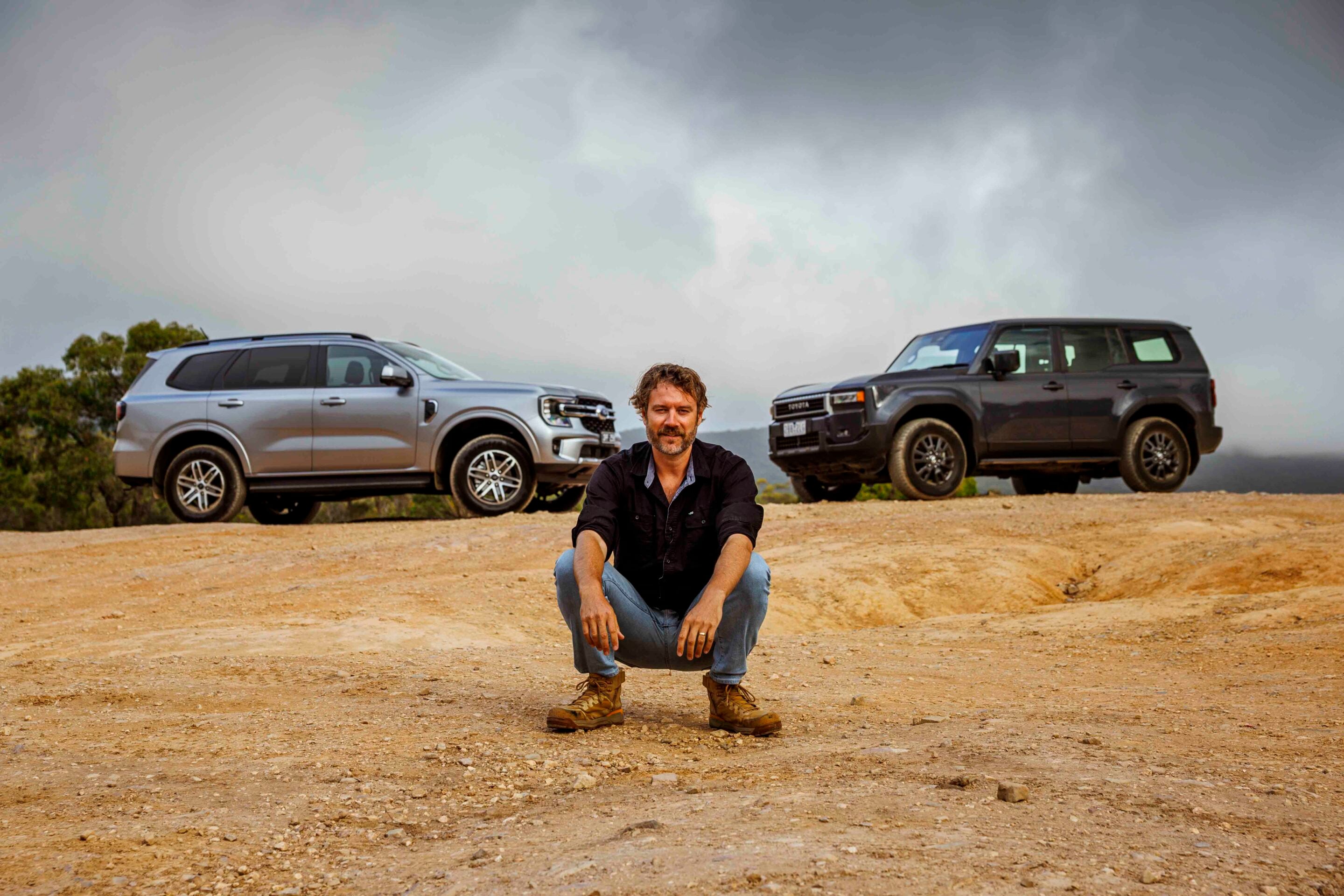
The takeaway from this test is that both wagons are well suited to family 4×4 touring in Australia and, while they follow a similar design brief, each has its own characteristics, strengths and weaknesses.
The Toyota Prado is the newer vehicle and it feels it in terms of interior design and technology. It’s also the only one using any form of electrification in its driveline, even if Toyota’s 48-volt system is only a mild-hybrid setup at best. It provides a small performance benefit, but we feel any gains are outweighed by the weight and space taken up by the battery, along with the fact it adds another major system that could leave you stranded if it were to fail. In a remote outback location, the consequences could be serious.
The 250 Series brings major improvements to the Prado, with a larger cabin for family use and improved capability thanks to its excellent 4×4 system and suspension. It’s a vehicle well worthy of our 4×4 of the Year award.
54
The Everest feels older, but that shouldn’t be seen as a negative. It still offers all the features you’d want in a family 4×4, plus the extra seating if you need it. The bi-turbo diesel makes the Everest slightly quicker than the Prado, while its firmer suspension delivers flatter cornering and more confident on-road handling.
Ford tunes its 4×4 suspension to be firmer and more sporting than the softer, more comfort-focused setup used by Toyota. The result is an Everest that rides flatter on-road, while off-road the Prado is more supple, more comfortable and offers better wheel travel, particularly at the rear axle.
Choosing between the two ultimately comes down to which characteristics best suit your needs – the Prado’s stronger off-road performance at the expense of on-road dynamics, or the Everest’s handling and seven-seat flexibility. That said, the roughly $4-5k price advantage of the Ford could easily fund an aftermarket suspension upgrade to help bridge the gap.
The big takeaway is that you’ll save tens of thousands of dollars by choosing either of these base-model fourbies, and that money can go a long way towards accessories, a trailer or a big trip.
Specs
| Toyota Prado GX | Ford Everest Trend | |
|---|---|---|
| Price | $72,500 +ORC | $67,290 +ORC |
| Engine | 4-cyl turbo diesel | 4-cyl bi-turbo diesel |
| Capacity | 2755cc | 1996cc |
| Max power | 150kW@ 3000-3400rpm | 154kW @ 3750rpm |
| Max torque | 500Nm @ 1600-2800rpm | 500Nm @ 1750-2000rpm |
| Transmission | 8-speed automatic | 10-speed automatic |
| 4×4 system | Full-time, dual range | On demand 4×4 with 2WD, 4×4 high and low range |
| Construction | 5-door wagon on a ladder frame chassis | 5-door wagon on a ladder frame chassis |
| Front suspension | Wishbone and coil IFS | Wishbone and coil IFS |
| Rear suspension | Multilink coil live axle using Panhard rod | Multilink coil live axle with Watts link |
| Tyres | 265/65R18 on alloy wheels | 255/6018 on alloy wheels |
| Kerb weight | 2535kg | 2383kg |
| GVM | 3100kg | 3100kg |
| GCM | 6600kg | 6250kg |
| Towing capacity | 3500kg | 3500kg |
| Payload | 974kg | 717kg |
| Seats | 5 | 7 |
| Fuel tank | 110L + 17.4L Adblue | 80L + 18L Adblue |
| ADR fuel consumption | 7.6L/100km | 7.2L/100km |
Follow 4X4 Australia on Google
Get more 4x4 news, reviews and gear stories from 4X4 Australia in your Google feeds.

We recommend
-
 4x4 Comparisons
Ford Everest Tremor vs Toyota Prado Altitude: Ultimate off-road 4x4 wagon comparison
Ford and Toyota claim these two are the ‘off-road ready’ models in their respective 4x4 wagon line-ups. We hit the dirt to see if they really are
-
 News
NewsToyota releases old-school security method to combat rising car theft
Toyota has reintroduced its steering wheel lock as vehicle theft continues to rise across Australia
-
 News
NewsFord reveals 2026 updates for Ranger and Everest
Ford’s 2026 updates bring more power, smarter tech, and refreshed styling to Ranger and Everest