Reviews


Gallery 1
9.5
/10
Score
Things we like
- Superior 4500kg GVM
- High payload
- Strong off-road ability
Not so much
- Fuel consumption
- Poor manual gear selection
The Ford Ranger Super Duty has landed, and with promise of a 4500kg GVM and 8000kg GCM it sure has tongues wagging.
We all know that, despite one-tonne payloads and 3500kg towing capacities, regular midsize 4×4 utes can’t haul both, as their GVM will soon be exceeded once loaded to the hilt. The Ranger Super Duty is here to change all that with its heavy-duty ratings right off the showroom floor. No need for aftermarket GVM upgrades or replacement suspension components – the SD is made to do the job straight out of the box.
While those who like to tow big, heavy things are all in a tizz over the SD’s factory rating, we’re not fussed about towing. We’re all about off-road touring and adventures and would rather leave the boat on the mooring than on a trailer slowing down the 4×4. With a 4500kg GVM, the double-cab Ranger Super Duty promises a payload that nothing else on the market can match, so we wanted to load it up and point it at some rocky tracks to see how it handled the weight.
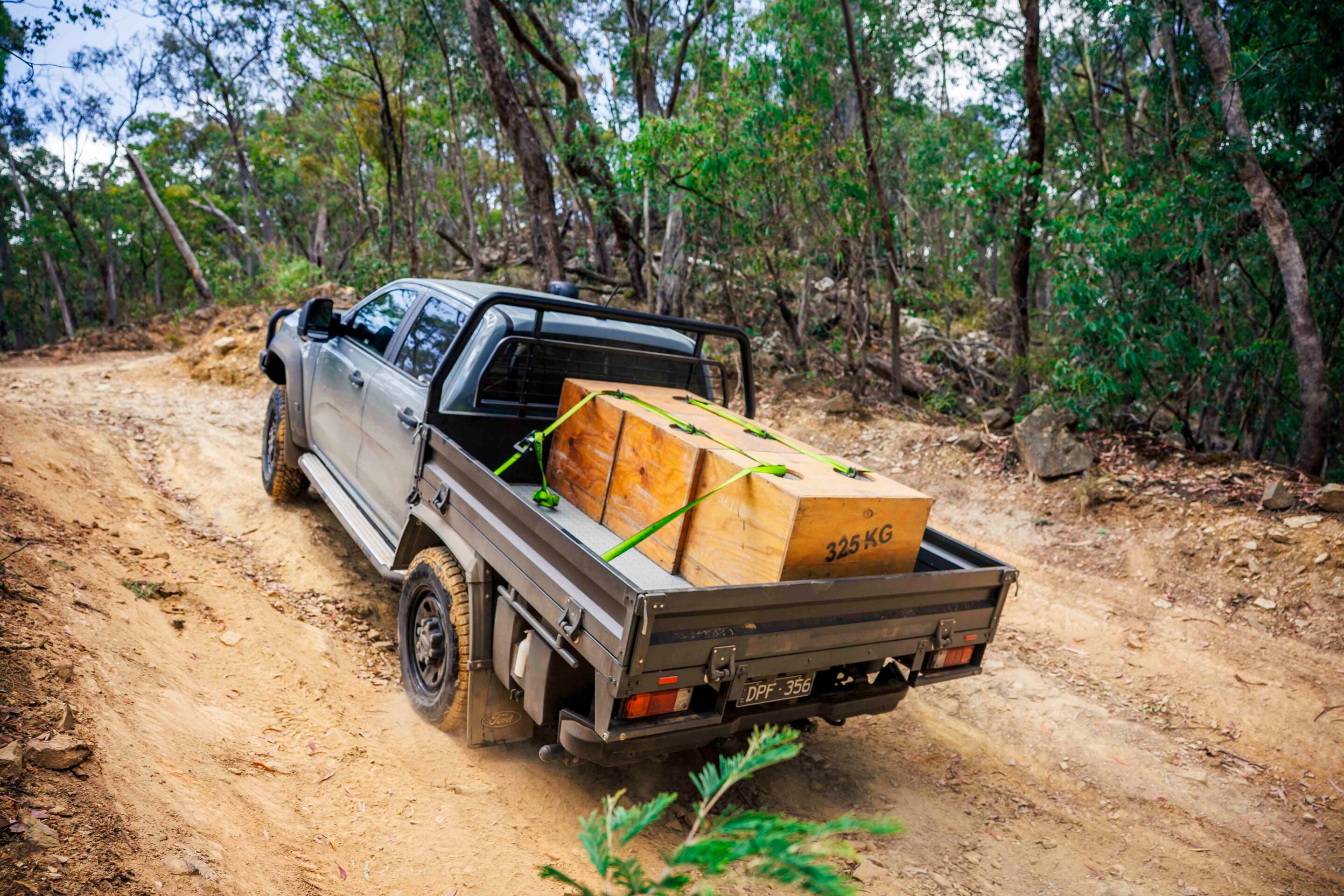
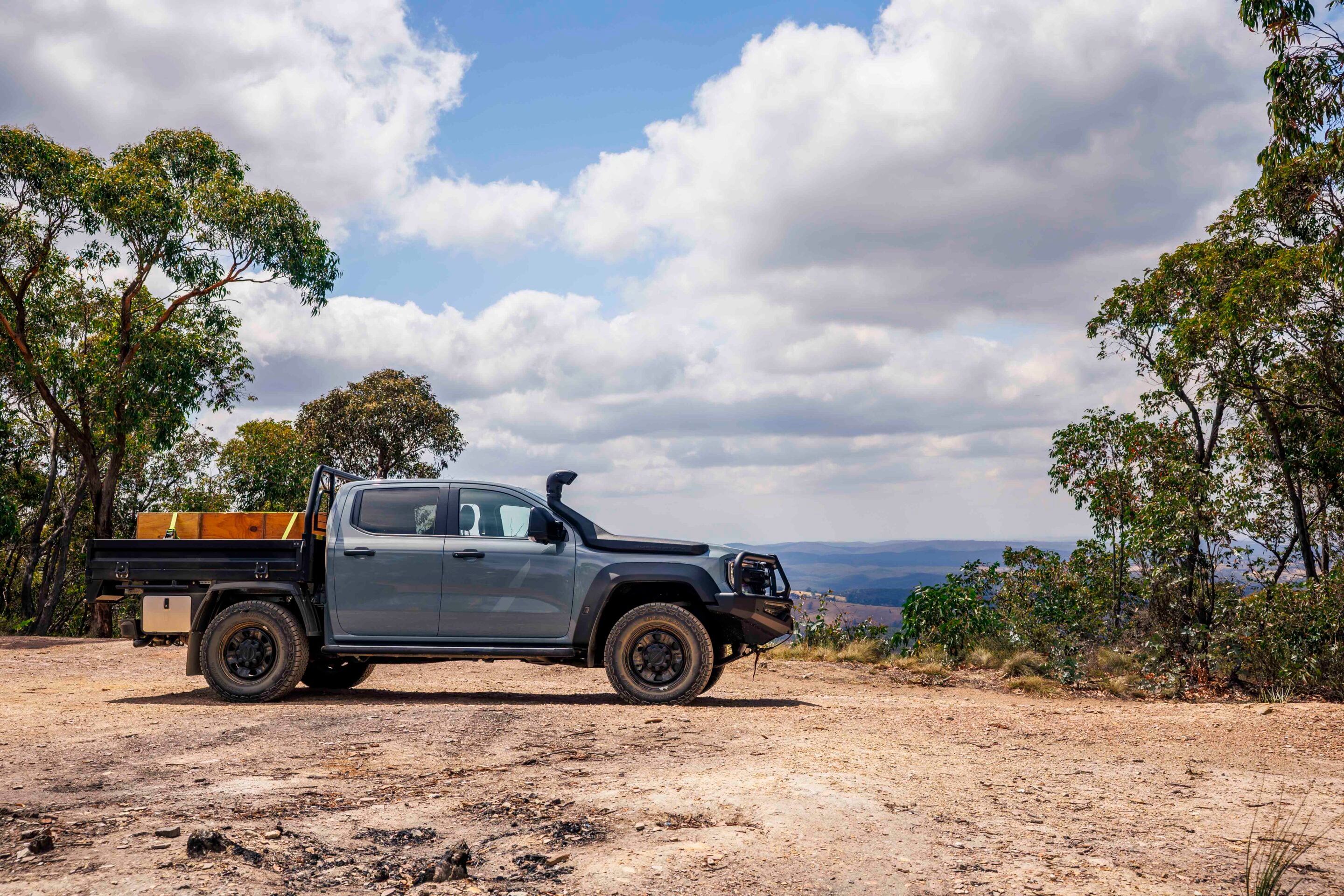
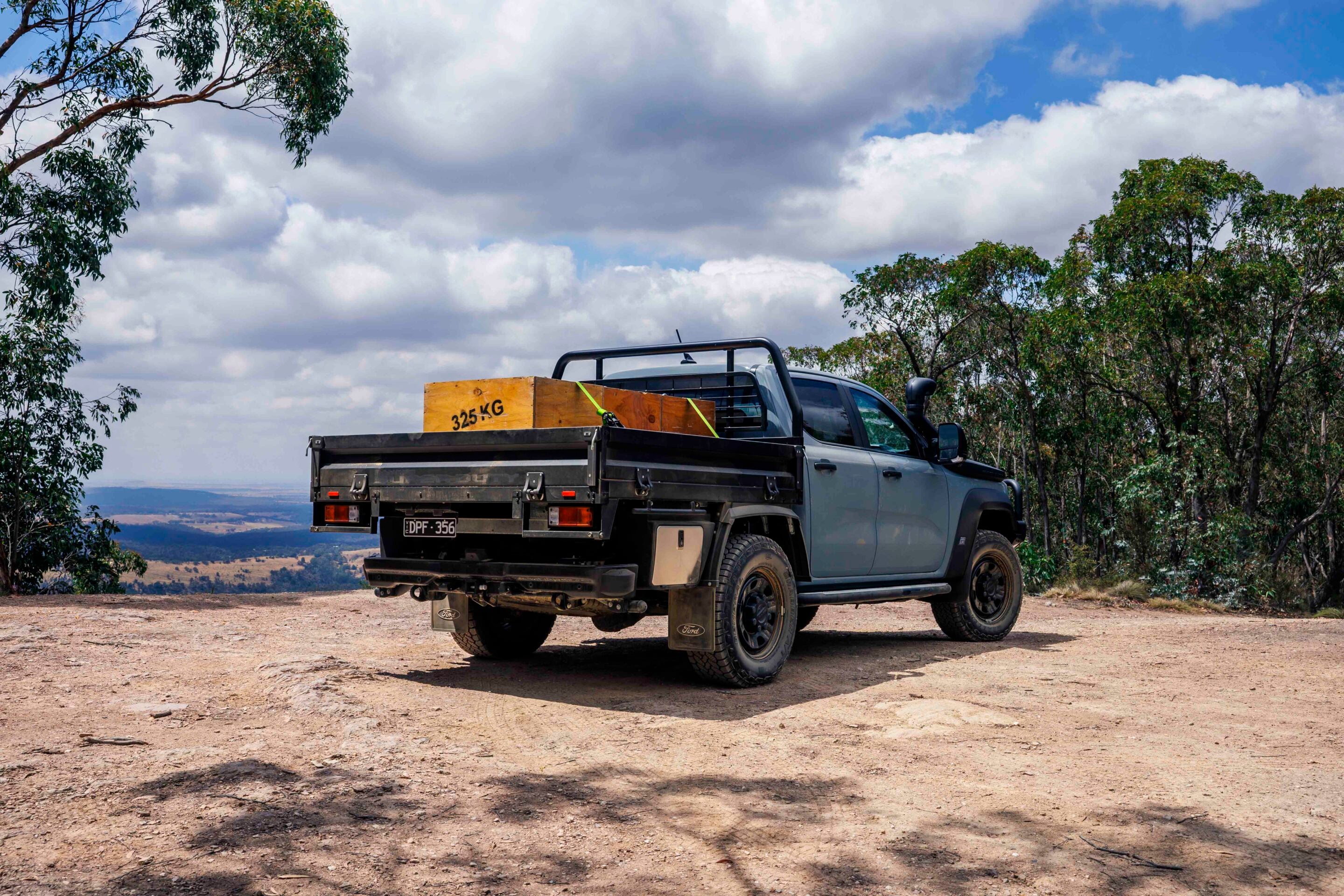
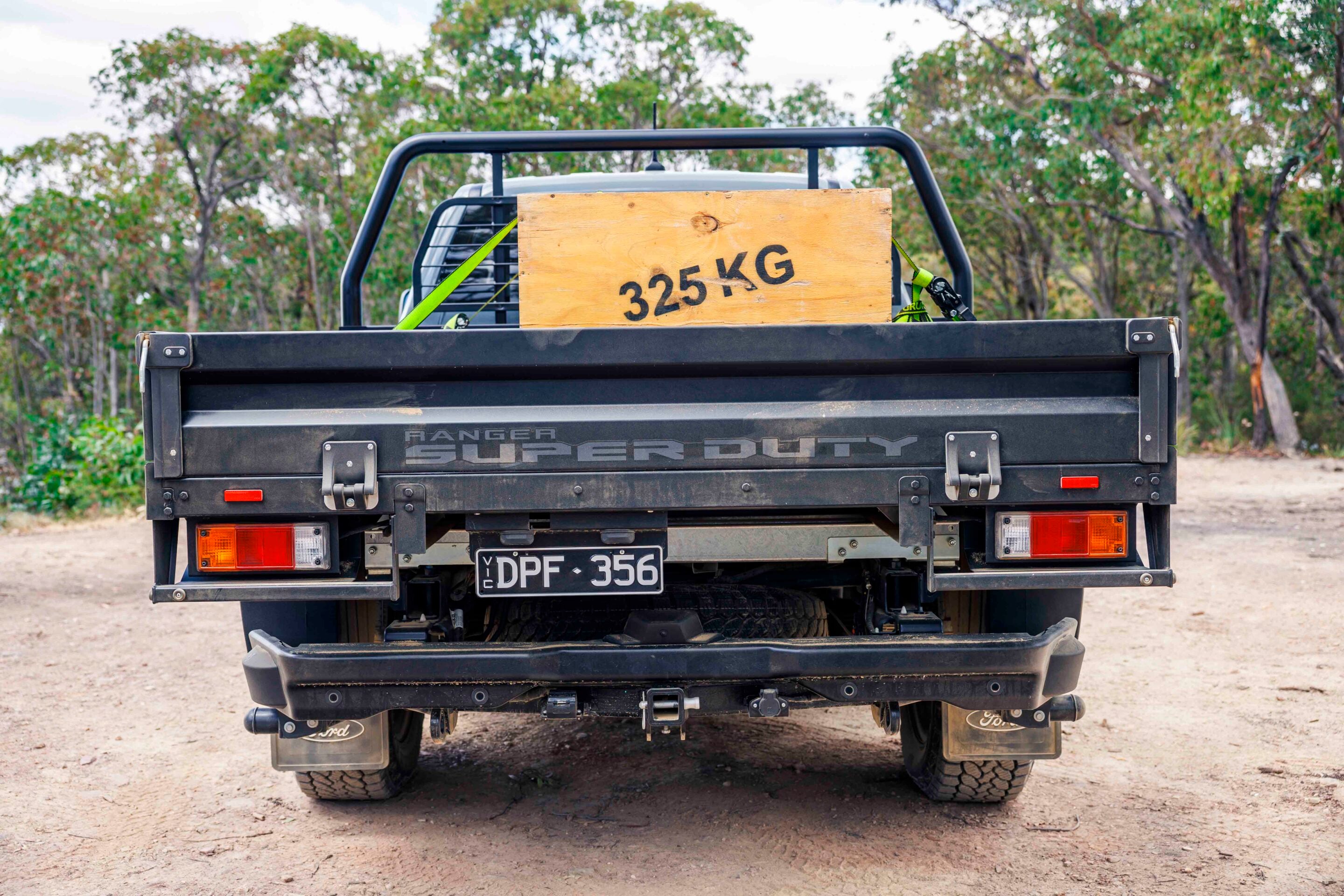
We strapped 975kg of concrete blocks to the factory Ford tray (those three boxes seen on the tray are each loaded with 325kg of concrete blocks) and aimed it towards the bush. Try this in almost any other midsize ute or 1500-class US pick-up and you’ll be on the wrong side of your GVM, or, at the very best, only able to carry a 50kg driver in the cabin. Add in the weight of the tray and we had more than a tonne on the back of the SD.
The weight was distributed along the centre of the tray, reaching almost to the tailgate, and when it was strapped down the factory leaf-spring suspension dropped around 75mm – barely noticeable and a lot less than a regular Ranger or other ute would drop with just 500kg on board.
Our experience when building our own V6 Ranger Sport a few years ago showed the standard Ranger suspension dropped to the bump stops when we removed the factory tub and fitted a canopy with accessories. The canopy and its contents added no more than 500kg to the rear of the Ranger and, although it did move the weight back a bit, we were astonished at how much it dropped the vehicle.
Ford builds the regular Ranger with soft and compliant suspension that is great for touring and comfort, but it obviously doesn’t cope with heavy loads over the back axle. The Ranger Super Duty fixes that. The springs, shocks, chassis and everything under the SD are all heavy-duty and made to handle the increased capacity ratings of the model. This was evidenced by the limited height drop with the concrete blocks on board. The overall stance of the vehicle remained relatively level when loaded.
JUMP AHEAD
On-road performance
As expected the Ranger SD did feel the weight as we headed out on the highway, but not as much as we thought it might.
The steering feel was only slightly lighter due to the weight on the back, and the performance of the drivetrain was unfazed. Ford’s V6 diesel engine is a relatively lazy and relaxed mill that just gets on with the job in all its applications. Sure, it took a little longer to reach 100km/h on the highway, and the 10-speed transmission dropped back a gear or two more when climbing hills and overtaking at that pace, but it didn’t suffer as much as we thought it might.
The SD carried the load with ease, to the point it felt capable of towing a loaded trailer at the same time – and, in theory, it could have. That’s a feat no other double-cab ute on the market can achieve legally.
When relieved of its load, the acceleration of the SD suffers from its extra weight over a regular V6 Ranger, and the taller, heavier tyres don’t help either. The tray is bigger and wider than most you’ll find on midsize utes, but it’s still easy to manage for daily supermarket visits and general duties. The front and rear cameras and large optional external mirrors become your friends when parking.
1
Off-road performance
The SD suspension remained unfazed on secondary and gravel roads where, admittedly, we were travelling a little more cautiously than we might usually do on the familiar tracks due to the overall weight.
Considering the tall LT tyres fitted to the Super Duty, the heavy-duty Ford handles and rides far better than we expected off-road, both when laden like this and unladen. The brakes did their job well enough when needed but, whenever I’m towing or carrying a heavy load, I like to use the gears to create a bit of engine braking to ease the load on the brakes. This is good practice whenever hauling heavy.
This leads me to the biggest complaint with all of the current-generation Rangers bar one model, and that’s the piddly little manual gearshift buttons on the side of the transmission shifter. They are too small and, with three buttons there, it is not always easy to hit the right one when you need it. The Ranger Raptor’s paddle shifters would be a most welcome addition on the Super Duty … and all 4×4 Rangers for that matter.
1
A difference between the SD and other Rangers is that the transfer case doesn’t offer two-wheel drive at all, with Ford saying that any vehicle hauling the loads the SD is rated to carry will do it more safely in all-wheel drive. The SD transfer case has 4WD Auto, locked high range and locked low range, which should be enough for any situation.
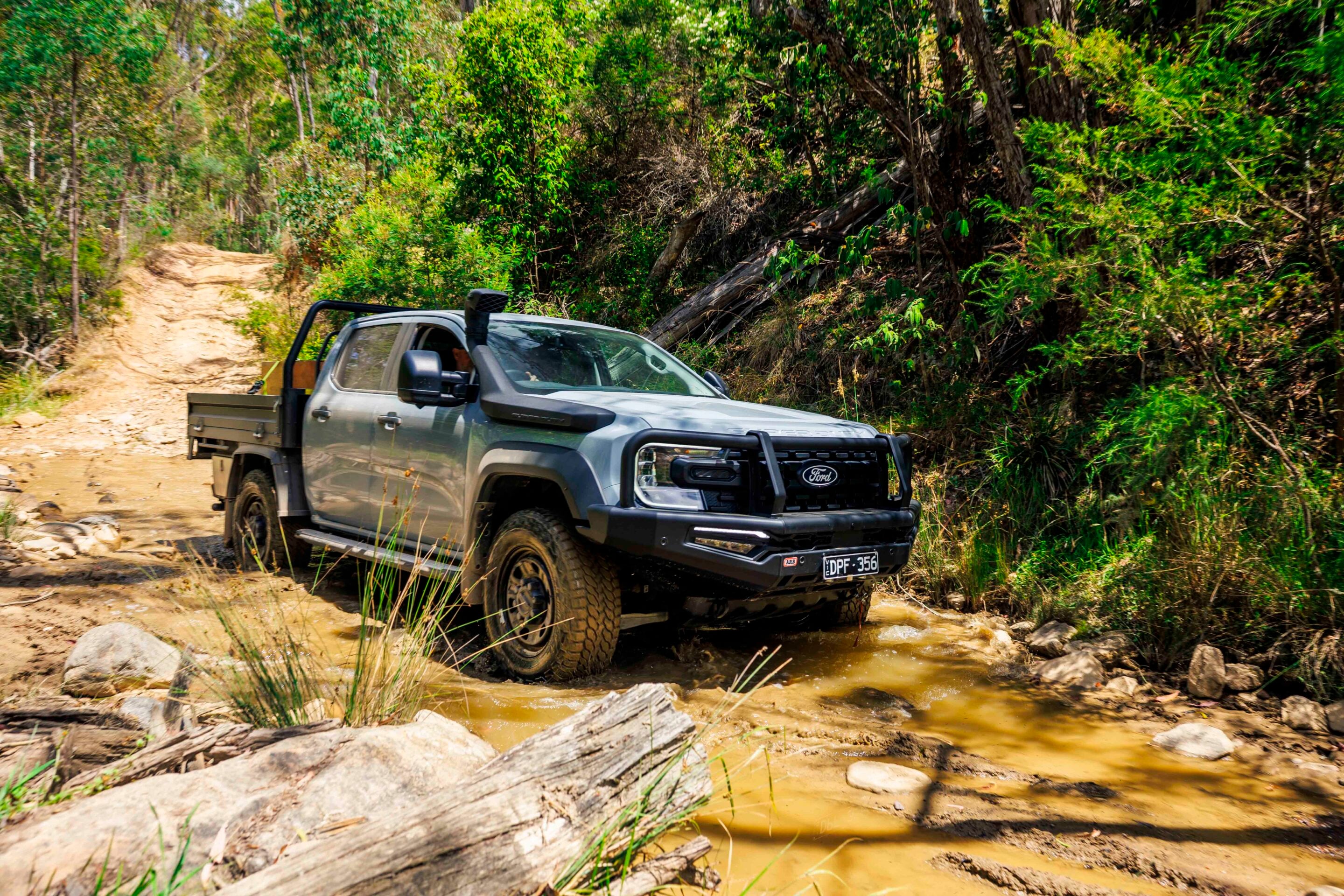
The 4WD Auto mode gave positive traction and predictable handling on the sealed roads and gravel tracks, but we switched to locked high-range 4×4 when the track deteriorated and became more uneven. Then, when the track began its steep drop into a deep valley, we went to low range for the gear reduction and a more controlled descent with minimal use of the brakes. This gave a controlled, safe and easy descent as the suspension articulated well to keep the wheels on the ground as we dropped over rocks and steps. Heading up the opposite side of the valley brought a steeper climb and more rock steps, creating an ideal track to test the vehicle’s tractive ability.
All Super Duty variants come with LT275/70R18 General Grabber all-terrains on 18-inch steel wheels and we left them at road pressures for this drive. They also come standard with locking differentials on both the rear and front axles, so we were hoping this would be enough to haul our load up the ridge.
1
Ford’s 3.0-litre V6 diesel engine runs a different tune in the Super Duty where it makes a few kilowatts less power but, more importantly, retains its 600Nm output. Backed by the 10-speed transmission, it’s a combination that we know will walk up this hill with ease in any unladen Ranger, but putting the best part of a tonne in its tray adds a lot of resistance.
In low range and with the rear diff lock engaged we pointed it up the first series of loose gravel and rock steps and it climbed them with relative ease. The following step was bigger and on a steeper section of the track, so the weight was well and truly on the back of the vehicle and the front tyres scrabbled for more grip than the electronic traction control was able to give them. No problem – engaging the front diff lock got it up and over.
The Super Duty also has the Trail Control system fitted. This works like low-speed cruise control for off-road work and will maintain vehicle speed at a rate set by the driver without him or her having to use the accelerator. More importantly than the speed control, Trail Control is able to apply minute throttle openings as required while measuring tyre slip and regulating the throttle accordingly.
The system works extremely well and makes driving tricky terrain easier no matter what your off-road driving experience. It worked superbly crawling the heavily laden Super Duty up the rocks and loose scree. After around 400m of this steep rocky climb the gradient eased off and the route got easier before we were back on sandy and dusty tracks.
| Off-road specs | |
|---|---|
| Approach angle | 36.1 |
| Ramp-over angle | 26.3 |
| Departure angle | 28.6 |
| Ground clearance | 295mm |
| Wading depth | 850mm |
42
What does it come with?
The full suite of Ranger safety equipment is included in the Super Duty.
In fact, the cabin is the same as regular Rangers with all the same features, trims, infotainment and safety systems, so there’s nothing really new here. The interior is working class – think XL grade with vinyl floors and cloth seats – although it does get the bigger 12-inch infotainment screen of the premium Ranger models. Externally, the Safari snorkel comes standard, as do LED headlights and HD front and rear recovery points.
This Super Duty was fitted with a few Ford Genuine accessories including the black steel tray ($8166) with underslung water tank and wash pump, Clearview towing mirrors, and the Super Duty–specific ARB bullbar ($5661) with a Warn winch. The SD has a different front bar to regular Rangers because the chassis is different, including where the bar mounts to it.
Verdict
The Ford Super Duty is a unique vehicle in the new 4×4 market as there’s nothing else like it.
It performed better than expected off-road with a load on, on the highway and living in the city. Its performance with 975kg on its tray off-road was particularly impressive – a feat that no other unmodified new 4×4 ute could achieve while staying within its factory load limits. I reckon this test would have broken any other new midsize ute!
Specs
| 2026 Ford Ranger Super Duty | |
|---|---|
| Price | $89,990 +ORC (excludes tray) |
| Engine | V6 turbo-diesel with DPF and Adblue |
| Capacity | 2993cc |
| Max power | 154kW @ 3250rpm |
| Max torque | 600Nm @ 1750rpm |
| Transmission | 10-speed automatic |
| 4×4 system | On-demand 4×4 with locked high and low range |
| Construction | 4-door cabin on ladder frame chassis |
| Front suspension | IFS with wishbones and coil springs |
| Rear suspension | Live axle and heavy-duty leaf springs |
| Tyres | LT275R18 all-terrains |
| Kerb weight | 2675kg (excludes tray and accessories) |
| GVM | 4500kg |
| GCM | 8000kg |
| Towing capacity | 4500kg |
| Payload | 1825kg (excludes tray & accessories |
| Seats | 5 |
| Fuel tank | 130L + 20L AdBlue |
| On-test fuel consumption | 16.8L/100km |
9.5
/10
Score
Things we like
- Superior 4500kg GVM
- High payload
- Strong off-road ability
Not so much
- Fuel consumption
- Poor manual gear selection
Follow 4X4 Australia on Google
Get more 4x4 news, reviews and gear stories from 4X4 Australia in your Google feeds.

We recommend
-
 Reviews
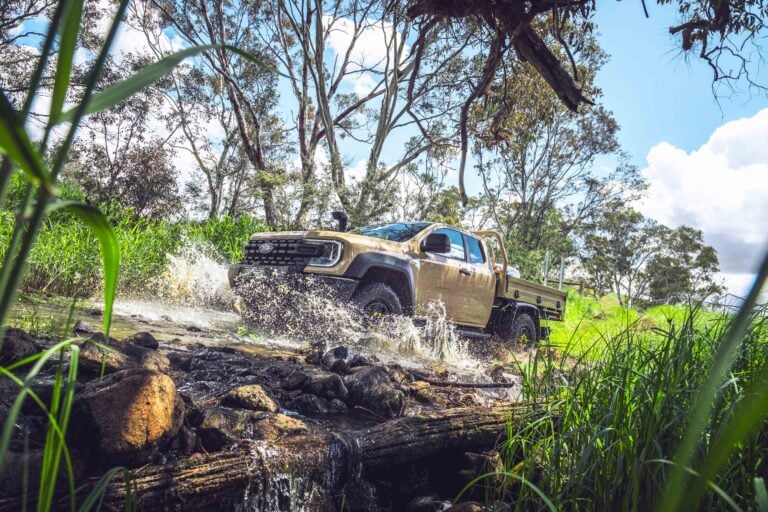
2026 Ford Ranger Super Duty: First drive review
A whopping 4500kg GVM, 4500kg towing capacity and 8000kg GCM – here’s our first drive of Ford’s new Ranger Super Duty
-
 4x4 Comparisons
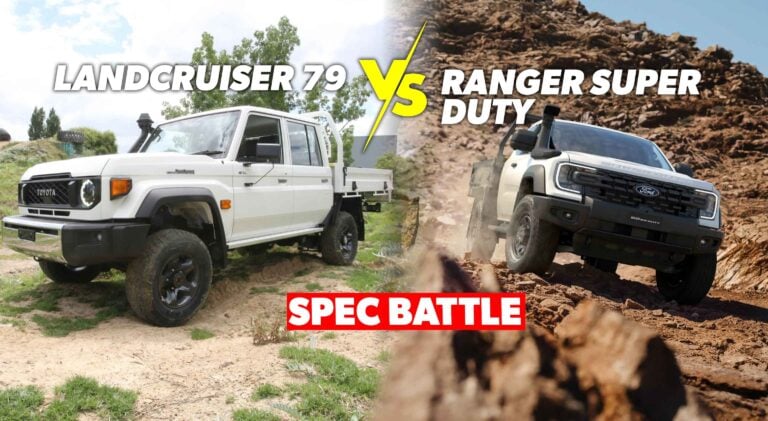
2026 Ford Ranger Super Duty vs Toyota LandCruiser 79 Series: Spec comparison
We compare two heavy-duty utes on payload, power and off-road ability
-
 News
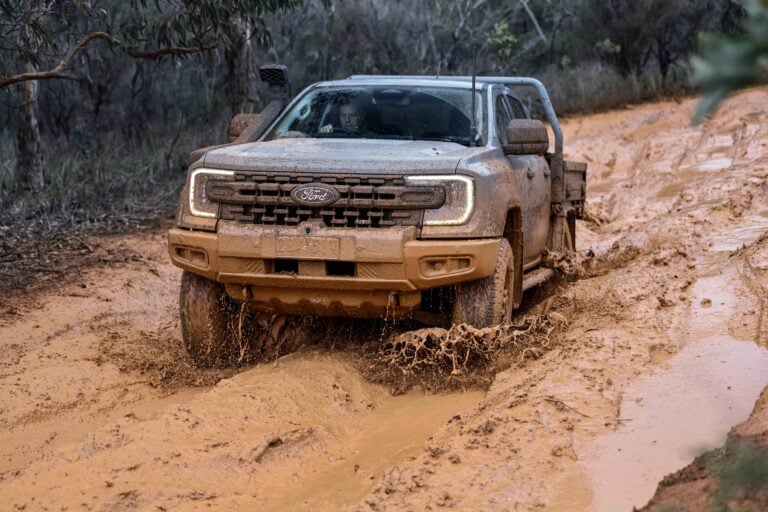
NewsFord Ranger Super Duty in detail: How Australia shaped Ford’s toughest ute
Built from Australian feedback, the Ranger Super Duty delivers heavy-duty performance