4x4 Comparisons

Gallery 1
Plug-in hybrid utes are making some big promises, but the numbers don’t always tell the same story.
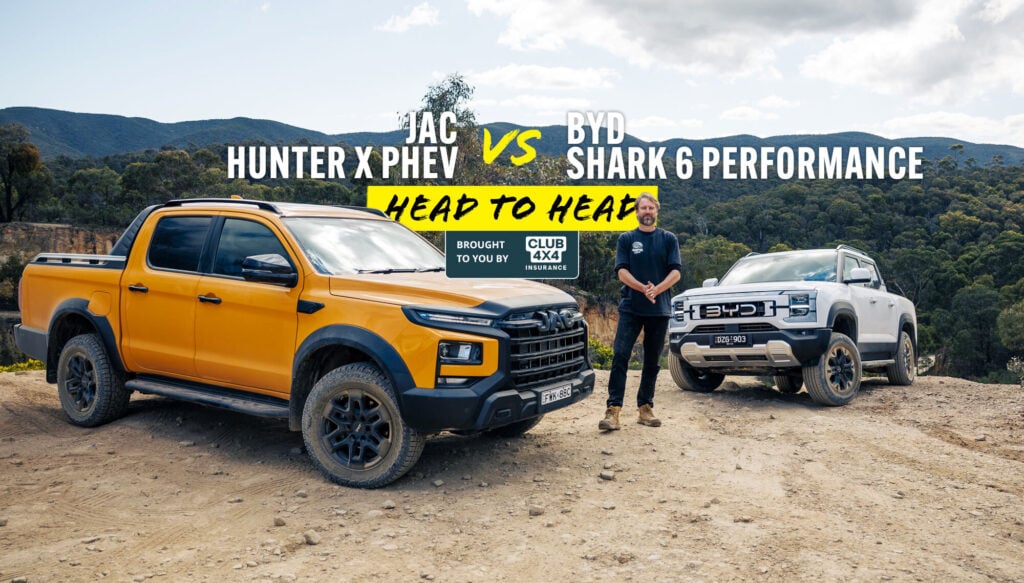
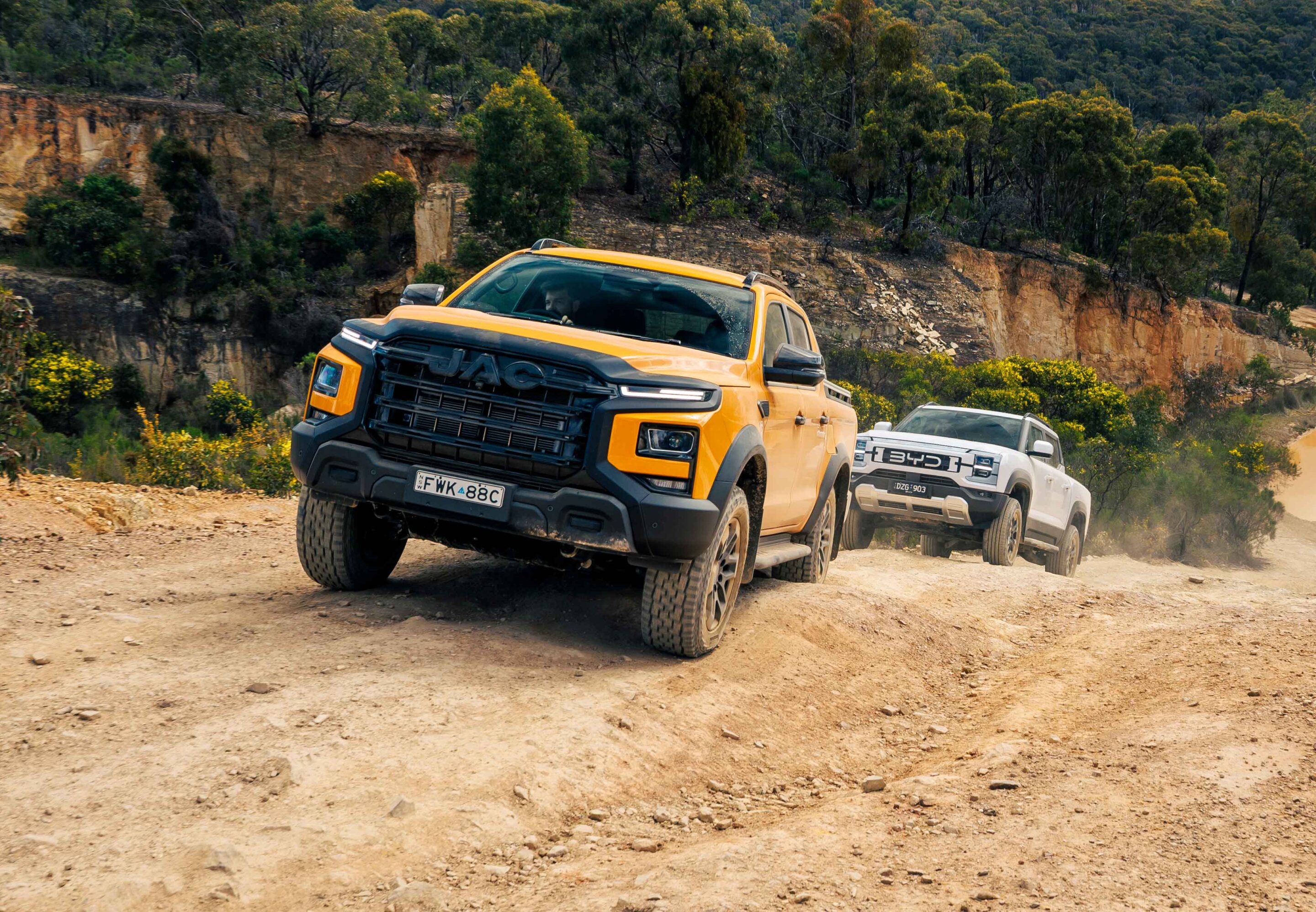
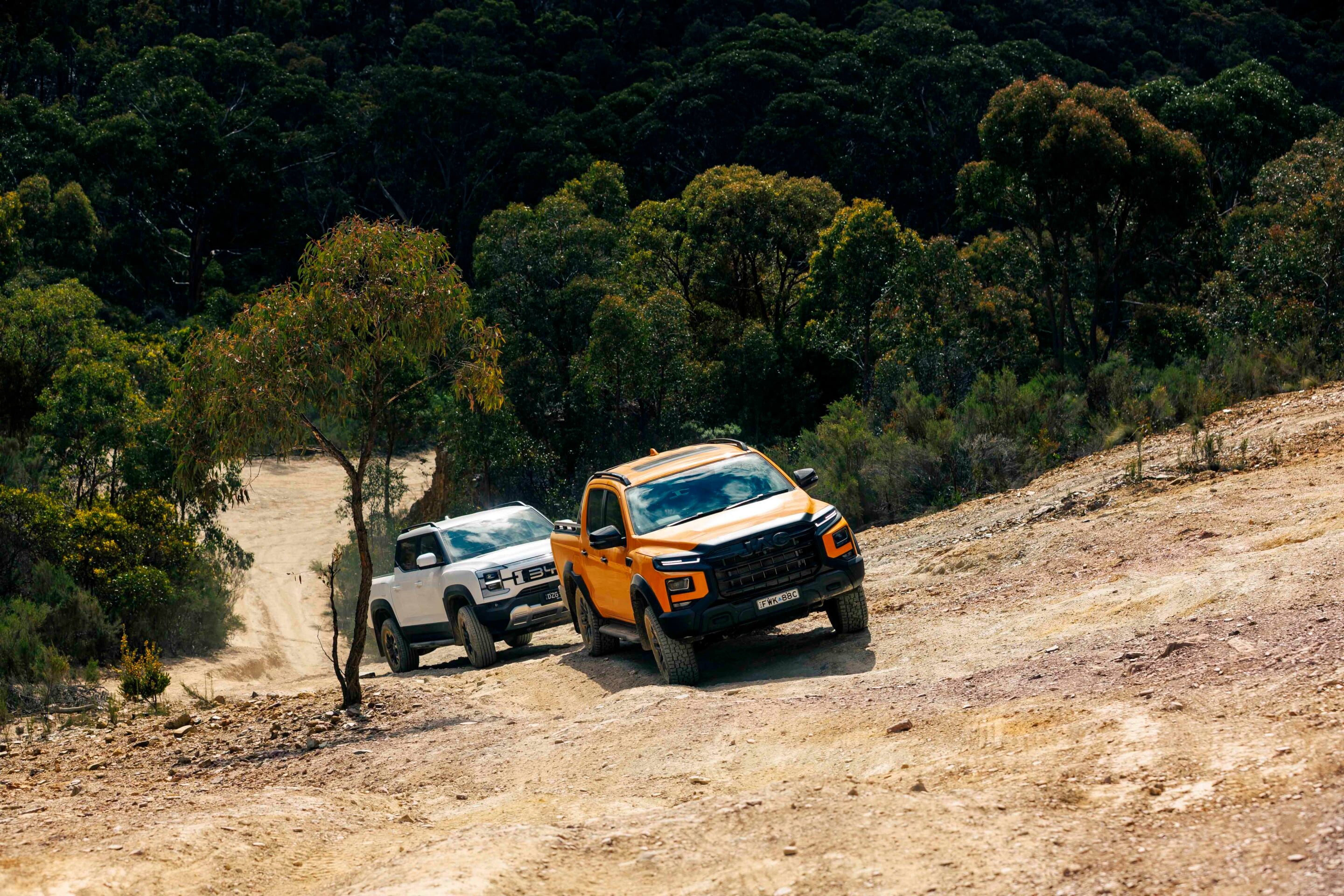
As at November 2026, the JAC Hunter X and BYD Shark 6 Performance both combine petrol power with electric motors, offer a claimed 3500kg towing capacity and bring plenty of grunt to the table. The difference is in the detail. The Hunter X is $8056 cheaper and claims more combined power and torque, while the Shark counters with greater ground clearance, deeper wading capability and faster DC charging.
Both have their strengths, but when you crunch the numbers on price, payload, towing and off-road hardware, which one gives you more ute for your money?
1
Quick verdict
- Cheaper: JAC Hunter X, by $8056 before on-road costs.
- More claimed power and torque: JAC Hunter X, with 360kW and 1010Nm.
- Towing: Based on the numbers, it’s a draw. Both are rated to tow 3500kg. The basic GCM calculation leaves 375kg for occupants and other loads in either ute when towing that weight.
Specs compared
| Specification | JAC Hunter X | BYD Shark 6 Performance |
|---|---|---|
| Price | $54,844 + ORC | $62,900 + ORC |
| Engine | 2.0L turbo-petrol | 2.0L turbo-petrol |
| Engine output | 160kW/370Nm | 180kW/380Nm |
| Electric motors | Front: 130kW/300Nm; rear: 150kW/340Nm | Front: 200kW/360Nm; rear: 150kW/340Nm |
| Combined power | 360kW | 350kW |
| Combined torque | 1010Nm | 700Nm |
| Battery | 31.2kWh LFP | 29.6kWh LFP |
| EV range | 100km (NEDC) | 80km (WLTP) |
| Combined range | 1005km (NEDC) | 640km (WLTP) |
| Fuel consumption | 1.6L/100km (NEDC) | 1.3L/100km (WLTP, battery charge above 25%); 10.5L/100km (WLTP, below 25%) |
| Fuel tank | 77L | 60L |
| Kerb weight | 2555kg | 2775kg |
| GVM | 3470kg | 3500kg |
| GCM | 6430kg | 6650kg |
| Payload | 915kg | 725kg |
| Braked towing | 3500kg | 3500kg |
| Calculated allowance while towing 3500kg | 375kg* | 375kg* |
| Ground clearance | 200mm | 230mm |
| Wading depth | 550mm | 700mm |
| Approach angle | 28 | 31 |
| Rampover angle | 23 | 17 |
| Departure angle | 23 | 19.3 |
| V2L output | 3.3kW | 6.6kW |
| Maximum DC charging | 46kW | 55kW |
| Low range | No conventional low-range transfer case | No conventional low-range transfer case |
| Differential locks | Front and rear lockers | No mechanical front or rear lockers |
| ANCAP | Five stars, 2024 rating | Five stars, 2025 rating |
| Vehicle warranty | Seven years, unlimited kilometres | Six years or 150,000km |
| Battery warranty | Eight years or 150,000km | Eight years or 160,000km |
*Calculated allowance = GCM minus a 3500kg trailer and kerb weight. This is a theoretical figure, not a guaranteed usable payload. Occupants, accessories and towball download count towards the vehicle’s limits, and GVM and axle limits must also be observed.
*Warranty conditions apply. Range and fuel consumption figures use the stated test cycles and should not be treated as directly equivalent.
Which is cheaper and what do you get?
At $54,844 plus on-road costs, the JAC Hunter X undercuts the $62,900 BYD Shark 6 Performance by $8056.
That’s a substantial saving for two plug-in hybrid 4×4 dual-cabs with 3500kg braked towing capacity, but the difference isn’t just about price. The Hunter puts its money into power and mechanical off-road hardware, while the Shark adds cabin technology, comfort features and a more developed suite of electronic off-road functions.
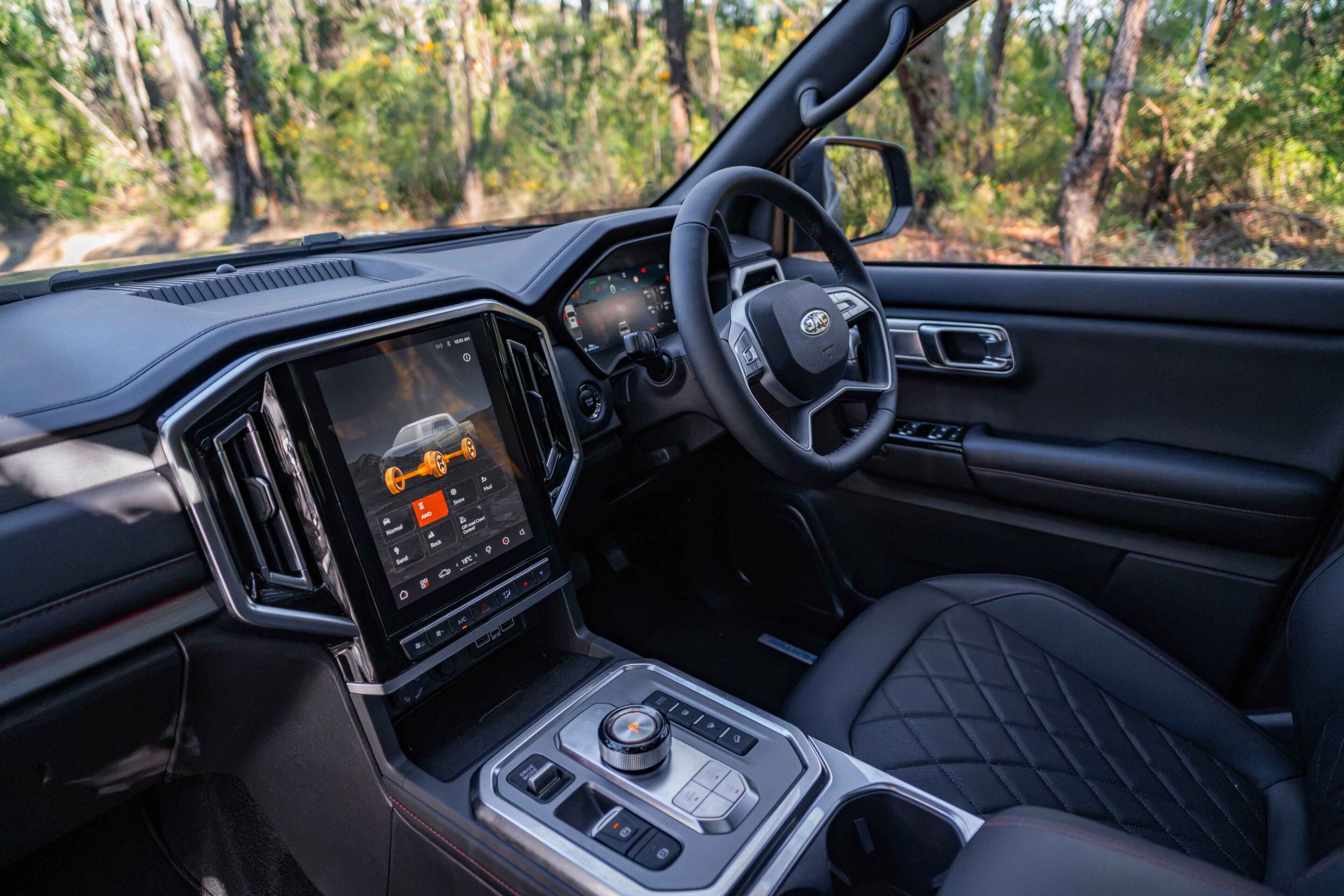
The Hunter X gets black 18-inch alloy wheels with Pirelli Scorpion all-terrain tyres, black exterior detailing, roof rails, rear privacy glass and power-folding mirrors. Inside, there’s leather-accented upholstery, heated front seats, power adjustment for both front seats, a 10.4-inch portrait touchscreen, a 10.25-inch digital instrument display, wireless Apple CarPlay and Android Auto, and an eight-speaker sound system.
Front parking sensors and a 360-degree camera help with manoeuvring, while adaptive cruise control, lane-keeping assistance and blind-spot monitoring add to the safety kit. A rear 220V accessory socket is useful for powering gear, and a powered sunroof is available as an option. The Hunter also gets a locally developed vehicle dynamics tune for Australian roads and conditions, with Multimatic engineer Michael Barber brought in to fine-tune the ute’s handling and ride.
The Hunter X is also in stock and available for immediate delivery in Australia, so buyers don’t have to wait for incoming shipments
1
The Shark 6 Performance gets a larger 15.6-inch touchscreen, a 10.25-inch digital instrument cluster, wireless Apple CarPlay and Android Auto, wireless phone charging and an 11-speaker Dynaudio sound system. Both front seats are power-adjustable, heated and ventilated, and there’s a 360-degree camera, tyre-pressure monitoring, a full-size spare wheel and a suite of driver-assistance systems. Its off-road modes include Sand, Snow, Mud and Mountain, while Crawl mode is designed to improve control at low speeds over rough terrain.
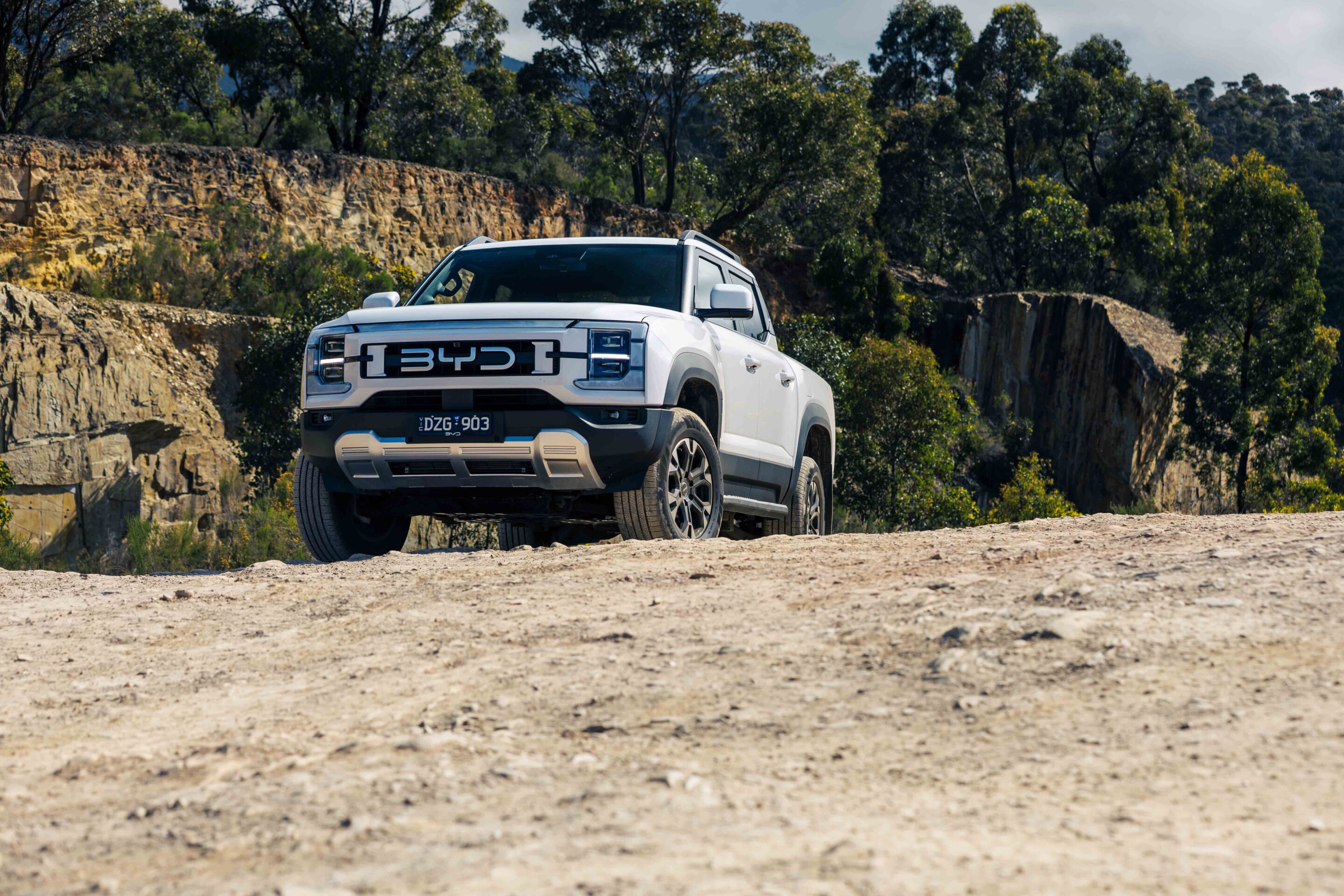
The biggest hardware difference is the way they handle traction. The Hunter X has mechanical front and rear differential locks, giving it an advantage when wheels lose grip. The Shark relies on its electronically managed all-wheel-drive system and traction controls, with no mechanical front or rear lockers. It counters with more ground clearance, a deeper claimed wading depth, higher maximum DC charging and a more powerful V2L system.
Both are well equipped, but they have different priorities. The Hunter’s lower price, twin lockers and higher claimed combined outputs make a strong case for buyers who value mechanical off-road hardware. The Shark costs more, but adds ventilated front seats, a larger infotainment screen, Crawl mode and better clearance and water-crossing figures.
1
Which is more powerful?
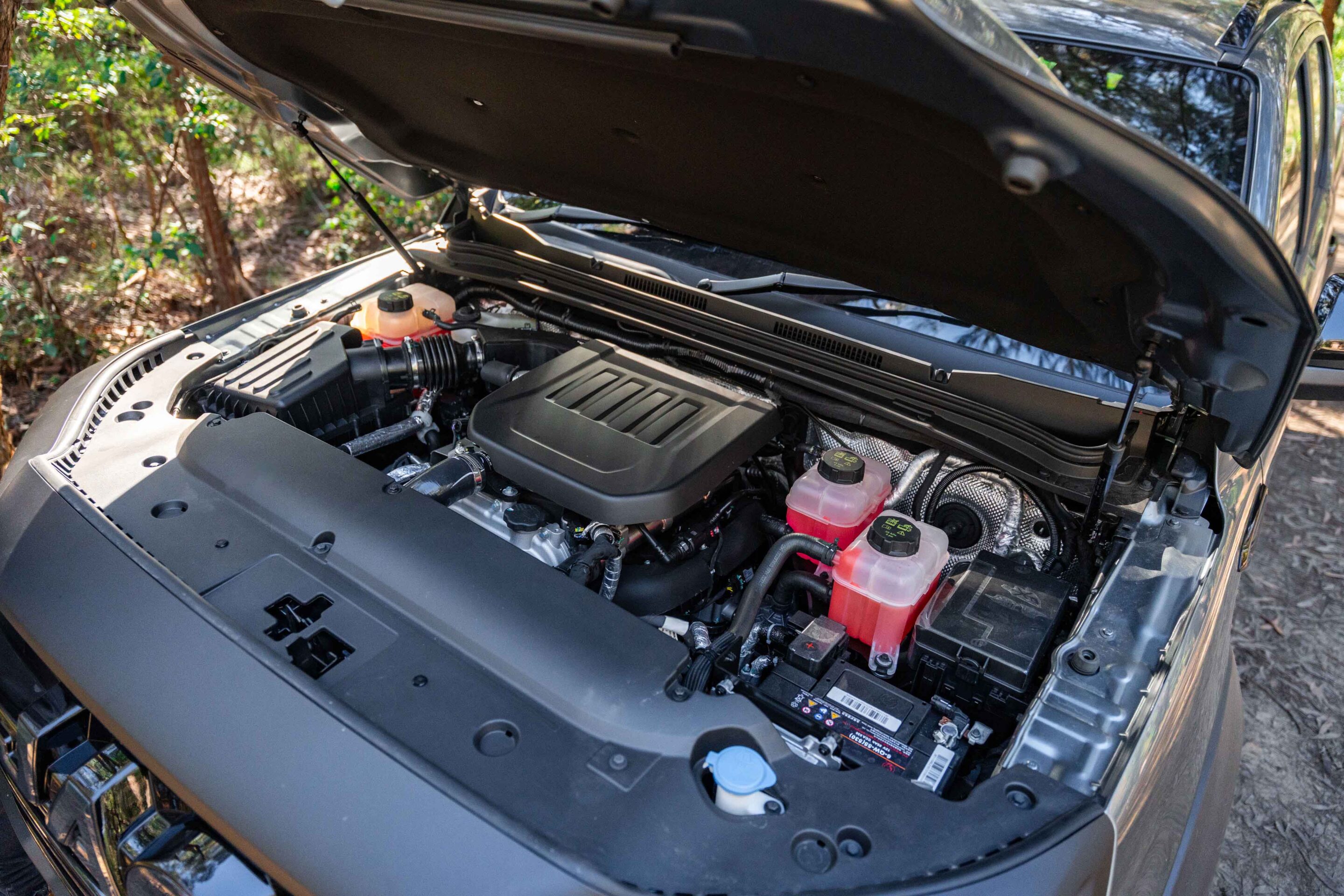
On paper, the Hunter has the higher combined outputs: 360kW and 1010Nm against the Shark’s 350kW and 700Nm.
Those figures need context, though. The Hunter’s headline torque figure is a claimed combined driveline figure, not a conventional engine torque rating, and it shouldn’t be read as a direct measure of how much torque reaches the wheels at any given moment.
The Shark has the stronger front electric motor, rated at 200kW and 360Nm against the Hunter’s 130kW and 300Nm. Its petrol engine also makes more power than the Hunter’s, at 180kW versus 160kW. Despite that, JAC quotes the higher combined system power figure. As always with plug-in hybrids, the way the engine and motors deliver their output matters as much as the headline numbers.
1
Which tows better?
Both utes are rated to haul a 3500kg braked trailer, but the tow rating is only part of the story.
The gross combined mass (GCM) sets the maximum permitted weight of the vehicle and trailer together. To calculate the theoretical allowance left for occupants and other loads while towing 3500kg, use:
GCM − trailer weight − kerb weight = remaining allowance
- Hunter X: 6430 − 3500 − 2555 = 375kg
- Shark 6 Performance: 6650 − 3500 − 2775 = 375kg
Unhitched, the Hunter carries 915kg against the Shark’s 725kg, so the draw only applies when both are towing at their 3500kg maximum. The Shark has the higher GCM, but it also weighs more. The result is the same theoretical 375kg allowance for both when towing at their maximum rated capacity.
That’s not 375kg of gear you can automatically throw in the tub. Passengers, accessories and towball download all count, and the vehicle must also stay within its GVM and axle limits. The headline payload figure on its own won’t tell you how much you can carry with a trailer attached.
Which goes further on electric power?
The Hunter claims 100km of EV range under the NEDC cycle, while the Shark 6 Performance claims 80km under WLTP.
NEDC is an older test cycle that generally produces more optimistic range figures, while WLTP uses more demanding driving conditions designed to better reflect real-world use. The two figures aren’t directly comparable, so the Hunter’s higher claimed range doesn’t necessarily mean it will travel further on electric power in everyday driving.
The same applies to combined range: the Hunter’s claimed 1005km is measured under NEDC, while the Shark’s 640km is under WLTP. Fuel consumption needs the same care. JAC quotes 1.6L/100km under NEDC, while BYD quotes 1.3L/100km under WLTP with battery charge above 25 per cent, rising to 10.5L/100km when charge drops below 25 per cent.
Don’t pick a winner based on those headline figures alone. Test cycles, battery charge and driving conditions all affect the result, so real-world range and fuel use will depend on how and where you drive.

1
Which is better off-road?
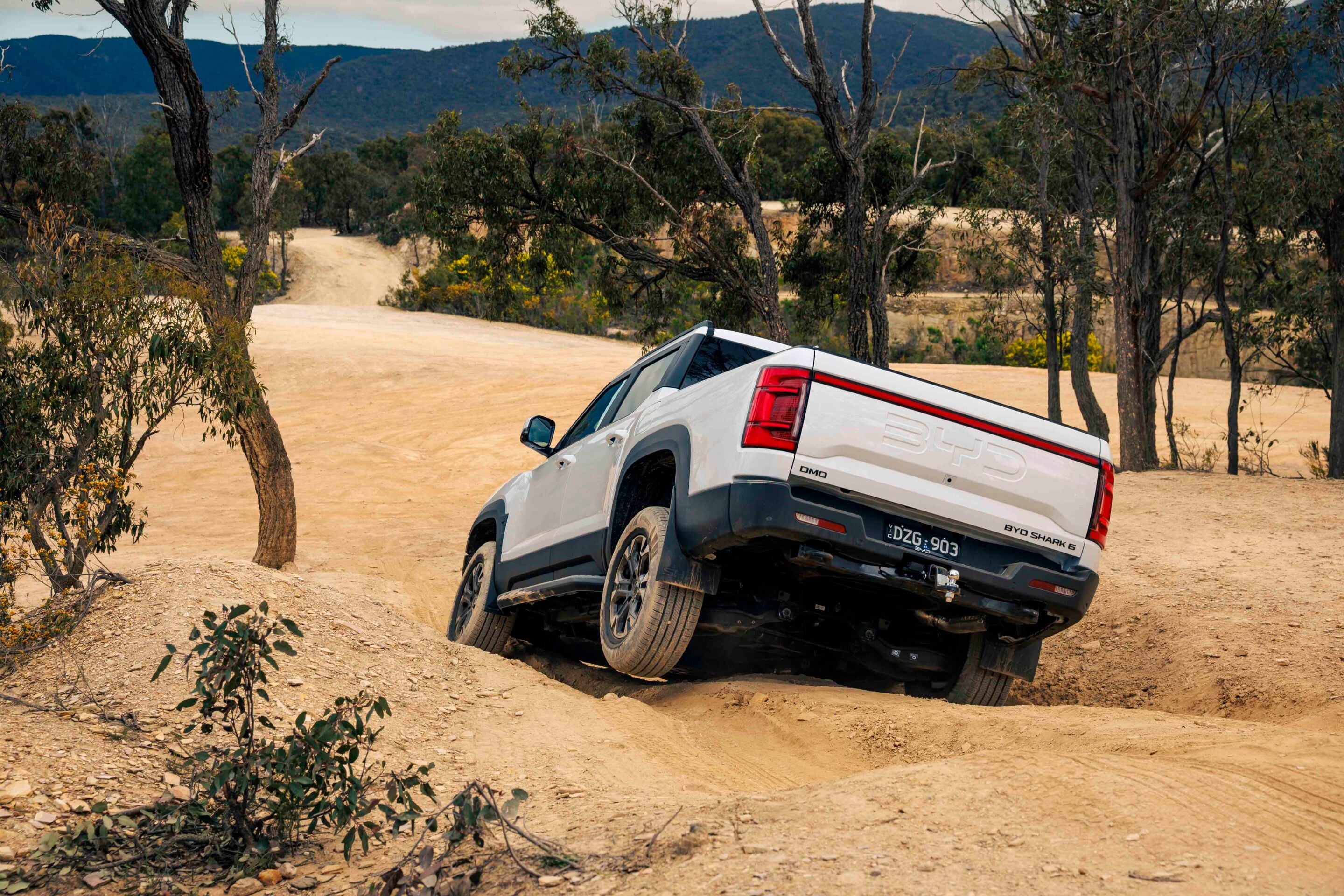
The Shark leads on ground clearance, wading depth and approach angle. Its claimed 230mm clearance, 700mm wading depth and 31-degree approach angle stack up against the Hunter’s 200mm, 550mm and 28 degrees.
The Hunter fights back with a 23-degree rampover angle, compared with the Shark’s 17 degrees, and has mechanical front and rear differential locks. The Shark has no mechanical lockers, but its Performance model adds Crawl mode to help manage low-speed progress over rough terrain.
Neither has a conventional low-range transfer case. The Shark’s Crawl mode is designed to simulate some of the control you’d normally get from low gearing, but it isn’t the same hardware as a dual-range transfer case. For buyers who regularly tackle steep, rocky tracks, the Hunter’s twin lockers are a meaningful advantage. The Shark’s extra clearance and wading depth are useful in other conditions, although its relatively shallow rampover and departure angles are worth bearing in mind.
1
Which runs the campsite?
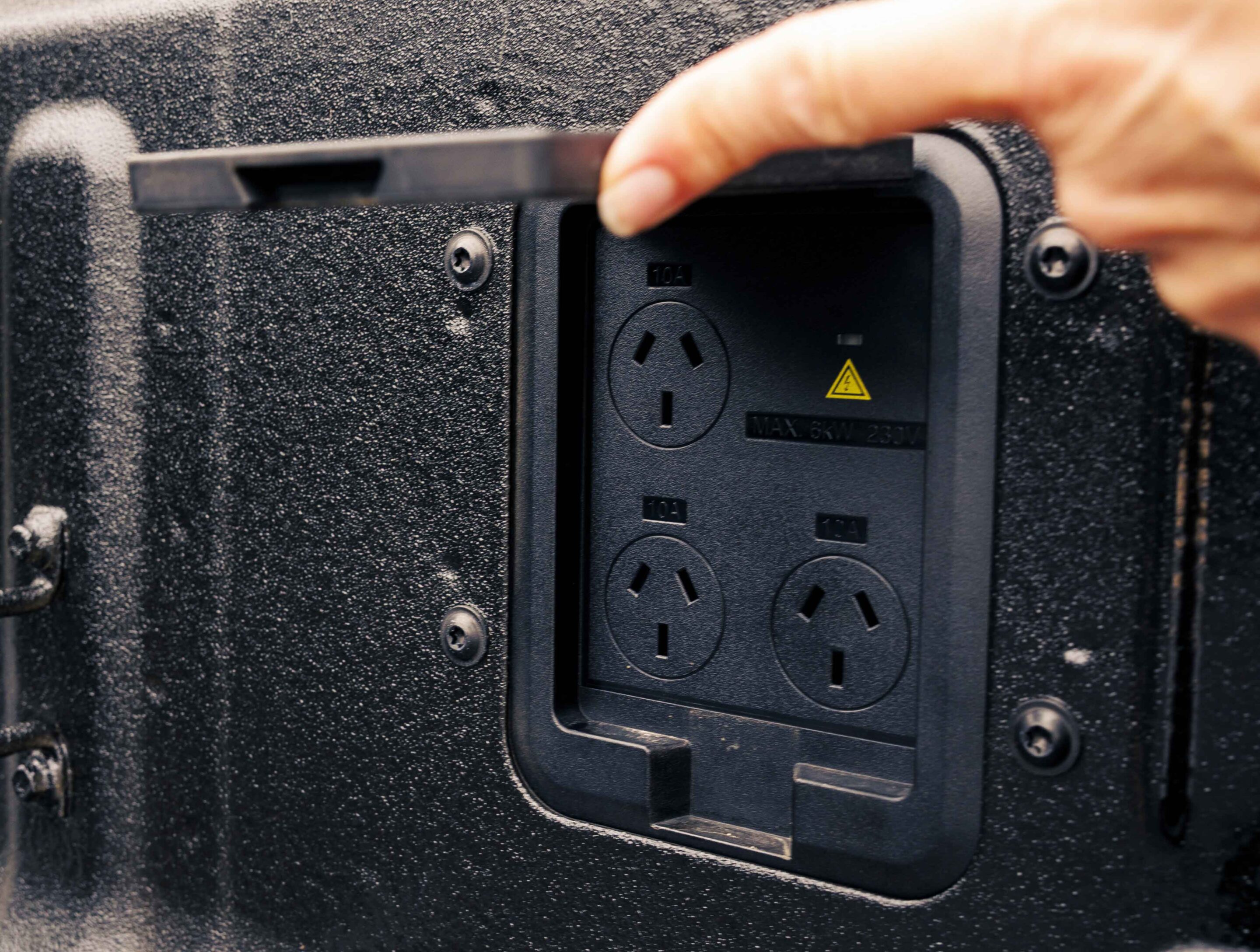
Both offer vehicle-to-load (V2L), allowing compatible electrical equipment to draw power from the high-voltage battery.
The Hunter’s rated output is 3.3kW, while the Shark offers up to 6.6kW. That gives the BYD more headroom for running compatible appliances and camping equipment.
The Shark also has the higher maximum DC charging rate at 55kW, compared with up to 46kW for the Hunter. Maximum rates don’t tell the whole charging story, though. Actual speed depends on conditions and the charging curve, so the peak figure alone doesn’t establish how long a stop will take.
1
Which is cheaper to own?
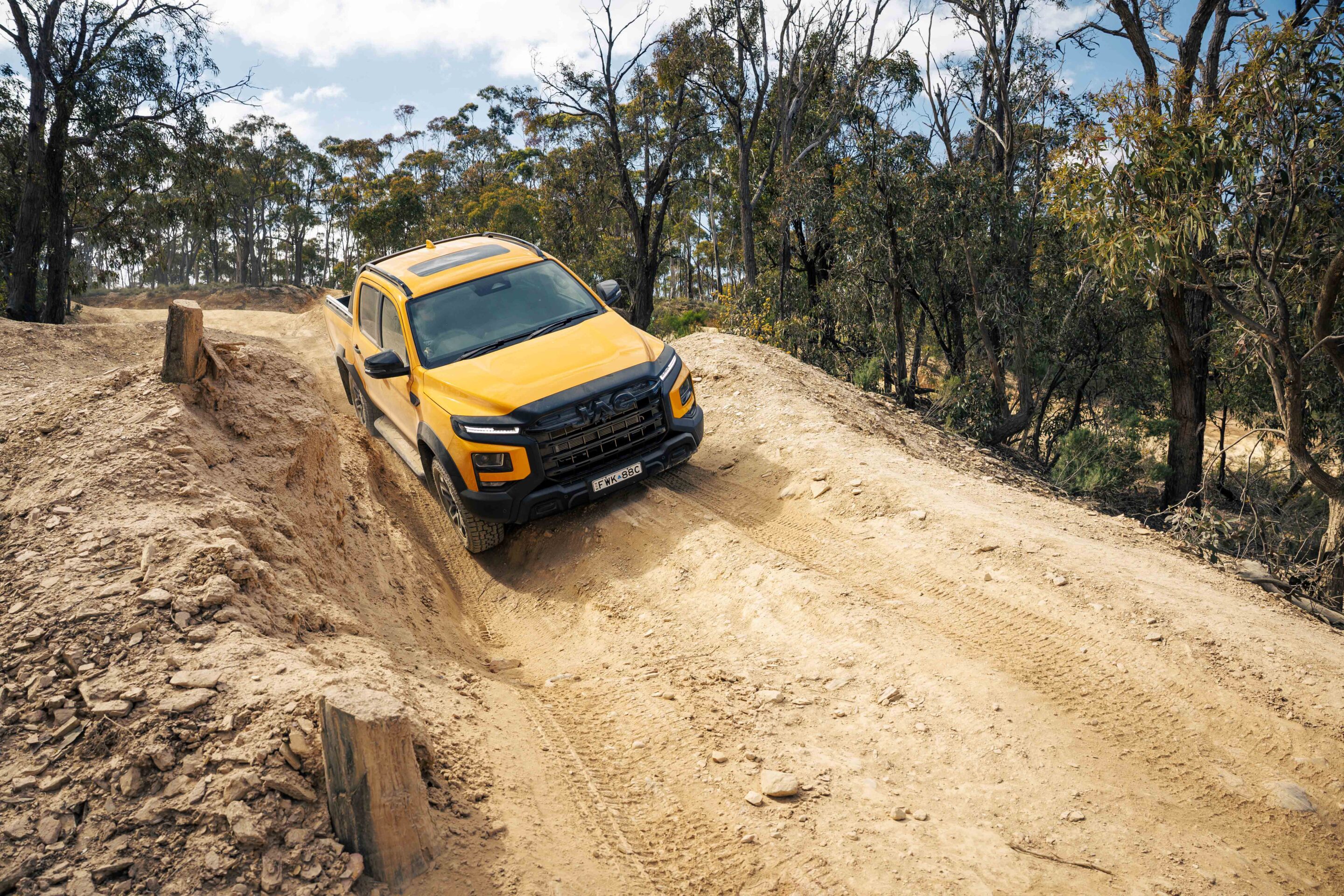
The Hunter has the longer vehicle warranty, covering seven years with unlimited kilometres compared with six years or 150,000km for the Shark.
JAC also offers seven years of roadside assistance and capped price servicing, covers commercial use under its seven year warranty, and provides a Ute for Ute loan program. BYD includes 12 months of complimentary roadside assistance and no equivalent loan program. Both have eight year battery warranties, capped at 150,000km for the Hunter and 160,000km for the Shark. Conditions apply. Based on this, the JAC has the stronger ownership support package
Fuel costs will depend on how often you charge, how far you travel and how much time you spend driving with a low battery. The published consumption figures use different test cycles and, in the Shark’s case, different battery charge conditions. They’re useful reference points, but they don’t guarantee what you’ll see at the bowser.
1
Which should you buy?
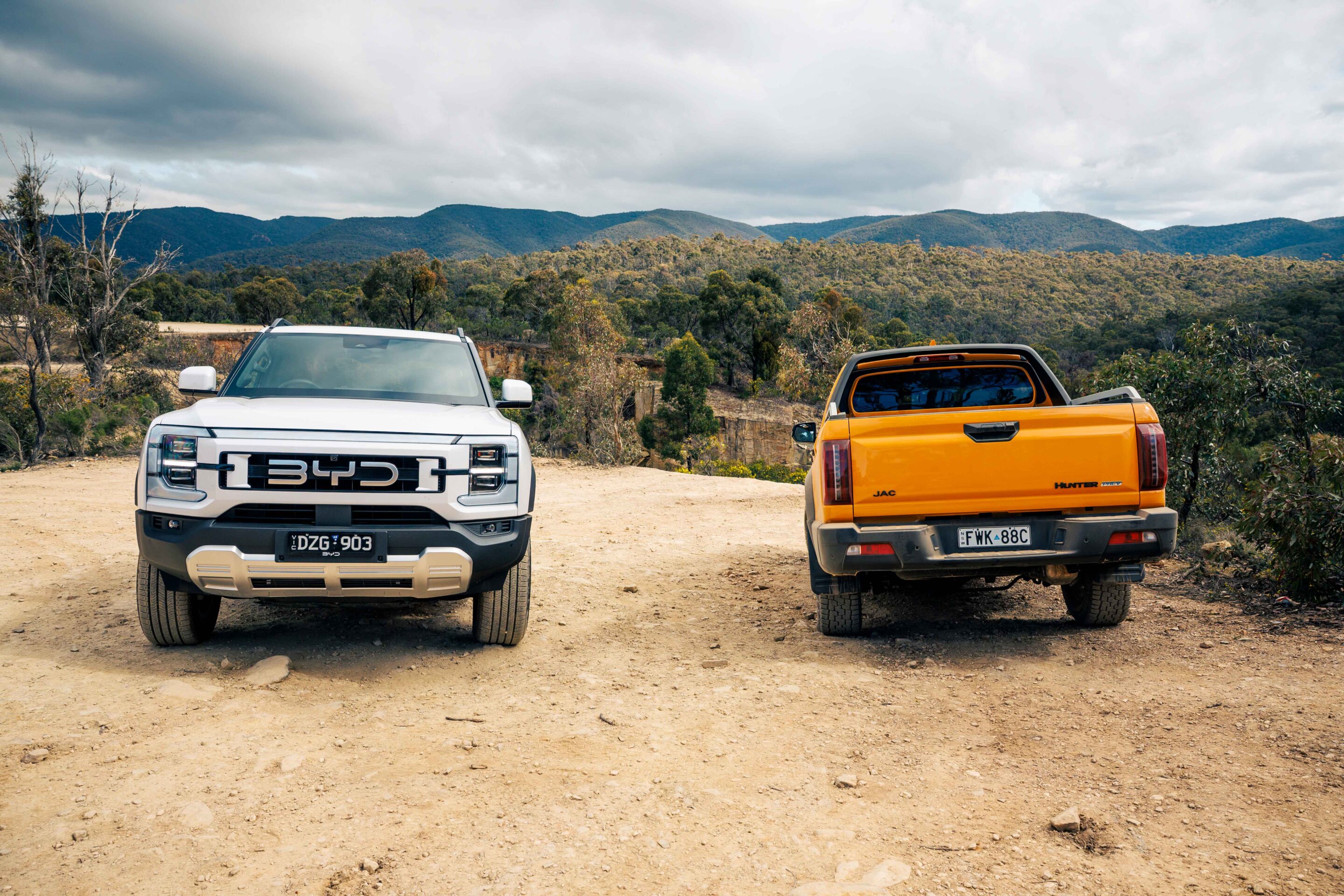
The Hunter X makes a strong case if you want to spend less, get higher claimed combined power and torque, and have mechanical front and rear differential locks. It also matches the Shark’s calculated allowance while towing 3500kg.
The Shark 6 Performance has the edge in ground clearance, wading depth, V2L output and maximum DC charging rate, plus a higher GCM. But its extra kerb weight means that higher GCM doesn’t translate into more calculated allowance while towing at the maximum rating.
On the specs alone, the Hunter is the value pick for buyers who prioritise price, claimed outputs and mechanical off-road hardware. The Shark suits those who put more weight on cabin comfort, technology, clearance, water-crossing figures and campsite power.
1
FAQs
Can the JAC Hunter X tow 3.5 tonnes?
Yes. The Hunter X has a 3500kg braked towing capacity.
Is the JAC Hunter X cheaper than the BYD Shark 6 Performance?
Yes. It costs $8056 less before on-road costs.
What is the electric range of the JAC Hunter X and BYD Shark 6 Performance?
The Hunter claims 100km under NEDC, while the Shark Performance claims 80km under WLTP. NEDC is an older, generally more optimistic test cycle, while WLTP uses more demanding, real-world-style driving conditions. The figures aren’t directly comparable, so the difference doesn’t necessarily mean the Hunter will travel further on electric power.
Does the BYD Shark 6 Performance have low range or differential locks?
It has no conventional low-range transfer case and no mechanical front or rear differential locks, but it does feature Crawl mode.
- Specifications are as published by the manufacturers. Nothing in this table was measured by 4X4 Australia unless stated.
- Sponsored by JAC Motors Australia
Sources
Follow 4X4 Australia on Google
Get more 4x4 news, reviews and gear stories from 4X4 Australia in your Google feeds.

We recommend
-
 News
Can BYD be the world's largest automaker within five years? Its chairman thinks so
BYD is betting on export growth, vertical integration, and technology investment to close the gap
-
 News
JAC Hunter PHEV Cab Chassis confirmed for Australia in 2027
JAC is adding a work-ready Cab Chassis to its Hunter PHEV range in 2027
-
 News
Australia’s PHEV 4x4 line-up: What’s available now and what’s coming soon
Australia’s PHEV 4x4 market is set to expand, with plug-in utes and SUVs on sale now and more models on the way