
There’s no handbook handed out when you buy your first 4×4.
No dealer throws in a pamphlet explaining convoy etiquette, track courtesy or the little things experienced drivers just expect everyone to know. Instead, most people learn the hard way – usually after annoying someone on a track, getting called out over UHF, or realising they’ve made a rookie mistake everyone else spotted immediately.
Like most tight-knit communities, Aussie 4WDing has its own unspoken code. It’s not about gatekeeping or acting like there’s only one right way to do things. It’s about respect – for other drivers, for the tracks we all use, and for the bush itself.
Whether you’re new to four-wheel driving or have been hitting dirt for years, these are the unwritten rules every 4×4 driver should know.
1. Wave to oncoming drivers
It sounds simple, but the classic two-finger wave is still one of the strongest traditions in Australian 4WDing.
Whether it’s a finger lift off the steering wheel, a quick nod or a proper hand-up through the windscreen, acknowledging another driver is just part of the culture. It’s not compulsory, but it’s one of those small things that keeps the community feel alive out on remote tracks. Ignore everyone and you’ll stand out – and not in a good way.
2. Air down before the track forces you to
Few things scream “first trip out” like hitting a rough track at highway pressures.
Lowering tyre pressures improves traction, smooths out corrugations and reduces the punishment your suspension cops over rough terrain. It also helps protect the track by letting the tyre flex rather than dig in. If everyone else is pulling over to air down and you’re still rolling along untouched, you’ve probably missed a key step.
3. Leave gates exactly how you found them
Open stays open. Closed stays closed.
It doesn’t matter what you think is more convenient or whether it looks like no livestock are around. If someone before you left it a certain way, there’s usually a reason. Get this wrong on private land and you’ll quickly find out how important it is to respect access agreements.
4. Don’t sit up someone’s backside on obstacles
Watching another vehicle tackle a climb or crossing is useful. Sitting right behind them while they’re trying to pick a line is not.
Drivers need space to reverse, reposition or recover if things go wrong. Crowding them adds pressure and increases risk for everyone involved. Give people room to work the obstacle, not a rearview mirror full of your bull bar.
5. Recovery gear isn’t a fashion accessory
Maxtrax on the roof, a winch on the bar and a shovel on the side look the part – but none of it matters if you don’t know how to use them.
Recovery situations are where small mistakes become big problems. If you’re carrying gear, you should know how it works before you need it in anger. Out on the tracks is not the time to be learning from scratch.
6. Keep UHF chatter useful
Convoy comms matter.
Short, clear and relevant radio calls help keep everyone safe and moving smoothly. Calling hazards, blind corners and directions is useful. Twenty minutes of unrelated noise is not. And if someone calls for quiet on the radio, there’s usually a reason.
7. Pack out everything you brought in
This one should be obvious, but it still gets ignored.
Campsites, tracks and rest stops are not rubbish bins. Every bit of waste left behind increases the chances of access restrictions down the line. That includes recovery holes, broken gear and the “I’ll pick it up later” mindset.
8. Don’t let your build write cheques your skills can’t cash
Big tyres and expensive mods don’t automatically equal capability.
Some of the most experienced drivers are in near-stock rigs, while heavily modified vehicles sit stuck on the sidelines. Skill, judgement and patience matter more than spec sheets. Knowing your limits is part of being a good driver.
9. Help others when you can
One of the best parts of 4WDing in Australia is how often people stop to help.
If someone’s stuck or broken down, checking in is just what you do. You don’t need to become everyone’s recovery crew, but a bit of help or advice goes a long way. Chances are, you’ll need it one day too.
10. Track closed means track closed
Not “closed unless you think you can make it”. Not “closed unless your setup is capable”.
Closed means closed. Track closures protect people, the environment and future access. Ignoring them doesn’t just risk fines – it puts long-term access at risk for everyone.
Special mentions
- Don’t stop in blind spots or narrow sections unless you absolutely have to
- If you’re unsure, stop and walk the obstacle first
- Be self-sufficient – don’t rely on others to get you out
- Don’t spin tyres unnecessarily just to “push through it”
- Keep convoy spacing consistent – not tailgating or strung out miles apart
- When turning in a convoy, wait at intersections until the vehicle behind is in sight before proceeding
An updated Suzuki Jimny has been spotted testing overseas, with camouflaged prototypes snapped driving in snowy conditions in Europe.
Images shared to the SuzukGarage Instagram page show two disguised three-door Jimnys featuring covered front fascias and temporary LED light strips replacing the standard headlights during testing. Reports suggest the prototypes could preview an electric version, but the vehicles appear to retain conventional 4×4 hardware.
The current Jimny uses a 1.5-litre naturally aspirated four-cylinder petrol engine producing 75kW and 130Nm, paired with either a five-speed manual or four-speed automatic transmission. Suzuki sold 579 Jimny variants in Australia in April 2026, taking year-to-date deliveries to 2537 units. That’s down 12.8 per cent on the same period in 2025, when 2910 Jimnys had been sold by the end of April.

Photo: Instagram/@suzukgarage
Locally, the Jimny range is priced from $31,990 for the Jimny Lite, with the standard three-door starting at $33,990 (manual) and topping out at $36,490. The five-door version is priced from $34,990, while the Heritage edition sits at $40,990.
The three-door model returned to Australia earlier in 2026 after a brief production pause in 2025, when manufacturing was temporarily halted while the model awaited updates to meet Australian Design Rules. Suzuki also resumed sales of the Jimny XL after a temporary stop-sale and order cancellations last year linked to a Japan-led quality investigation.
During that period, deliveries were paused and some customer orders were refunded while the issue was reviewed. Suzuki later confirmed there were no concerns relating to safety, quality, performance or compliance, allowing stock to be released and deliveries to restart.
Suzuki launched the current-generation Jimny in 2018, and the latest spy shots point to a mid-life update rather than a full redesign of the compact off-roader.
The 70 Series is legendary for reliability, but even the toughest 1VD‑FTV diesel struggles in extreme Aussie environments.
From the Simpson to the Kimberley, heat is one of the most common yet preventable threats to engine performance. Stock cooling systems are predominately designed with road use in mind, but venture to the outback with a trailer in tow (or simply just running accessories like fridges and winches) and the 70 Series can often be pushed to its thermal limit.
Sustained low-speed driving reduces airflow through the radiator and intercooler, causing coolant, transmission and engine oil temperatures to rise. In these conditions, the engine’s stock cooling capacity is often insufficient. Veteran tourers know that an overheated engine can not only ruin a trip but also lead to costly component failure or leave you stranded in remote locations with limited recovery options.
Prolonged heat stress can warp cylinder heads, distort the engine block, break down oil, strain the turbocharger, and reduce transmission performance. Recognising these risks early is critical, and fitting proven aftermarket cooling solutions is a smart way to keep your vehicle’s vital systems within safe operating limits.
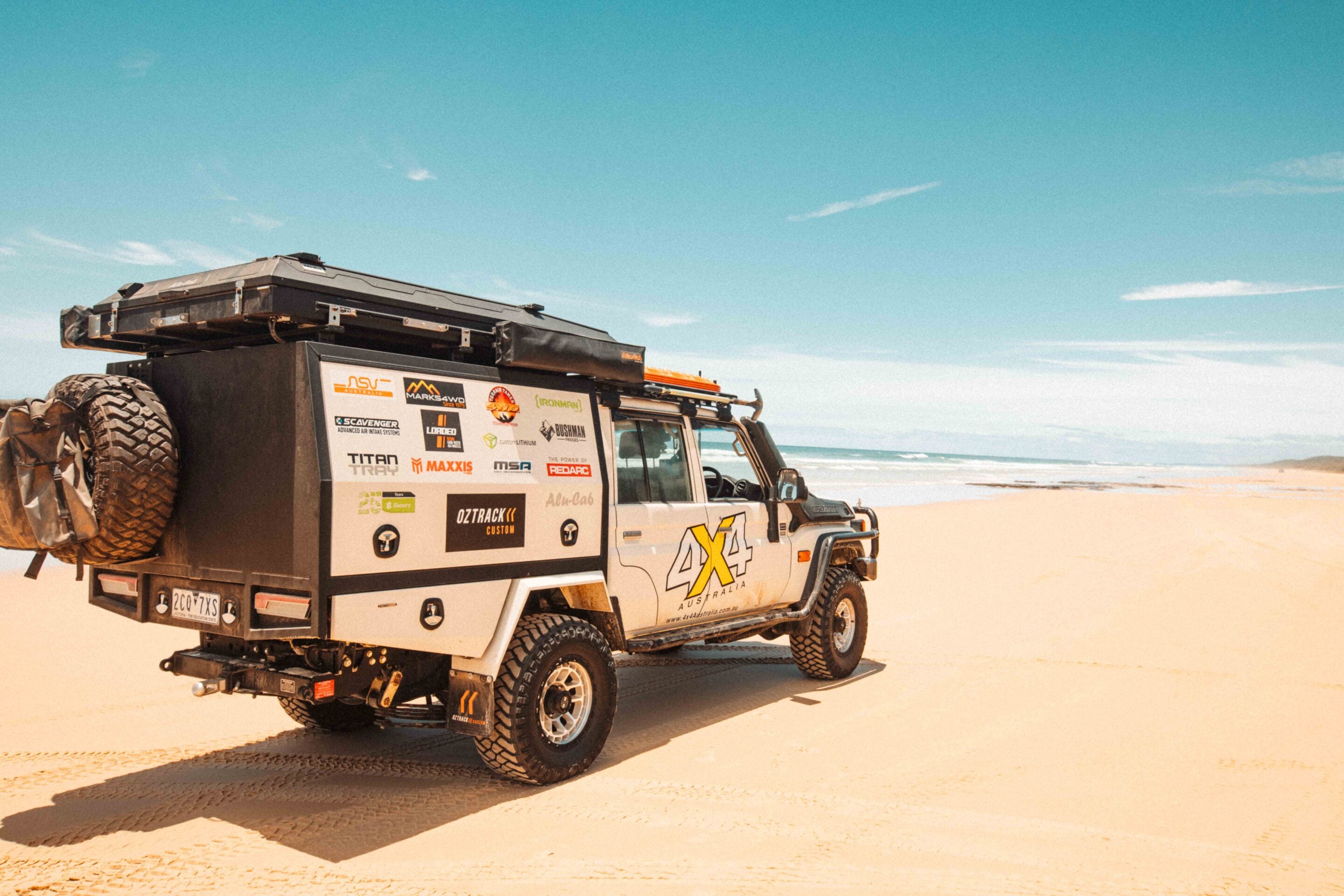
Upgrades to keep your 70 Series running cool
Managing heat in extreme conditions requires the right combination of components, all available from the 70 Series Store.
Performance radiators increase cooling capacity, helping the 1VD‑FTV shed heat faster under heavy load or prolonged low-speed driving. Transmission and engine oil coolers maintain fluid temperatures, protecting the gearbox, turbo and internal components under sustained stress. Heavy-duty thermostats stabilise engine temperature, while coolant overflow tanks provide extra system capacity to reduce the risk of boil-over.
Airflow is equally important. Safari snorkels from the 70 Series Store feed cooler, cleaner air into the engine, lowering under-bonnet temperatures while keeping dust and water out. Under-bonnet ventilation, through strategically placed vents or mesh grilles, allows trapped heat to escape, helping all cooling upgrades work efficiently.
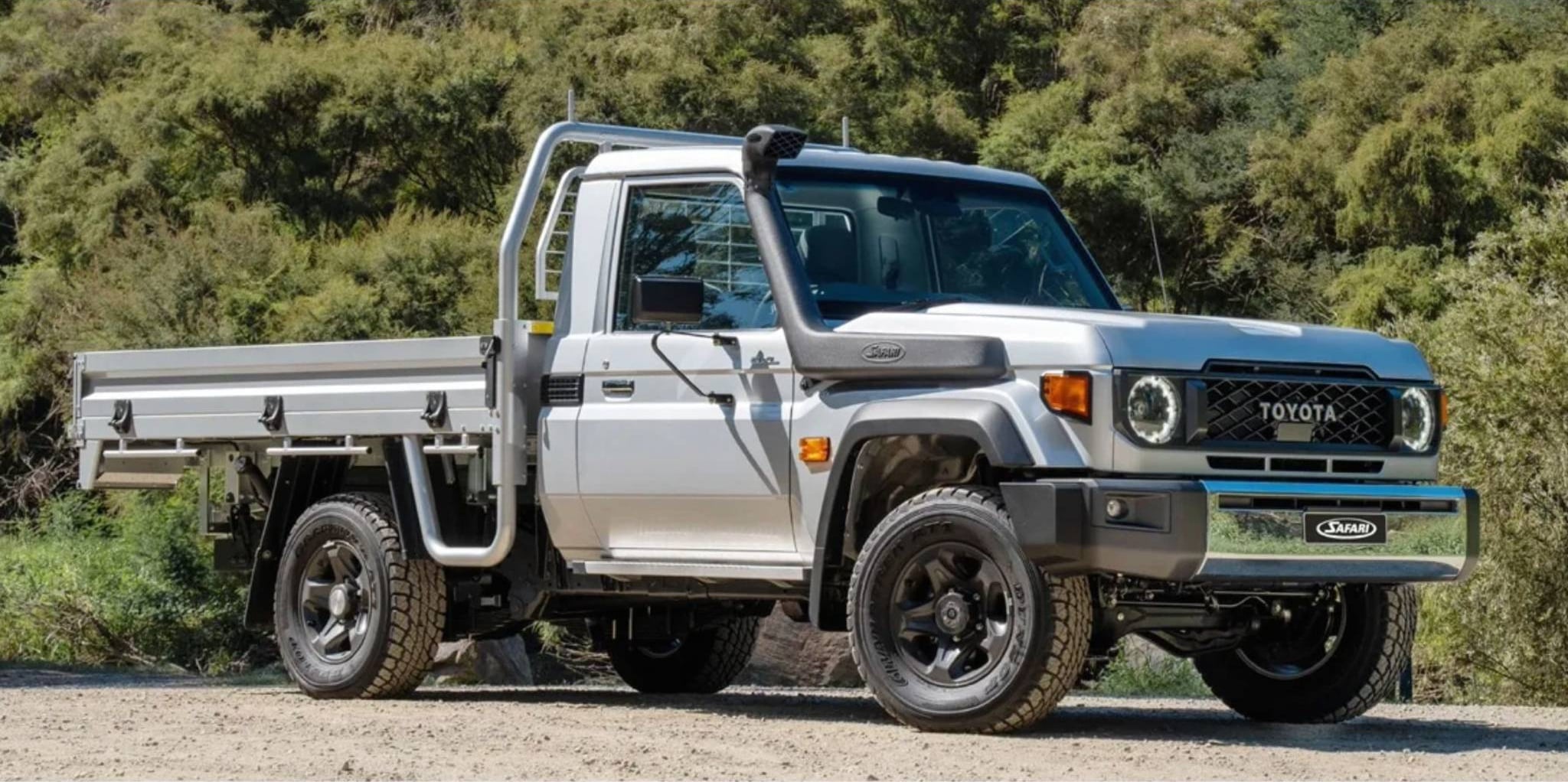
Monitoring is a critical part of thermal management. High-accuracy temperature gauges provide real-time readings for coolant, oil, and transmission fluids, allowing drivers to adjust speed or load before critical thresholds are reached. For longer trips, data loggers track trends and identify potential hotspots, giving insight needed to prevent problems before they occur.
Pairing a quality snorkel with trusted cooling and monitoring hardware is a surefire way to ensure your 70 Series stays cool even in the harshest conditions.
Using a real-world example, a fully loaded 70 Series crossing the Simpson Desert highlights the difference proactive cooling makes. On a stock setup, the engine can approach critical temperatures within hours of heavy sand crawling. After fitting an upgraded radiator, auxiliary oil and transmission coolers, and under-bonnet ventilation, the same route is more than likely to be completed without a single thermal warning. Continuous monitoring can also allow the driver to make informed adjustments on the fly, keeping the engine within safe operating limits.
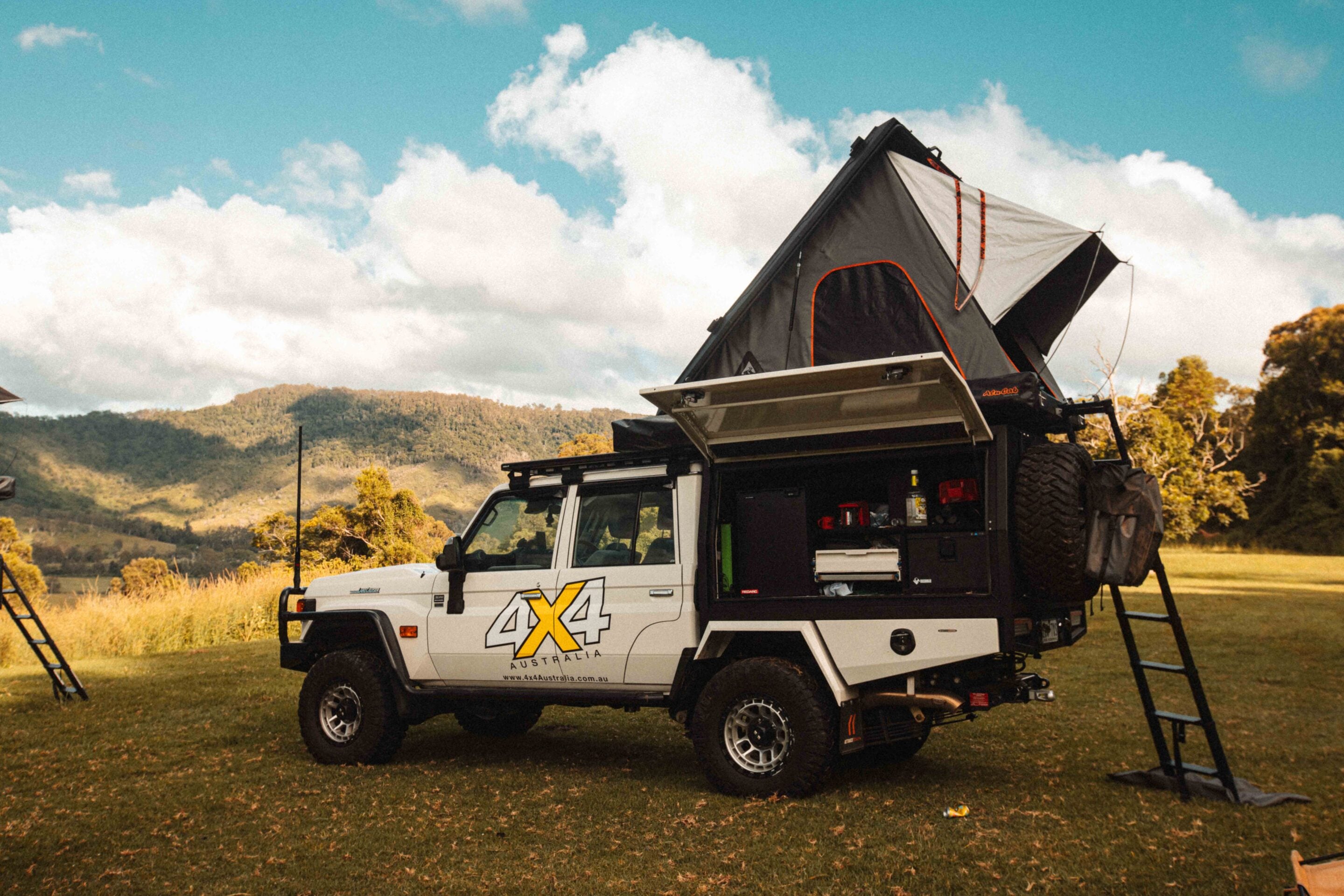
Keeping the cabin cool matters just as much
Heat inside the vehicle can be relentless in the midday sun, compounding driver fatigue and making long-distance travel uncomfortable and unsafe.
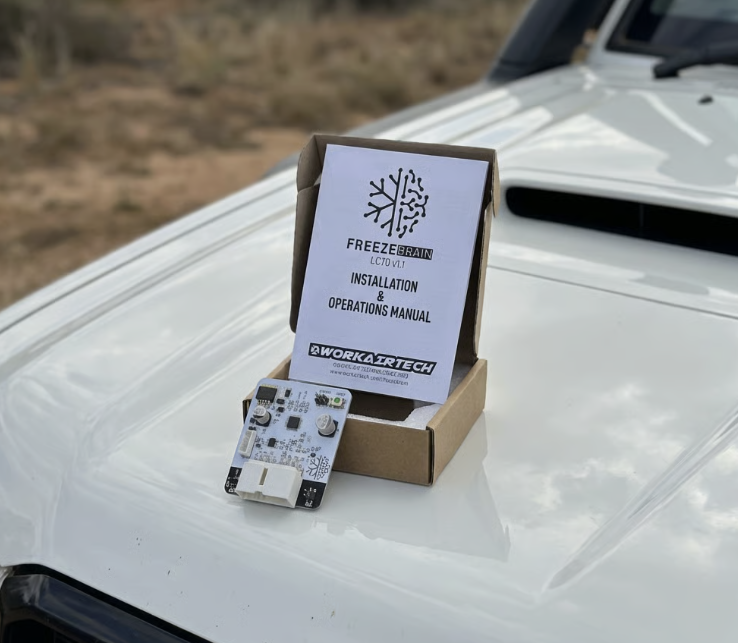
Upgrading interior comfort doesn’t just help your air conditioner work smarter, it reduces radiant heat load and keeps occupants alert on long sections of corrugated dirt or sandy plains. A great first step is the Freezebrain A/C Amplifier, a plug‑and‑play unit that lets your air con drop evaporator temperatures significantly lower than stock, delivering genuinely cold air when you need it most.
Complementing that, external shade solutions like these Weather Shields help reduce heat entering through open windows during rain or dust runs, while Magnetic Sun Shades block solar gain through glass when parked or driving, protecting the interior from UV and reducing cabin temperature build‑up. Together these upgrades keep the inside of your 70 Series noticeably cooler in harsh Aussie conditions, improving comfort without sacrificing airflow or practicality.
Heat is one of the most underestimated threats to 70 Series reliability in the outback.
Stock cooling systems cannot always cope with extreme conditions, heavy loads or extended bush travel. Veteran tourers know that radiator upgrades, auxiliary coolers, airflow improvements, and accurate monitoring are just as essential as a quality set of tyres.
For many 4×4 enthusiasts, heading off the bitumen isn’t an occasional detour – it’s the whole point.
Beaches, fire trails, desert tracks and remote touring routes are where modern four-wheel drives earn their keep. But despite that, plenty of owners are still insured under policies designed primarily for sealed-road use. Club 4×4’s policies are built specifically around off-road driving, modified vehicles and the realities of touring beyond city lights.
Off-road driving: covered by design
One of the biggest questions we hear 4×4 owners ask is whether they’re insured once the asphalt ends. With Club 4X4, off-road driving isn’t treated as an exception or grey area. If your vehicle is being used legally and within the policy terms, coverage applies whether you’re on a highway, a bush track, a beach or an unsealed access road.
Club 4X4’s approach is simple: If the track or area is legally accessible to vehicles, the policy follows you there.
What about water crossings, sand and rough tracks?
Off-road incidents rarely look like suburban prangs. Damage often comes from washouts, boggings, creek crossings or low-speed mishaps in rough terrain. Club 4X4 policies are structured to respond to accidental damage that occurs in those environments, rather than assuming every claim will take place in traffic.
That doesn’t mean anything goes – deliberate misuse, unlawful activity or mechanical failure from neglect still sit outside cover – but genuine off-road accidents aren’t automatically excluded just because they happened in the bush.
Accessories and modifications aren’t an afterthought
Modern touring and recreational 4x4s are rarely stock. Suspension upgrades, bar work, winches, drawers, rooftop tents and electrical systems can quickly add tens of thousands of dollars to a build.
With Club 4X4, declared accessories and modifications can be insured at an agreed value, separate to the base vehicle. That includes not just the parts themselves, but also installation and labour costs, which are often the hidden expense when repairing or replacing modified vehicles. Club 4X4’s product is designed around the kinds of upgrades most four-wheel drivers actually fit.
Recovery coverage when you’re nowhere near help
Getting stuck off-road isn’t unusual, and getting professionally recovered from a remote location can be expensive. Standard roadside assistance often stops where sealed roads end, leaving owners to foot the bill.
Club 4X4 includes off-road recovery benefits as part of its comprehensive policies, contributing to the cost of professional recovery when you’re bogged, stranded or unable to safely drive out. For those heading further afield, higher recovery limits can be selected to reflect the real costs of remote travel.
Importantly, this isn’t about a mate with a snatch strap – it’s cover for specialist recovery services when you’re genuinely stuck and need professional help to get back to a gazetted road or safe location.
Gear you carry, not just what’s bolted on
Touring setups usually involve plenty of gear that isn’t permanently fixed to the vehicle including recovery kits, camping equipment, fridges, tools and personal items. Club 4X4 policies include personal effects cover for this kind of equipment, with options to increase limits or specify higher-value items.
That means your trip doesn’t become uninsured the moment gear is unloaded at camp or stored in the vehicle overnight, provided it falls within the policy terms.
The fine print still matters
While Club 4X4 policies are tailored for off-road use, they’re still insurance contracts with conditions. Illegal activity, overloading, exceeding vehicle limits, wear and tear or poor maintenance aren’t suddenly covered just because the policy is specialist. Sensible vehicle use and preparation still matters.
The difference is that off-road driving itself isn’t treated as a problem to be excluded – it’s treated as normal use.
The bottom line for 4×4 owners
If your idea of driving regularly involves dirt, sand, water crossings and remote tracks, insurance designed purely for suburban commuting may not reflect how you actually use your vehicle. Club 4X4’s coverage is built around real four-wheel driving, recognising modified vehicles, off-road recovery and the gear that comes with touring and recreation.
As always, the PDS is essential reading. But for off-roaders who want clarity rather than caveats, specialist cover can make a meaningful difference when things go wrong a long way from home.
Despite the arrival of the ninth-gen Toyota HiLux late last year, the Ford Ranger continues to be the best-selling 4×4 vehicle in Australia.
In April, the Ford Ranger recorded 3431 sales on the 4×4 charts, comfortably ahead of the Toyota HiLux on 2535. That gap is also reflected year-to-date, with the Ranger leading 15,023 to 11,486. The perennial top two are followed by the Isuzu D-MAX (1526), BYD Shark (1371) and Mitsubishi Triton (1125) in the PU/CC 4×4 rankings. Further down the list, it was another subdued month for the Kia Tasman despite its strong on- and off-road credentials, with Kia managing just 266 sales in April and 1433 year-to-date.
In the budget 4×4 segment, the GWM Cannon range has continued to outperform its direct rivals, with 796 combined sales across Cannon and Cannon Alpha. By contrast, the LDV T60 (214), LDV Terron9 (89), Foton Tunland (88), JAC T9 (56) and MG U9 (94) all recorded relatively soft results. The KGM Musso posted 132 sales ahead of its mid-year update.
At the premium end of the market, the Chevrolet Silverado/HD (237) led the large pick-up segment ahead of the Ram 1500 (121), Ford F-150 (84) and Toyota Tundra (51).
Overall, the Light Commercial Vehicle (LCV) market softened in April 2026, with 17,408 sales recorded compared to 20,436 in April 2025 – a 14.8 per cent year-on-year decline. The slowdown is also reflected in year-to-date figures, with 6202 fewer LCVs sold so far in 2026, representing a 7.3 per cent drop.
Digging deeper into the PU/CC 4×4 segment reveals a similar trend. April 2026 sales totalled 13,251, down from 15,672 in April 2025 – a 15.4 per cent decline. Year-to-date, 5400 fewer vehicles have been sold compared to the same period last year, equating to an 8.3 per cent decrease.
Diesel- and petrol-powered vehicle sales have also taken a significant hit, with 6225 fewer diesel models and 10,953 fewer petrol variants sold in April compared to the same month last year. Much of that demand appears to be shifting towards electrified options, with EV, hybrid and PHEV sales up by 8693, 3874 and 7027 units respectively.
The year-to-date figures tell much the same story. Diesel sales are down by 10,248 units, while petrol has seen a much steeper fall of 32,938. Meanwhile, EV, hybrid and PHEV sales continue to climb, up 22,998, 3812 and 12,546 units respectively.
In fact, Australians are buying EVs in record numbers, with electric vehicles accounting for 16.4 per cent of all new-car sales in April 2026 – roughly one in every six vehicles delivered nationwide. Overall, the new-vehicle market recorded 92,591 sales for the month, up 2.2 per cent on April 2025 despite ongoing economic uncertainty.
“The increase in supply of EVs since the introduction of the New Vehicle Efficiency Scheme, combined with higher petrol prices and the continued support provided through the Federal Government’s Electric Car Discount, is now translating into stronger demand,” said Tony Weber, FCAI chief executive.
“There are around 110 EV models available to Australians, and the supply of EVs continues to increase. The Electric Car Discount has provided important stimulus to the market, and its continuation will support the growth of EVs,” Weber said. “Stronger EV uptake is driving increased demand for public charging, and that demand must be matched by a step change in both public and private investment to ensure infrastructure keeps pace.”
Toyota held onto its position as Australia’s top-selling brand in April, shifting 15,185 vehicles for the month, while BYD continued its rapid rise to claim second spot with 7702 sales ahead of Kia and Hyundai. Ford rounded out the top five on the back of strong Ranger demand, while Chinese brands including GWM, Chery and MG all featured inside the top 10, highlighting the continued shake-up of the local new-car market. On the model charts, the Toyota RAV4 narrowly edged out the Ford Ranger (4×4 and 4×2) as Australia’s best-selling vehicle, with the Toyota HiLux (4×4 and 4×2) close behind.
Chinese brands also continued to strengthen their foothold, making up around 30 per cent of total sales, while BYD emerged as the country’s second best-selling marque for the month with an 8.3 per cent market share. That momentum is being driven largely by China’s growing dominance as a production hub, with 28,041 Chinese-built vehicles sold in Australia in April 2026 alone. That compares with 14,917 in April 2025, underlining the rapid pace of growth.
The year-to-date figures reinforce the trend, with nearly 40,000 more Chinese-made vehicles sold in Australia so far in 2026 compared to the same period last year.
| Top-selling 4x4s in April 2026 | |
|---|---|
| 1. Ford Ranger | 3431 |
| 2. Toyota HiLux | 2535 |
| 3. Toyota Prado | 1870 |
| 4. Ford Everest | 1585 |
| 5. Isuzu D-MAX | 1526 |
| 6. BYD Shark | 1371 |
| 7. Isuzu MU-X | 1252 |
| 8. Mitsubishi Triton | 1125 |
| 9. Toyota LC300 | 1010 |
| 10. GWM Cannon/Cannon Alpha | 796 |
| Top-selling 4x4s in 2026 (YTD) | |
|---|---|
| 1. Ford Ranger | 15,023 |
| 2. Toyota HiLux | 11,486 |
| 3. Ford Everest | 7081 |
| 4. Toyota Prado | 6385 |
| 5. Isuzu D-MAX | 6165 |
| 6. Mitsubishi Triton | 5981 |
| 7. Isuzu MU-X | 5033 |
| 8. BYD Shark | 4851 |
| 9. Toyota LC300 | 3867 |
| 10. GWM Cannon/Cannon Alpha | 3708 |
The most powerful LandCruiser ever sold in Australia will be priced from $156,060 when the new hybrid lands mid-year, positioning the electrified variant firmly at the top end of the 300 Series line-up.
Toyota has confirmed pricing for the hybrid line-up, with the GR Sport opening at $156,060 and the Sahara ZX following at $156,810.
Both variants use Toyota’s i-FORCE MAX twin-turbo 3.4-litre V6 petrol-electric system, producing 341kW and 790Nm combined. That gives it a clear gain over the 3.3-litre turbo-diesel, up 114kW and 90Nm, and marks the most powerful output ever seen in a LandCruiser sold here.
“For more than two decades, Toyota has played a pioneering role in the development of hybrid technology and the new performance hybrid in the LandCruiser 300 Series takes that to another level,” said John Pappas, Toyota Australia’s Vice President Sales, Marketing and Franchise Operations.
“Unlike our efficiency hybrids in vehicles like Camry and RAV4, this hybrid powertrain is all about improving performance – whether that’s for off-road adventures well beyond the tarmac or towing heavy loads such as caravans, horse floats or boats.
“Toyota customers have experienced the power and towing performance of the i-FORCE MAX powertrain in the Tundra landmark truck, with that proven capability now coming into the LandCruiser family.
“As the most powerful LandCruiser we have ever produced, the new performance hybrid GR Sport and Sahara ZX offer the ultimate performance in a premium 4WD SUV,” he said.
Underneath, the 300 Series formula remains intact. Full-time 4WD, Multi-Terrain Select and adaptive variable suspension continue across both grades. The Sahara ZX retains a rear Torsen limited-slip differential, while the GR Sport uses a more off-road-focused setup with front and rear diff locks and electronically controlled E-KDSS suspension.
Changes tied to the hybrid system include electric power steering replacing hydraulic assist, a 200V/1500W rear auxiliary power outlet, and a revised 40/20/40 split rear seat.
Inside, both grades remain heavily equipped with leather-accented trim, heated and ventilated front and outer rear seats, a 12.3-inch infotainment system and a 14-speaker JBL audio system. The Sahara ZX also adds dual rear-seat entertainment screens.
Both models will be covered by Toyota’s five-year unlimited-kilometre warranty and capped-price servicing program.
JAC has confirmed the Hunter PHEV will start from under $50,000 MSRP in Australia, undercutting key plug-in hybrid rivals including the BYD Shark and Ford Ranger PHEV.
BYD’s Shark launched in Australia at around $57,900 drive-away, establishing an early benchmark for the segment as one of the first mainstream plug-in hybrid dual-cab utes to reach the local market.
JAC has also confirmed the Hunter will offer a 3500kg braked towing capacity and 915kg payload across the range. Power comes from a dual system pairing a 2.0T GDI engine with dual electric motors, backed by a 31.2kWh LFP battery.
“Our focus was simple, deliver a truly work-ready ute with class-leading power, serious towing capability and outstanding efficiency, without the premium price tag,” said Ahmed Mahmoud, Managing Director at JAC Motors Australia. “With Hunter, we’re giving Australian buyers everything they’ve been asking for and more, at a price point that changes the conversation.”
The 4×4 system includes front and rear differential locks and vehicle-to-load capability. JAC lists combined fuel consumption at 1.6L/100km (NEDC), with a claimed combined range of up to 1,005km under NEDC testing.
Development input came from Michael Barber of Multimatic, known for high-performance and off-road engineering programs, while the Hunter has also completed a 50,000km local validation program covering extreme heat, heavy rain, unsealed roads and long-distance touring conditions.
Reservations for the Hunter open Tuesday 5 May at 5pm AEST via jacute.com.au/hunter, with the first 1000 customers eligible for either a free home charger or a $500 JAC Genuine Accessory voucher on delivery.
Chery Australia has narrowed the field in its nationwide naming competition for the brand’s upcoming plug-in hybrid diesel ute, revealing a shortlist of nine names from more than 20,000 submissions.
Set to arrive in local showrooms later this year, the all-new ute has been developed with Australian conditions in mind. Chery says it will offer a 1000kg payload, 3500kg braked towing capacity and a diesel-electric plug-in hybrid powertrain aimed at combining traditional towing grunt with improved efficiency.
The public call-out drew entries from across the country, with Australians asked to nominate a name that captured the character of the new dual-cab and explain why it suited the vehicle. According to Chery, the shortlisted entries were shaped by themes of toughness, performance and durability, reflecting the way Aussies view utes as both hard-working tools and lifestyle vehicles.
“We asked Australians to help name this ute, and they delivered in a big way. The shortlisted names show just how passionate Aussies are about utes, but also how they’re thinking about the next generation of vehicles as new energy technology evolves,” said Lucas Harris, Chief Operating Officer, Chery Australia.
The nine shortlisted names are:
- Outrider: Inspired by pioneers scouting new territory, highlighting capability and long-range potential
- Orca: Draws on strength, intelligence and adaptability
- Ironbark: A nod to the tough native eucalyptus, reflecting durability
- Bushwalker: Captures Australian adventure and all-terrain ability
- Stockman: References outback heritage and dependable workhorse credentials
- Longreach: Suggests long-distance touring and rural toughness
- Ridgeback: Evokes rugged terrain and durable performance
- Terra: Derived from the Latin word for earth, linking to versatility
- Mate: A distinctly Australian name emphasising trust and everyday usability
The competition now moves to the public voting stage, with Australians soon set to choose their preferred name before the final winner is announced.
Whoever submitted the winning name will receive the first example of Chery’s new plug-in hybrid diesel ute when it lands in Australia later this year.
There’s a moment every 4WD owner knows all too well.
You’ve aired down for sand or a rough track, had a solid day off-road, and then you pull up at the edge of the bitumen. Now comes the part no one really enjoys – airing back up. That’s where a good compressor earns its keep.
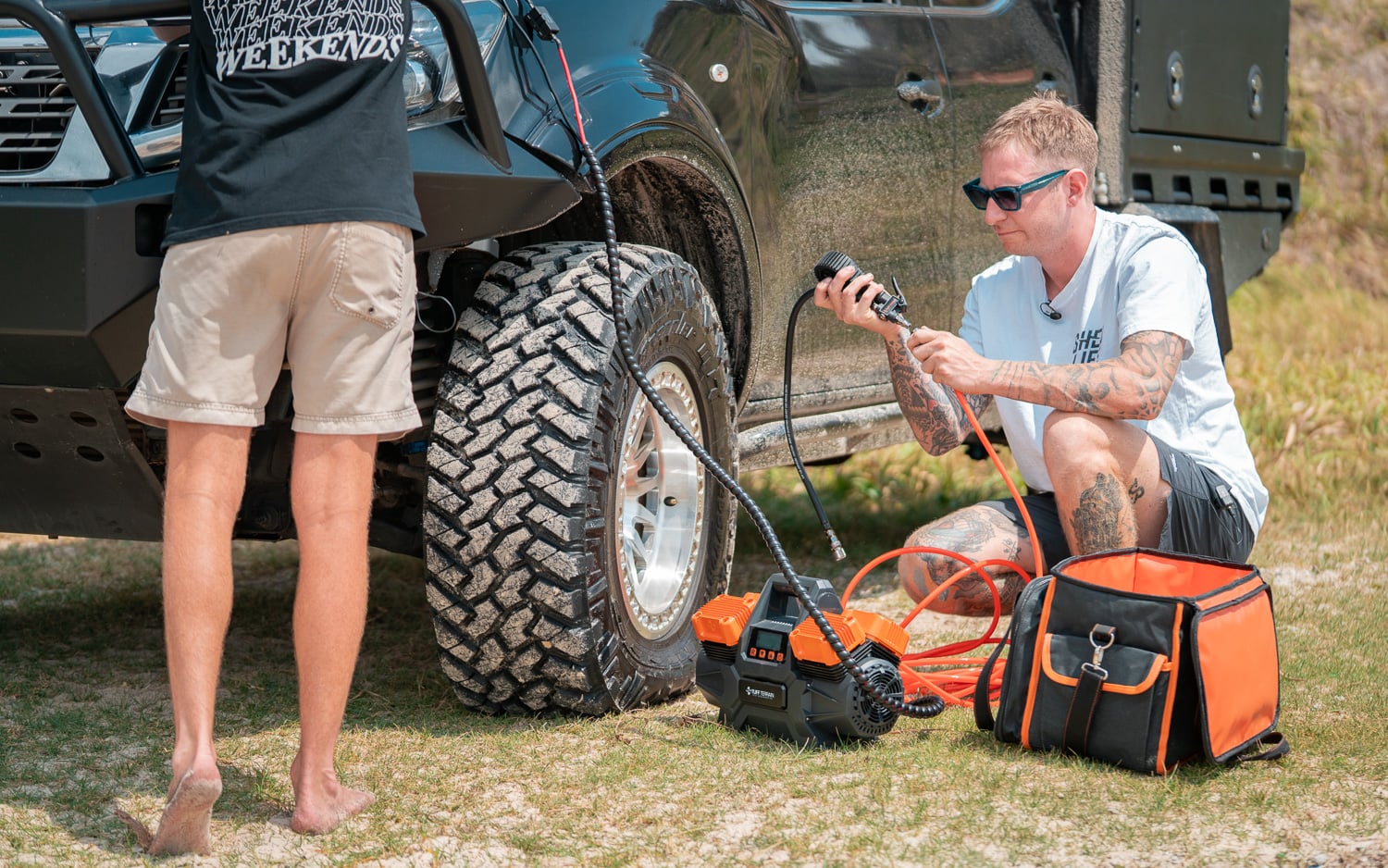
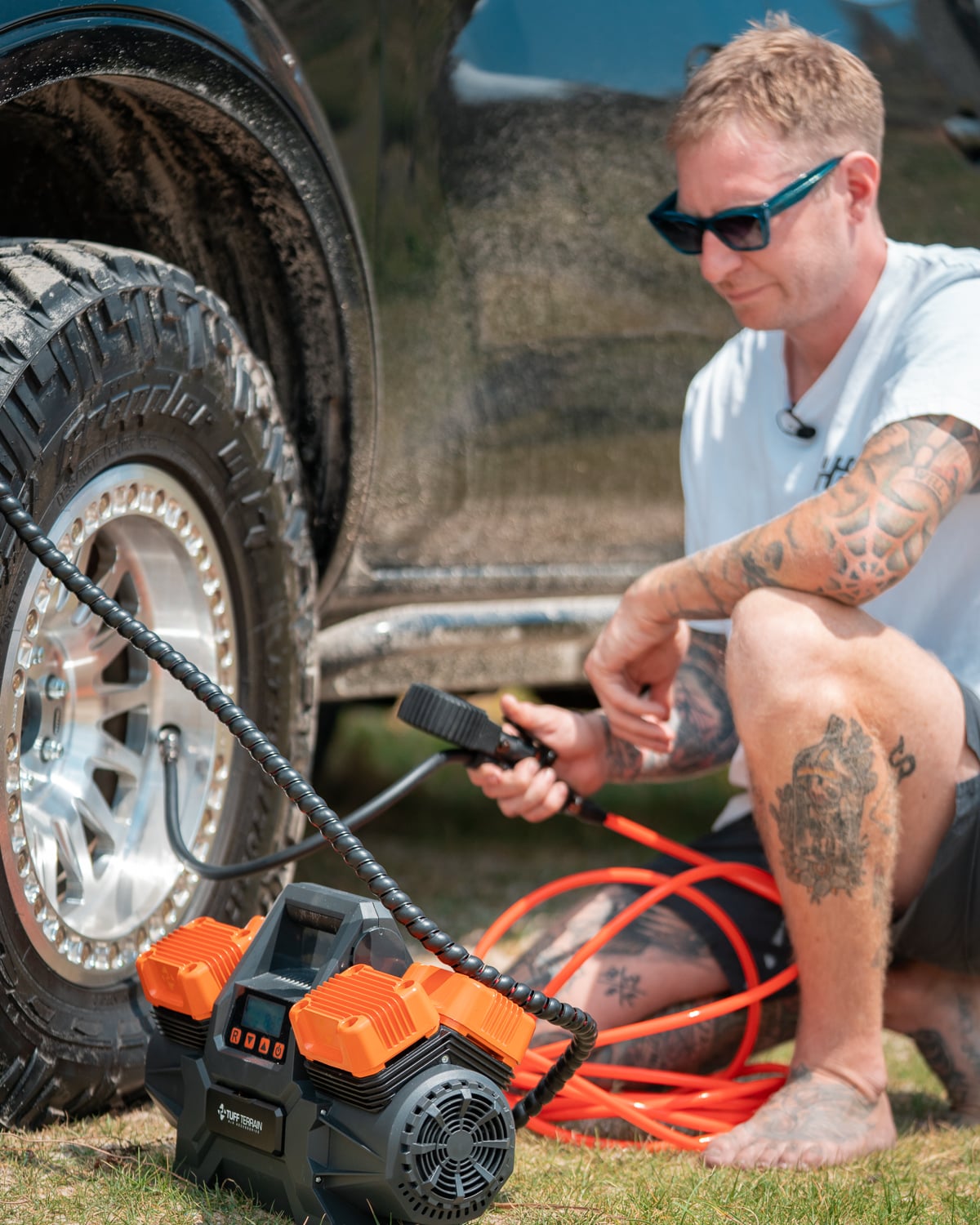
The Tuff Terrain V4 High Output Air Compressor is aimed squarely at that job, with a focus on fast inflation, consistent performance under load, and a setup that’s easy to use when you’re tired and ready to get moving again.
Real-world performance where it matters
On paper, plenty of compressors throw around big airflow numbers. The reality is that once pressure builds inside a tyre, weaker units slow down quickly.
The V4 is built around a four-cylinder design pushing up to around 400L/min, which is aimed at maintaining usable airflow even as pressure climbs. In practical terms, that translates to:
- 35-inch tyre from 10-40psi in around 2 minutes 15 seconds
- Strong airflow through the mid-range pressures where most of the work happens
- Less waiting around compared to smaller single-cylinder units
It’s the kind of performance that matters when you’ve got four tyres to air up – and maybe a camper or trailer behind you as well.
Built around touring setups
The V4 sits in that middle ground between fully hard-mounted systems and smaller portable compressors.
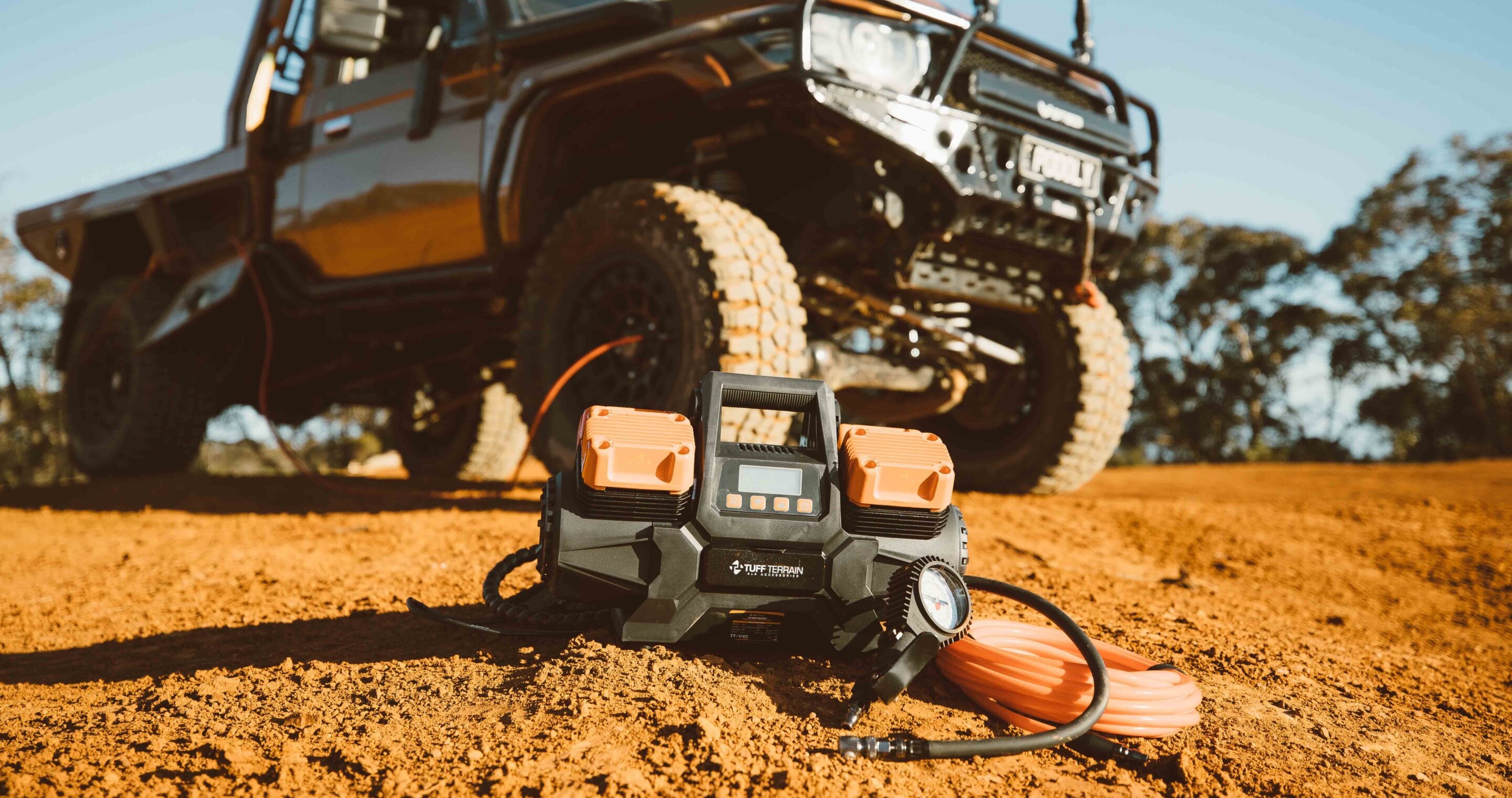
It’s supplied as a portable unit, but with the option to mount it permanently later if your setup evolves. That flexibility suits a lot of touring builds, especially dual-cabs running drawers, canopies or rear storage systems. Power comes via direct-to-battery alligator clamps, backed by an inline fuse, which is pretty standard for high-draw compressors pulling around the 100-amp mark .
Like most high-output 12V compressors, it’s best used with the engine running to maintain stable voltage and performance.
A setup that actually works in the real world
One of the more practical parts of the V4 kit is how it’s put together. Here’s what it comes with:
- 8-metre air hose with quick-connect fittings
- Digital gauge for easier pressure monitoring
- Multiple fittings stored neatly in the kit
- Heavy-duty carry bag to keep everything organised
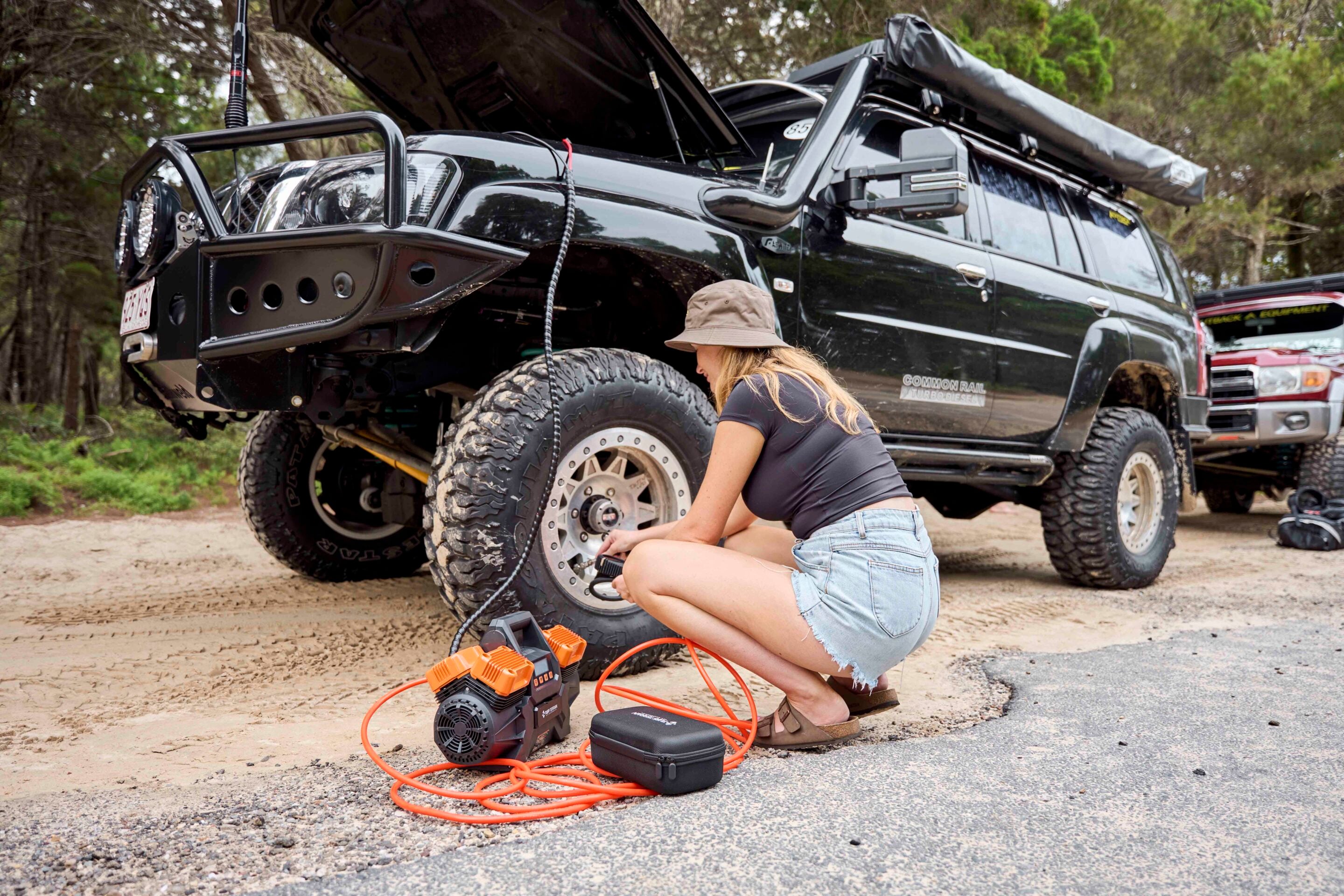
That 8m hose is worth mentioning – it means you’re not dragging the compressor around the vehicle to reach each tyre, which is a small detail that makes a big difference in day-to-day use. It also uses twin outlet fittings, so there’s scope to run additional accessories or streamline your setup depending on how your gear is configured.
Designed for bigger tyres and heavier setups
Where compressors like this really come into their own is with larger tyres and loaded touring rigs.
Smaller compressors can handle topping up road pressures, but they start to struggle once you’re dealing with 33- to 35-inch tyres, lower starting pressures (sand driving), and/or heavier vehicles or towing setups. The V4’s higher airflow and larger internal capacity mean it’s better suited to those kinds of setups, where consistency and heat management become more important over multiple tyres.
Not just about speed
Speed is the headline feature, but consistency matters just as much.
The V4 uses a multi-cylinder design with decent oil and cooling capacity, which helps reduce performance drop-off during longer use – something you’ll notice when inflating all four tyres back-to-back. It’s also rated for high pressure (around 150psi), giving it enough headroom for things like trailer tyres or higher-pressure applications.
Where it fits in your setup
This isn’t a budget compressor, and it’s not trying to be. Instead, it sits alongside other high-output touring compressors aimed at drivers who:
- Regularly air down for sand or tracks
- Run larger tyres
- Travel loaded or tow
- Want faster pack-up at the end of the day
For occasional beach trips, a smaller unit might get the job done. But for regular touring, the difference in speed and ease of use becomes pretty noticeable.
The bottom line
A compressor is one of those bits of gear you don’t think much about – until you’re stuck using a slow one on the side of the road.
The Tuff Terrain V4 High Output Air Compressor focuses on doing the job properly: fast airflow, usable performance under pressure, and a setup that’s practical in real-world touring conditions. It won’t make airing up fun – but it will make it quicker, easier, and a whole lot less frustrating.
JAC has announced an End of Financial Year (EOFY) promotion for its JAC T9 diesel ute range, offering a $4000 fuel voucher to eligible buyers.
The offer applies to new JAC T9 diesel models purchased and delivered between May 1 2026 and June 30 2026, with the promotion ending on June 30. Customers will receive a $4000 fuel voucher issued by the dealership on delivery, or may instead take the equivalent value as a discount off the vehicle price.
The promotion excludes demonstrator, government and rental fleet vehicles, cannot be combined with other offers, and is available while stocks last. Fuel voucher terms and conditions are set by the issuing company, and JAC Motors Australia retains the right to extend, withdraw or change the offer at any time.
In the lead-up to EOFY, manufacturers and dealers typically roll out targeted incentives on existing stock as they aim to clear inventory before the end of the financial year, and this offer follows that seasonal pattern.
The T9 is powered by a 2.0-litre turbo-diesel engine producing 120kW and 410Nm, paired with an 8-speed automatic transmission and a part-time dual-range 4×4 system with a rear differential lock as standard.
We took a T9 off-road last year and found it to be a value-focused option that prioritises capability and equipment over refinement. It has solid off-road hardware including dual-range 4×4 and a rear diff lock, but the ride and overall refinement feel firm and less polished than more established rivals, positioning it more as a budget work ute than a comfort-focused lifestyle option.