News


Gallery 1
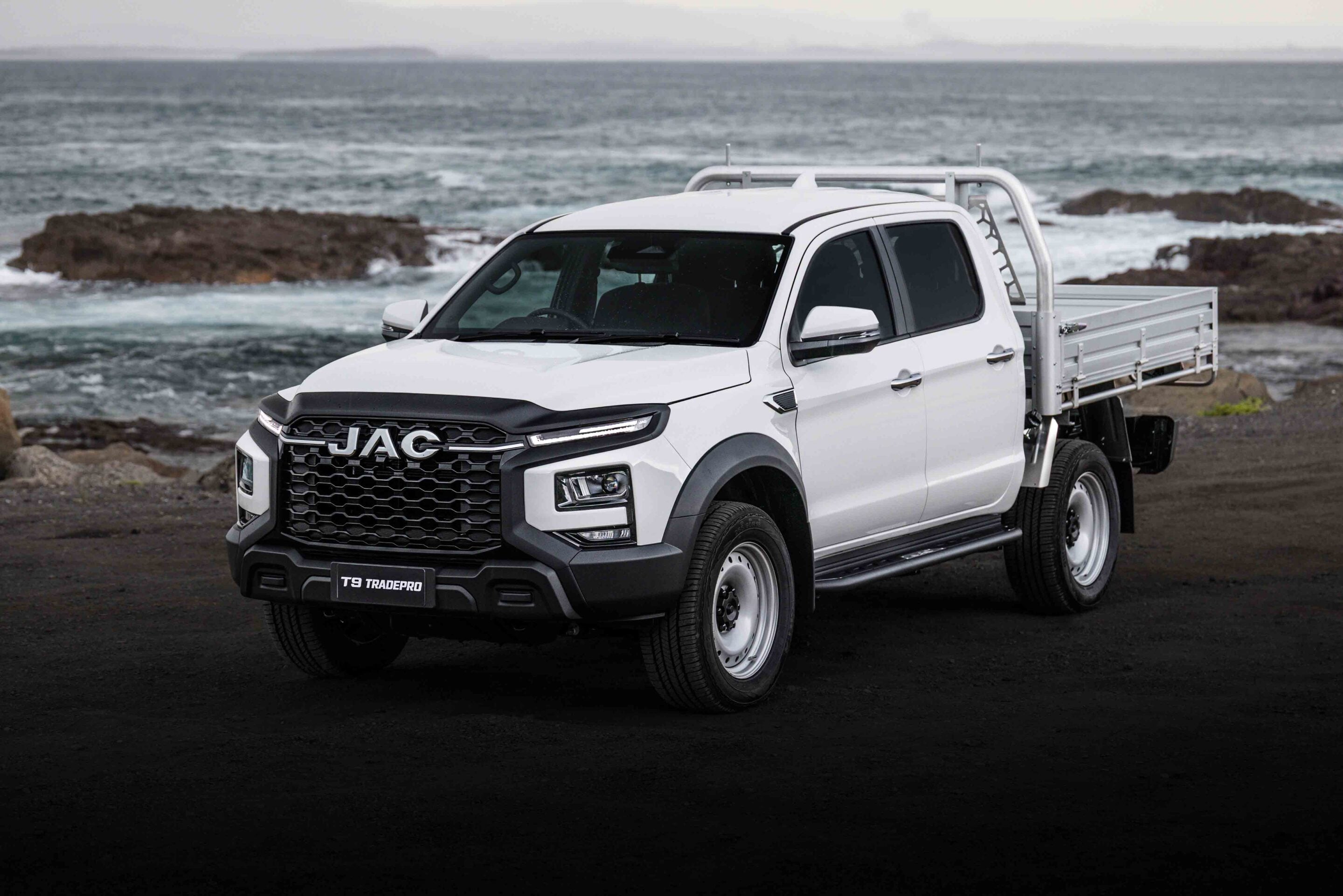
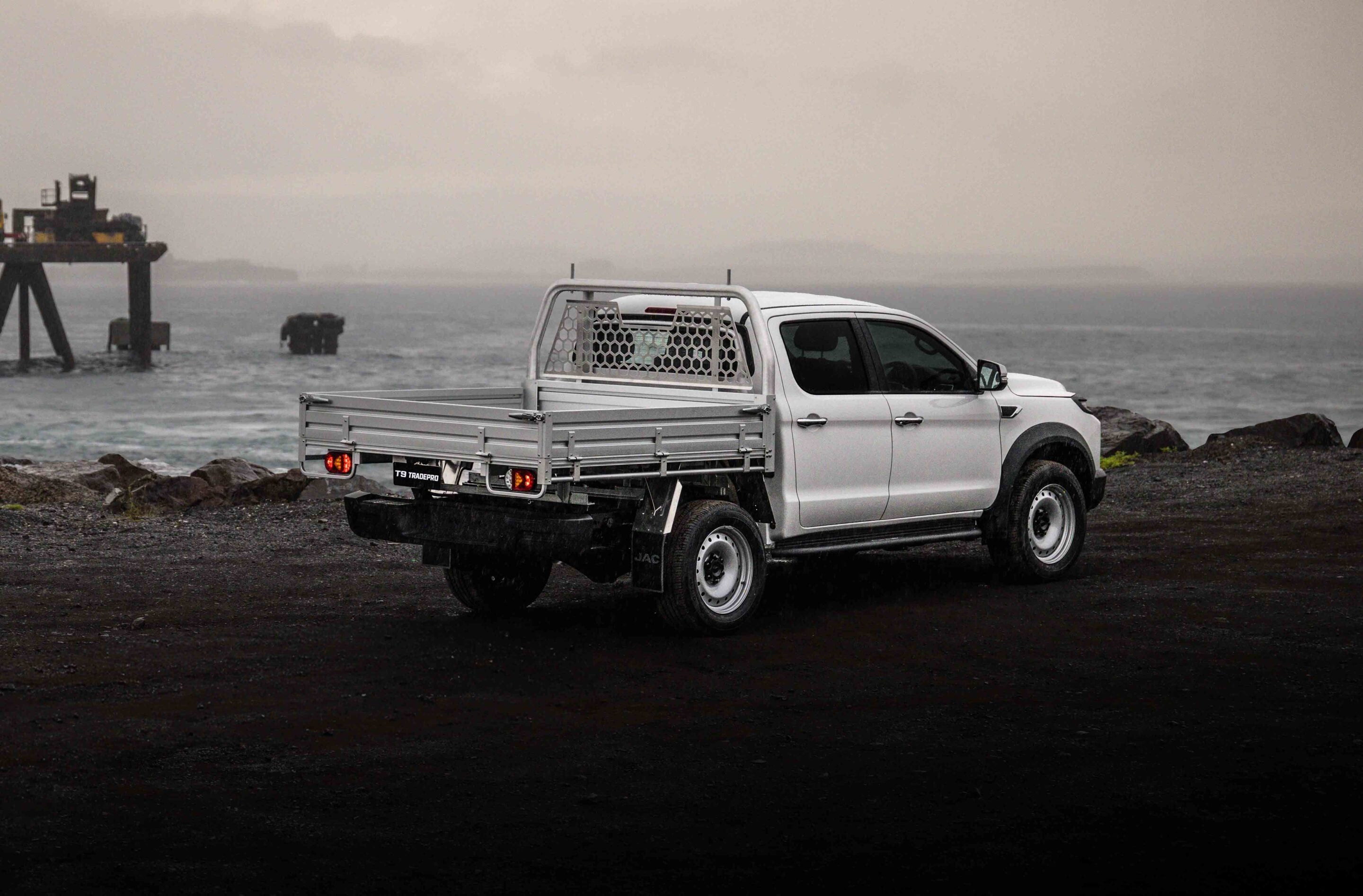
JAC has launched the T9 Tradepro Cab‑Chassis, now available from $38,990 plus on‑roads. The entry‑level T9 is aimed squarely at tradies, farmers, fleet operators and small business owners.
For ABN holders, JAC is offering an exclusive drive‑away price from $40,990 ($41,990 in WA), which includes a free JAC Genuine Alloy Tray with fitment. This limited‑time offer is available on new T9 Tradepro stock to eligible ABN holders until April 30, 2026, or while stocks last from participating dealers.
The T9 Tradepro features an open platform for custom trays, toolbox fit‑outs or other body modifications. Standard specifications include:
- 18‑inch steel wheels
- 4×4 with rear differential lock
- Heavy‑duty fabric seating
- 1165kg payload (excluding tray)
- 3.2-tonne braked towing capacity
- 7.6L/100km fuel consumption (NEDC combined)
- Rear camera
- Apple CarPlay and Android Auto
- Wireless phone charging
- Keyless entry and push‑button start
4
“The T9 Tradepro Cab-Chassis is exactly what we set out to build – a serious work vehicle that doesn’t ask tradies to pay for things they don’t need, or go without the things they do,” said Ahmed Mahmoud, JAC Motors Australia Managing Director. “Combining that with our ABN driveaway offer makes this one of the strongest value propositions in the segment right now.”
The T9 is powered by a 2.0‑litre turbodiesel producing 125kW and 410Nm, paired with a 4WD system featuring a BorgWarner dual‑range transfer case and locking rear differential.
JAC added the lifestyle‑focused T9 Osprey dual‑cabs to its Australian line‑up at the end of 2025. The standard Osprey starts at $46,629, with the darker‑trimmed Osprey X at $47,079. Both carry a 980kg payload to remain eligible for salary‑packaging and novated leases. They share the T9’s 2.0‑litre turbodiesel, ZF eight‑speed automatic and 4WD setup.
All models maintain a five‑star ANCAP rating and come with JAC’s seven‑year unlimited‑kilometre warranty, capped‑price servicing and 24/7 roadside assistance.
Last month, JAC also confirmed fuel‑efficiency and range figures for its upcoming Hunter PHEV, due in Australia mid‑2026. The Hunter is set to deliver a combined 1.6L/100km (NEDC) fuel consumption figure and 1005km combined driving range (NEDC), positioning it as a long‑range electrified option in the 4×4 ute segment.
It pairs a turbocharged petrol engine with dual electric motors and a 31.2kWh lithium‑iron phosphate battery, and it supports a 3.3kW vehicle‑to‑load (V2L) function for powering tools or gear.
MORE
T9 news and reviews!
Follow 4X4 Australia on Google
Get more 4x4 news, reviews and gear stories from 4X4 Australia in your Google feeds.

We recommend
-
 News
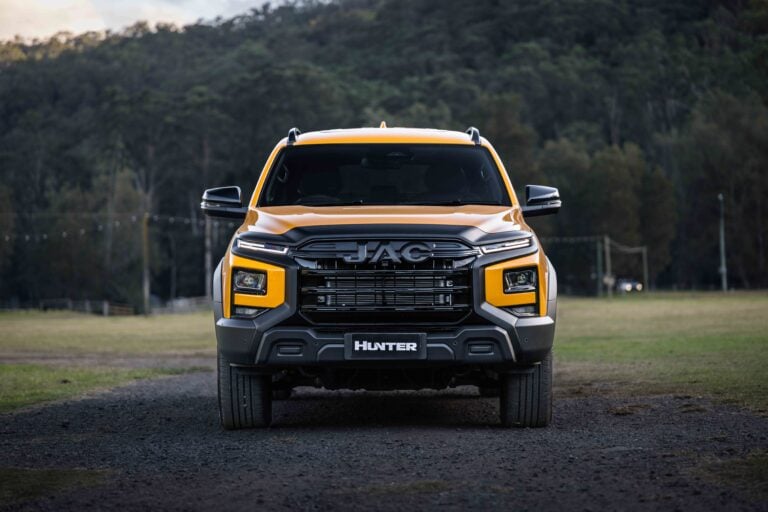
NewsJAC Hunter PHEV gets Australian-tuned dynamics ahead of launch
The JAC Hunter PHEV has undergone local vehicle dynamics tuning ahead of its Australian launch in Q3 2026
-
 News
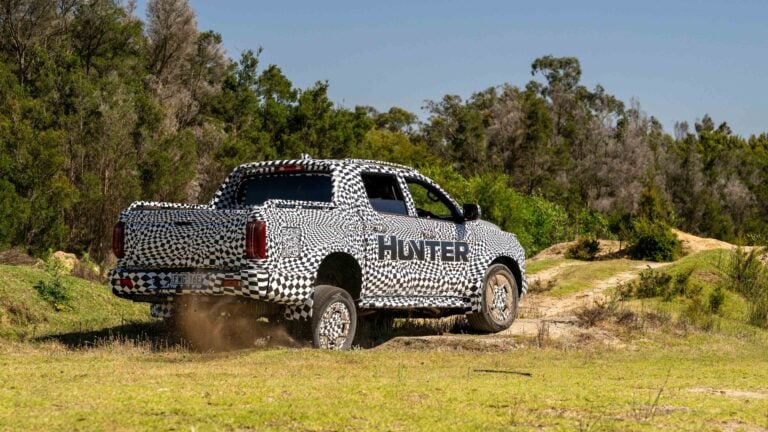
News2026 JAC Hunter PHEV faces tough Australian testing program ahead of launch
The PHEV 4x4 is being pushed through a series of local challenges – including Lang Lang – ahead of its mid-2026 Australian debut
-
 News
NewsJAC confirms range and fuel efficiency figures for upcoming Hunter PHEV
JAC confirms the Hunter PHEV dual-cab ute will arrive in Australia mid‑2026, offering class-leading range and fuel efficiency