
The mid-size 4×4 wagon battle has always been popular in Australia, and you can understand why. With the ability to accommodate a family on adventures all over the country at a purchase price considerably less than that of a LandCruiser, they can be the perfect vehicle for exploring this grand country.
The Toyota Prado is the peerless sales leader in this segment, but when you step down to the next rung on the sales ladder, Isuzu has held a firm hold on second place for a few years now with its MU-X. The next most popular wagon in this class is the Ford Everest and, while it is getting long in the tooth, it is still a great all-roads vehicle.
This year brought us an all-new MU-X that should appeal to a lot more buyers, as it delivers next-level safety and features in an edgy new body shell. We’ve grabbed a top-of-the-range MU-X LS-T and lined it up with the similarly top-spec Ford Everest Titanium to see how the two compare.
While the second-gen MU-X came with a considerable price rise over the previous model, in top-of-the-line trim it’s still almost $10K cheaper than the Ford Titanium – $73,190 versus $63,990. Ford has priced its Everest range closer to the Prado than the other ute-based wagons, but this hasn’t hurt its popularity, even if it doesn’t sell quite as well as the Isuzu wagon.
More 4×4 gear guides


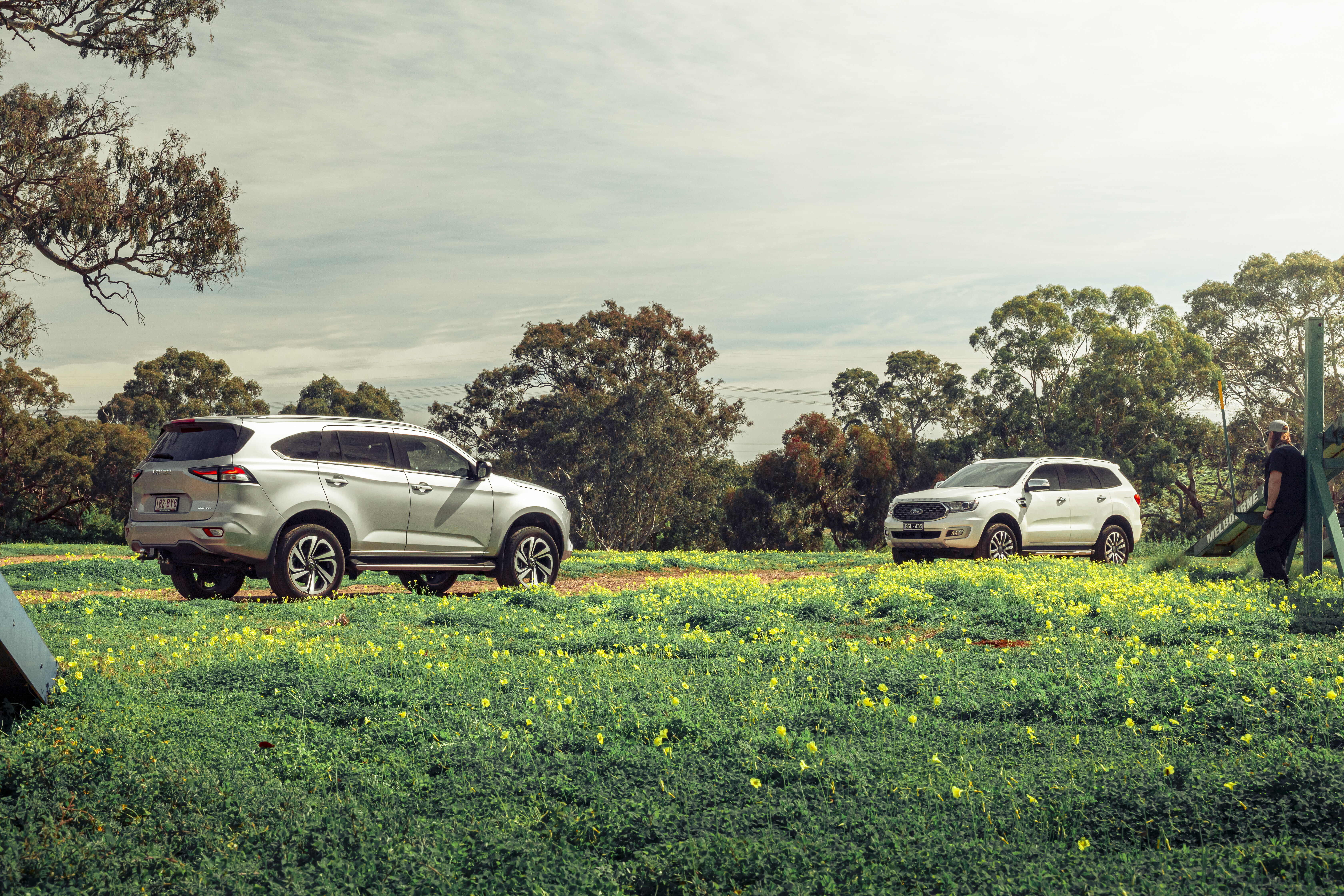
ISUZU MU-X LS-T
POWERTRAIN & PERFORMANCE
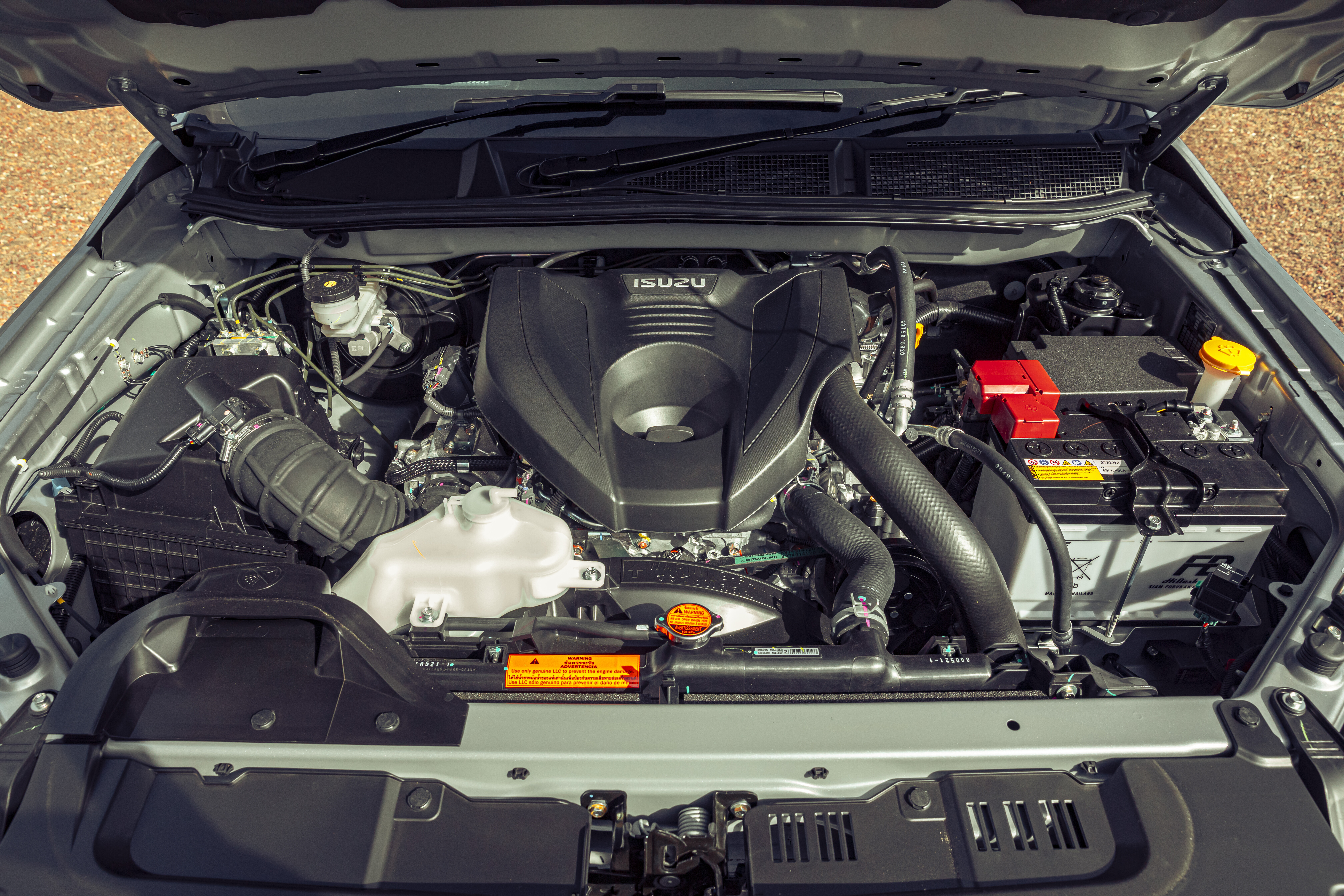
ALL 2022 MU-X variants get the latest version of Isuzu’s 4JJ3 3.0-litre four-cylinder engine. It now produces 140kW and 450Nm in line with the same engine in the current D-MAX ute on which the MU-X is based. Like the Everest, it is only available with an automatic transmission, in this case Aisin’s excellent six-speed unit which we’ve always been fans of.
The remainder of the driveline consists of a part-time dual-range transfer case splitting the drive to the axles, which are a live unit at the back and an IFS unit mounted up front. The rear axle has a driver-operated locking differential. The MU-X is also available as a 4×2 model.
Like any other four-cylinder diesel engine, the Isuzu unit is relatively harsh and noisy despite the company’s best efforts to quell the inherent attributes, but it’s never offensive. The increased performance from its uprated outputs is certainly appreciated in the wagon just as it is in the D-MAX ute, even if they fall short of the class leaders in this regard.
The MU-X doesn’t lack for power under everyday driving, although how it would cope at its rated 3500kg towing capacity remains to be seen. In our opinion, neither of these wagons would be particularly comfortable towing that weight and are best kept to less than three tonnes. The Aisin gearbox continues to deliver faultless and precise selection of ratios, never looking for or needing any more gears.
ON-ROAD RIDE & HANDLING
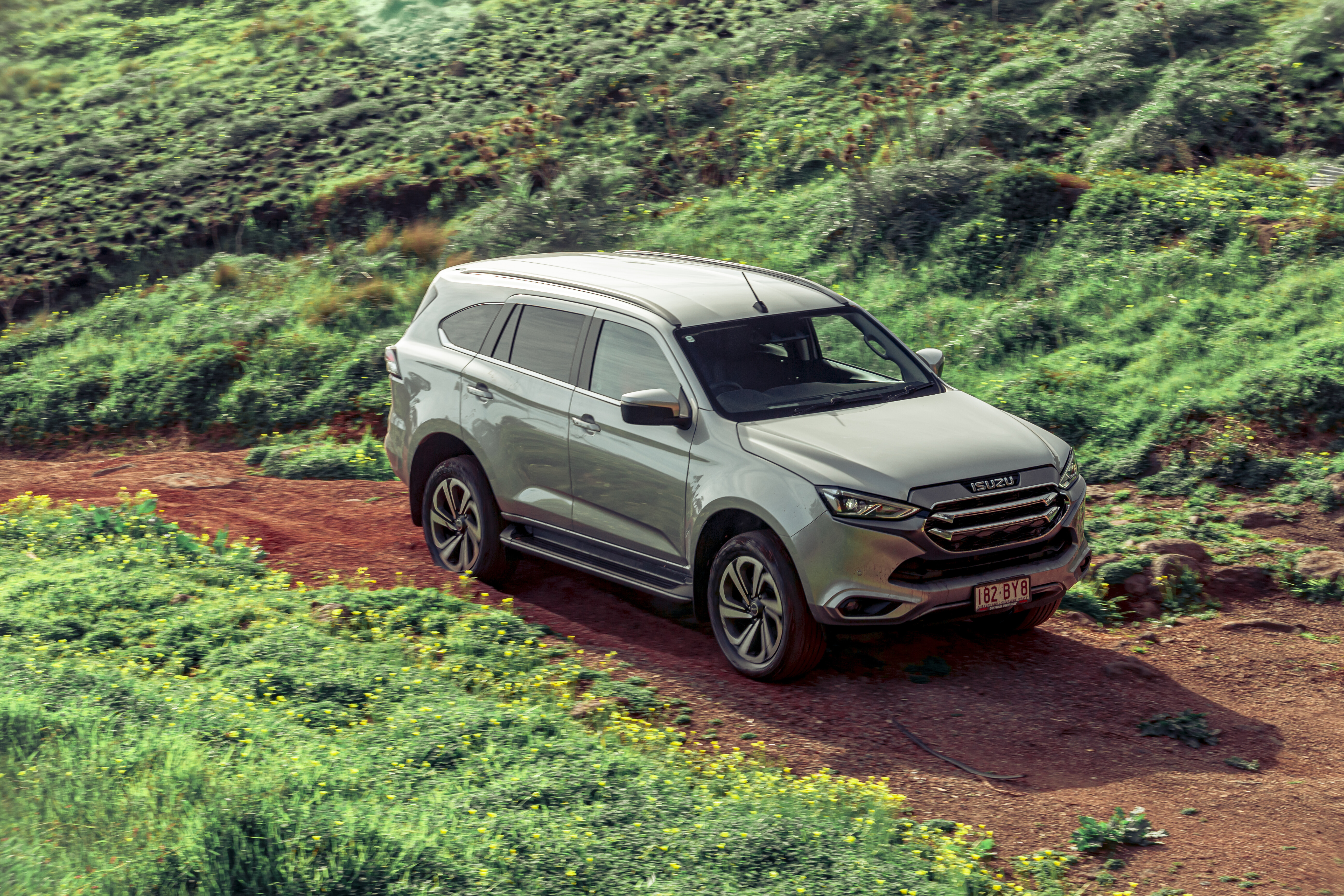
THE MU-X is derived from the D-MAX ute and, like other 4×4 wagons that share the same formula, the ute’s chassis has had its wheelbase shortened and its rear leaf springs replaced by coils to give a more passenger-friendly ride. The ute’s rear drum brakes have also made way for disc brakes.
For Isuzu the platform was an all-new chassis that debuted on the D-MAX in 2020 and was clipped to go under the 2022 MU-X. That includes the new-design double-wishbone front suspension, a stiffer frame and a full suite of safety features.
The suspension is soft and compliant, giving a comfortable ride at the expense of dynamics and steering precision. The chassis absorbs bumps and ruts well but lurches through corners, reflecting its high-riding family wagon design. The inclusion of low-profile tyres on the LS-T might aid the handling a bit but the MU-X is no sports car, nor is it meant to be.
OFF-ROAD
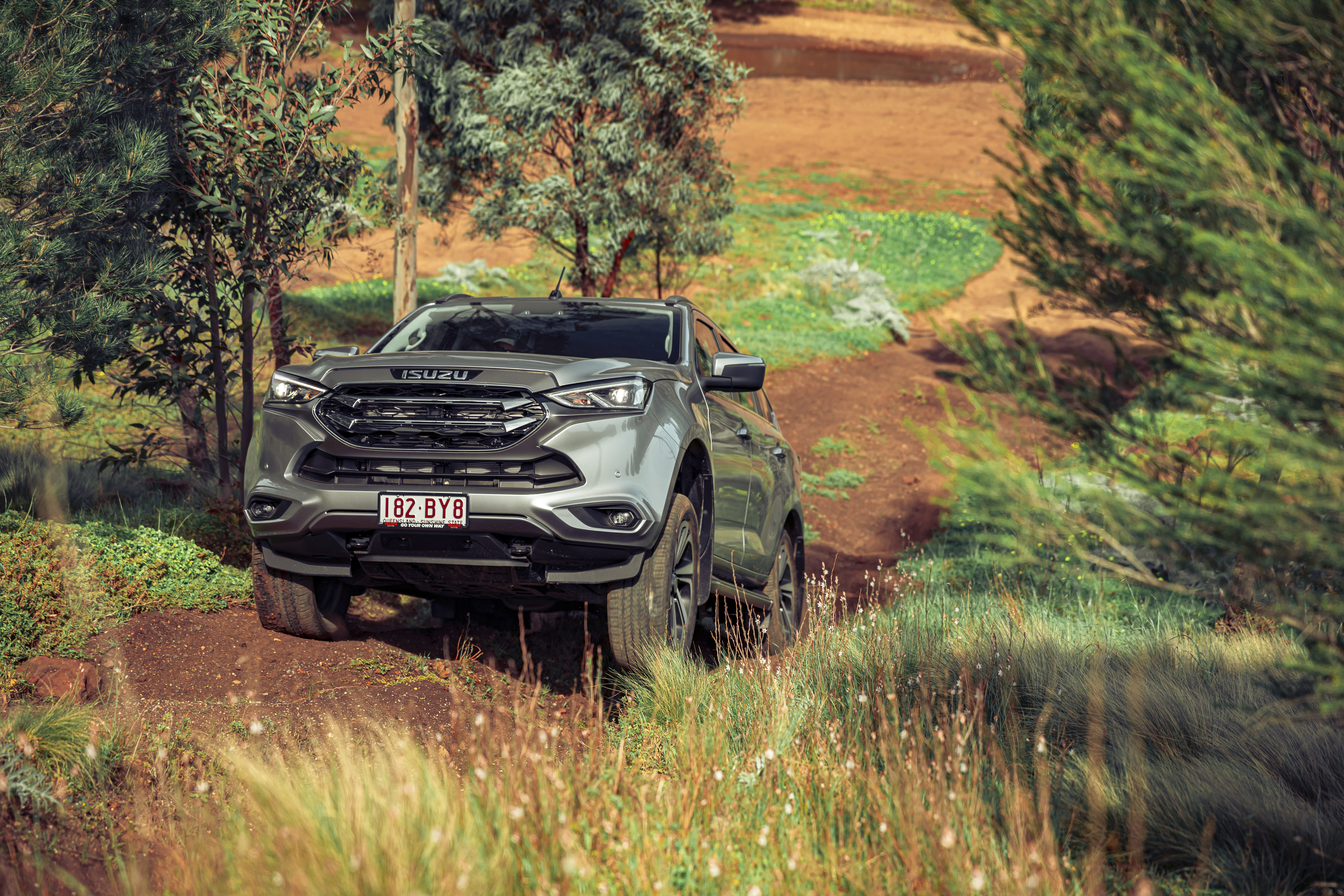
THE D-MAX underpinning means that the MU-X isn’t a bad off-roader by any standard; better in fact than the ute, thanks to the shorter wheelbase improving the ground clearance in between the axles and the coil springs giving a tad more travel in the rear suspension.
The four-wheel drive system is part-time, dual-range carried over from the D-MAX, and a rear differential lock is standard across all 4×4 MU-Xs. This simple system works well off-road, especially with the diff lock engaged. The LS-T struggled to get up our rutted hill without the diff lock in, but scrambled its way up with it engaged.
Controlling the transfer case is done via a dial on the console and, as with all of these electronic systems, you need to take your time when selecting the 4×4 modes. Even when taking all the usual precautions, the MU-X was hesitant to disengage from low range and took a bit of messing around.
The MU-X also has a Rough Terrain button that sharpens the calibration of the electronic traction control, and it works. Once again, pressing this button on the rutted hill helped the MU-X get up it, where otherwise it faltered once a wheel broke traction.
We are left wondering why Isuzu wouldn’t set the ETC calibration this way whenever low range is selected. Maybe the marketing team wanted another gadget to talk about.
CABIN & ACCOMMODATION
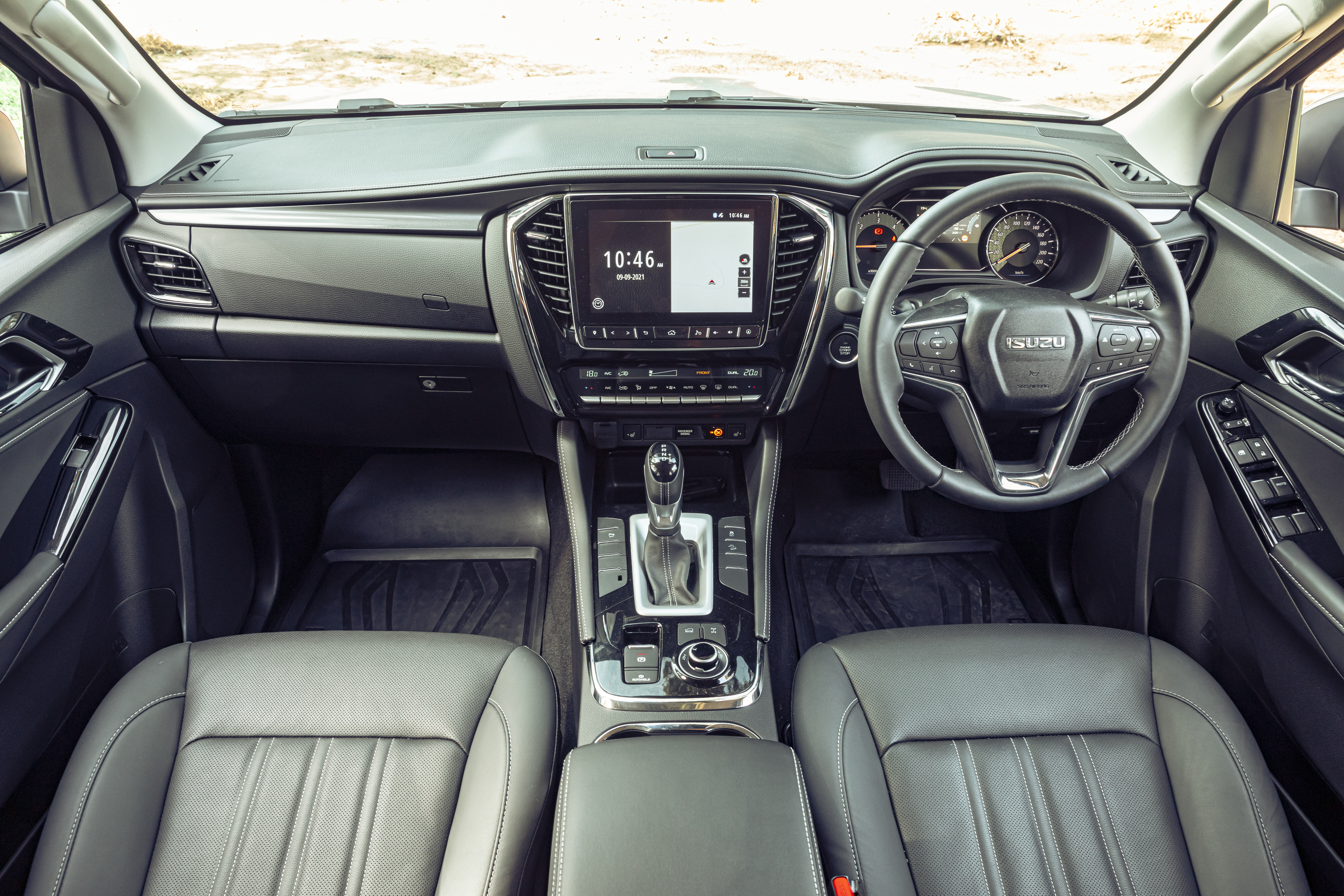
AS the top-of the-range variant, the LS-T comes very well-equipped. It gets the bigger AV screen, wireless CarPlay connection, dual-zone climate control, power adjustable leather seats, and it’s the only model in the range to get heated front seats and a tyre-pressure monitoring system (TPMS).
Most of the controls are simple enough and easy to use, but we still don’t like the use of slow-acting buttons for audio controls when tactile dials are easier and faster to use.
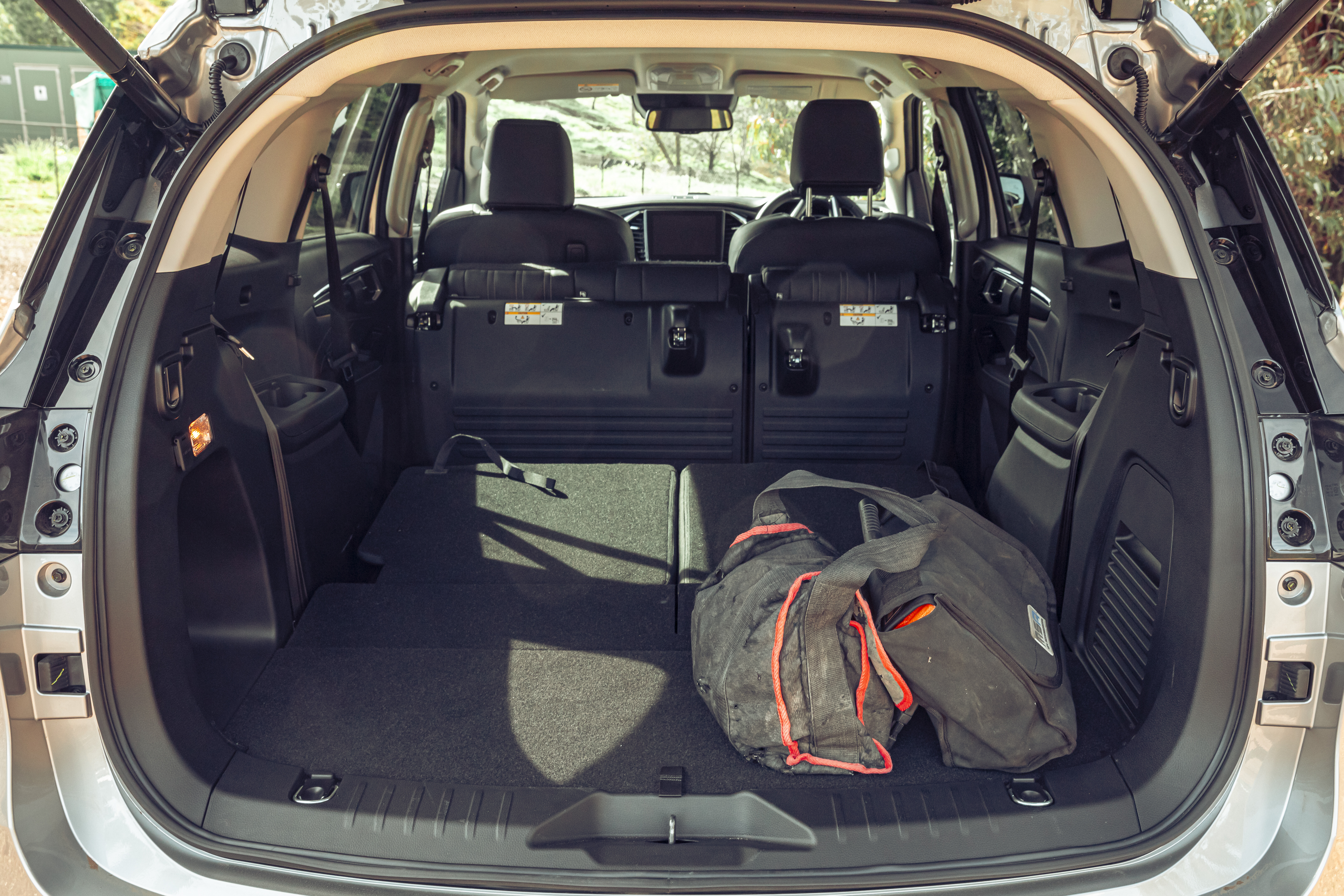
The seats are comfortable but the space is narrower than that in the Ford, which is certainly noticeable in the driver’s seat. The second row seat slides fore and aft and offers plenty of space for leg and headroom, while the third row is best left for the little-uns.
The LS-T gets a power tailgate, but there is no sunroof standard on the MU-X as there is on the Ford.
The MU-X gets the full IDAS safety suite including autonomous emergency braking, lane departure warning and prevention, rear cross-traffic alert, post collision braking, turn assist, lane keeping assist, automatic cruise control, traffic sign recognition, forward collision warning and the previously mentioned TPMS.
PRACTICALITIES
THE MU-X has a high 3500kg towing capacity and 5900kg GCM, meaning it’ll appeal to those who want to haul heavy trailers. The payload is also a healthy figure at 625kg, so it’s good for escapes with the whole family with a few accessories fitted to the car.
The LS-T’s low-profile tyres on 20-inch rims aren’t great for off-road use and probably had a bit to do with the MU-X struggling on our hill climb, but the size of the brake rotors are the same across the MU-X range, meaning you can fit 17- or 18-inch wheels from the lower grades to the LS-T if you want more off-road suitable tyres.
The 235mm of ground clearance and 800mm wading depth are both good for off-road use, but the engine draws its air from a forward-facing outlet above the headlight, so exceeding that wading depth could prove costly. Isuzu does have a factory snorkel available in a range of accessories for the MU-X, and it’s a model that is reasonably well-supported by the major aftermarket accessory manufacturers.
FORD EVEREST TITANIUM
POWERTRAIN & PERFORMANCE
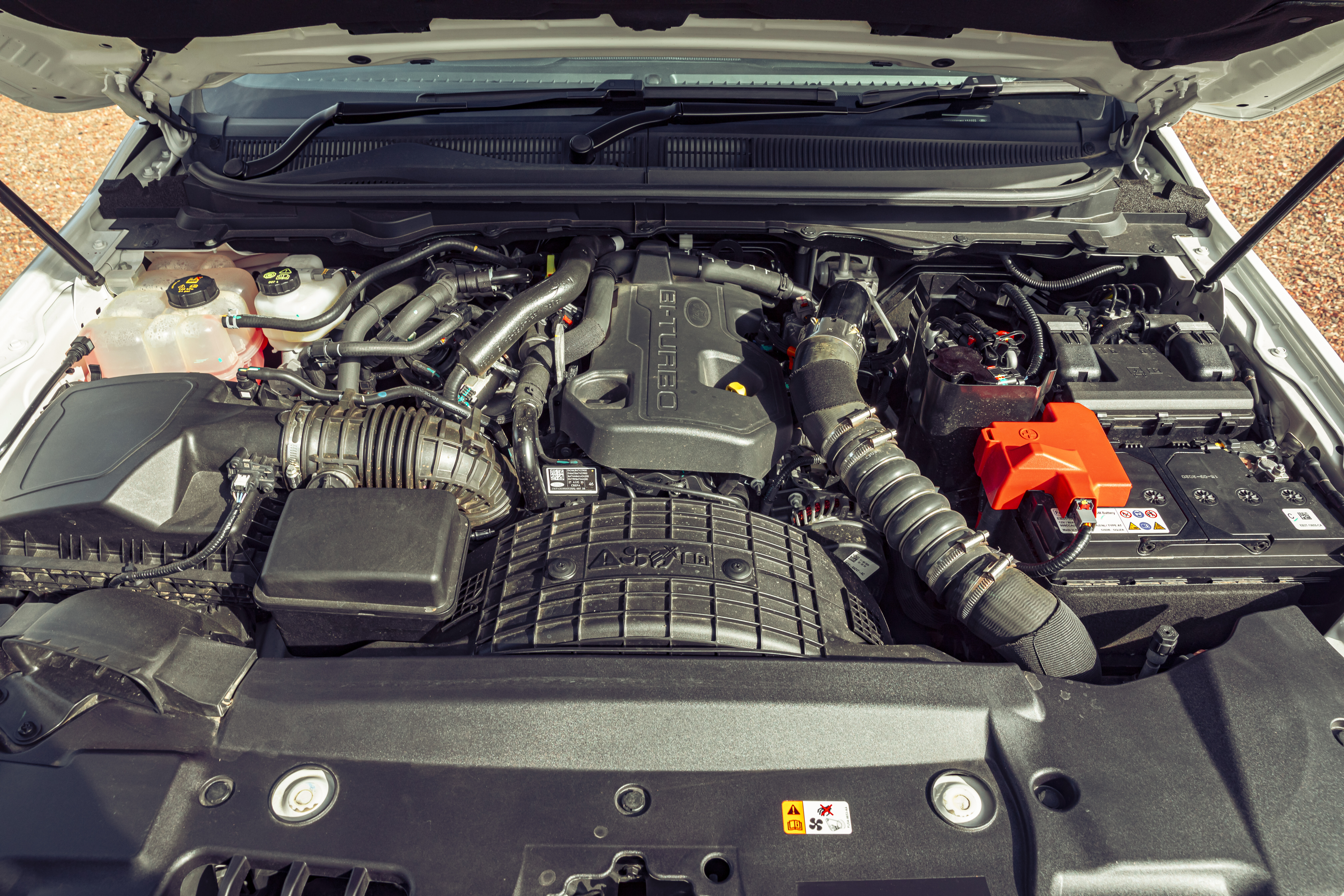
FORD offers a choice of two powertrains in its Everest wagon: the long-serving 3.2-litre five-cylinder diesel engine backed by a six-speed auto transmission, or the more powerful 2.0-litre diesel with a 10-speed auto. While we prefer the characteristics of the old 3.2 in the working-class Ranger ute, we think the higher level of refinement offered by the 2.0 work better in the Everest wagon, which, like the MU-X, is based on its ute stablemate.
The 2.0-litre/10-speed combination is the only one offered in the top-spec Everest Titanium, which we are driving here.
The two-litre engine may be small but it uses a bi-turbo arrangement to deliver some class-leading numbers, with 500Nm of torque on tap and 157kW of power. It’s a peakier power delivery compared to that of the bigger Isuzu engine, but the torque is higher across the rev range.
The 10-speed auto has a ratio for every application to match the engine’s characteristics, however we still found it a bit indecisive under low-throttle applications in suburban driving. This is something we have noted with this transmission in the past. Under full throttle there’s no such hesitation or fault and that 500Nm of torque is felt to the fullest.
Not only is the smaller of Ford’s diesel engines the more refined of the pair, but it’s also more refined than the three-litre mill in the MU-X. It is smoother and quieter when judged from within the cabin; this could possibly be attributed to the 50-per-cent smaller capacity of the four pots in a more modern engine. It also has a more frugal consumption rating – with 7.0L/100km compared to the Isuzu’s 8.3L/100km on the ADR combined scale.
ON-ROAD RIDE & HANDLING
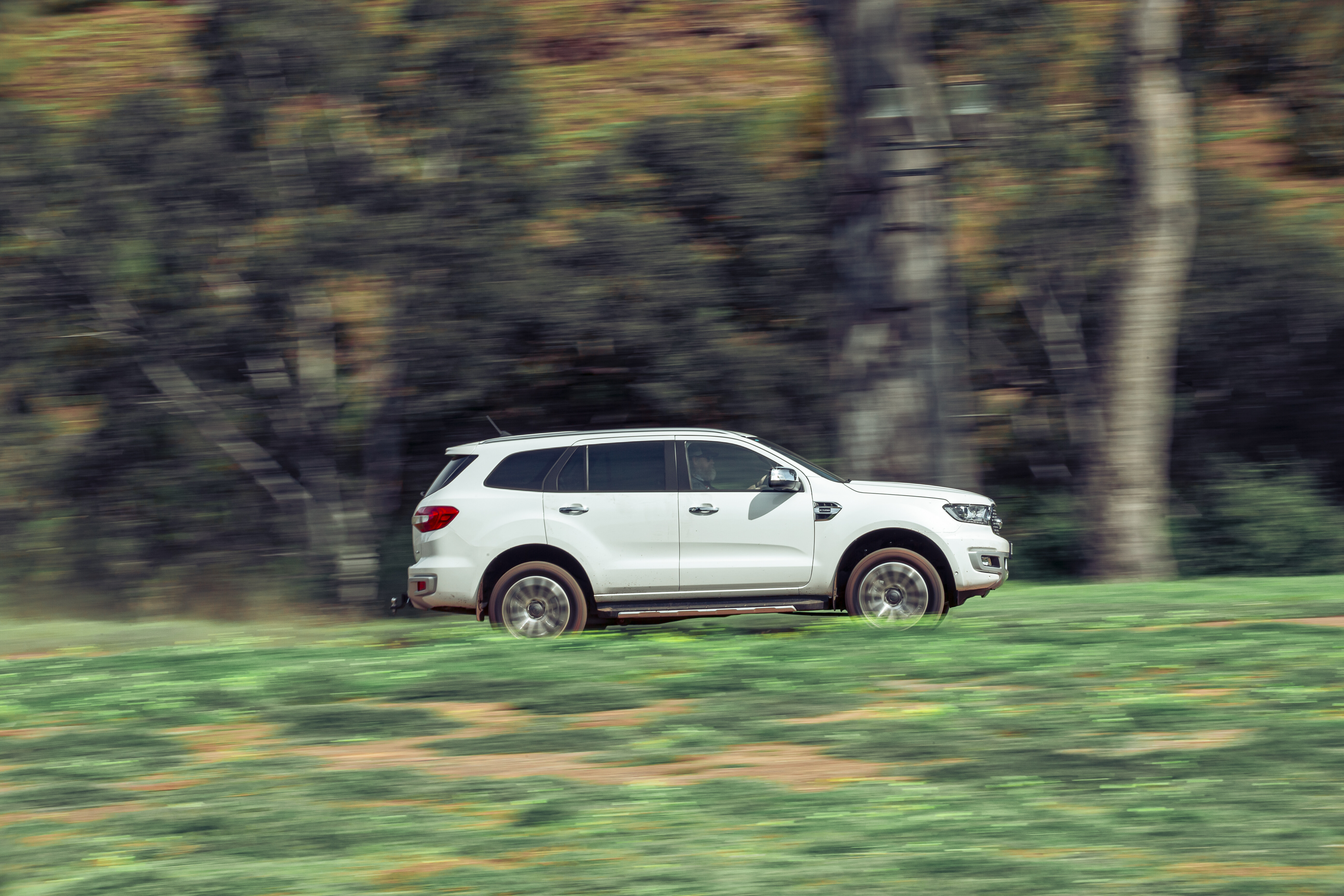
THE Everest hides its light-truck heritage better than the MU-X, delivering an experience that is both more dynamic and refined – something that is not always easy to achieve. You can thank the Australian engineering team for that, with their decades of experience setting up vehicles for Australian roads.
The Ford has a better hold of the road, feeling like it has a lower centre of mass than the Isuzu, and the Watts-link-equipped rear suspension does a superb job of controlling the live rear axle on corrugated dirt tracks.
OFF-ROAD
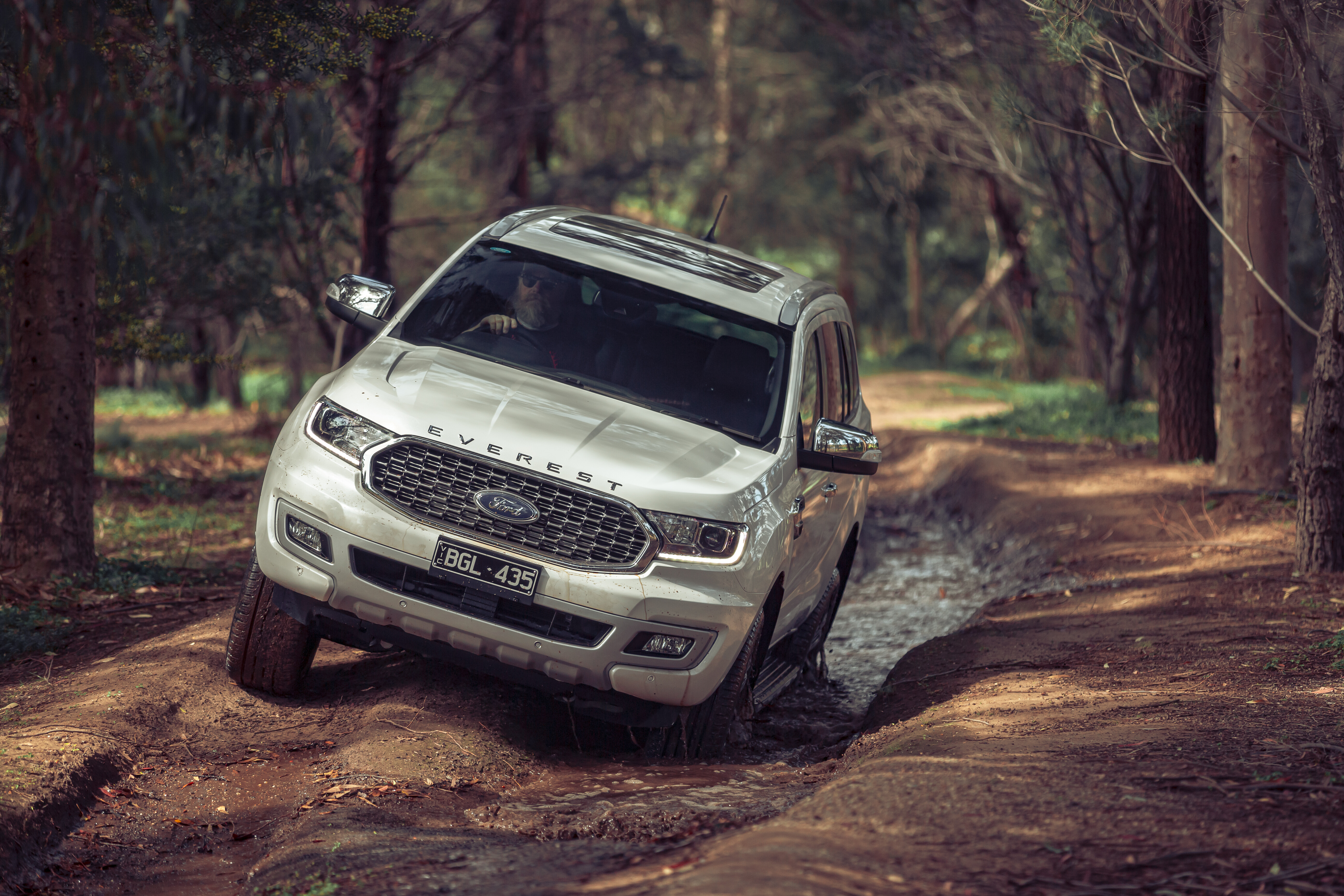
THE work the local engineering team for Ford’s T6 platform, on which the Everest, Ranger and Bronco all ride, comes to fore again when you head off-road in the Everest, with the excellent calibration of the traction control (ETC) system.
This remains active across the front axle when the rear diff lock (RDL) is engaged – not all 4×4 vehicles keep this function and it is most important. Even without the RDL engaged, the ETC did a great job of getting the Everest up our rutted hill climb.
The Everest’s 4×4 system is on-demand, meaning it is partially AWD all the time, with the amount of drive going to the front axle varied depending on the road-surface grip and the setting in the Multi Terrain system (MTS). This is great for driving on wet or varied surface roads, but a negative is that the centre differential can’t be fully locked to give 50:50 drive front to rear when off-road. Selecting the more aggressive ‘Rock’ setting in the MTS goes someway to address this, but when in the Rock setting, the transmission holds first gear and doesn’t upshift.
An advantage of Ford’s 10-speed transmission is its super low 4.696:1 first gear, which in turn gives a handy 42.32:1 overall crawl ratio for better off-road control and engine braking.
CABIN & ACCOMMODATION
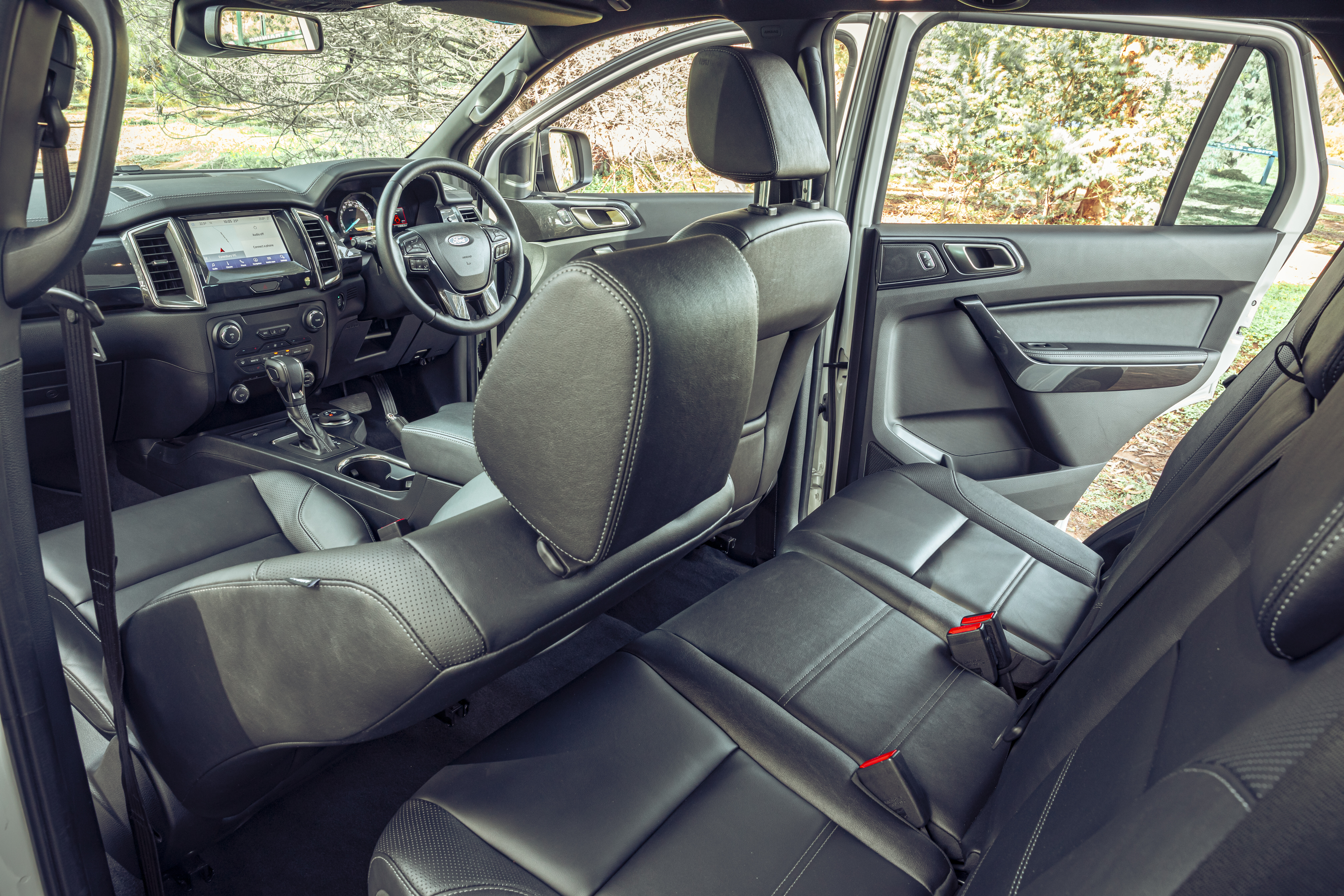
THE Everest’s cabin is wider and the driver’s seat offers more space and comfort than the MU-X. However, the cabin does show the age of the Everest, with its AV screen being smaller than what we’ve become accustomed to in recent times. The steering column is also only adjustable for height and not reach, as is the case in the MU-X.
The Ford has nice, big, easy-to-use dials for the audio controls, but it still has miniscule buttons for the climate control temperature settings which are hidden away low in the centre stack. If you look hard enough you’ll also find the controls for the seat heaters tucked down here.
The CarPlay connection for Ford’s Sync system requires a USB cable, and you can remotely connect to the car via an app on your phone. A sunroof is standard on the Titanium, as are powered third-row seats; although, I can’t imagine why you would need them to be powered. Likewise with the power tailgate, which on the Ford can be operated hands-free with a wave of your foot beneath a sensor on the car.
Ford updated the Everest’s safety kit a couple of years back and it now includes Autonomous Emergency Braking (AEB) with pedestrian protection, emergency brake assist, hill launch assist, lane departure warning, trailer-sway control, lane keeping aid, TPMS, and traffic sign recognition. About the only safety feature that the MU-X has over the Everest is its rear cross-traffic alert.
PRACTICALITIES
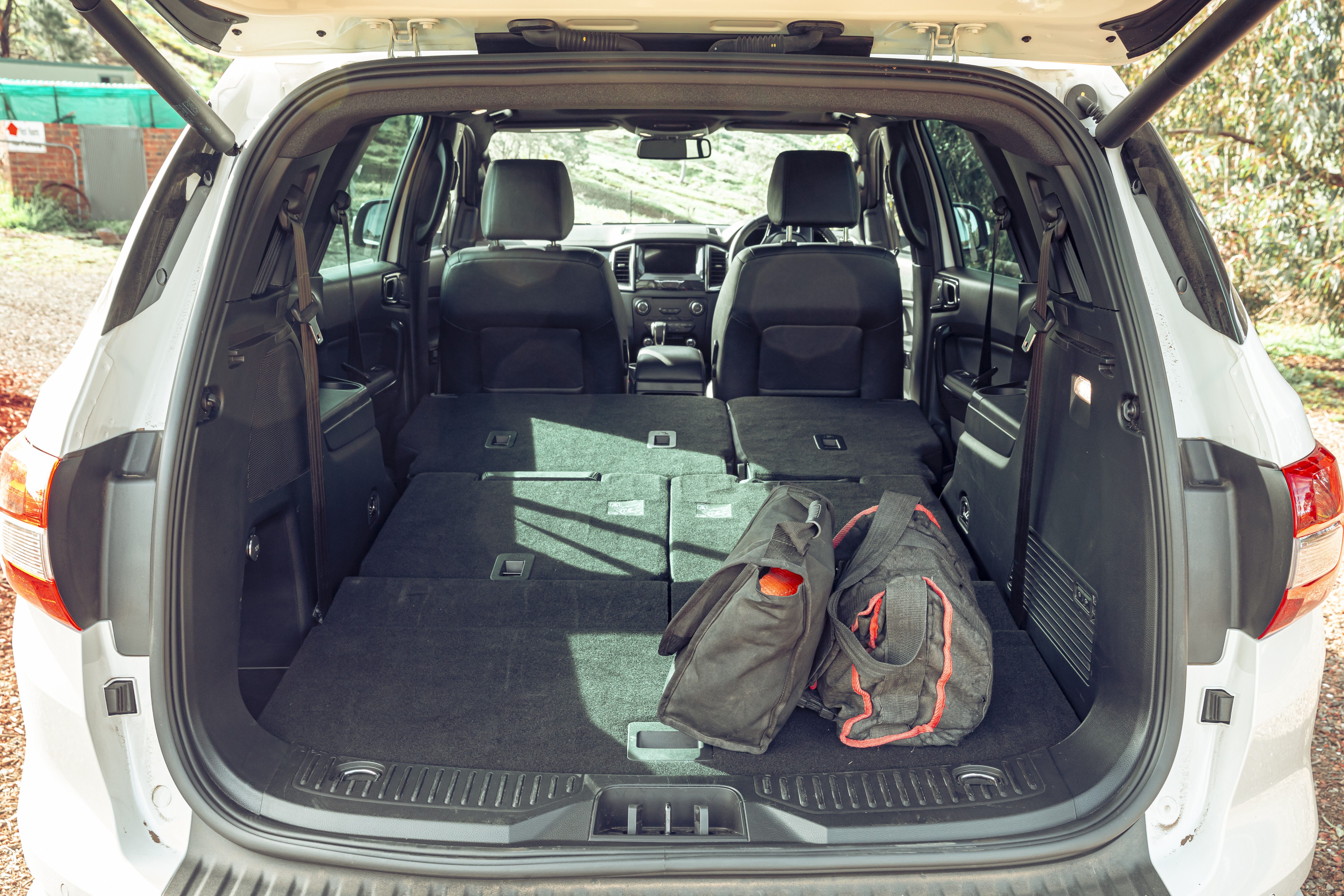
THE Everest’s more sensible 3100kg towing capacity won’t win it any friends in the big caravan brigade, but it’s more realistic as to what you should expect from cars this size. The 623kg payload is on par with the MU-X (just think how much better it could be without all those electric motors for the powered seats, tailgate and sunroof) so both carry a family or cargo equally as well.
Like the MU-X, the Everest has an 800mm wading depth and the engine takes its air from a forward-facing duct above the grille. We have heard of an instance where one of these engines copped a gutful of water crossing a creek, which is disappointing as the 3.2L engine gets its air in a better system from inside the ’guard.
Ford’s 2.0-litre diesel uses AdBlue/SCR as part of its emissions system, so that’s also something to be mindful of; although not considered a negative.
The Everest Titanium comes with the same size 265/50R20 tyres as on the MU-X, but like the MU-X, you can fit the smaller wheels off a lower grade Ford to allow more sensible tyre fitment. In fact, Ford even offers an 18-inch wheel with all-terrain tyres option for the smart buyer when ordering a Titanium. There is also a range of genuine Ford accessories available including snorkel, nudge bar, towing kit, and a range of Rhino-Rack roof-carrying devices. The Ford is well-supported by the aftermarket accessory mobs as well.
IN SUMMARY
AT the end of the day it’s going to be the drive-away price that swings you toward the Everest or the MU-X, and the $10K difference before you start dealing is a big factor.
The Ford does feel like it’s worth more money – it’s more refined, more powerful, bigger inside, and it never gives away its light-truck underpinnings as the MU-X does at times. The Ford feels more like a quality SUV than a wagon, riding on a ute chassis; but, again, it is feeling its age.
An all-new Everest is due from Ford in the back half of 2022, and spy photos of the new models out testing have already been seen.
The MU-X, on the other hand, reminds you that it’s based on the D-MAX pick-up in the way its cabin feels, and the rattle of the diesel engine is more evident within it. While it might not feel as luxurious, it does feel newer in terms of its design and levels of equipment, having a few features the Everest Titanium misses out on including reach adjustment for the steering wheel and safety tech like the rear cross-traffic alert system.
4X4 Australia's project builds
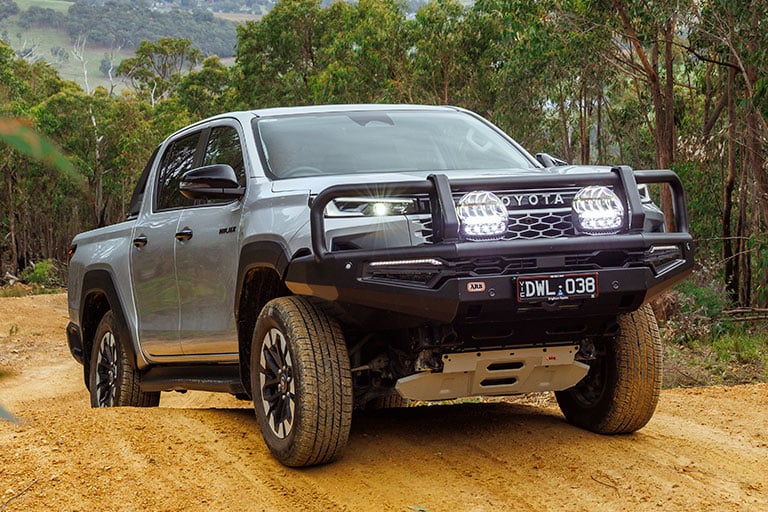
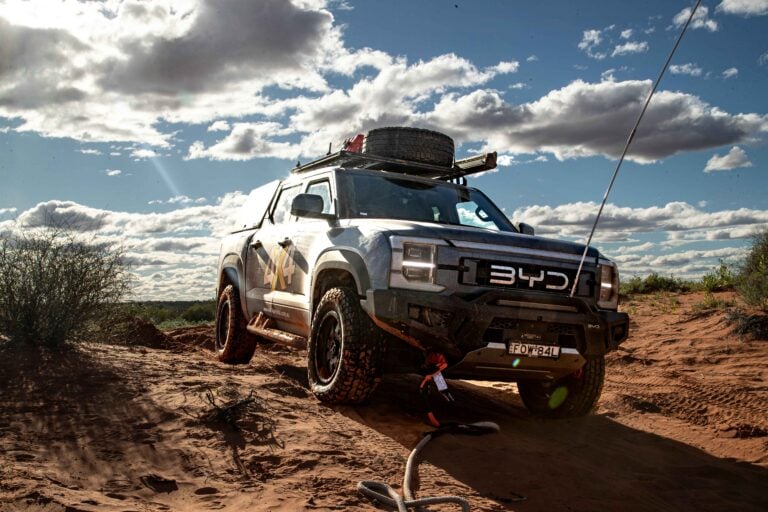
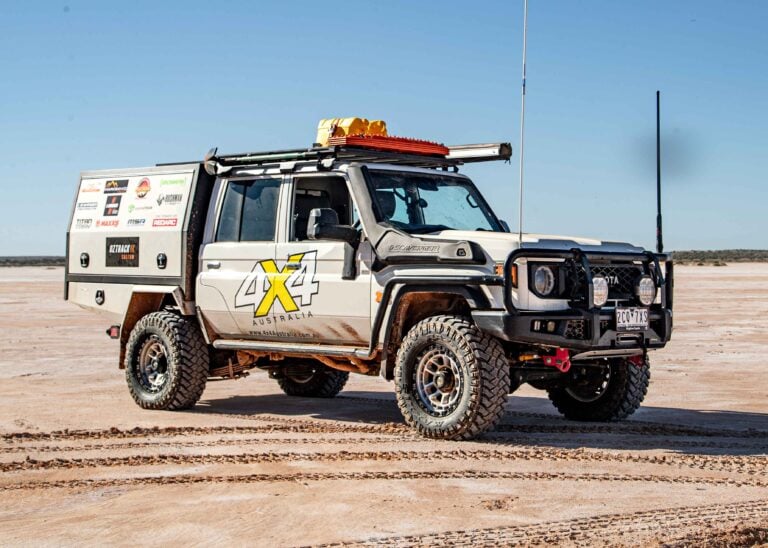
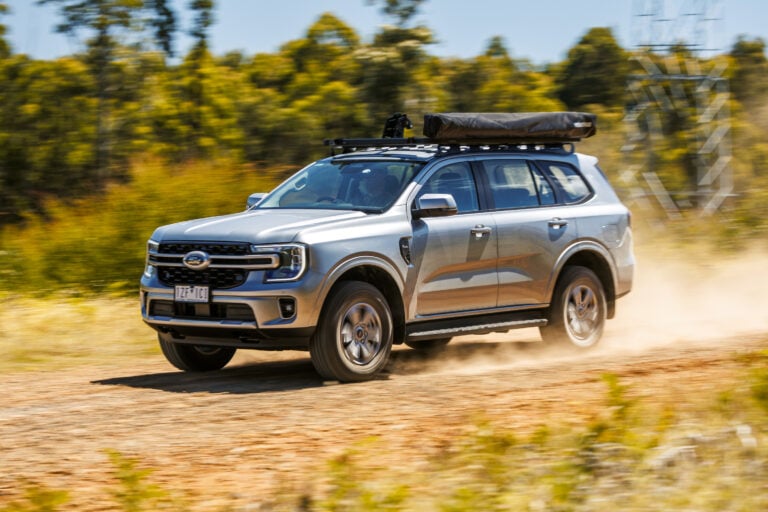
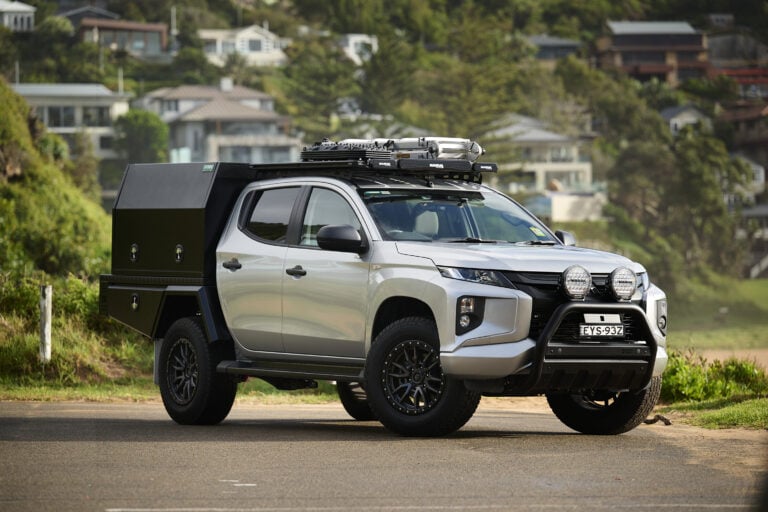
Jeep threw its hat into the white-hot Australian ute market in 2020, bringing us the four-wheel-drive Gladiator to much fanfare.
But while it’s standard practice for manufacturers to offer multiple body styles, Jeep is one of the few that offers its Gladiator solely as a dual-cab.
With Ford launching the Bronco sub-brand to compete directly against Jeep, what would happen if the latter decided to return the favour and compete with the recently-launched Ford Maverick pick-up?
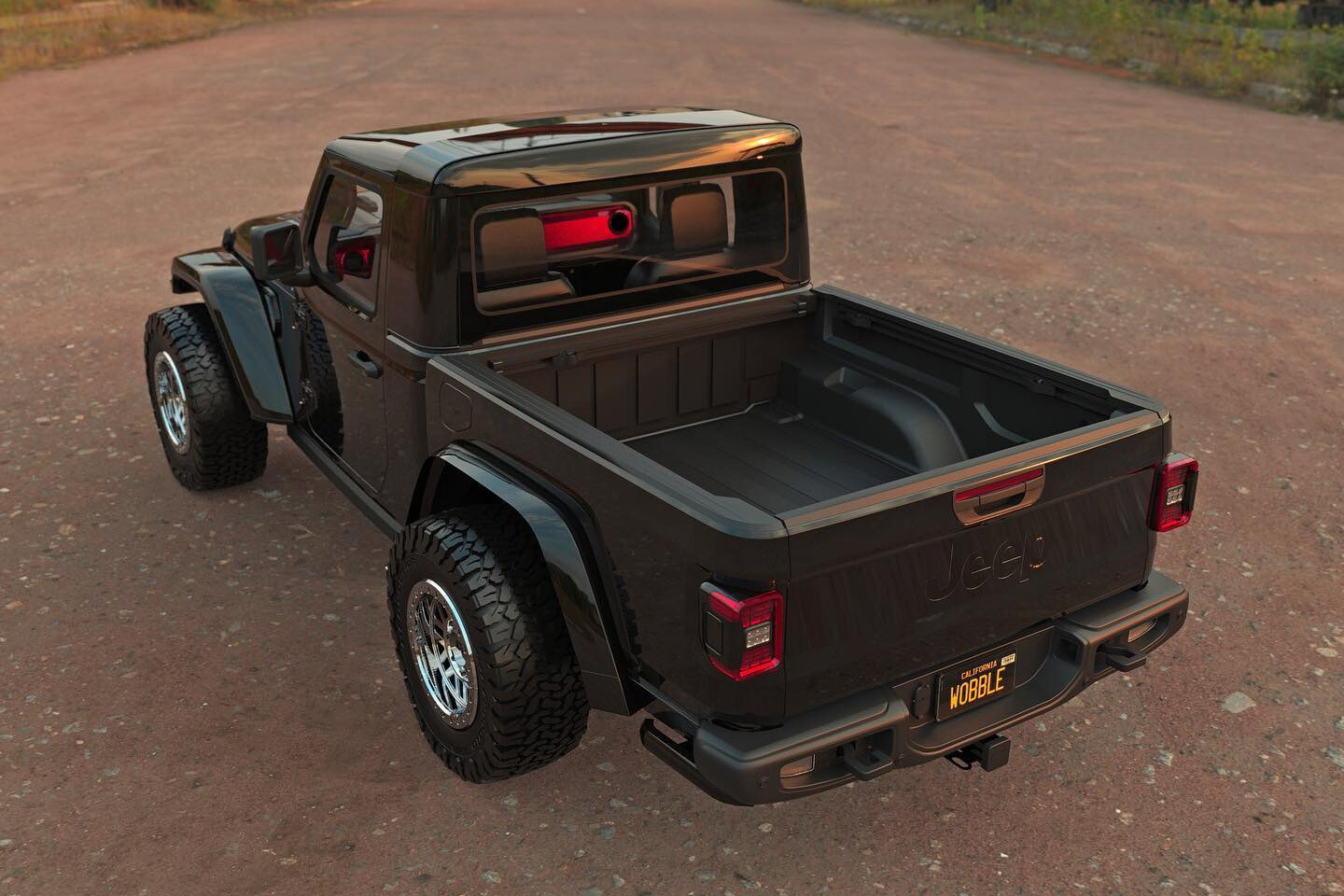
Abimelec Design has created a digital model of what a single-cab Jeep Gladiator could look like if the brand decided to expand its line-up – albeit with some modifications that wouldn’t be out of place at the SEMA motor show.
In place of the Gladiator’s petrol V6 is a V8 – but not the engine from the Jeep Wrangler Rubicon 392, instead a 7.3-litre ‘Godzilla’ big-block from Ford has been shoehorned in between the struts.
Abimelec has also given the Gladiator a slight lift and fitted the ute with some KMC alloy wheels clad in BFGoodrich rubber.
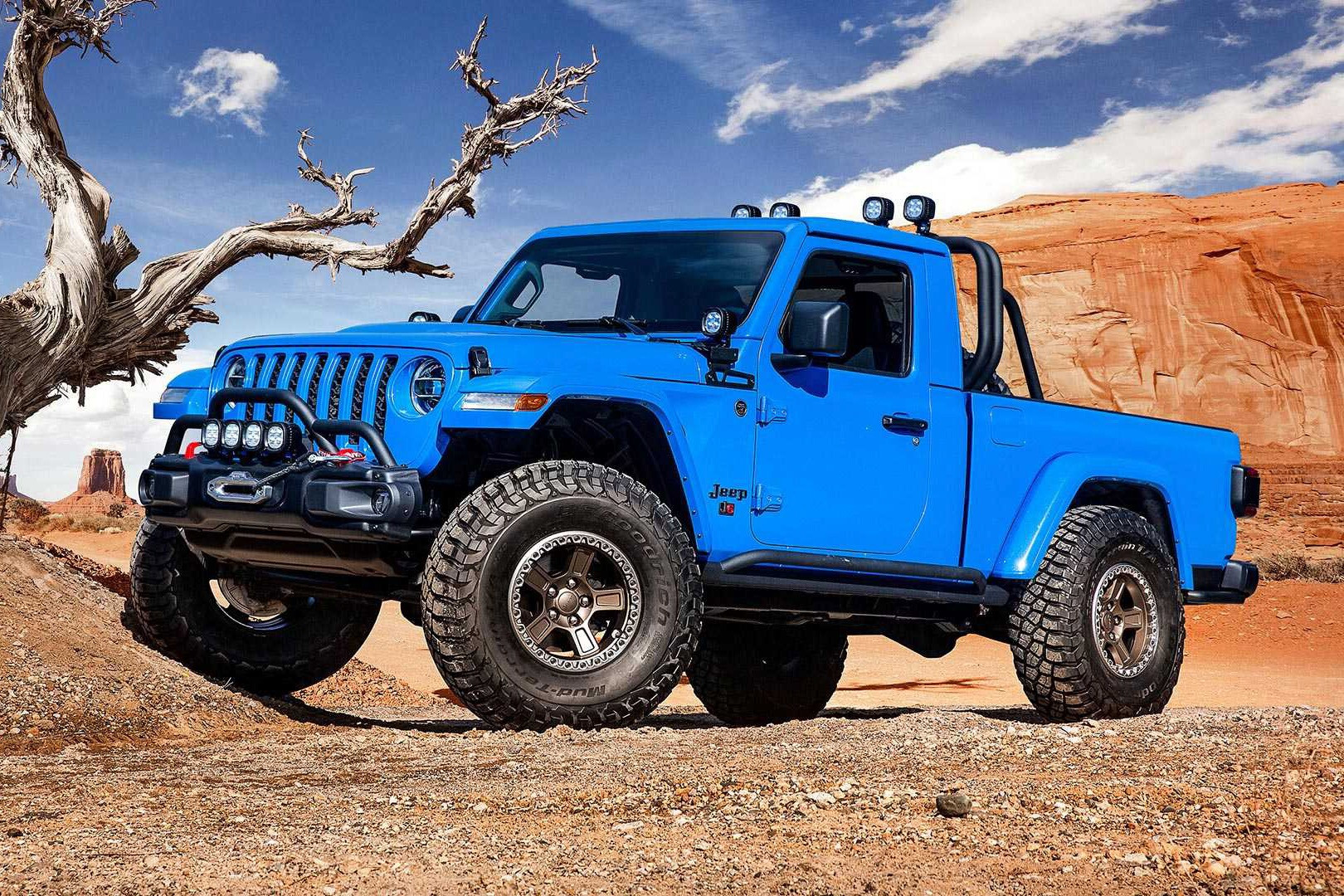
While it doesn’t look like a two-door Jeep Gladiator is on the horizon, the company did flirt with the idea back in 2019, building the Gladiator J6 concept as an homage to the Jeep Honcho of the late 1970s.
A single-cab Gladiator might not be arriving into your local dealership anytime soon, but it might inspire someone out there with an angle grinder who wants something unique.
Would you prefer a single-cab Jeep Gladiator over the dual-cab? Let us know in the comments section below.
Regular 4X4 Australia contributor Dick Eussen has lived and worked in the Top End of Australia for most of his life and knows the country better than most. His travel stories and guides are some of the best around, with first-hand experience of what visitors to Australia’s northern coastline can expect.
In a change of pace, Dick has turned his hand to a work of fiction with a 150-page paperback, Stone Country Justice.
Set in the stone country of the Territory’s Arnhem Land, it tells the tale of a young aboriginal man who goes on a killing spree through the remote region and the hunt by local policemen and a Kurdaitcha Man to track him down.

As the men trek though the country, Dick describes it with words that only someone with a true familiarity and understanding of the region and its terrain could use. Using language that takes the reader to these harsh places, conjuring vivid images of the stone country, its escarpments, plains, swamps and rainforests.
Dick describes scenes that anyone who has travelled to Arnhem Land or Kakadu would recognise and can relate to, making you want to head back there again.
“An easy and entertaining read that will be enjoyed by anyone with an appreciation of the Top End and traditional culture”
Stone Country Justice is an easy and entertaining read that will be enjoyed by anyone with an appreciation of the Top End and traditional culture.
It is available through selected bookstores or online at ozbookstore.com RRP: $16.90
Snapshot
- First held in 2009, Overland Expo is now one of the worldu2019s biggest adventure shows
- 400 exhibitors, and some 200 workshops, seminars, and skills classes
- Overland Film Festival
As we pulled in to the forested camp area for this year’s Overland Expo (OX), looking around prompted a moment of pause and reflection.
Back in 2009, I received a press release about an event in Arizona focused on expedition travel. Having just returned to the USA from a two-month trek across Southern Africa, this type of thing piqued my interest. Though turnout was quite small, maybe 400 people and a few dozen vendors, I loved the concept and knew it had potential.
Organisers Roseanne and Jonathan Hanson were passionate about backcountry travel, wanted to share their decades of experience with others, and were dedicated to see their dream come to fruition. Little did they know they were balanced on the tip of an arrow; the bow had been drawn, and their vision was about to take flight.
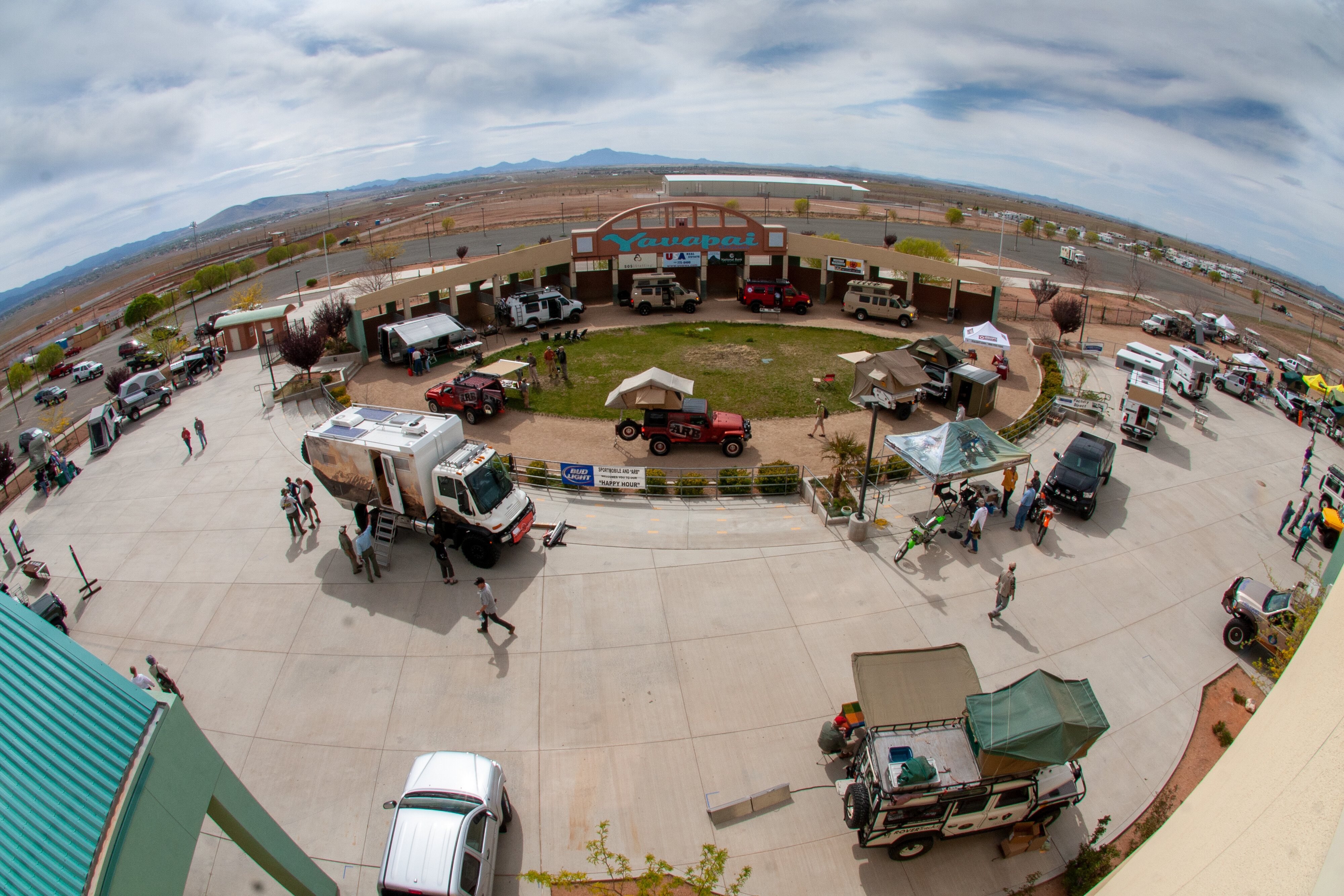
Attendance swelled over the years and the vendor show slowly expanded from a few sparsely placed E-Z UPs to row upon row of rooftop tents, camp-ware purveyors, and caravan manufacturers. We were impressed when it drew 10,000 participants, but this year nearly 30,000 people and 400 manufacturers filled its 2.4km² home near Flagstaff. With stats like this, it seems that OX has eclipsed Germany’s famous Abenteuer & Allrad as the planet’s largest overland-specific venue.
While the vendor show is impressive, what makes OX special are the nearly 200 workshops, seminars, and skills classes. Subjects included everything from digital navigation and knot tying, to safe winching techniques and third-world border crossings. The kids get in on the action as well, learning how to identify wildlife, camping skills, and how to safely rig a climbing harness.
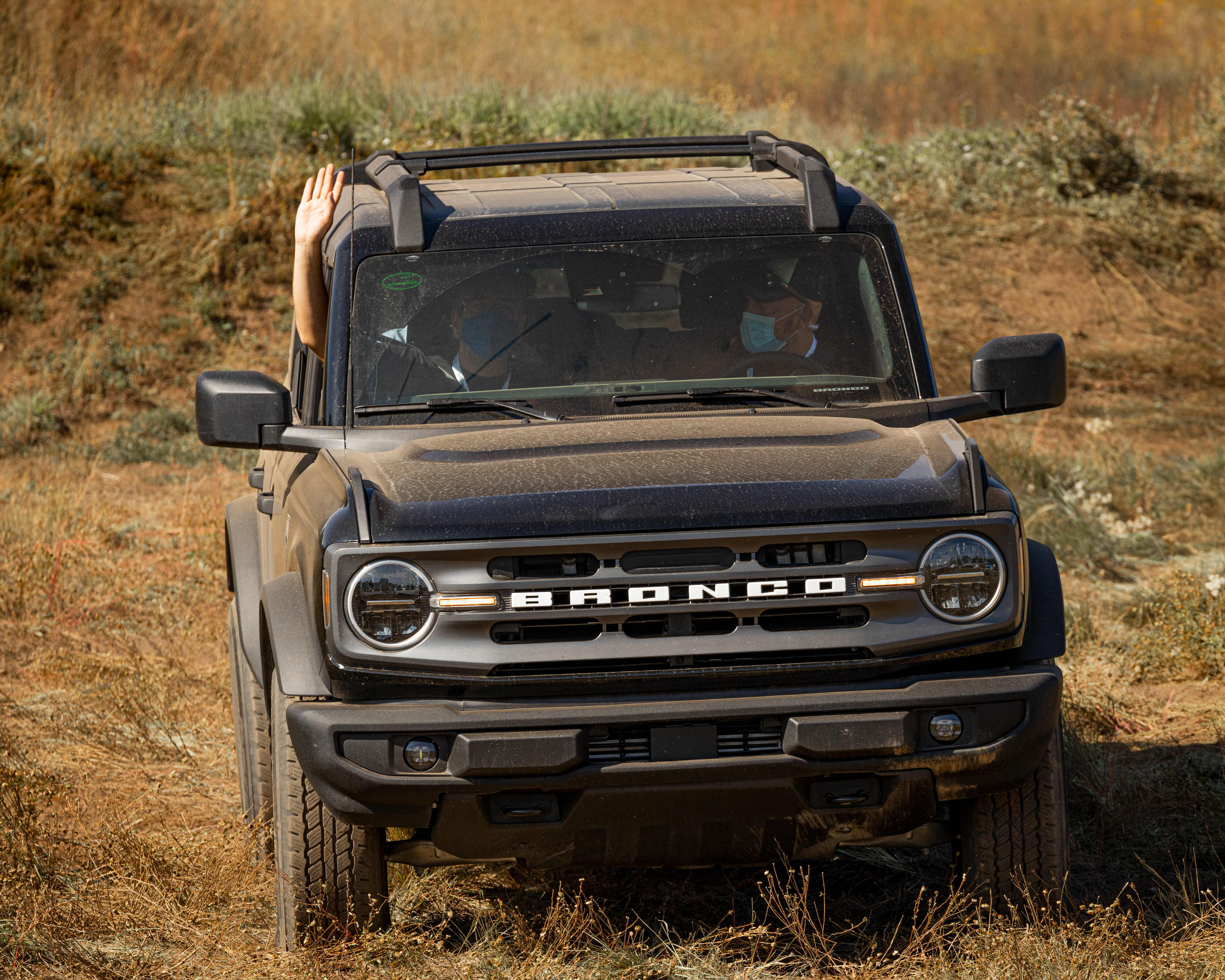
While the backcountry presents culinary challenges, few go hungry at Overland Expo. Dozens of vendors not only presented their newest mess kits and accessories, but also cooked up sizzling brats (bratwurst sausages), grilled shrimp (prawns), and veggies for famished attendees. There were also several off-road tracks, where participants received technical driving instruction from the 7p Overland Team (ex-Camel Trophy competitors) and took a spin in the new Ford Bronco.
BUSH MECHANICS
WE made our way out to the training arena, where participants were learning how to perform emergency field welds with 12V batteries, repair punctured tires, and recover a vehicle from a potential rollover. For those that wanted a more laidback experience, the Overland Film Festival is not to be missed.
We dedicated a few hours each night to chilling out with a cuppa joe and watching presentations on everything from traversing Australia’s Simpson Desert to the joys of driving the Silk Road with the family stuffed in the back of a Land Rover.
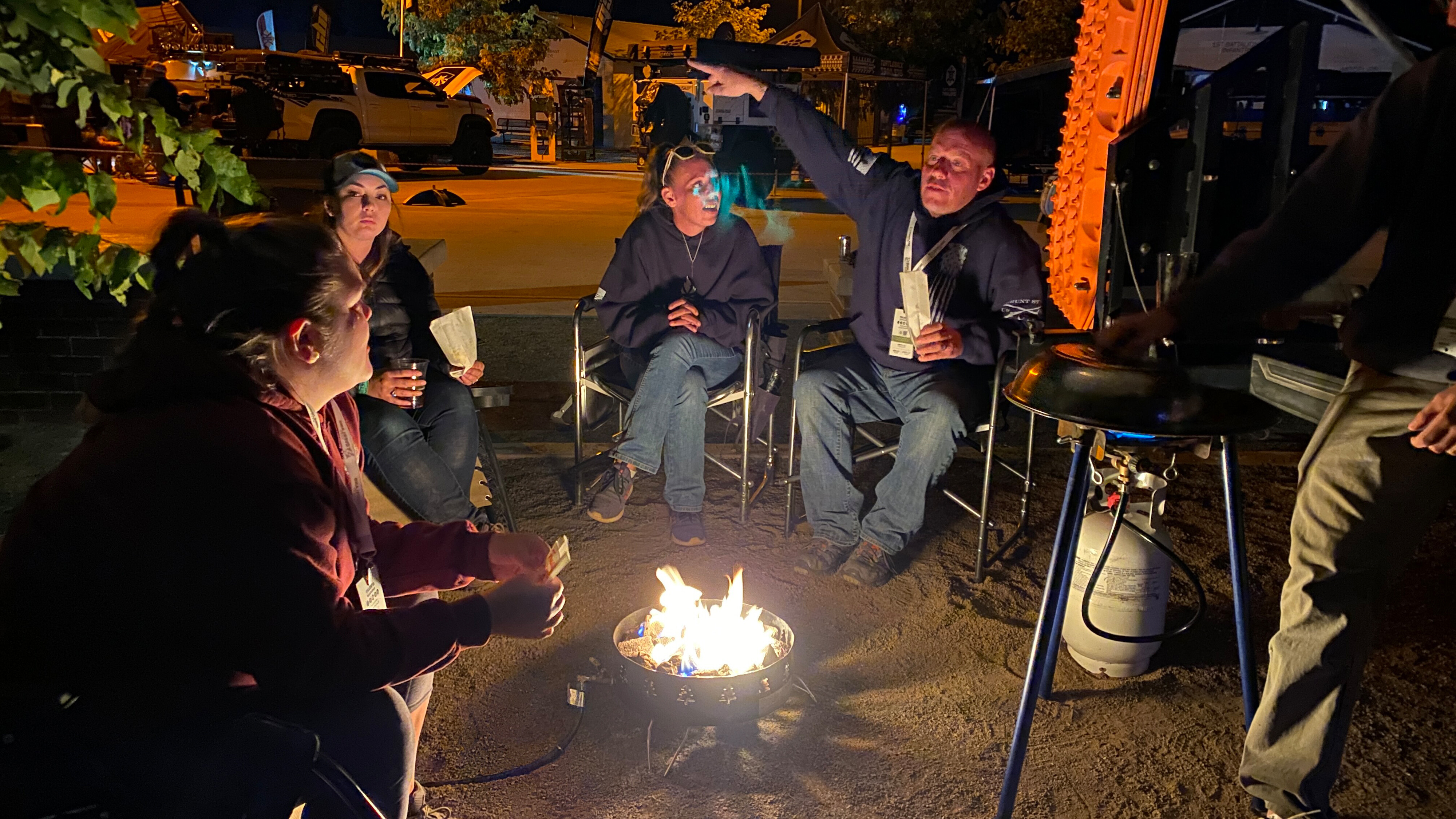
Overland Expo’s motto has always been ‘Get outfitted, get trained, get inspired ─ get going’, and the Hansons have done a helluva job. After a decade of motivating others to turn off the television and hit the road, they have handed the reins over to Lodestone Events.
While Lodestone has lifted the venue to the next level, late Saturday night we old timers gathered around a keg of craft beer at Equipt Expedition Outfitter’s afterparty (part of the OG crew), and reminisced about the intimate nature of Expo in the good ol’ days.
As for Jonathan and Rosanne, they are planning to head back to Australia (when the welcome sign is reinstated) to explore the outback in their 78 Series Troopy.
The Toyota LC300 is one of the most highly anticipated new four-wheel drives of the year. Toyota has even gone so far as to say the LC300 is the best LandCruiser it has ever built. Considering the massive shoes to fill due to the overwhelming popularity of the 200 Series, that is a big call.
There was a lot of speculation leading up to the launch, as well as straight-up misinformation spread online in the months beforehand. Well, that ends now, as we know exactly what Australia will be receiving. Spoiler alert … it’s a ripper of a vehicle.
I was extremely fortunate to be among one of the few media outlets invited to the launch drive. Due to restrictions, sadly there was very limited time to evaluate all six variants of the LC300; so with no time to waste, we set off in an attempt to put the newest LandCruiser through its paces.
The test laid out before us would prove rather challenging, with the first leg of trip being a cruise on-road from Sydney down to the Toyota LandCruiser Club’s property, Willowglen, home of the infamous Willowglen 4×4 Challenge.
EDITOR’S NOTE: Dear readers, our scoring on this story is indicative of a first-impressions assessment of the LandCruiser 300 Series line-up as a whole. You can expect to see those numbers vary as we begin to explore each model in the range over the weeks ahead.
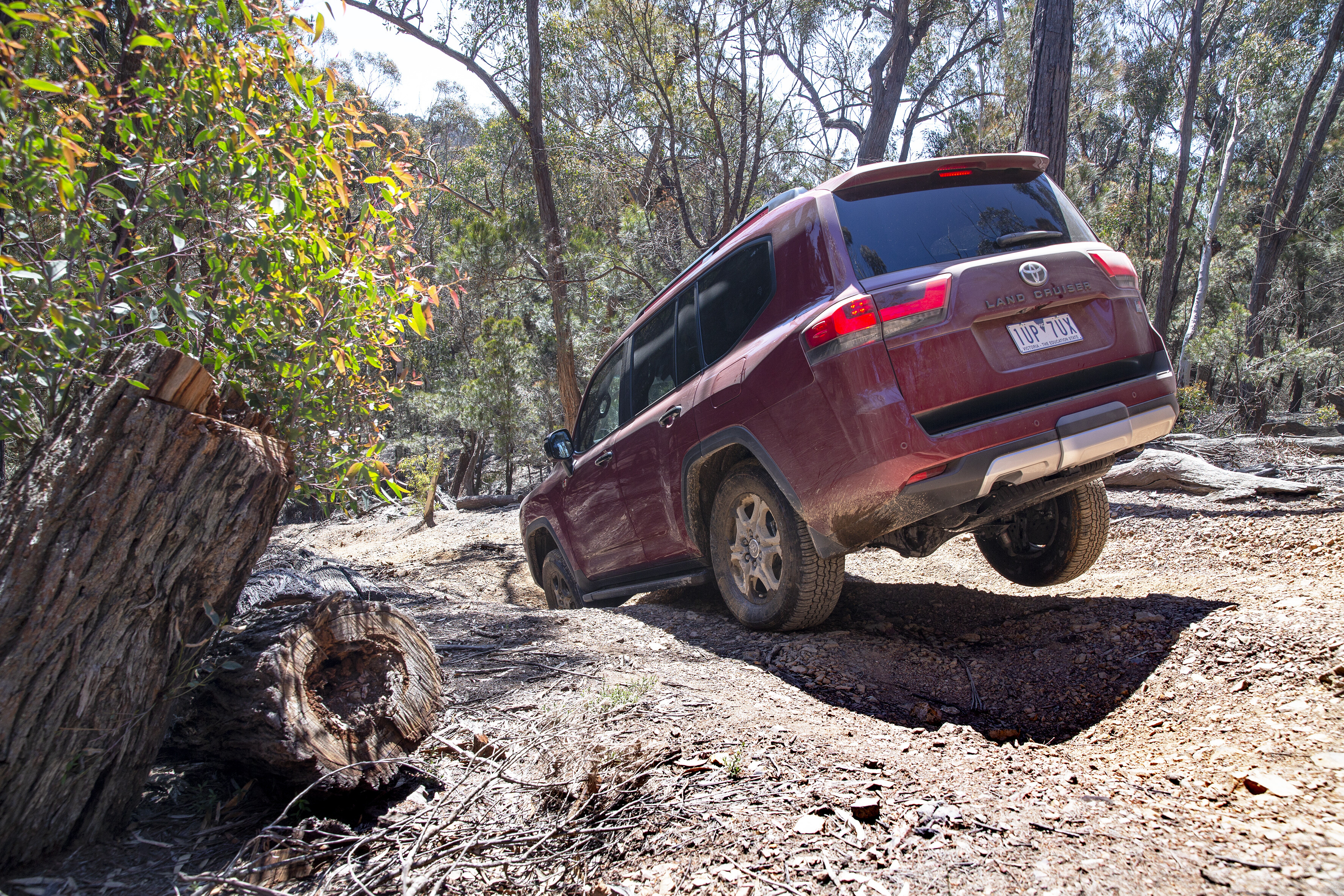
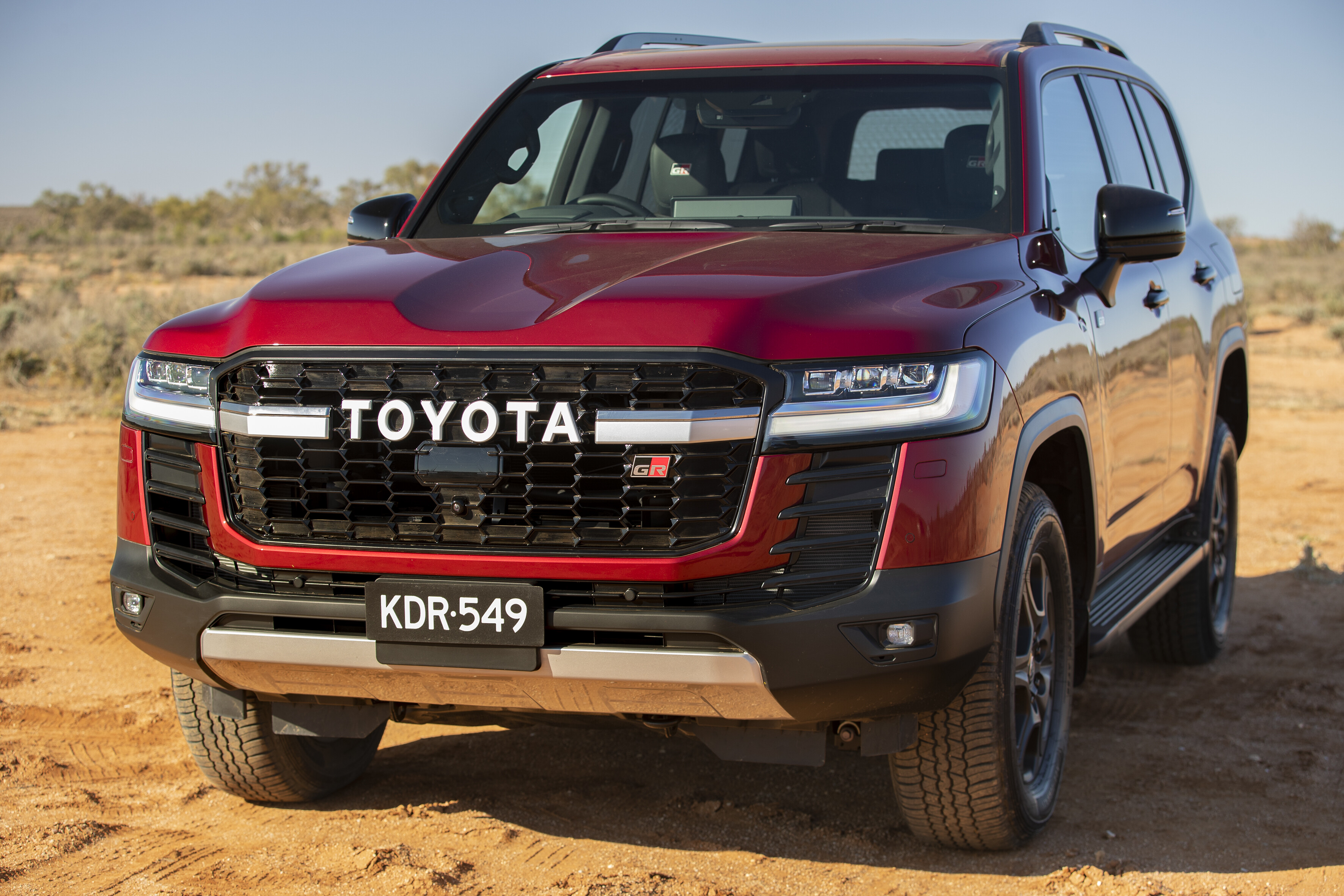
That comprised more than two hours of city, highway, and rural-road driving, each way. I started in the GR Sport, because it would be rude not to. It’s a striking vehicle, with a wide stance and lovely red paint ─ I couldn’t put my hand up quicker when asked who would like to drive it first.
While I didn’t have the opportunity to drive each LC300 variant due to time constraints, I scored seat time in the GX, GXL, VX, Sahara and GR Sport, which provided a solid insight to the new LandCruiser. We look forward to putting the microscope over the entire line-up in coming months.
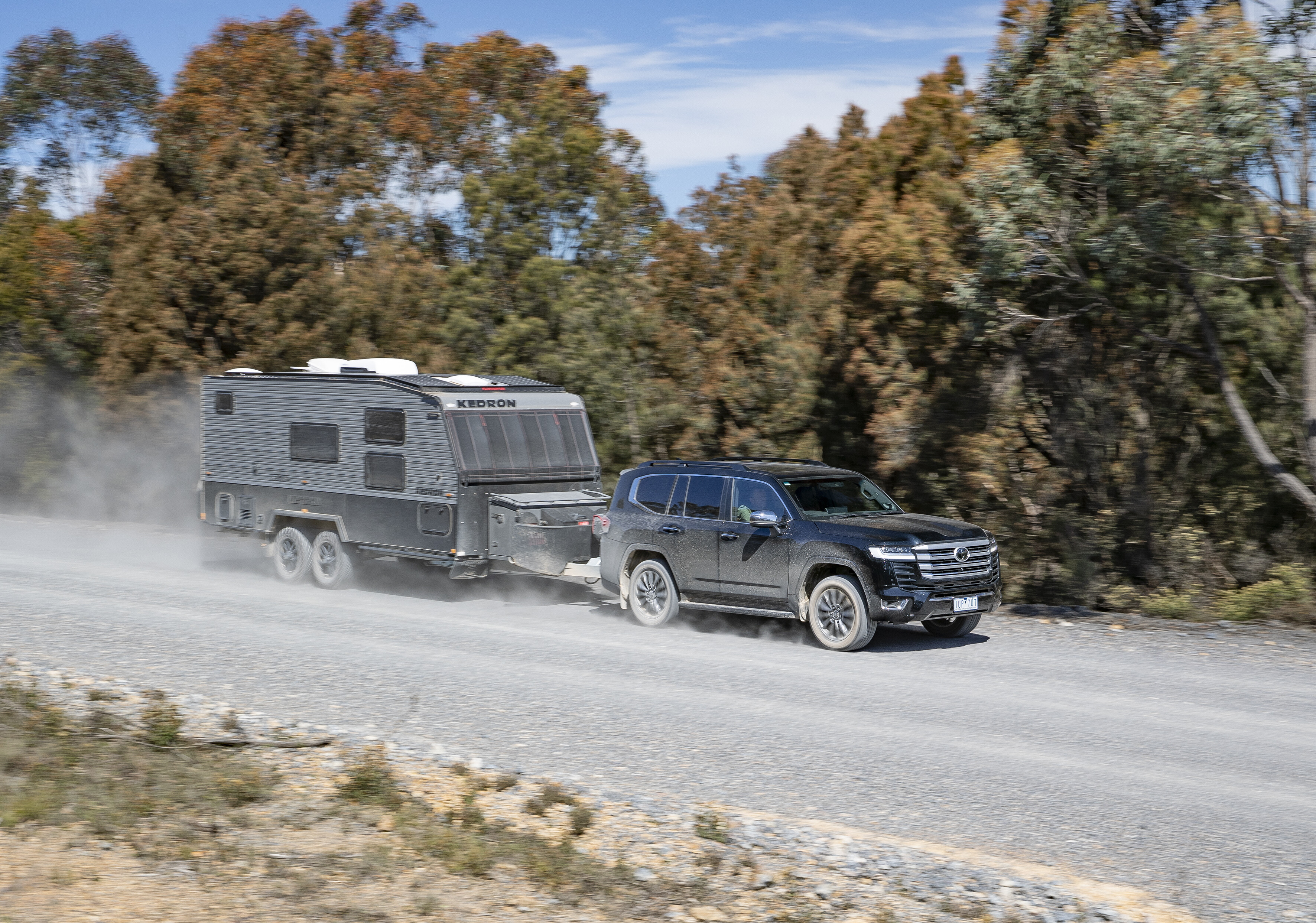
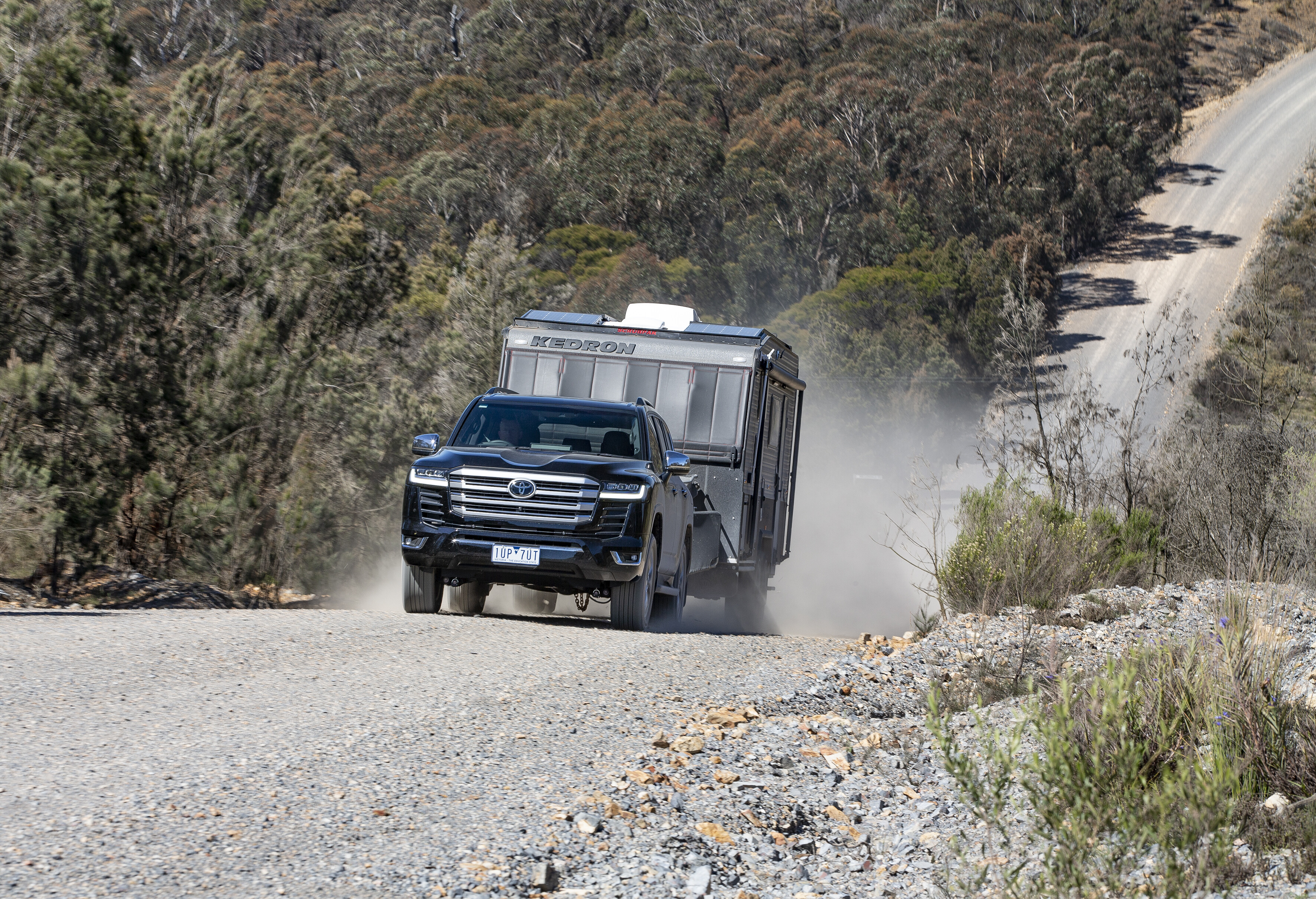
There were two different off-road loops on the day comprising of rocks, mud, ruts and water crossings – with the number of test vehicles with damaged side-steps highlighting how challenging the terrain was. There was also a towing component, where we hitched up a Kedron caravan weighing close to 3000kg and used the 300 Series to lug said ’van up hills, on rural and dirt roads.
POWERTRAIN & PERFORMANCE
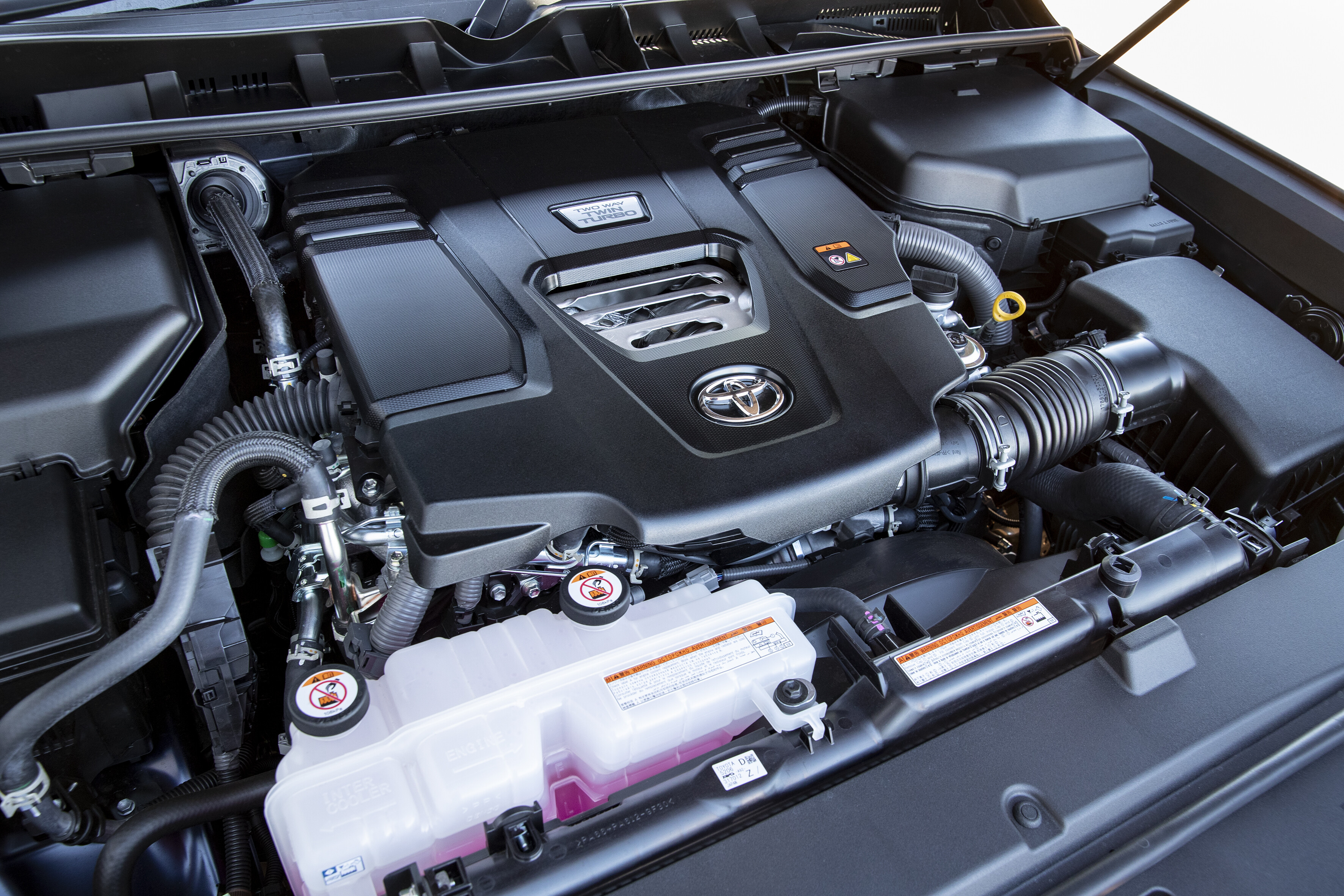
Many people will miss the twin-turbo V8 found in the 200 Series. It’s hard to beat the sound and low-down grunt of a V8, especially one with two turbochargers fitted to it. Fear not, the 3.3-litre twin-turbo V6 diesel motor now used exclusively across the LC300 Series range is a winner.
Praise must also be given to the 10-speed gearbox; it’s a solid operator that gets the most out of that V6. The auto doesn’t seem to hunt for gears in operation, and it offers a useable spread of ratios for both on- and-off-road conditions.
When towing that rather large Kedron caravan, you could certainly tell the ’van was there, but I was suitably impressed with how well the Cruiser coped with that load. It felt surefooted, at no stage sketchy, and with decent acceleration and braking performance.
ON-ROAD RIDE & HANDLING
‘Firm, yet compliant’ was my tester’s note from the day, and this applied to all variants driven. The steering was nicely weighted, even in the lower-spec models with traditional hydraulic steering. Higher-end models receive a hybrid steering system, made up of both electronic and hydraulic components.
Braking performance was solid, with a progressive feel to the pedal. This was especially appreciated with the 3000kg caravan on the back. There was no wind noise to speak of, making the LC300 an easy vehicle to drive over long distances. The new twin-turbo V6 engine makes easy work of steep hills, sipping a meagre amount of diesel in the process.
At 100km/h, the LC300 sits at just 1400rpm, barely raising a sweat. The sound it produces is throaty and meaningful, and performance is stellar, especially in the mid-range when pushed. An impressive fuel consumption figure of around 9.4L/100km isn’t bad for a full-size off-road wagon driven enthusiastically by eager journos.
OFF-ROAD
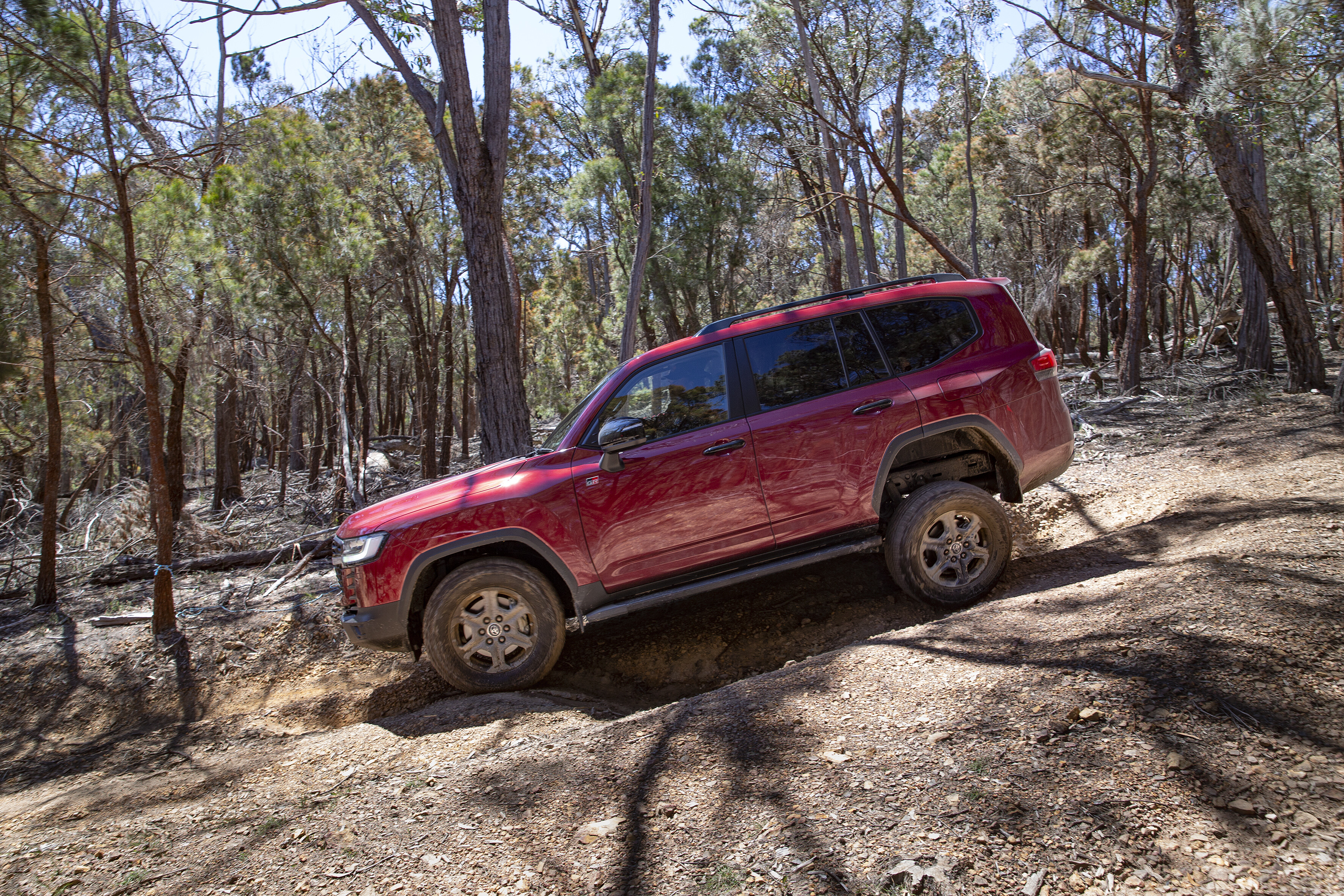
Clearance is the LC300’s biggest off-road limitation, but it’s something you could easily address with a suspension lift and larger tyres. Most vehicles on the press fleet had side-step damage, so some stronger rock sliders would be a good call for those wanting to play on rocks.
I was very impressed with the CRAWL function and traction-control performance of the LC300. While engine braking alone offers enough to control the vehicle off-road, engaging CRAWL mode and twisting the rotary dial to select input level sees the 300 Series walking down challenging obstacles at a snail’s pace.
If you want to go a bit faster, simply turn the dial clockwise until you feel comfortable. This is great technology for both those new to off-roading and experienced operators looking to push themselves and the vehicle.
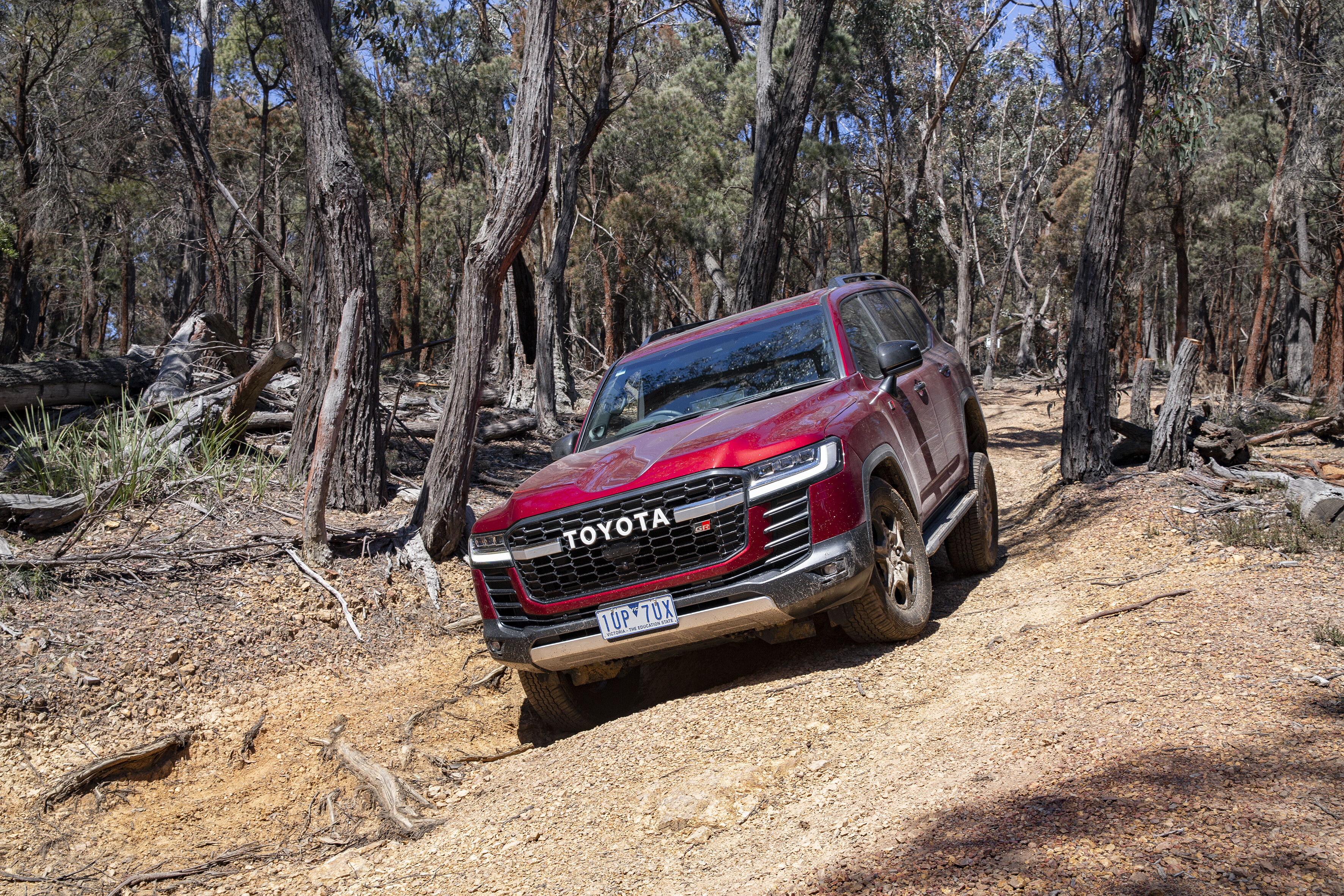
MTS (Multi Terrain Select) is a great inclusion available on GXL models and above, with the ability to select various terrain modes and dial in the traction control to suit the terrain ─ from rocks to sand. We found on this test that Loop Auto or Rock mode were the go-to settings, but we’re looking forward to playing with this more in the future.
Wheel travel, especially from the rear solid axle, was impressive. This was even better on models with automatically disconnecting front and rear sway bars such as the GR Sport. The GR Sport also features front and rear differential locks, and a centre diff lock. These engage quickly and easily, as does low range 4WD selection. Not that you’re going to need the lockers all that often, thanks to the advanced traction control calibration. Full points there.
The base-model GX is particularly enjoyable to drive, with vinyl flooring and a factory-fitted raised air intake ─ the induction noise through the air intake is music to the ears. It kept up with the rest of the range off-road, and there’s a significant saving to be had with the GX if you can deal with less technology and luxury – enough money to deck out the vehicle with off-road accessories and purchase a few full tanks of diesel. In saying that, it’s unlikely to be a big volume mover, with most people opting for the GXL or VX model and above.
CABIN & ACCOMMODATION
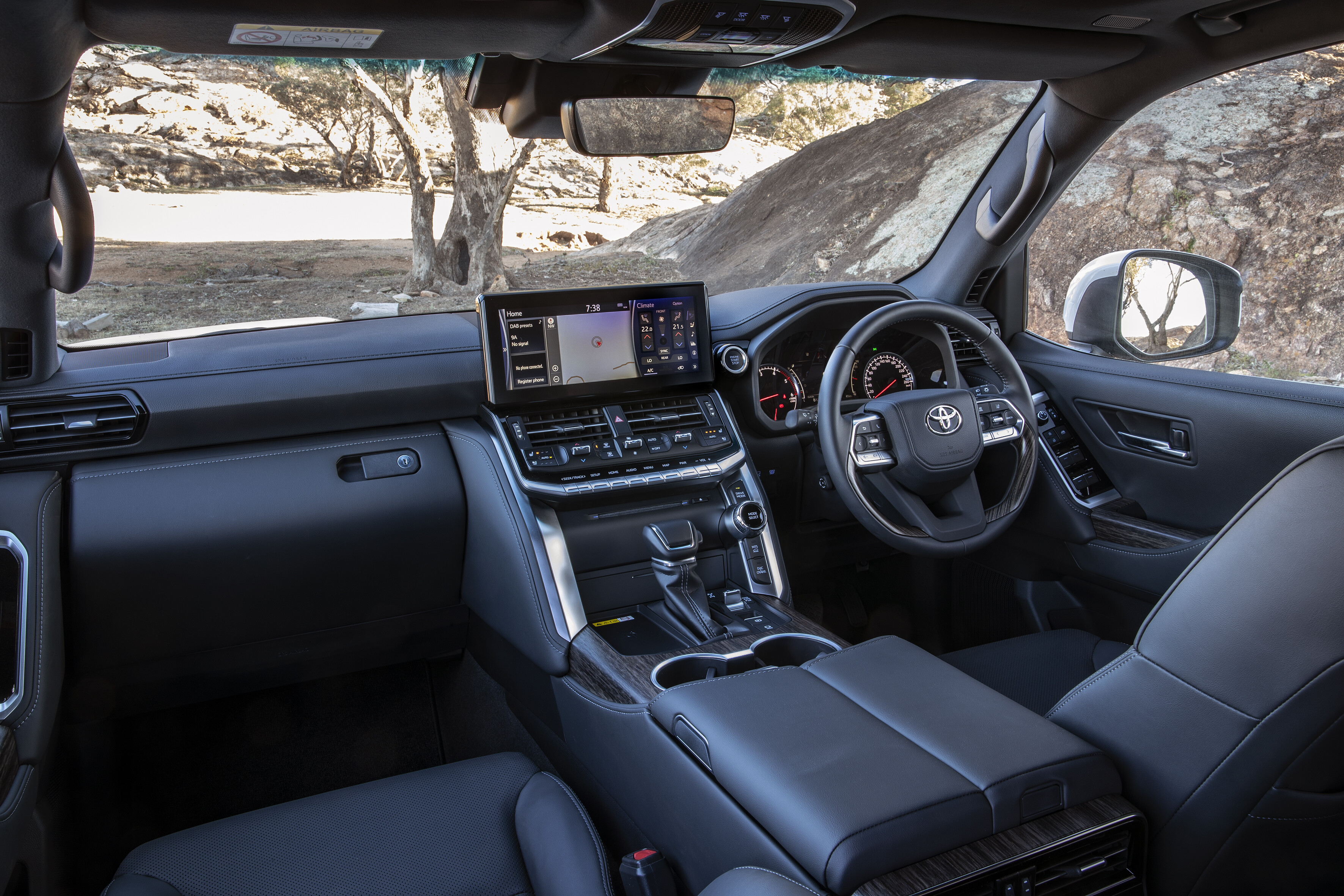
With six different variants, there are way too many interior specs to discuss in detail. There is really something for everyone, though. From the stripped-back GX with cloth seats and vinyl flooring perfect for hard off-road work, to the cream interior of the Sahara (which I wasn’t a fan of), right up to the ultra-modern and sleek GR Sport (my pick of the bunch, interior-wise).
Comfort levels are excellent across the board, so it’s up to you to decide what you feel is best for your needs, style and budget. It’s a good thing that there are so many options – variety is the spice of life, as they say.
PRACTICALITIES
Every LC300 is powered by a 3.3-litre twin-turbo V6 diesel motor, producing more power and torque than the 4.5-litre V8 found in the 200 Series. Output figures are 227kW at 4000rpm and 700Nm between 1600 to 2600rpm, compared to 200kW and 650Nm. The V6 is backed by a 10-speed auto, with no manual transmission available.
The LC300 wheelbase has been unchanged over the 200 Series, but the 300 Series is wider. It’s also lighter, thanks to the use of aluminium in the roof, doors, bonnet and tailgate panels.
Below is a breakdown of each 300 Series available, and what makes them unique in the range.
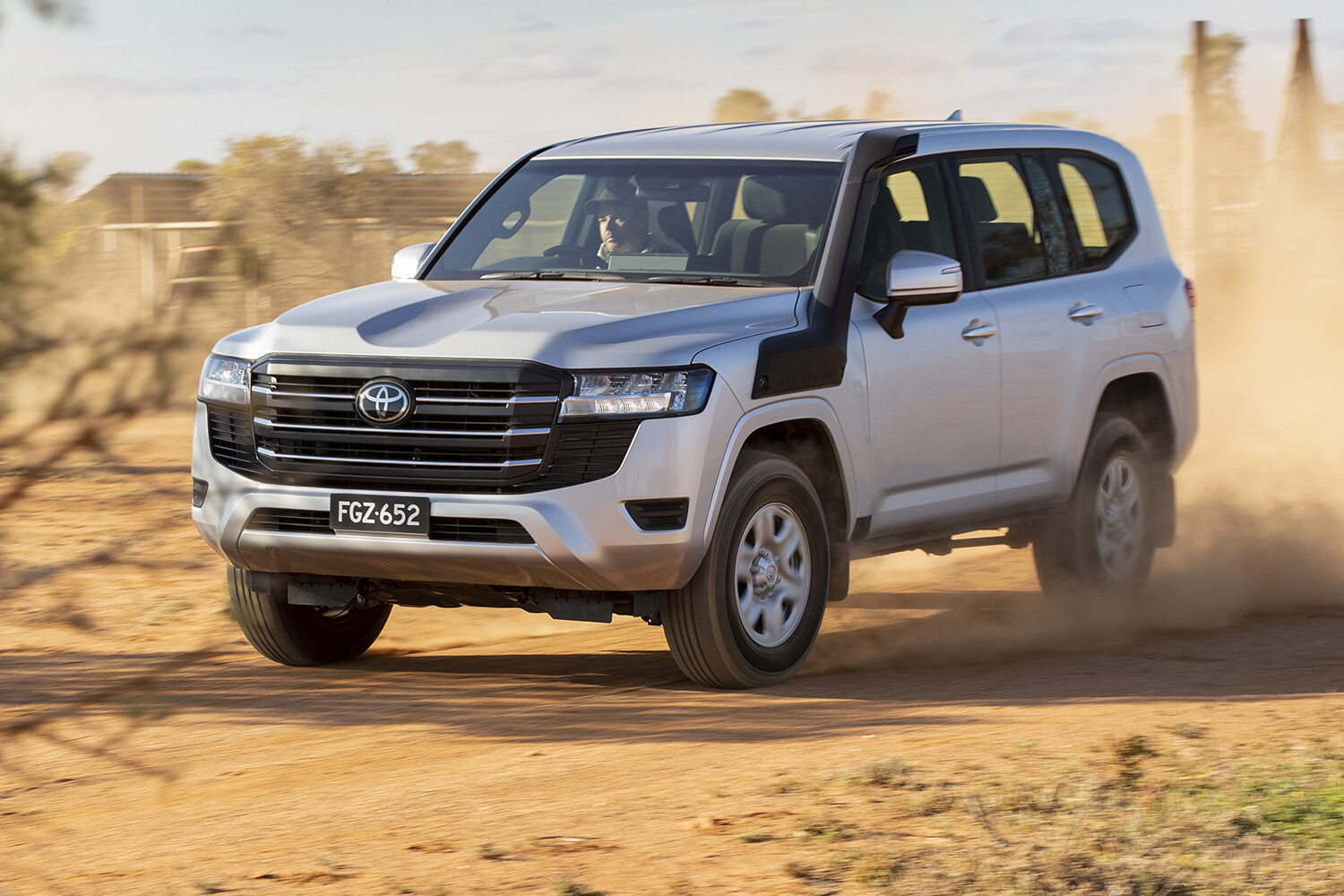
GX
The GX is the base LandCruiser 300 model, offering a stripped-out interior and exterior. It boasts two fuel tanks (80L main and 30L sub tank) with a total capacity of 110 litres. Low-range reduction has been retained across the LC300 range, with all models using a full-time 4×4 system with a lockable centre differential.
The 17-inch wheels are standard on GX spec, as are LED headlights and a raised air intake. Fabric seats, vinyl flooring and rubber floor mats feature inside the GX. There are only five seats in GX spec, with a 60/40 split. Dual-zone automatic climate control with rear-facing ducts is a nice feature, as are six cup holders located throughout the interior.A nine-inch multimedia touchscreen is standard in both GX and GXL trim. There are six speakers with a Bluetooth-compatible audio system that is also Apple CarPlay/Android Auto compatible.
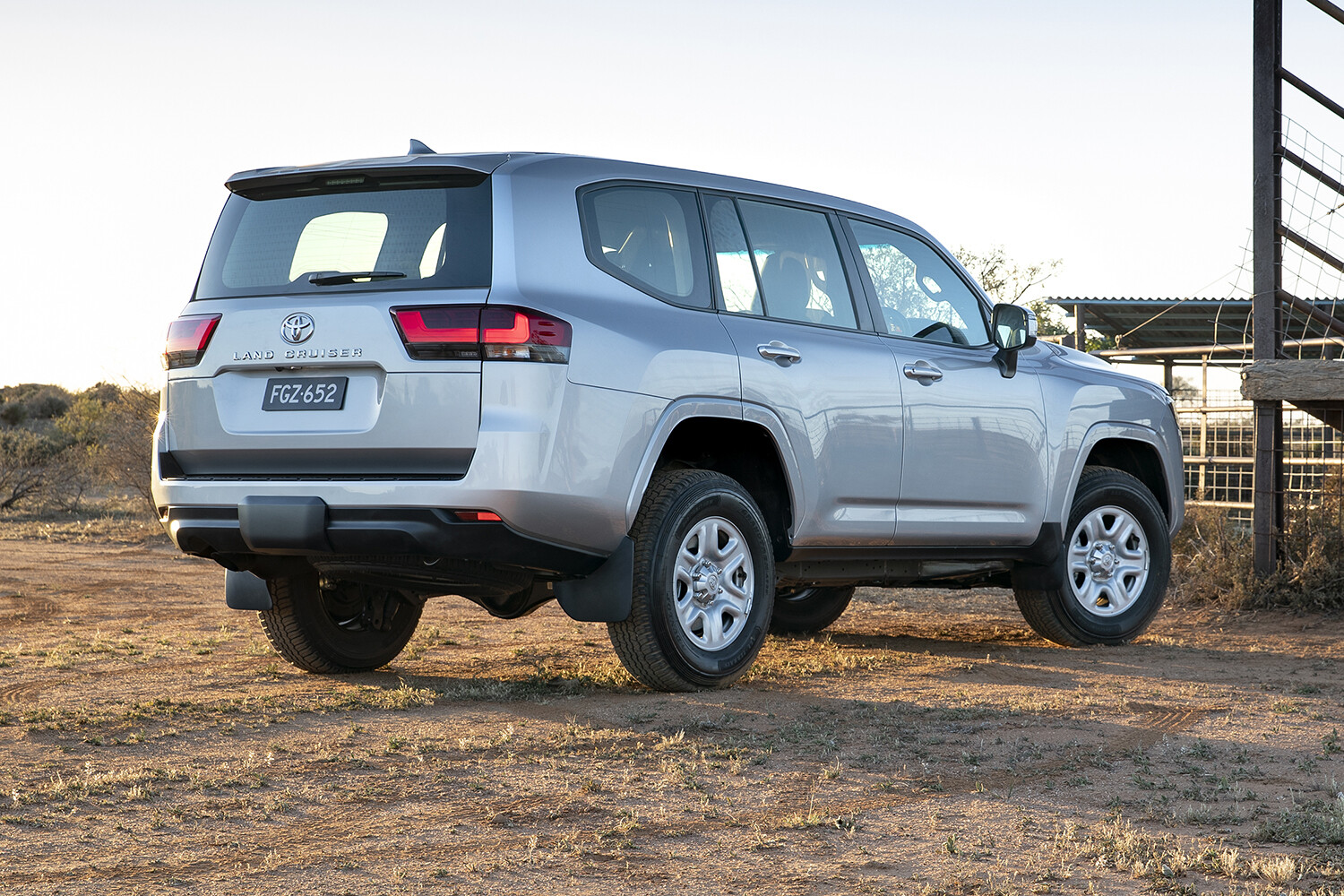
GXL
GXL spec adds 18-inch wheels and Multi-Terrain Select (MTS). There is no factory raised air intake fitted to the GXL, but you do get third-row seating, alloy side-steps and LED front fog lights.
Safety levels are up in GXL trim, with blind-spot monitoring, rear cross-traffic alert, third-row curtain airbags and third-row occupant detection. You also receive front and rear parking sensors, and back-guide monitoring.
VX
VX spec and above receive on-board sat-nav (with CD/DVD player), 10-speaker sound system and 12.3-inch multimedia touchscreen. For the first time ever, active cruise control featuring lane trace assist with steering wheel vibration is available on VX grades and above. There are also four cameras used in the multi-terrain monitor (MTM) that incorporates panoramic view.
18-inch wheels, Bi-LED headlights with auto-levelling, and headlamp washers are standard. Puddle lamps, chrome window mouldings and a premium grille set the VX apart.
Inside the VX you’ll find a synthetic material used on seating, with woodgrain-style trim. Four-zone automatic climate control is standard on VX spec, as is eight-way power adjustment for both the driver and passenger seat. There are eight cup holders, as well as a tilt-and-slide moon roof.
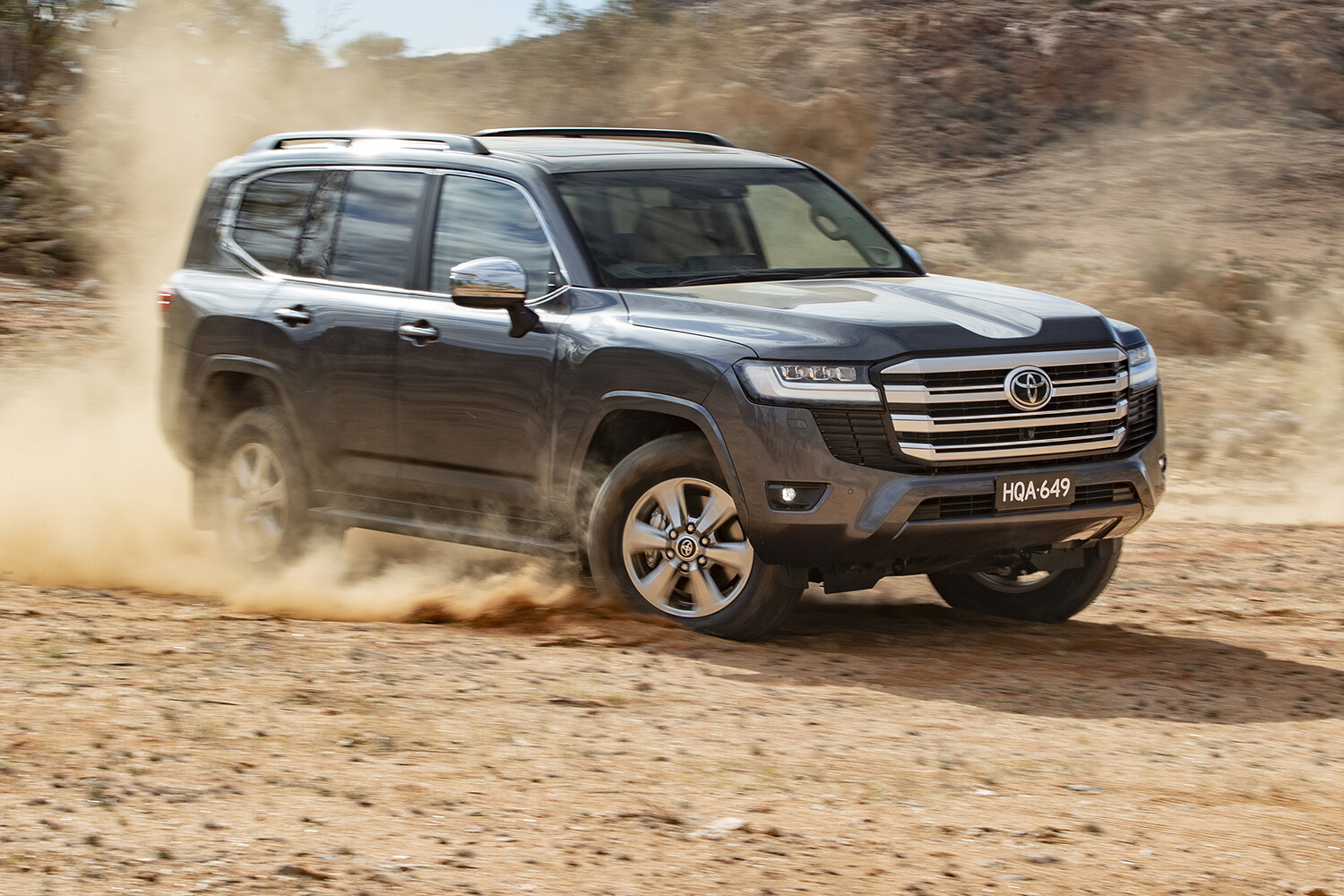
SAHARA
The Sahara boasts a thumping 14-speaker JBL audio system, heated steering wheel and power-folding third-row seats. Seats feature leather accents, and the driver’s seat has three memory settings for ease of use if multiple drivers use the vehicle. A head-up display is also a stock inclusion in Sahara spec. Heated and ventilated second-row seats, steering wheel and a cooled centre console are nice touches, as is the powered rear hatch.
Externally, the only main difference is chrome-accented exterior door mirrors and door handles, as well as sequential turn signals.
SAHARA ZX
Standard on 20-inch wheels, with a chrome grille, new tail-lights and a redesigned tailgate, the Sahara ZX stands out. A neat touch is the choice of three interior trim colours: black, beige, or red and black. Carbon-style material has been used on the steering wheel, centre console and door trim, to provide a sporty look.
A Torsen rear limited slip differential is found solely in Sahara ZX spec, which enhances traction on- and off-road. There is also Adaptive Variable Suspension and five drive-mode selections to use when driving through various terrains.
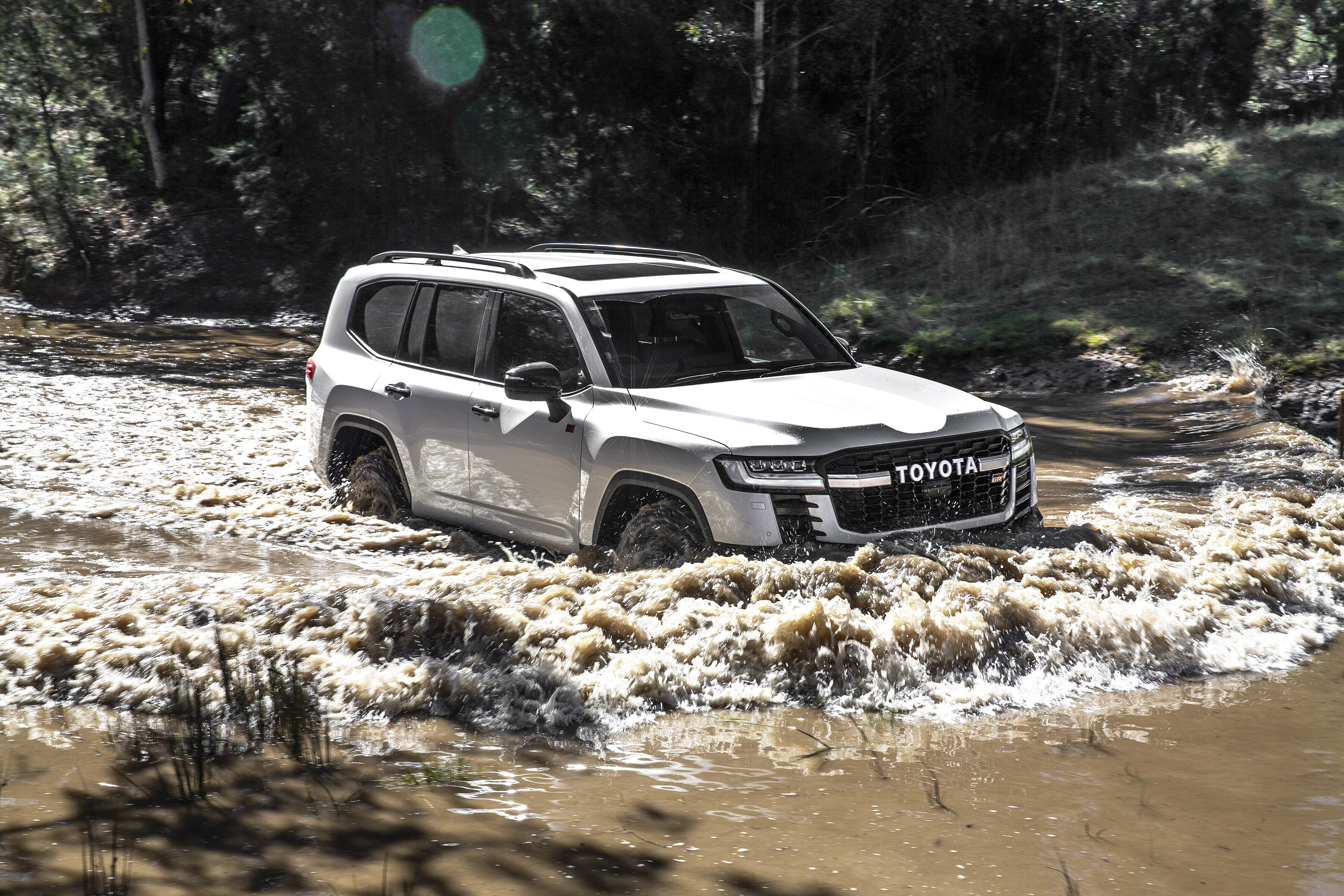
GR SPORT
Toyota has equipped the GR Sport with front and rear differential locks, disconnecting front and rear stabiliser bars, and its own Adaptive Variable Suspension system ─ this is a seriously capable vehicle. It is also the only model in the range to get locking differentials (all have a locking centre diff, though). Toyota has chosen 18-inch wheels for the GR Sport, riding on taller 265×65 R18 tyres which equate to 31.1 inches in diameter.
The exterior boasts aggressive design cues and a wider wheel track. Unique exterior features to the GR Sport include a black gloss mesh grille with a matte white Toyota logo. Front and rear bumpers are also unique to the GR Sport, as are the mudflaps and wheel-arch mouldings. The GR Sport is only available as a five-seater, with two-row curtain airbags.
SUMMARY
The LC300 is an expensive vehicle, and it has been widely reported that getting your hands on one will take some time and patience – but it’ll be worth the wait. In the simplest of terms the LC300 is a four-wheel drive that does pretty much everything well: it’s capable off-road, a confident tow rig, has room for the entire family, and is a joy to pilot on-road. This is what you’d expect from a full-size wagon with a full-size price tag.
With so many models available in the range, there are options to suit most four-wheel drivers; from the stripped-out GX with vinyl flooring and cloth seats, to the sporty and stylish GR Sport with its enhanced off-road ability.
We’re looking forward to much more seat time in the LC300 platform, to see how it performs across the desert and on longer trips. First impressions, though: the LC300 is a worthy successor to the ever-popular 200 Series.
2022 TOYOTA LC300 PRICES
| GX | $89,990u00a0 |
|---|---|
| GXL | $101,790u00a0 |
| VX | $113,990u00a0 |
| Sahara | $131,190u00a0 |
| GR Sport | $137,790u00a0 |
| Sahara ZX | $138,790u00a0 |
TOYOTA LC300 GR SPORT SPECS
| ENGINE | Twin-turbo V6 diesel |
|---|---|
| CAPACITY | 3346cc |
| MAX POWER | 227kW at 4000rpm |
| MAX TORQUE | 700Nm between 1600 to 2600rpm |
| GEARBOX | 10-speed automatic |
| 4X4 SYSTEM | Full-time 4×4 w/ locking centre, front and rear differentials |
| CONSTRUCTION | 5-door wagon body on ladder-frame chassis |
| FRONT SUSPENSION | Independent suspension w/ coil springs |
| REAR SUSPENSION | Solid axle 4-link w/ coil springs |
| TYRES | 265x65R18 (GR Sport) |
| KERB WEIGHT | 2630kg (GR Sport) |
| GVM | 3280kg |
| PAYLOAD | 650kg (GR Sport) |
| TOWING CAPACITY | 3500kg |
| SEATING CAPACITY | 5 seats (GR Sport) |
| FUEL TANK | 80L main, 30L sub tank |
| ADR FUEL CLAIM | 8.9L/100km |
| ON-TEST FUEL USE | 9.4L/100km |
| DEPARTURE ANGLE | 25u00b0 |
| RAMPOVER ANGLE | 21u00b0 |
| APPROACH ANGLE | 32u00b0 |
| WADING DEPTH | 700mm |
CTEK has launched a new portable battery charger in Australia, the CTEK CS FREE.
The all-new battery charger and maintainer features Adaptive Boost technology, which allows the charger to get a flat battery going without the need to plug into mains power.
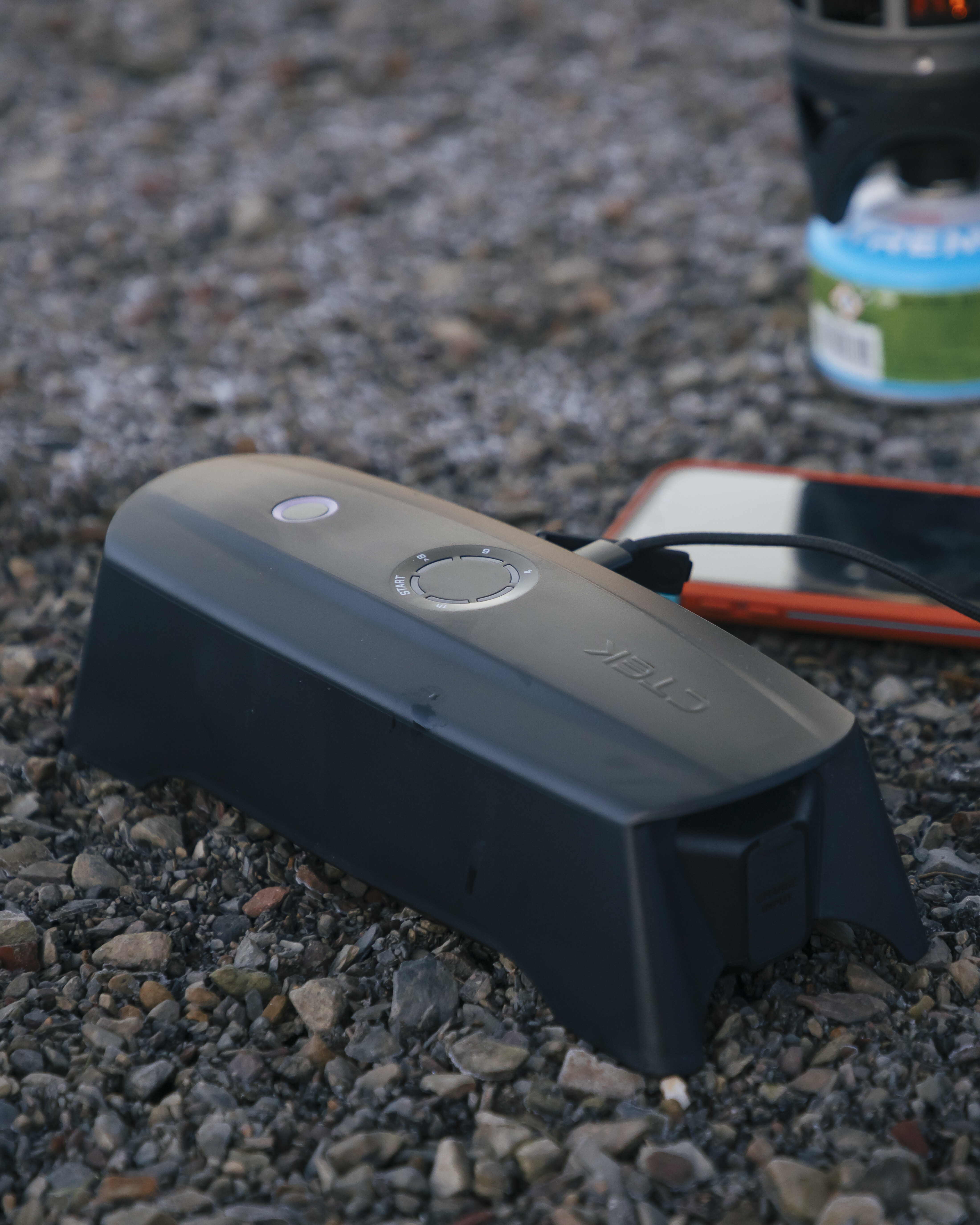
The CS FREE features an internal lithium battery that takes less than an hour to fully charge through the unit’s fast USB-C input, and it can hold its charge for up to a year.
Another benefit of the unit is that it is capable of being used as a portable power pack to charge everyday technology such as laptops, cameras, smartphones and tablets.
If mains power isn’t available, the CS FREE can then be completely recharged via the vehicle’s cigarette socket or by the solar panel charging kit.
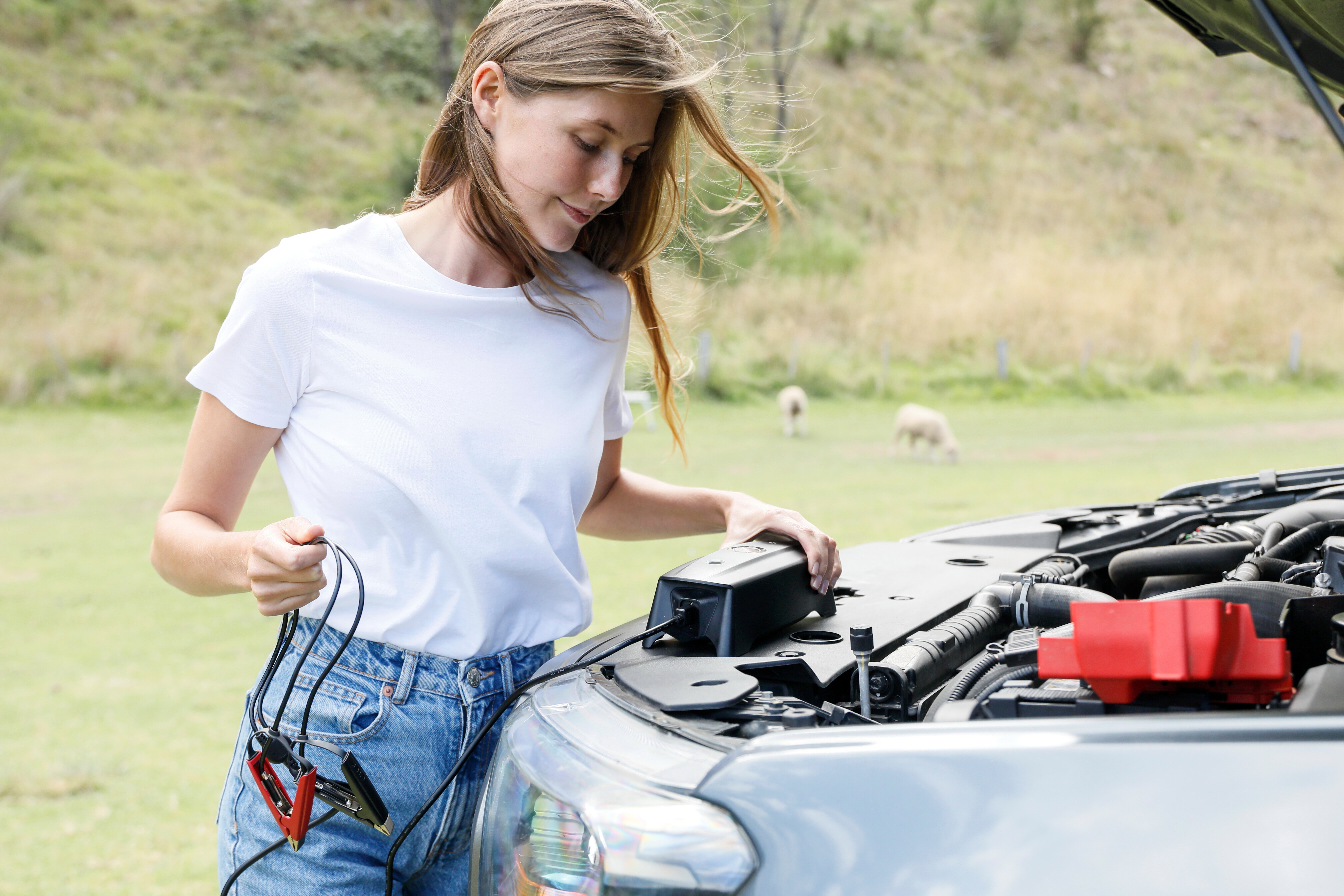
It features both USB-C and USB-A outputs and can also be plugged into mains power and used as a maintenance charger. It comes with a two-year warranty.
RRP: $499 Website: www.ctek.com/au
The 2022 Ineos Grenadier is set to arrive in Australia this time next year, but a prototype is already undergoing durability and hot-weather testing in the Outback.
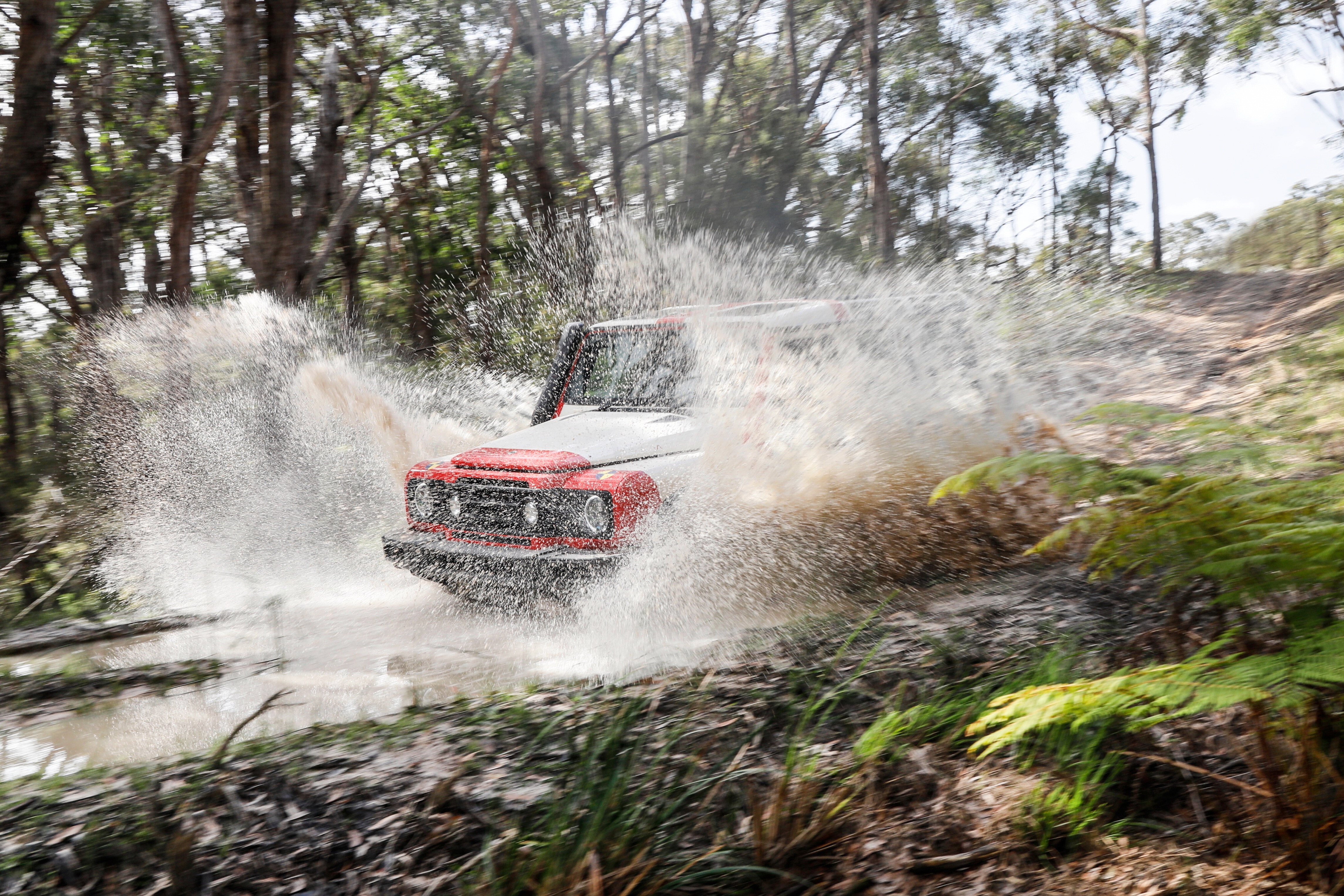
Ineos has released new images of the Grenadier mule being subjected to Australia’s challenging environment, as the new British carmaker seeks to create a reliable and heavy-duty four-wheel-drive designed to compete with the likes of the Toyota LandCruiser 70 Series.
While leaked images of the Ineos Grenadier arriving in Australia were widely circulated on social media last month, the company has confirmed the vehicle is here to “help ensure the final Grenadier product is fully fit to cope with the stresses of the Australian environment and demands of the local buyer.”
The brand has priced the Ineos Grenadier from $84,500 before on-road costs for the entry-level two-seater commercial wagon, but further pricing has yet to be announced for higher-specified variants.
“… What’s not on the cards for us is going down this direction of ‘SUV’,” Ineos Australia sales and marketing manager Justin Hocevar told 4X4 Australia last month.
“We will remain a utility vehicle brand.”
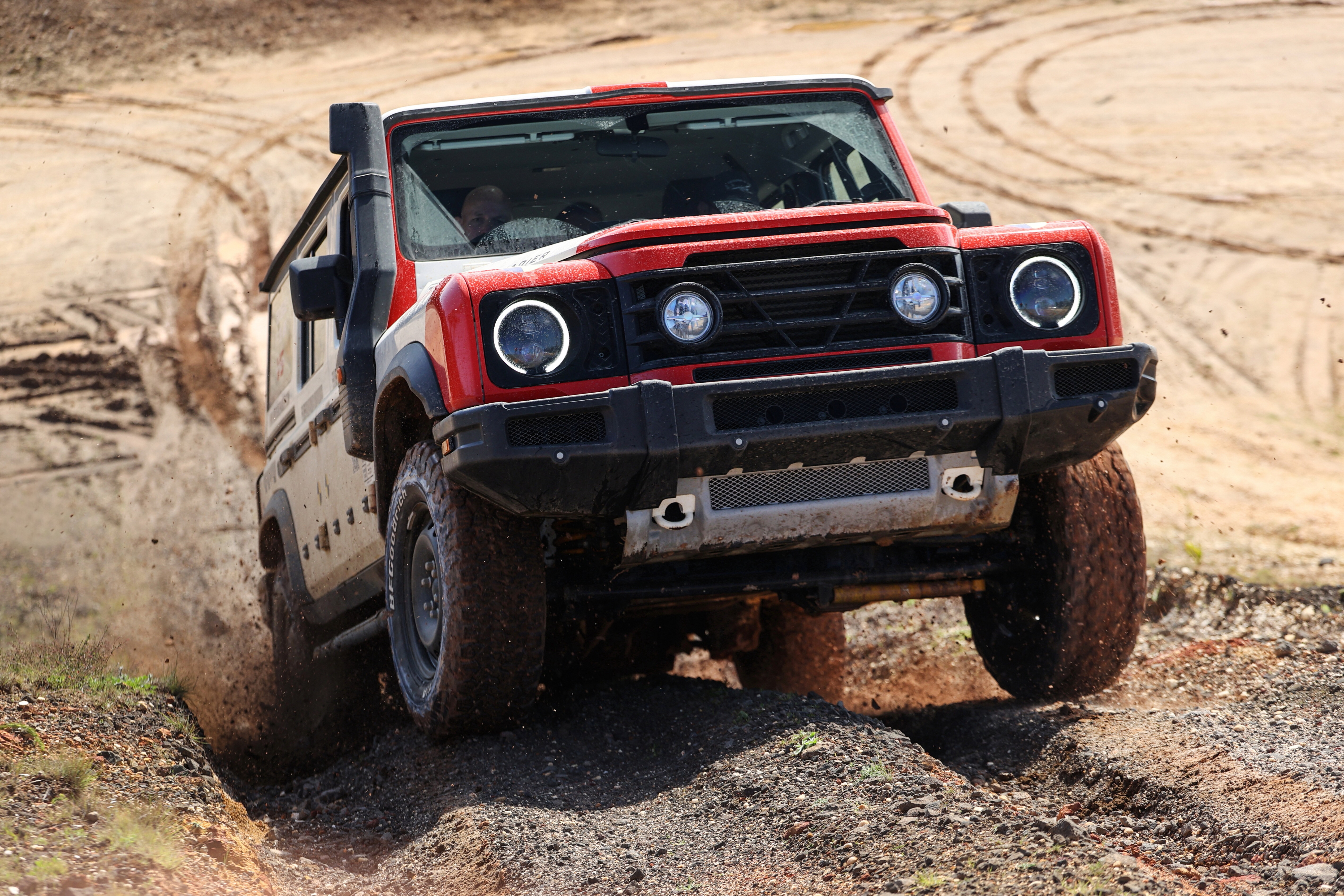
Australians have been able to secure a build slot with an $800 deposit, with some selected parties invited to experience the prototype in person while it’s in the country.
Though the prototype was built by Magna Steyr in Austria, the four-wheel-drive will be manufactured in Germany and powered by choice of a 3.0-litre turbo-diesel six-cylinder engine or a petrol equivalent – both sourced from BMW.
Global reservations for the 2022 Ineos Grenadier officially open on October 14, with orders to begin in March ahead of a fourth quarter launch next year.
The Jeep Comanche may have been discontinued almost 30 years ago, but its name could be revived if the American brand were to bring back a mid-size pick-up.
While the Gladiator currently caters for the ute segment, the Grand Cherokee could lend itself as a base for a Comanche reboot – giving drivers a balance between on-road refinement and the ability to go off the beaten track.
Artist Theo Throttle decided to try his hand at bringing the Comanche closer to reality, combining the new-for-2021 Grand Cherokee plug-in hybrid with Ford’s Maverick pick-up – another electrified offering for the American market.
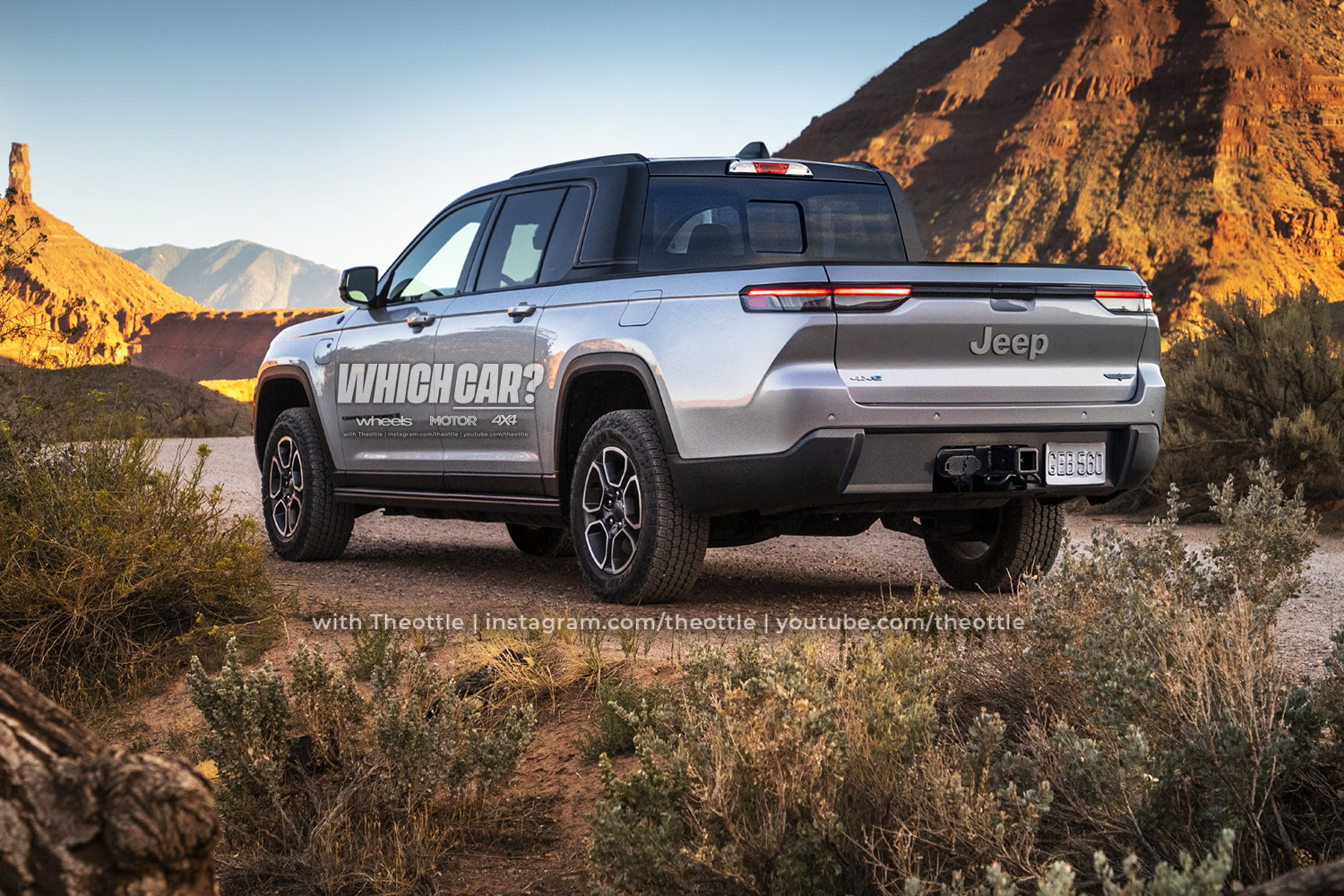
With the 2.0-litre, four-cylinder PHEV powertrain under the bonnet of this Comanche, we could expect even wilder iterations powering the four-door ute if it was also to be offered with the Pentastar V6 and the iconic Hemi V8 – maybe even with a few SRT goodies.
Jeep has previously teased a return of the Comanche, revealing its modern interpretation at the 2016 Easter Jeep Safari in Moab, although it was based on the smaller Renegade, featuring a two-door body rather than Theo’s four-door interpretation.
UPDATE, January 2023: New HiLux GR Sport revealed
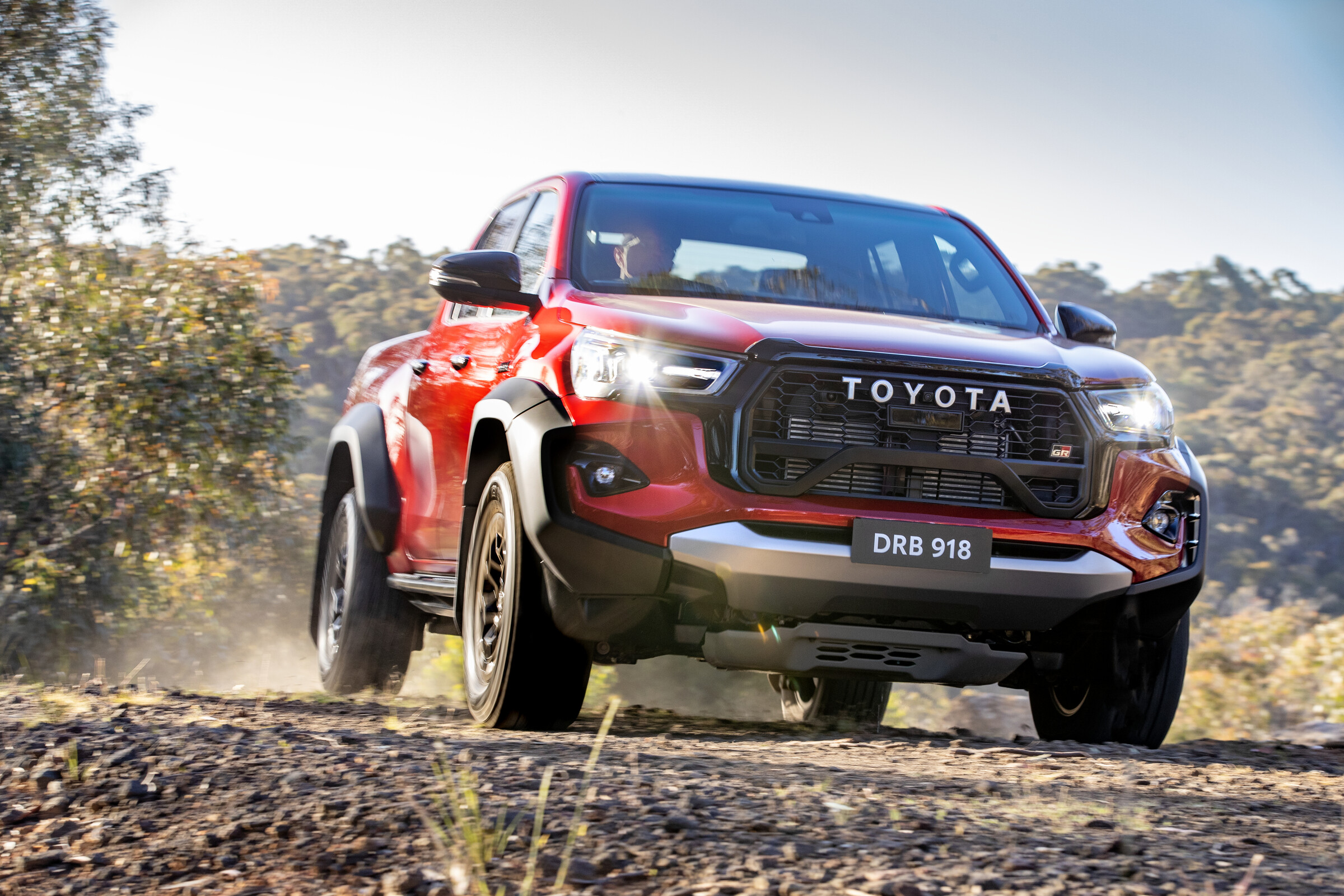
It’s no full-bottle high-powered GR HiLux, but the new 2023 HiLux GR Sport does get more power and torque than the regular model – making it a rival, of sorts, to the Navara Warrior and Ranger Raptor. In the meantime, we’ll keep hoping for a proper performance upgrade in future GR HiLux. Details below.
The story to here
The 2022 Toyota HiLux GR Sport has gone on sale in Japan, providing the best look at what Australian buyers can expect if and when the model eventually lands here.
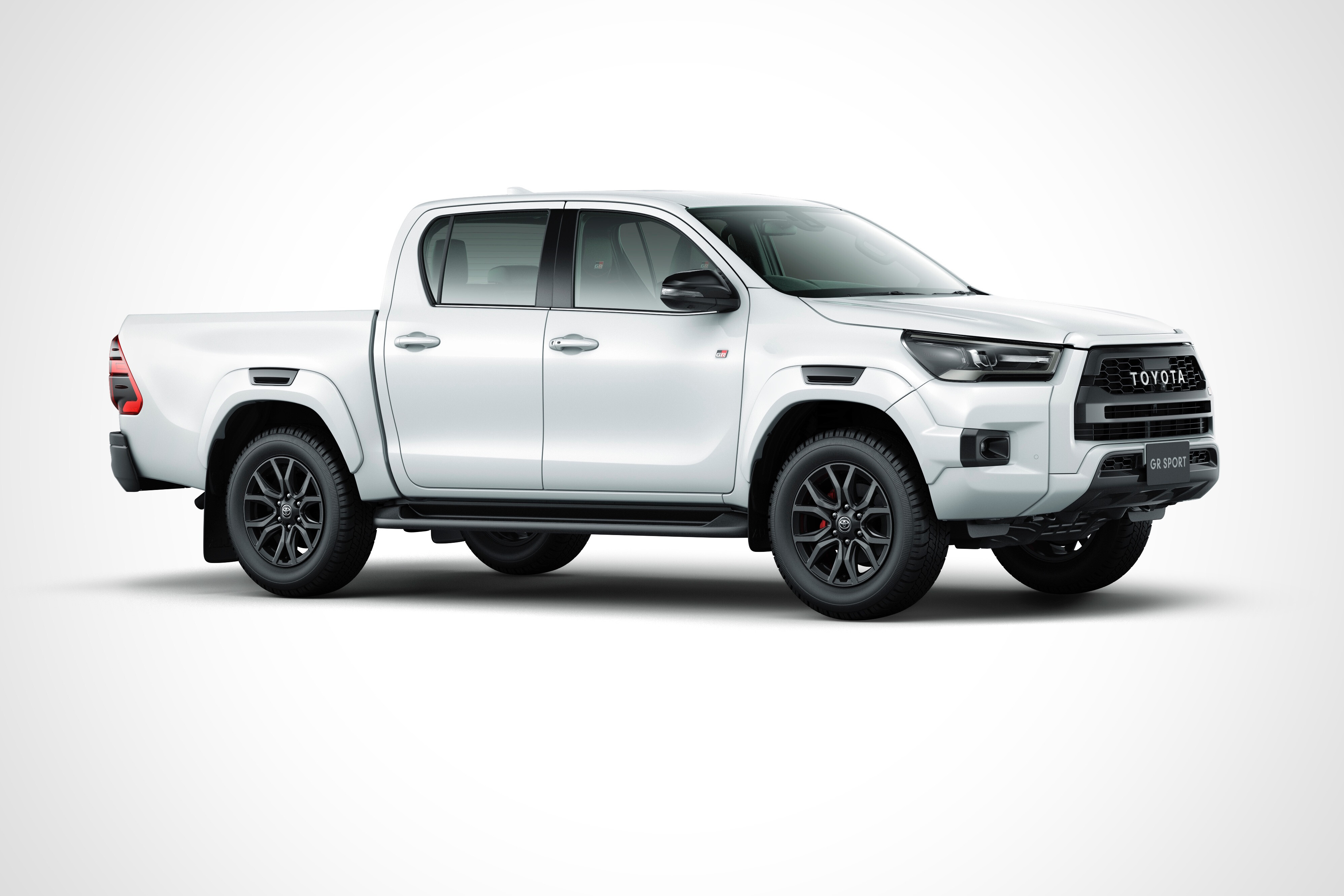
As with other GR Sport models in the Toyota range, the HiLux GR Sport doesn’t add any extra performance, rather it is a predominantly visual upgrade thanks to a body kit featuring wheel arches, a revised grille and bumpers, and new black 18-inch alloy wheels.
The GR Sport uses a similar version of the body kit found on the HiLux Rogue sold in Australia – with a total width of 1900mm – but painted to go with the vehicle’s body colour.
A centre section of the front bumper provides a smoother, colour-matched look, coupled with a ‘TOYOTA’ grille – as found on the LandCruiser GR Sport.
While the powertrain remains unchanged, engineers from Gazoo Racing have fettled with the chassis to deliver a “dedicated suspension [tune] that improves steering response and realizes flat and comfortable driving,” a translated statement from Toyota Japan read.
As with the HiLux Revo GR Sport unveiled for the Thailand market in recent months, the Japanese HiLux GR Sport gets a new interior look with synthetic leather and suede upholstery, front sports seats, dark silver highlights, GR Sport badging and instruments, sports pedals, and paddle shifters.
In May 2021, a spokesperson for Toyota Australia said “[The HiLux GR Sport is] not on our radar at the moment, but if it becomes available globally, we’d definitely be interested in it.”
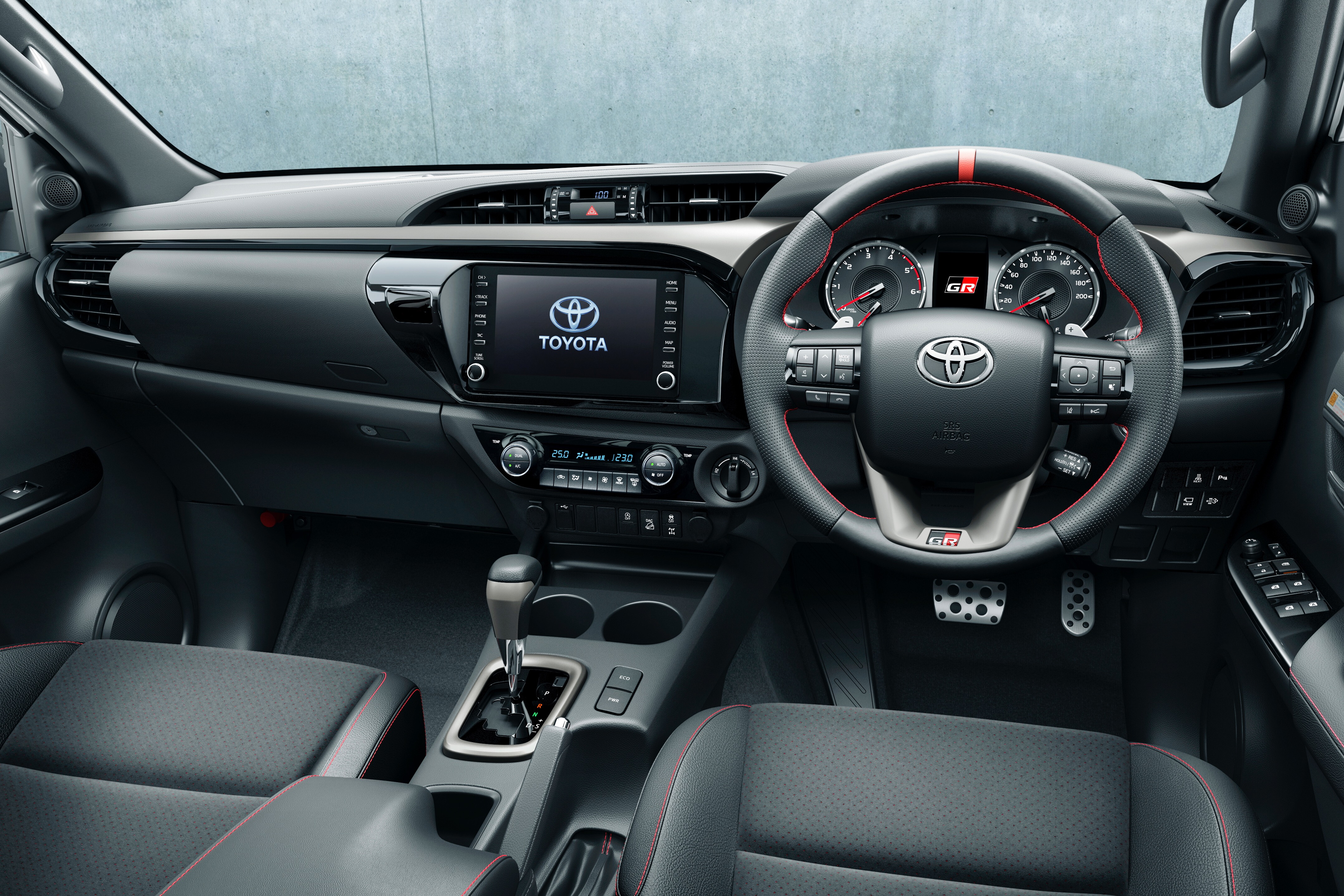
4X4 Australia contacted the company’s local representatives and was told “Toyota Australia is continually looking at opportunities to expand the Toyota GR range with more exciting models however at this stage, we have no announcements to make.”
Those wanting a high-performance Toyota GR HiLux will likely have to wait until the next generation arrives in 2025 at the earliest.
According to a recent report out of the US, the next-gen HiLux will share its underpinnings with the Toyota Tacoma pick-up sold in North America, meaning a greater variety of powertrains could be made available to the Australian market.
There’s so much gear on the market these days that it’s confusing and sometimes frustrating trying to find the right gear for the application.
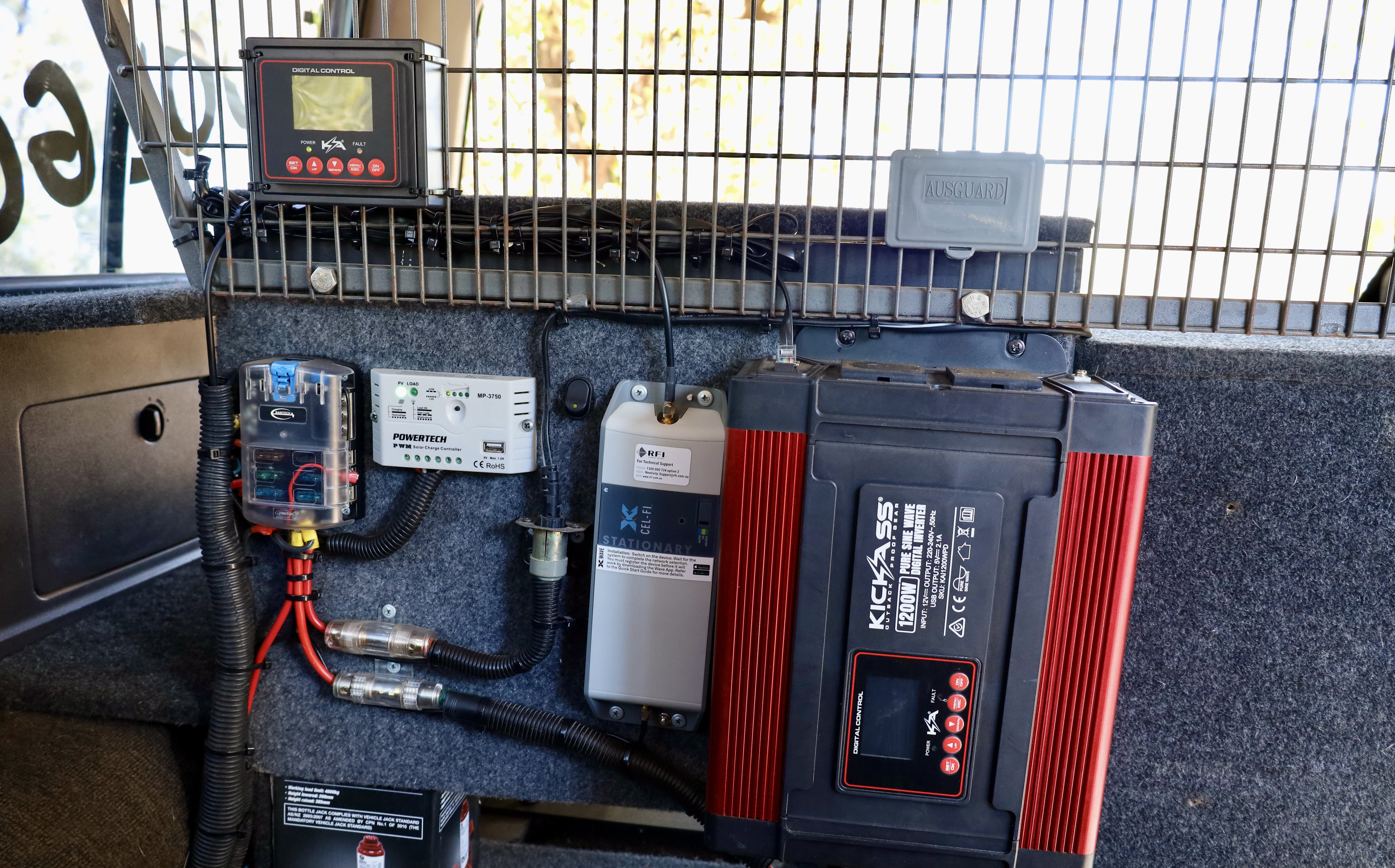
I found this recently when looking for a new inverter for the 80 Series to charge up all our gear on the road; from the drone, several camera batteries, laptop, torches, batteries for the chainsaw and drill, and a few more.
Now, while it’s easy to jump online and just throw a dart at one of the cheap imports, I needed a serious unit for our stuff – plus it had to be pure sine wave to comfortably protect the gear and, as we travel remotely, it had to be extremely reliable.
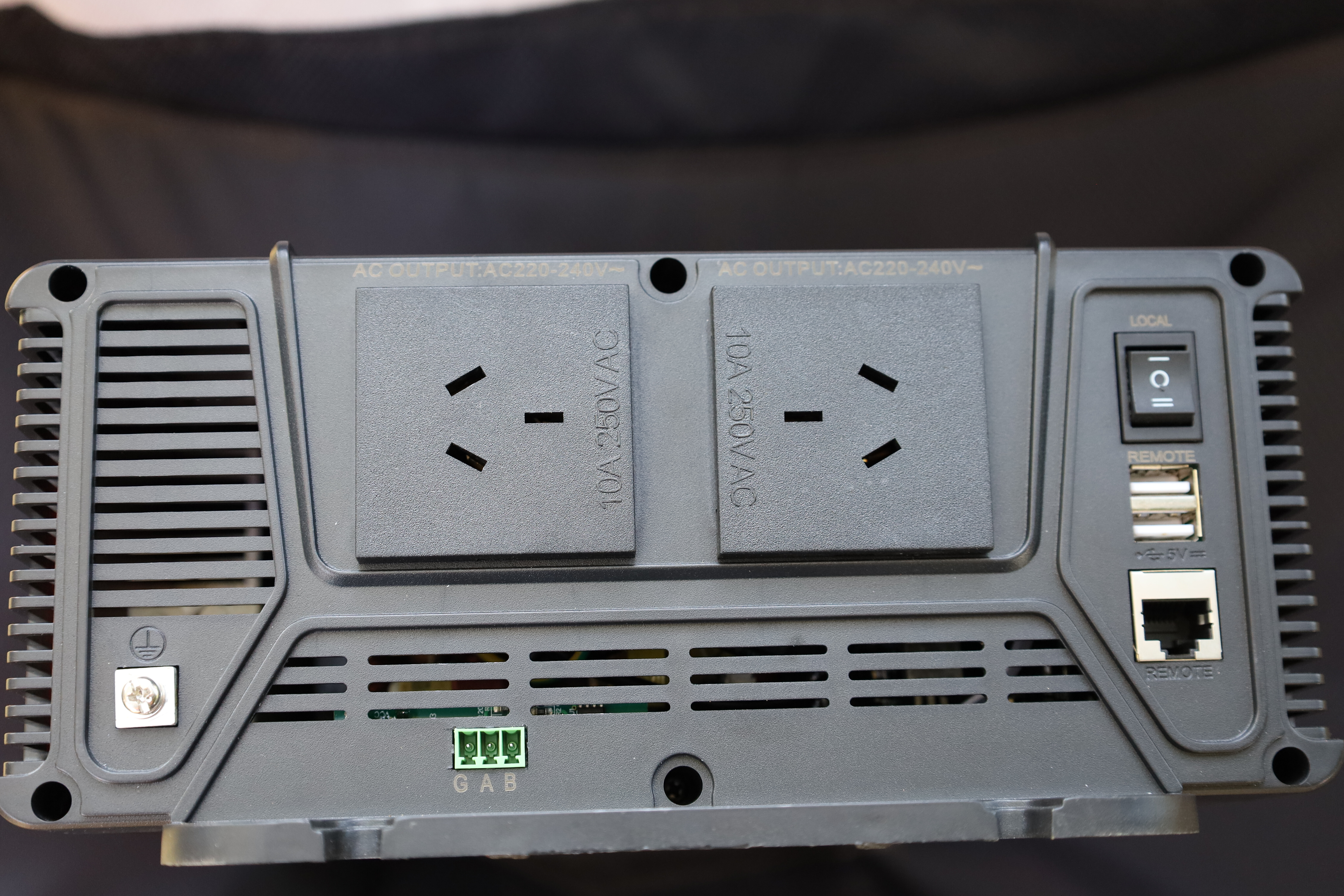
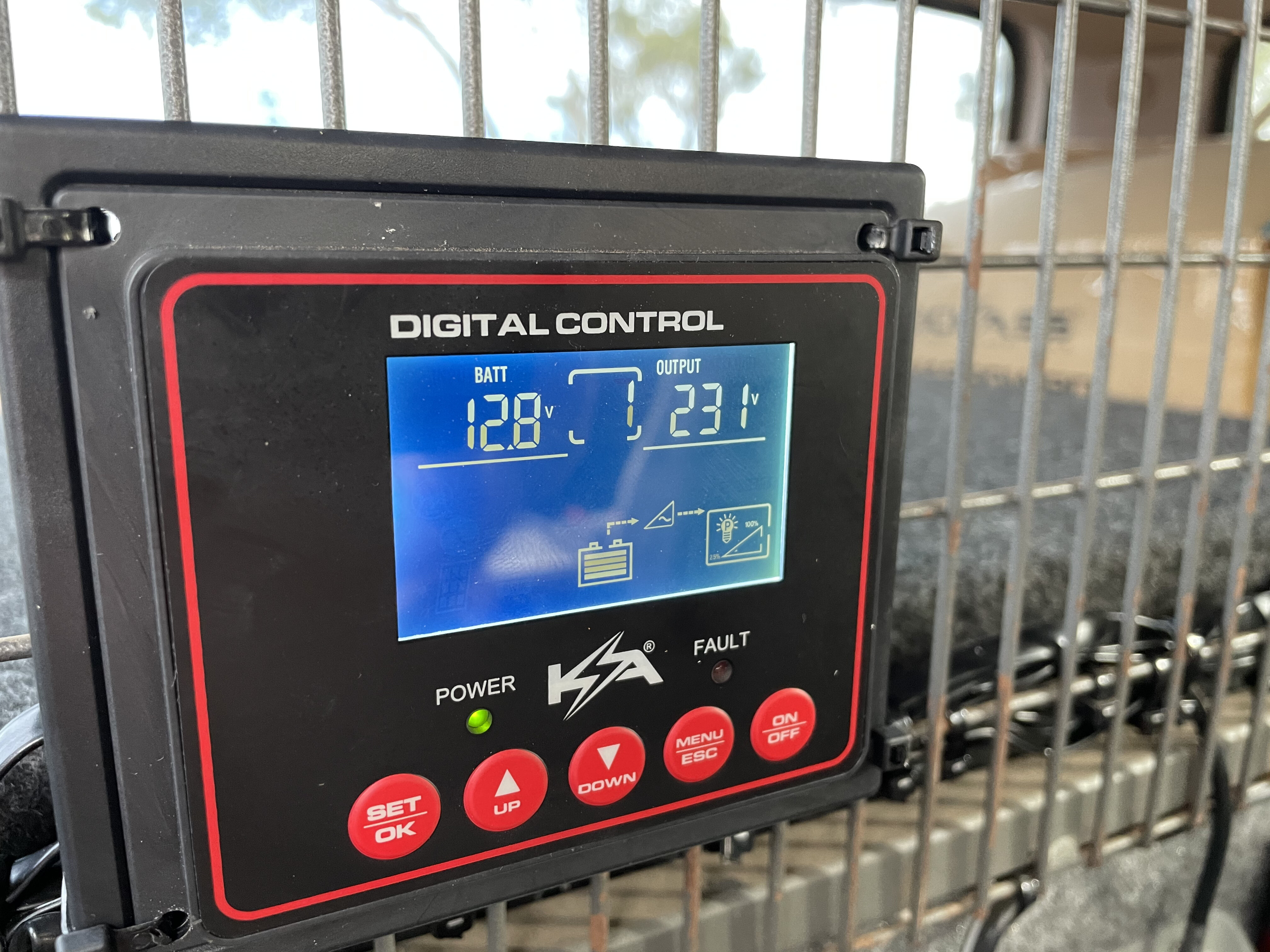
Receiving recommendations for KickAss products, I made the plunge to purchase its 1200W Digital Pure Sine Wave Inverter. The specs read well, with rated power at 1200W, peak power at 2000W, internal safety fuses, smart cooling system with twin fans, fully controllable display panel, and twin 240V and twin USB outlets (both rated at 2.1amp) – plus it comes with a separate external display screen with a five-meter lead.
Also in the box are thick power leads to reduce power drop when connected. The advantage of having the remote screen is that you can’t always mount the inverter in a way to access the 240V outlets and see the screen.
Using the buttons on either screen, it is possible to set different parameters away from the factory defaults such as under- and over-voltage ranges, short-circuit modes, the overload value and warning alarms. If something drastic does happen, fault codes are thrown up on the screen and, with the included manual, it’s an easy process to work out the issue and eliminate the fault.
While it’s a large unit, the outer box is a combination of plastic and anodised aluminium which makes it extremely solid; plus it’s great for reducing weight on a build. The anodised alloy casing also serves as a heat sink to dissipate excess heat from the unit.
The twin 240V outlets are positioned in a way that even the most difficult right-angled chargers will fit. Having the external display positioned away from the inverter itself, you can easily see how much power the devices are taking out of the battery and also see the charge that the inverter is producing. Being Pure Sine Wave, it’s very smooth and consistent. In the range of KickAss inverter products are a 700W unit, a larger 2000W model and a monster 3000W mega unit.
A couple of times I’ve loaded up all the outlets and, while the draw is huge, the unit still produced a solid and smooth outlet current. Cheaper units lose massive amounts of power when converting from DC to AC, but KickAss claims its units have a 90 per cent or better efficiency conversion rate.
All the inverters come with a two-year warranty – which is hard to find these days on quality gear. The 1200W Pure Sine Wave retails for $369, but keep an eye out on the company’s online sale page.
Based on the Sunshine Coast, Queensland, Australian Direct launched KickAss Outback Proof Gear specialising in quality 12V gear with a list of products as long as your arm, including shower units, fridges, premium solar panels, batteries and battery packs, 12V ovens, air compressors and fans, battery charges, as well as camping and adventure packages.
In fact, it stocks more than 300 products and is developing its own high-quality products for the camping, 4WD and caravan industries.
WEBSITE: kickassproducts.com.au