
The Ford Everest and Toyota Prado were the best-selling 4×4 wagons in 2025, with a narrow margin between them. The Ford outsold the Toyota by just 55 vehicles over the year, which was the first year of sales for the Prado 250 Series.
While Australian new-vehicle buyers tend to favour the higher-specification premium variants in each model range – something dealers love thanks to the greater profit margins – there is still strong value to be found in the lower grades.
With this in mind, we’ve paired the base-model Toyota Prado GX with the Ford Everest Trend to see how they compare. The Prado GX starts at $72,500 plus ORC, while the Everest Trend bi-turbo comes in at $67,290 plus ORC. There is an Everest Ambiente below the Trend in Ford’s line-up, but one wasn’t available to us – and the Trend is a closer match to the Toyota in both price and specification.
JUMP AHEAD
Toyota Prado GX
The GX is the base variant in the six-model 250 Series Prado range, priced at $72,500 plus ORC, while the top-of-the-range Prado Kakadu will set you back $99,990 plus ORC.
We said at the launch of the 250 Series that the GX was possibly the best variant in the line-up, as it was, at the time, one of only two models with just five seats, freeing up extra space in the cargo area for gear. The only other five-seat Prado was the $93k Altitude; however, Toyota has since introduced a Prado GXL in five-seat trim.
The GX isn’t just the cheapest model in the Prado range – it doesn’t miss out on any features you really want in a touring 4×4, leaving you with a bigger budget for the accessories you really want.
What equipment does the Prado GX get?
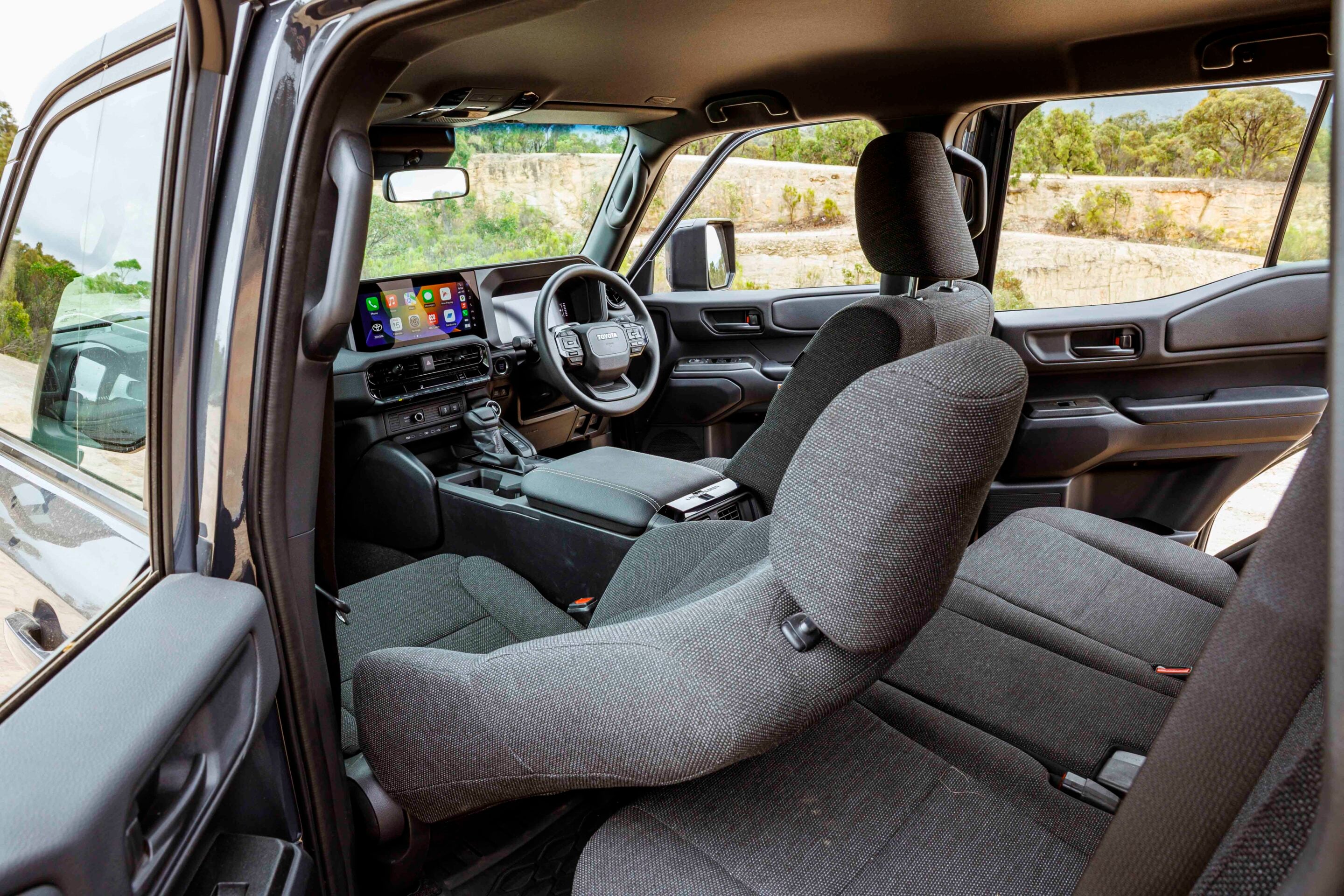
For a base model, the Prado GX isn’t short on standard equipment. Like the rest of the range, the interior is well equipped, starting with a premium 12.3-inch multimedia screen compatible with wireless Apple CarPlay and Android Auto, Bluetooth connectivity and cloud-based, in-built sat-nav. The Toyota sound system is impressive for an entry-level model, with a 10-speaker setup and a 200mm subwoofer handling audio duties.
GX and GXL Prados feature a seven-inch digital instrument display rather than the 12.3-inch screen fitted to higher grades, but it provides all the vehicle information needed for general use without unnecessary distractions. It still allows individual configuration to suit driver preferences.
The five seats are trimmed in comfortable cloth with manual adjustment, while the steering wheel is a hard plastic item. The steering column is adjustable for both reach and height.
The Prado’s tall cabin affords plenty of headroom for passengers, particularly in the rear. Overall cabin space is generous and easily accommodates a family on adventure trips. The lack of a third-row seat in the GX removes one of the most criticised aspects of the 250 Series – the amount of space those seats consume even when folded. There is still a slight rise in the floor to house the 48-volt lithium-ion battery, but it’s a far better outcome than the seven-seat layout.
Prado GX safety features
All Prados share the same level of safety equipment, so the GX isn’t left wanting in this area. Standard features include:
- Pre-collision system with autonomous emergency braking
- Pedestrian, cyclist, motorcyclist and oncoming vehicle detection
- Intersection collision avoidance support
- Emergency steering assist
- Acceleration suppression at low speeds
- Curve speed reduction
- Deceleration assist
- Lane trace assist with lane-departure alert
- Road-sign assist (speed signs only)
- Emergency driving stop system
- Blind-spot monitor with rear cross-traffic alert
- Safe exit assist
- Driver monitor camera
- Rear parking support brake
- Front and rear parking sensors
- LED lighting, including headlights
- Panoramic view monitor
- Reversing camera with guidelines
- Vehicle stability control with active traction control
- Anti-lock braking system
- Brake assist
- Electronic brake-force distribution
- Downhill assist control
- Crawl control
- Trailer sway control
- Nine SRS airbags
- Three rear ISOFIX child restraint points with top tethers
Toyota doesn’t list it as a safety item, but we’d argue tyre-pressure monitoring is more important than features such as active cruise control and auto high beam. If you want factory TPMS in a new Prado, you’ll need to step up to the VX.
Prado GX powertrain and performance
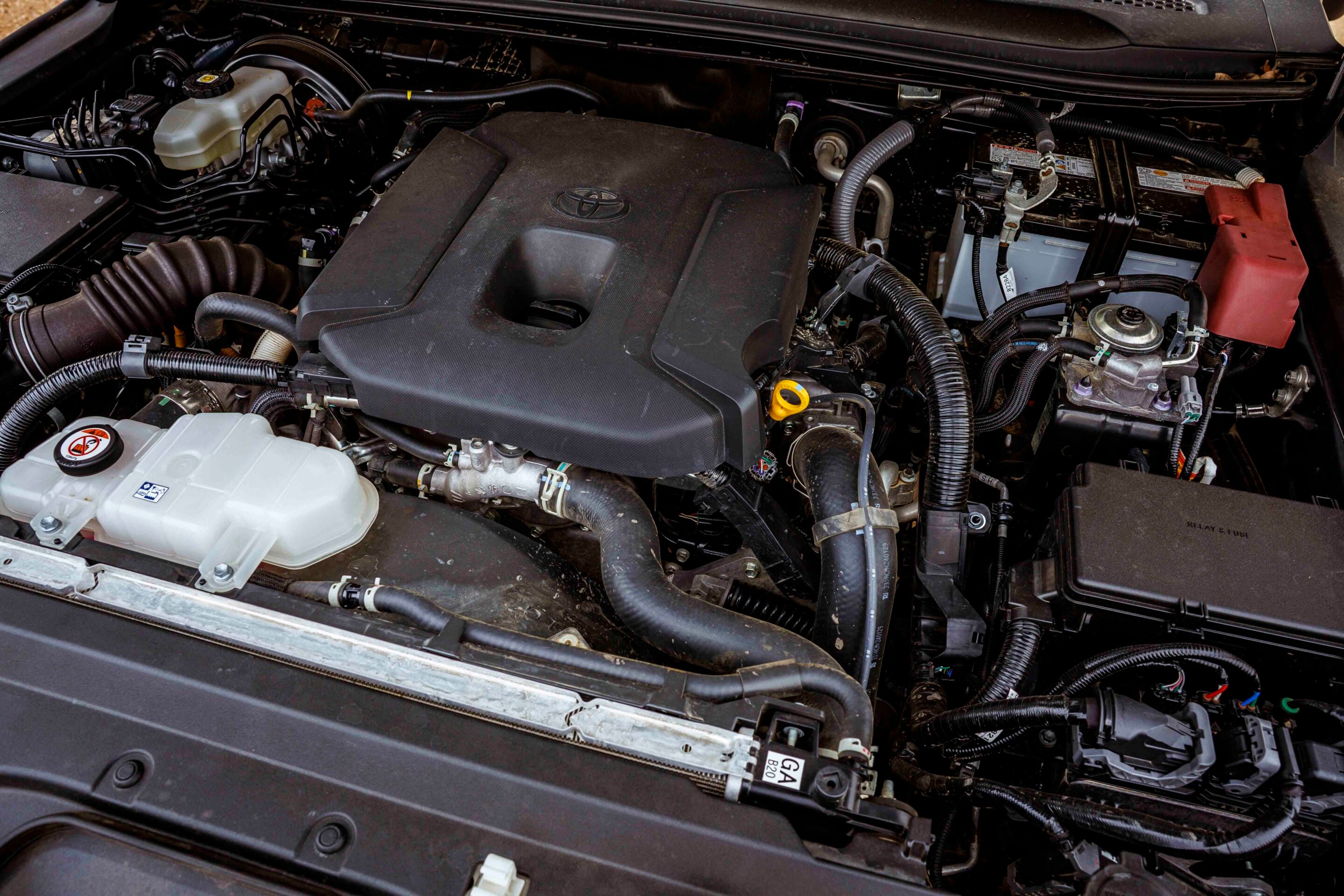
All 250 Series Prados are powered by Toyota’s 1GD-FTV 2.8-litre four-cylinder turbo-diesel engine paired with an eight-speed automatic transmission, so choosing the entry-level GX doesn’t mean missing out mechanically. The diesel is assisted by Toyota’s 48-volt V-Active technology, which doesn’t increase outputs – the engine still produces a respectable claimed 150kW/500Nm – but is well proven from its use in other Toyota models.
Four-wheel drive comes via a full-time, dual-range system with a lockable centre differential, but there’s no factory rear diff lock. Only the Altitude and Kakadu models are fitted with a rear differential lock from the factory. Thankfully, Toyota’s electronic traction control is sharp and effective at managing grip when the tyres break traction.
The GX also features Crawl Control and hill descent control, which work exceptionally well to maintain progress in low-grip situations without throttle input. Think of it as cruise control for off-road use, maintaining a set speed across varying terrain, and it’s especially beneficial for drivers with less off-road experience or confidence.
The Prado GX misses out on the Multi-Terrain Select modes fitted to higher grades, but that’s no great loss. Instead, it offers basic drive modes including Normal, Sport and Eco. The new Prado offers a 3500kg towing capacity, with an integrated towbar that’s pre-wired and ready to use.
Prado GX ownership considerations
Toyota 4×4 vehicles are renowned for their ruggedness and dependability, and there’s no reason to believe the 250 Series Prado will be any different.
Owners of the new Prado can expect a five-year, unlimited-kilometre warranty. Toyota Australia also offers five years of capped-price servicing for the LandCruiser Prado at $390 per service for the first 10 services, at intervals of six months or 10,000km – whichever comes first.
Emergency roadside assistance is provided through Toyota Emergency Assistance, extending coverage from five to seven years if the vehicle is serviced and maintained in accordance with the warranty and service book by a Toyota dealer. For anyone concerned about the lithium battery used in the 48V system, it’s covered by an eight-year/160,000km warranty (whichever comes first) if battery energy storage capacity falls below 70 per cent of its original capacity.
Ford Everest Trend
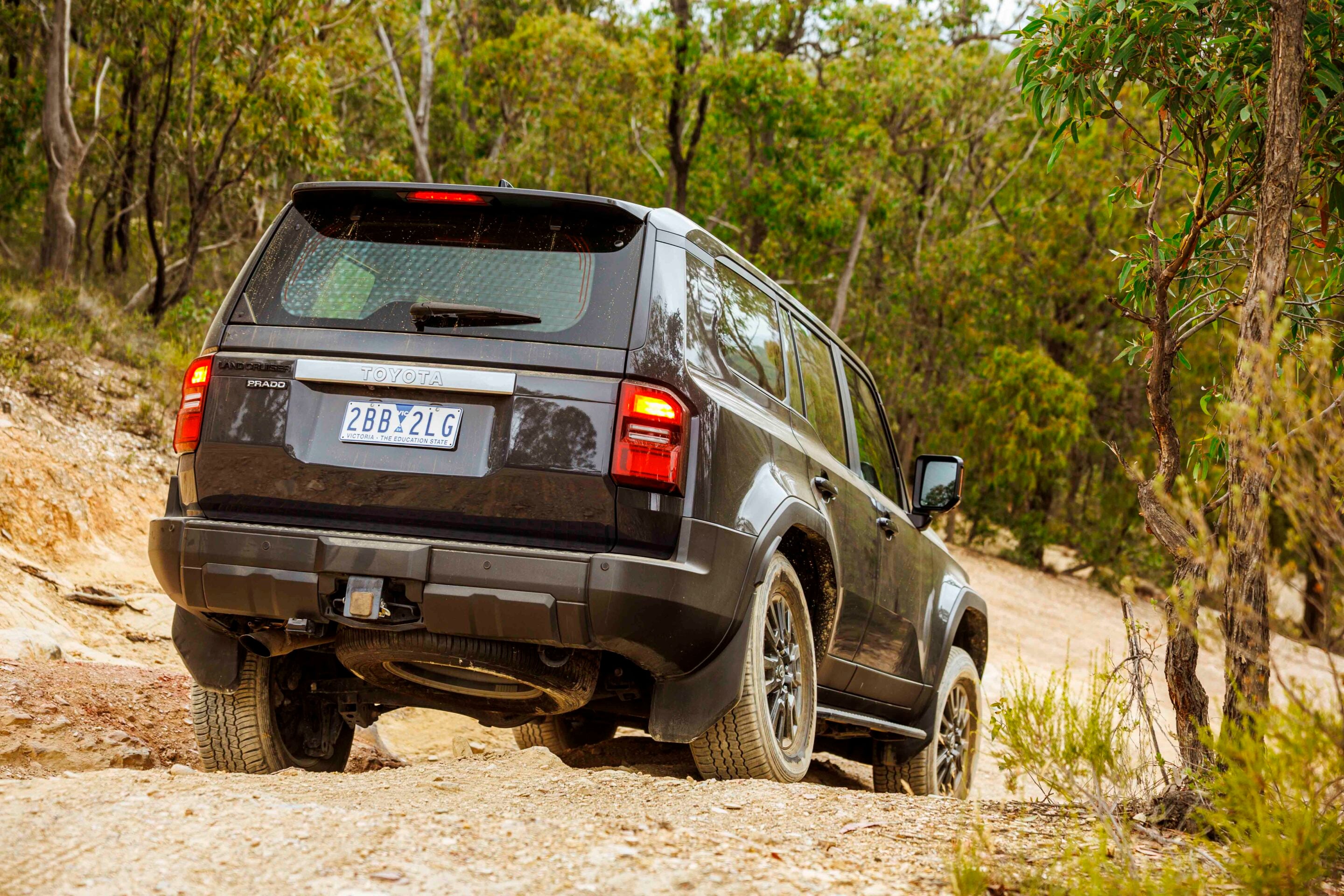
It feels like only yesterday we were welcoming Ford’s family fourby to our roads, but the Everest has now been with us for four years. Essentially a five-door wagon built on Ford’s T6 platform – shared with the Ranger ute – the Everest differs with a shorter wheelbase and a Watts-link, coil-sprung rear suspension designed to improve handling and comfort.
The Everest offers a choice of powertrains across the range, with either a 2.0-litre bi-turbo diesel producing a strong 500Nm or a 3.0-litre diesel V6, depending on model grade. It should be noted the bi-turbo diesel will be discontinued from Ford’s range this year, replaced by a 125kW/404Nm single-turbo 2.0L diesel, while the V6 will be offered across more models.
At the same time, the Everest Ambiente and Trend models will be discontinued and replaced by the Everest Active entry-level model, which will be offered with a choice of four- and six-cylinder diesel engines. For this test, we’re running the Everest Trend powered by the bi-turbo 2.0L engine. In specification, it’s the closest match to the Prado GX in both equipment and price.
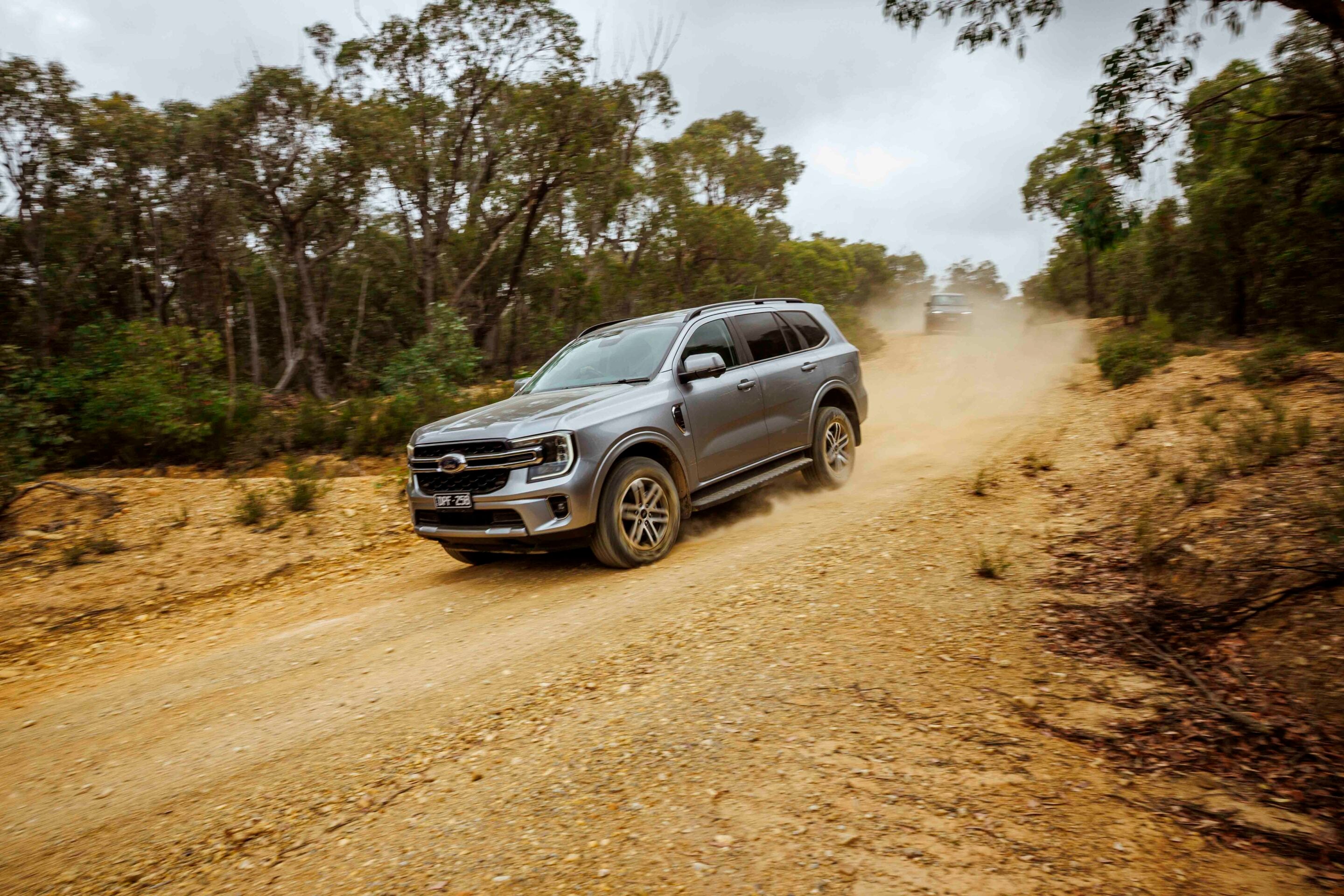
What equipment does the Everest Trend get?
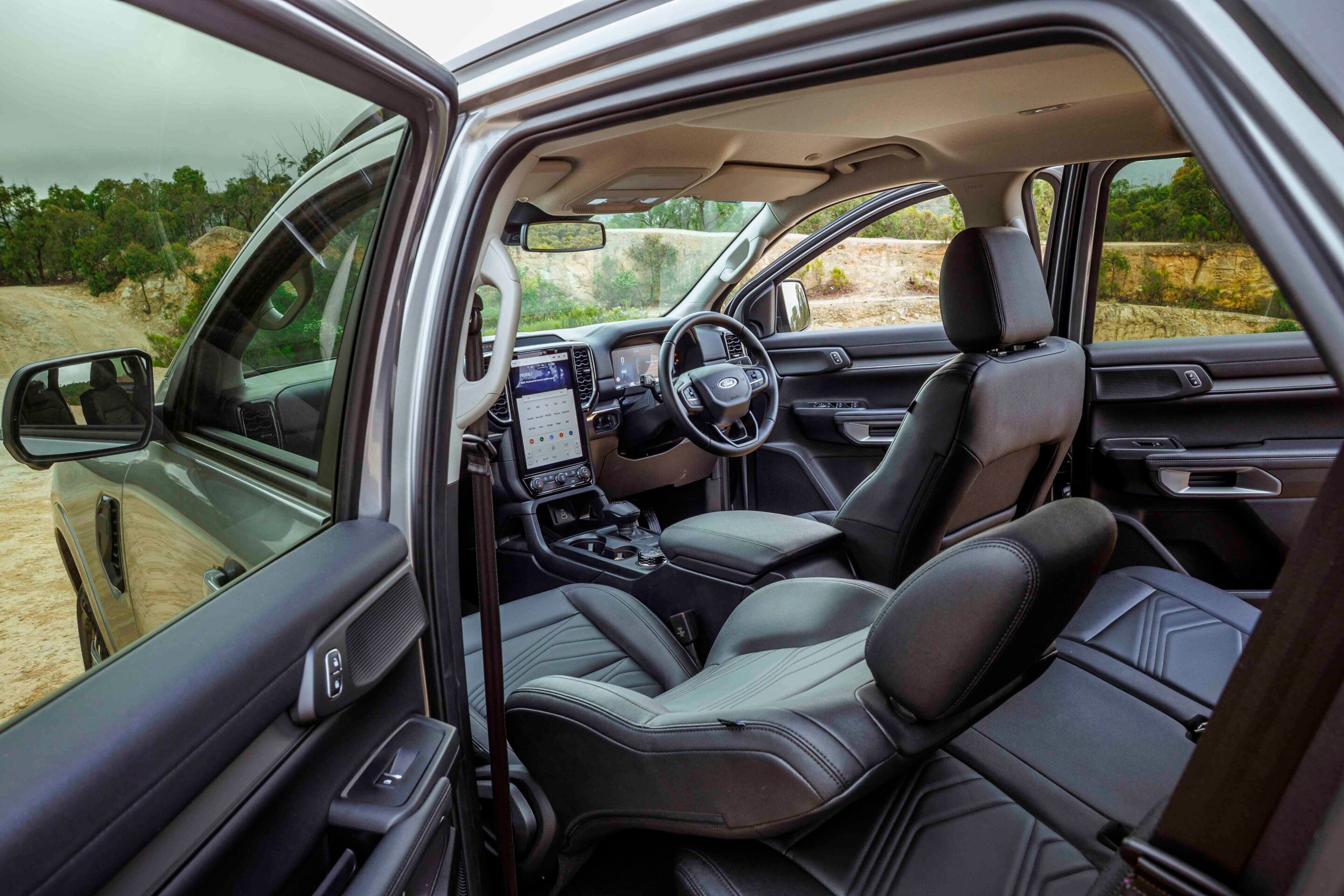
The Everest Trend might sit low in the model range, but it doesn’t feel that way thanks to its high level of standard inclusions. It comes standard as a five-seater, but this example was fitted with the optional third-row seat, making it a seven-seater. A key difference between the Everest and Prado is that the Ford’s third row folds flat into the floor, rather than sitting on top of it as the Prado’s third row does.
Ford describes the seat trim as ‘leather accented’, but it feels cheap and tacky, and we much prefer the Prado’s cloth upholstery. The driver’s seat has eight-way power adjustment; however, the front passenger seat lacks height adjustment. The steering column is adjustable for both reach and height, while the steering wheel is wrapped in soft leather.
The seats are firm yet comfortable, with plenty of space in the first and second rows, while the third row is best reserved for kids due to the relatively low roof height. Kudos to Ford for fitting roof vents for passengers in all three rows – again, something the Toyota doesn’t offer.
The multimedia screen is a 12-inch vertical unit, while the driver’s instrument cluster is an 8-inch display. The multimedia system features wireless Apple CarPlay and Android Auto, in-built navigation and eight speakers, along with a single wireless phone charger – something not offered in the Prado GX. The Everest Trend also includes a power-operated tailgate and a 400W inverter with a power outlet at the rear of the centre console.
Everest Trend safety features
The Everest Trend is fitted with a comprehensive suite of safety features, including:
- Nine airbags, including driver and passenger knee airbags
- Collision Mitigation, including AEB, Reverse Brake Assist and post-impact braking
- Lane keep assist
- Lane departure warning
- Front and rear parking sensors
- BLIS with cross-traffic alert and trailer coverage
- Digital reversing camera
- Anti-lock braking system
- Electronic stability control
Notably absent, again, is tyre-pressure monitoring. To get factory TPMS in the Everest range, you’ll need to step up to the top-spec Platinum.
Everest Trend powertrain and performance
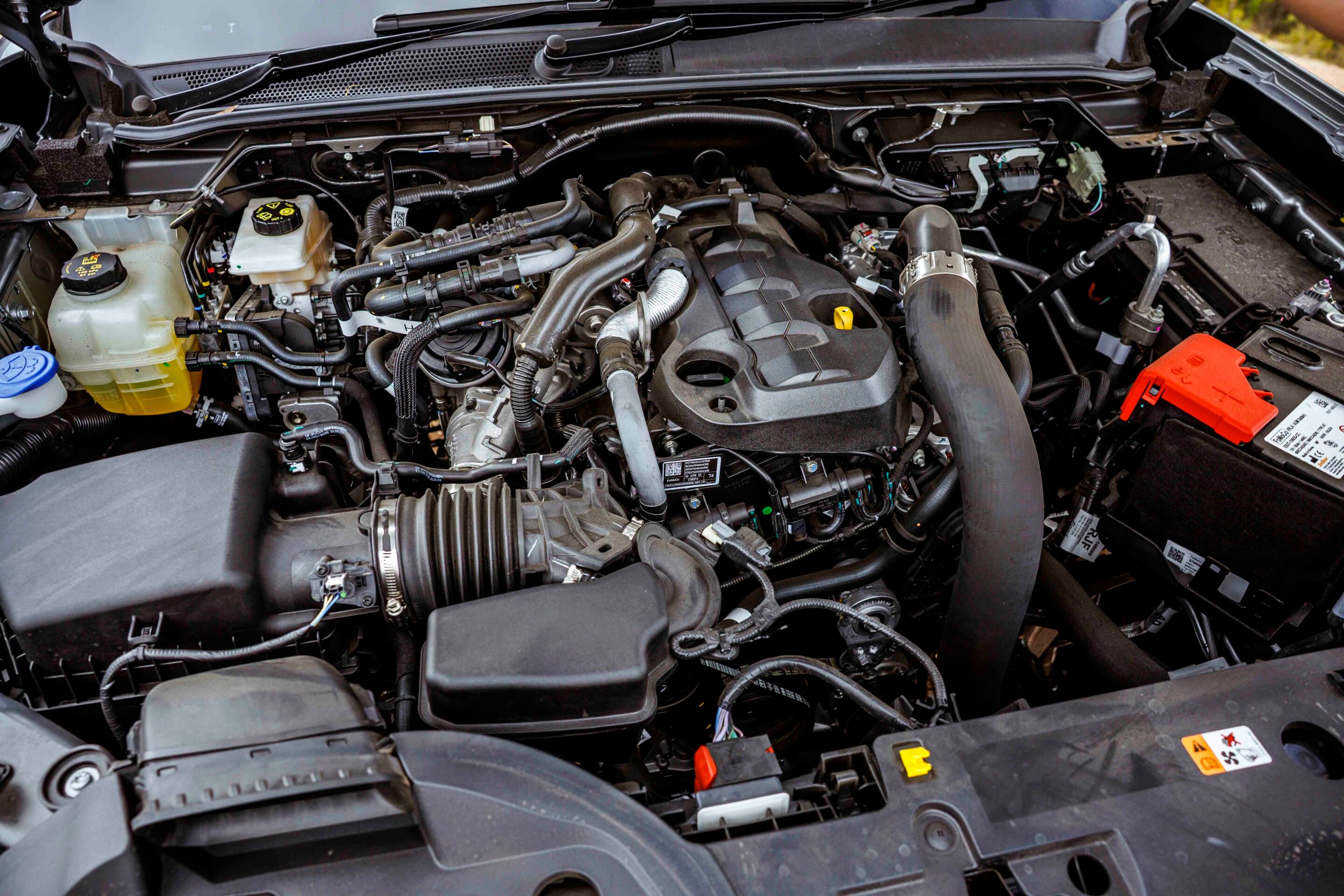
Ford’s 2.0-litre bi-turbo diesel engine is a cracker, especially when paired with the 10-speed automatic transmission as fitted to the Everest. With its claimed 154kW/500Nm outputs, it does everything you could ask of a family touring 4×4, and does so in a relatively refined manner. It’s smooth and quiet, and well matched to the 10-speed, which has been considerably updated and recalibrated since we first sampled it in earlier models.
The transfer case offers on-demand four-wheel drive, along with high- and low-range 4×4 and a two-wheel drive mode. The Trend also features a rear differential lock; in fact, a driver-selectable RDL is standard across all Everest grades.
The Trend’s drive modes include Eco, Normal, Slippery, Sand, Mud and Ruts, plus a Tow/Haul mode. In tow mode, Ford’s clever trailer tech becomes available, including setup, integration and a towing checklist, along with an integrated factory electric brake controller. All Everest 4×4 models have a 3500kg towing capacity. Suspension consists of a double-wishbone, coil-sprung independent front end, with a live rear axle using coils and a Watts link for lateral axle location.
Everest Trend ownership considerations
Ford 4x4s come with a five-year/unlimited-kilometre warranty, with Ford Roadside Assistance provided from the warranty start date. After the first 12 months, roadside assistance is extended for a further 12 months each time the vehicle is serviced at the recommended intervals by a participating Ford dealer. Ford also offers prepaid service plans for fleet buyers.
Off-road comparison
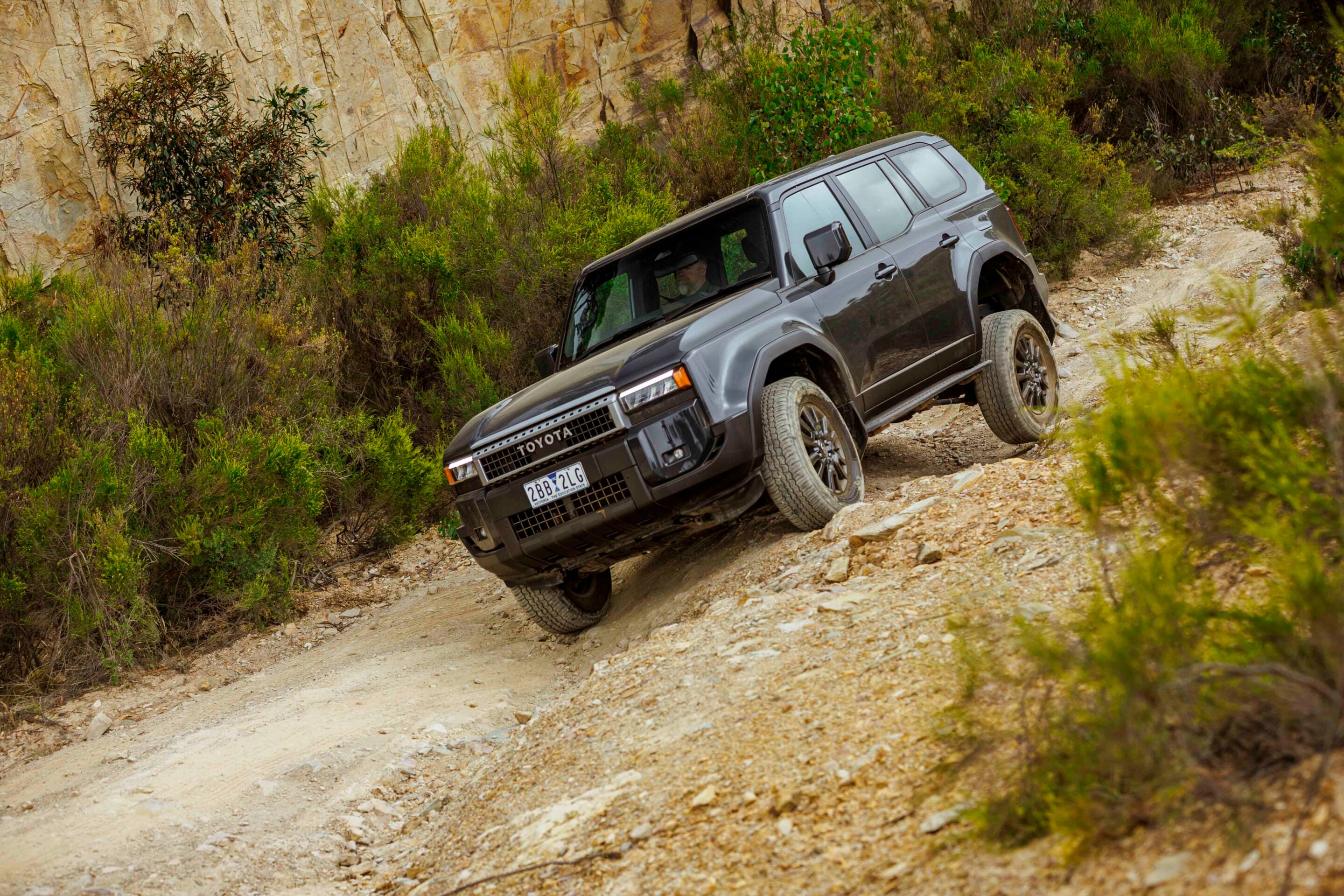
Both vehicles here are competent off-roaders, but they go about the job in different ways. The sharp calibration of Toyota’s electronic traction control, combined with greater wheel travel in the Prado – particularly at the rear axle – gives the Toyota the ability to crawl over deep ruts and obstacles with relative ease. Over the same terrain, the Ford spun its tyres at the first hurdle and needed its rear diff lock to get through the uneven moguls. The Toyota’s softer suspension calibration also allows it to better soak up bumps, ruts and corrugations on rough gravel tracks.
As popular models, both vehicles are well supported by aftermarket suppliers, allowing owners to tailor them for a wide range of off-road conditions. Extra points go to the Toyota for its 110-litre fuel tank, which allows longer distances between refuelling stops.
Bull bars and protection equipment, suspension and tyres, storage and other upgrades are all readily available. Notably, Ford’s collaboration with ARB 4×4 allows buyers to equip their Everest with ARB gear at the Ford dealer as part of the vehicle purchase. Both of these 4x4s were heavily developed in Australia and are well suited to local on- and off-road conditions.
| Toyota Prado GX | Ford Everest Trend | |
|---|---|---|
| Approach angle | 31 | 30.4 |
| Ramp-over angle | 25 | 22.2 |
| Departure angle | 17 | 25.3 |
| Ground clearance | 210mm | 229mm |
| Wading depth | 700mm | 800mm |
Verdict
The takeaway from this test is that both wagons are well suited to family 4×4 touring in Australia and, while they follow a similar design brief, each has its own characteristics, strengths and weaknesses.
The Toyota Prado is the newer vehicle and it feels it in terms of interior design and technology. It’s also the only one using any form of electrification in its driveline, even if Toyota’s 48-volt system is only a mild-hybrid setup at best. It provides a small performance benefit, but we feel any gains are outweighed by the weight and space taken up by the battery, along with the fact it adds another major system that could leave you stranded if it were to fail. In a remote outback location, the consequences could be serious.
The 250 Series brings major improvements to the Prado, with a larger cabin for family use and improved capability thanks to its excellent 4×4 system and suspension. It’s a vehicle well worthy of our 4×4 of the Year award.
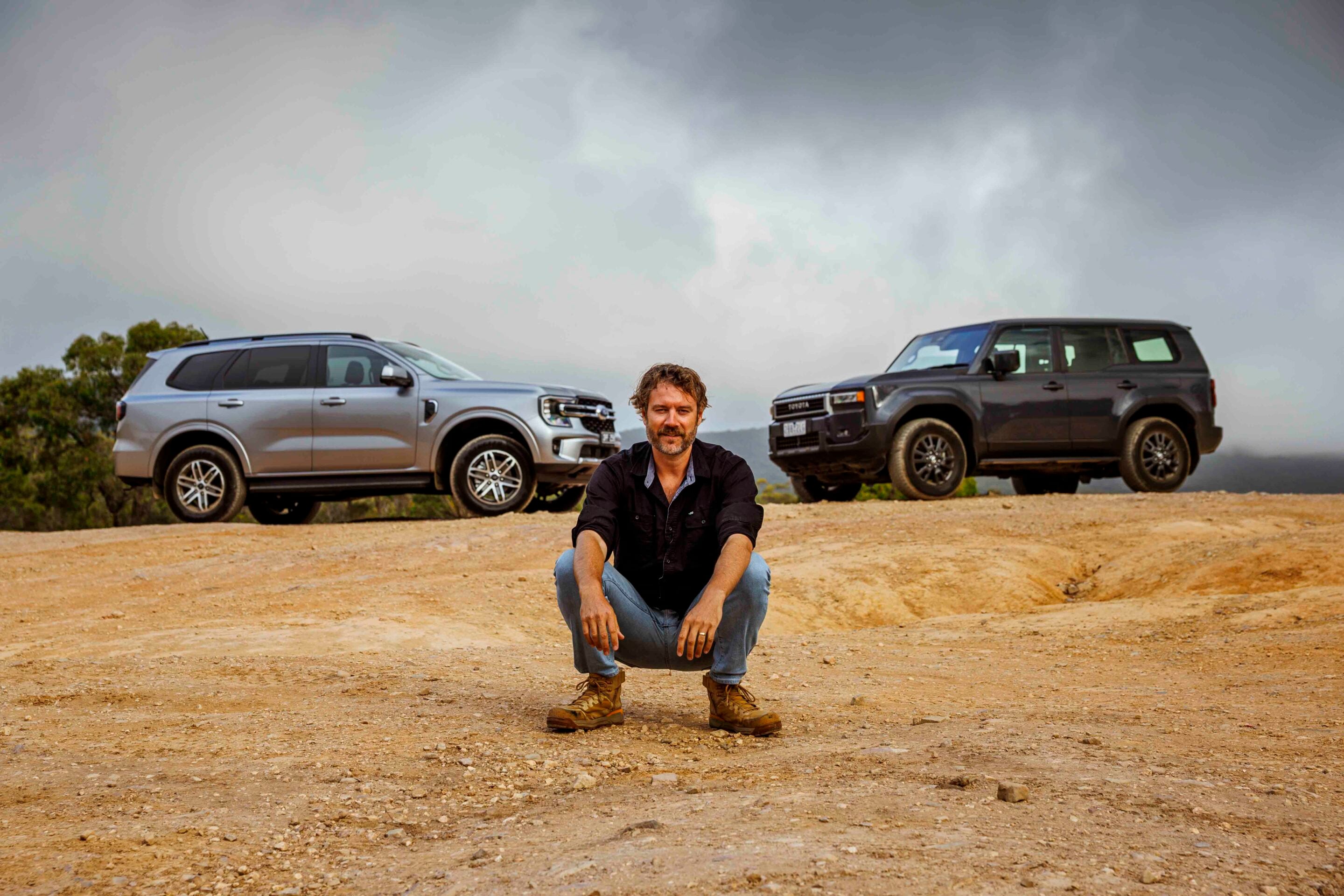
The Everest feels older, but that shouldn’t be seen as a negative. It still offers all the features you’d want in a family 4×4, plus the extra seating if you need it. The bi-turbo diesel makes the Everest slightly quicker than the Prado, while its firmer suspension delivers flatter cornering and more confident on-road handling.
Ford tunes its 4×4 suspension to be firmer and more sporting than the softer, more comfort-focused setup used by Toyota. The result is an Everest that rides flatter on-road, while off-road the Prado is more supple, more comfortable and offers better wheel travel, particularly at the rear axle.
Choosing between the two ultimately comes down to which characteristics best suit your needs – the Prado’s stronger off-road performance at the expense of on-road dynamics, or the Everest’s handling and seven-seat flexibility. That said, the roughly $4-5k price advantage of the Ford could easily fund an aftermarket suspension upgrade to help bridge the gap.
The big takeaway is that you’ll save tens of thousands of dollars by choosing either of these base-model fourbies, and that money can go a long way towards accessories, a trailer or a big trip.
Specs
| Toyota Prado GX | Ford Everest Trend | |
|---|---|---|
| Price | $72,500 +ORC | $67,290 +ORC |
| Engine | 4-cyl turbo diesel | 4-cyl bi-turbo diesel |
| Capacity | 2755cc | 1996cc |
| Max power | 150kW@ 3000-3400rpm | 154kW @ 3750rpm |
| Max torque | 500Nm @ 1600-2800rpm | 500Nm @ 1750-2000rpm |
| Transmission | 8-speed automatic | 10-speed automatic |
| 4×4 system | Full-time, dual range | On demand 4×4 with 2WD, 4×4 high and low range |
| Construction | 5-door wagon on a ladder frame chassis | 5-door wagon on a ladder frame chassis |
| Front suspension | Wishbone and coil IFS | Wishbone and coil IFS |
| Rear suspension | Multilink coil live axle using Panhard rod | Multilink coil live axle with Watts link |
| Tyres | 265/65R18 on alloy wheels | 255/6018 on alloy wheels |
| Kerb weight | 2535kg | 2383kg |
| GVM | 3100kg | 3100kg |
| GCM | 6600kg | 6250kg |
| Towing capacity | 3500kg | 3500kg |
| Payload | 974kg | 717kg |
| Seats | 5 | 7 |
| Fuel tank | 110L + 17.4L Adblue | 80L + 18L Adblue |
| ADR fuel consumption | 7.6L/100km | 7.2L/100km |
UPDATE: February 4, 2026
Following the release of the mysterious teaser last week, Toyota USA has now dropped an interior image of its upcoming electrified three-row SUV.
The image reveals a a premium, modern interior set-up with second-row captain’s chairs, a panoramic roof, and a larger infotainment screen. The image is paired with this message from Toyota: “Big energy. Bigger versatility. A new adventure starts February 10th. #LetsGoPlaces”.
Speculation will end on February 11 (Aussie time), when Toyota officially drops the covers. Full story below 👇
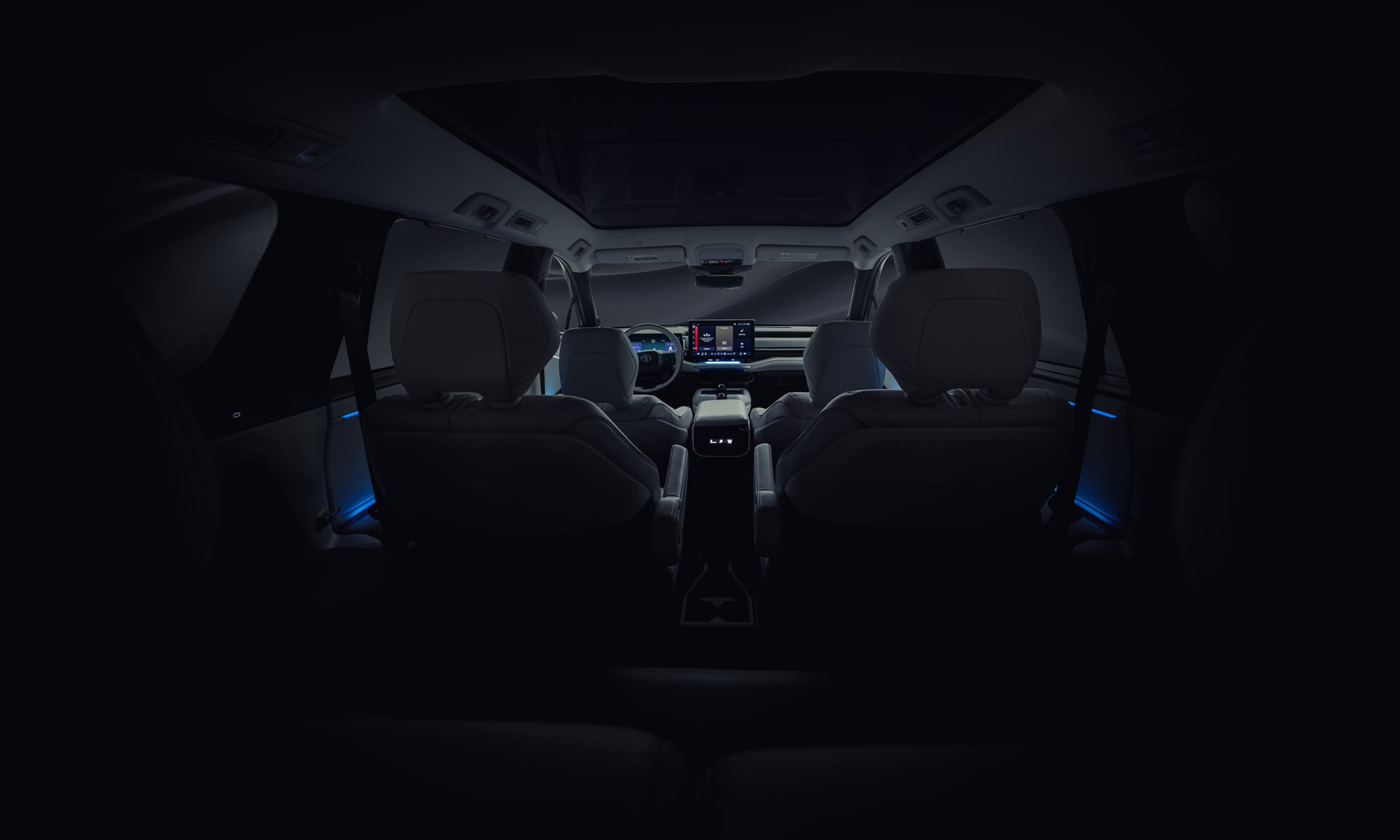
Toyota has dropped a mysterious teaser, with multiple reports suggesting a large, three-row electric SUV could be on the horizon.
Toyota USA released the single, dimly lit rear-view image under the tagline: “Something New is On the Horizon”. From the silhouette, it looks like a full-size SUV with a boxy, rugged stance that hints at LandCruiser vibes. Wide fenders, roof rails, a shark-fin antenna, and a wraparound LED tail-light bar give it a commanding presence, while a brief animation shows oversized head restraints and a blue-lit infotainment display inside.
Toyota has confirmed plans to build two three-row electric SUVs at its Georgetown, Kentucky plant. While the name isn’t official, speculation points to bZ5X, a potential six- to eight-seater roughly the size of a Kluger.
If this turns out to be one of those models, it could mark Toyota’s first full-size, high-riding EV with three rows, appealing to families and off-road enthusiasts alike. For now, all we have is a hint of what’s coming – but for those watching the EV 4×4 space, this could be a model worth keeping an eye on.
Late last year, Toyota appeared to signal an electric HiLux was in the works, after a leaked slide from the 2025 Japan Mobility Show revealed two new pickup silhouettes alongside the bZ4X EV, one labelled as a BEV.
For now, the electric HiLux for general sale remains unverified, though a mining-only electric prototype is currently being trialled.
The Nissan Patrol GQ and GU remain two of Australia’s most respected 4×4 platforms.
They are tough, simple and incredibly capable, and their reputation for reliability has turned them into icons for touring, towing and remote travel. These Patrols have earned their place in Australian off-road history because they respond exceptionally well to modification, and they continue to outperform many newer vehicles in the rough stuff.
But time, heavy loads and constant off-road punishment begin to show the limits of factory components. Many GQ and GU owners fit bigger tyres, lift kits, barwork and touring setups that place extra strain on suspension arms, mounts and geometry. The brilliance of the Nissan Patrol’s off-the-shelf platform exists in truly rare air, but unlocking its full capability often means reinforcing it with stronger, modern components.
This is where Superior Engineering becomes one of the most trusted names in the Patrol world. Their engineering team has spent years developing high-strength Patrol upgrades that improve articulation, correct geometry, reduce wear and strengthen the vehicle where it needs support. The goal is not to change the character of the Patrol; the goal is to give owners a safer, more predictable and more capable vehicle that handles serious off-road conditions and long-distance touring.
With the help of Superior Engineering, we have put together a foundational guide for building a GQ or GU Patrol that remains true to its roots while performing at a level that matches modern expectations.
Top 5 upgrades from Superior Engineering
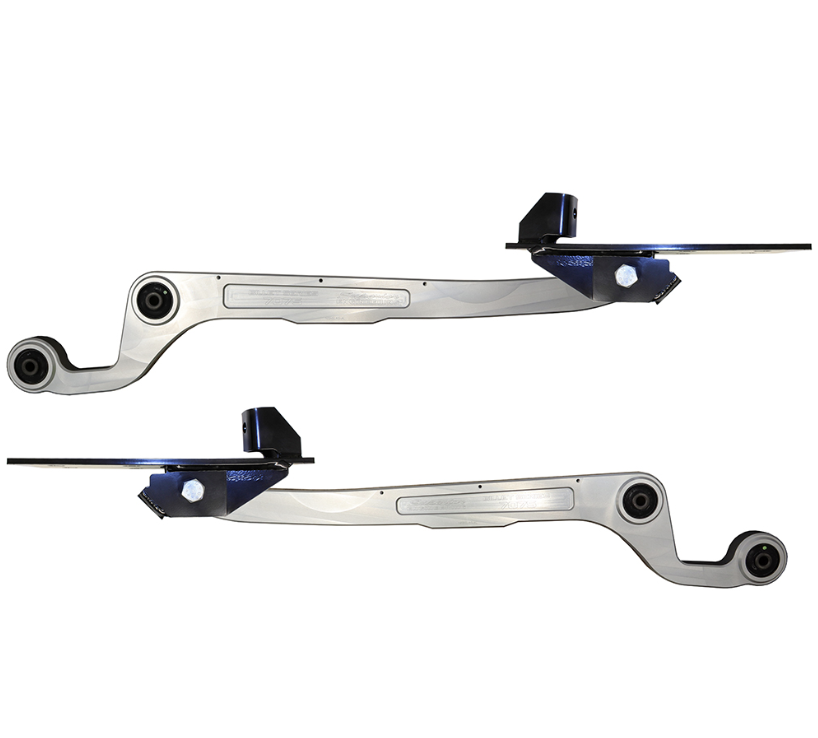
1. Billet Hybrid Radius Arms
The factory radius arms on GQ and GU Patrols are a known limitation once larger tyres, suspension lifts and increased articulation are introduced. Superior Engineering’s Billet Hybrid Radius Arms are designed to correct caster, strengthen the front end and significantly improve handling in modified vehicles.
These arms are machined from high-grade billet material for exceptional strength and durability. Their hybrid design corrects geometry on lifted Patrols, restores steering feel and reduces premature tyre wear. For owners stepping up to 35-inch tyres or long-travel suspension, upgraded radius arms become one of the most important foundational changes for stability and on-road control.
2. Shock Reservoir mounts
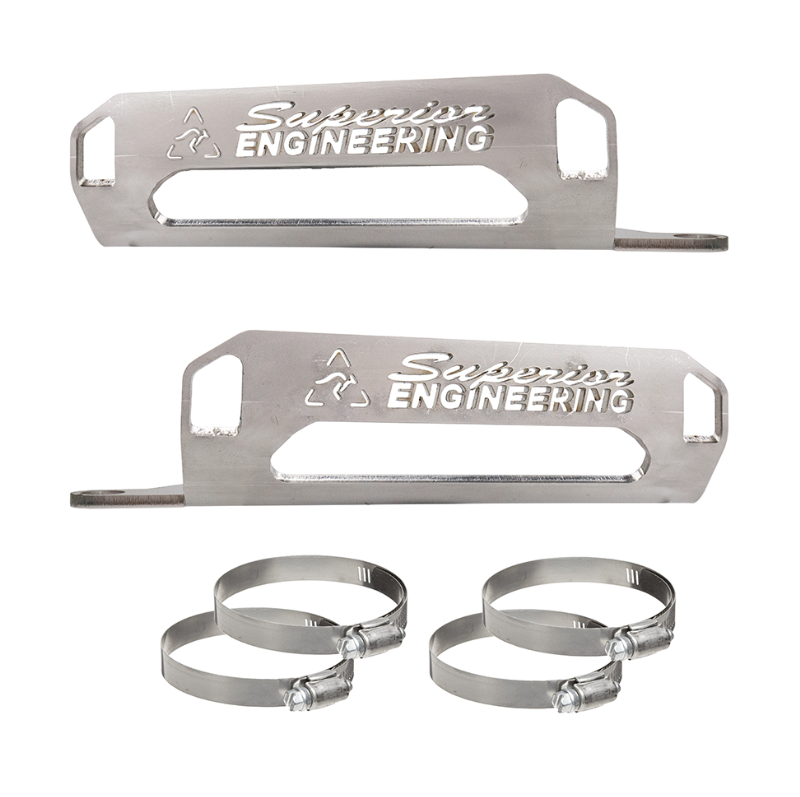
Upgrading a GQ or GU Patrol with remote-reservoir shocks often leaves owners improvising mounts with zip ties or clamps, as the factory design provides no dedicated points. Superior Engineering’s Res Mounts offer a secure, vehicle-specific solution, keeping reservoirs protected, supported and clear of moving suspension components. They reduce the risk of hose damage and improve long-term reliability, making them essential for touring and high-articulation setups.
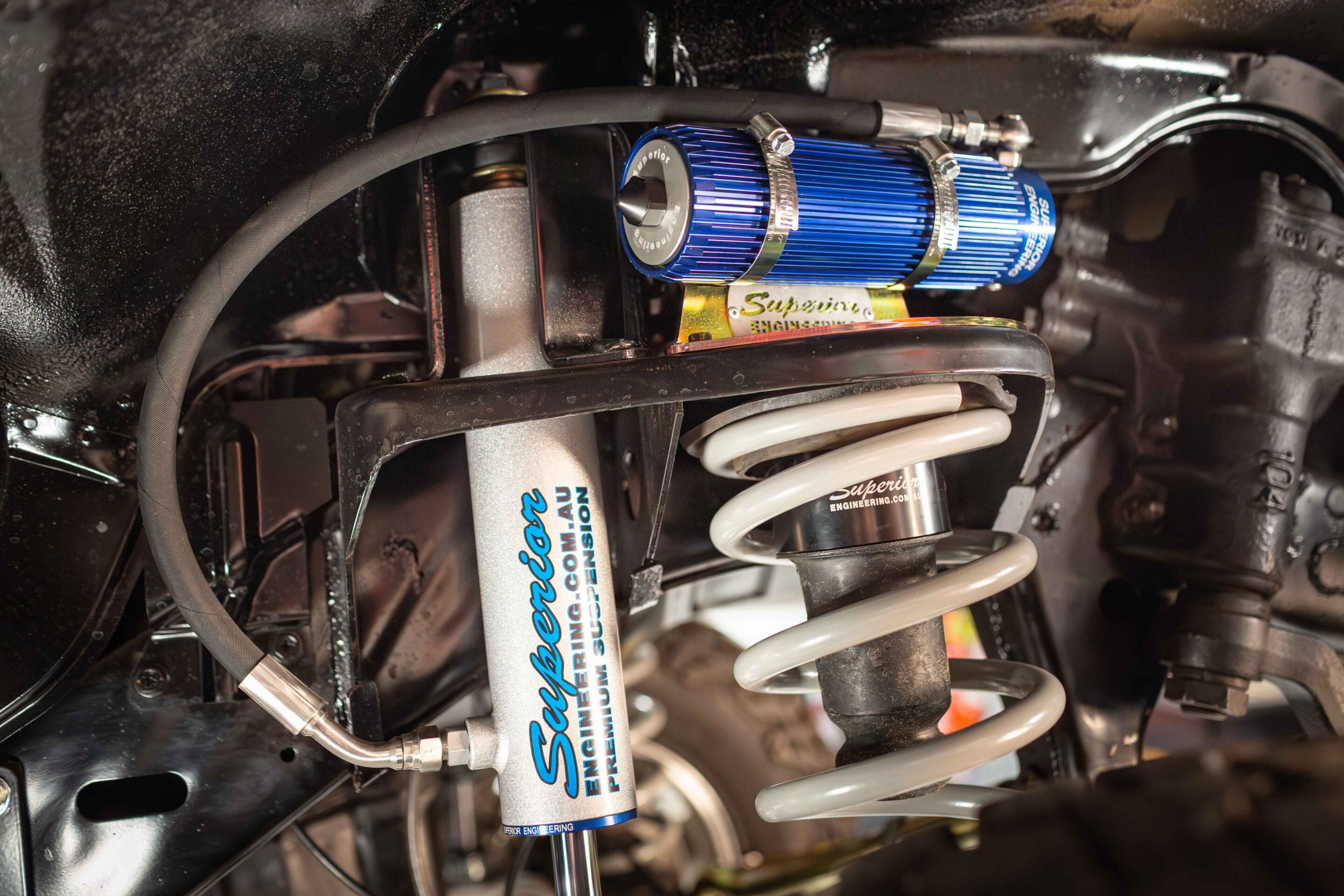
3. Shocks
Shocks play a major role in a Patrol’s handling, comfort and off-road stability. Superior Engineering offers a range of shocks tuned specifically for GQ and GU weight, wheel travel and common lift heights.
These shocks are built with heavy-walled bodies, high-quality valving and corrosion-resistant finishes to withstand serious off-road punishment. Whether the vehicle is tackling slow, rocky crawls or long, corrugated touring roads, upgraded shocks help control body movement, stabilise loads and deliver a more comfortable experience. Upgraded shocks are one of the most noticeable improvements any Patrol owner can make.
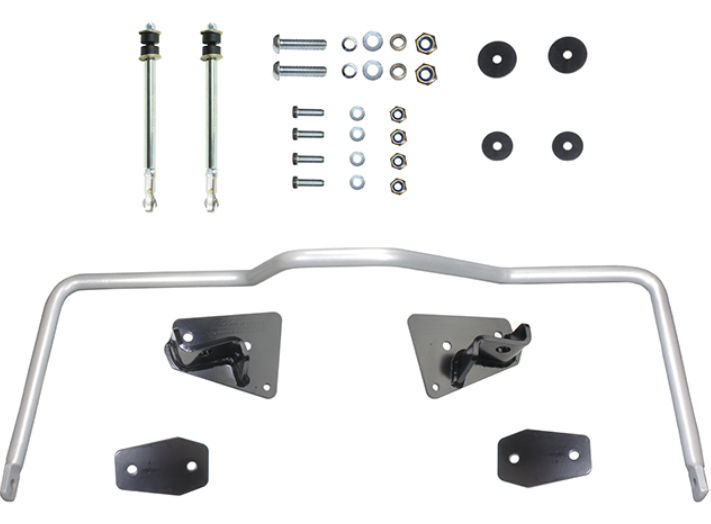
4. Superflex Sway Bars
The Patrol’s articulation is legendary, but factory sway bars limit movement once the vehicle is upgraded for off-road capability. Superior Engineering’s Superflex Sway Bars are designed to maintain on-road stability while significantly increasing wheel travel off-road.
These bars allow the suspension to move more freely, keeping tyres on the ground and improving traction on uneven terrain. The result is better flex without compromising everyday drivability. For GQ and GU owners who explore rugged tracks or compete in off-road events, Superflex Sway Bars unlock a level of performance the factory setup cannot achieve.
5. Control Arms
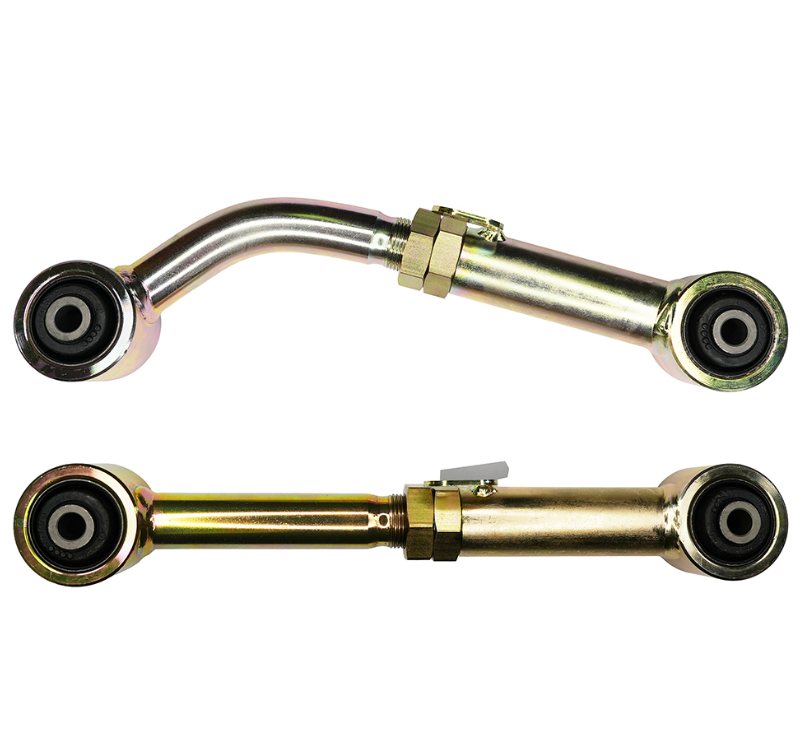
Control arms are a critical component for maintaining correct suspension geometry under load or lift. Superior Engineering’s control arms for the Patrol platform are built from high-strength materials and engineered to handle the increased stresses associated with modified vehicles.
These arms improve alignment, reduce unwanted axle movement and enhance overall durability. They are particularly important for lifted Patrols or vehicles carrying heavy touring setups. With upgraded control arms, the Patrol maintains more consistent geometry and better handling both on the road and in demanding off-road environments.
The Nissan Patrol GQ and GU remain two of the most capable and respected 4×4 platforms in Australia.
Their strength and simplicity are major reasons they continue to dominate in remote travel, heavy towing and recreational off-roading. But real-world use, modifications and age create predictable weaknesses that benefit from modern engineering solutions. Superior Engineering does more than supply replacement parts. They deliver well-tested, platform-specific upgrades that strengthen the Patrol where it needs improvement while keeping the vehicle’s iconic character intact.
The purpose of these upgrades is not to create a wild or overbuilt Patrol. It is to ensure owners can explore, tour and work with confidence, knowing the vehicle is reinforced for the harsh conditions Australia is known for. Whether preparing a GQ or GU for family touring, weekend adventures or serious off-road trails, the right combination of radius arms, mounts, shocks, sway bars and control arms will transform how your Patrol drives and performs.
With guidance from 4×4 Australia and the engineering expertise of Superior Engineering, Patrol owners can build a stronger, safer and more capable rig that stays true to its legendary reputation.
Australia’s 4×4 ute market in 2026 has never been more accessible, with a new wave of budget-friendly dual-cab options combining real-world capability with affordable pricing.
From tried-and-true workhorses like the Mahindra Pik‑Up and GWM Cannon to newer arrivals such as the Foton Tunland and MG U9, buyers can find utes that handle job-site tasks, towing and off-road adventures without breaking the bank. Even potential upcoming models like the JMC Vigus and JAC Hunter PHEV promise to expand the segment further, giving the segment more choice than ever.
To see which 4×4 ute currently on sale in Australia comes out on top overall, check out our full 4×4 Ute of the Year coverage 👇
GWM Cannon / Cannon Alpha
- From $37,490 drive‑away
The GWM Cannon and its more premium Cannon Alpha sit near the front of the pack when it comes to the cheapest way into a new 4×4 ute in Australia.
Base Cannon 4×4 dual‑cab models start from about $37,490 driveaway and climb through higher specs and trim levels into the $40K+ range. Larger Cannon Alpha diesels push into the mid‑$40k to low‑$50k bracket, and plug‑in hybrid versions – offering strong combined torque and fuel‑saving benefits – sit higher again.
Engine choices typically centre on a turbo‑diesel in the 2.0 to 2.4L class, with outputs around 120 to 135kW and 400 to 480Nm depending on tune and variant. These figures aren’t class‑leading but are well suited to touring and work, especially when paired with part‑time 4WD, low range gears and selectable drive modes. Payloads and towing capacities align with segment norms, and with mainstream dealer backing the Cannon family is worth a look if budget is tighter but capability matters.
JAC T9
- From $39,990 drive‑away
The JAC T9 has been aggressively priced via dealer promos, bringing its diesel 4×4 dual cab into the same orbit as the Cannon and other value choices.
With a 2.0L turbo‑diesel making around 120kW and 410Nm, tied to an eight‑speed automatic and a part‑time 4×4 system with rear diff‑lock, it’s a straightforward work ute that won’t feel out of its depth towing trailers or working unsealed roads.
Limited‑time pricing for the Oasis starts around $39,990 drive‑away, with better‑equipped Haven models closer to the mid‑$40K mark – putting it squarely in the range of tradies and small business buyers wanting capability at a competitive price point. Real‑world towing capacity is listed at 3200kg, and payload figures are respectable for the price bracket, making the T9 a decent entry‑level proposition.
KGM Musso
- From $42,500 drive‑away
The KGM Musso blends traditional ladder‑frame strength with a dependable 2.2L turbo‑diesel, producing 133kW and 400Nm.
Its part‑time 4×4 hardware includes high/low range gearing and a rear differential lock, giving drivers confidence whether it’s towing, off‑road or tackling slippery surfaces. Braked towing capacity sits at 3500 kg, while payloads hover around the one‑tonne mark depending on specification – enough to comfortable haul trailers, gear, or weekend toys without overreaching the limits of the chassis.
While the current generation may be a little long in the tooth, the Musso’s engine and drivetrain are engineered for real‑world work, offering durability and reliability over flashy features. The cabin is straightforward, controls are intuitive, and maintenance is simple, making it ideal for those who want a functional, no‑nonsense ute. Its award history and strong reputation in the market underline a balance of value, utility, and everyday usability.
LDV T60 / Terron 9
- From $42,990 drive‑away
The LDV T60 and rebadged Terron 9 sit slightly above the ultra‑budget entries but bring more punch under the bonnet.
A twin‑turbo diesel – around 160kW and 500Nm – gives the T60 stronger torque and mid‑range performance than most other value diesels, which you’ll appreciate on hills and loaded highway runs. The Terron 9 comes with a 2.5L turbo-diesel that pushes out a slightly higher 163kW and 520Nm. Braked towing typically hits 3500kg, and recent pricing moves have seen entry 4×4 models start from about $42,990 drive‑away on promotions – so keep an eye out.
This package includes more standard driver assists – such as autonomous emergency braking, lane assist and similar tech – which can make highway driving more relaxed. Ride and refinement step up a notch compared with pure budget rivals, which is one reason the T60/Terron 9 sits in the “value plus” category rather than strictly the bottom‑end bracket.
Foton Tunland
- From $42,990 drive‑away
The Foton Tunland is a notable new arrival, bringing a hybrid‑diesel twist to the budget ute battleground.
4×4 variants start at $42,990 drive‑away for the V7‑C 4×4 work‑focused model, moving up to $45,990 for the more comfortable V9‑L 4×4 and $49,990 for the fully‑loaded V9‑S 4×4. All use a 2.0 L turbo‑diesel with a 48‑volt mild‑hybrid assist producing 120kW and 450Nm, linked to an eight‑speed ZF automatic and a part‑time 4×4 with selectable terrain modes.
Payloads can exceed 1000kg on leaf‑spring variants, while lifestyle‑oriented models swap in multi‑link rear suspension for a bit more comfort. Towing is rated at 3500 kg, ground clearance is generous (240mm) and wading depth respectable (700mm) – all backed by a seven‑year, unlimited‑kilometre warranty.
Mahindra Pik‑Up
- From $34,500 drive‑away
Let’s not forget about the Mahindra Pik‑Up, a true budget undercut in the 4×4 market.
Its 2.2L turbo‑diesel produces 103kW and 320Nm, sent through a six‑speed manual or automatic and a part‑time 4WD system. Payloads hover near a tonne and towing is 2500kg, lower than competitors but still usable for on‑farm or light off‑road tasks. The Pik‑Up’s value lies in simplicity, reliability and low price, though support networks are smaller than mainstream brands.
MG U9
- From $52,990 drive‑away
Much like its LDV Terron 9 twin, the MG U9 sits above the bargain basement entries in price but delivers refinement, torque and towing.
The 2.5L turbo‑diesel produces 160kW and 520 Nm, with an eight‑speed automatic and part‑time 4×4. Braked towing sits at 3500kg, payloads in the mid‑range, and cabin tech includes larger screens and safety features not found on budget competitors. It’s the choice for buyers wanting a balanced work-and-tourer dual‑cab.
Coming soon
These two models are set to enter or expand Australia’s budget 4×4 ute segment soon, bringing more choice and competition to buyers seeking dual-cab utes that combine practical off-road capability, towing and payload with affordable pricing. Their arrival is likely to shake up the lower end of the market while introducing hybrid and modern powertrain options for cost-conscious tradies and weekend adventurers alike.
JMC Vigus
- Expected in 2026
The JMC Vigus is a turbo-diesel dual-cab with an eight-speed automatic transmission. It’s positioned as a lower-cost competitor to the GWM Cannon and KGM Musso. Pricing and exact launch timing are yet to be confirmed, but it promises to offer practical capability with basic safety and infotainment features.
JAC Hunter
- Expected in 2026
The JAC Hunter PHEV plug-in hybrid is expected in 2026, offering electrified 4×4 capability, strong torque, and improved running efficiency. While not strictly “cheap,” it broadens the segment with a modern hybrid alternative for tradies and weekend adventurers seeking long-term savings and lower emissions.
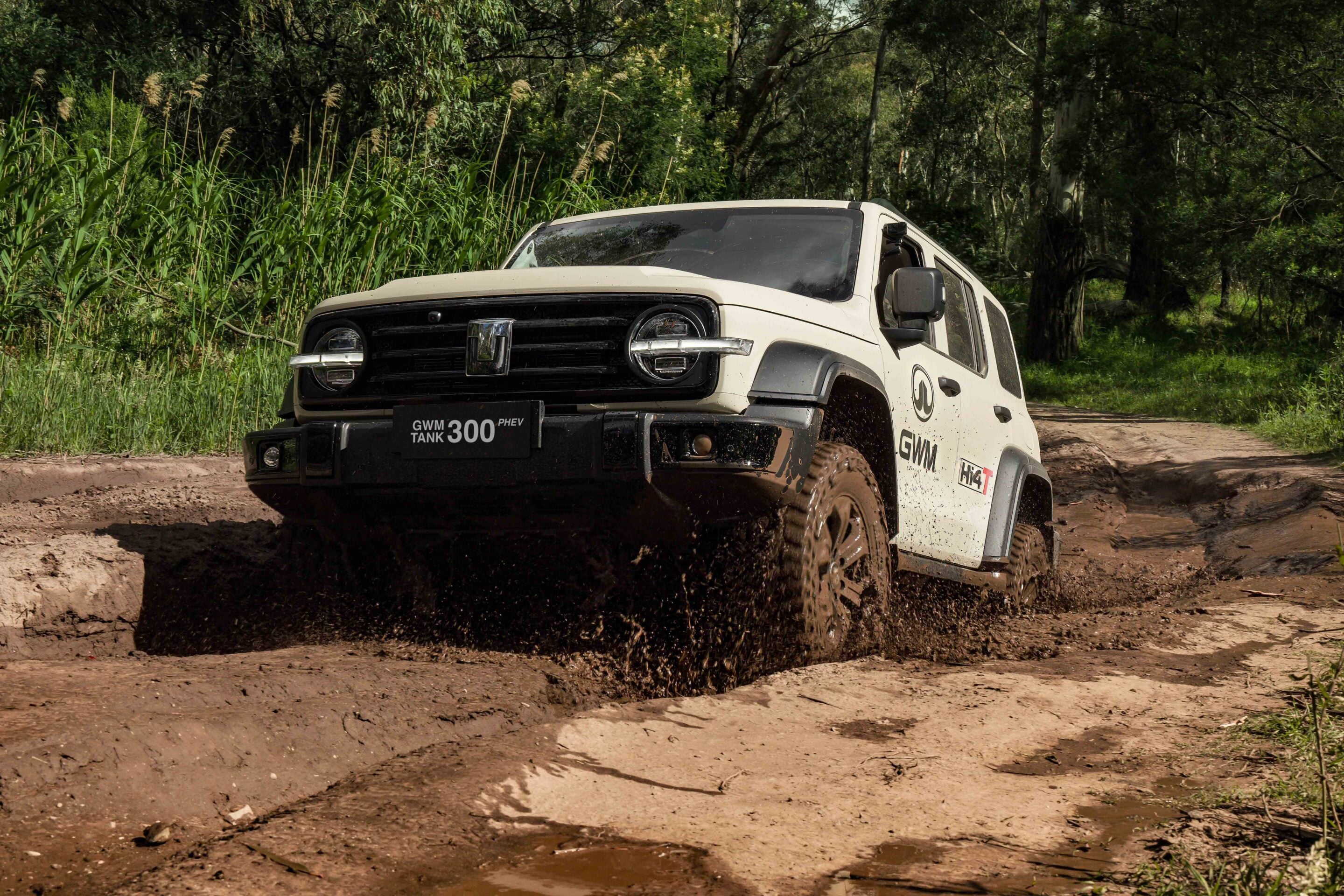
GWM has confirmed the Tank 300 Hi4-T plug-in hybrid for Australia, with limited-time driveaway prices starting at $55,990 for the Lux and $59,990 for the Ultra. Vehicles will reach dealerships from early March 2026, with the Ultra grade arriving first and the Lux grade following in April.
The Hi4-T pairs a 2.0‑litre turbo-petrol engine with a 120kW electric motor, delivering 300kW and 750Nm. Power feeds a mechanical 4WD system with low-range transfer case and front and rear locking differentials, retaining full off-road capability.
As with GWM’s other hybrid models, the Hi4-T can operate in EV, hybrid or petrol modes, switching automatically depending on terrain and load. This is designed to reduce fuel use around town while giving smoother torque control on sand, mud and technical climbs. GWM notes the Hi4-T is the only PHEV to tackle Beer O’Clock Hill, addressing concerns over hybrid off-road performance.
“With the Tank 300 Hi4-T PHEV, we’re continuing to expand our cutting-edge plug-in hybrid technology providing genuine off-road strength, all at a highly competitive price point,” said John Kett, GWM’s Chief Operating Officer.
“As demonstrated across our other PHEV variants, we remain committed to delivering vehicles where customers can benefit from strong EV-only range, fast charging, V2L and true mechanical 4×4 capability. As the New Vehicle Efficiency Standards (NVES) are likely to change the Australian automotive landscape like never before, GWM stands ready to deliver more technology for less.”
The Tank 300 Hi4-T offers up to 105km electric range (NEDC), combined fuel use of 1.9L/100 km, 3000kg braked towing, fast charging via 50 kW DC CCS2 (30 to 80 per cent in 24 minutes) and Vehicle-to-Load (V2L) capability for external devices.
With the Hi4-T, GWM’s Australian Tank 300 range now spans petrol, diesel, hybrid and plug-in hybrid variants. Full specifications will be confirmed closer to launch.
The Kia Tasman was always going to be judged harshly in Australia, but the early conversation wasn’t centred on towing figures, low-range performance or payload. Instead, it was the front end – and whether Kia got it wrong – that dominated the noise.
In a dual-cab market where buyers are conservative and brand loyalty runs deep, slow early sales can apply real pressure. When a new ute struggles to gain traction, manufacturers start looking for answers. And the Tasman’s face has quickly become the most questioned part of the package – rightly or wrongly.
Bold or blunder?
From the moment it was revealed, the Tasman’s front end split opinion. Slim, wide-set headlights, squared panels and heavy plastic cladding pushed it well away from the established ute playbook. Just look at our social media pages whenever we post about it!
Some see it as refreshing. Plenty more see it as awkward – especially parked next to fan favourites like the Ford Ranger and Toyota HiLux. In a segment where looks matter because they signal strength, durability and aftermarket potential, the Tasman doesn’t immediately pass the pub-carpark test – at face value, at least.
The reaction hasn’t just been online noise either. Styling criticism has featured heavily in early reviews, often overshadowing what’s otherwise a highly capable ladder-frame ute. It’s third-place finish at our recent 4X4 Ute of the Year test highlighting this very point.
Kia’s brief was never to build a Ranger clone. The Tasman was designed to look functional and honest – flat panels, squared guards and materials chosen to cope with scratches rather than avoid them.
From a 4×4 perspective, some of that makes sense. Plastic cladding is cheaper to replace. Squared arches allow tyre clearance. Simple forms work better with bars, winches and recovery gear. The issue is that ute buyers still expect a certain visual appeal. The Tasman’s narrow lighting signature and unusual proportions don’t scream “touring rig” in a traditional sense – and perception matters when you’re asking buyers to switch brands.
Signs Kia is listening
Kia hasn’t publicly backtracked on the design, but subtle changes suggest it’s paying attention.
Colour-matched fenders have already been floated as a way to soften the look, and concept-style previews have shown the Tasman with a wider stance and more conventional front treatments. Even imagery tied to fleet or military-style applications shows alternative headlight and grille designs that look far closer to what ute buyers expect. None of that confirms a redesign – but it does suggest Kia isn’t married to the original look forever.
In the 4×4 world, redesigns are expensive and slow. Crash testing, ADR compliance and accessory integration all limit how quickly a front end can be changed. That said, slow sales change priorities. If the Tasman continues to underperform in a market as critical as Australia, Kia has every reason to bring forward visual updates – even if the mechanical package remains untouched.
Recent reports indicate a “major redesign is coming” but a mid-cycle facelift is unlikely to land until at least 2027 – even 2028. This would be the natural point for a more noticeable front-end revision, but smaller changes could appear earlier to improve showroom appeal.
- Very likely (within the model cycle): A facelift that tones down the divisive elements – lighting, grille proportions, guard treatments – feels inevitable. Kia won’t abandon the Tasman’s identity, but it may sand off the sharp edges.
- Unlikely to be immediate: There’s little chance of a rushed redesign. Kia will give the Tasman time to find its feet, supported by accessories and trim variations. Expect factory bars, skid plates, colour-matched panels and special editions to do much of the visual heavy lifting before any official facelift lands.
The Tasman’s fundamentals are sound, but in Australia’s dual-cab market, looks still matter – especially up front. If slow sales persist, styling will most likely be one of the first levers Kia pulls.
A redesigned front end won’t happen overnight, but the signs suggest Kia is already thinking about how to make the Tasman more palatable to a 4×4 audience that values toughness, familiarity and mod potential over design experimentation.
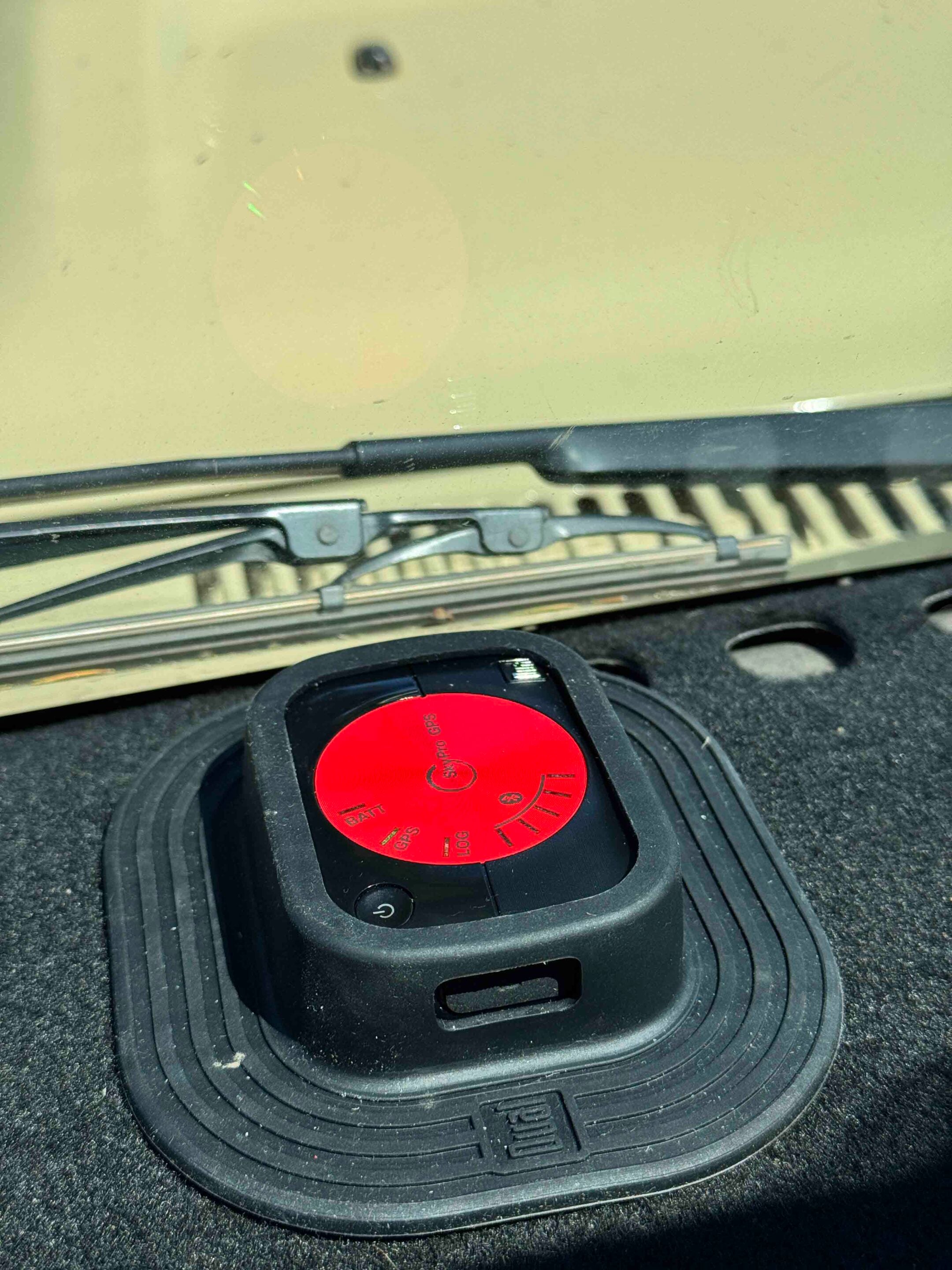
I bought our first Dual GPS around 20 years ago and it’s still going strong today. That original unit was the XGPS150A, which you can still buy – and it’s about $80 to $100 cheaper than the latest version, the XGPS160 which retails for $325.
About six months ago I picked up an XGPS160, but it didn’t get off to a great start. I used it once, left it in the vehicle with a flat battery, and when I went to charge it last month… nothing. After a few emails back and forth with the retailer – Mendelssohn Pilot Supplies in Victoria – I ran through some fault-finding steps, but no luck. I sent the unit back and had a brand-new replacement in my hands within days. So, the warranty is solid and the service was first class.
Why a standalone Bluetooth GPS still makes sense
So, who actually needs a standalone GPS when most phones now have dedicated GPS chips? For starters, the latest Wi-Fi-only iPad doesn’t come with one, and plenty of other tablets and devices are the same. And if you prefer to run a laptop or in-car computer for mapping and navigation, you’ll definitely need a separate GPS receiver. That’s where the Dual units earn their keep.
The latest XGPS160 offers 99 channels for satellite reception and can track both the long-established US GPS network and the newer Russian GLONASS system simultaneously. It can connect to up to five Bluetooth devices – Apple or Android – at once, and its internal rechargeable battery delivers up to 10 hours of use with a single device connected.
The in-built receiver is a high-sensitivity WAAS unit with fast satellite acquisition and 10Hz positioning updates (that’s up to 10 fixes per second). In practice, that means excellent accuracy and reliable tracking even in fast-moving environments such as an aircraft – or a very enthusiastic run in a quick 4×4. With a claimed operating limit of 1150mph, it’s safe to say it won’t be troubled in a Troopy.
Performance, app and day-to-day use
The XGPS160 also comes with a handy GPS Status Tool app, available free on the iTunes App Store. The app lets you toggle automatic route recording, export stored log files, and view detailed receiver data, including your current location, satellite count and signal strength, battery level and charging status, and confirmation that the GPS is connected to your Bluetooth devices.
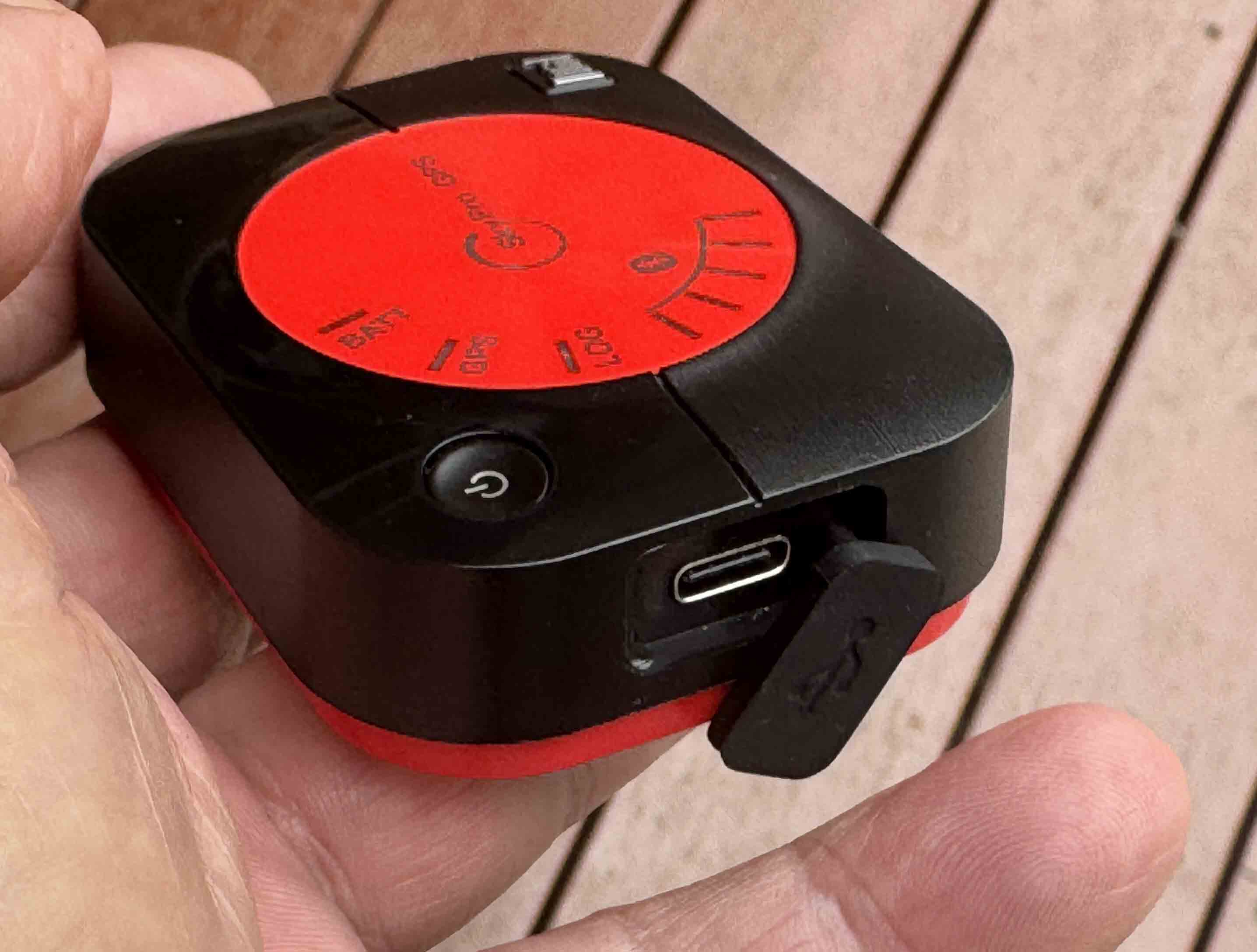
The latest version of the Dual GPS is slightly bigger and a touch heavier than the old model – still only 71 grams – but it remains small enough to sit almost anywhere on your vehicle’s dash. It comes with a non-slip pad that holds the unit securely whether you’re in a 4×4, a boat or an aircraft, and the wrap-around cover adds a bit of extra protection from bumps and drops. The new model also switches to a USB-C charging port, replacing the older Mini-USB connection.
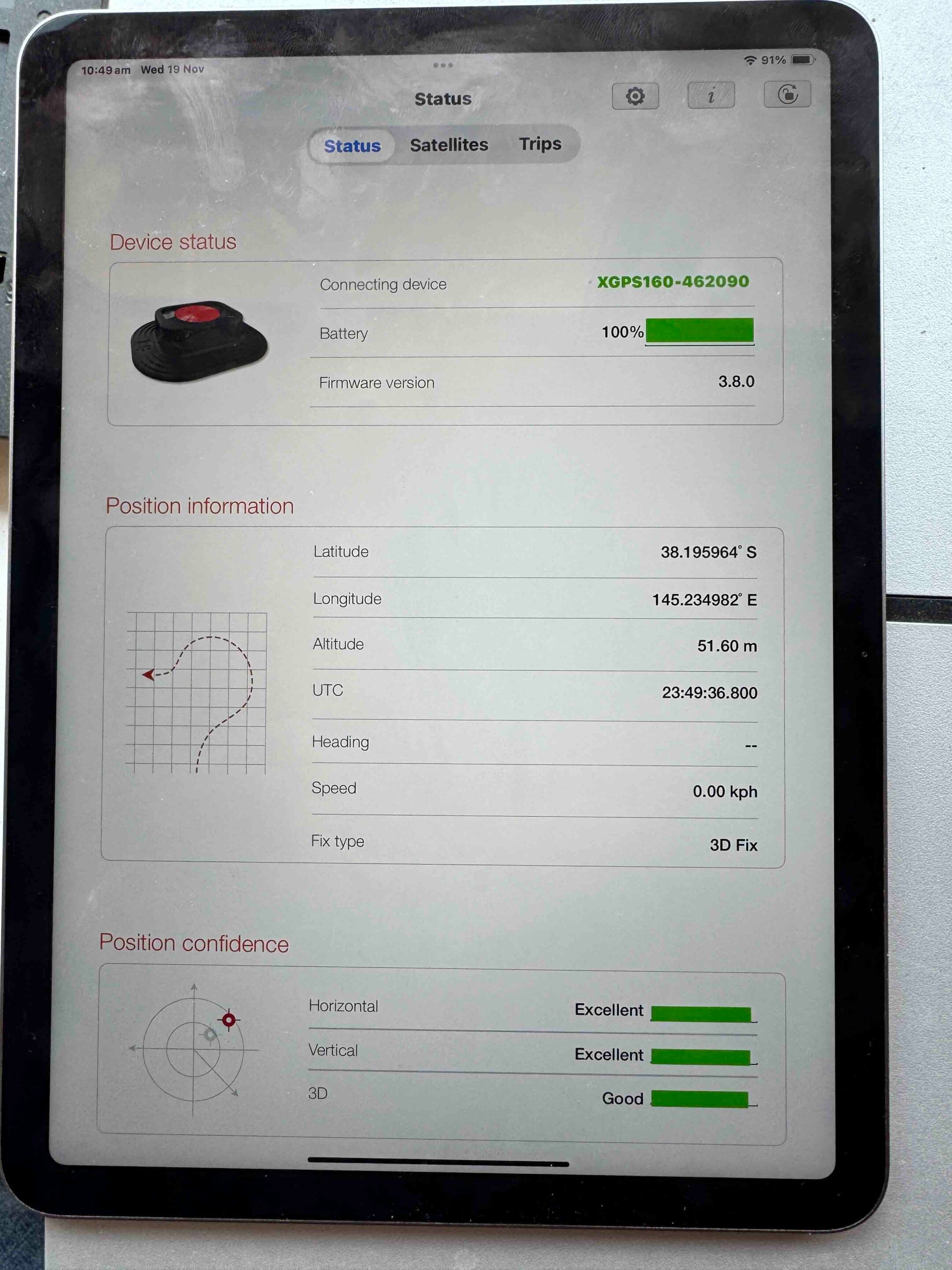
I’ve had this replacement unit for a few weeks now and it’s been faultless. Pairing it with my iPad was quick and simple, and it locked onto satellites in under 30 seconds. Thanks to the extra receiving channels over the older model, the XGPS160 has maintained constant positional updates without a single dropout.
The app works well too, giving a fast read on satellite count, signal accuracy and more. It’s covered by a one-year warranty and all up, I’m pretty impressed.
A ute driver heading from Caboolture to the Sunshine Coast on the Bruce Highway had an unwelcome passenger, when a large red‑bellied black snake climbed onto the vehicle’s bonnet.
As reported by 7NEWS, the reptile – which was close to two metres long – stayed there for several kilometres before disappearing, most likely into the engine bay.
Red‑bellied black snakes are widespread along eastern Australia, through Victoria, New South Wales, and up into Queensland – but it’s also found in parts of South Australia. They favour wetlands, creeks and bushland but are also found near urban waterways. They are venomous, though generally not aggressive – so bites are rare. These snakes are most active in warmer months and are strong swimmers, which explains why they often turn up in unexpected locations.
Similar incidents of hitchhiking snakes have been reported across Australia. Last year, a LandCruiser owner in Broome discovered an almost-two‑metre mulga snake tucked into the engine bay after a day at the beach; the reptile had climbed up via the front wheel while the vehicle was parked and was only removed after a professional snake catcher intervened.
How you respond to a snake encounter matters. Touring and off‑road guides advise keeping calm and backing away to give the snake space, because most will retreat if unthreatened. Never touch, capture or harm a snake; attempts to do so are illegal and are when most bites occur.
If you spot a snake near your vehicle or campsite, move people and pets away and, where available, call a licensed snake catcher rather than handling the animal yourself. A basic first‑aid kit with pressure bandages and proper training can also be invaluable if an incident does occur. These precautions are especially important in warmer months when snakes are most active.
Both roadside and bush encounters show snakes will take advantage of warm, sheltered spaces under bonnets and inside engine bays. Drivers exploring snake country should always inspect their vehicle before setting off – particularly if parked near scrub, watercourses or long grass – and, as mentioned, leave removal to trained professionals.
Image credit: 7NEWS
Australian buyers can now get the Ford F‑150 Lightning Pro at a significantly reduced price, as AusEV clears existing stock.
The trade-focused Lightning Pro, with a 98kWh battery, is currently available from $109,990 plus on-road costs, down from the usual $169,900. This follows Ford ending Lightning EV production in the US due to lower-than-expected demand.
Converted to right-hand drive by Advanced Manufacturing Queensland and distributed by AusEV, the Lightning Pro uses a dual-motor electric drivetrain producing 337kW and 1050Nm. Its 98kWh battery provides a claimed range of up to 436km (US EPA). The ute weighs just over 2700kg and has a 1000kg payload and 2500kg braked towing capacity, below that of popular turbo-diesel rivals.
The larger XLT variant, with a 131kWh battery, 433kW of power, and a range of approximately 582km, is not part of the current run-out deal, keeping the discount exclusive to the base Pro.
Reports earlier this month confirmed that the next-generation Ford F‑150 Lightning Extended Range Electric Vehicle (EREV) is expected to arrive in Australia in 2027. Unlike the battery-only Lightning, the EREV pairs electric motors with a petrol engine that acts solely as a generator, extending total range to more than 1125km while retaining bi-directional charging and vehicle-to-load capability.
Imported in left-hand drive, all EREVs will be converted to right-hand drive locally in Brisbane, and current Lightning stock will remain available until the new model arrives.
Chevrolet has outsold its key RAM, Ford and Toyota rivals to solidify its place at the top of Australia’s full-size ute segment, according to official VFACTS data.
The Silverado 1500 and 2500 combined for a 44.1 per cent market share in 2025, marking a 7.7 percentage point jump from 36.4 per cent in 2024, cementing the Silverado as Australia’s best-selling full-size truck.
The Silverado line-up in Australia features the 1500 LTZ Premium and ZR2, and the 2500 HD LTZ Premium. The Chevrolet Silverado 1500 is powered by a 6.2‑litre EcoTec3 V8 petrol engine, producing 313kW and 624Nm; while the 2500 HD features a 6.6‑litre Duramax turbo-diesel V8, delivering 350kW and a monstrous 1322Nm, providing serious heavy-duty capability for towing and hauling. The Silverado 2500 HD, in particular, now dominates the heavy-duty space, capturing more than 74 per cent of the 2500 market.
“2025 was a landmark year for GMSV, and these results are a direct reflection of the trust our customers and Dealer Network place in the Chevrolet brand,“ said Jess Bala, Managing Director, GM Australia and New Zealand.
“Australian customers have made Silverado the number one choice for those who tow, tour and work hard – recognising its unmatched capability and performance. Having recently celebrated GMSV’s five-year anniversary in market, this milestone underpins the strength of the Chevrolet brand across Australia.”
“We’ve seen growing numbers of buyers moving into the full-size truck segment, and they’re telling us they want vehicles that can comfortably tow large caravans and boats, haul serious loads and still deliver the refinement and technology they expect from a modern premium truck. Silverado ticks all of those boxes, and this market share result shows just how strongly it’s resonating,” added Bala.
GMSV expects demand for full-size trucks to continue growing, as more Australians seek vehicles capable of towing, carrying, and touring – without compromising on comfort, refinement, or in-cabin technology.
“With a growing appetite for full-size pick-ups across Australia, and Silverado now firmly established as the country’s number one full-size truck, we are exceptionally well placed,” said Greg Rowe, Director, Sales and Operations, GM Australia and New Zealand.