Reviews


Gallery 1
The Foton Tunland has appeared in Australia in fits and starts over the past 15 years, with several independent distributors each having a crack at selling the Chinese ute.
Auto giant Ateco took over the franchise in 2014, but its run with the Tunland was short-lived as the Cummins 2.8-litre diesel used at the time failed to meet incoming emissions regulations. Foton is back again – now under Inchcape – with an all-new Tunland to join Australia’s booming midsize ute market.
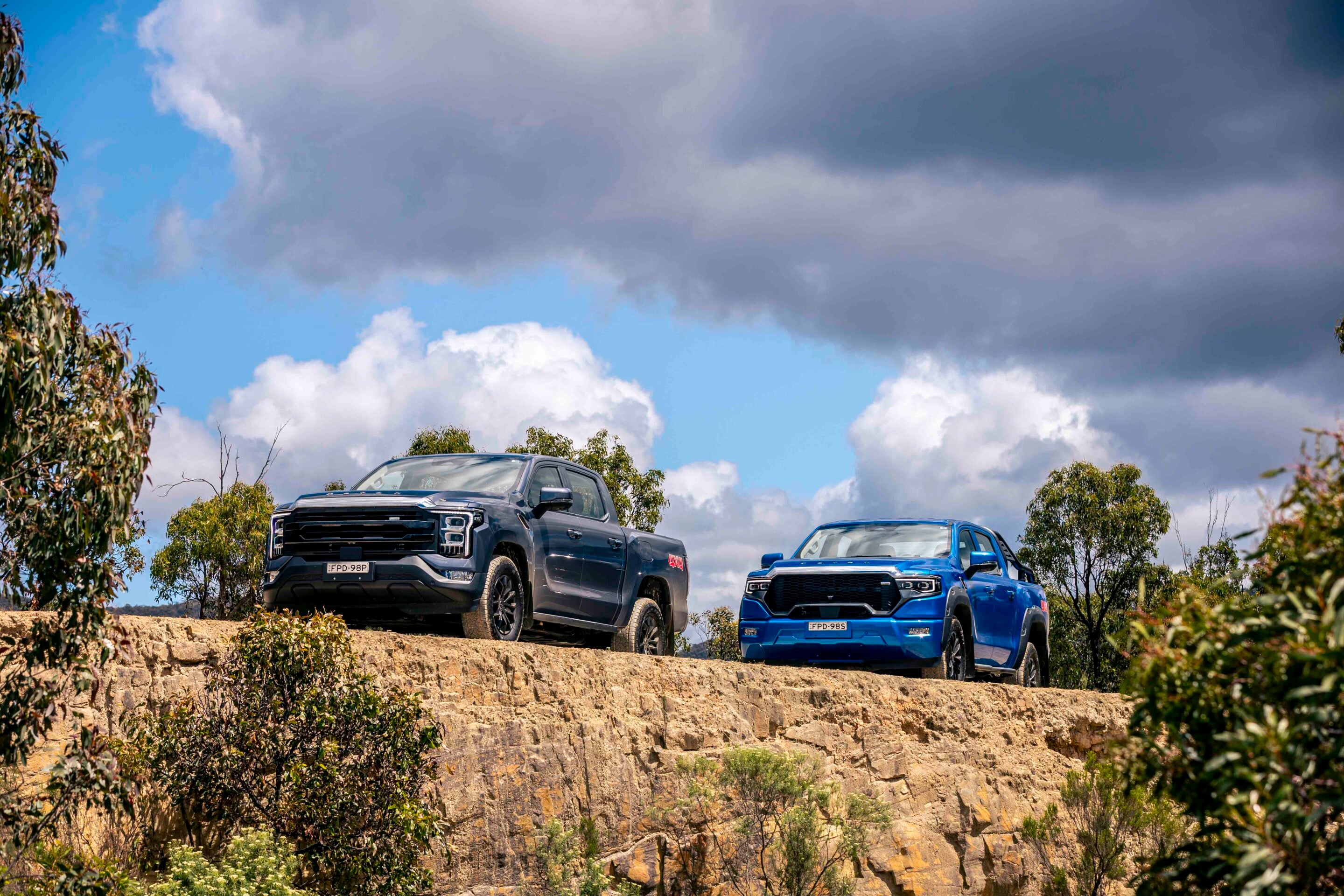
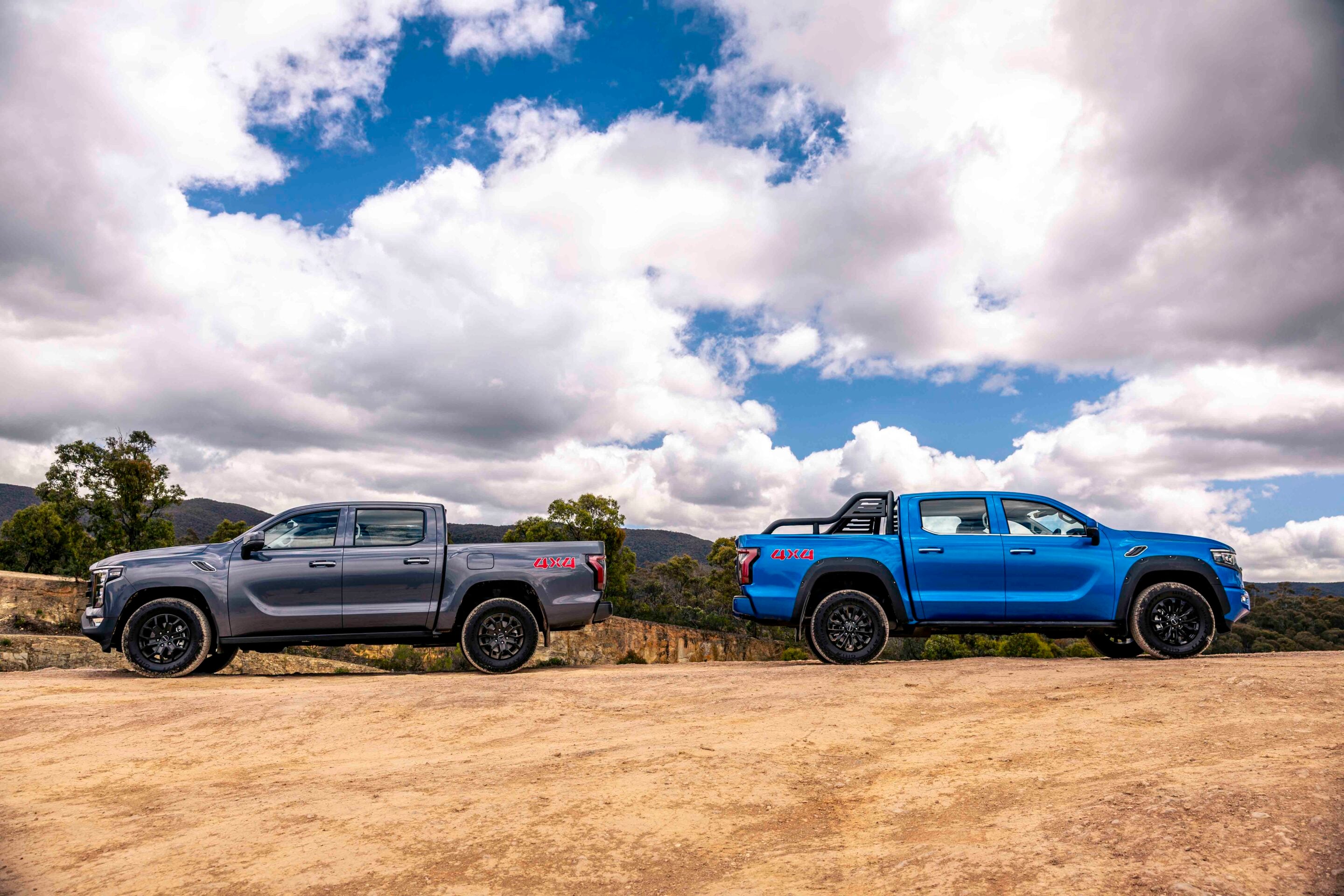
The 2026 Foton Tunland arrives as a four-model line-up split into two distinct grades: The entry-level V7 and the up-spec V9. Beyond the unique front-end styling and the addition of wheel-arch flares, the key difference between the two is that the V9 replaces the V7’s leaf-sprung rear end with a multi-link coil-spring set-up.
1
Foton Tunland pricing and model range
- V7-C 4×2: $39,990
- V7-C 4×4: $42,990 – Adds four-wheel drive, rear differential lock and additional drive modes
- V9-L 4×4: $45,990 – Adds multi-link rear suspension
- V9-S 4×4: $49,990 – Adds front and rear differential locks, panoramic sunroof and extra tech
All prices are plus on-road costs.
Powertrain performance
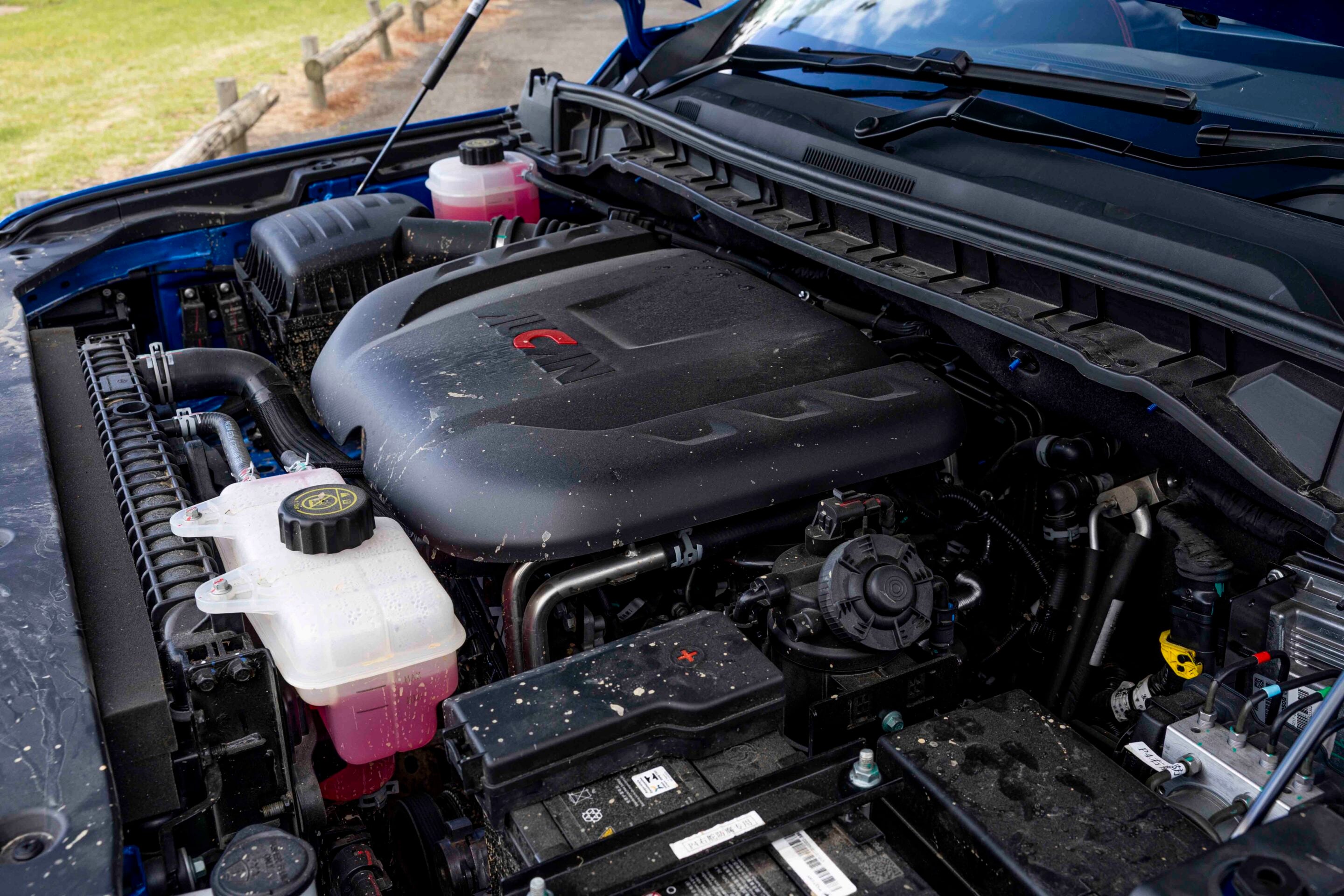
Both the V7 4×4 and V9-L 4×4 variants are powered by the same 120kW/450Nm 2.0-litre four-cylinder turbo-diesel backed by the popular ZF eight-speed automatic and a dual-range transfer case that also offers a 4×4 Auto mode. Both variants run a rear diff lock but no front locker, and drive modes include Eco, Standard, Sport, Sand, Mud and Snow.
All Tunlands run a 48-volt hybrid system. This is what some manufacturers call a mild-hybrid setup, although Toyota doesn’t apply the hybrid label to the 48-volt system in its diesel models. The system doesn’t offer EV-only propulsion and can’t be charged manually from an external source.
For a simple mild-hybrid system, it was surprising to feel the heavy deceleration from the battery-regeneration function in the driveline. It’s also a bit annoying, as it changes the way the vehicle coasts when you lift off the throttle.
1
While this new 2.0-litre engine isn’t manufactured by Cummins, as the previous 2.8 was, it’s claimed to have been co-developed with Cummins, which operates a diesel engine manufacturing facility in Beijing as part of a joint venture with Foton. The drivetrain’s performance reflects its modest outputs, but it gets the unladen Tunland along well enough. It’s no Ford Bi-Turbo in terms of acceleration, but it is relatively refined thanks to good cabin insulation.
We recorded slightly better fuel consumption in the V7 than the V9, although the V7 covered around 300km of highway running, while the V9 spent its time around town and on bush tracks.
The ZF auto offers little to complain about, and it’s pleasantly aided by paddle shifters behind the steering wheel for manual gear selection. A small gripe is that when engine speed drops below 1500rpm it creates a noticeable thrumming in the cabin. Because the transmission always shuffles into top gear for maximum efficiency, anything under about 90km/h triggers the thrumming as soon as it selects eighth. Yes, you can tap it back to seventh using the paddles, but it quickly shifts back to top. It’s not an issue at higher road speeds, but it’s much more noticeable around town.
Interior tech and comfort
The Tunland sits at the larger end of the midsize-ute spectrum, and that’s obvious once you climb inside – there’s plenty of room for passengers in both the front and rear rows. The seat trims are faux leather and on the firm side, with manual adjustment in the V7. The rear seat squabs fold upwards to create some handy storage space when they’re not occupied.
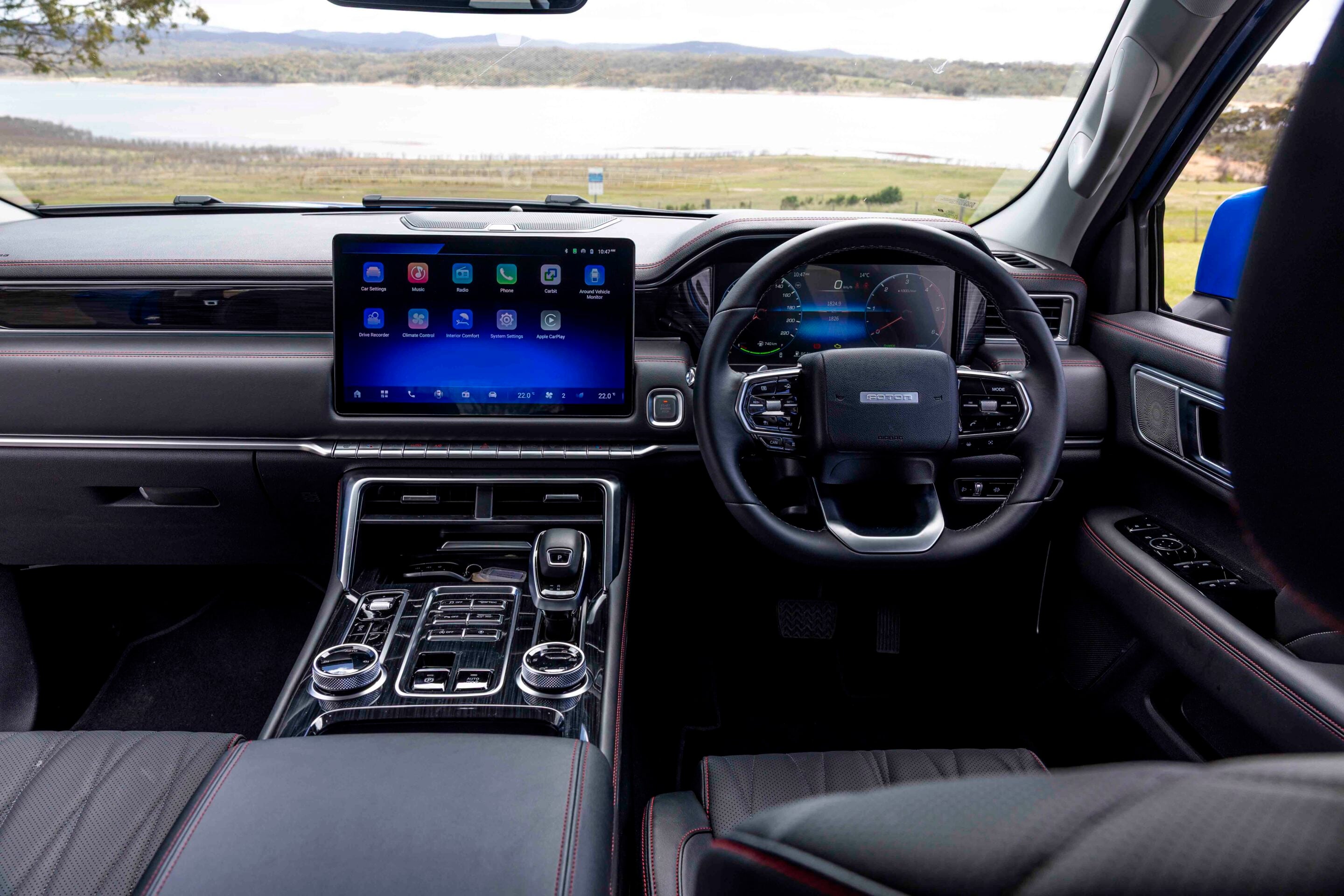
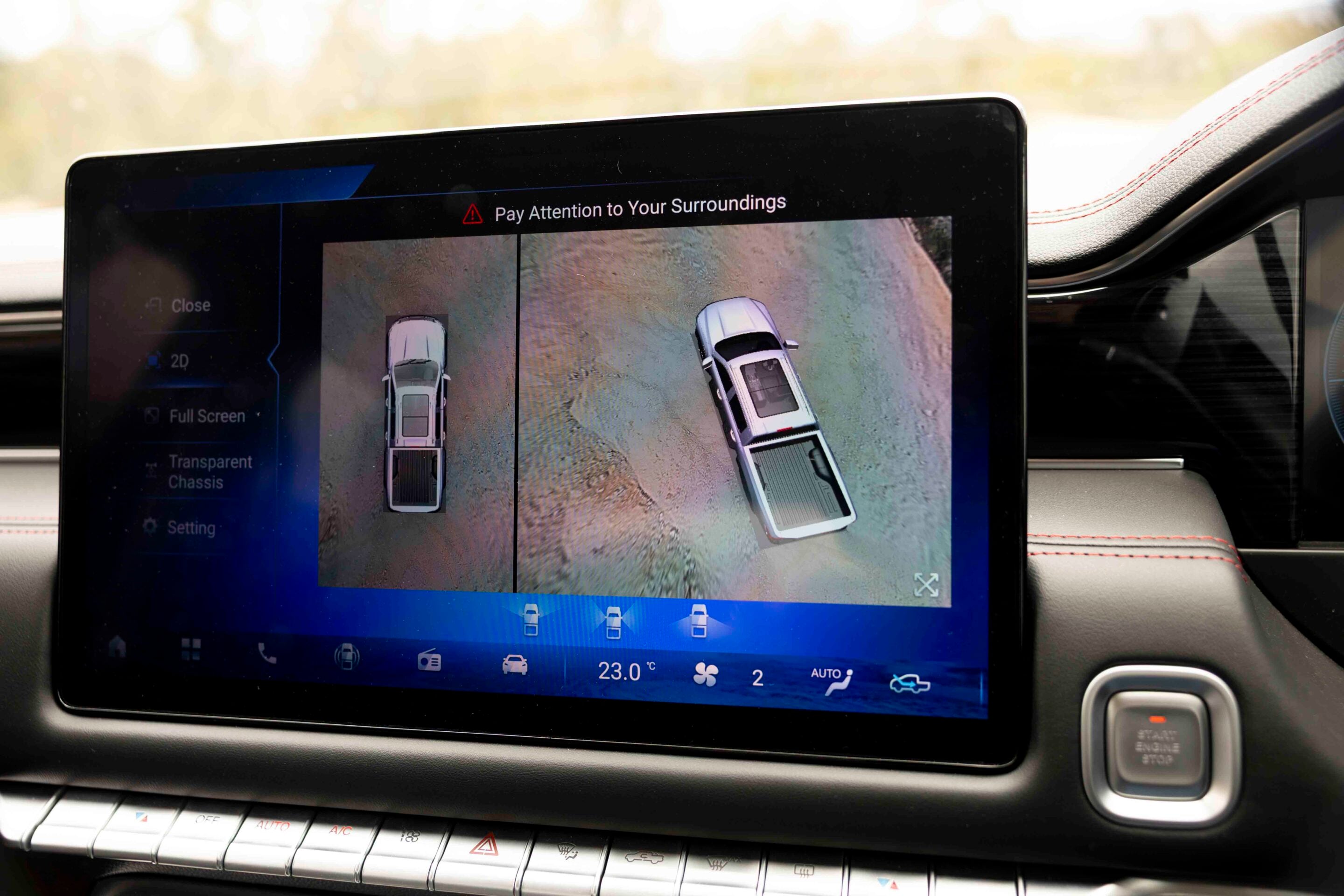
Ahead of the driver is a 12.3-inch digital instrument cluster, while a 14.6-inch multimedia screen dominates the centre of the dash. The system supports wired Apple CarPlay and Android Auto and includes in-built navigation. Connecting a phone for CarPlay requires finding the USB ports hidden under the centre console, and both are USB-A type only.
The V7 runs single-zone air conditioning along with manual adjustment for the seats and folding mirrors. The V9 adds power-folding mirrors, dual-zone A/C, power-adjustable and heated front seats, wireless phone charging and a 220V outlet for rear passengers.
Some of the controls operate in slightly unusual ways, but you soon get used to them after a week or so behind the wheel.
1
Safety kit
Safety-wise, the V7 is equipped with ESP, ABS, EBD, ETC, HDC and front and rear parking sensors.
ADAS features include Autonomous Emergency Braking with pedestrian and cyclist detection, Front Collision Warning, Lane Departure Warning, Pedestrian Collision Warning, Lane Keep Assist, Lane Centring Control, Traffic Sign Recognition, Blind Spot Detection, Rear Cross Traffic Alert and Trailer Stability Assist.
We found the Lane Centring Control particularly annoying, although it can thankfully be deactivated via a button on the steering wheel. The parking sensors and collision warning systems also caused issues off-road, occasionally preventing us from reversing when we needed to.
You can’t drive the Foton until the seatbelt is clicked on, which shouldn’t bother most users but becomes an irritation when shuffling vehicles for photos — and I reckon farmers will hate it too. You also can’t switch the engine off until the transmission is in Park. It’s nanny-grade over-complication of what should be simple actions.
Another annoyance around town is the Tunland’s habit of reducing the audio volume when you’re turning corners or in proximity to other vehicles. Listening to music is one way to ease the tedium of city traffic, but the system cuts the sound whenever there’s another car nearby – which is almost always in peak hour. Frustrating, to say the least.
1
On- and off-road performance
My initial thoughts after picking up the V7 4×4 were that the engine is very quiet, the power modest and the suspension firm – often jarringly so on rough roads. By the time I’d negotiated traffic, with the audio cutting in and out due to nearby vehicles, I couldn’t wait to climb out. I appreciated the big cabin and the large screens, but some of the systems simply weren’t logical.
We copped some warm weather during our time with the Fotons, so I set the climate control to my usual 23-degree Auto setting, but the system couldn’t maintain a consistent temperature. It would blow cold air one minute and hot the next – up and down with no real stability, unlike most modern climate-control setups.
It was the same story on the highway at first, with the cruise control taking some fiddling to get working, but once activated and understood, it performed well. The suspension also settled at highway speeds, and the Tunland comfortably knocked over a couple of hours on the open road.
1
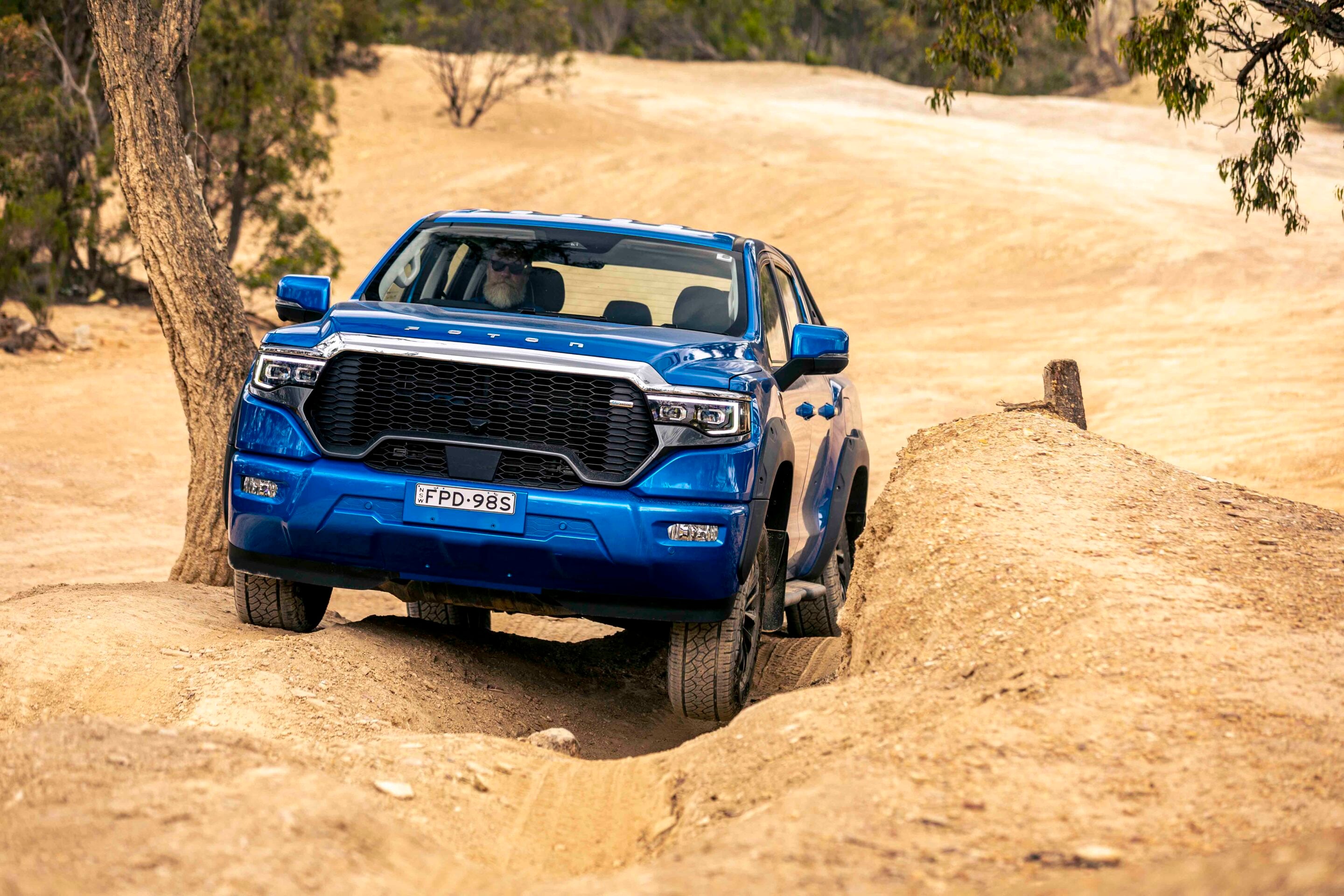
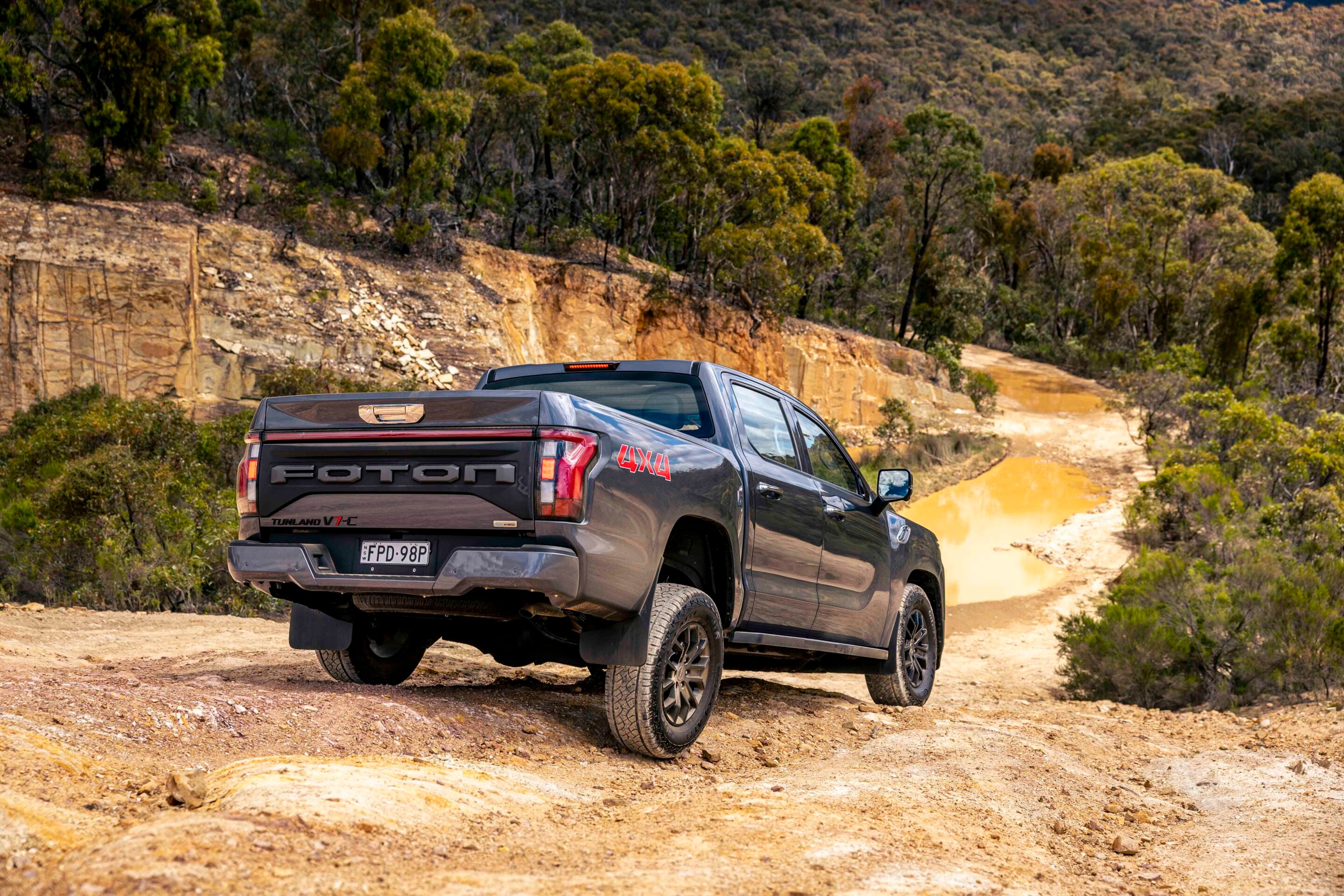
The V9 instantly feels softer and more compliant thanks to its coil-sprung rear suspension, making it noticeably more comfortable for day-to-day driving. The difference between the two setups was also evident on gravel tracks, where the V9 remained more composed while the V7 felt firmer.
The V7 performed better on the rutted hill climbs than the V9, with the leaf-sprung rear end offering enough travel and traction to scrabble up in low range without needing the rear diff lock. The V9, in contrast, simply spun its wheels in a cloud of dust regardless of the drive mode selected, and only made it up once we activated the RDL. Traction control alone wasn’t enough – something that isn’t usually the case with most utes of this ilk.
At first, I assumed the vehicles must have had an auto-locking rear diff, as there was a lot of clunking from the rear end when driving around the pit in low range, almost as if the diff was locking and unlocking. But then we discovered the RDL button on the console. The front and rear lockers fitted to the V9-S would certainly be appreciated for regular off-road use in a Tunland.
Verdict
Inchcape is a major company with a long history of distributing car brands in Australia and New Zealand, so you’re not dealing with a small, unproven player if you’re considering a Foton purchase. The Tunland comes with a seven-year/unlimited-kilometre warranty, up to seven years of Foton Roadside Assistance and seven years of capped-price servicing.
The V7 and V9 Tunlands offer buyers a choice of two distinct looks. They’re big and well equipped, even if some of the tech takes a bit of getting used to and isn’t always logical in the way it operates.
They’re clearly aimed at the budget-conscious 4×4 ute buyer – a segment that’s rapidly expanding, largely due to the influx of new Chinese alternatives.
36
Specs
| Tunland V7-C | Tunland V9-L | |
|---|---|---|
| Price | $42,990 +ORC | $45,990 +ORC |
| Engine | 4-cylinder, turbo diesel | 4-cylinder, turbo diesel |
| Capacity | 1969cc | 1969cc |
| Max power | 120kW @ 3600rpm | 120kW @ 3600rpm |
| Max torque | 450Nm from 1500Nm-2400Nm | 450Nm from 1500Nm-2400Nm |
| Transmission | 8-speed automatic | 8-speed automatic |
| 4×4 system | Dual range part-time with 4×4 auto AWD | Dual range part-time with 4×4 auto AWD |
| Construction | 4-door ute body and tub on ladder frame chassis | 4-door ute body and tub on ladder frame chassis |
| Front suspension | Wishbone IFS with coils | Wishbone IFS with coils |
| Rear suspension | Live axle with leaf springs | Live axle with multilink and coil springs |
| Tyres | 265/70R18 | 265/70R18 |
| Weight | 2311kg | 2311kg |
| GVM | 3335kg | 3306kg |
| GCM | 6835kg | 6806kg |
| Towing capacity | 3500kg | 3500kg |
| Payload | 1024kg | 995kg |
| Seats | 5 | 5 |
| Fuel tank | 76L + 2L AdBlue | 76L + 2L AdBlue |
| ADR fuel consumption | 8.0L/100km | 8.0L/100km |
| On-test fuel consumption | 11.3L/100km | 11.8L/100km |
| Approach angle | 28 | 28 |
| Ramp-over angle | 21 | 21 |
| Departure angle | 26 | 26 |
| Ground clearance | 240mm | 240mm |
| Wading depth | 700mm | 700mm |
Follow 4X4 Australia on Google
Get more 4x4 news, reviews and gear stories from 4X4 Australia in your Google feeds.