4x4 Ute of the Year

Gallery 1
Love them or hate them, there’s no denying midsize 4×4 utes are the hottest new-vehicle segment in Australia – and have been for years.
The Ford Ranger and Toyota HiLux have dominated 4×4 sales for what feels like forever, often topping the overall new-vehicle charts month after month, and for good reason: they combine rugged capability, proven reliability, and practicality for both work and adventure.
But dominance attracts challengers, and the traditional 4×4 players are now under serious attack from a wave of new brands out of Asia – manufacturers better known for electronics than hard-working utes. Their vehicles are relatively cheap, and in an era where every litre of fuel and dollar counts, these newcomers are capturing the attention of buyers looking for big utility without breaking the bank.
It’s been three years since we last ran a 4X4 Australia Ute of the Year test, and with so many new contenders already in market, we didn’t wait for the next wave – we got the testing done before the end of 2025. The line-up was a mix of stalwarts and disruptors, giving us a clear picture of where the segment sits today.
Even then, the market continued to evolve as we were wrapping up. The latest HiLux and Navara hit just weeks after our testing, Foton added a pair of Tunlands, BYD announced a new engine for its Shark PHEV, and GWM continues to refine and expand its ute range. With all this activity, there’s no doubt we’ll be back on the test loop again sooner rather than later in 2026 – and it’ll be just as fierce, just as competitive, and just as interesting for serious 4×4 enthusiasts.
JUMP AHEAD
- The judging criteria
- The testing procedure
- The contenders
- The winners
- How the judges scored each vehicle
The judging criteria
As always with our 4×4 Of The Year testing, the vehicles aren’t judged against each other but against established criteria.
These five key criteria have been refined over more than 30 years to best evaluate and rate each vehicle on its own merits. This approach allows us to fairly assess a broad range of vehicles within the same test. Each is scored individually against the criteria, and the results are then tallied to determine the overall standings. Each vehicle is scored out of 10 for each of the criteria to give a total score out of 50. The five criteria are 👇
1. Value for money
Judged according to a vehicle’s equipment level, safety features and price relative to its direct competitors. Just because a vehicle has a high price doesn’t mean it’s not good value in the same way a cheap vehicle doesn’t always represent good bang for your buck.
2. Breaking new ground
This refers to advancements in technology and design. How a vehicle has raised the bar in the class it fits in and taken 4x4s to a higher level. If a vehicle has the latest safety features, worthy engine technology or an advanced driveline, it will score well here.
3. Built tough
How strong a vehicle is and how well it will cope with the rigours of tough off-road driving environments. Will it be up to the task of carrying loads and outback travel, or fall apart at the first hurdle?
4. Doing the job
Judged according to a vehicle’s design brief. Does a high-end luxury ute have all the latest in comfort and convenience features, and do those features work in the real world? How well a ute carries a load, accommodates a family or tows a trailer all come into play here.
5. Bushability
How well a vehicle is equipped for off-road travel. Suitability of the standard tyres for rough roads, touring range, available accessories and underbody protection are just some of the factors considered here. Is this a vehicle you would choose to drive around Australia the rough way, or is it best left to the suburbs?
1
The testing procedure
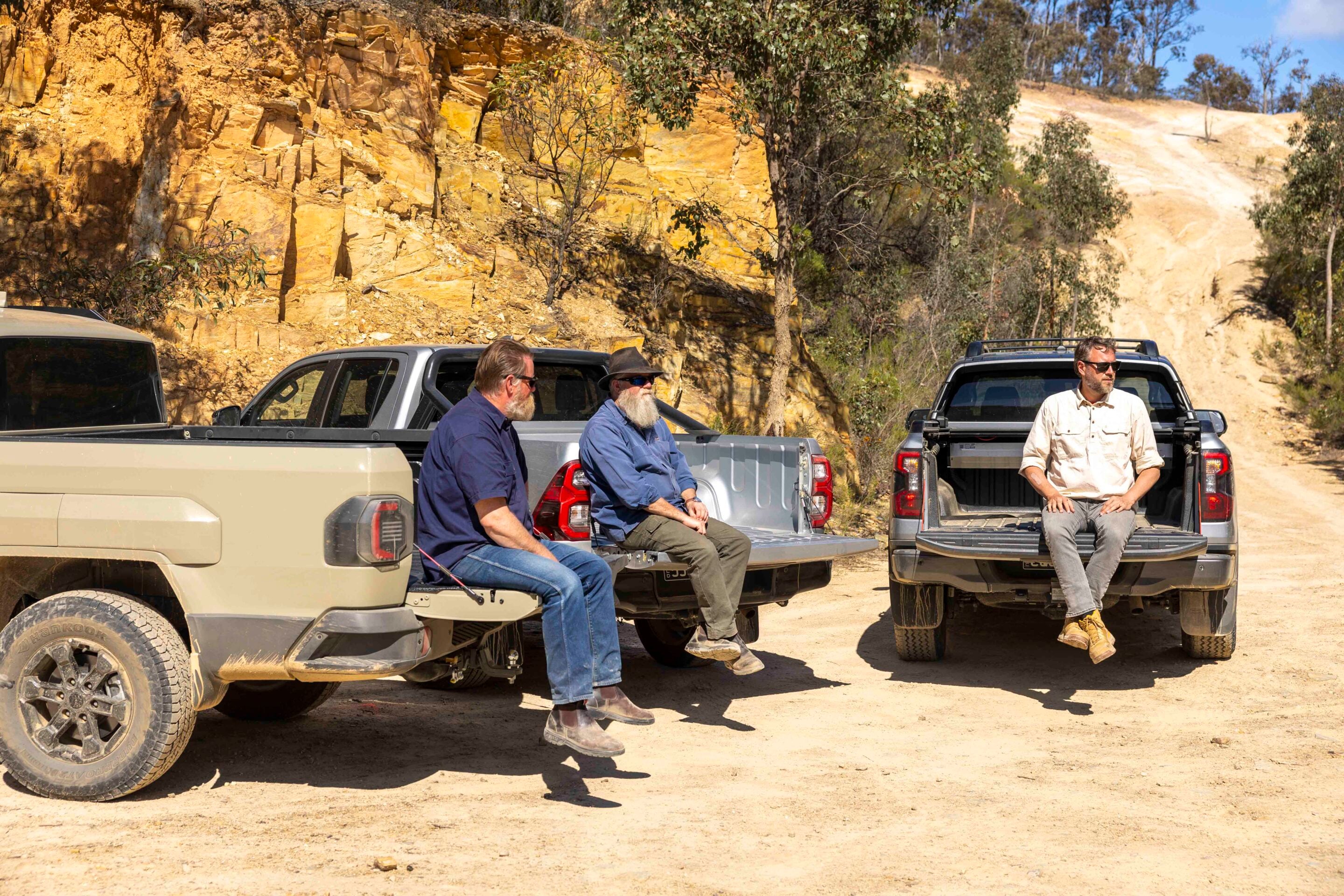
With a dozen utes to evaluate, we shook things up from our usual point-to-point, week-long convoy. Testing was held at Lerderderg State Park, just past Bacchus Marsh in Victoria, a location chosen deliberately to prioritise consistency and repeatability in all aspects of the evaluation.
The program ran over several days and combined multiple testing environments. Vehicles were put through a dedicated off-road circuit within the park, featuring steep climbs, scrabbly rock passes and challenging grades to ensure that each ute was tested under the same controlled conditions.
Alongside this, we ran a 45-minute mixed-surface road loop composed of bitumen and coarse gravel, and a towing loop where every vehicle was hooked up to an Offline Camper to see how they handled a load in real-world conditions.
1
Each vehicle was tested in various configurations – with and without diff lockers, traction aids and all relevant 4×4 systems engaged – to provide a complete picture of capability. This ensured the off-road and towing evaluations reflected both stock performance and maximum-capability potential.
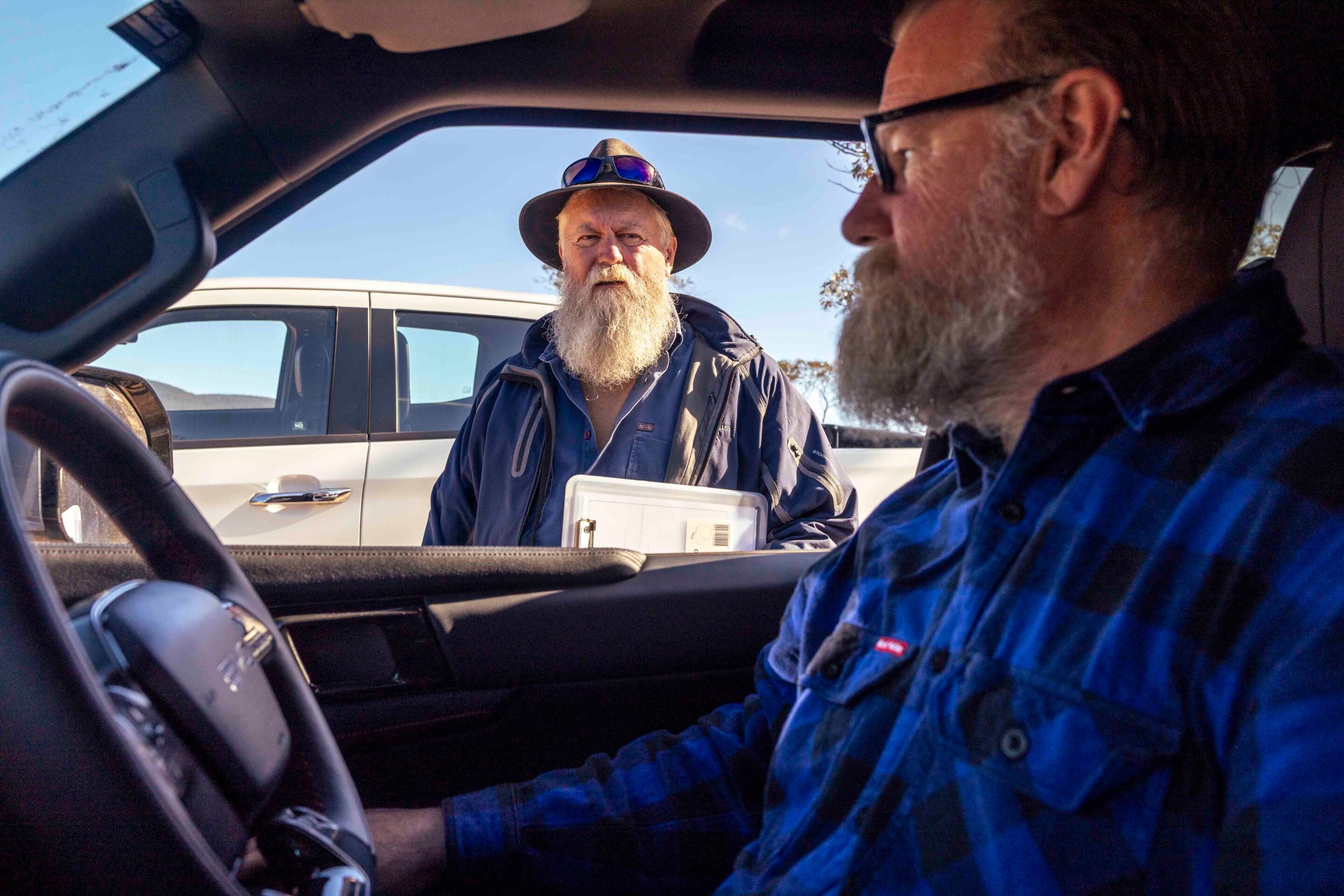
Judging duties were handled by 4X4 Australia editor Matt Raudonikis, veteran automotive tester Dave Morley, and towing and trailer specialist Tim Van Duyl. Add in a full crew of photographers, videographers, vehicle wranglers, and general roustabouts, and it made for a high-energy, hands-on production.
Following each run, Matt, Dave, and Tim scored the vehicles against our judging criteria (above). Scores were then collated to determine the overall winners, giving a balanced and rigorous assessment of the latest midsize 4×4 utes.
The contenders
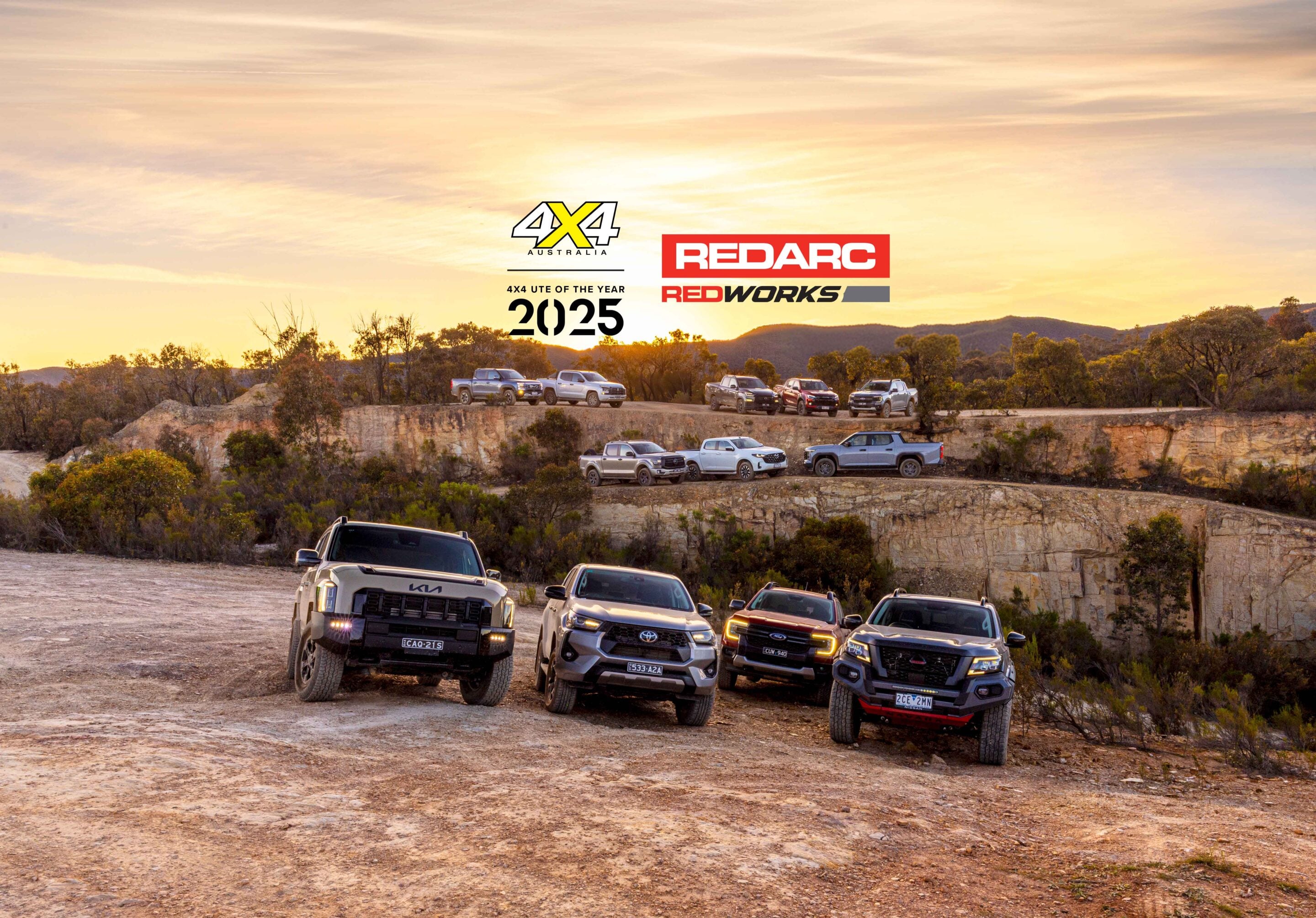
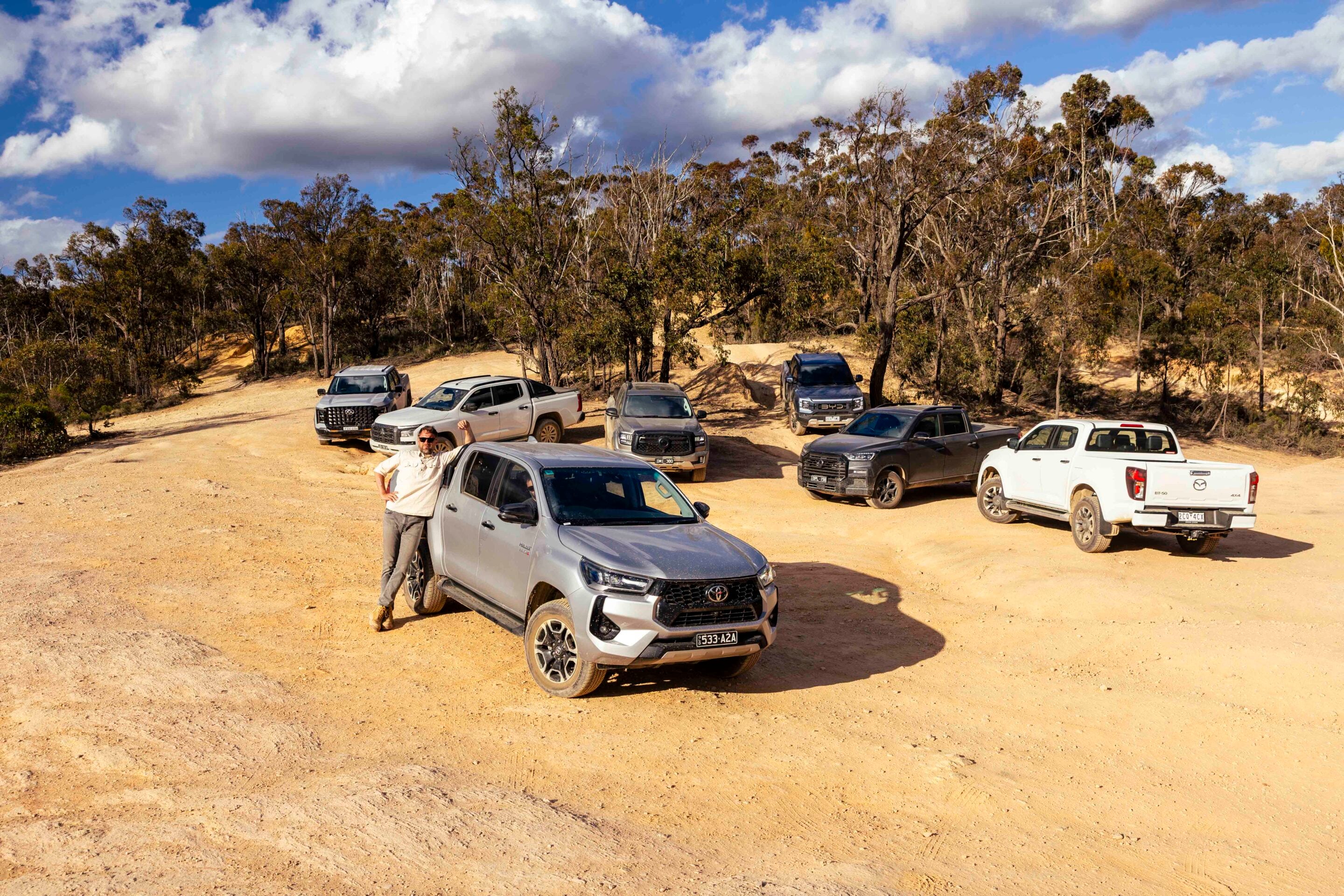
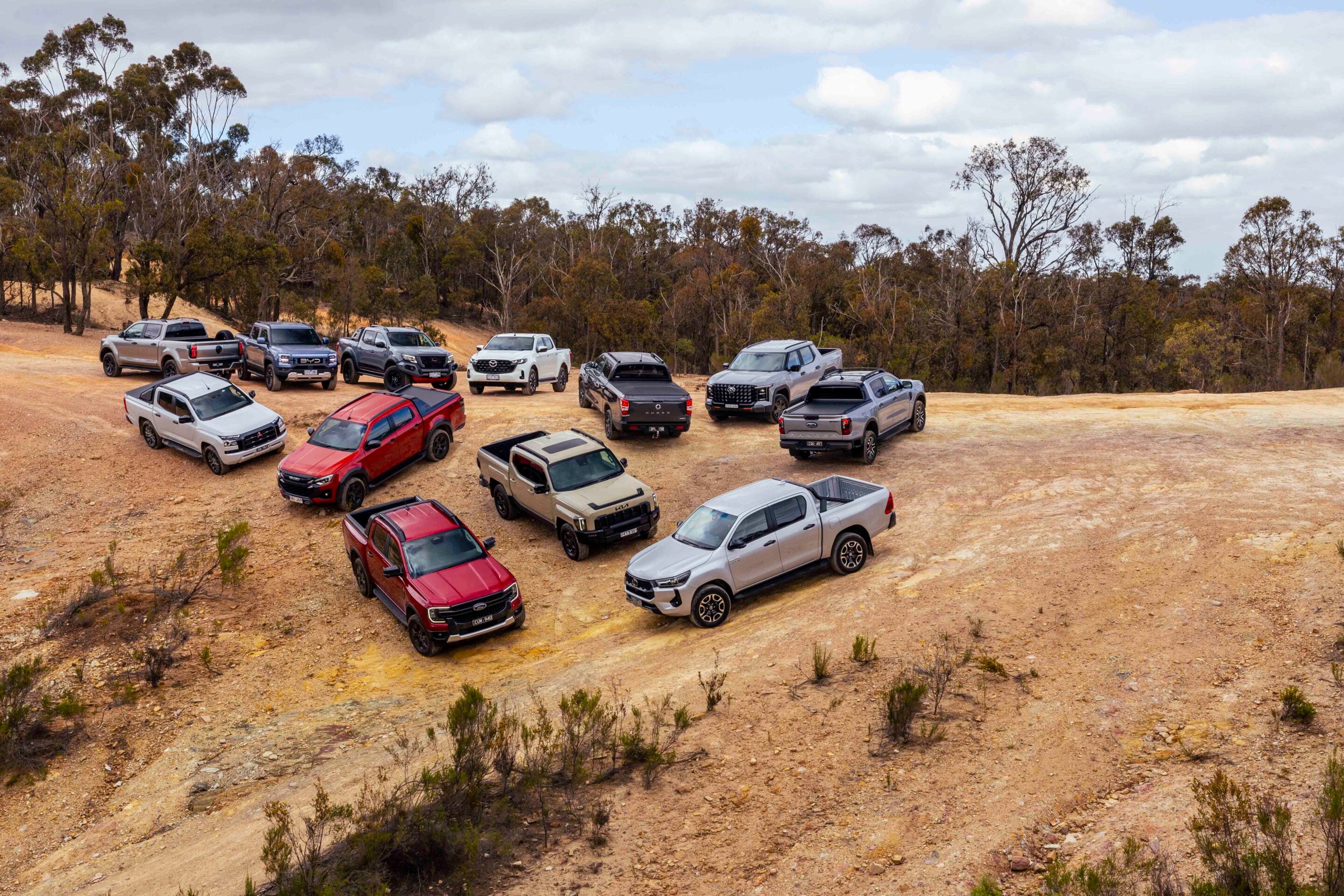
For 2025, we assembled a dozen of the most popular, significant, and intriguing midsize 4×4 utes to drive, test, and rate.
The line-up included perennial favourites like the Ford Ranger, Toyota HiLux, Nissan Navara, and Mitsubishi Triton, alongside a trio of plug-in hybrid (PHEV) utes and a handful of newcomers still proving themselves in the Australian market – most notably the BYD Shark and LDV Terron 9.
Some notable absences need a mention. The VW Amarok wasn’t part of this year’s test as VW didn’t supply a vehicle, while heavy-duty models such as the LandCruiser 79, Ineos Grenadier Quartermaster, and Ranger Super Duty sit outside this segment and are reserved for future evaluations. Likewise, full-size American pickups are excluded – those will feature in a dedicated test down the track. We also left out a couple of true oddballs. The Ford Ranger Raptor and Jeep Gladiator occupy niches all their own. There’s nothing else quite like them on the market.
1
During testing, we ran four separate awards to recognise standout vehicles in different categories:
- Best Overall 4×4 Ute: The complete package, blending capability, comfort, practicality, and value.
- Best Hybrid 4×4 Ute: Recognising the most capable plug-in or hybrid ute on the market.
- Best Adventure 4×4 Ute: The vehicle most ready to tackle off-road trails, bush touring, and exploration.
- Best 4×4 Ute Under $60,000: A nod to affordability without compromising core capability.
This approach allowed us to celebrate both the established champions of the segment and the bold newcomers shaking things up, giving a full picture of what Australia’s midsize 4×4 market looks like at the close of 2025.he established champions of the segment and the bold newcomers shaking things up, giving a full picture of what Australia’s midsize 4×4 market looks like at the close of 2025.
Here’s how the contenders fared:
The winners 🏆
Winning a 4X4 Australia Ute of the Year award is a big deal; it means a ute has been pushed hard on rigorous off‑road loops, towing circuits and rural roads. To earn a trophy means a vehicle has proved itself across capability, comfort, practicality and value in real Australian conditions.
Best Overall 4×4 Ute: Ford Ranger V6 Sport 🏆
The Ranger V6 Sport claimed the top honour by balancing power, refinement and practicality. Its V6 diesel delivers strong torque and smooth performance – whether towing, hauling or cruising – and its capable chassis and driveline suit a full range of duties from on‑road commuting to off‑road work. Across our testing loop, it proved the most complete package overall.
Best Hybrid 4×4 Ute: Ford Ranger Sport PHEV 🏆
In the hybrid ute class, the Ranger Sport PHEV beat the pack. The petrol‑electric powertrain offers a potent combined output while keeping the familiar Ranger handling and 4×4 capability. For buyers wanting hybrid efficiency without compromising towing or terrain ability, this was the standout.
Best Adventure 4×4 Ute: Nissan Navara PRO‑4X Warrior 🏆
The Navara PRO‑4X Warrior earned this title thanks to its off‑road‑ready upgrades, which include suspension tweaks, underbody protection, all‑terrain tyres and locking differentials. It proved strong, capable and ready to handle real bush tracks straight from the showroom.
Best 4×4 Ute Under $60,000 – KGM Musso 🏆
The KGM Musso took out this category for 2025. Despite its modest price, it delivers a well‑rounded ute package: 4×4 capability, a spacious and feature‑rich cabin, and surprising towing and load‑carrying numbers. For buyers after maximum bang for minimal buck, the Musso proved a standout.
How the judges scored each vehicle
| Model | Value for money | Breaking new ground | Built tough | Doing the job | Bushability | TOTAL |
|---|---|---|---|---|---|---|
| Ranger Sport V6 | 7 | 8 | 8 | 9 | 8 | 40 |
| Hilux SR5+ | 9 | 2 | 9 | 9 | 10 | 39 |
| Tasman X-Pro | 7 | 7 | 8 | 9 | 7 | 38 |
| Ranger PHEV | 6 | 8 | 9 | 7 | 6 | 36 |
| Navara Warrior | 8 | 5 | 8 | 6 | 9 | 36 |
| Triton GSR | 7 | 4 | 8 | 8 | 8 | 35 |
| GWM Cannon | 6 | 8 | 6 | 7 | 5 | 32 |
| BT-50 GT | 6 | 5 | 6 | 7 | 7 | 31 |
| D-Max X-Terrain | 6 | 5 | 6 | 7 | 7 | 31 |
| Musso Ultimate | 8 | 4 | 6 | 7 | 5 | 30 |
| BYD Shark | 7 | 8 | 5 | 5 | 4 | 29 |
| LDV Terron 9 | 4 | 3 | 2 | 2 | 1 | 12 |
17
2025 4×4 Ute of the Year
A stacked field hit this year’s 4X4 Ute of the Year test, with everything from value picks to heavy-duty touring rigs lining up. Here’s every contender that made the cut for 2025.:
- All 4X4 Ute of the Year coverage
- 2025 Introduction
- Ford Ranger V6 Sport
- KGM Musso Ultimate
- Kia Tasman X-PRO
- Toyota HiLux SR5+
- Nissan Navara PRO-4X Warrior
- Ford Ranger PHEV
- GWM Cannon Ultra PHEV
- Mitsubishi Triton GSR
- Isuzu D-MAX X-Terrain
- BYD Shark
- Mazda BT-50 GT
- LDV Terron 9 Origin
- Powered by REDARC
Follow 4X4 Australia on Google
Get more 4x4 news, reviews and gear stories from 4X4 Australia in your Google feeds.

We recommend
-
 4x4 Ute of the Year
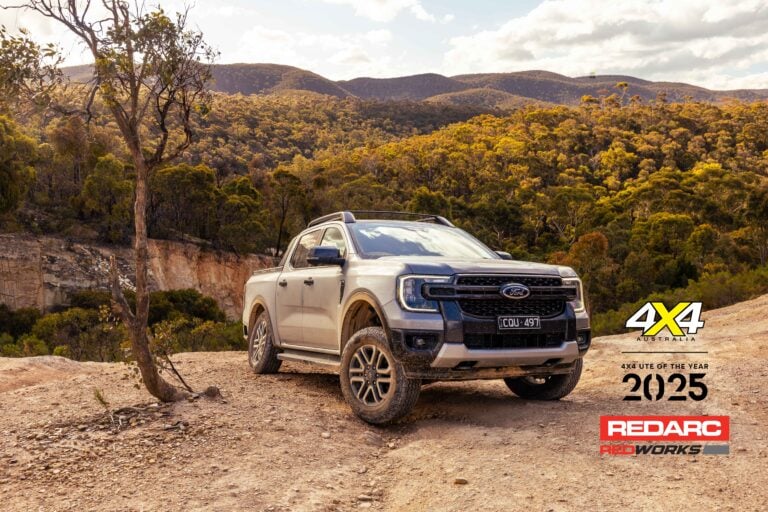
Ford Ranger V6 Sport wins 2025 4x4 Ute of the Year title
The Ranger Sport V6 takes top honours in our 2025 Ute of the Year test
-
 4x4 Ute of the Year
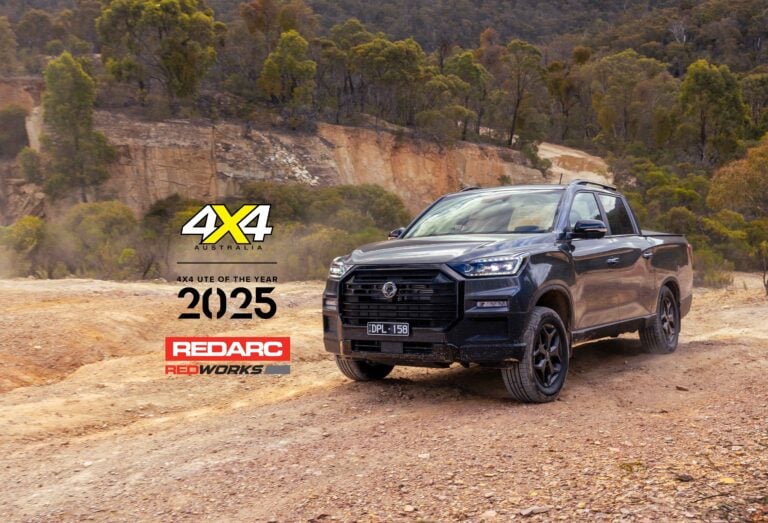
KGM Musso Ultimate: 2025’s Best 4x4 Ute Under $60K
You don’t need big money to get a well-equipped, comfy, hard-working 4x4 ute
-
 4x4 Ute of the Year
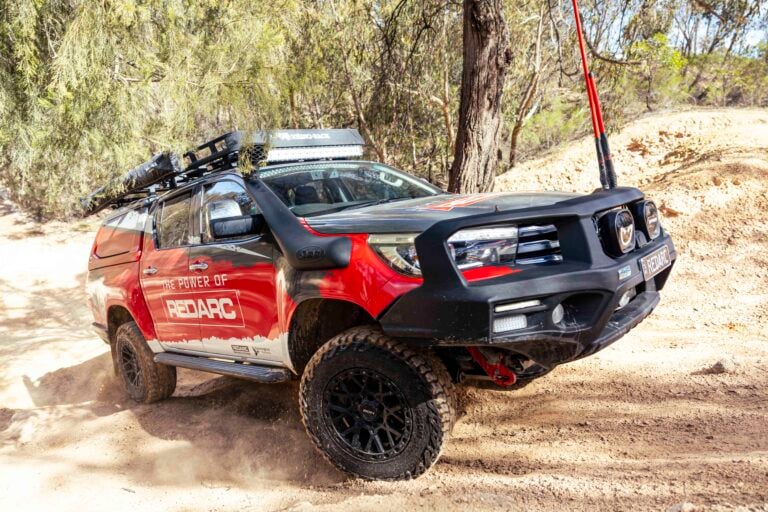
REDARC powers our 2025 4x4 Ute of the Year with new REDWorks platform
REDARC brings its Aussie-made REDWorks power panels to 4x4 Ute of the Year