
What’s the best dual-cab ute you can buy in 2023? Until now the answer has been easy: the Ford Ranger.
Ford’s new-gen ute demolished its rivals in our recent dual-cab megatest and it’s miles ahead of the Toyota HiLux and Isuzu D-Max/Mazda BT-50 for driving dynamics, cabin comfort, useful tech and general refinement.
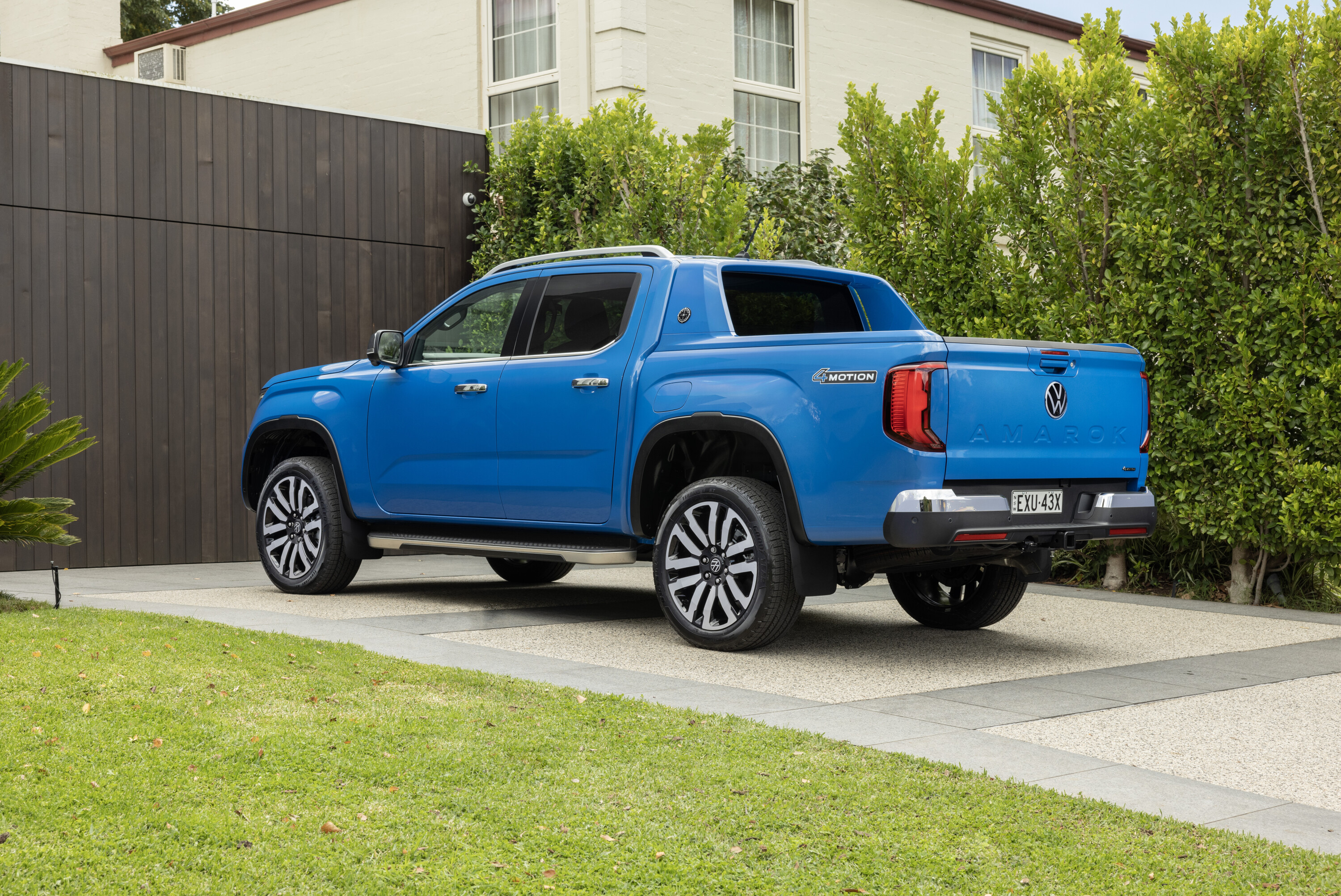
Now, though, the Ranger has sterner competition. This is the second-gen take on the popular Volkswagen Amarok – a ute that already carried a hard-won reputation for being the best-driving dual-cab on the market.
This time, thanks to an alliance between Ford and Volkswagen, the Amarok was actually co-developed with the new Ranger. That means all of the goodness that makes the Ranger so convincing should be present here, too.
1
And, of course, VW says it has improved on the Ranger’s recipe in a few key ways.
All of which raises a number of questions. Is the Amarok the new benchmark dual-cab? Is this simply a badge engineering exercise? Does it still drive as well? And how does it stack up for value? Let’s dive in.
JUMP AHEAD
- How much is it, and what do you get?
- How do rivals compare on value?
- Interior comfort, space and storage
- What’s it like to drive?
- How much fuel does it use?
- How safe is it?
- Warranty and running costs
- VERDICT
- Specifications
How much is it, and what do you get?
VW is offering the Amarok across five trim levels. Pricing starts at $52,990 before on-road costs for the entry-level Amarok Core, which is available solely with a 2.0-litre single-turbo diesel and a 10-speed automatic.
Stepping up to the mid-spec Life ($56,990) and Style ($66,990) adds a richer mix of standard equipment and a more powerful 2.0-litre bi-turbo diesel. For a $4000 premium, the Style can also be optioned with a 3.0-litre V6 turbo-diesel, which produces a healthy 184kW/600Nm.
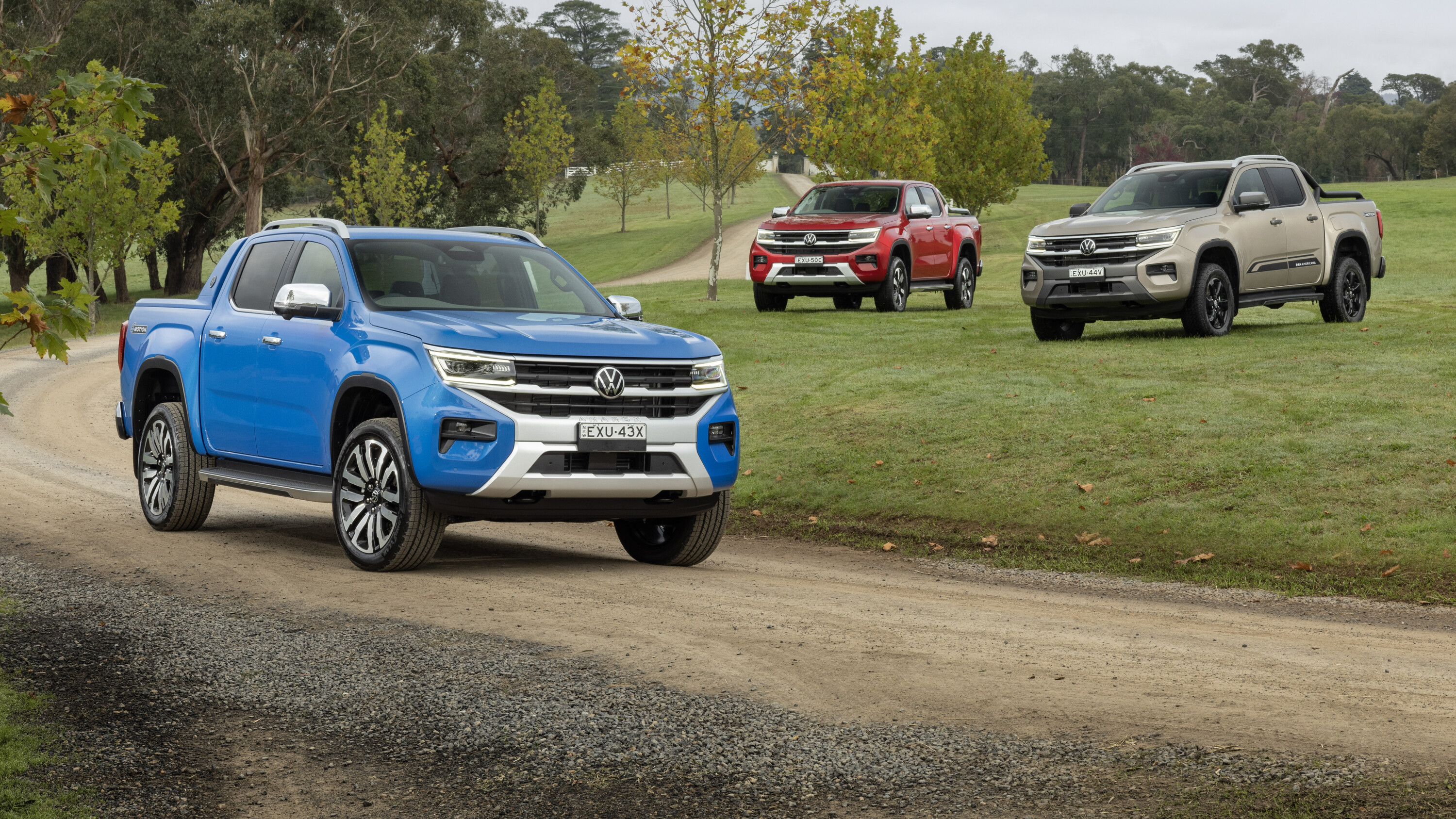
There are two flagship trim levels. The off-road-focused PanAmericana ($75,990), which can only be had with the V6 diesel, or the more luxury-focused Aventura, which is available with either the V6 diesel or a 2.3-litre turbo-petrol engine. All these prices exclude on-road costs.
1
Both versions of the Aventura carry the same $79,990 price tag (before on-road costs).
The petrol unit is the same engine found in some Mustang models and it produces 222kW/452Nm, giving the Amarok a unique point of difference to its largely diesel-only rivals.
VW’s pricing puts the Amarok firmly at the premium end of the dual-cab segment, although it is loaded with standard equipment.
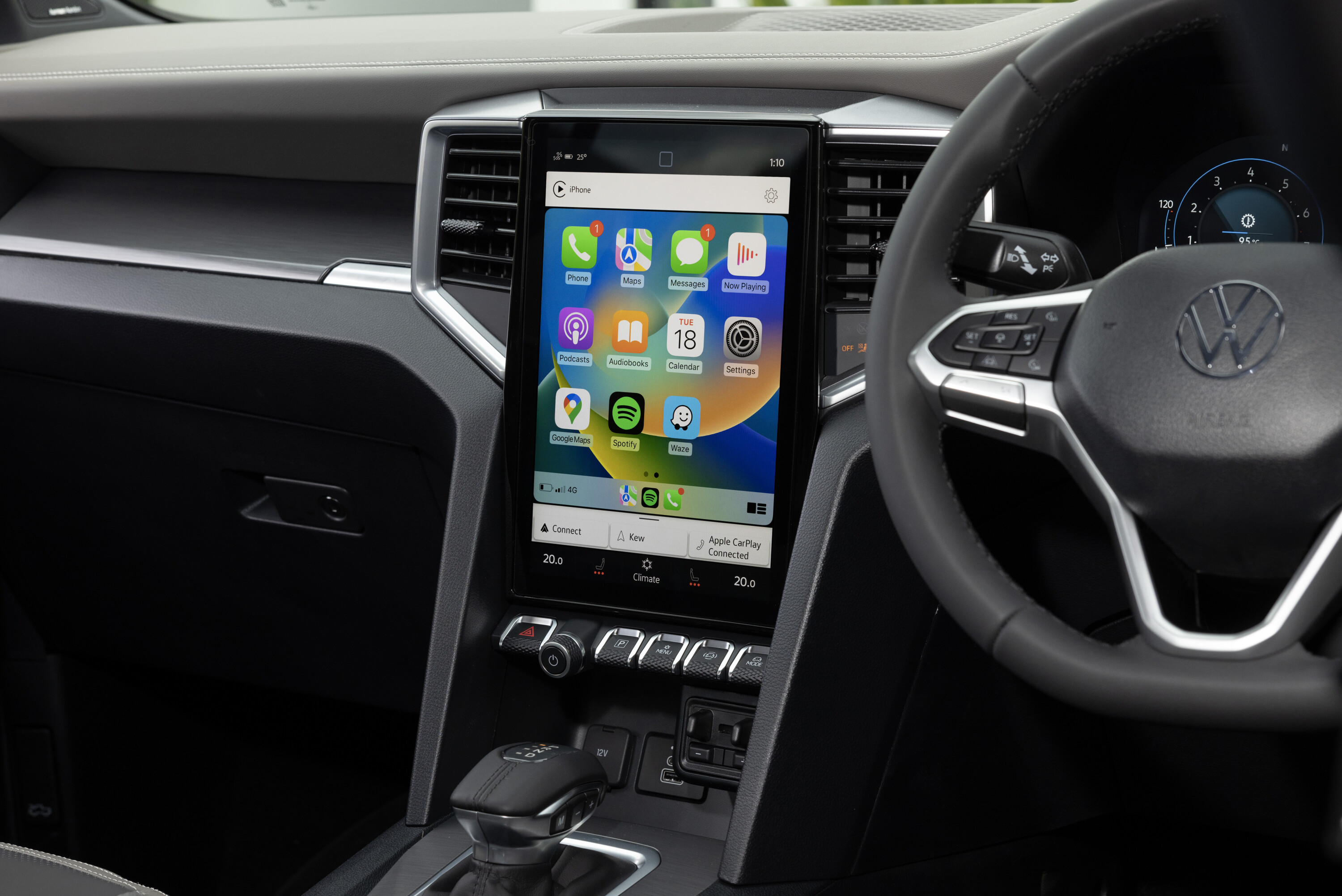
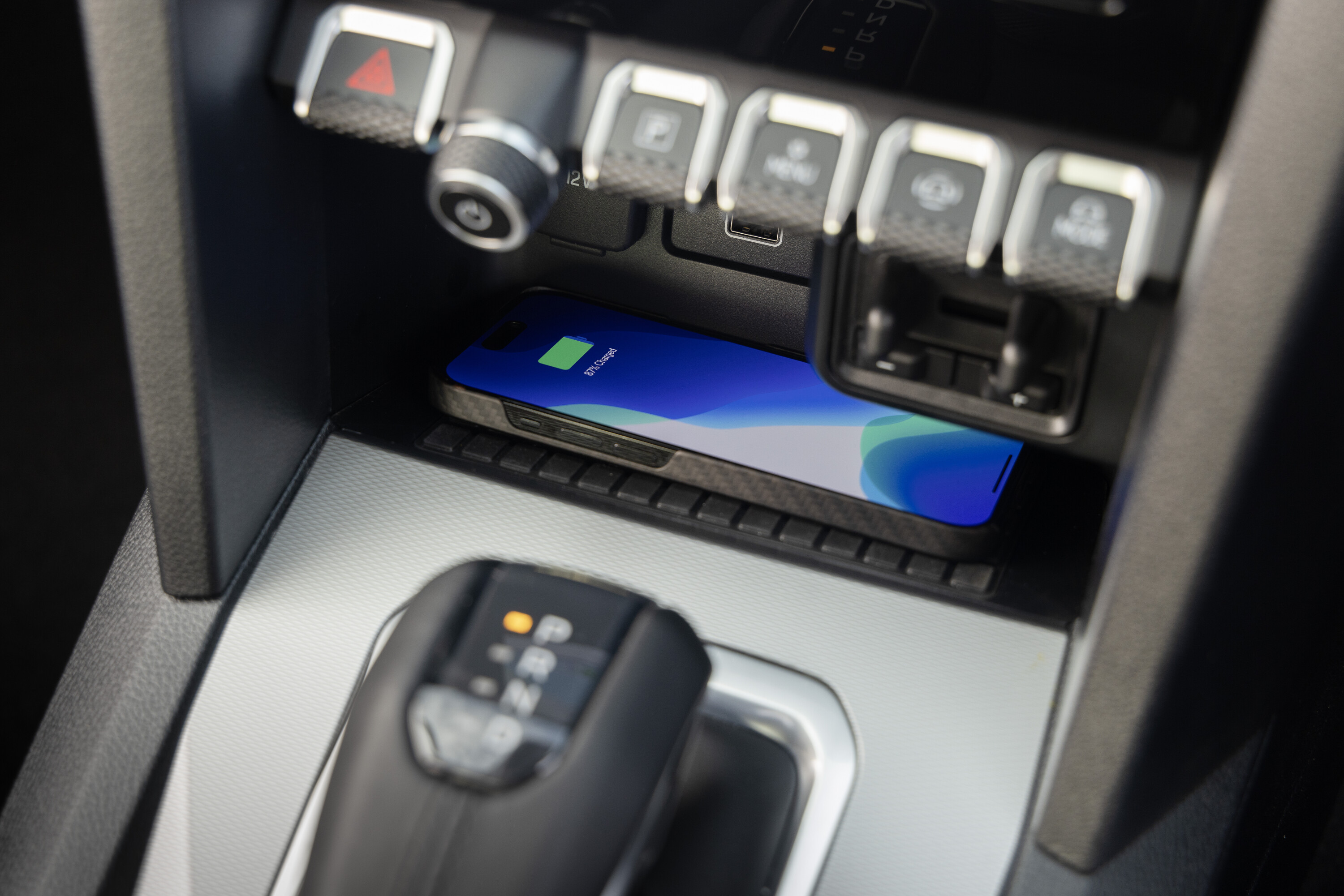
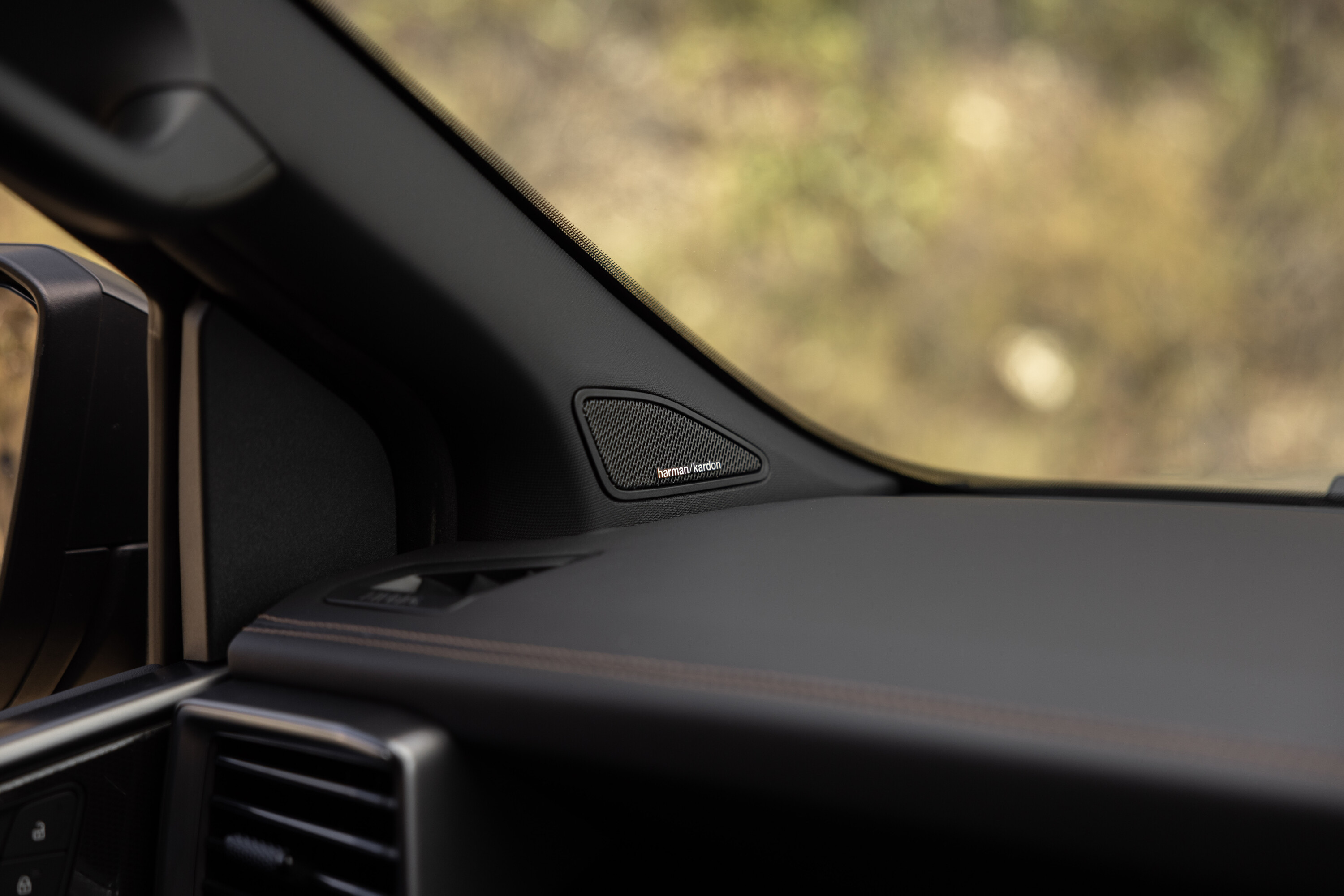
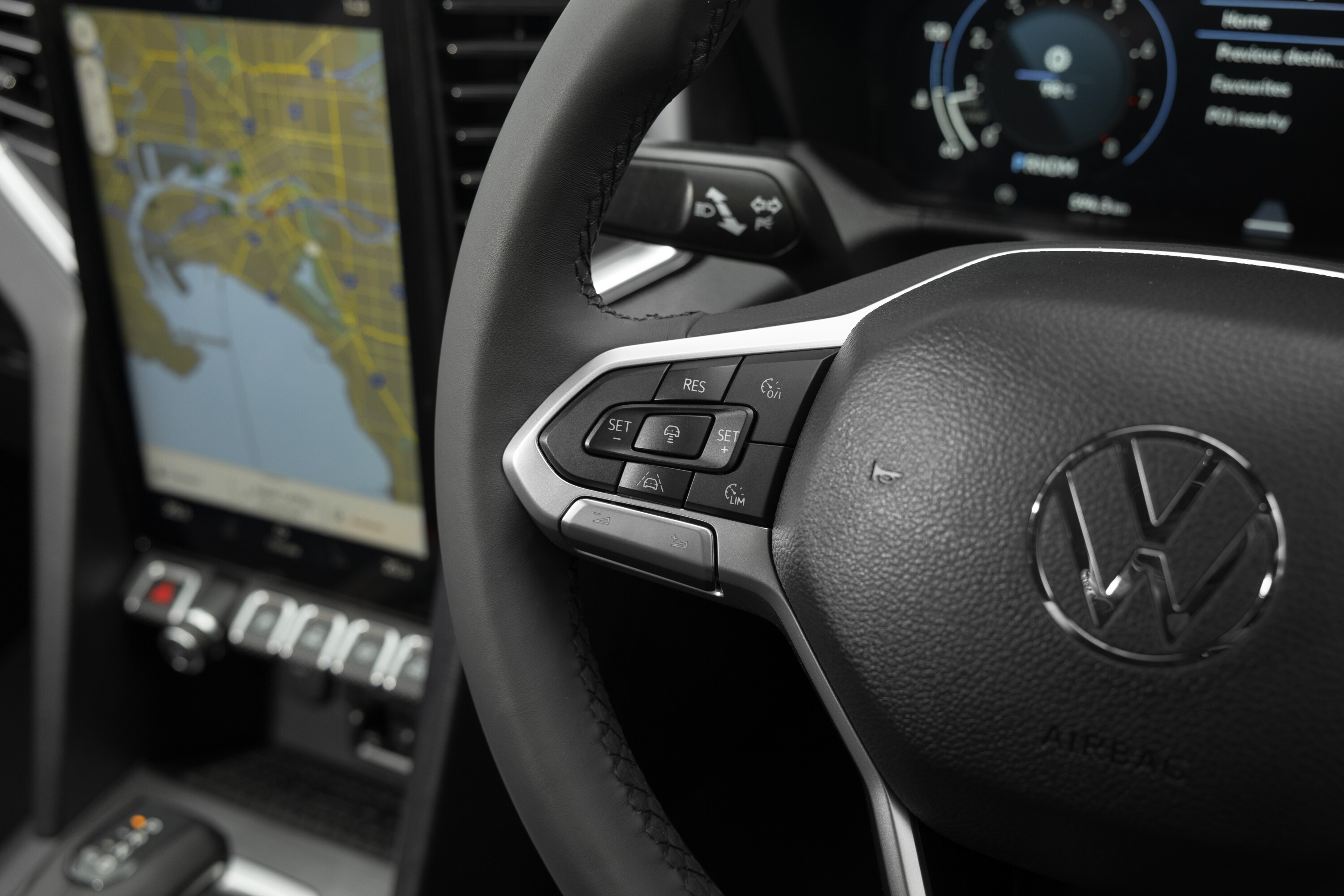
LED headlights, a large 10.1-inch central touchscreen, Apple CarPlay and Android Auto, wireless phone charging, alloy wheels and 20 new driver assist systems (which now include autonomous emergency braking and adaptive cruise control) are all standard across the range.
1
Every Amarok boasts a 3.5-tonne braked towing capacity.
There are also power windows, electric mirrors, roof rails, rain-sensing wipers, auto headlights, a tyre pressure monitoring system and a factory-fitted towbar with 12-pin plug. And every Amarok carries a 3.5-tonne braked towing capacity.
Stepping up to the Life variant adds the more powerful 2.0L diesel and further equipment like fog lights, a leather-trimmed steering wheel, rear disc brakes (instead of drums) and privacy glass. But it’s the mid-spec Style that really shines for value and standard gear.
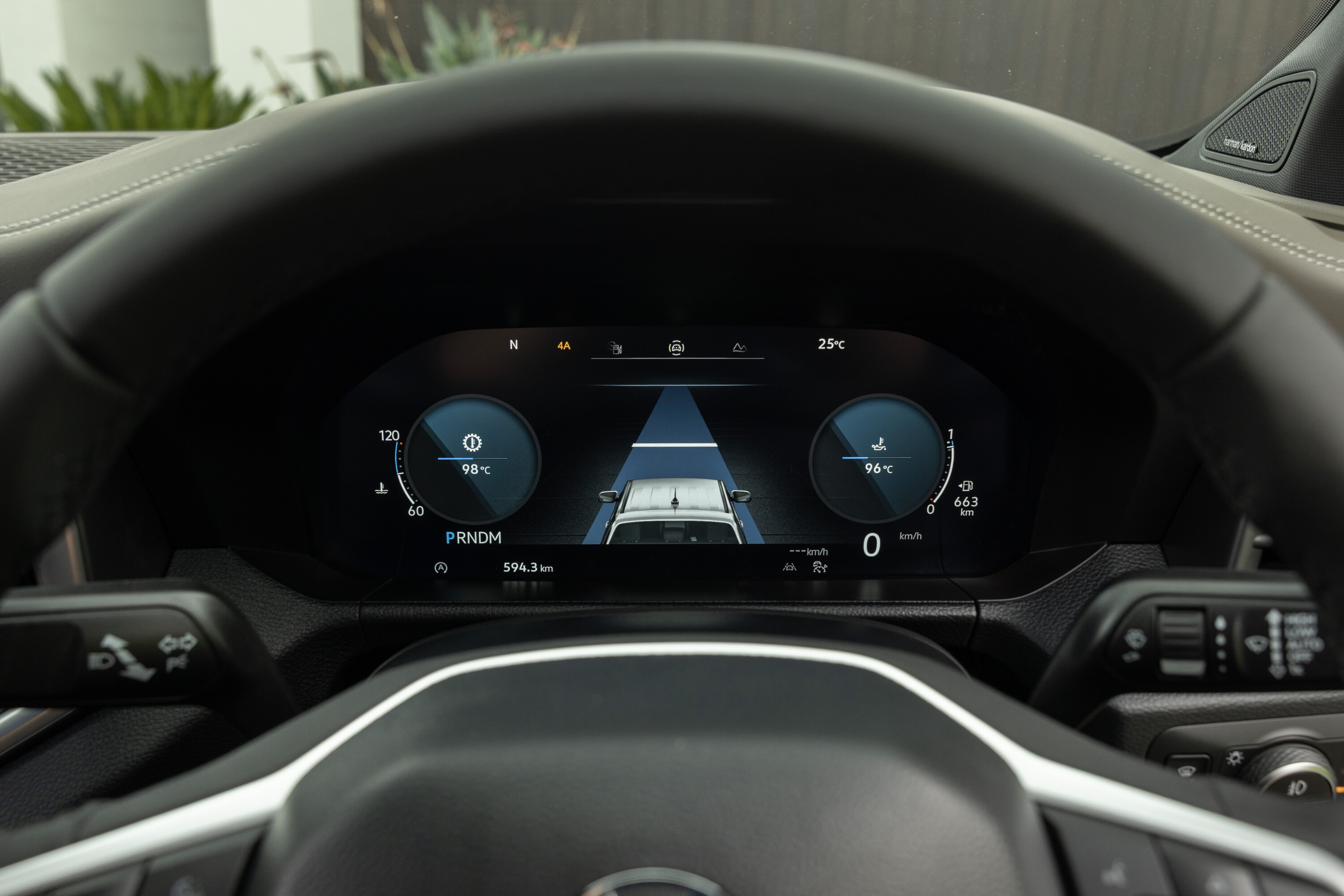
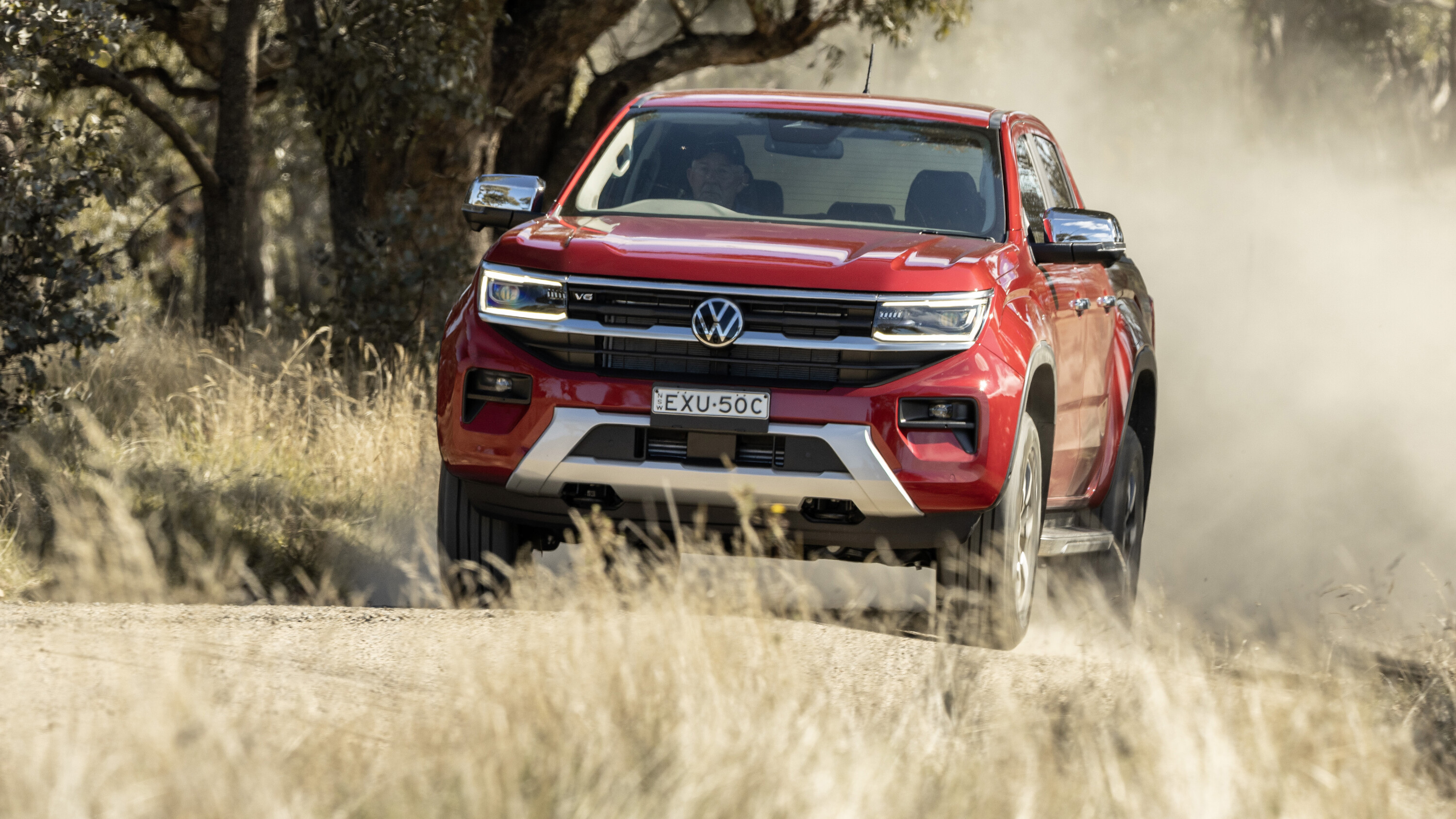
Tipped to be the best-selling Amarok, the $66,990 (before on-road costs) Style adds larger 18-inch alloys, matrix LED headlights (which can mask out oncoming traffic), a bigger 12.0-inch portrait touchscreen, larger digital dials, dual-zone climate control with rear air vents, an upgraded audio system, 360-degree surround-view cameras, heated and power-adjustable front seats, a stitched ‘leather-look’ dash, a rear sports bar, and a drop-in tub liner. It also brings the option of the 3.0-litre V6 engine.
1
The Aventura has more of an on-road bias and boasts softer leather
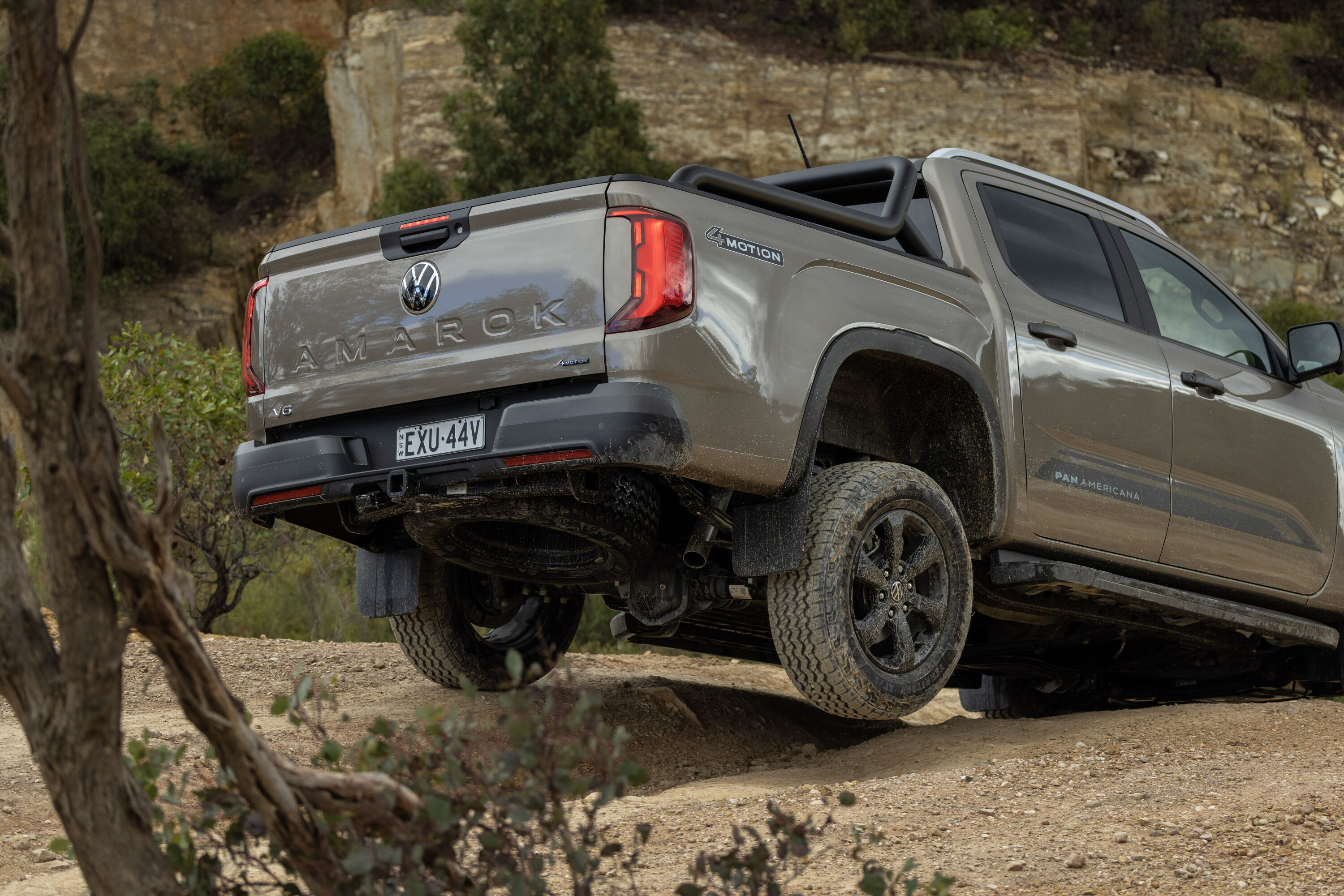
The PanAmericana and Aventura flagships bring unique ‘X Design’ front bumpers, upgraded leather seats, spray-in tub liners and, notably, a ‘dynamic suspension package’ which replaces the twin-tube dampers of lesser models with a monotube setup for great control and comfort.
Separating the two flagship models is their focus. The PanAmericana is the more rugged of the pair, thanks to all-terrain tyres and harder-wearing ‘cricket ball’ leather trim.
The Aventura has more of an on-road bias and offers softer leather, an electric tray cover, huge 21-inch alloy wheels and the option of the 2.3L turbo-petrol, which VW hopes will entice current SUV owners to make the switch to a dual-cab ute.
1
No matter which variant of Amarok you go for, you’ll be buying a ute that’s bigger in every key dimension.
Overall length is up by 96mm, the wheelbase has grown by a whopping 175mm (which translates into a roomier cabin), and the wading depth is now 800mm (which is a sizeable 300mm improvement). Tub volume is also up by 3.5 per cent and ground clearance has been lifted to 235mm.
As for what’s missing? The Amarok lacks a few desirable features currently available on the Ford Ranger – like a moulded rear box step for easier tub access and overhead auxiliary switches to connect accessories.
1
The Ranger’s useful 4×4 screen, which allows quick access to the forward-facing camera, diff-lock and other off-roading data, is also missing.
Also absent are the additional outboard cup holders you get in higher-spec Rangers, ‘zone’ lighting and a soft-open tailgate.
None of these omissions dilute the Amarok’s core goodness, of course, but they do give the Ranger a slight edge by certain criteria.
1
How do rivals compare on value?
Volkswagen has long positioned itself at the premium end of the mainstream market, and the Amarok is no different.
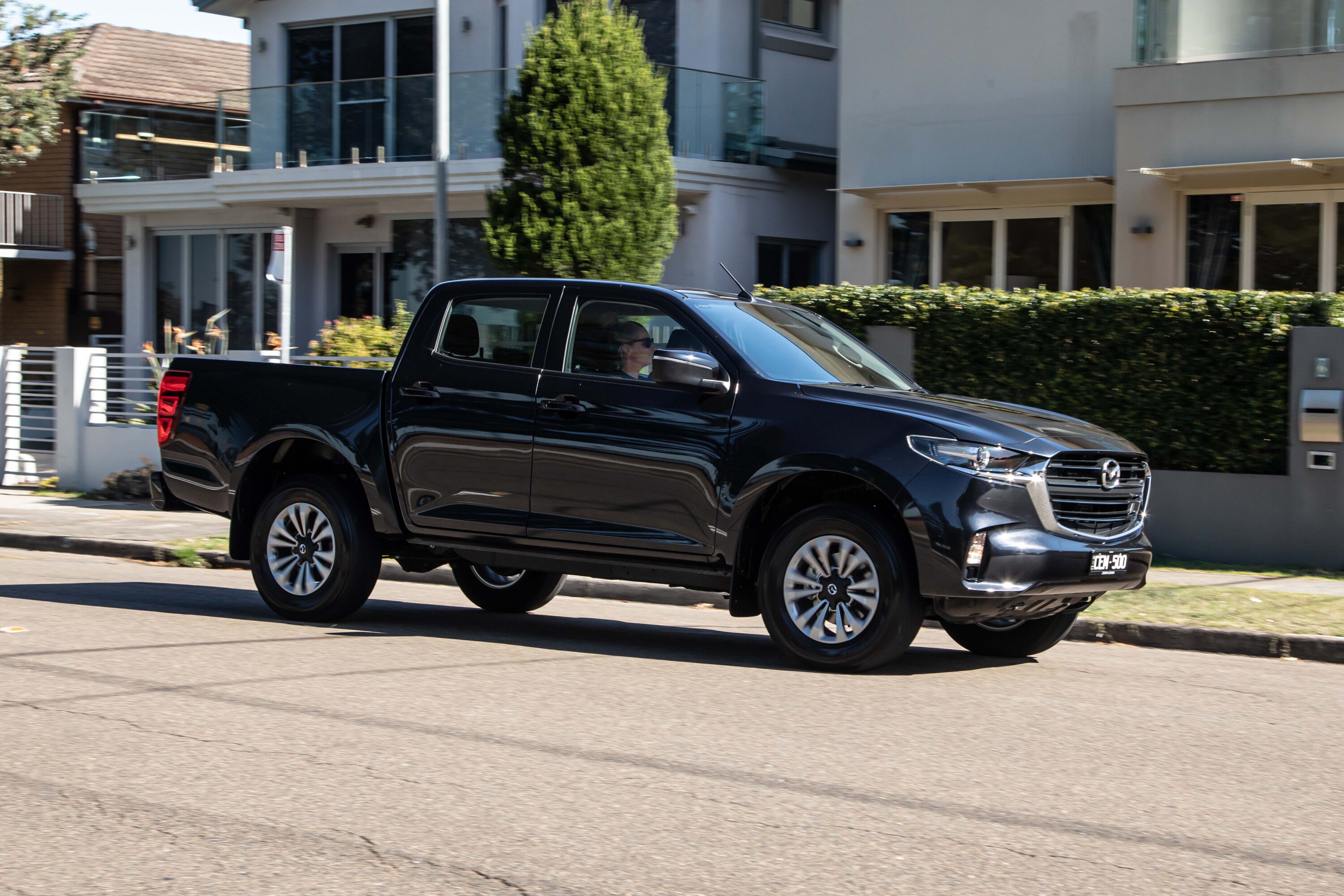
Compared with key competitors like the Mazda BT-50, Isuzu D-Max, Toyota HiLux and Nissan Navara, the Amarok is generally more expensive. But, it’s also a much newer design and trounces those rivals for cabin comfort, space, infotainment, quality and driving dynamics.
It’s also shot through with Aussie engineering, thanks to its Ranger platform partner. So while it does carry a slight price premium, the Amarok still offers strong value.
1
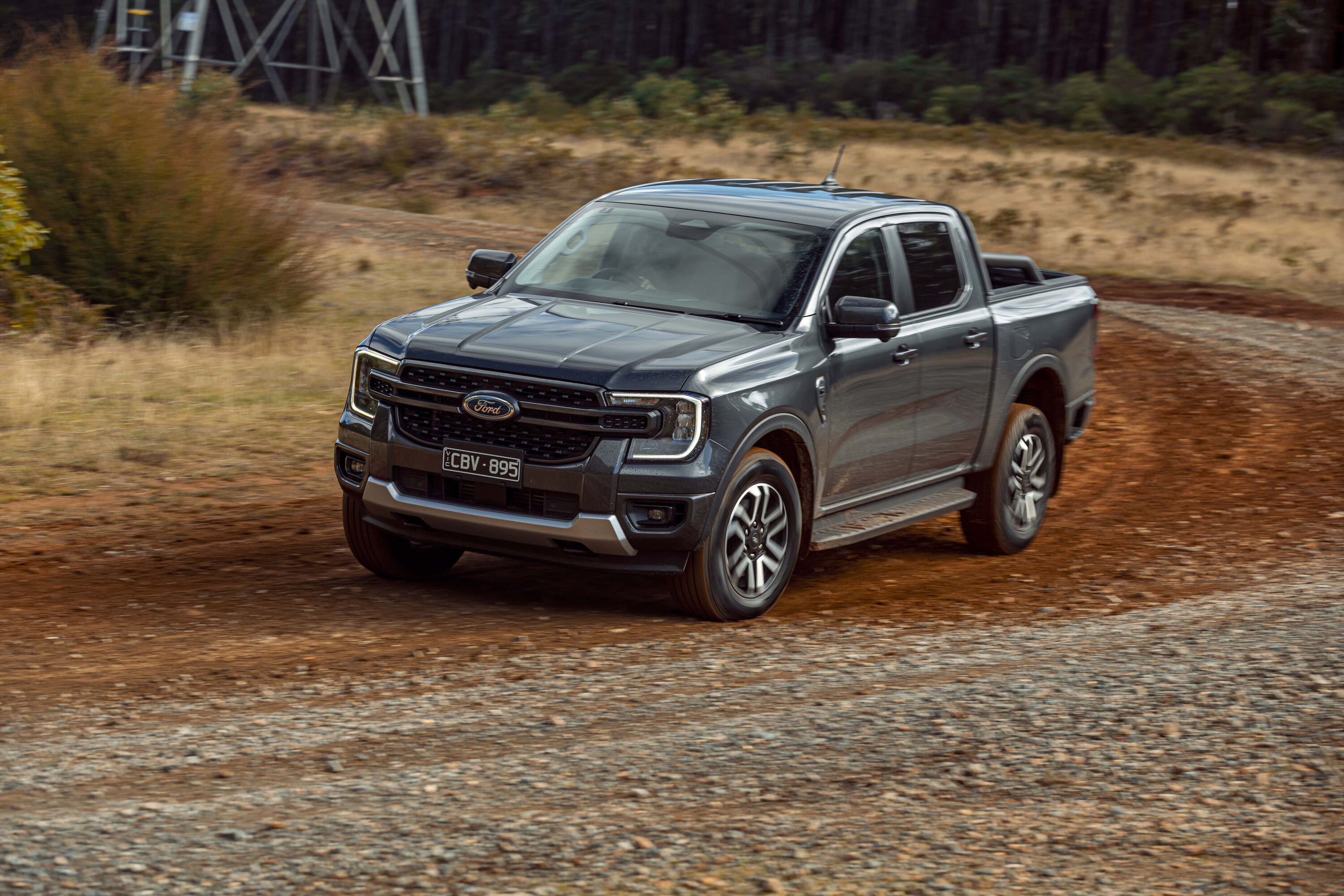
How it compares with the Ford Ranger is intriguing.
VW and Ford’s product planning teams have been clever in staggering the model grades of the two utes, so a direct comparison is tricky. The mid-spec Amarok Style V6, for example, is $5800 costlier than a mid-spec Ranger V6 Sport but it’s also better equipped thanks to its bigger touchscreen, wider digital instrument cluster and matrix LED headlights.
Comparing the Amarok Style with a Ranger Wildtrak is a better price match (just $200 splits them), but while the VW trumps the Ford with standard matrix LEDs, it misses out on the Wildtrak’s electric tray cover.
It’s a similar story in the flagship models. The Amarok Aventura has larger alloys than the Ranger Platinum (21s vs 20s) but is also $3000 dearer and lacks the Ford’s ventilated seats, heated steering wheel and flexible rack system which makes lighter work of carrying long items.
1
Interior comfort, space and storage
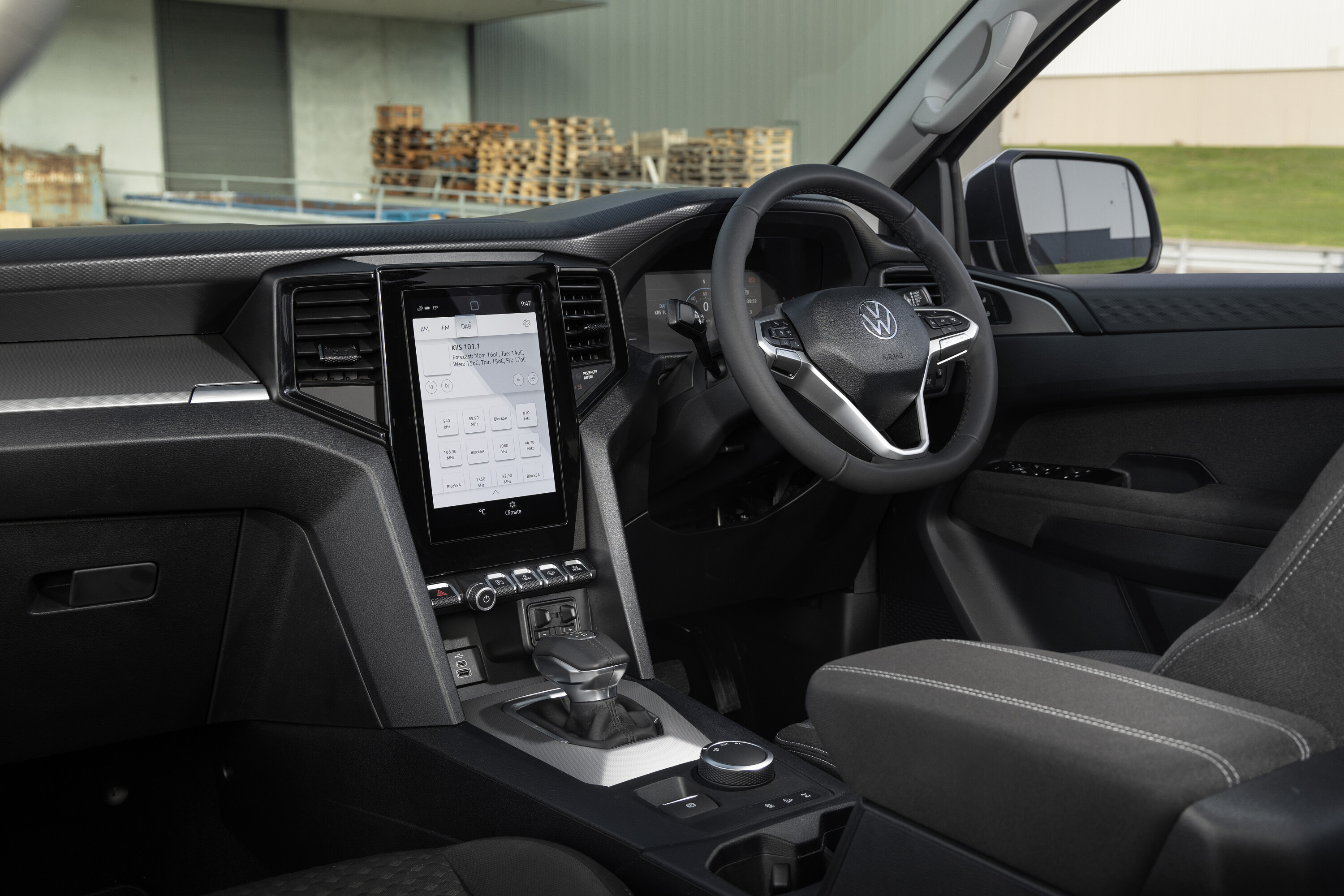
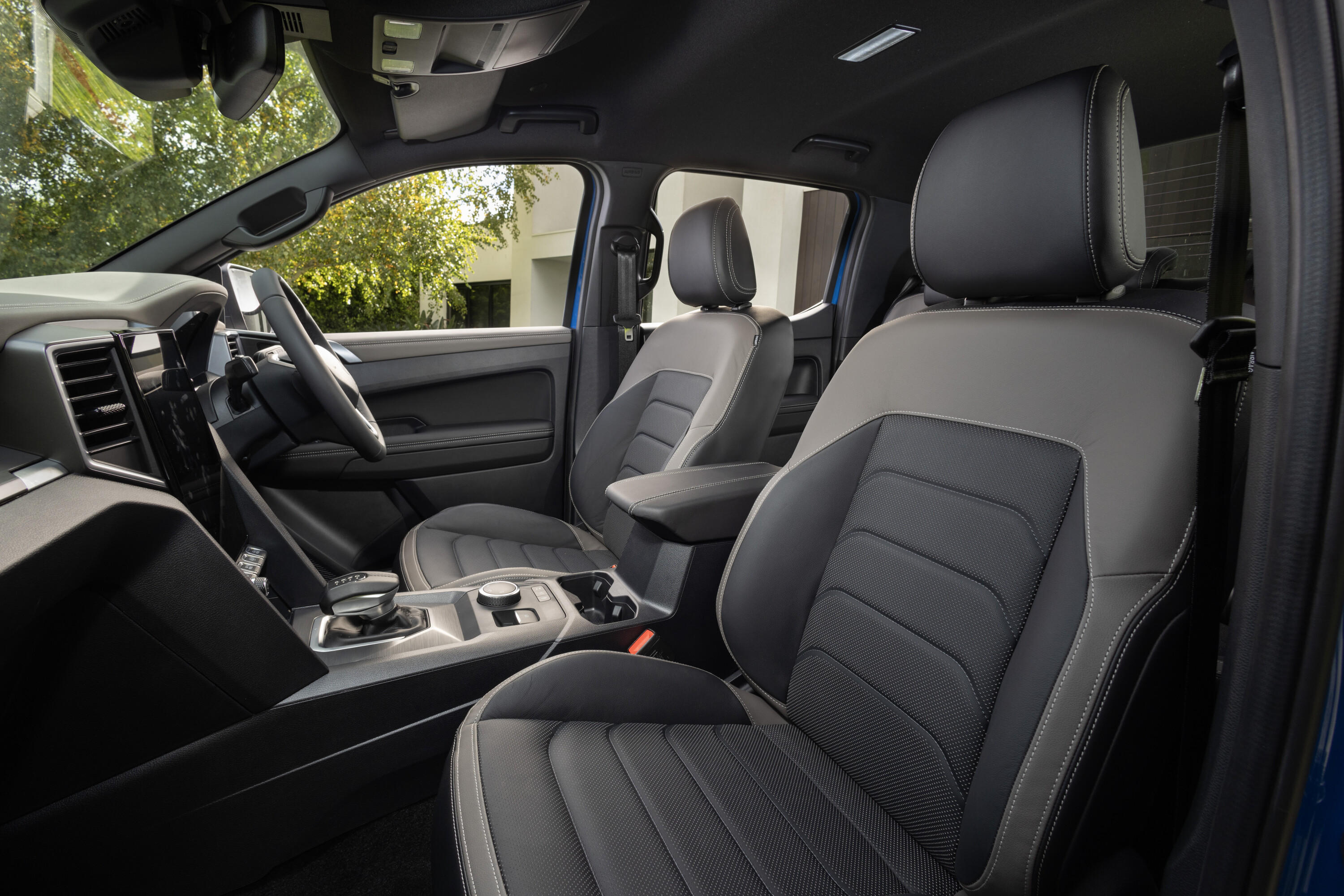
The Amarok’s upmarket cabin is one of its biggest strengths. It’s also an area where it outshines the Ford Ranger in a few key places.
Commonality between the pair is obvious in the large portrait touchscreen and stubby ‘E-Shifter’ (on mid-spec versions and above) but VW’s design team has done a marvellous job of giving the Amarok’s interior some unique and worthwhile touches.
The seats, for example, are a VW design and they aren’t only supremely comfortable, but, thanks to pronounced side bolsters and dense foam padding, they’re also snug and supportive.
1
Also top-notch is the driving position, and the leather-clad steering wheel is another area where the Amarok trumps the Ranger.
The wheel itself is still a Ford design, but VW has altered it so heavily you’d swear it was lifted straight from a Golf GTI. Either way, the Amarok has a much nicer wheel to hold than the one you get in the Ranger.
Front storage is generous thanks to roomy door pockets, twin central cup holders and two glove boxes stacked on top of one another ahead of the front passenger. The general sense of space and quality are now class-leading.
1
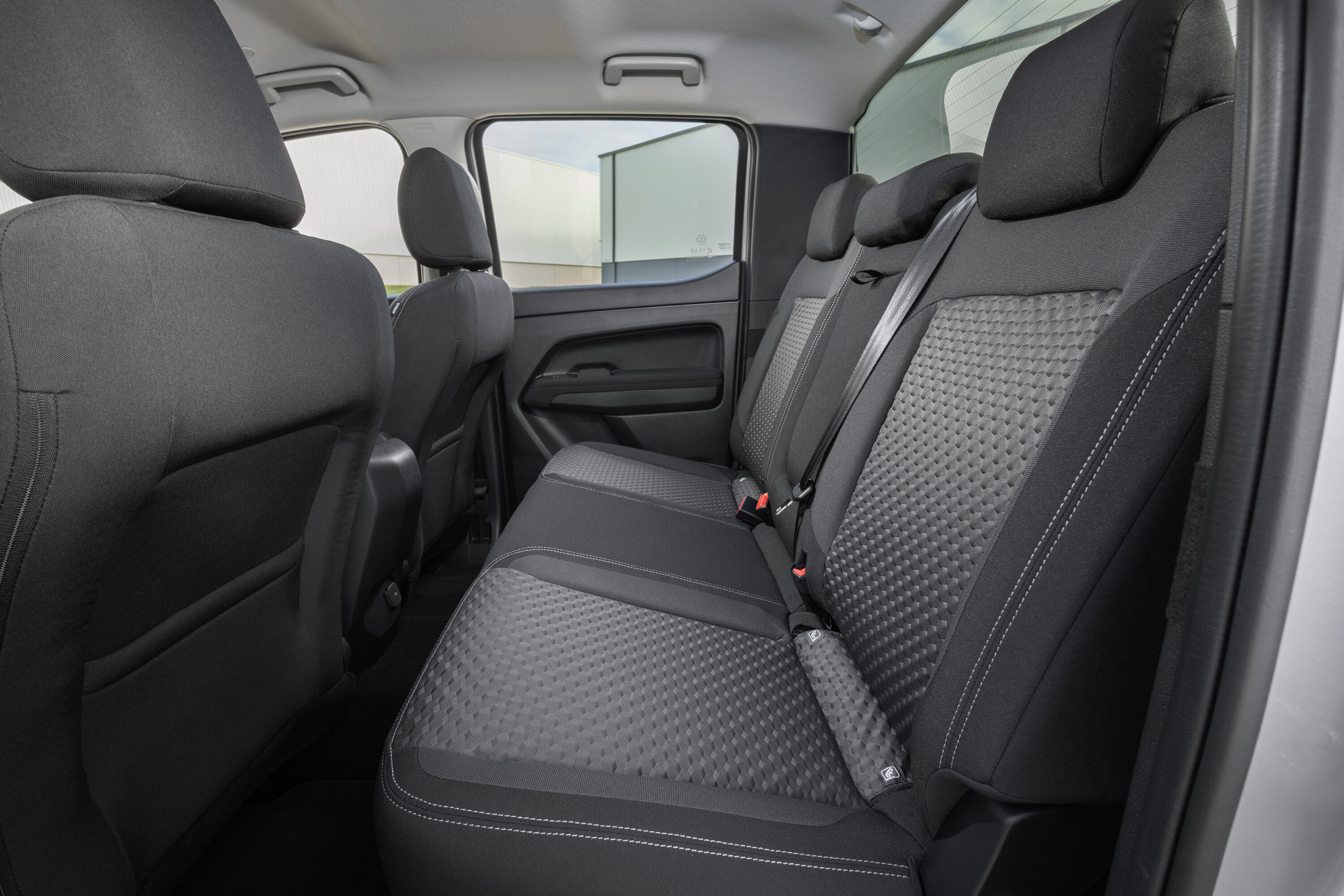
Moving to the Ranger’s platform has grafted an additional 175mm into the Amarok’s wheelbase, and the cabin now feels far roomier.
You notice the extra space most in the rear seats, where six-foot adults will find they have ample knee, shoulder and headroom. Materials quality does take a sharp step backwards in the rear seat (the door cards are covered in harder plastic) but the seat itself is comfortable, nicely bolstered and offers decent under-thigh support.
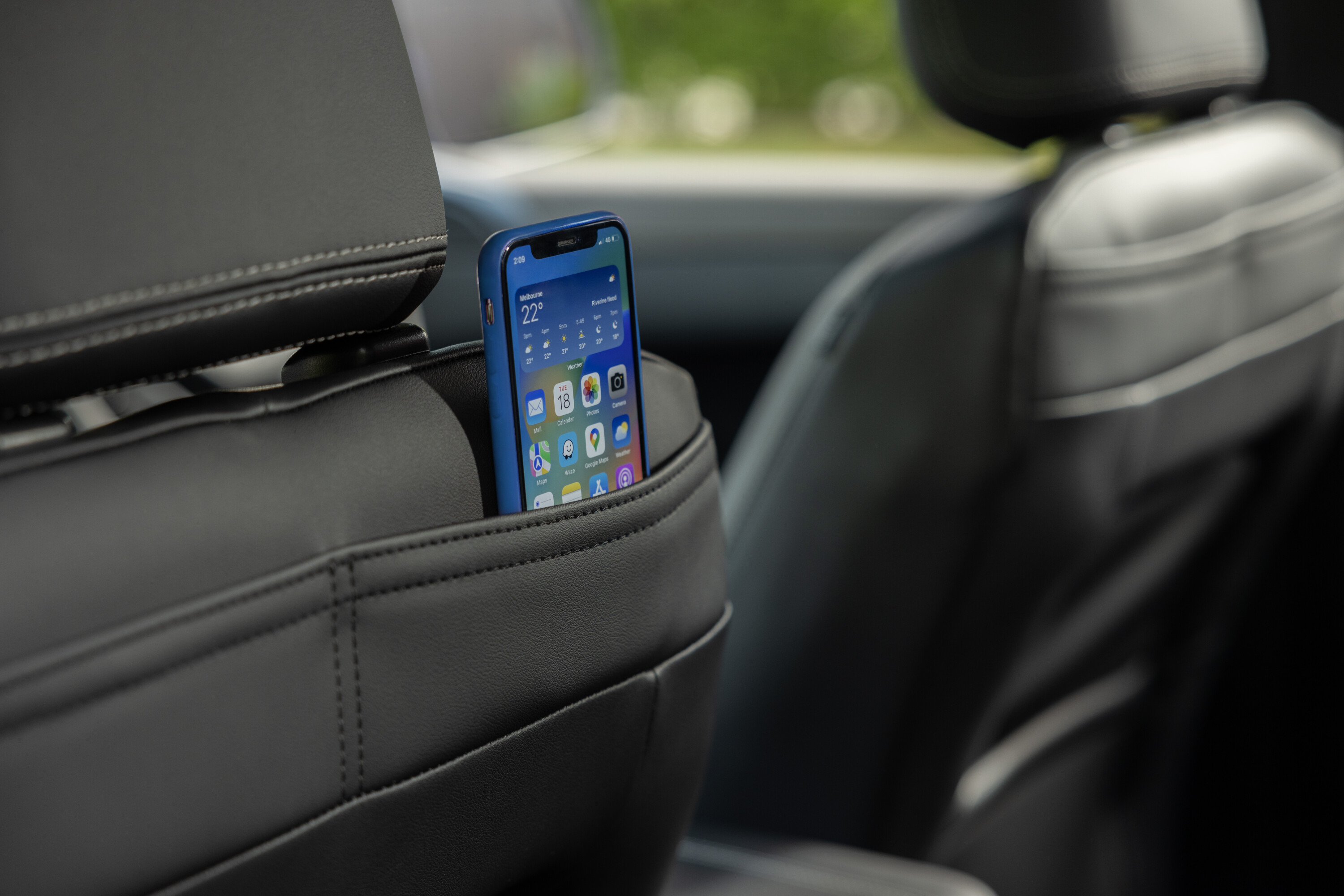
Rear passengers also score storage pockets sewn into the top of the front seats, a centre armrest and a 12V socket to charge devices.
1
So the Amarok is roomier, comfier and, thanks to its richer mix of materials and high level of fit and finish, its interior ambience and quality are class-leading.
Foibles? Aside from missing a few of the Ranger’s key features, like additional outboard cup holders and a shortcut button for the off-road screen, our main complaints surround the fiddly multimedia system.
While the screen itself is large, bright and quick to respond, VW has buried some of the key climate control functions into submenus. Want to change the fan speed? Dive into a submenu. Want to turn off the idle-stop? Dive into a submenu.
1
Again, these aren’t deal breakers, but they do become annoying when you use the vehicle every day. Even more annoying is knowing that the Ranger has physical buttons for these functions.
But there’s no denying the Amarok has one of the poshest interiors of any dual-cab now on sale. Minor ergonomic flaws aside, it’s beautifully made, nicely packaged and impressively practical.
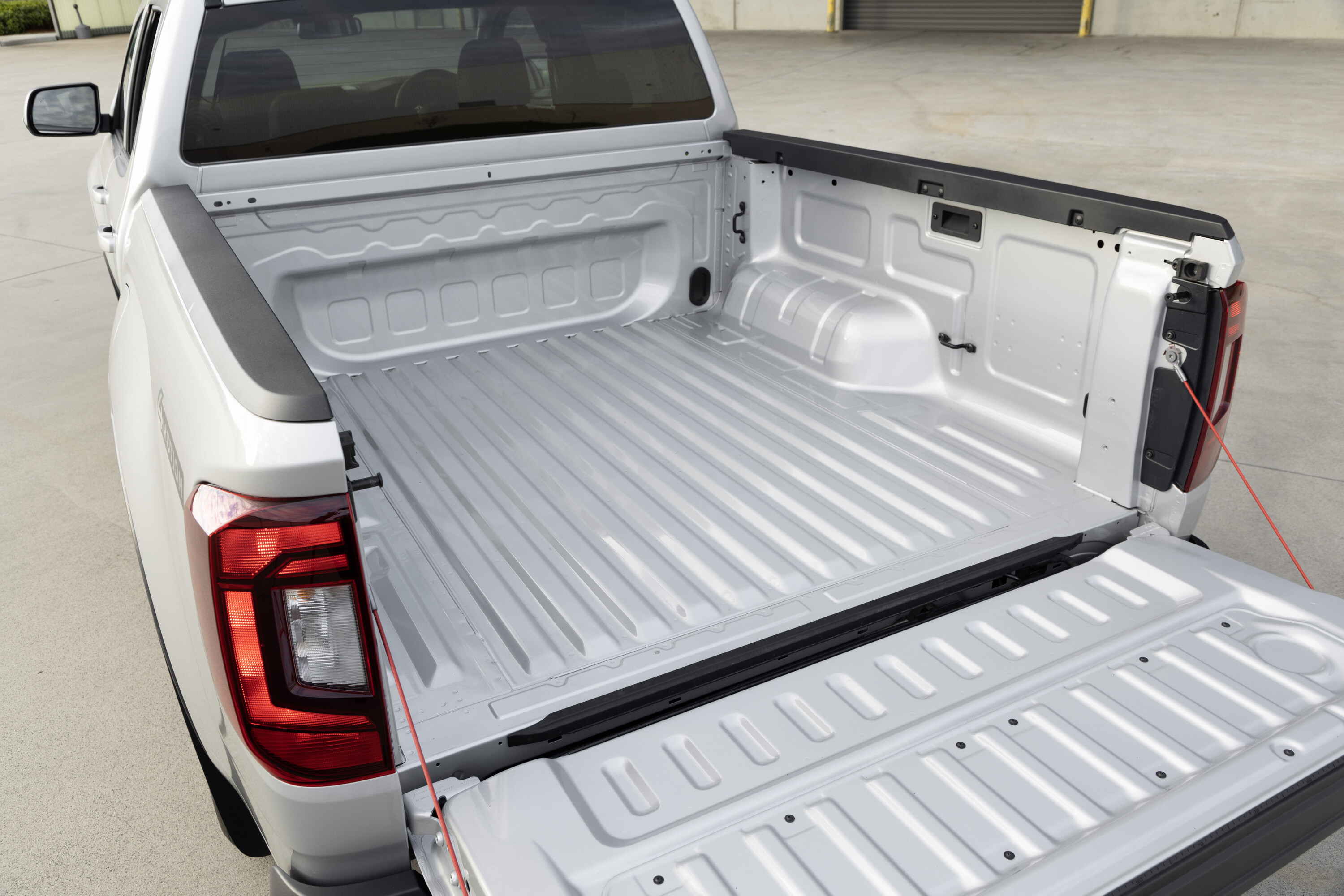
As for the all-important tray, VW says total volume has gone up by 3.5 per cent – a 1200mm euro pallet will still fit between the wheel arches – but where buyers will really notice an improvement is in terms of the tray’s features. There are now six tie-down points instead of four, along with an LED light on each side and a 12-volt power socket.
What’s it like to drive?
The defining feature of the original Amarok was how it drove.
Its polished, car-like steering and dynamics often saw it win Wheels comparison tests, and even towards the end of its model life, it was still the benchmark dual-cab for ride and handling.
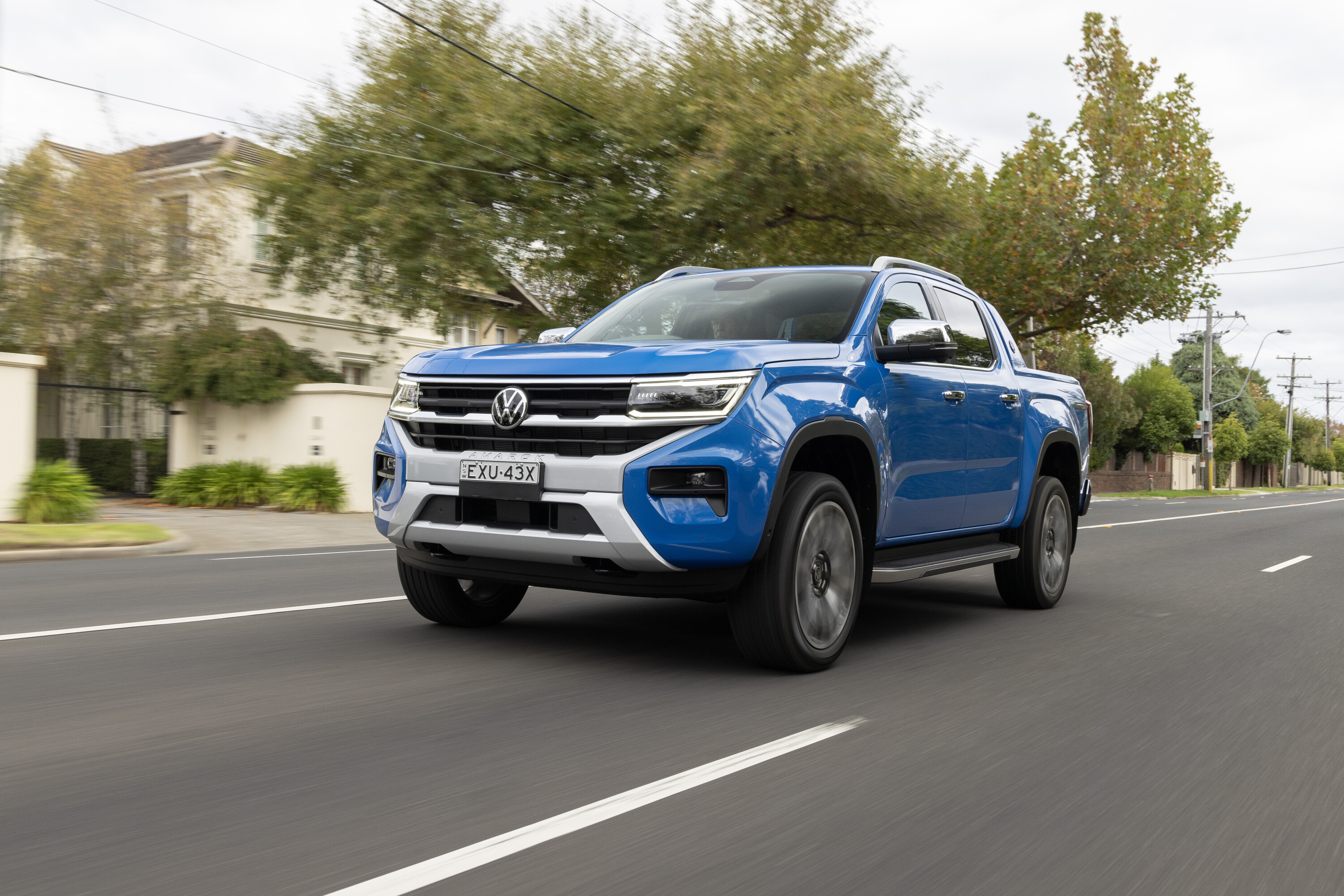
The good news is this new Amarok continues the trend. Overall refinement has improved and, on sweeping country back roads, the Amarok displays a sense of confidence, calmness and stability that sets it apart from its rivals.
1
It’s surprisingly fun and capable on a twisty road, too.
The steering is light and accurate, the body control and ride compliance are nicely judged for a workhorse and the brakes offer plenty of bite and stopping power. There’s also a surprising amount of grip available, even in the wet, especially in the flagship Aventura with its 21-inch alloys and high-quality 275/45 Goodyear rubber.
A few chinks exist in the Amarok’s dynamic armour, however. While the steering is effortless, keen drivers might prefer the setup in the Ranger, which offers greater weight and connection just off centre.
1
The Aventura rides well for a dual-cab with such large alloys.
Though the ride quality is generally good – the PanAmericana and Aventura’s monotube dampers are firm, but we prefer their greater control and expert tuning over lesser models – things can become terse on the Aventura’s 21-inch wheels when encountering poor roads. Generally, though, the Aventura rides well for a dual-cab with such large alloys.
As with a Ranger, the pick of the four-strong engine line-up is the 3.0-litre V6 turbo-diesel. While there isn’t a dud engine in the range – the 2.0L bi-turbo diesel in the Life and Style is gutsy, responsive and pairs well with the 10-speed auto – the 3.0L V6 is noticeably stronger.
It also sounds better and is the superior engine for towing, thanks to its healthier torque figure of 600Nm.
The 10-speed auto deserves recognition. It’s smooth and fast and the shift logic does a brilliant job of keeping both engines in the sweet spot of their power bands.
But the 2.3L turbo-petrol is intriguing. Volkswagen is hoping this high-output unit entices buyers that have previously owned SUVs – and we can certainly see the appeal.
1
Around town it’s quiet and responsive, but on the open road it does lend the Amarok a different personality.
Where most dual-cab utes surf on low-down diesel torque, the 2.3L makes its grunt higher in the rev range (peak power is at 5900rpm, torque at 3350rpm) so both the engine and transmission feel like they’re working harder to shift the Amarok’s 2.4-tonne mass. And although there’s no shortage of performance – on a twisty road the 2.3L Aventura is hilariously grippy and quick – we do wish the 2.3L sounded a touch angrier.
There is some distant four-cylinder induction noise, but it’s certainly not the fruity soundtrack the same engine makes in a Mustang.
1
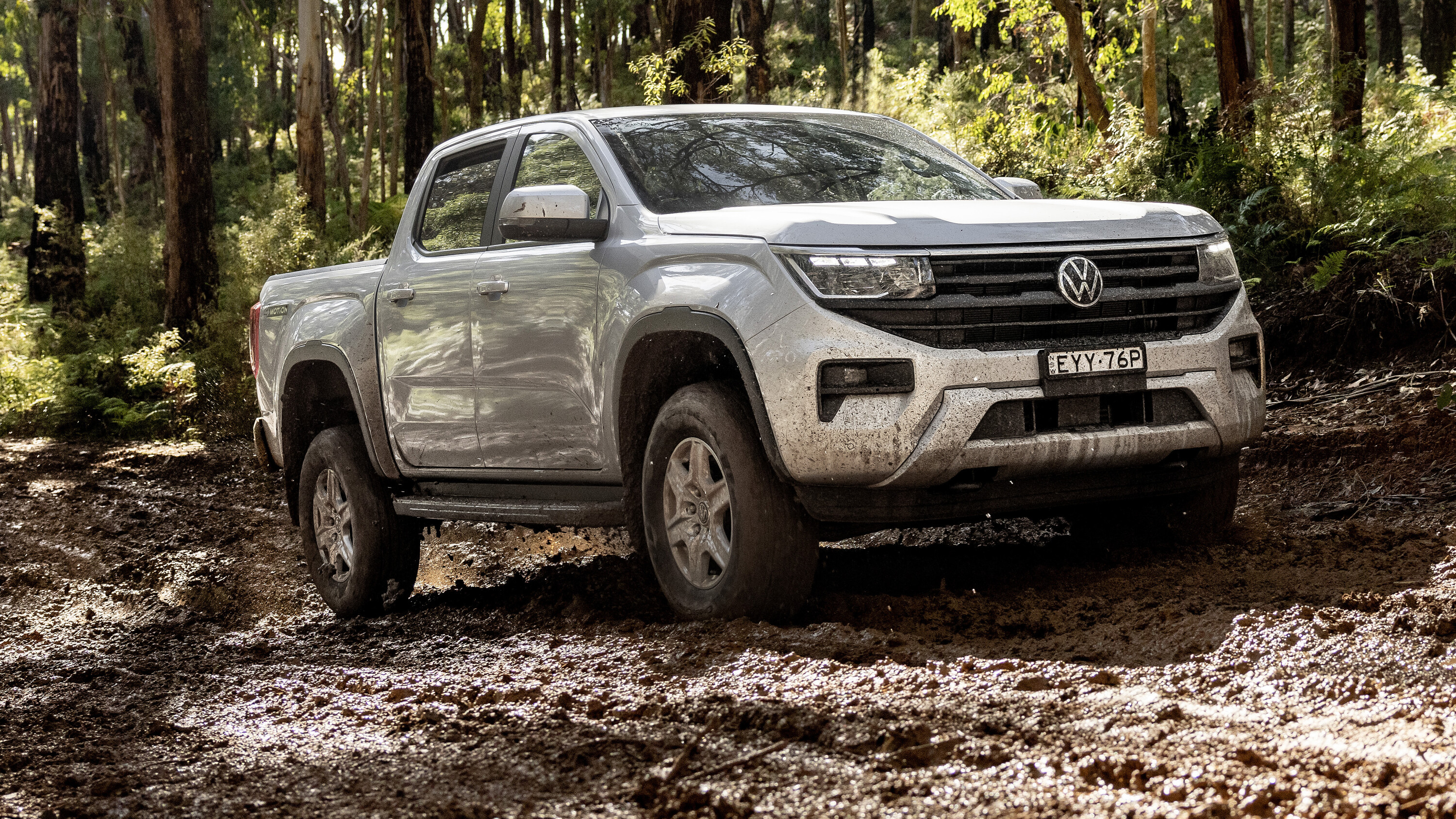
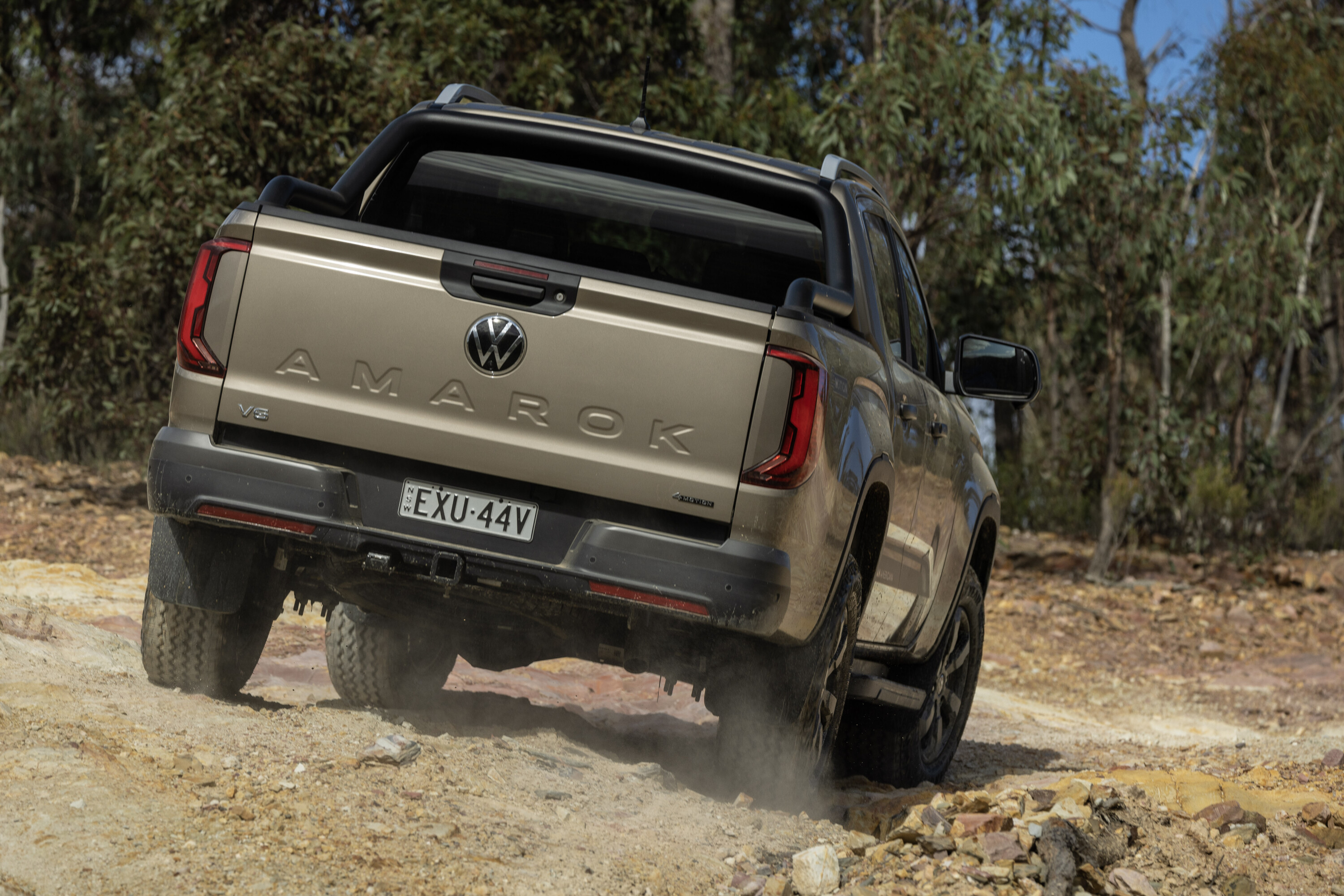
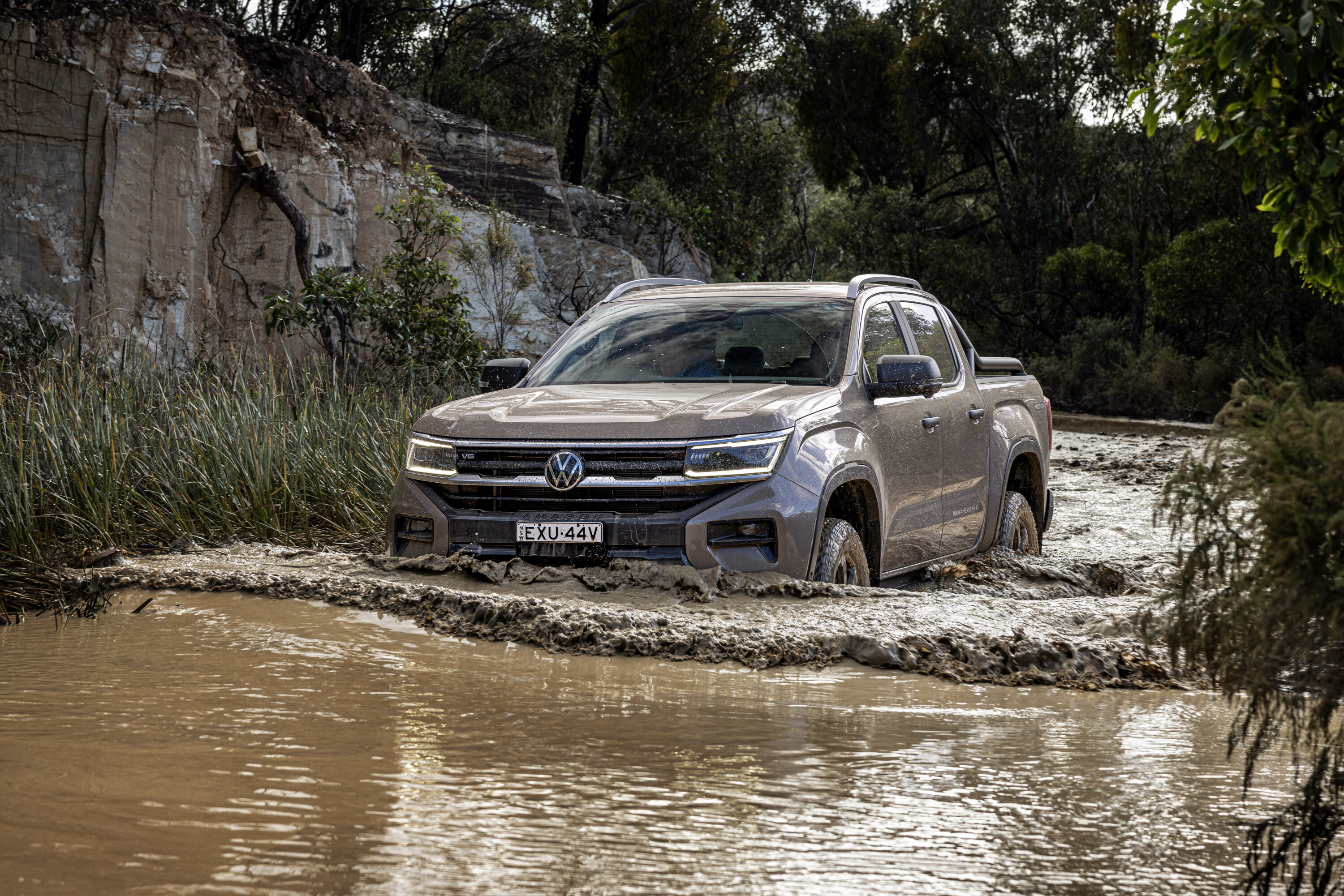
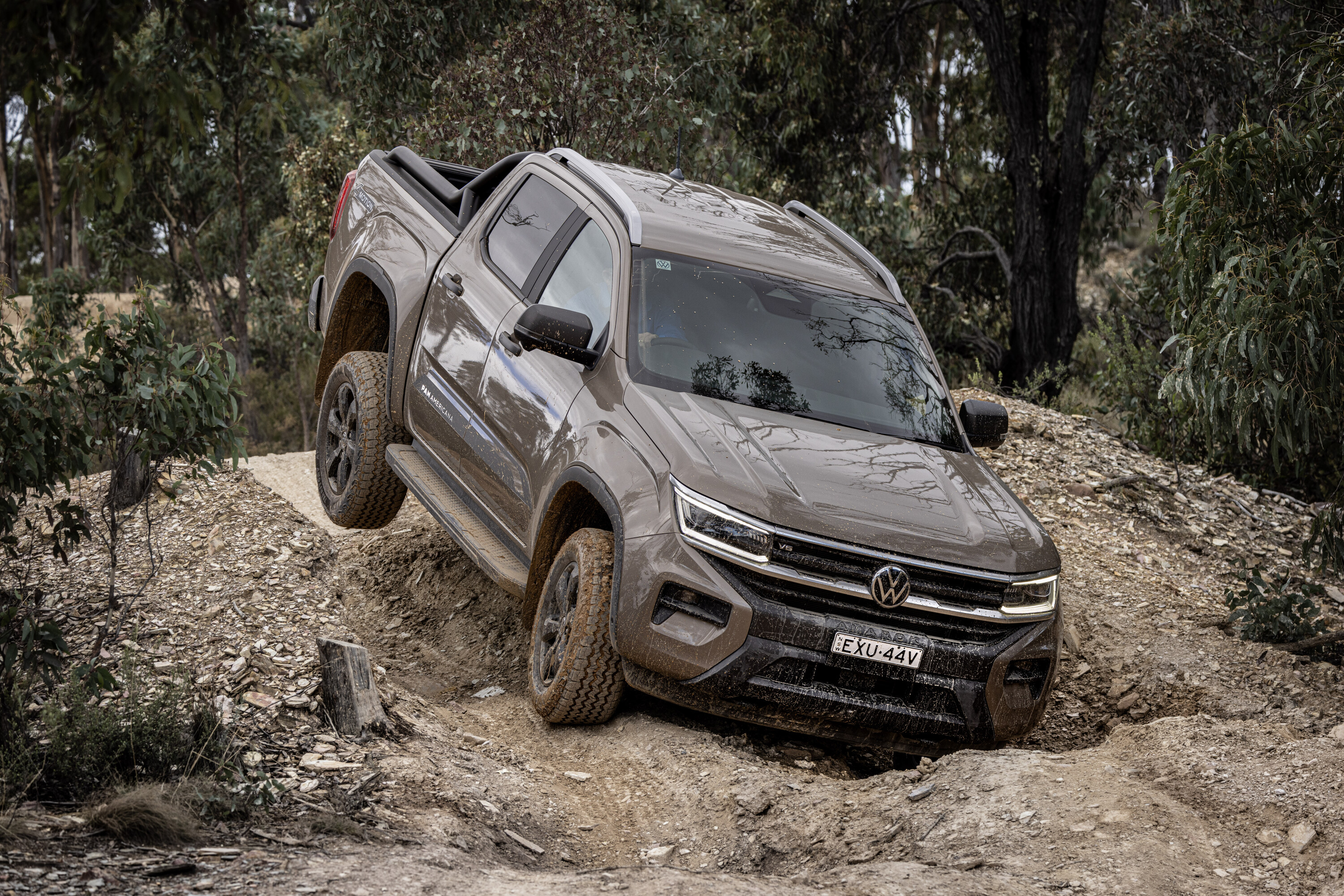
Off-road, the Amarok is more capable than ever.
Shorter overhangs, better ground clearance, a more advanced four-wheel-drive system and six drive modes (including Mud, Sand/Snow and Towing/Heavy Load) combine to make it impressively accomplished on slippery tracks.
Every model in the range includes a mechanical rear diff lock and approach/ramp over and departure angles are 30/22 and 25.6 degrees respectively.
1
- What is a Powertrain or Drivetrain?
- Power vs torque
- Car suspension explained
- Automatic transmissions (‘gearboxes’) explained
- Chassis control systems explained
- Car vs Ute vs SUV: How the vehicle you buy should guide the way you drive
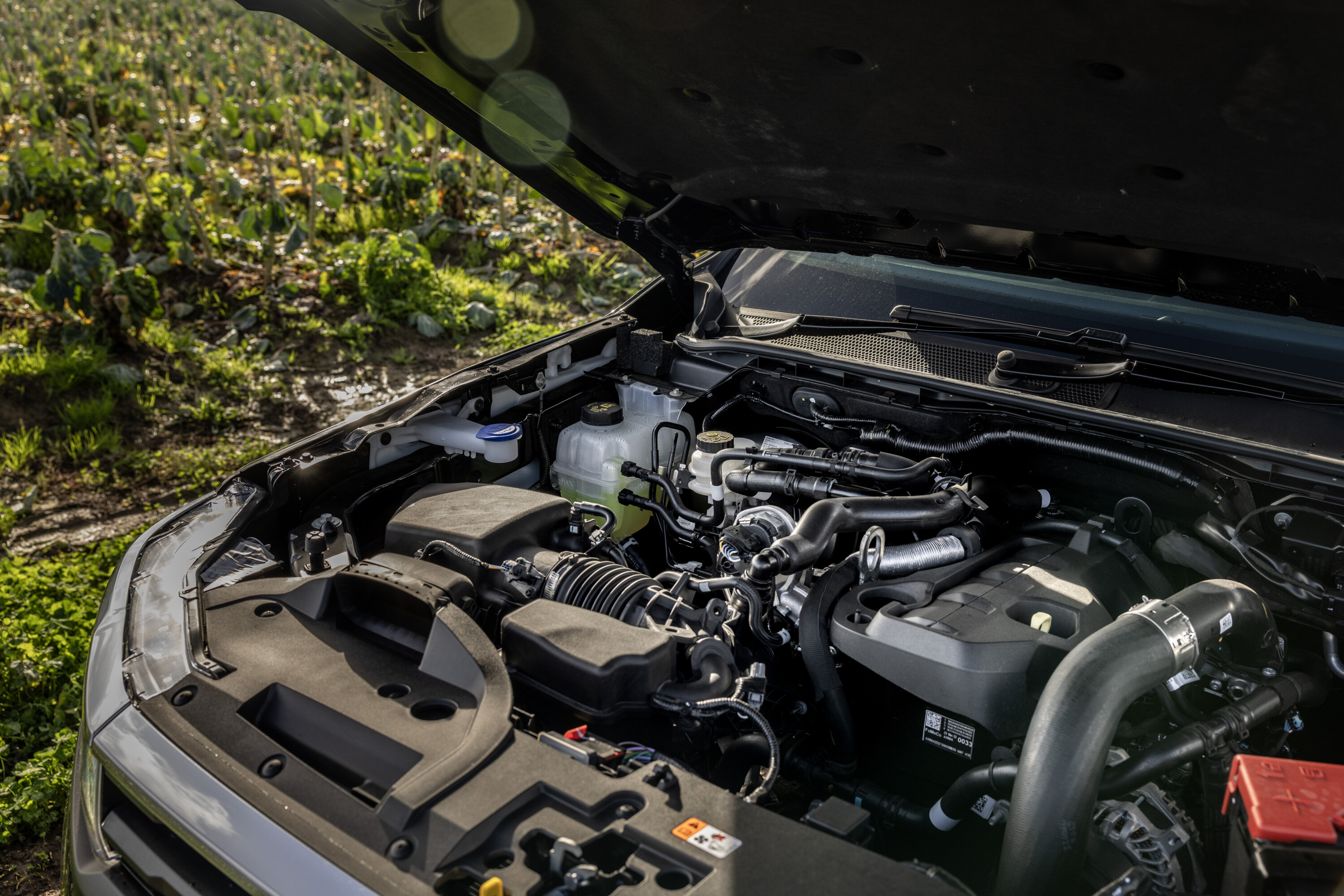
Your Amarok’s thirst depends on which engine you go for.
The thriftiest option is the 2.0L bi-turbo diesel in the mid-spec Amarok Life and Style, which has a combined-cycle consumption rating of 7.2L/100km. The single-turbo 2.0L in the base Core is next best at 8.0L/100km.
An official rating of 8.4L/100km for the 3.0L V6 is impressive given its additional capacity and performance compared with the 2.0-litre options.
Unsurprisingly, the 2.3L turbo-petrol engine in the flagship Aventura is the thirstiest engine of the line-up. Keep a light foot and the 2.3L might return its official figure of 9.9L/100km, although we’d wager its real-world number will be much higher.
1
How safe is it?
The Volkswagen Amarok is currently the safest dual-cab ute you can buy.
It was awarded a five-star safety rating by ANCAP in April 2023, with the breakdown of its crash rating being narrowly superior to the Ford Ranger on which it’s based.
In testing conducted by Euro NCAP, the Amarok was awarded 86 per cent for adult protection, which is two per cent higher than the Ford Ranger, thanks to a better whiplash protection result.
1
Every Amarok is fitted with nine airbags including one between the front seats to prevent head clashes and side curtain airbags.
A host of active safety systems are also available and we’ve listed the main ones here.
| 2023 Volkswagen Amarok safety features | |
|---|---|
| Autonomous emergency Braking | Trailer sway control |
| Adaptive cruise control | Speed sign recognition |
| Lane-keep assist | Blind-spot monitoring |
| Lane departure warning | 360u00ba surround-view cameras |
| Driver fatigue warning | Roll-over mitigation |
1
Warranty and running costs
The Amarok is covered by Volkswagen’s five-year/unlimited-kilometre warranty.
Service intervals are every 12 months or 15,000km and while that’s industry standard, the kilometre interval is actually shorter than the old Amarok which required a trip to the dealer every 20,000km.
Maintenance costs are competitive and match the Ford Ranger thanks to pricing that spans $329 and $414 per service. Volkswagen also offers buyers a five-year care plan for $1800.
The Amarok’s service intervals are superior to a Toyota HiLux which requires a dealer visit every six months or 10,000km. It means a HiLux will cost you $1740 over the first three years of ownership, whereas the Amarok is $1072, a saving of $668.
1
VERDICT
So is the Amarok now the benchmark in the dual-cab segment?
It’s so closely matched with the Ford Ranger that you could give the pair tied honours – but when you start to split hairs, it’s the Ford that just edges ahead.
The Amarok misses out on a few of the Ford’s desirable features and, while the VW’s cabin is the most luxurious on sale (its seats are especially great), functionality isn’t quite as good due to burying key functions inside the touchscreen.
1
But if you can overlook those minor niggles, then the new Amarok is indeed a class leader.
Its tough looks are distinctly VW, and it’s a huge improvement over the old Amarok for cabin space, standard safety gear, infotainment and dynamics.
We’d gravitate towards the V6 Style and PanAmericana as the picks of the model range, but every Amarok feels impressively polished and is oozing with upmarket appeal.
| 2023 Volkswagen Amarok Style specifications | |
|---|---|
| Body | four-door, five-seat dual-cab ute |
| Drive | four-wheel |
| Engine | 3.0-litre V6 turbo-diesel |
| Power | 184kW @ 3250rpm |
| Torque | 600Nm @ 1750-2250rpm |
| 0-100km/h | 8.2sec (estimated) |
| Transmission | 10-speed automatic |
| Weight | 2319kg (tare) |
| Fuel consumption | 8.4L/100km |
| L/W/H | 5350/1910/1886mm |
| Wheelbase | 3270mm |
| Brakes | disc (front/rear) |
| Tyres | 255/65 R18 |
| Wheels | 7.5 J x 18-inch alloy |
The new 2025 Nissan Patrol upper-large SUV has been previewed by a new Infiniti concept.
Snapshot
- Infiniti QX Monograph concept previews next QX80 luxury SUV
- Our closest look yet at the new 2025 Nissan Patrol
- Production version could feature 3.5-litre twin-turbo petrol V6
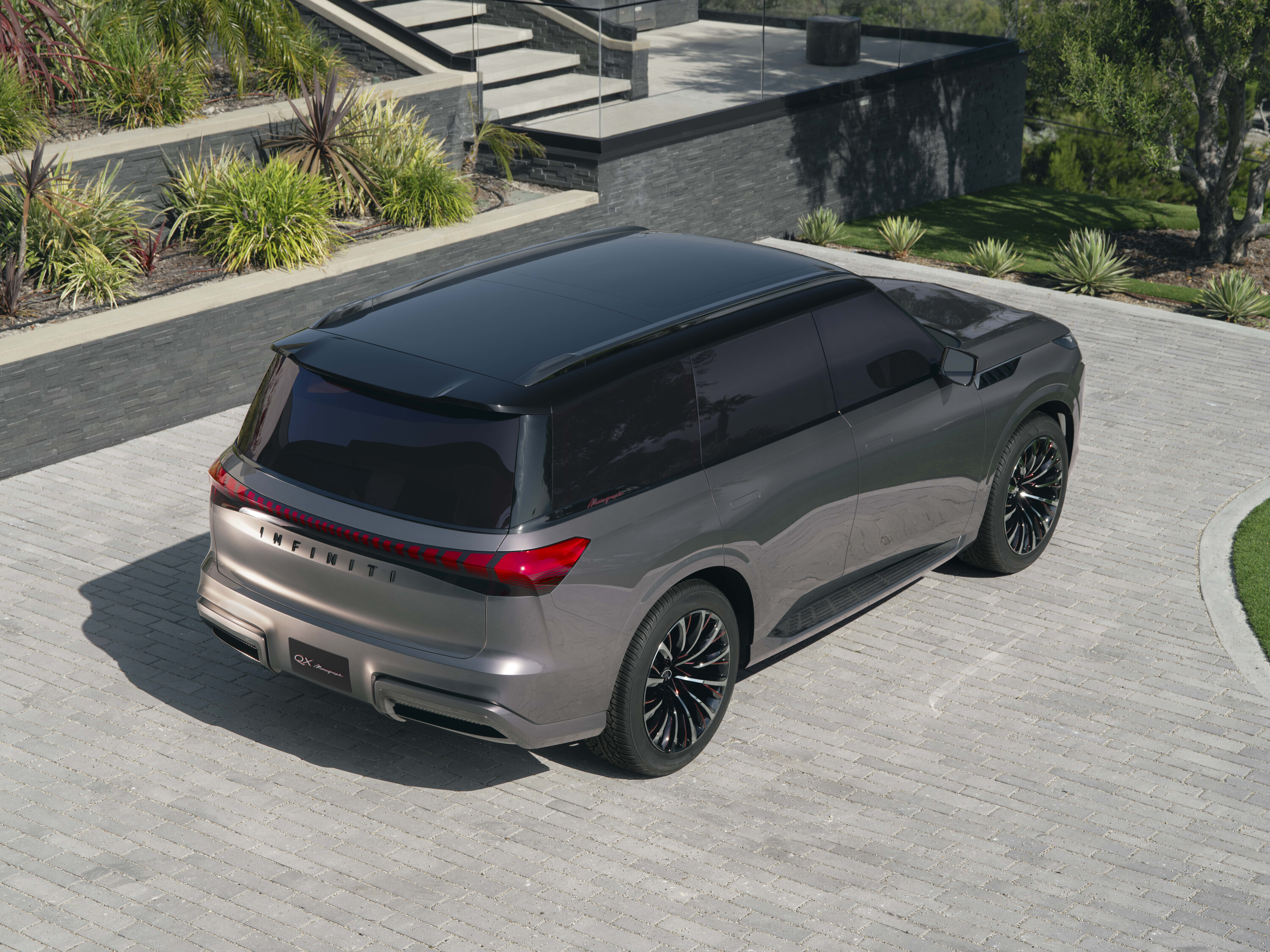
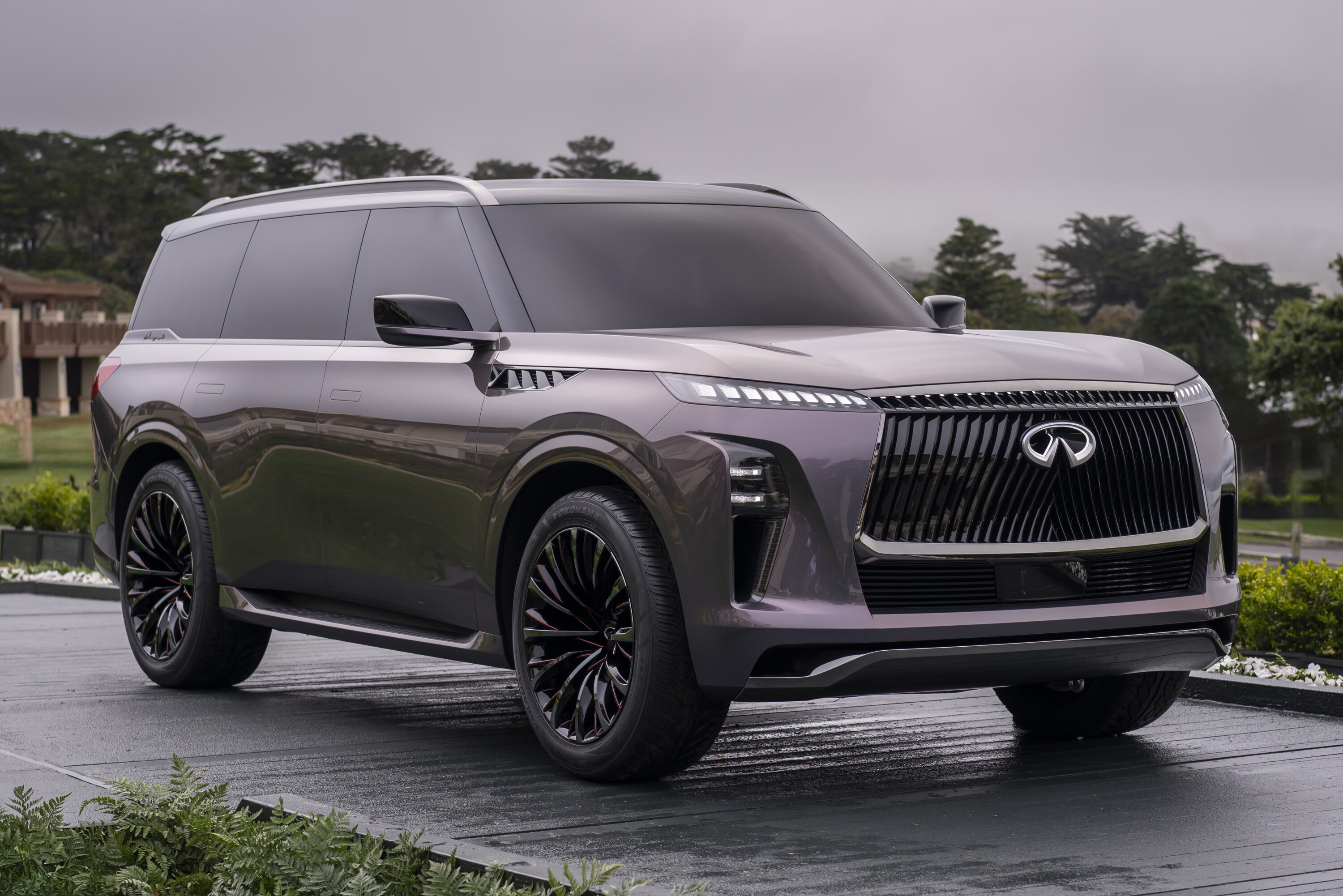
The Infiniti QX Monograph concept, unveiled at the 2023 Pebble Beach Concours d’Elegance, is a preview of the forthcoming QX80 – the Nissan Patrol’s luxury twin once sold in Australia.
While Infiniti hasn’t detailed the concept’s interior or powertrains, the exterior design provides our closest look yet at the new Patrol – but with Infiniti’s latest design language.
Infiniti describes its upright shape as “anti-wedge”, which is said to allow for a more spacious interior. The glasshouse now wraps around the entire vehicle, while pop-out door handles replace traditional units – at least for the Infiniti version.
1
It features ‘digital piano key’ daytime running lamps with a lower, separated headlight assembly, a wider grille with a light strip, a functional side air intake, and full-width tail-lights with ‘welcome’ and ‘farewell’ animations.
The production version, expected in 2024, will likely be similar to the concept with minor tweaks such as more conventional door frames, side mirrors, and smaller alloy wheels.
The current Nissan Patrol – badged Armada in North America – serves as the basis for the Infiniti QX80, and this should continue in new-generation form.
1
It isn’t unusual for a luxury spin-off to be unveiled first. For example, the new Lexus GX off-roader was revealed ahead of the related Toyota Prado.
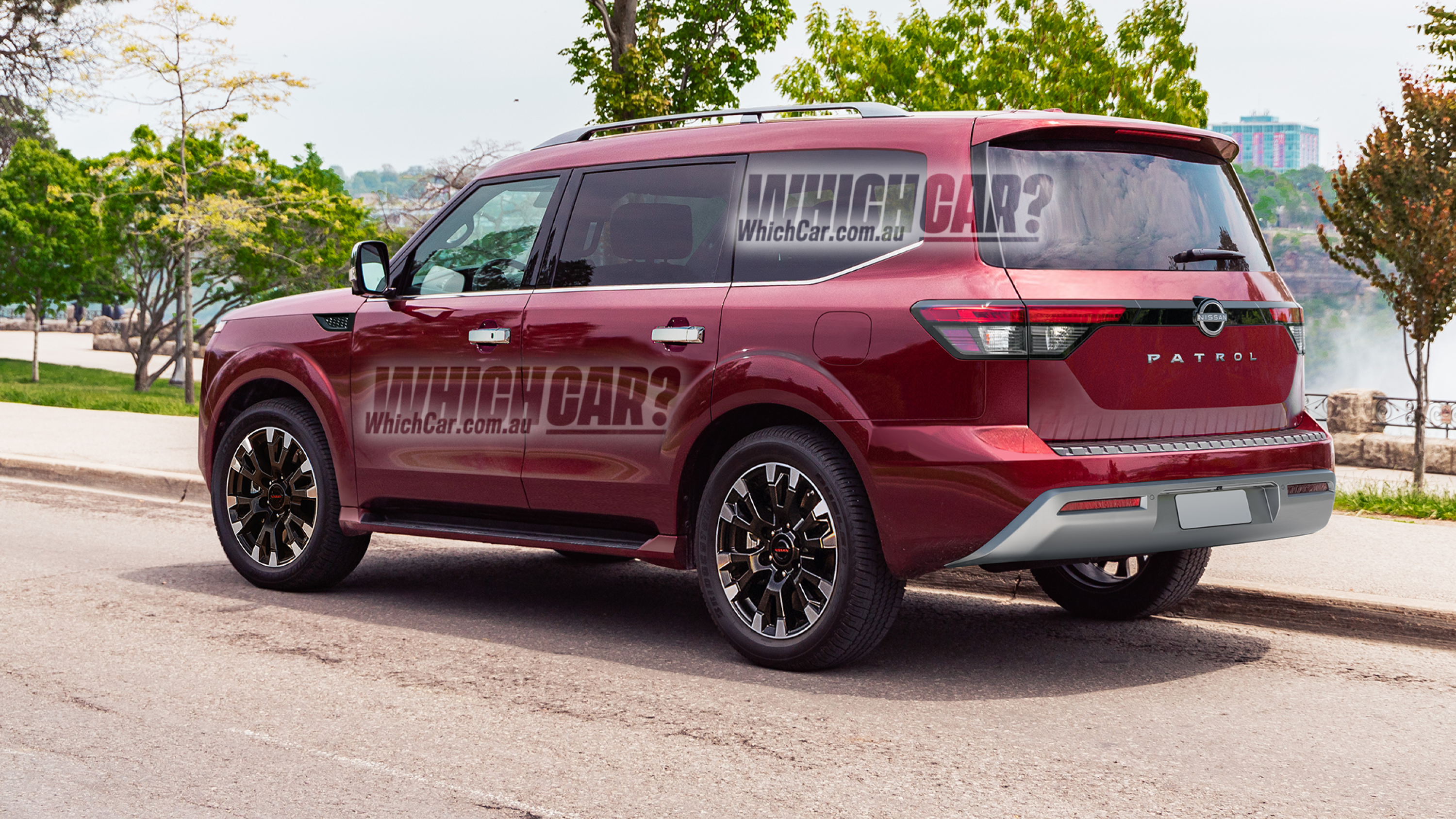
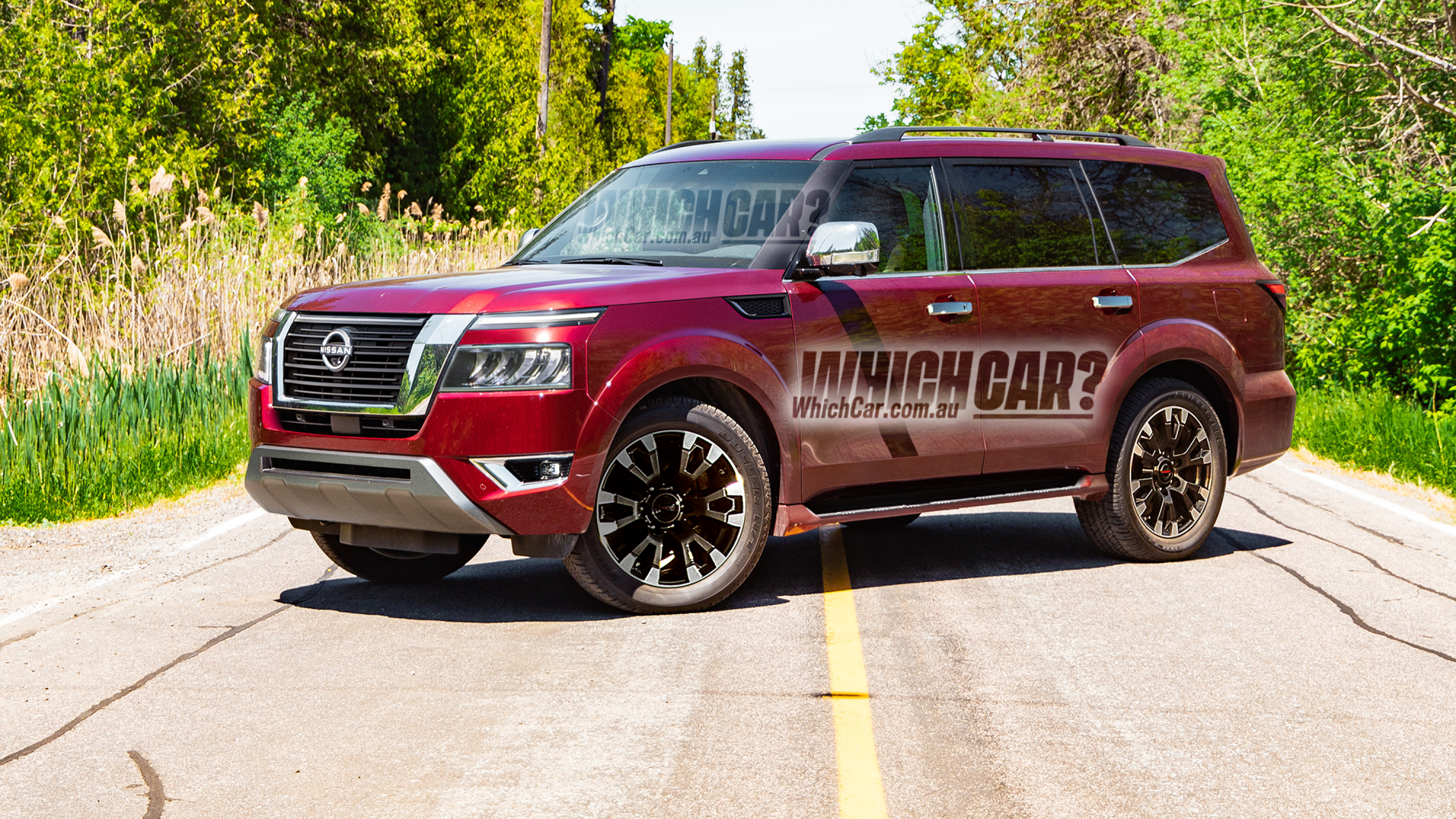
Our speculative renderings, below, show an evolutionary design with hints from the smaller X-Trail and Pathfinder for the new Patrol, including split headlights and a full-width strip connecting slimmer tail-lights.
Not much is currently known about the 2025 Nissan Patrol; however, a report from early 2022 suggests it could switch to a twin-turbocharged petrol V6 – at least in North America.
A report from early 2022 suggests the new Patrol could switch to a twin-turbocharged petrol V6 – at least in North America
Industry journal Automotive News was briefed by a Nissan dealership source in the United States, with the Patrol set to replace its current petrol V8 for a “more fuel-efficient” twin-turbo V6.
“Fuel efficiency is on everybody’s mind,” another insider told Automotive News.
“If they can get the same horsepower and torque out of a V6, why not?”
1
The twin-turbo V6 in question is tipped to be a 3.5-litre unit paired with a nine-speed automatic transmission, though it’s believed to be unrelated to the Nissan Z’s engine.
While details of the powertrain remain scarce, the new V6 would likely outperform the current petrol V8, which produces 298kW and 560N. It’s paired with a six-speed automatic.
Tough new vehicle regulations in the United States require a 28.3 per cent reduction in emissions through 2026 – a stark contrast to Australia and Middle Eastern countries where more relaxed emission laws are enjoyed… for now.
The difference could mean Australia’s Nissan Patrol will continue with the 5.6-litre V8 for a number of years before moving to the V6.
1
Arch-rival Toyota replaced its 4.5-litre twin-turbo diesel V8 with a 3.3-litre twin-turbo diesel V6 in the LandCruiser 300 Series in 2021, mated to a 10-speed automatic transmission.
Some markets received the option of a 3.4-litre twin-turbo petrol V6, which is available in Australia in the related Lexus LX and soon to be offered in the smaller GX.
In addition to the twin-turbo V6, the Y63 may also feature an E-Power hybrid version to reduce emissions further. This would be in line with Nissan’s strategy to increase the number of electric and hybrid vehicles in its line-up.
For local buyers, a more-rugged Patrol Warrior – arriving later this year to farewell the current Y62 Patrol – may headline the new-generation range, if the upcoming model proves popular.
As with the Navara Warrior, it is ‘manufactured’ by Melbourne-based Premcar, with a bi-modal side-exit exhaust, a new towbar, added ground clearance via a suspension lift, additional under-body protection, all-terrain tyres, and black badging.
The next-generation 2025 Nissan Patrol – potentially codenamed Y63 – is expected to debut within 18 months, with a local launch likely a few months later.
MORE
Everything Nissan
The September 2023 issue of 4X4 Australia is out now.
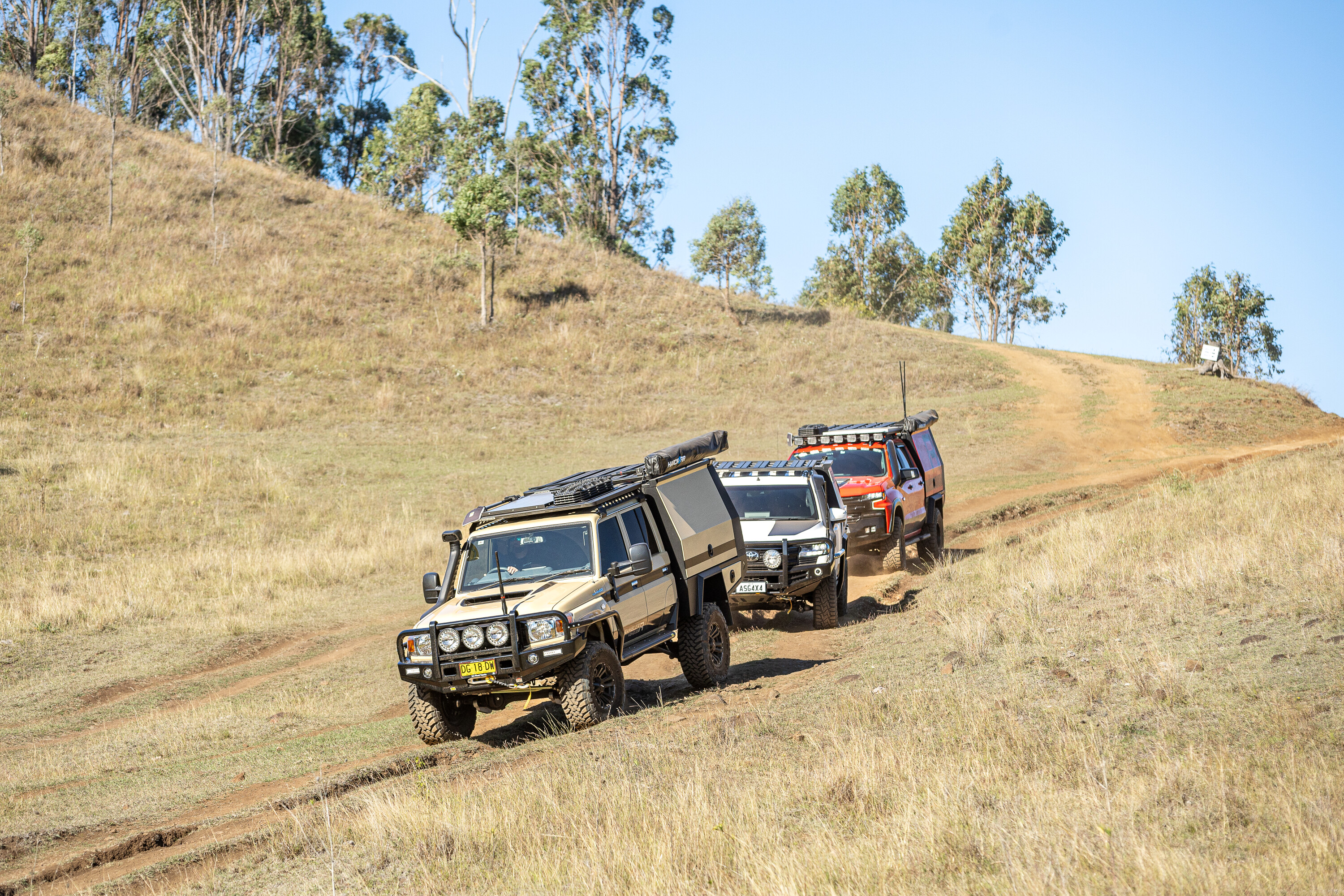
A trio of top-shelf tourers headlines this issue of the magazine, with Matt Raudonikis getting behind the wheel of three Rambler-fettled off-roaders: a 300 Series, a 79 Series and a Silverado 1500 Trail Boss. Exceptionally built and loaded with quality equipment, picking a winner was no mean feat.
1
Equally ballistic is a Barra-powered Ford Ranger with a whopping five times more factory horsepower – an eye-watering 750hp at the rear wheels – than a stock vehicle. We take a deep drive under the hood of what is the most powerful Ford Ranger in Australia.
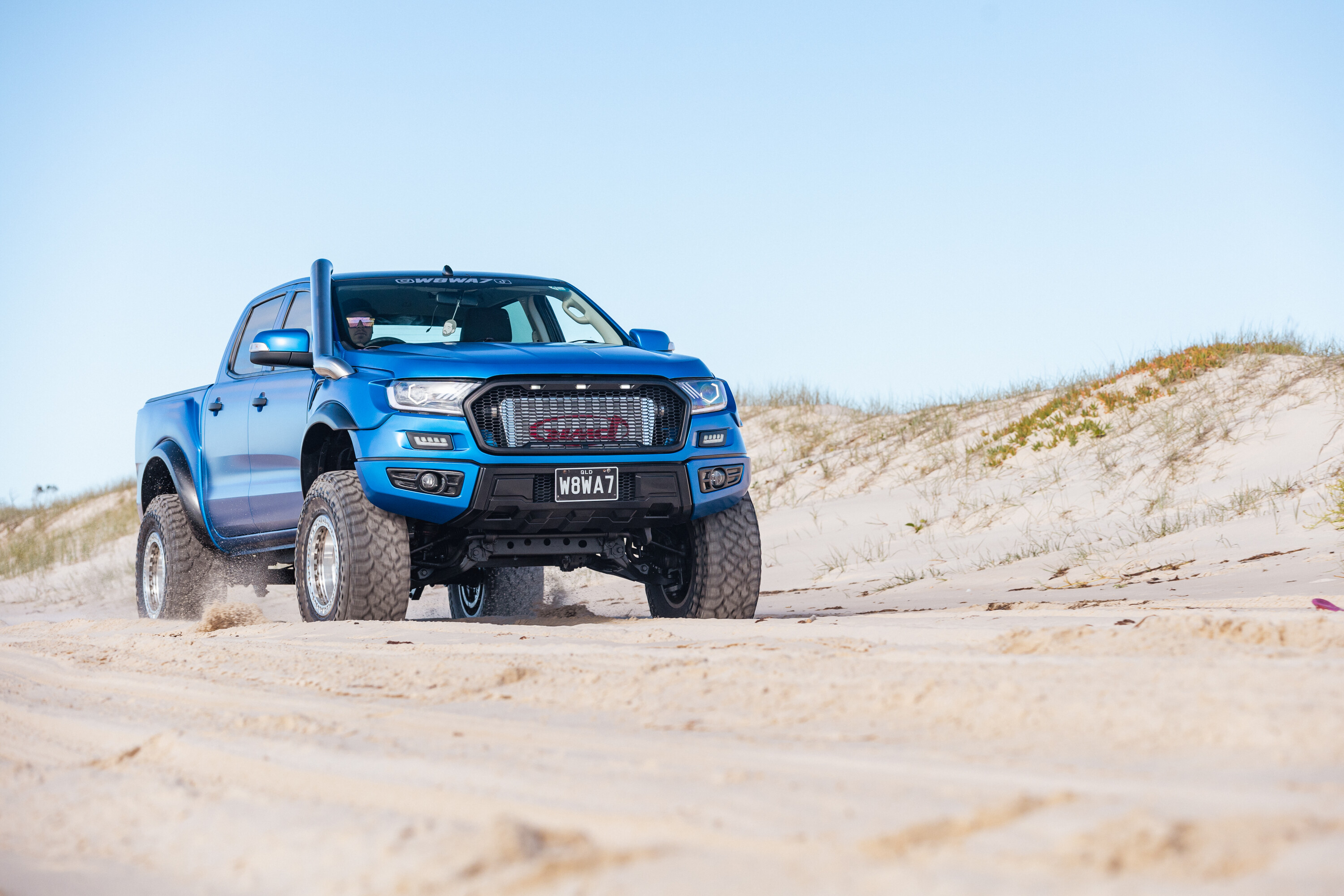
1
For a soft-roader to grace the pages of 4X4 Australia magazine, it needs to be something quite extraordinary, and this RAV4 outfitted with Ironman 4×4 equipment is something special. With improved ground clearance and added protection, this light-duty SUV is a capable little off-roader.
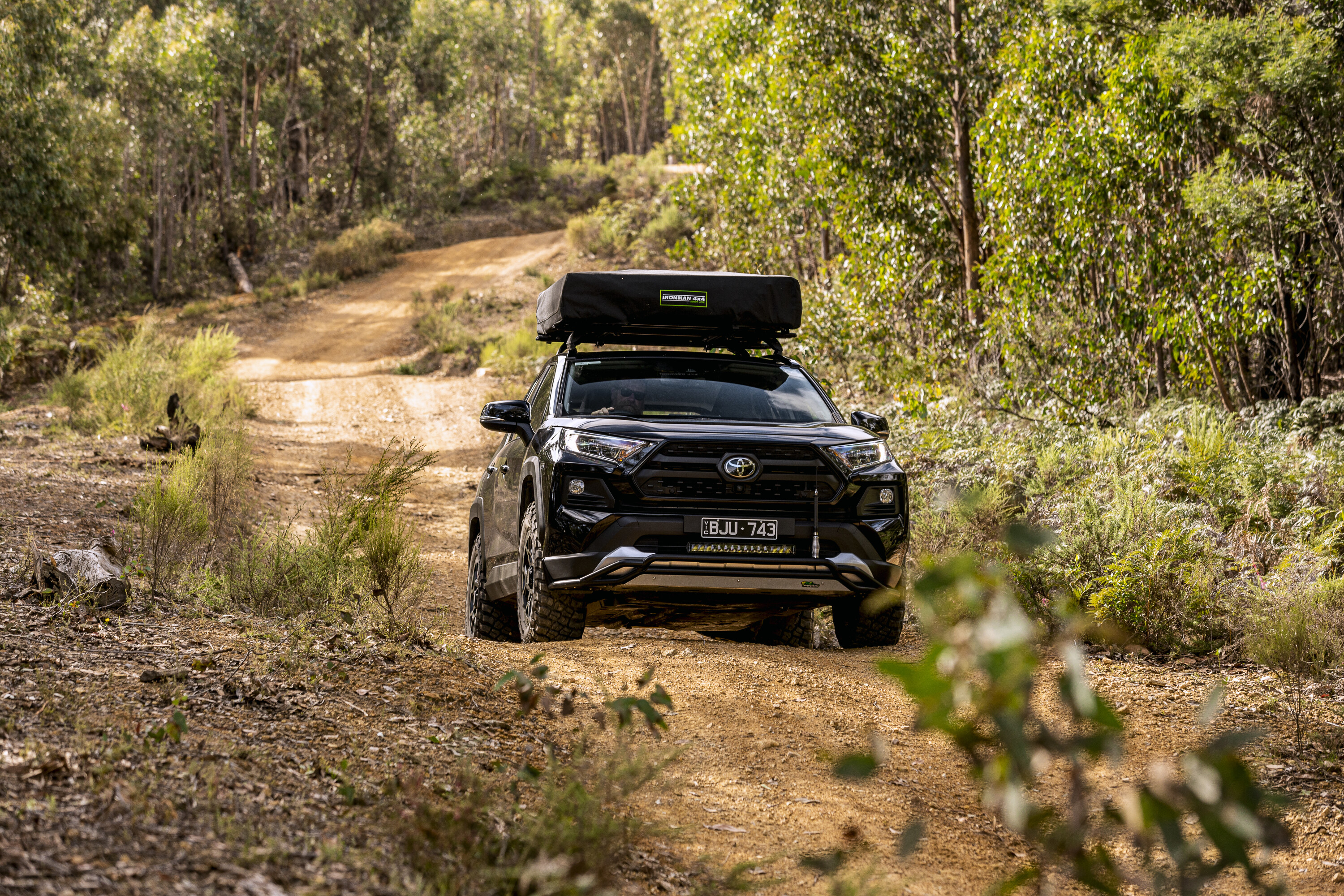
1
We also drove two new vehicles this month: a GWM Tank in Ultra guise, and a five-door Jeep Grand Cherokee Overland fitted with an off-road pack. We get both of them dirty, and return with surprising results.
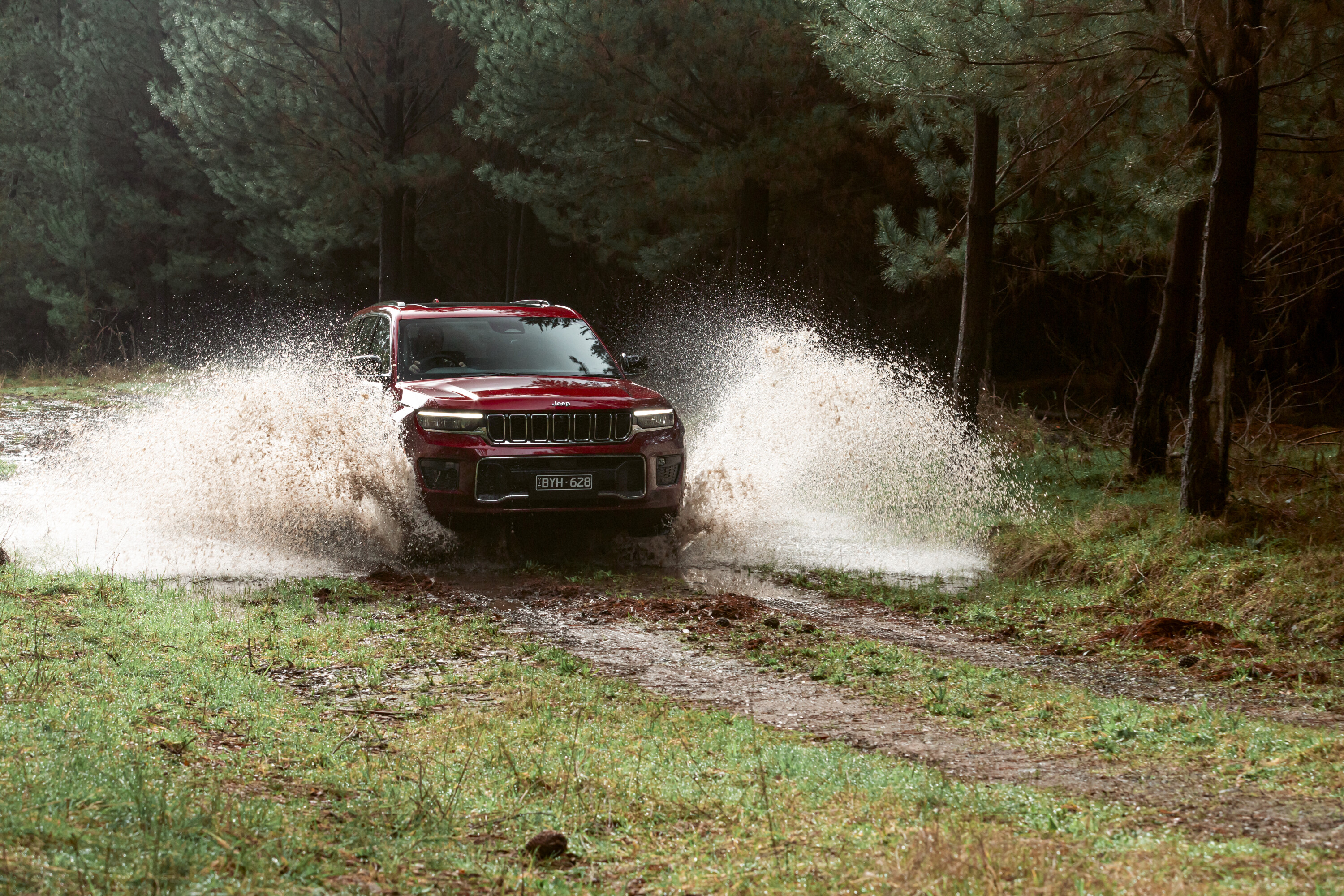
1
The all-new Amarok was in a race against the clock en-route to the 2023 Big Red Bash. Nasty weather foiled any plans of a smooth-running adventure, but as they say, ‘if the road is easy, you’re likely going the wrong way’.
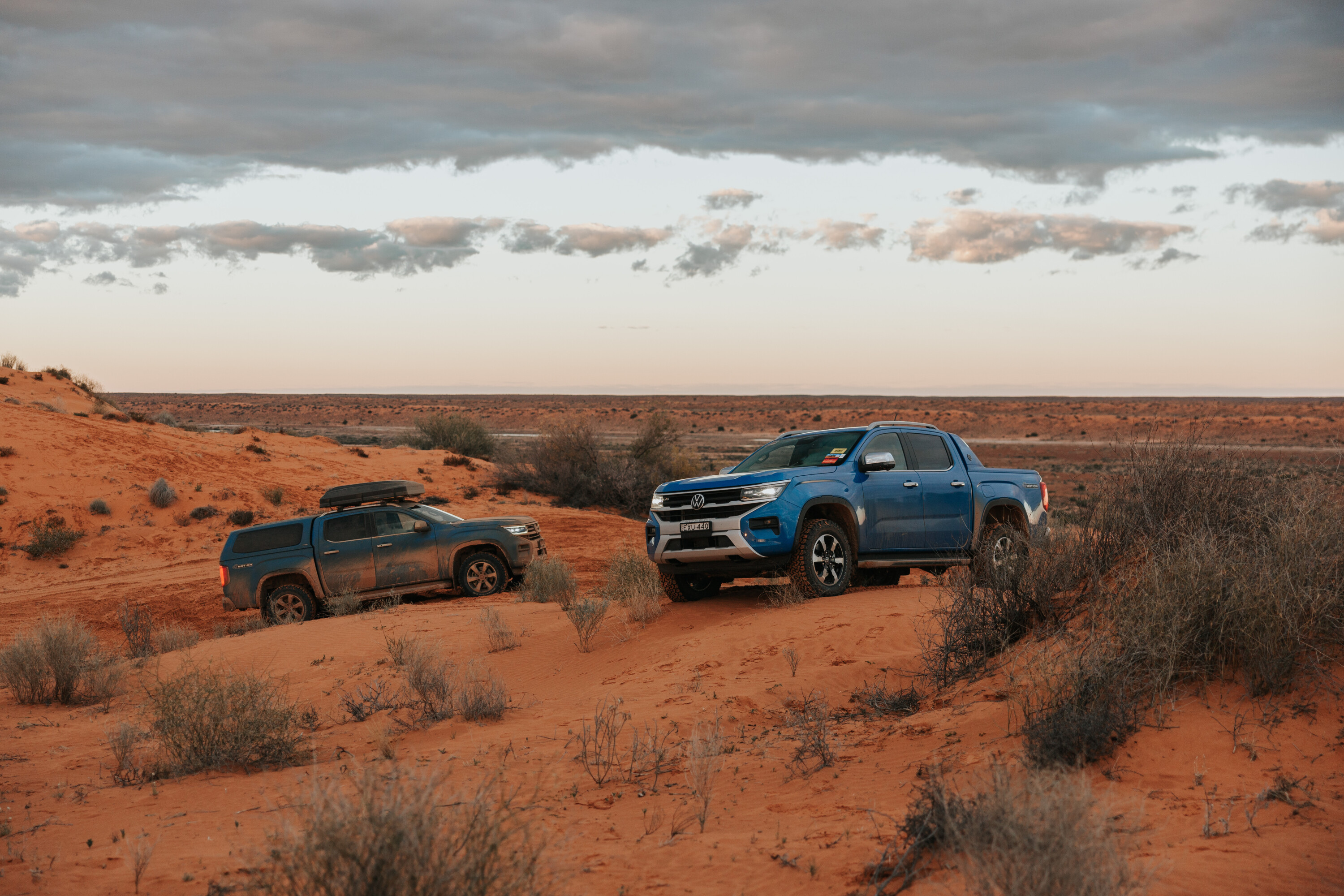
1
Plus we make your next adventure easier by listing the top tips for planning a 4×4 trip and, when you’re ready, we’ve included a guide to explore the wonderful Nymboi-Binderay National Park in NSW.
As a bonus, by grabbing a copy of the mag, you could win a $6000 GearWrench tool kit for Dad this Father’s Day!
What else is there?
- Boss Aluminium 270-degree awning
- Core Off-Road Power Box
- FJ Cruiser gets new Cooper AT3 LT tyres
- An update on our Ranger Sport V6 build
- Product reviews, news and more!
TJM has revealed a range of products tailored to suit the all-new 2023 Volkswagen Amarok, with the company to showcase the equipment at the National 4×4 Show in Melbourne this weekend, August 18-20.
A TJM-equipped 2023 Amarok will debut at the show, wearing a selection of specialised TJM gear designed to not only protect the vehicle but enhance its style, performance and practicality.
1
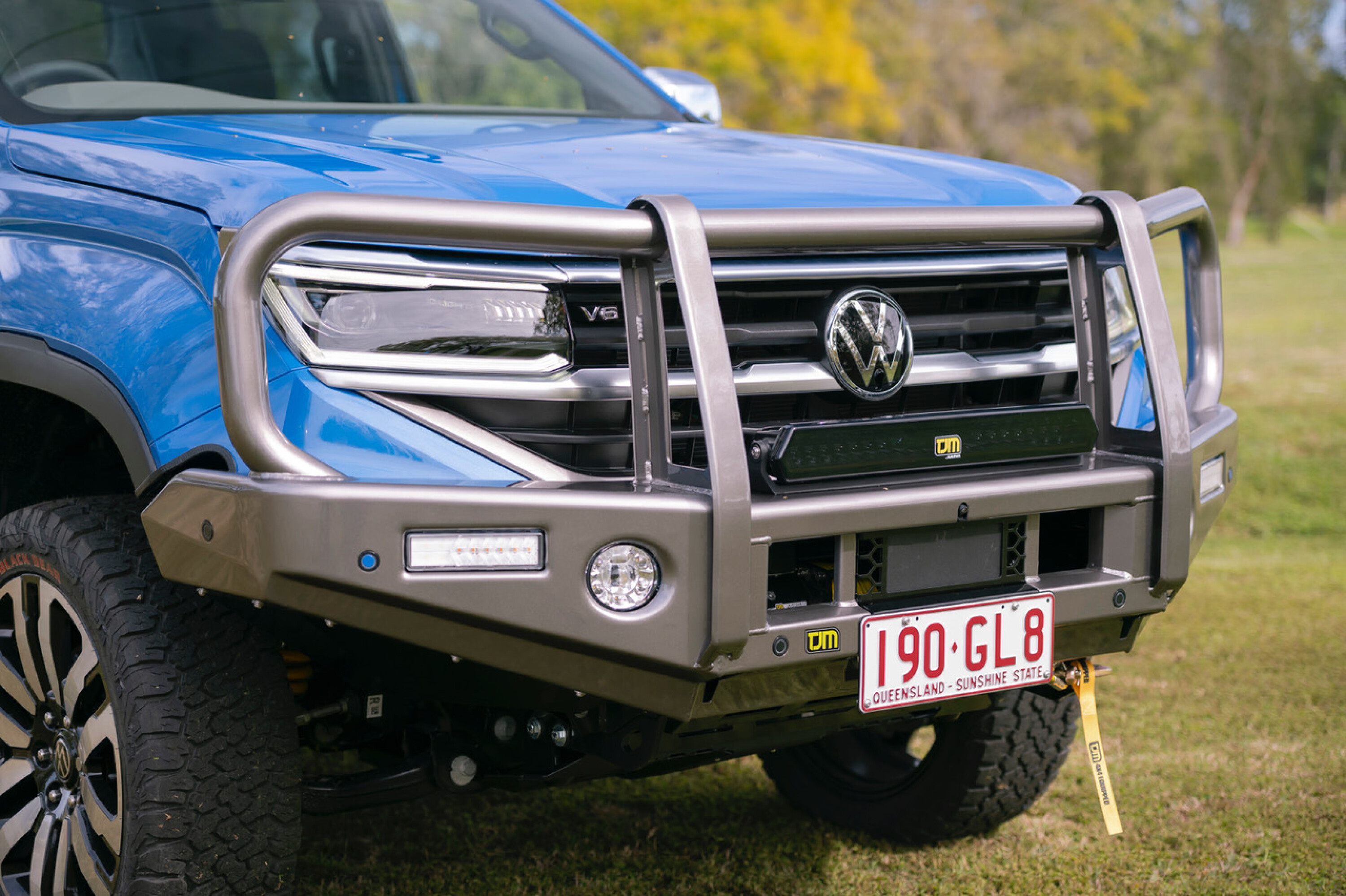
At the front of the vehicle TJM has installed its iconic Outback bull bar, which features an integrated steel winch mount (in this case fitted with a Torq winch), integrated 8000kg rated recovery points, reinforced Hi Lift jack points, dual aerial mounts, and mounting provisions for lights and light bars (with a TJM Ultima bar used here). It is constructed using a high-strength 63mm steel tube.
The bull bar retains all parking sensors and radar functions, and is ADR-compliant and airbag-compatible. It comes standard with a black powder-coat finish; although the bull bar on this vehicle has been painted. It comes with a three-year warranty.
1
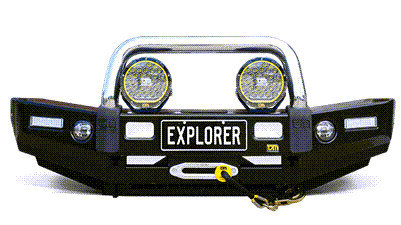
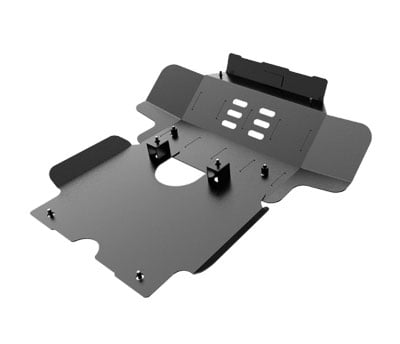
Providing further peace of mind when battling off-road terrain is TJM underbody protection in the form of underbody guards. The guards are corrosion resistant and look great with a black finish.
Latest Gear Guides
2
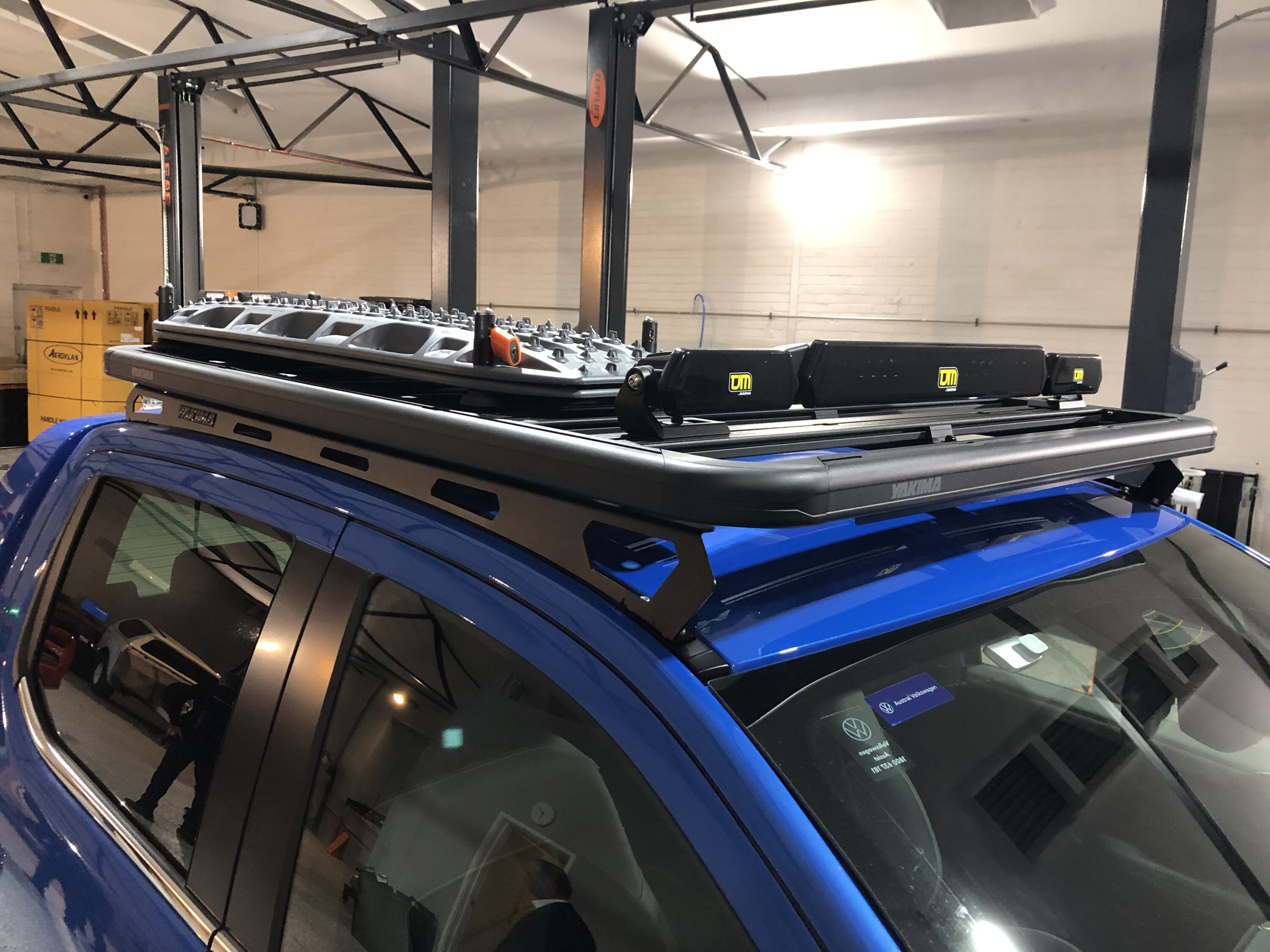
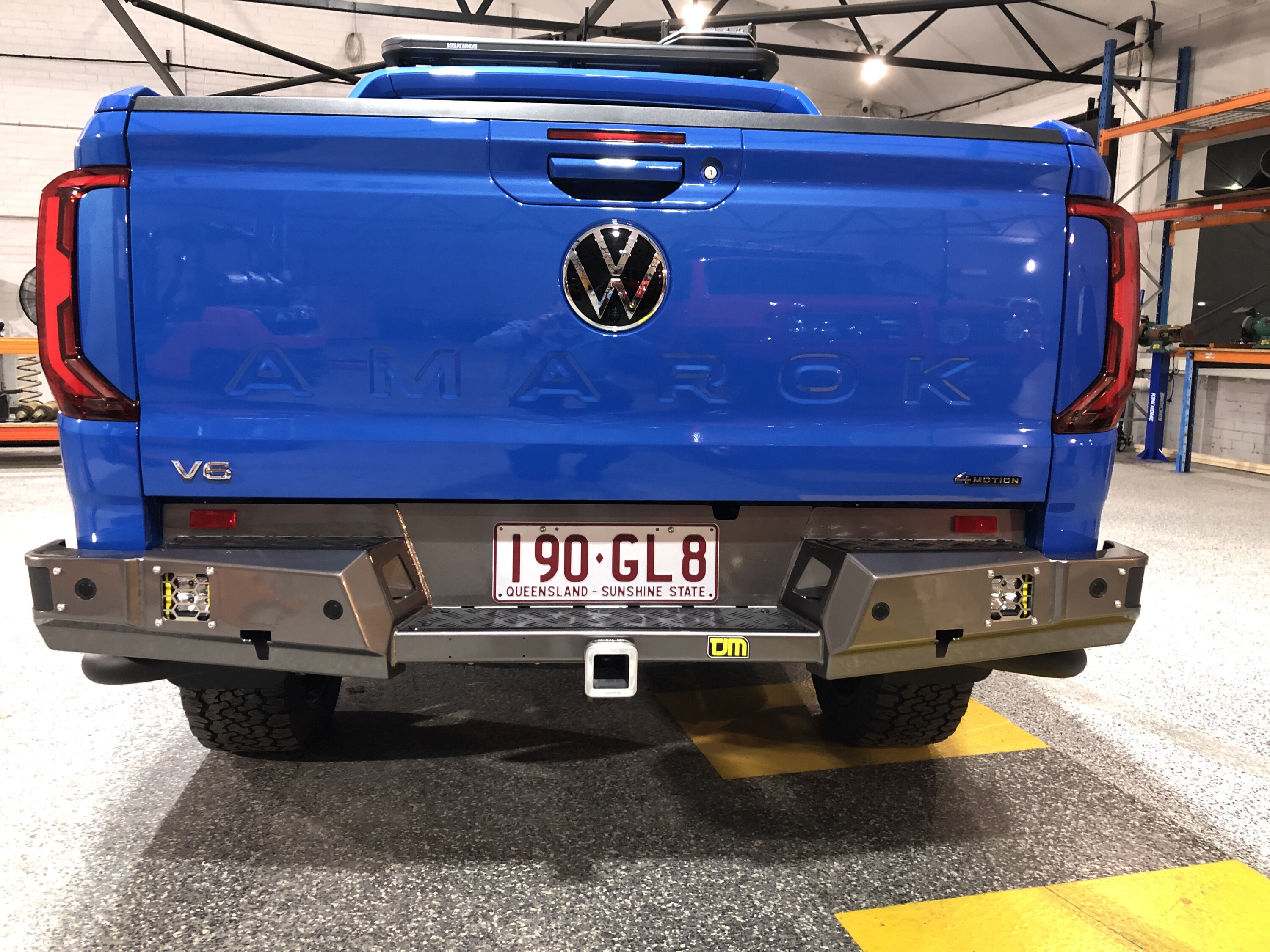
Down the flanks, the Amarok is wearing TJM side steps which are chassis-mounted for maximum strength. At the rear sits a TJM RB6 rear step protection tow bar that is also mounted to the chassis and is manufactured from high-grade steel – plus it contains relocated BLIS sensors and cameras. Embedded within the rear bar is a step to enable easy access to the Yakima roof rack. Atop the roof rack you’ll find a set of Maxtrax and three more TJM Ultima light bars.
3
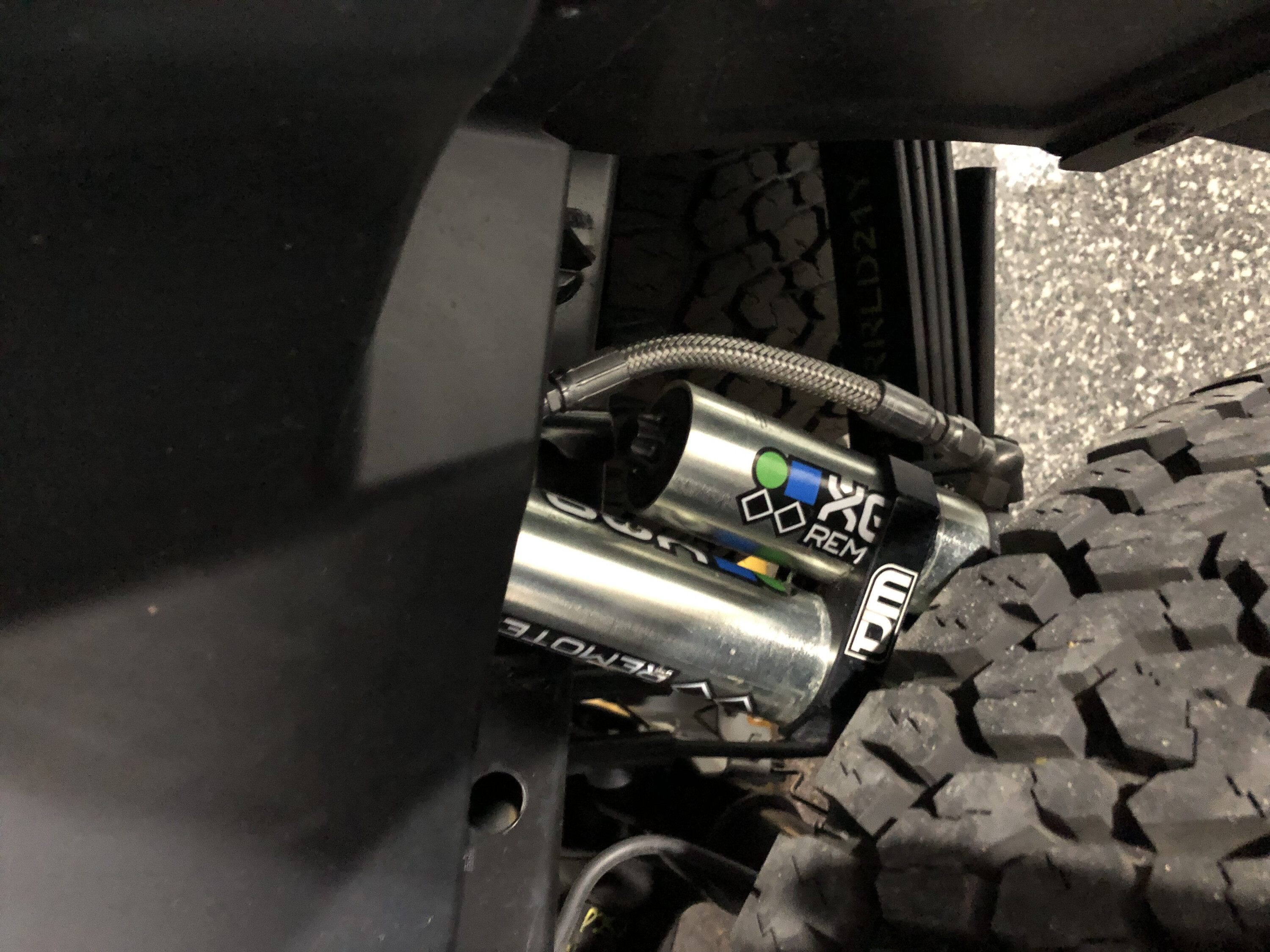
As is the case with the next-gen Ranger, TJM also offers its XGS suspension upgrades for the 2023 Amarok, with two suspension systems available: XGS Remote and XGS Roamer. This example utilises the top-of-the-line Remote kit which consists of a remote reservoir; a patented in-built hydraulic bump-stop; and eight-stage compression and rebound damping dials for exceptional all-road performance.
Check out the TJM-equipped Amarok at the National 4×4 Show in Melbourne this weekend, August 18-20.
What better high watermark to target than Australia’s best-selling vehicles? Mahindra’s globally-intentioned Pik Up concept has the Toyota HiLux and Ford Ranger in its sights.
Snapshot
- Mahindra Scorpio-based ute concept revealed!
- Targets move upmarket with lifestyle intentions
- Production version on the cards for a 2024 release
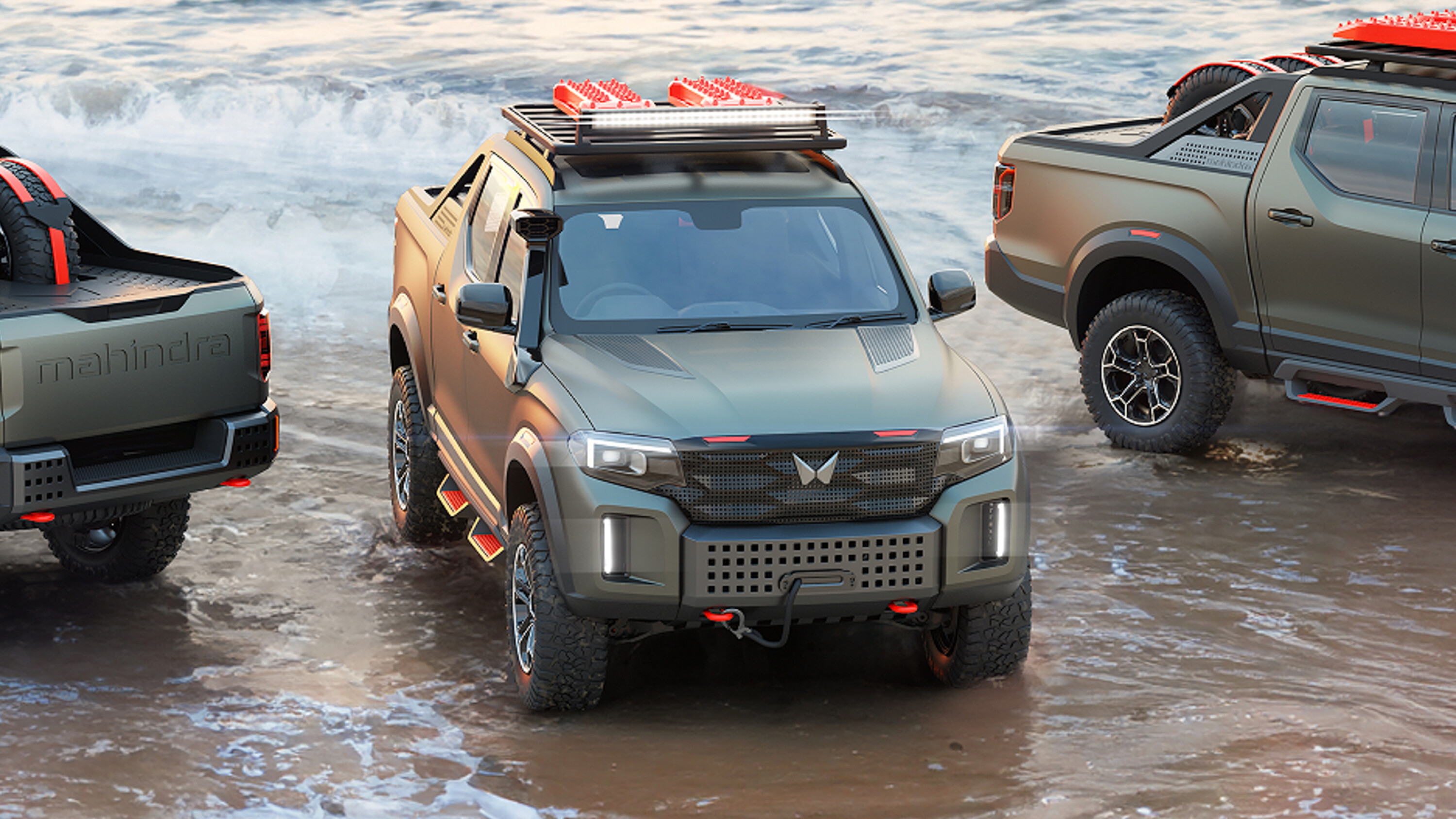
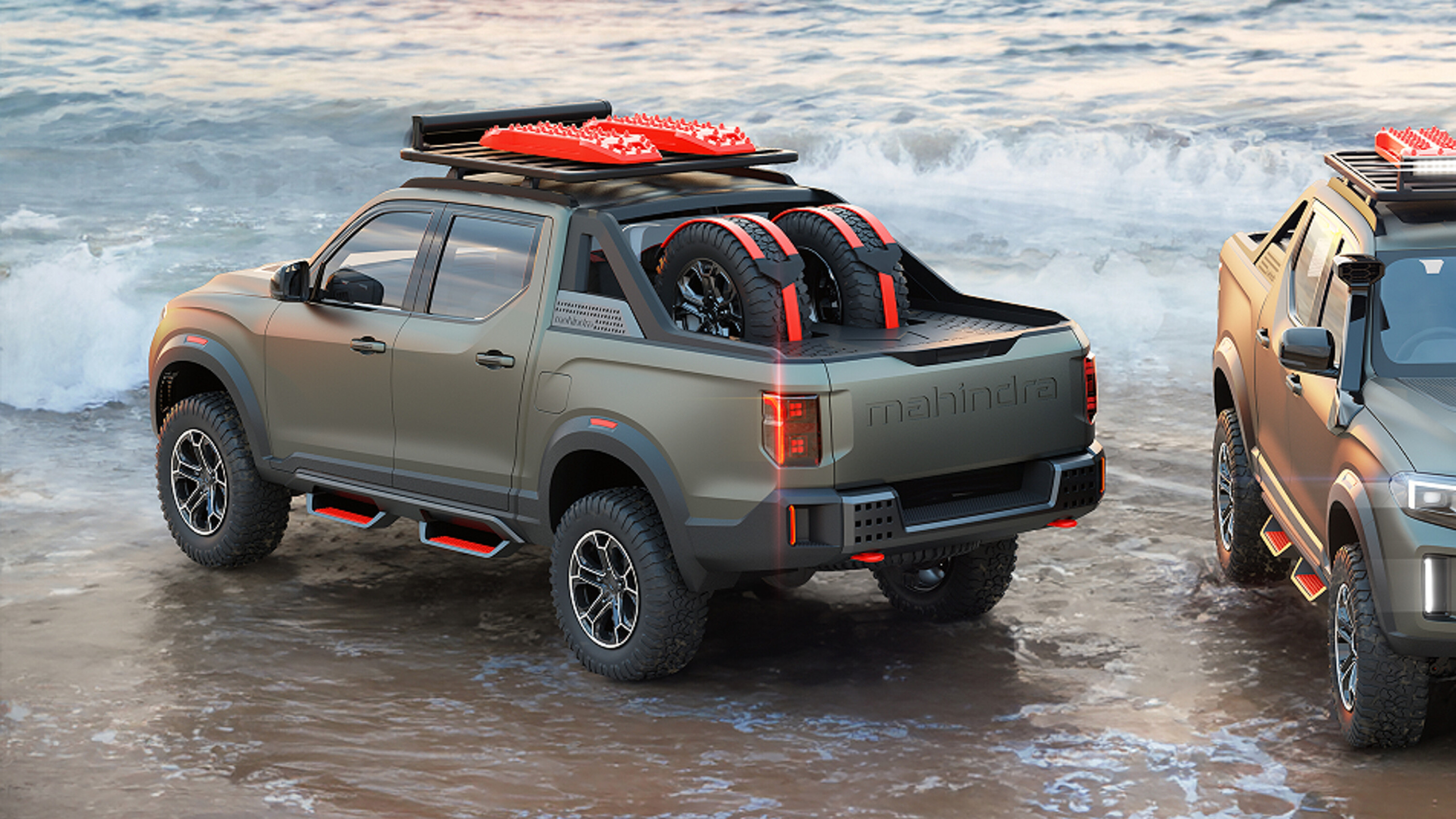
Based on Mahindra’s imaginatively-named ‘New Gen Ladder Frame’ platform shared with the third-gen Scorpio 4×4, the Global Pik Up looks much better than Mahindra’s current ute.
Mahindra executives say what you see here will go into production, but as for exactly when and how much will be changed before then, it’s unconfirmed. We’re anticipating a release in 2024.
Existing markets will be first on the list; these include South Africa, Australia, New Zealand, Africa, and others with expansion into the ASEAN region – the home of the Triton and D-Max – on the cards, too.
1
It helps – for us at least – that the Pik Up hails from India, which along with South Africa (where it was unveiled), are some of the largest right-hand drive markets in the world.
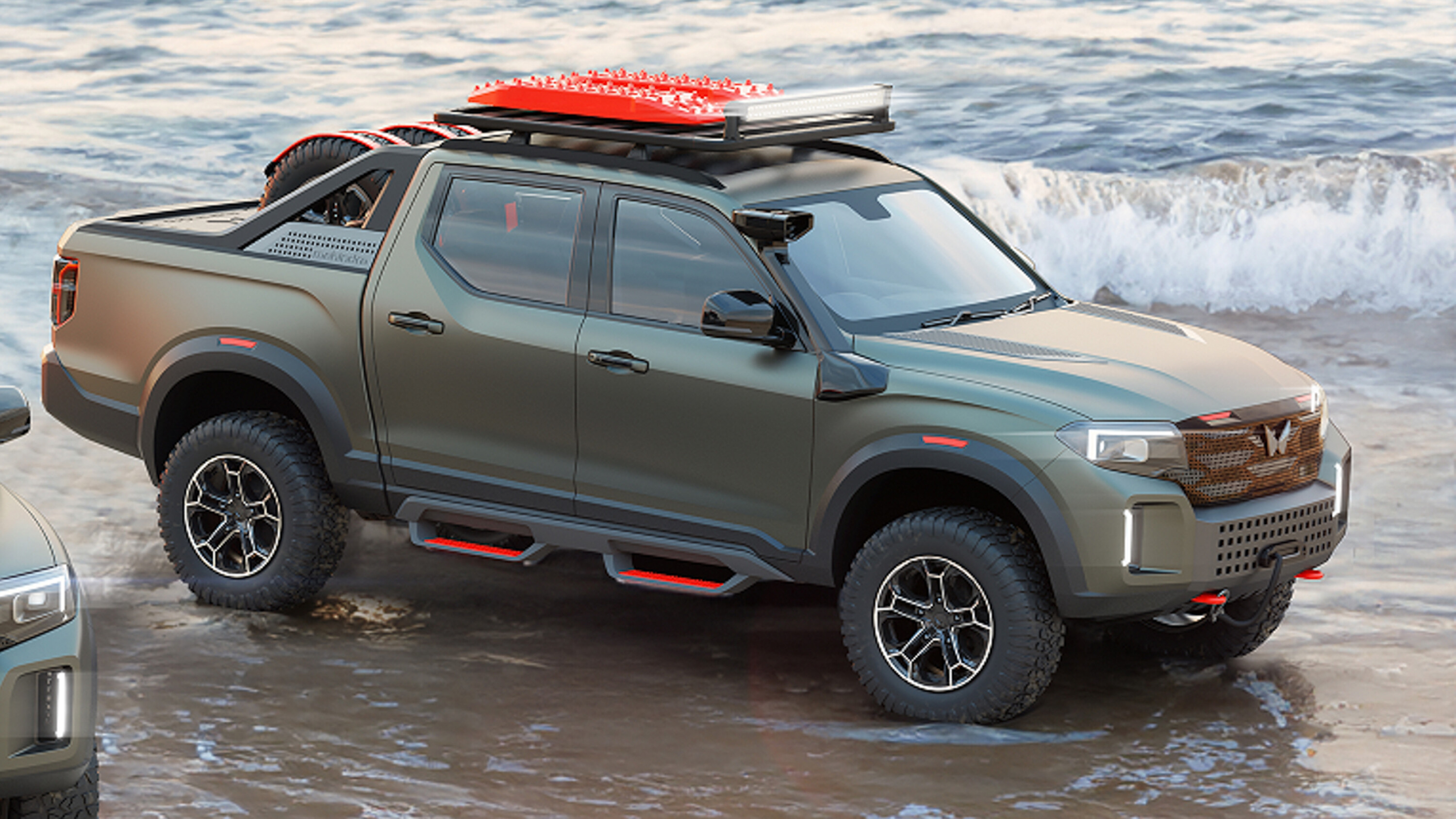
The concept shown here almost reflects monocoque utes in its proportions, with broad tracks and a shorter wheelbase more akin to the Hyundai Santa Cruz than taller Ford Rangers and Mitsubishi Tritons.
It doesn’t share sweeping visual similarities with the Scorpio, though we expect most production versions will do without the aggressive bonnet vents, intricately cut front bumper protection, winch, and sleek side steps. And, unlike the current Pik Up, this one’s doors don’t have the scallop to accommodate the wagon’s shorter wheelbase.
This is clearly more a design concept proving what Mahindra can do when it comes to making a popular off-road lifestyle version, think of the Ford Ranger Wildtrak and Toyota HiLux Rogue.
The dead giveaways include roof racks with recovery accessories, a tonneau cover with an integrated spare wheel rack, and a sleek sports bar at the rear.
“Our move with the Global Pik Up is poised to not only reinforce our presence in existing markets but also pave the way to new frontiers”, said Veejay Nakra, president of Mahindra’s automotive arm.
“[Global Pik Up] stands as an embodiment of what we aim to offer, an invitation to live unlimited, explore boundlessly, and embrace freedom”, he added.
1
What’s going to power the Pik Up and how much will it tow?
Mahindra shared limited details about the Pik Up concept, but we’d expect it to use the same 2.2-litre ‘mHawk’ diesel four-cylinder as the Scorpio, which was recently improved with an aluminium block and cylinder head, higher pressure fuel injection and a tweaked turbo for 129kW/400Nm.
As for towing capability, the Scorpio 4×4 is rated to lug a 2500kg braked load and has a 5155kg GCM. Expect similar towing from the ute but a payload closer to 800-1000kg.
Mahindra claims a ‘substantial cargo bed’ sits on the back of the Pik Up concept, and that it offers ‘commendable towing capacity’ citing horse trailer and horse lugging capacity.
Ideally, Mahindra will be able to bring towing capacity closer to the 1.9-litre Isuzu D-Max and Mazda BT-50, the LDV T60 Max and GWM Ute (3000kg), and the outgoing Mitsubishi Triton (3100kg).
1
Safety and technology
The Pik Up has been designed from the outset with a five-star safety rating in mind, according to Mahindra.
In this case, the carmaker is likely referring to Global New Car Assessment Program (GNCAP) ratings – this was the case with Scorpio. Stricter European-driven safety bodies such as ANCAP, used in Australia and New Zealand, require more driver assistance feature to score maximum points.
We’ve seen a similar scenario with the Scorpio 4×4, with Mahindra’s local arm choosing not to send that vehicle for ANCAP evaluation until more safety equipment is added.
Mahindra has promised that the Pik Up concept is equipped with ‘level-2’ ADAS systems, including autonomous emergency braking, driver monitoring, rear cross-traffic alert, blind-spot monitoring, and exterior cameras.
MORE
Everything Mahindra
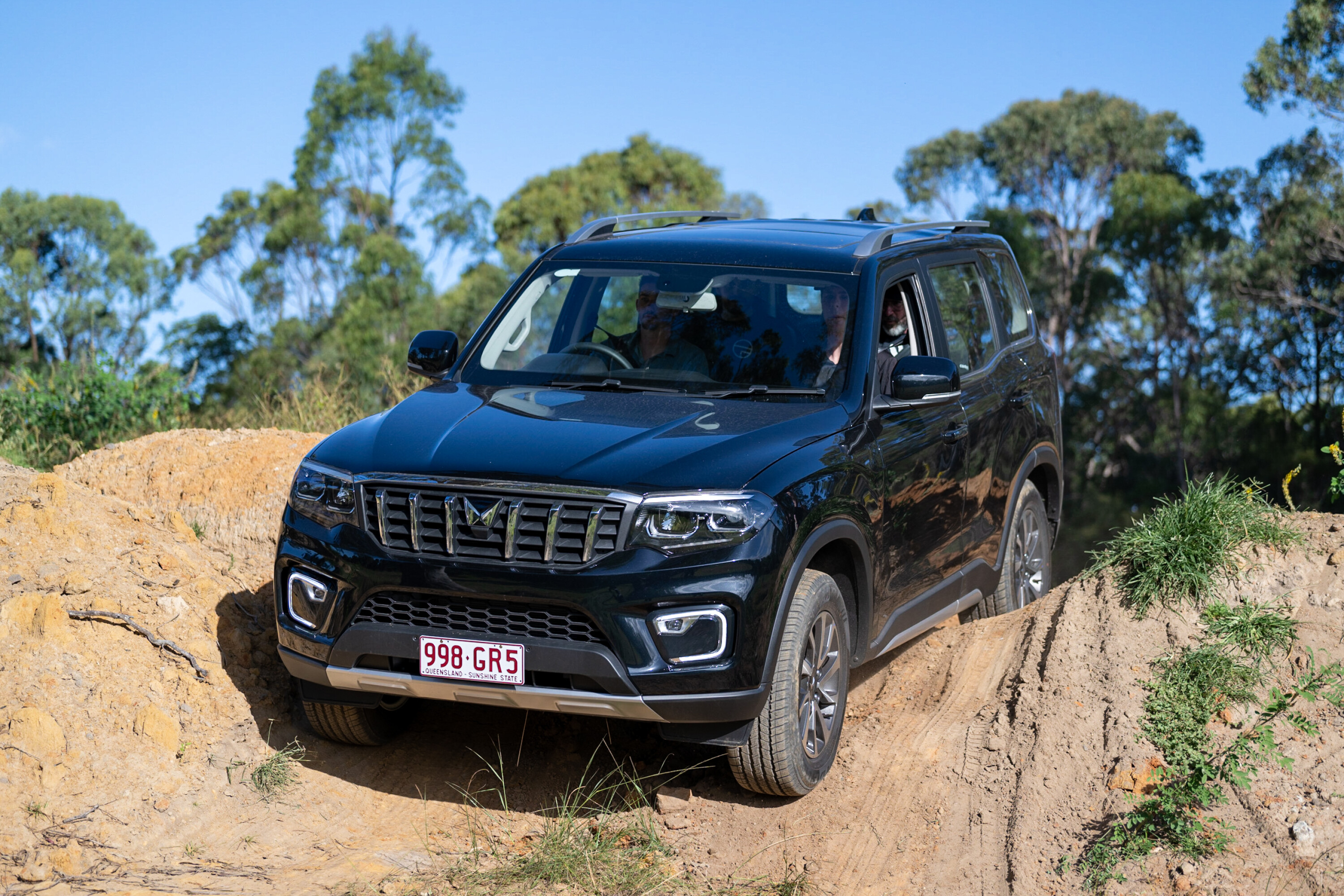
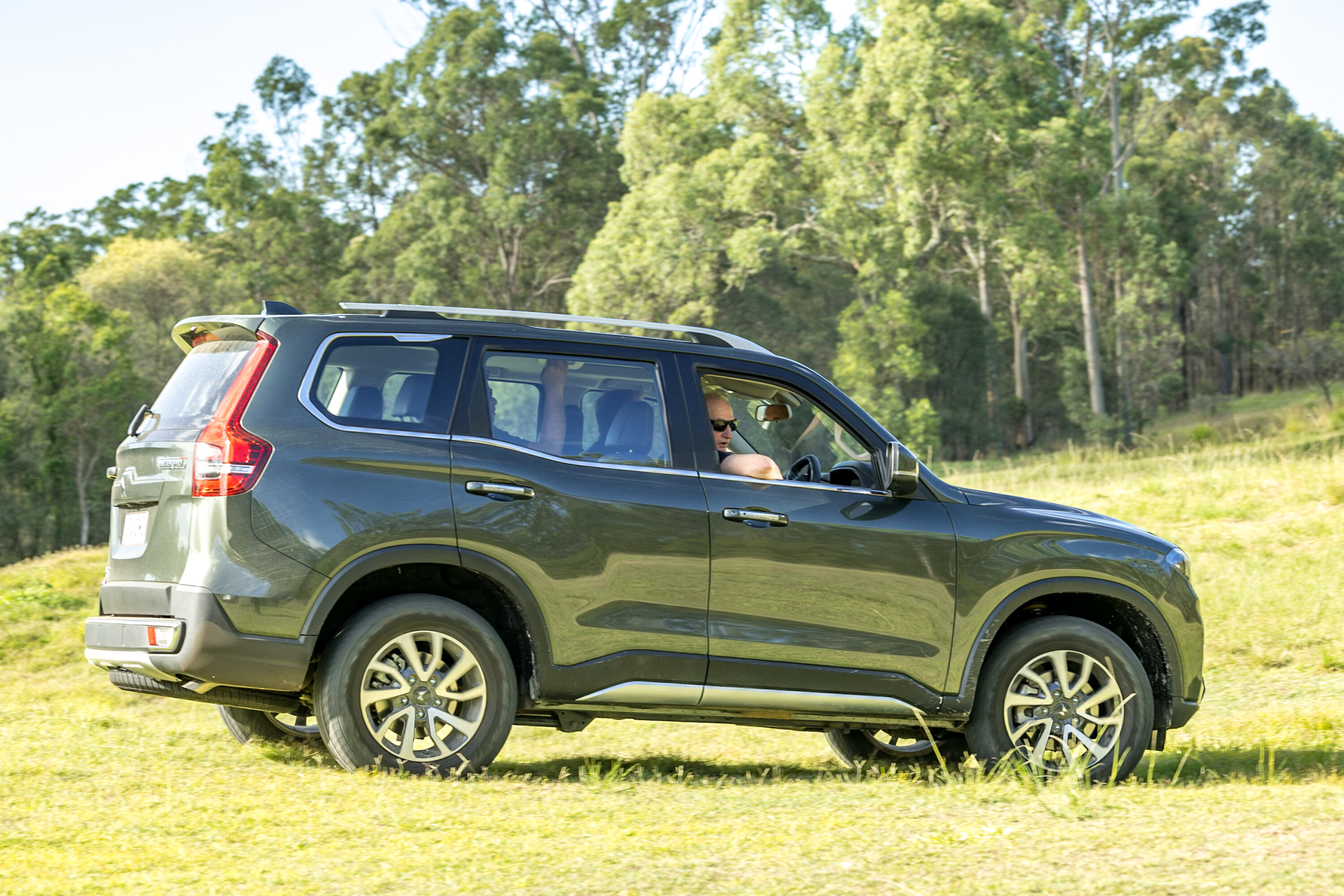
Below: The 2023 Mahindra Scorpio
1
1
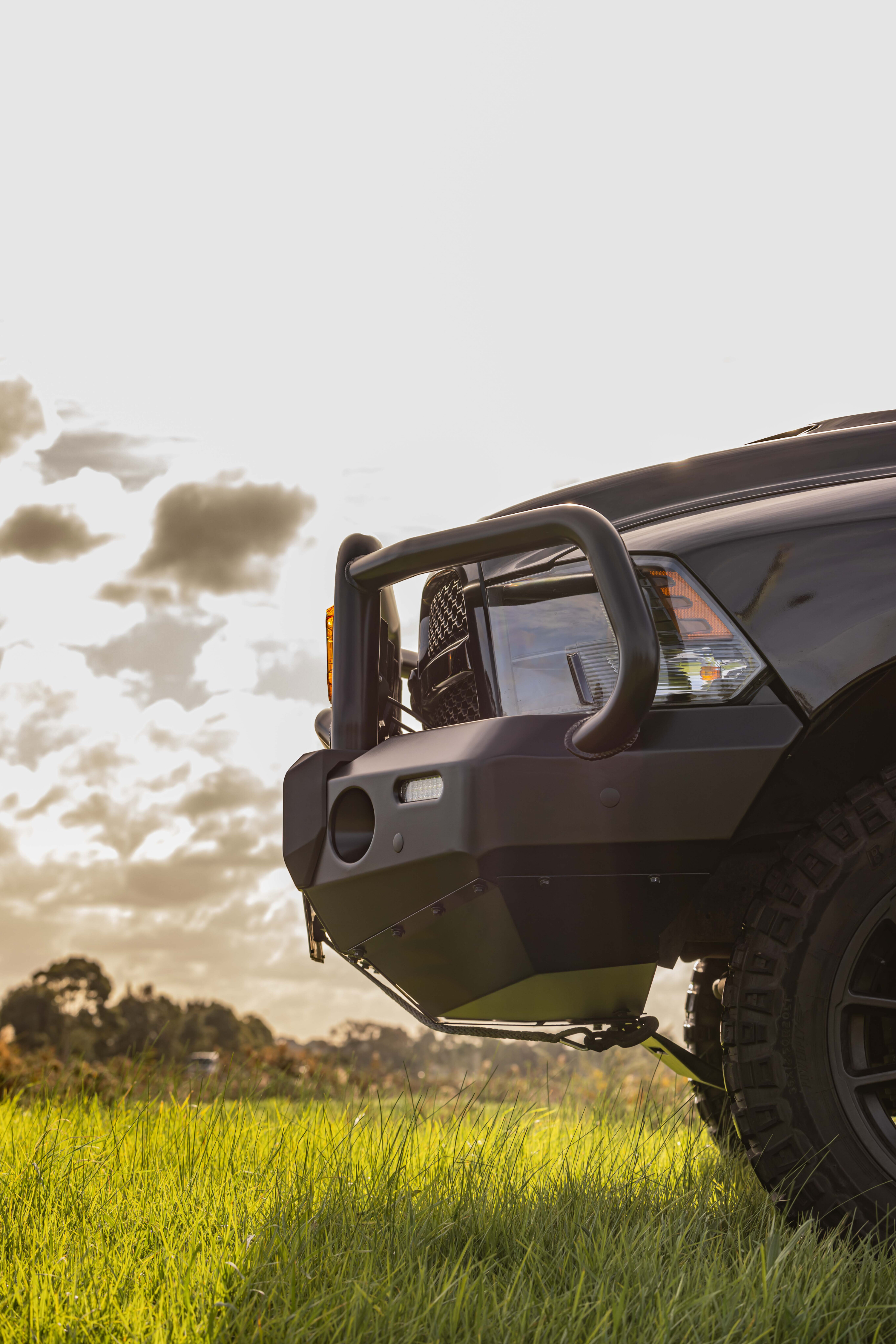
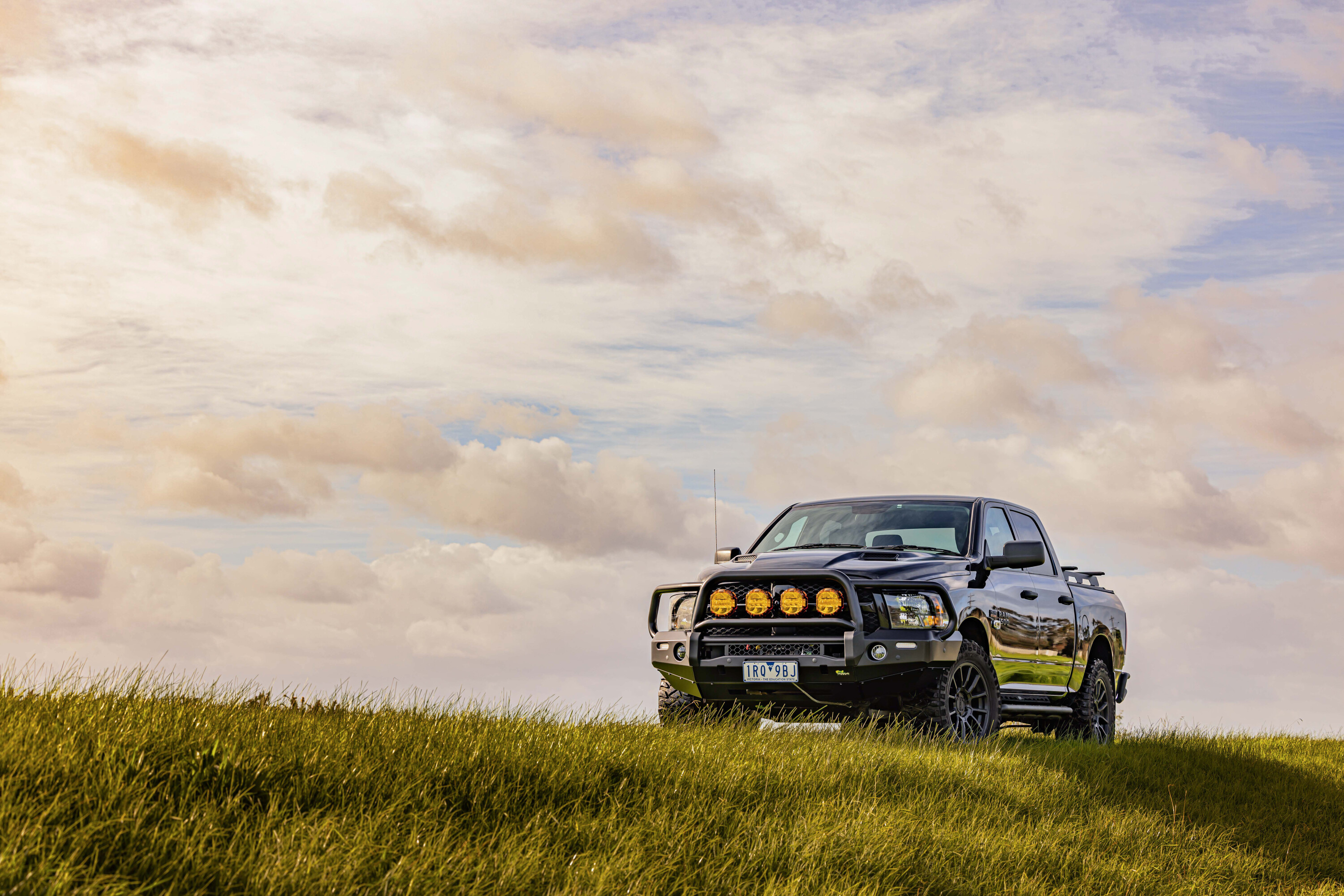
The RAM is one of the leading tow vehicles and work utes in Australia, so it makes sense to install a bull bar, especially when heading beyond the black stump.
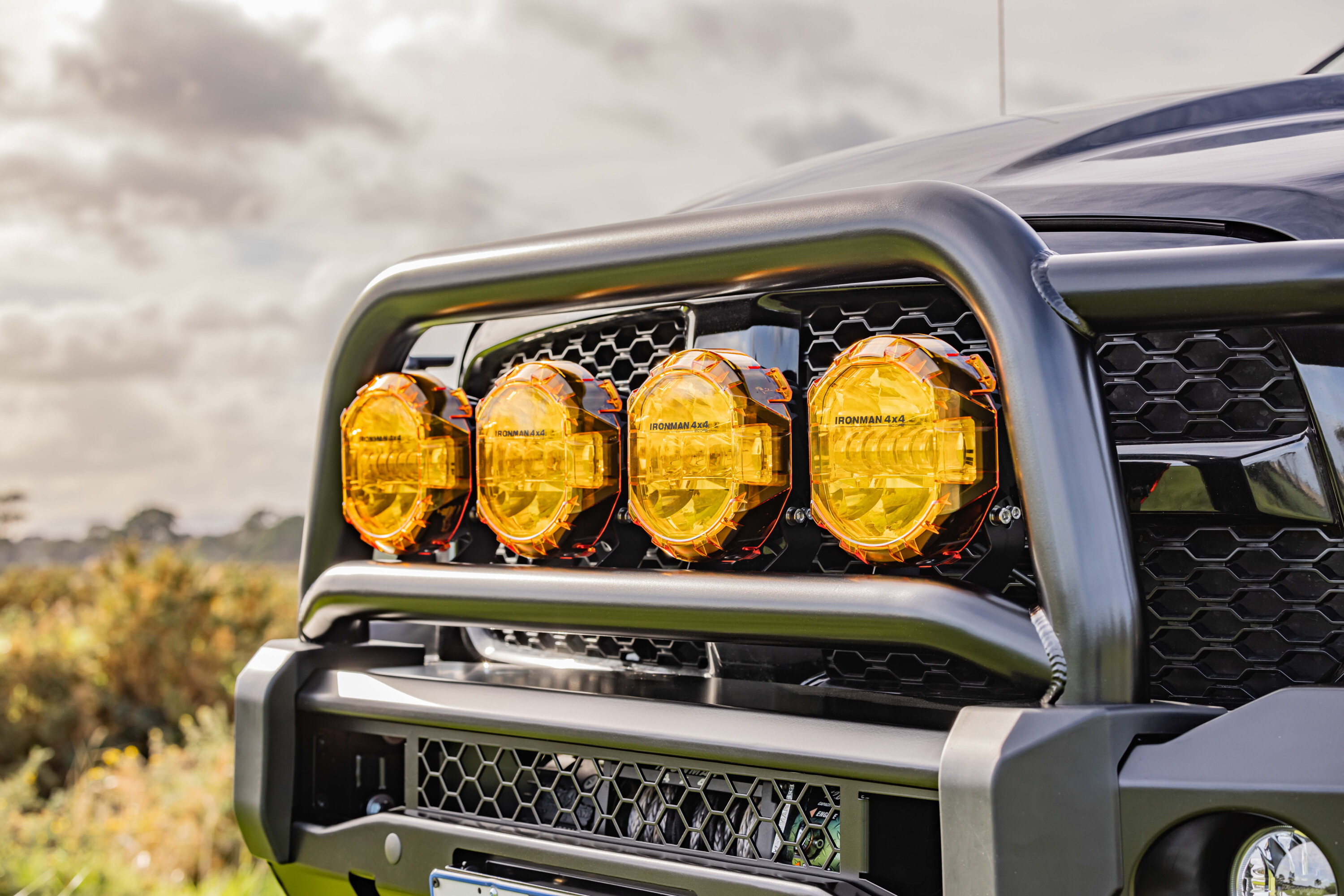
One of the world’s leading bull bar manufacturers, Ironman 4×4, has designed the Premium bull bar to not only protect the front end from animal strikes but also offer mounting points for several accessories. Plus, it incorporates several safety features and helps to keep the engine cool.
1
The sleek design of the bull bar also blends functionality and strength, to create the ultimate front-end protection for the RAM DS 1500.
Ironman 4×4’s Premium series of bull bars are designed and manufactured to provide maximum safety for the occupants of the vehicle. The essential features include improved vehicle protection, improved approach angles and additional ground clearance.
The newly designed Premium bull bar has incorporated all of the RAM’s factory OEM safety features including parking sensors, blind spot monitoring and radars. Premium bull bars also include vehicle-specific parking sensor holders that allow simpler and faster installation.
Latest Gear Guides
1
When designing the Premium bull bar, Ironman 4×4 wanted to ensure the engine, transmission and front-mounted intercoolers remained cool, and the design of the large front mouth on the bull bar and the strategically placed centre grille will help with that.
The bull bar’s sleek design features streamlined hoops and a built-in mounting platform for driving lights, which adds style and functionality. The 76mm middle hoops and 60mm staggered outer hoops will complement the distinctive front-end design of the RAM DS 1500. The Premium bull bar includes LED fog lights and is powder-coated for longevity.
1
The bull bar also incorporates high-lift jacking points, and a winch box remote mounting plate and flip-up number plate bracket are also included, making it simple to install one of Ironman 4×4’s winches. When it comes to installation, no cutting is required.
The Premium bull bar weighs 103kg, but installation removes 32kg, so the total added weight is a respectable 71kg. The steel bar is 3mm thick, the steel cradle and chassis mounts are 4mm thick, the steel centre and side plates are 2mm thick, and the powder-coating is AkzoNobel in a satin black.
You can install either the 9500lb or 12,000lb Monster winch, but the Premium bull bar will only allow the synthetic rope. Rated recovery points and wiring looms for lighting are coming soon.
RRP: $3250
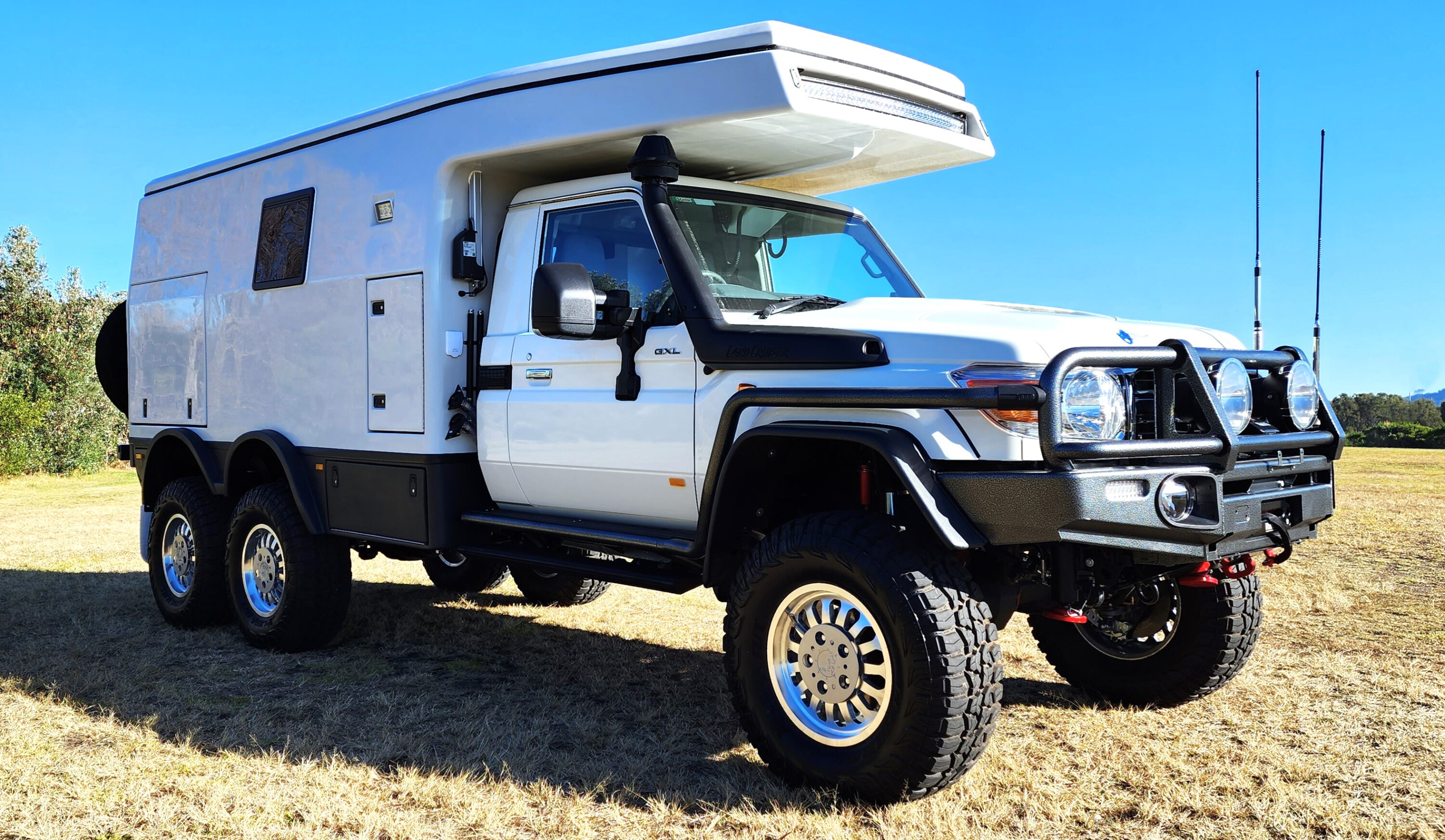
Earthcruiser Australia has taken the covers off an all-new purpose-built 6×6 based on a 79 Series LandCruiser, dubbed the Earthcruiser Extreme 330 XTR6x6.
Following more than 12 months of development, the end result is an off-roader that has been tailor-made to overcome the world’s harshest terrain.
At the core of its go-anywhere ability is a drive system developed by renowned 6×6 conversion specialists, 6×6 Australia. The “bogie drive system” comprises a unique coil/airbag sprung bogie drive rear axle system that boasts full load-sharing capabilities between the axles.
1
The vehicle is fitted with a drive-through diff and power divider, which allows the third axle to remain undriven on smooth roads but lock up 100-per-cent drive to all wheels should traction stumble. Other attributes of the bogie system include Ford 10- and 9-inch differentials fitted with ARB air lockers, and hardened Chromoly 300M high-strength axles shafts.
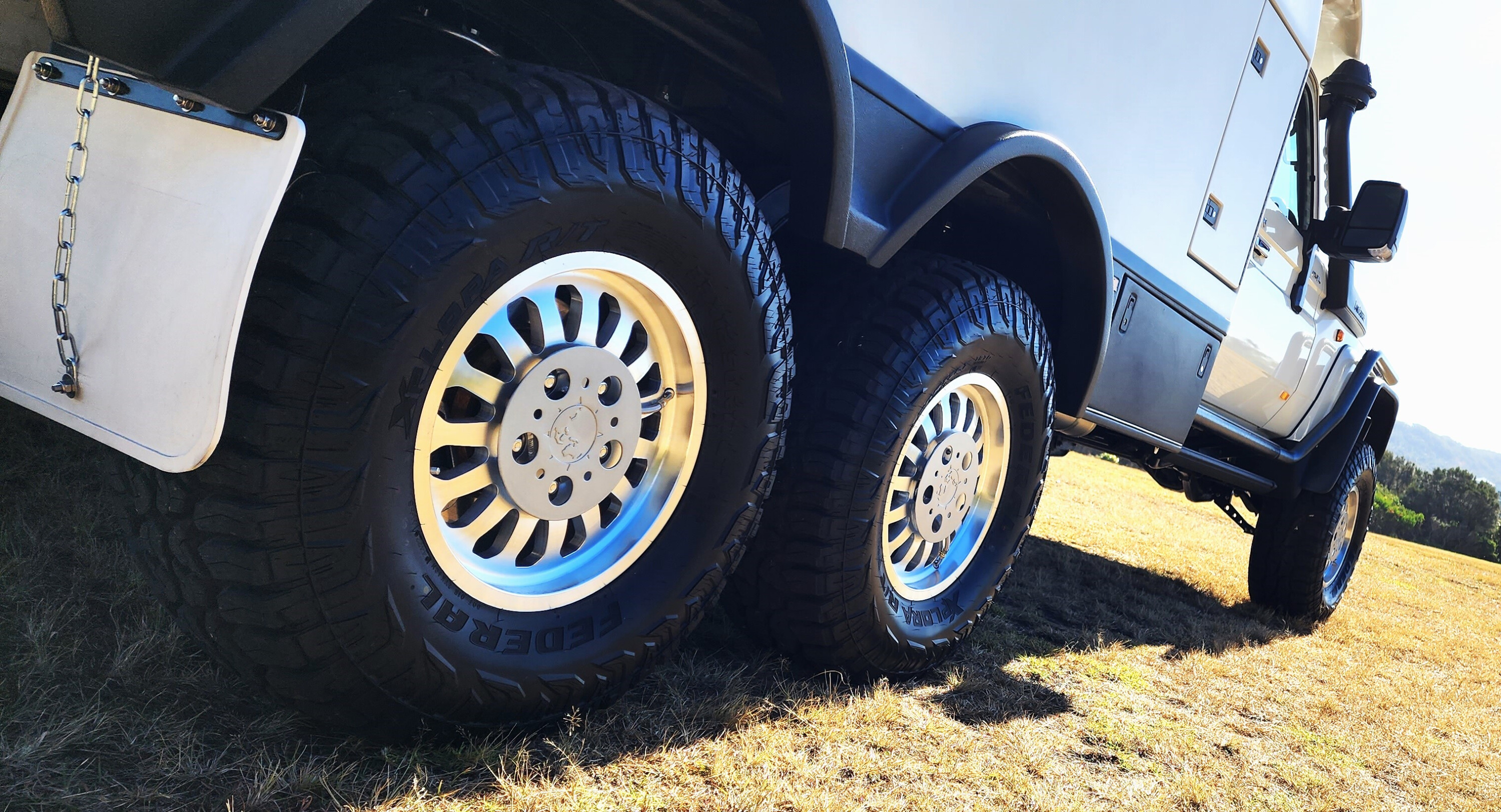
Portal axles provide up to five inches of lift, and each portal is FEA tested and certified to over 1500kg each – or 3000kg per axle. The axles include a CTIS (Central Tyre Inflation System), which enables on-the-move inflation and deflation via an in-cabin Garmin digital touchscreen.
1
The Extreme 330 XTR6x6 is also fitted with an airbag suspension system (totalling six airbags) with automatic load and horizon levelling, and it comes pre-loaded with three height modes with up to 100mm between the lowest and highest settings. The suspension also comprises military-spec HD sway bars, custom-built heavy duty Bilstein shocks, and Bilstein heavy duty steering dampers.
The vehicle rides on 35 x 12.5-inch Federal Xplora mud-terrain tyres, wrapped around 17-inch forged alloy rims that are exclusive to Earthcruiser.
1
A build of this magnitude requires an upgraded GVM capacity, and the Earthcruiser has a generous 7000kg GVM, with a front axle capacity of 1980kg – that’s 500kg more than stock. Payload has increased to 3000kg, to boot. To assist with the extra heft, the rig features a hydraulic brake booster, upgraded calipers, heavy duty brake rotors, and an electric parking brake. To take adventurers further, the vehicle has 275 litres of fuel capacity.
For protection, the Extreme 330 XTR6x6 is fitted with a winch-compatible bullbar with colour-coded steel scrub rails and side steps. The vehicle also comes with front and rear 13,000lb electric winches, two spare wheel carriers, a set of Maxtrax, and heavy duty front and rear recovery points.
1
The chassis was extended and reinforced using advanced CAD modelling and CNC laser cutting techniques. The engine remains unfettled, with drive running through either a six-speed genuine Toyota automatic transmission or standard manual.
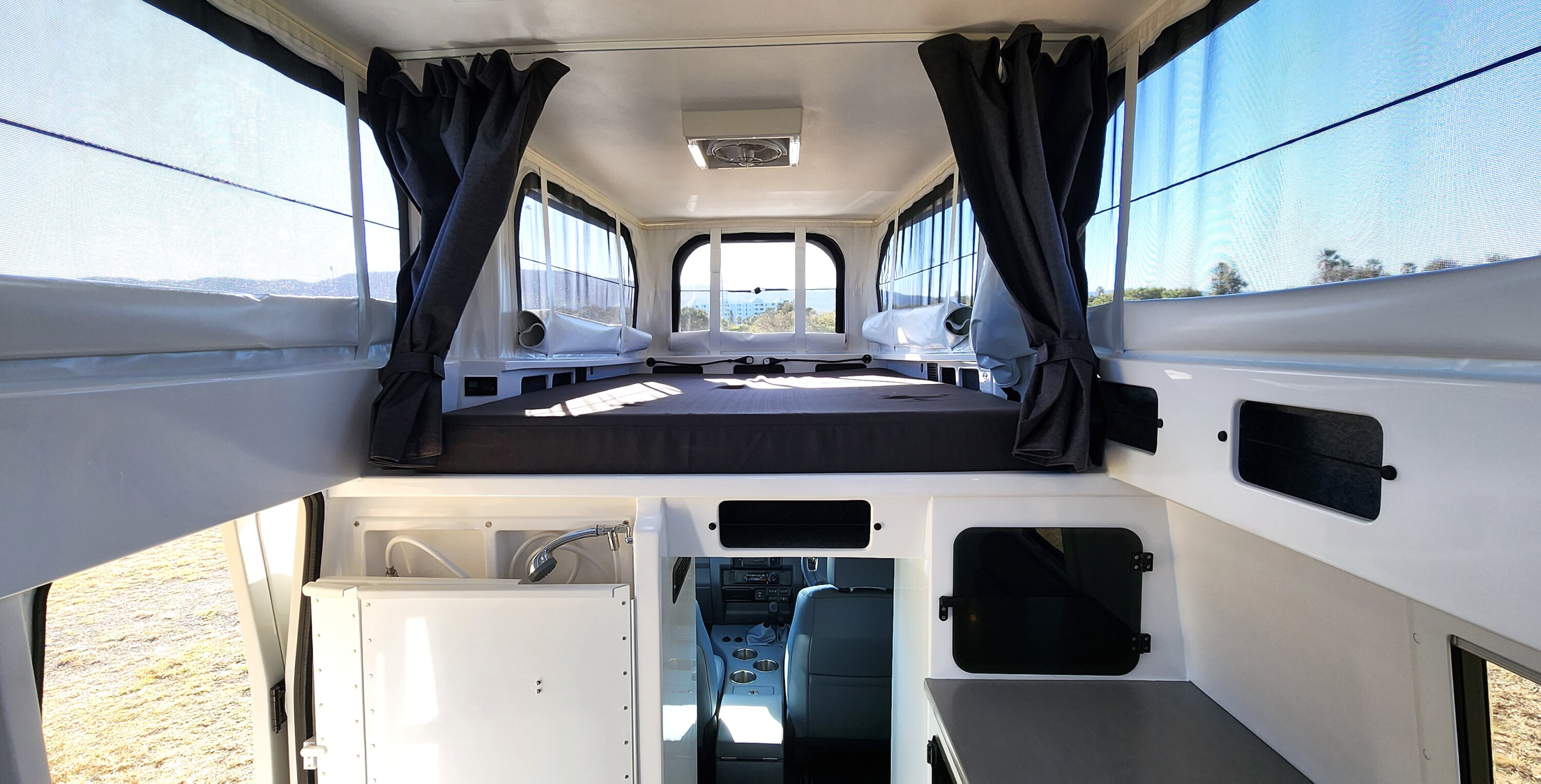
Other key features
- Four lockable tool boxes
- Lockable pass-through rear locker
- Triple-layer block-out roof curtain
- Clearview power-fold electric mirrors
- Personalised leather console
- More than 10 USB ports
- Sleeping capacity for up to three
- Stainless-steel sink
- Internal and external showers
- Central air heating (diesel)
- Slide-out toilet
- Complete lithium battery system
- 810w solar panels
- 3000w Victron inverter
- GME XRS UHF radios
- Hella HID spotlights
- 52-inch Road Vision light bar
- 360-degree flood lighting
- Starlink capability
- Garmin head unit touchscreen
- Microwave oven
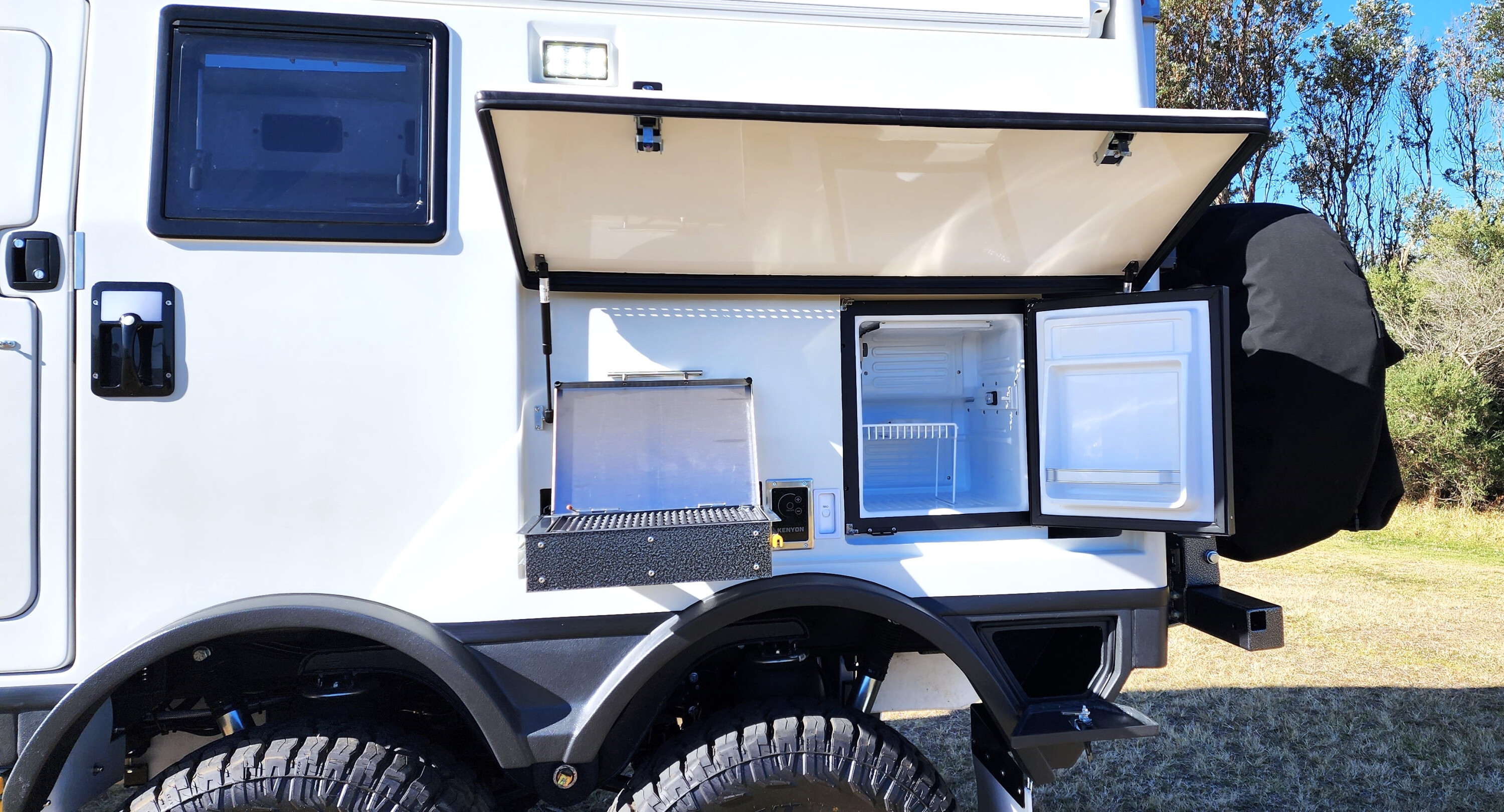
- 224v electric barbecue
- 12v air compressor
- Two fridge/freezers
- Two-burner plate induction cooktop
The Earthcruiser Extreme 330 XTR6x6 will be on display at the Sydney 4WD and Adventure Show, held at the Sydney Dragway, Eastern Creek, from September 8-10.
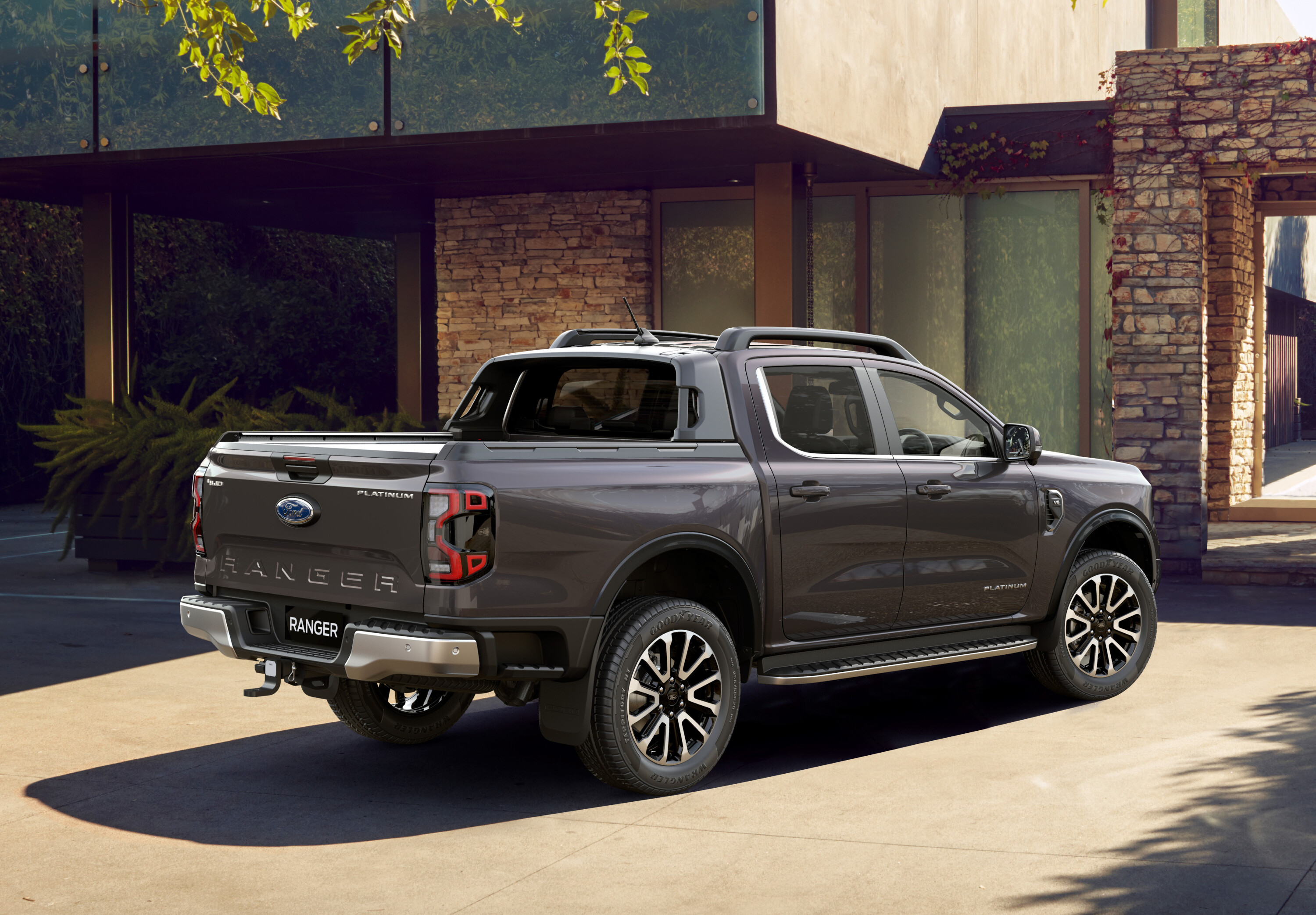
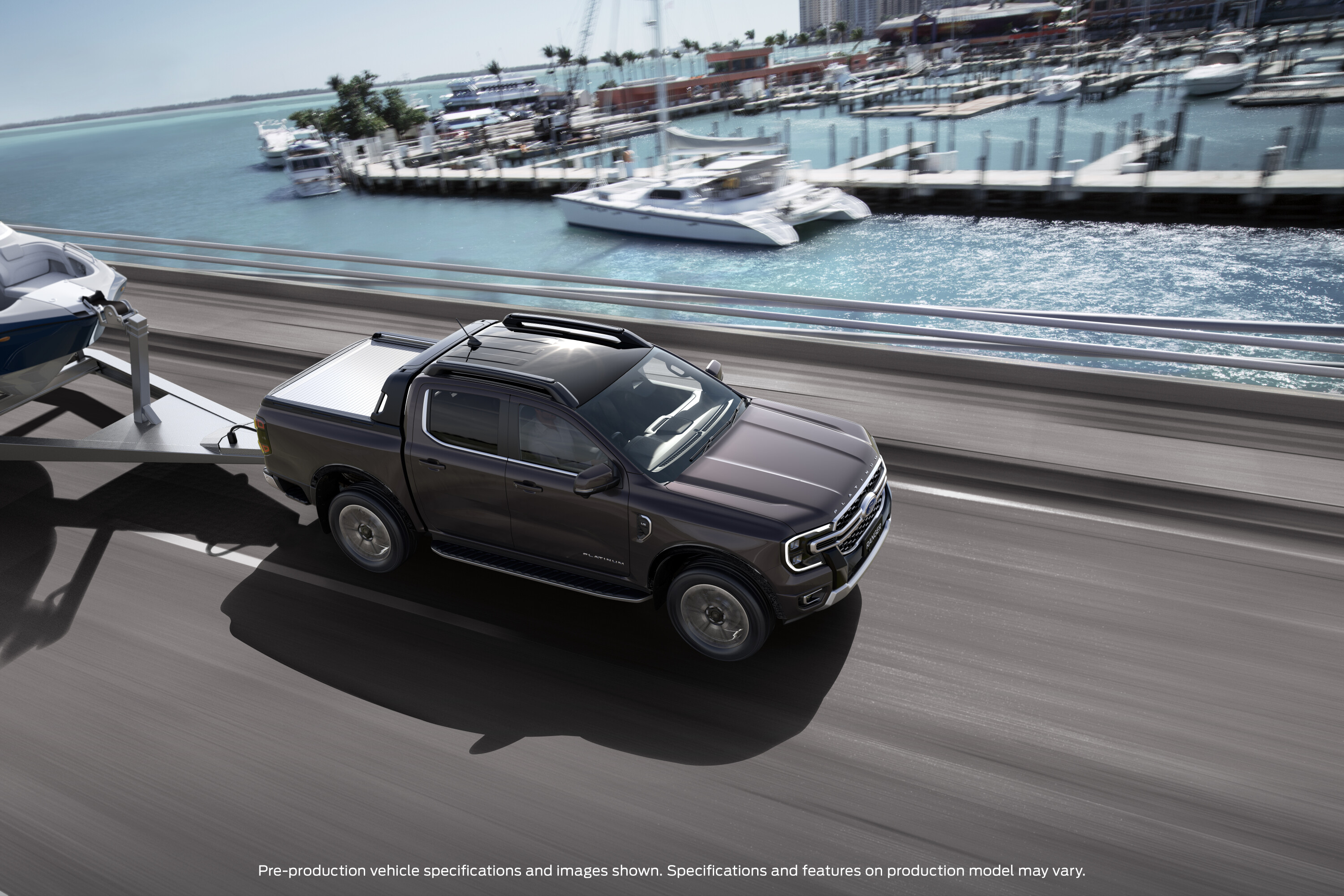
The Ford Ranger swept all before it when it was unleashed on Australia’s booming dual-cab market in 2022. A range-topping Platinum model has now been perched atop the regular Ranger line up, albeit still a good deal more affordable than the specialist Ranger Raptor.
It’s only available with the top-spec 3.0-litre V6 turbodiesel engine and borrows much of its trim and finish from its Wheels Car of the Year-winning sibling, the Everest SUV. In other words, you know it’s off to a great start.
But at this price point come some fairly serious expectations. Can the Ranger Platinum live up to the big billing?
1
Click here for more detailed expert opinions on the Ford Ranger.
JUMP AHEAD
1
| 2023 Ford Ranger Platinum specifications | |
|---|---|
| Engine | 3.0-litre V6 diesel (single turbo) |
| Max power | 184kW @ 3250rpm |
| Max torque | 600Nm @ 1750-2250rpm |
| 4×4 system | permanent four-wheel drive |
| ADR fuel claim | 8.4L/100km (combined) |
| Price | $76,990 + on-road costs |
Upgrade your Ranger
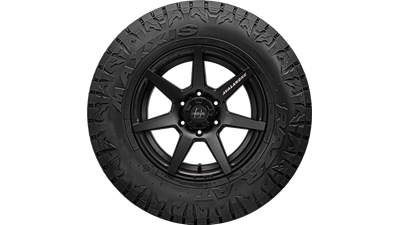
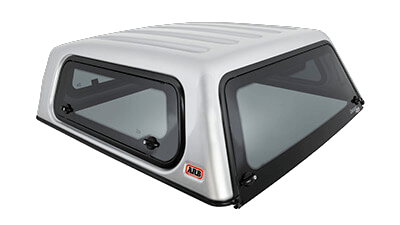
1
Pricing and features
As you might expect, the Platinum gets all of the good stuff poured into it. There’s really very little that you can point to as a trim shortcoming over the already very well appointed Wildtrak model.
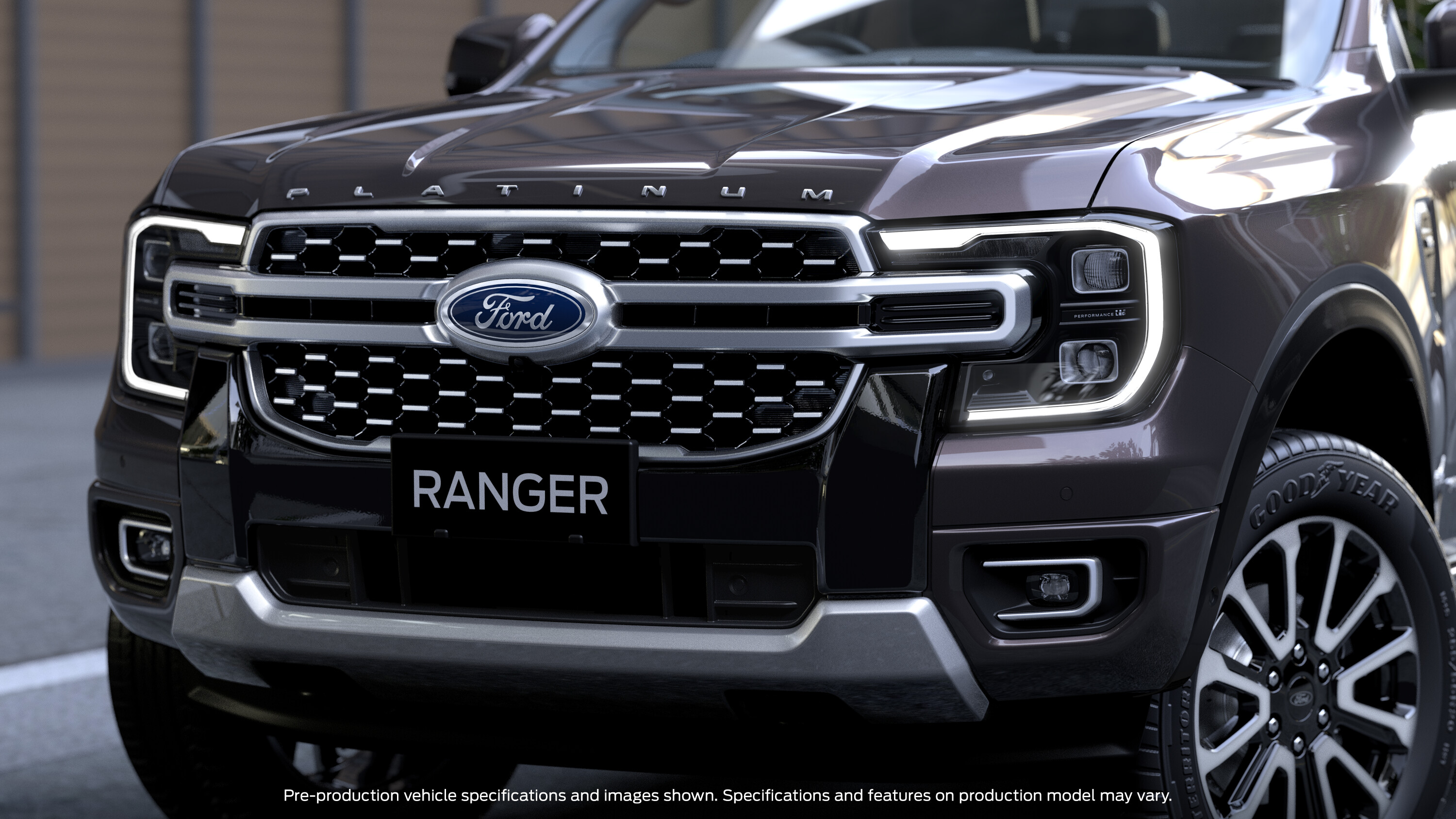
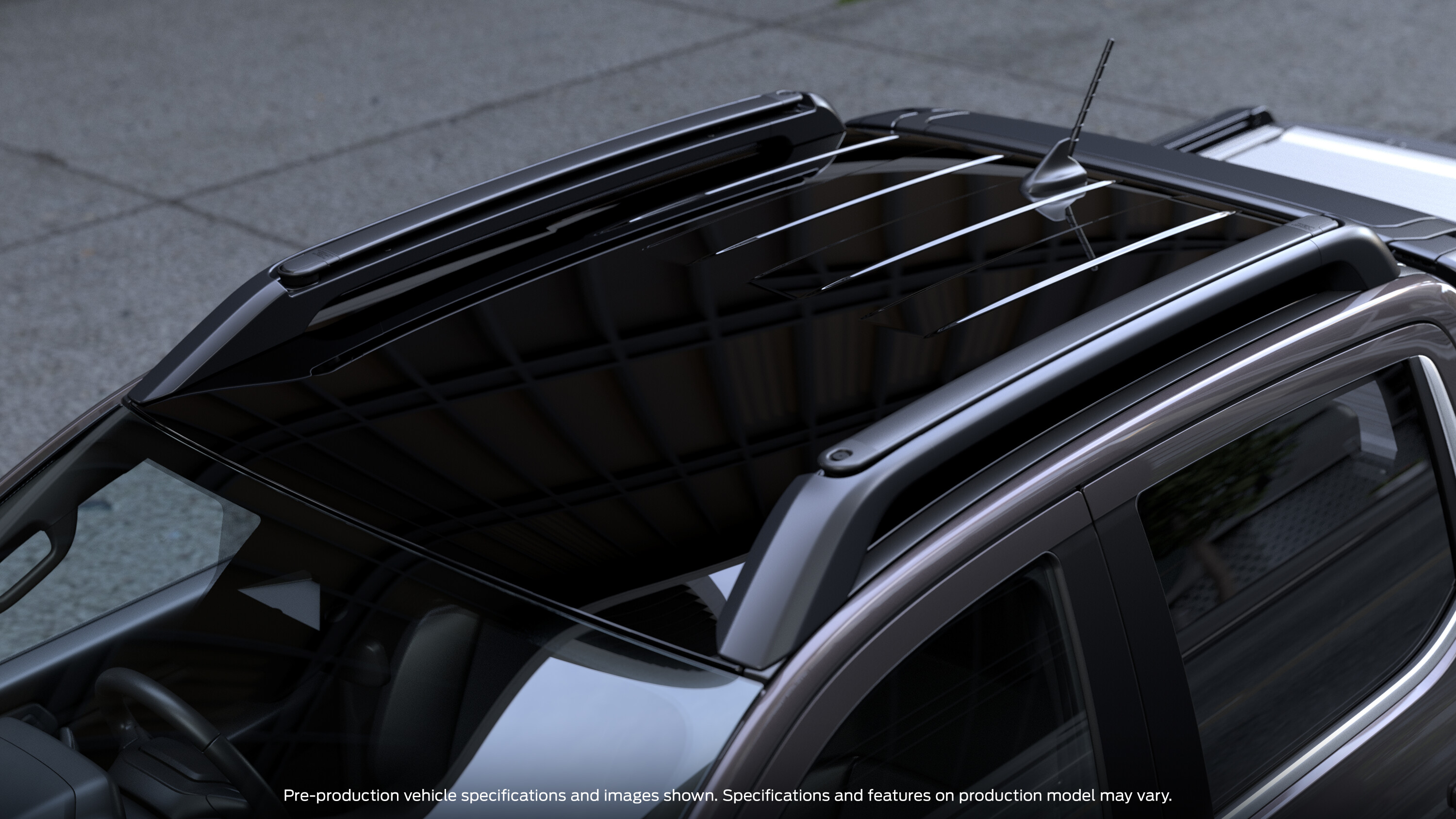
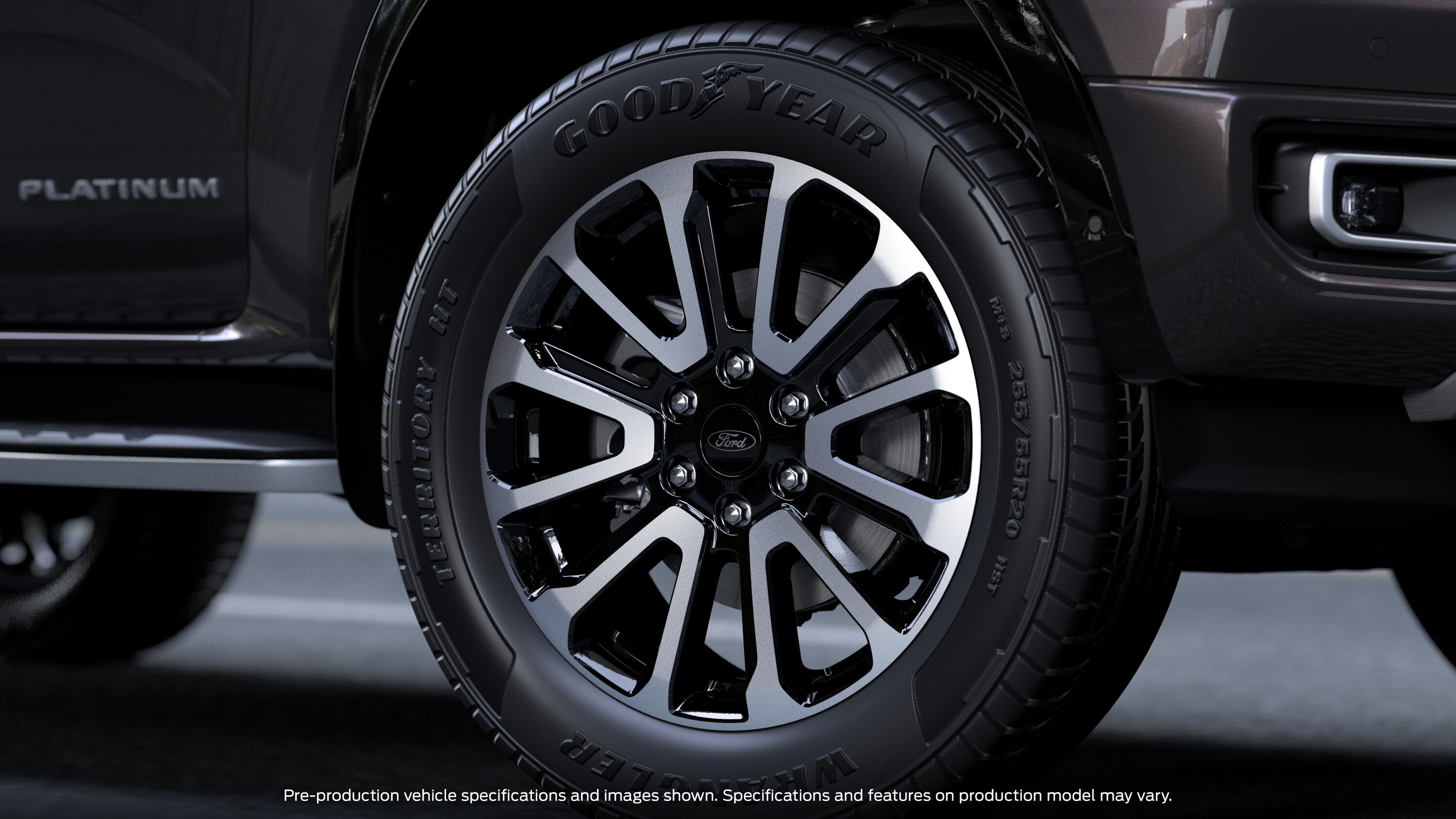
For an additional five grand over the price of the $71,190 Wildtrak, the Platinum features 20-inch alloy wheels, ‘Platinum’ badging, matrix-LED headlights, satin chrome exterior trim, a damped tailgate and Ford’s clever rail-mounted flexible rack system.
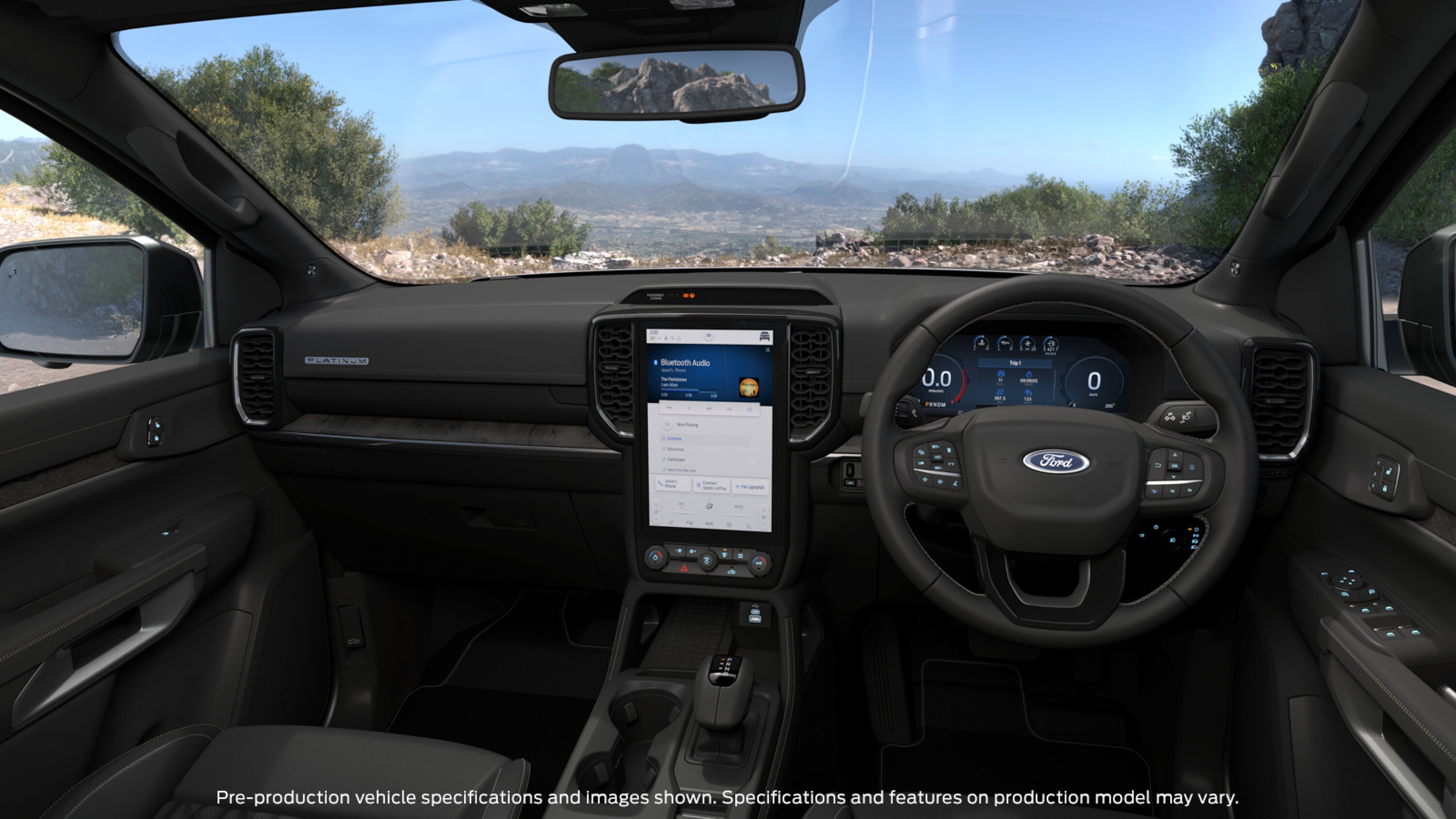
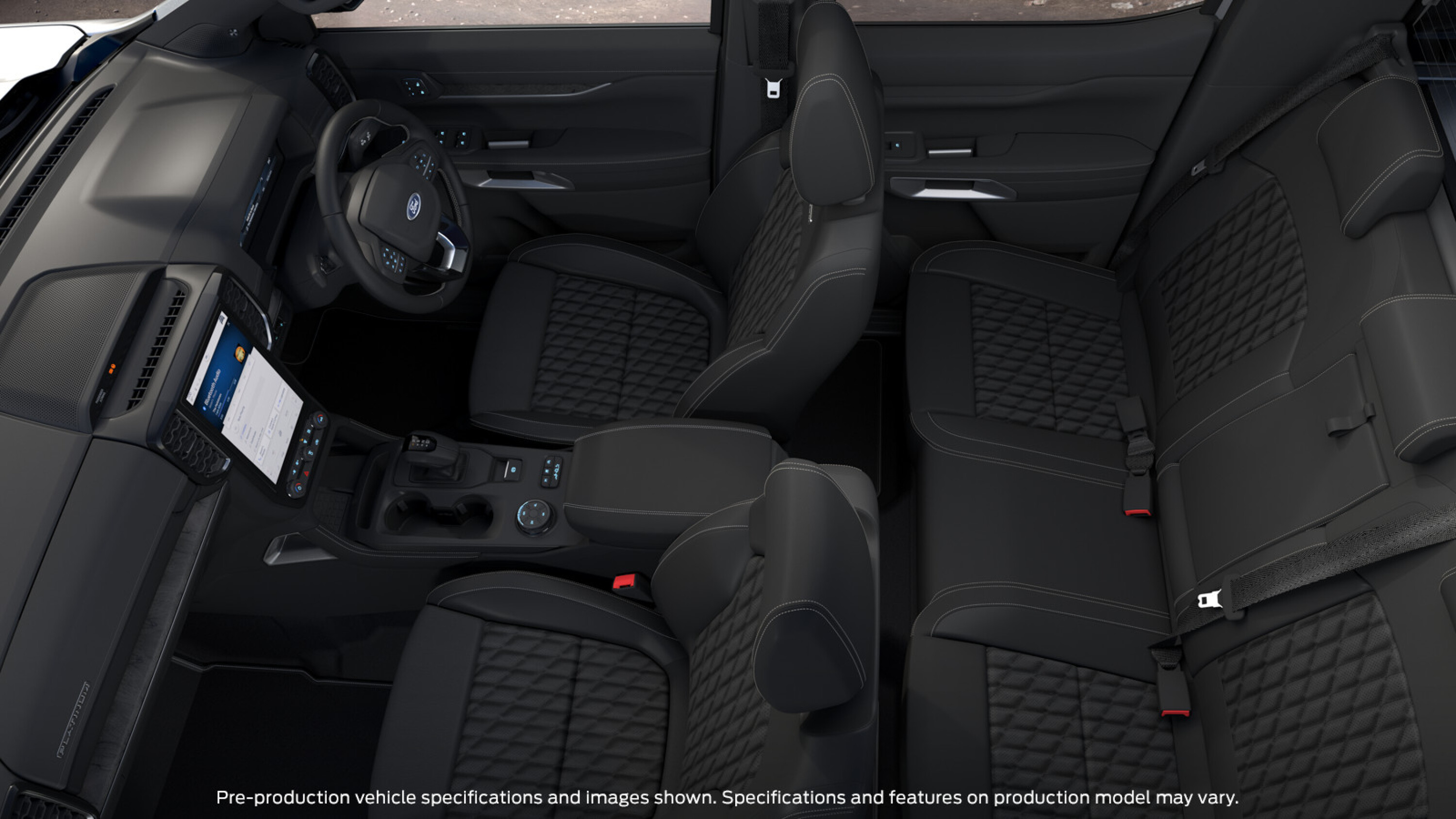
Indoors, Platinum owners will find quilted leather seats which are heated and ventilated up front, a heated steering wheel, 10-way power adjustment for the front pair of chairs as well as a driver’s seat memory function.
1
The centre display measures 12.4-inches so it runs full screen rather than being bounded by a chunky frame as in some lowlier Rangers.
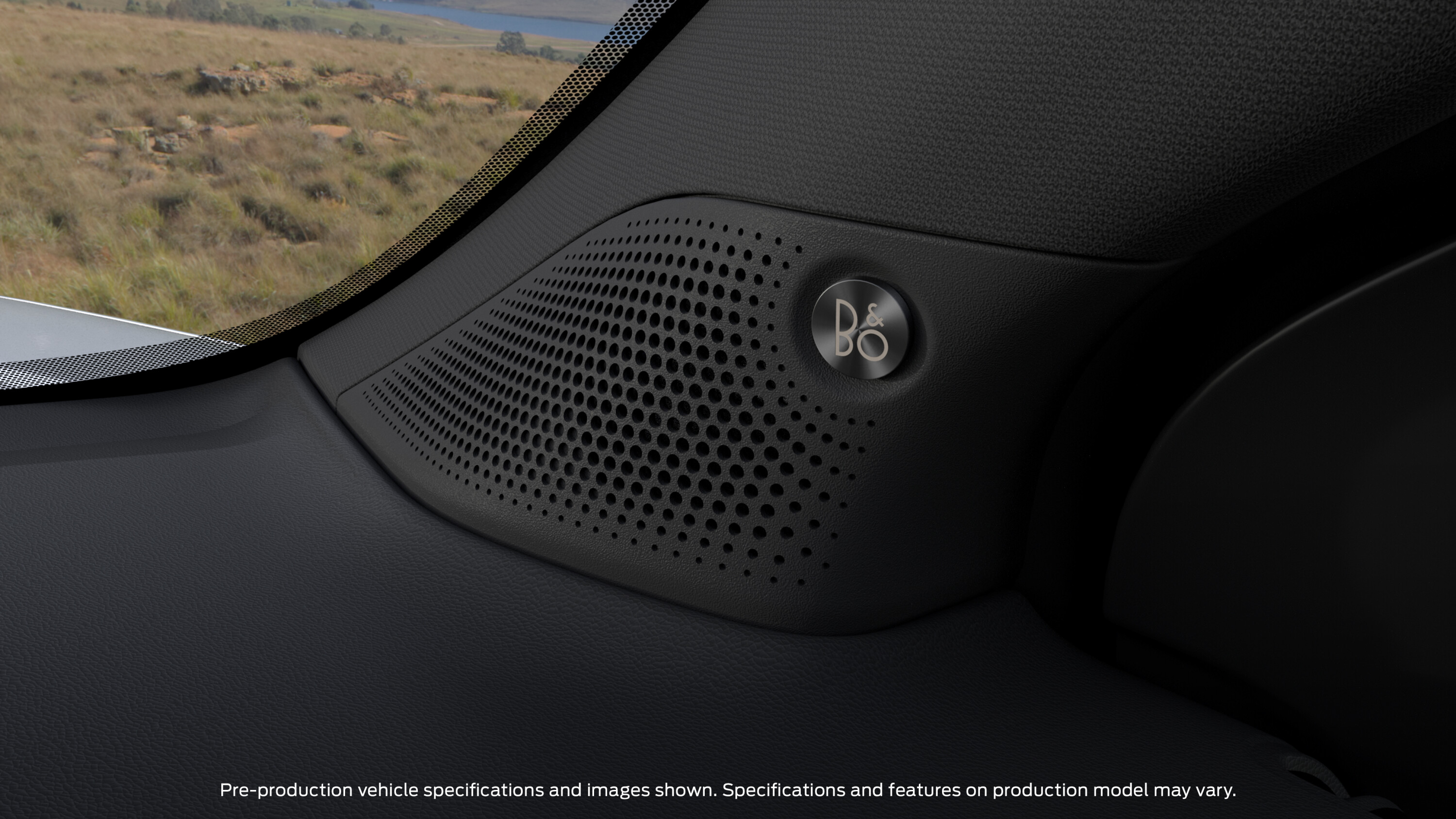
The premium pack that is popular with Wildtrak buyers has also been thrown in for nix with the Platinum, bringing you a 10-speaker Bang and Olufsen stereo, full LED tail lights and an overhead auxiliary switch bank. This latter fitment means that you won’t need to be drilling holes in your dash to fit switchgear for functions like auxiliary driving lights, winches and so on.
Dig a little deeper and you’ll find a few other Platinum-specific niceties like a black-painted roof, premium carpeting, accent stitching and the option of Equinox Bronze paint. Metallic paint remains a $700 option.
1
Safety
The Ford Ranger scores five stars on the ANCAP review.
In crash testing, the Ranger scored well for protection of adult occupants in frontal offset, side impact and far-side impact tests, although a result of ‘marginal’ was assigned for protection in the full width frontal crash test and for the chest of the driver in the oblique pole test.
Likewise, maximum scores were awarded recognising the Good levels of protection offered to child occupants in the frontal offset and side impact crashes. All body styles with rear seats feature two ISOFIX anchorage points in the outboard seats.
Every Ranger carries a high level of standard safety gear including dual frontal, side chest-protecting and side head-protecting curtain airbags, along with a driver and passenger knee airbag.
1
A front centre airbag is also standard, which protects front seat occupants in side impact crashes and also prevents front occupants from clashing heads.
Features such as pre-collision assist, post-impact braking, blind-spot monitoring with trailer tow function and cross-traffic alert, reverse brake assist and evasive steer assist are all available.
Adaptive cruise control is standard across the range and there’s intelligent adaptive cruise that features lane centreing, traffic sign recognition and a ‘Stop & Go’ function that will allow the vehicle to come to a complete halt in traffic and then automatically resume its cruise setting.
There’s also Active Park Assist 2.0, which will help with parallel parking
1
On the road
Things we like
- The 184kW 3.0-litre V6 turbodiesel feels strong and responsive
- 10-speed auto transmission does a good job of plugging into the 600Nm torque
- Advanced safety assists work and work really well
Not so much…
- Unsettled ride
- Youu2019ll cede a stack of the Rangeru2019s vaunted off-road ability with these tyres
- We emerged wondering whether Ford had over-egged the pudding with this one
For most buyers, the Ford Ranger works best with an 18-inch wheel and a multi-purpose all-terrain tyre.
Fit a 20-inch wheel and the ride suffers a little, despite the tyre sidewall being a relatively generous 55 series. There’s quite a bit of head-toss and nerviness over typical Aussie B-roads that you don’t tend to experience with an 18-inch wheel.
Click here for more detailed expert opinions of the Ford Ranger’s on-road qualities.
If any of the terms in this section have left you scratching your head, these articles will help bring you up to speed!
1
Key rivals
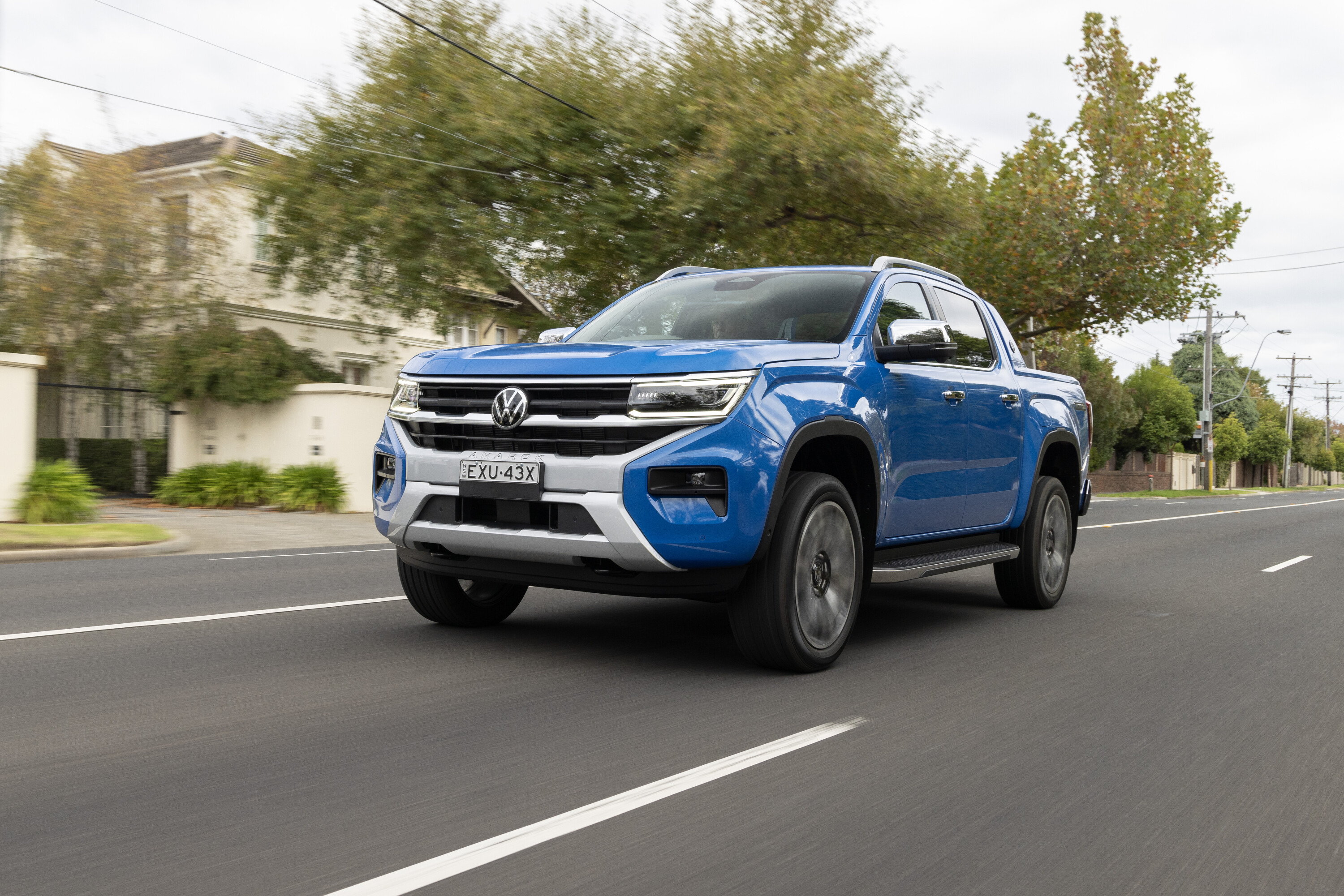
Until the Volkswagen Amarok arrived this year, the Ford Ranger was a long way clear of the chasing pack.
Now that the Amarok Aventura is available, the Ranger Platinum has far less of an easy run at things. Still, the Amarok has its work cut out levelling with the big Ford’s value proposition.
Rivals worth considering include:
1
Should I put it on my shortlist?
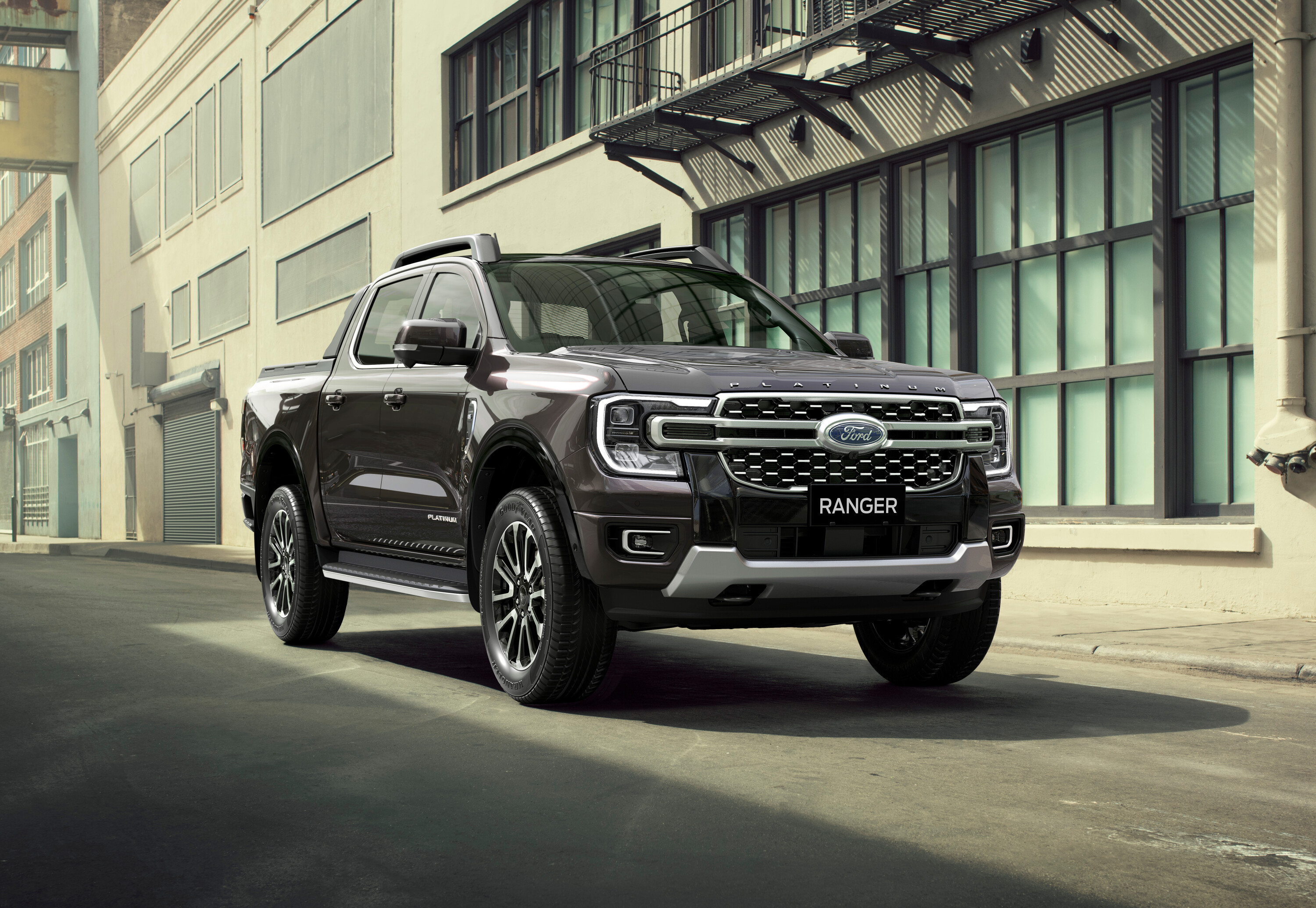
Taken in isolation, the Ford Ranger Platinum is a very good flagship model. The problem is, other models in the Ranger line-up give a far better demonstration of the full gamut of this vehicle’s extraordinary abilities.
Were you fairly unconcerned about going off road and just want a lavishly equipped Ranger model, the Platinum answers that call but we still have some reservations about the way it rides on the big 20-inch alloys.
For our money, we’d go for a Sport on 18-inch wheels with A/T tyres and use the $9K saved to select a few choice options.
1
MORE
Everything Ford
It has been over a week since the reveal of what will be the first all-new Prado in nearly 25 years, with the first photos and some general info of the 2024 model.
Get up to speed on the new Prado
The stories below will give you a guide to everything we learned about the new Prado when it was unveiled. All fresh stories published since then will be found on our Toyota Prado model page here.
2024 Toyota Prado coverage
- 2024 TOYOTA PRADO REVEALED
- Spec battle: New Prado v LandCruiser 300 Series
- Spec battle: New Prado v Old Prado
- Spec battle: New Prado v new Ford Everest
- 2024 Toyota Prado: Everything we know
- What is the towing capacity of the new Prado?
- New Prado: What YOU think so far!
- BONUS: New 70 Series facelift revealed
- A 2025 Prado ute? Yes please!
- ALL PRADO NEWS & REVIEWS
JUMP AHEAD
The expected wide range of reactions has followed, from those crying the death knell of the model even before it lands mid next year, through to those excited by the style and design, if a little underwhelmed by the carry-over 2.8TD (with hybrid assist) as the engine choice for this market. To us, and noting it is very early days, the new Prado looks exciting with plenty of promise.
So should buyers wait? Well, that’s more difficult to answer, and shines the light on the other option of buying a second-hand Prado. To answer this, you need to decide whether you want to go second-hand or nab a new 150 Series – if you can find or wait for one.
Going the second-hand route opens up a raft of options, from the cheap and cheerful – but long in the tooth – 90 Series, the near-iconic 120 Series, or a used version of the longest-serving Prado, the 150 Series.
1
Even now, close to 15 years since the launch of the current 150 Series, the LandCruiser Prado is still the mid-size 4×4 wagon king in Australia. In fact, the past five years have been the best sales results ever for Prado, and you could point a finger at a few potential reasons why, beginning with the fact its major long-term competitor – Mitsubishi’s Pajero – is now no more.
The obvious ‘new’ contender is Ford’s latest Everest, especially with its 3.0-litre TDV6 spec; but for some, the Everest is still seen as a ‘ute-based SUV’, as if that moniker suddenly renders that vehicle lesser than a true 4WD wagon design as the Prado is viewed.
Regardless of all of that, the fact is, ever since its official launch in Australia back in 1996, Aussie buyers have flocked to the Prado. Along the way they have excused some potentially serious problems that would be deemed inexcusable for other brands, for the Prado to reach a total local sales figure (as of July 2023) of 380,192 vehicles. Yep, that’s bloody impressive.
In short, whether families, hardcore tourers or whomever, Aussies are super-keen to get themselves into a Prado; brand-new, or second-hand. It’s just a matter of deciding which one is your best option.
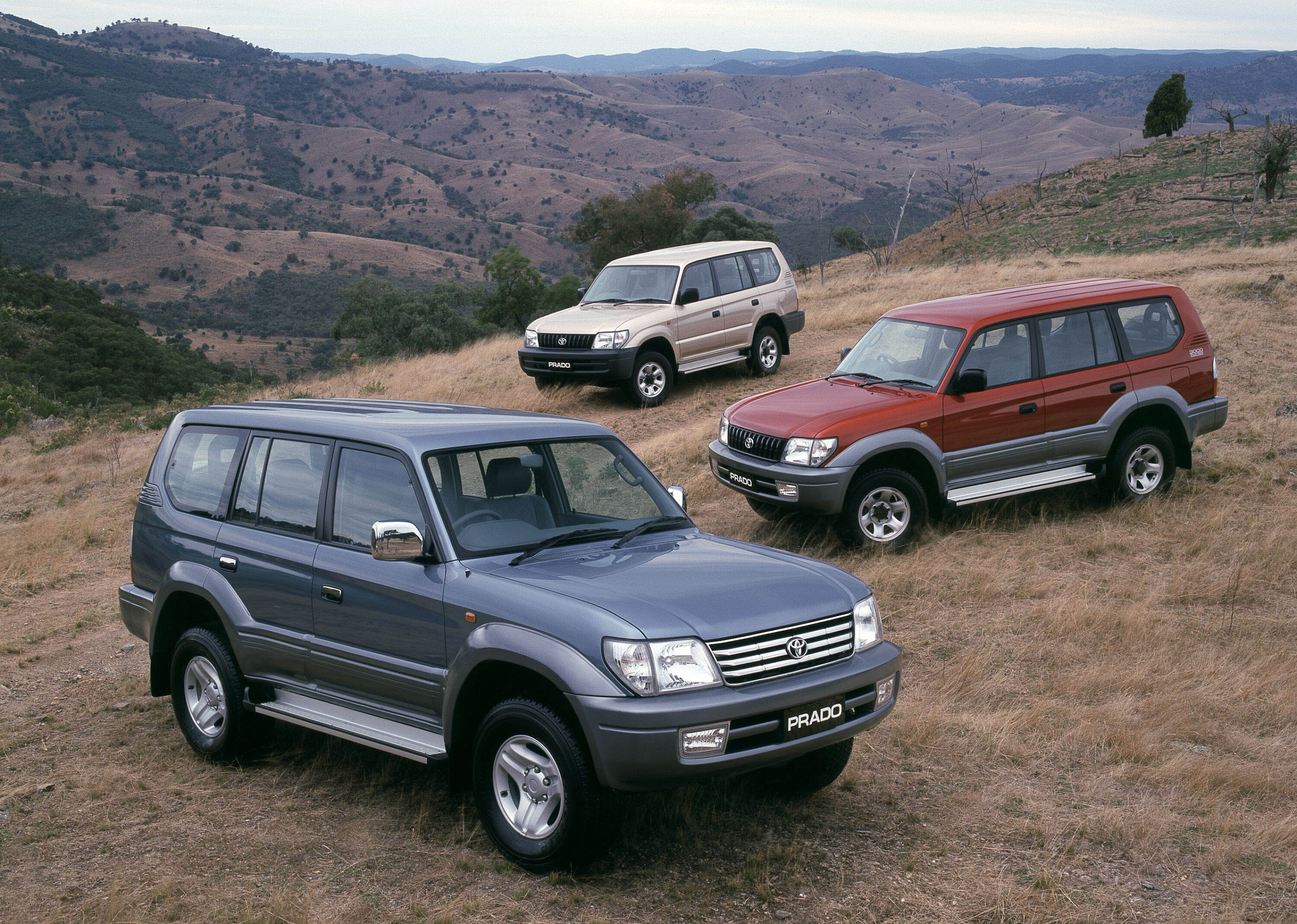
Toyota Prado 90 Series
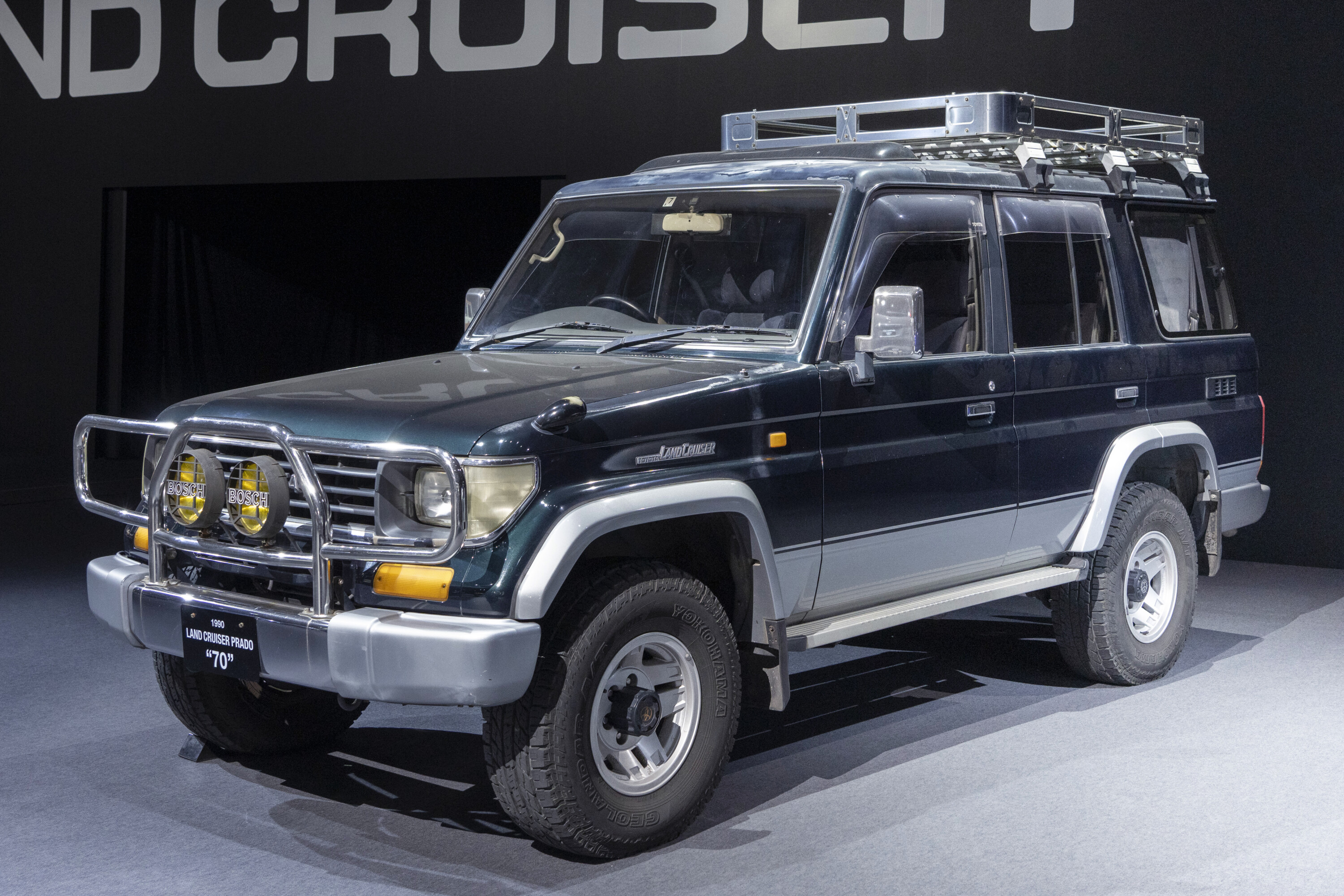
It was 1996, and the Mitsubishi Pajero was proving that new-vehicle buyers were surprisingly amenable to a mid-size off-road wagon that was equally comfortable on the bitumen. Toyota, of course, already knew this; the first-gen Prado, with live axles front and rear, and a choice of three- or five-door variants, had been introduced to a number of overseas markets but not here.
This short moment of market inattention by the Big T was addressed with the 1996 launch of the 90 Series “LandCruiser Prado”, Toyota cleverly leveraging the iconic LandCruiser nameplate when badging this mid-sizer for the Aussie market.
1
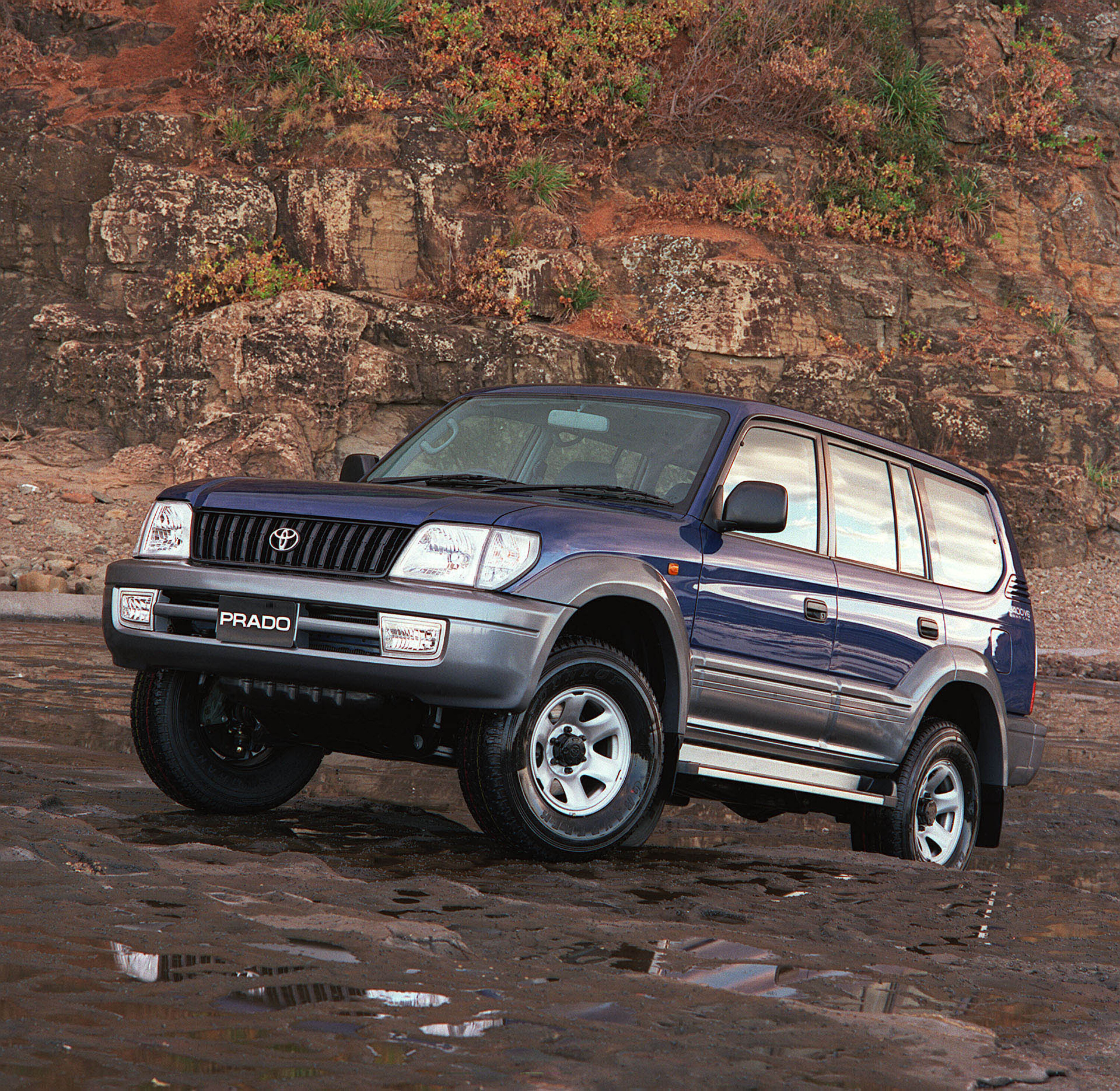
The 90 Series debuted with a live-axle rear and an independent front setup, combining to provide a more ‘car-like’ driving experience – and a small turning circle (11.6 metres) for those pesky city/school car parks – without sacrificing too much off-road capability.
This ‘new’ mini-Cruiser also offered seating for up to eight occupants, thanks to third-row seating that conveniently folded up to the sides (albeit at the cost of cargo space).
The vehicle launched with two petrol engines – a 3.4-litre V6 and a slightly anaemic 2.7-litre four-cylinder – and a surprisingly large 159-litre fuel tank, allowing the Prado to lug more fuel than even its big-brother 100 Series LandCruiser.
1
A diesel version of the 90 Series didn’t lob until March 2000, in the form of the 96kW/287Nm 3.0-litre (1KZ-TE) intercooled four-cylinder, with indirect injection, and backed (initially) by a five-speed manual gearbox. A four-speed auto box became an option in October 2000, bringing the total number of diesel Prado models to eight of the 16-model range.
Buying a second-hand Prado 90 Series
The 90 Series models are relatively cheap but come with the caveat of an ageing body and mechanicals, as well as lower levels of safety tech (which may, or may not, be an issue).
Still, for a relatively low entry point, you can get into a more-than-capable tourer, with a simpler, well-proved diesel powerplant, or that fun V6 petrol. Aftermarket manufacturers still offer some accessories for this model, so that cheaper entry price does leave wiggle room for spending on the fun stuff.
Pricing on the major online second-hand vehicle sale sites sees a private sale 2001 3.0-litre turbo-diesel, with 147,000km on the odo, at an asking price of $17,000, with a jump to a very low-kay (107,000km) 1996 3.4-litre V6 petrol VX Grande sitting at a dealer with $26,990 on the window. Unless you really want to punish yourself, steer clear of the 2.7-litre four-cylinder petrol.
Toyota Prado 120 Series
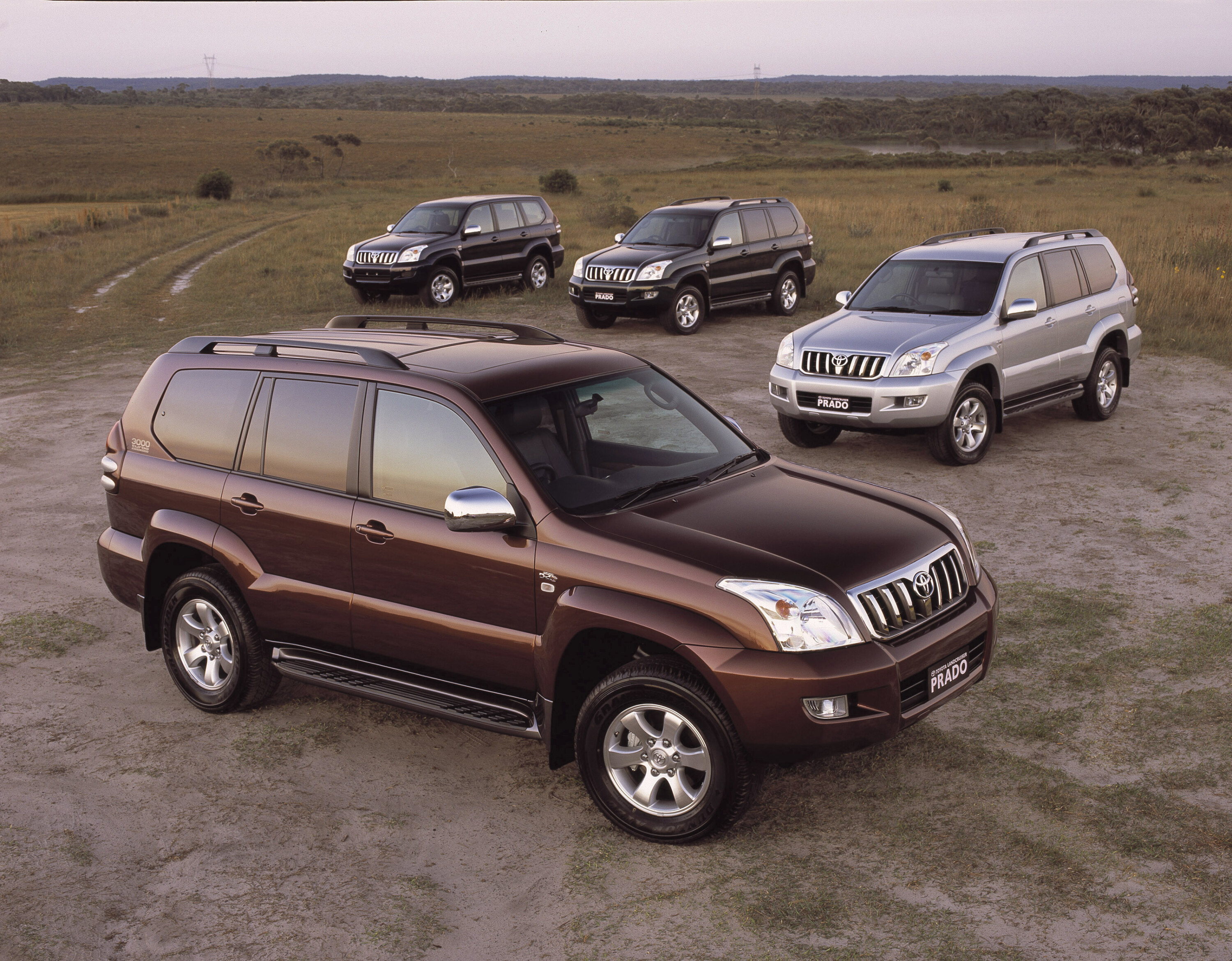
In 2003, Toyota launched the larger, roomier, safer and more refined 120 Series, with the 3.0-litre turbo-diesel and the 2.7-litre petrol from the 90 Series initially carrying over and being joined by a stonking all-alloy 4.0-litre quad-cam V6 petrol (dubbed the 1GR-FE) that pumped out 179kW and 376Nm, while being fed go-juice via a monster 180-litre fuel capacity courtesy of an 87-litre main and 93-litre sub tank.
This generation of Prado also received updates to its Driver-Assist Technology (DAT), featuring Active Traction Control (A-TRC), vehicle stability control, Hill-start and Downhill Assist Control, and continued on with full-time 4WD, with the drivetrain now using a Torsen centre diff.
1
The model range included the base-spec GX (five-seats only), GXL, VX and Grande, with the Grande also featuring electronically controlled self-levelling rear air suspension. Third-row seating was standard from GXL up, while leather seating was only available in VX and Grande.
The 120 Series proved hugely popular in 2003, with sales nearly doubling from the previous year to 14,639 vehicles, and saw the Prado become the best-selling overall four-wheel drive vehicle (including SUVs) from May of that year. Incremental changes through the first few years of the 120 Series resulted in the original four-speed auto backing the 4.0-litre V6 receiving an extra ratio for a modest increase in economy, but a notable upping of overall driveability.
Perhaps surprisingly, even with a well-proven diesel option, petrol variants remained the best-seller for the Prado up until 2006, when diesel sales finally accounted for more than half. Coincidentally, it was this year that saw the 120 Series receive a more modern and powerful DOHC common-rail direct-injection 3.0-litre turbo-diesel engine, the 1KD-FTV.
1
This new oiler was impressive; a 32 per cent jump in power to 127kW (at 3400rpm) and the higher (by nearly 20 per cent) peak torque of 410Nm was available at a lower point (1600rpm) in the rev range, and it made it more flexible for off-road driving. Backed by either a six-speed manual or slick five-speed auto (with a new gated shift), this new donk seemed like the perfect powerplant for long-distance off-road touring, with far better fuel economy compared to its predecessor.
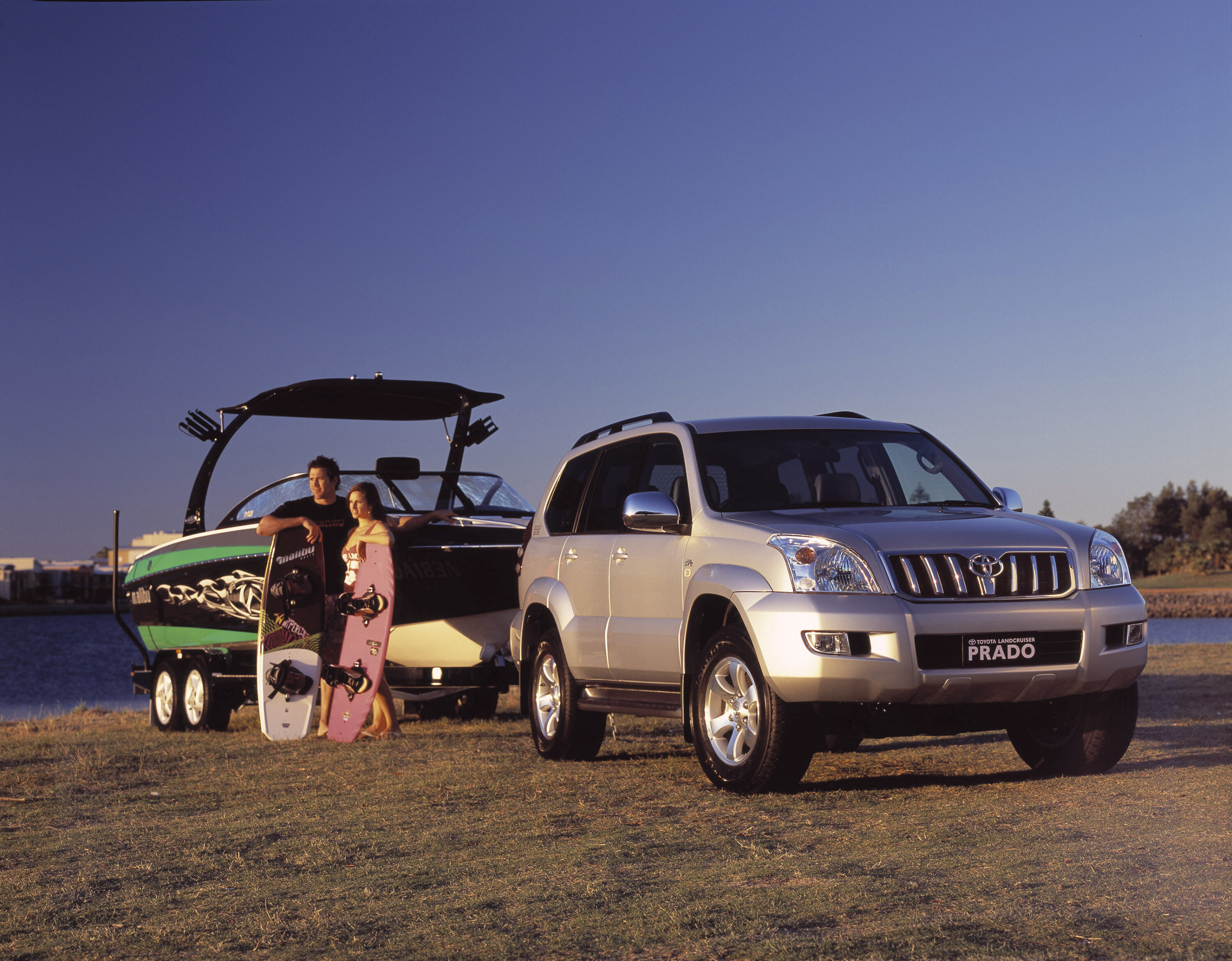
It was this last incarnation of the 120 Series, from 2006 through to 2008, that saw the biggest boost to the Prado’s reputation as a great off-road tourer option, and one that was also easy to drive around town. The comfortable ride, decent on-road handling, long-travel suspension, modern engines with well-matched gearboxes, bush-friendly 17-inch wheels, copious aftermarket accessories, a spacious interior and an extensive nationwide dealership network all offset a much smaller list of negatives. These included the side-mounted third-row seats, which eat into rear cargo space, the low 2500kg braked towing capacity, the still-considerable thirst of the V6 petrol, and the 1KD-FTV’s infamous ‘injector issue’. Speaking of which…
With modern diesel engines comes complexity, which can lead to unforeseen problems. In the 1KD-FTV’s case, this was the motor’s injectors – or, more accurately, the injectors and their seals. Originally, the seals were made from copper and, when they failed, they would then allow excess gases into the engine where, mixed with oil, it’d create a build-up of carbon which would, in turn, block the engine’s oil pick-up. We all know what happens when an engine has no oil.
1
The injectors themselves are also known to either outright fail (it is recommended the tolerances are checked every service and they are replaced very 100,000km regardless) or ‘stick’ open, again causing an oft-fatal flood of fuel into a cylinder chamber.
Yep, it sounds scary – and bloody expensive – but it is also a prime example of ensuring your vehicle (regardless of make/model) is regularly serviced and any pre-emptive modifications are done. It should also be noted that, for every 1KD-FTV-powered Prado (both in 120 Series and 150 Series form) that has failed, there are thousands out there that have happily clocked up hundreds of thousands of trouble-free kilometres.
Buying a second-hand Prado 120 Series
Yes, you will need more dosh to get into a 120 Series compared to snaring a nice 90. But, regardless of whether you are looking for one of the ‘old’ 3.0-litre oilers (2003 to 2005), that rorty 4.0-litre V6 petrol, or the post-2006 update common-rail 3.0-litre diesel donk, with the increased sales of that model, you will have a wider range to choose from.
If you’re keen on the V6 petrol, do yourself (and your wallet) a favour and bypass the earlier four-speed auto versions; the five-speed auto (or the rarer six-speed manual) behind that engine will offer at least a modicum of ‘acceptable’ fuel consumption.
1
Most touring-oriented buyers, though, will look to the 3.0TD engine. Even allowing for the injector issue, this engine’s power and torque, in a relatively lightweight wagon and backed by that 180-litre fuel capacity, make for a brilliant base from which to start a tourer project build – just be sure to check the vehicle’s service history, and ask if the injectors have been replaced during the previous owner’s tenure. Pricing for this engine option is highest in the 120 Series range, with low-kay examples asking mid-$30K pricing.
It’s here you may need to do the sums; a 4.0-litre V6 of equivalent spec and odo reading is around $5K to $10K cheaper, and that pays for a lot of petrol. Plus, that engine is renowned for its durability, with no big ‘issues’ in its history, and we’ve heard of a number of examples ticking over 300,000km and more, and still going strong.
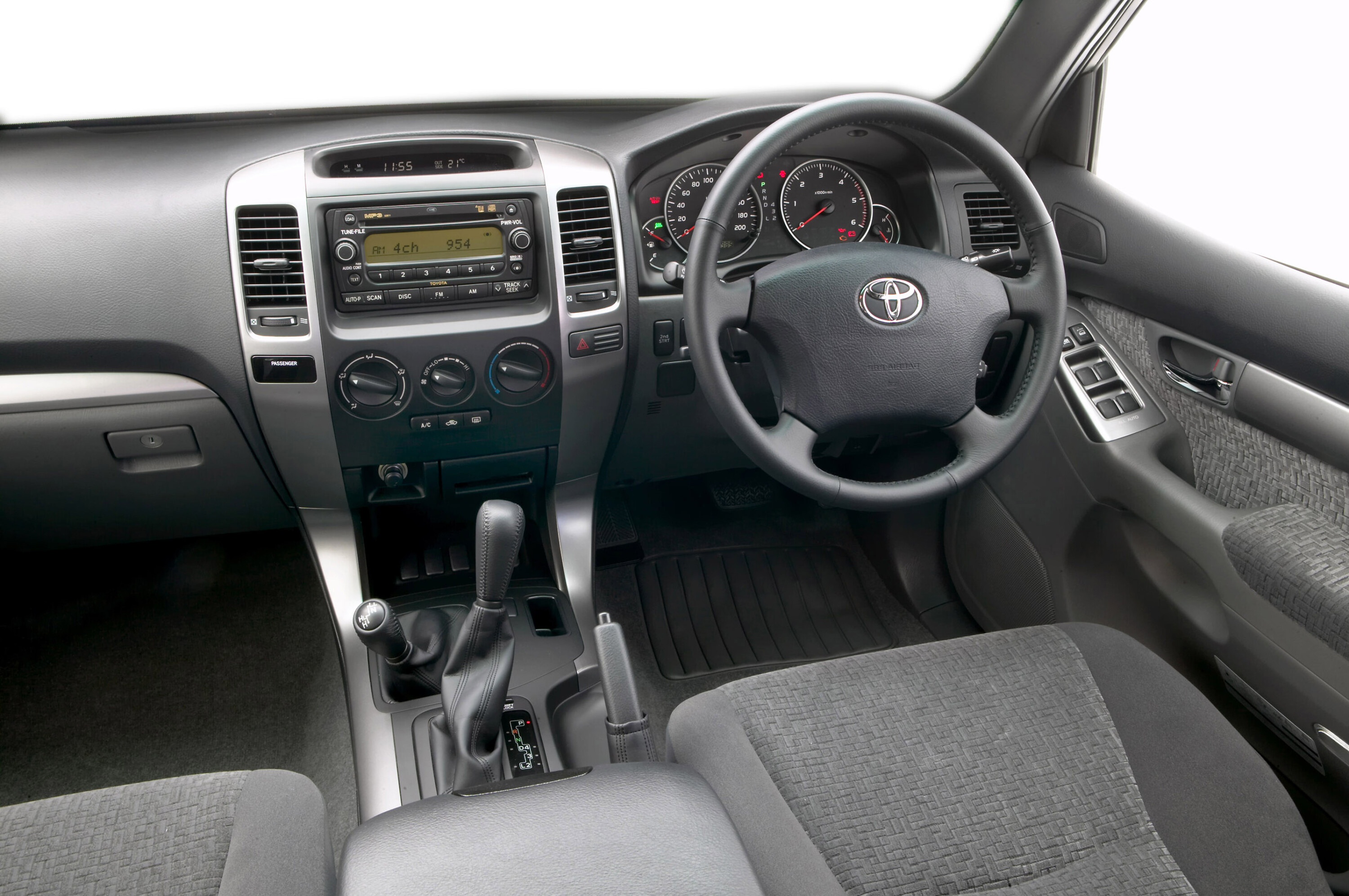
For those looking for more ‘luxury’ in their 120 Series, the VX and Grande are the two model specs to focus on, with leather interiors and better sound systems. However, be aware that the Grande’s self-levelling rear suspension, while excellent in operation, makes fitting an aftermarket suspension system a much bigger (and more expensive) task than the coil-sprung models. For any other off-road touring mods, there are oodles of aftermarket suppliers who produce gear for this popular vehicle.
Toyota Prado 150 Series
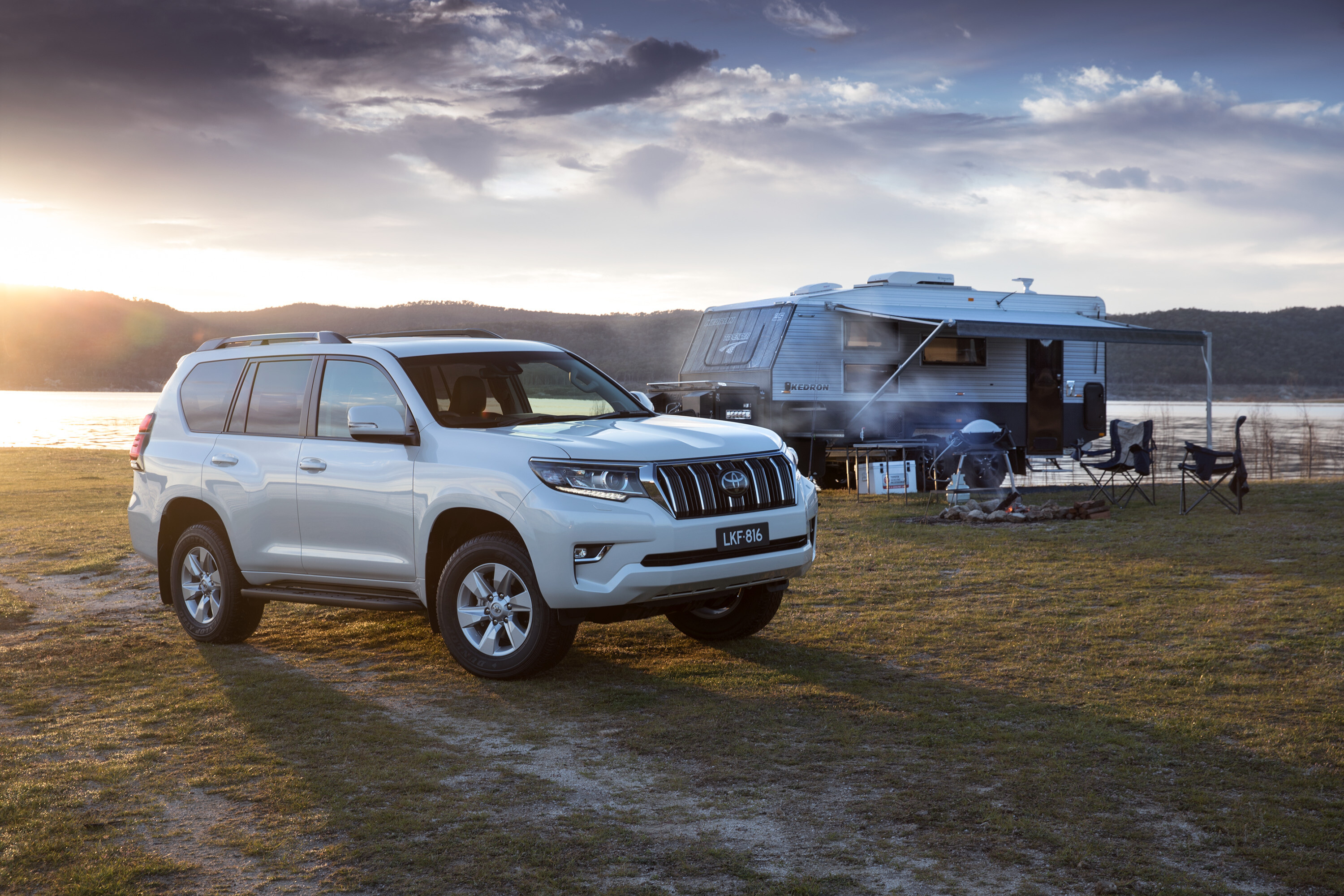
It’s a credit to Toyota’s designers and engineering teams that the 150 Series has, firstly, stayed at the top of its market segment for close to 15 years up to now and, secondly, during that near decade-and-half, Toyota has not rested on its sales laurels, subjecting this model to a number of tweaks over the years.
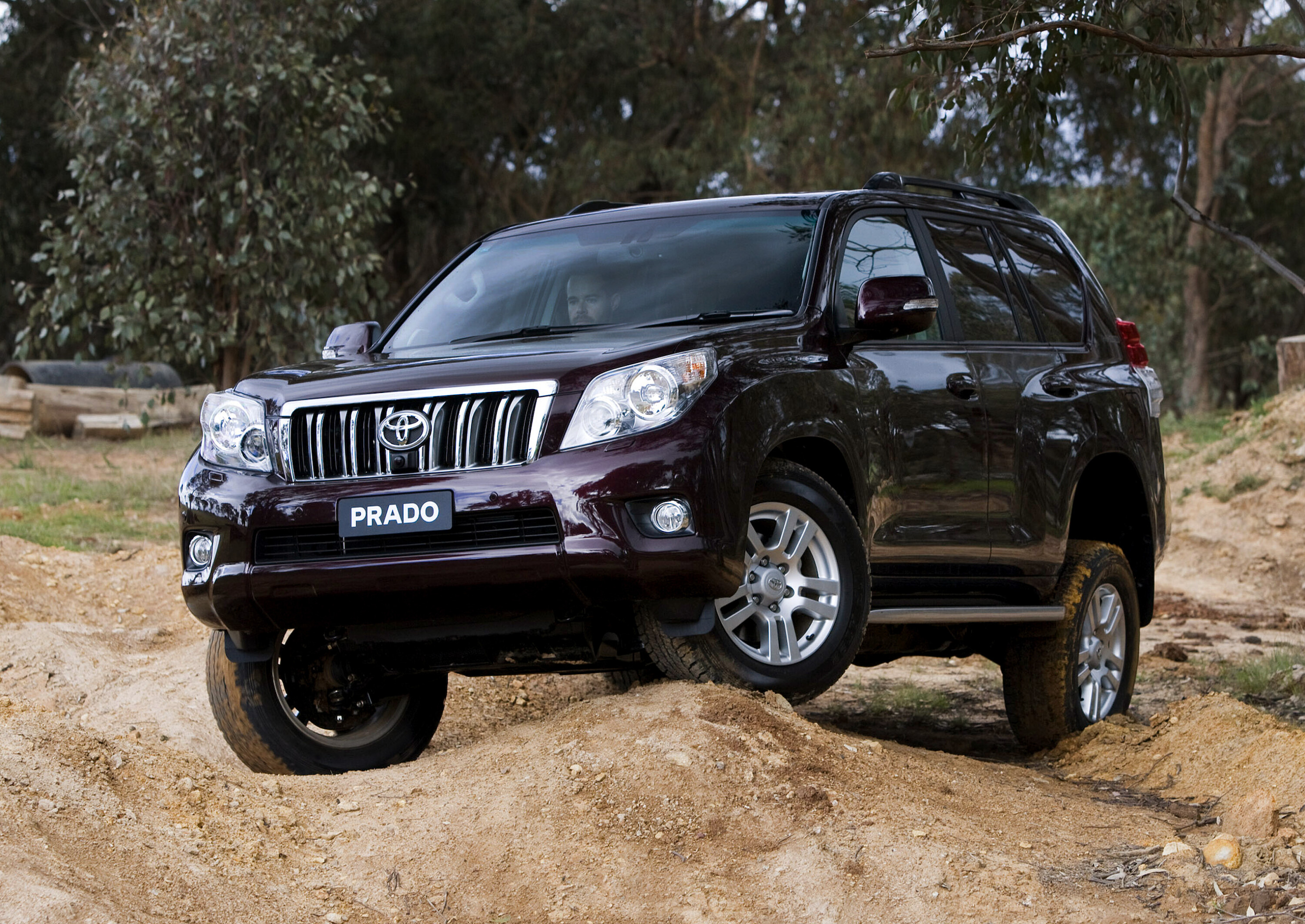
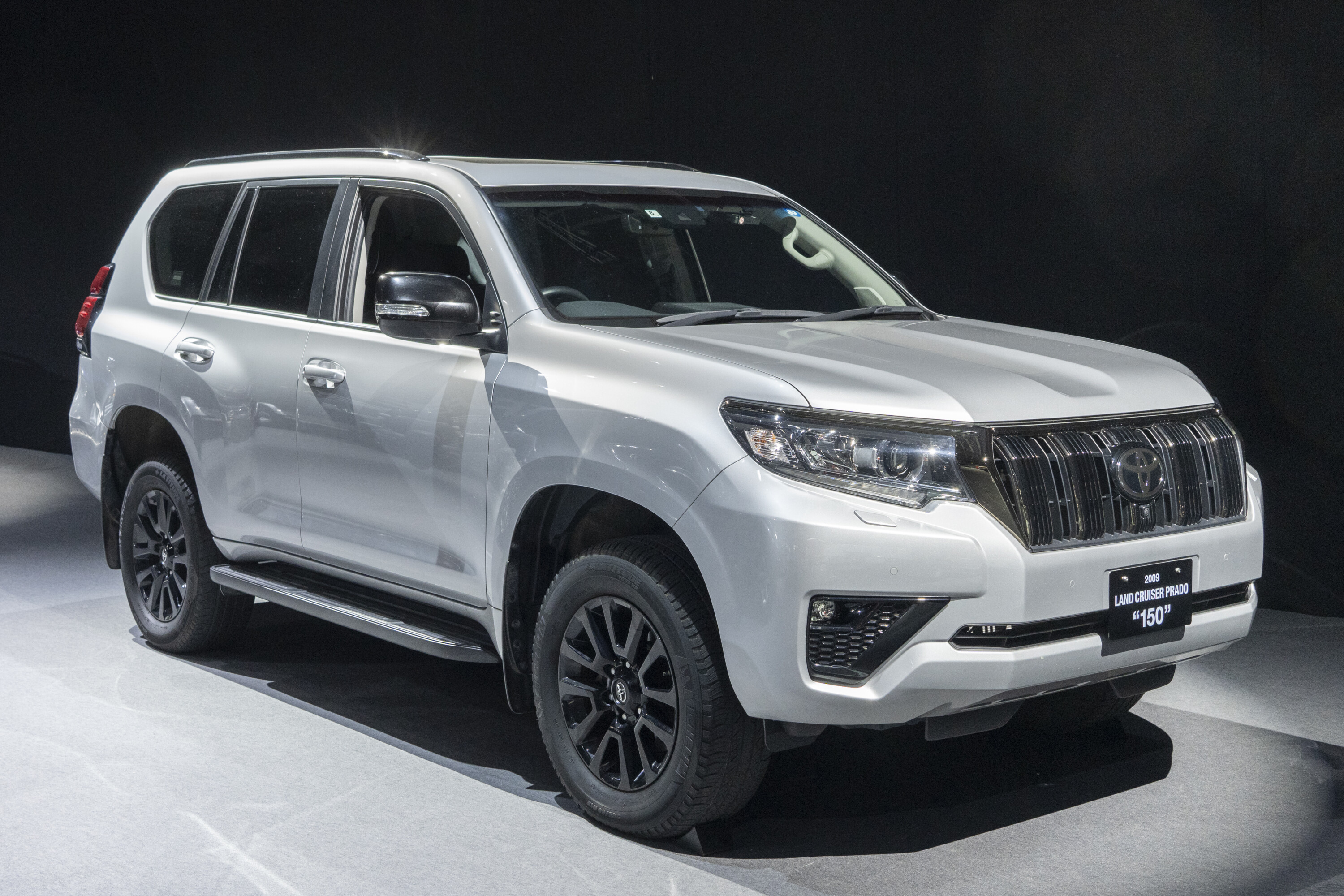
The 150 Series was launched in 2009, with both a five-door and three-door model on offer. Five-door badges were GX, GXL, VX and Kakadu (replacing the Grande nameplate), with the 150 presenting slightly wider, lower, longer and notably heavier than its predecessor, albeit retaining the approach, ramp-over and departure angles of the previous gen.
1
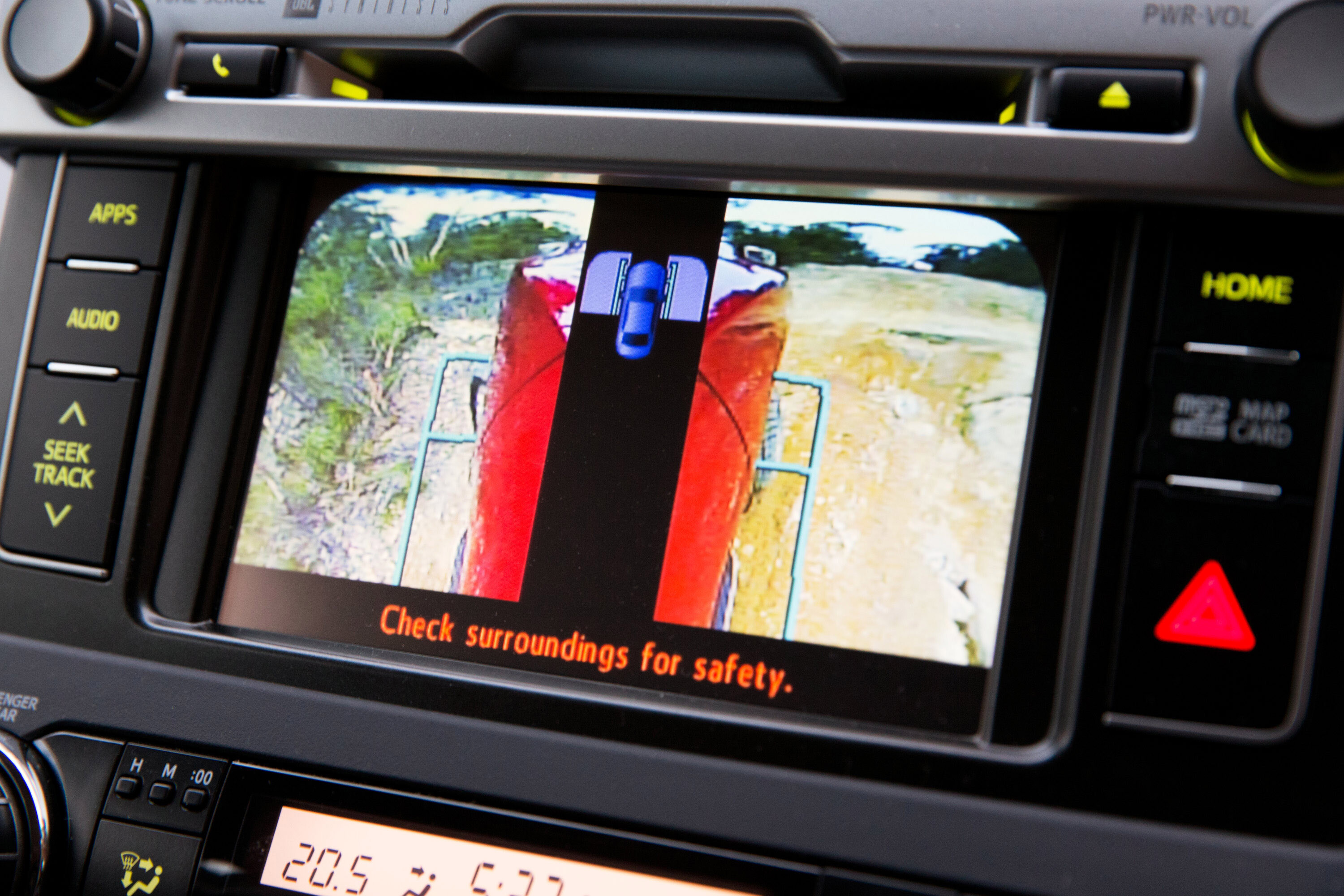
That extra heft brought a raft of improvements including better safety tech (seven airbags across all models, up from two), an all-new more comfortable and spacious interior (at last, the third-row seats folded flat under the cargo floor; seating capacity drops to seven, though), a lift in standard features per spec level (including three-zone aircon on GXL, VX and Kakadu), ‘Multi-terrain ABS’ (self-adjusting ABS dependent on terrain surfaces), and even adaptive cruise control, albeit only on the top-tier Grande and three-door ZR (yep, there was a three-door; the ZR and the lower-spec SX).
Unfortunately, the extra weight also meant less payload, the fuel capacity dropped to 150 litres, and the braked towing capacity stayed at 2500kg.
Motor-wise, there was further tickling of that big-bopper 4.0-litre V6 petrol, with more power and torque (202kW/381Nm) and – hallelujah! – better claimed fuel economy (11.5L/100km for the five-speed auto) thanks to the adoption of dual intelligent variable valve timing (Dual VVT-i). The 3.0TD also copped a small change; with a nod to the injector dramas seeing new injectors fitted and moving the intercooler from the top to the front to aid cooling.
1
As expected, the Prado’s well-proven IFS front end/live axle rear combo carried over (with revised spring and damper rates) in all models bar the top-tier Kakadu (which kept its predecessor Grande’s self-levelling rear suspension). The Prado’s excellent traction control system was also (again) improved.
Both Kakadu and VX now featured Toyota’s KDSS (Kinetic Dynamic Suspension System – more on that in the 150 Series buying guide, below), with the Kakadu version of KDSS adding adaptive variable suspension. Kakadu (and ZR) also now included Toyota CRAWL (basically a low-speed cruise control for off-roading), along with Multi-Terrain Select (with five off-road driving ‘modes’) and Multi-Terrain Monitor, too. Yep, the Prado was going high tech.
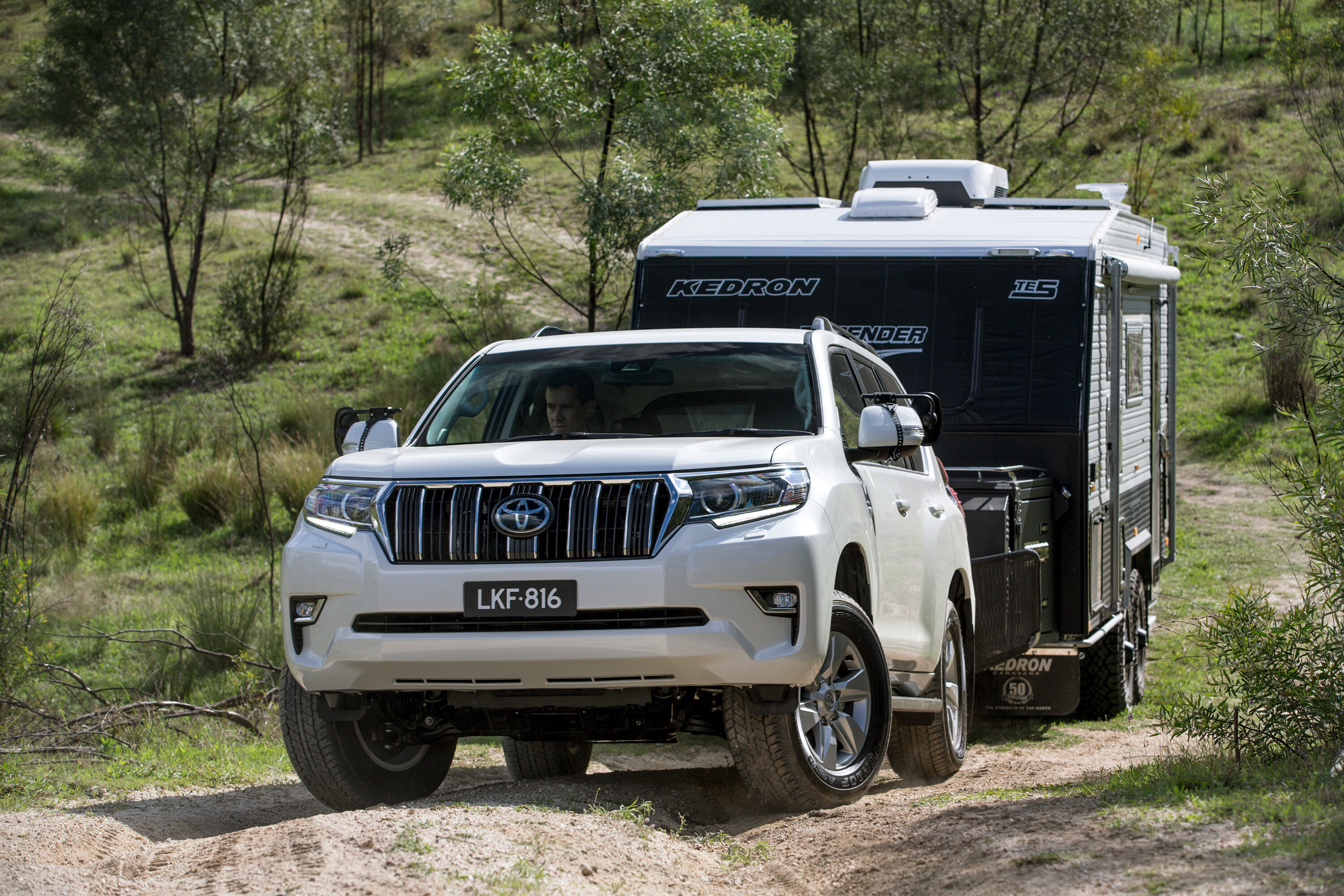
It was not until 2015 we saw the next major Prado update – an extra 5kW for the now low-selling 4.0L V6, and the arrival of the new 2.8-litre 1GD-FTV turbo-diesel engine, backed by an also-new six-speed automatic. Offering 450Nm (in six-speed auto form; 420Nm for the six-speed manual) at 1600rpm and 130kW, the new oiler was also very fuel efficient. This was attributed to both the new engine and the new gearbox, although the six-speed auto’s two overdrive gear ratios (5th: 0.67 and 6th 0.58) caused a few dramas as the ’box would not always shift into that very tall sixth gear unless you were exceeding some speed limits!
1
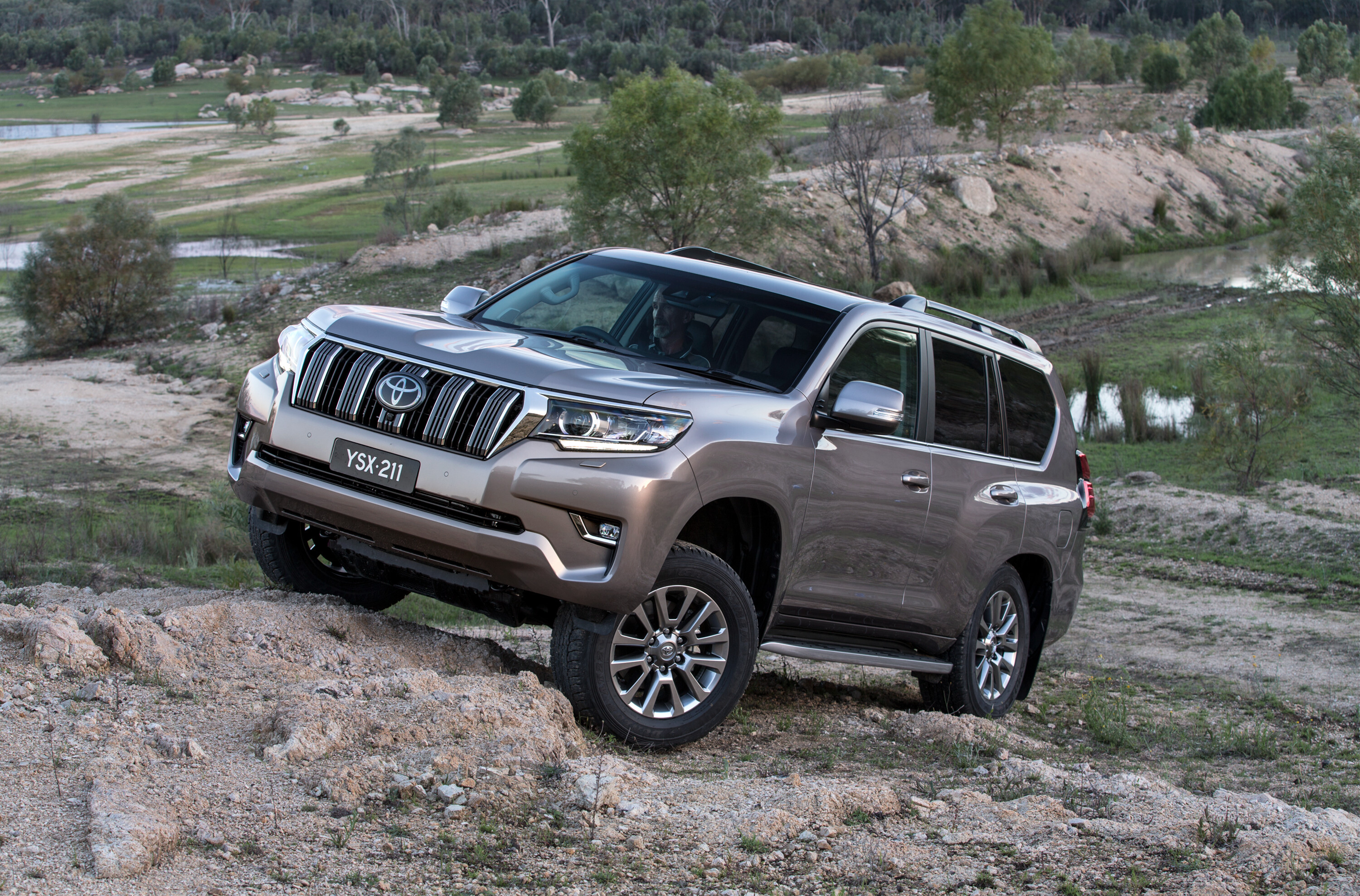
Another update followed in late 2017, featuring the latest 150 Series exterior styling, but Toyota sadly dropping the beloved 4.0-litre V6 petrol. An easy decision as it turned out, with only 1.2 per cent of Prado sales now petrol models. Braked towing capacity was increased to 3000kg in this year update, too.
August 2018 saw a very hush-hush dropping of KDSS from VX models, an upgrade of the lower-spec models (GX and GXL) to the safety tech previously available only on VX and Kakadu, and the appearance of a ‘flat-back’ Prado; with removal of the sub-tank (dropping fuel capacity down to 87 litres) and fitting the spare underneath, Toyota could offer a rear door that, although it still opened sideways, at least now offered a lift-up rear window for easy access to the cargo area. It’s been very popular.
As with the 3.0TD, the 2.8TD was not without issues, the main one being a faulty Diesel Particulate Filter, in vehicles built between 2015 and 2020. In very basic terms, the DPF is designed to reduce emissions by collecting particulates and then ‘burning’ them, a process Toyota dubs ‘regeneration’. Unfortunately, this did not work and the DPF would pack up with unburnt particulates, causing everything from increased fuel consumption to the now infamous white smoke from the Prado exhaust. After two cracks at it, Toyota looks to have resolved the problem.
1
The last – and now final – update to the Prado 150 Series happened in late 2020, with the big news being a bump in grunt to 150kW/500Nm, the result of a mini-overhaul of the 2.8TD covering new turbo (with a larger turbine and impeller), cylinder block and head tweaks, and an increase in fuel-injection flow rates. The end result was a smoother delivery of grunt, with the maximum torque spread now going from 1600rpm to 2800rpm.
Other improvements included a final resolution to the abovementioned DPF issues, a new multi-media system (yes, you could now use Apple CarPlay), rain-sensing windscreen wipers, and another increase in safety systems.
New diesel outputs aside, you’d think there wouldn’t be much buyer interest in buying what is, sort-of, now a 15-year-old vehicle. But you’d be wrong; 2022 and the first half of 2023 have seen the highest sales ever for Prado. The 150 Series may have been around for what seems like forever, but incremental improvements (and fixes) have kept this best-seller at the top of the market. The 250 Series has a lot to live up to.
Buying a second-hand 150 Series Prado
If you have a slightly larger wad of cash, the 150 Series Prado is well worth the additional outlay; but, as with the 120 Series, comes with those diesel-related caveats attached, whether you’re looking at the 3.0TD or the 2.8TD from 2015 to 2020 (in relation to the DPF).
The 150 Series is arguably the most capable Prado off-road straight from the showroom floor. It is also probably one of the most modified touring vehicles ever in Australia, with every 4×4 aftermarket manufacturer producing tons of goodies for this rig.
As mentioned, it is wider, lower and arguably more comfortable and capable on- and off-road, but also heavier. Balancing that was the increase in safety tech (both internal and external), better claimed fuel economy, general build and mechanical improvements, along with that welcome tweak to the 4.0-litre V6 in terms of efficiency (if you’re looking for the V6).
1
As with any second-hand purchase, a check of service records is a must, and especially so with the two diesel options. A 3.0TD Prado GXL may look amazing value for money compared to the ‘newer’ 2.8TD, but be sure to ask about the injectors, i.e., have they been checked regularly at service intervals and/or been replaced.
Same goes for any 150 Series built in the years/months covered by the DPF-related dramas. Both of these issues sound very dramatic – and they certainly can be that, plus very costly – but on the whole, most Prado 150 Series, if properly serviced/looked after, will provide many years of reliable on- and off-road fun.
Pricing for Prado 150 Series varies widely, simply due to this model having been around for so long. A peek at some online vehicle sales sites sees prices include a $30L 3.0TD GXL with 172,000km on the odo, to a $49K 2015 2.8TD Prado with 106,000km, through to a 2021 2.8TD VX with only 30,000km on the odo (and four more years of new car warranty).
So, in short, there are plenty of 150 Series out there and, as per usual, it will depend on both your budget and your engine preferences.
From the experts
Dean Mellor, 4X4 Australia editor (2003-2009)
“The first Prado launched in 1996 was essentially a better Pajero, and with Toyota’s unequalled sales and service network throughout Australia it’s little wonder it was an instant sales success. Over the past three decades the Prado has remained at the top of the sales charts thanks to offering customers a family-friendly wagon that is equally as competent on the road as it is off it, and although it has never excelled in any one area, it is certainly a jack of all trades.”
Justin Walker, 4X4 Australia editor (2010-2012)
“The Prado has always been the ultimate combo of tourer and town vehicle and proved itself to this overly fussy judge in 2010, when I drove a then all-new 150 Series GXL 3.0TD down Len Beadell’s Sandy Blight Junction Road, through the Gibson Desert. All I did was fit some M/T tyres and away we went. Out of the box, the Prado was perfect for that adventure; equally comfortable negotiating deep, soft desert sand as it was punching along the Stuart Highway, I knew then that Toyota had created a brilliant touring vehicle.”
Ron Moon, 4X4 Australia editor (1987-2001)
“I’ve long contended that the Toyota Prado is, and has been, the best mid-size wagon on the Australian market. Its longevity and its sales figures kinda bear that out. Why is it so popular? First, it comes with Toyota’s legendary reliability backed up by its LandCruiser heritage – even more so now in the soon-to-appear Prado 250. Then the size is just right. Big enough for the family to go on an outdoor adventure or to tow the camper to Cape York while lacking the dominating and large appearance of a 200 Series which puts a lot of people off. For a long time to come the Prado will remain a winner!”
Edeowie Station is a 69,000ha working sheep and cattle station which, like many grazing properties, has supplemented its income by providing a range of accommodation options to the 750,000 tourists who pass through South Australia’s spectacular Flinders Ranges every year.
There are several choices for those who want to spend a night or more at Edeowie Station, including bush camping, shearers’ quarters and a guest house.
The guest house sleeps up to six people and it offers all the comforts of home – including a telly, dishwasher, air-conditioning and laundry – so all you need bring with you is food… and perhaps a bottle or two of whatever tickles your fancy.
1
In addition, the station’s nine-bedroom shearers’ quarters will sleep up to 18 guests, making it ideal suited to bushwalking and four-wheel driving groups wishing to explore the property and other nearby attractions.
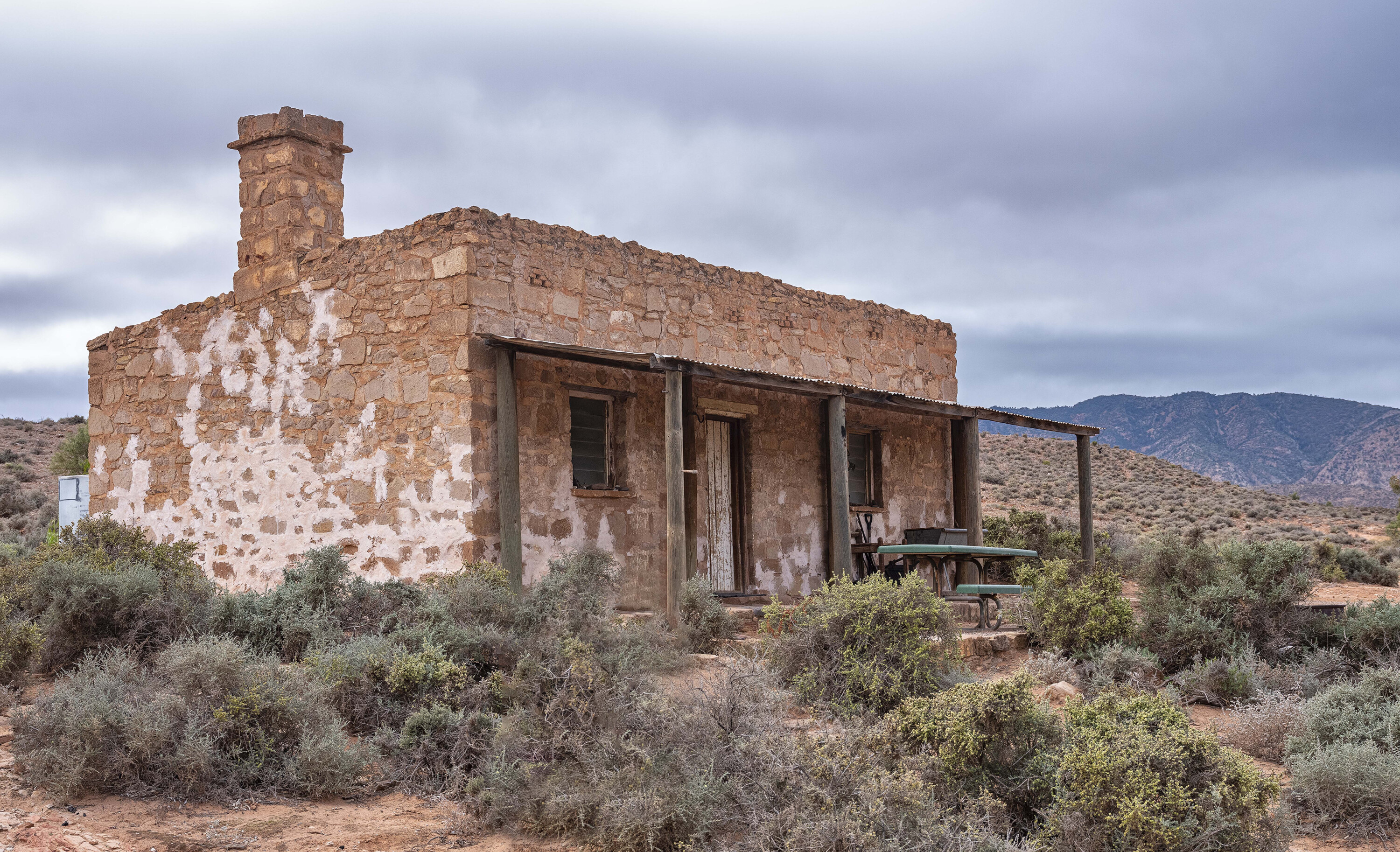
Those seeking a somewhat unique and remote bush experience should check out the property’s Brachina Hut. Little changed from when it was constructed in the 1800s, this rustic hut sleeps up to eight people. There is no power or lighting, but a wood stove and separate shower room supplied by a hot water ‘donkey’ provide a reasonable degree of comfort.
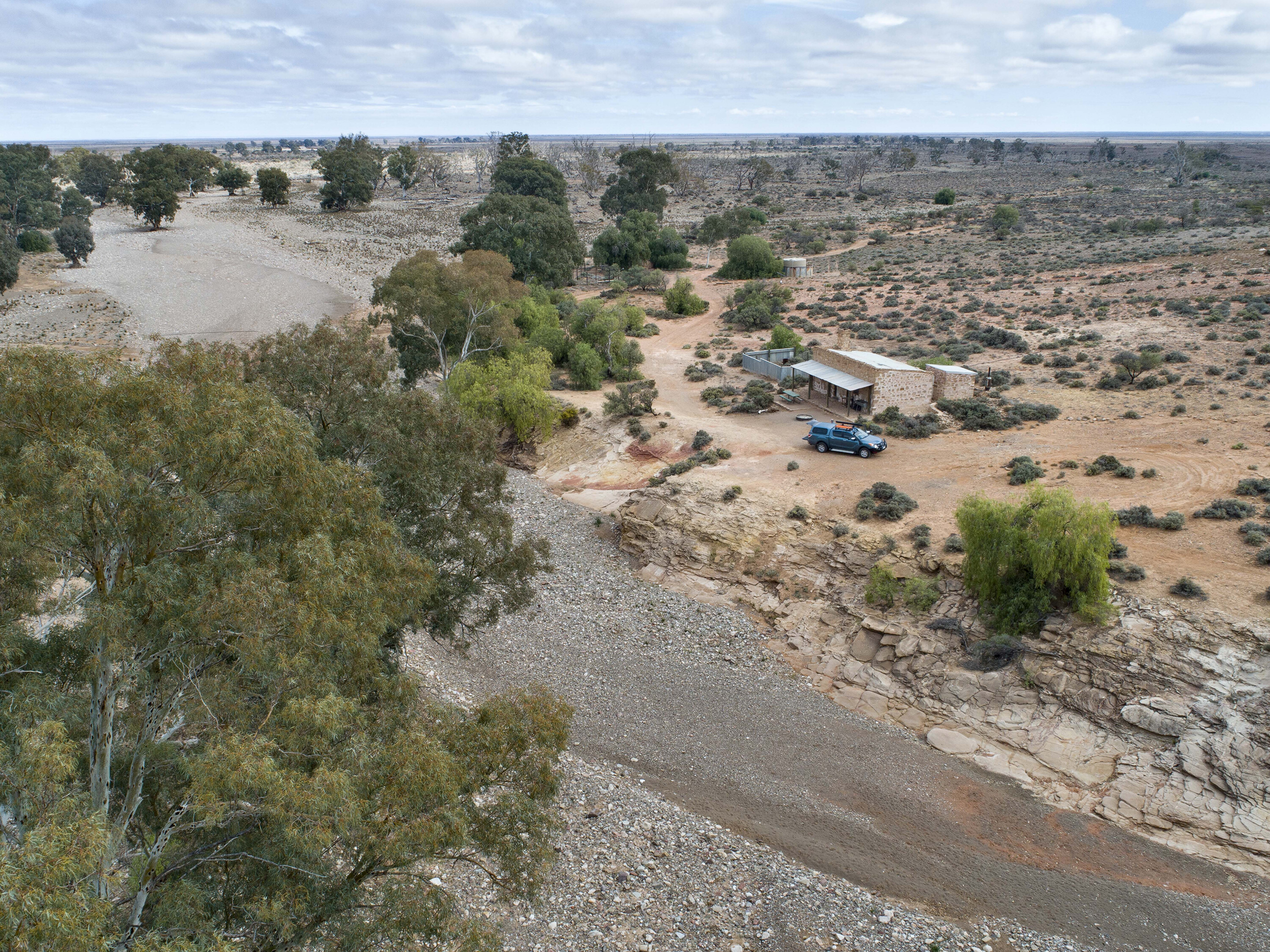
Brachina Hut is, unsurprisingly, located near the Brachina Gorge access to the Ikara Flinders Ranges National Park. Sitting on the banks of the (usually) dry Brachina Creek, the hut wouldn’t look out of place in a Spaghetti Western.
2
The nearby gravel road running through Brachina Gorge is named the Geological Way, which takes its name from the 130 million years of rock strata exposed by the gorge where it cuts through the Heysen Range.
The tectonic uplift that created the Flinders Ranges blocked the western flow of rainfall, creating a large body of water on the eastern side of the range.
This body of water eventually broke through the range carving out Brachina Gorge in the process.
1
Room to move
One of the great things about station stays is that you don’t find yourself cheek by jowl with hordes of tourists ruining the peace and solitude – something which has to be one of the outback’s most appealing aspects.
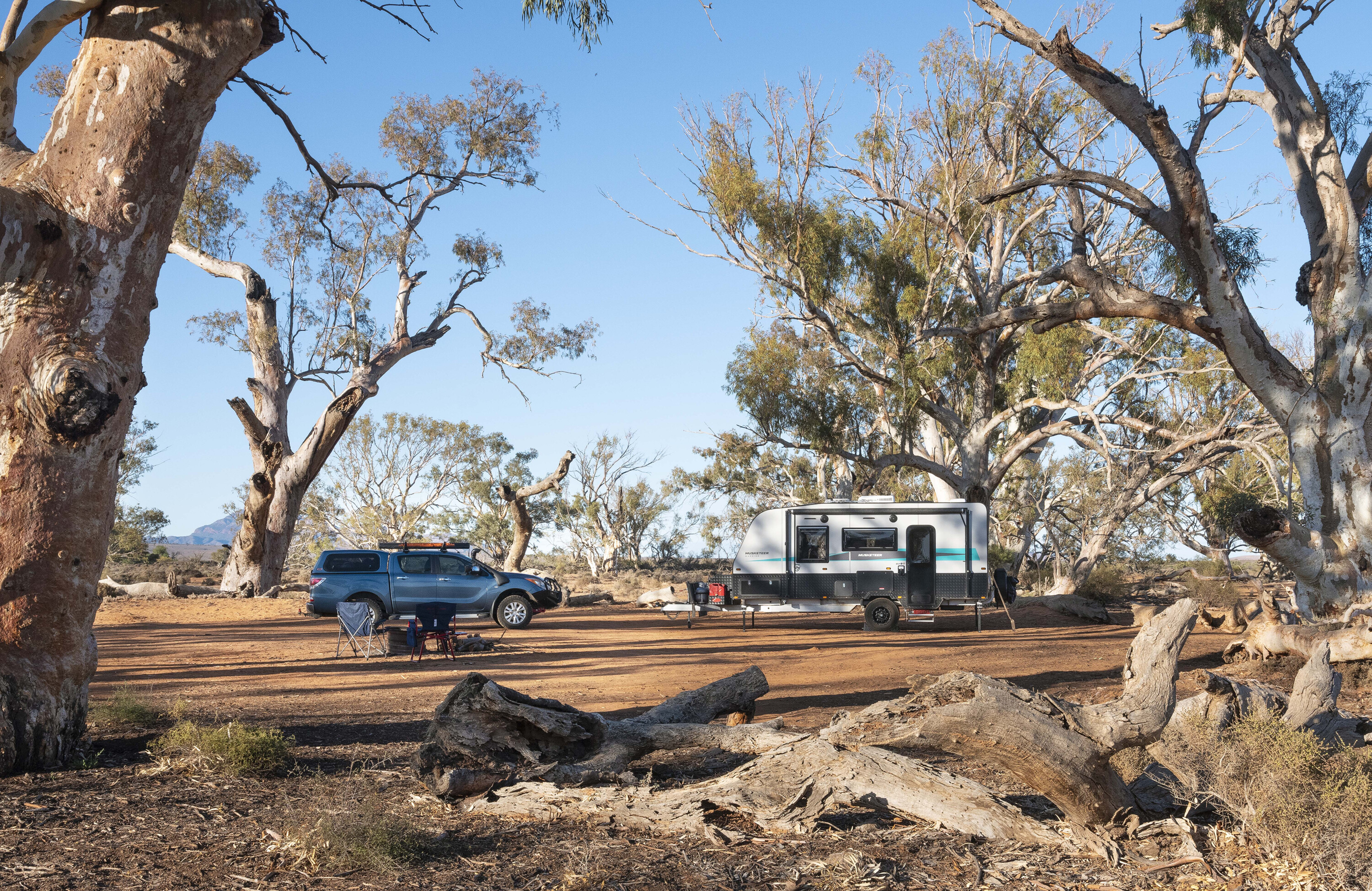
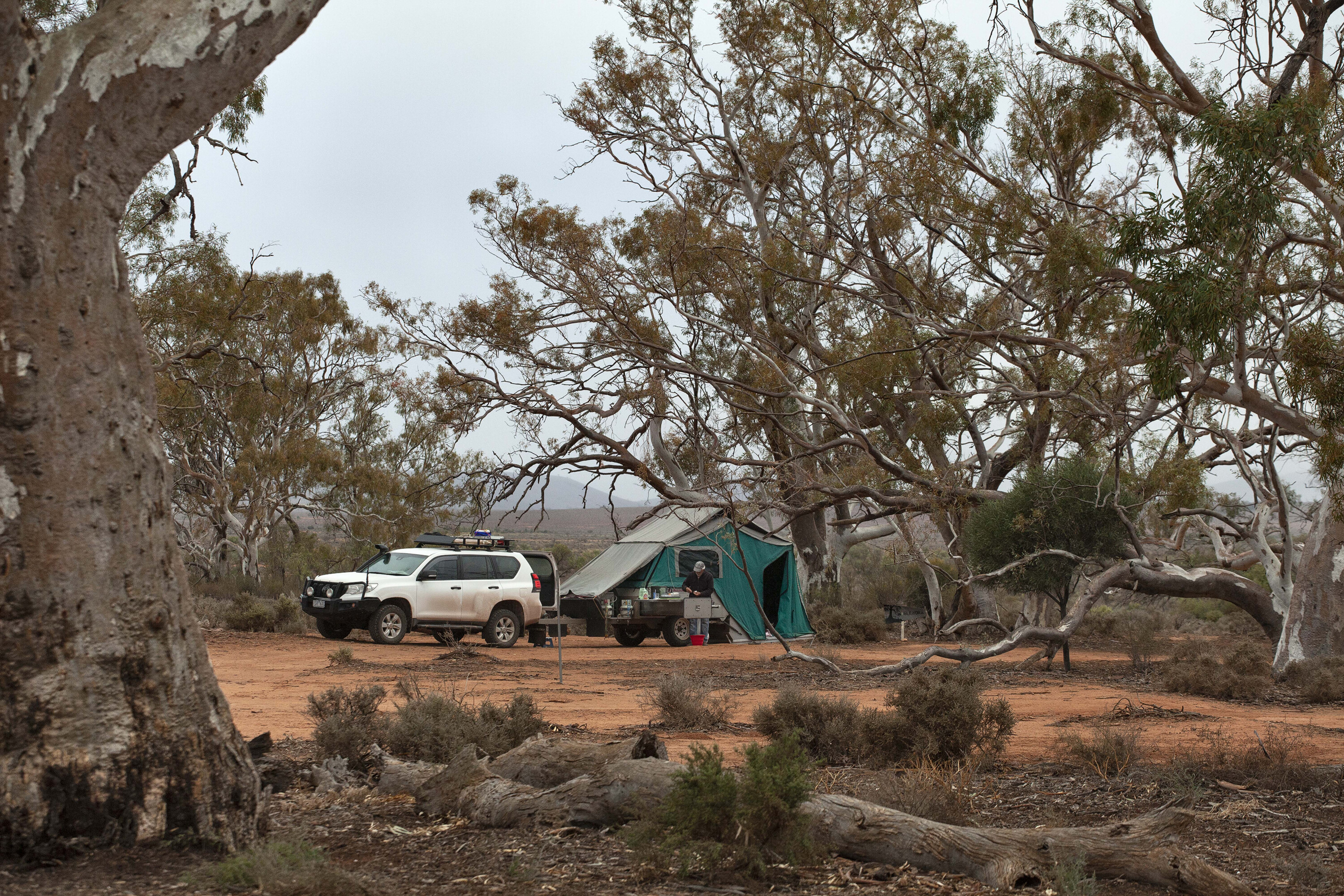
While the station also offers five bush campsites, they are set well apart to ensure guests’ privacy. And without mobile service out here (except near the homestead) you won’t be bothered by the troubles you’ve left behind.
Firewood can be purchased to use at the bush campsites, and this is delivered by Edowie’s managers Peter and Wendy, who go out of their way to make guests’ stays as pleasant as possible.
1
There are long-drop toilets at the campsites and shower facilities near the station’s old shearing shed.
This is proper bush camping and as such Edeowie is perhaps better suited to those travelling in self-contained vans or campers, with their own toilet and shower facilities, and no need for 240V power.
Pets are not allowed on the station given the risk to stock and native animals, as well as the danger presented by 1080 poison baits that may have been picked up by crows in the adjoining National Park and redistributed far and wide.
1
Colours of the outback
The sand is deep red in places with the occasional low dune, not unlike those found in the Simpson Desert.
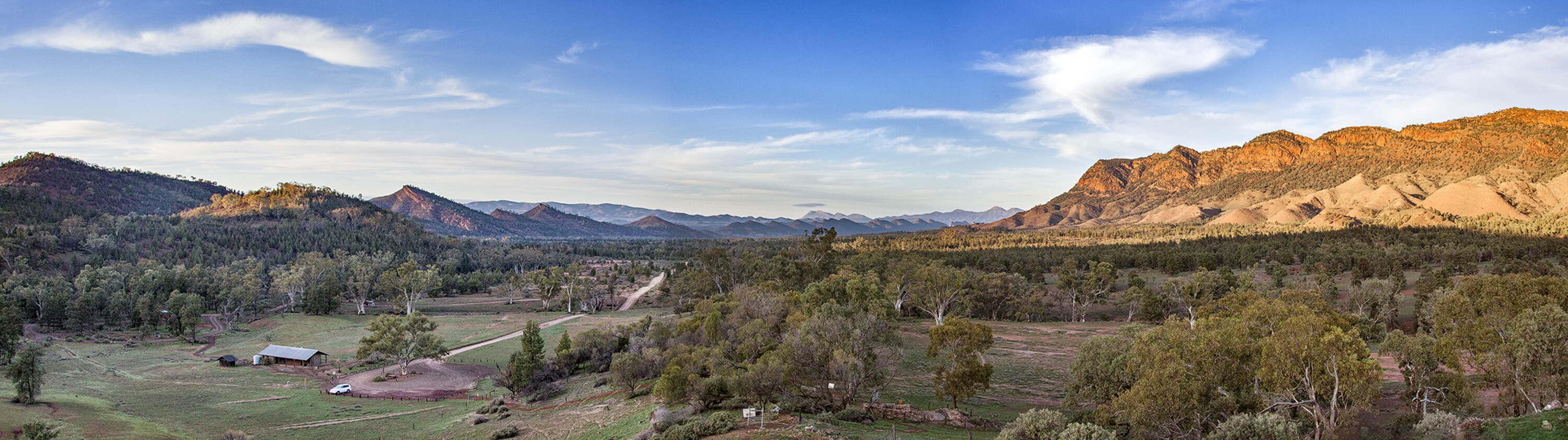
The station’s bush camping sites look across to Mount Abrupt, which rises some 700m above the flat plains to its west.
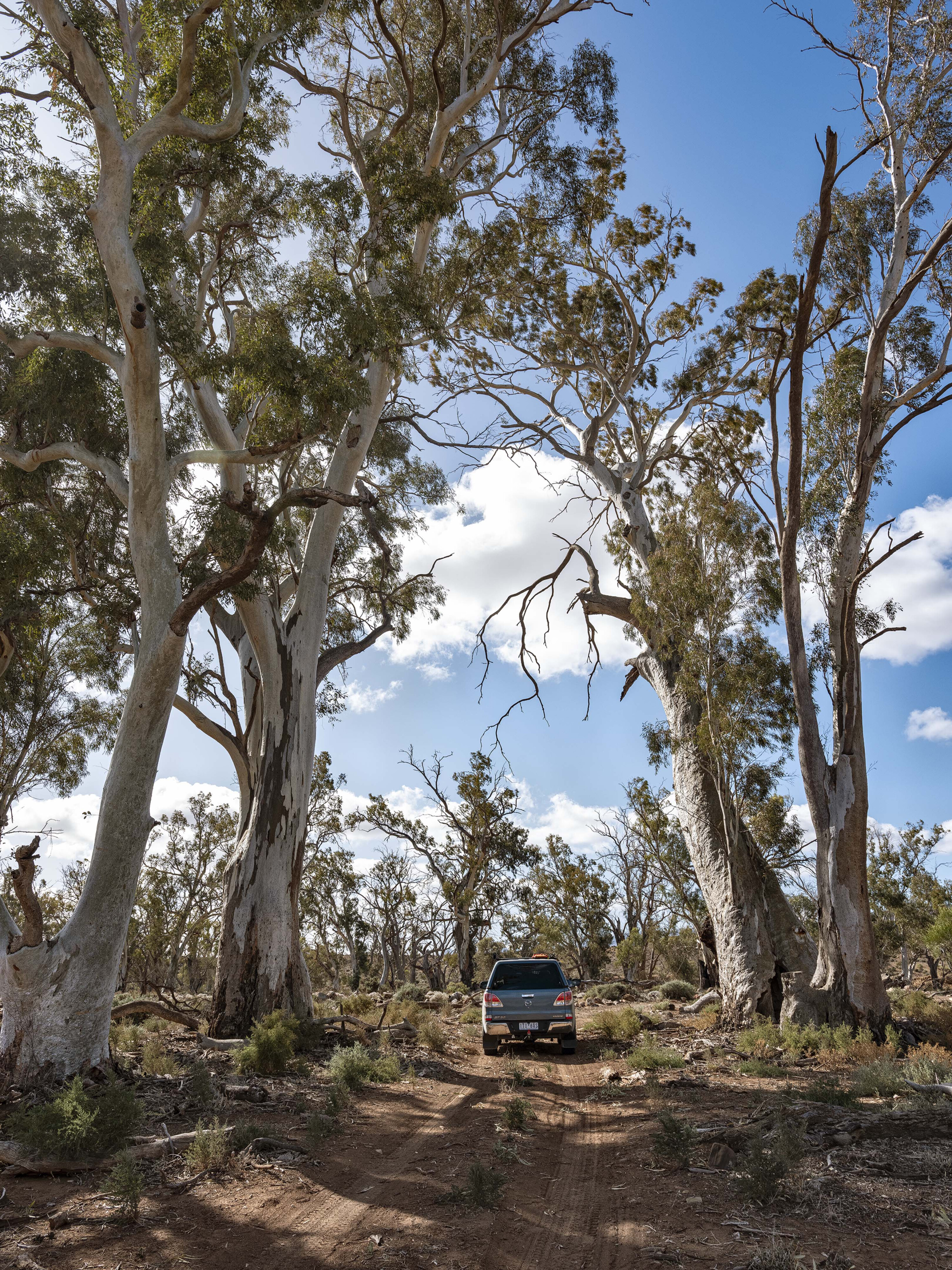
The sunsets at Edeowie Station can be spectacular and while sunrises are largely masked by the ranges to the east, both dawn and dusk often see the clouds over Wilpena Pound painted with vibrant colours. Stately red gums, hundreds of years old, punctuate the landscape and when lit by the soft early morning light make you feel like you are standing in a Heysen painting.
1
In fact, Sir Hans Heysen frequented the nearby Aroona Valley homestead and painted some of his famous works there early last century.
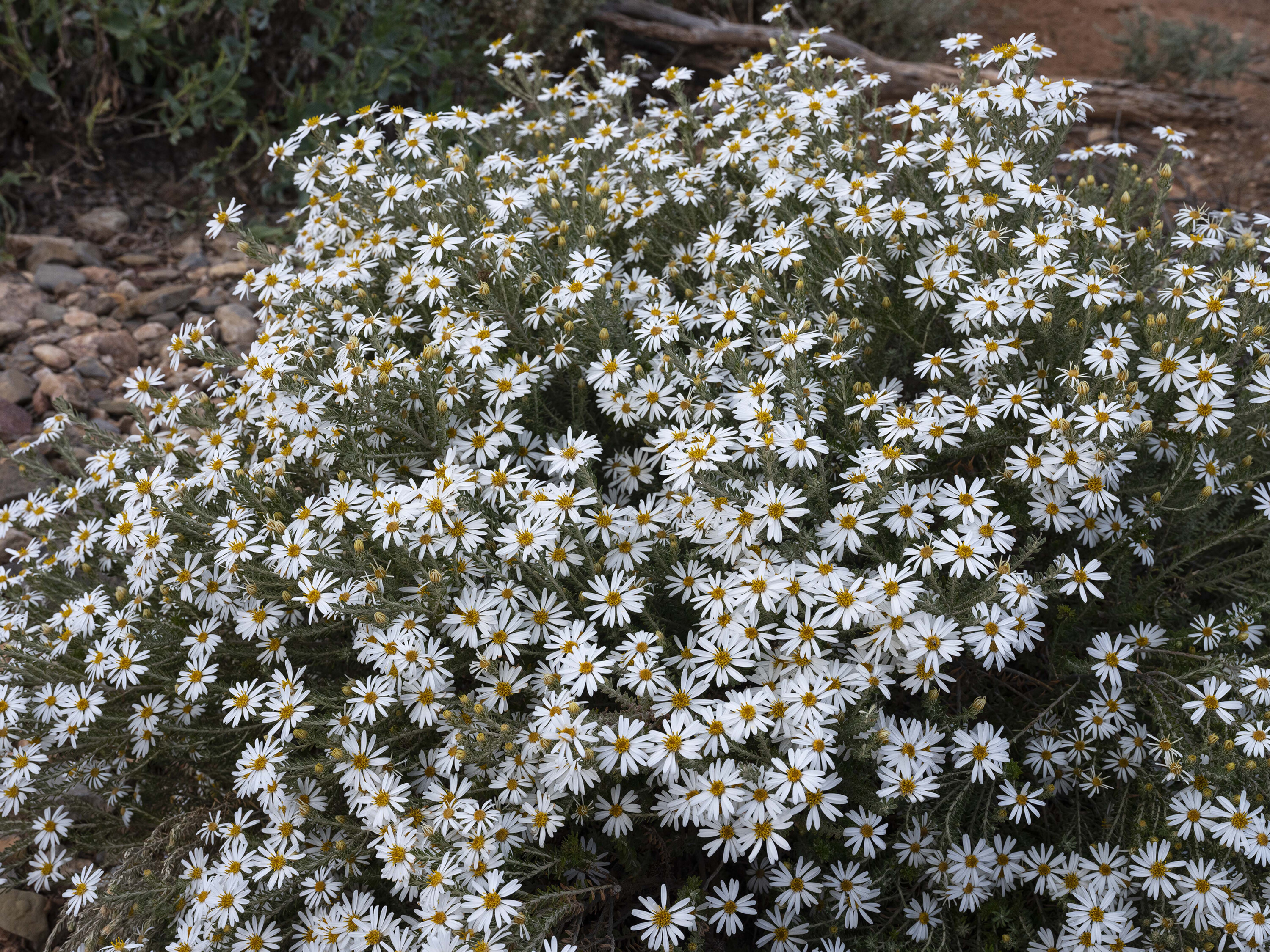
The Flinders literally blossoms after good rains and when we visited, recent rainfall in the area had made me hopeful of seeing a good range of wildflowers, but Edeowie was still very dry as it was early in the season, and the flat plains no doubt experience less rainfall than the ranges themselves.
That said, foliage along the water courses and near the range were starting to show some colour, with wildflowers and native shrubs racing to make the most of their short growing season.
1
In this harsh and arid climate, native blooms tend not to be particularly showy given their need to conserve energy for survival.
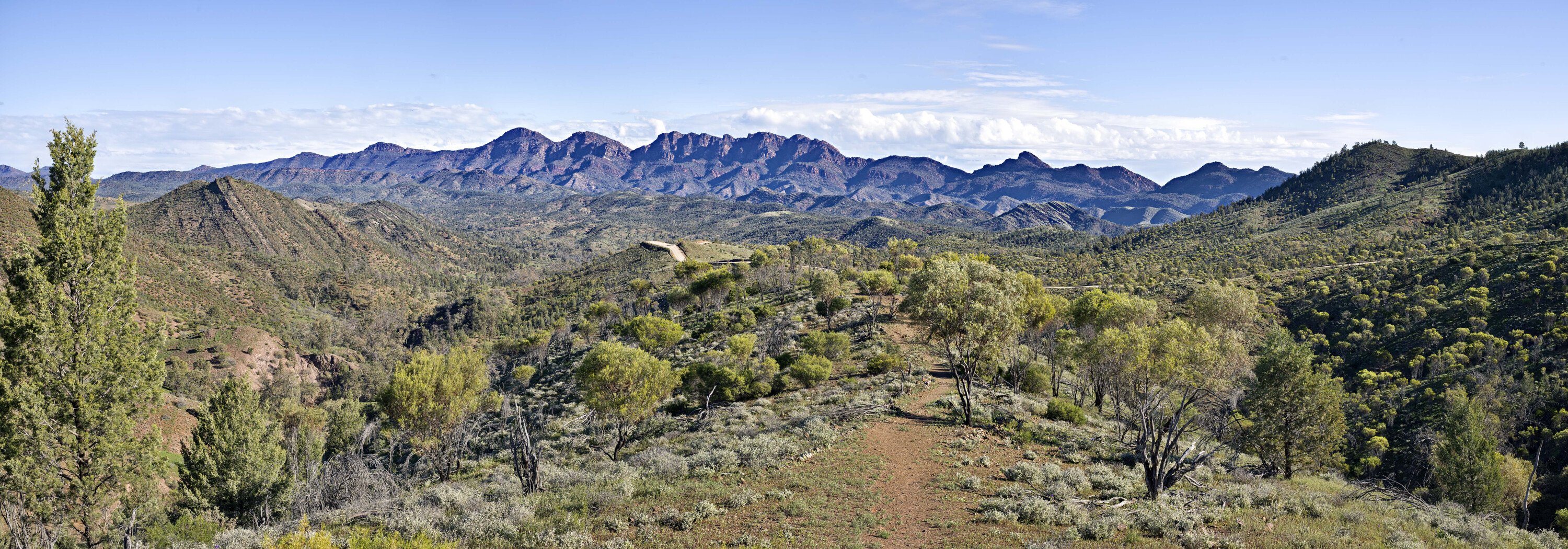
Apart from the stunning views, there is something for everyone at Edeowie Station – ruins of old buildings from the 1800s, bushwalks in Bunyeroo and Edeowie Gorges, historic buildings and a four-wheel drive track that runs out to Bunyeroo Gorge before circling back to the homestead.
1
History Lesson
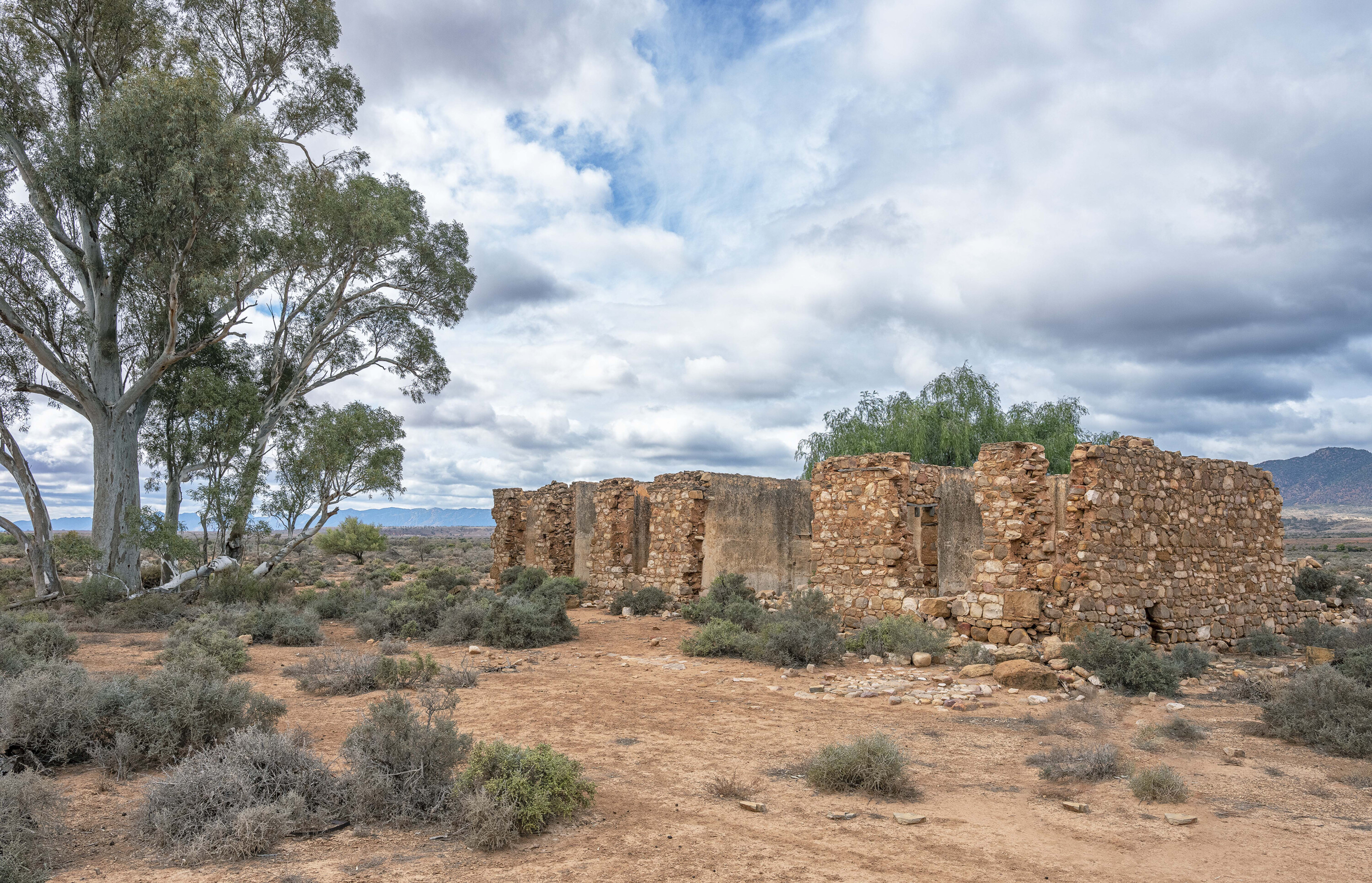
Edeowie was first settled in 1851. By the 1860s a number of copper mines opened in the area and with above average rainfall, along with high prices for both copper and wool, prospects for the region looked good.
Adelaide residents speculated on property by buying up blocks in new townships along the supply routes used by bullock teams. Edeowie was one such town and in 1863 a hotel and a supply store were opened.
Drought conditions saw the new town fall upon hard times and the 1864 population peak of 316 had fallen to 36 people just two years later.
1
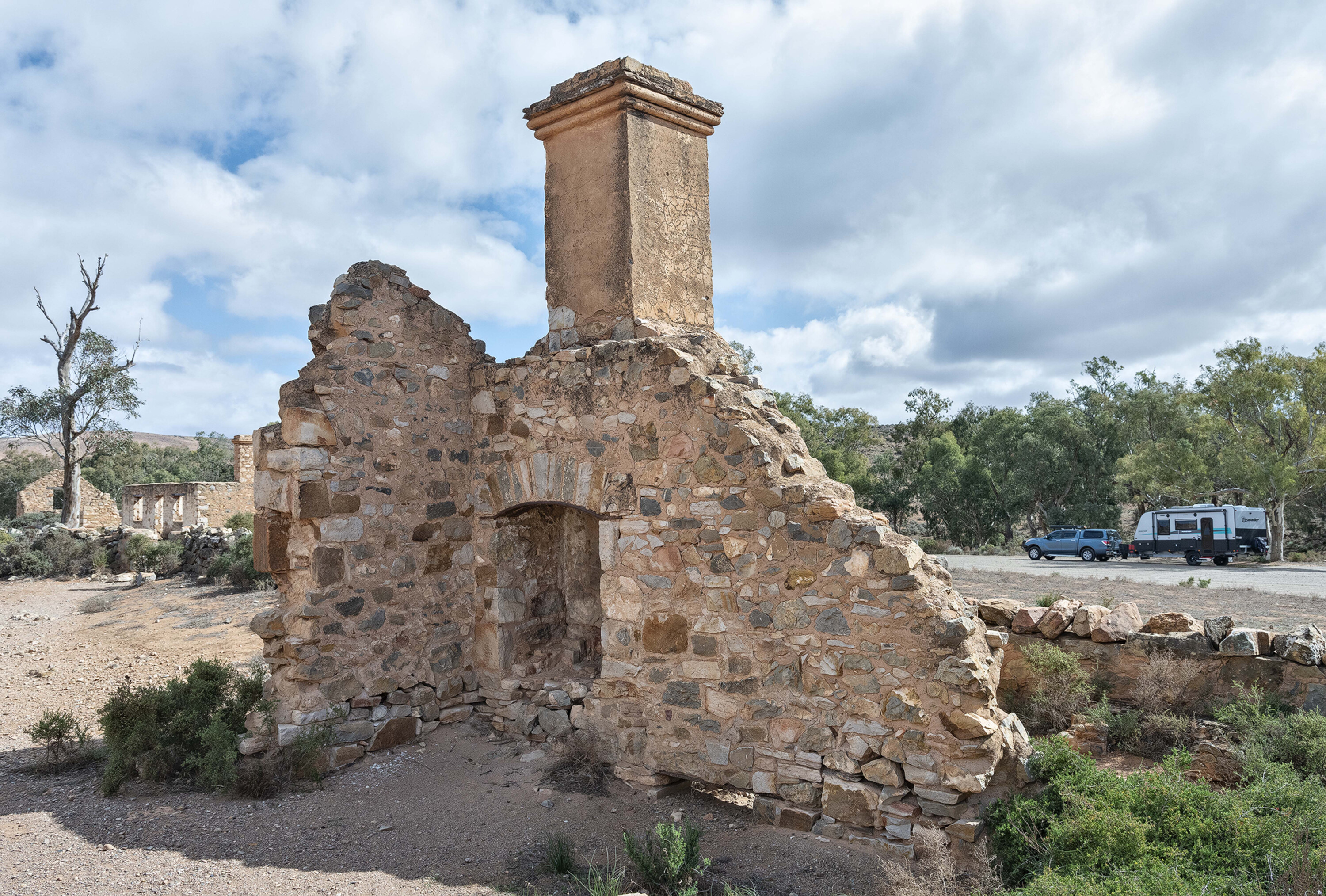
The hotel finally closed in 1886 and its ruins (and those of the supply store) still stand not far from the station homestead.
The immediate area around the hotel is littered with thousands of broken bottles, suggesting many a thirst was quenched there. Hard drinking probably provided one of the few escapes from what would have been a difficult life in those early days.
The homestead cemetery has a plaque listing 16 residents of the early township who passed away there, a third of whom were under eight years of age.
1
Making tracks
The walk into Edeowie Gorge piqued my interest and while I did get to the start of the Gorge, the track was little used and quite indistinct in places.
It would be easy to lose your way and the need to continually watch one’s step given the uneven and loose rocky ground had me deciding this walk was one for more seasoned and experienced bushwalkers than myself.
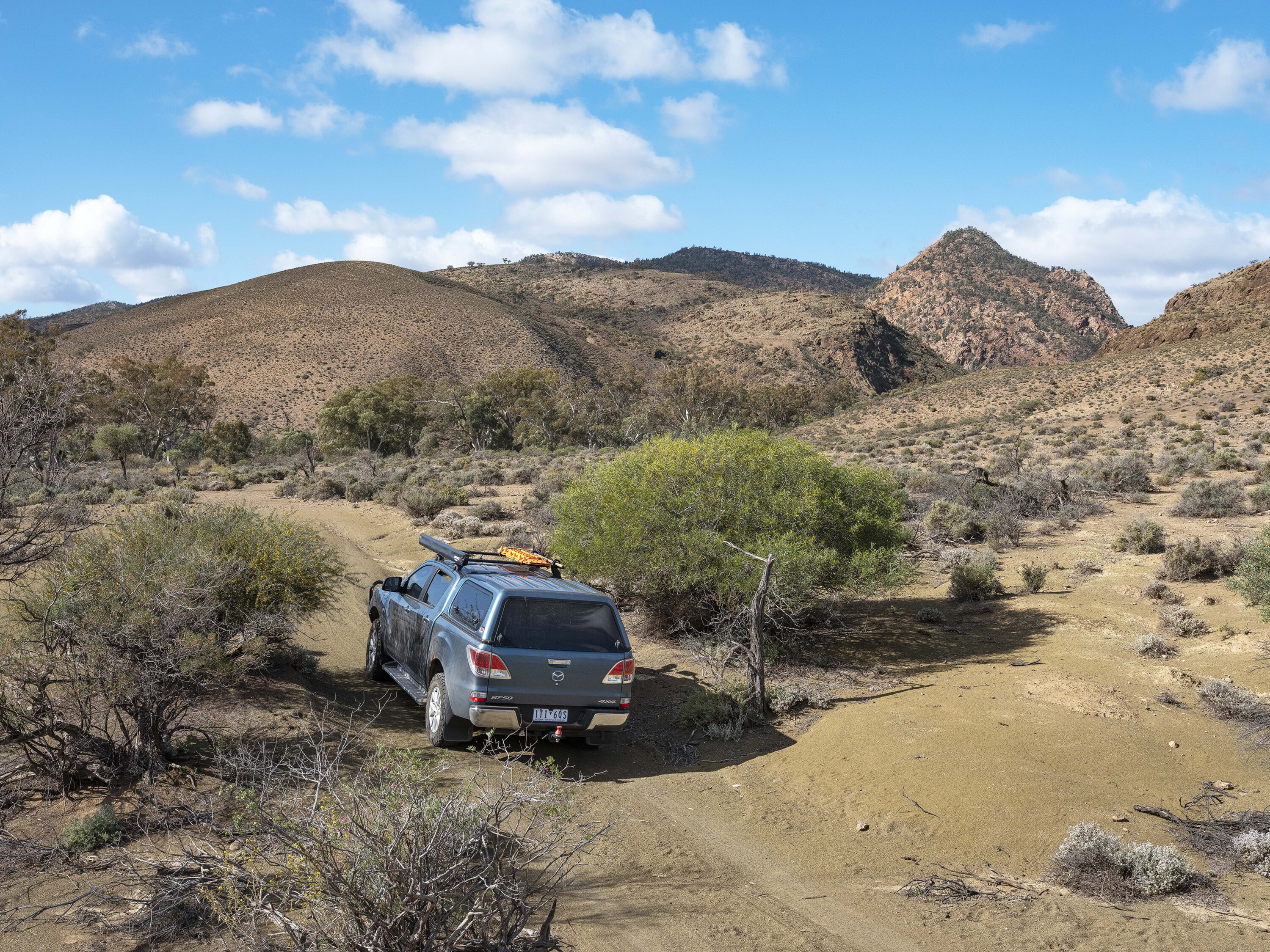
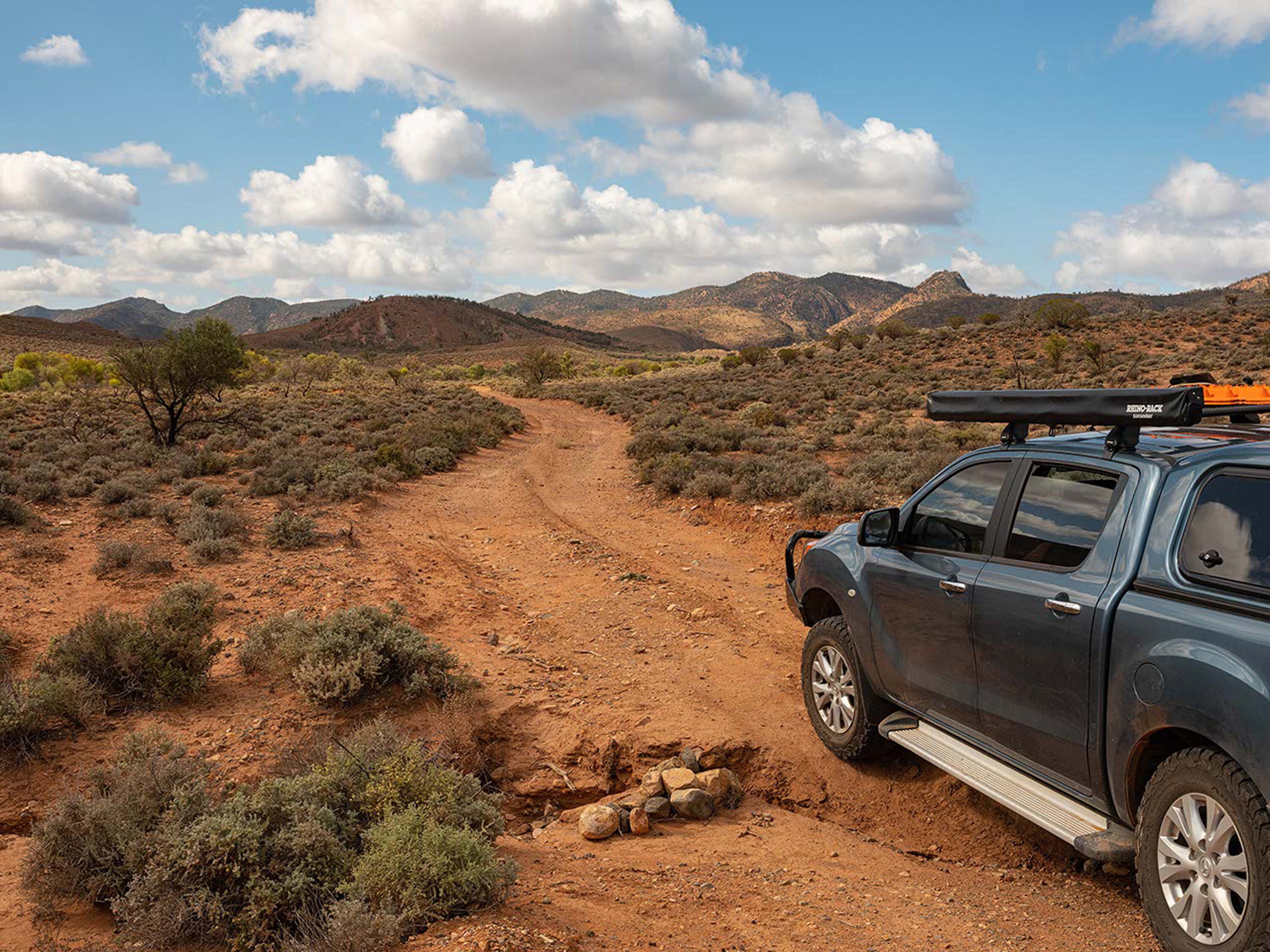
The station has a four-wheel drive track that runs out to the entrance to Bunyeroo Gorge (another walk) before looping back to the homestead. The track has a loose rocky surface in places and a number of steep drops into and out of dry creek beds and washaways.
1
For a time the track follows a creekbed where white native daisies thrive and other native shrubs were just beginning to flower in a range of colours.
This is relatively flat country, and while the drive is interesting and well worth doing, it probably isn’t going to get a seasoned off-roader’s blood racing.
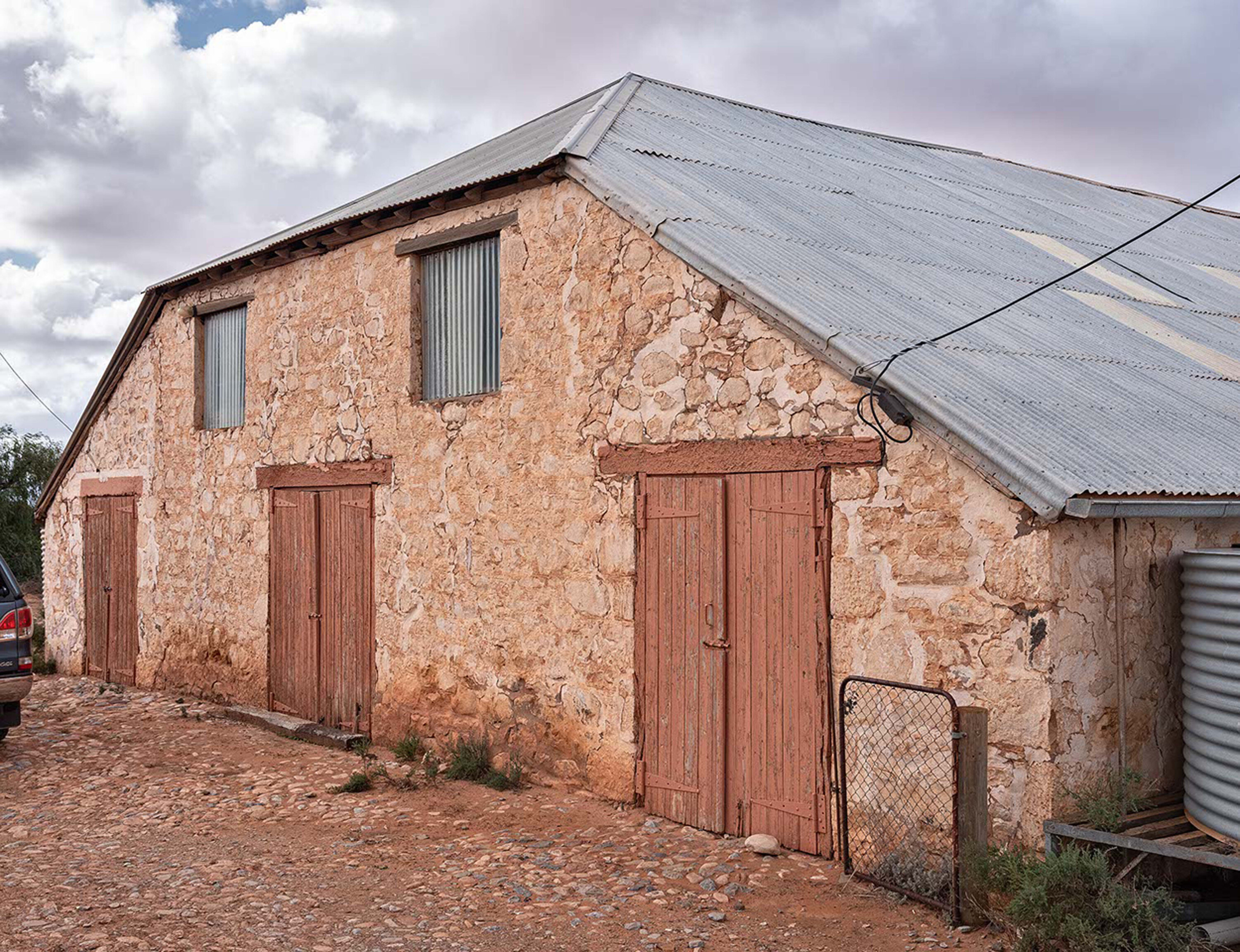
The old shearing shed and shearers quarters near the homestead were built in 1860 and are still in use today. Unlike most old outback shearing sheds, which were constructed of timber and corrugated iron, the shed at Edeowie is built from stone.
1
Its size is impressive and while the original shingle roof has been replaced with iron, in places some shingles are still visible from inside the building.
Apart from exploring the station it is only a short drive to Brachina Gorge and the Geological Trail. At the eastern end of the gorge, the Bunyeroo Valley Scenic Drive winds back towards Wilpena in the south, along the way providing spectacular views of the Pound.
To the north of the Geological Trail, as it runs towards the Blinman road, there are several good campgrounds, my favourite being at the end of Aroona Valley, near the ruins of the old Aroona Homestead. As mentioned earlier, anyone with knowledge of Hans Heysen’s paintings will quickly recognise some of the scenery here.
1
Parachilna Gorge
Those in need of supplies or fuel can reprovision at Parachilna or the Angorichina Tourist Village near Blinman (which incidentally has the highest elevation of any town in South Australia).
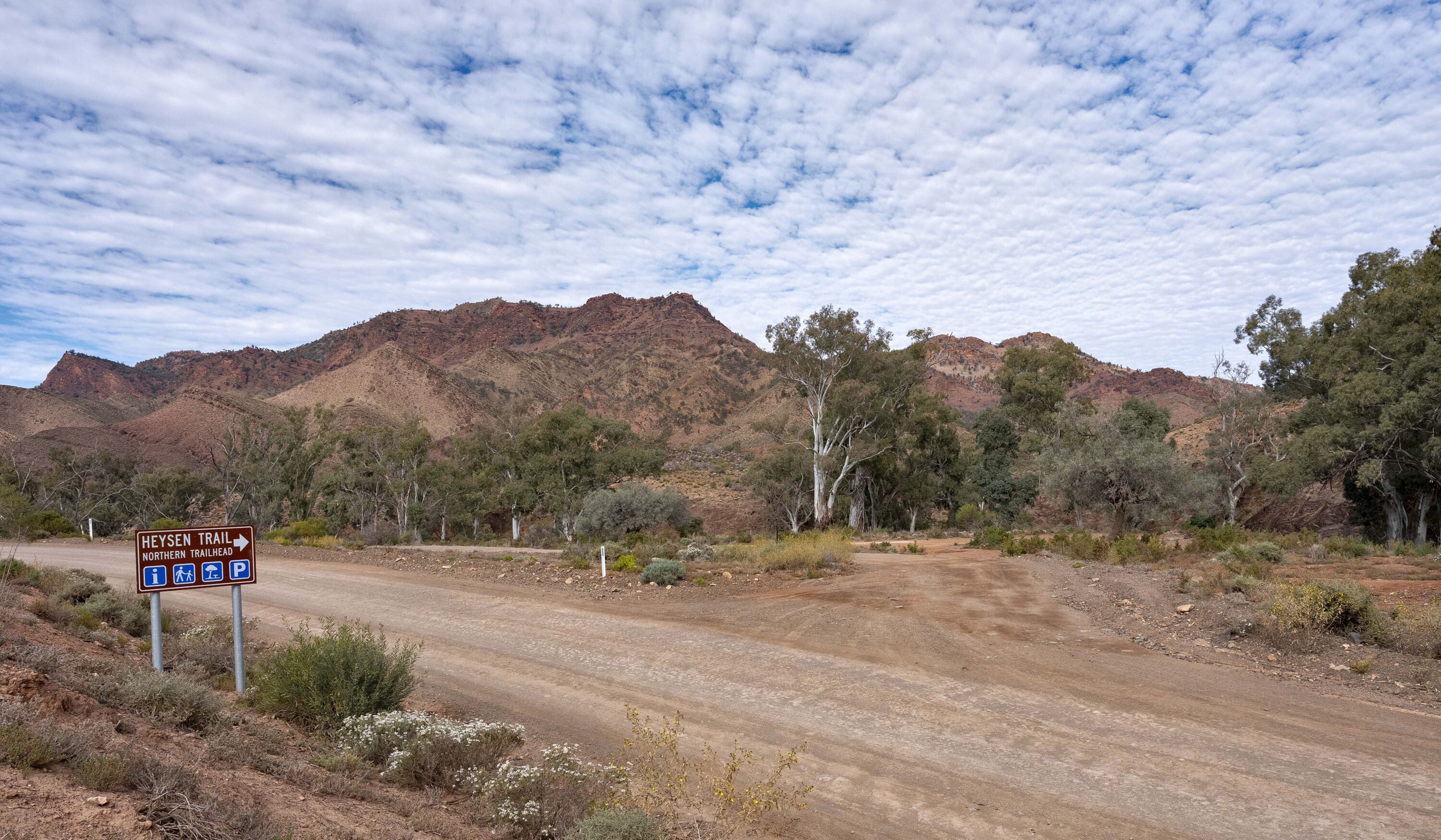
Needing a gas refill, we stopped in Angorichina on our way north after our stay at Edeowie. This detour took us through Parachilna Gorge which has been carved from the range by eons of floodwater.
Vibrant, ochre-coloured cliffs tower over the wide dry creek bed lined with huge old river gums. The gorge is sufficiently wide in places to offer numerous shady campsites set back off the road.
1
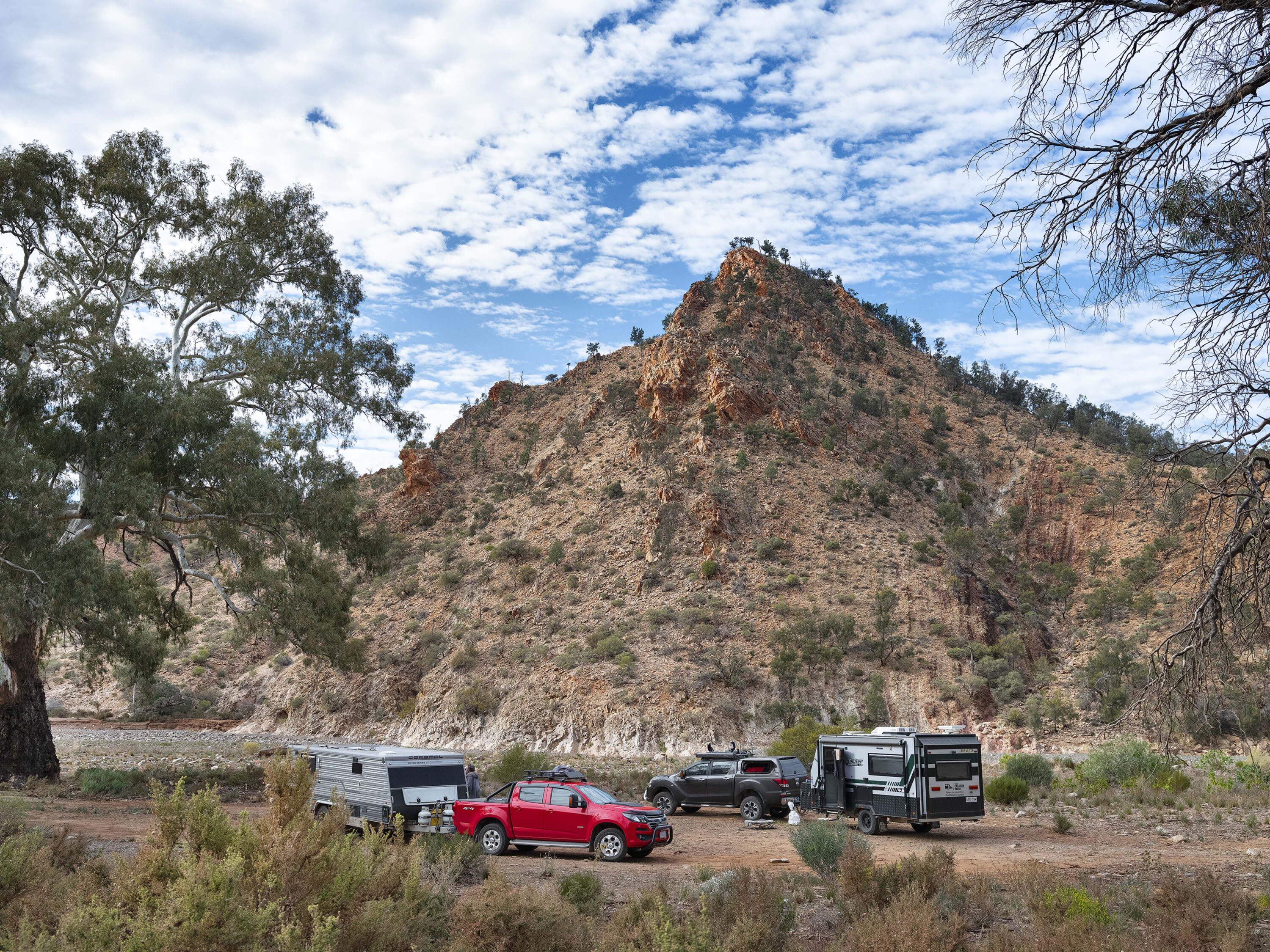
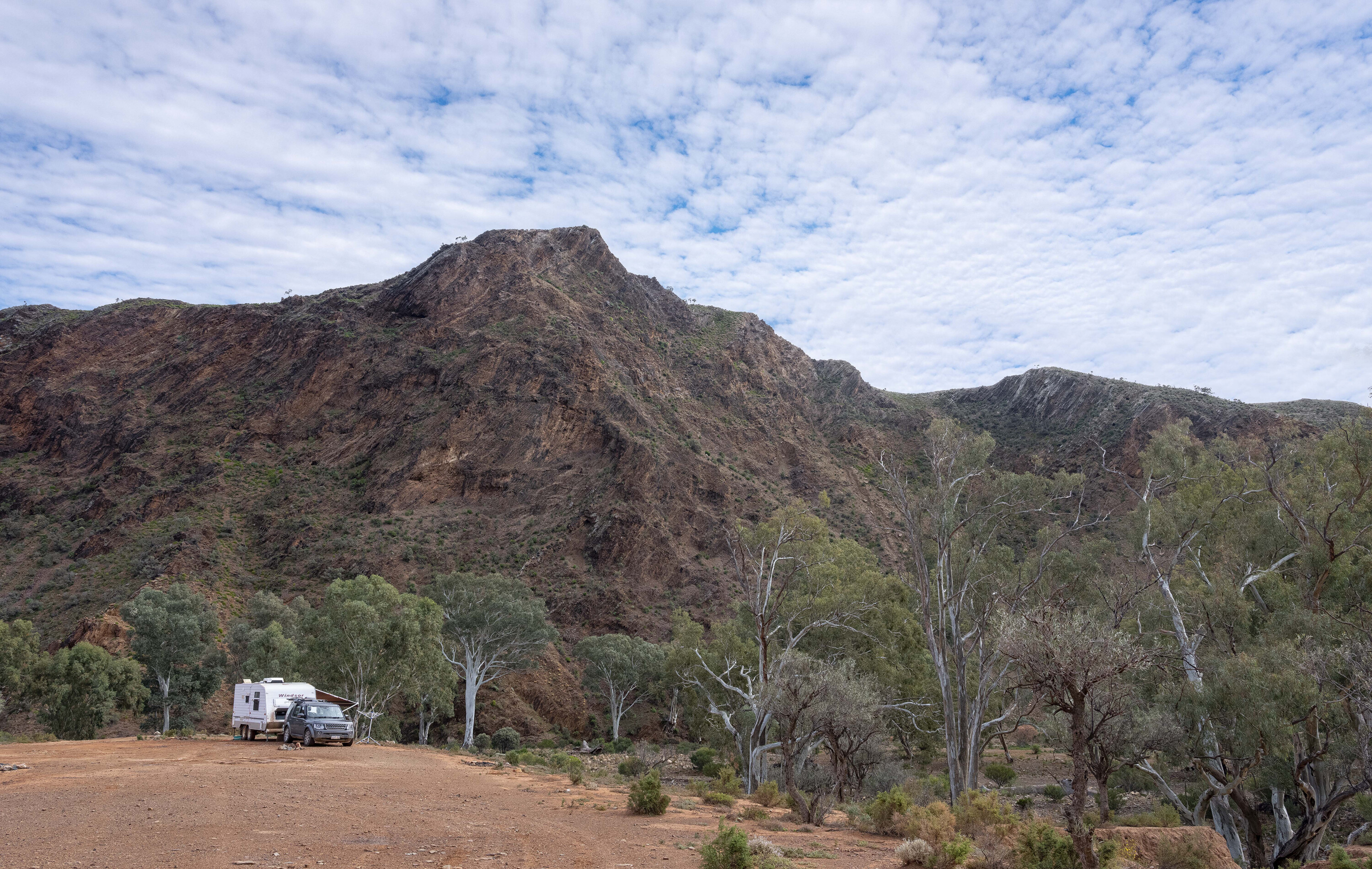
While this wasn’t a holiday season, the 20 or so camps seen along the gorge suggested many grey nomads know about Parachilna Gorge.
A couple of decades ago I expected those camps would have been mainly tents, 10 years ago, camper trailers were probably the weapon of choice, but today’s remote-area tourists seem to have moved on from tents and basic campers.
Along Parachilna Gorge, like every other place we visited during our month-long journey north to Queensland and down the Darling River, top-of-the-range campers and off-road and semi-off-road caravans were the norm. The money invested in these assets over the last couple of years must be staggering.
1
And that’s without factoring in the cost of all the shiny new tow vehicles out there.
I’d forgotten how picturesque the drive through Parachilna Gorge was, so we decided to stay on at Angorichina for a couple of days to recharge our batteries (and given the overcast conditions, those of our van). At nearby Blinman there was hardly a parking spot left in the main street given the number of vans and campers that had pulled in.
I was there in a vain attempt to access the internet which the locals said was available ‘sometimes’ but a satellite connection was required for anything usable.
1
We got ‘online’ a couple of days later at the Leigh Creek library, but apart from Bourke in New South Wales we had no internet access for the next couple of weeks.
Just about everything we do these days seems to be reliant on being plugged into the internet and I may need to review my usual practice of hot-spotting my phone for a laptop connection. It clearly isn’t up to the task in the outback, even when there is mobile signal.
Apart from the privations of not having internet access, Edeowie Station and its surrounding attractions make it a very pleasant base to spend a few days and get back in touch with nature. I for one have certainly pencilled in a return visit.
5 things to see and do
Soak up the early history
Check out the ruins of the old Edeowie Hotel not far from the homestead and visit the station cemetery to see a plaque detailing the early settlers who lost their lives to very harsh living conditions. On your way to or from Edeowie take the time to drop in at the Kanyaka Ruins between Quorn and Hawker
Break out the camera.
With stunning views of the Flinders Ranges from your campsite and world class vistas to be found in the adjoining Ikara Flinders National Park, it is hard to take a bad photo. Picturesque gorges like Brachina and Parachilna, with their ancient river gums along wide dry creek beds, and scenic drives like Bunyeroo and Aroona beckon photographers. Vibrant sunrises and sunsets are common and the clear night sky is bright with stars.
Engage 4X4
Check out Edeowie’s 4X4 track from the homestead to Bunyeroo Gorge or, for seasoned four-wheel drivers wanting something more challenging, contact Alpana Station north of Wilpena and book a drive on the challenging Mount Samuel Track (you will not be disappointed).
Visit the Ikara Flinders NP and surrounds
Walk into Wilpena Pound or take one of the scenic drives in the area. Consider driving up to the Prairie Hotel at Parachilna for a camel burger, or the Blinman Hotel for a cold beer, before returning via the scenic Geological Trail.
Take a deep breath.
One of the best things to do sometimes is nothing, and there is no place better to do nothing than the outback. Take the time to sit back and enjoy an environment without television, mobile phones, the smell of traffic and constant background noises that you just can’t escape in the city.