Websites
www.discovertasmania.com.au [↗]
www.spiritoftasmania.com.au [↗]

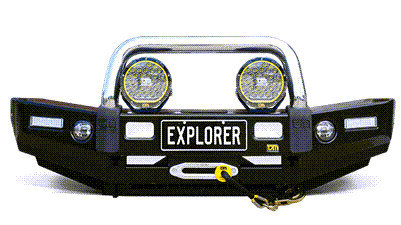
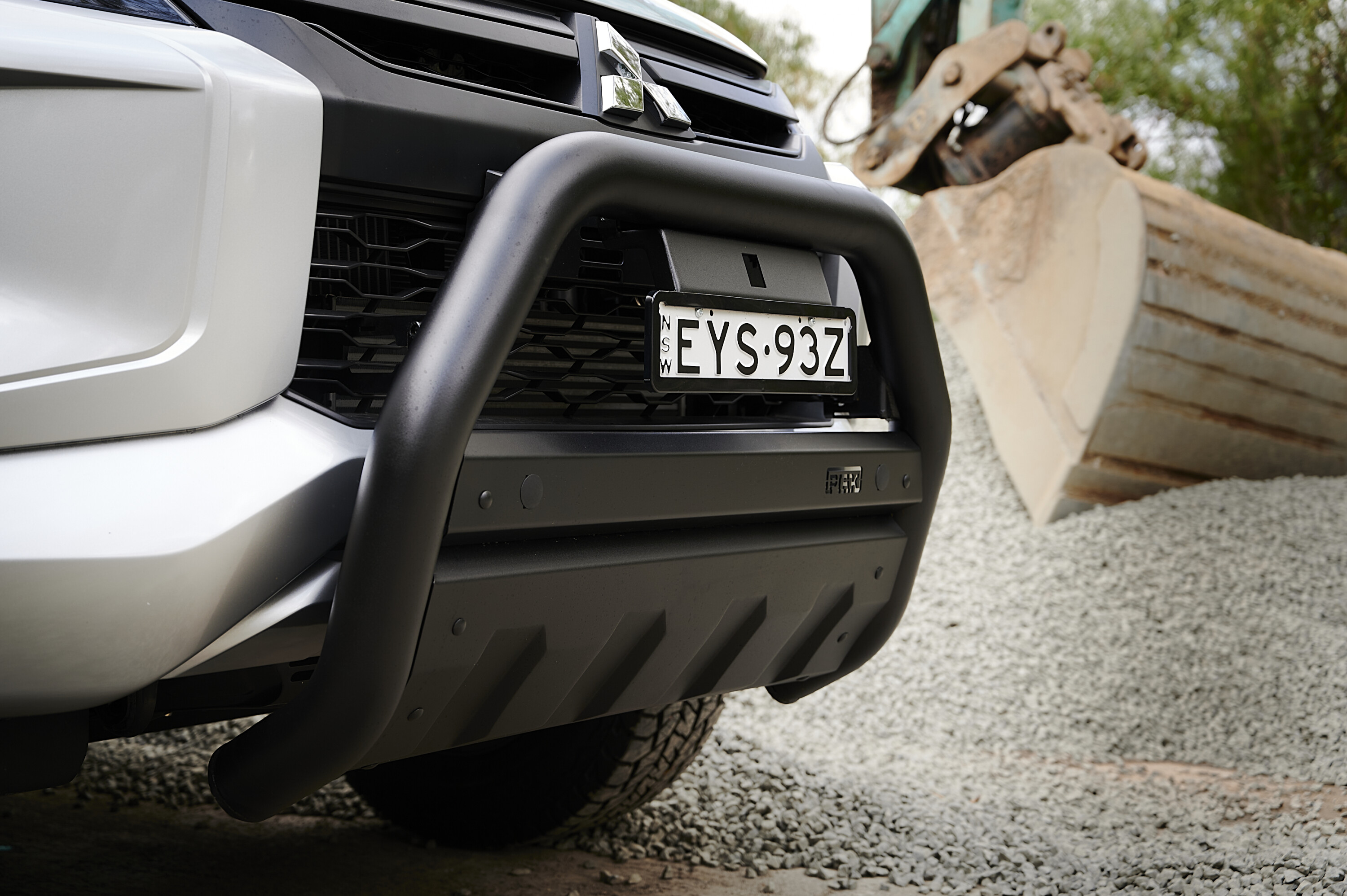
Built from robust steel the bar has a 3.5kg carrying capacity making it the ideal platform for fitting driving lights. Maintaining a safe work vehicle is extremely important for tradies, either when driving around the job site or when the family is on board for weekend getaways.
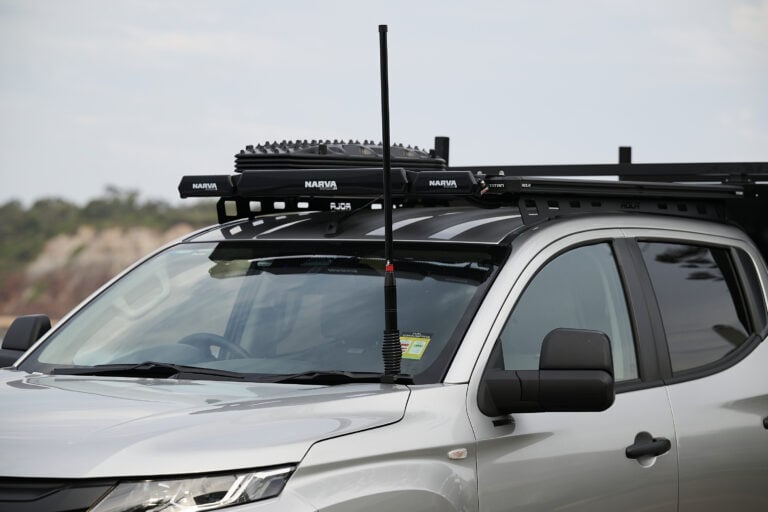
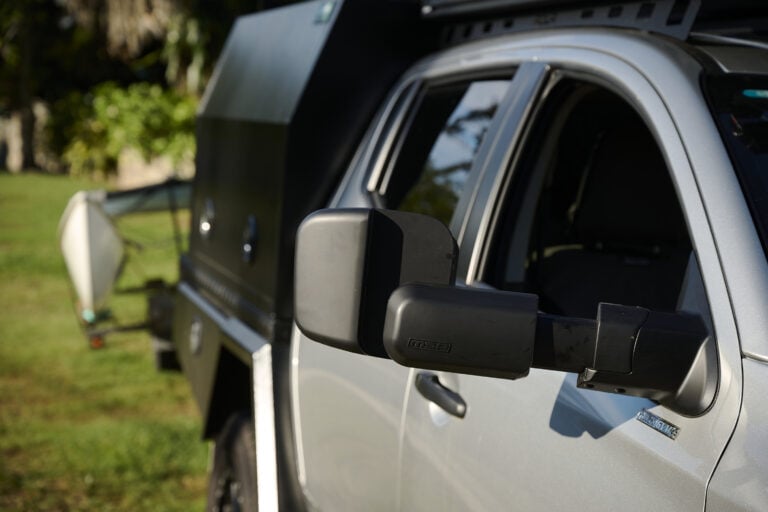
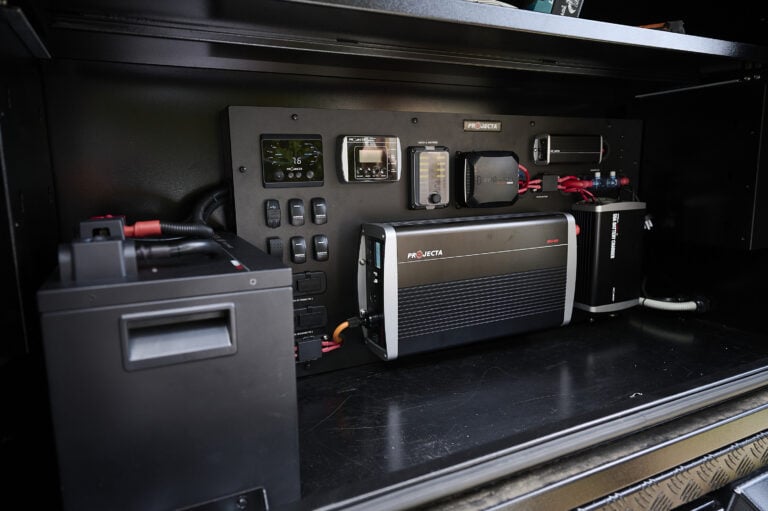
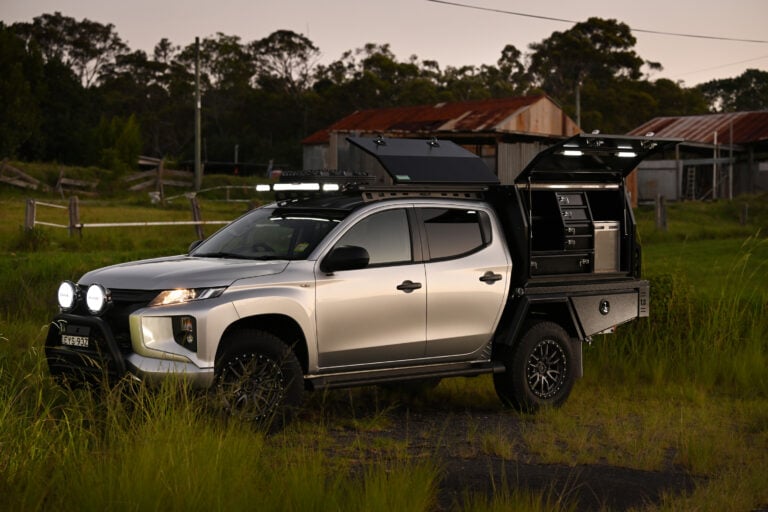
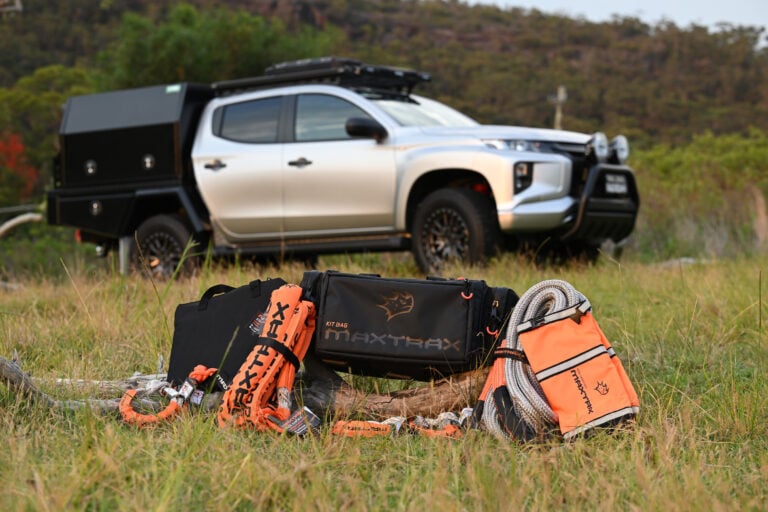
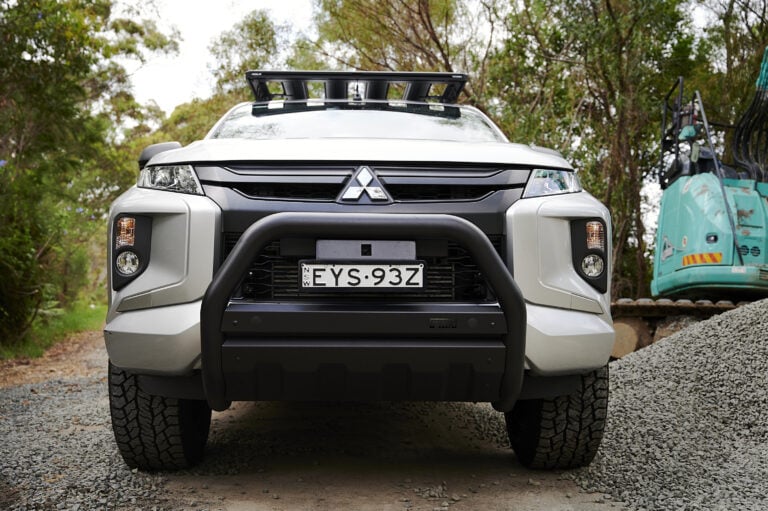
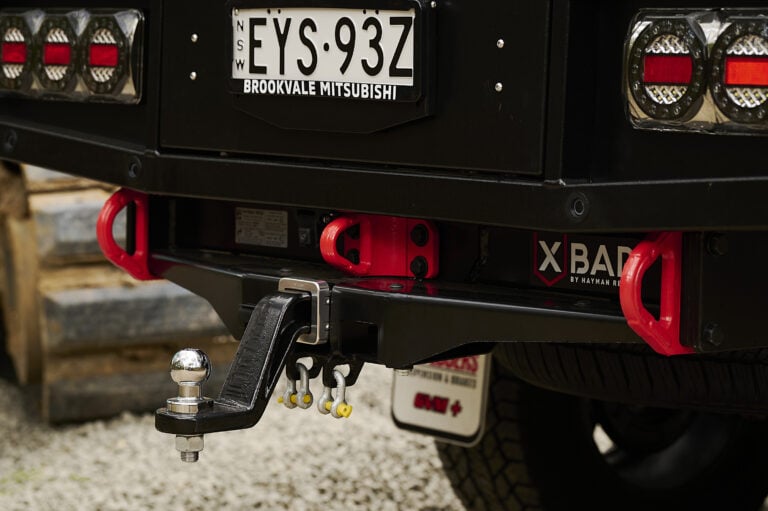
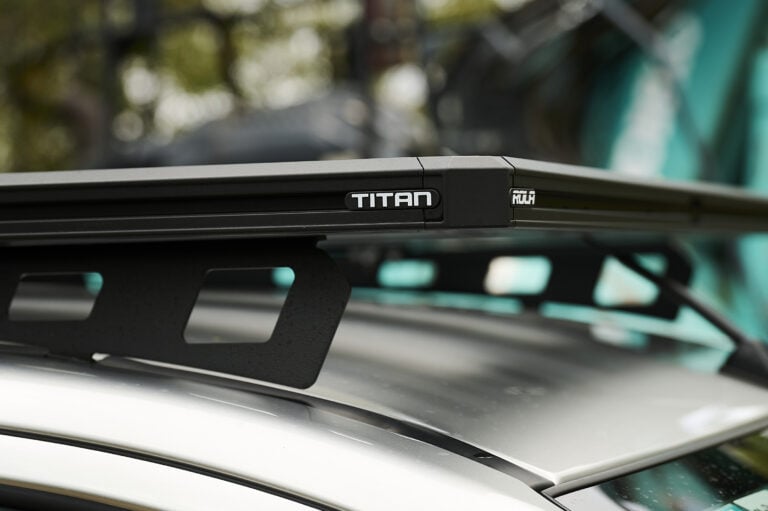
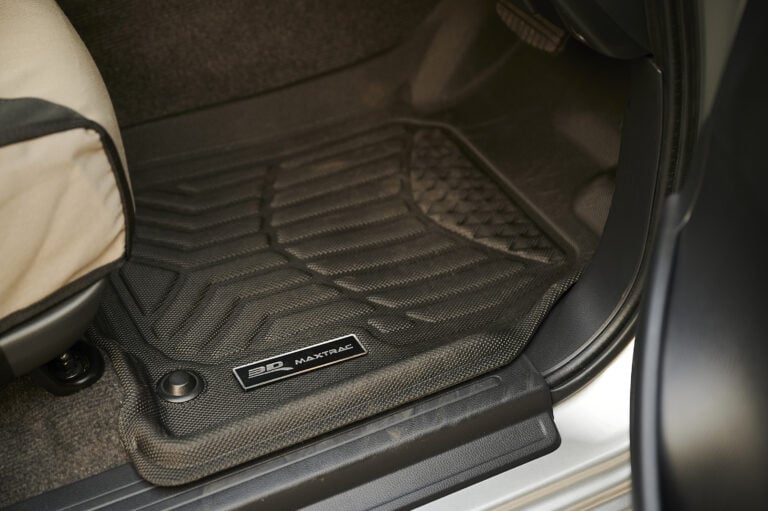
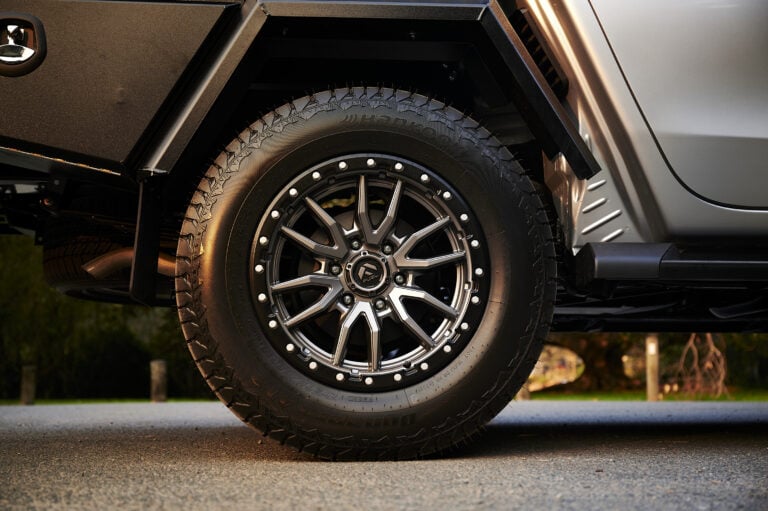
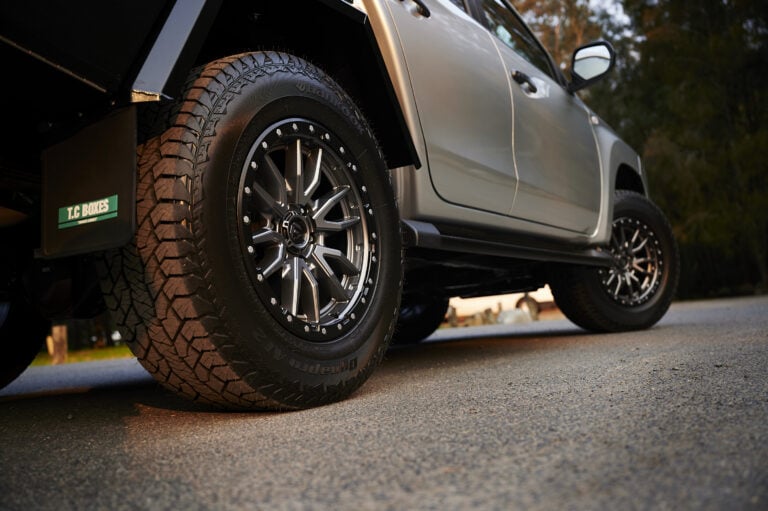
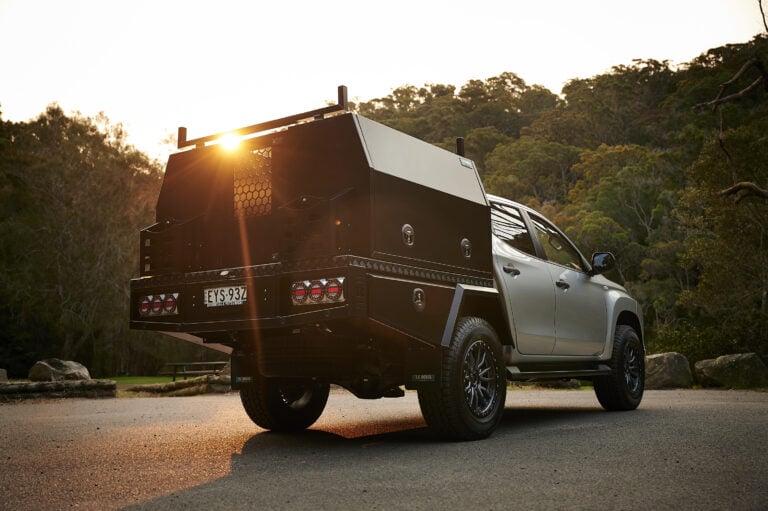
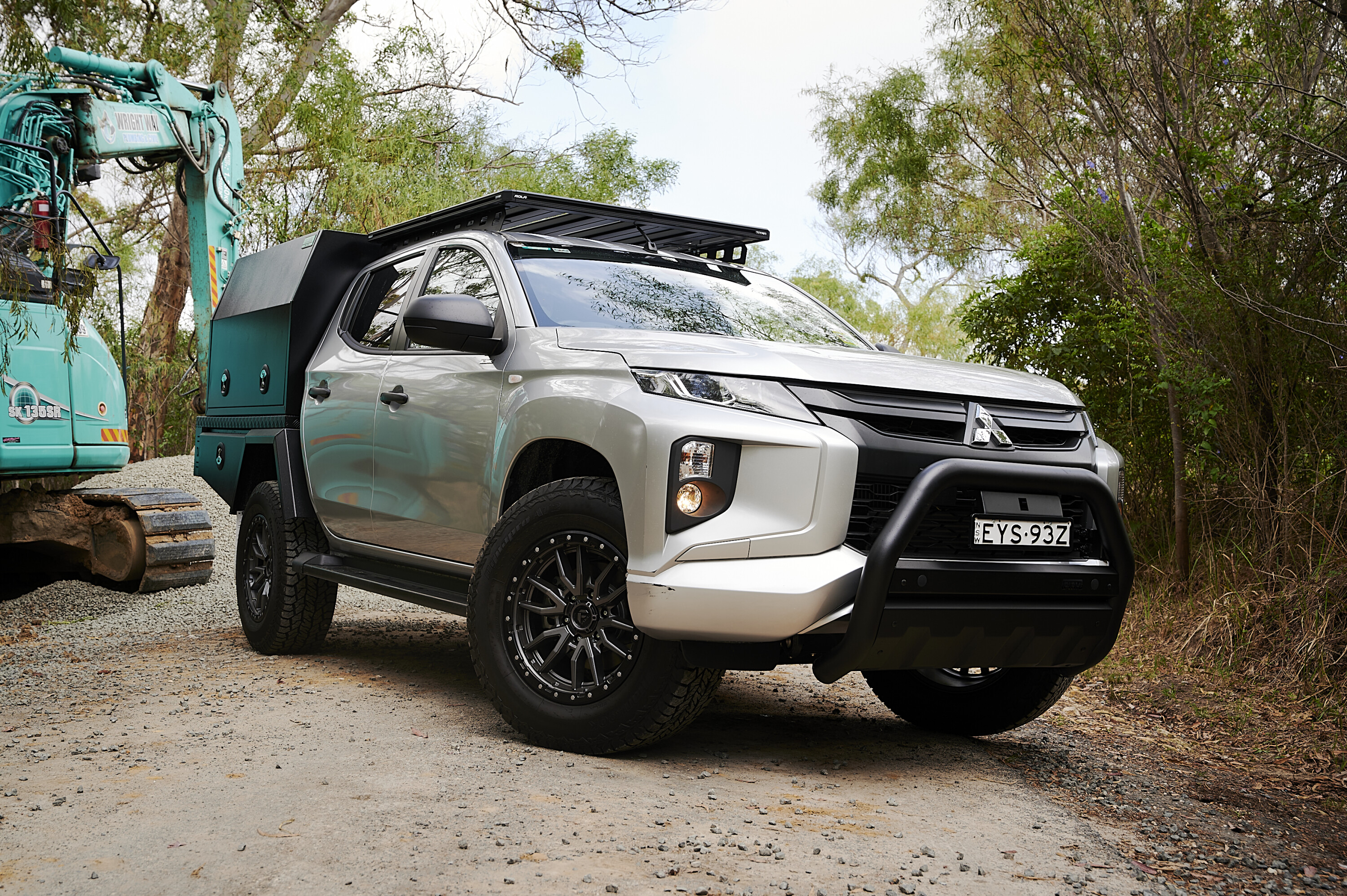
The PIAK nudge bar allows for retention of the Triton’s OE parking sensors, and these integrate seamlessly into the design. The bar is also compatible with vehicle cameras and sensors, while airbag compatibility reinforces PIAK’s commitment to the well-being of vehicle occupants.
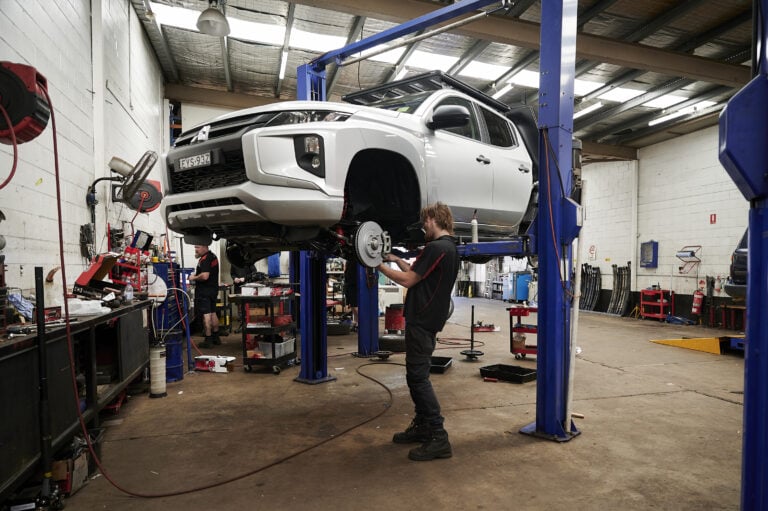
While installing the PIAK nudge bar is relatively straightforward, we had our good friend Gordon from Opposite Lock South Sydney fit it up to the Triton. An experienced fitter like Gordon can have the job done in as little as 15 to 20 minutes as the bar bolts directly to the chassis and there is no interference with the Triton’s OE front-end.
As well as the safety benefits, we reckon the PIAK nudge bar has also enhanced the Triton’s aesthetics. It doesn’t just add flair; it protects the front-end of the Triton in challenging work environments, especially on sites where every trade might be working at the same time and parking can be tight.
We reckon the PIAK nudge bar is a great option for those four-wheel drivers who want some frontal protection in the urban jungle, as well as somewhere to mount a set of lights, but who don’t need the extra protection that a full bull bar setup provides. It is also much lighter than a bull bar.
I was fixated on the bigger and more impressive destinations on the mainland, and I figured a little out of the way island wouldn’t have much for me.
For decades Tasmania has been the brunt of many bad jokes on the mainland, but a little research reveals that this little island contains some of the last great wilderness in all of Australia, including mountain ranges blanketed in snow for many months each year, stunning white sand beaches and genuine old growth forests that contain some of the oldest trees on the planet.
Not to mention the number and variety of wild animals crawling, swimming and hopping all over the island. With hundreds of kays of remote tracks to explore and hardly any people around to hamper the views, suddenly this little island caught my attention.
After exploring high and low all over the ship I barely made it back to my seat just as the worst of the rocking and rolling began, and I actually had to push off walls and tables in an attempt to walk in a straight line.
Fearing the worst I downed a couple of motion-sickness tablets which knocked me right out, and I woke just before dawn as we slowly drifted into the mouth of the Mersey River, with the picturesque city of Devonport perched on the far bank.
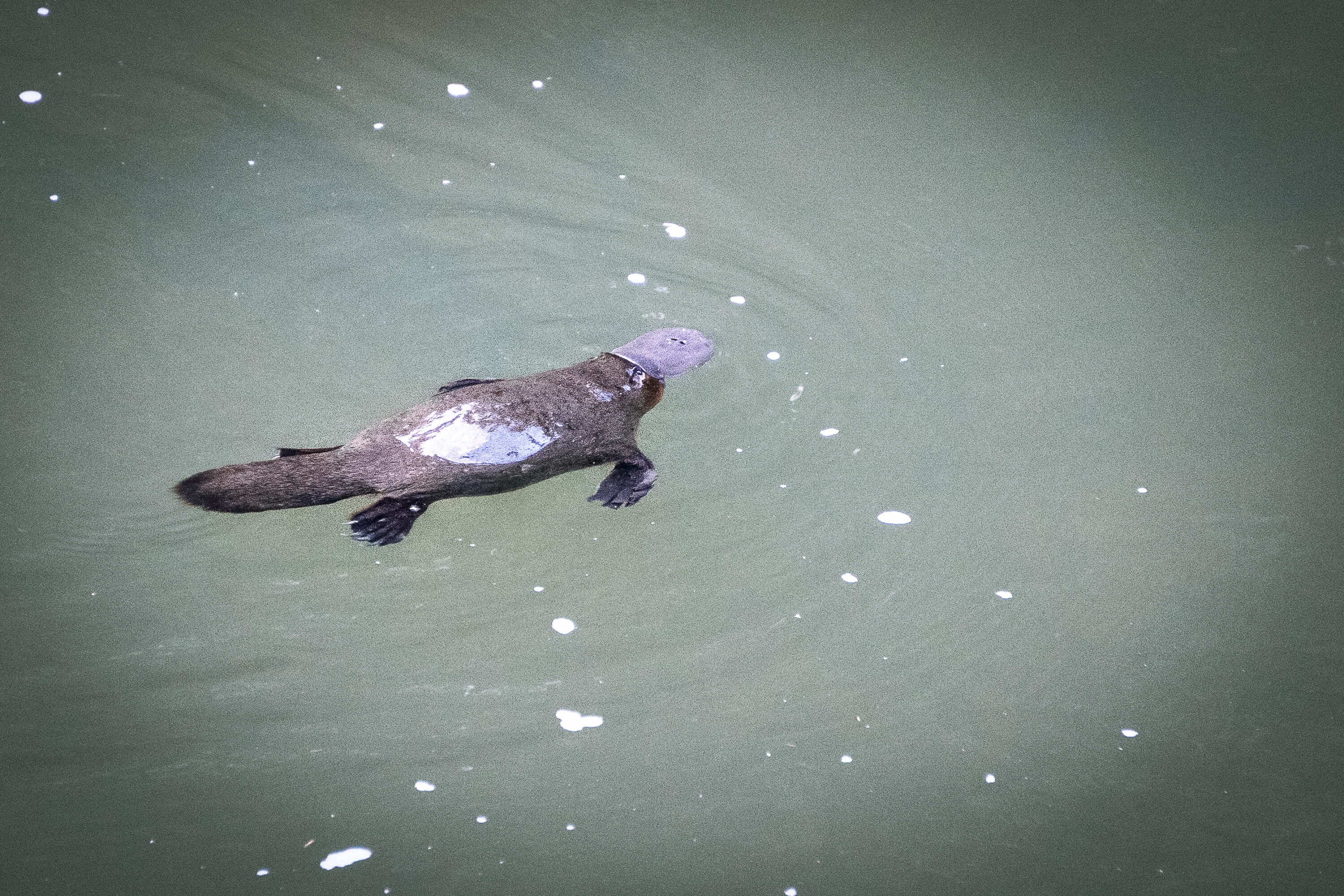
On our second day we spotted another, and by the third day I’d seen more of these strange little creatures in Tasmania than over the course of my entire life.
During our first week we quickly learnt Tasmania is an utter paradise for touring in a 4×4. In stark contrast to Victoria and New South Wales, there are free campsites dotted all around which provide clean toilets and sometimes even showers.
The ocean was also not nearly as cold as I had been expecting, and with a wetsuit we had no trouble surfing for an hour without feeling the cold.
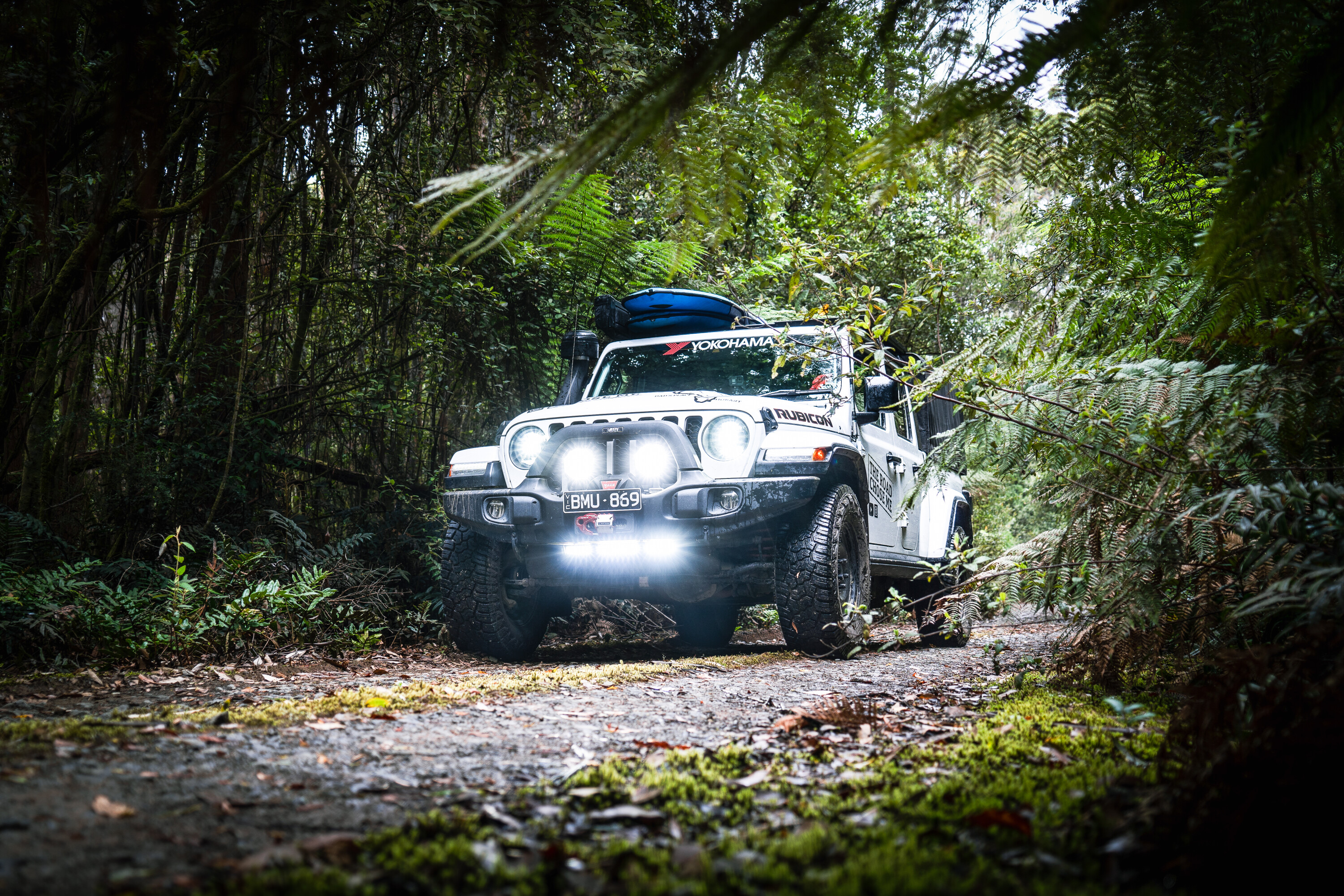
The series of dams that were built resulted in the creation of the enormous Lake Pedder, and the damming of the once wild and mighty Gordon River.
Although I feel somewhat conflicted about the enormous impact the dams have had on the region, there is one lasting critical piece of infrastructure that meets my needs: gravel roads deep into the otherwise inaccessible wilderness.
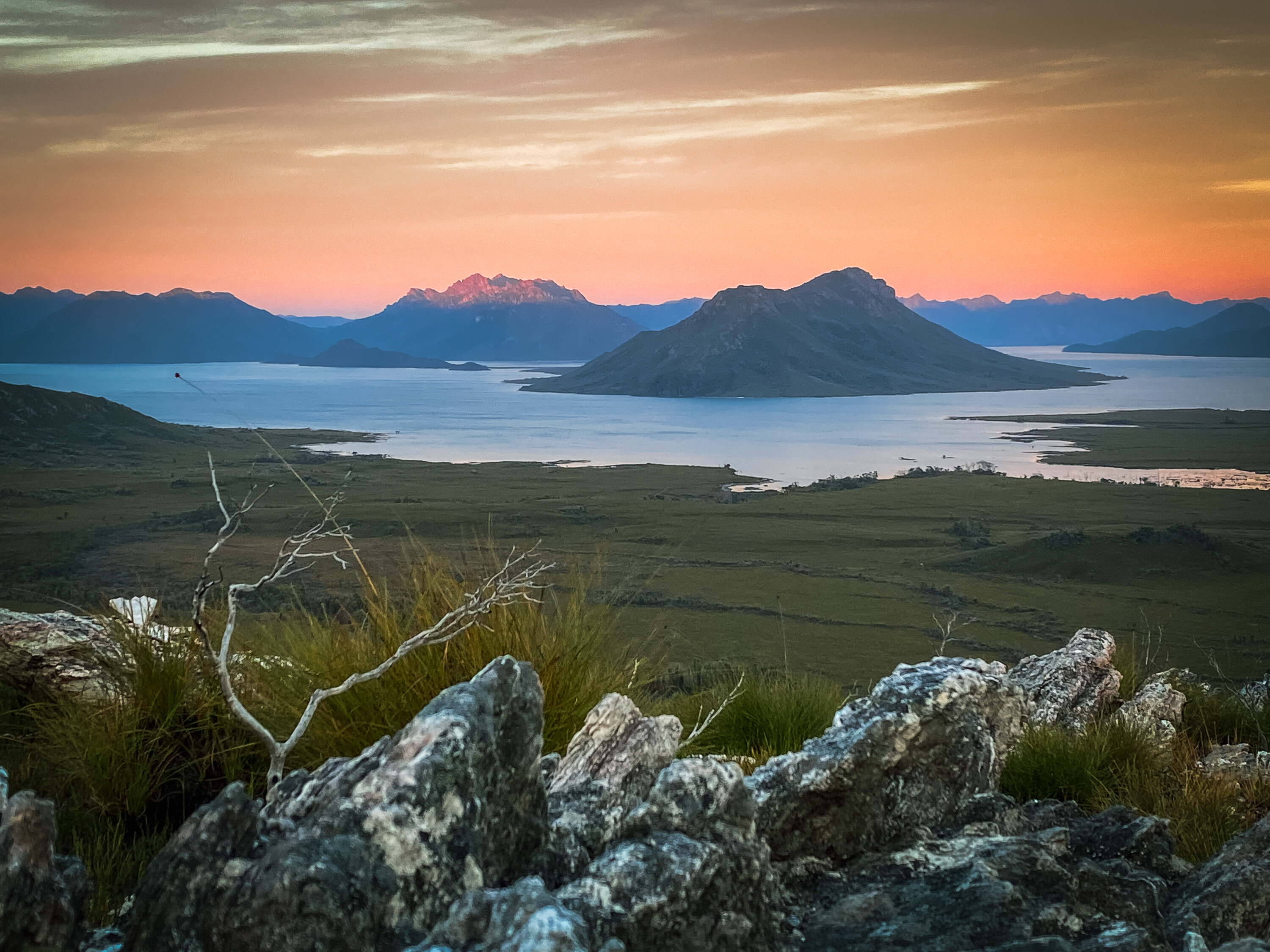
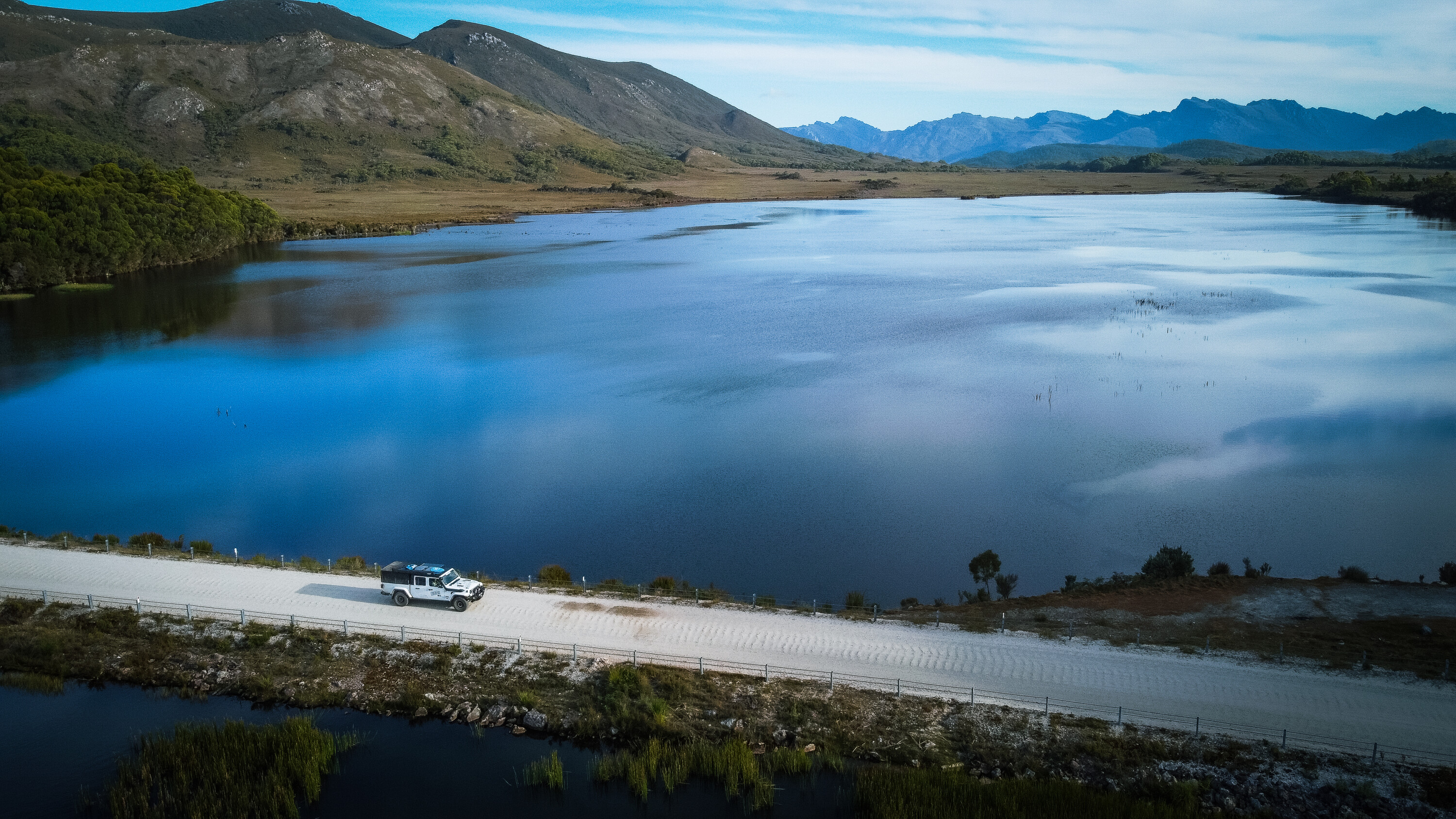
The few gravel roads used in the dam construction are now open to the public, which allow us to explore literally to the end of the road in multiple stunning locations while rarely seeing another vehicle. We camp, hike and explore the entire area in our Jeep, with nights dropping to almost freezing, even during January, the warmest month of the year.
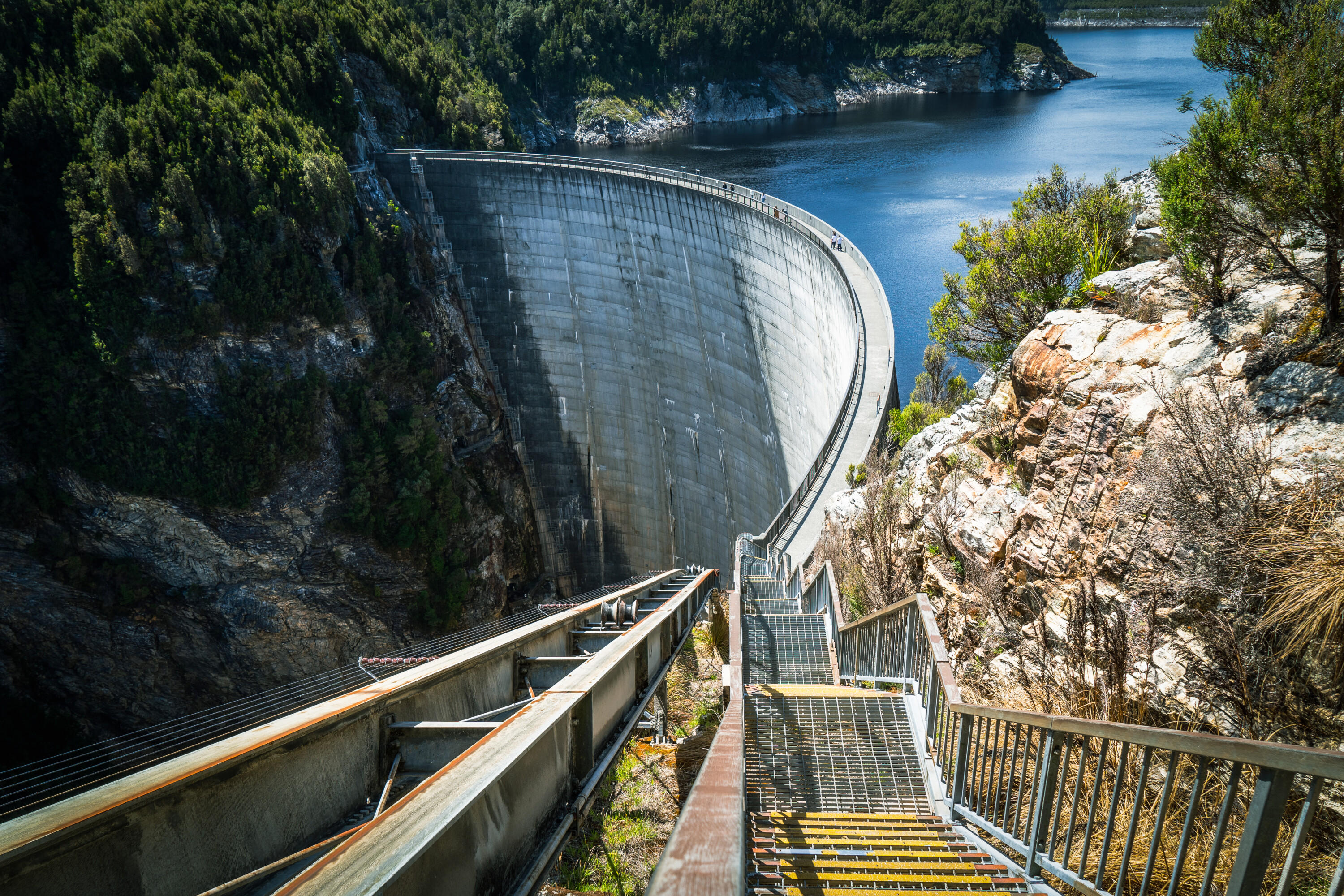
At more than 140m high the very impressive Gordon River Dam lays claim to being the tallest in Australia, and walking across the wall invokes a very strong feeling of vertigo.
Tasmanians are free to make their own choices about personal safety, and I find it a very refreshing change after the nanny-state mainland with its abundance of warning signs and rules.
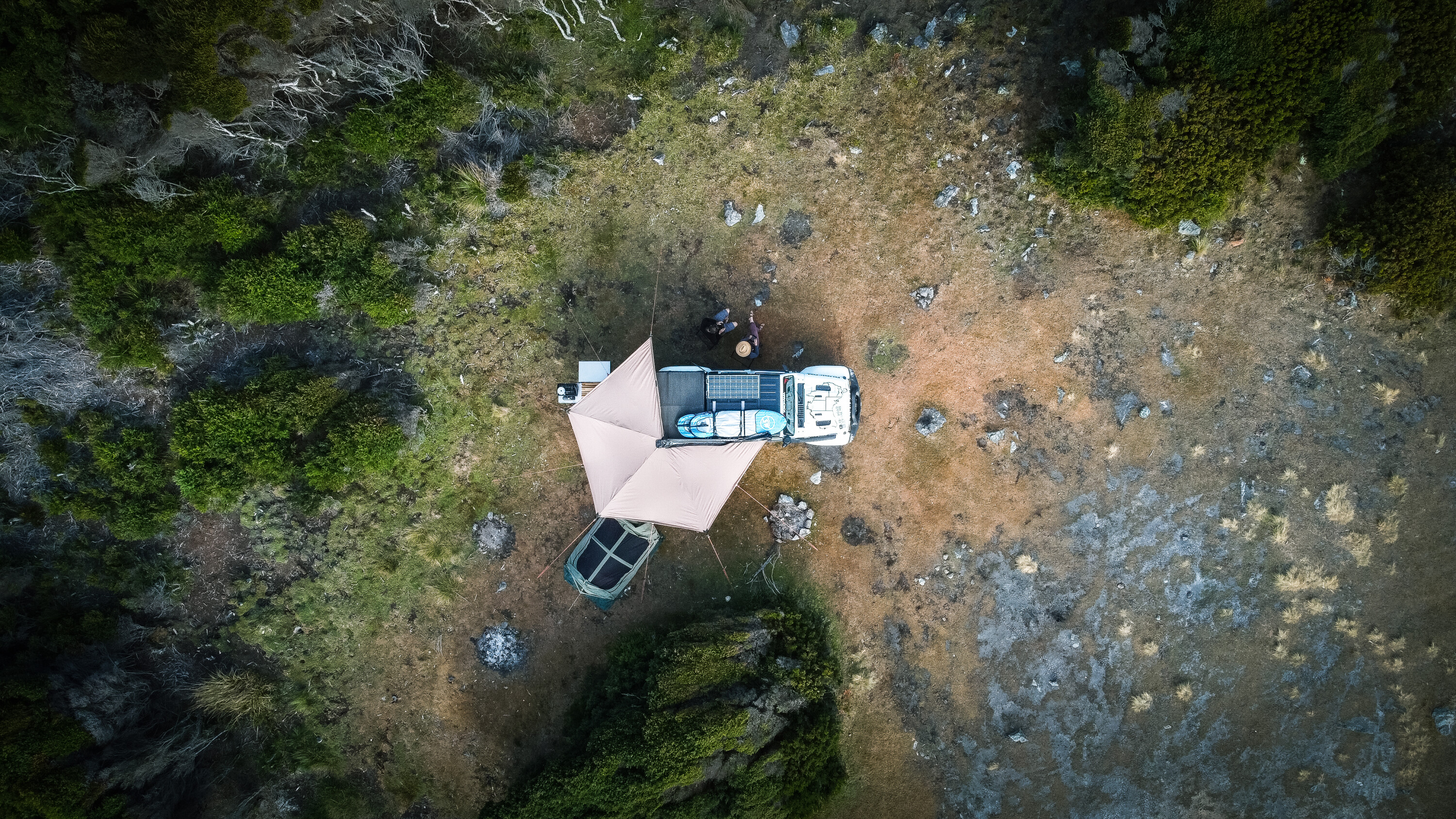
Leaving the area I spotted a tiny gravel road that climbs steeply up the side of a mountain, and I knew we were onto a good thing. At the top we found a stunning place to wild camp for the night, with only the full moon to keep us company.
This gravel road sees very little traffic and requires the use of a tiny cable ferry across the Corinna River, which is considered way too deep to construct a bridge.
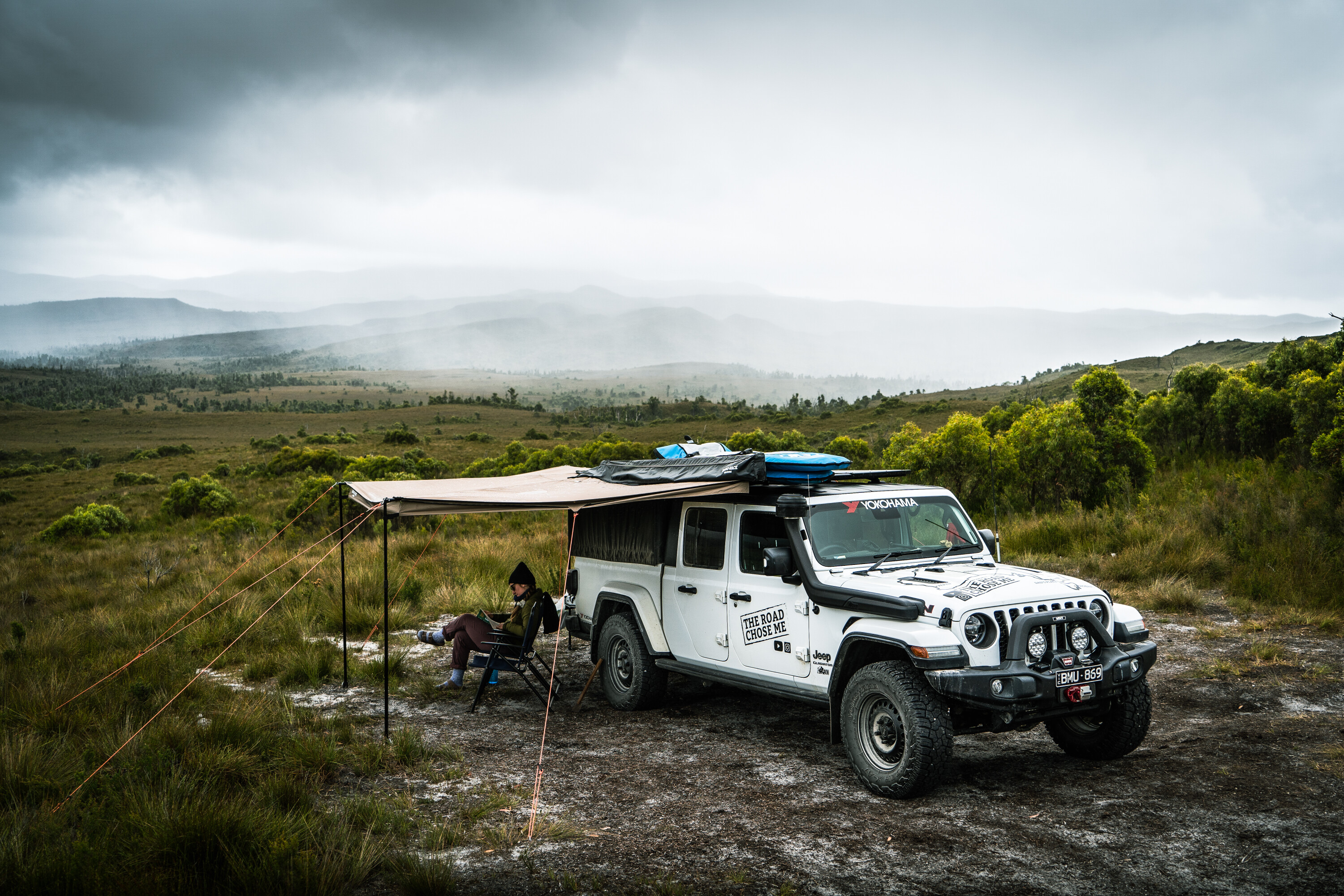
Late in the afternoon we found a clearing to make camp with stunning views over an alpine valley to enormous mountains in the distance.
Even in the middle of summer we were soon wearing all our cold-weather gear from Canada, and it was a struggle to stay warm.
I can only imagine this place in winter, and we made a promise to return one day to enjoy the snow-capped peaks.
Deep in the Arthur-Pieman Conservation Area, the infamous Sandy Cape track is well known for claiming multiple vehicles every year, and while buying an access permit at the ranger station I paid particularly close attention to the wall of shame, covered in dozens of photos of vehicles lost to the raging and unforgiving tides.
The friendly park ranger was all too happy to explain the situation and gave multiple warnings of the very real consequences of bad decisions. Water flowing onto the beach from numerous rivers and creeks causes beach sand to become exceptionally soft and dangerous, and in places it forms literal quicksand.
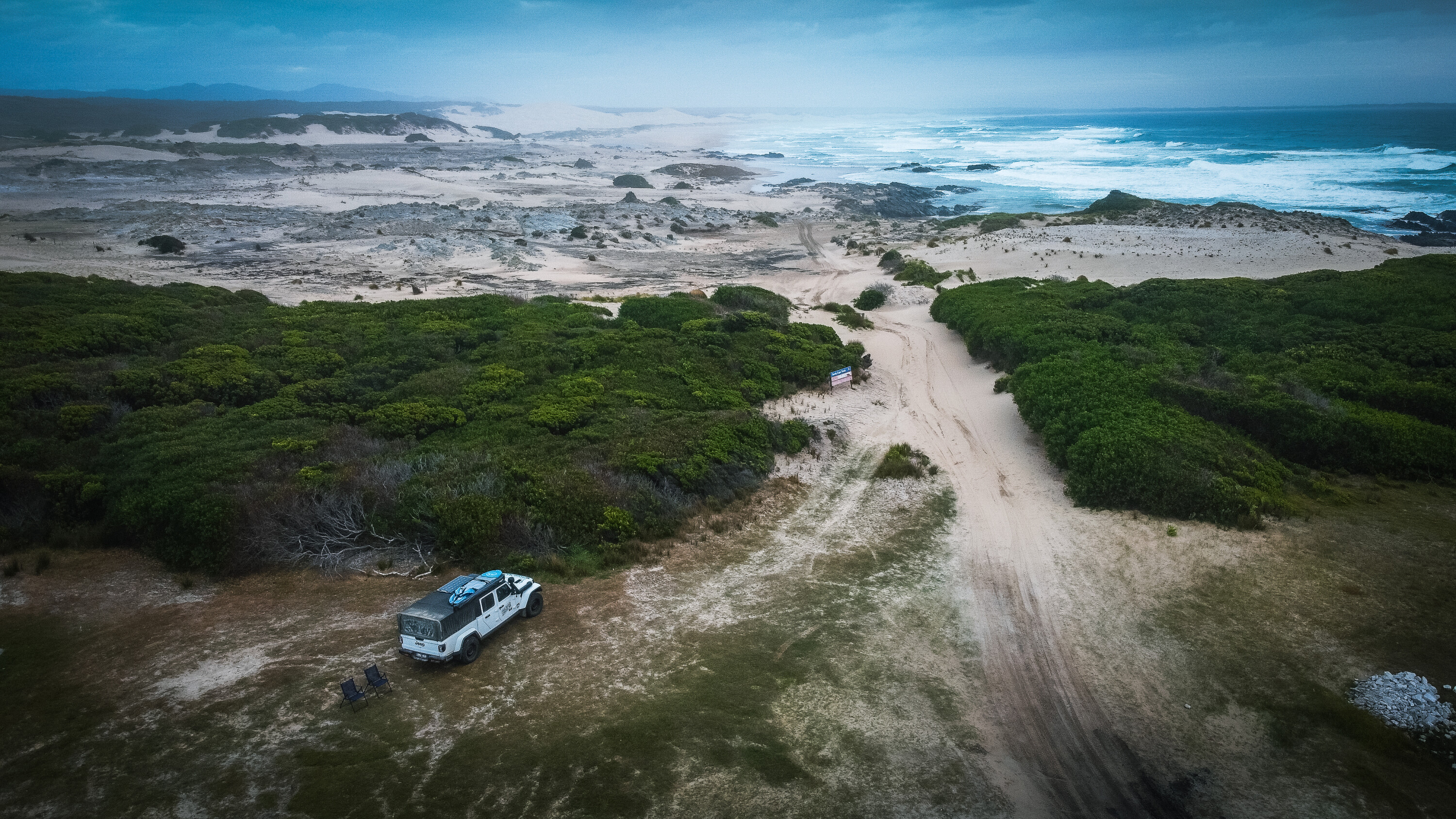
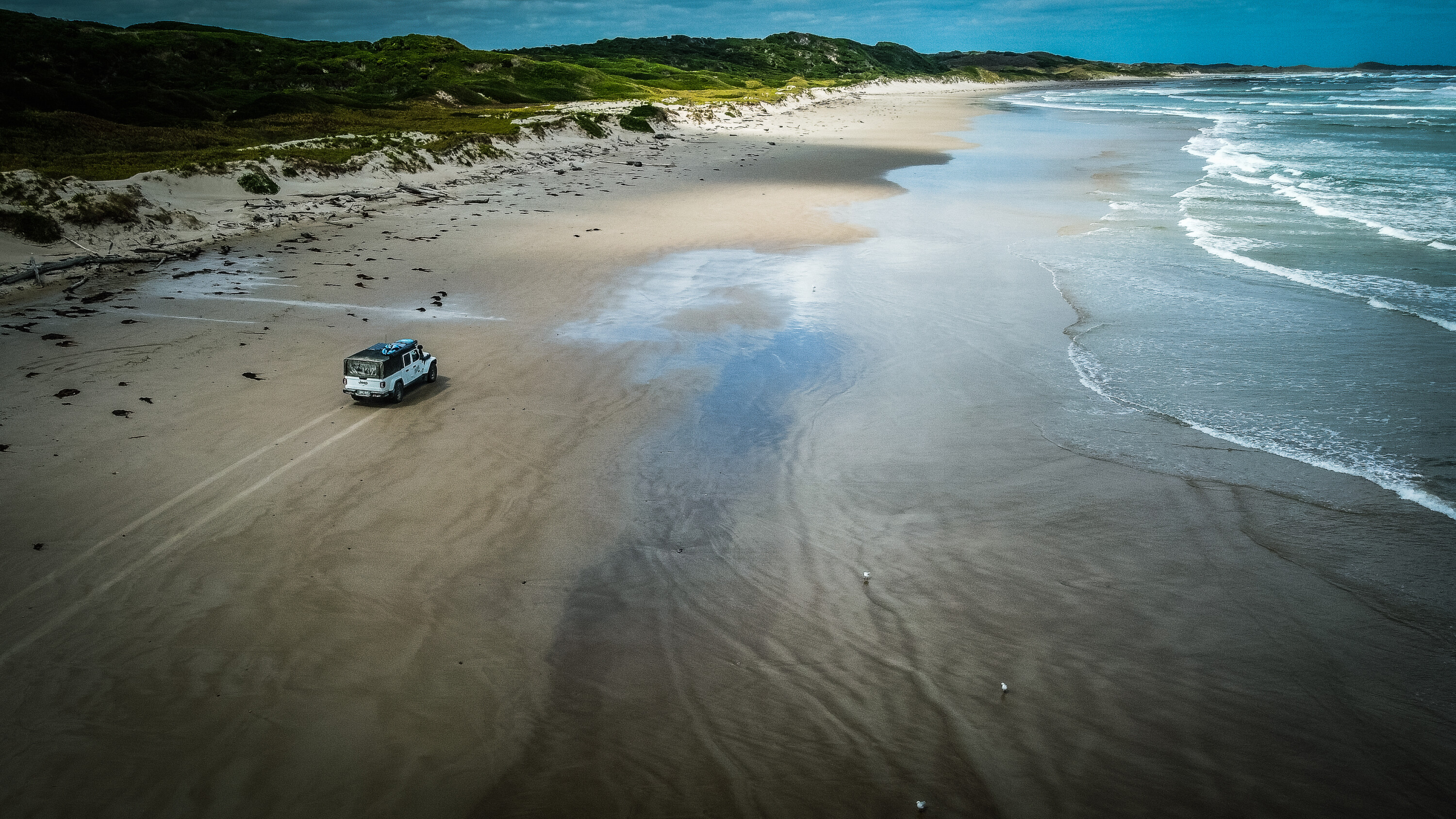
Leaving the little town of Arthur River the track starts with a beach drive, and we slowly made our way South towards Sandy Cape. The area is completely deserted, and while enjoying the early morning sunshine we alternated between beach and gravel track driving, elated to have the whole place to ourselves.
After lunch we arrived at the first major obstacle, Brooks Creek. In years past this crossing has not been much to speak of, though recent king tides have dammed the creek, creating a crossing roughly a hundred yards across that is deep enough to require a much closer inspection.
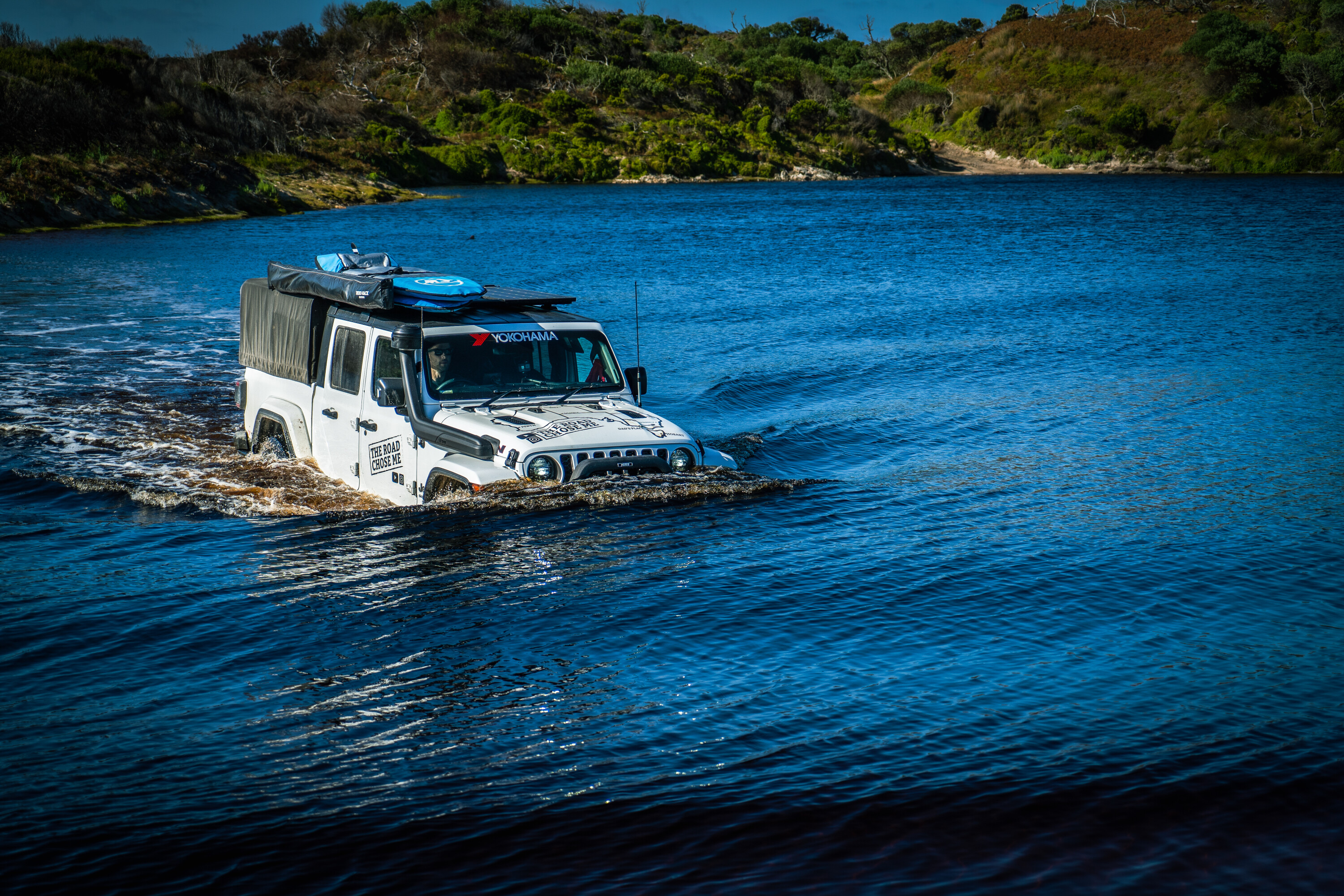
Comparing the water line on my shorts to the height of the Jeep, I saw that water shouldn’t come over the bonnet, so I decided to make an attempt.
I always prefer the slow and steady approach, but I was happy to create a good bow wave to help propel me forward and make sure I didn’t stop in the deep water that almost covered the front grill.
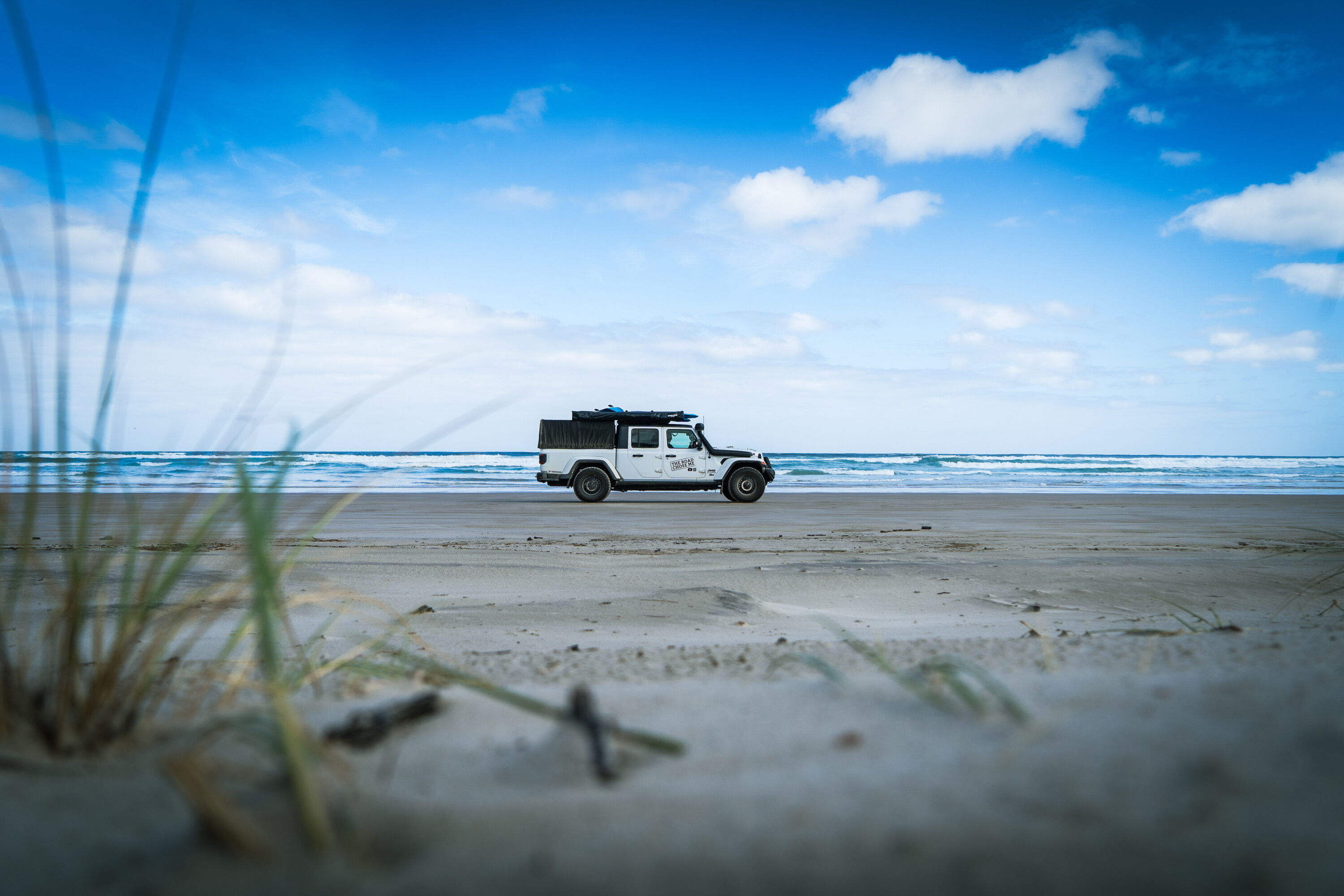
After agonising over the decision all night I decided not to tackle the beach section alone, wary of quicksand at each river crossing.
With no other vehicles arriving on scene we turned back, happy to have explored this far into the wilderness, and also happy to have made smart decisions that would allow us to explore another day.
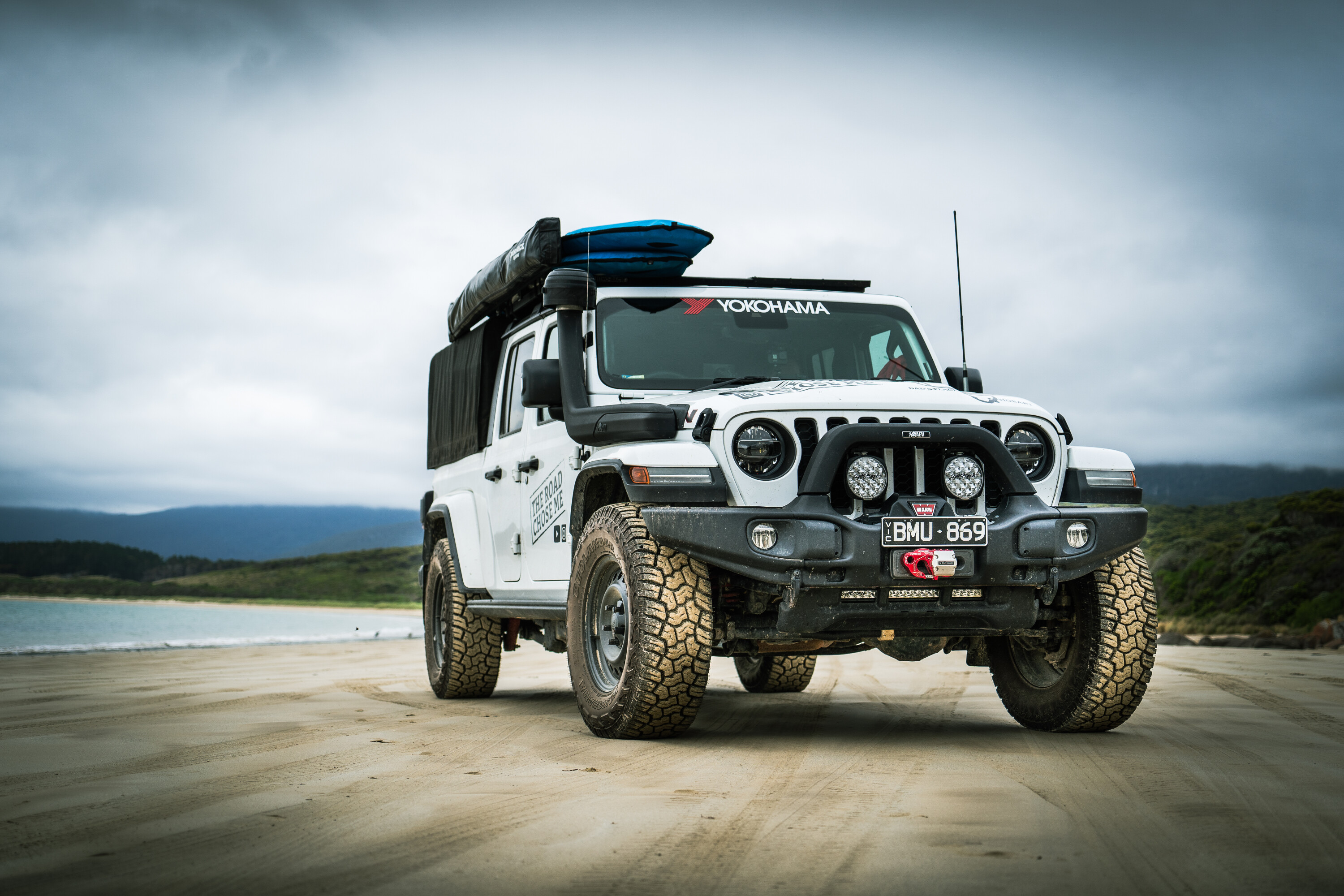
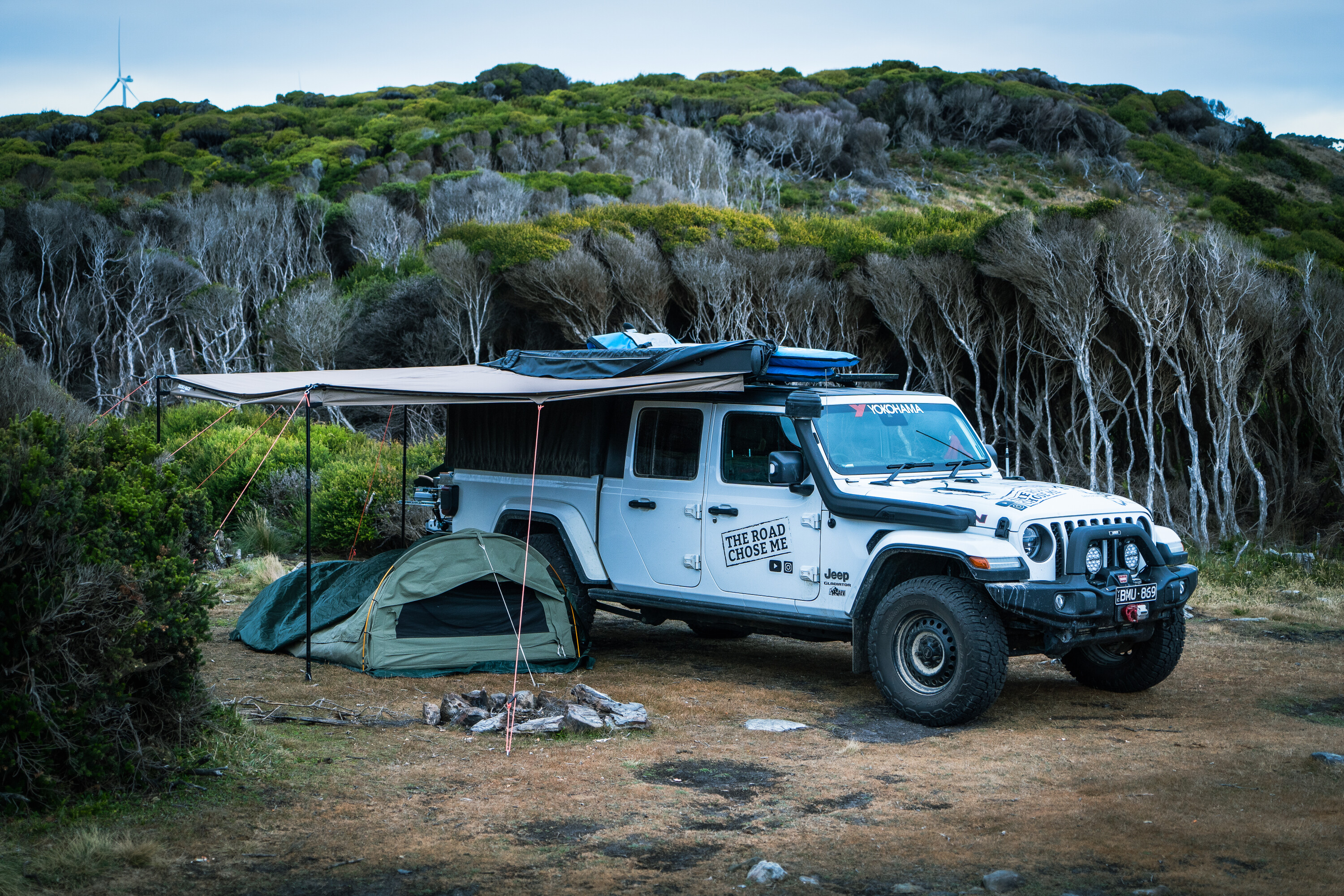
Tiny logging and mining exploration roads dot the landscape, providing endless opportunities to roam in the Jeep and camped where we pleased.
With more than 40 per cent of Tasmania reserved as UNESCO World Heritage or National Park, and very few people about, wild critters seem to outnumber humans 10 to one. During our exploring we saw countless wombats, kangaroos, wallabies, echidnas and handful of platypuses.
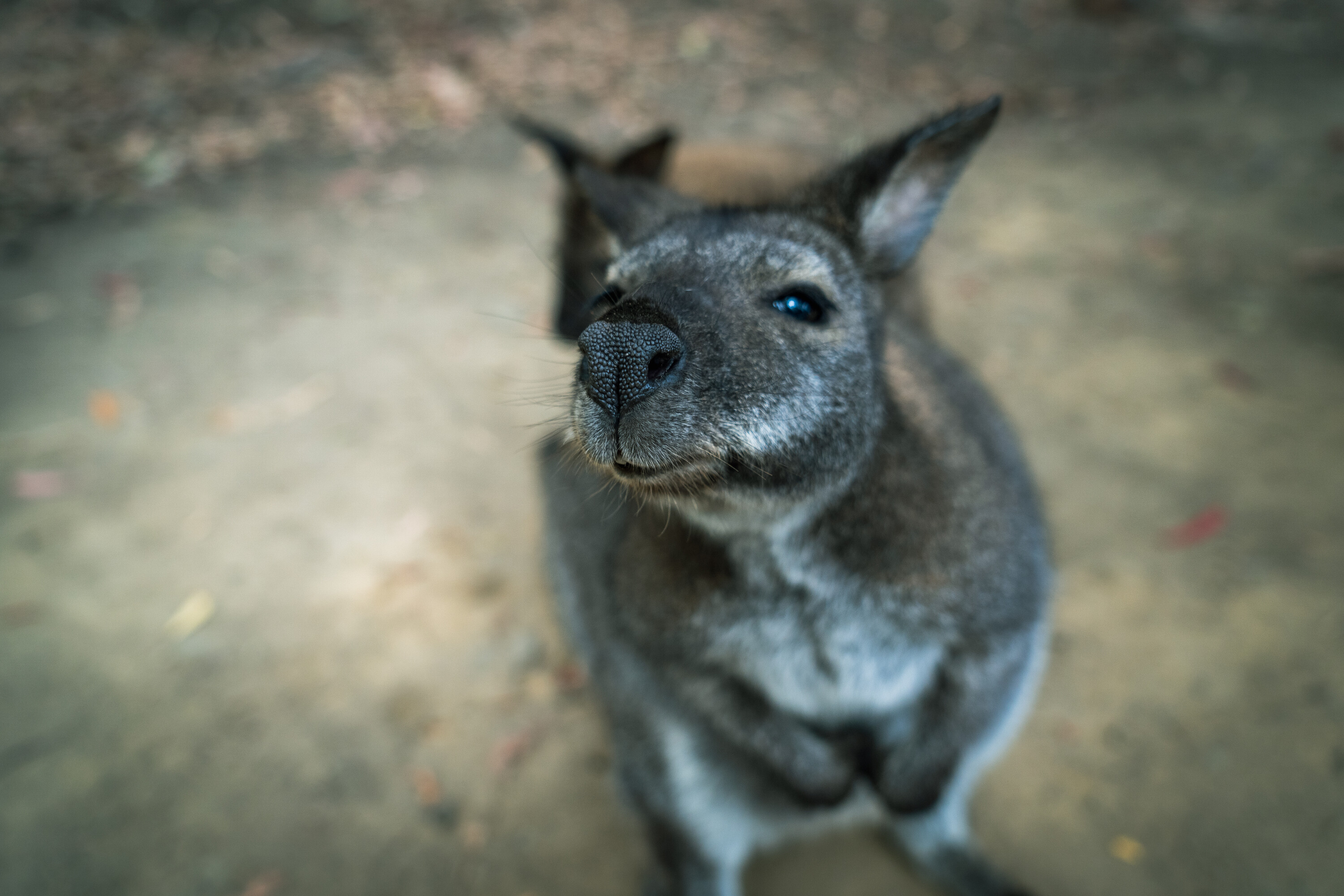
Late one evening an eastern quoll payed a visit to our wild campsite and darted around the swag and Jeep for 10 minutes so we could get a great look at it.
Because there are no introduced foxes in Tasmania, this is one of the last places eastern quolls can be found in all of Australia.
While those who live in urban centres around the globe often put on a face every day and pretend to be something they’re not, those who live in out of the way places are unashamedly themselves, warts and all.
In my experience these people are more genuine, more honest and universally much, much happier.
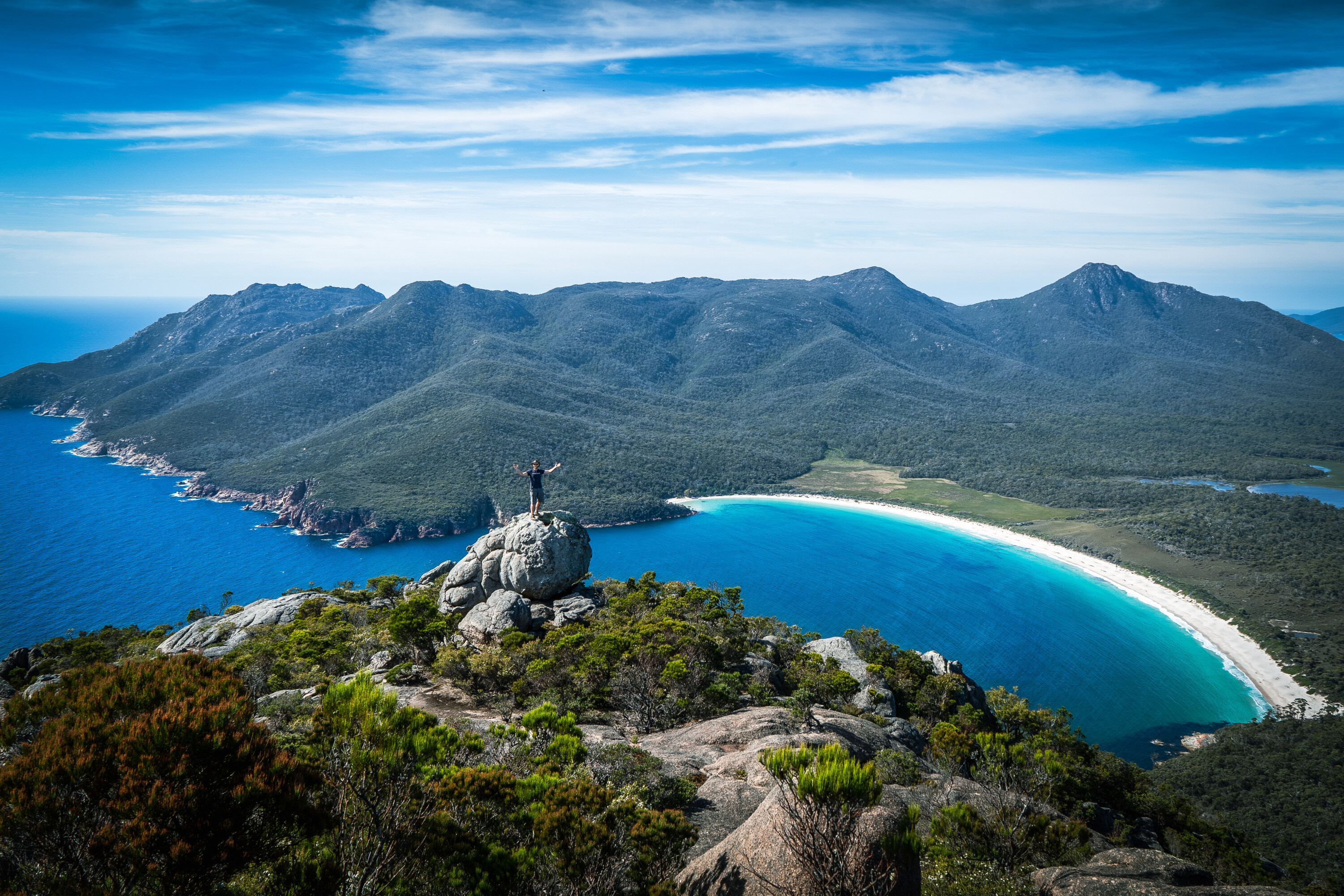
After experiencing all it has to offer first hand, I can’t help but wonder if Tasmanians themselves came up with some of the rumours and jokes about their island state to keep mainlanders away.
With stunning wilderness, an abundance of wildlife, super friendly and laidback locals and plenty of open spaces to roam free, I’d be protective of this magical little island paradise too.
In a world where exploring the great outdoors has become a way of life, these two products have garnered attention for their exceptional design, functionality and versatility.
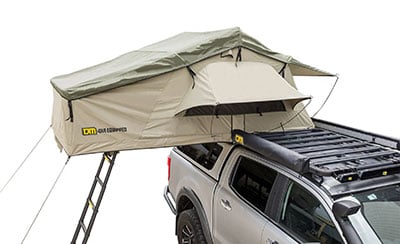
What distinguishes this WKND Warrior combo is its seamless compatibility, as the awning and rooftop tent are expertly designed to work together. Using the WKND 316 stainless steel brackets allows the awning to securely attach to the side of the rooftop tent.
Additionally, standard installation options are available for securely mounting the awning to your vehicle’s roof rack. There is flexibility when it comes to mounting the rooftop tent, with the choice to mount it directly on to a platform rack, crossbars or canopy.
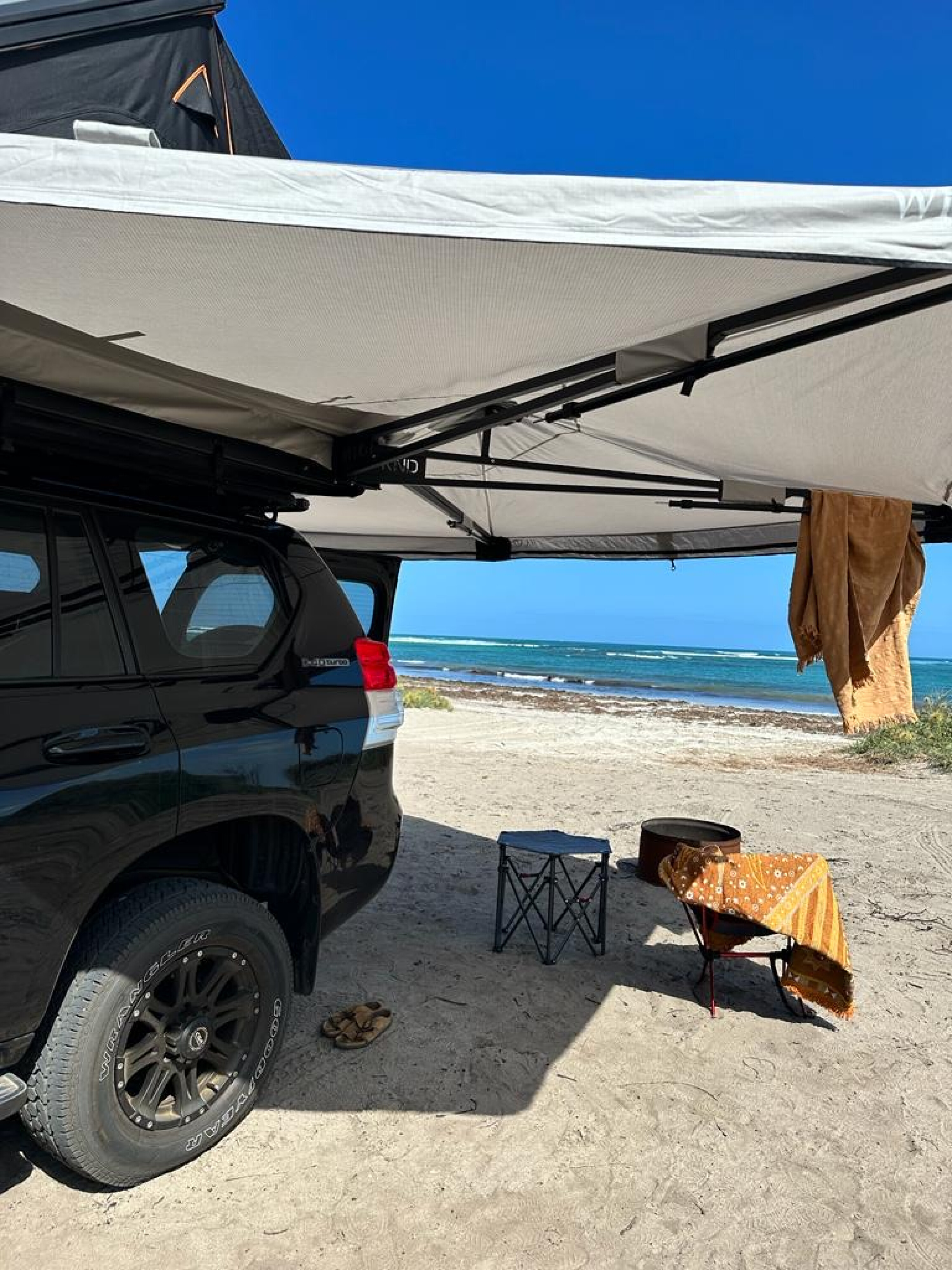
“The Warrior 270 Awning and Odin rooftop tent are a dynamic duo, a perfect pairing that turns any camping trip into a well-coordinated outdoor masterpiece. Together, they redefine comfort and convenience in the wilderness,” said Kaedon Thiart, owner of WKND Warriors.
The rooftop Tent boasts a sleek and slim design, standing at only 170mm in height (excluding roof racks and solar panels), it is one of the slimmest rooftop tents available. Using robust 280gsm rip-stop polyester-cotton material with double-stitching and waterproofing, you’re shielded from the elements, ensuring no seepage or mildew, even on rainy nights.
The tent comes equipped with anti-condensation mats at both the top and bottom, along with three access zippers to perfectly accommodate any touring setup. All of these features are encased in a durable honeycomb aluminium hard shell, providing excellent insulation against varying weather conditions.
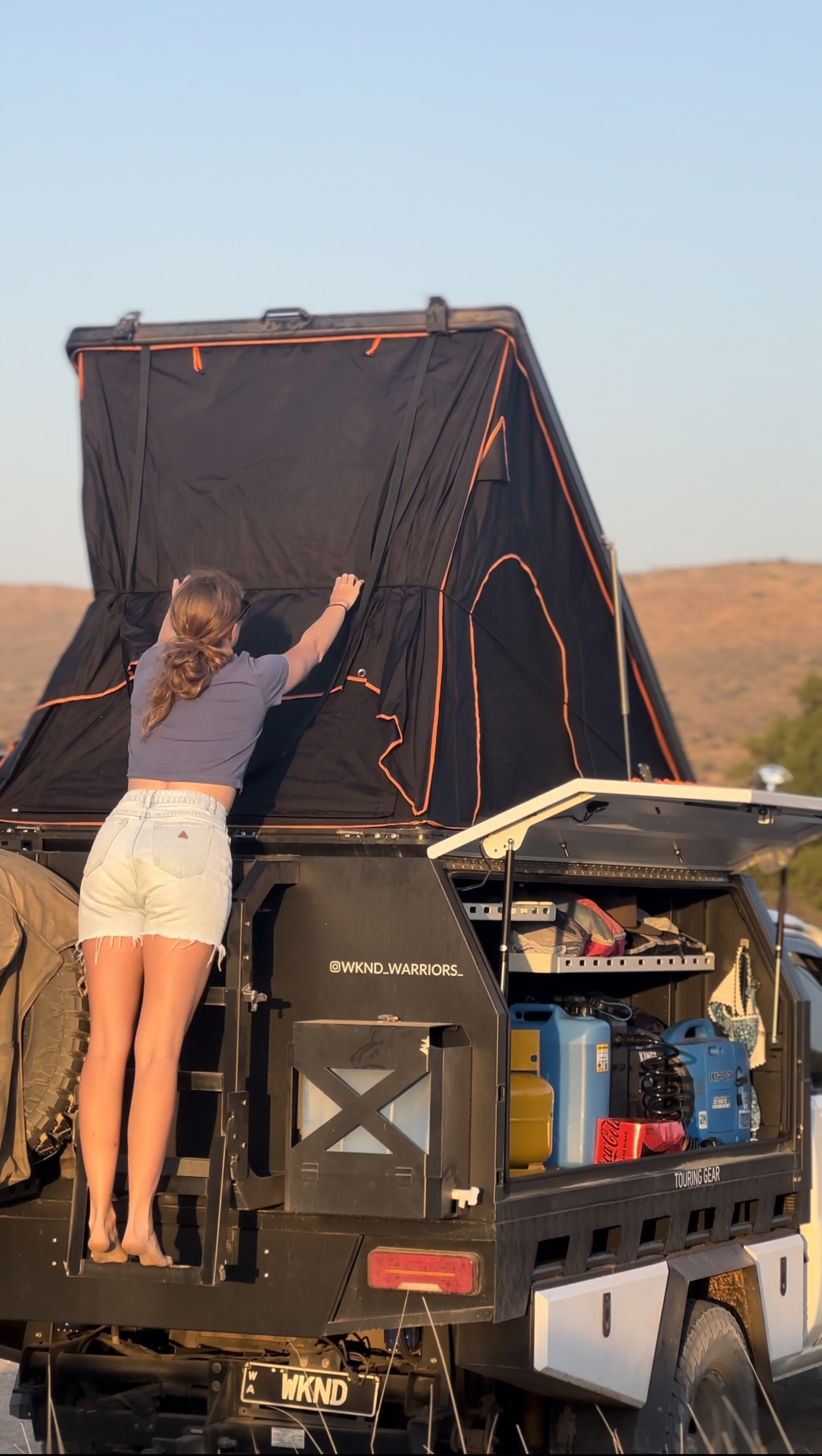
Other features include internal USB/USB-C charging points, six roof storage pockets, a 12V red/white LED strip light, and a 70mm high-density foam mattress. Weighing 65kg, this certainly is a lightweight rooftop tent. The internal sleeping space is 2050mm x 1220mm and the closed dimensions are 2100mm x 1340mm x 170mm, not taking into account the included 125W ultra-thin hard solar panel.
The awning is self-standing, with the externally braced design offering an advantage in maximising your usable shade compared to other 270-degree self-standing awnings. It includes a fold-up pole and features extended final arms and improved rear coverage. Made using the same polycotton as the RTT, the awning is lightweight with functional bracing designed to withstand high winds.
But it wasn’t until I started doing proper research that it’s not quite that easy; this needed some proper logistical organisation.
The island has a few rules, and one of the most important is that only 20 vehicles are allowed there at any one time. So with that in mind I found a time slot to suit my exploration of the island for five days, next was fuel and supplies.
All up I should be good for nearly 500km worth of 4WDing. A fuel drop can be organised on the island, but expect to pay a premium price.
With both fuel tanks chokers and a top-up shop at Denham on the Cape Peron peninsula I headed to Steep Point, and where the Dirk Island barge pick-up point was. Conserving fuel, it was an easy 100km drive to the turn-off point on to Useless Loop Road which is sealed for part of the way.
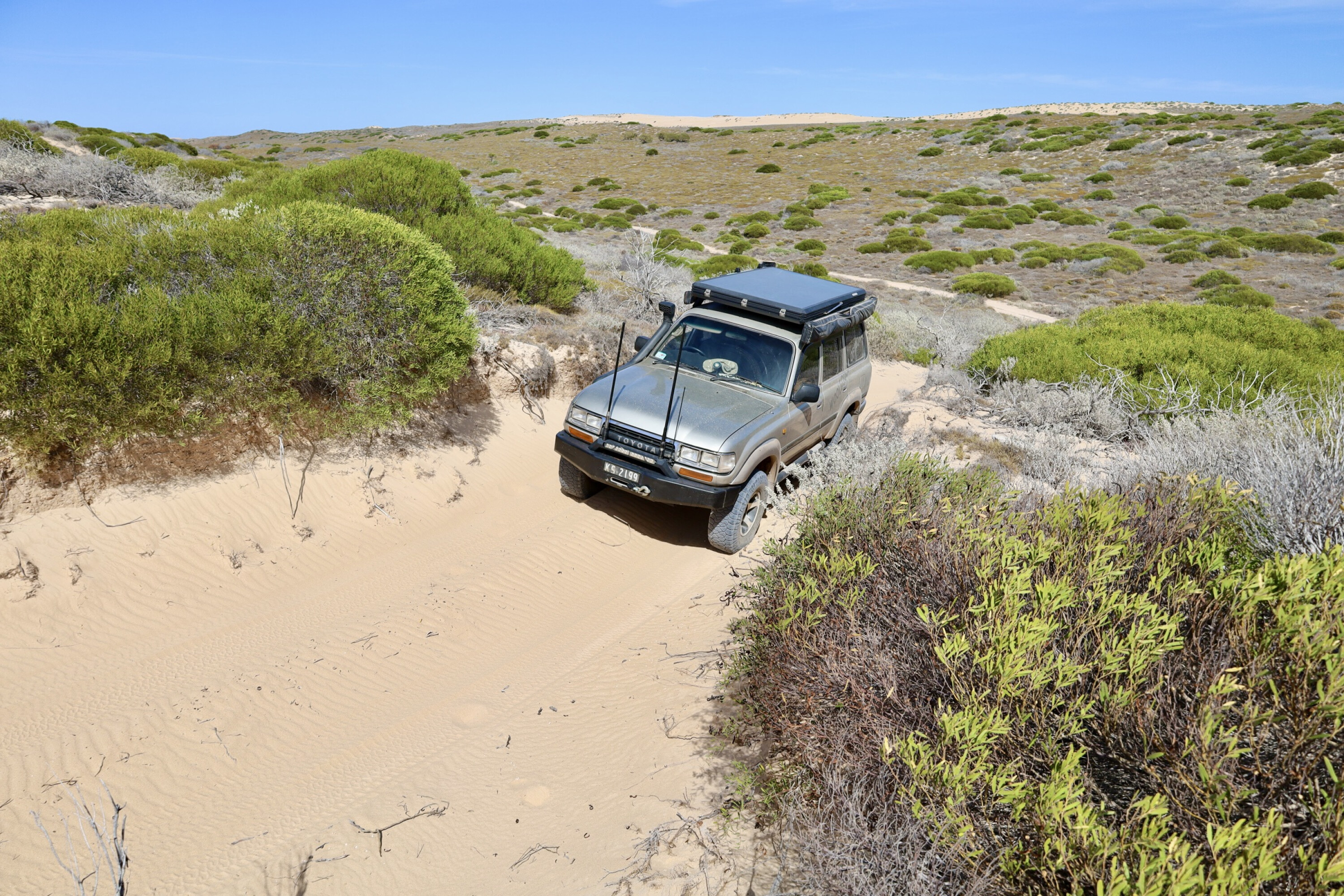
Signposted 39km before Steep Point, Parks WA recommend dropping tyres down to 28psi and switching to low range for the sand-dune section and corrugated roads. It’s a point well taken as the road to Steep Point was extremely rough from recent traffic, and I must admit some of the worst I have come across in 30 years.
With a few hours of daylight left I headed up to the Steep Point sign for the obligatory photo to say ‘been there, done that’, and with the barge pick-up point and camp spots right on the beach.
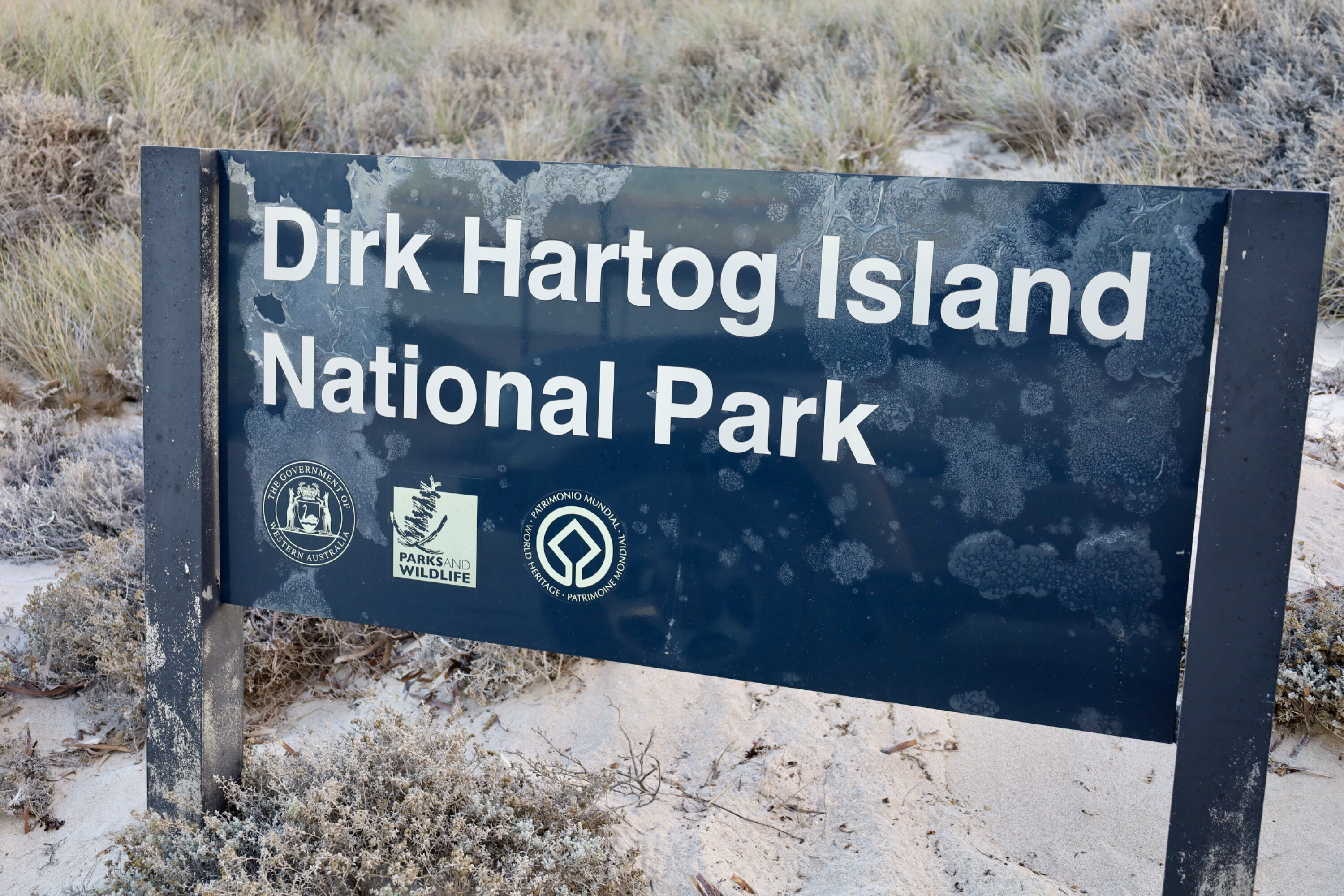
I soon settled in for the night to wait for the early morning departure to Dirk Hartog Island National Park in the Shark Bay World Heritage Area.
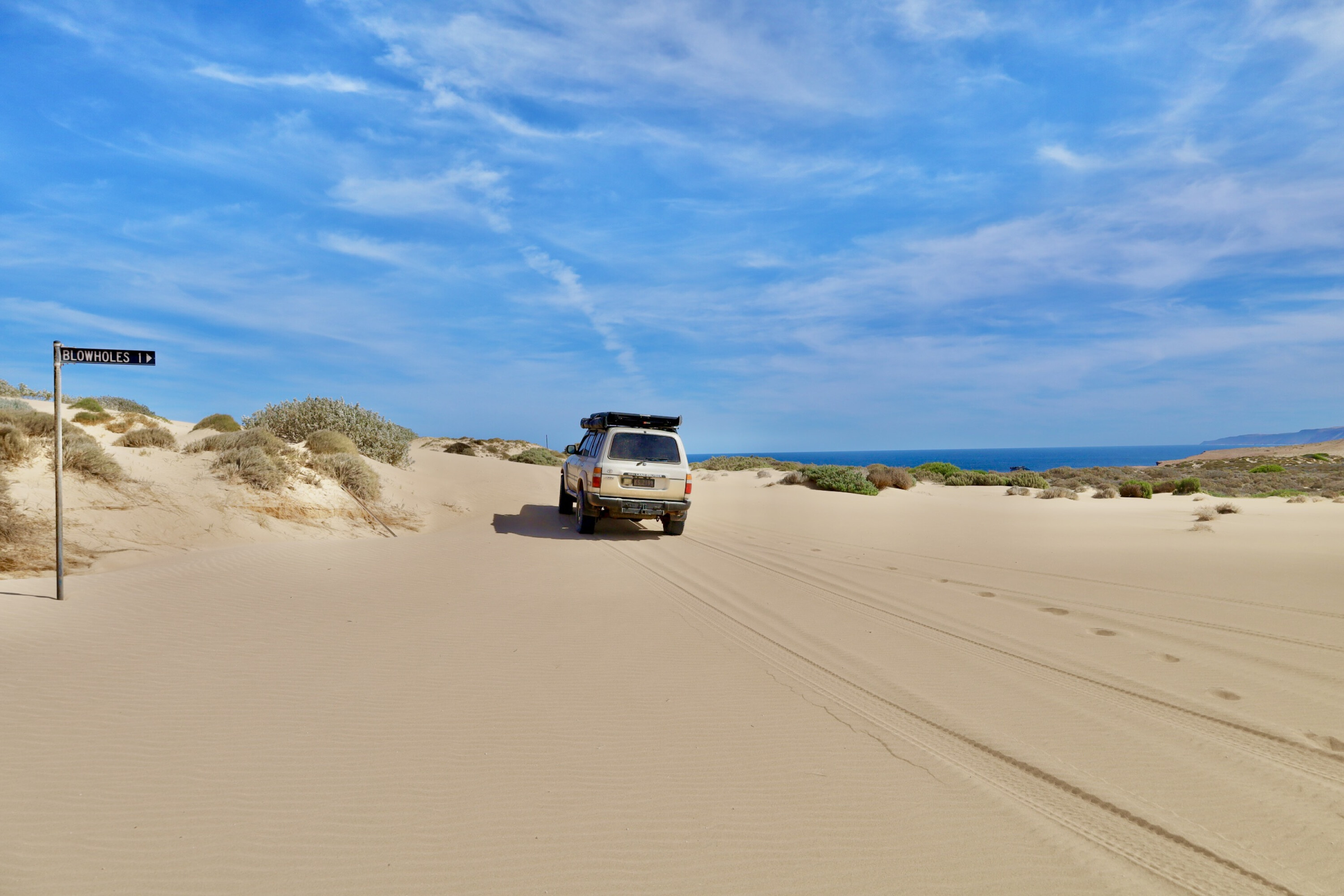
Camper trailers are welcome but must come within a specified length, and 4WDs must have their tyres down to 20psi so they don’t get bogged when backing off the barge.
My reasons for going to Dirk Hartog Island were to explore the remoteness of this island, delve in to its history and see just why it’s now classed as a World Heritage site. The island is roughly 70km long, 20km at its widest point and has only about a dozen tracks that criss-cross its entirety.
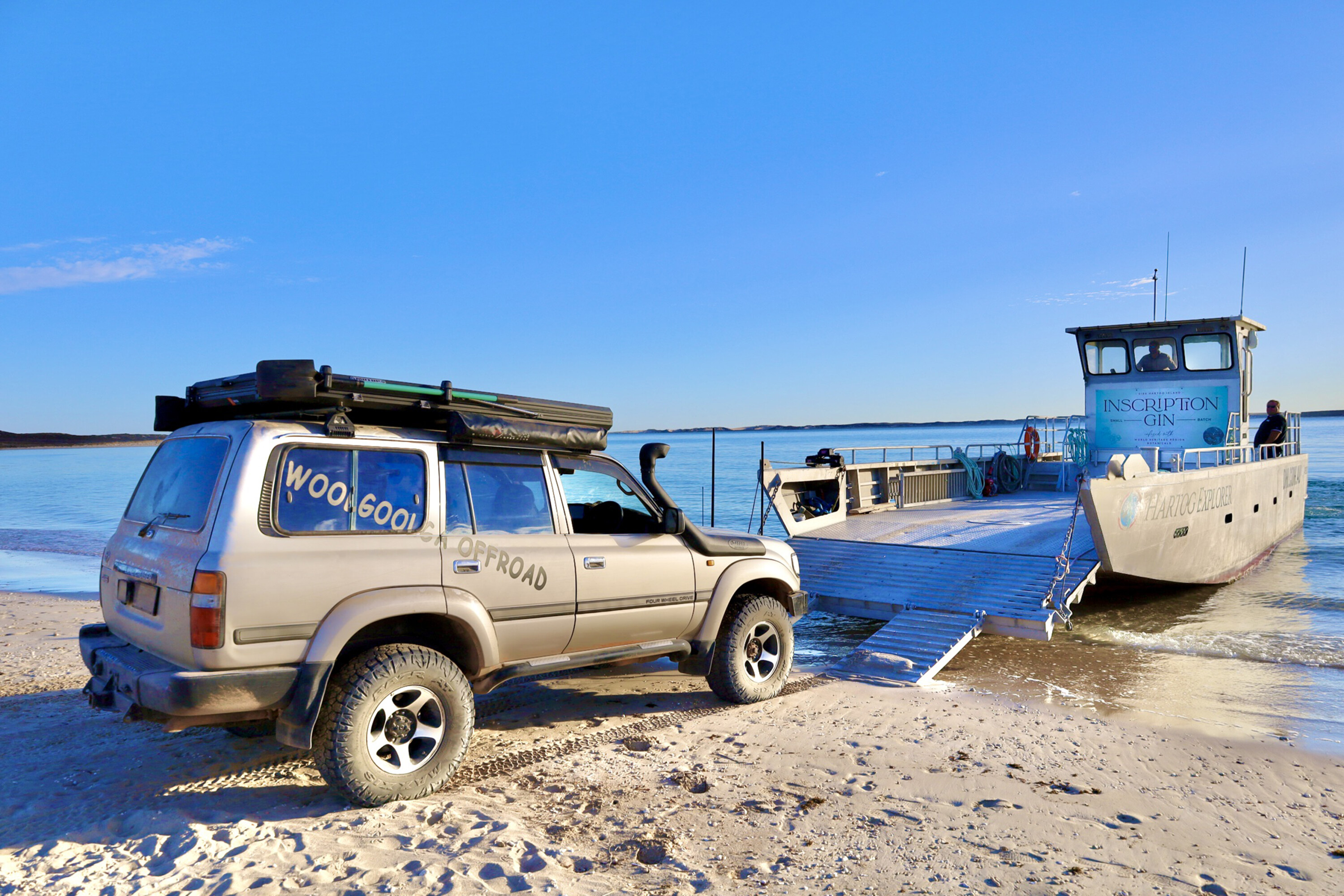
With five nights on the island, I chose a variety of the remote camps away from the centre to experience the isolation and beauty of the place. All the camps have some sort of water view right on the coastline. On the east, the water was still and calm on the sandy shores, but on the west side, Indian Ocean waves constantly pounded the rough rocky coast.
The island took shape during the last glacial period in the Pleistocene epoch (2.6 million to 11,700 years ago) and during the warmer times since then, sand dunes formed and plants grew on them.
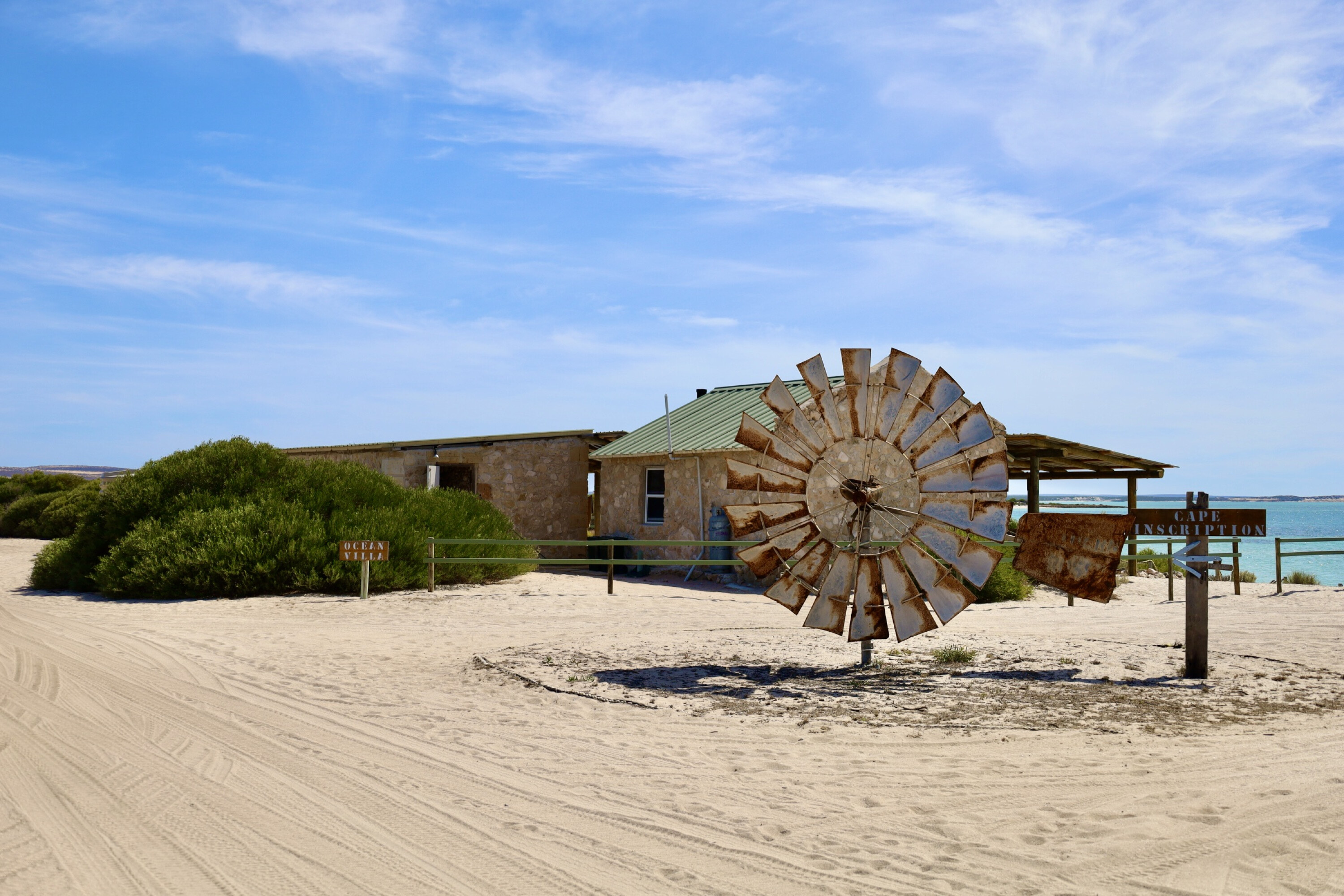
What’s pretty impressive are the shifting dunes in the centre of the island. Ever changing, these dunes are as white as anywhere on the east coast, and the track across the top changes constantly.
My camps varied from the beautiful Notch Point watching the sunrise over dead-still water and watching the flurry of birds when baitfish appeared off the point, to where William Dampier landed in 1699 and be the first person to make the first scientific collection of plants in Australia, then across to the ever-eroding west coast at Quoin Head, watching big sharks cruise the cliffs below.
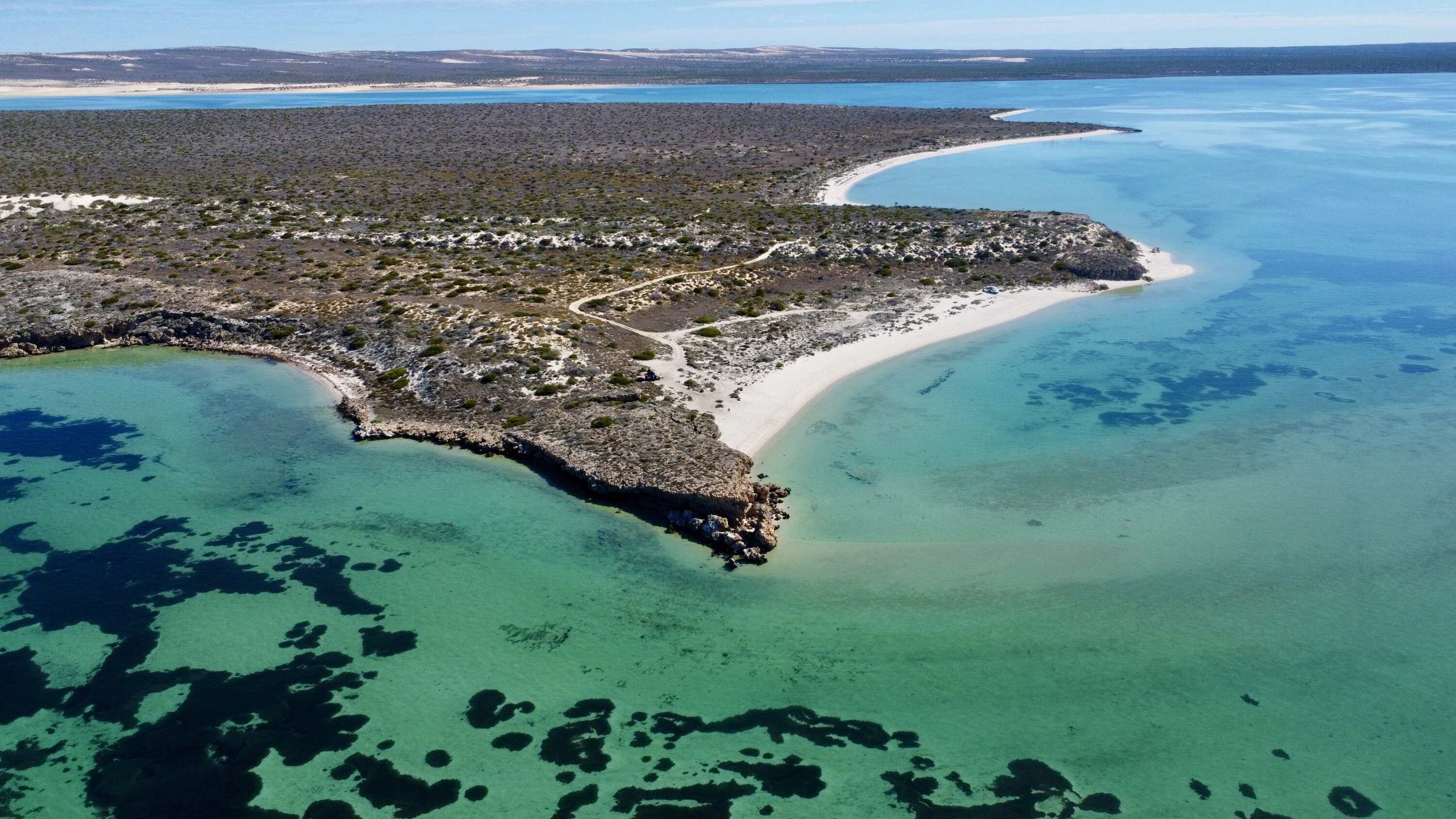
Named Inscription Point, this is where dutch skipper Dirk Hartog left a battered inscribed pewter dish in 1616 declaring he was here. Hartog was looking for a faster way across the globe for trading goods when he saw the island, he had sailed much farther east than any skipper of the time.
Over the next 200 years, more explorers visited the island, such as William de Vlamingh who in 1697 removed Hartog’s dish and left another one with the original inscription with his own details, then in 1818 Freycinet visited the island removing Vlamingh’s dish hoping to take it back to France for safe keeping.
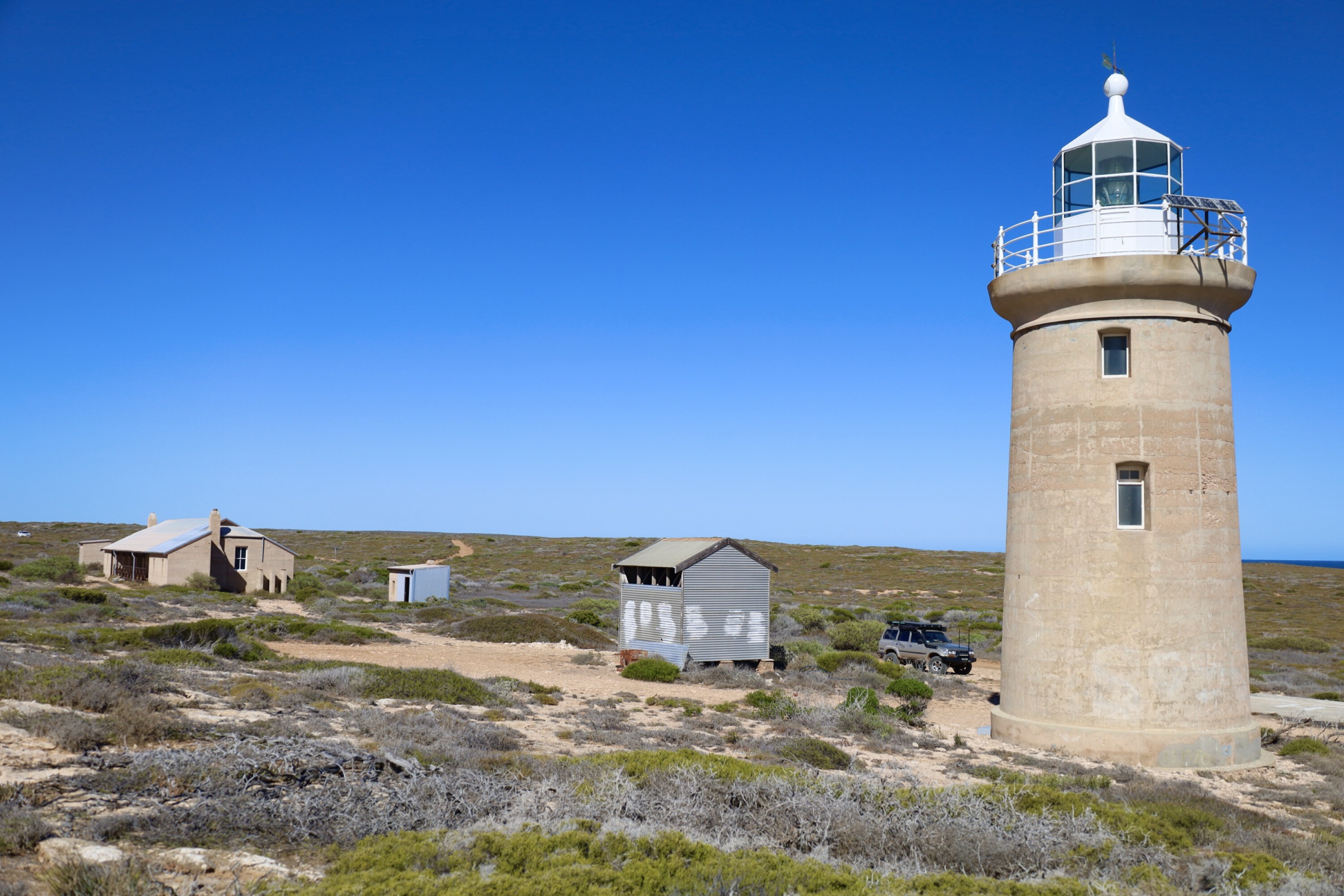
At Inscription Point, the 123-year-old lighthouse is now solar powered and several other buildings around the historical site have interpretive boards. It was in 1908 that construction of the lighthouse started to improve navigation along this part of the coast and nearby at Turtle Bay, a 70m-long jetty was built and connected to the lighthouse by a tramway.
At Dampier’s Landing, turtles lay their eggs through the dunes between November to April, this significant spot is the largest nesting area for the loggerhed sea turtle in Australia.
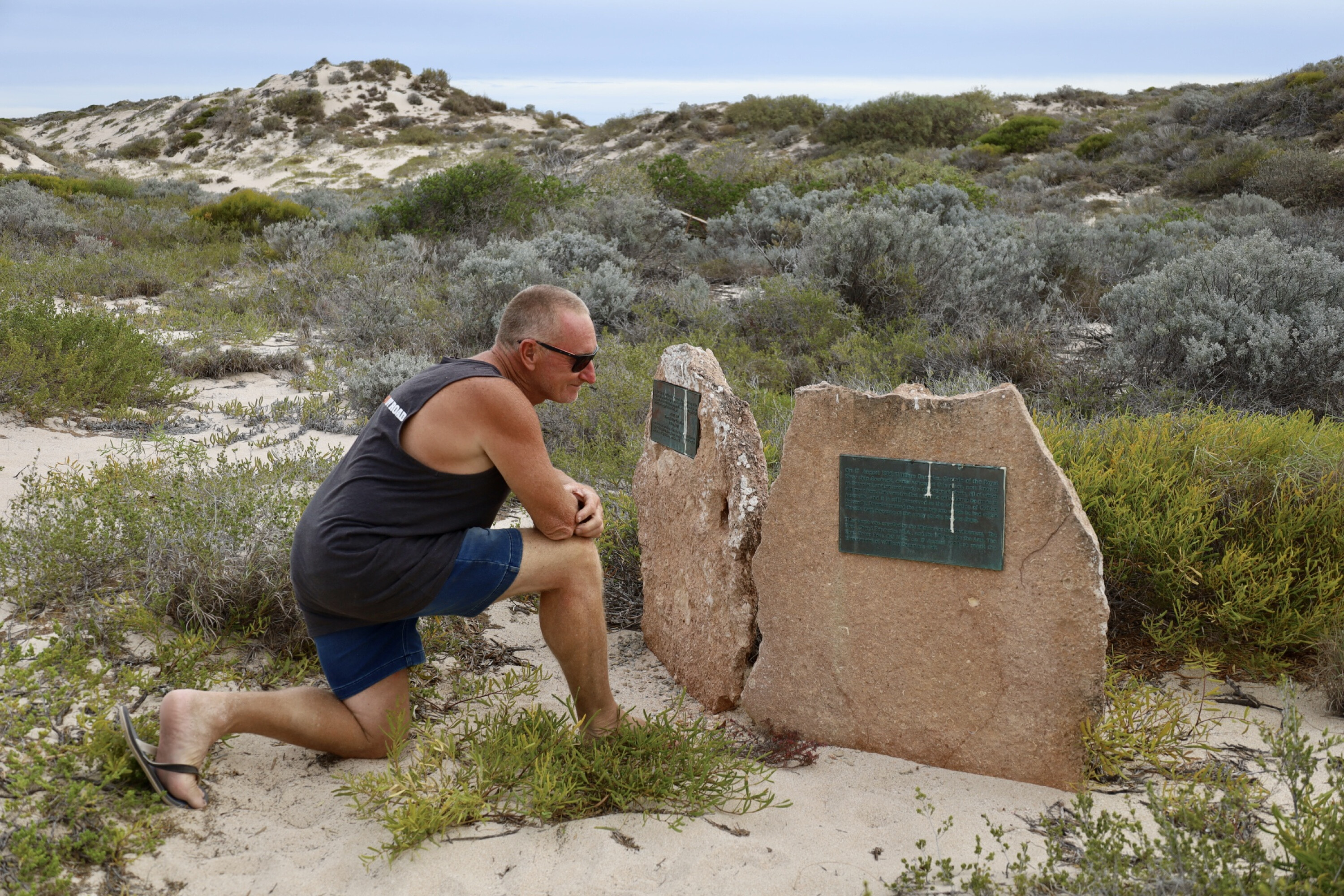
Anything from goats, sheep, foxes through to cats have now been removed from the island. Grazing also trampled the food and shelter for many of the native species which were in grave danger of extinction.
A feral animal fence divided the island in to sections to control and eliminate the pests and even today it still stands and cuts the island in half. The Return to 1616 project has been a huge success and ten of the native species have been returned to their natural habitat across the island.
Dirk Hartog island is a beautiful yet harsh place to visit, and is now a World Heritage island for the future.
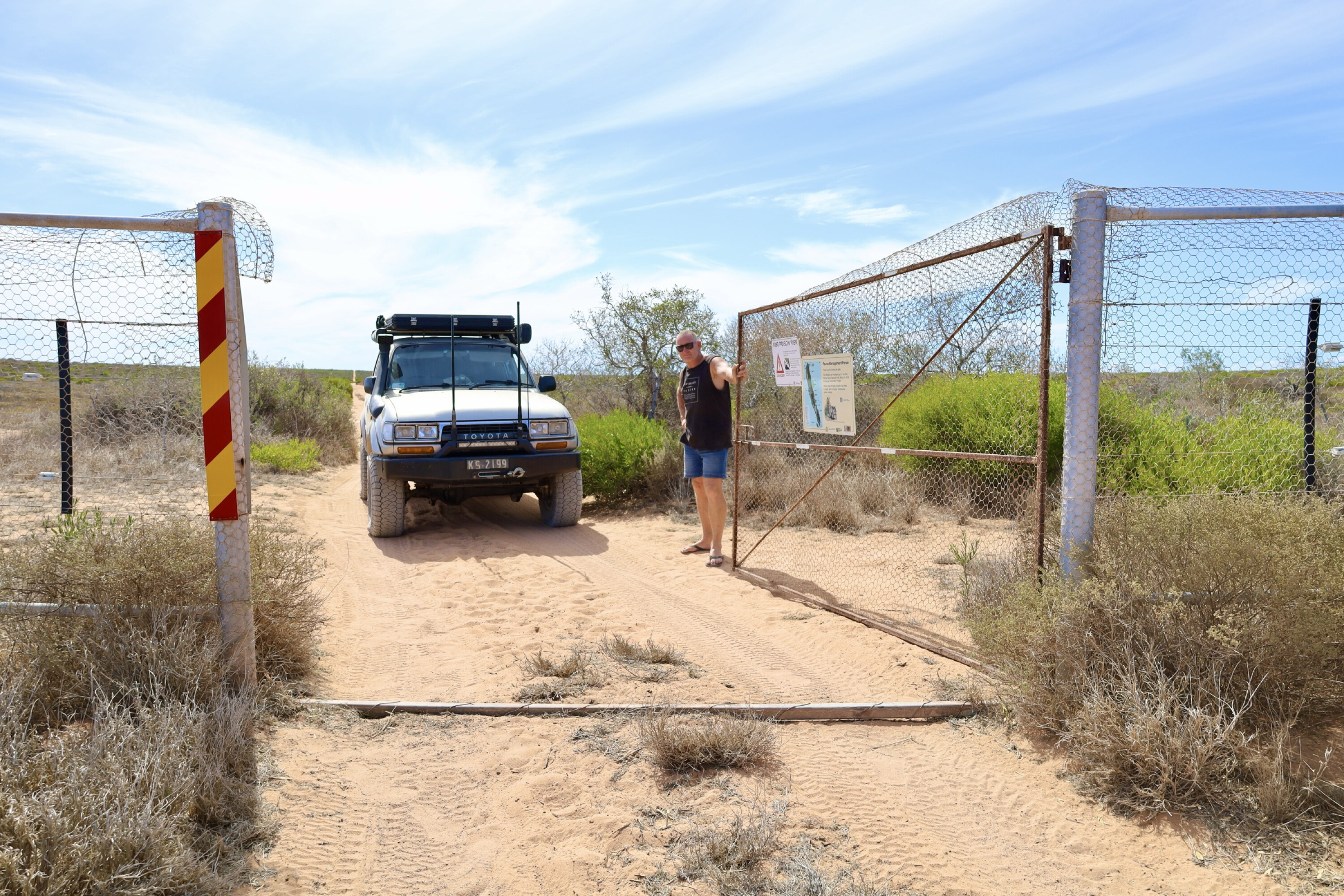
Now classed as a national park, Dirk Hartog is being returned back to its natural habitat with the eradication of all feral pests. It’s a logistical effort to get to island where only 20 vehicles are allowed on the island at any one time, so it’s peaceful, isolated and a remote place to spend some time.
The Island is part of the UNESCO Shark Bay World Heritage Area. Dirk Hartog is WA’s largest island.
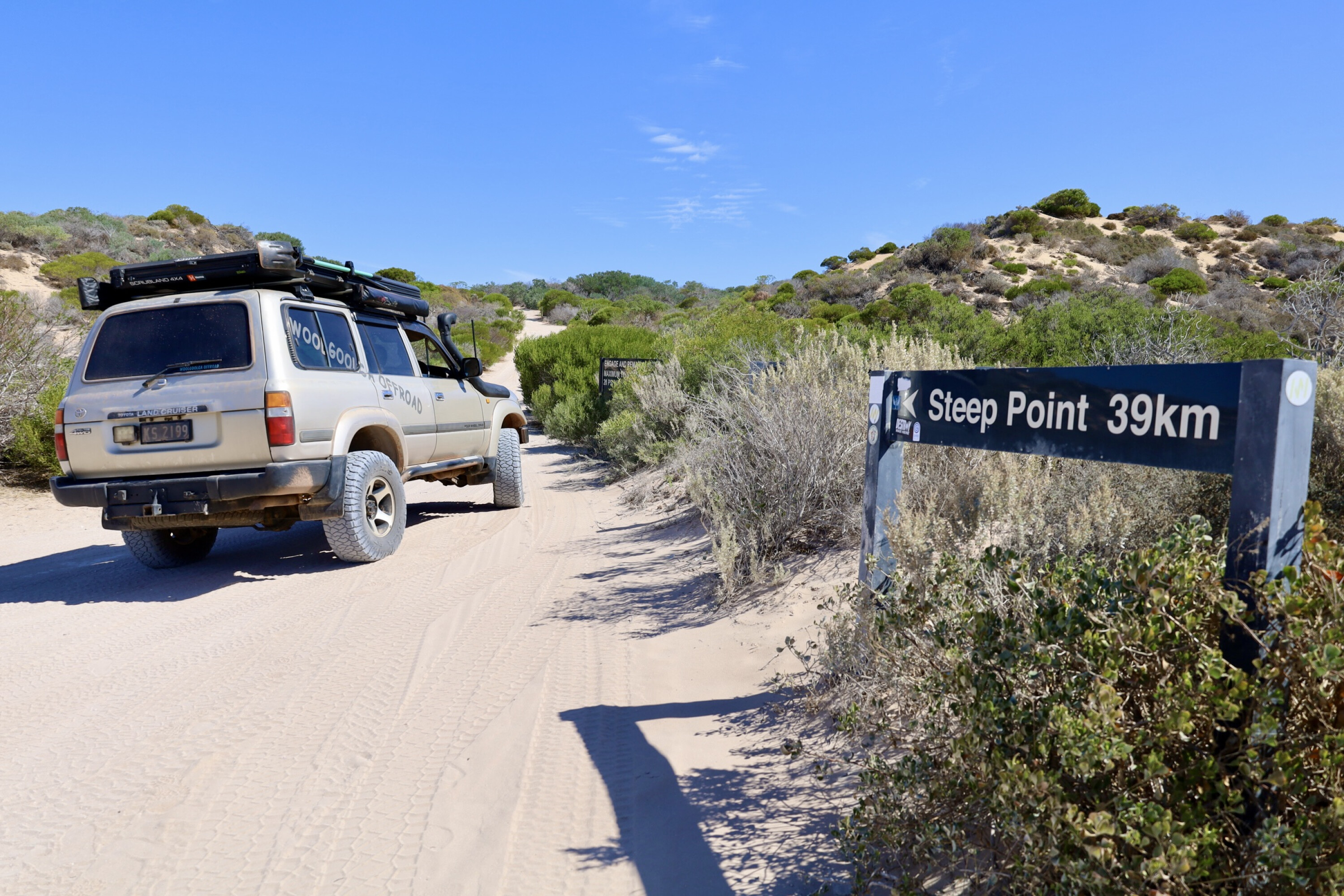
Cape Inscription has a lighthouse and buildings, there are remote camps and blowholes, and visit where William Dampier landed in 1699. There’s great fishing and snorkelling around the island also.
All the relevant information can be found on the Dirk Hartog Island website [↗]
Prado sales surpassed 20,000 units for the third consecutive year, extending the Toyota 4WD’s run as the country’s most popular large SUV to nine years.
With 20,710 sales for 2023, the Prado saw off its closest challenger despite a slightly smaller total than 2022 and 2021.
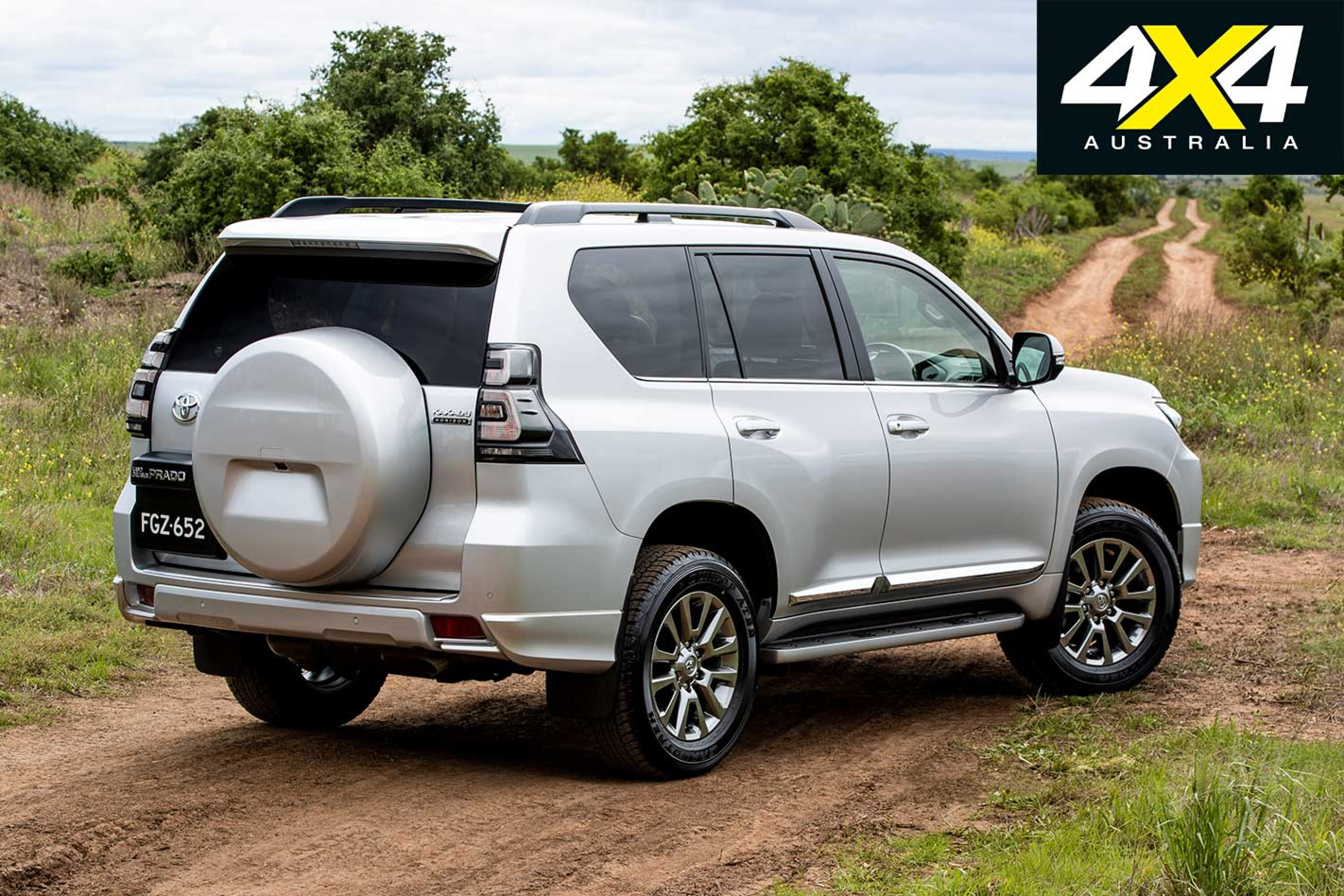
The Ford Everest claimed a hugely respectable second place, overtaking the full-size Toyota LandCruiser wagon just – by 15,071 to 15,035 units thanks to 46 per cent year-on-year growth.
Another two models took the remaining top-five places with strong annual growth – the Isuzu MU-X with 14,139 registrations and the Subaru Outback with 12,903 units.
Toyota’s Prado has been Australia’s most popular large SUV for nearly a decade. It was last beaten in 2014, when the Jeep Grand Cherokee narrowly pipped it to the No.1 spot with 16,582 sales compared to 16,112.

The Japanese brand will have high hopes for the nameplate in 2024, with a new-generation Prado (above) due mid-year and already the subject of intense buyer interest.
The Prado joins seven other Toyota models – including the RAV4 mid-size SUV and Camry medium sedan – that won their respective vehicle segments.
The results are some consolation after the Ford Ranger ended the HiLux’s seven-year as Australia’s best-selling model.
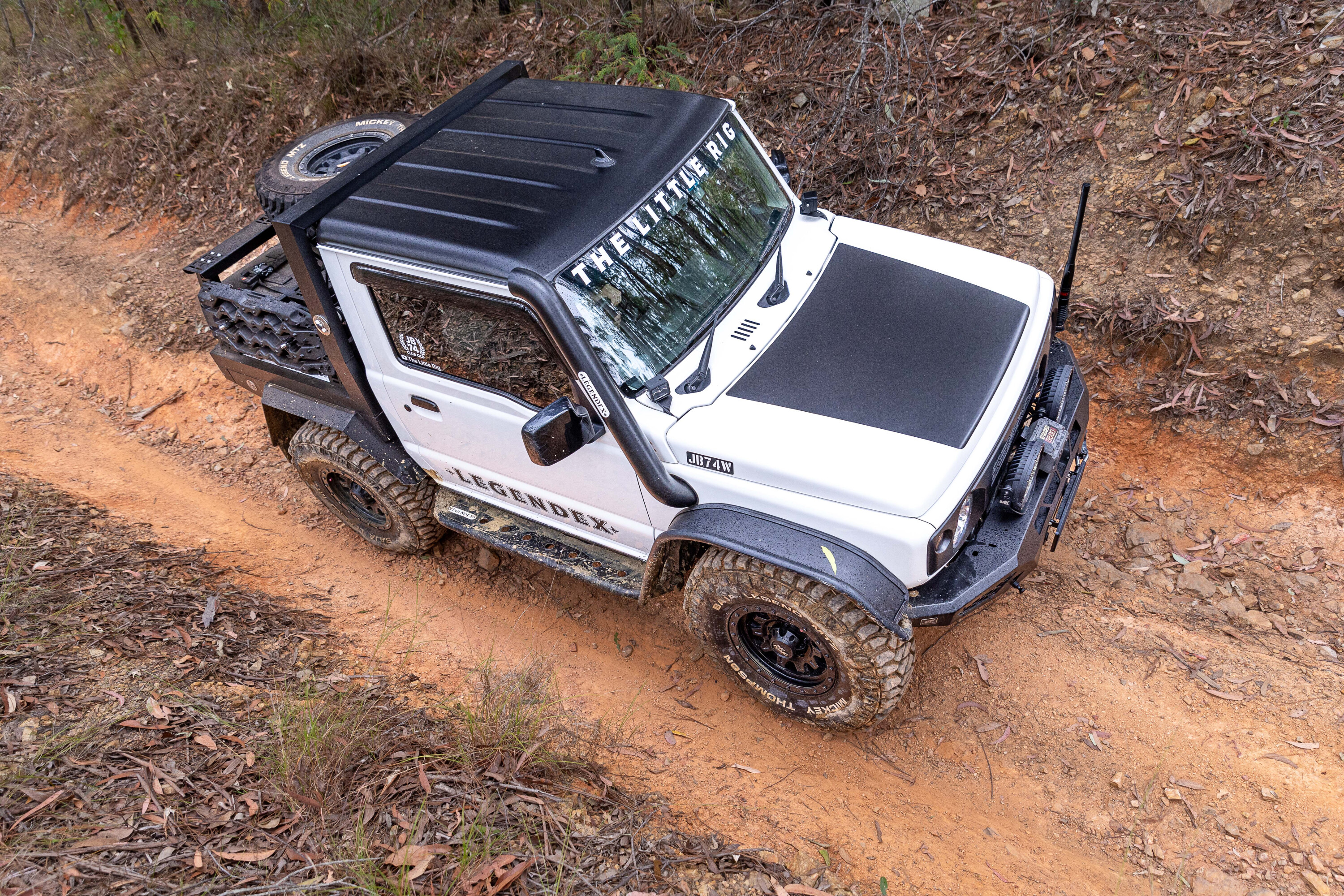
When we last met it still had all its panels, was running around on 30-inch rubber and was, for all intents and purposes, a completely different rig to what’s on the page in front of you now.
Darren built this Jimny for two reasons: to have fun on the harder tracks around his home in South East Queensland, and for touring with his family.
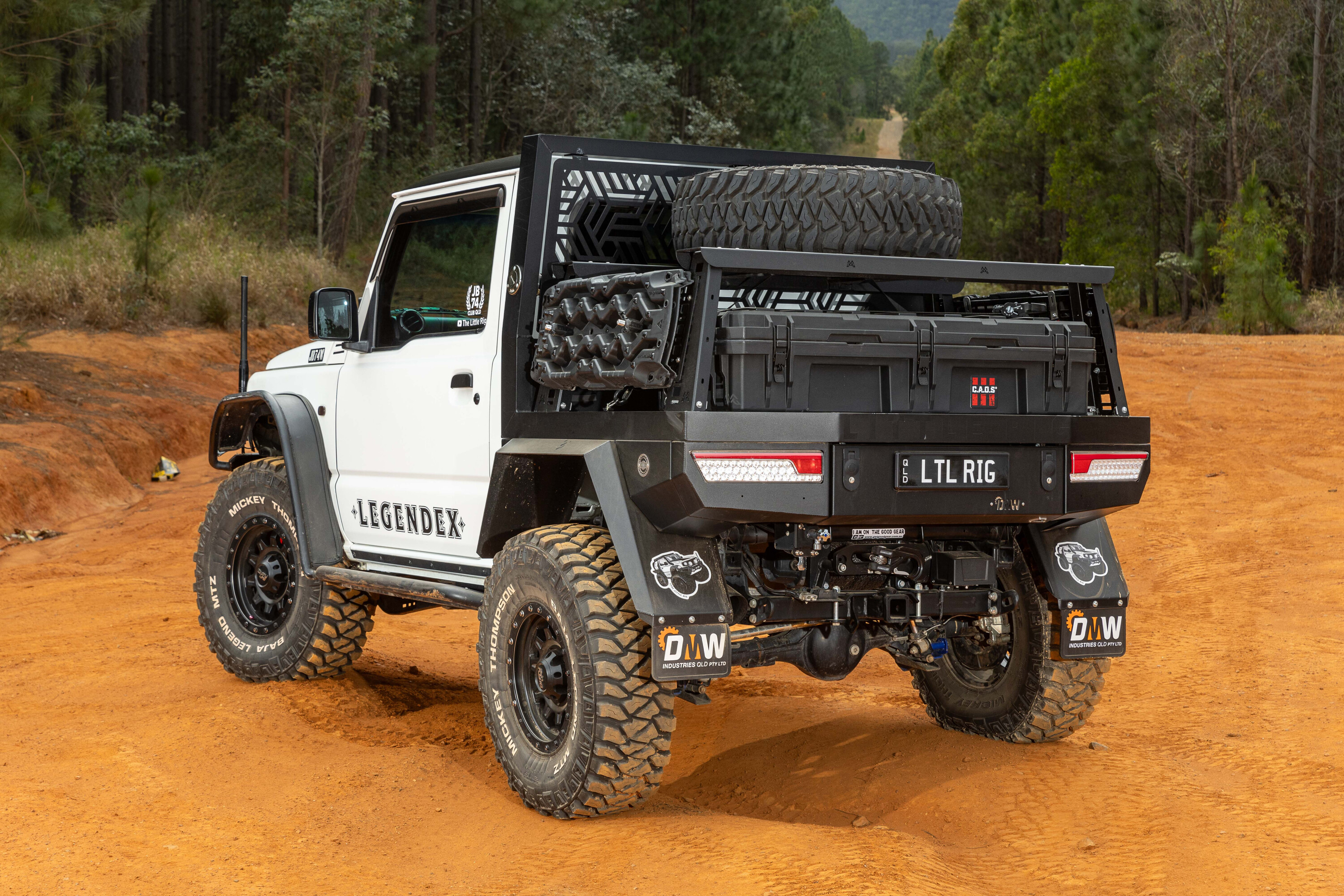
Yep, you read it right, but we’ll get to that in a minute. What initially caught our eye was the extent Darren had taken his then-new vehicle to, and how unafraid he was to push it to its limit. He did all the right things when modifying a Zook. Lift, tyres, lockers and gearing. It’s a tried-and-true recipe and for good reason. It works.
However, sometimes having your cake just isn’t enough. Sometimes you just get hungry and feel like eating it too. Which is the position Darren found himself in after one fateful trip to the Glasshouse Mountains. Not one to be hindered by a little speed bump on the modification road, Darren took his already highly modified Jimny and went absolutely bonkers.
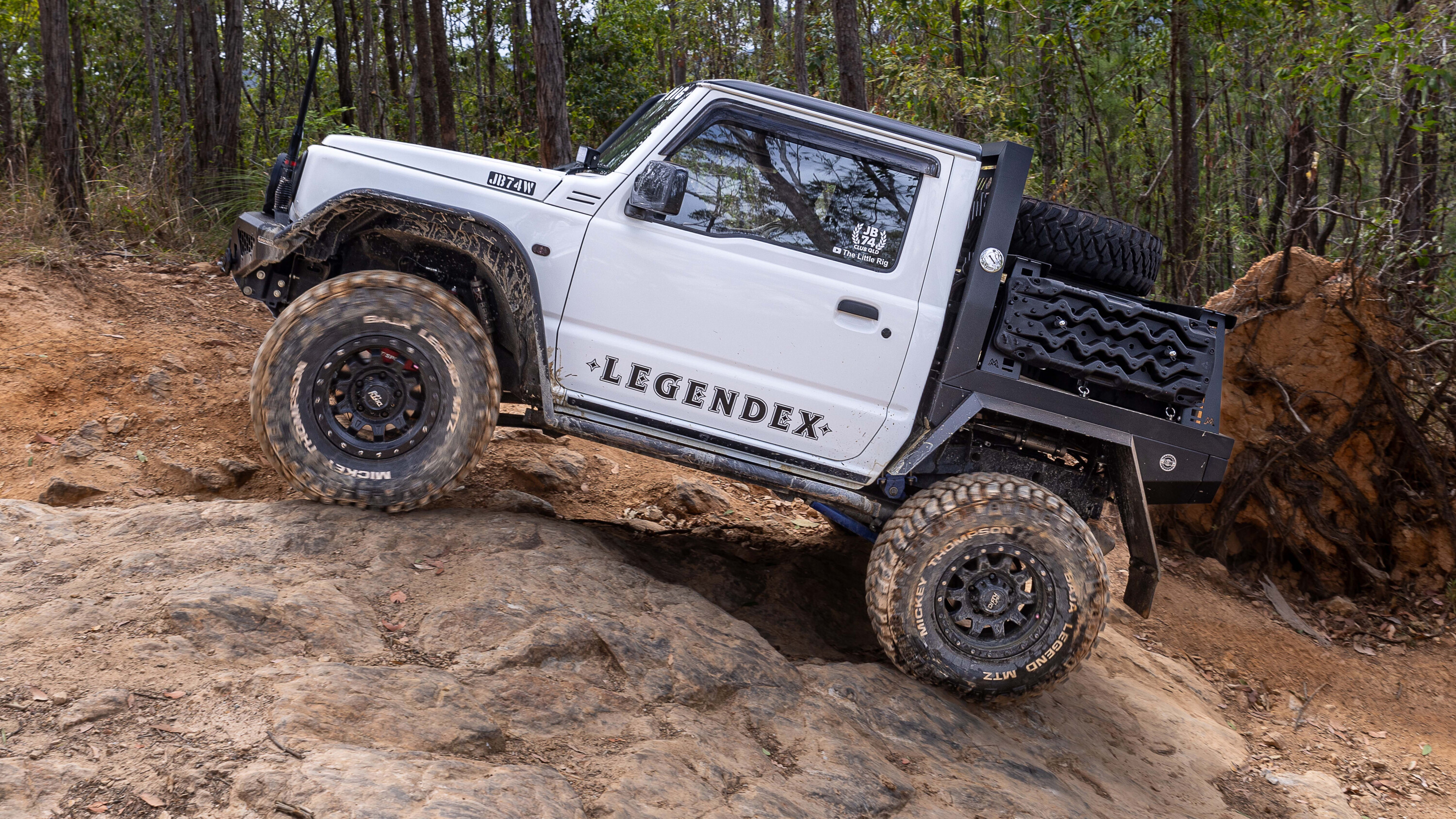
The result was some wadded up sheet metal and a crossroads. Down one path lay an uncomfy call to Darren’s insurance agent. Down the other, a date with the plasma torch and mig-welder.
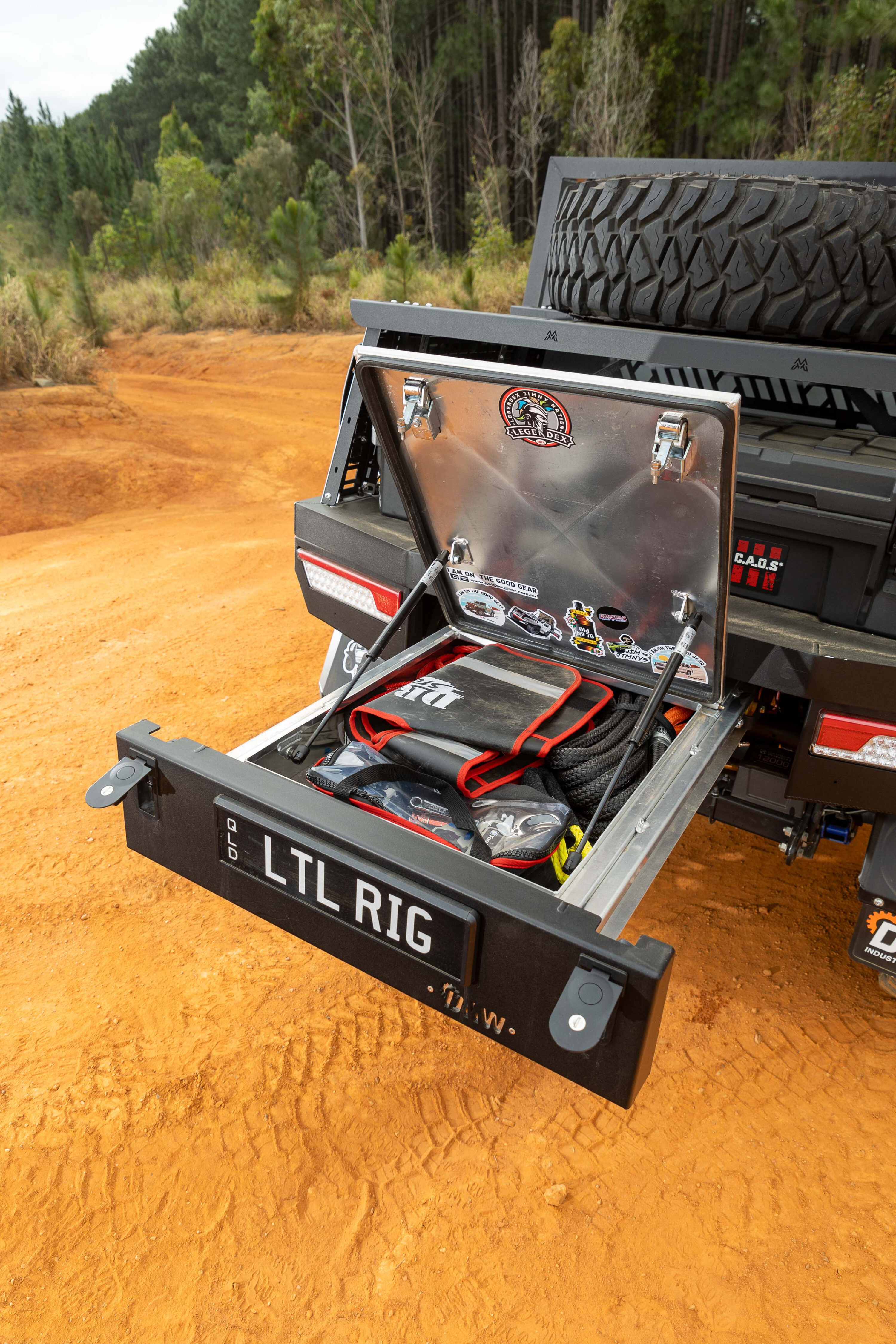
Obviously, Darren went with option B and had DMW Industries slice his Zook’s cab neatly in half, turning it into a one-off ute. It’s easy to say, but a lot harder to do. The conversion also involved a mountain of custom work that we could likely fill this whole mag with.
Then there was the alloy tray, including the trundle drawer, water tank and pump, having to be fabbed up from scratch. Nonetheless, Darren and the team persevered and eventually had a fully engineered and mod-plated ute chop done.
Now he could turn his attention to the rest of the vehicle.
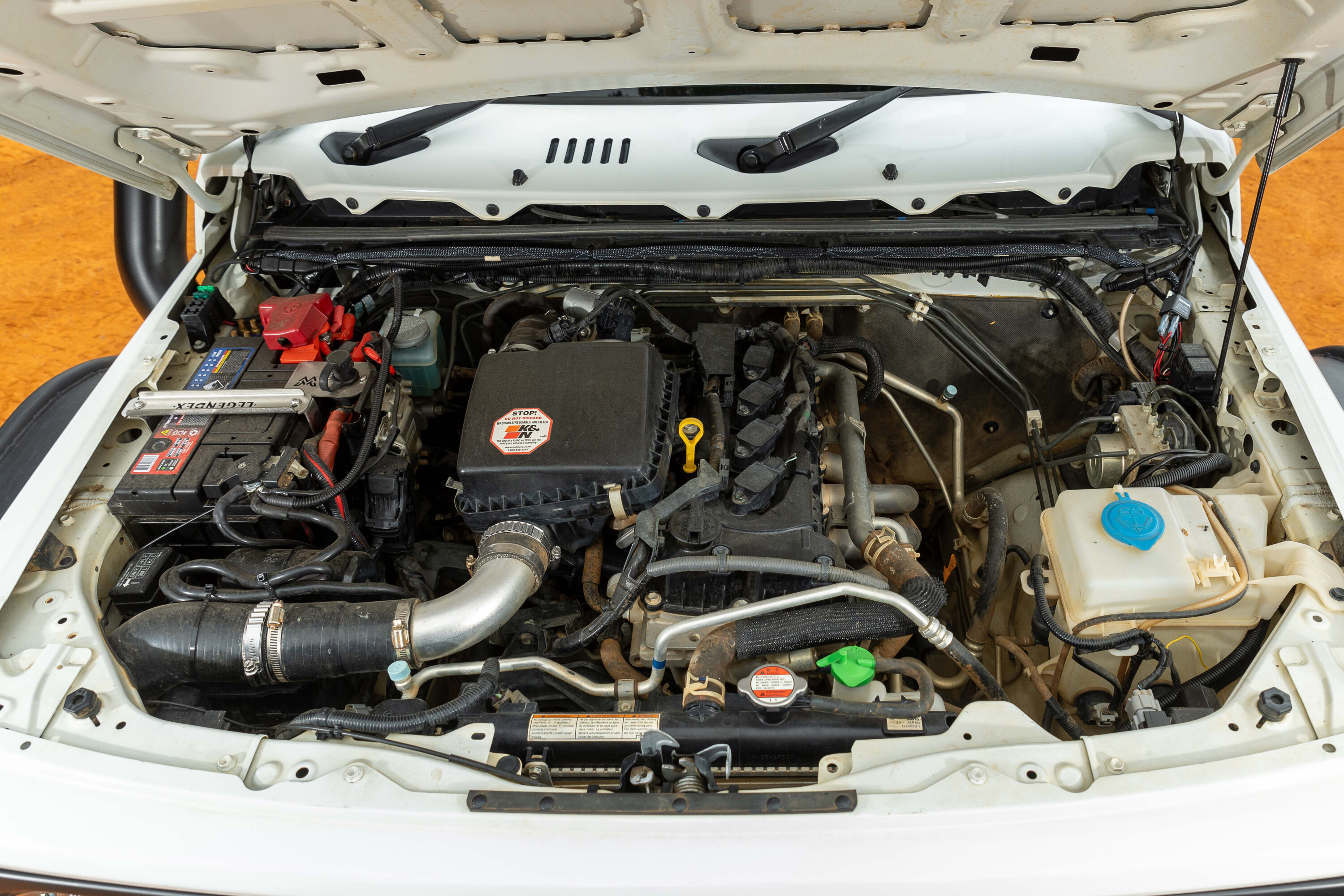
Protrack reduction gears have been stuffed into the transfer case, dropping low range gearing by 87 per cent – which provides more than enough torque to comfortably turn the big 33-inch tyres nice and slowly over the rougher sections of track.
The diff ratios were swapped out for those from an auto Jimny, which give a 4.3:1 ratio versus the manual’s 4.1:1. It may not sound like much, but when you’re running big rubber, every little bit counts. Darren reckons the Jimny used to scream on the highway but now runs nicely in the fat part of the torque band.
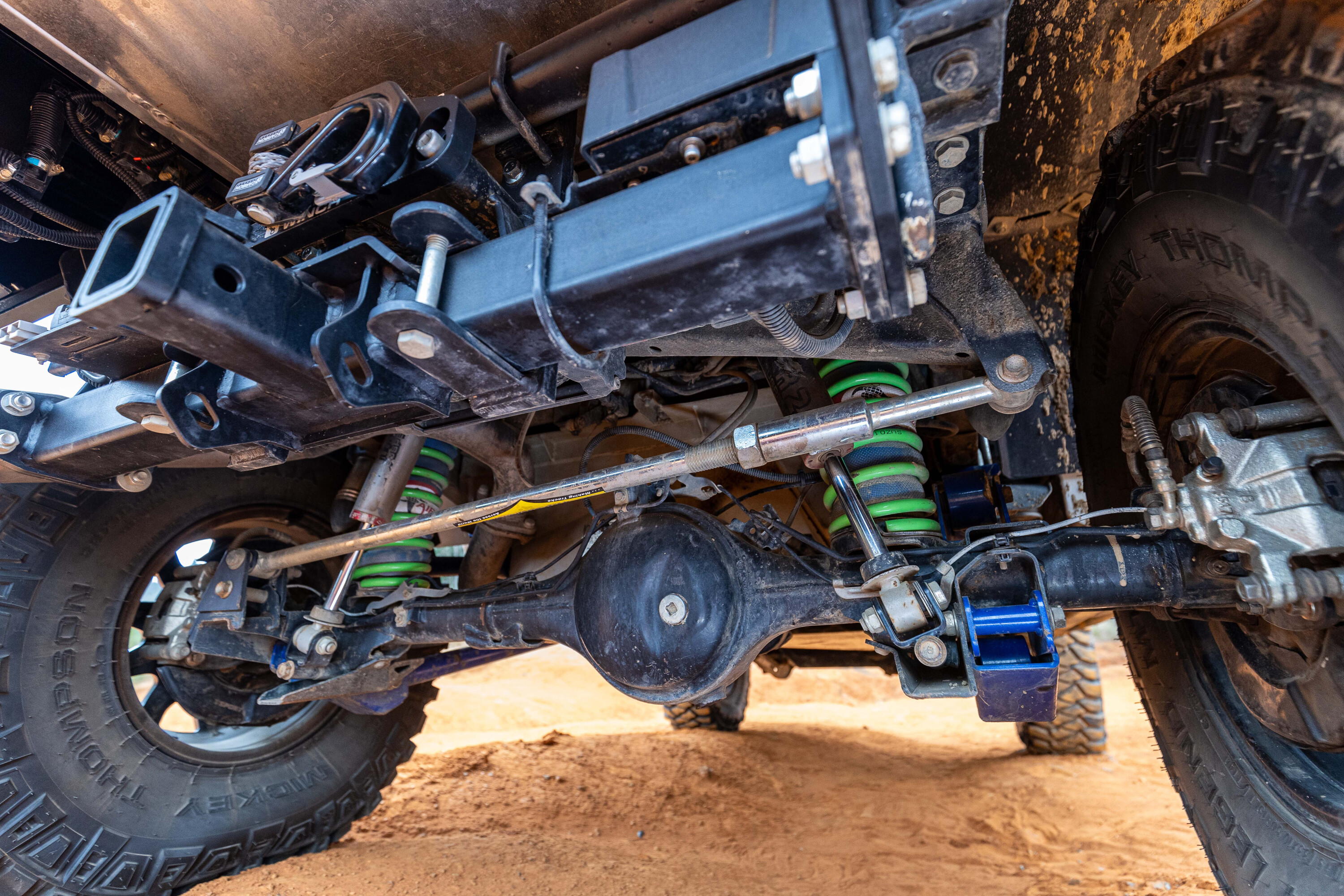
For the naysayers that’ll get online and tell everyone you can’t run 33s on a Jimny without breaking stuff, Darren is way ahead of you. Both CVs and axles have had the full chromoly treatment, which, while not completely indestructible, go a hell of a long way towards letting him hit the steeper terrain with more throttle and less stress.
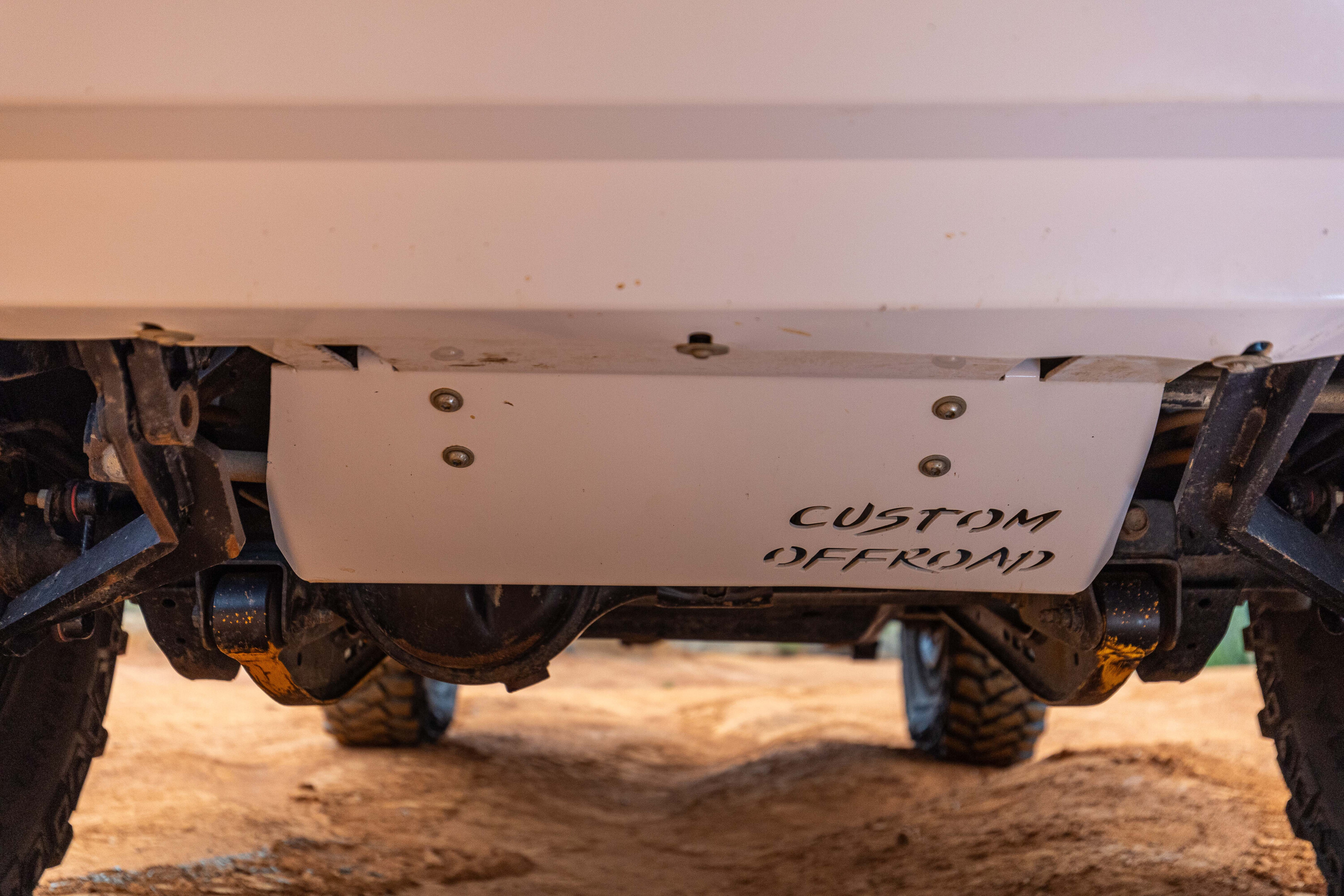
A Hardrace 4-link kit (really a 5-link) has been bolted up to the rear-end to get away from the, frankly, heinous radius arm set-up from the factory.
When we last saw this rig it was sporting an AFN front bar, which has now been replaced by an Offroad Animal item that was fitted simply because it was a lot lighter than the previous unit. When you’re dealing with a limited amount of available GVM, every kilo counts.
The beaut-looking scrub-bars-into-steel-flares were knocked up by Darren and his mate Josh from JJ Custom Fabrication to keep the panels from any more errant rock walls.
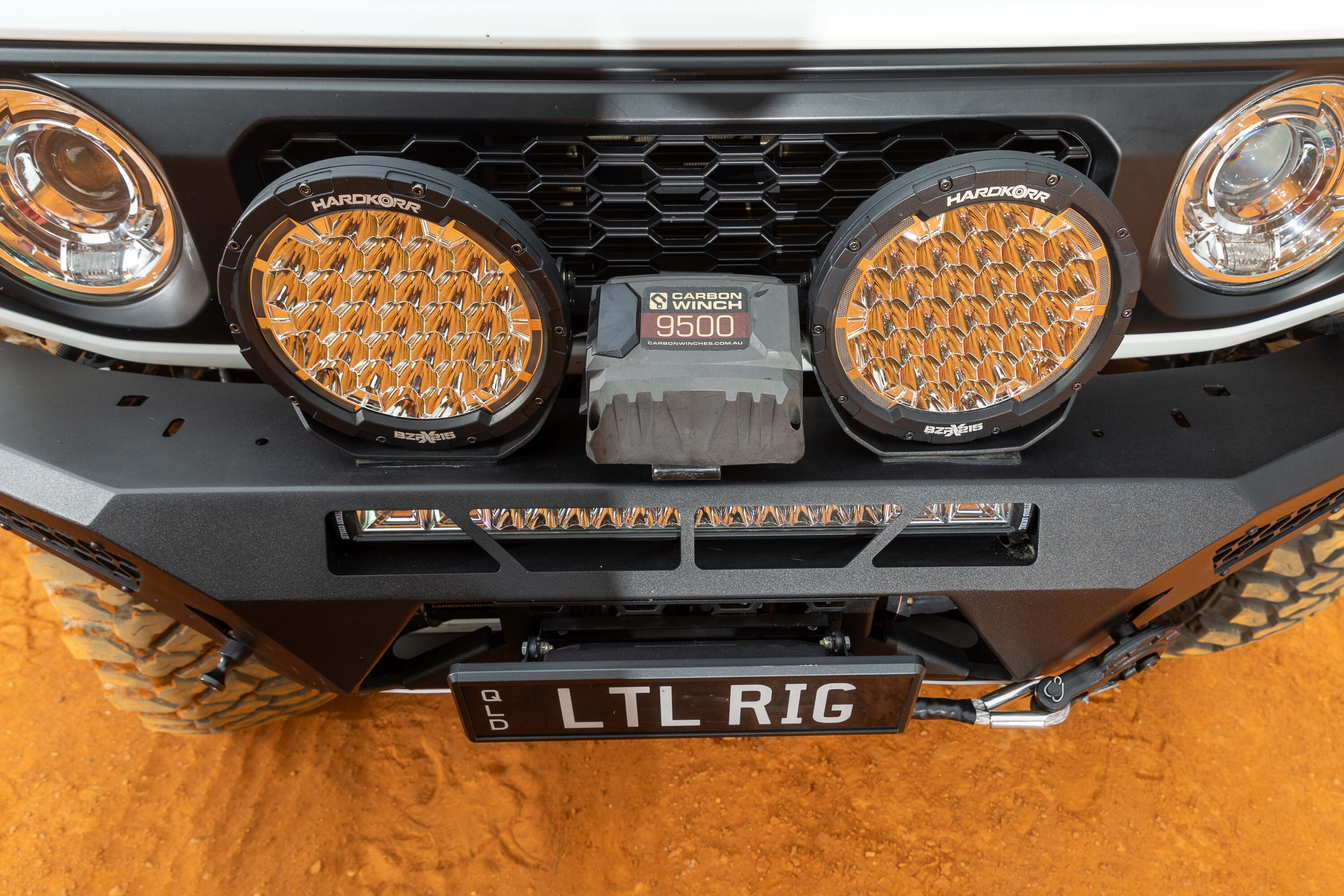
All of the lighting is by Hardkorr, and there are twin Carbon winches, front and back which are fed by the hefty 800CCA (more than double the stock cranking amps) battery that required a new cradle to be fabricated to suit.
Interestingly, the rear winch is a chunky 12,000lb unit. It might seem like overkill for the lightweight Jimny, but Darren mentioned that he often heads out with much larger vehicles, so being able to anchor himself with the front winch then pull his mates out with the rear has made his group’s recoveries heaps easier.
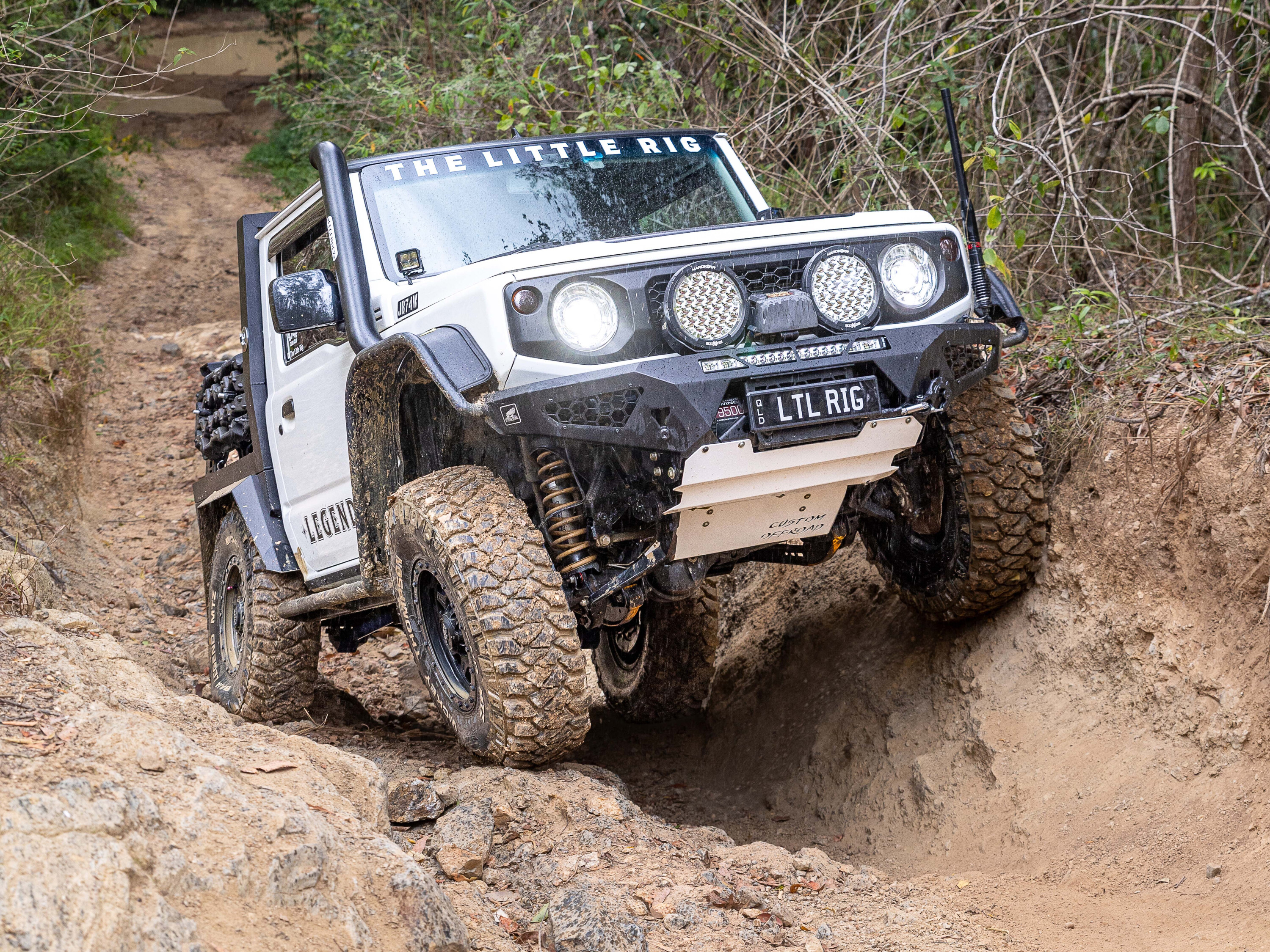
In fact, the Jimny gets used for camping and touring just as much as it does for recreational wheeling. While it gets punted over the hard stuff in trayback form, there’s a fully decked-out canopy with a rooftop tent that gets bolted on for touring duties.
But wait, it’s a two-seater, how do three of them go camping? We’re glad you asked. It turns out Darren’s wife also likes to drive her own Jimny to places like K’gari (the island formerly known as Fraser) and the Sunny Coast hinterland, so she and her son travel in the family’s second Jimny while this one gets to be the pack horse. Why tow a camper when you can drive it eh, mate?
In fact, by the time you read this the AVO Turboworld kit that’ll see a comfy 50 per cent increase in power at the wheels, will have been installed. If you’re driving up Double Island one weekend and a Jimny that sounds suspiciously like it has some wastegate flutter coming from under the bonnet blows by you, try not to feel too bad, hey?
Also, it’s highly likely by now that Darren will be running 35s and 4.871:1 diffs on this rig, in case you were wondering.

Jeez, give us a call when it’s all done, mate. Sounds like we’ll need a third revisit soon enough.
A build like this requires a fair amount of team effort, and Darren wanted to thank the guys from Legendex for all of the mechanical and diff work; DMW Industries for the chop and HardKorr for all of their help with the 12V gear.
The BSEN500 is the most accurate battery monitor on the market with up to five times more accuracy under the most common operating conditions, so you can trust that ‘two hours left’ means two hours left.
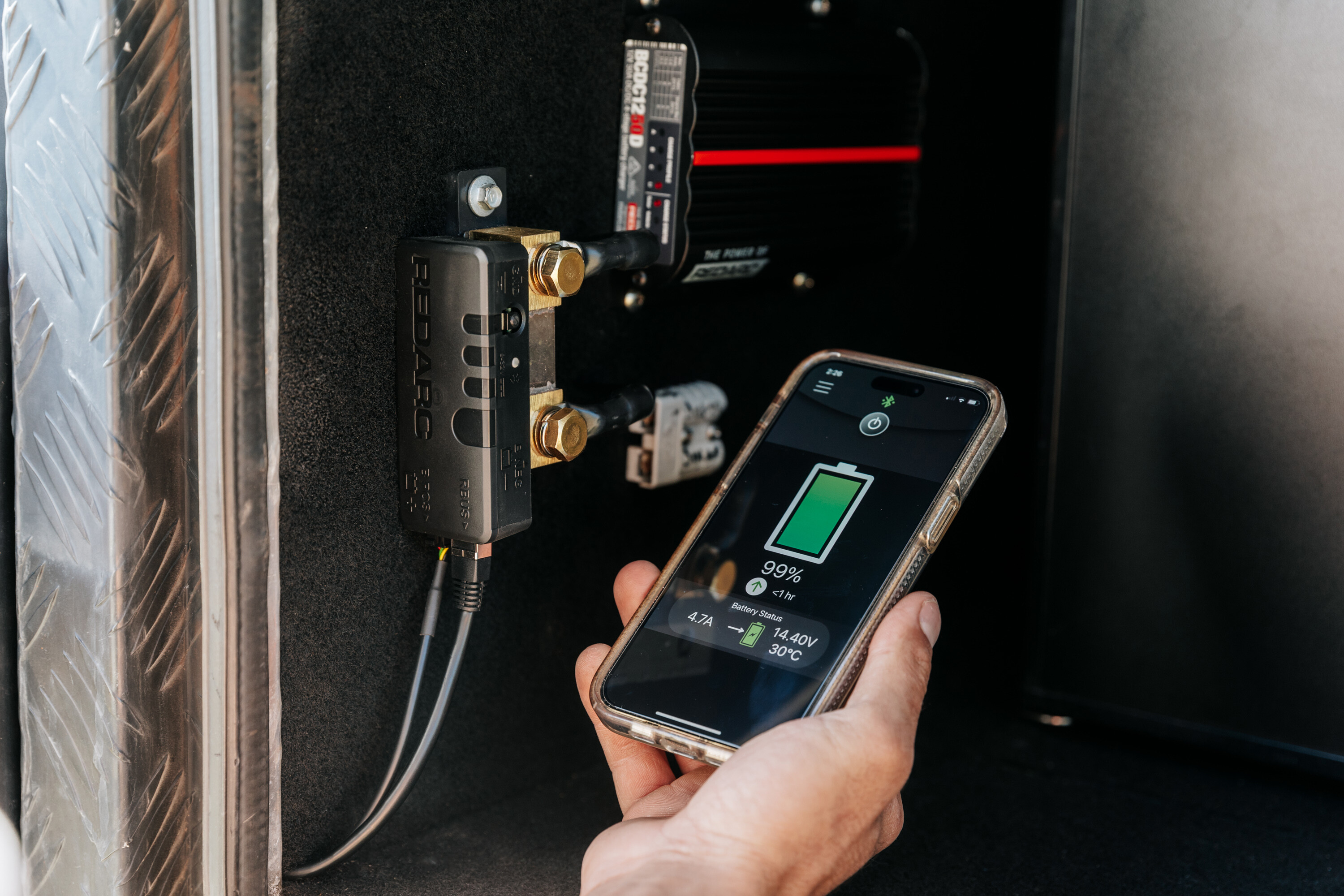
The Smart Battery Monitor takes the guesswork out of tracking your battery levels, measuring the state of charge of your battery, time remaining and current flow. This is welcome news as I don’t know a 4WDer who isn’t often checking the state of their auxiliary battery and wondering if what they see is what they are getting.
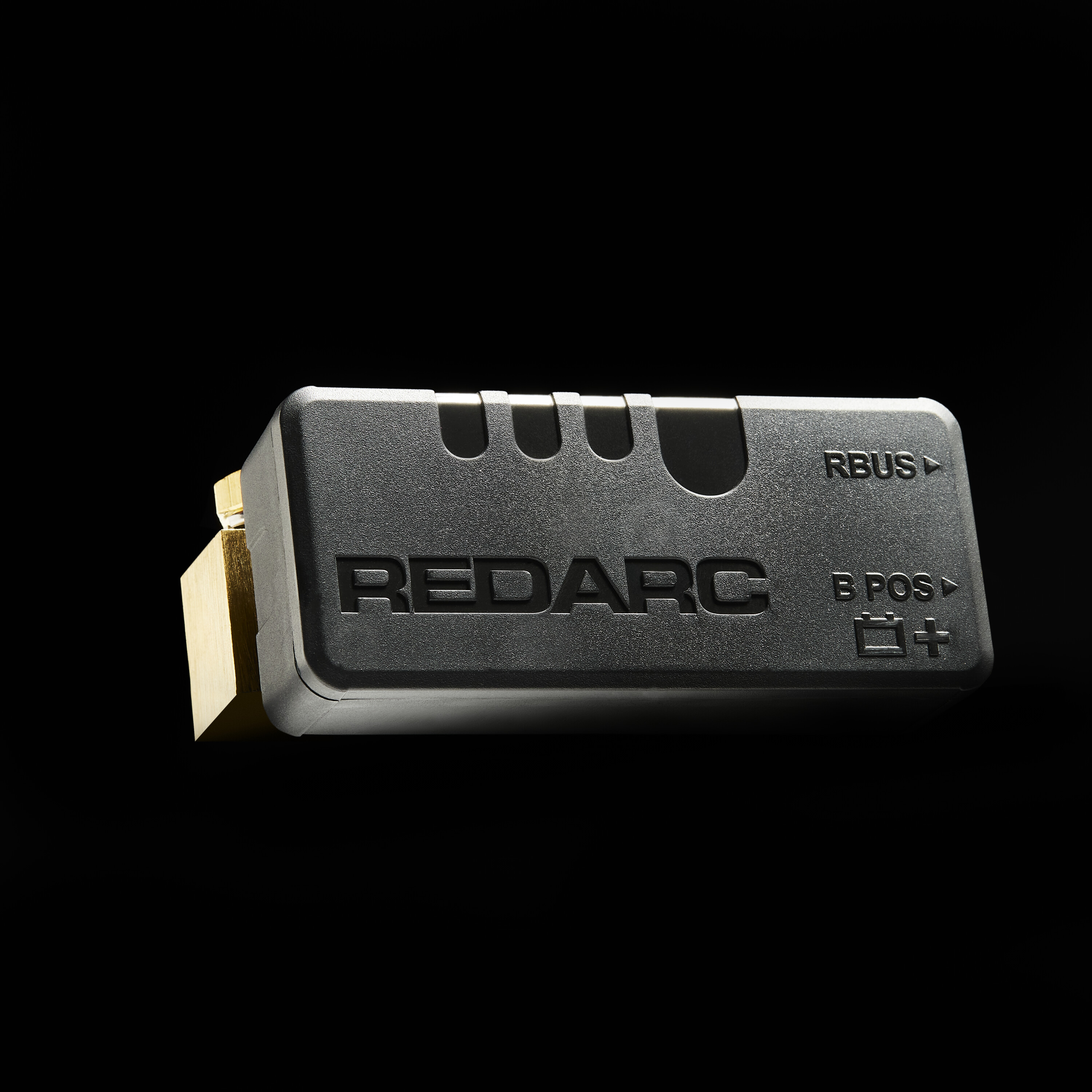
The Smart Battery Monitor provides solid connectivity to the RedVision Smartphone App via Bluetooth 5.1, with up to 42m of range and twice the transfer speed of Redarc’s competitors. The simplified user interface features one-touch access, so when you open the RedVision App your battery data appears instantly. The BSEN500 has a compact footprint of only 120mm x 52mm x 45mm, which makes it perfect for mounting in tight spaces for a compact vehicle monitoring system.
Dylan Pinkard, Redarc’s product management team leader, explains, “One of the most common requests from our consumers is a way to monitor auxiliary battery charge levels. The Smart Battery Monitor addresses this request, allowing fast, reliable and accurate battery monitoring.
“We focused heavily on ease of use, with one-touch access and data that doesn’t require an electronics degree to understand. The Redarc Smart Battery Monitor is the perfect addition to any new or existing dual battery system or RedVision installation.”
The Smart Battery Monitor allows you to step into every adventure with complete confidence, thanks to its unrivalled accuracy, Bluetooth connectivity range and easy monitoring. Compatible with all common chargers and battery types, the Redarc Smart Battery Monitor is here to help you focus more on adventure and stress less on your battery levels.
Installation is as quick as it is easy. With only three connection points and a user-friendly configuration app, you can start monitoring within minutes. A simple addition to any 12-volt power system, the Smart Battery Monitor is the easy choice for keeping track of your batteries.
Redarc puts its products through a rigorous testing procedure to ensure that they will not let you down when the road gets rough. They provide reliable and adventure-ready solutions, and they’re made in Australia for the harshest environments, so you know you can go the distance with more accuracy.
I love taking it to the 4WD parks and beaches around south-east Queensland, and I love being able to tow a full-size triple caravan to amazing places like the Blue Mountains, Carnarvon Gorge and Yeppoon, and then being able to hit the harder stuff once at destinations like Byfield National Park. It has a front ARB air locker, rear factory locker, a smallish lift and 37-inch tyres – Gavin Pratt
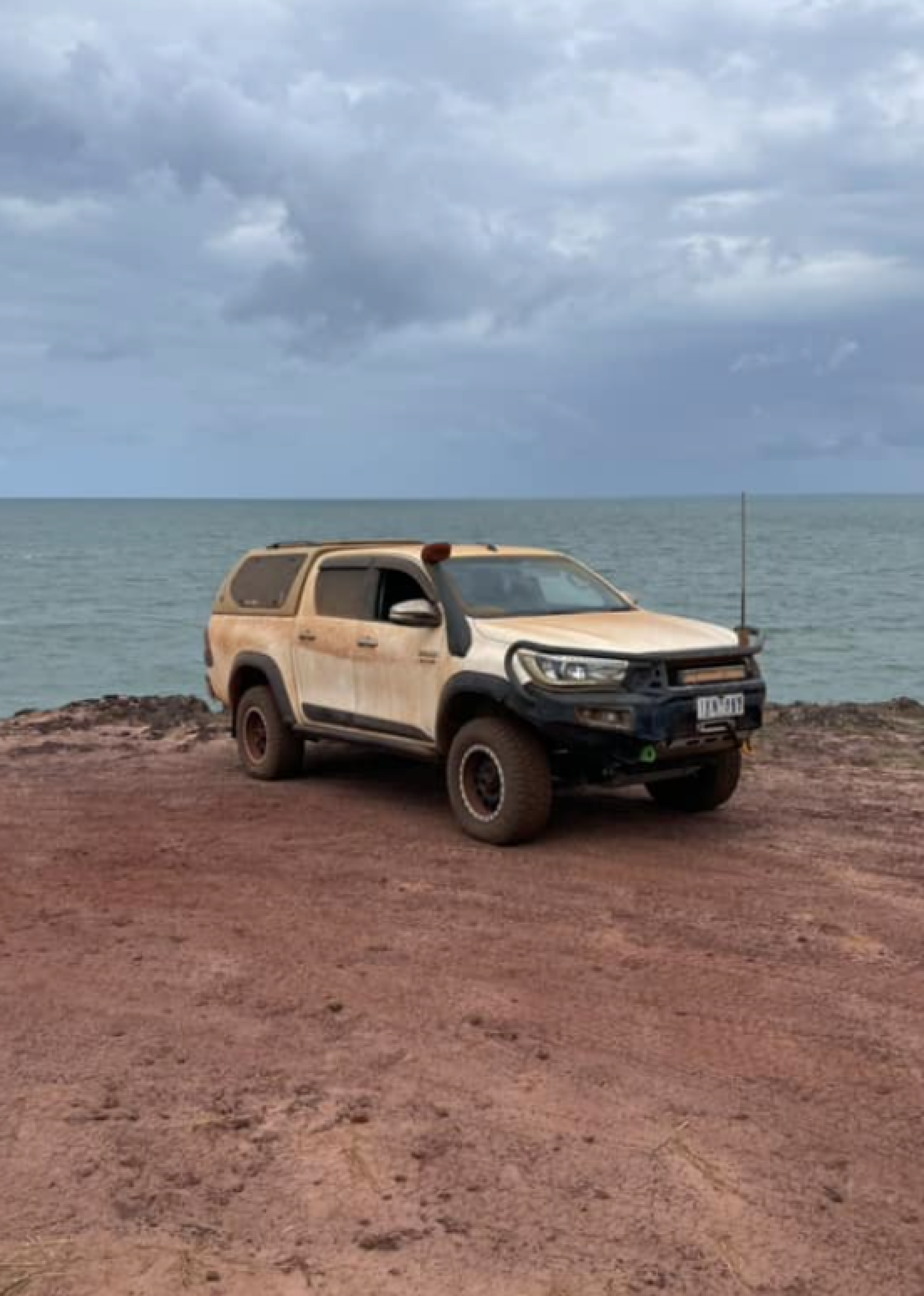
I’ve had a tow tune put in it and DPF-back three-inch exhaust, but mods and accessories are otherwise minimal. They include a two-inch Pedders lift; Method wheels; Maxxis A/T tyres; AFN bullbar; winch; snorkel; UHF; extended breathers; a solar panel on the roof; 200Ah lithium battery; and a canopy to keep the drawers and Engel dry and dust-free. I’ve done Cape York twice in the HiLux and it performed well both times, completing the Old Tele Track trouble-free. It has done the Oodnadatta Track as well – Brett Munday
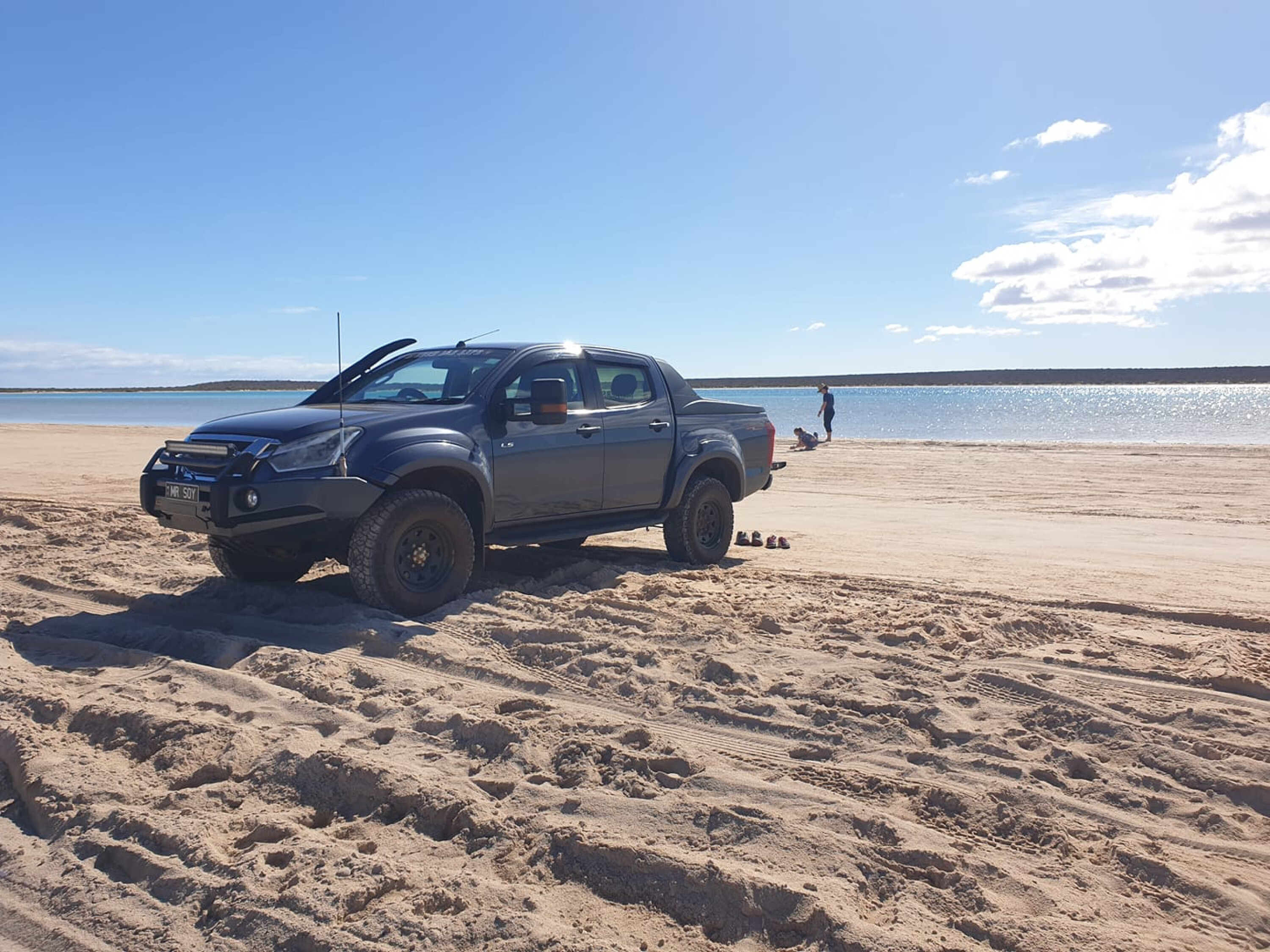
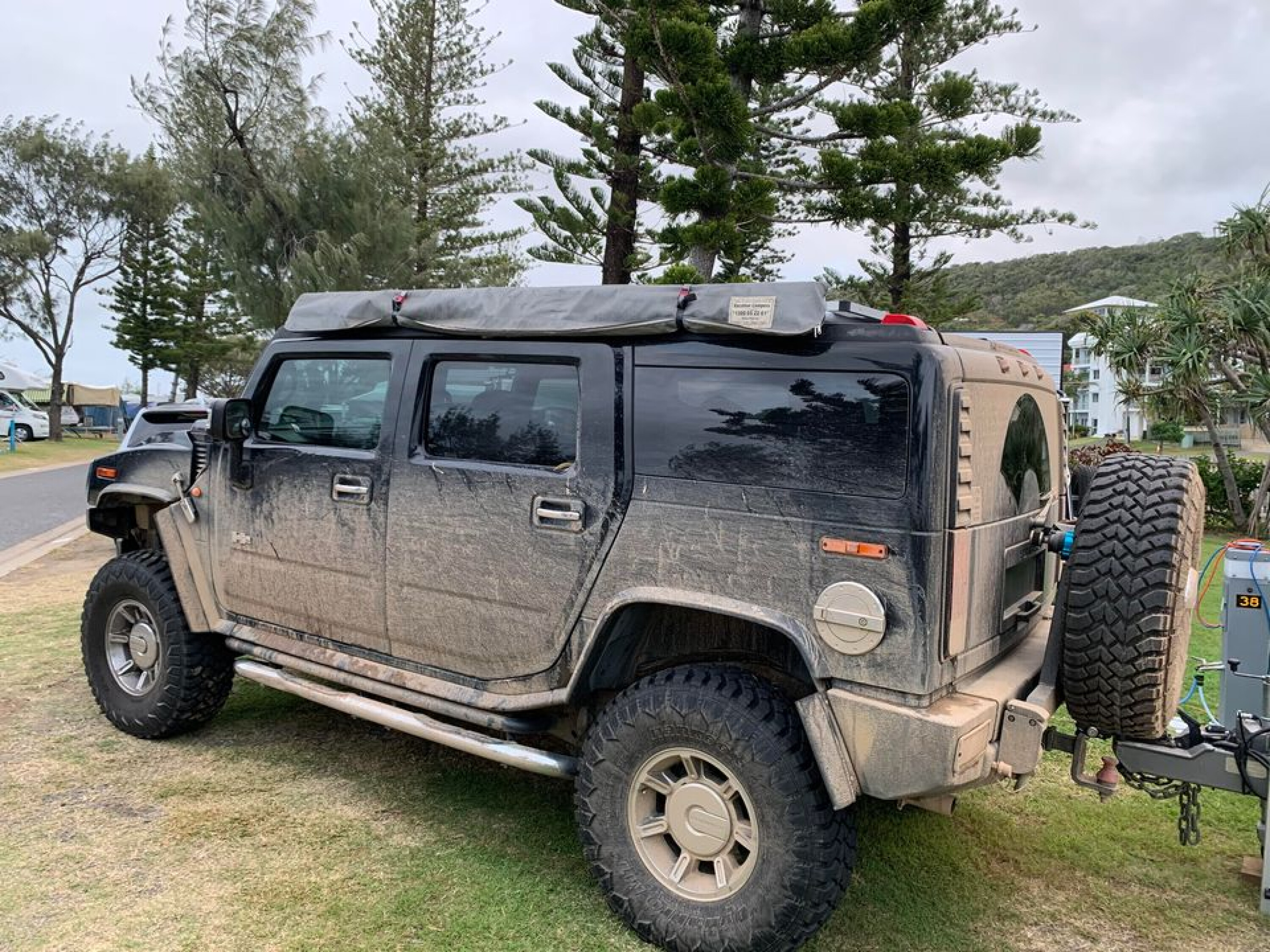
This beast tows a 22-foot family caravan, and she has done most of WA and the NT. This photo is at the Little Lagoon in Shark Bay, WA. It is fitted with an Isuzu Motorsports Dakar Bar, wheel arches, aerodynamic sports bar and snorkel, plus it has a two-inch lift – Soy Dave Green
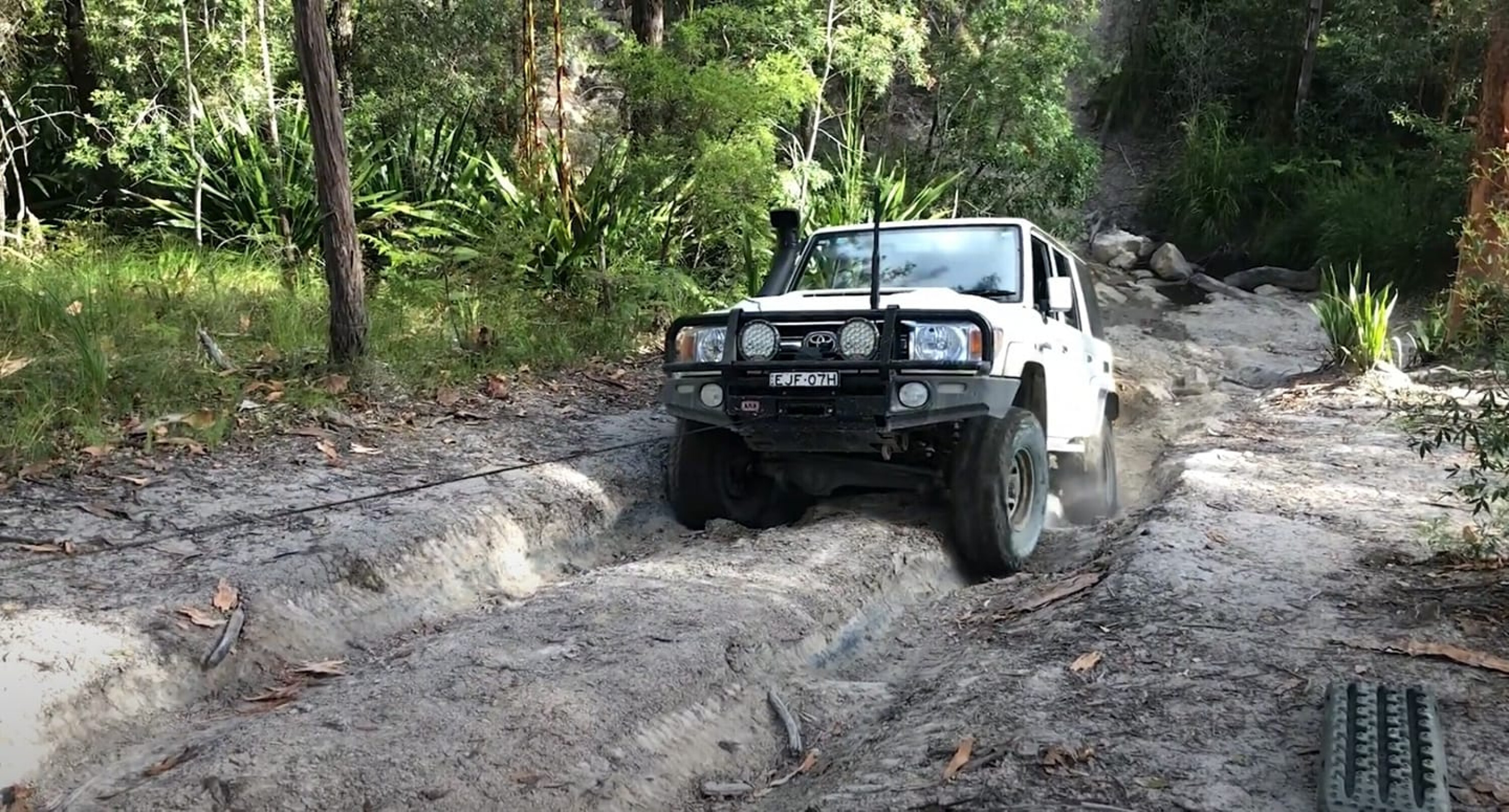
My 76 LandCruiser has OME BP-51 shocks; 285/75R16 BFGoodrich All-Terrain tyres; ARB front bar with Intensity Solis lights; Kaymar rear bar; rear track correction with an MDT Tru Tracker setup; Safari Armax snorkel; new centre console from Cruiser Consoles; and a GME XRS370C Connect UHF. It has a 3660kg GVM upgrade (2420kg Tare) with an engineering certificate. I added a Drifta drawer setup in the rear and an 80L water tank behind the back seats. It also has a catch can and secondary fuel filter.
The best place I’ve taken it was probably Fraser Island in March 2022. That was an epic seven-day adventure with three other vehicles. I’ve taken it many other places including Port Macquarie, Bago Bluff, Barrington, many times to the Watagans to explore the tracks, and a road trip to Broken Hill with extended family. This photo was taken on Greens Break Road in the Watagans, NSW – Andrew Goodwin
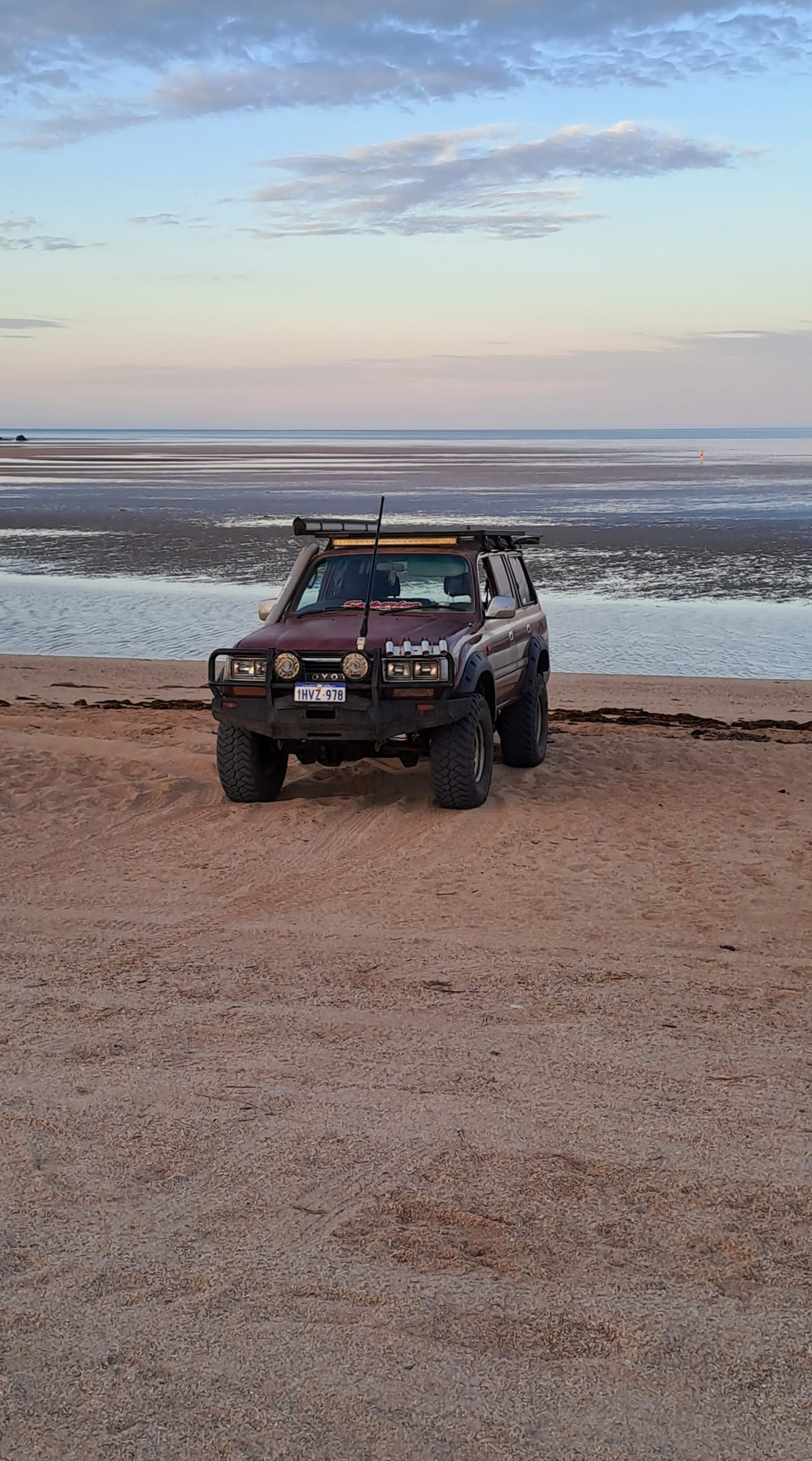
It has a three-inch lift, 35s and a roof rack with an awning. The best place I’ve taken it would have to be Broome in northern Western Australia – Zach de Boer
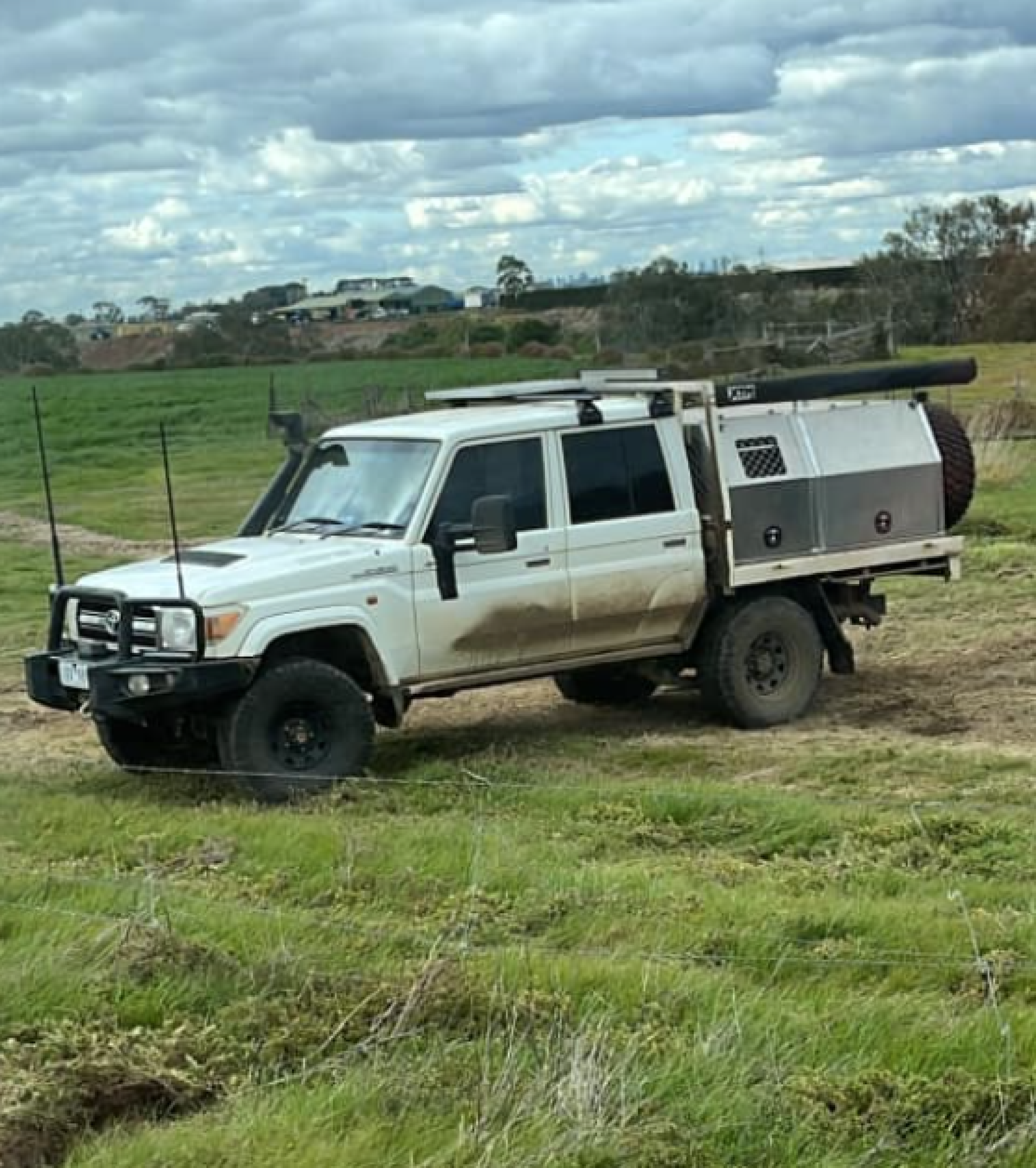
I just moved to Victoria from the Northern Territory and a lot of its driving was on a cattle station, but it has crossed the country north-to-south and west-to-east a few times. Crossing the Gunbarrel Highway and the Anne Beadell Highway was one of the best cross country trips I have done with her. On the road she tows a 40-foot caravan, as well as a boat on a lot of the trips through the Top End.
Mods include a three-inch lift with GVM upgrade; re-map; three-inch exhaust; custom-built canopy; Clearview mirrors; Redarc electric brakes; and a Century lithium slimline battery with XTM solar. If I was to list all the mods, the list would be incredibly long – Tony Dusty Grant
It’s a tale literally as old as time, and it’s something that couldn’t be more relevant when it comes to the once proud king off the road, the mighty 80 Series LandCruiser.
Once the reigning monarch of Australia’s off-road kingdom, it was sidelined by a parade of shiny newcomers, touting touchscreens over torque.
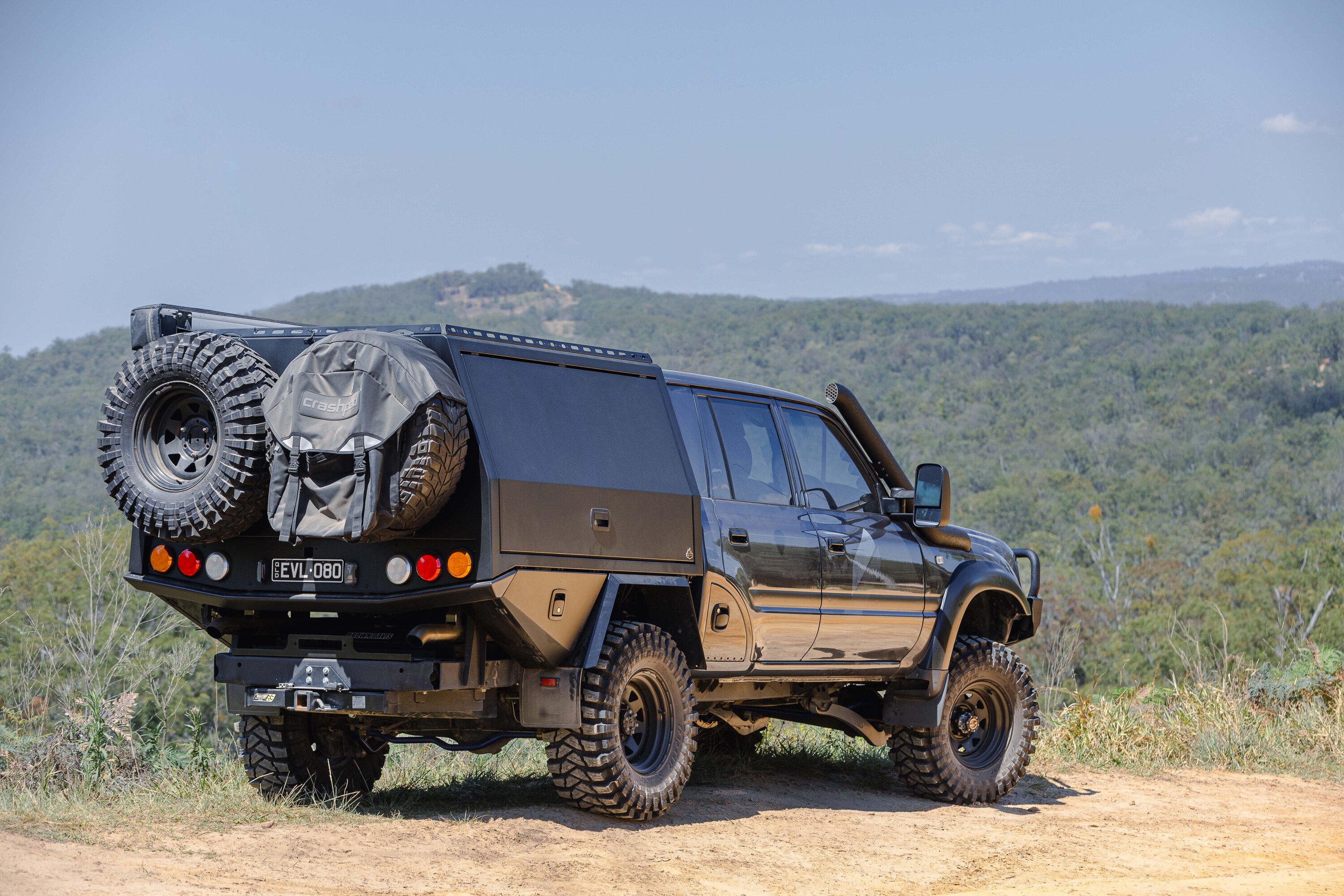
Like so many kings before, the 80 was exiled and forgotten, but it’s now back and ready to reclaim its place on the throne.
Armed with grinders and spanners, keen enthusiasts like Ben Madden are determined to remind people what made these vehicles so good 30 years ago, and how they can still be the stuff of royalty today.
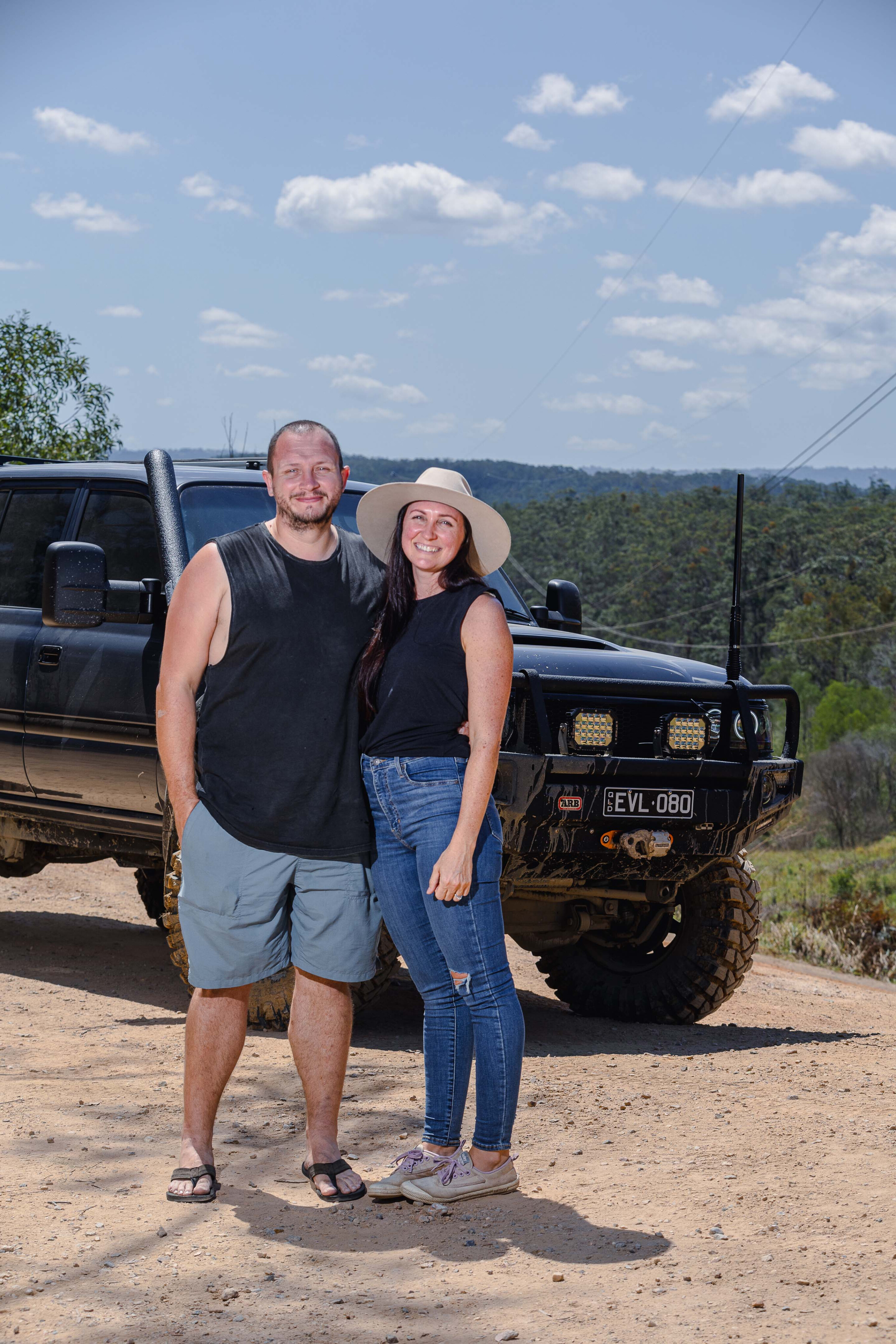
Ten years later and while the epoxied-on screwdriver gear shifter is a clue to the Cruiser’s past life, it’s now living a new life and beating with a new heart.
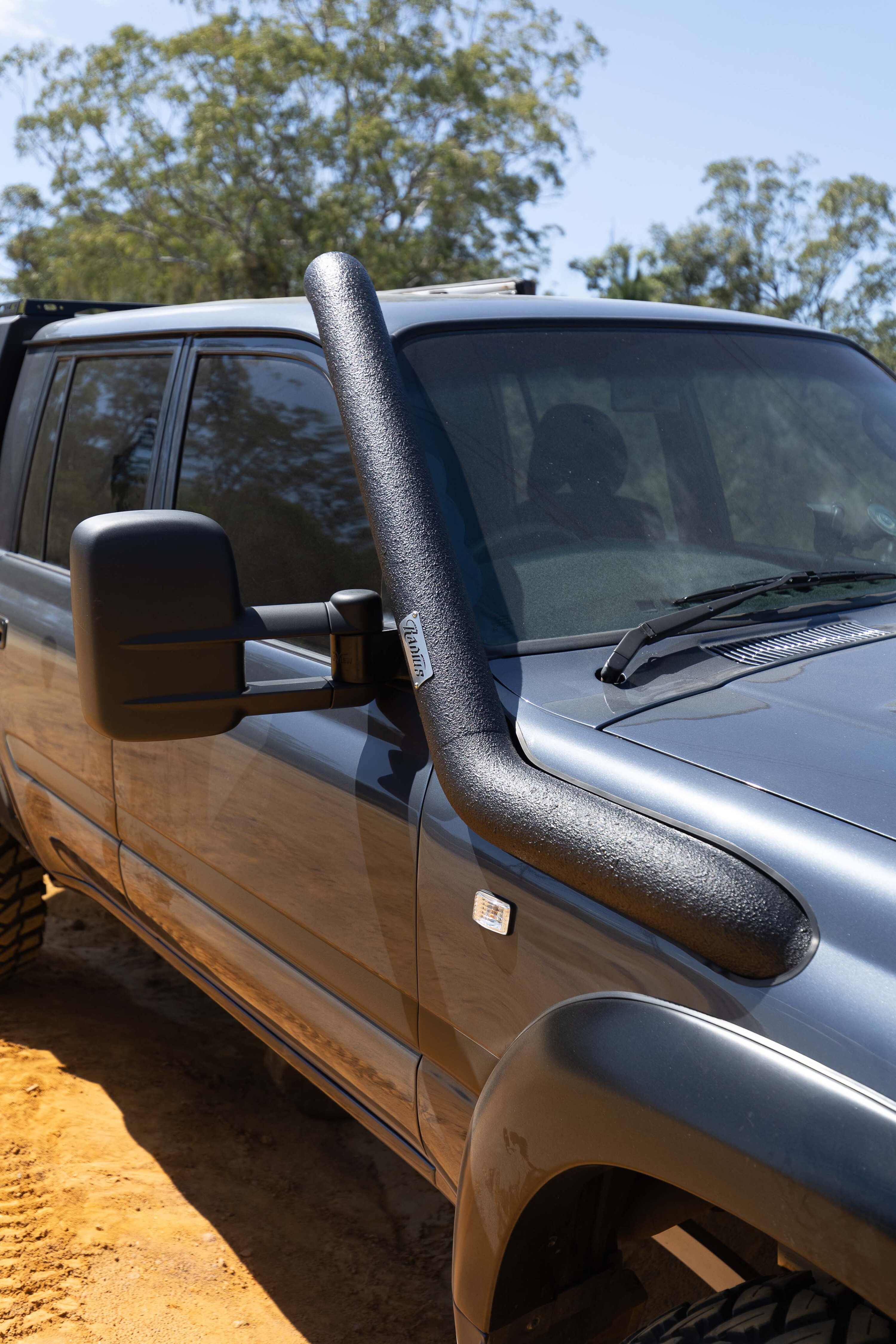
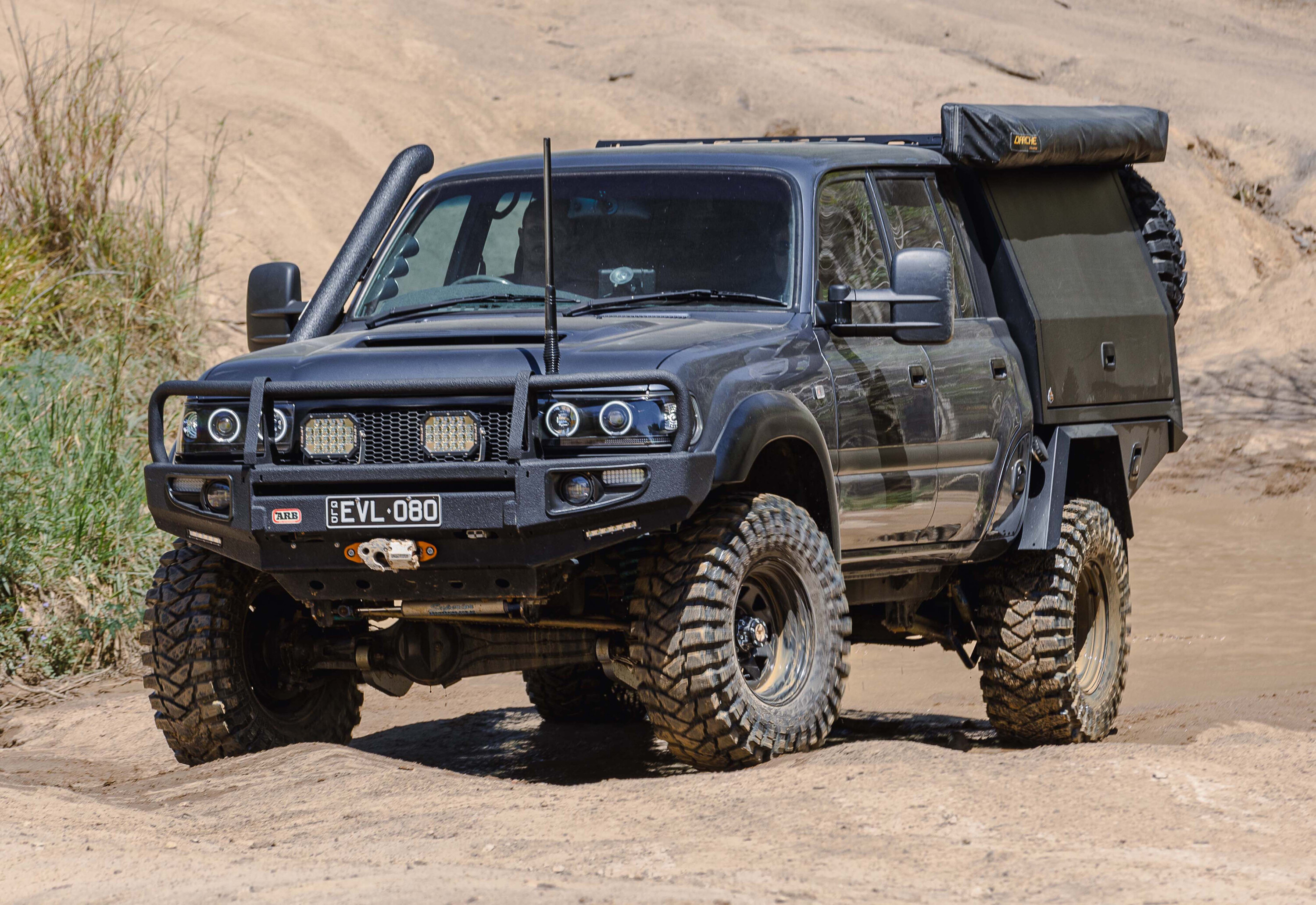
Follow the Raptor-lined Radius Fabrication snorkel down through the 80’s guard, sneak your way past the matching airbox and you’ll find nestled between the rails Toyota’s 1HD-FTE in place of the original 1HDT.
“Me and one of my best friends Benny Jones were on a Cape York trip by ourselves,” Ben tells us. “As I was coming out the exit of Gunshot, it snapped a crank. It sounded horrific but it still ran. We camped at Gunshot for the night and somehow managed to limp it to Bamaga where we made a plan.
We sent the car on a ferry to Cairns, flew ourselves to Cairns and drove a hire car back to my hometown of Airlie Beach. About a week later the car showed up on a truck and the engine conversion began.”
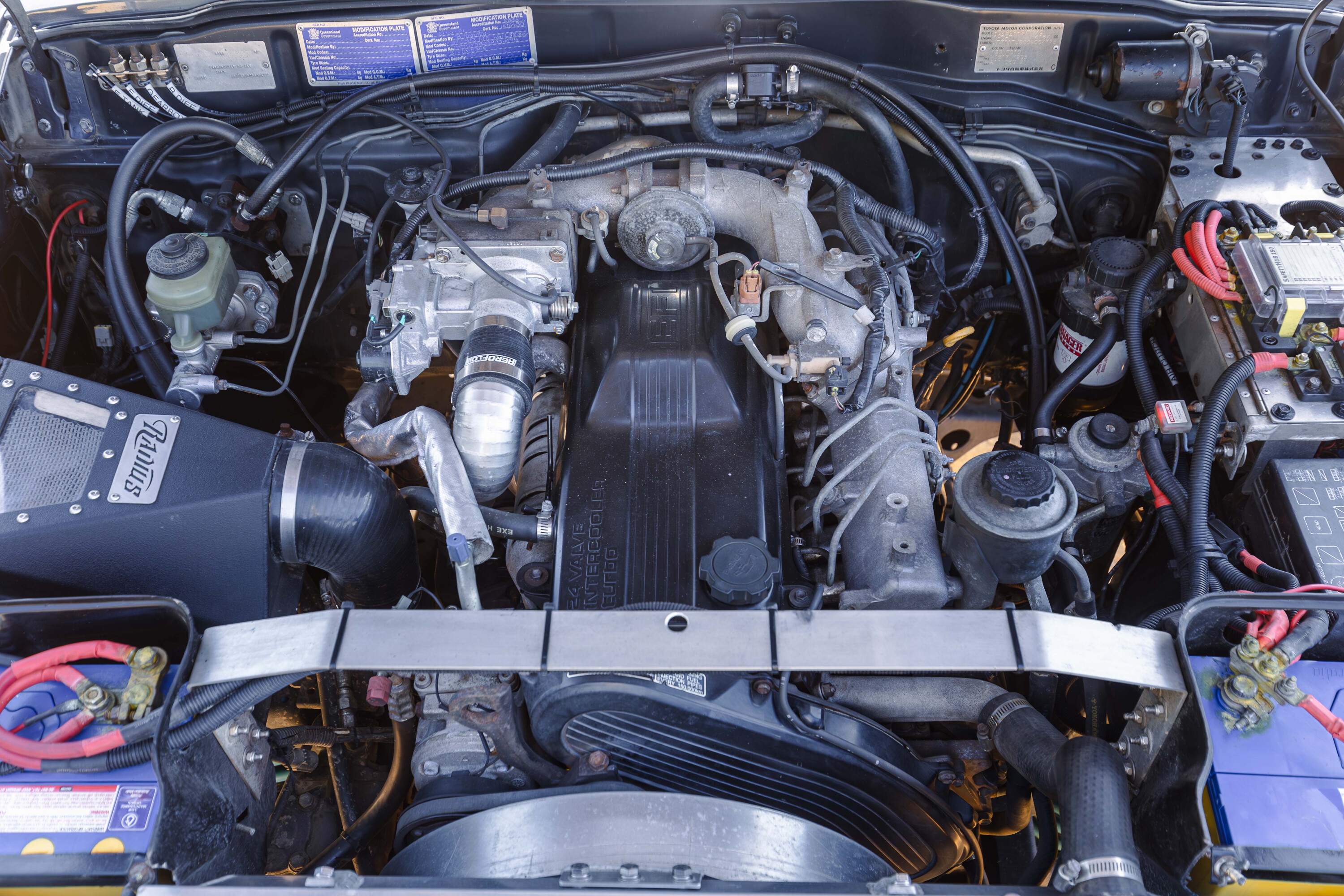
The factory Toyota CT-26 turbo is still serving duties faithfully and runs a little cooler thanks to a 316-grade mandrel-bent stainless exhaust Ben whipped together himself, while a PWR 55mm radiator helps keep those temperatures in check. For now, the factory five-speed gearbox and transfer case still have a home, but Ben’s converted it from full-time to part-time 4×4 with a Marks 4WD kit and pair of Aisin hubs.
To ensure the new-found power will actually make it to the ground, Ben’s given both front and rear axles a complete top to bottom.
While Ben was up to his elbows in axle grease the brakes copped a serious working over too. Front and rear are sporting Bendix vented rotors, with the front axle copping larger units off the later model 80, as well as larger pads from a 105 Series Cruiser.
A Marks 4WD hydraulic brake booster and braided brake lines on all four corners round out the stopping power, while a Boosted & Built Garage electric handbrake makes this the first 80 in existence that actually stays where you leave it. Alright, maybe the platform has a few shortcomings.
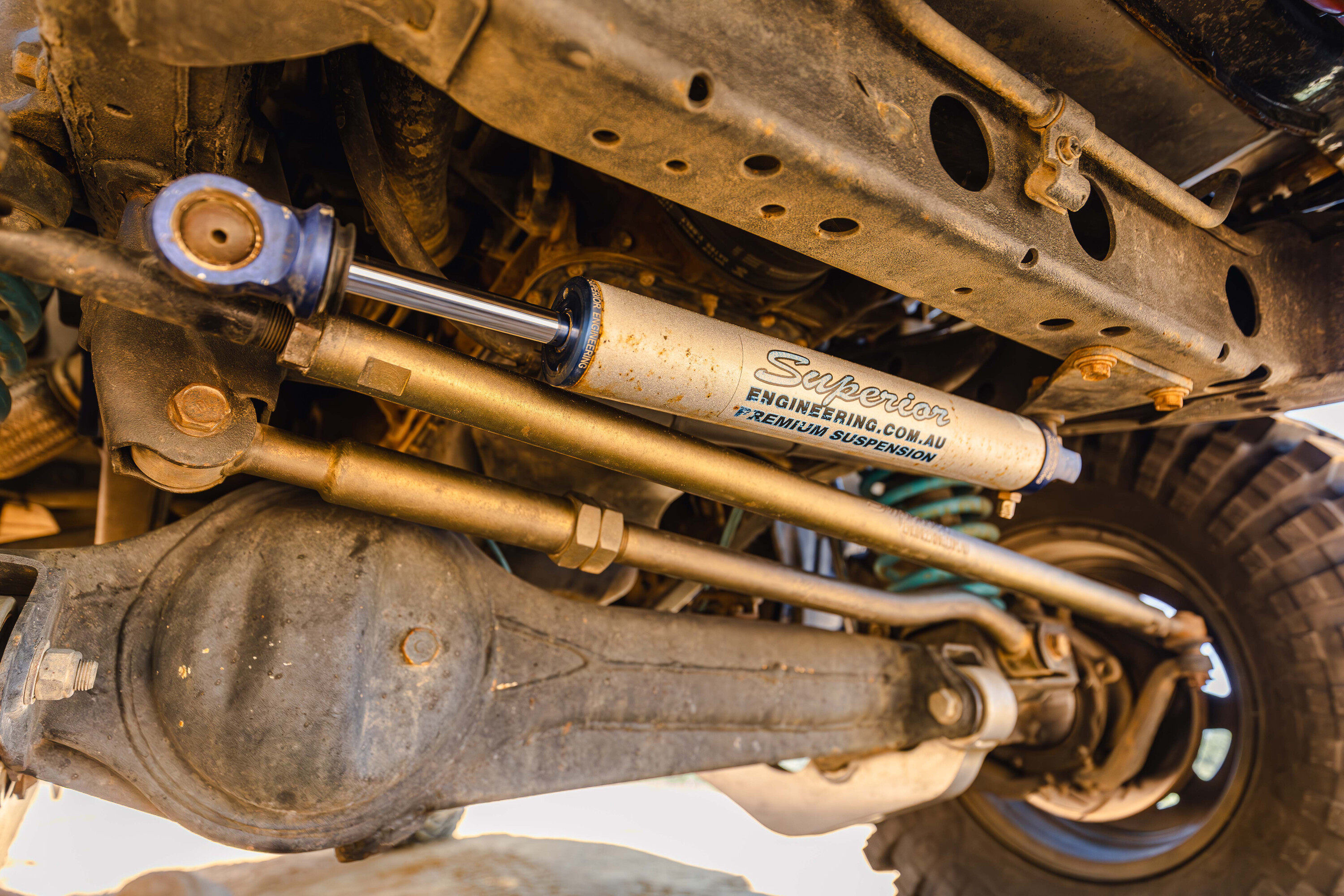
When it’s time to hit the hardcore trails Ben’s got a set of super aggressive Maxxis Trepador tyres punching in at 325/75R16 (a little over a 35-inches) and a set of Mickey Thompson Baja Boss in 317/75R16s for touring duties (a little under a 35-inches).
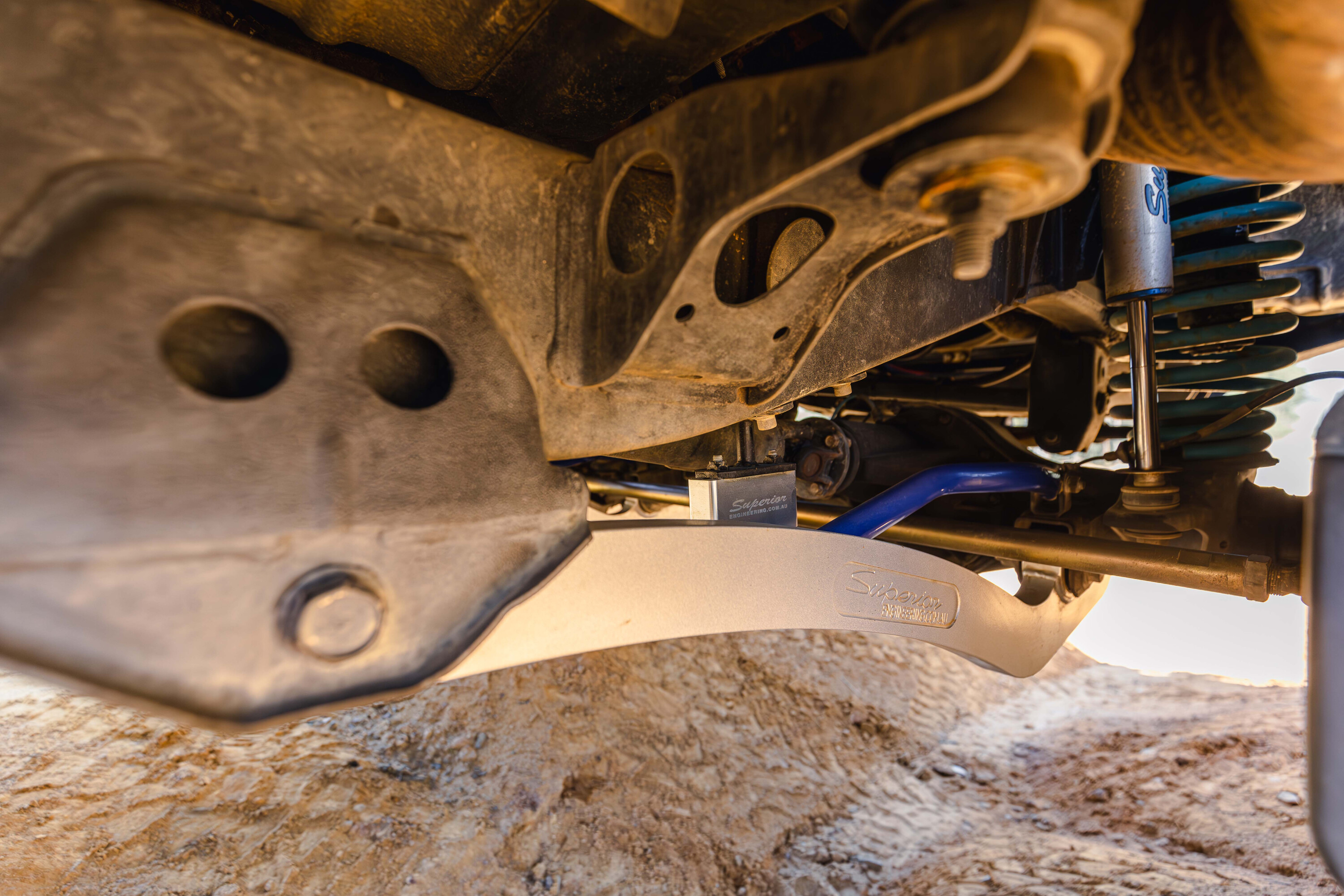
While the Cruiser is sitting 3-inches higher than stock, it’s a little more complicated than that, so we’ll start at the front. Both the tie-rod and the draglink have been replaced with Superior Engineering items for an upgrade in strength, and there’s an IFP steering damper keeping steering shimmy under control.
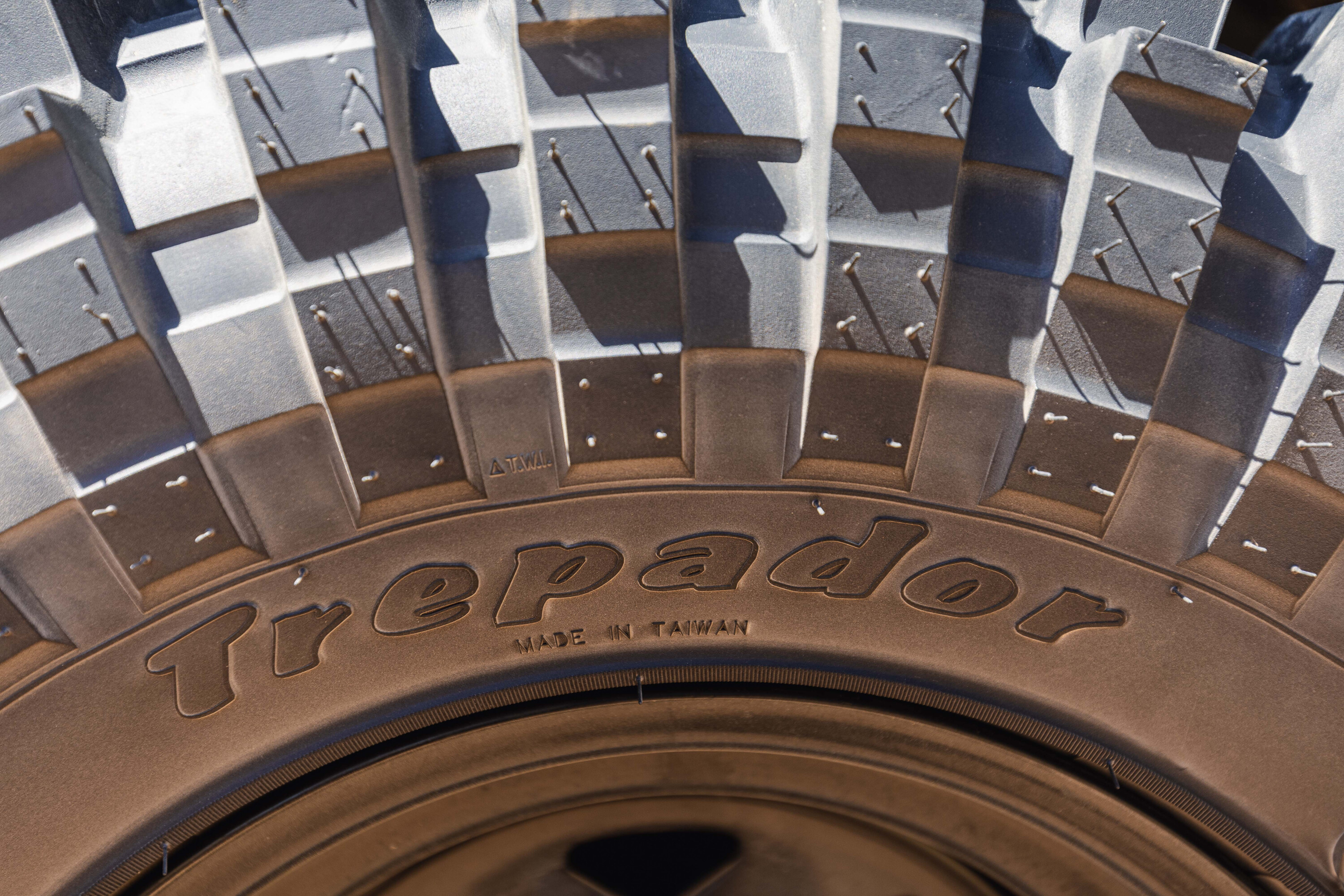
There’s also a set of Superior Engineering radius arms correcting castor and adding articulation, a SuperPro 33mm sway bar adding a little handling ability, a Superior Engineering adjustable Panhard rod and extensions on the sway bar, and bump stops.
Moving down the back and things get a little more involved. Sure, there’s 3-inch 400kg constant-load Dobinson springs and more Superior Engineering shocks, but there’s also a full suite of upper and lower adjustable and heavy-duty Superior Engineering trailing arms.
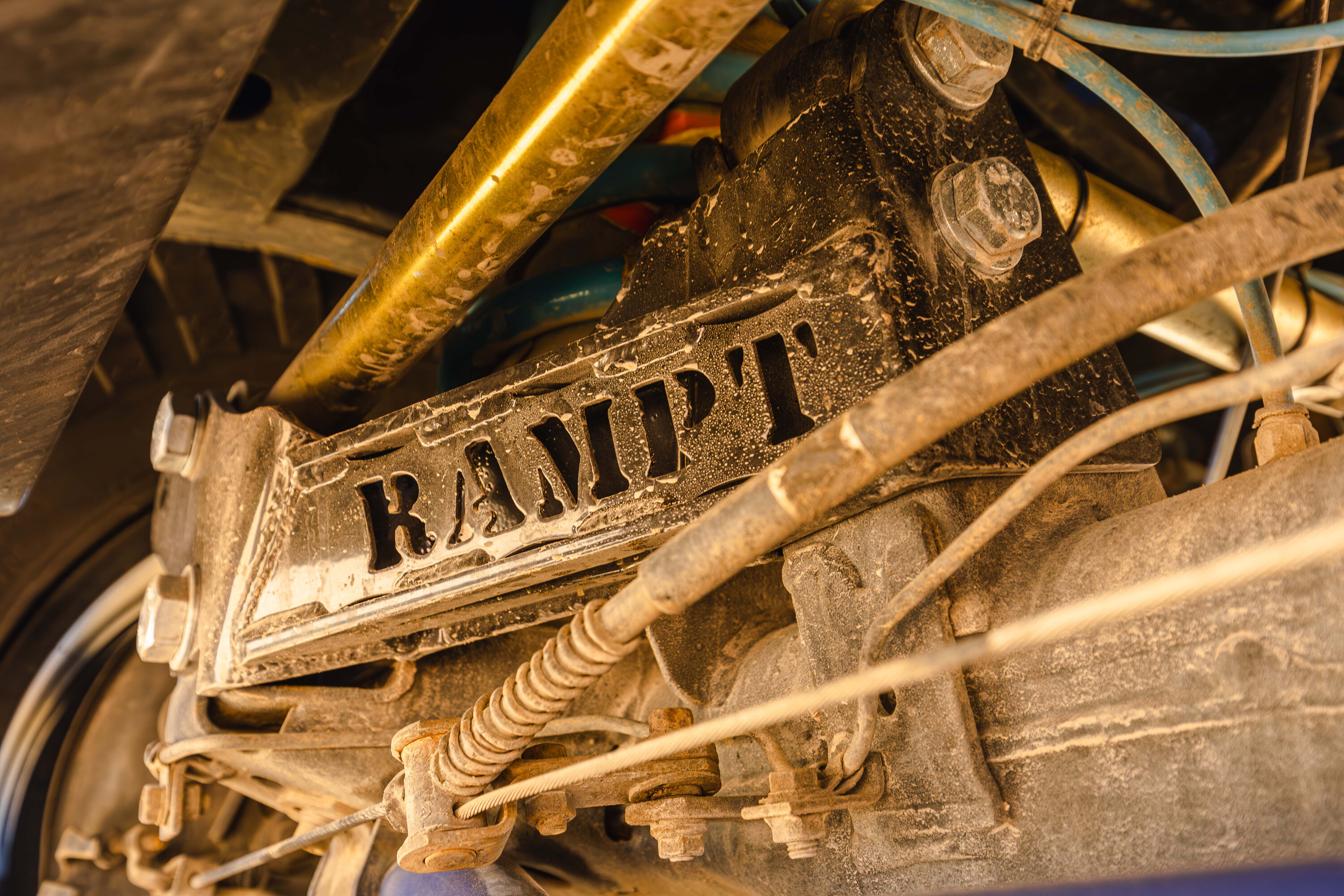
There’s another Superior Engineering Panhard rod, although it ties into a Rampt Customs Panhard relocation kit, raising the roll centre to give a planted, more stable drive. Matching Rampt Custom bump stop extensions also get the nod.
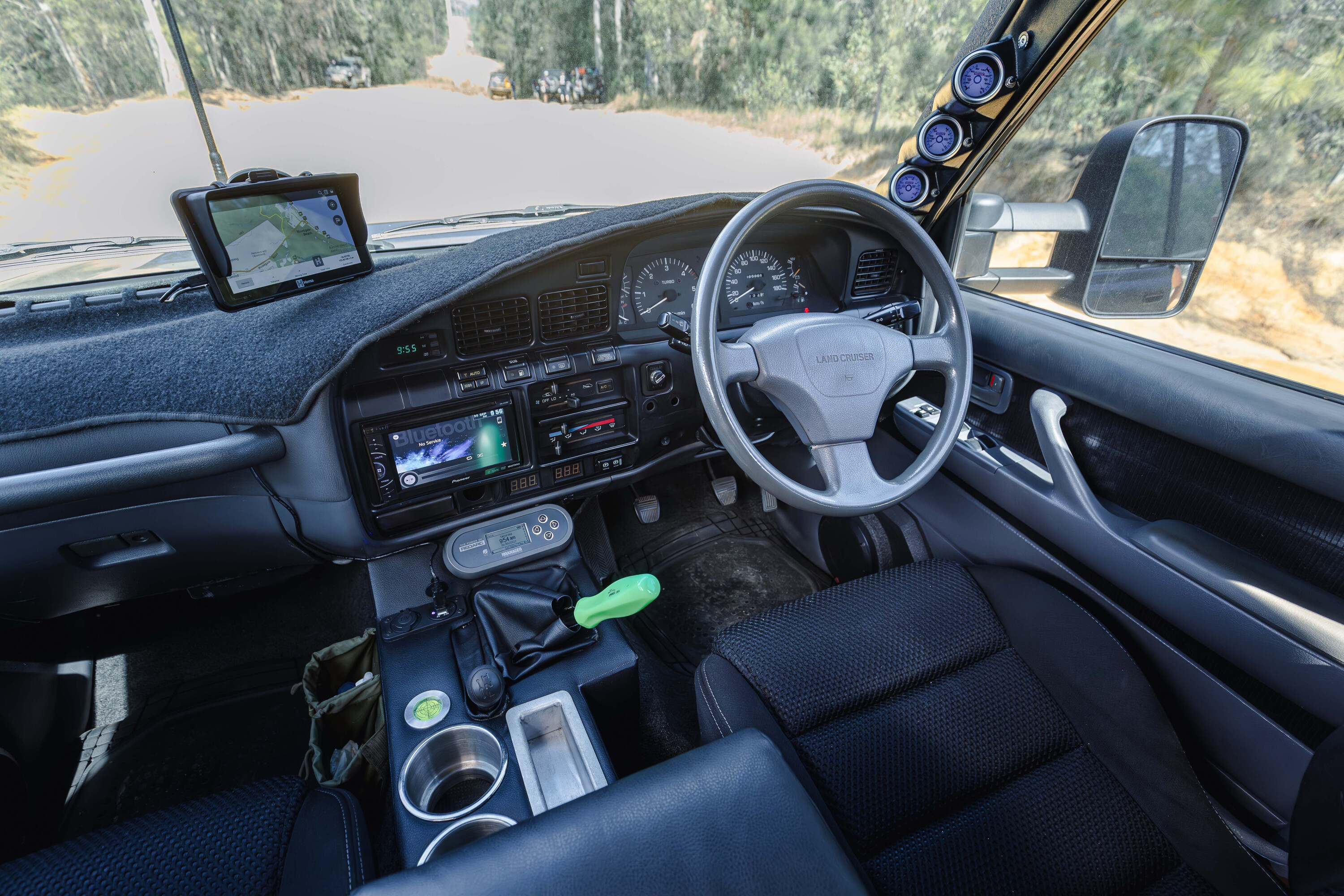
On the inside, there’s a pair of seats lifted from an XR6 Falcon with Huracan adaptors bolting them in place. The roof liner and pillar posts have been retrimmed and painted black with a custom centre and overhead console upping the spec.
A full suite of Redarc gauges and a trick stereo ensure Ben’s having a great time while still keeping an eye on things.
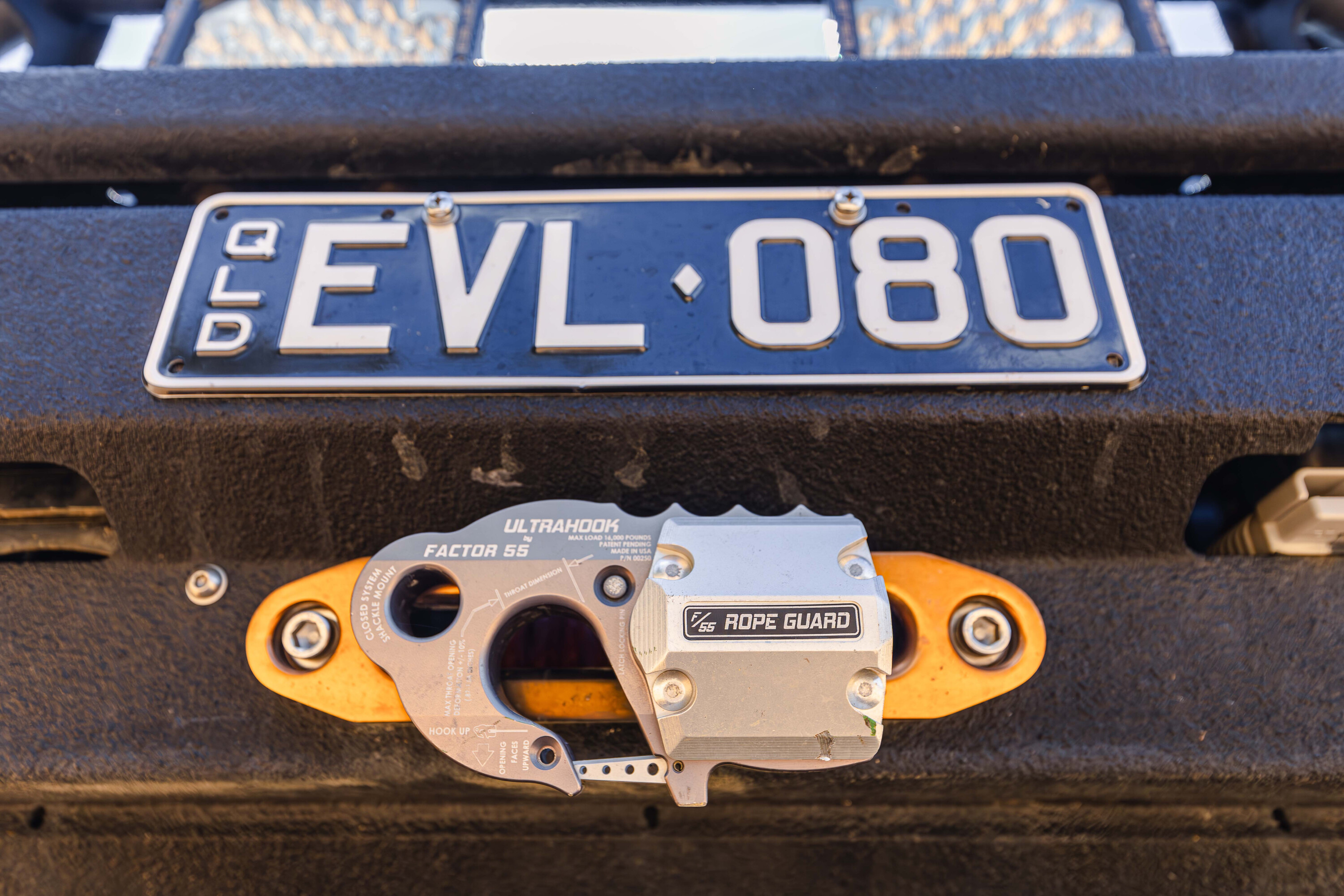
It’s welded up to a custom winch cradle that houses a Runva XP13 winch, a couple of Road Safe 4WD recovery points, and no less than four forward-facing LED lights from Stedi.
The body was in rough nick when Ben first got it so he had his work cut out there too. A full new front-end has been hung, the cracked and failing body mounts repaired and rebraced, and new body blocks to prevent it happening again. But the real star of the show is a whole bunch of 1.6mm and 2mm zinc steel sheet that’s transformed the 80 from wagon to dual cab.
Once it met his standards, including the wheel arch toolboxes and 79 Series bonnet scoop, Ben roped in Ash from Prossie Smash Repairs in Prosperine to coat it in Toyota’s 183 Slate Blue.
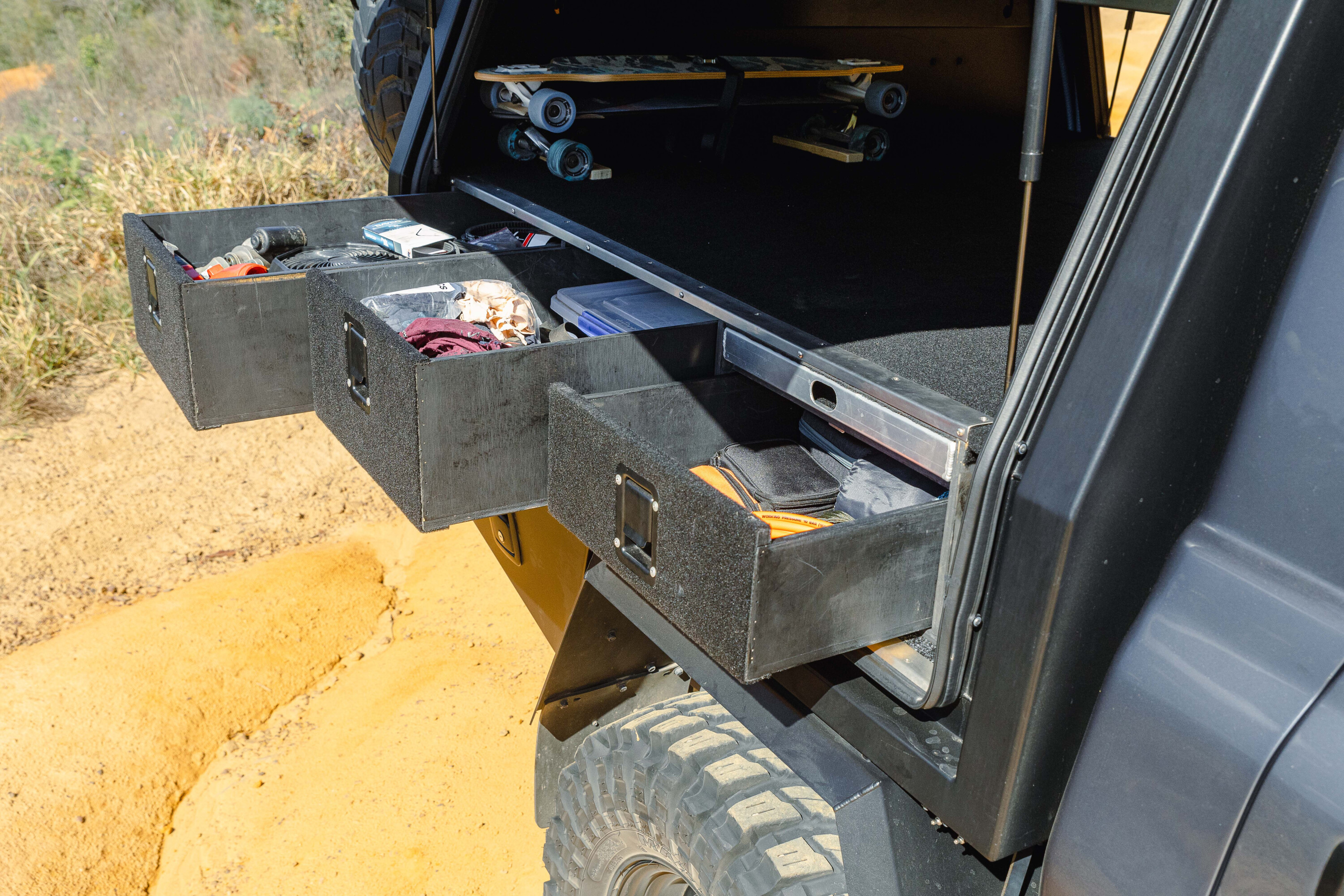
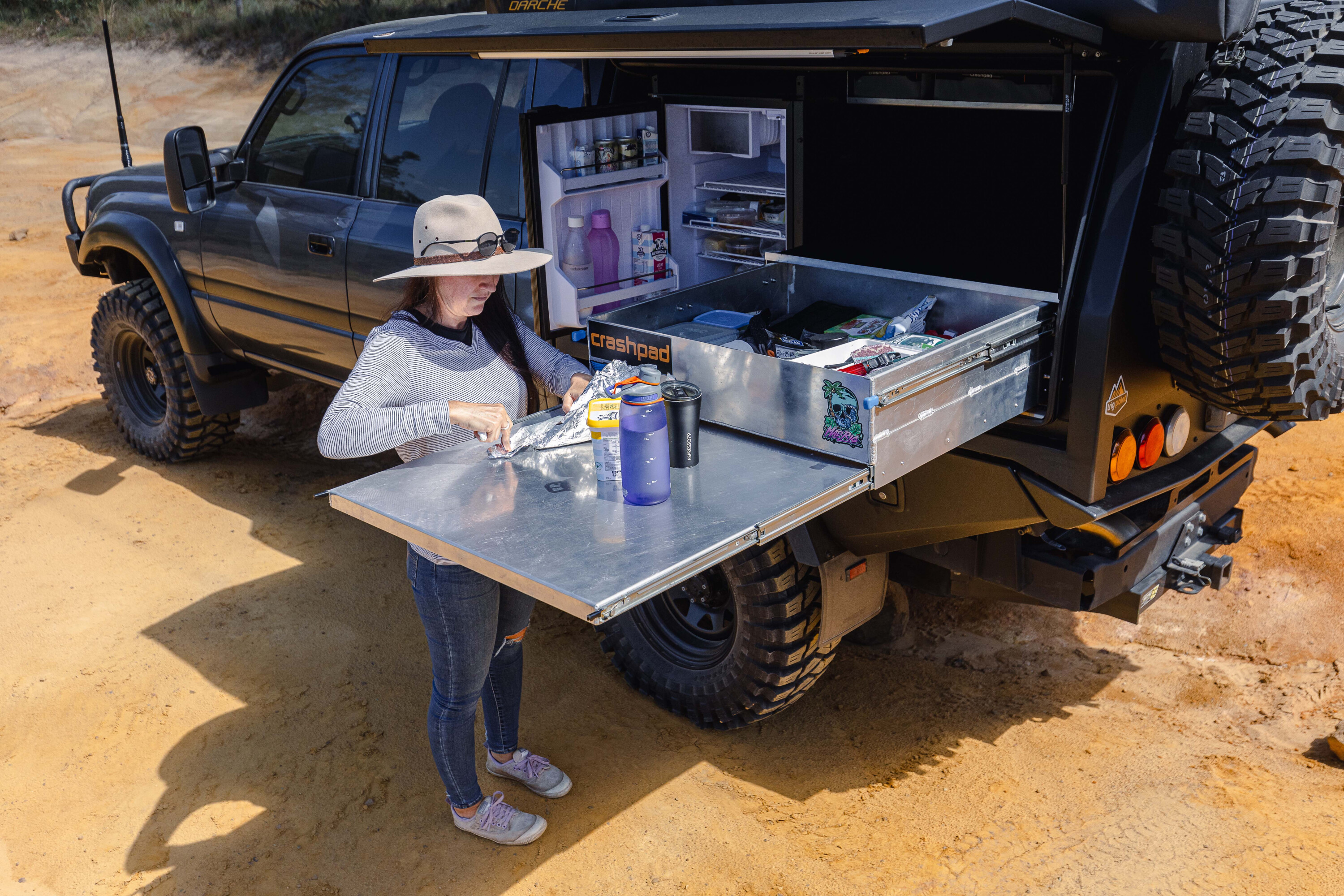
A 500mm chassis extension was the order of the day, fully braced from radius arms to tow ball on the angry end of Ben’s welder, coated in Raptor liner and powered by a custom driveshaft it was just the ticket to give the Trig Point canopy a little real estate to call home.
The canopy itself has a built-in rack, space for an awning, and a couple of spares swinging off the back, but inside is what makes this a real campsite winner. A full Redarc BMS Manager 30 keeps a 100Ah lithium battery charged up and the fridge running late into the night.
Ben’s rig may be built to the nines, but it’s built for a different generation. A simpler time when wheel lifts and campfire cook-ups were more important than keeping up with the Joneses.
It’s a stark reminder that the king hasn’t abdicated, it’s just been in the garage. The resurgence of these iconic LandCruisers proves that true royalty never fades, it simply reinvents itself. Long live the king!
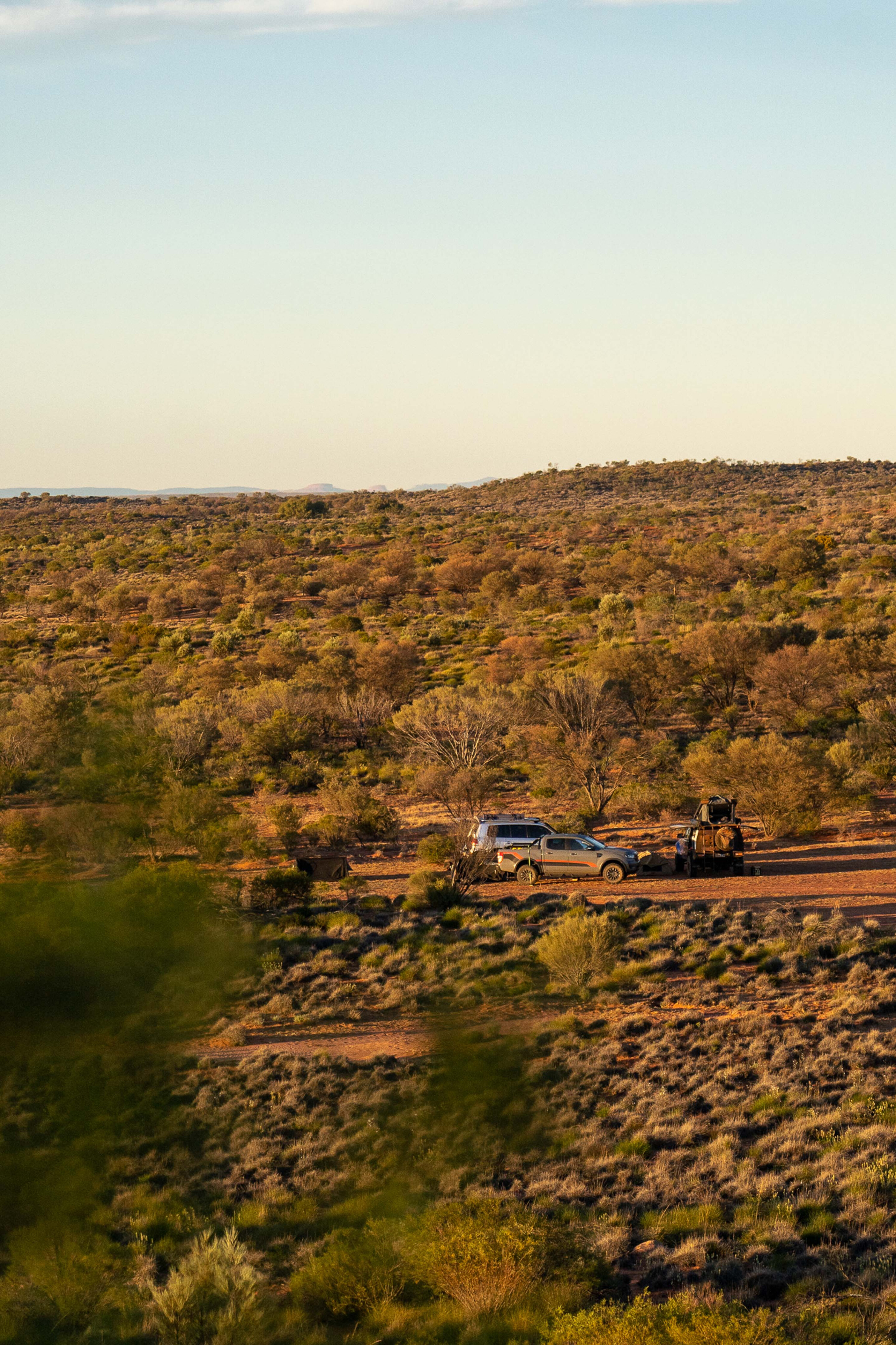
Covering 614km from Marree to Marla, this well-worn path has layers of history that date back thousands of years. Ancient aboriginal inhabitants used the natural springs as a connect-the-dots route through the red centre, Mother Nature’s rustic hydration stations that make a desolate world far more forgiving.
Following this exact route helped John McDouall Stuart become the first European to cross Australia’s interior from south to north in 1859.
The Ghan Railway, a moniker in tribute to the Afghans, followed much of what we now call the Oodnadatta Track. More than a set of carriages rattling along the outback, it was an engineering marvel connecting people and places. Stopping at vital springs for water, the train became a lifeline for much of Central Australia.
While the Ghan Railway was putting down its tracks, another game-changing venture was unspooling alongside it – the Overland Telegraph line. This ambitious project, completed in 1872, was Australia’s version of the Internet 1.0, connecting Adelaide to Darwin and through an underwater line to Java in Indonesia, thereby hooking Australia up to the rest of the world.
This line didn’t just transmit messages; it transmitted the dreams and fears of a nation that was rapidly hurtling into the modern age. Several ruins of old telegraph stations can still be seen as you traverse the Oodnadatta Track, testimony to this bygone era of ingenuity and ambition.
When you’re wheeling your way along the Oodnadatta Track, spare a thought for the world you’re passing through. It’s not just red dirt and shrubbery; it’s the canvas upon which the Aboriginal traders, Afghan cameleers, railway engineers and telegraph operators painted a vibrant, albeit rugged, picture of Australia’s indomitable spirit.
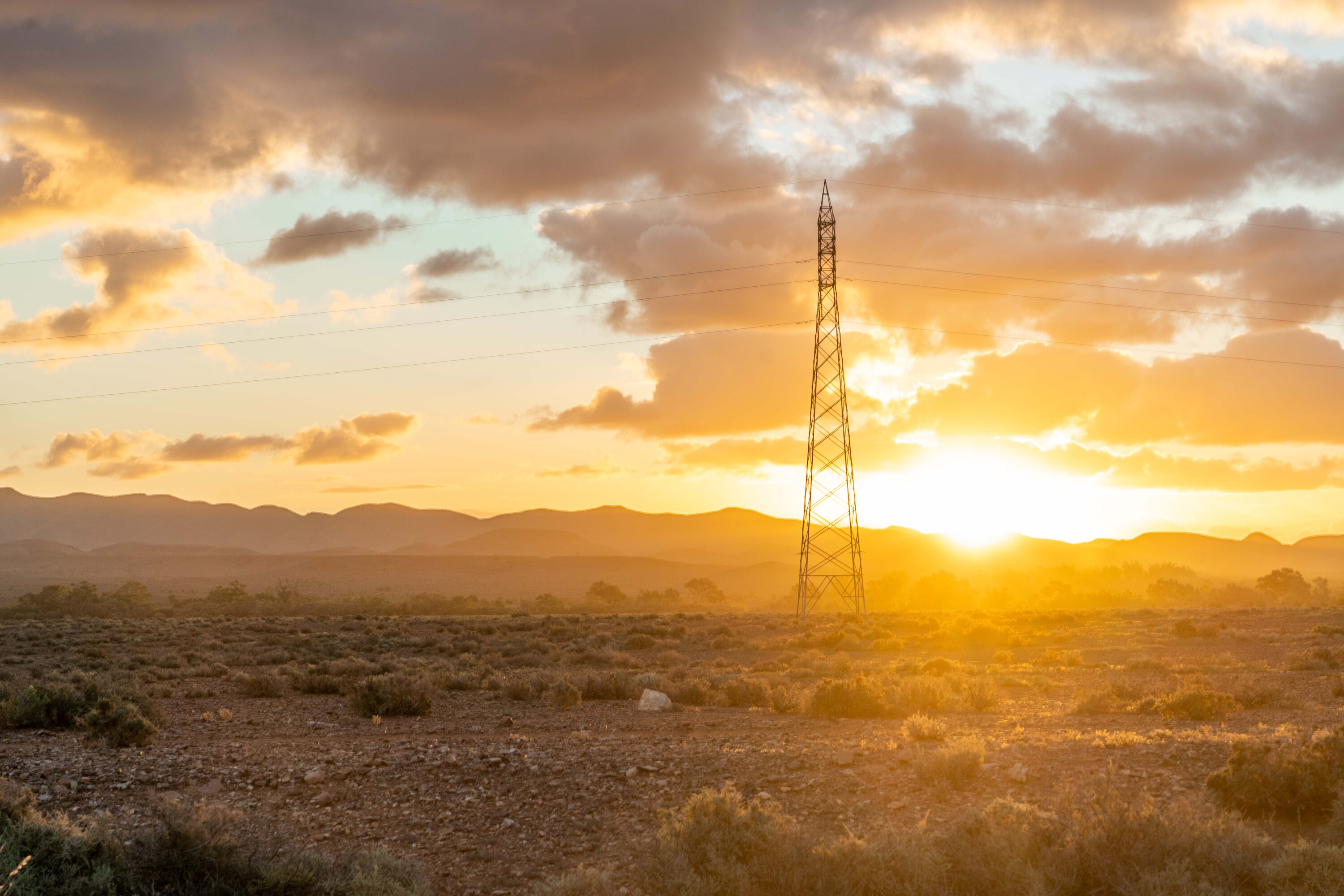
These days, you’d be hard pressed to knock the stubby lever into high-range 4×4 along the track’s 614km of corrugations, let alone need low-range. Heck, it’d be weird if you didn’t pass a dodgy old Hiace full of backpackers with some questionable graffiti masquerading as a paint job.
But it’s one hell of a road trip, especially for people new to remote-area travel. Here’s what’s worth seeing along the way?
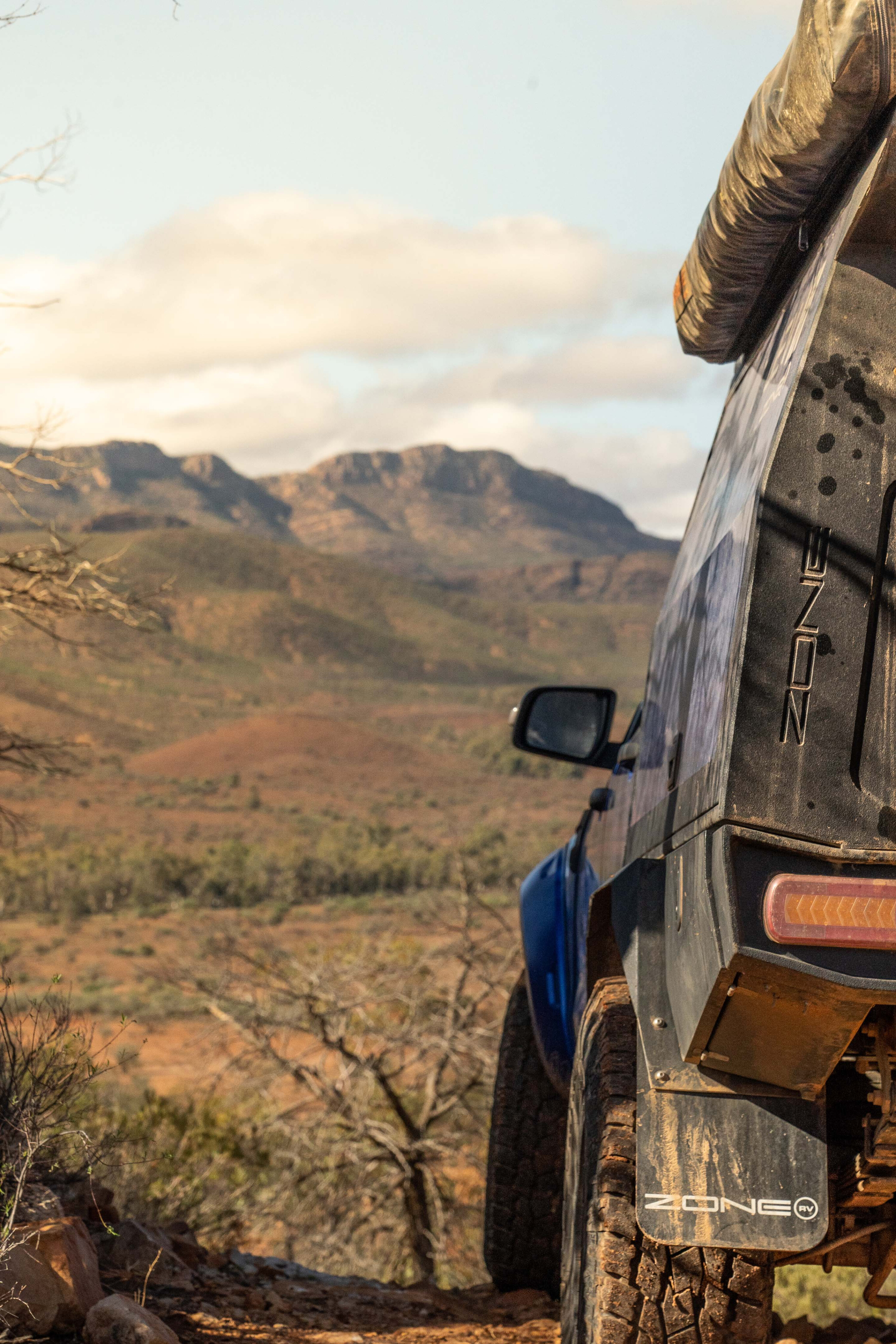
It’ll be one of the last places to get any semblance of supplies, but realistically it’ll be a tank full of diesel and a stomach full of counter-feed before heading off into the wilderness.
Like most country towns, it’s a little cooky, in the best of ways, so make sure you head over to the Lake Eyre Yacht Club for a look around. It’s good for a laugh, but after rains, the locals hit the lake in their yachts.
It’s worth poking your head into the Tom Kruse Museum too. The literal link between the heart of Australia and the rest of the world, Tom braved dust storms, soaring temperatures, desert crossings and floods to make sure the mail got through.
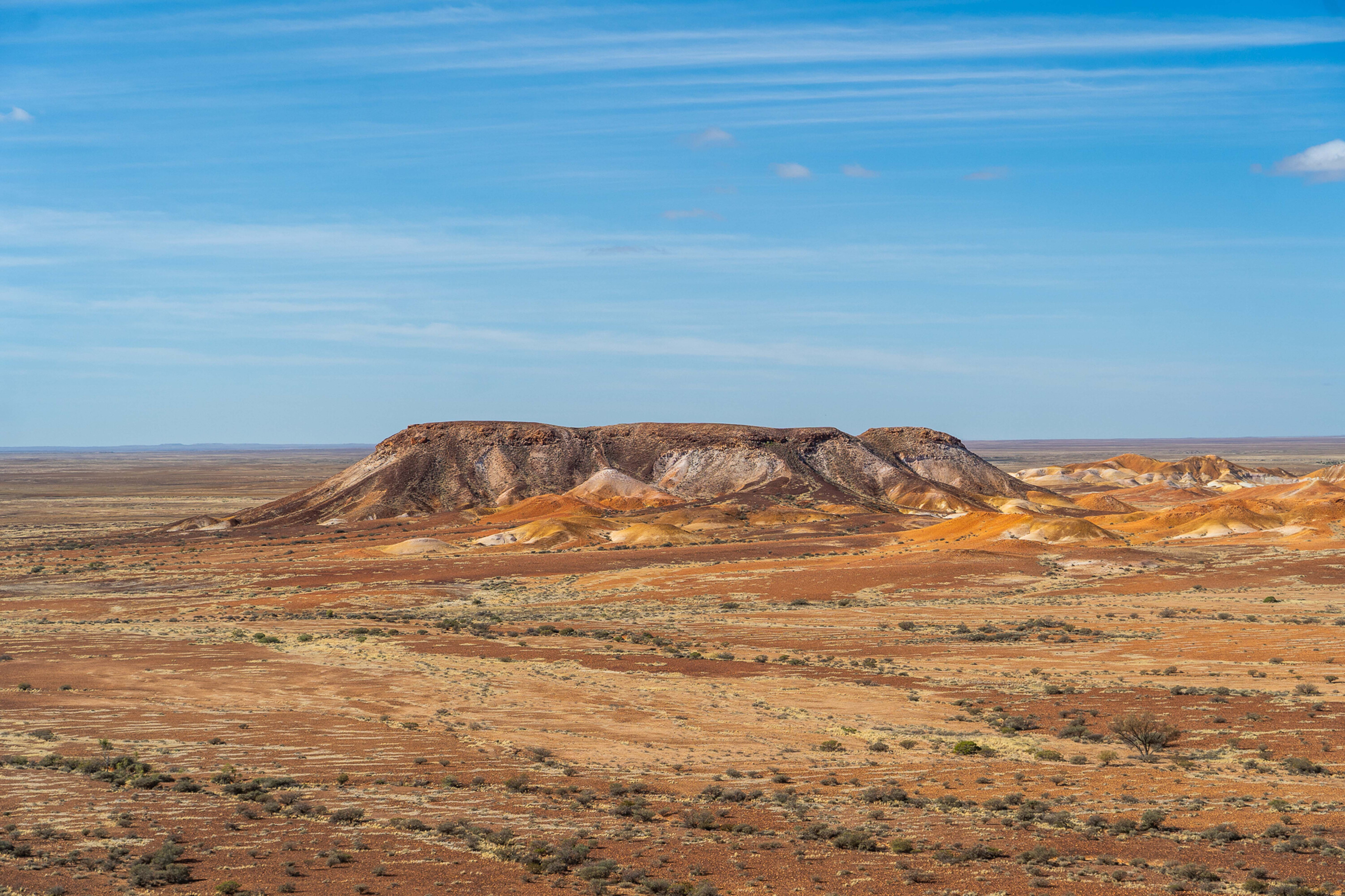
If you blink you’ll miss it so make sure you plot out your GPS waypoints for this literal desert oasis that’s nestled in the middle of nothing half an hour past nowhere.
The property is a working date farm, many of the plants harking directly back to the old Afghan cameleers, and the original rail siding was built for the Old Ghan back in 1888 when it was probably known as the New Ghan. Even if you’re not camping, it’s worth paying the $2 entry fee to duck in and check out the thermal pools, and the old train driver’s cabin.
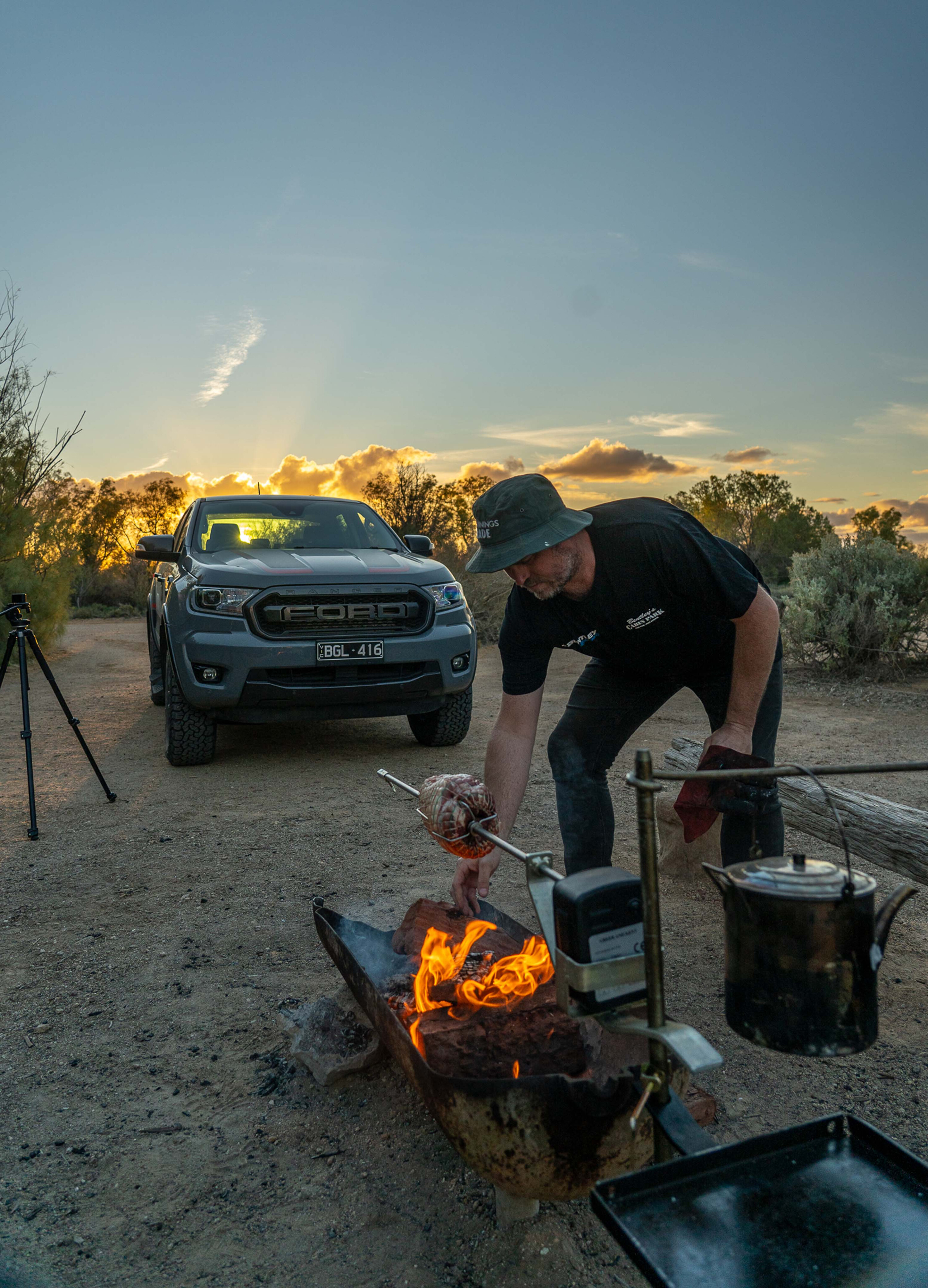
The William Creek Hotel has the usual outback roadhouse kit, so you can bank on diesel, petrol, basic mechanical repairs and an endless supply of cold beers. It also happens to be on Anna Creek Station, the world’s largest cattle station. John Dutton would be green with envy.
Time it right, and the town is teaming with aviation nutters from every corner of the country for the annual fly-in. Otherwise, take a stroll through the memorial park, have a gander at 100 years of history in the pub, and enjoy all the modern amenities of South Australia’s only 100 per cent solar-powered town. How’s that for progress?
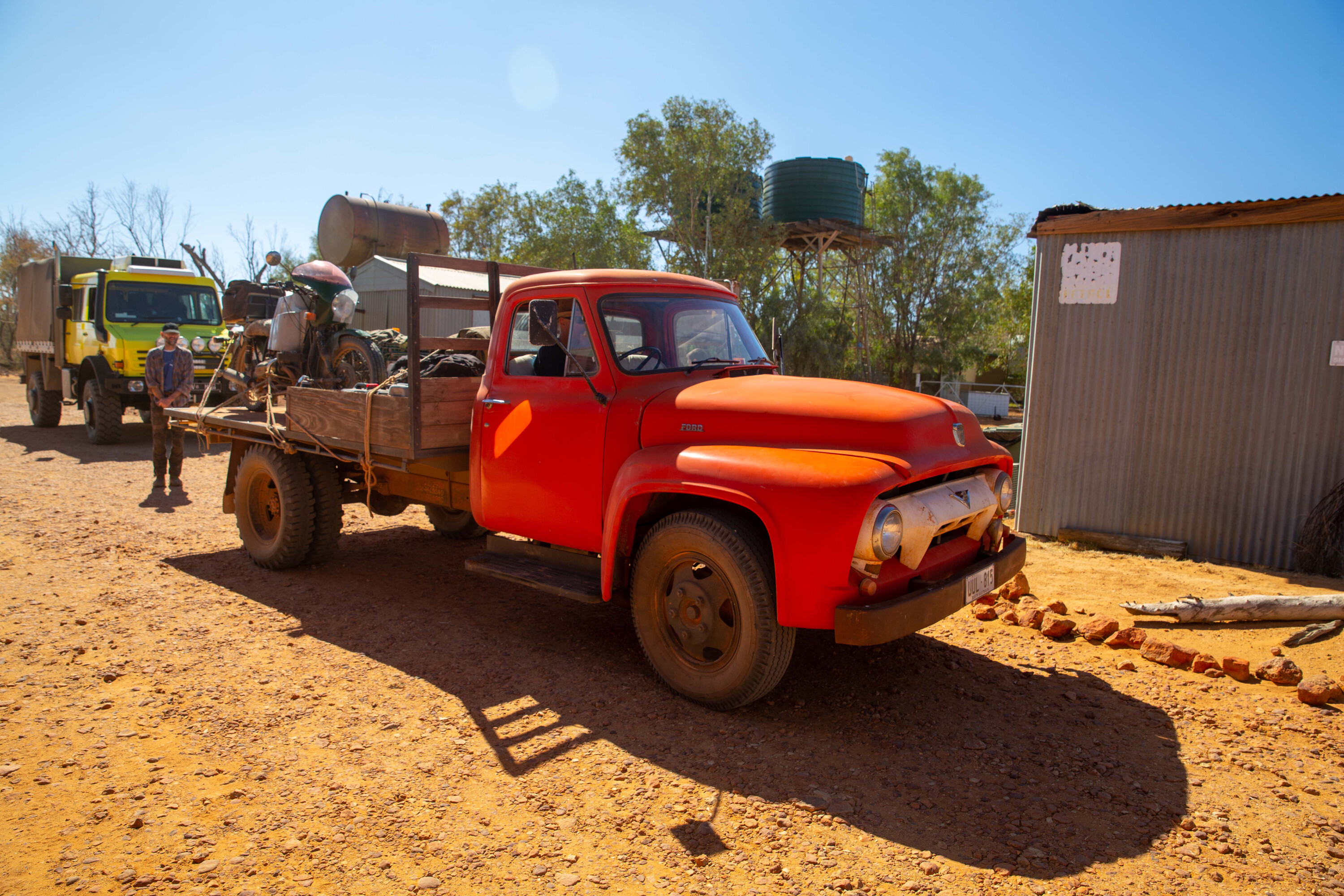
Many travellers take a hard left at William Creek, heading west to Coober Pedy, so for the last leg of the journey you’ll get to experience good and proper isolation like you’ve never seen it before.
Legend has it the town derives its name from the Aboriginal word Coodnadatta, which roughly translates to Dead Man’s Poo, a reference perhaps to an artesian bore near the town responsible for some truly atrocious liquids.
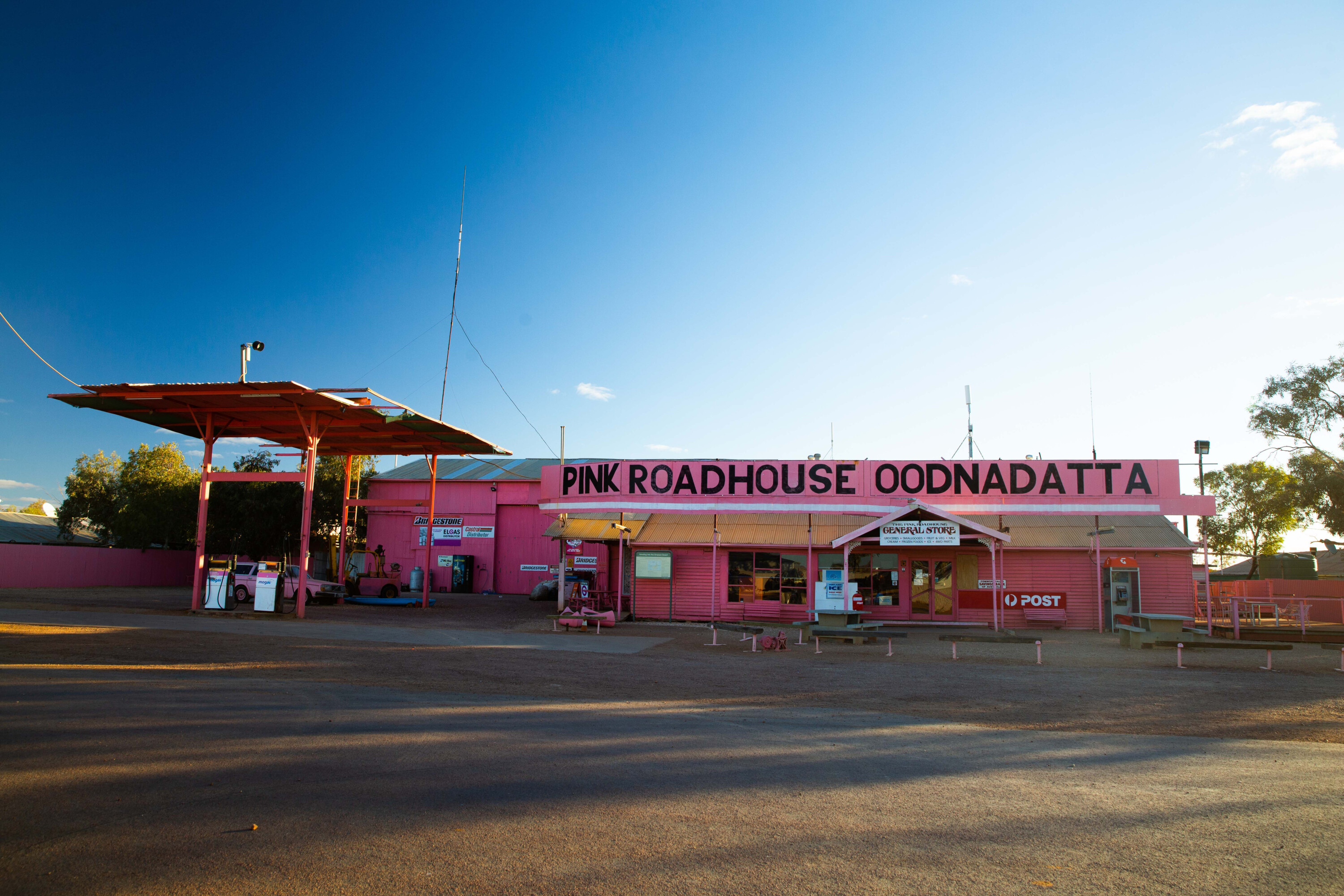
While you’re there grab yourself the must-have Instagram shot and ask behind the counter for a key to the Old Ghan Museum across the road; it’s well worth the price of admission for a peek behind the curtain on days gone by.
So there you have it. The Oodnadatta Track is not just a journey; it’s a near-literal gateway to the outback. It’s where your 4×4 stops being a machine and becomes a companion. Where you stop being a driver and become a pilgrim in the temple of dirt and sky.
Pack your bullbar with enough lights to impersonate a UFO, charge your satphone, and fill your fridge with enough tinnies to survive an apocalypse. The Oodnadatta is calling, and trust us, you want to answer.
Now that we’ve tantalised your adventurous spirit with the allure of the Oodnadatta Track and its surroundings, it’s time to discuss the essentials you’ll need to ensure a safe and enjoyable expedition.
The Track isn’t exactly 600 kays of gunshot creek but it still demands a robust and well-maintained 4×4 vehicle equipped for outback travel. Ensure your vehicle is serviced, and all essential components are in top shape. If it can rattle off it will.
Due to remote areas with limited mobile coverage, a satellite phone or personal locator beacon is a lifeline in case of emergencies. At a bare minimum, have a UHF with a high-gain antenna.
GPS devices and detailed maps are essential. While the Track is relatively straightforward, its isolation means navigation mistakes can have serious consequences if you get yourself turned around.
Always carry ample drinking water and non-perishable food supplies. The outback heat is unforgiving, and you’ll need to stay hydrated.
The outback can get mighty hot, but it can get mighty cold too so pack appropriately – a decent sleeping bag, a way to get off the ground, a fridge to keep your drinks cold and a way to cook your steaks.
Fuel stops can be few and far between, so carry a few jerry cans. Also, have spare parts and tools for common issues with your rig.
Carrying a comprehensive first aid kit is important: knowing how to use it is even more important. The nearest medical assistance can be hours away.
These aren’t just piles of stone; they’re ancient text messages saying, “We tried, okay?” Abandoned since 1906, the Peake Ruins mark the remnants of Mt Margaret Station, once the most remote European settlement in Central Australia.
It’s either a shimmering inland sea or a cruel, salty illusion, depending on when you visit. Either way, it’s mind-blowing and well worth a visit. The first 50m are filled with tourists’ footprints but go for a wander around the edges for an experience like no other.
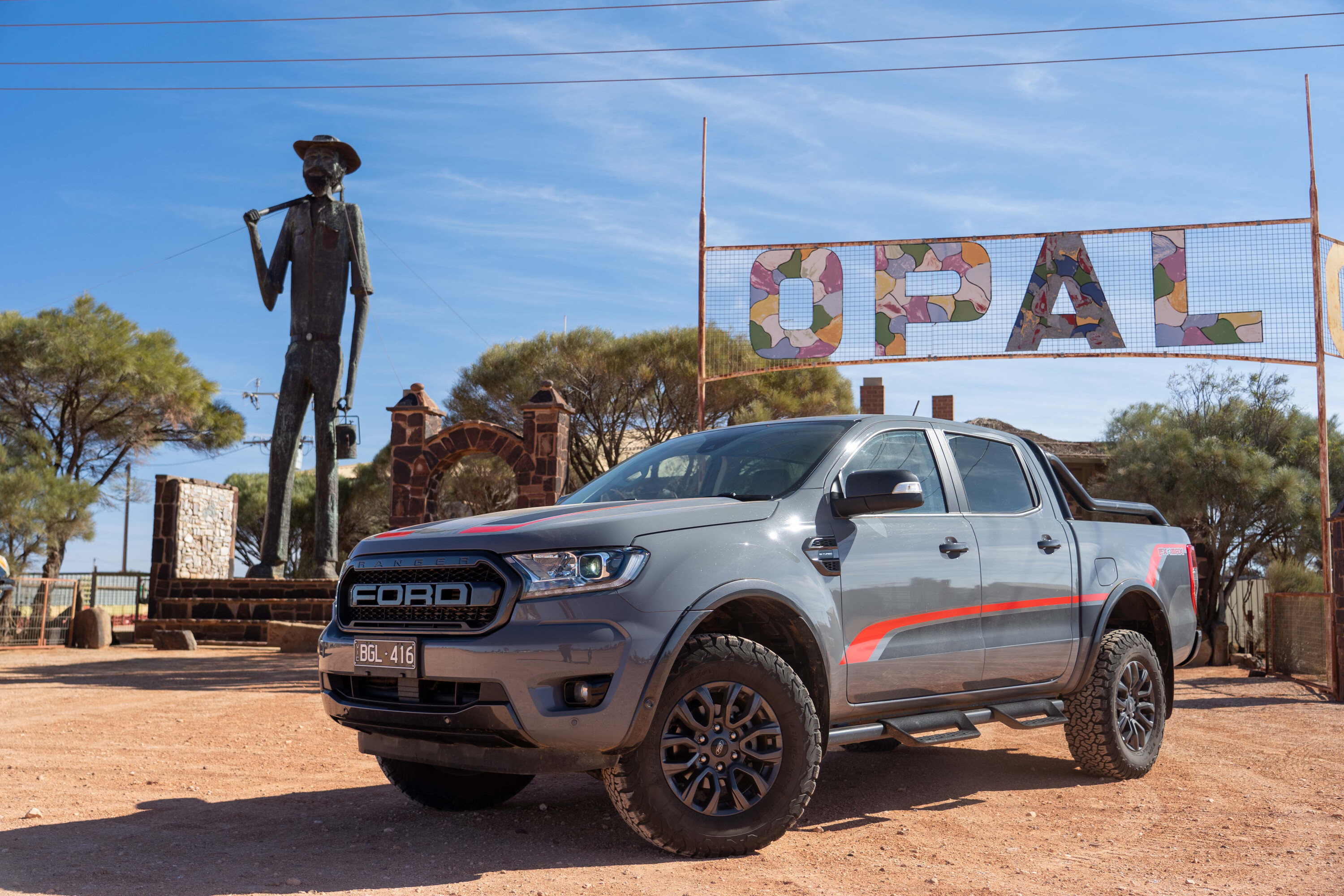
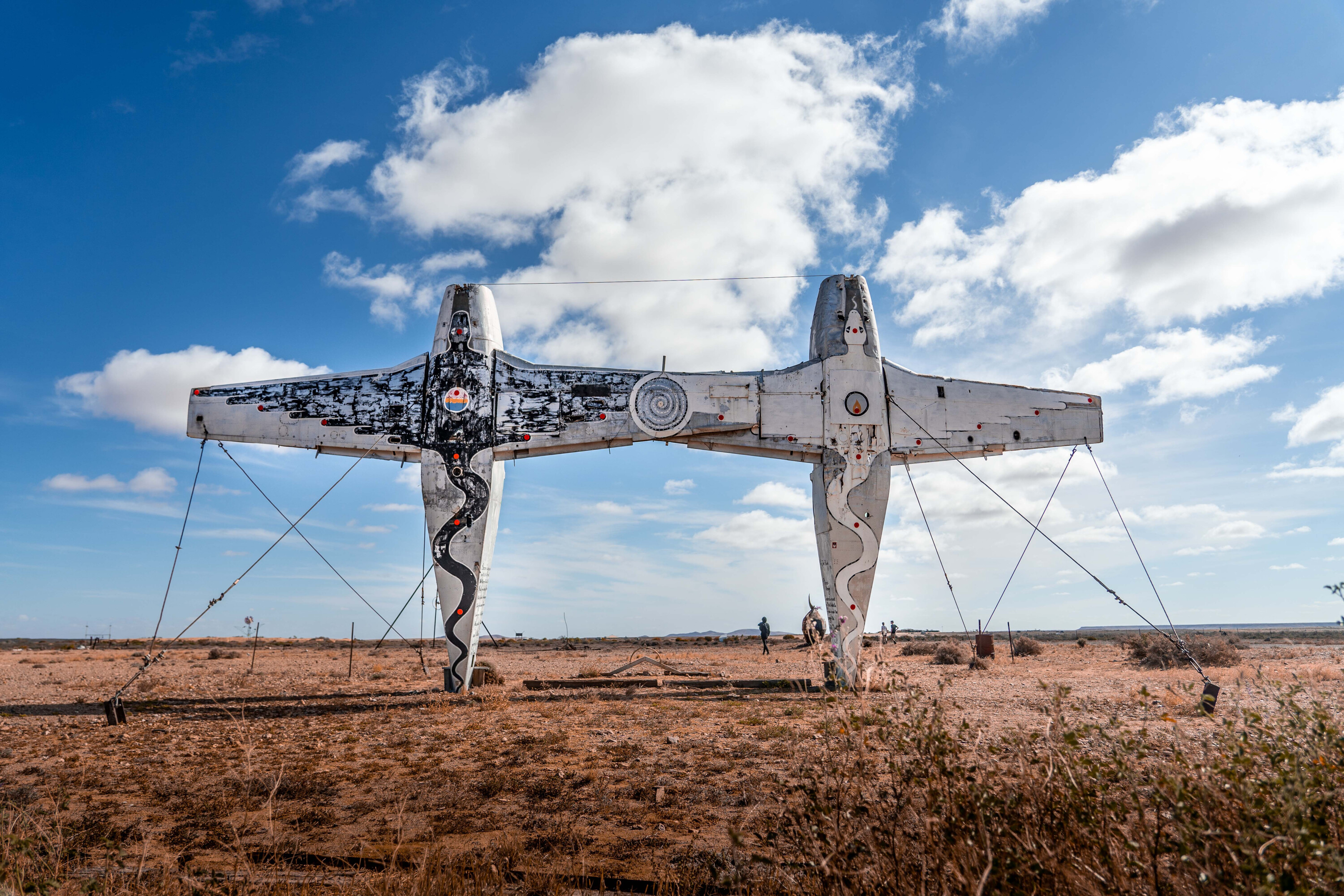
It’s like Stonehenge but with, well, planes. Found near William Creek, this is a quirky must-see. The robot man out the front catches all the attention, but the space shuttle is our favourite.
An optional detour off the track will bring you to this landscape that’ll make you question everything you know about the endless South Australian plains. Gorgeous multi-coloured hills that seem to glow in the morning and afternoon sun.
Nature’s own spa treatment, only without the cucumbers and exorbitant prices. If you’re keen for a dip to wash the dust off consider the springs a non-negotiable.
GPS: -28.8944, 136.3319
Facilities: Hot showers, camp kitchen, fire pits.
What makes it special: Alongside its claim to fame as Australia’s smallest town, William Creek has the mystic allure of being near Lake Eyre. During flood years, this dry salt lake fills up and attracts birdwatchers and photographers from around the globe. So, when you’re not ogling the night sky or bantering with locals at the William Creek Hotel, you can take a scenic flight over Lake Eyre to make your friends jealous.
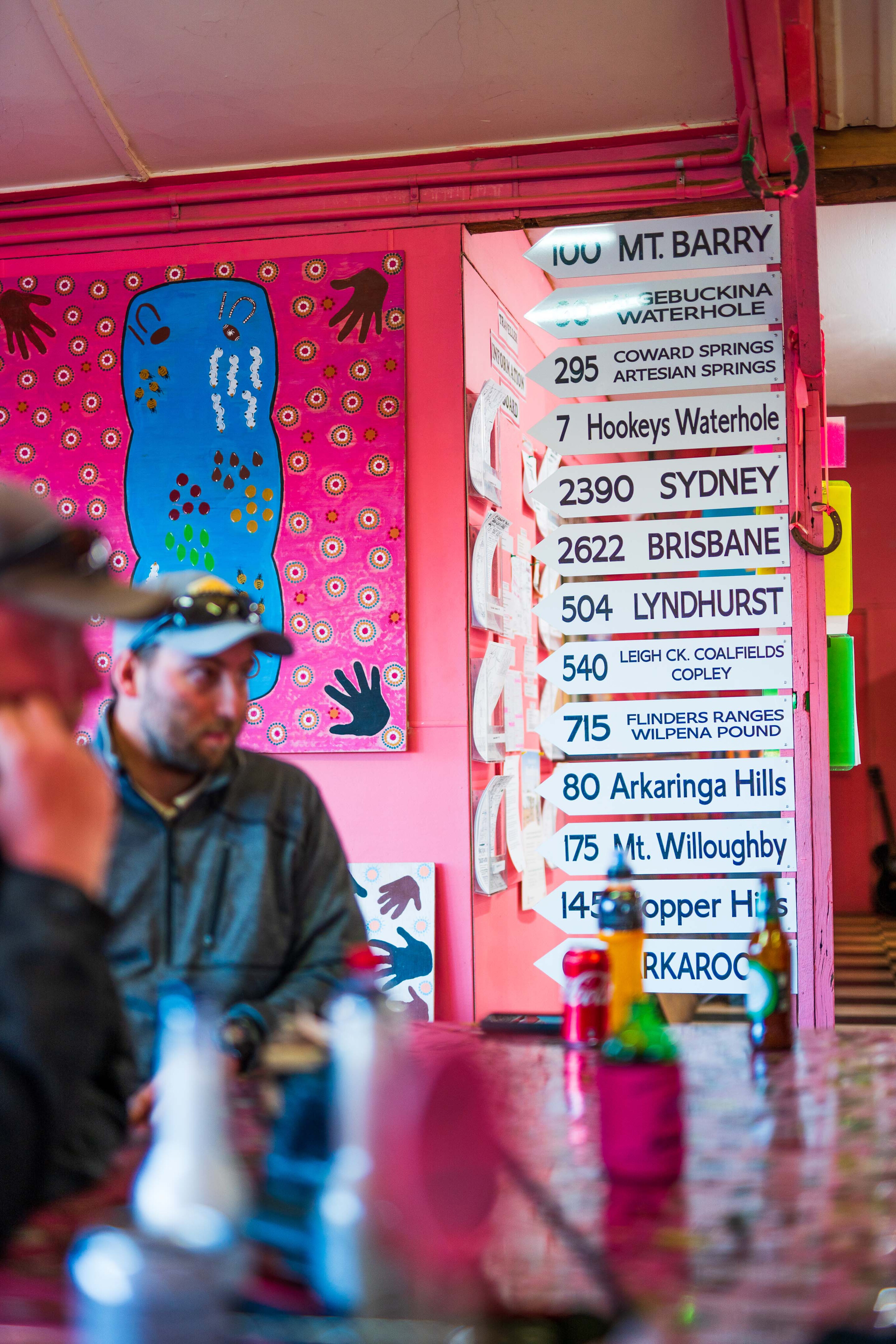
GPS: -27.87947, 135.83506
Facilities: Basic, meaning you’ll want to bring your own amenities.
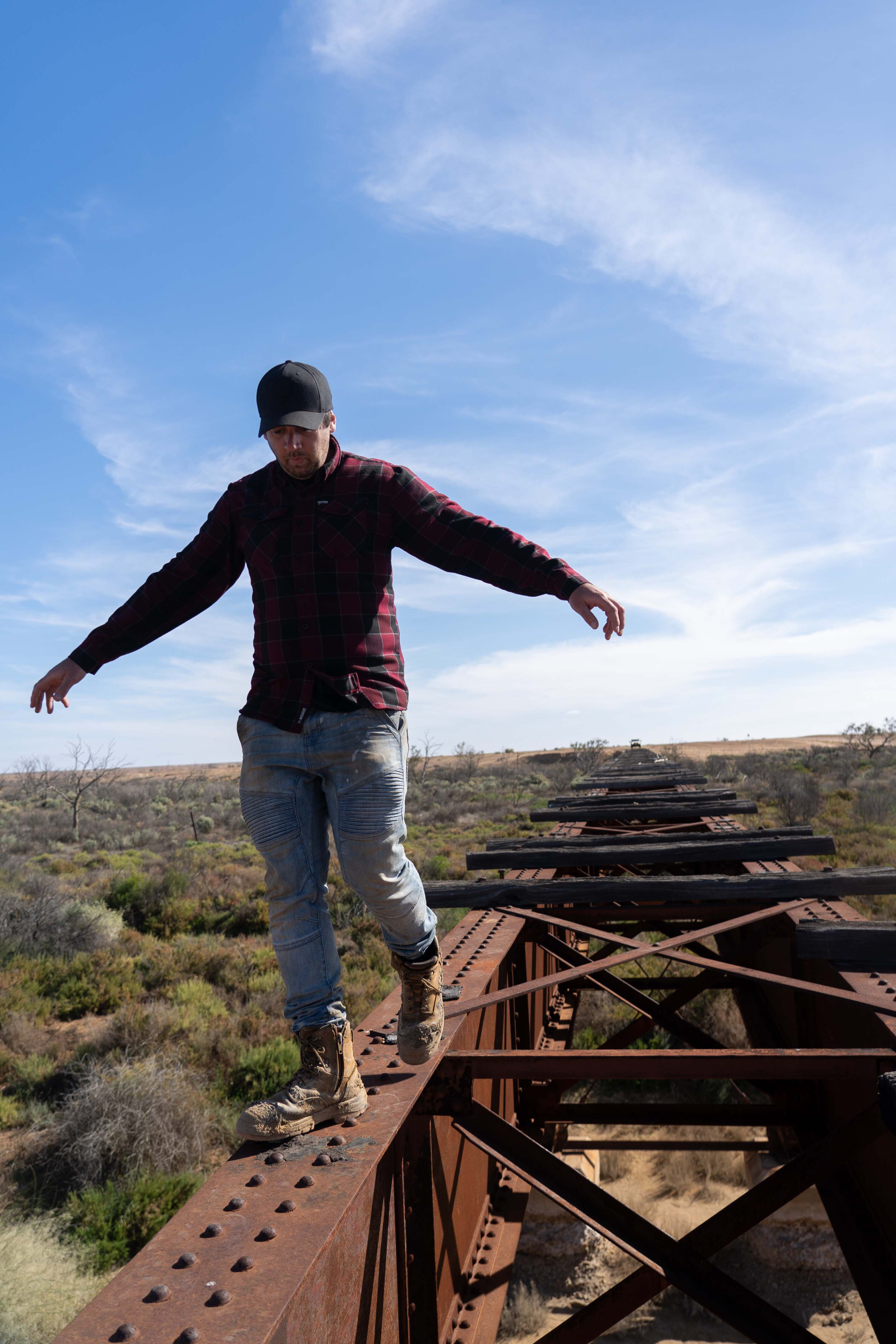
What Makes it Special: This site is more than just a waterhole; it’s a refuge for the soul. You’ll find dozens of bird species here, making it perfect for anyone who appreciates our avian friends. Plus, the historic Algebuckina Bridge, one of the longest in South Australia, offers an eerie but captivating backdrop.
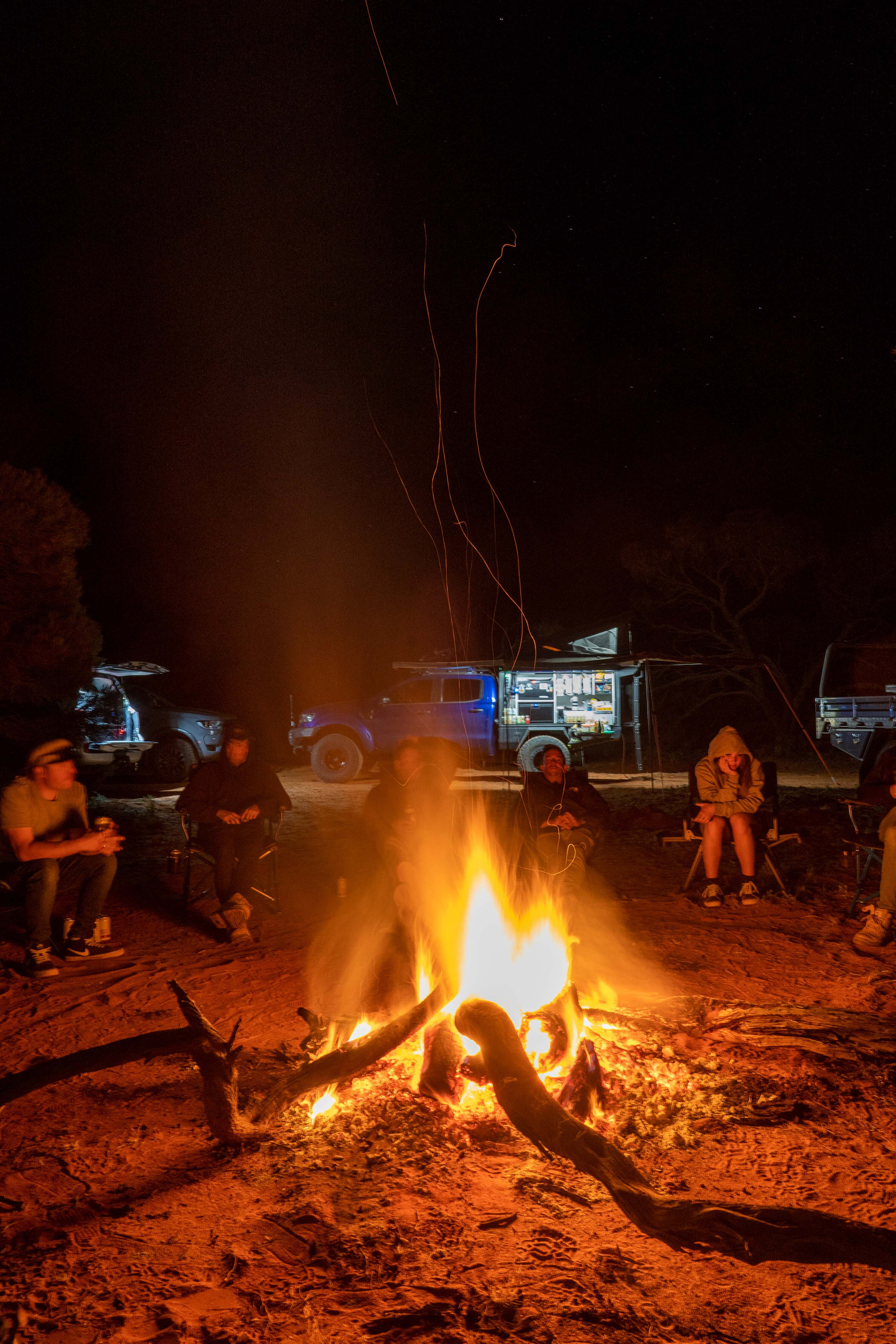
GPS: -26.42146, 135.50434
Facilities: Toilets, warm showers and picnic tables.
What Makes it Special: Not only do you get to soak in 38°C natural springs, but you’ll be doing so in an area steeped in indigenous significance. With more than 60 springs in the area, you’re basically at a natural spa. Make sure you also wander around to discover the ruins of the Old Dalhousie Homestead.
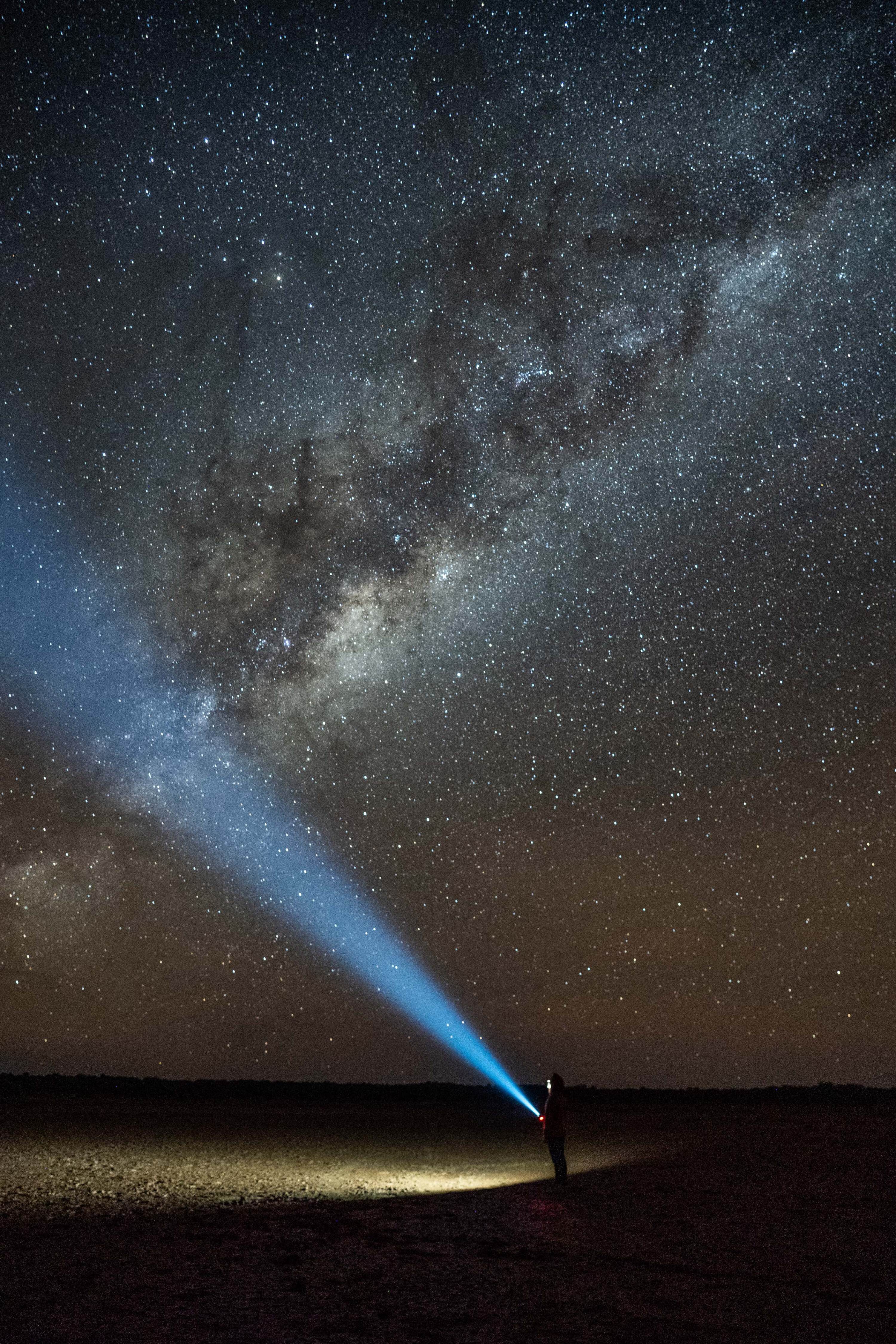
GPS: -29.39741, 136.81283
Facilities: Toilets, and that’s about it.
What Makes it Special: Coward Springs is an oasis with palm trees, a natural spa, and an old locomotive water softener; it’s like walking into a time machine. Camp here and you can soak in the springs while pondering the site’s rich history, which includes its role as a stopover for the Old Ghan.
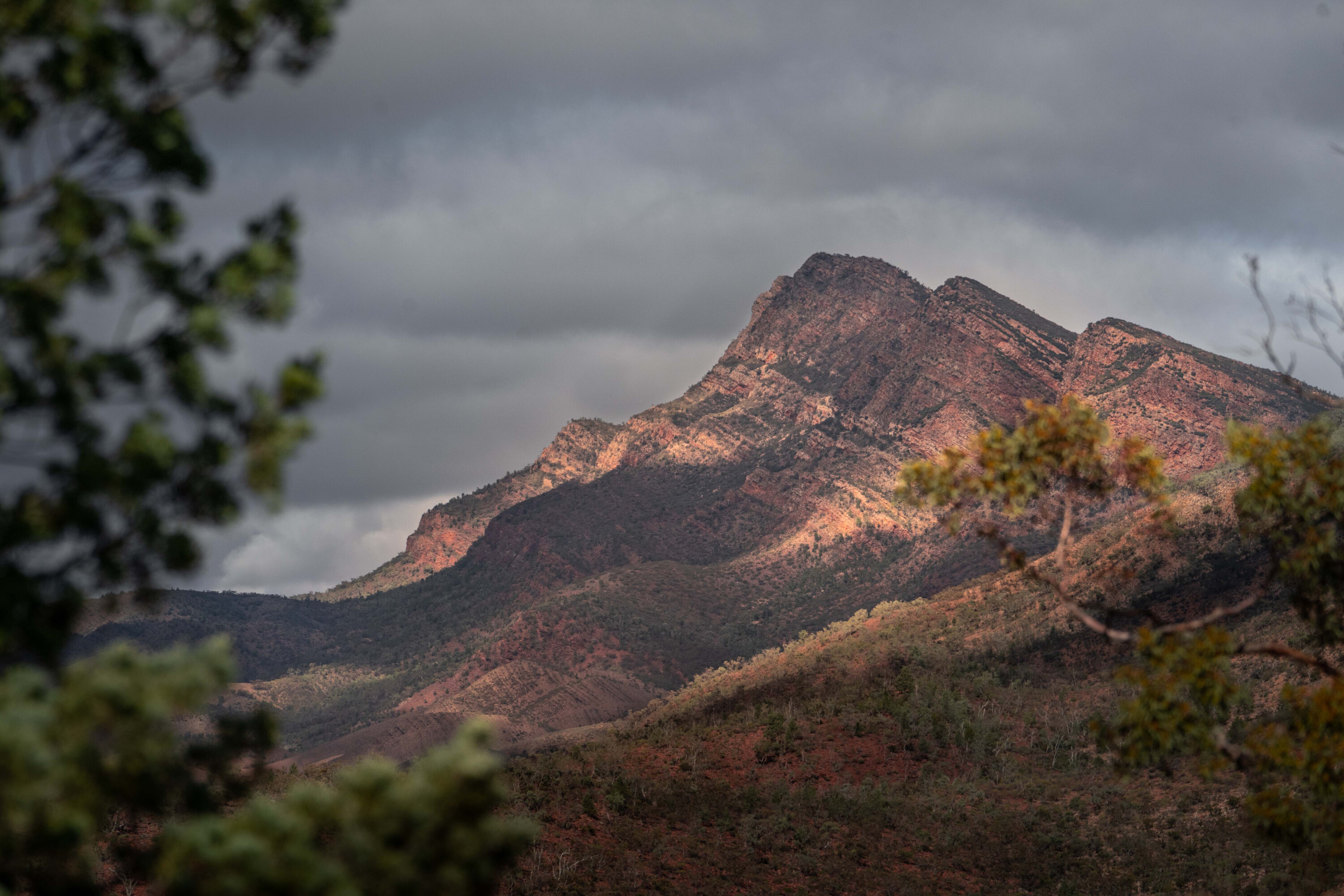
GPS: -26.06853, 135.24769
Facilities: Toilets, showers and a fully stocked pub.
What Makes it Special: Push far enough north and Mount Dare is your gateway to the Simpson Desert. It’s your last chance to take a hot shower and fill up your tank before you brave the great sandy expanse. Plus, the Mount Dare Hotel offers a little luxury, whether it’s an ice-cold beer or a hearty steak meal.