
- Drive with your lights on. Blind corners and dust are a bad combo – don’t make it more dangerous than it needs to be, eh?
- The road and track in is full of twisties – aka motorbike heaven, so keep an eye out. Most riders are fairly cautious but we’ve seen more than one travelling at speed into a blind corner.
- Polarised sunnies FTW. Easier to read the track and watch for fish in the river, especially around structure if you’re into flicking lures at trout and the odd redfin.
- It’s not 100 per cent necessary to drop tyre pressures but knocking a few psi out will make the ride a lot less shaky, rattly and rolly (looking at you, fellow leaf spring enthusiasts).
- It gets real warm in summer and real cold in winter. Don’t rock up mid-August in the stubbies and singlet. You’ll have a bad time.
- It’s narrow and two-way. You know what we’re going to say here. Approach corners carefully and scan the track ahead for oncoming vehicles whenever possible.
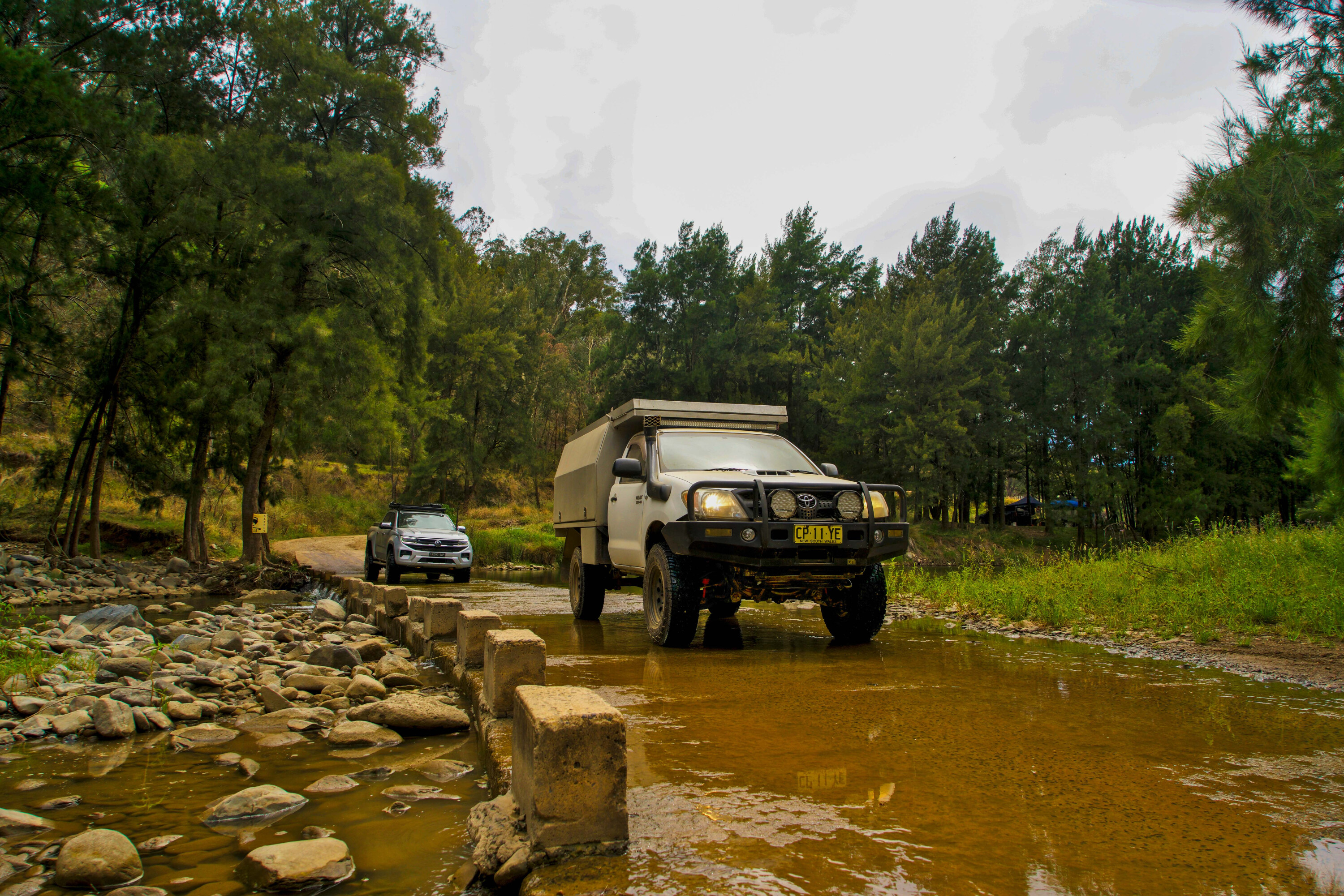
- The major campsites are signposted and give you an idea of the difficulty of access. If you’re in a high clearance 4×4 you should be sweet (although after heavy rain check water crossings carefully). If you’re in more of a soft-roader, stick to the easier accessed spots (there are plenty of ’em).
- It gets busy on the weekends and holidays. The usual etiquette rules apply. Don’t be the guy shouting to his mates two metres away while pumping the Luke Bryan at 11 and generally exhibiting full throttle “yiew!” behaviour. You’re better than that.
- Hill End pub (aka The Royal Hotel) is a great way to top off your trip with a cold one and a feed.
If you’ve been into four-wheel driving for more than a few minutes, chances are you’ve heard of this place.
A couple hours northwest of Sydney, just out of Bathurst, the roughly 50km-long Bridle Track was the place to go if you were just cutting your teeth in the off-road scene. Or at least it was up until 2010 when a colossal rockslide at Monaghan’s Bluff shut the track down for the next decade and a bit. Fast forward to 2023 and the track (finally) re-opened and it’s still a fantastic place to spend a sneaky night or two.
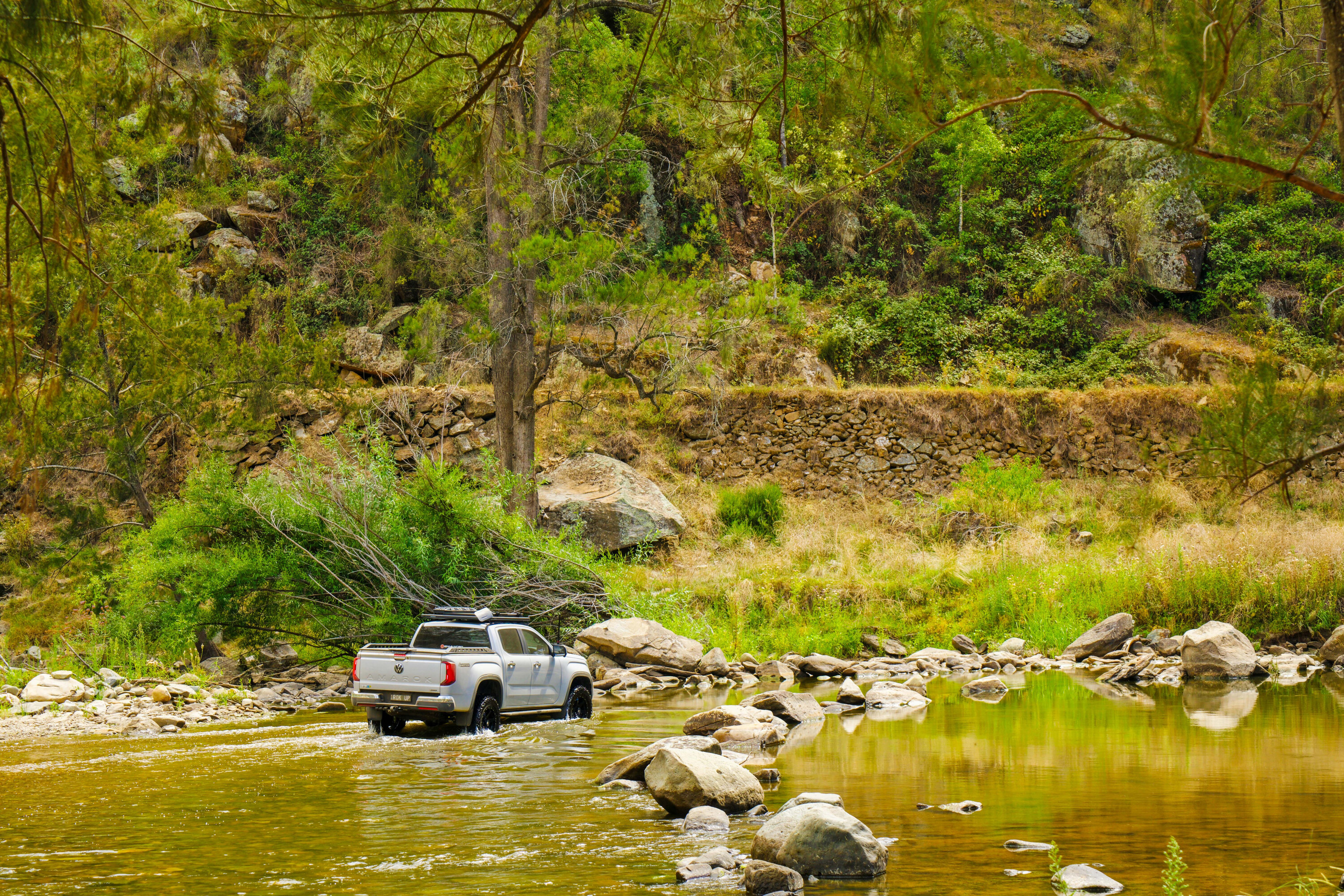
It’s not so much about the off-road driving – to be honest you could drive a fair percentage of it in your grandad’s Camry – it’s more about marvelling at the landscape, the wildlife and finding that beaut little campsite that you and the family will remember for the rest of your lives.
1
The history of the joint
The track was opened for gold miners to get from Hill End to Bathurst in the mid-1800s without having to go via Sofala.
It was coined because it was so narrow you had to lead your horse by its bridle, and the name stuck. By 1870 it had been widened to allow passage of carriages and by the 1930s it had become a tourist drive, predominantly for motor vehicles.
You will notice a lot of evidence of the mining history dotted along the track, including tunnels, or adits if you want to get technical, that can still be accessed by the non-claustrophobic adventurer.
1
Getting there
If you’re navigating by the stars, head northwest out of Sydney till you hit Bathurst, then hang a right up Duramana Road for a few kays until you see a big ol’ sign saying “Bridle Track”.
Or, if you like doing things the non-difficult way, just slap Bridle Track into your GPS and let it do the heavy lifting. It’s a gazetted track and well signposted. There are probably easier tracks to find, but we can’t think of too many.
Day trips are a possibility and would be great for the kids (big or little) given the abundance of flora, fauna and swimming holes on offer.
1
However, you’d be missing out on a huge part of what makes this place so special – the camping. It’s seriously up there with some of the best in the country.
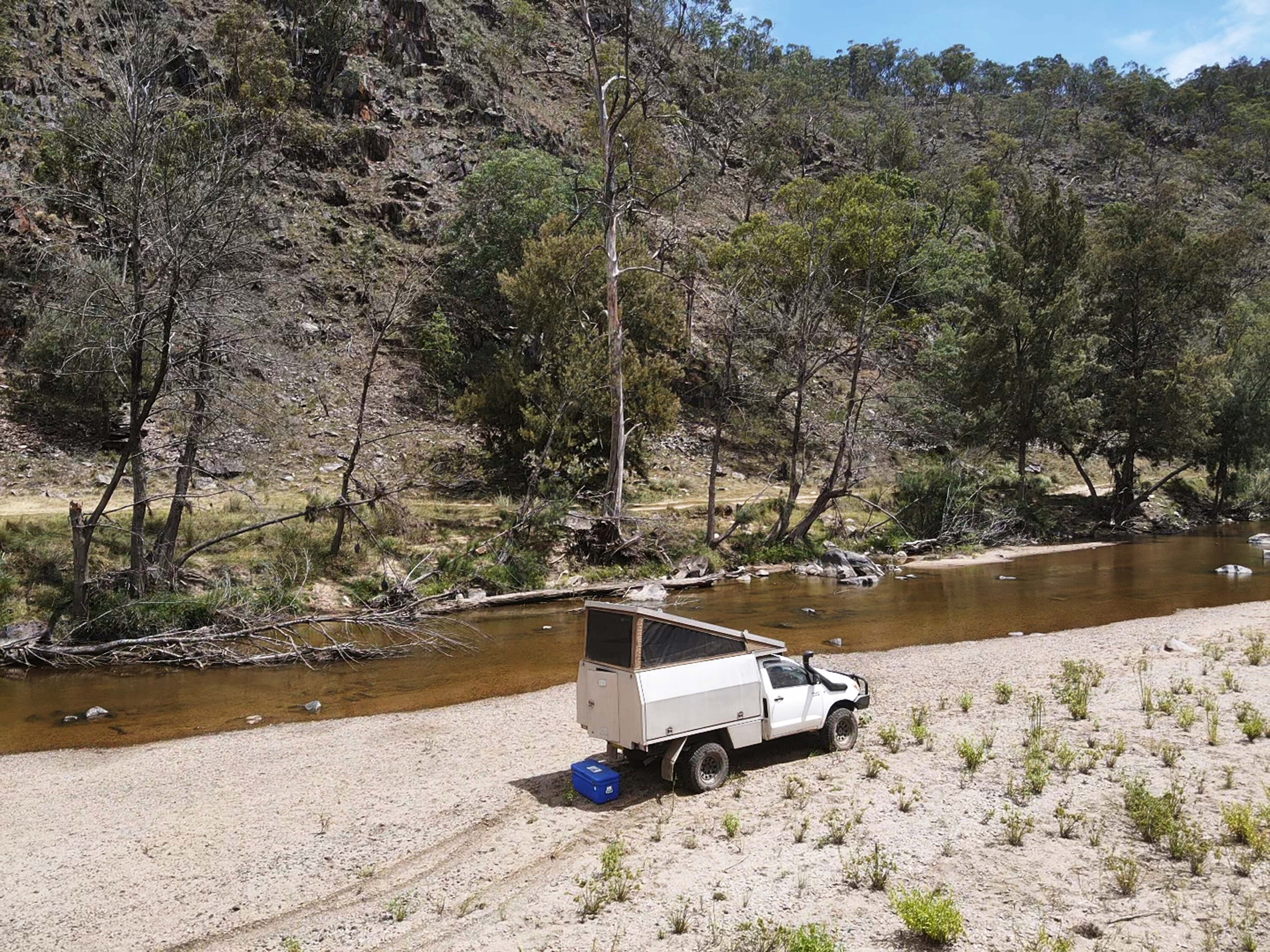
Right on the river, easily accessed and all pre-paid via your taxes. It’s spot on for bringing the tin lids and letting them run wild on the high-fructose corn syrup that’s pumped into everything these days, or equally ideal for a few mates to knock the top off a few Denzel Frothingtons after a busy week.
There are even toilets and if you have a more modified vehicle, there are quite a few campsites off the map that don’t get the influx of people.
1
Recommended gear
This is an excellent overnighter for people with stock or lightly modified 4x4s. While there are a few tricky-ish side tracks, don’t expect your LS-swapped, 37-inch tyre sporting Patrol to be particularly challenged.
But that’s not what this place is about. It’s about easy access, idyllic camping on the banks of a crystal-clear river system (well, two river systems, the Macquarie and the Turon, but who’s counting?) within a couple hours’ drive of a major metropolitan centre. If you can’t find something to like about that then who are we to judge? Still, you seem kind of cranky; is everything okay at home?
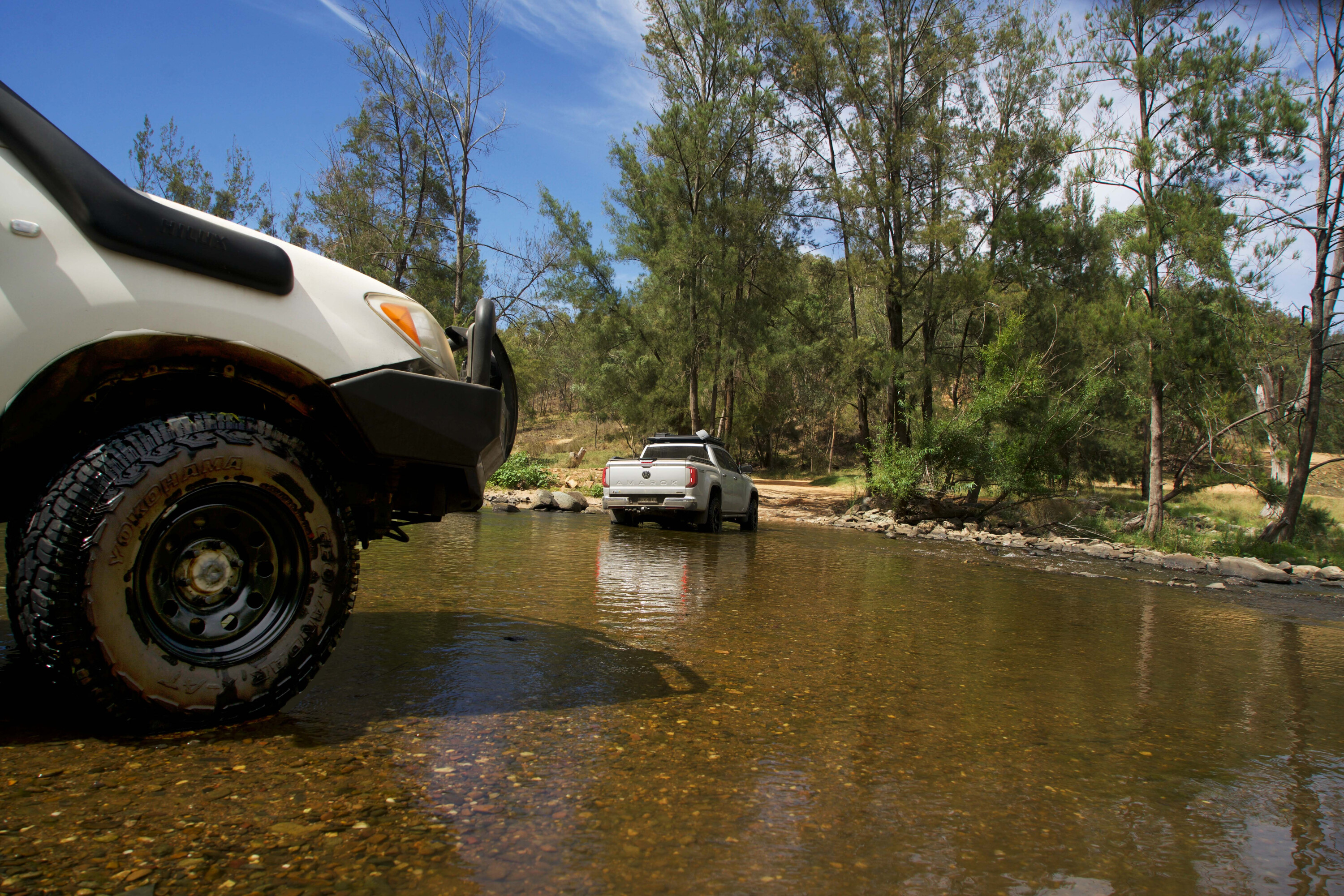
Anyway, bring your camping gear, enough food and drinks for your trip and maybe throw in a snatch strap or two if you like being super-prepared.
1
Camping access
As mentioned, it’s predominantly 2WD or high-range 4×4 touring, but conditions are more variable than Australian Prime Ministers over the last decade, so bring your wits and keep ’em about you.
Heavy rains the previous week can affect big changes in river depth and flow, and the trickle you camped next to last month may be closer to a raging torrent this time around.
With that said, this is one of the best beginner trips within cooee of Sydney (or Bathurst, duh) and while the wheeling is far from what you’d call difficult, the conditions can easily catch you out if you’re not ready.
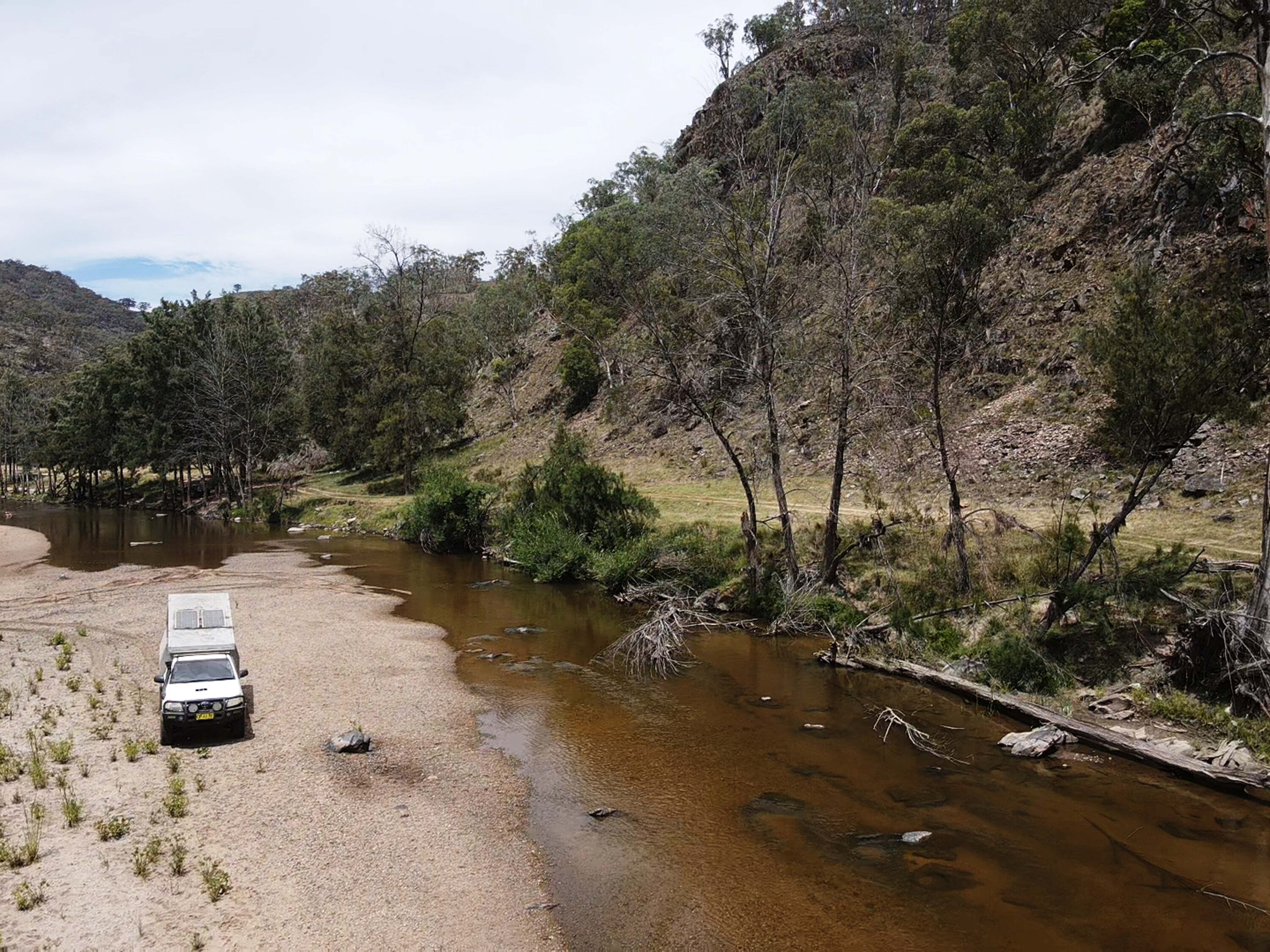
Realistically though, there’s so much to see and do. The main sites are well signposted and well-appointed with plenty of room for everyone.
1
Firepits and long drops are provided at regular intervals too, which is a far cry from the usual NSW National Parks over-bollarding of anywhere remotely cool, but we digress…
In truth, the most difficult decision you’ll have to make is whether to go for a site on some lush green grass or head for the soft loamy beach, a literal pebble toss from the water.
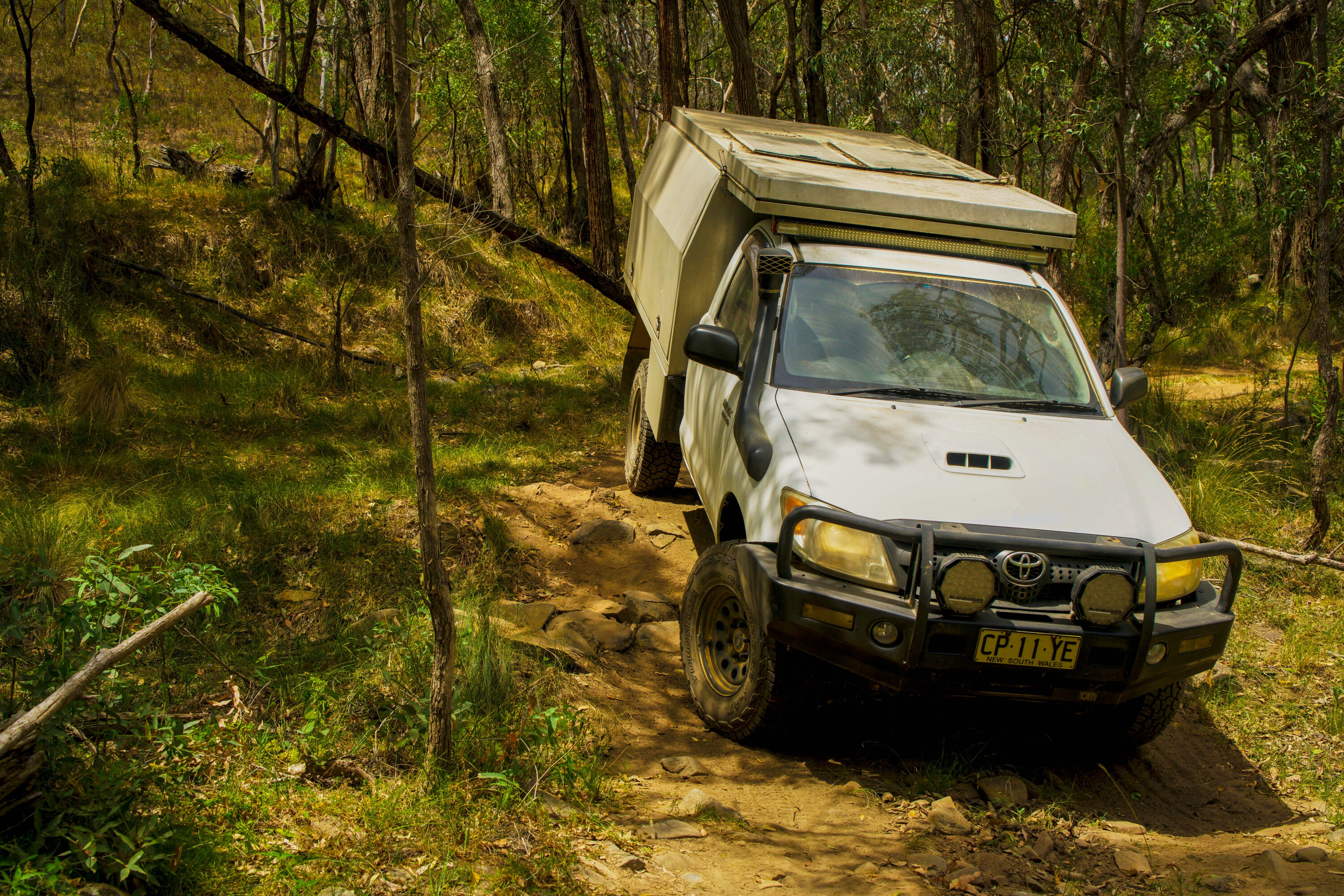
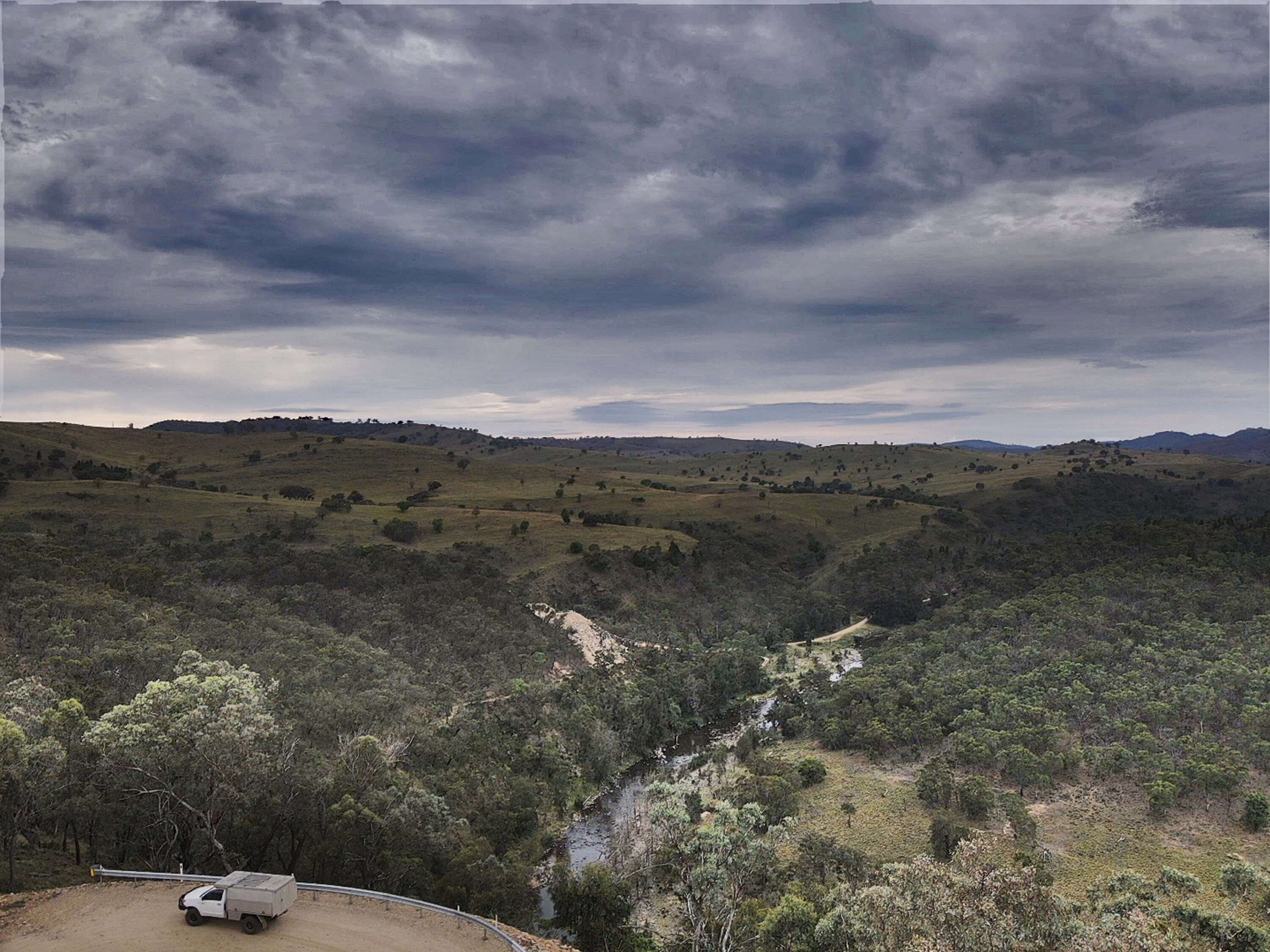
This time around we camped at the bottom of an unmarked track (Sammys Hole), which was steep and rutted enough to require low range and some judicious wheel placement. The payoff was that we had the place to ourselves a couple of metres from the river. For a cruisy drive a couple hours from the ’burbs this is as good as it gets.
1
When to go
The track is open year-round and is essentially always accessible (huge mountains falling over the track notwithstanding).
Given that it’s less than half a day’s drive from several major urban centres it understandably gets pretty chockers on the weekends and holidays. Best time to come would be out of school holidays and, if possible, during the week.
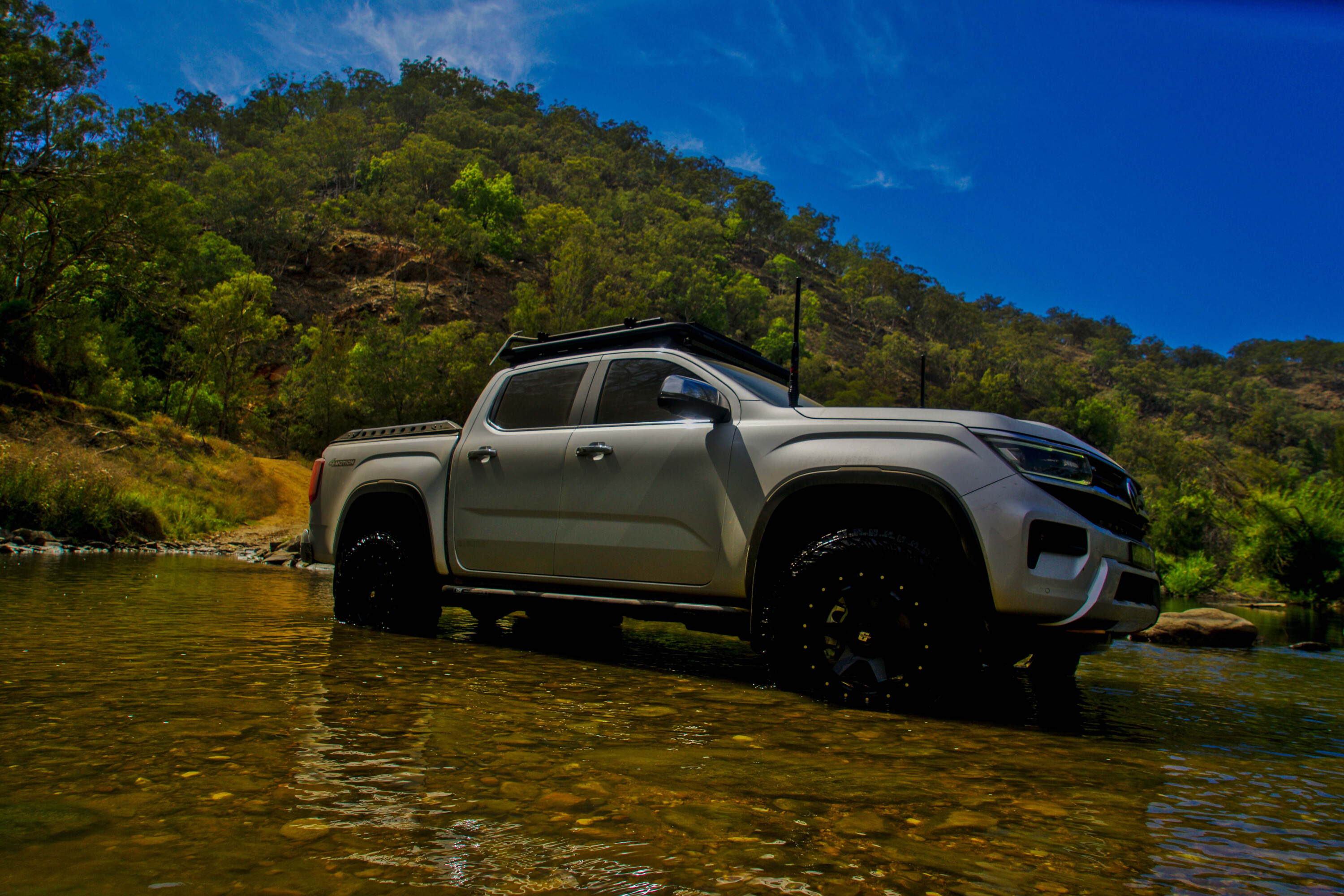
With that said, there is really a metric buttload of camping available here, both marked and unmarked, so there’s a better than average chance of you finding a suitable spot.
1
It’s advised that trailers are left at home due to the narrow track, but people do bring their campers (probably a bit too narrow for caravans) and there’s no shortage of spots to set one up.
Also, the Bridle Track is a bit of a rite of passage for 4x4ers. The terrain is nothing short of spectacular.
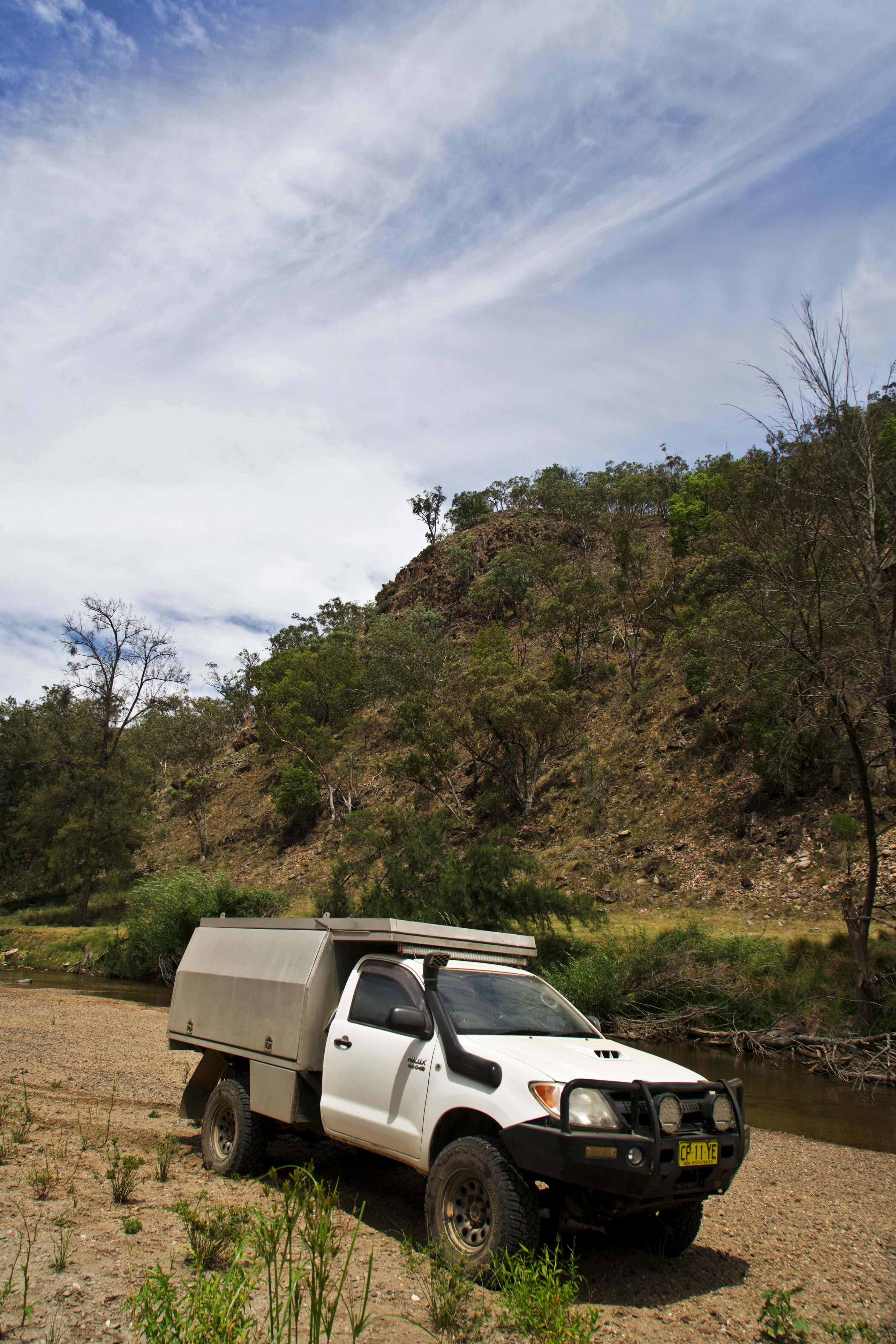
First you’re tracking along the river bank asking yourself “how’s the serenity?”, nek minute you’ve climbed 100m-plus up the ridge and are all wide-eyed at the topography of the peaks and valley systems of the area. It’s a magical place like that.
1
One last thing
Look, selling you on this place is not difficult. Yeah, the off-road driving is not on par with the Cape or the High Country, but that’s not necessarily a bad thing for a lot of folks.
The truth is that this is one of those parts of the world that’s just begging to be explored. There are so many campsites and so many tracks in the region to poke your nose down, and the Bridle Track is just one of them.
In the same area you’ve got the Turon River system, Dixons Long Point, the Coxs River run, Sunny and Dark Corner to name just a few. Fair dinkum, we’ve been driving and camping here for over 20 years and have barely scratched the surface.
If you live in this neck of the world, this is your backyard. Come and find it.
Pro tips
Last year marked the 75th anniversary of Ford’s iconic F-series trucks as well as the re-introduction of the model to Australian Ford showrooms.
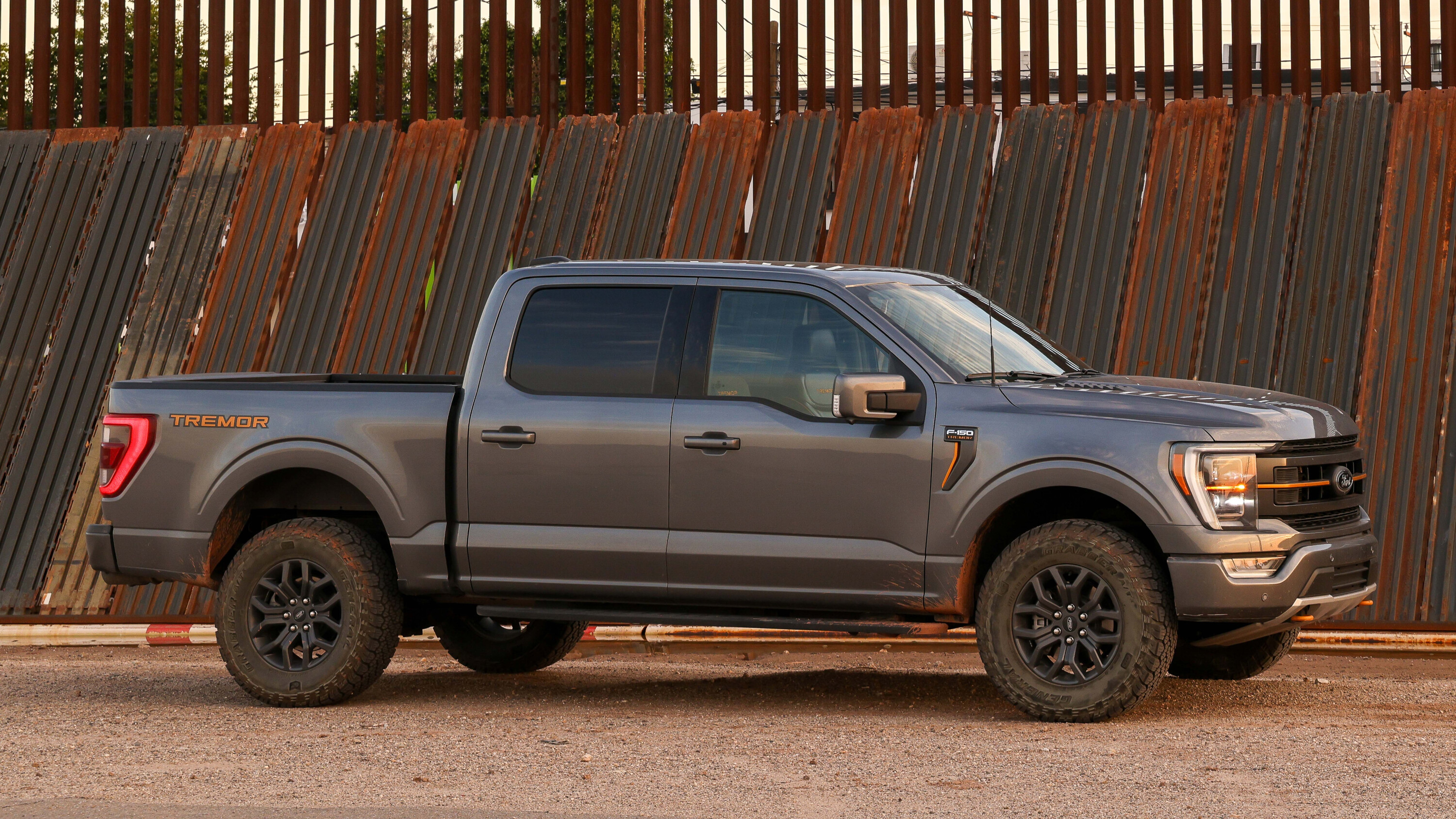
As always for passionate F-truck people, there was a lot to be excited about, particularly with the introduction of the 2023 F-150 Tremor boasting a V8 engine as standard, with the option of going to the 3.5L EcoBoost.
However, for Australians, this beast remains a distant dream, as the Tremor, along with its V8 engine, apparently won’t make their way Down Under.
1
Due to its enormous population, the US market is graced with 8 different variants of the F-150, all with countless options for comfort, styling, drivetrain and aesthetics, plus a grand total of seven different engine options.
The coolest is definitely the High-Output 5.2L Supercharged V8 which comes standard in the F-150 Raptor R, or can be optioned up in the regular Raptor.
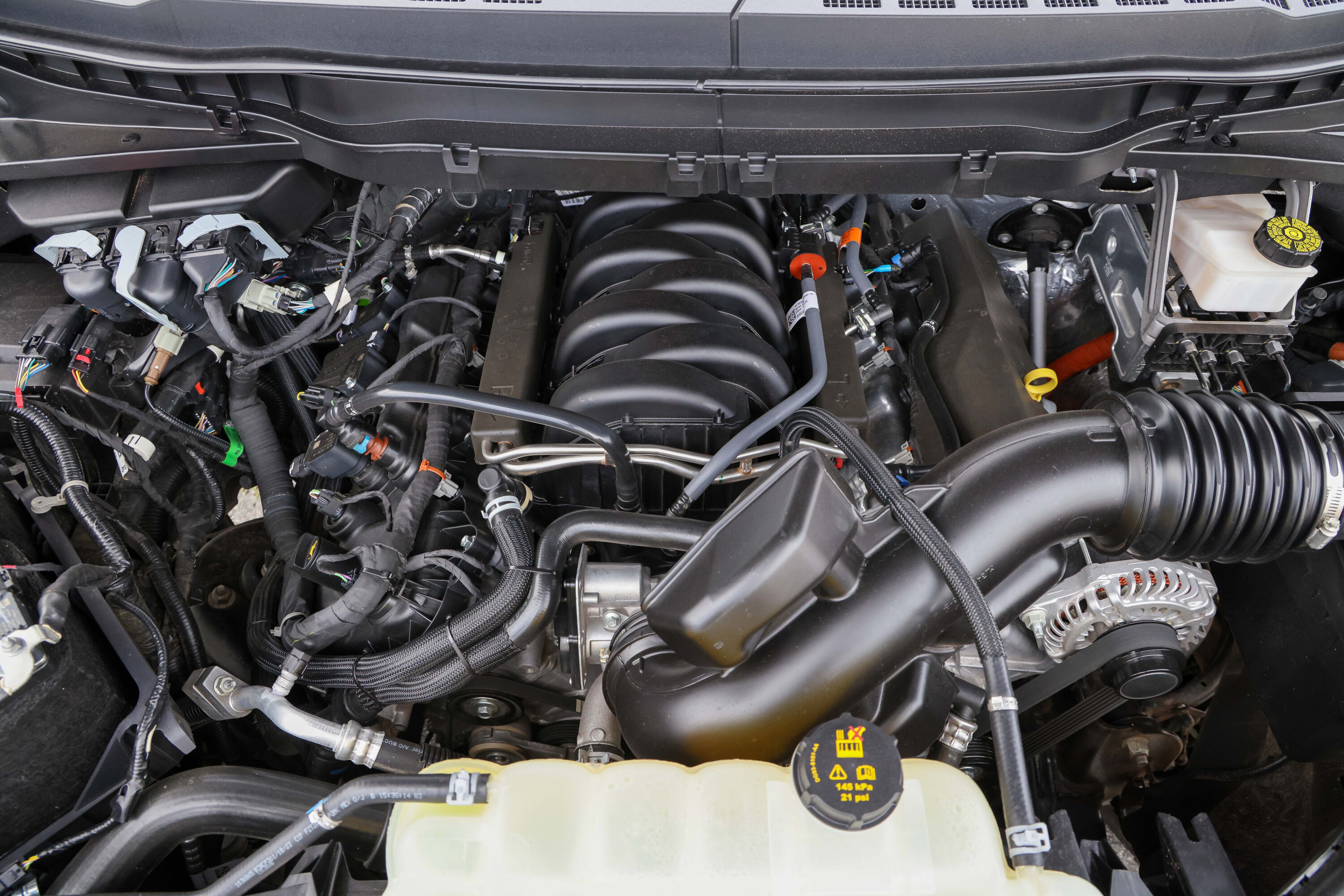
Somehow, even though I know the Raptor R would have been loads of fun to drive on my recent US road trip, my bank balance after visits to the petrol pump is much happier having opted for the 5.0L Coyote-powered Tremor.
1
What is it?
Some call the F-150 Tremor the ‘Baby Raptor’ and you’d be forgiven if you hadn’t noticed that it’d moved in on the FX4 model, which has disappeared from the current F-150 line-up in the USA.
Before you option it up, the Tremor starts at US$61,330, which means it’s still more than the XLT and Lariat (models sold here in Australia), but a few grand cheaper than the King Ranch and Platinum luxury-style trucks.
Surprisingly though, the base Raptor is only around US$15,000 dearer, so if you had the choice and the funds you’d probably go for a Raptor. Above that is the luxury Limited model.
1
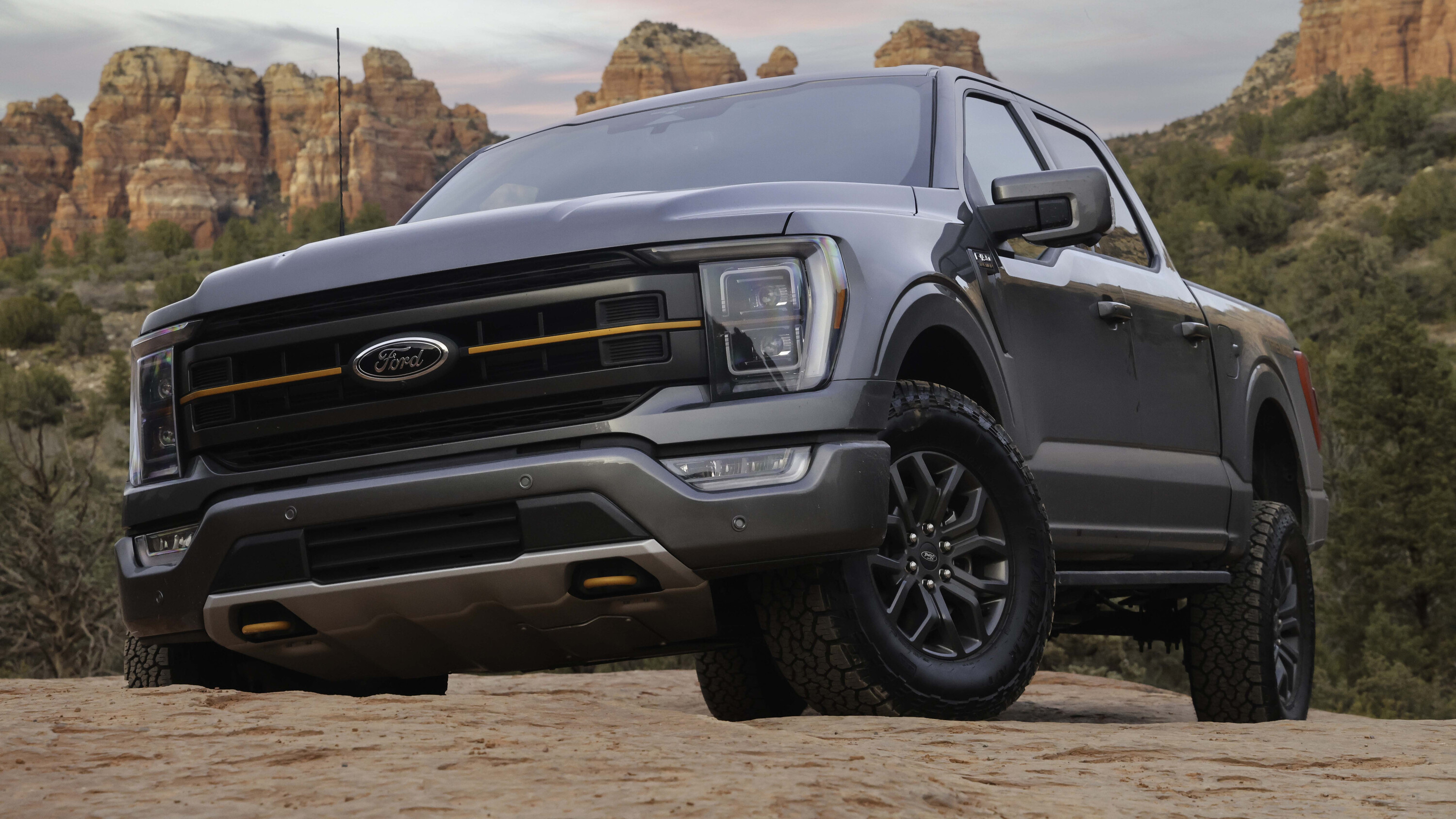
What sets the Tremor apart from the other road going F-150s is its off-road package and subtle Raptor-esque styling.
Mechanically, the Tremor comes standard with a rear locking diff which is also available in the Raptor, but unlike the Raptor and every other model, the Tremor has a robust 9.75-inch rear axle. It also comes as standard with the fancier electronic 10-speed transmission as opposed to the unique Hybrid HEV 10-speed transmission that is standard in the lower models.
What does this mean? Well from the point of view of driving the car, it’s extremely smooth and effortless, and it also gives you all of the driving modes that the Raptor comes with, except instead of Baja, it has Deep Snow/Sand.
1
4×4 system
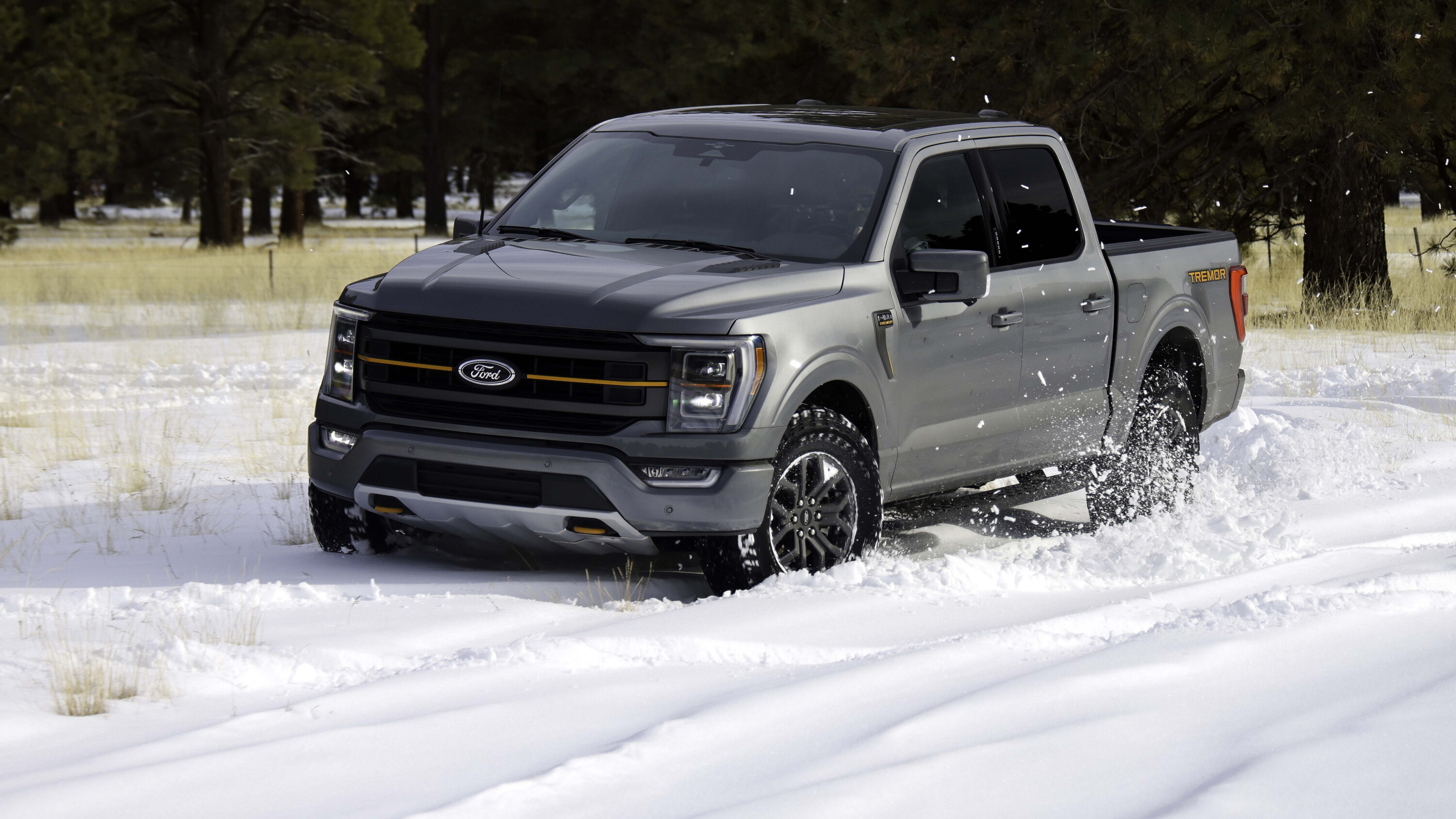
Funnily enough I was lucky to find snow as we headed south from Nevada into Flagstaff Arizona.
I was a tad nervous at first as I dipped the front wheels into it, but the Tremor ate it up and I actually ended up having a bit of fun in the white stuff. The standard transfer case behind the transmission is a part-time 4×4 system with high and low range (2H, 4H and 4L), but the vehicle I was driving was equipped with the optional two-speed Hi-Lock transfer case, which essentially adds a 4A mode added on-road traction (2H, 4A, 4H and 4L).
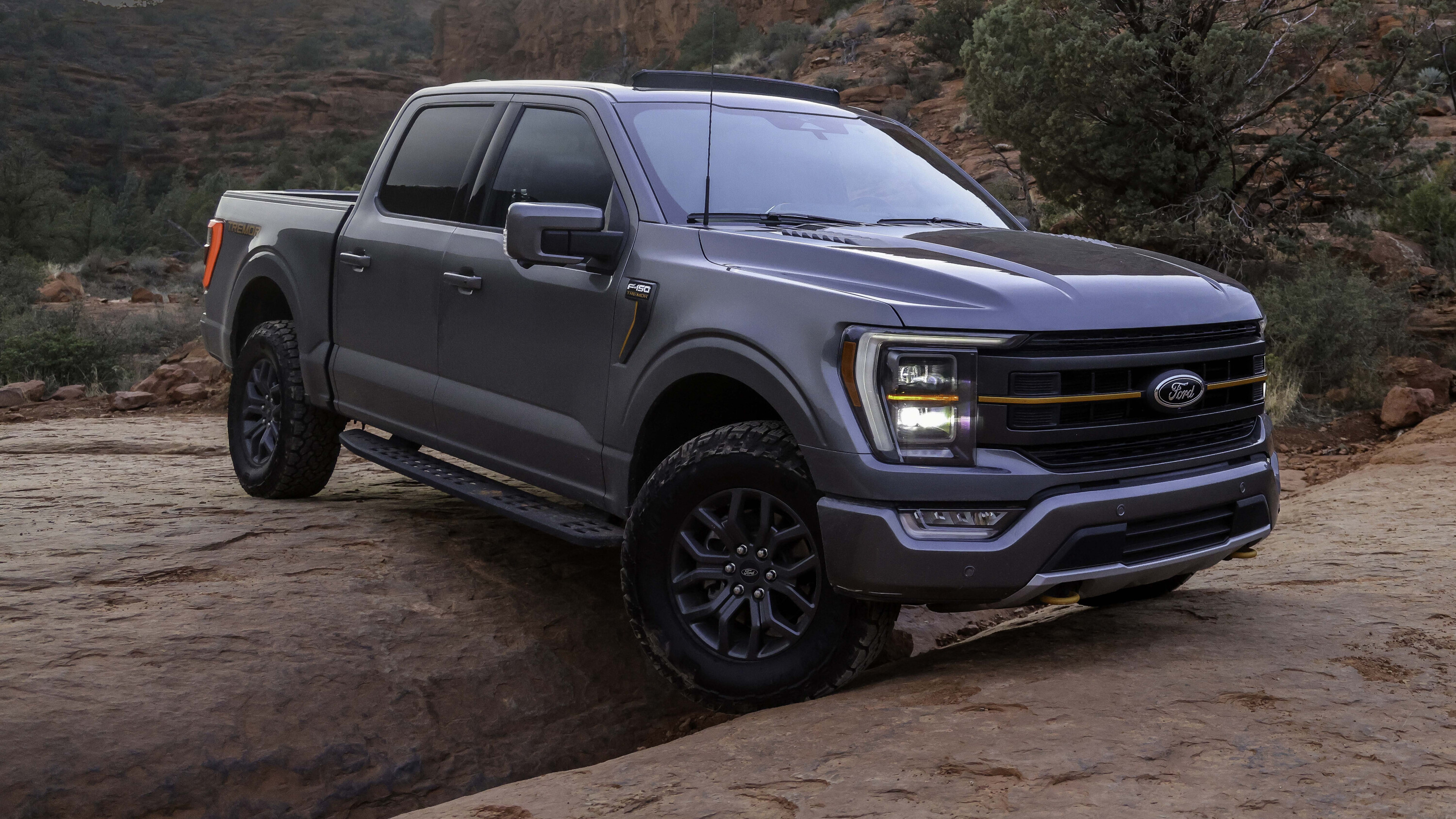
I tackled some rocky trails in Rock Crawl mode and found the Tremor to be extremely capable at getting up some reasonably tricky tracks.
1
The Tremor is also equipped with additional bash plates and rugged side steps that make it suitable and capable in standard form for getting away on the weekends.
The area we’d stumbled upon turned out to be a well known 4X4 stomping ground in Sedona known as Broken Arrow, and if you’re ever in that area, I highly recommend it.
On a couple of occasions I used the Slippery Mode on some icy roads in Arizona, and when driving through torrential rain in San Diego. Each time it was very stable and gave me a great deal of confidence in the vehicle.
1
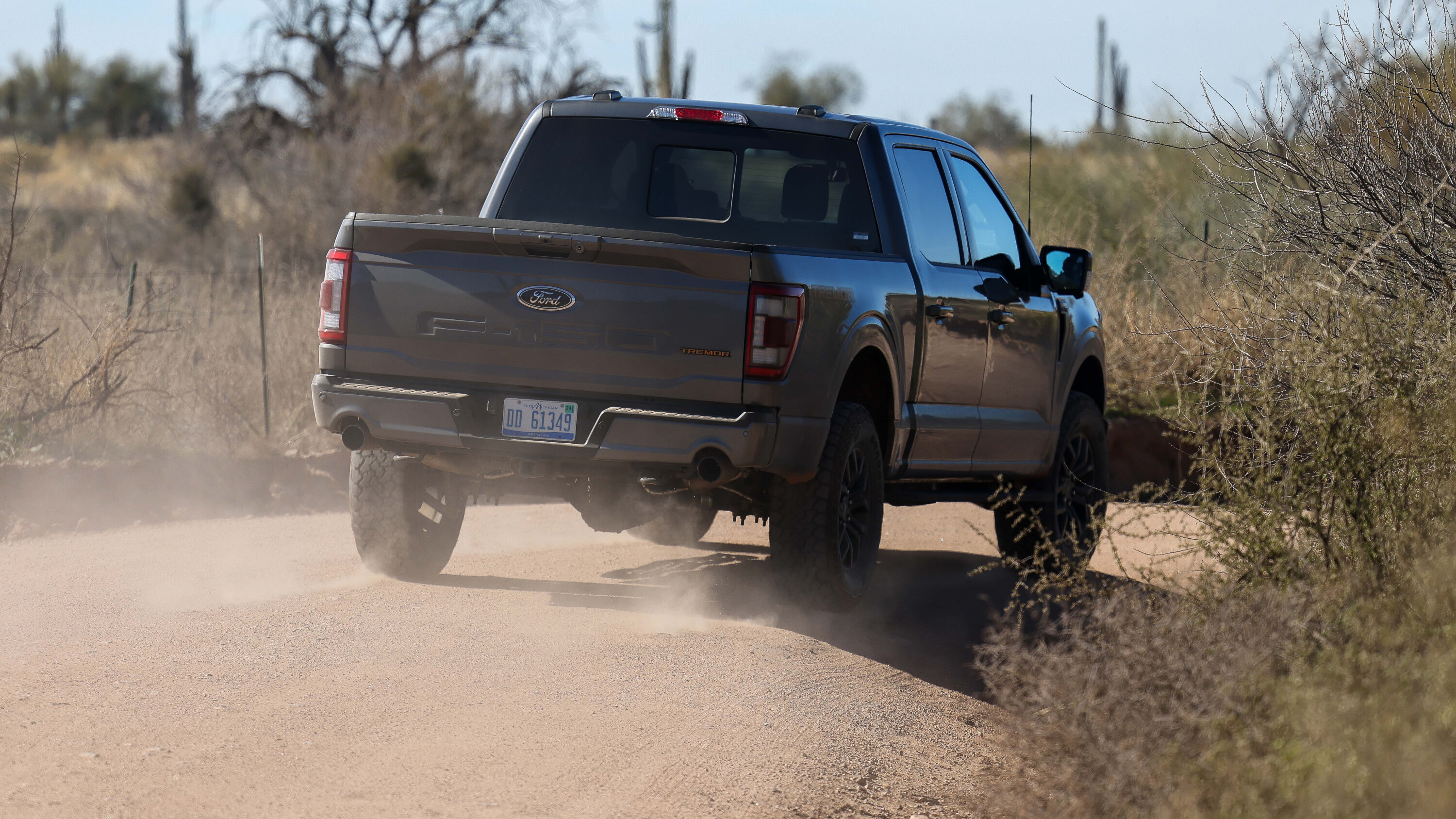
This was also the case when we hit some dirt roads east of Phoenix where I decided to have a bit of play and went for Sport mode.
To be honest, I thought it would be a bit more out of control, but the Tremor, with its unique-to-this-model off-road suspension package, felt planted and confidence inspiring.
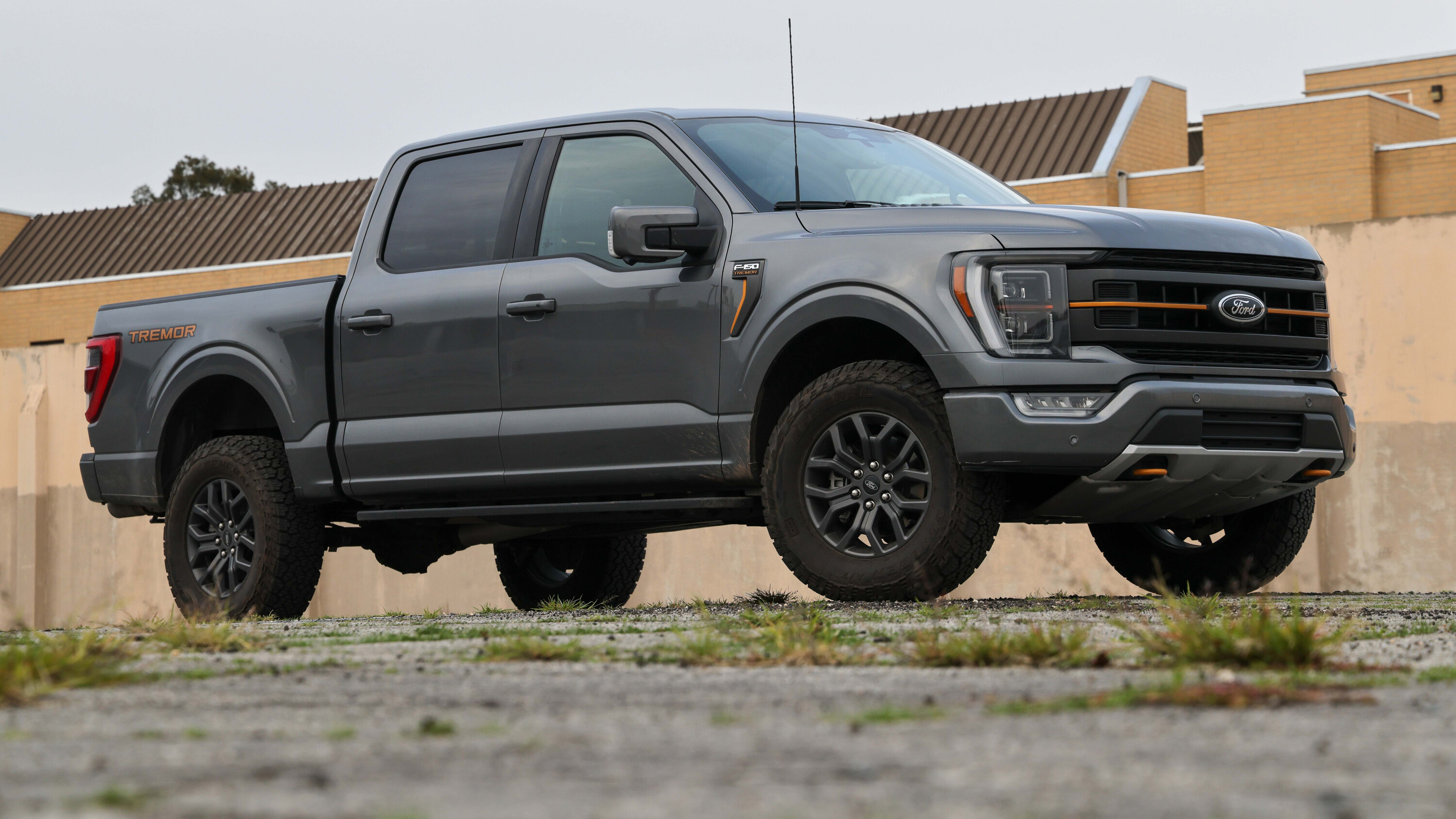
Unlike the road-going models it comes standard with 18-inch alloy wheels wrapped in 33-inch (275/70R18) General Grabber All Terrain tyres.
1
A smooth ride
With regards to the road trip itself, I’d be lying if I said I didn’t have the Tremor in Eco mode a lot of the time.
It’s quiet, smooth, way more efficient and is only a twist of the driving-modes knob away from Normal and Sport modes. That, in addition to the commonly found active cruise control and lane-departure assist, makes for a very comfortable and safe ride.
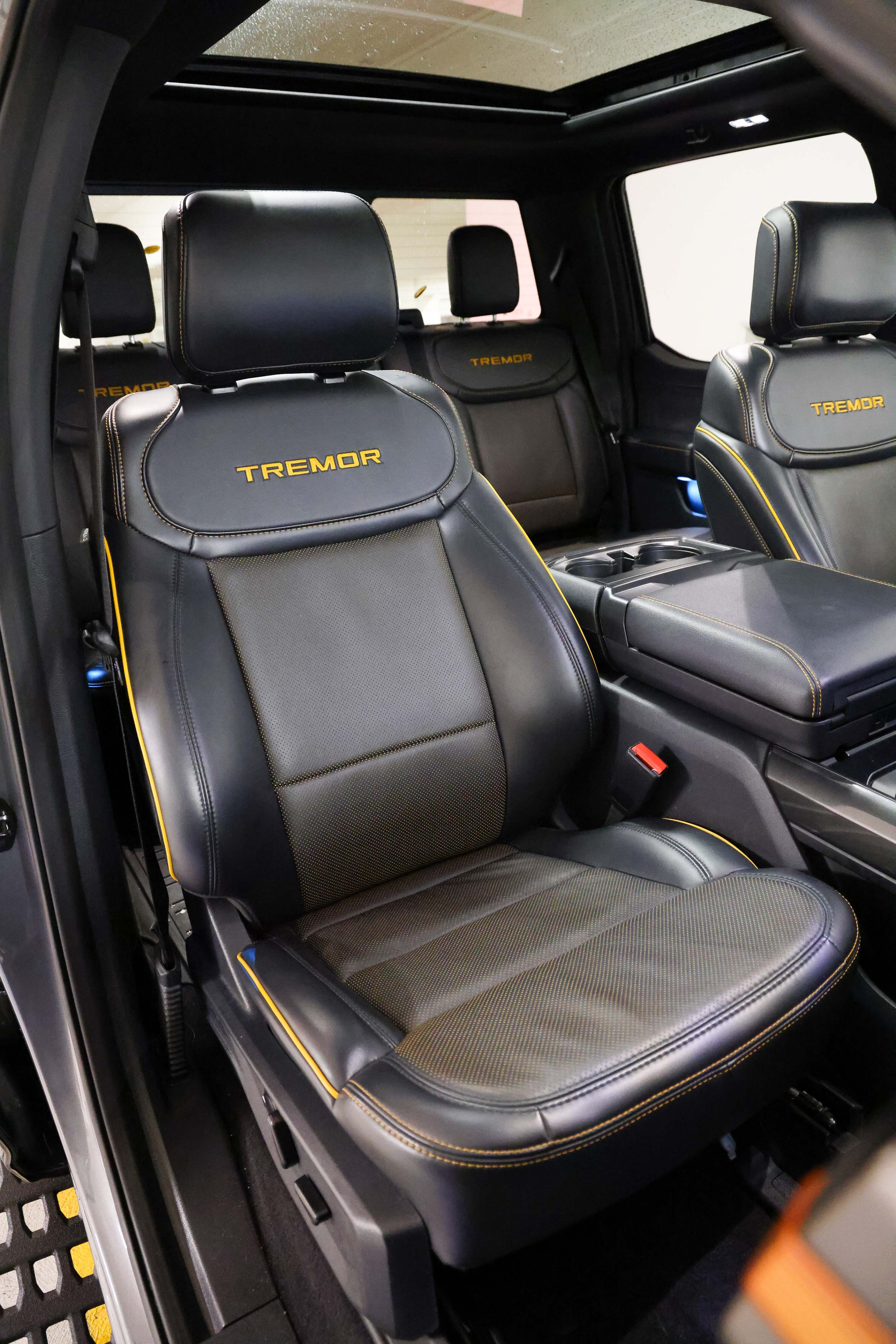
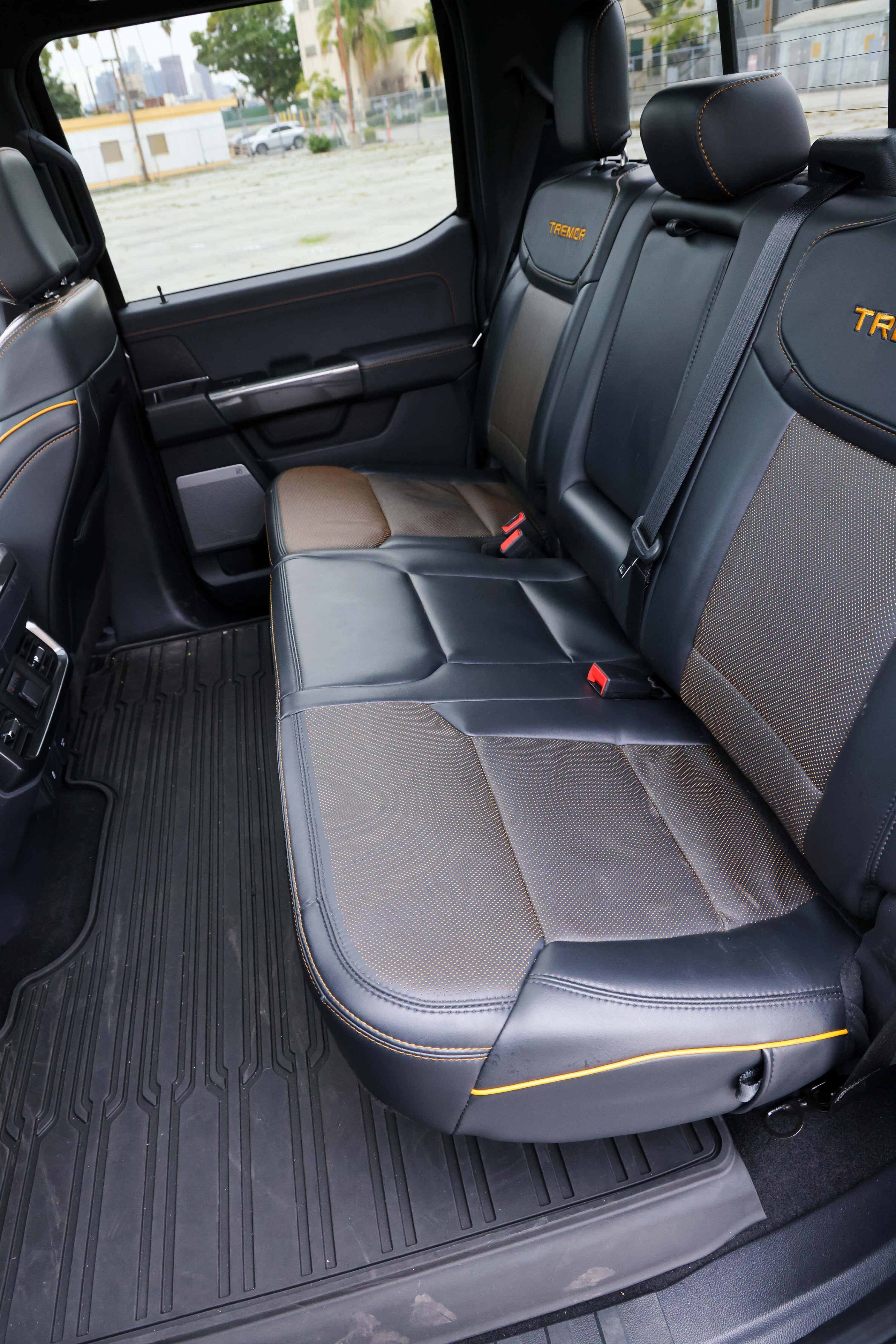
The interior is unique to this model and features the Tremor logo in multiple places around the cabin including the heated and air conditioned seats.
Like other models, however, the Tremor has a fold-out workstation and stowable shifter, not to mention an absolutely brilliant infotainment system with a whopping 15.5-inch screen and the option to upgrade to a B&O audio system.
1
In the rear, there’s loads of legroom and passenger power outlet options, and the seat can be stowed when not in use, transforming the rear of the cabin into a large luggage space.
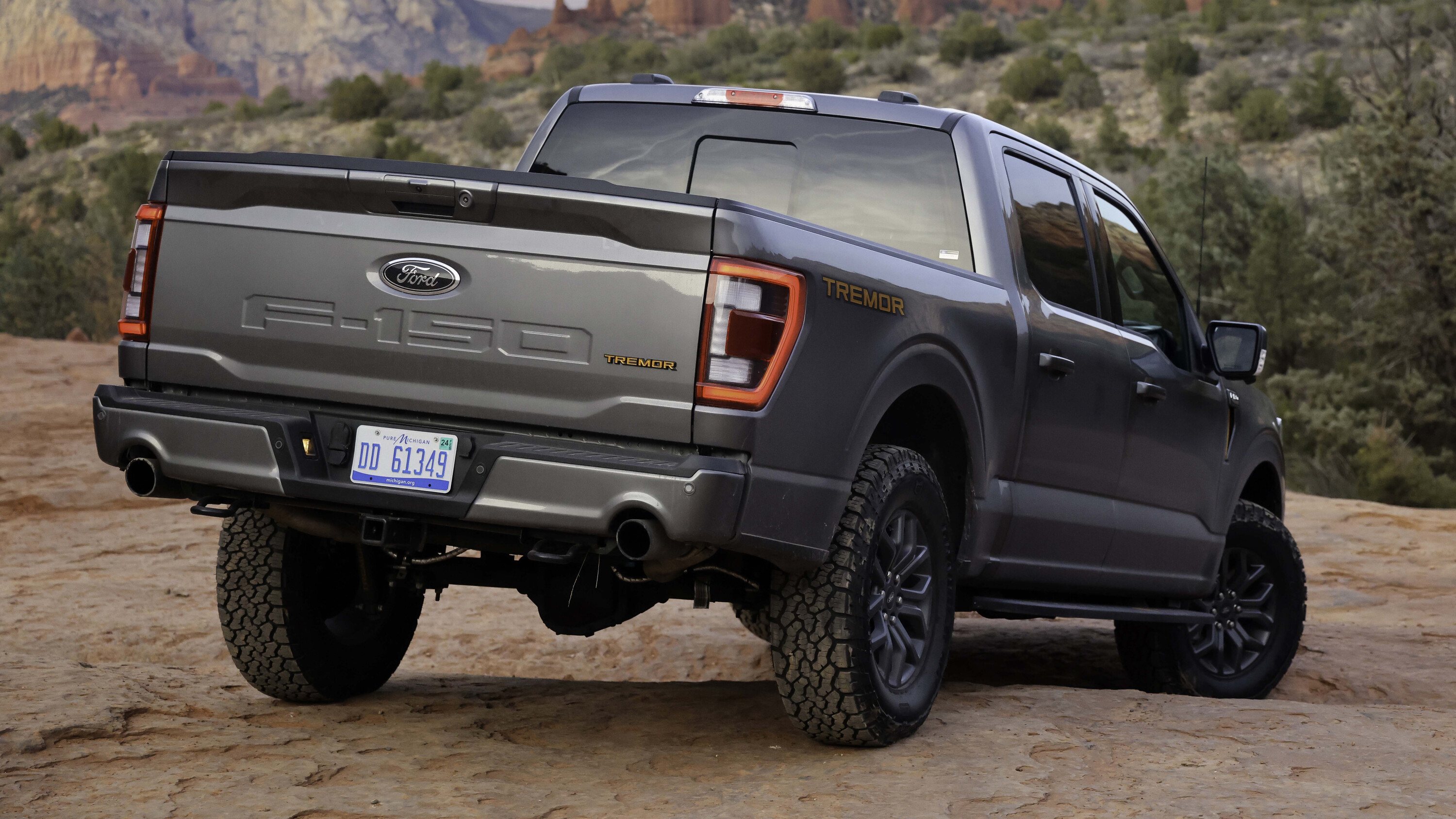
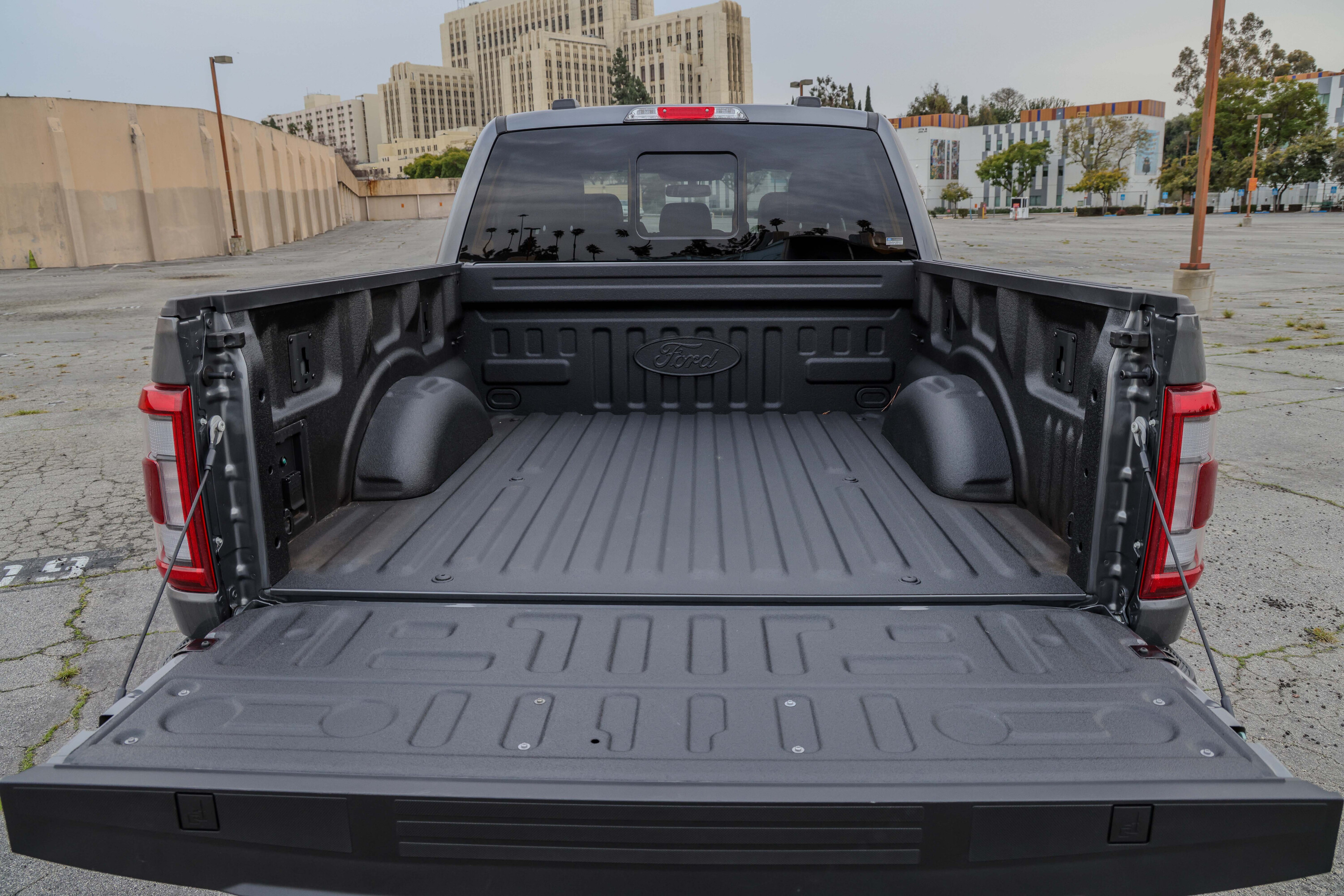
On the outside, while it doesn’t look as rugged and beefy as the Raptor, the Tremor still scores a unique look thanks to its grille, bonnet vents, side vents and decals, not to mention the big chunky side steps.
On more than a few occasions during our road trip, people commented along the lines of ‘Oh cool, that’s the Tremor package’, so Ford obviously did something right when it released this low-carb Raptor.
1
Aftershock
After doing more than 2000 miles (3200km) across three states in the F-150 Tremor, as we meandered back to the urban sprawl of Los Angeles to return it, a tinge of melancholy set in, knowing that this experience is one that, for now, remains beyond the reach of Aussie shores.
Ford’s commemoration of the F-Series truck’s 75th-year with the F-150 Tremor is a testament to the enduring legacy and continuous evolution of the Effie. Having built millions of these iconic vehicles to date, the F-150 Tremor adds a new layer to this rich tapestry, combining an iconic V8 engine with the finesse provided by modern engineering.
Yet despite the fact that neither the Tremor nor the V8 engine option is destined for the Australian market, the allure of this American marvel is undeniable.
1
While only two models of the F-series have made their way to our shores through Ford, tales of people traversing the vast expanses of the American landscape in a vehicle as commanding as the F-150 Tremor are bound to ignite the wanderlust in us all.
As we mark another chapter in the history of the F-series, the 2023 Ford F-150 Tremor stands as a celebration of all that has come before and a tantalising glimpse of what the future holds… even if it’s one that we can only admire from afar.
The journey across Southern California, Las Vegas, Arizona and San Diego in the F-150 Tremor was more than just a road trip; it was an odyssey and a chance for two good mates to hit the road together, in the perfect rig for the trip.
Given that Ford has barely dipped its toes in the water here in Australia bringing in the EcoBoost XLT and Lariat models, there might still be a chance for the Tremor to see our shores… or maybe even the F-150 Raptor given the popularity of the Ranger version. Only popularity, sales and time will tell.
MORE
Everything Ford
| 2023 Ford F-150 Tremor key features | |
|---|---|
| 33-inch all-terrain tyres | Integrated trailer brake controller |
| Two-speed four-wheel-drive system with neutral towing capability | Trailer Sway Control |
| Off-road shocks | Selectable Drive Modes (Normal, ECO, Sport, Tow/Haul, Slippery, Deep Snow/Sand, Mud/Rut, Rock Crawl) |
| Electronic-locking rear differential | Unique dual-exhaust outlet |
| Unique Tremor control arms | 4.10 front axle (opt) |
| Unique Tremor front knuckles | Hi-Lock transfer case (opt) |
| 9.75-inch gearset | Trail Control with Trail One-Pedal Drive and Trail Turn Assist (opt) |
1
| 2023 Ford F-150 Tremor | |
|---|---|
| Price | From US$63,950 |
| Engine | V8 petrol |
| Capacity | 4942cc |
| Max power | 298kW at 6000 rpm |
| Max torque | 558Nm at 3000 rpm |
| Transmission | 10-speed autmatic |
| Transfer case | Selectable full-time 4×4 w/ low-range |
| Crawl ratio | NA |
| Construction | 4-door ute on a separate chassis |
| Front suspension | IFS, double wishbone w/ coil springs |
| Rear suspension | Live axle w/ leaf springs |
| Tyres | 275/70R18 General Grabber A/T |
| Kerb weight | 2323kg |
| GVM | 3276kg |
| GCM | 7121kg |
| Payload | 953kg |
| Towing capacity | 4500kg |
| Seats | 6 |
| Fuel tank capacity | 136L (extended range) |
| Claimed fuel consumption | 13.8L/100km combined |
| On-test fuel consumption | NA |
The team at Lightforce has been at it again, raising the bar for vehicle auxiliary lighting.
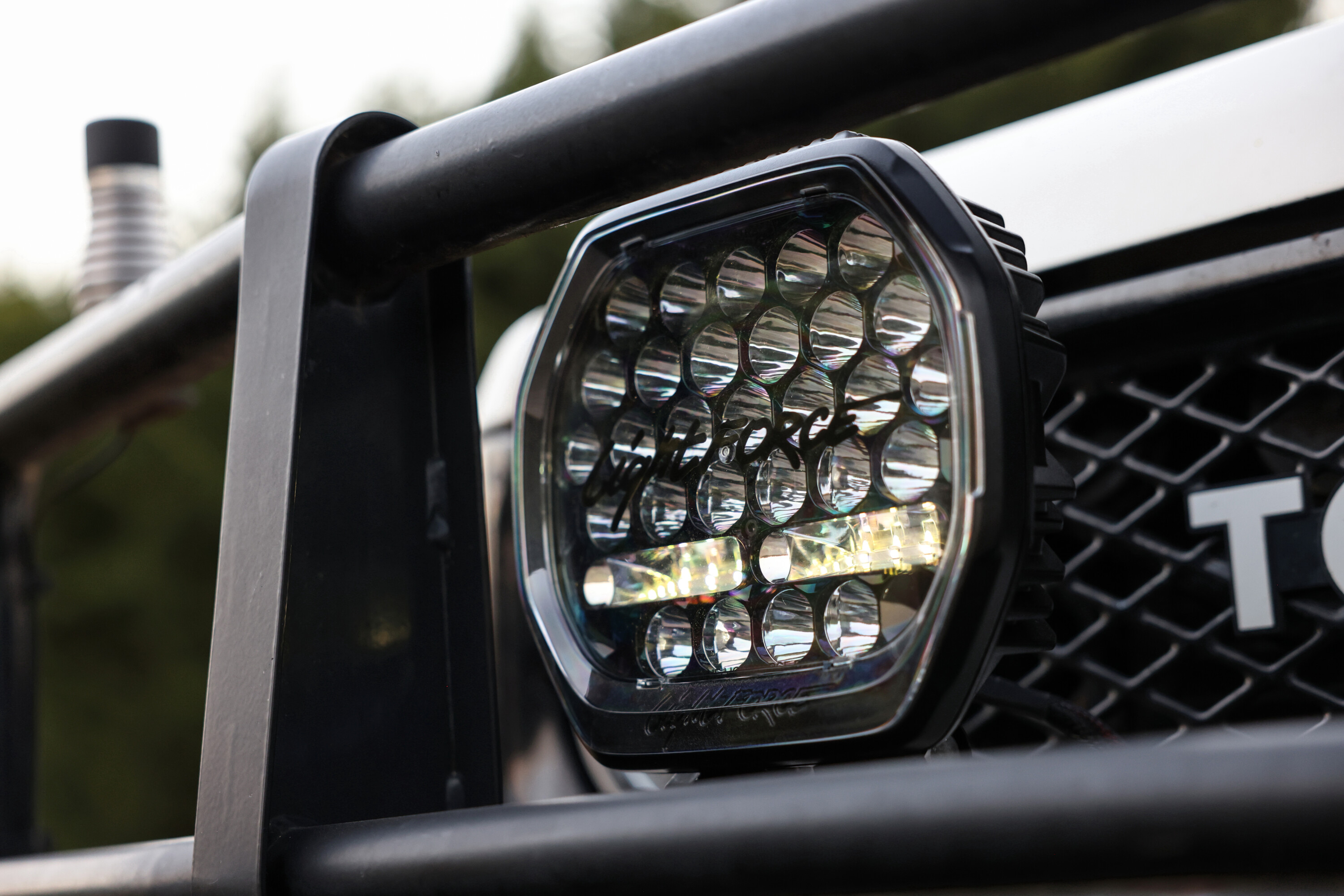
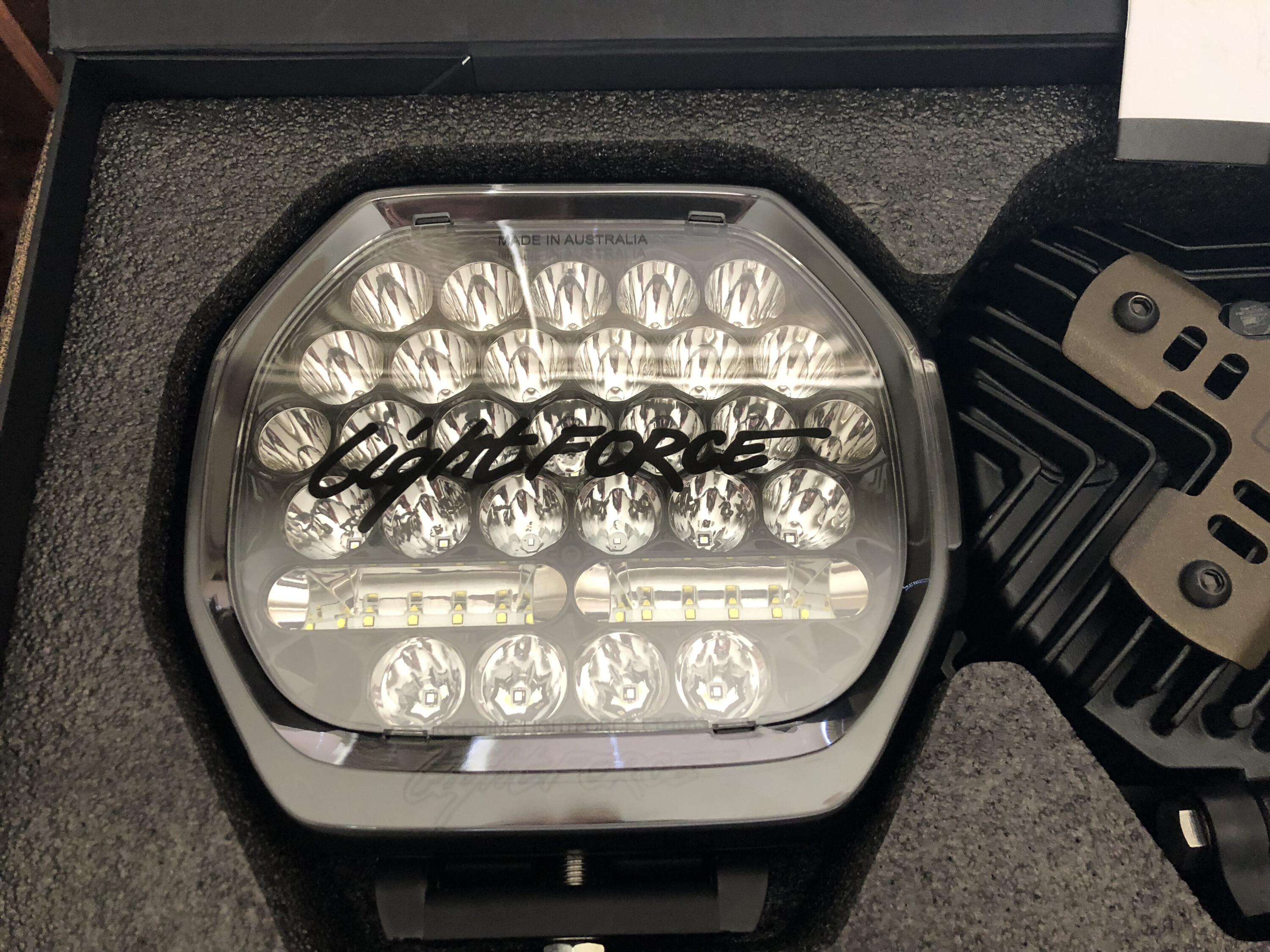
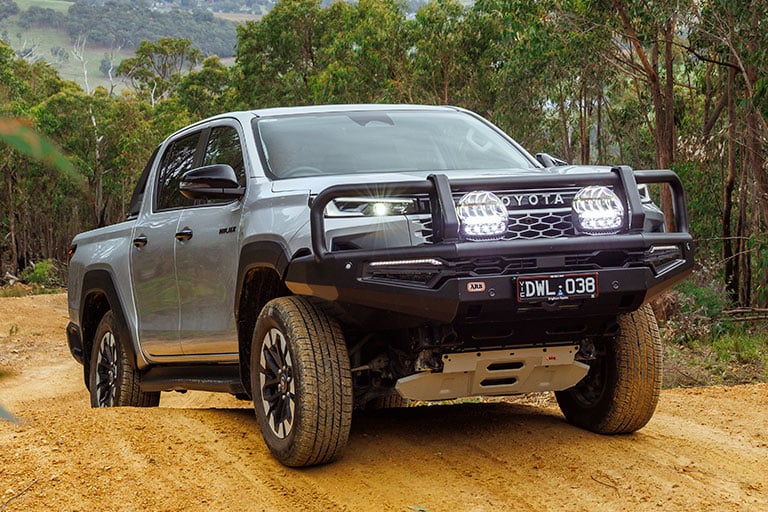
The newest product from the South Australian lighting manufacturer is the Beast, a 222mm round-ish driving light that uses 36 Osram LEDs to offer a light with multiple modes of beam to suit the conditions you are driving in.
Rather than having a specific lamp with a flood beam and another one for spot, the Beast allows you to select modes for each via a simple press of the dash button. Alternatively, hold the button in for a few seconds to engage Beast Mode which gives you both at once for maximum reach and spread of light.
1
While the ability to offer multiple beam outputs from a single LED light is not new to the auxiliary lighting market, it’s new to Lightforce, and in this product it comes with the brand’s Australian-made solid design and construction. In fact, the team came up with a whole new light to implement the multi-beam feature.
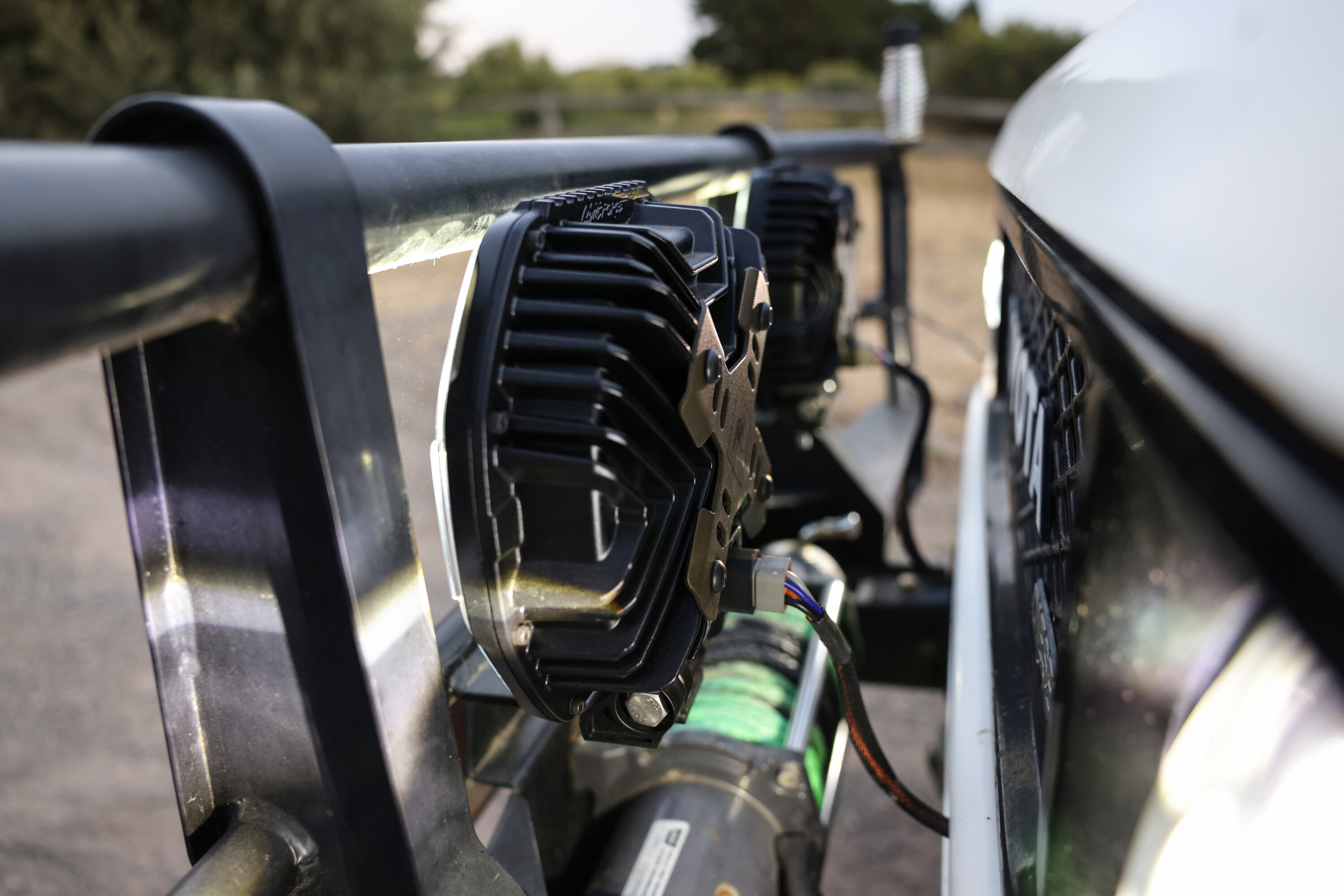
The Beast features a lightweight diecast aluminium housing for optimal strength and heat dissipation, while the 36 LEDs sit in front of a black reflector for a unique look in the almost octagonal housing.
The lights are rated IP69K for dust and water ingress and use a Gore membrane on the breather, and Lightforce claims the Beast driving lights will operate at a depth of 1.5m under water for an hour without leaking; will run continuously between -40°C and 85°C; can survive temperature spikes up to 125°C; and will handle a 400g rock strike on the lens at 100km/h or a 1kg rock strike at 60km/h.
1
The lights are made to US Military standard MIL-STD-810H 514.4 for vibration and shock, and claimed to resist seven days of the IEC 60068-2-52 salt spray with no rust or damage to the coating, so they should be able to cope with the rigours of sitting up the front of your 4×4 for many years. Lightforce is confident enough in the Beast to offer a five-year warranty.
The wiring harness that’s supplied in two-light kits contains everything required for fitment and use of the Beast lights and the harness is easy to understand and install, featuring high quality plugs and components. Only a single wire needs to run through to the dash for the switch which is supplied with the harness.
The depth of the lights has been kept to a minimum to allow fitment between the grille and bull bar of most 4×4 vehicles. The solid mounting brackets are reversible for more mounting options, and anti-theft mounting bolts are available as an option.
1
Modes
The Beast lights have four modes in total including the daytime running light (DRL) function which is designed to illuminate as soon as the ignition is switched on.
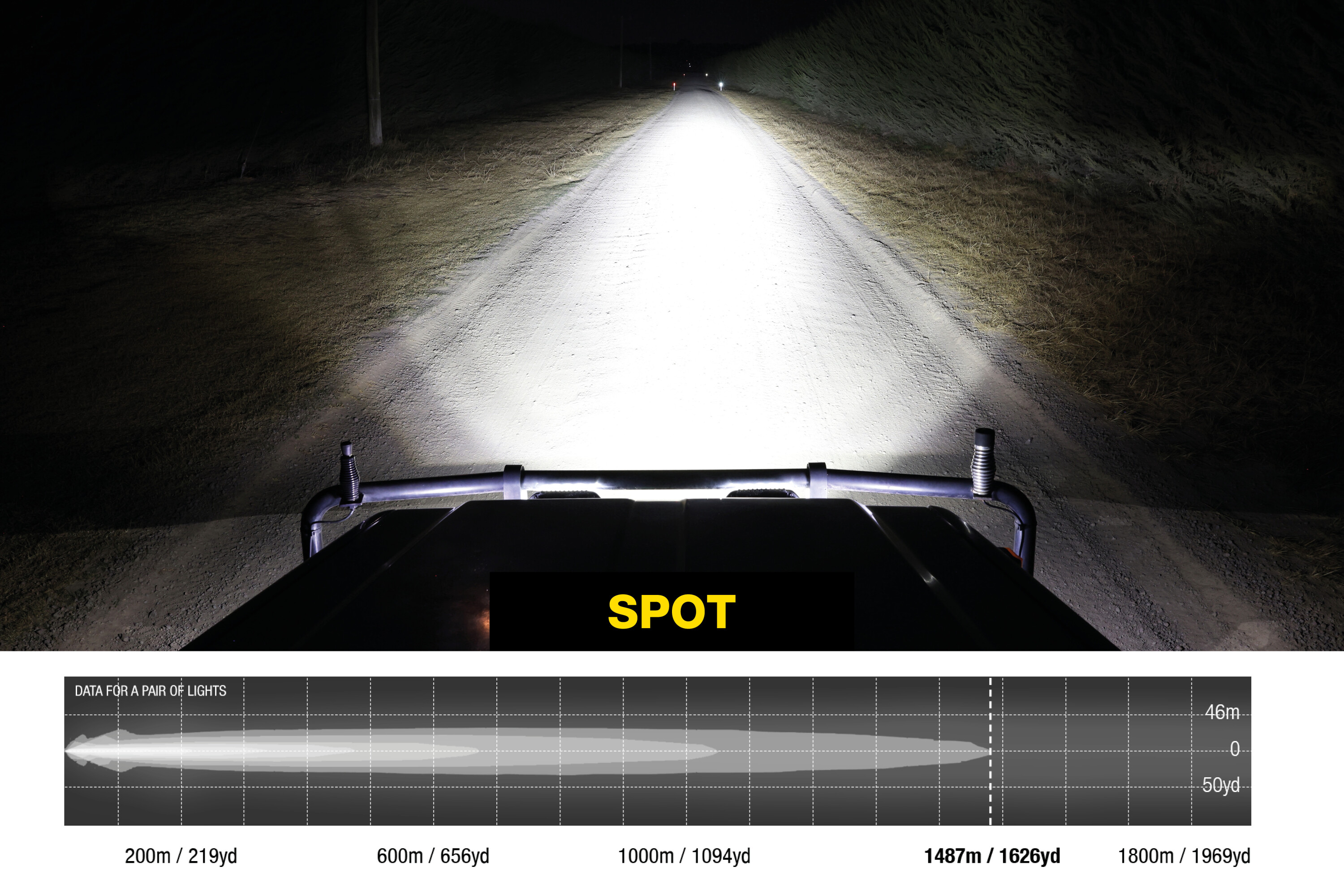
With the vehicle’s high beam on, a single tap of a dash button activates the long-range spot mode of the driving lights, punching out a claimed 1 LUX at 1497m with a beam width of 60m.
1
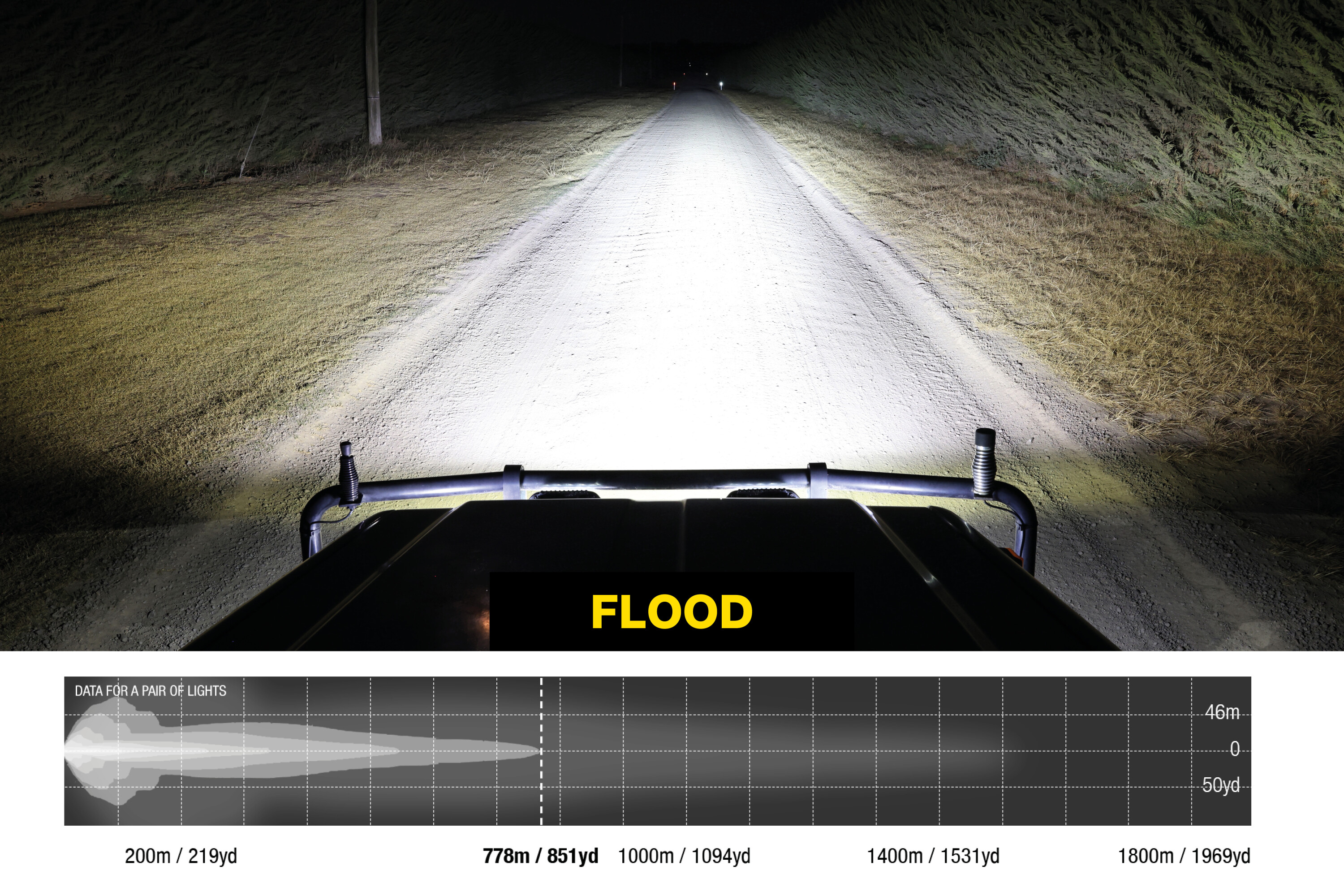
A second press of the button engaged flood or wide beam, projecting a claimed 1 LUX at 778m with a 140m beam width.
1
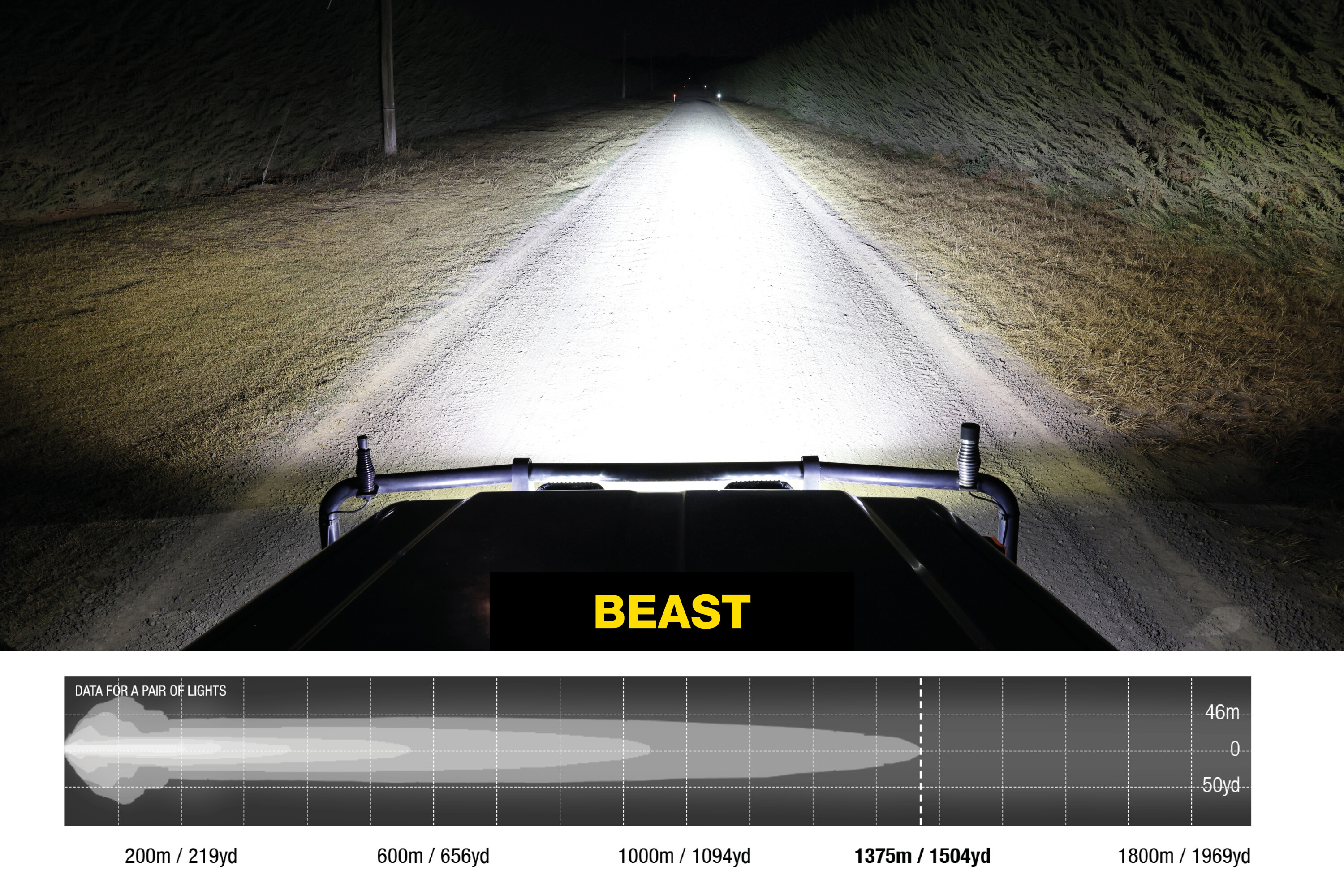
Holding down the button for a few seconds initiates Beast mode, resulting in a claimed 1 LUX at 1375m with a wide 140m beam width.
1
On the bushy Victorian tracks we’ve been driving lately in the LandCruiser, the flood mode has proved most suitable, while the long-range spot beam will no doubt come into its own out in wide-open spaces.
Verdict
These are the best driving lights I’ve had on the Cruiser since the original HTX lights from Lightforce, which combined older HID technology with LEDs. The improvements in LED technology and reflector design have made HID components redundant, and the Lightforce Beast offers even better lighting performance, all in a tough Australian made package.
The Beast is available in a single-lamp or two-lamp kit with harness. There’s a range of accessories available including black, tinted and clear filters/covers, and the aforementioned anti-theft lock nuts.
Australian-made quality doesn’t come cheap, but at $599.50 for a single Beast lamp or $1349 for the two-lamp kit, covers, harness and instructions that make installation simple, they are comparable to other products in terms of cost.
RRP
- One lamp: $599.50
- Two-lamp kit: $1349
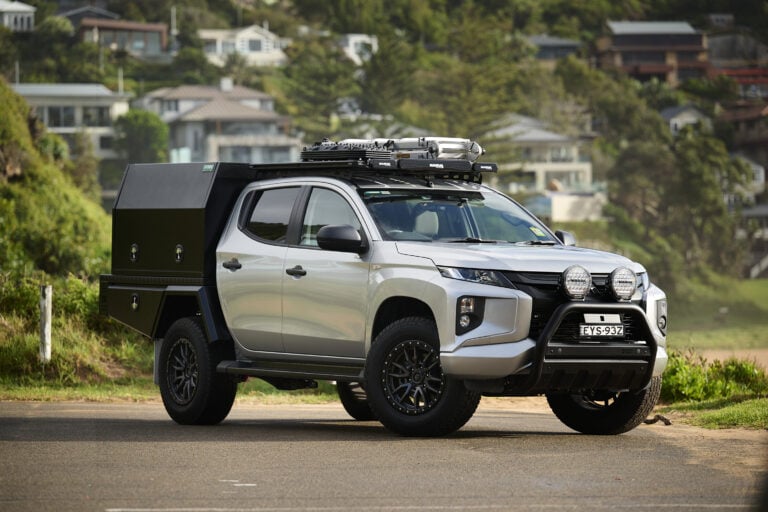
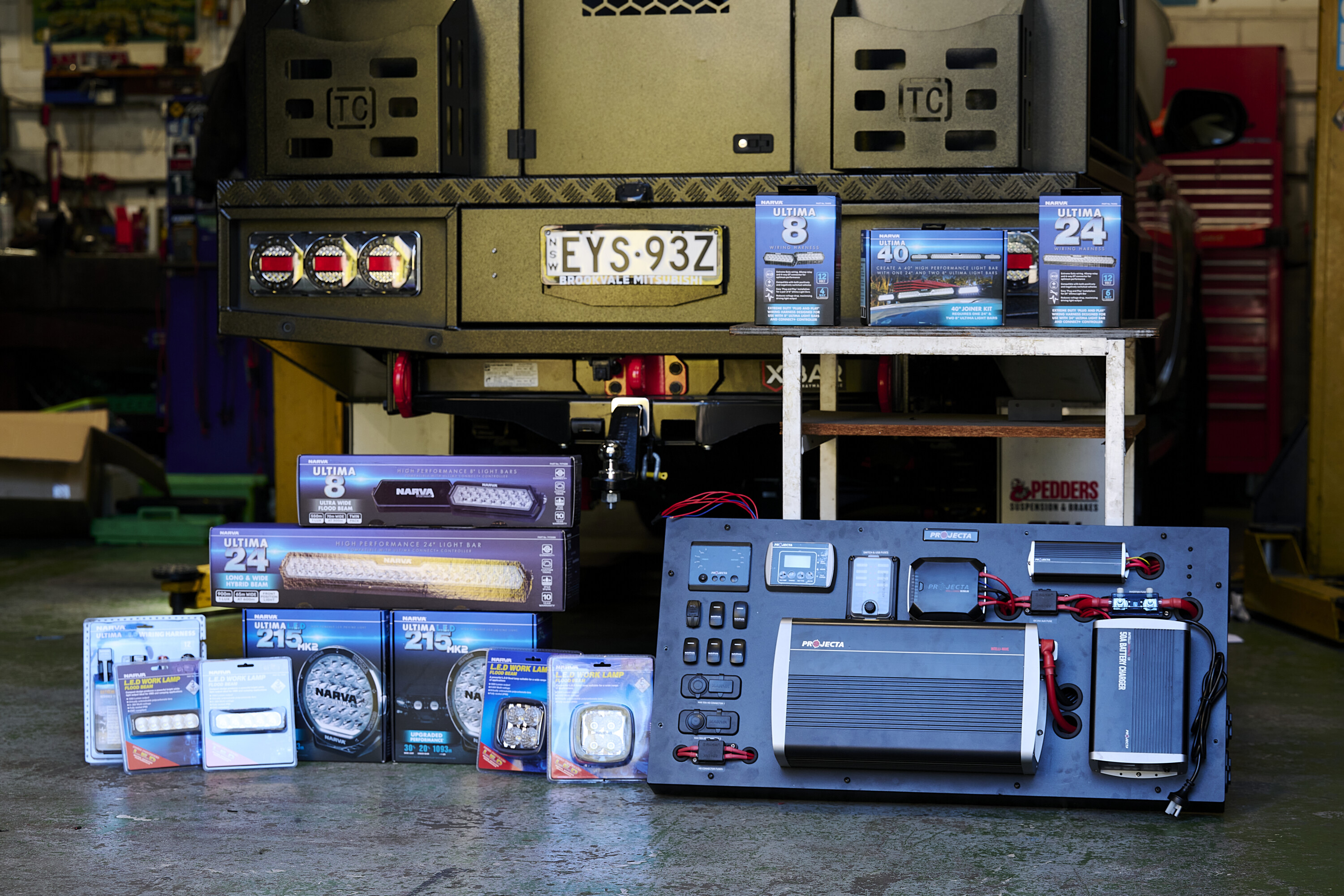
From charging multiple power-tool batteries to cooking up toasted sandwiches and brewing coffees at smoko, Projecta has us covered for our power needs in our Triton tradie ute.
The importance of a reliable power source in a work ute can’t be overstated. Enter the Projecta 12V DC Power Management Board with 2000W Inverter, a comprehensive solution designed for work-related tasks and weekend activities that demand a dependable power supply.
1
Having self-sufficient, on-location power is a game changer for tradies who have embraced the lithium battery revolution, and the Projecta setup allows you to even run 240v power tools when the battery tools are no longer cutting it on heavy-duty tasks.
It will even power items like fridges, lights and cooking equipment (think microwaves, toasted sandwich makers and coffee machines) – all the high-draw devices that tradies and campers require. And with everything built into the one system, it takes the hard work out of the installation.
JUMP AHEAD
-
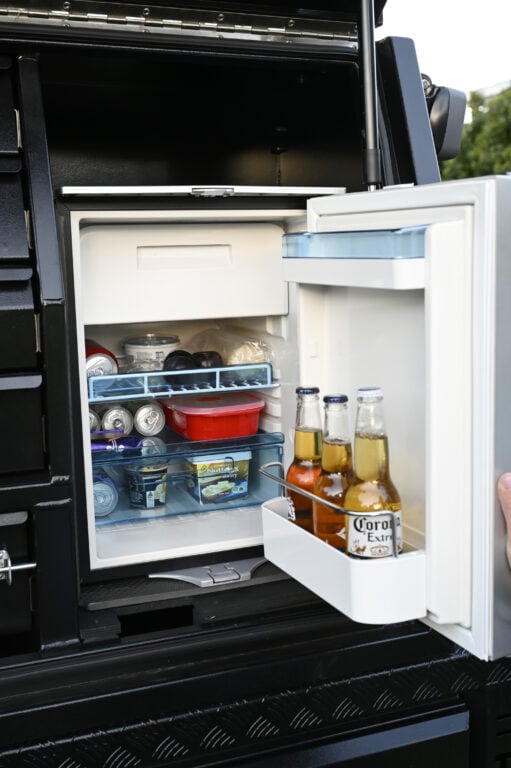
Dometic CoolMatic CRX 50 upright fridge
-
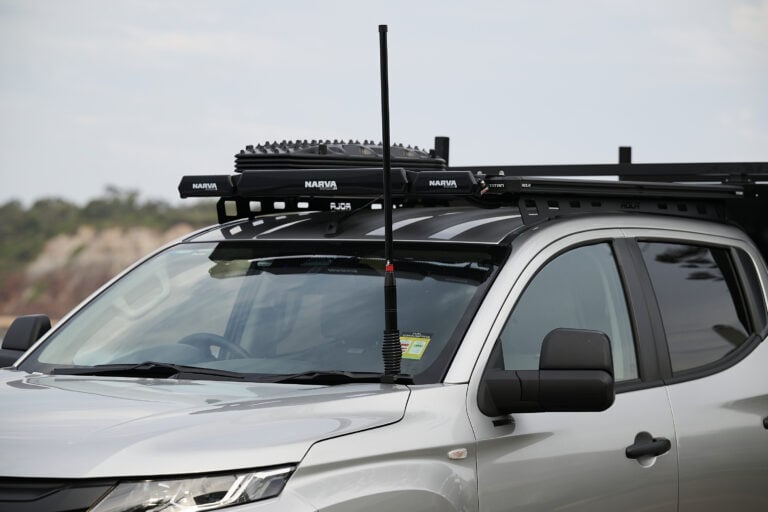
Cel-Fi GO mobile booster
-
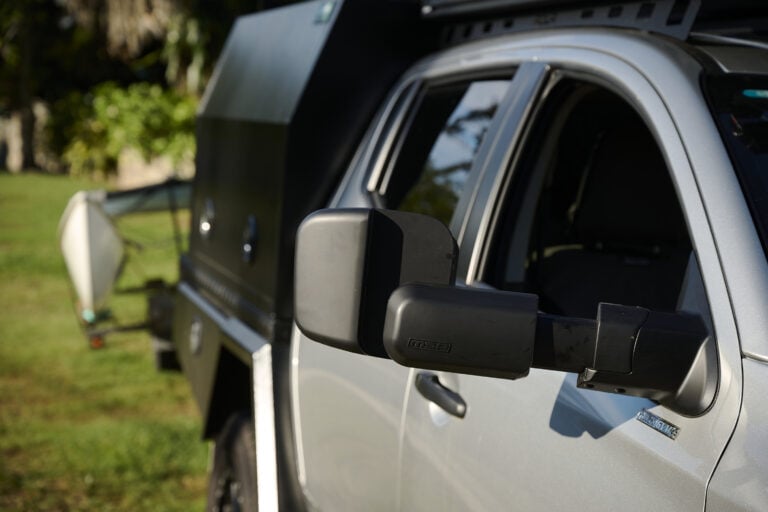
MSA 4×4 towing mirrors
-
Projecta power management
-
Narva LED lights
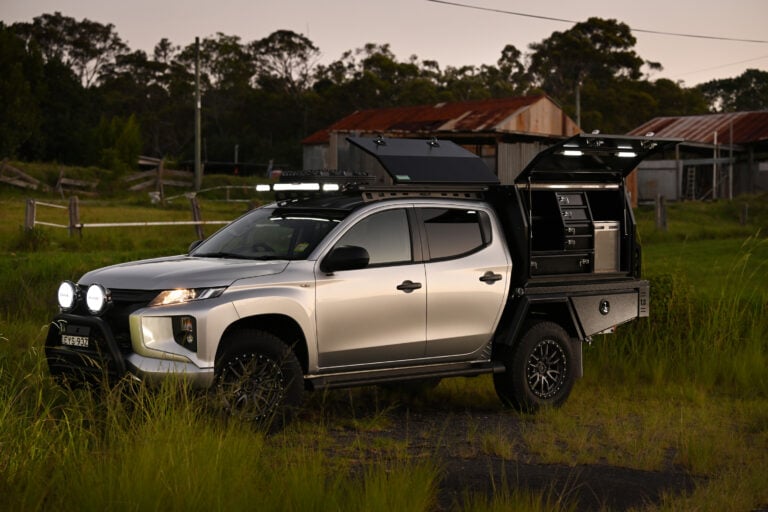
-
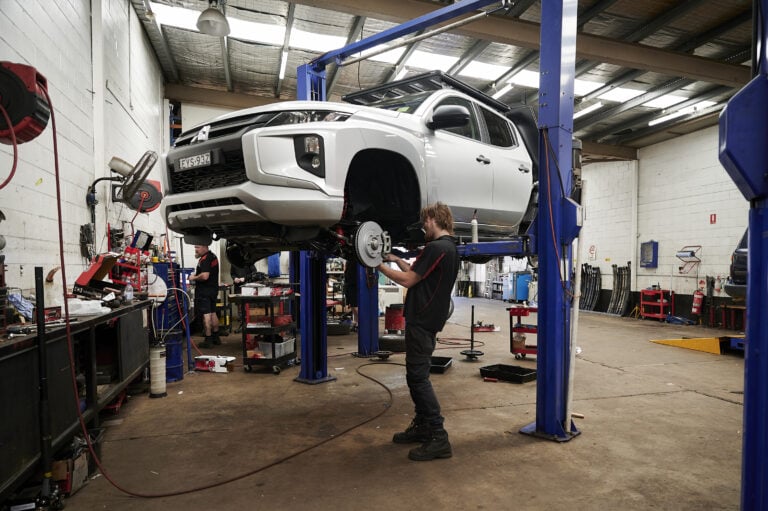
Pedders GVM and brake upgrade
-
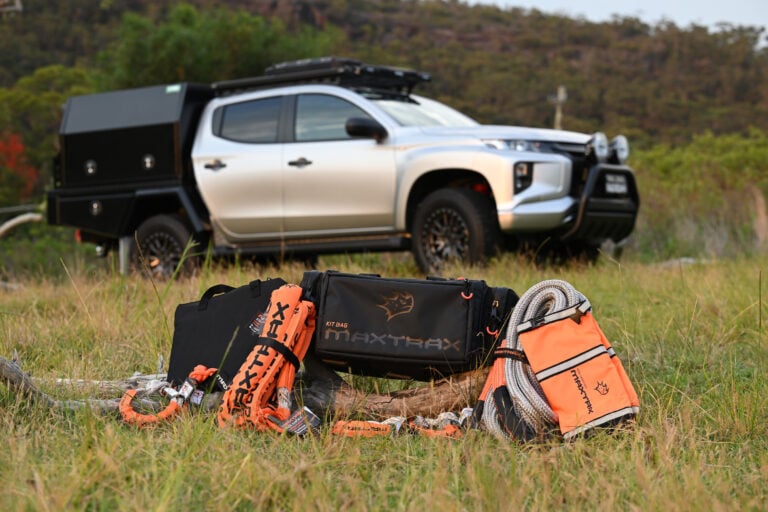
Maxtrax recovery kit
-
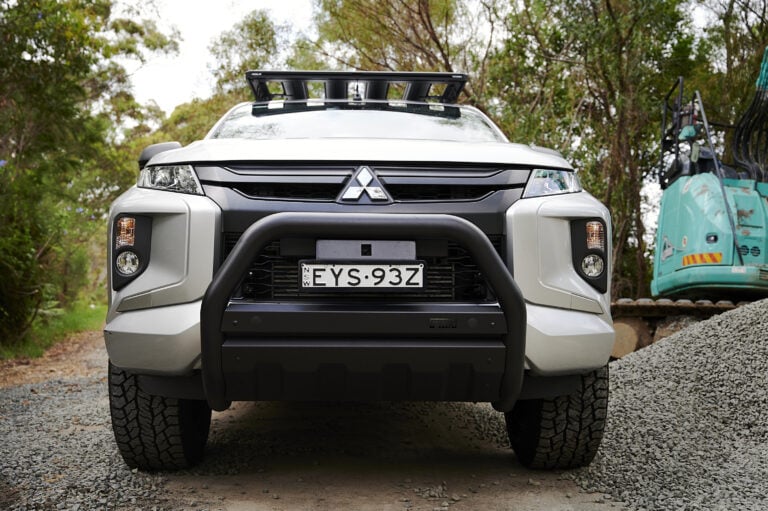
PIAK nudge bar
-
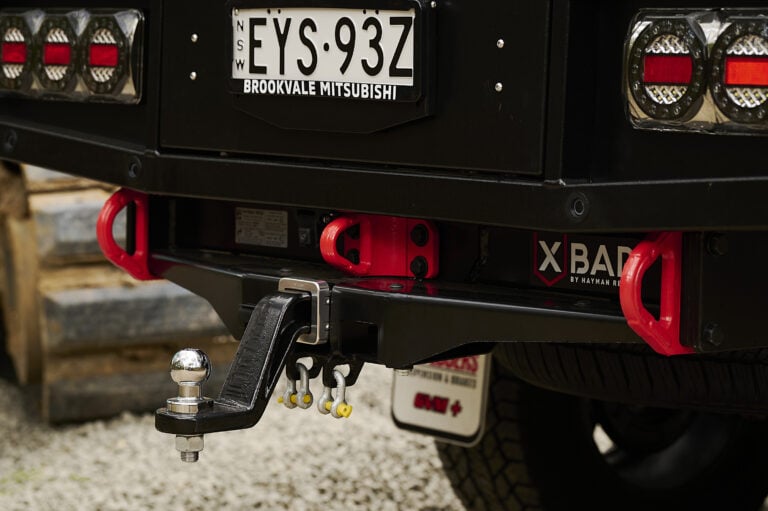
Hayman Reese X-Bar
-
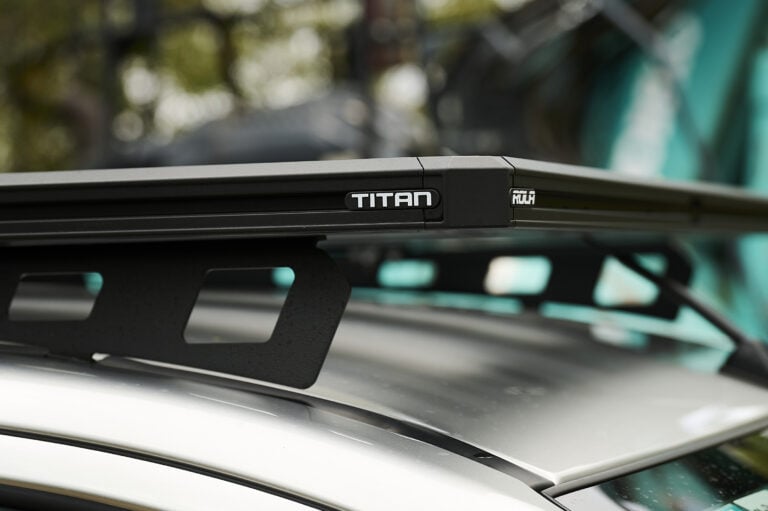
Rola MKIII Titan Tray
-
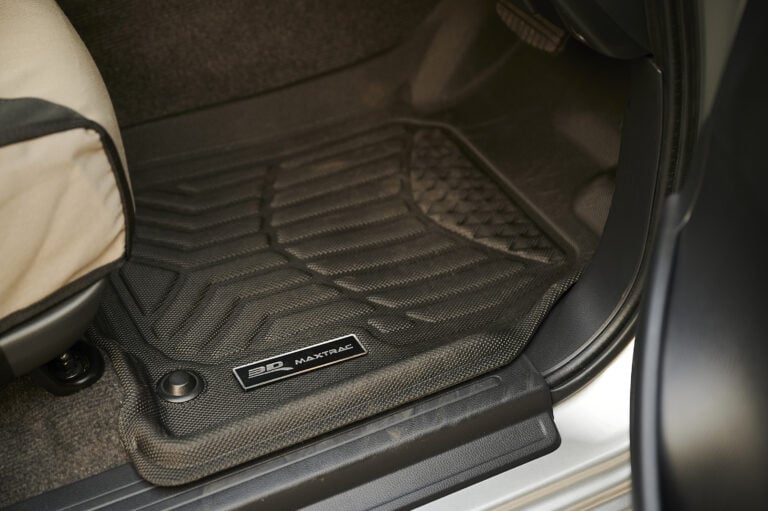
TruFit 3D mats
-
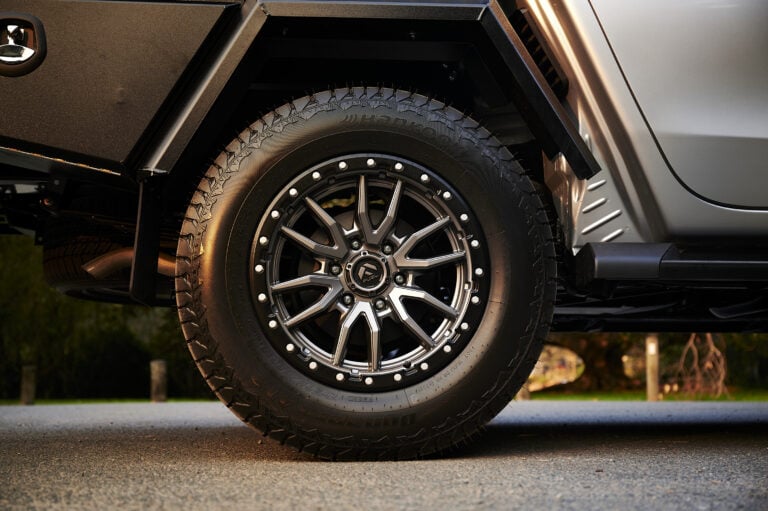
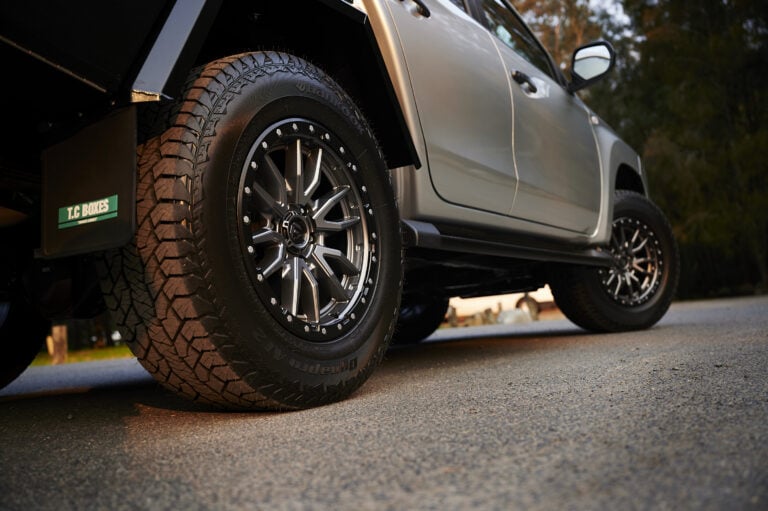
Fuel Rebel wheels
-
Hankook Dynapro AT2 tyres
-
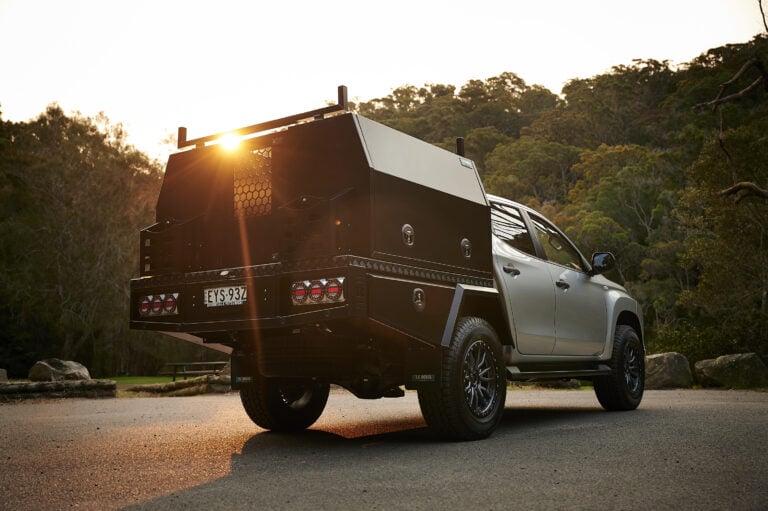
TC Boxes tray and toolbox
Charging and monitoring
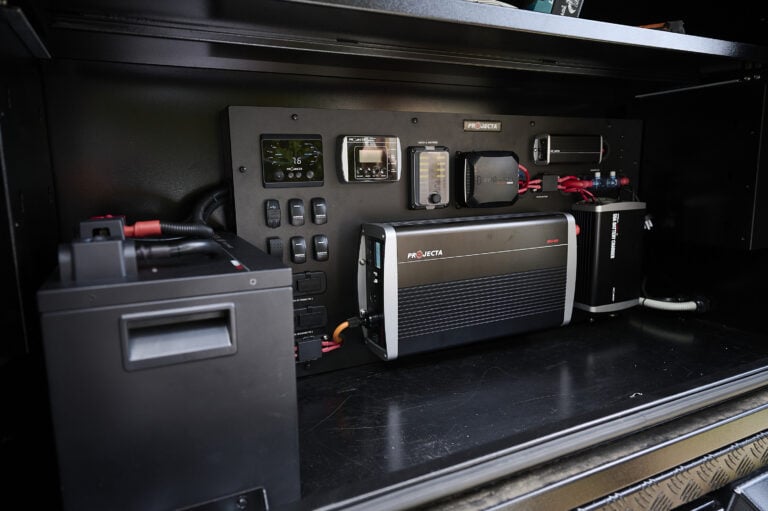
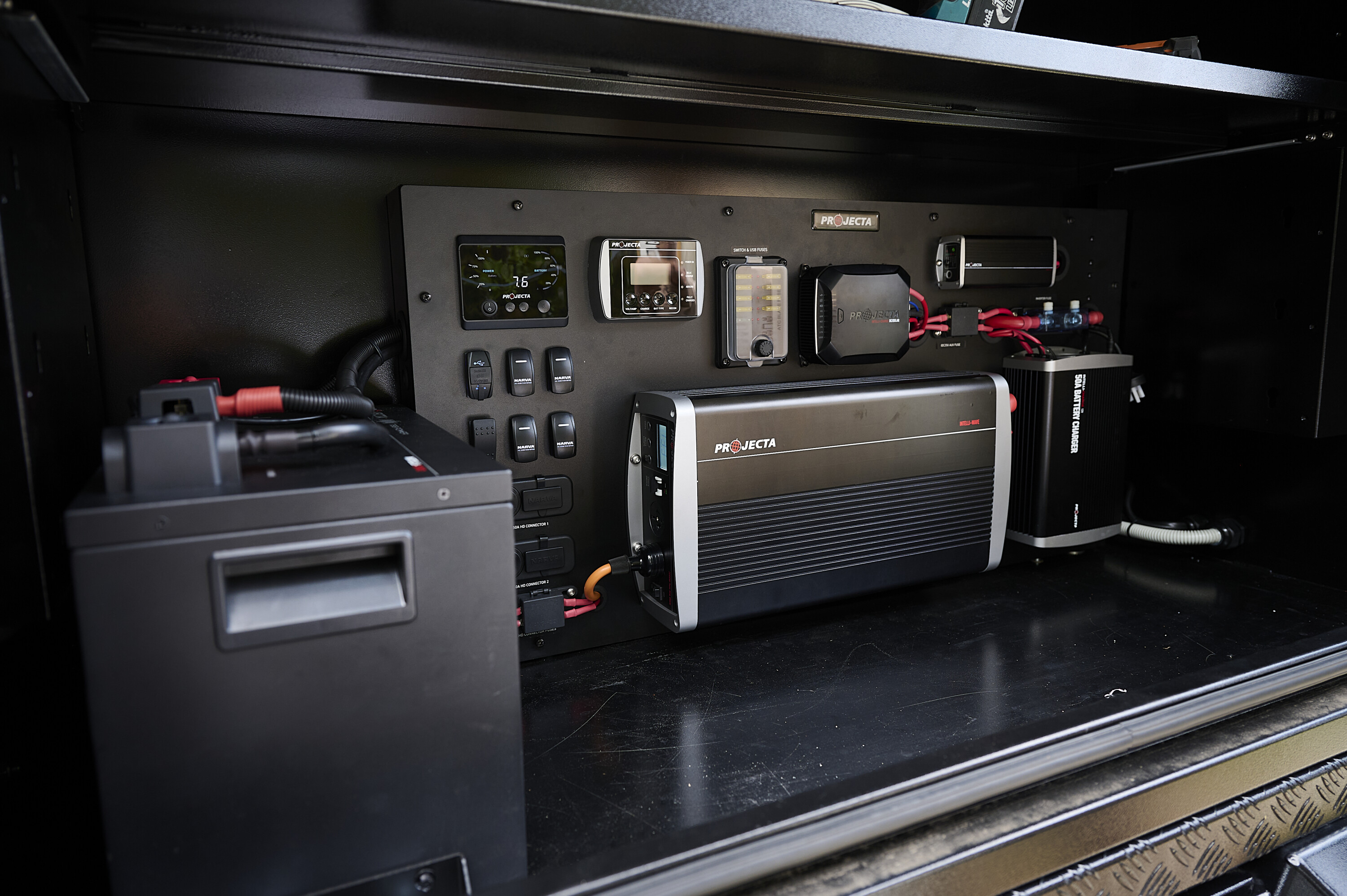
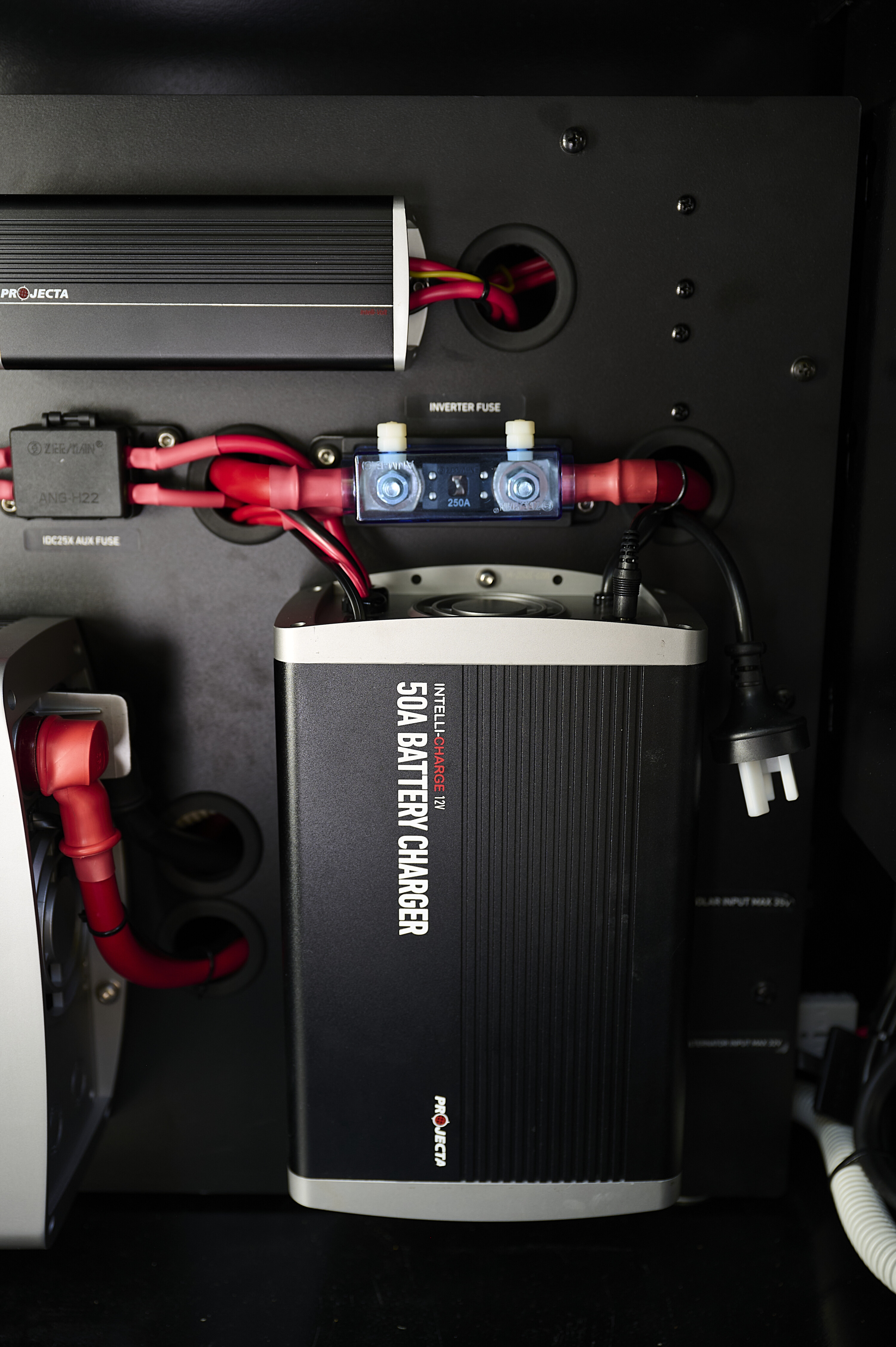
There’s a 25A DC-DC dual-battery charger at the core of the power management board that simultaneously provides a three- or five-stage charge from solar and/or alternator inputs, to ensure you have a consistent and reliable power source.
1
The board also incorporates a BM500-BT battery monitor that provides real-time state of charge (SOC%) data and offers insights into your battery’s overall health. Armed with this information, you can confidently plan your work day or weekend adventures as you’ll know exactly how much power you have available.
If you have multiple tradies charging batteries on the worksite or family grabbing drinks from the fridge and having a cook-up on the weekends, the battery monitor will let you know when it’s time to start charging the batteries, either by starting up the engine or setting up the solar panel.
Clean power
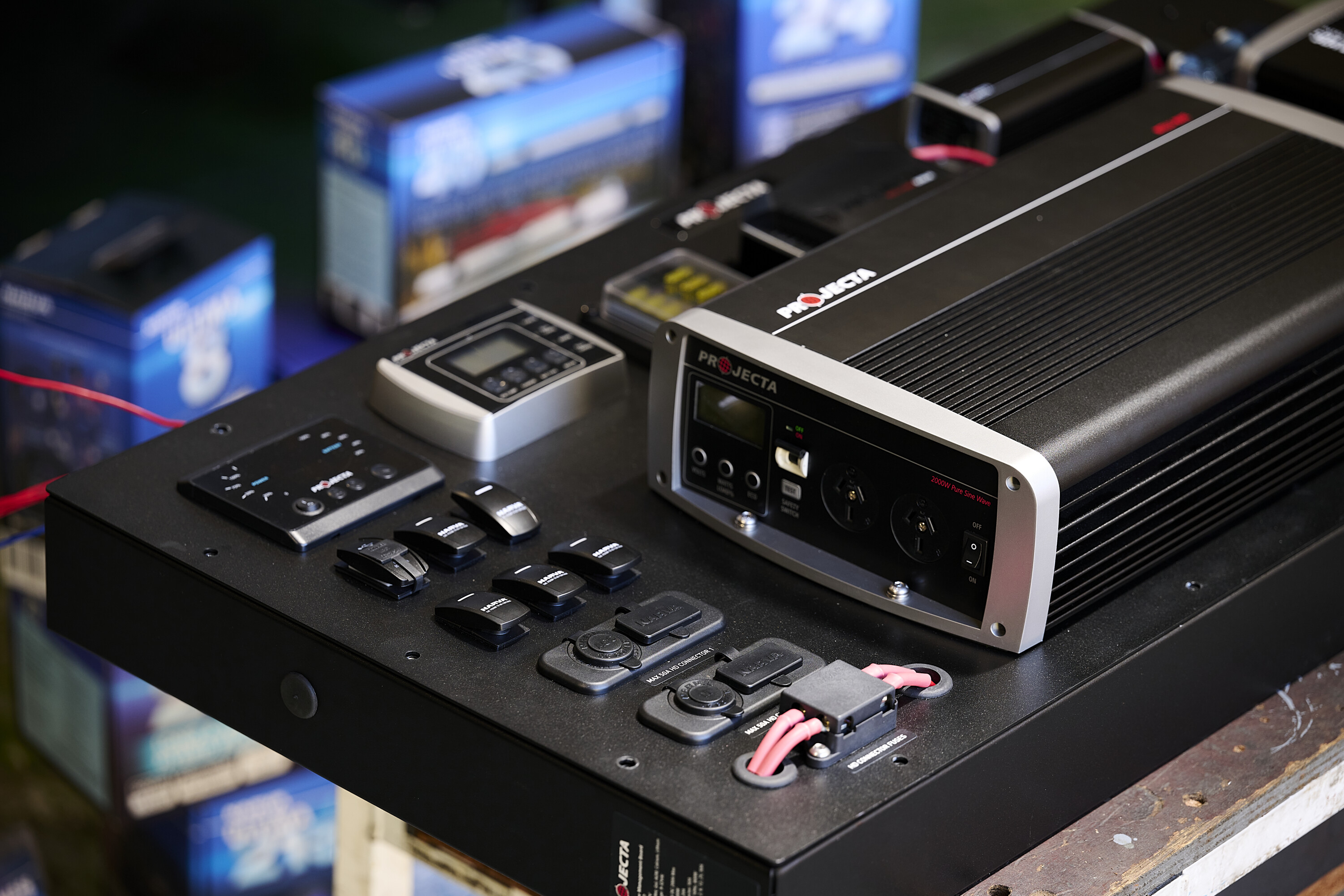
For convenience, the Power Management Board is equipped with 3.1A USB sockets, a merit socket, and an accessory socket.
1
There are five switches on the panel that not only provide control but a level of customisation that caters to your specific needs. The setup is such that managing your power distribution is a simple and intuitive task.
The 2000W Pure Sine Wave Inverter (IP2000) that’s mounted to the power board takes 12V DC power and converts it into 240V AC power. The pure sine wave output is a clean and stable power supply, which means it’s suitable for powering a wide array of devices including sensitive equipment such as laptops or even a printer, transforming our Triton into a genuine mobile office.
Protection
A Low Voltage Disconnect feature adds a layer of protection for deep-cycle batteries, protecting them from damage that can be caused by over-discharge.
1
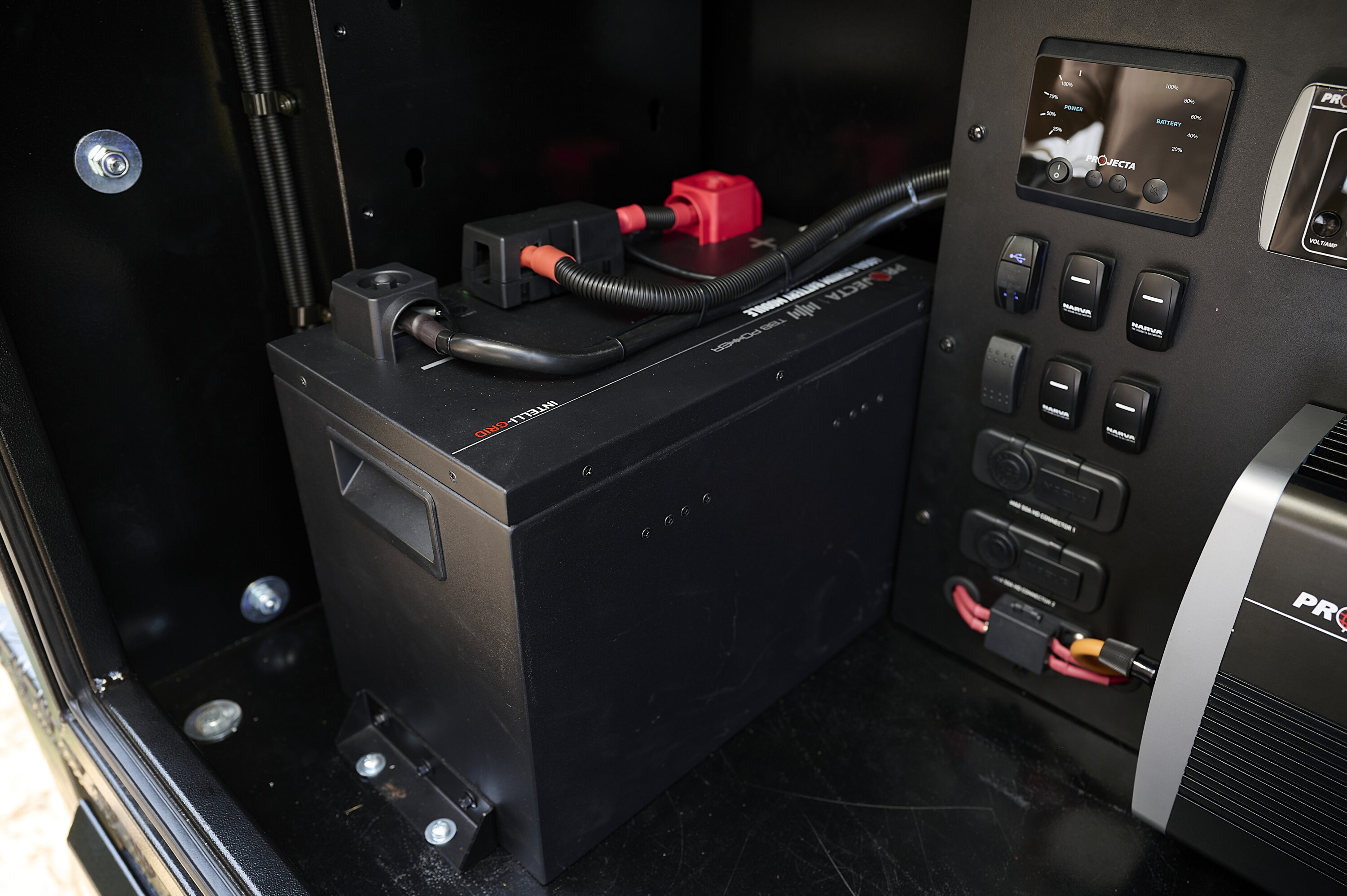
While Projecta offers a setup with a built-in 200Ah Lithium battery designed to work in conjunction with the power board’s 2000W inverter, we opted for the larger capacity 400Ah battery for the Triton’s system.
The 400Ah battery has overvoltage, undervoltage, overcurrent, high/low temperature and short circuit protection, while features include a top-mounted battery indicator and battery isolation switch. It also has communication ports that ensure compatibility with Projecta’s Intelli-RV and Intelli-Grid systems, displays and monitors, or additional batteries.
User-friendly design
Beyond its powerful features, the Projecta Power Management Board stands out for its user-friendly design.
1
The pre-built, all-in-one unit simplifies installation, catering to seasoned tradespeople and weekend DIY enthusiasts. Despite the fact that setting the system up is quick and hassle-free, we opted to have Rhett and his team at Paul Bagnall Auto Electrical install the power board for us.
We reckon adding this Projecta power system to our Triton has significantly elevated its versatility, for both work and play.
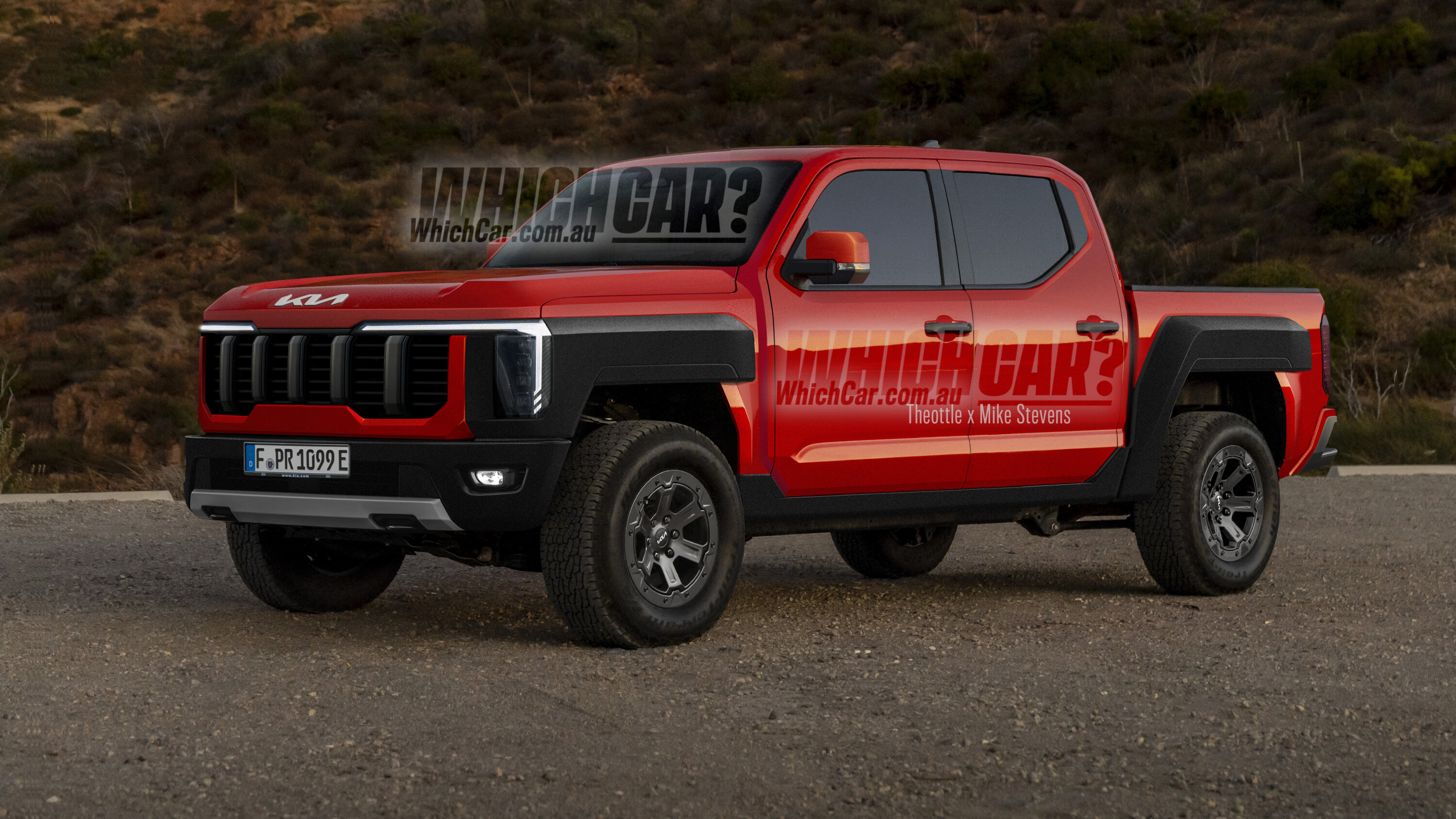
Kia has officially confirmed what we all knew was coming — the brand’s all-new dual-cab ute will be called the Tasman.
SNAPSHOT
- Kia officially names its upcoming dual-cab as the 2025 Kia Tasman
- Arrival timing for the new ute locked in for next year
- Engine options and body styles are also beginning to firm
A new TV commercial published to Youtube has today confirmed the Tasman name to the public and also given us an official arrival date of 2025.
Like the first ad, the new commercial features a number of high-profile Aussie athletes and finishes with text on screen saying: “Kia Tasman ute. Arrival 2025.”
As well as bearing the name of the sea that stretches between Australia and New Zealand, the Kia Tasman Ute will benefit from some local testing and development as it strives to steal customers away from key rivals like the Toyota HiLux, Ford Ranger and Isuzu D-Max.
More than 100 Tasman utes are currently undergoing development testing around the globe.
What engines will power the 2025 Kia Tasman?
Kia is yet to reveal any official specs for the Tasman ute but just as its name was a poorly kept secret, it’s openly understood power will come from a 2.2-litre turbo diesel mated to an eight-speed automatic.
The engine is the same 2.2L ‘Smartstream’ unit currently used in the Hyundai Santa Fe, Hyundai Palisade and Kia Sorento where it makes 148kW/440Nm.
If those outputs are carried over to the Tasman, it will put Kia’s ute in the same ballpark as rivals like the Isuzu D-Max, Mazda BT-50 and Nissan Navara which all make 140kW/450Nm.
1
Another engine that could potentially slot into the Kia Tasman is the 3.0-litre inline six-cylinder turbo diesel currently found in the Genesis GV80 SUV.
In the Genesis, the big six-cylinder makes 204kW/588Nm which would give the Tasman a gutsy rival for V6-powered versions of the Ford Ranger and Volkswagen Amarok.
This engine could be deemed too expensive for the Tasman, however, or Hyundai/Kia might choose to reserve it for its premium marks as the GV80 is currently the only model to use that diesel.
What body styles will the Kia Tasman offer?
Just like its key rivals, the 2025 Kia Tasman will be available as a single or dual-cab and have the option of either a cab-chassis or pick-up tray.
An extra-cab body style is said to be off the cards, for now.
March: Tasman teased as new ad campaign launches
The 2025 Kia Tasman ute has inched closer to its full reveal with a new video officially confirming what it’ll be called.
To kick off its teaser campaign, Kia has enlisted the help of a star-studded cast to announce the Tasman ute is “set for Australia”, with expressions of interest now open on its consumer website.
The first commercial – which premiered during the 2024 NRL season opener – features a host of Australian sporting legends gathered in a pub debating over what it should be called.
The stars include Ash Barty (tennis), Lance ‘Buddy’ Franklin (AFL), Dylan Alcott (tennis), Mackenzie Arnold (soccer), Steve Waugh (cricket), Damien Oliver (horse racing) and Jessica Watson (sailing).
While it doesn’t explicitly reveal the name of the new ute, there are clever hints throughout the video, including a newspaper article stating “one [new ute] making its debut is The Tasman” and a scene where rugby legend Alfie Langer throws a dart that lands on the Tasman Sea between Australia and New Zealand on a map.
The video ends with a tightly-cropped shot that partially shows the pub’s exterior sign, suggesting its full name is ‘Hotel Tasman’.
This spot is the first in what’s expected to be an extensive teaser campaign ahead of the Kia Tasman’s full reveal later this year and its Australian launch sometime in 2025.

1
The Kia Tasman is based on a newly developed body-on-frame platform and will compete against the popular Ford Ranger, Toyota HiLux, Isuzu D-Max and Mitsubishi Triton.
Kia hopes to sell around 20,000 units annually, which would assist in its ambition to overtake Mazda, Ford and Hyundai to become Australia’s second-largest car brand behind Toyota.
Recent sightings of the Tasman in a South Korean carpark and during winter testing in Sweden against the Ford Ranger Raptor have provided insights into its design, which seems to align with Kia’s latest styling cues seen in models like the EV9 electric car and facelifted Sorento.
Inside, expect the Tasman to receive a similar look to Kia’s latest vehicles with a ‘panoramic curved’ display for the instrument cluster and infotainment system.
Visible components in the camouflaged vehicle include a traditional gear shifter, a selector for two-wheel-drive, manual four-wheel-drive, automatic four-wheel-drive and low-range, another control that appears to adjust the drive modes, and an engine start/stop button on the centre console. It also has mesh front headrests similar to the EV9.
The Tasman will feature a built-in step within the rear bumper to access the tub, like the Ranger.
While the Tasman will also be sold in the Middle East and South Africa, Australia has played a dominant role in forming the base specifications of the new ute range.
“A substantial amount,” said Kia Australia’s GM of product planning, Roland Rivero, when asked how much input Australia will have.
“A lot of work’s being done to, as much as possible, influence the development to suit our market. Australia’s position is being seen as a very important one.”
MORE
Everything Kia
Muscle memory is an interesting function of the human body.
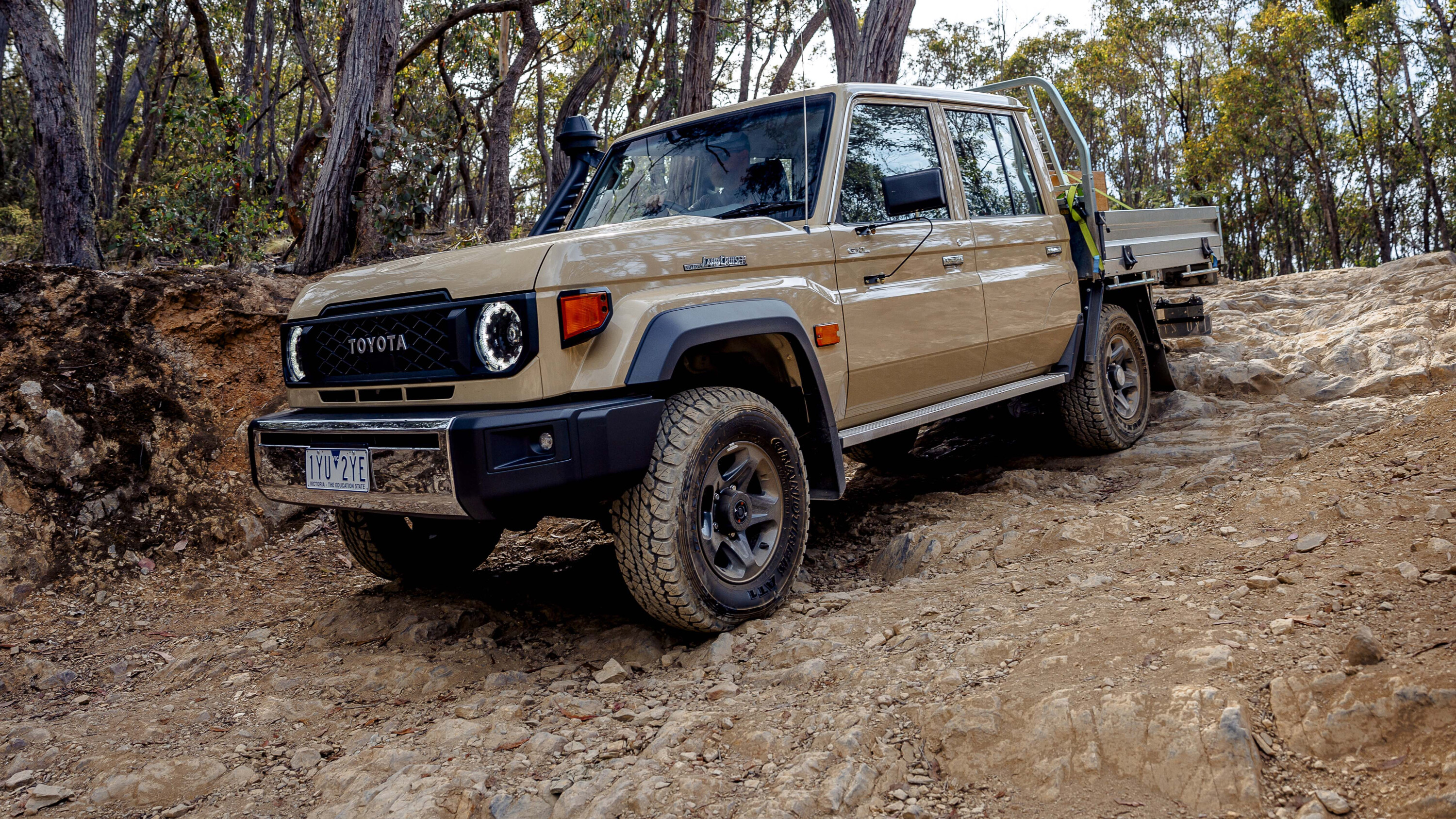
After driving 70 Series LandCruisers on and off over 30 years, and owning one myself, the action of opening the driver’s door and pulling myself up into the cabin instinctively includes my left boot reaching for the clutch pedal as I land on the slim seat. It took three or four days of living with the new LC79 with its automatic transmission behind a four-cylinder diesel engine before the old habit faded.
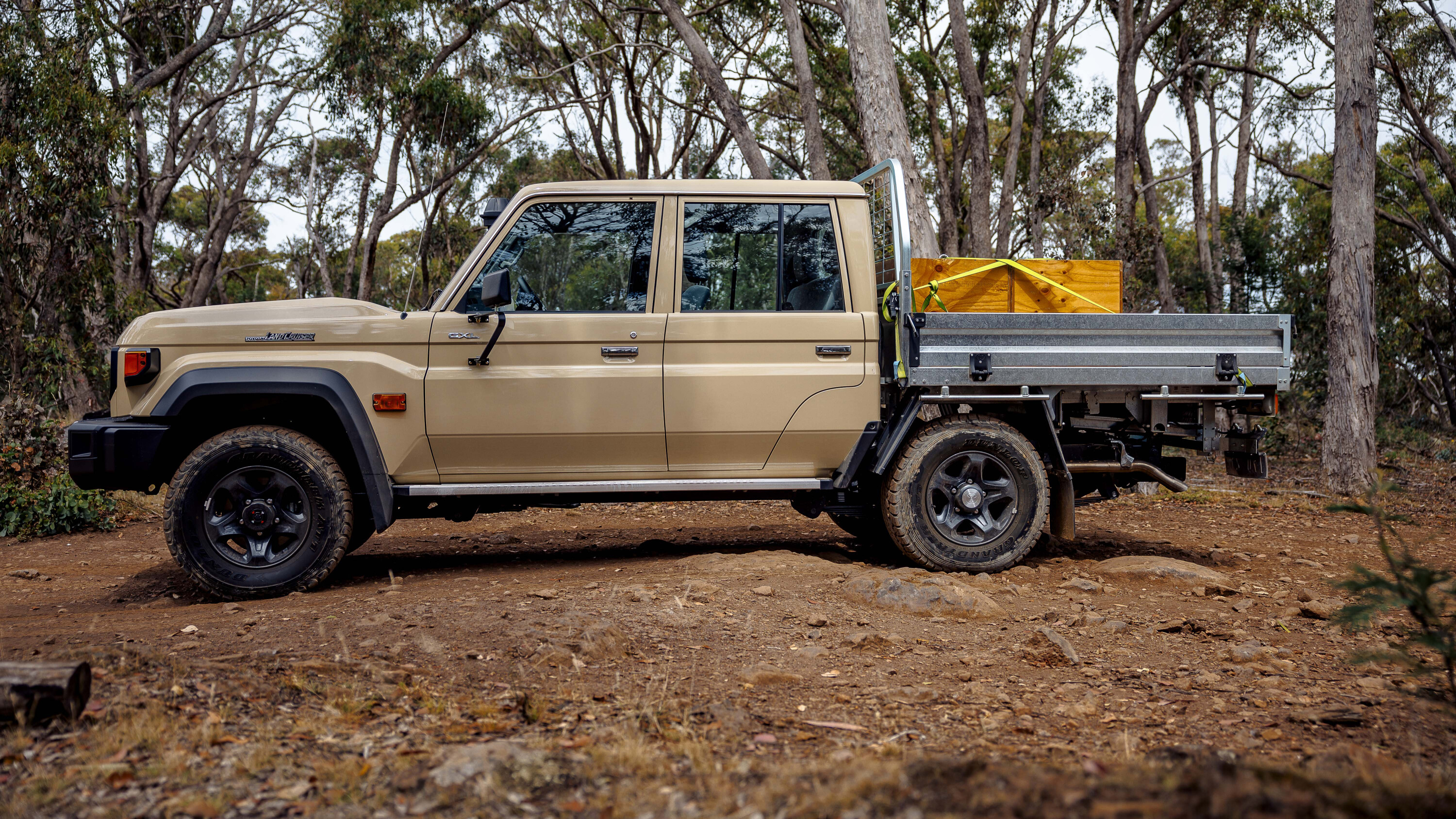
Getting into a 70 Series is like pulling on a pair of favourite old work boots, and even though this 2024 updated model brings plenty of changes, the familiarity is still there. Like those old boots, the LC70 remains a favourite workhorse.
1
What’s new
Toyota hasn’t messed with its 40-year-old formula when revising the 70 Series for 2024.
It retains a basic commercial body mounted on a heavy duty chassis, with live axles at each end suspended by coil springs under the front and load-lugging leaf springs at the back.
The front sheet-metal has copped a minor update with a blockier style and reverting back to traditional round headlights, albeit with LED halo rings, but the look remains unmistakably 70 Series. There’s even a nod to the old 40 Series in the new grille vent.
1
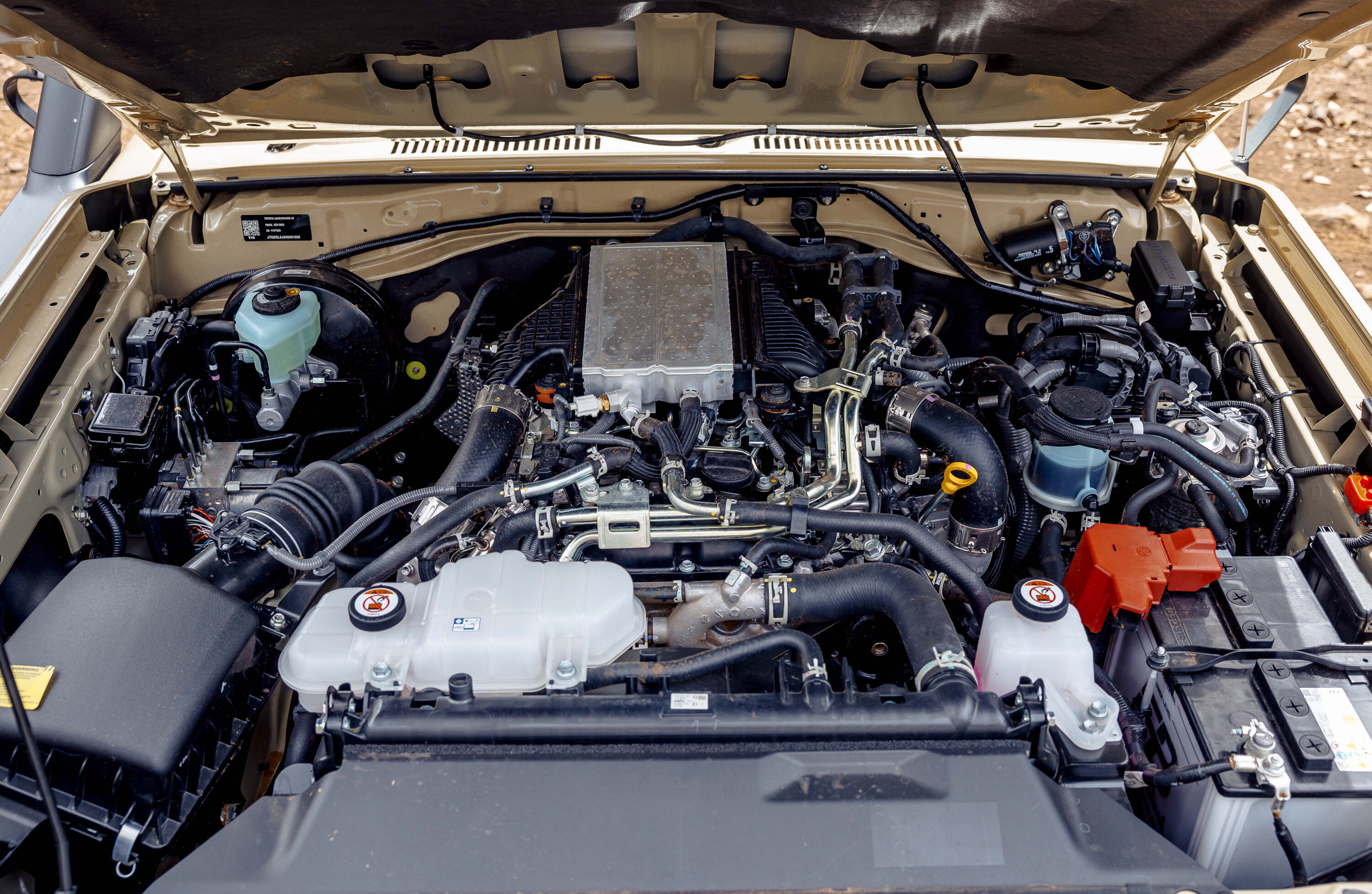
The big changes for 2024 have happened behind the grille and in the transmission tunnel, where the 1GD-FTV 2.8-litre four-cylinder diesel engine and Aisin six-speed automatic transmission form the new powertrain.
This engine and transmission are well proven from the Toyota Prado, HiLux and other models, but this is the first time they have been fitted to the 70 Series range. They join the existing 1VD-FTV V8 diesel and five-speed manual driveline combination; although, models fitted with that powertrain will be harder to source from your dealer.
There’s been plenty of consternation about a four-cylinder engine taking the place of a V8 in Toyota’s workhorse 4×4, but with more torque than the standard V8, a similar power figure, the promise of lower fuel consumption, and the improved driveability of an automatic transmission, this new powertrain will appeal to many buyers.
1
For the record, Toyota quotes the 1GD-powered double cab as using 9.6L/100km on the combined test cycle against 10.7L/100km for the V8 in the same vehicle.
We heard rumours Toyota was testing such a powertrain in the 70 up to four years ago; and while the company was always tight-lipped on it, they have now confirmed there were four such equipped prototypes testing in Australia back then.
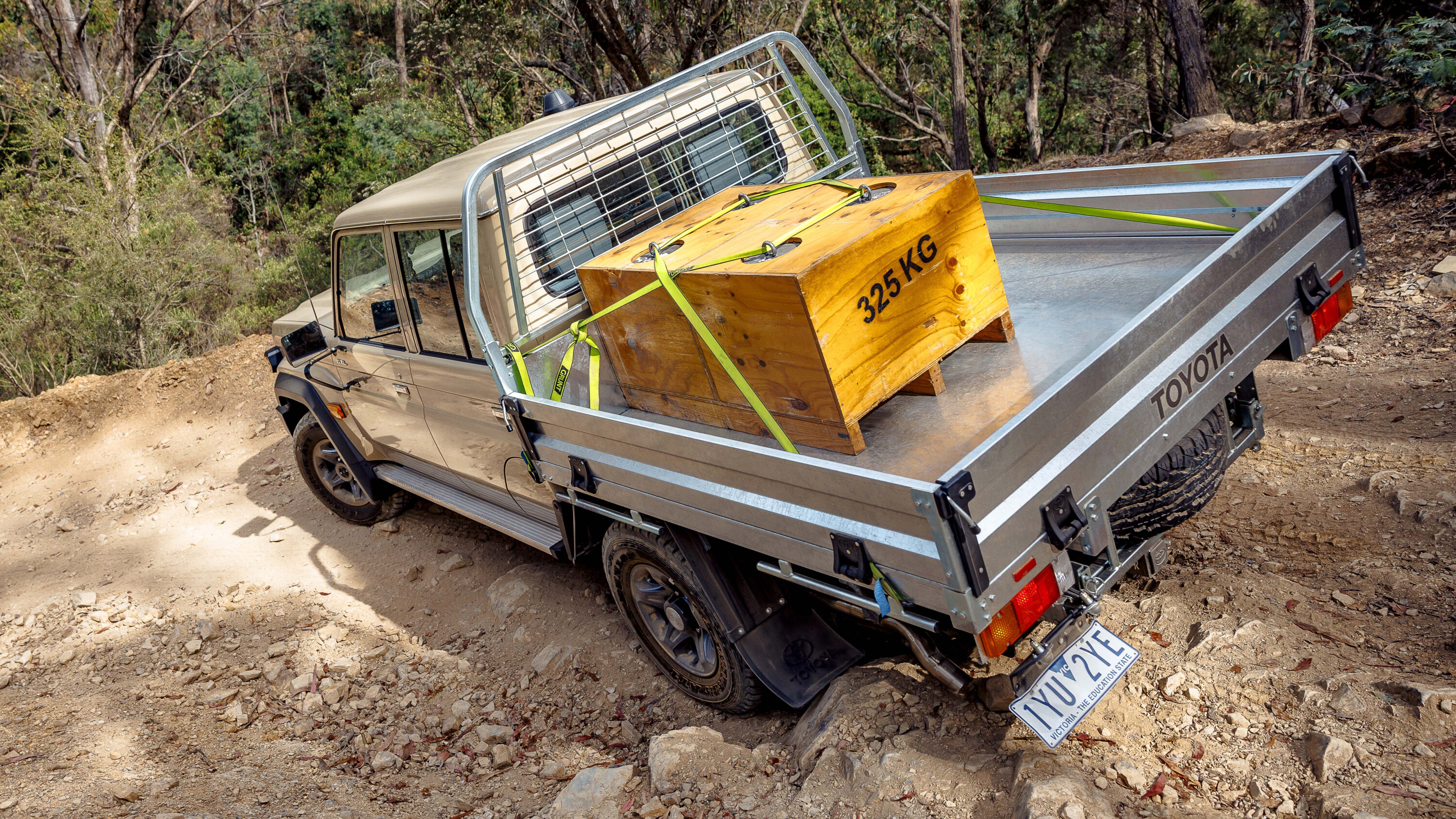
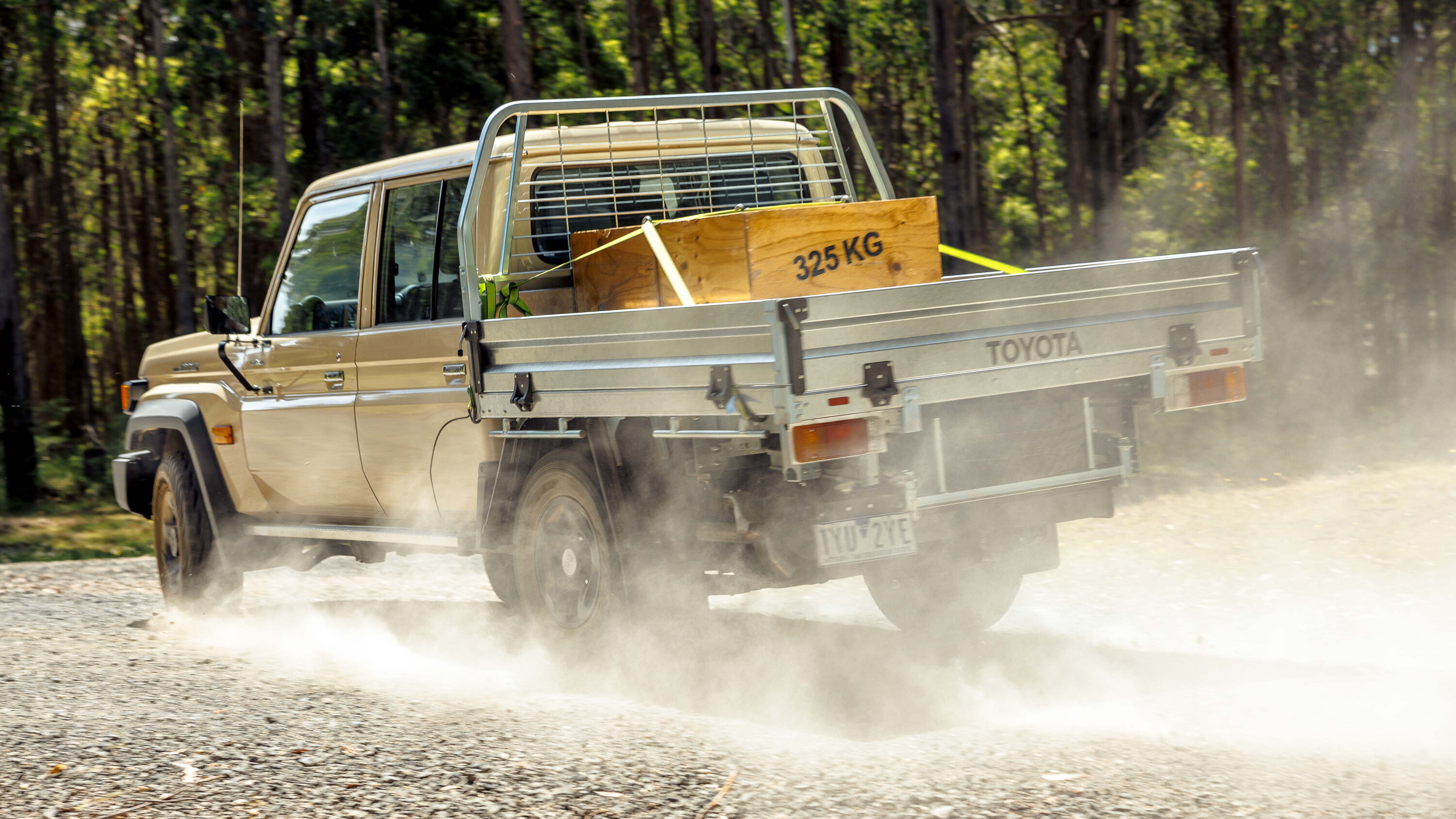
To test it for ourselves we took an LC79 GXL double cab with the 2.8/auto combination, loaded it up with 650kg on the tray and hit the tracks.
1
Capacities
Thanks to the lighter weight of the four-cylinder engine compared to the V8, the four-pot has a higher payload. On the LC79 DC GXL tested here the payload is 1325kg compared to 1250kg for the equivalent V8 model.
All grades and engines have a 3510kg GVM. You also need to take the weight of the tray off that payload as the LandCruiser doesn’t come with one; it’s extra and your payload will depend on what you put on the back, so we reckon our 650kg load was respectable considering we were heading for some steep off-road tracks.
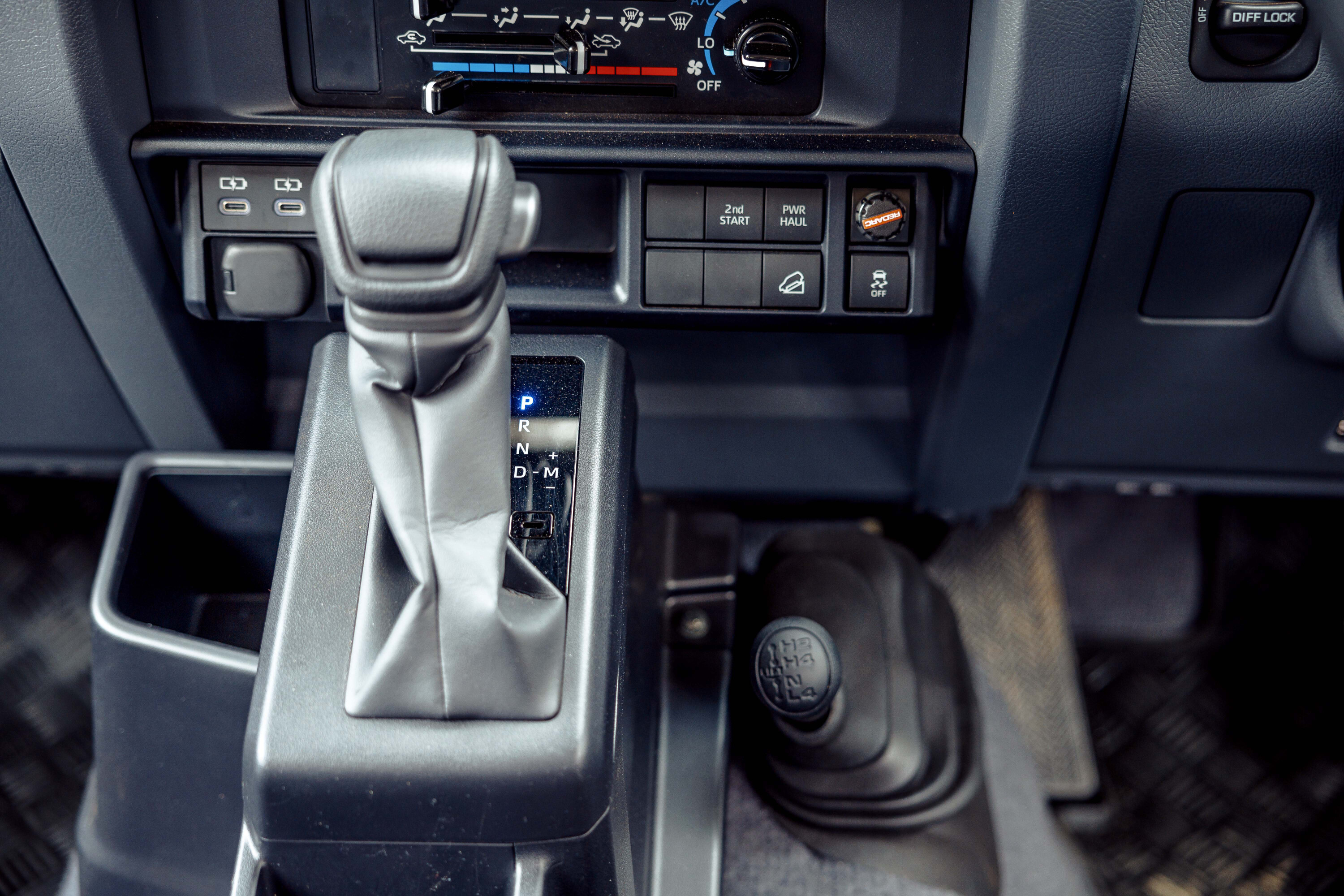
We had a weekend with the Cruiser before we loaded it up and unladen it feels almost sprightly with the 1GD/auto combo, certainly more so than with the V8. The 2.8 gets on with the job and the auto transmission gives nothing to complain about.
1
We’ve always liked this Aisin six-speed auto in various vehicles from Toyota and other manufacturers.
With the 650kg load on the back and out on the open road, the engine certainly feels the weight. It is less responsive and requires foot-to-the-floor application to maintain the 110km/h speed limit on hills. That said, the V8 was never much good in this regard and we feel the four-cylinder does a better job of it.
Our previous back-to-back testing with a 3100kg caravan behind each powertrain showed this to be the case.
1
It will be interesting to see how the engine and auto cope with a load on board, and when riding on bigger tyres such as the 33- and 35-inch rubber that many users will fit to their Cruisers.
The rear suspension dropped considerably when the load was added in the tray, but this took some of the jitteriness out of the ride as the vehicle is sprung very stiffly. The ride quality was better with the weight on despite the bum-down, nose-up stance of the laden Cruiser. There was no noticeable lightness of the steering.
The old ball and nut steering box means the 79 has the turning circle of the Queen Mary (15m) but you soon get used to it and learn your limits.
1
Off-road
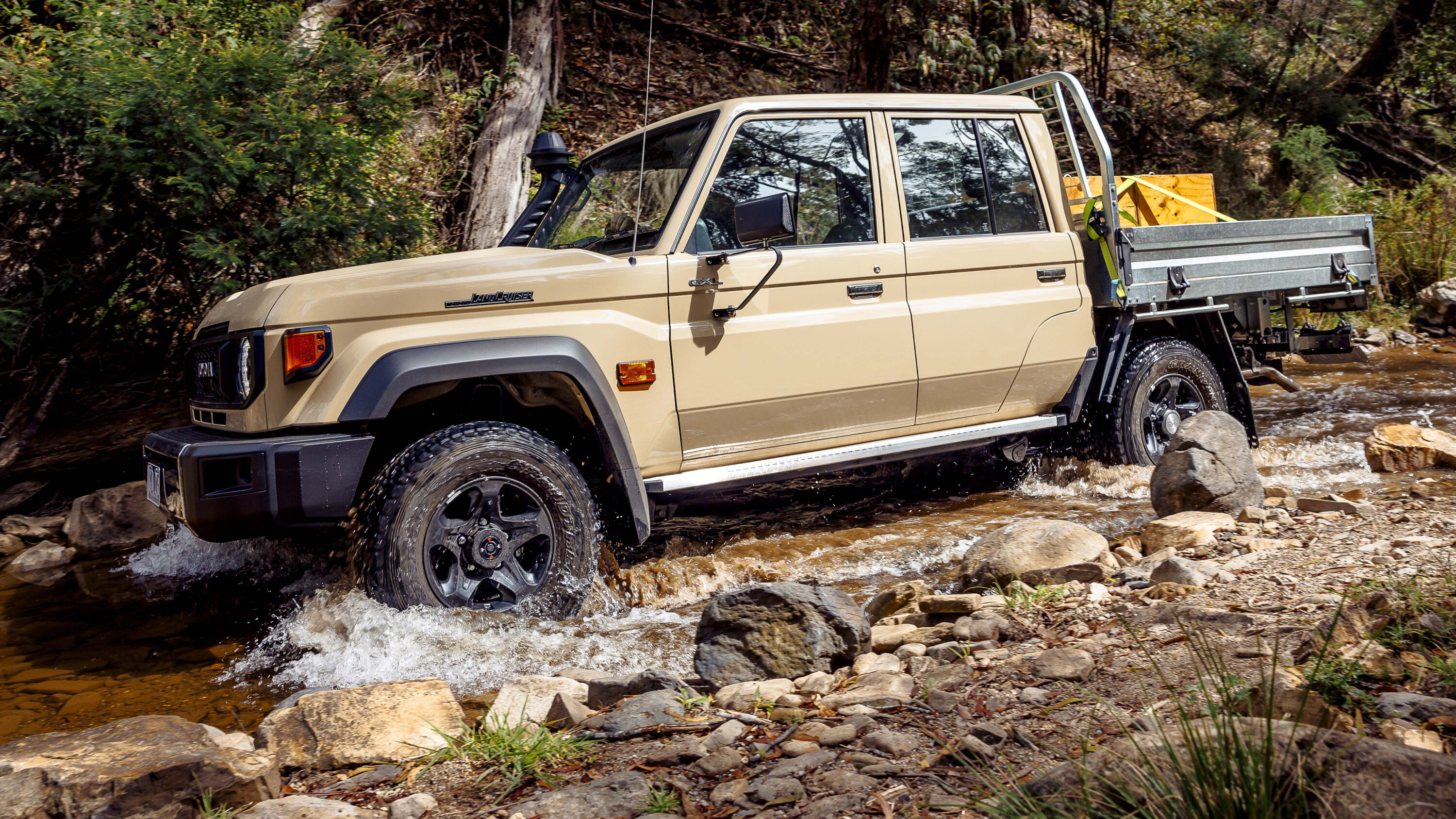
A key strength of the 70 Series has always been its ability to haul loads in any conditions, on- and off-road. All 70 variants have a part-time, dual range transfer case for four-wheel drive, and being a GXL model this example has front and rear locking differentials fitted as standard.
LandCruiser 70s with the 1GD/auto powertrain also get downhill assist control that automatically maintains a set speed and manages wheel slip on steep descents. The automatic gives this combo taller overall gearing than the V8 manual, so the electronic assistance comes in handy in steep country.
Less handy is the hill start assistance that holds the brake when you release it to aid hill starts, but is effectively redundant on a vehicle with an automatic transmission.
1
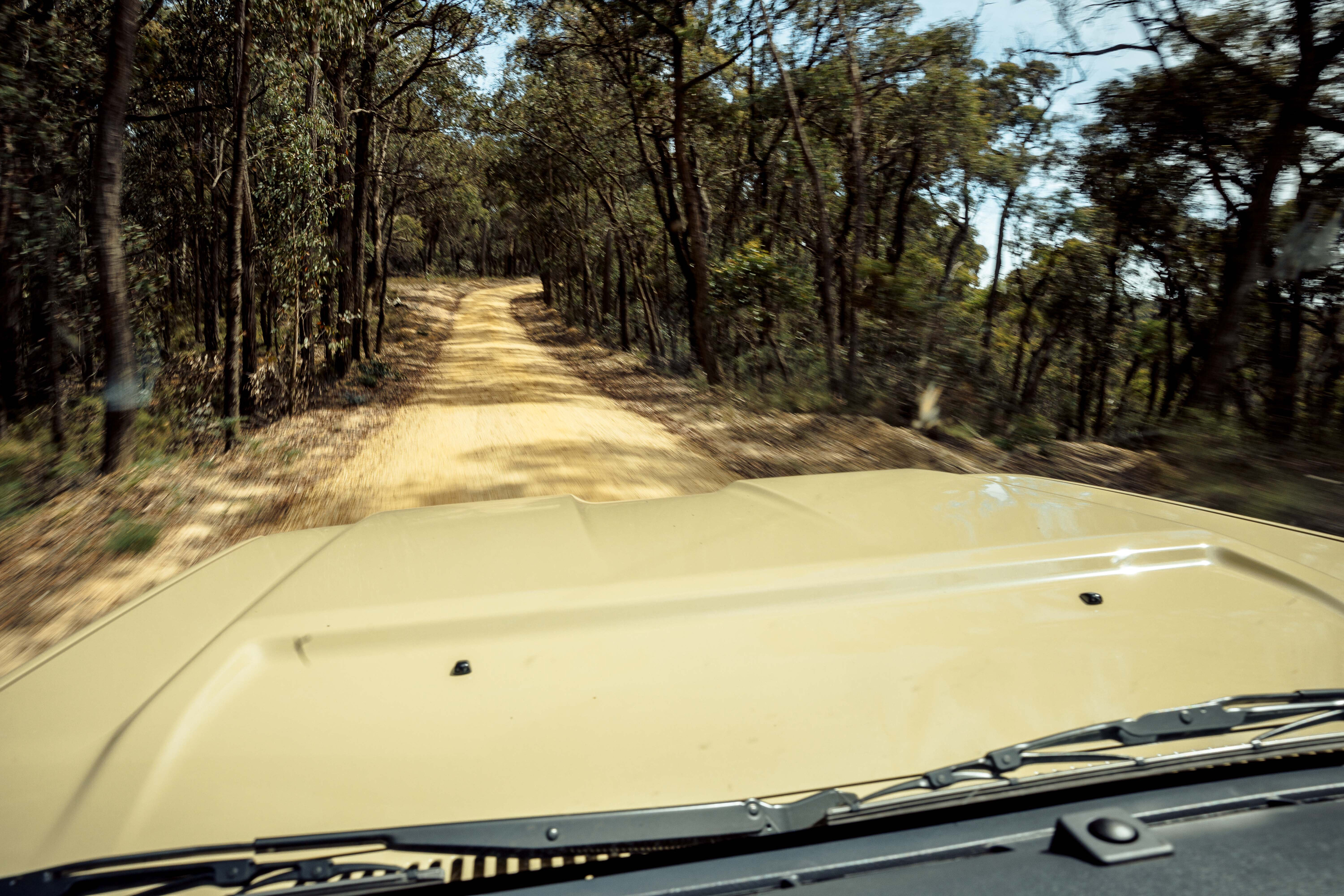
The load in the Cruiser was again a benefit to the ride quality once we hit unsealed tracks, and the suspension did a good job of soaking up the bumps and potholes.
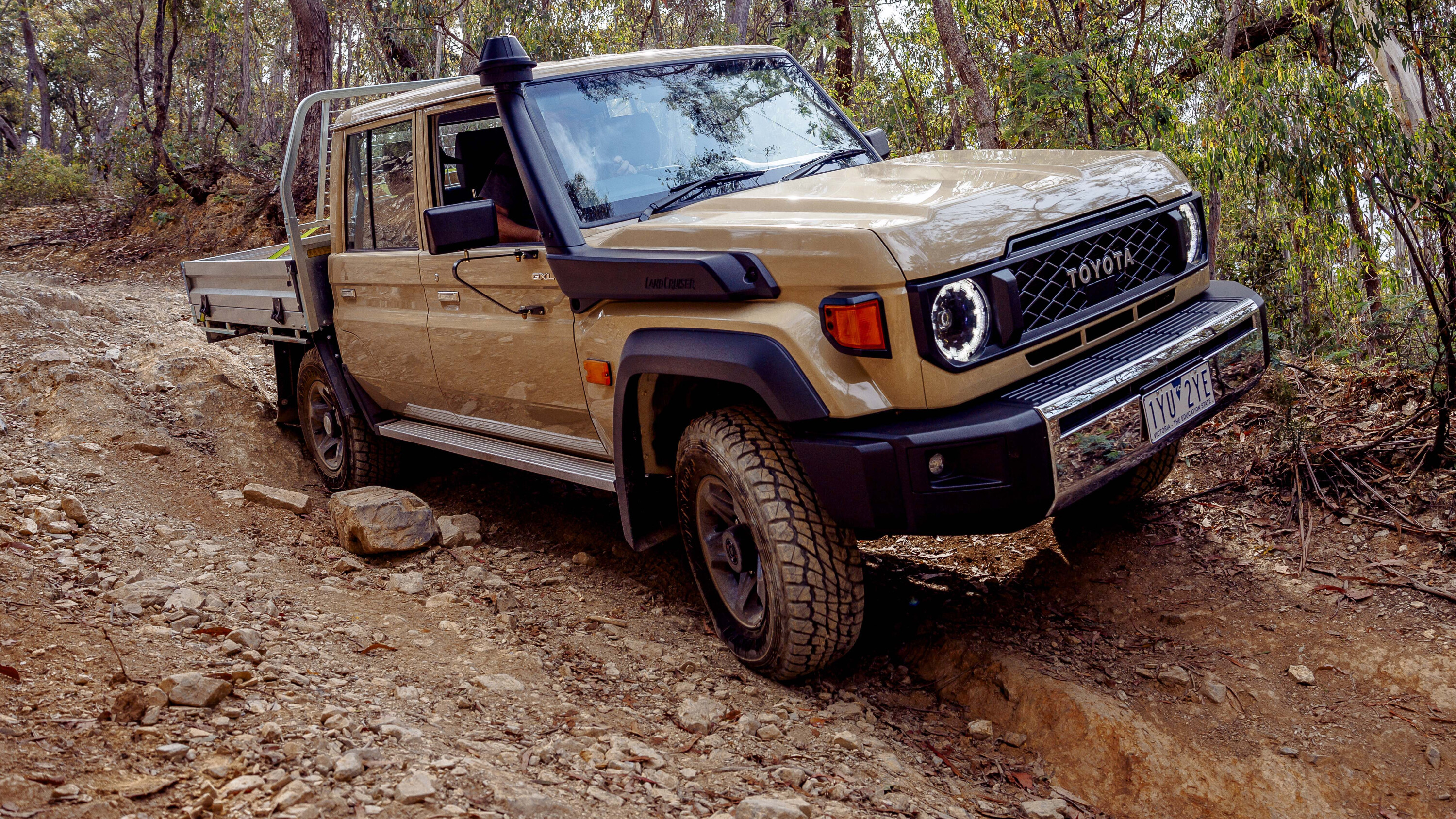
It’s still a relatively stiff setup and the chassis doesn’t give much flex so the 79 easily picks up wheels in uneven terrain. This is where the differential locks and ETC come in handy.
The auto transmission shifter has a tap-to-the-left gate for manual gear selection and low-range first gear was sufficient for the steep descents on this drive, with the occasional tap on the brakes to steady the ship.
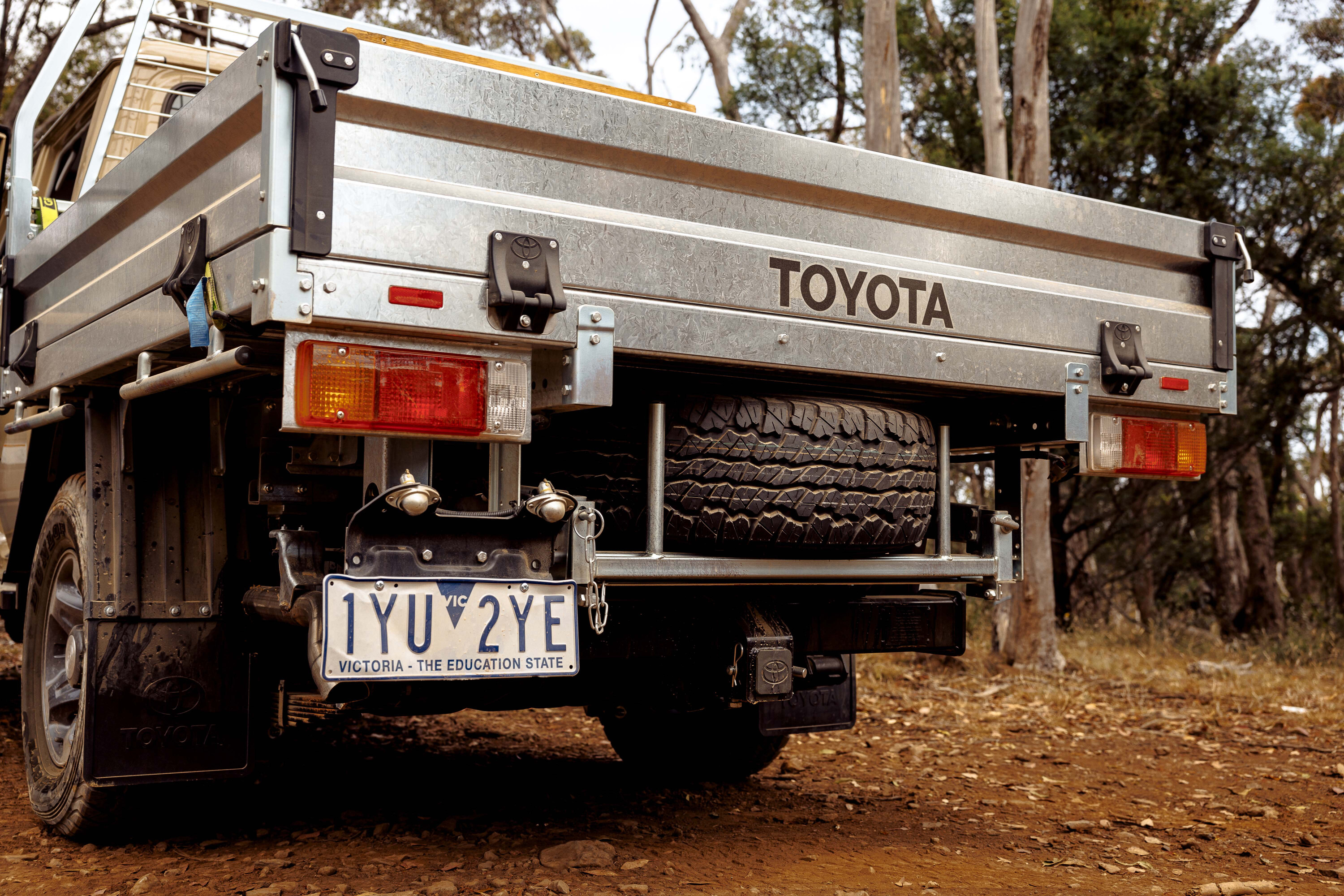
The tall cabin with its large flat windows makes negotiating tracks relatively easy as it gives the driver plenty of visibility for wheel placement. Less accommodating is the location of the rear number plate which hangs low under the tray. This has always been a problem on these factory Toyota trays as the number plate scrapes the ground easily and we’ve lost a few over the years.
1
Thankfully we didn’t lose this one and were able to bend it back into shape. There has to be a way to mount it higher up on the tray.
While we’re talking about the tray, the absence of any internal tie-down points makes securing loads harder than it should be; we had to run straps under the side boards and find somewhere on the frame to attach them.
The hooks on the straps we used were too narrow to grip around the external load rails, so securing our load wasn’t as easy as it could have been.
1
We reckon the flat steel floor of this OE tray will also show its use worse than the chequer-plate floor found in many aftermarket trays.
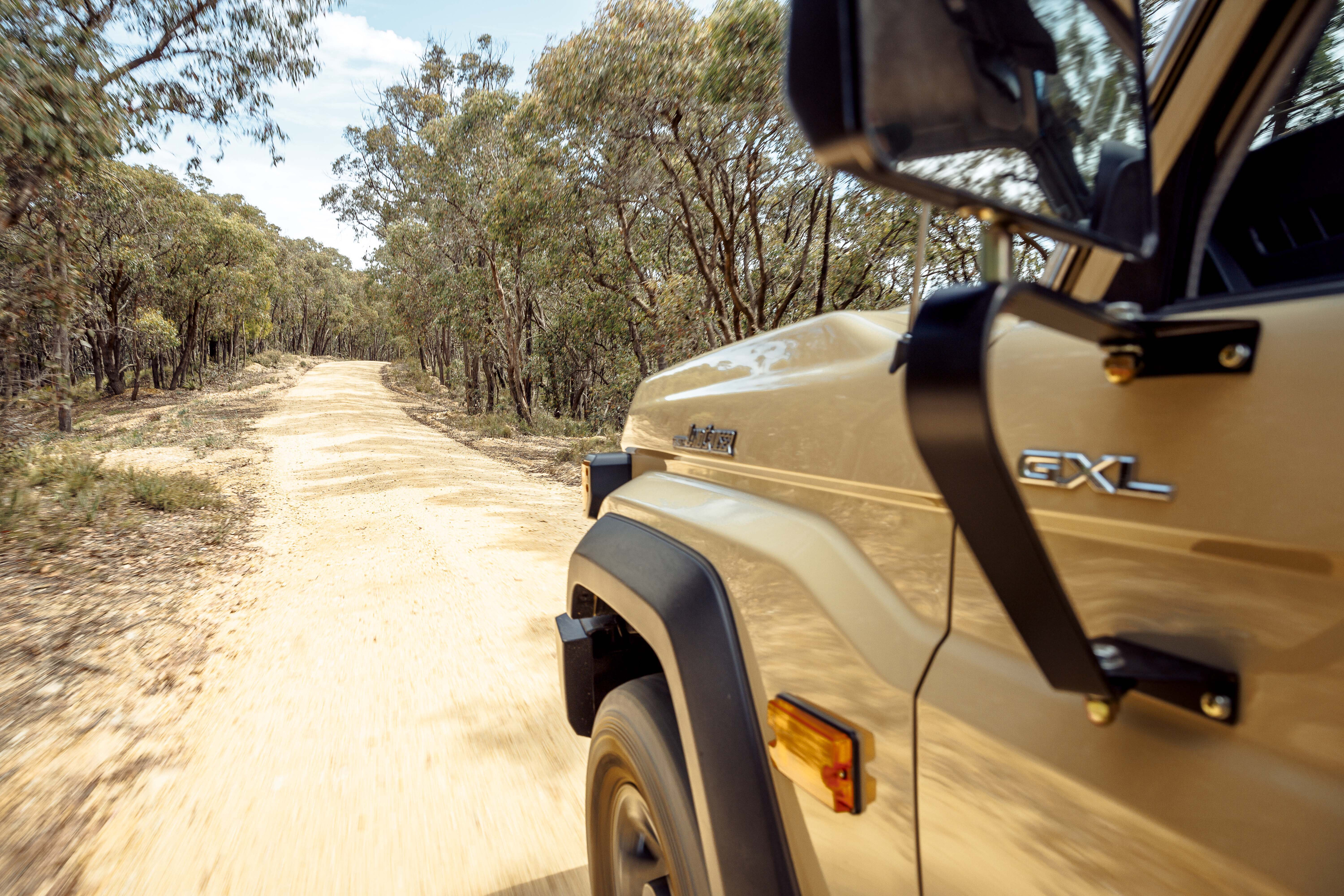
The 2.8 and auto made light work of climbing out of steep gorges in low range. It was keen to pick up a front wheel when climbing out of ruts, but the standard ETC did such a good job we didn’t need to engage the lockers.
Even in standard trim on the stock tyres, the LandCruiser is an excellent off-road workhorse and you can see why it’s relied upon by so many farmers and industries in the outback and the bush. There really is nothing else like it on the market … yet.
1
Interior
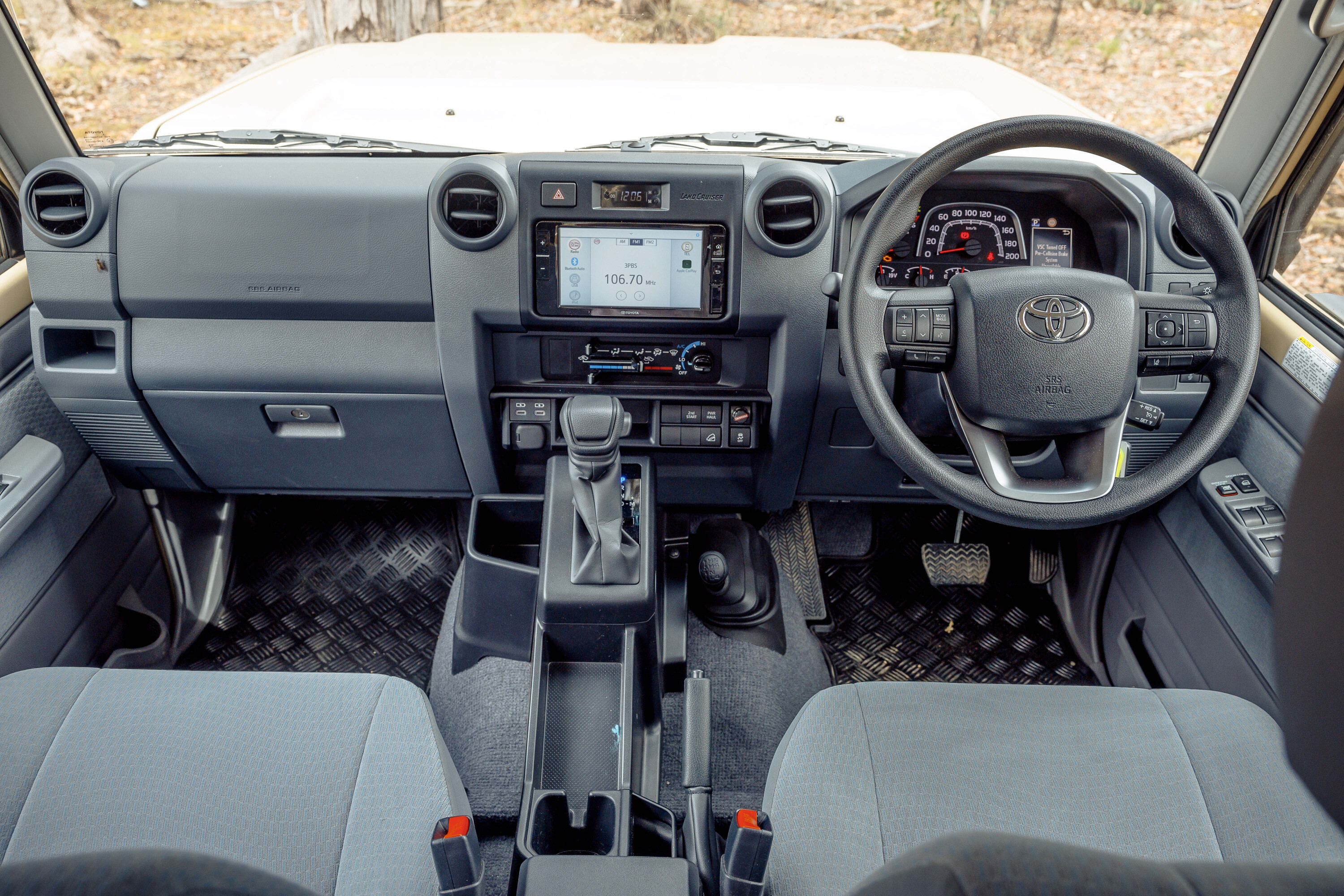
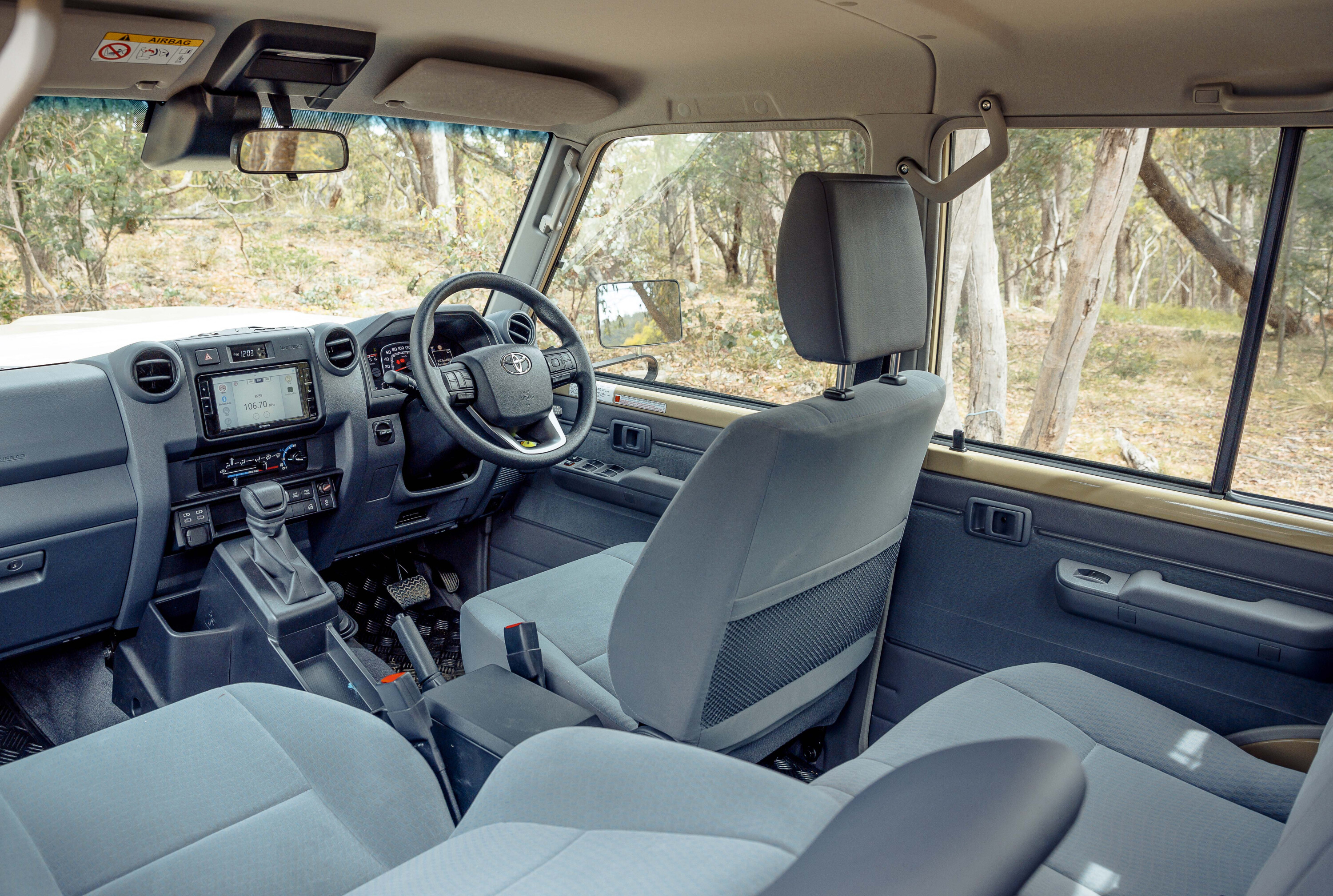
The LC79 cabin remains a big tin box. Relatively uninsulated when compared to more modern vehicles, it’s tinny and noisy, transmitting road noise through the chassis and plenty of wind noise around the A-pillars and raised air intake. It really lets you know that the 70 is a commercial vehicle.
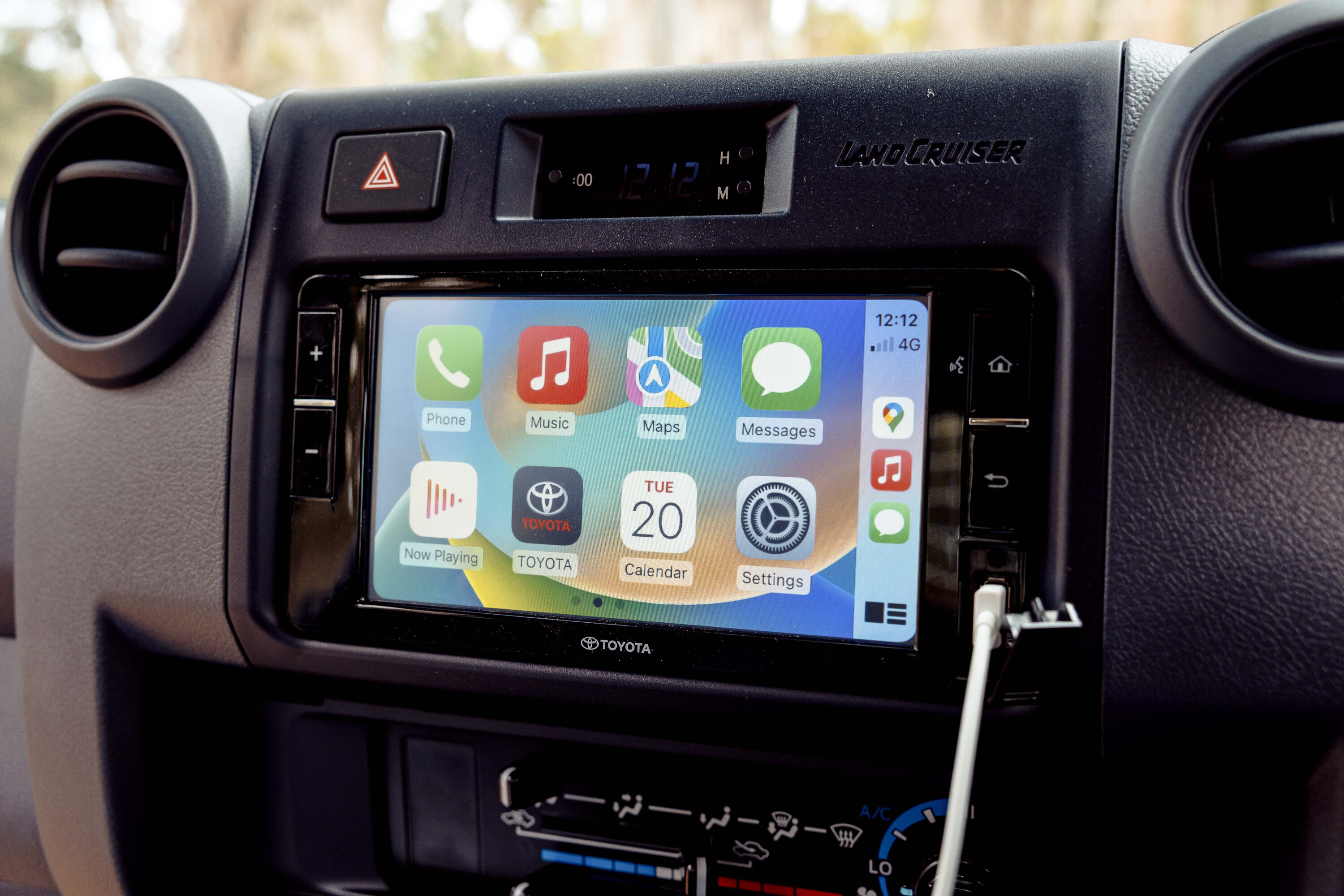
The GXL gets some concessions such as power windows and cloth seats, and there’s a new infotainment screen that is small by modern standards but it allows you to hook up your phone for Apple CarPlay and Android Auto.
The sound from it is shocking, as it still pumps out through a pair of paltry four-inch speakers mounted in the dash panel. It’s no wonder aftermarket sound-deadening kits and audio-system upgrades are big business for these Cruisers.
1
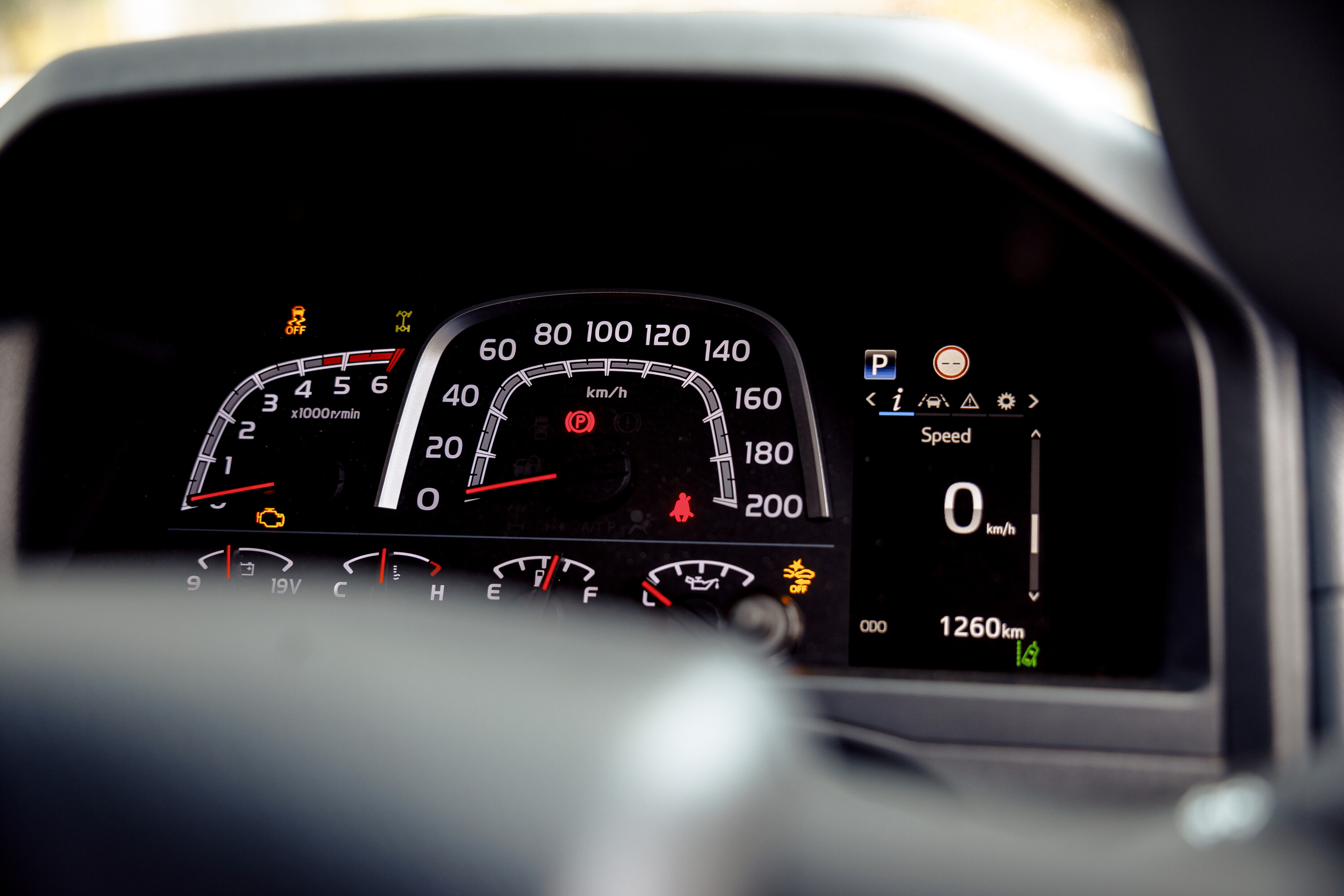
New for the 2024 70 Series range is a fresh gauge cluster that is another nod to the 40 Series with its retro electronic gauges.
This is one of my favourite parts of the new 70 as I love the look, and having a digital speed readout in the 4.2-inch display is always a plus when driving in Victoria. Speed sign recognition in the same panel is also welcome.
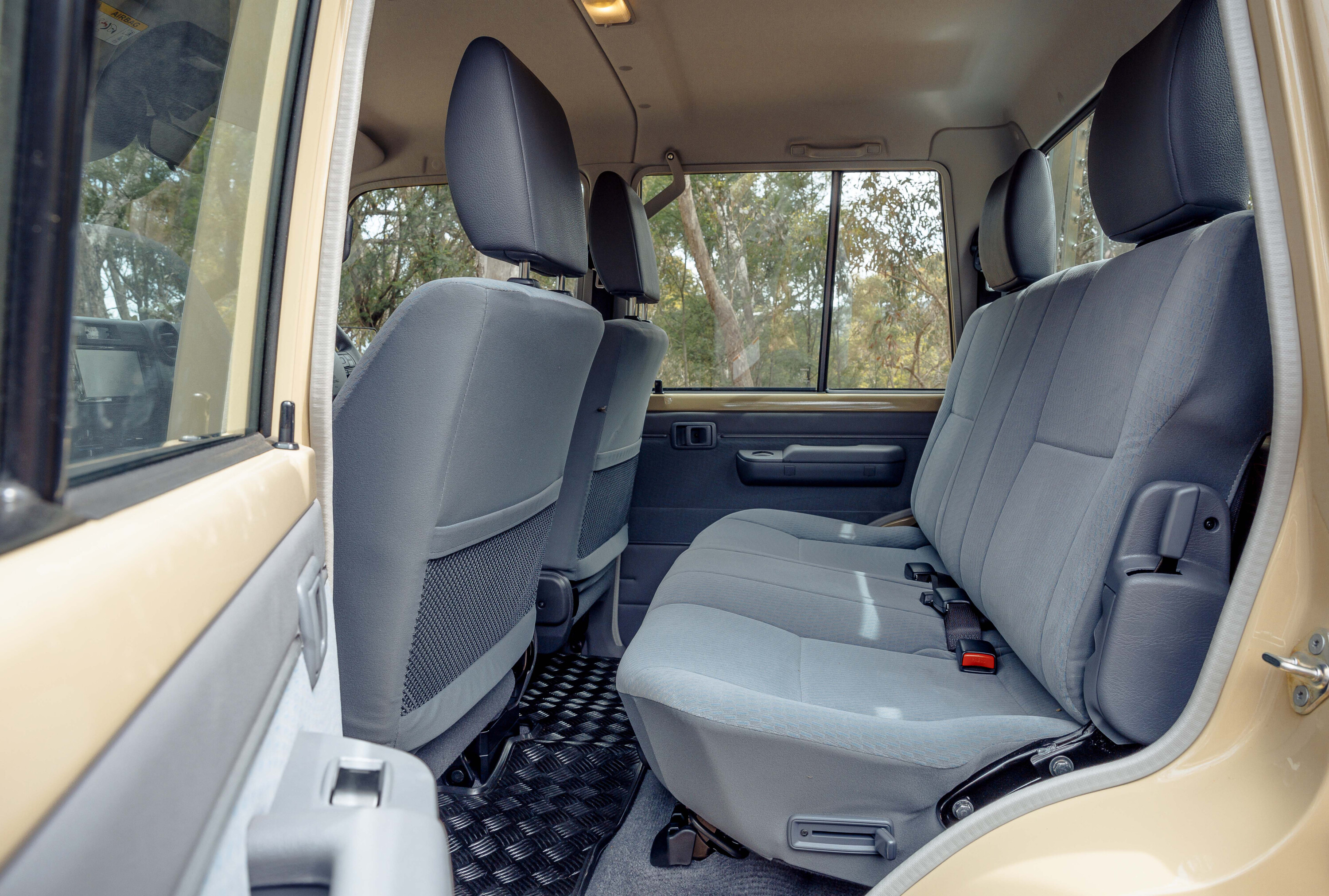
The seats are slim but comfortable enough, but again you can see why many owners choose to fit aftermarket options. The rear seat has plenty of room for three passengers but adults will be shoulder-to-shoulder back there.
2
Safety
Safety-wise the new features include lane departure warning, pre-collision system with pedestrian and daytime cyclist detection and intersection assistance, stability control, brake assist, and electronic brake force distribution.
It’s small steps forward in terms of safety when compared to newer vehicles but when you consider Toyota is building on a 40-year-old platform, any advance is a step forward.
1
Verdict
The LandCruiser 70 Series isn’t about the latest safety, comfort and convenience features; many of these features have been forced upon it just so it can be sold in modern times.
Likewise the introduction of the 1GD 2.8 engine is future proofing the iconic workhorse against possible changes to emissions regulations which might soon rule out the 1VD V8 engine from Australian sales, while at the same time introducing an automatic transmission to fill that hole in the market.
Of course, there will still be those who call out for an auto behind the V8, whereas I feel the best combo would be a six-speed manual behind the 2.8; everyone wants something different, which is why the 70 Series remains one of the most customised 4x4s on the market.
1
The 2.8/auto powertrain brings the 70 back to being more of a workhorse than a hot rod, as some treat the V8 these days.
With this new drivetrain the 70 is a better-working truck suited to more industries and drivers which is what it was originally designed to be more than 40 years ago.
The 70 Series Cruiser, no matter what model you choose, remains a unique vehicle in the market and we should appreciate what has been done to keep it available to us. There is nothing else like the LC79; ever since Nissan stopped building its Patrol ute and Land Rover its Defender pick-up, the LC79 has been in a class of its own.
1
Big American pick-ups don’t come near the 70 for off-road ability and rugged durability.
It’s made to carry loads over rough tracks all day, every day. Likewise, no midsize 4×4 ute can match the capabilities of the 70 when the going gets tough. It will be interesting to see how the Ineos Quartermaster compares to the 79 when it is released later this year but it has four decades of glacier-paced development to catch up on.
While there are plenty criticise the 70 for its basic design and high price, I reckon we should be grateful that it is still with us.
Specifications
| 2024 LandCruiser GXL 79 Double Cab 2.8 specifications | |
|---|---|
| Price | $83,500 |
| Engine | Inline 4 diesel |
| Capacity | 2755cc |
| Max power | 150kW@3000-3400rpm |
| Max torque | 500Nm@1600-2800rpm |
| Transmission | 6-speed automatic |
| 4×4 system | Part-time 4WD, dual-range, front and rear lockers |
| Crawl ratio | 38.51:1 |
| Construction | 4 door ute body on ladder frame chassis |
| Front suspension | Live axle with radius arms and coil springs |
| Rear suspension | Live axle on leaf springs |
| Tyres | 265/70RR16 on alloys |
| Kerb weight | 2185kg |
| GVM | 3510kg |
| GCM | 7010kg |
| Towing capacity | 3500kg |
| Payload | 1325kg |
| Seats | 5 |
| Fuel tank | 130L |
| ADR fuel consumption | 9.6L/100km combined |
| On-test fuel consumption | 14.01L/100k |
MORE
Everything Toyota
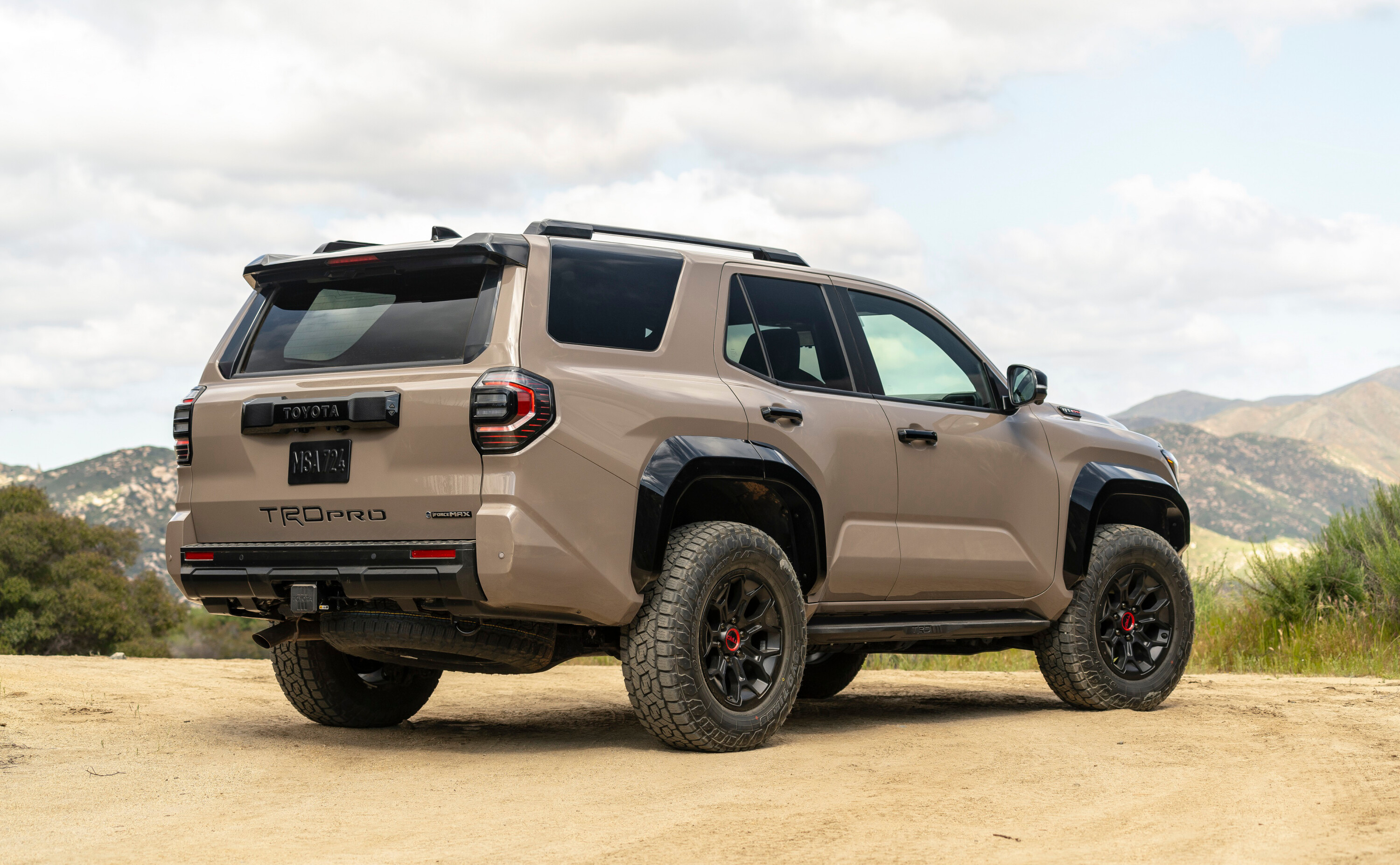
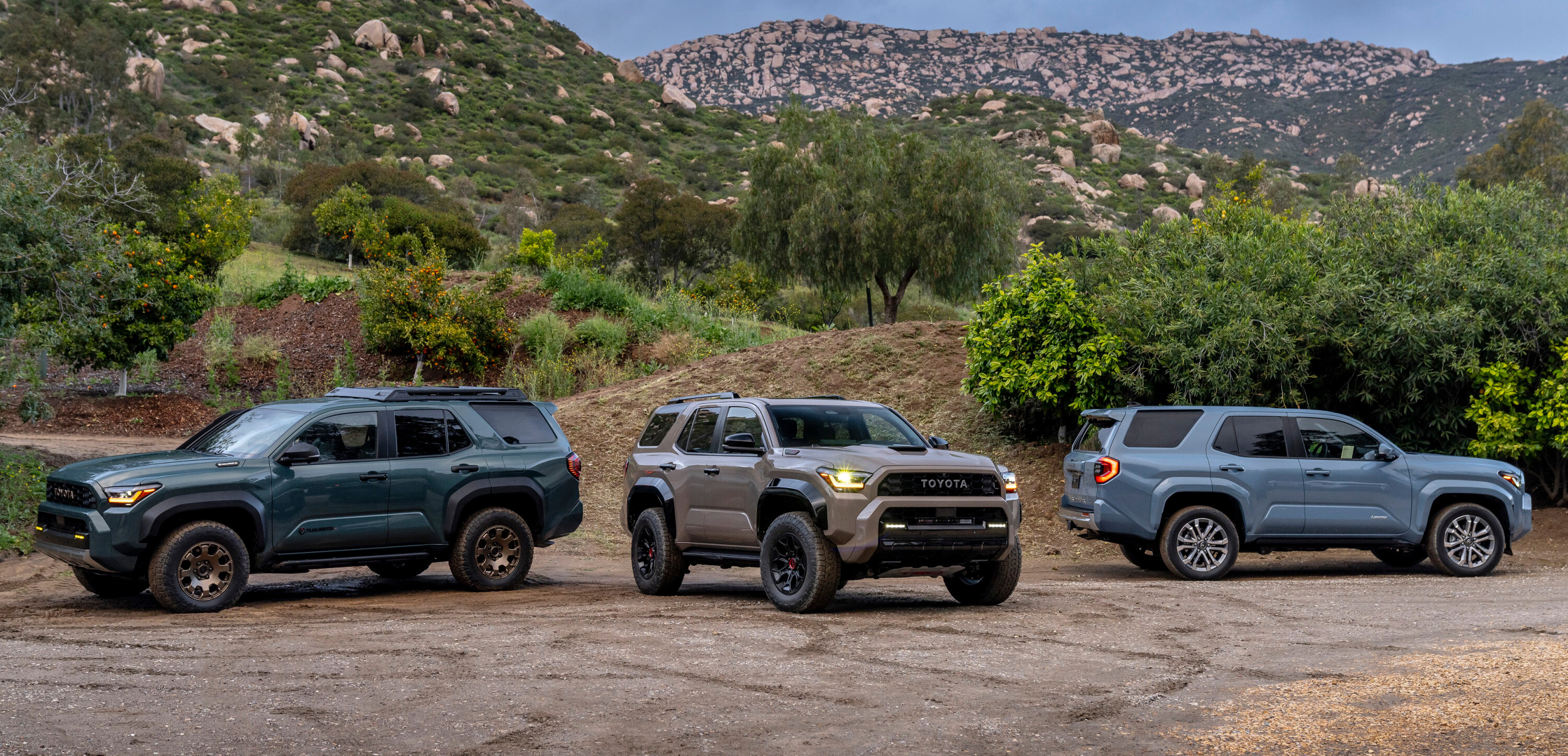
The 2025 Toyota 4Runner off-road SUV has been unveiled as the first all-new version since 2009.
Sharing plenty in common with the all-new 2024 Toyota Prado 250 Series due in Australia within the next three months, the latest 4Runner is also heavily related to the Tacoma ute – with all three models sharing the brand’s TNGA-F platform also common to the full-size LandCruiser 300, Tacoma and Sequoia.
The latest Tacoma is a preview for the all-new HiLux, due in Australia within the next 24 months. Some elements from the 4Runner revealed this week could eventually reach the Fortuner SUV sold in Australia as the HiLux and Fortuner are tipped to switch to the TNGA-F platform in next-generation form.
1
However, don’t expect this new 4Runner in Australia as it will remain limited to select left-hand drive markets – including the United States and Canada – with the Fortuner and Prado offered here as alternatives.
“Toyota Australia is continually studying the market for new opportunities to offer exciting new products to Australian customers,” said a brand spokesperson
“At this stage however, we have no announcements to make on the Toyota 4Runner for the Australian market.”
1
Original versions of the Toyota 4Runner were sold in Australia between 1984 and 1996, also known as the HiLux Surf and HiLux 4Runner.
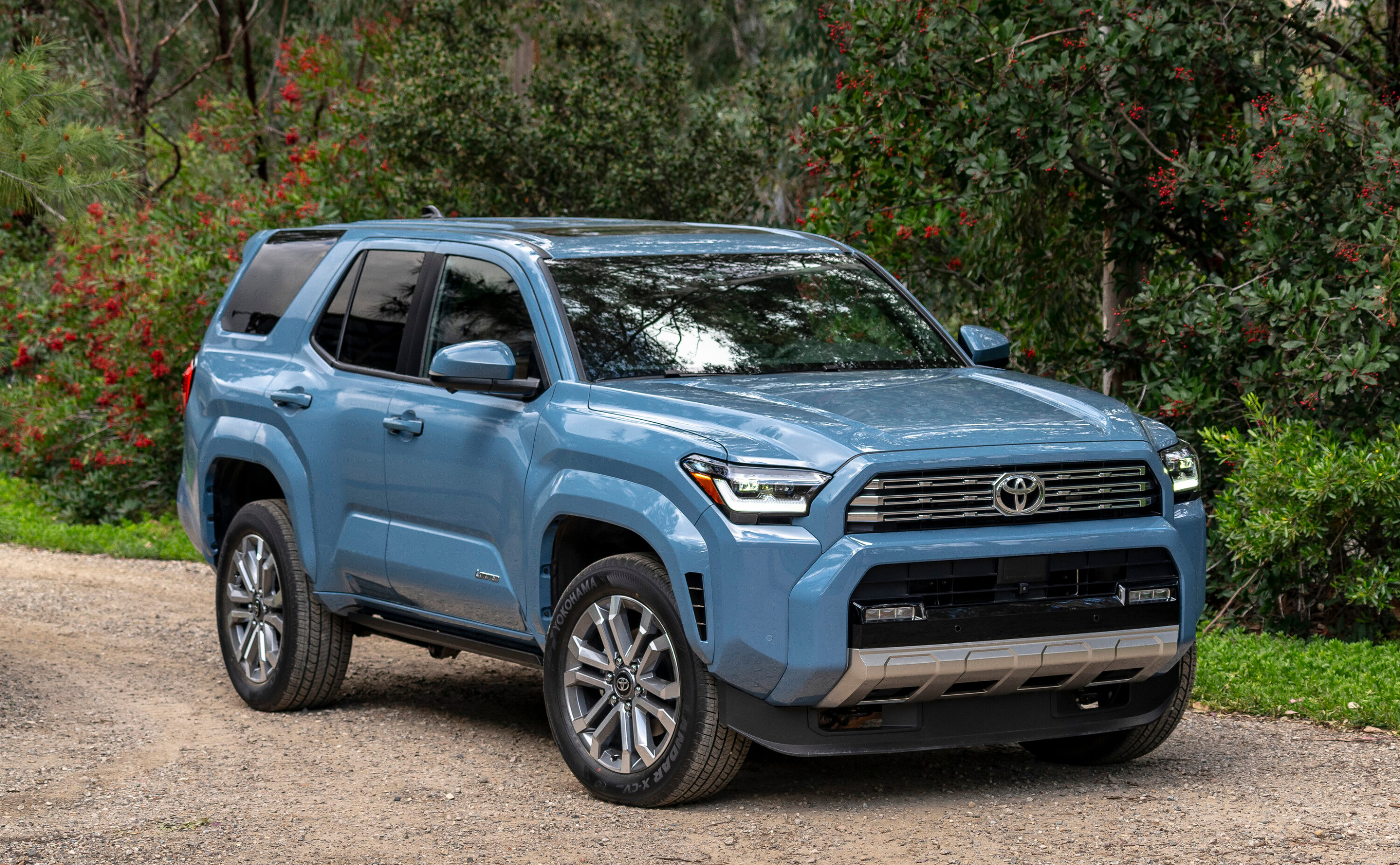
Now in sixth-generation form, the 4Runner adopts the same 2850mm wheelbase as the Prado, LandCruiser 300, Lexus GX and Lexus LX – a dimension considered ideal for off-roading that originates back to the LandCruiser 80 Series.
This is 61mm more than before, while length and width are up 119mm and 51mm to 4950mm and 1976mm, respectively.
The 4Runner has a 32-degree departure angle (-1), a 24-degree approach angle (-2), and a ground clearance up to 233mm (-11mm).
1
Under the bonnet, the 4Runner features two versions of the 2.4-litre turbocharger four-cylinder petrol common to the Tacoma and Prado, known simply in North America as the ‘LandCruiser’.
Paired to an eight-speed automatic transmission, base models will have a non-hybrid ‘I-Force’ version with 207kW and 430Nm – an improvement over the 201kW/376Nm 4.0-litre naturally-aspirated V6 and five-speed automatic in the old 4Runner.
Flagship models upgrade to the hybridised ‘I-Force Max’ setup with an electric motor sandwiched between engine and transmission and a 1.87kWh nickel-metal hydride battery pack for a 246kW and 630Nm total system output – making it the most powerful 4Runner ever.
1
The 4Runner will be offered with rear-wheel drive and part- or full-time four-wheel drive.
Four-wheel-drive models include Multi-Terrain Select, Crawl Control, a locking rear and centre differential, downhill assist control, active traction control, and an automatic limited-slip differential.
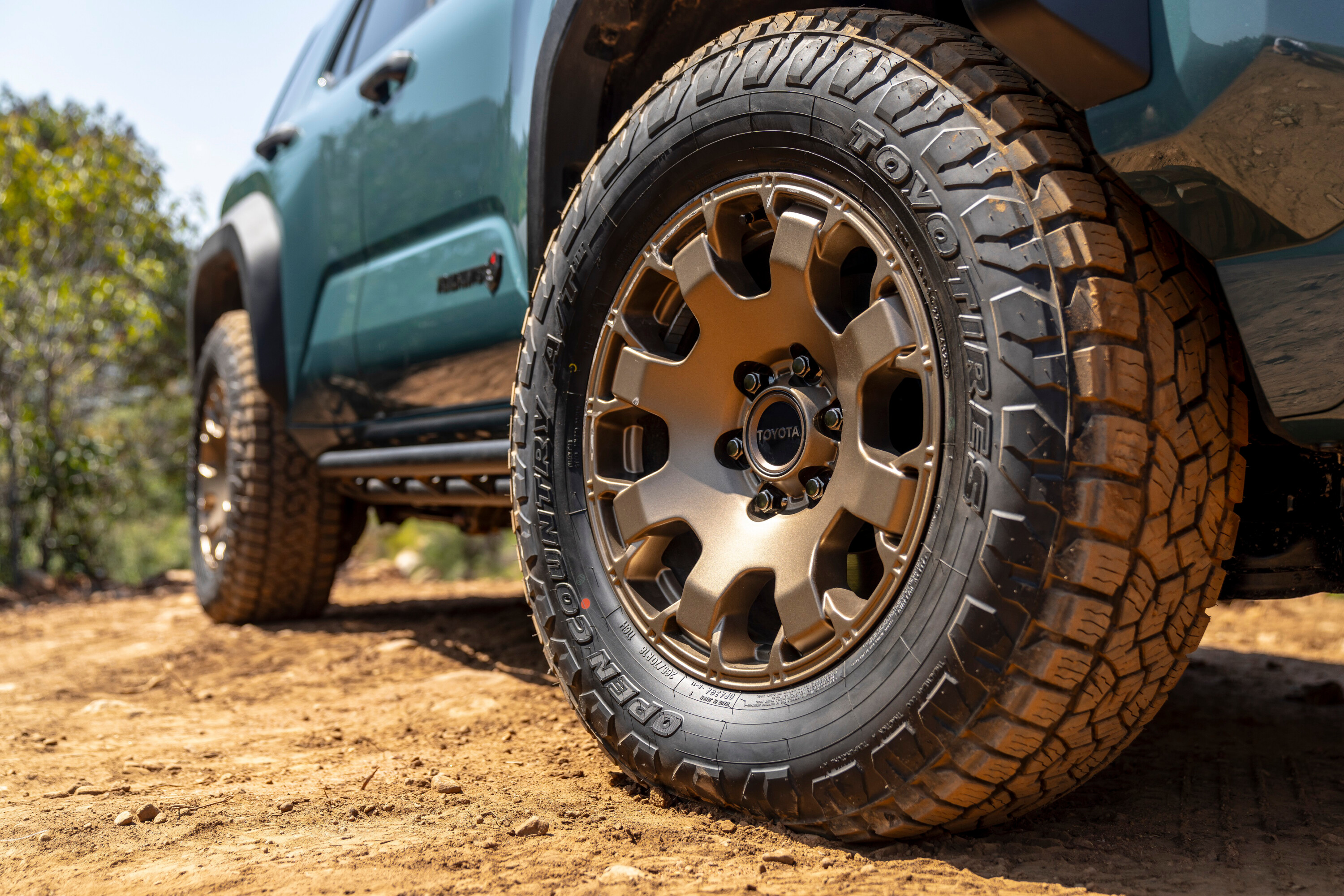
Off-road-focused variants are the TRD Sport, TRD Pro and Trailhunter, with the latter model featuring parts developed with Australian accessory supplier ARB, such as Old Man Emu forged shocks with rear external piggybank remote reservoirs and a unique roof rack.
The Trailhunter also includes 33-inch Toyo Open Country all-terrain tyres, rock rails, high-strength steel skid plates, bronze exterior highlights, an LED light bar, and colour-selectable RIGID LED fog lamps.
1
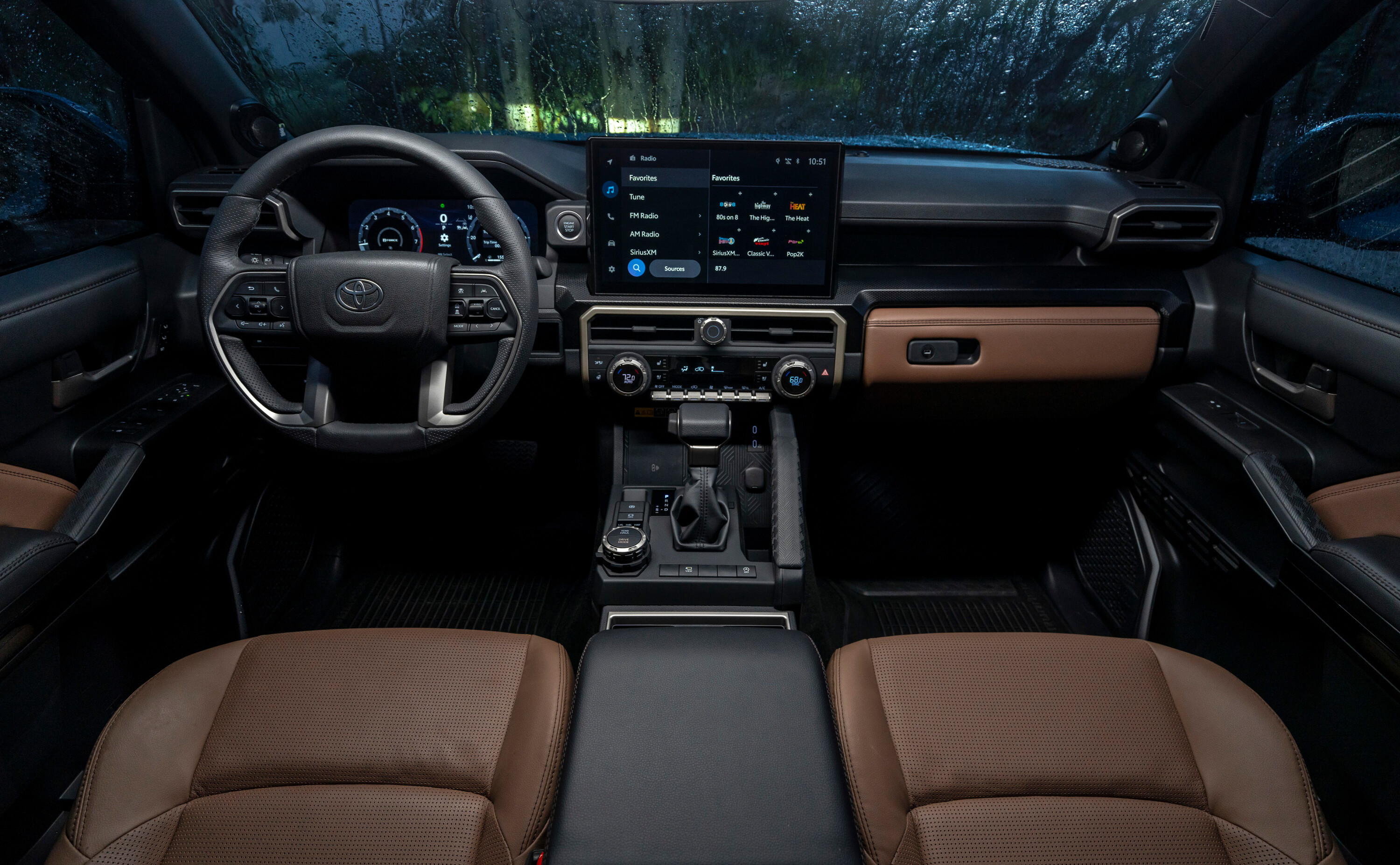
New features for the 4Runner include an 8- or 14-inch infotainment system, a wireless phone charger, USB-C ports, a 7- or 12.3-inch digital instrument cluster, a detachable JBL speaker, and digital key functionality.
There’s also an improved active safety suite with enhanced autonomous emergency braking detection, lane-keep assist, full-speed adaptive cruise control, traffic sign recognition, and emergency stopping for inattentive or non-responsive drivers.
The 2025 Toyota 4Runner will be built at the Tahara, Japan factory alongside the Prado, LandCruiser and Lexus GX. It is due to arrive in North America between September and November.
MORE
Everything Toyota
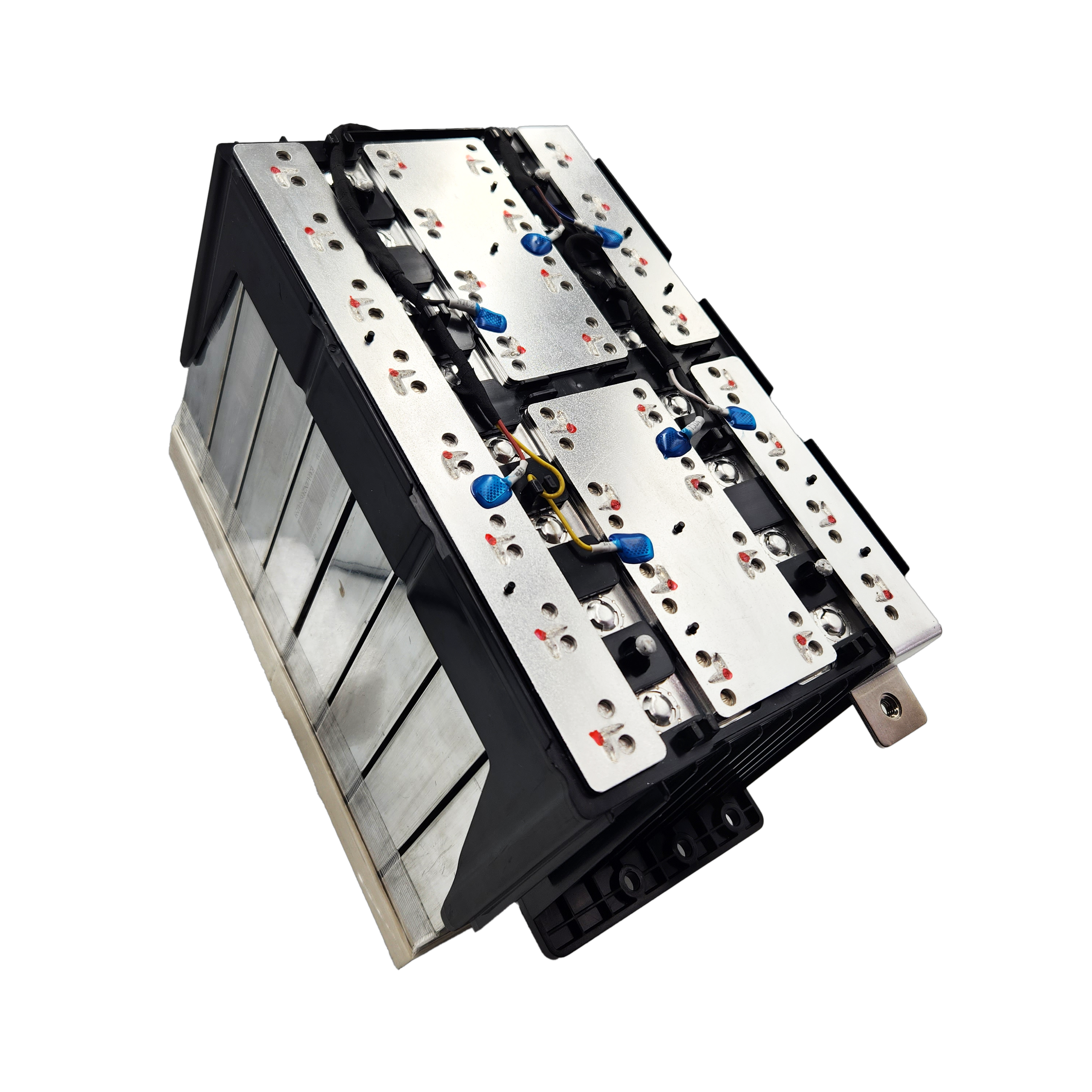
The Invicta Xero is a ground-breaking 12V 120Ah lithium battery that sets a new standard for performance, durability and innovation for energy storage.
This advanced lithium battery has been designed to meet the increasing demands of emerging applications and safety requirements in the 4×4 and recreational markets. The Invicta Xero range [↗️] includes noteworthy upgrades while still utilising tried-and-tested technology that users trust.
1
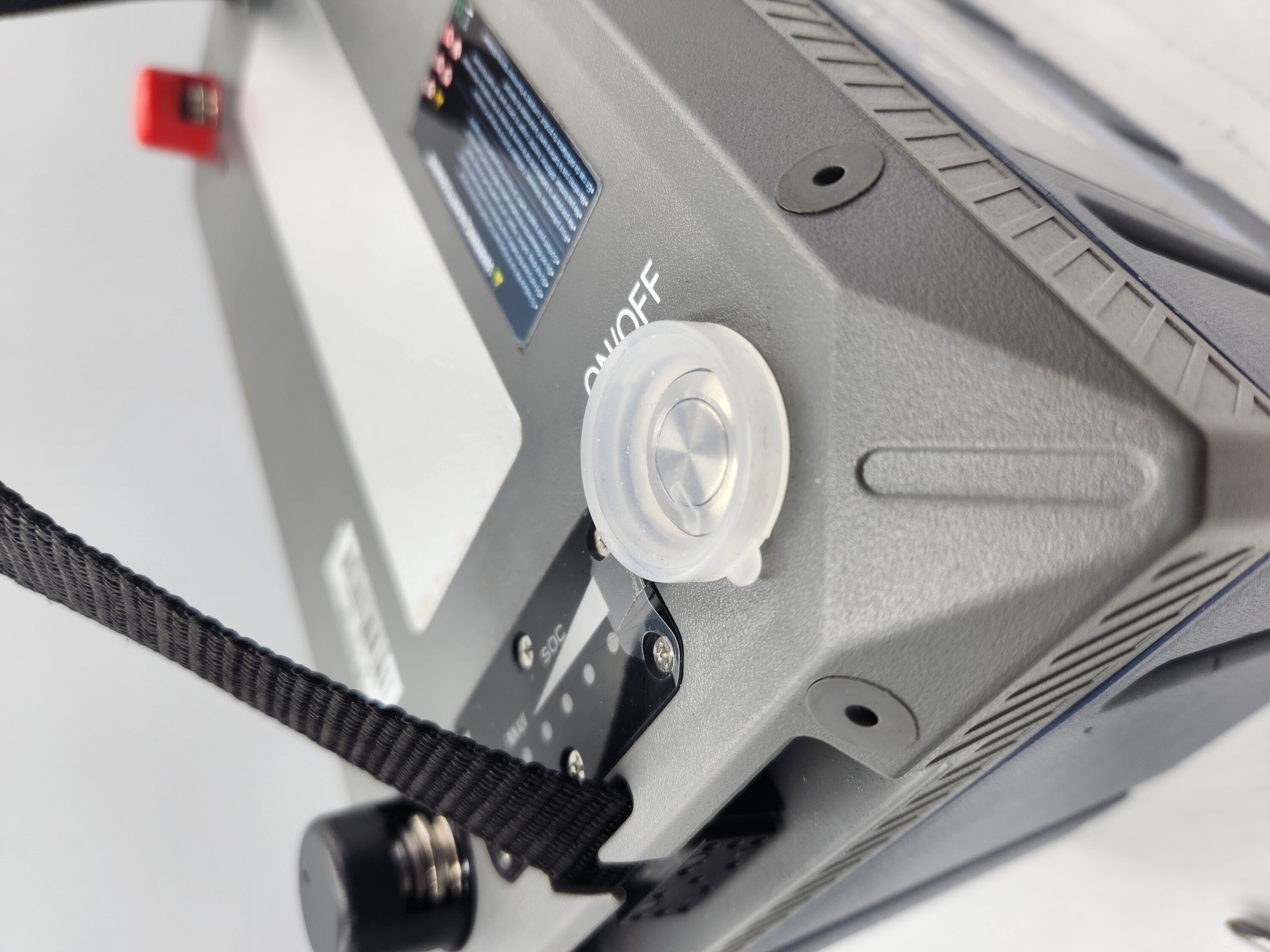
Upgrades include an improved IP67 waterproof rating; IEC 62619 safety certification; high-performance BMS; and communications via CAN bus and Bluetooth connectivity. The battery continues to use Invicta’s prismatic cells and is backed by a seven-year full replacement warranty and national customer support. You can even secure the Invicta Xero via the four detachable mounting feet using a screwdriver, a real space saver for installations.
“We are proud to introduce the Invicta Lithium Xero [↗️], a product that embodies our commitment to pushing the boundaries of what is possible in energy storage,” said Greg Roberts, Managing Director of Sealed Performance Batteries (SPB). “This battery is the future of lithium energy storage. Its advanced features and game-changing capabilities will make it a leader in the market.”
1
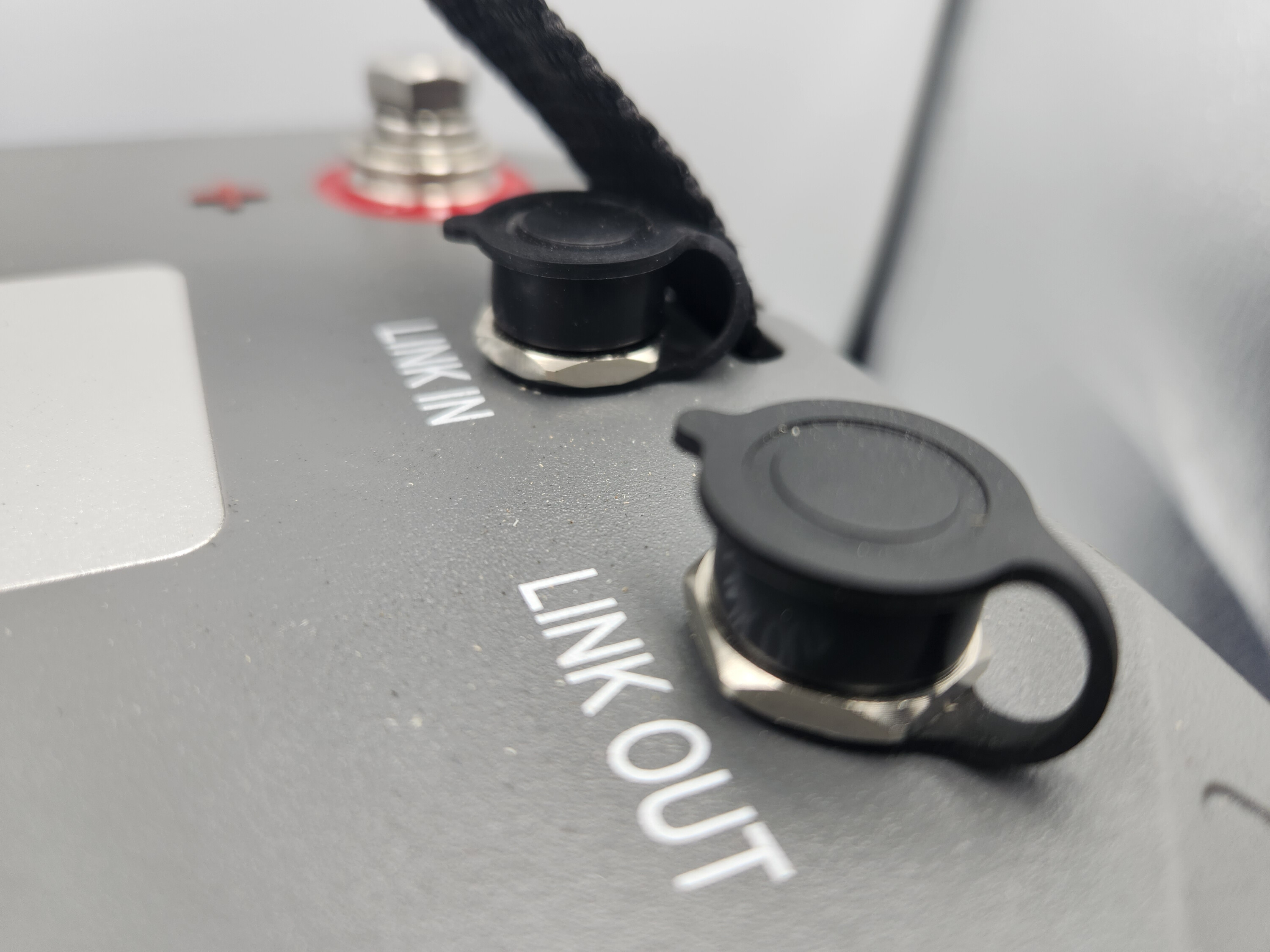
The CAN bus addition is one of the more advanced features of the Invicta Xero. It can connect to any number of devices via a CAN link to communicate directly to the BMS. This is a superior option to a shunt as it provides accurate diagnostic data to improve the application’s performance. You can also connect to the BMS via Bluetooth to monitor the essential information of the battery.
The Invicta Lithium Xero features a high-performance BMS that allows for a wider breadth of customisation compared to other lithium batteries. The BMS is engineered for optimal charging and discharging processes and boasts a cycle life of more than 3000 cycles at 100 per cent depth of discharge (DoD), including a maximum pulse discharge of 500A and a maximum continuous discharge of 150A – enough to run most 2000W inverters. You can series the Invicta Xero batteries up to four (48V 120Ah), parallel up to 16 (12V 1920Ah), or even four series and four parallel (48V 480Ah).
1
“We believe the Invicta Lithium Xero will redefine how people think about battery reliability, durability, performance, and safety,” said Ryan Hamond, Director of SBP. “Building on the already successful platform of the original Invicta deep-cycle batteries, the Invicta Lithium Xero [↗️] hosts a range of additional innovative features that will cater for applications that are using equally advanced technology. Realistically, if you want to be future-ready, then the Invicta Xero is the battery for you.”
The Invicta Xero 12V 120Ah battery will soon be joined by the 12V 200Ah and 300Ah batteries. It comes with a RRP of $1999.
Snapshot
- 2024 Nissan Patrol receives Apple CarPlay, Android Auto and DAB+ digital radio
- Technological upgrade unique to Australian market
- Prices up $3000 across Patrol line-up
A significant technological update for the 2024 Nissan Patrol off-road SUV has been announced.
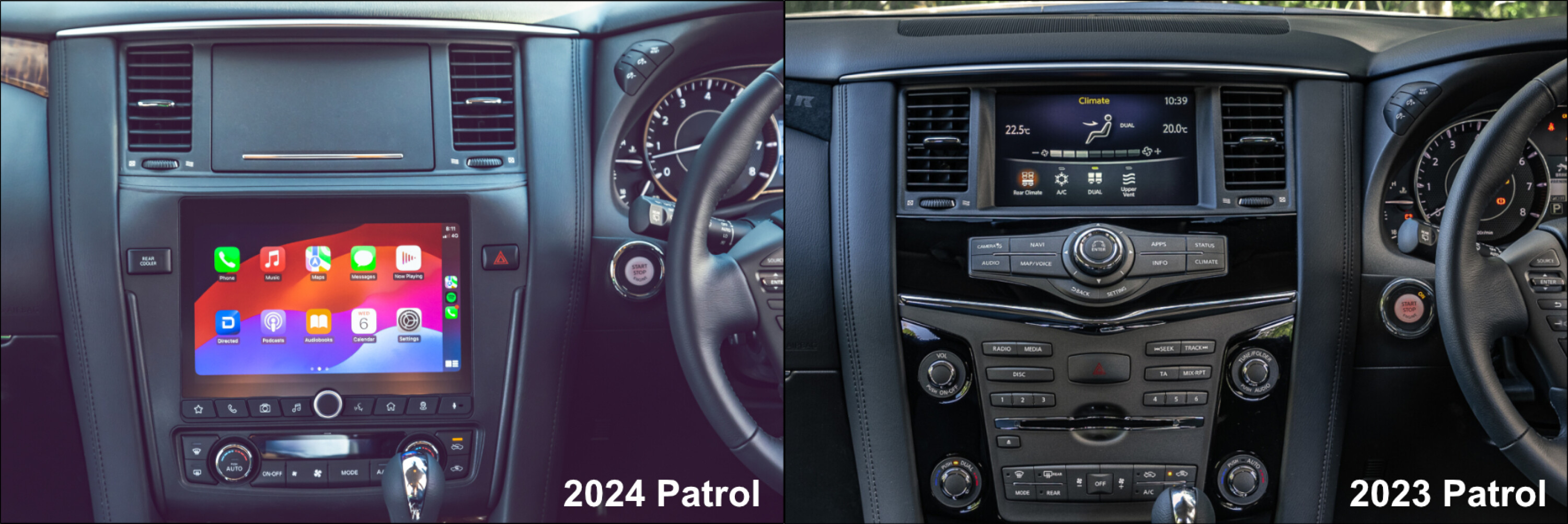
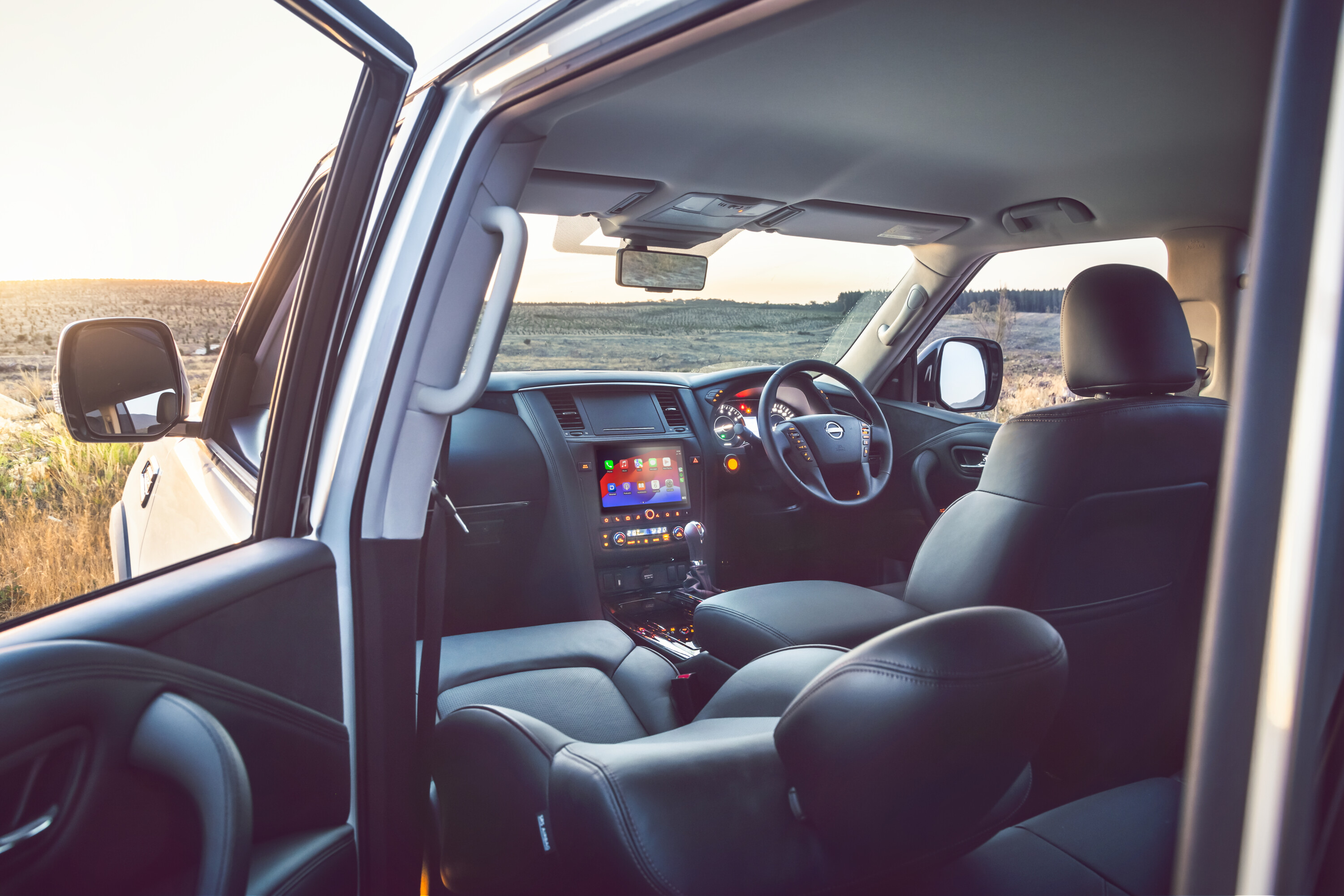
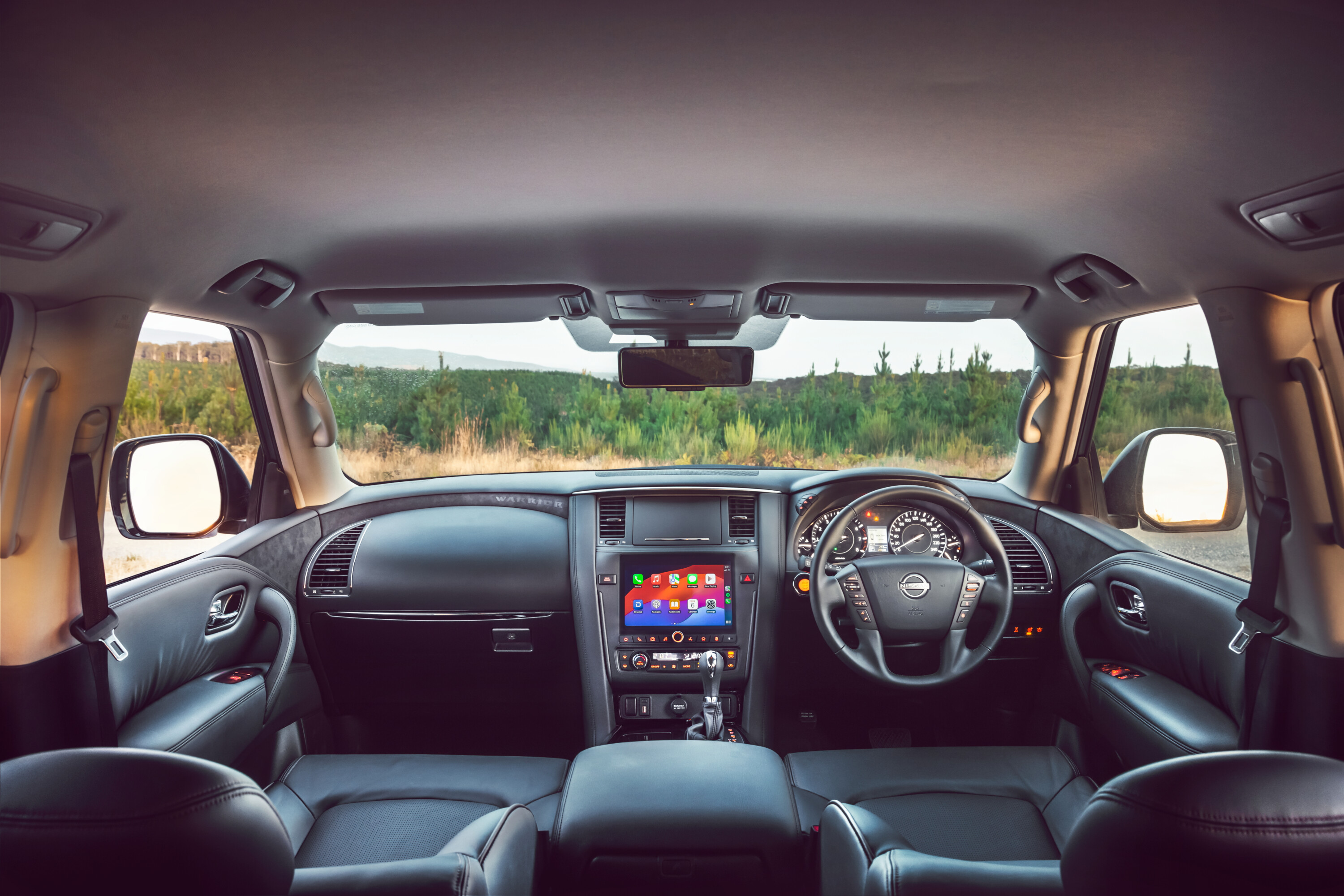
Nissan Australia has worked with aftermarket supplier Directed Technologies to develop a revised dashboard for the Patrol, which will be fitted when the vehicles arrive on local shores.
Headlining the changes is the addition of a larger and higher-resolution 10.1-inch infotainment system with support for wireless Apple CarPlay and Android Auto – a must-have feature for many new-car buyers.
Most vehicles sold in Australia are fitted with smartphone mirroring technology, including the latest version of the 40-year-old Toyota LandCruiser 70 Series.
1
It is positioned lower than the previous 8-inch touchscreen, which remained unchanged from when the Y62 Patrol debuted 14 years ago – with older technologies including a CD player, iPod integration, and a rotary dial to control certain functions.
Left-hand-drive versions of the Patrol have been offered with a revised interior since late 2020, including a 12.3-inch widescreen infotainment system, a 7-inch semi-digital instrument cluster, and an updated centre stack.
However, these updates were not made available to our market due to a lack of further investment in the right-hand-drive Patrol at a factory level – leading Nissan Australia to introduce long-overdue improvements with help from an aftermarket supplier.
1
In addition to smartphone integration, the Patrol’s new infotainment system adds DAB+ digital radio, built-in Hema iGo satellite navigation, and off-road Hema 4×4 maps available with a subscription.
New Patrol vehicles will include a one-month free subscription to the off-road map service.
There are also revamped air-conditioning controls, less woodgrain accents for the Ti and Ti-L, a USB-C charge port, and a 15-watt wireless phone ‘charge pocket’ for all variants.
1
A storage compartment with a folding lid has been added between the air vents where the old head unit was located.
Due to incompatibility with the new infotainment system, the Patrol Ti-L’s 13-speaker Bose audio system has been replaced with a six-speaker Infinity by Harman audio system – a brand familiar to rival brands such as Hyundai and Kia.
Ti and Warrior models continue with an unbranded six-speaker audio system.
1
In addition, all variants lose the 360-degree around-view monitor, with a full-HD wide-angle rear-view camera in its place, while the Ti-L no longer features twin 8-inch second-row entertainment screens.
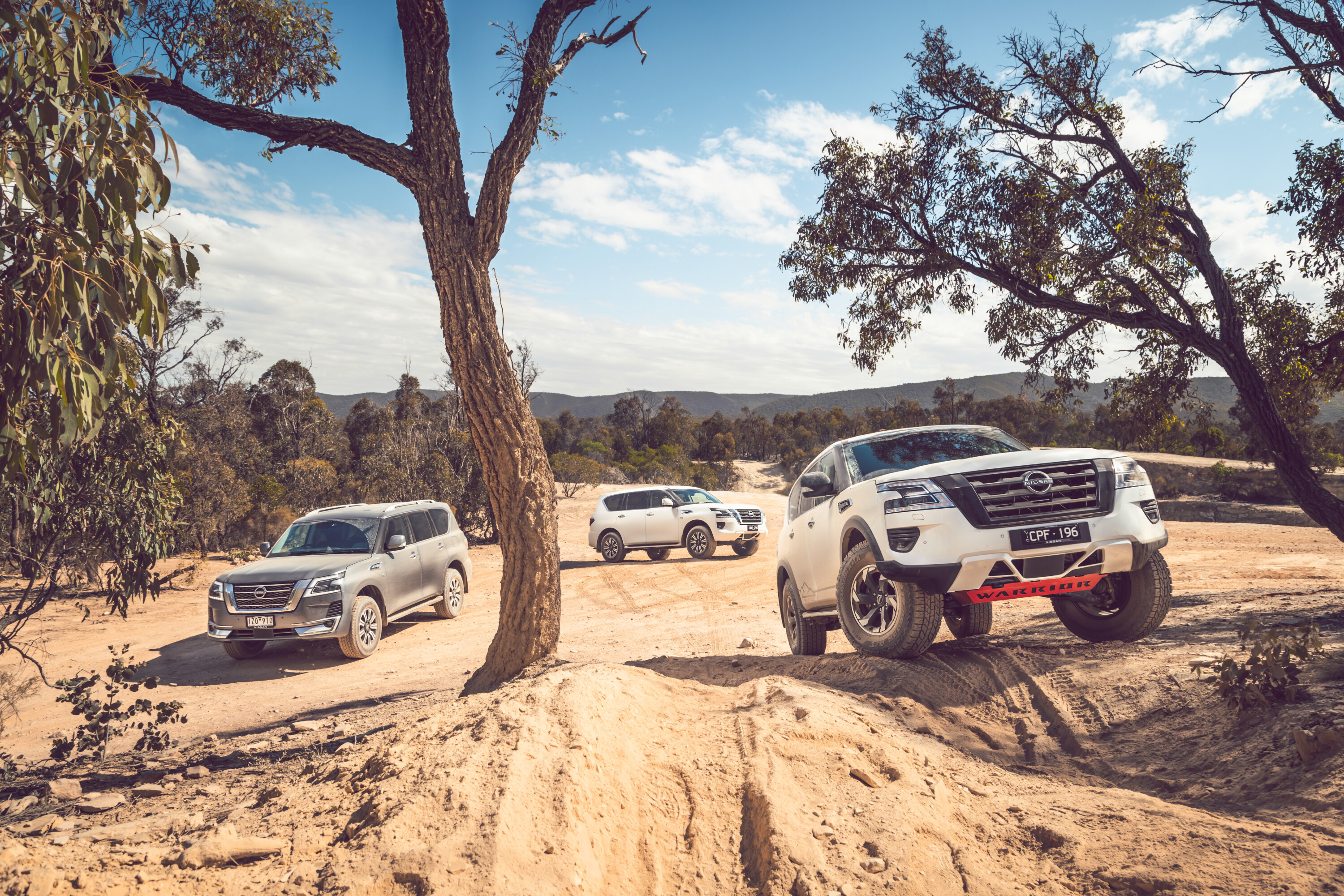
Nissan has added some features to the Patrol Ti and Warrior that were previously exclusive to the top-of-the-range Ti-L, including a digital rear-view mirror and a first-row centre console cool box.
Prices for the updated 2024 Nissan Patrol have increased $3000 across the line-up, which now spans between $87,900 and $104,160 before on-road costs.
All variants continue to be powered by a 298kW/560Nm 5.6-litre naturally-aspirated petrol V8, with an on-demand four-wheel-drive system and a 3.5-tonne braked towing capacity.
1
2024 Nissan Patrol pricing
| Model | Pricing | Change |
|---|---|---|
| Patrol Ti | $87,900 | up $3000 |
| Patrol Ti-L | $100,600 | up $3000 |
| Patrol Warrior | $104,160 | up $3000 |
| Prices exclude on-road costs.u00a0 | ||
2024 Nissan Patrol features
| 2024 Nissan Patrol Ti features | |
|---|---|
| 10.1-inch touchscreen infotainment system (new) | Six-speaker audio system |
| Wireless Apple CarPlay and Android Auto (new) | Front and rear parking sensors |
| Built-in iGo satellite-navigation (new) | Keyless entry and push-button start |
| Hema 4×4 off-road maps (new) | LED headlights, tail-lights, DRLs, and front fog lamps |
| 15-watt wireless phone charge pocket (new) | Leather-accented upholstery |
| DAB+ digital radio (new) | 10-way power-adjustable driveru2019s seatu00a0 |
| Digital rear-view mirror (new) | Eight-way power-adjustable passenger seat |
| Front-row centre console cool box (new) | Power-folding heated side mirrors |
| USB-A and USB-C charge ports (new) | Tyre pressure monitoring |
| 18-inch alloy wheels | Autonomous emergency braking |
| On-demand four-wheel-drive system | Lane-keep assist |
| Hill descent control | Lane departure warningu00a0 |
| Hydraulic body motion control suspension | Blind-spot monitoring with braking |
| Rear limited shift differential | Rear cross-traffic alert |
| Eight seats | Adaptive cruise control |
2024 Nissan Patrol Ti-L features
| In addition to Ti | |
|---|---|
| Six-speaker Infinity audio system (new, replaces 13-speaker Bose audio system) | Two-position memory function (driveru2019s seat, side mirrors and steering wheel column) |
| Seven seats (down from eight) | Heated and ventilated front seats |
| Unique front bumper | Power tilt and slide sunroof |
| Puddle lamps | Privacy glass |
| Electric tailgate | Roof rails |
| Power-adjustable steering wheel column | |
2024 Nissan Patrol Warrior features
| In addition to Ti | |
|---|---|
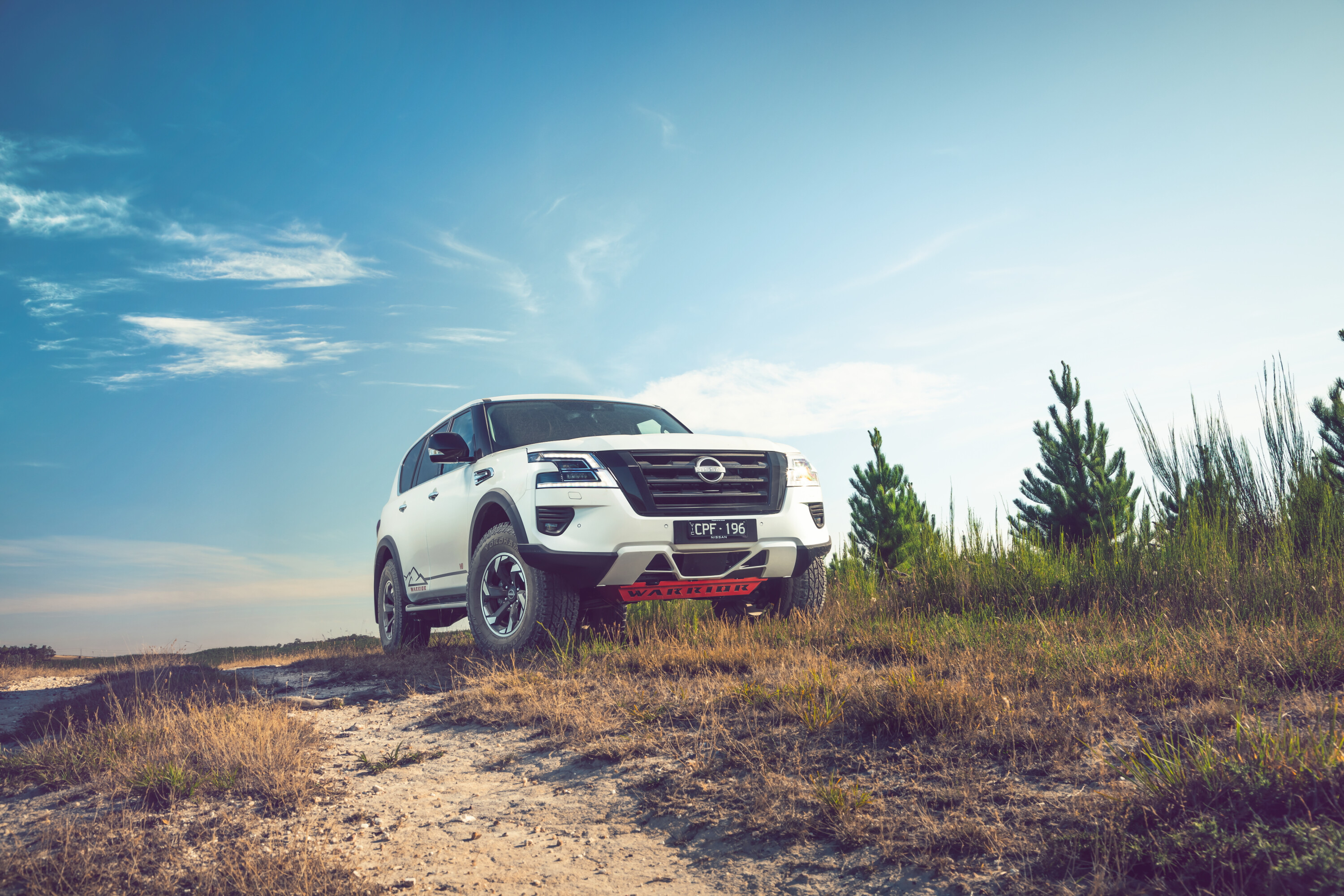
| 50-millimetre lift (+29mm suspension, +21mm wheel and tyre package) | Bespoke towbar with two recovery points |
| 40-millimetre wider track | Bi-modal side exit exhaust |
| Premcar-tuned suspension | Black exterior trim |
| 120-kilogram gross vehicle mass upgrade | Warrior exterior decals and badging |
| Unique 18-inch alloy wheels | High-gloss black trim (replaces woodgrain) |
| Yokohama G015 295/70 all-terrain tyres | Alcantara door and dash inlay with Warrior badging |
| Warrior-branded front bumper assembly and bash plate | |
MORE
Everything Nissan
Snapshot
- Ranger PHEV spotted in the wild, ahead of 2025 launch.
- PHEV models to retain 3500kg towing capacity.
- Trim levels, equipment packages, power output and range yet to be confirmed.
- South African production may introduce 5 percent tariff for some models.
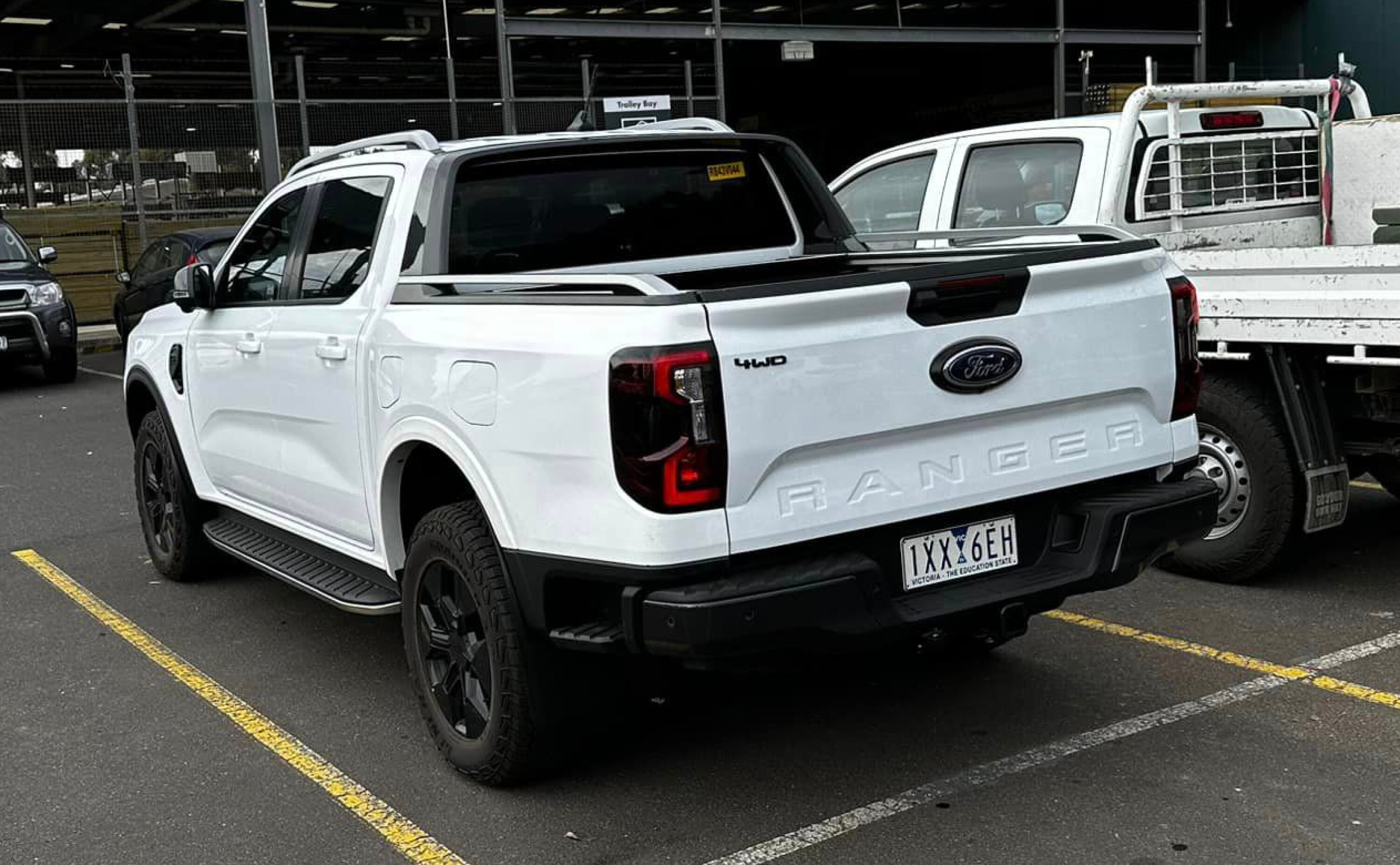
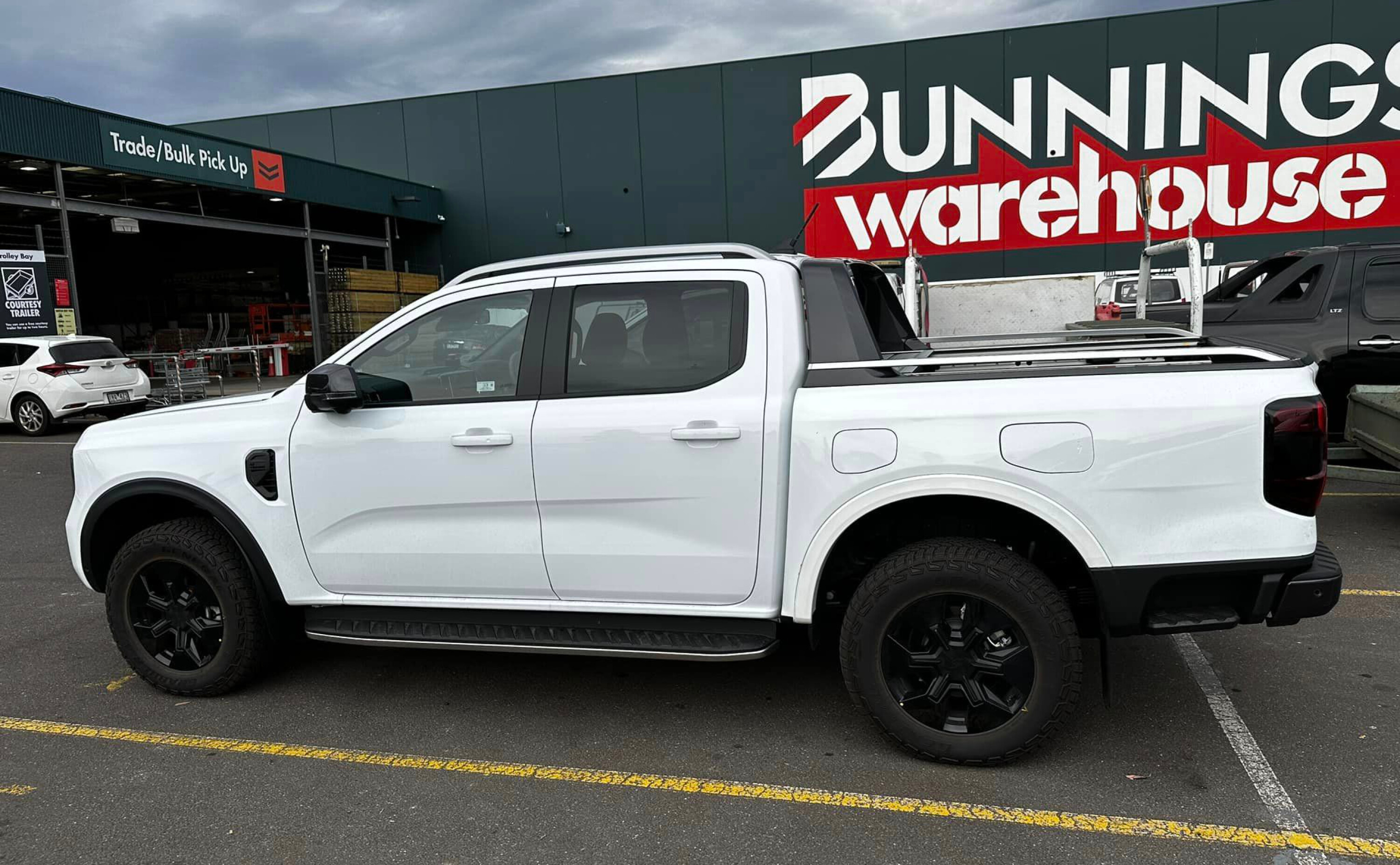
The incoming Plug-In Hybrid model wears no specific badging to identify its electrified heart, but the ute spied at Bunnings last week had a couple of giveaways: the charging cover forward of the regular fuel cap, and the ‘EV’ sticker on its number plates.
These photos of the upcoming Ford Ranger ‘PHEV’ in a Bunnings carpark were posted to the Next Gen Ranger Owners Australia Facebook group.
With prices and model specifications yet to be confirmed, the PHEV Ranger in the photos resembles a Wildtrak-like trim specification, with blacked-out wheels – largely matching the official images published in September 2023.
1
It is likely that the spied Ranger Plug-in Hybrid is involved in ongoing compliance and fuel efficiency testing, in relation to Australia’s upcoming emissions standards.
Catherine King, Minister for Infrastructure, Transport, Regional Development and Local Government said in February 2024: “I’ve also had the opportunity to be driven on the [Ford] test track down near Geelong of the new Ford Ranger… It’s a hybrid vehicle, and what that allows you to do is for those smaller jobs you’re going in between, so if you’re a tradie, in between those you use electric if you’re not going very far.”
Ms King’s department, amongst others, has been involved in devising the New Vehicle Efficiency Standard for 2025.
1
About the Ranger Plug-in Hybrid
Ford has confirmed the Ranger PHEV will combine the company’s 2.3-litre turbocharged four-cylinder petrol engine with an electric motor, providing the most torque of any Ranger variant.
Specific power and torque figures still to be detailed, but there are some known figures we can work with. The 2.3-litre Ecoboost four-cylinder petrol, for example, makes 222kW/452Nm in the Volkswagen Amarok which was co-developed with Ranger.
A driving range of 45km in full-electric mode is expected, and the Ranger’s 3500kg towing capacity is retained for the PHEV models.
The Ranger PHEV also features “Pro Power Onboard”, allowing it to power tools and act as a driveable generator, with three dedicated 240V / 10A power outlets fitted (two in the tray, one in the cabin).
The Ranger PHEV will be manufactured in South Africa, meaning that some models may incur a 5 percent import tariff.
Pricing and variants that will offer PHEV technology are yet to be announced by Ford.