
Key Points
- Attendance down, but more than100,000 exhibitors
- New off-road adventure West Hall
- New Ford Bronco demo drives
As I walked through the SEMA show this year, I heard rumblings from so-called industry pundits that the show was a bust – it was too small, there weren’t as many vendors and new products, and the overall feeling was sedate. My reply to those naysayers is, “Quit your bitching!”I’ve been attending SEMA since 1995, and while it is true that event seemed a bit quieter than in pre-pandemic years, 2021 attracted more than 100,000 exhibitors, buyers, manufacturers and media attendees. There were thousands of modified cars, trucks, rat rods and overlanders, demo drives in the new Ford Bronco and drift cars, and just about anything else a died-in-the-wool gearhead could love. Also debuted, was the new West Hall, a 1.4-million sq ft building dedicated to SUV, off-road and adventure travel.
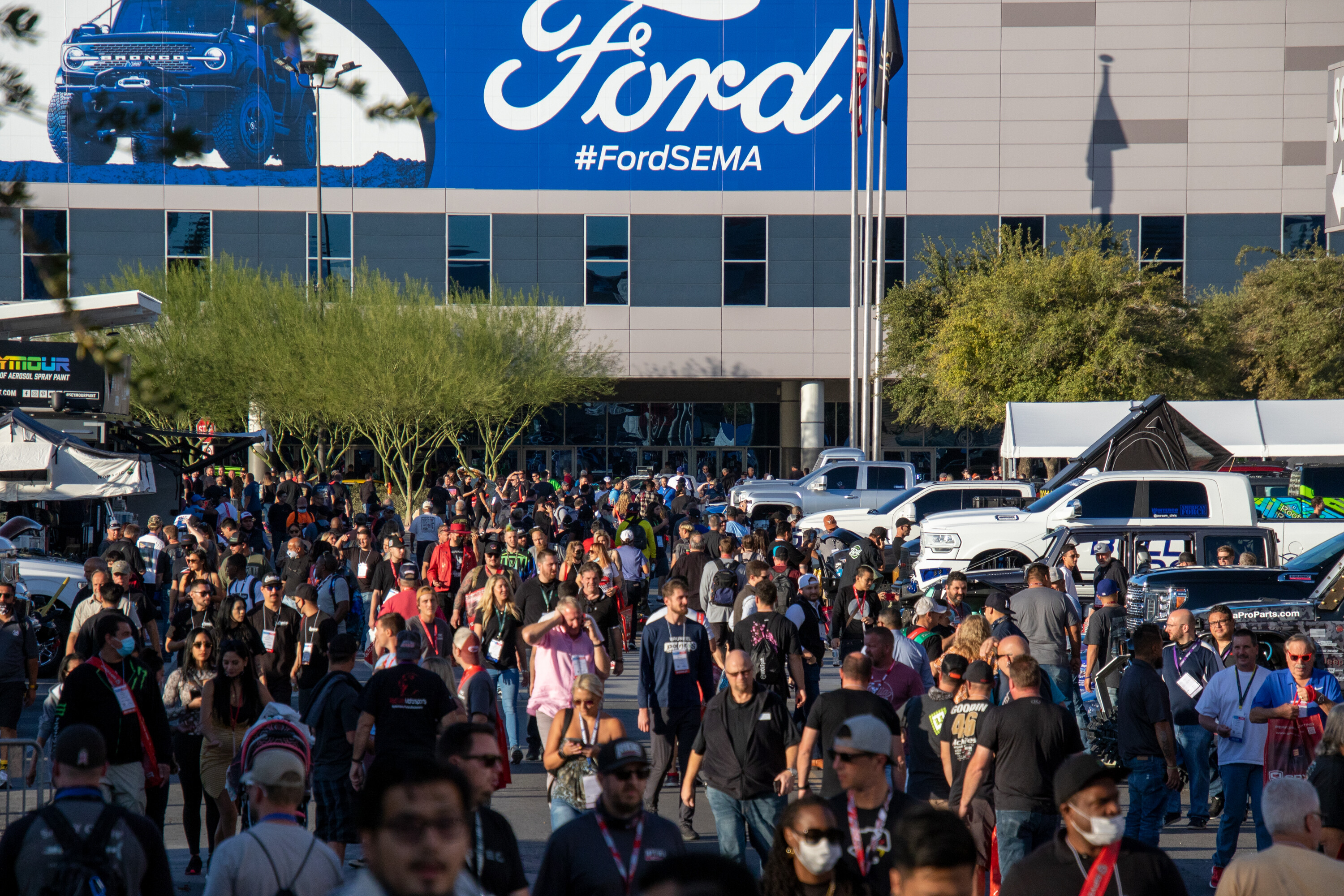
Where the 2021 event struggled was with the ongoing global travel restrictions, which limited the number of international manufacturers and new products. But we choose to look at the glass three-quarters full rather than a quarter empty, and will be focusing cool rigs, a few new OE offerings, and new trends in the off-road industry. At the end of the day, we extend big kudos to SEMA for having the guts to jump in the rink and kick COVID in the arse.
NEW PRODUCTS & TRENDS
We will admit that the ‘new products’ category was a little thin this year, but there were a few that caught our attention. Another thing we noticed was the continued North American trend toward tag-a-long caravans. The Aussies have embraced this method of travel for years, and there were at least a dozen manufacturers with new offerings.
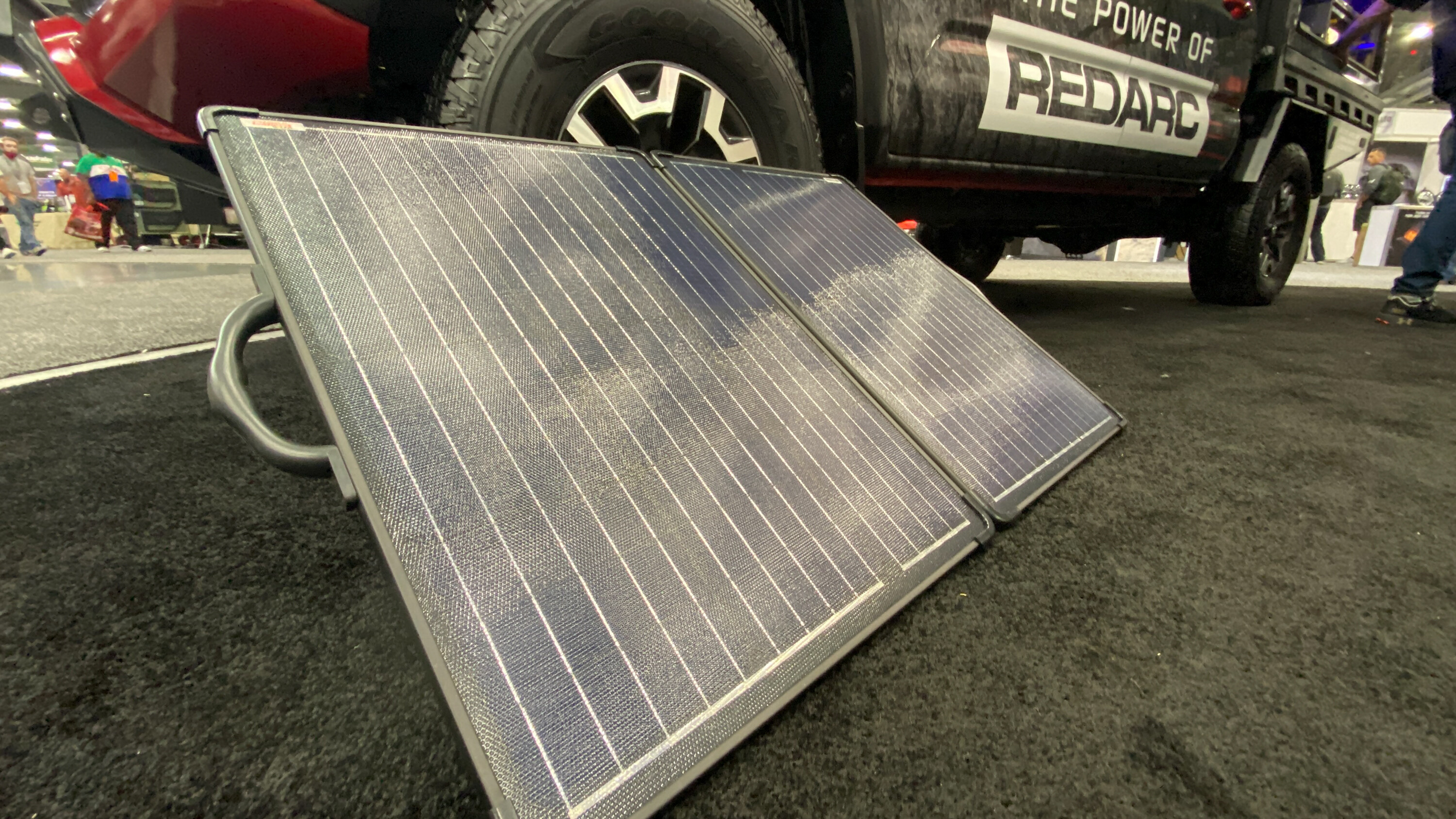
Redarc, purveyor of premium electronic products, has introduced its 120W suitcase-style solar panel. This handy power station can be transferred to any vehicle or location, and when ordered as a kit, includes a five-metre cable with Anderson connectors, and a charge regulator.
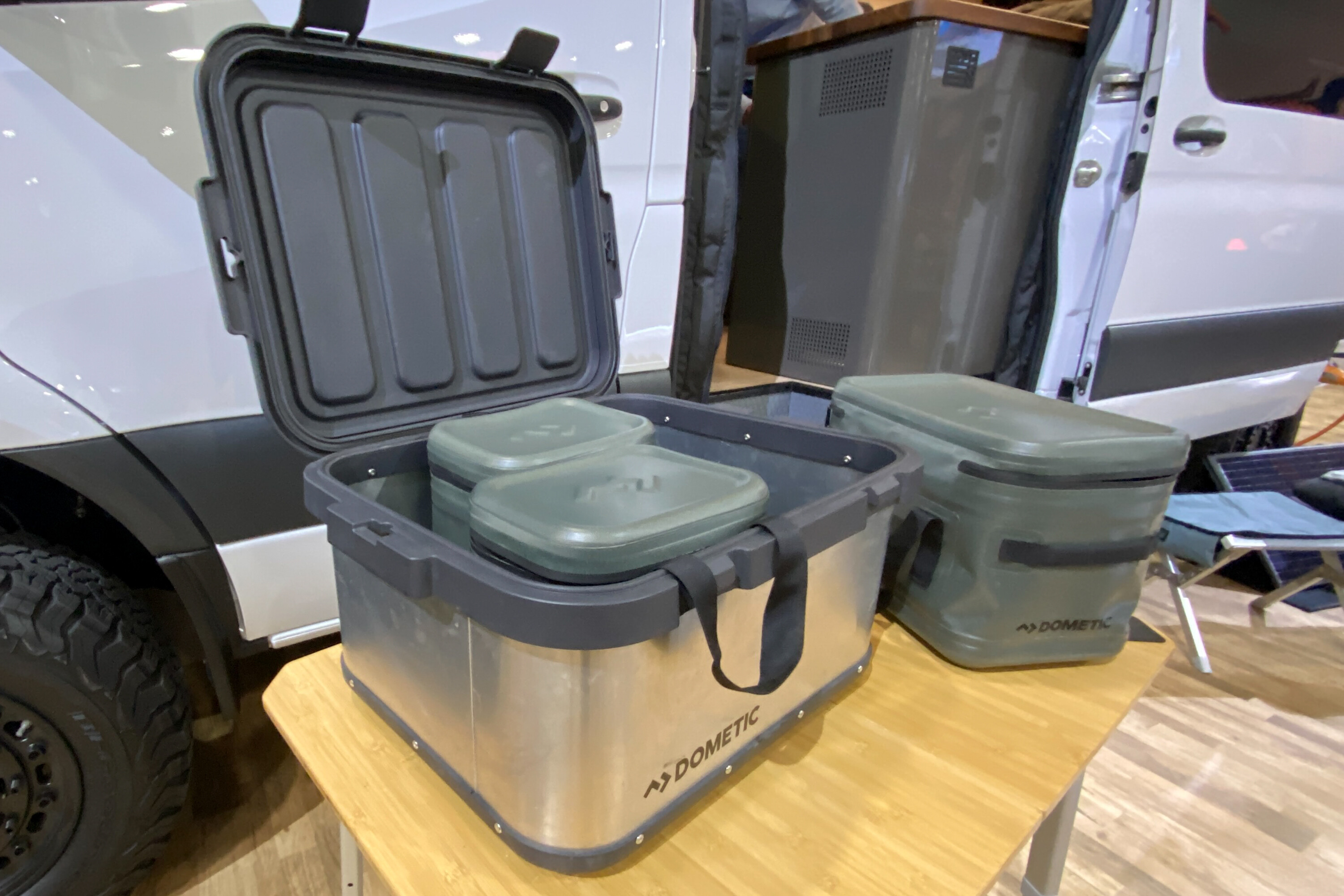
Dometic recently debuted the PAC H50 aluminum storage bins. These sturdy insulated boxes snap-closed with waterproof seals, are stackable and accept Dometic’s handy food-storage containers.
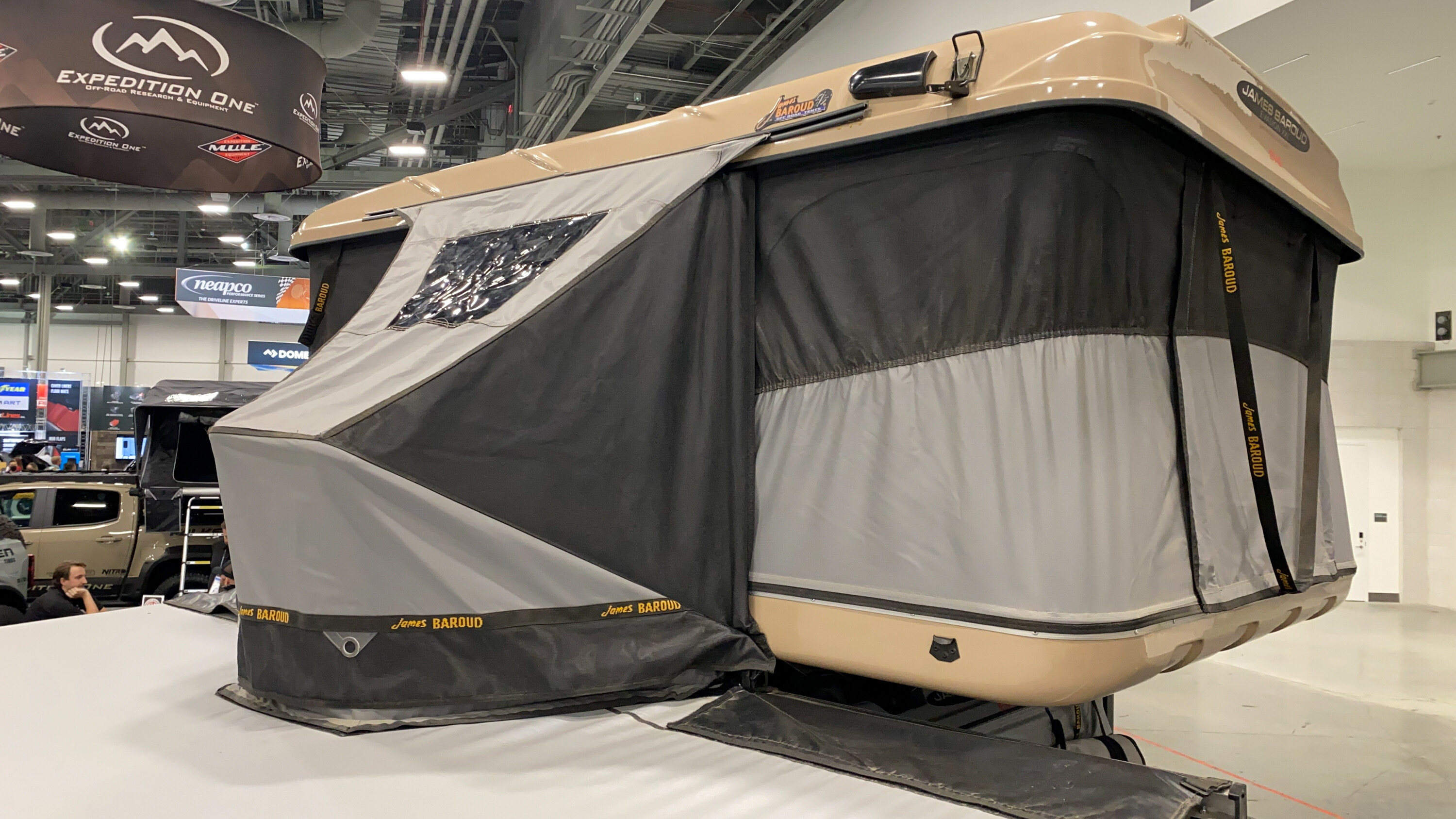
There are a lot of expandable awnings on the market, but James Baroud’s Falcon 270 includes an entry port to your rooftop tent. It can be attached to the door to provide weatherproof access from your shaded camp area to bed.
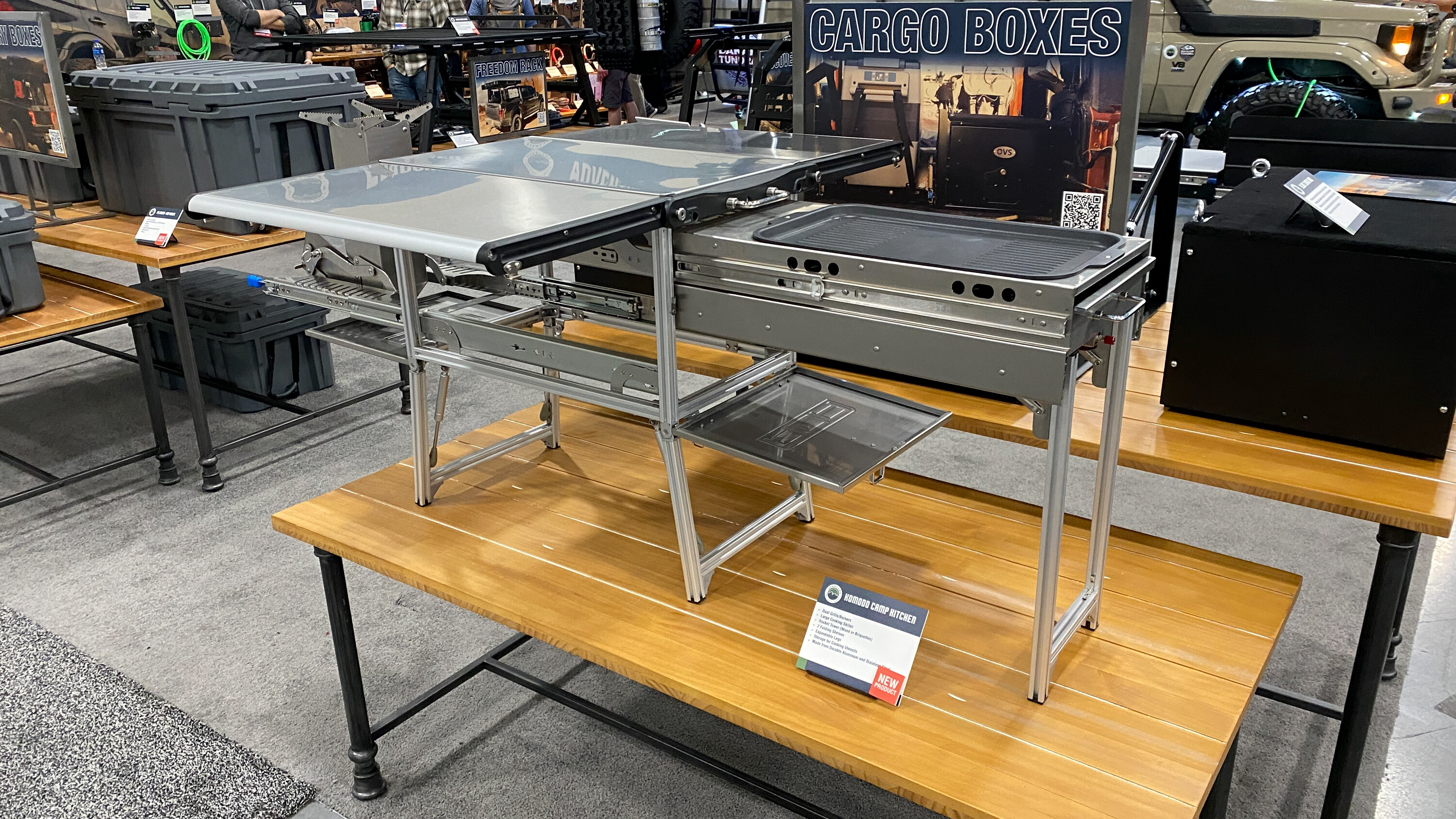
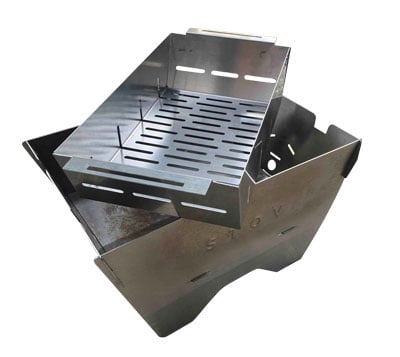
Looking to improve upon tabletop culinary tools, Overland Vehicle Systems has introduced the stainless-steel Komodo Camp Kitchen. Folding out from the mainframe is a gas grill, coal/wood burning cooker, utensil drawer and large workspace.
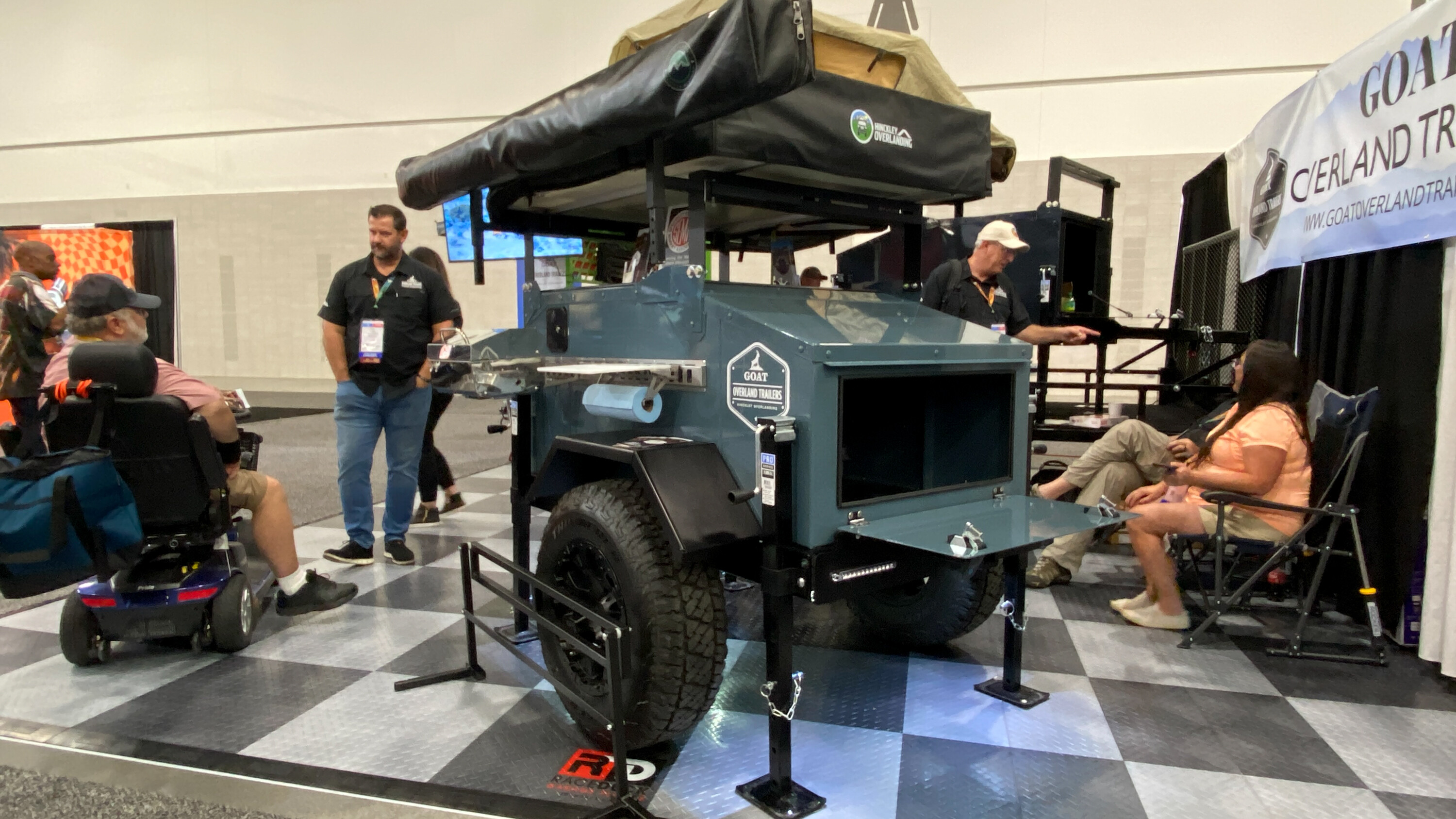
Deviating from the traditional Jeep trailer, Hinkley Overlanding is now offering an option for the UTV market. The pint-sized Goat has room for a 45-litre fridge-freezer, water and propane systems, extra gear and a rooftop tent. On the other end of the spectrum is Black Series’ HQ12 which can sleep four adults, has a stand-up shower, full galley and an overhead pop-top tent.
FROM DETROIT AND THE WORLD
The OE’s never fail to woo us with new models and/or exotic concept vehicles. Their engineers spend the year crafting wild ideas, often pushing the limits of technology or delving in to their off-road heritage. In either case, they never fail to entertain and inspire.
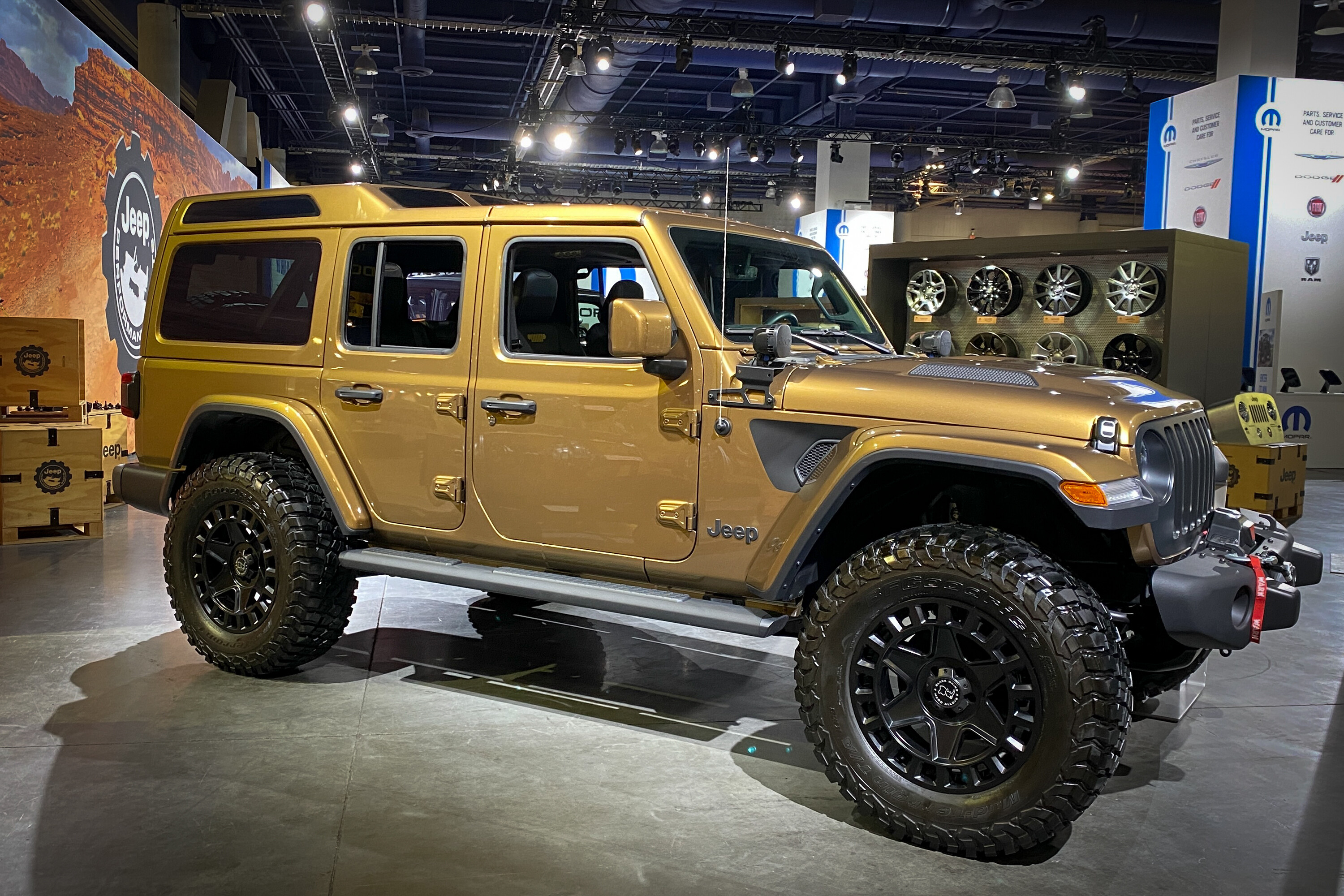
The Jeep Wrangler Overlook, which features three-row seating and custom overhead windows, looks like it should be trekking across Africa in search of big game. Down below is a JPP suspension with Fox shocks, wrap-around armour, and Black Rhino wheels with BFGoodrich KM3 Mud-Terrains tyres. Up front is a Warn winch and heaps of LED lighting.
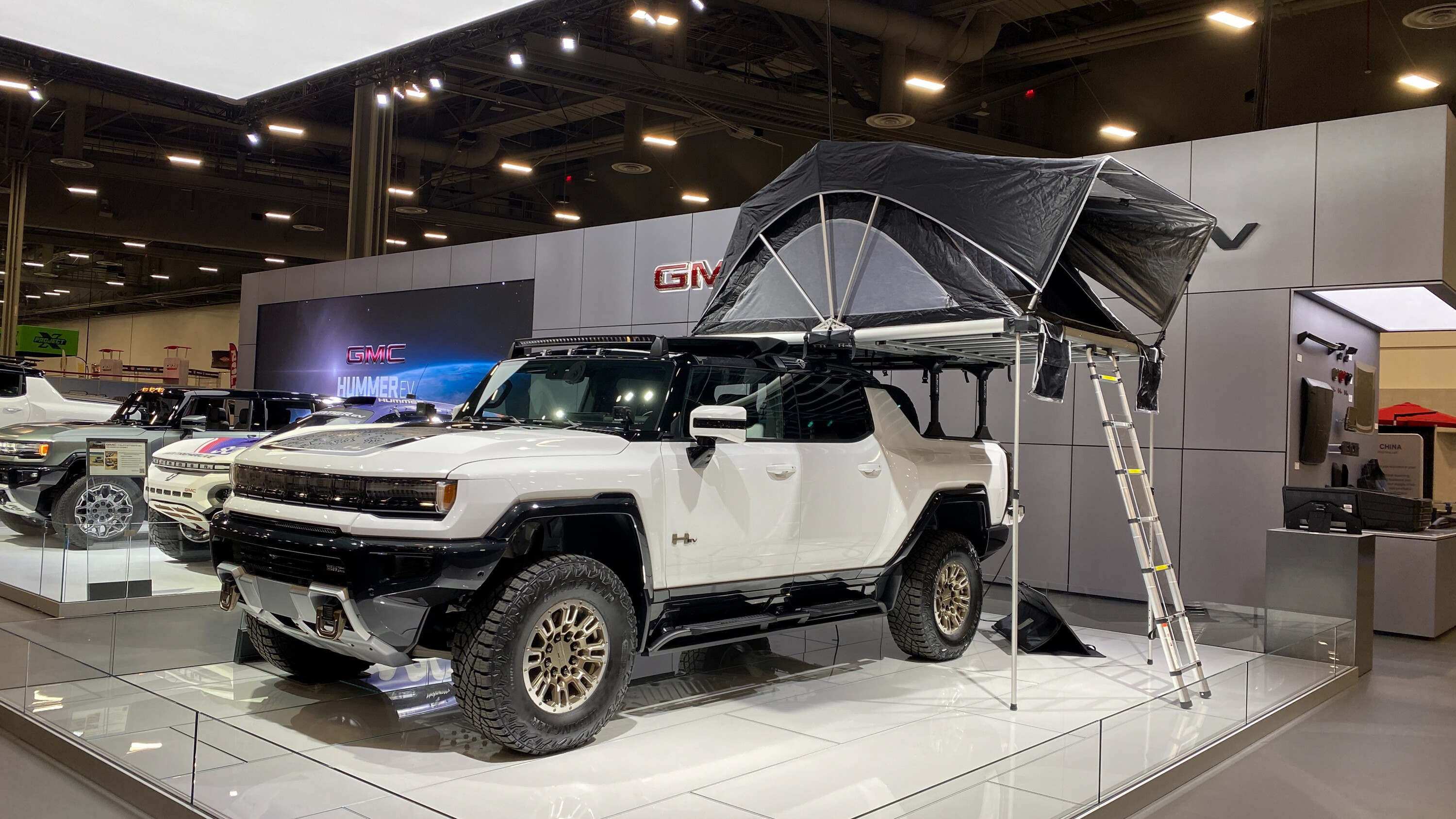
Just when the world has nearly forgotten about Hummer, the brand is making a comeback with a full EV SUV and pickup. While these stats are highly speculative, General Motors claims it will have a range of up to 560km, produces 619kW (830hp), an axle twisting 15,592Nm of wheel torque, and four-wheel steering.
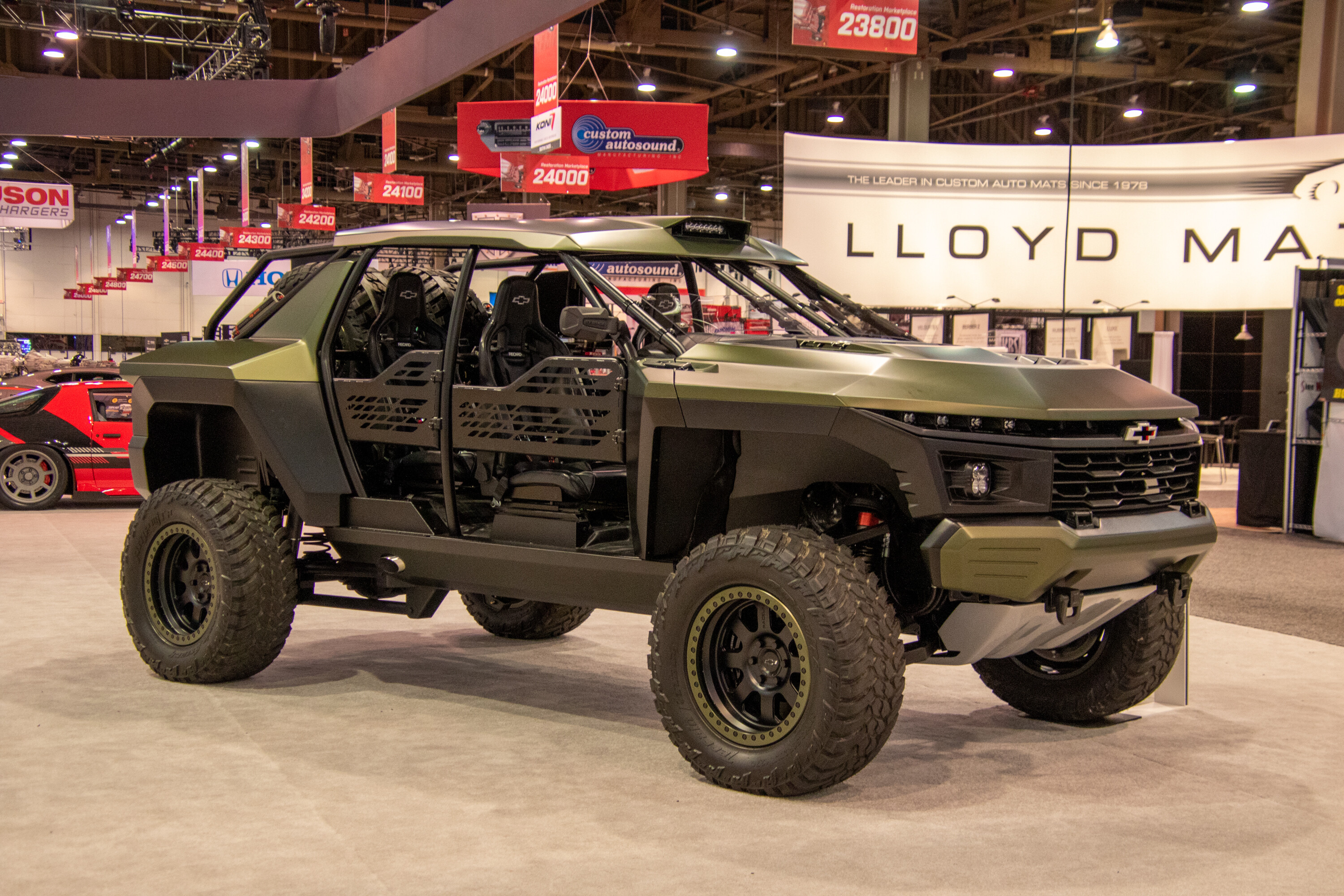
Chevy’s Beast concept leaves little to be desired in the world of wild-and-crazy. Under the bonnet is a supercharged 6.2-litre LT4 V8 (485kW-881Nm) attached to a 10-speed automatic. Down below is a 4-link suspension with 15.5 inches of travel, remote reservoir shocks, beadlock wheels and AMP mud-terrain tyres. Baja Designs LEDs light the way, while Recaro seats and four-point harnesses keep occupants secure.
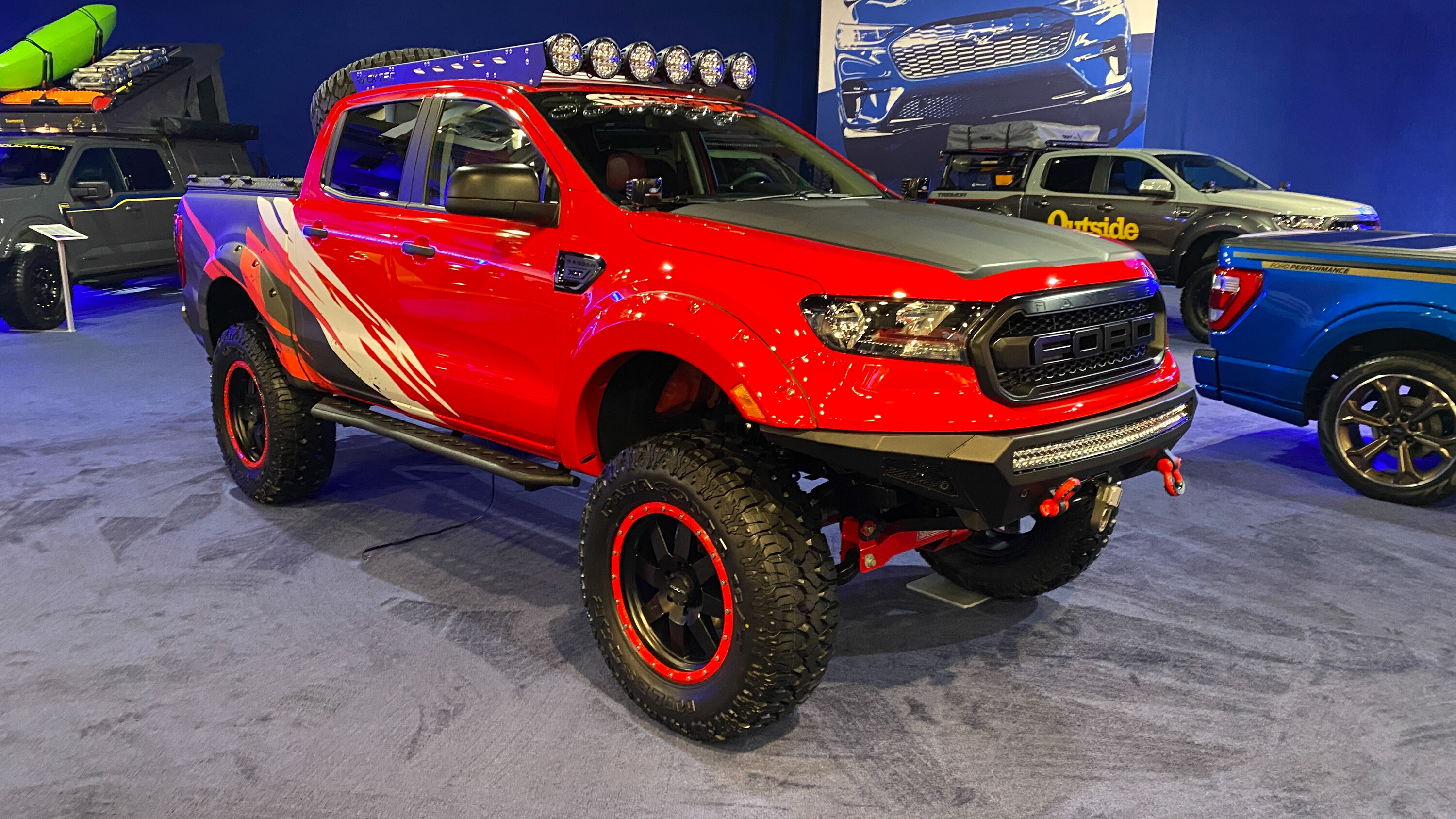
Ford took a different approach with its XLT Supercrew FX4 Ranger. With a focus on ultimate reliability, they left the 2.3-litre EcoBoost mill and 10-speed automatic alone, but worked with Superlift on a six-inch suspension that could tackle the toughest terrain. Milestar Patagonia MTs on Raceline bead locks provide traction, Rigid LEDs ride on a Racktec Phantom roof rack, and up front is a Warn winch and Factor55 thimble.
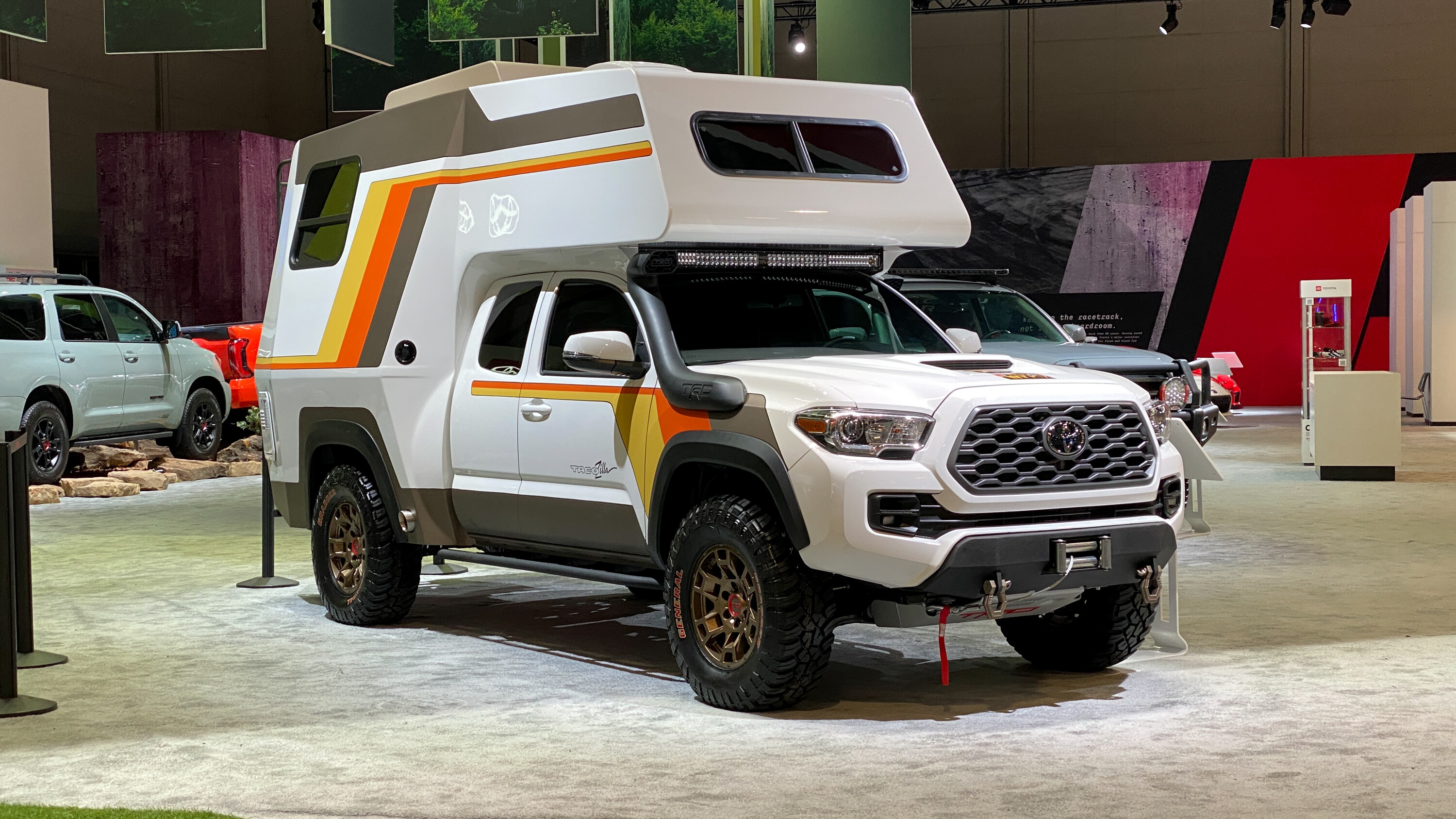
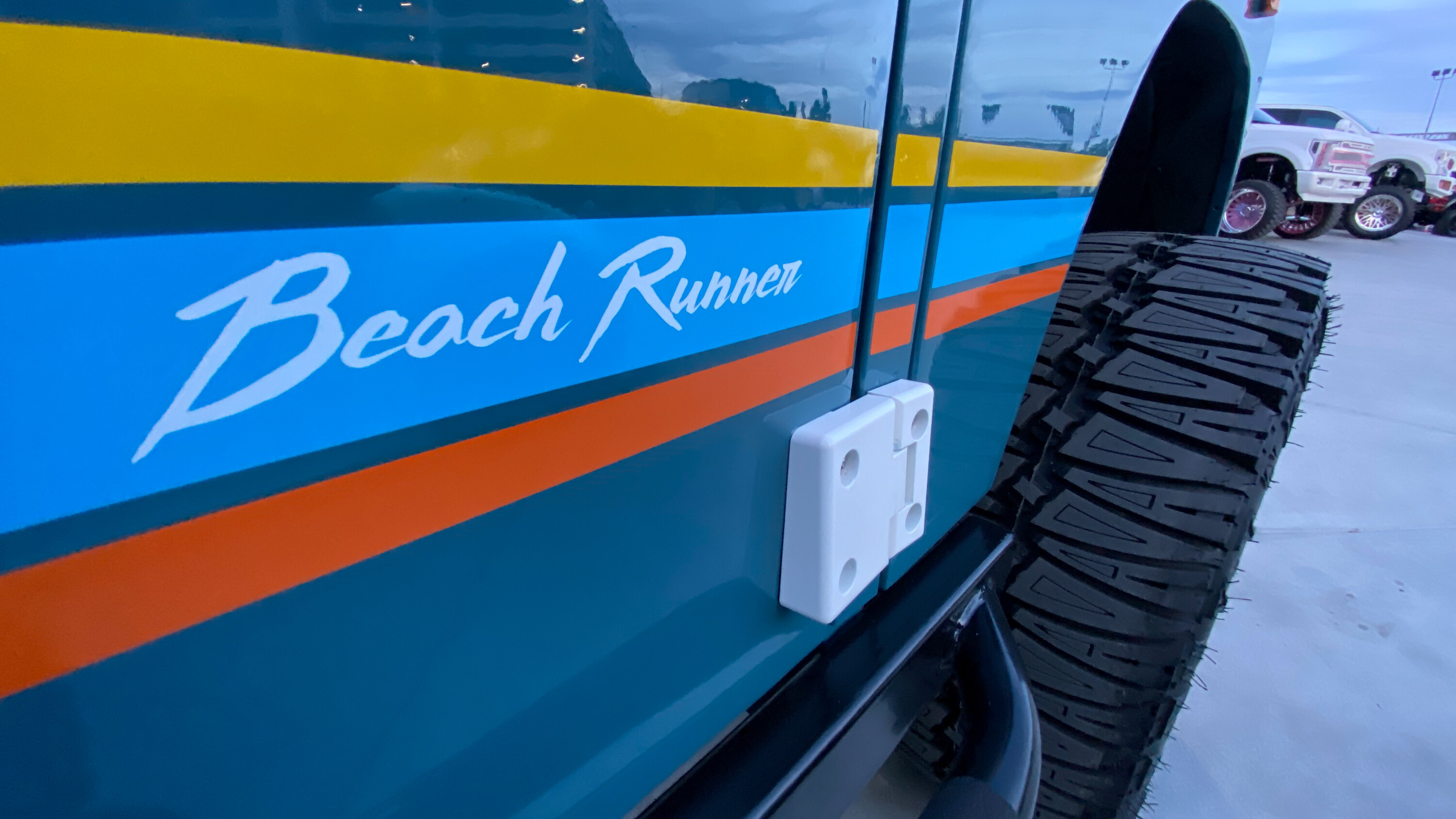
Heading down the overland path, Toyota featured its Tacoma-based Tacozilla, a micro house on wheels. The colour scheme hails from the 1980’s SR5, a supersized version of the classic Hilux Sunraider. It includes a bathroom, kitchen, refrigerator, dual Optima Yellow Top batteries, heavy-duty TRD suspension, and General Tire Gabber X3 tyres.
BEST OF SHOW
One of the main attractions at SEMA is the technology, or lack thereof, that goes in to the display vehicles. While many begin blending in to a collage of repetition, we’ve selected a few that stood out.
WATCH THE VIDS IN THE GALLERY
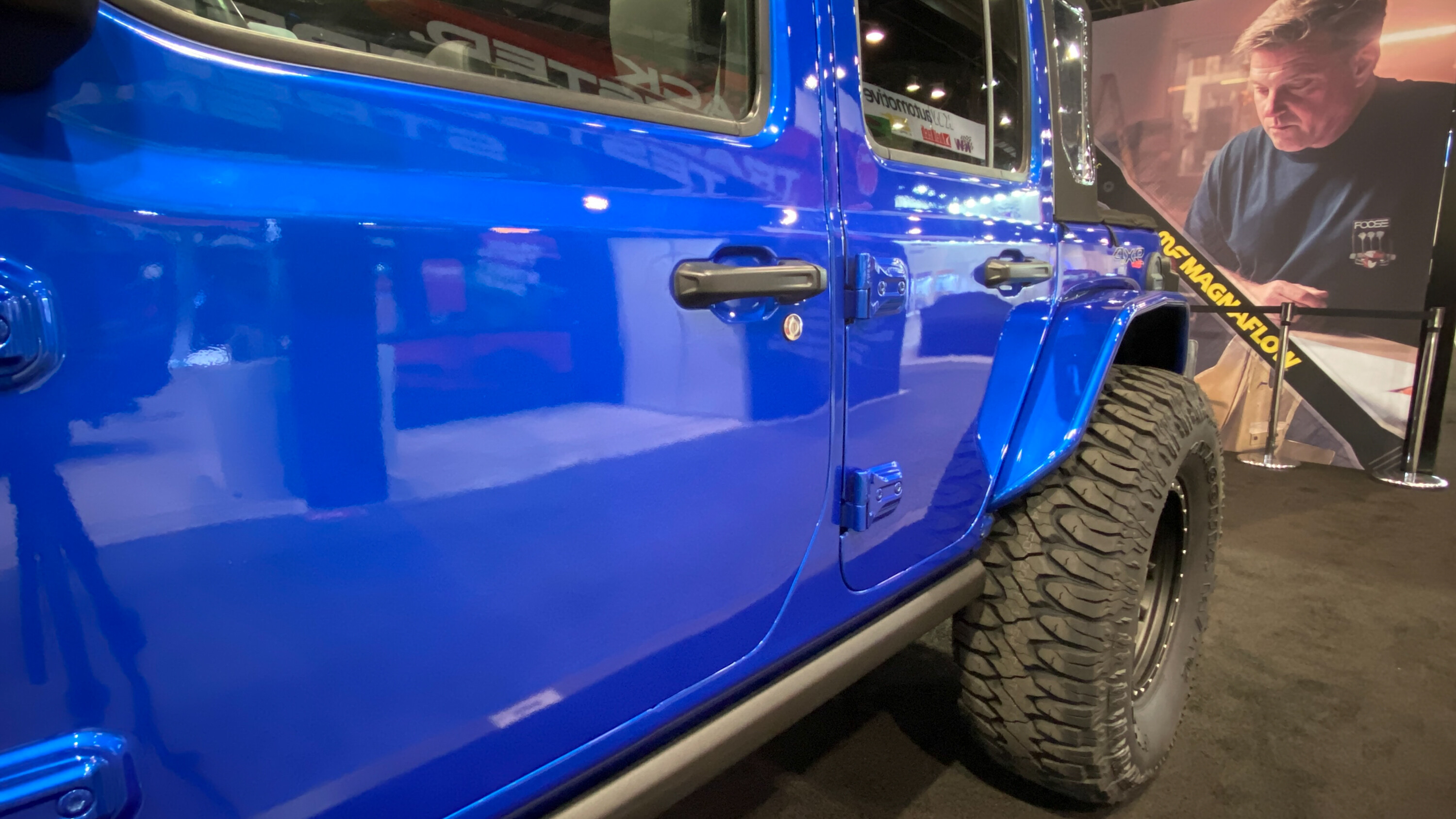
We’ll start with Bestop’s Electric Blue Wrangler. Built by Tony Carvallo, responsible for many of Jeep’s Moab concepts, it has all the normal bells and whistles (Warn winch, Metal Cloak suspension, Method Wheels, etc.), but what caught our eye was the pulsating paint job. Wrapping the vehicle with thin layers of conductive material over the paint, then covering it with blue-tone clearcoat, when electricity is introduced the material illuminates intermittently. Fascinating!
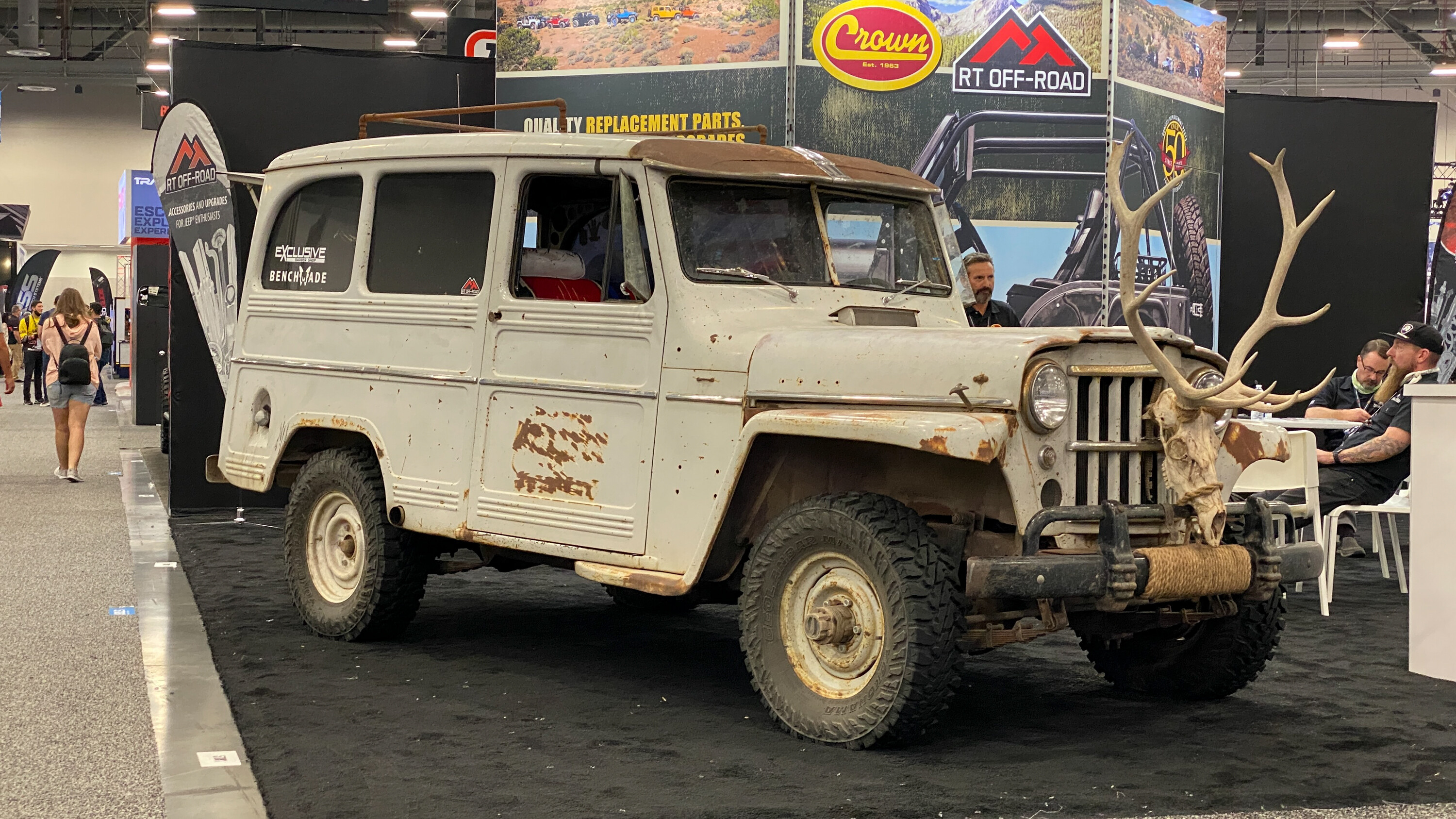
We always look forward to seeing what Crown Automotive has on display. This year it was a MaxBuilt Willys Wagon. Rather than a full resto-mod, it is a backwoods daily driver replete with original paint, patina and rusted out floorboards. Key features: an oil-guzzling Buick V6 and an elk’s head protecting the grille.
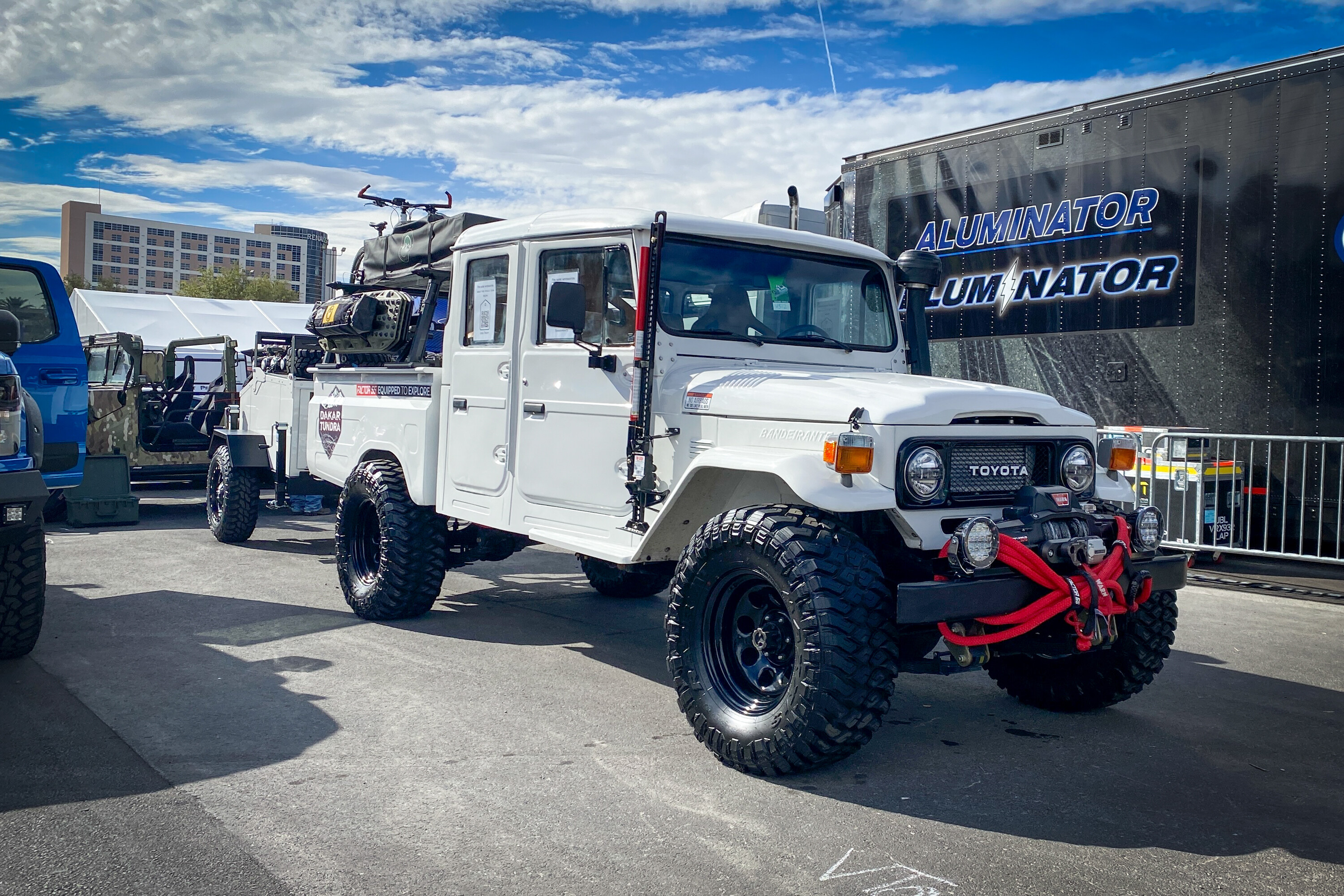
One of our favorites was this Brazilian made Toyota Bandeirante OJ55 crew cab pickup. Fitted with a 3.8-litre Mercedes turbo diesel, OVS rack and rooftop tent, Old Man Emu suspension, Maxxis MT tyres, and camp trailer in tow.
This sweet Land Rover D90 from Royal Overland was one of a select group of 4x4s in SEMA’s Battle of the Builders competition. Riding on Interco TrXus mud-terrain tyres and Roadkill bead locks, it sports a custom roll cage, a Brazilian hardwood interior, recessed ice chest out back, and an Engo recovery winch with a Factor55 thimble. This stunning example of Rover craftsmanship received our vote for the win!
WILD AND CRAZY
We never fail to be bemused by the creativity behind some of the wild and crazy SEMA builds. Fringing between function and fantasy, a few this year included a Jeep Gladiator swamp buggy, an AMC Gremlin, Wrangler JT and Badlands Bronco on cat tracks, and a Chia Pet Ford Bronco wrapped in a garden of bean sprouts.
WORST OF SHOW
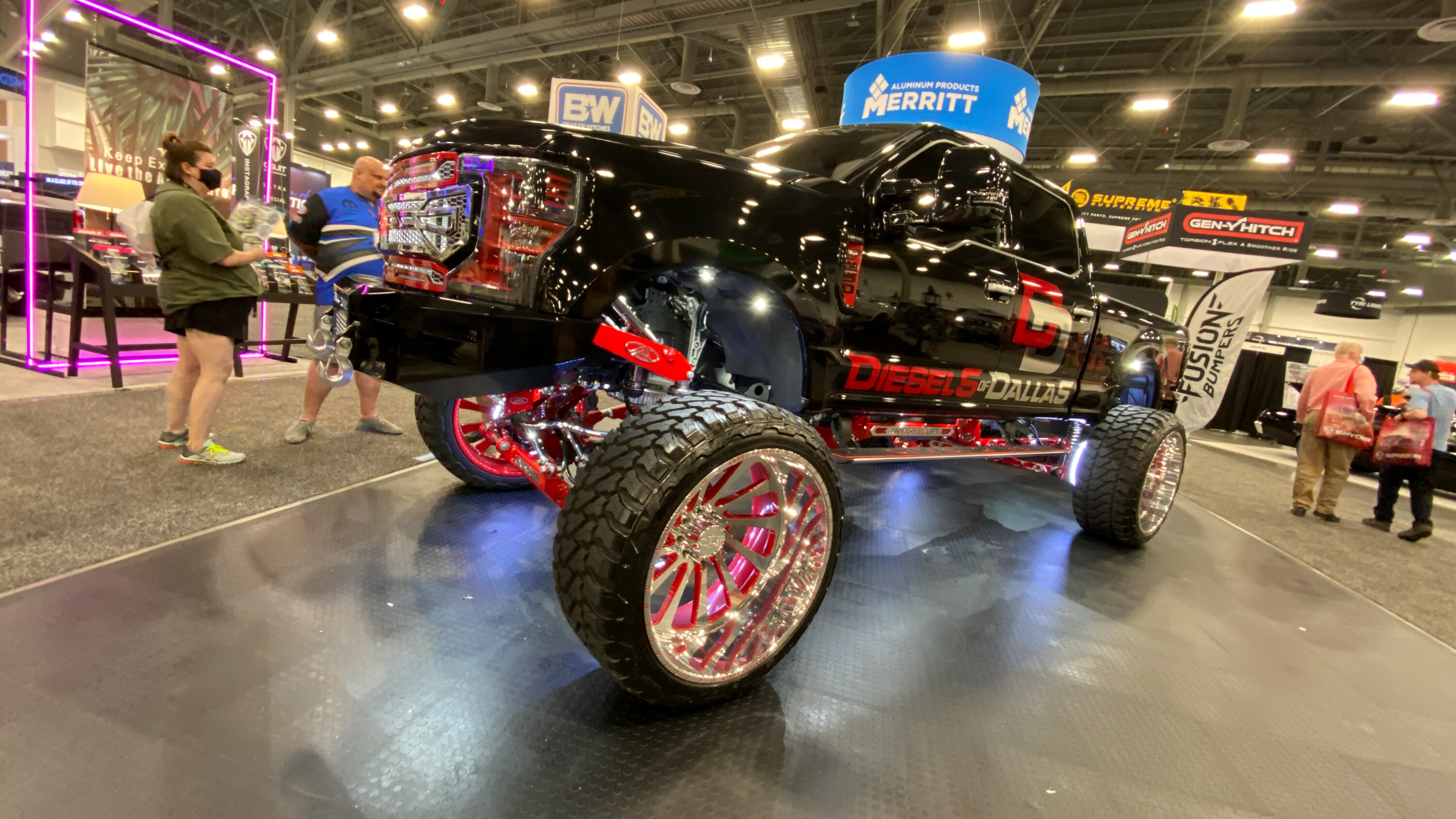
As usual, we can’t talk about SEMA without highlighting a few of the most dysfunctional builds of the year. For some reason, dozens of manufacturers spend obscene amounts of money and time destroying what would otherwise be a useful vehicle. Some folks must like these unicorns, but most are as useful as a 100kg anchor on an aeroplane, and we can’t help but to poke fun at them and ask the question … why?
GENERAL SEMA
Ford occupies much of the public display area, and this year was all about the Bronco. Attendees waited in line for hours to slip behind the wheel and climb a mountain, splash through a water hole, or test the articulation of Ford’s new Bronco.
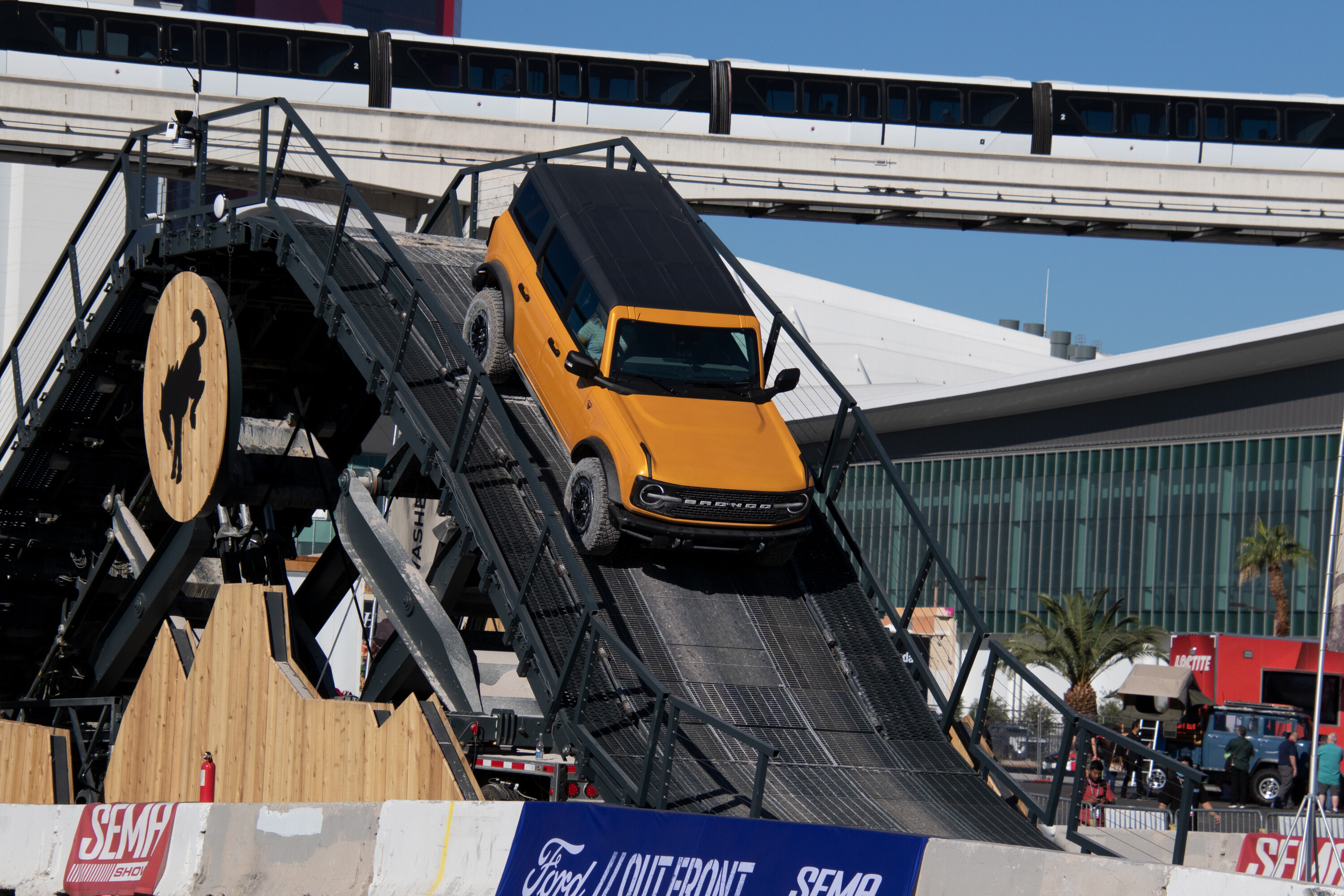
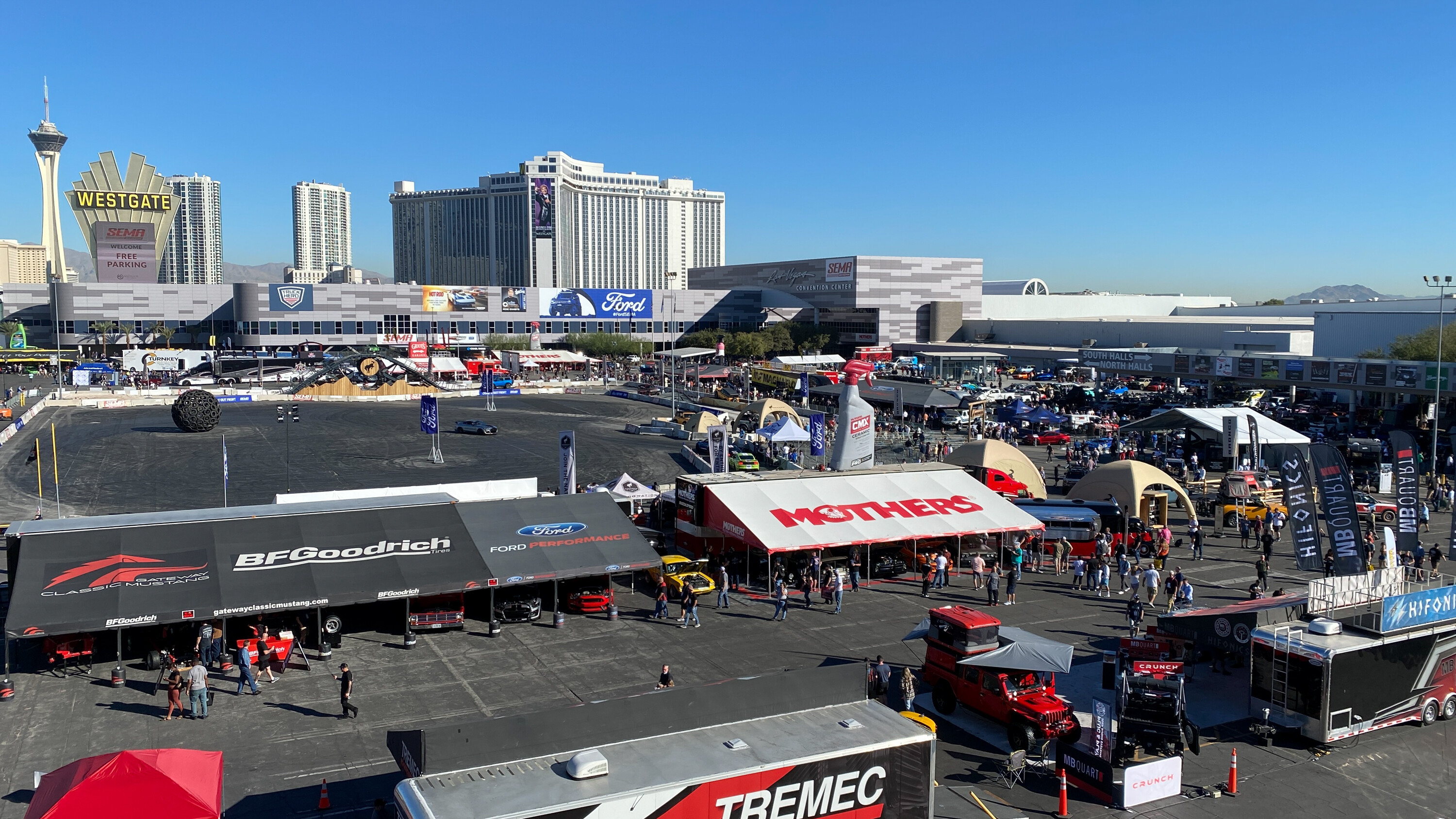
Although attendance was down this year, more than 100,000 manufacturers, buyers, and media registered for the show. And this does not include tens of thousands of spectators that flooded in to the public area.
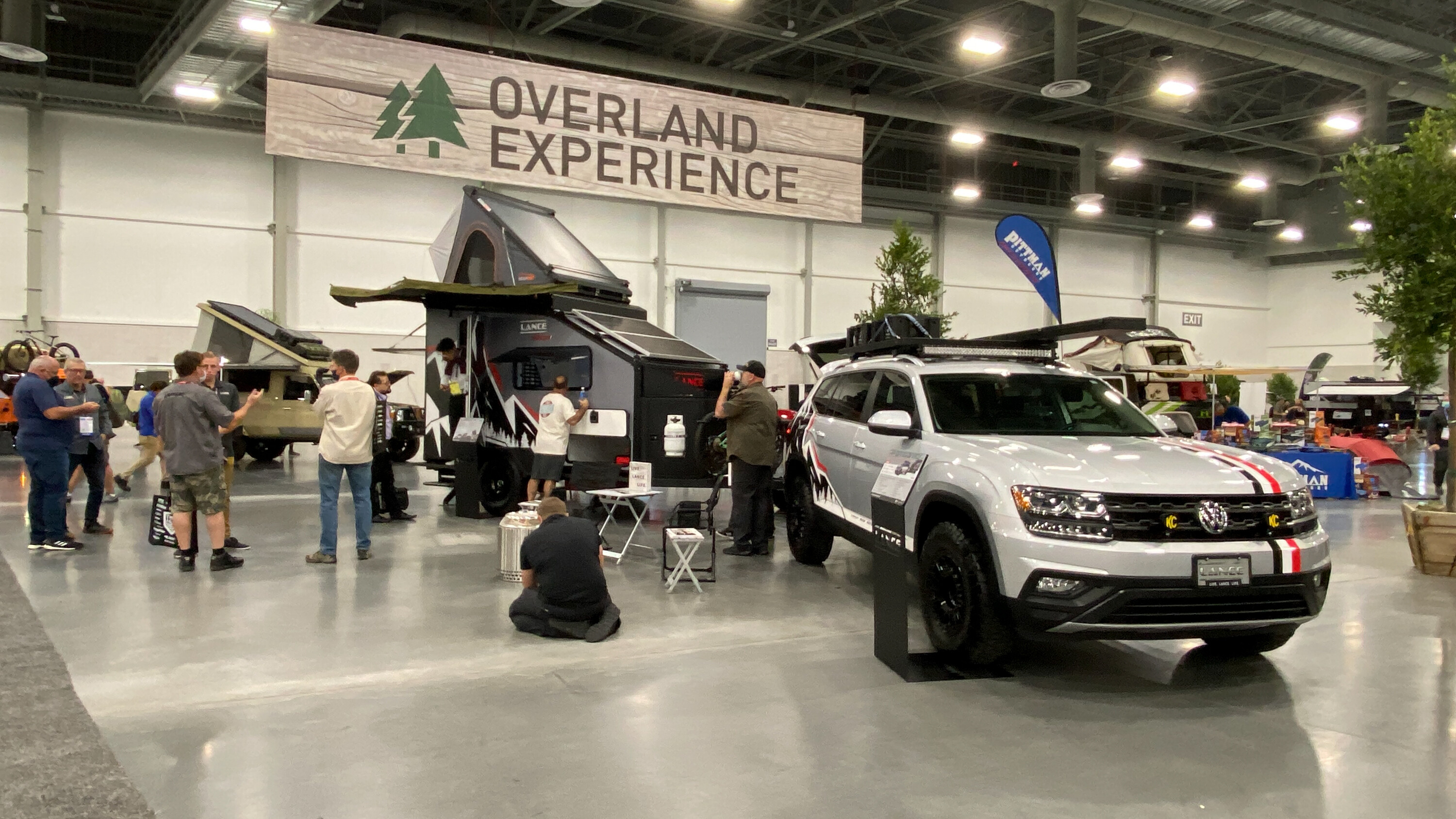
The new 1.4-million sq ft West Hall, dedicated to off-road and truck vendors, included the Overland Experience area which featured seminars and workshops on the future of the genre.
CLOSING THOUGHTS
Wrapping up the week, we departed Las Vegas with a sense of excitement about the future. After nearly two years of being sequestered, borders are opening, manufacturers are stepping on the gas, and the off-road world is ready to deploy. For more than 50 years, SEMA has been the annual who’s who gathering of the automotive world. The fact that they were willing to put their financial neck on the chopping block and help the industry and kick COVID to the curb is evidence that they are in it for the long haul.
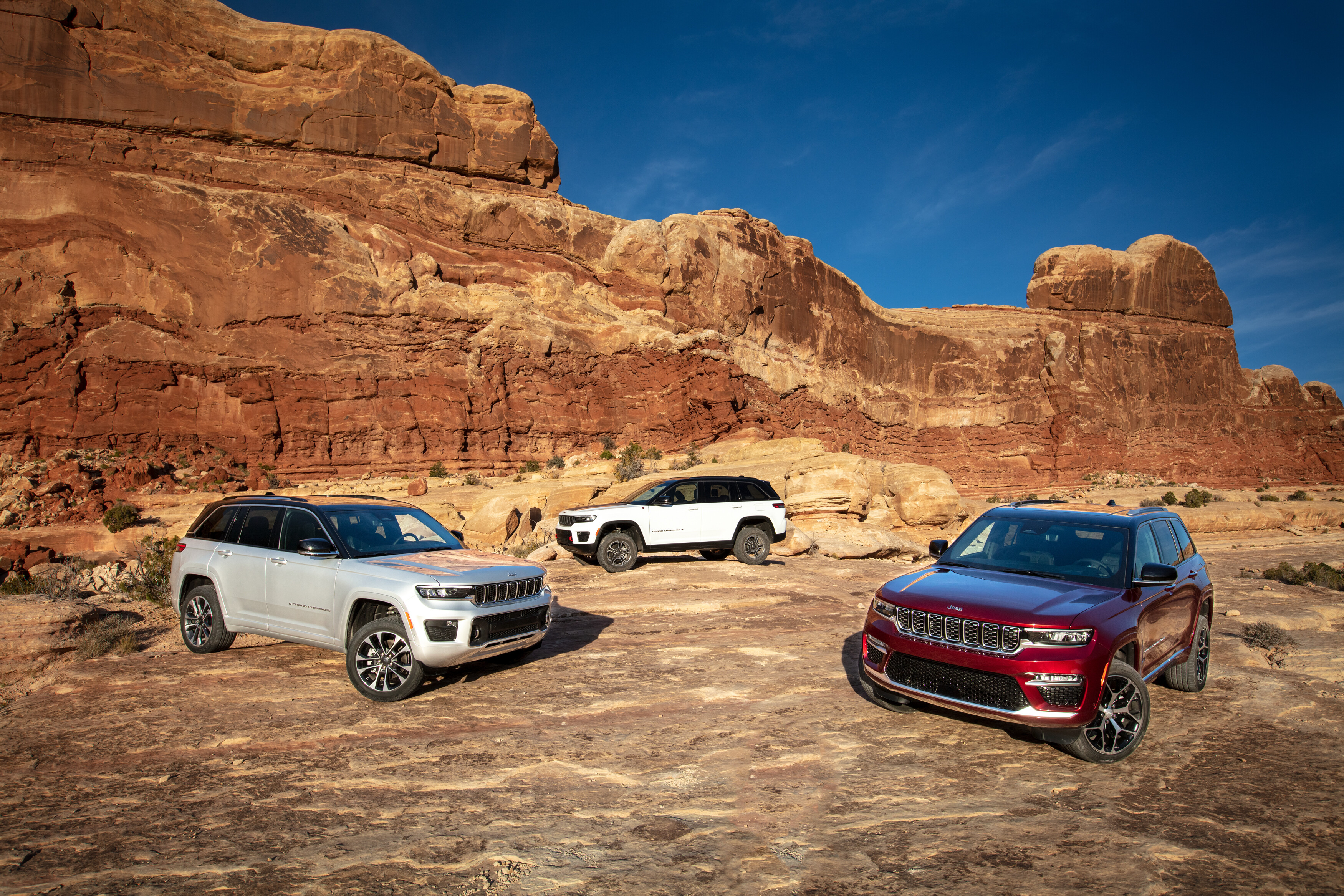
There is no better place to test a new four-wheel drive than Moab, Utah. The region’s combination of stunning scenery, diverse terrain and trails ranging from mild to wild renders it a natural platform to evaluate on-road manners and limits of capability.
This summer we drove the new Grand Cherokee L (the larger three-row seating variant) at the Chelsey Proving Grounds near Detroit, but when Jeep presented the opportunity to test the Trailhawk on Moab’s slickrock, we decided to re-visit this fifth generation of the brand’s now-iconic luxury wagon.Before we dive into the details, we’ll start by stating that the Gen V Grand is a completely new platform. While it hails from its predecessors’ DNA, everything from the suspension and chassis, to interior and bodylines, have been brought up to speed with the latest technology and manufacturing processes.Over the past decade, the auto industry has experienced a shift toward utilising high-strength steel and aluminium components. It simply makes sense, as the combination results in platforms that are lighter, more rigid, stronger, and more fuel efficient. In the Grand’s case, a mere 27 per cent is now comprised of conventional mild steel.
UPDATE, May 12 2022: The new Jeep Grand Cherokee L is now in Australia, and we’ve driven it. Read and watch our review at the link below.
The story to here
CHASSIS & DRIVETRAIN
It is no surprise that the two powerplant options are the Pentastar 3.6-litre V6 and 5.7-litre Hemi V8. These two mills have proven to be both reliable and powerful during their 10-plus years in existence. Tuned specifically for the Grand, the six-banger produces 218kW and 352Nm, while the HEMI generates a neck-snapping 266kW and 528Nm. Both employ the TorqueFlite 8HP70 8-speed automatic, but things change as we move aft.The base model incorporates the single-speed Quadra-Trac I transfer case, which means no low range. The Quadra-Trac II brings low range back, but move up to the Quadra-Drive II and you have an electronically controlled transfer case that distributes torque fore and aft precisely as needed based on conditions. You also get an electronically controlled rear limited slip differential.
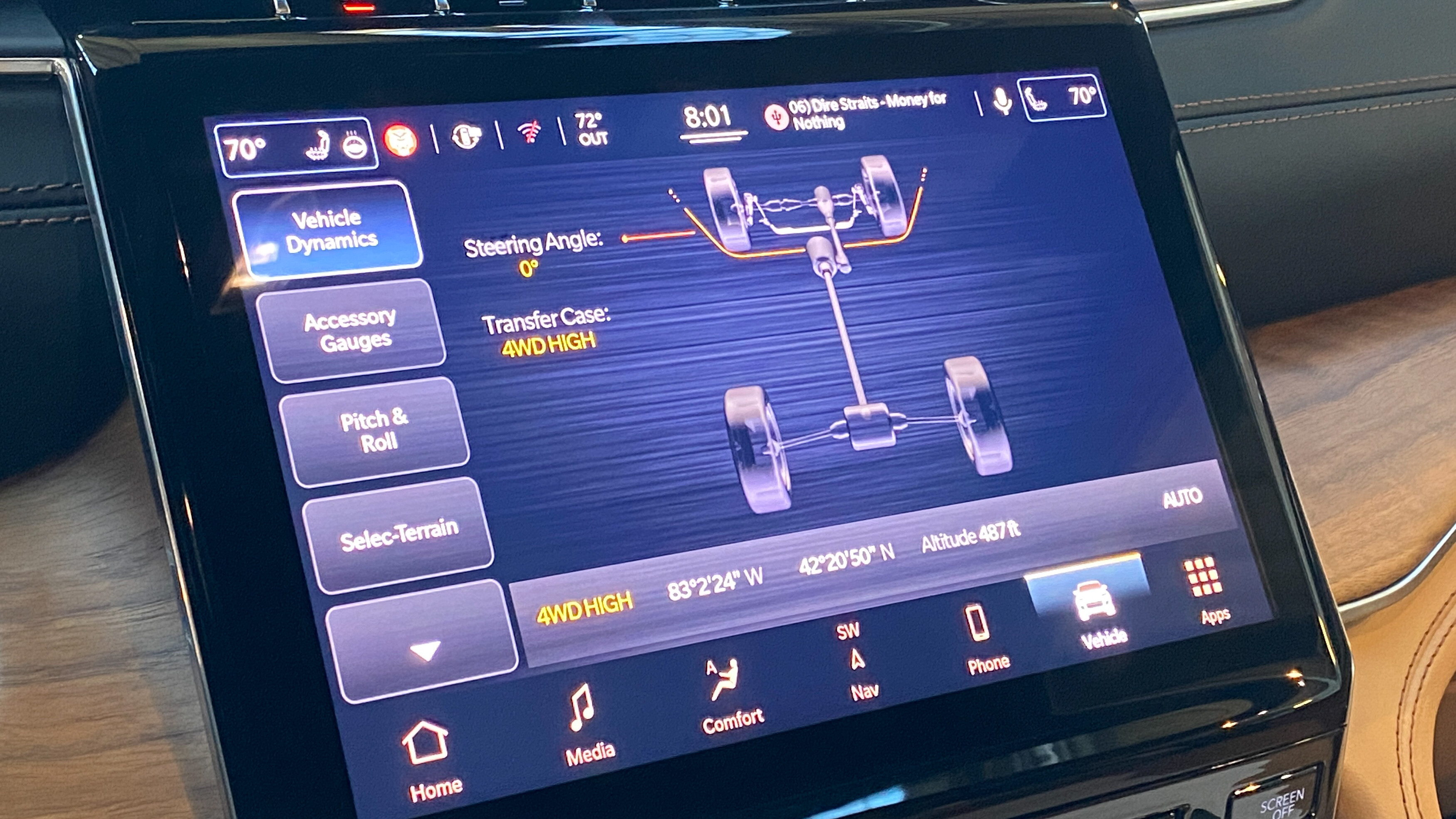
The Grand Cherokee’s four-corner independent suspension is here to stay, so hold off on a firestorm of expletives. The reality is that it works exceptionally well for its intended purpose, and has been improved upon with a rear five-link setup. The front has also undergone a redesign, featuring what Jeep calls a “virtual ball joint.” It allows the tyre’s contact patch to remain flat to the road under almost any steering condition. The result is a consistently larger contact patch, better handling, and reduced tyre wear.
INTERIOR ABODE & TECH
One will barely recognise the Grand Cherokee’s interior if comparing to its granddaddy, the ZJ. Summit Reserve is the premium model, and features natural elements such as fine leather and walnut hardwood trim throughout. The passenger-side LCD screen is new, allowing the co-pilot to manage dozens of functions including second row seat LCD screen, navigation, and HVAC. The audio system, a 950-watt monster by McIntosh, includes an array of 19 speakers sprinkled throughout the cabin. In short, it is sublime and loud enough to annoy your neighbours at a stop light.Glancing across the dash from the heated, 16-way adjustable driver’s seat is an exercise in optical opulence. The utilitarian analogue gauges of lore are now sophisticated LCD screens with Apple CarPlay. The multi-zone HVAC system can be operated from any seat in the house, and knobs and buttons are now machined aluminium eloquently recessed in hardwood panels. Did I mention the back massager? Its pulsating fingers will put you to sleep.
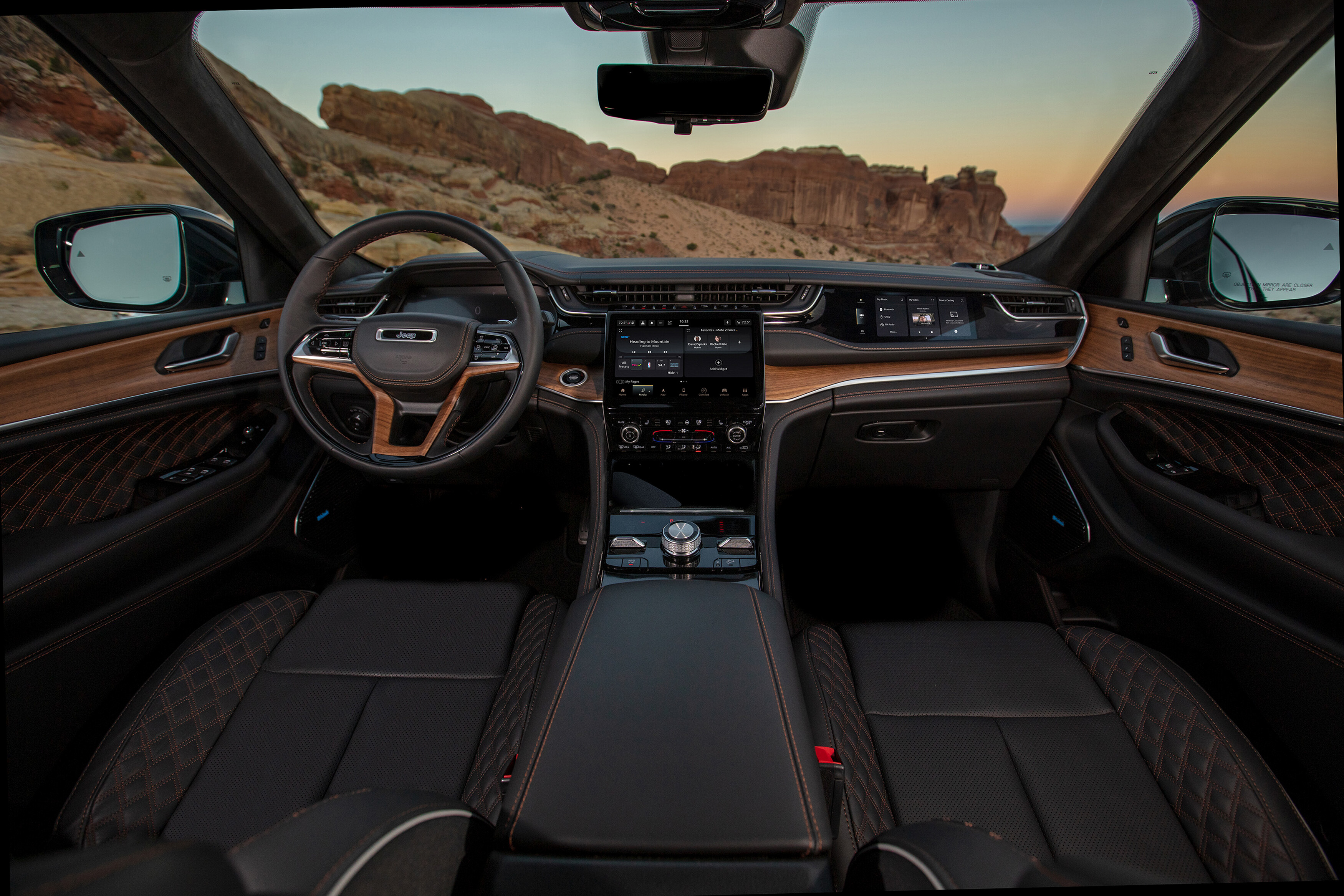
By now we are well-acquainted with Drowsy Driver Alert, Active Cruise Control, and Lane Change Assist, but new technologies include Pedestrian Detection radar, an infrared night vision camera, heads-up display, and a host of other safety features. A goal with the new Grand was to have most functions accessible without taking your hands off the wheel. Re-designed controls on the steering wheel allow you to toggle through engine vitals, media and vehicle pages, navigation, and IR camera settings with your thumb.The re-design also included increasing driver visibility, enlarging interior cabin space, and lowering door access thresholds. The vehicle is about three inches longer than its predecessor. While some of this was required for government-mandated safety requirements, much of it was added to enhance passenger leg room and allow for full-size adults to comfortably ride in the back seat.
ON THE ROAD
Our on-road drive took us to the 2,700-metre heights of the La Sal Mountains through red rock canyons and serpentine alpine roads. The fully-electric power steering was initially a concern to me, expecting it to be a bit unruly and lack the positive feedback found in traditional hydraulic systems. I couldn’t have been more wrong. Steering is precise, controllable and predictable.
The tyres reacted with less than five degrees input at the steering wheel, return to centre was spot-on, and feedback felt very natural … like a well-tuned hydraulic system. Roll cycle (when the vehicle/suspension settles after an emergency lane change) was minimal, a credit to the electronic semi-active damping system.
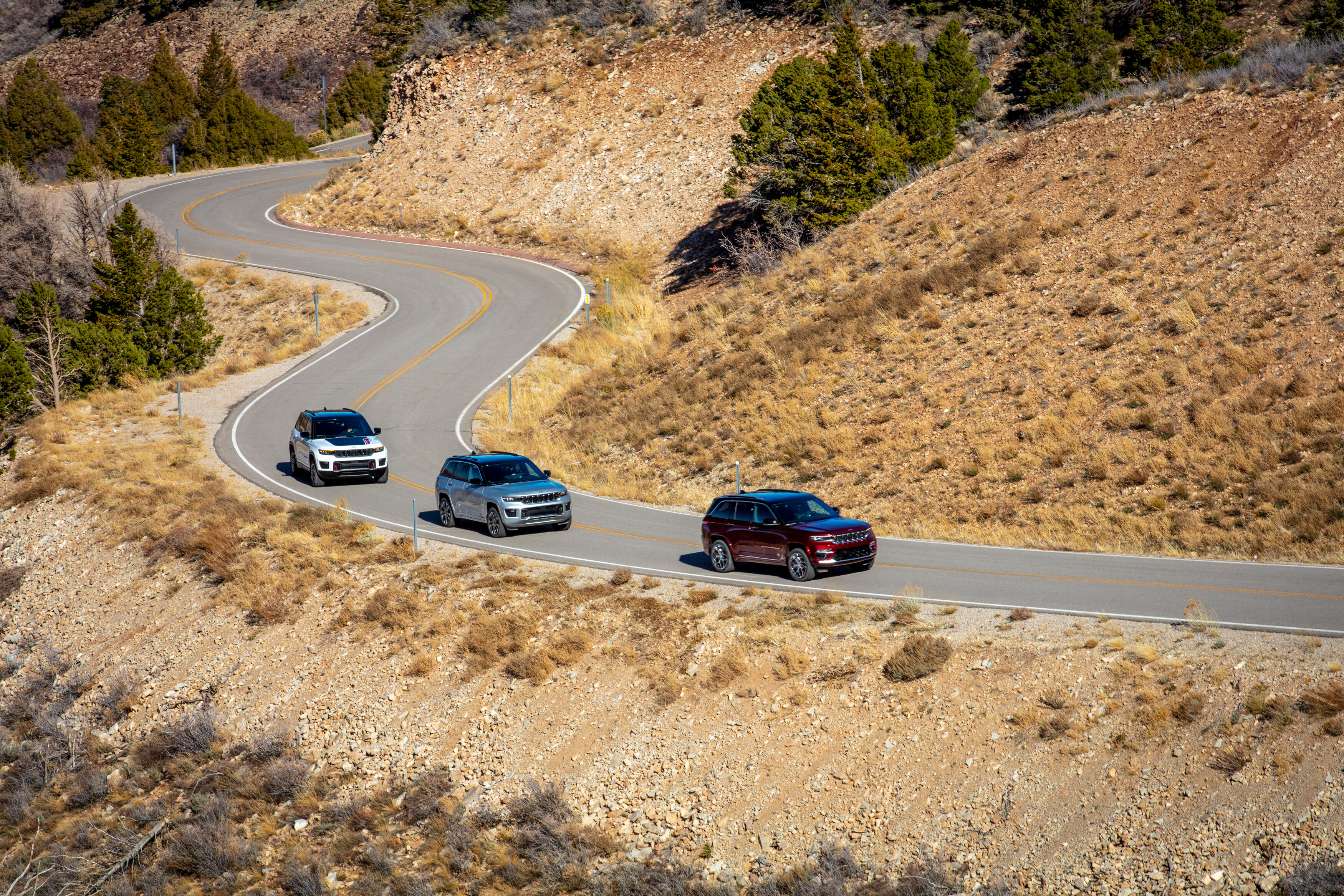
On smooth sections or bouncing over potholes, NVH (noise, vibration, & harshness) were more than acceptable – much quieter than anything I own. Some of this might be credited to the electronic front drive line disconnect, which automatically engages or disengages the axle as needed. All of the aforementioned systems did what they should, and the new Grand was simply a pleasure to drive on the road.
ON THE TRAIL
The proof of the pudding with any vehicle honoured with sporting a seven-slot grill is how it performs on the trail. The latter half of the day was on a technical rock crawling loop in a Trailhawk equipped with a Pentastar V6 and Quadra-Drive system.
With the suspension set on the highest position and in ‘rock’ mode, we had 28.7cm of ground clearance under the chassis. However, the route required more to keep the tyres on the ground. This is where the rear electronic limited slip, a well-tuned traction control system, and active Quadra-Drive transfer case came into play, keeping the vehicle moving smoothly over the larger obstacles.
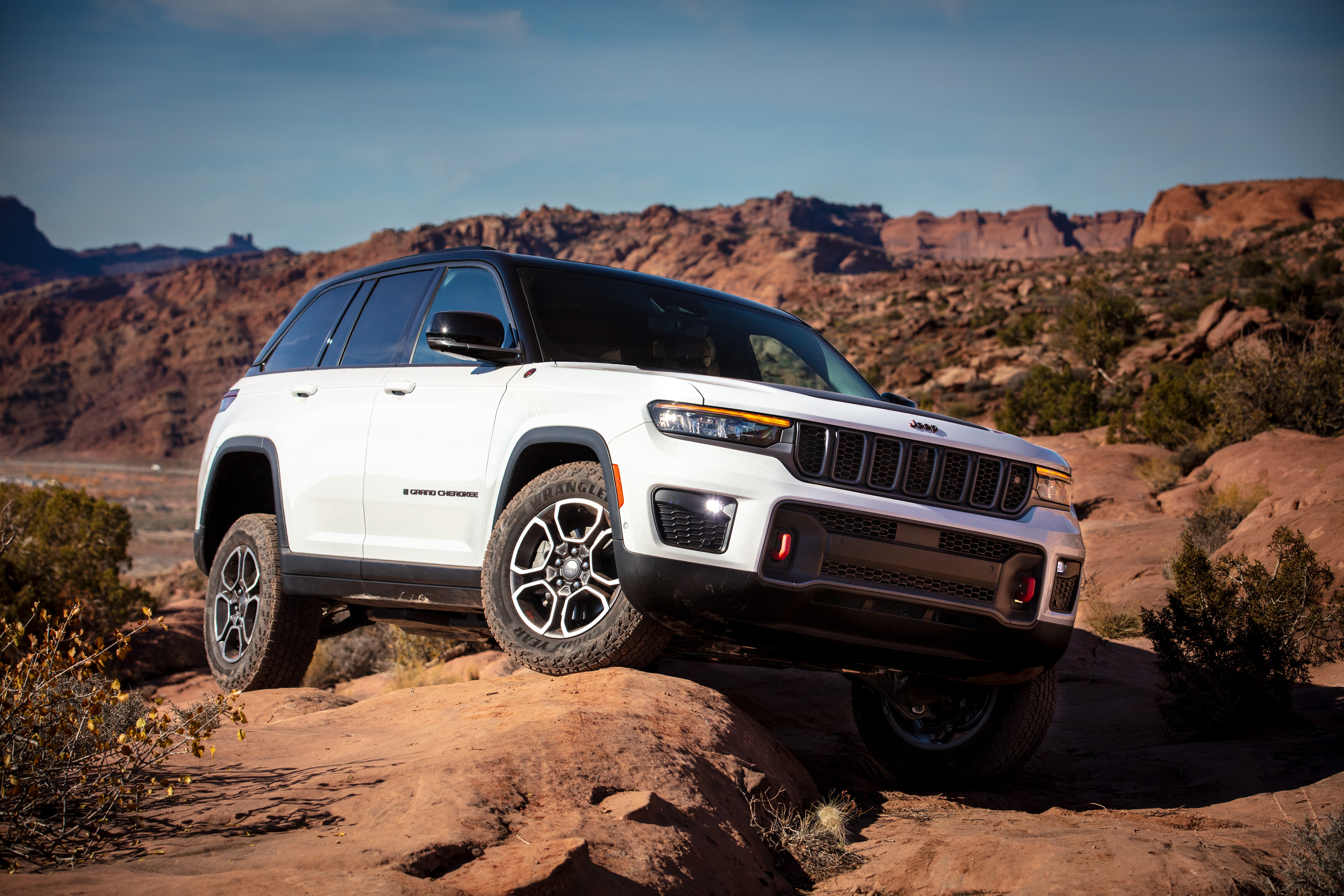
Air suspensions have traditionally been fairly rigid, but enhancements in the Quadra-Lift system have alleviated much of the jarring experienced in previous models. When the dust settled, the Trailhawk tackled this trail – which 99.9% of the public would never consider attempting – with the bravado fitting of a Jeep. We didn’t find any creeks or rivers to play in, but the Grand will also safely handle a 61cm water fording.
DEPARTMENT OF COMPLAINTS
While there is not a lot to complain about, if I had to pick one thing that drives me nuts it is the larger brake discs and calipers. Believe me when I say they work phenomenally well, but that extra diameter requires an 18-inch minimum wheel size (Summit Reserve is 21-inch). Sure, all this means reduced rolling resistance, better fuel economy, safer stopping distances, and blah blah blah.
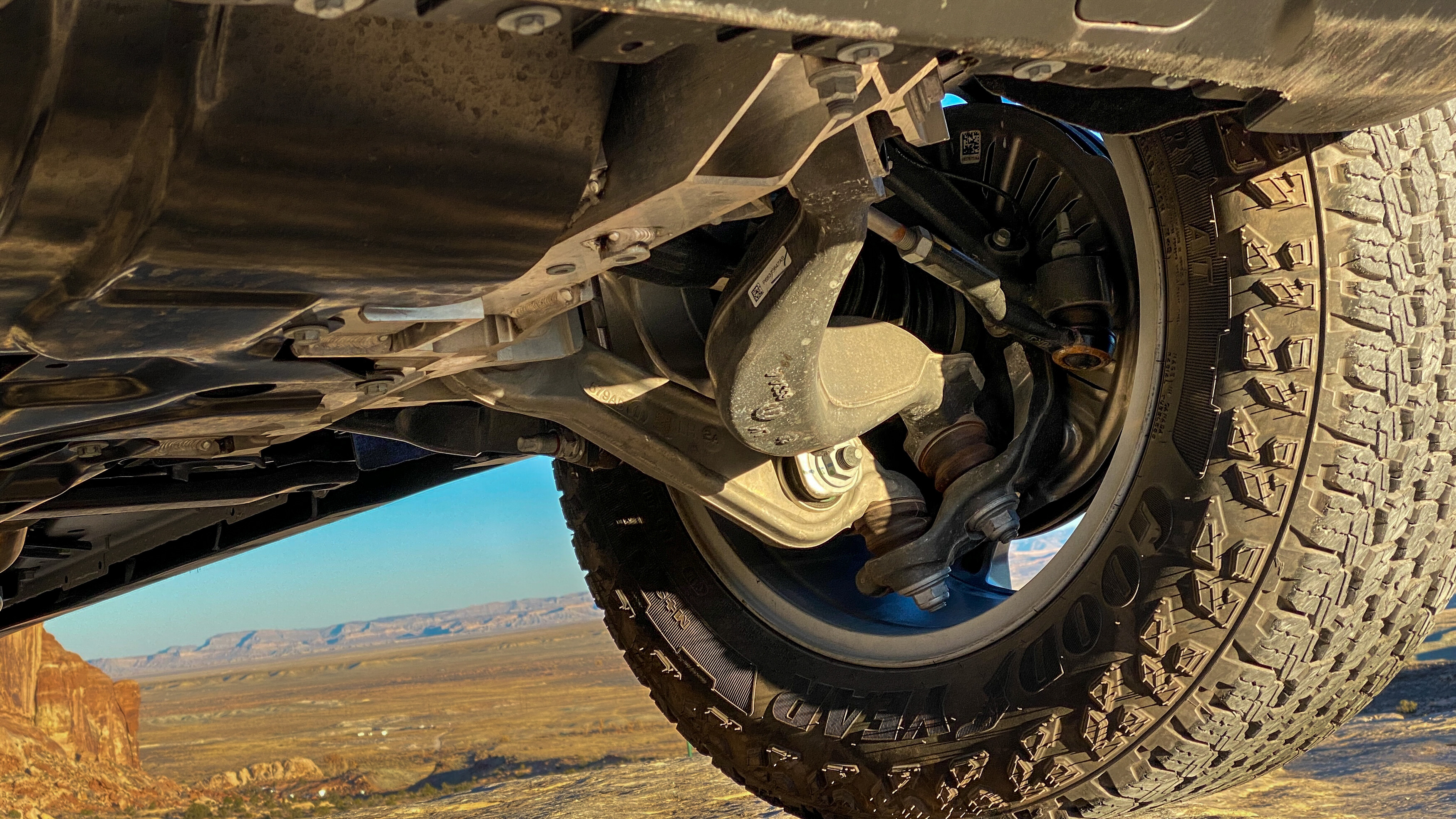
But it also leaves us with nary a sidewall and limited opportunity to reduce tyre pressure when desired. While most of the purchasing public has no idea why one would let air “out” of a tyre, for those of you in the know, you understand my grievance. Fine, call me an old curmudgeon.
ON THE HORIZON
As the Grand Cherokee line-up moves into 2022, the Summit, Overland, and Trailhawk will be joined by a 4xe hybrid version. While they did have a 4xe on display, it is still in the developmental stages and we were not able to drive it.
We did perform a good crawl-around and can say that is aesthetically similar, save the 4xe blue colour scheme. We are told it will have an estimated 440-mile range (708km), 25 of that in full-electric mode, and will get an estimated 57 miles per gallon (24km/L)
As for a full EV Grand, we didn’t get a firm answer but feel as the brand electrifies its fleet a zero-emission Grand Cherokee is in our future.
2022 GRAND CHEROKEE L SPECS
| Engine | 3.6L V6 / 5.7L V8 |
| Output | 218kW, 352Nm / 266kW, 528Nm |
| Transmission | TorqueFlite 8HP70 8-speed automatic |
| Transfer case | Quadra-Trac I, II, and Quadra-Drive II |
| Suspension | Independent, active air lift, twin-tube gas shocks |
| Brakes | Disc, 354mm front / 350mm rear |
| Wheels | Alloy, 18- to 21-inch |
| Tyres | Michelin, Pirelli, Bridgestone all-season |
| Kerb weight | 2052kg / 2428kg |
| Max towing | 3265kg (5.7-litre Trailhawk) |
| Fuel | 87L |
| Ground clearance | 287mm, Off-road II mode |
| Fording depth | 610mm |
The Hummer is returning to its roots, with General Motors announcing it will create a prototype of the model for military use.
The president of GM’s defence arm, Steve duMont, told CNBC the company had plans to create an electric Light Reconnaissance Vehicle (eLRV) based on the new Hummer EV for evaluation by the US Army.
“The Army’s very excited about the fact that we’re investing in this,” duMont told CNBC.
“Our Hummer EV is what we’re going to base that vehicle on.”
The move is a role reversal for the Hummer, as the first-generation Hummer H1 was a civilian version of a US military vehicle: the Humvee.
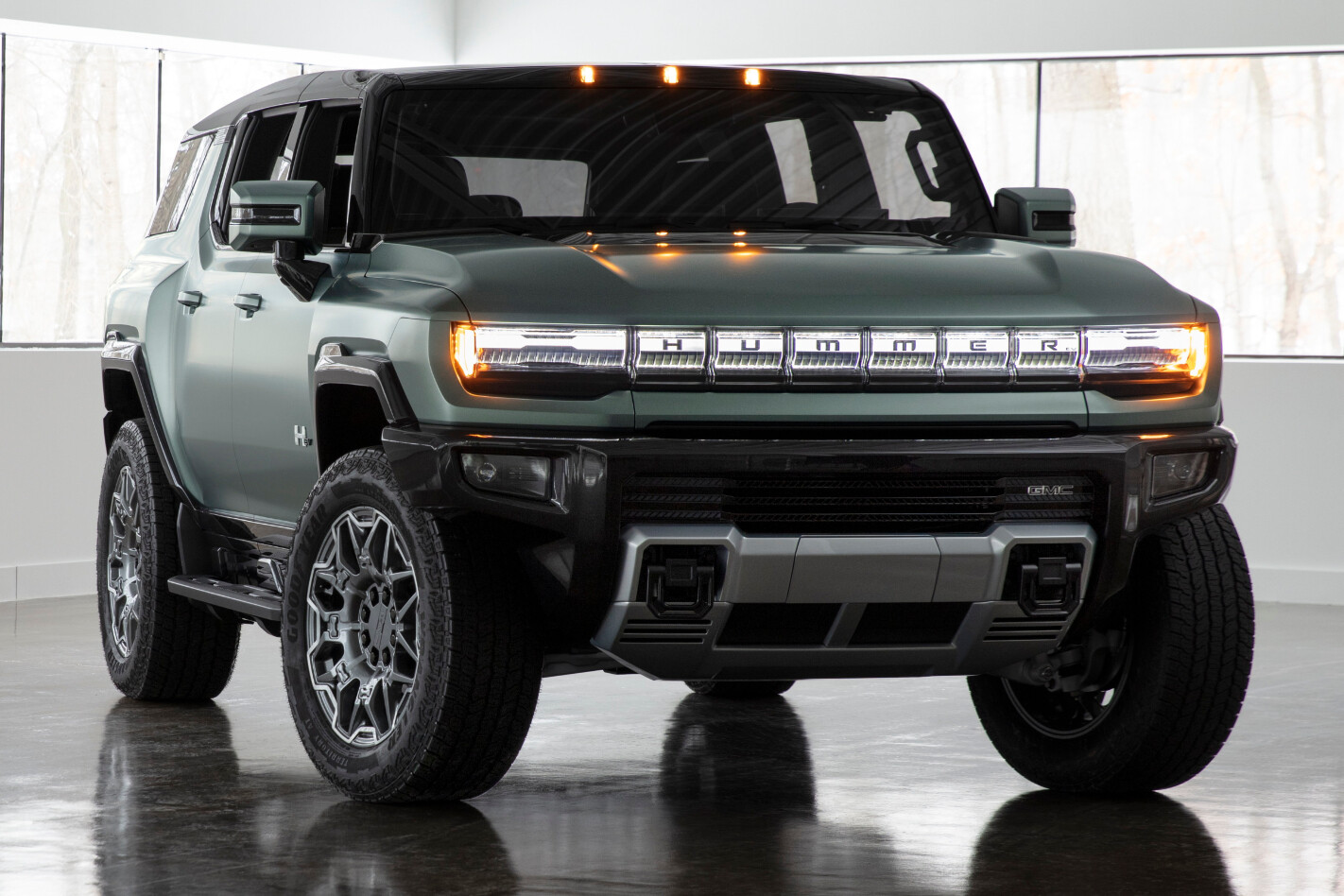
The 2022 GMC Hummer EV offers as much as 746kW and 2033Nm from its ‘Ultium’ battery pack, allowing for a driving range of up to 563 kilometres.
A militarised version will likely use less powerful electric motors and smaller batteries to reduce weight. The rendering (top) by @wb.artist20 provides a glimpse at what an armoured Humvee EV could look like.
“Electric vehicles are quiet. They have a low heat signature and incredible torque, and because they tend to be low maintenance with fewer moving parts, they have the potential to reduce logistics requirements,” US Deputy Defence Secretary Kathleen Hick said on Monday, according to Military.com.
The move to electric vehicles is part of US President Joe Biden’s overarching climate agenda, The Pentagon said earlier this week.
The Verge notes a 2019 study from Brown University which calculated the US military was the largest institutional polluter in the world, accounting for more greenhouse gas emissions than 140 countries.
An Israeli company has developed a machine capable of turning air into water.
Watergen has scaled down its patented technology to create two different mobile water generation devices – the first is around the size of a standard car fridge, while the second can be roof-mounted like an aftermarket air-conditioning unit.
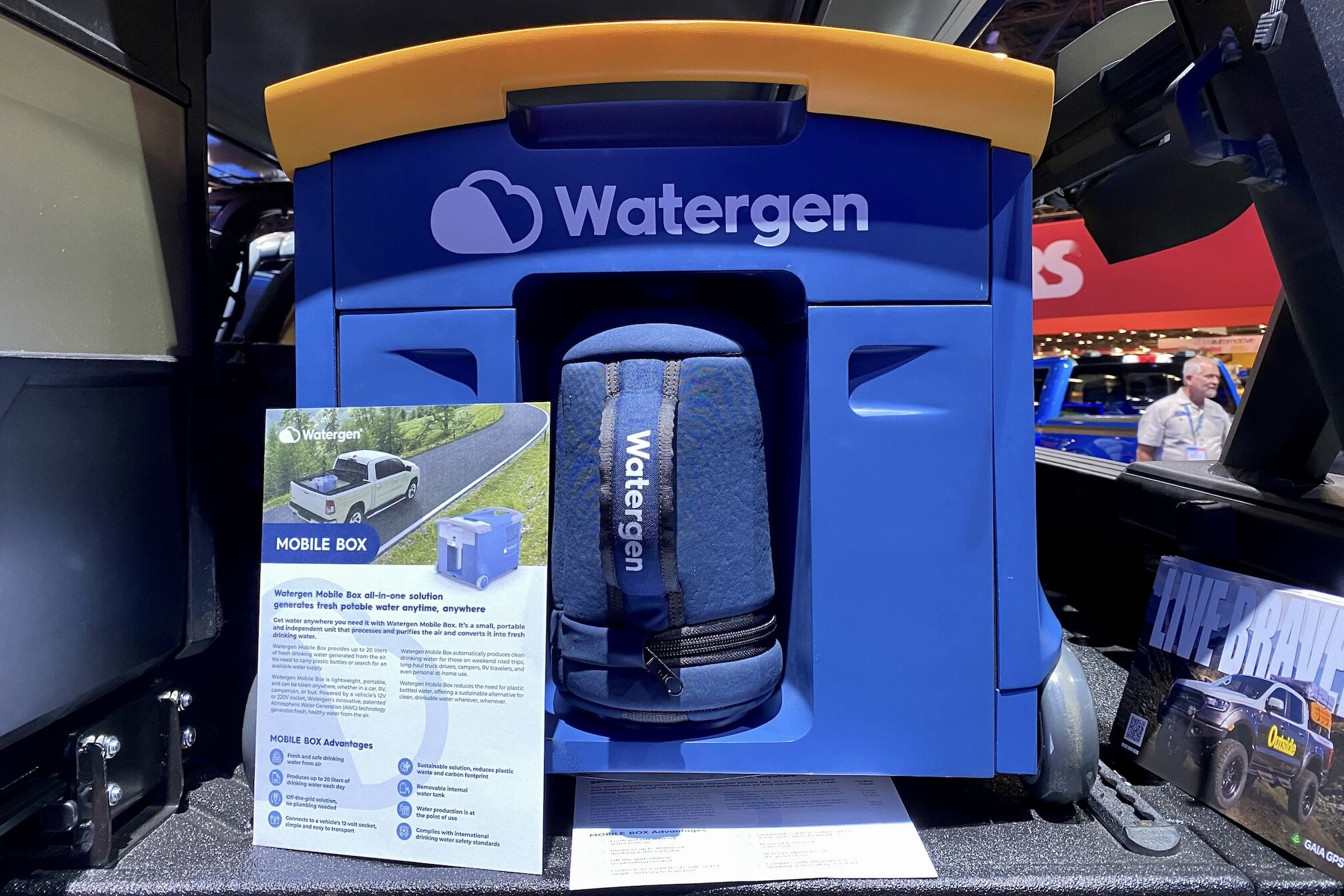
Debuting at this year’s SEMA aboard a Ford Ranger, the smaller 15kg unit is called the Watergen Mobile Box and can produce up to 25 litres of drinking water from the air, just off the standard 12-volt power outlet.
In basic terms, the machine works in a similar way to a dehumidifier – extracting water particles from air, but in this case the water is also purified to ensure it’s drinkable. The company says the optimal temperature for production is between 15 and 45 degrees celsius.
The larger roof-mounted unit can be fitted to campervans, caravans, and trucks, producing up to 50 litres of water each day from a 12V socket.
Health experts recommend adults drink between two and four litres of water each day, but that can increase to as much as 10 litres when in desert environments.
The Watergen Mobile Box has yet to go on sale to the public, but it could end up being a cheap insurance policy for desert touring.
The crew at PCOR has released all-new tray and canopy systems for the Ford Ranger and Jeep Gladiator. We take a closer look.
PCOR TRAY FOR JEEP GLADIATOR
The PCOR team’s latest tray is designed for Jeep’s Gladiator and is, like all of PCOR’s tray and canopy systems, made using tough, powdercoated aluminium for optimum strength with minimal weight – a winner for the Gladiator’s not-so-high GVM. The Gladiator tray mimics the donor vehicle’s approach/departure angles and is also designed to make the most of the space available, to optimise cargo area.
More 4×4 gear guides

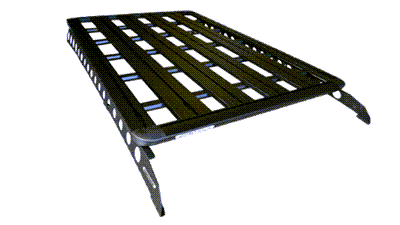
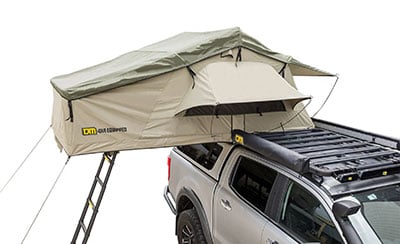
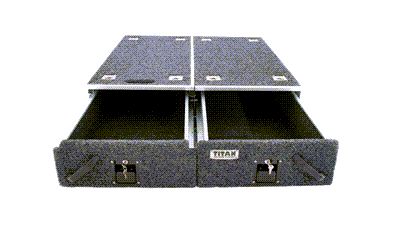
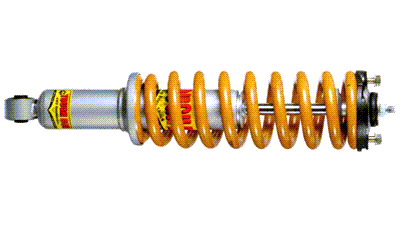
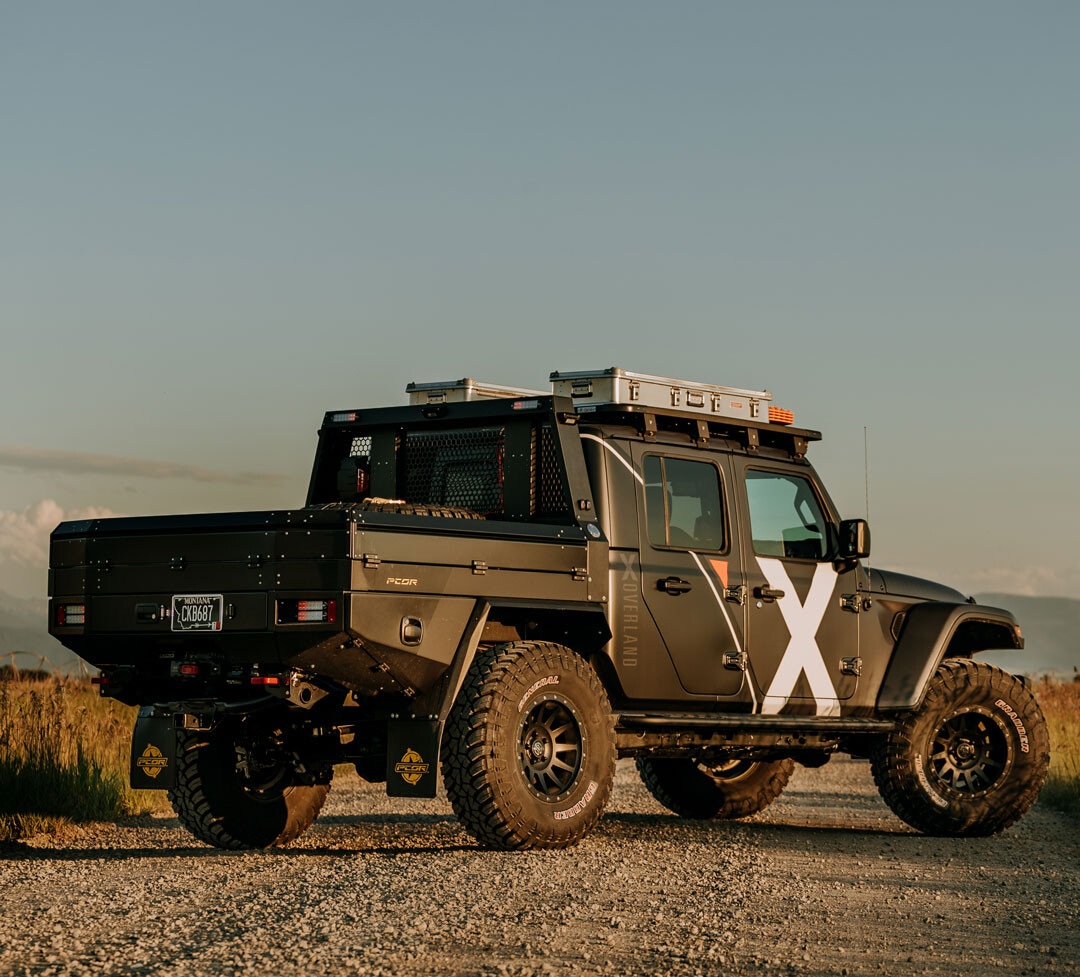
The tray design is aimed at pure functionality, and features include a rear roller drawer, 70-litre water tank (with easily accessed tap), high stop lights, integrated headboard and removable drop-sides. There’s also optional tyre mounts available. Other features include storage areas with central locking and tie-down points.
RRP: From $13,990
PCOR TRAY FOR FORD RANGER
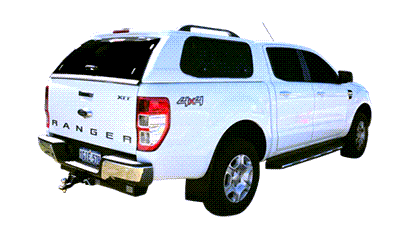
Specifically designed for the PX2 and PX3 Ford Ranger, this PCOR tray moulds seamlessly around the cab for a stylish finish. Plus, PCOR ensures each vehicle maintains its approach angle, so that it doesn’t hinder off-road performance. The tray is constructed from lightweight powdercoated aluminium, which allows for a greater carrying capacity than many other units on the market.
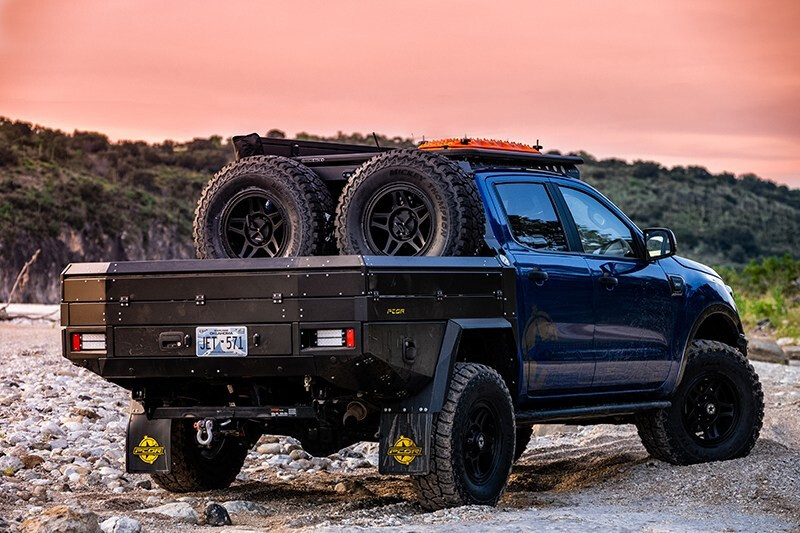
It also has built-in central locking storage areas in the tray bed, and it comes standard with a 70-litre water tank and easy-access tap. Materials are sourced in Australia and constructed to Australian manufacturing standards.
RRP: From $14,990
WEBSITE: www.pcor4x4.com
4X4 Australia's project builds
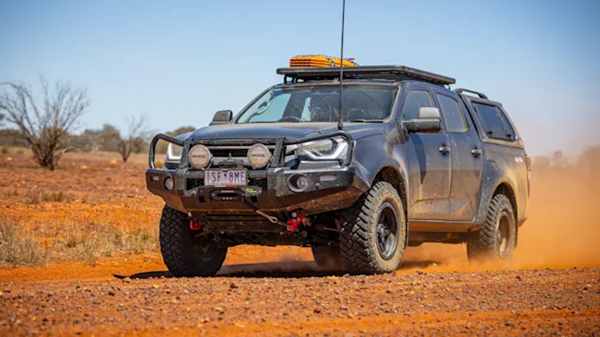
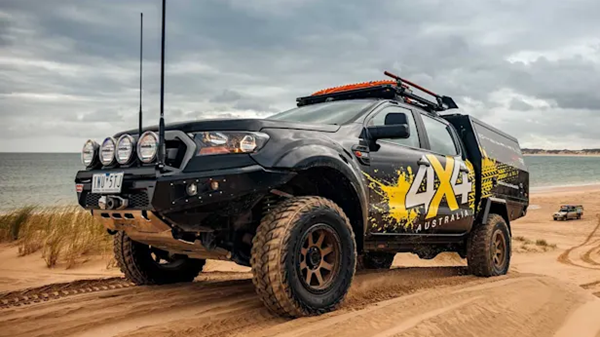
It’s not too often the prospect of a shotgun ride makes you feel all giddy in anticipation, but that’s exactly how we felt on our way to sit in the front seat of what is arguably the most exciting 4×4 vehicle to come to market in recent memory: the INEOS Grenadier.So the story goes, British billionaire Sir Jim Ratcliffe was enjoying a few ales at the Grenadier pub in London in 2017 – his shout, probably – when the idea was born for a purpose-built off-roader. Apparently, Ratcliffe wasn’t amused with the trajectory of Land Rover’s new Defender, and when Land Rover refused to sell him the rights to the Defender, he decided to take matters in to his own hands to fill a glaring gap in the market.Years of development later and the Grenadier is now in the testing phase of its evolution, with Australia scoring a 2B prototype for local evaluation. The vehicle had recently undergone a thorough testing program at Anglesea in Victoria, with Tom Smith, INEOS’s marketing manager, confirming to 4X4 Australia that the prototype will soon head to the outback for some extreme-weather, desert-bashing evaluation.

Before that, though, INEOS extended invitations to journos and a handful of interested parties who had put money down on a deposit for the vehicle. These people were given the opportunity to get an up-close look at the vehicle, as well as a shotgun ride on a brief off-road circuit.Despite our short stay in the passenger seat, the mud dash certainly proved that this vehicle has the potential to be an off-road powerhouse. The traditional 4×4 – in the sense of its robust construction and simple design philosophy – utilises a box-section ladder-frame chassis. The multi-link suspension set-up features Eibach coils (front and rear), and the beam axles are made by Italian specialists, Carraro. Interestingly, Carraro will also supply the front and rear lockers on production vehicles.

The 2B prototype wasn’t equipped with lockers, but it did have a centre diff – not that it needed to be locked on the off-road circuit. Still, a centre diff and front and rear lockers should make this thing unstoppable. Without them, the Grenadier still comfortably swept through the off-road circuit.It’s built in such a way that you won’t be afraid to point it at difficult tracks, and its utilitarian design means it looks much better with mud dripping from its side-rails than it does sparkly clean. A clear objective for the boffins at INEOS has been to ensure the vehicle remains practical for everyday use, as well as being simple to run should things take a turn when beyond the black stump – an example of this is the use of an old-fashioned key in lieu of push-button start tech.

Still, it’s not without modern niceties, with an easy-to-access central touchscreen that’s compatible with Apple CarPlay and Android Auto. In fact, everything is located centrally on the dash – tacho, maps, etc. – meaning the driver has no dash binnacle behind the steering column.We were assured that the prototype was in line with the production version, just without the final touches. You’ll notice the 4×4 switchgear, interior buttons and knobs, grab handles, and flooring is rough around the edges and incomplete. Despite the interior being a work-in-progress, it’s clear to see there’s been a heavy emphasis on ensuring knobs and dials are easy to reach and simple to use. You may notice some of the dials are big and clunky – this is to enable drivers to adequately use them when wearing winter gloves, for example.In a throwback to retro off-roaders of a bygone era, the Grenadier utilises empty space on the ceiling of the cabin, where you’ll find drive-mode functions, locker controls (if required), and an abundance of auxiliary plugs.In line with the ethos of making it a ‘proper’ off-road vehicle, INEOS elected for plastic flooring so that owners can simply point a high-pressure hose at it after a thorough off-road excursion. Still, carpet floor will be available if required. Drainage plugs are positioned in the rear to help with this process, and the dual-battery and electronic set-up is positioned higher in the rear to keep it dry.

The Recaro seats are properly bolstered, which means they remain supportive and comfortable when bumping and swaying on off-road trails.The Grenadier is highly customisable, with plenty of mounting brackets found throughout both the interior and exterior of the vehicle. It’s also prewired to accept a range of electrical equipment – think driving lights, winches and solar panels. A storage compartment within the spare wheel, for soggy boots and clothes, is a clever addition. The rear barn doors are split 80:20.Available are 17- and 18-inch steel wheels with chunky BFG all-terrains as standard – the 2B prototype was wearing 17s inside those BFG A/Ts, but you’ll also be able to opt for 18-inch alloys if so inclined. A bespoke Bridgestone Dueler A/T 001 tyre will also be available from the factory.

Some may baulk at the fact it’s running BMW-sourced hardware in the form of 3.0-litre in-line-six petrol and diesel engines, but the engine – diesel-powered in the 2B prototype – feels competent in a vehicle of this nature. Further testing should validate this, but it is a bit too early to say. A ZF eight-speed automatic gearbox will be the sole transmission available.Another point of contention is aftersales support, but INEOS has confirmed it will have 16 agents in major cities around Australia, as well as 34 Bosch Service Centres. Owners of the vehicle will also be privy to an open-source aftermarket strategy, where they’ll have access to aftermarket support software including step-by-step tutorials, a digital repair manual, 3D CAD maps of vehicle parts, and a parts catalogue. In addition, the Grenadier will come with a five-year/unlimited-kilometre warranty and five-year roadside assist package.

The Grenadier comes with a 3500kg towing capacity and 7000kg GCM. It starts at $84,500 for the two-seat commercial variant, with more premium models to sit above it – as well as a ute and hydrogen-powered derivatives in the distant future. A host of accessories will be available to add to that starting point, so expect to pay a bit more once you leave the showroom with your desired product. For example, the snorkel on the 2B prototype is a factory extra, as is the ladder attached to the rear – however, the ladder will be standard on up-spec models.The Grenadier starts production next year at Hambach, France, with local deliveries beginning toward the end of 2022.
The 2022 GWM King Kong has been shown off in China, and the dual-cab ute could end up in Australian dealerships.
Details of the GWM pick-up emerged in the database of the Chinese Ministry of Industry, with local media reporting the King Kong is due to be fully unveiled at the Guangzhou motor show later this month.
“We’re always open to new models, such as the King Kong Ute, that could expand the GWM product portfolio in Australia,” a spokesperson for GWM Haval told 4X4 Australia.
“While our regular discussions on product continue with our Head Office colleagues, it’s too early to say whether we’ll see it here,” they added.
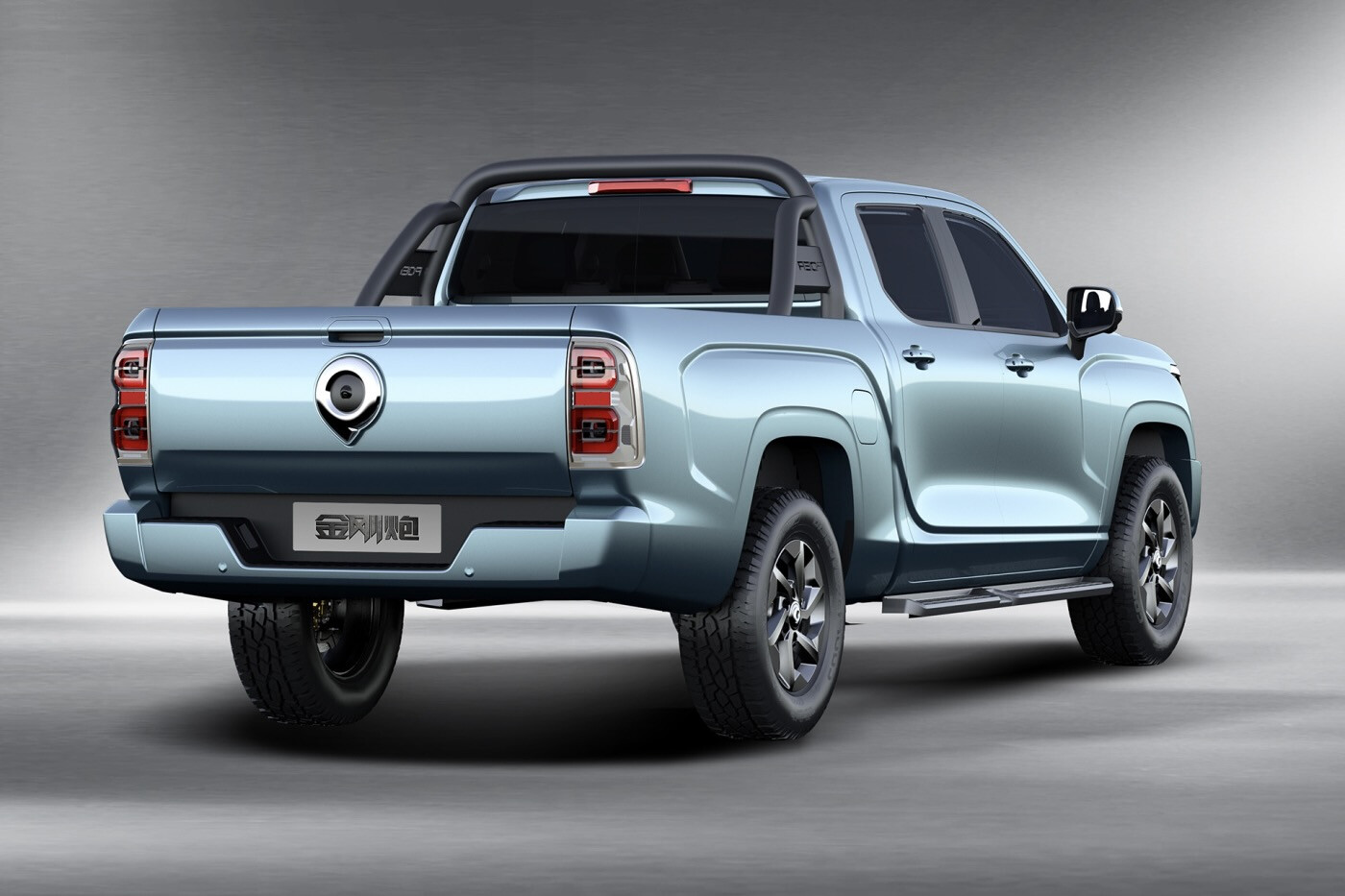
Some outlets are also referring to the King Kong as the Poer Diamond Cannon, with its stablemate – known in locally as the GWM Ute – being badged as the Poer Cannon in its native country.
Curiously, Chinese rival Geely also has a model called the ‘KingKong’.
GWM’s King Kong is available with two different tubs – a standard model with a length of 5365mm, or a long version with a length of 5635mm. Both have a payload of 500kg and a 3140mm wheelbase.
Despite the vehicle’s imposing looks, the standard version is actually shorter, narrower, and lower than the GWM Ute sold here.
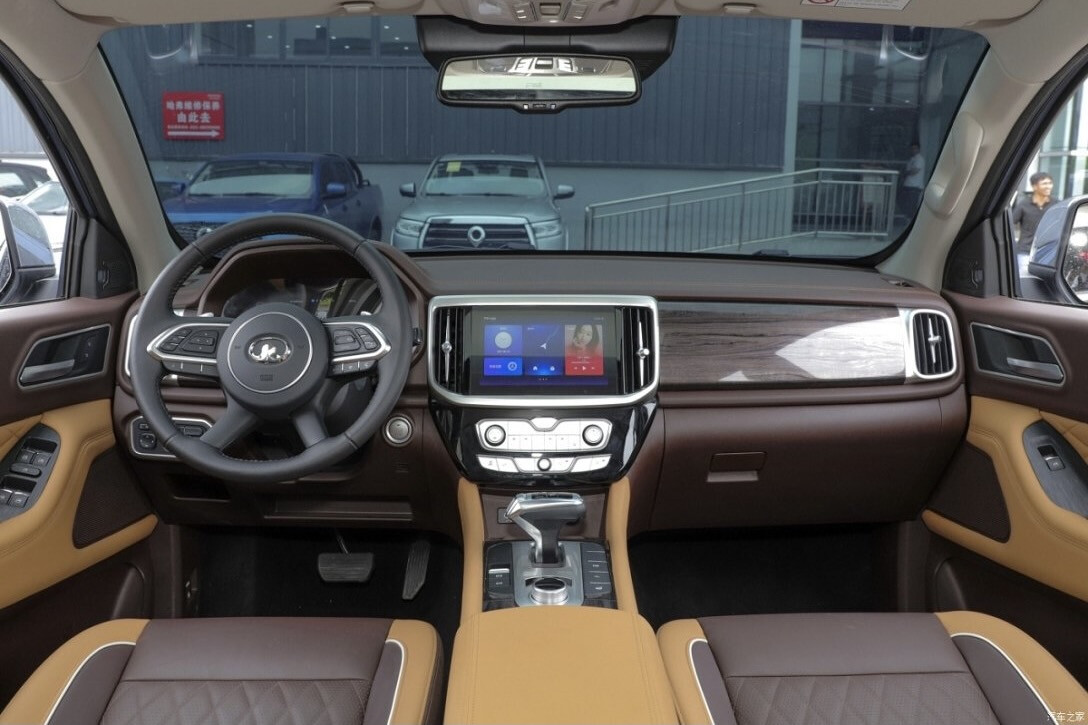
Reports are the King Kong will be offered with a 2.0-litre turbo-diesel four-cylinder engine producing 123kW and 360Nm. Buyers get a choice of rear- or four-wheel drive, with drive fed through either a six-speed manual or eight-speed automatic transmission.
Higher-grade models are expected to come standard with LED headlights, keyless entry, sunroof, rear-view camera, dual-zone climate control, and side-steps.
Expect more information about the 2022 GWM King Kong to emerge following the model’s public debut in the coming weeks.
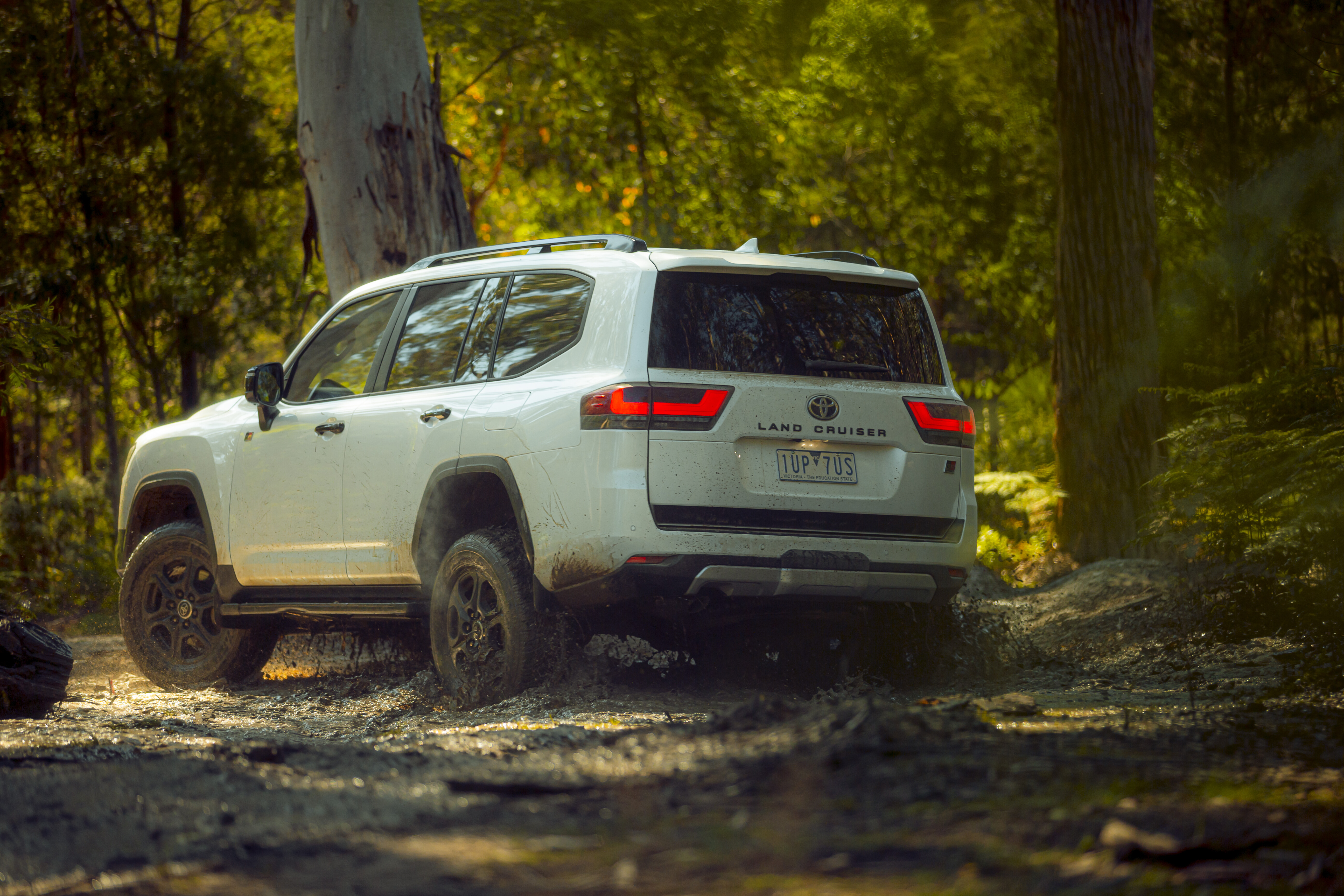
IT’S been a long time coming, 14 years in fact since the launch of the 200 Series, and even after its eventual launch Toyota’s 300 Series LandCruiser is still a hard vehicle to get in to.
While semi-conductor shortages have delayed production and limited supply to customers, we’ve managed to nab an LC300 for a few days to test its off-road mettle.As it is marketed as the more off-road focused model in the six-variant LC300 range, we’ve gone for the GR Sport model which, along with the range-topping Sahara ZX, is new to the nameplate. What makes the GR Sport the most off-road capable LandCruiser variant is the inclusion of front and rear locking differentials as standard and the addition of E-KDSS which is the latest generation of Kinetic’s clever suspension system.
The killer is that the GR S is the only model to get this off-road hardware and you can’t option factory lockers or KDSS in to the lower-grade models.The problem with the GR S is that, at $137,790 it’s the second most expensive model in the range, only beaten by Sahara ZX which adds another $1000 to the base price. The GR S comes with the equipment levels to match that price but all that kit adds weight, meaning that the GR S has the lowest payload in the range with 650kg available.
POWERTRAIN & PERFORMANCE
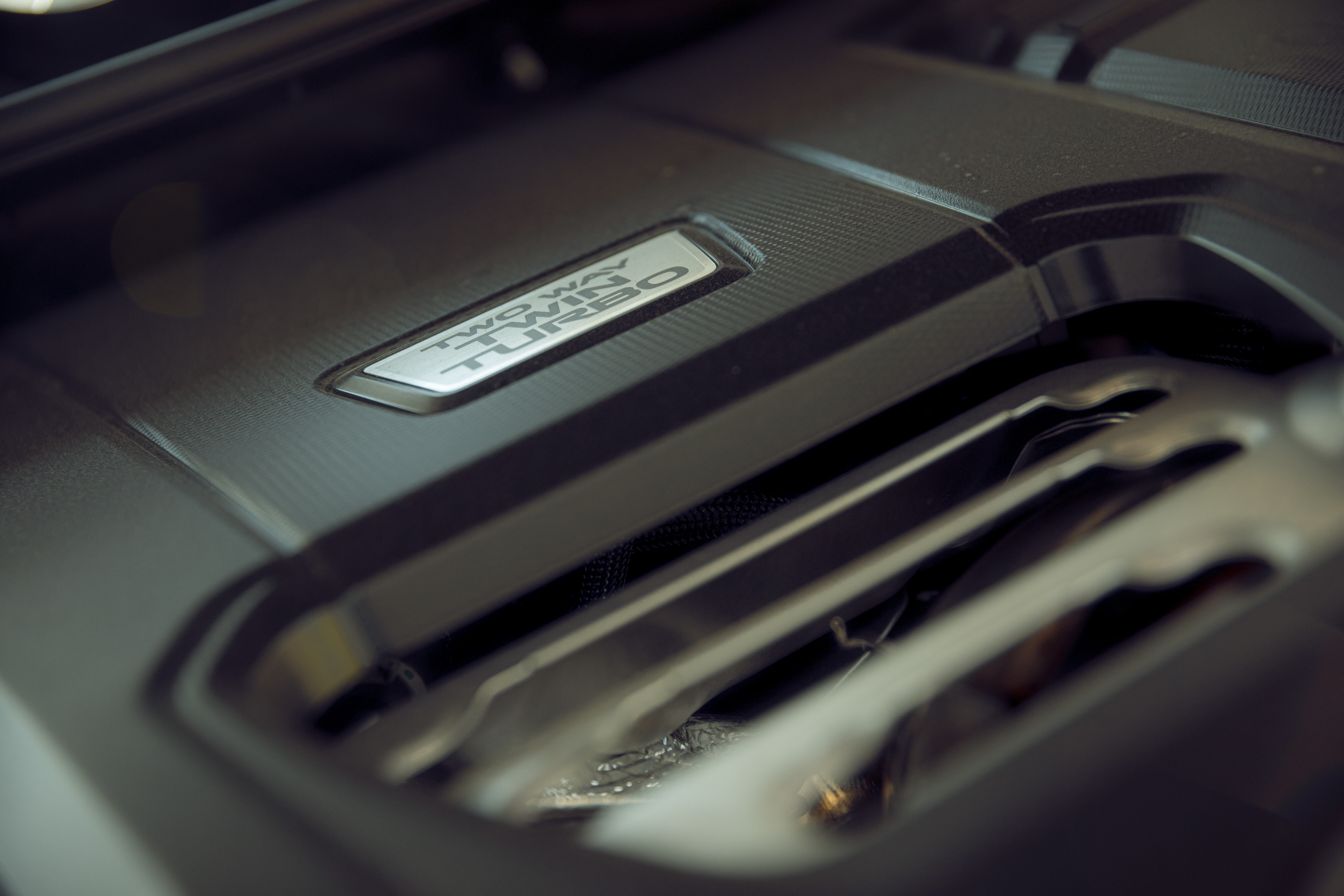
UNDER the Cruiser’s new aluminium bonnet is an all-new 3.3-litre twin-turbo V6 diesel engine. The V8 is gone but this engine makes more power and torque than the old 4.5-litre bent eight. The 700Nm of torque and 227kW of power are on tap under the go pedal and it propels the big Cruiser along swiftly when you put your foot down.The F33A-FTV engine employs what is known as a ‘Hot-V’ design. This means that the exhaust manifolds and the turbochargers are mounted in the 90° V between the cylinder heads and the intake manifolds are on the outside of the engine. This helps to make the engine more compact and puts the turbochargers closer to the exhausts ports to reduce lag and increase efficiency.With all that heat now at the top of the engine, Toyota has had to do away with the top-mounted intercooler as used on previous LandCruisers and moved them up behind the grilles, under the headlights. I say them, as there are two of them and they are now a fluid-to-air design so they should be more efficient.
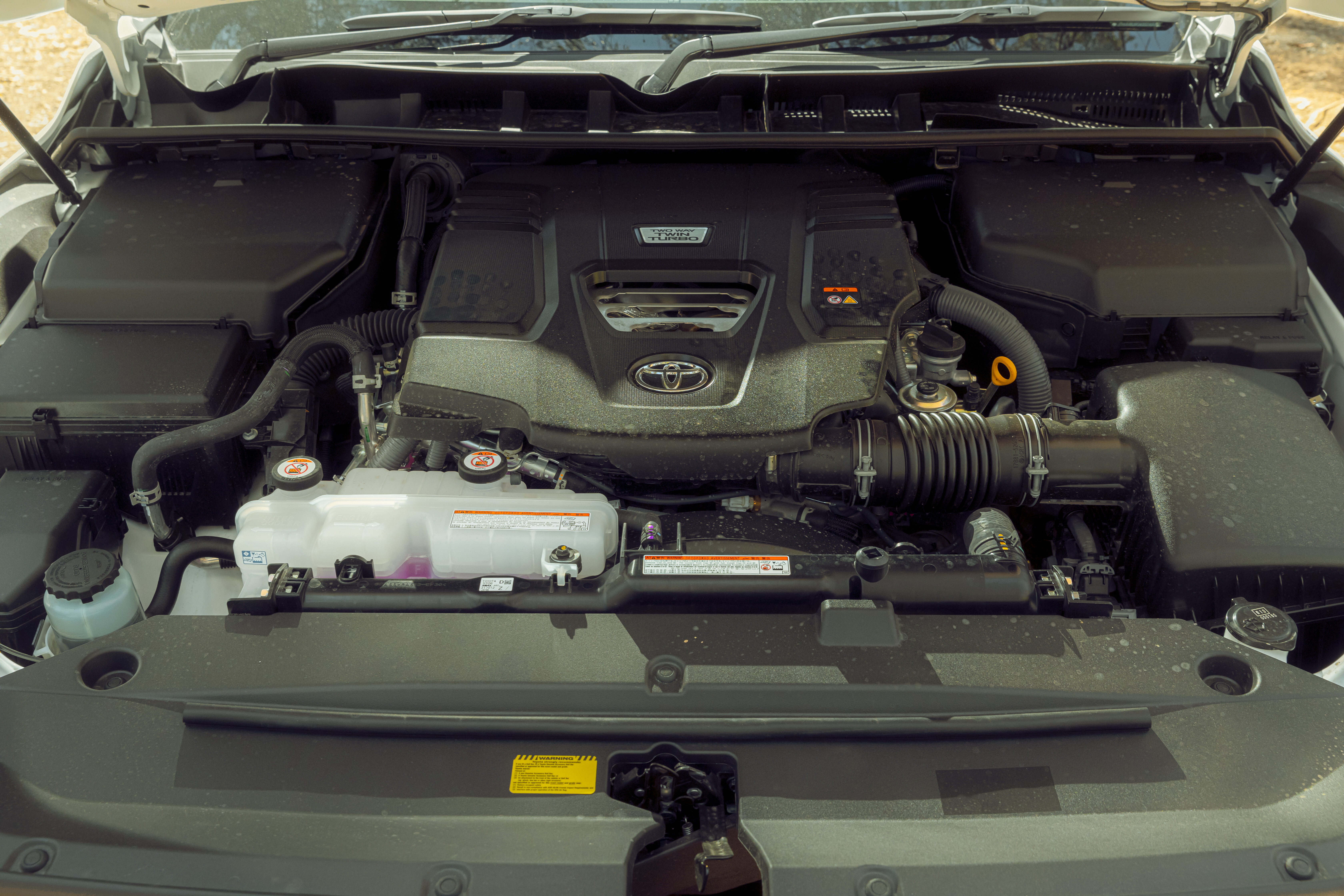
The problems of this set-up, particularly for off-roaders, is that they are more vulnerable to damage being mounted right up the front of the car and are more complex in design introducing another coolant system to the powertrain.
The engine is backed by a 10-speed automatic transmission and before your ask; no, it does not automatically shift through to top gear under normal highway cruising conditions. I found that cruising at 110km/h and moving the shift lever across the manual mode would shift it back a ratio to seventh gear and tapping it though to 10th you could get it to cruise at around 1300rpm. Shift back to automatic and the revs pick up as the transmission goes back to eighth for easy cruising.I don’t see this as a problem. The transmission is programmed to keep the engine in its optimum rev range for the speed, load and conditions the car is operating under. I’m pretty sure that if the engineers thought they could make it more efficient by allowing it to shift through to top at that speed they would have, in their never-ending quest for efficiency and fuel economy.Speaking of economy, the 300 is officially rated at 8.9L/100km on the combined cycle and we recorded 13.62L/100km during our stint of suburban, highway and off-road driving. The old 1VD-FTE engine was never particularly efficient and this new-tech V6 combined with the 10-speed auto should prove much more frugal in real-world conditions.
ON-ROAD RIDE & HANDLING
THE LC300 rides on Toyota’s new TNGA chassis which it shares with the Tundra pickup truck in the USA that was launched around the same time as the new Cruiser. It’s still a body-on-frame design but now employs more high-strength steel in key areas to improve stiffness, while using aluminium in some suspension components to reduce weight.The suspension is a double wishbone, coil sprung independent set-up at the front and live rear axle at the back, located by multi-links and riding on coils.
The GR Sport and Sahara ZX Cruisers get variable dampeners that allow you to select comfort, sport or sport+ settings to suit your driving preference and style.
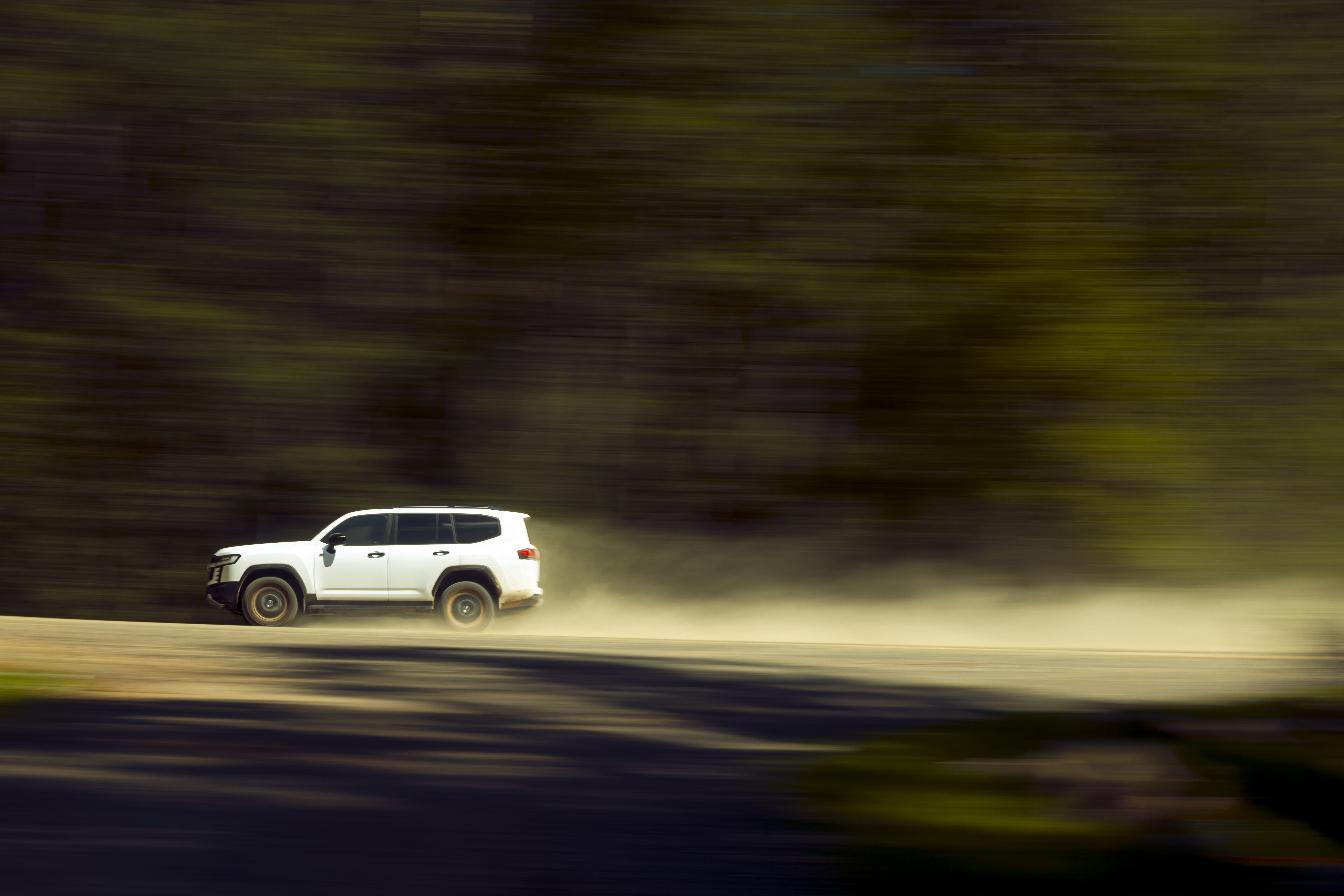
The GR Sport’s E-KDSS system works on the front and rear sway bars to lighten the tension on them when driving at low speeds off road, and tighten them up for firmer body control at higher speeds on road. The system is a further development of the old KDSS to now automatically disconnect the sway bars when required off road to give the most axle articulation.All that kit delivers a ride and handling characteristic that is still instantly recognisable as LandCruiser. It’s soft and supple, soaking up road bumps, and pitches and wallows when pushed hard. Even in the Sport modes the handling is still soft and the LandCruiser has no sports car pretensions.
It’s a vehicle that’s designed to soak up anything the road can dish up to it while covering hundreds of kilometres per day and it does that very well.
OFF-ROAD
THE LC300’s four-wheel drive system carries over a full-time, dual-range set-up with a locking centre differential. As mentioned, the GR S also gets front and rear locking diffs and is the only model in the range to get them. When not using the diff locks, the car still has a perfectly calibrated electronic traction control system (ETC) and the refinements to the Crawl Control over the previous generation are exceptional and make it much more usable.We pointed the GR S LandCruiser up a particularly steep and rocky climb in the bush near Toolangi (Vic), which we thought would challenge it on its standard highway tyres. It is a hill we wouldn’t attempt in any standard 1-tonne 4×4 ute or the wagons built on those platforms.
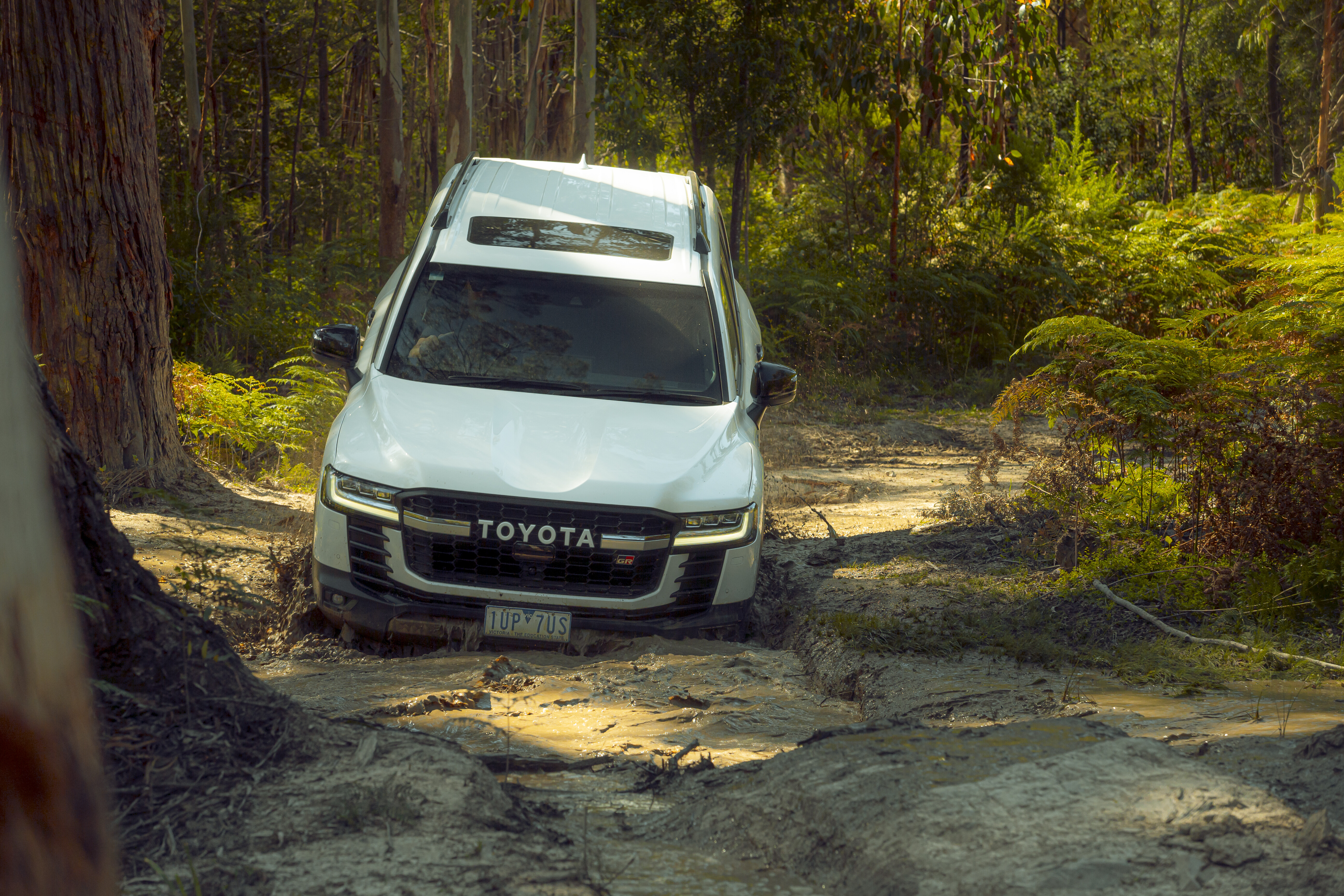
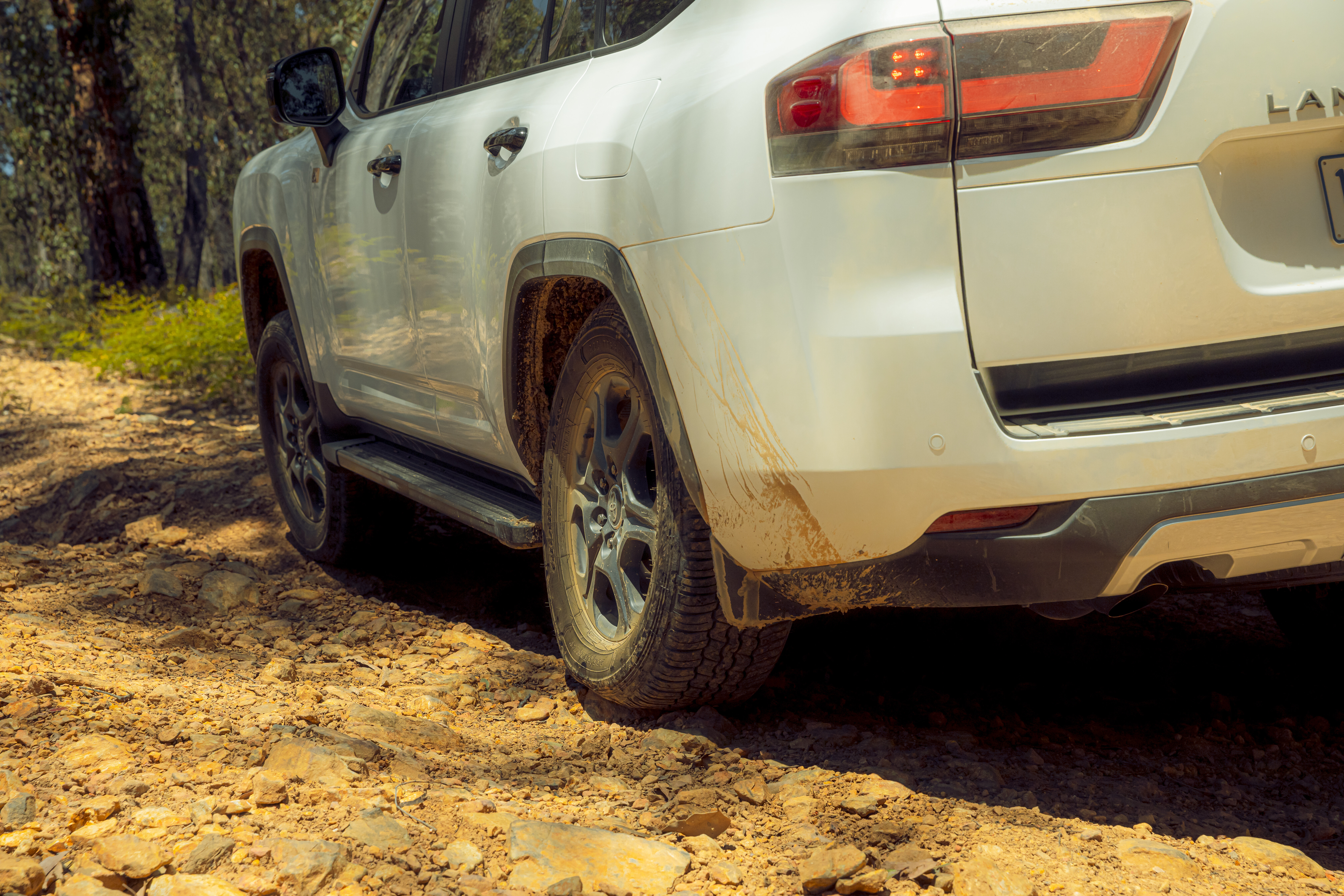
With the diff locks engaged, it walked up the first section far easier than expected and didn’t spin a tyre at all. The E-KDSS system gives the GR Sport 715mm of wheel travel which is 46mm more travel than the old 200 Series when equipped with the previous generation KDSS. This kept the tyres on the ground for maximum traction.I disengaged the front locker as I progressed up the hill and a few rock steps presented what could have been more of a challenge. Again, the Cruiser crawled up with relative ease, just scrabbling for front grip to get up the bigger steps and only lightly scraping one of the side-steps.The hill got steeper and the rock steps bigger, but there was no turning back at this point. I haven’t liked using Crawl Control or Hill Descent systems in the past but hit the button to switch CC on it lowest of five speeds and selected the Rock setting in the terrain selector (MTS).
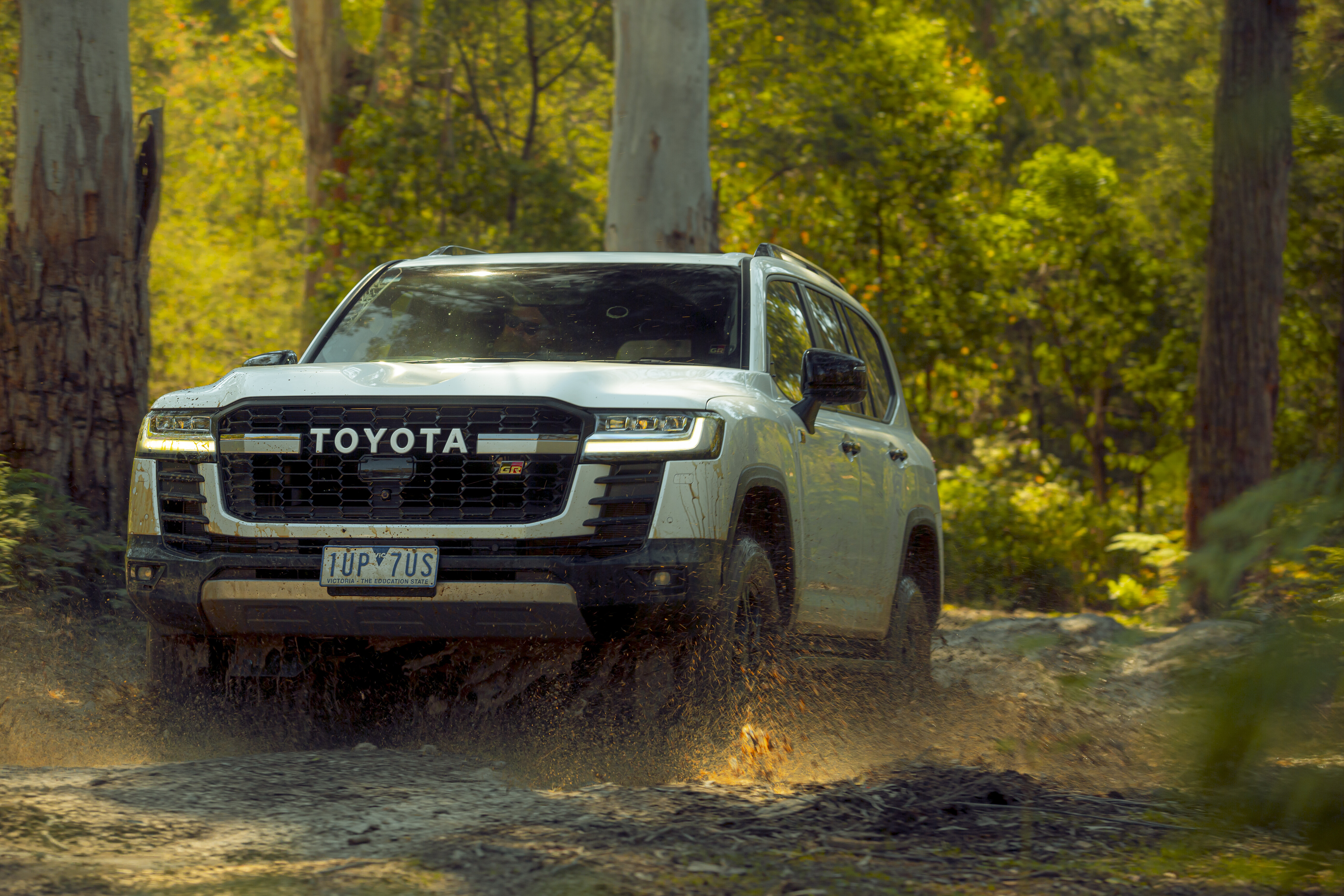
Employing larger pressure accumulators in the system has made CC much quieter and smoother than it was in past models and allowed the car to crawl slowly up with no driver input on the accelerator pedal, just steering the Cruiser to the best lines. You can feel the system applying minute amounts of drive to the axles while braking individual wheels to gain the most traction. It works brilliantly!I might not have liked such systems in the past but now that Toyota has refined it, I have to say the Crawl Control is exceptional both going up and down hills and will be of particular benefit in the lower grades of 300 Series that don’t have diff locks.
I still prefer to use the lockers and my own inputs but this system makes it easy for anyone who might feel intimidated by a situation they have got themselves in to. I was very impressed with the performance on this hill, considering the road tyres on the car.
CABIN & ACCOMMODATION
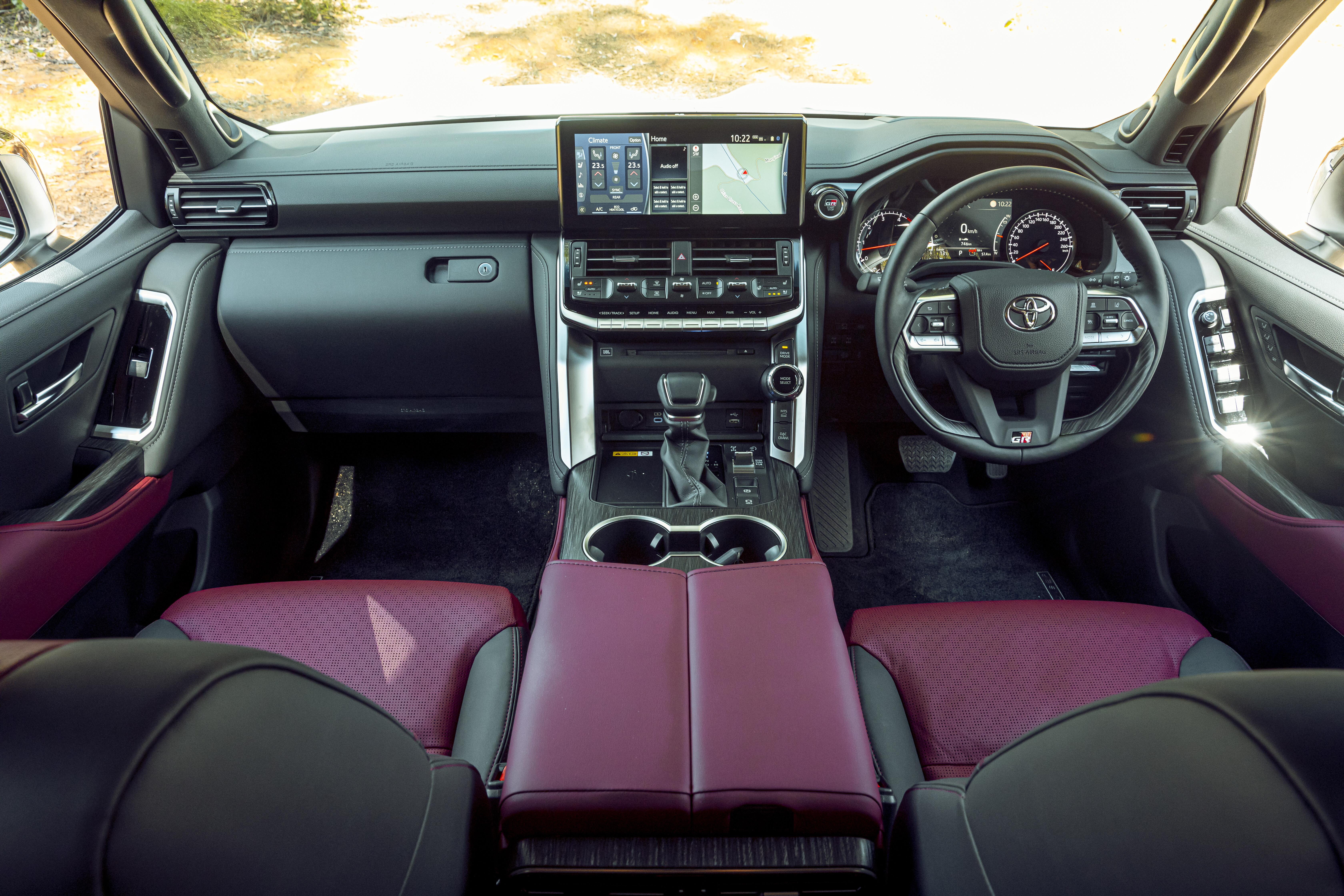
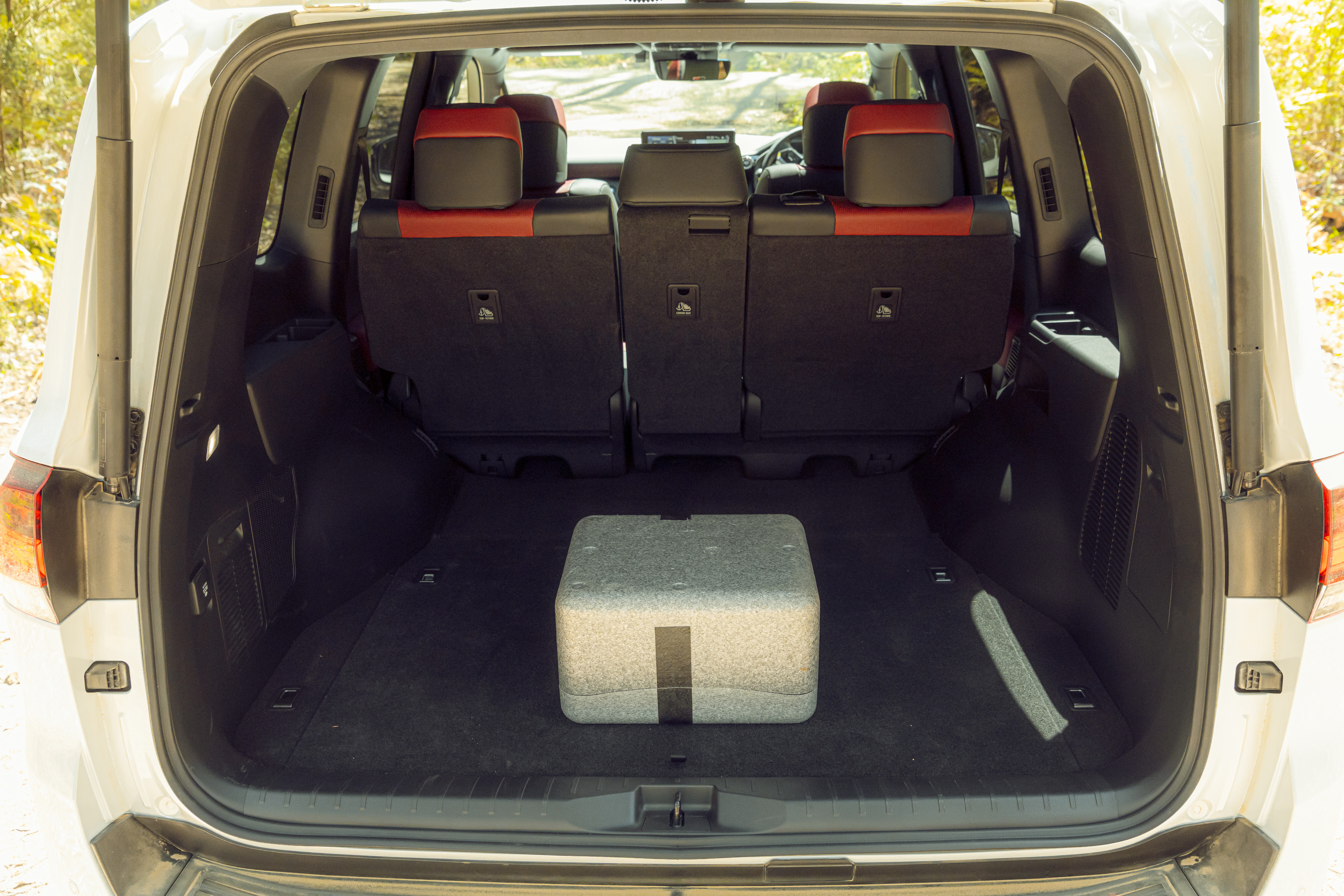
SLIP inside the GR Sport and you see why this is one of the more expensive LC300 models. Heated and cooled power-adjustable leather seats, power sunroof, plenty of bling, big configurable touchscreen that finally includes Apple CarPlay and Android, heads-up speed display for the driver, wireless phone charging and a drink chiller in the console are all fine appointments you’ll find in a luxury model.The GR S only has five seats, while other models in the range can have seven. This is as much to do with payload as anything, as the weight of the third-row seat plus passengers wouldn’t leave you with much. The lack of a third-row seat does leave plenty of space for cargo and there are four tie-down points here and a 220V-100amp power outlet, but no 12V outlet. I always like at least one 12V outlet here for powering a fridge and maybe some camp lights, while I’ve never gone looking for a household-style power plug in a car for anything during all my years of travels.
The old two-piece tailgate is gone and the now one-piece tailgate opens upwards.
The split tailgate design that used to be on LandCruisers and Land Rovers was fantastic as it gave you a tailgate which you could easily use as a table when prepping quick lunch on the road or simply a seat. As it was on the Land Rovers, it has been deleted to save weight but I wonder how much weight could be saved if the tailgate wasn’t powered. It is a feature that will be missed on the Cruiser wagon.The seating position is lower than it ever was in the previous model and this gives the impression of more space even though it’s really not much, if any bigger than an LC200.
At least I’m looking out the centre of the windscreen now and not through the top of it. The steering column is power adjustable for reach and height.
There’s plenty going on around the centre of the dash with lots of buttons but unfortunately, no easy-to-use dials for volume or station tuning.
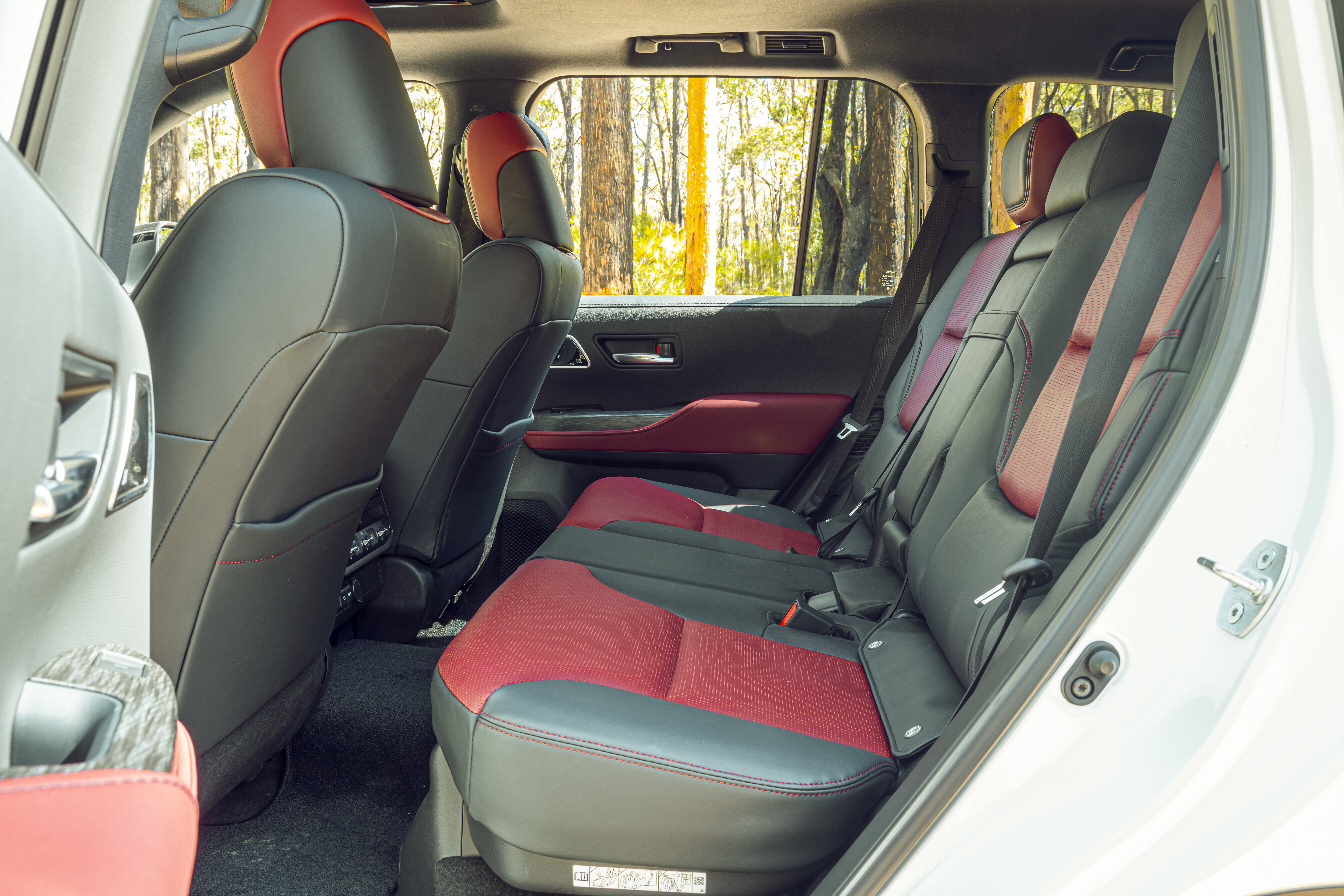
One of the first things I found when driving the Cruiser was that whenever I looked to the dash to adjust something, I was blinded by the glare coming back at me from the silver switch gear. It only happens when the light hits them in such a way, but it makes all the black buttons extra dark so you can’t quickly focus on the labels on them. It’s poor design but hopefully will becomes less problematic with more use and familiarity.Like the 200 Series, the cabin of the 300 presents a large and comfortable place to make long trips easy. A sliding second-row seat to give more rear-seat leg room would be nice but isn’t available, and some tall adult passengers might not find the back seat too comfortable.
PRACTICALITIES
AS a five-seater, the GR S has plenty of luggage space in the back but owners will have to be wary of how much they carry, especially once they have fitted some heavy accessories or have a bit of weight on the tow ball.
The GR Sport has a 650kg payload, which is the lowest in the model range, while the entry-level GX model has the highest at 785kg. Towing is rated at 3500kg and having pulled a 3000kg trailer behind a 300 on another occasion, I have to say it does it easily.Tyres on the GR Sport are 265/65R18s which look small on it, while 17-inch wheels are available on the GX and at the other end of the range, the Sahara ZX wears 20s. There’s no reason you couldn’t fit any factory wheel 17-inch or above to any of the LC300 models to get the right tyres for what you do with the car. The 300 Series has reverted to six-lug wheels after the 100 and 200 Series vehicles had five-lug.
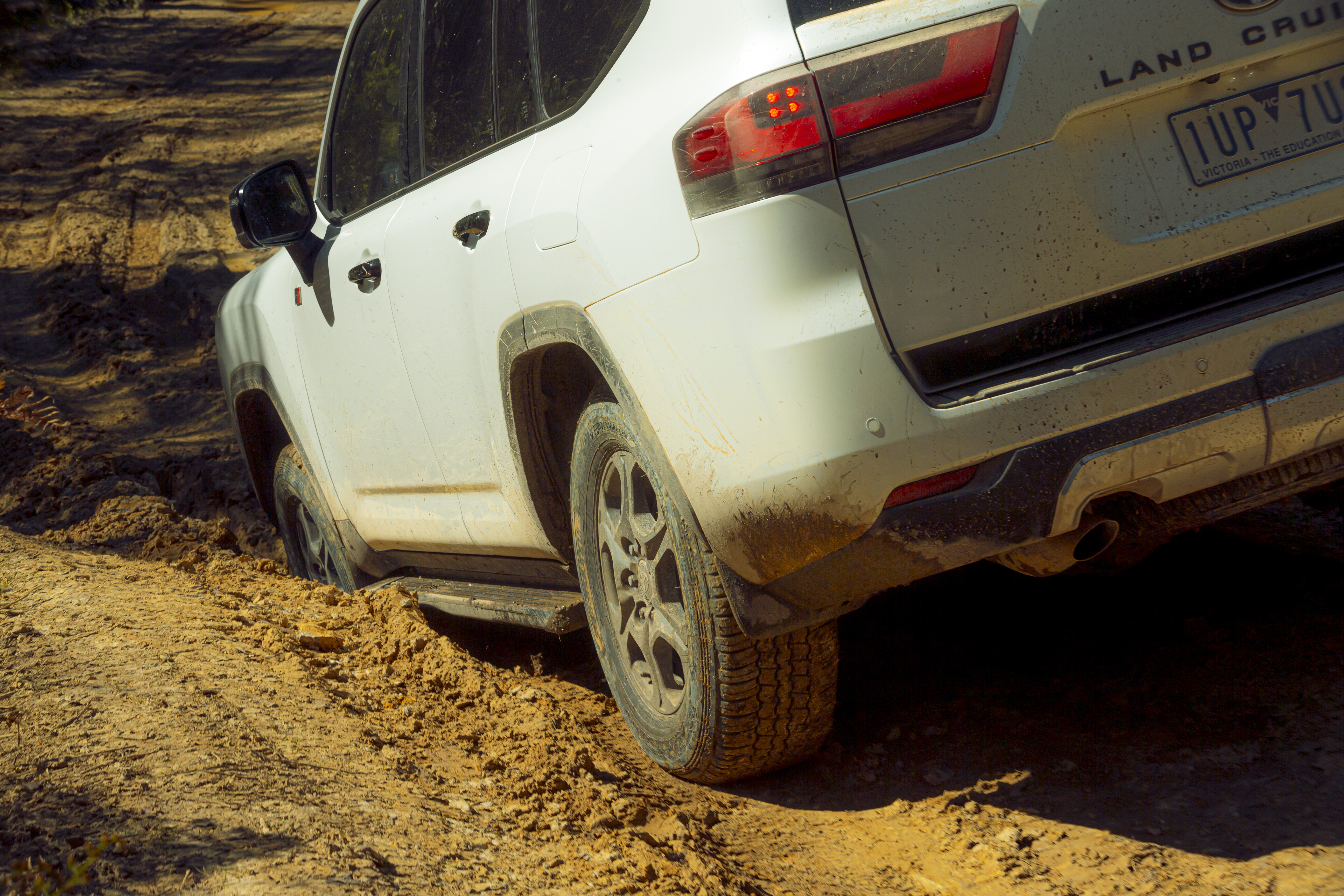
The standard fuel capacity has dropped from 138 litres to 110, with 80 in the main tank and 30 litres in the sub-tank.As it was on the 200, the tow bar is an integral part of the chassis and you just need to remove the panel in the bumper to insert the hitch and tow tongue. For the 300, Toyota has now incorporated the towing wiring in to the factory harness, simplifying installation.The engine bay doesn’t leave any obvious space for a second battery so the aftermarket guys will have to get creative to make that fit, while the air intake breaths through the near-side inner guard.Toyota has upped its game for genuine accessories and offers a choice of steel or aluminium bullbars, nudge bars, an LED light bar, roof racks, a Warn winch, underbody protection, rated front recovery points, a rear recovery hitch, and a raised air intake which is standard on the GX model.
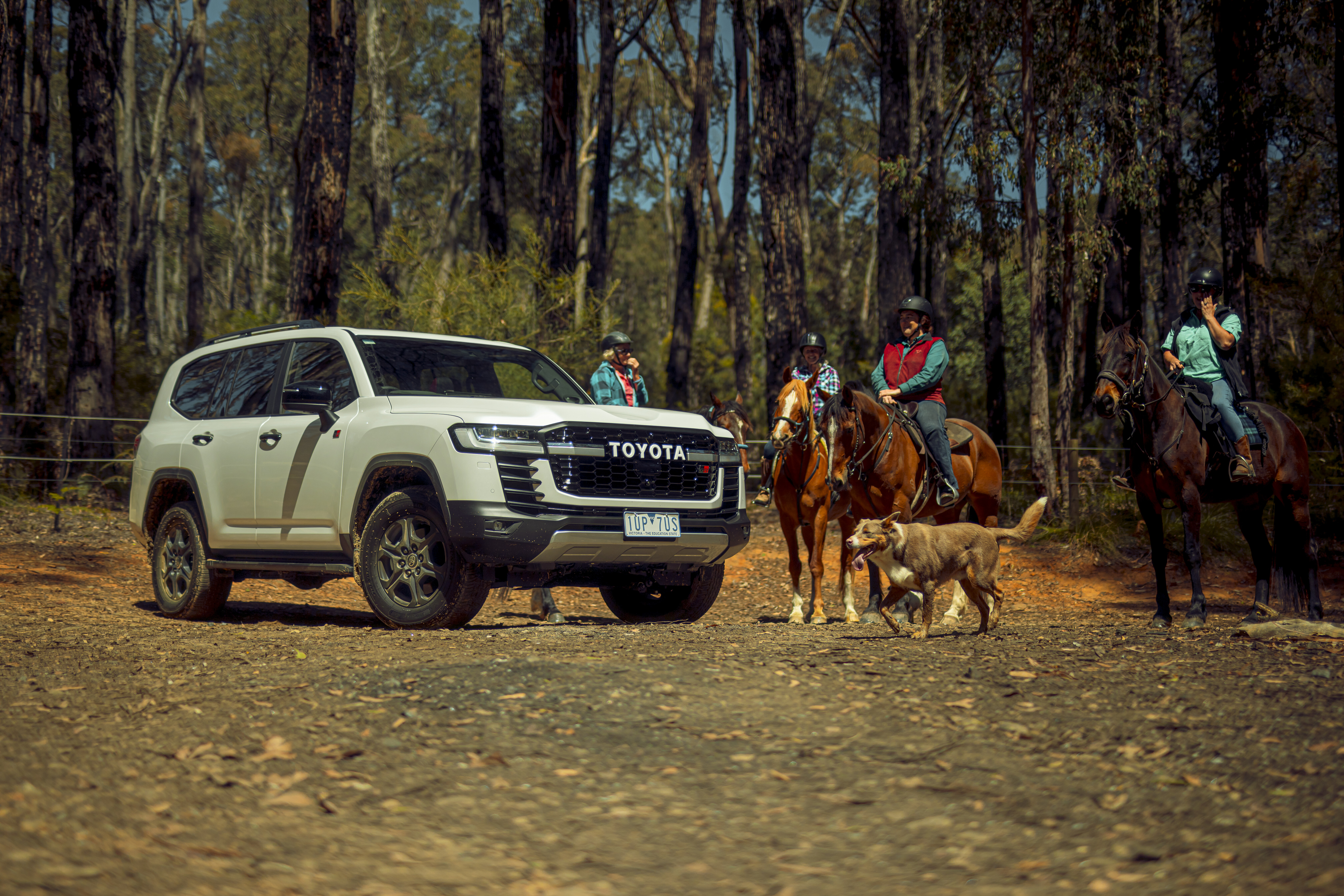
With the added vulnerability of those intercoolers up the front of the car, we’d recommend the fitment of a bullbar to any LandCruiser travelling in regional or outback areas to protect them as well as the car’s regular cooling system. A ’roo strike on either side of the front of the car could easily take out one of the coolers and leave you stranded.With the expected popularity of the 300, like any LandCruiser, you can bet the aftermarket brands will also deliver an extensive range of accessories, but you should also question the ability of any product to work with the safety systems on any modern car.
The radar and camera systems will provide challenges for the equipment designers. Thought also needs to be given to the GVM and payload when fitting any accessories.
SUMMARY
TOYOTA has raised the bar with the LandCruiser 300, although it’s only incremental. In its typical manner, Toyota only does as much as it has to to stay ahead of the pack and with no serious competition in terms of vehicle sales, it hasn’t revolutionised anything here. What it has done is refined the well-proven LandCruiser formula to deliver a car that is more efficient, more capable and easier to drive.The inclusion of the GR Sport model with its lockers and E-KDSS is to be commended as it creates a luxury 4×4 with capability we doubt any could match. The L663 Land Rover Defender would be the best comparison, as well as its traditional rival the Nissan Patrol.We’d love to see a model that delivers more of what 4WD enthusiasts would really like. That is, a lighter and cheaper GX or GXL model with the factory lockers and E-KDSS. By not offering this, Toyota has left a huge opportunity for the aftermarket to fill that void. The $30K saved off the price of the GR S would buy a lot of accessories to build a supreme touring wagon.In standard guise, the GR Sport is a supreme vehicle and will continue the marque’s dominance of the large 4×4 wagon segment once vehicle production is back to full tilt and it is able to deliver LandCruisers to customers.
2022 TOYOTA LANDCRUISER 300 SERIES PRICES
Prices exclude on-road costs
TOYOTA LC300 GR SPORT SPECS
| ENGINE | Turbocharged V6 diesel |
|---|---|
| CAPACITY | 3346cc |
| MAX POWER | 227kW at 4000rpm |
| MAX TORQUE | 700Nm at 1600 to 2600rpm |
| GEARBOX | 10-speed auto |
| CRAWL RATIO | 42.62:1 |
| 4X4 SYSTEM | Full-time; dual range; locking front, centre and rear diffs |
| CONSTRUCTION | 5-door wagon on ladder chassis |
| FRONT SUSPENSION | Double-wishbone IFS with coils; E-KDSS and variable shocks |
| REAR SUSPENSION | Live axle on links and coils; E-KDSS and variable shocks |
| WHEELS/TYRES | 18-inch / 265/65 |
| KERB WEIGHT | 2630kg |
| GVM | 3280kg |
| PAYLOAD | 650kg |
| TOWING CAPACITY | 3500kg |
| SEATS | 5 |
| FUEL TANK | 110L |
| ADR FUEL CLAIM | 8.9L/100km |
| ON-TEST FUEL USE | 13.62L/100km |
| DEPARTURE ANGLE | 25u00b0 |
| RAMPOVER ANGLE | 21u00b0 |
| APPROACH ANGLE | 32u00b0 |
| WADING DEPTH | 700mm |
| GROUND CLEARANCE | 235mm |
UPDATE, November 2022: MY2023 LDV T60 Max pricing, 7-year warranty announced
LDV’s Australian distributor has announced pricing and features for the updated MY23 T60 Max, including news of an upgraded 7-year / 200,000km warranty offering. Get all the details at the link below.
Original story continues: 2022 LDV T60 Max pricing
Snapshot
- 2022 LDV T60 Max builds on current T60
- New engine outperforms HiLux and Ranger
- Priced from $33,990 drive-away for ABN holders
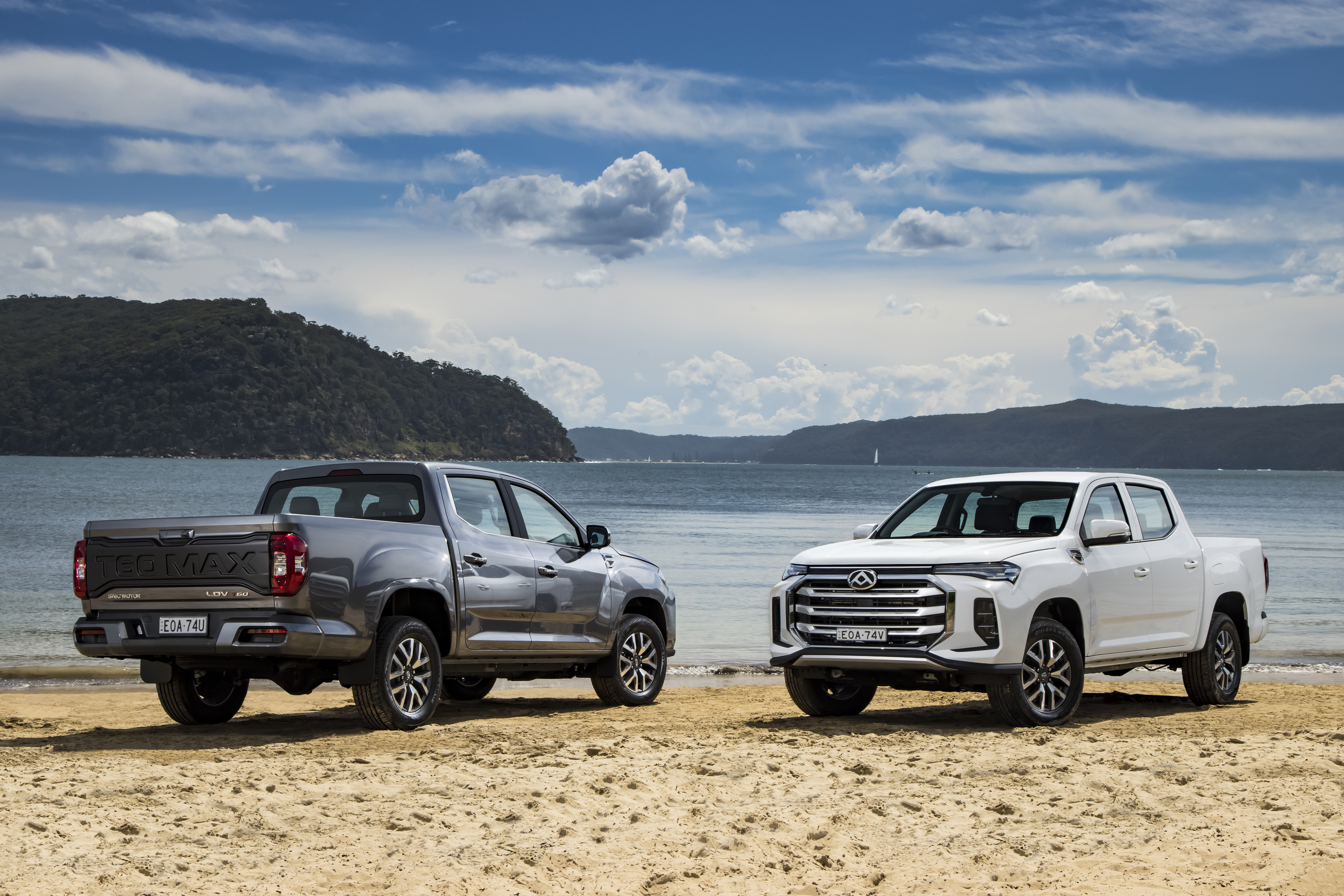
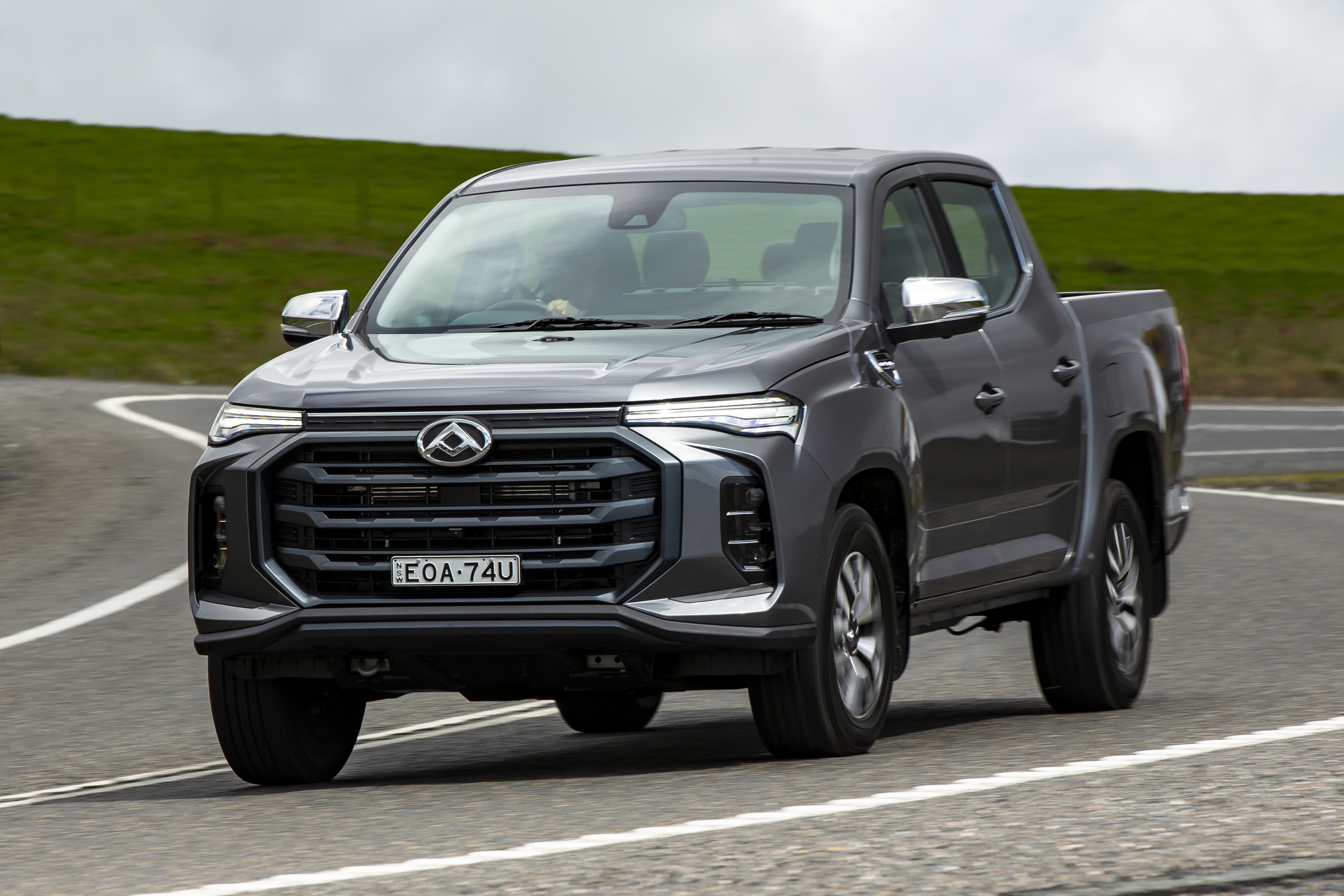
The 2022 LDV T60 Max has been unveiled, with the ute gaining a new look, better technology, and a more powerful engine.
The T60 Max is essentially a facelifted version of the T60 currently on sale, heavily revised by LDV as part of its mid-life update – but both utes will be available for sale for the time being.
Priced from $33,990 drive-away for ABN holders, the Max gets a 2.0-litre twin-turbo four-cylinder diesel engine putting out 160kW and 500Nm – outperforming the Toyota HiLux and Ford Ranger on power, and matching them on torque.
Opening the range is the T60 Max Pro with a six-speed manual transmission, followed by the Pro with an eight-speed ZF automatic, Luxe manual, and the range-topping Luxe auto at $40,490 drive-away for ABN holders.
The driver can manually select two-wheel drive, high-range four-wheel drive, or low-range four-wheel drive, with an on-demand rear differential lock for increased traction off-road on the Luxe model. Hill descent control is standard.
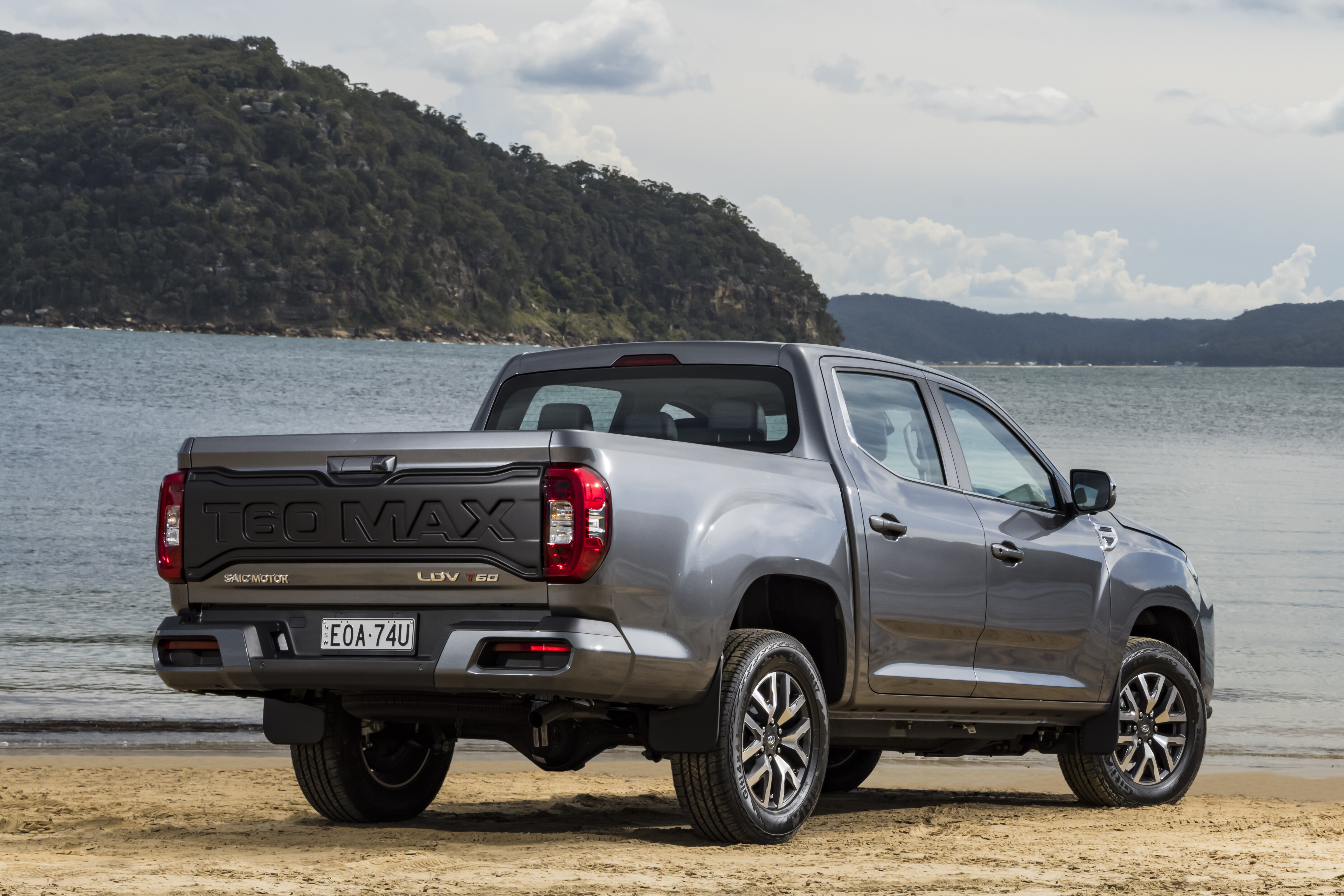
LDV says the Pro gets heavy-duty suspension, while the Luxe gets comfort suspension – both which have been tuned for Australian conditions by Walkinshaw.

Occupants get a new 10.25-inch centrally-mounted infotainment touchscreen with Apple CarPlay and Android Auto capability, along with a redesigned dashboard layout.
2022 LDV T60 Max Australian pricing
| Variant | Transmission | ABN holder | Private buyer |
|---|---|---|---|
| T60 Max Pro | Manual | $33,990 | $35,779 |
| T60 Max Pro | Automatic | $35,990 | $37,884 |
| T60 Max Luxe | Manual | $38,490 | $40,516 |
| T60 Max Luxe | Automatic | $40,490 | $42,621 |
Note: All prices are drive-away.
2022 LDV T60 Max features
T60 Max Pro
| Automatic wipers |
| Automatic LED headlights |
| Rear parking sensors |
| Climate control |
| 10.25-inch touchscreen with Apple CarPlay, Android Auto, and Bluetooth |
| Reversing camera |
| 2x USB |
| Tyre-pressure monitor |
| Cruise control |
| Full-size steel spare |
| 17-inch alloy wheels |
| Spray-in tub liner |
| 935kg payload |
The T60 Max Luxe adds
| Keyless entry |
| Rear differential lock |
| Auto-folding mirrors |
| Automatic rear-view mirror |
| 360-degree camera |
| Leather interior |
| Electric front seats |
| Lane-departure warning |
| 750kg payload |
Engine, drivetrain, and fuel economy
While the T60 is offered with either a 110kW/360Nm 2.8-litre or 120kW/375Nm 2.0-litre turbo-diesel engines, this new T60 Max gets a healthy bump to 160kW (at 4000rpm) and 5000Nm (from 1500rpm) from its twin-turbo 2.0-litre four-cylinder diesel engine.
Both the Pro and Luxe variants can be optioned with either a six-speed manual or a ZF-sourced eight-speed automatic transmission, with part-time four-wheel drive and low-range.
Fuel consumption is listed as 9.2L/100km for the manual, and 9.3L/100km for the automatic, while braked towing is rated up to 3.0 tonnes.
Safety
The 2022 LDV T60 Max inherits its 2017 five-star safety rating from ANCAP from the T60, and comes standard with:
| Six airbags |
| Brake assist |
| EBD |
| Hill descent control |
| Fatigue reminder |
Warranty and servicing
The 2022 LDV T60 Max comes with a five-year/130,000km warranty with roadside assist, but no details have been provided on servicing at this stage.
Availability
The 2022 LDV T60 Max is on sale now.
LDV has been making its presence felt in the hyper-competitive 4×4 ute segment with its T60 pickup.
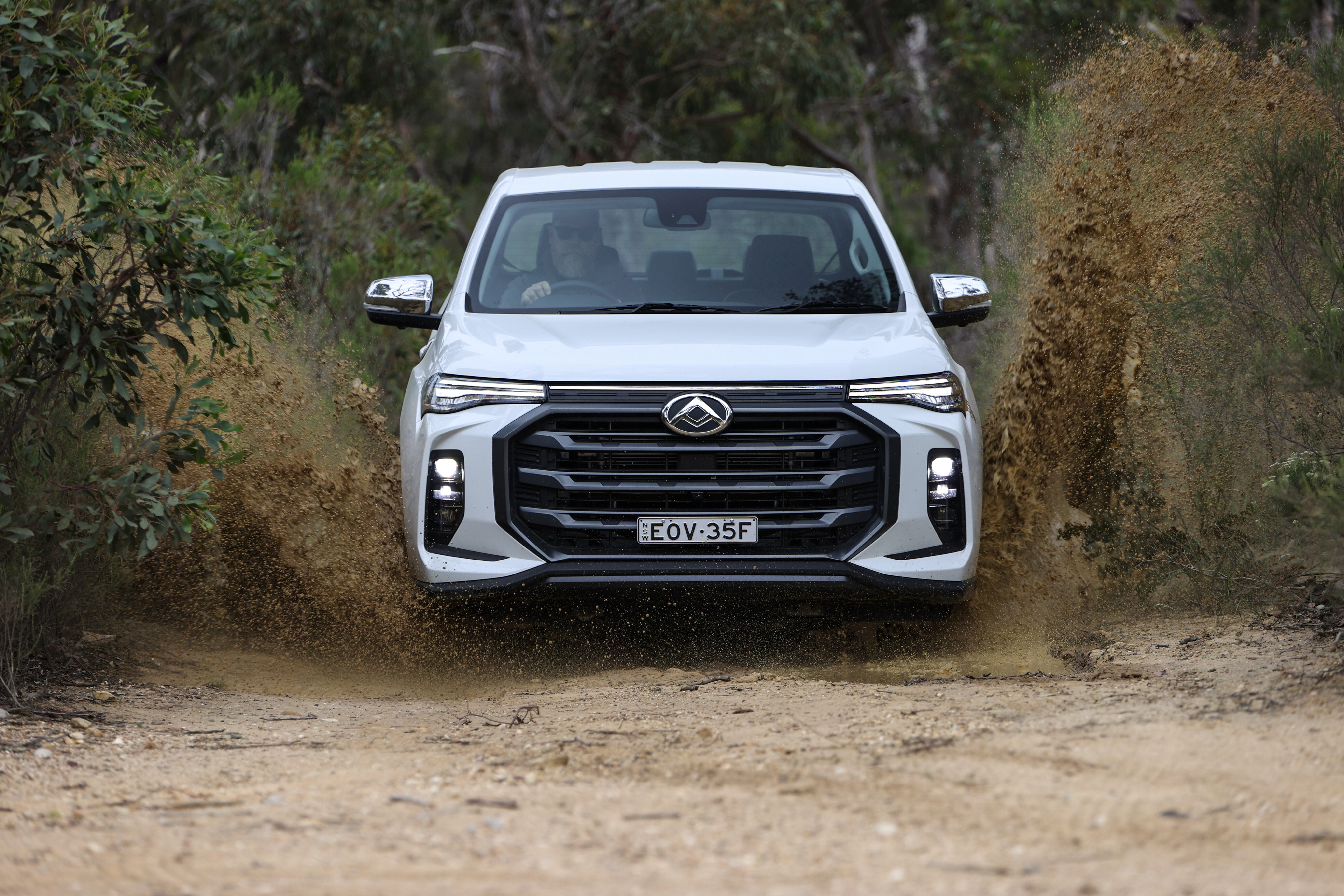
The T60 has been embraced by buyers as a more affordable alternative to the bigger names with more established models and has occasionally poked its name in to the monthly top 10 selling 4×4 vehicles throughout the past year.Now the Chinese manufacturer of light commercial vehicles has upped the T60 ante by giving the ute a serious makeover with fresh styling inside and out and fitting the more powerful bi-turbo diesel engine from its D90 wagon model. It’s calling the new model the T60 Max and offering it in two specifications: the T60 Max Pro which is aimed more at the trade users, and the T60 Max Luxe that is hoped will have more appeal to recreational and family buyers.The T60 Max models are priced from $33,990 drive away for the Pro with a manual gearbox, up to $40,490 for the Luxe automatic which we have here for review.
POWERTRAIN & PERFORMANCE
A big claim for the T60 Max is that it is equipped with the most powerful four-cylinder diesel engine in the ute class, producing 160kW of power that’s 3kW more than Ford’s 2.0-litre bi-turbo diesel with an equal 500Nm of torque.Like the Ford engine, LDV’s 2.0-litre motor uses a bi-turbo arrangement to extract the most performance from its relatively small capacity. They have squeezed a bit more out of it for the T60 ute, upping the D90 wagon’s 158kW and 480Nm to beat the Blue Oval’s numbers. The ‘Bi-Turbo’ vent badge on the front guards looks very familiar too.Unlike most other bi-turbo arrangements where the engine will use a smaller turbocharger to provide boost at low speeds and then switch to or combine with a larger turbocharger as engine speeds rise to give a broader delivery of power and torque, the LDV engine delivers its powerload like a light switch.
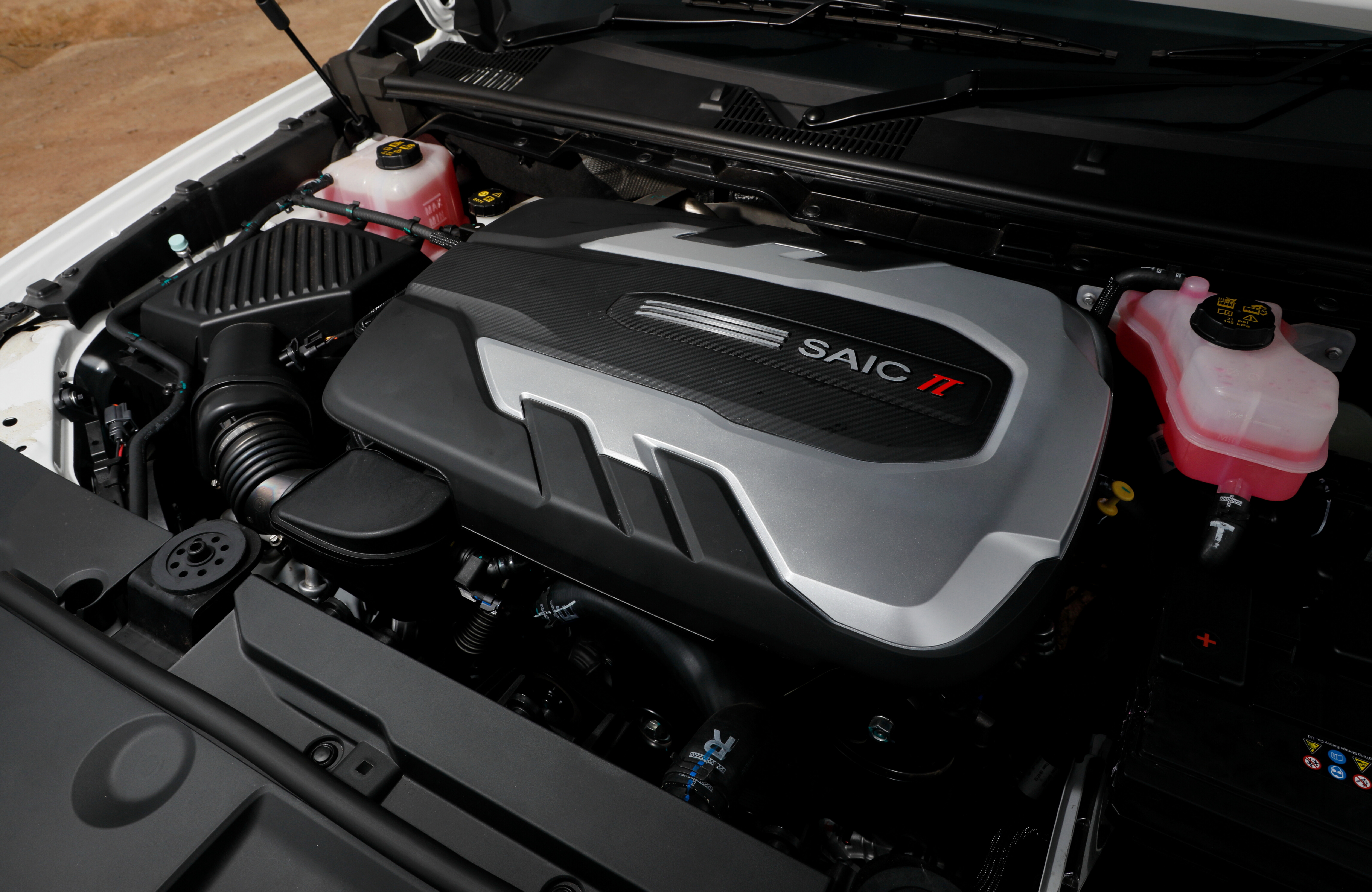
It is a two-stage system using a smaller compressor at low speeds and switching to a larger one as the load increases, but there’s considerable lag from when you put your foot down to when the power comes on – and when it does, it comes on strong, spinning the wheels and surging forwards.Whether or not this is a result of how the engine is tuned or how the throttle is calibrated is unknown, but the result is abrupt and something the driver needs to be wary of when negotiating tight tracks or pulling out of a side street in to flowing traffic. Yes, the T60 Max has plenty of grunt, but the way it delivers it is unrefined.The most refined part of the T60’s drivetrain is the ZF-sourced eight-speed automatic transmission, which works well and without complaint.A couple of points of difference in the T60 Max over and above most of the other utes in this segment: the four-wheel drive system has an on-demand mode, meaning you can leave it engaged over any road surface and the torque will be distributed to the front axle as needed; and the fitment of four-wheel disc brakes, while most one-tonne utes still have drums on the rear.
ON ROAD RIDE & HANDLING
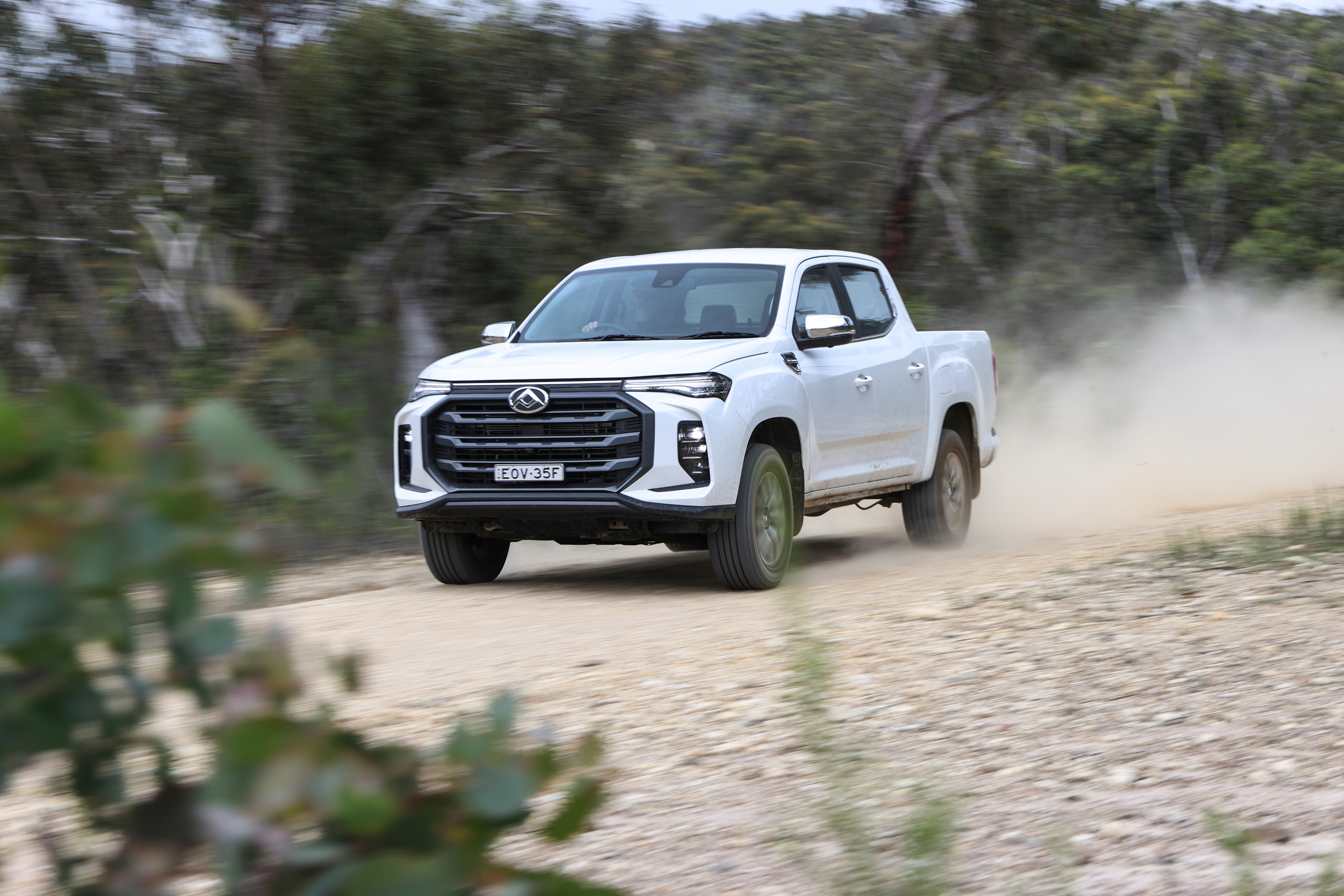
THE T60 Max comes with one of two suspension calibrations for either load carrying in the Pro model or comfort in the Luxe variant. I say comfort, as that’s what LDV calls it, but driving the Luxe unladen, it was anything but comfortable. The ride is bone-jarringly harsh and reminiscent of load-carrying double-cab utes of two decades ago.It’s a double-wishbone and coil-spring IFS arrangement, with a live axle under leafs at the back and the ‘comfort’ set-up sacrificed 175kg of payload compared to the heavy-duty package under the Pro model. I’d hate to feel an unladen T60 Max Pro over a bumpy bush track. As it is, it feels like it wants 500kg in the tub to soften the ride up.We can only hope that LDV sees fit to enlist the help of the Walkinshaw group once again to sort out the ride quality of the suspension. The Walkinshaw-fettled Trailrider model of a few years ago showed more compliance in the suspension resulting in a better ride, even on its 19-inch wheels and low-profile tyres.
OFF ROAD
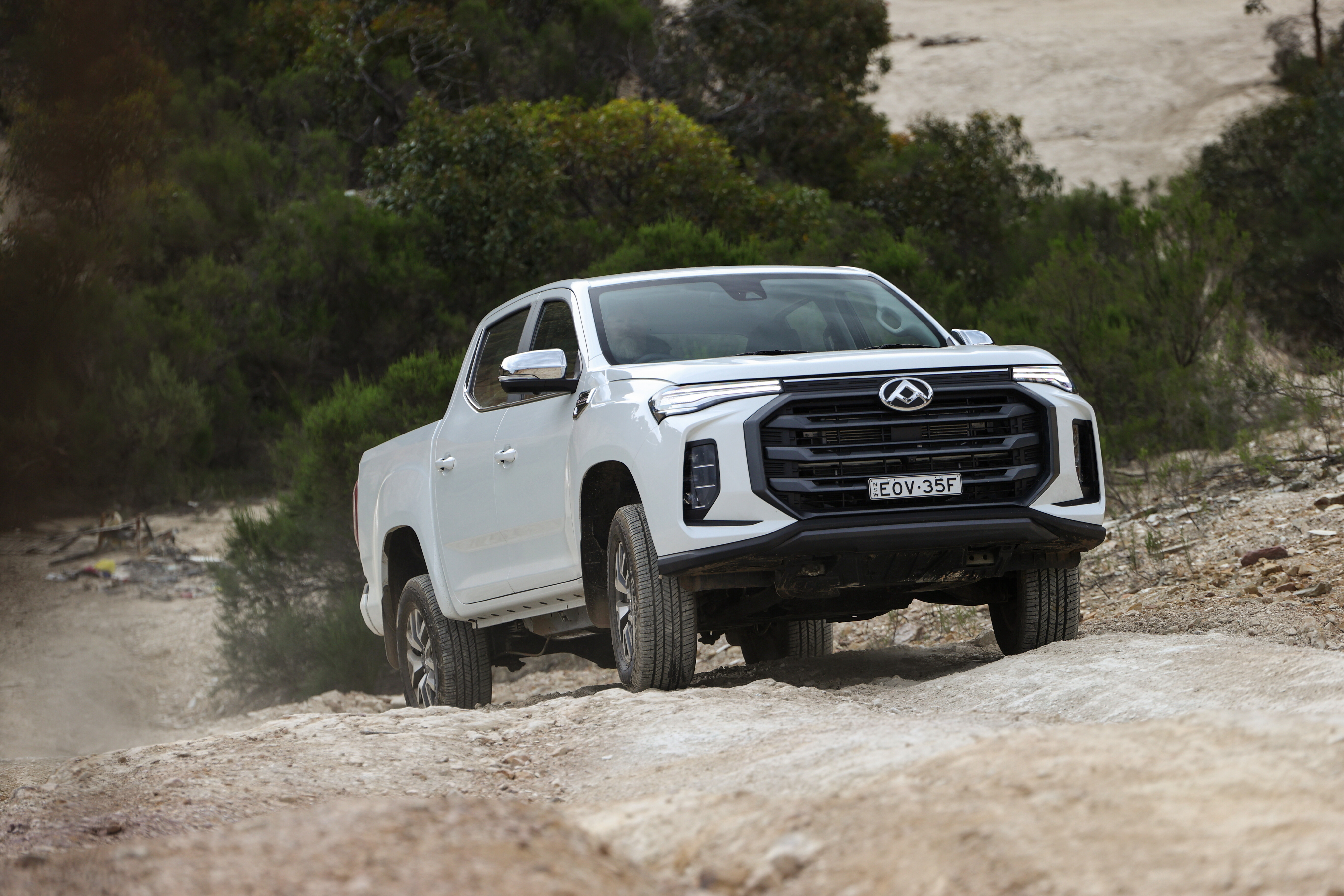
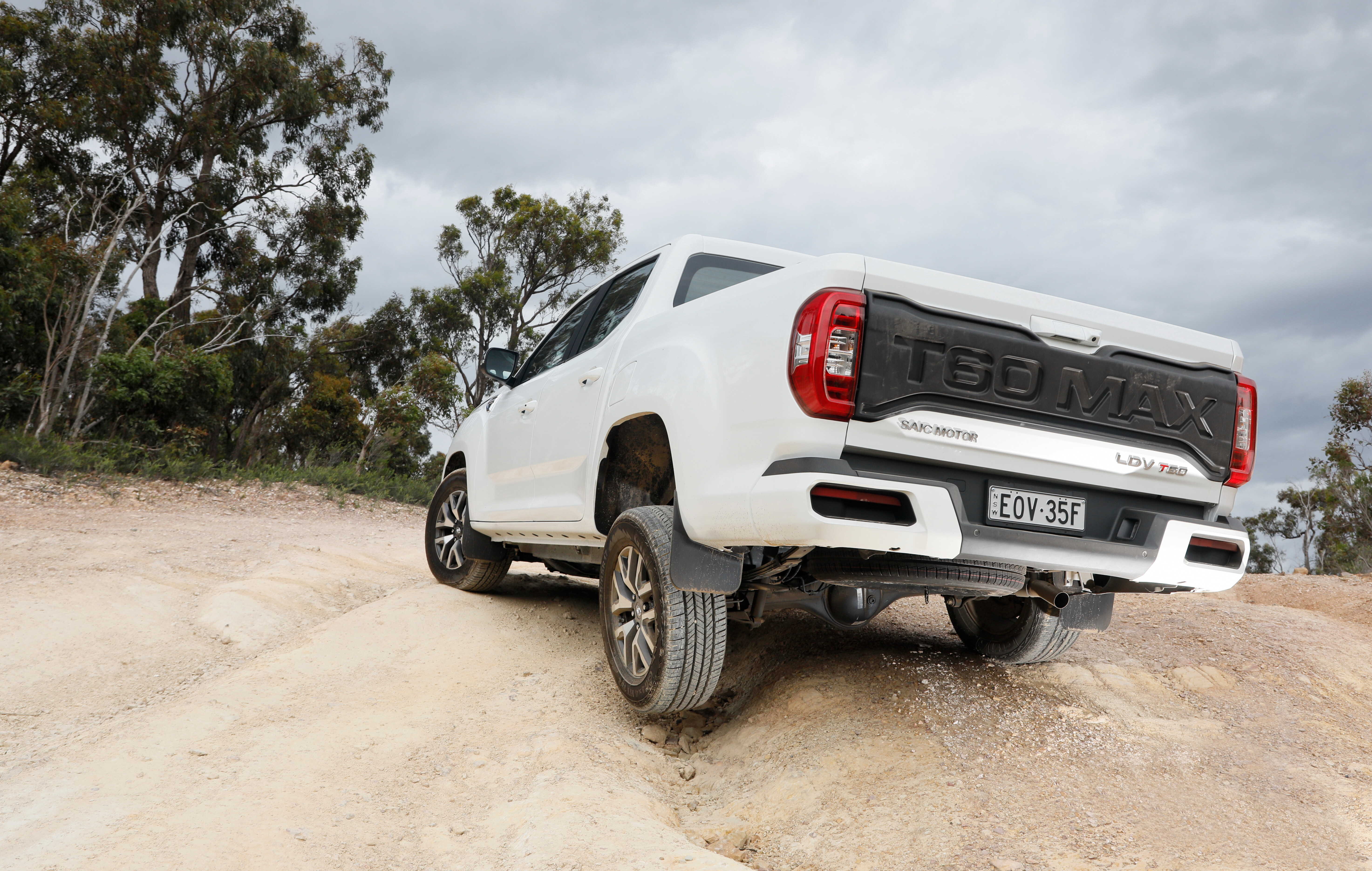
THE T60 Max uses a four-wheel drive system that offers 2WD, on-demand 4WD, 4×4 high and 4×4 low range, and that on-demand option is something that works well on varied terrain and low-traction surfaces. The relatively stiff suspension doesn’t offer a lot of wheel travel but when it picks up a tyre, the auto-locking rear differential is very effective in pushing forward to maintain progress over obstacles.The electronic traction control (ETC) feels like it’s a few generations behind that found in the LDV’s competitor’s utes and 4x4s. It’s slow-acting, noisy and jerky, but it gets the job done eventually.
CABIN AND ACCOMMODATION
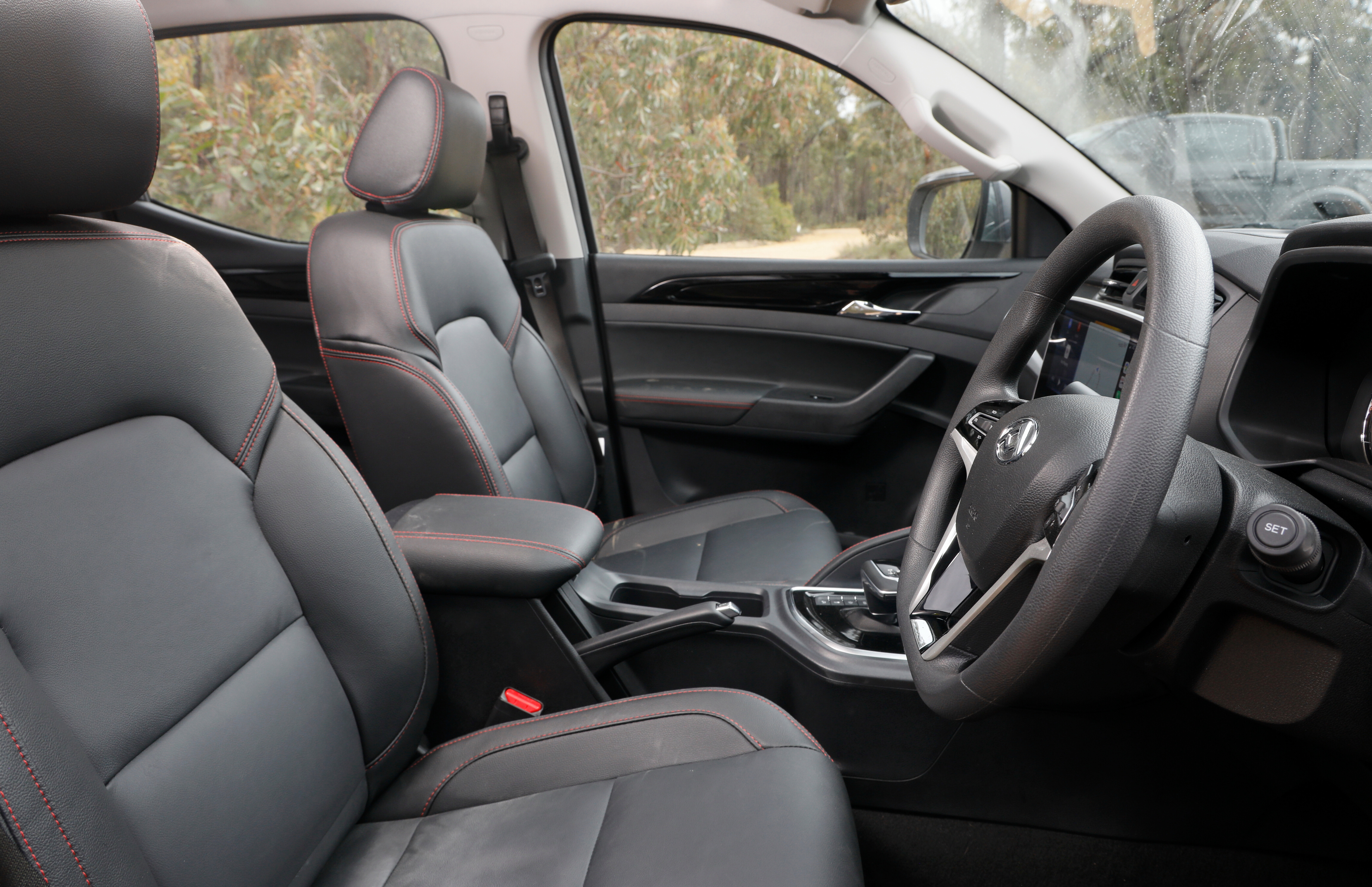
THE T60 has always offered an interior that looks better than its price point would suggest, and the Max raises that bar further. This Luxe variant gets power adjustable heated leather seats over the cloth pews on the Pro model and combined with the new 10.5-inch touchscreen, which comes in both variants, gives a more upmarket feel.The seats are firm and flat and the steering column is only adjustable for height but not reach. The screen is bright and clear and the audio system includes CarPlay connectivity. We did find the screen to be a bit slow to respond at times, sometimes taking a few taps to get it to select what you want, and there are no controls for the audio volume in the dash, just on the steering wheel. The Luxe model also has keyless entry and push-button starting.Space in the back seat is typical of the double-cab utes available, in that you can carry adults in there but they won’t be comfortable on long trips.The T60 Max relies on its 2017 ANCAP 5-star rating, so it has most of the safety features you expect but not some of the latest ones. Among those missing are autonomous emergency braking and rear cross-traffic alerts. Only the Luxe variant gets lane-departure warning, while both models get a tyre-pressure monitoring system (TPMS).
PRACTICALITIES
THE T60 Max has a large cargo tub with four tie-down points in the corners. As mentioned earlier, its payload is well short of the 1-tonne standard on the Luxe but comes up to 935kg if you opt for the Pro model with a manual gearbox or 925kg with the auto. The towing rating is 3000kg, so again down on many of the 1-tonne 4×4 utes but probably a more realistic figure for any vehicle in this class.The 550mm wading depth is another figure that’s below par for the segment, and while the 245/65R17 tyres might be small, they are a practical size and well-suited to the vehicle.LDV vehicles have a 5-year/130,000km warranty and roadside assistance, with a growing national dealer network.
SUMMARY
THE T60 Max might look more contemporary both inside and out but it remains a fairly rudimentary vehicle in the way it drives. The throttle lag and the way it delivers its power, the hard-riding suspension and the noise of the engine hark back to utes of yore, before they became more refined and family friendly. These are things that might not be a problem for some buyers but 4WD utes have come a long way in the last decade and the class leaders in the category are more refined and user friendly for whatever use you have for them.The T60 Max’s strong points are it’s engine output and the excellent transmission combined with its relatively low price and what you’re getting in a $40K ute.I was speaking with a tradie just a week before this drive who was telling me he had a couple of T60s (not T60 Max) and they have been absolutely no problems for him and his workers who love it. That sort of testimonial makes you think twice about brands you might not otherwise consider but for the price, the T60 Max is certainly worth a look-in.
LDV T60 PRO LUXE SPECS
| Engine | I4 turbo diesel |
| Capacity | 1996cc |
| Max Power | 160kW @ 4000rpm |
| Max Torque | 500Nm @1500 u2013 2400rpm |
| Gearbox | 8-speed automatic |
| Crawl ratio | 50.84:1 |
| 4X4 System | Dual range on demand 4×4 |
| Construction | 4-door cab @ ute tub on ladder chassis |
| Front suspension | Double wishbone IFS |
| Rear suspension | Live axle on leaf springs |
| Tyres | 245/65-17 on alloy wheels |
| Kerb Weight | 2150kg |
| GVM | 2900kg |
| Payload | 750kg |
| GCM | 5000kg |
| Towing capacity | 3000kg |
| Seating capacity | 5 |
| Fuel tank capacity | 73L |
| ADR fuel consumption* (claim) | 9.3L/100km |
| On-test fuel consumption | 11.2L/100km |
| Approach Angle | 27u00b0 |
| Ramp Over Angle | 21.3u00b0 |
| Departure Angle | 24.2u00b0 |
| Ground Clearance | 215mm |
| Wading Depth | 550mm |