I’ve come to love Far North Queensland, from Cape York across to the Gulf and especially discovering new areas with history attached.
On a recent trip, I was pointed towards an area that sounded pretty cool to explore off the Burke Developmental Road in the Mareeba Shire. Finding the old town or at least the turn-off for Lappa wasn’t that easy as there’s nothing left from the old mining days; if it wasn’t for a prior chat with a local I would have driven straight past.
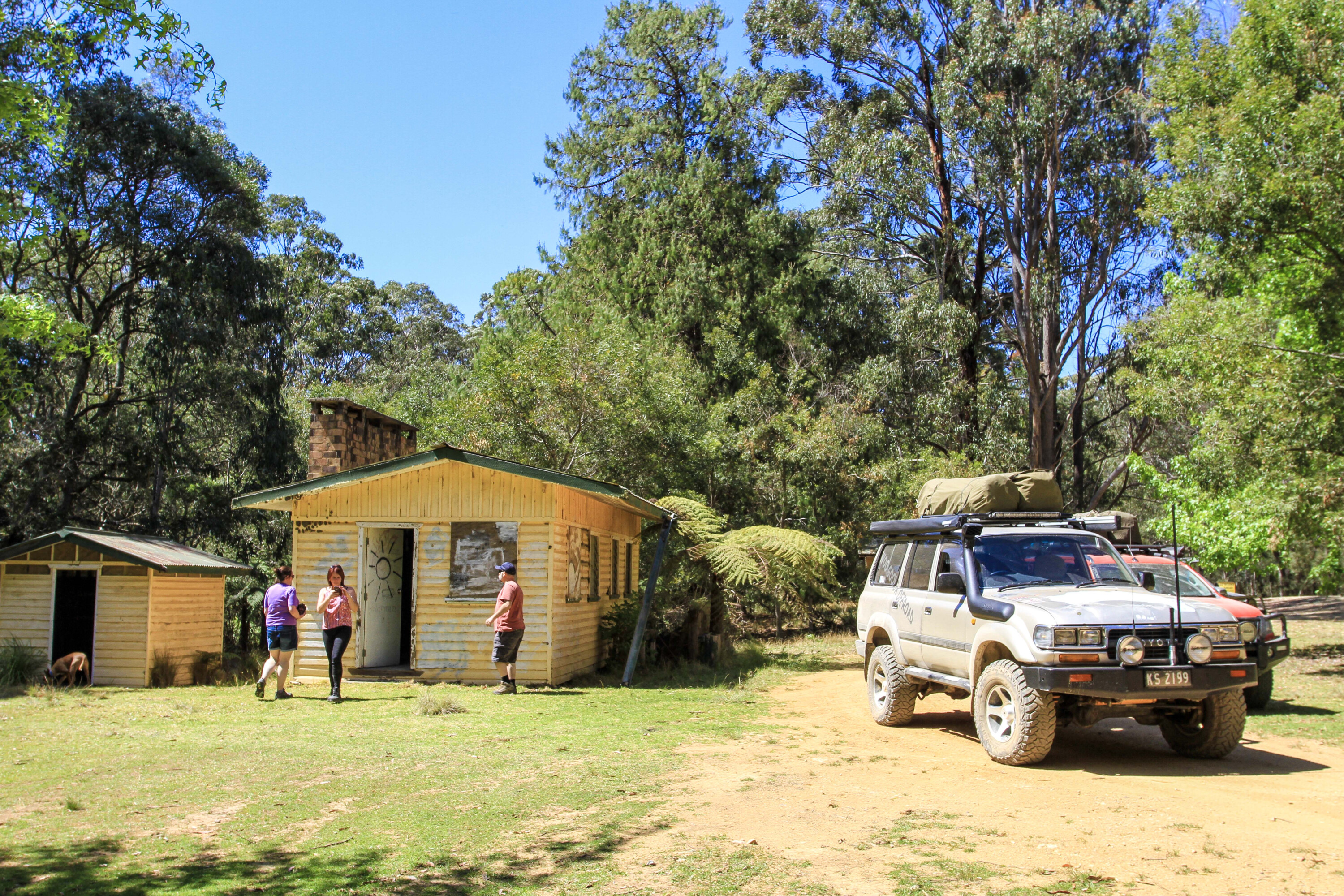
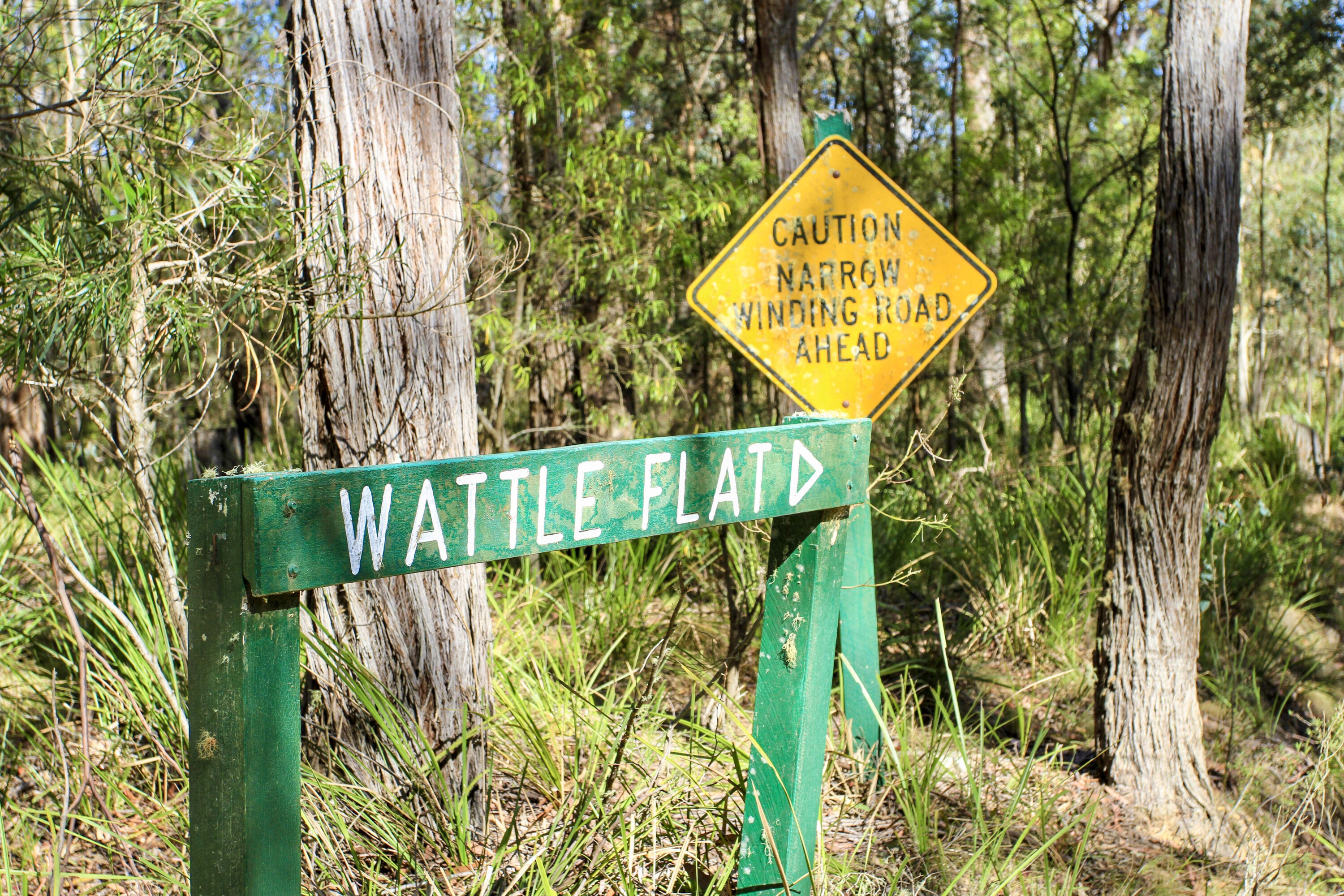
The sign on the top of a rise was marked for Mount Garnet and this was the turn for Lappa. A short way up the road I found the main area of Lappa and the historic Espanol Hotel built back in 1901.
1
Turn back the clock to January 1891 when silver was discovered by Phil Hamlin and his party after they crossed the Featherbed Range a few miles to the north, and a dozen claims were set up and the town’s name was changed from Wadestown to Lappa (other reports say the town was called Lappa Lappa).
Lappa was just an isolated settlement until the railway line was built in 1899 en route to Chillagoe from the coast, and soon there was a junction at Lappa for the rail to head south to Mount Garnet. The town didn’t last long and soon fell in to disrepute, leaving only the hotel, an old house and the station behind.
Today, the old hotel is jam-packed-full of memorabilia and souvenirs from travellers and locals. Sadly, it doesn’t operate these days but you’re welcome to bring a carton and be mesmerised by the amount of gear in the old pub.
Just next door in the old house lives an interesting character who looks after the pub and is known as the Yappa from Lappa. He has collected a lot of the memorabilia in the pub, can spiel yarns from the days gone by and also help you empty your carton. The old house was the Almaden church built in 1900 and moved to Lappa in 1940.
Across the paddock from the pub is the old railway house that’s been restored after the railway line ceased to operate when the huge mines closed at Chillagoe, the lines were once privately owned by entrepreneur John Moffat based at Irvinebank. Today, the railway line only sees the Savannahlander stop every Wednesday en route from Cairns to Forsyth and passes back every Saturday.
1
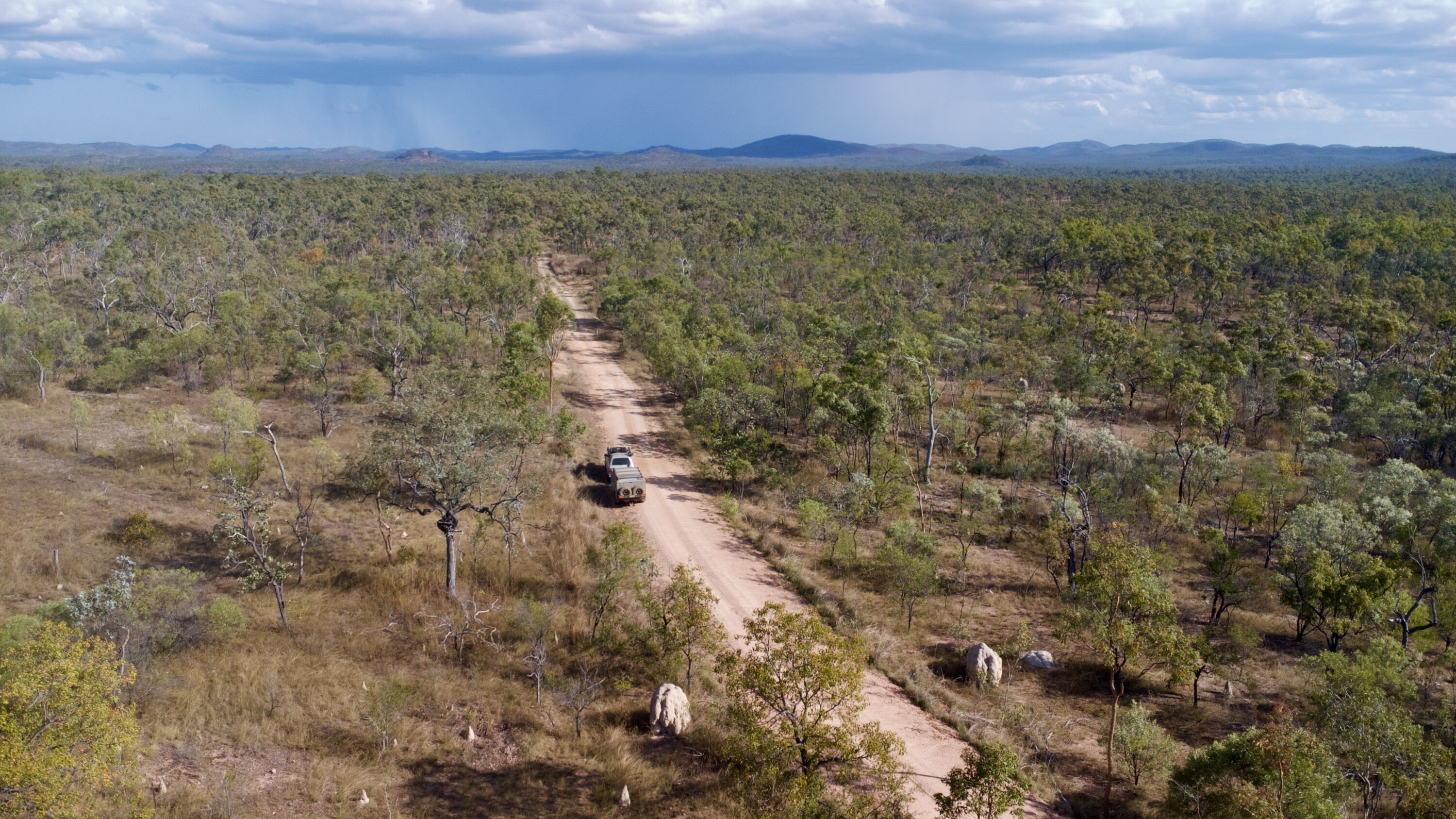
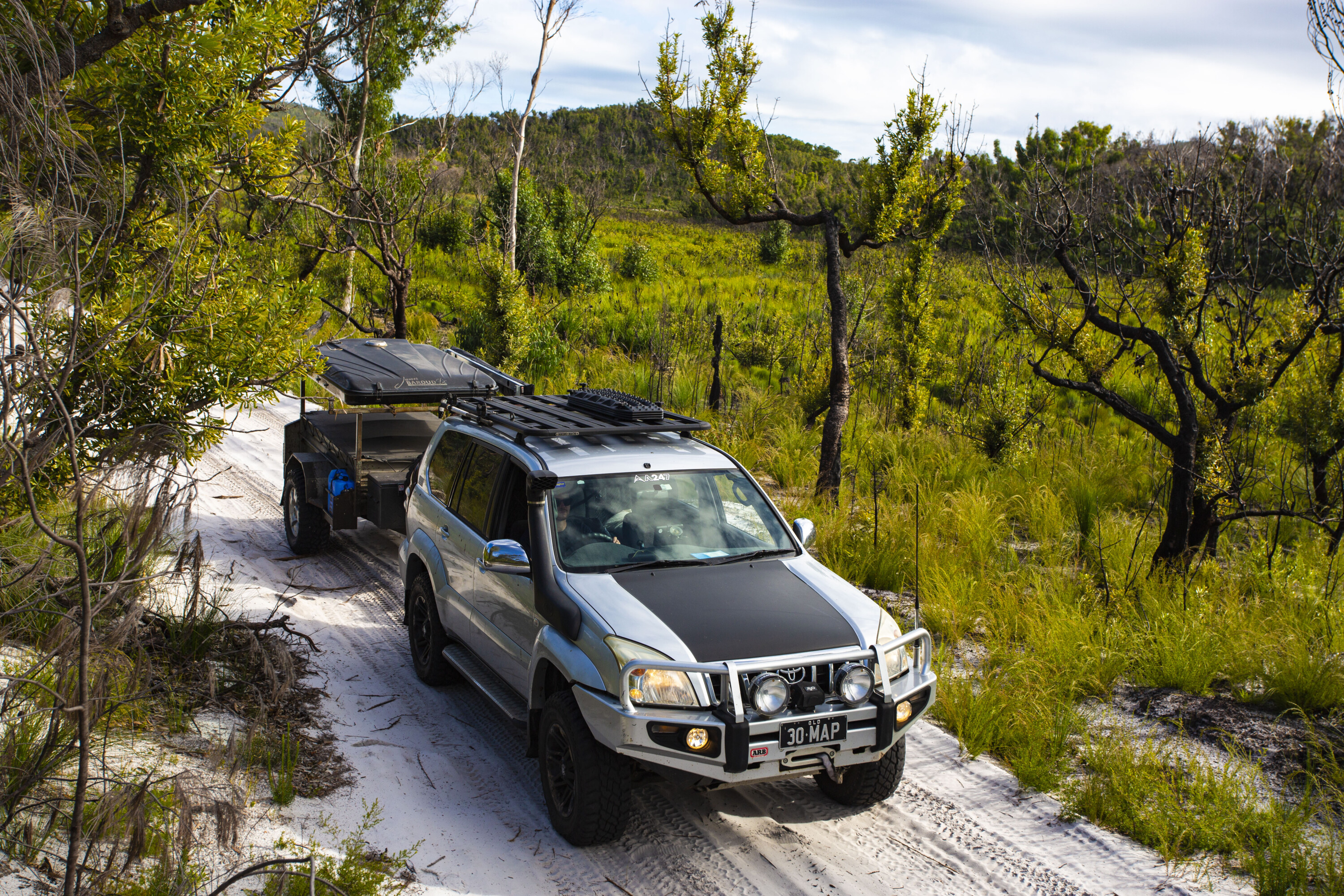
The directions I was given was to follow the old rail trail which was originally a camel track built by Abdul Wade and today is a popular four-wheel drive and mountain biking trail to Mount Garnet, after the line closed in 1961.
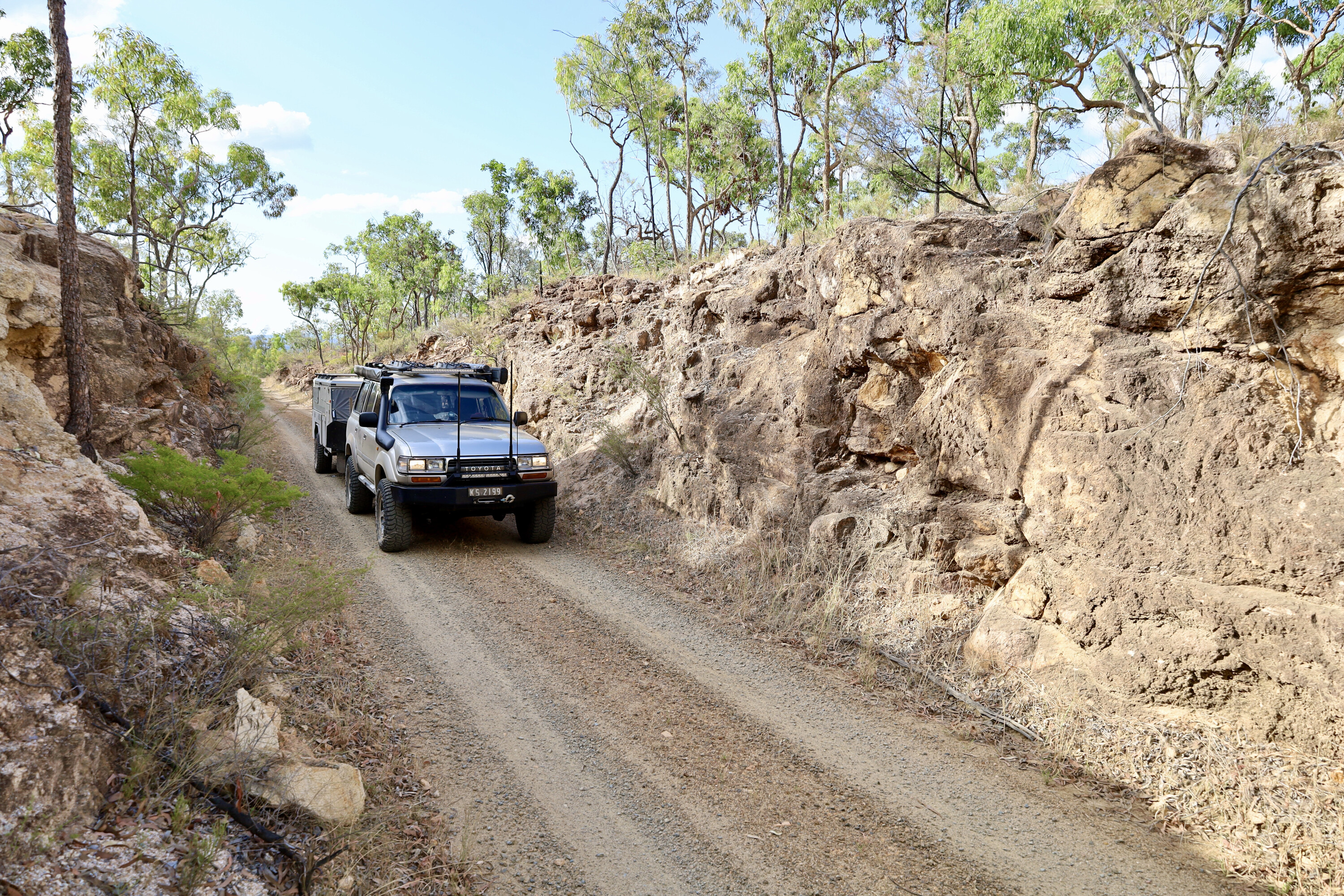
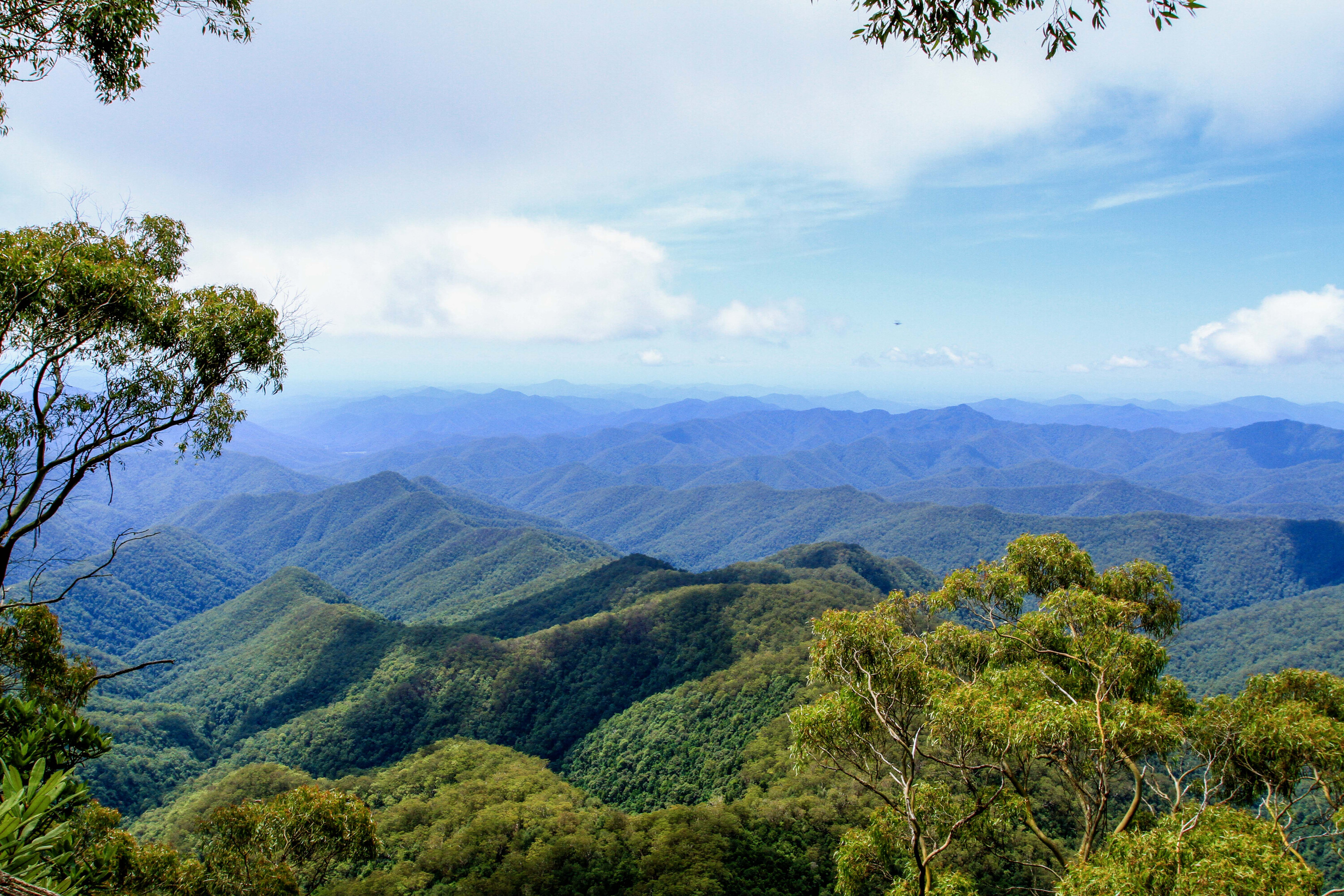
Now while it’s only a 55km trip along the Mount Garnet road, the trail goes through magnificent ranges with views of the isolated countryside, and where the road crosses or goes near old sidings you’ll see old frangipani and mango trees that are visible through the scrubby timber.
It’s a pleasant drive, with no real obstacles all the way down to Mount Garnet but keep an eye out for old stone bridges and narrow rock cuttings that are now heritage listed.
Mount Garnet
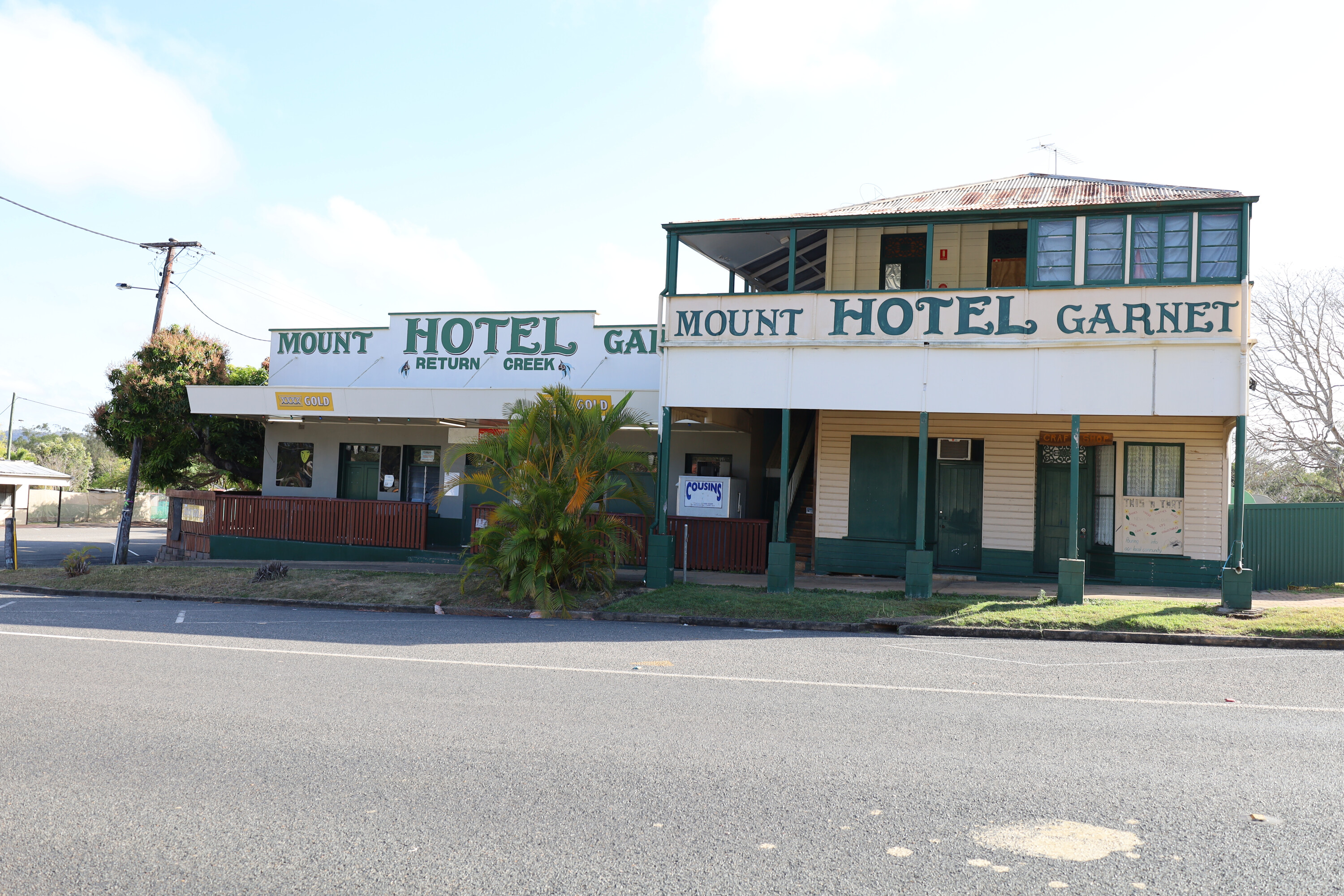
Mount Garnet is a sleepy little village that’s easy to pass through without stopping, and there’s not much there except for a couple of pubs, service stations, a few shops and houses in the middle of nowhere.
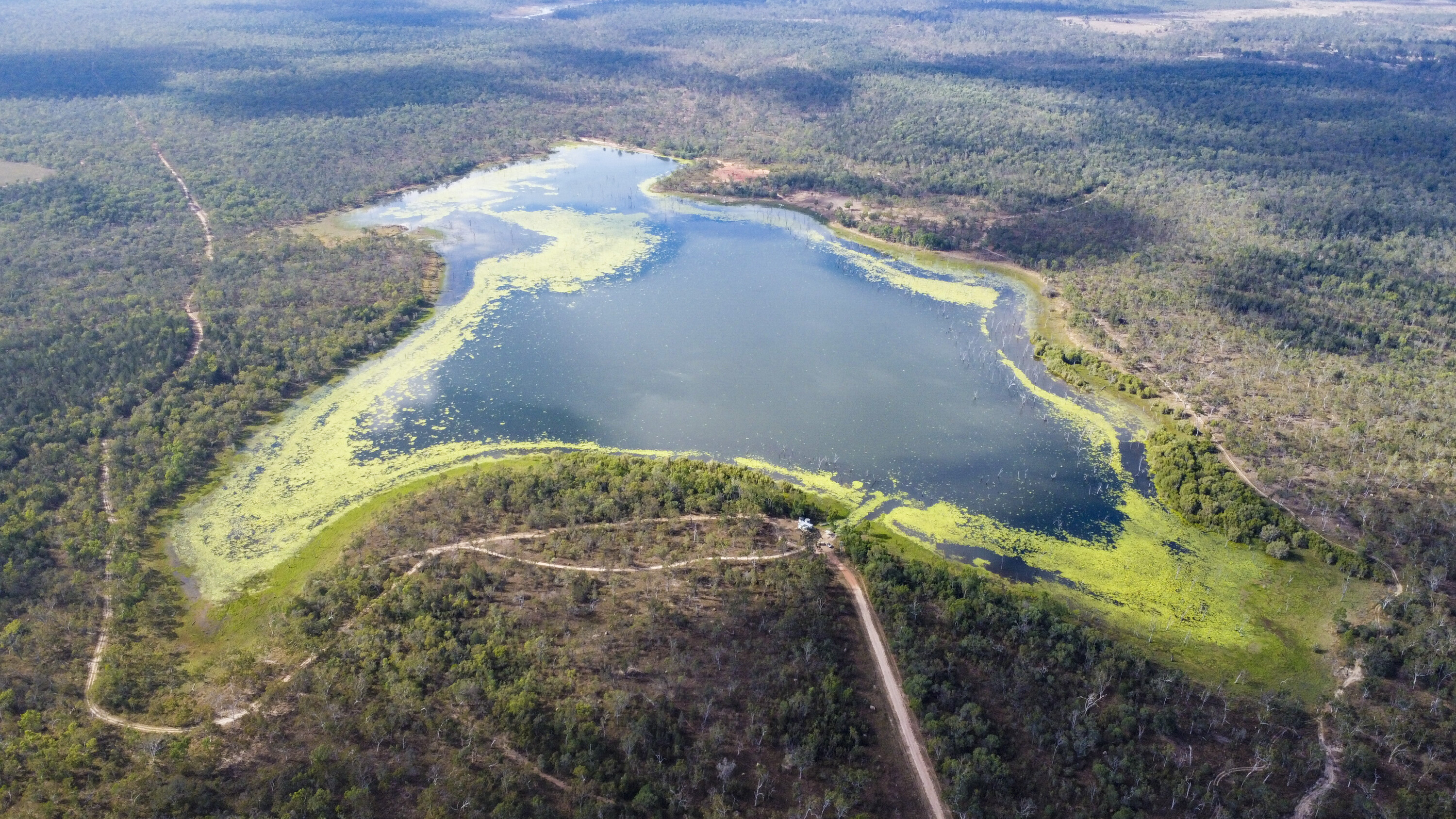
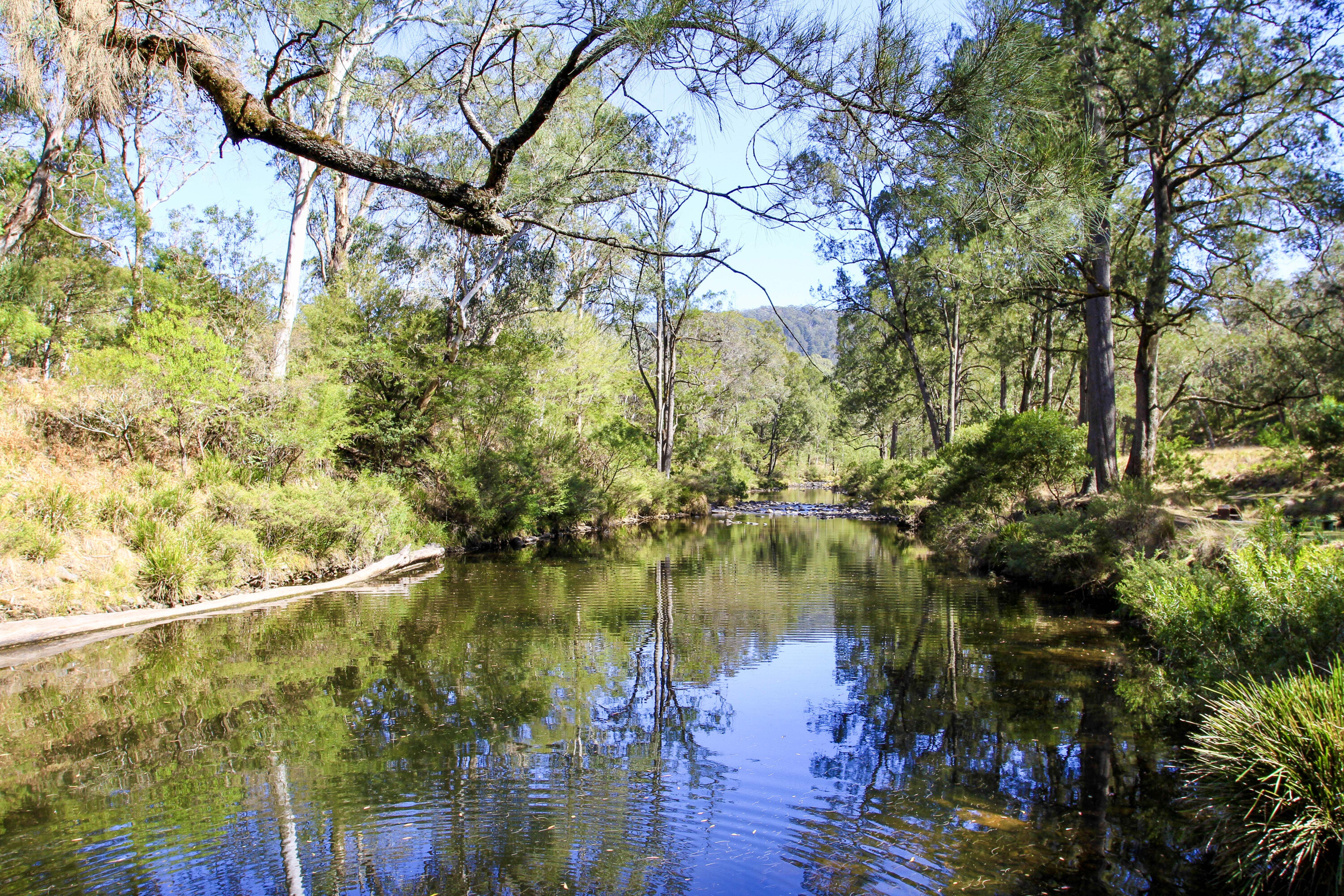
An amazing spot to look at is the beautiful Warrumu Swamp on the eastern edge of town, which can be alive with hundreds of black swans and impressive displays of water lilies year-round. Locals reckon the swamp never dries up, even in the worst droughts, due to subterranean springs that feed clean water up through the ground.
1
Copper was found in 1883 and the first lot was transported across to the coast by camel. When a branch line came down from Lappa, the smelted copper was moved more efficiently and quickly back out for sale and shipped around the world. Huge deposits of tin were found, and in 1928 a massive coal-fired dredge was transported to Mount Garnet, then 10 years later the company moved to an electric-driven dredge, but in 1986 tin prices collapsed and mining stopped.
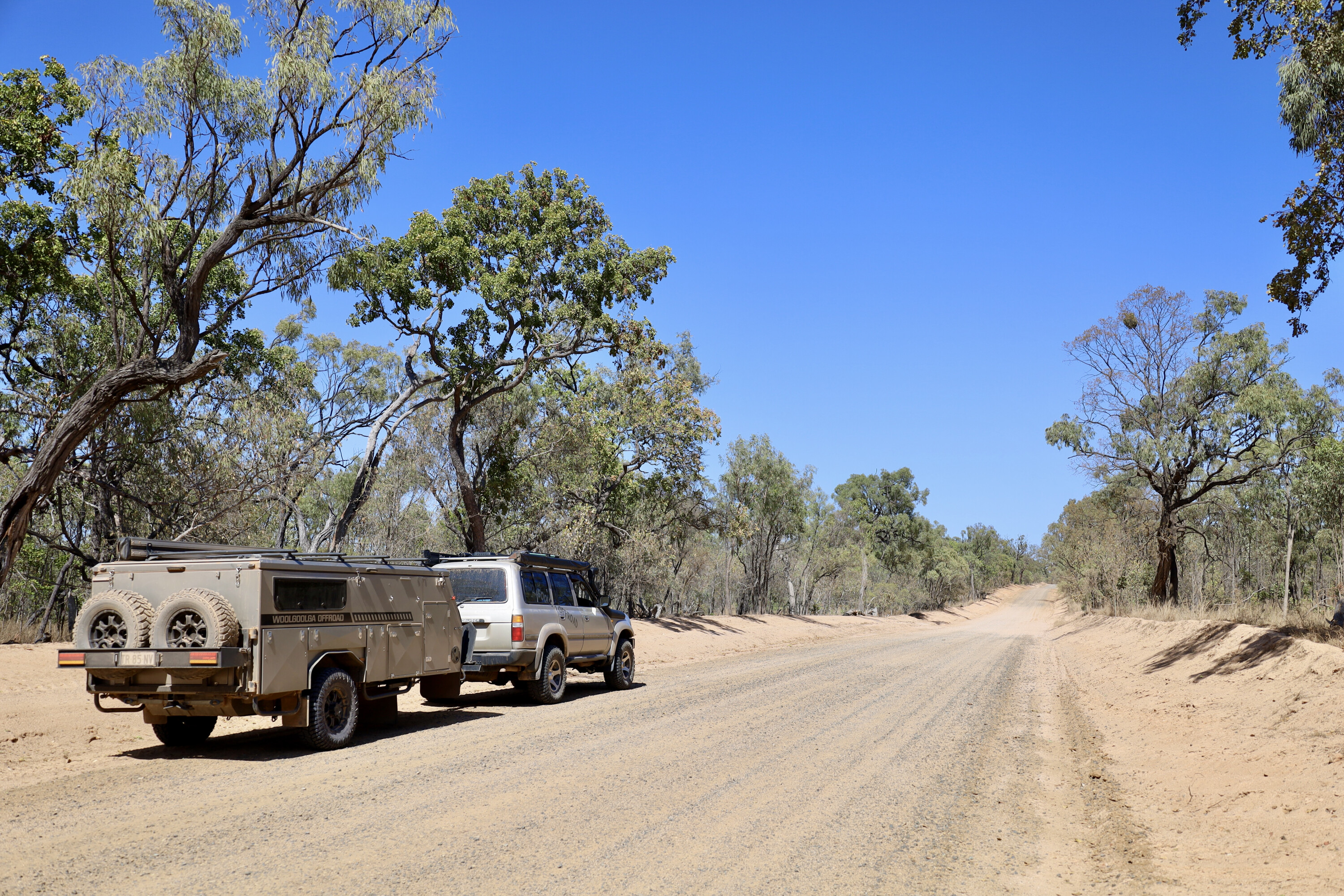
My next stage of this trip was westward for 22km and to Ootann Road and up towards an old railway siding at Fossilbrook and eventually to Mount Surprise. Again, these are pretty decent dirt touring roads and I think I only encountered a couple of locals in their 4WDs. About 65km along, I swung left on to the Gingerella-Fossilbrook Road and it was another 30km where I found the abandoned Fossilbrook siding.
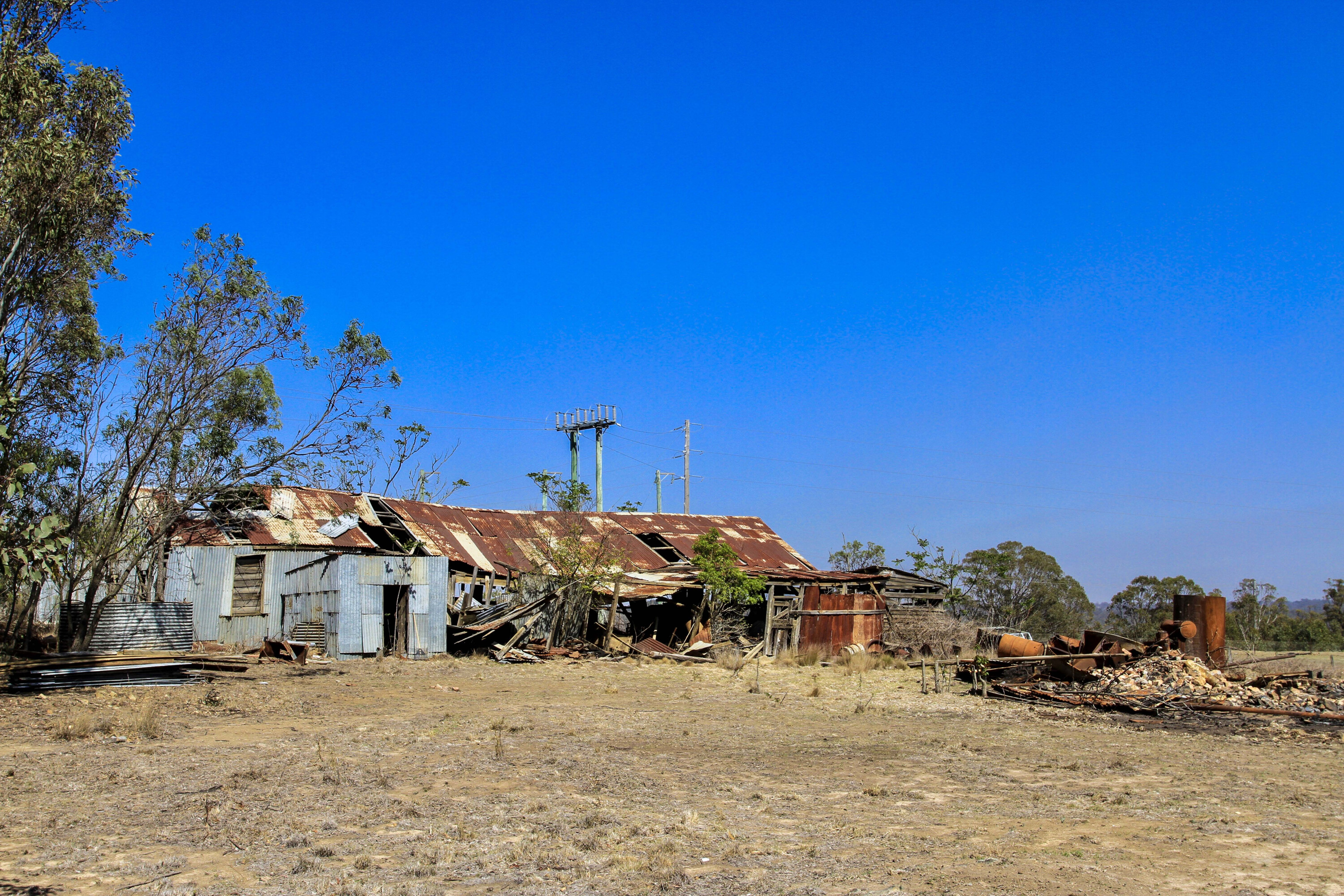
Once an important stopover to collect livestock, drop mail off and even collect passengers, the only relics left at Fossilbrook today are a raised concrete siding, cattle yards and an old water tank that looks like it was used for mail drops. The narrow-gauge line sits on low-profile metal sleepers that help combat termites and reduces washaways in flood times. Fossilbrook survived from 1885 until the mines ran dry, it had a school but that closed in 1926, and Fossilbrook now only has a population of local station owners.
Springfield Road was my way out to the Gulf Developmental Road and on to Mount Surprise. Passing through private stations, across dry riverbeds and covering a very dusty 45km back, it wasn’t long before I hit the tar.
Mount Surprise
Today, Mount Surprise is a pleasant stop along the never-ending gulf road, but this place had so much to offer over 100 years ago. Ezra Firth took up pastoral land back in 1864 and continued to grow his wealth for many years.
When he came to the area, it’s said that local Aborigines saw him and other white people on a passing dray, while having a feast. They ran away after seeing them and that night the Aborigines lit small fires across the nearby mountain and apparently that’s how the town got its name, Mount Surprise.
As in most outback and isolated towns, if the railway went through there was always a hive of activity and this place was no different, with a busy hotel and post office building across the road from the former railway station.
1
Today, it’s a quiet place where tourists make up most of the population year-round exploring the area. In town, the highlight for most travellers is the railway station where there’s a comprehensive museum showcasing a stack of memorabilia for the area’s past. Also the restored buildings, rail relics and info boards all set in amongst a cool, green park.
The 90-year-old Savannahlander rail motor (or Silver Bullet) passes through and stops at Mount Surprise several times a week, taking passengers farther afield or on day trips across the savannah landscape. Nearby to Mount Surprise are the ancient Undara lava tubes claimed to be some of the largest in the world, all part of a link of 164 volcanoes that formed more than 190,000 million years ago.
There’s also the Forty Mile Scrub NP that was also created as part of volcanic action where this ancient rainforest has been left virtually untouched since being formed. Rare plants and animals call this home and the park’s forest is regarded as the most concentrated and greatest of its kind in Australia. There’s been links within the forest to India and Burma that were once connected before continental drift.
For the fossickers, there are O’Briens Creek and the Agate Creek gem-fields. Both are different in their own ways but great to find coloured rock pieces. Gems from these areas are regarded as world-class for their clarity, size and colour. They include thundereggs, clear and smoky quartz pieces, plus amethyst. If that’s not enough, there are also Cobbold and Copperfield gorges just a short drive away where you can marvel at basalt formations, explore water holes and possibly see a freshwater croc.
Even though most of the history has gone now, this remote and often hostile area has so much to see and do, I would nearly say there is something for the whole family to enjoy.
Five fast facts
Where
My starting point Lappa was 200km west of Innisfail. Mount Surprise and Mount Garnett are also inland from Innisfail in Far North Queensland. After leaving the beautiful Qld coastline and passing through rich lush rainforest areas, the landscape surrounding these historic places is regarded as harsh and isolated.
All aboard!
There’s a plethora of railway history to explore, driving the rail trail, a historical mine trail, free camping along the way through to riding the Savannahlander train on parts of the northern line and accommodation in vintage railway carriages at Undara Volcanic NP. The Savannahlander, a 1960s classic ‘Silver Bullet’ railmotor, departs Cairns weekly, winds its way through the wet tropics area of the Kuranda ranges through the Savannah country to Forsayth and back, a unique outback railway trip.
Undara Volcanic National Park
Between the townships of Mount Garnet and Mount Surprise on Highway 1 is the turn-off to the fascinating Undara Volcanic NP, famous for its massive lava-tube caves and Kalkani Crater scoria cone. Undara offers camping, railway carriage accommodation, guided tours, picnic and day-use areas, walks, and more. An easy walk is around Kalkani’s crater rim offering spectacular views to other volcanic cones in the distance and nearby savannah woodlands.
Take note
This is remote and harsh country. Now while there are a few signs and cattle stations along the way, there’s no phone service for the trip between Lappa and Mount Garnet and the loop up via Fossilbrook. Use a good mapping GPS and you’ll be able to criss-cross through the area exploring the old relics.
The towns
The pubs at Mount Surprise and Mount Garnet have an array of history within the buildings. Closer to Mount Surprise are the above-mentioned ancient lava tubes, rare forests, gorges to explore and gem finding nearby. Although volcanic activity ceased some 10,000 years ago, there is still a geothermal presence in the region.
At Innot Hot Springs near Mount Garnet, the town is noted for the hot waters of Nettle Creek with seven pools of varying temperatures to try. Even the surrounding sand gets hot, so be wary walking around in bare feet.
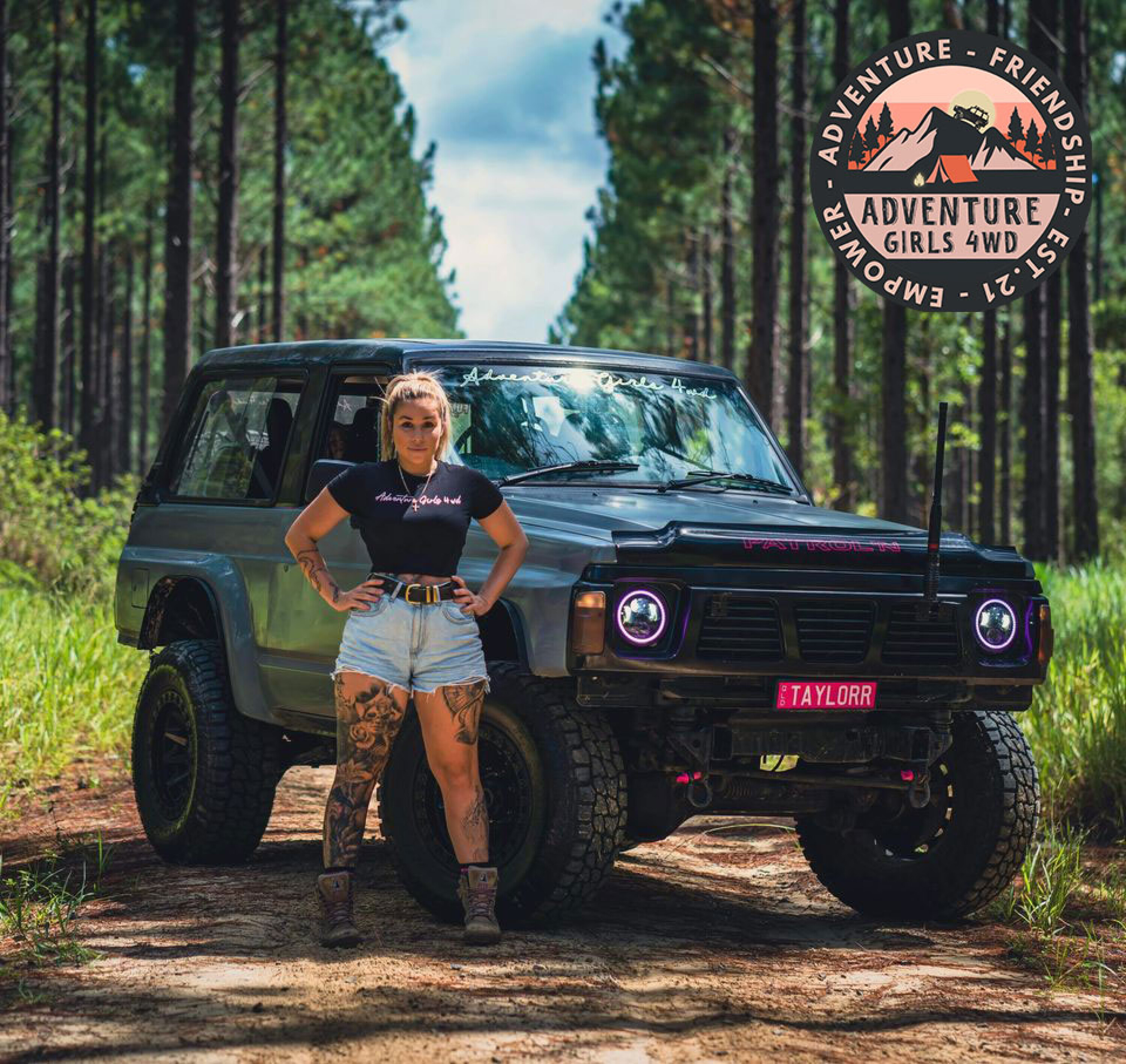
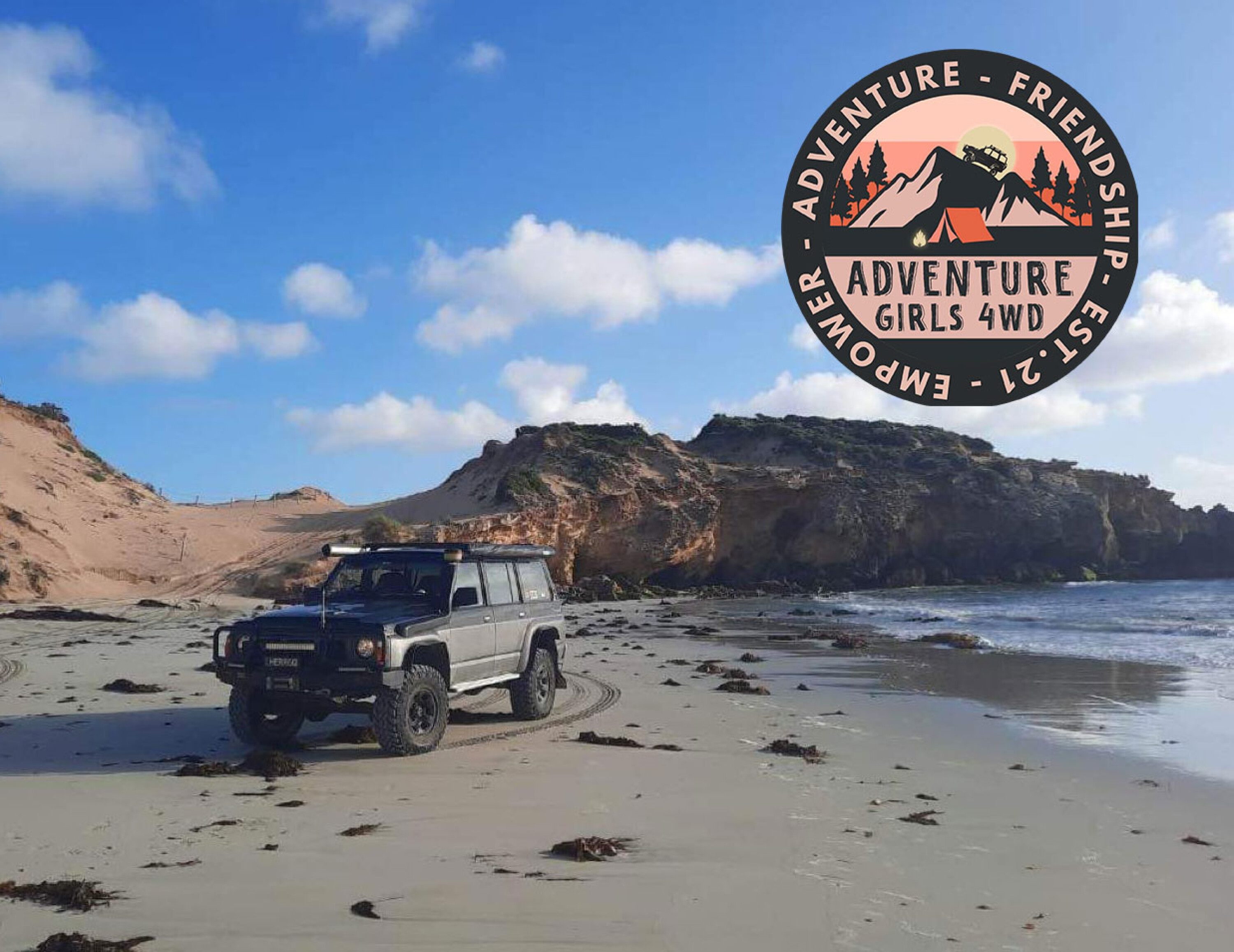
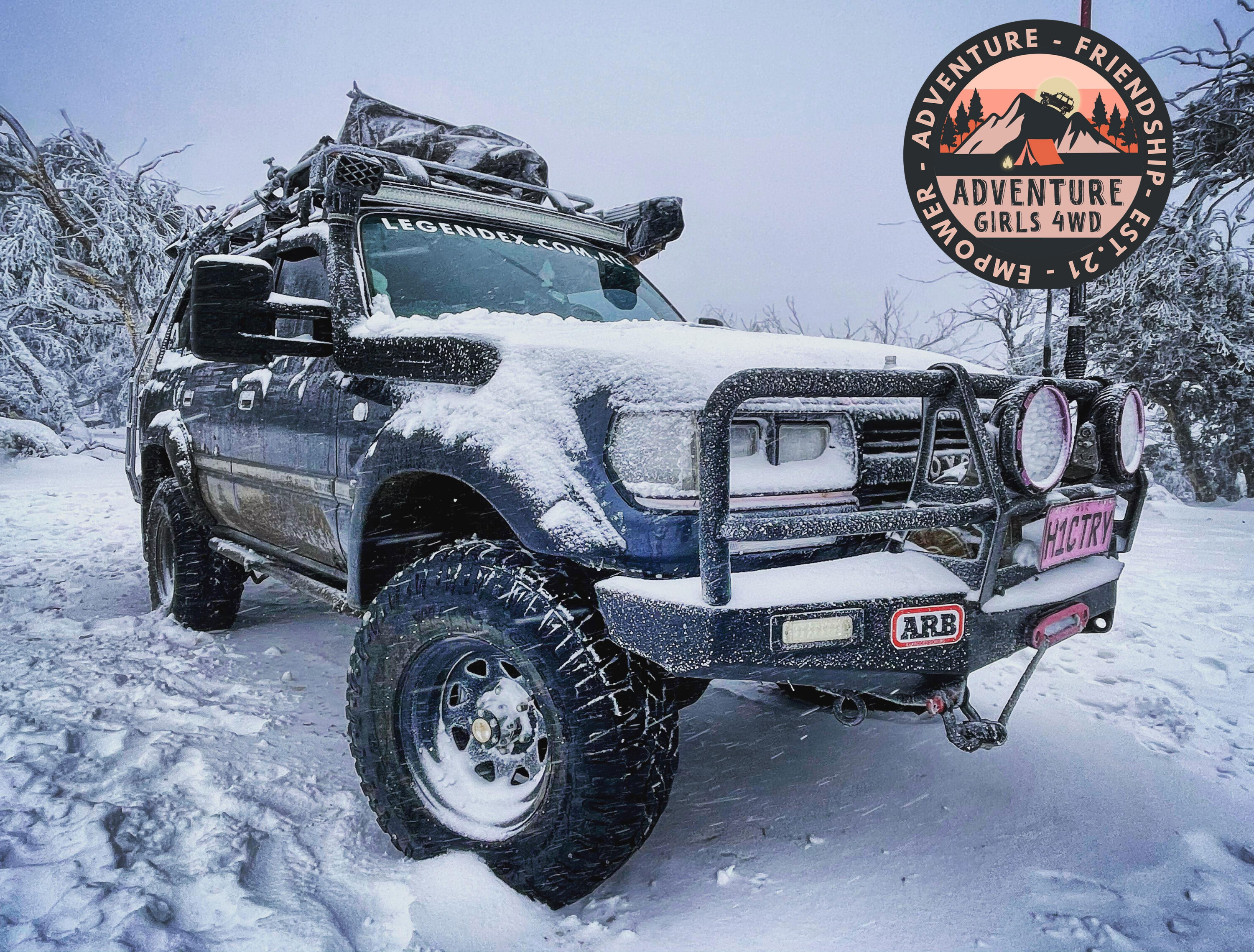
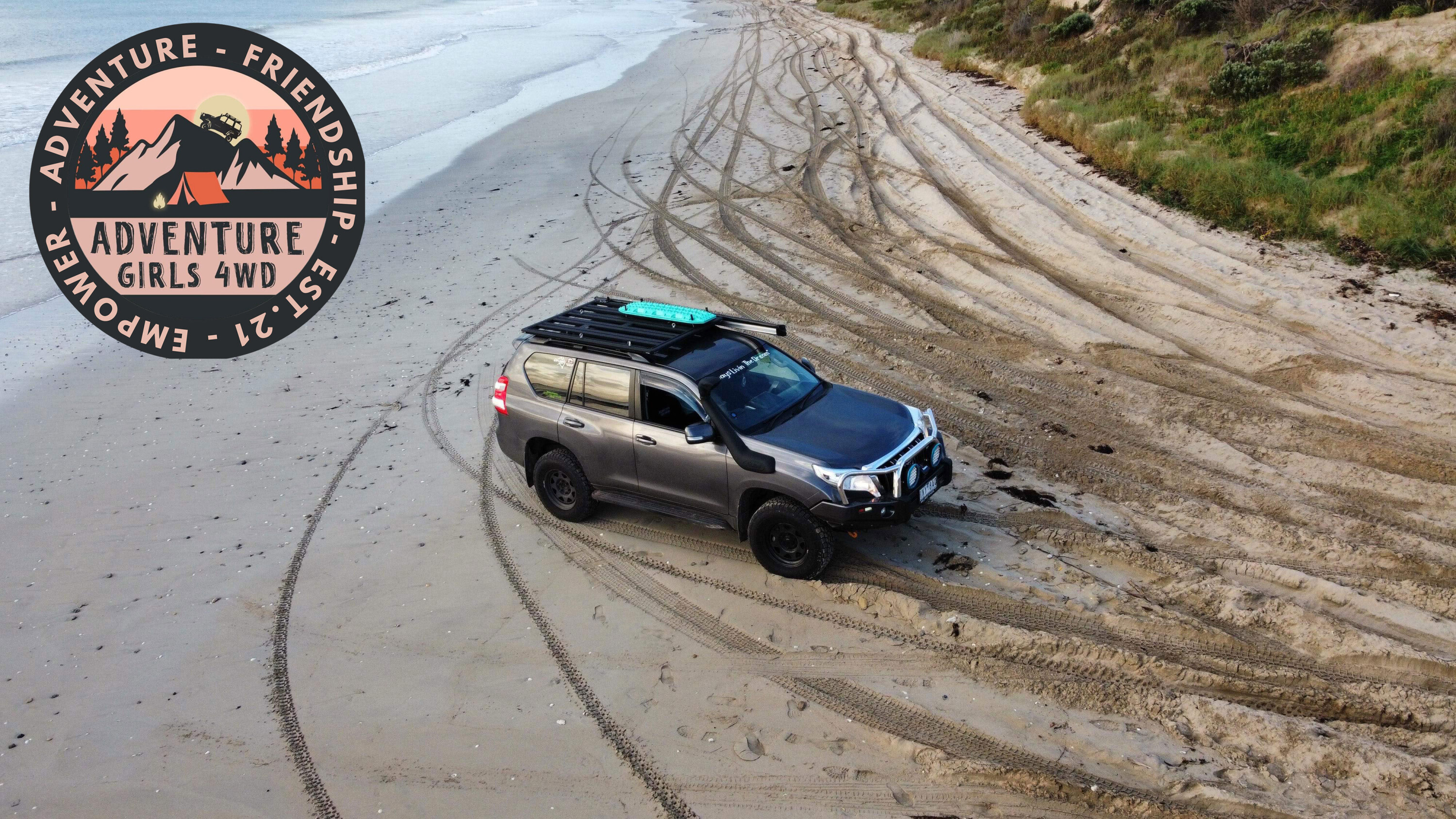
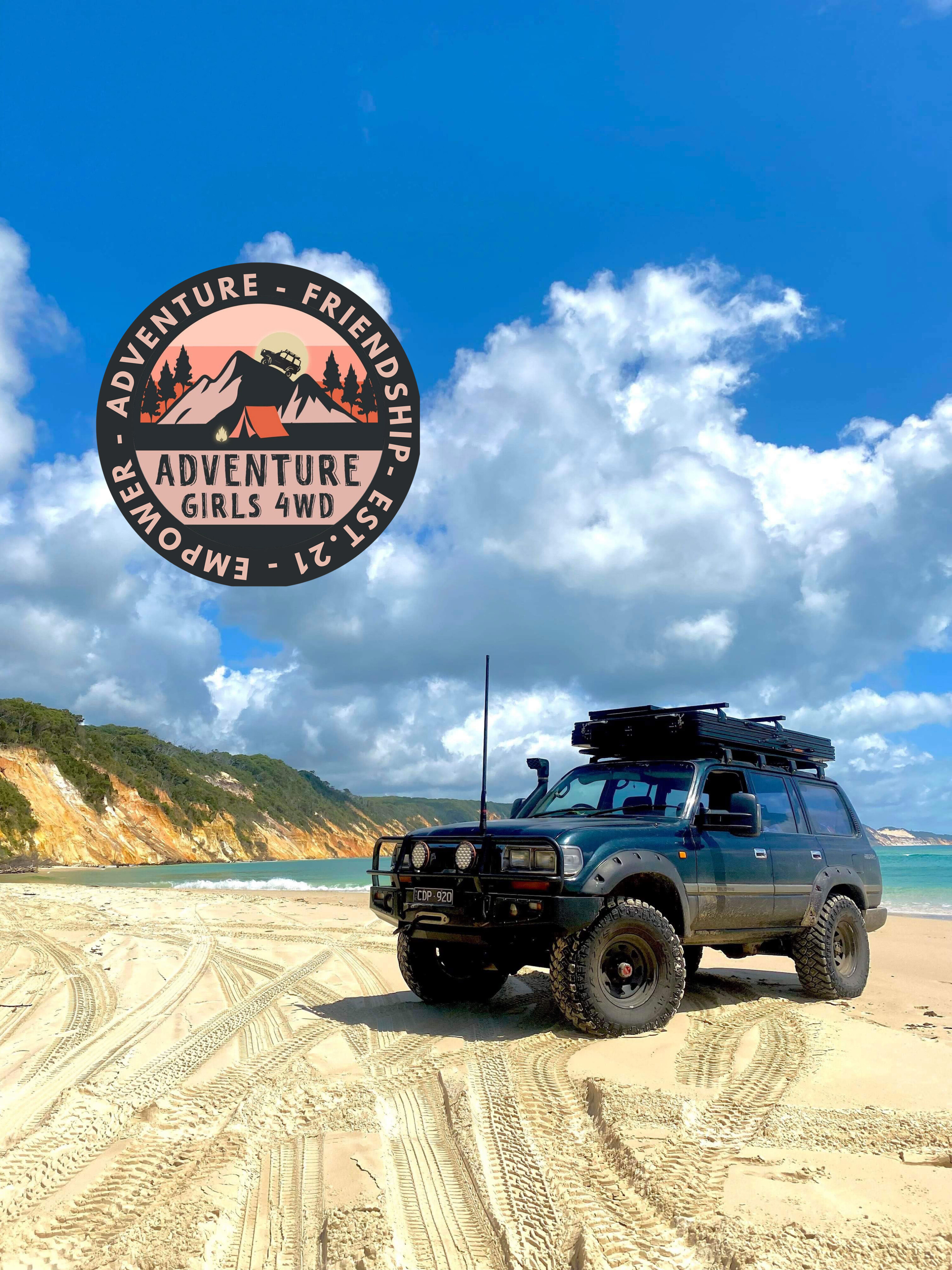
The six stunning 4x4s in this month’s instalment of Readers’ Rigs has been provided by the Adventure Girls 4WD social group.
Adventure Girls 4WD is a social group for women of all ages who have a passion for 4x4s. Sign up or for more info visit: facebook.com/adventuregirls4wd
1989 Nissan Patrol GQ SWB TD42
1
This was a full rebuild from when I was 23 weeks pregnant. The Patrol had a heavily rusted cab so I fixed it all by myself – prepped, primed and painted it. The chassis, motor and gearbox were perfect after the compression test and inspection. It was a fun project and I’m glad to be able to say, “I did that.” It’s not perfect as I’ve never done anything like this before, but I’m proud of where we started and where we currently are.
Mods include three-inch suspension; one-inch body lift; rear quarter chop (waiting on barwork); Fuel Covert rims wrapped in 295s; custom seven-inch Halo colour-changing headlights; underbody rock lights from Bushdoof; GME XRS UHF and heavy duty antenna; custom-made black leather seats; custom-made centre console (relocated head unit); and blacked-out interior.
I’m located on the Sunshine Coast, Queensland, and I beach and bush anywhere in SE Queensland. IG: taylorr_gq_shorty– Taylor
1991 Nissan Patrol GQ TD42
1
You’ll find me hitting the beaches over in Robe, tackling the Vic High Country in snow season, or hitting my local tracks in Wombat State Forest.
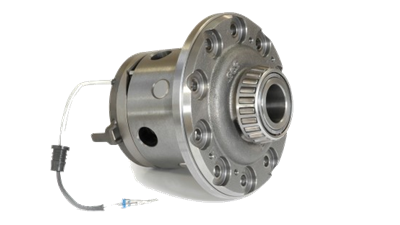
Mods include a three-inch lift; 33-inch Nitto Mud Grappler tyres; 45mm big bore adjustable Tough Dog shocks; UHF; snorkel; ARB bullbar; ARB front locker; winch; a three-inch exhaust; and the turbo set-up almost complete – Kirsten Davis
1992 Toyota Landcruiser 80 Series
1
The Cruiser’s name is Mr Grey, as the inside joke is he has pink bits cause he can’t have a red room. He is my freedom rig that takes me across the countryside, from the High Country to the desert and everywhere in between.
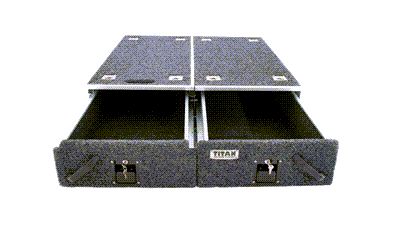
It’s running a two-inch lift with 35s, and it’s twin-locked and has the will power to go anywhere. Fully decked-out to be self-sufficient off-road for long periods of time. Well-equipped rear drawer system featuring on-board air compressor and reel, tool drawer, kitchen drawer and Travel Buddy. IG: thatgirlwithacruiser– Jess
2017 Toyota Prado GXL
1
I have taken her from the mud at Wombat State Forest to the heights of the Victorian High Country and the beaches of South Australia.
Mods include a two-inch Dobinson lift kit; 18-inch Dynamic steel black rims wrapped in Toyo Open Country A/TII tyres; Safari snorkel; Runva winch; and a Rola roof rack. – Rebecca
1994 Toyota Landcruiser GXL 80 Series
1
I purchased my Cruiser in October 2021. It has had plenty of improvements and plenty more to come including new rims; respray; Superior Hyperflex arms; Superior remote-res shocks; and a supercharger.
Living in Victoria, I love taking it to the High Country, and tackling tracks down the Great Ocean Road and the Grampians. It has just completed its first Queensland trip, venturing into Double Island Point. I hope to tackle Fraser Island next.
Mods include 35s; part-time conversion; two-inch lift; bullbar; winch; Stedi seven-inch spotties; Darche Ridgeback HighRize rooftop tent; custom spare tyre carrier; Outback Equipment mirrors; and a 12-volt battery set-up. – Bridee Hanson
2021 Mitsubishi Triton
1
I am setting her up to be a touring vehicle so my kids and I can travel around Australia. I love to take her on the beach and in the bush, and I especially love bogholes and following the Cruisers and Patrols. Current mods include a two-inch lift, bullbar, winch and a snorkel – Natascha Gordon
The New England plateau came into being millions of years ago when there was a massive upheaval along the coast by mega volcanoes including the nearby Ebor Volcano.
In the process this created fertile farmlands, steep rugged valleys and separate micro systems.
One area of particular interest is the Oxley Wild Rivers National Park that covers just over 145,000 hectares of some of the most beautiful and, in other parts, some of the most inaccessible areas in NSW. Situated 500km north of Sydney, it’s a great place to explore its history and natural beauty, and to get back to basics with simple camp options whether in a 4WD or 2WD.
Today, it’s a very protected National Park that was heritage-listed back in 2007 due to its significance with dry rainforest areas, rich bio-diversity and as part of the Gondwana Rainforest area of Australia that links it to other parts of the world.
1
Jump back to 1818 when explorer John Oxley passed through the area looking for pastoral land (and hence the name was dedicated to him) while he was trying to descend towards the coast but was constantly being stopped by huge, deep gorges until he finally found a way down with his party.
Due to the ruggedness, there are a few different ways into the park with different special features for both four-wheel drivers and those just with a soft-roader. For those with an AWD, you can skip around the outskirts of the park where there are a few waterfalls and easier camping areas to explore.
1
Cascades
Places like Apsley Falls, Wollomombi Falls and Dangars Falls all are pretty easy to access to view the massive waterfall drops and the chance to set off on foot on one of the many walking trails, but if you like to explore the inner heart of the wild Oxley there’s a few days of exploring that can be had.
In 1976, the area was declared true wilderness due to the natural environment being untouched by man through any means whatsoever, and this works in the favour of having a 4WD to explore the inner parts of this spectacular place. While it’s one of the largest national parks in NSW there are no roads through the guts of Oxley Wild Rivers, only loop roads to campsites and into the gorge areas.
From the southern end of the park near Walcha, head out along Moona Plains Road and Buds Mare trail where you can access a campground down on the mighty Apsley River via a locked gate where the key is available through the NPWS office at Walcha.
1
If you can’t get the key, a free camp has been set up at the top of Buds Mare just before the steep track down to the river. The camp at the top is a pretty good set-up with all fresh facilities, views down into the craggy valley, and walking trails to a viewing deck and another 8km return walk to the river below.
Down beside the river, NPWS have set up the camp area with fire pits, eco-toilets, shelters and even a free gas barbecue.
Around on the western side of the park towards the town of Armidale, there’s easy access to Dangars Gorge for those with an AWD and keen to tackle one of the many hikes in the area to the bottom of the valley and river areas. Some of the hikes are for experienced hikers only and go for days, popping out elsewhere in the park.
An advantage here is that you can set up base camp in the Dangars Waterfall camping area and then do the return loop.
1
Hillgrove
Getting down into the remote areas and away from the wandering crowds you’ll need to head 40km east of Armidale towards the historical town of Hillgrove. Before heading into the bush, check out the now-rundown old area of Hillgrove with a drive around the town. Once a rich gold-mining town it was established in 1884 when gold was discovered in nearby creeks.
Over the years it produced a massive 15,000kg of gold, 14,000 tons of antimony and 2000 tons of scheelite (ore-like material).
The mining has all but stopped these days, but points around the area at Bakers and Metz Gorge lookouts give you views down to the old mine sites where old brick chimneys, buildings and mine-entrance structures can still be seen.
Tramways were built to haul the rock from the mines deep below up to the town’s level for processing using steam-driven engines back in the mid- to late-1800s. In 1895 it was the very first town in Australia creating its own power from a hydro plant in the nearby Gara Gorge.
1
Around town, plaques and signs provide an insight to what used to be there, and even though it makes the mind wander, it’s pretty disappointing that none of the buildings are there anymore.
Heading out along the Long Point Road to the end, there is other remote camping and more walking tracks on the outer fringes of the park into the Chandler Valley; midway along swing down into the Styx River area for more remote and 4WD-accessible areas.
Down here are a maze of roads, so you’ll need a good GPS to show you the low-range tracks in the area with some of the best free camping spots. The water down here in the rivers can nearly be guaranteed due to the huge catchment areas in the park.
1
East Kunderang Station
Other spectacular areas to explore where you’ll need a key for access is down to the Halls Peak camping area, which is low-range territory with steep drop-offs and sheer cliffs. The camping area at the bottom has plenty of space with tables, toilets, barbecues and supplied milled wood.
For a more civilised camping area head into West Kunderang Station where there are a choice of sites or rustic cabins on the property which is a working cattle station. NPWS runs East Kunderang Station where you can book online to camp in a stockman-like hut.
When the cattlemen rode for days in this area, they built what we know today as stockman huts. Throughout the Oxley NP there are huts in remote locations that NPWS have control over and manage their upkeep. The most popular being Youdales, while there are other nearby heritage-listed restored huts along the Green Gully walking track you can camp beside.
1
For history buffs, 12km southwest of Ebor, the Yooroonah Tank Trap Barrier is of significant importance. Strategically placed here back in 1942 in case the Japanese were to invade Australia, the barrier would have slowed progress to the tablelands.
There was a reported 75-post barrier (we saw about 50-odd – others had been burnt, attacked by white ants or been knocked over). There are eight triangle tetrahedra blocks placed on the higher ground to force the tanks into the marsh areas.
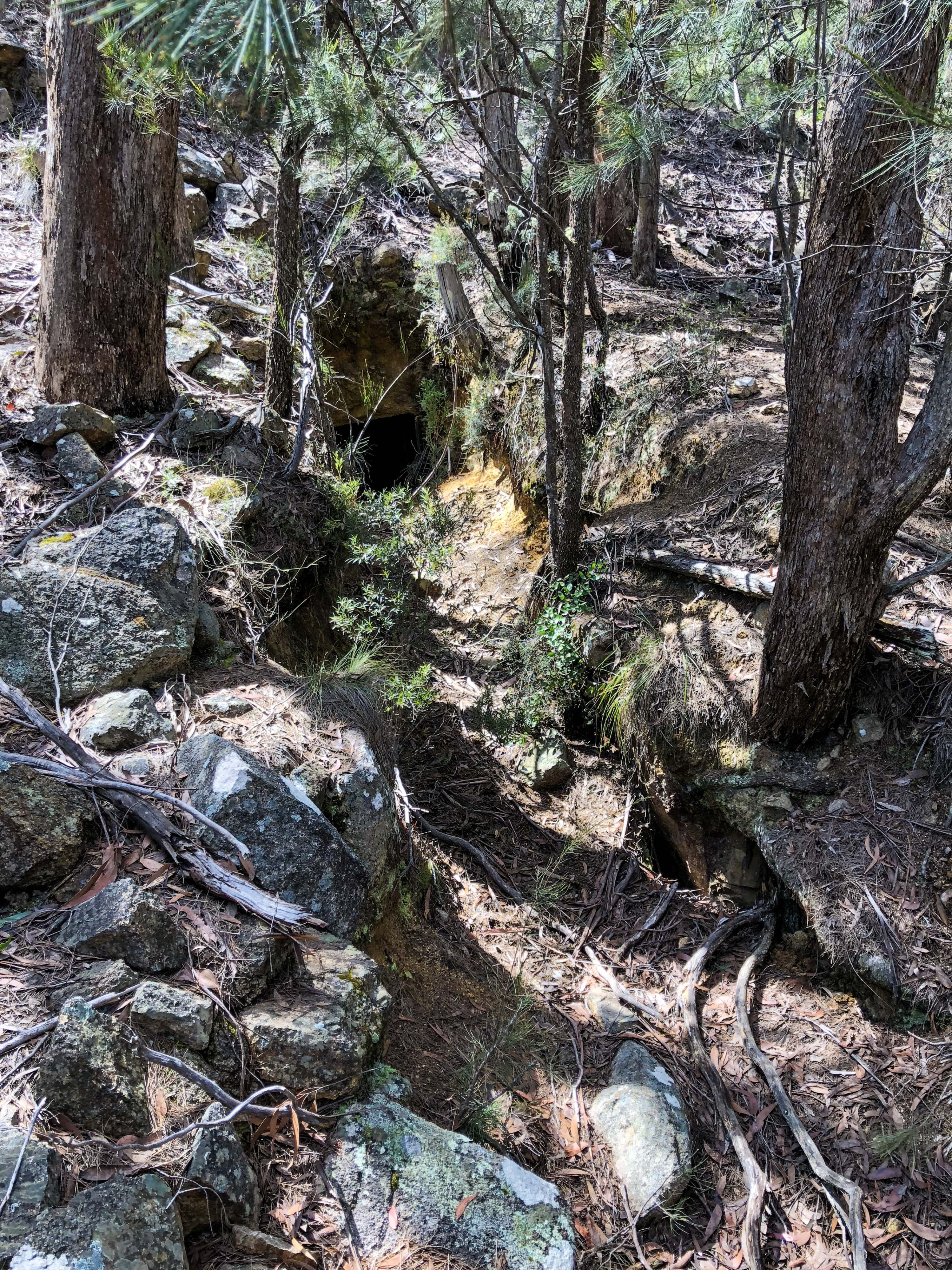
We found several rock lookout platforms and funk holes (where our troops would have laid if there was an attack). But an amazing find was the tunnel under the old road that would have been loaded up with 1.5 tons of explosives in steel boxes and ignited if the enemy was on the road.
The digging of the tunnel initially involved two shifts of two men each (working 15 hours per day, six days a week). It’s about 60 feet long with two arms branching off the end, and reports say it was 10-feet high (now about five) and it seems to be about four-feet wide.
1
This enemy deterrent was one of many along the East Coast. In fact, the steepness of terrain from tableland to coast, combined with the prevalence of deep gorges, the absence of navigable rivers and the heavily-forested nature of the surrounding countryside, meant the few easterly roads extant in 1942 were of critical strategic importance.
Now it’s listed by the National Trust, and there are several walking tracks around these points of interest – easy for the kids to walk too.
The cycle of wild Oxley changes the landscape with every weather event: weathering winds wear away at the sandstone outcrops; torrential rain causes landslides into the valleys below, making new pools or destroying thousand-year-old micro-systems; and raging floods create havoc along the banks, where severe erosion takes place either at the base of some of the highest waterfalls in NSW or along the many creeks along the way.
The Oxley Wild Rivers is one area that can’t be explored in just one visit.
Five points of interest
Oxley Wild Rivers National Park
Near Armidale in the NSW New England region you’ll find the awesome Oxley Wild Rivers National Park. This is a World Heritage-listed region containing Gondwana rainforest, dramatic gorges and spectacular waterfalls. This largely untouched natural beauty offers walking trails, hiking, camping, bike or horse riding, and fishing. For more information, click on: www.nationalparks.nsw.gov.au [↗]
The lookouts
Although Oxley Wild Rivers is an extensive park, there are a lot of areas that are easily accessible and lead to some fantastic views. Check out the viewing platforms at: Apsley Main Falls, Dangars Main Falls, Wollomombi Main Falls, Budds Mare, Gara Gorge, Chandler Falls, Dangars Falls View, Eagle View, Edgars, Wollomombi Falls, Apsley Chasm, Apsley Landslide, Apsley Lions, Apsley Lower Falls, Apsley Lower Pool, Apsley Slate Walls, Chandler River, Checks, Dangars Gorge, Dangars River View, Dangars Rockwall 1 and 2, McDirtys, Mihi, Oxley, Tia Falls, Tia Gorge View, Tiara, Tiara View and Dangars Falls lookdown.
East Kunderang Homestead
East Kunderang Homestead is an 1890s cedar slab homestead situated among the mountains and valleys of Oxley Wild Rivers National Park. The historic homestead has been restored to offer accommodation for up to 14 people. There are five bedrooms, a lounge and dining room, modern kitchen and two bathrooms. There’s swimming and paddling or a spot of fishing in the nearby river, as well as walking tracks, and the homestead’s wide verandah is perfect place for enjoying a sundowner or two. For bookings, phone: 1300 072 757 (13000 PARKS).
Camping and picnicking
Stay or lunch, there is a spot for everyone. Campgrounds include: Apsley Falls, Budds Mare, Dangars Gorge, Halls Peak, Long Point, Riverside, Tia Falls, Wollomombi, and Youdales Hut. For picnics, try: Apsley Falls, Blue Hole, Dangars Falls, Threlfall, Tia Falls, Wollomombi Falls, and Edgars.
Walcha
To access Oxley Wild Rivers NP from the southern end, head to the small town of Walcha on the Oxley Highway. Walcha includes most services and amenities, a NPWS office, plus a picturesque 18-hole golf course, and a racetrack. The Big Black Building in the middle of town is worth a visit, containing a stack of old-bush collectibles for sale as well as very good barista-made coffee. You can’t miss it, it is as its name describes.
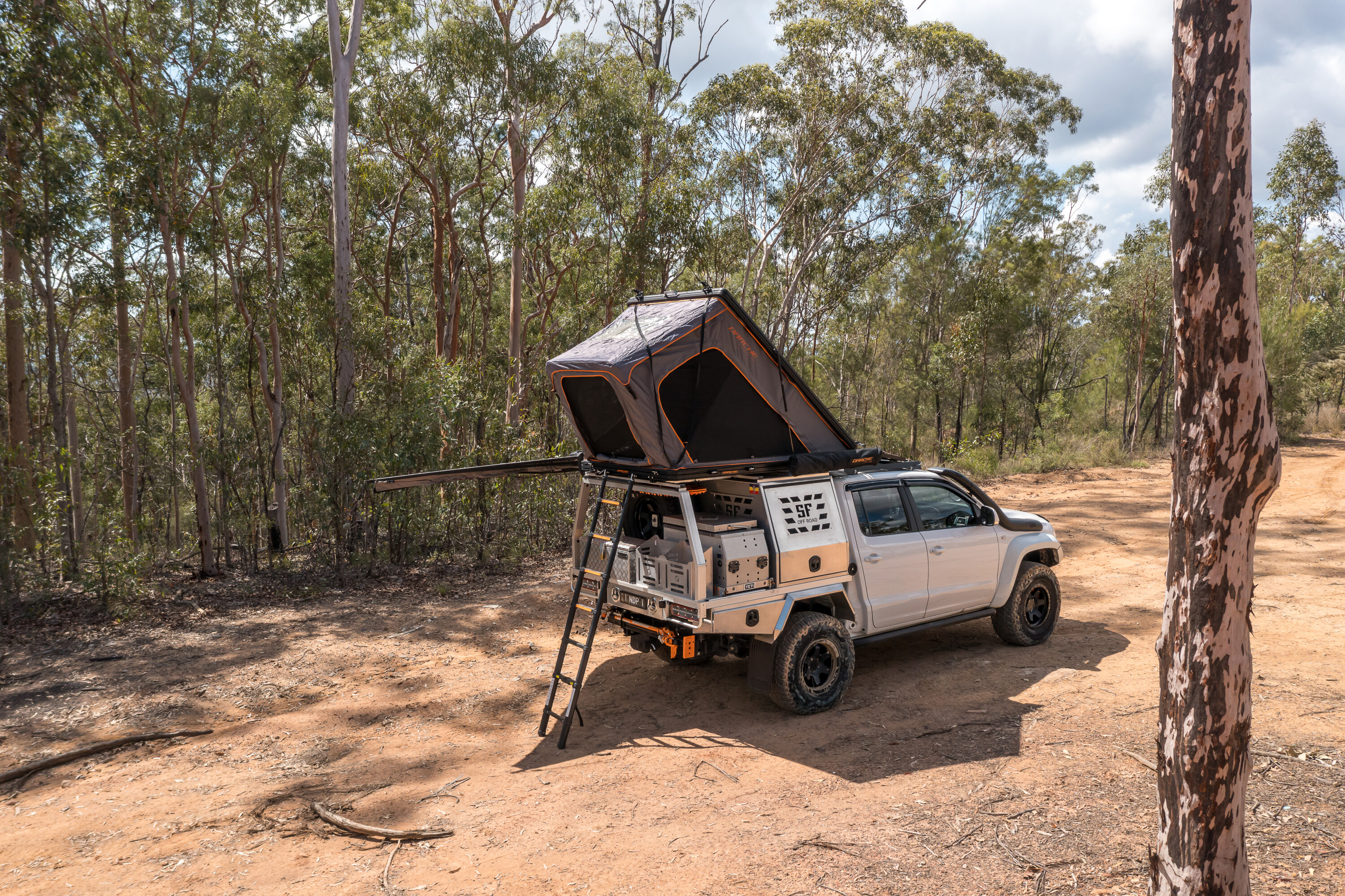
So how does someone step out of a rorty Subaru WRX, leaving all that grunt behind and, after an extensive, well-thought out, perfectly finished build, end up behind the wheel of one of Australia’s toughest Volkswagen Amaroks? Well, ain’t that just the story.
Jumping from a souped-up Suby into a virtually unstoppable off-road tourer seems like a big turn-around but, as you might suspect, there’s a lot more to this rugged ’Rok’s gestation than just someone having a massive change of direction when it comes to their driving habits.
1
You see, this rig is not Nathan Pagulayan’s first fourby; prior to this fully-loaded Amarok, Nathan spent a few years behind the wheel of a 4×4 icon: a 1993 Suzuki Vitara. Plus, childhood memories of his father’s many off-road vehicles – and the many adventures the Pagulayan family had in them, growing up around the Albury-Wadonga area – meant that even though the WRX was brilliant fun, Nathan knew he’d eventually return to the world of touring.
The WRX suffering a terminal turbo and engine failure at a race meet was the subtle push in the back – and the perfect excuse – that Nathan needed to start thinking of his off-road tourer project.
All the reasons why
Understandably, coming from a grunt-filled Suby, Nathan had a few caveats when searching for a suitable vehicle.
“I couldn’t live with a slow 4×4, so the new rig had to be modern and relatively powerful,” he says. “I just test drove everything, and it was the V6 Amarok that was vastly different to the others.”
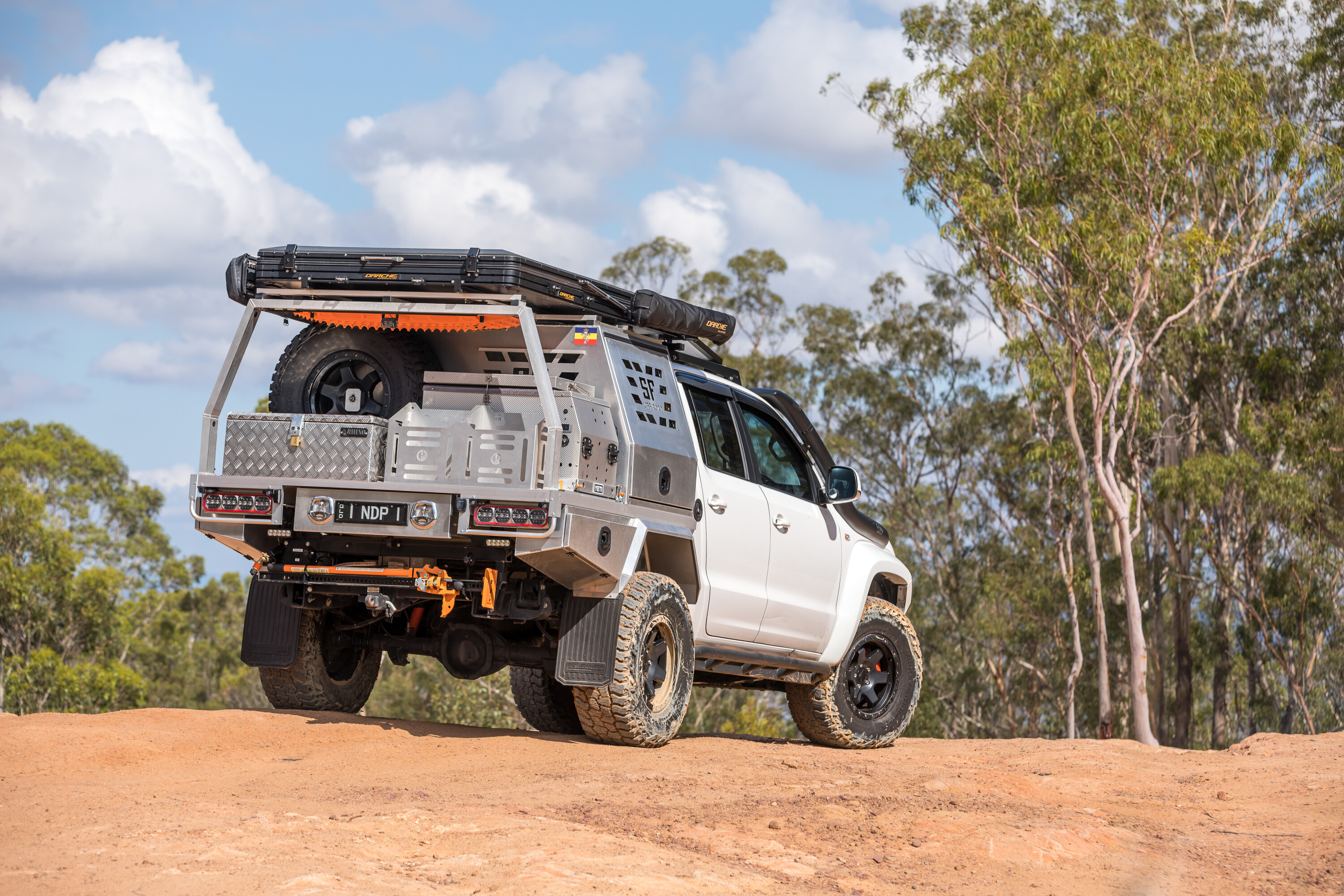
Among a veritable sea of amazing modified off-road tourers, this particular V6 Amarok still stands out
It’s a damn good choice, too, with Nathan explaining how it wasn’t just the performance of the Amarok’s V6 donk that drew him in when he made his decision back in 2018, but also the vehicle’s car-like handling, large interior space and four-wheel disc brakes – plus the then-unique constant all-wheel drive system. As he says, “No vehicle was perfect, but the Amarok was what ticked my boxes best.”
It is Nathan’s attention to detail – and a focus on getting something as close to his ideal as possible – that is on show throughout this entire vehicle and this makes perfect sense when you find out he’s an Engineering and Logistics Manager in the Australian Army; you couldn’t ask for two more appropriate skills than those when it comes building a vehicle that can take you anywhere in the country, and then safely home again.
And that was the core plan: to build a tourer that was always ready to go, whether on a quick overnighter at a nearby national park, or for that big expedition-style trip across the deserts, and one that could also be employed as a daily driver if need be. It’s a big ask, but this big-bopper Amarok has nailed it.
What lies beneath
From front to back and roof to chassis, every modification done and every accessory fitted to this Amarok has been carefully considered.
Some more than once, too, as Nathan has tweaked and tested different variations of mods to ensure he has the exact thing he needs (rather than wants) on the Amarok. Every mod is practical and there’s a key focus on reliability, comfort and convenience.
If there’s one common thread through any modified 4×4 story, it is that of weight. Start adding a few accessories, notably the core ones such as bullbar, lights, canopy, winch, bigger tyres, etc., and you can soon find yourself nearing GVM, or even beyond, resulting in illegality for one, as well as negatively impacting the vehicle’s handling, safety and fuel economy.
1
Managing the Amarok’s weight was a priority, and one that started early on with a GVM upgrade, as Nathan’s early plans also included a full canopy setup (with gear, auxiliary battery system and loads of other stuff – read more on this later), along with the usual bigger tyres and rooftop tent.
The (Qld) GVM upgrade is a subtle (and sensible) one of a touch under 300kg (up from 3080kg to 3375kg). Under-vehicle support is via a schmick Outback Armour (OA) setup, with OA Expedition Adjustable dampers and 35mm-lift springs, combined with Roadsafe Blackhawk Upper Control Arms and a 25mm front diff drop, all fitted by Nathan.
Helping with the heavy lifting at the rear (and fitted by VAS Mechanical) is a set of OA 35mm-lift leaf springs (with 150kg constant-load rating) and another set of OA Expedition Adjustable dampers. Providing more ground clearance – and cleverly, at that – is a set of 43mm-lift body blocks. Nathan explains the Amarok-specific reason for fitment of these:
“The Amarok, it’s a funny design,” he says. “And I’ll give you the example of a Nissan Navara or Toyota HiLux. If you look at them side-on, you can see the chassis popping out from underneath the side sills. Whereas the Amarok chassis; it’s well above the sills and hidden. What the body lift helped with is one, to fit the big tyres, and two, to get the sills up out of danger.”
1
The body lift wasn’t originally intended, but Nathan found that unless the body itself was lifted, ground clearance was compromised too much.
“A lot of people will just go rock-sliders,” he explains. “I’ve done both body-lift and rock-sliders. The reason being, if I didn’t do the body-lift, the sliders just reduce ground clearance.
“I went through a process [early on] of no body-lift and with rock-sliders and the amount of bellying-out was unbelievable. So, I finally went to the body-lift, and lifted rock-sliders, and it’s made it much… much better for not bellying-out.”
The rock-sliders Nathan settled on are custom steel Southern Cross Fabworks Fatboy jobbies, with a Raptor coating.
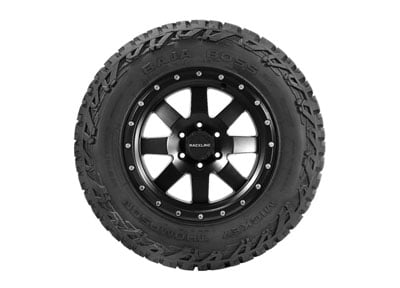
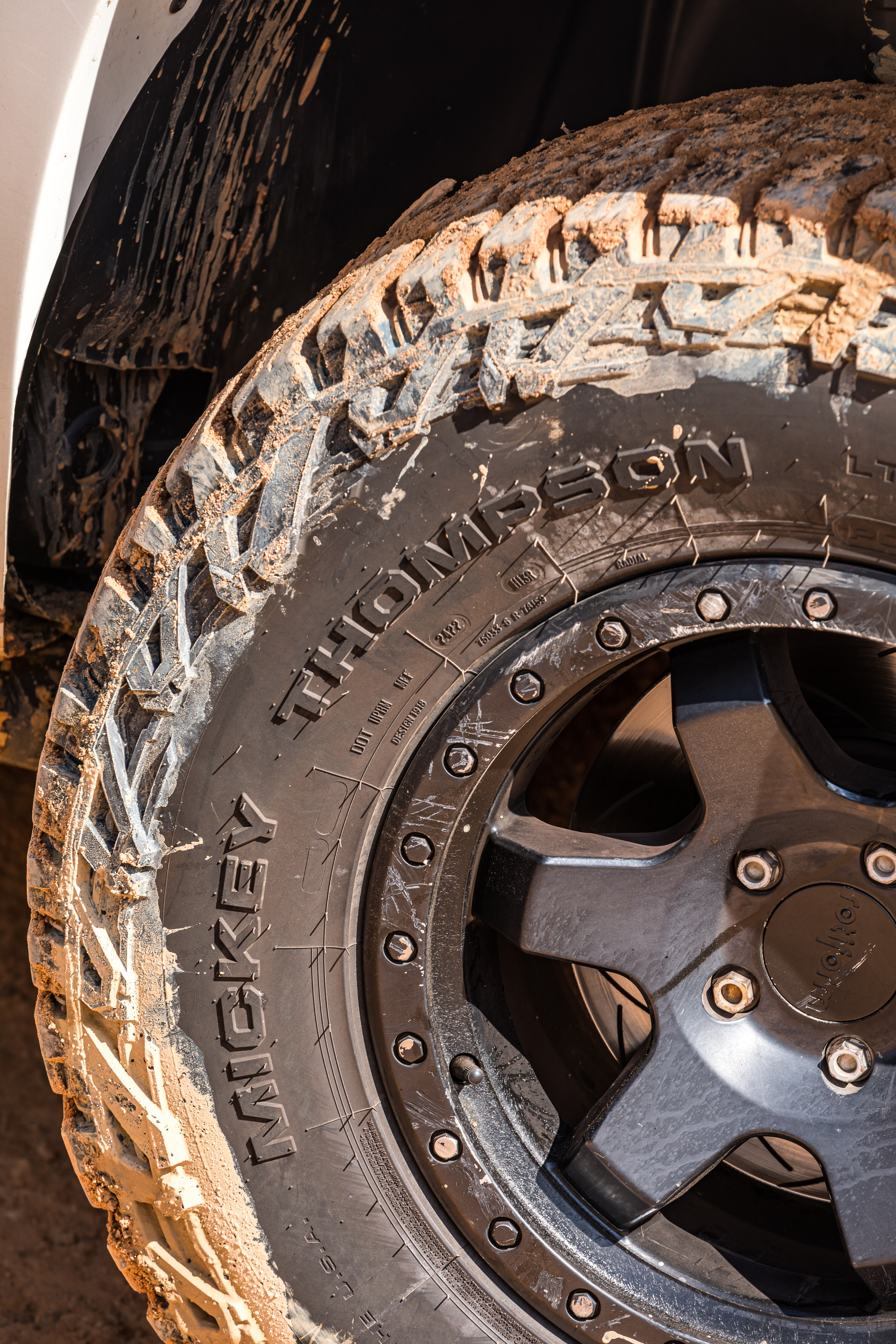
Rolling underneath this impressive setup is a set of 17×9-inch Rotiform SIX-OR (+20 offset) alloy wheels, wrapped in Mickey Thompson Baja Boss 315/70R17 A/T rubber. Stopping power is courtesy of the standard brake setup, but fitted with DBA T3 slotted rotors and DBA Xtreme Performance pads.
Nothing left to chance
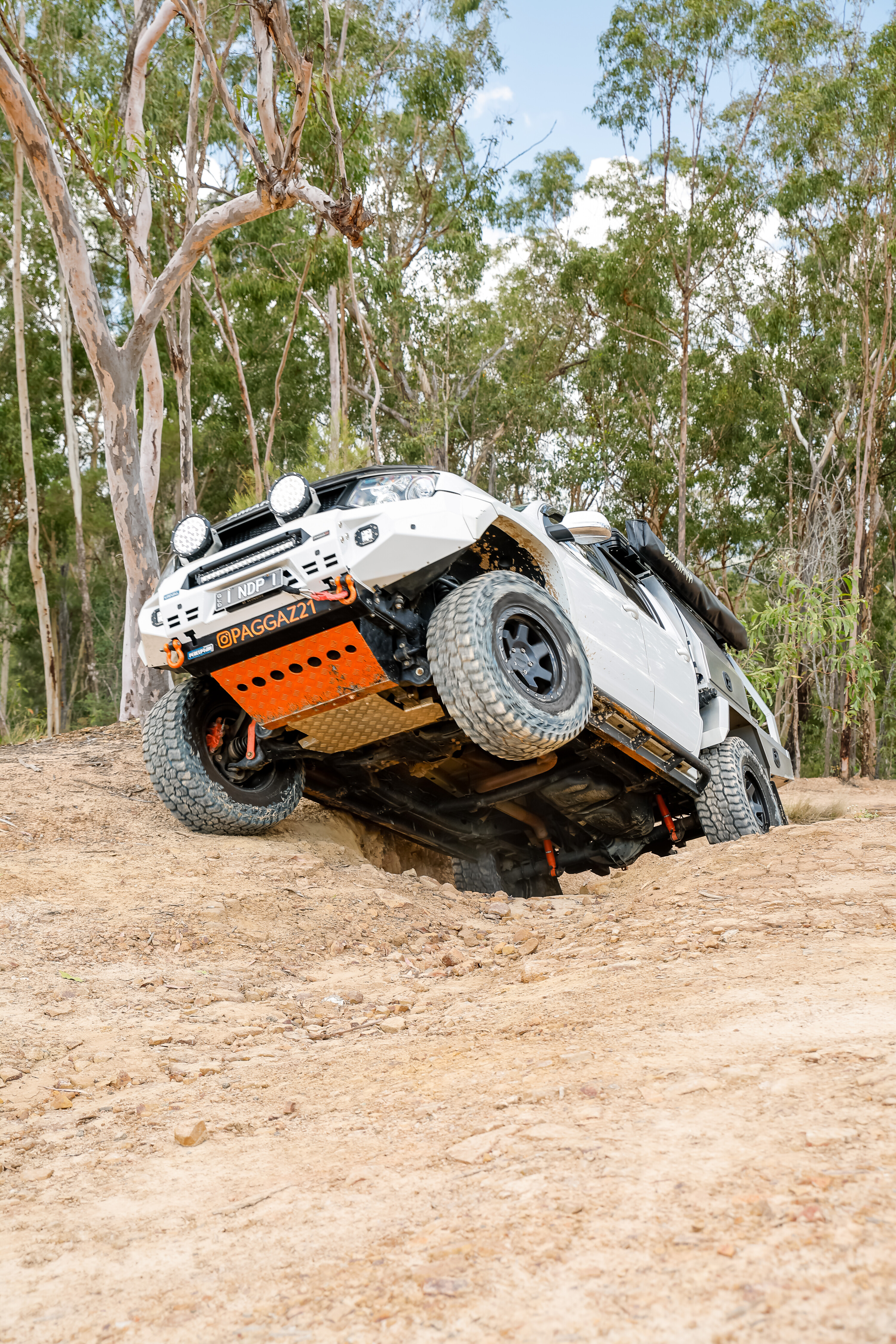
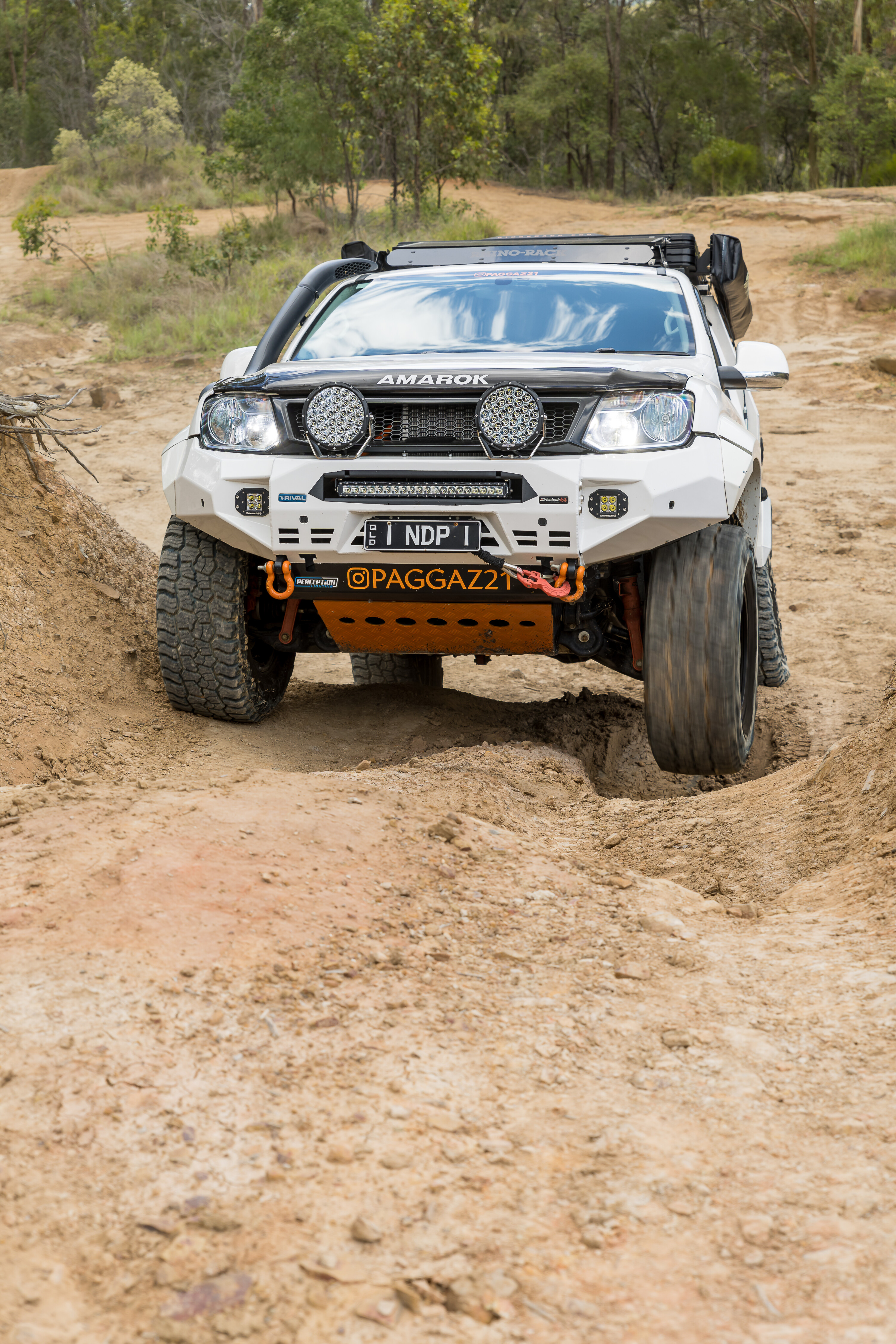
Nathan obvioulsy wanted to ensure his Amarok was fully protected for its intended off-road use, but he was also conscious of weight, hence his decision to go for a sweet-looking Rival 6mm aluminium front bar. With additional custom aluminium inserts, the Rival bar has an almost OE look, wrapping around the front and matching up neatly with the delta4x4 widebody flares.
1
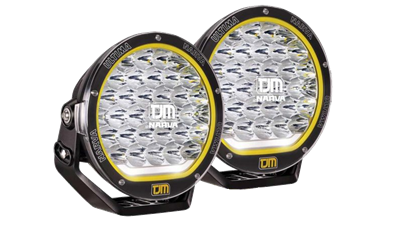
The bar’s good looks don’t get in the way of functionality, either, with its steel inner cradle housing a Carbon 12K low-mount electric winch and offering a mounting space for the two Perception Lighting Apex 8.5-inch spotties, and the Stedi ST3K 21.5-inch lightbar. The bar is also equipped with recovery points, with Outback Armour shackles fitted.
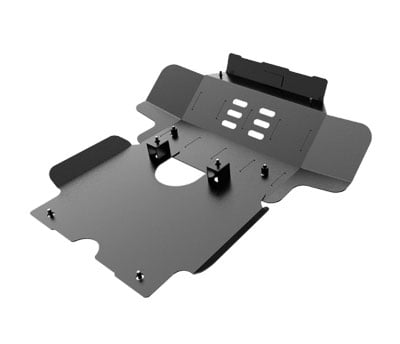
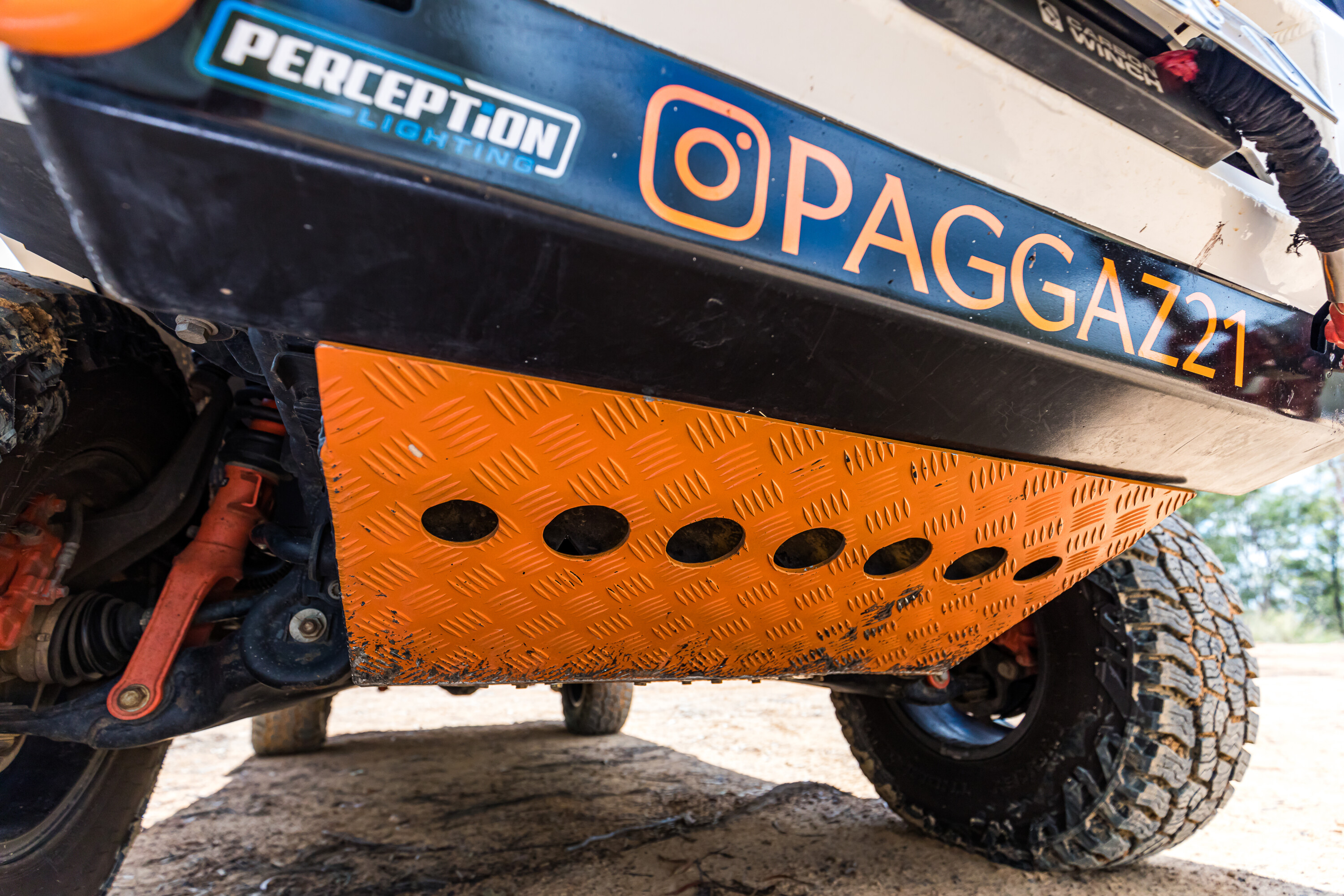
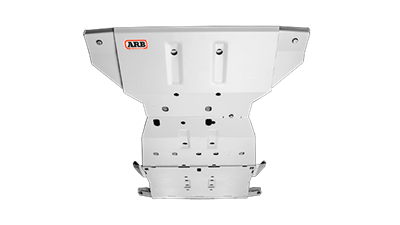
Additional protection is supplied under the body, too, with a custom-made 6mm aluminium plate mounted to Overkill internal gussets. This runs from the front bar back to the gearbox for optimum assurance that nothing is going to damage the ’Rok’s vitals when negotiating rugged terrain.
All business out back
Nothing beats a 4×4 ute for carrying all your touring gear, especially once you add a canopy.
It is this popular accessory that can make or break a tourer’s final outcome, and even impact its eventual performance on- and off-road.
Nathan had started off with the Amarok still fitted with its standard rear tub.
Two incarnations of the vehicle’s rear-end later, and he knew he wanted something far more specific for the rear storage setup. It had to be practical, of course, but it had to be designed to his and his wife Anna’s touring needs. To this end, Nathan took his time – around six months – to ensure he ended up with exactly what he needed. And that meant plenty of throwing around different ideas along the way.
1
“Initially, I drew up some semi-decent plans on Google SketchUp. That’s all I knew how to use,” he laughs. “It’s like a more advanced Microsoft Paint.”
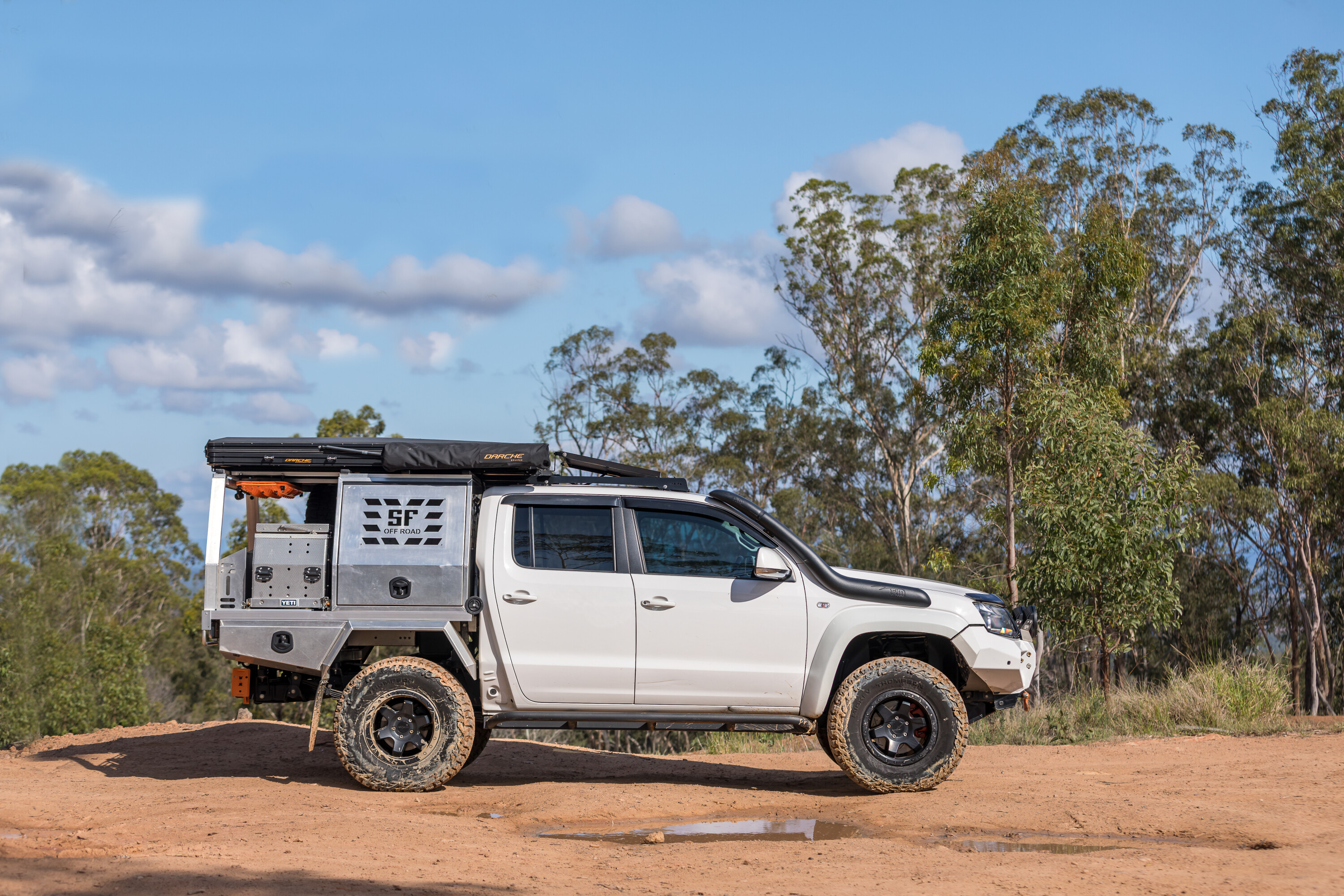
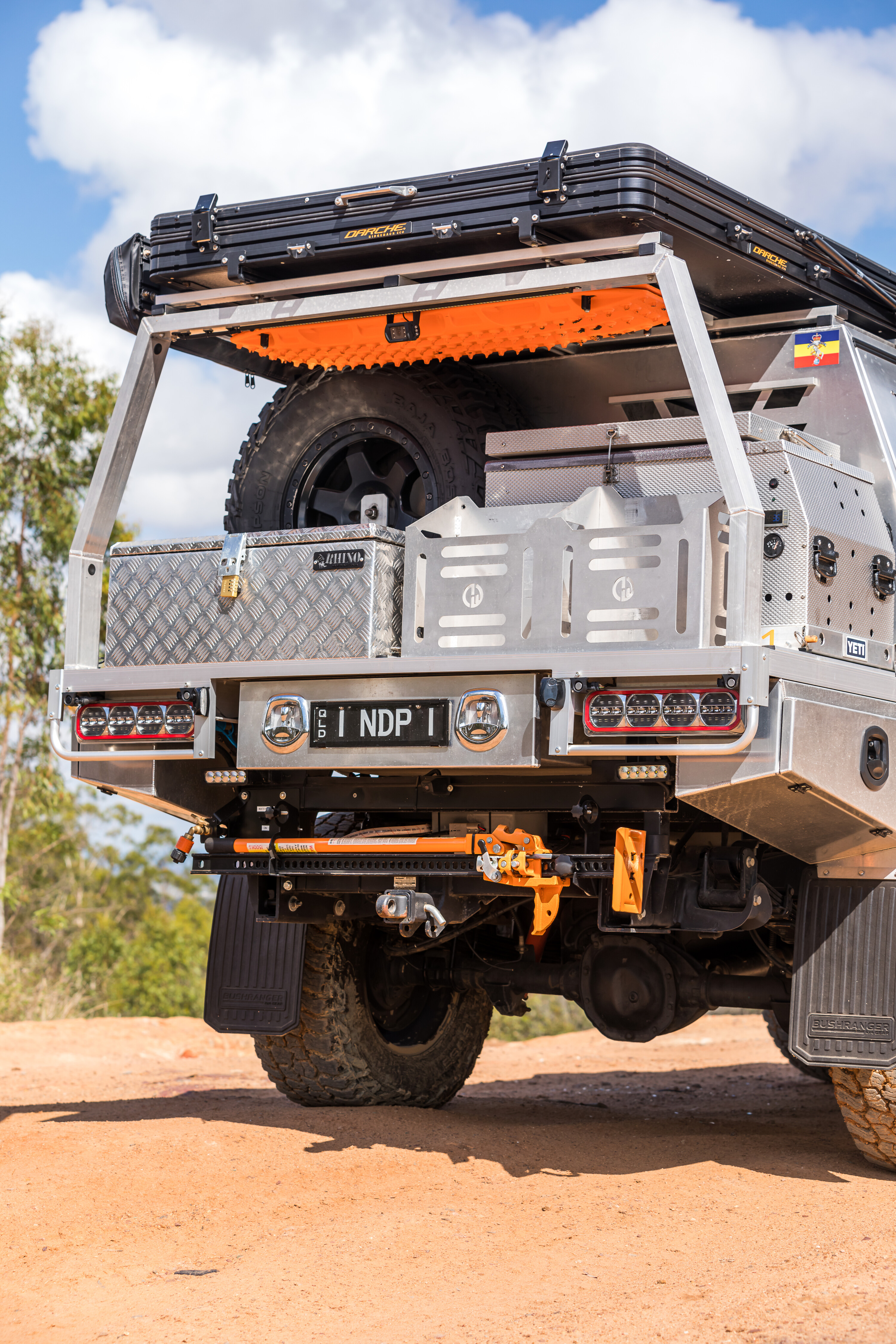
After sorting those sketches (and deciding on a MRT Base Tray to fit the custom canopy to), Nathan went to see the team at Swanny’s Fabrications, in Brisbane, for the canopy build. The result was the schmick half-canopy you see now; as Nathan says, the Swanny’s team “made it perfectly into a fabricated piece of aluminium.”
Nathan wanted no space wasted for the half-canopy and the team ensured that was the case. On the driver’s side, there’s a huge storage area, while on the other side is an impressive mobile kitchen setup with a custom vertical slide-out pantry, drawer/table and even a coffee machine (plus a couple of fans to keep you cool when cooking up a storm), along with the vehicle’s electrical setup (more on that later).
1
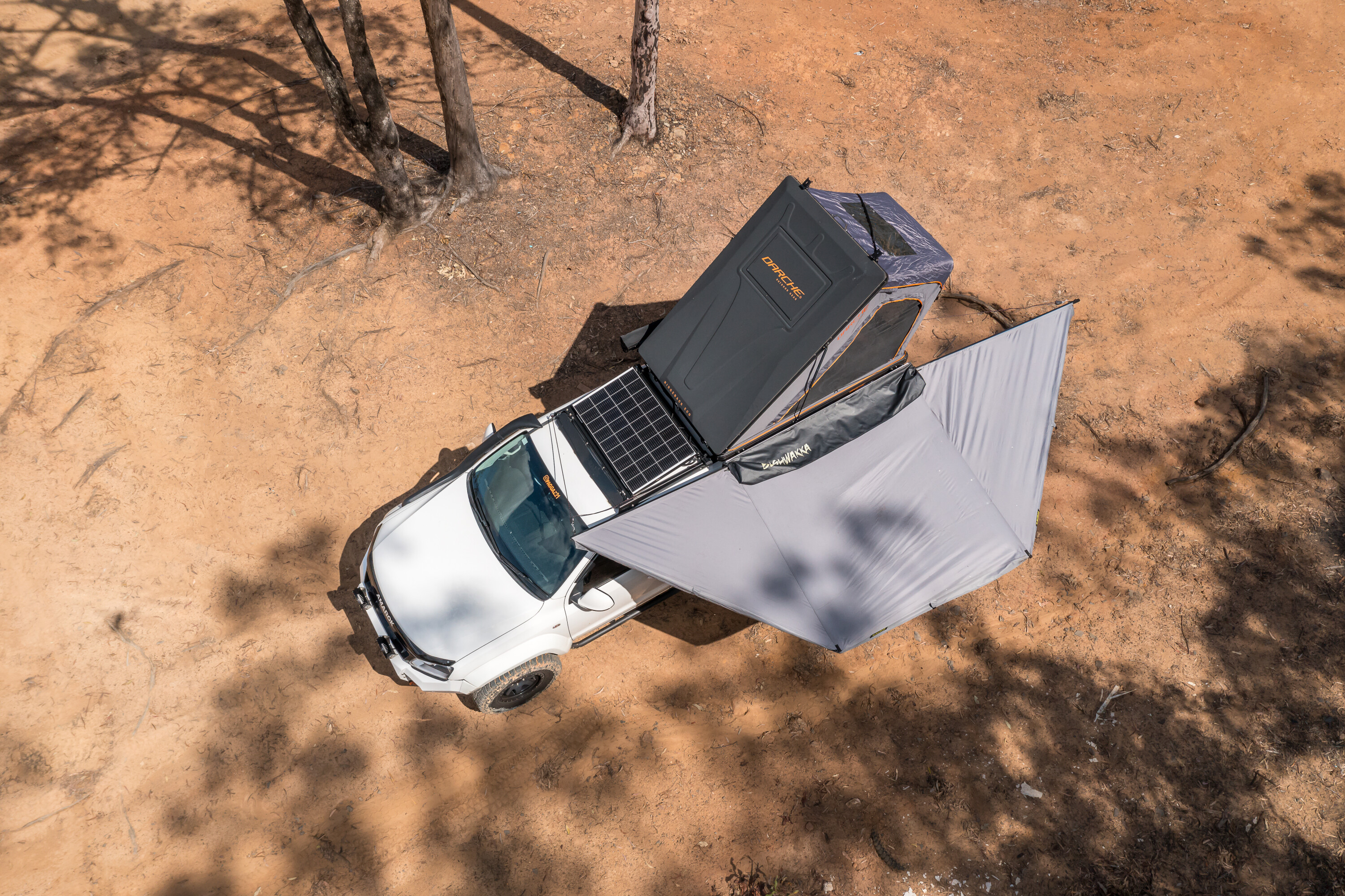
The top of the Amarok has received plenty of attention, too, again with reliability in mind. Amusingly, the current rooftop tent (a Darche Ridgeback Eco) is actually Nathan and Anna’s fourth, after much trial and error with other variants, and it’s affixed to a custom roof-rack setup, again built by Nathan.
“What I’ve tried to do is make the Ridgeback as low as possible, which meant I got rid of the full-sized Rhino platform. I just used some Backbone-style racks, and then some extrusion crossbars,” he says. “Everything’s fully adjustable on it. And then I added a wind deflector and made these custom brackets to have the [140W] solar panel tilt.”
Impressively, even though the current rooftop tent is heavier than the last one atop the Amarok, by customising/trimming the roof rack system, Nathan shaved 20kg off it – always handy when that weight comes off a vehicle, and more so when it’s off the roof.
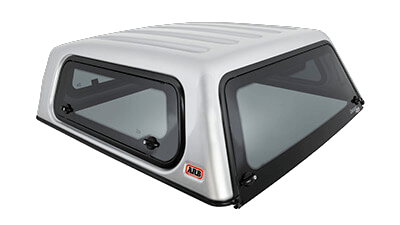
Add in flared mudguards and nifty under-tray storage (again, courtesy of Swanny’s handiwork), a spare-wheel carrier, a MW rear trundle drawer, repurposed Rhino toolbox (for rubbish and wet gear), a 43-litre under-tray water tank, Dunn and Watson dual jerry-can holder (for either water or additional fuel; the Amarok runs its standard 80L fuel tank), ladder rack, and a well-proved (and tough) 60L Trailblaza fridge (these also used in the Aussie army’s tanks!) on a Dunn and Watson slide, and it’s not hard to see how the rear setup works perfectly as that home away from home when remote-area touring.
Power, passion and plenty of comfort
Cleverly fitted (somehow!) into the passenger-side/kitchen-side of the half-canopy is the vehicle’s comprehensive electrical setup – a tricky job also undertaken by Nathan himself, calling on his electrical engineering background.
“Having to do the electrical fit-out on the inside [of the half-canopy] was a challenge because it’s so tight to get to,” he says, while also explaining his aim was to futureproof the system.
“So, with my old setup, I made an enclosure out of a cargo box. This sat in the [previous] tub. I made an enclosure out of a cargo box with an external light switch panel. And I thought, ‘Oh, that’s pretty cool’, because you can take it in and out of vehicles, and whatever else. It’s also waterproof,” he explains. “But then when I was making this one, I thought, ‘Nah, I might as well go big, but I’ll also make something that can easily be removed if I need to’.
“And yeah, hence, everything out the back is pretty much Anderson plug… the main cables are just an easy terminal… ”
I mentioned ‘comprehensive’ to describe the electrical setup earlier, and when you see its full list, you understand why. There’s an Enerdrive 40Amp DC2DC charger, and a Victron BlueSmart 25Amp AC charger, combined with an Enerdrive 2000w inverter.
Keeping Nathan informed of the internal goings-on is a Victron BMV-712 battery monitor, and there’s also a Narva 12-way fuse-box. When it comes to charging various gadgets, there are two 12V and two USB ports in the half-canopy, as well as one 12V and two USB ports in the actual rooftop tent itself.
In-cabin, there’s another two 12V ports. Finishing it all off are seven Anderson plugs. All of this is to power the coffee machine, TJM heavy-duty vehicle-mounted air compressor (and 5L air tank), those two fans, a KickAss 12V travel oven, 2000W induction cooktop and the water tank’s pump (a 6L/min unit).
1
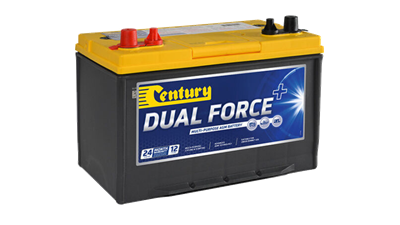
The vehicle’s starting battery is an AGM 100Ah unit, while the auxiliary battery is an ATG 150Ah Lithium jobbie, with a 200Amp constant discharge BMS (to ensure that induction cooktop keeps delivering top nosh). Yep, the electrical system is bloody impressive, for sure, and a credit to Nathan’s hard work.
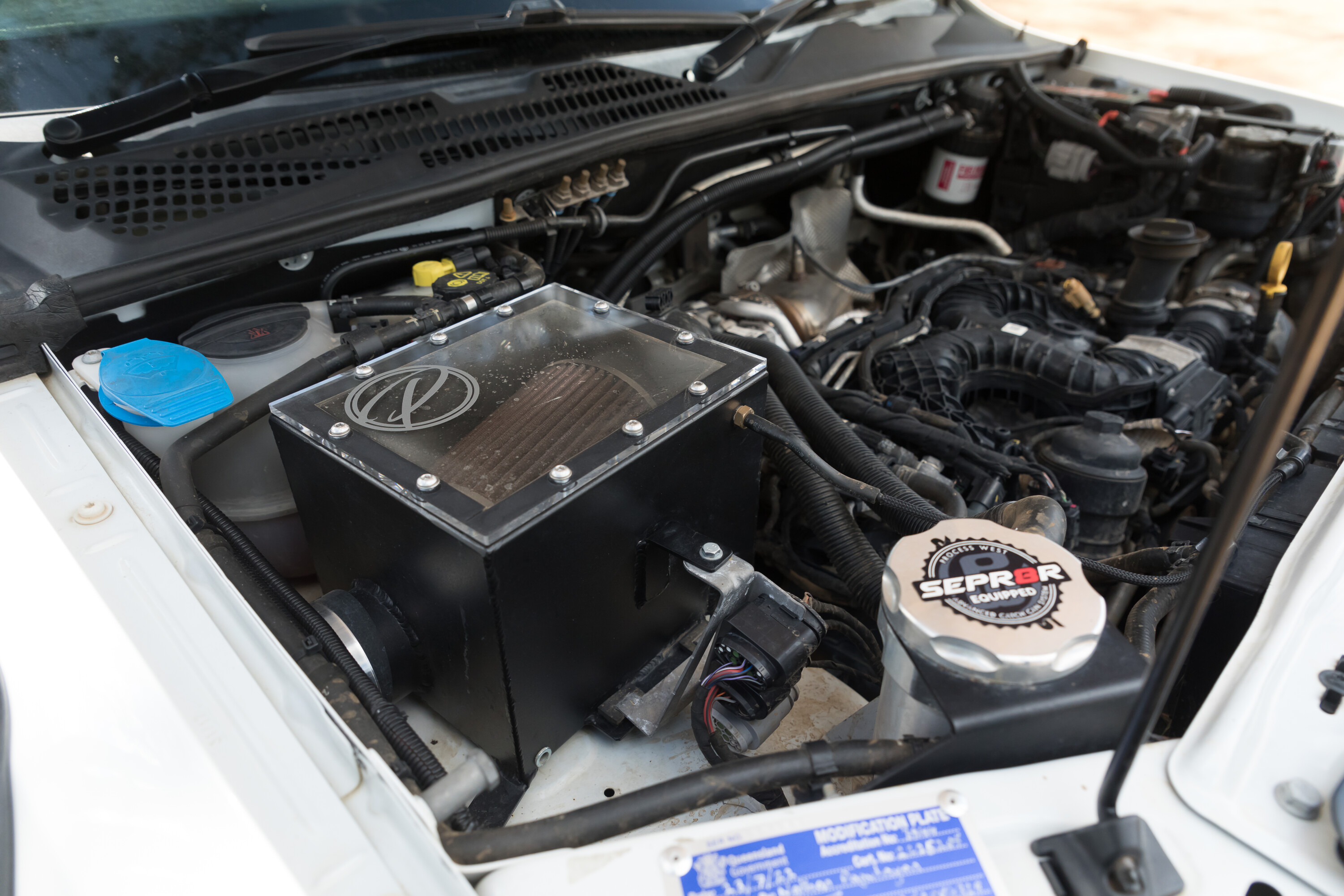
In terms of other ‘power’ mods, the engine has seen a mild tune, something Nathan is keen to re-explore at a later date; yep, he’s after a bit more grunt. It is fitted with an additional Fuel Manager (30-micron) secondary fuel filter and a K&N air filter (housed in a Platinum Mechanical & Suspension custom airbox), with additional air being drawn back through a TJM Airtec snorkel (with wedgetail head).
1
The three-inch mild-steel exhaust system expels fumes effectively, while the Wholesale Automatics Transmission Cooler kit ensures the Amarok’s single-range auto doesn’t get too tetchy when serious off-road work is being done. Power delivery is further enhanced with fitment of an EVC Idrive (Ultimate 9) throttle controller.
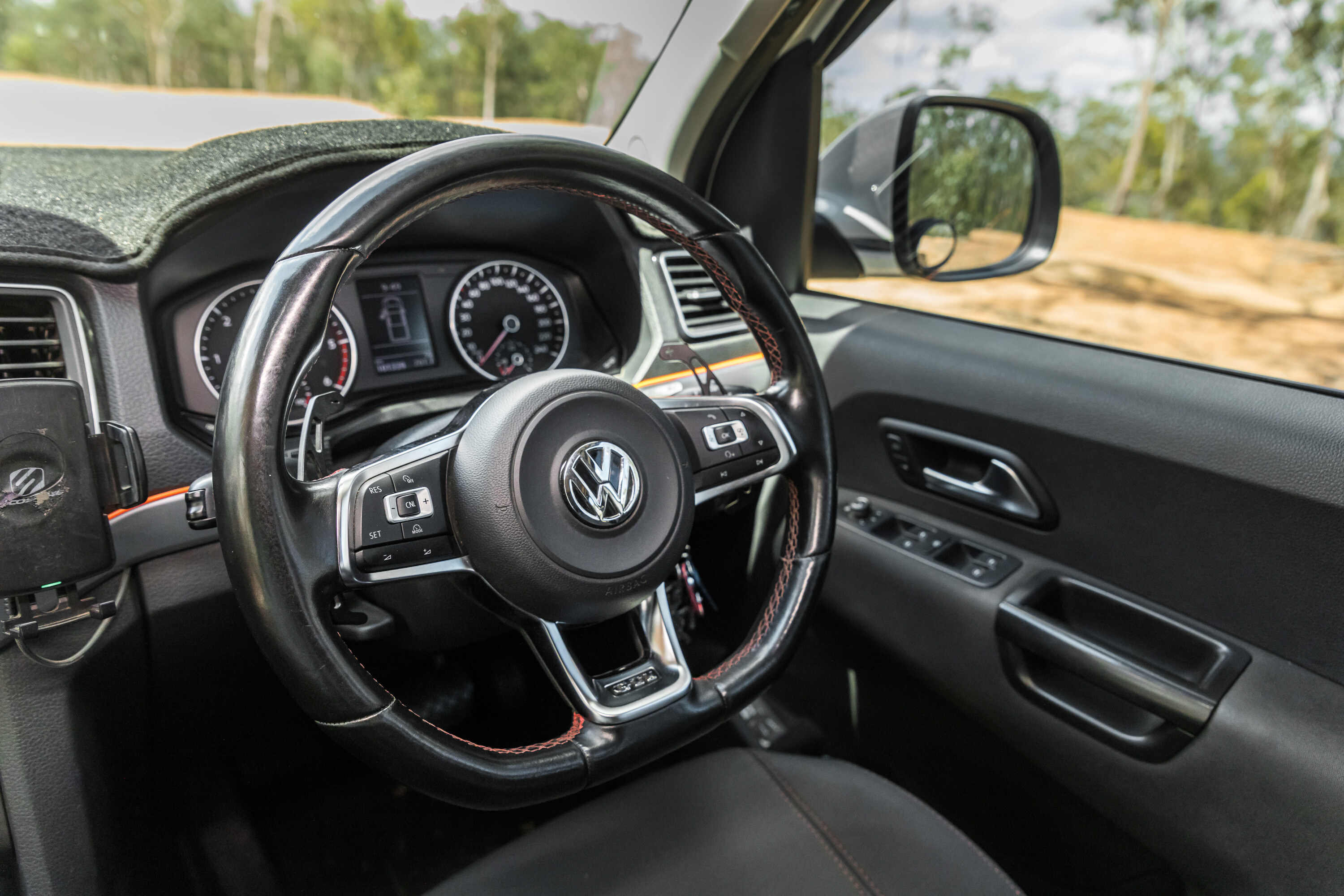
Nathan has kept the interior close to standard, with good reason; the Amarok cabin is well-known as one of the most comfortable in the 4×4 ute class – if not the most – and he didn’t want to mess with that. Small additions, such as Global Automotive Accessories neoprene seat covers, a Blackvue DR750X PLUS dashcam (with truck rear camera), an Oricom UHF380 radio (with magnetic mount), a VW Golf GTI steering wheel (with paddle-shift), and a 1kg fire extinguisher are subtle and smart additions to the cabin.
Patience is a virtue
Nathan’s VW Amarok tourer has been a four-year project, but one that has definitely benefited from plenty of ‘thinking time’, with a few positive lessons learned along the way, that further ensured its success.
1
The end result is incredibly impressive; among a veritable sea of amazing modified off-road tourers, this particular V6 Amarok still stands out, with its chameleon-like ability to be as comfortable poodling around as a daily driver in town as it is tackling Australia’s toughest tracks.
The attention to detail (again, due to the time being taken to ‘get it right’ for their purposes) and the fact that, whenever they wish, Nathan and Anna can confidently load up some fresh food, jump in and head to pretty much anywhere they like, for however long they like, is what building a modified tourer is all about – and this tough ’Rok is a brilliant example of that theory put into practice.
“We think we could capture 10 per cent of the LCV market” – Kia Australia boss Damien Meredith on the coming Kia ute, hinting at a target of around 20,000 sales.
It’s been a long-held dream of Kia Australia stalwart – and now chief executive officer – Damien Meredith to bolster the brand’s passenger car and SUV range with a light commercial line-up, and it’s a dream that is finally coming true.
While the first draft of a business plan was proffered to Kia HQ in 2018, planning had already been underway for some time before that, and Meredith agrees with the notion that ‘good things come to those that wait’.
“There’s still a bit of work to do in regard to a host of things, [but] probably in the next 24 to 36 months we’re confident it will land in Australia.”
With annual sales of light commercials – think single- and dual-cab utes, in the main – exceeding 200,000 a year, the lack of suitable product in that space has undoubtedly held Kia back. Meredith has long maintained, though, that the right product in the right places will boost the company’s sales markedly.
1
“We said at the beginning that, with where we are taking the brand and where we’ve developed the dealer network, we think we could capture 10 per cent of that LCV market,” he says.
“It’s very, very important to us, no question.”
And while you’ll never hear him say it, adding some 20,000 cars to the bottom line will push Kia into contention as the second biggest car brand in Australia.
1
So what’s changed with the Kia ute program?
It’s one thing to want a new vehicle range in the local roster, but a number of factors need to line up before that can occur.
In the case of the LCV product plan, it required more critical mass than Australia alone could provide.
The model cycle of a typical light commercial vehicle is generally twice that of a passenger car or SUV, too, which adds its own complexities.
It’s been revealed that Kia’s new LCV products will also be sold in markets that include the Middle East and South Africa, which allows for better economies of scale on what is a relatively unique model line.
Australia has, however, a dominant seat at the table when it comes to the base specifications of the new ute range.
“A substantial amount,” says Kia Australia’s GM of product planning, Roland Rivero, when asked how much input Australia will have.
“A lot of work’s being done to, as much as possible, influence the development to suit our market. Australia’s position is being seen as a very important one.”
1
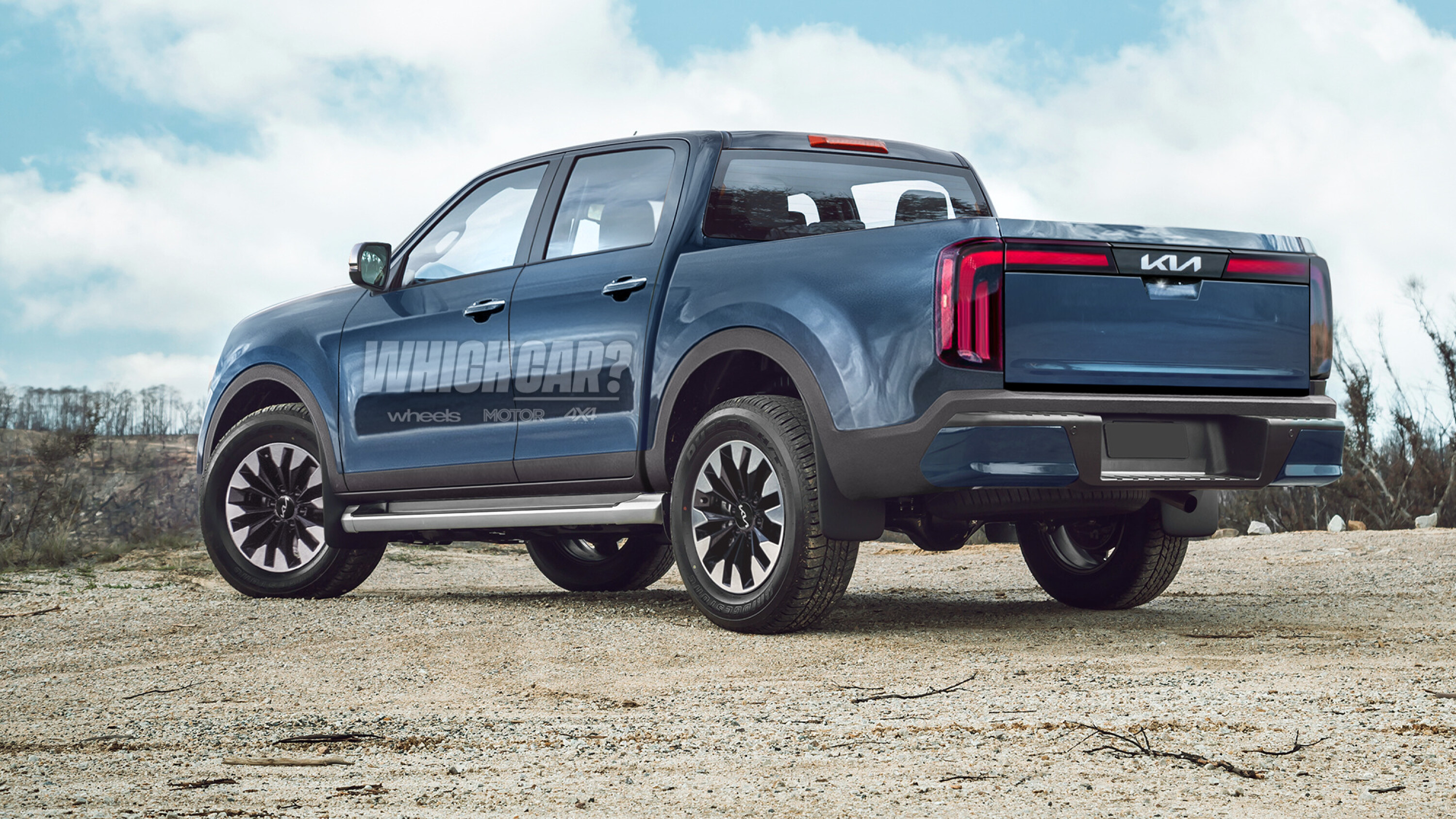
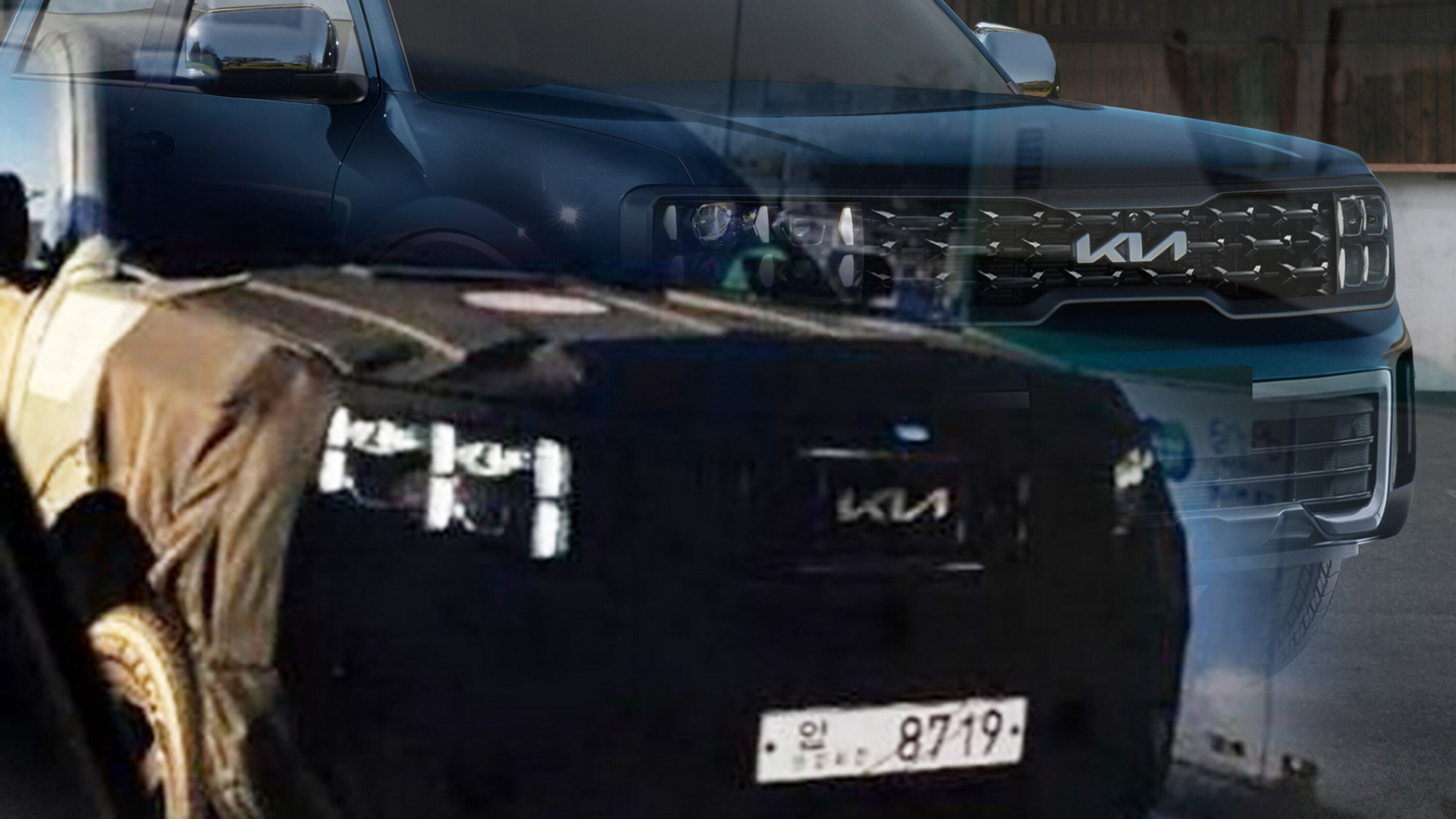
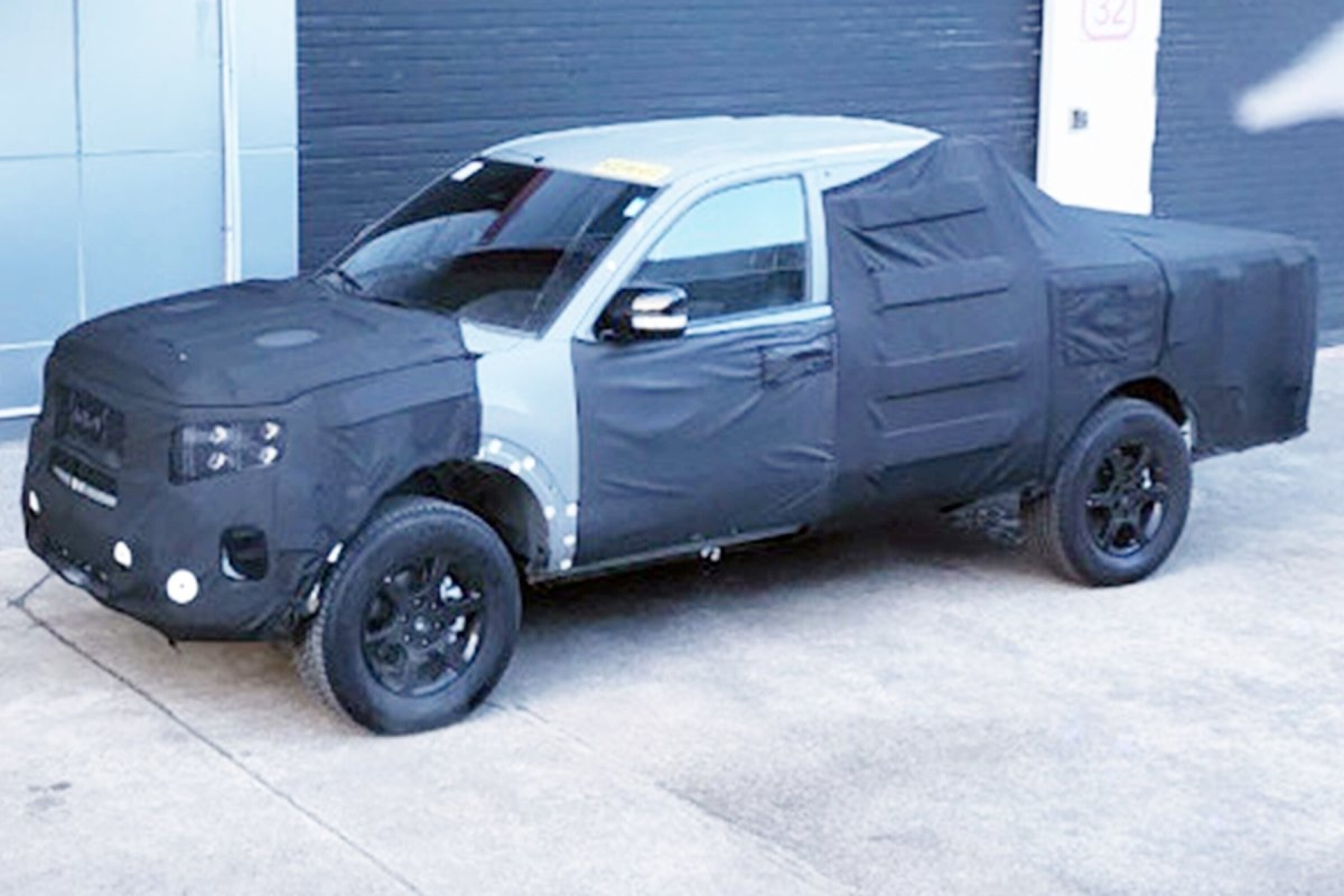
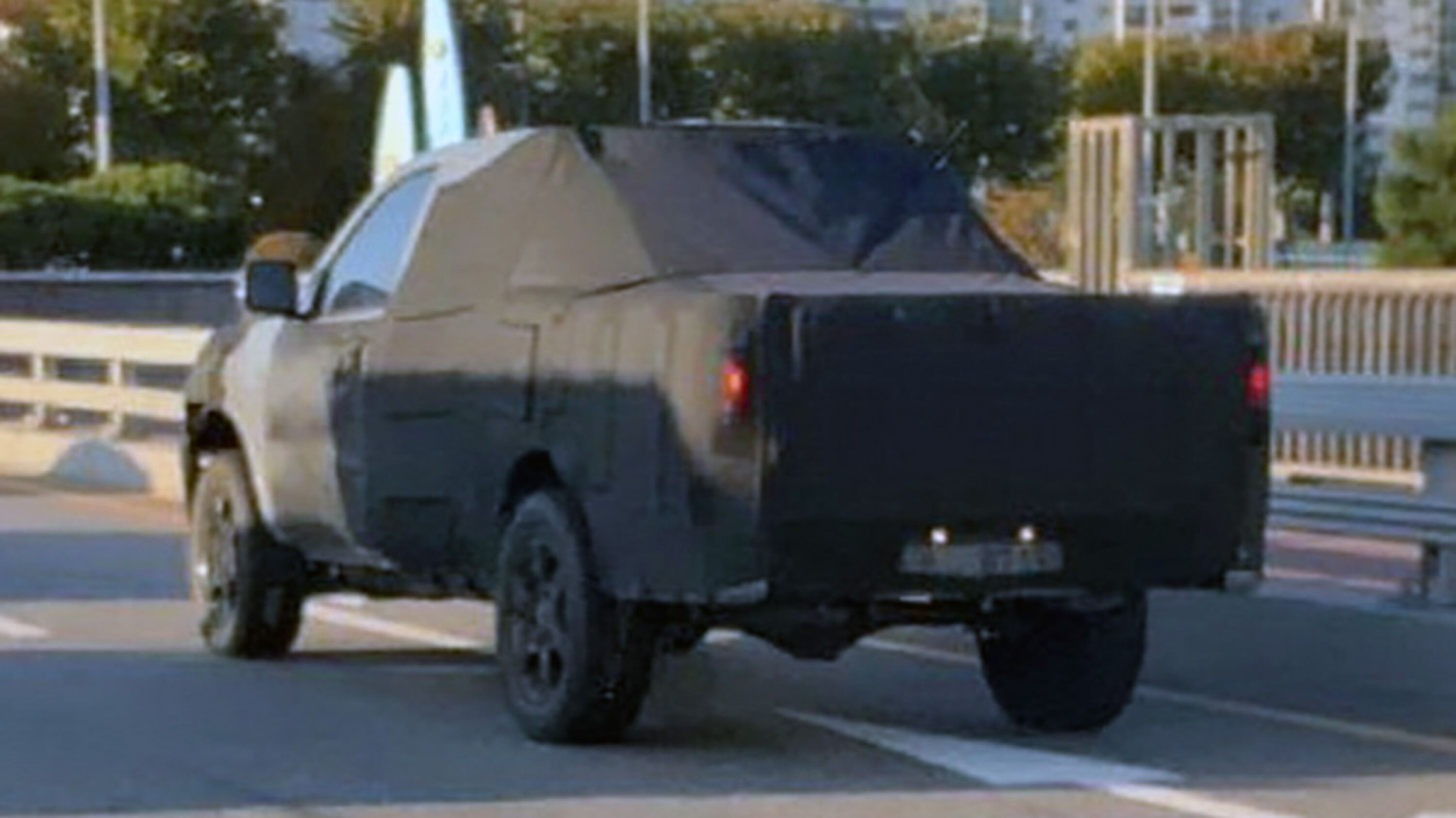
What will the new Kia ute look like?
While hard data on specs and powertrains wasn’t forthcoming, Kia Australia is aiming at the top of the tree when it comes to benchmarking its new baby.
We do know that it will be built in Korea – not Thailand, as some have speculated – on an all-new platform that, according to chief R&H engineer, Graeme Gambold, leans into the expertise Kia already has in the area of LCVs.
“The challenge will be to make it as good as the prime benchmark,” Gambold says, “and that means doing some pretty tough work to get a heavy ladder-frame, high centre-of-gravity vehicle to be as good as what we can see in current offerings.”
One of the challenges Kia faces is just how quickly the LCV space, and particularly the dual-cab ute market, has evolved in the last few years – and how it will continue to do so in the coming years.
The concerted redo of the sales-topping Ranger by Ford, in particular, has no doubt resulted in a revision or two back in Namyang, as has the unprecedented rush towards electrification in the industry as a whole – but this isn’t unusual, according to the executive team.
1
“We’re well aware of how long the common life of the LCV is,” says Rivero. “It has to have longevity and it’s got to be suitable to the market.
“The flexibility in how we develop our ordering specs can be tweaked until the six months before production.”
Rivero also pointed out that two of its biggest rivals have been built to 2022 ANCAP safety regulations, and intimated the Kia product would be more developed than that.
“We know what’s coming down the track,’ he says.
1
What about a high-performance version of the Kia ute?
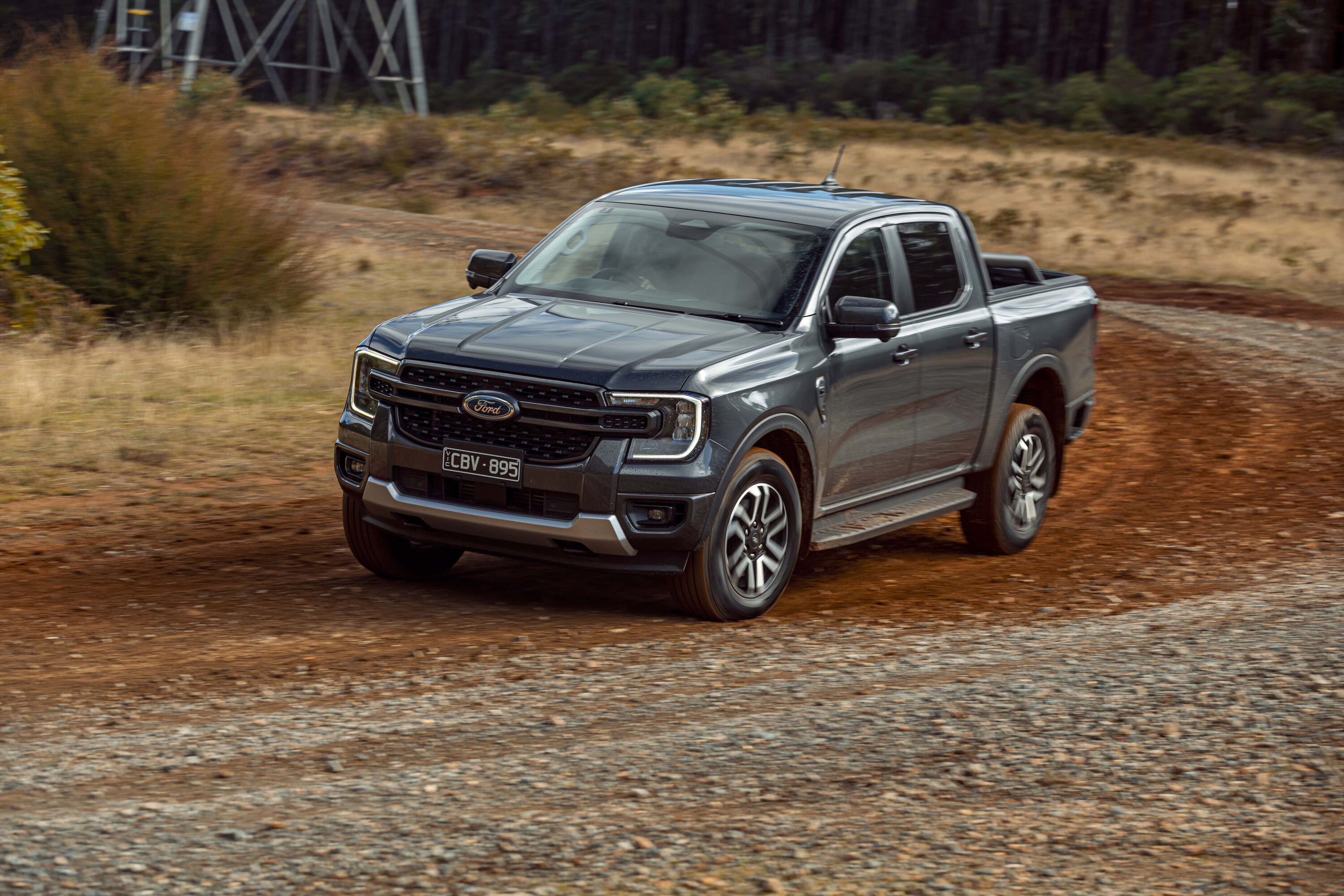
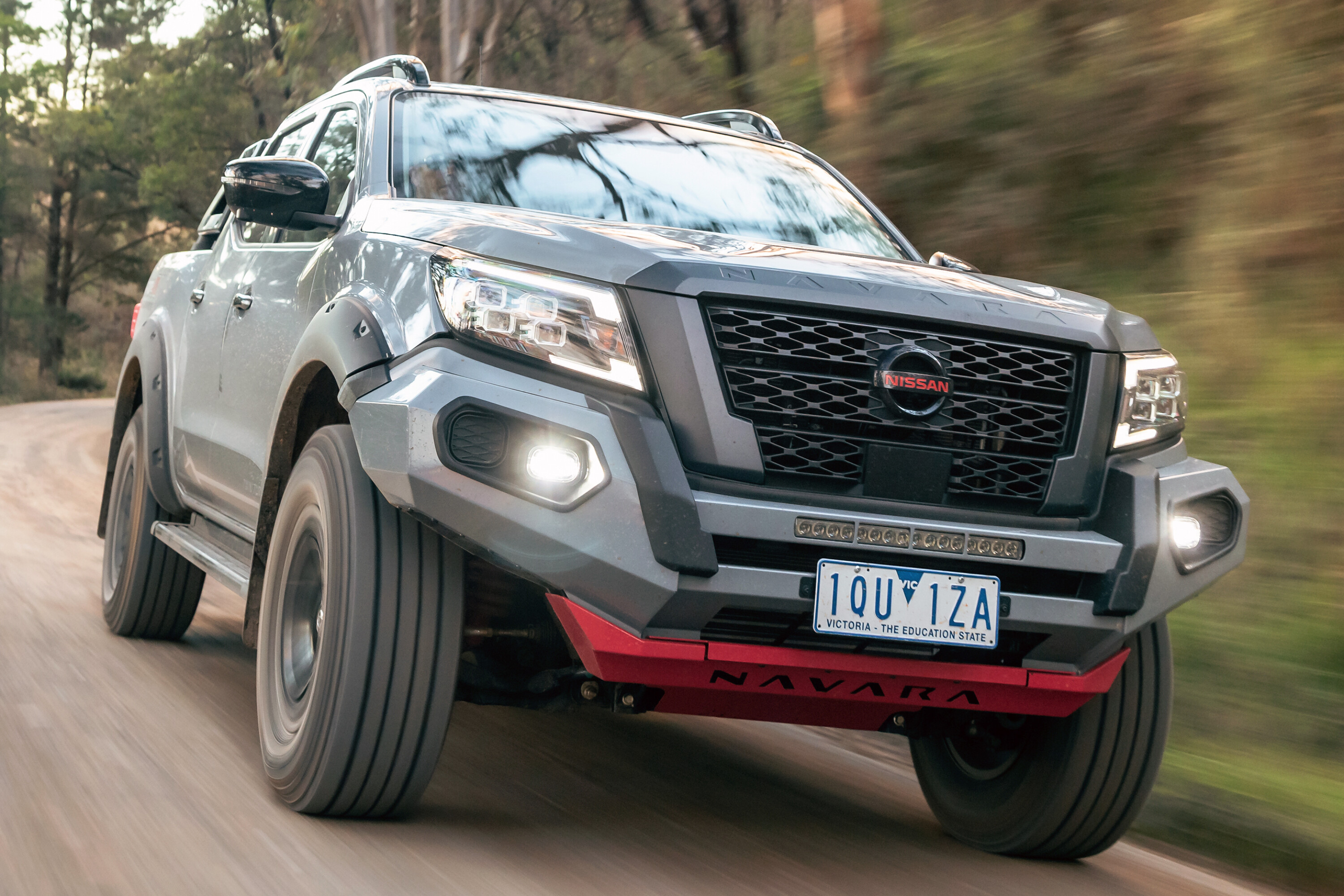
The evolution of the high-end, pseudo-performance dual-cab – think Ranger Raptor, think Walkinshaw-fettled Amaroks, think Navara Warrior – has accelerated over the last five years, and Kia is keen to be a part of it.
“Raptor has been around for a while,” says Rivero. “You’re always looking at who are the main benchmark, and the Ranger is a major benchmark.”
1
As we’ve previously discussed, Kia has a few options on the table when it comes to performance powerplants, and Rivero confirmed that the 272kW/510Nm twin-turbo six-cylinder Lambda II petrol engine is still “part of the family”… and this would be the perfect foil for the Ranger’s 292kW/583Nm twin-turbo 3.0-litre six-potter.
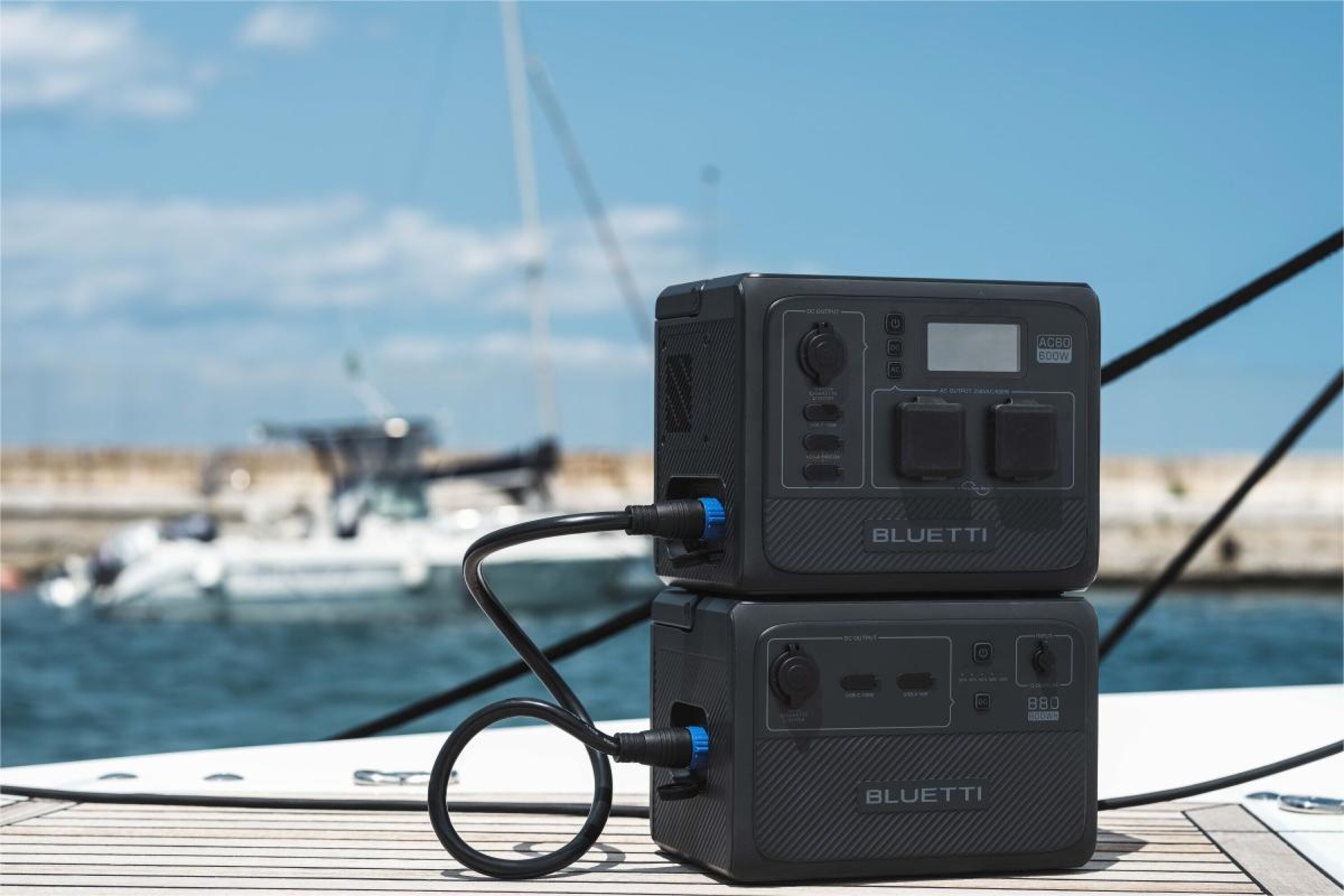
BLUETTI has just launched on its Australian website the world’s first professional outdoor mobile power station, the AC60, which is IP65 rated to protect against water and dust.
There are many other features that back up its reputation and its six-year warranty.
1
Introducing the BLUETTI AC60
Equipped with a 600W inverter and a 403Wh LiFePO4 battery, the AC60 offers a high level of protection, faster charging, extreme portability, and expandable capacity. It is designed to meet the growing demand for a reliable and mobile power source for outdoor use.
Water-resistant and dust-proof
The internal structure of the AC60 has been significantly improved: its air ducting system is independent and vacuum coated with a protective layer to prevent the ingress of liquids and dust. All its external materials pass water and dust resistance tests.
In addition, its plugs, including the patented AC outlets, are sealed from the inside out with rubber plugs for maximum protection and safety. That’s why the AC60 has an IP65 rating and is defined as the perfect power source for various outdoor activities such as overlanding, beach camping, boating, and more.
The AC60 has three charging modes, including silent mode (160W), standard mode (255W), and turbo mode (600W). It can be fully charged at 600W in as little as one hour using the included turbocharging adapter. In silent charging mode, the unit reduces its sound from 45dB to 40dB, so soft that it can hardly be heard even in confined spaces such as a room or tent.
The AC60 also supports solar charging up to 200W. It is widely compatible with other solar panels besides BLUETTI’s PV120/PV200 solar panels. It also supports car or lead-acid battery charging, there is always a suitable charging option.
1
Easy to move anywhere
The AC60 is the perfect adventure companion, surprisingly light at 9.1kg. It also has a compact size, like a small cooler or toolbox, with dimensions (L*W*D) of 290 mm* 205 mm*234 mm. It can easily fit into tight spaces and be moved around thanks to its folding handle.
Flexible capacity with B80
The AC60 comes with a 403Wh LFP battery that can power several devices in a row. However, it can last longer with the expansion B80 battery. With two B80 batteries, 806Wh per pack, the AC60 can have a maximum capacity of 2,015Wh.
1
More details about its partner B80
Like the AC60, the B80 battery is IP65 rated and uses the same reliable LFP cells that have a life span of over 3,000 cycles. It also comes with the same six-year warranty as the AC60. It can be used as a power bank for other BLUETTI solar generators such as the EB3A, EB70, and AC180.
Besides complementing others, the B80 works as a standalone DC power source with three DC ports: USB-A, USB-C, and a cigarette lighter port. With 806Wh of energy, it can charge a phone up to 43 times, a laptop up to 10 times, and power light for more than 60 hours. The B80 can either charge alone or together with the AC60. It supports AC adapter charging (T200S available from BLUETTI) and 200W solar charging via an included standard PV charging cable.
Availability and price
Pre-orders for the AC60 and B80 combo in Australia will begin on June 8, with a limited-time early bird price of $1789 until June 22. There is also an extra $20 off with discount code PRAC60, which will be valid until June 22nd.
The Queensland Government has officially reinstated the name of one of Australia’s favourite four-wheel drive destinations to its traditional name.
Fraser Island, the world’s largest sand island and a bucket-list destination for 4x4ers, will be officially gazetted and recognised by its traditional name K’gari, in an announcement that formally recognises the Butchulla People’s connection to the island.
1
“K’gari is one of those places that is incredibly well known, not just nationally but internationally,” Post Doctoral Research Fellow and Butchulla Woman, Dr Rose Barrowcliffe, explained. “We have a huge amount of international visitors that come to see K’gari every year.
“So, what we are doing when we are respecting Indigenous place names, is we are respecting Indigenous culture.”
“Australia has the oldest continuously living cultures in the world. It’s the most unique thing about us as a continent and a destination,” Dr Barrowcliffe said. “So, by honouring Indigenous cultures and using place names, we are raising up the culture and saying we are proud of it. And we are showcasing a unique part of our offering to the world.”
1
Butchulla Aboriginal Corporation Language and Cultural Coordinator, Aunty Joyce Bonner, elaborated on what K’gari means to the Butchulla People.
“K’gari means to me, home. Home amongst my People, the descendants, the ancestors, the Midiru (Traditional Owners). It’s our place. It’s what we call home.”
Not sure how to pronounce K’gari?
Similar to hurry, K’gari is pronounced GUR-rie or Gurri, with a silent ‘K’ – like knife, or knee.
K’gari gained UNESCO World Heritage Area status in 1992, and due to its beauty and close proximity to Brisbane – just 300km and a short ferry ride – it has remained the go-to destination for tourers and adventurers keen to explore the area.
In 2022, more than 800,000 visitors travelled to K’gari, experiencing the island’s many sights including Boorangoora (Lake McKenzie), the Champagne Rock Pools, 75 Mile Beach and Eli Creek.
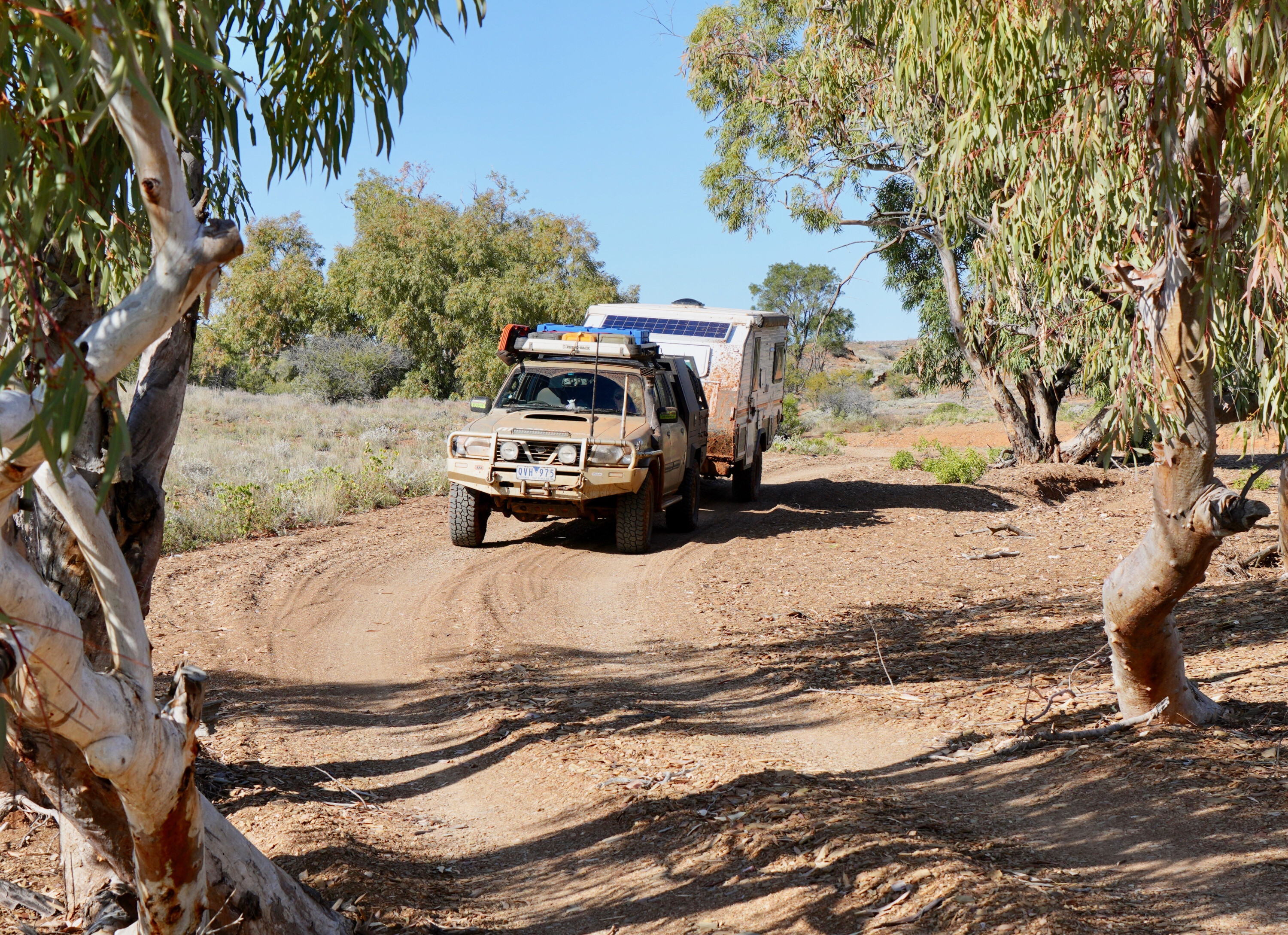
Our stretched GU Patrol has been running on a set of Mickey Thompson Baja Boss A/T tyres for the last 10 months and in that time it has clocked up 16,000km.
Most of those kilometres have been on desert trips, including a run from Ceduna to north of Port Hedland and then back home via the Gary Junction Road to Alice Springs, and then another jaunt through outback NSW and northern SA and down through the Flinders Ranges.
In fact, we have a second set of Baja Boss tyres on our 79 Cruiser, and these have had an even tougher and longer life, leading trips in the Victorian High Country, the deserts of WA, the Simpson Desert and to Cape York.
But back to the Patrol and the Mickey T’s fitted to that vehicle. As is the wont of long distance touring in Oz, we clocked up a few kilometres on the blacktop before hitting the tracks, which varied from soft and sandy to washed-out and rock-strewn. The vehicle was heavily loaded with fuel and water and, for about a third of the distance, was also towing a hybrid camper, so there was a lot of weight on the back rubber.
In the dirt they are bloody fantastic, offering confidence and an ease of handling that makes driving a pleasure
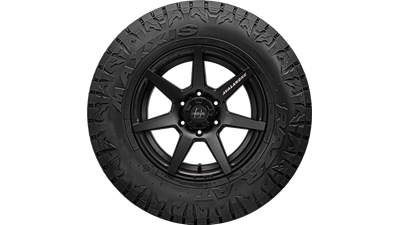
The Baja Boss A/T range comes in a variety of sizes and for the Patrol we fitted a set of 285/75R16 Light Truck (LT) tyres. They feature an aggressive all-terrain tread pattern with a load and speed rating of 126Q, meaning the tyre is rated for a maximum speed of 160km/h and has a load carrying capacity of 1700kg per tyre.
While 160km/h is an average speed rating for a good quality light truck tyre, the load rating is quite exceptional, with many vehicle rims themselves only rated to 1500kg or less. It should be noted that different size Baja Boss tyres often have slightly different load and speed ratings, so always check that they meet your requirements.
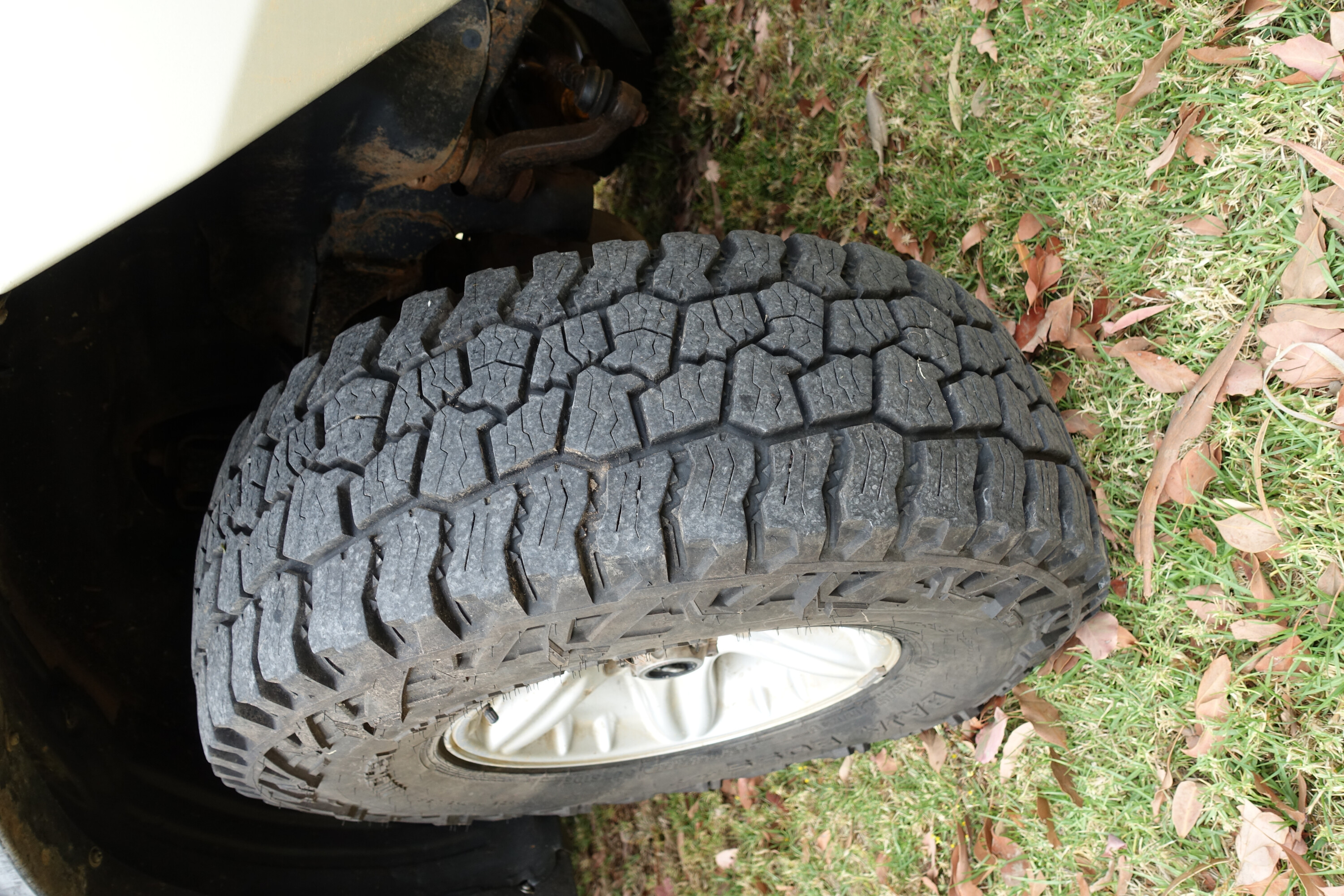
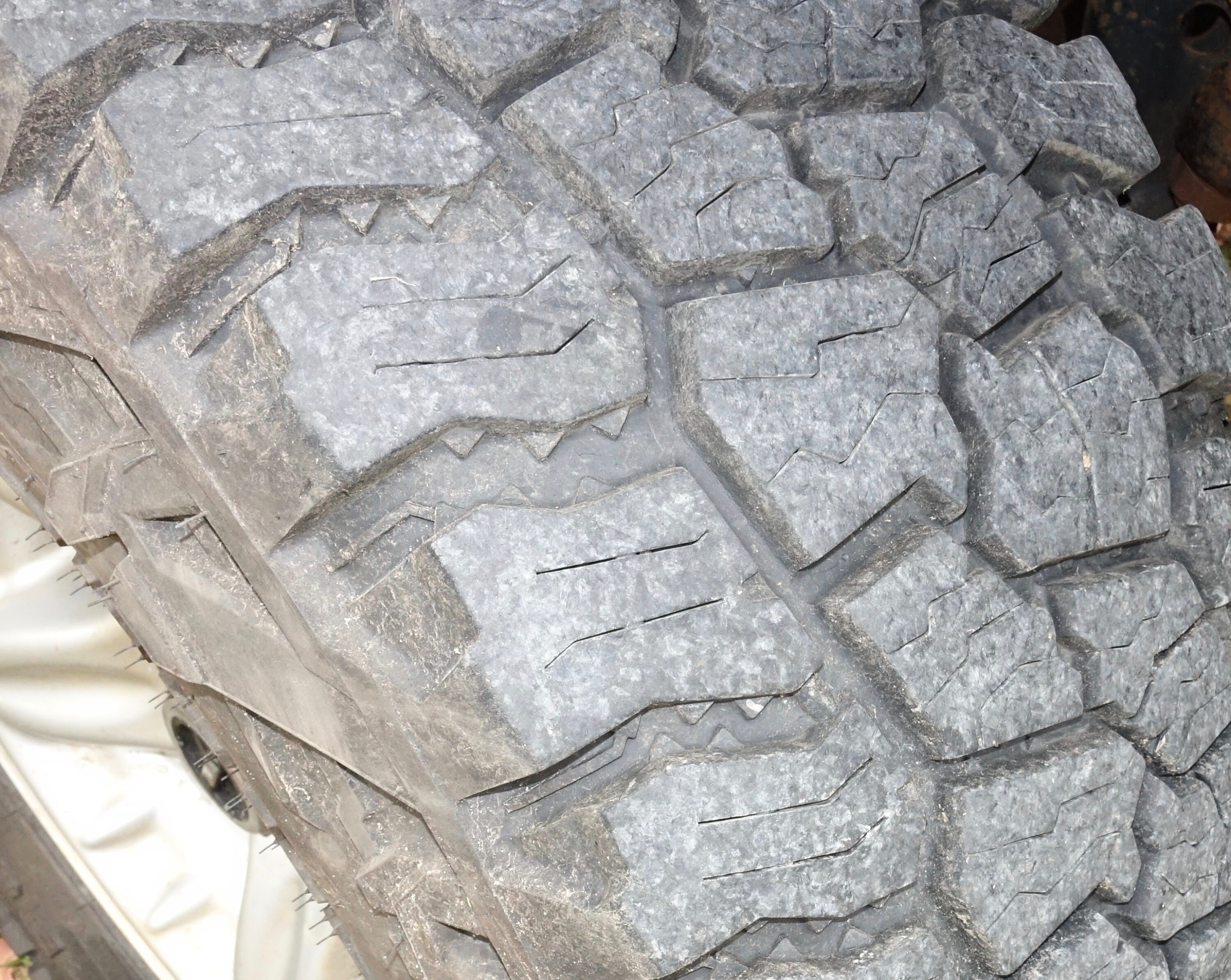
The tyres have a bold look with aggressive side biters and an asymmetric tread pattern, meaning that the tread blocks don’t really correspond to one another in shape and size. Mickey Thompson reckons this design means the blocks provide a greater contact area for improved handling and stability during hard cornering, better traction off road and a more even wear than is typical of a mud-terrain tyre.
The intermediate grooves in the tread design are designed to minimise road noise, while thinner sipes are aimed at providing enhanced all-weather grip and traction.
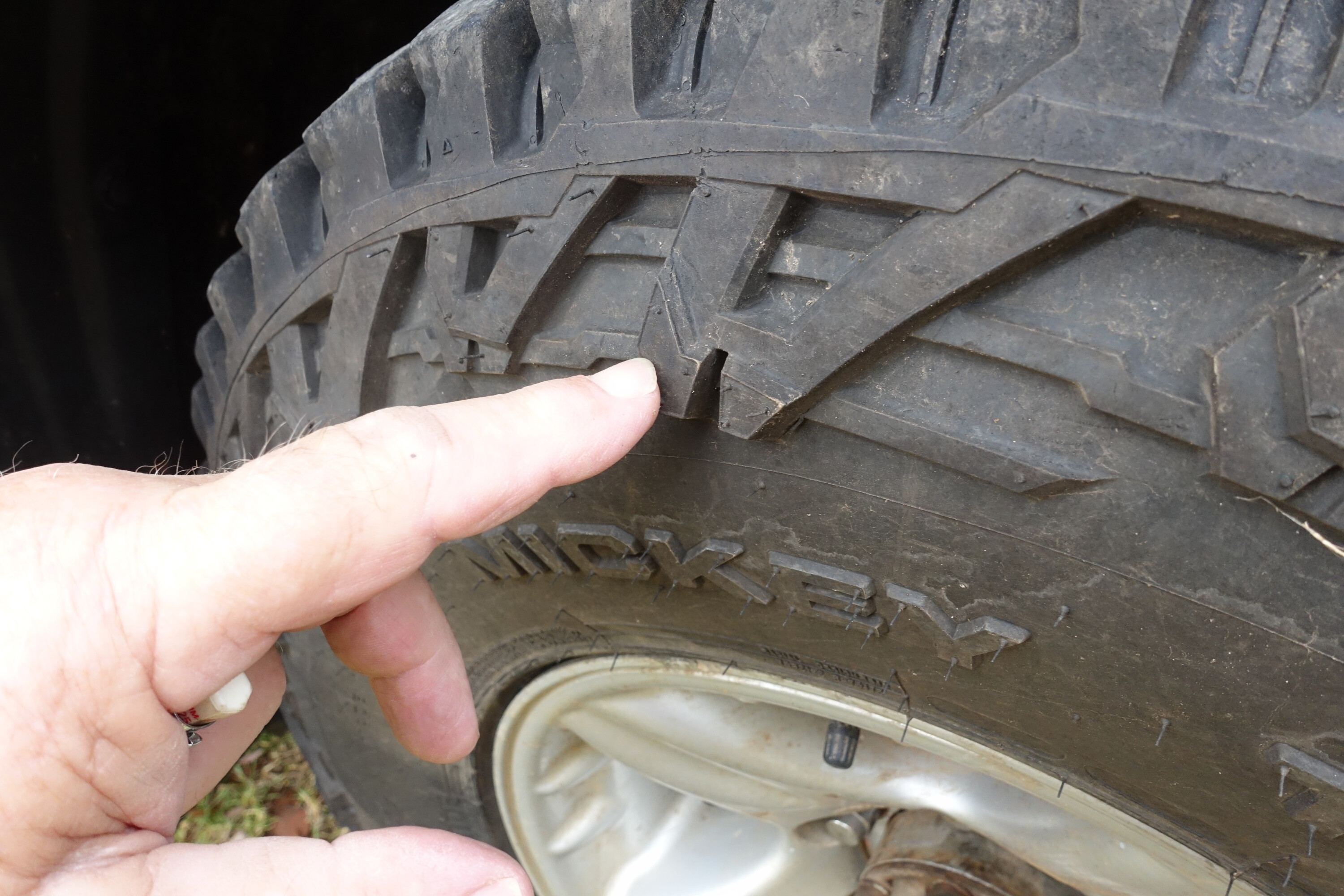
Take a closer at the tread area, specifically the outside set of large grooves, and you’ll see what Mickey Thompson calls ‘claw-like ribs’, and these are claimed to maximise grip as well as to provide protection for the tyre’s carcass. These might seem like a minor addition, but every little bit helps when driving off road. Another thing you’ll notice is the tread depth, which at an impressive 14mm is more than most tyres of an equivalent size.
The side-biters, according to Mickey Thompson, are 50 per cent larger than any previous radial tyre from the brand, improving off-road traction in extreme conditions and minimising the chance of sidewall damage. This is something we are keenly aware of when running lower than normal tyre pressures in a range of off-road environments, where stakes and rocks can easily rip a sidewall out.
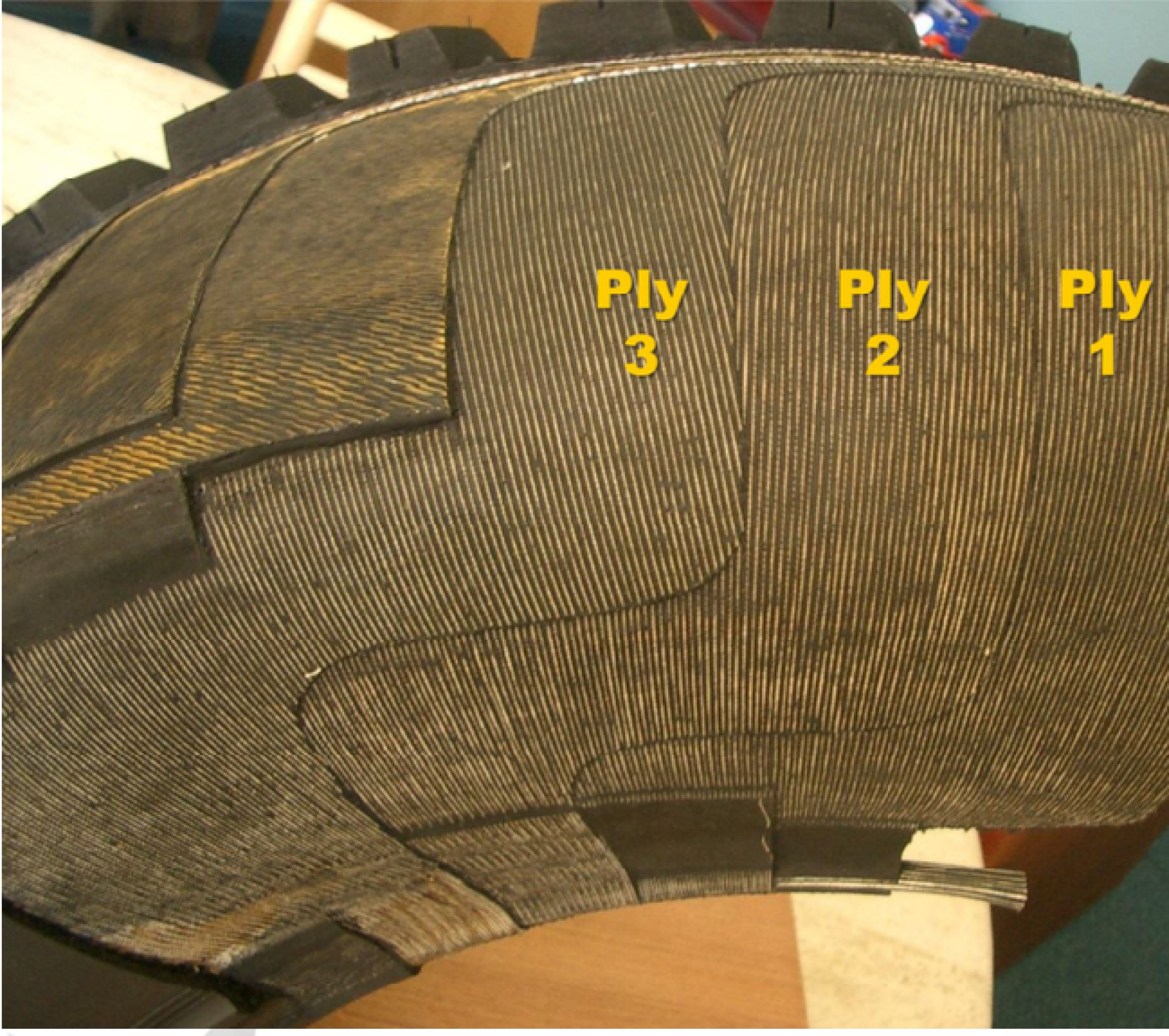
Another fantastic feature of the Baja Boss is its three-ply sidewall construction (most tyres have only two-ply sidewalls) with the third ply laid at a slightly different angle to the other two plies. This third ply also has a 50 per cent thicker sidewall cord resulting in even greater puncture resistance, and its inclusion in the tyre also results in claimed improvements to handling and steering response.
Like most tyre manufacturers, Mickey Thompson Tires uses its own exclusive compound recipe, in this case utilising chemically-coupled silica, designed to minimise rolling resistance, while also enhancing wet-weather grip and improving the cut and chip resistance across the tread face.
With the technical mumbo jumbo out of the way, I’m sure you want to know how the tyres perform in Australian conditions. On the blacktop they are surprisingly quiet for such an aggressive-looking all-terrain tyre, and after our 16,000km we haven’t noticed any increased noise levels as they wear.
They perform well under brakes and when cornering, with good grip and responsive handling. We’ve only had them on wet tar on a couple of occasions and at no time did they exhibit any unwanted characteristics, nor did they exhibit any slipping or sliding.
In the dirt they are bloody fantastic, offering confidence and an ease of handling that makes driving a pleasure. In the really tough stuff where traction is super important, they climb slopes and crawl up gullies with little wheel spin or slip, the side-biters helping in these situations as well as protecting the bulging sidewalls form stakes and stones.
1
Tyre wear has been good too, with the fronts showing less than 4mm loss of rubber while the heavily laden rears have worn a little more. Wear has been even across the tyre tread face with no indication of any chipping or scalloping of the tread blocks.
We haven’t yet had a puncture, but with tyres, any tyre, that can be as a result of good luck as much as anything else. With a tyre rotation coming up (maybe we should do that more regularly, but it hasn’t been convenient) we reckon we’ll be good for around 50,000km out of this set of rubber. Some may think that’s not exceptional, but I reckon it’s bloody good considering the conditions the tyres have been subjected to.
The Baja Boss A/Ts don’t come cheap at around $540 a tyre. I have spotted them for a bit less online, but the further you go away from the major city centres the more you are likely to pay.
The majority of our travel is on gravel roads, dirt tracks and rougher terrain, all the time carrying heavy loads, and for these conditions, the Baja Boss A/Ts are about as good as you can get.
You may pay a bit more than for other brands, but in handling and performance departments (read: safety) plus off-road ability, you can’t get much better.
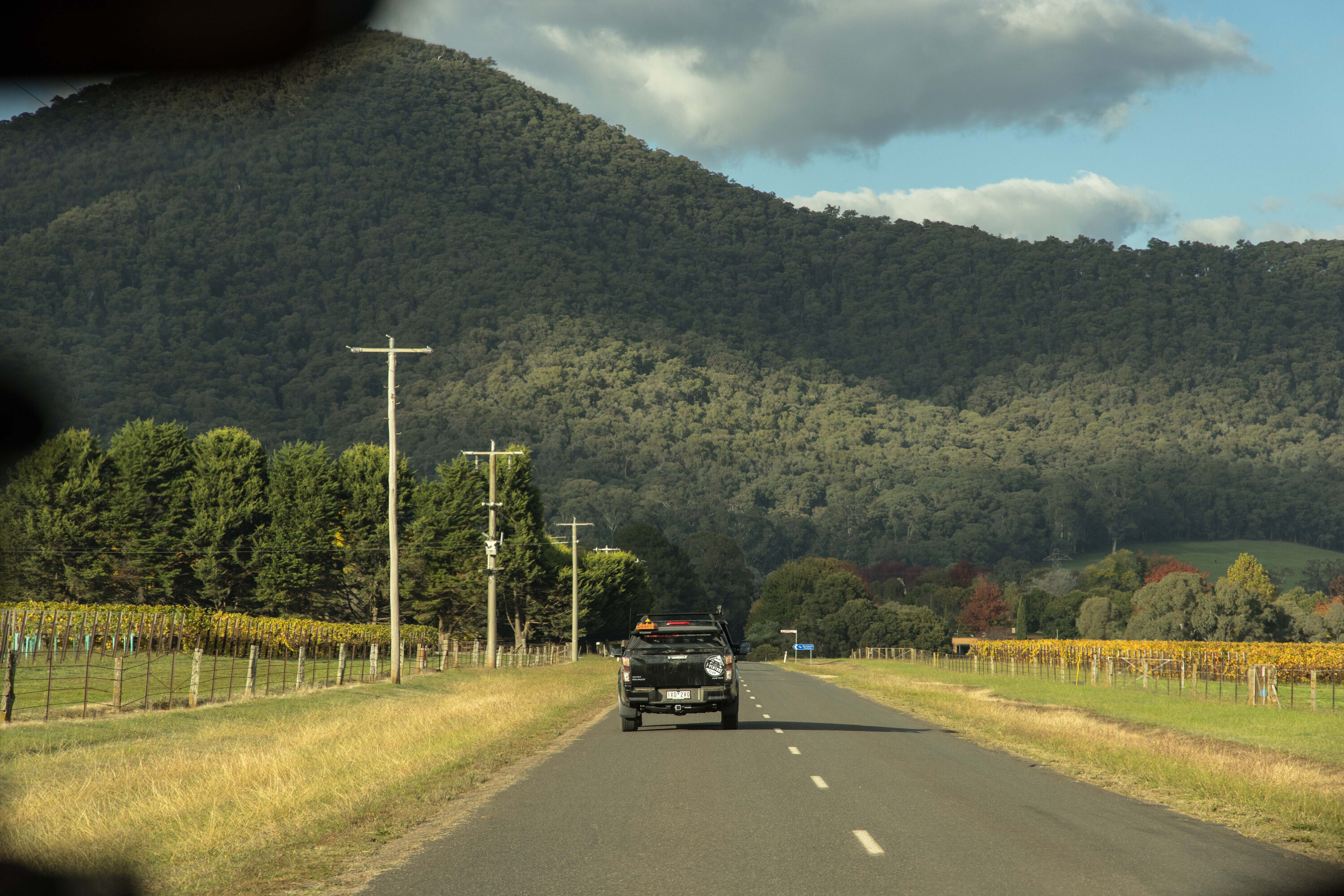
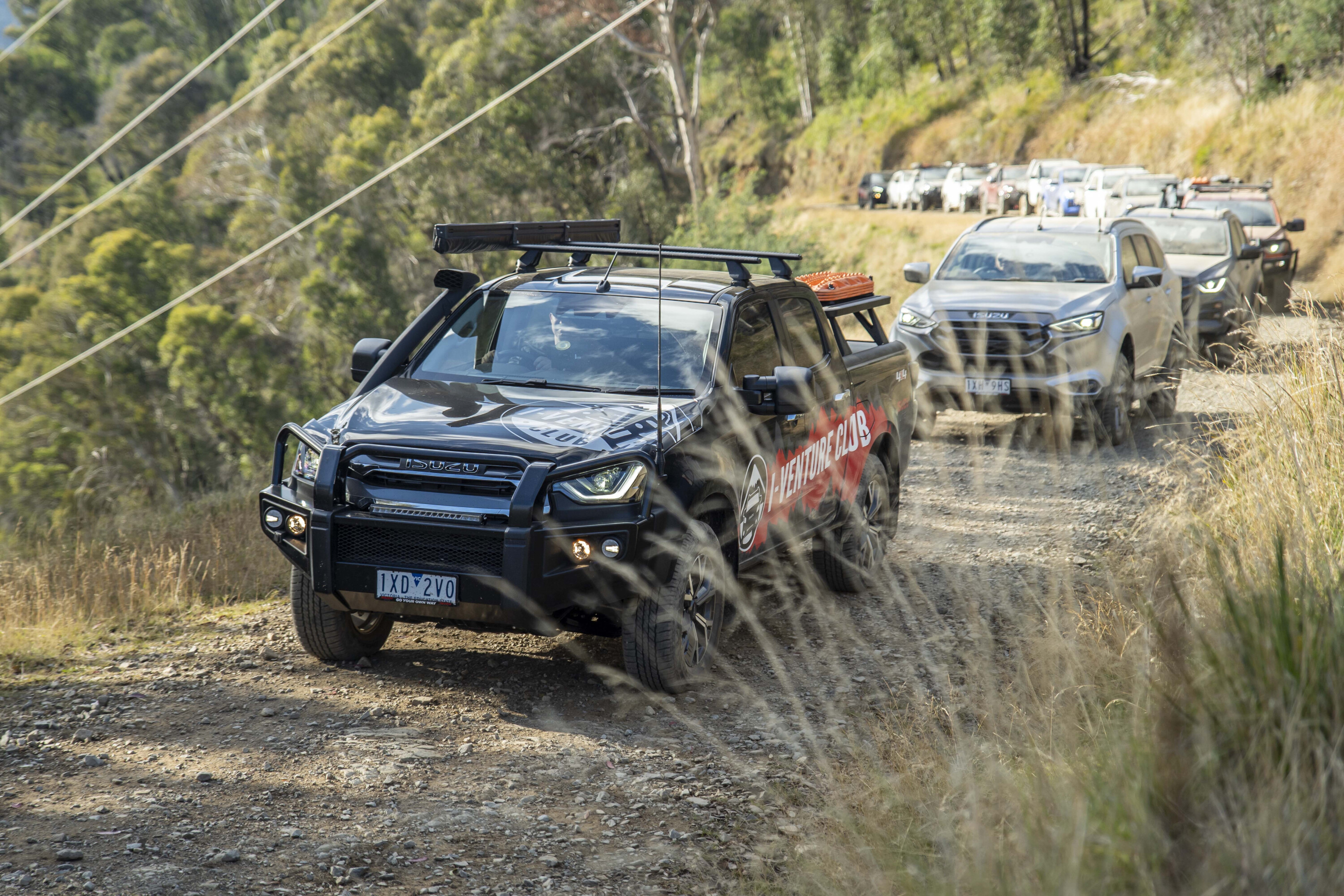
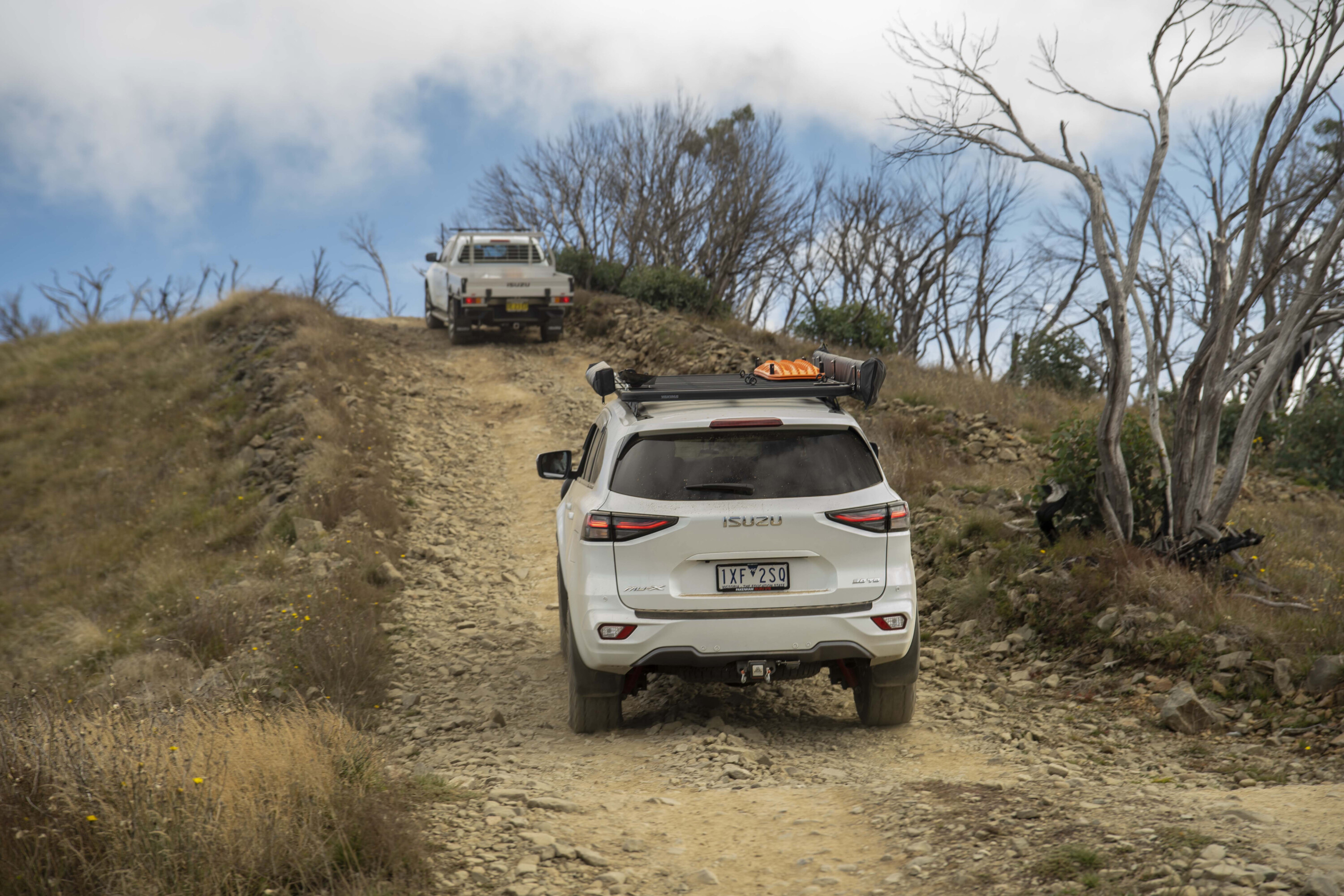
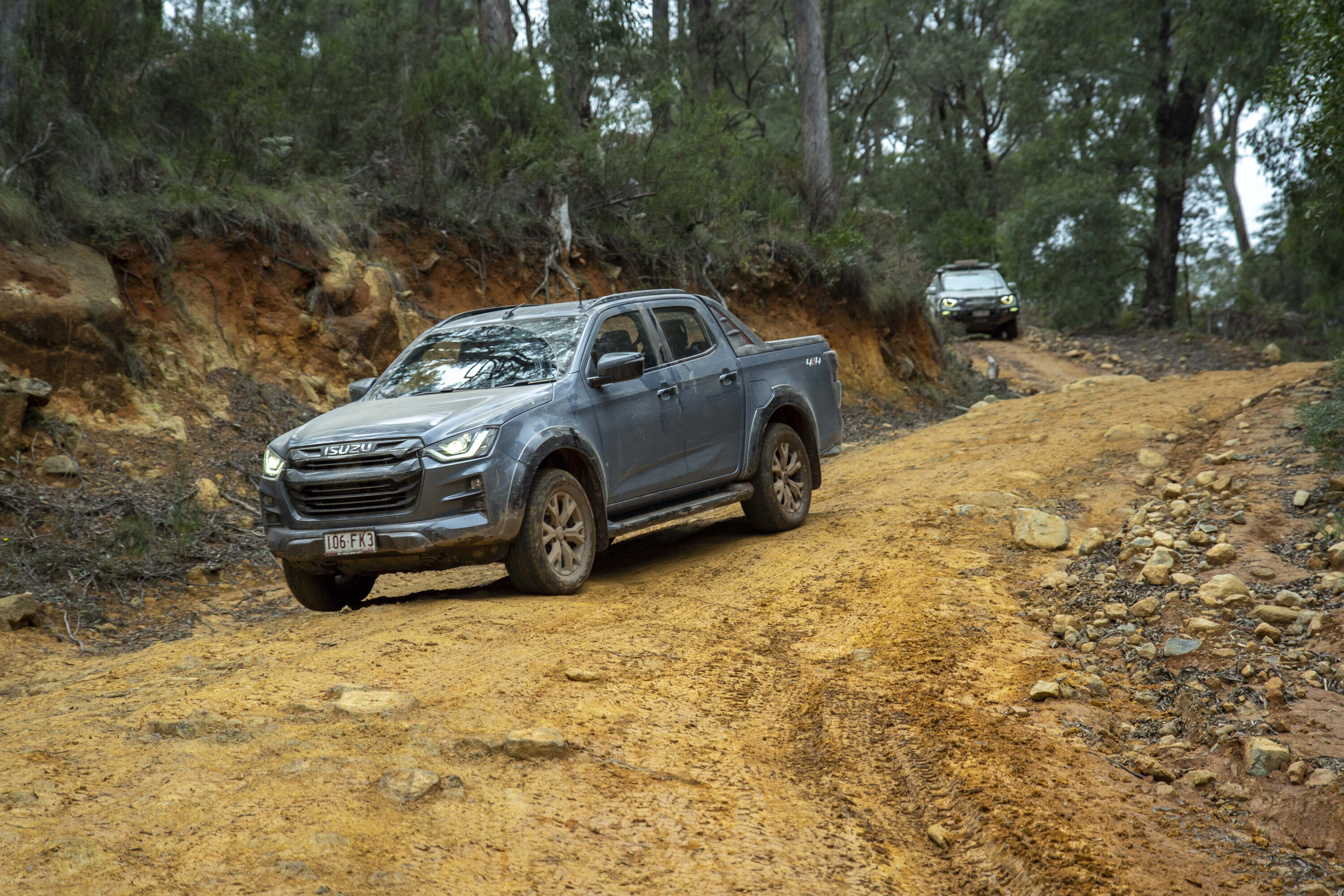
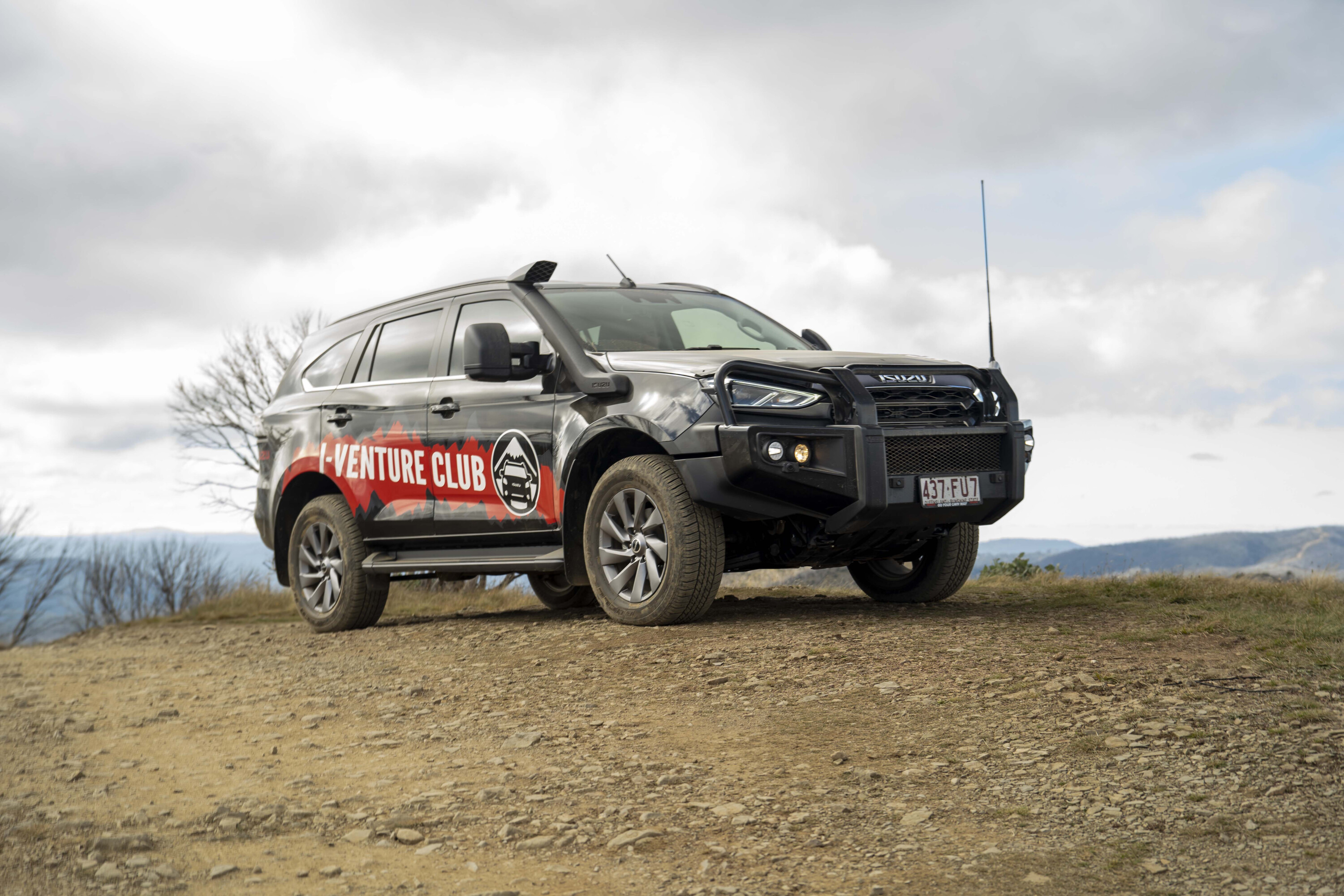
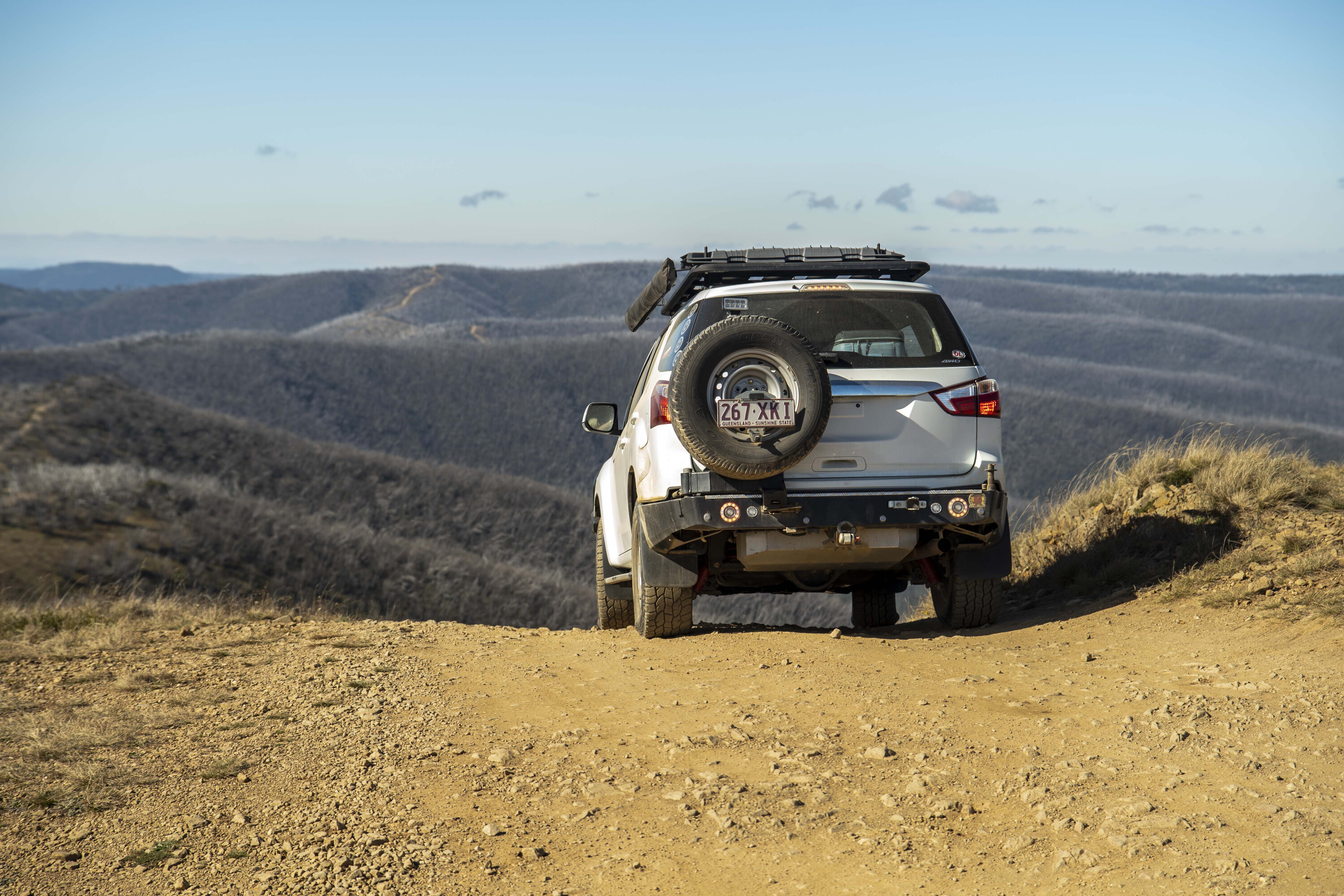
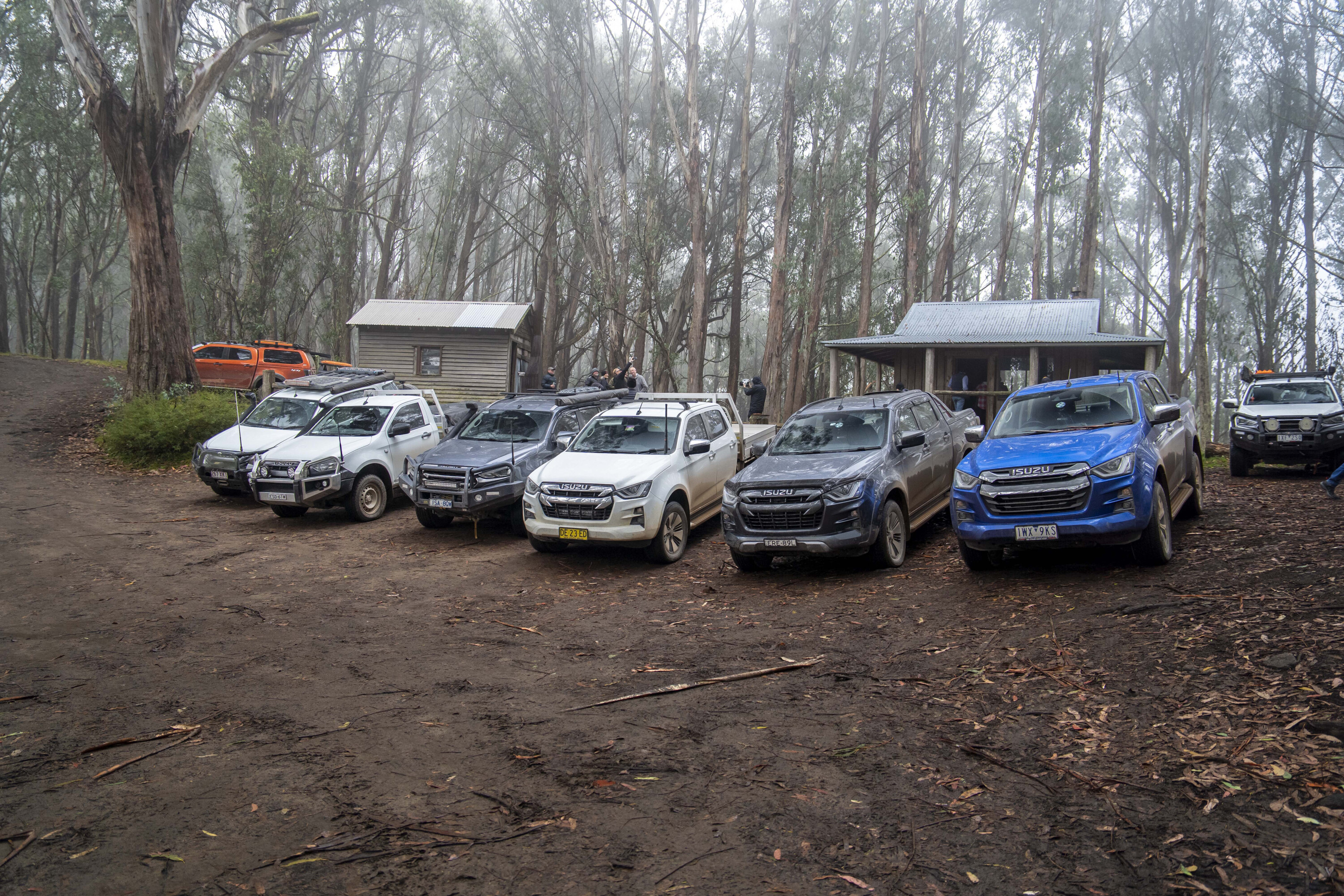
Despite a mix of weather conditions, from dusty to damp, a fleet of stock and mildly-modified Isuzu D-Max and MU-X models tackled the best of what the Victorian High Country has to offer during the latest Isuzu UTE I-Venture drive program.
Isuzu put multi-day I-Venture trips on hold during COVID-19 for obvious reasons, but the popular customer drive program is now back with a bang and the sense of elation could be felt throughout the eager group of punters.
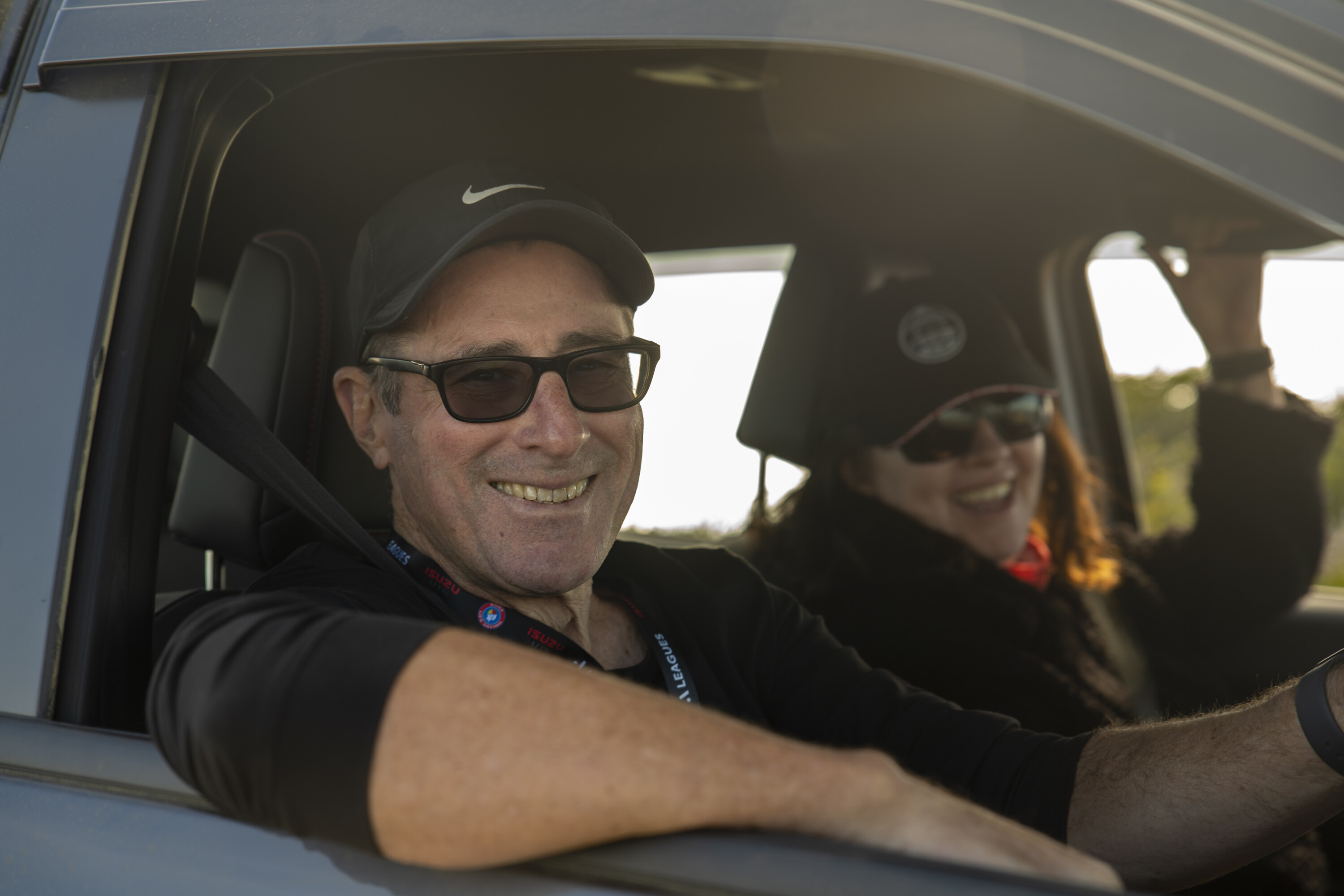
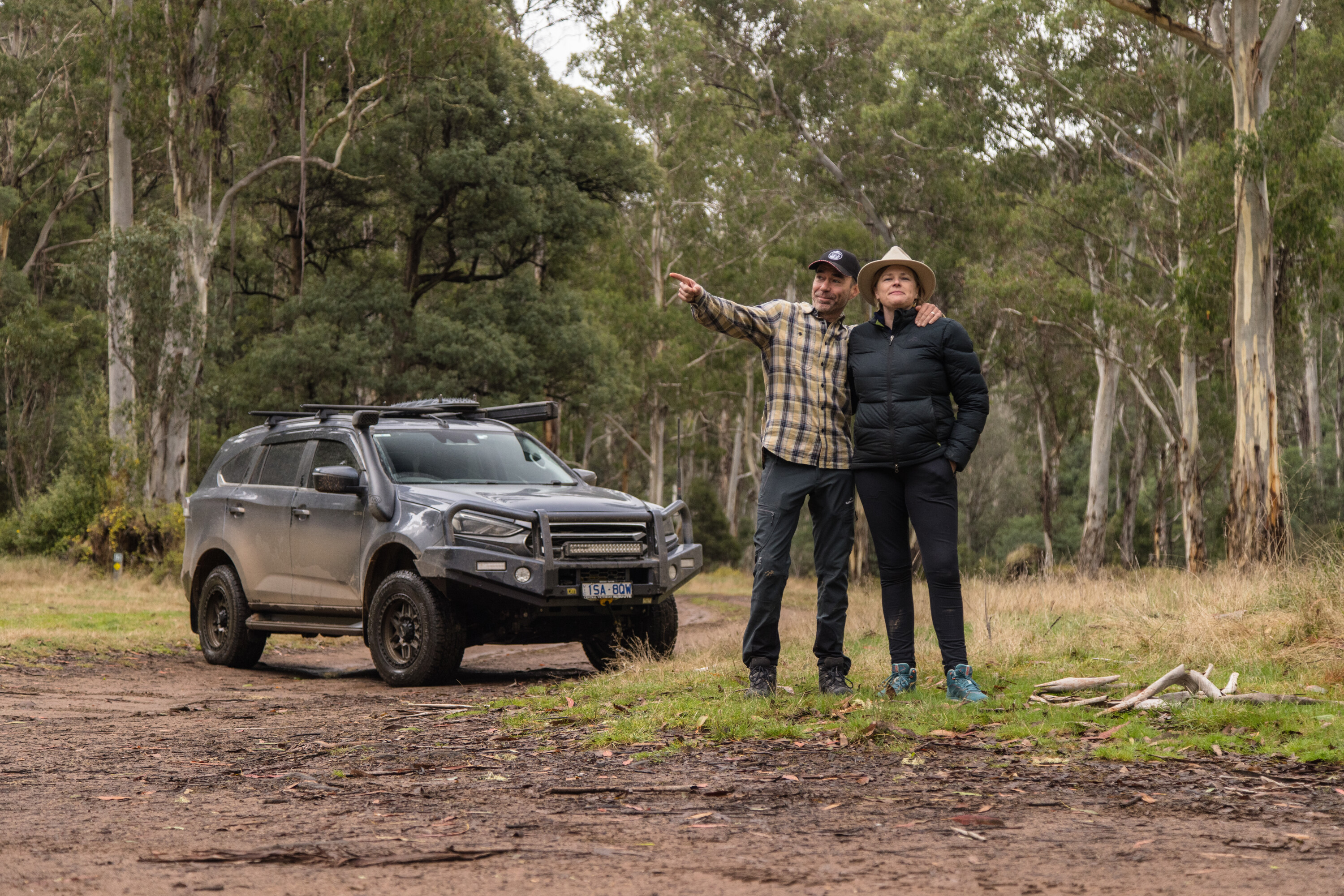
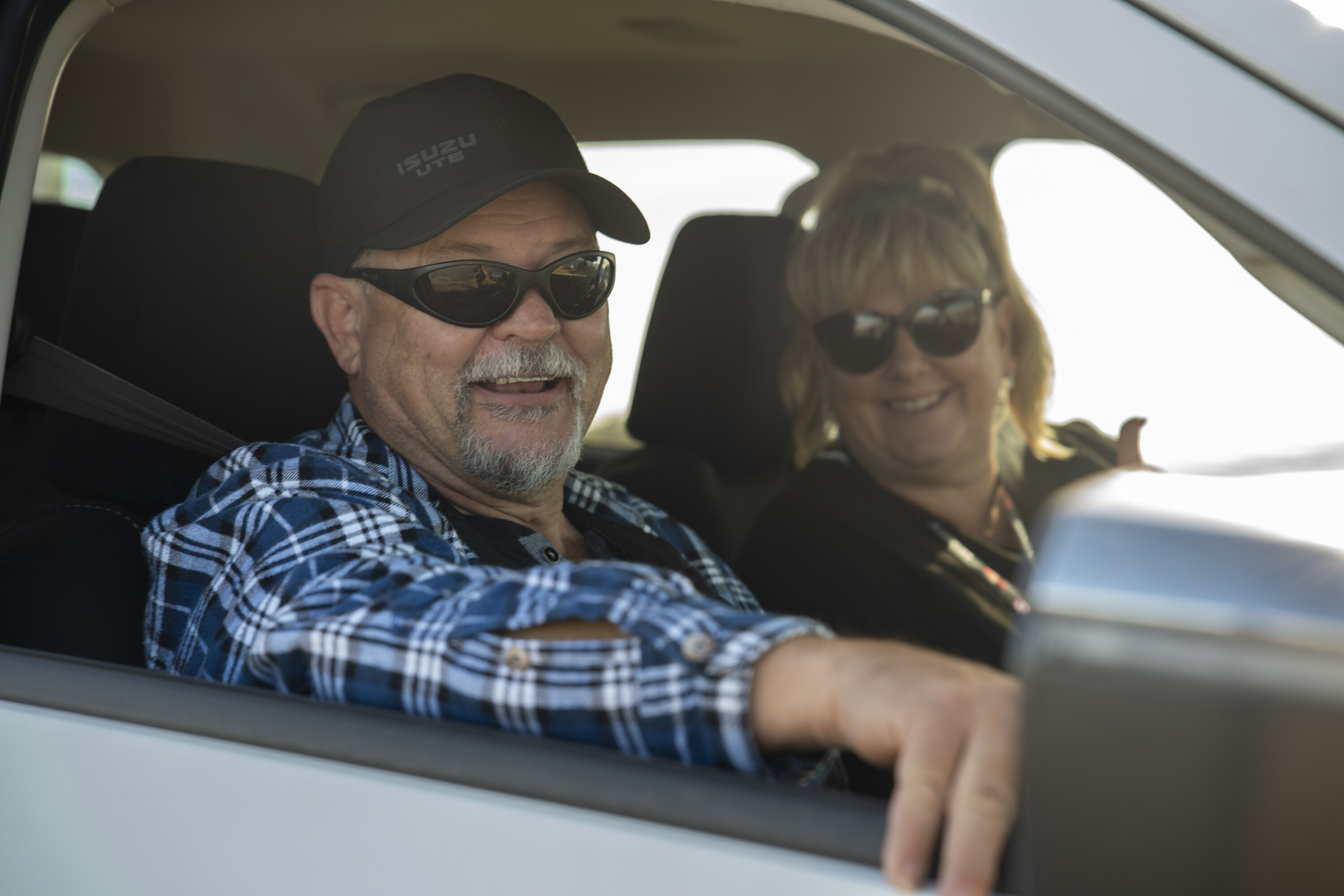
This trip was one filled with countless triumphs, very few tribulations, and looking through the photos it’s hard to find one that isn’t filled with smiles – which sums up this I-Venture outing.
1
I-Venture, for the uninitiated, is Isuzu UTE’s off-road customer training program offering single- and multi-day trips aimed at showing people how to get out and use their 4x4s to their full potential. The program kicked off in 2015 and since then more than 5000 owners have learnt how to wheel their vehicles in a safe, encouraging environment across 246 trips hosted so far.
This particular multi-day trip costs owners a subsidised $2000, and that includes meals, instruction, and all the permits and planning duties taken care of by the Isuzu team. Turn up and drive, essentially.
It seems Isuzu is aware of how many concrete cowboys never leave the blacktop, making it their mission to change that. Of course, these trips are also about offering lifelong memories and, realistically, establishing lifelong customers.
1
High Country veteran Steve Cooney, who runs Brisbane Hinterlands 4WD Training provides solid, no-bullshit instruction and honest encouragement.
It was tempting, looking at the itinerary and route maps, to daydream about the various modified four-wheel-drives that would be more capable and possibly more fun on a trip like this. Thoughts of doing the trip in a kitted-out rig quickly dissolved though, as it became apparent a stock vehicle would require careful lines and a lot more focus –- with far less room for error.
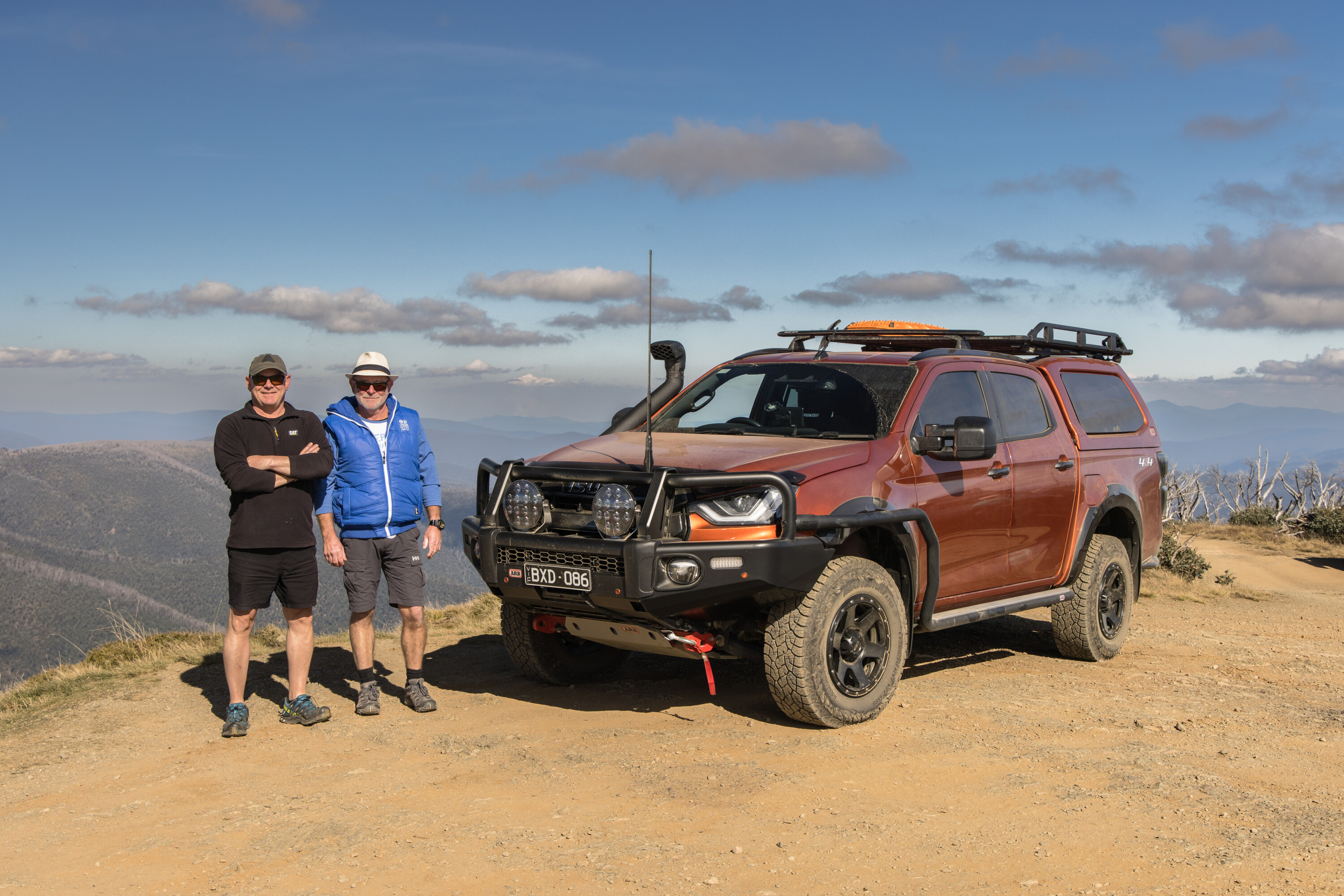
We used a mix of stock MU-X and D-Max models, but spent most of our time in a Neptune Blue D-Max LS-U+, offering the same 140kW/450Nm as the rest of the range with plenty of luxury. Modern dual-cab 4×4 utes are capable out of the box, so this was a case study in what they can actually do on factory all-terrain tyres and, in this case, a modest 240mm of ground clearance and 800mm wading depth.
1
Climbs, crawls and Alpine views
Arriving at Bright in the foothills of the Mount Buffalo National Park on the first night, the weather looked promising and it was evident we were in for a scenic trip. Punters had travelled far and wide for this I-Venture trip, some from as far as the Sunshine Coast in Queensland, arriving at the quaint Riverbank Park Motel for a feed and some much-needed shuteye before kick-off.
Day one commenced with a good ol’ country breakfast and succinct driver briefing, before the 14-vehicle convoy departed for the Great Alpine Way.
Bright’s radiant foliage was replaced with leafless trees as we gained altitude, having been ravaged by the bushfires in 2019, but as we climbed so too did excitement levels as the panoramic views opened up.
1
The first stop involved airing down at the base of the iconic Blue Rag Trail – free traction as it was referred to by the instructors –and we opted for a safe 20 psi. Most of the group were Blue Rag virgins, but this is a trail that looks more intimidating than it really is from the base of the climb, and all were assured their vehicles would do it with ease.
We promptly offered to shoot ahead with the camera crew onboard, aware of the glacial pace organised groups opt for, stopping along the way to photograph the convoy as it navigated the snaking mountaintop trail. Photos don’t do it justice, though, as the temperature drops and the rest of the world falls away before finally summiting the 1750m Trig Point, with 360-degree views of the High Country.
Friends, family and co-workers of the group were unfairly treated to jealousy-inducing Instagram updates as the group panned with their phones, doing their best to capture the enormity of the region from the breathtaking vantage point.
1
A fairly mild descent, taking sensible lines through the few rugged sections, put us back on the Great Alpine Way before arriving back in Bright for a steak and beer at the Alpine Hotel.Collective excitement was high, after a cracking first day. Beer helps with that, of course.
Day two was an early start, driving north-west to the Buckland River, with the first small water crossing of the trip before following the powerlines down to Mount Buffalo. The trails to Dandongadale were dry and dusty, as the convoy created some space for the sake of visibility, but the weather was forecast to take a turn so a brisk pace was maintained.
Another water crossing at King River took us onto the gnarliest descent of the trip along McDonald’s Spur Track. The rain clouds were still holding out, but had it rained now, this section may have been impassable on the 18-inch wheels and HT tyres many of the vehicles were wearing.
1
A steep, rutted, rock section towards the end of the track required one-by-one radio instruction that tested the clearance limits of all vehicles– lifted and otherwise – as towballs, long-range tanks and diffs slapped a rock ledge on the way down.
Brake control was key, as each driver was guided down one of two ‘safe’ lines. A lot of stopping to assess, and a few precarious slides on the slick rock, every driver made it down without any real damage incurred.
1
We popped out at the end of McDonald’s Spur track as the sun was dropping, briefly stopping at one of the High Country’s many mountain huts, before driving on to the Mansfield Motor Inn to call it a night.
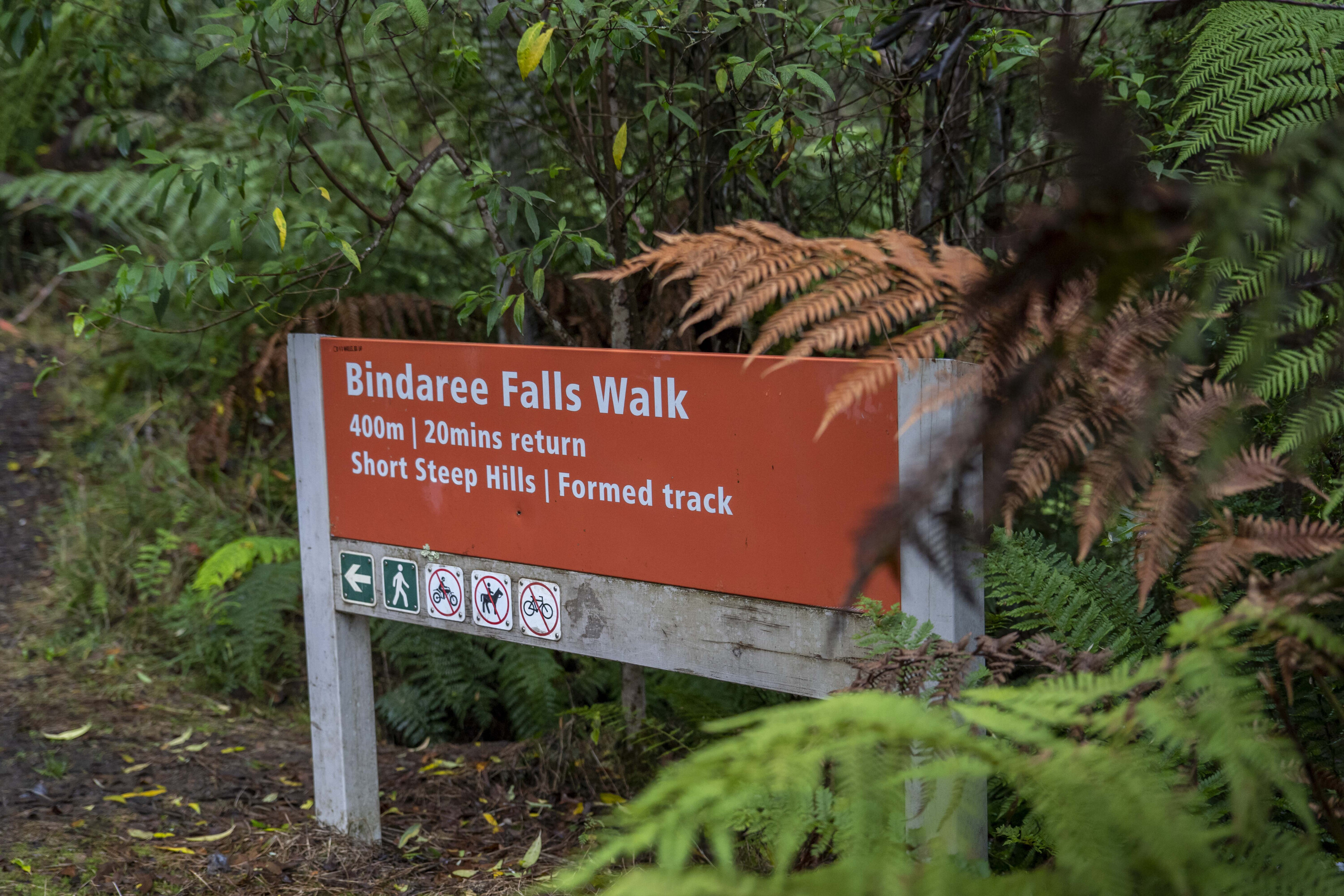
Over breakfast the following morning just about everyone spoke about how cold it was overnight as we gazed at the disappearing foggy road out of town. Fuelled up on scrambled eggs and instant coffee, the group drove towards Mount Buller, before fuelling up and taking the Circuit Road to Bindaree Falls for some sight seeing and selfies.
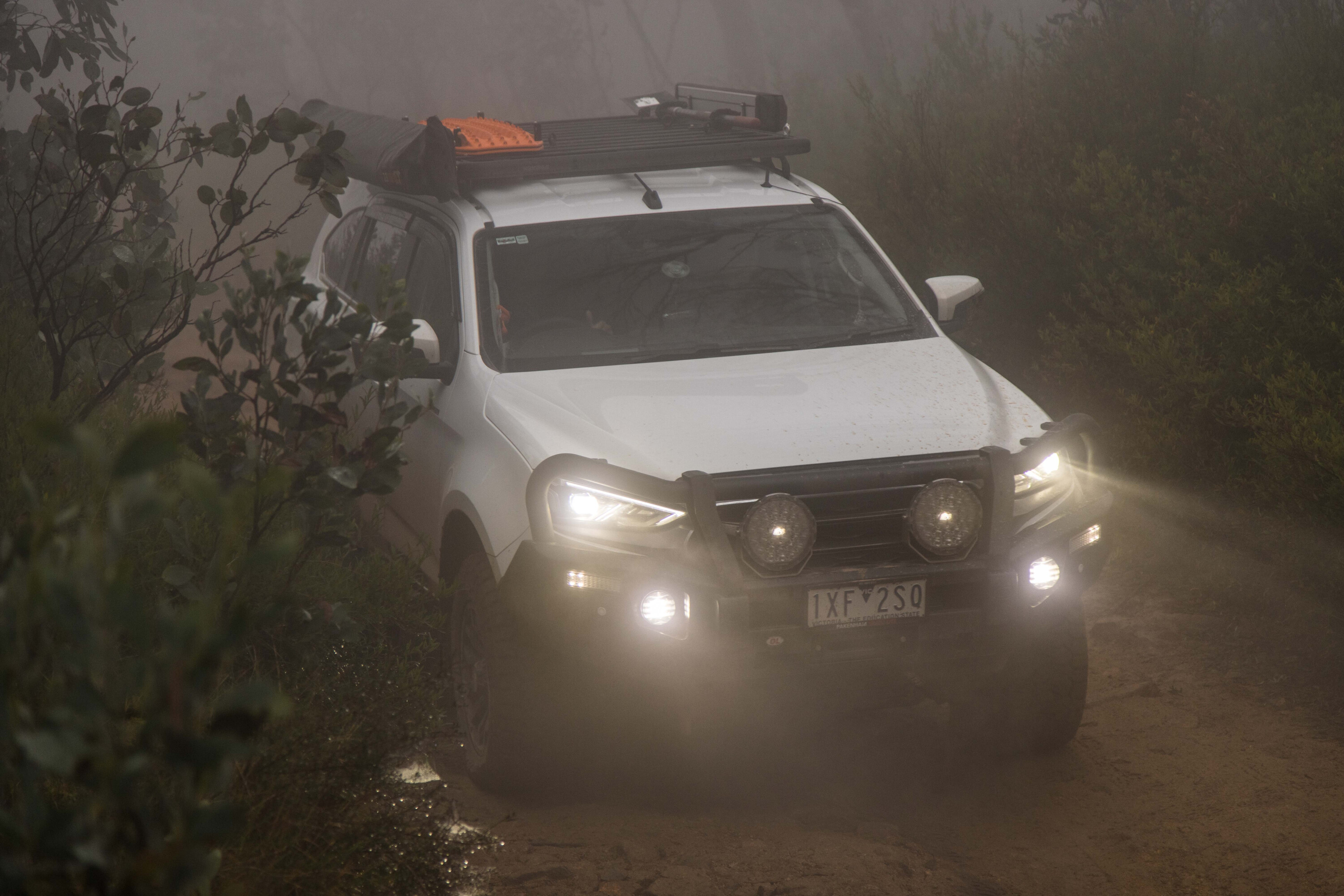
By the time we reached the Monument Trail, en route to Craig’s Hut – made famous in The Man from Snowy River movie – the fog had thickened and all that could be seen ahead and behind were LED lights cutting through the mist.
1
The climb offered an eery experience starkly different to the panoramic views we were treated to on day one, as woody overhanging trees ushered us through the thick fog.Unfortunately it did mean Craig’s Hut was only visible up close, but the fog felt fitting and the frigid temperature was a reminder of how gruelling the High Country would have been for the early drovers who worked the land.
Descending the same track, the fog cleared as the altitude dropped and, after a couple of hut visits, we made it back to Mansfield, all vehicles unscathed and drivers ready for the trip-end beers every 4×4 adventure should involve.
Owners, media and trainers shared their highlights of the trip over a few local lagers, with plenty of future getaway planning thrown in for good measure.
Isuzu builds a strong sense of brand loyalty amongst its I-Venture Club finishers, and you can bet they talk about their off-road adventures with family, friends, colleagues and whoever else will listen. But more importantly this program is all about infecting owners with the 4×4 bug, many of whom may not have otherwise left the bitumen, which in our eyes is a winner.
Satisfied customers
Glenn and Kimberley Holmes
Bondi-based couple Glenn and Kimberley Holmes bought their 2022 D-Max X-Terrain to explore Australia the best way you can.
“We bought it to see Australia, step by step, and rather than blast away for a year we want to just pace ourselves,” Glenn said.
“The idea is to get a caravan and go away for four or six weeks and then be able to park it and get on with other things.
Glenn and Kimberley told us they’ve got plans to “pimp up” their D-Max, but being new to the 4×4 world they’re using trips like this to gain off-road confidence first.
“We got a lot of experience doing the off-road driving here, and enjoyed learning more about the capabilities of the vehicle,” Glenn said.
1
“It’s totally stock now and part of the conversation is working out what to do to it. It’s really about sorting the wheat from the chaff, and deciding how far we want to go.”
No confirmed upgrades are on the Holmes’ wishlist, something that might change after three days of 4×4 chatter, but they do have trip ideas in mind.
“A long-range tank probably isn’t a bad idea for trips like the Simpson Desert, but we’re in the planning phase – things like tyres, winch, snorkel too, but it’ll depend where we’re going,” Glenn said.
“We want a slow intro, and the Simpson Desert would be a ‘nice to do’ but it’s probably too soon for us at this stage. Cape York would be another really lovely one to do.”
The couple took turns driving across the trip, sharing the trickier terrain and gaining experience for the future in a safe group environment.
“It’s a little bit more fun when you’re not totally familiar with it, to do it in a group from a safety point of view,” Glenn told us.
“Kimberley drove the second day and she really enjoyed discovering the ability of the vehicle.”
Kate and Martin Siebert
Melbourne-based adventurers Kate and Martin Siebert did this I-Venture trip in their sensibly-modified 2021 MU-X LS-T.
Kate and husband Martin were hesitant to buy a 4×4, being passionate environmentalists, but decided to bite the bullet in 2021 with a focus on preserving the natural terrain they explore.
“One of the things that concerned us entering the space of four-wheel-driving is I didn’t want to tear up the country and not look after it,” Kate said.
“The reason I bought a four-wheel-drive is to get out into wilderness and appreciate the absolute beauty.
“I’m interested in taking my car to really remote places but leaving very little trace I was there. I’m interested in the big macro picture of everyone doing their bit to not leave a trace.”
Having already tackled some longer adventures in their MU-X, the couple carried a cool and eager energy into the trip, keen to further their off-road ability.
“We did a big trip up through the middle of Australia and into Kakadu, heading back down through rural and remote Queensland and into New South Wales,” Kate said.
“We’d also done the Blue Rag track ourselves, but it was great learning what technical elements of the vehicle we could activate to get us out of a tough spot.
1
“What we picked up over a few days, with someone helping us pick our lines, that education was key.”
For Kate and Martin, the supportive group atmosphere and top-tier instruction was a highlight.
“It was really fun! I think three days is a minimum, to settle in and find your feet,” Kate said.
“I don’t want to do damage to my car or the environment I’m in, so I felt like I was able to relax into it a lot more with the group.”
Modifications are well thought-out and sensible, with Kate opting for the essentials without going overboard – wheels and tyres, GVM upgrade, winch, protection and a drawer setup.
“It started with a bullbar because at that time I didn’t want to hit wildlife and damage the car, and because of the long wait times I also didn’t want it off the road,” she explained.
“We fitted 17-inch wheels and all-terrain tyres, but I’ve never had to shop for wheels so wanted tyres we could easily replace in remote Australia.
“I also fitted it out with the underbody protection and then we moved to fitting out the inside.
“I got custom drawers built into the back, which allowed me to have a fridge and compressor integrated in, and a 12-volt system with two 100Ah lithium batteries with a management system and inverter that allows me to cook on an induction stove anywhere in the bush.
“We’ve also got solar so we can be off the grid feeding the fridge and also serving that 12v system without moving.”
The couple’s preferred method of travel is now by road and it’s fair to say they’ve well and truly caught the 4×4 bug!
“I love being in it, I love doing long days of driving and I prefer it to sitting in airports waiting for flights!”
Neil and Russell Howard
Neil Howard, who brought his brother Russell along for the trip, might be new to the 4×4 life, but he’s running at it full-steam ahead as he prepares to sell his business and tour Australia indefinitely. The two brothers were an awesome addition to the trip, always down for a chat and keen to throw down plenty of banter along the way.
“I’m 60 next year and the plan is to sell my business and do laps around Australia in it. It’s my time now,” Neil told us, as he prepares to pack up shop and leave the city behind.
“In between now and then I’m just doing little trips like this, getting used to the 4×4 life,”
“It’s the first four-wheel drive I’ve owned and I chose the D-Max because it had a good reputation for having an indestructible motor,” Neil said.
Neil’s D-Max was sporting a solid array of ARB gear, but he’s got plenty more planned for the touring rig as he gets it ready to pull his new off-road caravan around the country.
1
“I went with an ARB bulbar with winch, underbody protection, recovery points, solid rails and steps, Base rack, snorkel, and also rims and tyres,” he said.
“We’ve just done the electrical fit out with dual lithium batteries and driving lights. I’ve also got a solar panel and 135-litre long-range tank coming!
“The caravan is a 17.5-foot full off-road build for off-grid living, with toilet and shower and all that stuff.”
When towing his caravan the D-Max isn’t doing it as easily as Neil would like, so he’s got it booked in for a tune that should provide a little more puff.
“I’m hoping for that little bit of extra torque and power, to make it a bit more enjoyable to drive when I’m towing,” he said.
After tackling a range of stunning tracks and terrain on this I-Venture trip, Neil couldn’t be happier with his build.
“I’ve loved it so far and it hasn’t struggled on anything. I’m really happy with the D-Max.” He said.
Brigitte Miles and Tanya Contis
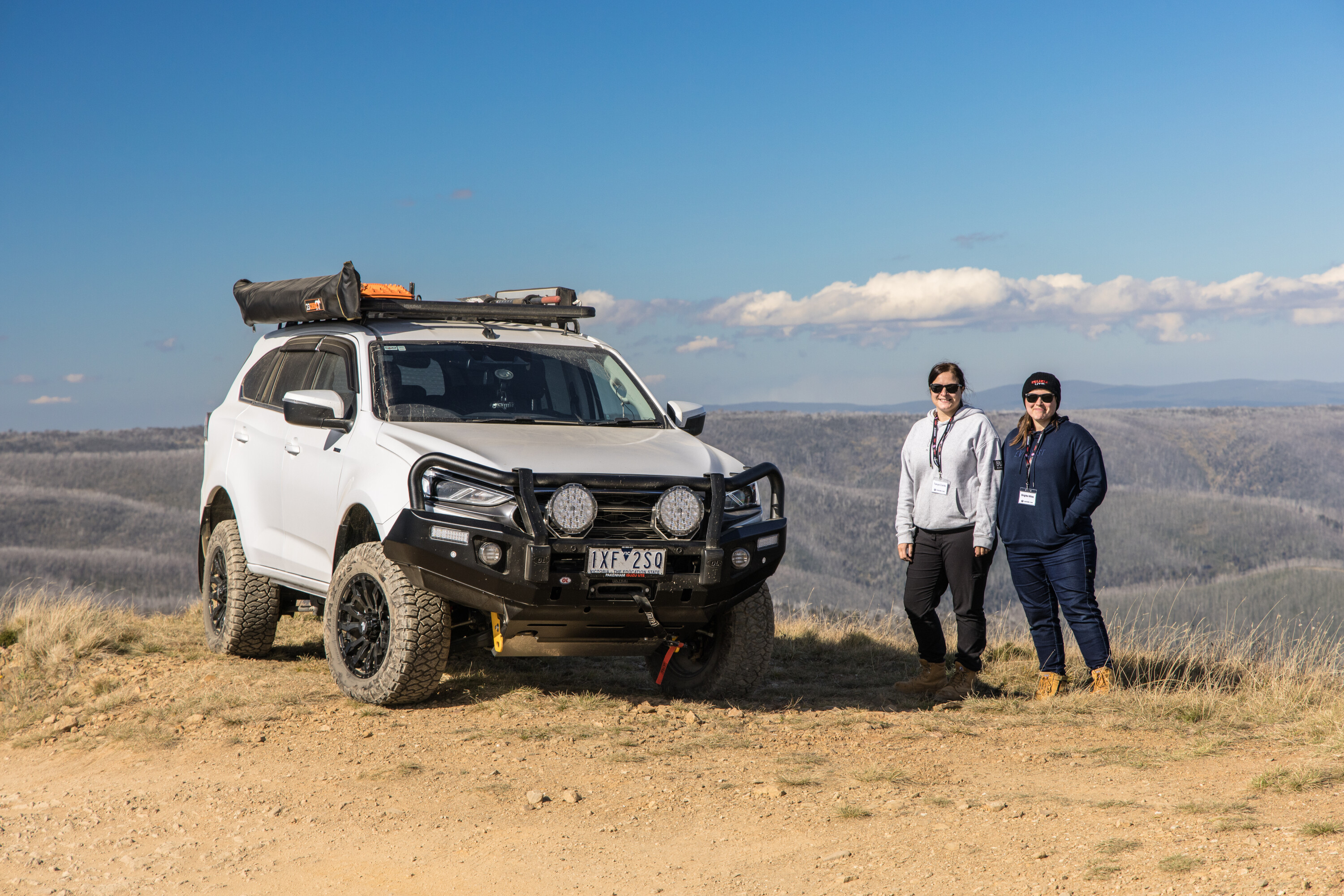
Brigitte Miles and Tanya Contis were counting down the hours for their new 2023 model MU-X LS-T to arrive and after around a year of waiting, it came just in time for this trip.
“We waited for a long time, so I started buying parts and ended up filling up the spare room!” Brigitte said.
Despite being fresh off the showroom floor with only around 1000km showing on the odometer so far, Brigitte had all of the parts fitted right out of the gate including a pre-registration Pedders GVM upgrade.
“I got rid of the 20s and put 17-inch PDW wheels on with Maxxis RAZR tyres straight away, which have been great in all conditions so far,” she said.
Beyond the wheels and tyres, Brigitte spent a lot of time researching the best parts for her build factoring in warranty, local supply and suitability for the toughest terrain.
1
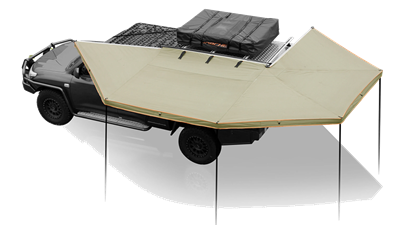
“We fitted Custom Offroad bash plates, Milford tow bar, Opposite Lock bullbar, Supernova spotlights, Ultra Winch winch, Yakima roof rack, and 270 awning because it had a rear bar that clears the boot sufficiently. We’ve also got Maxtrax and a shovel on top,” Brigitte said.
“This is it for now. We can go and feel like we won’t have any limitations as we see the countryside.
“We want to adventure and go places others can’t go!”
The decision to buy an MU-X involved plenty of test drives, but Brigitte liked the rugged feel and “truck-like” engine.
“We loved the MU-X after looking at all the competitors, and this one had the right specs for us plus space for the dogs.”
Brigitte and Tanya were mad keen about testing the limits of their MU-X from the moment we set off, and our bet is that they’ll definitely put it through its paces.
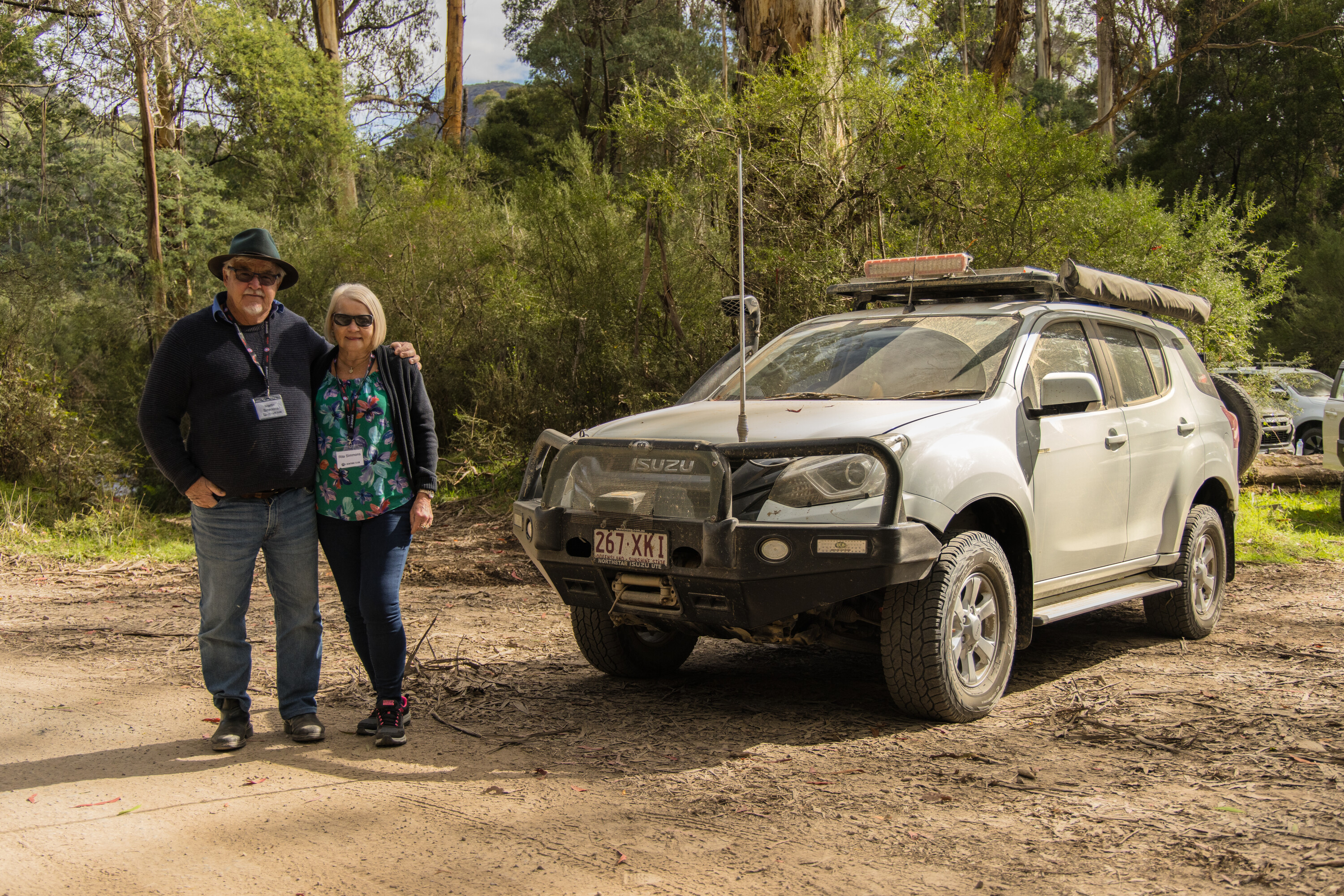
Martin and Rita Simmons
Five-time I-Venture finishers Martin and Rita Simmons trade cattle farming for off-roading any chance they get, with plenty of MU-X miles under their belt.
Their 2017 MU-X was the oldest vehicle on the trip and the only previous-generation model without a locking rear diff and the Rough Terrain Mode newer MU-X owners had at their disposal.
“Isuzu had a good name at the time for towing and things, which is why we bought it, and while our normal run-around car is actually a Tesla, we use this thing for trips,” Martin said.
Martin kept the modifications to a minimum, but chose rugged parts that would last the life of the vehicle.
“It’s got an aluminium bullbar with a winch on the front, two-wheel carrier on the back and an extra 80-litre tank underneath,” he said.
1
“We took the back seats out and put in drawers, with a solar panel on the roof which charges a 150Ah battery.”
Since buying the MU-X, the Queensland-based farming couple has taken regular trips to the sand islands on their doorstep, plus a few trips up north.
“COVID-19 stopped a lot of the trips, but we’ve been to Cape York, Fraser Island, Moreton, and across the Simpson from Alice Springs over to Birdsville,” Martin said.
Despite having the oldest vehicle on the trip, the Simmons’ did it all with ease, even avoiding scraping their low-hanging long-range tank during the difficult descents.
Aside from better tyres, sitting on the standard 16-inch wheels, the Simmons have toured Australia with a stock ride height vehicle and have done it without a hitch… and they’re not stopping anytime soon.
“Next are some of the tracks from the centre of Australia down to South Australia, but we are busy running a farm, juggling babysitting duties and volunteering”
Iain and Christine Thompson
Iain and Christine are no strangers to dual-cab utes, upgrading their D40 Nissan Navara for a 2022 D-Max LS-U tray-back last year after much deliberation.
While in stock trim Iain says he is holding off on upgrading their D-Max with anything until it’s “needed”, after moving on his modified D40.
“At the end of the day, I might get a bulbar and I might do wheels, but I’ve been blown away with the overall ability over the past few days here,” Iain said.
“I have got a light bar behind the grille that performs brilliantly.”
1
Iain chose the D-Max after his mechanic clients started suggesting it, and 30,000km later he couldn’t be happier with it.
“The fuel economy is great, even when towing. I’m down in the 8s/100km,” he said.
The couple has plenty of trips around Australia planned, hoping to get back out on another adventure before year’s end.
“We’ve already been in contact with Steve Cooney, looking at doing the Cape, Fraser Island, and a few others,” Iain said.
“We’ve also got some great tracks near us, around Kyogle, which I’ve done a few times but I haven’t taken the D-Max there yet!”
The 4×4 market kept pace with the broader Australian market in May, with the nation achieving a record calendar month with good signs pointing to improving supply.
While Rangers lead the way through April, Toyota’s HiLux outpaced them with a strong showing from 4775 new registrations. That’s exactly 1111 more HiLuxes let loose across the country than Ford‘s popular Ranger, which logged 3664 new registrations in May.
When combining 4×4 and 4×2 YTD figures, however, the annual sales race is still neck and neck, and a strong month from either rival could be the one that turns the tide. Year-to-date, it’s the old, faithful, HiLux that currently leads the top spot, with 21,951 new HiLuxes on the road this year, against Ford’s 21,407 new Rangers.
1
Elsewhere in the Top 10 4×4 sector, familiar faces populate the list, but the hierarchy has rearranged due to robust performances by certain models.
New registrations of Toyota‘s Prado (1435) more than doubled through the month of May compared to what was observed in April (762), while Mazda‘s ageing BT-50 continues to trickle along healthily, delivering over 300 further units than the previous month, and maintaining its fifth place position.
Isuzu‘s pair, the D-Max ute and MU-X wagons, continue to make steady progress, registering (combined 4×2 and 4×4) 2371, and 1110 new units, respectively.
1
Despite Mitsubishi Triton and Everest remaining unchanged in the pecking order, both models made big month-on-month gains in new registrations, with Triton deliveries through May improving by 41 per cent, while Ford’s Everest bettered April’s effort by almost 20 per cent.
Within the American heavyweight sector, RAM continues to supply its 1500 (696 in May) in greater numbers than Chevrolet’s Silverado (230), with the RAM 1500 comfortably leading the sales race, with 2705 vehicles delivered YTD, against Chevrolet’s 748 Silverados delivered in 2023 so far.
Top 10 best-selling 4x4s in Australia: May 2023
Total 4×4 sales nationally enjoyed a market-wide surge in registrations for May, with the PU/CC 4×4 segment growing by 41.3 per cent month-on-month from 12,197 in April 2023, to 17,244 registrations through May 2023.
When compared against the broader Australian market for May, the PU/CC 4×4 segment proportionally outgrew the wider market for May, with total national registrations growing by 28 per cent, against April 2023’s national figure.
1
Despite a month of strong new deliveries, the PU/CC 4×4 segment remains slightly down in its YTD figures, with 73,928 4x4s delivered in 2023 so far, compared with 76,871 achieved throughout the same period of 2022.
Toyota wins the best-selling award for the month of May, registering 18,340 new vehicles across the nation, ahead of Mazda (8475), Hyundai (7078), Kia (7000), and Ford (6251).
Top 10 best-selling 4x4s in Australia: year-to-date