
The Overland Expo is the biggest 4WD show in the USA, and one of the biggest in the world, probably only eclipsed by the German-based Abenteuer Allrad show in Bad Kissingen.
Set amongst the forest of the San Francisco Mountains just south of the major city of Flagstaff in northern Arizona, the three-day Overland Expo attracts companies and spectators from across the globe. Thousands camp out amongst the pines, some in tents, many with rooftop tents and slide-on campers (like us), and small and large overlanding rigs.
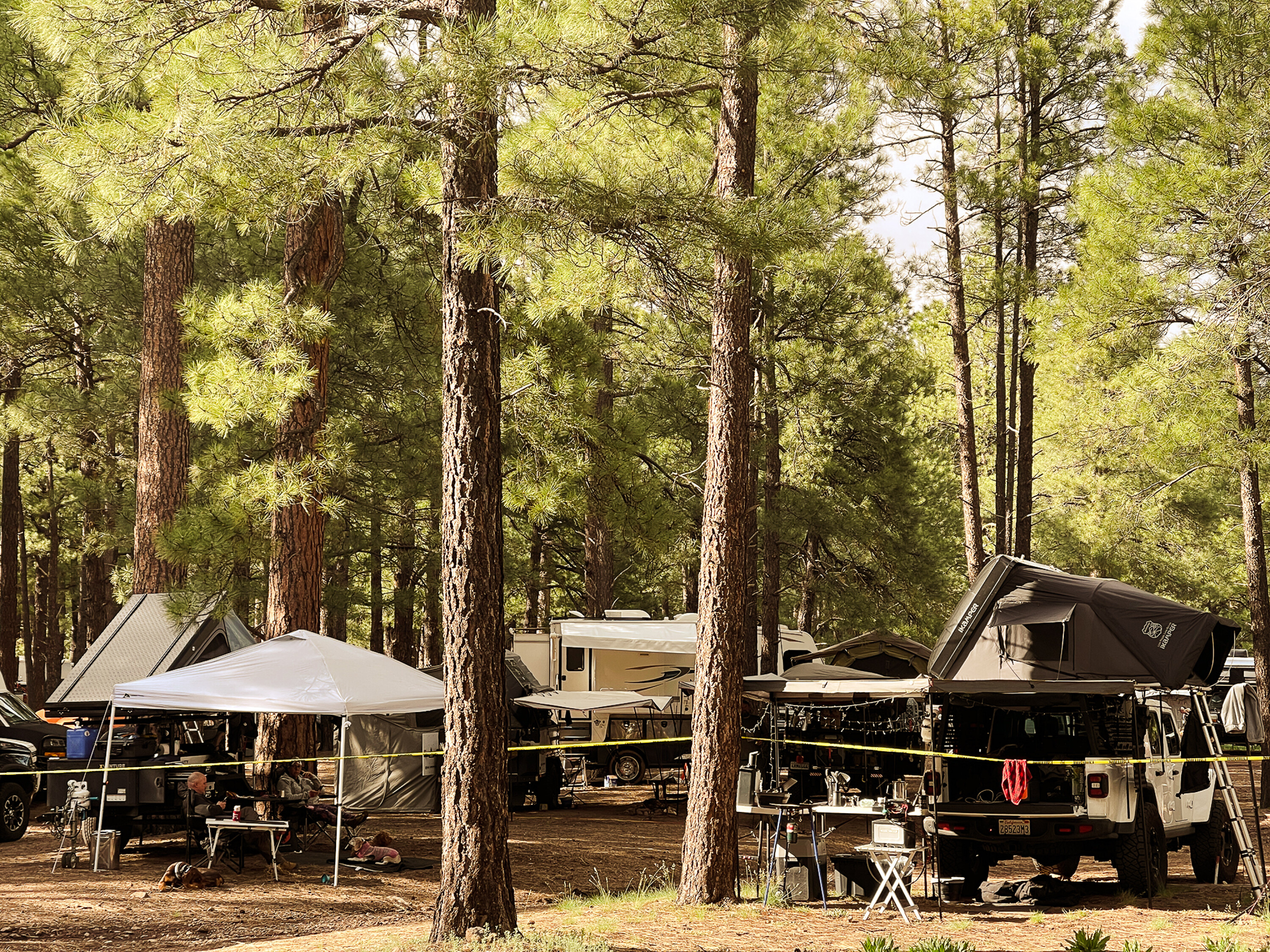
Compared to earlier years, the growth in the number of vans at this show – such as the Mercedes Sprinter for long-distance touring – has been incredible, and with that explosion in numbers has come a similar increase in the availability of aftermarket accessories to suit this growing field. We saw dozens of vans down in Baja Mexico earlier in our travels.
In all there were more than 380 manufacturers, retailers and operators from around the world at Overland Expo. As to be expected, Aussie companies were there in force, showing off their wares and reinforcing their status as some of the most respected 4WD accessory makers in the world.
ARB has been at this show from its inception and this year was no different with an ARB-equipped Ford Bronco positioned proudly on the Aussie company’s stand. Somewhere in amongst the gigantic spread of equipment and vehicles on show, there was a Toyota stand with the new Tacoma on it, again dressed in ARB livery; the show is so big that in three days of wandering, I never even found the Toyota display!
Latest Gear Guides
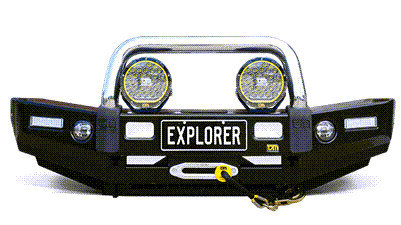
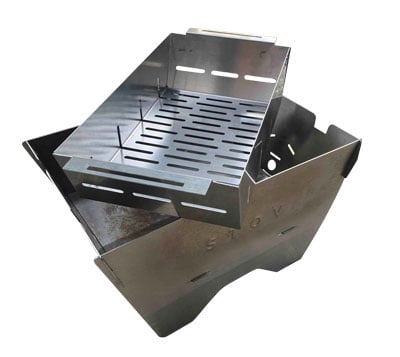
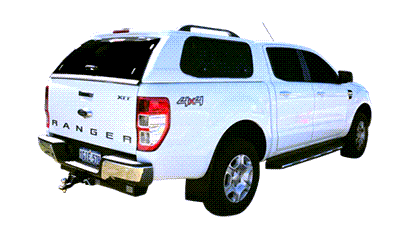
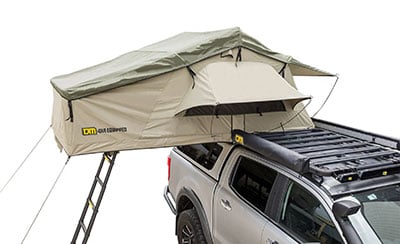
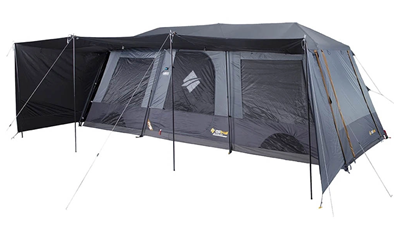
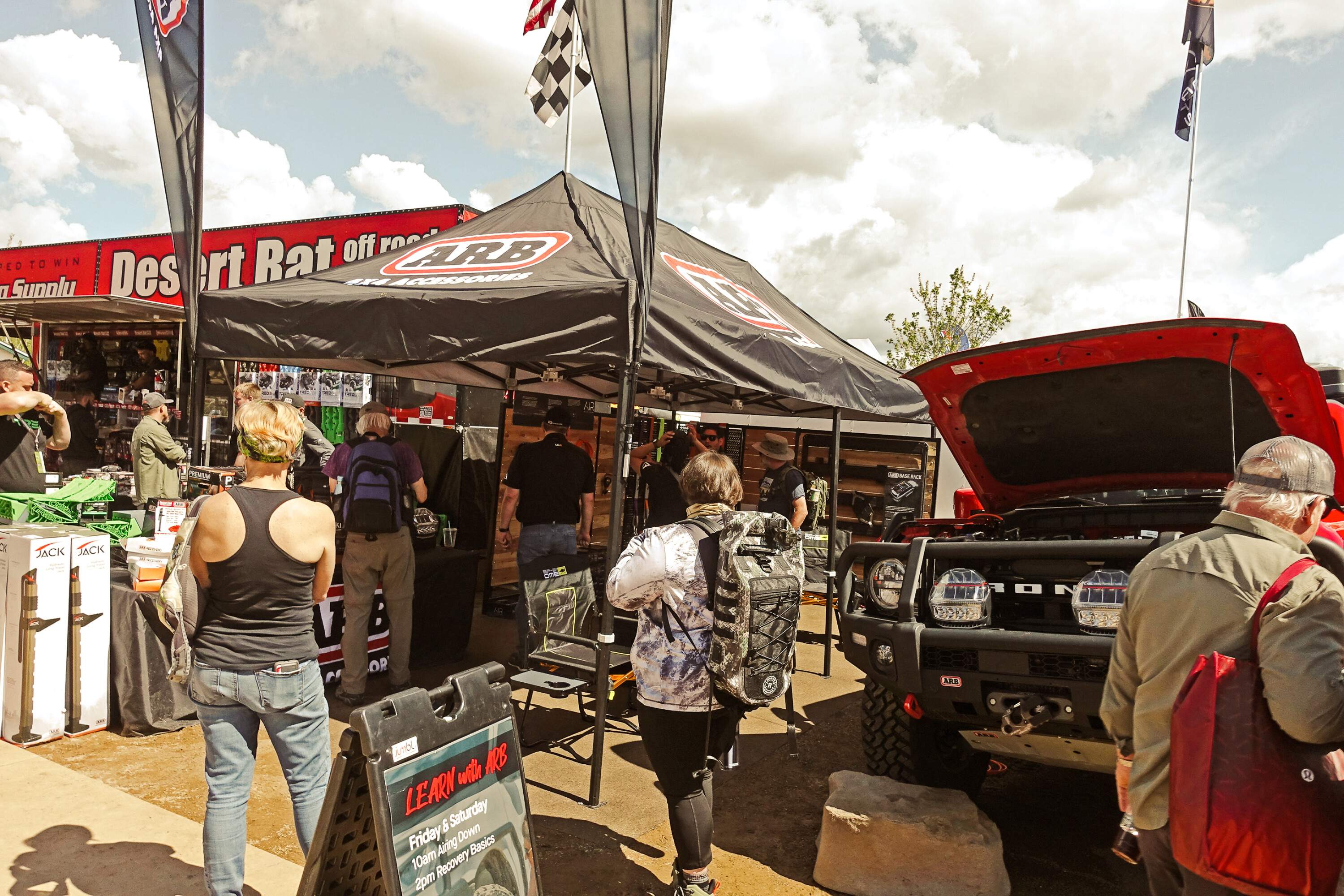
Like most of the Aussie companies present, ARB is again increasing its North American presence. The company is just about to open its third distribution centre in Texas, while its first ARB retail store has just opened in the Pacific North-west.
Highly regarded South Australian company Redarc had some of its latest electronic gear on display, while Redarc equipment had been installed as the chosen battery management system in many of the campers, vans and large overlanding rigs at the show, which was great to see.
Ironman 4X4 had a popular stand highlighting its suspension products and bar work, and its 70 Series ute caught a lot of people’s attention. If Americans are wont to drool over any vehicle, it seems the 70 Series Cruiser is it! But Ironman 4X4 distributes more than just suspension and bar work here in the States, with its full product range from rooftop tents to fridges and more having a presence.
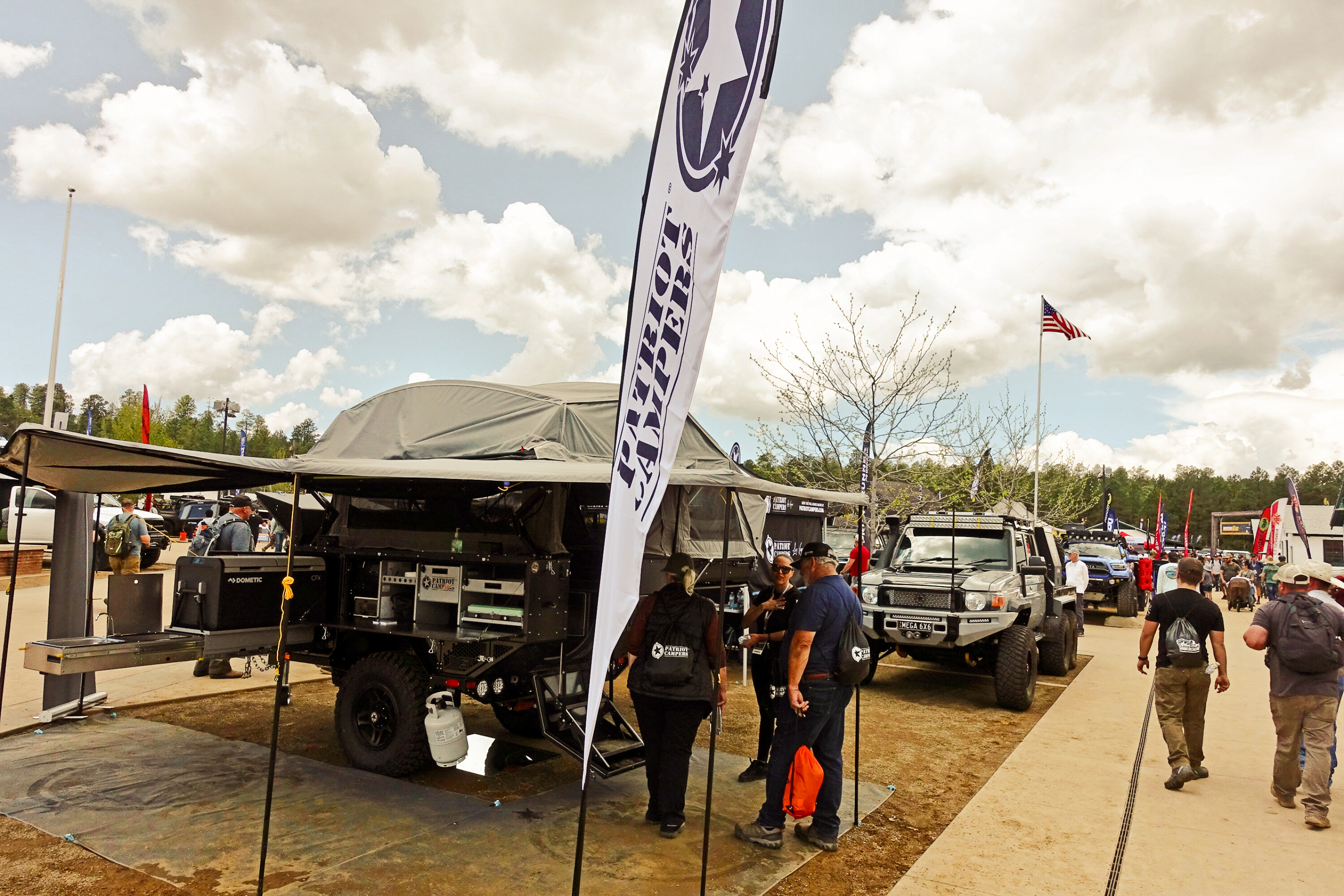
Another change that has occurred in the North American 4WD touring scene since we first came to Overland Expo in 2012 has been the huge increase in camper trailers that are now available. In 2012 there was just one South African brand on display; today there are dozens of US trailer manufacturers, but none match the capability or standard of Aussie-made Patriot Campers, which were again on show here. In addition to its trailers, Patriot had one of its 6WD 70 Series Cruisers for fans to ogle (and drool) over.
Two other Aussie trailer manufacturers – Track Trailers and AOR – were present this year, which was great to see. Track showed off its incredible Tvan, while AOR had a select range of its excellent trailers and campervans on display to tempt the buying public. From my observations the Tvan, so vastly different to the normal trailer fare here in the USA, received a lot of attention. Hopefully the efforts of both manufacturers will be rewarded.
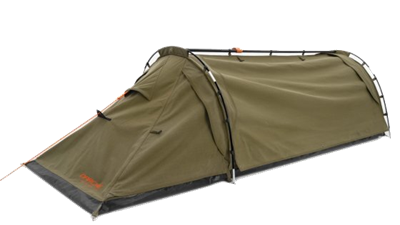
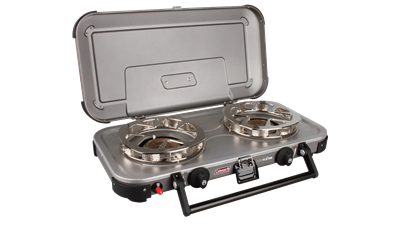
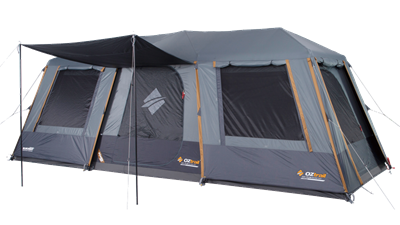
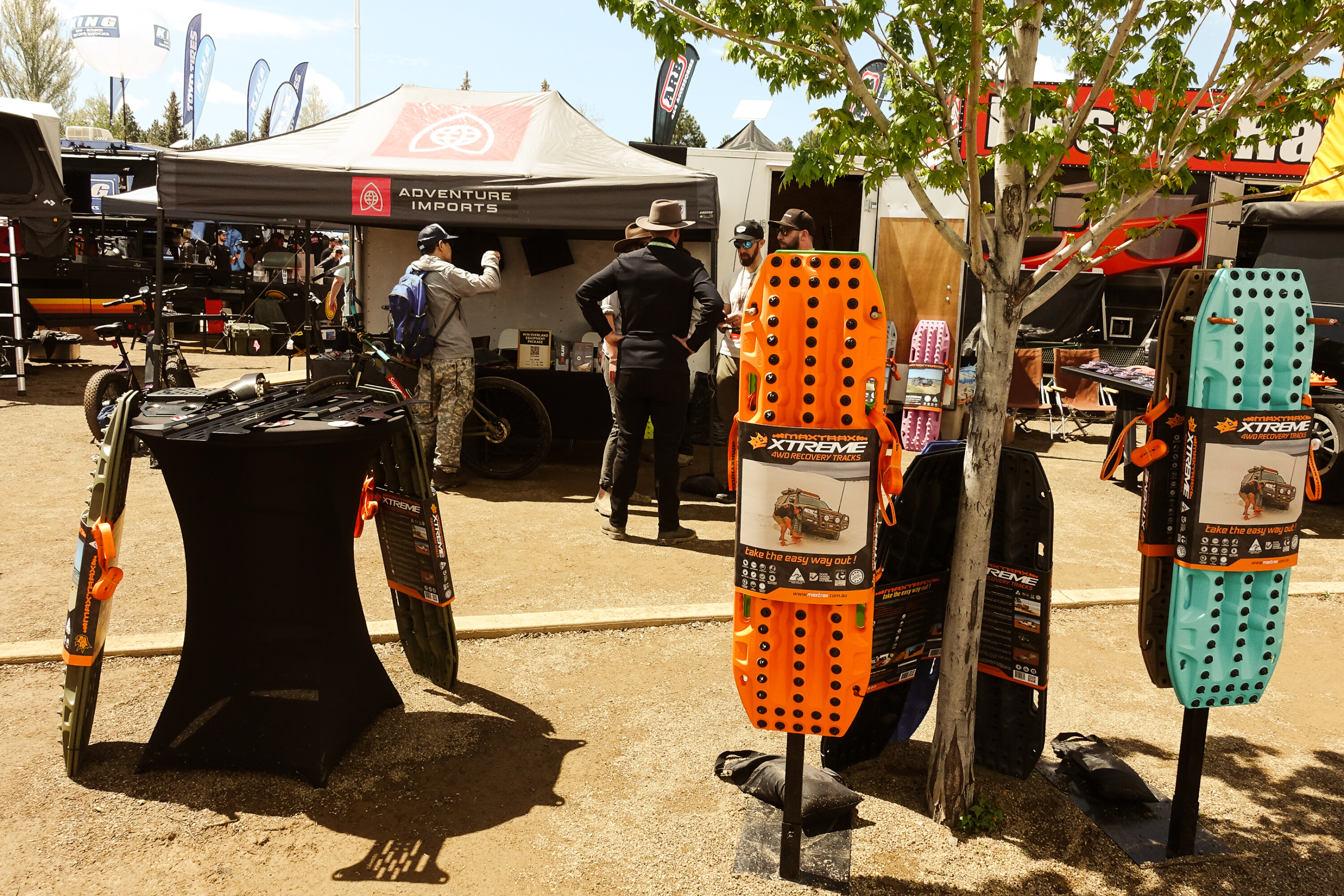
Other Aussie manufacturers in attendance included Maxtrax, the Bush Company, Kaymar, Australian Offroad, Kimberley Kampers, Rhino-Rack and MSA 4×4 Accessories, along with a number of suspension suppliers including Dobson and Cruisemaster. Kakadu Camping also had a range of gear from Oz including its shower system, swags and the Oz-Pig, the latter such an unfamiliar cooking system in the US that it garnered a lot of comment.
EarthCruiser, an Australian and US-based manufacturer of overland vehicles, had some good-looking and practical overlanding rigs on show, but for those with an unlimited budget, there were a couple of mammoth trucks on display with hefty price tags; one was listed at US$1.8 million and the other, complete with rooftop lounge, was in excess of US$2.5 million!
In addition to the trade displays, there were instructional classes covering a huge variety of subjects from touring Africa and Australia to how to cook and crap in the bush, and how to get the best out of your solar set-up.
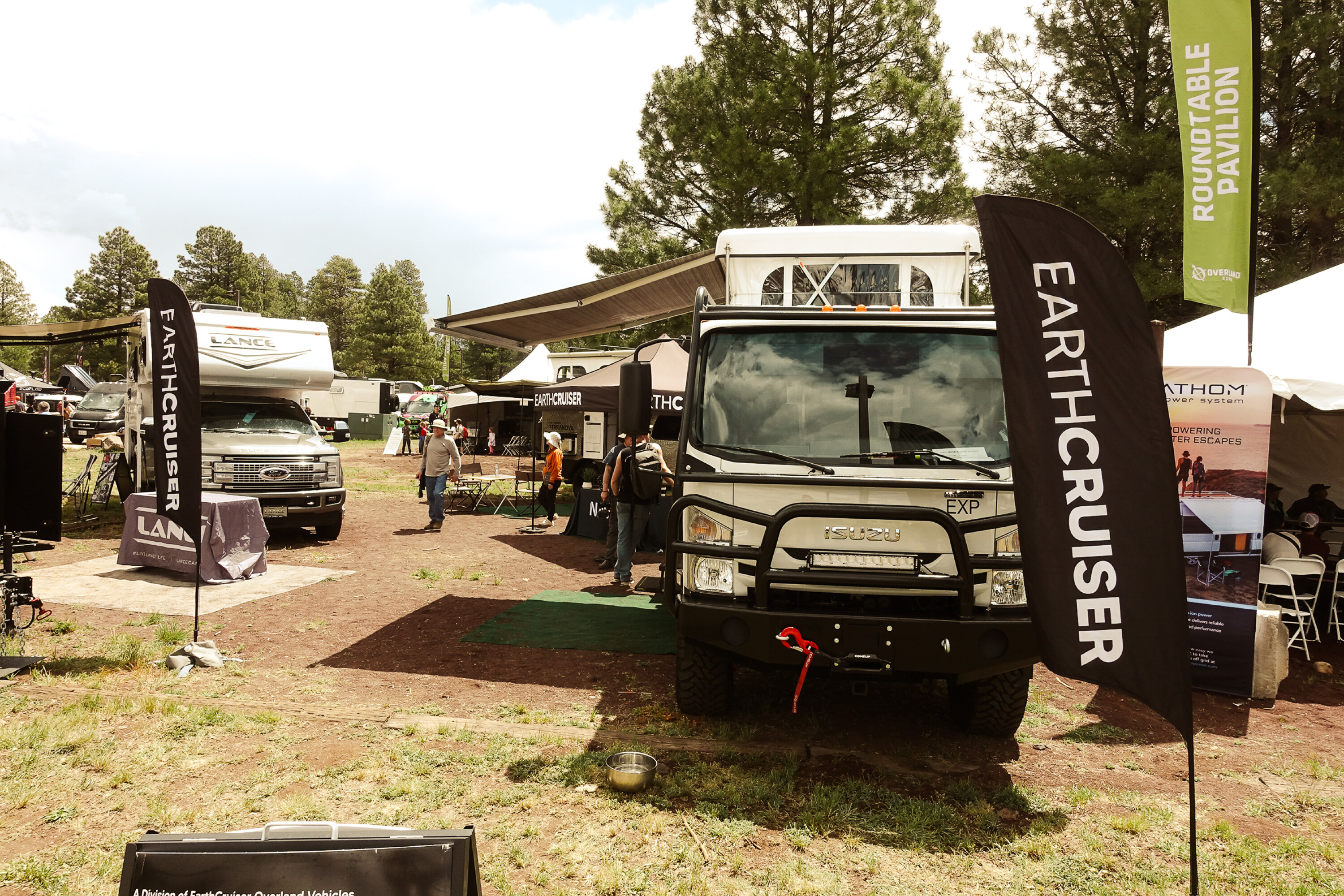
In other areas of the show, there were demo rides on the latest electric bikes and side-by-sides, classes on repairing tyres, 4WD maintenance on the road, and essential 4WD driving skills. There was no way you could attend all of the classes, so you just had to pick what interested you the most; feedback suggested that our presentations on touring Australia were pretty well received.
Food stalls and bars kept everyone fed and watered while music and entertainment was provided each evening. In all, it was a top show, made even better by the Australian contingent.
For more information on the four Overland Expo shows held around the USA go to www.overlandexpo.com and if you are ever stateside when an Overland Expo is on, make sure you check it out; you won’t be disappointed.
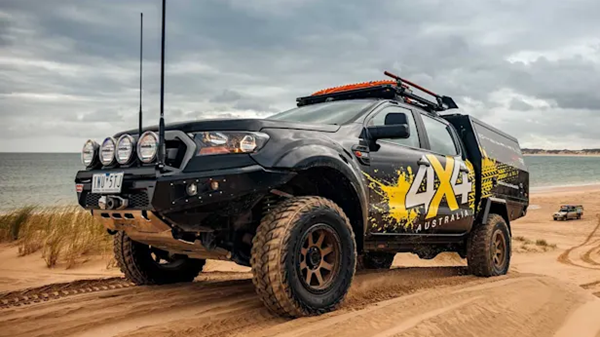
Volkswagen Australia has revealed a range of factory-backed accessories for its Amarok ute.
Noting the amount of money buyers of 4×4 utes are spending on accessories from aftermarket suppliers, VW has jumped in the deep end for a slice of those dollars.
Working with some of the key aftermarket suppliers in the industry including ARB 4×4 Accessories, Redarc Electronics, Narva, Rhino Rack and TRED recovery boards, the vehicle manufacturer has compiled a list of products that are approved and backed for its ute.
All accessories can be fitted by Volkswagen’s 100-plus nationwide dealership network, with a five-year, unlimited kilometre warranty.
An auxiliary switch panel fits in lieu of the sunglasses holder in the roof of the cabin…
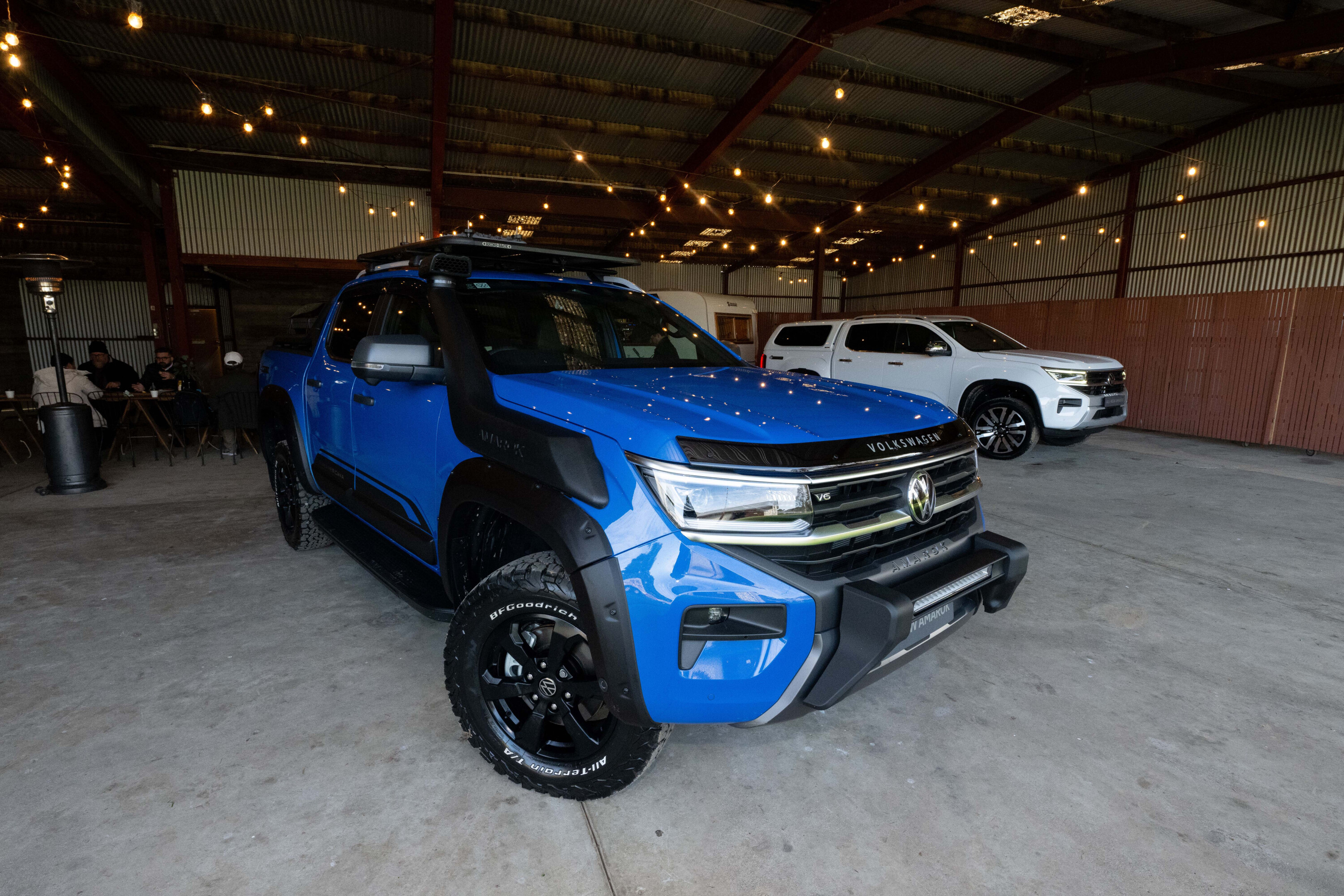
While there is a plastic nudge bar up front of the blue PanAmericana ‘concept’ car, VW told 4X4 Australia that there are currently no plans at present for full bull bars for the new model. That nudge bar contains one of Narva’s new EX2 LED lightbars.
An auxiliary switch panel fits in lieu of the sunglasses holder in the roof of the cabin and it includes factory-style switches for items like the lightbar, a winch or other powered accessories.
Amaroks come standard with a 3500kg rated towbar, and extendable towing mirrors will also become part of the accessories range.
They will also be available in a smooth finish without the pretend bolts
Moving down the flanks of the PanAmericana reveals BFGoodrich KO2 all terrain tyres, which are one of a number of non-OEM-fit tyres approved for the Amarok.
The tyres are covered by faux-bolt-on flares manufactured by leading supplier EGR. They will also be available in a smooth finish without the pretend bolts.
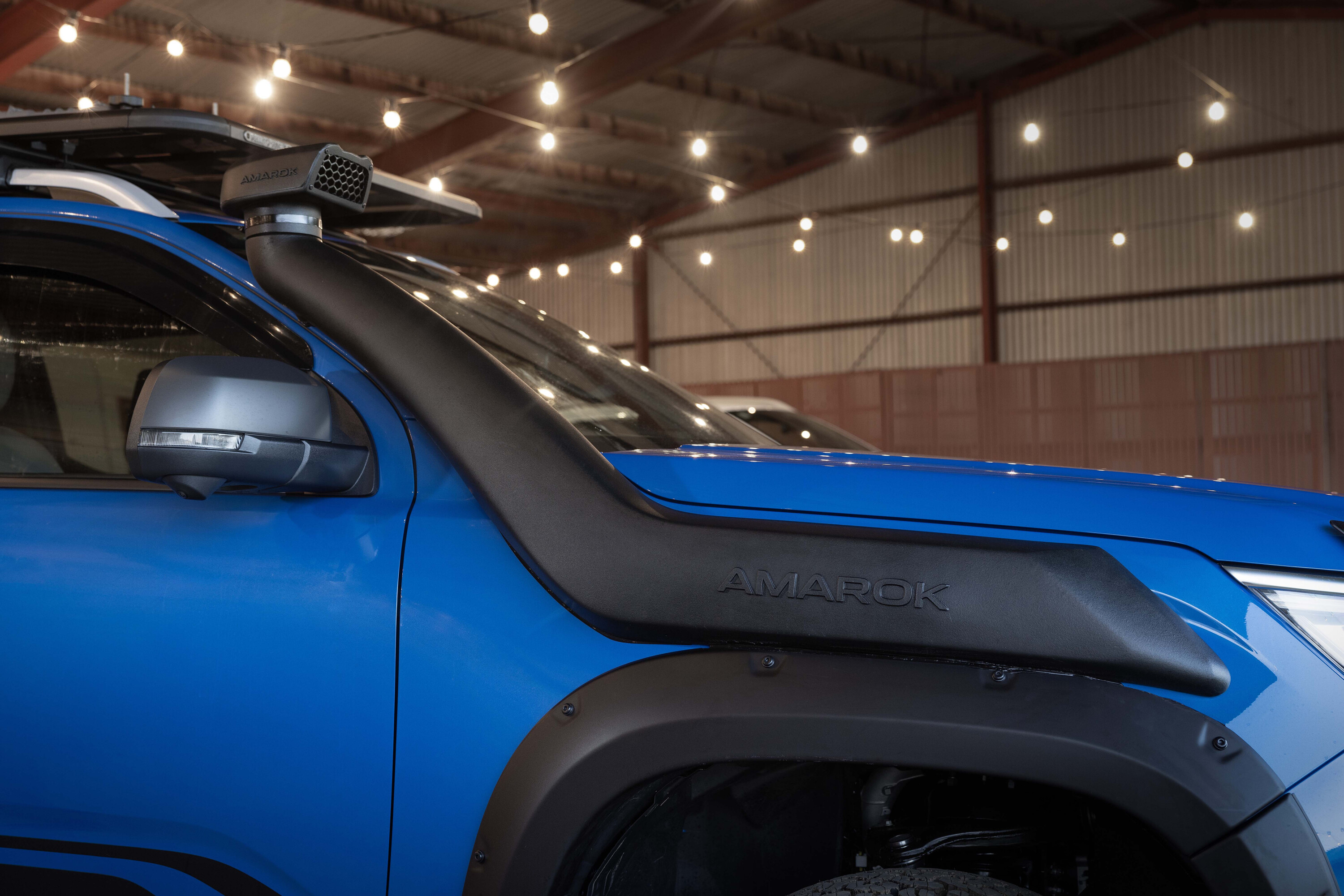
The air-intake snorkel was specifically developed for the Amarok to reduce dust intake to the engine; and as it replaces the forward-facing standard air intake at the top of the grille, it should also help to reduce water ingress on river crossings.
Also under the bonnet is a second battery mounted on the driver’s side, and it is controlled by a Redarc BC-DC charger.
Behind the wheels and tyres is a suspension system developed locally with ARB, which gives a 40mm lift in ride height as well as offering different leaf springs at the rear for standard or constant loads.
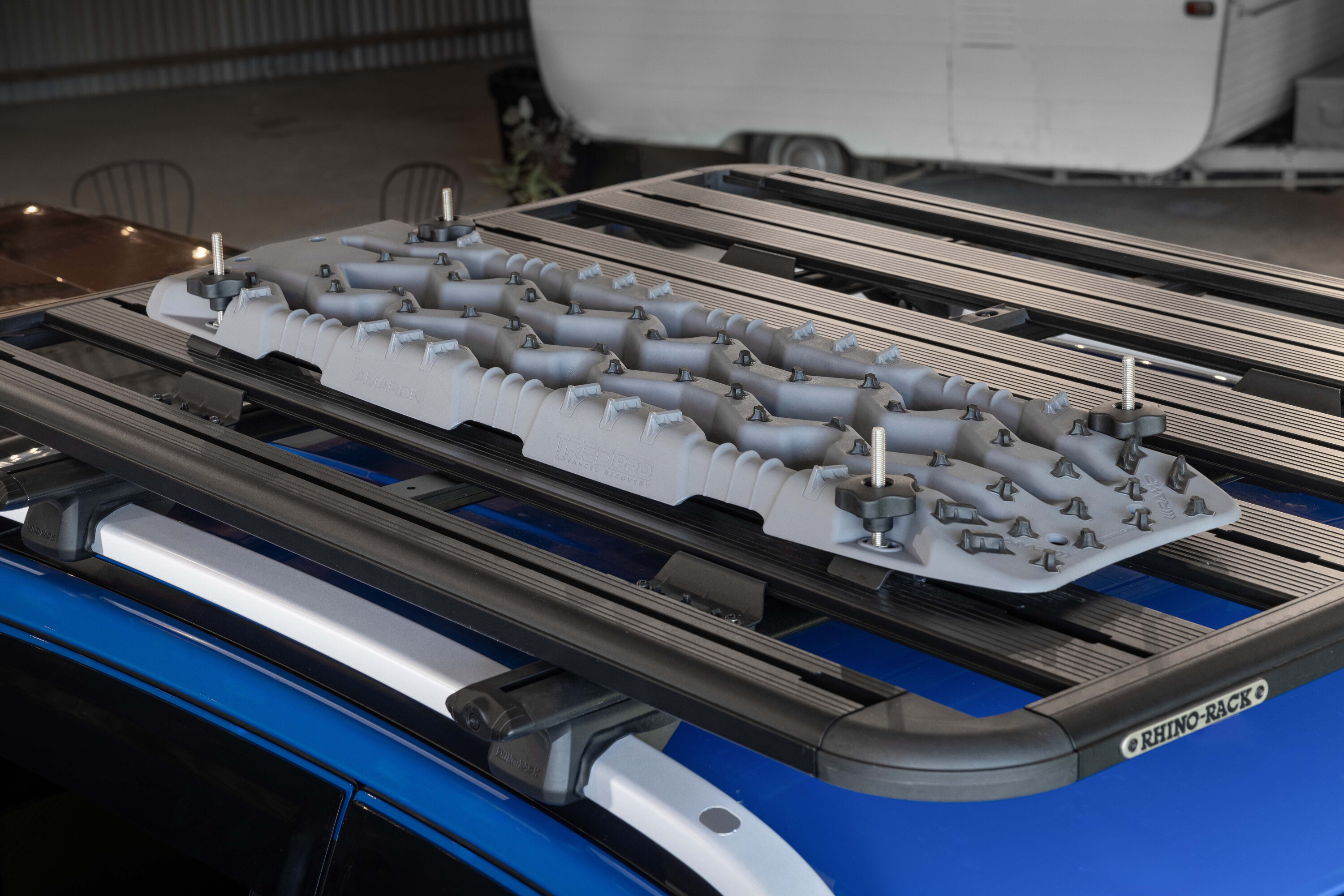
A Rhino Rack Pioneer platform is fitted to the factory roof rails, and on the platform is a set of TRED recovery boards with AMAROK branding stamped on them. The Amarok TREDs will come in exclusive grey only. There is a selection of roof bars available for mounting a variety of accessories including a RTT.
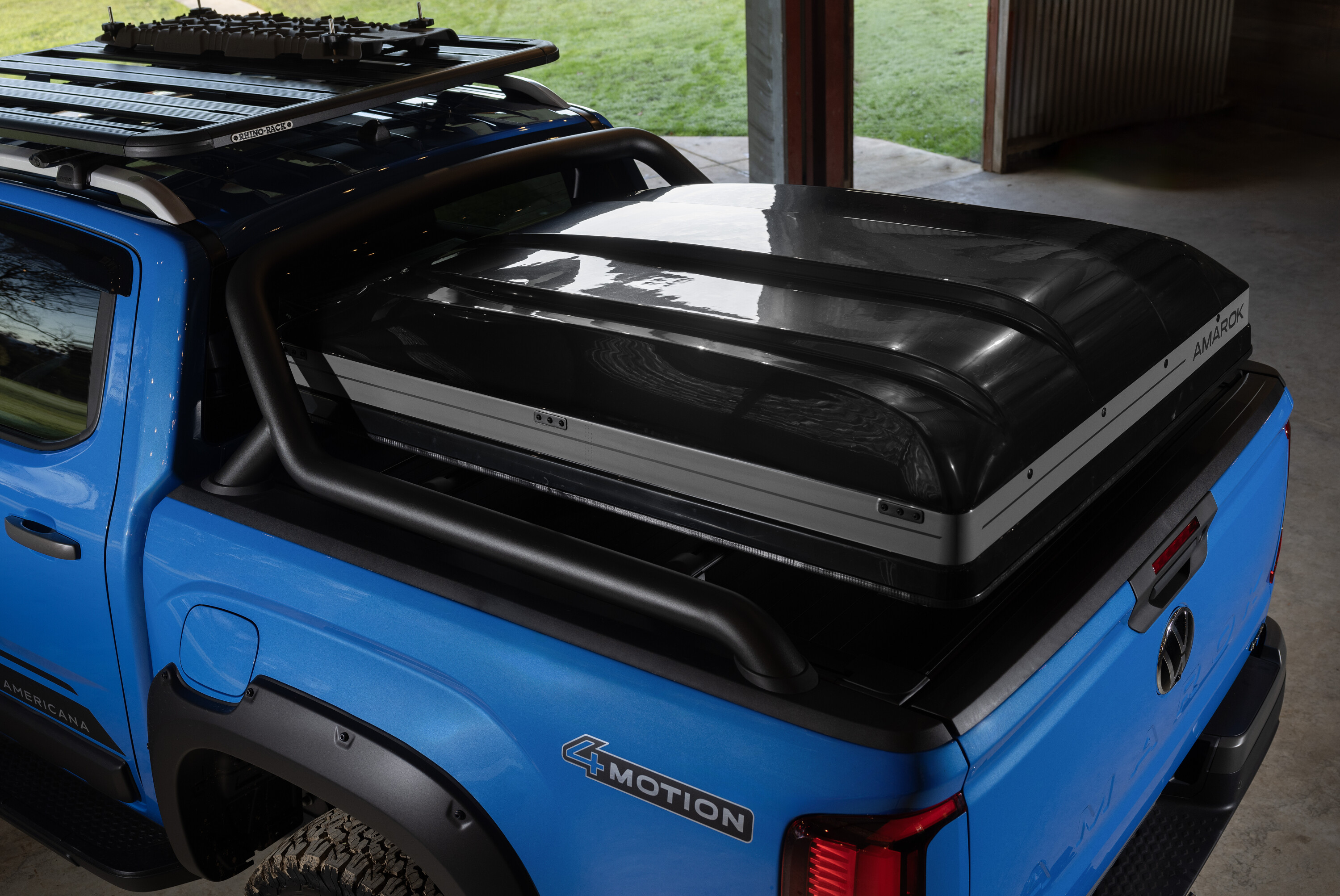
At the back of the PanAmericana, a manual roller shutter secures the cargo tray.
It is available in either silver or black. An electric roll cover and soft tonneau cover are also available. A set of rails atop the tub sides mount an Amarok-branded hard-shell RTT, while inside the tub a cargo slide makes accessing gear easier.
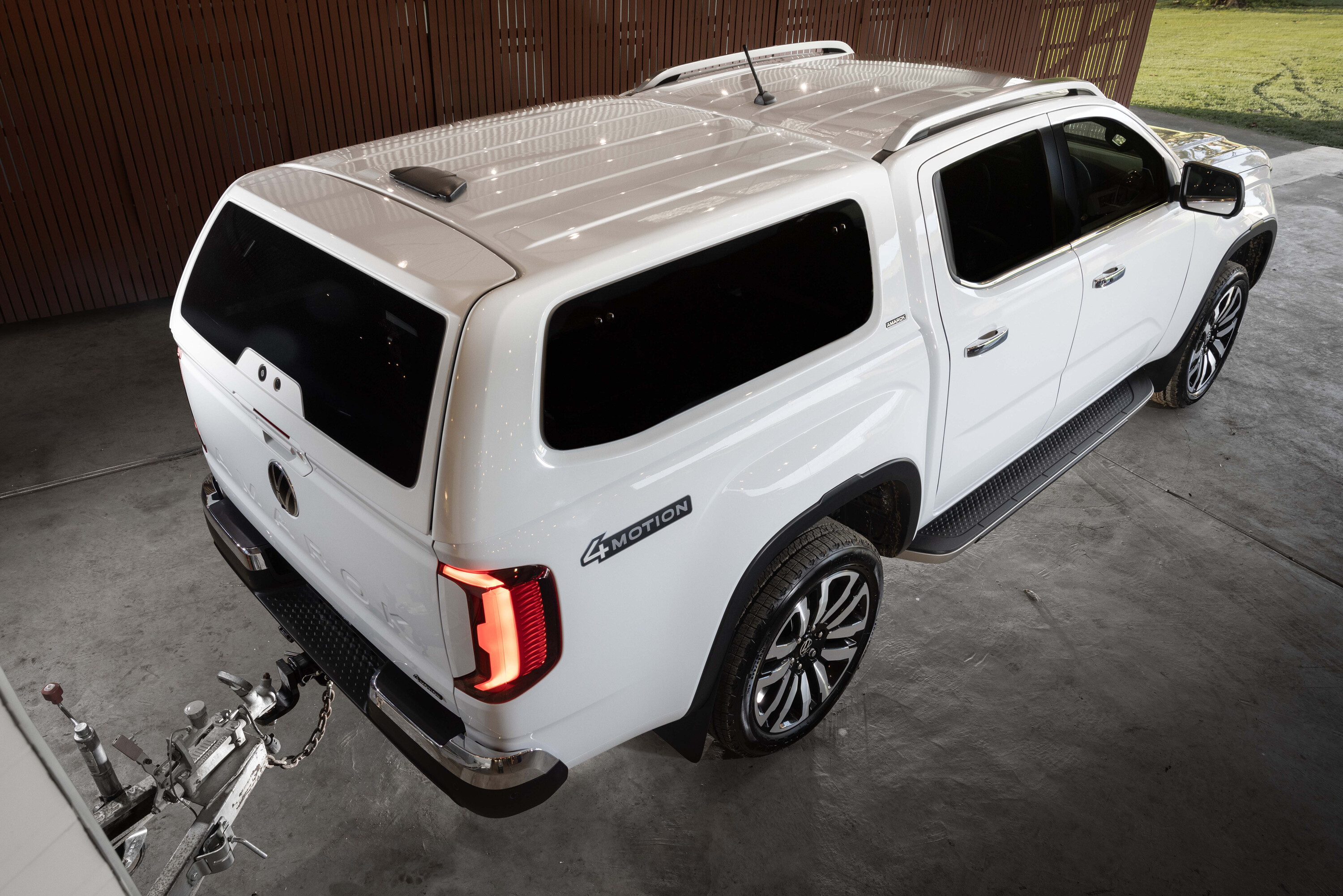
The white Amarok showcased a new canopy designed by Volkswagen’s own design team specifically for the car. Interestingly the smooth design of the canopy does away with external latches for the lift-up side windows, which are unlocked via a remote button.
The canopy can also be fitted with sliding rather than lift-up side windows, or a combination of one of each on opposing sides. There is also a bracing kit available for the canopy, to allow carrying heavier loads such as a RTT atop it.
The tub of the white car also included a set of aluminium roller drawers compete with side infill covers.
While not all inclusive, the range of VW accessories available for Amarok shows the brand recognises what its owners are doing with their vehicls and are serious about equipping the cars to what the owners need.
“Every accessory has been designed with customer lifestyles in mind, and that includes the seamlessness of their purchase, their ability to buy accessories or finance them from the dealership as part of buying their Amarok,”said Volkswagen Commercial Vehicles director, Ryan Davies.
2023 Volkswagen Amarok accessories
Cargo/Tub accessories
| 2023 Volkswagen Amarok Cargo/Tub accessories | RRP fitted (inc GST) |
|---|---|
| Electric roll cover, black | $4,690 |
| Rollcover manual, Aluminium, black | $4,255 |
| Roof bars/racks to suit roll cover (manual and electric) | $550 |
| Soft Tonneau cover, DBL, vehicles with Load Rest | $1,735 |
| Soft Tonneau cover, DBL, vehicles with styling bar | $1,145 |
| Soft Tonneau cover, DBL, vehicles without styling bar | $1,145 |
| Modular Bedliner, DC | $865 |
| Tailgate assist u2013 self lowering | $240 |
| Drawer system (to suit with bedliner) | $3,995 |
| Drawer system (to suit without bedliner) | $3,995 |
| Fridge Slide for Drawer system | $780 |
| Tool Box (Not in conjuction with roll cover/soft tonneau) Cargo Slide (compatible with roll covers, canopies, covers) | $965 |
| Cargo Slide (compatible with roll covers, canopies, covers) | $3,045 |
Canopies
| Canopies | RRP fitted (inc GST) |
|---|---|
| Premium Stylish High-Spec Canopy with sliding window on the left, right with swing lock, bright beige | $5,730 |
| Premium Stylish High-Spec Canopy with sliding window on the left, right with swing lock, bright blue | $5,730 |
| Premium Stylish High-Spec Canopy with sliding window on the left, right with swing lock, clear white | $5,730 |
| Premium Stylish High-Spec Canopy with sliding window on the left, right with swing lock, dark grey | $5,730 |
| Premium Stylish High-Spec Canopy with sliding window on the left, right with swing lock, deep red | $5,730 |
| Premium Stylish High-Spec Canopy with sliding window on the left, right with swing lock, light grey | $5,730 |
| Premium Stylish High-Spec Canopy with sliding window on the left, right with swing lock, mid blue | $5,730 |
| Premium Stylish High-Spec Canopy with sliding window on the left, right with swing lock, midnight black | $5,730 |
| Premium Stylish High-Spec Canopy with sliding window, bright beige | $5,550 |
| Premium Stylish High-Spec Canopy with sliding window, bright blue | $5,550 |
| Premium Stylish High-Spec Canopy with sliding window, clear white | $5,550 |
| Premium Stylish High-Spec Canopy with sliding window, dark grey | $5,550 |
| Premium Stylish High-Spec Canopy with sliding window, deep red- | $5,550 |
| Premium Stylish High-Spec Canopy with sliding window, light grey- | $5,550 |
| Premium Stylish High-Spec Canopy with sliding window, mid blue- | $5,550 |
| Premium Stylish High-Spec Canopy with sliding window, midnight | $5,550 |
| Premium Stylish High-Spec Canopy with swinging window, bright beige | $6,100 |
| Premium Stylish High-Spec Canopy with swinging window, bright blue | $6,100 |
| Premium Stylish High-Spec Canopy with swinging window, clear white | $6,100 |
| Premium Stylish High-Spec Canopy with swinging window, dark grey | $6,100 |
| Premium Stylish High-Spec Canopy with swinging window, deep red | $6,100 |
| Premium Stylish High-Spec Canopy with swinging window, light grey | $6,100 |
| Premium Stylish High-Spec Canopy with swinging window, mid blue | $6,100 |
| Premium Stylish High-Spec Canopy with swinging window, midnight black | $6,100 |
| Roof Rack with overhang, mounting on the Canopy | $730 |
| J-Brace Canopy mounting | $390 |
Exterior accessories
| Exterior accessories | RRP fitted (inc GST) |
|---|---|
| Side wind deflector (weathershields) u2013 Amarok embossed branding | $340 |
| Bonnet Protector u2013 Black tinted | $245 |
Styling accessories
| Styling accessories | RRP fitted (inc GST) |
|---|---|
| Body side mouldings u2013 door set of 4 u2013 Matte black | $1,075 |
| Extended Wheel arch flare set of 4 (Bolt-on look effect)- Matte black | $1,640 |
| Styling Bar Long, stainless steel | $2,810 |
| Styling Bar Long, black mat | $2,810 |
| Side Steps, blow moulded | $1,385 |
Roof transport accessories
| Roof transport accessories | RRP fitted (inc GST) |
|---|---|
| Roof bars with overhang to suit with factory roof rails | $465 |
| Roof bars without overhang to suit with factory roof rails | $605 |
| Roof bars with overhang to suit without factory roof rails | $600 |
| Platform (requires roof bars for install) | $1,440 |
| Roof top tent u2013 2 person u2013 Amarok branding (requires roof bars for install) | $3,345 |
Off-road/expedition accessories
| Off-road/expedition accessories | RRP fitted (inc GST) |
|---|---|
| Amarok Nudge Bar with integrated LED light bar – In development | $1,600 |
| Snorkel for V6 diesel variants – In development | $1,180 |
| Amarok Front 40mm Lift-kit Heavy Suspension system u2013 suit V6/with bullbar | $1,515 |
| Amarok Front 40mm Lift-kit Suspension system | $1,515 |
| Amarok Rear 40mm Lift-Kit Suspension system u2013 300kg constant loading | $2,510 |
| Amarok Rear 40mm Lift-Kit Suspension system | $2,315 |
| Amarok UVA (Full underbody vehicle protection) – In development | $1,660 |
| Recovery boards (grey) u2013 Amarok branding | $350 |
| Amarok Snatch Kit Recover Bag set | $225 |
Electrical accessories
| Electrical accessories | RRP fitted (inc GST) |
|---|---|
| Auxiliary Battery Kit under the bonnet u2013 In development | TBC |
| Auxiliary Battery Kit tub mounted – In development | TBC |
| Solar Panel Blanket | TBC |
| Accessory Switch Bank kit for electrical accessories | $1,025 |
Towing accessories
| Towing accessories | RRP fitted (inc GST) |
|---|---|
| Electronic Brake controller kit | $1,120 |
| Amarok towball | $33 |
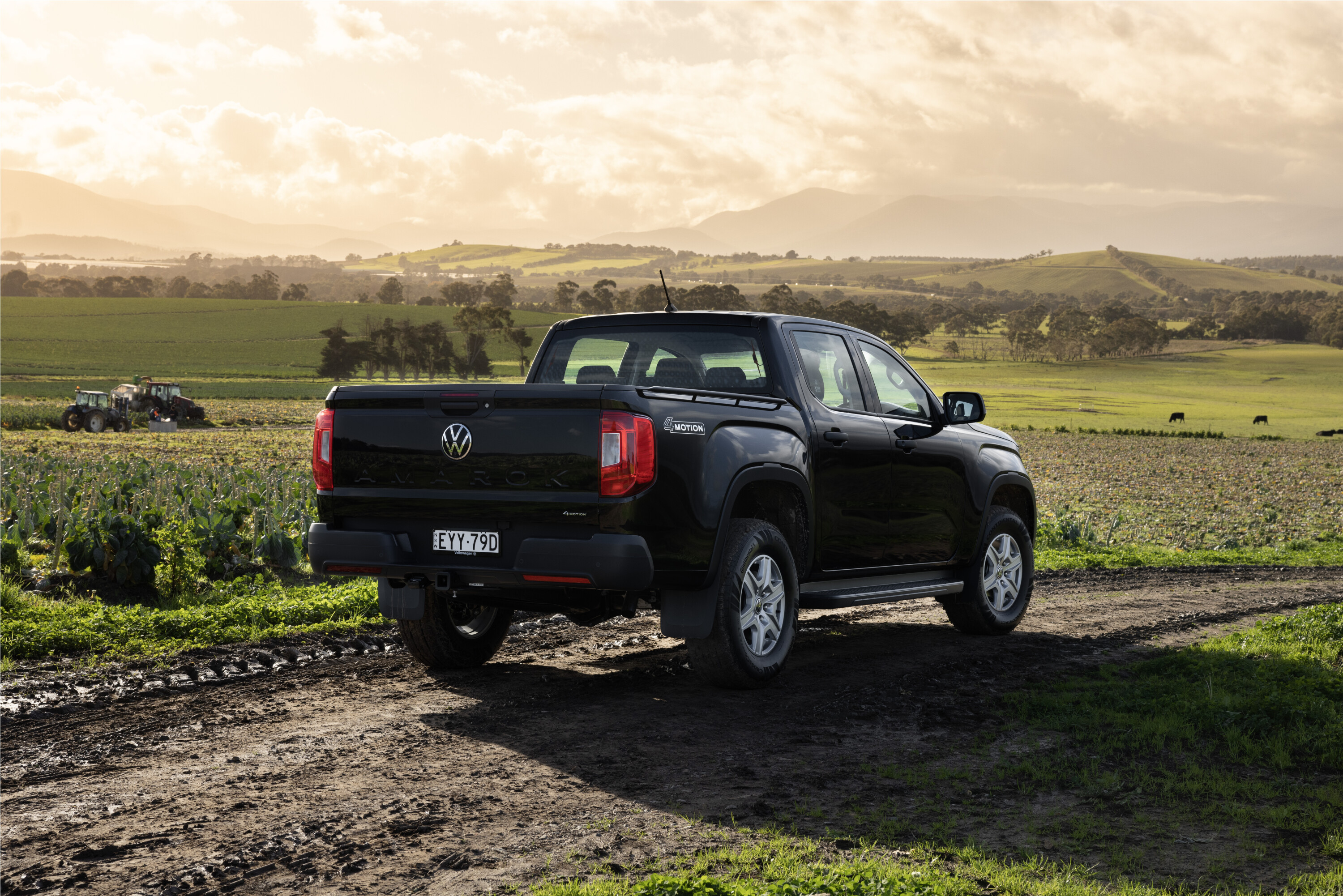
Volkswagen Australia has put the two base models of its 2023 Amarok range on sale, priced from $52,990 before on-road costs.
Called the Core and the Style, they are powered exclusively by 2.0-litre diesel engines and priced at $52,990 and $56,990 respectively.
A major difference between the two variants is that the engine in the Amarok Core is the single-turbo 125kW/405Nm TDI405 version of the Ford-manufactured four-cylinder mill, backed by a six-speed automatic transmission, while the Amarok Life has a bi-turbo 154kW/500Nm TDI500 diesel that shares its 10-speed automatic transmission with V6-powered higher grades.
2023 Volkswagen Amarok range
| Variant | Drivetrain | Price (before on-road costs) |
|---|---|---|
| Amarok Core | 2.0 TDI405, part-time 4×4, 6-speed manual | $50,990 |
| Amarok Core | 2.0 TDI405, part-time 4×4, 6-speed auto | $52,990 |
| Amarok Life | 2.0 TDI500, part-time 4×4, 10-speed auto | $56,990 |
| Amarok Style | 2.0 TDI500, part-time 4×4, 10-speed auto | $66,990 |
| Amarok Style | 3.0 TDI600, permanent 4×4, 10-speed auto | $70,990 |
| PanAmericana | 3.0 TDI600, permanent 4×4, 10-speed auto | $75,990 |
| Aventura | 3.0 TDI600, permanent 4×4, 10-speed auto | $79,990 |
| Aventura | 2.3 TSI452, permanent 4×4, 10-speed auto | $79,990 |
A six-speed manual gearbox is available for the Amarok Core, but one wasn’t available for testing on this day.
Both the Amarok Core and Life models have a part-time, dual-range 4×4 system and are not offered with the all-wheel drive system available in the higher grades. All 4×4 Amaroks get the driver-activated rear differential lock.
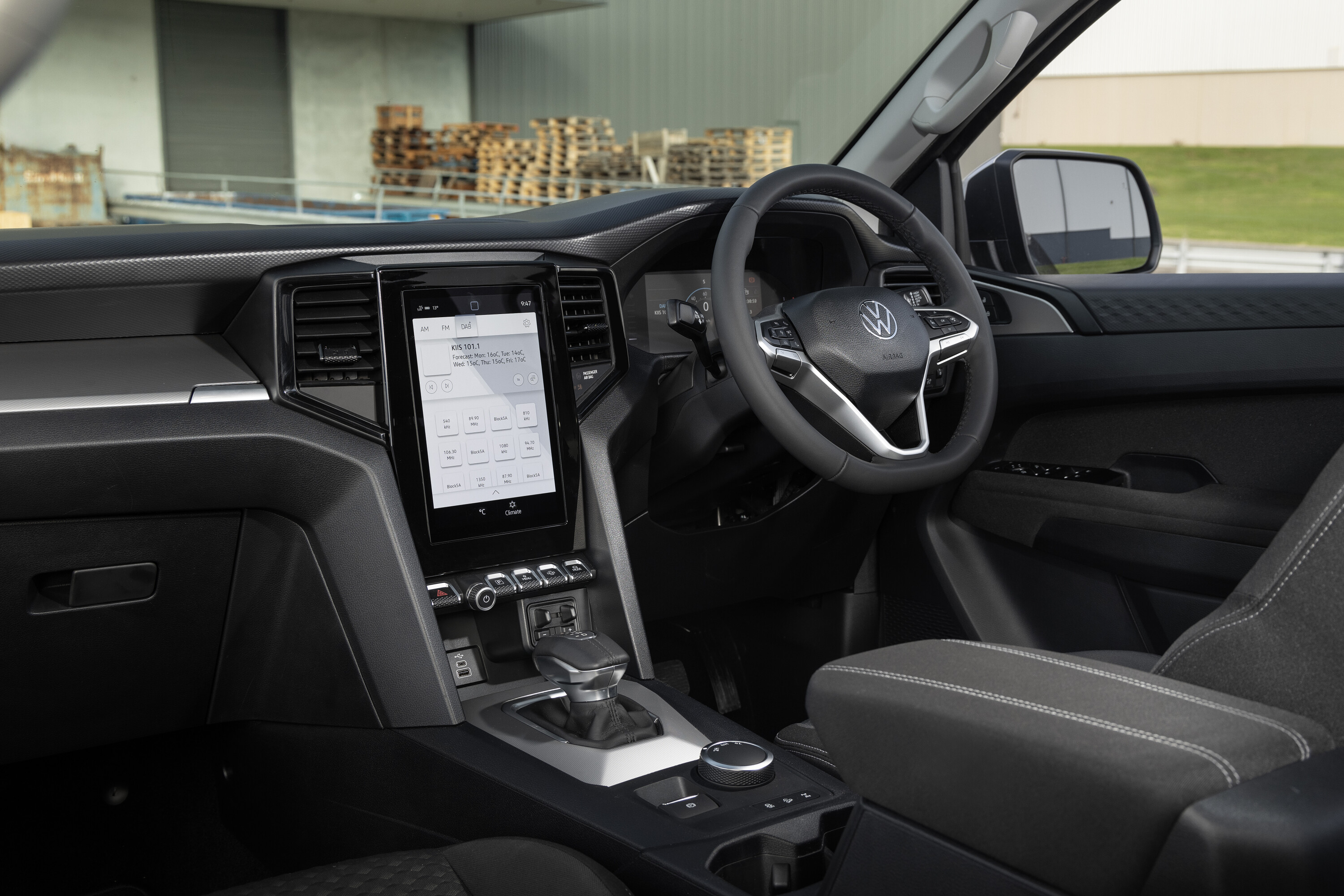
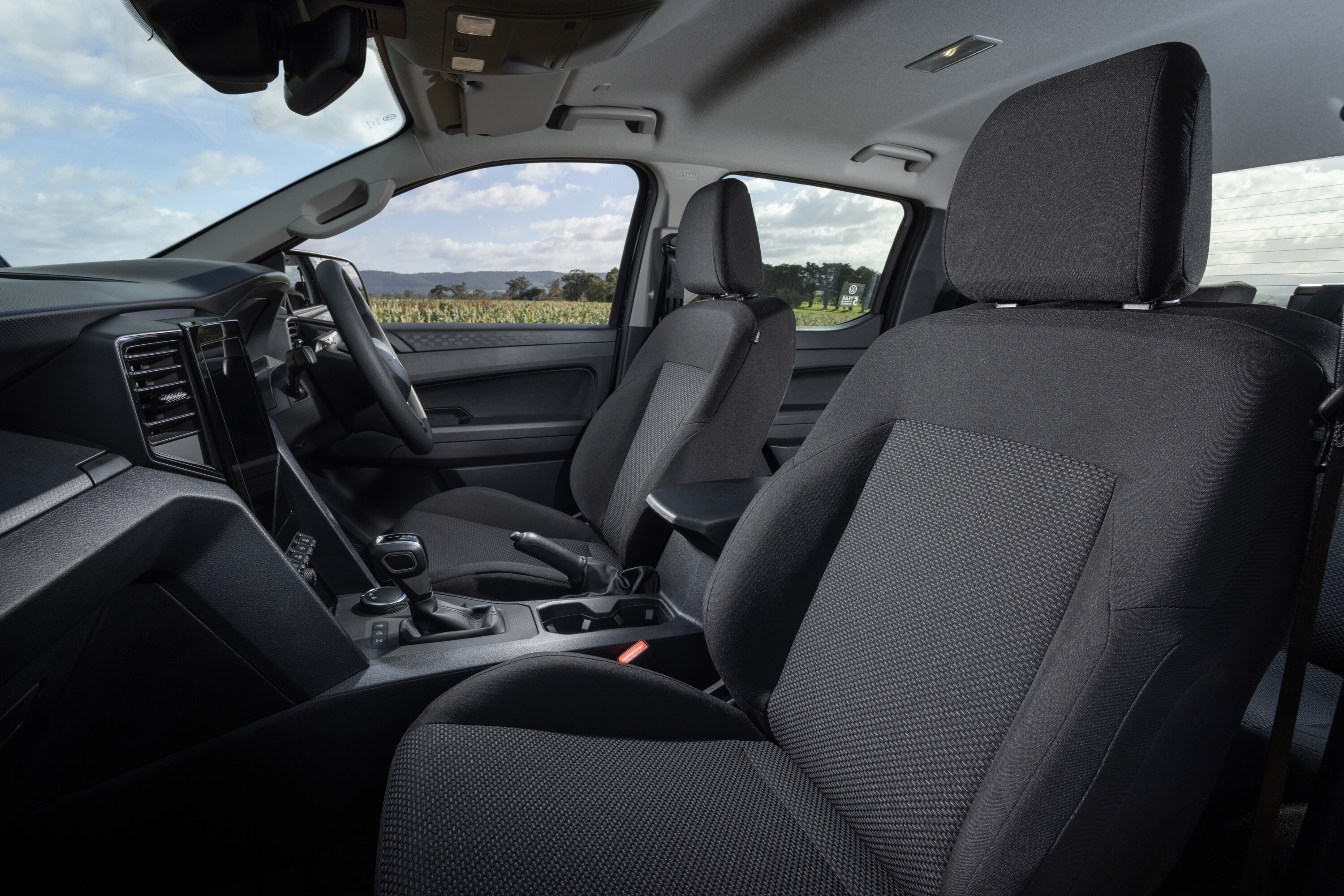
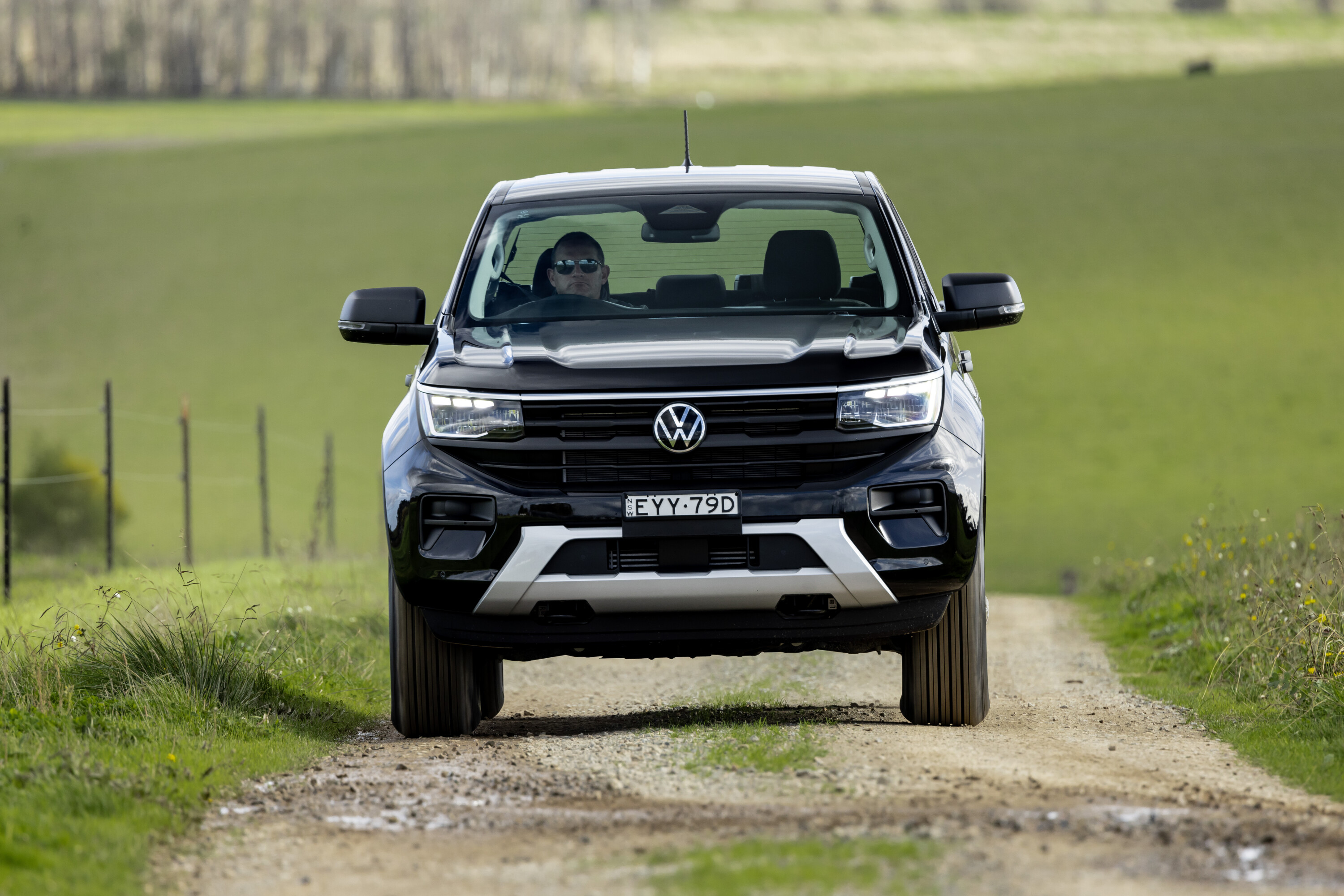
Entry-level 4×4 utes priced upwards of $50K might be a bit rich for some but the Amaroks don’t feel like base model vehicles. Yes, the Amarok Core comes with vinyl floor coverings and manual air-conditioning but both variants come with 17-inch alloy wheels, tyre pressure monitoring, LED headlights and relatively large 10-inch media screens.
Mechanically, the Life also gets disc brakes on the rear axle and the emergency brake is electronically operated.
The Amarok Life adds carpeted floors, LED front fog lights, eight-way adjustable driver and passenger seats – the passenger seat in the Core has no height adjustment – and a leather-covered steering wheel and gear selector.
Mechanically, the Life also gets disc brakes on the rear axle and the emergency brake is electronically operated.
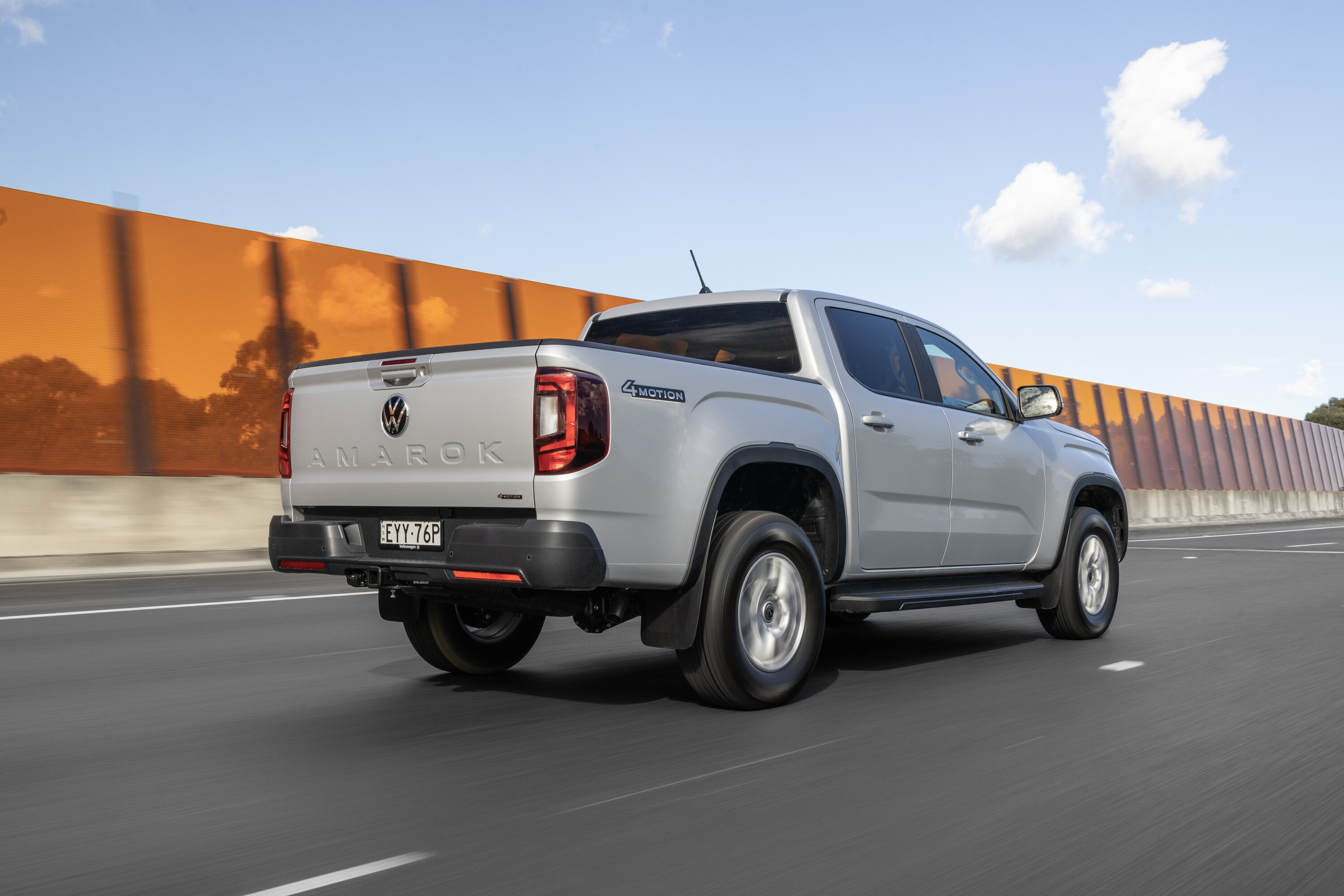
Both Amarok Core and Life use the standard suspension calibration for the double wishbone front end and leaf-sprung live rear end and not the ‘Dynamic’ suspension as found under the upper-spec PanAmericana and Aventura models.
A pair of rated front recovery points and 3500kg rated towbar are standard on all Amaroks including these entry-level models.
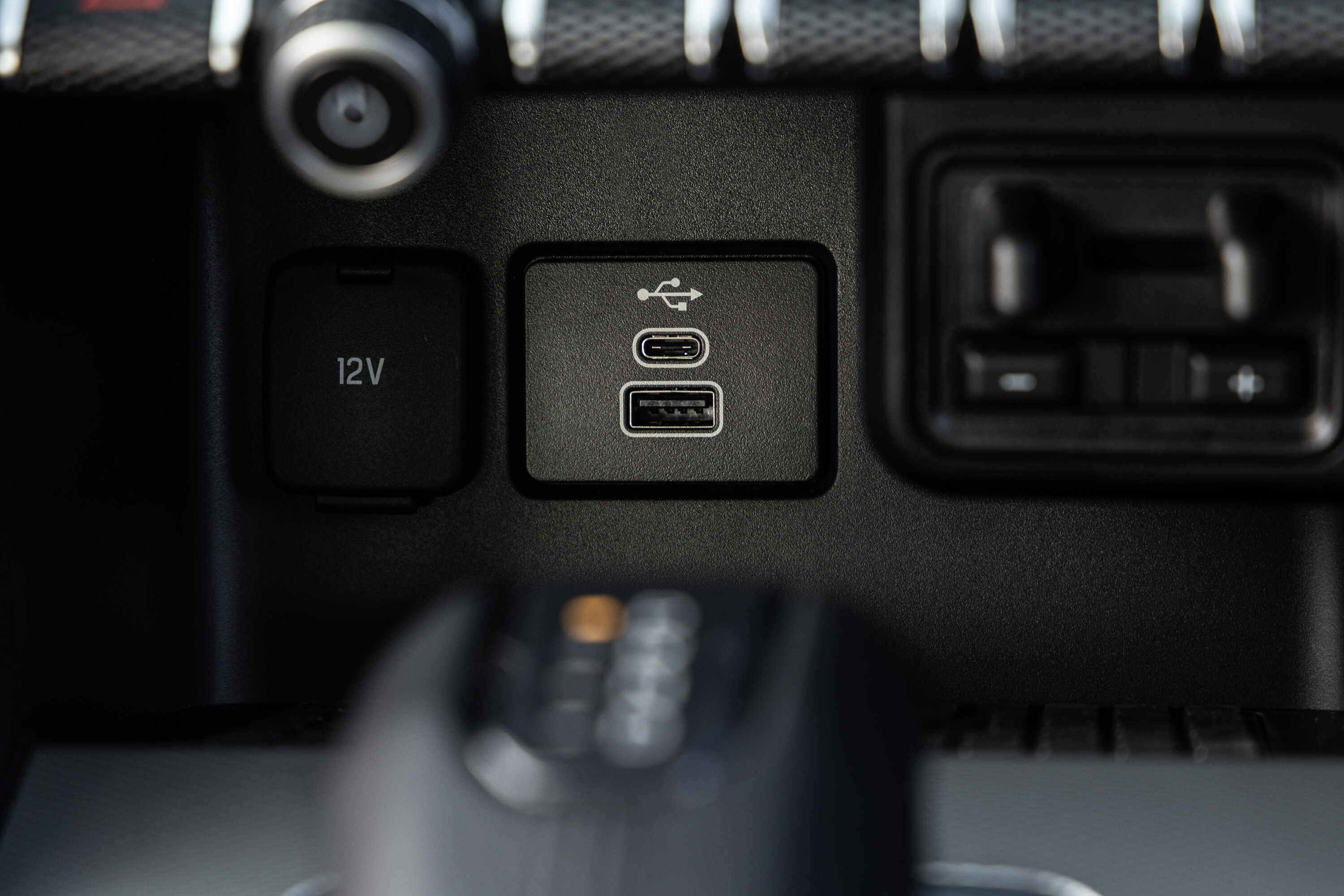
The cargo tub includes six 400kg-rated tie-down points, however, the Core and Life miss out on the 12-volt power outlet in the tub.
Slip into either the Amarok Core or Life and you are greeted by a beautiful ignition barrel on the right-hand side of the adjustable steering column, where you need to insert the vehicle key and turn it to start the vehicle. None of this dinky start button business, just proper tactile functionality.
The Amarok Core even has a handbrake lever capable of functioning as an emergency brake if the need should arise.
Powertrains
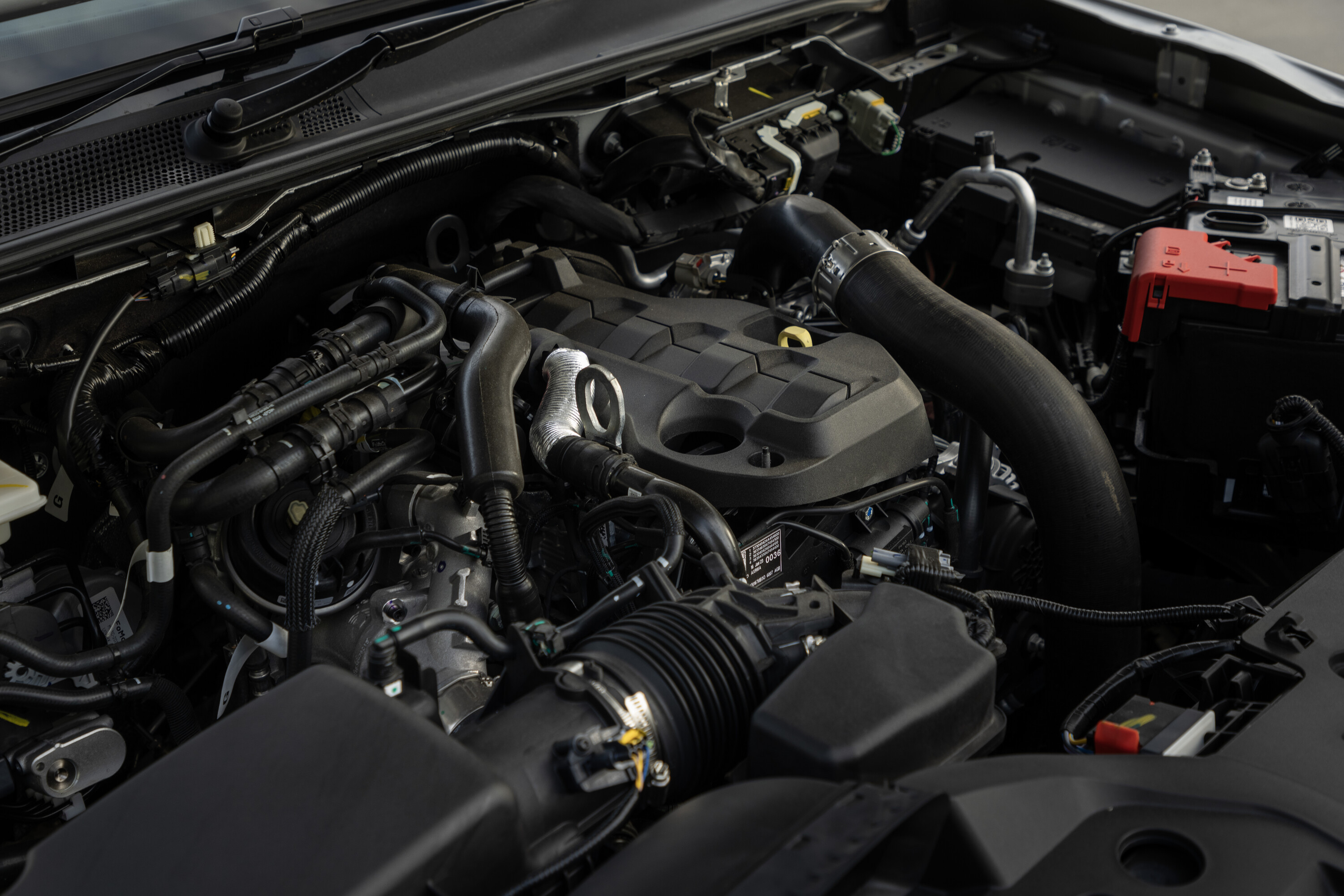
While the four-cylinder diesel engines lack the refinement of the V6 mill, they are not left behind in the performance stakes.
In fact, if there was no V6 offered in the range, the TDI500 mill and 10-speed auto would be perfectly sufficient in any grade of Amarok.
Although 125kW doesn’t sound like a lot of power in this day and age, the Amarok Core gets along well and easily up to the posted speed limits.
We also drove a Core model with approximately 900kg strapped into its tub so that with a driver onboard it would have been close to its 1042kg payload
Even with this on board, the Amarok Core motored strongly up hills and was stable over bumps, through curves and under heavy braking. It felt as though it would haul this load all day without complaint.
Overtaking in the Core does require a bit more planning and patience than it does in the high-spec, more powerful models but it’s not impossible.
You do tend to drive with your foot flat to the boards more in the Core and we predict that towing a heavy load behind would be more of a chore in the Core. All 4×4 Amaroks have a 3500kg braked towing capacity regardless of the powertrain but the Core and Life are respectively limited to a 6200kg and 6350kg GCM, while the upper-spec V6-powered models get a 6400kg GCM.
If the limited power and vinyl floors of the Core sound a bit lacking for your needs, then the extra $4000 needed to step up to the Amarok Life would be money well spent. In fact, we reckon the Life represents a sweet spot in the new Amarok line-up.
In fact, the only negative that we see to stepping up to the Life ahead of the Core is the 10-speed’s little ‘e-shifter’, which is a bit fiddly.
Not only are you getting the increased outputs of the bi-turbo engine but the more efficient and refined 10-speed automatic transmission, leather steering wheel, carpeted floors, increased GCM and a few other features including rear cross-traffic alert, which we reckon is a great safety feature and should be standard across the range.
Producing 154kW and 500Nm, the TDI500 is never lacking in performance and with the 10-speed auto is rated to 7.2L/100km fuel consumption on the combined cycle compared to 8.0L/100km for the single-turbo Core.
The only negative that we see to stepping up to the Life ahead of the Core is the 10-speed’s little ‘e-shifter’, which is a bit fiddly. Both the e-shifter and the six-speed’s more conventional gear selector use small thumb buttons for manual gear selection, which is less than ideal.
Safety
Amarok Core and Life models get a full five-star ANCAP rating with a host of standard safety kit including:
| 2023 Volkswagen Amarok safety features | |
|---|---|
| Tyre pressure monitoring | Lane-keep assist and departure warning |
| Nine airbags including rear curtains | Forward collision warning |
| AEB with pedestrian & cyclist detection | Swerve steer assist |
| Stability control | Rear cross-traffic alert (Life model and up) |
| ABS with emergency brake assist | Speed sign recognition |
| Roll-over mitigation | Hill descent control |
| Traction control | Front and rear parking sensors |
| Trailer sway control | Reversing camera |
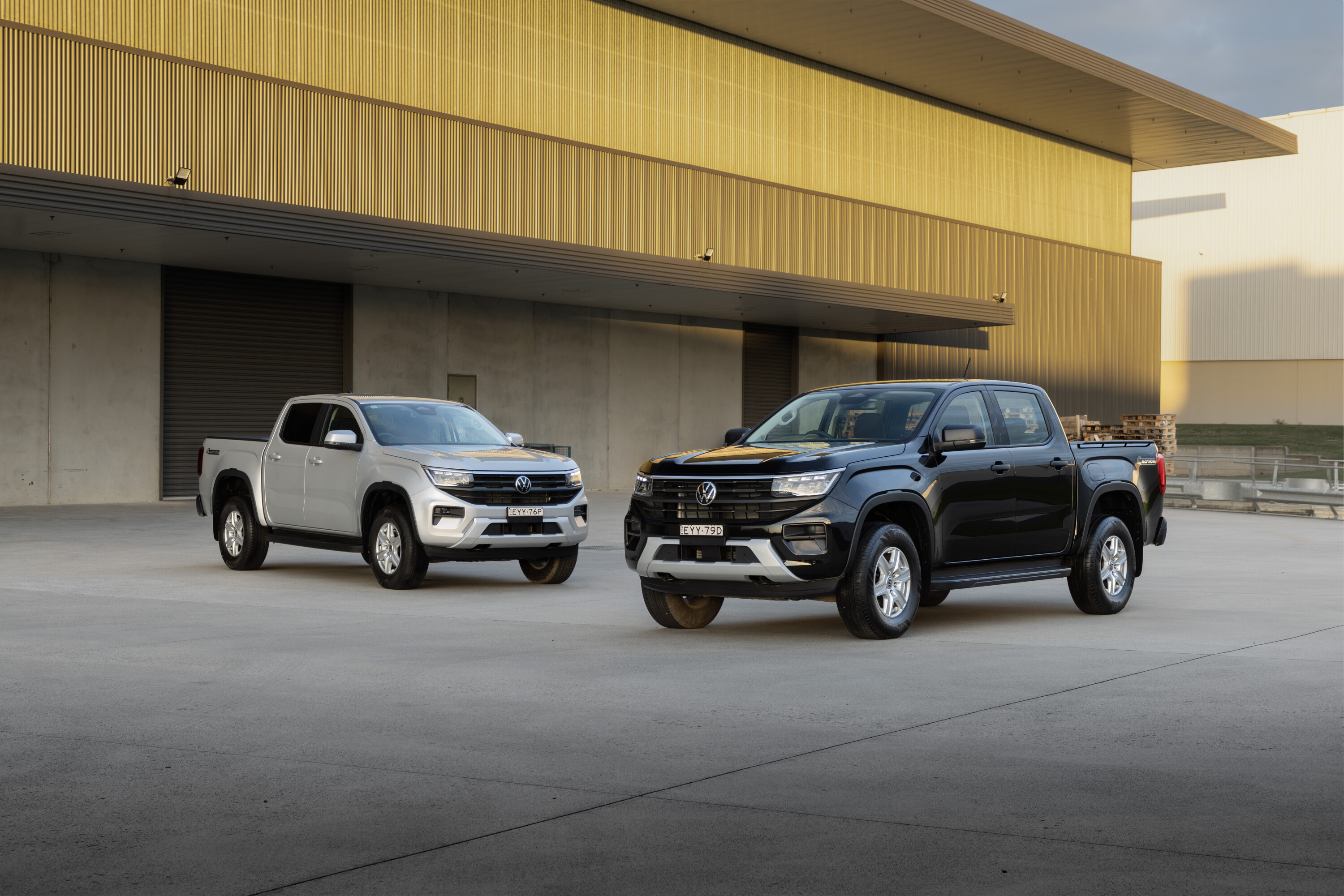
As entry-level models, the Amarok Core and Life are not cheap utes but nor do they drive and feel like cheap utes.
They offer a superior driving experience and more features than found in the higher-specification variants of some other utes and the TDI500 engine offers better performance than some popular sellers.
2023 Volkswagen Amarok Life specifications
| 2023 Volkswagen Amarok Life specifications | |
|---|---|
| Price | $56,990 + ORC and options |
| Engine | 4-cylinder bi-turbo diesel |
| Capacity | 2.0L |
| Max power | 154kW |
| Max torque | 500Nm |
| Transmission | 10-speed automatic |
| 4×4 system | part-time, dual range 4×4 + rear diff lock |
| Construction | 4-door ute cab with tub on ladder chassis |
| Front suspension | double wishbone IFS with coils |
| Rear suspension | live axle on leaf springs |
| Tyres | 255/70-17 on alloys |
| Weight | 2242kg tare |
| GVM | 3250kg |
| GCM | 6350kg |
| Towing capacity | 3500kg (braked) |
| Payload | 988kg |
| Seats | 5 |
| Fuel tank | 80L |
| ADR fuel consumption | 7.2L/100km |
| Approach angle | 30u00b0 |
| Ramp over angle | 22u00b0 |
| Departure angle | 25.6u00b0 |
| Ground clearance | 235mm |
| Wading depth | 800mm |
Mazda Australia has added two new accessory packs to suit its upper-spec BT-50 SP and Thunder variants, with the packs available to order from July 2023 at dealers nationwide.
The two packs available are the BT-50 SP Pro enhancement pack, priced at $7668 (recommended fitting price), and the BT-50 Thunder Pro pack, priced at $9046 (recommended fitting price).
Key to the SP Pro enhancement pack is the addition of Nitrocharger suspension, which incorporates upgraded springs paired with twin-tube shock absorbers. This set-up improves the BT-50 SP’s off- and on-road ability and gives it up to two inches of extra lift.
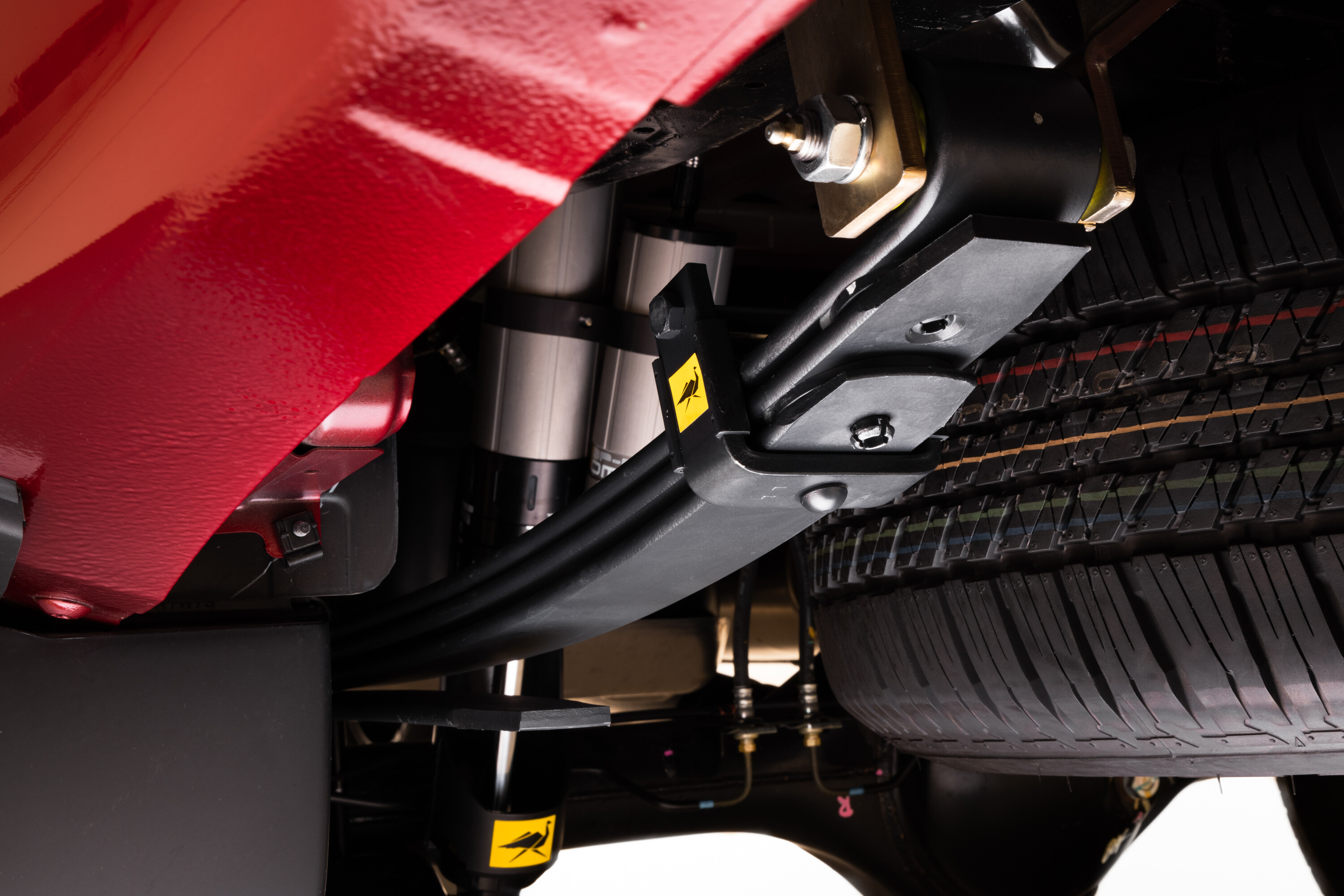
Mazda Australia says these modifications “have been rigorously tested to ensure that the vehicle lift does not impact any safety systems, including the standard-fit ABS and electronic stability ontrol”.
In addition to the upgraded suspension, the SP Pro pack includes exclusive new 18-inch wheels, a Lightforce LED lightbar (1 lux at 569m) integrated in the front grille, and SP Pro decals on the exterior lower flank.
For the BT-50 Thunder, the Pro pack adds an Old Man Emu BP-51 suspension system – nitrogen-filled dampers with a remote reservoir – that has been locally developed, tested and tuned by the Mazda Australia engineering team.
The kit can be manually adjustable for both compression and rebound, which means users can easily customise the system depending on loads.
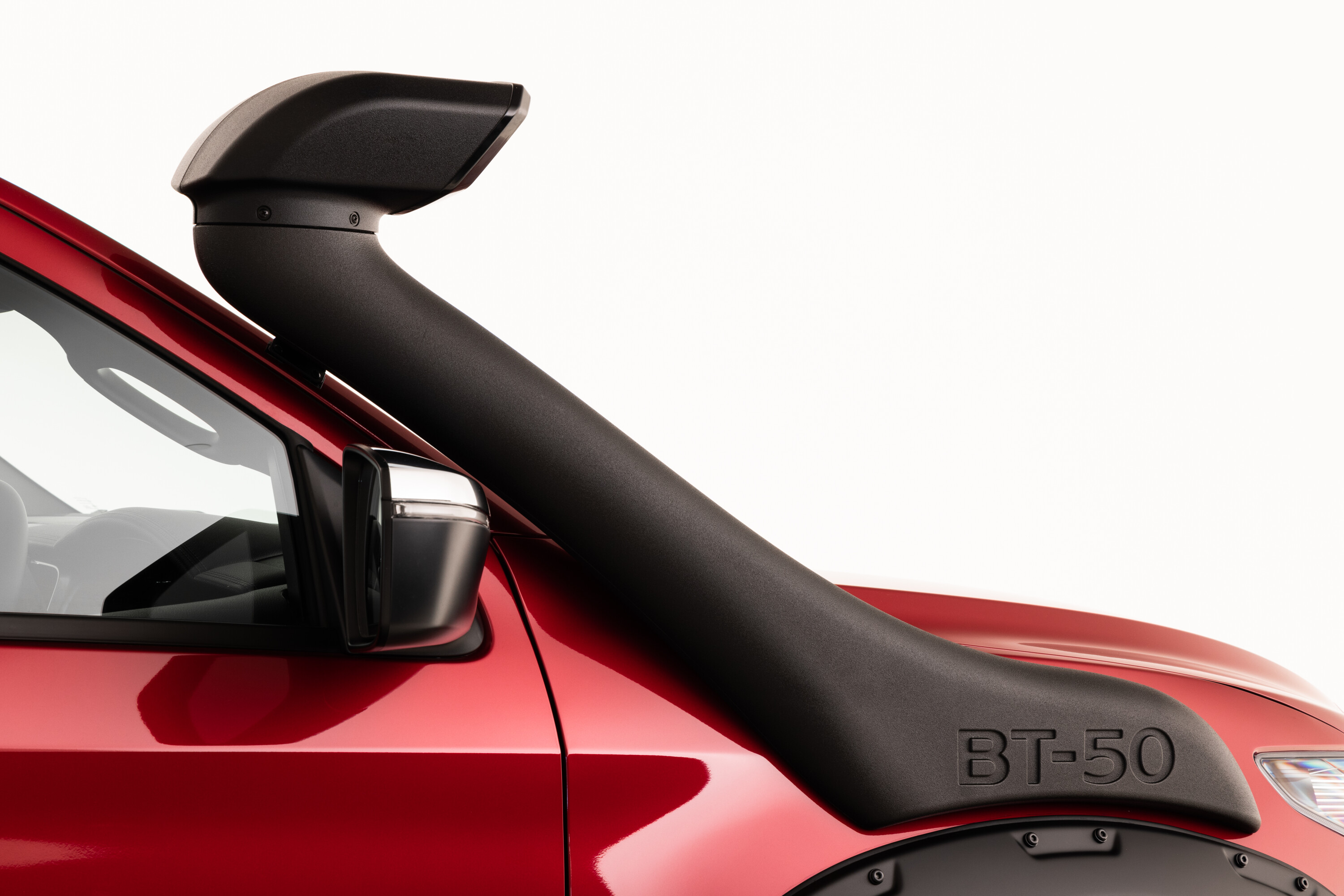
The Thunder Pro pack also comes with a snorkel, Lightforce LED driving lights (1 lux at 1100m), and Thunder Pro decals on the exterior.
Both accessory packs can be fitted retrospectively to existing vehicles with a two-year warranty. However, that increases to a five-year/unlimited-kilometre warranty if the pack is ticked as part of a new vehicle order – provided the packs are fitted upon delivery.
There’s no two ways about it: life is about compromises.
The rolling countryside of an outback station might be the perfect slice of paradise for some, but it’s a world away from beach-front barbecues with your mates.
A big-shot career in the hustle and bustle of the city might fill out a fat wallet, but if you’re dreaming of your own business spinning spanners it might as well be a dead-end job.
So what do you do if you’re daydreaming of a hi-po V8 wagon singing to the heavens with supercharged wine and beadlocked 35s scrabbling for traction, but you really need the practicality of an all-out touring ute for that big lap of a lifetime? Well, if you’re Queensland couple Michael and Taylah, you throw caution to the wind and build both. Simple, eh?
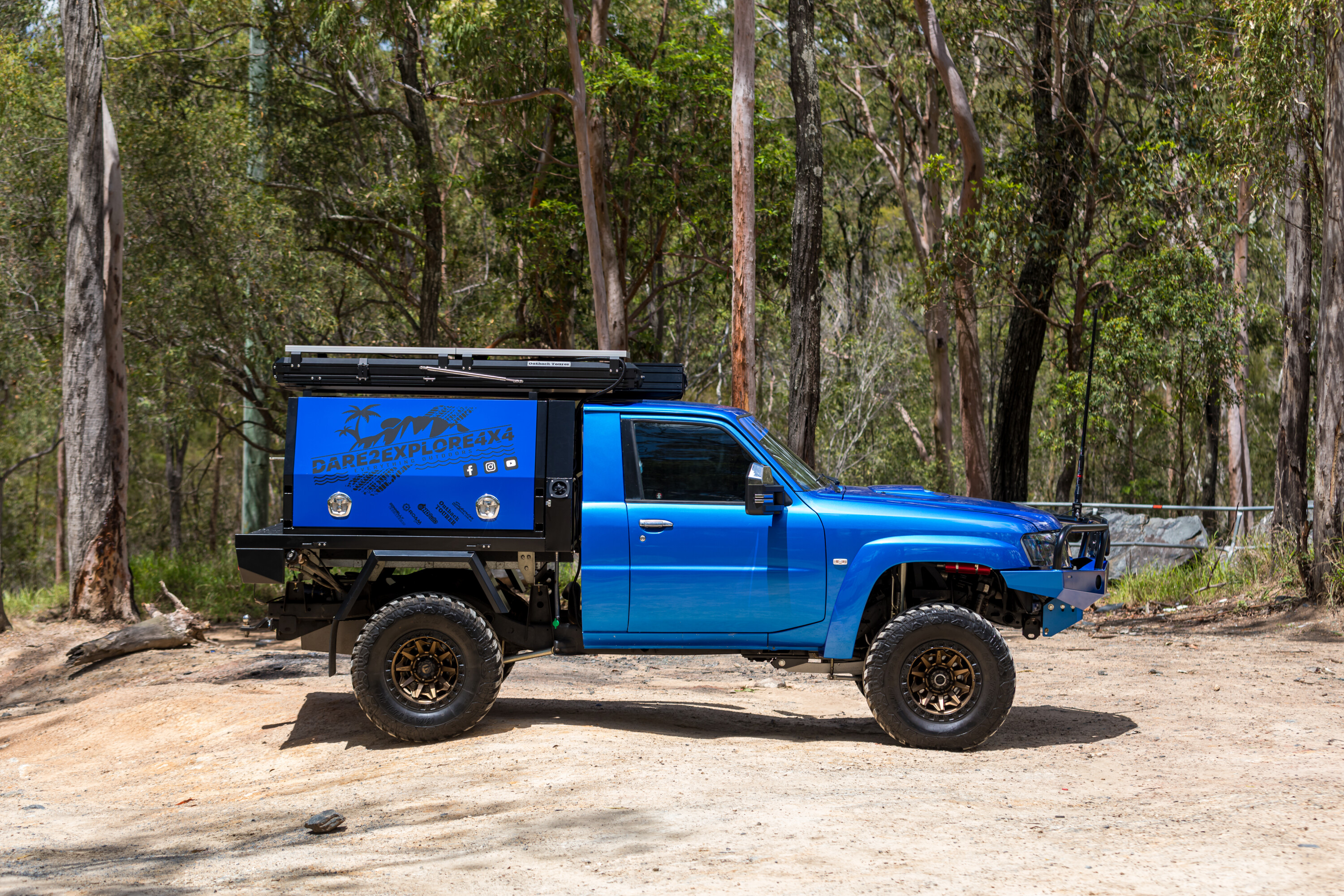
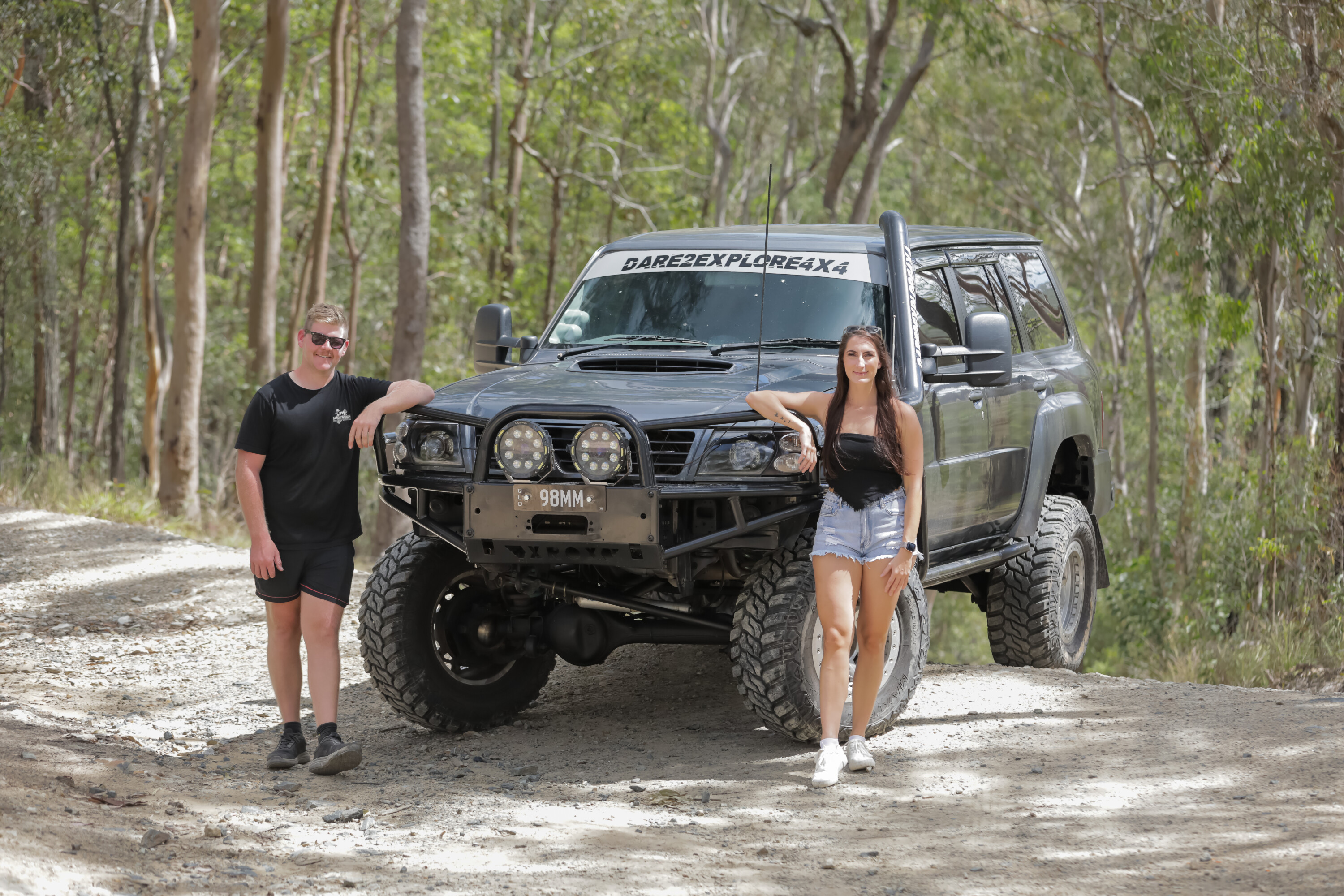
We’ve got not one, but two built-to-the-nines Patrols, both rolling out of the same shed, with two very different purposes. An epic electric blue ’02 GU space-cab Patrol with a touring setup that’d rival any killer camp on the sandy shores of Cape York. And a totally insane ’98 GU wagon with a powertrain sure to put a horn on a jellyfish.
Let’s get one thing out of the way right from the get-go. While both Patrols rolled off the production line as wagons, the two have followed very different paths to get where they are today.
The ’98 had been sitting in a paddock for 10 years untouched when Michael and Taylah took ownership, worth every dollar of the 1000 bucks they paid. The ute on the other hand came to the couple as a rolling shell riding on an earlier GQ chassis. The space cab chop already done and in primer by the previous owner, the rest, a blank canvas ripe for their touring plans and a strict six-month deadline to get it done.
Powertrains
While the bodies and paint schemes may be the biggest giveaway that this pair aren’t identical, under the bonnet is where the differences really kick off.
Hiding beneath the LandCruiser grey bonnet of the war-wagon is six-litres and eight-cylinders of GM fury in the form of an LS2. Not known to take the easy path, Michael and Taylah stripped it to its bones and rebuilt it better than GM could have ever dreamed. Every bolt replaced with heavy duty ARP studs, an upgraded oil pump, and dual-row timing chain ensure it’ll last the distance, but the rest of the modifications are decidedly louder.
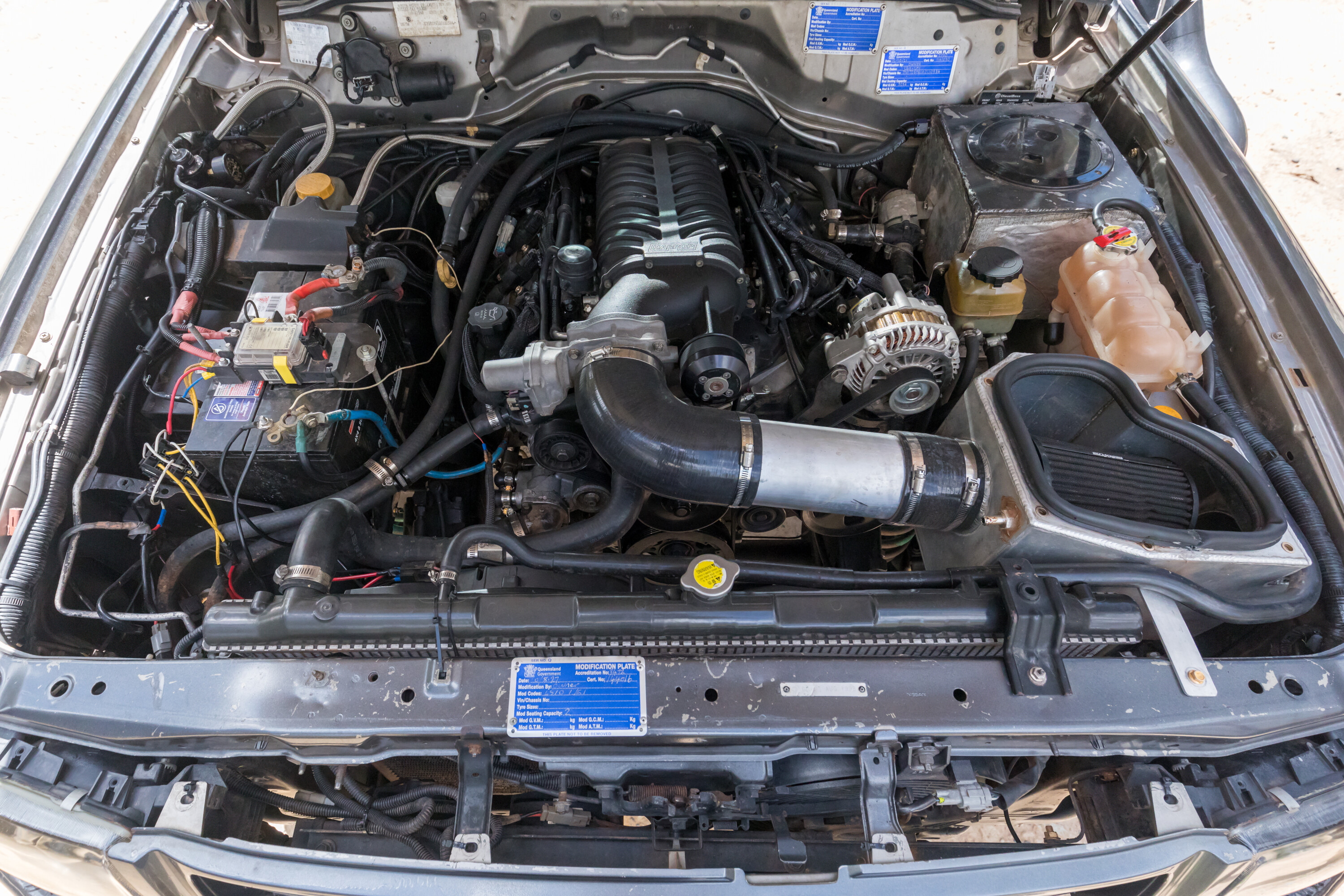
Upgraded rods, rings and pistons swing off the standard crank, while LS7 lifters and a spicy cam help the ported heads flow. Of course, with a Harrop FDFI 2300 blower up top big power was inevitable, but 765hp should scare off any thong-slappin’ 79 that lines up next to them. Donnelly’s Engineering is responsible for the shake, rattle, and roll, but Marks 4WD provided the necessary hardware to get the bent-eight between the rails and mated up to the stock Patrol five-speed.
Popping the bright blue bonnet on the space cab reveals a similarly impressive, but vastly different setup. If you’re a Toyota fan, now is the time to sit down. In place of the factory Nissan inline-six turbo-diesel TD42, Michael and Taylah have optioned-up a Toyota inline-six turbo-diesel.
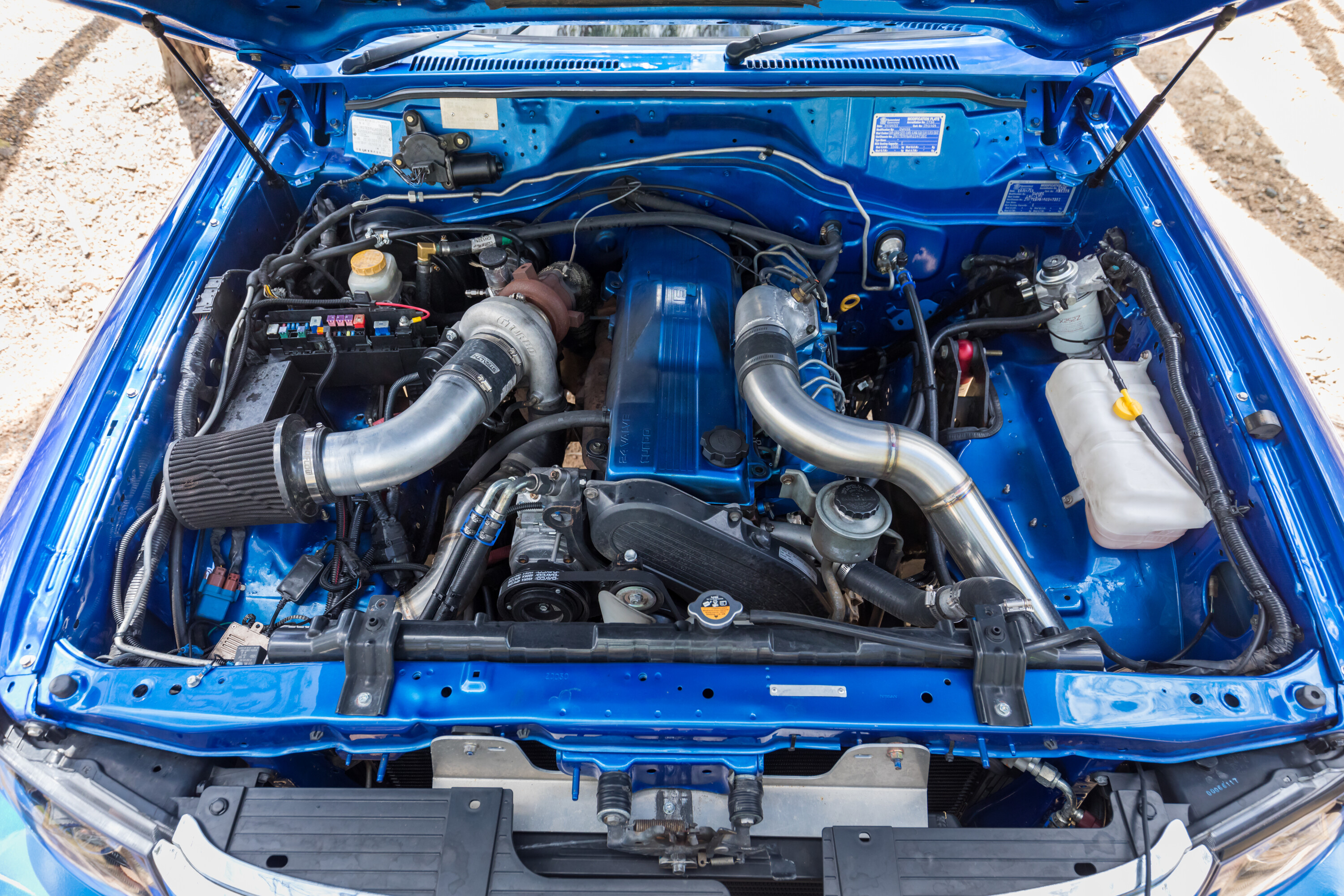
This time, it’s the venerable 1HD-FTE, just with a whole lot more anger. Chosen for its rugged reliability, a whole assortment of go-fast bits have been fitted up by the wizards at Donnelly’s Engineering again to get the most from the oil-burner.
On the inside, every nut and bolt have been replaced with a full OEM spec rebuild. From here, Spool rods have been slung under factory pistons, while ARP studs keep the head sitting tightly in place. A GTurbo does its best to separate the two. In the process, it pushes out 370 rear-wheel horsepower and 920Nm of torque. A Dellow’s bellhousing kit mates the ’Yota motor to the factory TD42 five-speed manual ’box.
Suspension
Poke your head underneath and that shared DNA really starts shining through. Up front the wagon sports a full complement of Superior Engineering steering rods. They’re backed up with a four-inch coil lift and Superior Engineering 2.0 remote reservoir shocks reining in any undulating terrain you can point 765hp at. Stock radius arms have been kept in place, although a Harrop eLocker is wrapped inside 4.6:1 diff ratios up front.
Latest gear guides
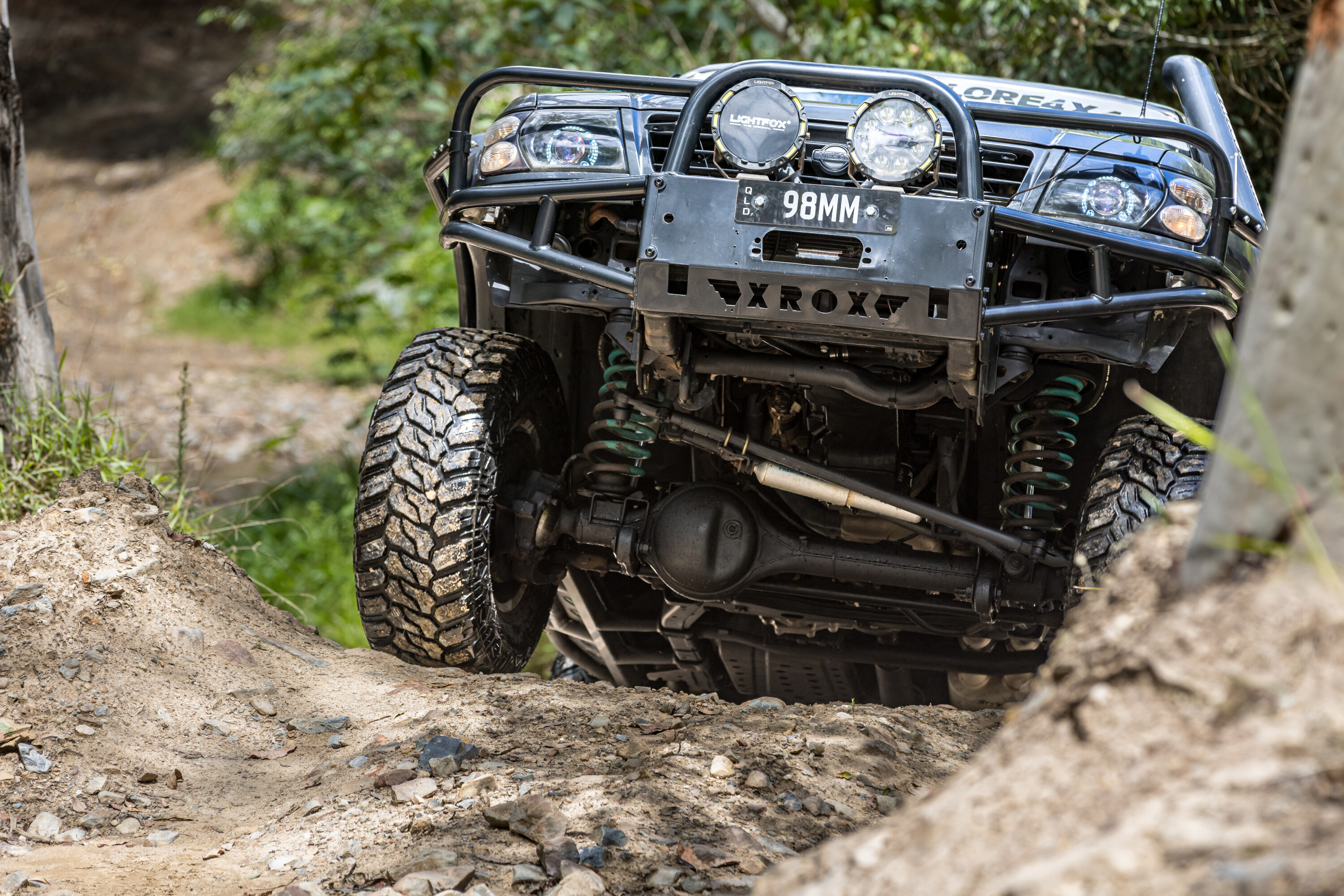
In the back, an LSD does the trick, with helper airbags inside three-inch lifted coils. Matching 2.0 Superior Engineering shocks smooth out the ride and a coil tower brace ensures the whole affair lasts the distance.
Over on the ute, things get a little more serious. Sure, there’s still an eLocker and LSD combo, a swathe of Superior Engineering steering arms, and some more coil tower bracing thrown in too. But this time, every other possible option box has been ticked too. That means top-tier fully adjustable external bypass Superior Engineering 2.5-inch body shocks, Superior Engineering radius arms, and a full assortment of adjustable control arms in the rear.
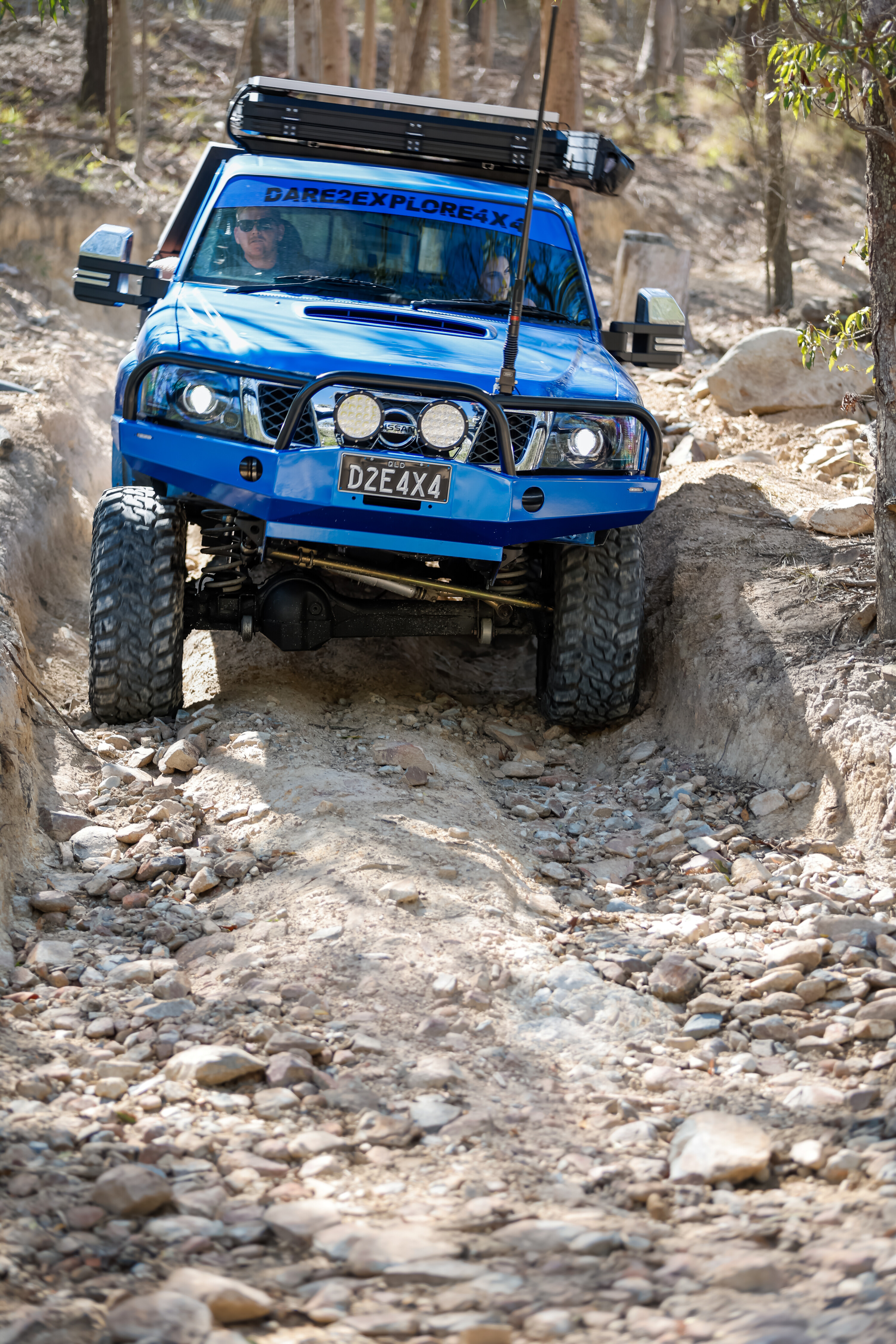
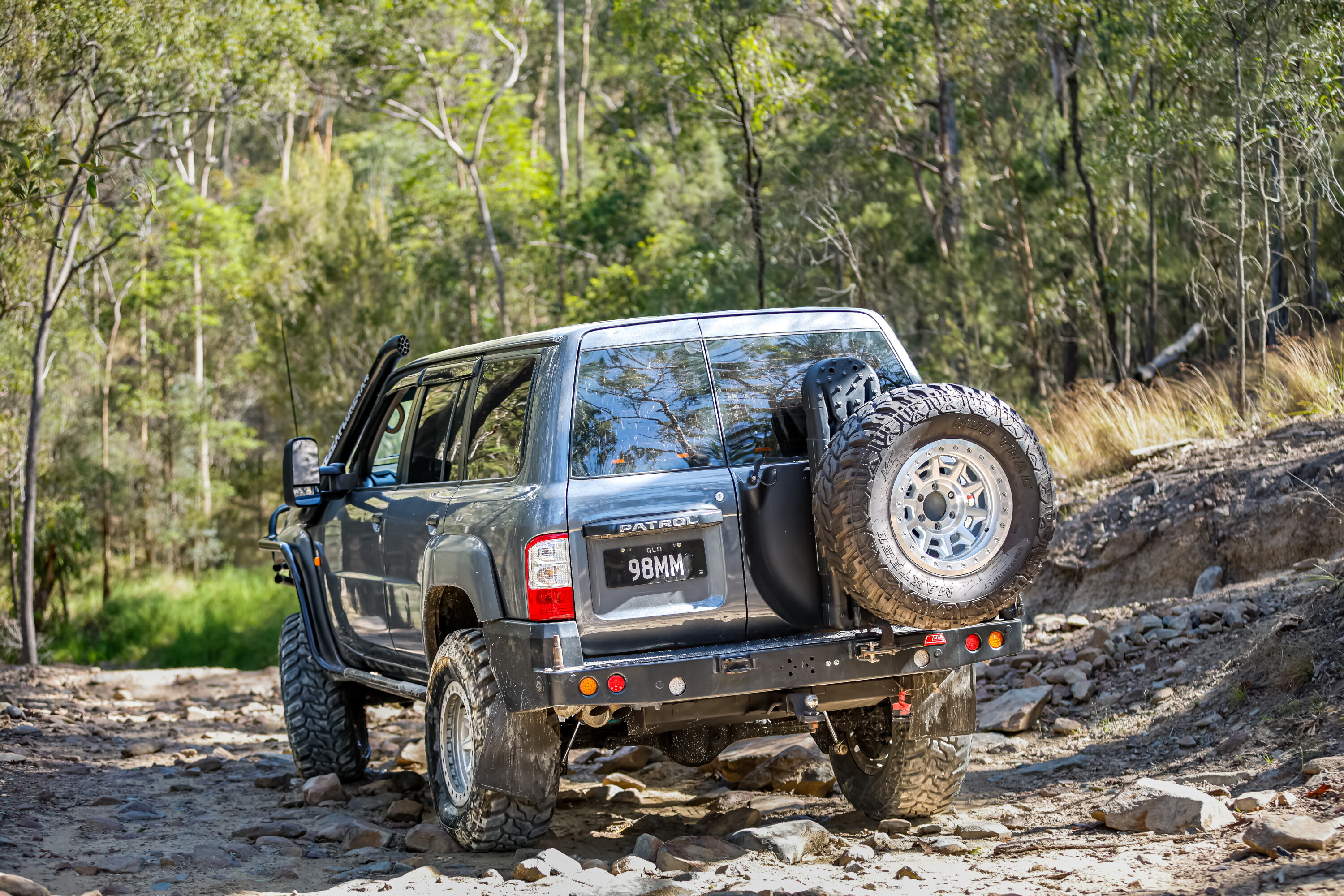
Both the wagon and the ute make the most of the increase in altitude by stuffing the wheel arches with 315/70R17 Maxtrek Mud Tracs. The ute scored 17×9 bronze Fuel Covert alloys, while the wagon picks up a trick looking set of beadlock alloys.
Exterior
Kicking it up a gear to the exterior and things start looking drastically different. That thousand-buck body on the wagon was never going to keep Michael and Taylah happy for long.
A full respray in ’Cruiser grey got the nod, but not before a set of custom LED Series 3 headlights were slotted into place with Series 4 flares modernising the looks. An Xrox bar sits proudly up-front sporting a pair of custom headlight hoops and Lightfox nine-inch driving lights. Moving along the flanks and Archer Metalworks scrub bars and side steps armour up the sills, with an MCC rear bar ensuring all corners are covered.
The ute has copped a little more… while the Patrol landed in Michael and Taylah’s garage in primer, it’s now sporting a flash blue paint job over a full Series 4 sheet metal swap. Up front a Jimmy Built bar looks a million bucks and protects a pair of flash looking Tech4tourers headlights.
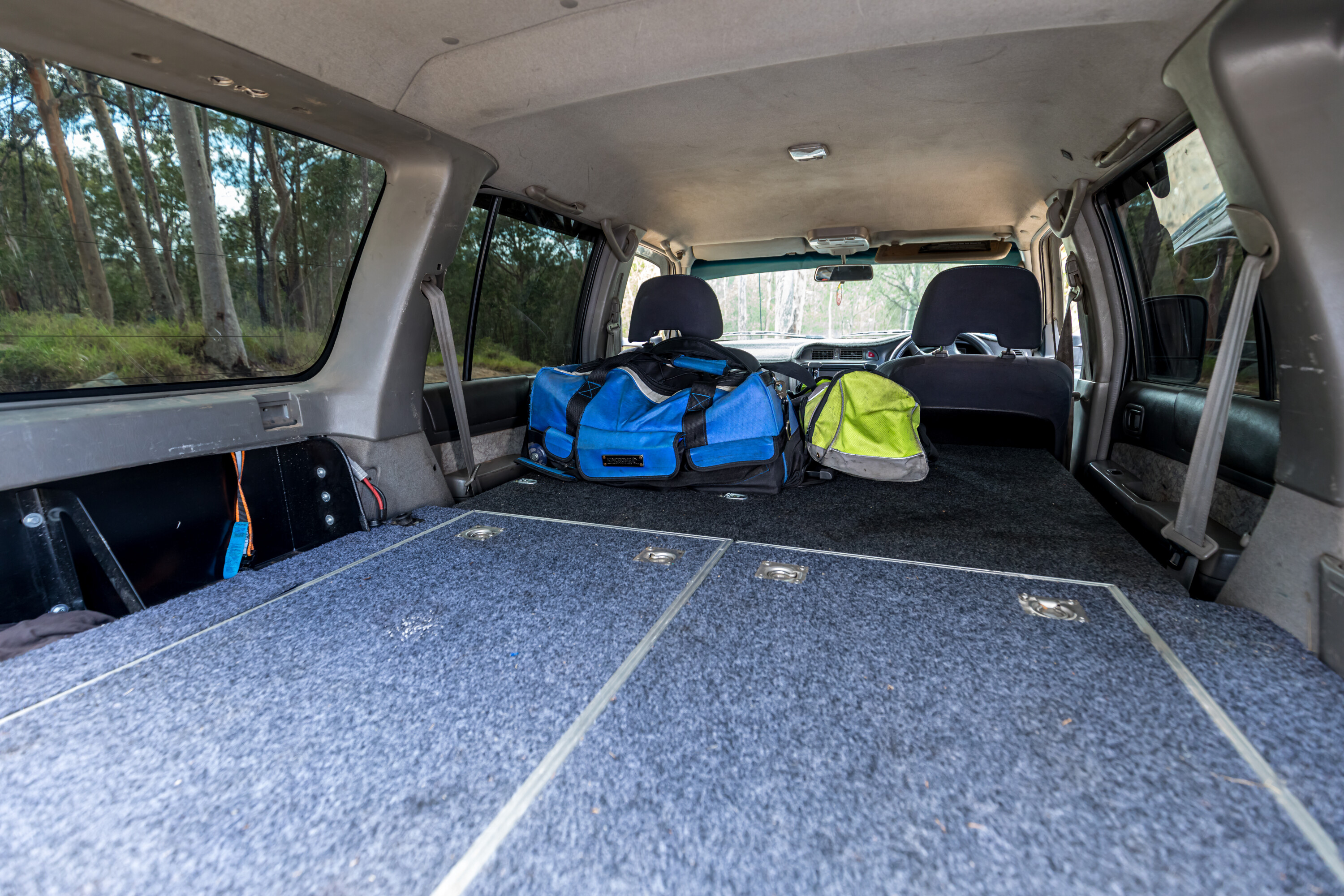
Down the back, where the wagon sports a simple drawer setup, the ute gets out of control. Up top the custom lift-off canopy plays host to an Outback Tourer hardshell rooftop tent and full 270-degree wraparound awning.
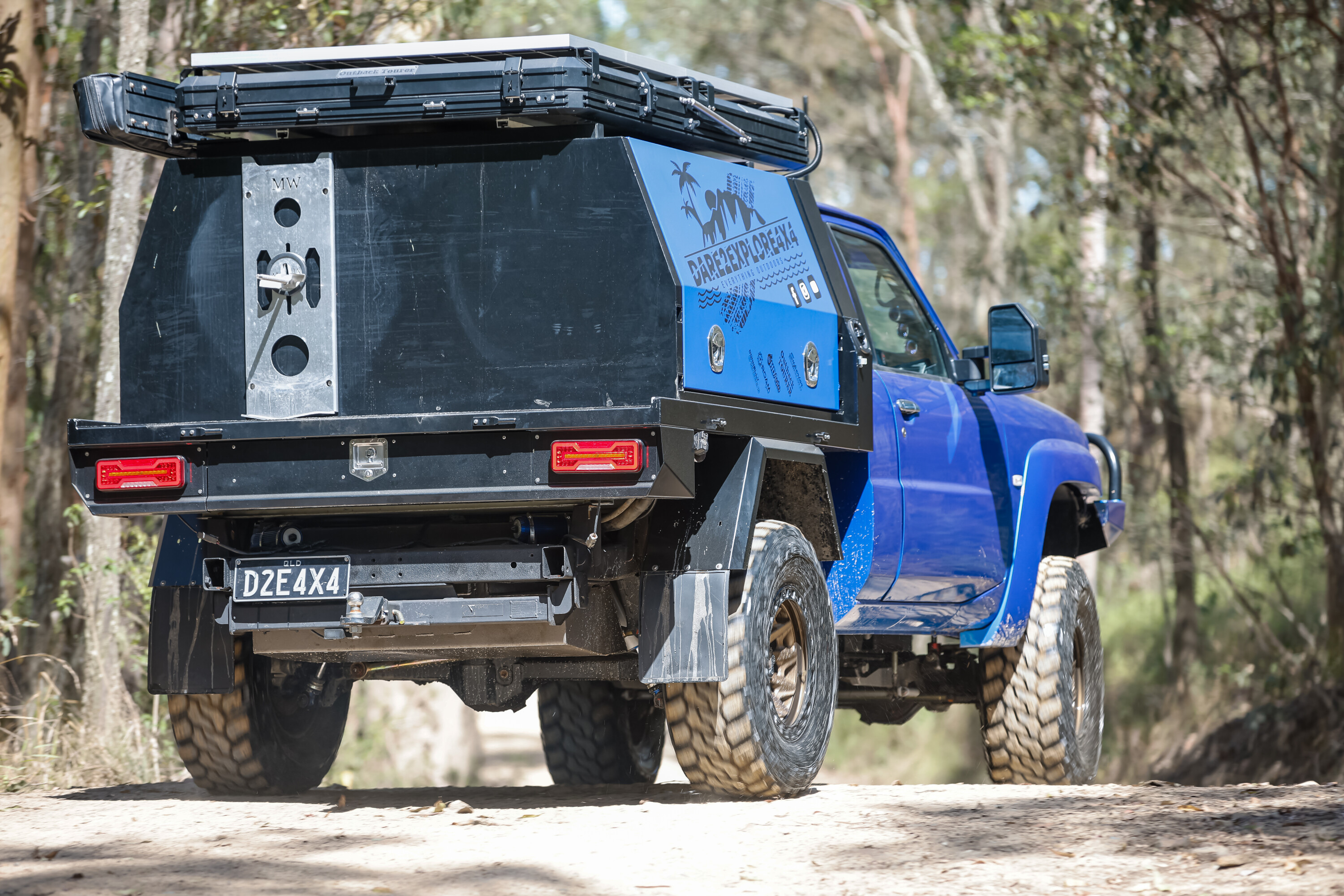
Along the offside, bulk storage is the name of the game with ample free space and a storage drawer setup, a Brass Monkey fridge drawer also sneaks in, as well as a sneak peek at the Enerdrive electrical setup. On the nearside, a Bushman’s upright fridge is the centrepiece of the camp kitchen, while an MW pull-out pantry, Kicker stereo, and bulk storage drawers fill out the rest of the roster. A 240Ah Hardkorr lithium battery hides out of sight.
Interior
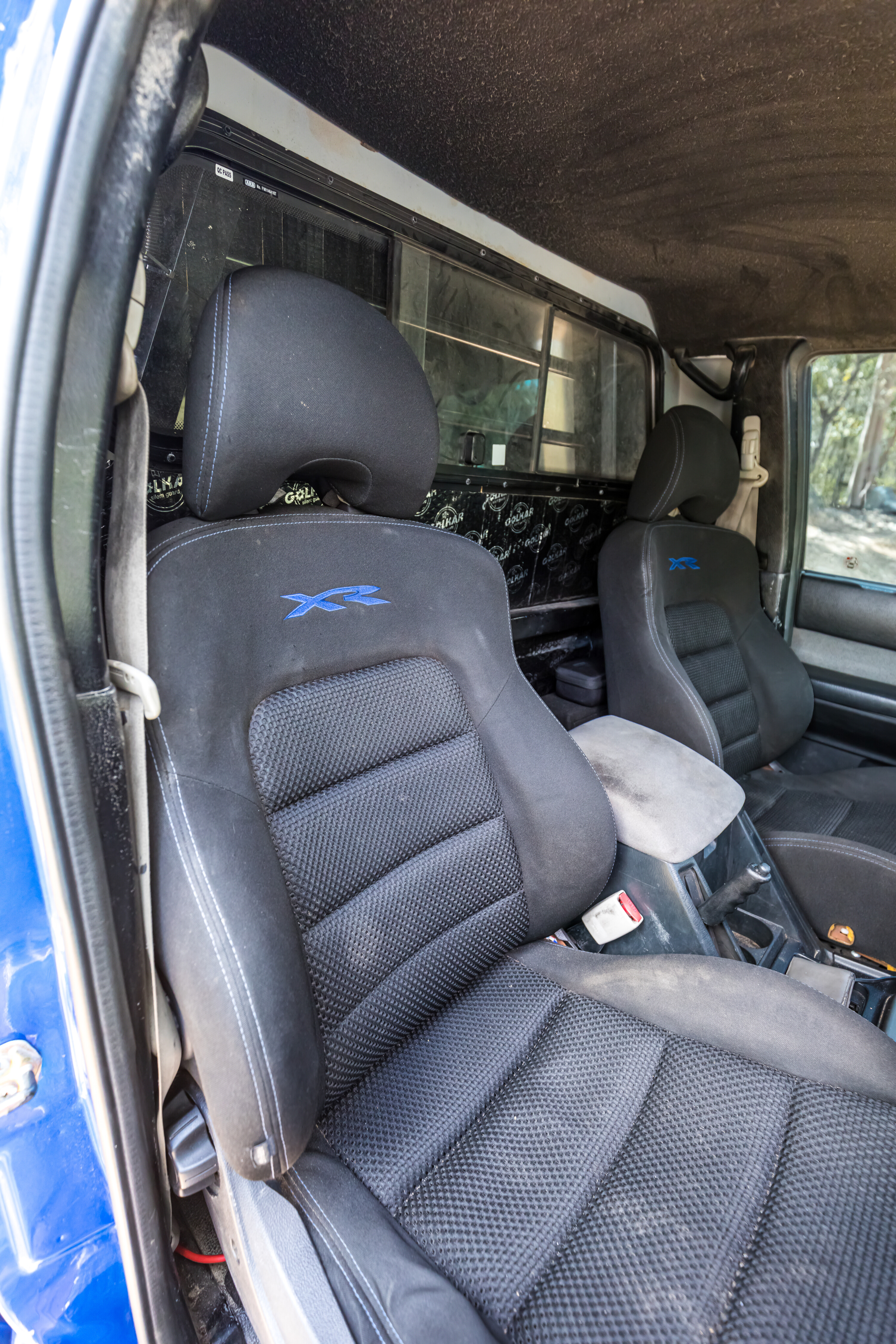
On the inside the different goals in both builds become glaringly obvious. Slot yourself in behind the tiller on both ’Trolls and you’ll find your backside in XR6 Falcon seats.
That’s about where the niceties end in the wagon. A budget stereo and comms take second place to the monster Powertune Digital dash letting the pilot know exactly what every one of those horsepowers is currently doing. This rig is built for hardcore weekends.
Over in the ute things are built with a little more comfort in mind. Full sound deadening on all corners, a trick GME UHF, Series 4 dash swap, and a trio of neat, simple gauges bundled in next to colour-coded paracord grab handles make it a nice place to be.
In a sea of cheque-book builds both of these Patrols are worthy of our praise, but having both come from the same couple, and with a combined 1100+ horsepower, they just make us all the more keen to see what epic rigs you lot have got tucked away in your back sheds, waiting to roar into life.
External bypass explained
When it comes to 4×4 suspension, the sky’s the limit. While manufacturers used to bend over backwards to build the biggest lift possible, these days they’re all hell bent on building the smoothest ride imaginable.
It’s given rise to plenty of oddball terms that quite frankly sound like they’re made up. We mentioned before the ute’s shocks are external bypass, but what does that actually mean?
Picture a shock absorber body as a 4×4 track, and the piston inside as your 4×4. Each part of the shock body represents a different obstacle. If you’re right up near bottoming out chances are you’ve had a big landing, or lifted a wheel and come down hard.
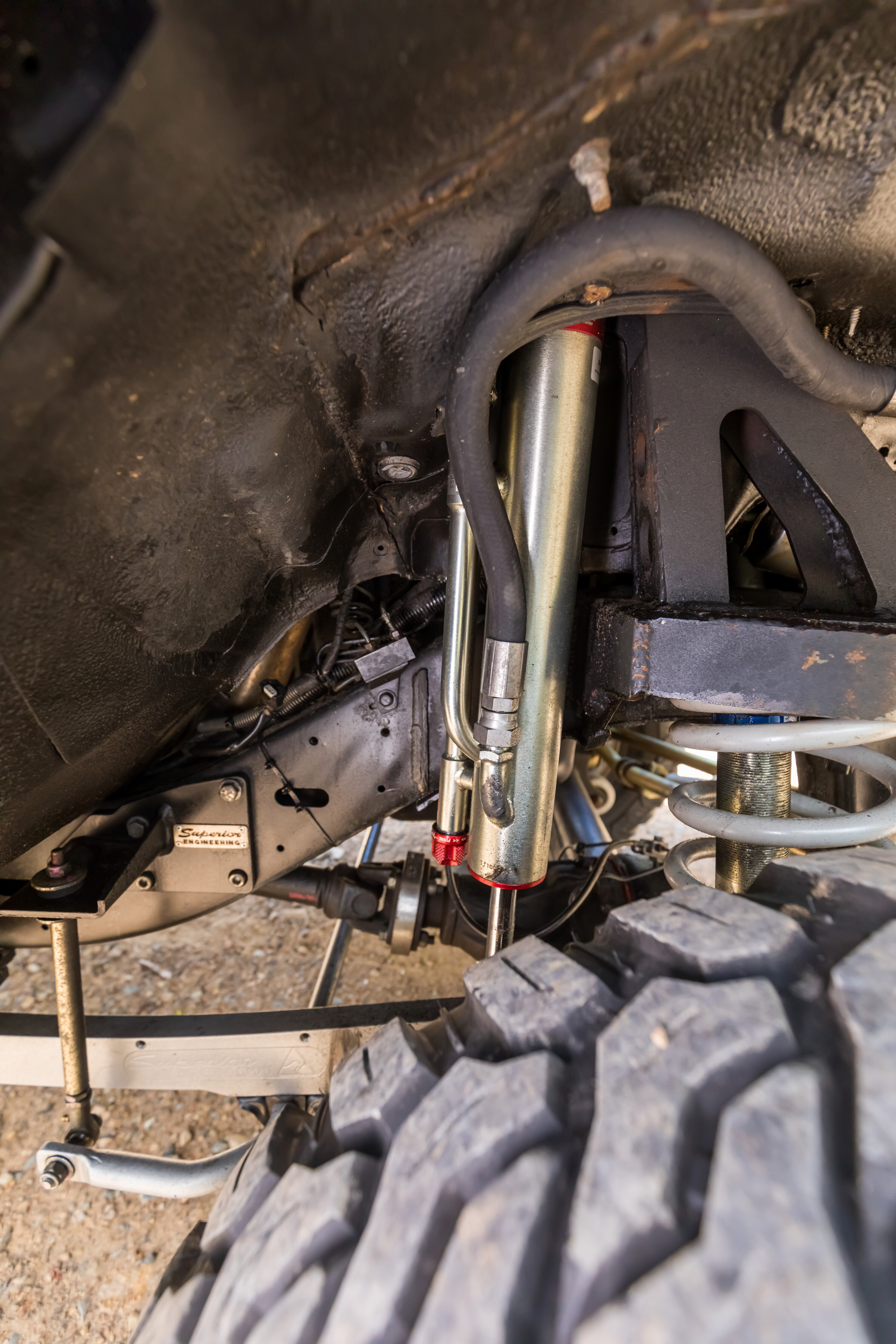
If you’re driving right at the start of travel it’s probably minor jitters like corrugations. External bypasses allow each section of the shock to behave differently to the others in anticipation of the type of terrain that’ll see that part of the shock come into play.
They essentially add or remove resistance in the travel of the piston. It means you can dial in each and every bypass to suit your exact needs. Want your shock to float like a feather initially, then get stiffer and stiffer to stop you bottoming out? Bypasses are what you need.
We were back in amongst the ranges and I couldn’t be happier.
With permission from a friend, who had given us approval to camp on her property, we poked along the Glass Gorge Road north of the historic town of Blinman.
The town owes its existence to the discovery of copper back in 1859 and while there were many other discoveries of that ore in the surrounding hills and valleys, Blinman managed to survive longer and more substantially than most.
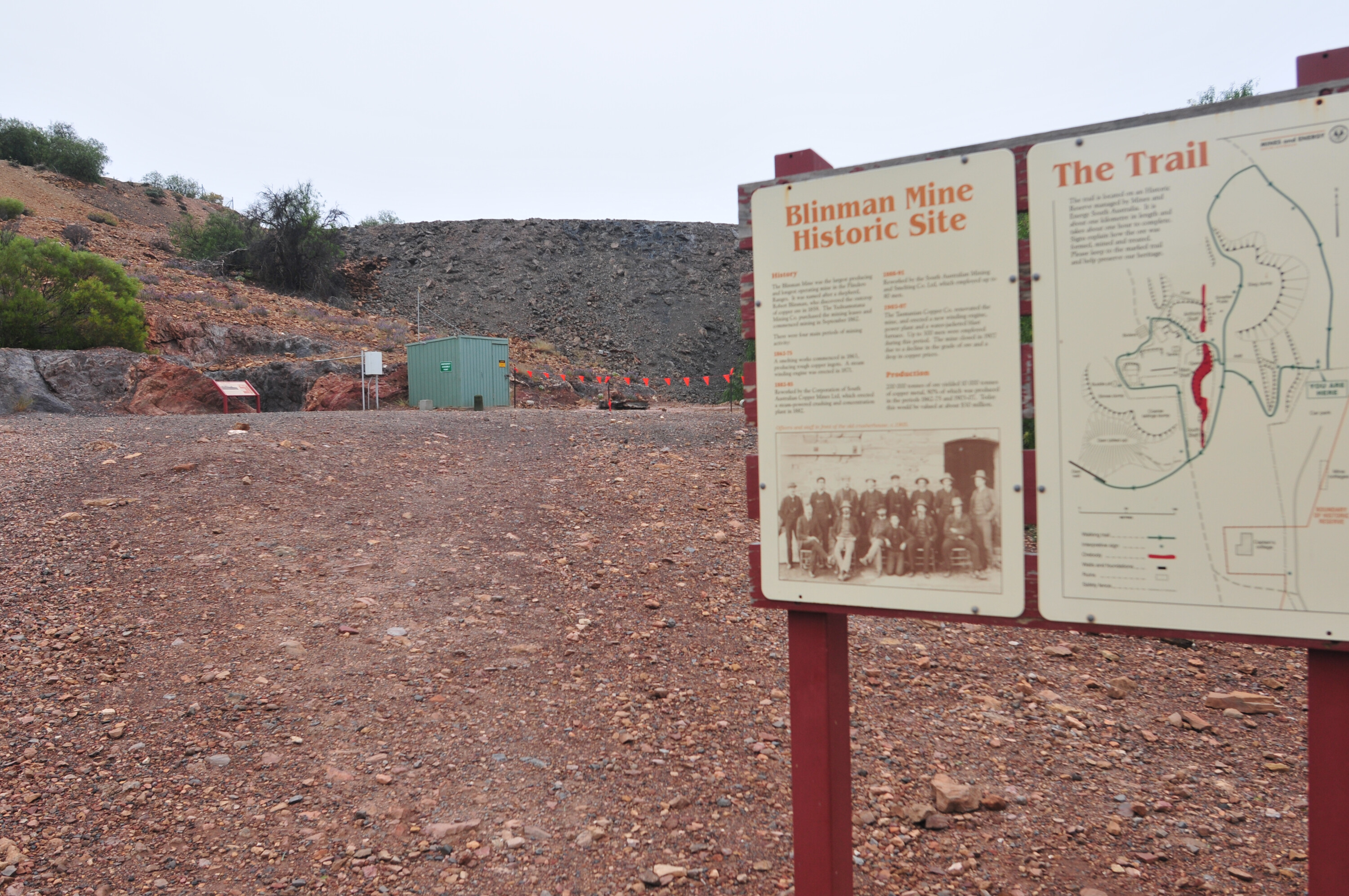
Today there’s a pub offering camping and accommodation, a nearby café, and the Blinman Underground Experience, which is a tour of the old mine workings, and well worth doing.
When we passed through the café and pub were doing a roaring trade with parking near impossible to find in the short main street. It was the busiest I’ve ever seen the town, so with that we drove on, getting our permission to camp before wandering on through the low rugged ramparts of Glass Gorge.
Explore Australia








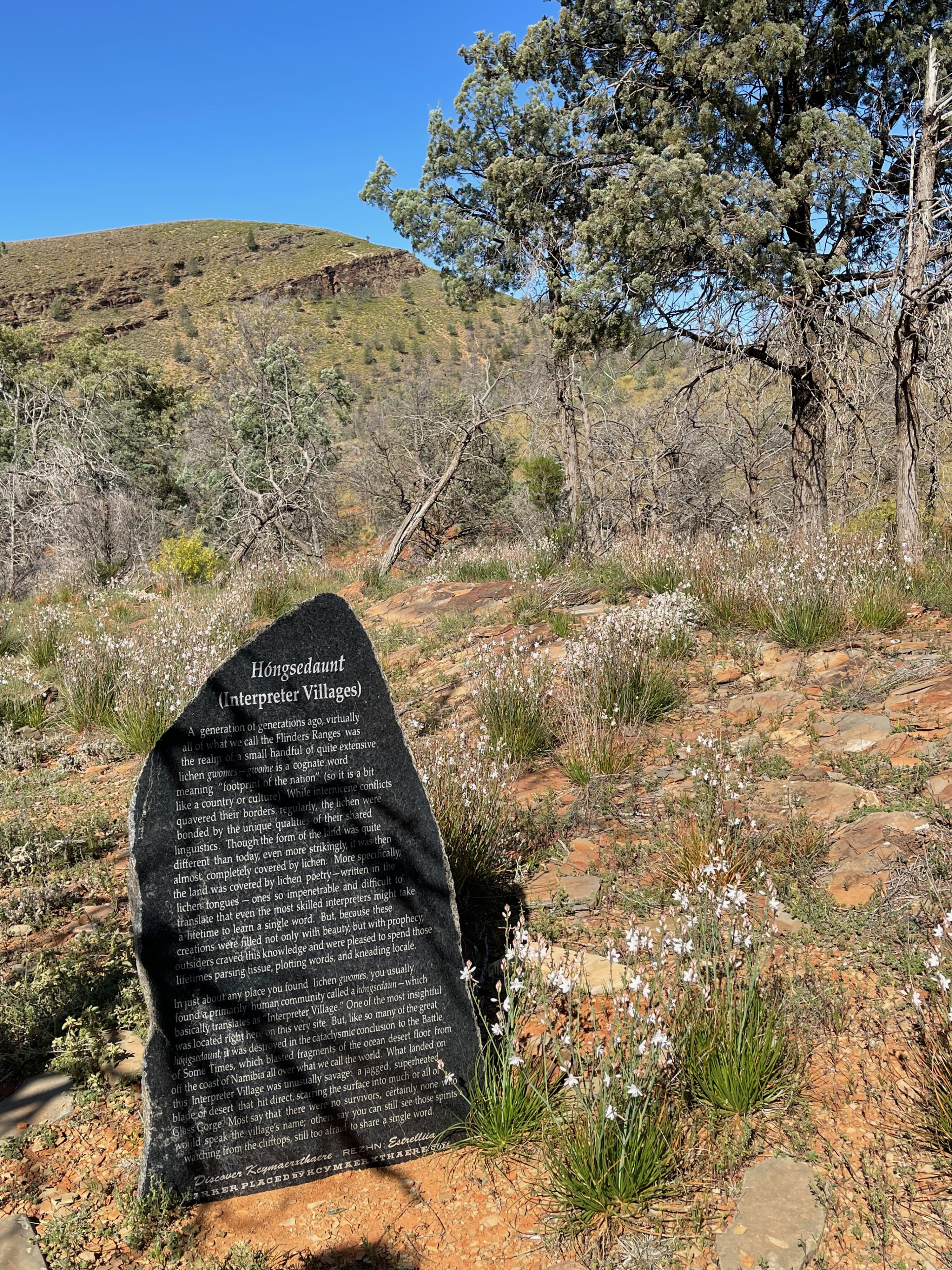
Just off the road we checked out a small, ‘interesting’ monument which is, by all accounts, a signpost to another universe. While I’m not saying I understood any of what the small marble monument was about (or its website: kcymaerxthaere.com), it does indicate that there are people out there on a different planet to me and I guess, most of us. In all, there are 12 of these installations in Australia with more than 143 spread around the world.
A short distance further along the road we turned off and followed a creekbed deeper into the hills and stopped at a wide bend in the dry gravel and called it ‘camp’ for the next few days.
Into the Flinders
Our travels through the Flinders Ranges had started a few days earlier when we had turned off the Strzelecki Track and headed across the low undulating rocky plain bordering the very northern fringes of the range.
Mt Hopeless, the most northern point of the Flinders, was barely discernible in amongst the other gibber-strewn low hills and bumps that make up this section of the ranges, and we crossed a succession of braided streams that emanated from these high points, but they only flow with life-giving water on the rare occasions that heavy rains fall over the countryside. And while the country was looking pretty good from recent downpours the creeks, as per normal, were dry.
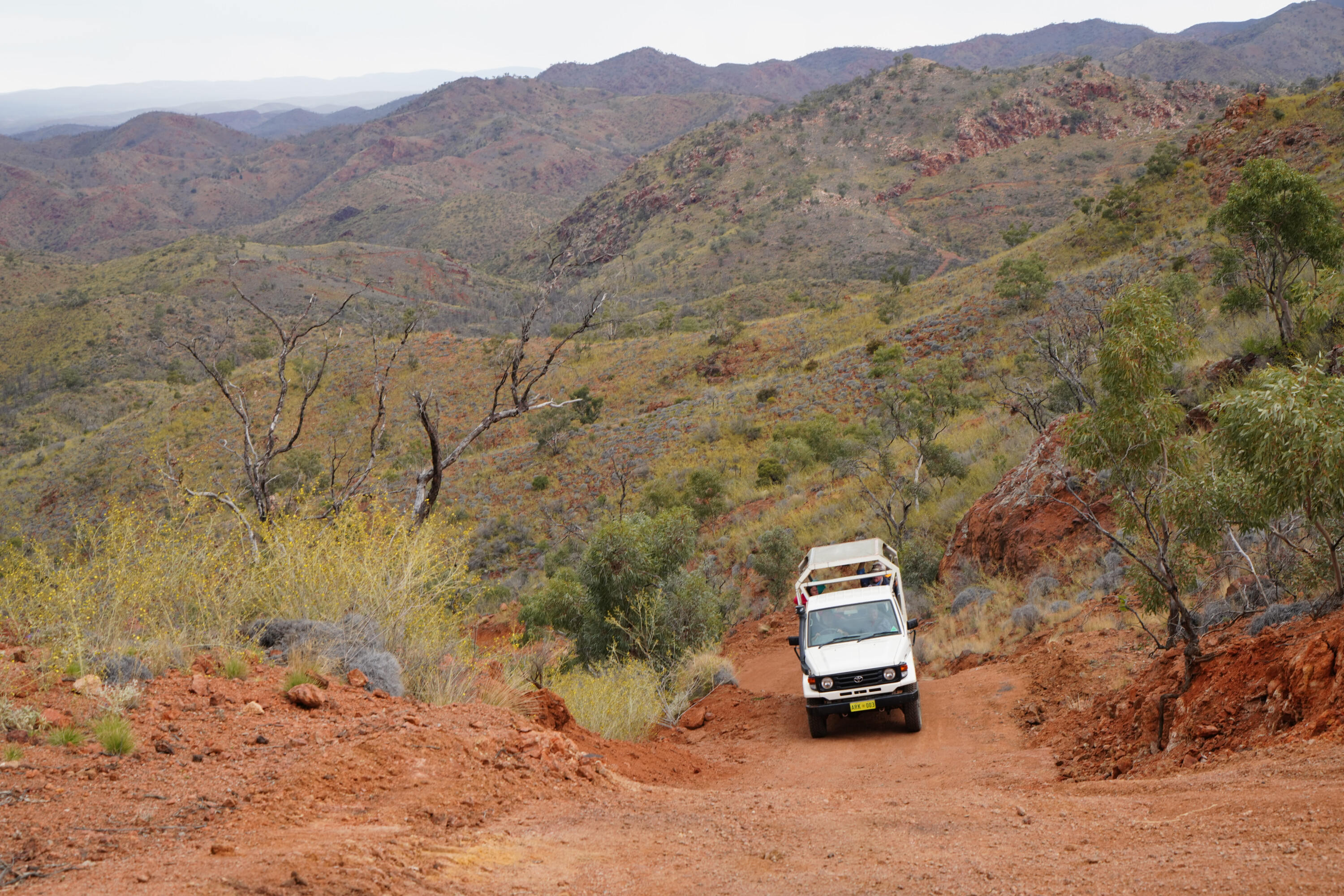
As we headed south the ranges drew ever closer, and became more rugged and appealing near the Balcanoona Homestead, which is now the headquarters of the Gammon Ranges NP. We turned into the mountains and followed the good dirt road to Arkaroola Wilderness Sanctuary.
This low-key resort lies tucked in amongst the ranges just north of the national park in some of the most rugged mountain country you can see and experience in Australia.
This trip was an entirely different experience to our last adventure here when the country was gripped in a long-lasting, seemingly never-ending drought. The low-lying scrub which had been withered and dead was now green while the trees that had survived the years of drought looked fresh and vibrant. The nearby creeks were still trickling water while long pools of still water lay in amongst the protected glens of the hills.
Arkaroola to Mount Chambers Gorge
After setting up camp in an out of the way spot, but still close to the main resort area, we opted for a Ridgetop Tour, one of the highlights of a visit to Arkaroola. We’ve been here many times before and have done the tour at least a half-dozen times but it is a journey and a learning experience we never tire of.
After driving through the expansive and craggy country where the Mawson Plateau and the Freeling Heights overlook the separate peaks of The Armchair, Mt Gee, Humanity Seat and Mt Painter, to name just a few, we arrived at Sillers Lookout.
From this eyrie-like spot there were sweeping views to the east that took in the headwaters of Mt Painter Creek and its radioactive source, along with East Painter Gorge and out onto the distant flat plains, where the white expanse of Lake Frome glistened in the evening light.
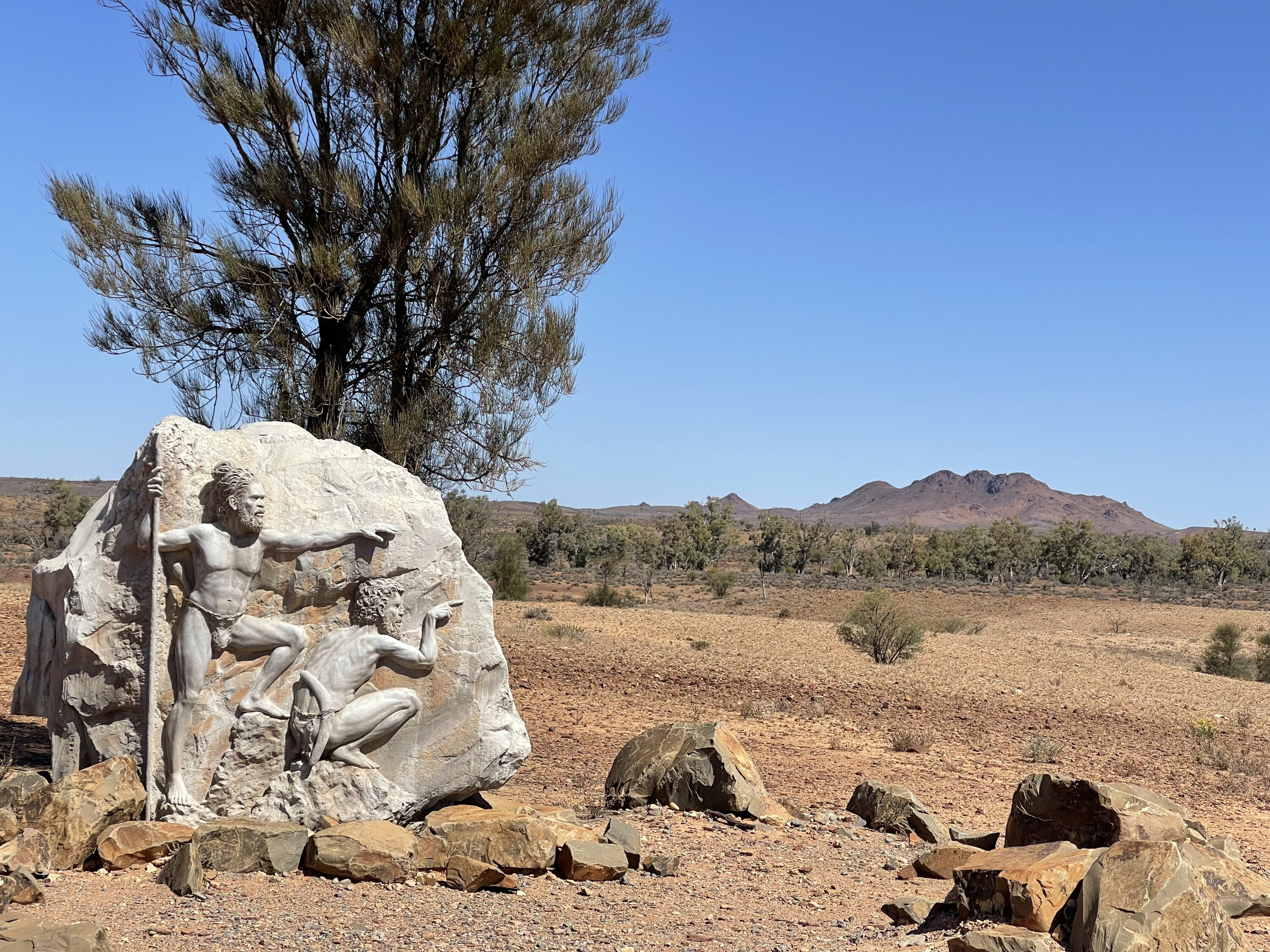
After a couple of nights at Arkaroola we headed south and turned off the main dirt road and took the lesser track into Mount Chambers Gorge. For the first time in a long time, we splashed through a couple of shallow, trickling creek crossings before pulling up at the track’s end near a low bluff overlooking the wide creek bed.
A short walk from here and up a narrow feeder creek leads to what we consider to be the best Aboriginal rock art site that is open to the public in the whole of the Flinders Ranges. The petroglyphs here predate painted art, the artists long ago having chiselled their markings into the solid canvas of the rockface. There are hundreds of simple designs and motifs to be seen, indicating a once rich and vibrant society. A sign nearby gives an indication of what the markings represent, adding to the experience.
Public access
We bumped back along the track and, once on the more major road, we headed to Blinman and our creek camp. The next day we headed out on the Public Access Route (a unique SA arrangement that allows access through selected pastoral properties to points of interest) to the historic Artimore ruins.
It was a slow, jarring trip and we appreciated the stop at the ruins to soak in the history and ambience of the place
The once prosperous Artimore sheep station lies in a secluded valley dominated by the pyramid shaped, ragged summit of Patawarta Hill. The peak was made famous in Hans Heysen’s famous 1929 painting The Land of the Oratunga; the original oil on canvas now displayed at the Art Gallery of South Australia.
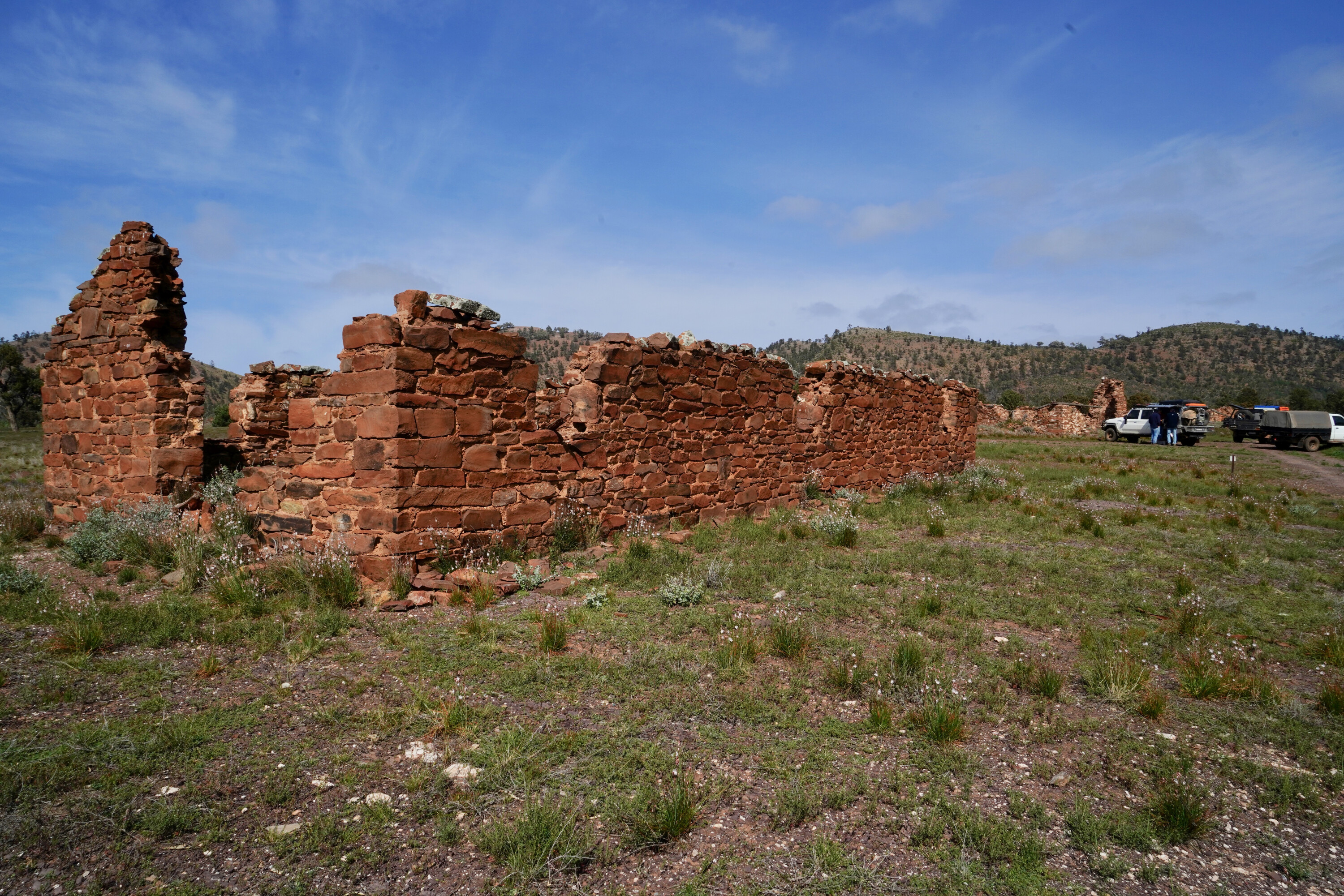
The track that runs to the valley, the ruins and on through Hannigan Gap is normally in reasonable condition, with no big challenges for a well set-up 4×4 vehicle, but the recent rains the area had been subjected to meant that the track was crossed by numerous small but sharp run-off gullies, while the bigger creeks had steep and eroded banks.
It was a slow, jarring trip and we appreciated the stop at the ruins to soak in the history and ambience of the place, the property once running in excess of 100,000 sheep, and taking in the surrounding views of hills including, of course, Patawarta Hill.
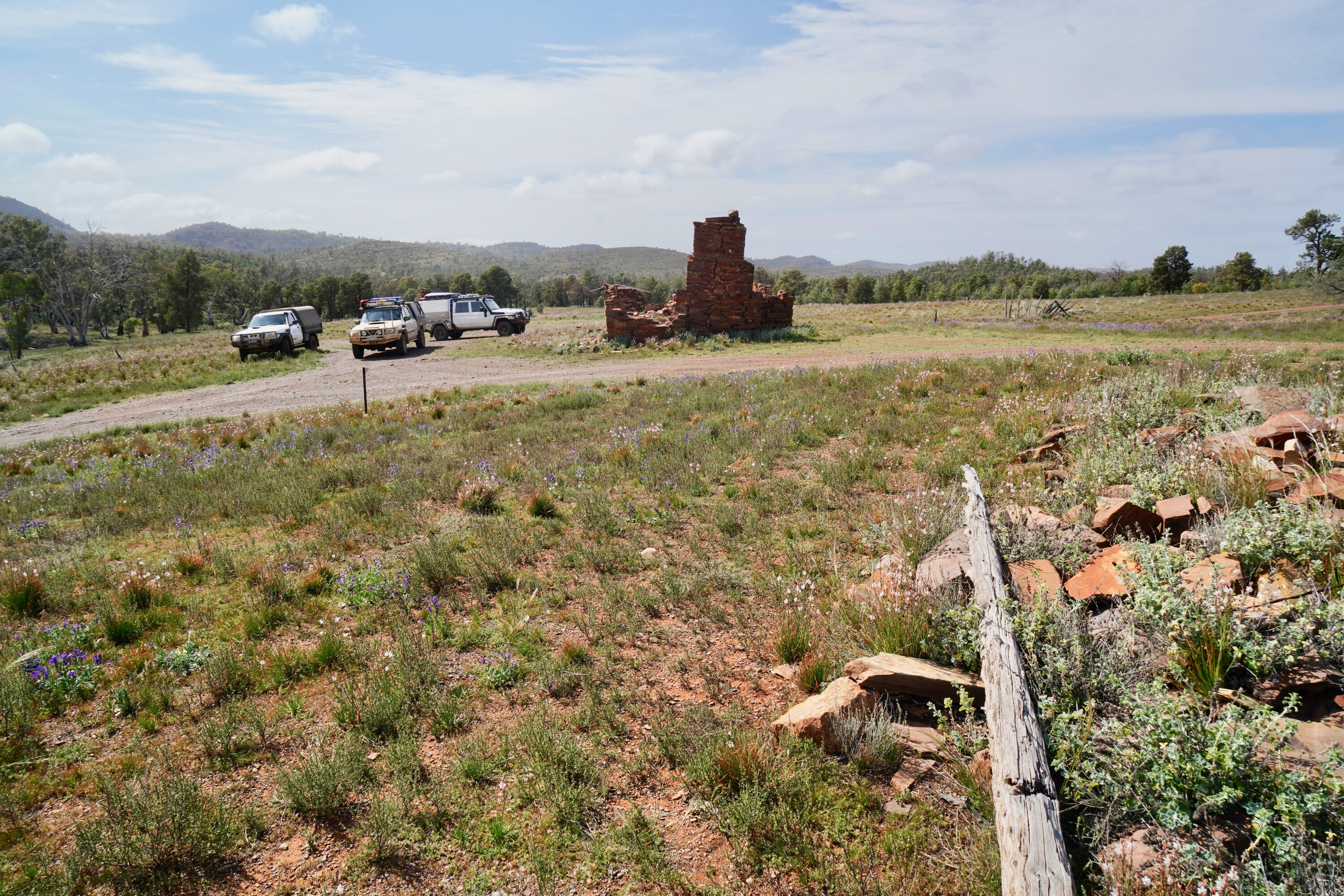
Sadly, as in many places in the Flinders, especially in the Flinders Ranges NP a little further south, native cypress pine is making a comeback, smothering the open glens and valleys in a sea of sticks, and depriving the area of one of its many attractions. Declared an invasive weed in many areas of Australia, there’s no such luck in South Australia, and the bloody pine has run rampant wherever Aboriginal traditional burning or sheep grazing has been stopped.
Once north of the ruins, the track passes through picturesque country before zig zagging through Hannigan Gap and passing to the south of Moolooloo Hill. A short time later the main access road to Moolooloo homestead is reached and then the Glass Gorge Road and our campsite, the trip being a leisurely day jaunt.
Solo tour
After bidding farewell to our travelling companions of the last few weeks, we headed south, passing through the Flinders Ranges NP.
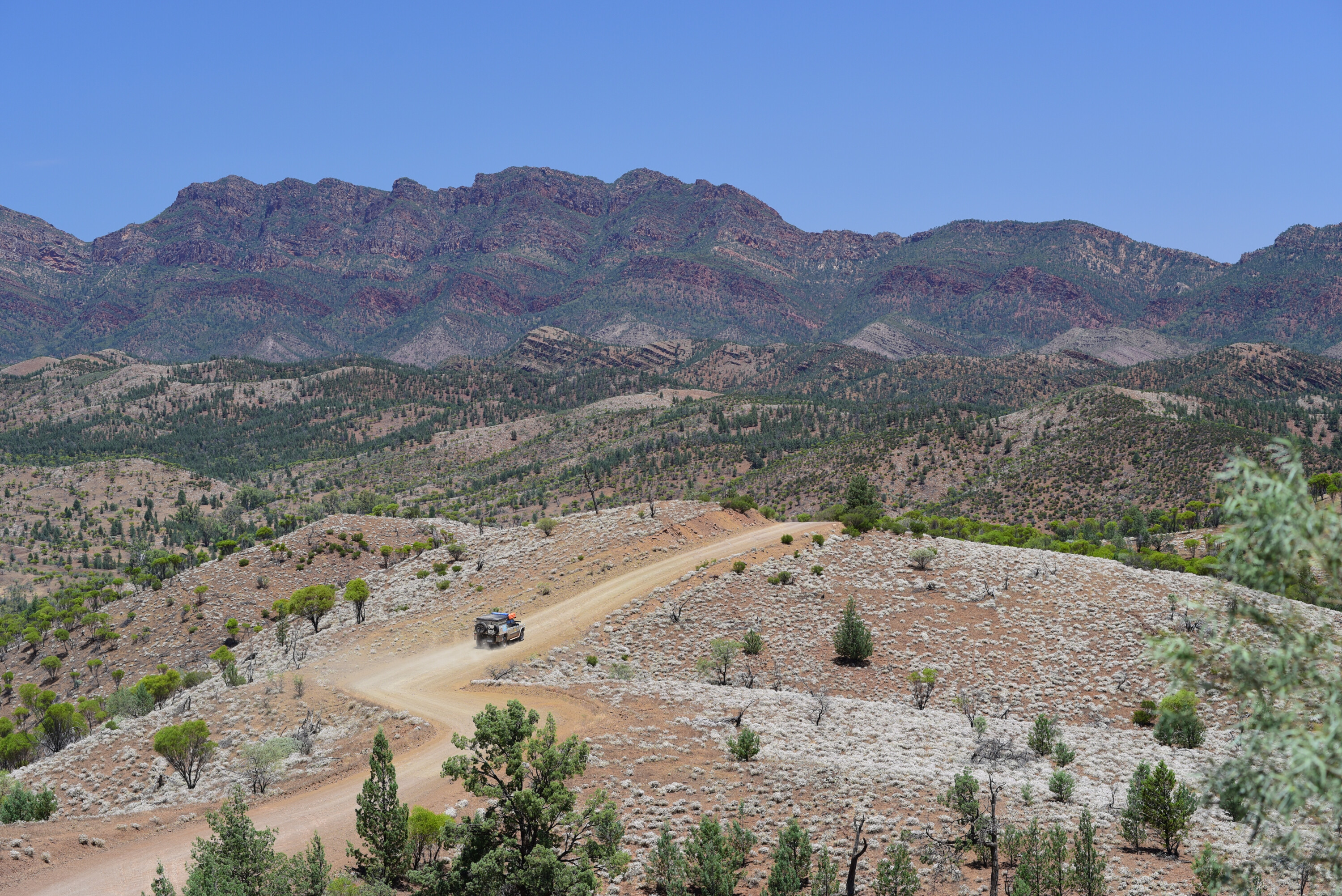
Here we took one of the most spectacular drives in the country through Bunyeroo Gorge and then Brachina Gorge; this is a drive not to be missed and even though we have done it literally dozens of times, it never loses its natural attraction nor its visual appeal.
On the blacktop for a short distance, we went searching for the rather spectacular grave of Douglas Bruce, who is buried just off the main road north of Hawker. Killed when his horse fell on him back in 1873, his friends erected his impressive tomb close to Wonoka Creek in an area that was more crowded then than it is today. Near Bruce’s grave are another couple of grave sites, but when the town of nearby Wonoka was abandoned those graves were re-interred in Adelaide.
Scattered through the nearby hills that make up the Flinders, away from the central spine of the range, are more lonely graves, townsites and the crumbling ruins of farms that once promised so much in good seasons but died when the more normal dry times returned.
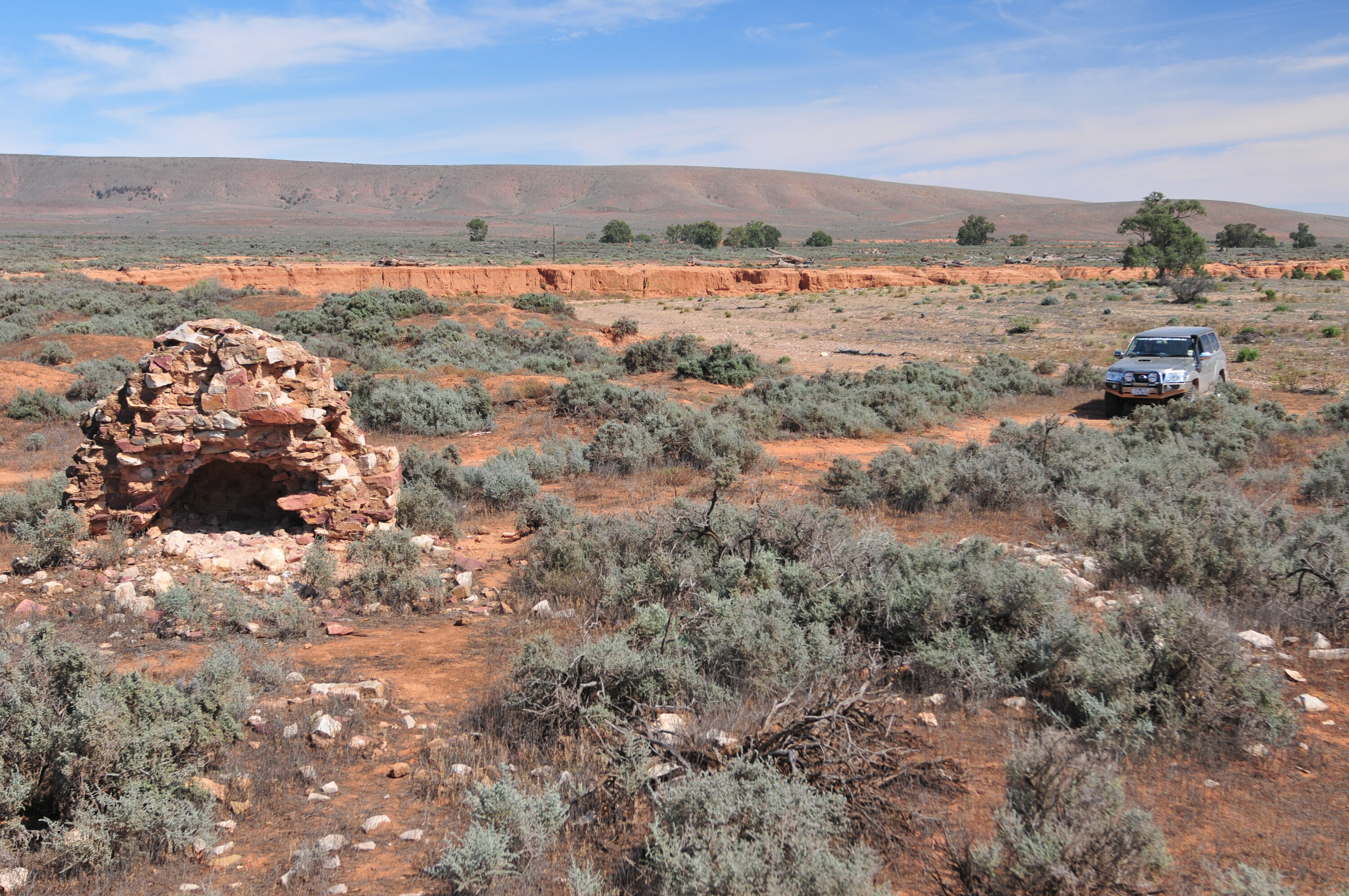
Further west along Wonoka Creek is the site of the small town of Hookina, which was established in the late 1850s on the route between the copper mines around Blinman and Port Augusta on the coast. By the time the town was surveyed in 1862 it was already home to a blacksmith shop and a 12-room inn, where sometimes more than a hundred bullock teams would camp thanks to the good nearby water supply.
The pub closed in 1896 when the town was bypassed by the railway, at which point Wonoka came into existence just a few miles away. Not far from the ruins is yet another lonely set of graves.
A harsh history
From the crossroads at Wonoka you can head further west and then skirt the western edge of the range before you finally hit civilisation and the blacktop near Port Augusta. Or you can be like us on this latest trip, and head south on what is Bobby’s Creek Road, passing even more deserted homesteads. Some of these, such as the Wild Dog Glen ruins, are close to the road and cry out for a little more exploration.
The route south crosses Kanyaka Creek and then comes to the scattered ruins of Simmonston, another failed venture of the 1870s when the country was opened up for wheat farming, although Simmonston was established in preparation for the railway, which ended up passing further to the east at the now deserted township of Gordon.
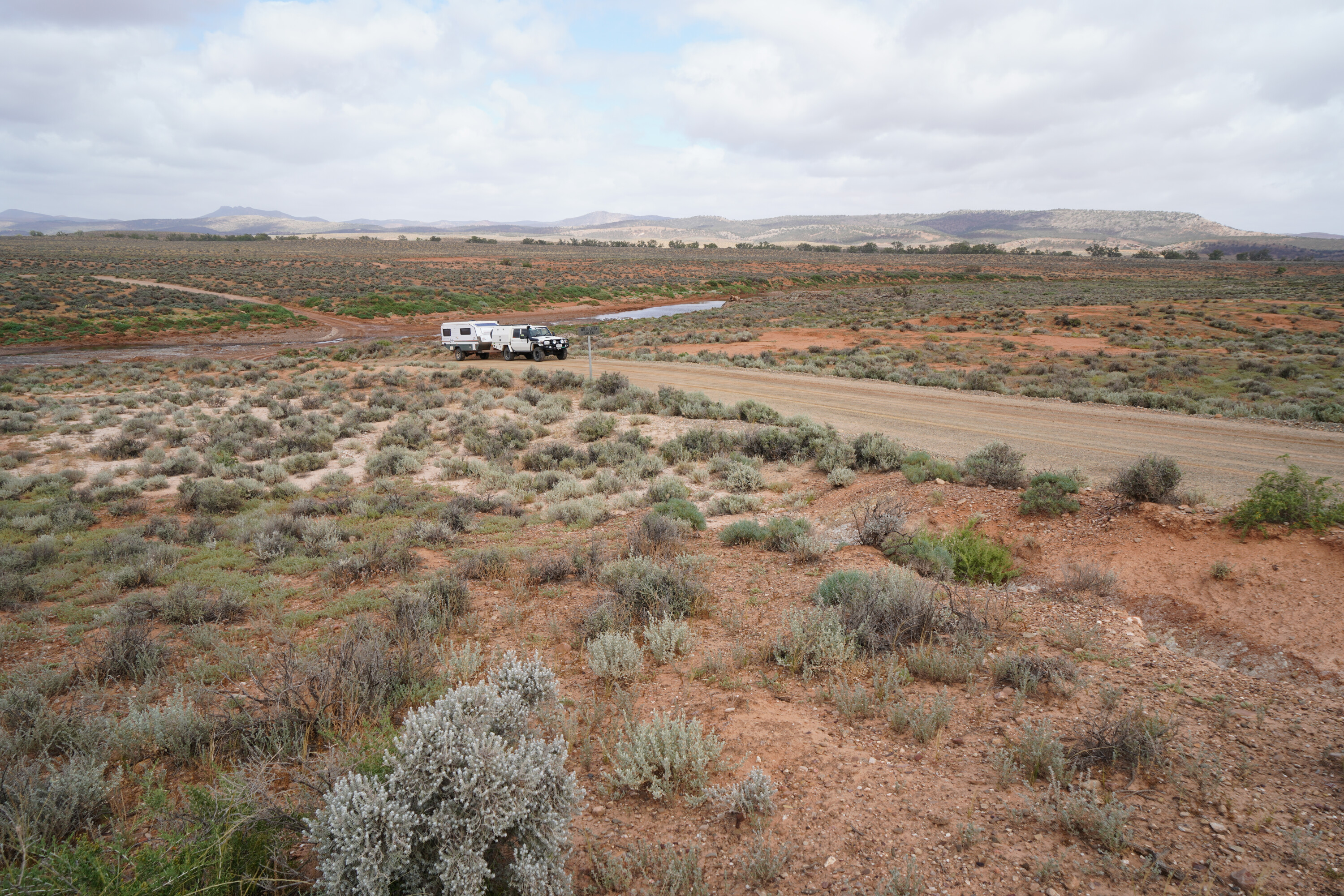
Swinging south-west at Simmonston, we stopped at Hugh Proby’s grave, who died near here while mustering a mob of spooked cattle in a flooded Willochra Creek. Earlier in 1851, Proby had taken up a number of leases totalling over 26,000ha which was the start of the famous Kanyaka run. Today, the expansive ruins of the homestead, which had grown in size to 94,500ha and employed over 70 families, lie just off the main Quorn-Hawker road and are well worth a visit.
After a brief stop to pay our respect to poor old Proby, we pushed on, the dirt road improving as we neared our destination for the night. Warren Gorge has been a favourite of mine since I used to go wandering and rabbit shooting out this way as a kid and today it makes for a favoured campsite.
It’s popular with the touring crowd too, and progress has seen a few fences erected to protect the environment, a small fee introduced for overnight camping, along with the addition of toilets and the odd fireplace.
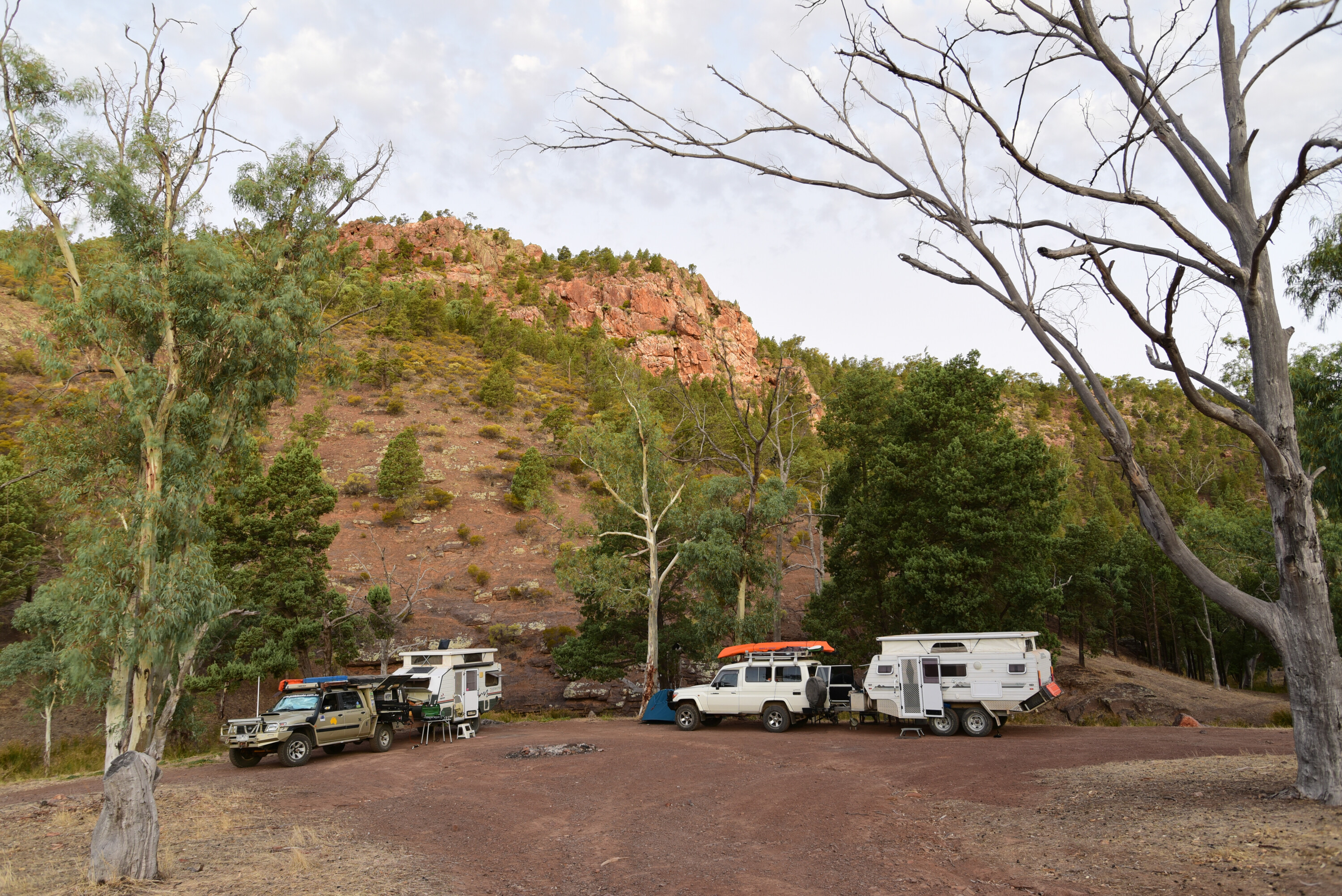
Despite these amenities, nothing can take away the sheer grandeur of the rugged red bluffs that tower over the small creek, while in the early morning or late evening the occasional yellow-footed rock wallabies come out of their rocky fastness to feed on the grass beside the creek. Such moments are pure magic.
On nearby private properties, there are a number of 4×4 trails that take you through some of the most spectacular country in the region, and to the top of Mount Arden, first named by Matthew Flinders from his ship, when anchored at the head of Spencer Gulf in 1802.
We skipped these exciting adventures this trip, choosing instead to revel in the serenity and solitude of the ranges before heading south to more settled regions, but we know we’ll always return to the heart of the Flinders.
Five essential stops
Camp at Arkaroola and take the Ridgetop Tour
It’s a rough and jarring ride in the back of a LandCruiser ute, but the view from Sillers Lookout makes it all worth it. See www.arkaroola.com.au for details.
Explore the rock art of Mount Chambers Gorge
The petroglyphs chiselled into the rock walls at Mount Chambers Gorge are several thousands of years old and are some of the best rock art in the Flinders Ranges.
Enjoy a tour underground at the Blinman Mine
The Blinman underground experience offers a journey into the heart of the historic copper mine led by experienced guides and with music and light boxes. See heritageblinmanmine.com.au for details.
Drive the Bunyeroo-Brachina Gorges circuit
To see some of the most spectacular geology, flora and fauna of the Flinders Ranges, a drive through the Bunyeroo and Brachina gorges is not to be missed.
05 Explore the area around Quorn and Warren Gorge
The impressive and imposing Warren Gorge is just 21km from Quorn and has bush camping with pit toilets. Register in Quorn or at the gate (cash only).
Public Access Routes
Public Access Routes (PARs) are unique to South Australia, providing access through selected private pastoral lands to various points of interest in the Flinders Ranges, including Artimore ruins. Take a look at www.4wdsa.asn.au/?page=pars for details.
SPONSORED PARTNER CONTENT
When it comes to electric roller covers, the RollTrac E3 Electric reigns supreme.
Leading off with Ford RA Ranger and 2023 Amarok, these E3 roller covers are packed with incredible features and unparalleled performance, making this product an essential addition to your vehicle.
With its factory key operation, you can effortlessly open and close the cover using your car key buttons. Plus, the in-cabin open and close options allow you to control the roller cover conveniently using your vehicle’s door-lock buttons. These features ensure a seamless user experience.
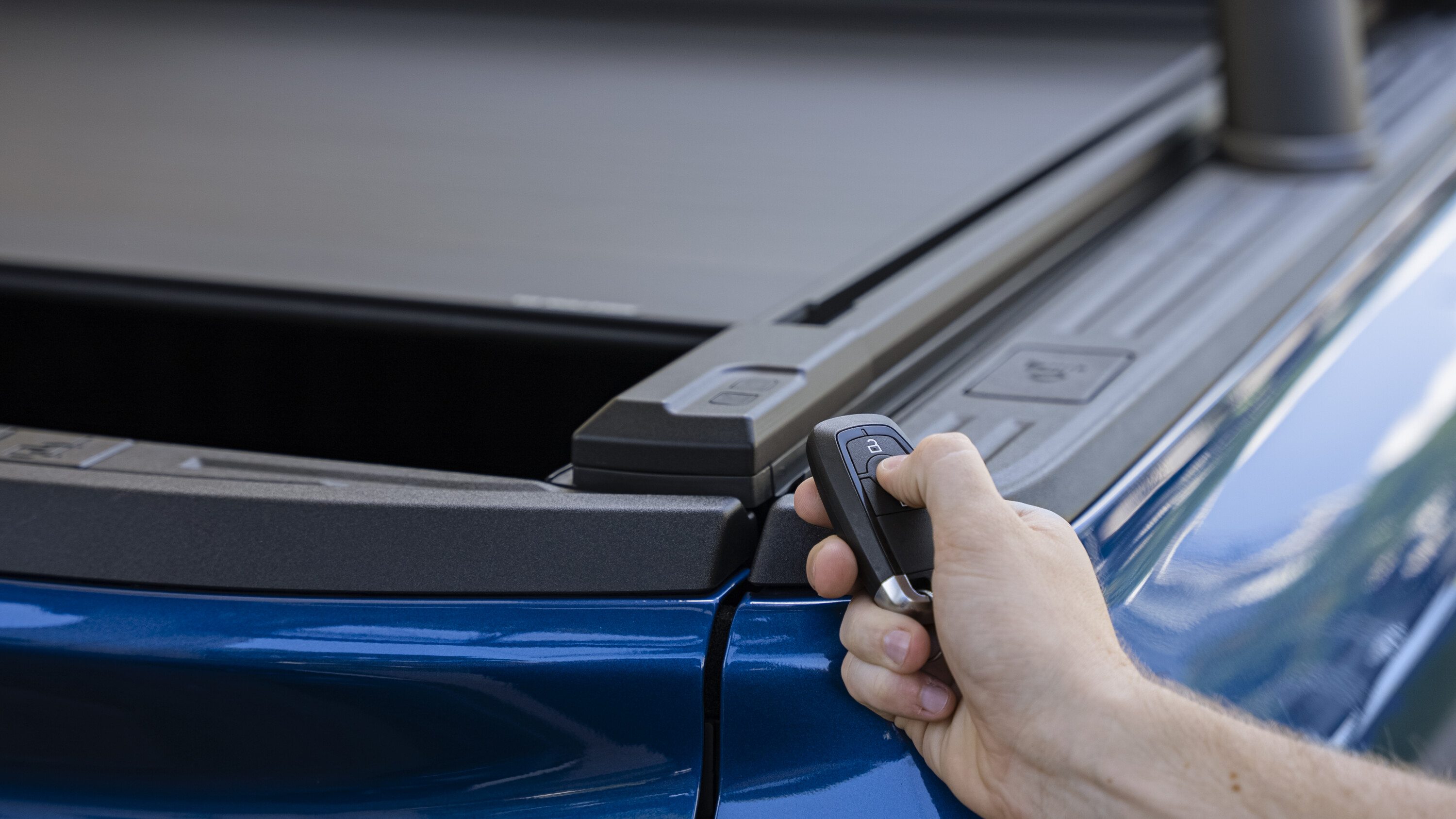
The RollTrac E3 Electric has undergone significant improvements including enhanced firmware and drive-pin durability. These advancements guarantee a smooth and reliable performance, giving you peace of mind while on the road.
Crafted with precision, the Australian-designed tonneau cover features robust aluminium slats finished with a black powder-coated exterior. Not only does it provide exceptional strength and durability, but it also adds a sleek and low-profile accessory to your vehicle’s tub without compromising on quality.
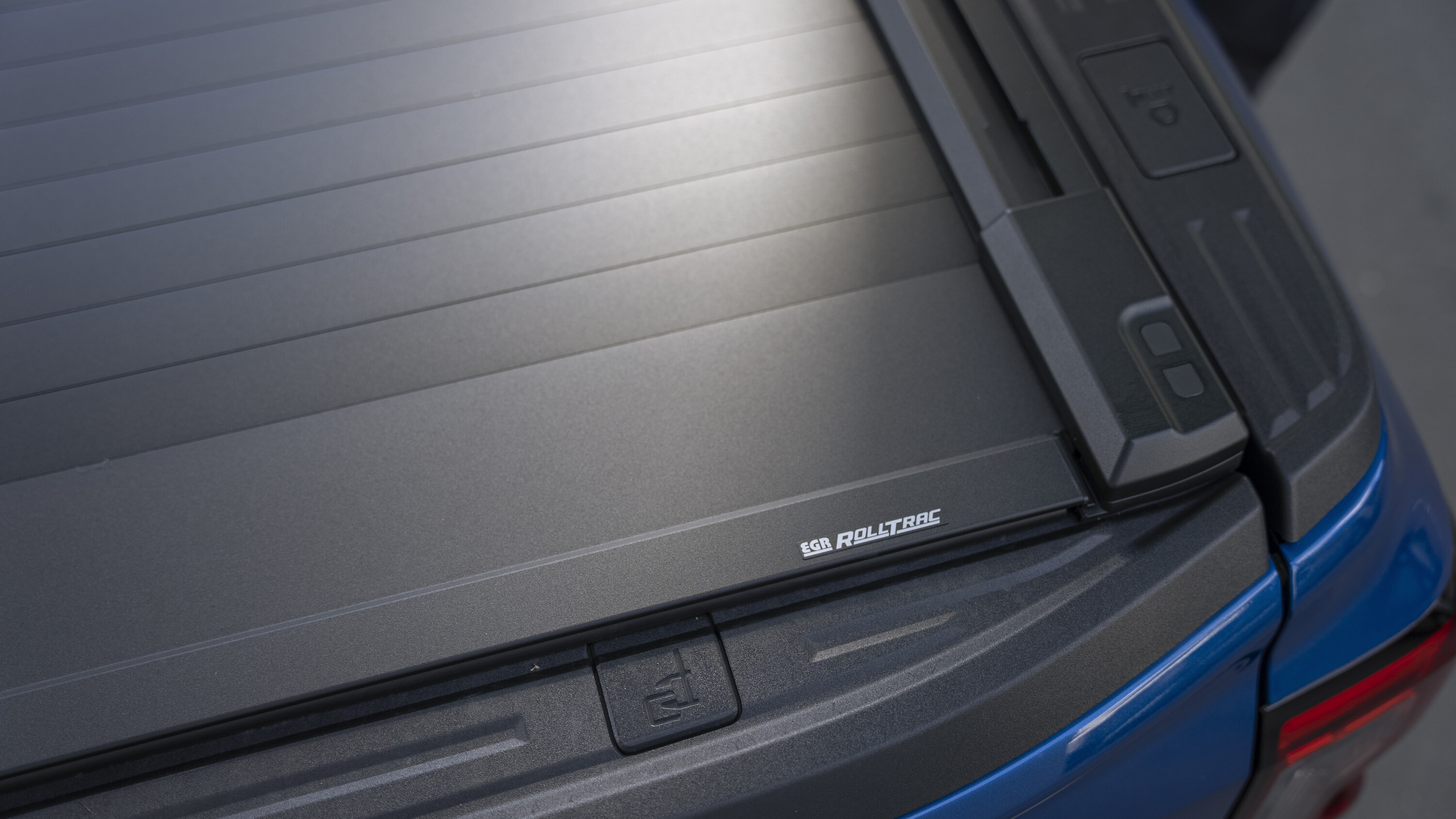
Put through extensive testing in the harshest environments – totaling more than 150,000 hours – the tub cover has been specifically engineered to keep your tub safe and dry, thanks to those impenetrable aluminium slats that lock in place. Plus, the roller cover includes large aperture drainage tubes in each corner, ensuring seamless water drainage.
On-board side rail controls allow the user to effortlessly open, close, or pause the cover at the touch of a button. When finished, the on-board ECU remote central locking system ensures the cover securely locks with your vehicle.
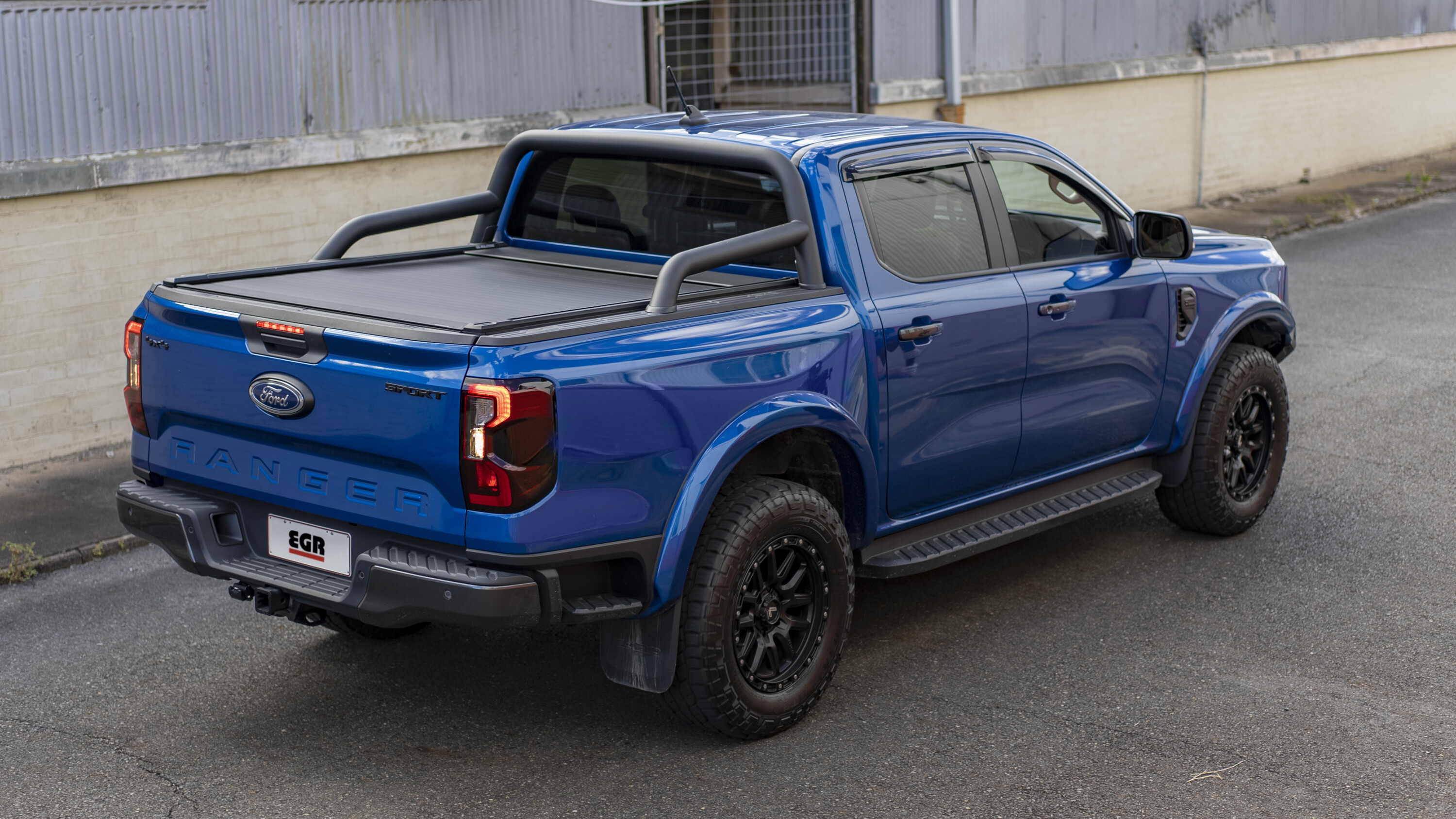
The EGR RollTrac E3 Electric also features an in-built universal T-Rail system, so that accessories can be added on top of the cover. Whether you have pre-existing accessories or EGR-specific add-ons, this feature provides versatility and convenience.
The cover also comes standard with LED lighting, illuminating your tray and ensuring optimal visibility in any conditions.
The June 2023 issue of 4X4 Australia is out now!
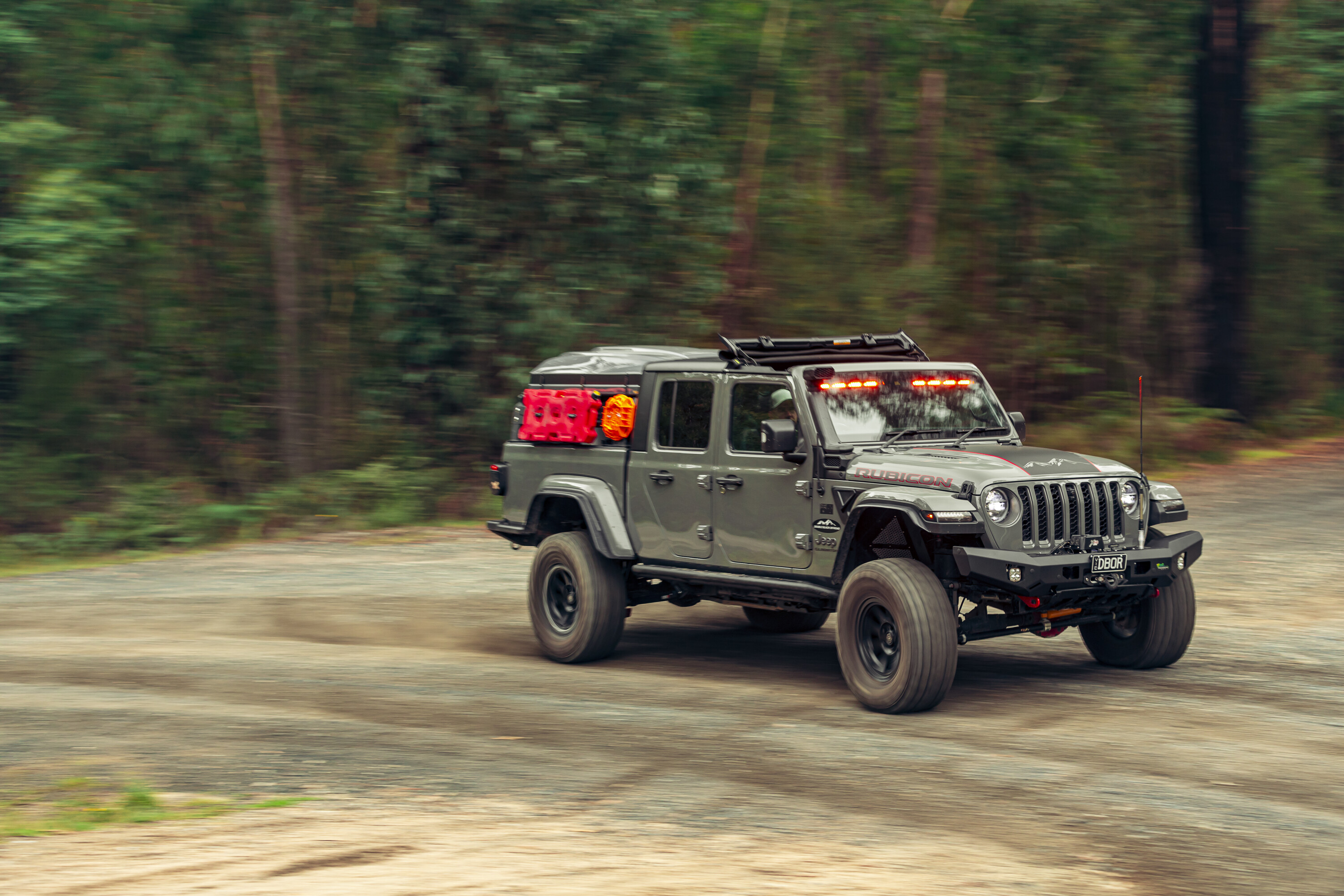
The majestic cover car is Double Black Off Road’s highly customised Jeep Gladiator, and we took an in-depth look at what it comes with, what makes it better, and why it’s one of the most dynamic custom vehicles in Australia.
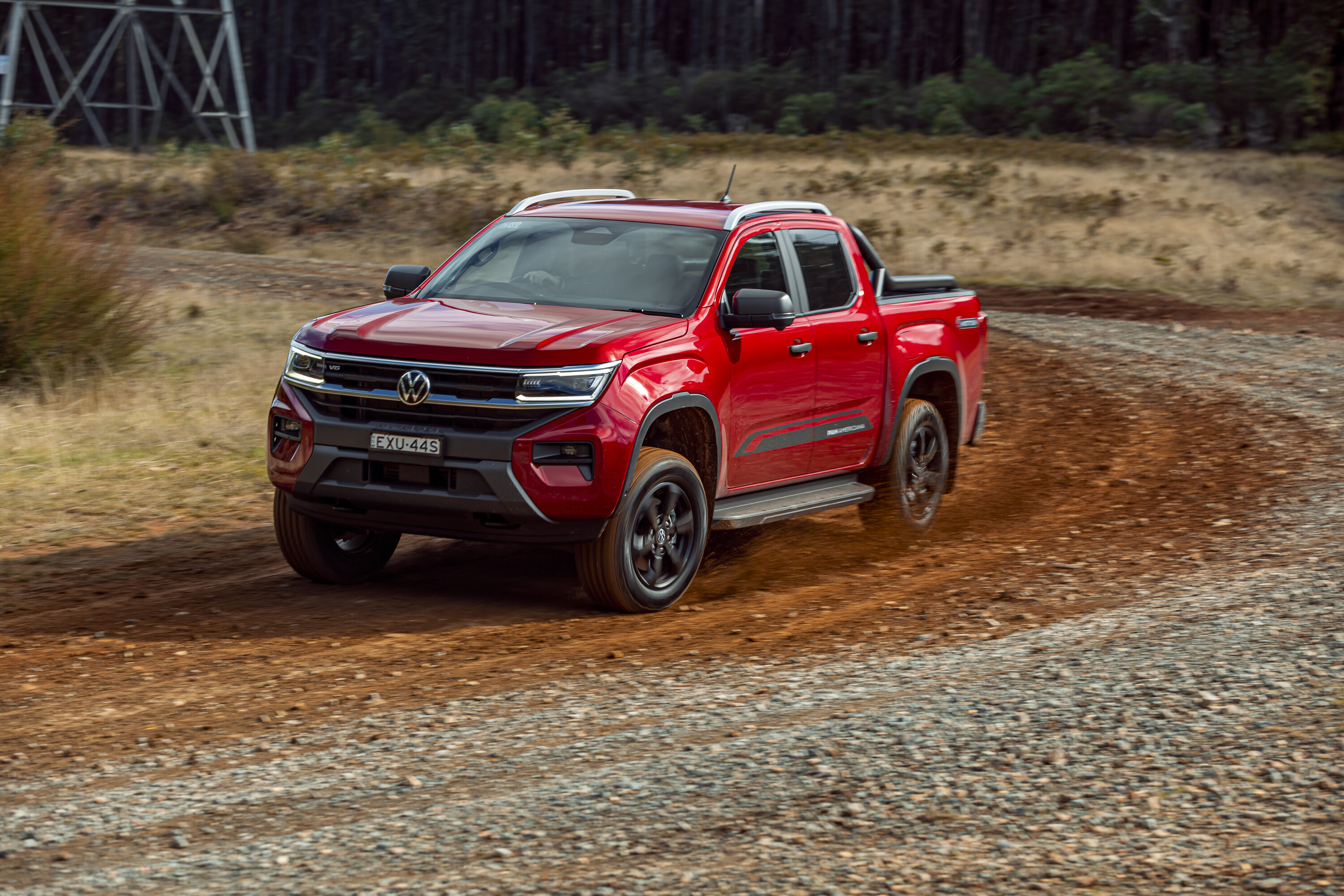
We headed off-road in the all-new Amarok – in second-tier Panamericana guise – to see how it performs when bitumen turns to dirt. The Ranger twin is a premium ute with the on- and off-road nous to shake up the highly competitive dual-cab segment.
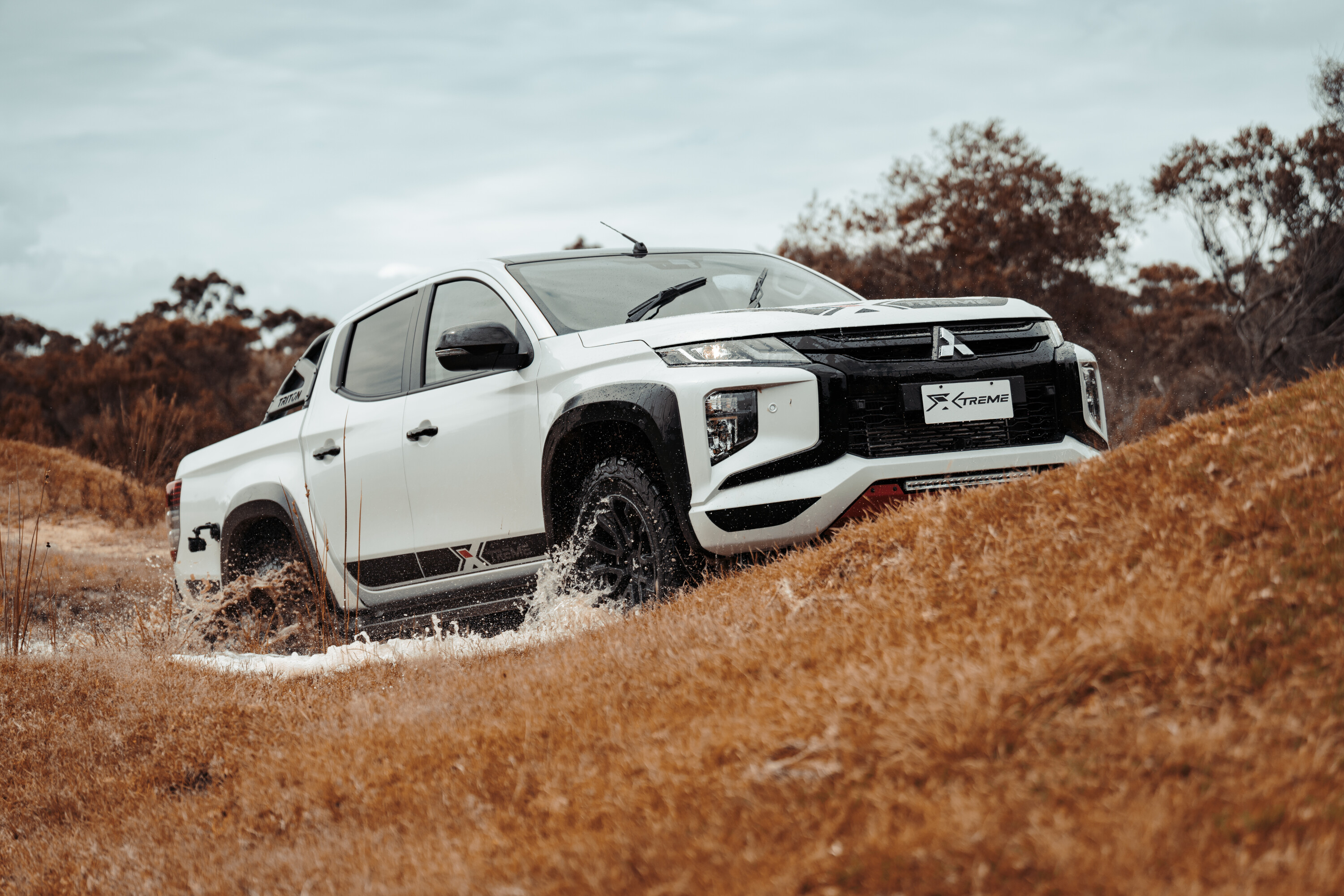
On the new metal front, we then spent a day behind the wheel of the Walkinshaw-fettled 2023 Mitsubishi Triton Xtreme dual-cab. With Supashock suspension improving on- and off-road performance, and an improved design and silhouette, the limited run of 500 units will be snapped up in a hurry.
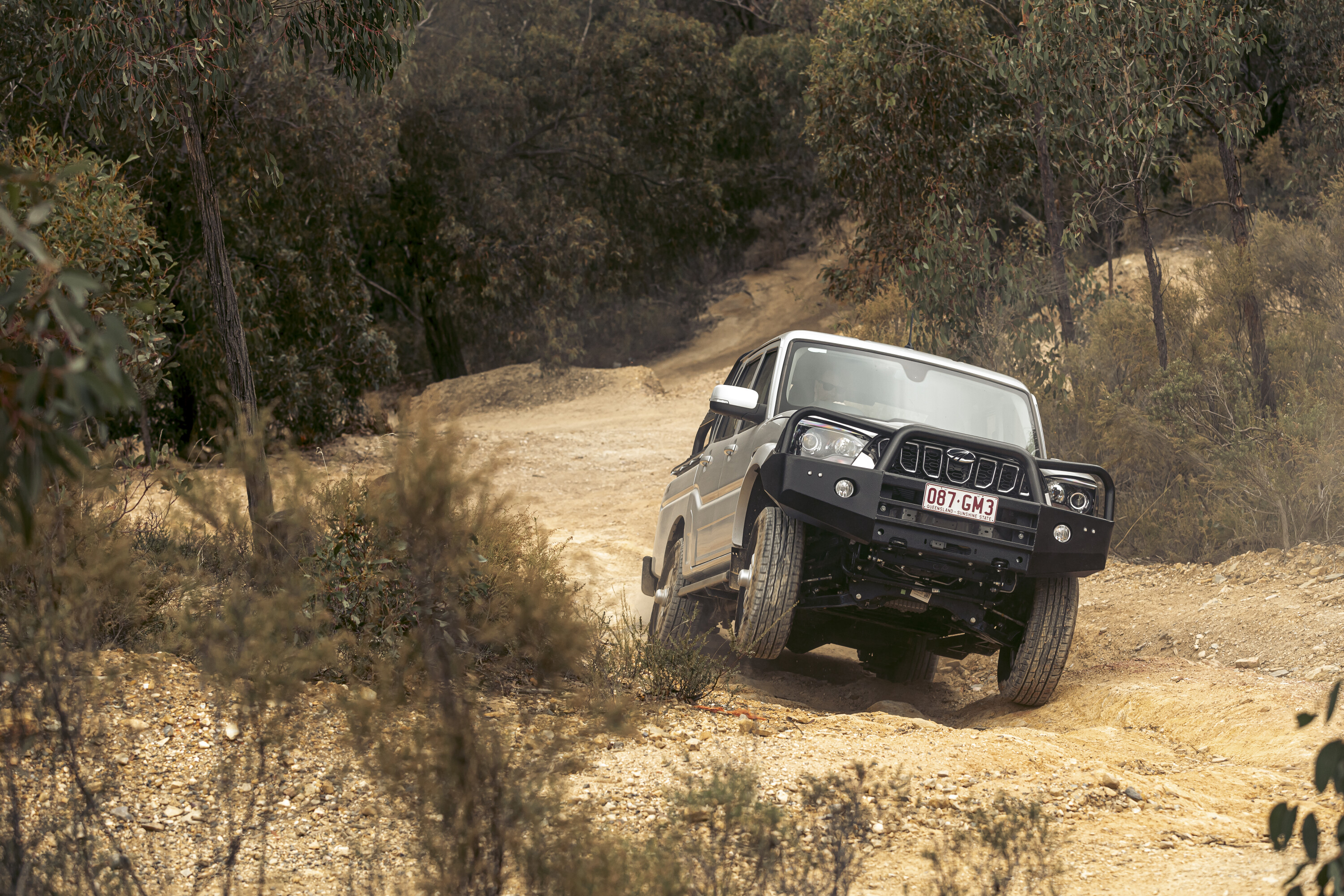
Plus, we spent some time reacquainting ourselves with the 2023 Mahindra PikUp S11, which only recently was introduced with an automatic transmission. Can its sharp pricing and honest demeanour overcome its lack of modern niceties and safety features?
With the all-new Ford Everest winning awards – including the 2023 Wheels Car of the Year – and wooing buyers across the country, we decided to put it up against the venerable, all-conquering Toyota LandCruiser 300 in an off-road shoot-out. The price gap may be huge, but is the Everest up to the task?
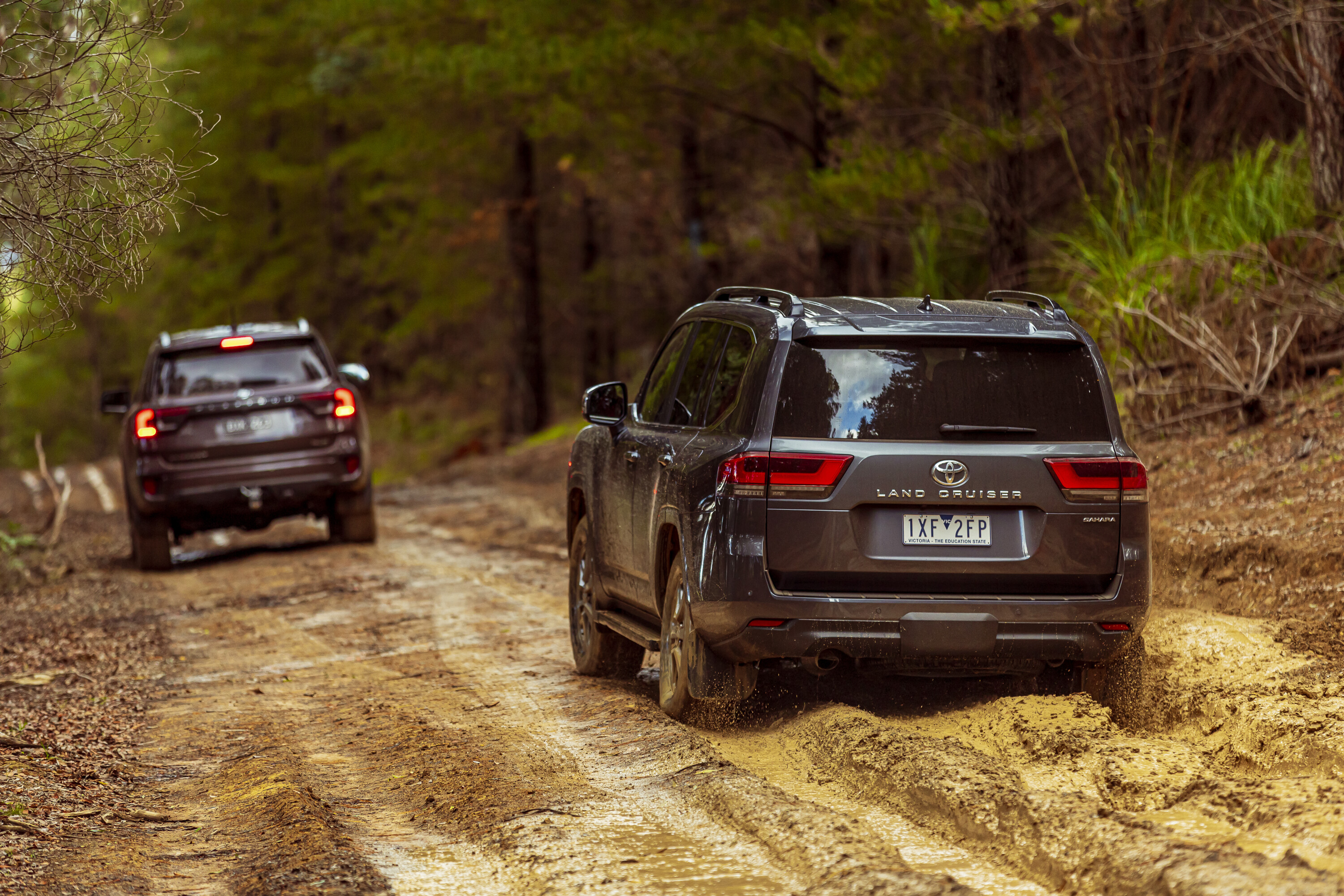
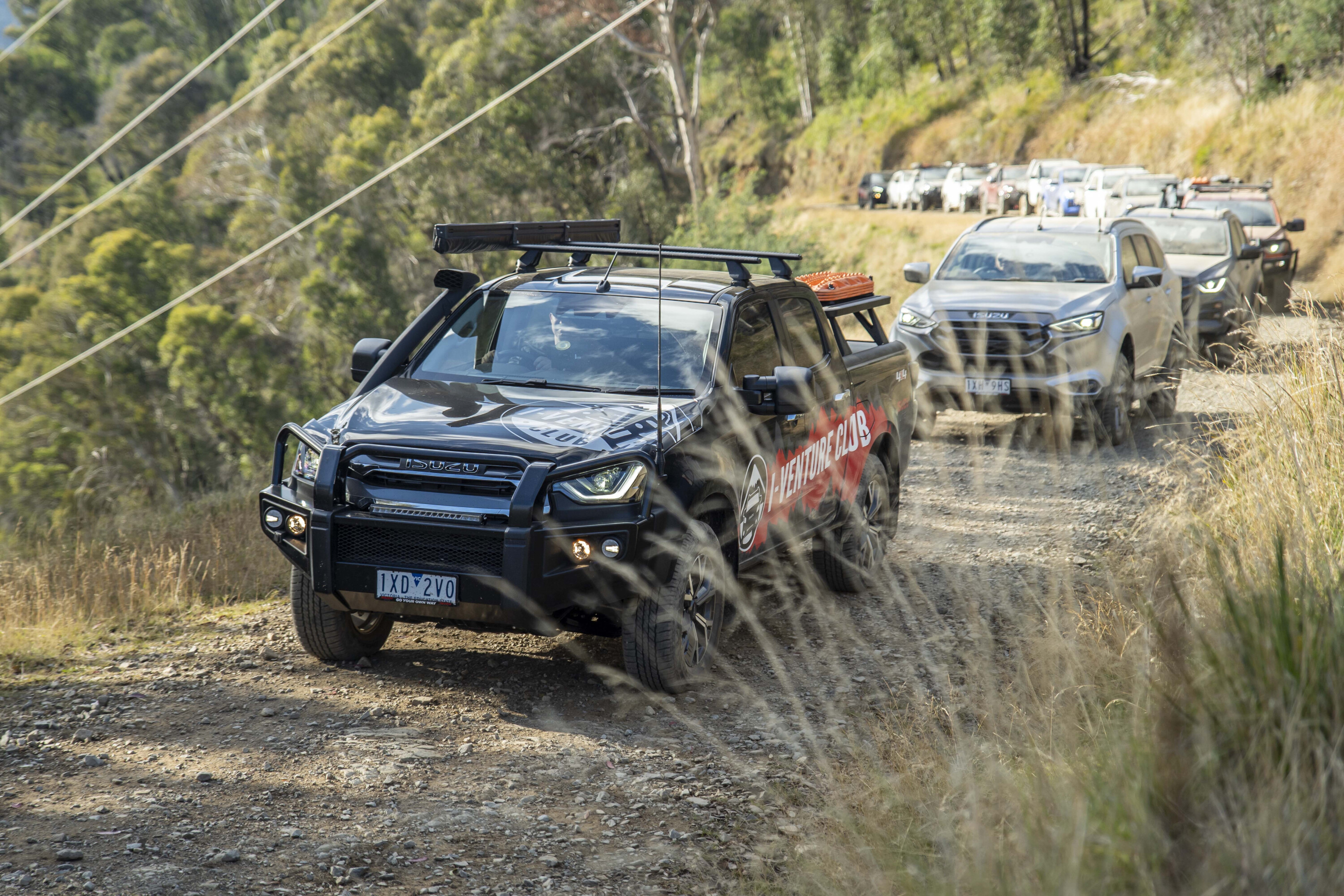
Ron Moon flew to the USA to attend the 2023 Overland Expo, ogling some of the best 4WDs and camping set-ups in the country. Plus, closer to home, we tagged along on the latest Isuzu I-Venture Club adventure to the Vic High Country.
What else is there?
- Our Ford Ranger build gets fitted with EGR flares
- The importance of tyre pressures
- Testing a Zorali Pack & Stash fireplace
- Sampling Off Track Wines in a can
- Exploring Wave Hill Station in NSW and Edeowie Station in SA
- New products + much more!
The July 2023 issue of 4X4 Australia is out now!
The Dominator Extreme II (DX2) Series is the new range of LED lights by Roadvision and are the next generation in high-performance LED lighting.
Built on the foundation of its popular Dominator and Stealth Series driving light and bar light ranges, the DX2 Series driving lights provide seriously extreme performance.
The DX2 Series are perfect for long outback highways, as the combination beam pattern focuses on long-range beam penetration with a lower short-range intensity.
Latest Gear Guides
The DX2 features up to 33 x 6W Osram LEDs that deliver a combination beam that reaches up to 1200m at 1 Lux per light (1697m per pair) while retaining a spread beam pattern that lights up the side of the road. Power-wise, you can expect to draw up to 10.9 AMPS @ 13.8V and up to 150W.
Available in seven- and nine-inch models, the DX2 Series has a colour range of 6000 Kelvin, one of the brightest white lights on the market. This level of brightness can cause issues with reflections from road signs, which may strain the driver’s eyes during extended night driving.
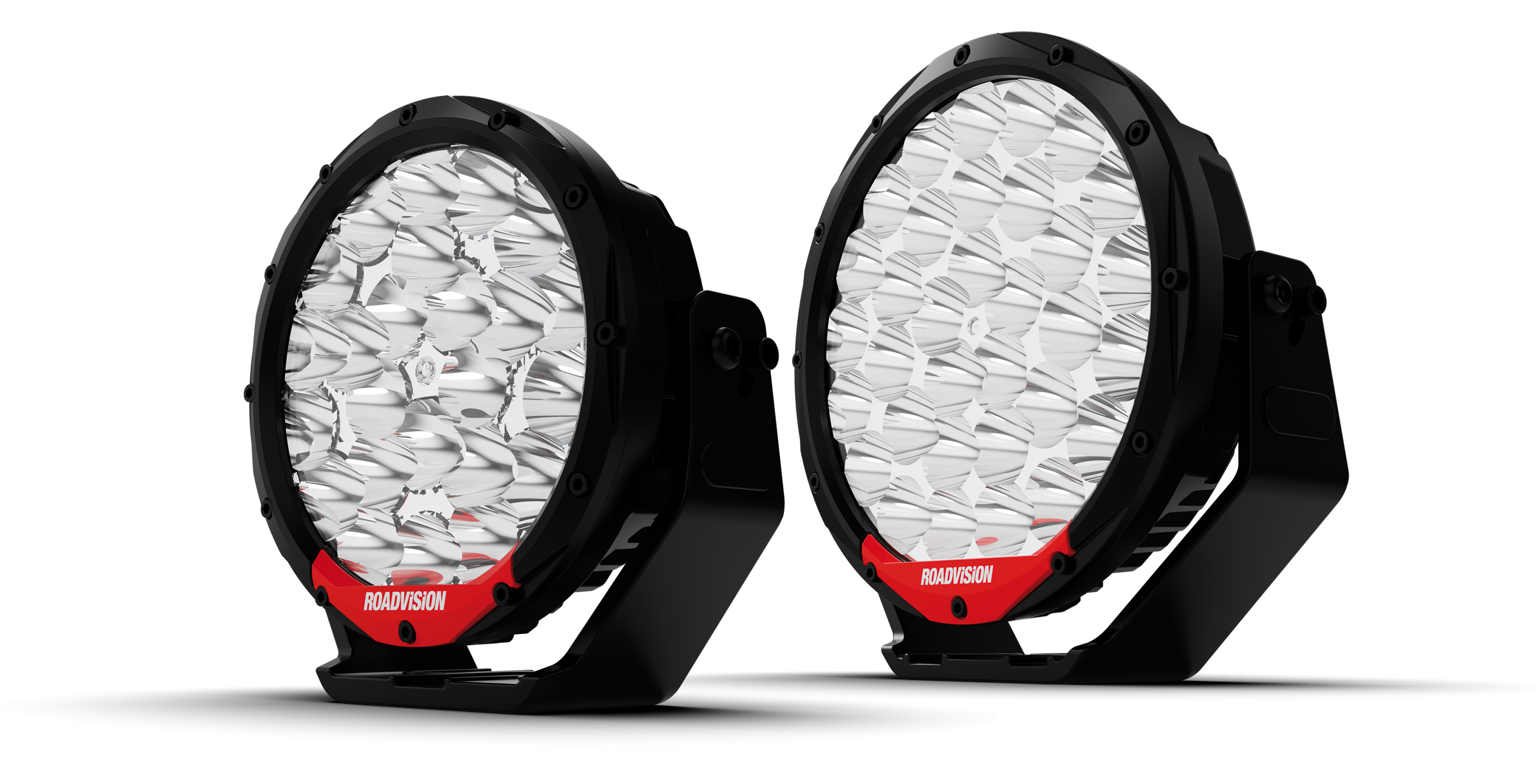
The DX2 Series also feature Roadvision’s Thermal Management technology – enabling maximum light output while protecting the lamp from excessive heat that will reduce performance and shorten service life. The DX2 Series has built-in noise suppression technology (CISPR25 Approved) and are rated as IP68, making them dust- and waterproof, and maintenance-free.
Designed, engineered and tested for the harshest Australian conditions, you can have confidence in the longevity of these lights as they are backed by a seven-year warranty. The DX2 Series are constructed with tough yet lightweight die-cast aluminium mounting brackets, aluminium housings, and polycarbonate lenses, and come standard with two protective covers – clear and black.
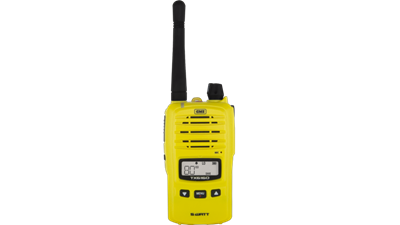
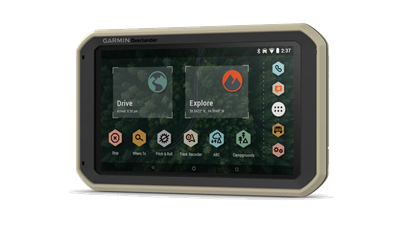
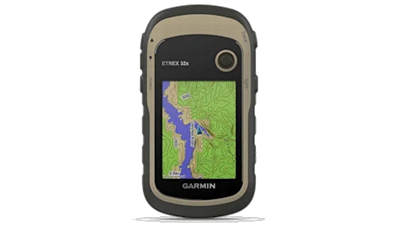
“The stronger yet lightweight high-pressure die-cast aluminium mounting bracket ensures these lights are purpose-built for the harshest Australian conditions,” says Andrew Bird, Product Manager – Roadvision. “The DX2 Series are at the forefront of automotive lighting technology, and we’ve preserved a classic look that made the Dominator Extremes a favourite among users.”
Roadvision also has wiring kits and harnesses available to make installation simple. To make things even easier, it has an Airwire Remote Wiring Kit which is a simple kit that removes the need to push wires through your firewall or mount switches in the dash.
The Dominator Extreme II Series are available from stockists including Autobarn, Opposite Lock, Bursons and Autopro or by visiting: www.roadvision.com.au
Many four-wheel drivers use roof racks to increase their vehicle’s carrying capacity, and there are various types of roof racks available, from traditional steel tube designs to modern alloy bars.
Roof bars can be mounted on vehicles with or without gutters, and crossbars usually have channels for attaching accessories. Legs that attach to the vehicle’s roof are designed specifically for each crossbar type and may feature locking mechanisms to prevent theft.
Roof bars are ideal for carrying long items like ladders and lengths of timber – and to carry smaller items, a platform can be attached to the crossbars. Steel mesh and alloy designs are available, with alloy racks being lighter and corrosion-resistant. Here’s a selection of products we reccommend.
Expedition HQ Front Runner 3/4 roof rack
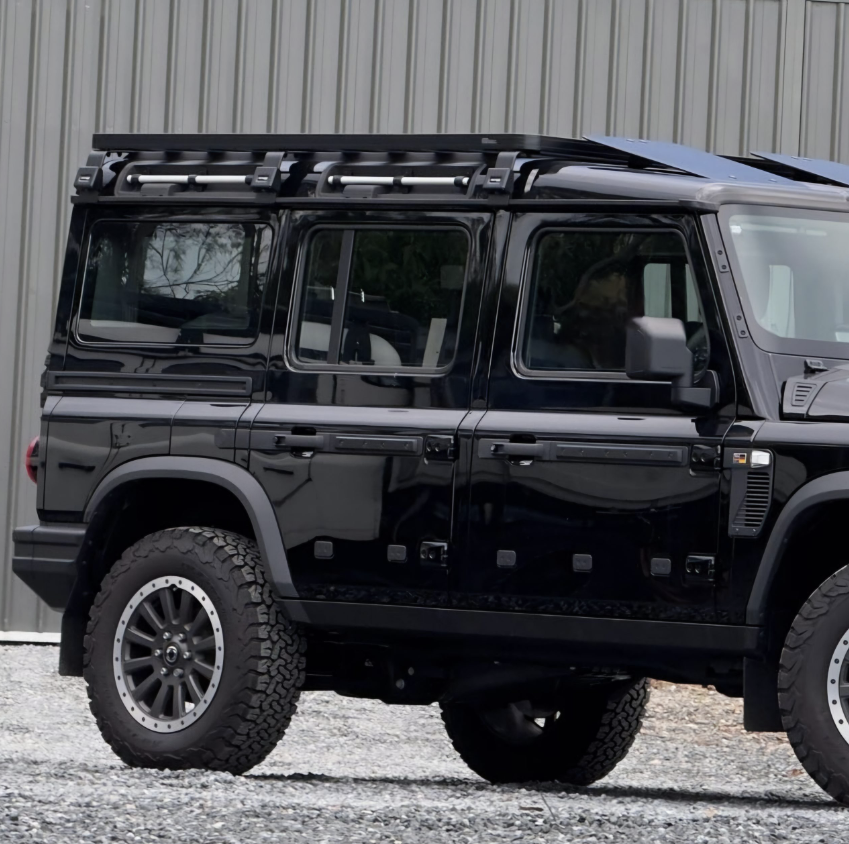
The Expedition HQ Low-Profile Front Runner Roof Rack for the Ineos Grenadier is a purpose-built solution for carrying gear safely and efficiently.
Constructed from high-strength steel and finished with Front Runner’s weather-resistant black powder coat, the rack is designed to withstand heavy loads in demanding conditions. Its low-profile design integrates closely with the Grenadier’s body, helping maintain a low centre of gravity and reducing wind resistance and noise. The rack features Front Runner’s T-slot system, allowing users to attach a wide range of accessories and configure the layout for expedition or everyday needs.
Installation is straightforward, utilising existing mounting points where possible to ensure a secure, rattle-free fit, with detailed instructions provided. As an Expedition HQ exclusive, this rack is tailored specifically for the Grenadier, combining strength, versatility, and a refined appearance. It supports rooftop tents, luggage, and recovery equipment while maintaining the vehicle’s handling and aesthetic.
| Specification | Front Runner Roof Rack |
|---|---|
| Material | High-strength steel |
| Finish | Black powder coat (weather-resistant) |
| Weight | Not specified |
| Available sizes | Low-profile fit for Ineos Grenadier only |
EFS YA MATE roof platform
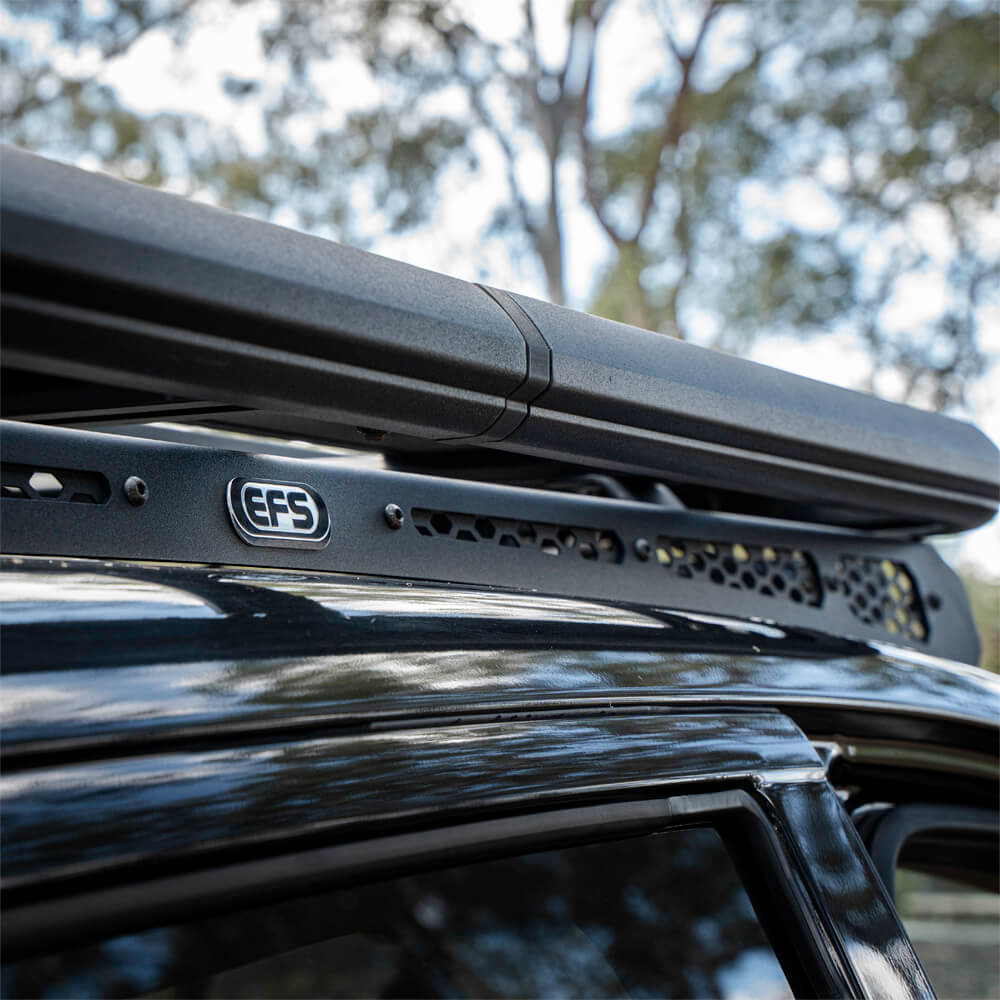
The EFS YA MATE Roof Platform is a heavy-duty, alloy flat tray perfect for camping gear, tools, or weekend DIY runs. Available in 1330×1250 and 1550×1250 sizes, it comes pre-assembled with removable sides and U-bolts for quick mounting to most roof racks.
Pair it with the EFS Roof Platform Mount – made from EnduraCoat-treated steel – for added strength and corrosion resistance. Whether you’re touring, working or hauling gear, the YA MATE platform is a tough, versatile choice for your 4×4.
| Feature | Details |
|---|---|
| Material | Alloy |
| Finish | Powder coated |
| Weight | Varies depending on model |
| Available Sizes | 1330mm x 1250mm1550mm x 1250mm |
Rola Titan Tray
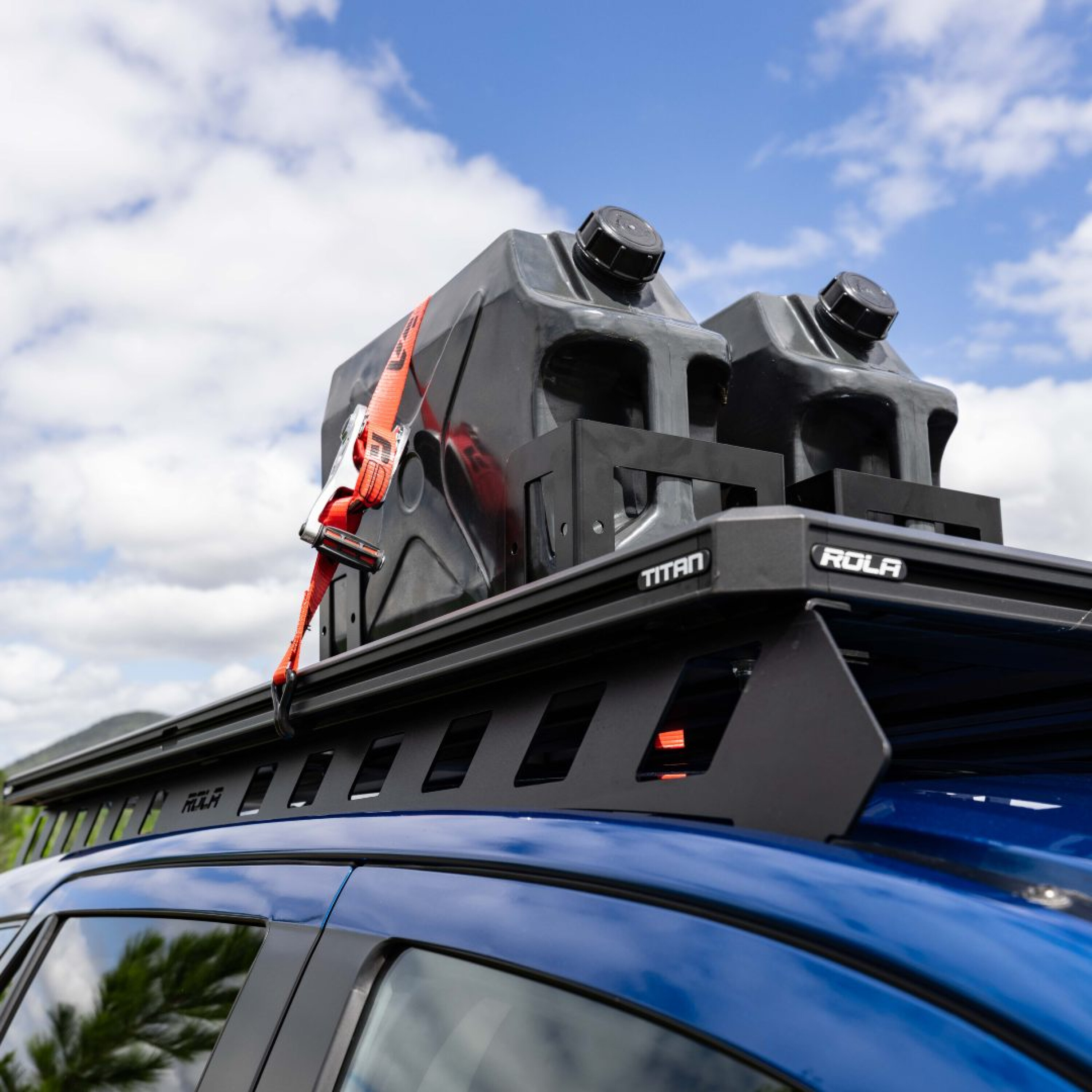
The Rola Titan Tray is a versatile roof rack system designed to securely transport heavy loads on the roof of a vehicle.
It has a unique modular design that allows users to customize the tray to their specific needs, with various accessories and mounting options available.
The tray is made from lightweight and durable aluminum and has a weight capacity of up to 330 lbs. It is compatible with most roof rack systems and can be easily installed and removed without any tools.
Rola Titan Tray specifications
| Material | Aluminium |
|---|---|
| Coating | Powercoated |
| Weight | Varies with model |
Things we like
- Versatile channels and entry points
- Hook attachment channels
- Lightweight yet super strong
Not so much
- N/A
Rhino-Rack Reconn-Deck
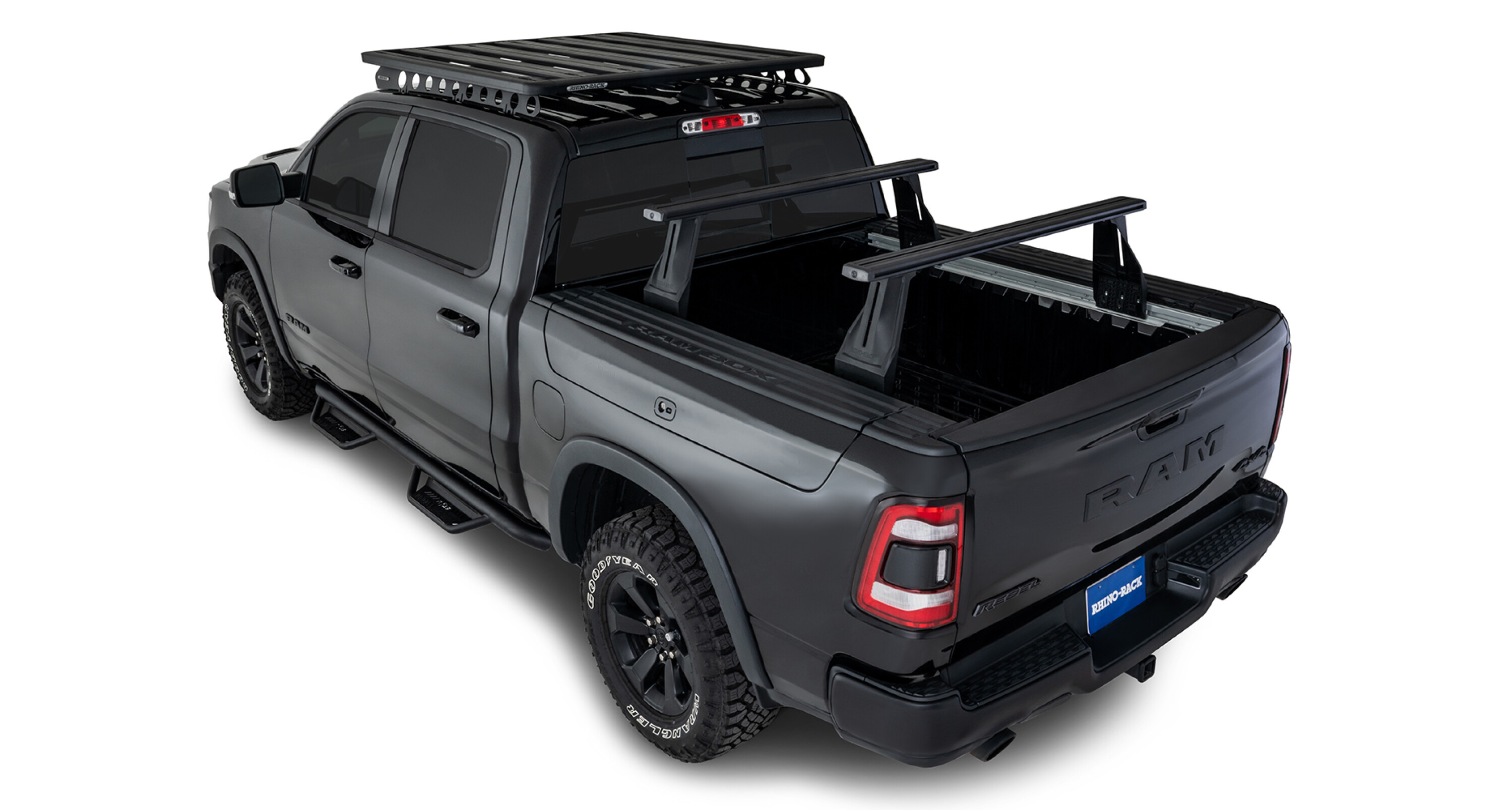
The Rhino-Rack Reconn-Deck is a versatile and durable rack system designed to help you carry gear and equipment on your ute.
Made from high-quality reinforced aluminium, the Reconn-Deck features a modular design that allows you to customise the rack to your specific needs with a range of accessories. The rack is also compatible with a range of Rhino-Rack accessories including roof racks, awnings and bike racks.
The rack system is designed to be easy to install, with a simple bolt-on design that requires no drilling or cutting. The rack can be mounted directly onto the ute bed or with an aftermarket mounting kit for vehicles without factory mounting points.
Rhino-Rack Reconn-Deck specifications
| Material | Reinforced aluminium |
|---|---|
| Coating | Powdercoated |
| Weight | Varies |
Things we like
- Mounting options
- Compatible with Rhino-Rack accessories
- Strong construction
Not so much
- N/A
ARB Base Rack
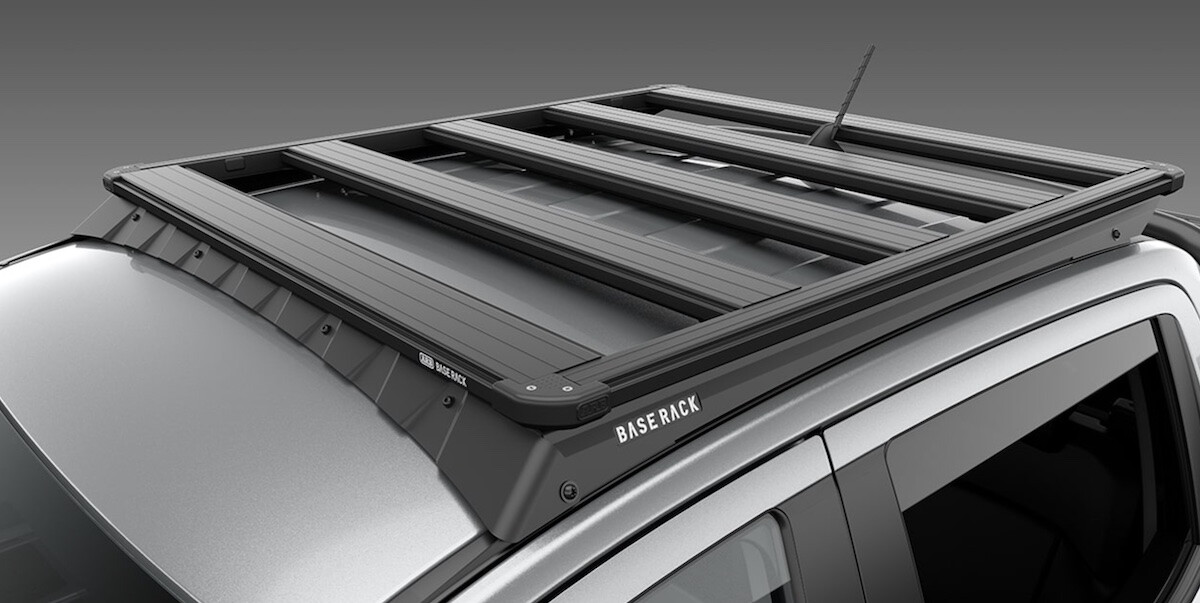
The ARB Base Rack is a lightweight and strong roof rack system designed to be used with a variety of vehicles.
It is made from high-quality aluminum and has a weight capacity of up to 330lbs. The rack features a modular design that allows users to add various accessories and mounting options to suit their needs.
The Base Rack is compatible with most roof rack systems and can be easily installed without any drilling or modification required. It also has a low profile design that reduces wind drag and noise while driving.
The ARB Base Rack is a versatile solution for those who need to transport heavy and bulky items on the roof of their vehicle.
ARB Base Rack specifications
| Material | Aluminium |
|---|---|
| Coating | Powder coated |
| Weight | 20kg |
Things we like
- Innovative
- Quality build
- Integrated cable ducting
Not so much
- Limited range of accessories
- Not fully compatible with all T-slot accessories
OCAM roof racks
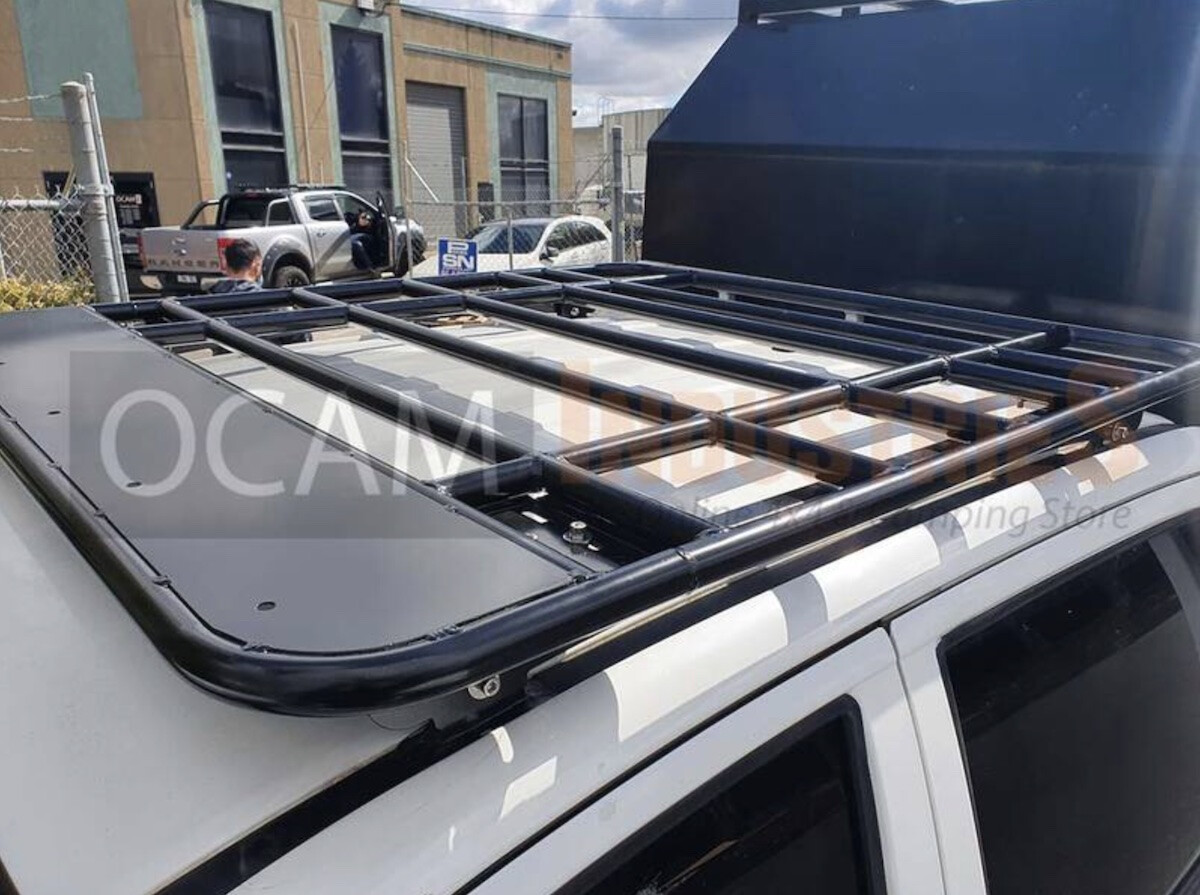
Ocam Industries is an Australian company that offers a range of roof racks for different types of vehicles.
Its roof racks are made from high-quality materials, such as aluminium and steel, and are designed to withstand heavy loads and rough terrain.
The racks are available in different sizes and styles to suit different needs and preferences. They can be easily installed and come with all the necessary mounting hardware.
The racks are compatible with various accessories such as awnings, bike racks and cargo boxes, and they have the ability to mount to the vehicle’s existing roof rails or gutter mounts.
OCAM roof rack specifications
| Material | Aluminium and steel |
|---|---|
| Coating | Powdercoated |
| Weight | Varies |
Things we like
- Lightweight
- Stainless-steel fasteners
- Mounting plates straddle two crossbars
Not so much…
- No T-slot channels
Rhino-Rack Pioneer platform
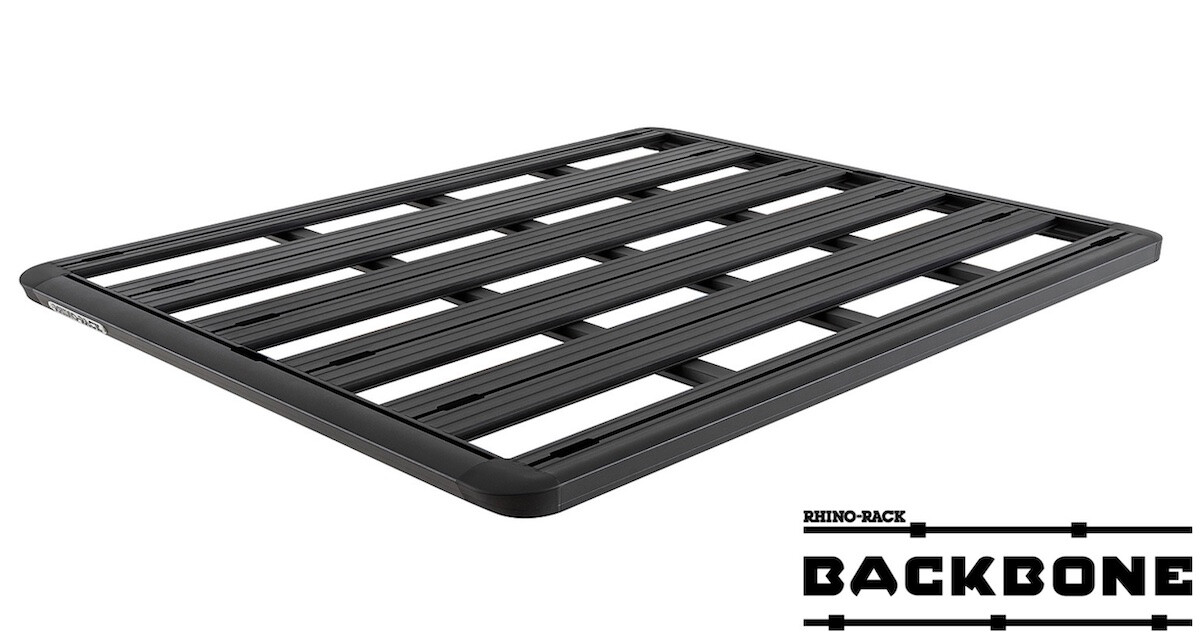
The Rhino Rack Pioneer platform is a sturdy and versatile roof rack system designed for use with various vehicles.
It features a large flat platform with a size of 1528mm x 1236mm that can support up to 264 lbs of weight. The platform is made from durable materials such as aluminium and reinforced nylon, and is resistant to corrosion and UV damage.
It comes with a backbone mounting system that provides additional support and stability, as well as multiple tie-down points for securing cargo.
The Pioneer Platform is compatible with a range of accessories such as roof boxes, bike carriers, and awnings, and is easy to install with no drilling required.
Rhino-Rack Pioneer platform specifications
| Material | Aluminium |
|---|---|
| Coating | Powder coated |
| Weight | 20kg |
Things we like
- Additional slots front and rear
- Fully compatible with T-slot accessories
- 100 per cent load-carrying capacity off-road
Not so much…
- Expensive
Yakima LockNLoad
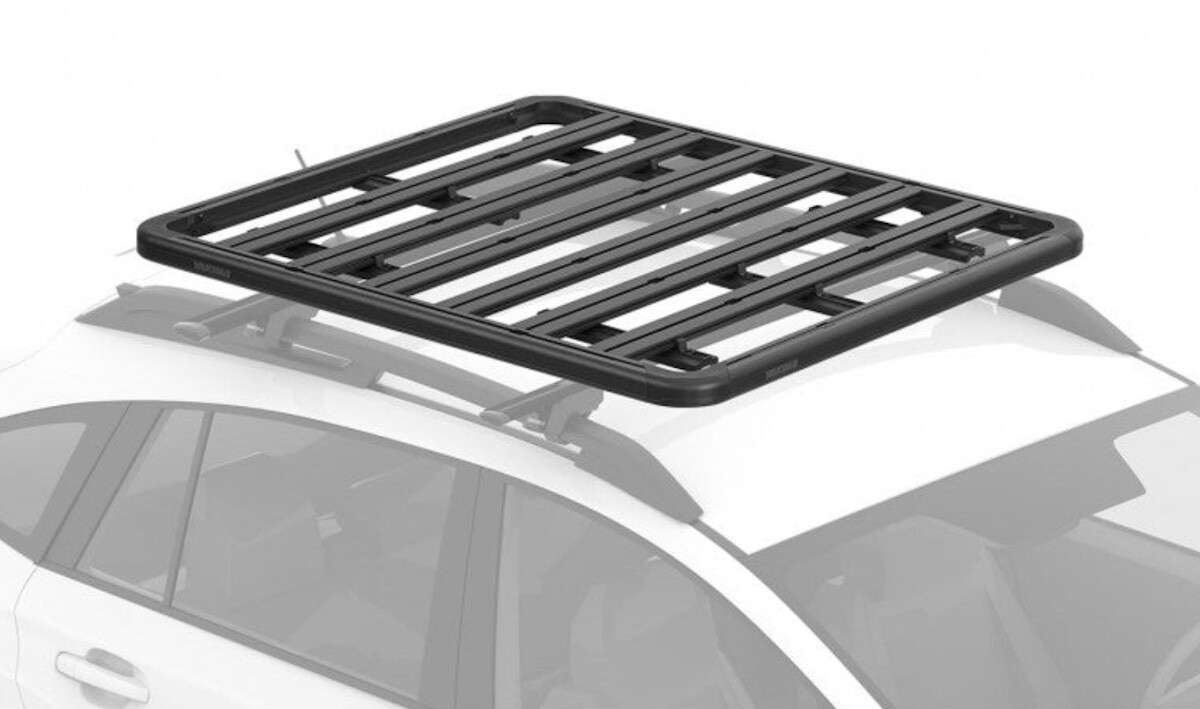
The LockNLoad Platform is a durable and versatile gear carrier designed for adventure. It features east-west slats with 21mm accessory slots and versatile perimeter channels that allow for flexible mounting of accessories.
The platform is made from powdercoated aluminum with superior e-coating, making it highly resistant to corrosion and ideal for use in tough conditions. Additionally, the latitudinal slats provide even more versatility and support. The LockNLoad Platform is built tough and looks just as rugged, making it a perfect addition to any off-road vehicle or adventure setup.
The platform offers a secure and convenient way to transport gear for adventurers and outdoor enthusiasts, with its innovative slats and versatile mounting options.
Yakima LockNLoad platform specifications
| Material | Aluminium |
|---|---|
| Coating | Powdercoated with e-coating |
| Weight | Varies |
Things we like
- Versatile mounting options
- East-west slats
- E-coating for protection
Not so much…
- N/A
Ironman 4×4 Atlas roof racks
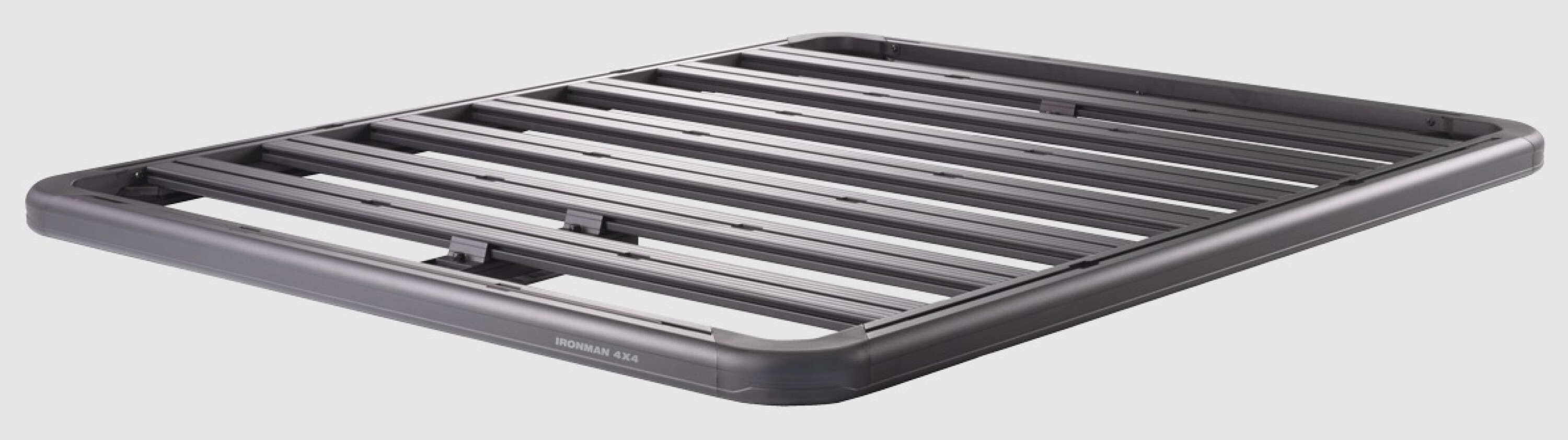
Ironman 4×4’s Atlas roof rack systems are available in a range of sizes and are made from high-quality lightweight aluminium. The racks are also treated with a black powdercoating for added durability and to protect against the elements.
The roof racks feature a unique design that allows for easy installation and customisation. The crossbars can be adjusted to fit a wide range of vehicle makes and models, while the integrated tie-down points and side railings provide additional security for your gear. The systems also come with a range of optional accessories such as awnings, cargo boxes and light bars.
Ironman 4×4 is committed to providing high-quality, reliable products that are built to last, and its Atlas roof rack systems are built with a focus on durability, versatility, and ease of use.
Ironman 4×4 Atlas specifications
| Material | Aluminium |
|---|---|
| Coating | Powdercoated |
| Weight | Varies |
Things we like
- Ease of use
- Mounting options
- Low profile
Not so much…
- N/A
TrailMax roof racks
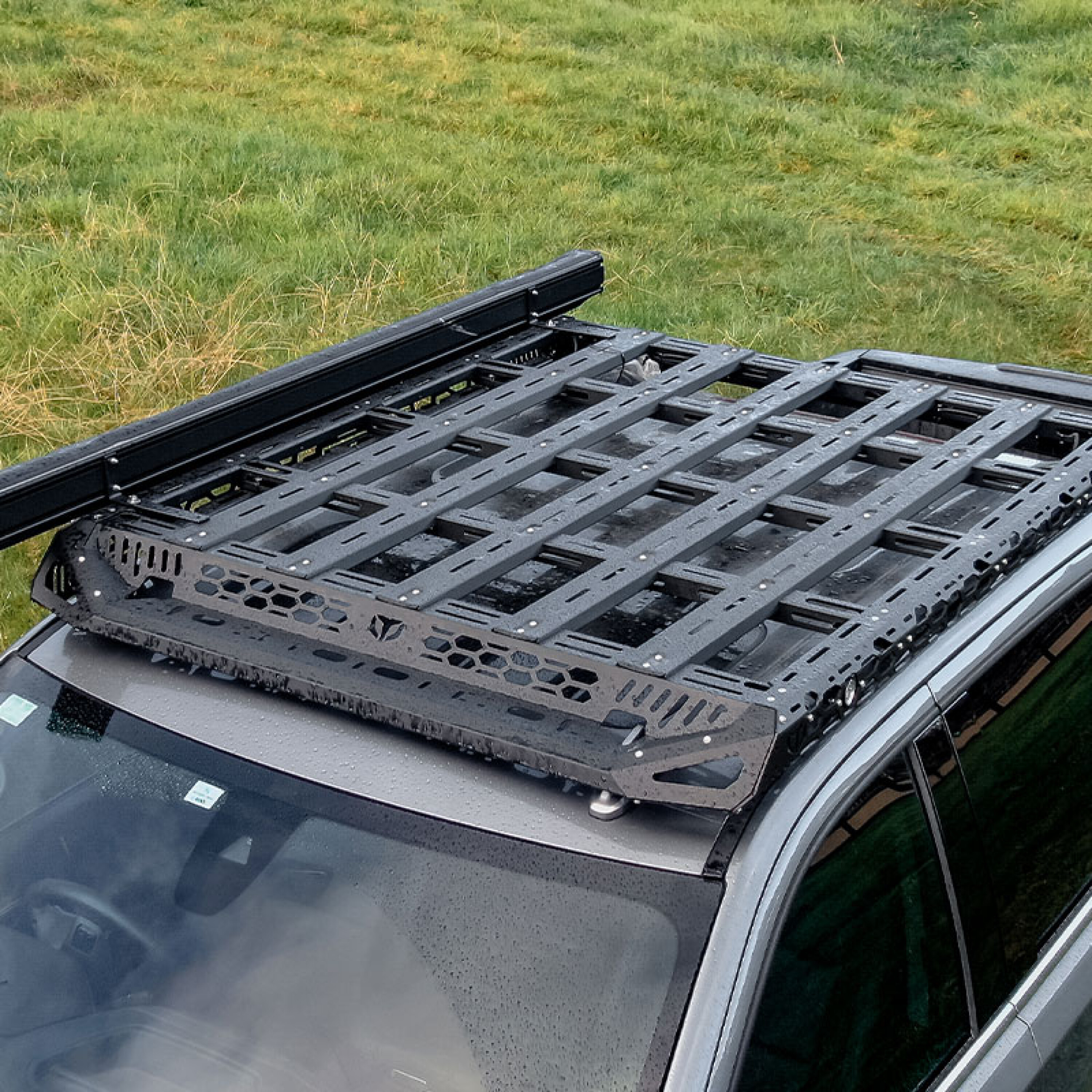
TrailMax is an Australian-based company that specialises in manufacturing high-quality roof rack systems for a variety of vehicles.
The roof racks are made from high-quality materials, including lightweight aluminium and steel, which makes them durable and resistant to wear and tear. The racks are also designed to be aerodynamic, which reduces wind resistance and noise, and they can be easily installed on most vehicle models.
TrailMax offers a range of roof rack systems including gutter mount, track mount and fixed point systems, to fit different vehicle models and requirements. The roof racks come with a range of accessories, including tie-downs, cargo boxes and awnings, to make carrying gear more convenient and secure.
TrailMax roof rack specifications
| Material | Aluminium and steel |
|---|---|
| Coating | Powdercoated |
| Weight | Varies |
Things we like
- Built tough
- Integrated design
- Built to vehicle dimensions
Not so much…
- N/A
Front Runner Slimline II
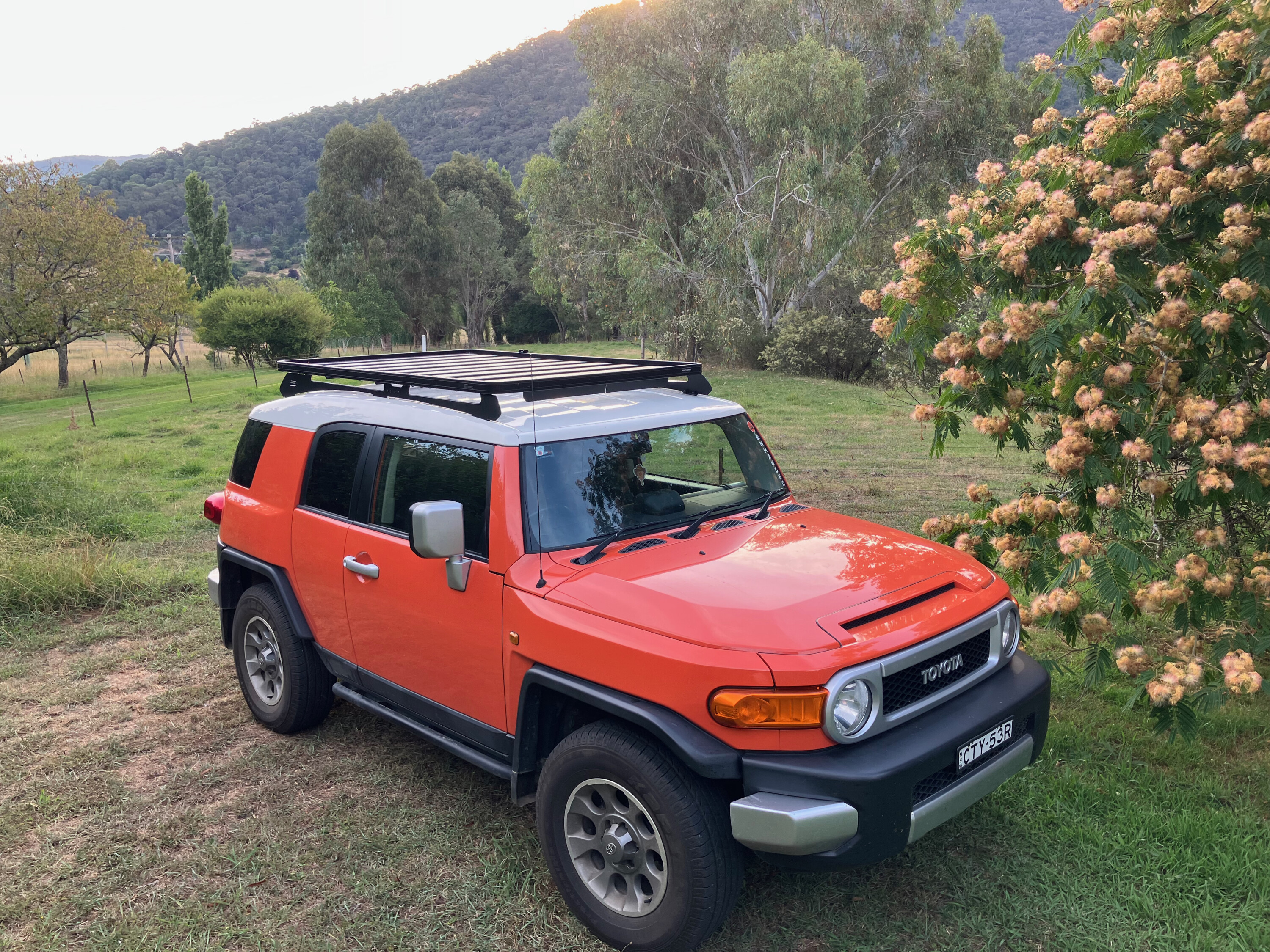
The Slimline II roof rack from Front Runner is a versatile and durable system designed for a wide range of vehicles. Made from lightweight and strong aluminium, the Slimline II is able to support heavy loads while minimising additional weight on the vehicle.
The roof rack features a modular design, allowing users to customise the rack to their specific needs with a range of accessories. The Slimline II also features an aerodynamic design to reduce wind noise and drag, while its low profile provides a sleek and stylish appearance.
The Slimline II roof rack is designed to be easy to install and comes with detailed instructions to ensure a hassle-free experience. The rack can be mounted directly onto the vehicle’s factory mounting points, or with an aftermarket mounting kit for vehicles without factory mounting points.
Front Runner Slimline II specifications
| Material | Aluminium |
|---|---|
| Coating | Powdercoated |
| Weight | Varies |
Things we like
- Looks great
- Loads of optional accessories
- Solid build
Not so much…
- N/A
Buyers’ guide to roof racks
Experienced tourers who have explored this wide continent of ours in their 4x4s will be awfully quick to advise that optimising what limited cargo space you have in your vehicle – be it wagon or dual-cab ute – is often one of touring’s greatest challenges.
To do it right, every expedition requires a particular, meticulous setup. Going away for a few months? Well, you need to ensure every inch of space in your rig is utilised, and that the weight is evenly distributed.
Roof racks are a great alternative to store excess gear – or gear that won’t fit in the cabin or tray – but adding weight on top of a 4×4 also comes with its challenges.
Why use a roof rack?
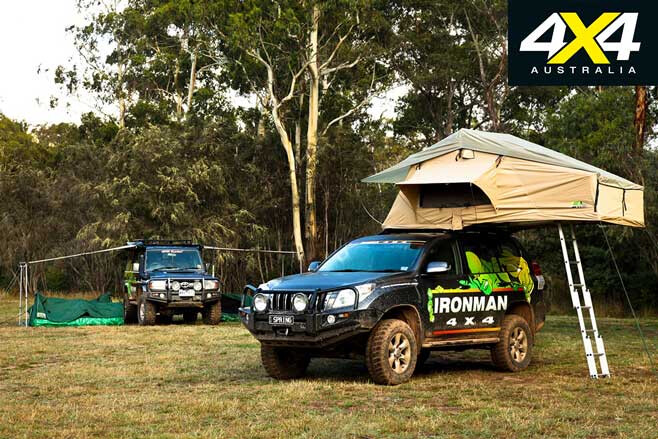
Utilising the space above your four-wheel drive is the ideal way to clear space inside your vehicle, be it for more people, your furry friends or valuable cargo that needs to be protected from the elements. There are plenty of benefits a roof rack brings, as Paul Epthorp, Rhino-Rack’s national sales manager (Australia and NZ), explained.
“The primary benefit of installing a roof-rack system is to allow for additional cargo and long loads to be carried with you,” he said. “It also provides the ability to transport flammable items such as fuel and gas which cannot be stored inside a vehicle.”
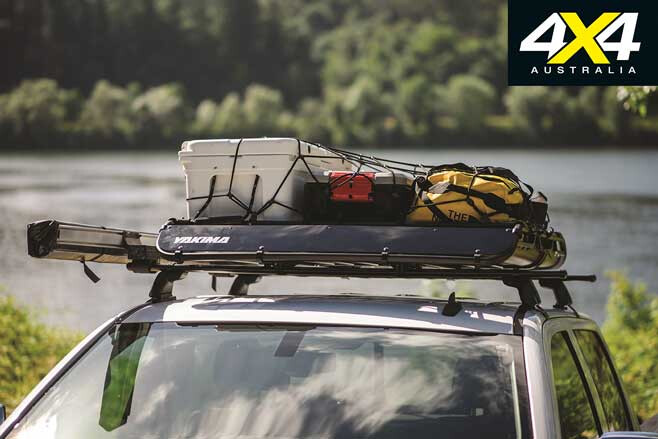
Yakima Australia’s brand director Chris Lyons reiterated that sentiment, adding that a roof rack provides a solid platform for transporting equipment not easily kept in your vehicle. “(It) allows you to transport gear that is not especially safe or pleasant while stored inside a vehicle (fuel, spare tyres, etc.),” he said.
Roof racks also provide a great deal of convenience in terms of access to the items you have stored. “Packing items in the rear of a vehicle means you generally only have one or two points of access to reach that item without unpacking the car,” Ironman 4×4’s Suspension Product director Kristian Ristell said. “A roof rack gives far greater accessibility from three sides meaning you rarely need to shift other items to gain access.”
What to look for?
Construction quality, fit and finish, and that it meets applicable standards and regulations are the most important attributes to look for when sussing out a new roof rack, according to ARB’s Shannon Diedrich. And with a number of different roof-rack systems on the market, it’s important to find a setup that caters for your intended purpose.
In this regard, the mounting legs play an important role; for example, a serious four-wheel driver would benefit from a fixed-mount style rack, whereas a removable-clamp style would suffice for someone whose tyres never leave bitumen.
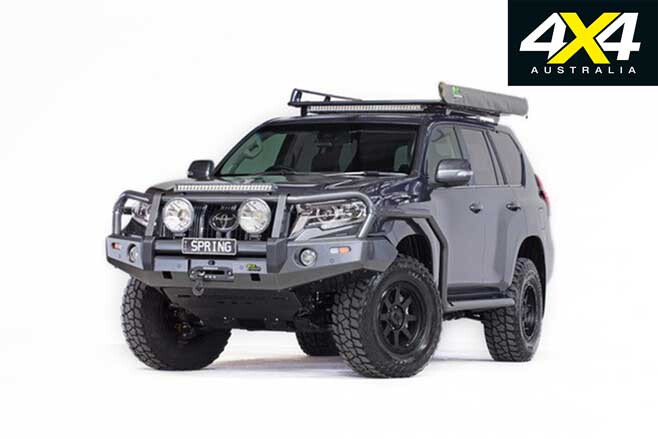
For the avid tourer, it’s essential to opt for a fixed mounting system of sturdy, durable and robust construction, with a versatile setup that allows for plenty of customisation options to attach all manner of accessories.
With a variety of styles available – bars only, platforms (no sides), baskets and trays (sides) – roof racks can be specified to cater for a range of gear including awning brackets, ladder rollers, jerry can holders, bike and kayak carriers, fishing rod carriers and luggage carrier bags and boxes. In fact, your setup can be customised with more than 1000 accessories on the market.
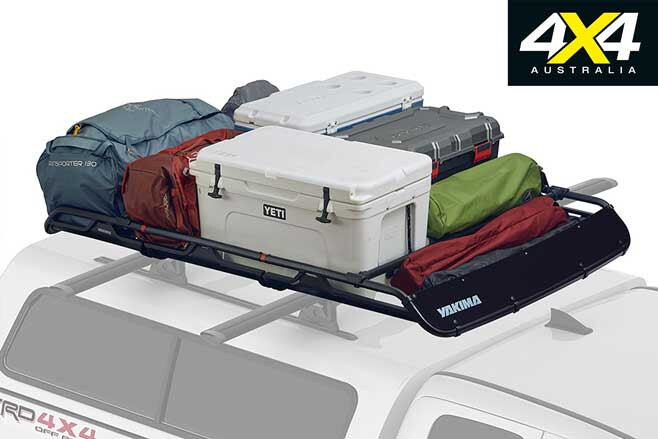
“You want racks designed with versatility in mind, featuring a channel to easily and quickly add accessories with a variety of different locking solutions available,” Paul Epthorp said.
Common materials used in the construction of roof racks include steel, aluminium and reinforced plastics. Kristian Ristell from Ironman 4×4 advises to utilise steel where high vibrations and load exist, but reinforced mesh aluminium is much lighter and provides equally as much storage space.
“Strength is still considerably higher than what the roof is rated to carry, so aluminium becomes a very viable and attractive option as opposed to steel,” Ristell said. “It does cost more than steel, so the price of an aluminium roof rack is generally always more expensive.
“Crossbars are generally the cheapest form of roof rack available and are also easy to install and remove.”
Driving with a load up top
It is a no-brainer that adding weight on top of a vehicle and raising the height of the centre of gravity will affect how a vehicle performs on- and off-road, as Chris Lyons explains.
“Increasing the height of the centre of gravity will increase body roll and extend stopping distances under heavy braking, due to pitching and the related load transfer to the front,” he said.
Vehicles also require lower speeds when cornering, will use more fuel as a result of the extra kilograms, and may find it harder to reach the most remote campsites due to the extra heft and vehicle profile.
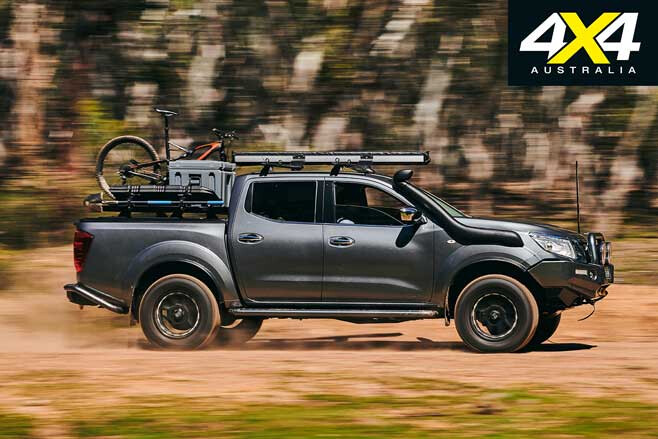
However, there are a few steps you can take to minimise the impact: distribute weight evenly, stay within a vehicle’s load ratings, and try to maintain a low centre of gravity. Remember to keep heavier items as low and close to the centre as possible.
“The main consideration is keeping within the manufacturer’s specified roof load rating,” Paul Epthorp from Rhino-Rack explained. “By placing light but bulky gear on the roof like swags, tents, camp chairs you save space in the cabin for heavier items such as fridges, while still allowing recovery gear and awnings to be easily accessible on the roof.
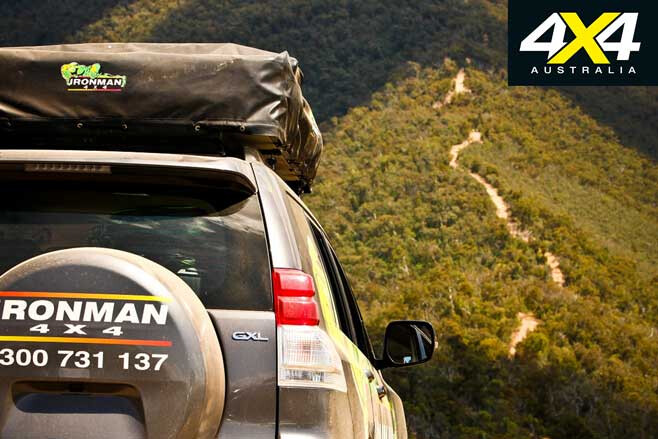
“To a large extent it’s about packing smarter, though it’s important to drive with greater caution and understand your vehicle may take longer to slow down,” Epthorp said. “Lastly, always use good quality, load-rated tie-down straps to secure your items.”
Don’t forget about the added height when you decide to stop off to grab some bread in the undercover supermarket carpark – “be aware of added height of rack and contents, as well as overhanging trees, bridges and garages,” ARB’s Diedrich added.
GVM & GCM
“The fast advancement of technology within vehicles, and the amount of aftermarket accessories available make it very easy to reach the vehicles GVM and GCM limit,” Paul Epthorp explained.
“While the roof load rating is factored into the GVM, if you’ve made other mods which increase the kerb mass weight (KMW), like an extra fuel tank, weight may need to be reduced elsewhere to stay within the GVM. Every gram of weight added to the vehicle must be taken into consideration.”
Suspension
“Suspension systems are getting smarter, so when a system like KDSS is loaded up with extra cargo inside and outside of the vehicle, there is potential that the system may operate differently, changing the dynamics of the vehicle,” Paul Epthorp from Rhino-Rack explained.
Secure the load
Once a load is properly distributed on the roof racks, it’s a legal requirement to ensure all items are adequately secured to the vehicle … the last thing you want is to slam on the brakes and have your kayak slide into the rear window of the car in front of you.
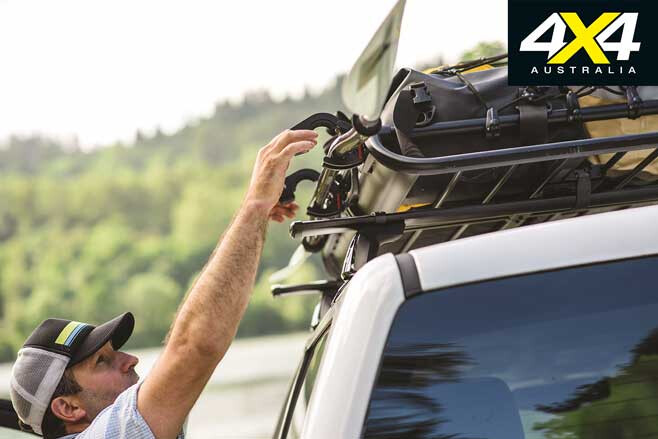
To do this properly, always use rated securing straps. “Compromising or modifying the restraints may result in a catastrophic failure,” explained Rhino-Rack’s Epthorp.
It’s also a legal requirement – and common sense – to store combustible equipment (gas and fuel bottles) on the outside of a vehicle. For longer objects, like kayaks and canoes, remember to tie down both the front and rear to the roof racks and the front bar if possible.
Installation
Anyone with basic tools and a bit of skill turning spanners will be able to backyard-fit most set of roof racks. However, both Rhino-Rack and Yakima advise professional fitment is required when it comes to some of the more complicated 4×4 setups.
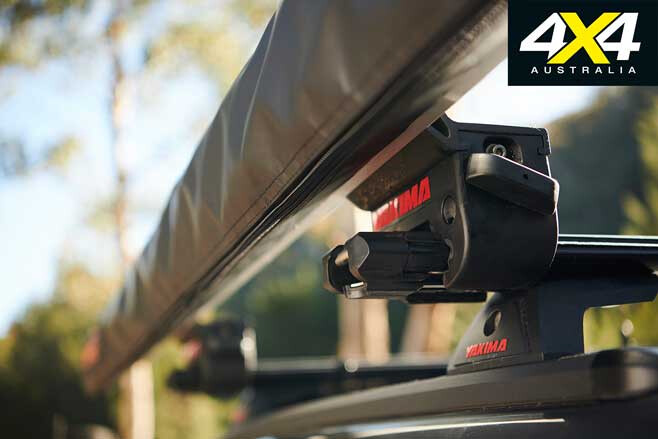
“Regardless of who installs your roof racks, you should check all bolts and fixtures are tight every 1000km and before every trip,” Paul Epthorp said. “Consider checking more frequently when driving on unsealed surfaces and ensure your cargo is secured.”
Roof load ratings
Before you even begin to throw things on top of the roof racks, it’s critical to be aware of your vehicle’s roof load rating – every vehicle has one, with 4x4s varying from 50kg to 100kg, with some models going higher again (but check your vehicle’s manual to be sure).
A roof load rating is dictated by a vehicle manufacturer, and exceeding the capacity can lead to serious safety issues. Plus, you also run the risk of voiding a warranty.
“Know your vehicle’s roof load rating!” Chris Lyons enforced. “Roof racks can bear a certain load, but if the vehicle’s roof is not of the same load rating equivalent or better, damage to the vehicle can happen.”
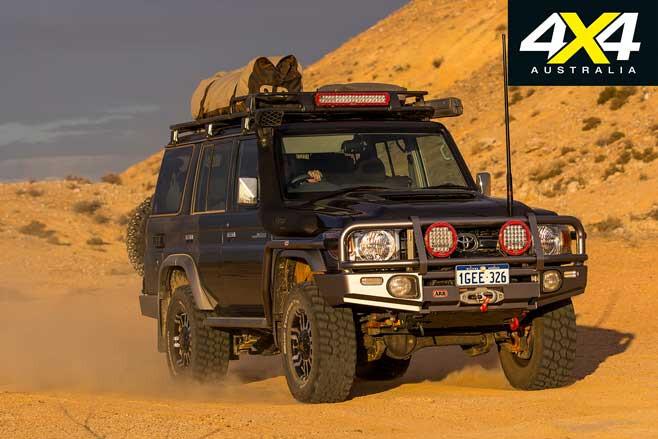
A roof rack will also have a carrying capacity (for example, ARB racks are rated to 150kg), with different styles and designs suited for various weights – so, again, opt for a roof rack that suits your vehicle and intended purpose.
“Often roof racks can withstand greater loads than the vehicle roof,” said Rhino-Rack’s Epthorp. “But, regardless of your racks or tray, the roof of your vehicle is designed to only support a specified weight, and that is a very important thing to be aware of.”
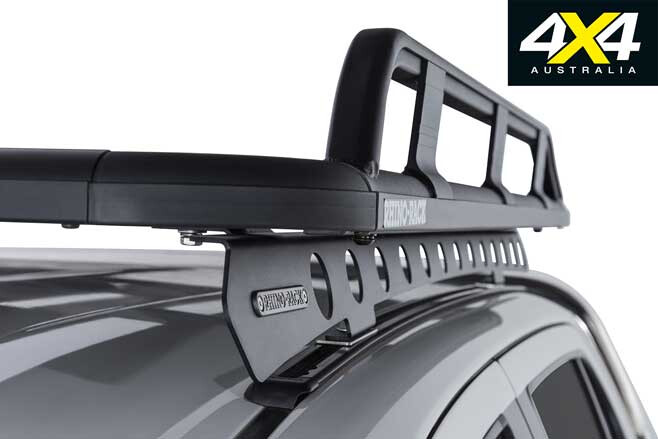
Overloading a roof rack is a common problem and you’ll often see poorly loaded vehicles on off-road pursuits. As mentioned previously, excess weight on top changes the driving dynamics of a vehicle, but if too much weight is packed on top then the chances of a serious problem striking increases tenfold, as Chris Lyons explained.
“Your vehicle may be damaged (roof crushed), your braking ability can be diminished. Being severely too top heavy and making tight turns at too much speed can really have severe outcomes,” he said.
Paul Epthorp talked us through the best method to avoid overloading a vehicle: “Take the vehicle load rating and subtract the weight of the roof rack, any accessories and your load,” he said. “This will tell you the cargo rating: the safe load to carry on your vehicle.”
Ratings terminology
There are three types of load rating, as well as the cargo rating… Static Load Rating: When the vehicle is stationary. On-Road Load Rating: Driving on sealed roads. Off-Road Load Rating: Driving on dirt, uneven or unsealed roads. Cargo Rating: Amount of luggage or gear you can put on your racks and roof rack accessories.
How we review products
4X4 Australia has been reviewing four-wheel drive vehicles, aftermarket products and camping gear for more than 40 years. When looking for the best camping hammers, shovels and axes in Australia there are some things that are essential to ensure you get a tool that will do the job you need it for and stand the test of time.
When we compared each of the hammers, shovels and axes in the list with hundreds out there, we looked at the durability, useability, size, weight and price. We also searched for additional features that make these camping tools stand out from the rest.
We looked at hundreds of user reviews and drew on our own experience to make sure our recommendations are for the best on the market.
Disclosure: When you buy through our links, we may earn a commission. We also include products that we do not earn a commission from.