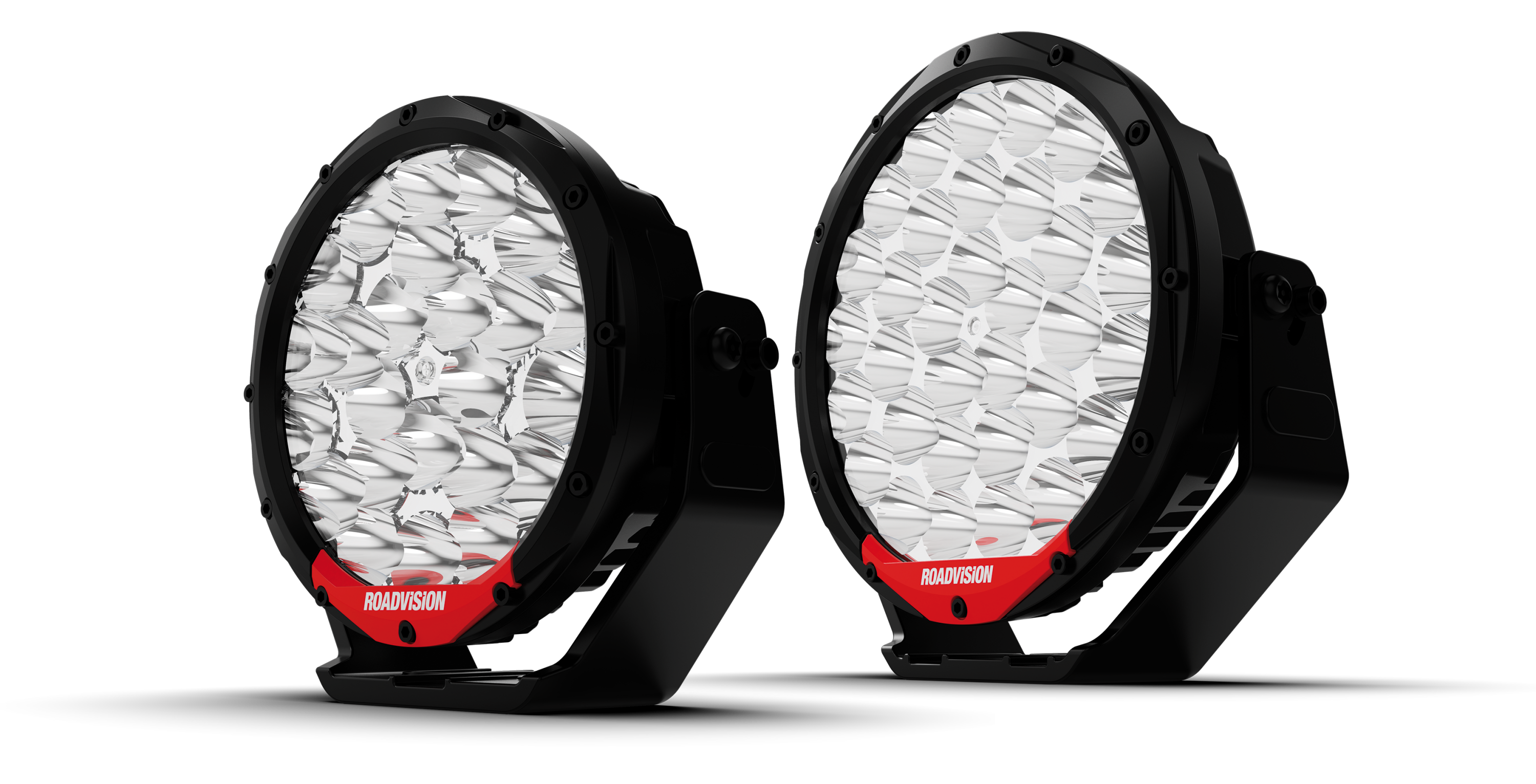
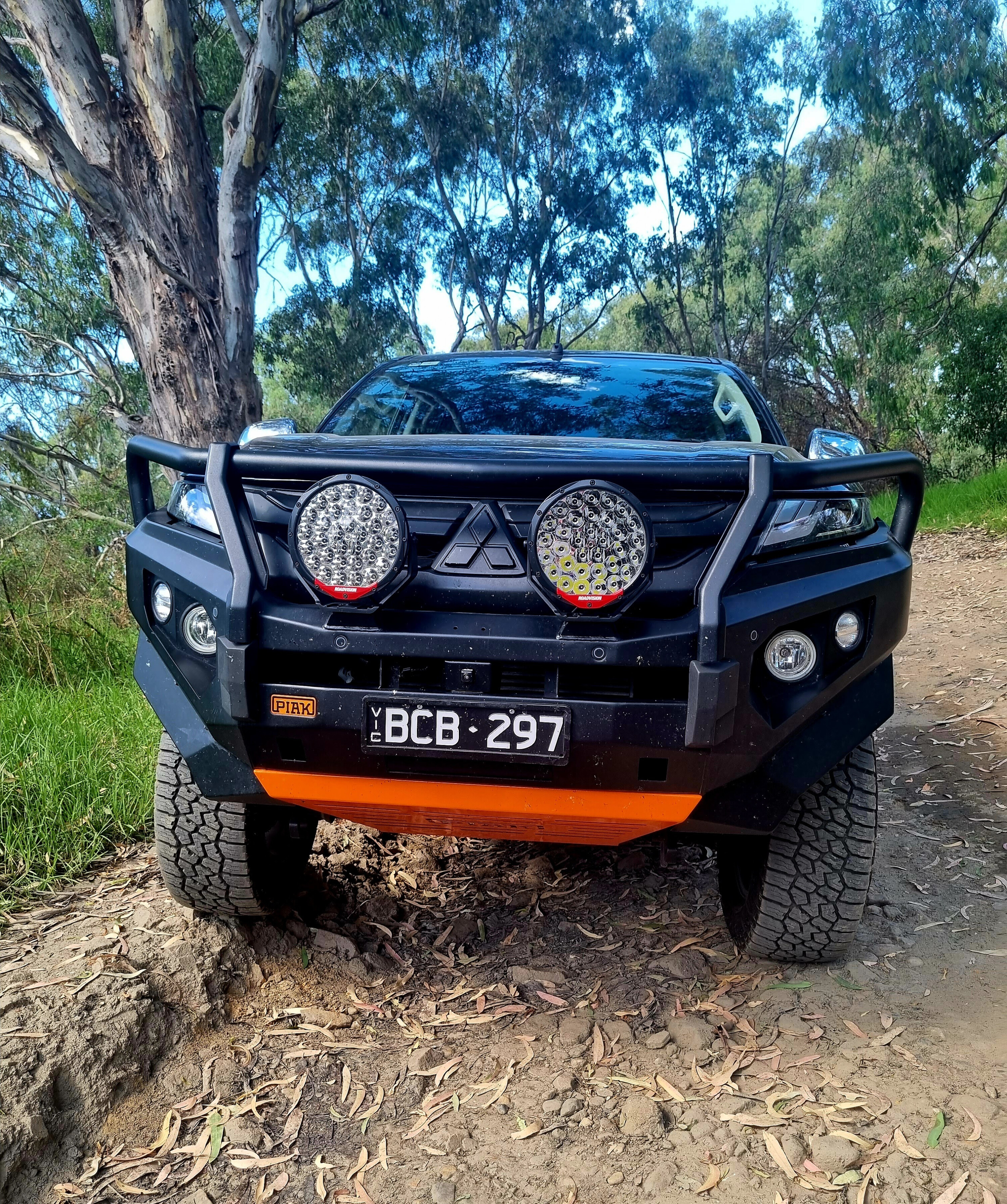
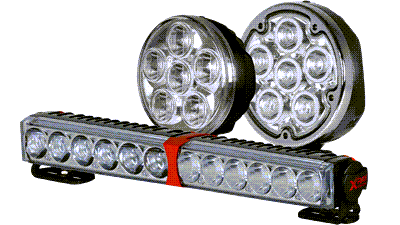
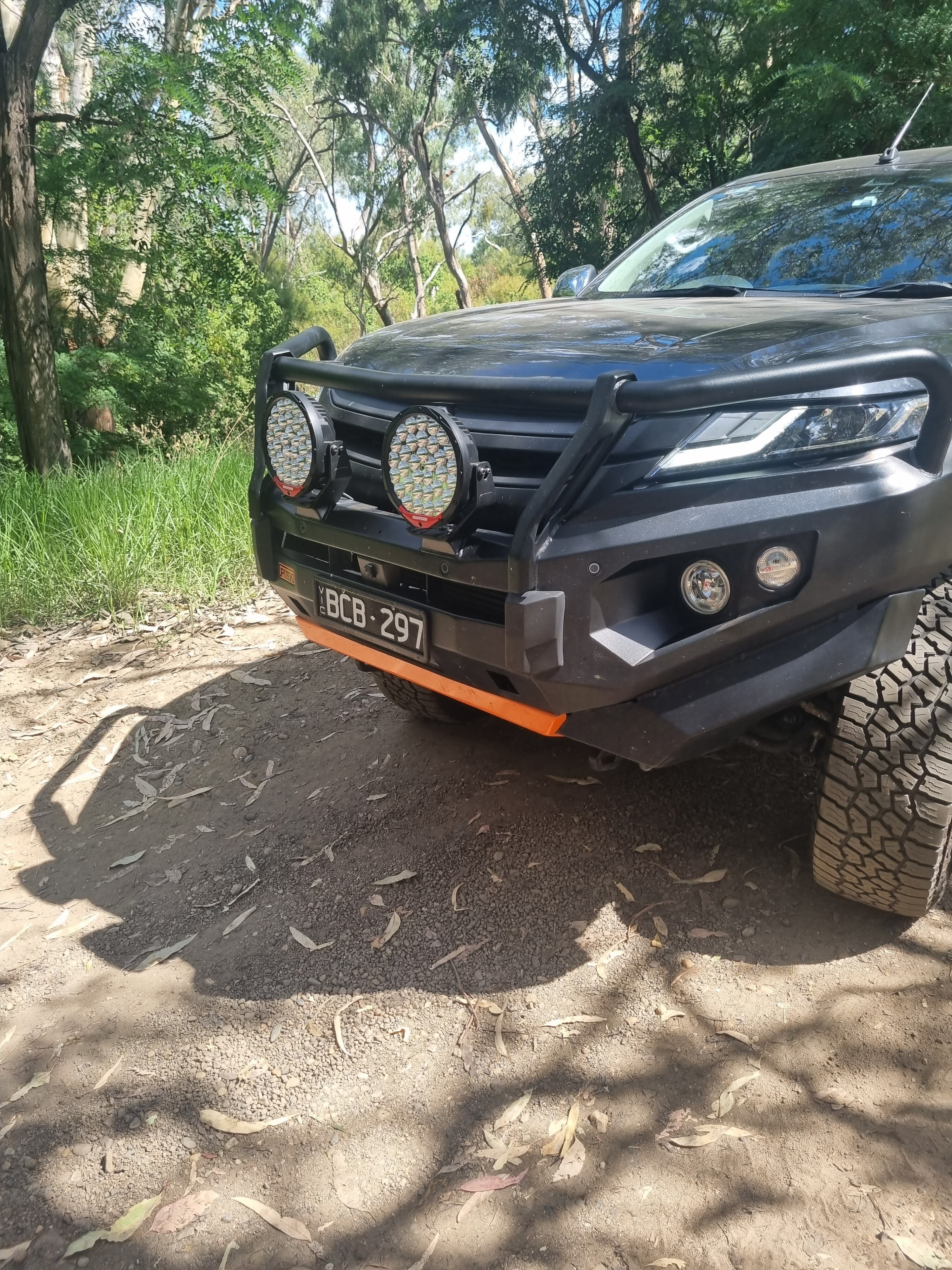
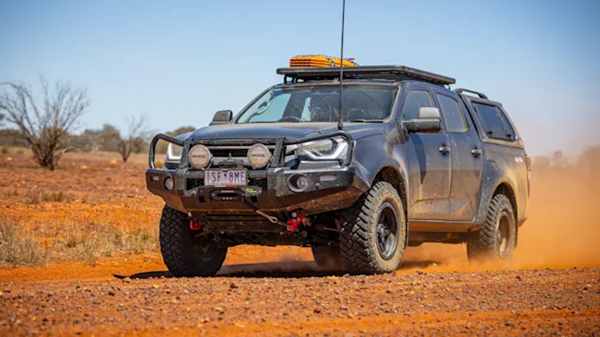
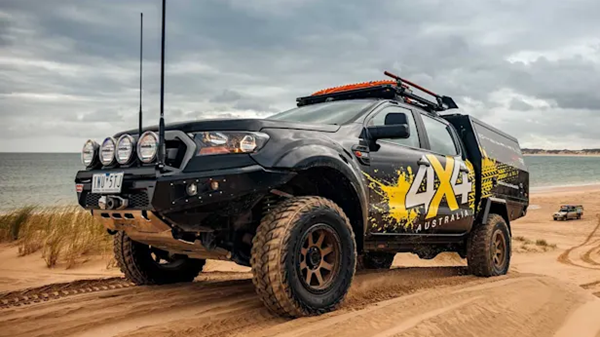
The Dominator Extreme II (DX2) Series is the new range of LED lights by Roadvision and are the next generation in high-performance LED lighting.
Built on the foundation of its popular Dominator and Stealth Series driving light and bar ranges, the DX2 Series driving lights offer seriously extreme performance.
The combination beam pattern focuses on long-range beam penetration with a lower short-range intensity, and the DX2 Series are perfect for long outback highways.
The DX2 features up to 33 x 6W Osram LEDs that deliver a combination beam that reaches up to 1200m at 1 Lux per light (1697m per pair) while retaining a spread beam pattern that lights up the side of the road. Power-wise, you can expect to draw up to 10.9 amps @ 13.8V and up to 150W.
Available in 7- and 9-inch models, the DX2 Series have a colour range of 6000 Kelvin, one of the brightest white lights on the market. The brightness could cause issues with reflections from road signage, which might strain eyes during extended night driving.
The DX2 Series also feature Roadvision’s thermal management technology, enabling maximum light output while protecting the lamp from excessive heat that will reduce performance and shorten service life. The DX2 Series has built-in noise-suppression technology (CISPR25-approved) and are rated as IP68, making them dustproof, waterproof and maintenance-free.
Designed, engineered and tested for the harshest Australian conditions, you can have confidence in the longevity of these lights as they are backed by a seven-year warranty.
DX2 Series lights are constructed with tough yet lightweight die-cast aluminium mounting brackets, aluminium housings and polycarbonate lenses, and come standard with two protective covers (clear and black).
“The stronger yet lightweight high-pressure die-cast aluminium mounting bracket ensures these lights are purpose-built for the harshest Australian conditions,” said Andrew Bird, product manager at Roadvision.
“The DX2 Series are at the forefront of automotive lighting technology, and we’ve preserved a classic look that made the Dominator Extremes a favourite among users,” he added.
Roadvision also has wiring kits and harnesses available to make installation simple. To make things even easier, it has an Airwire Remote Wiring Kit, which is a simple kit that removes the need to push wires through your firewall or mount switches in the dash.
The Dominator Extreme II Series is available from stockists including Autobarn, Opposite Lock, Bursons and Autopro.
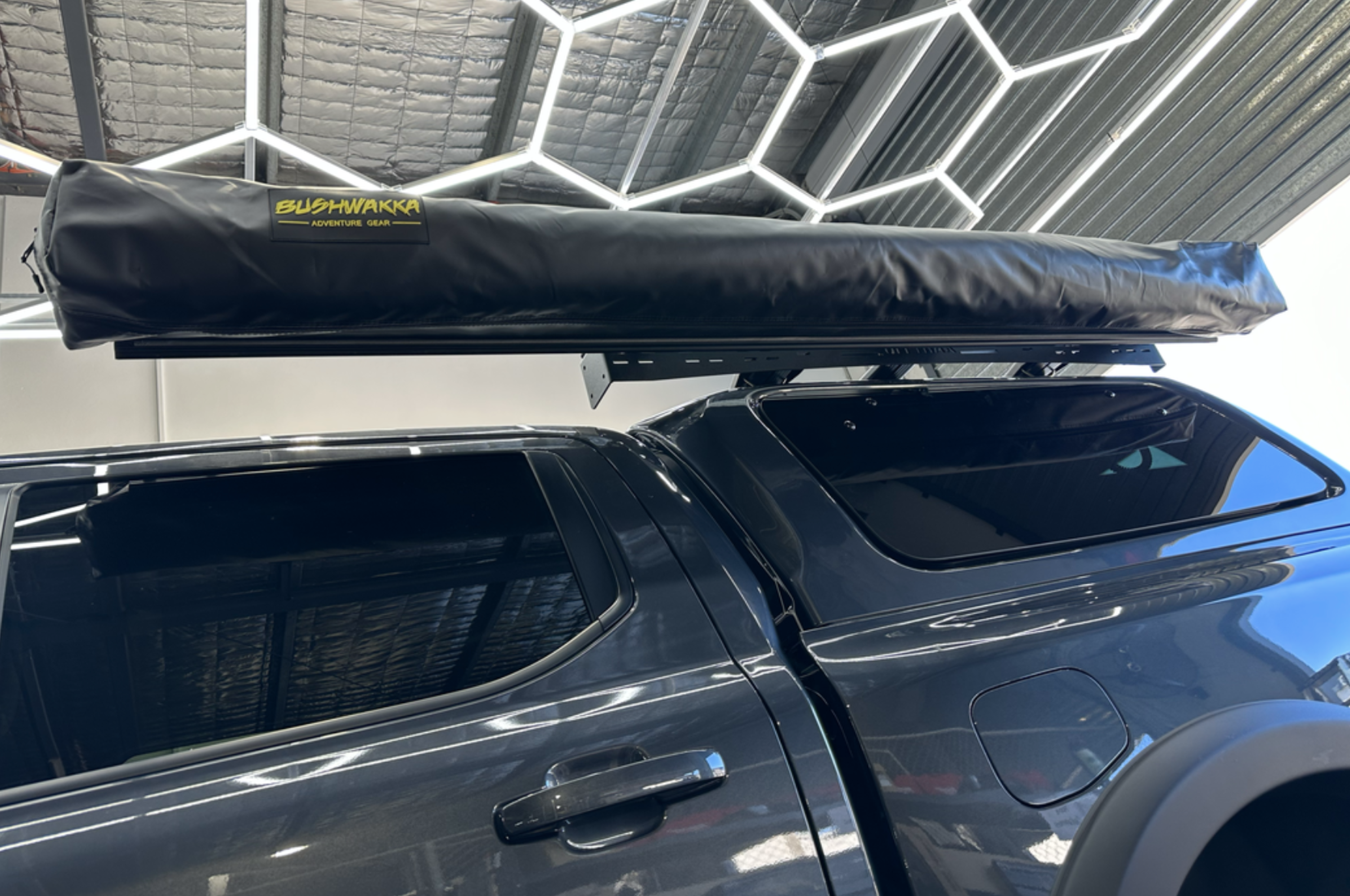
Since the advent of the 270-degree awning, owners of 4WDs with fibreglass or plastic canopies have been unable to install one due to the crossbars being too close together.
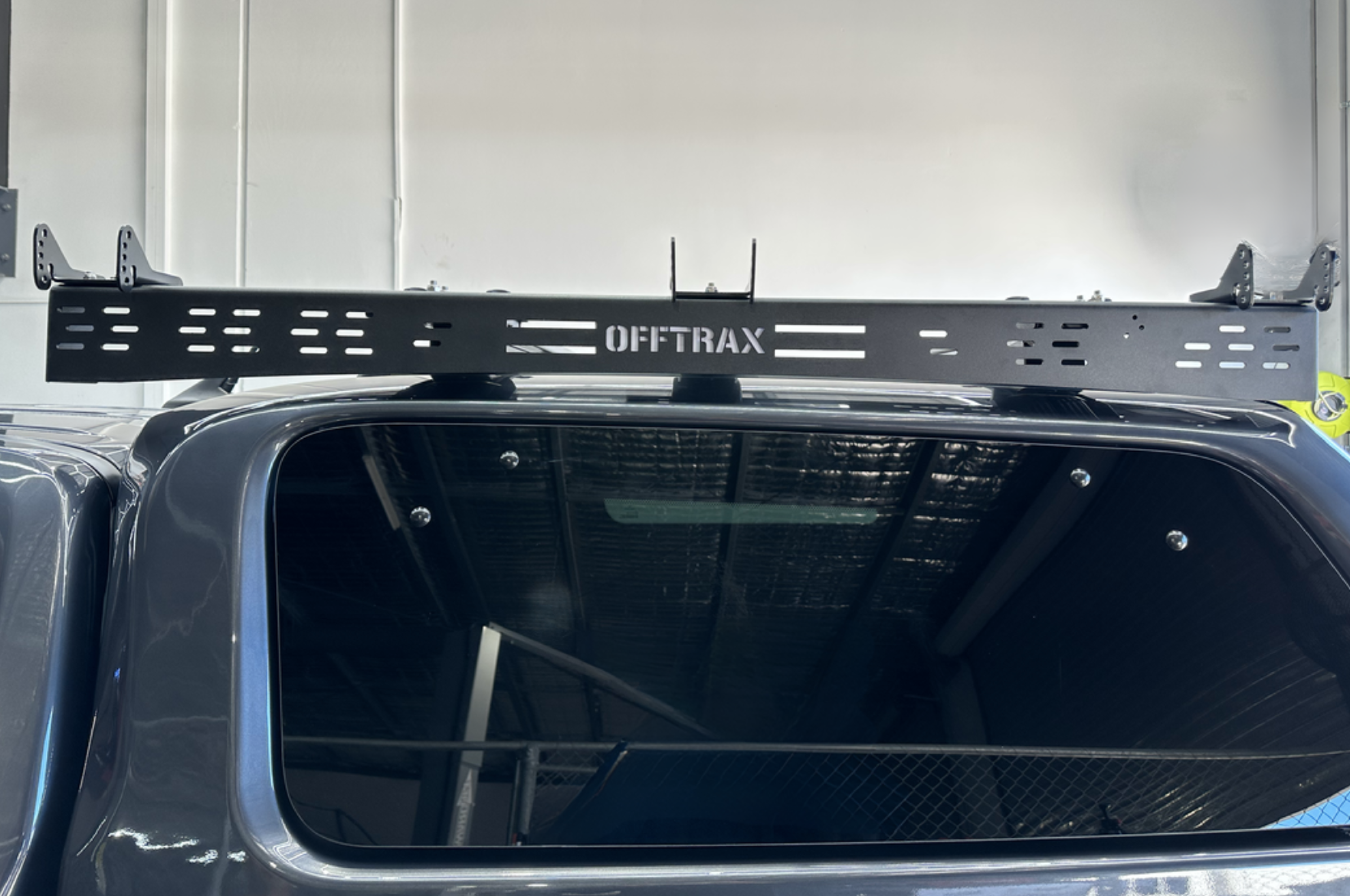
The Offtrax AWN-XTENDA solves this problem, and for only $445 it is a cheap solution.
On fibreglass or ARB plastic style canopies, most crossbars or load bars have a maximum spacing of 950mm due to the short roof rails or extrusion tracks. Generally, the minimum requirement of a 270-degree awning with a length of 2500mm requires mounting brackets to be 1200mm apart.
“I came up with the design on the AWN-XTENDA because I was told ‘you can’t fit a 270-deg awning to the fibreglass canopy on my ute’ and ‘can’t’ isn’t a word in my vocabulary,” said Offtrax owner, Steven Van Staden.
Steven looked at installing a platform rack that would add more than $1400 to the build and possibly exceed the load capacity of the canopy, which wasn’t viable. Someone even suggested he support the awning on the canopy crossbar and the cab of the ute, and then use some sort of rubber engine mount to take up the flex between the canopy and the cab.
As Steve has been designing and manufacturing award-winning camper trailers in Queensland, his mind started ticking. And that’s how the AWN-XTENDA was born.
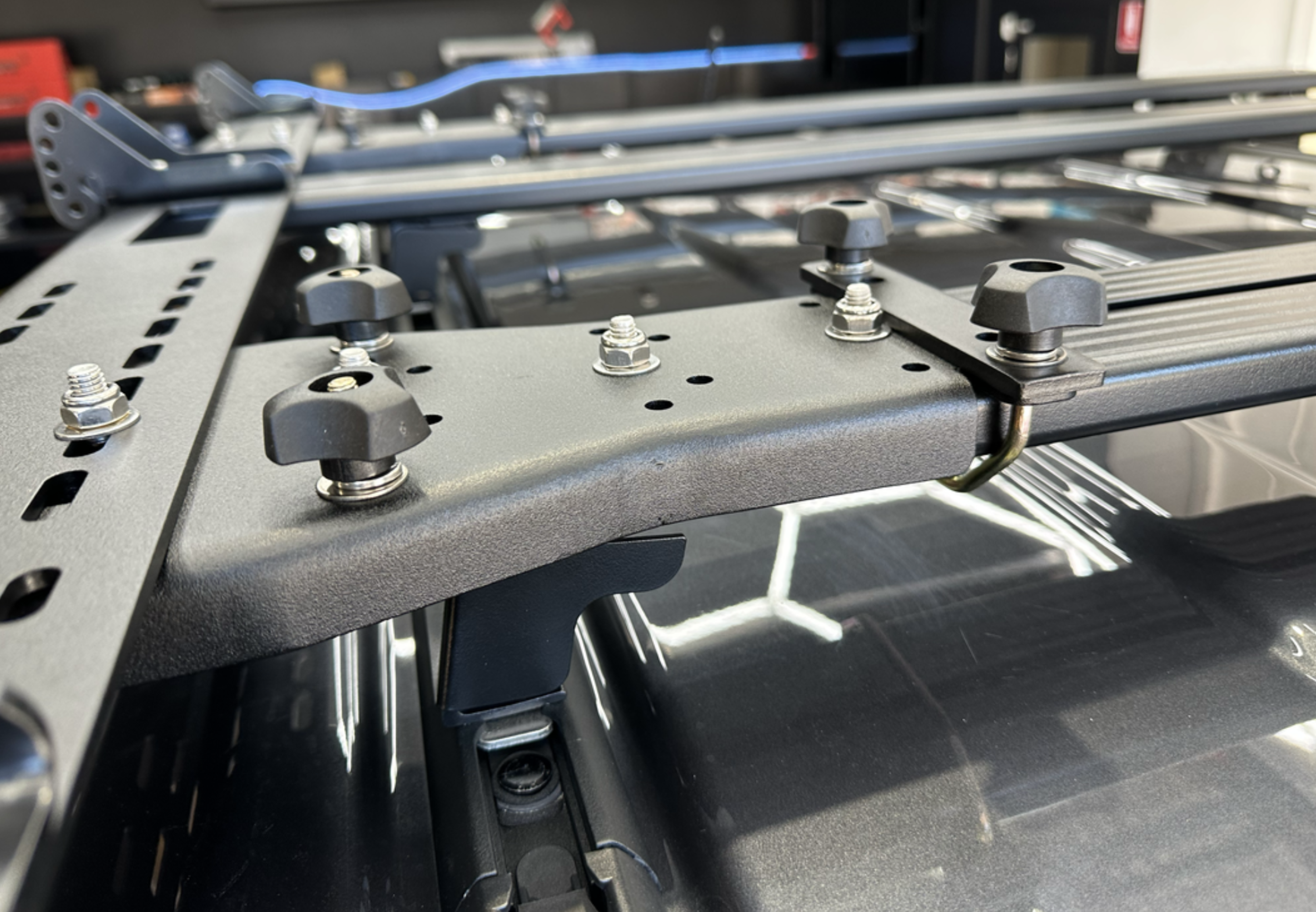
The AWN-XTENDA provides the required support by spreading the load as the awning mount bracket fixing points are extended out to approximately 1350mm. The XTENDA rail attaches to the crossbars via two crossbar mounts and can be fitted to crossbars from Rhino, Thule, Rola, Front Runner and more.
The crossbar mounts bolt on to the multiple fixing slots on the XTENDA rail, to match up with the crossbar spacing on the canopy. The crossbar mounts are then bolted to the “T” slot on the crossbar/load bar such as Front Runner or Alu Cab, or fixed to the crossbars using U-bolts such as the Rhino U-bolt (Part #S280/RUBK/MUBK) for crossbars that don’t have a “T” slot.
The rail extension is manufactured using G350 steel, and the two crossbar mounts are 3mm steel CNC-folded that are fully adjustable to crossbar spacings (from 600mm to 1150mm).
1
The support points are extended out to around 1350mm on an awning extrusion. All parts are laser-cut, CNC-folded, then primed and powder-coated, and the complete product weighs 8kg. The bolts, nuts and washers are 316 stainless.
The AWN-XTENDA is not limited to canopies, as many utes and other SUVs with roof rails use crossbars that can only be spaced out by a metre or so, which is under the required minimum of 1.2m for the larger, popular 270-degree awnings.
One thing Steven highly recommends is installing the internal support frame or braces on the fibreglass or ABS plastic style-canopies if they are available.
“Some canopies would have the structural integrity and don’t require the internal support frames, but if they are available, we advise to install before fitting the awning to the AWN-XTENDA,” he said.
The AWN-EXTNDA can be purchased directly from Offtrax.
It seems the level of vehicles we see at the top end of touring 4×4 builds is only limited by the imagination of their owners, and the talents of the vehicle builders.
While cost-prohibitive to most of us, this is a booming part of the 4×4 world with customers lining up at the workshops building them.
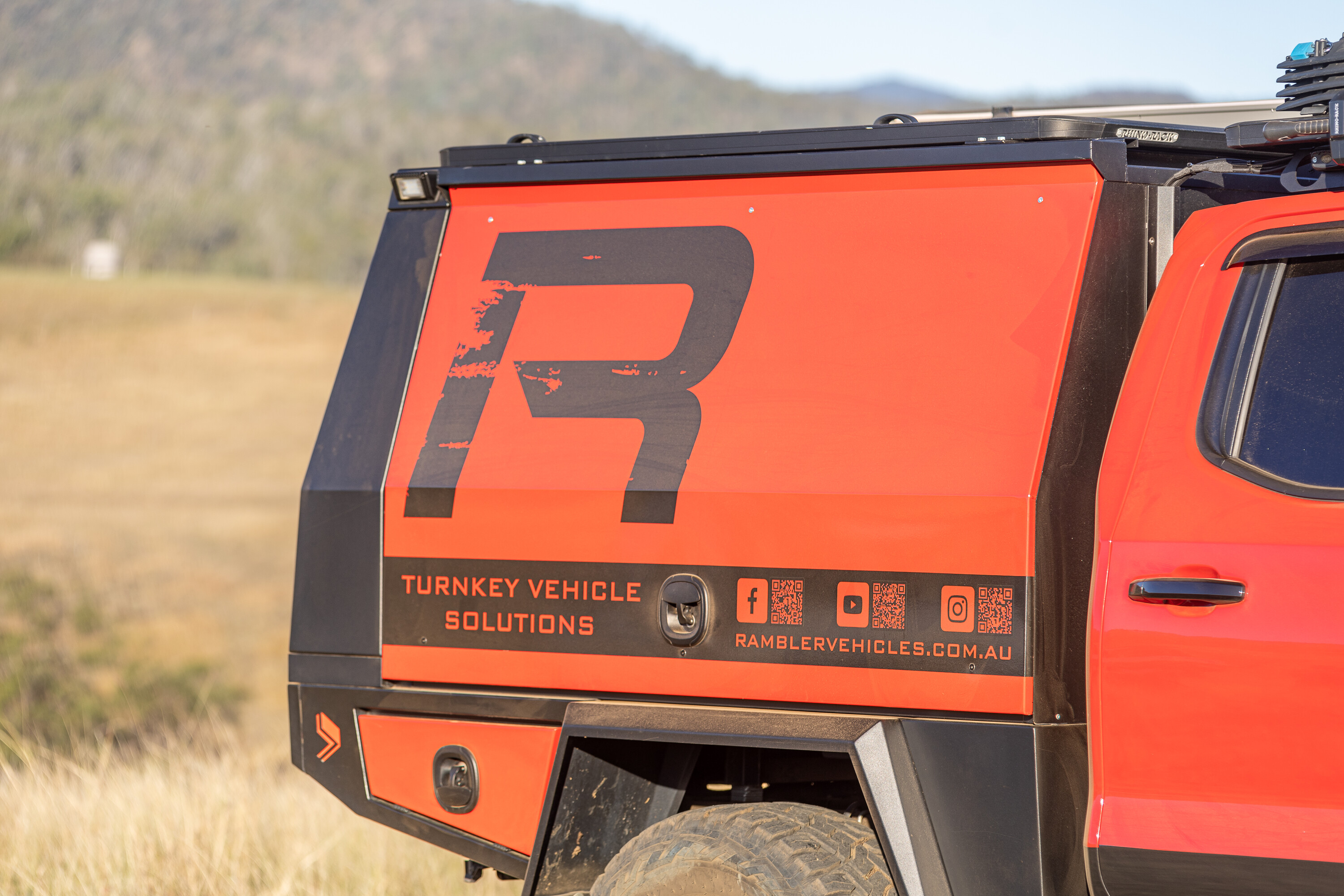
One such workshop that is making all the right moves and creating some exceptional rigs is Brisbane’s Rambler 4×4. We’ve seen plenty of Rambler builds on the pages of 4X4 Australia over the years, ranging from simple touring Isuzu D-MAX utes to chopped and converted LandCruisers costing twice as much as the original purchase price.
Rambler 4×4 maestro, Kris Humphrys, tells us that thereu2019s no limit to his customersu2019 dreams and ideas, and he provides a turn-key solution to put those dreams on the road.
“Most of our customers are looking for all inclusive touring packages,” Kris says. “Most common requirements are GVM/GCM upgrades, interior upgrades – improved comfort in the seats, leather, sound deadening and stereo upgrades – 12-volt battery systems and upright fridges are also a part of most builds.”
1
Rambler is truly a one-stop shop for this style of vehicle build. They talk to the customer about what they want and what they plan to do with the vehicle. They will then source and purchase the vehicle and get the build underway pre-registration if required to meet the SSM (Second Stage of Manufacture) and engineering requirements, before completing the total fit-out.
Finally, Rambler delivers the fully modified, accessorised, built and registered vehicle to the customer just like they are taking delivery from a new car dealership. Kris will even put a big bow on top of it for handover if that’s your thing.
With this well-proven experience in creating turn-key touring 4×4 vehicles for their customers, we turned to Rambler to take a look at some of their latest creations and see what sort of rigs people are asking for and what works best. What makes the ultimate touring 4×4?
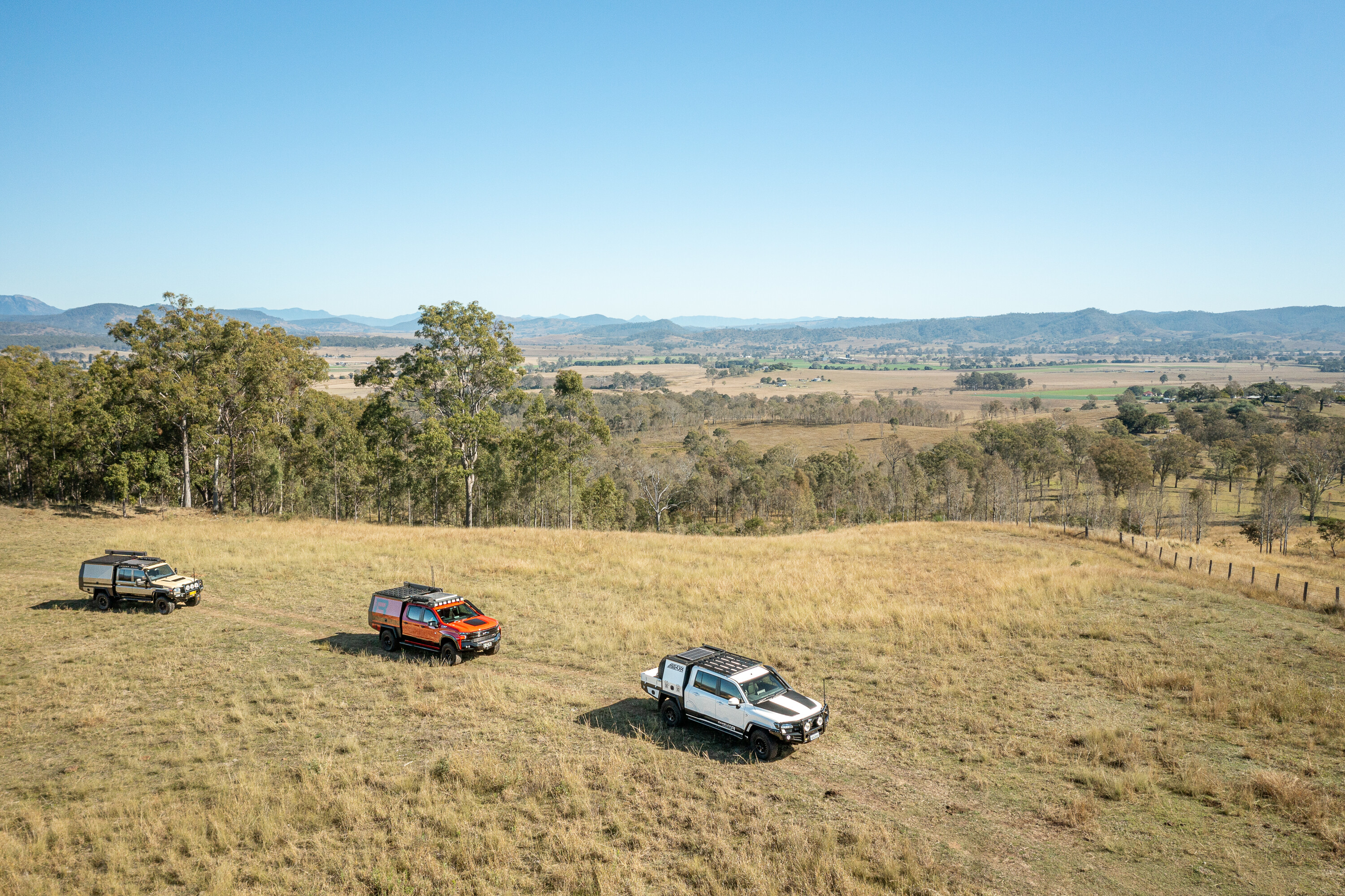
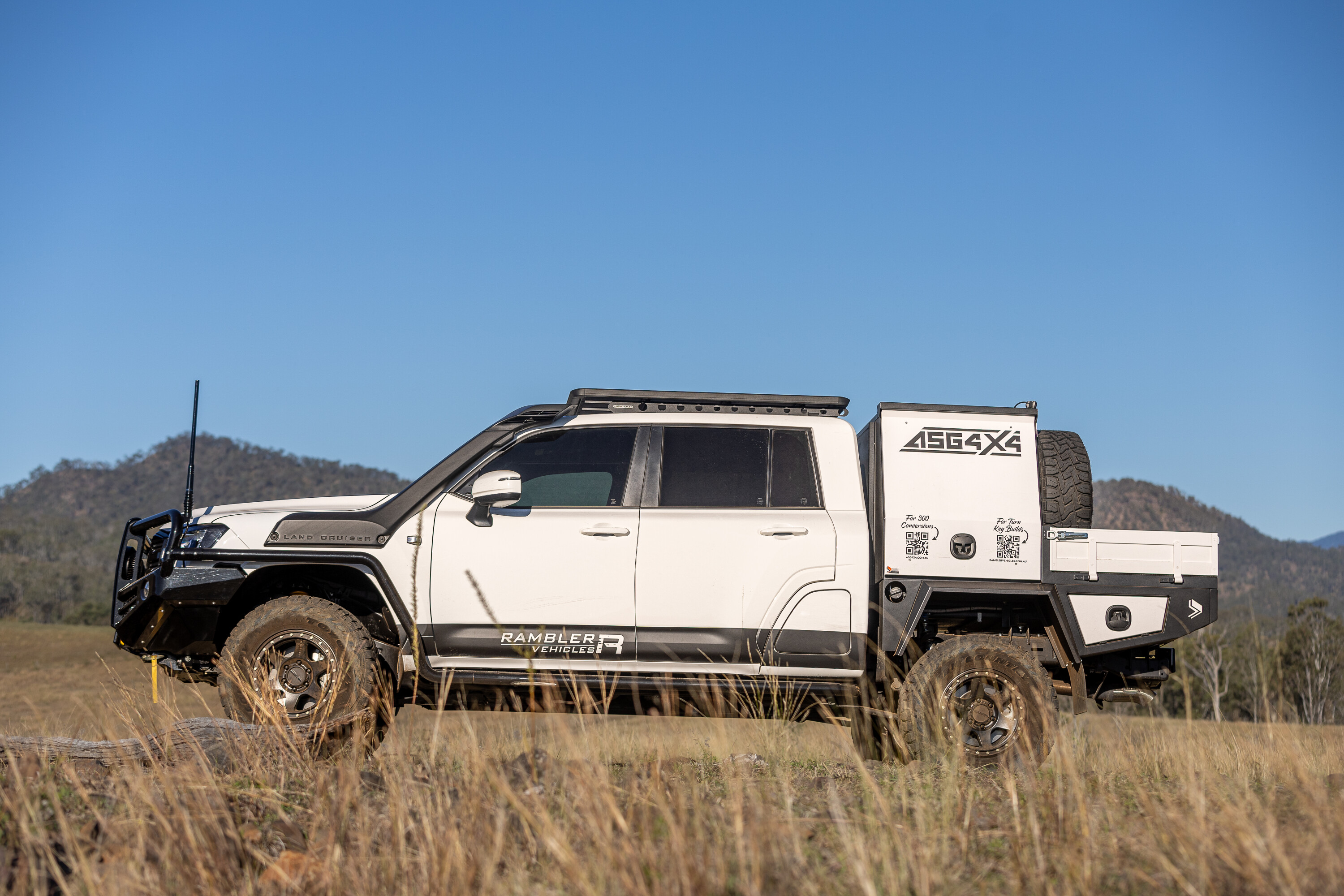
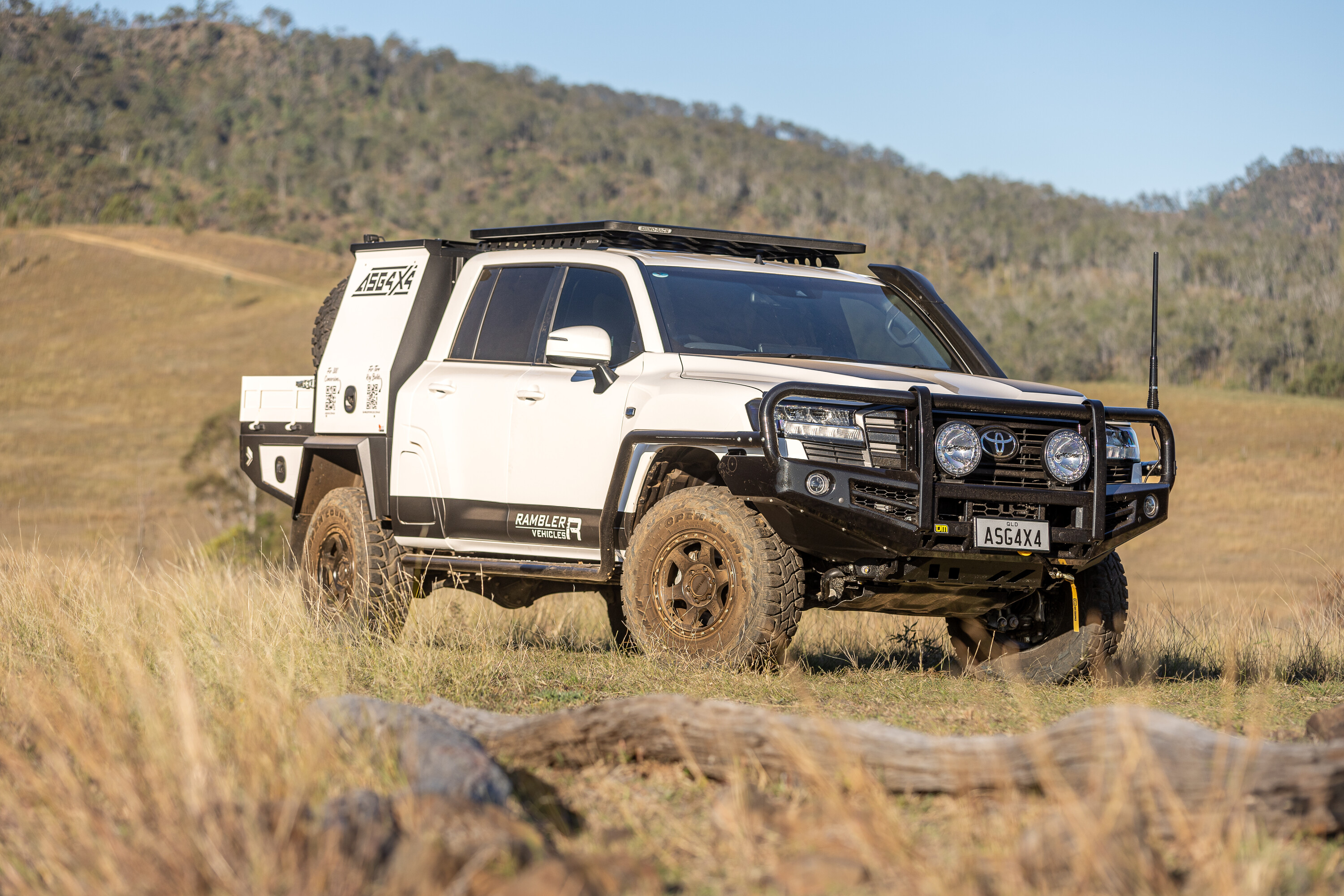
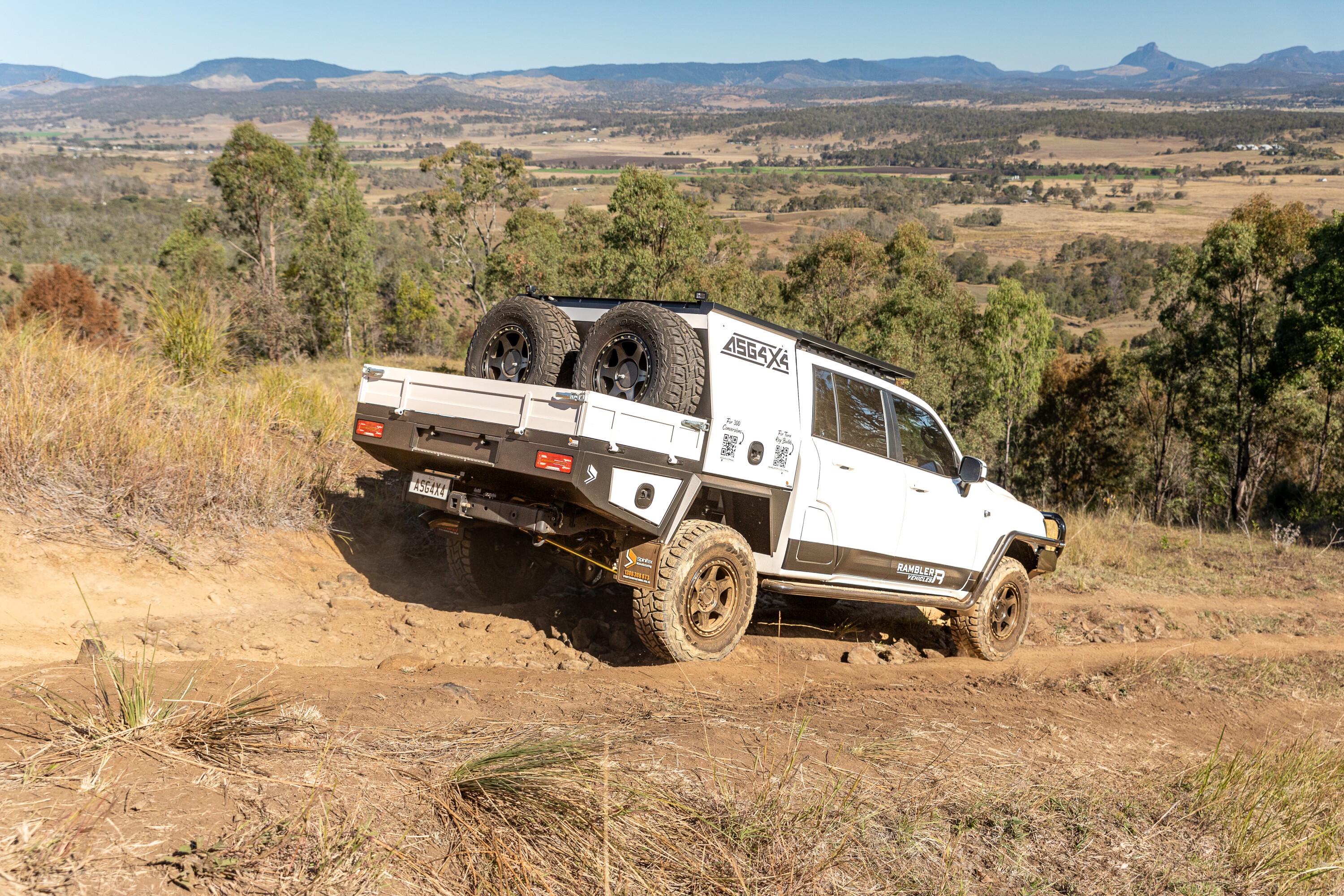
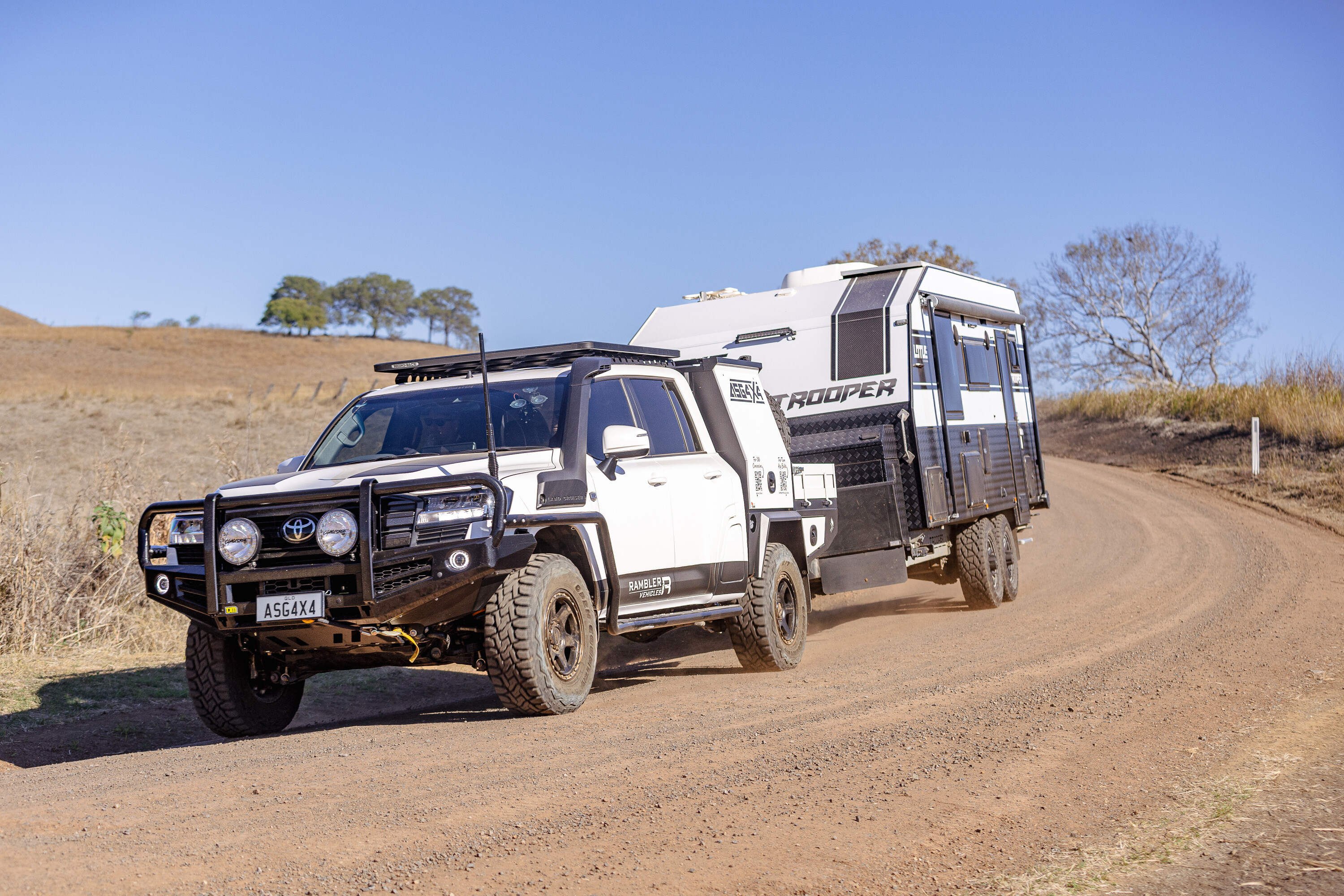
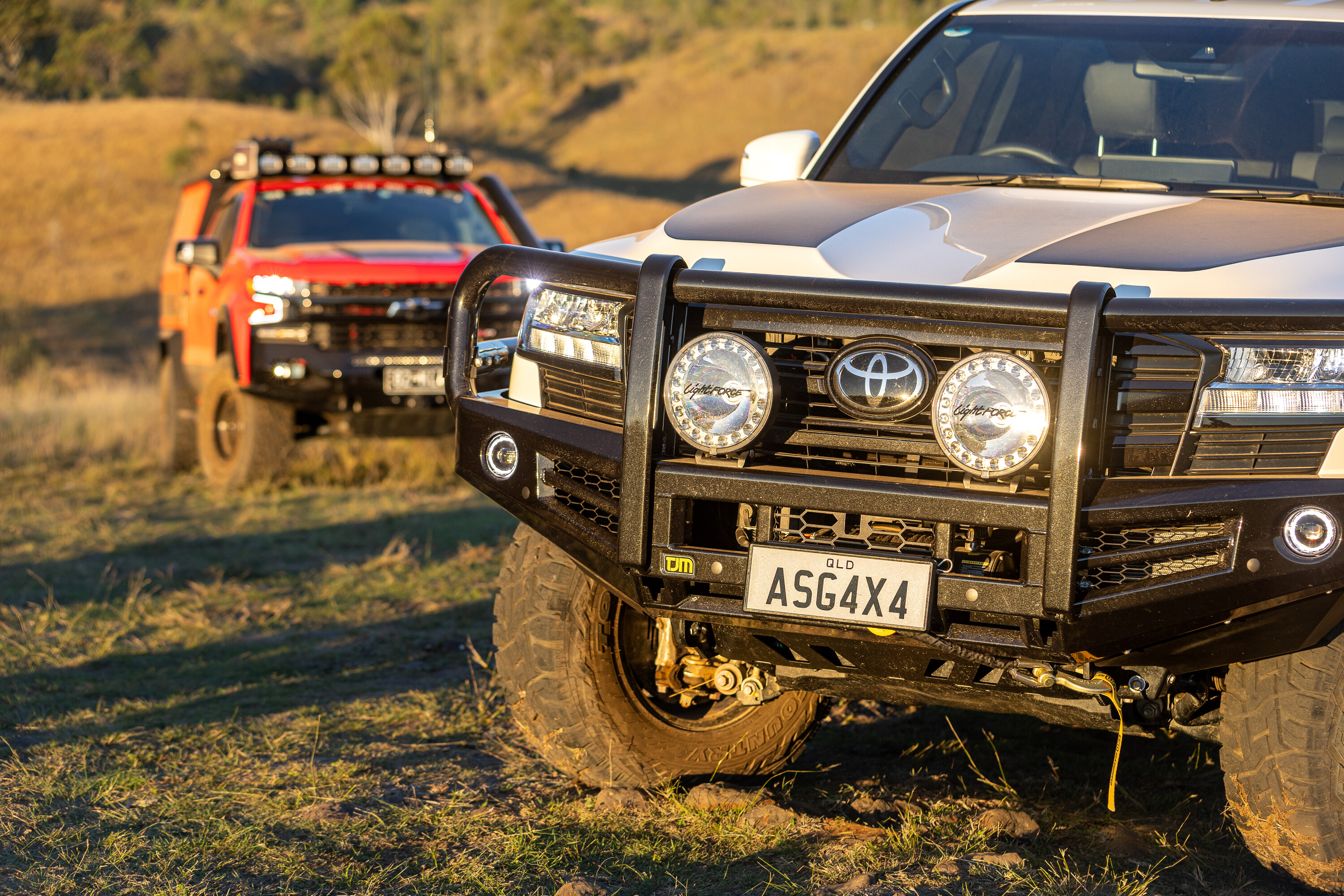
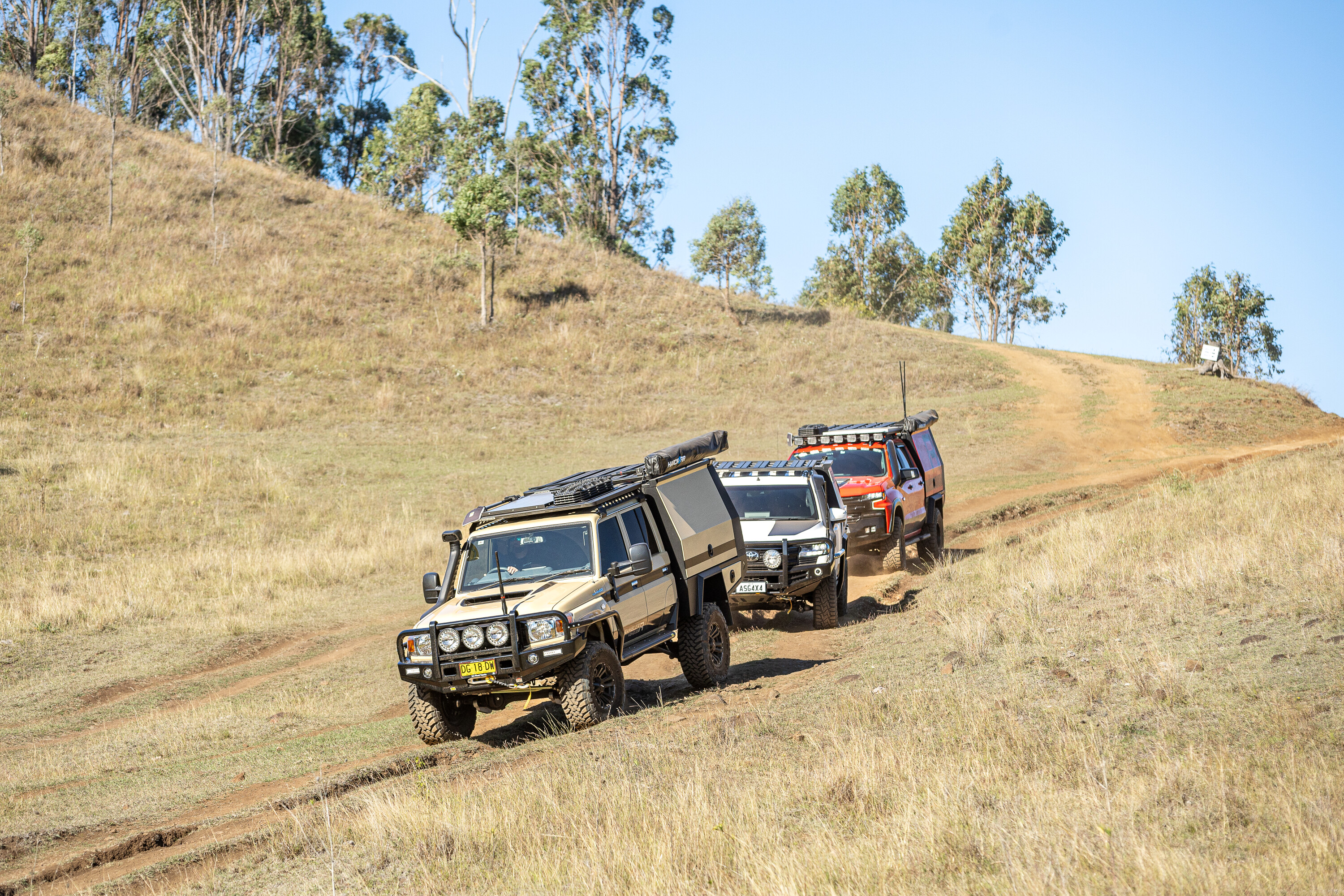
Toyota LandCruisers are always popular options for such builds and we’ve seen a few incredible LC200s that show what is possible. Rambler debuted its first 300 Series double-cab conversion at the 2023 Brisbane 4×4 Show in conjunction with ASG 4×4, and we couldn’t wait to get a closer look at it and see how it drives.
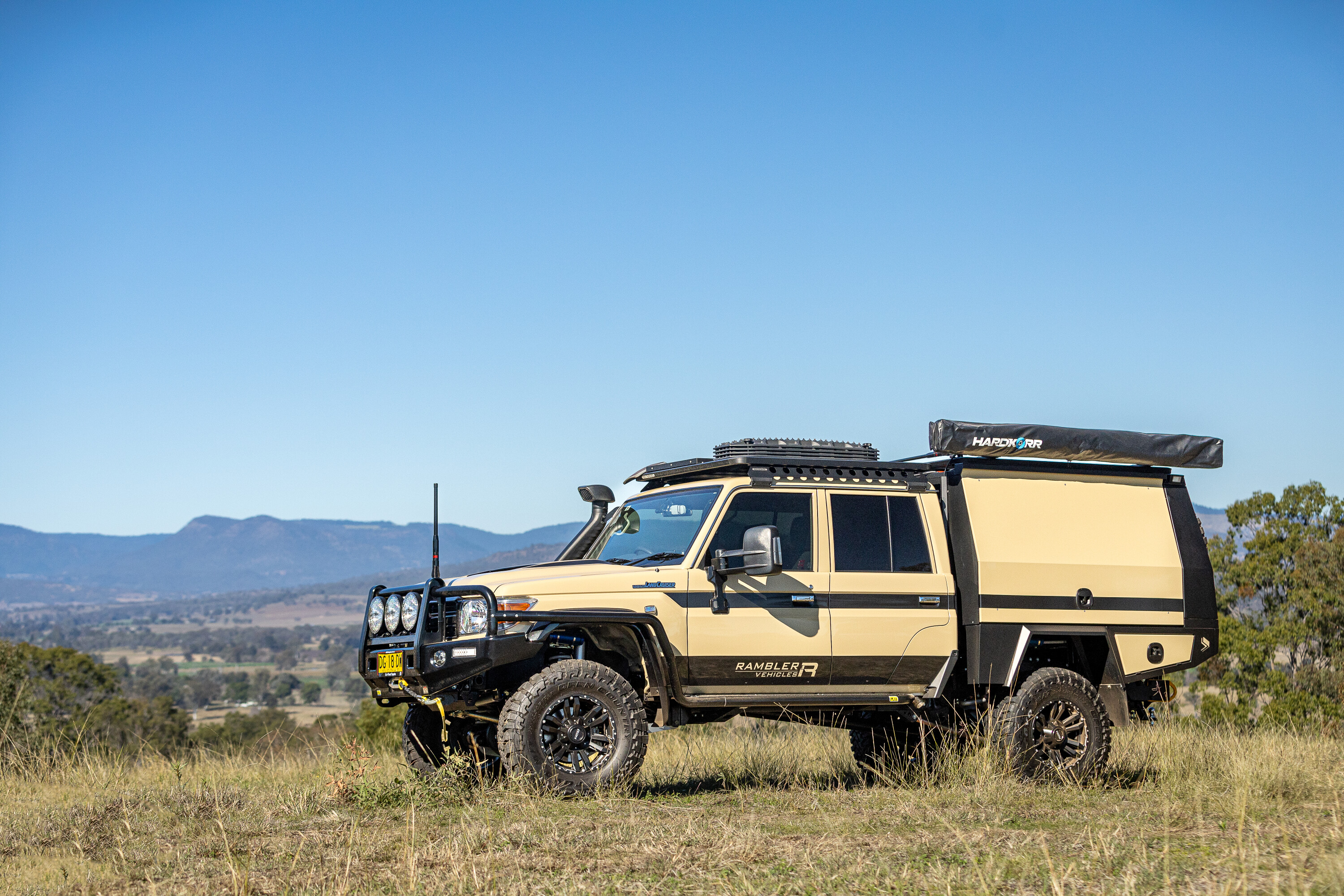
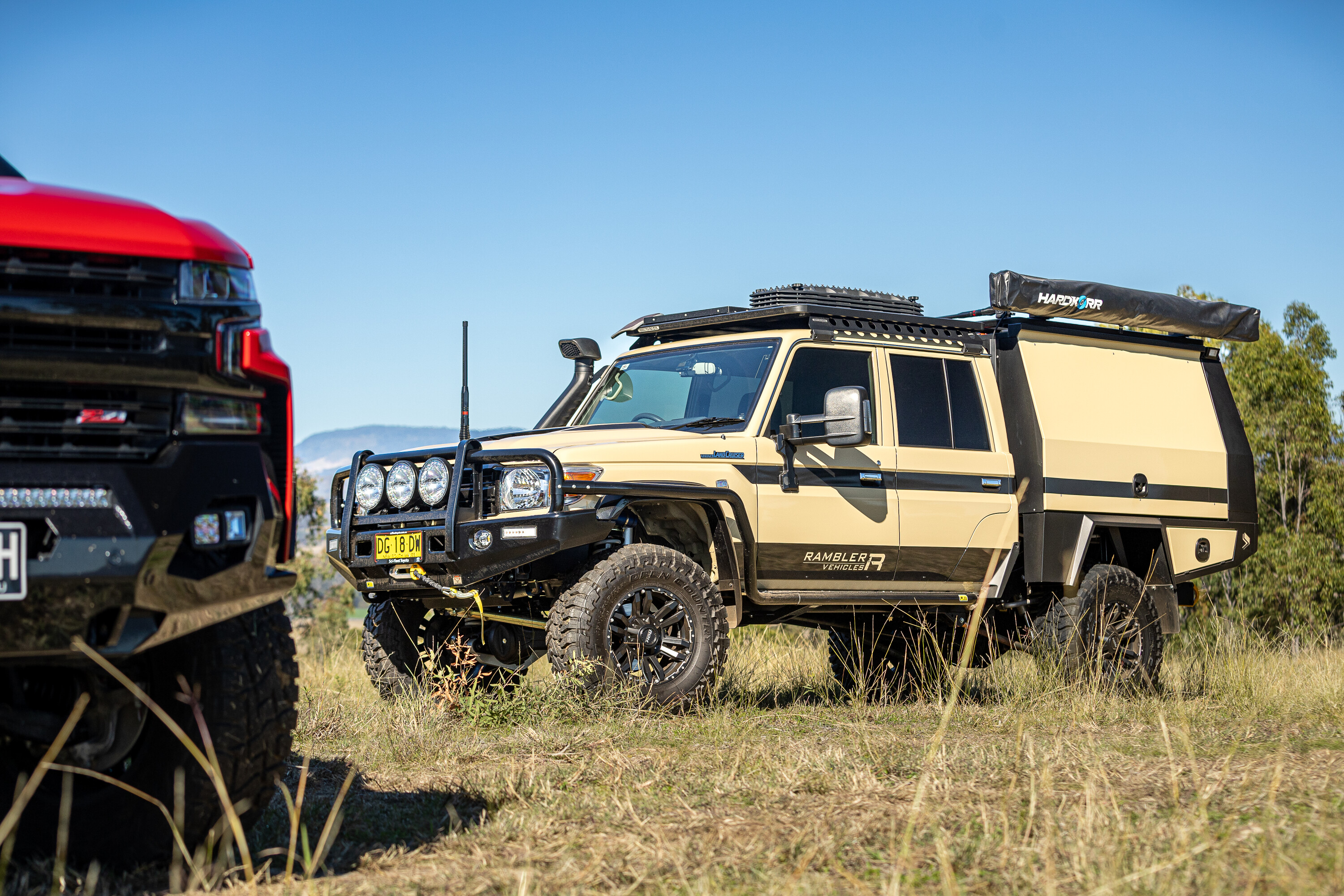
The LandCruiser 79 is the perennial off road touring favourite but making what Toyota gives us fit for purpose can still take a lot of work and modification depending on what the owner wants. Rambler had a perfect example of what is possible with the Toyota workhorse lined up alongside the new 300.
Full-size American pick-up trucks are becoming much more prevalent on Australian bush tracks as third-party remanufacturers bring more models to Australia with factory backing. Rambler has seen this growth as well, and it caters to those wanting a US truck.
1
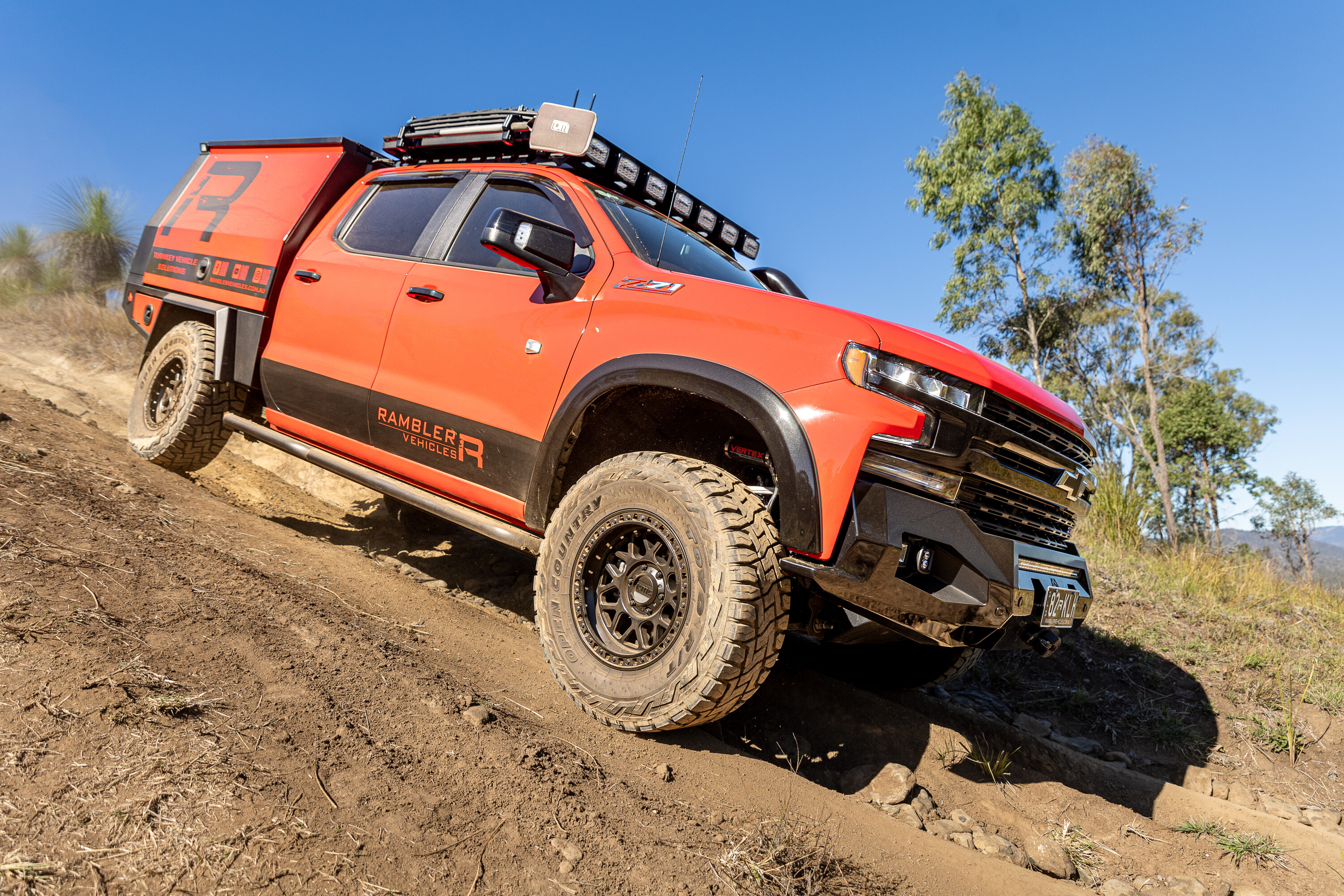
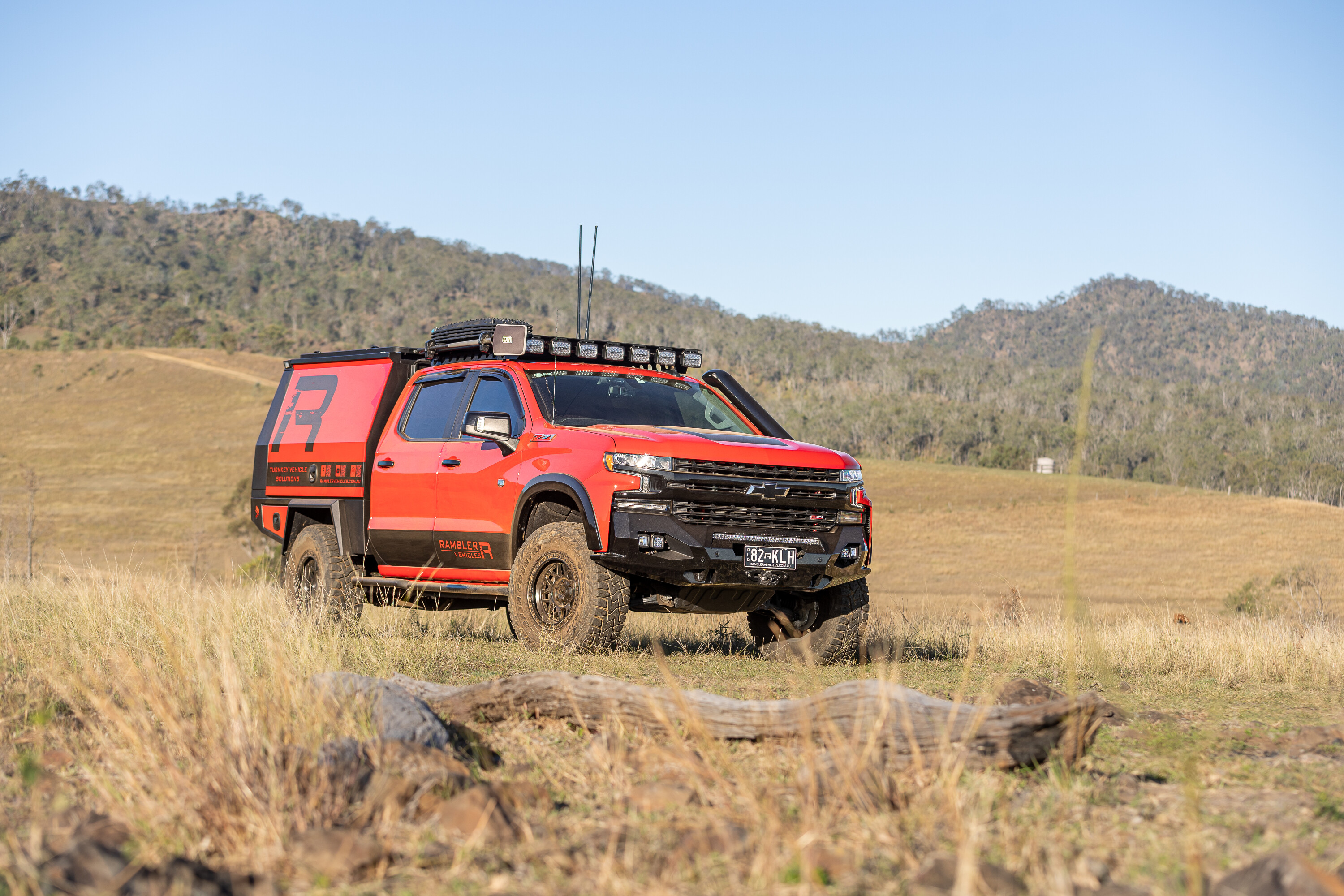
A Chevrolet Silverado Trail Boss was given the Rambler treatment to rectify the deficiencies of the OEM offering, and to provide the counterpoint to the Toyotas in this top-shelf trio.
Make no mistake, these three rigs are all top-shelf offerings, and buyers won’t see any change from $250,000 for any of them, so let’s see how they stack up as touring solutions.
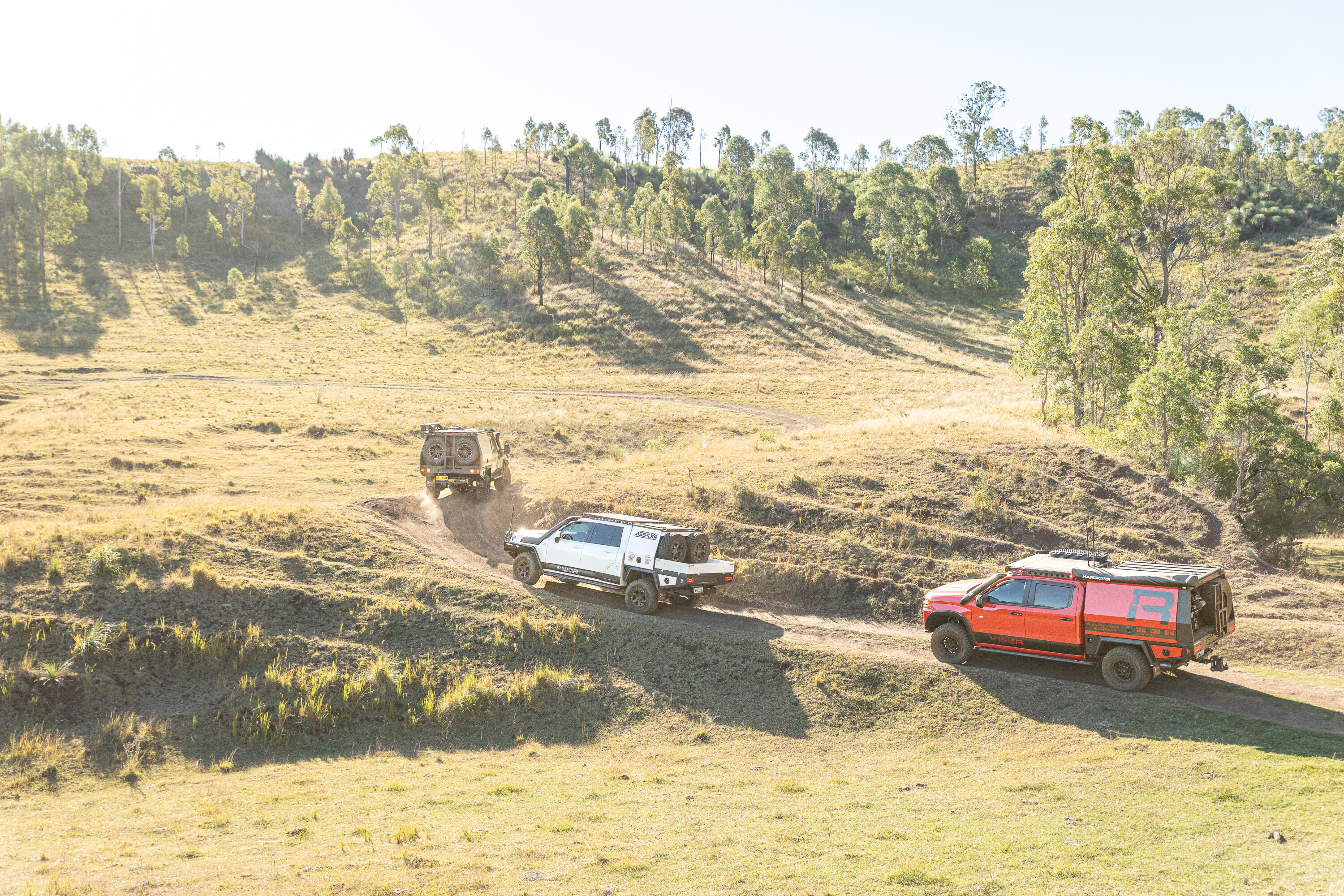
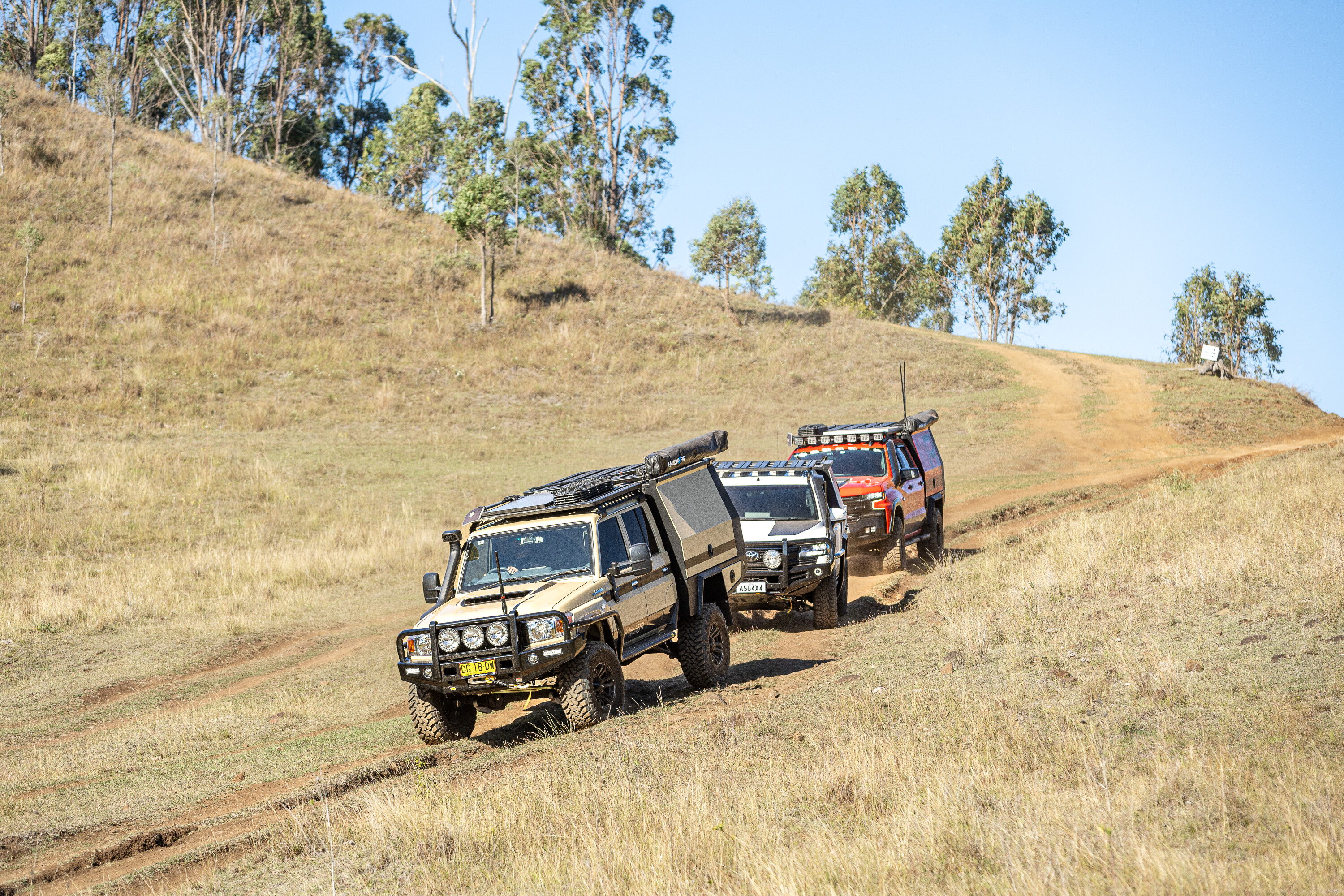
To put these three tourers to the test we spent a few days with them out on south-east Queensland’s Scenic Rim region where we were able to drive them on and off road, including towing with a 3.5-tonne van behind them.
It’s not every day we get the chance to drive three quarter-of-a-million dollars worth of top-notch fourbies out on the tracks, and we could hardly wait to get behind the wheel.
As the newest vehicle in this group, and the first LC300 ute conversion we’d seen, we were super keen to see how it drives.
With its V6 diesel engine and softer styling than the LC200 that preceded it, many potential buyers have questioned if it really does stack up to the 200 and its V8 engine, none more so than owners of converted 200s.
This example was the first 300 to be built by ASG and Rambler, and much of what they have learnt doing similar conversion on 200s was applied again, but of course there are differences between the two models.
This vehicle started life as a base-level LandCruiser GX but even at this specification the start point was a $90,000 wagon.
1
ASG 4×4 offers LandCruiser wagon chassis extensions in three lengths and this one has the longest of them at 650mm, which is added ahead of the rear axle and suspension.
The suspension design remains the same live axle on a multi-link arrangement with coil springs, although the standard springs and shocks have been replaced with TJM XGS components on this rig. Naturally, a longer tailshaft is needed to send drive back to the rear axle and a new one was fabricated to suit.
ASG’s ute conversion starts with the LandCruiser’s interior being stripped out right up to the dashboard before the rear side windows are removed, the back is cut off at the rear wheel arches, and a new panel and rear window are fabricated and fitted to seal the cabin up again. As this vehicle has the long wheelbase chassis extension, small but handy storage units are fabricated into the space previously occupied by the original wheel arches.
1
That’s the basics of the wagon to ute conversion process, and then it is all buttoned up and put back on the road ready for its Spinifex Engineering tray and Mini Body canopy. The Mini Body canopy leaves space behind it to retain a short ute tray, and allows the two spare wheels to be situated closer to the rear axle rather than swinging out behind it.
The Toyota rear axle was also strengthened to allow for a GVM upgrade to make the most of the extra space and carrying capacity.
Speaking of GVM, the ASG 300 is certified at 4499kg, which is a big step up from the standard Toyota wagon’s 3280kg. The GCM is up too, to 7999kg from 6750kg, to accommodate the Cruiser’s standard 3500kg towing capacity.
The additional GVM not only allows for the chassis and body modifications but ensures the 300 can be fully kitted out with a full complement of touring accessories. At around 3380kg on the road, the 300 now has a payload close to 1120kg, which is significantly more than a standard 300 Series wagon… and even more than most double-cab 4×4 utes.
1
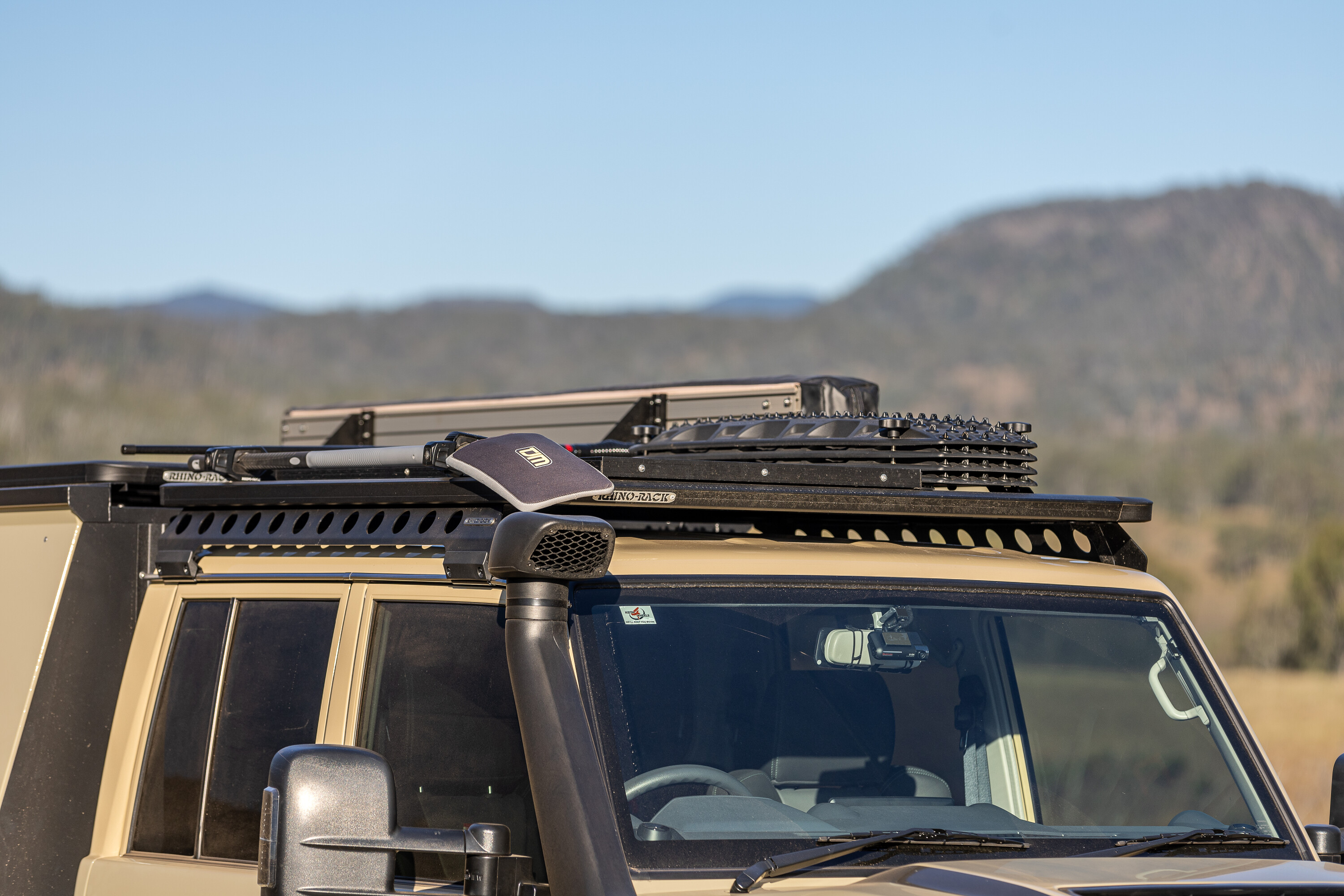
This vehicle is equipped with a TJM bullbar, side rails and steps, a 12,000lb TJM Torq winch, TJM underbody protection, a TJM Airtec snorkel, Rhino-Rack Pioneer platform on backbone mounts, a 150-litre fuel tank from Brown Davis, Lightforce HTX2 driving lights, a Victron 12-volt power system with a pair of Revolution 100Ah lithium batteries and a 120W solar panel on the top of the canopy, and a Bushman upright 130L fridge inside the Spinifex canopy.
There’s also two spare tyres mounted behind the canopy, underbody tool boxes and a myriad of power outlets and other touches that Rambler put into every build.
Of course, there’s a full LED lighting fit-out and the basic GX seats have been reupholstered in leather with extra cushioning and bolstering. A Uniden UHF radio helps with comms while ceramic tinted windows protect from the Queensland sun.
The V6 diesel engine benefits from an ECU retune and a Manta exhaust system while a Superior Engineering diff-drop kit and upper control arms keep all the driveline angles happy with the two-inch taller TJM suspension and 295/70R18 Toyo tyres. A pair of Polyair air bags at the rear help manage loads when towing.
1
So to answer our initial thoughts on how the modified 300 drives, it’s bloody amazing! We drove it from Rambler’s workshop in Brisbane’s southern suburbs out to Beaudesert in peak hour traffic and it was every bit as smooth and easy to drive as a stock Toyota wagon. The Manta exhaust system gives the V6 engine an appealing growl and the driveline remains smooth.
The TJM suspension is firm but compliant and controlled, just as we like it, and the ride quality benefits from the longer wheelbase.
As the suburbs made way for back roads and the speed climbed, the benefits of the quality suspension were more evident and the 300 remained composed on the rougher roads. It was the same story on the dirt tracks of the property we tested on, where the Cruiser felt comfortable and easy to drive.
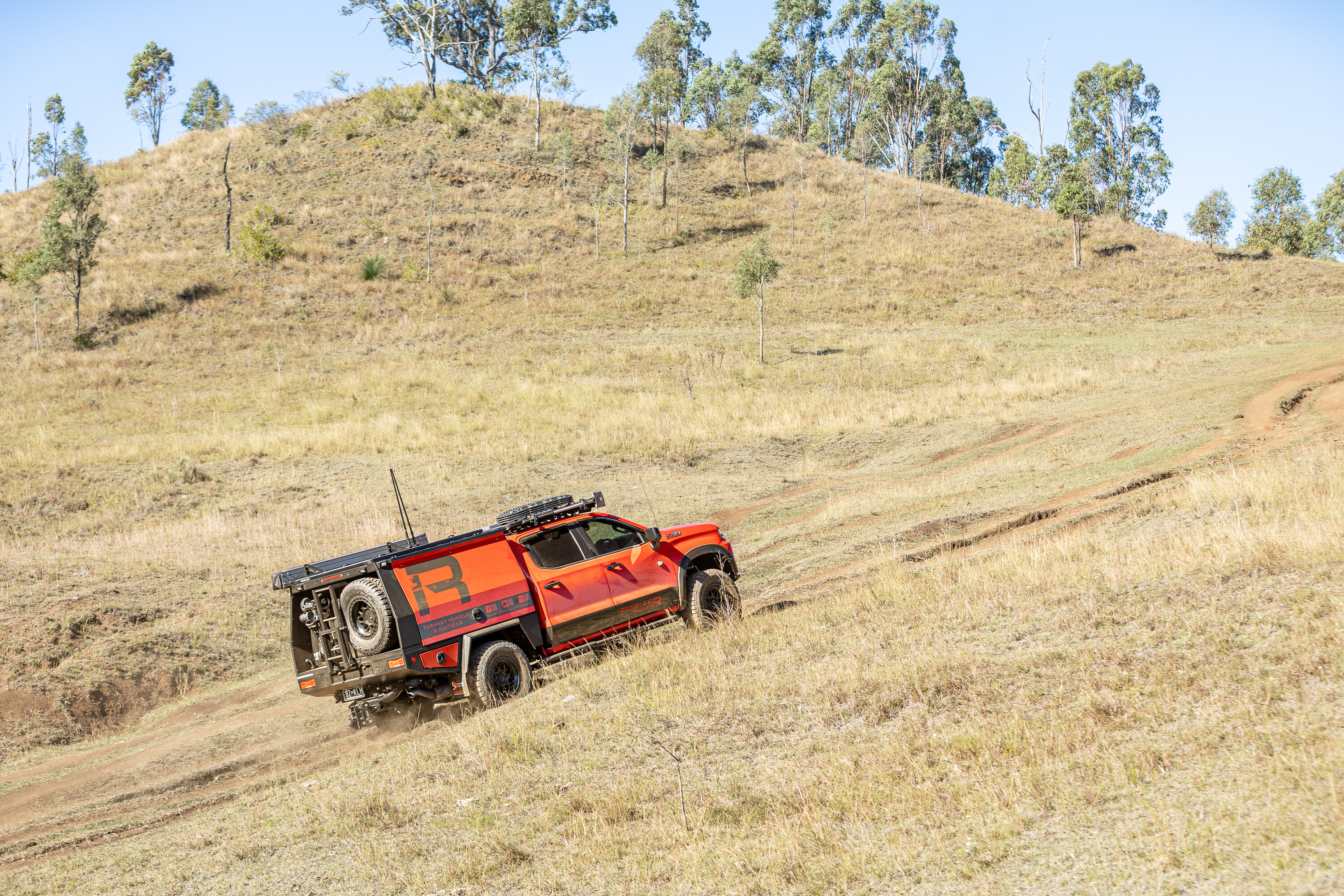
A rutted climb to the scenic highpoint of the property was where we tested the off-road abilities of each vehicle and again the 300 didn’t spin a tyre or put a foot wrong. The added wheelbase was again beneficial in the footprint it gave the Cruiser on the hill, and Toyota’s ETC did a sterling job of controlling the traction. This spec Cruiser is not fitted with any lockers and we relied on the ETC, but if required we could have employed the Crawl Control, which we have found to perform exceptionally well in past tests.
Plenty of folks build this style of vehicle for towing so we thought we should hook up a van to each of the rigs to see how they hauled. The van was Kris Humphrys’ own Lotus 20 off-roader which he tells us weighs in at 3500kg, so right on the limit of the two LandCruisers here.
Our towing loop covered around 30km of country roads including gravel and sealed roads, some pretty crook backroads, and plenty of hills and descents. Kris set up the van on the back of the Cruiser with his drop hitch and recommended settings in the airbags before we hit the road.
On leaving the property the first thing we wanted to know was how would the 300’s V6 engine go with the trailer behind it, and we were pleasantly surprised… impressed even. That guttural roar from the exhaust was more evident under load and with wider throttle openings but still sounded sweet.
Sure, it’s no V8, but it’s not an offensive sound at all. Pulling power was impressive and the 10-speed auto did a smooth job of shifting through the ratios and both up and down as speed varied. No complaints at all on the performance of the 300’s drivetrain up hills or down dales.
The chassis performed superbly too, with the extra wheelbase and airbags managing the weight on the back over uneven terrain and rough roads. The ride was comfortable and composed and capped off what was a polished performance by the new Cruiser.
The LandCruiser 70 Series has been the sweetheart of the off-road touring crowd for almost 40 years thanks to its rugged construction, no-frills design and get-on-with-the-job abilities.
Ongoing evolution that saw the introduction of a coil sprung front axle and a V8 engine only cemented its position and it remains a perennial favourite. That doesn’t mean it can’t be improved upon, and the 70 is one of the most modified 4x4s on the market today.
This LC79 double-cab is no exception as the total cost of its modifications and accessories tally up to twice that of the original purchase price. Do the maths and you’ll figure that this is a big dollar farm truck!
Starting with a trip to ASG 4×4’s Toowoomba engineering facility the Cruiser had its chassis cut and an additional 300mm added to the wheelbase to improve stability, ride quality and load-carrying ability.
1
To improve the handling and ride quality the rear axle was replaced with a wider one, correcting the front to rear wheel track differentiation, and the old leaf spring setup was turfed out in favour of a coil-conversion kit from Superior Engineering. This is a full weld-in kit that includes upper and lower arms and a Panhard rod, coil springs and reinforced coil mounts and chassis, and a rear swaybar and its mounts.
The rear-end conversion was installed with a Superior Engineering four-inch suspension kit that includes remote reservoir shocks, coils, billet front arms and heavy duty steering arms. Superior’s brake upgrade kit was also added to improve stopping power.
With these chassis and suspension modifications the 79 was re-rated with a 4000kg GVM (up from 3400kg on a 2022 model pre-upgrade model).
1
The major modifications didn’t end there with a further step toward modernity coming with an automatic transmission conversion. This conversion from Wholesale Automatics in Melbourne uses the Toyota six-speed auto which mates seamlessly and works well behind the single-turbo 1VD engine.
The engine itself copped a bigger turbocharger and injectors, a PWR top-mount intercooler, Legendex exhaust system and an ECU tune to make the most of the new hardware. An Accushift controller allows tuning of the transmission to optimise the combo.
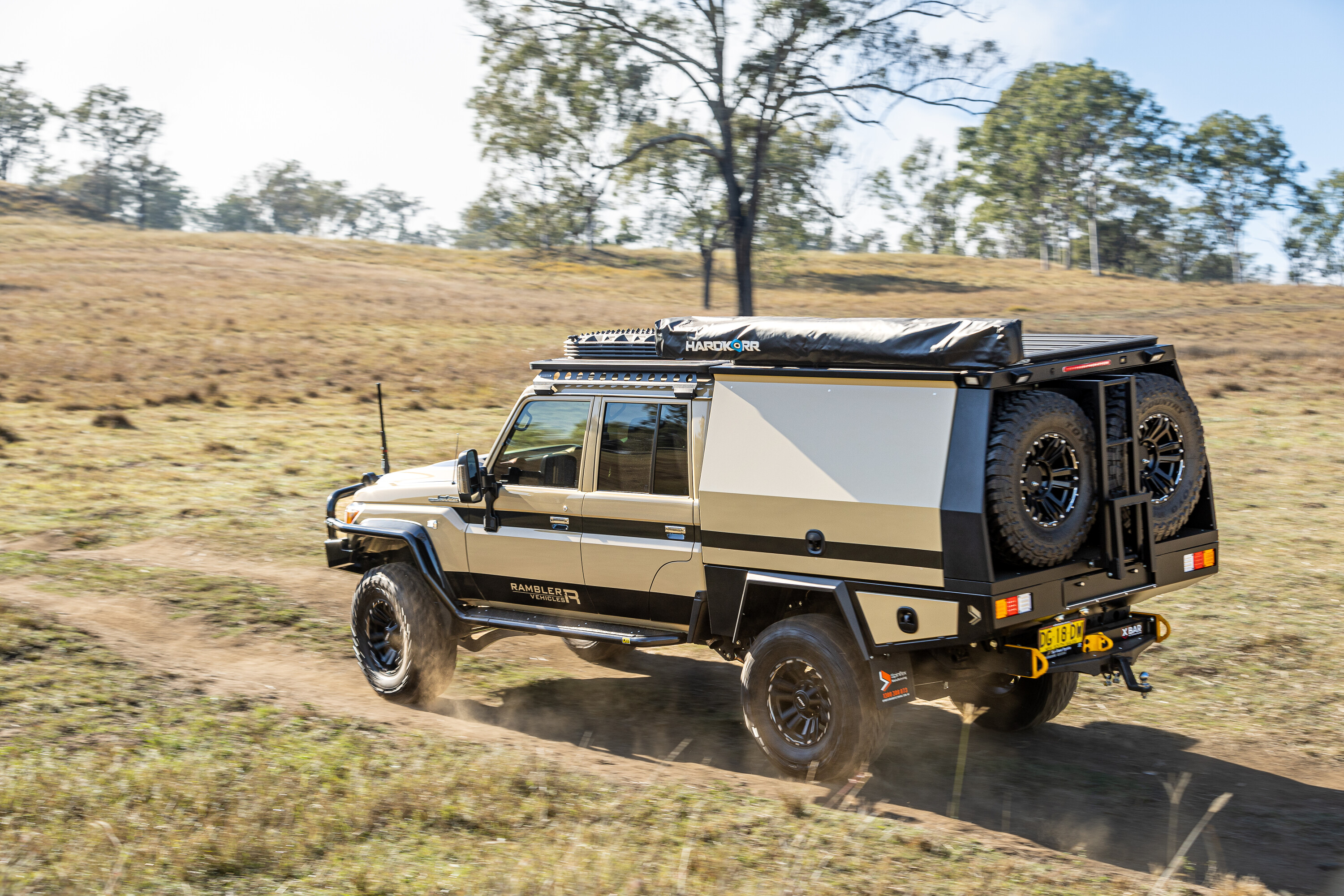
Once the chassis and driveline modifications were in place the accessories could go on, including a Midi Body canopy and tray from Spinifex plus underbody storage boxes, rear ladder, RV Storage drawers and a Bushman 130L upright fridge.
The 12-volt power system consists of an Enerdrive DC-DC charger and inverter, a 200Ah lithium battery and a roof-mounted solar panel.
1
Protection-wise, there’s a TJM bulbar, side rails and steps combo, while a Hayman Reese X-Bar had its recovery points powder-coated yellow before being bolted under the back. TJM again supplied the winch and intake snorkel, while a trio of Lightforce’s hybrid HTX2 lights are mounted on the bullbar.
The 70 Series interior is known to be very basic and workman-like but the Rambler team did its best to change that on this rig: after liberal soundproofing was installed under the carpet, the seats were re-bolstered and trimmed in leather; a Cruiser Consoles centre console surrounds the automatic transmission shifter and provides some extra storage; and a full Alpine sound system and head unit provide a huge upgrade over the standard audio equipment.
You could say that the team at Rambler did just about everything possible to transform this LandCruiser 79 from the working-class truck it was when Toyota built it to the top-tier touring rig that it is now. Yet all the modifications and accessories have been fitted to add to its abilities without taking anything away from its tough-truck roots.
And that’s exactly how it translates when you get behind the wheel of the 79. It’s tall and narrow with its huge flat glasshouse surrounding the cabin but the seats, trim and sound system tell you that this 70 is something else.
The coil-sprung four-link rear-end is a lot more compliant than the OE leaf-spring setup allowing for more axle articulation and, as a result, improved passenger comfort. The Superior Engineering adjustable shocks help a lot here as well.
This Cruiser walked over bumps, ruts and obstacles around the farm property rather than bouncing over them the way a standard 79 would tend to. It slinked its way up the rutted hillclimb without raising a sweat but still lifted a front wheel as the rear dropped into the rut.
That tall cab and big glasshouse certainly gives the best driver vision among this trio, with an excellent view over the bonnet on the descent. The automatic transmission still retains the 79s impressive engine braking for control when descending steep hills.
On the open road the 79 is far better mannered at highway speeds than a standard Cruiser. It’s composed and well planted on the road and doesn’t buck as much over humps and potholes. We’re sure that the sound of the V8 engine bellowing out of the side-exit exhaust could be heard clear across the Scenic Rim as we toured around.
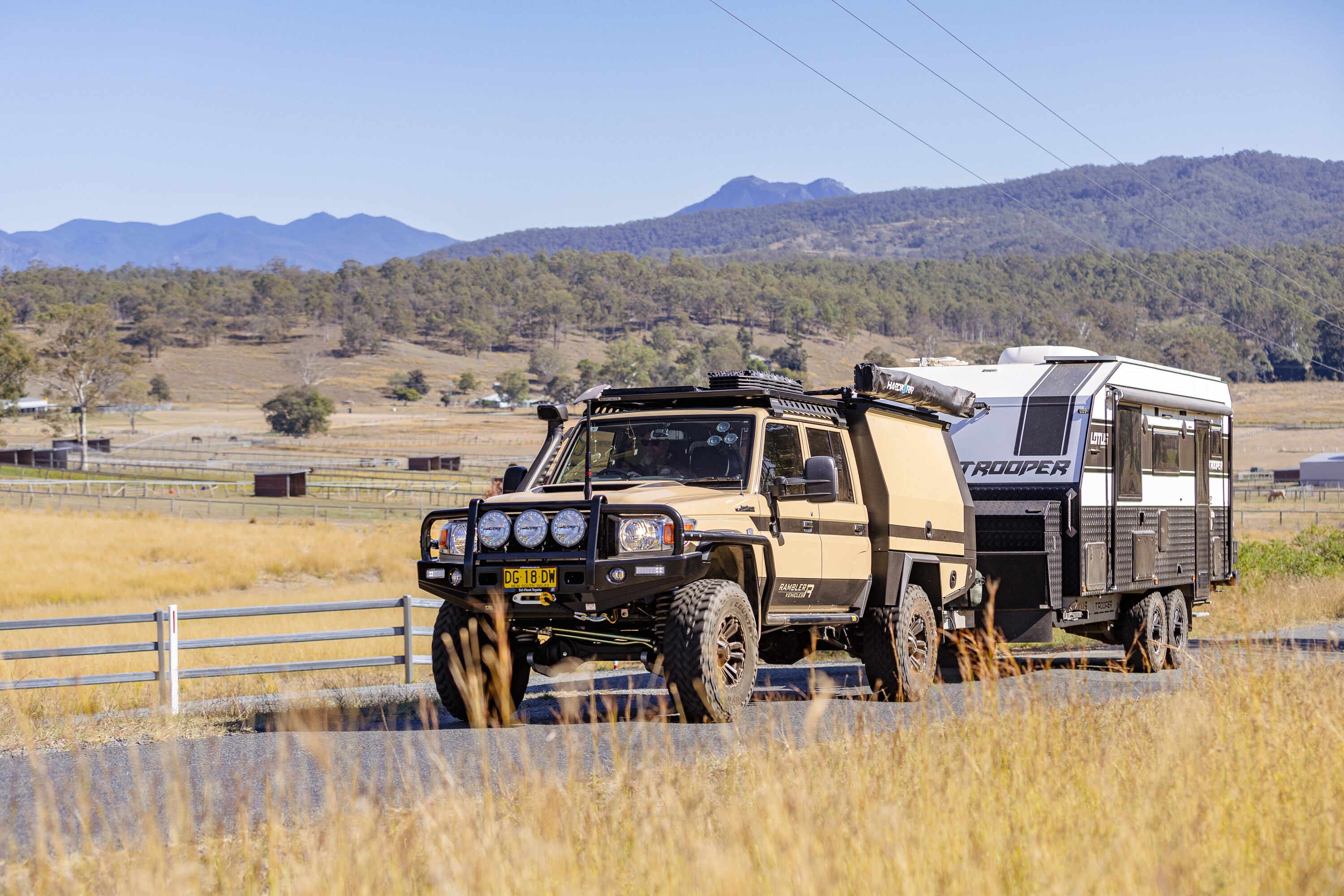
We didn’t expect a strong towing performance from the 79 as it was never set up to haul a trailer. It doesn’t have airbags to help its coil-converted rear-end and Kris had to fit a Bluetooth brake controller when we hitched his van up behind it. But it did perform better than we all expected.
1
Yes, it dropped heavily in the back with the van attached, and the van pushed and bucked the rear-end over rough roads more than the other two rigs on this test, but it didn’t fare too bad at all. Certainly nothing that couldn’t be easily fixed if you were buying this vehicle for regular towing duties.
Something you would want to fix though is the roar of the exhaust. Sure, it’s sweet-sounding at first but with the extra load on and more throttle input required, the aural disturbance soon became an annoyance, and I wouldn’t want to put up with it day after day on long trips.
The V8 provides plenty of power and the auto transmission is well matched to it both when towing and not. A small gripe with the auto when towing is that it was reluctant to manually shift back when descending a hill when asked to. The Toyota shifter offers fore and aft manual shifting but it wouldn’t always shift down when we requested. Perhaps this is something that could be sorted in the tuning.
The Rambler 79 is an exceptional off-road touring vehicle and does just about everything you could ever want of an off road truck. Sure it’s not the best here for towing but that’s not what it was built for. I still find it hard to think about the fact it now costs three times as much as it originally did when sold new by Toyota.
The American interloper in this trio certainly takes the brash Yankee persona and turns it up to 11!
From its bright red paint to its booming petrol V8 the big Chev sure does make its presence felt among the Toyota twins. It’s unfortunate that you can’t get the Trail Boss model in Australia any more, as it was the most affordable and, as we said at the time, the best model in the local line-up. At $105,000 it represented a better buy than the more luxurious LTZ, which will now set you back closer to $120K from GMSV, and more again for the ZR2.
Aside from being the odd one out among the Toyotas, and the only vehicle here with a petrol engine, the other big difference with the Silverado build was that it didn’t start with a chassis extension as the two LandCruisers required.
The Silverado 1500 is already a big rig and its 3745mm standard wheelbase is 565mm longer than that of the standard LC79 double-cab, and 895mm longer than a stock LC300. It’s even longer between the axles than both of these stretched Cruisers, making it a far better platform for a comfortable, stable tourer able to carry big loads over long distances.
1
Where the 1500 has always fallen short is in its standard GVM, but Rambler has fixed this with its Chev builds. The standard GVM is 3210kg, leaving just a 752kg payload for the LT Trail Boss, which is hardly enough for a full-on touring setup with all the fruit. If you were to add a 4500kg trailer into the mix, with around 450kg on the tow ball, you’d hardly be left with much GCM at all.
Rambler’s fix was to team up with Touring Solutions Australia to develop a suitable GVM and GCM upgrade kit, and they have succeeded with this vehicle now approved with a 4499kg GVM and a 8999kg GCM.
As mentioned, the Silverado in even standard trim can tow up to 4500kg when using a 70mm tow ball, or other suitably rated hitch, and this is something no LandCruiser can legally accomplish. Full-size American pick-up trucks really are the kings when it comes to towing.
To achieve the higher GVM a heavier duty suspension package was developed for the 1500 using a kit from Rough Country featuring the brand’s premium Vertex 2.5-inch, adjustable remote reservoir shocks, struts and upper control arms at the front, and a rear leaf pack from EFS with airbags for load management. This new suspension package was enough to get the rating up to what Rambler wanted.
And the suspension package works well; the Chev rides and handles like you’d never expect of an American truck. The springs more than manage the weight while shocks do a stellar job of controlling it all.
Driving the 1500 around the farm property, the Chev feels softer in its suspension than the Cruisers, but it is always controlled and well managed. This makes it comfortable and capable on rougher tracks.
On the rutted low-range climb, the Chev was a bit harder to place as the view over the big bonnet (should I say hood?) is not so good. At the trickiest point on the track the wider wheel track saw the near-side rear wheel drop into the rut which in turn picked up the driver’s front, halting progress until the auto-locking rear differential kicked in to push forward again. It’s a capable off-road vehicle but its size requires a bit more care with where you place it on tracks to get you through.
Where the 1500 really excels is on the more open tracks where you can open up that 6.2-litre V8 and have some fun. The suspension package really comes into its own when you push it on the tracks as well, controlling the size and mass very well, allowing you to enjoy the drive.
1
There’s a lot to like about the V8 and 10-speed auto driveline in the Chev. It might suck petrol instead of diesel but with 623Nm of torque in standard trim it’s never wanting for grunt, and the 313kW power peak is nothing to be sneezed at either.
Speaking of petrol, the Chev likes a bit of it, so there’s a 185-litre Brown Davis fuel tank tucked underneath where you’ll also find a full Manta exhaust system that sounds beautiful, and never annoying like that on the 79.
This is Kris’s own car so with the suspension and GVM requirements sorted out he was able to set the Chev up just the way he likes it, and for towing his van.
Of course there’s a Spinifex Manufacturing Midi Body canopy and underside storage boxes on the back, and inside it are the ever-present Bushman 130L fridge and a comprehensive 12-volt system, this one featuring Redarc Redvision products and a 240Ah lithium battery.
There’s also a full Spinifex slide-out pantry with a sink, oven, induction cooktop, 70-litre water tank, coffee machine and sound system on one side, and RV Storage drawers on the other, with open space for storage.
1
A Rhino-Rack Pioneer platform on the canopy mounts an awning while on the back wall are the spare wheel and a Pro Eagle trolley jack, mounted where it is out of the way while still being easy to access when needed.
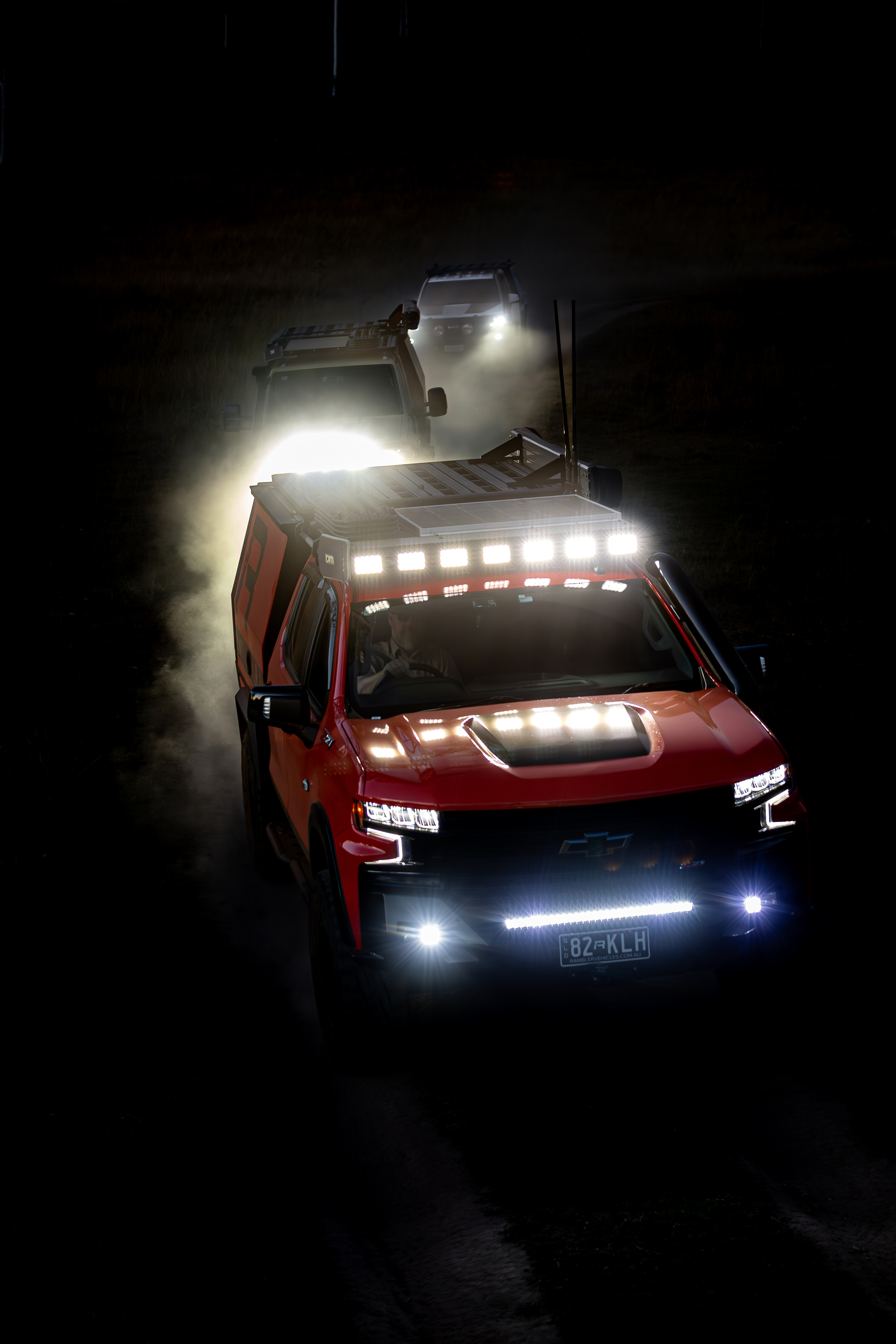
Another Pioneer platform holds the solar panel, a shovel and some Maxtrax atop the cabin, with a sextet of Lightforce Striker lights across the front. There’s also a quartet of Rok lights mounted in the Fab Fours front bar, as well as a 20-inch Viper lightbar. Kris obviously likes his Australian-made Lightforce gear!
As the Silverado is Kris’s rig, and is set up to tow his caravan, it’s no surprise that it does the job so well; effortless performance from the V8 engine and 10-speed transmission, exemplary behaviour from the cleverly developed suspension package, and big comfy seats make this a top tow-rig.
We’d expect the V8 petrol engine to use more fuel than the V6 diesel in the 300 but the cost of that could balance out with the price of unleaded fuel cheaper than diesel, and long-term servicing costs less than a modern diesel engine.
Take three exceptionally equipped and well constructed 4x4s, each costing more than $250,000, and all designed to fulfil a touring-vehicle brief, and you know it will be a tough choice to pick a winner.
While they were all designed to do a similar task they each go about it in different ways, and each have their strong points and advantages.
The LandCruiser 79 is the pick of the bunch for off-road work, and certainly so if you want to explore some of the more difficult terrain around Australia. The Superior Engineering coil conversion, auto transmission and touring mods make it better all round for this use, and you know it’s going to be the most solid rig out of this trio. As someone who owns a 70 series, my heart draws me to this build, and I’d have it in my shed anytime.
1
The Silverado is beast in every regard and if you were going to be travelling with the family on board, neither of the Toyotas can match it for interior space, comfort and features; trust us, your kids riding in the back will thank you. Nor can they match it for towing capacity, with its big 4500kg rating. The modifications to it, including the all important GVM/GCM increase, transform this Silverado into a formidable on- and off-road tourer. There’s a lot to love about the big red Chev!
A combination of refinement and capability make the LandCruiser 300 the winner here though. Again, the improvements made to it by Rambler and ASG 4×4 amplify all its strong points… with no negative impacts. On test it towed superbly, it drove up the rutted low-range climb easier than the other two, and it does it all with a level of refinement, equipment and safety that put it a class above the other two rigs here. I bet it would be the most fuel efficient of the three rigs too.
With a touring 4×4 that you’re going to be doing lap of the map in, you want that breadth of capabilities, to accommodate both passengers and kit securely, and the ability to take on all tracks and challenges with confidence, and the Rambler 300 delivers just that.
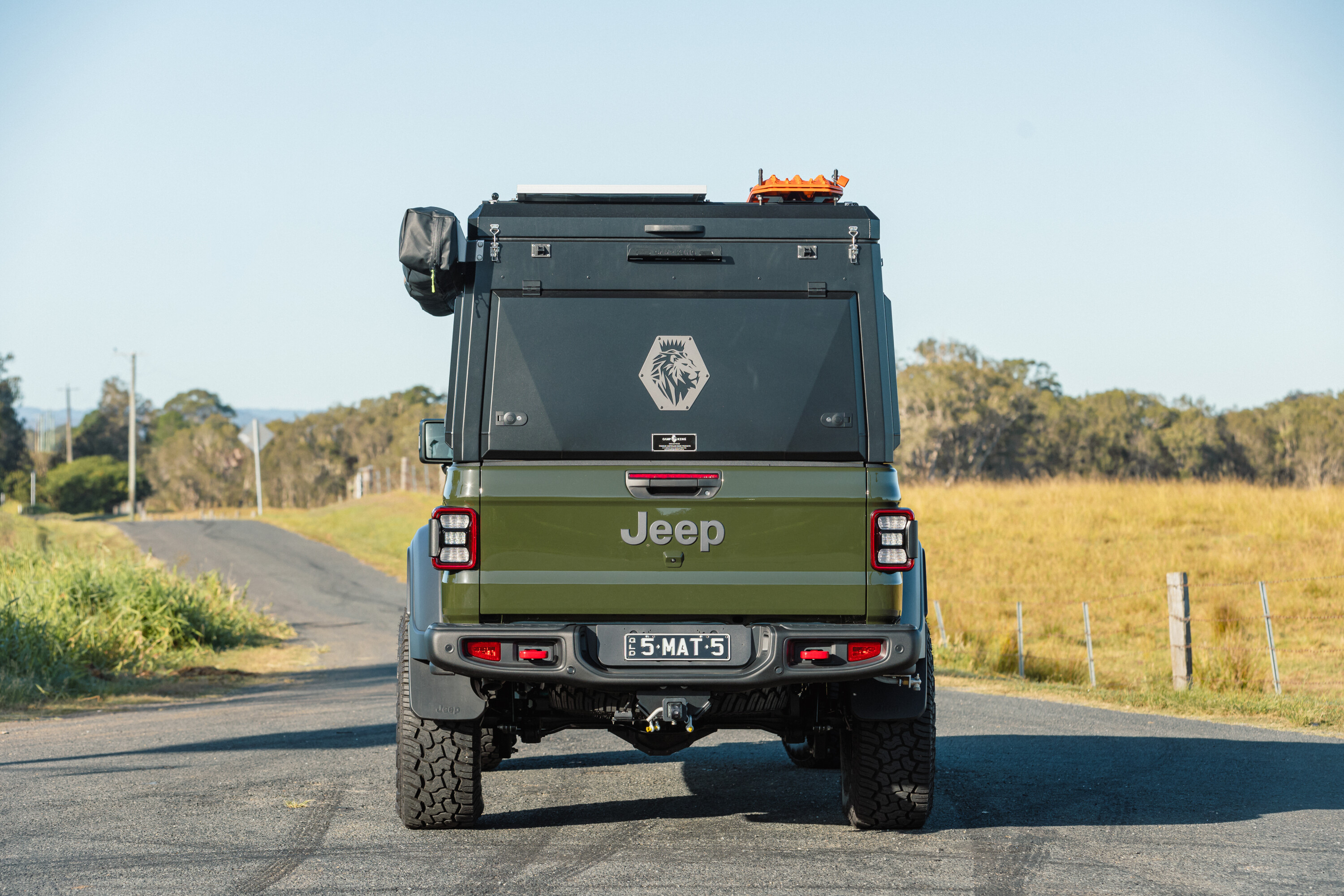
The Camp King Industries Outback Series maximises the capabilities of a standard dual-cab ute tub, offering a fast and simple sleeping solution as well as secure storage in one simple solution.
Inspired by the expanding overlanding market, this Australian-designed and manufactured product offers something revolutionary by integrating Camp King Industries’ world-class rooftop tent into a tub-mounted canopy.
Each unit has been designed and manufactured to be vehicle-specific, creating a product that can be installed without any modifications to the vehicle’s tub.
Camp King Industries prides itself on manufacturing buy-once products that will be used for many years to come. All of its products are handmade in-house by a team of skilled welders and assemblers.
“Camp King Industries was formed in 2016 by Lucas and Sarah to create products within the adventure and overland industry, from a passion for camping, the outdoor lifestyle and manufacturing the highest quality products possible,” said Brendan Davis, sales and business development manager at Camp King Industries.
“We saw a desire in the market for travellers who wanted an all-in-one solution for a tub canopy and our rooftop tent, whilst not having to modify the factory tub. So, the Outback Series was created.”
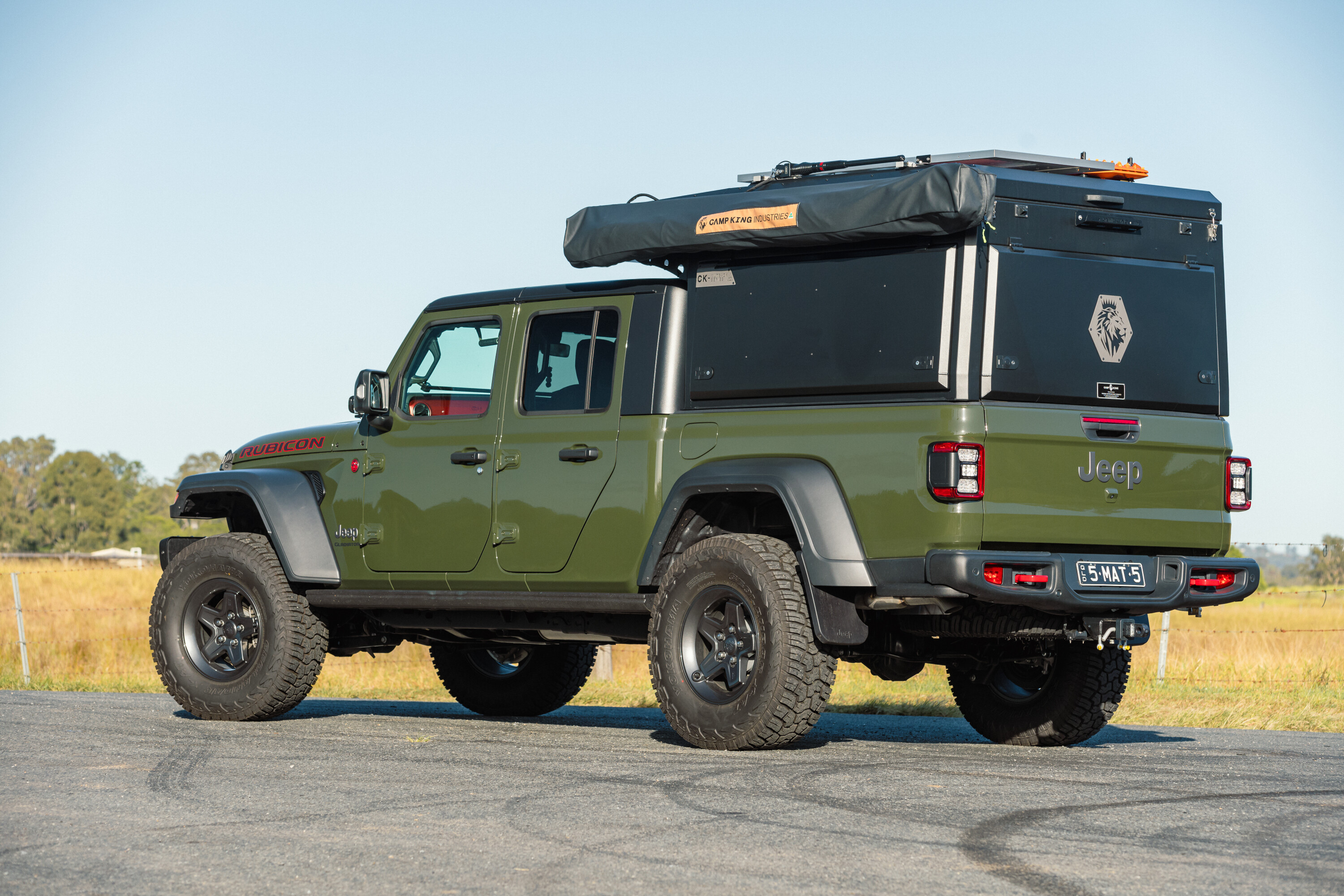
The Jeep Gladiator and next-gen Ranger are the latest additions to the range available in the Outback Series in Australia.
The perfect base for these dual-cab camper setups offers sheltered living space when the weather is bad and enhanced privacy, with the ability to access the bed through the tub. The lift-up bed base then allows plenty of room to stand up, get changed or sit and relax.
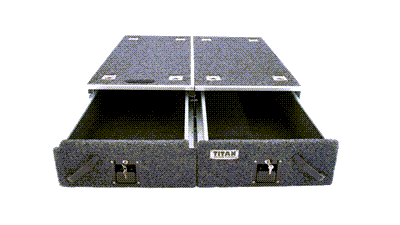
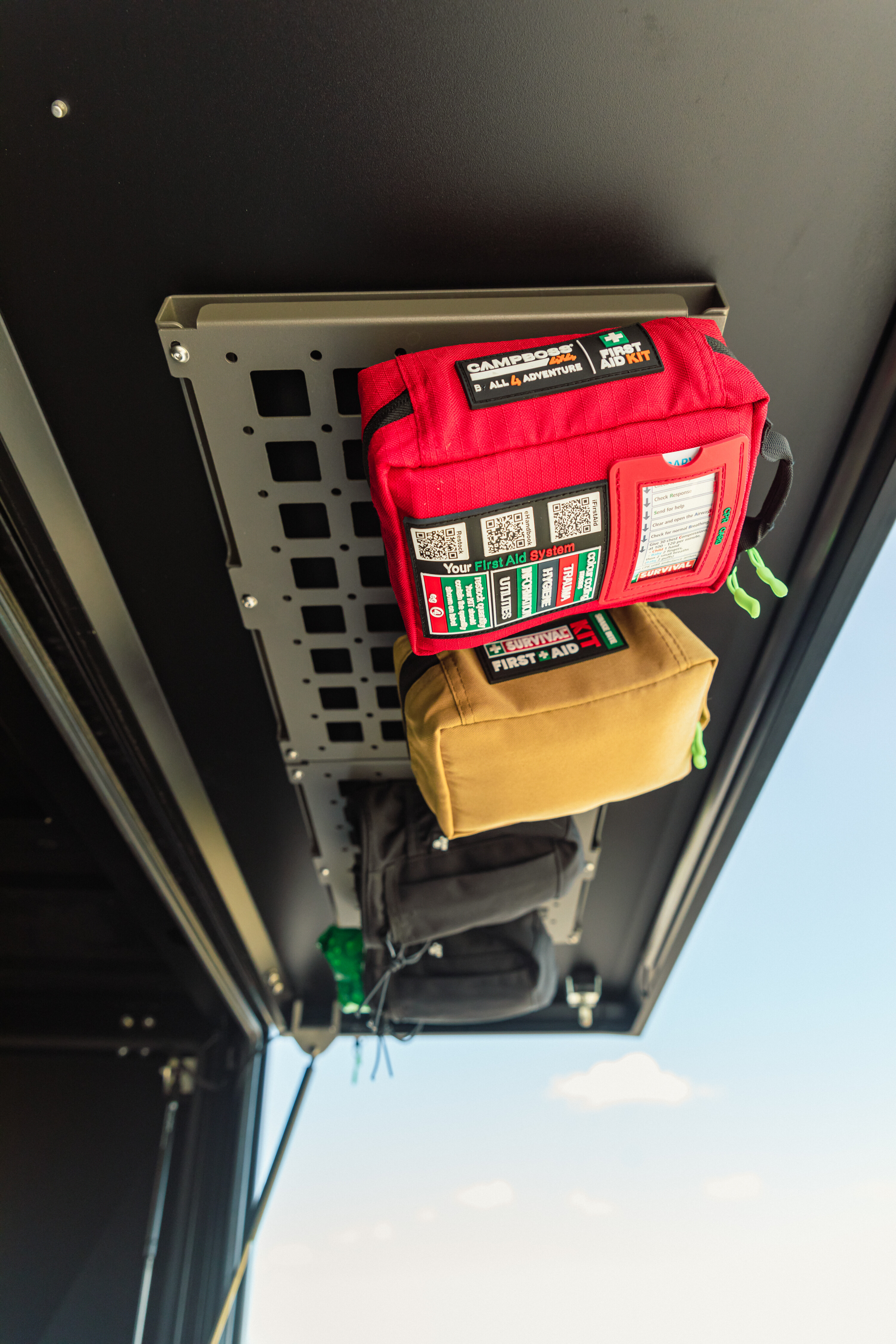
Being able to leave all bedding inside the tent, setting up takes less than two minutes. The Outback Series is lightweight, weighing less than 150kg, and there is a range of accessories that will turn your ute into the ideal touring vehicle such as free-standing awnings, canvas storage bags, molle panels, water tanks and internal drawers.
1
The rooftop tent design is unique to Camp King Industries, with the one-piece aluminium roof fully TIG-welded and secured with a specialised Orlock riveting system.
The canvas is Australian Made Wax Convertors Coolabah Tear Stop canvas, trusted for its performance in even the harshest conditions. A 10mm-thick closed-cell foam insulates the internal roof, and there are six internal storage pouches plus an LED light, two USB ports and a 12V powerpoint. The included mattress is a high-quality 100mm high-density two-piece.
The body unit construction is laser-cut 3mm aluminium and is fully TIG welded with a 2mm top, finished with a superior powder-coat. Three full-sized doors with stainless steel latches that can be padlocked over the centre for security provide easy access to the tub. Industrial strength 3M seals on the tent opening and unit are water- and dust-proof.
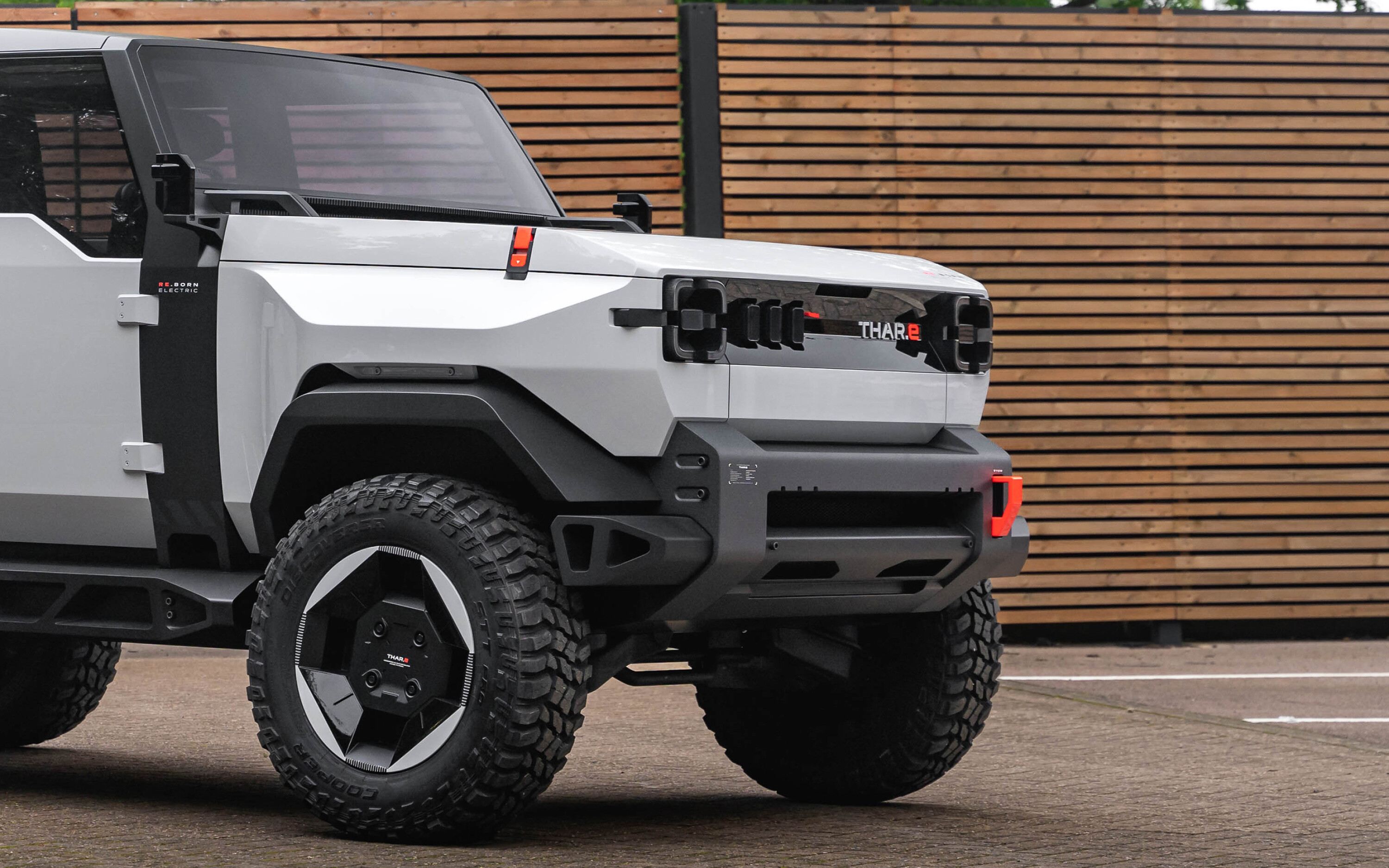
Indian automaker Mahindra has unveiled its Vision Thar.e electric SUV concept that’s a melange of Suzuki Jimny, Toyota FJ Cruiser and Jeep Wrangler.
Snapshot
Mahindra reveals off-road electric SUV concept
Indian automaker debuts modern rugged design theme
First Mahindra EVs expected from 2025
The off-roading concept was unveiled by Mahindra alongside the Global Pik Up in Cape Town, South Africa and represents the company’s global ambitions in electric mobility.
Details are scarce for the Mahindra Vision Thar.e with only one computer rendering published, but the company states it adopts a new ground-up ‘Inglo’ EV platform with modular swappable components and a “high-performance” all-wheel drive powertrain.
The interior is supposedly minimalistic with a central pivoting display, grab handles, and fabrics made of 50 per cent recycled polyethylene terephthalate (PET).
Judging from the rendering, it’s a significant departure from the current design language of Mahindra’s Scorpio and XUV700 SUVs.
Its compact body and huge off-road tyres give it raised-up proportions like a lifted Suzuki Jimny. There’s a futuristic blacked-out front mask akin to Toyota’s Compact Cruiser concept and glass behind the C-pillar reminiscent of the off-sale FJ Cruiser.
The four doors also have Wrangler-inspired exposed hinges with camera-based wing mirrors, and there are orange accents with new Mahindra logo lettering.
The Indian carmaker also announced the XUV.e8, the first of four electric SUV models planned, will debut overseas in December 2024. This family-orientated medium SUV is mooted for an Australian launch around the same time.
While lifestyle-focused car brands have traditionally been prioritising diesel power, electric offerings are starting to emerge for owners to traverse terrains in silence with effortless instant torque.
What’s the best dual-cab ute you can buy in 2023? Until now the answer has been easy: the Ford Ranger.
Ford’s new-gen ute demolished its rivals in our recent dual-cab megatest and it’s miles ahead of the Toyota HiLux and Isuzu D-Max/Mazda BT-50 for driving dynamics, cabin comfort, useful tech and general refinement.
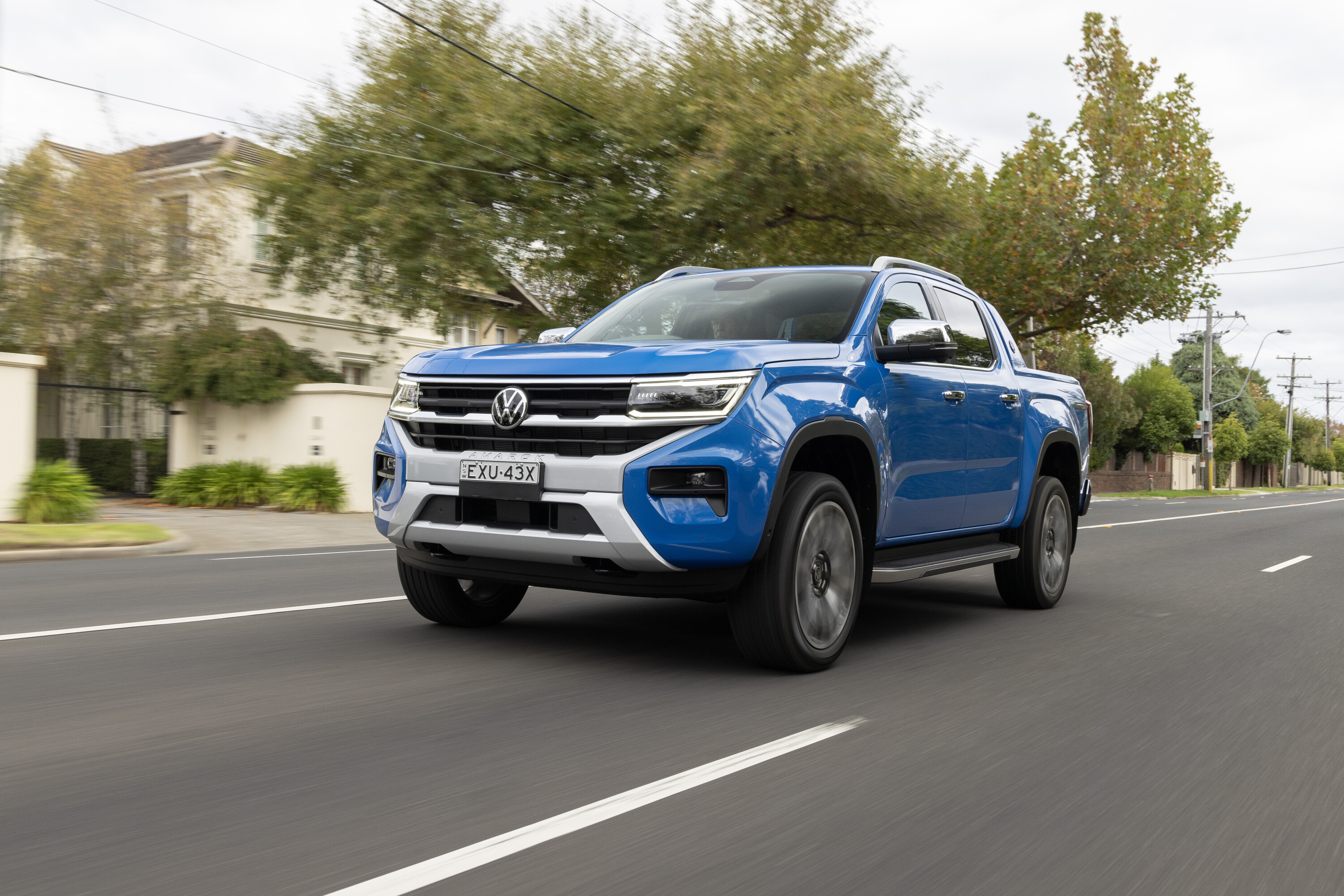
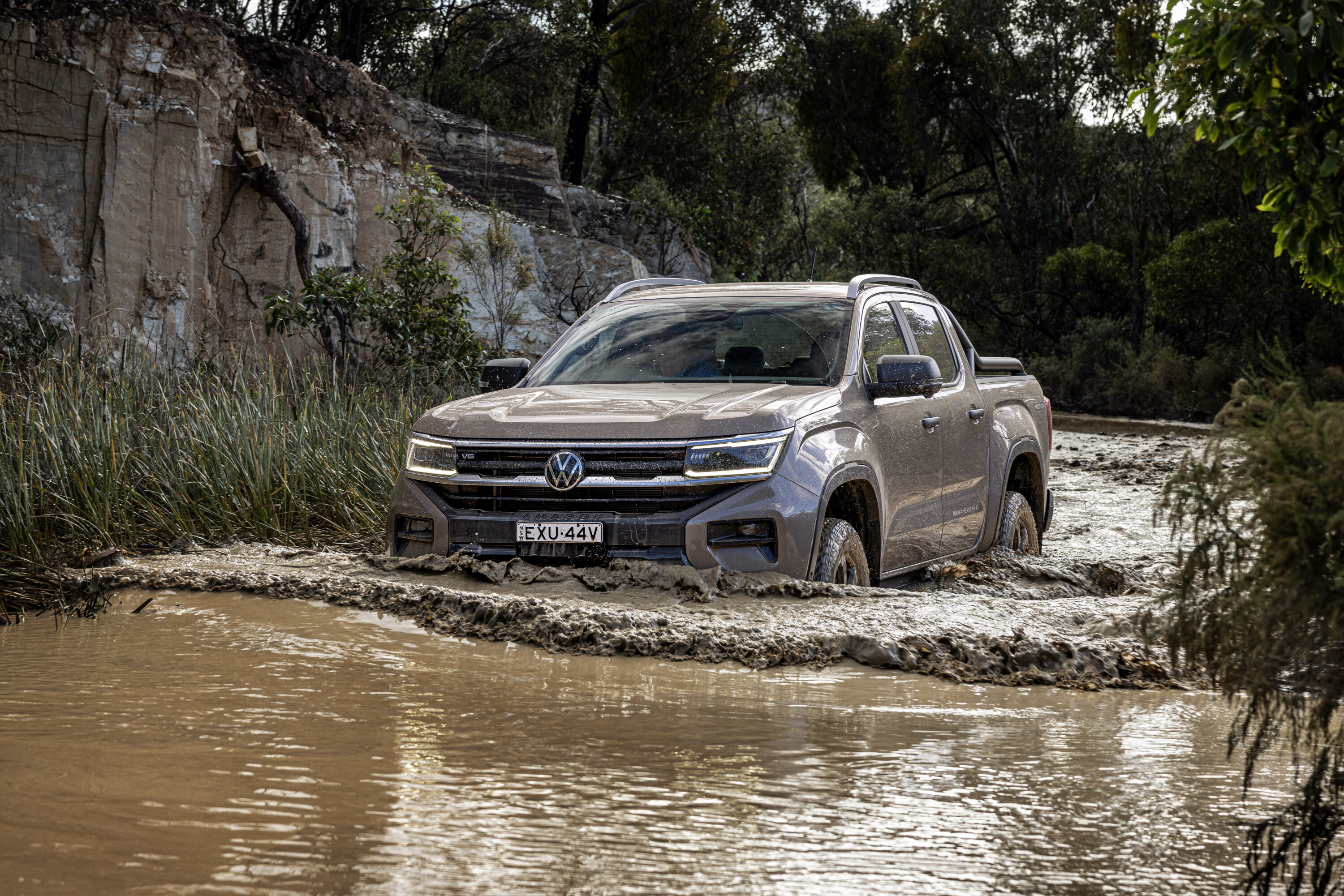
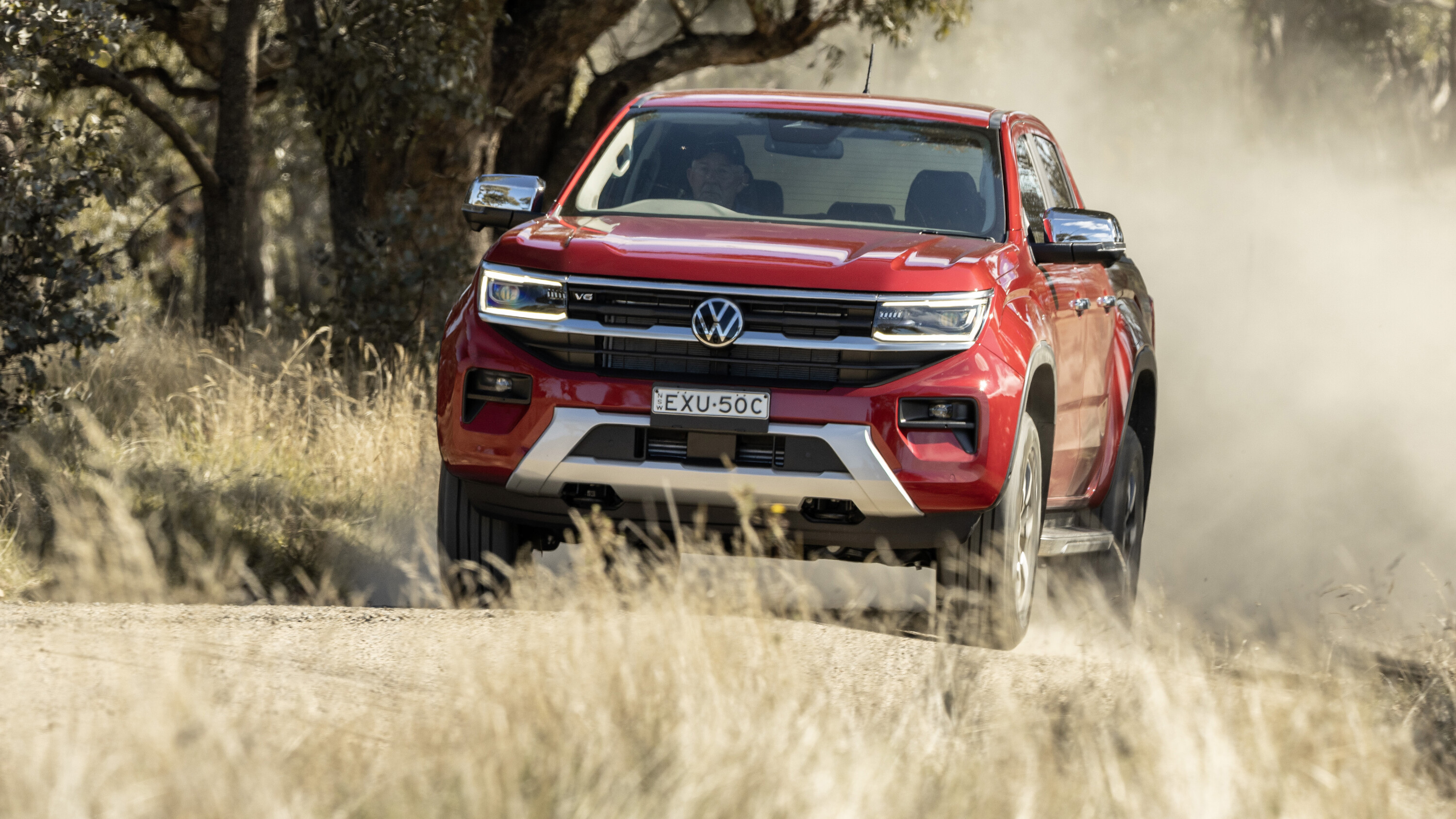
Now, though, the Ranger has sterner competition. This is the second-gen take on the popular Volkswagen Amarok – a ute that already carried a hard-won reputation for being the best-driving dual-cab on the market.
This time, thanks to an alliance between Ford and Volkswagen, the Amarok was actually co-developed with the new Ranger. That means all of the goodness that makes the Ranger so convincing should be present here, too.
1
And, of course, VW says it has improved on the Ranger’s recipe in a few key ways.
All of which raises a number of questions. Is the Amarok the new benchmark dual-cab? Is this simply a badge engineering exercise? Does it still drive as well? And how does it stack up for value? Let’s dive in.
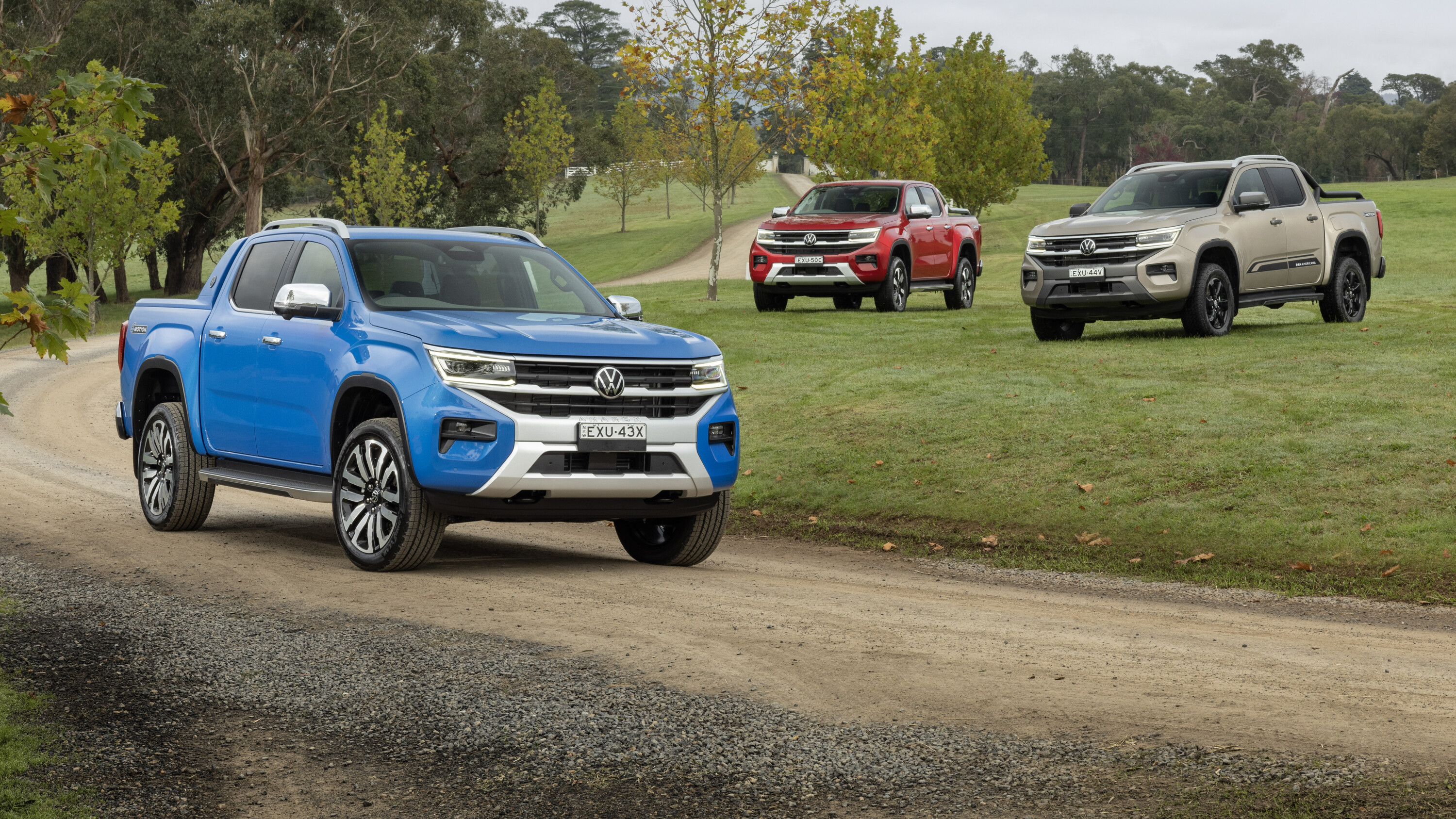
VW is offering the Amarok across five trim levels. Pricing starts at $52,990 before on-road costs for the entry-level Amarok Core, which is available solely with a 2.0-litre single-turbo diesel and a 10-speed automatic.
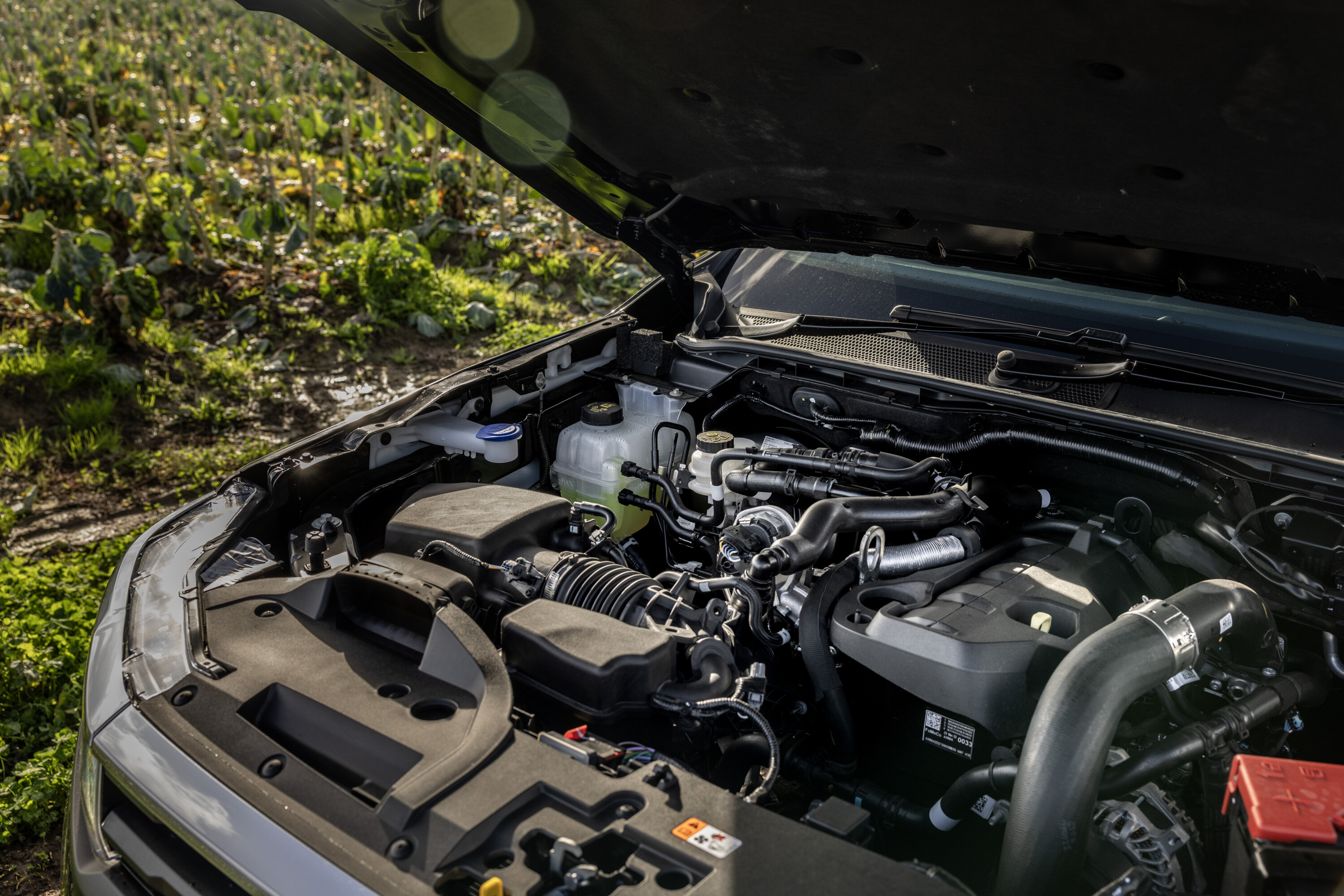
Stepping up to the mid-spec Life ($56,990) and Style ($66,990) adds a richer mix of standard equipment and a more powerful 2.0-litre bi-turbo diesel. For a $4000 premium, the Style can also be optioned with a 3.0-litre V6 turbo-diesel, which produces a healthy 184kW/600Nm.
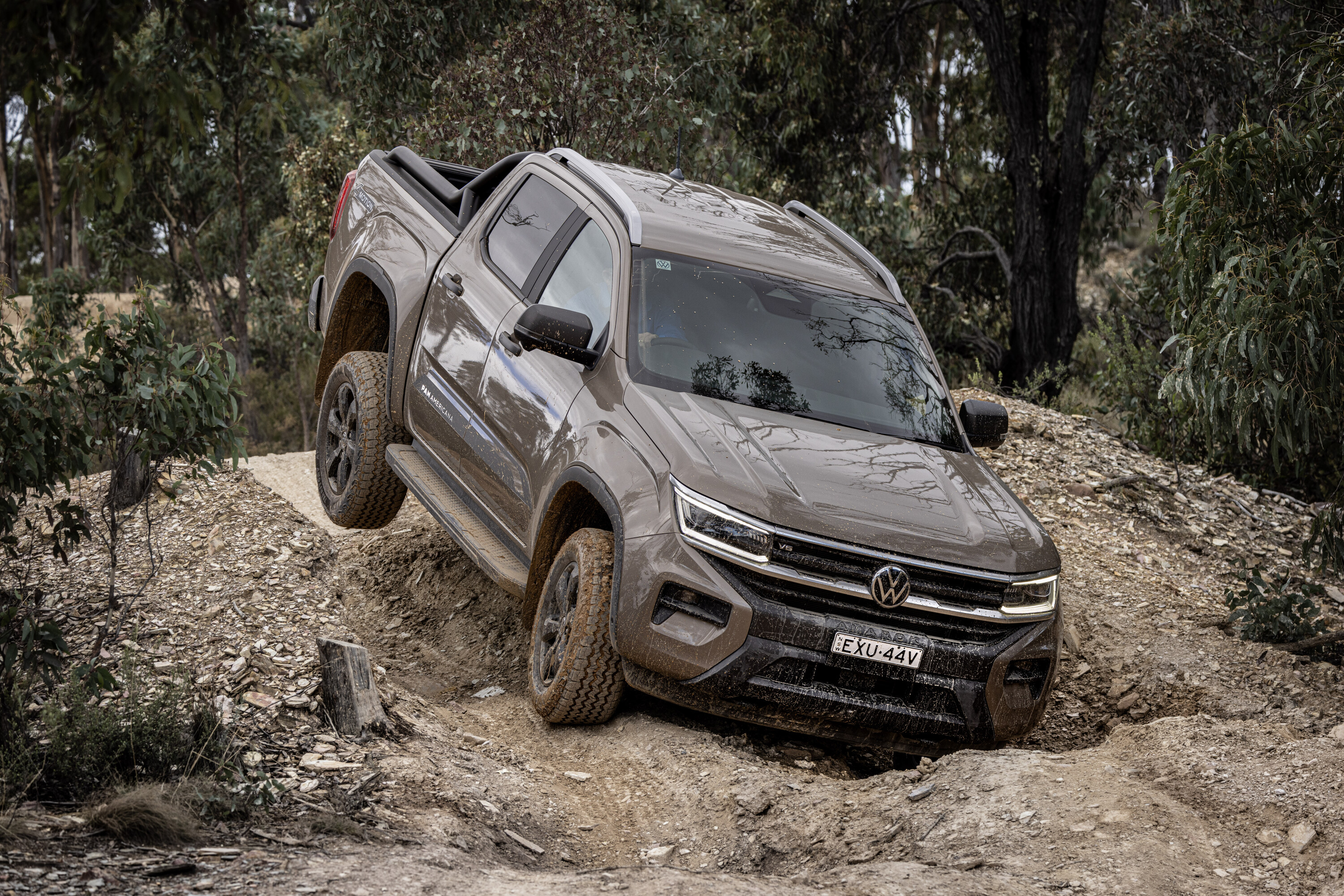
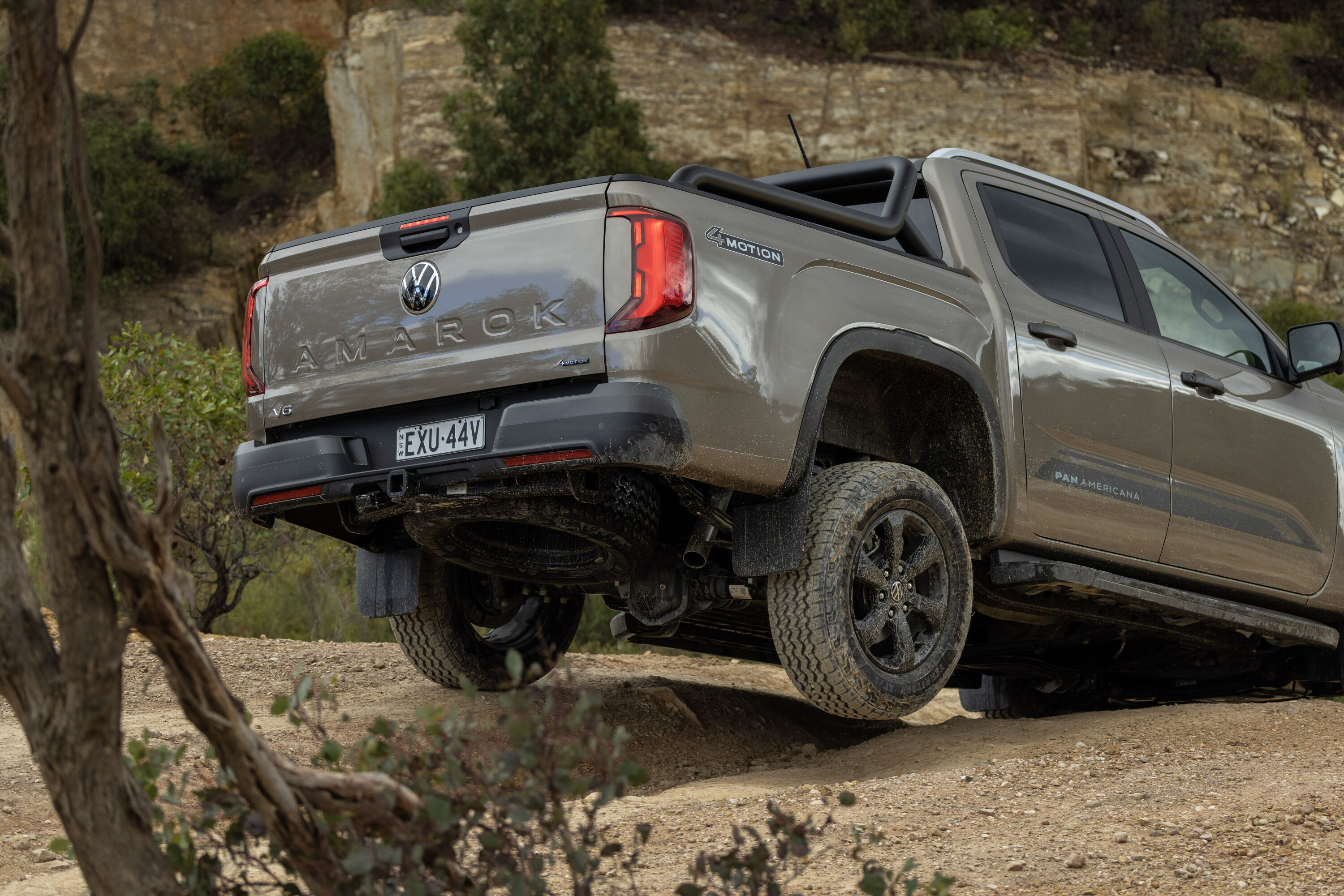
There are two flagship trim levels. The off-road-focused PanAmericana ($75,990), which can only be had with the V6 diesel, or the more luxury-focused Aventura, which is available with either the V6 diesel or a 2.3-litre turbo-petrol engine. All these prices exclude on-road costs.
1
Both versions of the Aventura carry the same $79,990 price tag (before on-road costs).
The petrol unit is the same engine found in some Mustang models and it produces 222kW/452Nm, giving the Amarok a unique point of difference to its largely diesel-only rivals.
VW’s pricing puts the Amarok firmly at the premium end of the dual-cab segment, although it is loaded with standard equipment.
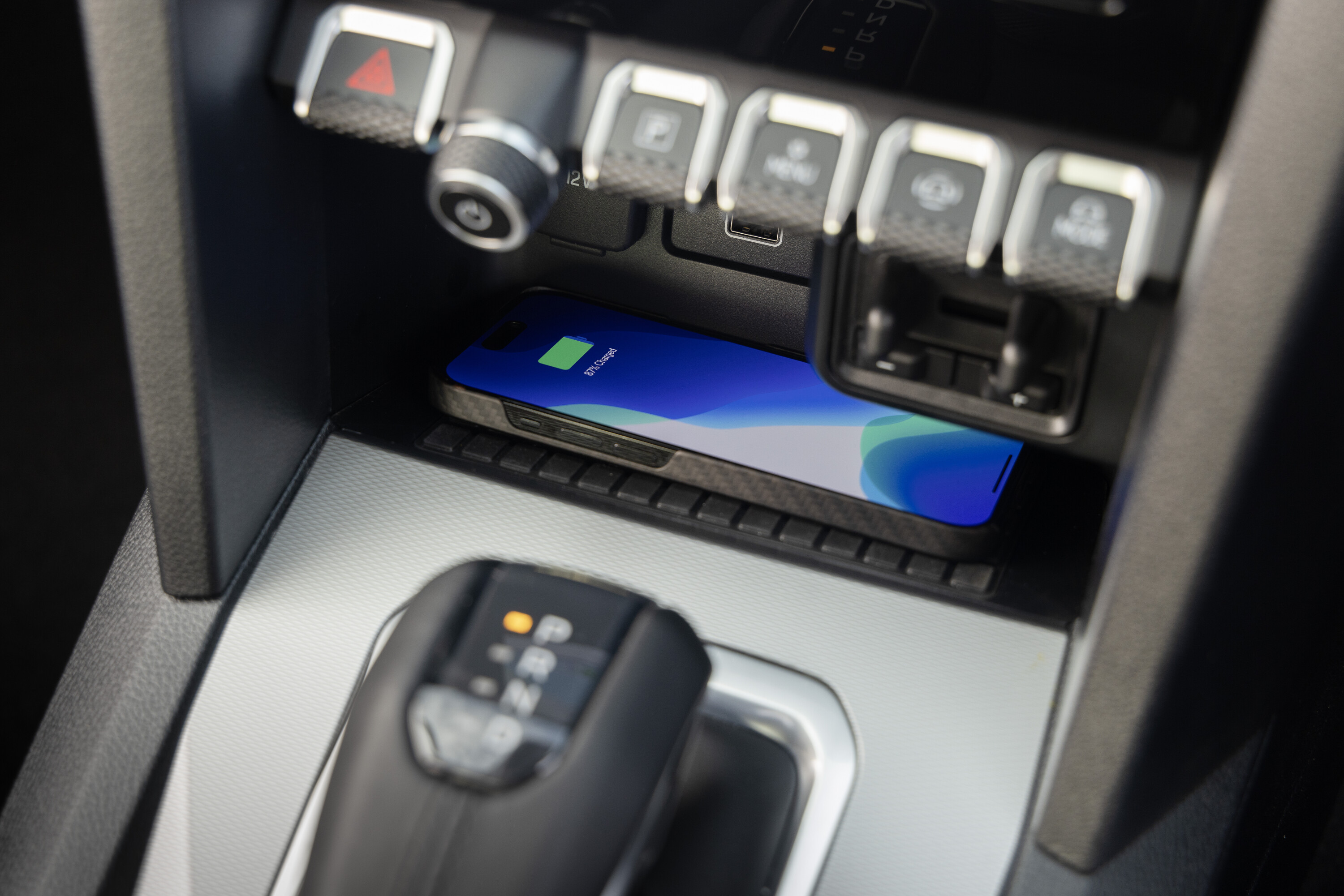
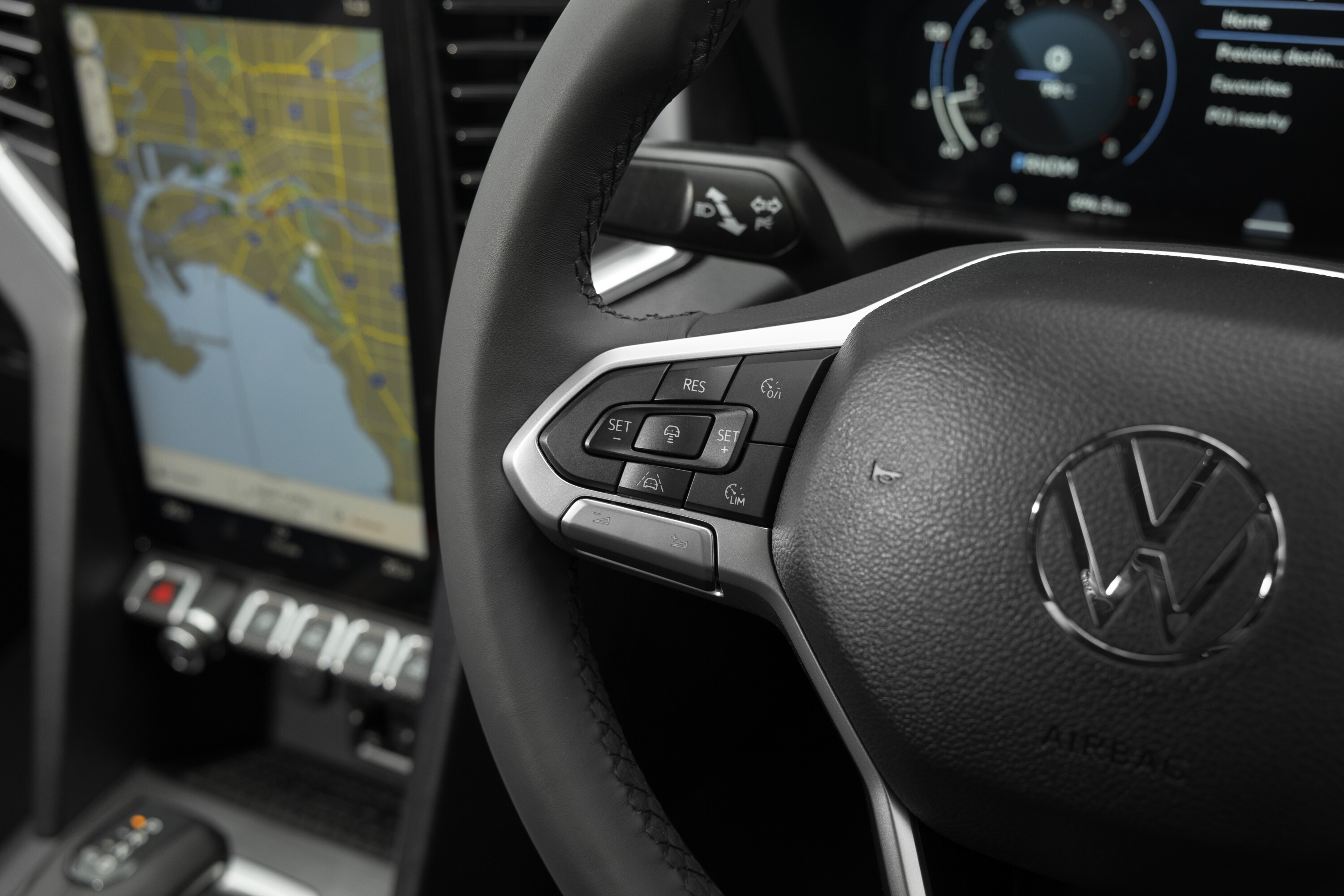
LED headlights, a large 10.1-inch central touchscreen, Apple CarPlay and Android Auto, wireless phone charging, alloy wheels and 20 new driver assist systems (which now include autonomous emergency braking and adaptive cruise control) are all standard across the range.
1
Every Amarok boasts a 3.5-tonne braked towing capacity.
There are also power windows, electric mirrors, roof rails, rain-sensing wipers, auto headlights, a tyre pressure monitoring system and a factory-fitted towbar with 12-pin plug. And every Amarok carries a 3.5-tonne braked towing capacity.
Stepping up to the Life variant adds the more powerful 2.0L diesel and further equipment like fog lights, a leather-trimmed steering wheel, rear disc brakes (instead of drums) and privacy glass. But it’s the mid-spec Style that really shines for value and standard gear.
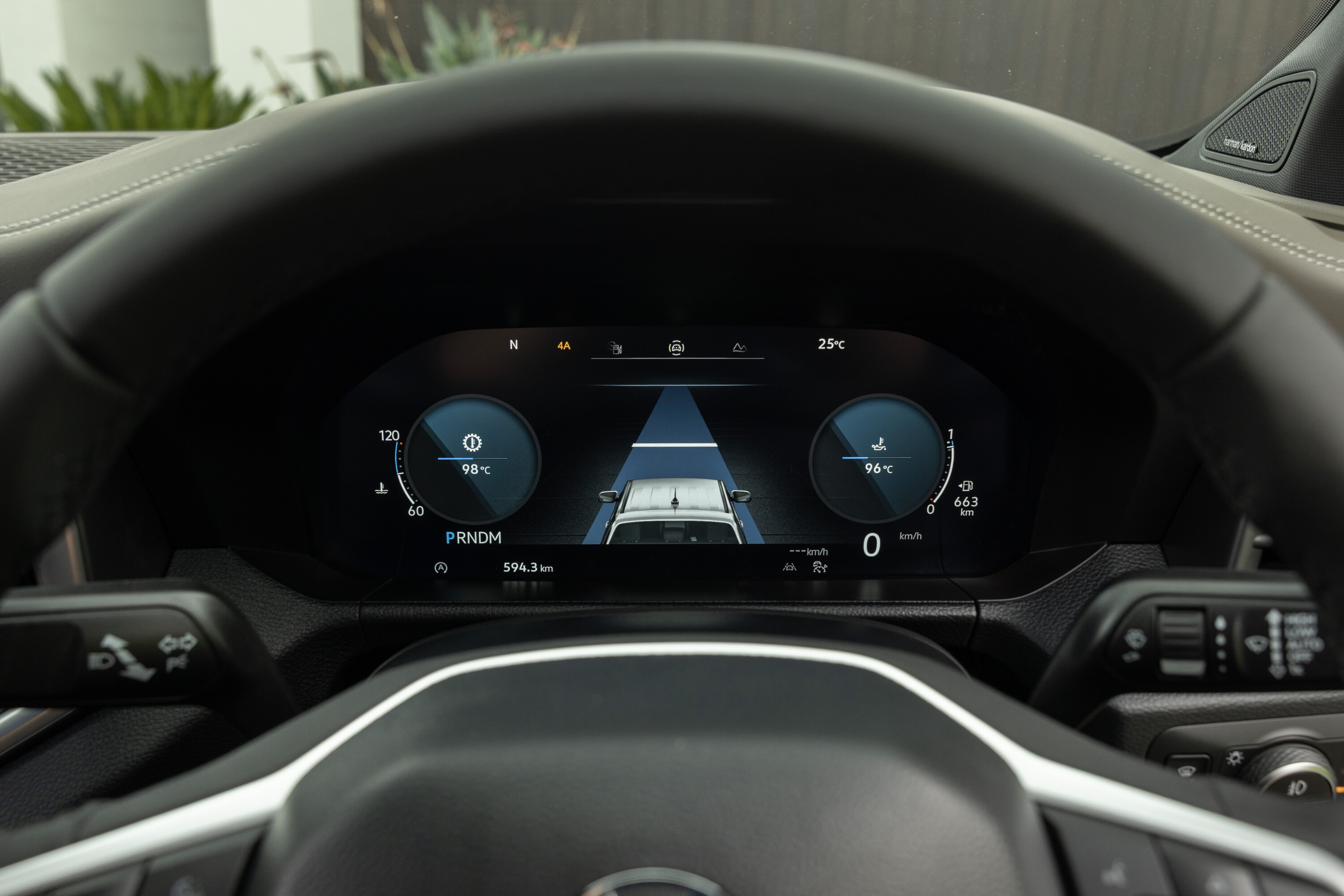
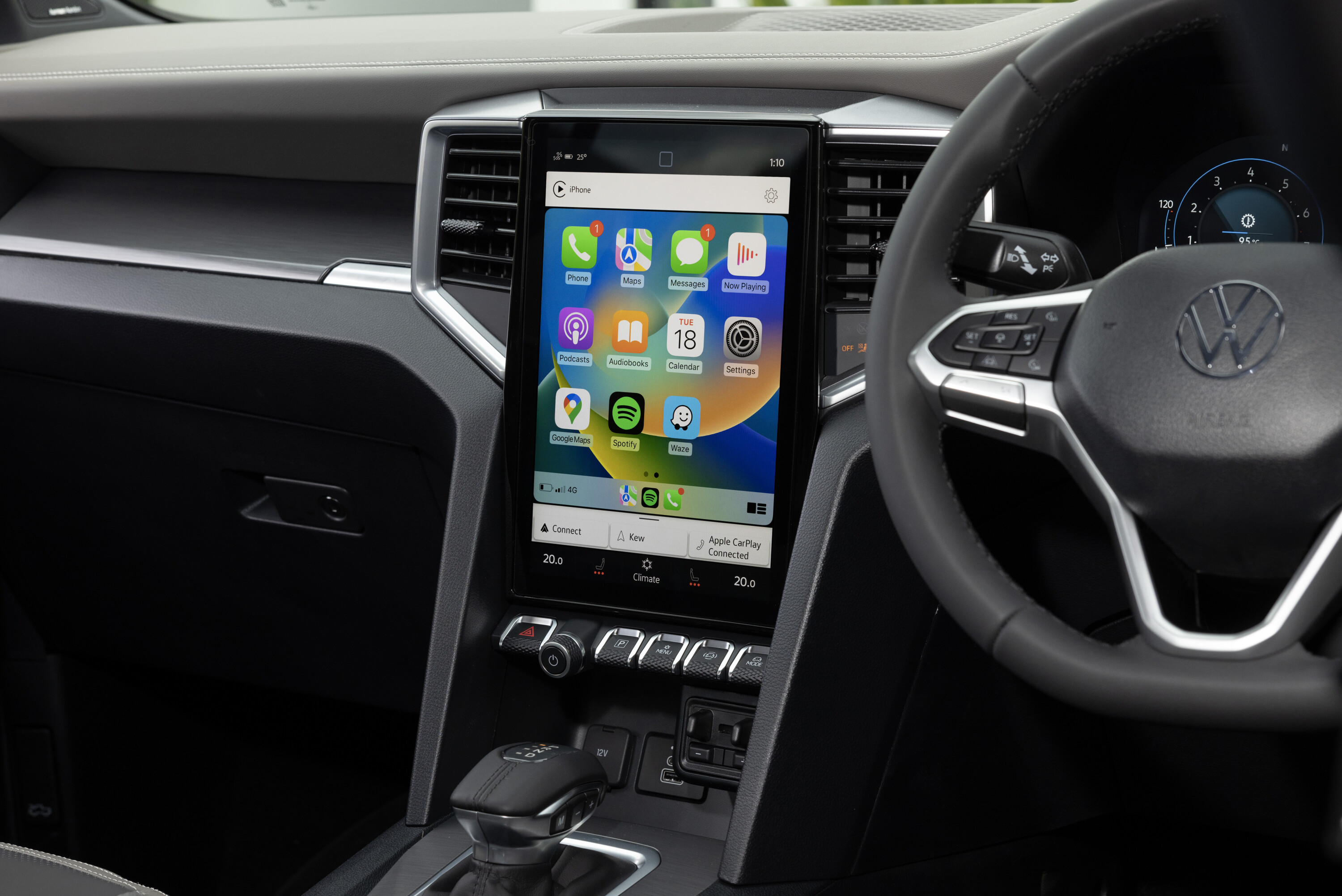
Tipped to be the best-selling Amarok, the $66,990 (before on-road costs) Style adds larger 18-inch alloys, matrix LED headlights (which can mask out oncoming traffic), a bigger 12.0-inch portrait touchscreen, larger digital dials, dual-zone climate control with rear air vents, an upgraded audio system, 360-degree surround-view cameras, heated and power-adjustable front seats, a stitched ‘leather-look’ dash, a rear sports bar, and a drop-in tub liner. It also brings the option of the 3.0-litre V6 engine.
1
The Aventura has more of an on-road bias and boasts softer leather
The PanAmericana and Aventura flagships bring unique ‘X Design’ front bumpers, upgraded leather seats, spray-in tub liners and, notably, a ‘dynamic suspension package’ which replaces the twin-tube dampers of lesser models with a monotube setup for great control and comfort.
Separating the two flagship models is their focus. The PanAmericana is the more rugged of the pair, thanks to all-terrain tyres and harder-wearing ‘cricket ball’ leather trim.
The Aventura has more of an on-road bias and offers softer leather, an electric tray cover, huge 21-inch alloy wheels and the option of the 2.3L turbo-petrol, which VW hopes will entice current SUV owners to make the switch to a dual-cab ute.
1
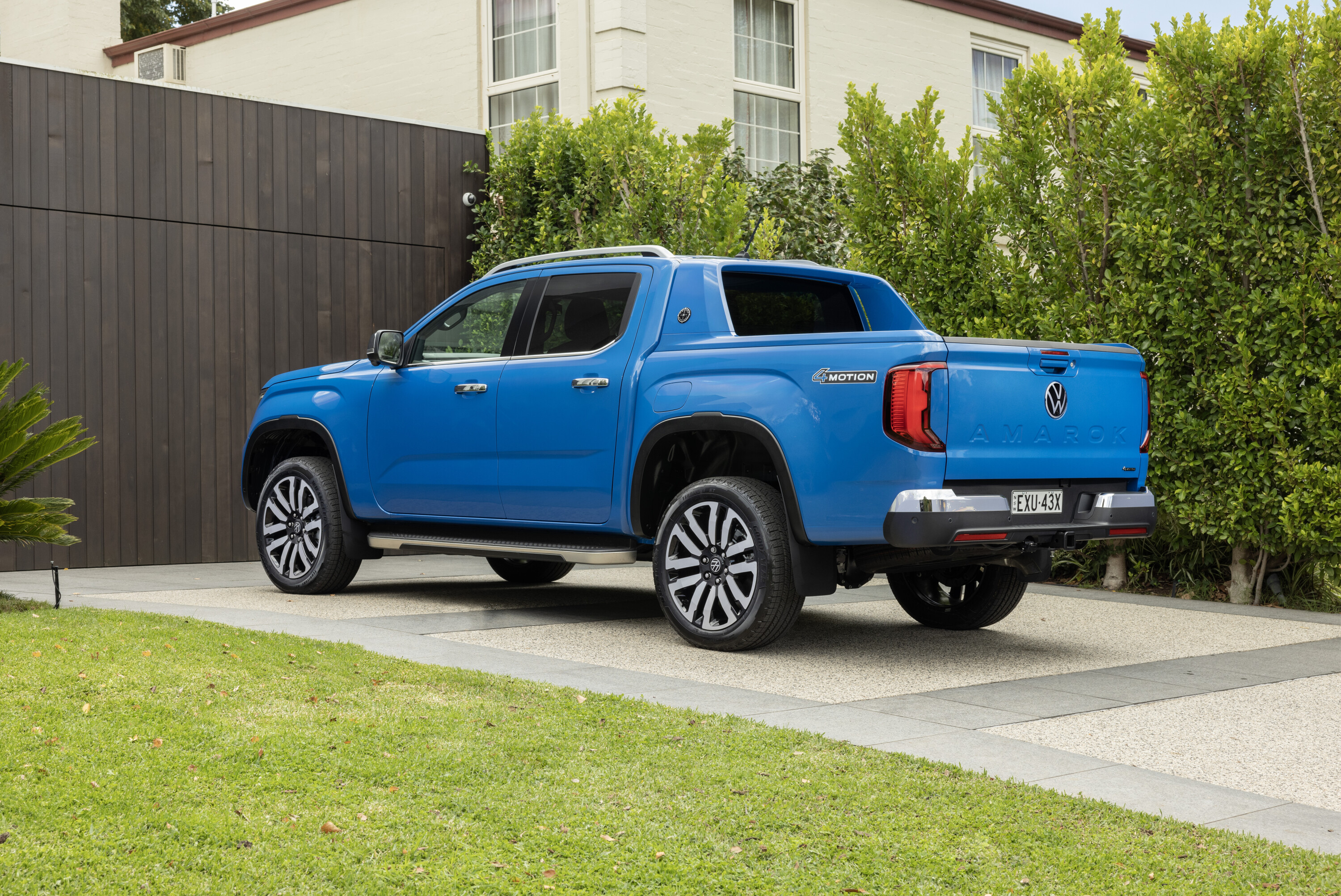
No matter which variant of Amarok you go for, you’ll be buying a ute that’s bigger in every key dimension.
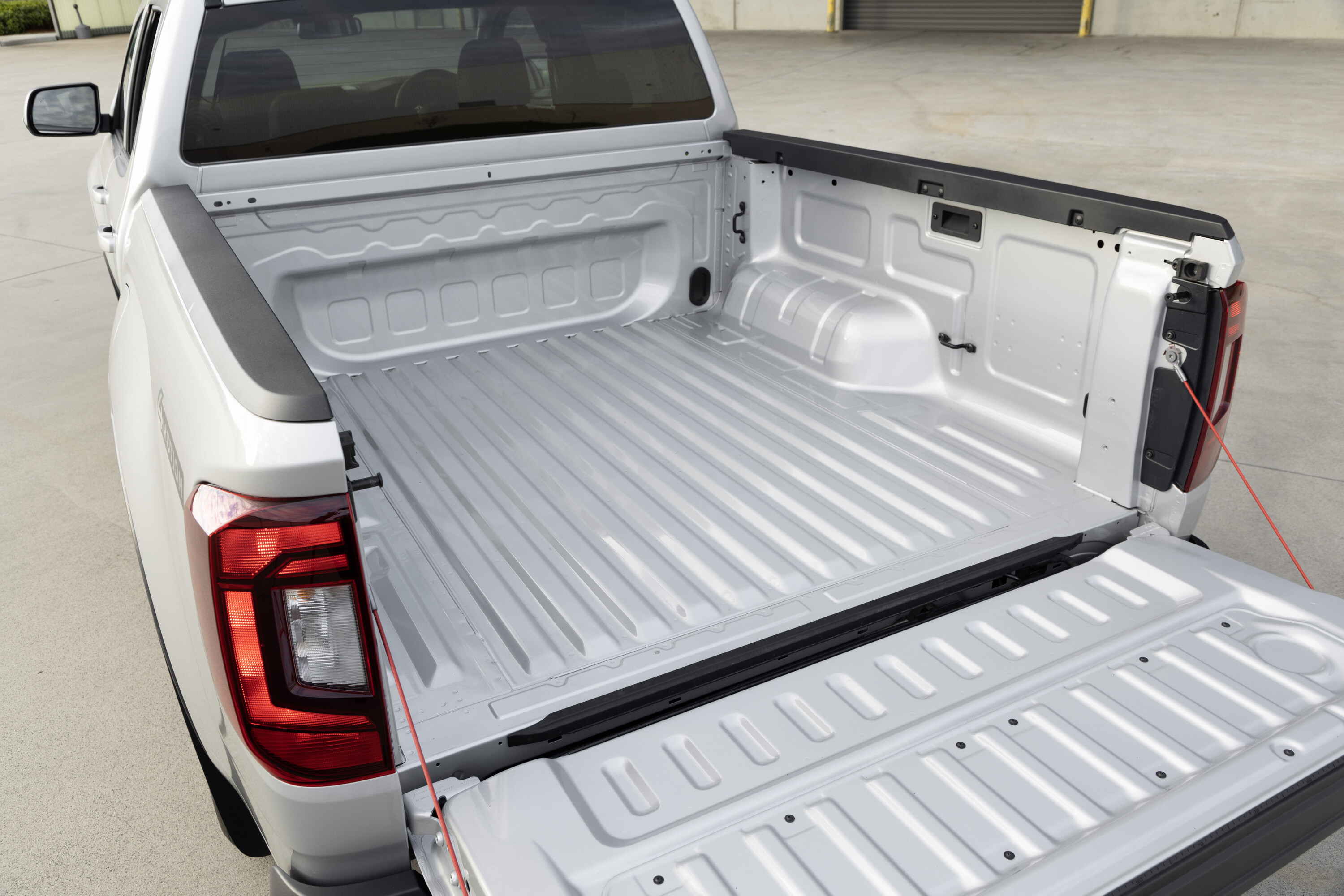
Overall length is up by 96mm, the wheelbase has grown by a whopping 175mm (which translates into a roomier cabin), and the wading depth is now 800mm (which is a sizeable 300mm improvement). Tub volume is also up by 3.5 per cent and ground clearance has been lifted to 235mm.
As for what’s missing? The Amarok lacks a few desirable features currently available on the Ford Ranger – like a moulded rear box step for easier tub access and overhead auxiliary switches to connect accessories.
1
The Ranger’s useful 4×4 screen, which allows quick access to the forward-facing camera, diff-lock and other off-roading data, is also missing.
Also absent are the additional outboard cup holders you get in higher-spec Rangers, ‘zone’ lighting and a soft-open tailgate.
None of these omissions dilute the Amarok’s core goodness, of course, but they do give the Ranger a slight edge by certain criteria.
Volkswagen has long positioned itself at the premium end of the mainstream market, and the Amarok is no different.
Compared with key competitors like the Mazda BT-50, Isuzu D-Max, Toyota HiLux and Nissan Navara, the Amarok is generally more expensive. But, it’s also a much newer design and trounces those rivals for cabin comfort, space, infotainment, quality and driving dynamics.
It’s also shot through with Aussie engineering, thanks to its Ranger platform partner. So while it does carry a slight price premium, the Amarok still offers strong value.
1
How it compares with the Ford Ranger is intriguing.
VW and Ford’s product planning teams have been clever in staggering the model grades of the two utes, so a direct comparison is tricky. The mid-spec Amarok Style V6, for example, is $5800 costlier than a mid-spec Ranger V6 Sport but it’s also better equipped thanks to its bigger touchscreen, wider digital instrument cluster and matrix LED headlights.
Comparing the Amarok Style with a Ranger Wildtrak is a better price match (just $200 splits them), but while the VW trumps the Ford with standard matrix LEDs, it misses out on the Wildtrak’s electric tray cover.
It’s a similar story in the flagship models. The Amarok Aventura has larger alloys than the Ranger Platinum (21s vs 20s) but is also $3000 dearer and lacks the Ford’s ventilated seats, heated steering wheel and flexible rack system which makes lighter work of carrying long items.
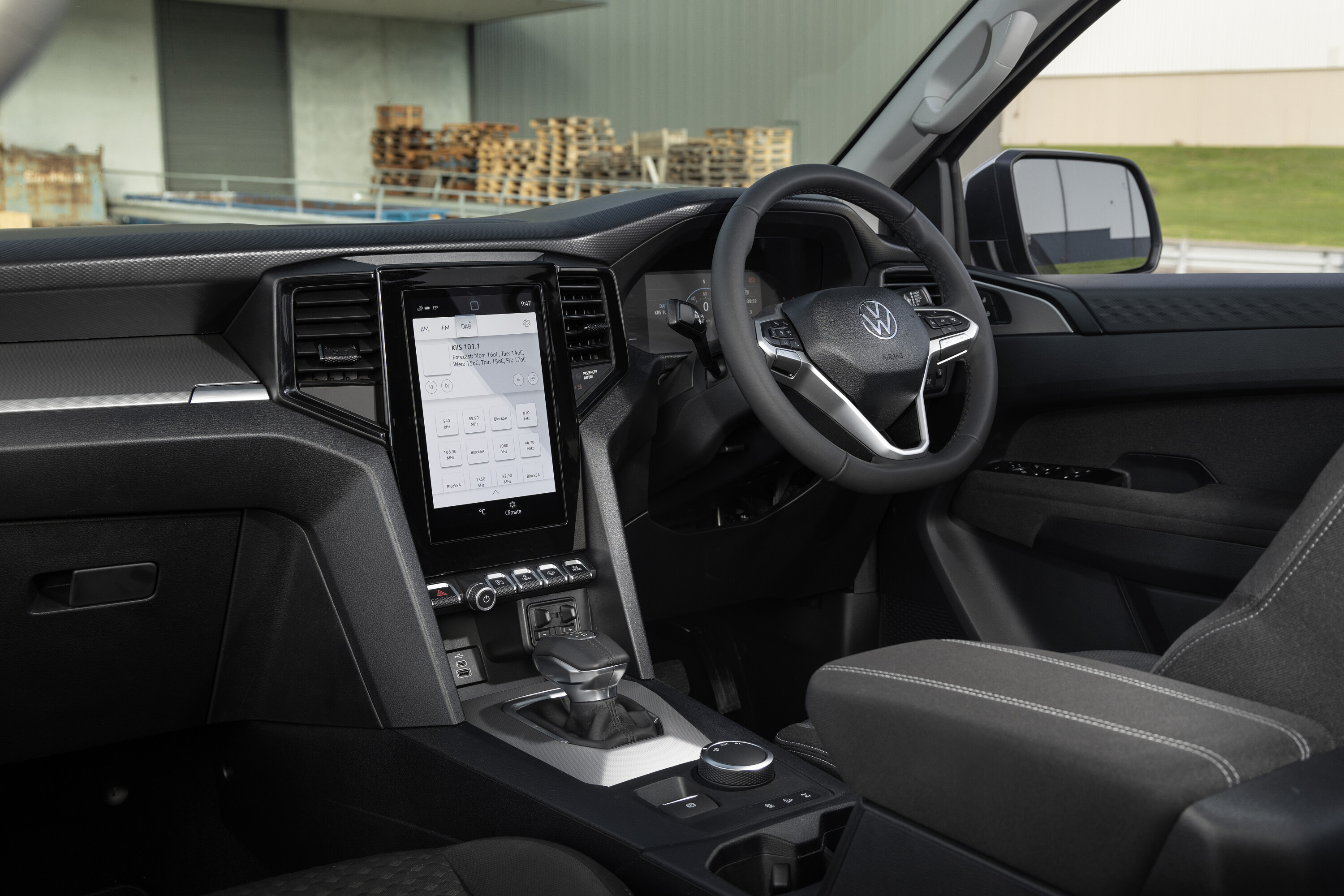
The Amarok’s upmarket cabin is one of its biggest strengths. It’s also an area where it outshines the Ford Ranger in a few key places.
Commonality between the pair is obvious in the large portrait touchscreen and stubby ‘E-Shifter’ (on mid-spec versions and above) but VW’s design team has done a marvellous job of giving the Amarok’s interior some unique and worthwhile touches.
The seats, for example, are a VW design and they aren’t only supremely comfortable, but, thanks to pronounced side bolsters and dense foam padding, they’re also snug and supportive.
1
Also top-notch is the driving position, and the leather-clad steering wheel is another area where the Amarok trumps the Ranger.
The wheel itself is still a Ford design, but VW has altered it so heavily you’d swear it was lifted straight from a Golf GTI. Either way, the Amarok has a much nicer wheel to hold than the one you get in the Ranger.
Front storage is generous thanks to roomy door pockets, twin central cup holders and two glove boxes stacked on top of one another ahead of the front passenger. The general sense of space and quality are now class-leading.
1
Moving to the Ranger’s platform has grafted an additional 175mm into the Amarok’s wheelbase, and the cabin now feels far roomier.
You notice the extra space most in the rear seats, where six-foot adults will find they have ample knee, shoulder and headroom. Materials quality does take a sharp step backwards in the rear seat (the door cards are covered in harder plastic) but the seat itself is comfortable, nicely bolstered and offers decent under-thigh support.
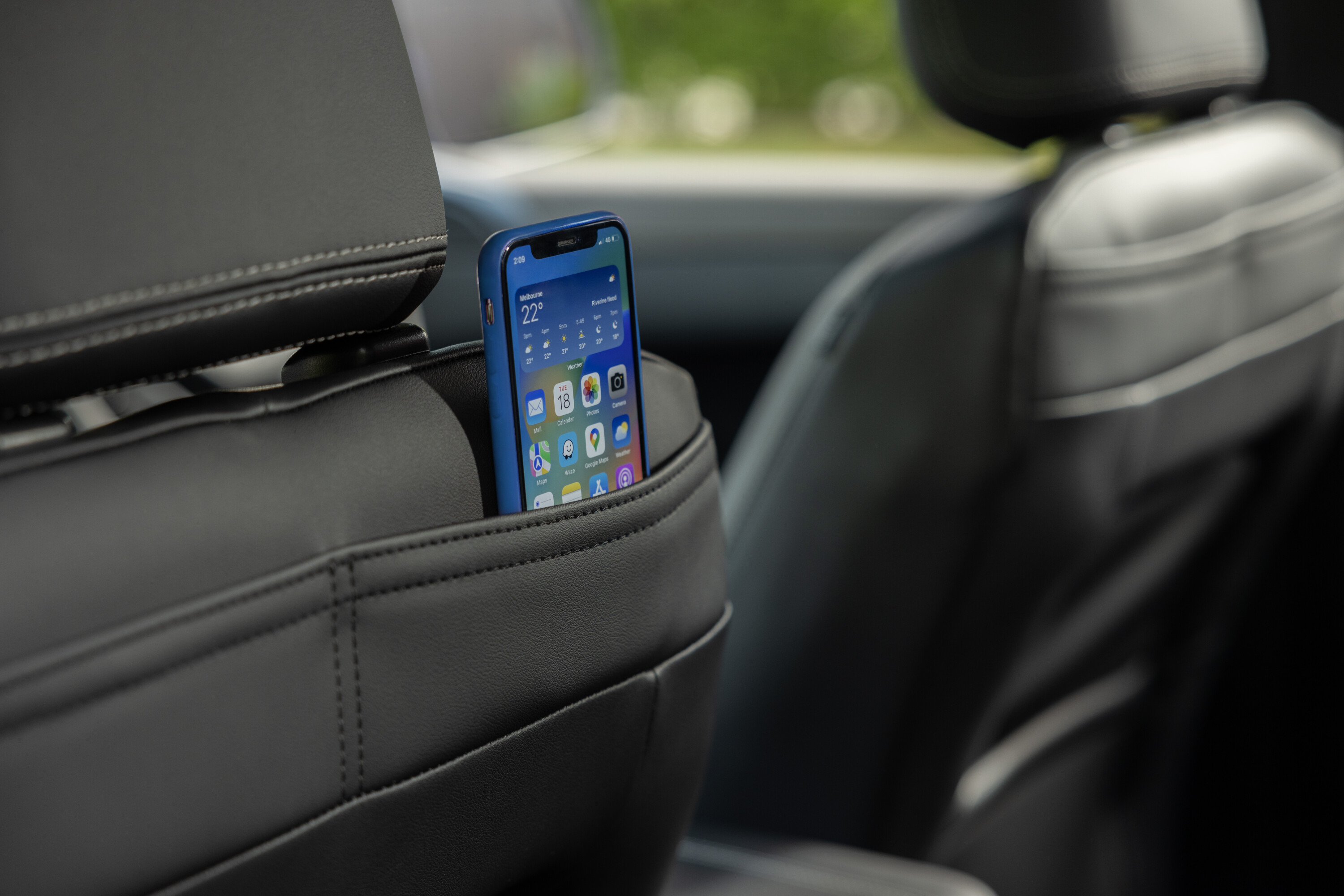
Rear passengers also score storage pockets sewn into the top of the front seats, a centre armrest and a 12V socket to charge devices.
1
So the Amarok is roomier, comfier and, thanks to its richer mix of materials and high level of fit and finish, its interior ambience and quality are class-leading.
Foibles? Aside from missing a few of the Ranger’s key features, like additional outboard cup holders and a shortcut button for the off-road screen, our main complaints surround the fiddly multimedia system.
While the screen itself is large, bright and quick to respond, VW has buried some of the key climate control functions into submenus. Want to change the fan speed? Dive into a submenu. Want to turn off the idle-stop? Dive into a submenu.
1
Again, these aren’t deal breakers, but they do become annoying when you use the vehicle every day. Even more annoying is knowing that the Ranger has physical buttons for these functions.
But there’s no denying the Amarok has one of the poshest interiors of any dual-cab now on sale. Minor ergonomic flaws aside, it’s beautifully made, nicely packaged and impressively practical.
As for the all-important tray, VW says total volume has gone up by 3.5 per cent – a 1200mm euro pallet will still fit between the wheel arches – but where buyers will really notice an improvement is in terms of the tray’s features. There are now six tie-down points instead of four, along with an LED light on each side and a 12-volt power socket.
The defining feature of the original Amarok was how it drove.
Its polished, car-like steering and dynamics often saw it win Wheels comparison tests, and even towards the end of its model life, it was still the benchmark dual-cab for ride and handling.
The good news is this new Amarok continues the trend. Overall refinement has improved and, on sweeping country back roads, the Amarok displays a sense of confidence, calmness and stability that sets it apart from its rivals.
1
It’s surprisingly fun and capable on a twisty road, too.
The steering is light and accurate, the body control and ride compliance are nicely judged for a workhorse and the brakes offer plenty of bite and stopping power. There’s also a surprising amount of grip available, even in the wet, especially in the flagship Aventura with its 21-inch alloys and high-quality 275/45 Goodyear rubber.
A few chinks exist in the Amarok’s dynamic armour, however. While the steering is effortless, keen drivers might prefer the setup in the Ranger, which offers greater weight and connection just off centre.
1
The Aventura rides well for a dual-cab with such large alloys.
Though the ride quality is generally good – the PanAmericana and Aventura’s monotube dampers are firm, but we prefer their greater control and expert tuning over lesser models – things can become terse on the Aventura’s 21-inch wheels when encountering poor roads. Generally, though, the Aventura rides well for a dual-cab with such large alloys.
As with a Ranger, the pick of the four-strong engine line-up is the 3.0-litre V6 turbo-diesel. While there isn’t a dud engine in the range – the 2.0L bi-turbo diesel in the Life and Style is gutsy, responsive and pairs well with the 10-speed auto – the 3.0L V6 is noticeably stronger.
It also sounds better and is the superior engine for towing, thanks to its healthier torque figure of 600Nm.
The 10-speed auto deserves recognition. It’s smooth and fast and the shift logic does a brilliant job of keeping both engines in the sweet spot of their power bands.
But the 2.3L turbo-petrol is intriguing. Volkswagen is hoping this high-output unit entices buyers that have previously owned SUVs – and we can certainly see the appeal.
1
Around town it’s quiet and responsive, but on the open road it does lend the Amarok a different personality.
Where most dual-cab utes surf on low-down diesel torque, the 2.3L makes its grunt higher in the rev range (peak power is at 5900rpm, torque at 3350rpm) so both the engine and transmission feel like they’re working harder to shift the Amarok’s 2.4-tonne mass. And although there’s no shortage of performance – on a twisty road the 2.3L Aventura is hilariously grippy and quick – we do wish the 2.3L sounded a touch angrier.
There is some distant four-cylinder induction noise, but it’s certainly not the fruity soundtrack the same engine makes in a Mustang.
1
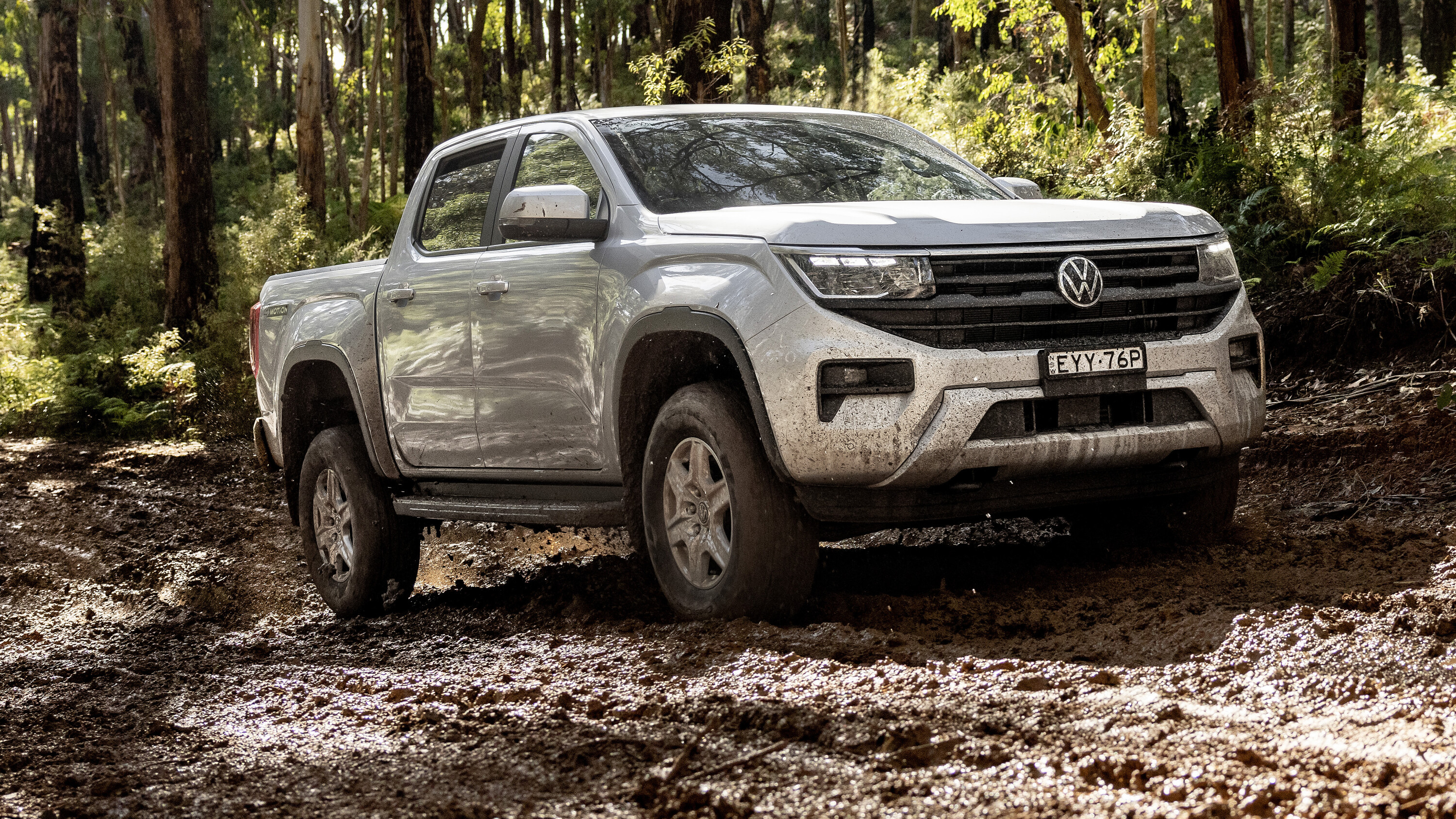
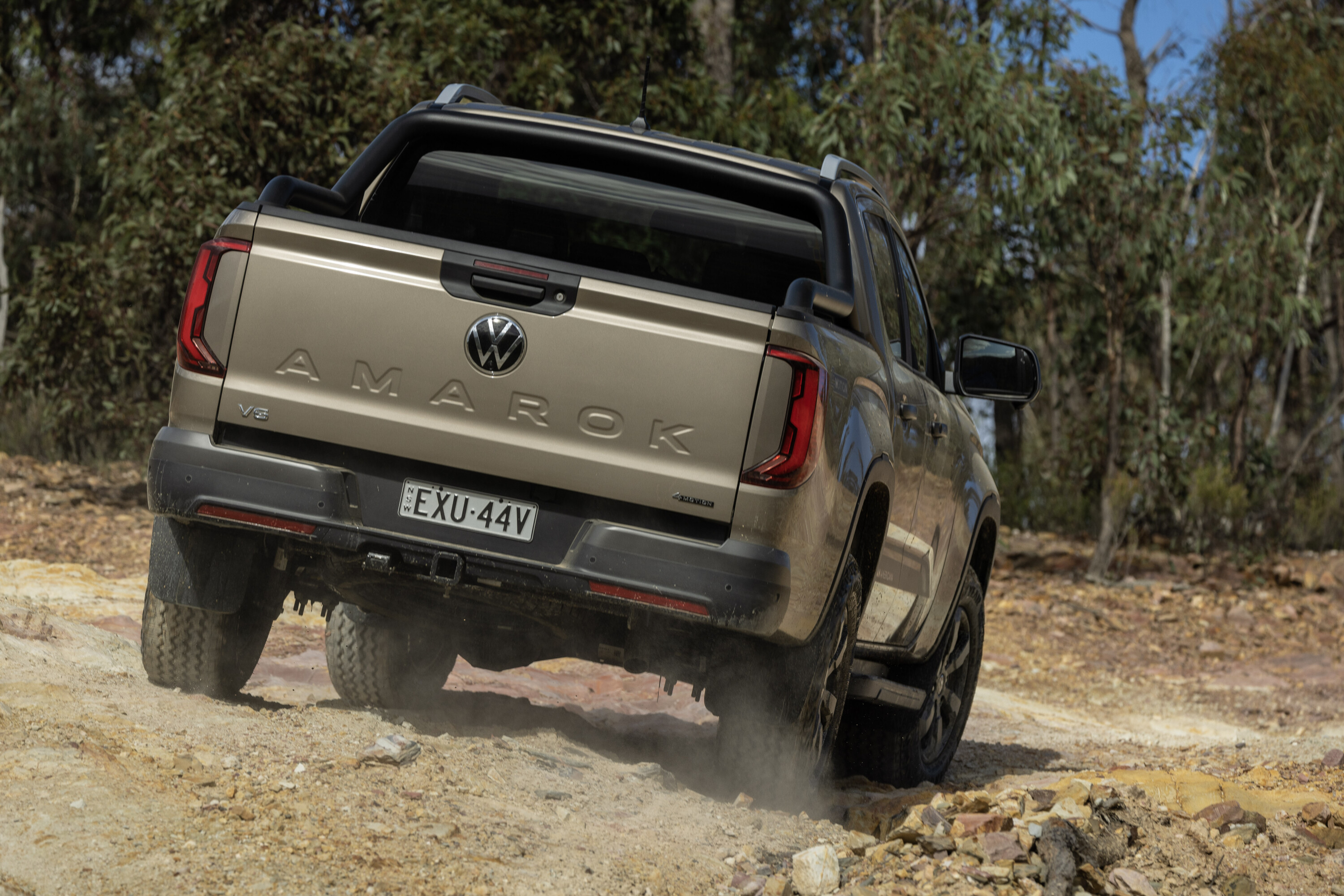
Off-road, the Amarok is more capable than ever.
Shorter overhangs, better ground clearance, a more advanced four-wheel-drive system and six drive modes (including Mud, Sand/Snow and Towing/Heavy Load) combine to make it impressively accomplished on slippery tracks.
Every model in the range includes a mechanical rear diff lock and approach/ramp over and departure angles are 30/22 and 25.6 degrees respectively.
Your Amarok’s thirst depends on which engine you go for.
The thriftiest option is the 2.0L bi-turbo diesel in the mid-spec Amarok Life and Style, which has a combined-cycle consumption rating of 7.2L/100km. The single-turbo 2.0L in the base Core is next best at 8.0L/100km.
An official rating of 8.4L/100km for the 3.0L V6 is impressive given its additional capacity and performance compared with the 2.0-litre options.
Unsurprisingly, the 2.3L turbo-petrol engine in the flagship Aventura is the thirstiest engine of the line-up. Keep a light foot and the 2.3L might return its official figure of 9.9L/100km, although we’d wager its real-world number will be much higher.
The Volkswagen Amarok is currently the safest dual-cab ute you can buy.
It was awarded a five-star safety rating by ANCAP in April 2023, with the breakdown of its crash rating being narrowly superior to the Ford Ranger on which it’s based.
In testing conducted by Euro NCAP, the Amarok was awarded 86 per cent for adult protection, which is two per cent higher than the Ford Ranger, thanks to a better whiplash protection result.
1
Every Amarok is fitted with nine airbags including one between the front seats to prevent head clashes and side curtain airbags.
A host of active safety systems are also available and we’ve listed the main ones here.
The Amarok is covered by Volkswagen’s five-year/unlimited-kilometre warranty.
Service intervals are every 12 months or 15,000km and while that’s industry standard, the kilometre interval is actually shorter than the old Amarok which required a trip to the dealer every 20,000km.
Maintenance costs are competitive and match the Ford Ranger thanks to pricing that spans $329 and $414 per service. Volkswagen also offers buyers a five-year care plan for $1800.
The Amarok’s service intervals are superior to a Toyota HiLux which requires a dealer visit every six months or 10,000km. It means a HiLux will cost you $1740 over the first three years of ownership, whereas the Amarok is $1072, a saving of $668.
So is the Amarok now the benchmark in the dual-cab segment?
It’s so closely matched with the Ford Ranger that you could give the pair tied honours – but when you start to split hairs, it’s the Ford that just edges ahead.
The Amarok misses out on a few of the Ford’s desirable features and, while the VW’s cabin is the most luxurious on sale (its seats are especially great), functionality isn’t quite as good due to burying key functions inside the touchscreen.
1
But if you can overlook those minor niggles, then the new Amarok is indeed a class leader.
Its tough looks are distinctly VW, and it’s a huge improvement over the old Amarok for cabin space, standard safety gear, infotainment and dynamics.
We’d gravitate towards the V6 Style and PanAmericana as the picks of the model range, but every Amarok feels impressively polished and is oozing with upmarket appeal.
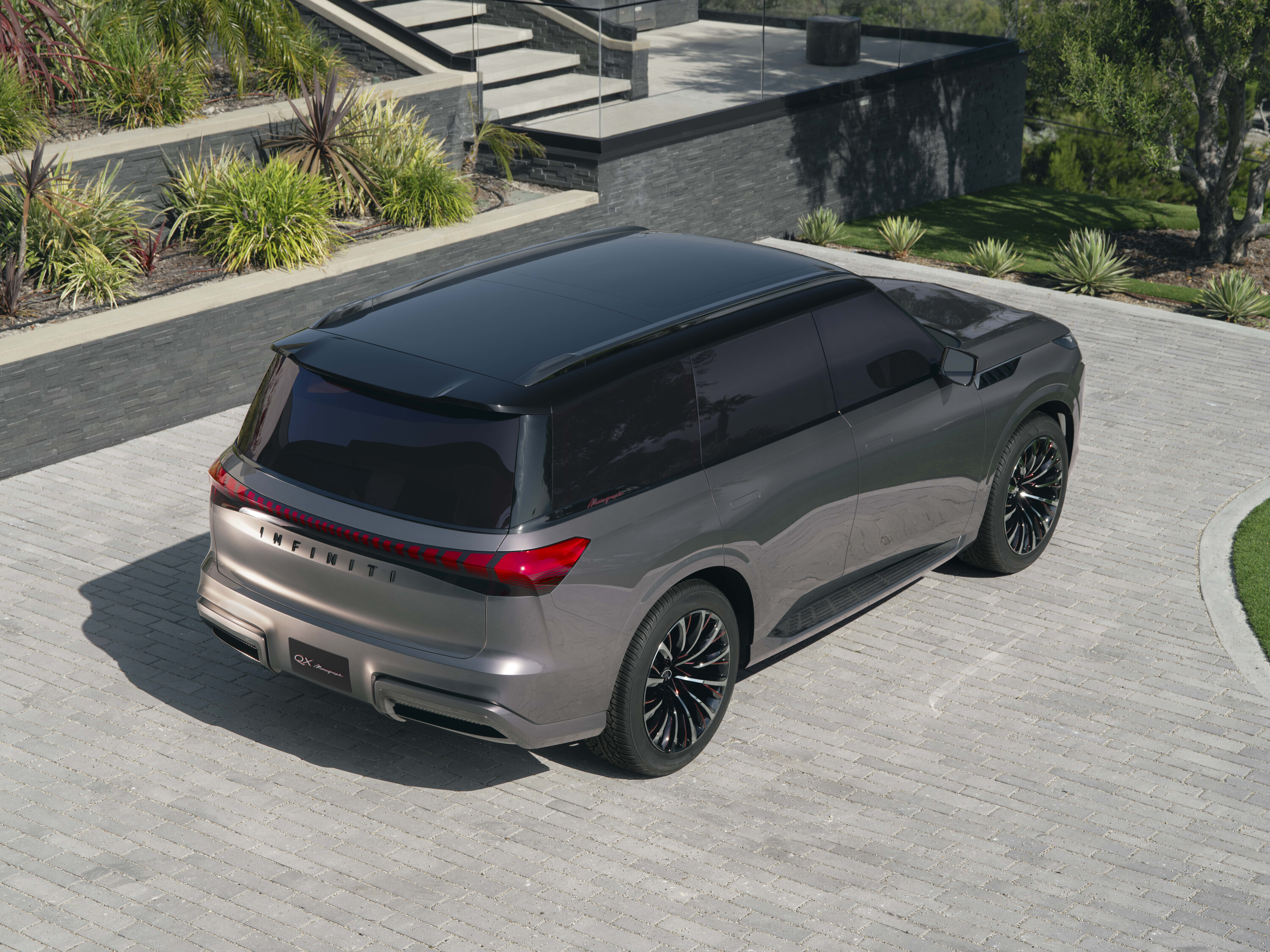
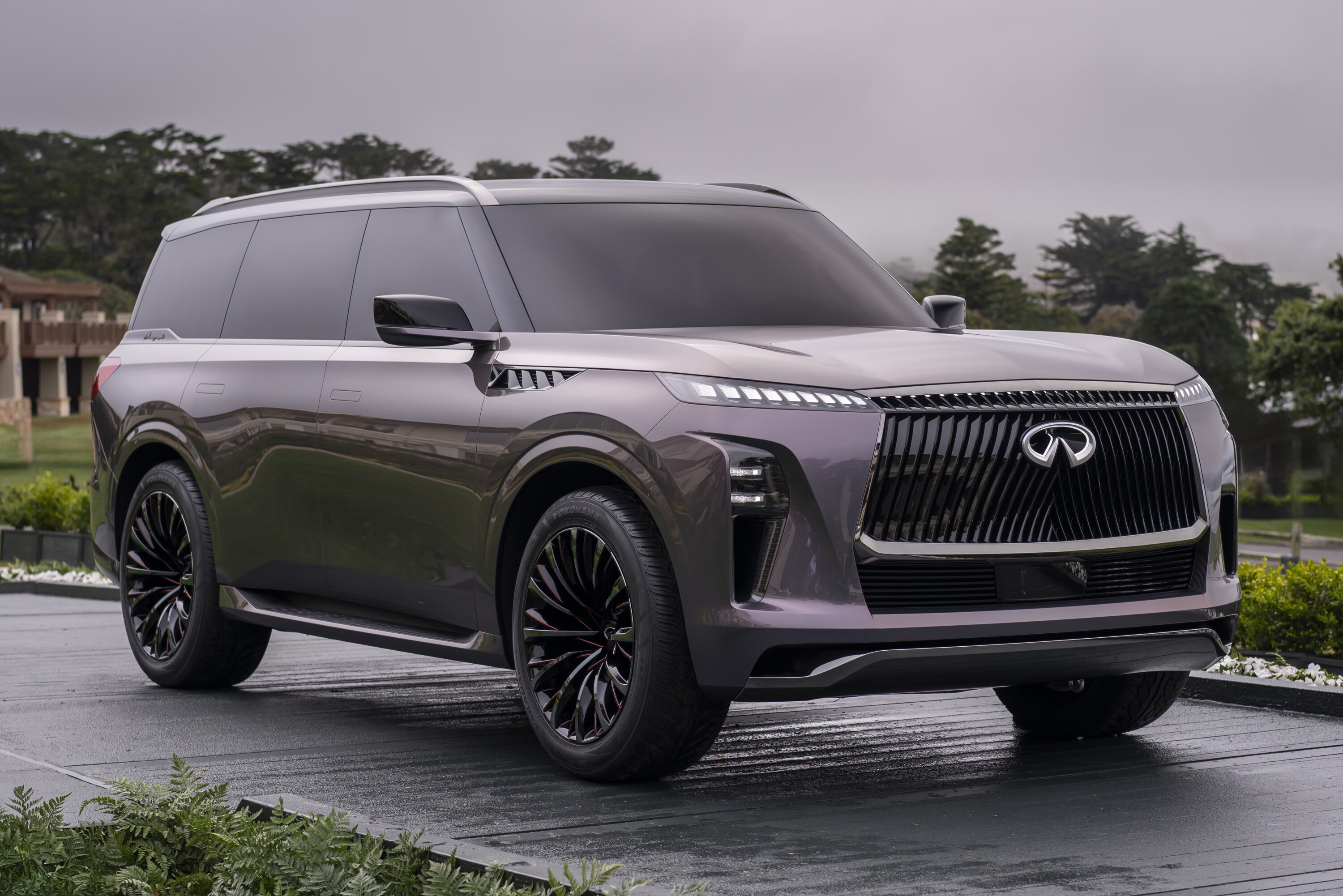
While Infiniti hasn’t detailed the concept’s interior or powertrains, the exterior design provides our closest look yet at the new Patrol – but with Infiniti’s latest design language.
Infiniti describes its upright shape as “anti-wedge”, which is said to allow for a more spacious interior. The glasshouse now wraps around the entire vehicle, while pop-out door handles replace traditional units – at least for the Infiniti version.
1
It features ‘digital piano key’ daytime running lamps with a lower, separated headlight assembly, a wider grille with a light strip, a functional side air intake, and full-width tail-lights with ‘welcome’ and ‘farewell’ animations.
The production version, expected in 2024, will likely be similar to the concept with minor tweaks such as more conventional door frames, side mirrors, and smaller alloy wheels.
The current Nissan Patrol – badged Armada in North America – serves as the basis for the Infiniti QX80, and this should continue in new-generation form.
1
It isn’t unusual for a luxury spin-off to be unveiled first. For example, the new Lexus GX off-roader was revealed ahead of the related Toyota Prado.
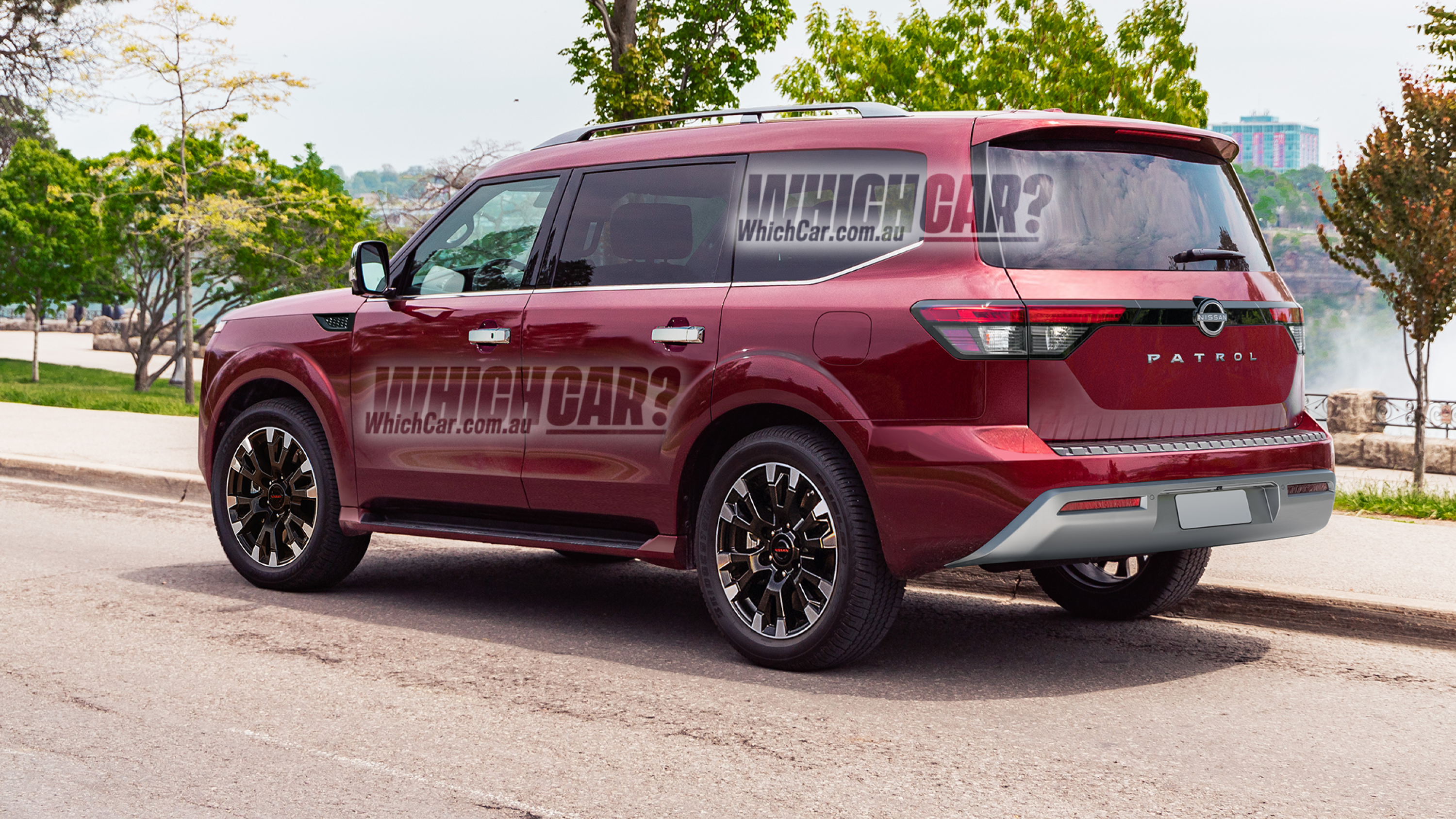
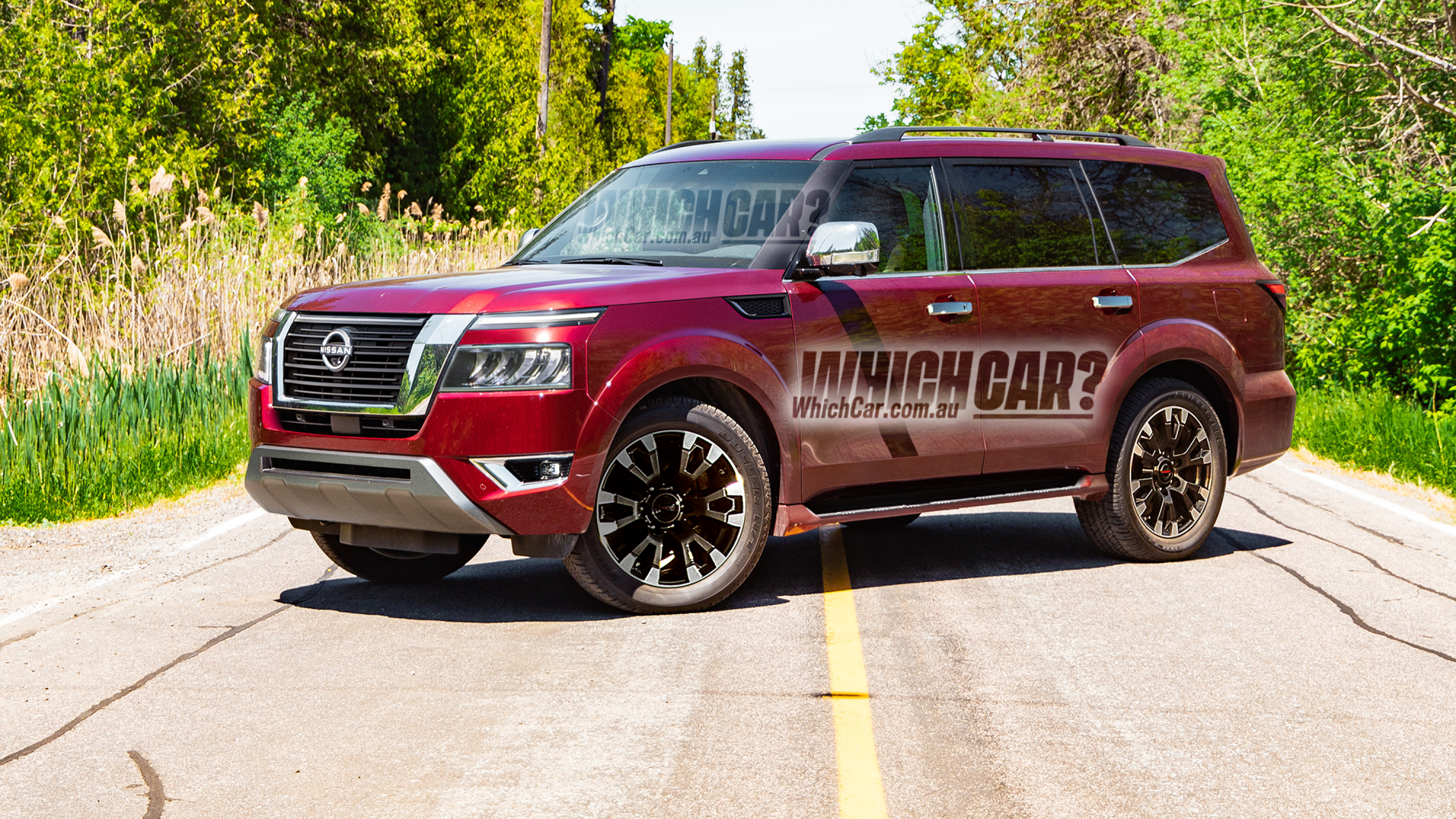
Our speculative renderings, below, show an evolutionary design with hints from the smaller X-Trail and Pathfinder for the new Patrol, including split headlights and a full-width strip connecting slimmer tail-lights.
Not much is currently known about the 2025 Nissan Patrol; however, a report from early 2022 suggests it could switch to a twin-turbocharged petrol V6 – at least in North America.
Industry journal Automotive News was briefed by a Nissan dealership source in the United States, with the Patrol set to replace its current petrol V8 for a “more fuel-efficient” twin-turbo V6.
“Fuel efficiency is on everybody’s mind,” another insider told Automotive News.
“If they can get the same horsepower and torque out of a V6, why not?”
1
The twin-turbo V6 in question is tipped to be a 3.5-litre unit paired with a nine-speed automatic transmission, though it’s believed to be unrelated to the Nissan Z’s engine.
While details of the powertrain remain scarce, the new V6 would likely outperform the current petrol V8, which produces 298kW and 560N. It’s paired with a six-speed automatic.
Tough new vehicle regulations in the United States require a 28.3 per cent reduction in emissions through 2026 – a stark contrast to Australia and Middle Eastern countries where more relaxed emission laws are enjoyed… for now.
The difference could mean Australia’s Nissan Patrol will continue with the 5.6-litre V8 for a number of years before moving to the V6.
1
Arch-rival Toyota replaced its 4.5-litre twin-turbo diesel V8 with a 3.3-litre twin-turbo diesel V6 in the LandCruiser 300 Series in 2021, mated to a 10-speed automatic transmission.
Some markets received the option of a 3.4-litre twin-turbo petrol V6, which is available in Australia in the related Lexus LX and soon to be offered in the smaller GX.
In addition to the twin-turbo V6, the Y63 may also feature an E-Power hybrid version to reduce emissions further. This would be in line with Nissan’s strategy to increase the number of electric and hybrid vehicles in its line-up.
For local buyers, a more-rugged Patrol Warrior – arriving later this year to farewell the current Y62 Patrol – may headline the new-generation range, if the upcoming model proves popular.
As with the Navara Warrior, it is ‘manufactured’ by Melbourne-based Premcar, with a bi-modal side-exit exhaust, a new towbar, added ground clearance via a suspension lift, additional under-body protection, all-terrain tyres, and black badging.
The next-generation 2025 Nissan Patrol – potentially codenamed Y63 – is expected to debut within 18 months, with a local launch likely a few months later.
The September 2023 issue of 4X4 Australia is out now.
A trio of top-shelf tourers headlines this issue of the magazine, with Matt Raudonikis getting behind the wheel of three Rambler-fettled off-roaders: a 300 Series, a 79 Series and a Silverado 1500 Trail Boss. Exceptionally built and loaded with quality equipment, picking a winner was no mean feat.
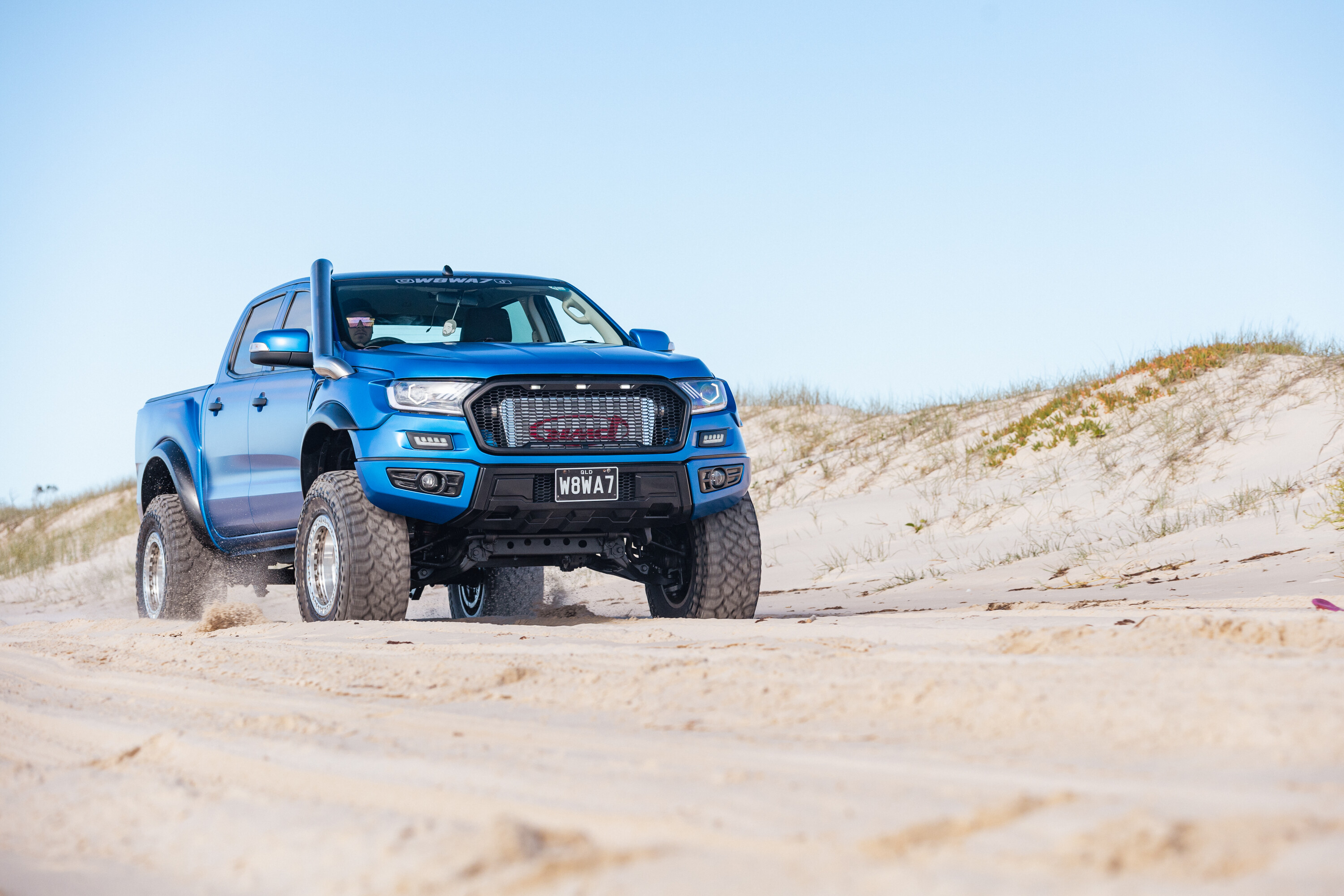
Equally ballistic is a Barra-powered Ford Ranger with a whopping five times more factory horsepower – an eye-watering 750hp at the rear wheels – than a stock vehicle. We take a deep drive under the hood of what is the most powerful Ford Ranger in Australia.
1
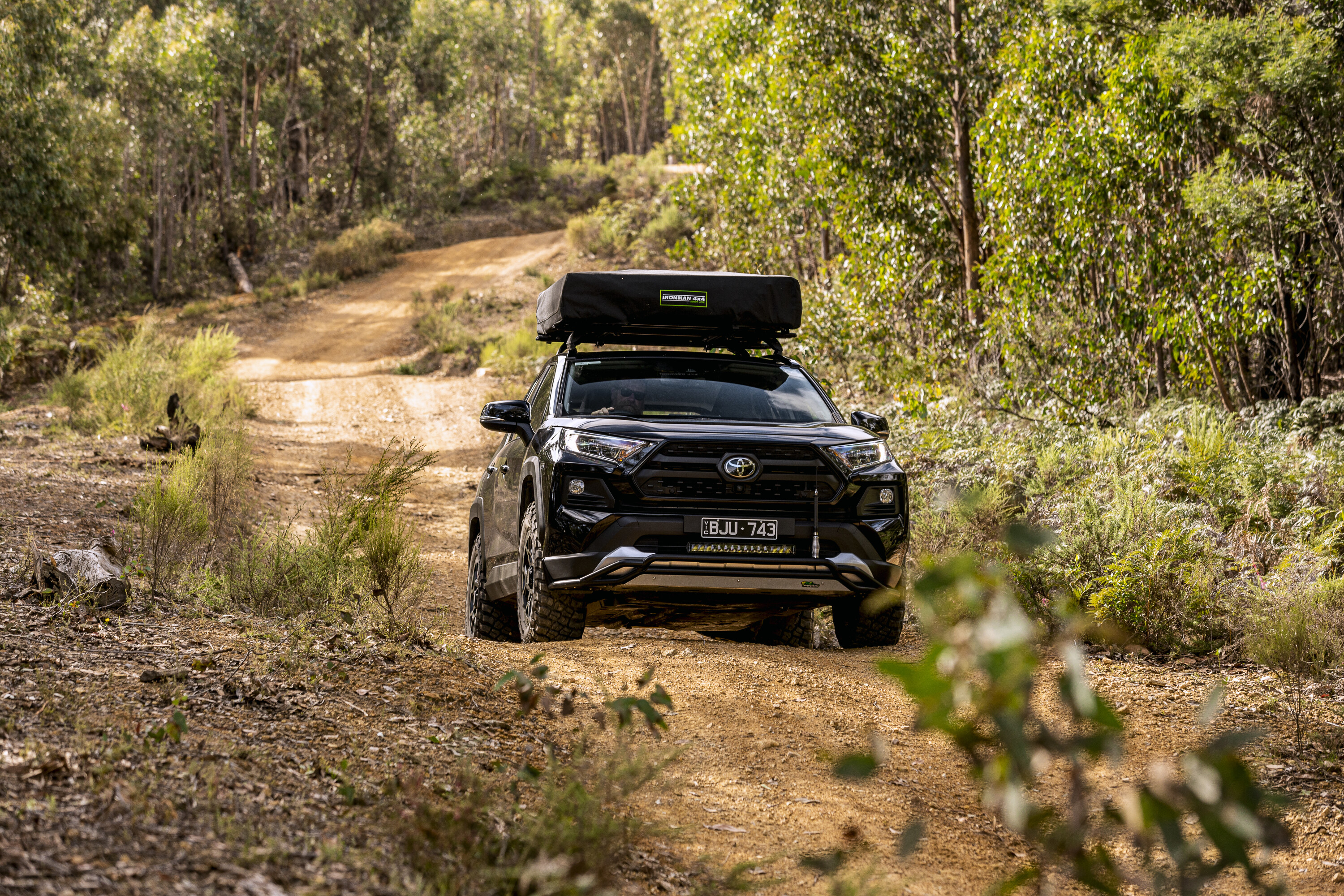
For a soft-roader to grace the pages of 4X4 Australia magazine, it needs to be something quite extraordinary, and this RAV4 outfitted with Ironman 4×4 equipment is something special. With improved ground clearance and added protection, this light-duty SUV is a capable little off-roader.
1
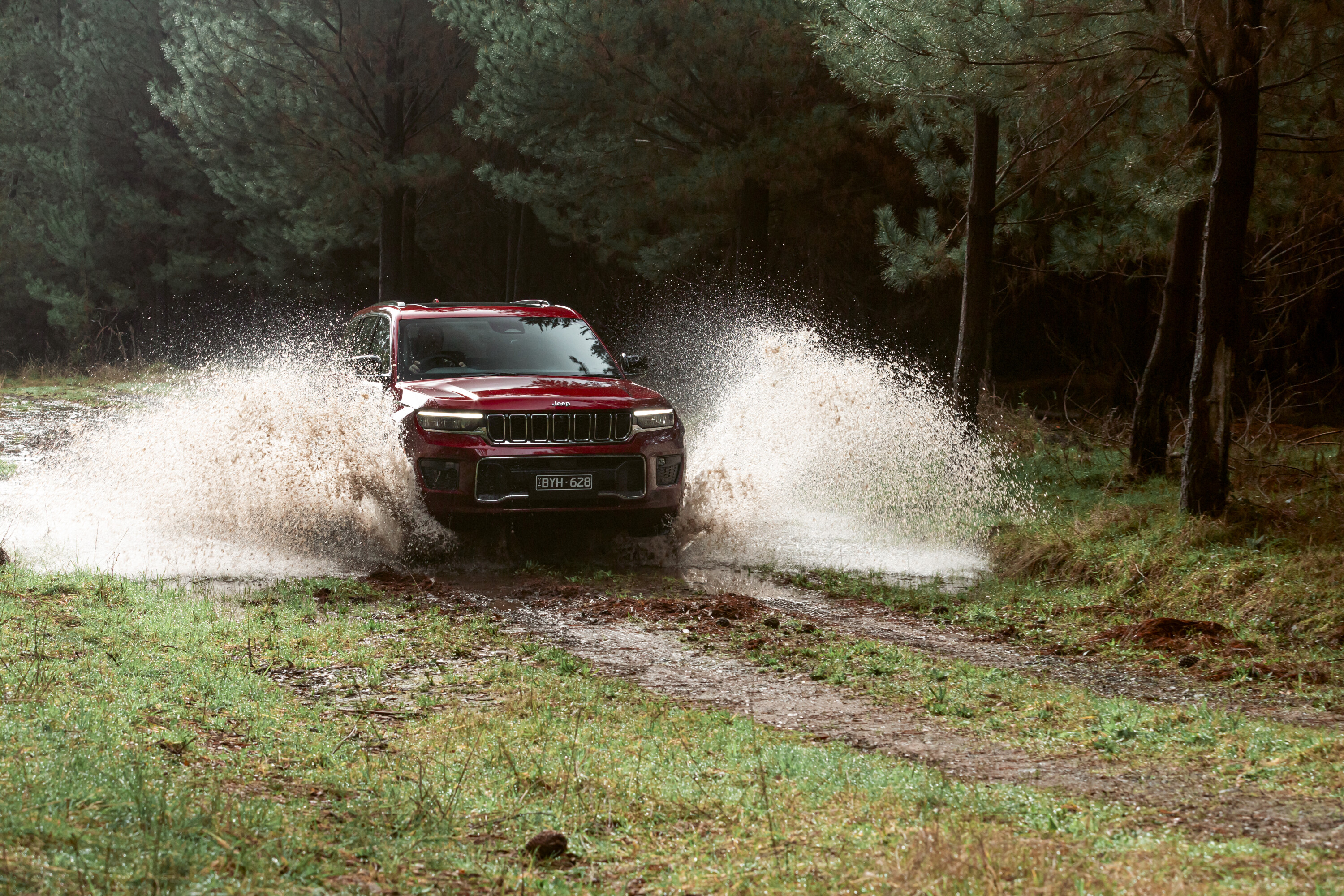
We also drove two new vehicles this month: a GWM Tank in Ultra guise, and a five-door Jeep Grand Cherokee Overland fitted with an off-road pack. We get both of them dirty, and return with surprising results.
1
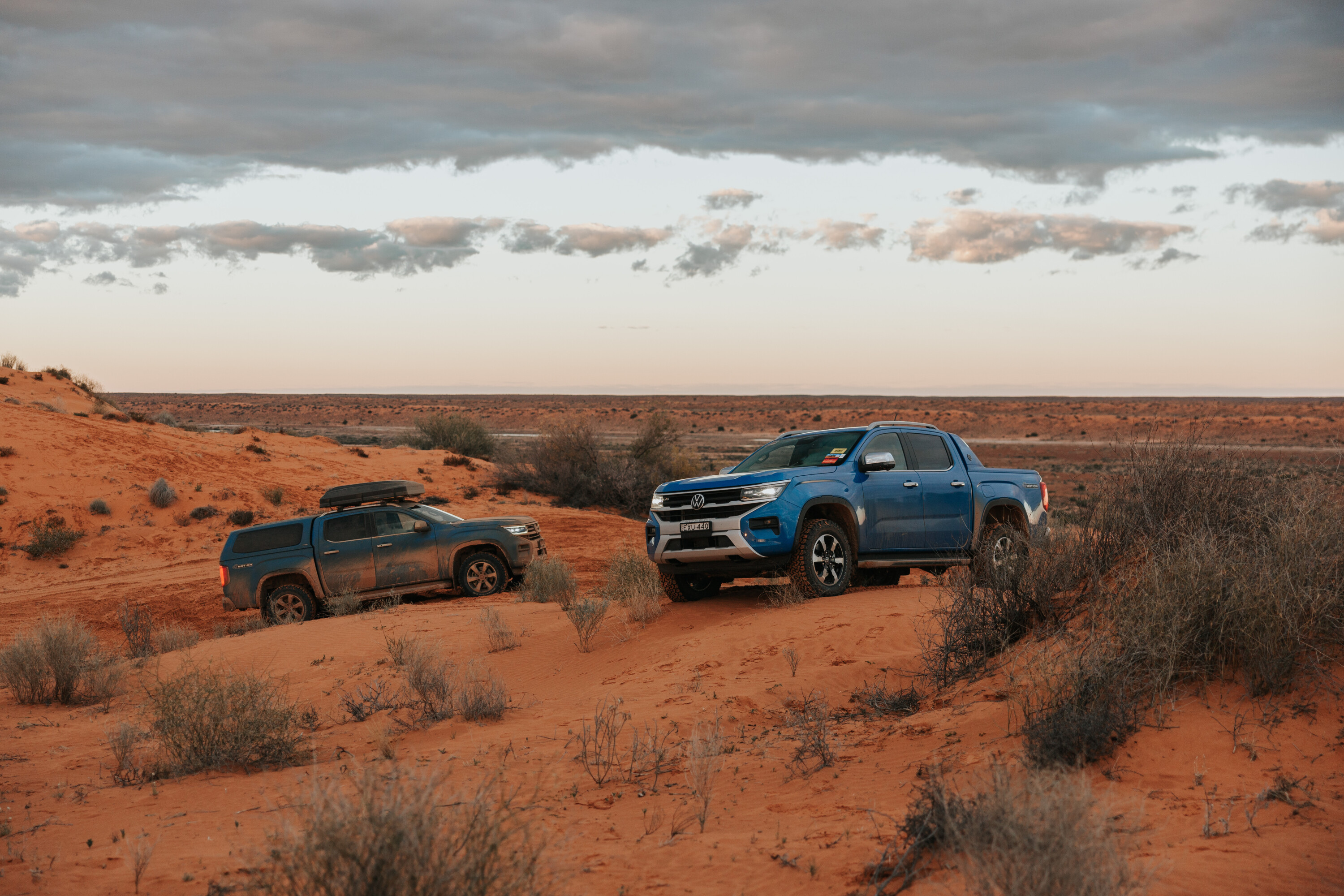
The all-new Amarok was in a race against the clock en-route to the 2023 Big Red Bash. Nasty weather foiled any plans of a smooth-running adventure, but as they say, ‘if the road is easy, you’re likely going the wrong way’.
1
Plus we make your next adventure easier by listing the top tips for planning a 4×4 trip and, when you’re ready, we’ve included a guide to explore the wonderful Nymboi-Binderay National Park in NSW.
As a bonus, by grabbing a copy of the mag, you could win a $6000 GearWrench tool kit for Dad this Father’s Day!
TJM has revealed a range of products tailored to suit the all-new 2023 Volkswagen Amarok, with the company to showcase the equipment at the National 4×4 Show in Melbourne this weekend, August 18-20.
A TJM-equipped 2023 Amarok will debut at the show, wearing a selection of specialised TJM gear designed to not only protect the vehicle but enhance its style, performance and practicality.
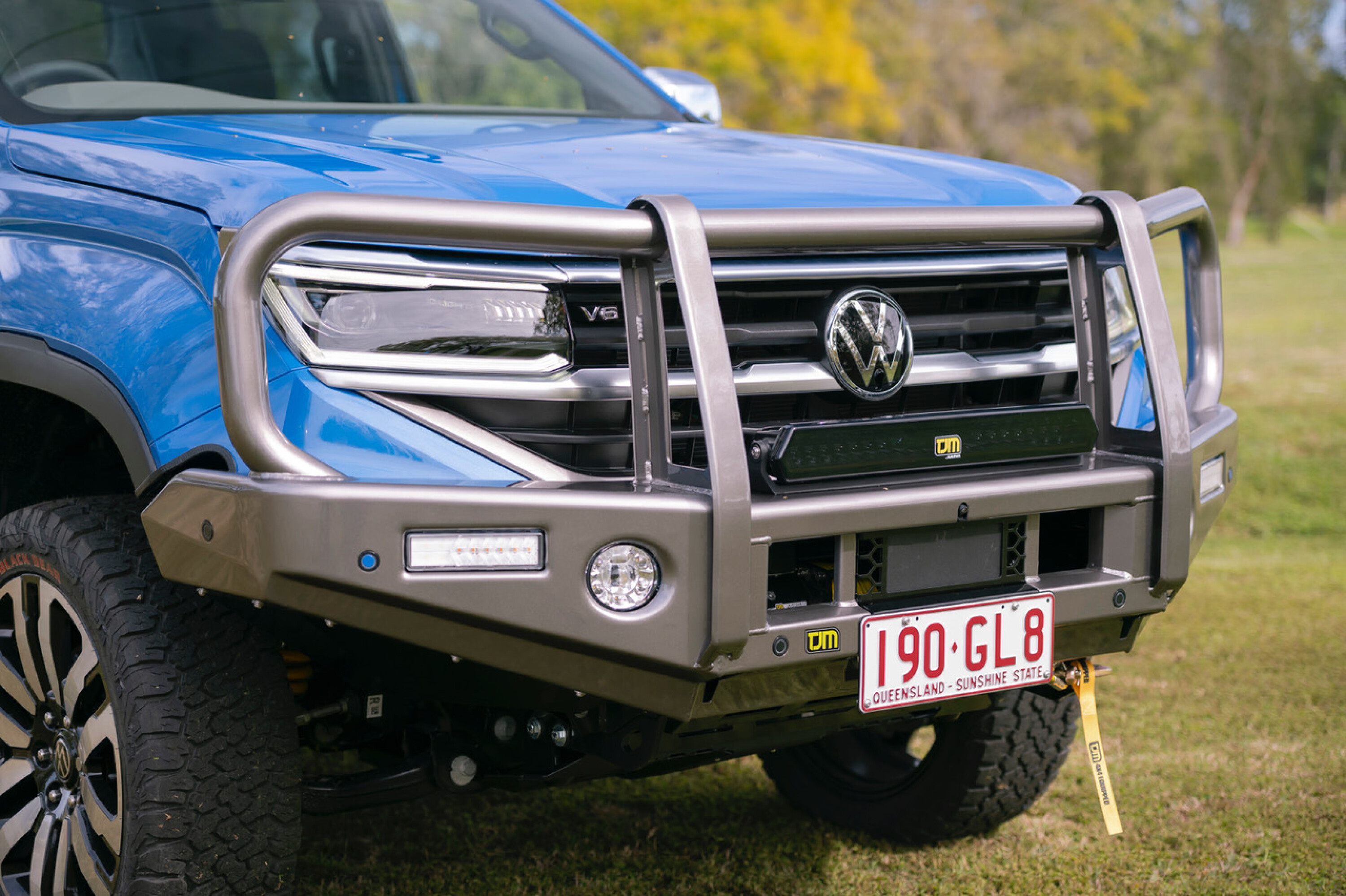
At the front of the vehicle TJM has installed its iconic Outback bull bar, which features an integrated steel winch mount (in this case fitted with a Torq winch), integrated 8000kg rated recovery points, reinforced Hi Lift jack points, dual aerial mounts, and mounting provisions for lights and light bars (with a TJM Ultima bar used here). It is constructed using a high-strength 63mm steel tube.
The bull bar retains all parking sensors and radar functions, and is ADR-compliant and airbag-compatible. It comes standard with a black powder-coat finish; although the bull bar on this vehicle has been painted. It comes with a three-year warranty.
Providing further peace of mind when battling off-road terrain is TJM underbody protection in the form of underbody guards. The guards are corrosion resistant and look great with a black finish.
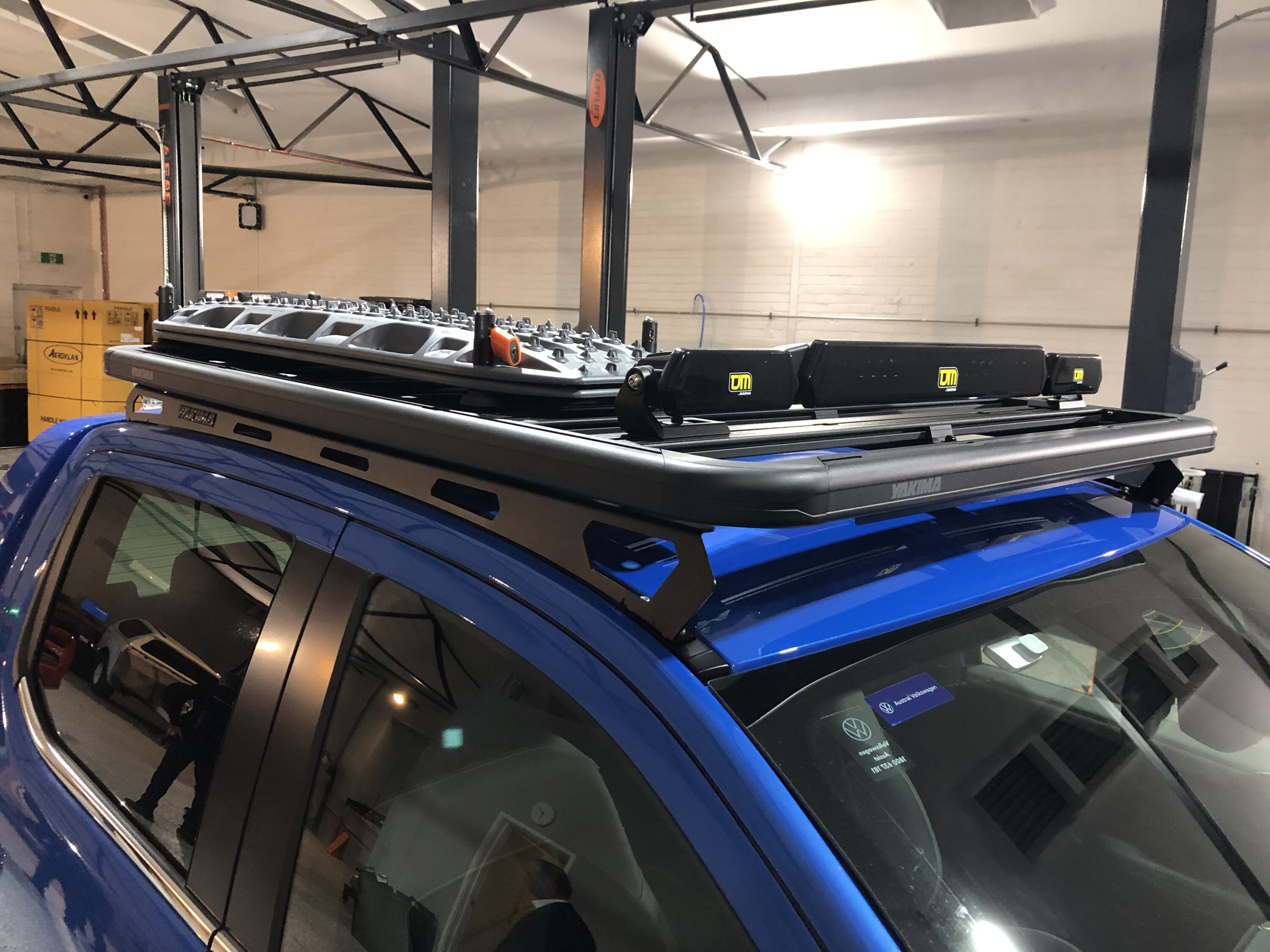
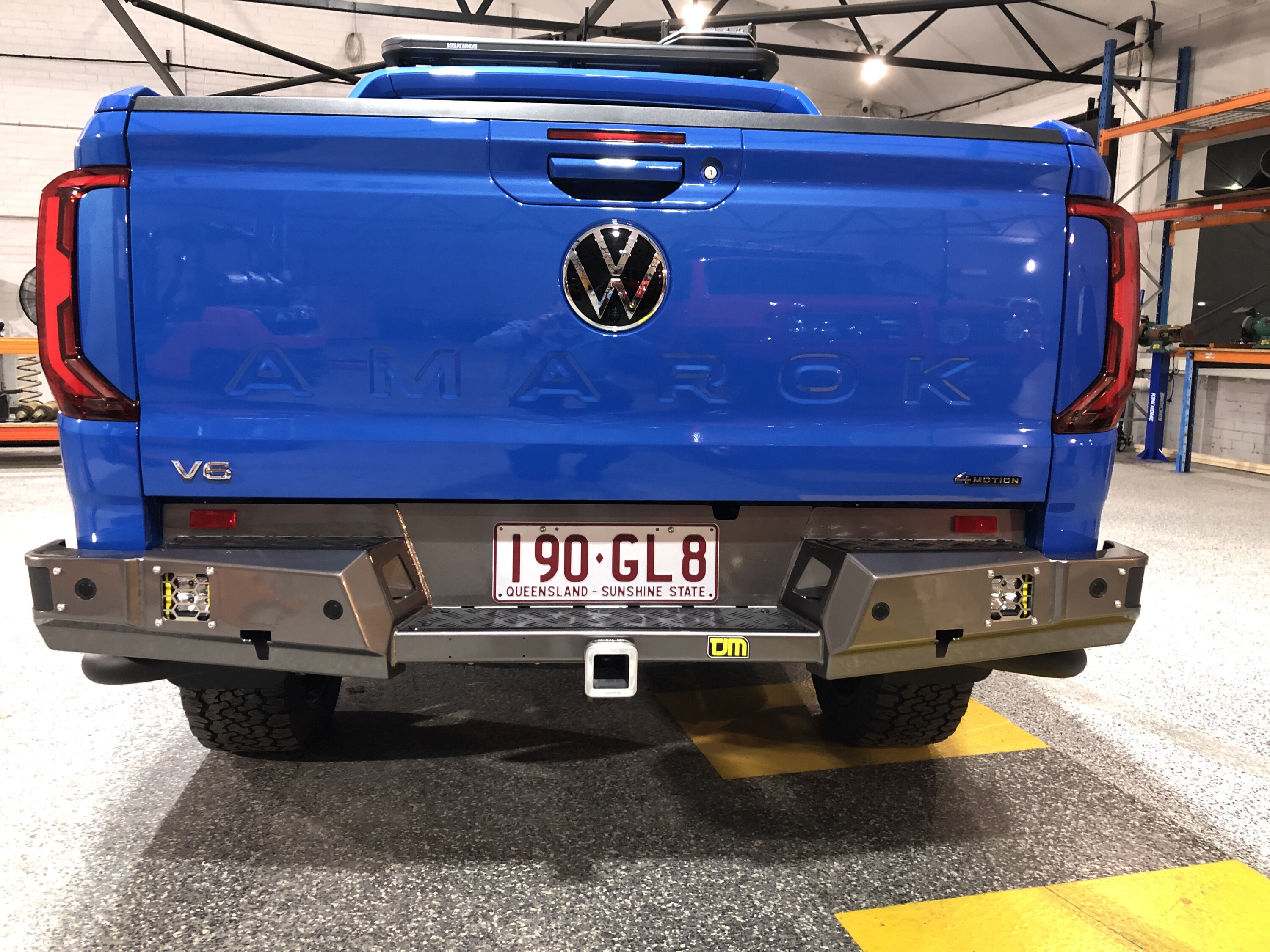
Down the flanks, the Amarok is wearing TJM side steps which are chassis-mounted for maximum strength. At the rear sits a TJM RB6 rear step protection tow bar that is also mounted to the chassis and is manufactured from high-grade steel – plus it contains relocated BLIS sensors and cameras. Embedded within the rear bar is a step to enable easy access to the Yakima roof rack. Atop the roof rack you’ll find a set of Maxtrax and three more TJM Ultima light bars.
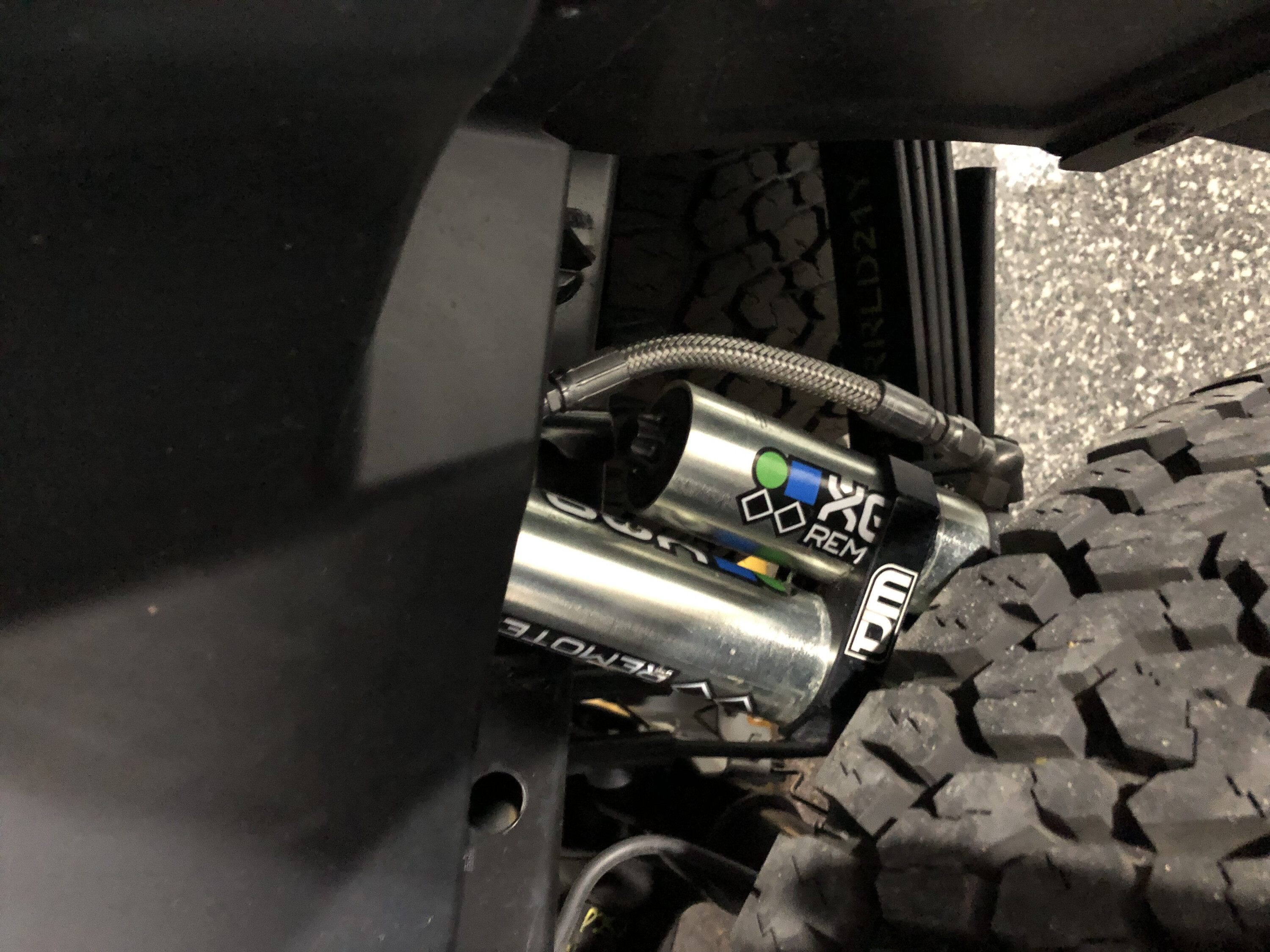
As is the case with the next-gen Ranger, TJM also offers its XGS suspension upgrades for the 2023 Amarok, with two suspension systems available: XGS Remote and XGS Roamer. This example utilises the top-of-the-line Remote kit which consists of a remote reservoir; a patented in-built hydraulic bump-stop; and eight-stage compression and rebound damping dials for exceptional all-road performance.
Check out the TJM-equipped Amarok at the National 4×4 Show in Melbourne this weekend, August 18-20.
What better high watermark to target than Australia’s best-selling vehicles? Mahindra’s globally-intentioned Pik Up concept has the Toyota HiLux and Ford Ranger in its sights.
Snapshot
Mahindra Scorpio-based ute concept revealed!
Targets move upmarket with lifestyle intentions
Production version on the cards for a 2024 release
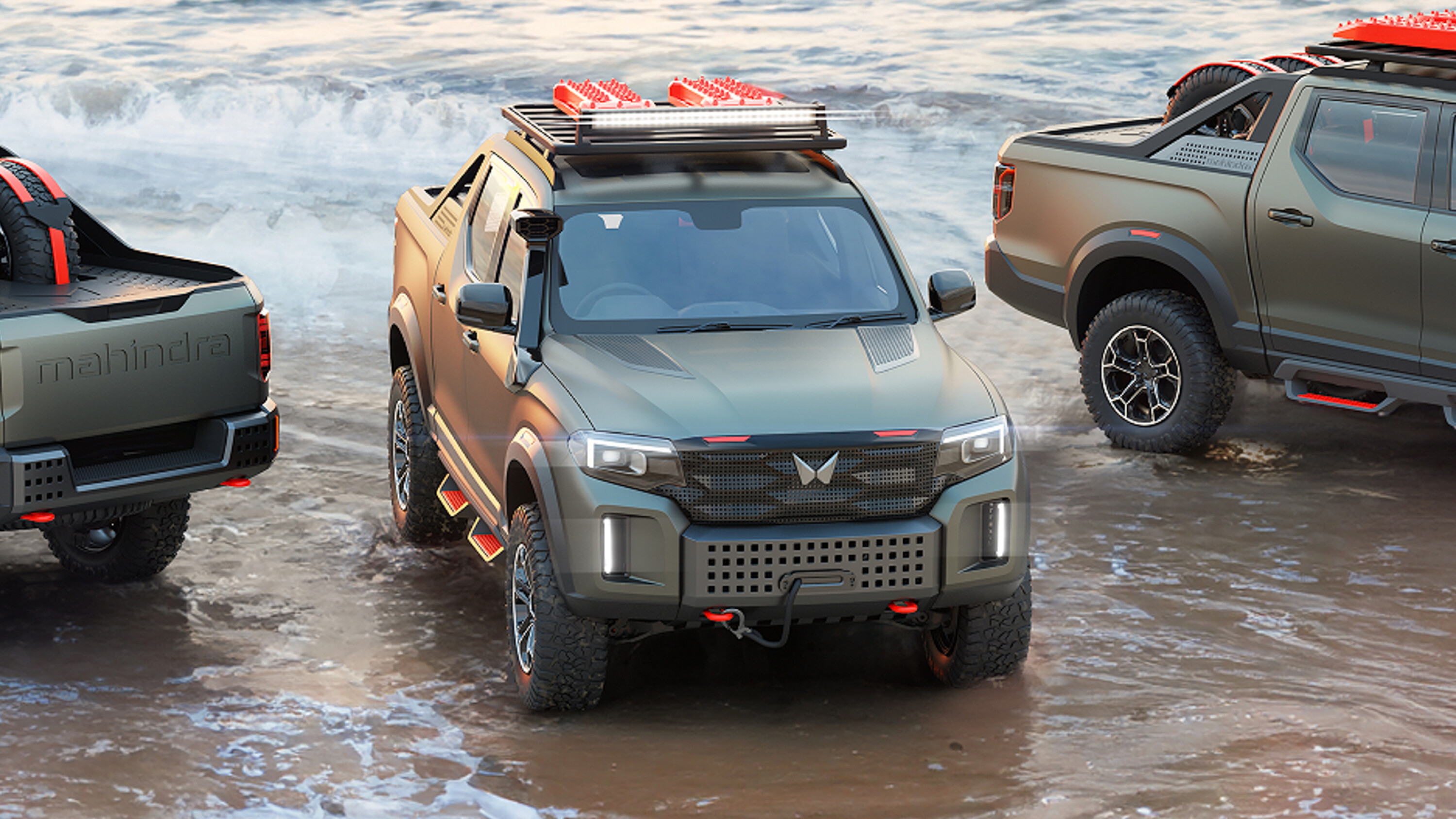
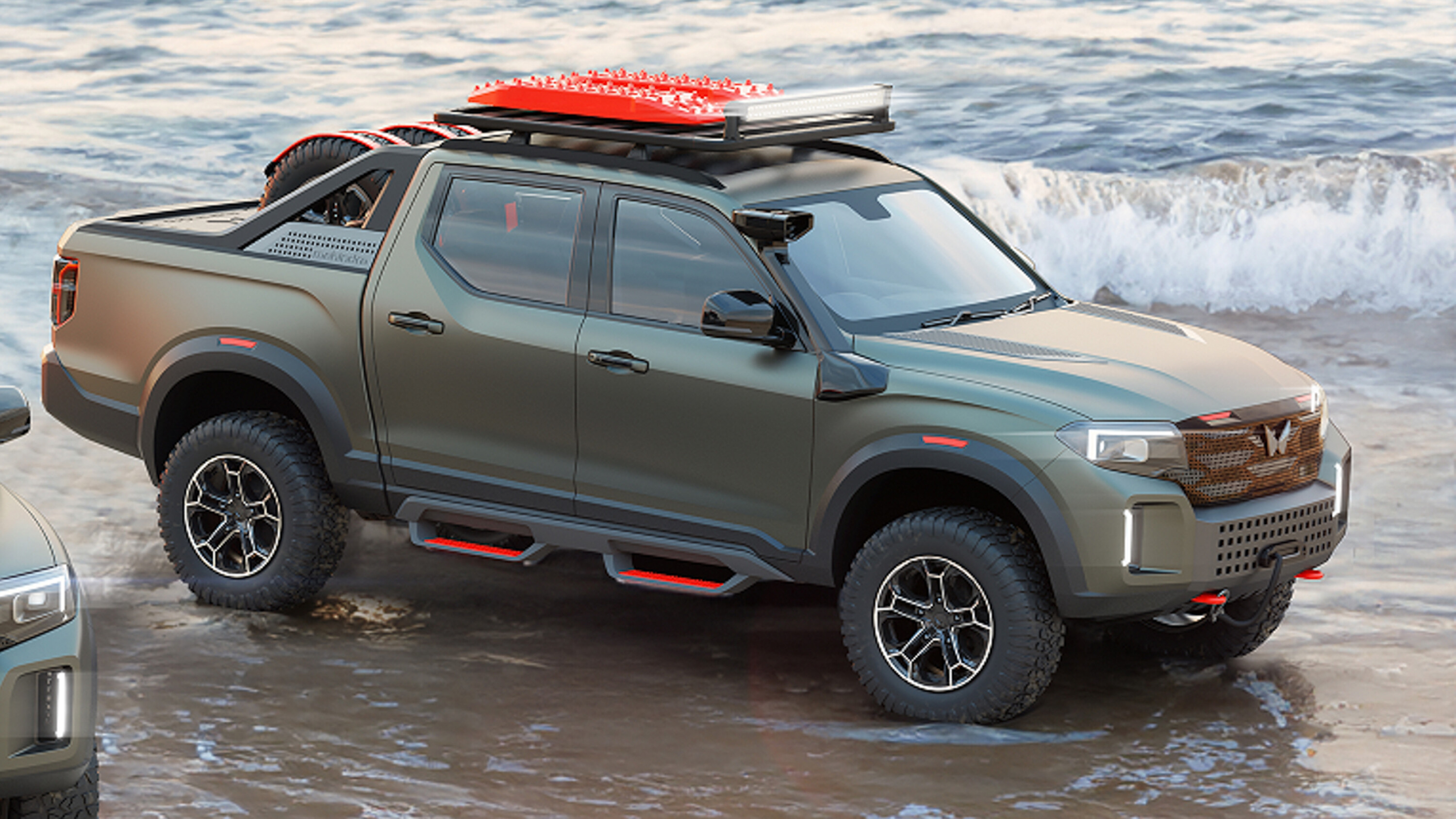
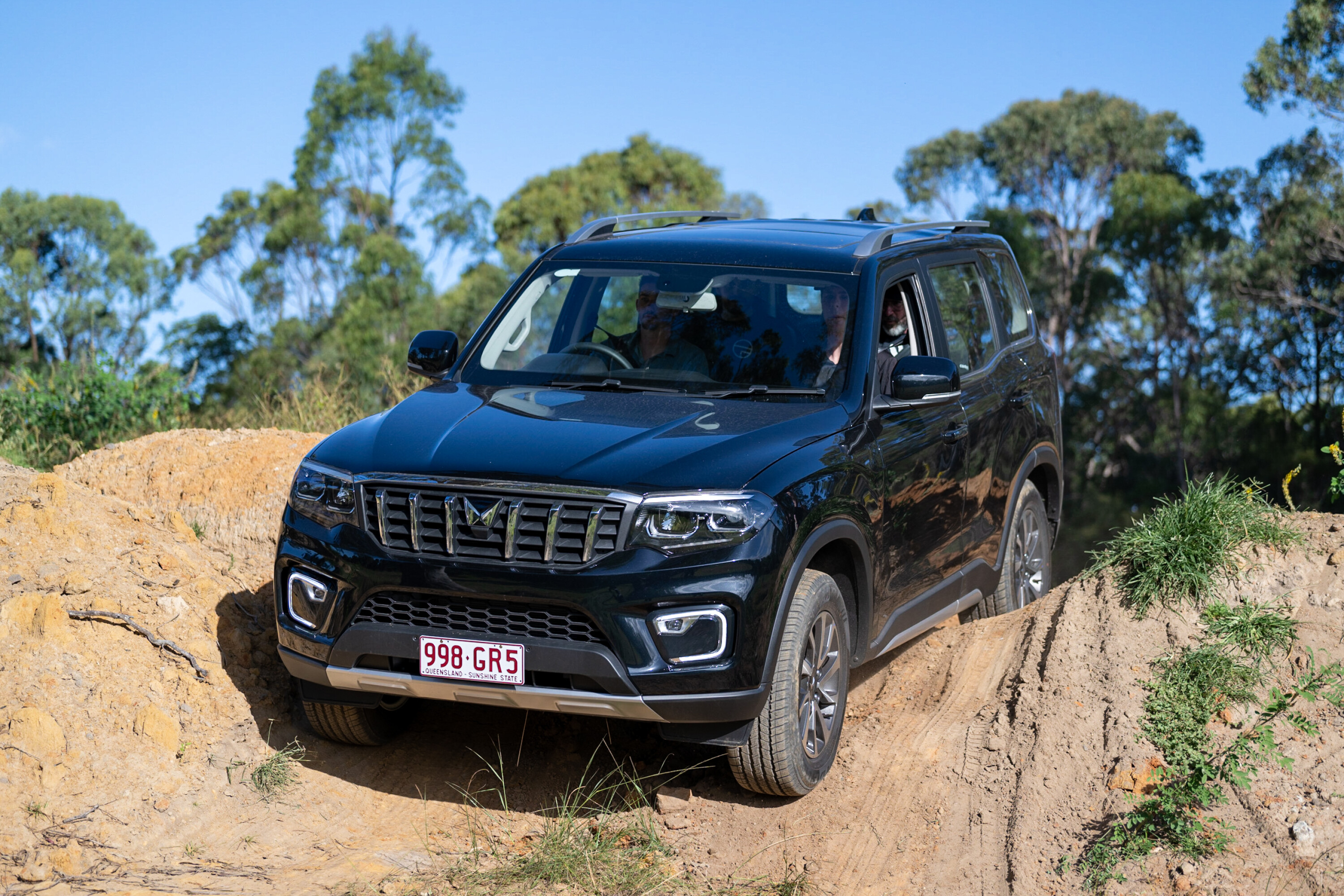
Based on Mahindra’s imaginatively-named ‘New Gen Ladder Frame’ platform shared with the third-gen Scorpio 4×4, the Global Pik Up looks much better than Mahindra’s current ute.
Mahindra executives say what you see here will go into production, but as for exactly when and how much will be changed before then, it’s unconfirmed. We’re anticipating a release in 2024.
Existing markets will be first on the list; these include South Africa, Australia, New Zealand, Africa, and others with expansion into the ASEAN region – the home of the Triton and D-Max – on the cards, too.
It helps – for us at least – that the Pik Up hails from India, which along with South Africa (where it was unveiled), are some of the largest right-hand drive markets in the world.
The concept shown here almost reflects monocoque utes in its proportions, with broad tracks and a shorter wheelbase more akin to the Hyundai Santa Cruz than taller Ford Rangers and Mitsubishi Tritons.
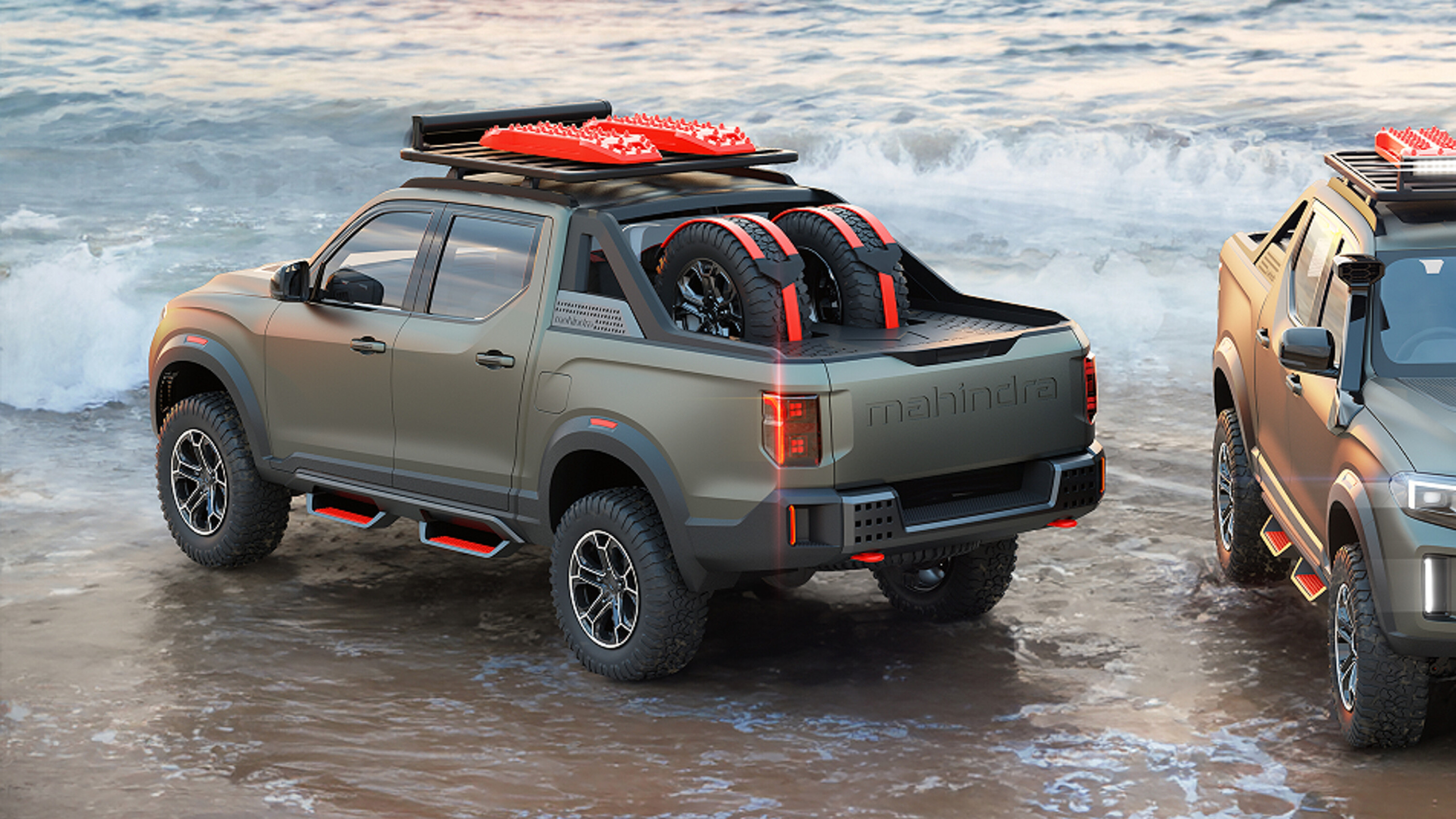
It doesn’t share sweeping visual similarities with the Scorpio, though we expect most production versions will do without the aggressive bonnet vents, intricately cut front bumper protection, winch, and sleek side steps. And, unlike the current Pik Up, this one’s doors don’t have the scallop to accommodate the wagon’s shorter wheelbase.
This is clearly more a design concept proving what Mahindra can do when it comes to making a popular off-road lifestyle version, think of the Ford Ranger Wildtrak and Toyota HiLux Rogue.
The dead giveaways include roof racks with recovery accessories, a tonneau cover with an integrated spare wheel rack, and a sleek sports bar at the rear.
“Our move with the Global Pik Up is poised to not only reinforce our presence in existing markets but also pave the way to new frontiers”, said Veejay Nakra, president of Mahindra’s automotive arm.
“[Global Pik Up] stands as an embodiment of what we aim to offer, an invitation to live unlimited, explore boundlessly, and embrace freedom”, he added.
1
What’s going to power the Pik Up and how much will it tow?
Mahindra shared limited details about the Pik Up concept, but we’d expect it to use the same 2.2-litre ‘mHawk’ diesel four-cylinder as the Scorpio, which was recently improved with an aluminium block and cylinder head, higher pressure fuel injection and a tweaked turbo for 129kW/400Nm.
As for towing capability, the Scorpio 4×4 is rated to lug a 2500kg braked load and has a 5155kg GCM. Expect similar towing from the ute but a payload closer to 800-1000kg.
Mahindra claims a ‘substantial cargo bed’ sits on the back of the Pik Up concept, and that it offers ‘commendable towing capacity’ citing horse trailer and horse lugging capacity.
Ideally, Mahindra will be able to bring towing capacity closer to the 1.9-litre Isuzu D-Max and Mazda BT-50, the LDV T60 Max and GWM Ute (3000kg), and the outgoing Mitsubishi Triton (3100kg).
1
Safety and technology
The Pik Up has been designed from the outset with a five-star safety rating in mind, according to Mahindra.
In this case, the carmaker is likely referring to Global New Car Assessment Program (GNCAP) ratings – this was the case with Scorpio. Stricter European-driven safety bodies such as ANCAP, used in Australia and New Zealand, require more driver assistance feature to score maximum points.
We’ve seen a similar scenario with the Scorpio 4×4, with Mahindra’s local arm choosing not to send that vehicle for ANCAP evaluation until more safety equipment is added.
Mahindra has promised that the Pik Up concept is equipped with ‘level-2’ ADAS systems, including autonomous emergency braking, driver monitoring, rear cross-traffic alert, blind-spot monitoring, and exterior cameras.