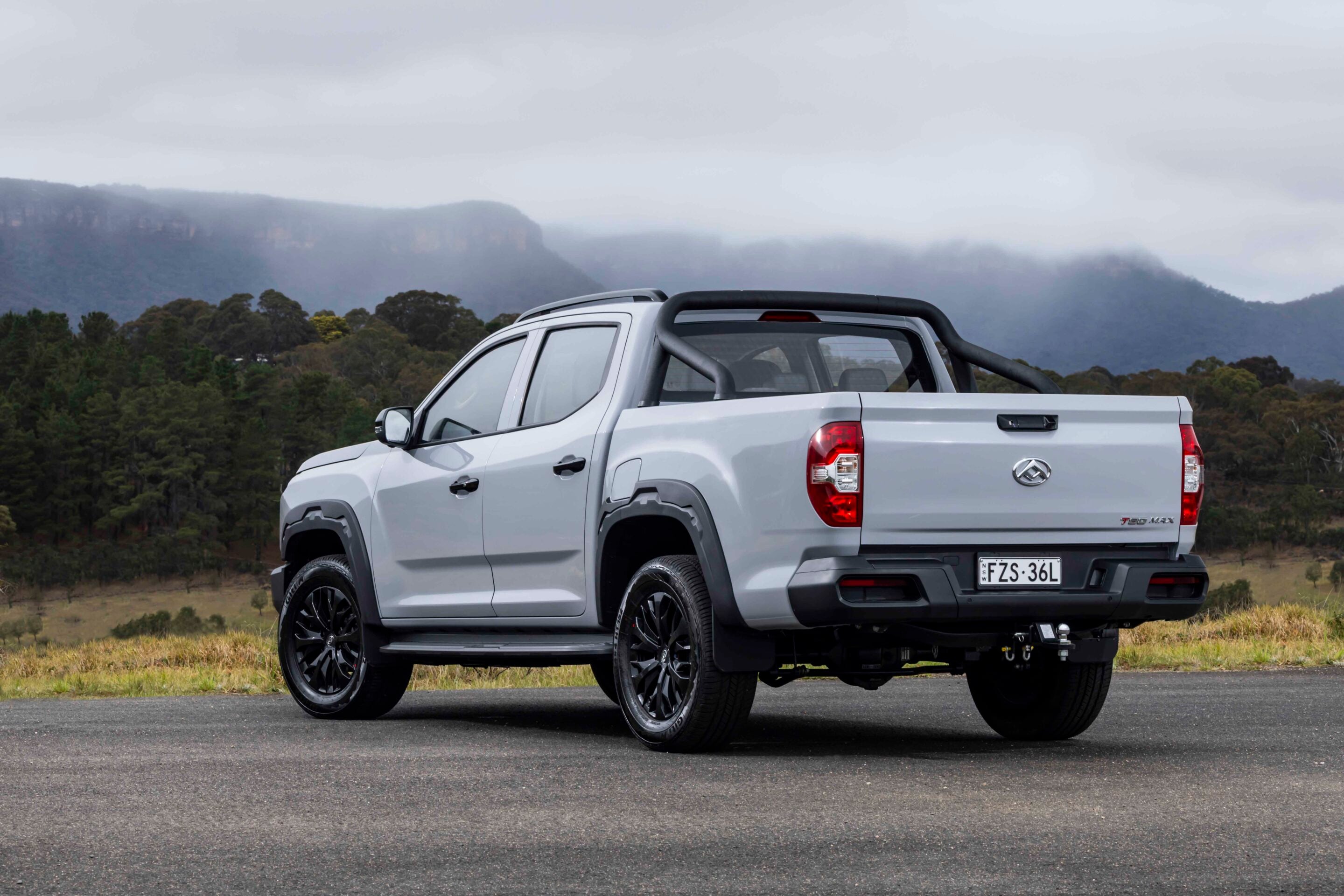
Chery Stockman reservations are now open in Australia ahead of the ute’s official sales launch, with customer deliveries commencing from February 1, 2027.
And Chery has sprinkled a little extra into the deal to entice early adopters, with customers who make an online reservation from October 1, 2026, until official sales commence set to receive a $2000 Bunnings gift card and three years (or 45,000km) of complimentary scheduled servicing.
“Opening reservations for the Stockman marks an important milestone for Chery in Australia,” said Lucas Harris, Chief Operating Officer, Chery Australia. “We’ve had a phenomenal response to the Stockman since the first announcement, and the reservation program gives customers the opportunity to secure their place ahead of the official sales launch, while also receiving a valuable pre-launch offer.”
As we previously reported, the Stockman is set to launch with a 2.5-litre turbo-diesel plug-in hybrid powertrain producing a claimed 350kW and 800Nm. It will offer up to 100km of electric-only range on the NEDC test cycle, with claimed fuel consumption of 2.0L/100km and a 3500kg braked towing capacity.
The Stockman will get four-wheel drive, all-terrain tyres, triple differential locks, crawl control and tight-turn assist, along with 247mm of ground clearance. It measures 5450mm long, 2010mm wide and 1890mm tall, with a 3250mm wheelbase and a 1560mm x 1560mm cargo tub.
Suspension comprises double wishbones up front and leaf springs at the rear, with Chery previously confirming that the suspension and driver assistance systems will be locally tuned for Australian models by Premcar.
Inside, the Stockman will feature leather upholstery, heated and ventilated front seats, wireless charging, dual-zone climate control and premium audio. A petrol-powered variant is also due to join the range later in 2027.
“The Stockman represents another significant step in the expansion of the Chery brand in Australia, and we look forward to sharing more details with customers as we move closer to its official launch,” Harris said.
Australian pricing, model grades and final specifications are yet to be confirmed, with more details due closer to the ute’s arrival in Australian showrooms.
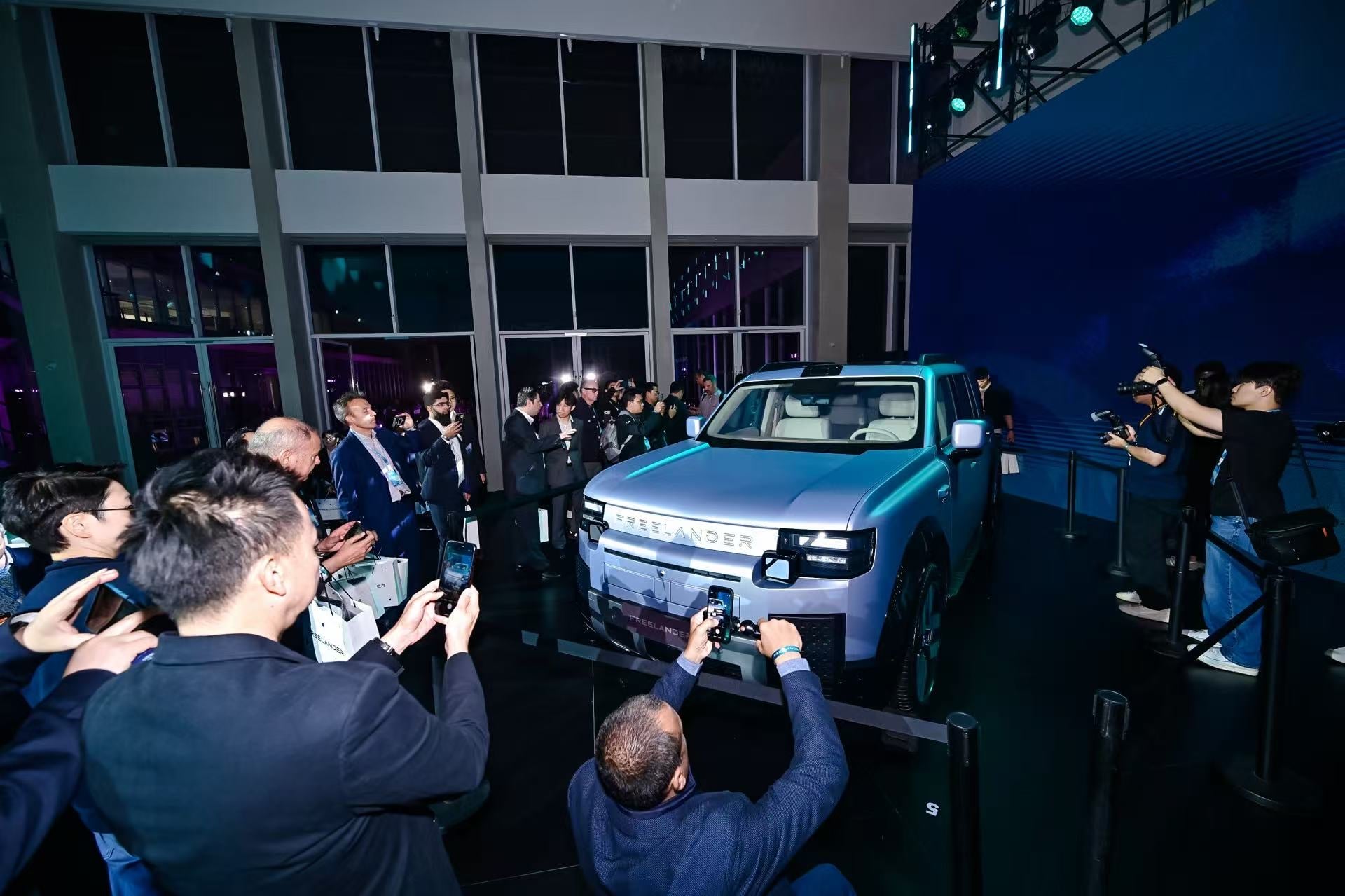
The new Freelander brand will launch in Australia in 2027, with the Freelander 8 SUV confirmed as its first model for the local market following the brand’s global launch in Abu Dhabi.
The global launch took place on September 29, with Australia and New Zealand identified as priority right-hand-drive markets for the new brand.
Measuring more than 5.1 metres long, the Freelander 8 is an upper-large SUV offered with five- and six-seat configurations. It will compete in Australia’s premium upper-large SUV segment. Australian specifications, pricing and exact launch timing are yet to be confirmed. The Freelander 8 has already gone on sale in China, attracting more than 10,000 pre-orders within 48 hours of opening.
The 5185mm-long SUV has also been detailed with twin-chamber air suspension, an electronic limited-slip differential and an intelligent all-terrain system, while previous Chinese-market information has pointed to a six-seat 2+2+2 interior. Those details have not yet been confirmed for Australian-market vehicles.
Freelander plans to introduce six models over the next five years, with the 8 leading its Australian launch. The brand will sell its vehicles through established dealerships in Australia and New Zealand, with dealer appointments to be announced ahead of launch.
Australia and New Zealand have been identified as priority right-hand-drive markets as Freelander expands outside China.
What is the Freelander brand?
Freelander is a new British premium all-terrain brand created by Chery Jaguar Land Rover, the 50:50 joint venture between Chery Automobile and Jaguar Land Rover (JLR). JLR licensed the Freelander name to the joint venture in June 2024, with JLR contributing its British design and all-terrain heritage while Chery provides electrified technology, engineering and its global supply chain.
Freelander vehicles are built at the joint venture’s plant in Changshu, China, with the first Freelander 8 leaving the production line on July 30, 2026. The brand launched in China in September before its global launch in Abu Dhabi on September 29.
Isuzu has cancelled plans to bring its electric D-MAX to Australia, despite previously confirming the battery-electric ute for our market.
The decision marks a reversal of Isuzu’s 2024 announcement that the D-MAX EV would be rolled out to Australia as part of its global launch plans. The electric ute is already in production overseas, but Australian buyers will now miss out on the current-generation model.
“While Isuzu remains committed to exploring future electrification opportunities, the decision has been made not to export the BEV D-MAX to Australia at this time due to the need to prioritise products that align with our current customer needs,” Isuzu Motors International Operations said in a statement.
The decision is notable because the D-MAX EV is already in production overseas and was developed as a genuine workhorse rather than an urban-focused electric ute. The production version uses a 66.9kWh lithium-ion battery and dual electric motors producing a combined 140kW and 325Nm.
It has a 3500kg braked towing capacity, 1010kg payload, 210mm of ground clearance and 600mm of wading depth, giving it many of the fundamentals expected of a conventional D-MAX.
The bigger compromise is its claimed 263km WLTP range. DC charging is limited to 50kW, with Isuzu claiming a 20 to 80 per cent charge takes about an hour, while an 11kW AC charge from empty takes around 10 hours. Those figures would present a different proposition in Australia, where D-MAX buyers commonly use their utes for long-distance touring, regional work, towing and remote-area travel. Range can also be affected significantly by load, terrain, weather and towing.
The cancellation means the Australian D-MAX range will remain diesel-only for now. Isuzu is instead continuing with its diesel powertrains, including the newer 2.2-litre four-cylinder turbo-diesel, while maintaining that it will continue to investigate lower-emissions technologies.
The D-MAX EV was previously earmarked for Australia alongside other international markets, making the latest decision a significant change of direction for Isuzu locally. The company hasn’t ruled out an electrified D-MAX in the future, but there is no replacement EV announced for Australia at this stage.
Quick FAQs
Will the Isuzu D-Max EV come to Australia?
No. Isuzu has cancelled plans to export the current D-MAX EV to Australia.
Why was the D-MAX EV cancelled?
Isuzu says the current EV does not align with Australian customer needs.
Is the D-Max EV still sold overseas?
Yes. The electric D-MAX is already in production in Thailand.
How far can the D-Max EV travel?
It has a claimed WLTP range of 263km.
Will Isuzu launch an electric D-MAX in Australia later?
Isuzu has not ruled out future electrification, but has not announced another Australian D-MAX EV.
Spend enough time four-wheel driving and you’ll quickly recognise the different types of drivers out on the tracks.
There’s the bloke carrying enough recovery gear for an expedition, the driver who attacks every hill at full noise, and the quiet expert everyone wants nearby when things go pear-shaped. From rookies and convoy commanders to camp setup kings and lone wolves, here are 10 4WDers you’re almost guaranteed to encounter on an off-road trip.
Their rig could tackle almost anything, and they’re ready for every scenario imaginable. The catch? Half the gear never gets used, and all that extra weight can slow them down. Still, when the unexpected happens, this is the driver everyone looks to. They might be carrying enough equipment to outfit an expedition, but when someone needs a recovery strap, compressor or shovel, they’re usually the one who has it.
2. The “it’ll be right” rookie
Bright-eyed, enthusiastic and often a little clueless, the rookie is usually underprepared.
Their tyres are overinflated, recovery gear is minimal, and their knowledge of low range or winching is mostly theoretical. They mean well and are eager to learn, but they’re often the reason a trip runs late or a recovery takes longer than expected. Everyone starts somewhere, though. With a few trips under their belt, some guidance from more experienced drivers and a better understanding of their vehicle, the rookie usually becomes a much more capable 4WD driver.
3. The convoy commander
With UHF in hand and eyes on the whole group, the convoy commander treats every washout, rut and puddle like a tactical operation.
They love structure, spacing and check-ins, and they’re determined to keep everyone moving safely and efficiently. Add in their running commentary and quips over the radio – they’re often convinced they’re a budding stand-up comedian – and you might groan as much as you laugh. Still, when the convoy gets spread out or someone disappears around the next bend, everyone appreciates knowing there’s someone keeping track of the group.
The solo adventurer prefers quiet tracks, minimal chatter and the freedom to explore without a convoy.
They usually come well prepared, carrying the right gear and knowing how to use it. You rarely see them, except for tyre tracks fading into the bush, but when you do, they’re often navigating terrain with impressive efficiency. The lone wolf’s independence can be inspiring – or intimidating – depending on your perspective. They’re perfectly happy going their own way, and probably wouldn’t want it any other way.
5. The camp set-up king
First to arrive and last to leave, the camp set-up king turns a simple stop into a full production.
Awning up, walls installed, lights strung, table laid out, fridge slide deployed, cooker running – by the time they’re finished, the campsite is the envy of the group. Everyone gravitates to their spot for comfort, food and a proper place to sit. Packing up the next morning is another story, but no-one complains. When it comes to camp, this driver has thought of everything.
6. The send-it specialist
Momentum is everything for the send-it specialist.
Rocks, mud and steep climbs are all treated as opportunities to test the vehicle. Throttle steady, minimal hesitation and plenty of confidence, they attack obstacles with the sort of enthusiasm that makes everyone else reach for their UHF. Sometimes it works flawlessly and they look like a hero. Other times it ends in wheelspin, bouncing or a recovery that could probably have been avoided. Watching them is entertaining, occasionally nerve-wracking and always a reminder of the fine line between confidence and bravado.
7. The cautious crawler
Slow, steady and deliberate, the cautious crawler approaches every obstacle with a plan.
Tyres are aired down, lines are picked carefully and nothing is rushed. While the send-it specialist is already halfway up the hill, the cautious crawler is working out exactly where each wheel needs to go. Their methodical approach takes longer, but it can reduce the risk of damage or getting stuck. They may not be flashy, but when conditions get tricky, having someone who takes their time and knows their vehicle’s limits is rarely a bad thing.
8. The social media shooter
Every stop is a content opportunity.
Drone up, camera out, perfect bonnet shot, sunset reel – progress slows to a crawl while they capture the perfect footage. That scenic lookout that should have taken five minutes becomes a 20-minute production. Trips with a social media shooter might test the patience of the convoy, but there is one upside: they’re usually the person who later sends everyone the best photos and footage from the trip. And somehow, they always make the track look better on Instagram than it did in real life.
9. The borrower
“Anyone got a spare strap? Can I borrow some water?”
The borrower is always missing something. They’re usually underprepared rather than deliberately lazy, but somehow the 4WD community has their back. Over time, everyone starts remembering what the borrower might need, and someone inevitably produces the missing piece of gear from their own vehicle. They may rely heavily on the generosity of the group, but their good humour and willingness to help when they can often make them more endearing than frustrating.
10. The quiet expert
Silent, calm and highly skilled, the quiet expert rarely speaks but always commands respect.
They know terrain, recoveries and vehicle limits like the back of their hand. When something goes wrong, everyone looks to them for guidance. There’s no drama, no ego and usually no lengthy UHF lecture. They assess the problem, work out a solution and get on with it. Every group benefits from having a quiet expert along. They might not say much, but when the track gets difficult, they’re usually the person everyone wants nearby..
And then there are these characters
Some drivers don’t fit neatly into the main categories, but they’re impossible to ignore:
There’s the gear tester, always experimenting with new tyres, suspension or recovery gear mid-trip; the storyteller, who has a tale for every puddle, rut and obstacle; the snack supplier, who somehow always has chocolate, chips or cold drinks when everyone else is hungry; and the weather watcher, obsessively checking forecasts, radar apps and cloud formations to work out whether it’s safe to push on.
Most four-wheel drivers aren’t just one type, either. You might be the cautious crawler on a difficult track, the camp set-up king once you reach camp and the social media shooter when the scenery is too good to ignore. The best 4WD trips usually have a bit of everything: Someone who knows their vehicle, someone who can organise the convoy, someone prepared for a recovery and someone who keeps everyone laughing when things don’t go to plan.
So, which type are you, and which one drives you mad?
LDV has confirmed pricing and full specifications for its updated T60, with the ute getting a new 2.5-litre turbo-diesel engine, a redesigned cabin and a two-model range.
The T60 PRO will be priced at $37,990 drive-away for ABN holders or $39,989 for private buyers, while the T60 LUXE will cost $42,990 for ABN holders and $45,253 for private buyers. All figures are manufacturer’s recommended list prices.
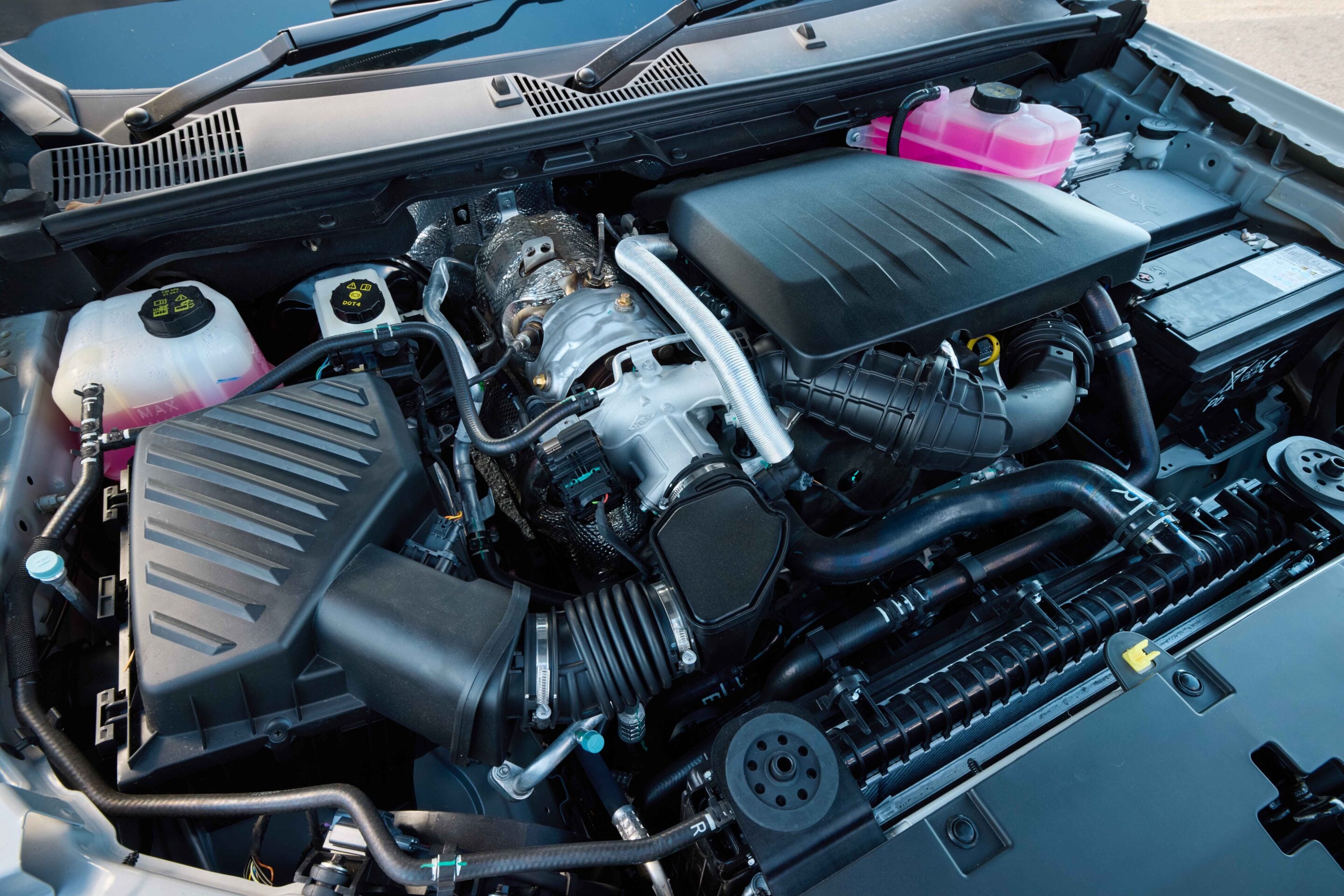
The new single-turbo four-cylinder diesel produces 163kW at 3800rpm and 520Nm from 1500 to 2500rpm, paired with an eight-speed automatic. It has selectable 2H, 4H and 4L, and is shared with the larger LDV Terron 9. That makes the T60 one of the more powerful four-cylinder diesel utes in the segment.
1
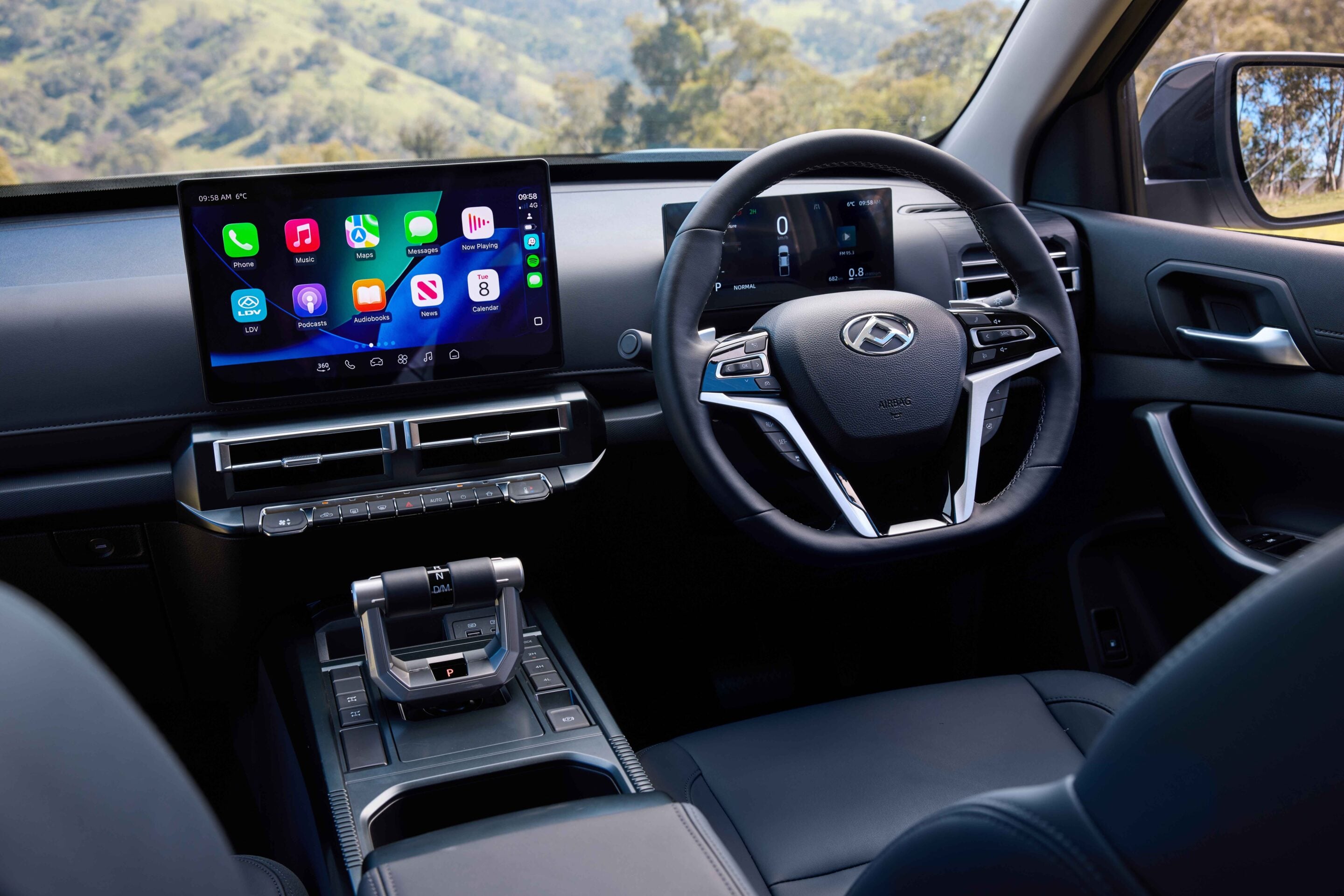
The updated model also gets a fresh front end and a substantially revised cabin. The T60 gets new front-end bodywork based on the Terron 9, while the dashboard now houses a 12.8-inch infotainment screen and 8.0-inch digital instrument cluster. The gear selector has moved from the steering column to the centre console, and the indicator stalk has swapped to the right-hand side.
The T60 range has been cut from three variants to two, with LDV positioning the PRO around load carrying and the LUXE as the more comprehensively equipped model.
“Because the updated LDV T60 range is so well equipped, we have reduced the model complexity and are now offering two attractive price points,” said Dinesh Chinnappa, General Manager of LDV Australia. “The PRO version equipped with leaf-spring rear suspension is designed to appeal to customers with an emphasis on load-carrying.
“The LUXE high series model has an even longer list of standard equipment, and with multi-link rear suspension it delivers a more rounded driving experience, yet still has an impressive payload capacity.”
1
There are some worthwhile differences between the two variants when the bitumen ends. The PRO has 185mm of ground clearance, a 25-degree approach angle, 25-degree departure angle and 20-degree ramp-over angle. The LUXE gets 220mm of clearance, a 29-degree approach angle and 22-degree ramp-over angle, although its departure angle drops to 16 degrees with the towbar fitted. Both have a 550mm wading depth.
The LUXE also gets front and rear differential locks, a wider track, fender flares and multi-link rear suspension. The PRO uses leaf springs at the rear and gets a rear differential lock. Towing capacity is rated at 3500kg braked and 750kg unbraked, with a 3150kg GVM and 6250kg GCM. The PRO has a 2110kg kerb weight and a 1040kg payload, while the LUXE has a 2170kg kerb weight with the towbar fitted and a 980kg payload.
Equipment on the PRO includes LED headlights, 17-inch alloys, tyre-pressure monitoring, four-wheel disc brakes, a spray-in tub liner, damped tailgate, rear camera and rear parking sensors. It also gets a heated steering wheel, cloth seats, paddle shifters and rear air-conditioning vents.
31
The LUXE steps up to artificial-leather seats, heated and electrically adjustable front seats, 18-inch alloys, a 360-degree camera and front parking sensors. It also gets a sports bar, lockable tailgate and towbar kit with a 50mm towball and wiring harness. The full list of equipment can be found below.
Both versions get the Black Pack, with black finishes for the grille, bumpers, door handles, roof rails, side steps and mirror caps. Four colours are available, with Blanc White standard and Metal Black, Concrete Grey and Vivid Red for an extra $500.
The tub is unchanged for MY27, so accessories designed for the previous model will carry across.
Specification
T60 PRO
T60 LUXE
Engine
Single-turbo 2.5L four-cylinder diesel
Single-turbo 2.5L four-cylinder diesel
Power
163kW @ 3800rpm
163kW @ 3800rpm
Torque
520Nm @ 1500-2500rpm
520Nm @ 1500-2500rpm
Transmission
8-speed automatic, 2WD, 4H, 4L
8-speed automatic, 2WD, 4H, 4L
Fuel tank
73L
73L
Fuel consumption (ADR 81/02)
8.0L/100km
8.2L/100km
Brakes
Four-wheel discs
Four-wheel discs
Length
5378mm
5548mm (with towbar fitted)
Width
1905mm
1950mm
Height
1855mm
1870mm
Ground clearance
185mm
220mm
Approach angle
25
29
Departure angle
25
16 (with towbar fitted)
Rampover angle
20
22
Wheelbase
3165mm
3165mm
Wading depth
550mm
550mm
Turning circle
12.6m
12.7m
Kerb weight
2110kg
2170kg (with towbar fitted)
Payload
1040kg
980kg (with towbar fitted)
GVM
3150kg
3150kg
GCM
6250kg
6250kg
Towing capacity
3500kg braked / 750kg unbraked
3500kg braked / 750kg unbraked
Towball download
Up to 350kg
Up to 350kg
Service intervals
12 months/20,000km
12 months/20,000km
Warranty
7 years/200,000km
7 years/200,000km
MY27 LDV T60 PRO standard equipment
Push-button start
LED headlights
Rear fog lights
Black Pack: grille, bumpers, door handles, roof rails, side steps and side mirror scalps
Spray-in bed liner
Damped tailgate
Foot recesses in rear bumper
Cloth seats
8.0-inch digital instrument cluster
12.8-inch infotainment screen
AM/FM/DAB radio
Wireless and wired Apple CarPlay and Android Auto
Centre-console gear selector
Transmission paddle levers on steering wheel
Right-hand indicator stalk
Illuminated steering wheel buttons
Height- and reach-adjustable steering wheel
Four power windows with one-touch auto up/down for driver
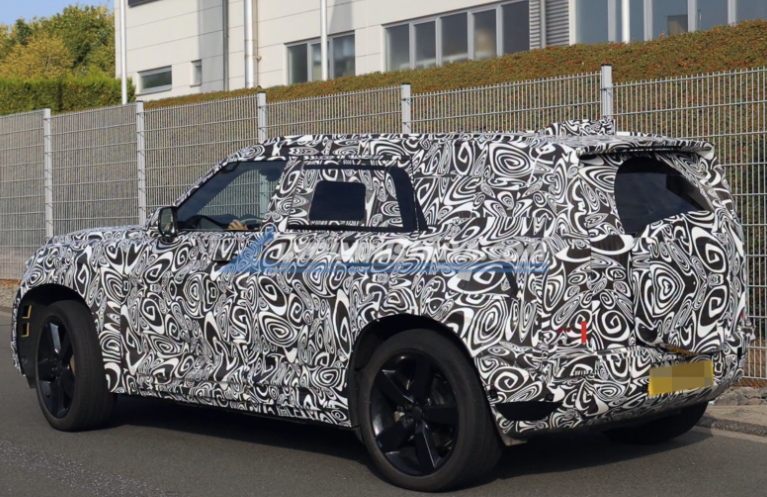
Land Rover is developing a smaller Defender expected around 2027, with hybrid and electric power and a distinctly boxy, off-road-focused design.
Prototypes are now being tested on the way to becoming the smallest member of the Defender family, with the compact SUV set to sit below the Defender 90. Its development also marks a shift towards a broader mix of hybrid and electric power for the Defender range.
Unofficially dubbed the baby Defender, its production name is still unconfirmed, while there’s no word yet on whether it’ll come to Australia, or what local specifications and pricing might look like.
Smaller Defender, new platform
The baby Defender is expected to be smaller than the current Defender 90, although Land Rover hasn’t released dimensions. Spy shots show a short, upright SUV with the squared-off proportions and familiar design cues of the current Defender.
Defender Sport has been widely reported as one possible name, while Defender 80 has also been suggested. Neither has been confirmed by Land Rover. Reports have also suggested the new model could arrive around 2027, although JLR has not given a firm launch date.
Underneath, it will use JLR’s Electrified Modular Architecture (EMA) platform. JLR has confirmed the new Defender-family model will be offered with battery-electric and full hybrid electric powertrains, rather than being an EV-only proposition as originally expected.
The electric version is expected to use an 800-volt electrical architecture, according to reports on the EMA-based model, but battery capacity, range, charging speeds and power outputs haven’t been confirmed.
1
Will it still be a proper 4WD?
That’s the bit Australian buyers will be watching, but there’s still plenty we don’t know.
Land Rover hasn’t released figures for ground clearance, wading depth, approach and departure angles, towing capacity or payload, so it’s too early to say how the baby Defender will stack up off-road.
The prototypes do suggest Land Rover isn’t simply building another small luxury SUV and sticking a Defender badge on it. The upright body, short overhangs and familiar Defender design all point towards a vehicle intended to retain the family’s off-road character.
One prototype has been spotted with a rear-mounted spare wheel, reinforcing the connection with the larger Defender models. More recently, however, a test vehicle appeared with a large rectangular box mounted to its side-hinged rear door. Exactly what it’s for isn’t known, although reports have suggested it could be related to EV charging equipment or tyre gear. Whether either setup makes it onto the production vehicle remains to be seen.
Will the baby Defender come to Australia?
There’s no confirmed Australian launch date, availability or pricing for the new model. Land Rover Australia’s current Defender range comprises the 90, 110, 130 and Hard Top, but the compact model hasn’t been announced for the local market.
Reports earlier this year suggested the baby Defender could reach markets including Australia around 2027, but that remains unconfirmed. If it does eventually make it here, its smaller footprint could appeal to buyers who like the Defender concept but don’t need the size of a 110 or 130. For now, though, that’s a potential Australian application rather than a confirmed local product.
The important details are still to come. How much it can tow, how much it can carry and how well it performs once the bitumen ends will tell us far more about the baby Defender than its styling ever will. For now, we know a smaller Defender is in development, with both electric and hybrid power confirmed for the EMA-based model. Whether Australian buyers will get the chance to buy one remains an open question.
Frequently asked questions
What is the Land Rover baby Defender?
It is the unofficial name for a new compact Defender expected to sit below the Defender 90.
When will the baby Defender launch?
Reports suggest a launch around 2027, although Land Rover has not confirmed a specific date.
Will the baby Defender be electric?
Yes. JLR has confirmed the new EMA-based Defender will be offered with both battery-electric and full hybrid powertrains.
Will the baby Defender come to Australia?
Australian availability has not been confirmed. There is currently no local launch date or pricing.
Will the baby Defender be a proper 4WD?
Its final off-road specifications haven’t been announced, so ground clearance, wading depth, towing capacity and other capability figures remain unknown.
Full-size American 4×4 pick-up trucks are growing in Australia in more ways than just sales.
While they are bigger than the midsize utes that are more popular with users here, many full-size owners like to take their trucks to another level, and there is no shortage of products to help them reach their lofty goals. While some like to follow the SEMA Show style of over-the-top builds with massive suspension kits, huge billet wheels and lashings of chrome and candy paint, most Australians building a pick-up tend to go with a more subtle and practical style.
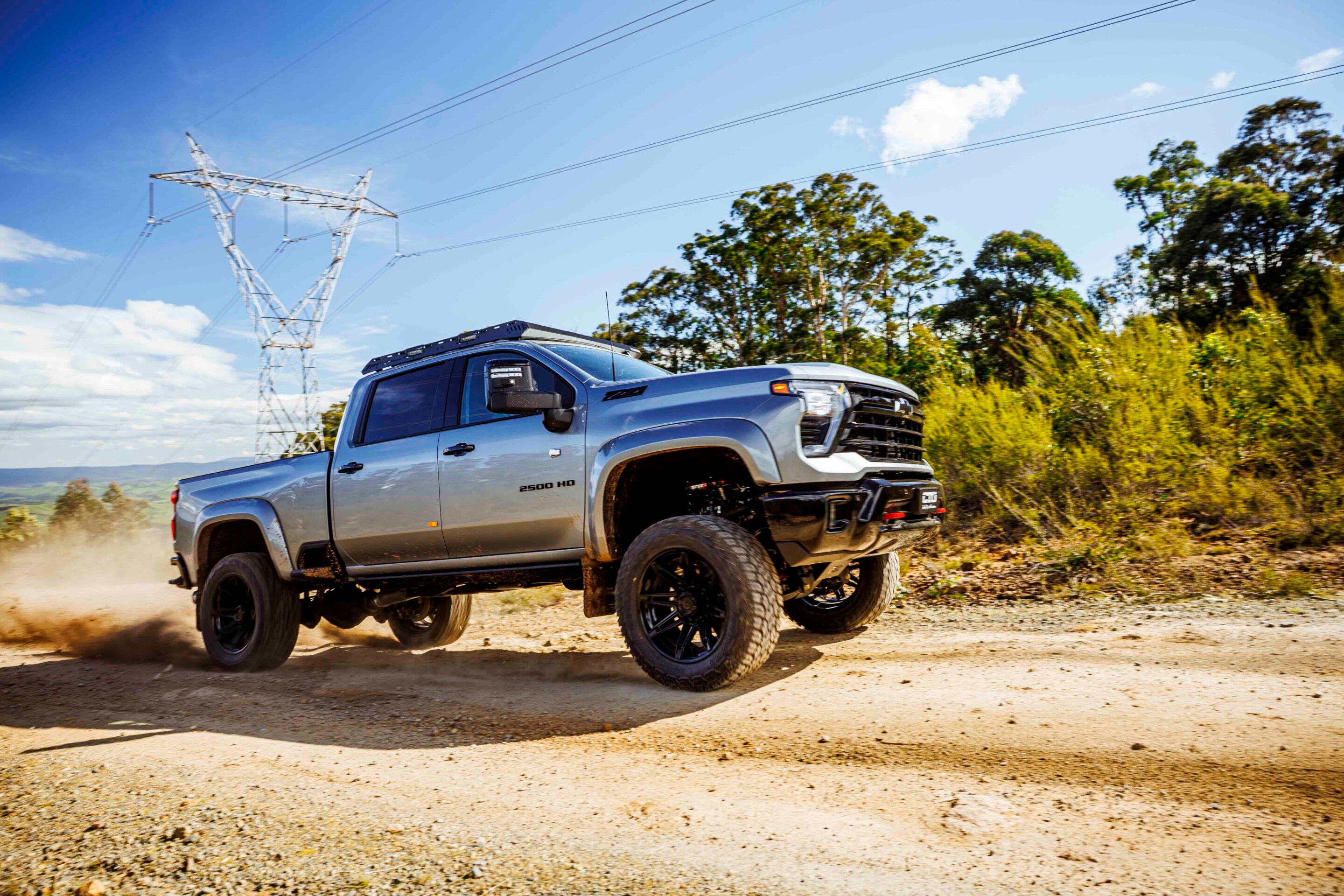
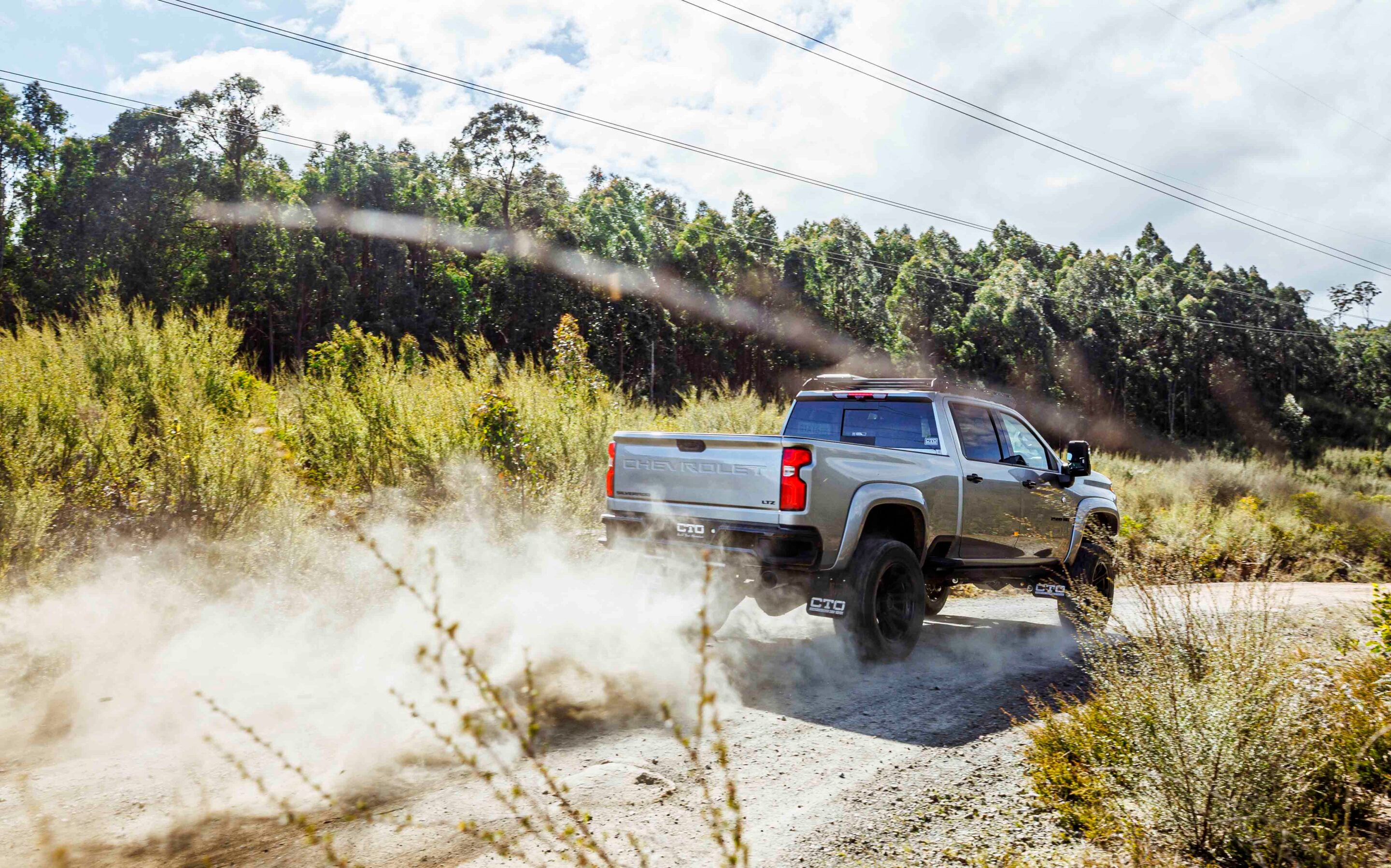
That’s what drew us to this Chevrolet Silverado 2500 from CTO Industries in Melbourne. Sure, it’s big and brash, but restraint was shown in the selection of components fitted, with CTO chasing high-quality parts from well-known brands for the truck ahead of bling and brashness.
The build is for Adam Cheers, who runs the Bob Jane T-Marts store in Moorabbin. Adam wanted a truck that had presence on the road but was nothing over the top, and he insisted on quality equipment throughout. The truck will mainly be used for touring, with plans to head to the Cape and the Kimberley in the coming years, so he wanted the right equipment to ensure it has what it takes to handle whatever the outback throws at it.
1
Building a capable touring Silverado
The new truck went straight to CTO’s Kilsyth workshop from the GMSV dealer before it was even registered, where the specialist team set to work transforming the Chevy into what Adam envisioned.
“I wanted a touring truck that will be capable and comfortable,” Adam told us. “I’ve had a taste of travelling in the West, so I can’t wait to get the truck and head back over there to explore it some more.”
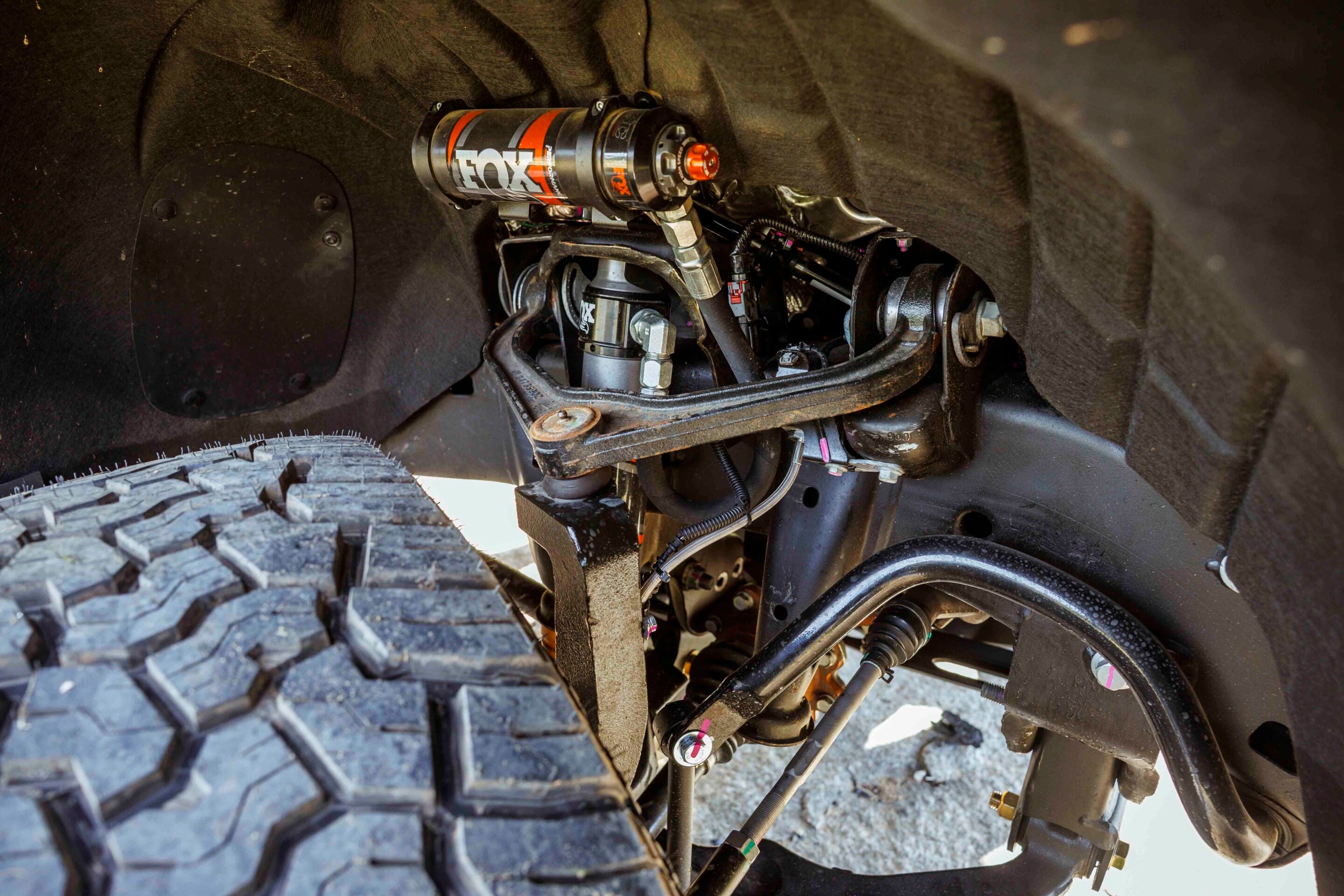
The suspension was the key component in the Silverado’s elevated status, and CTO specified a BDS five-inch kit with Fox remote-reservoir shocks. Rather than dropping the torsion-bar crossmember, CTO relocated the bars atop the lower control arms, preserving clearance, while the kit’s machined knuckles correct the steering geometry at the new ride height. The result is a great-riding, well-engineered solution for the build.
1
The rear suspension retains its leaf springs, which are lifted in line with the front end but are aided by airbags and Fox shocks. The Boss Air airbags are controlled by a Logic iQ onboard air system with remote control, allowing the driver to set the ride height as required for towing and track conditions.
The BDS/Fox suspension setup affords the Chev an upgrade in capacity, and the truck is now rated to 5900kg GVM. While the GVM upgrades were being approved, so too were the 37-inch tyres that the suspension is designed to work with. CTO has its own team to carry out the engineering tests to ensure it all works as it should and is approved for road use.
With a wheel and tyre store at his beck and call, Adam had no problem selecting the 22×10-inch Fuel ‘Brawl’ rims and 37×13.5-inch Yokohama tyres. To keep the bigger tyres within the lines of the Silverado body, a set of flares from Husky Liners was fitted. Even these required some clearance to prevent any rubbing on the Yokies, and once that was sorted they were colour-matched to the vehicle.
The added ride height can also make life hard when accessing the vehicle cabin, so a set of AMP electric-deploying side steps was fitted to make things a bit easier. Speaking of the cabin, the spec GMSV offers in its 2500s is loaded with luxe, so there wasn’t much needed to ensure Adam will be touring in style. But the big cabin does have the perfect spot to mount a complete 12-volt setup – underneath the back seat.
1
A 12-volt setup under the back seat
CTO makes a panel to contain all the components under the seat.
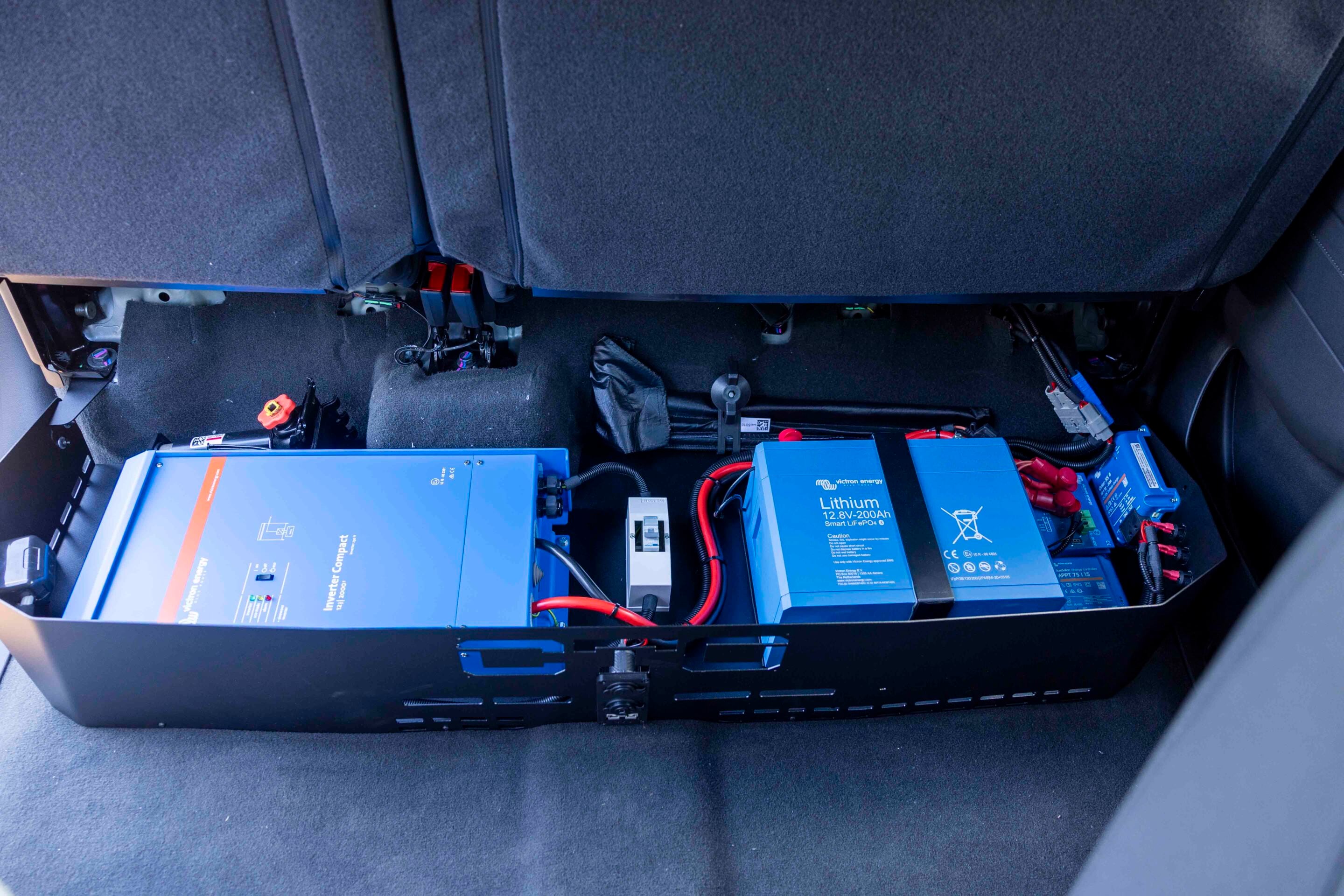
These include a Victron Energy 200Ah lithium battery mounted in a battery box, battery management system, 50A DC-DC charger and a 2000W compact inverter. Multiple USB, 12-volt, Anderson plug and other outlets allow the power to be used where needed. CTO custom 3D-printed the fascias for these, including the GPO outlet and a panel at the rear of the tray. The GPO had to be approved by a sparky for use in the vehicle, and this wasn’t a problem.
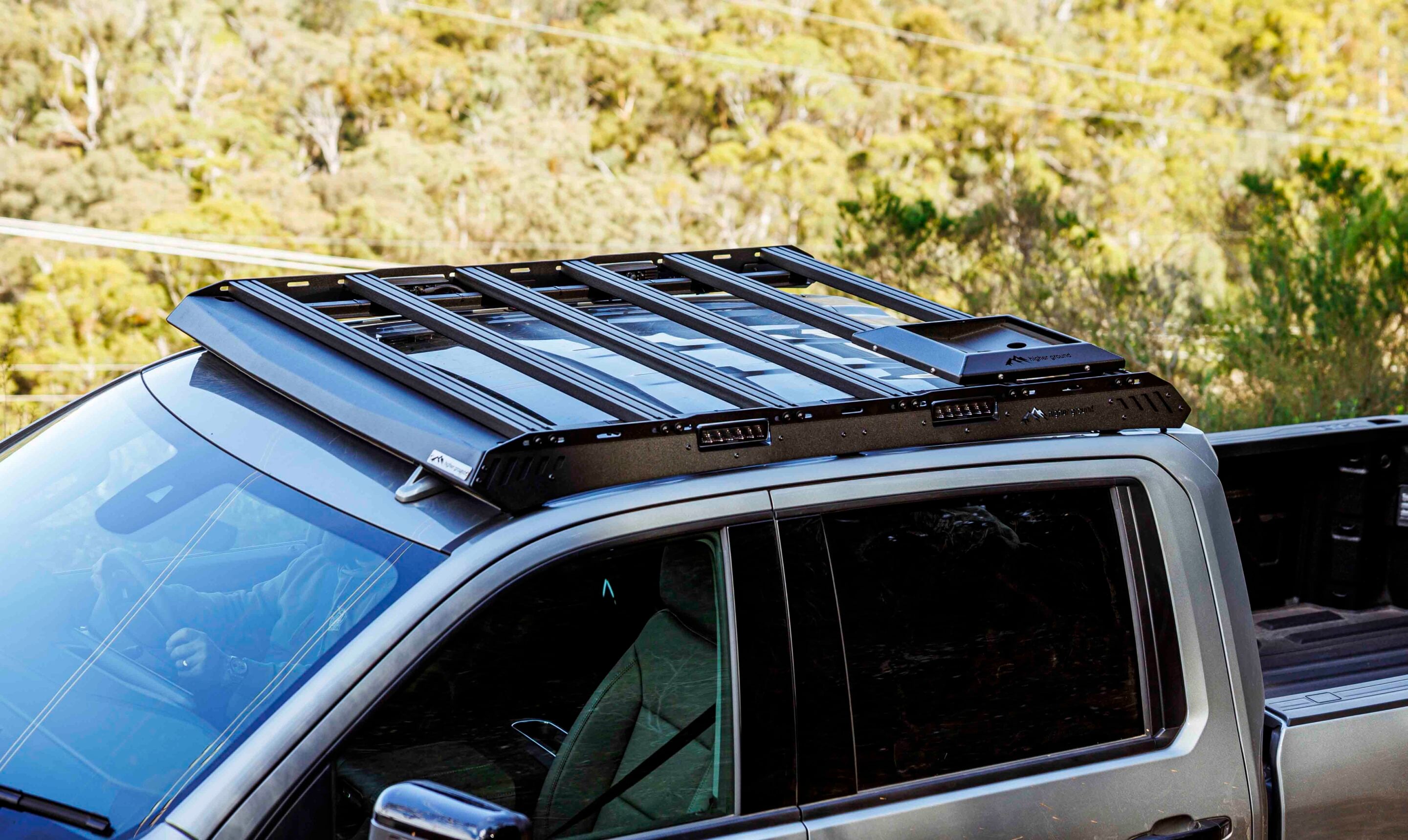
The setup is neat and secure, and its position under the seat means it is out of the way, while the power outlets are located inside and out where they can be easily accessed. A Victron solar panel is mounted atop the Higher Ground roof rack, along with a mount for Adam’s Starlink Mini setup and camp lights on either side.
1
Touring gear up top
While many of the components on the Silverado are sourced from the USA, where there is an abundance of gear available, Higher Ground is an Australian company turning out quality stuff from its Melbourne factory, which is why CTO chooses to work with them.
The Higher Ground rack sits snugly atop the big Chev and even has allowances for the factory sunroof to let light into the 2500. On the underside of the Chev is a 211-litre fuel tank from Titan, while a 4500kg GEN-Y Torsion hitch is fitted at the back for towing when needed.
There are a few items still to be fitted to the Silverado before Adam takes it from the team at CTO, including a set of lights across the front of the roof rack and a bullbar for protection in the outback. Then it will be a matter of loading it up and hitting the road.
“I’ll probably put a canopy on it at some point,” says Adam, “but for now I want to enjoy it as it is.” That sounds like a great plan to us.
15
Ready for the outback
After the careful selection of components, tasteful installation and quality workmanship from one-stop truck fit-out specialist CTO, Adam’s Silverado still makes a statement wherever it appears without being overtly brash or in-your-face. The modifications were well considered, functional and dependable, ensuring they will improve the performance of the truck for many outback miles to come.
The Yakima StageTwo (↗) is a heavy-duty two-bike rack designed to carry bikes weighing up to 32kg each, making it particularly well suited to heavier e-bikes. Its high-clearance design is also a real advantage for 4×4 use, especially when heading off-road.
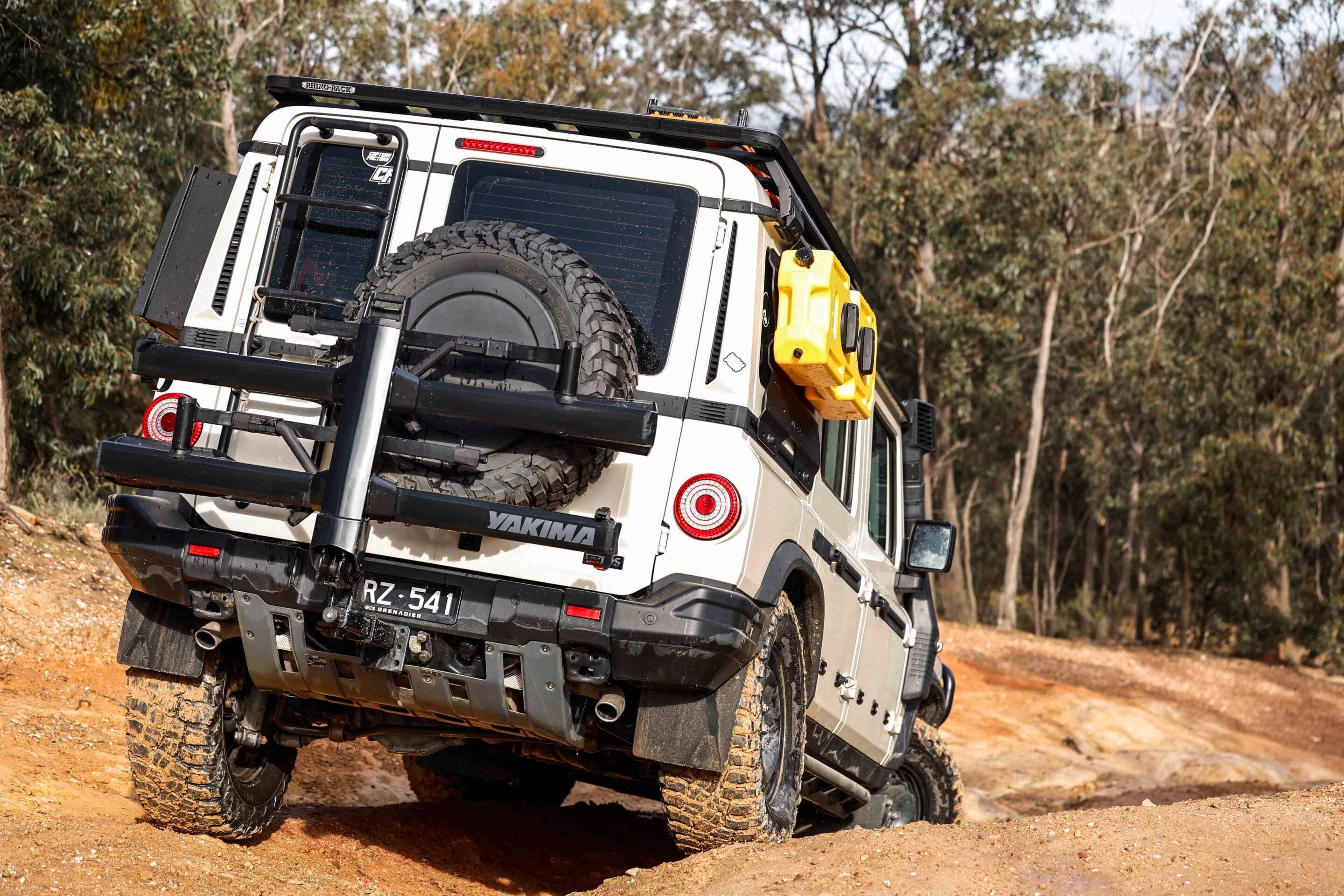
For vehicles with a rear-mounted spare wheel, like the Grenadier, the optional StraightShot Hitch Extender (↗) provides the additional clearance needed to position the rack behind the spare.
Fitting the StageTwo is straightforward. It slides directly into an existing two-inch towbar receiver and is secured with a threaded bolt, along with a secondary rotating locking mechanism that tightens the rack firmly into place.
1
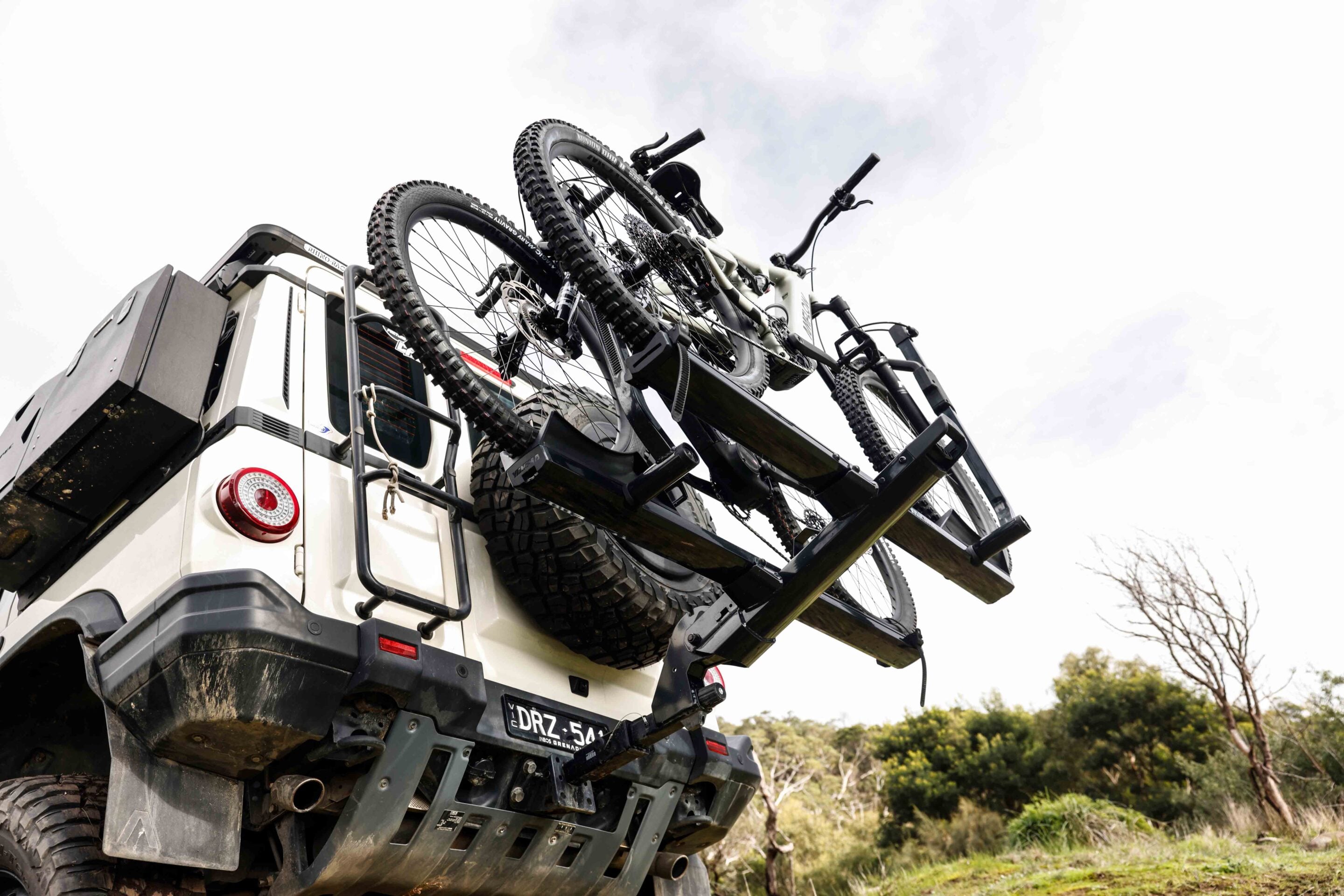
The rack has three positions. It sits horizontally for carrying bikes, folds vertically against the vehicle when not in use and can also tilt down below horizontal. This third position allows access to the vehicle’s rear door without having to remove the rack. Moving between the three positions is quick and easy, using a simple but sturdy handle that pulls directly out from the outer edge of the rack.
Loading and unloading is quick and simple, taking only a couple of minutes. Once the bike is lifted onto the rack, the front wheel is secured by an adjustable arm that locks down over the tyre, while the rear wheel is held in place with a built-in ratcheting strap threaded through the wheel. Each bike can also be individually secured to the rack using the built-in keyed cable locks.
Appearance-wise, the design is sleek and strong, and the dark metallic-grey finish should complement just about any vehicle. It looks and feels sturdy and built to last, with an oversized main hinge and heavy-duty hardware adding to the sense that this is a rack designed to handle some serious use.
And there’s one more feature worth mentioning. Like other Yakima products, the StageTwo comes with a built-in bottle opener. In fact, this rack has not one, but two, so you and a mate can crack one open at the same time. Ending a ride doesn’t get much better than that.
How much weight can the Yakima StageTwo carry? The Yakima StageTwo can carry two bikes weighing up to 32kg each, making it particularly well suited to heavier e-bikes.
Will the StageTwo work with a rear-mounted spare wheel? Yes. For vehicles with a rear-mounted spare wheel, the optional StraightShot Hitch Extender provides additional clearance to position the rack behind the spare.
Can you open the rear door with the StageTwo fitted? Yes. The rack can tilt down below horizontal, allowing access to the vehicle’s rear door without removing the rack.
How are bikes secured to the StageTwo? The front wheel is secured by an adjustable arm that locks over the tyre, while a built-in ratcheting strap holds the rear wheel in place. Each bike can also be individually secured with the built-in keyed cable locks.
When it comes to full-size US pickups, towing capacity is one of the big numbers buyers look at when comparing models.
But a truck’s maximum braked towing figure doesn’t necessarily tell you how much weight you can realistically tow once the vehicle is loaded with passengers, accessories, cargo and towball download. GVM, GCM, payload and axle ratings can all come into play, and the limiting factor isn’t necessarily the same from one truck to the next.
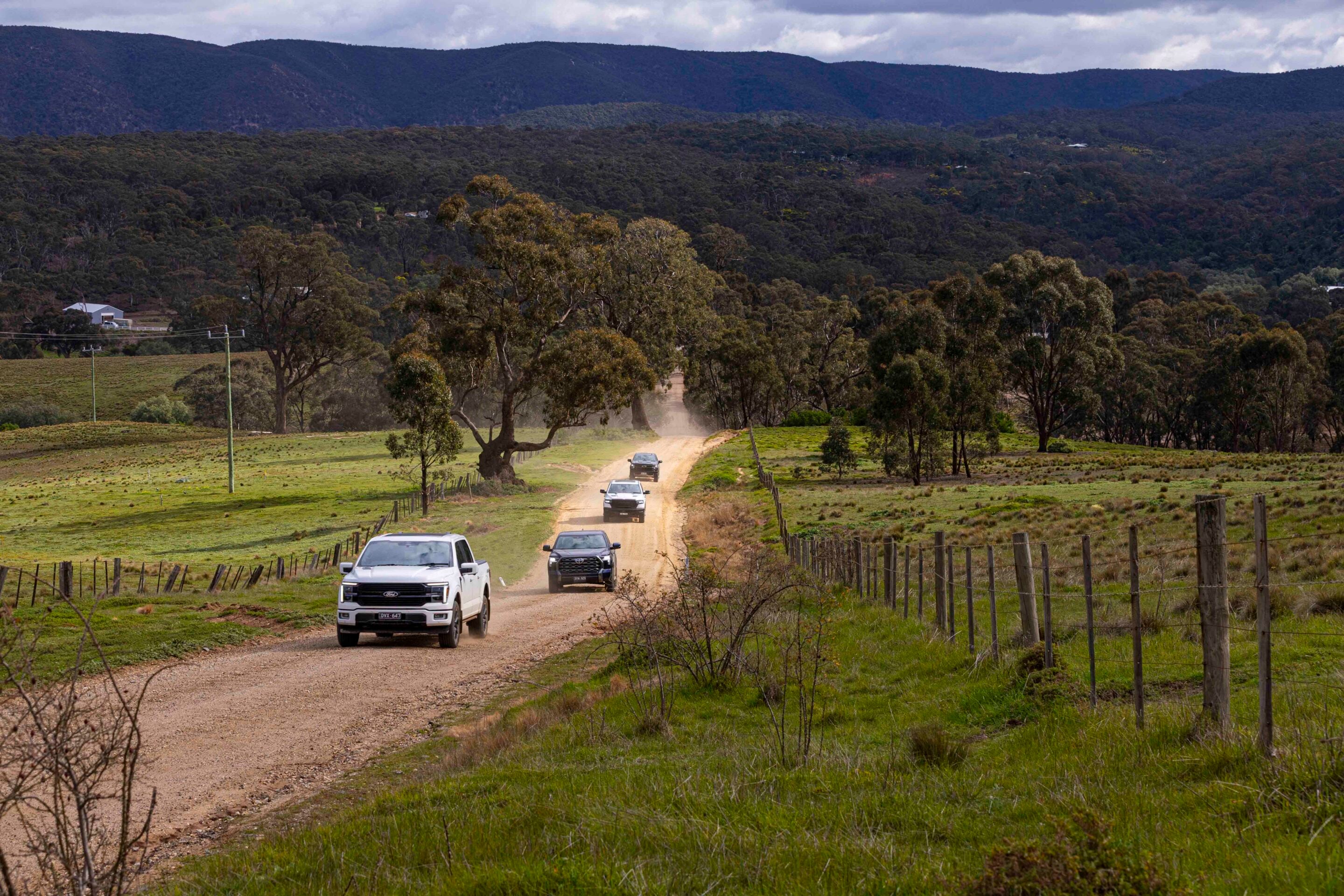
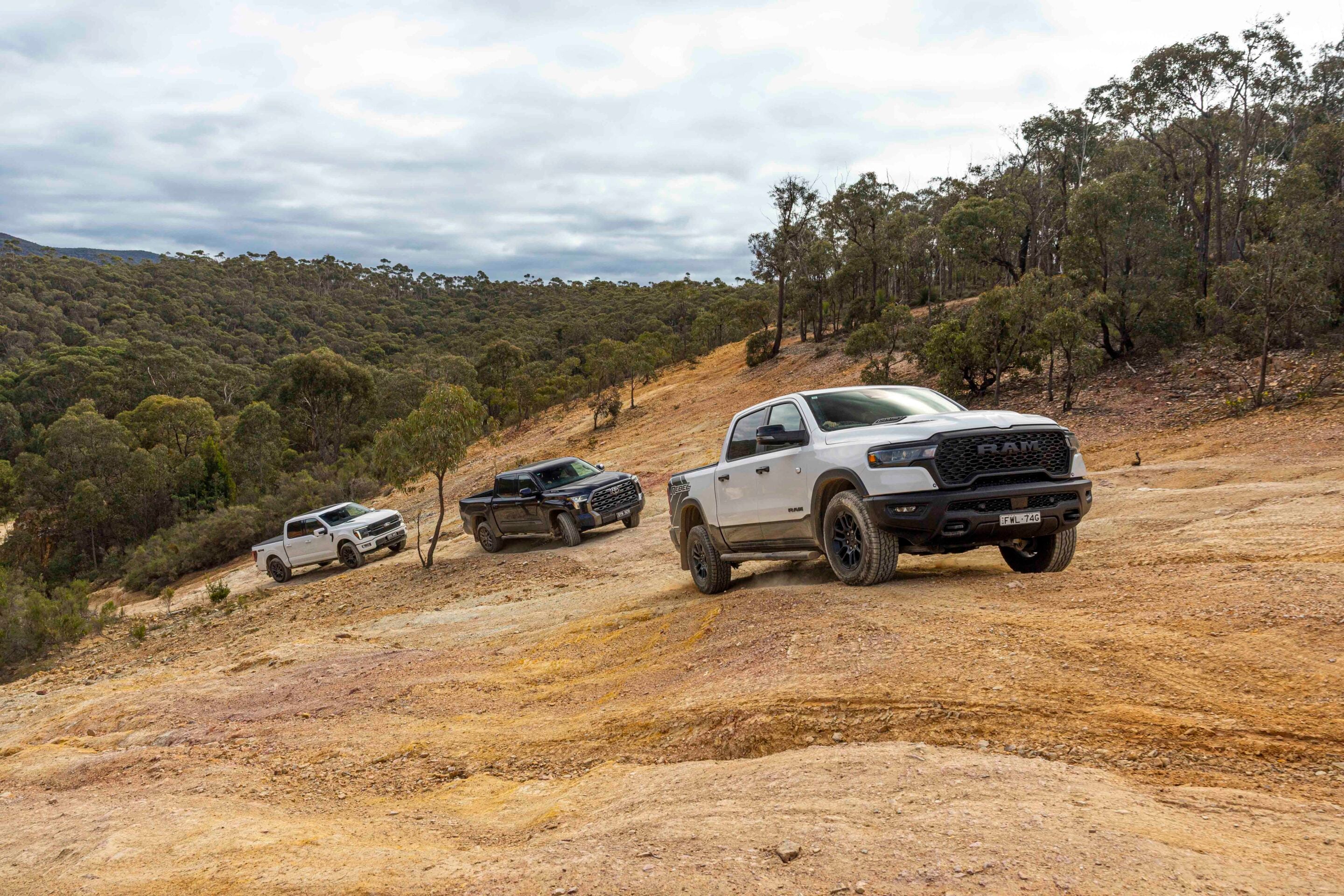
All four trucks promise serious towing ability, but their headline tow ratings hide very different limitations. The F-150 is constrained by GCM at 4500kg, the Ram Rebel by its unusual tub-and-towball limit, the Silverado ZR2 has the lowest tow rating and tightest GCM, while the Tundra has excellent GCM but runs into payload and rear-axle considerations first.
That makes a straight comparison of maximum tow ratings a little misleading. The table below puts the key weights and ratings side by side, showing where each truck’s towing capacity starts to run into its other limits.
1
Here are the numbers that actually matter:
Ford F-150 Platinum SWB
Ram 1500 Rebel
Silverado 1500 ZR2
Toyota Tundra Platinum
Engine
3.5L TT V6
3.0L TT I6
6.2L V8
3.5L TT V6 Hybrid
Power
298kW
313kW
313kW
326kW
Torque
678Nm
635Nm
624Nm
790Nm
Kerb weight
2611kg
2624kg
2583kg
2834kg
Payload
704kg
881kg
922kg
702kg
GVM
3315kg
3505kg
3505kg
3536kg
GCM
7365kg
7711kg
6851kg
7980kg
Max braked tow
4500kg
4500kg
4200kg
4500kg
Rear axle rating
1977kg
1860kg
1866kg
1850kg
Max towball download
450kg
450kg
400kg
450kg
Tub + towball limit
–
500kg
–
–
Why the maximum tow rating doesn’t tell the whole story
A 4500kg braked towing capacity doesn’t necessarily mean you can load the vehicle to its maximum GVM and tow 4500kg at the same time.
GVM is the maximum permitted weight of the tow vehicle itself, while GCM is the maximum combined weight of the vehicle and trailer. Payload is what you can add to the vehicle – including occupants, accessories, cargo and towball download – before reaching GVM.
Then there are axle limits and, in some cases, manufacturer-specific restrictions that can reduce usable capacity even further. That’s why two vehicles with identical 4500kg tow ratings can have dramatically different real-world carrying ability once a heavy trailer is attached.
Probably the best all-round set-up here, but its 7365kg GCM becomes the problem at maximum tow. Put a 4500kg trailer behind the SWB Platinum at kerb weight and there’s only 254kg of additional combined capacity remaining. Great tow vehicle; less convincing if you intend to live permanently around its 4500kg maximum.
The numbers initially look fantastic. 881kg payload and 7711kg GCM give it considerably more breathing room than the Ford, but Ram’s 500kg combined tub-and-towball limit is an unusual additional restriction. Put 450kg on the ball and just 50kg can go in the tub under that limit. Ram says the remainder of the vehicle’s payload can still be carried forward of the tub, subject to GVM and axle limits.
Remember that this is the off-road Silverado. Its 4200kg tow rating and 6851kg GCM are both lower than the others, and at 4200kg ATM there’s only 68kg of GCM headroom above kerb weight. Buyers prioritising towing should look closely at the 4500kg-rated Silverado LTZ Premium instead.
The surprise winner on paper. Its 7980kg GCM is comfortably the highest here, so even with a 4500kg trailer there’s still 646kg beneath GCM above kerb weight. The catch shifts to its 702kg payload and 1850kg rear axle rating: assume 450kg ball download and nominal payload falls to 252kg.
1
The 10-second version
Best GCM: Tundra Platinum (7980kg)
Best payload: 1500 Silverado ZR2 (922kg)
Best rear axle rating: F-150 Platinum (1977kg)
Highest tow rating: F-150, Ram and Tundra (4500kg)
Tightest at maximum tow: Silverado ZR2 (68kg GCM headroom)
Weight disclaimer
Published specifications vary by model, variant and equipment. Example calculations use manufacturer Australian-market specifications and nominal towball assumptions where stated. Actual towball mass, axle loads and loaded vehicle/trailer weights should be measured for the individual combination.
The blacktop evaporated into a cloud of diesel smoke just past the shadow of Kata Tjuta.
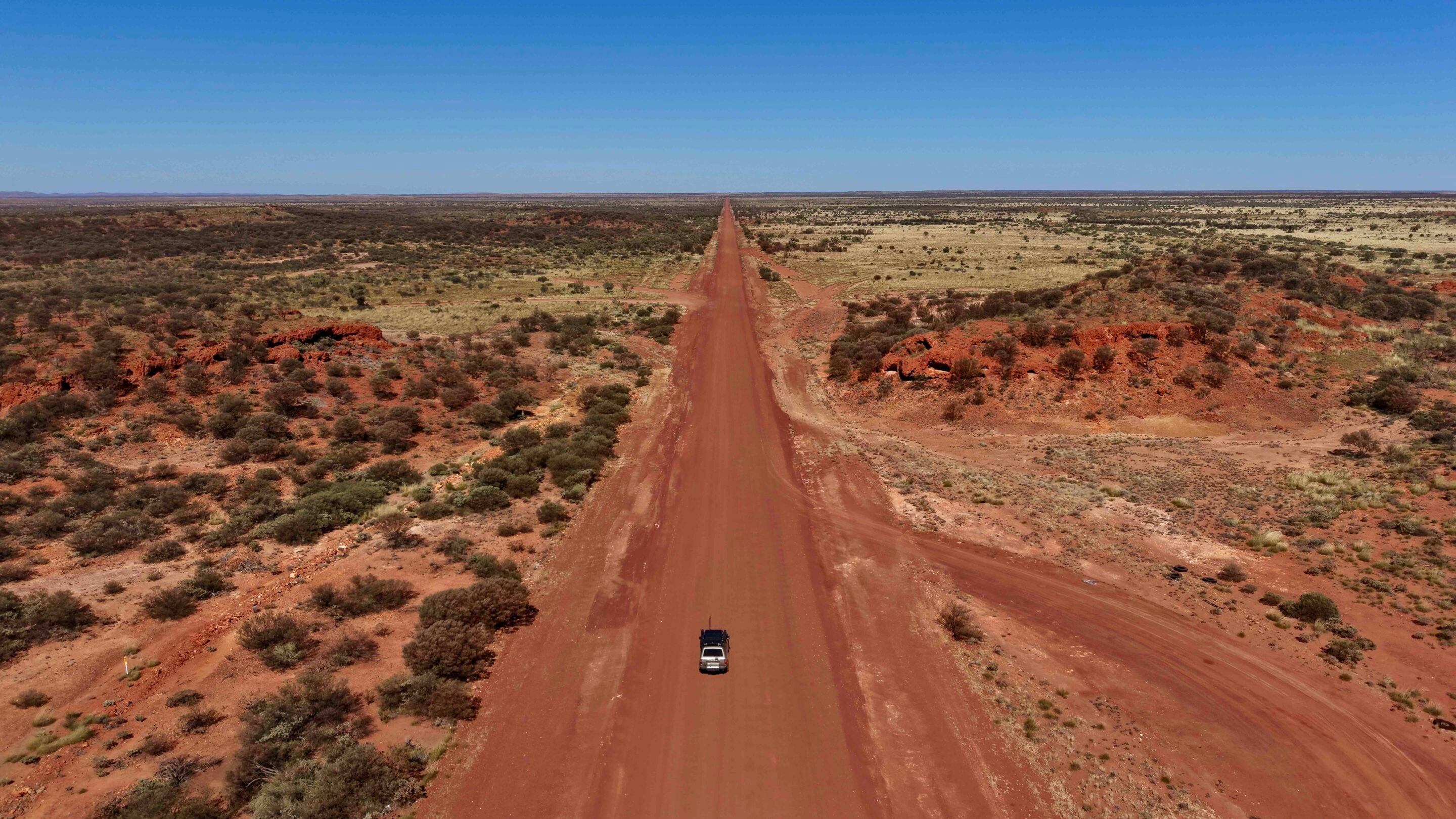
Behind me, the gargantuan sandstone domes of the Red Centre glowed like embers in the early morning light. Ahead lay the Great Central Road, an 1100km artery of corrugated red dirt, shifting sand and ancient stone that cuts through the very heart of the Australian wilderness.
To travel from Uluru west to Laverton is to reverse the classic pioneer route, stepping deliberately backwards through time, away from modern infrastructure and into the raw, unvarnished interior of the continent. In reality, there are only two sealed roads into Western Australia: through the Kimberley region and down south across the Nullarbor. These are the most popular routes for the majority of travellers. In a few years there will be two more, but there are other options for those keen to tackle a bigger adventure.
The Great Central Road cuts a path from Yulara, in Australia’s Red Centre, into WA, but it is essentially part of a bigger drive known as Australia’s Longest Shortcut, where the route extends all the way to Winton in central Queensland. An essential part of the trip is applying for two travel permits, one for each state, to pass through Aboriginal lands.
1
From Uluru to the WA border
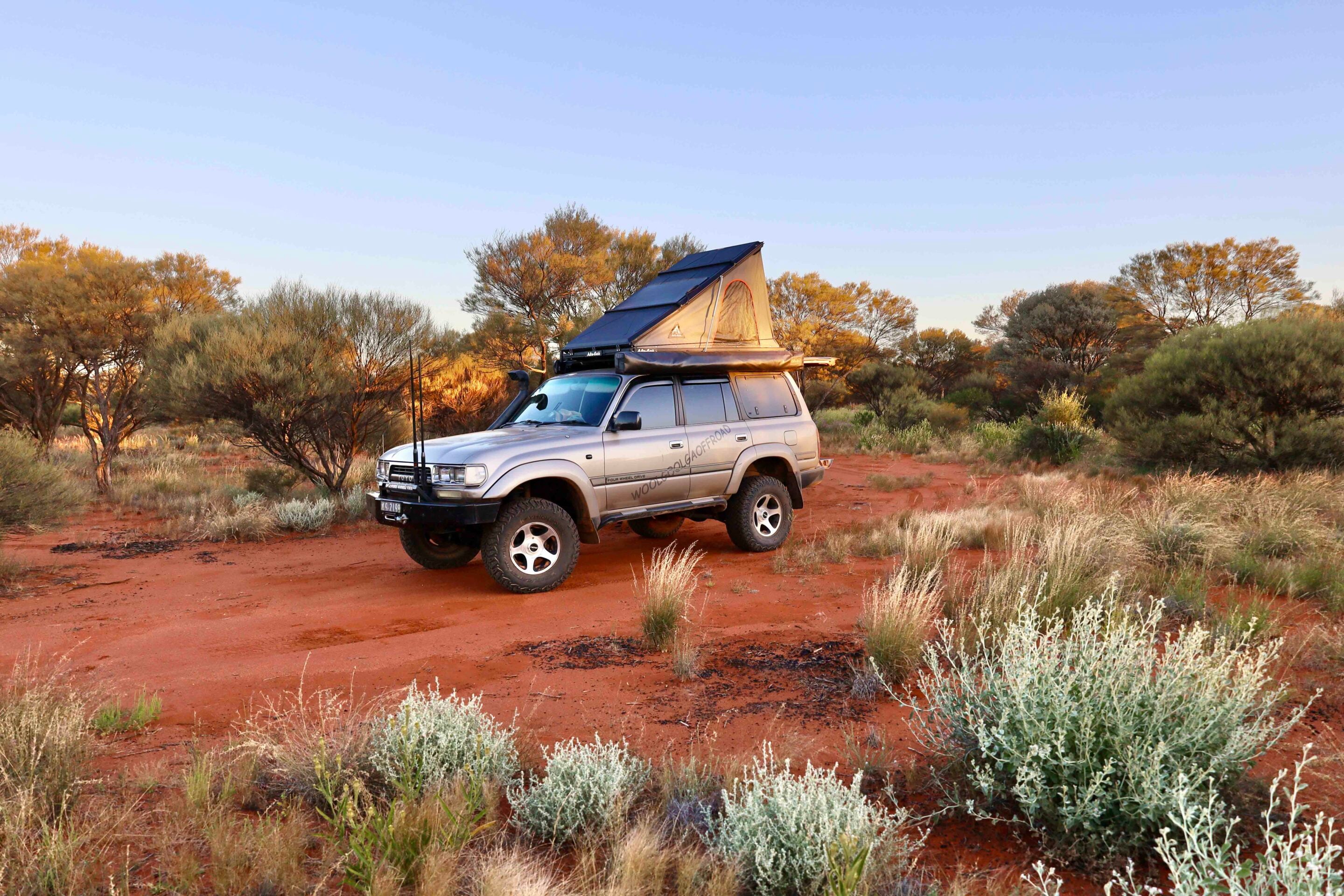
After fuelling up at Yulara, my 4×4 was heavy with the necessities of desert survival: 200 litres of diesel, 80 litres of fresh water, plenty of food and an emergency device.
After passing through the Uluru checkpoint and explaining I was heading along the Great Central Road, I was waved on my way. I haven’t viewed the huge monolith for about 20 years, and it still blows me away. Up the road, I swung left away from Kata Tjuta (The Olgas) and headed along Tjukaruru Road to the WA border. It’s a good run to the Docker River turnoff and out to the border.
As the horizon flattened out, the jagged spine of the Petermann Ranges rose to flank the northern side of the road. These ancient hills, weathered by hundreds of millions of years of wind and rain, appeared as walls of deep purple and crimson against the brilliant blue sky. It was beneath these ridges that I encountered the first major community and my first profound taste of outback history: Docker River, known locally as Kaltukatjara. This region is deeply tied to one of Australia’s most enduring and tragic colonial myths, the legend of Lasseter’s Reef.
1
In 1929, amid the desperation of the Great Depression, a man named Harold Bell Lasseter claimed that, decades earlier, he had discovered a fabulously wealthy reef of gold in the dead centre of Australia – three miles long and rich beyond belief. His claims sparked a well-funded, high-tech expedition in 1930, equipped with trucks and an aeroplane, and led by experienced bushmen. The expedition fractured under the weight of mechanical failures, erratic leadership and the brutal summer heat. The party turned back, but Lasseter pressed on alone into the Petermann Ranges with two camels, obsessed with relocating his golden reef.
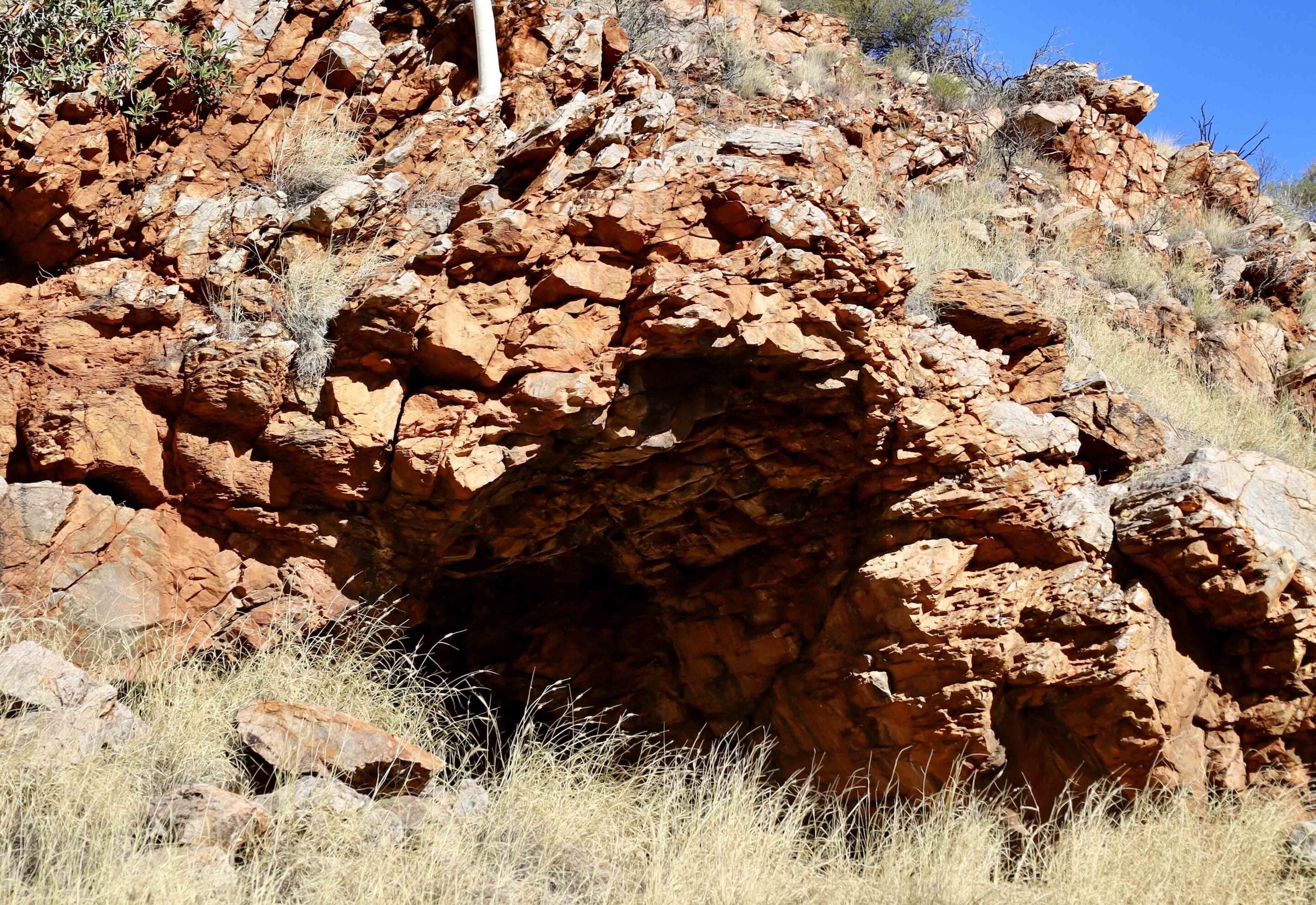
East of Docker River, I pulled off the track to visit Lasseter’s Cave. A short, dusty walking track led to a small rocky recess carved into the banks of the Hull River. It was here, in the searing heat of January 1931, that Lasseter took refuge after his camels bolted, leaving him stranded without food or water. He survived in this cave for 26 agonising days, charting his mythical gold reef in his diary while slowly starving to death. Standing inside the cool, claustrophobic confines of the cave, looking out at the harsh landscape, the romantic myth of the outback evaporated, replaced by terrifying reality.
Lasseter was ultimately aided by the local Anangu people, who brought him food and water, but in his paranoia and deteriorating mental state, he refused their help and attempted to walk towards the Alice Springs telegraph line. He made it only a few kilometres before collapsing. His body was found months later by bushman Bob Buck, but the location of the legendary gold reef died with him, remaining a phantom that still lures hopeful prospectors into the desert today.
1
Lasseter’s Cave and the first corrugations
What surprised me was that there were no welcome-to-WA signs, no pleasantries; it was just where the tar ended and the corrugations started.
After dropping my tyre pressures, the physical reality of the track asserted itself within the first hour. Heavy corrugations started – rhythmic, bone-jarring ridges carved into the dirt by hundreds of heavy off-road vehicles and recent weather events – vibrating through my steering column and waking me up.
It was all about finding the sweet spot, that precise speed where the suspension begins to skim across the tops of the ridges rather than crashing into the troughs. It was a mechanical dance of maintaining momentum while scanning the road for sudden washouts, exposed ironstone rocks and unpredictable sand drifts.
1
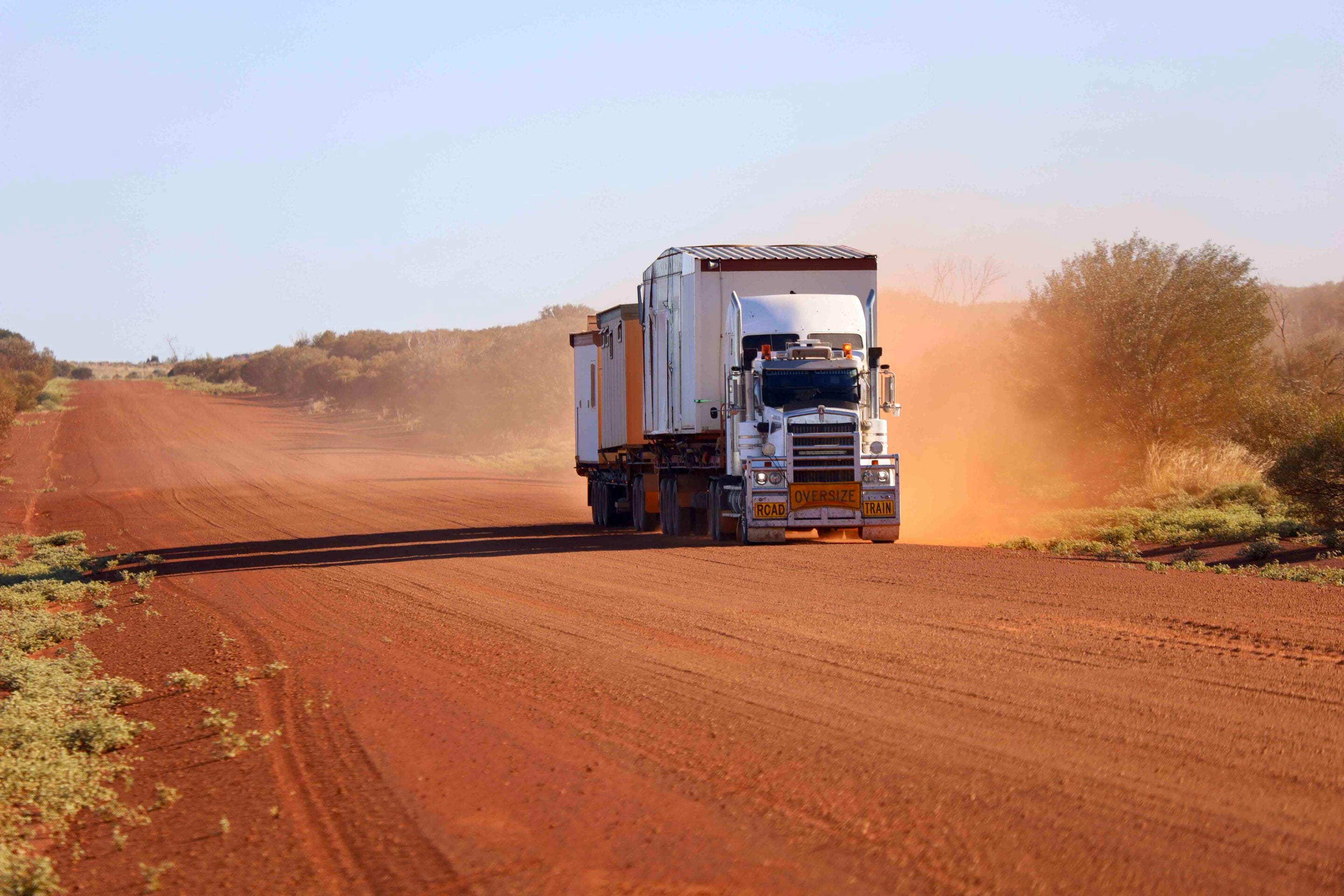
Driving this road requires a psychological shift. The road is not a means to an end; it is a living entity that changes with every passing road train and weather event. Surprisingly, the road improved the further I ventured into WA, with road crews chipping away at upgrades.
The scenery shifted dramatically as I entered the Gibson Desert, a landscape dominated by the iconic desert oak. These remarkable trees grow in pure sand, their deep root systems tapping into water tables far below the surface. Young desert oaks resemble narrow, furry spears, conserving water until they mature into massive, weeping giants that hiss softly as the hot desert wind passes through their needles.
Giles, Warakurna and the Gunbarrel Highway
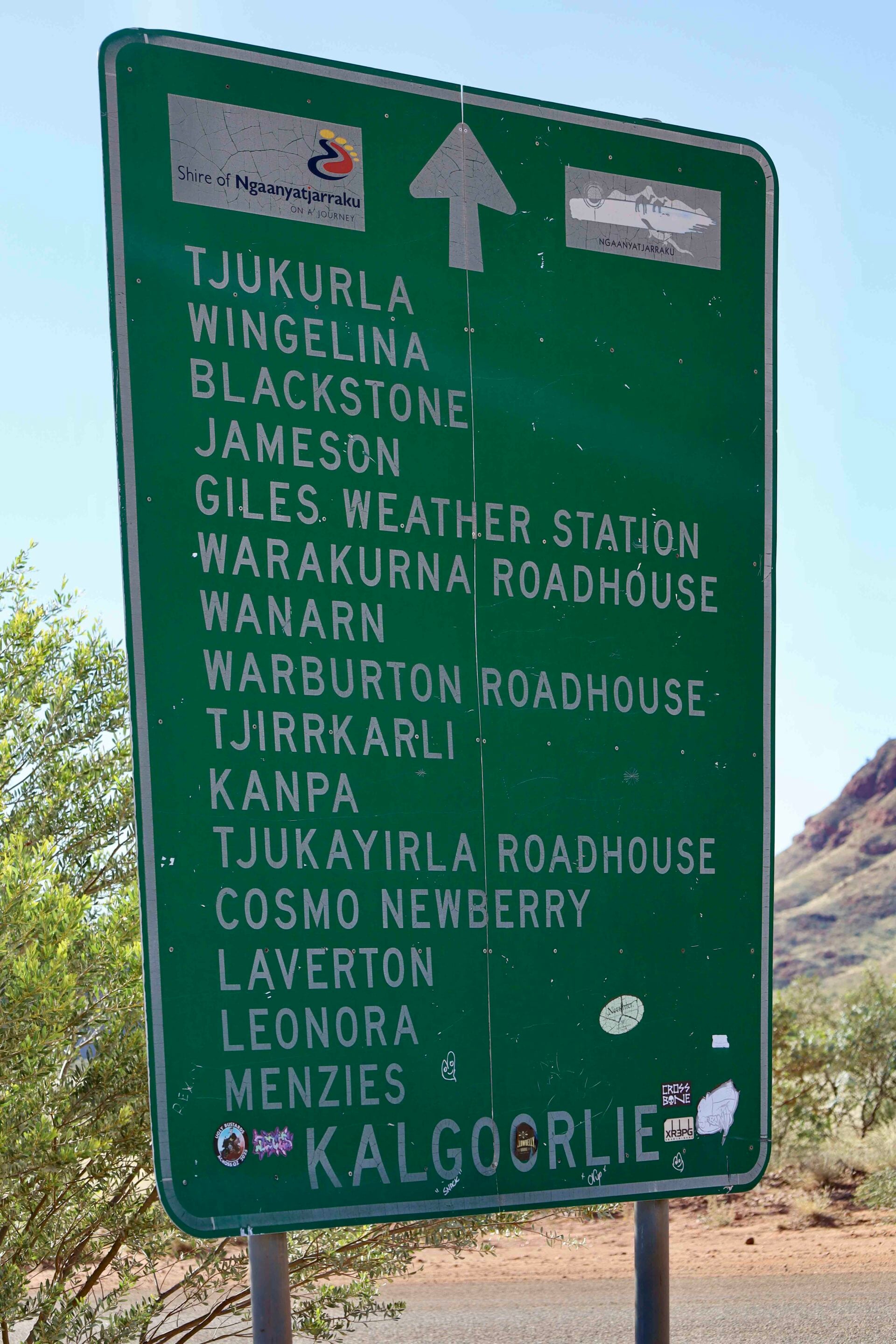
My next stop, and first camp, was at Warakurna Roadhouse and nearby Giles Weather Station, a remote outpost that feels like a space station dropped into the red dust.
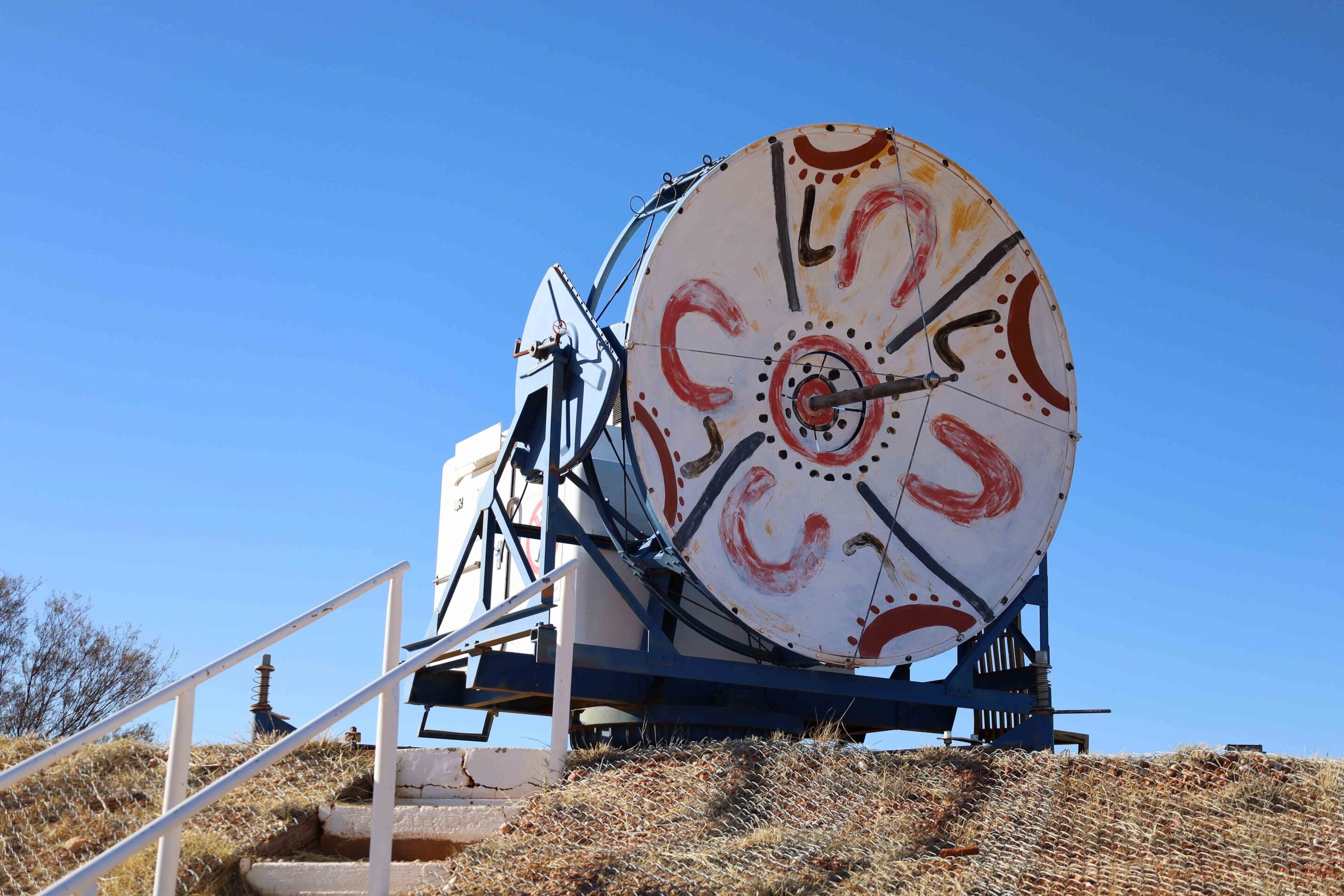
Established in 1956, Giles is the most remote operational weather station in the Southern Hemisphere, staffed by a handful of hardy meteorologists who release a massive weather balloon into the upper atmosphere every day.
Giles exists because of the Cold War and a man named Len Beadell. In the 1940s and ’50s, the British and Australian governments required a vast, unpopulated area to test rockets and nuclear weapons. The Long Range Weapons Establishment was set up at Woomera, and weapons were tested at Emu Field and Maralinga. To track the trajectories of these rockets and forecast the dangerous wind patterns that would carry radioactive fallout, the government needed weather data from the deep interior of the Western Desert.
1
Enter Len Beadell, bushman, surveyor and leader of the Gunbarrel Road Construction Party. Armed with little more than an astronomical theodolite for navigation, a heavy bulldozer and a small crew of men driving a single grader, Beadell spent the 1950s and ’60s opening up more than 6000km of roads through entirely uncharted desert country.
The Great Central Road uses significant portions of the tracks Beadell originally blazed, including parts of the famous Gunbarrel Highway. Just outside the Giles Visitor Centre stands Beadell’s original, rusted Caterpillar grader. Its metal is pitted by decades of sandstorms; a silent monument to the sheer physical grit of the men who built these roads. Beadell famously navigated by the stars, driving his Land Rover through virgin bush, smashing through mulga scrub and sand dunes to lay down a straight line, which his grader driver would then follow.
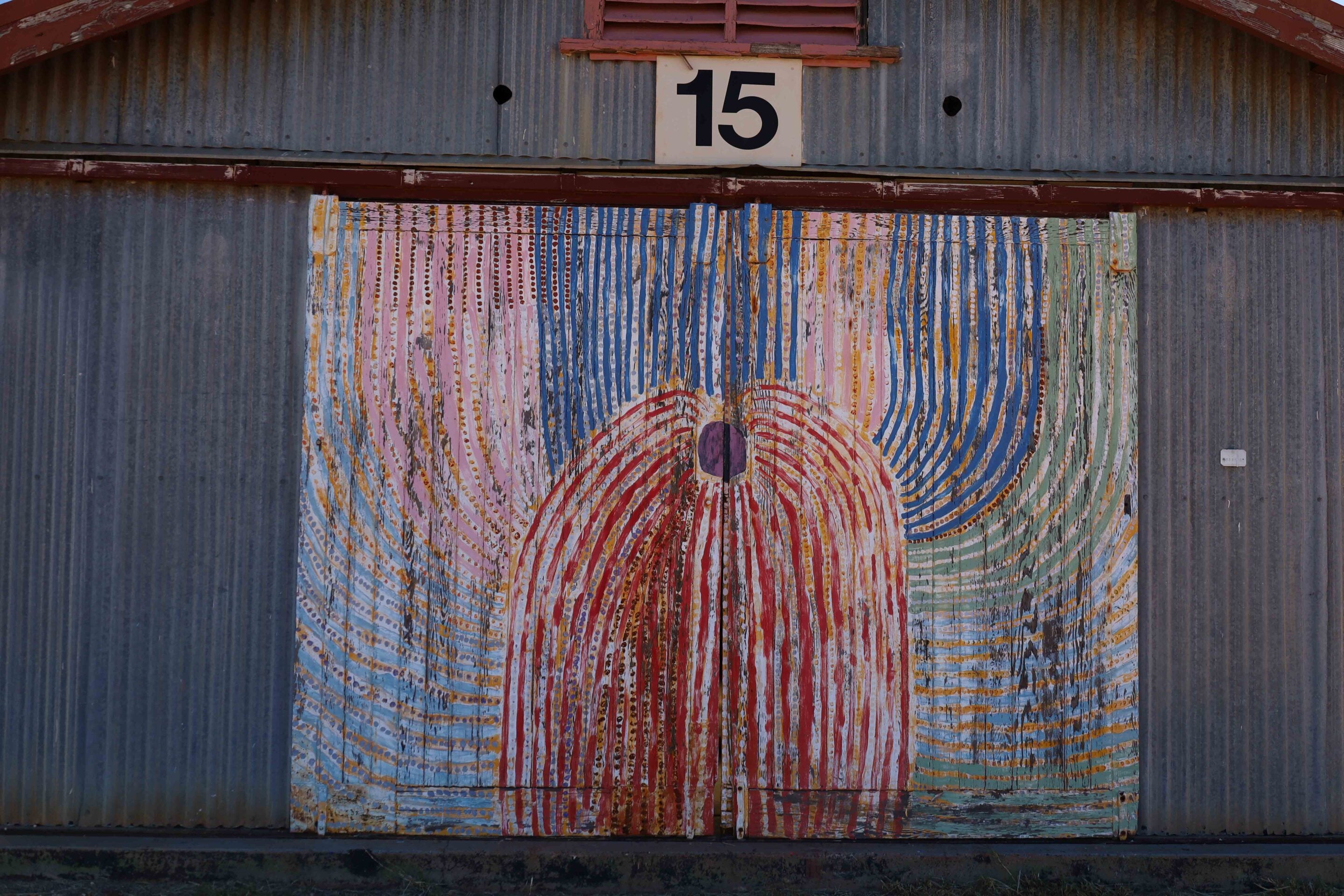
At the roadhouse is a selection of art from the nearby Warakurna community and Ngaanyatjarra people. The artwork is vibrant, chaotic and intensely detailed. Using modern acrylic paints on canvas, the artists depict their ancestral lands, waterholes and epic journeys of creation ancestors such as the Seven Sisters and the Kingfisher Man.
To the untrained eye, the Gibson and Great Victoria deserts look empty, almost dead. But to the Ngaanyatjarra people, every sand dune, every outcrop of ironstone and every dry creek bed is crowded with meaning, history and law. The paintings are functional maps. They show where hidden rock holes are under the clay, which plants are in season and how to navigate across hundreds of kilometres of waterless terrain.
1
West from Warakurna: Into the Great Central Road’s remote heart
Leaving Warakurna, the road heads into its most isolated phase. For hundreds of kilometres, the horizon is an unbroken circle, a flawless boundary where the sky meets the blood-red earth.
I was hoping in this section I would see some of the estimated one million feral camels that roam through here, but I saw none. Not one. Introduced to Australia in the 19th century for exploration and construction, camels now thrive in the desert long after they were released.
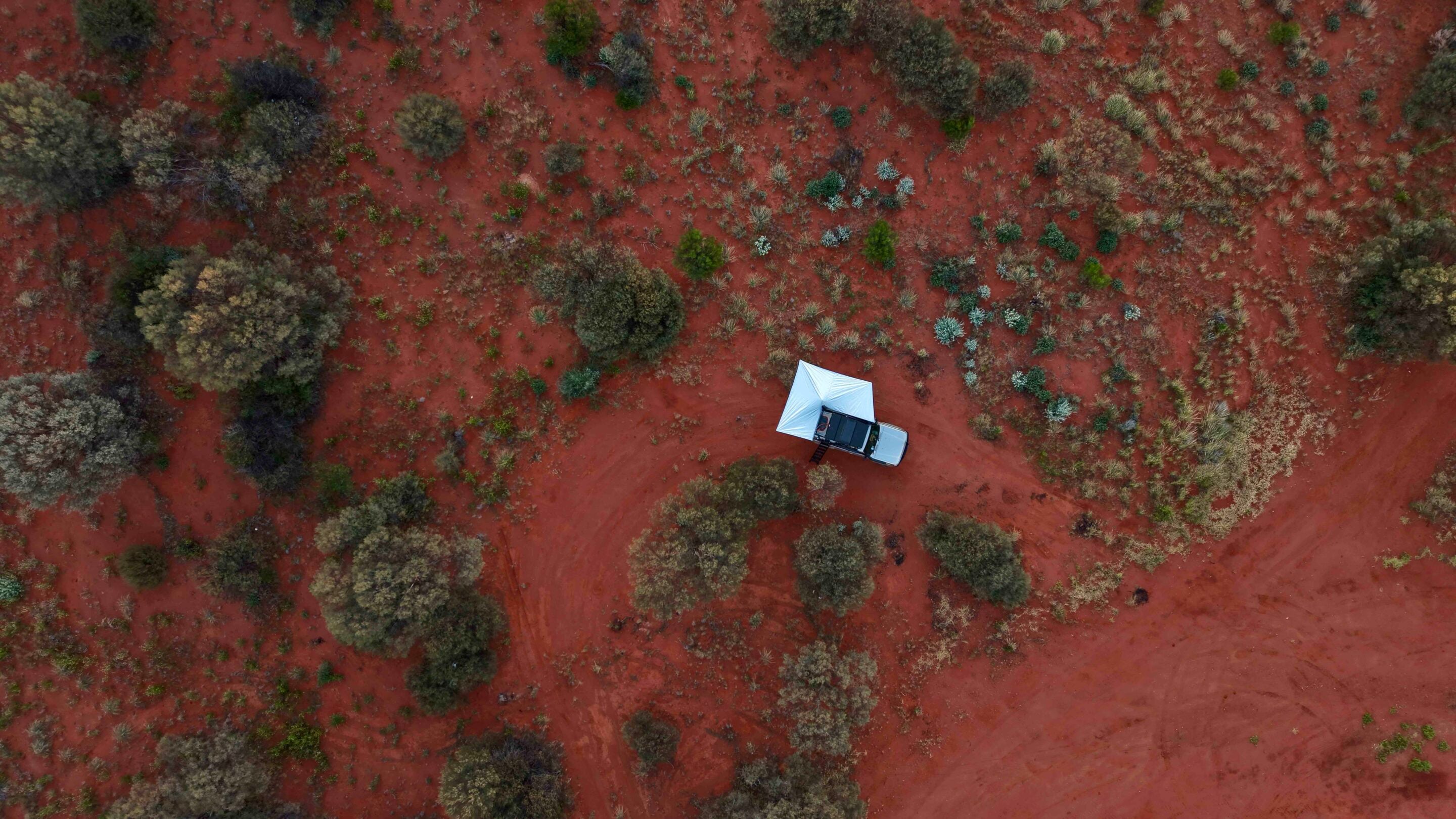
A couple of hours later, I pulled into the carpark of Warburton Roadhouse for a top-up of food and coffee. There are accommodation options out the back, but I wanted to push on and find a free camp further along. As the afternoon light began to cast long shadows, I pulled off the track into a designated bush-camping area. Camping in the deep desert is an exercise in absolute stillness. Once the vehicle’s engine is switched off, the silence rushes back in, heavy and physical.
As the last shades of orange and violet light disappear from the sky, the desert night reveals its greatest masterpiece. Away from the light pollution of any town, the southern night sky comes alive, with the Milky Way stretching from horizon to horizon, not as a faint smear of white but as a brilliant, swirling river of stars and cosmic dust.
1
Warburton to Laverton: Through the breakaways
The final 550km stretch from Warburton to Laverton sees the landscape begin to buckle and break, where the flat sand dunes of the Great Victoria Desert gradually give way to the spectacular breakaway country of the Northern Goldfields.
These are flat-topped mesas and hills where the ancient plateau has eroded away, leaving stark white clay cliffs capped with dark red ironstone. As I pressed south-west, the vegetation transformed again. The spinifex receded, replaced by dense, sprawling woodlands of mulga. The soil changed from the bright, neon red of the central deserts to a deeper, richer chocolate-brown clay, signalling my entry into the historic Western Australian Goldfields.
1
Laverton: The Great Central Road meets the blacktop
Late on the third afternoon, the horizon presented something I hadn’t seen in more than 1000km: a perfectly straight, black line cutting across the red earth. Bitumen.
I rolled onto the sealed highway just outside the historic mining town of Laverton. The immediate effect was unsettling. The violent rattling, the constant vibration and the roar of the tyres against the gravel suddenly ceased, replaced by a smooth, ghostly silence. After stopping to re-inflate the tyres, the steering wheel sat perfectly still in my hands. It felt as though I was floating, disconnected from the earth I had been fighting and respecting for the past three days.
Pulling into Laverton outside the Great Desert Explorer Centre, my 4×4 was now completely at ease, with no corrugations or dust to contend with. Laverton is steeped in gold-rush history, a town born in 1899 during the frantic rush for fortune. It was the launching pad for countless explorers who looked eastward into the great empty space on the map and dared to walk into it.
The Great Central Road from Uluru to Laverton is far more than a geographical shortcut across the Australian continent; it’s like a time machine. Once you step off the bitumen, you leave behind the hurried pace of modern life and enter a realm where history is written in layers of red dust, the scars of Len Beadell’s grader, the tragic journals of Harold Lasseter and the eternal living stories of the Ngaanyatjarra people.
It’s a journey that tests your vehicle, stretches your self-reliance and ultimately leaves an indelible, bright-red stain on your soul long after the dust has been washed from your clothes. Do it before it gets sealed.
1
FAQs
Where is the Great Central Road?
The Great Central Road is a remote, mostly unsealed outback highway that spans more than 1100km across the interior of Australia, connecting Laverton in Western Australia to Yulara in the Northern Territory.
It forms part of the massive 2700km highway system known as Australia’s Longest Shortcut, which cuts straight through the Red Centre all the way to Winton, Queensland. Once the road crosses the NT border heading east, it is officially called Tjukaruru Road before ending near Kata Tjuta and Uluru. While vast stretches remain red dirt, governments are actively funding infrastructure upgrades with the goal of having the entire route fully sealed by 2030.
A 4×4 is highly recommended due to corrugations, sand patches and loose gravel along the way. The road is doable in most 4x4s and semi-off-road caravans. Lower your tyre pressures and respect the road.
What is there to see and do along the Great Central Road?
Along the way, you can explore historic Lasseter’s Cave, watch the daily weather balloon release at Giles Weather Station and visit the Len Beadell museum.
Free camp under a canopy of brilliant desert stars, and be sure to stop at remote roadhouses such as Warakurna and Tjukayirla to refuel, grab a feed and browse incredible local Aboriginal art galleries.
The ultimate reward at the eastern end is the spectacular sandstone domes of Kata Tjuta (The Olgas) and the majestic monolith of Uluru; to the west, it’s the historic town of Laverton in WA.
Do I need a permit to drive the Great Central Road?
You cannot legally drive this road without transit permits because it passes through private Aboriginal reserves, and you must apply for two free transit permits online.
If you are a visitor travelling the Great Central Road, you are not permitted to enter any of the communities. The permits give you three days and two nights of travel to complete the Great Central Road journey.
Only people providing essential services are permitted to enter communities; there are no exceptions. Both permits can be obtained online (↗) and are issued almost instantly.
How far apart are fuel stops on the Great Central Road?
Fuel along the Great Central Road is available at roadhouses roughly 250-300km apart. Standard unleaded petrol is not sold; only Opal fuel and diesel are available, and expect to pay significantly more through this remote area.