4x4 Comparisons


Gallery 1
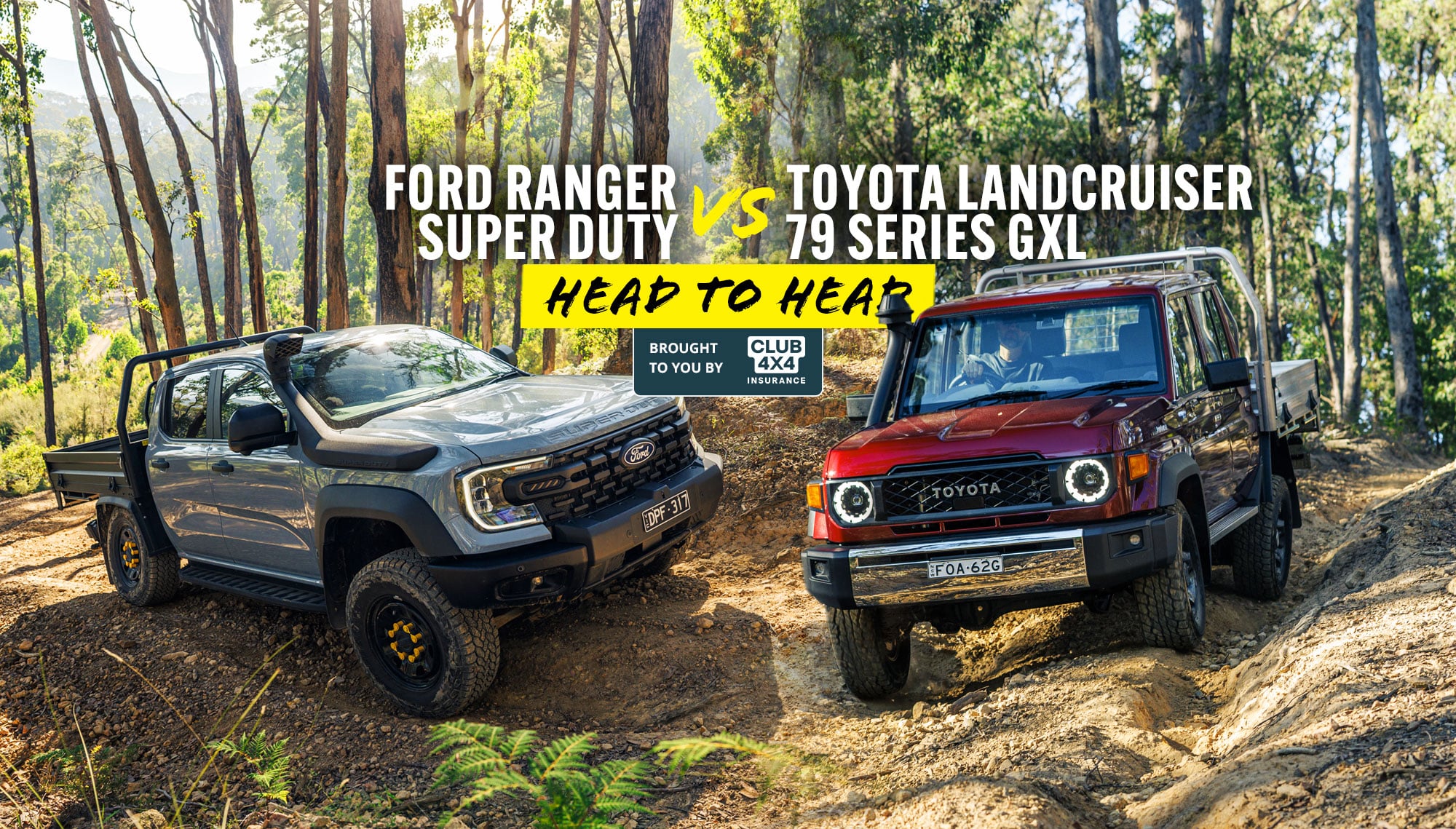
Ford Australia had its sights set firmly on the iconic Toyota 70 Series LandCruiser when it created the Ranger Super Duty.
Spurred on by information gained from speaking to owners and fleet operators in the field about what utes they were using, and the problems they faced with those vehicles, the Australian-engineered Super Duty set out to fix the shortcomings of Toyota’s 40 years of slow development.
Not that the pace of 70 Series development was necessarily a problem. The LandCruiser was and remains a fit-for-purpose workhorse. It was in a class of its own when it came to delivering on a promise of rugged dependability, in all conditions and over any terrain, be it for work on a job site or farm, in a mine pit or touring on a lap of the country. The LandCruiser has been the go-to truck for tens of thousands of users; but not for everyone.
A common complaint from fleet owners centred on the capacity of the LandCruisers they were using, and how they needed to have aftermarket GVM upgrades and other modifications done to do the jobs required of them.
These modifications would often require the vehicle to go to multiple aftermarket businesses for upgrades to make them capable of doing what was needed. The operators wanted a vehicle that could do it all right off the showroom floor, without the need for re-engineering, certification and aftermarket modifications. The result Ford came up with is the unique Ranger Super Duty.
The Super Duty arrived at the perfect time for Ford. It came as Toyota was phasing out its popular 1VD V8 diesel engine and replacing it with a four-cylinder alternative. Even though the 1GD four-cylinder engine brings more power and torque, improved efficiency and the option of an automatic transmission to the LC70, many traditionalists weren’t happy with the loss of the angry V8.
To see how the new Ranger variant performs against the old workhorse, we paired them against each other in our latest Club 4X4 head-to-head comparison.
1
Ford Ranger Super Duty
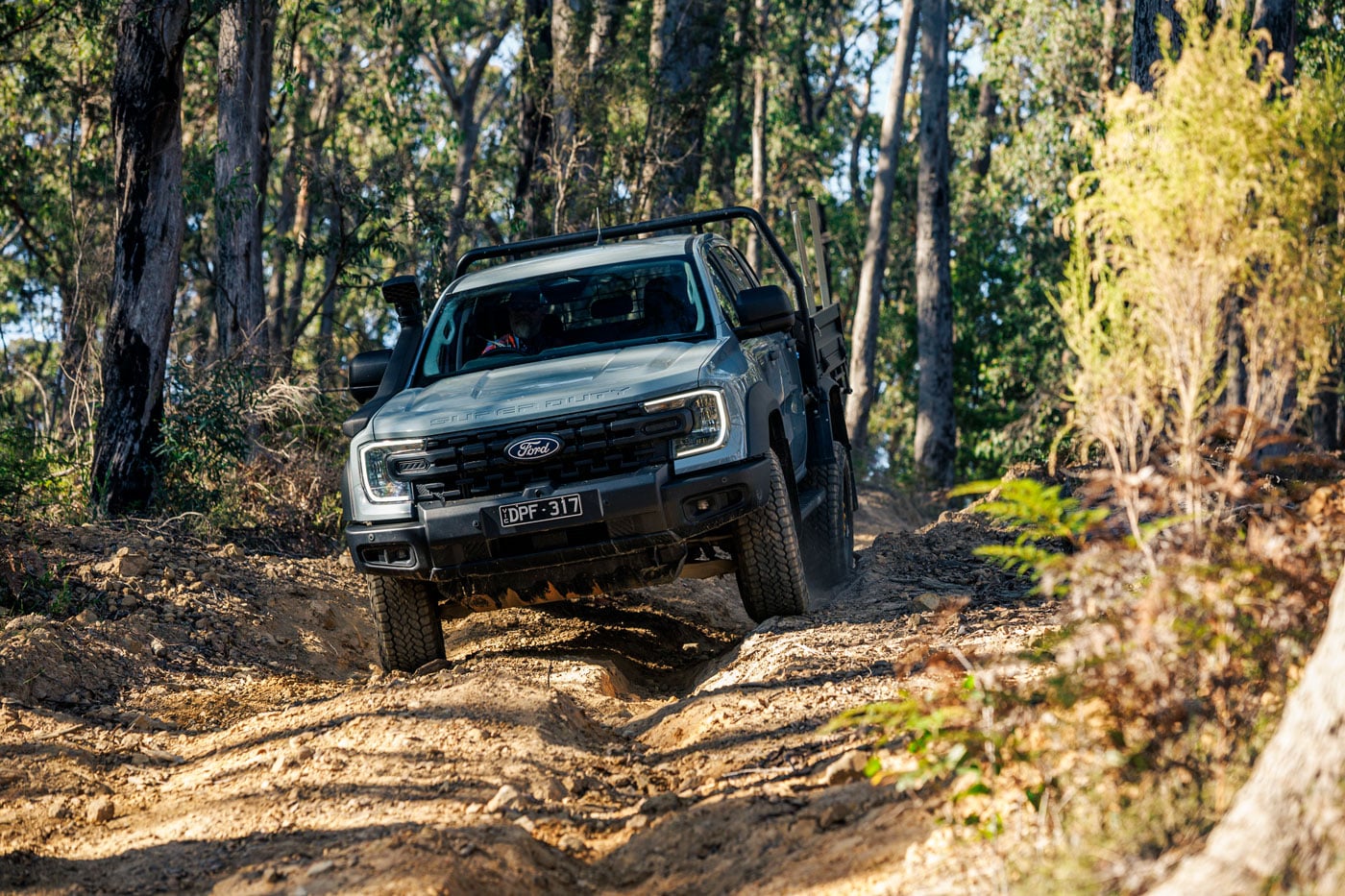
The Ford Ranger Super Duty’s party trick is its carrying capacity. It offers a 4500kg GVM, 4500kg towing capacity and 8000kg GCM, all from a midsize 4×4 ute that happens to be based on the best-selling new vehicle in Australia.
That towing capacity is normally the realm of big US pick-up trucks, while the Super Duty’s payload smashes anything the 1500-class US trucks can offer. It also rides on the same relatively compact footprint as the midsize Ranger.
To achieve those numbers, the Ford Australia engineering team slid a heavy-duty chassis under the Ranger body and equipped it with heavy-duty axles and suspension components, some borrowed from other vehicles in Ford’s global showroom. The front diff comes from a Bronco Raptor, the rear diff from a Transit Jumbo van with beefed-up axles and internals, and the eight-lug hubs come from F-250 trucks.
There’s also a host of other beefed-up and bespoke parts included in the Ranger Super Duty. Ford Australia tells us that less than six per cent of the Super Duty’s chassis and underbody components are carried over from the regular Ranger.
1
Nestled within the chassis is a 130-litre diesel tank, so there’s no need to resort to aftermarket solutions. There are metal plates underneath it for protection, as well as similar plates protecting the drivetrain. This heavy-duty drivetrain and chassis gives the Super Duty the hardware to fulfill the needs of most touring four-wheel drivers and fleet operators.
The drivetrain remains the 3.0-litre diesel V6 engine backed by a 10-speed automatic transmission and dual-range transfer case. The transfer case is slightly different to that in other Ranger models, in that it doesn’t have a two-wheel drive setting. Instead, the 4×4 Auto setting is better suited to on-road use with the heavy loads the Super Duty is capable of hauling.
The engine has a different tune in the Super Duty compared with other V6 Rangers, to meet EU6 emissions standards for the category of vehicle it falls into. As a result, peak power drops from 165kW to 154kW, while peak torque remains at 600Nm. The revised tune also alters the torque curve to fatten up the midrange and make it better suited to work and haul use. The EU6 emissions regulations mean the Super Duty runs AdBlue SCR.
The 10-speed automatic transmission is also beefed up to handle the loads, while both the front and rear differentials get driver-selectable lockers. Again, the Super Duty ticks all the boxes.
Ford Ranger Super Duty interior
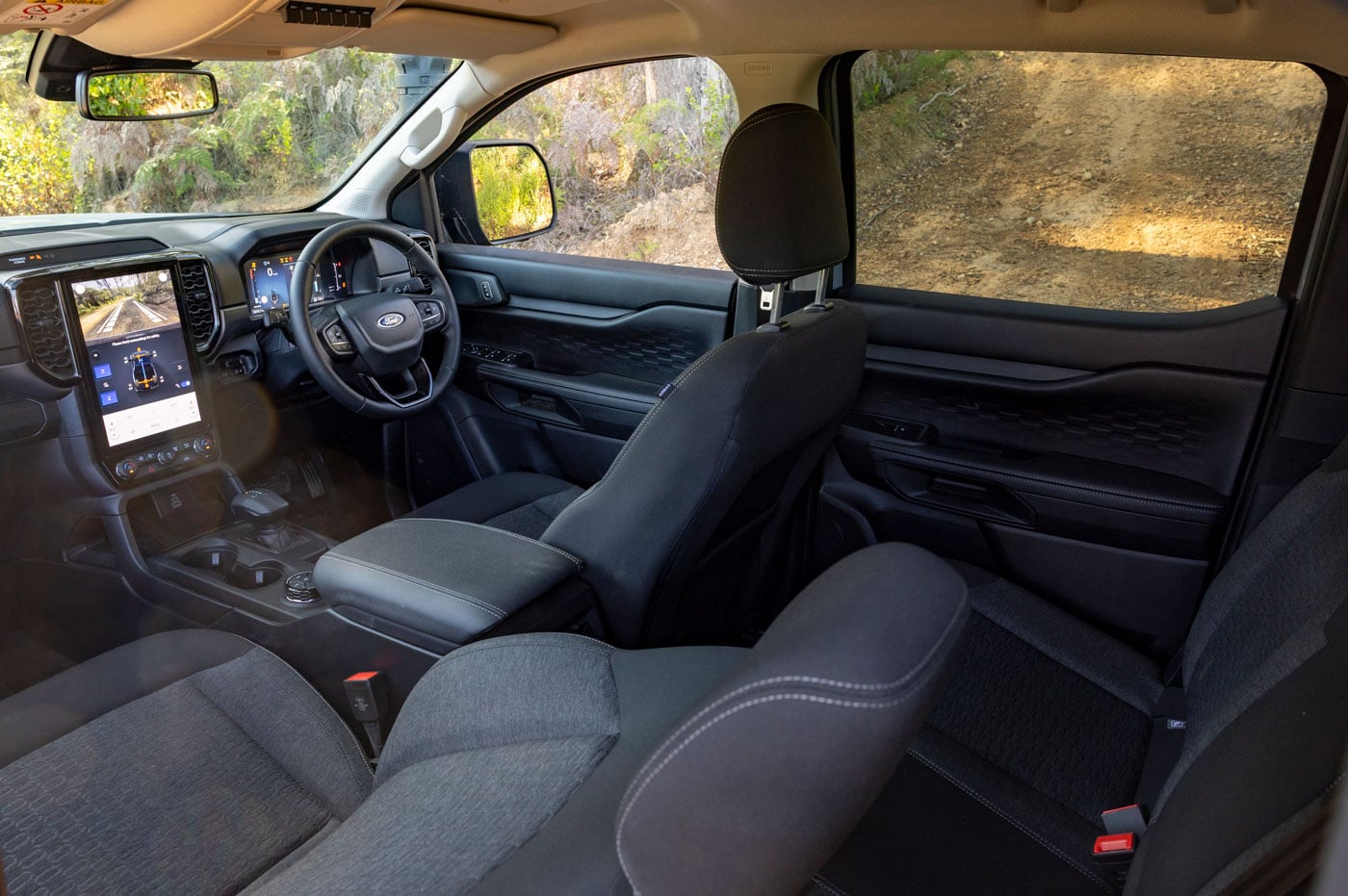
Where the Ranger Super Duty differs massively from the LandCruiser 79 is inside, as it’s based on a modern vehicle and not a 40-year-old commercial truck that has been updated and improved over the years.
Anyone who has been inside a current-generation Ford Ranger would be familiar with the Super Duty’s cabin. It’s big, spacious and well equipped with the modern safety, comfort and convenience features you expect in a vehicle in 2026, including a 12-inch multimedia screen, dual-zone climate control and cushy seats.
This drive was in a standard Ranger Super Duty, while since then the XLT variant has become available, adding to the creature comforts with leather-trimmed seats, plus heating and cooling for the front two. The cabin in the Super Duty feels a world away from that of the LandCruiser 70 Series, and when you drive the two vehicles back to back, you can see and feel why buyers wanted more from a heavy-duty ute.
1
Toyota LandCruiser 79 GXL
The LandCruiser 70 Series has been the perennial favourite for farmers, four-wheel drivers, NGOs, militaries and industry fleets for four decades.
It has earned a reputation for rugged reliability, enduring capability and dependability that is unrivalled in Australia and around the world. Land Rovers and Nissan Patrols have come and gone over the years, and in recent times we’ve seen the Ineos Quartermaster arrive on the scene, but the LC70 remains the benchmark for this style of vehicle.
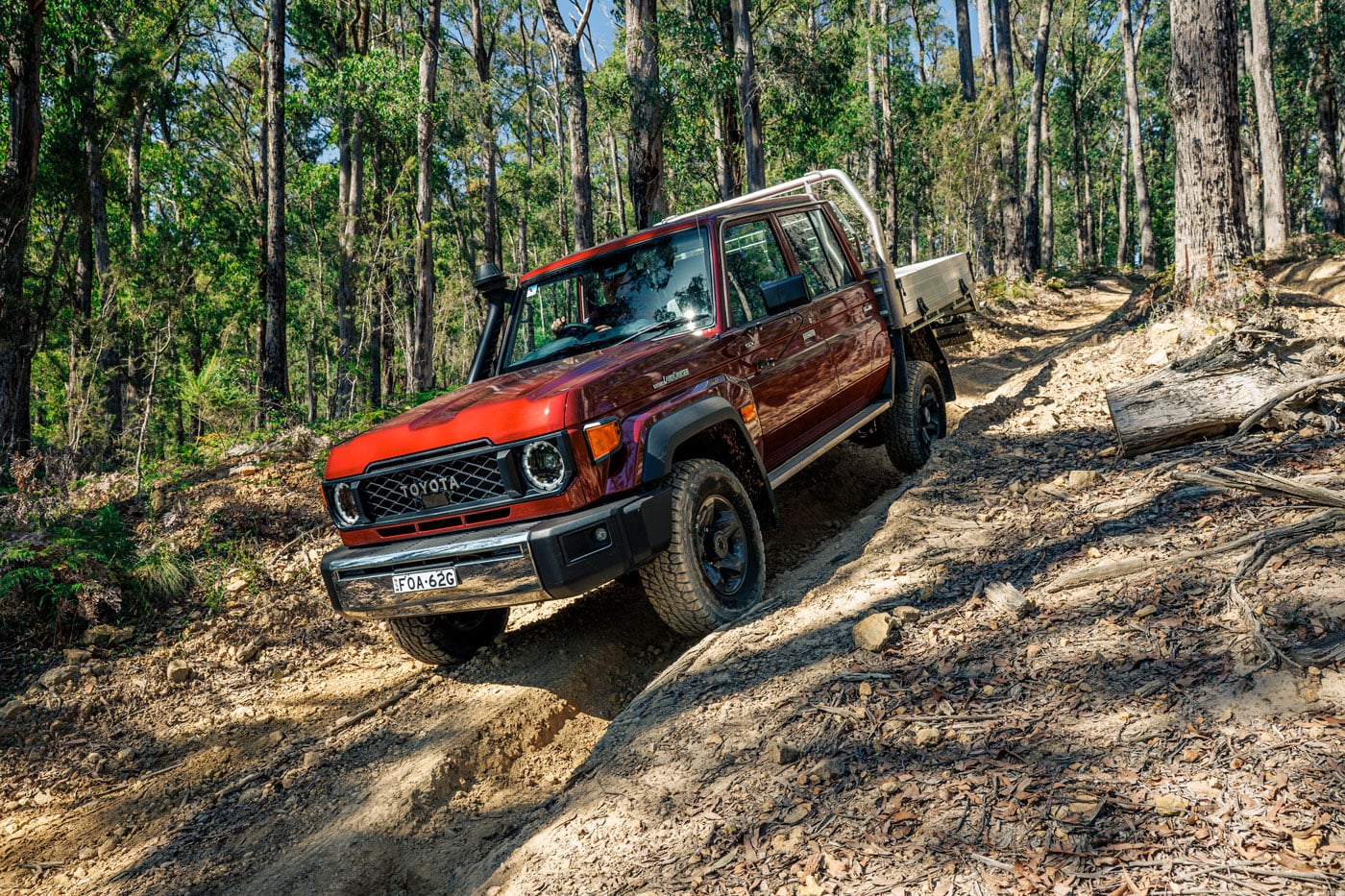
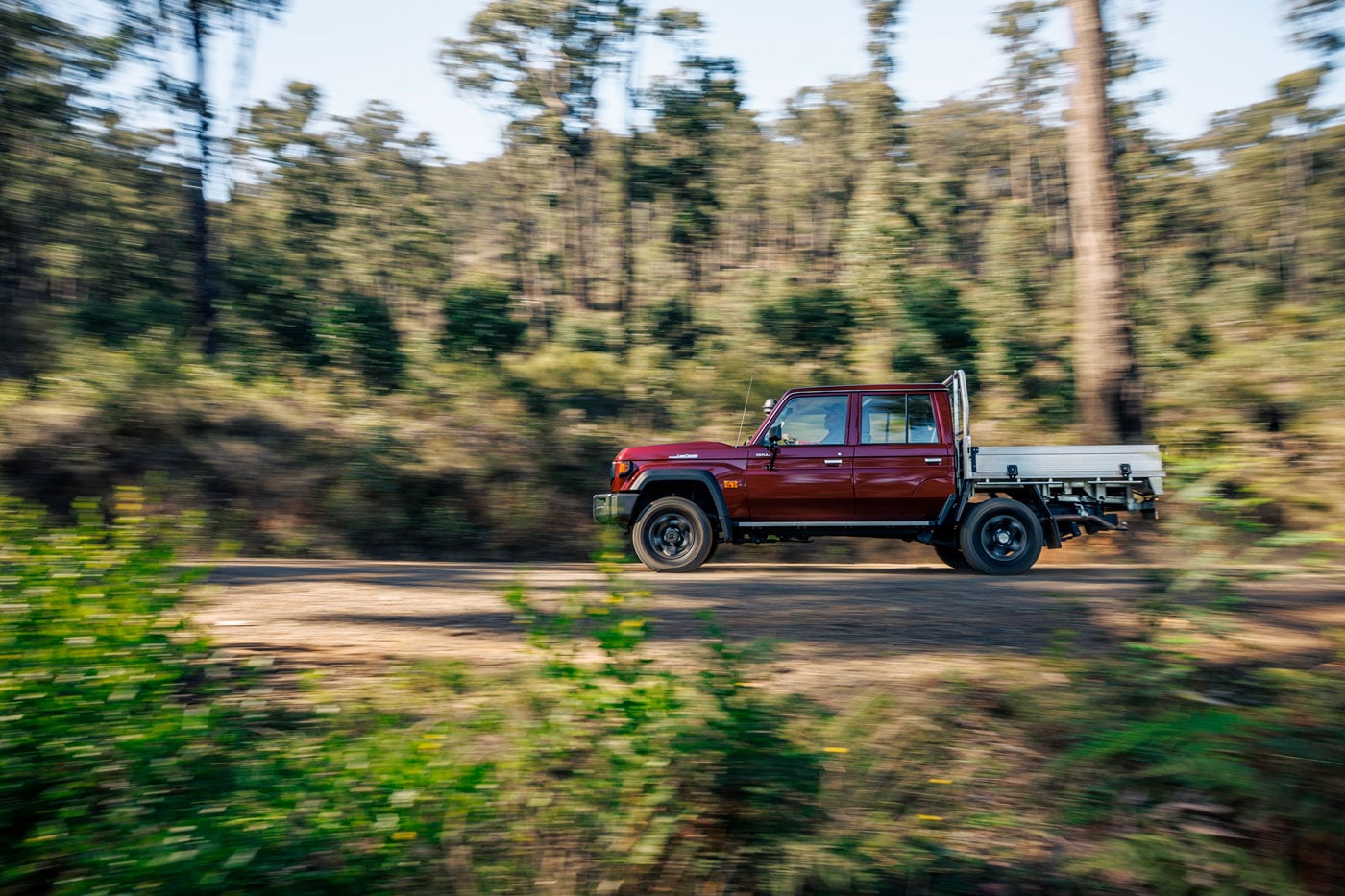
The most recent versions of the LC70 were launched in 2024 and are available in LC76 wagon, LC78 Troopcarrier and LC79 cab-chassis variants, in three grades. Here we have the LC79 double-cab with a factory aluminium tray in top-of-the-range GXL trim to compete with the Ranger Super Duty. Don’t let the top-of-the-range moniker deceive you, the LandCruiser is still a very spartan, fit-for-purpose work vehicle.
1
All LC70s are now powered by Toyota’s 1GD-FTV 2.8-litre inline four-cylinder diesel engine, backed by a choice of five-speed manual gearbox or six-speed automatic transmission. Our GXL Cruiser came fitted with the latter, ahead of a dual-range transfer case. Being a GXL grade, it also gets front and rear locking differentials to give it similar hardware to the Super Duty.
LandCruisers retain live axles at the front and rear which, again, is a more rugged design compared to the Ford’s IFS. However, the Cruiser doesn’t have a lot of wheel travel, so there’s no real advantage in the live-axle design here. Both vehicles have locking front differentials, so again there’s no advantage to the live axle.
While the four-cylinder engine might not have the appeal of its 4.5-litre V8 predecessor, it makes more power and torque than the V8, although its 150kW and 500Nm can’t match the outputs of the Ford V6. That said, it works superbly with the automatic transmission and gives the 79 the power to get the job done, even if it doesn’t have the V8 rumble that drew all the concrete cowboys to the previous model.
You could say the Cruiser has gone back to its working-truck brief and is more at home on the farm or in the bush than the previous V8 diesel model. The automatic transmission also makes it more appealing to fleet owners, where not everyone can drive a manual gearbox.
1
Toyota LandCruiser 79 GXL interior
The double-cab 79 Series is one of the later body styles in the 40-plus years of the model, but it still bears a strong resemblance to the original models that came before it.
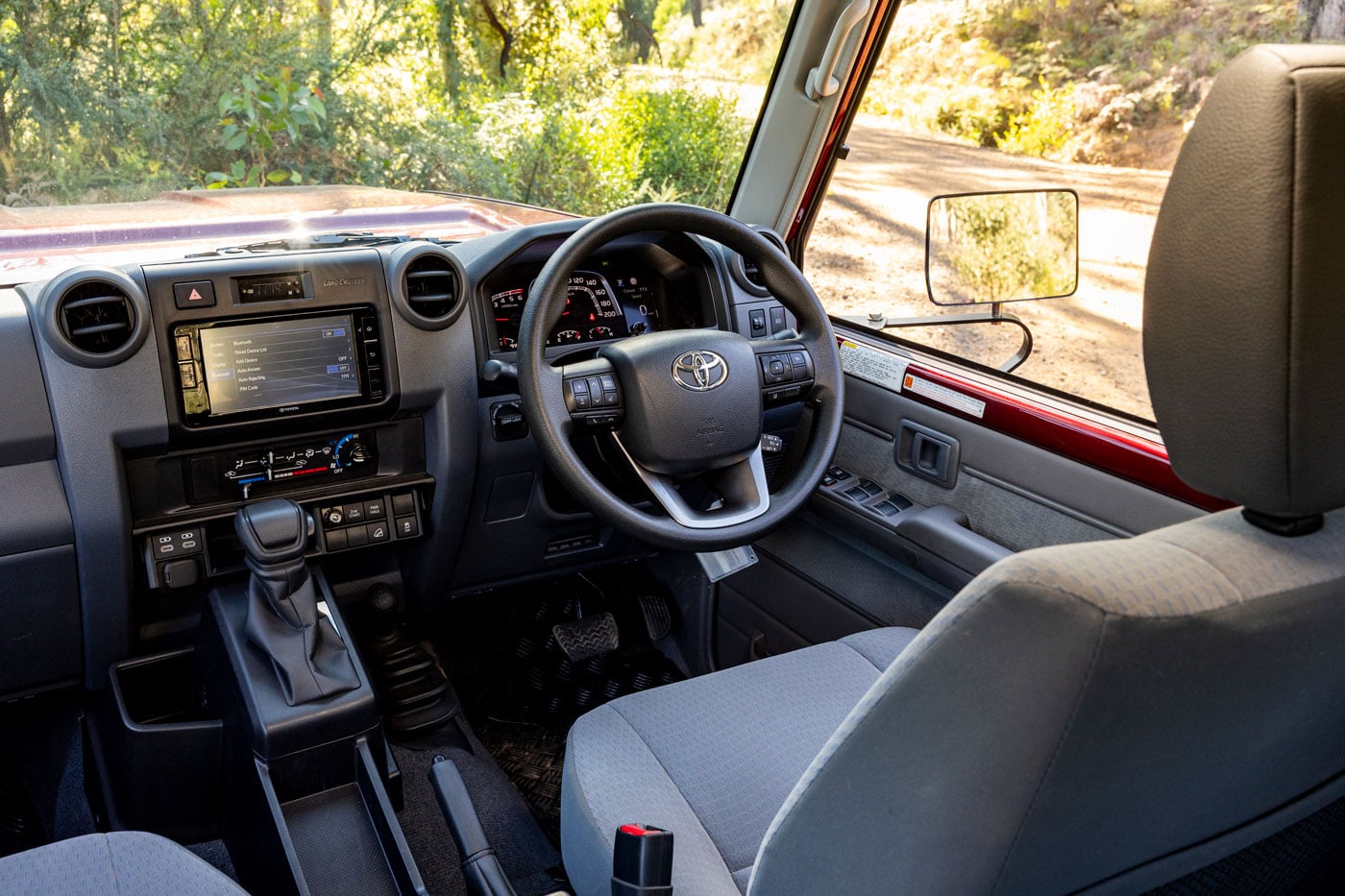
The cabin is narrow and upright, with few creature comforts. The air conditioning still uses the same sliding controls it did in 1985 and that’s not a bad thing, as they work well. The media system, if you can call it that, has a 6.7-inch screen which by today’s standards is tiny, and the image quality is poor. You can get Apple CarPlay, but it’s via cable connection only. Other features are available via Bluetooth.
Being a GXL grade, this 79 does get power windows, front and rear diff locks and alloy wheels. Flash! LC70s have had ABS for a while now, and the 2024 updates gave it a lane-departure warning chime, but that’s about the extent of the safety features.
1
On- and off-road comparison
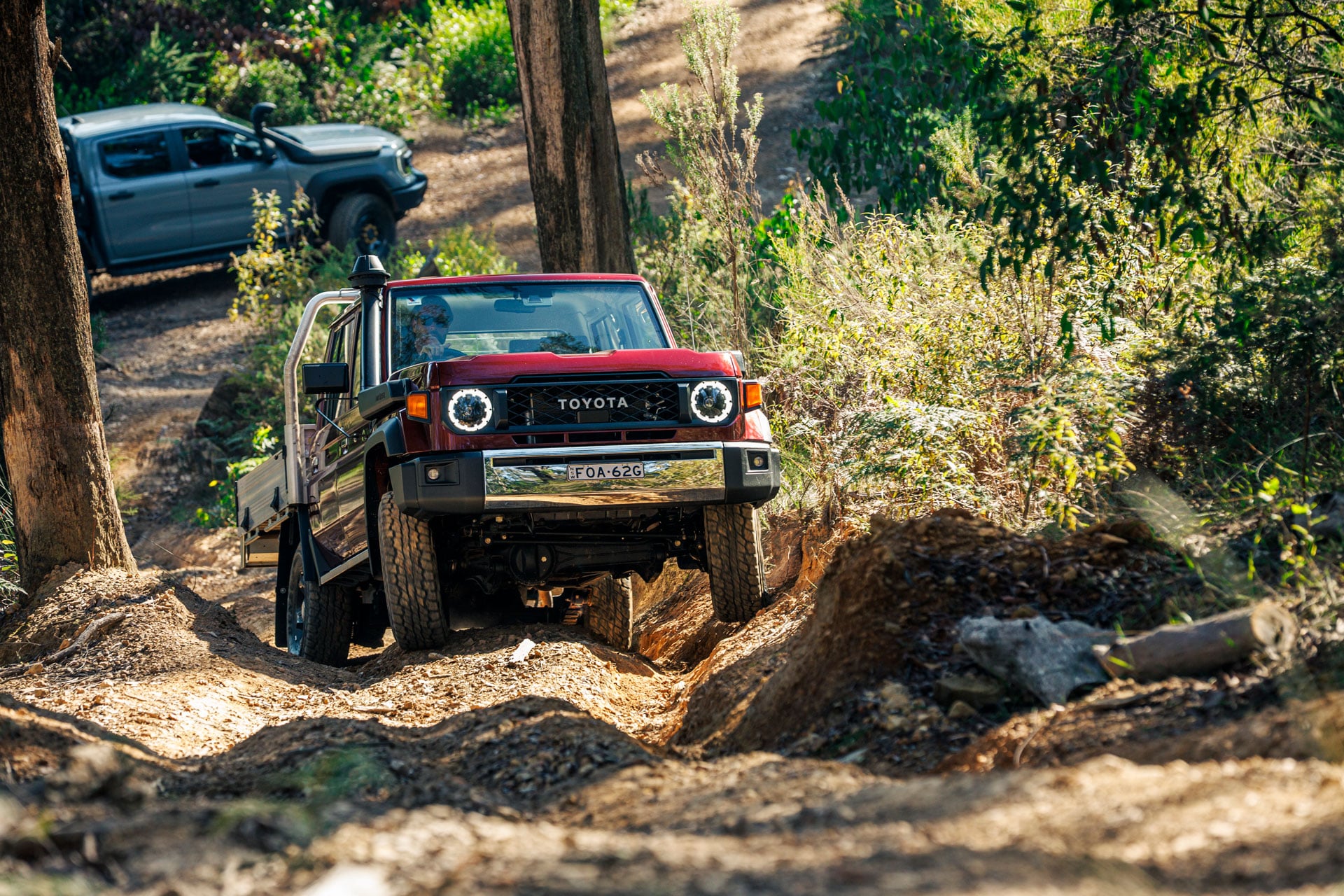
Despite the latest updates, the 79 still feels and drives like a vintage commercial vehicle, and that’s a huge part of its charm.
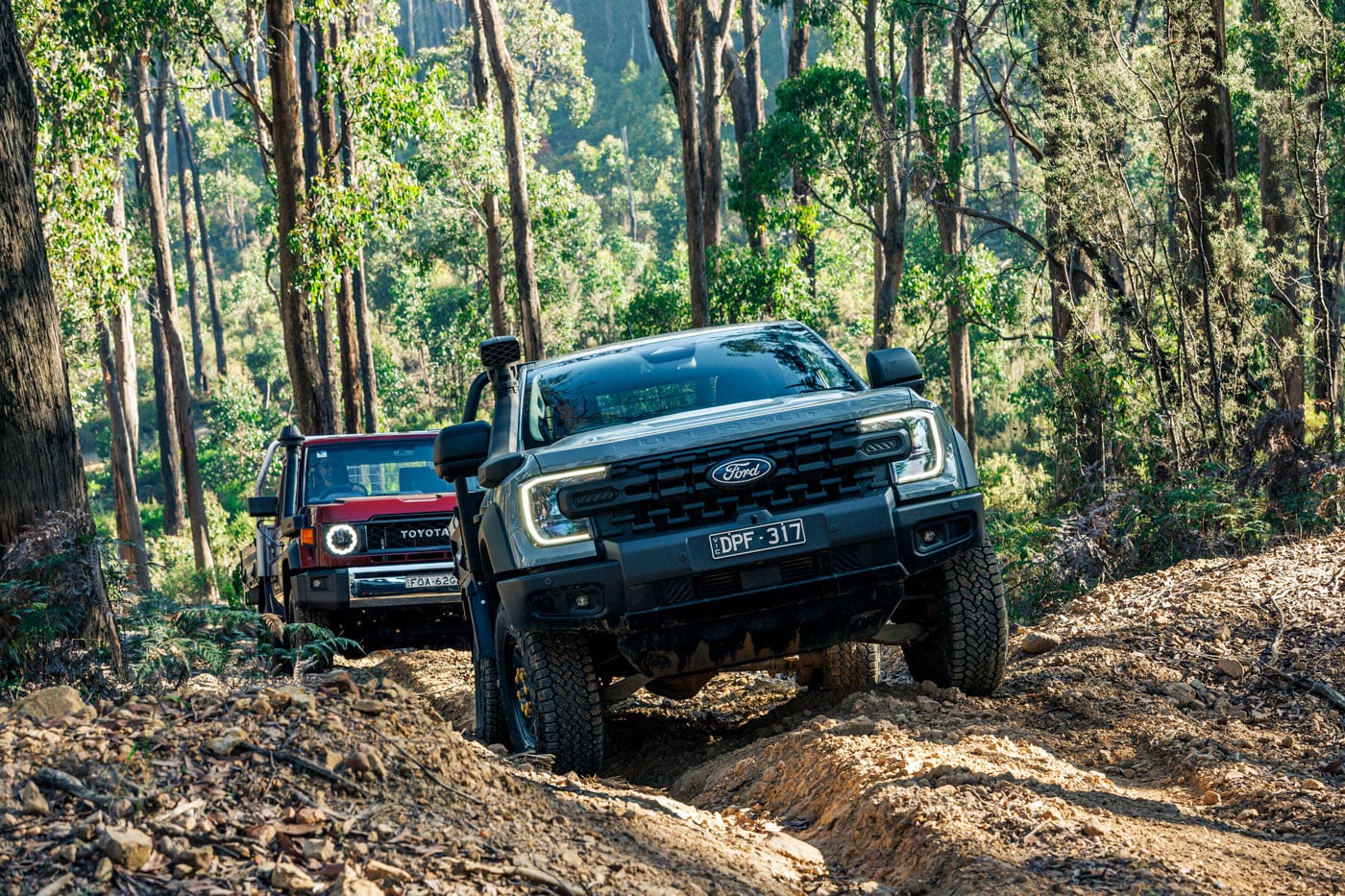
It feels solid and honest, as there’s little, if any, padding masking its heavy-duty construction. There’s no fat on the 79 and it actually feels nimble on bush tracks, where its narrow body and clear lines of sight make it the better vehicle to drive in tight going.
The driver sits lower in the Ranger, where the windscreen sweeps back over the cabin and the door sills are higher, insulating the driver from their surroundings. As a result, you need to be more careful with vehicle placement, taking note of what’s ahead of you and using the 360-degree cameras to know where the vehicle is on the track.
1
The Super Duty feels stiffer than a regular Ranger in the way it drives on- and off-road, and you feel the mass of the LT-construction tyres and steel wheels on rough roads.
There’s no comparison between the way these two vehicles handle, as the Ford is the clear winner here. It is, in fact, surprising just how dynamic it is on a winding road, as it steers better than any heavy-duty truck on those tyres has any right to.
This alone will be a deciding factor for many buyers considering these two utes, along with the massive difference in the Ford’s interior and equipment levels.
| Off-road specification | Ford Ranger Super Duty | Toyota LandCruiser 79 GXL |
|---|---|---|
| Approach angle | 36.1 | 33 |
| Rampover angle | 26.3 | 22 |
| Departure angle | 28.6 | 27 |
| Ground clearance | 295mm | 302mm |
| Wading depth | 850mm | 850mm |
Final verdict
The LandCruiser 79 might have all the history, character and charm that the Ford Ranger sorely lacks, but when it comes to getting the job done, it is left for dead by the Super Duty.
The Ford has higher load and towing capacities, more power and torque, is a world away in comfort and safety, and its road manners make it a vehicle that is easier to drive for anyone not accustomed to the habits of older trucks.
It’s true that the modern Ranger does fall foul of over-complexity in some of its operating systems, but this is true for all modern vehicles and it’s getting worse. This is where the LandCruiser makes you appreciate basic functionality and the simple operation of everything you need, and nothing you really don’t.
At the end of the day, the Ranger Super Duty is the better all-in-one vehicle package here.
1
Pros and cons
Ranger Super Duty pros
- 4500kg GVM and 4500kg towing capacity
- More power and torque than the 79
- Modern, comfortable and well-equipped interior
Ranger Super Duty cons
- More complex operating systems
- Feels stiffer than a regular Ranger off-road
- Larger footprint makes vehicle placement more difficult
LC79 pros
- Proven rugged reliability and dependability
- Narrow body and clear sight lines suit tight bush tracks
- Simple, functional controls and systems
LC79 cons
- Lower payload and towing capacity than the Ranger
- Spartan interior with limited safety and comfort features
- Feels and drives like a commercial vehicle
Specs
| Specification | Ford Ranger Super Duty | Toyota LandCruiser 79 GXL |
|---|---|---|
| Engine | V6 turbo-diesel | Inline four-cylinder diesel |
| Capacity | 2993cc | 2755cc |
| Max power | 154kW @ 3250rpm | 150kW @ 3000-3400rpm |
| Max torque | 600Nm @ 1750rpm | 500Nm @ 1600-2800rpm |
| Transmission | 10-speed automatic | 6-speed automatic |
| 4×4 system | Auto on-demand 4×4 with high and low range | Part-time dual-range 4×4 |
| Construction | 4-door cab-chassis | 4-door cab-chassis |
| Front suspension | IFS with wishbones and coil springs | Live axle with coil springs |
| Rear suspension | Live axle with leaf springs | Live axle with leaf springs |
| Tyres | LT275/70R18 on steel wheels | LT265/70R16 on alloy wheels |
| Kerb weight | 2675kg ex tray | 2185kg |
| GVM | 4500kg | 3510kg |
| Payload | 1825kg excluding tray | 1270kg |
| Towing capacity | 4500kg | 3500kg |
| GCM | 8000kg | 7010kg |
| Seating | 5 | 5 |
| Fuel tank | 130L | 130L |
| ADR fuel consumption | N/A | 9.6L/100km |
Follow 4X4 Australia on Google
Get more 4x4 news, reviews and gear stories from 4X4 Australia in your Google feeds.

We recommend
-
 4x4 Comparisons
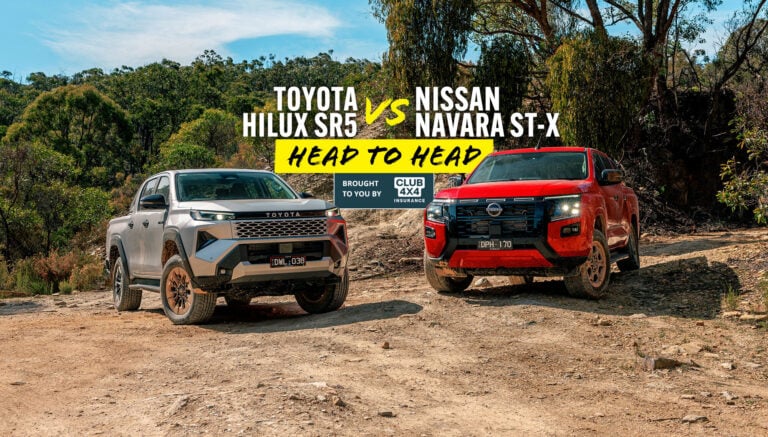
Toyota HiLux vs Nissan Navara: Can the new Navara topple Australia’s perennial favourite?
Nissan has thrown everything at its latest dual-cab, but the HiLux’s decades-long reputation won’t be easy to overcome
-
 4x4 Comparisons
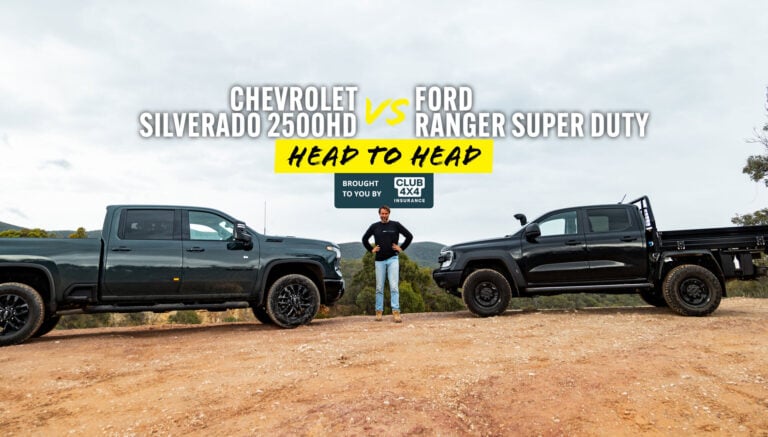
Ranger Super Duty vs Silverado 2500HD: Can a Ranger really rival a Silverado?
Ford’s Ranger Super Duty delivers genuine heavy-duty capability in a midsize package, but how does it compare with a full-size American tow rig built for the same kind of work?
-
 4x4 Comparisons
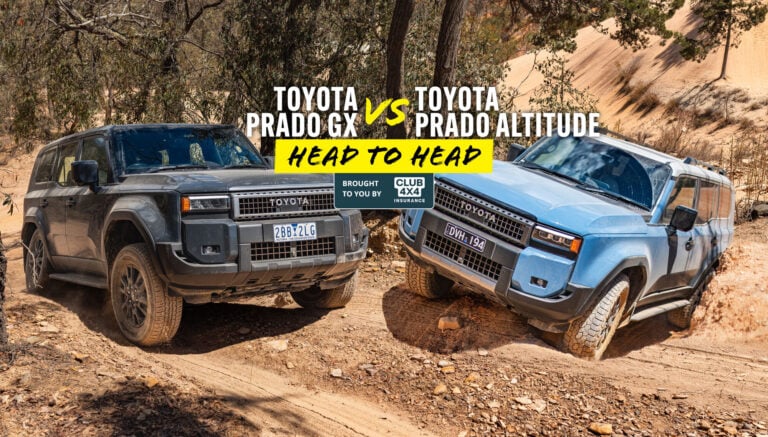
Prado GX vs Altitude: Is the flagship worth the extra money?
Is the Prado Altitude worth the premium, or does the GX make more sense as a smarter base for building a proper 4x4?