4x4 Comparisons

Gallery 1
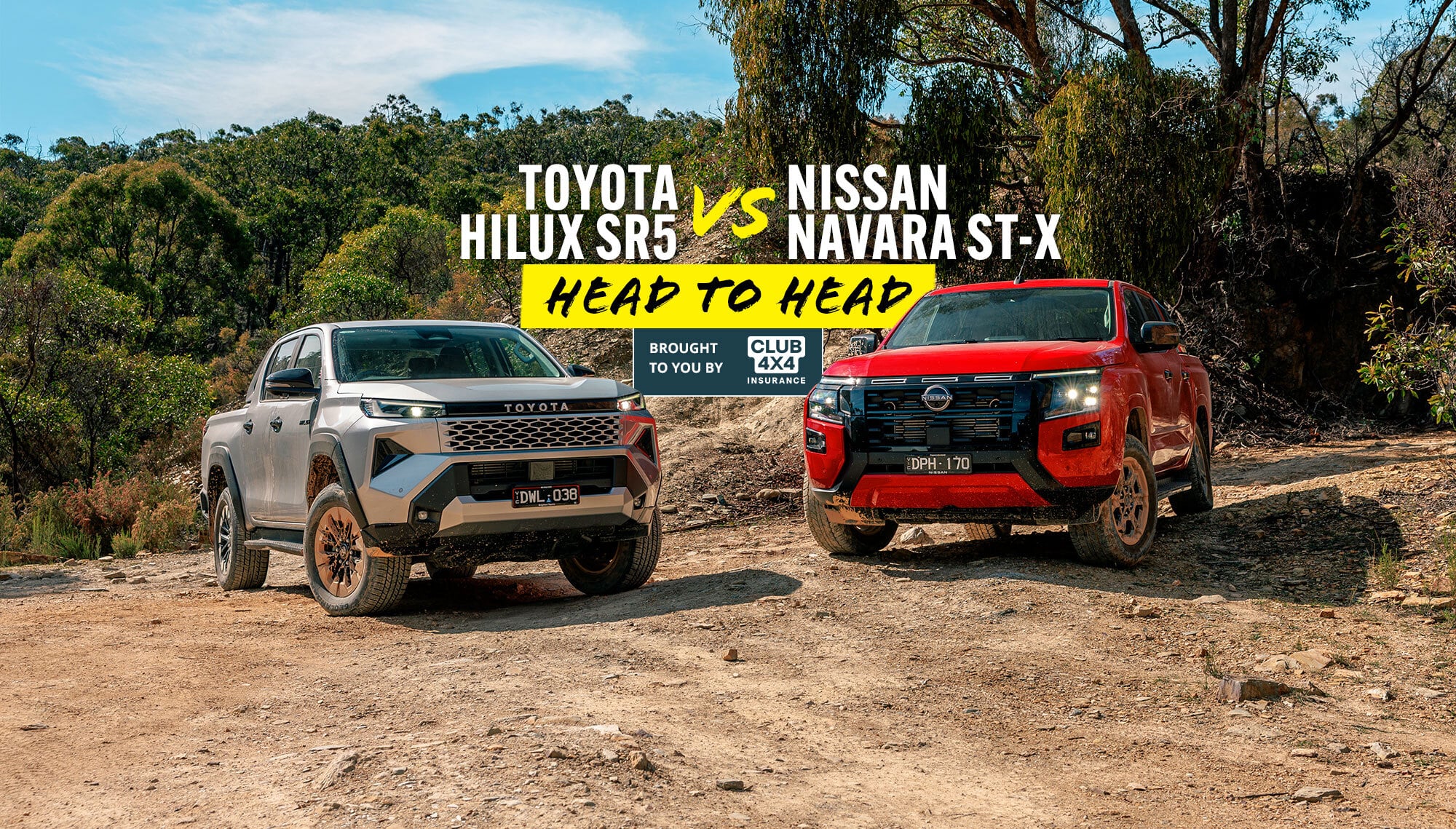
Every new dual-cab ute launches with the same question hanging over it: Is this finally the one that can knock the HiLux off its perch?
Most don’t. The new Nissan Navara deserves the conversation. At around $66,000 to $68,000 drive-away, the Navara ST-X and Toyota HiLux SR5 are separated by little more than a couple of grand. Both promise around a tonne of payload, a 3500kg towing capacity and enough versatility to spend Monday on a worksite before disappearing into the bush on the weekend. They’re built for fleets, tradies and small business owners buying with an ABN; the people who rely on a ute, not just own one.
Nissan has never looked better placed to challenge Toyota. The new Navara shares its underpinnings with Mitsubishi’s impressive Triton, benefits from Premcar-developed suspension tuning and backs it all with full-time four-wheel drive, a 10-year warranty and longer service intervals. On paper, it’s the strongest case Nissan has made against the HiLux in years.
We’ve already driven the new Navara at launch, sampled the latest Pro-4X Warrior and spent plenty of time behind the wheel of Toyota’s evergreen HiLux, including comparing it with Ford’s Ranger V6 and documenting our own HiLux build. This wasn’t another first drive. We put the two back-to-back over the same bitumen, the same gravel roads and the same off-road obstacles to answer one simple question.
Has Nissan finally built a ute good enough to make buyers walk past the Toyota dealership?
JUMP AHEAD
- Why compare the Navara and HiLux?
- Under the skin: Two very different approaches
- The numbers that matter: Towing, payload, GVM and performance
- Which ute drives better?
- Comfort, tech and everyday usability
- Which ute is more capable off-road?
- Ownership costs, warranty and reliability
- Verdict: Has Nissan finally built a HiLux rival?
- Specs compared
Why compare the Navara and HiLux?
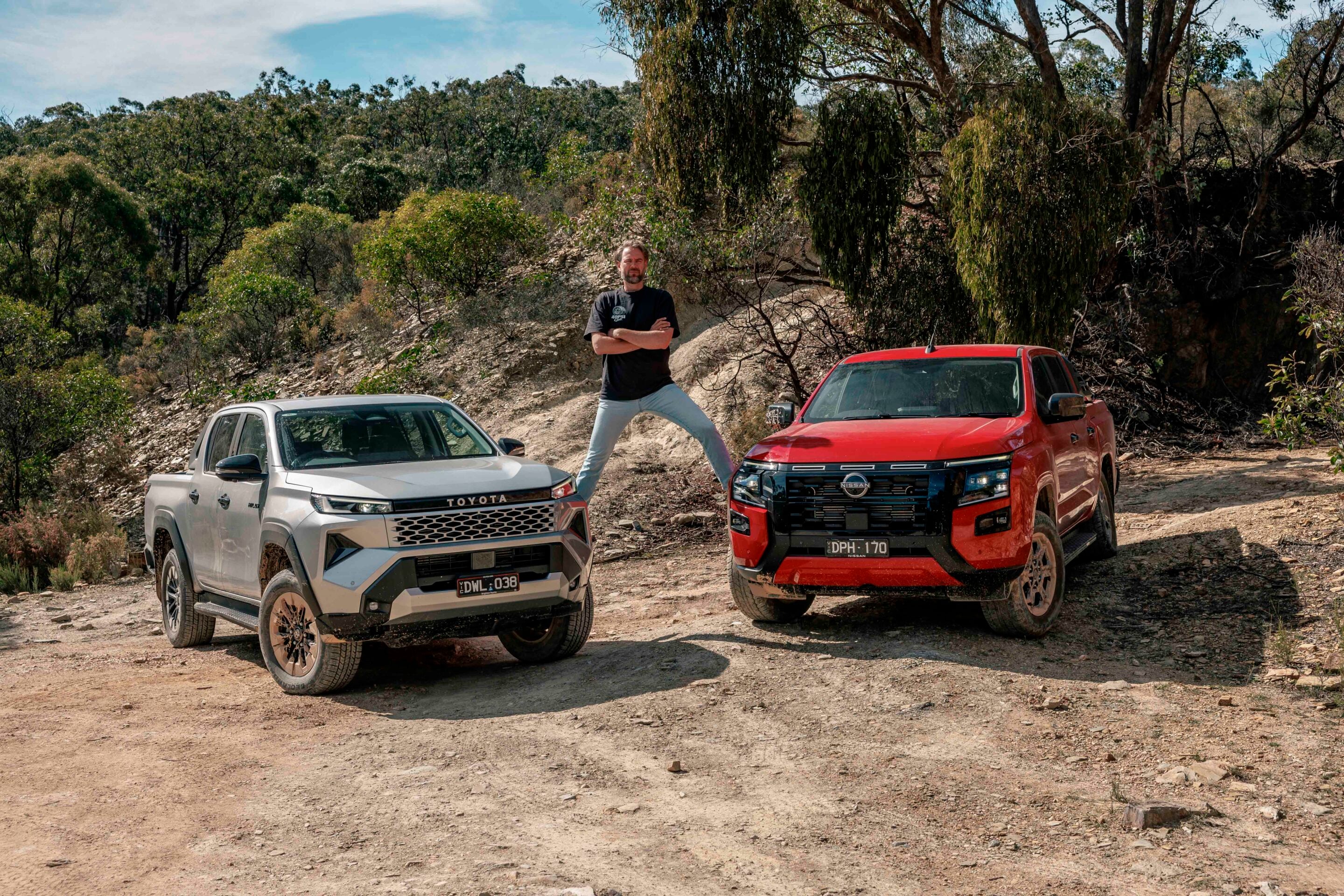
At first glance, these two don’t look like direct rivals. Although they’re separated by little more than a couple of thousand dollars at around $66,000 to 68,000 drive-away, they occupy different places in their respective line-ups.
The HiLux SR5 is Toyota’s volume seller, sitting below lifestyle-focused variants like the Rogue and GR Sport. The Navara ST-X, meanwhile, sits just beneath the flagship Pro-4X, bringing leather-accented trim, a power-adjustable driver’s seat and a tub liner as standard; features Toyota reserves for higher grades or the options list. That’s exactly why they’re worth comparing.
These are the utes Australia’s fleets, tradies and small businesses actually buy. They need to tow 3.5 tonnes, carry a tonne in the tray and spend Monday on a worksite before disappearing into the bush for the weekend. Features matter, but whole-of-life ownership costs matter more. The real question isn’t which one has the longer equipment list; it’s which makes the stronger business case once the paperwork is signed.
1
Under the skin: Two very different approaches
They compete for the same buyers, but these two utes have arrived there by very different routes.
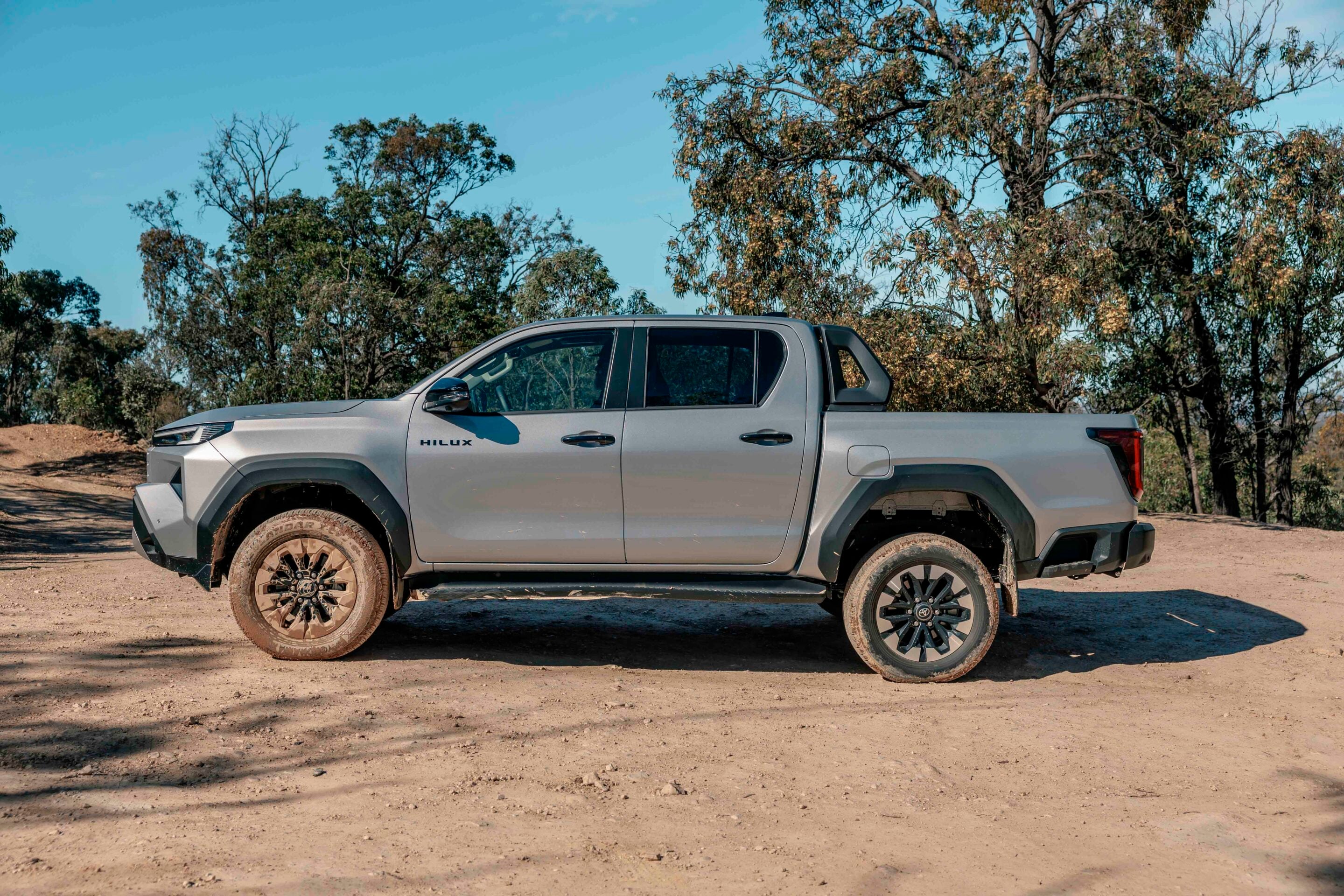
The HiLux is the product of continual refinement. Toyota knows exactly what the HiLux is, and it hasn’t tried to reinvent it. The MY26 model builds on a platform that’s been steadily developed over many years, with incremental improvements to the drivetrain, suspension and technology, most recently adding a 48-volt mild-hybrid system. It’s a recipe Toyota has been refining for decades, and behind the wheel that maturity shows.
The Navara takes a very different approach. Underneath, it’s closely related to Mitsubishi’s latest Triton, sharing its chassis, driveline and much of its engineering through the Renault-Nissan-Mitsubishi Alliance. But Nissan hasn’t simply swapped badges and called it a day. Instead, it handed the platform to Premcar.
That matters because we’ve already seen what Premcar can do with a dual-cab ute. The previous D23 Navara Pro-4X Warrior remains one of our favourite factory-enhanced four-wheel drives, so there was every reason to be interested in what the company could achieve with the new model.
The brief wasn’t to reinvent the Triton. It was to make it feel like a Nissan. After spending time behind the wheel, I’d say they’ve succeeded. The new Navara has its own character. It doesn’t drive like a Triton wearing different sheetmetal; it drives like a Navara.
1
The numbers that matter: Towing, payload, GVM and performance
On the spec sheet, these two are remarkably close. Both tow 3500kg, carry around a tonne in the tray and cost about the same. It’s only when you start digging into the finer details that the differences begin to appear.
Take GVM and GCM. The HiLux SR5 offers a 3120kg GVM and a 6300kg GCM, while the Navara ST-X counters with a slightly higher 3190kg GVM but a marginally lower 6250kg GCM. That means both can legally carry around a tonne, but the Toyota hangs on to a little more payload once a heavy trailer is hitched.
Tow a 3500kg trailer and the numbers become more meaningful. Based on each vehicle’s kerb weight and GCM, the HiLux still has around 645kg of payload in reserve before reaching its legal combined limit. The Navara retains about 579kg. It’s hardly a deal-breaker, but for anyone regularly towing at the limit, it’s another small advantage in Toyota’s favour.
1
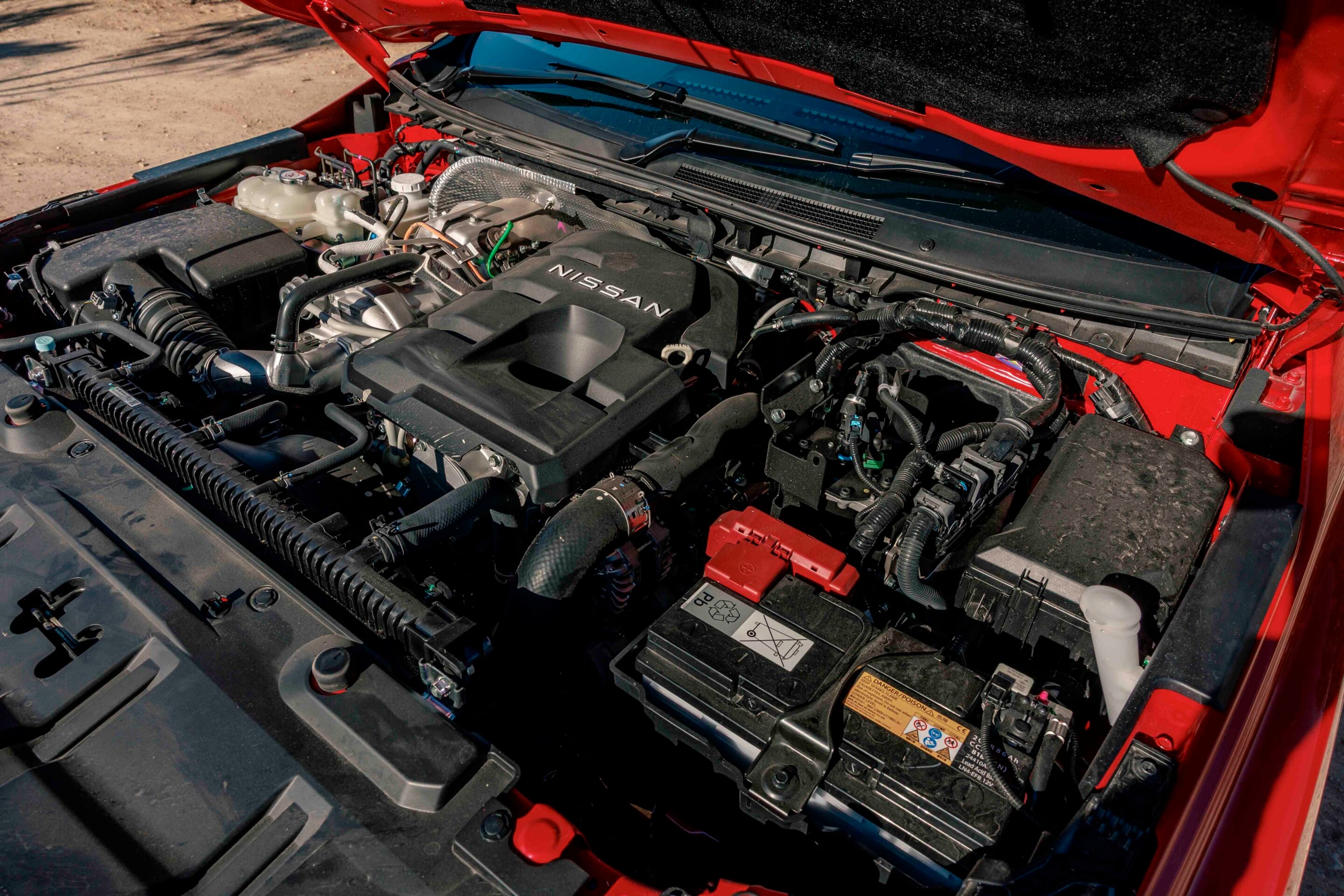
Engine outputs are equally close. Both produce 150kW, but they go about it differently. Toyota’s 2.8-litre turbo-diesel, now backed by a 48-volt mild-hybrid system, develops 500Nm between 1600 and 2800rpm. Nissan’s 2.4-litre bi-turbo diesel delivers 470Nm from 1500 to 2750rpm.
Those figures only tell part of the story. Behind the wheel, the HiLux consistently feels stronger than the spec sheet suggests. The Navara performs exactly as you’d expect from a modern twin-turbo diesel: Smooth, responsive and easy to drive. But Toyota’s engine and transmission calibration extract a little more from the available torque. The Lux just moves with more gusto; it feels quick, the spec sheet says there’s only 30Nm between them. You’d swear it was more.
Of course, none of these numbers exist in isolation. Ball weight, GVM, GCM, GTM and your caravan’s ATM all affect what you can legally and safely tow once everything is loaded. Understanding how they interact is just as important as the headline 3500kg towing figure.
1
Which ute drives better?
The biggest surprise of this comparison wasn’t the HiLux. I’ve driven enough of them over the years to know exactly what to expect. It was the Navara.
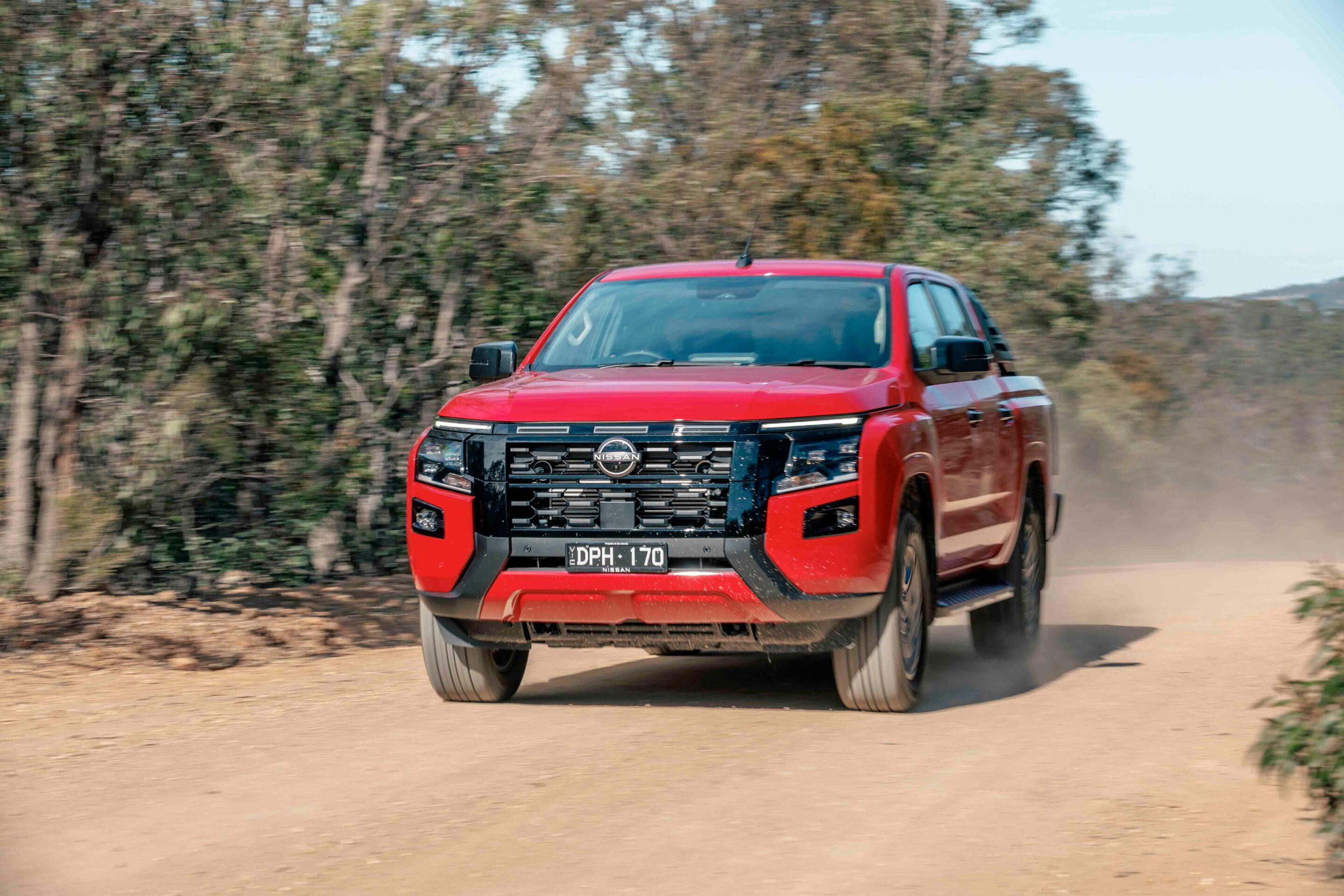
Within the first few kilometres of gravel I found myself carrying more speed than I expected. Not because I was trying to, but because the Navara immediately felt settled underneath me. Premcar deserves plenty of the credit. After transforming the previous D23 Pro-4X Warrior into one of our favourite factory-enhanced dual-cabs, its suspension tuning has once again elevated the base vehicle into something that’s genuinely rewarding to drive.
1
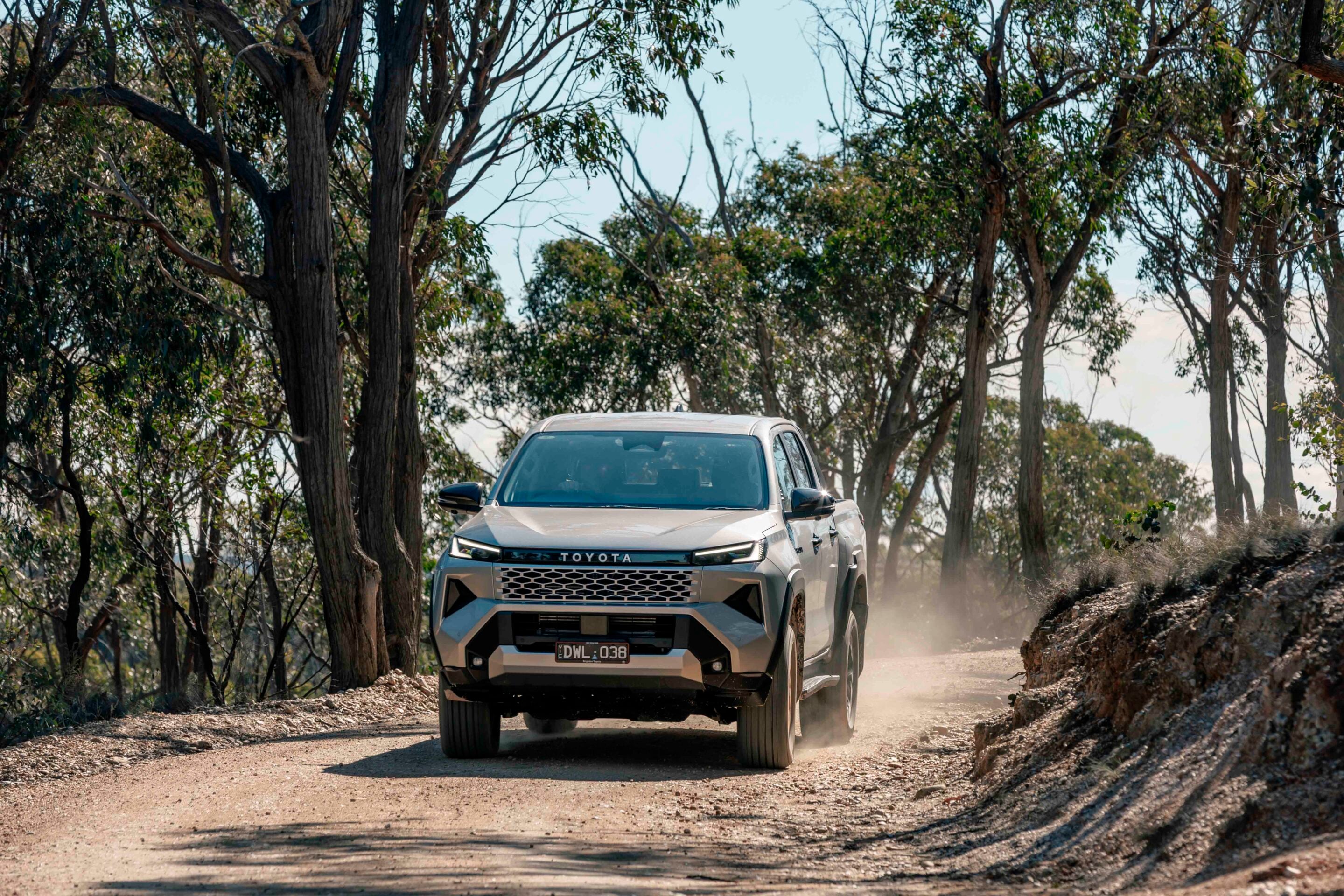
Then you climb back into the HiLux. It immediately reminds you why it’s been the benchmark for so long. There’s no single standout quality; it simply does everything well. The steering is light but accurate, the suspension stays composed over corrugations, and the 2.8-litre turbo-diesel always feels stronger than the numbers suggest. There’s only 30Nm between these two engines. Again, from behind the wheel, it feels like more.
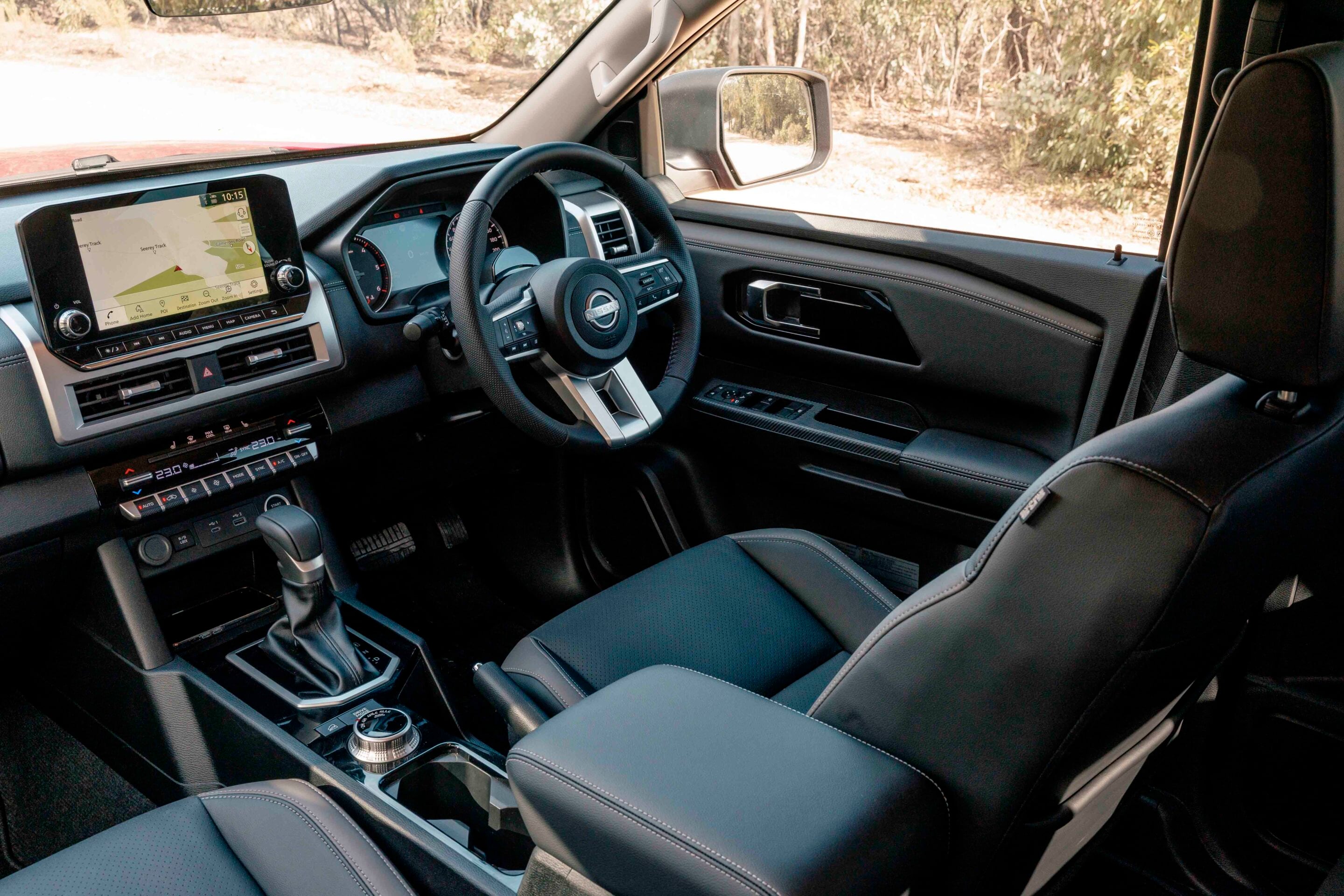
Inside, the Toyota extends its advantage. The Navara’s front seats are excellent and arguably offer better support than the HiLux’s cloth pews, but Toyota still has the edge for overall fit and finish. The switchgear feels more substantial, the cabin feels tighter, and there are virtually no squeaks or rattles.
Neither ute puts a foot wrong on a fast gravel road. But after a full day swapping between them, I kept coming back to the same conclusion. The HiLux isn’t necessarily more exciting to drive; it just feels more resolved. Everything works together with a polish that only comes from years of continual refinement.
1
Comfort, tech and everyday usability
Modern dual-cab utes spend as much time commuting, towing and running between jobs as they do off-road, and both are easy vehicles to live with.
Wireless Apple CarPlay and Android Auto come standard, the infotainment systems are intuitive, and there’s plenty of storage for phones, paperwork and everything else that accumulates during a working week. So the biggest difference isn’t what they offer, it’s how they go about it.
The Navara is packed with driver monitoring and safety technology that’s constantly keeping an eye on you. That’s reassuring in theory, but over a full day behind the wheel the beeps, chimes and warnings start to wear thin. Some drivers will appreciate the extra oversight; others will find themselves diving into the settings menu every time they start the engine. The HiLux takes a lighter touch. Its safety systems still intervene when they need to, but they rarely feel intrusive or as though they’re second-guessing the driver.
1
Equipment levels also reflect where each model sits in its respective range. The Navara ST-X comes generously equipped with leather-accented trim, a power-adjustable driver’s seat and a tub liner as standard, while the HiLux SR5 keeps things simpler unless you venture into the options list.
Even so, the Toyota feels like the more cohesive product. It’s the touch points that stood out to me. The HiLux’s gear selector has a more substantial action, the buttons surrounding it click with reassuring precision, and after swapping between the two all day those little interactions kept reminding me how well screwed together the cabin feels. By the end of the day, that’s what stayed with me. Not the extra equipment in the Navara, but the sense that the HiLux had been engineered to keep feeling this tight long after the new-car smell had disappeared.
1
Which ute is more capable off-road?
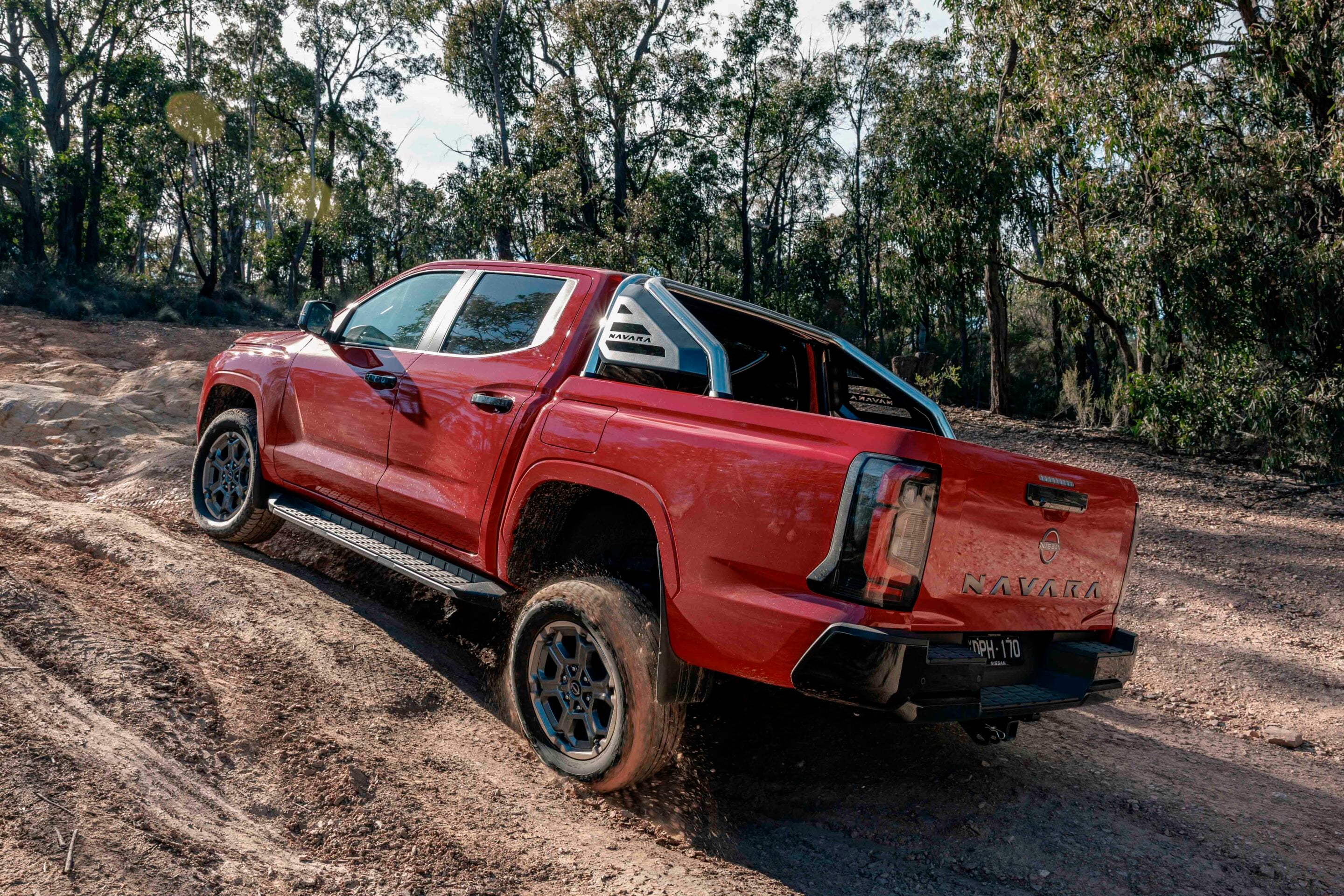
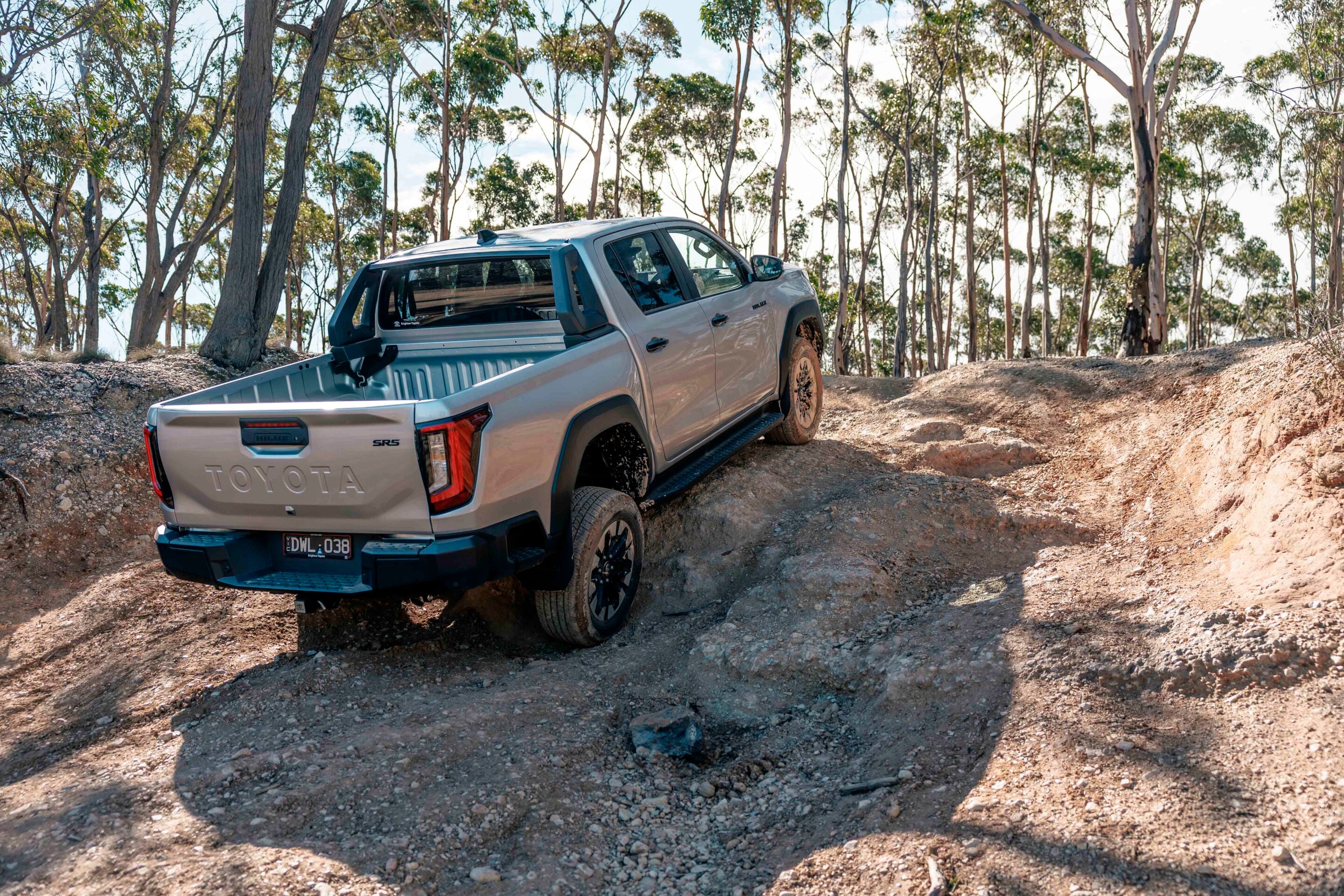
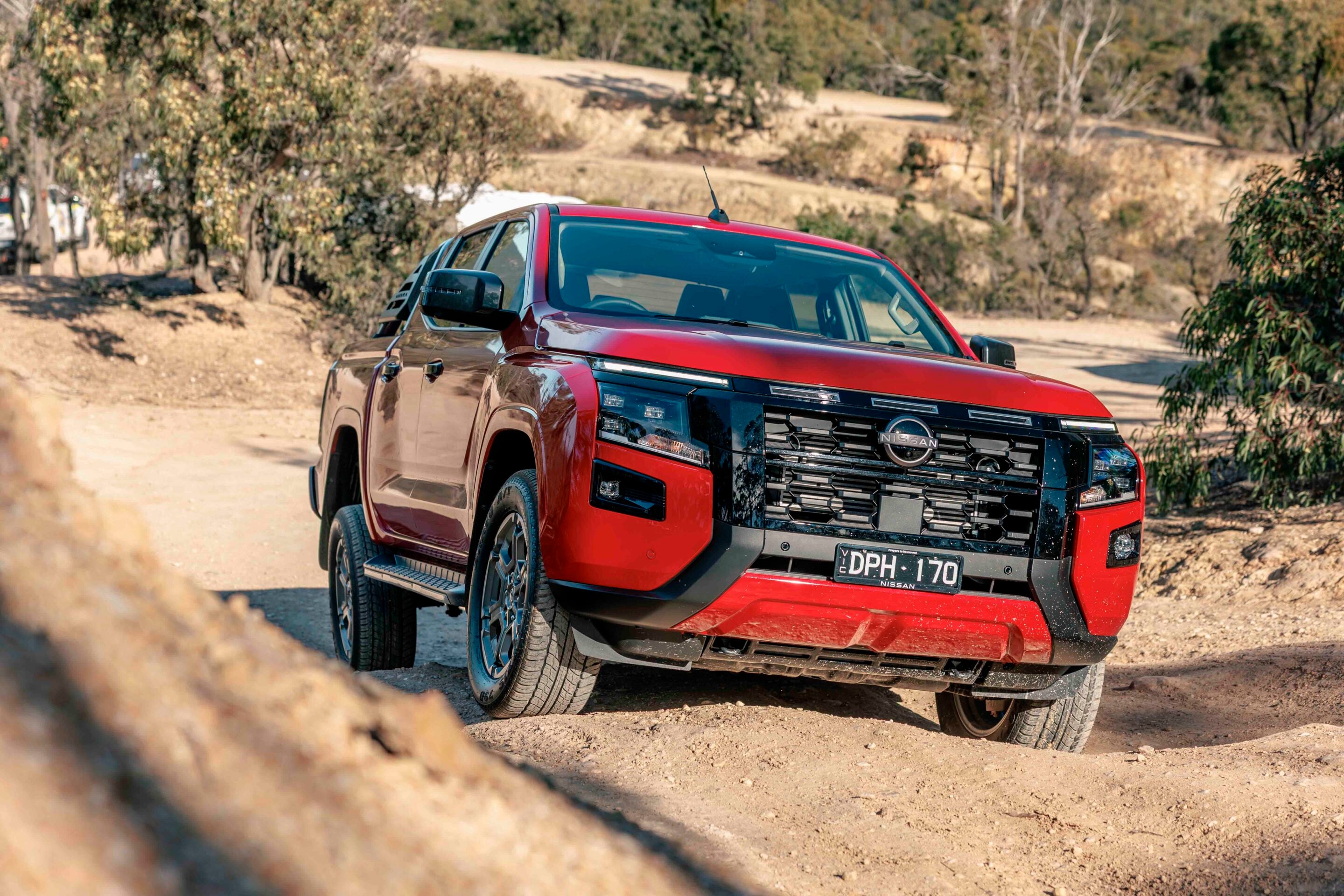
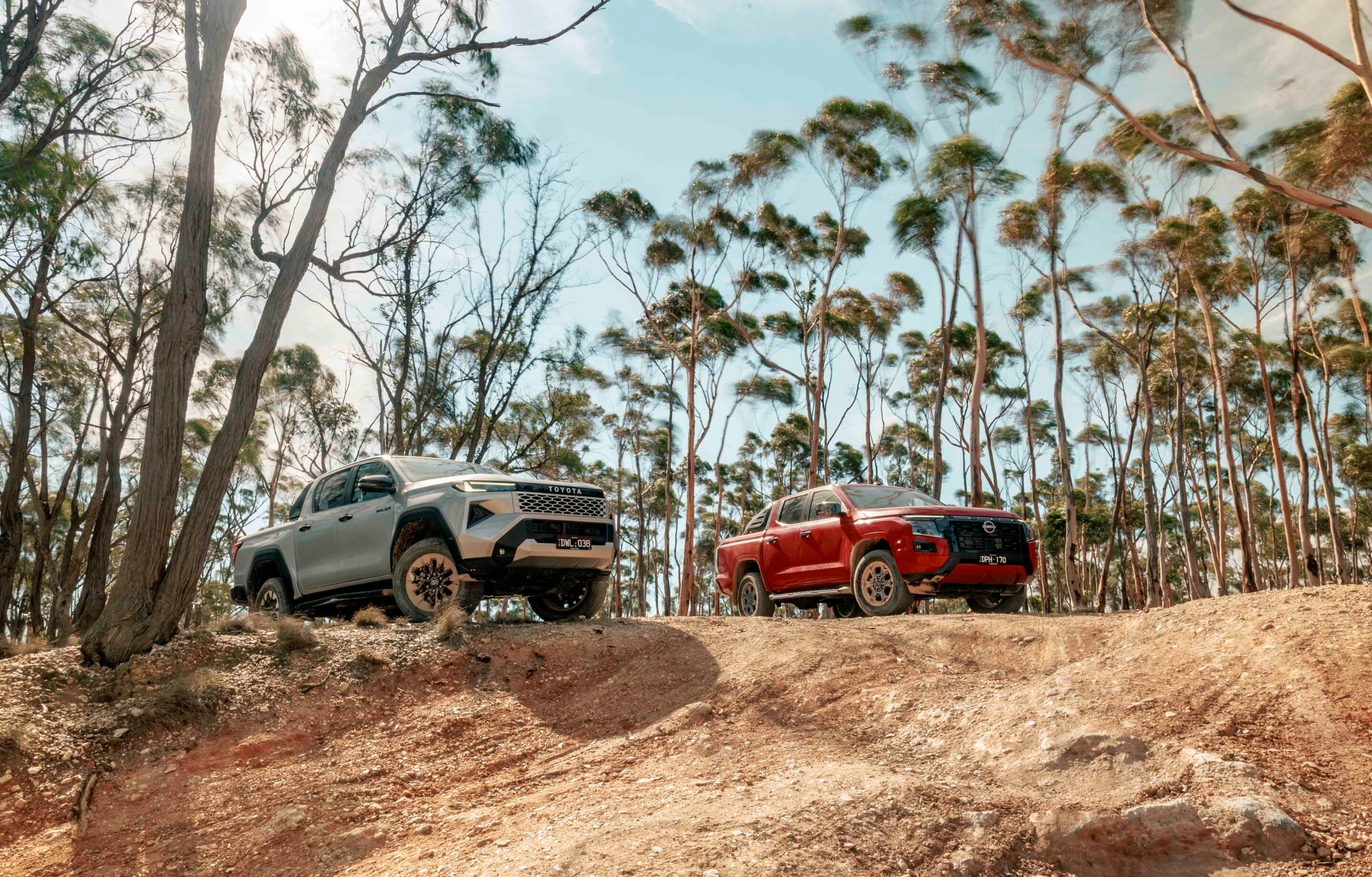
To keep things as fair as possible, both utes tackled the same obstacles on their factory-fitted tyres at the manufacturer’s recommended placard pressures.
The Navara wore Maxxis Bravo H/T 790s, while the HiLux ran Yokohama Geolandar A/T G31s, both in 265/60R18. Neither is the sort of aggressive all-terrain tyre many owners will eventually fit, but that was the point. We wanted to know how these vehicles perform the day they leave the dealership.
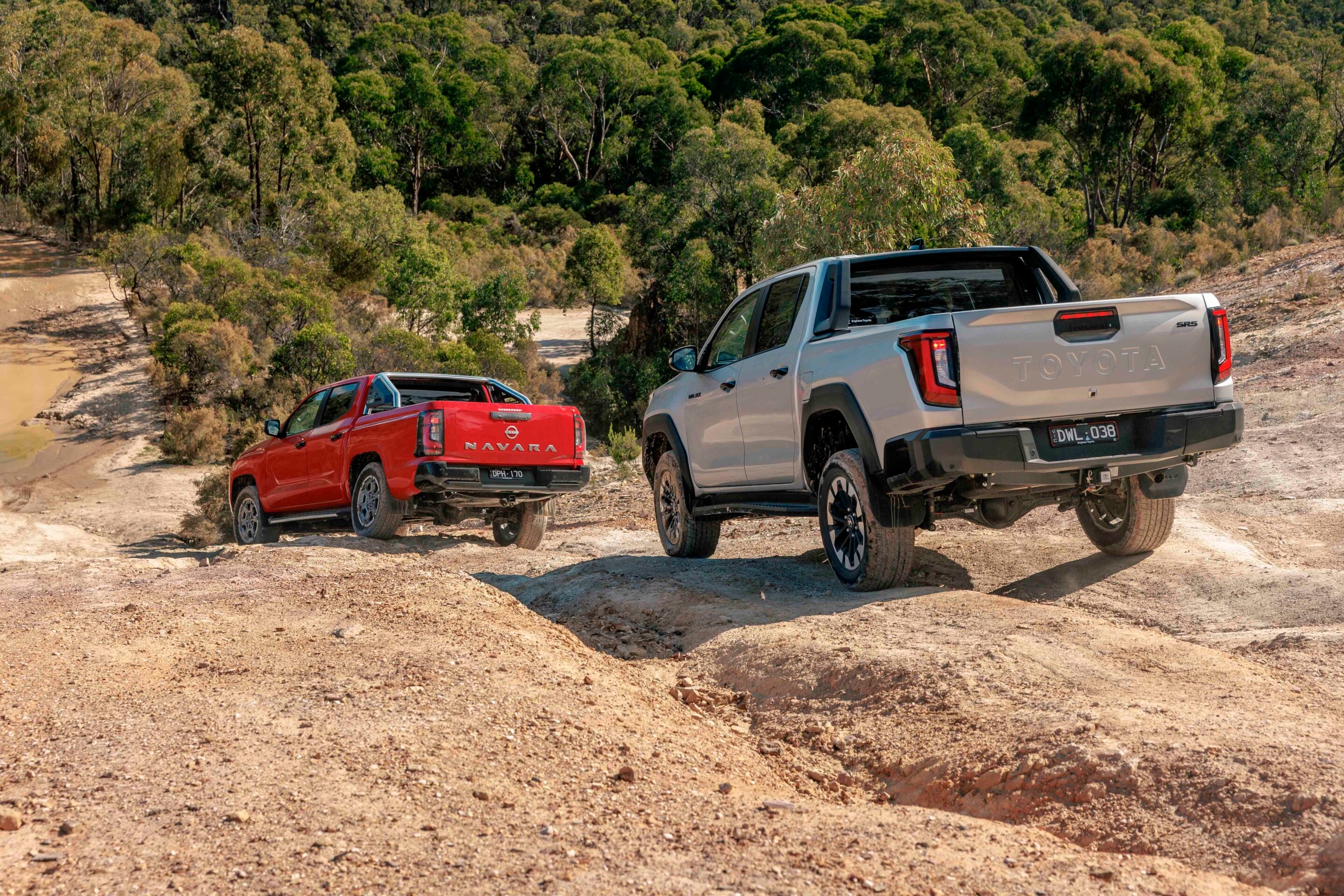
The surprise wasn’t that they completed every obstacle. It was how differently they did it. The Navara always found a way through, but it asked more of the driver. Its traction control allowed noticeably more wheelspin before intervening, often requiring extra throttle and momentum to maintain progress. The HiLux simply got on with the job. Toyota’s traction control calibration remains the benchmark, keeping the vehicle moving with remarkably little fuss. Both utes are capable off-road, but the Toyota consistently made difficult terrain feel easier.
1
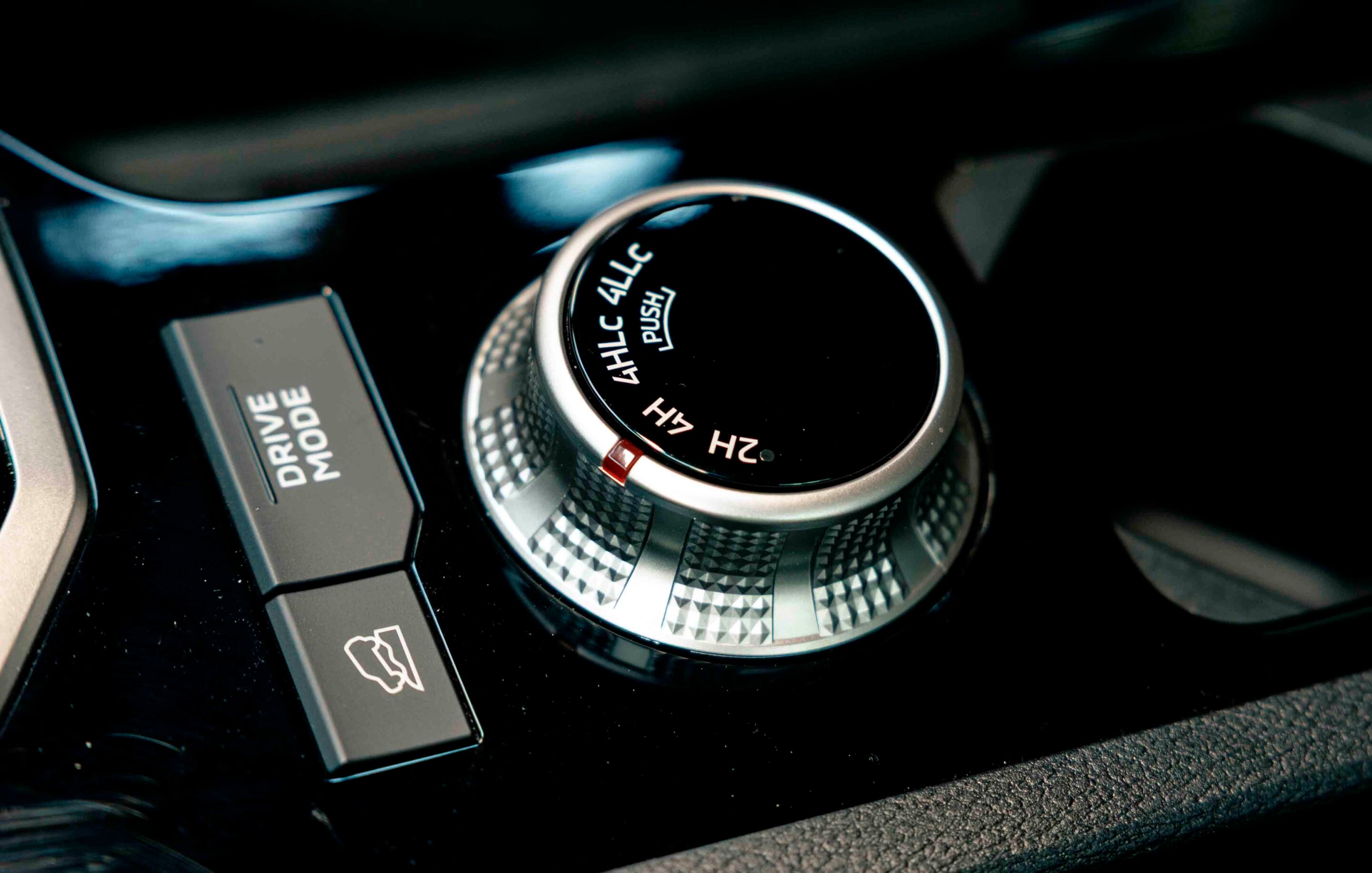
That became obvious on one steep hill climb. After losing momentum in the Navara, I instinctively reached for the rear differential lock, only to discover it wouldn’t engage while the vehicle was still moving. By the time I’d slowed enough for the system to allow engagement, the ute had already rolled back several metres. Not cool, Nissan.
I understand why Nissan has calibrated the system this way. Engaging a diff lock at high wheel speeds isn’t good practice; things can go boom. But that wasn’t what was happening here. I was simply trying to recover a climb after traction had been lost; the exact situation where many experienced four-wheel drivers instinctively reach for the locker.
Climbing into the HiLux, I already had a feeling I wouldn’t need the rear locker, even on its road-biased Yokohamas. I’ve driven enough HiLuxs over the years to know Toyota’s traction control calibration is about as good as it gets. Sure enough, it walked the same climb on traction control alone, never asking for the locker. Engaging the rear diff lock afterwards simply turned an already straightforward obstacle into a complete non-event.
Both utes would benefit from a quality set of all-terrain tyres, better underbody protection and rock sliders if regular off-road work is on the agenda. But in standard showroom trim, the HiLux didn’t necessarily feel more capable. It inspired more confidence. It demanded less thought, less intervention and less effort from the driver whenever the terrain became challenging.
1
Ownership costs, warranty and reliability
For many buyers, this is the section that matters most.
Historically, around three-quarters of Australian HiLux sales have gone to fleets, businesses and ABN holders rather than private owners. If a ute is there to earn a living, leather trim and larger screens quickly become secondary to uptime.
A ute sitting in a dealership isn’t earning anyone money. Every scheduled service, unexpected repair or warranty claim means downtime, disrupted jobs and staff who can’t do the work they’re being paid to do. Viewed through that lens, the Navara makes a compelling business case.
Its 10-year/300,000km warranty (when serviced through Nissan), 10 years of roadside assist and 12-month/15,000km service intervals represent more than generous ownership credentials. They mean fewer workshop visits, less disruption to the working week and potentially lower operating costs across the life of the vehicle.
1
Of course, servicing is only one part of the ownership equation. Resale value, reliability and parts availability carry just as much weight, and those are areas where Toyota has spent decades building an enviable reputation. It’s difficult to assign a dollar value to the confidence that comes from knowing almost every mechanic is familiar with a HiLux and parts are rarely far away, but for many businesses that’s enough to offset the extra time spent in the dealership.
Ultimately, it comes down to where you place the most value. If your priority is minimising downtime and ownership costs over the warranty period, the Navara presents a genuinely compelling alternative. But if you’re buying for long-term reliability, resale value and the confidence that comes with Australia’s best-established work ute, it’s easy to understand why the HiLux remains the default choice.
Verdict: Has Nissan finally built a HiLux rival?
If I were spending my own money tomorrow, I’d still buy the HiLux.
Not because the Navara isn’t good (it genuinely is) but because Toyota continues to deliver the more complete package. There’s enormous reassurance in buying a ute that every mechanic knows, every aftermarket supplier supports and every country town can service.
That doesn’t diminish what Nissan has achieved. The new Navara has finally earned its place on the shortlist, and for fleet buyers in particular, its 10-year warranty, longer service intervals and lower projected ownership costs make it a genuinely compelling alternative.
But after driving them back-to-back over bitumen, gravel and challenging off-road terrain, I kept arriving at the same conclusion. The HiLux never asked more of me than it needed to. It simply got on with the job. And that’s exactly why it’s still the benchmark.
43
HiLux pros
- Stronger engine feel
- Benchmark traction control
- Proven reliability and resale
HiLux cons
- Less standard equipment
- Less supportive seats
- Lower GVM than Navara
Navara pros
- Premcar-tuned suspension
- Generous standard equipment
- 10-year warranty
Navara cons
- Less payload when towing 3500kg
- Intrusive safety alerts
- More wheelspin off-road
Specs
| Spec | Toyota HiLux SR5 48V | Nissan Navara ST-X |
|---|---|---|
| Price (driveaway) | ~$68,000 | ~$66,000-68,000 |
| Engine | 2.8L 4cyl turbo-diesel + 48V mild hybrid | 2.4L bi-turbo 4cyl diesel |
| Power | 150kW @ 3000-3400rpm | 150kW @ 3500rpm |
| Torque | 500Nm @ 1600-2800rpm | 470Nm @ 1500-2750rpm |
| Transmission | 6-speed automatic | 6-speed automatic |
| 4×4 System | Part-time 4WD, rear diff lock | Super Select II full-time 4WD (4A), rear diff lock |
| Transfer Case | Manual shift transfer case | Super Select II dual-range transfer case |
| Suspension | IFS / live axle (leaf springs) | IFS / live axle (leaf springs, Premcar tuned) |
| Tyres | Yokohama Geolandar A/T G31 (265/60R18) | Maxxis Bravo H/T 790 (265/60R18) |
| Kerb Weight | 2155kg | 2171kg |
| GVM | 3120kg | 3190kg |
| Payload | 965kg | 1019kg |
| Braked Towing | 3500kg | 3500kg |
| GCM | 6300kg | 6250kg |
| Max Towball Download | 350kg | 350kg |
| Fuel Tank | 80L | 75L |
| AdBlue | No | 17L tank |
| Service Intervals | 10,000km / 6 months | 15,000km / 12 months |
| Warranty | 5 years / unlimited km | Up to 10 years / 300,000km* |
Follow 4X4 Australia on Google
Get more 4x4 news, reviews and gear stories from 4X4 Australia in your Google feeds.

We recommend
-
 4x4 Comparisons
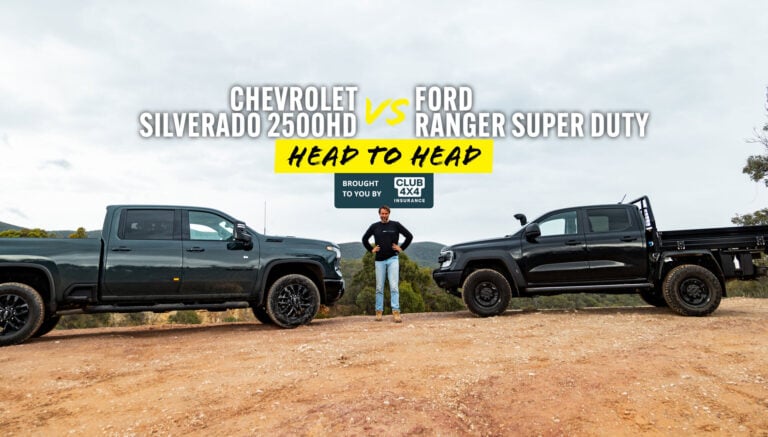
Ranger Super Duty vs Silverado 2500HD: Can a Ranger really rival a Silverado?
Ford’s Ranger Super Duty delivers genuine heavy-duty capability in a midsize package, but how does it compare with a full-size American tow rig built for the same kind of work?
-
 4x4 Comparisons
Prado GX vs Altitude: Is the flagship worth the extra money?
Is the Prado Altitude worth the premium, or does the GX make more sense as a smarter base for building a proper 4x4?
-
 4x4 Comparisons
Sensible is boring: Ford Ranger Raptor vs Jeep Gladiator Rubicon
Forget sensible. The Ranger Raptor and Gladiator Rubicon take wildly different paths to the same end, and neither cares much for the traditional ute brief. Brought to you by Club 4x4 Insurance.