
You’ve just bought a new ute with a 3500kg towing capacity. That means you can hook up a three-and-a-half-tonne van and head for the Gibb River Road, right? Not quite.
Towing capacity is only one number in a chain of figures that all have to stack up before you’re legal and safe. Get any one of them wrong and you’re either over a limit you didn’t know existed, underinsured in a claim you thought was covered, or worst case, pushing the physics of a two-tonne outfit down a corrugated descent with more weight on the back than the chassis was designed to handle.
The problem is that these numbers interact. Your towing capacity is capped by the towbar rating. Your payload is eaten into by every accessory you’ve bolted on since the vehicle left the factory. Your GCM ceiling means that the heavier you load the tow vehicle, the less you can legally put on the trailer. Each figure constrains the others, and the one you haven’t checked is usually the one that catches you out.
None of it is complicated once you know what each term actually means and how they relate to each other. Here’s what each of them means 👇
JUMP AHEAD
- Vehicle weights
- Payload
- Trailer weights
- Towing capacity
- Towball loading
- How GCM and towing capacity interact
- GVM upgrades: more payload, done legally
- NHVR and state rules: where the thresholds change
- FAQs
Vehicle weights
Tare weight is the vehicle empty, all fluids present, but only 10 litres of fuel in the tank. Manufacturers use this figure for compliance plates.
Kerb weight is heavier: the vehicle with a full tank of fuel and no occupants, luggage or accessories. The moment you bolt on a bull bar, fill a water tank or put a passenger in the seat, you are above kerb weight.
That distinction matters more than most buyers realise. Tare is measured with only 10 litres of fuel; kerb weight assumes a full tank. On a ute with an 80-litre tank, that difference alone is around 58kg. The compliance plate payload figure is calculated from tare, which makes it look more generous than it really is. By the time you fill the tank to drive off the dealer’s lot, you have already used 58kg of your payload budget. Factor that in from the start rather than discovering it at a weigh station on the way to the Simpson.
Gross vehicle mass (GVM) is the maximum the vehicle can legally weigh in total: Kerb weight plus every kilogram of payload including passengers, gear, accessories and towball down weight. Every ute, wagon and 4×4 has a GVM stamped on its compliance plate. Do not exceed it.
Gross combination mass (GCM) is the maximum combined weight of the tow vehicle at its GVM plus the trailer at its ATM. This is the ceiling for the whole outfit and it is often the constraint that catches people out, even when the tow vehicle and trailer both look fine in isolation.
Payload: The number that actually runs your trip
Payload is simply your vehicle’s GVM minus its kerb weight, and it represents every kilogram you are allowed to add to the vehicle before it becomes illegal.
Passengers, fuel beyond a standard tank, recovery gear, a fridge, a rooftop tent, a bullbar, a winch, water, food, and towball down weight all come out of that payload budget.
On a modern dual-cab ute with a GVM of 3200kg and a kerb weight of 2300kg, the payload is 900kg. That sounds reasonable until you start adding it up. Two adults alone account for around 160kg. A quality steel bull bar with a winch is another 120kg. You are at 280kg before the camping kit, the dual battery system, the water tank or the towball load. Payload is the constraint that bites hardest on a fully kitted touring rig, and it pays to know your number before you leave the driveway.
Trailer weights
Trailers, caravans and horse floats are assessed by two different total weight figures, and mixing them up is where people get into trouble.
Aggregate trailer mass (ATM) is the tare weight of the trailer plus its maximum payload, measured when it is uncoupled from a vehicle. This is the number most manufacturers quote as “gross trailer weight.”
Gross trailer mass (GTM) is the weight carried on the trailer’s own axle when it is hitched and loaded. GTM is always lower than ATM because it excludes the portion of weight transferred onto the tow vehicle via the towball.
The gap between ATM and GTM is not a rounding error. Take a caravan with an ATM of 3000kg. The GTM, which is the weight on the van’s own axle when hitched, might be 2700kg. The remaining 300kg is the towball down weight, transferred onto the tow vehicle. That 300kg now sits inside the tow vehicle’s GVM budget, not the trailer’s. So while the van weighs 3000kg in total, the tow vehicle is carrying 300kg of it. This is why two setups with identical trailer weights can produce very different loads on the tow vehicle, depending on how the trailer is balanced.
Towing capacity
The towing capacity figure quoted by manufacturers is the maximum trailer ATM the vehicle is rated to pull.
Braked towing capacity is the commonly quoted figure: The maximum ATM of a trailer fitted with its own brakes. Most serious rigs pulling anything over 750kg will need a braked trailer. Unbraked towing capacity is capped at 750kg for all passenger and light commercial vehicles in Australia, regardless of what the tow vehicle is capable of.
The tow vehicle’s rating and the towbar’s rating are not always the same figure, and the lower number always wins. A vehicle rated at 3500kg towing with a towbar rated at 3000kg is a 3000kg outfit. Check the towbar compliance plate, not just the vehicle spec sheet.
Towball loading
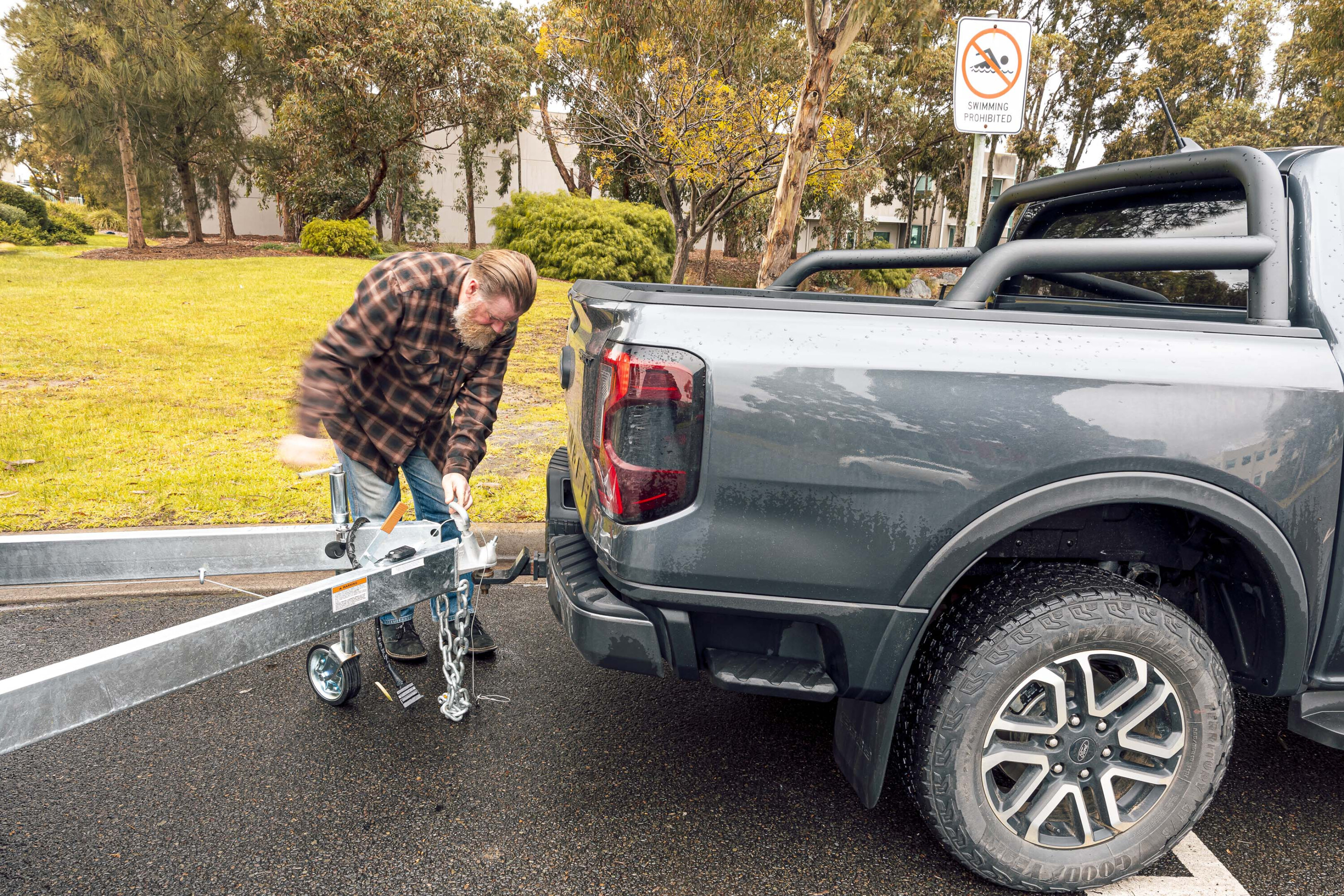
Also called towball down weight, this is the vertical load the trailer exerts on the tow ball when hitched. It is often overlooked, and leaving it out of your weight calculations is a reliable way to end up over GVM without realising it.
The rule of thumb is 10 per cent of trailer ATM. A properly loaded 3000kg caravan puts around 300kg of downward force on the towbar. That 300kg counts against your vehicle’s GVM, not just the trailer’s weight budget. A front-heavy van shifts more weight onto the towball. A rear-heavy van reduces towball load but creates instability at speed. Neither extreme is the go. Aim for towball down weight in the range of 10 per cent of ATM and check it with a towball scale before a long run, not after.
A trailer that is front-heavy or sitting at a different angle to the tow vehicle can exceed towball loading limits even if the trailer itself is inside the rated towing capacity. Get the balance right.
How GCM and towing capacity interact
This is where the arithmetic matters. Say your vehicle has a maximum GCM of 6000kg and a braked towing capacity of 3500kg. In theory, that leaves only 2500kg of GCM headroom for the tow vehicle. Fine on paper.
Now add real-world equipment: ARB bullbar with winch (around 120kg), Ironman 4×4 lift kit and accessories (50kg), MAXTRAX and recovery gear (20kg), dual battery system (30kg), full touring load including water, food and camping kit (250kg), two adults (160kg). You are at or past 2500kg before the towball down weight is added. Every kilogram over that GVM limit cuts directly into your legal towing capacity.
A buffer of 10 to 20 per cent below the rated towing capacity is not conservative. It is the difference between a legal setup and a fine, a voided insurance claim, or an unsafe rig on a corrugated outback track.
GVM upgrades: More payload, done legally
A GVM upgrade is the most direct way to legally carry more weight in a laden touring rig.
Approved by engineers and complied through an authorised modifier, a GVM upgrade raises the maximum the vehicle can weigh in total, which increases usable payload without changing what you put in the vehicle. Common upgrades on dual-cab utes push GVM from the factory figure by 200 to 400kg, depending on the platform and the modifier. Brands such as Ironman 4×4, Dobinsons and ARB offer complied GVM upgrade packages for most popular platforms.
The upgrade typically involves uprated suspension components and an engineering certificate, and it must be declared to your insurer. It does not increase towing capacity, and it does not change the GCM ceiling. What it does is give a heavily kitted rig the legal headroom it needs to carry a real touring load without sitting outside the compliance plate figure every time it leaves home.
NHVR and state rules: where the thresholds change
Once your gross combination mass exceeds 4500kg, a different regulatory framework applies.
Below that threshold, your outfit is governed by standard Australian road rules applicable to light vehicles. Above it, the National Heavy Vehicle Regulator takes over, and the requirements around mass management, load restraint and driver obligations become more demanding. For a touring rig towing a large caravan, crossing the 4500kg GCM mark is easier than it sounds: a 2800kg tow vehicle plus a 2000kg ATM van gets you there. It is worth calculating your GCM before you buy the van, not after.
Individual state and territory rules can also apply for things like towing with a learner or P-plate licence, trailer lighting requirements, and load restraint standards. The National Heavy Vehicle Regulator website and your state’s transport authority are the right places to verify current requirements, since these details change and vary by jurisdiction.
FAQs
Q: Can I tow my maximum rated capacity and fully load the vehicle at the same time?
A: Rarely. GCM limits mean that adding weight to the tow vehicle reduces available towing capacity. The two figures work against each other.
Q: Does towball weight reduce towing capacity?
A: Not directly, but it counts against GVM, which reduces the margin available for payload and therefore affects how much you can legally tow in a real-world setup.
Q: What happens if I exceed GVM or GCM?
A: Fines, potential insurance issues, and a vehicle that handles poorly. On snotty tracks or in an emergency stop situation, an overloaded outfit is genuinely dangerous.
Q: What buffer should I aim for?
Ten to twenty per cent below all maximum ratings. It keeps you legal, keeps the insurer onside, and leaves room for the gear you always forget to account for.
Toyota Australia will introduce a locally developed GVM upgrade option for select HiLux 4×4 variants from August this year.
Available as a factory-fitted option priced from $4000, the upgrade increases payload by between 372kg and 435kg depending on variant, with maximum payload reaching approximately 1525kg.
The upgrade will be offered on WorkMate double cab-chassis, WorkMate double-cab pick-up, SR extra cab-chassis, SR double cab-chassis, SR double-cab pick-up and SR5 double-cab pick-up variants.
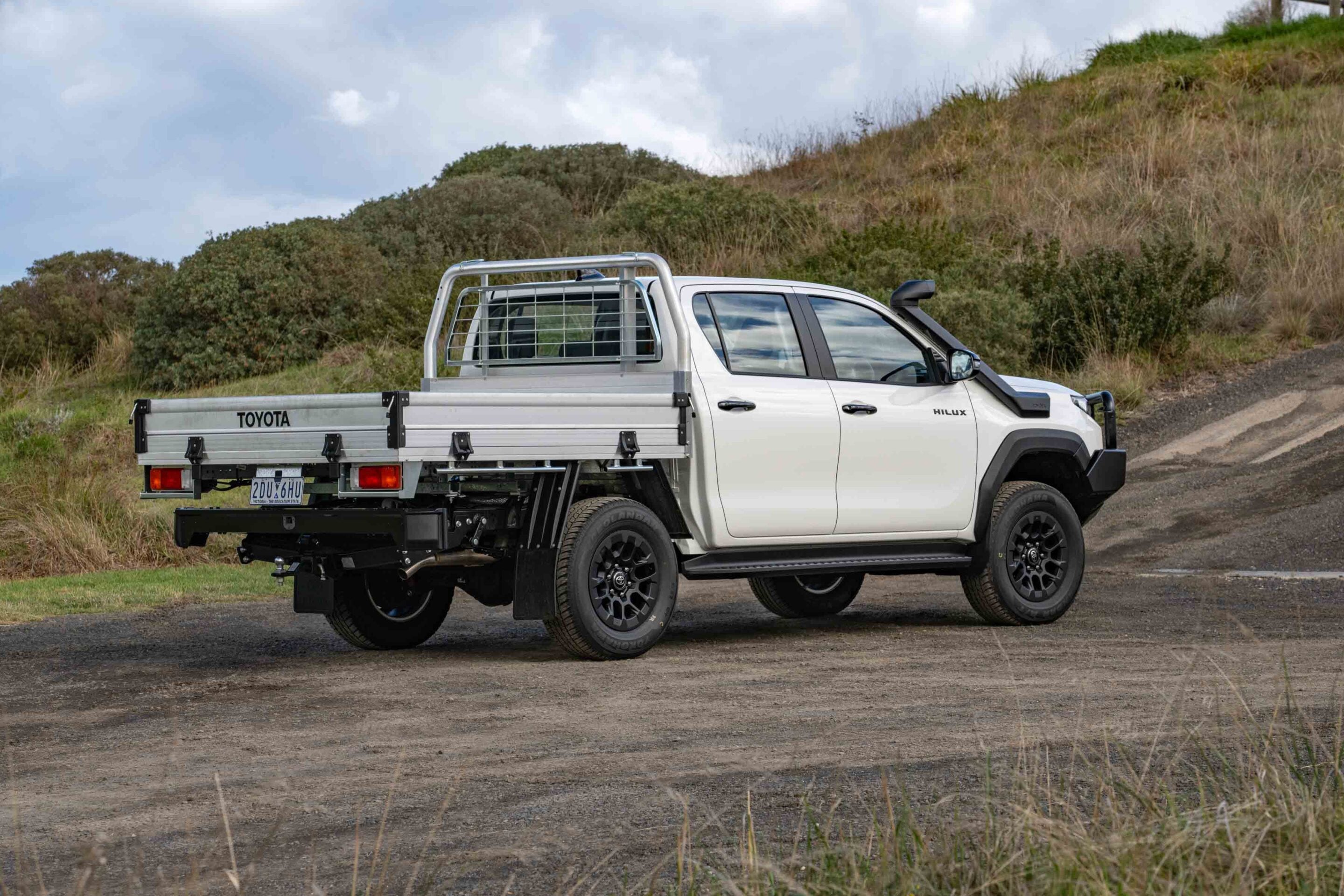
Mechanical changes include longer rear monotube shock absorbers, a ride height increase of up to 10mm, plus axle capacity increases of 100kg at the front and 280kg at the rear. Toyota says the upgrade retains the full factory warranty of the donor vehicle.
“Introducing a GVM upgrade option for the new HiLux will allow customers to maximise the vehicle’s already-excellent load-carrying capabilities, providing benefits to both fleet and private buyers,” said John Pappas, Toyota Australia Vice President Sales, Marketing and Franchise Operations.
“Being Toyota’s very own factory-fitted option, it ensures the HiLux retains its Toyota five-year warranty and is compatible with all safety systems giving it a real advantage over its aftermarket competition,” he said.
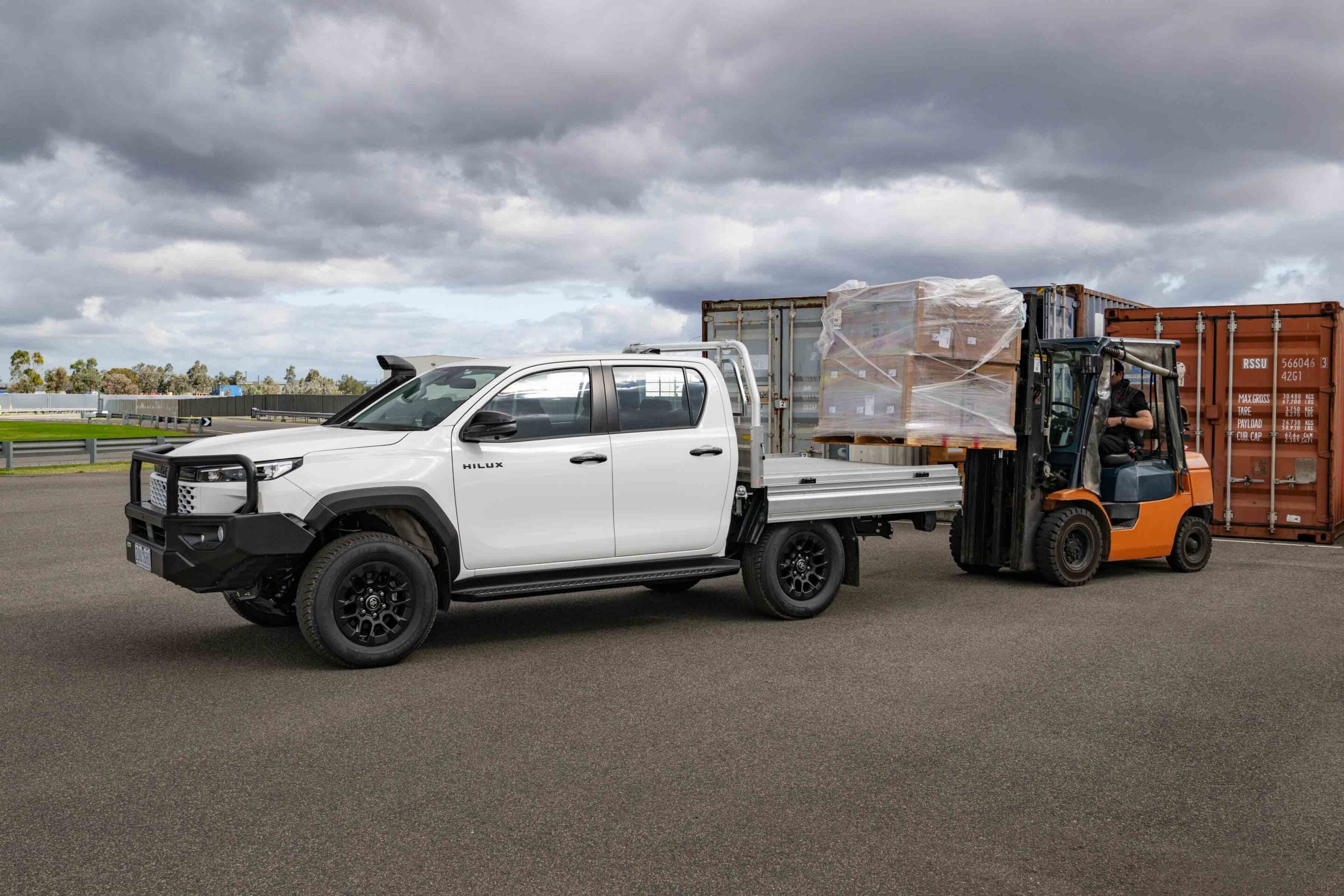
In simple terms, a GVM upgrade increases the maximum allowable weight of a vehicle when fully loaded, including the vehicle itself, passengers, fuel and cargo. It effectively raises the legal carrying capacity by allowing a higher total load before reaching compliance limits.
Even with the increase, the upgraded HiLux falls well short of the Ford Ranger Super Duty, which has a 4500kg GVM and payload figures ranging from 1825kg to 1982kg depending on cab configuration.
All eligible HiLux grades use Toyota’s 2.8-litre turbo-diesel four-cylinder producing 150kW and 500Nm, paired with a six-speed automatic transmission and dual-range part-time four-wheel drive. SR and SR5 double-cab variants also include 48-volt V-Active technology.
Modern independently sprung 4x4s have come a long way, and that sophistication cuts both ways when you start modifying them.
Today’s IFS platforms deliver genuine refinement and off-road capability out of the box, but they rely on tight suspension geometry, electronics, and factory-calibrated alignment ranges to do it. Lift one without correcting the geometry and you will quickly understand why upper control arms have become a core part of many properly engineered setups.
Older live-axle rigs could shrug off relatively rough suspension changes in different ways. Modern IFS platforms are not as forgiving in terms of alignment sensitivity. The geometry window is narrower in many cases, the components are more interdependent, and the consequences of getting it wrong, including accelerated wear, alignment limits, and compromised handling, can arrive sooner than most owners expect.
JUMP AHEAD
- Why upper control arms matter
- Legal requirements and compliance in Australia
- Engineering quality and market variability
- What to look for in a modern upper control arm
- Additional components and related modifications
- Off-road performance
- Bottom line
Why upper control arms matter
Independent front suspension uses upper and lower control arms to manage wheel movement, camber and caster across the suspension travel arc.
When you lift the vehicle, those arms sit at a different angle to what the factory designed. The wheel no longer behaves the same way under load and during articulation. The first thing to suffer is alignment. Camber and caster can shift outside factory specifications, and on many newer platforms the factory adjustment range is already tight. A moderate lift can push alignment toward the edge of what is correctable using standard points, or beyond it in some cases.
Ball joint operating angle is the second issue. As the upper arm drops away from its designed position, the ball joint sits at a more extreme angle at ride height. Available down travel can reduce. Wear may increase depending on use. Binding at full droop becomes a potential concern in some setups.
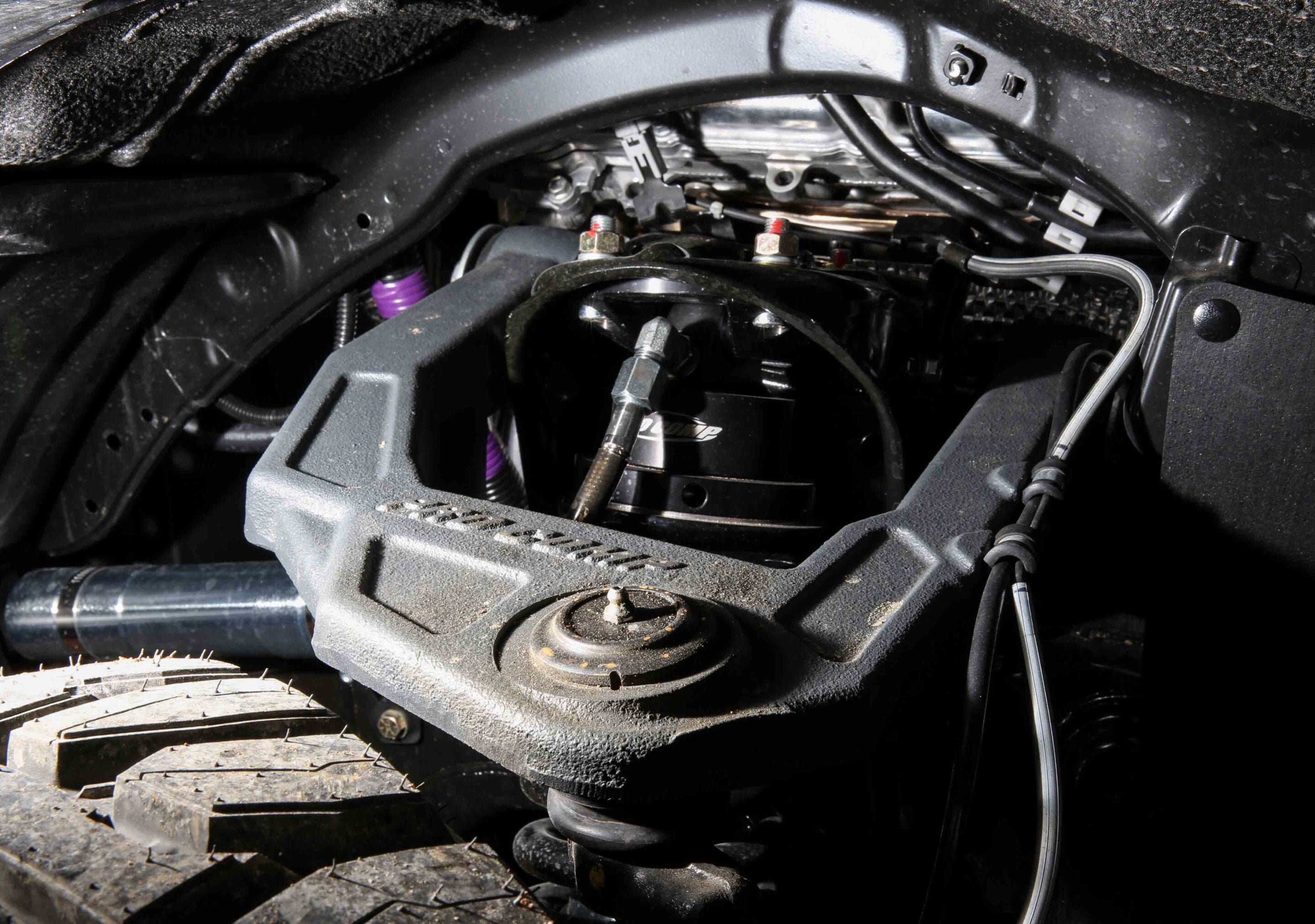
Aftermarket upper control arms from the likes of Superior Engineering are engineered to restore correct geometry at the new ride height. That means corrected ball joint positioning, revised arm angles, and in many cases improved clearance around struts and tyres. As one suspension engineer puts it: most IFS platforms have a relatively narrow alignment window from the factory, so once you lift the vehicle, you are consuming that adjustment range to bring geometry back into spec, not gaining more of it.
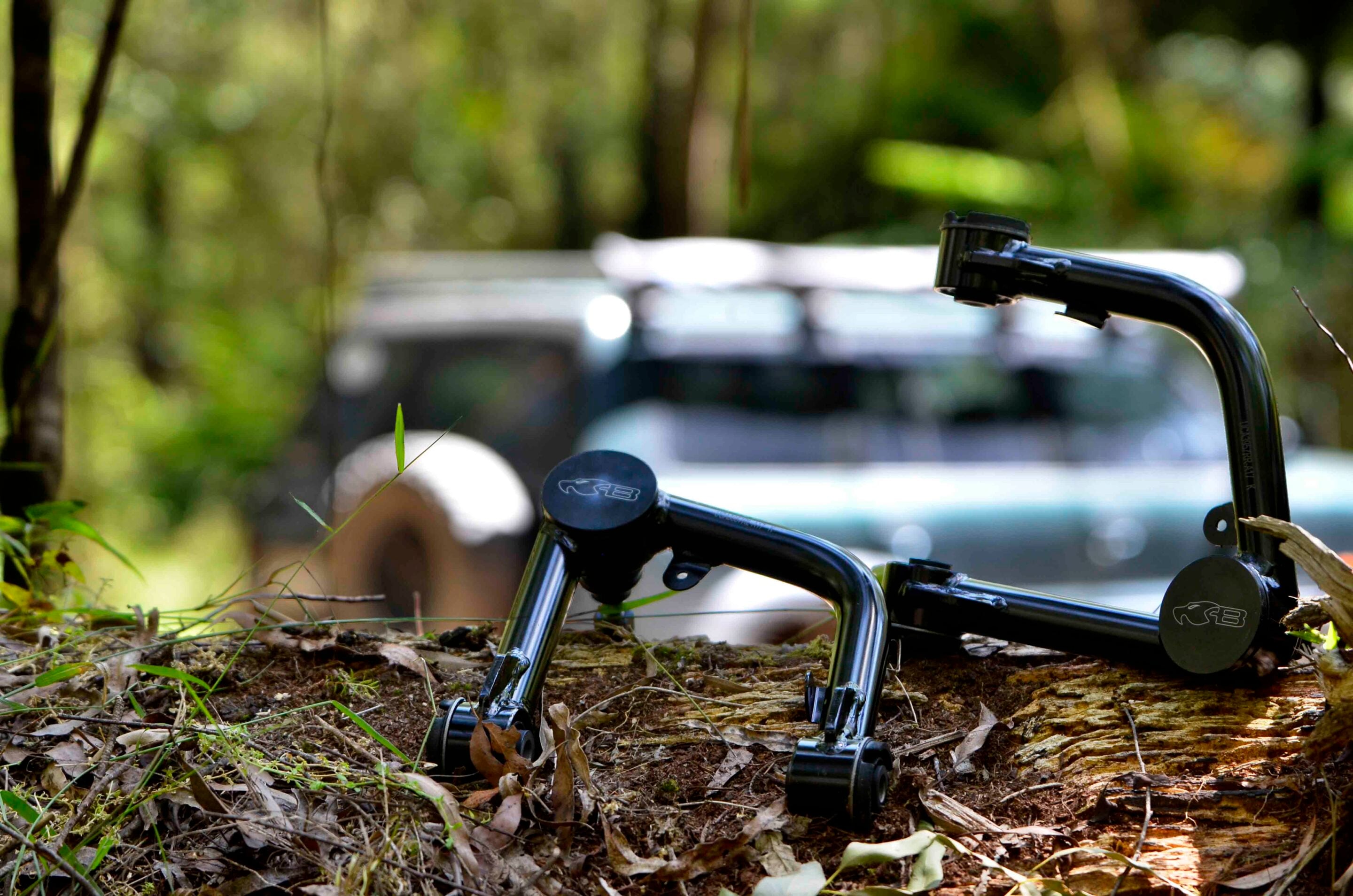
A misconception that has followed older suspension advice around for years is that lifts simply consume a fixed amount of alignment adjustment per 25mm of height. Modern platforms have moved past that neat formula.
Some newer dual-cab and SUV platforms now include revised factory arm geometry or broader alignment tolerance than earlier designs. Others remain more tightly constrained, particularly where ride quality and tyre wear were the priority at the factory. What has not changed is the fundamental relationship: as ride height increases, caster and camber shift, and the factory adjustment range must compensate. Once it is exhausted, aftermarket correction may be required to restore proper geometry.
Legal requirements and compliance in Australia
Suspension compliance in Australia has become more structured and more consistently enforced. Aftermarket upper control arms are generally treated as replacement components when they meet or exceed OEM standards, but that classification is not a blanket road-legal guarantee in every scenario.
To be compliant, aftermarket arms must be demonstrably equivalent or superior to factory components in strength, geometry, and durability. Manufacturer testing, engineering validation, and documentation aligned with current Australian Design Rules and VSB14 guidance all support that case.
In practice, the full modification package determines whether additional certification is required. A single component swap with solid manufacturer documentation may pass inspection, but combined changes including suspension lifts, track widening, and larger tyres can trigger engineering certification requirements. State rules vary. Worth knowing before you commit.
Importantly, correct documentation does not guarantee correct application. A compliant part fitted outside its tested application range, or combined with incompatible modifications, can become non-compliant.
Engineering quality and market variability
One of the more significant changes in the 4×4 aftermarket over the past decade has been the rise of product replication and inconsistent quality control in imported components.
On paper, many products look similar. The difference often comes down to material quality, ball joint specification, bush composition, and fatigue testing, much of which is not visible in a product photo.
Reputable manufacturers like Superior Engineering invest in finite element analysis, real-world load testing, and long-term durability validation. Not because compliance requires it, but because steering stability and component life under modern tyre sizes and touring loads depend on it. Lower quality copies continue to circulate, sometimes mimicking branding or compliance markings without the underlying testing. Supplier reputation and traceable documentation matter more than they used to.
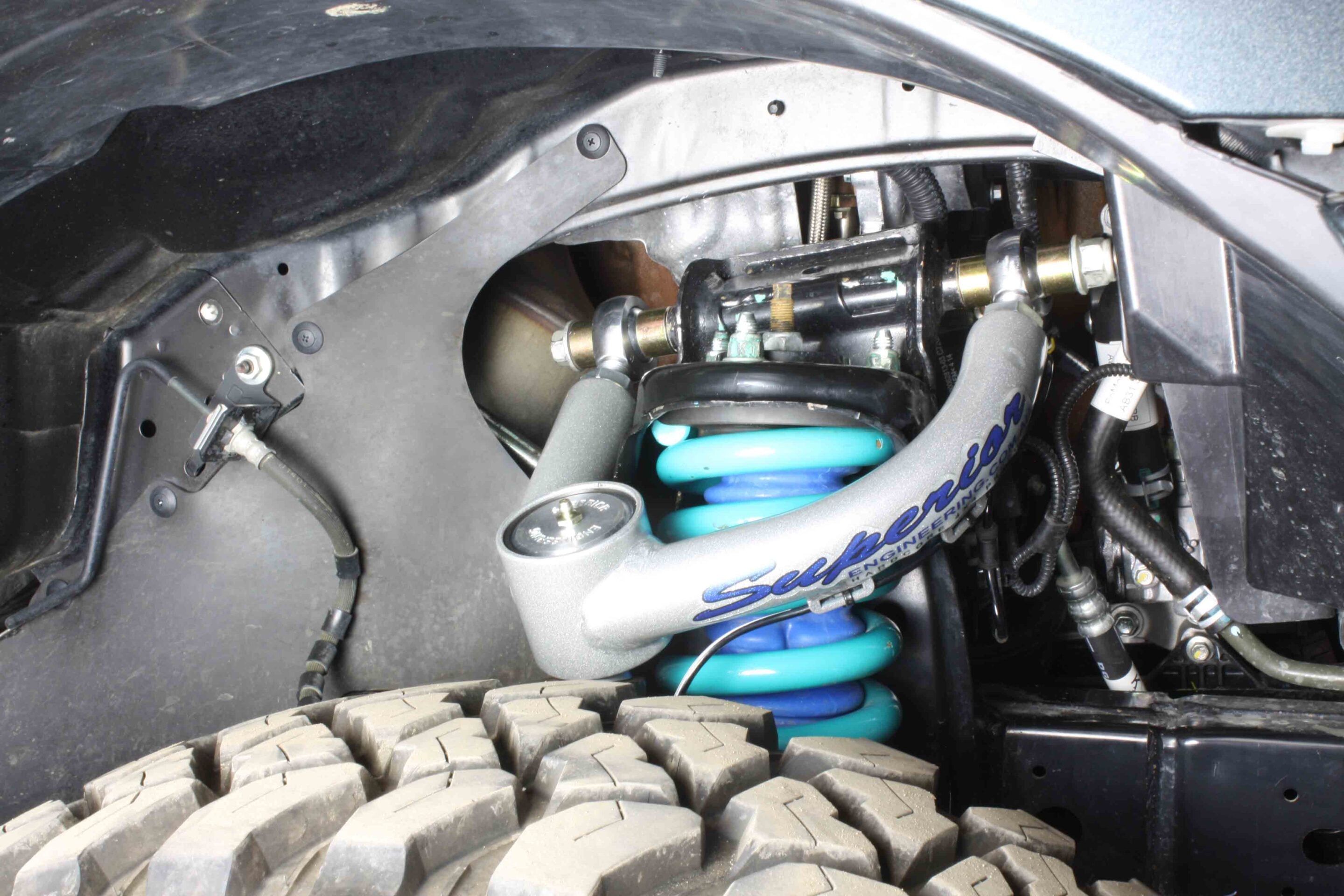
What to look for in a modern upper control arm
Choosing upper control arms in 2026 is less about generic lift correction and more about platform-specific engineering. The right arm for a current-generation Hilux is not the right arm for a Ranger or a Prado, and broad model-family compatibility claims deserve scrutiny.
Key considerations include: correct ball joint articulation range for your specific lift height; compatibility with factory struts and aftermarket coilovers; clearance for larger tyres under full compression and droop; material specification suited to your load and use case, including towing or long-distance touring; verified compliance documentation aligned with Australian standards; and suitability for your specific chassis generation rather than a broader model family.
Well-designed arms should not require modification to spindles, reaming, or additional spacers to achieve correct geometry. If they do, that is worth questioning before fitment.
Additional components and related modifications
Upper control arms are part of a broader geometry correction system, not a standalone fix. Depending on platform and lift height, a moderate lift on an IFS vehicle may also benefit from differential drop kits to reduce CV angle stress, and steering correction components where geometry changes affect steering feel or bump steer.
The direction most quality suspension manufacturers are heading is integrated kits: arm geometry, strut length, and driveline angles engineered as a complete system rather than piecemeal components. Ball joint spacers and extended studs are increasingly out of favour, replaced by properly re-engineered control arm geometry that achieves correction without adding leverage stress to factory mounting points.
Off-road performance
Correctly engineered upper control arms do more than restore alignment. They directly influence usable suspension travel and tyre contact on uneven terrain.
When a vehicle is lifted without geometry correction, the upper ball joint can reach its articulation limit earlier in droop, reducing down travel and causing an inside wheel to lift prematurely in cross-axle situations.
Revised control arm geometry restores ball joint operating range closer to factory intent at the new ride height. The suspension cycles more freely, maintaining tyre contact longer and improving stability on broken ground. Clearance improvements around strut towers and tyre sidewalls reduce interference at full compression, particularly with 35-inch all-terrain or mud-terrain rubber on board. Pair that with quality struts from Superior Engineering and you have a setup that gets on with the job across the Vic High Country or the corrugations of the Gibb River Road without drama.
The result is not simply a taller vehicle. It is a suspension system that continues to function within its designed operating envelope at the new height, on the Vic High Country, the Gibb River Road, or wherever you are taking it.
The bottom line
Upper control arms have shifted from a niche correction component to a standard part of many properly engineered suspension lifts on modern 4x4s.
As platforms become more geometry-sensitive and compliance frameworks tighten, the case for doing this properly only gets stronger. Match the arms to the vehicle, the lift height, and the intended use, and you protect the alignment, the components, and the handling characteristics the vehicle was built to deliver. Get it wrong and you will be chasing problems for the life of the build.
GWM is heading back to the Taklimakan Rally in 2026, fielding the Tank 700 Hi4-T, Tank 300 Hi4-T and Tank 500 Hi4-Z across nearly 8000km of some of China’s most demanding terrain.
The 2026 event runs May 16 to June 3 through Xinjiang, with around 4200km of timed special stages spread across 15 stages and seven campsites. This year adds an ultra-long marathon stage for the first time, with the route crossing desert, Gobi terrain and wind-carved yardang formations. Roughly 60 per cent of the course is desert running.
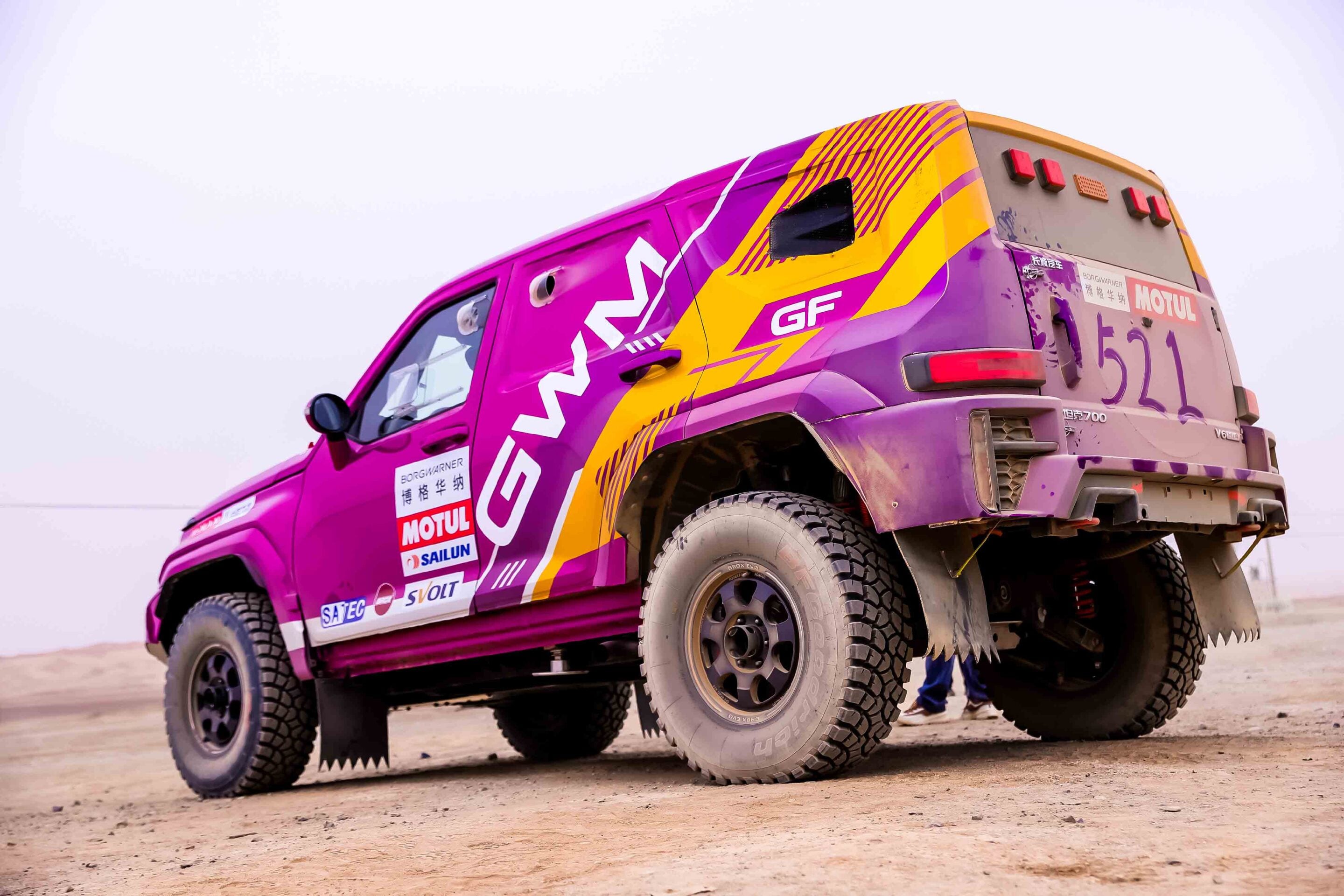
GWM’s factory program will use the event as a development platform for its Hi4 electrified off-road architectures, testing both hybrid and combustion-based systems under sustained rally-raid conditions. Durability, efficiency and systems integration are the focus, not outright pace, which makes the Taklimakan a logical fit. Few events hit electrified drivetrains harder than a multi-week, multi-thousand-kilometre raid through Central Asian desert and rock.
The Hi4-T pairs a 2.0‑litre turbo-petrol engine with a 120kW electric motor, delivering 300kW and 750Nm. Power feeds a mechanical 4WD system with low-range transfer case and front and rear locking differentials, retaining full off-road capability.
The brand took category honours at last year’s Taklimakan and has been leaning into the rally as a testbed for its next generation of off-road platforms. A recent event at GWM’s Baoding headquarters put a four-driver international line-up on display alongside the brand’s broader motorsport direction, giving some shape to what the 2026 campaign will look like behind the wheel.
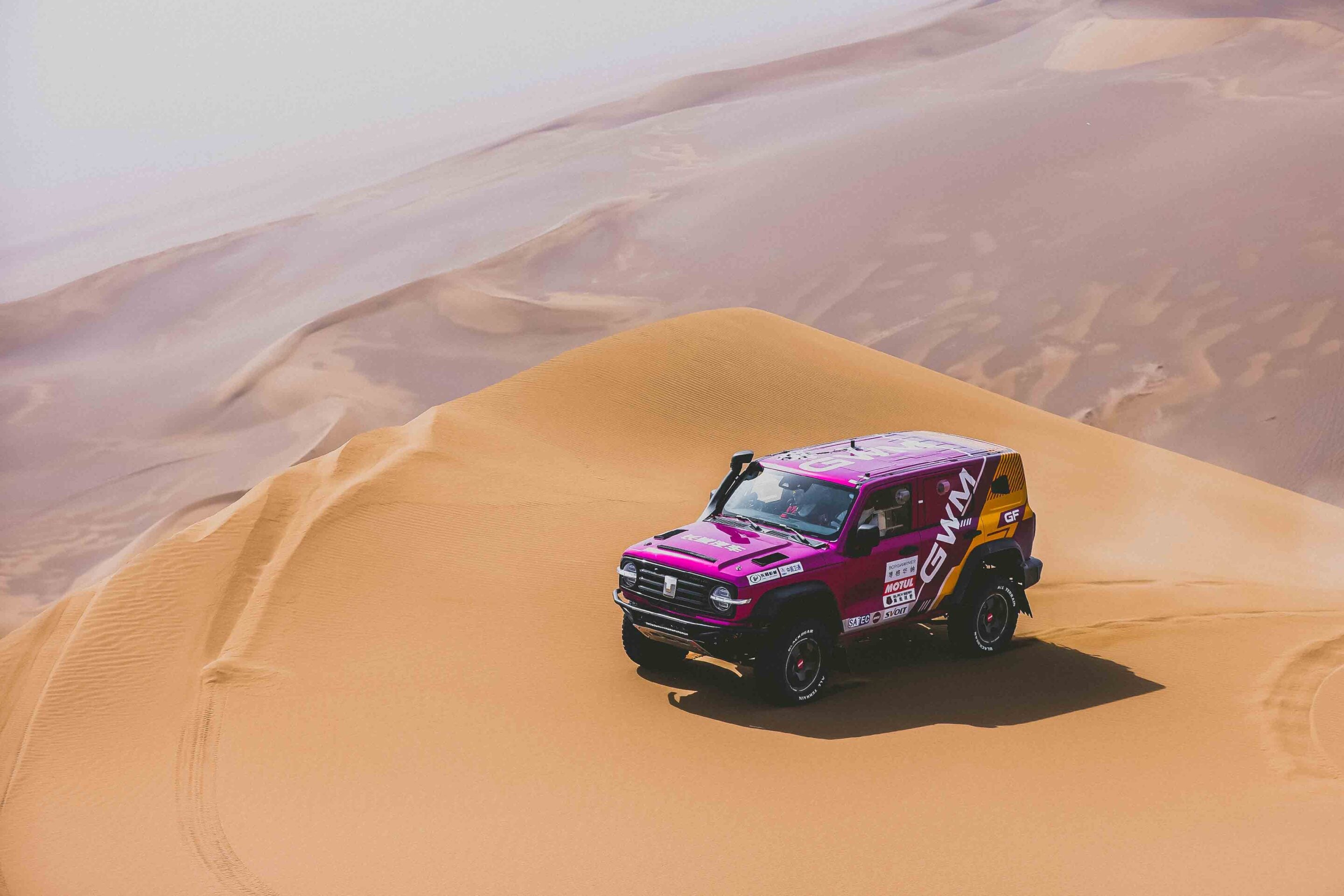
The longer game is Dakar. GWM has flagged a planned return to international rally-raid competition from 2027, and the Taklimakan program is the technical groundwork that gets the brand there.
Last month, GWM confirmed that the upcoming Tank 700 will be offered with a V8 powertrain, marking a significant shift for the flagship SUV as it moves beyond its current 3.0-litre V6-based hybrid setup. The announcement was made at the Beijing Auto Show, where chairman Jack Wei indicated the V8 program was developed with global markets in mind, including Australia and New Zealand.
The Toyota HiLux has long been one of the most popular foundations for 4×4 builds in Australia and around the world, and for good reason. It’s tough, widely supported in the aftermarket, and adaptable enough to suit everything from daily driving to full-scale remote touring and competition-level off-roading.
Across these builds, there’s a clear split in purpose but a shared focus on reliability and capability. Some setups are built for long-distance travel, carrying the essentials for weeks off-grid across deserts, coastlines and high country tracks. Others are far more extreme, with portal axles, long-travel suspension and heavily modified drivetrains designed to handle rock crawling, competition events and punishing terrain.
What ties them together is real-world use. These aren’t showroom builds, they’re rigs that have been pushed into remote parts of Australia, tested on rough tracks, and refined over time based on experience rather than theory. The result is a cross-section of HiLux builds that show just how far the platform can be taken, depending on how far you want to go.
SUBMIT YOUR HILUX BUILD
Want to see your HiLux build here? Jump on over to the 4X4 Australia Facebook page and show us your rig!
2015 Toyota HiLux SR5
Submitted by True Blue Overland
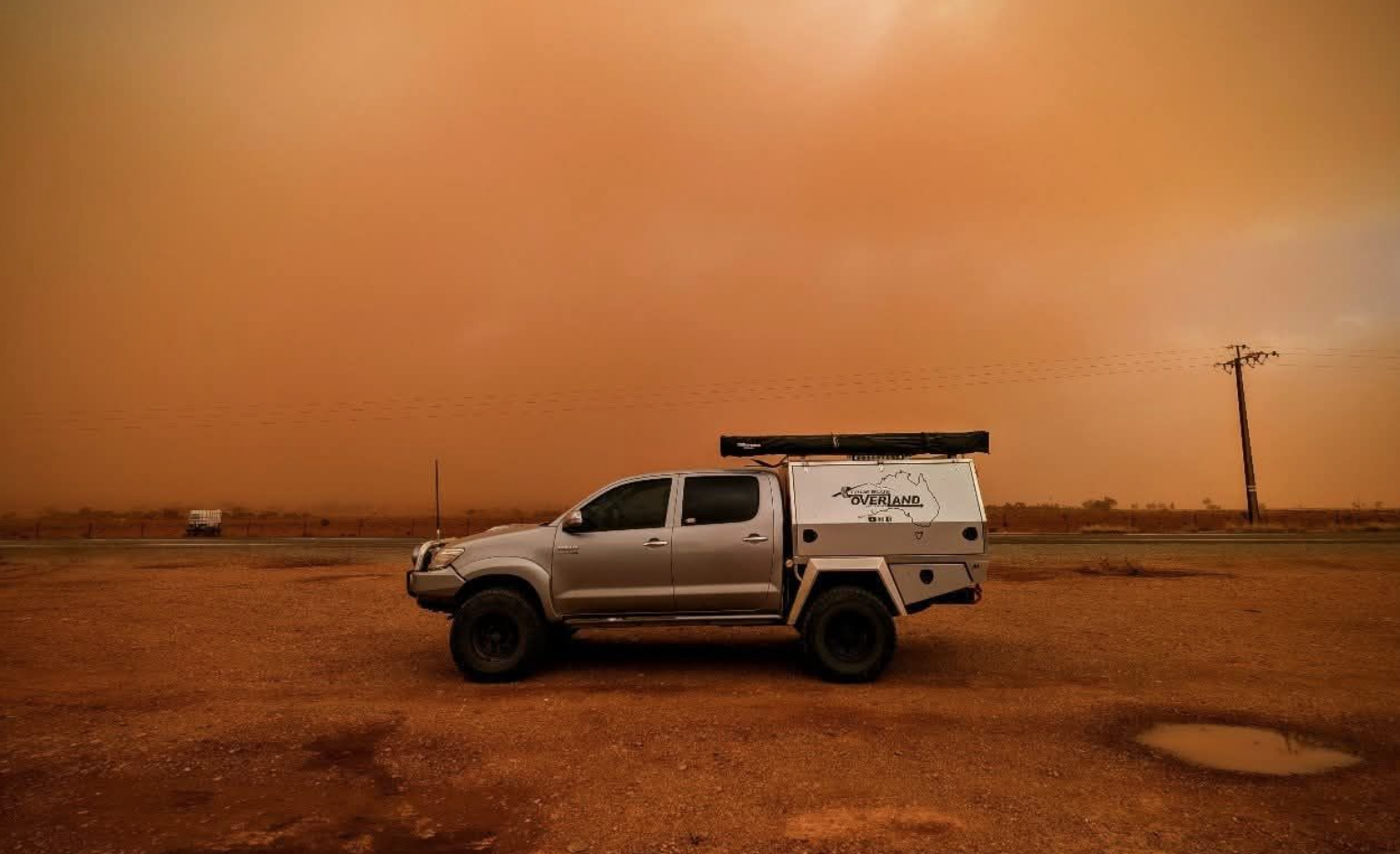
True Blue Overland’s SR5 is set up for full-time touring, and three-and-a-half years on the road has the runs on the board to prove it.
Out front it runs ARB protection. Underneath, a three-inch suspension lift using Bilstein shocks with a GVM upgrade carries the extra touring weight. In the tray, a chassis-mounted canopy houses a REDARC lithium battery system that keeps the rig running off-grid.
The build has been earning its keep across some of the more remote parts of the country, most recently a fortnight wandering through the West MacDonnell Ranges in the Northern Territory.
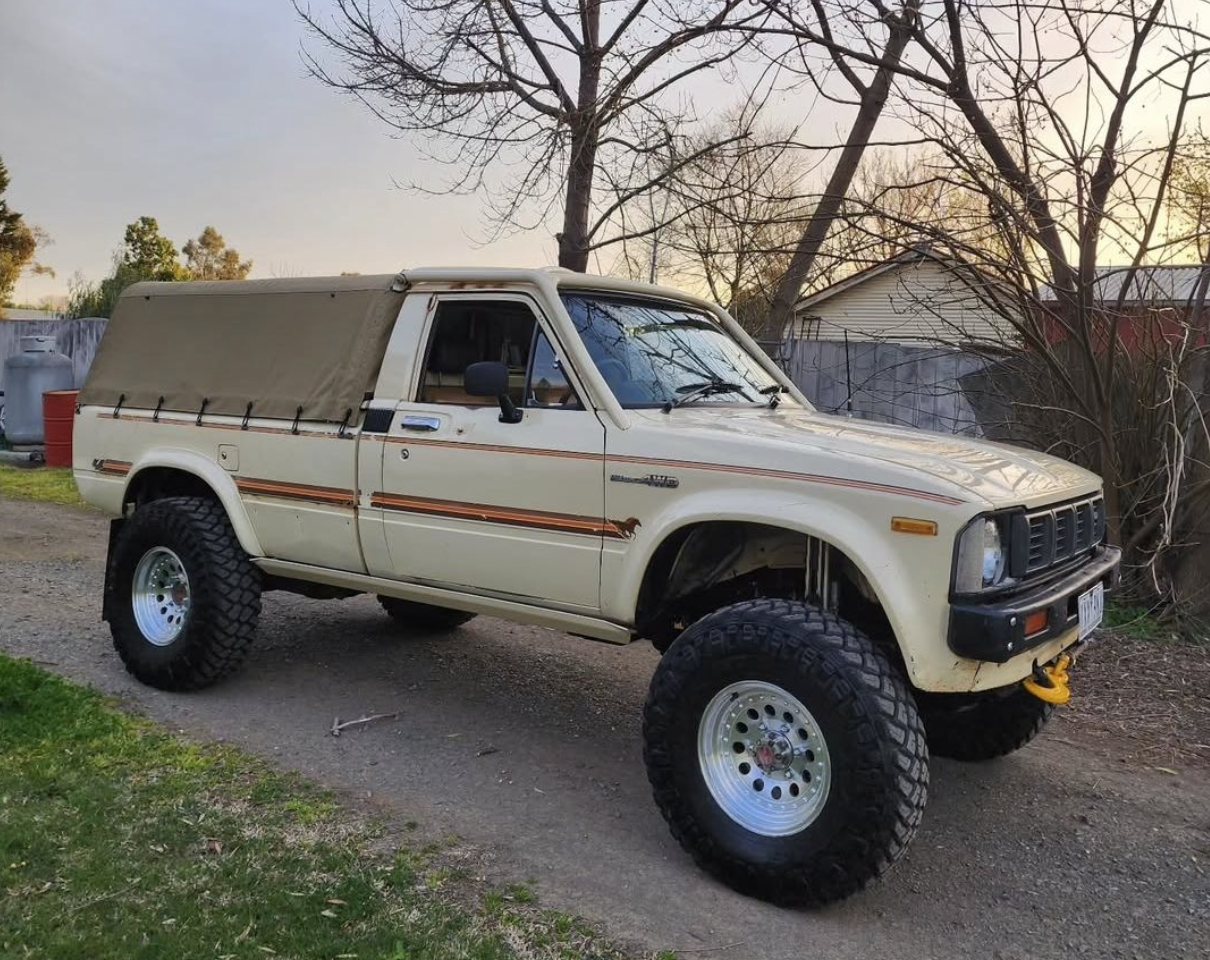
1983 Toyota HiLux RN46
Submitted by Josh Bohm
Josh Bohm built this RN46 as a no-compromise tough tourer, and the spec list shows it.
The engine is a 2.4-litre diesel that has been comprehensively reworked: a 12mm pump, TD04 turbo, new injectors, heavy-duty clutch, front-mount intercooler, and a tune by JP Performance. The driveline matches the engine, with braced front and rear diffs, 4.88 gears with air lockers, Longfield CVs, Trail Gear twin sticks, and Trail Gear 4.7 transfer case gears sitting behind a five-speed manual.
Underneath, 16-inch 2.5 triple bypass shocks work with custom one-off leaf springs front and rear, a wide-track setup, U-bolt flip kit, Snake Racing track bar, high steer, and a high-clearance crossmember. Rolling stock is 33-inch Maxxis Razrs on 15-inch rims, with disc brakes all round, power steering, and a CCDA-spec half cage tying the chassis together.
Recovery and electrical are equally serious: a mid-mounted Warn high-mount winch behind the cab with air free-spool and braced mount, a 24-volt system, an Enerdrive setup, and Stedi rock lights. The body has been worked over with an exo cage, half doors, sliding rear window, bobbed tub, custom rock sliders, fully restored interior, and a custom canopy. A three-week trip to Tasmania has been the best place Josh has taken it.
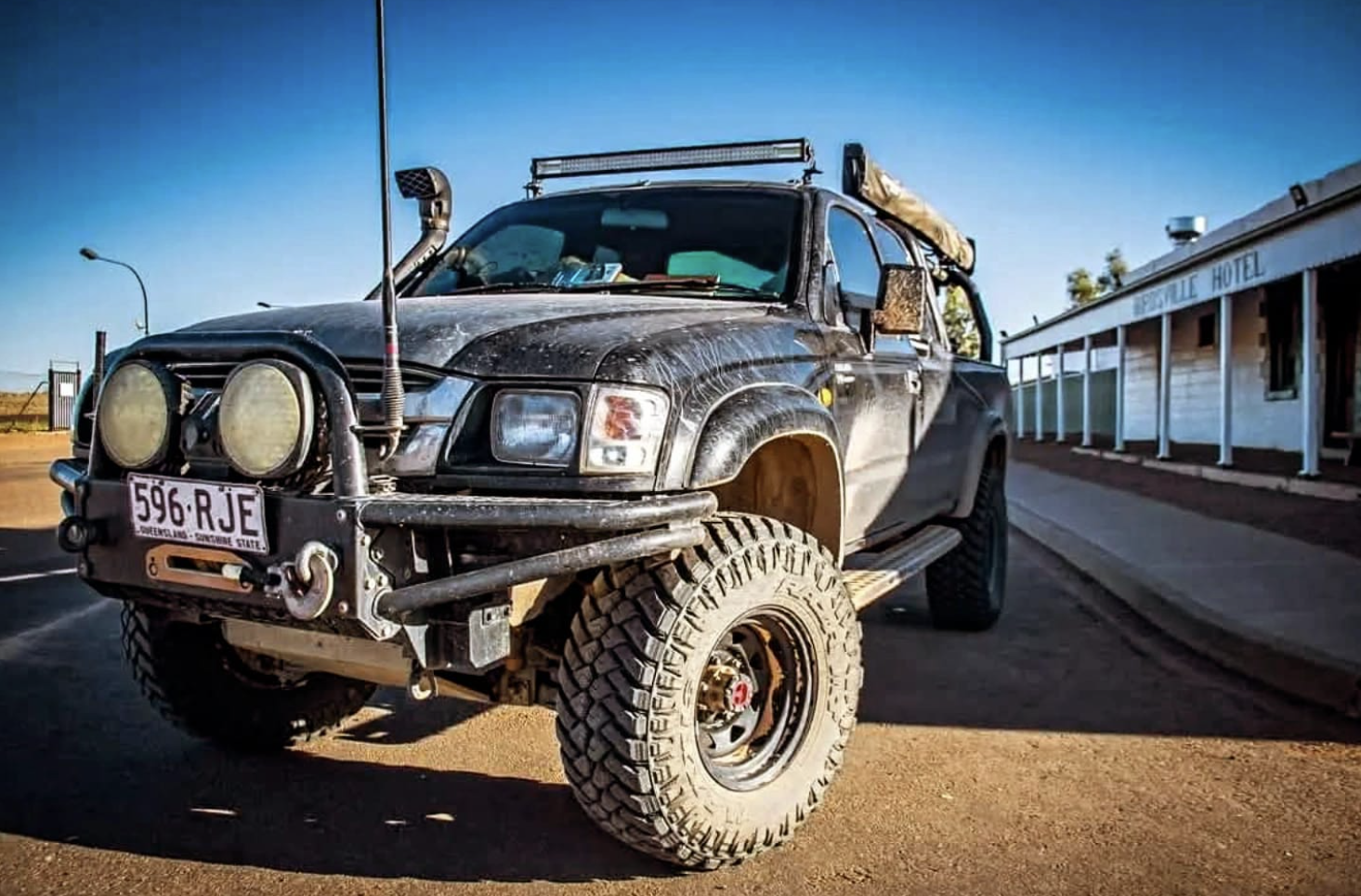
2003 Toyota HiLux
Submitted by Tim Rumble
Tim Rumble’s V6 petrol HiLux was built to go anywhere, and nearly two years of full-time travel proved it could.
The 2003 model ran a full exhaust, two-inch lift, one-inch body lift, and a front diff locker, rolling on 32-inch mud tyres mounted to 15-inch Bushproof steel wheels. Up front, an XROX bull bar and 12,000lb winch handled the hard work, with rock sliders and custom rear tub bar work rounding out the build.
The Cape York Peninsula in 2019 was the standout trip, along with countless other remote destinations across the country. After nearly two years of full-time travel, Tim upgraded to a 2015 model better suited to long-distance touring.
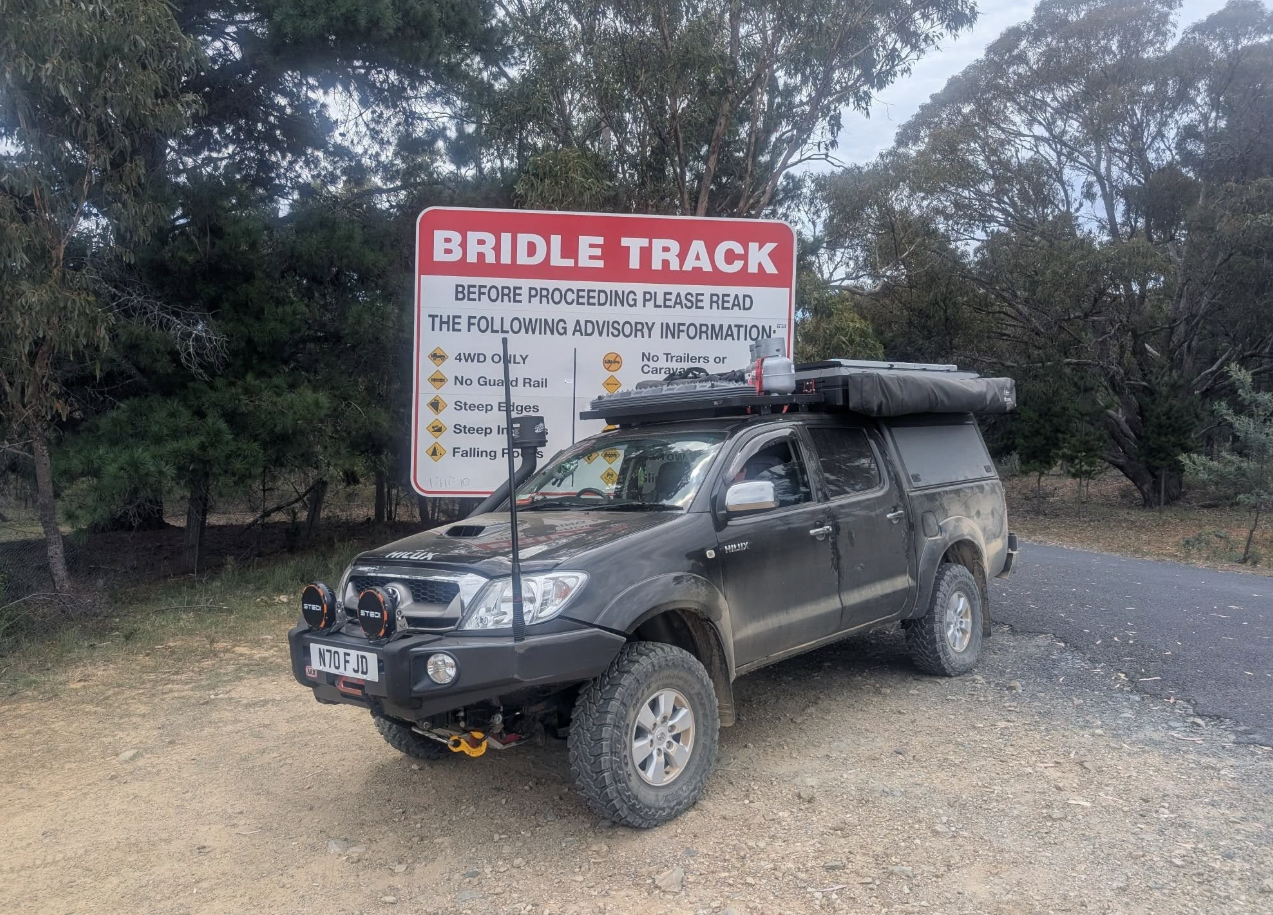
Toyota HiLux
Submitted by Freddie Dougall
Freddie Dougall’s UK-registered HiLux was built for an extended overland journey, and it has already covered Portugal, Spain, Morocco, and most of Australia.
The build centres on Old Man Emu suspension, an ARB front bar, and a Gobi-X rear swing-away bumper. Power on board is handled by a full REDARC 12V setup in the rear, with a Bush Company rooftop tent and awning completing the self-sufficient touring configuration. The HiLux was shipped to Australia for a 12-month road trip, with Coffin Bay National Park in South Australia a recent highlight.
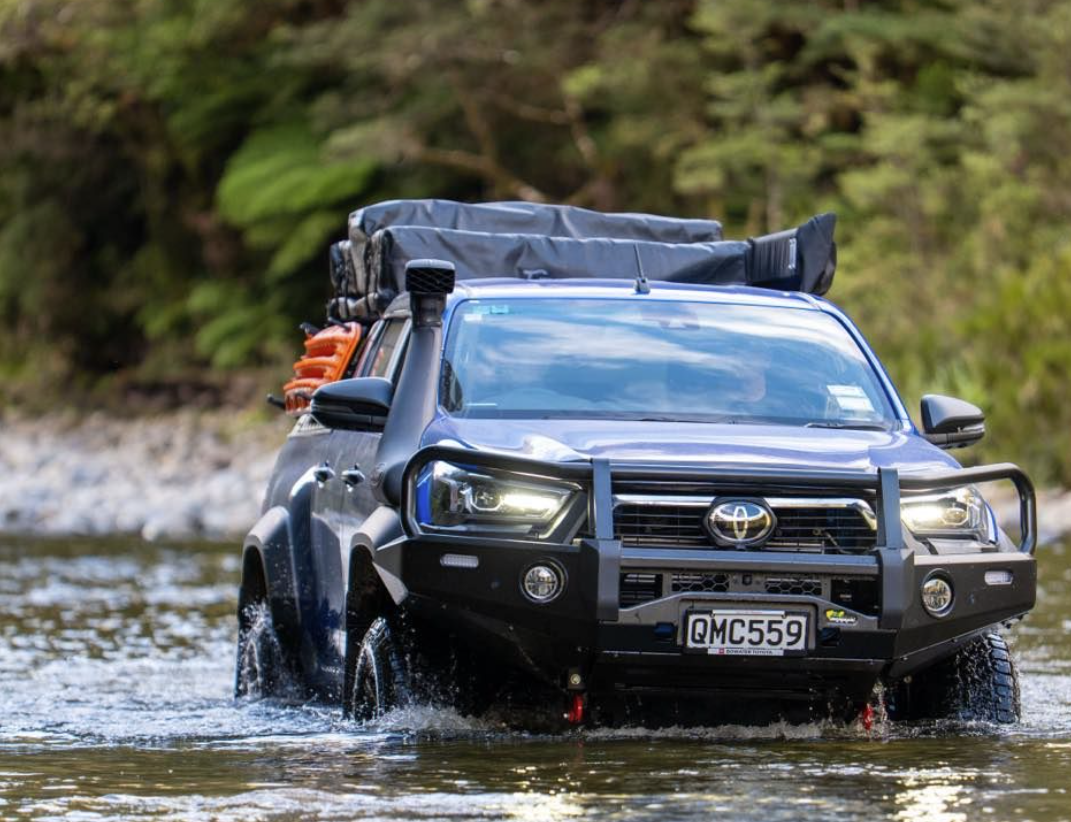
2024 Toyota HiLux SR5
Submitted by Nigel Bruce
Nigel Bruce’s SR5 is a clean touring build based in New Zealand, already earning its keep on river crossings below the Denniston Plateau.
The HiLux runs an EFS lift and an Ironman 4×4 bull bar, with an OzRoo tub rack carrying a Feldon Shelter rooftop tent and Darche 270 awning. The image of the Mackley River crossing below the Denniston Plateau shows the build in exactly the kind of country it was set up for.
2003 Toyota HiLux
Submitted by Zac Miller
Zac Miller’s 1KZ HiLux is a simple, practical build that has already proven itself on some of Queensland’s most remote tracks.
The 2003 model runs a two-inch suspension lift, 33-inch Baja Boss AT tyres, an ARB bull bar, custom side steps, and a custom alloy tub rack. Inside the tray, a drawer setup and dual batteries keep the rig self-sufficient, with a rear locker and RG Colorado leaf conversion rounding out a no-nonsense setup.
A trip north to Lakefield and across to Kowanyama for remote fishing and camping has been the standout run so far.
2020 Toyota HiLux Rugged X
Submitted by Jack Brook
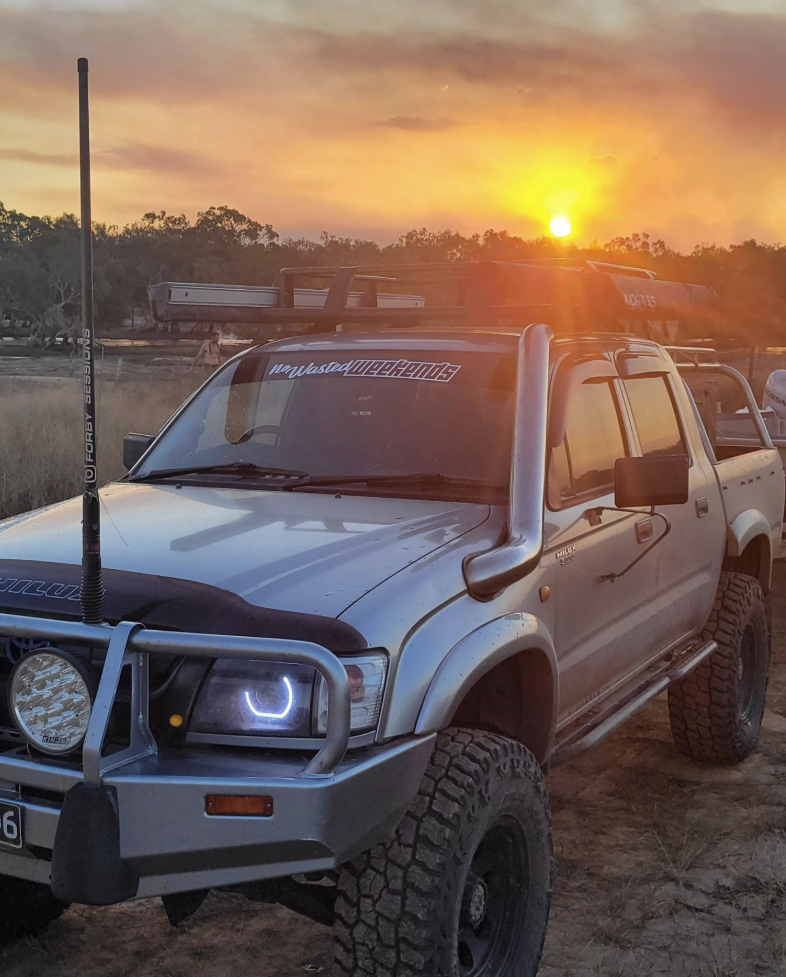
Jack Brook’s Rugged X is a well-equipped tourer built around a Superior Engineering three-inch lift and a strong lighting and recovery spec.
The HiLux sits on KMC Mesa rims wrapped in Maxxis RAZR 285/70R17s, with an AFN bull bar up front. Three Stedi light bars handle visibility after dark, while a GME XRS UHF keeps communications covered. A Rhino-Rack roof platform, Darche awning, and stainless-steel snorkel from In-House Fabrication round out a clean, trail-ready build.
2002 Toyota HiLux SR5
Submitted by Jack Macpherson
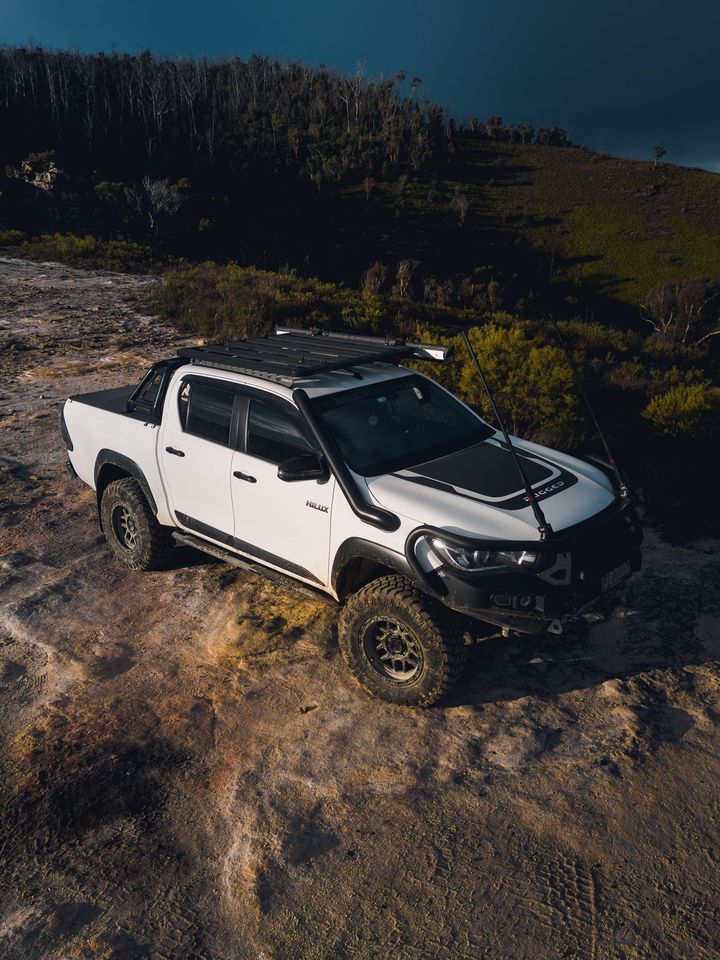
Jack Macpherson’s 1KZ-TE SR5 is a work in progress, and the trip list is already ahead of the build sheet.
The 3.0-litre turbo-diesel runs a straight-through exhaust and is backed by a 140-amp AGM dual-battery system with a solar controller and ABR Sidewinder isolator. Up front, a steel bar sits alongside XTM spotlights and a KingOne winch, with a Uniden UHF handling comms. Rolling stock is 31-inch Hankook MT2 tyres, and a two-inch Fulcrum lift kit is imminent.
In the tray, a single rear drawer with fridge slide carries a 60-litre myCOOLMAN fridge. A Dune 2.5m awning is already fitted, with a 270-degree unit to follow. HD Prorack roof racks run a custom Maxtrax mounting system, with additional lighting wired into the canopy.
Fraser Island, the Barringtons, and the Watagans have been the standout runs so far, with a planned trip across to South Australia taking in Robe, Beachport, the Great Ocean Road, the Victorian High Country, Kosciuszko, and the NSW south coast next on the list.
2014 Toyota HiLux SR5
Submitted by Ryan Barnsley
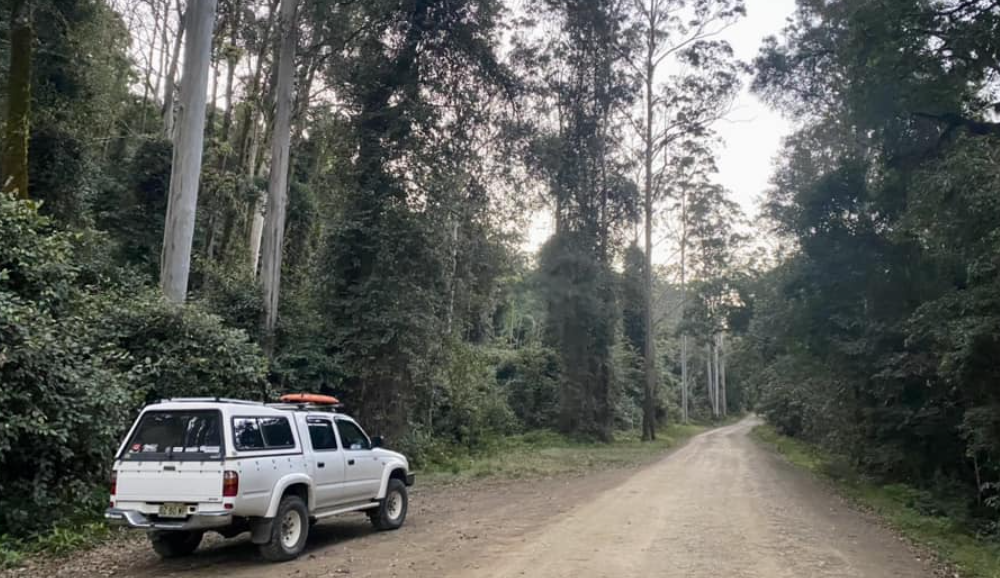
Ryan Barnsley’s inherited SR5 has been steadily upgraded since handover, with lighting and wheels leading the way.
The 3.0-litre turbo-diesel runs Narva LED headlights and 7-inch LED spotlights up front, backed by Himod LED tail lights and a Pedal Torq throttle controller. An ECB bull bar and 3-inch Safari snorkel handle the practical work, with Monster Delta wheels and 32-inch BFG KO2 all-terrains underneath. A half-canopy tray is the next planned addition as the build continues to take shape.
1987 Toyota HiLux LN65
Submitted by Cameron Grayson
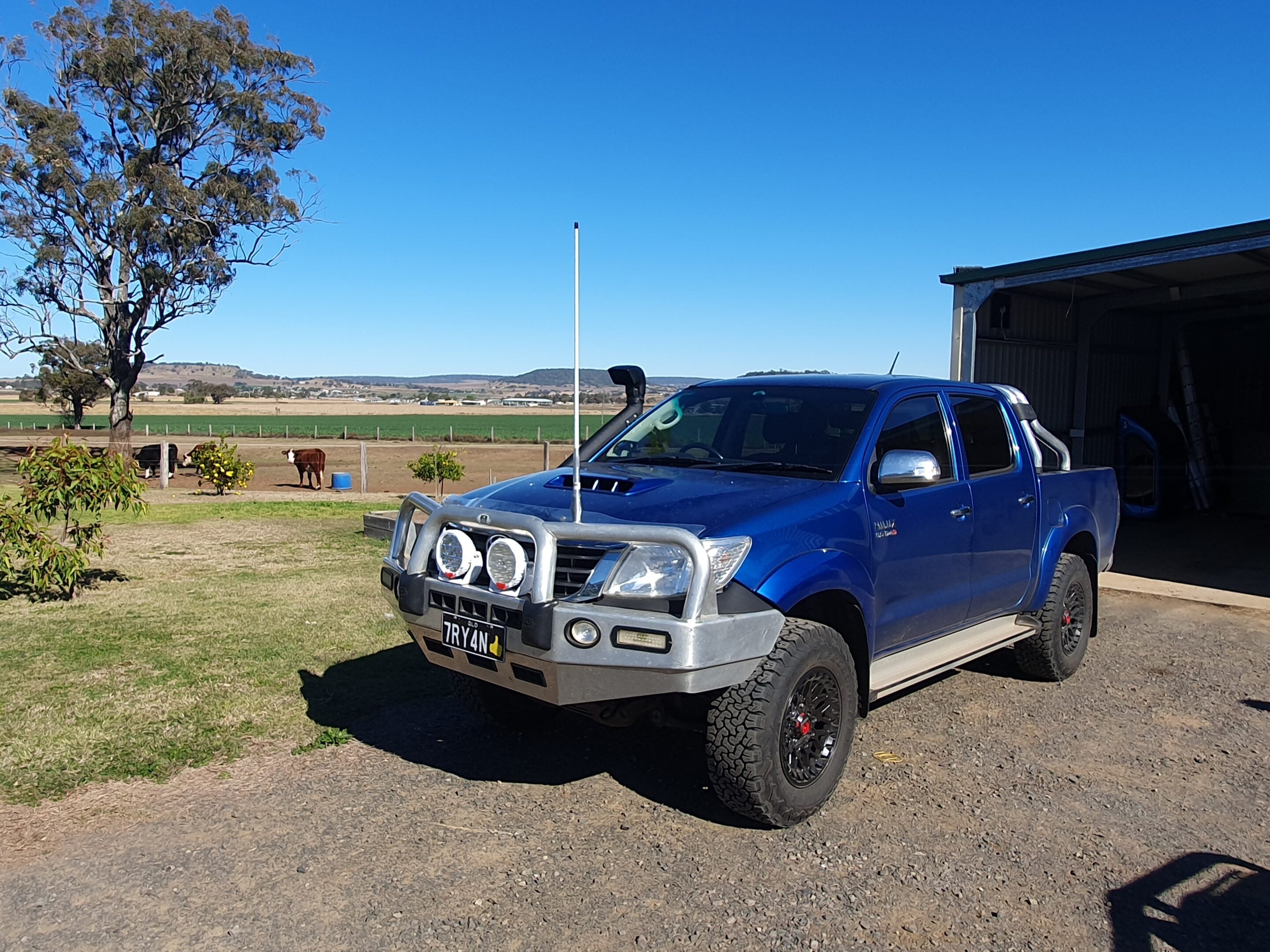
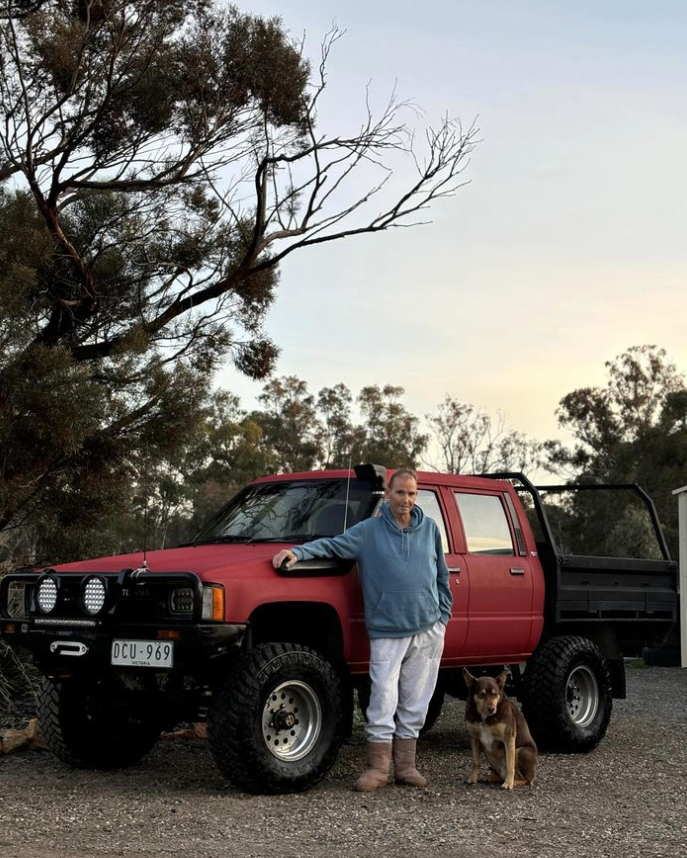
Cameron Grayson’s 1987 LN65 is more than a 4×4 build. It’s a family heirloom that has been rebuilt, driven hard, and handed down with intention.
Cameron’s father purchased the HiLux in 1990, three years after it left the factory, and used it for years of High Country runs with mates before it passed to a family member for 18 years. When the Graysons got it back, a full rebuild followed: a fresh 2.8 turbo-diesel, new gearbox, suspension, and a complete recommission from the ground up.
The rebuilt LN65 made it back to the High Country in 2022, and completed several father and son trips to the Grampians before Cameron’s father passed away from cancer on 3 August 2024. His last wish was to ride on the back of the tray with his dog, Boy. He handed Cameron the keys.
Ford’s 2026 Ranger PHEV range for Australia arrives later this year, with a simplified three-grade lineup and a new XL variant priced to undercut key rivals including the BYD Shark 6.
The range covers three grades: XL, Sport and Wildtrak, with the XL opening at $59,000 driveaway. That sits below the BYD Shark’s $57,900 before on-road costs, meaning the entry Ranger PHEV lands cheaper once those are added.
Power comes from a 2.3-litre EcoBoost petrol engine paired with a 10-speed modular hybrid transmission and a 75kW electric motor, backed by an 11.8kWh usable battery. Combined output is 207kW and 697Nm, with a 3,500kg braked towing capacity across all variants.
The XL comes well-equipped for an entry model: 17-inch alloy wheels, a 12.4-inch digital instrument cluster, a 12-inch infotainment screen, dual-zone climate control with rear air vents, Intelligent Cruise Control with Stop & Go, steel underbody protection and a drop-in bedliner.
The Sport sits in the middle, adding 18-inch alloys, LED lighting, leather-accented trim, wireless charging, a 360-degree camera and upgraded driver assistance including Pro Trailer Backup Assist.
The Wildtrak tops the range with Matrix LED lighting, a Power Roller Shutter, heated front seats, ambient lighting, a Bang & Olufsen audio system and a new colour option, Ignite Orange.
All variants come in Frozen White as standard, with additional paint options and accessory packs varying by grade. The 2026 Ranger PHEV is due in Australian showrooms in the third quarter of 2026. Full specs will be released closer to vehicle arrivals later this year.
Pricing (driveaway):
- Ranger PHEV XL: $59,000
- Ranger PHEV Sport: $66,000
- Ranger PHEV Wildtrak: $70,000
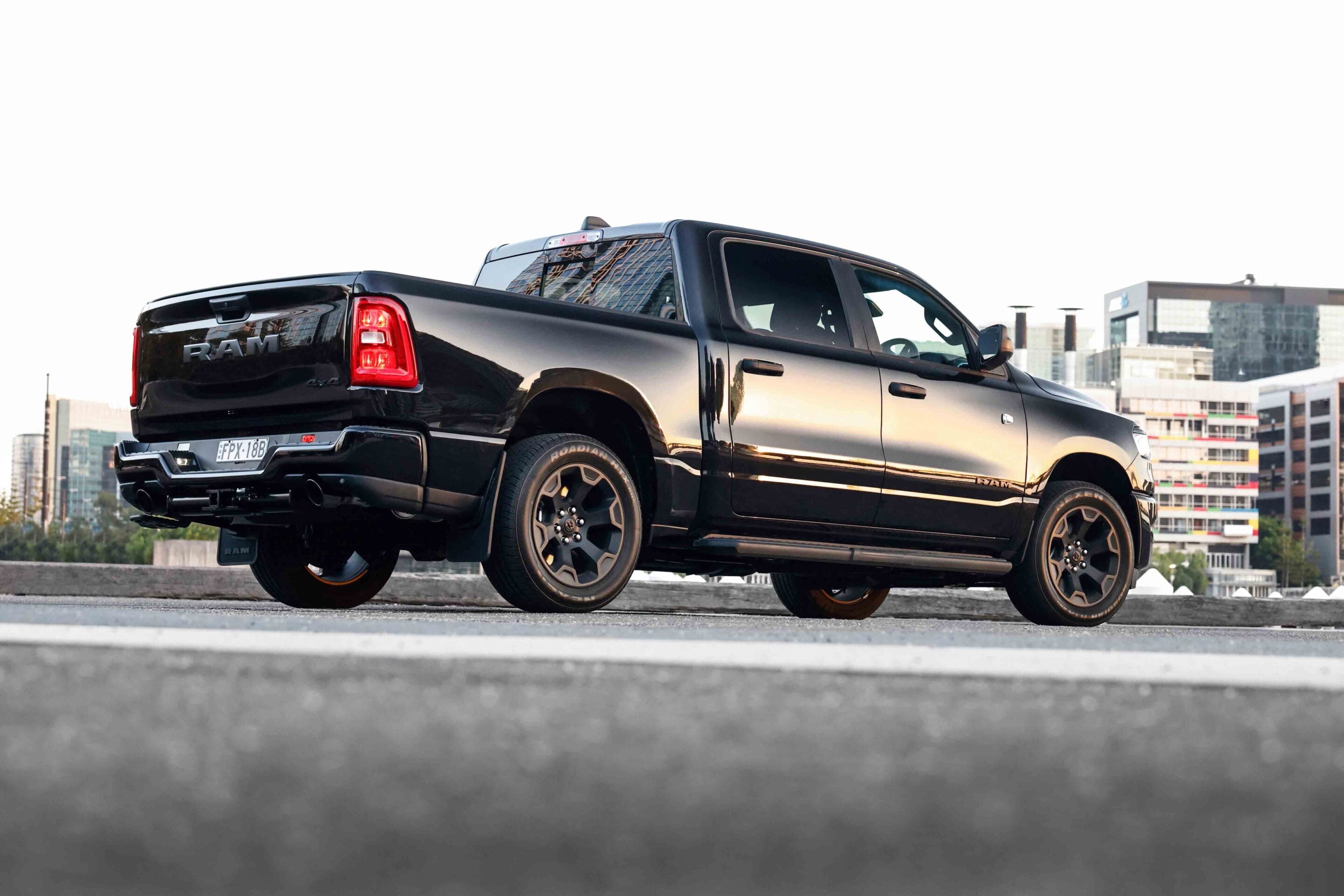
Ram has added a new entry point to its Australian full-size pick-up range with the MY26 Ram 1500 Express Black Edition, due in local showrooms from June 2026.
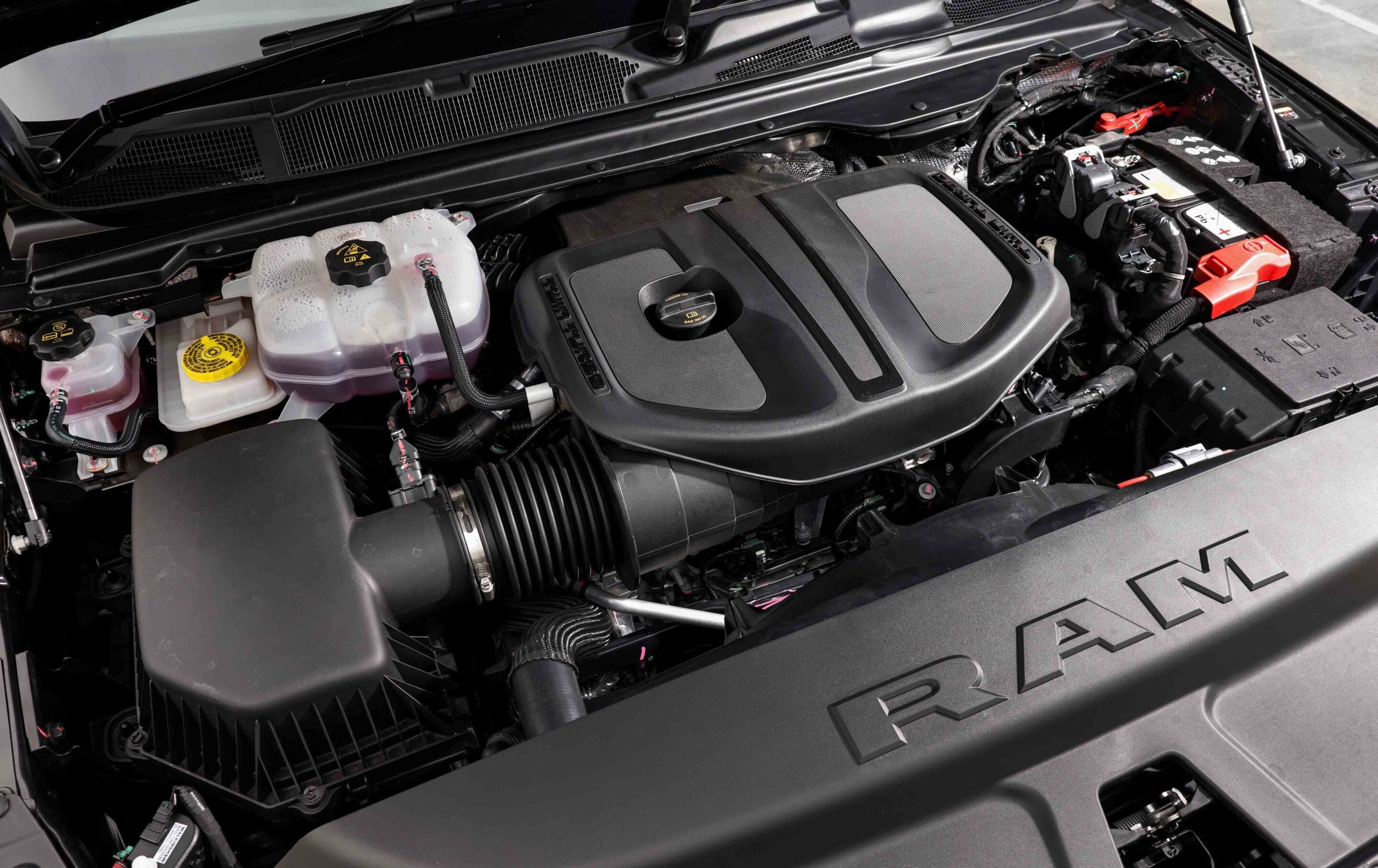
Priced from $109,950 plus on-road costs, the Express Black Edition is the most affordable variant in the updated MY26 Ram 1500 lineup, powered by the brand’s 3.0-litre twin-turbo inline-six Hurricane petrol engine producing 313kW and 635Nm, paired with an eight-speed automatic and part-time four-wheel drive.
“The Ram 1500 Express Black Edition brings a new entry price to the updated MY26 Ram 1500 Series,” said Jeff Barber, General Manager, Ram Trucks Australia. “With the Ram 1500 Express Black Edition we have reduced the price gap between mid-size utes and our full-size Ram 1500 range.
“The Ram 1500 Express Black Edition delivers the benefits of a US pick-up in terms of size, space, comfort and capability – at an attainable price point. In addition, the Ram 1500 Express Black Edition has many of the styling upgrades from our flagship models – such as the Sports Hood and black highlights. Our customers have been asking for a package like this and we’re pleased to be able to deliver it,” added Barber.
Towing capacity is rated at 4500kg with a 70mm tow ball or 3500kg with a 50mm tow ball. Payload is 1014kg, maximum combined tub and towball load is 520kg, GVM is 3505kg, GCM is 7711kg, and a 98-litre fuel tank is fitted as standard.
The Express Black Edition gets a blacked-out styling package including Ram’s power bulge sports hood, black mirror caps, door handles, badging, grille and 20-inch alloy wheels wrapped in 275/55R20 tyres. LED headlights are standard.
Six exterior colours are available: Diamond Black, Granite Crystal, Silver Zynith, Bright White, Molten Red and Forged Blue. Metallic paint adds $950 to the price.
Like the rest of the Australian Ram range, the Express Black Edition is imported from the United States in left-hand drive before being converted to right-hand drive in Melbourne.
Ram 1500 Express Black Edition feature highlights:
- ‘Power bulge’ Sports Hood
- Black grille
- Black badging
- Black side mirror caps
- Black door handles
- Black exhaust tips
- Black side steps
- Black 20-inch wheels
- Body-coloured bumpers
- Spray-in bed liner
- Damped tailgate
- ‘Kick down’ bed step on passenger side
- Power operated sliding rear window port
- Tinted rear windows
- LED headlights and fog lights
- Cargo area light
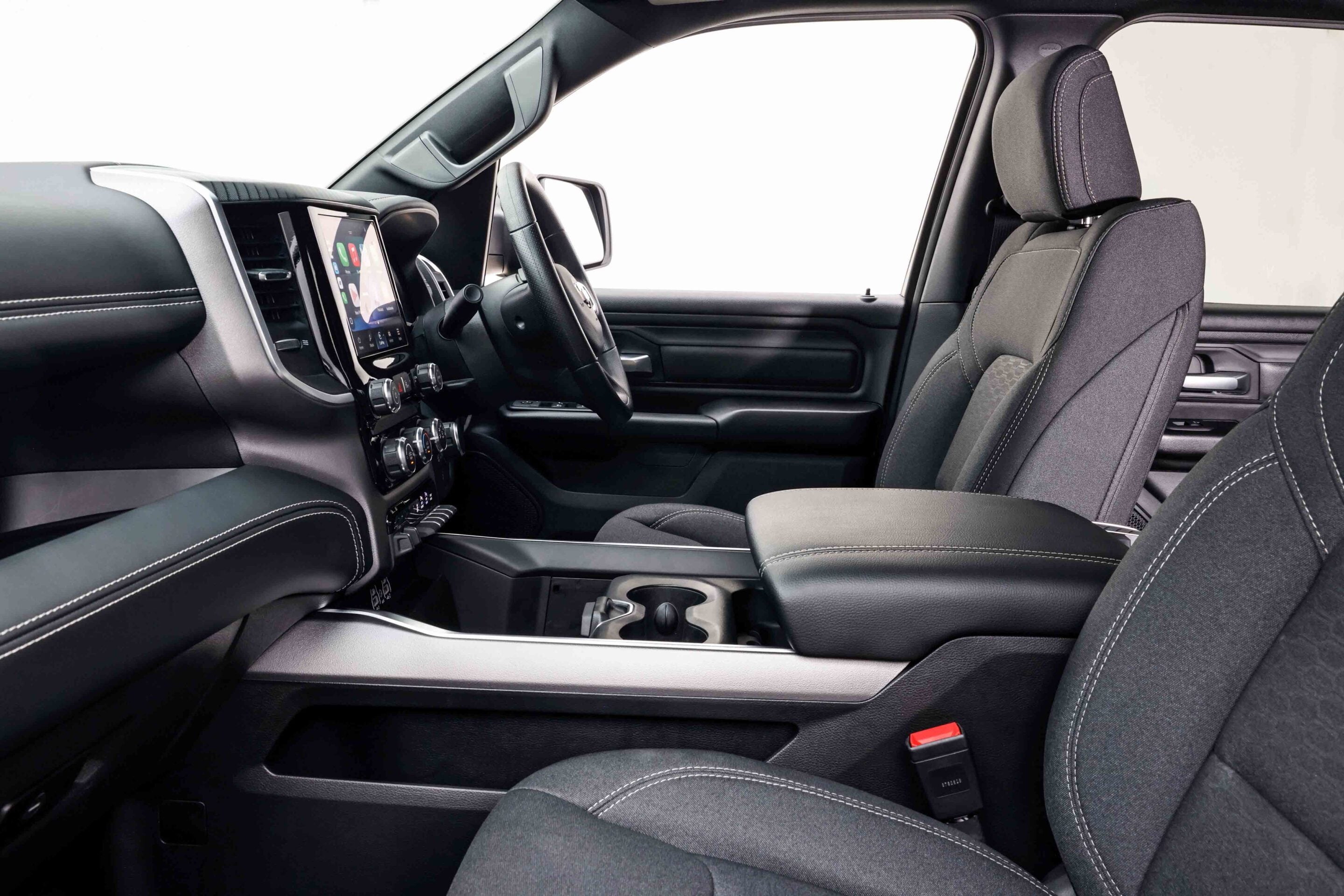
- Cloth trim
- Black interior highlights
- Large centre console with internal sliding tray
- 8.4-inch infotainment screen
- 7.0-inch digital instrument display
- Wired and wireless Apple CarPlay and Android Auto
- 6-speaker audio
- Sensor key with push button start
- Remote engine start
- Gear selector dial
- Electric park brake
- Rear underfloor covered storage pockets x 2
- Storage space under the rear seats
- Adaptive cruise control
- Forward collision alert with AEB
- Lane-keeping assistance
- Blind spot monitoring
- Rear cross-traffic alert
- Front and rear parking sensors
- Rear view camera
- Trailer brake control
Pricing: MY26 Ram model line-up (before on-road costs)
- Ram 1500 Express Black Edition: $109,950
- Ram 1500 Rebel: $141,950
- Ram 1500 Laramie Sport: $141,950
- Ram 1500 Limited: $159,950
- Ram 2500 HD Laramie: $172,950
- Ram 3500 HD Laramie: $177,950
Mitsubishi has confirmed pricing for its new flagship Triton Raider, with the locally developed dual-cab ute landing in Australian dealerships from June 2026 priced at $74,990 driveaway.
First announced earlier this year, the Raider sits at the top of the 2026 Triton range and is based on the Triton GSR dual-cab. The vehicle was developed in partnership with Victorian engineering firm Premcar, with second-stage manufacturing completed at Premcar’s Epping facility.
The Raider builds on the updated 2026 Triton GSR with a package of suspension, wheel, tyre and styling upgrades aimed at improving capability for Australian conditions. Power comes from the same 2.4-litre four-cylinder turbo-diesel carried across the Triton range, producing 150kW and 470Nm and paired with a six-speed automatic. Mitsubishi’s SuperSelect II 4×4 system, with 2H, 4H, 4HLc and 4LLc modes, is also retained, as is the 3500kg braked towing capacity.
“Triton Raider is already breaking new ground for the Mitsubishi brand in Australia,” said Bruce Hampel, GM of Product Strategy at MMAL. “Early feedback from our dealer network since unveiling has been resoundingly positive, with specific callouts for Raider’s improved wheel control, aggressive styling and off-road performance.
“We are incredibly proud of the product our team has delivered in collaboration with Premcar. Along with our dealer network, we can’t wait for customers to experience the Triton Raider for themselves,” added Hampel.
Central to the changes is a unique suspension package engineered specifically for the Raider, featuring revised front and rear dampers. The front units use an internal rebound spring to improve suspension control, alongside new front springs and a revised jounce bumper setup.
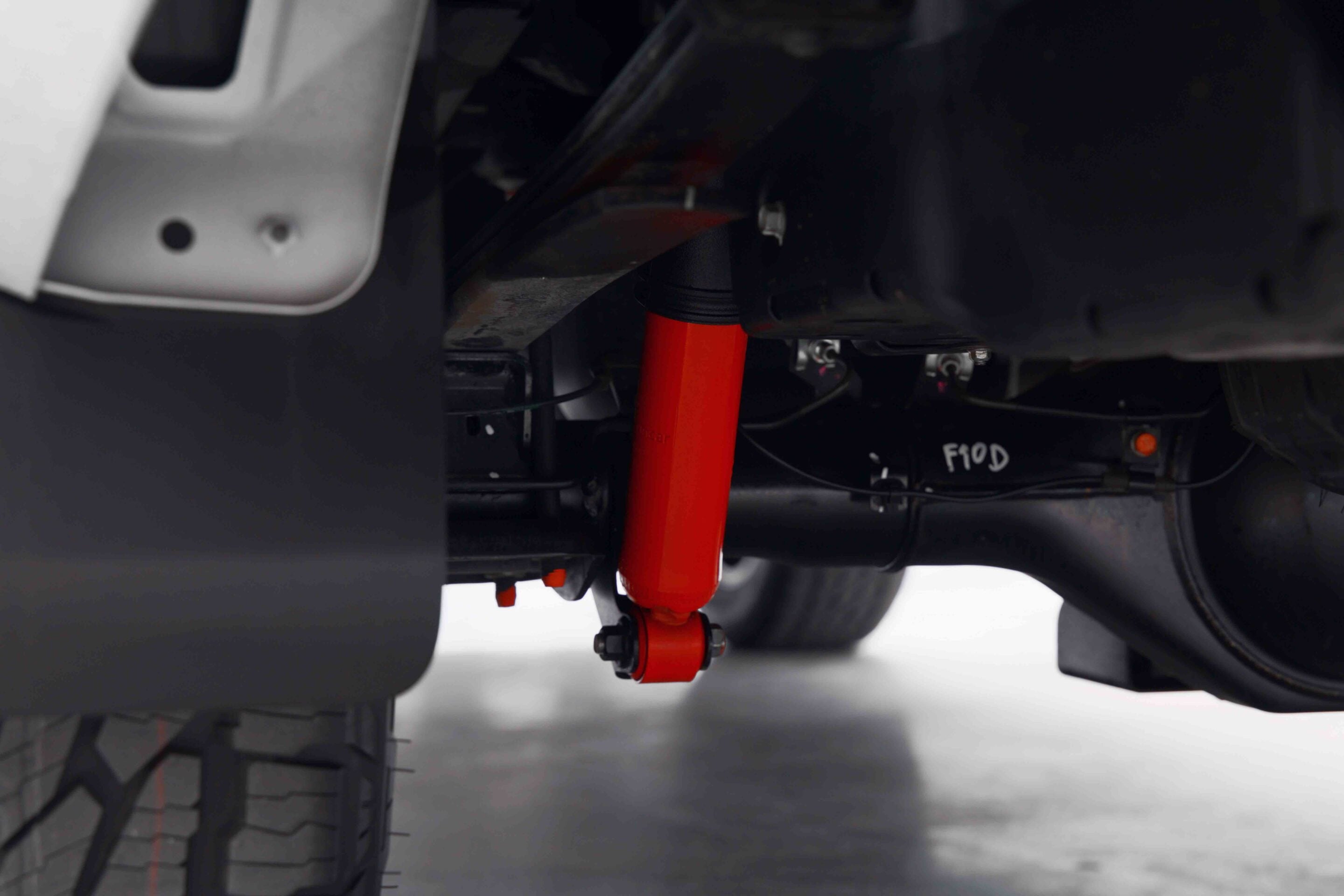
The suspension changes deliver a 25mm increase in front ride height and 15mm at the rear. At the front, 10mm of lift comes from the revised springs, with the remaining 15mm from the upgraded wheel and tyre package. Track width has also been increased by 20mm overall.
The Raider retains the Yamaha Performance Damper system introduced on the 2026 Triton GSR, with the chassis-mounted unit reducing noise, vibration and harshness. The upgraded rolling stock consists of 18-inch ROH Assault alloy wheels in Brushed Bronze, paired with Bridgestone Dueler AT002 all-terrain tyres and Raider-specific hub caps.
Externally, Mitsubishi has given the Raider a more aggressive look with Sandstorm side decals featuring bronze detailing, Raider badging on the tailgate, a Dark Warm Grey front garnish, upgraded side protection bars, a sports bar with red inserts, and red-finished underbody protection with Raider lettering. A chrome grille emblem contrasts against the black grille and lower garnish.
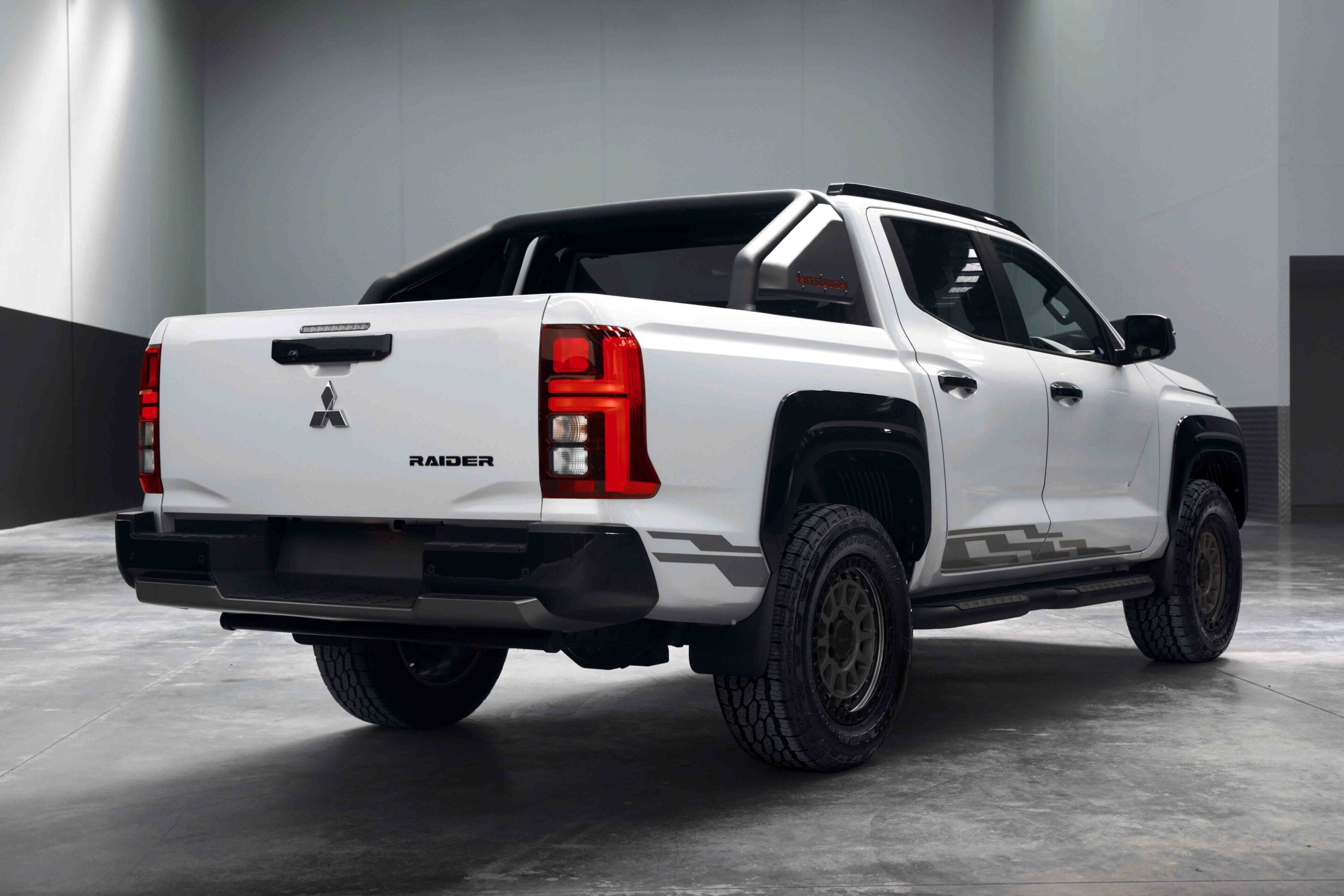
Inside, the Raider carries over the Triton GSR’s equipment list, with black leather seats featuring orange stitching, Raider-branded front headrests and a Raider badge on the centre console. Four exterior colours are offered at launch: White Diamond, Black Mica, Blade Silver and Graphite Grey.
At $74,990 driveaway, the Triton Raider is the most expensive Triton in Mitsubishi’s Australian lineup, serving as a factory-backed halo model for buyers.
- UPDATE 1: From the showroom to the tracks
- UPDATE 2: Mods tested in the Vic High Country
- UPDATE 3: Bigger tyres give the Grenadier a boost in the bush
- UPDATE 4: Grenadier to the rescue
Part 1: From the showroom to the tracks
“What kind of car is that?” It’s a question I’ve been asked many times in the first month of driving the Grenadier.
Is it a Land Rover? Is it electric? Is it Chinese? Not many people seem to know exactly what it is. The only other vehicle I’ve driven that causes this much confusion is my 1968 Country Buggy. Yep, Google it.
By now, most people know the story of why the Grenadier was created. Man drives Defender. Defender stops being made. Man decides to build his own four-wheel drive to replace his much-loved Defender – but better. That man is Sir Jim Ratcliffe, owner of Ineos, Manchester United and a large part of the Mercedes F1 team.
I owned a 2015 Defender back in 2023 in the UK, and I’ve also owned a 1976 VW Kombi. In many ways, the Kombi and Defender feel like a closer driving experience than the Defender and Grenadier. Yes, the Grenadier looks a little like an old Defender, but that’s where the similarities stop. I was lucky enough to go on a few of the Grenadier’s Australian development trips in the Outback a few years back. These were all pre-production vehicles and not final spec. They were rough and still being worked on by engineers, but even then I could tell they were highly capable, and I was looking forward to driving the production model.
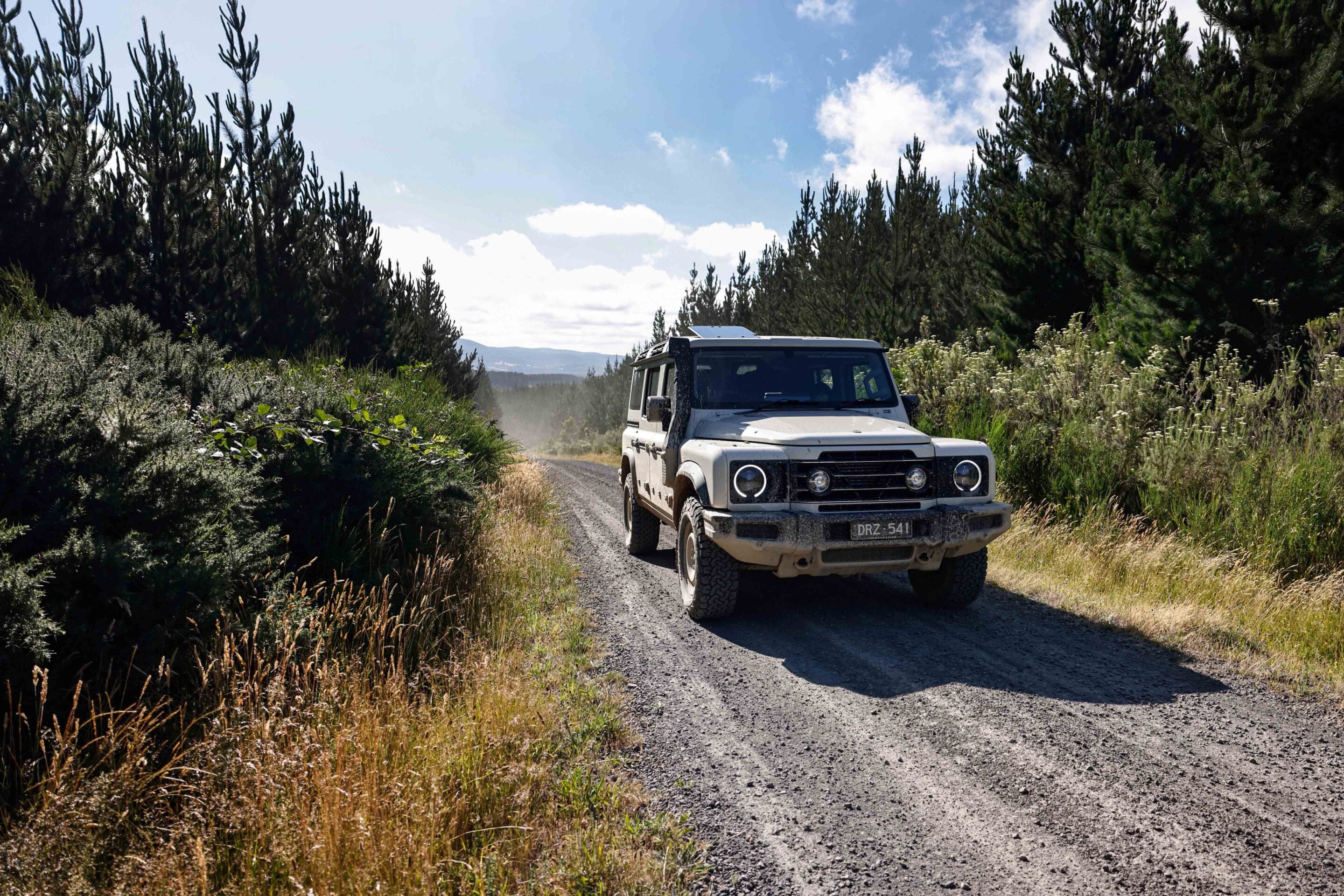
Fast forward to late 2025 and I’m picking up my long-term Grenadier. I’ve gone for a Trialmaster Station Wagon in Scottish White (apparently named after one of Sir Jim’s Scottish mates and his white legs), powered by the BMW B57 diesel engine. I opted for steel wheels, leather trim, heated seats and Safari Windows. The base price is $120,000, plus $8670 in options.
The Trialmaster comes standard with front and rear diff locks, a raised air intake, Class III 1-7/8” NAS tow hitch and electrics, and an access ladder. I also had factory rubber mats added. There are no carpets in this vehicle and that’s exactly how I like it – rubber mats and a vinyl floor are the best.
The very first thing you notice when you drive a Grenadier is the steering. It doesn’t self-centre very quickly compared to most other vehicles. Once you’re aware of this and get used to the steering technique required, it’s fine. Just be ready for it. The Recaro seats are very comfortable and help soak up the kays, plus they look cool. Rear passengers also get a Recaro bench seat, and I like how high it sits you in the back. It’s great for kids, as it makes it easier to look out of the vehicle, placing rear passengers at a similar head height to those in the front.
I picked up the Grenadier just before the start of the summer holidays, and it’s proven to be a great beach vehicle. Having no carpets makes it super easy to get sand out, and the interior utility rails work well when you’ve got lots of gear to tie down in the back.
I strap the surfboards to the roof, with four factory rails fitted. I’m planning to get a roof rack, but more on that later. Running to and from the beach is fun, and the kids have found it to be a great family vehicle so far. It’s not really what this vehicle is designed for, though. Yes, it will do the day-to-day tarmac stuff just fine. The 550Nm of torque that the BMW engine pumps out makes keeping up with traffic easy as well.
It was time to head off-road, so I pointed it toward Lerderderg State Park. I’ve photographed and driven many four-wheel drives up here, so it’s a great place to get to know the Grenadier. The first thing I do once I hit the dirt is flick the low-range selector lever across to lock the centre diff. This also automatically turns off the ESC.
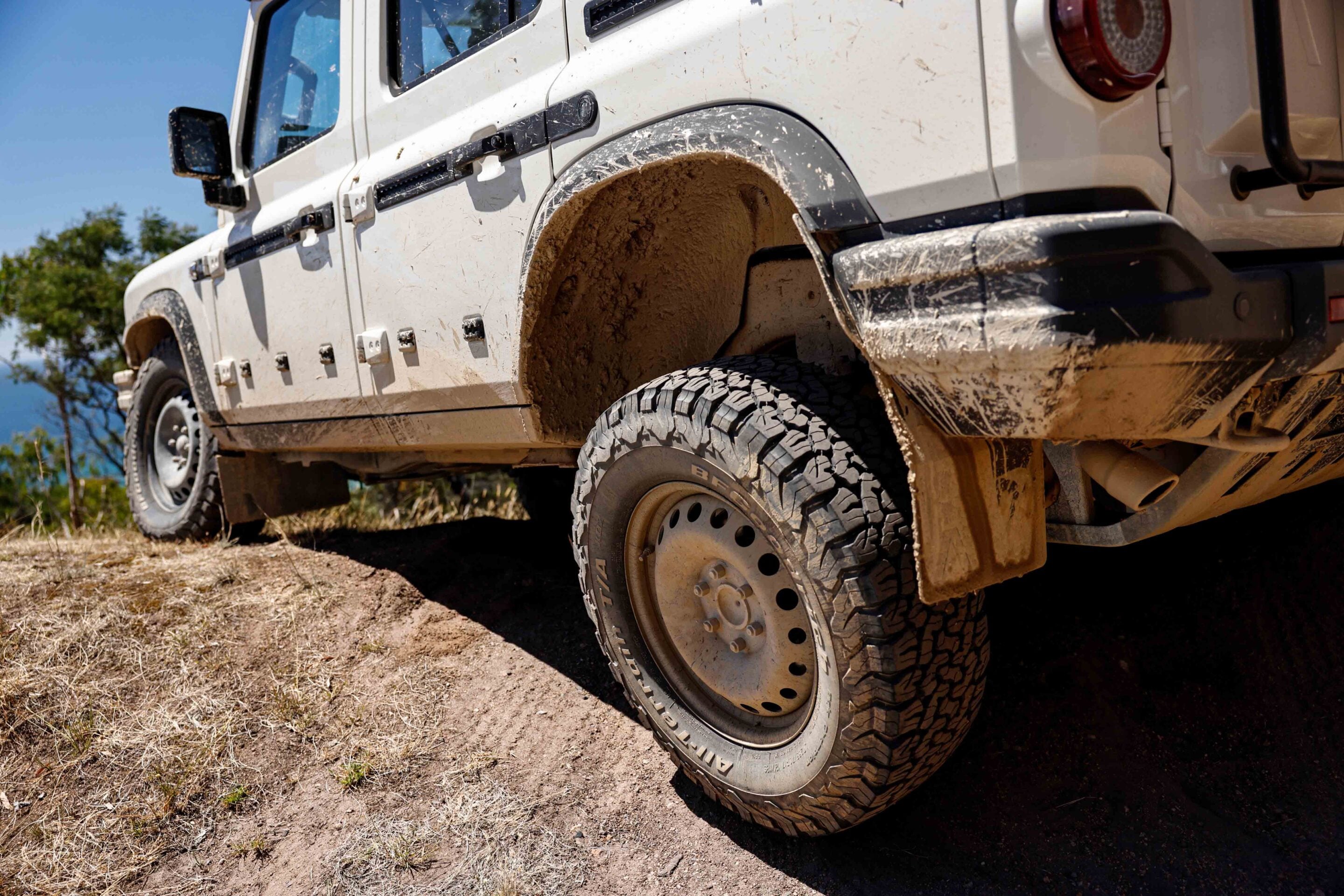
I leave it in high range to begin with. The ride on gravel roads is excellent and, as I start to push it a little harder, it actually feels light on its feet and keen to turn in sharply. I then head to some fairly steep, rutted tracks. I select low range and start driving up the first climb. The Grenadier has solid axles front and rear, which gives it excellent wheel articulation. I try engaging the rear diff lock and it just walks up the track. No need to even try the front diff lock – I need to find a harder track. That will have to wait until my next trip, though. My first experience off-road has shown that the Grenadier is highly capable, and I’m going to enjoy finding gnarlier places to drive it.
One thing that takes a while to get used to is having the speedo in the centre display rather than directly in front of you. Living in Victoria and constantly stressing about being 3km/h over the limit, I sort of wish it was straight ahead. My other small gripe is that the driver’s-side wiper misses a chunk of the windscreen near the A-pillar. It only becomes an issue if you really get the vehicle and screen super muddy, but I do notice it.
Plans? We’re going to throw some factory and non-factory accessories at the Grenadier while we have it, starting next month. Can’t wait.
- Kilometres this month: 4780km
- Average fuel use: 11.7L/100km
Part 2: Mods tested in the Vic High Country
The Grenadier wave is alive and well. I used to get the Jeep wave back when I had a JK Wrangler and was wondering if Ineos owners would do the same. Well, they do! I even got a wave from a guy in a 110 Defender – maybe the sun was in his eyes?
This month has seen quite a few kays racked up in the Grenadier. I wish I could say they were all off-road kays; sadly not. As a daily driver, though, I’m really enjoying the Grenadier. It has such a nice ride – comfortable on the tarmac and even better when you hit the dirt. I think they’ve done a great job with the suspension tune.
I headed up to Mt Disappointment in Vic this month to shoot a HiLux vs Ranger comparo. One of the tracks we drove was pretty gnarly and it was the first time I needed the rear diff lock. Once engaged, the Grenadier just walked up in low range – no issue. The way it moulds itself to the terrain is amazing to watch. It also does all the hard work for you. I tried picking the worst lines and it just ate them up.
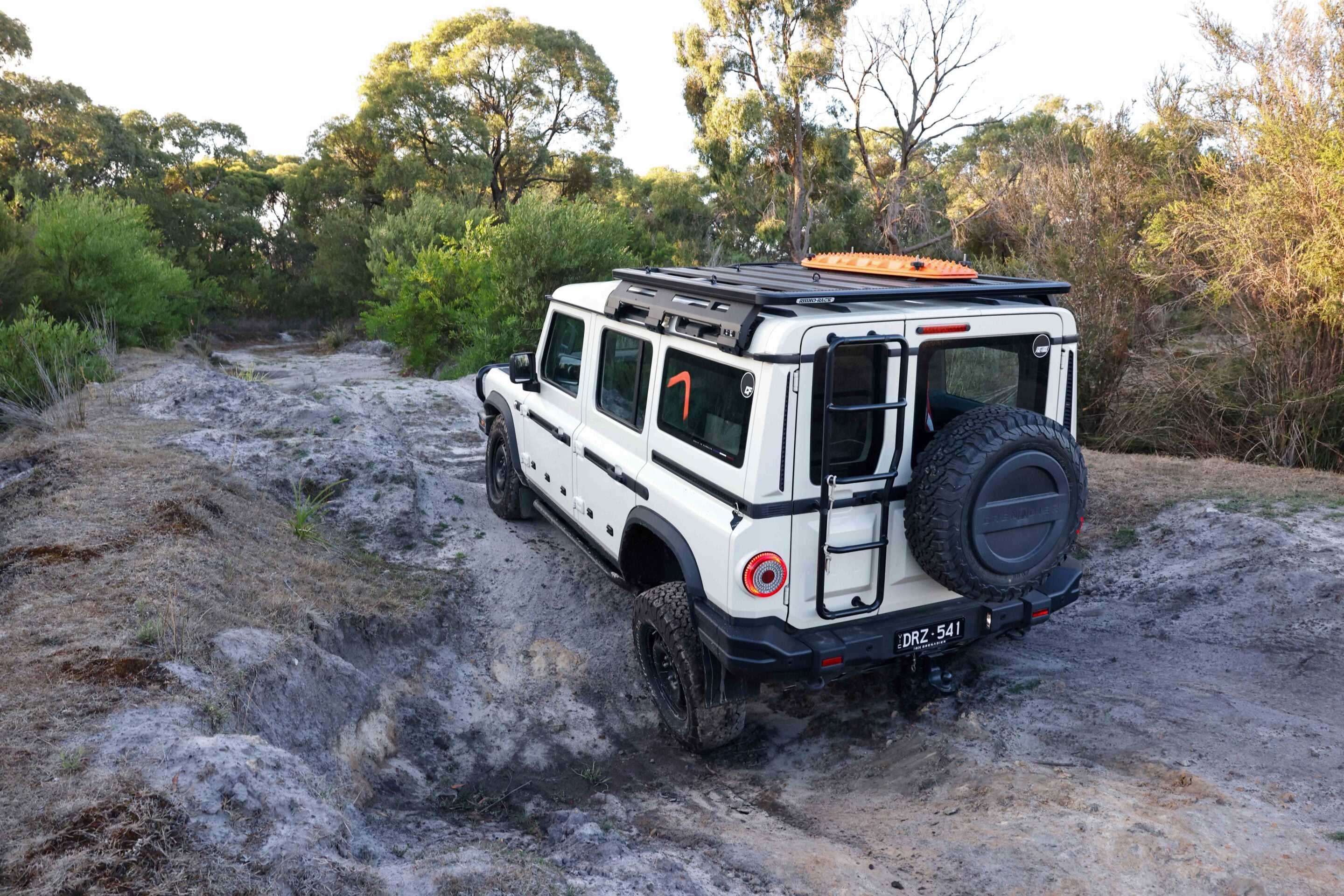
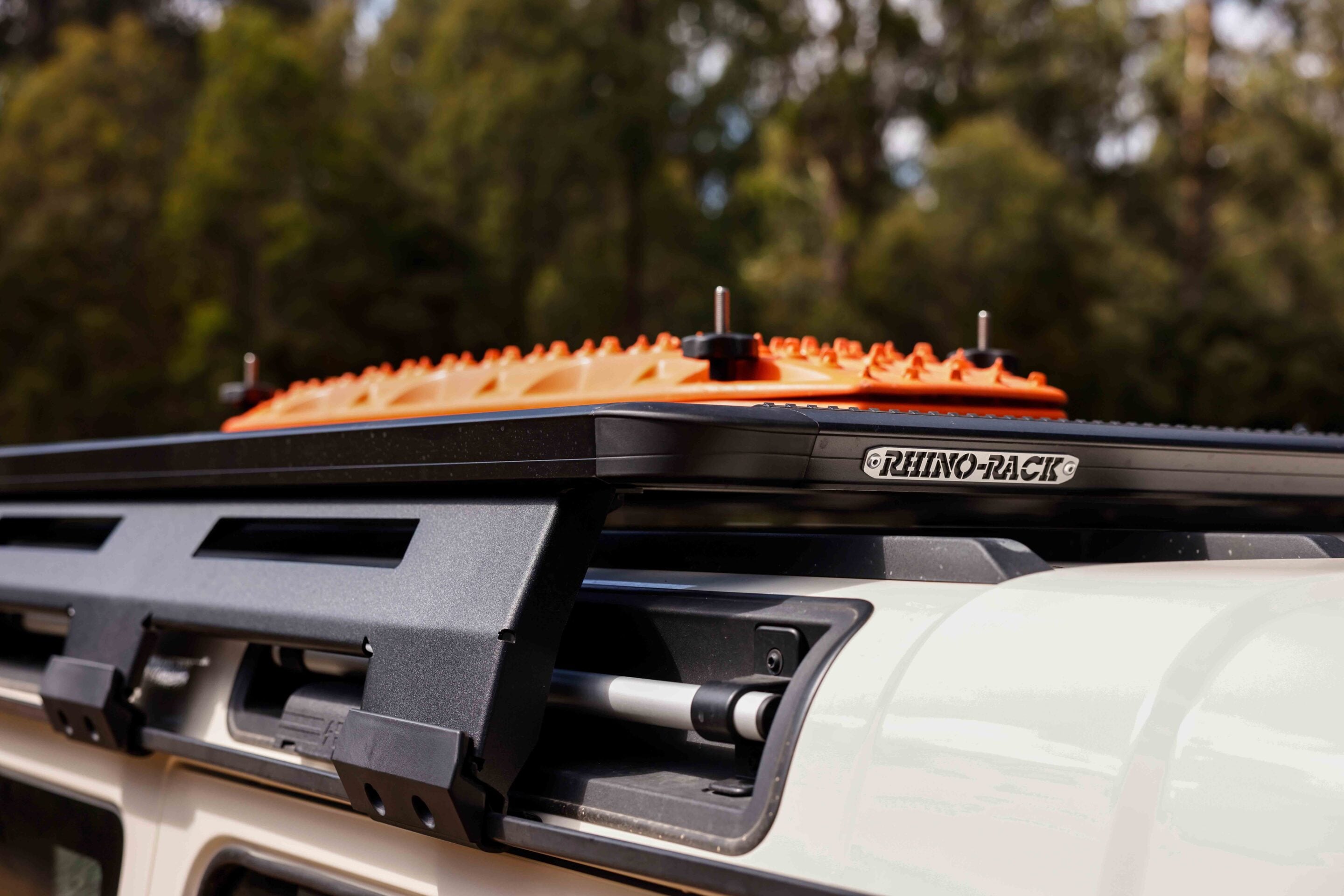
I used the freshly fitted Rhino-Rack Pioneer platform to photograph the utes from. I went for the three-quarter length option as it still allows me to open the safari windows. It was $3688 plus fitting. It’s great now – the factory ladder on the back door actually goes somewhere! I also fitted a set of MaxTrax up on the platform – thanks Matt.
A factory Ineos roo bar ($2720), rock sliders ($1921) and checker plates ($560) were also fitted. The roo bar is a smart design that works with the existing factory bumper. You just take a couple of caps off and it bolts straight on. Job done! The rock sliders are also well designed and solid. They bolt directly to the chassis rails and offer a twin-tube setup. The checker plates sit on top of the front guards and allow up to 120kg load. Luckily I’m only 103kg, so I’ve been up there quite often just because I can.
Hopefully I won’t have to test out the roo bar. The rock sliders, however, have had their first slide. Yes, it was a little painful, but I figure that’s what they’re for. They feel super strong and can take the weight of the Grenadier no worries. Plus, the scratches are underneath so I can’t see them.
I had to top up the AdBlue this month. It gave me a warning that it was running low, which was handy. The front parking sensors have been triggering at random. Apparently it’s some dirt stuck on the edge of a sensor that’s setting it off. No big deal, as you can manually turn them off and it stops the beeping. I might try giving them a proper clean.
Next mods? I want to try a bigger tyre size. The standard 265s are fine and do a great job, but I’d love to see those guards filled a little more. Maybe a 295? Mud-terrains? Let’s see what happens.
- Kilometres this month: 5300km
- Average fuel use: 12.4L/100km
Part 3: Bigger tyres give the Grenadier a boost in the bush
New tyres for the Grenadier this month. I had my local tyre store (thanks Tyrepower Mornington) fit five BFGoodrich Mud Terrain KM3s in a 295/70R17 size, at $590 each.
The original BFG All Terrains weren’t worn out and were still doing a great job; I just wanted to try a bigger size than the standard 265/70R17 tyres fitted as stock. I had a set of KM2s on a JK Wrangler about 15 years ago, so it is going to be interesting to see how the KM3s compare.
Standing the 295 Mud Terrains next to the original tyres, the size difference is noticeable without being extreme. I think it’s a worthwhile upgrade for the Grenadier, especially considering it’s on stock ride height and wheels. I also like that BFG has done away with the white lettering – I was never a fan. Clearance to the brake lines has reduced slightly, but I don’t think it will be an issue. There are also no signs of rubbing, even with the suspension fully articulated, which is reassuring.
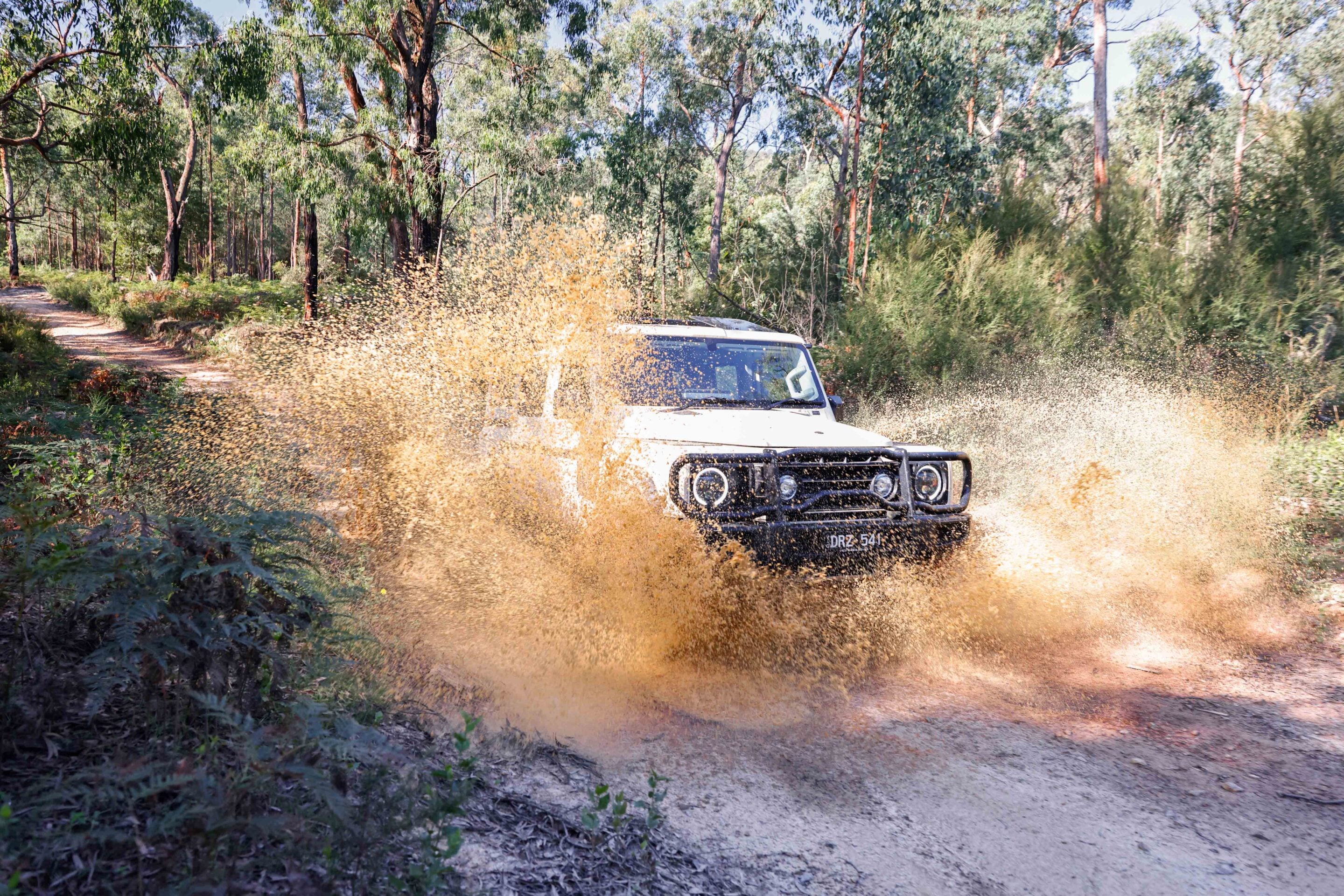
With the first opportunity, I headed to the Yarra Valley in search of mud. It’s been a dry summer in Victoria, so finding mud hasn’t been easy. The only option was to head to Toolangi State Forest, where I knew I’d be guaranteed to find some. To get there, I had a fair amount of highway driving to cover. The KM3s are definitely louder on-road than the ATs, but nothing you couldn’t live with, even as a daily driver. You do feel a touch more tyre roll through corners because of the taller sidewalls, but overall the ride is better. It’s simply a more comfortable experience now, both on- and off-road.
Before any mud could be sprayed, I found Rocky Track, dropped the Grenadier into low range and began the climb. If you’re familiar with Rocky Track, you’ll know it’s a very challenging drive. I completed the first section fairly easily with the centre and rear diffs locked. The aggressive sidewalls on the KM3s helped bite into the rocks and push the Grenadier forward.
The second section is much tougher, and line choice really matters. With the front locker engaged, I continued to make forward progress. The rock rails were taking a beating and things were getting pretty serious. I’m confident the Grenadier would have made it to the end of Rocky Track, but I chose not to push on. With just the two of us in one vehicle, it wasn’t worth the risk. If we got stuck – or worse – there was no one around to help. It’s a serious track.
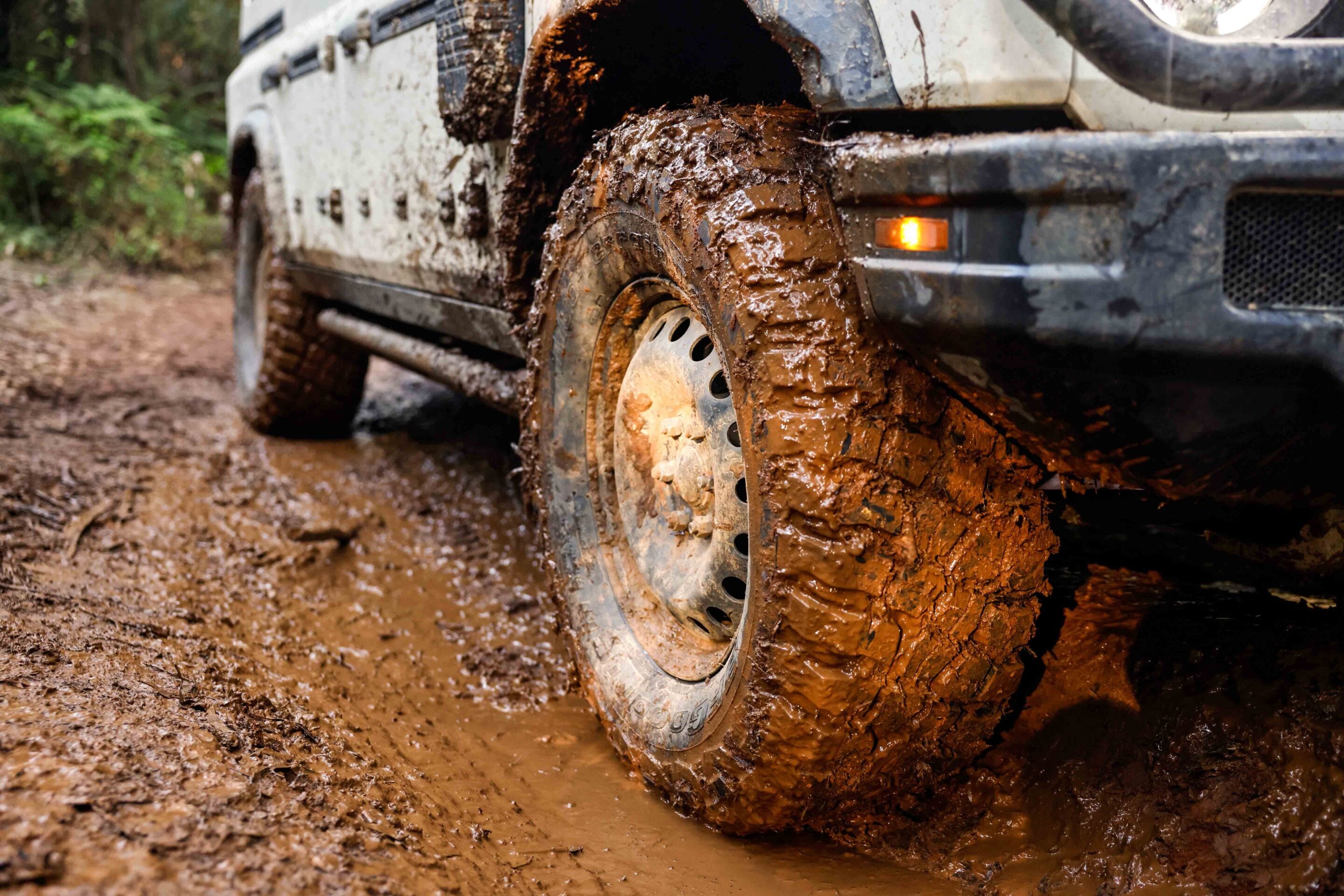
So my son William and I headed off in search of muddy tracks, and we found them. The KM3s performed exactly as you’d expect in sloppy conditions. Where the ATs would turn into slicks, the KM3s cleared mud far more effectively. I’m really impressed with the BFGoodrich Mud Terrain KM3s so far and happy I opted for the larger size.
They suit the Grenadier perfectly and make it an even more capable vehicle. I also fitted the new MAXTRAX Recovery Shovel this month. It’s a clever storage solution, with the shovel and extension handle integrating neatly with MKII and Extreme MAXTRAX boards. Hopefully I won’t need to use it too often.
One thing I would like for the Grenadier is a way to shade the safari windows. Don’t get me wrong, I really like them and at least one side is nearly always open, but there are times when the sun is directly overhead and some sort of shade system would be ideal. Maybe that’s my next mod?
- Kilometres this month: 4650km
- Average fuel use: 12.7L/100km
Part 4: Grenadier to the rescue
Are you busy right now? We have a slight need for a tow from a 4×4.
This was a message I received on a rainy Wednesday afternoon at around 1pm. Do you need help? I wrote back. Yes please! The message had come from my son Charlie’s friend, Sylvan. He was in a hired MG hatchback on a steep dirt road, doing P-plater things, and it had just started raining heavily. Yes, I do have a 4×4, I thought. So, I headed off to try and help.
The first thing I thought when I arrived at the muddy location was that he had put in a decent effort to get that far down the track in a 2WD hatch! It was a rental car, after all. A car that, now, was going nowhere under its own steam.
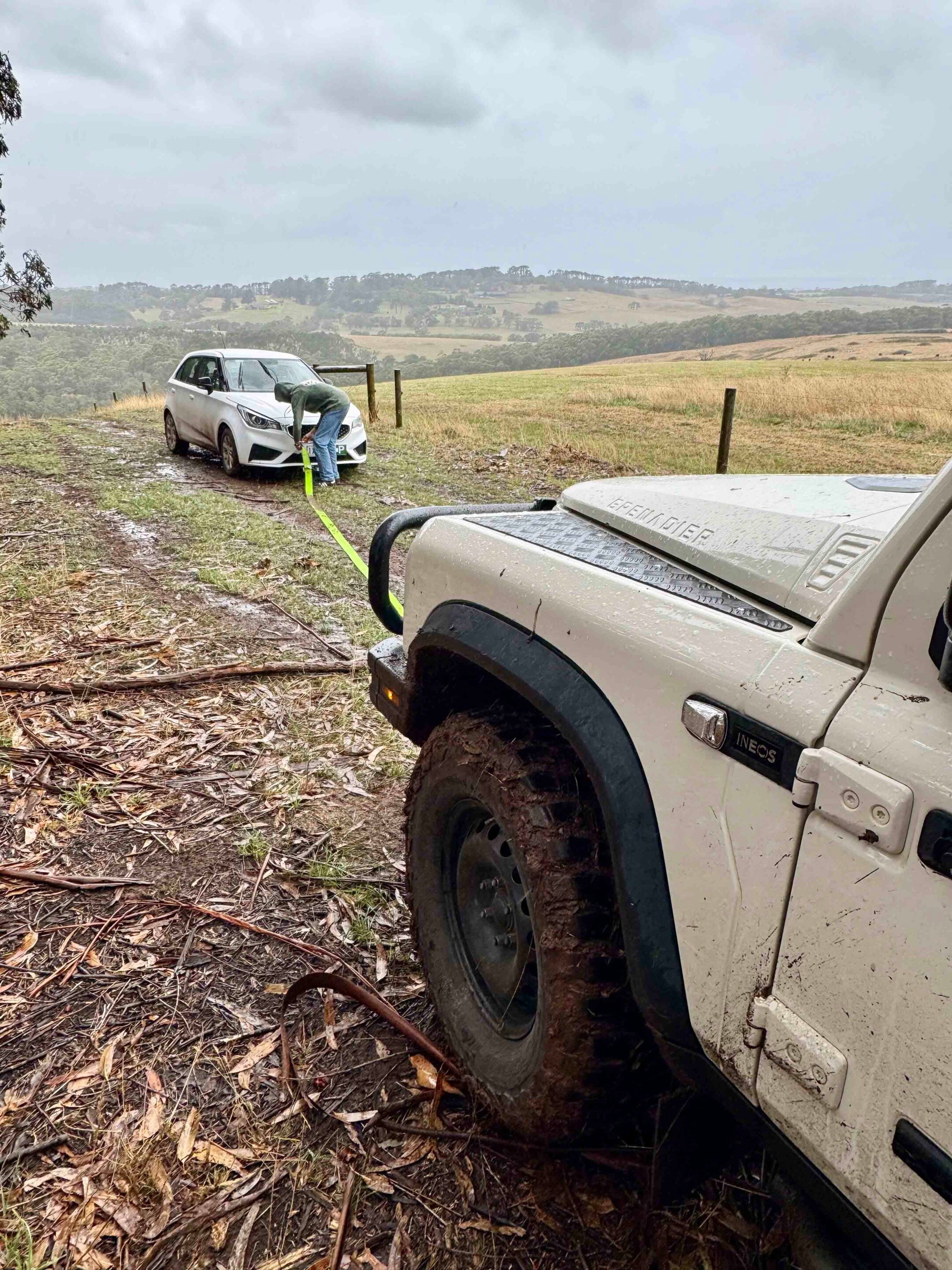
We were on a slippery track between farms near Red Hill and the rain was getting heavier. At this point, I was very happy that I had recently switched to BFG Mud Terrains; they were about to get a proper workout. So, I positioned the Grenadier close enough to the stricken rental, secured the snatch strap and gave Sylvan some brief instructions. With the Grenadier in low range, I started to reverse up the track slowly, waiting for the slack to be taken up.
This gentle approach just didn’t work. As soon as the slack was gone, the INEOS was spinning all four wheels on the spot, gymkhana-style, and we were going nowhere. For a second, I thought we might actually be cooked here, as the track was getting worse by the minute. So, take two, and the plan this time was to use some speed and hopefully snatch the hatch into forward movement.
With Sylvan ready, it was go time. I also engaged the rear diff lock on this attempt. I drove the Grenadier backwards at a brisk pace and, when the slack took up this time, the MG lunged forward. Now the Grenadier was doing it easily and I towed the rental car all the way up the hill. Sylvan and I were both really impressed with how well the Grenadier got this job done. A quick pressure wash on the MG and no one will ever know!
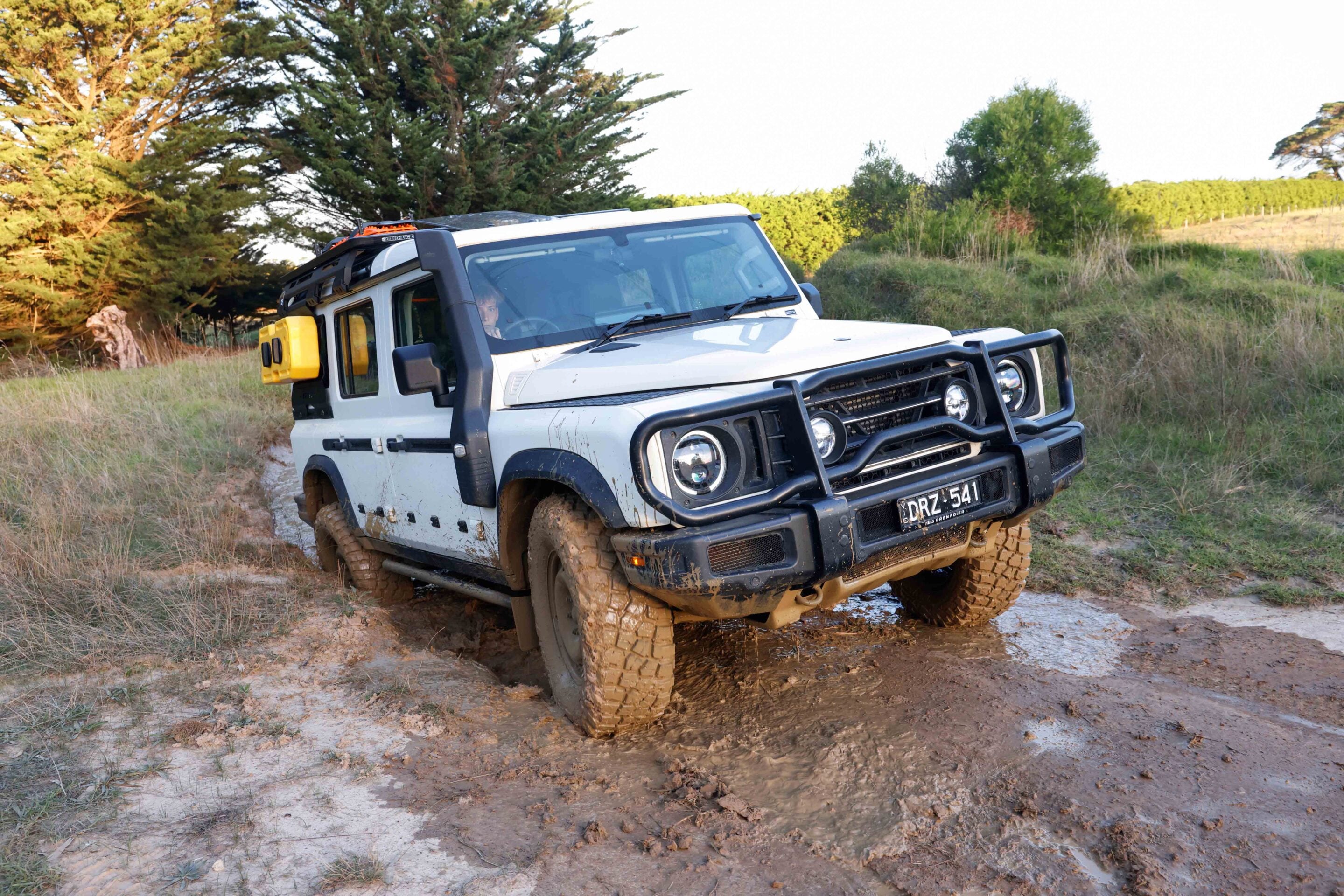
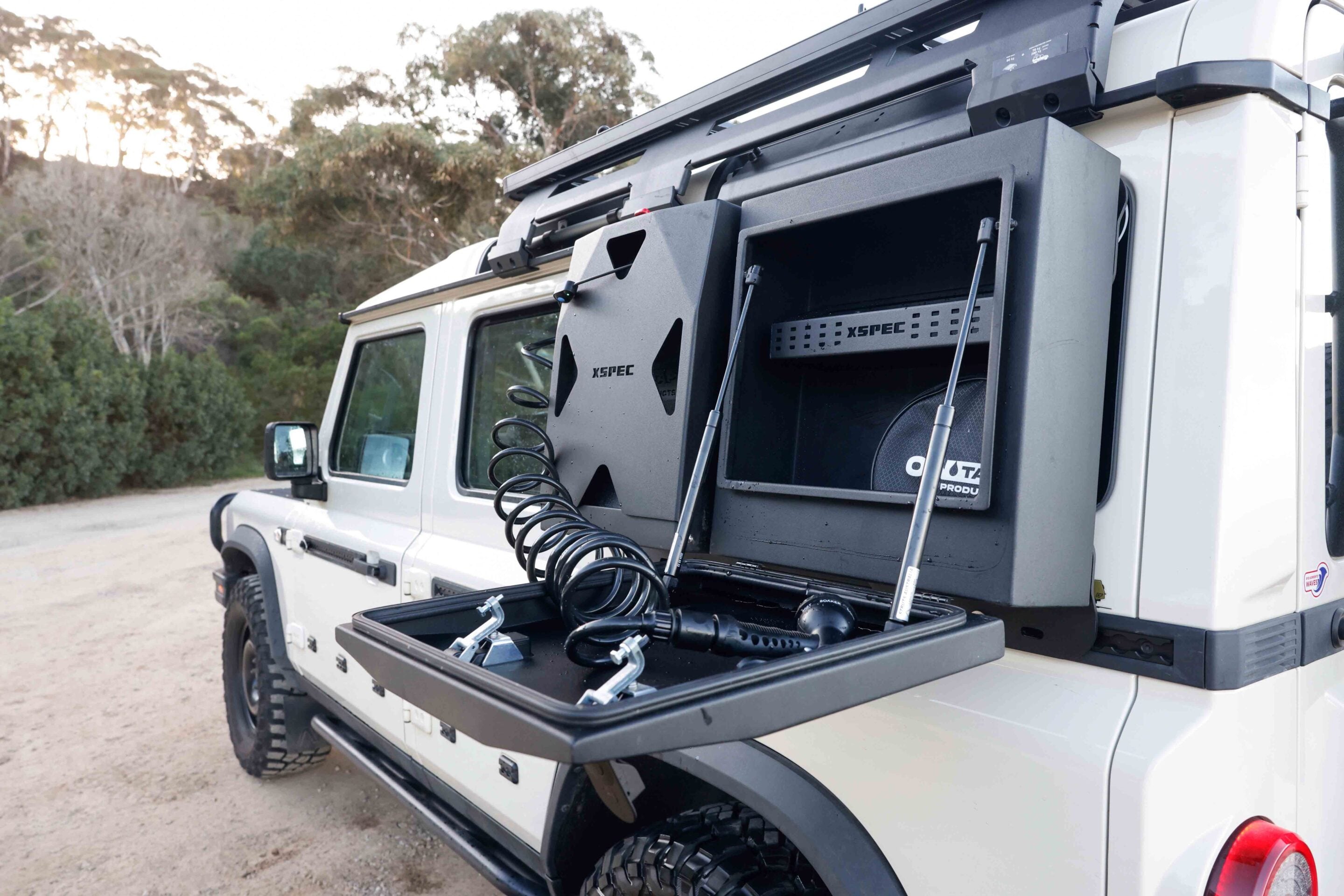
This month, the Grenadier received some new bits in the form of an XSPEC 30L gravity-feed diesel tank with a 12V transfer pump. On the passenger side, we also had an XSPEC storage locker and an XSPEC 20L lockable jerry can holder fitted with an ONTAP 22L portable shower. These products were mounted to the Grenadier with the XSPEC rear-window utility frame.
We tried out the ONTAP portable shower while out surfing for the day with my son William. It’s really simple to use. Just fill it up before you head out and then insert the plug into a 12V outlet. The Grenadier has one in the rear load area, which is great.
The storage locker next door is also really handy. I stored the hose and seven-function spray gun in there, along with some snacks. I could also see the shower system being really useful to spray down mountain bikes after a day off-road. All these products from Expedition HQ are well designed and very well integrated into the Grenadier. Hopefully, I won’t have to fill up the 30L diesel tank too often, as fuel prices this month were hectic!
Also this month, the Grenadier’s front windscreen took a beating. I was on a narrow country road – the type where you need to drop a wheel into the gravel – when a big tipper truck passed me in the opposite direction. It managed to throw up enough rocks that I had three cracks appear all at once. Great!
I feel the upright design of the Grenadier windscreen – much like my old Wrangler’s as well – makes it more prone to getting stone chips. Not much you can really do, though. The Grenadier is asking me to be serviced, so I’ll let you know next month what the INEOS dealer service experience is like.
- Kilometres this month: 2300km
- Average fuel use: 12.5L/100km
Understanding the difference between agreed value and market value is critical for 4x4s equipped with modifications, accessories and touring gear.
These additions, from lift kits and bull bars to rooftop tents, drawers, and recovery equipment, can add tens of thousands of dollars to a vehicle’s real-world value. Without the right type of cover, a total loss payout may only reflect the base vehicle’s depreciated market price, leaving owners out-of-pocket to replace costly upgrades.
Choosing the correct insurance ensures the vehicle, its modifications, and essential touring gear are fully protected, giving owners confidence to drive hard, tackle off-road tracks, and use the vehicle exactly as intended.
Market value: What the insurer pays
Market value is the amount an insurer will pay based on the vehicle’s current worth in the used car market at the time of a total loss.
Depreciation, age, mileage and market demand all factor into the pay-out. For stock vehicles with minimal modifications, market value may be adequate. But for modified 4x4s that are lifted, accessorised and loaded for touring, market value often underestimates the cost of replacing the vehicle. Even a relatively new vehicle can leave owners underinsured if the aftermarket upgrades are expensive or specialised.
Agreed value: Locking in the full replacement cost
Agreed value works differently. The insurer and owner agree on a set value for the vehicle at the start of the policy, usually including modifications and accessories.
If the vehicle is written off, that agreed amount is what will be paid – no depreciation, no debate. Specialist insurers like Club 4X4 allow agreed value policies to cover aftermarket gear, labour and installation costs, protecting bull bars, winches, suspension upgrades, drawers and other touring equipment. This ensures the pay-out reflects the true investment in the vehicle, not just its factory price.
When agreed value makes sense
- Heavily modified or accessorised
- Relatively new, with a full replacement value worth securing
- Frequently used off-road or in high-risk touring environments
- Carrying touring or recovery gear that significantly adds to the vehicle’s value
When agreed value doesn’t make sense
- Older 4x4s with minimal modifications or accessories
- Vehicles where the aftermarket investment is low or easily replaceable
- Cars mainly used for commuting or light touring, rather than off-road adventures
- Situations where the extra premium for agreed value outweighs the potential benefit
Bottom line
Knowing the difference between agreed and market value is critical for protecting the real-world value of a 4×4.
Market value reflects what a typical buyer might pay today, while agreed value ensures your investment, including mods and gear, is fully covered. Specialist insurers like Club 4X4 exist to make sure off-road vehicles and their owners aren’t caught short, giving confidence to drive hard, tour far, and kit the vehicle for adventure without worrying about being underinsured.