
This is the fourth year Tough Dog 4WD Suspension has been the major supporter of 4X4 Australia’s 4X4 Of The Year (4X4OTY) award and the third time we’ve brought one of the company’s modified dual-cab utes along on the weeklong test.
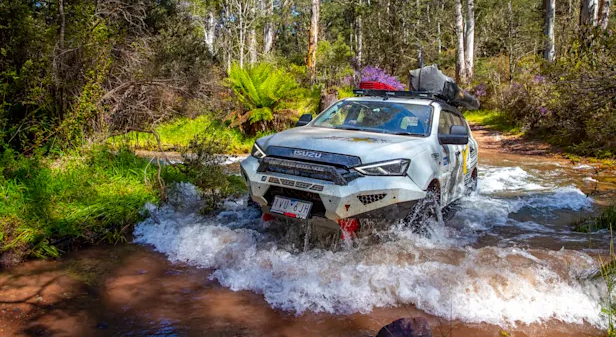
We’d previously tested Tough Dog’s Toyota Hilux and Nissan Navara, but this year, Simon Vella, Tough Dog’s general manager and the man in charge of Tough Dog suspension development, brought the company’s modified Ford Ranger. This rig was equipped with a Tough Dog suspension set-up designed to carry a 0-300kg load in the rear, while the front-end set-up was equipped to handle the weight of a steel bullbar.
RANGER REAR SPRINGS
Tough Dog offers three rear suspension packages for the Ford Ranger: 0-300kg, constant 300kg, and constant 500kg. The Ranger we tested on 4X4OTY was equipped with the 0-300kg rear leaf spring pack, which features a linear spring rate for improved ride quality, with a light load compared with the variable spring rate of the OE Ford suspension.
“We don’t run a second stage on the leaf pack,” explained Simon. “We run a primary pack only, so there’s no flat leaf on the bottom.”
The Tough Dog leaf pack is made up of single-cambered diamond-cut leaves that are specifically rated up to 300kg of constant load. The reason for eliminating the second stage (or load helper springs) is to keep the ride quality at an absolute premium. “When you drive this Ranger, even with the big wheels and tyres fitted to it, it’s plush and comfortable and not jarring at all,” Simon said.
Unless you’re carrying a constant 300kg or higher load in the back, there’s really no need to fit a load-helper spring.
“When you introduce a secondary leaf on the bottom, when the primary springs come down and rest on that, the rate then starts to climb rapidly because you’ve hit a piece of flat steel,” explained Simon. “You can camber that leaf downwards, but only by so much before it becomes impractical (such as impeding ground clearance).
“With nearly all the 0-300kg dual-cab suspension systems we’ve developed over the last 10 years, we’ve deleted the load leaf because it doesn’t really serve a purpose. A lot of people who buy a dual-cab ute, they’re just going to chuck up to 250kg in the back, maybe a couple of dirt bikes, so there’s no real need to put a secondary leaf in the bottom.”
Simon pointed out that the Tough Dog 0-300kg kit is still capable of carrying a load of 500kg or more, but drivers who always have a 300kg-plus load in the back are better off opting for either the constant 300kg kit or the constant 500kg kit. “With our constant 300kg and constant 500kg suspension kits, we then put a load leaf in,” he said.
Other features of the Tough Dog leaf spring kit include urethane bushes and friction pads between the leaves.
RANGER REAR DAMPERS
Complementing this Ranger’s rear leaves are a pair of nine-stage 40mm bore adjustable shock absorbers.
“With our adjustable shock absorbers, you’re essentially getting nine shock absorbers for the price of one,” Simon said, who encouraged the testing team to play around with the damper settings as road and track conditions changed.
The Ranger was only carrying a light load in the tray (around 200kg) on test and we kicked off on setting two, which provided a comfortable ride and good control on the highway. As road conditions deteriorated we upped the damper setting to five, which was achieved via a simple and easy-to-access rotary dial at the base of each shock absorber. This provided a noticeable increase in damping effect that improved control over bumpy terrain. While also resulting in a firmer ride, the lightly laden Ranger still felt comfortable over crook and bumpy back roads.
When we hit the rough and rocky off-road tracks around Eldee Station, we backed off the shock absorbers to setting two, which offered much more ride compliance. So how do the Tough Dog adjustable dampers work?
“You’ve got an inner working cylinder, where the piston runs up and down,” explained Simon. “That working cylinder, what replenishes it with oil is a valve that opens and closes. When the shock absorber closes the valve shuts and forces the oil through the piston, and then when it extends the valve opens, and between the outer tube and the inner tube a vacuum sucks the oil back inside again.
“By turning the adjusting dial, it turns a worm drive that restricts the oil flow…”
So when you turn up the dial, it increases both compression and rebound damping. “Around 80 per cent rebound and 20 per cent compression,” said Simon. “So if you take it to setting five, or up to setting seven, you can really feel the difference; it starts to feel quite firm.”
RANGER FRONT-END
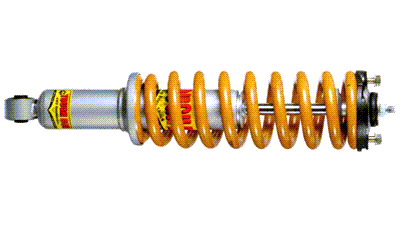
The front of the Tough Dog Ranger runs struts with 40mm foam cell shock absorbers. Tough Dog offers two front spring options for the Ranger and as this vehicle was equipped with a steel bullbar and driving lights, but no winch, it was equipped with the lighter option.
“It has a 40 to 50mm lift to suit a steel bar,” Simon said. “There are two front spring options. The first rate suits a vehicle with weight up to a steel bar, like this one here, and then we do a spring to suit a heavy bar with a winch.”
“It’s got 40mm foam cell shock absorbers, which are a similar design to the rear foam cells, the only difference being that the front shock absorbers don’t have an external valve, so they’re not adjustable.”
The springs and dampers can be purchased as separate items or the struts can be supplied completely assembled, which makes them a lot easier to fit to the vehicle.
To account for the lift in ride height, the Ford Ranger also has a centre bearing kit. “We’ve fitted a spacer to the centre bearing to bring the angle of the shaft back down so that it doesn’t vibrate,” explained Simon, adding that as soon as a Ranger has been lifted by an inch or more there will be significant driveline vibration unless it’s equipped with a centre bearing kit.
THE CHOICE IS YOURS
No matter what you use your Ford Ranger for (or any vehicle for that matter), and what load you carry in it, Tough Dog will have a tailored suspension system to suit your needs.
The Tough Dog website has a suspension configurator where you simply select your vehicle make and model, choose from the listed load options and select the most suitable suspension kit. The website also includes complete pricing details and you can order your suspension kit online and have it delivered directly to your nearest Tough Dog dealer.
The lighting market is flooded with cheap gear slathered with marketing jargon. It makes it hard to decipher if something is at the front of the field or if it’s just another dodgy product in a shiny box.
One thing that’s hard to fake is ‘Made in Australia’. It’s this tag on the box of the Ultra Vision Nitro 140 Maxx (140W) that immediately told me they’re not only going to be built well, but have serious R&D put into making sure they work effectively.
Wiring up the LED driving lights was a simple affair. When bought in a pair, Ultra Vision includes a full wiring harness with everything you need to get the lights up and running. There’s plenty of length on all the cabling, as well as quality insulation, conduits and even Deutsch connectors on every plug. From start to finish it took me less than an hour to get them on and running, and most of that time was spent figuring out the high-beam switching. There’s no H4 adaptor so you’ll need to do a little thinking, but it’s relatively basic stuff.
That same attention to detail has extended through to the construction of the lights themselves. Ultra Vision has made them as shallow as possible to allow easier fitment inside bullbars. However, the overall diameter is still a typical 230mm. They come standard with polycarbonate lenses to protect against stone chips and wayward rocks, while the 4mm-thick stainless-steel brackets lock the lights off rock steady.
We noticed some bounce in the lights along corrugations, but we were able to track it down to the factory nudge bar and not the lights themselves. The brackets also include multiple mounting holes, so you can lock them off with a few extra bolts if you have any issues.
There are 19 individual LEDs fitted in each light, sucking a maximum of 8.8amp in current draw, and the result is simply astonishing. We ticked the box for the “WiDr” pattern, which pushes out 10,600 effective Lumens per lamp, with a reach of 1 Lux at 1000m (“Combo” pattern pushes this to 1 Lux at 1200m) but greatly increases usable light in the sub-100m reach.
There are no noticeable hotspots, with an even and usable light until the light gradually fades off at the 1000m mark. At 100km/h it’ll give you 37 seconds to spot animals ahead, so it’s more than enough for just about any situation.
At $695 a piece these lights are no doubt pricier than entry-level items, but they are toe-to-toe with the biggest names in the industry in terms of performance. The outer ring can also be custom colour-matched to your 4×4 for those extra style points.
RRP: $695 each We say: Top quality, comfortable light temp, sturdy construction. Available from: Ultra Vision
Land Rover’s new Discovery represents a major technological revolution for a model range that dates back to 1989. In fact, this is only the third all-new Discovery in all that time, the last being the Discovery 3 in 2004.
But while this is a revolution for Discovery, it’s not new for Land Rover, as the technology in question is a hand-me-down from Land Rover’s premium brand Range Rover and comes in the form of a lightweight aluminium monocoque. Compared to the outgoing Discovery, which was a steel separate-chassis design, the weight savings are as much as 480kg.
The new Discovery comes with the choice of three engines in all four equipment grades, and all come with a mind-boggling array of options more likely to confuse rather than satisfy. In a first for Discovery, not all models come with dual-range gearing – dual-range is not available at all on the least powerful and least expensive engine, the Td4.
That means the next engine up in price and power, the Sd4, is the least-expensive starting point for a ‘proper’ off-road Discovery.
TOURING
As with the lightweight aluminium monocoque, the Sd4 engine is a technological next-step design. Amazingly, despite being a four-cylinder of just two litres, it produces 177kW and 500Nm, numbers that would look more than handy from a 3.0-litre diesel. More amazingly, the engine delivers on this promise – and then some – and is both flexible at very low revs and zippy up top. At all other times it’s simply effortless and has no trouble propelling what is still a very big vehicle.
This 2.0-litre four comes from Land Rover/Jaguar’s new high-tech Ingenium engine family and employs two different-sized sequentially arranged turbos that are instrumental in producing the Sd4’s ‘big-engine’ performance.
The Sd4 is also a relatively quiet engine and notably smooth for a four, while the slick eight-speed auto, with its tall higher ratios, adds to the overall refinement of the powertrain.
At highway speeds there’s also very little wind or road noise and the Discovery has all the poise of a luxury 4×4. Figuratively close your eyes and you could well be in a Range Rover… The only niggle is the ride, which could be better on some surfaces and better on the 19s fitted to the lower spec models rather than the 20s of this HSE.
If there’s a lot of luxury about the Discovery there’s a bit of sportiness, too, especially for something so big. For that, thank its trim weight, independent suspension, low on-road stance and nicely tuned electric power steering.
TRAIL DRIVING
The Discovery’s fully independent suspension gives the sort of wheel travel you’d expect of a good live-axle design, and it comes with the added bonus of height-adjustable air-spring suspension, either standard or optional across the range. This allows you to raise the vehicle up to 75mm above the default ride height of 208mm to 283mm, with more available above that should the vehicle ground out. The height-adjustable suspension also means an impressive 900mm wading depth.
Despite a driving position that’s not as commanding as Discovery 3 and 4, this new Discovery with its clearance, wheel travel and clever 4×4 system makes easy work of the trails; the major hitch being the W (270km/h) rated tyres with their thin and vulnerable sidewalls.
Better news comes in the excellent underbody protection and the fact that many key components, such as suspension sub-frames, are still made from steel, part of the 15 per cent of the Discovery that’s not aluminium.
SET-PIECE HILL CLIMB
The Discovery’s long list of options include a self-locking rear diff, Terrain Response 2 and All Terrain Progress Control, which is similar to Toyota’s Crawl Control and works up or down hill as a type of off-road cruise control… all you have to do is steer. These options were all fitted to the Sd4 and, with the inherent advantage of its long wheel travel and generous clearance, it’s no surprise the Sd4 was totally untroubled on our set-piece climb.
CABIN AND EQUIPMENT
The new Discovery has a spacious cabin despite being slightly narrower, lower and less airy than Discovery 3 and 4, even if it’s a bit longer. As a driver you also sit lower and seemingly farther back. Despite the narrower cabin, the second-row seat is comfortable for three adults and adjusts back and forth so you can optimise legroom verses rear luggage space.
All Discovery models from entry level up are strong on safety gear, but if you want more luxury you’ll have to bypass the two lower-spec models and move straight to the HSE, or throw lots of options at an S or SE.
PRACTICALITIES
The Sd4’s 77-litre fuel capacity is small, so it’s a good thing the engine is economical – fitting a long-range tank may be difficult, even if the V6 Discovery has eight litres more fuel capacity.
As mentioned, the W speed-rated tyres are a liability off-road, but the good news is that this new Discovery wears a one-size-taller tyre for any wheel size, which opens up the replacement tyre options considerably (even LT tyres), despite 19s still being the smallest factory wheels.
Better news is the Sd4 has excellent payload and towing capacities; while a lack of aftermarket support, at least at this stage, is a negative.
SUMMARY
The Discovery’s significant weight savings is key to its wider performance ‘envelope’ in terms of what a 4×4 family wagon can do on and off the road. But it’s not perfect, with the all-too-familiar Discovery shortcomings of fuel range and wheel/tyre specification only addressed in part.
2018 LAND ROVER DISCOVERY Sd4 HSE SPECS: Engine: 2.0-litre 4-cyl bi-turbo diesel Max power: 177kW at 4000rpm Max torque: 500Nm at 1500rpm Gearbox: Eight-speed automatic 4X4 system: Dual-range full-time Kerb weight: 2109kg (five seat) GVM: 2940kg (five seat) Payload: 921kg (five seat) Towing capacity: 3500kg GCM: 6640kg (five seat) Fuel tank capacity: 77 litres ADR fuel claim: 6.3L/100km Test fuel use: 9.8L/100km Touring range*: 735km Price: $93,550 (+ORC)
*based on test average, tank capacity claim and a 50km safety margin.
The MU-X is Isuzu’s D-Max ute made into a 4×4 wagon, thanks to little more than fitting a new body – a job made relatively simple by the separate-chassis construction – and changing the rear suspension from leaf to coil springs.
The booming ute market has led to a rich crop of such vehicles and, given utes are built with simplicity, strength and durability at their design forefront, the resulting wagons also inherit these admirable 4×4 qualities.
This is the second time the MU-X has made the 4X4OTY shortlist, the last time being four years ago when it first appeared off the back of what was then the new D-Max.
The MU-X returns to the 4X4OTY fray with engine revisions largely brought about by compliance to the latest round of ever-stricter emission laws, in this case Euro 5. This brings the addition of a diesel particulate filter but also a new low-inertia variable-geometry turbo and more sophisticated higher-pressure common rail injection, which combine to boost the maximum torque from 380Nm to 430Nm, even if the 3.0-litre four-cylinder’s peak power remains unchanged at 130kW. A new Aisin six-speed automatic (replacing the previous five-speed) completes what is effectively a new powertrain.
At the same time, the MU-X has undergone a significant revamp of its sound and vibration isolation measures, and it has refreshed interior and exterior styling.
TOURING
Thanks to these changes, the MU-X is a much improved touring vehicle. It’s noticeably quieter and more refined than before, and the extra torque means the engine produces more power at lower speeds and is more flexible than before. It also carries the taller top gear that the new six-speed automatic brings, courtesy of its extra overdrive ratio, without fuss.
Pedal-to-the-metal, as when overtaking, the MU-X isn’t anything special (as you’d expect of its 130kW) but it’s otherwise effortless and relaxed and rarely has to work hard to get the job done.
As ever, it’s thrifty on fuel. Comfortable ride, too, from a suspension set-up that’s nicely sorted, even if the live axle at the rear can’t help but make its presence felt on some rough roads and corrugations.
In this company (not that we are comparing the vehicles directly) the MU-X also stands out as being the only vehicle with part-time 4×4. While this is easy enough to use, it lacks the convenience and safety of full-time 4×4 on varying (dry to wet; sealed to unsealed) road conditions.
TRAIL DRIVING
The MU-X’s robust ute-based underpinnings are reassuring once you hit trails – and they need to be, as the clearance isn’t it all it could be. This is especially noticeable on descents, when the front suspension is compressed and it can easily belly out.
Still, the MU-X is an effective and easy-to-drive vehicle on the trails thanks in part to its simple 4×4 system – once you have it in four-low there’s nothing else to fiddle with – even if it can start to struggle a bit when things get gnarly. The engine’s air intake is via the inner guard, which is reassuring, and there are solid recovery hooks back and front.
SET-PIECE HILL CLIMB
The MU-X’s tendency to struggle in tougher off-road conditions was laid bare on our set-piece hill climb. It was the only one of the finalists that couldn’t get up the hill on a direct line. In fact, it didn’t even get past the first bit of rough track where all the other vehicles walked through with ease.
With a bit of effort it got to the top of the climb, but more by driving around the obstacles rather than through them. The problem is a lack of wheel travel, which is an issue with this MU-X, the pre-update MU-X and the closely-related Holden Colorado 7 and Trailblazer.
Even the two utes from which these wagons are derived (the D-Max and the Colorado) suffer in the same way. Across all these vehicles there’s also no rear locker or an electronic traction control system that’s effective enough to make good this shortfall.
CABIN AND EQUIPMENT
Perhaps it is its ute background showing through, but the MU-X feels a bit ‘low rent’ inside, even if the cabin is comfortable enough in all three rows of seats: the driver gets by without steering-wheel reach adjustment; the second row can take three adults, but is better for two adults and a child in the centre; and the third row has room for adults, even if it is a bit of a squeeze.
A generous equipment list extends to leather, electric-adjust seats, smart-key entry and start, and rear DVD on the top-spec models, while the mid-spec model has sat-nav, climate control and side-steps, but no leather.
PRACTICALITIES
It’s a good thing the MU-X is thrifty, as the 65-litre fuel tank capacity is on the smaller side; although, fitting a long-range tank isn’t a problem. Likewise, there’s reasonable aftermarket enhancement for the MU-X, given its popularity.
The MU-X runs 255/60R18s, which is one size smaller than the Prado. Larger Prado/Hilux tyres (265/60R18s) can be fitted of you want, or you can swap to 17s to open up the tyre choice even further.
SUMMARY
Above all, the MU-X comes across as a very honest four-wheel drive that does all that is asked of it. It does all of this in a simple and robust package that has already earned a strong reputation for reliability and low running costs.
2018 ISUZU MU-X LS-U SPECS: Engine: 3.0-litre 4-cyl turbo-diesel Max power: 130kW at 3600rpm Max torque: 430Nm at 2000-2200rpm Gearbox: Six-speed automatic 4X4 system: Dual-range part-time Kerb weight: 2097kg GVM: 2750kg Payload: 653kg Towing capacity: 3000kg GCM: 5750kg Fuel tank capacity: 65 litres ADR fuel claim: 8.1L/100km Test fuel use: 9.9L/100km Touring range*: 606km Price: $52,400 (+ORC)
*based on test average, tank capacity claim and a 50km safety margin.
US AUSSIES love things big: deserts, beaches, bananas and utes. It’s the reason Ford’s Ranger has been a runaway success from the older PJ and PK models.
Big styling, the largest engine in-class and a body that dwarfs almost all its peers; it’s also the reason WA native Ant first got behind the wheel of a first-gen PX1 Ranger. “They’ve got heaps of room inside,” he told us with an unmistakable West Australian drawl. “They’re an awesome car to drive; they perform off-road and have a strong driveline.” The only problem is, despite the 3.2 Duratorq motor being the largest in its class, it’s not exactly renowned for its reliability.
More 4×4 gear guides

“We started playing with the performance side of things,” Ant said. “Larger turbos, larger injector nozzles, tuning, etc., but being a PX1 they were quite dulled down on engine safety systems. I went through three motors, two turbos and a transmission.”
Where a normal punter might take the chance to slap a motor in it and jump ship to something else, Ant figured he’d double down and build one of the most bad-ass Rangers we’ve ever seen.
You see, despite Ant currently swinging the tiller on a Ranger, he’s actually built himself a cult following for his Duramax kits and conversions at Ozmax.
When your play toy is a Duramax GU, your wife’s runaround is a Duramax GU, and you suddenly find yourself with an engineless Ranger and a heap of Duramax engines looking for a home, it becomes pretty clear what needs to be done.
For those unfamiliar with the Duramax range of engines, they’re the holy grail of diesel V8s, with 6.6 litres (402 cubic inches) capacity, iron blocks, alloy heads, four valves a cylinder, and a whopping great turbo nestled in the V. The engines are built in Ohio with a joint venture between Chevrolet and Isuzu and power everything from Chevy Vans right through to huge medium-rigid trucks from GMC.
In their lowest standard tune they pushed out 250hp and 624Nm – just a hair under the twin-turbo LC200 – right up to 397hp and 1037Nm in later years. Put simply, it’s one of the biggest and baddest engines you can buy, and it’s purpose-built to haul anything you can put behind it.
Despite all that Ant reckons it’s almost perfect for converting into the comparatively pint-sized Ranger. “It was actually pretty straightforward,” he said. “They’re a common swap into Patrols, but this was actually a lot simpler.”
To kick things off Ant ditched the idea of mating the bent-eight to the Ranger’s box. It simply couldn’t cope with a more than a 100 per cent jump in torque. The old 3.2 came out, as did the factory six-speed and transfer; in their place went a huge six-speed automatic transmission from US-based Allison Transmission and a New Process NP263 transfer case.
Due to the IFS arrangement, Ant was able to use the existing sump, helping to simplify the process. Then it was on to making it run.
“The communications system on the PX1 Ranger isn’t that smart,” he told us. “We wired the Duramax ECM in as a stand-alone unit then sent a few signals into the stock set-up so the speedo and tacho still work. As far as the stock electronics are concerned, there’s still a 3.2 under the bonnet.”
While the standard diffs are more than up to the task, Ant had a positive side effect swapping out to the new transfer case and control unit. “It now functions a little like full-time 4WD. If it senses slip between front and rear, it’ll kick itself into 4×4.”
Ant explained that drive-in, drive-out conversions with all the parts supplied would roughly be a $30K job; although, he’s blown away with the results, averaging around 13.2L/100km around town and up to 17.2L/100km towing his 3400kg boat.
At twice the capacity of the stock 3.2L, the Duramax puts out an ungodly amount of power, too. Ant was able to run the Ranger up to 468rwhp and a mind-melting 1320Nm on a recent dyno-tune; that’s a 180 per cent gain in usable torque.
“You can’t even tell the boat is there,” Ant said with a laugh. “It’s 8.3 metres long. I lined up against a bloke in an LC200 with a tinny and blew the doors off him.”
The big concern of any engine conversion like this is weight distribution; throwing an extra few hundred kilos over the front axle can not only knock around springs and shocks, but drastically affect handling.
“It actually only dropped 10mm on the standard springs,” Ant said. “The 3.2-litre and six-speed is a heavy combination, and the NP263 transfer case is magnesium which keeps weight down with the conversion.”
With goals of a pre-runner-inspired build, Ant figured the Ranger could do with a tickle underneath. It’s running heavy-duty XGS two-inch-lifted springs up front to deal with the slight weight increase over stock, and they’re wrapped around Ironman Foam Cell Pro shock absorbers. The rear has a matching combination; although, there’s a 50mm body lift, bringing the overall ride height up and allowing Ant to slot the big Allison automatic in the transmission tunnel without any body modifications. A set of Total Chaos upper control arms were also given the nod to get the alignment back into spec.
As Ant built the Ranger to be more of a pre runner-cum-tow tug, the heavy-duty barwork is left to the twin Patrols in the garage. Instead, the PX1 is sporting a clean de-badged look with a bunch of colour-coding, a huge four-inch snorkel, stock barwork front and rear, and 35-inch tyres in the guards.
Ant’s rubber of choice is the ever-popular Nitto Terra Grappler, which gives the perfect combination of soft sidewalls for beach work and longevity. He’s wrapped them around 16-inch Brutes from Allied Wheels.
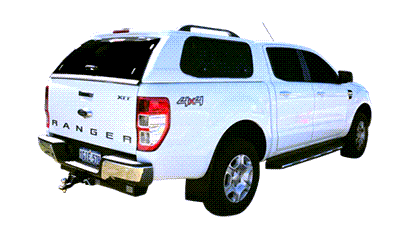
On the inside are a handful of off-road modifications; although, with the Duramax Ranger set up for touring, Ant’s opted for the bare necessities for beach fishing runs with mates. There’s an Aeroklas canopy covering the rear end, while a brake controller teams up with sat-nav inside. Hidden inside the glovebox is a UHF, while the aerial is also hidden to finish off the clean look.
There are plenty of people who’d throw the catalogue at a 4×4 before being happy, but Ant’s a prime example of a new breed of off-roaders. A purpose-built rig for getting out there and doing the job, a bunch of style thrown into the mix, and a driveline that puts a grin on Ant’s face from ear to ear every time he stomps on the loud pedal.
Bee-cee-what now?
In years gone past, the hardest part about an engine conversion was physically fitting it in. In some circumstances you’d need an adaptor, which added expense and an extra step but wasn’t an insurmountable problem.
When engines became electronically controlled things got a little more complicated and required extensive wiring, but they could essentially be standalone units – yank out the existing engine wiring and ECU (engine control unit) and put the new stuff in.
Things are now a little more challenging. The original offender was electronically controlled transmissions running their own ECU and needing to communicate with the engine’s ECU. In short, some transmissions simply couldn’t be paired with some engines, even if you could physically connect them.
To make things even more complicated, most current-generation 4x4s run what’s known as a BCM, or Body Control Module. They’re essentially an ECU that controls anything that needs controlling. Headlights, air-con, windows… even shifting the transfer case from high to low range. Conversions into modern 4x4s need to not only power themselves but trick the stock setup into working as well. It’s the main reason modern engine conversions are getting harder and harder.
4X4 Australia's project builds
IN A WORLD full of politically correct electric and autonomous cars, it’s nice to know there are still people out there with a passion to build interesting and fun vehicles. Robert Bollinger is one such person with his Bollinger B1 electric off-roader, and now we have the Volcano from Scuderia Cameron Glickenhaus.
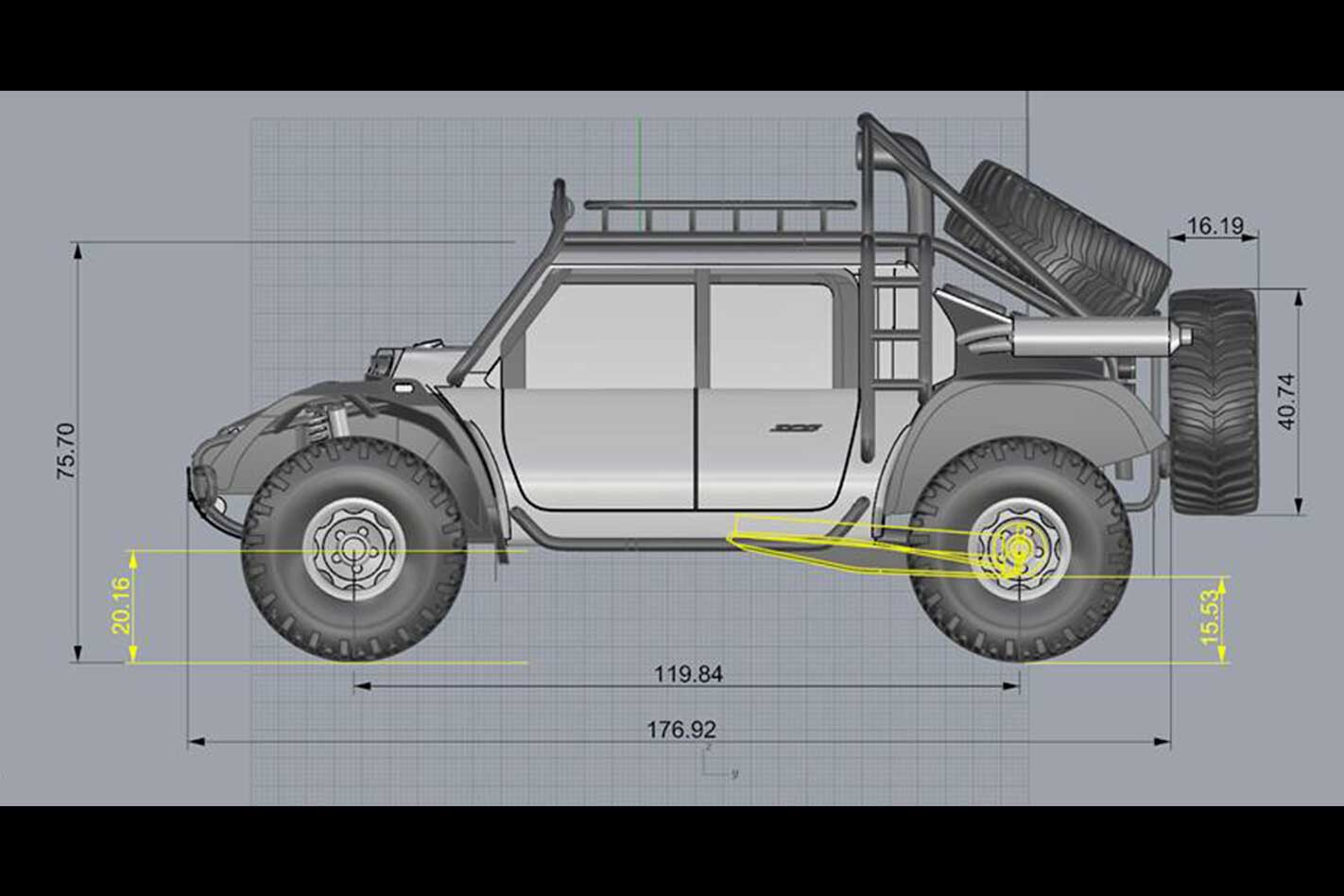
SCG is best known for its Ferraris and endurance-racing sports-cars, but the Volcano will be an off-roader reminiscent of the iconic Hurst Baja Boot. Glickenhaus bought the Hurst Baja Boot when it came up for auction a few years back, to add to his collection of classic cars.
SCG is calling the modern interpretation of the Boot the Volcano, and it will be available in both two- and four-door versions. SCG is also planning an expedition version of the Volcano, which it hopes to drive up a 7000-metre-high volcano in South America, to break the record for the highest a car has been driven – and there will be opportunities for SCG Volcano customers to join the expedition in their own vehicles.
The Hurst Baja Boot was the first of two Boots made and was raced by Bud Ekins and Steve McQueen in off-road events such as the Baja 1000 during the late 1960s. The rear-mounted, small-block, Chevrolet-powered four-wheel drive Boot was revolutionary for its time and could be considered the precursor to today’s off-road buggies and trophy trucks.
Unlike the Boot, the SCG Volcano will have a sealed, air-conditioned cockpit, a modern 5.0-litre V8 engine and modern suspension design offering around 500mm of travel.
As cool as it is, the SCG Volcano will only be made in low numbers and be priced around the US$100,000 mark. The low volume should qualify it for special vehicle registration in the USA.
THE Australian automotive industry’s best and brightest assembled last week at Melbourne’s Forum Theatre for the 2018 Australian Motoring Awards (AMAs).
The AMAs is an annual event that awards the best in the industry, as voted by expert judges from the respective brands: Wheels Car of the Year, MOTOR Performance Car of the Year, WhichCar Style Award, and the big one, 4X4 Australia’s 4X4OTY.
Shane Jacobson, a self-confessed petrol-head, steered proceedings and wooed the 200-strong in attendance with his charm and wit. While Wheels’ esteemed journo Peter Robinson hosted an insightful Q&A with Paul Beranger, the former head of Toyota Style Australia.
Watch the above video for a glimpse at the night’s proceedings, and for complete coverage of the 2018 4X4 of the Year, pick up a copy of 4X4 Australia’s February issue, in stores Feb 1.
The Grand Cherokee just keeps on coming back for more when it comes to 4X4OTY.
It’s already a two-time winner, and this is the fourth time a model from this generation Grand Cherokee has been shortlisted for the award.
This is thanks to its on-going mechanical evolution, which saw it win on debut in 2011 with a petrol V6, finish third the following year (behind two Toyotas in a very strong field) as a diesel V6, and then win again in 2014 when an eight-speed automatic joined a revised diesel engine.
What we have this year is the first time there’s been a Grand Cherokee pitched specifically at the off-road enthusiast. Not only does it combine all the off-road options in the Grand Cherokee catalogue, but there’s some bespoke Trailhawk bits that help make it somewhat of a ‘factory custom’.
Despite Jeep being an ‘All-American’ icon, the Grand Cherokee’s mechanicals are essentially a German/Italian mix, including Mercedes-Benz chassis, a V6 diesel from Fiat/VM Motori, and gearbox from Germany’s ZF; all reflecting Jeep’s corporate tie-up with Benz and now Fiat.
TOURING
The Trailhawk is a very accomplished road car, no matter the nature of the road. Of course, it should feel at home on the road given its fully independent suspension and monocoque construction, but it delivers even beyond that.
Perhaps it’s the Benz heritage shining through, but the Trailhawk’s combination of responsive and sharp steering, poised handling on the bumps and plenty of punch from its V6 diesel makes it very much a ‘driver’s car’ by the standards that prevail in the wider 4×4 world.
It’s also a great car to eat highway distance thanks to the engine’s low-rpm torque and the long-legged eight-speed. Not much wind or road noise, either, and a comfortable ride on standard 18s.
The air-spring suspension provides off-road lift but helps on-road dynamics and aerodynamics by automatically lowering itself (from a default ride height that is already low) once up to highway speeds.
TRAIL DRIVING
The height-adjustable air-spring suspension is the Trailhawk’s number one off-road party trick. With the simple press of a button you can jack up the Trailhawk from its default road clearance of 205mm to 233mm (the standard off-road setting) or all the way to 260mm at the highest setting.
The downside is that, when jacked up, the Trailhawk has less droop travel, which results in the suspension banging and crashing on the bump stops over rough ground, especially on the highest setting. On the standard off-road setting (233mm) things aren’t too bad, but the Trailhawk is never particularly plush off-road given the suspension’s limited travel regardless of where the ride height is set.
While not particularly comfortable in rougher off-road conditions, the Trailhawk is certainly capable enough thanks to its ‘smart’ 4×4 system with effective terrain settings, a self-locking rear diff, deep low-range gearing, standard all-terrain tyres and solid underbody protection.
Not so good off-road is the low driving position with poor over-bonnet visibility and a limited wading depth (508mm claim), as the air intake is somewhat vulnerable located under the bonnet lip. The off-idle throttle progression isn’t great, either.
SET-PIECE HILL CLIMB
As ever, the make-or-break set-piece hill-climb reveals much of the 4X4OTY contenders, and it’s certainly no different with the Trailhawk. Here’s it’s all about suspension travel – or lack of it, to be precise – and chassis electronics.
Jacked right up the Trailhawk has no trouble with clearance, but the short-travel suspension has it bucking around, lifting wheels and putting on a dramatic show. It shouldn’t be able to make the climb, but it does, and, apart from the extreme body movement, does it with little fuss. For that you can thank Jeep engineers’ mastery of traction control calibration and the ‘tuning’ of the rear auto locker. Excellent hill-descent and hill-ascent control, too.
CABIN AND EQUIPMENT
As 4×4 wagons go, the Trailhawk is more medium than big and, unusually in the segment, only seats five. The cabin also feels somewhat closed in and more passenger-car wagon than 4×4. Still, it’s comfortable up front; although, the driver’s footwell is a bit crowded, especially with the foot-operated parking brake.
Not a big rear seat, either, and luggage space is more okay than good. The spare is under the floor, which means clearing the luggage area to change a flat.
Given the Trailhawk sits near the top of the Grand Cherokee range, it’s no surprise to find it loaded with all the kit most people want; although, high-end safety features like radar cruise, forward-crash warning, blind-spot monitoring and rear cross-path detection are optional ($3250).
PRACTICALITIES
The Trailhawk’s respectable fuel capacity (93.5 litres) and frugal engine make for a good touring range as standard – the best of our six contenders, in fact. Likewise, the 256/60/R18-inch wheel and tyre package is Prado/Hilux size for added practicality, although you can’t fit 17s.
Positives include a 3500kg tow rating (and plenty of V6-diesel torque to back that up) and decent aftermarket support for things like frontal protection and snorkels.
SUMMARY
Despite being the most off-road oriented Grand Cherokee so far, the Trailhawk is still a Grand Cherokee, for better or worse. That means it’s excellent on-road – even on very poor roads – and more than handy off-road, even if it could be more comfortable. Its strong value is offset by the fact its more a medium-size 4×4 wagon than a large one.
2018 JEEP GRAND CHEROKEE TRAILHAWK SPECS Engine: 3.0-litre V6 turbo-diesel Max power: 184kW at 4000rpm Max torque: 570Nm at 2000rpm Gearbox: Eight-speed automatic 4X4 system: Dual-range full-time Kerb weight: 2300kg (approx) GVM: 2949kg Payload: 649kg Towing capacity: 3500kg GCM: 6099kg Fuel tank capacity: 93.5 litres ADR fuel claim: 7.5L/100km Test fuel use: 10.2L/100km Touring range*: 867km Price: $77,400 (+ORC)
*based on test average, tank capacity claim and a 50km safety margin.
THE February 2018 issue of 4X4 Australia will be on sale from February 1.
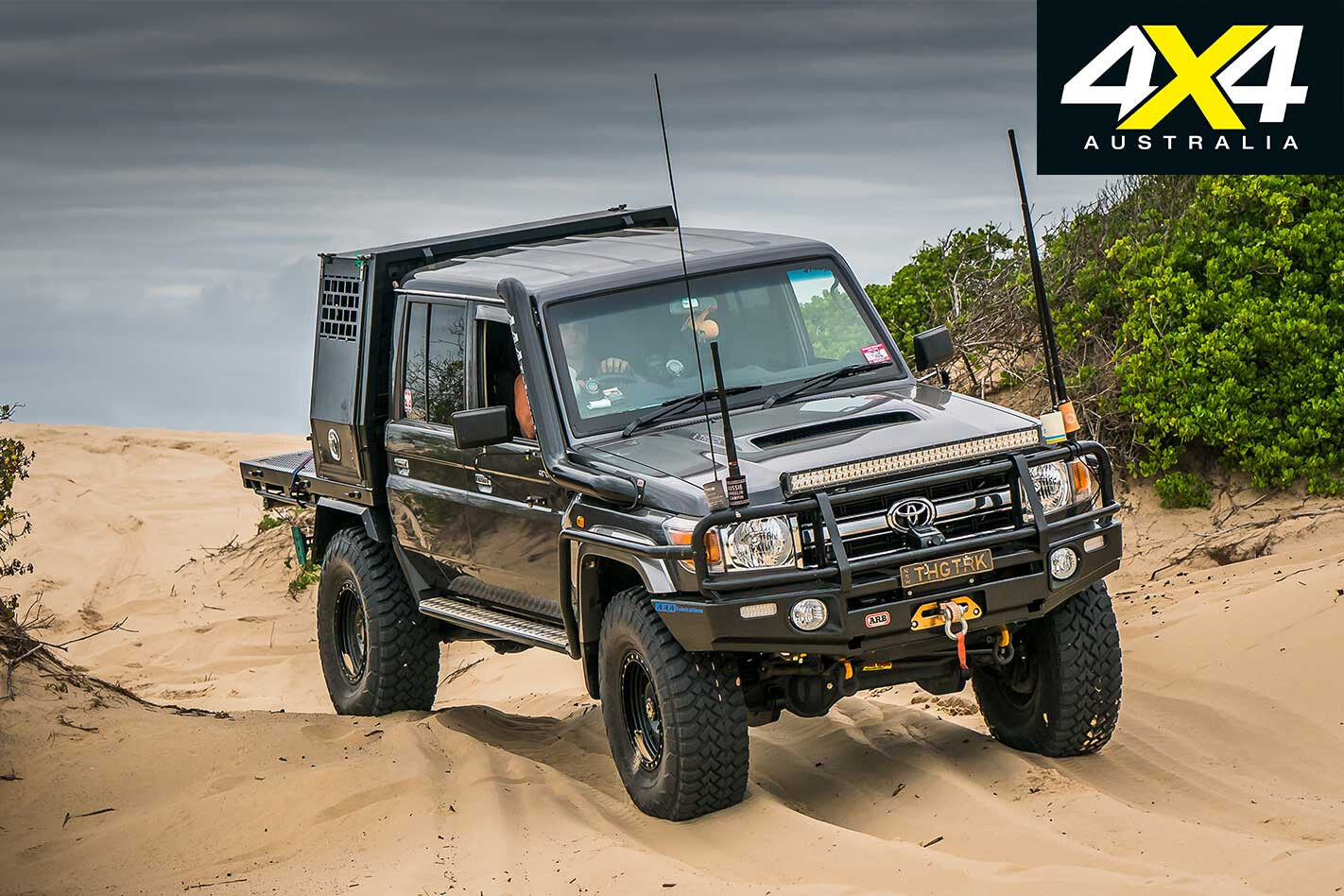
Not only does this issue feature complete coverage of the 2018 4×4 of the Year award, but we’ve slotted in one of the meanest custom-built LC79s to be found on Aussie tracks – aptly named ‘Thug Truck’.
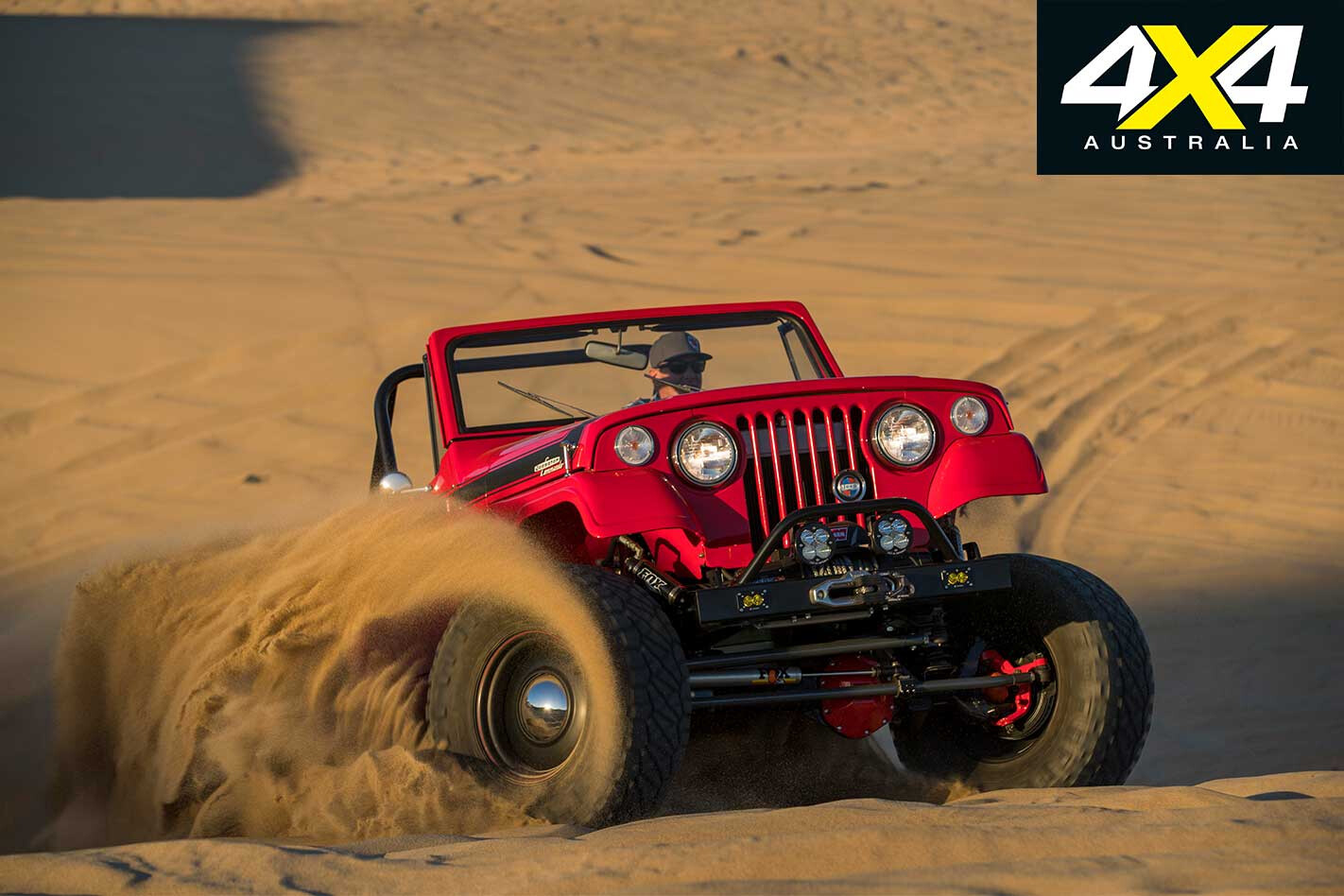
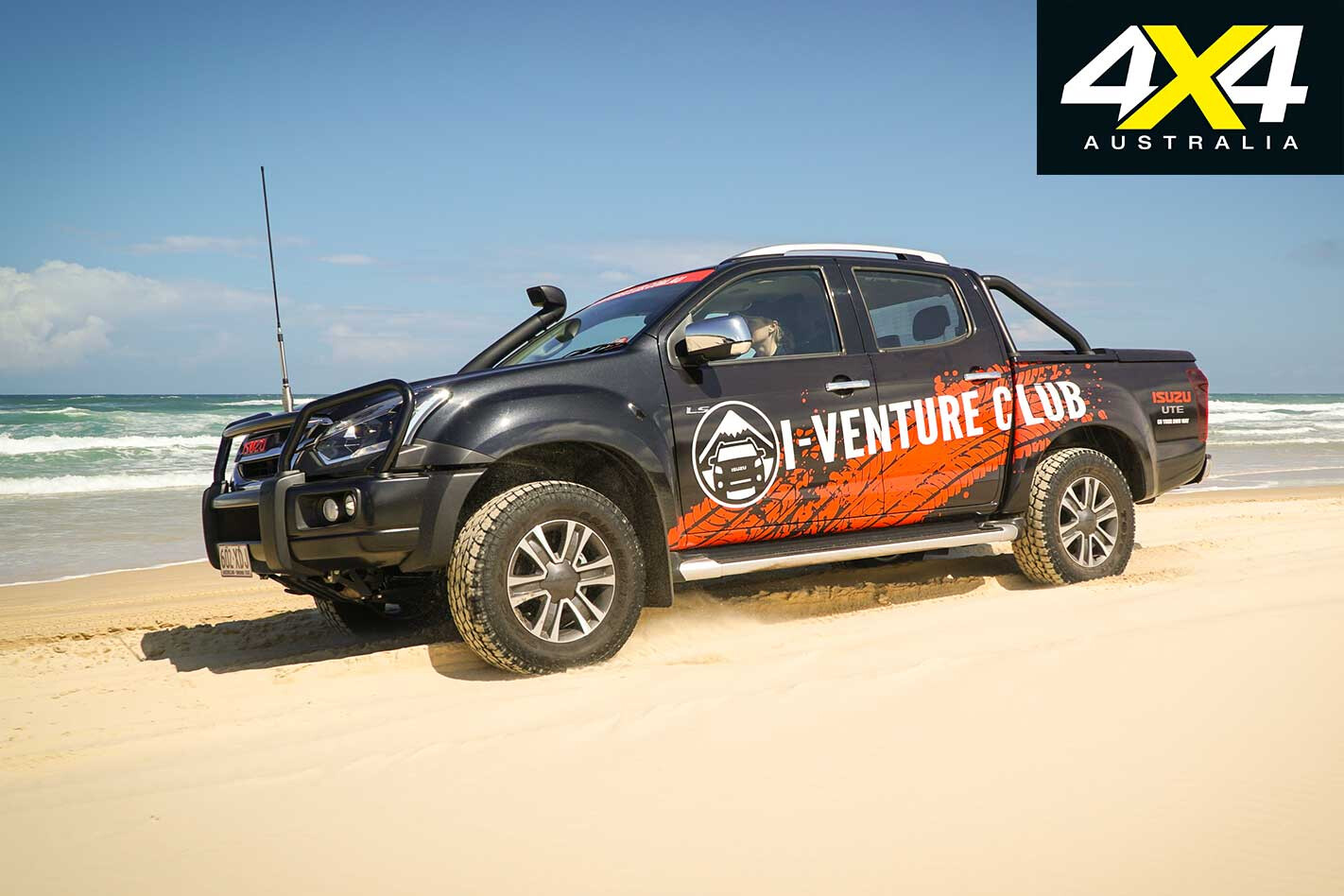
We also sneaked a peek at Synergy Manufacturing’s Jeepster Commando, a rig that stole the spotlight at the 2017 SEMA Show. Plus, we packed our boardies and took off to Fraser Island for Isuzu’s I-Venture Trip.
Get your copy of 4X4 Australia from newsagents or by subscribing to 4X4 Australia in electronic or print format.
What You’ll Get in the February 2018 issue:
CUSTOM: 2014 Toyota LC79 Beast of an LC79 lives up to its ‘Thug Truck’ reputation.
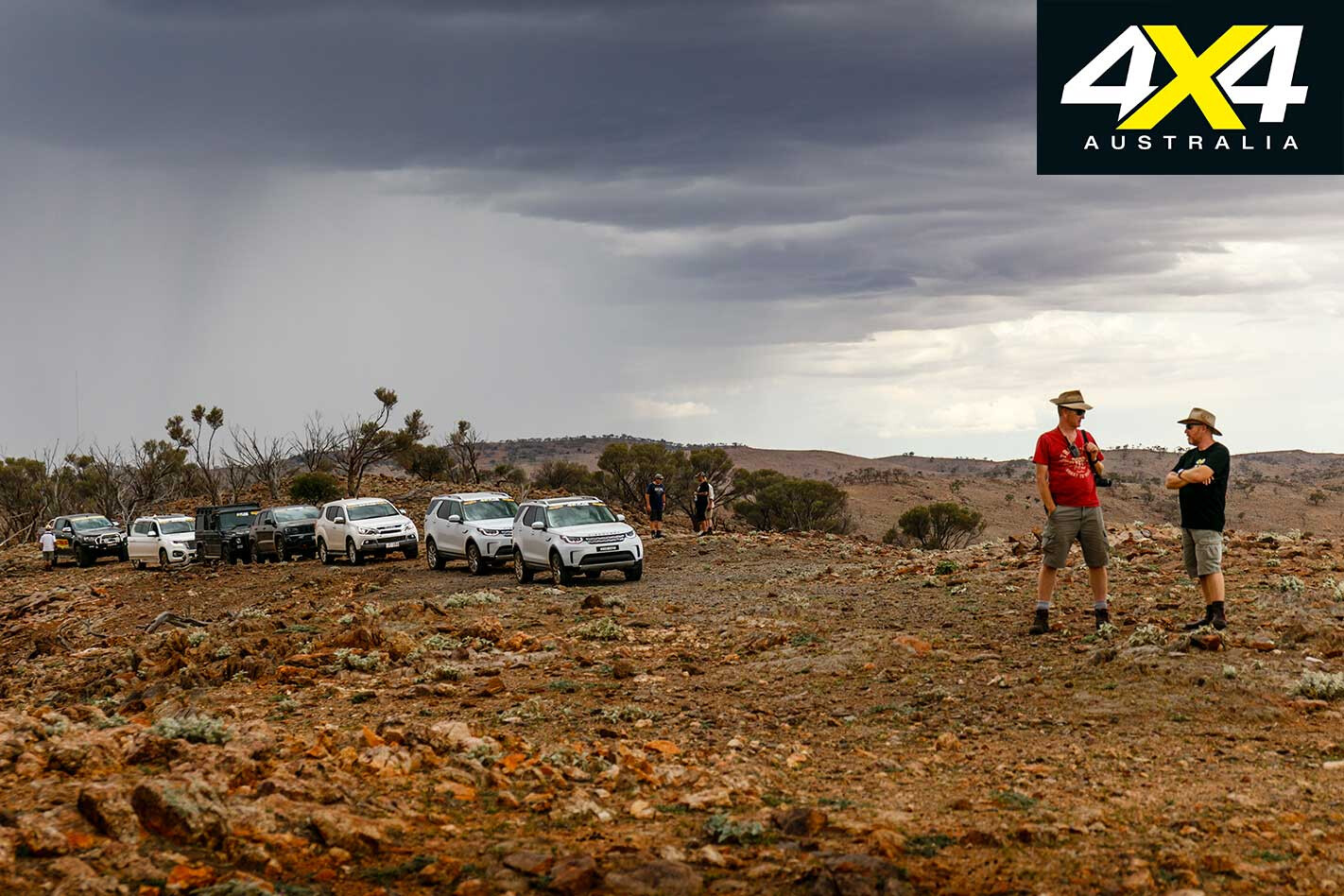
2018 4X4 of the Year Six contenders vie for the coveted 4X4OTY title.
CUSTOM: Jeepster Commando A closer look at the rig that turned heads at SEMA 2017.
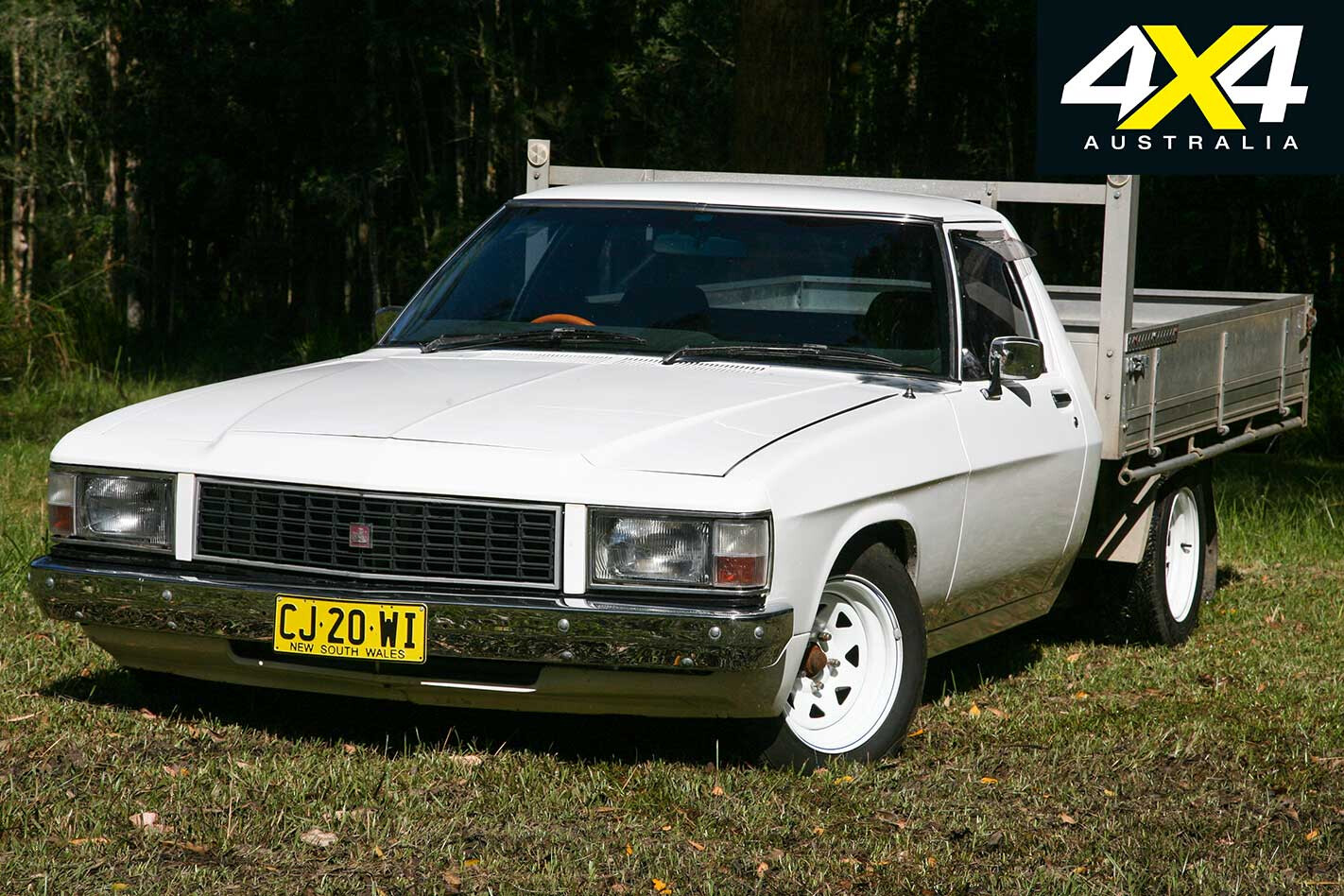
TONNER FILES: Holden Overlander Custom build begins on Holden’s one-tonne Overlander.
EXPLORE: Isuzu I-Venture Club heads to Fraser Island Tackling the world’s largest sand island, with Isuzu UTE Australia.
EXPLORE: Brisbane Weekend Escapes With sunshine all year long, Brissy makes for an ideal base for off-road adventures.
GEAR: 2018 4×4 Tyre Test Revealing which off-road-focused tyres work best on bitumen.
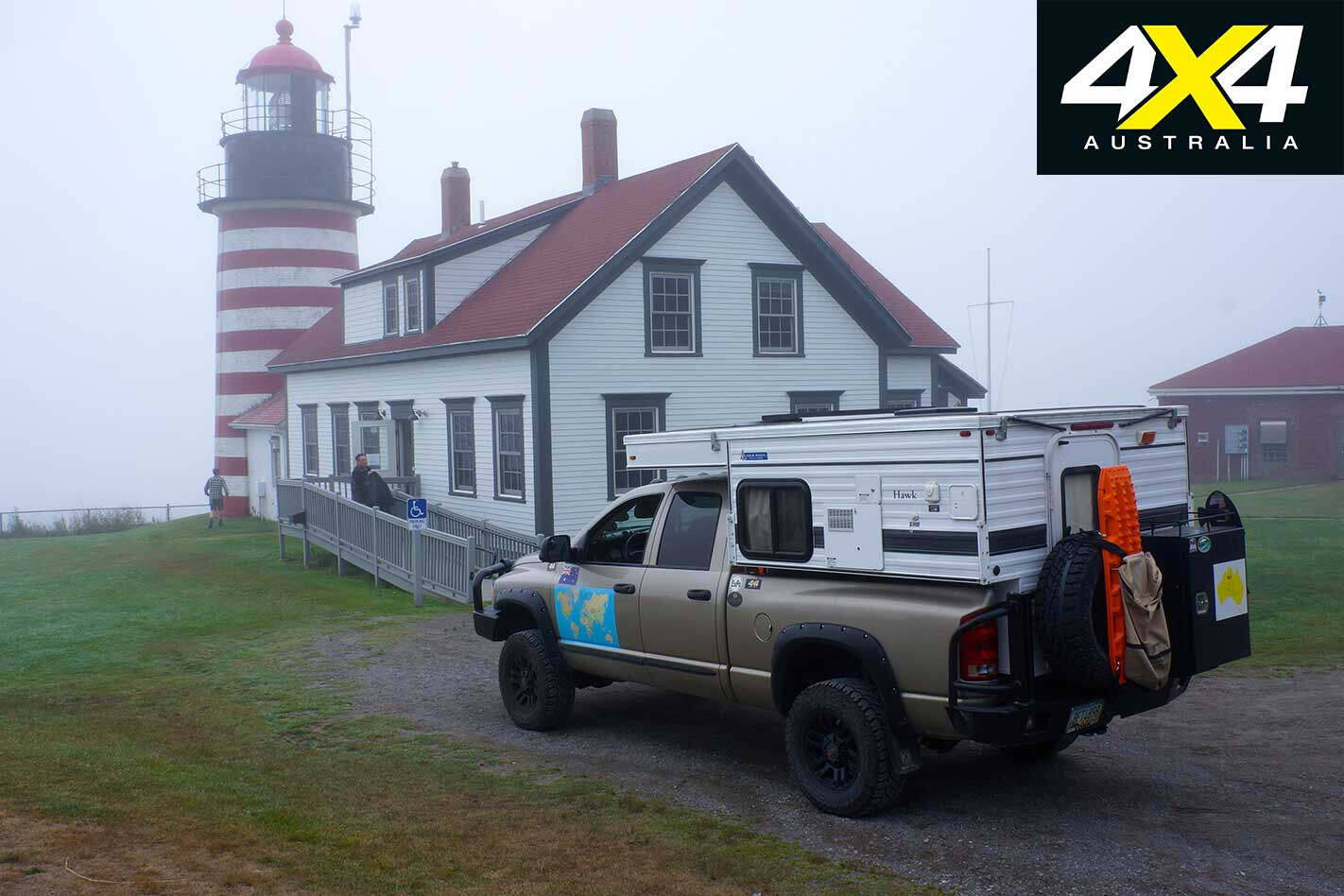
EXPLORE: North America A 68,000km 4×4 jaunt through the USA, Canada and Mexico.
CUSTOM: Jillaroo Jess’ LC79 Terrain Tamer tames the social media icon’s Cruiser.
What Else?
We welcome a 2017 Nissan Patrol Ti-L to the shed this month, where it joins the Discovery TD5 and Matt’s 1985 BJ73.
We also visit Safari 4×4 Engineering and sift through its product catalogue; plus we take a look at the latest gear to hit the market, including STS’s Comfort Deluxe SI mat.
Fraser explains how ditching internal combustion engines for electric motors may not be that simple, and Ron tells punters to put down their bloody phones.
Enjoy the read!
The Td6 is the most powerful and most expensive engine in the new Discovery range. As the name suggests, it’s a six-cylinder design – a 3.0-litre V6, in fact – but not quite the same engine that was in the Discovery 4.
What’s gone is the bi-turbo arrangement used on both the low-power (TD) and high-power (SD) iterations of that V6, in its place is a simpler single-turbo engine that claims more power than even the SD (190kW) and the same torque (600Nm). This is testament to advances in design, where new smaller turbos that spin up quickly for faster response can produce the pumping volume of larger, older-design turbos. This new V6 also has a revised fuel-injection system to overcome the loss of the second turbo.
Significantly, the Td6 shares the all-new lightweight aluminium monocoque of the Sd4, but varies in some mechanical detail. The Td6 is a little over 100kg heavier than the Sd4, and it has a bigger fuel tank and a slightly taller final-drive gearing.
TOURING
The evaluation procedure for 4X4OTY is not about how the vehicles compare against one another (as they are often very disparate) but how they rate against the criteria. That said, it’s only natural that direct comparisons are made between the two Discoveries. (Limited exposure to the new Discovery prior to 4X4OTY meant we weren’t sure what the best engine option is, hence the reason for shortlisting both.)
The Td6 provides a different driving experience from the Sd4 that’s immediately obvious. Whatever the Sd4 does well, the Td6 generally does better. It’s more refined, quieter, smoother and more relaxed, generally requiring less revs and gear-changing to do the same job as the Sd4. However, pedal to the metal, the Td6 doesn’t enjoy much of an advantage, as its extra weight and slightly taller gearing take the edge off its extra power and torque. If the Sd4 feels Range Rover-like, the Td6 does so even more, a serene vehicle that is notably quiet in the cabin at touring speeds on just about any road surface.
Both 4X4OTY Discoveries were HSEs, which means the 20-inch wheel and tyre package had the same, sometimes firm, edge to the ride and a similar sporty feel to the handling, even if the Td6 is a little heavier in the nose and not quite as agile.
TRAIL DRIVING
What one Discovery does on the trails, so does the other, and this is where the differences between the four- and six-cylinder engines is least felt. Like the Sd4, the Td6 has the height-adjustable air suspension, which, along with generous wheel travel, is one of the Discovery’s trump cards that help make it an accomplished trail performer. The height-adjustable suspension can raise the car by 75mm above the default ride height at speeds below 40km/h.
Below 80km/h you can lift the suspension by 40mm or up to 248mm of clearance, which is still handy. In both cases the ride becomes firmer, due to the reduced droop travel, especially in the higher setting. Like the Sd4, the standard high-speed-rated tyres with their vulnerable sidewalls aren’t what you want, especially around anything sharp such as rocks or tree roots.
SET-PIECE HILL CLIMB
While the two Discoveries were much of a muchness on the trails, the set-piece hillclimb highlighted a couple of differences; although, nothing specific to the engines, merely how the two vehicles were optioned. Unlike the Sd4, the Td6 wasn’t fitted with the rear locker or Terrain Response 2. It still made the climb without too much trouble, but not as effortlessly as the Sd4.
How much difference the locker makes and how much is due to the Terrain Response 2 is hard to say, but we suspect it’s more the former than the latter.
CABIN AND EQUIPMENT
What applies to the Sd4 cabin applies to the Td6, as there’s no difference in size or seating layout. Notable with this new Discovery is it’s available from a spartan, no-frills S model up to a lavish HSE Luxury, and while lots of options are on all equipment grades not all grades get all options. The S model, for example, can’t be had with LED lights, DRLs or signature taillights, so you can’t make it look like a HSE.
Likewise, many high-end interior items of up-spec models can’t be optioned on the S or, in some cases, the SE.
PRACTICALITIES
The Td6 gets an extra eight litres of fuel capacity over the Sd4, so 85 litres rather than 77, which is exactly what it needs to make good the touring range difference given the Td6 isn’t as thrifty. Otherwise, what applies to the Sd4 in terms of towing, load carrying, tyre options and aftermarket support, or lack thereof, also applies to the Td6.
A difference between the two engines – looking at a basic barebones Discovery for off-road use – is that the Td6 in S spec can’t be optioned with the rear locker. If you want that you’ll need at least an SE. The trouble is the SE can’t be had with the coil-spring suspension that’s standard on the S. So there’s a catch-22 here. The height-adjustable air springs add much to the Discovery’s on- and off-road functionality, but at the cost of increased complexity.
Interestingly, with both the air and coil suspensions, passive dampers and swaybars are used, making the coil suspension very simple and suitable for an aftermarket lift.
SUMMARY
The Td6 benefits from the aluminium platform; the reduced weight brings benefits such as stronger performance, sharper on-road dynamics, lower fuel use and enhanced off-road capability. It also means you get a bigger and more spacious vehicle without the usually attendant weight penalty. Like the Sd4, fuel range and standard tyres remain issues.
LAND ROVER DISCOVERY Td6 HSE SPECS Engine: 3.0-litre V6 turbo-diesel Max power: 190kW at 3750rpm Max torque: 600Nm at 1750-2250rpm Gearbox: Eight-speed automatic 4X4 system: Dual-range full-time Kerb weight: 2223kg (five seat) GVM: 3050kg (five seat) Payload: 827kg (five seat) Towing capacity: 3500kg GCM: 6650kg (five seat) Fuel tank capacity: 85 litres ADR fuel claim: 7.2L/100km Test fuel use: 10.8L/100km Touring range*: 737km Price: $100,261 (+ORC)
*based on test average, tank capacity claim and a 50km safety margin.