The 2025 Nissan Patrol will swap its naturally aspirated V8 for a downsized, twin-turbo petrol V6.
Snapshot
2025 Nissan Patrol shown to US dealers
Twin-turbo petrol V6 to replace V8
Y63 expected to debut in 2024
Industry publication Automotive News[↗]reports that the all-new Patrol, due in 2024, was demonstrated to Nissan retailers in the United States at its annual dealer conference last week.
A production-ready prototype shown at the event was described as “Range Rover-like” with a more-rugged appearance, including new headlights and tail-lights, and an “all-new”, modernised interior.
The new Patrol, which could adopt the ‘Y63’ codename, will also sport larger screens, updated active safety features, and additional features above the current model launched in 2010.
Under the bonnet will reportedly be a 316kW twin-turbocharged V6 petrol engine matched to a nine-speed automatic transmission.
While this roughly matches the Nissan Z – which outputs 309kW/520Nm in Nismo form – it is unclear if the new Patrol’s engine will be an updated version of the 3.0-litre ‘VR30’ powertrain found in the sports car.
For context, the current 5.6-litre naturally-aspirated petrol V8 in the Patrol produces 298kW and 560Nm with a seven-speed automatic. It’s likely the new V6 would surpass that torque output.
The Y63 may also feature an E-Power hybrid version in the future to further reduce emissions, in line with Nissan’s strategy to increase the number of electric and hybrid vehicles in its line-up.
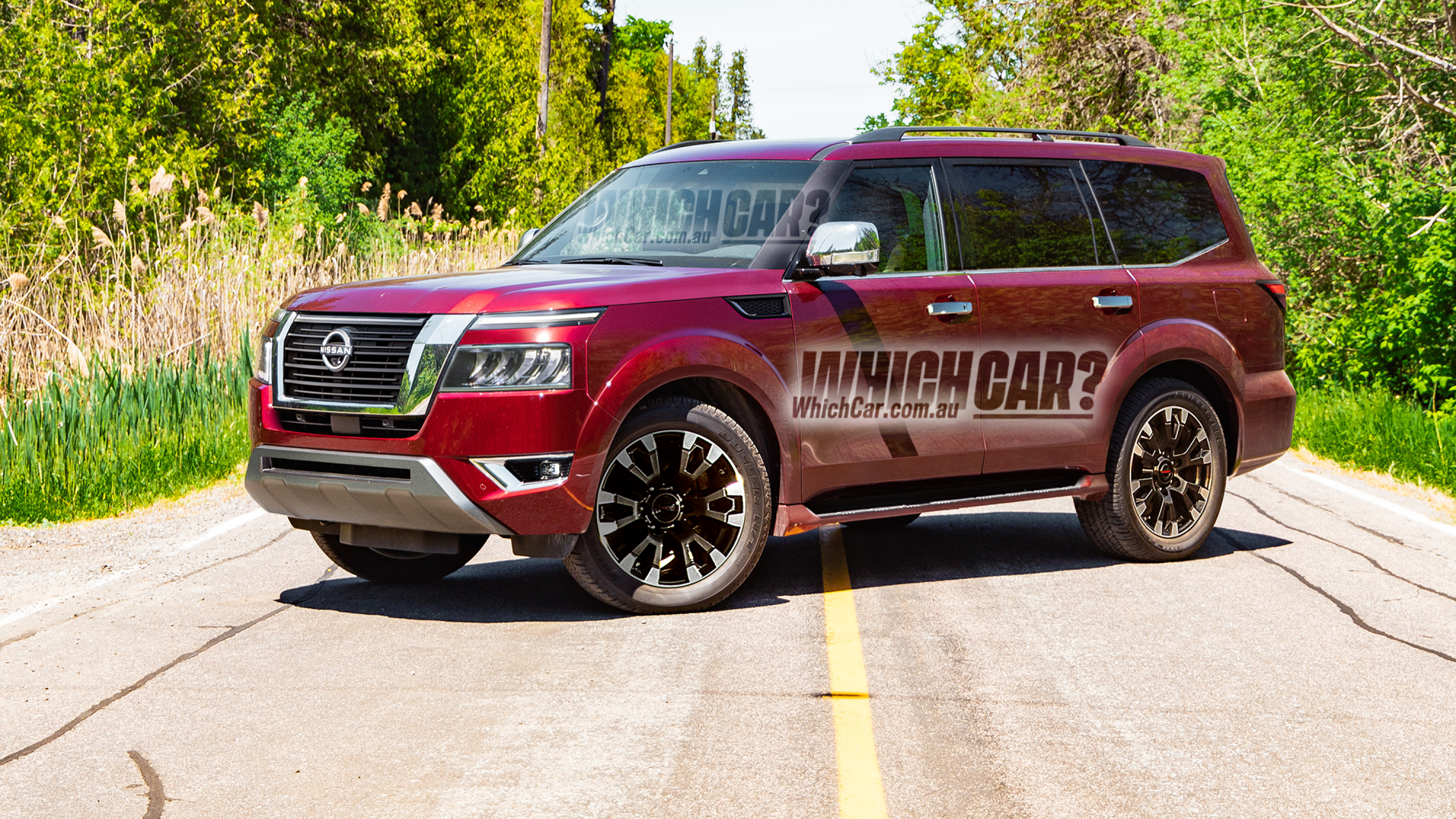
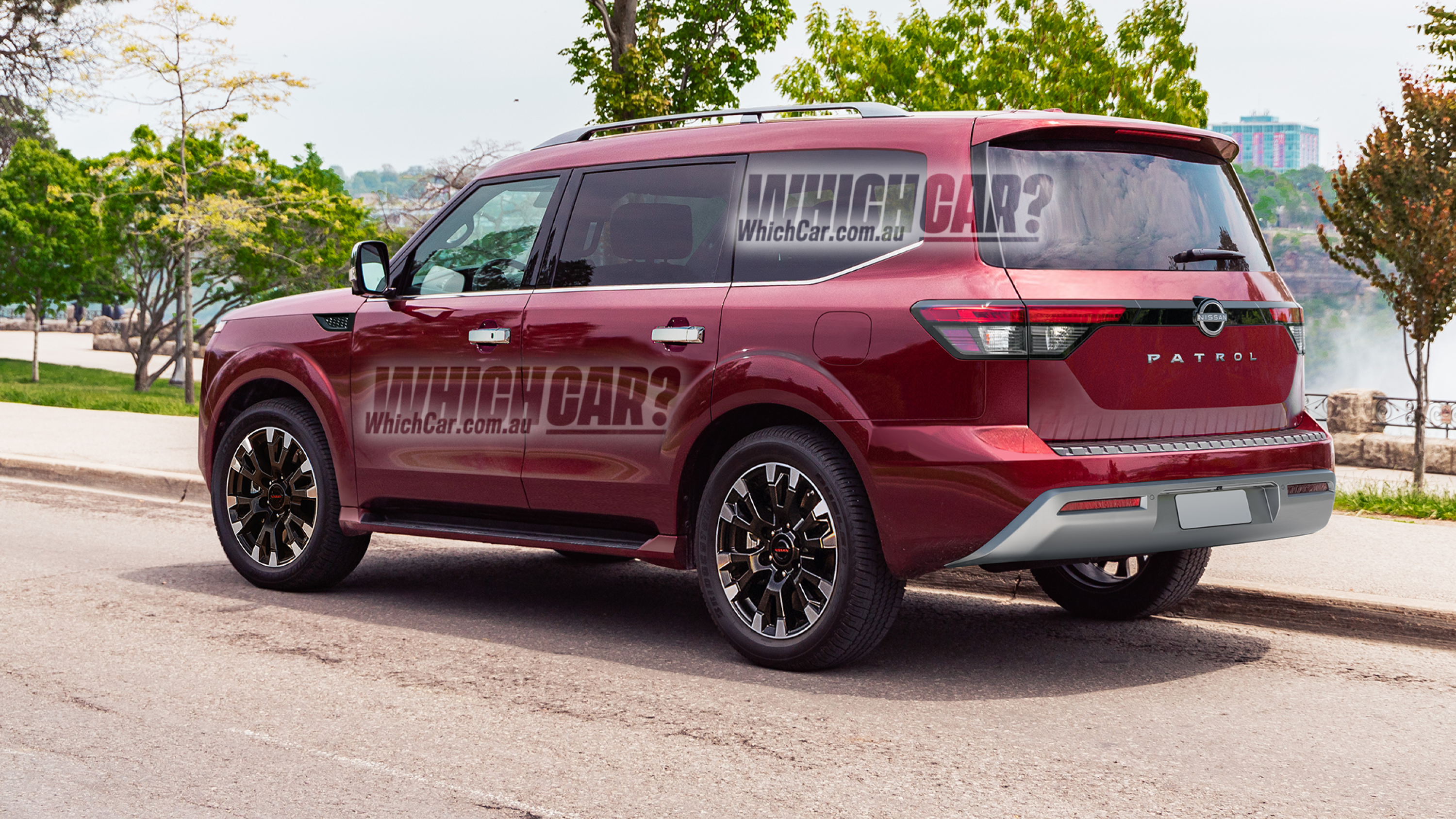
Our speculative renderings, above, show an evolutionary design with hints from the smaller X-Trail and Pathfinder for the new Patrol, including split headlights and a full-width strip connecting slimmer tail-lights.
Expect an updated version of the current Patrol’s ‘F-Alpha’ body-on-frame platform to underpin the forthcoming model.
Earlier this month, Nissan’s luxury arm Infiniti unveiled its QX Monograph concept as a preview of the third-generation QX80, providing our closest look yet at the new Patrol.
The current Nissan Patrol – badged Armada in North America – serves as the basis for the Infiniti QX80, and this should continue in new-generation form.
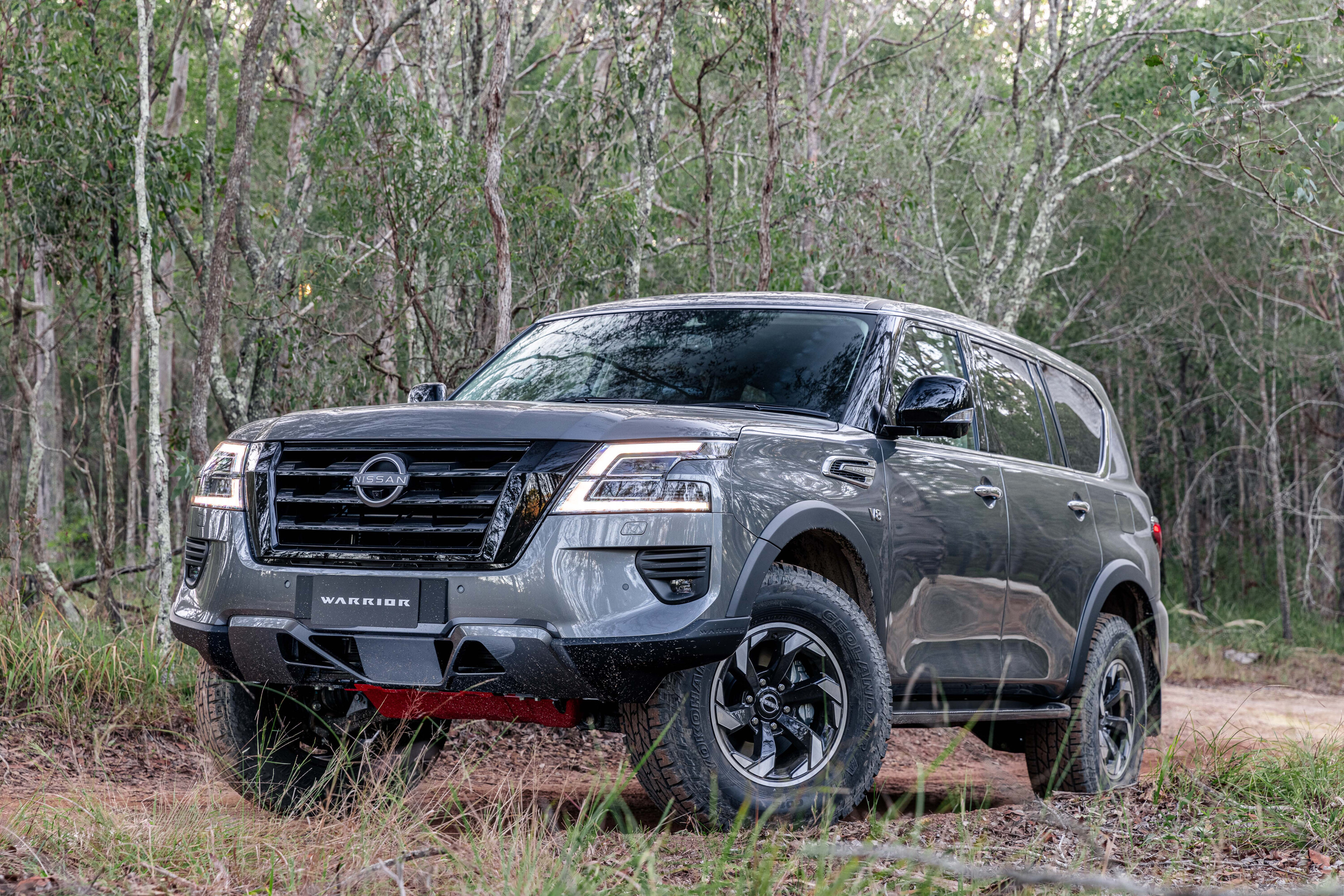
For local buyers, a more-rugged Patrol Warrior – arriving later this year to farewell the current Y62 – may headline the new-generation range, if the upcoming model proves popular.
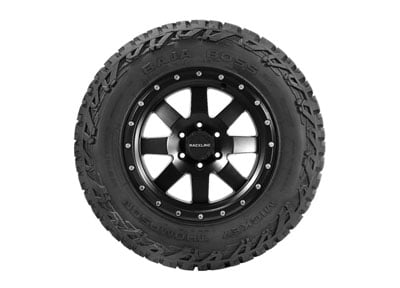
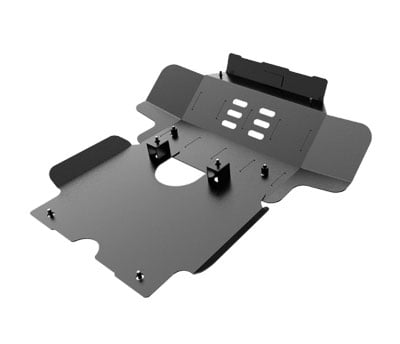
As with the Navara Warrior, it is modified by Melbourne-based Premcar, with a bi-modal side-exit exhaust, a new towbar, added ground clearance via a suspension lift, additional under-body protection, all-terrain tyres, and black badging.
The next-generation 2025 Nissan Patrol is expected to debut within 18 months, with a local launch likely a few months later.
VFACTS new-car sales data reveals 3342 examples of the Nissan Patrol have been registered in Australia to the end of July, placing it behind the Toyota LandCruiser wagon (7771, including LC300, LC76 and LC78).
Nissan Australia said it is aiming to “be even bigger” with an ambition to re-enter the top 10 with a six per cent market share.
“We have a big presence [in Australia] and our ambition is to be even better than we are today,” said Nissan Australia managing director, Adam Paterson.
“We’ve also had some fantastic success with Patrol… and you can see the growth in Y62 from fiscal year 2018 to last fiscal year. The Patrol product has been doing quite well for us and we’re very excited about the success it has had. There are plans to work on further growth there,” he added.
Epic fantasy novelist Terry Goodkind once said “If the road is easy, you’re likely going the wrong way” and after a week in the desert with the new Volkswagen Amarok I’m convinced the author was not only referring to our trip, but we were somehow the subject of one of his extraordinary books.
Before the fleet of 2023 Volkswagen Amaroks had even turned a wheel, this outback adventure had already changed course several times. An unseasonable weather pattern had dumped months worth of rain in parts of Australia that, from one year to the next, mightn’t see any at all, and over the weeks leading up to departure, it had been a game of chess with the elements.
The original plan had been to set out from Coober Pedy, head north to Dalhousie Springs before crossing the Simpson Desert from west to east via the Erabena Track and then on to Birdsville. Unfortunately, the weather had other ideas and, with extensive flooding across three states, plans A through E were abandoned in quick succession.
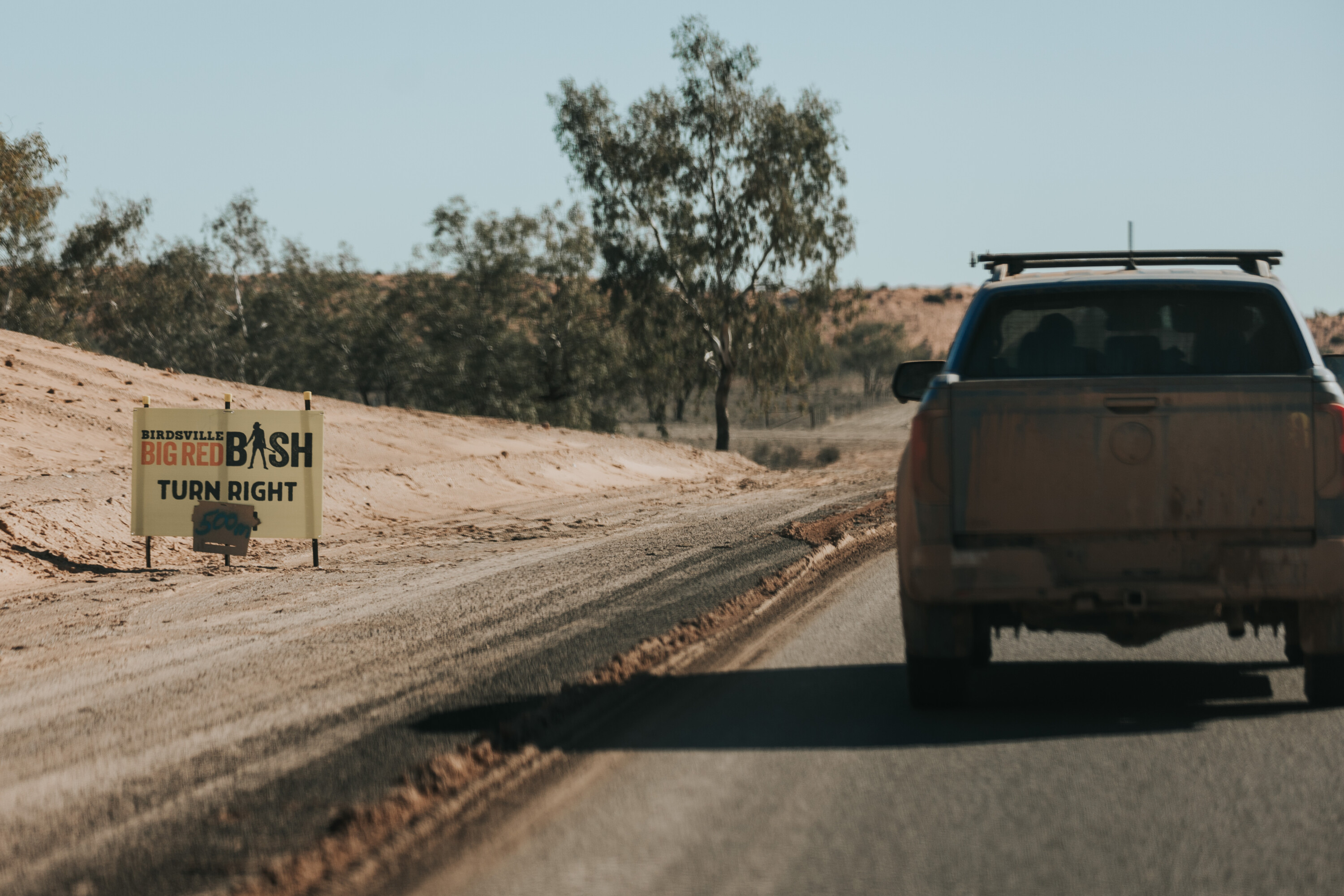
As we departed Broken Hill in early July, Plan F was still very much a work in progress and relied on conditions to change for the better as we went. What could possibly go wrong? Further changes to the plan therefore were expected but what was absolutely non negotiable was our destination – 3000km away, the 10th Big Red Bash was waiting to provide the perfect reward of rock music and cold beer to a convoy of weary travellers.
1
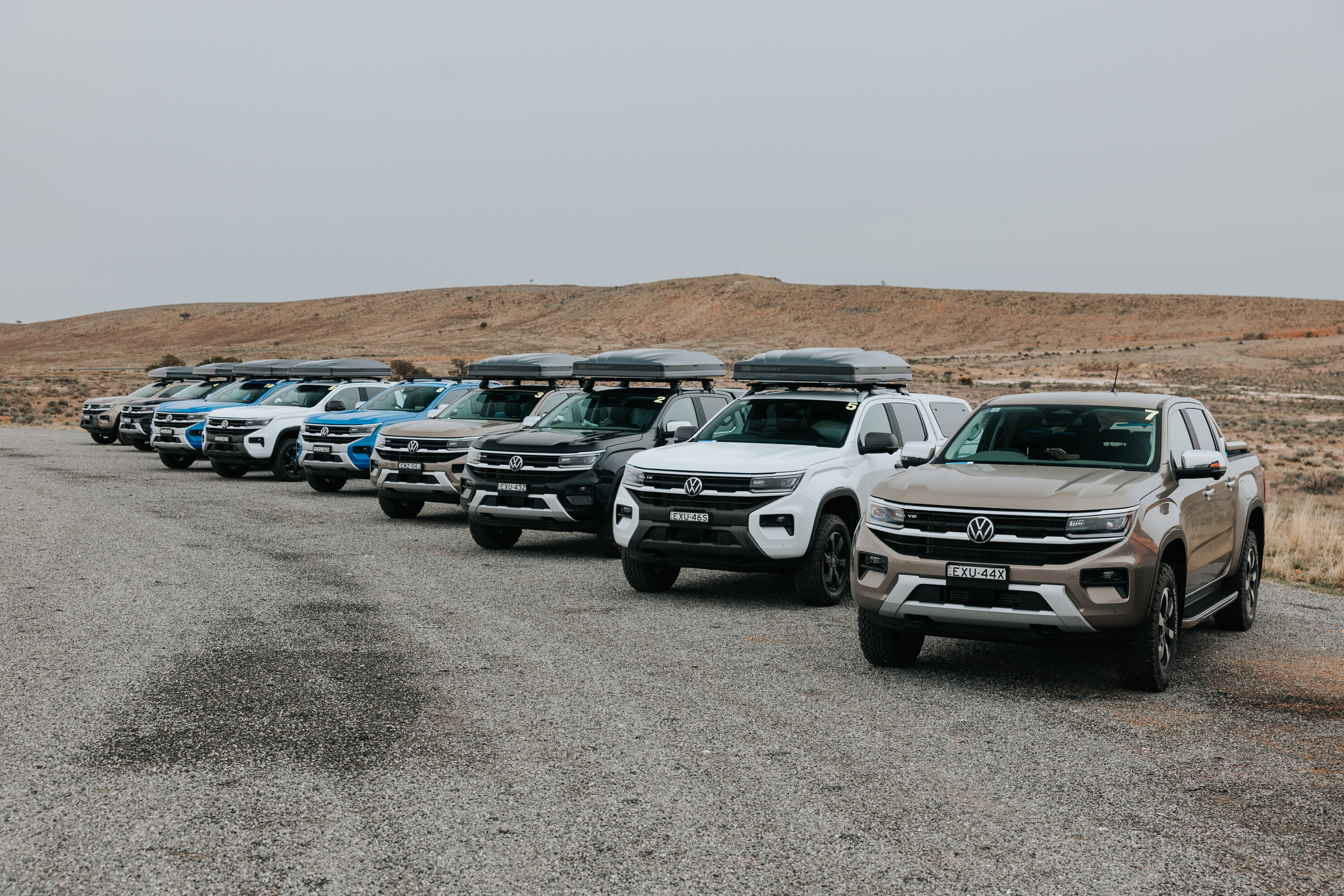
It would be the very first morning that the first of many route adjustments were necessary. The evening had been spent 200km outside Broken Hill in the small town of Yunta. How small? Just three children attend the school which will soon close because the teacher’s commute is 80km and, when the publican of the Yunta Hotel saw a fleet of 12 Amaroks arrive in town, an extra cook was drafted in from a nearby sheep station.
After a schnitzel as good as any you’ll find in Vienna, the inevitable tsunami of good cold country beer was probably the main cause of a few dampened spirits the following morning, not just the news we needed to backtrack to Broken Hill.
Our planned route through Arkaroola was flooded and the Flinders Ranges would have to wait. Instead we would head north out of Broken Hill along the Silver City Highway stopping in at the Packsaddle roadhouse on the way. With sealed roads all the way, there were no significant challenges to throw at the fleet of Amaroks although one important test was possible.
1
The fleet consisted of a mix of Aventura, Panamericana and Style variants all powered by the TDI600 3.0-litre turbo-diesel V6. However, each had been customised with a selection of Volkswagen’s broad range of original-equipment accessories.
In the case of our Aventura, it had a set of 18-inch Amadora wheels and BFGoodrich AT rubber in place of the standard 21-inch fitment, a two-person rooftop tent, a canopy with electric-popping rear and side glass, and a tailored drawer system. The extra kit added about another $14,000 to the $79,990 base price but more importantly extra weight.
On top of our supplies, extra fuel, water and some additional camping gear, our impressive rig was nearing its GVM of 3190kg. However, the Amarok’s graceful manners that we’ve already experienced unloaded are almost completely uncompromised when loaded up.
Minimal rear-axle sag preserves the pleasant on-road ride and while there’s still a little shudder through the ladder-frame chassis, the ride quality is excellent. The extra mass over the rear axle is immediately apparent in the Amarok’s handling but sharp steering makes it easy to adjust for the rearward-shifted weight distribution.
Finally, the turbocharged V6’s torque shines when working hard with the full 600Nm delivering good performance and a stoic nature for the Amarok despite its hefty cargo. As expected, fuel consumption is impacted but with the extra weight and additional drag from the rooftop tent, a figure of 13L/100km was respectable.
With the weather persisting with its damp and cold theme, the decision was made to end the day slightly earlier than planned in Tibooburra and make use of the Family Hotel’s accommodation. Compared with another evening under the stars (we were actually yet to see any), the warm pub, grub and showers were a relative luxury. The condition for our palatial digs was a very early start the next day to make up time and the longest day of the trip.
1
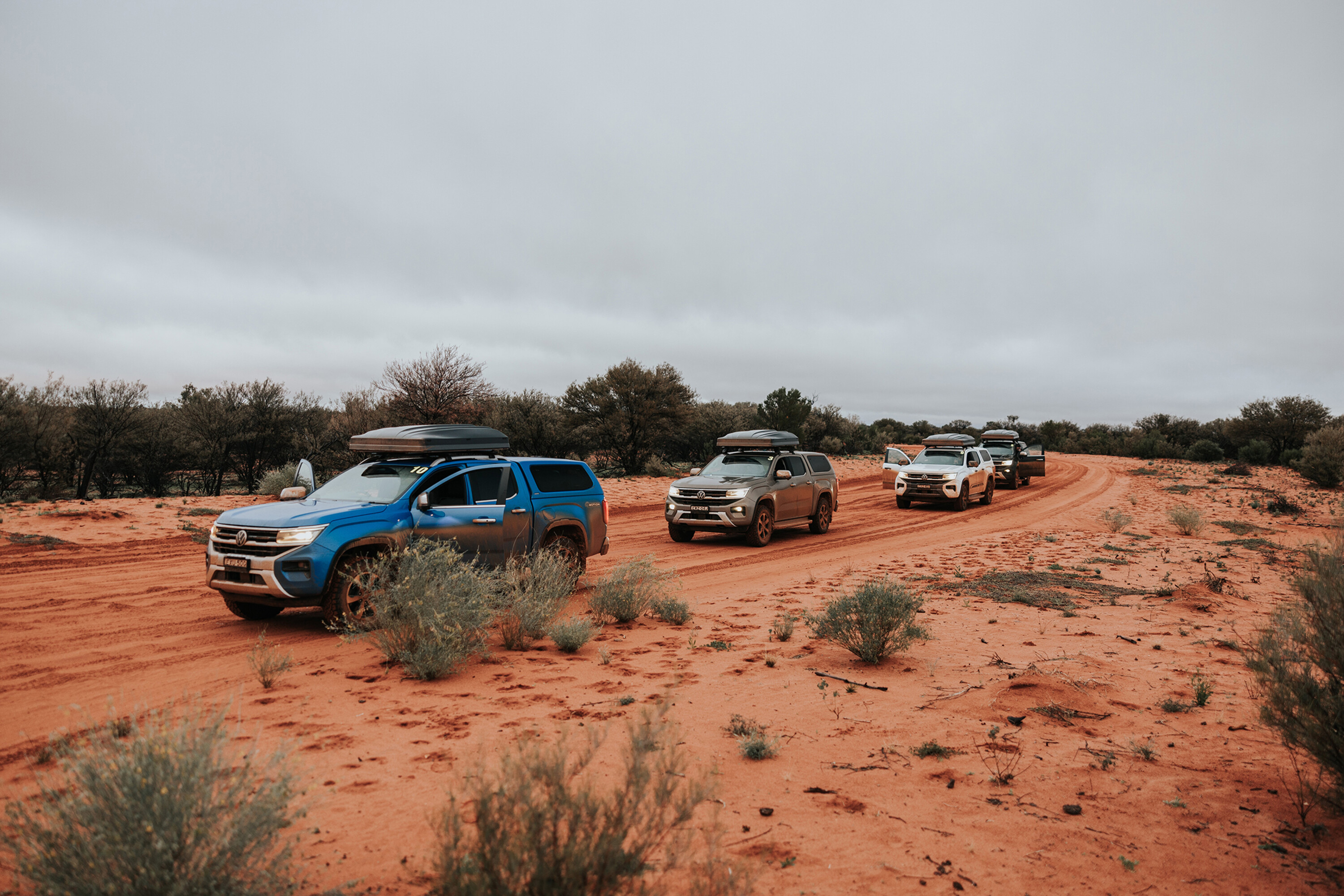
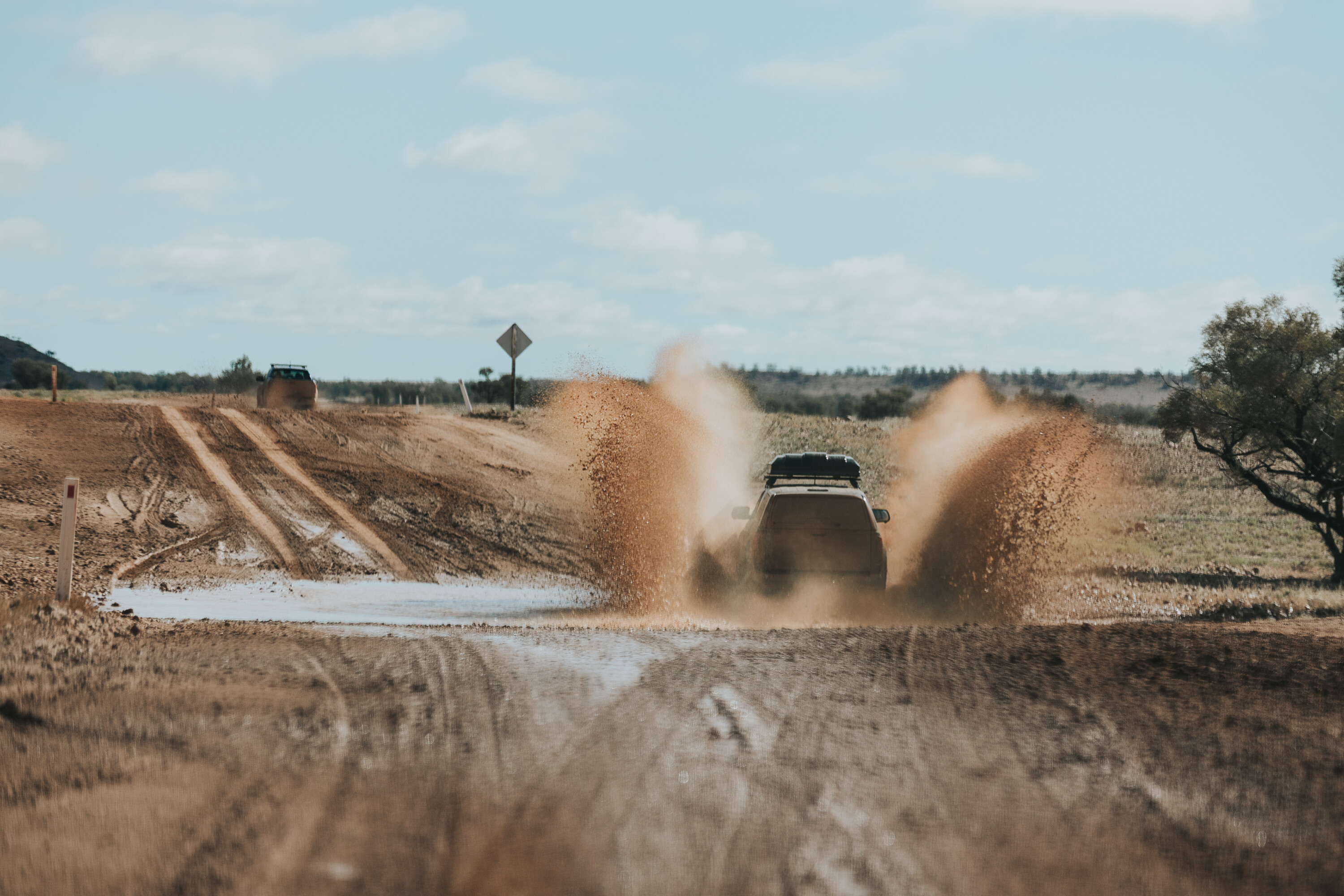
It was still dark when the asphalt came to an end at the Queensland border and the reality dawned on what had happened to the ordinarily dry and dusty trails. Endless slicks of mud made the convoy of Amaroks slither through the twilight like a docile serpent and after one example performed a complete 360 before being expertly reined in without stopping, it was decided that 4-high and ‘slippery’ selected in the drive mode was the safest course of action.
Given the abysmal conditions and ice-like surface, it was surprising not one vehicle needed recovering, but there were more than a few moments when the fringes of absolute traction loomed and more than one bogged ’Rok was narrowly avoided.
Lunch was courtesy of the Eromanga Royal Hotel, allowing time to consider the town’s many claims to fame including the site of Australia’s largest dinosaur fossil discovery – a 30-metre long Titanosaur – while the NT town of Papunya might have something to say about Eromanga’s claim to be the furthest from the sea in Australia.
1
There’s no time to argue the point and we’re bidding ‘Opalopolis’ farewell and heading another 200km north to Windorah and hoping the weather holds off long enough to pitch camp. On arrival it becomes clear from the number of campers calling the tiny town home for the night that bad news would be confirmed. This is the end of the line for now with all routes west closed.
The only surefire way to Birdsville is to continue north, loop through Mt Isa and head back south along route 83 – a 1650km detour taking two days we simply didn’t have. It’s decided over a couple of XXXXs (when in Rome…) and a world-class barbecue to sleep on it and hope for better news in the morning. It doesn’t come. Overnight the rain had continued and the 7am deadline to decide access revisions passed, with no word from the ranger.
1
There’s nothing for it but to head to the only open cafe in town. Make the mistake of asking for a double shot oat latte here and the staff will politely inform you the options are “instant, instant, or if you’re lucky, instant”. But just as we’re stooping to the level of a Moccona flat white, a rumour circulates that the track is about to open. The ranger arrives to a hero’s welcome and switches the red ‘closed’ boards to yellow ‘4×4 only’. At 8am it’s all on again.
But just because we can proceed without copping a hefty fine, an open track certainly isn’t a guarantee of plain sailing. For the first 100km the going is easy with perfectly maintained tarmac under tyre, but at the junction to Bedourie we meet a trio travelling in two equally unsuitable vehicles – a three-axle coach and a front-wheel drive Renault Traffic.
It’s a miracle they’ve made it this far but they report the way ahead as a little too adventurous and they’ll see us at the Bash when the track dries out. They wouldn’t have long to wait with the powerful Queensland sun finally burning through the cloud leaving nothing but blue skies, balmy temperatures and lifted spirits all round.
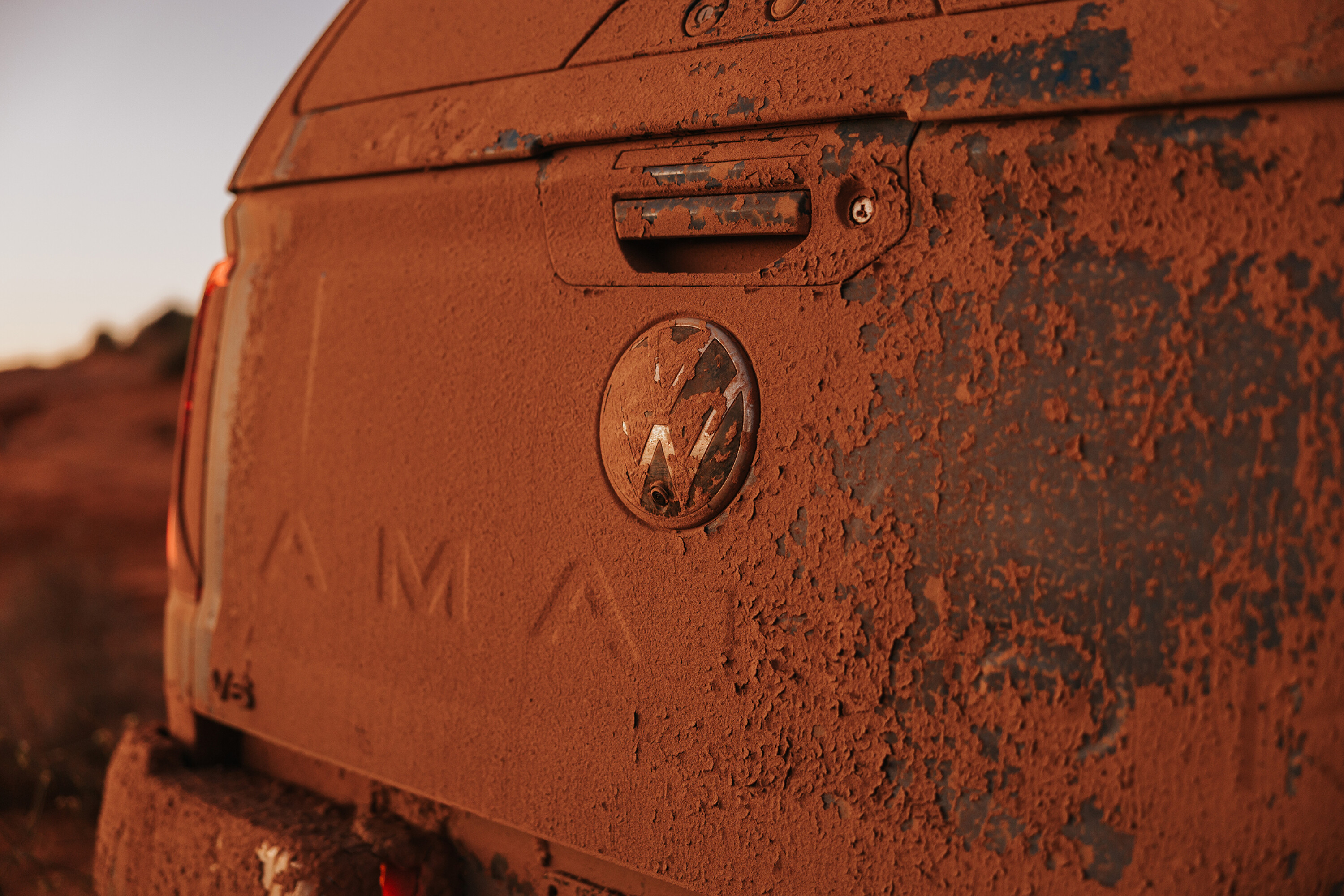
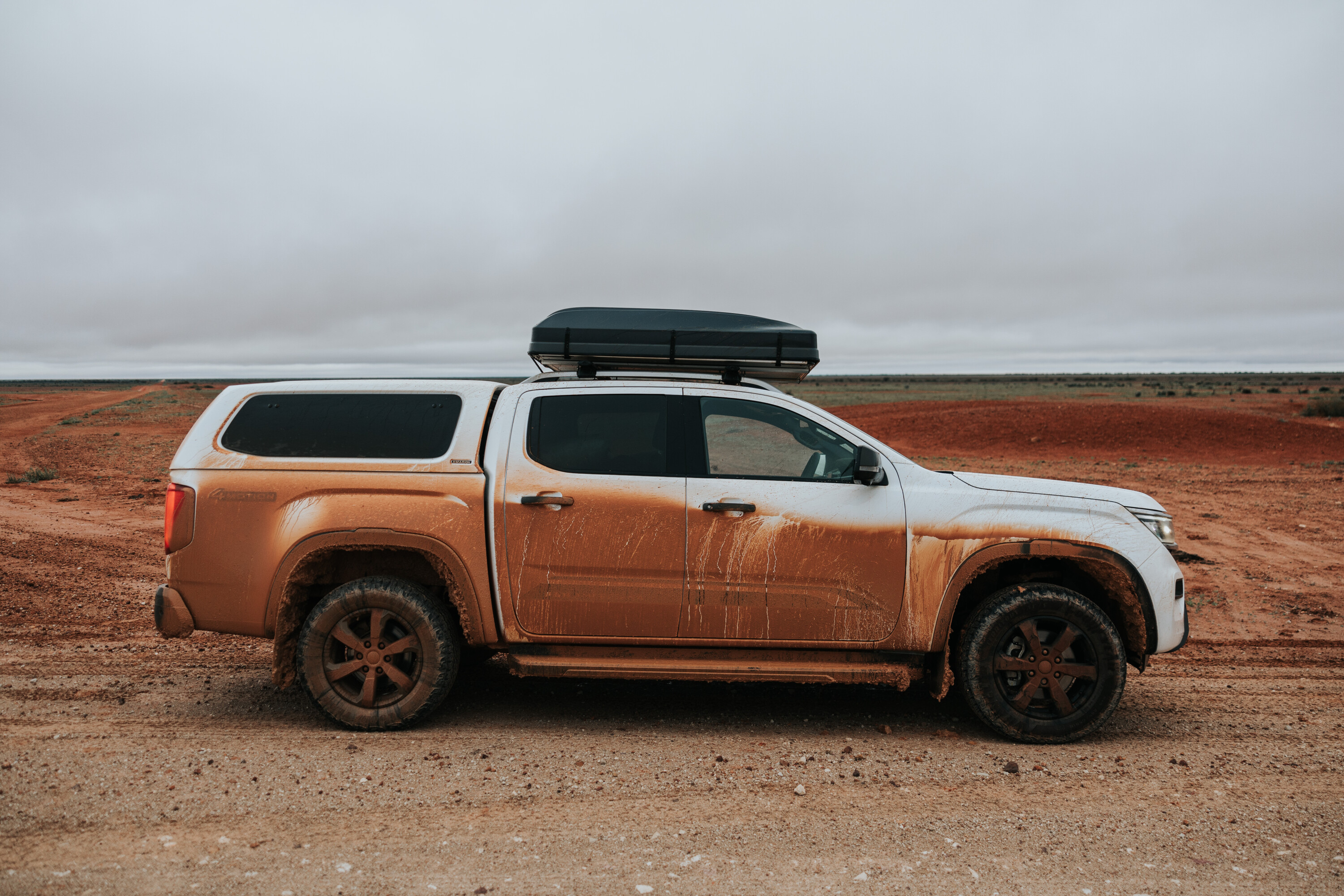
The challenges are not over yet, though. It’s surprising how quickly a thick layer of almost impassable clay reconstitutes into a hard-packed road that’s smoother than some Melbourne freeways, but the sections of perfect trail are still punctuated with torturous mud baths and water crossings that add layers to the shade of Outback Brown that every Amarok is now uniformly painted in.
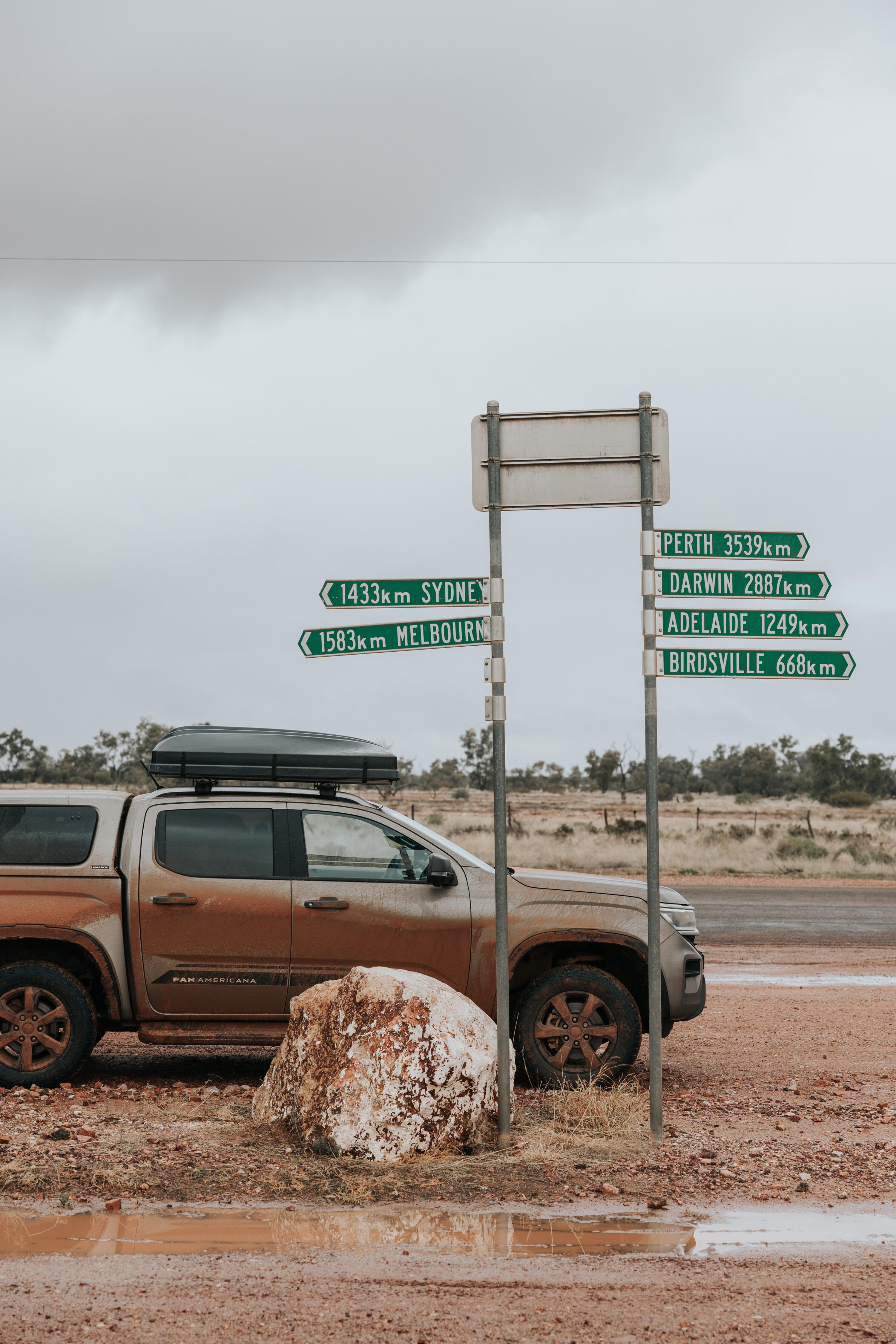
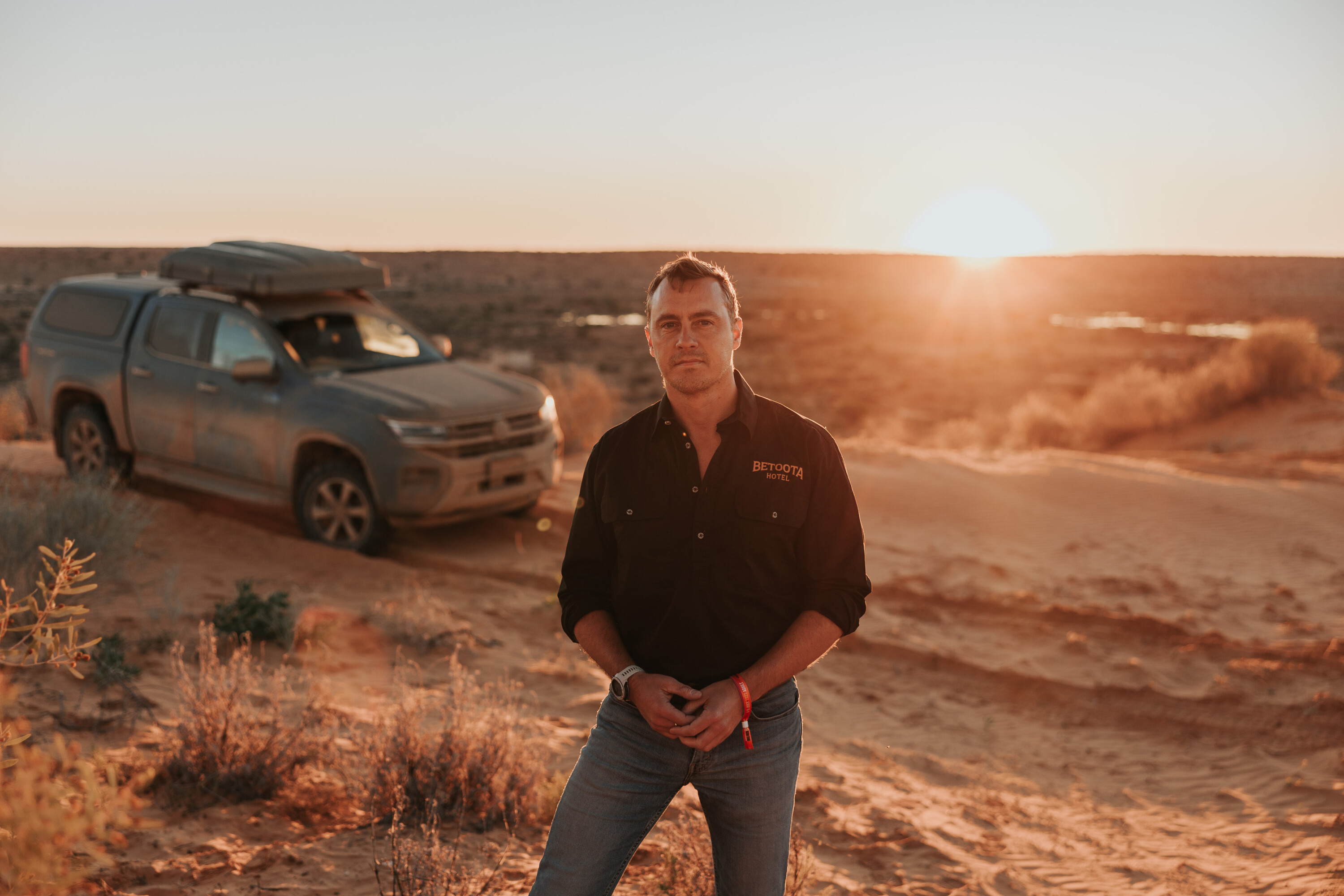
An obligatory visit to Betoota sees the last of the deep mud and the chassis-battering rough surfaces – maybe we took a wrong turn but we didn’t find the French Quarter or Betoota Heights.
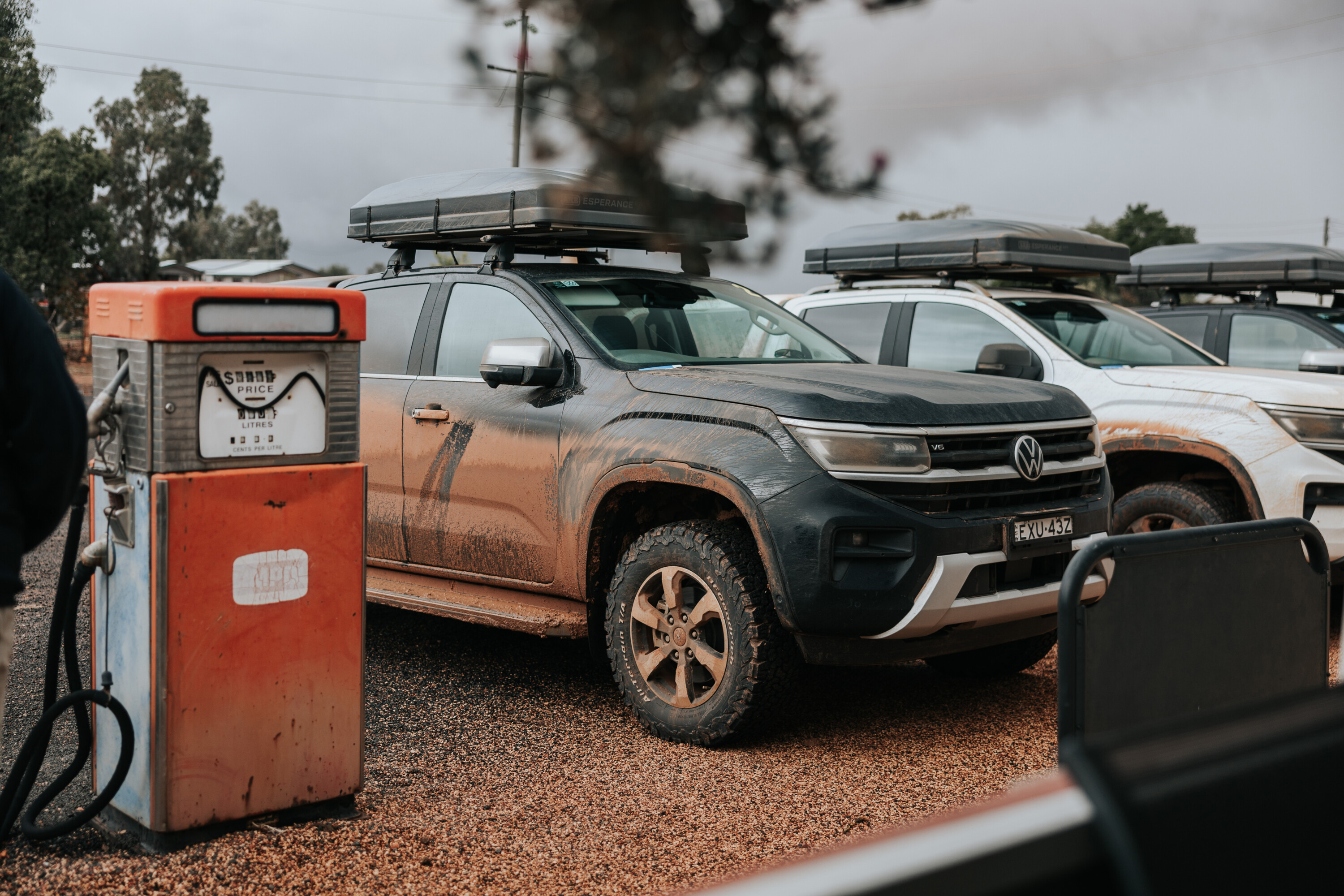
The final kilometres click by enjoyably and I swear there’s a new lightness in the Amarok’s gait. Birdsville is bypassed albeit for a quick refuel with Big Red almost in sight on the horizon. Over the previous four days, communication with the advance party at the Big Red Bash has been light but the crowd has learned about the convoy of ’dubs trying to conquer the elements and the moments after arrival can only be described as surreal.
1
With the Amaroks bearing the war paint that only an angry outback can apply, people want answers: “Which way did you come?” they ask. “How did you get through?” “You made it!” For a moment we feel proud but I’m not about to ruin the moment and admit just how easy it was.
Remarkably, despite the challenges and adversity along the way, we rolled into camp at 3.30 – the exact time and day scheduled in the original plan that had rapidly gone south as the heavens opened a week ago.
If that’s not a testament to good planning, the right support and the right vehicle then I’m yet to see a better example. We’ll BRB.
Welcome to Bashville
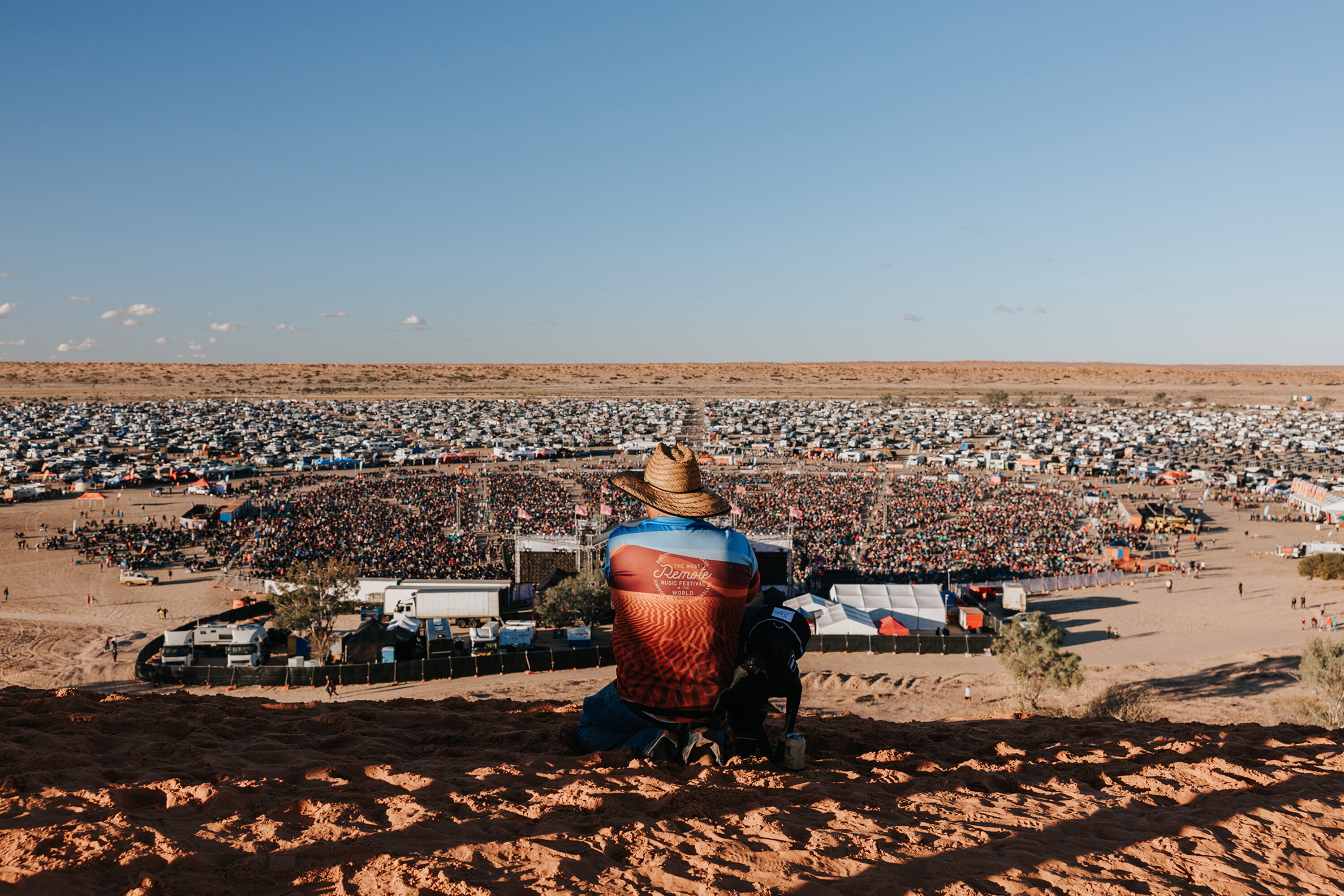
For three nights each year, a patch of Simpson Desert at the foot of the 40m sand dune Big Red becomes the most remote music festival in the world.
Now in its 10th year, the Big Red Bash hosts some similarly big-name acts along with a crowd of 10,000. This year it once again hosted an attempt to break the world record for the most people simultaneously dancing the Nutbush and, with 5838 participants, succeeded.
Perhaps more impressively, once the festivities are over, the site is returned to unspoilt wilderness with not one piece of infrastructure or waste left behind as evidence.
1
Customs and traditions
In response to Australia’s army of ute customisation enthusiasts, Volkswagen developed a wide range of accessories for the 2023 Amarok.
With more than 30 OEM options to choose from (circa 70 if you include variants), owners can create the perfect camping machine with Amarok-branded two-person rooftop tent by ARB, drawer system, auxiliary battery kit and solar panel blanket for example.
Alternatively, hardcore off-roaders can enhance the all-terrain ability with 40mm lift kit, snorkel, nudge bar and auxiliary switch bank for added electrical accessories to name just a few. Some accessories were even developed by the Australian design team including the electric roller tray cover.
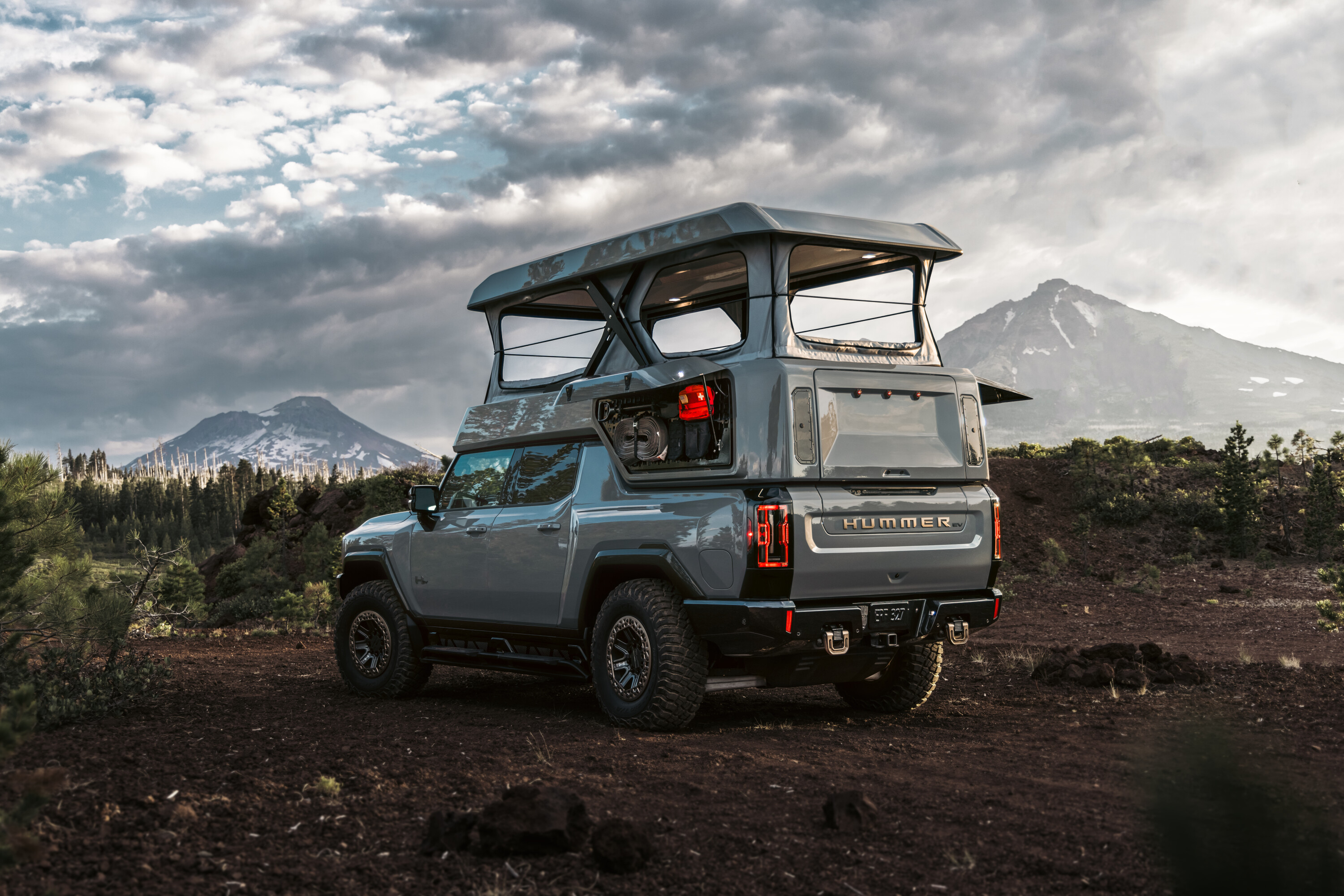
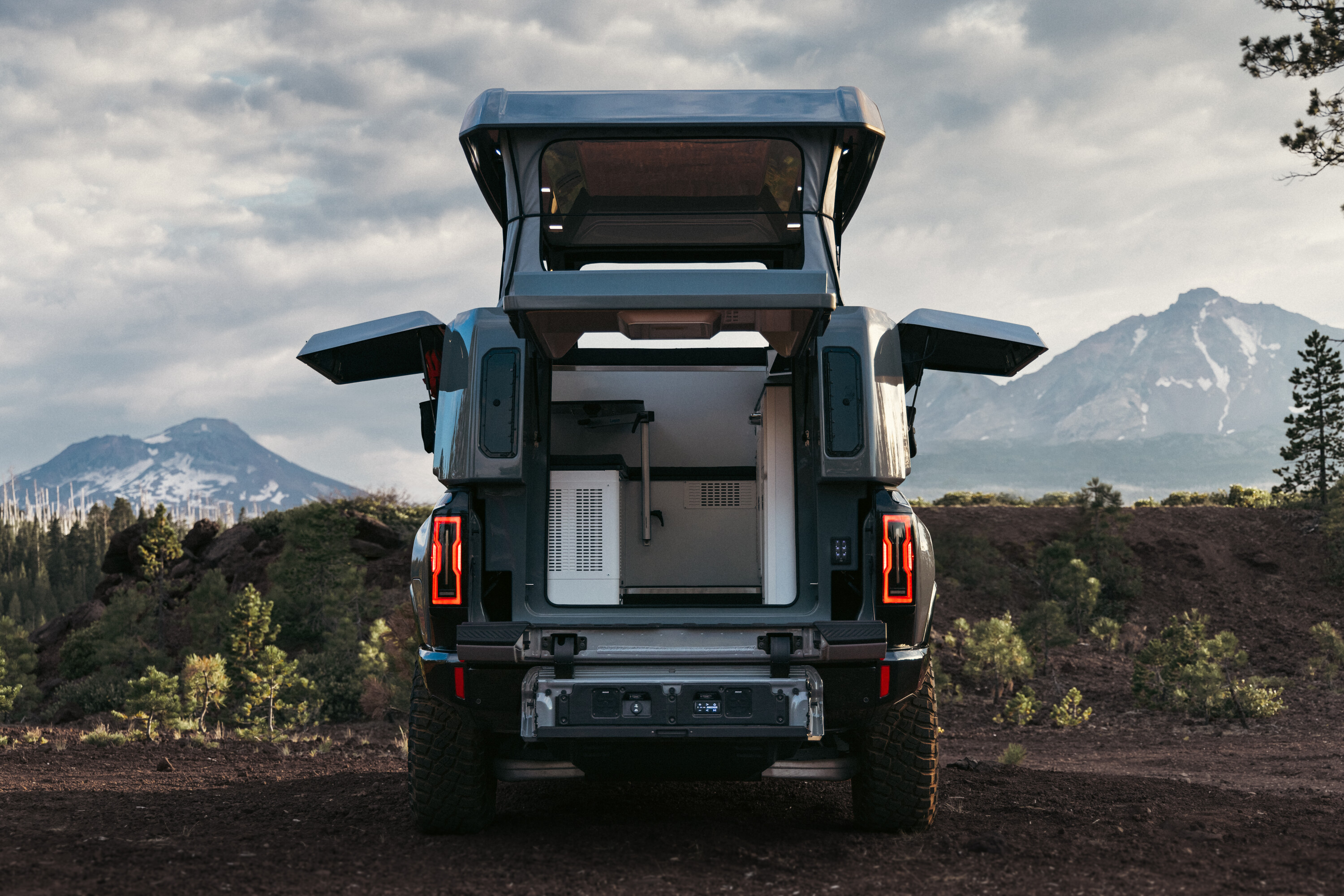
Creators of world-class tourers, EarthCruiser, has moved into the EV space, announcing it will unveil its all-electric GMC Hummer EV EarthCruiser Upfit at an upcoming Overland Expo in the USA.
Boasting a carbon-fibre house construction, the EarthCruiser Upfit has been fully integrated into the chassis of the Hummer EV pick-up, to create a zero-tailpipe-emission overlander blended with state-of-the-art technology and a long list of creature comforts.
“We are proud to work with GMC on the design and manufacturing of such an exceptional product. It feels right, it feels like it belongs,” said EarthCruiser CEO and Founder Lance Gillies.
1
“Using our years of overlanding expertise, we have ensured nothing is out of place, unnecessary or wasted in this vehicle. This collaboration with the GMC team has provided the perfect opportunity to demonstrate the zero-tailpipe emission possibilities for overland and recreational vehicle travellers.
We have produced a comfortable, capable product, built to a high calibre of excellence – one that our customers can take pride in,” he said.
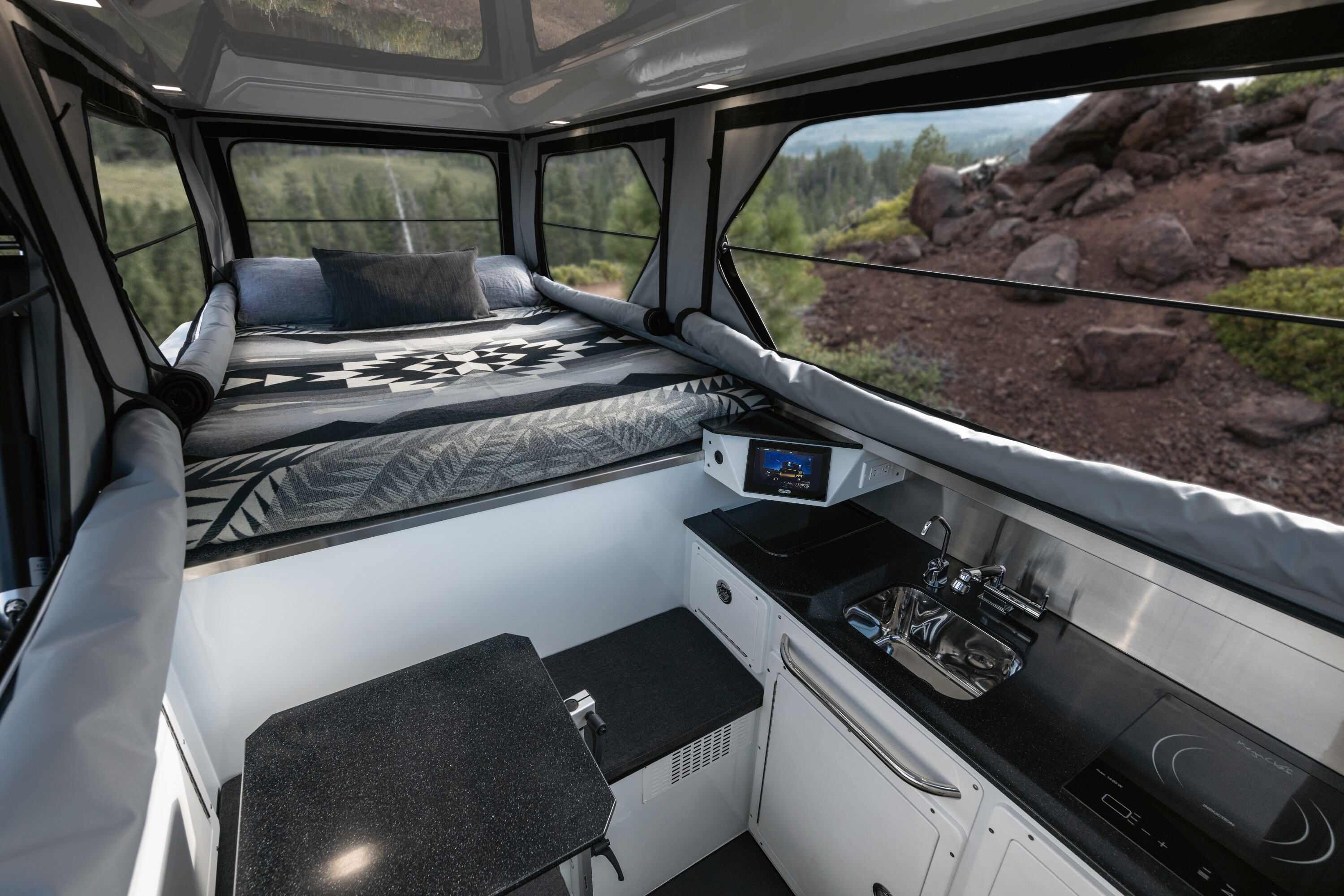
The EarthCruiser Upfit features both on-board solar and 12v lithium battery power, which is said to provide an estimated seven days of off-grid juice – and that includes running things like fridge/freezers. A seven-inch touchscreen system is included.
1
When it comes to equipment, EarthCruiser has included a carefully selected range of appliances, a flat-pack toilet, an indoor and outdoor shower and an RV full-size bed. In addition, the EarthCruiser Upfit features an insulated tri-layered pop-up roof. Here’s a full list of equipment.
Specifications and features
Specifications
Height: 117 inches in “Camp Mode” with the roof up and 90 inches in “Drive Mode” with the roof down
Length: 217 inches
Sleeping capacity: 2
Exterior
Carbon fibre house construction
Four-season, tri-layered pop top
Outdoor shower
Exterior recovery gear storage
Exterior filtered water access
Lockable utility hook-ups
Exterior keypad for lighting and system control
Exterior scene lights
Integrated rooftop solar
13.5-gallon freshwater capacity
7-gallon grey tank
Interior
80 inches of standing headroom at the entry, 76 inches on the step in the hallway and 35 inches in the bed area
Sink
Induction cooktop
RV full bed
Underbed storage
Interior filtered and unfiltered water
7-inch-diagonal touchscreen control
Refrigerator / freezer
Dimmable interior lighting
460Ah lithium 12V battery
1500W inverter
Integrated storage drawers and cabinets
On-board 12V water heater
2
The GMC Hummer EV EarthCruiser Upfit will publically debut at the Overland Expo Mountain West in Colorado, USA, between August 25-27. It’s expected to be available to GMC Hummer EV pick-up owners in 2024.The press release explains that “the EarthCruiser Upfit is not covered by the GM New Vehicle Limited Warranty and GM is not responsible for independent-supplier alterations”.Closer to home, Melbourne’s Autogroup International has completed left- to right-hand drive conversions of the GMC Hummer. Head to www.american.com.au to see its range of American vehicles.
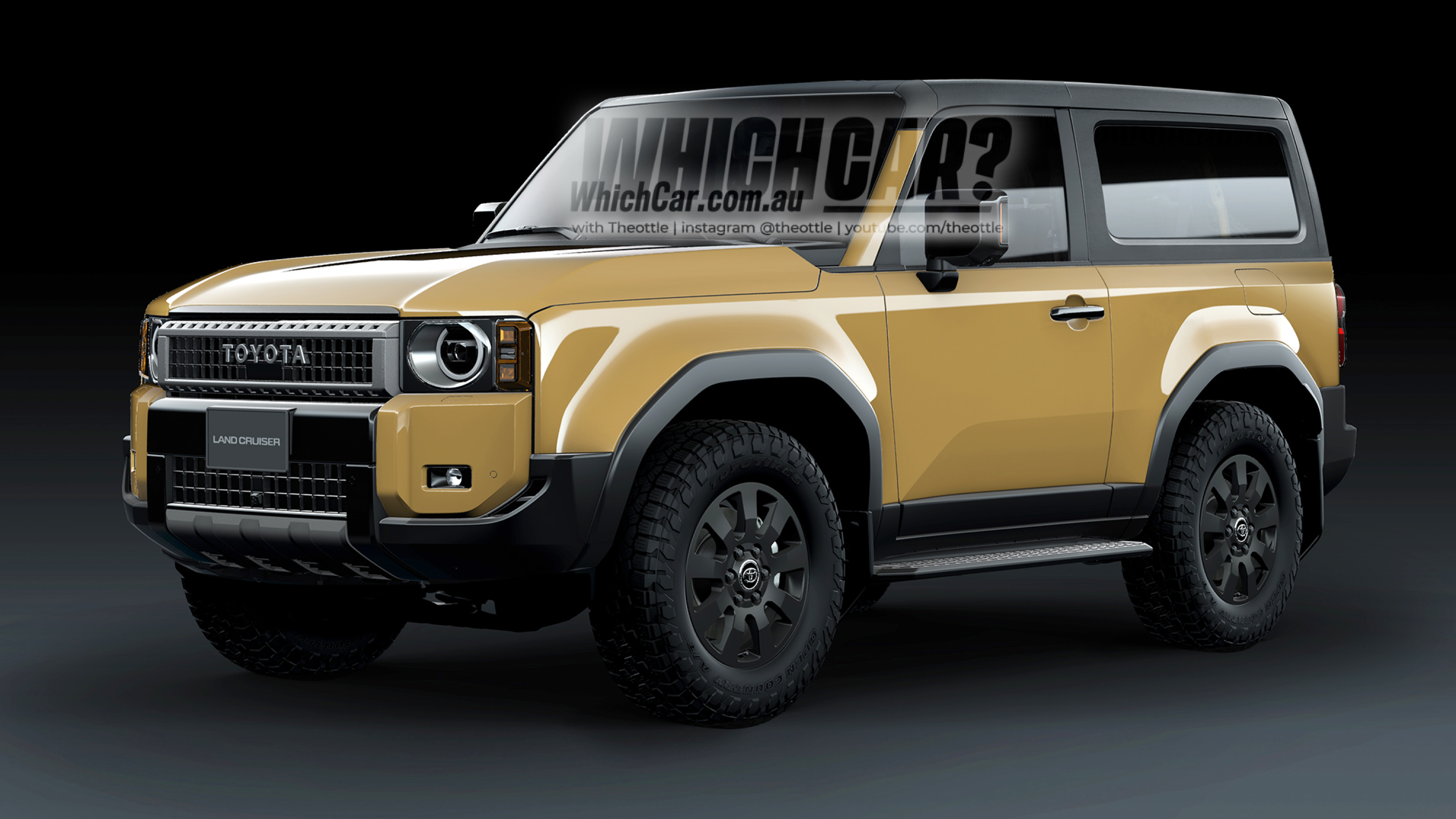
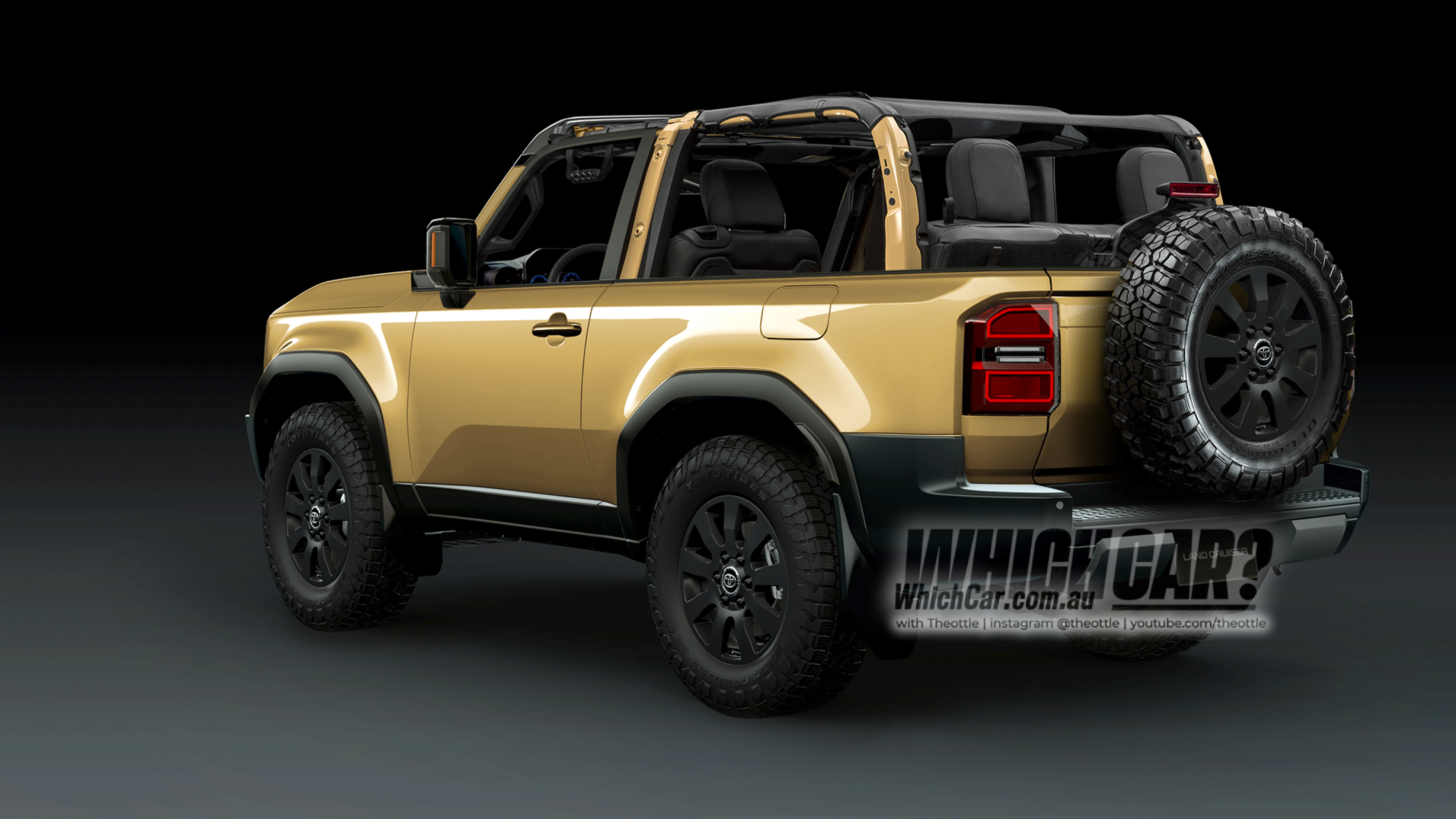
Here’s what a three-door 250 Series Toyota Prado could look like.
Although the Japanese giant hasn’t hinted at bringing back the three-door body style for the 2024 Prado, we reckon it would look mean as these speculative renders prove.
Between 2009 and 2013 Toyota sold a short-wheelbase three-door 150 Series in Australia, and every prior edition was offered in short-wheelbase form.
With its wheelbase cut and just two doors, this Prado imagination takes on a more purposeful, workmanlike look akin to the Land Rover Defender 90 or the Suzuki Jimny.
Maneuverability, weight, and rock-crawling ability are improved by a shorter wheelbase. Breakover angle and ground clearance are improved and a small car is much easier to turn around in a narrow lane. With less weight, it means improved fuel efficiency and you can get away with smaller engines.
It ain’t perfect, though. The shorter wheelbase makes for a twitchier drive on the road which is no good for towing, it also harms ride quality at speed and cuts cabin space.
Typically, smaller versions of full-size off-roaders are used as farm runabouts or commercial vehicles. Lately, they’ve become somewhat of a fashion statement but hardcore off-roaders also love them. The Jeep Wrangler three-door is the perfect example.
Make sure to watch how Theo’s renders come to life above, and let us know below if you think Toyota should make the three-door Prado a thing again!
Whether you’re a tradie hauling tools or a family of five setting off with cargo on board, it’s important to find a storage solution that best suits your lifestyle.
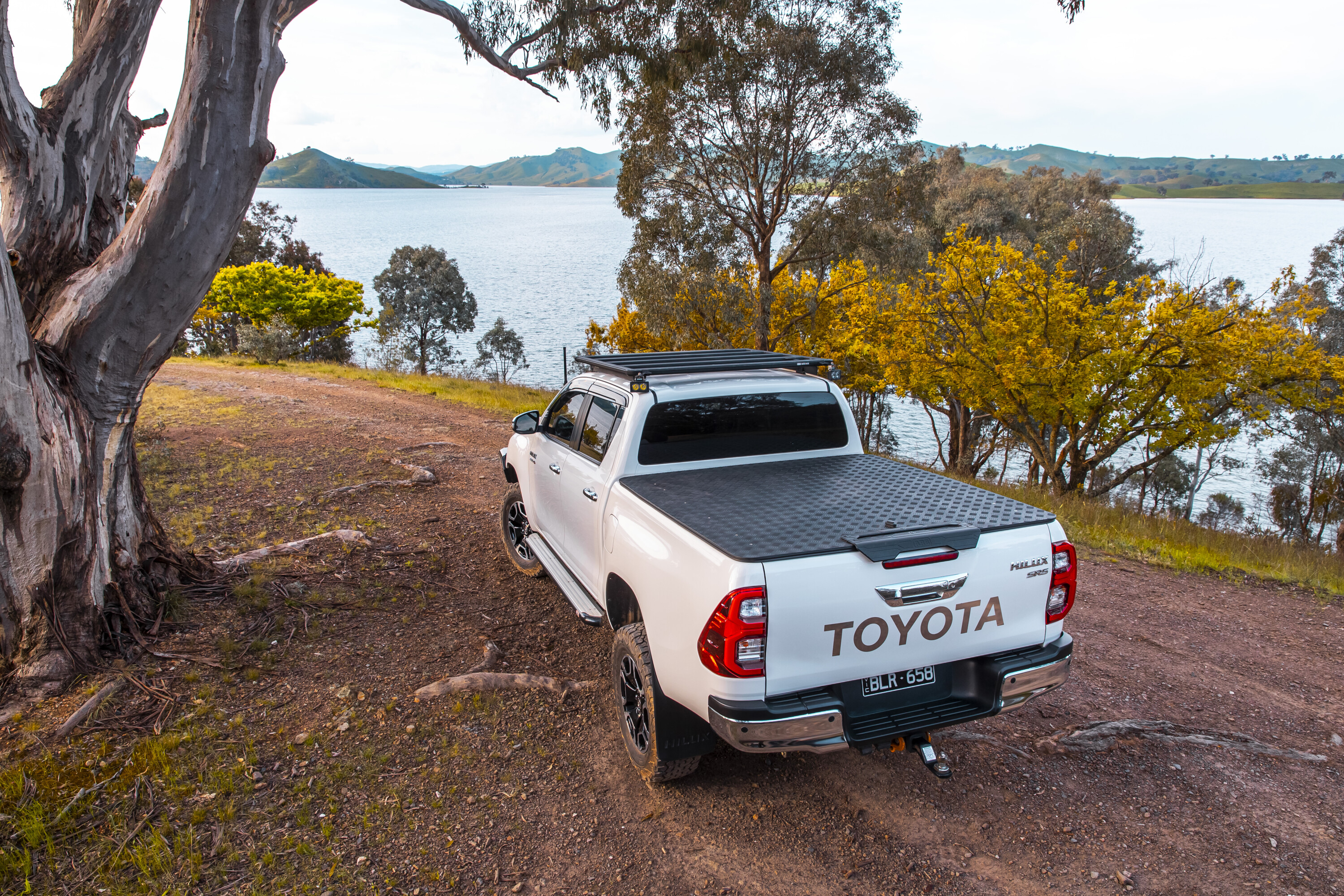
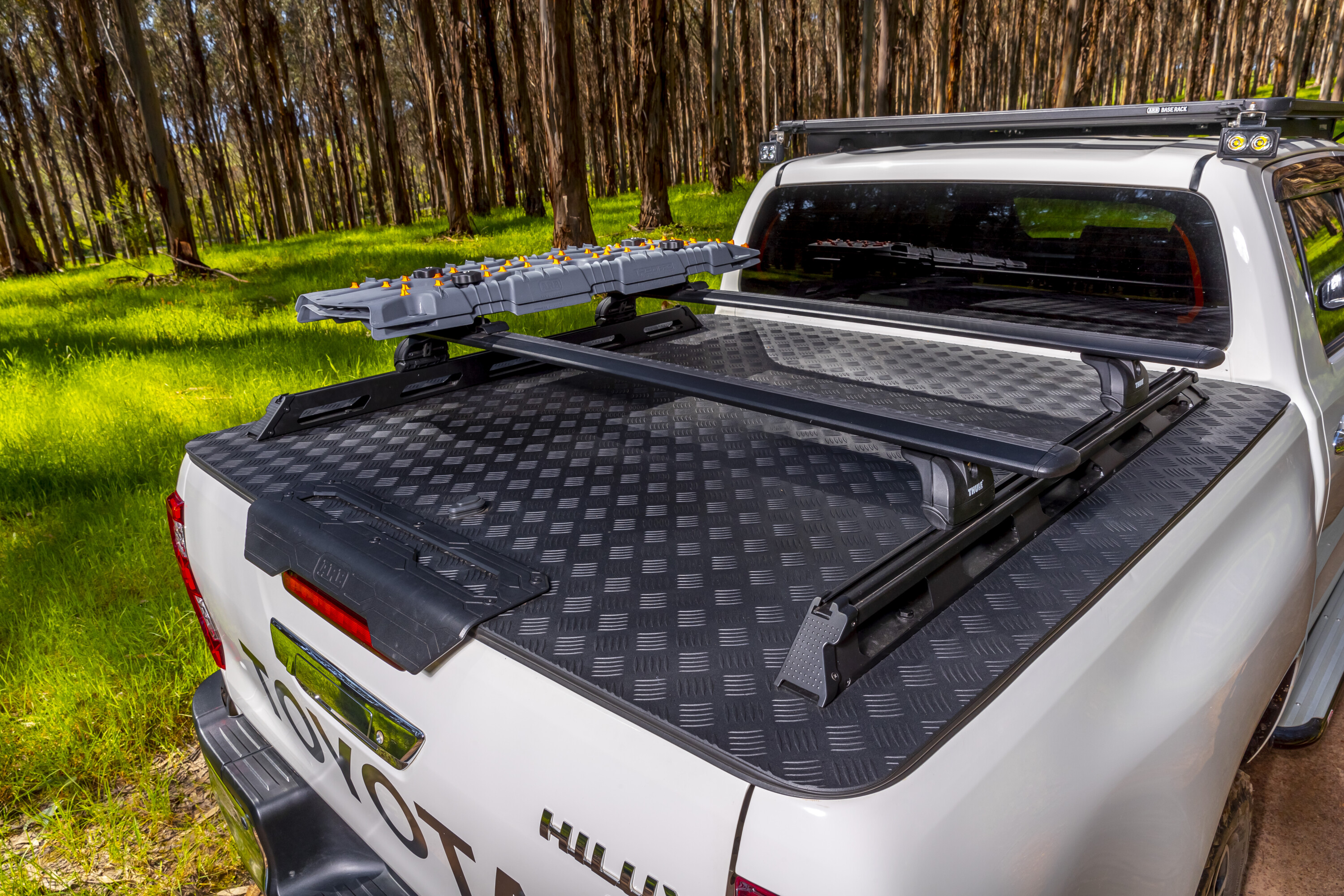
After 18 months of design and development, ARB has created a rugged, versatile and feature-packed tonneau cover and named it the HardLid. It features the same mounting and hinge mechanism used by the ARB Sportlid V, which means these crucial parts are tried, tested and proven.
This hinge mechanism opens the lid rearward and upward, away from the cabin, allowing plenty of clearance. This provides a choice to run your HardLid with or without a factory sports bar and allows for mounting hardware closer to the cab.
The HardLid is opened by a key lockable manual latch, ensuring ultimate cargo security. You can also upgrade to the Premium HardLid, which offers central locking, interior lighting and a set of premium rails.
“The ARB HardLid was born through the collaboration of two great teams, ARB Australia and our New Zealand partners, Beaut Utes. Combining our extensive product, design and engineering knowledge to produce a truly rugged and versatile solution, that’s packed full of features,” said Matthew Rust, ARB Product Development Manager.
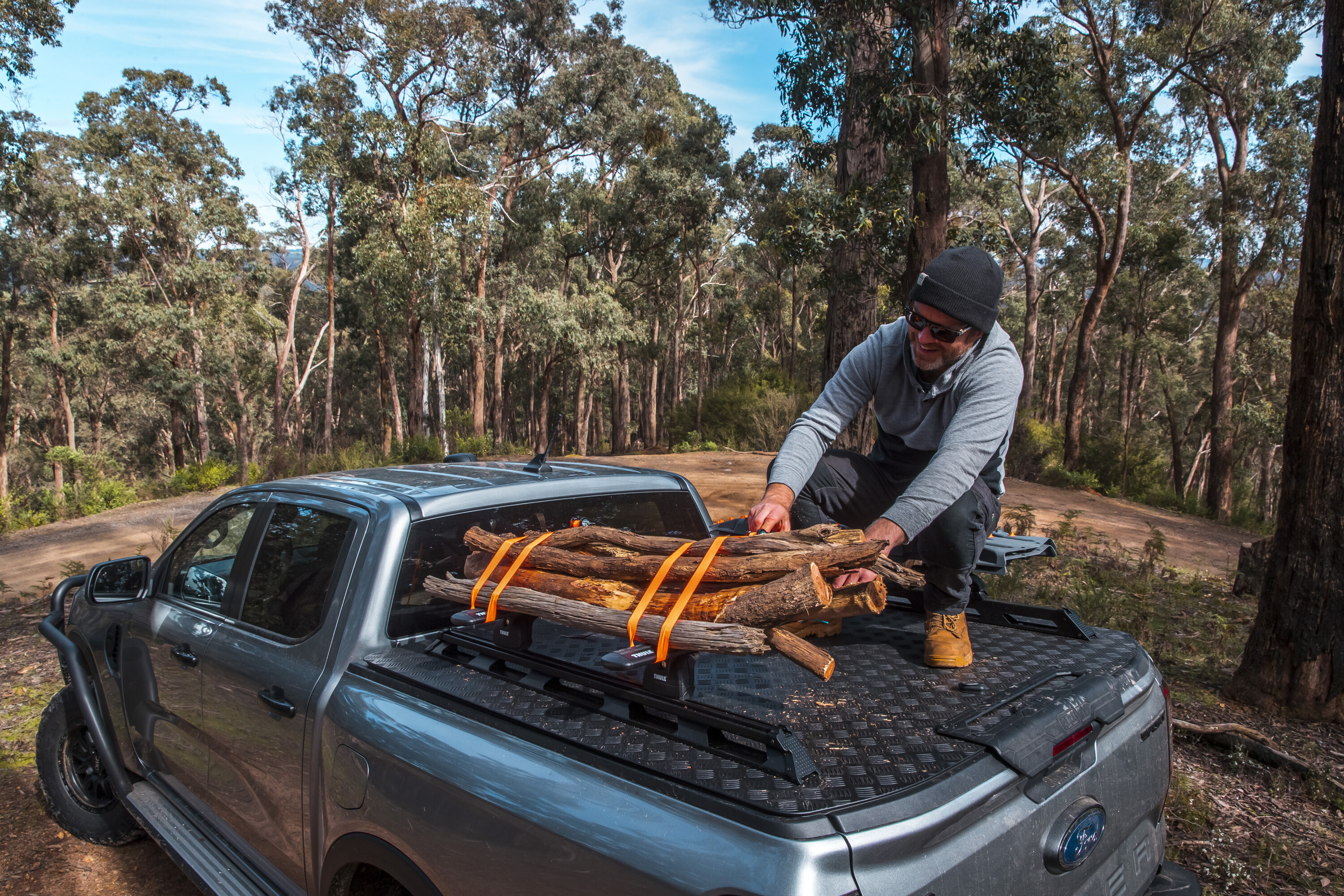
While a full-height canopy is good for additional storage, some 4WD owners still prefer the sleek styling of a hard lid without compromising on security and the ability to carry an extra roof load. A ute lid helps keep the load low on the 4WD for improved handling and fuel economy.
The ARB HardLid is the newest addition to its range of rigid tonneau covers. With its rugged and versatile cargo surface, the HardLid provides the perfect mounting platform for items that might be thrown on and tied down as you leave town on a Friday night, or for items you plan to mount permanently in position.
You can customise the HardLid depending on your needs, whether it be mounting custom toolboxes or using the premium rails. The premium rails option utilises a T-slot channel and ARB’s signature BASE Rack dovetail mounting system, allowing a mounting location for a selection of BASE Rack accessories.
“HardLid not only provides security and protection for your cargo area, but its tough aluminium exterior is a game changer for customisation. Whether it’s sports bars, custom toolboxes, recovery gear or even a rooftop tent, combining HardLid with accessories like premium rails, Base Rack or cross bars allows everyone to build out their platform to meet the needs of their lifestyle,” said Rust.
The HardLid’s aluminium skin is supported by a frame substructure, intended to be good for both a high dynamic load of 150kg and total static mass suitable for rooftop tents. With a tough powder-coated black finish, the clean, simple design will make your ute look awesome.
Pricing
HardLid pricing starts from $2750, plus fitting and additional accessories. It’s available for the following dual-cabs:
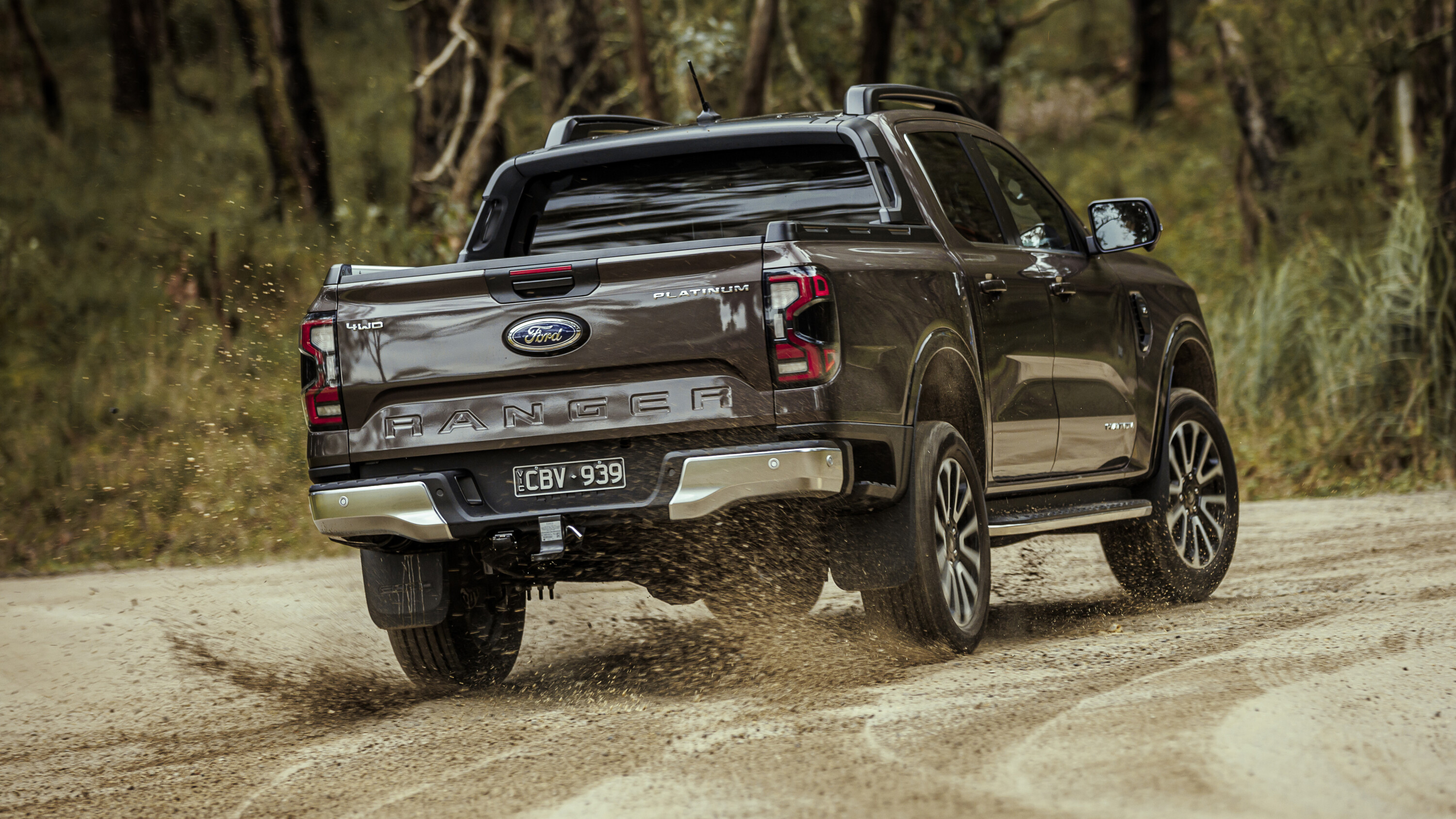
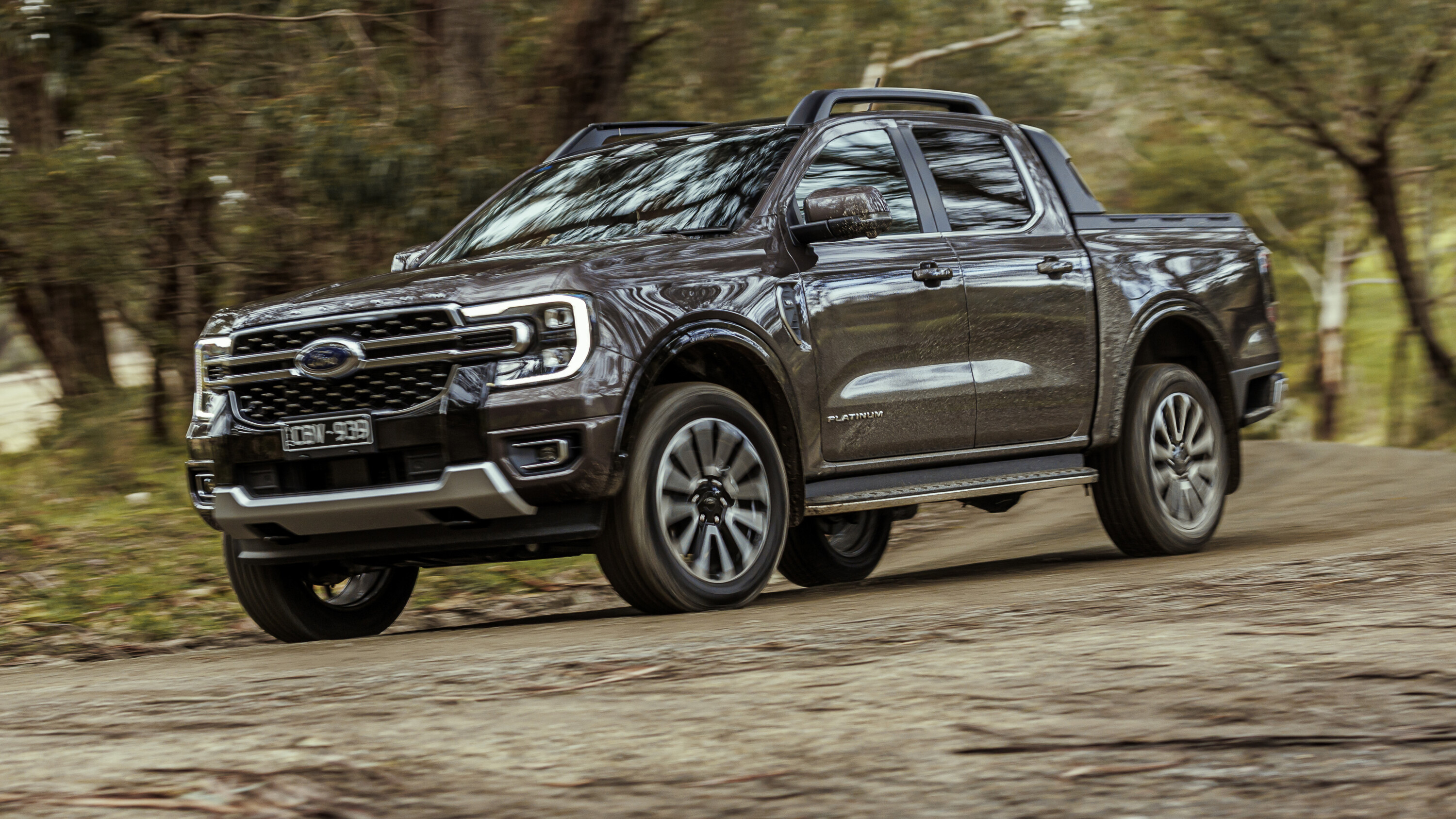
I’m looking at the Ford Ranger Platinum and wondering whether there’s a better-value vehicle trim for sale in Australia.
Not in terms of the overall package, but more in terms of what additional gear you get when you step up to that model. The 3.0-litre V6 Platinum throws in a lot, more of which later. So much, in fact, that you start to question whether it’s cost-effective for Ford to sell this model versus the next Ranger down in the pecking order, the Wildtrak.
As Ford has discovered by its healthy order bank for the $85K Raptor variant, dual-cabs with hefty price tags tap into a bigger and more receptive market than most of its rivals had ever considered. Most but not all.
So it gets all of the good stuff regarding chassis and engines and then garnishes it with the sort of feel-good polish we’ve come to expect from Volkswagen. Perhaps ‘garnishes’ is doing the Amarok a disservice, as it’s more than just a superficial once-over.
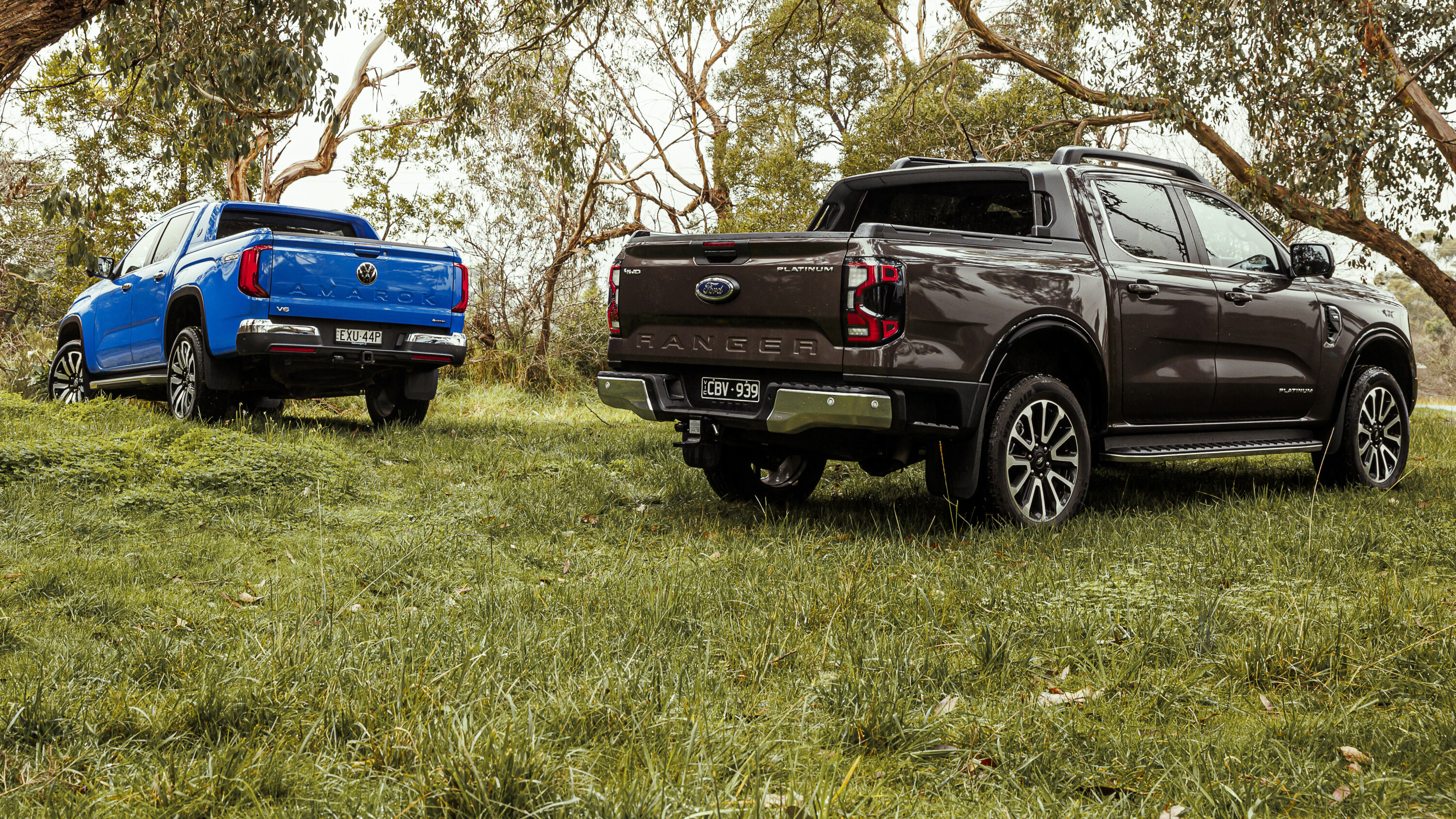
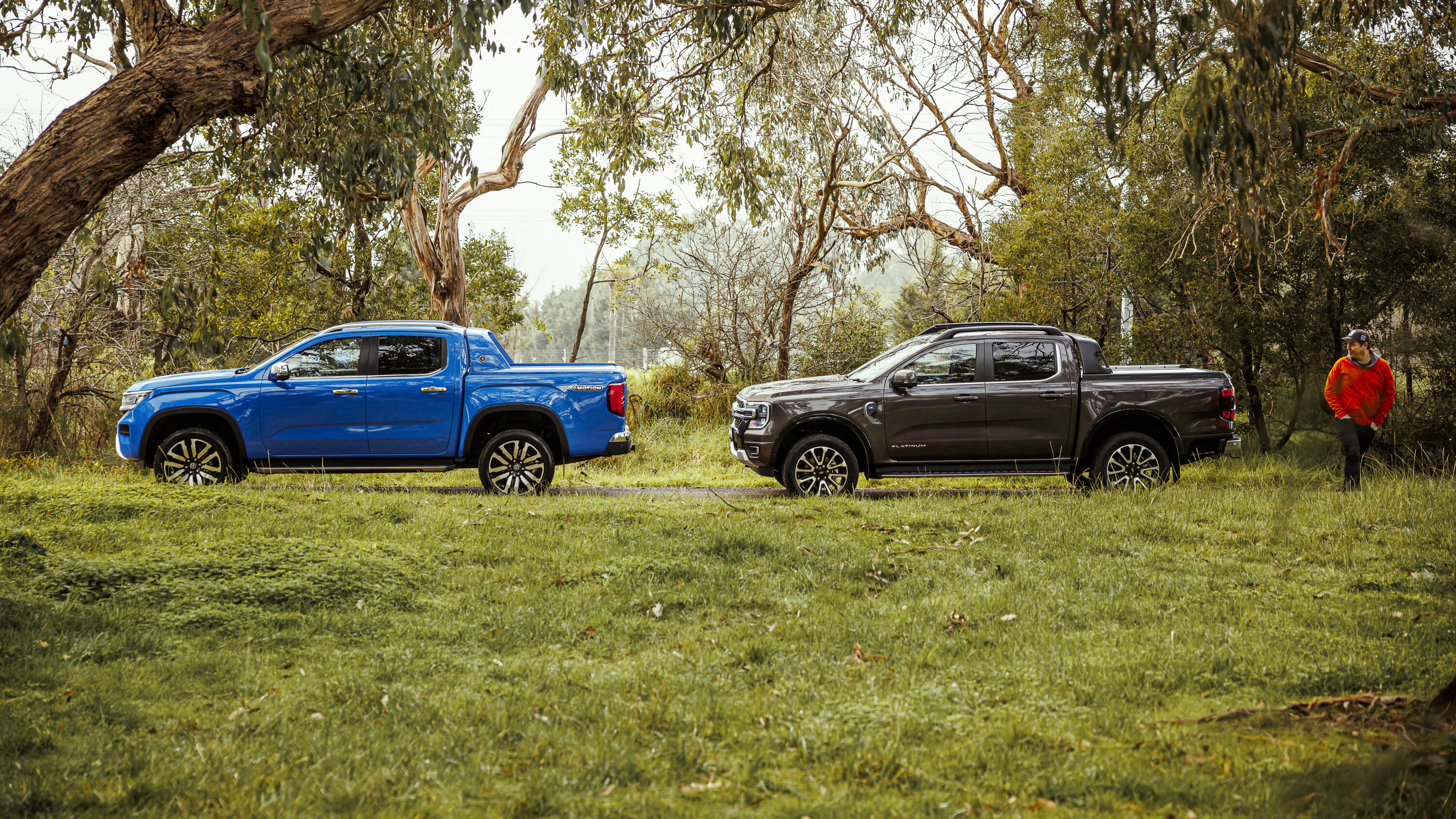
The diesel flagship version is the Aventura TDI 600, so it made perfect sense to line it up against the newcomer from Ford. Last time we put the new Amarok up against the new Ranger, VW’s off-road-specific PanAmericana version got the nod by the merest whiff over the Ranger Sport. This time around, Ford’s out to level the score.
$6800. That’s what it costs to step up from a Ford Ranger Wildtrak to a Ford Ranger Platinum.
Were this Porsche, you might get coloured crests on your wheel centres and some carbon-fibre mirror caps for that much, but thankfully the folks at Ford are a good deal more generous.
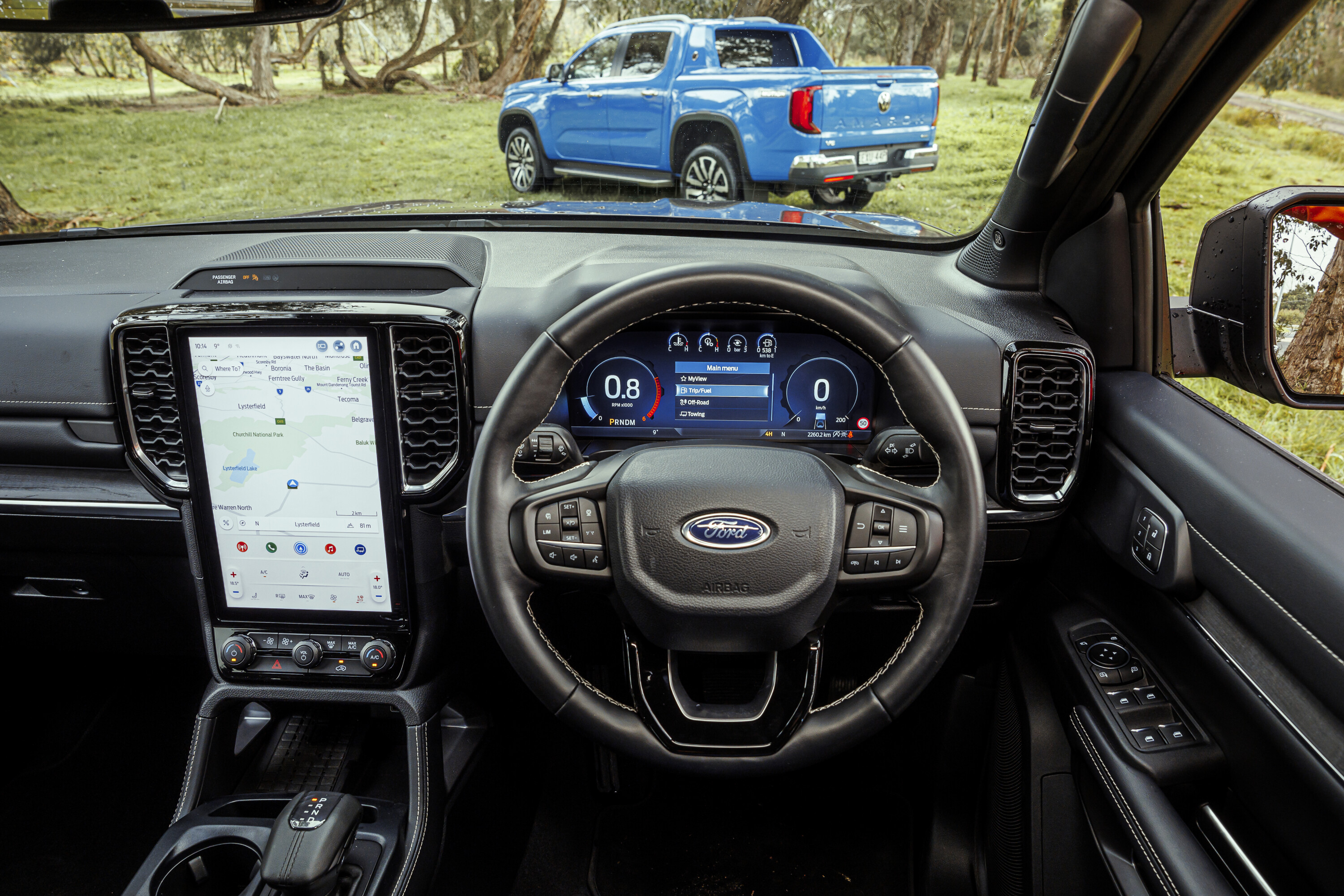
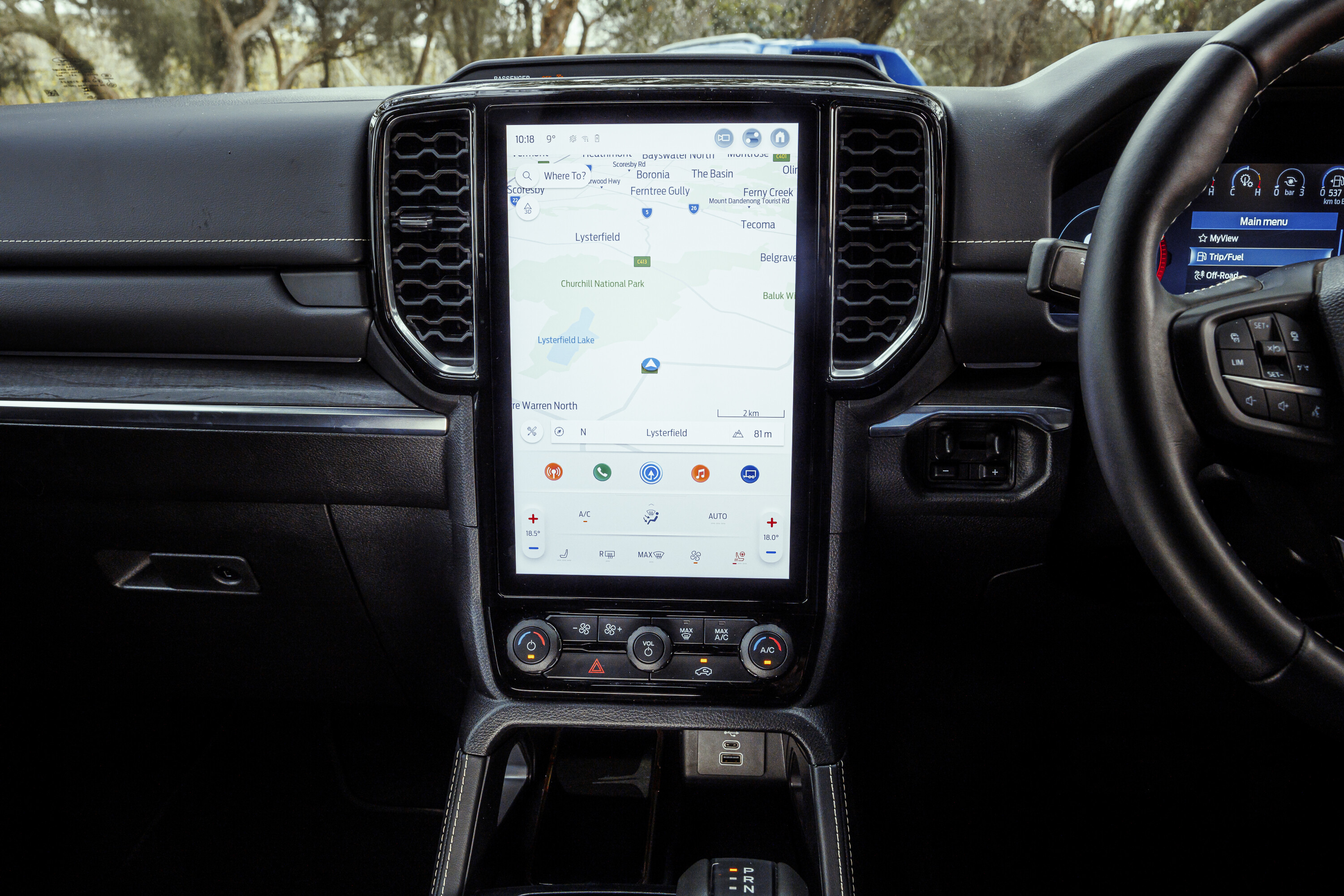
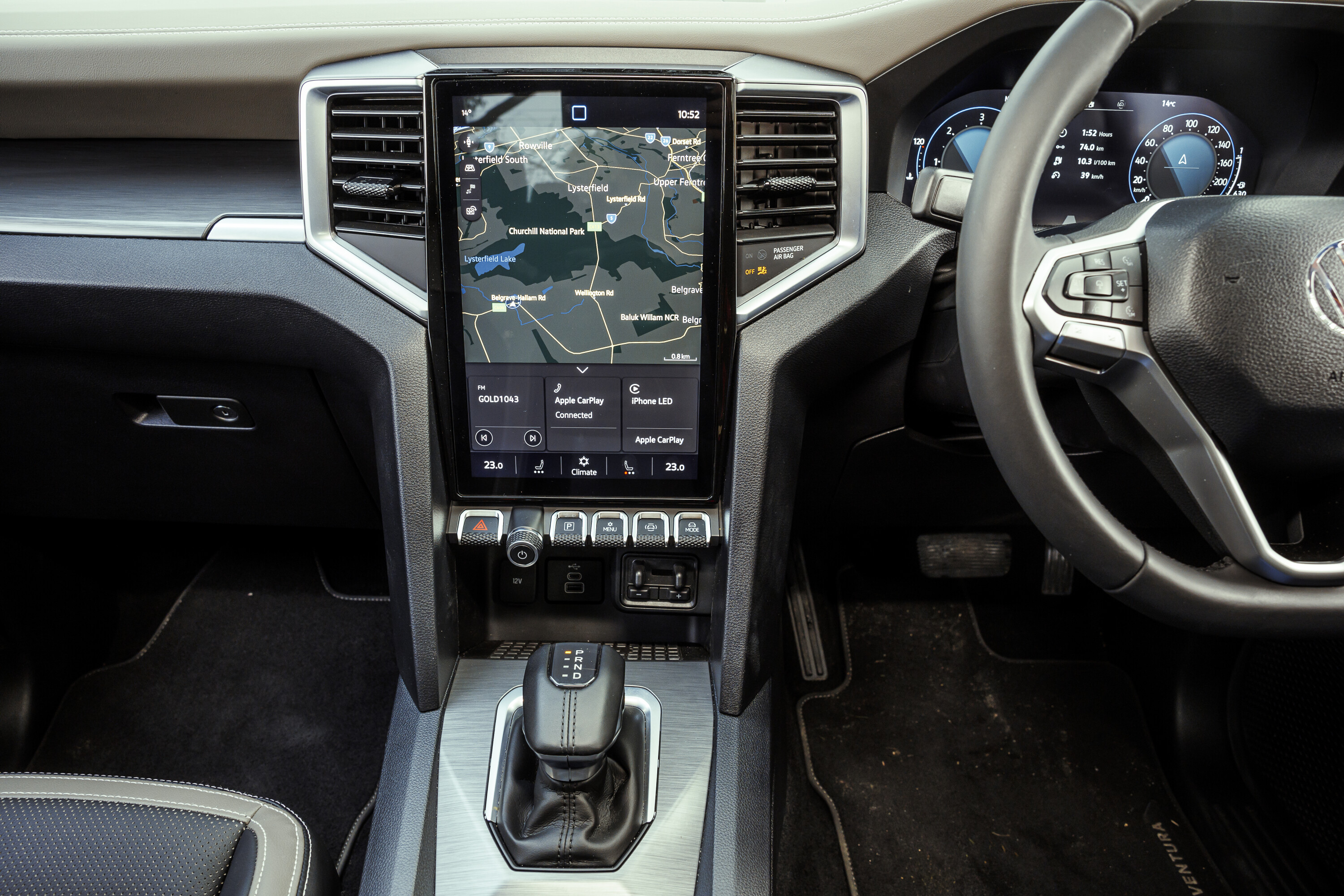
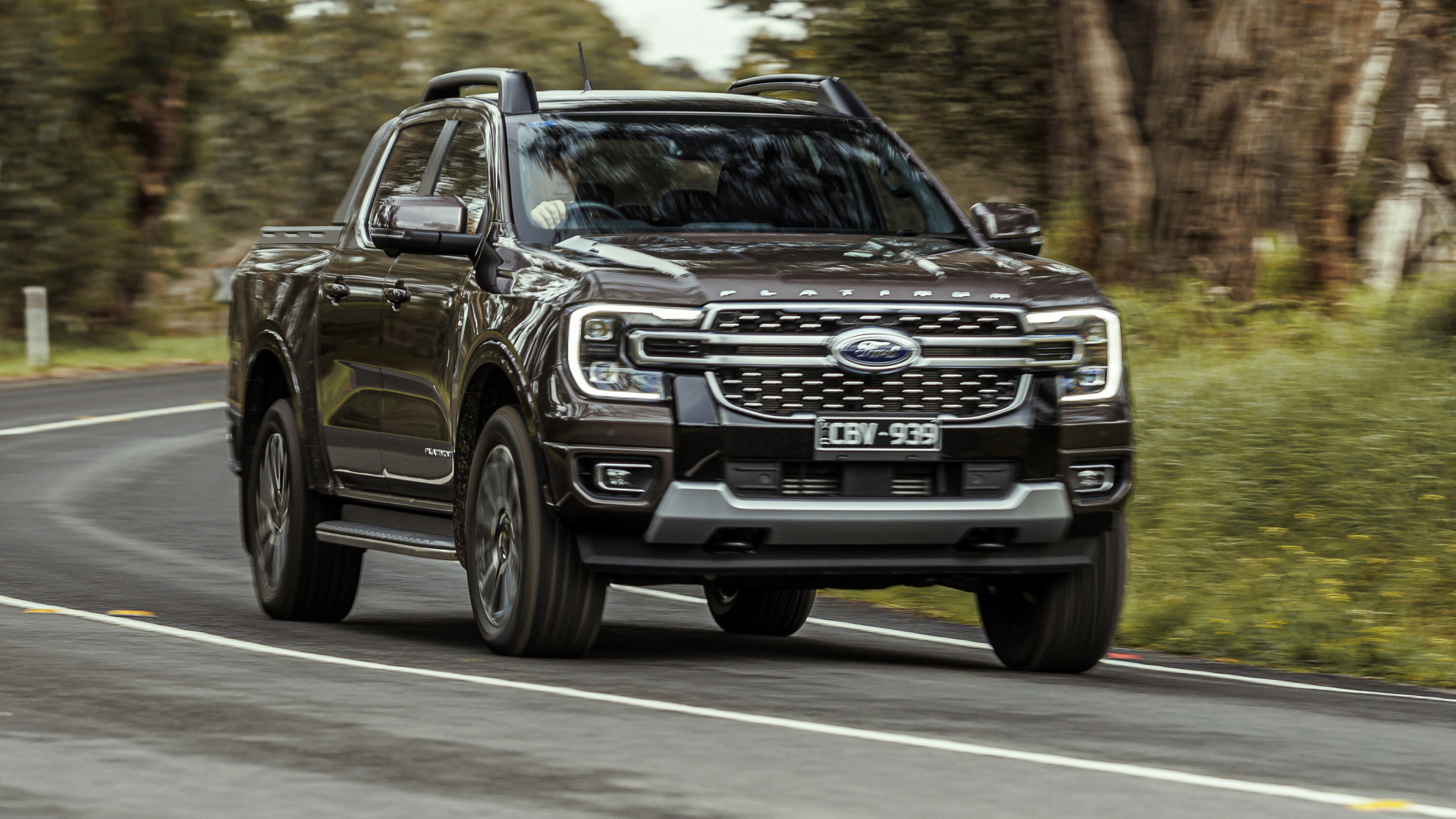
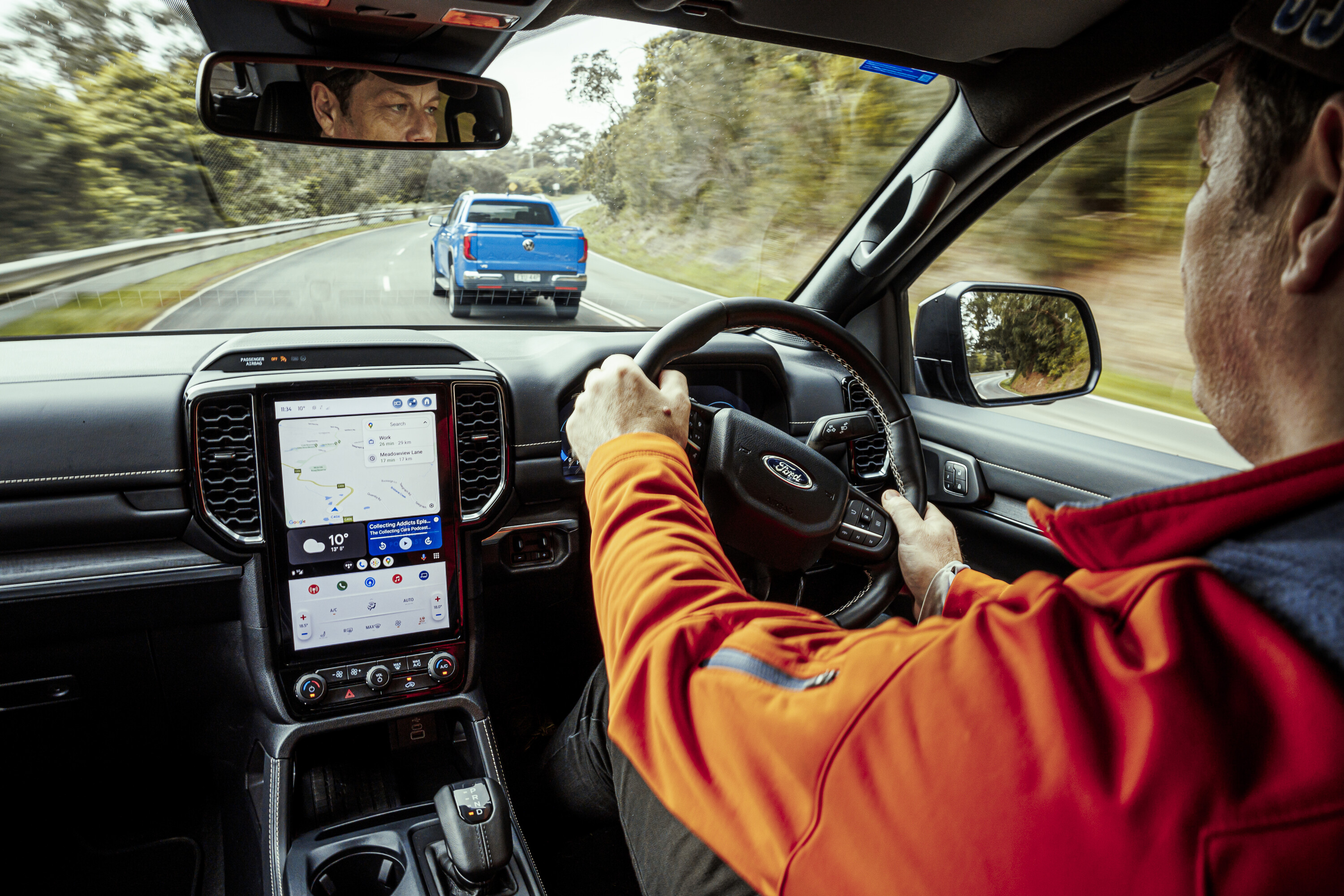
Over and above the $70,190 Wildtrak, the $76,990 Platinum (both before on-road costs) deals you in with three big-ticket items straight off the bat: matrix LED adaptable headlights, the full-frame 12.4-inch touchscreen and a 10-speaker Bang and Olufsen premium sound system. For many buyers that would be a fair deal.
1
But no. Like a shopping channel advertisement for shoddy chef’s knives, there’s more.
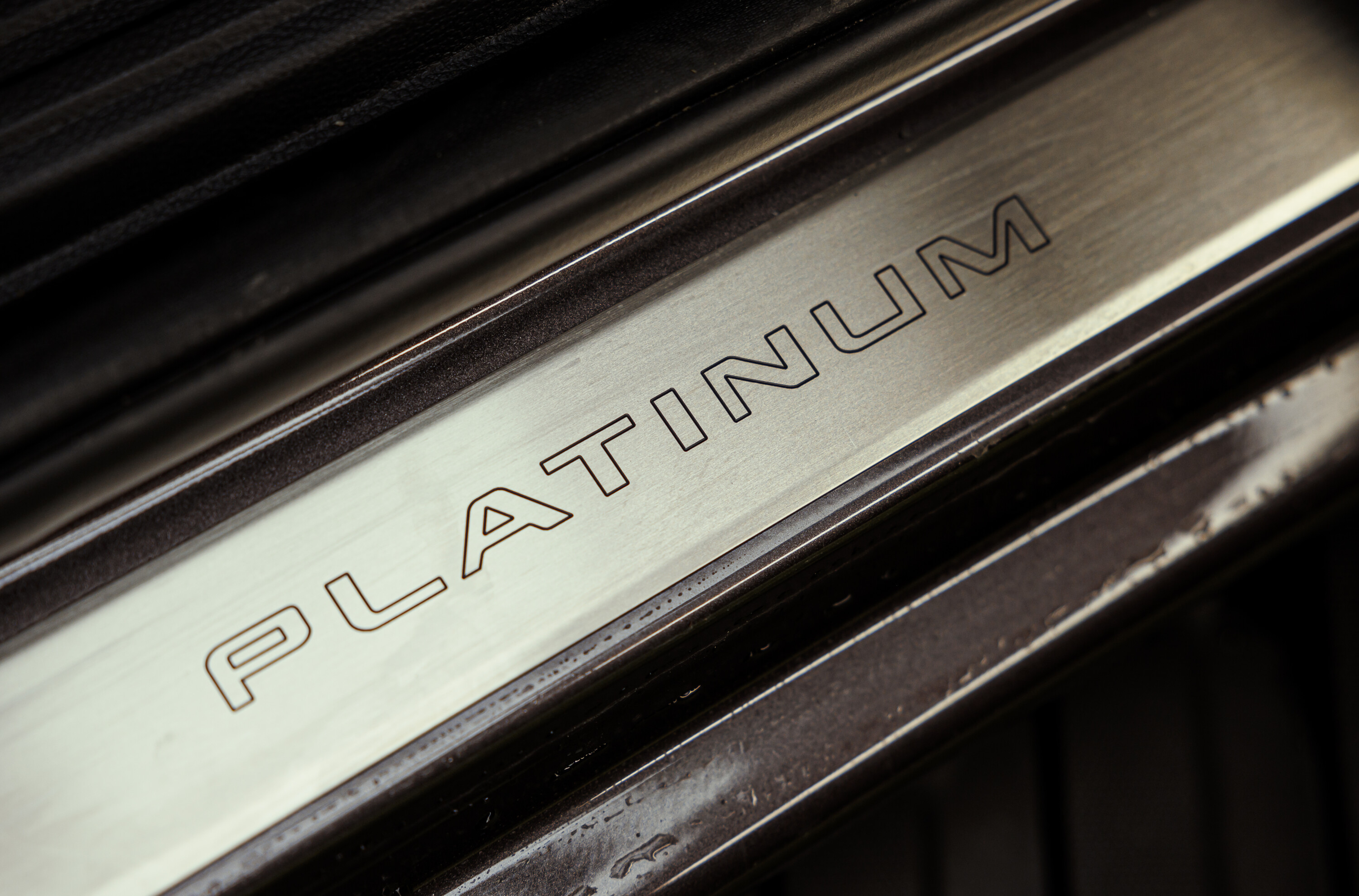
Ford delivers a set of 20-inch alloy wheels, ‘Platinum’ badging, satin chrome exterior trim, a damped tailgate and a clever rail-mounted flexible rack system.
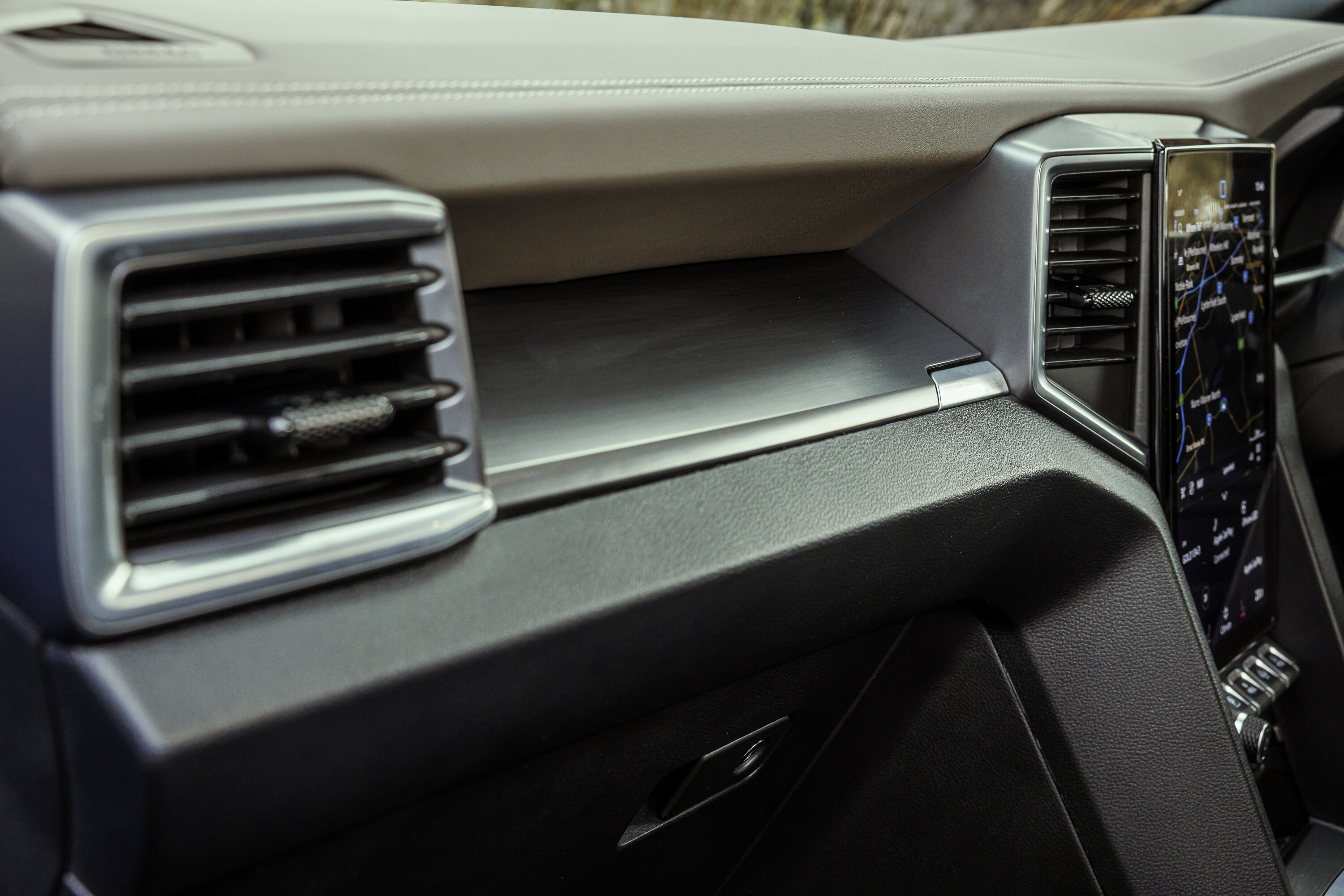
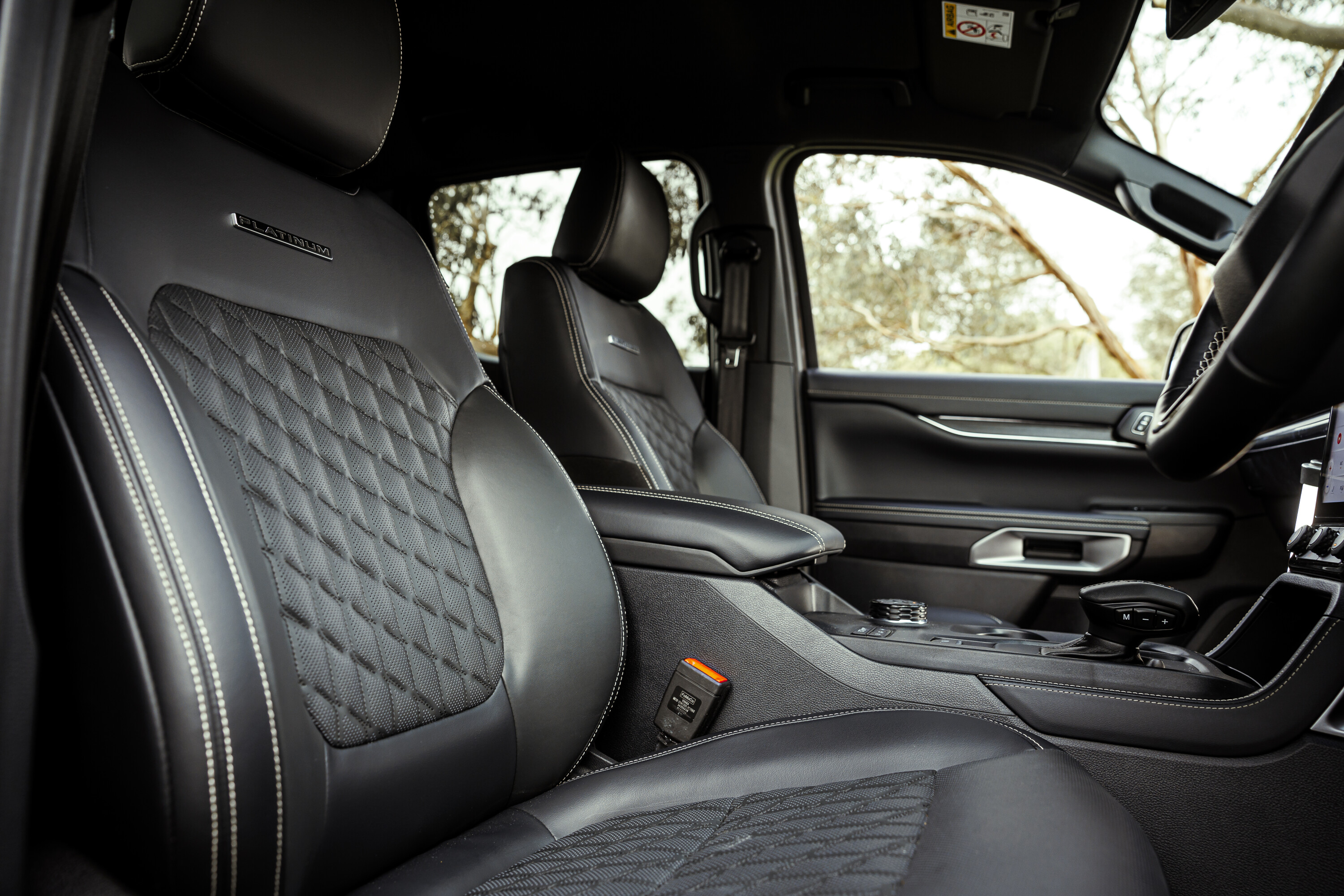
Indoors, Platinum owners will find quilted leather seats which are heated and ventilated up front, a heated steering wheel, and 10-way power adjustment for the front pair of chairs as well as a driver’s seat memory function. The Black Maple dash inserts look good too.
1
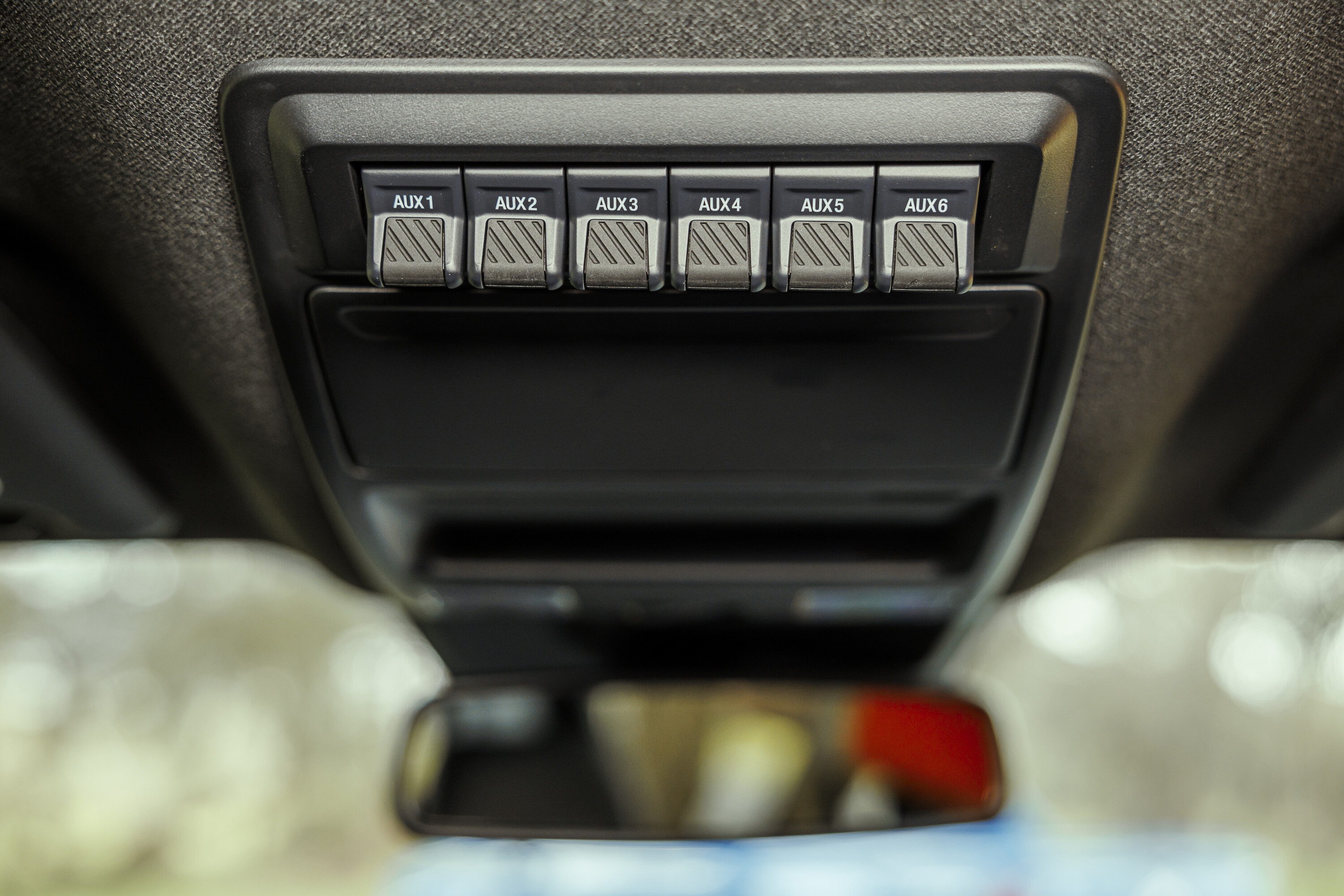
The premium pack that is popular with Wildtrak buyers has also been thrown in for nix with the Platinum, bringing you that B&O audio as well as a set of full LED tail lights and an overhead auxiliary switch bank.
If you don’t fancy drilling holes in your $76K truck to fit switchgear for functions like driving lights, winches and so on, this is especially neat.
You’ll also find some welcome refinements that are common to more proletarian models in the Ranger line-up such as wireless charging for your phone and wireless connection to both Android Auto and Apple CarPlay. Active Park Assist and 360-degree cameras are also fitted as part of a comprehensive safety suite.
1
Unfortunately, the only colour you can choose that doesn’t attract an option charge is Arctic White, which feels a bit mean on a flagship vehicle.
Meteor Grey, Aluminium, Sedona Orange, Shadow Black or the smart Equinox Bronze of the car pictured here will all run you $700.
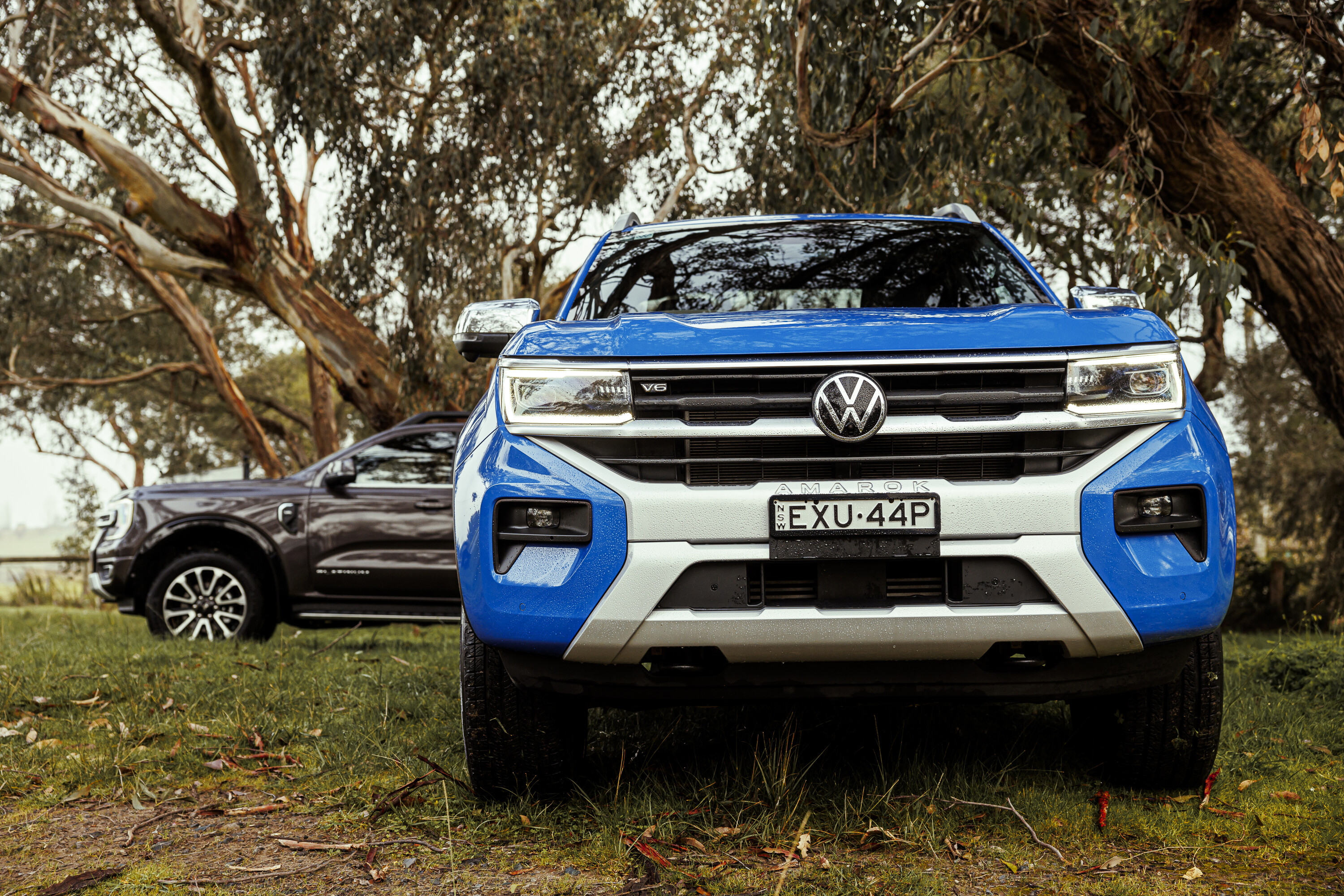
The Amarok Aventura doesn’t feel as instantly luxe as the Ranger. In fact, it feels a little austere, but the sticker price of $79,990 before on-road costs is anything but spare. Take a closer look at the vehicle and you begin to appreciate that there’s a lot packed in here, but not everything is obvious.
1
The chromed X-design front end offers more of an extrovert approach than the black plastic of the PanAmericana version
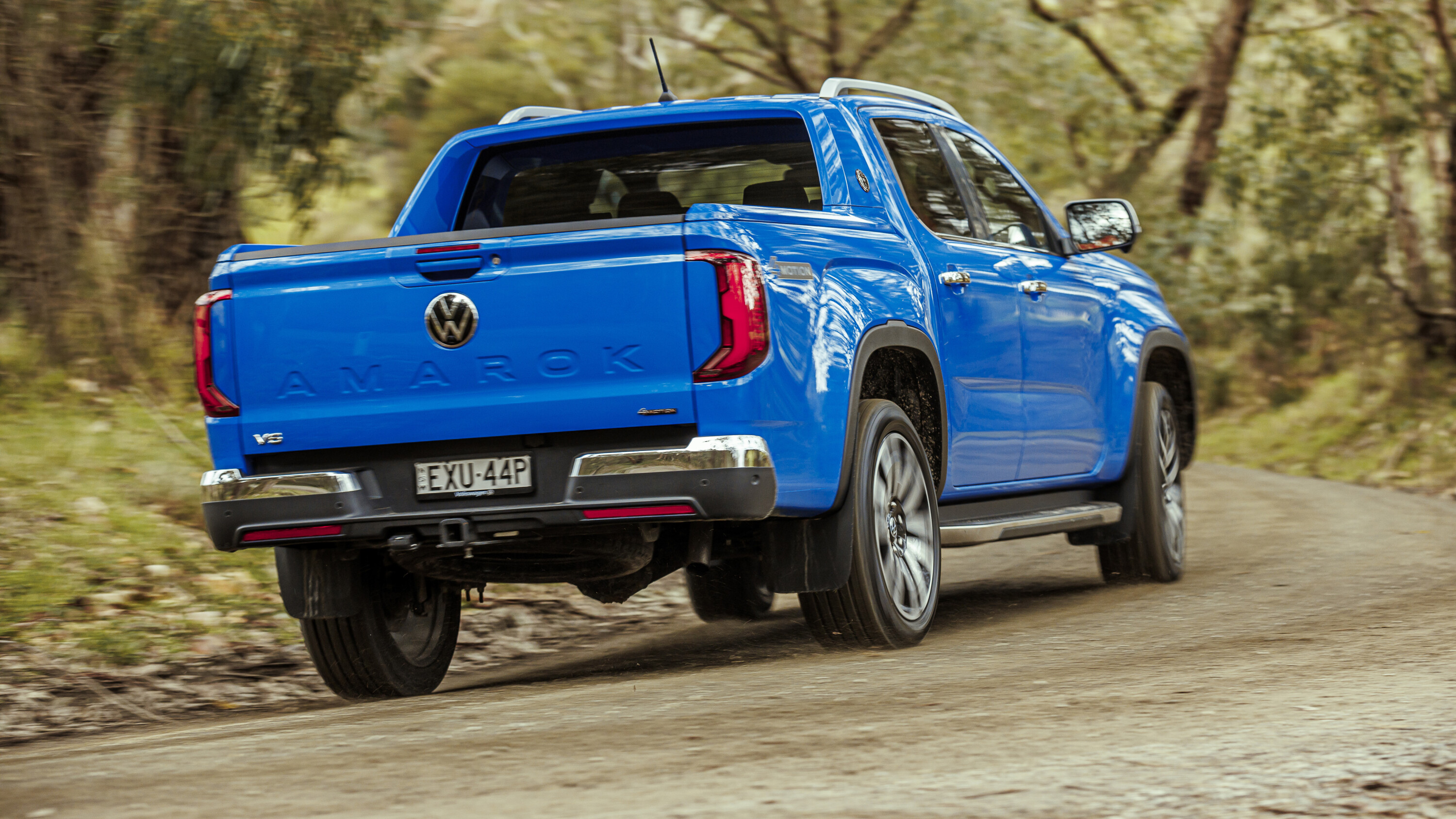
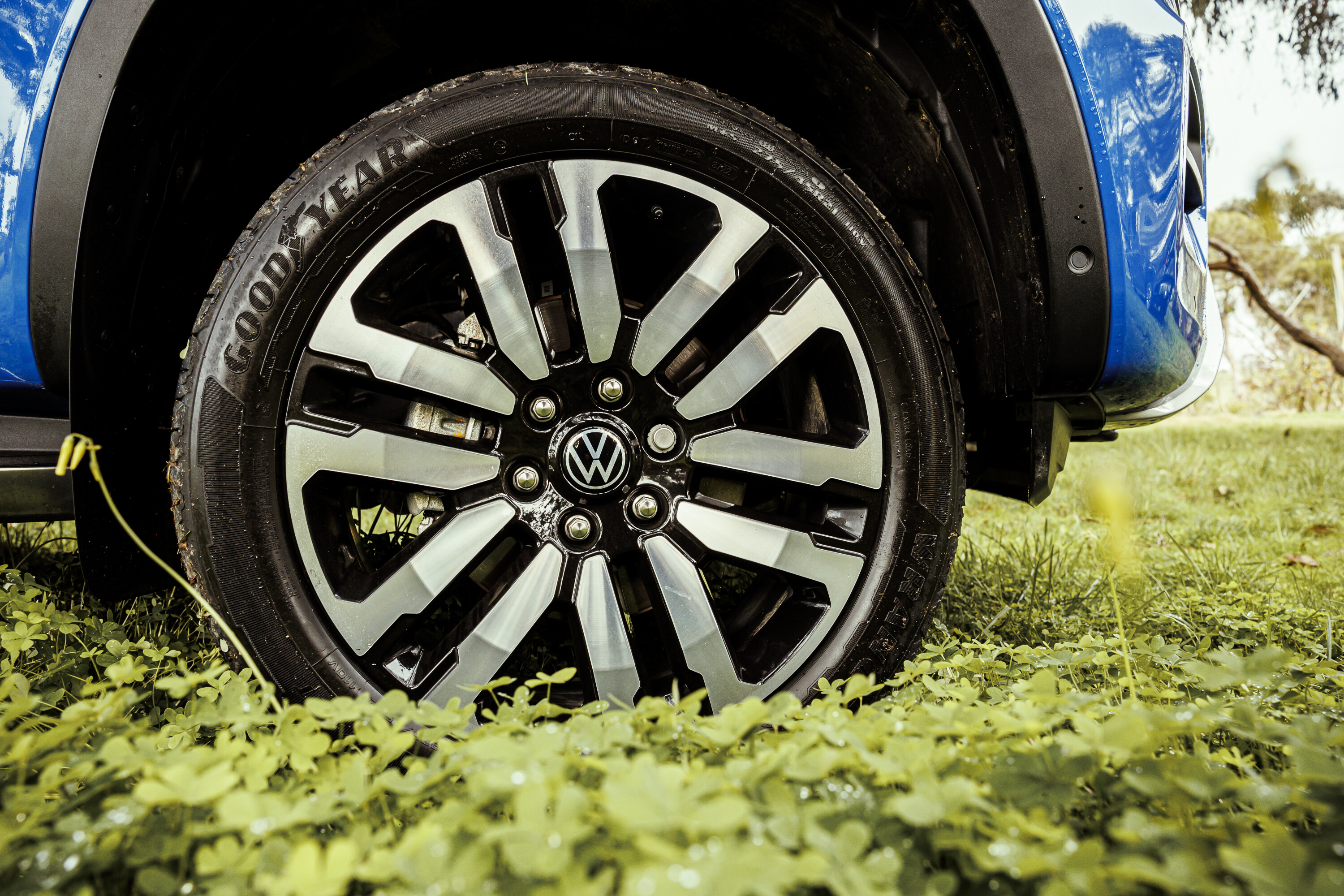
The suspension is uprated to the more expensive Dynamic Suspension pack, the alloy wheels are 21-inch items, and it features an elegant ‘sailplane’ behind the cab with a standard electric roll cover for the tub.
Its chromed X-design front end offers more of an extrovert approach than the black plastic of the PanAmericana version, although, like that model, the aesthetic is slightly tarnished with some astonishingly cheap-looking chromed ‘4MOTION’ stickers on the flanks.
Like the Ranger, white’s the only no-cost paint finish. All of the metallic finishes (Bright Beige, Bright Blue, Dark Grey, Deep Red, Light Grey, Midnight Black and this rather lovely Mid Blue) all attract a $990 option impost.
1
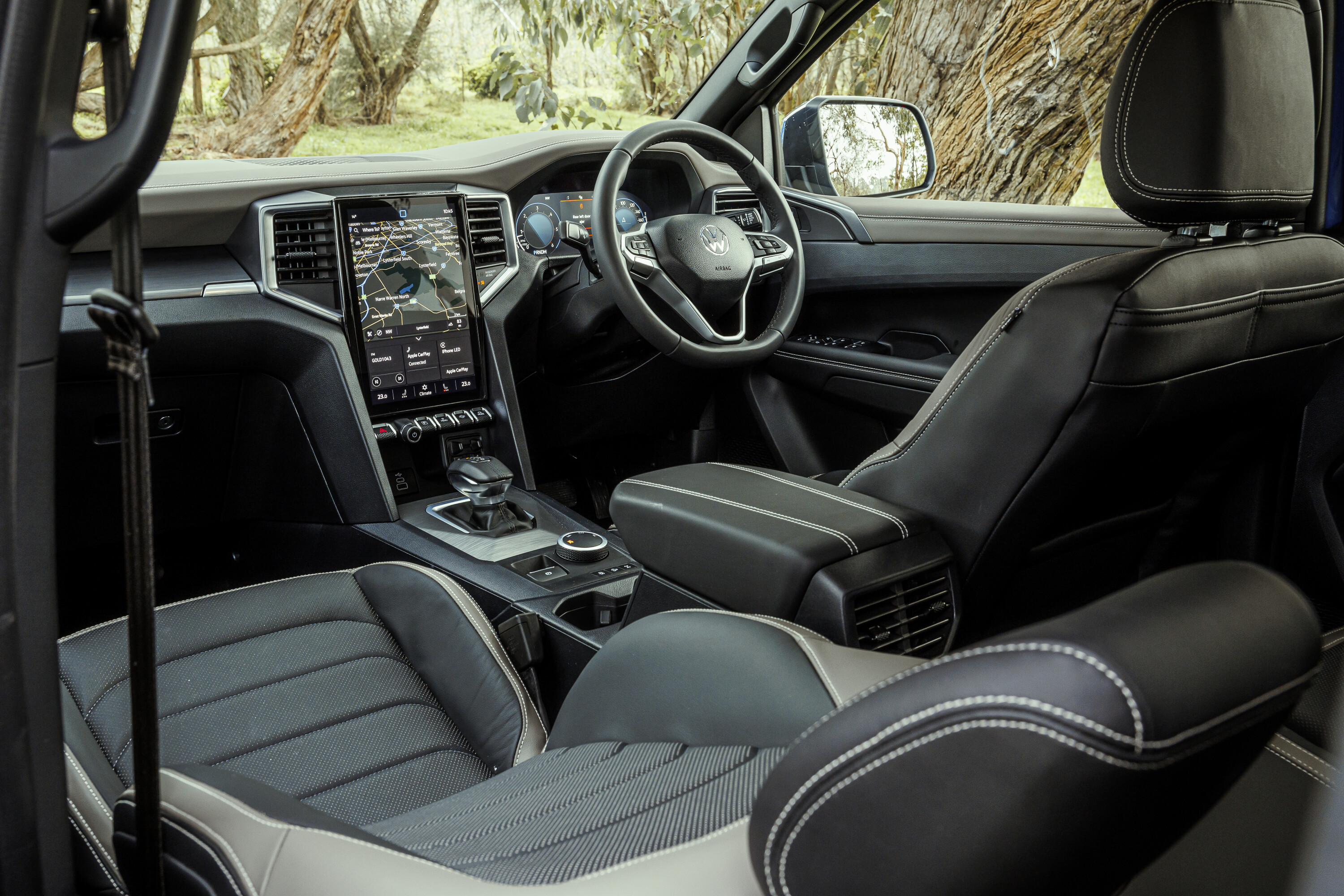
There’s a lot to like about the slightly low-key cabin. The 1920×720 pixel landscape-oriented Digital Cockpit Pro screen in the dash binnacle is slick and can run a full-width map if required.
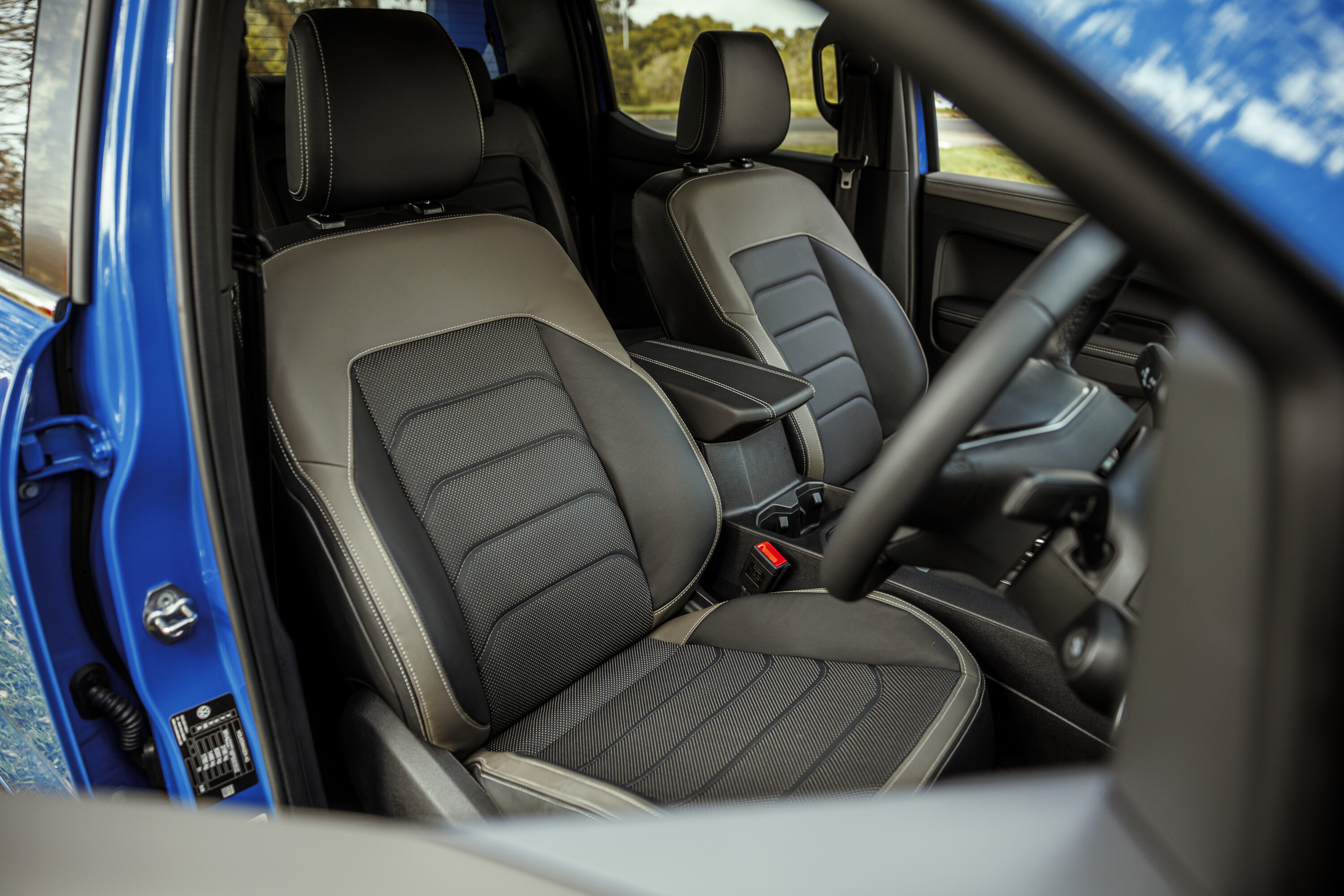
On the seats, Savona stitched leather feels good and the stitched leather look continues across the dash roll top, which one-ups the Ford. The centre console is wider than the Ford’s which lends the Amarok’s cabin a real feeling of solidity.
Like the Ranger, this version of the Amarok gets matrix LED headlights, although the Harman Kardon stereo means you’ll have to make do with a mere eight speakers to the Ford’s ten. First-world problems, we hear you.
If there is one downside to the Volkswagen’s industrial-strength centre console, it’s that the driver’s footwell can feel a little bit tight.
As a result, the Ford’s driving seat feels a good deal more spacious, measuring a full seven centimetres wider from centre console to door than the Volkswagen.
Both utes offer solid-feeling side steps that help you up and into the cabin, albeit at the expense of a little off-road practicality. That’s not really too much of an issue, because if you’re intent on going rock-crawling, you probably wouldn’t spring for either of these flagship models.
The hefty physical heating, ventilation and air conditioning controls of the Ranger are easier to manipulate on the move and more intuitive in their functionality than the HVAC controls of the Amarok, which are chiefly within the touchscreen system.
1
That said, the Amarok’s on-screen seat heater controls are far easier to use than Ford’s infernal slider.
At first glance, it seems that the same goes for drive modes. In the Volkswagen, they’re incorporated into the central screen, whereas the Ranger utilises a rotary dial on the centre console. In practice, the Amarok is probably a slicker implementation.
Hit a physical drive mode button and then select the on-screen mode and you’ve switched mode in the Volkswagen. Yes, it’s a two-step affair, but it takes a second. By contrast, the Ford forces you to cycle through each mode in turn and there are six of them. This can take a surprisingly long time, with your eyes diverted to the mode indicator to check where you’ve ended up.
1
Both run a version of Ford’s Sync4 software, though Volkswagen’s iteration is heavily reskinned.
It’s a very good system but it can be prone to dropping the wireless phone mirroring connection on occasion and then being unable to reacquire it without a hard reboot. The Ranger gets the big screen to match the Amarok, although it has to be said that the slightly smaller screen in lesser Rangers is far from a punishment and is nicely integrated.
Access to the rear seats in both vehicles is reasonably good, although the Amarok’s wider side steps mean that if you’re leaning into the vehicle from ground level, it’s possible to shin yourself pretty painfully on them. That’ll likely only happen once before you wise up.
Both vehicles have rear vents but there’s no USB connection in the back of the Amarok. There are bottle holders in the door pockets, two cup holders in the centre armrest and ISOFIX child seat fixings in the two outer positions though.
1
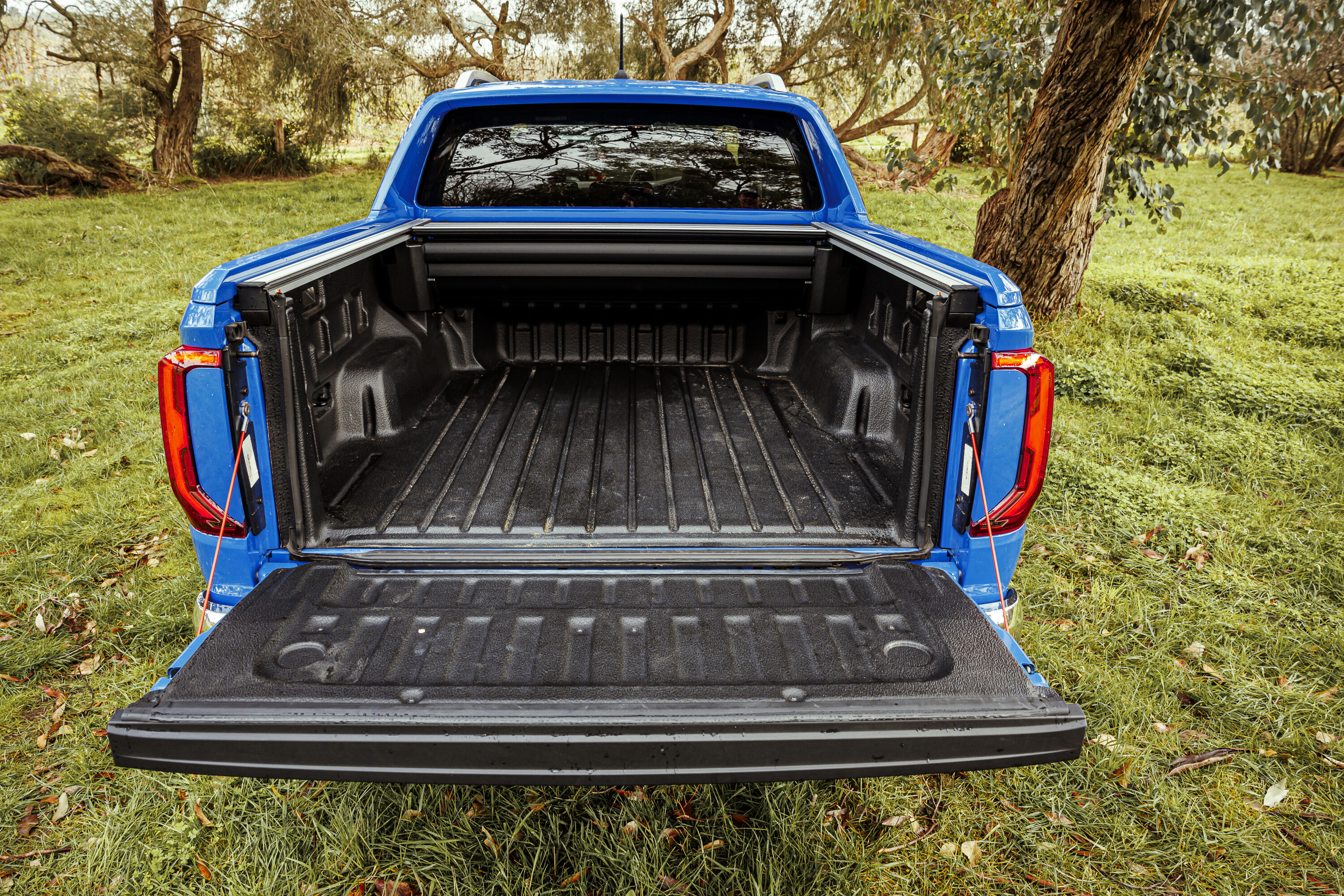
Both vehicles’ trays feature lined load bays and are scaled to fit a Euro pallet, with a 1217mm width between the wheelhouses on the Ranger and 1224mm on the Amarok.
The Amarok features a ruler on its tailgate as well as six tie-downs and LED lighting but, curiously, no 12-volt connection. Both vehicles feature a lockable electric roller shutter as standard, handy for keeping gear away from prying eyes.
Steps notched into the sides of the Ranger’s wraparound bumpers are a piece of intellectual property that Dearborn was clearly not willing to cede to Wolfsburg, and they make jumping into the back of the tray very easy.
Ford’s ingenious automated trailer light sequence check is another neat piece of thinking that the company has preserved as a point of difference.
In that test, both cars were sitting on relatively boofy 18-inch alloys with all-terrain tyres but the Volkswagen’s Dynamic Suspension setup meant it rode a bit more firmly than the Ford. That’s fine for blacktop, but made it a bit more of a handful in the rough.
The tables are turned when both vehicles are on bigger wheels and lower profile tyres. There’s no doubt that the Amarok Aventura is a plusher-riding vehicle than the Ford Ranger Platinum. It’s all the more impressive given that the Amarok rides on 21-inch alloys compared to the Ranger’s 20s.
1
There’s an unexpected suppleness to the Volkswagen’s ride that’s missing from the slightly flintier Ford.
The difference in ride comfort could be due to the fact that the VW’s more expensive monotube dampers are more capable of controlling the greater unsprung masses at play. Whatever the reason, there’s an unexpected suppleness to the Amarok’s ride that’s missing from the slightly flintier Ford.
Otherwise, there’s not much to choose between them, That’s hardly surprising given they share engines, transmissions and basic underpinnings. Neither wants for straight-line grunt.
The 3.0-litre V6’s generous torque (600Nm between 1750 and 2250rpm in both models) combined with a 10-speed automatic transmission means there’s usually a spread of at least three gears where decent acceleration is a given.
1
Each vehicle features an 80-litre fuel tank, offering a typical range of 1000km between fills.
The 10R80 transmission used to have a reputation for hunting around for the right gear ratio, but a combination of an updated torque converter design, smarter software and an engine that offers a deeper and broader swell of torque has solved that problem once and for all.
Braking is also not really anything to worry about. The Aventura is equipped with 340x235mm ventilated discs up front and dual-piston calipers, backed up by 330x25mm ventilated discs aft with a single-pot sliding caliper.
The Ranger Platinum’s stoppers are of a similar spec, with marginally larger diameter discs (341mm up front, 332mm at the back).
1
Each vehicle features an 80-litre fuel tank, offering a typical range of 1000km between fills.
Braked towing is rated at 3500kg for both, although both have the worst payload ratings in their respective ranges.
The Ford wields a slight advantage here, netting a 912kg payload versus a mere 858kg for the Volkswagen. The Amarok features a 350kg static roof load, 85kg dynamic roof load and 350kg tow ball weight for towing.
Standard tyre pressure monitoring is a feature that those who air up and down while off-roading will find useful in the Amarok, that’s missing on the Ranger. The Volkswagen features Normal, Eco, Slippery, Mud, Sand/Snow and Towing/Heavy Load modes, broadly mirroring those of the Ford.
1
The Amarok’s forward collision alert system seems somewhat neurotic, sounding a loud and urgent beep when it thinks you’re about to rear-end something.
It does this a little too frequently, such as filtering into a slip road away from stationary traffic.
By contrast, Ford’s system seems a good deal more laid-back. Otherwise, the safety systems work well, with both vehicles netting excellent surround-view cameras, well-calibrated adaptive cruise control systems and a five-star ANCAP rating.
Cards on table time. We love the new Ford Ranger here at Wheels. We also admire Ford for really going to town on the new Ranger Platinum.
As a flagship experience; a vehicle that feels considerably more premium than the next model in the range, it’s far more convincing than the Volkswagen Amarok Aventura.
Cue the considerable caveat. It doesn’t ride anything like as well as it ought to. This isn’t something we can easily overlook. On its 20-inch wheels, the Ranger Platinum feels nervous and brittle on our typically pockmarked roads. By contrast, the Amarok’s body control and both primary and secondary ride qualities are far more impressive.
2
There’s also an ace up the Amarok’s sleeve in the form of the TSI 452 petrol variant, which uses the 2.3-litre EcoBoost engine that you’ve seen in the Ford Mustang and the Ford Focus RS to offer a ute with a very different flavour.
As it stands, the Ranger’s ride quality is a dynamic issue that, personally speaking, would probably be significant enough to direct me from a Ford dealer to a Volkswagen showroom. Your mileage may differ. Ultimately, much of the appeal of these two well-equipped range-toppers is down to their styling, and you’re the best judge of that, not me.
The Volkswagen is $3000 costlier though, and there are several trim and practicality advantages provided by the Ford that some won’t be able to go past.
1
In other words, this is a lineball decision. If the ride quality of the Ranger Platinum is likely to irk you, the decision makes itself.
Likewise, if you want a ute that’s absolutely rammed to the gunwales with gear, the Amarok might be found slightly wanting.
In truth, for most buyers, most of the time, neither of these vehicles represents the sweet spot in the range. If pushed for advice, I’d recommend saving some money and opting for a Ranger or Amarok model that’s more affordable and which better expresses the incredible all-terrain ability that’s locked away in these flagship variants.
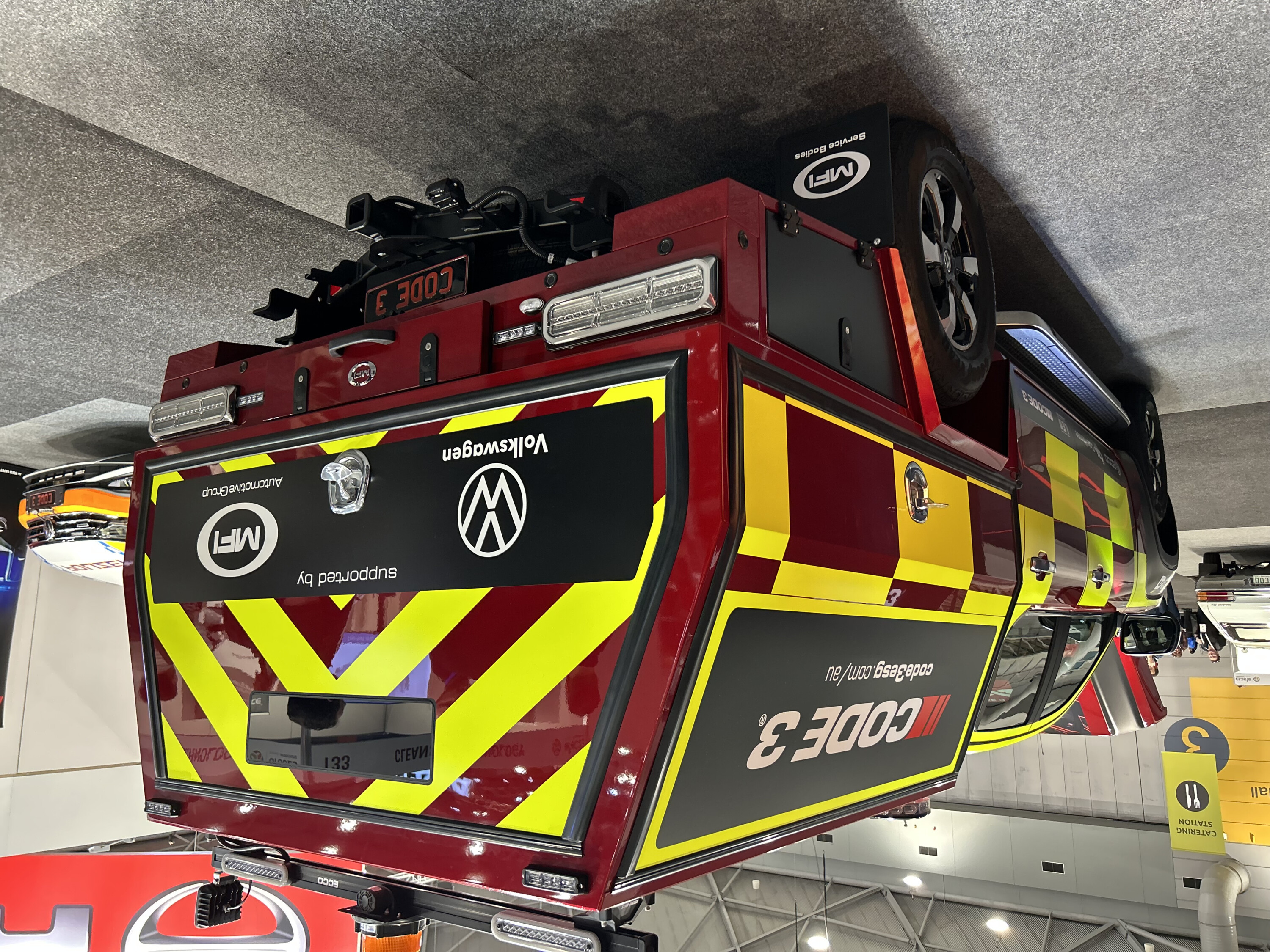
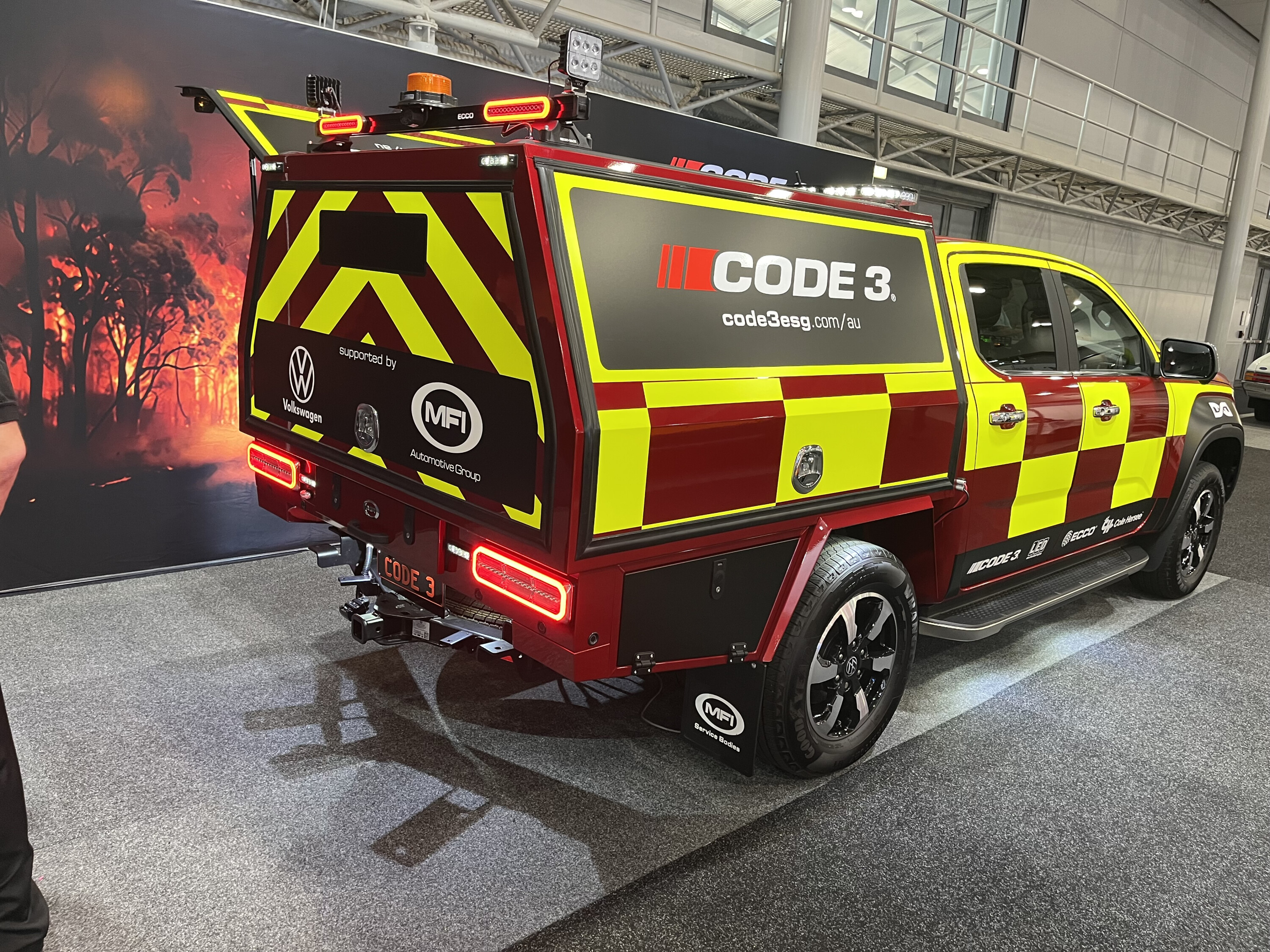
Volkswagen has unveiled a prototype emergency services Amarok at the recent AFAC23 exhibition held in Brisbane.
The Amarok Style V6 has been converted into a prototype fire-and-rescue vehicle in conjunction with MFI Automotive Group – note the canopy – and Ecco Safety Group.
The Amarok integrates its rear traffic alert, reversing camera and sensor systems, and it features a built-in rear sign board. VW says the new Amarok “is under evaluation by various fleets across the country.”
1
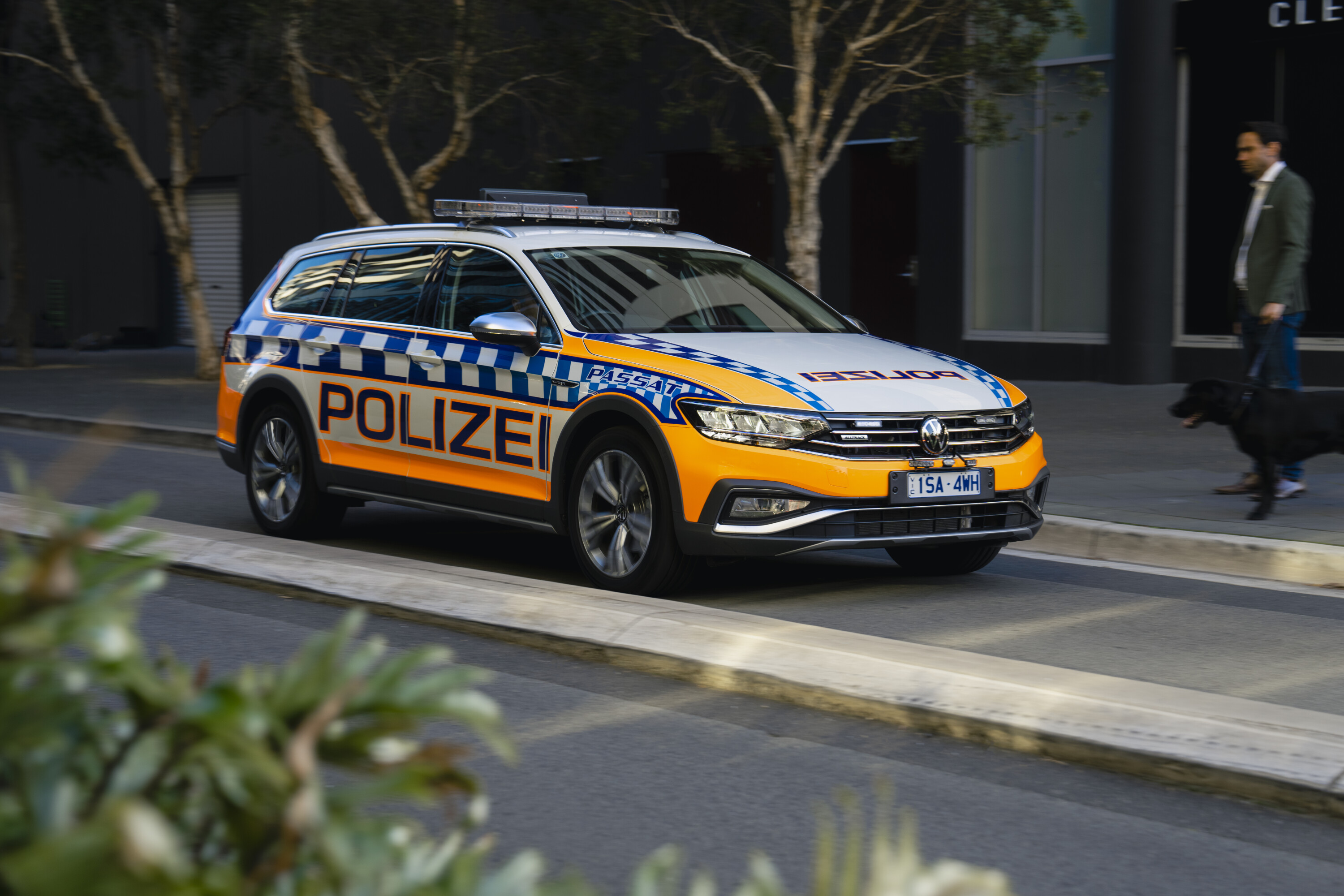
At the same event, VW also revealed a Passat Proline police pursuit car, which features a screen integration system that rids the vehicle of multiple screens and provides access to lights and sirens in one easy-to-use location. The system also includes number plate recognition.
The Passat Prolines issued for emergency service differ from regular vehicles with the provision for an additional battery, an upgraded alternator and modified interior.
“There are no alterations to brakes, engines or drivetrains,” Volkswagen and CUPRA National Fleet Sales Manager, Regine Zschernig, said of the Passat.
“So aside from the Proline adjustments, the police and ambulance have selected Volkswagen cars and SUVs that are essentially the very cars that the public drive.”
THe AFAC23 exhibition is Australia’s largest emergency management conference and exhibition.
Volkswagen’s new state of the art emergency vehicles
A Volkswagen police pursuit car and a prototype emergency services Amarok have starred at the AFAC23 exhibition, Australasia’s largest emergency management conference and exhibition, in Brisbane this week.
The latest version of the screen integration featured in a Volkswagen Passat – thousands of which are already in service in state law enforcement services – is a collaboration with Lumen Australia, Obses UK and Ecco Safety Group.
It features a screen integration system that enables easy activation of lights and sirens through the standard OEM multi-media screen. Number plate recognition capability is now also included. This integration removes the need for multiple screens, saving space, build costs and weight and improves occupant safety. It can be fitted to other Volkswagen emergency services vehicles.
An example of the recently launched Amarok Style V6 premieres in Brisbane in the form of a prototype for a fire and rescue vehicle in conjunction with MFI and Ecco Safety Group. The partnered body integrates rear traffic alert, reversing camera and sensors as well as a built-in rear sign board. The new Amarok is under evaluation by various fleets across the country.
Volkswagen and CUPRA National Fleet Sales Manager Regine Zschernig said Volkswagens of various types, from the Golf hatchbacks to Crafter vans, are in service with emergency services in every state and territory. “Year to date, we have sold more than 1,400 Passat Proline wagons and sedans, and almost 600 Tiguan Allspace Proline – and counting,” she said.
Prolines are developed for and with emergency services, differing from civilian issue vehicles in interior trim, upgraded alternator and a provision for an additional battery. In addition to that the Tiguan Allspace Proline is a five seater, fitted with a 162TSI 4Motion drivetrain and sports suspension.
“There are no alterations to brakes, engines or drivetrains,” Ms Zschernig said. “So aside from the Proline adjustments, the police and ambulance have selected Volkswagen cars and SUVs that are essentially the very cars that the public drive.
“Volkswagen offers an unequalled array of mobility solutions, fit for purpose for fleets of all types. We have compact hatches, a full range of SUVs, a new ute range, and a full suite of commercial vans and chassis up to 5.5t GVM. “We back them all with Care Plans, five year warranty and more than 100 dealers nationwide.”
2
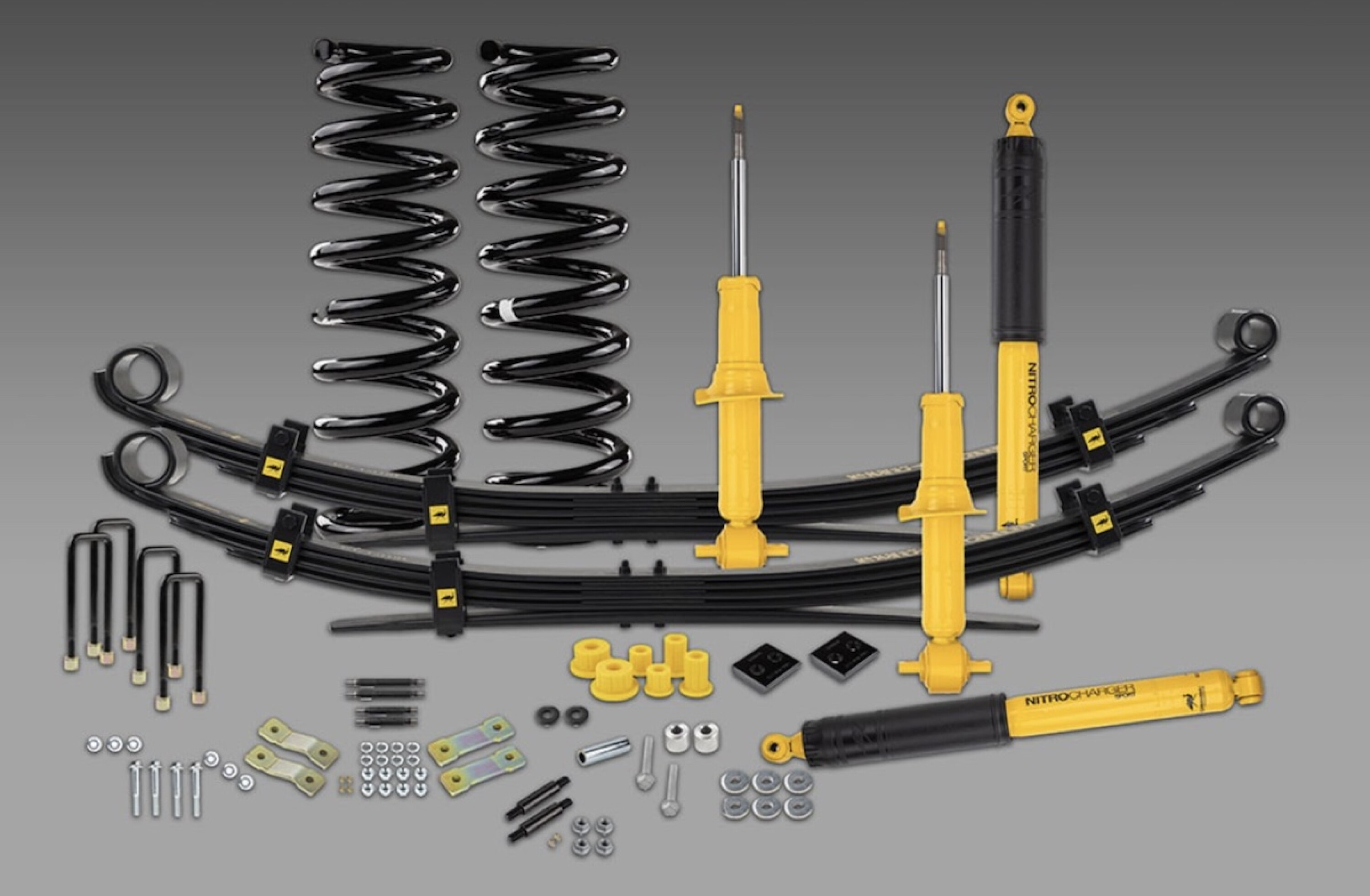
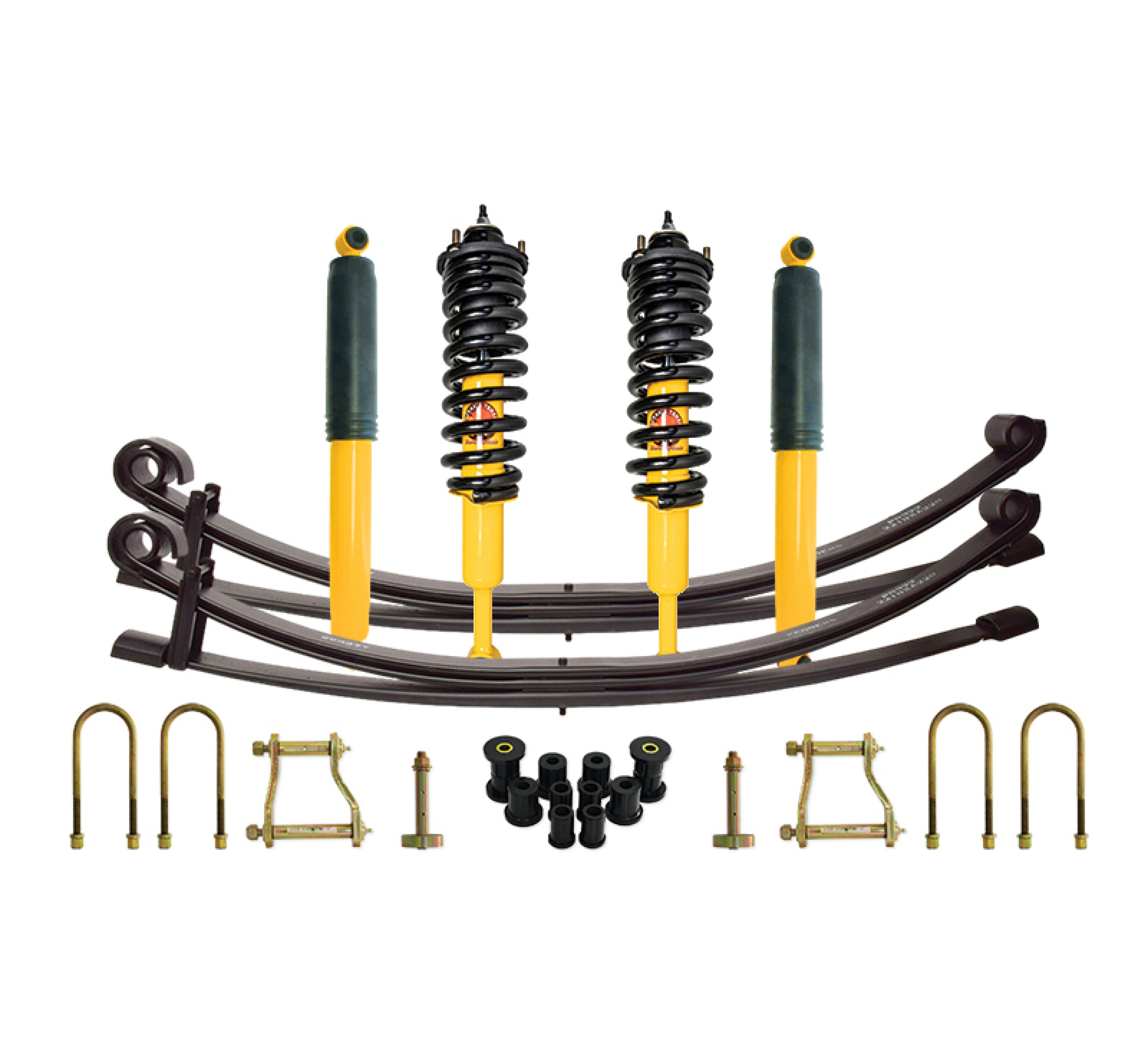
A suspension lift kit is a popular aftermarket upgrade that raises the vehicle’s ride height and improves off-road performance.
These kits typically include upgraded springs and shocks, and allow for the fitment of larger tyres. The benefits for the HiLux include better clearance, improved approach and departure angles, and increased off-road capability. Quality suspension should also improve on-road handling.
A low quality or inappropriately rated suspension lift kit can adversely affect the vehicle’s handling and ride quality, so it’s important to choose the right kit for your needs and have it installed by a qualified professional.
What it is:Replaces your shocks (dampers) and springs to slightly lift body and chassis of the car.
Why you need it: Improved approach, ramp and departure angles, plus better load-carrying ability. The stock suspension isn’t designed for the constant load of accessories.
Buying tips: Work out how much load you’ll have in the car at all times, such as the weight of bullbars, winches, canopies and the like, and whether you’ll be likely to run at GVM (maximum weight). Then select the suspension. Also consider a GVM upgrade for your HiLux while you’re at it.
Here are four products we recommend. They’re intended as a starting point, to give you an idea of what’s available.
A range of front springs with matching shocks were developed to cater for various vehicle set-ups, and front ride height increases of approximately 40mm were achieved without the need for costly modifications. A front trim packer was developed to further fine-tune front ride heights.
With various options depending on your load requirements and the only manufacturer to offer parabolic springs, Terrain Tamer suspension is sure to get you down those bumpy roads safer and more comfortably.
Specifications
Lift: 40mm
Shock design: Mono-tube
Piston bore: 40
Spring type: Tapered coil front and parabolic leaf rear
1
Pros
Progressive springs, front and rear
Parabolic springs reduce unsprung weight and add comfort over typical leaf springs
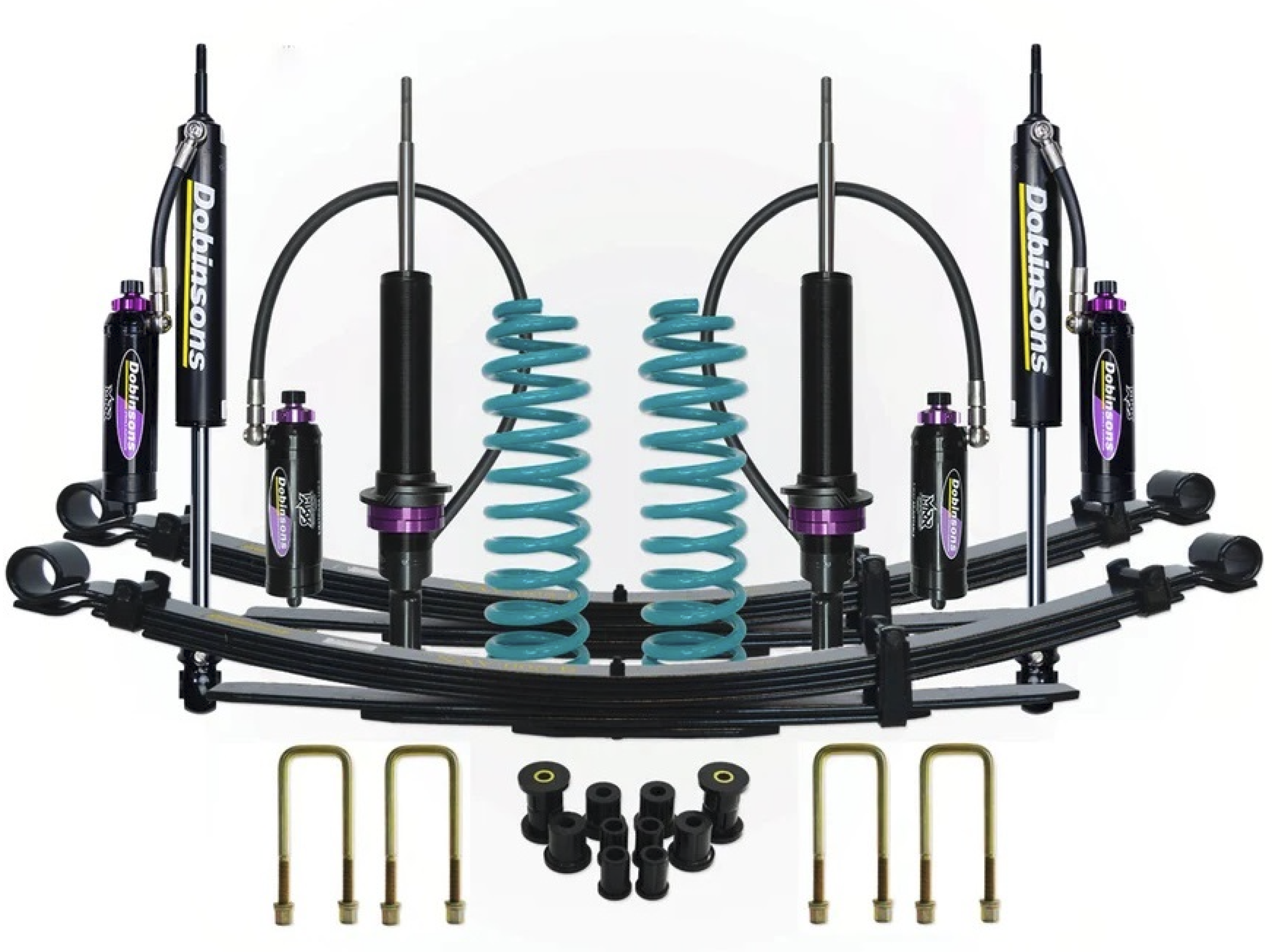
Featuring three-way adjustable shocks, the Dobinsons suspension lift kit will provide maximum adjustability to provide the perfect ride quality for your HiLux, no matter the conditions.
Specifications
Lift: 50-75mm
Shock design: Three-way adjustable mono-tube with 60mm remote reservoir
Piston bore: 56mm
Spring type: Coil front/leaf rear
1
Pros
Three-way adjustable shocks with remote reservoirs make these the corrugation king
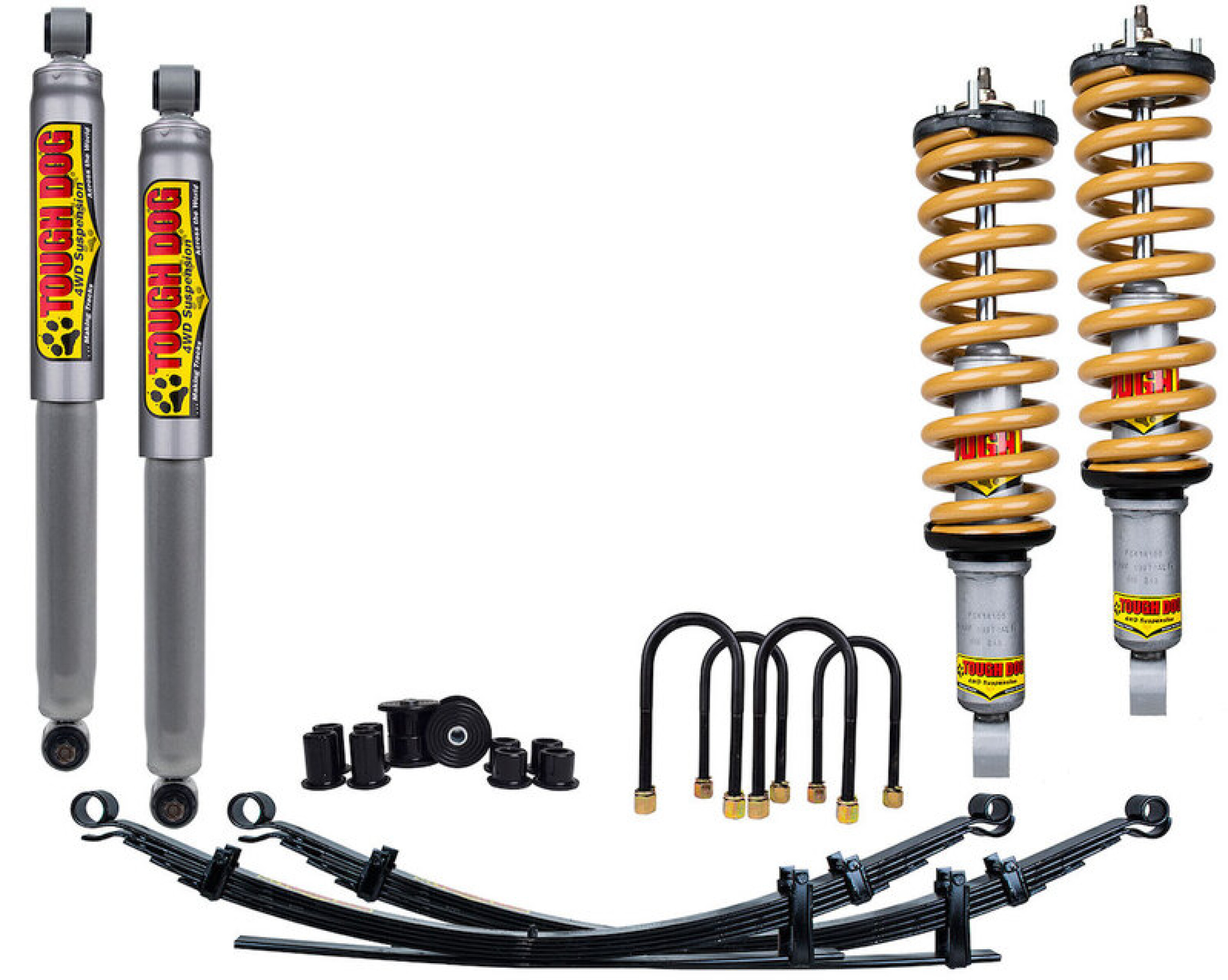
With a plethora of load options for both springs and shocks, there’s sure to be a Tough Dog combination out there to suit the individual set-up of your HiLux.
Specifications
Lift: 40mm
Shock design: Foam Cell
Piston bore: 41
Spring type: Coil front/leaf rear
1
Pros
A bit cheaper than adjustable options
Excellent all-rounder
Four-year warranty on foam cell shocks, for recreational users
2023 Toyota HiLux buyers’ guide: Suspension lift kits
What it is
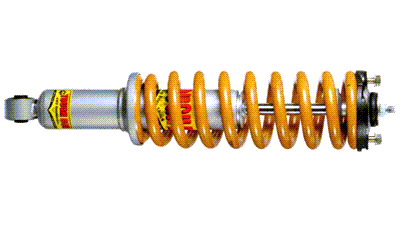
A suspension lift kit replaces your shock absorbers and springs to lift the vehicle slightly, and to better cope with heavy loads.
The shocks and springs work together as a matched set. If the manufacturer has done its job properly, you’ll end up with a better ride, both on- and off-road.
The springs give you the lift and bear all the weight of the vehicle. Heavier loads mean heavier springs (normally). OEM springs are more rated for a lightly loaded vehicle – they try to be all things to all people. That’s why OEM suspension tends to sag when you load it up, and why you need an upgrade kit.
The shocks are there to control or ‘dampen’ the spring rebound, hence the name ‘dampeners’. Without these, the springs would bounce around like a pogo stick every time you go over a bump.
Any reputable accessories supplier will provide a shock/spring combination which has been designed to work as a unit. They’ll often have multiple kits depending on what load you typically carry and the type of 4WDing you do.
Why you need it
The stock suspension isn’t designed for the additional weight of accessories and typically aren’t designed for tough off-road conditions like endless corrugations.
Once you start loading up your fourbie, it’ll struggle. The ride will be horrible; it’ll roll in corners, bottom out on the bump stops, and the shocks will fade quickly.
Standard shocks subjected to rough dirt roads and corrugations will quickly fade and eventually fail. Shock fade is typically caused by overheating where gas bubbles get in the oil making the shock less effective. A failure typically involves the oil seals leaking with the same result as fade – only permanent. Upgraded suspension will go a long way towards solving these issues.
Another benefit includes improved ground clearance, approach, ramp and departure angles. Even a small lift makes a huge difference to the drivability of a 4×4 in off-road conditions.
Buying tips
Work out how much all of your accessories weigh – bullbars, canopies, drawer systems, dual-battery systems, tow bar, and so on. Then add the weight of passengers plus personal gear. Then add some more for all of the extra bits and pieces you normally pack.
Add your final figure to the tare weight, also known as unladen weight. This will give the suspension supplier a rough idea of what suspension best suits your needs.
Talk to reputable suppliers and they should ask you a few questions about how you use the vehicle. If they understand exactly what you’re trying to achieve (a lift for off-road clearance, better handling, better towing ability, and so on) they’ll be able to choose the best damper/spring combo for you.
Shock absorbers generally fall into three different styles:
Monotube
Twin-tube
Remote reservoir
Hereu2019s a very quick and basic overview of each one.
1. Monotube
The oil and gas inside the shock are separated by a floating piston. This gives less foaming, meaning the shock will take longer to fade or ‘go off’, as it’s often termed. The downside? Monotube shocks can give a harsher ride than the other two styles.
2. Twin-tube
They have a tube within a tube. The inner tube has the piston, valving, rod and oil. The outer tube holds the gas in the gap between the two tubes.
There’s no piston between the oil and gas. So they can potentially mix and cause fade. The biggest advantage of twin-tube shocks is their compact size.
3. Remote reservoir
Generally speaking, these shocks are monotube shocks with one major modification. Instead of the floating piston (the one separating the oil and gas) being inside the monotube shock, it lives in a second cylinder.
This second cylinder is called a remote reservoir and sits adjacent to the main monotube body. The two are connected by a hydraulic hose.
The biggest advantage is a greater surface area and volume. There’s more oil inside the shock, plus a larger overall cooling surface, which means less heat build-up. And by taking the floating piston out of the main tube, the monotube can be more compact or offer increased wheel travel for the same overall length.
Remote reservoir shocks are the ultimate set-up for serious off-roaders. If you’ve ever had a set of shocks go off along a corrugated road, you’ll understand exactly why remote reservoir shocks are worth the money.
Spring types
The HiLux includes a combination of coil and leaf springs. The front are coils wrapped around a shock absorber, otherwise known as a strut. The rear are old-fashioned leaf springs with their ability to carry load.
Leaf springs have been around since the horse and cart and, whilst they may be ‘old tech’, a proper set of leaf springs will perform nearly as well as coils.
Premium leaf springs will include things like additional wraps around the end eyes, and recent advancements such as parabolic leaves (recent to 4x4s, but have been used in trucks for years) have increased the comfort over old-style leaf springs.
What to look for
A massively lifted 4WD might look great to some. Even on a stock vehicle, it’s tempting to push your suspension lift to the max. But there are both practical and legal limits on how high you can lift a vehicle. Legalities vary from state to state, so you’ll need to check these.
Just remember, the higher you lift a vehicle the less stable it’ll be. Start adding loads up high (like a rooftop tent), and chances are your pride and joy will handle like an old boat.
Then there’s the issue of suspension and drivetrain. Lifting a vehicle adds stress to universal joints, CV joints, tailshaft splines, and so on. Worst case, you’ll start snapping drivetrain components.
Look for reputable suppliers with proven track records in providing quality suspension kits. Companies like TJM, ARB, Bilstein and Dobinsons can advise you on the best damper/spring combination. And they’ll give you honest information on issues like the maximum recommended lift for your 4×4
Five things to look for in a damper
Damper internal bore: The bigger the bore, the more oil it holds. The more oil it holds, the longer it’ll take to fade.
Piston rod diameter: Larger diameter rods are simply stronger.
Damper end mounts: Rod ends (also known as rose or swivel joints) are far superior to rubber or plastic bushes. Usually, the first thing to fail on a shock is the bushing. Rod ends avoid this issue by eliminating them altogether.
Flexible boot: The piston should be protected from stone damage with a concertina rubber boot.
Adjustment: Dampers with variable adjustment allow you to fine-tune them for optimal performance.
What about springs?
Springs are more difficult to choose. Springs have what’s called a ‘spring rate’, which in basic terms means the spring becomes firmer as the spring rate increases.
A lot of things affect spring rate including material, thickness and number of coils/leaves. Parabolic springs will provide better comfort and also a lower unsprung weight (the weight of your axles, wheels and basically anything below where the spring mounts to the chassis.
Variable rate coils will allow better absorption of small bumps while also providing decent load bearing capability. All you can do is trust the experts to provide you with the right springs – you’re paying for their expertise after all.
4X4 Australia has been reviewing four-wheel drive vehicles and aftermarket products for more than 40 years.
When looking for the best accessories for your make and model of 4WD, there are some things essential to making sure you have the best off-roading experience.
When we compare products, here are some of the things we consider:
Warranty
Build quality
Value for money
Time and ease to set-up/install
Weight
Fit and finish
How well it gets the job done
What materials they’re made from
Corrosion/UV resistance
Coatings
Compatibility with other accessories
Compliance with ADRs and vehicle safety systems
Country of manufacture
Load ratings, to determine what’s the best product across each price point.
We also consider user reviews and our own experience with these products to make sure our recommendations are for the best on the market.
Disclosure: When you buy through our links, we may earn a commission. We also include products that we do not earn a commission from.
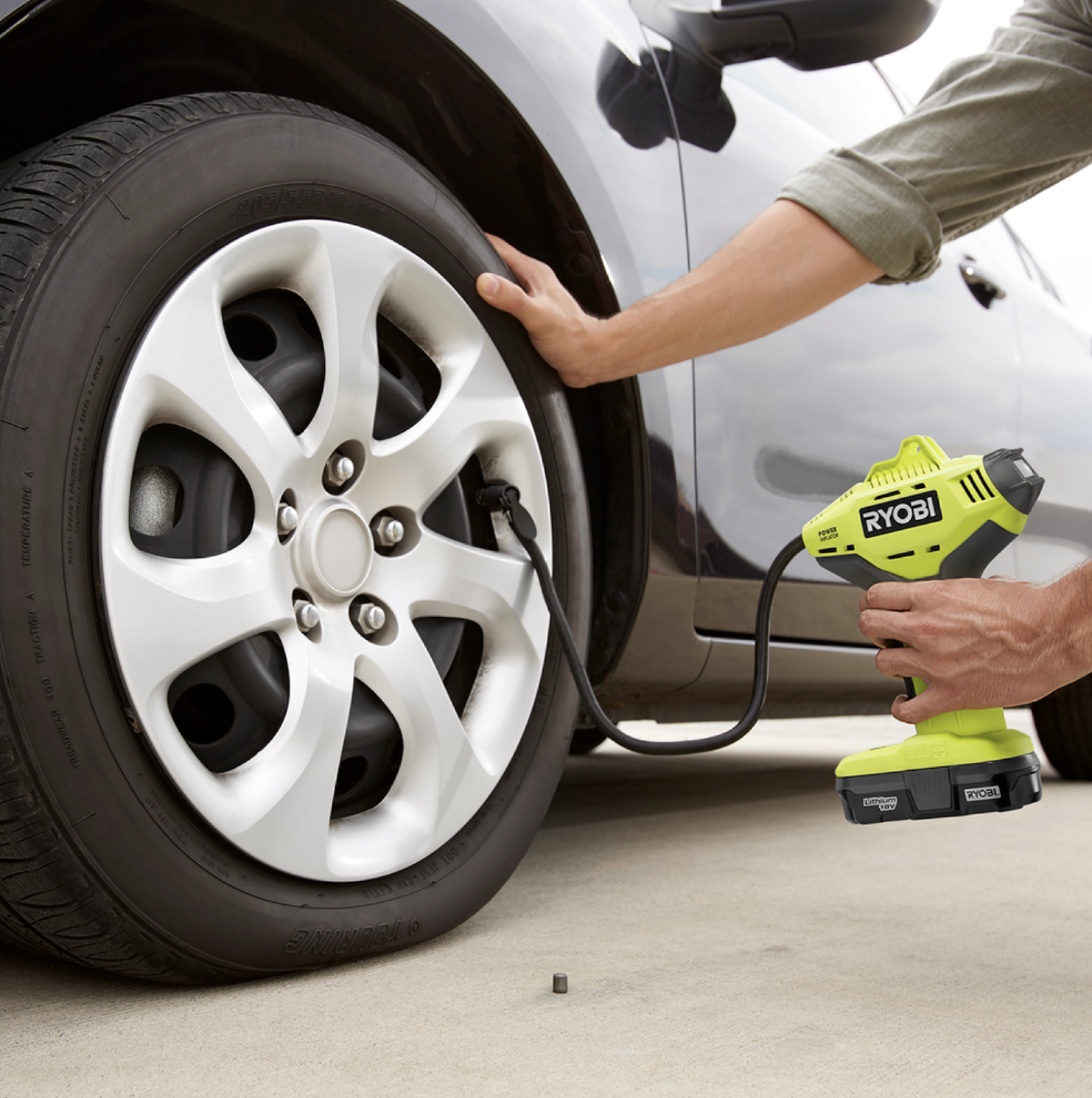
The Ryobi 18V ONE+ Digital Pressure Inflator has a 35mm digital gauge that displays current pressure (both bar and psi) so you’ll know exactly when to stop inflating.
The cordless digital inflator is convenient and portable for ease of use in the garage, driveway, campsite or anywhere else.
2
The digital tyre inflator has a convenient compartment for storing the included sports equipment needle and two high-pressure nozzles. There’s an onboard storage clip for the 50cm hose, making the inflator easy to store and transport.
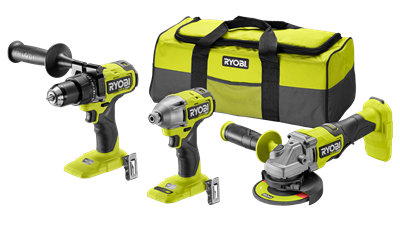
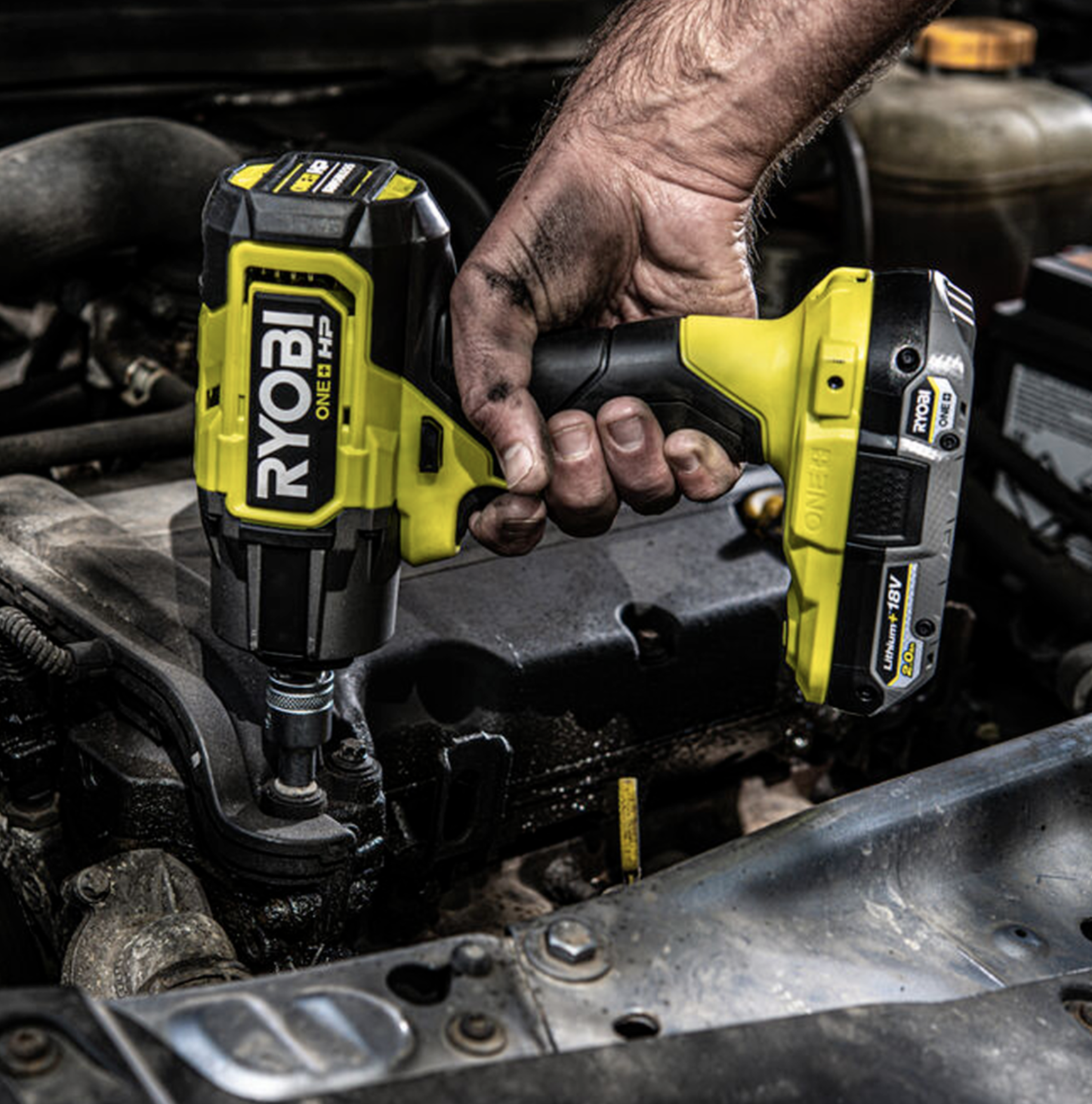
Loosen or tighten lug nuts, large bolts and rusted fasteners with the ONE+ HP Brushless Mid Torque Impact Wrench from Ryobi.
The brushless motor delivers up to 900Nm of breakaway torque and up to 700Nm of fastening torque, making it ideally suited to wheel nuts and any stubborn nuts and bolts.
2
The torque impact wrench produces a maximum of 800 impacts per minute at a no-load speed of 800rpm, and it has four speed settings and AutoStop function for precise control so as not to overtighten and damage the fastener head or the material you’re working with.
The strong ½-inch square drive comes with a friction ring for quick socket changes and a tri-beam LED work light illuminates poorly lit work areas for optimum visibility.
The impact wrench has a brushless motor that is claimed to deliver higher performance, extended battery runtimes and longer motor life. It utilises ONE+ 18V batteries and that can be shared across other tools in the Ryobi range.
June 23: Grand Cherokee 4xe pricing announced for Australia
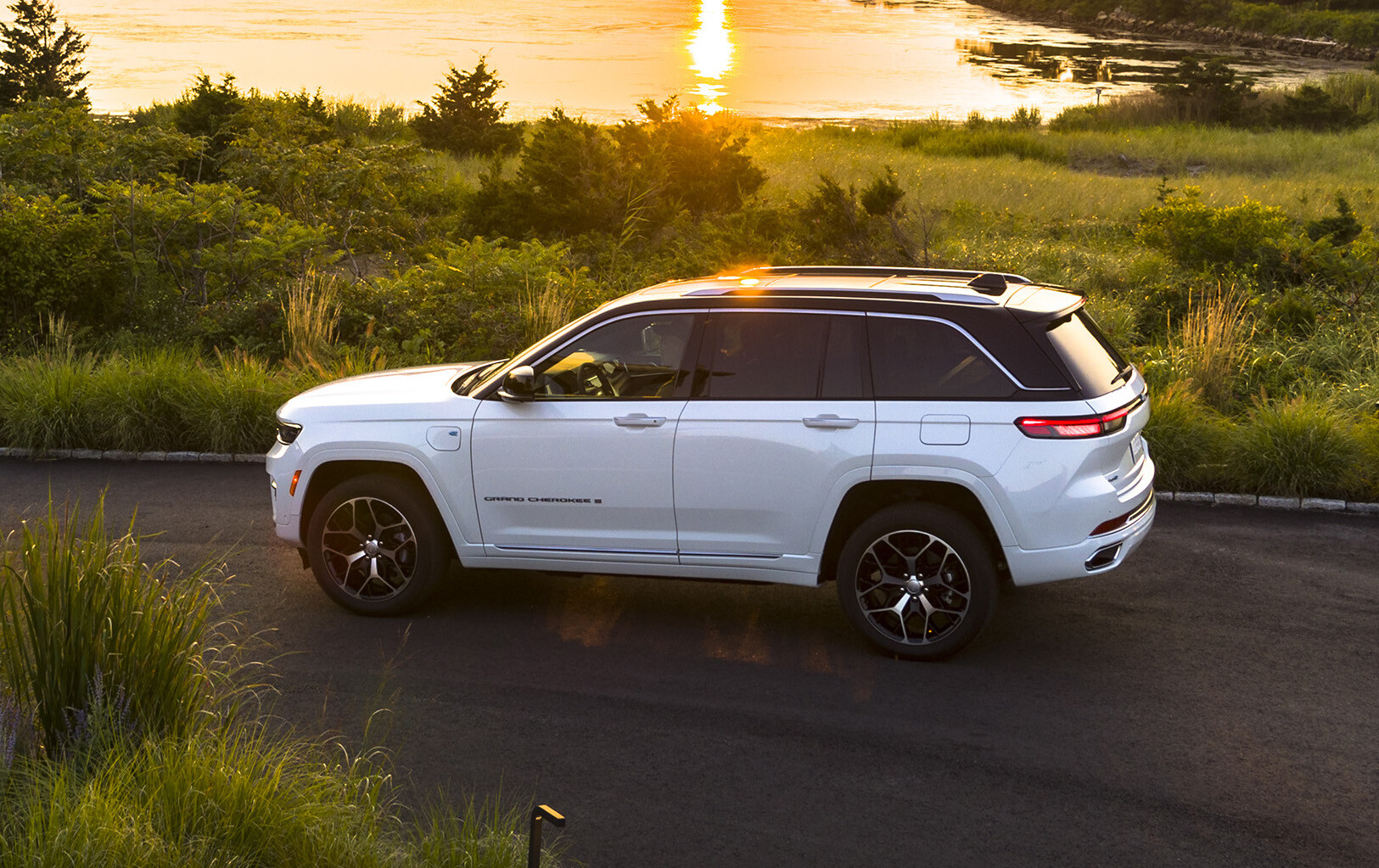
Off-road-focused carmaker Jeep will introduce its first plug-in hybrid SUV in Australia amid high fuel prices. Pricing and details below.
February 2: 2023 Jeep Grand Cherokee pricing and features
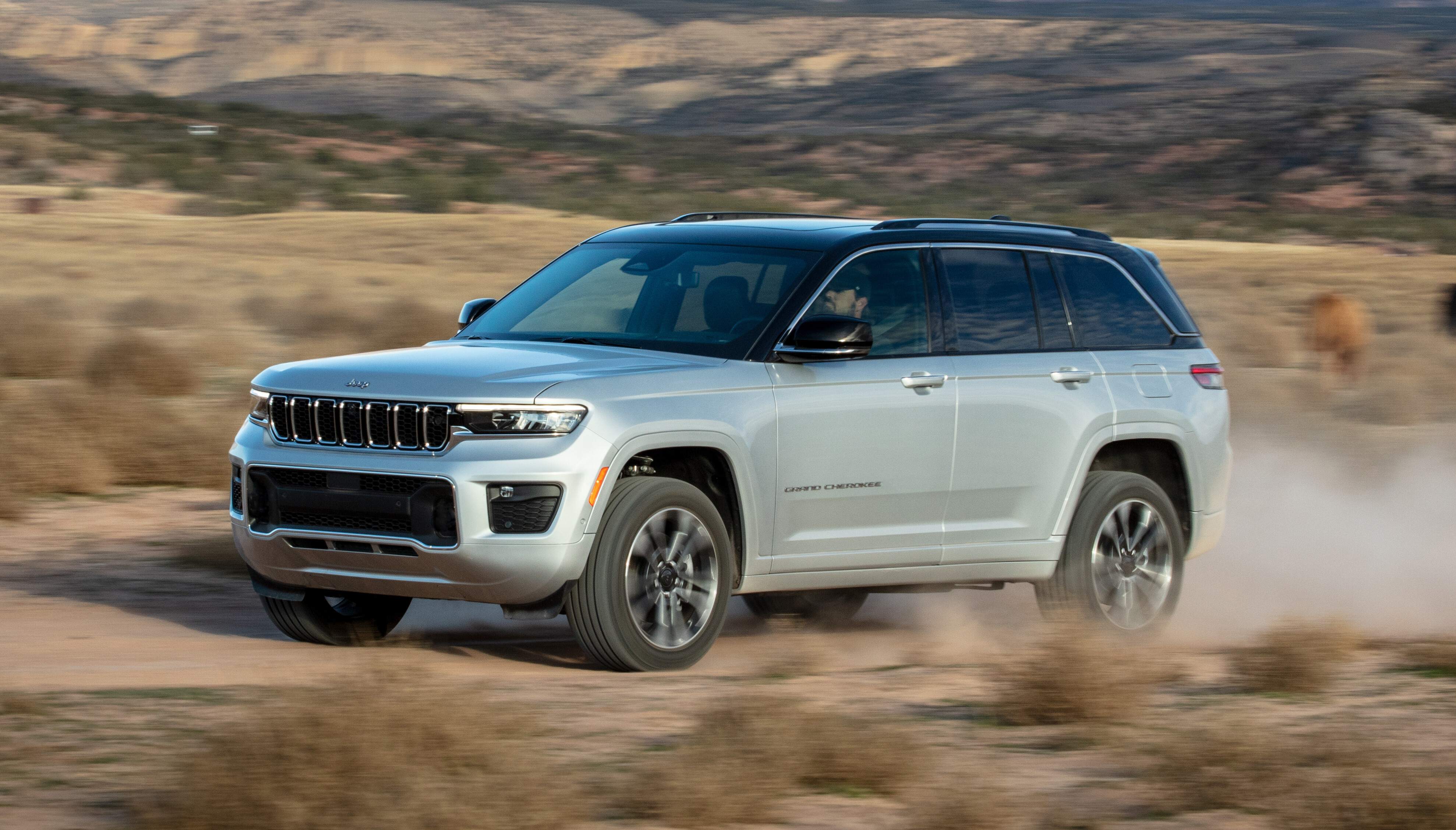
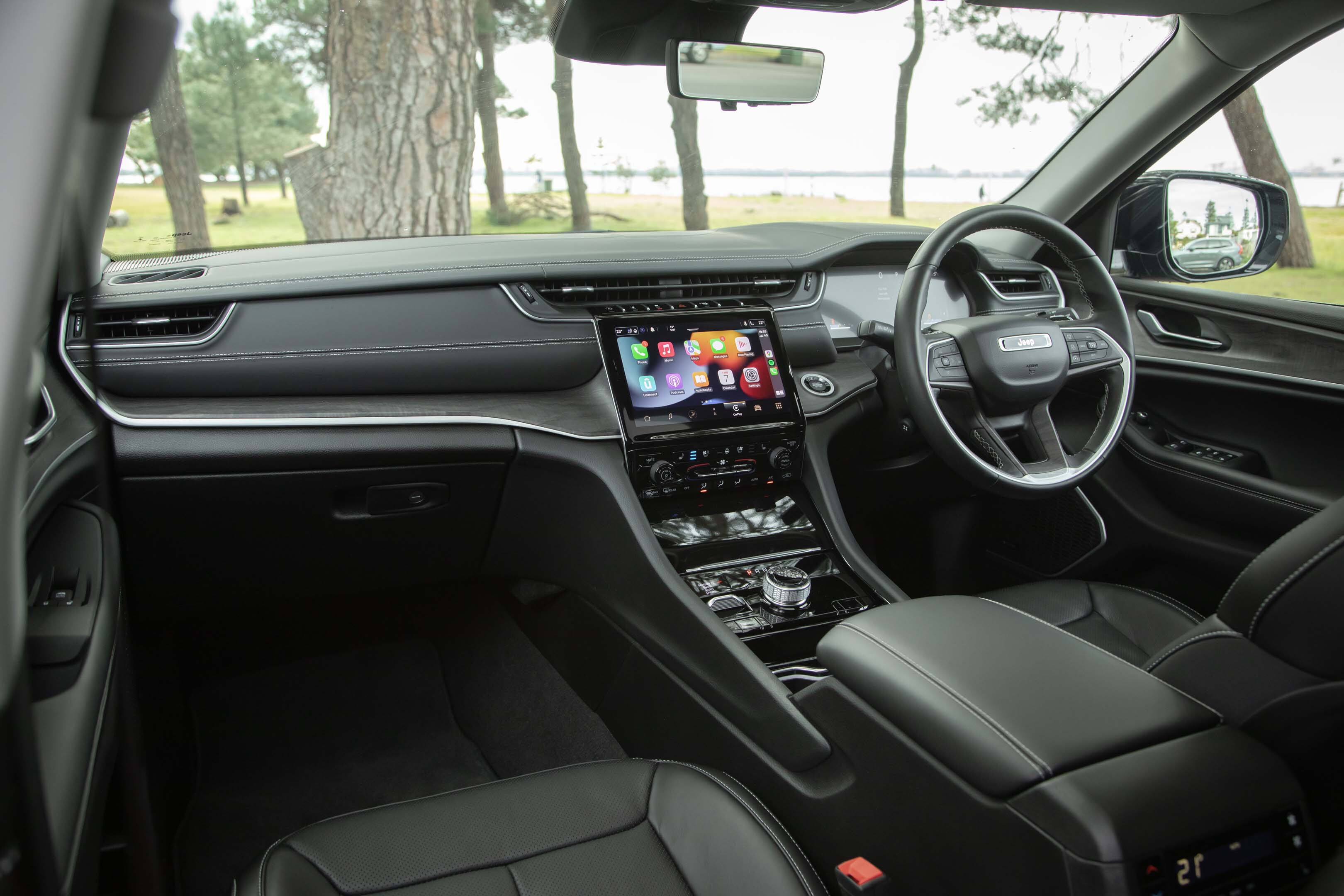
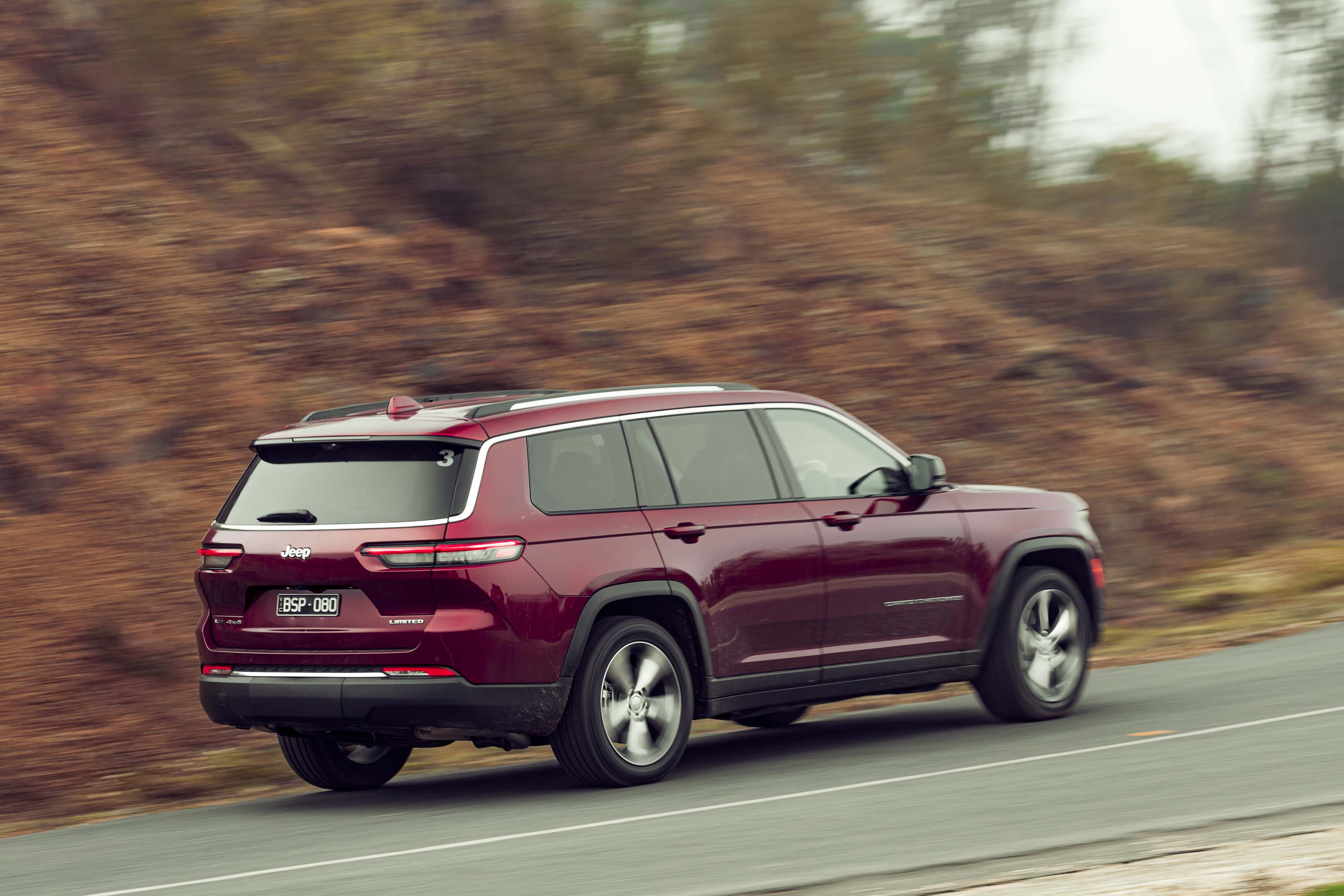
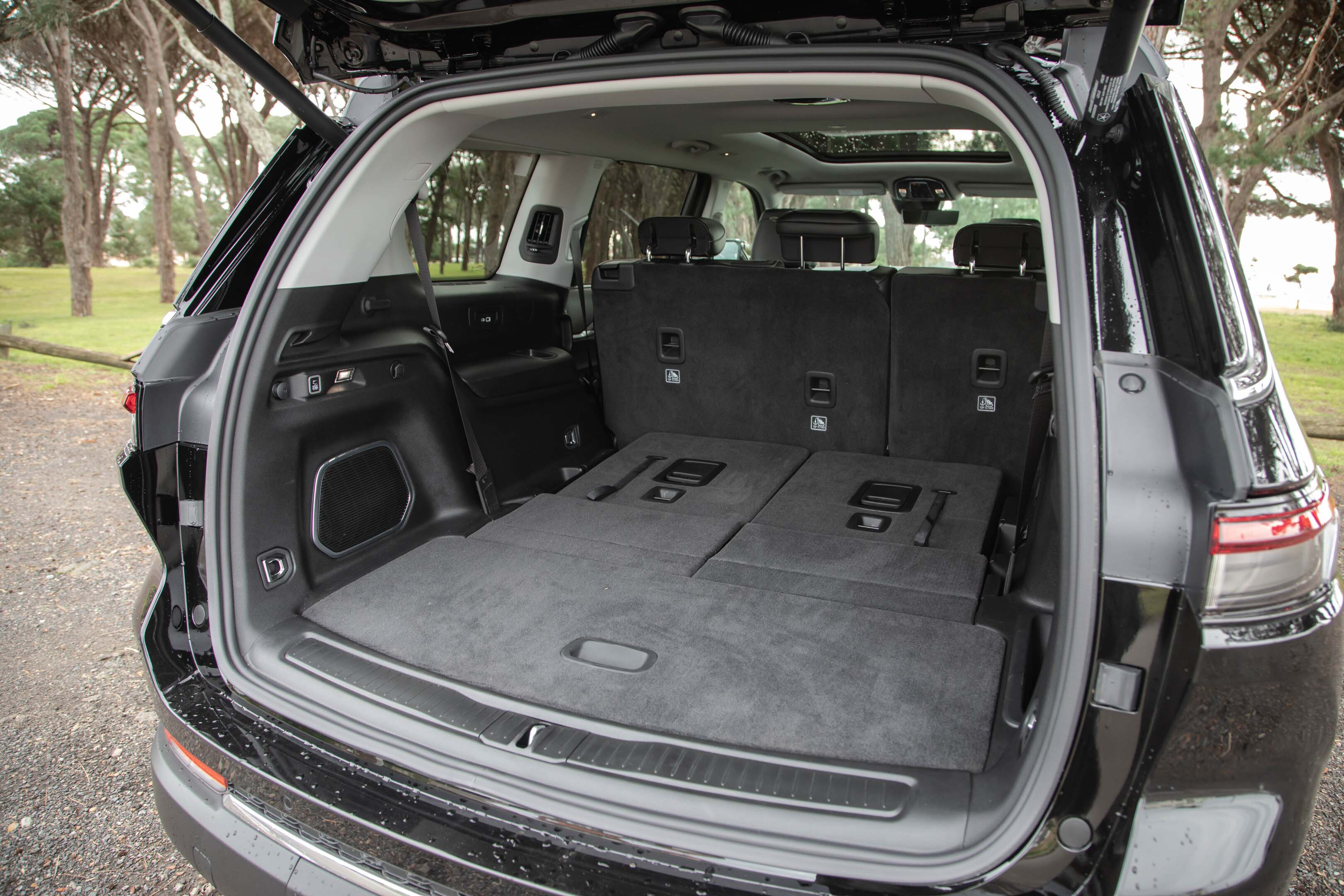
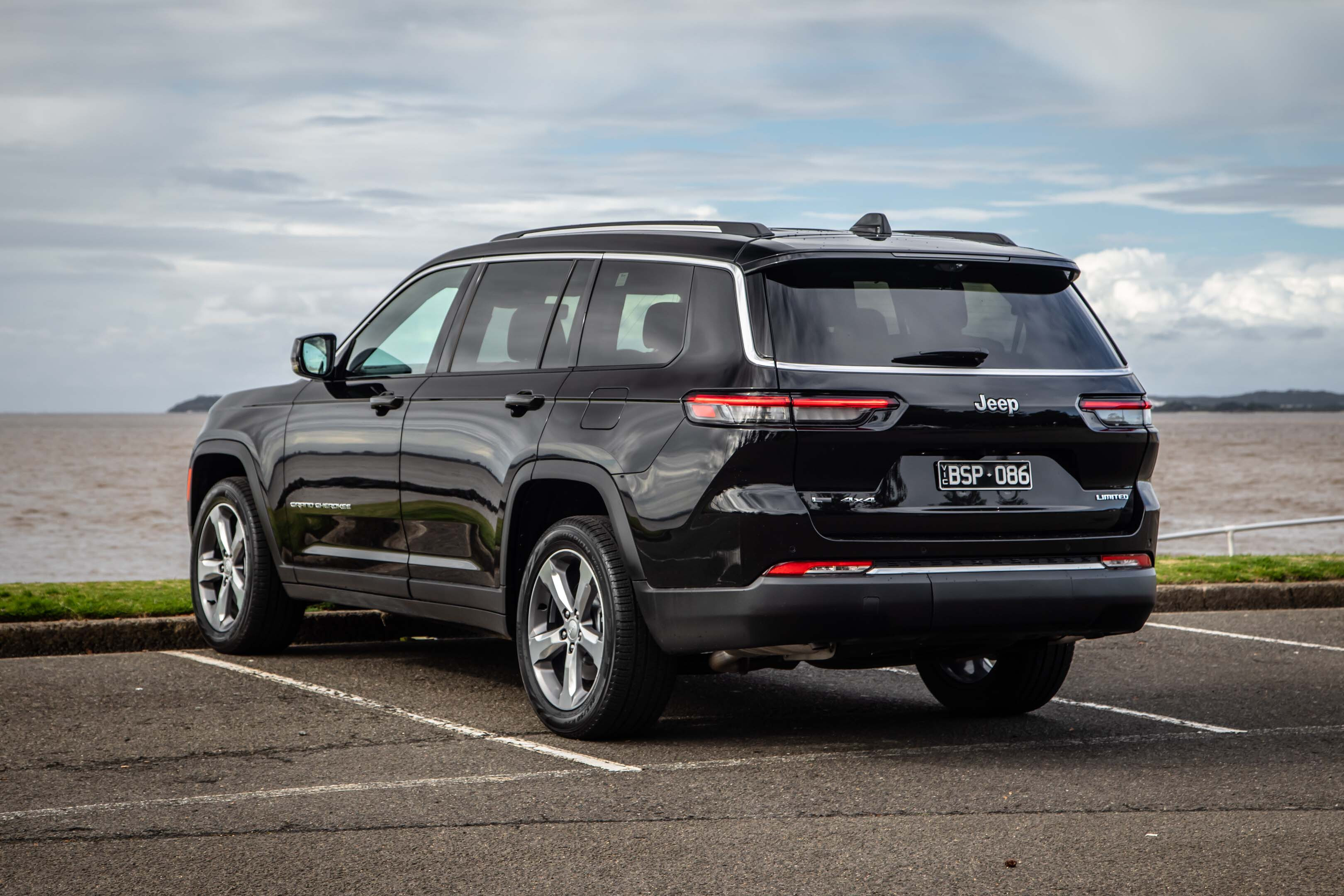
Following delays, the ‘regular’ five-seat 2023 Jeep Grand Cherokee will finally land in Australia this month.
Snapshot
2023 Jeep Grand Cherokee pricing and features
Five-seat Grand Cherokee arrives in Australia; new Overland variant
Priced from $77,950 before on-road costs
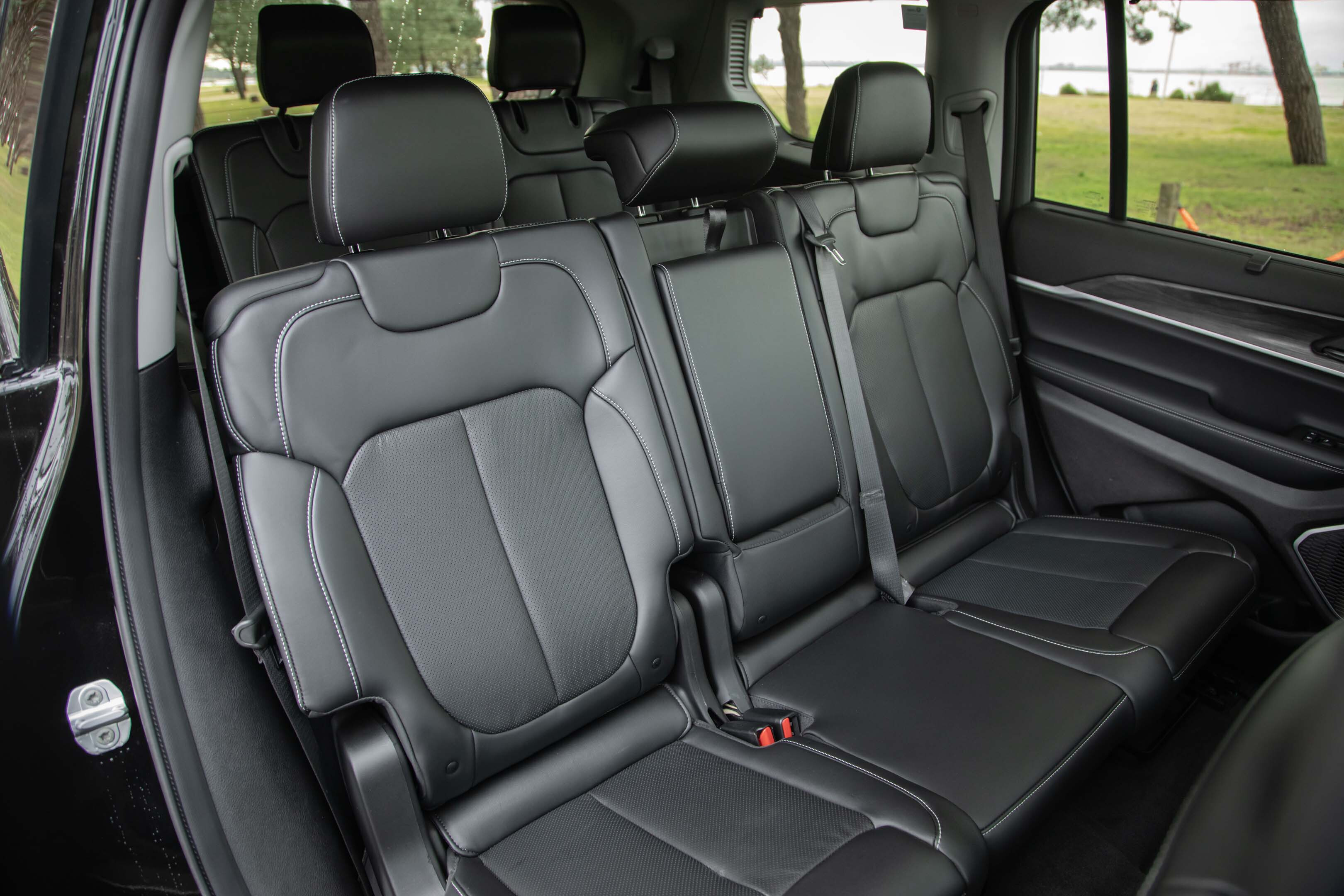
The new variant headlines an update to the fifth-generation ‘WL’ Grand Cherokee range, which launched in Australia one year ago in seven-seat, long-wheelbase ‘L’ form.
While the 3.6-litre naturally-aspirated V6 continues for most variants, Jeep will offer a 2.0-litre four-cylinder ‘4xe’ plug-in hybrid for the range-topping, five-seat Summit Reserve later this year.
UPDATE, August 22: Blacked-out styling package now available for Jeep Grand Cherokee Limited variants
Jeep Australia has announced a new ‘Black Appearance Group’ styling package for five- and seven-seat Grand Cherokee Limited variants. This story, first published in February, has been updated to include the option package.
1
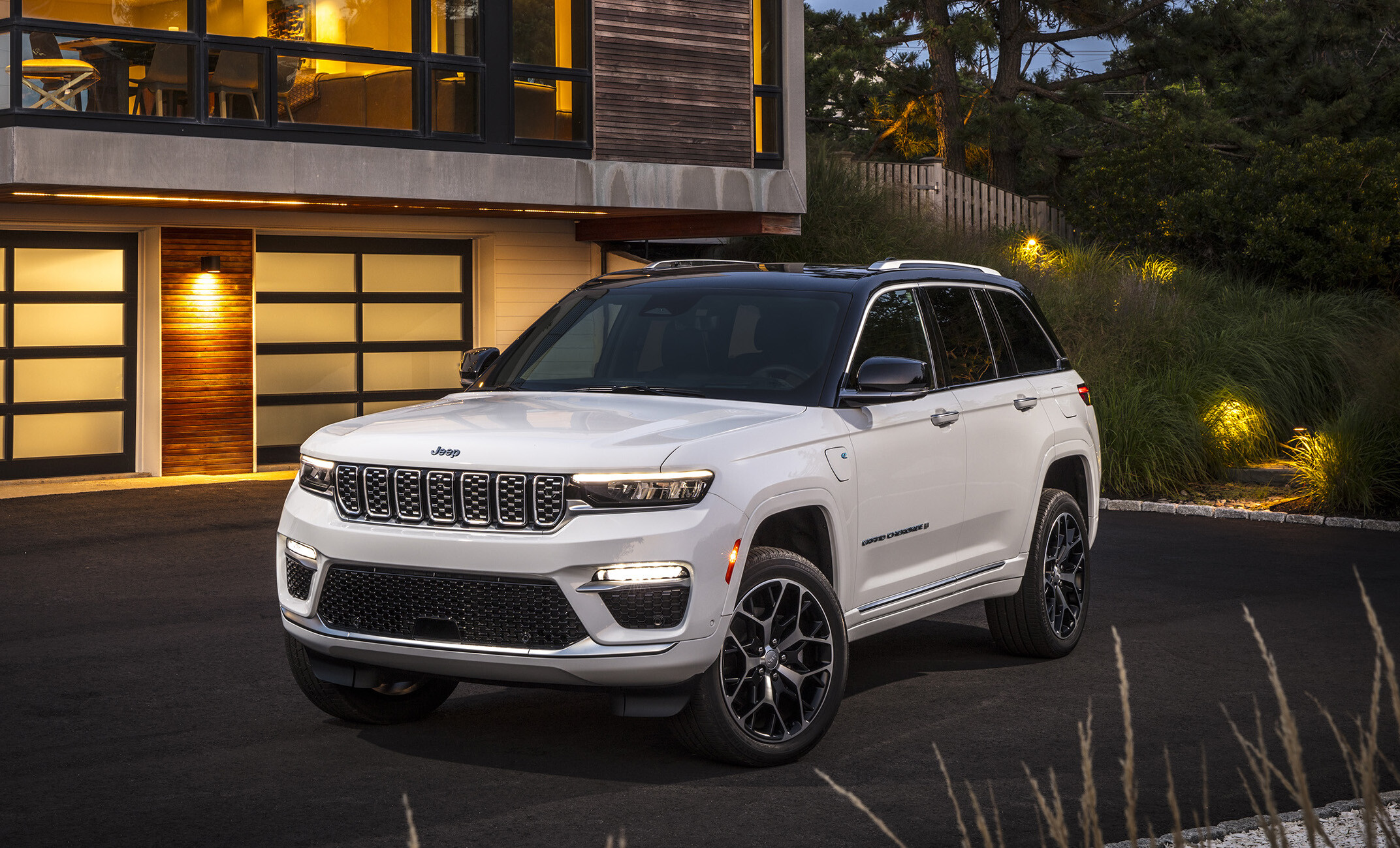
The five-seat Grand Cherokee is priced from $77,950 before on-road costs – up $17,500 over the previous-generation model – with four grades available: Night Eagle, Limited, Overland and Summit Reserve.
This is in line with the Grand Cherokee L, which gains the mid-spec Overland trim for model-year 2023 and minor price rises.
Other additions include a larger 10.1-inch infotainment system for the entry-level Night Eagle and a 360-degree camera system for the Limited.
While Jeep Australia has homologated the off-road-focused Trailhawk five-seat variant, it remains under consideration – but a Trailhawk-lite ‘Off-Road Group’ option pack is available for the Grand Cherokee Overland.
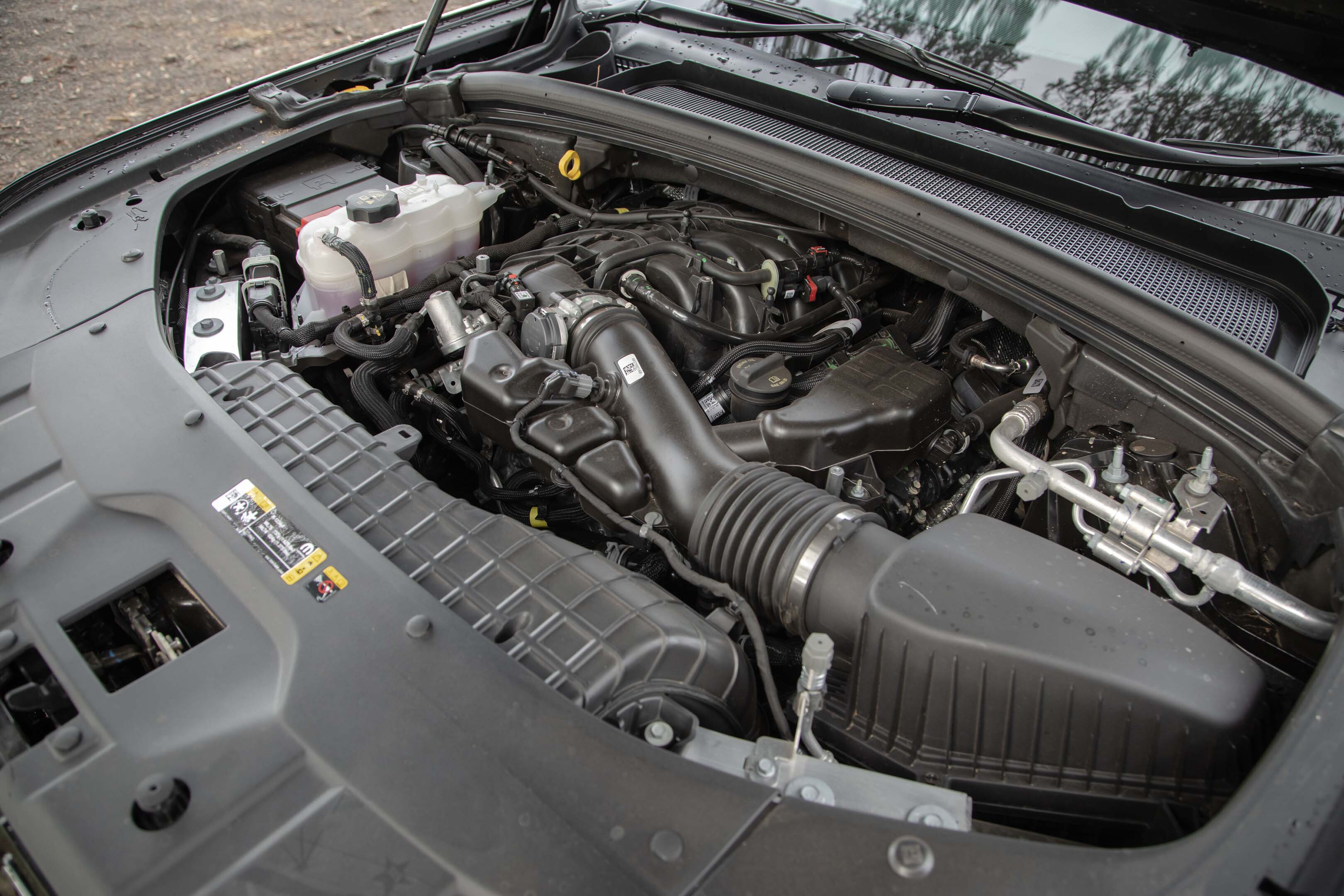
The 2023 Jeep Grand Cherokee is powered by a naturally-aspirated 3.6-litre petrol six, producing 210kW and 344Nm.
The engine is matched with an eight-speed torque-converter automatic transmission, sending power to all four wheels.
Jeep will not offer the fifth-generation Grand Cherokee with petrol V8 or turbo-diesel power; however, a plug-in hybrid (PHEV) powertrain will be available on the two-row Grand Cherokee Summit Reserve due later this year.
It comprises a 2.0-litre turbocharged four-cylinder petrol engine matched to an electric motor, with a total system output of 280kW and 344Nm.
Braked towing capacity for the 3.6-litre V6 is rated at 2813 kilograms – including the Summit Reserve – while the five-seat PHEV is listed at 2722kg.
The five-seat petrol V6 WL Jeep Grand Cherokee is covered by a four-star ANCAP safety rating, while the seven-seat V6 and five-seat PHEV have a full five-star score.
Both results were achieved under the now-superseded 2020-22 testing standard. For the full run-down, click here.
Eight airbags (dual front, side, curtain, and driver and front passenger knee) are fitted across the range.
As per the wider Jeep range, the Grand Cherokee is covered by the brand’s five-year/100,000-kilometre warranty.
Jeep offers a complimentary roadside assistance program across the entire warranty period. It will provide an additional 12 months when the vehicle is serviced at a Jeep dealership, across its entire lifetime.
Maintenance for the Jeep Grand Cherokee is required every 12 months or 12,000 kilometres, whichever occurs first.
Lifetime capped-price servicing is offered, with prices for the 3.6-litre Grand Cherokee listed at $399 per service.
Jeep has yet to detail maintenance information for the plug-in hybrid variant.
Availability
The updated 2023 Jeep Grand Cherokee is on sale now, including the five-seat version.
The plug-in hybrid variant will launch in Australia later this year.