








Get up to speed on the new Prado
The stories below will give you a guide to everything we learned about the new Prado when it was unveiled. All fresh stories published since then will be found on our Toyota Prado model page here.

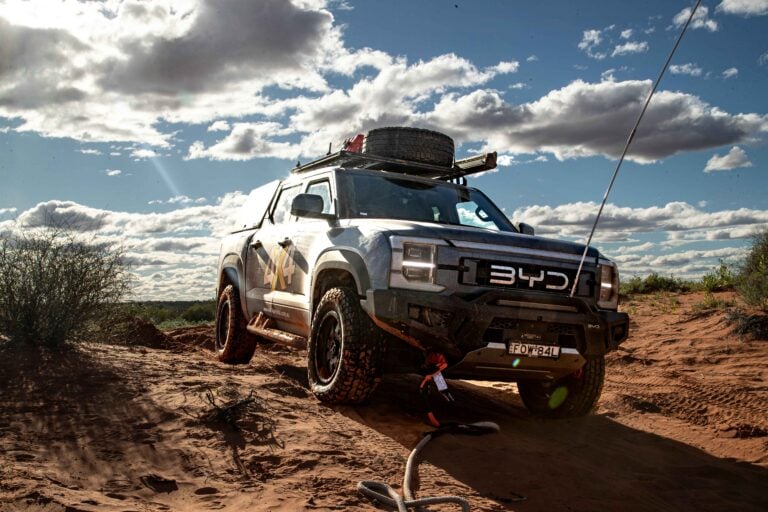
At the media launch of the electric Seal sedan, Luke Todd, the CEO of BYD distributor EVDirect, said “the vehicle is going to be… so well suited for the Australian market, and that’s why we’re making the claim that it will be the best in class when it comes out”.
Todd confirmed the brand “will sell and deliver BYD Ute next year”, with a local launch in the second half of the year.
Unlike current plug-in hybrid vehicles such as the new Ford Ranger PHEV, which add electric components to an existing ICE-based platform, the BYD Ute has been designed as a “ground-up EV” with internal combustion added later.
“At the moment, plug-in or traditional hybrid is a petrol vehicle that’s had a battery introduced. This is the complete reverse around, so much so that we’re actually working with government authorities to get our own category because this is technology that nobody’s ever seen. It’s an ultra-low electric vehicle with the best of both worlds… there’s no range anxiety,” said Todd.
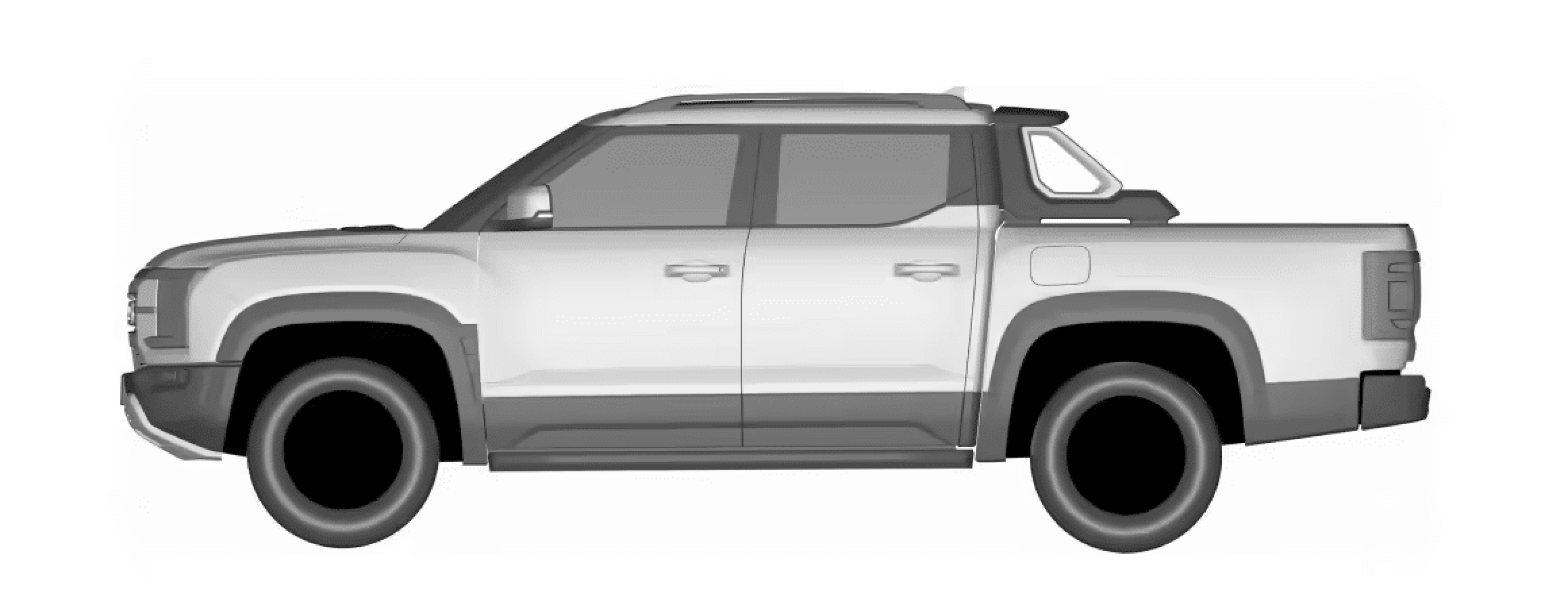
“So, yes, it’s not full electric… but it’s an electric platform vehicle and we will educate Australians on the benefits… There will be cynics… but when they see the emissions ratings and the highly efficient vehicle and that they’ve got the best of both worlds, people will understand why we’ve chosen it.”
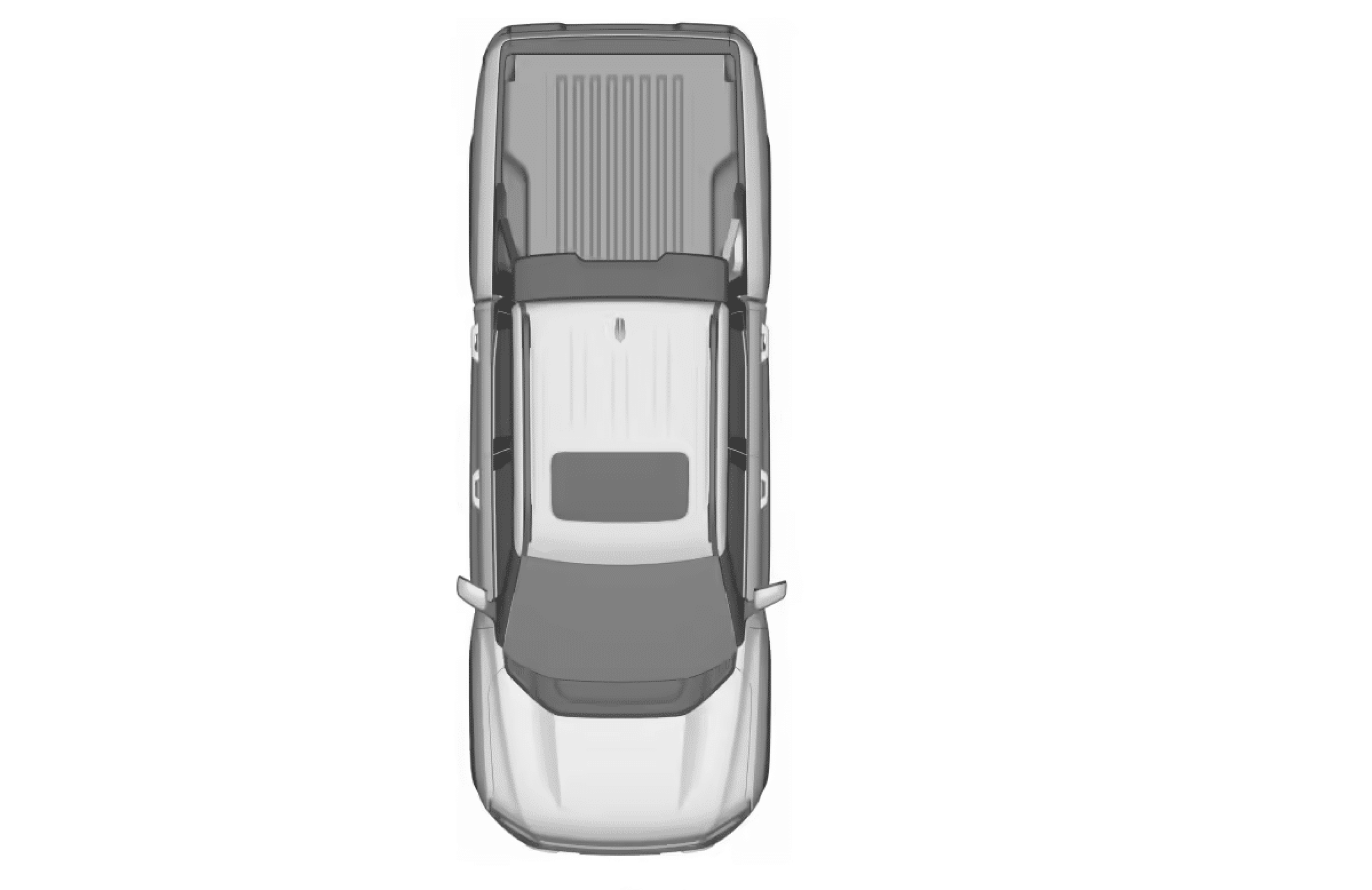
As announced, an all-electric version of the Ute will follow around 12 months later in 2025 or 2026.
“We want vehicles that Australians can actually afford. We don’t ever want to be pushing $100,000. The reality is a full EV ute at the moment would be over $100,000 just for the battery size, to power, to get enough range.”
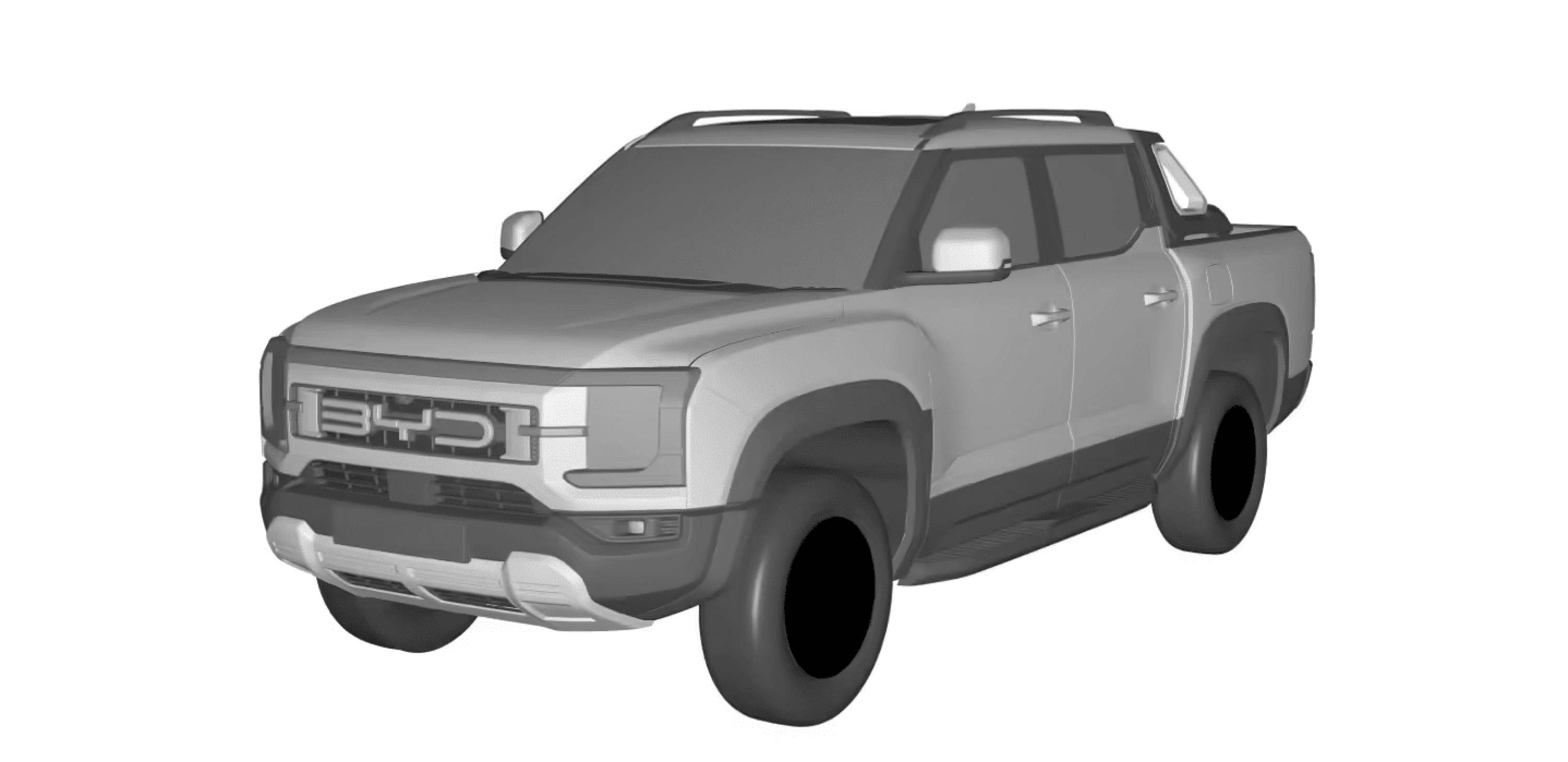
Last month, Luke Todd told 4X4 Australia BYD will use feedback from Australia in the development of the Ute.
“I can confirm the feedback from the partnership and communication of what Australian consumers are looking for was extremely detailed. We’re talking an immense amount of data sharing of what consumers want for Australia and a lot of those inputs are being implemented into the ute… It is very much a co-designed vehicle for the Australian market,” he said.
The Australian-made MAXTRAX LITE is priced at $179 per unit (a pair), which is considerably cheaper than the $319 MAXTRAX asks for its MKII. Despite the $140 price difference, MAXTRAX says its new LITE version shares the same DNA as the original units but in “a new lightweight construction”.
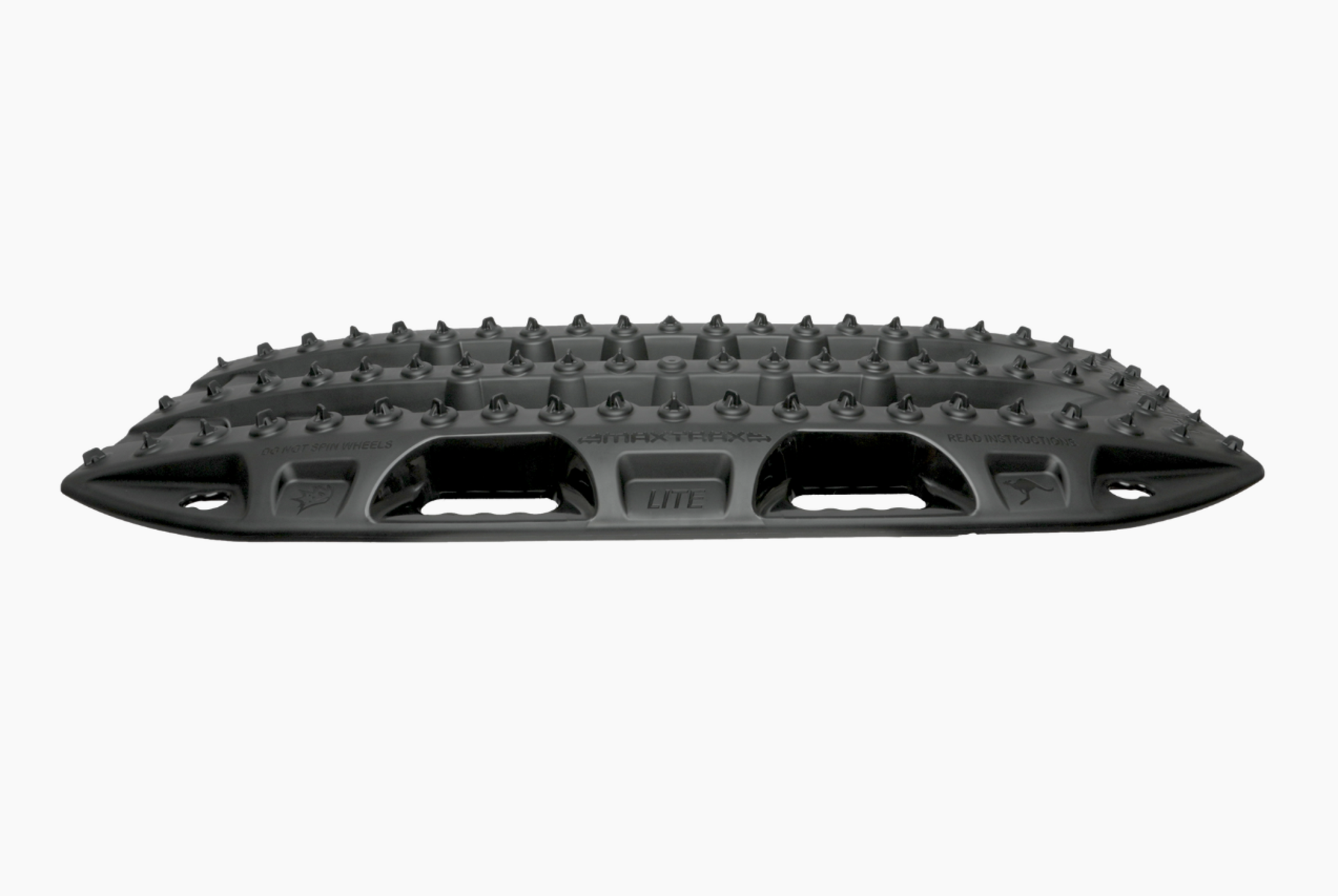
Giving the boards its tough yet light construction is the use of impact-resistant thermoplastic, in lieu of the MKII’s reinforced nylon blend. The LITE measures 895mm long and weighs just 1.8kg each, which makes them 22 per cent shorter and 48 per cent lighter than the MKIIs – an ideal weight and size for storing on roof racks.
With years of experience perfecting the ideal recovery board, MAXTRAX has ensured the boards are equipped with all of the clever and useful design features of the MKII.
Key features include a double ramp design, to easily fit beneath tyres; a shovel at both ends; four handles; mounting pin holes to link together with other boards in the MAXTRAX family, for easy storage; and a low-profile design.
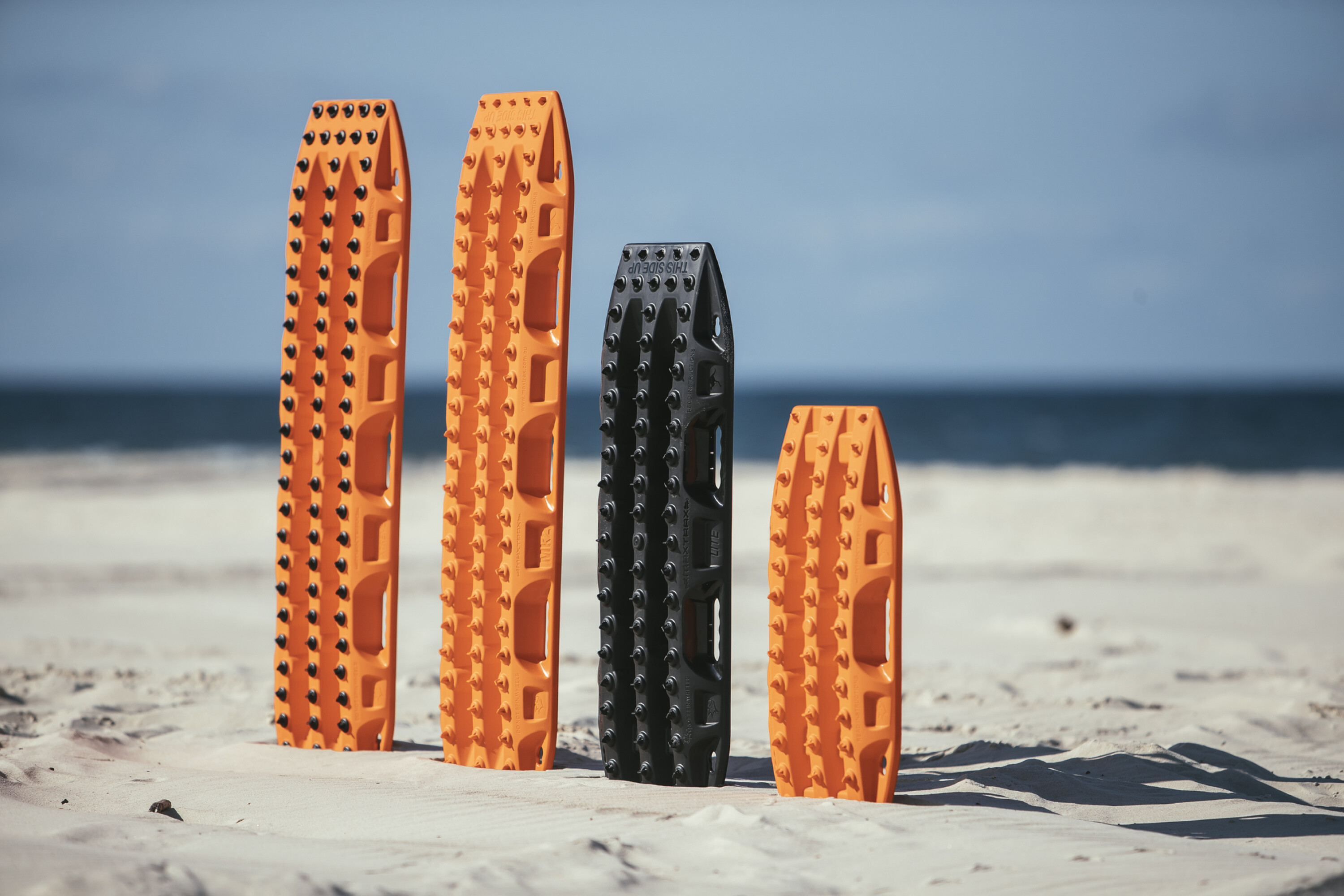
The LITE also shares the same aggressive teeth pattern as the bigger MKII, with the 66 teeth effective at gripping on to rubber in a recovery.
As the LITE is manufactured with a similar design as the original premium boards, they come with the MAXTRAX lifetime warranty.
Unlike the MKII, the LITE is only available in black.
The result will be a dead starter battery when you need it most. The solution is a dual or secondary battery system. Without the need to perform starting duties on your HiLux, this second battery can be a designated deep-cycle with the sole purpose of running those accessories.
Lithium batteries are the pinnacle of 12V systems as they are lighter and have more capacity than comparable AGM or lead acid batteries, but lithium does require specialised charging systems. They are also much more expensive.
Here are four products we recommend. They’re intended as a starting point, to give you an idea of what’s available.
| Battery Size | Battery Location | Charger | Lithium-compatibleu00a0 | |
|---|---|---|---|---|
| Piranha Offroad | Up to 265mm, 21kg | Under bonnet | 30Amp DC-DC | Yes |
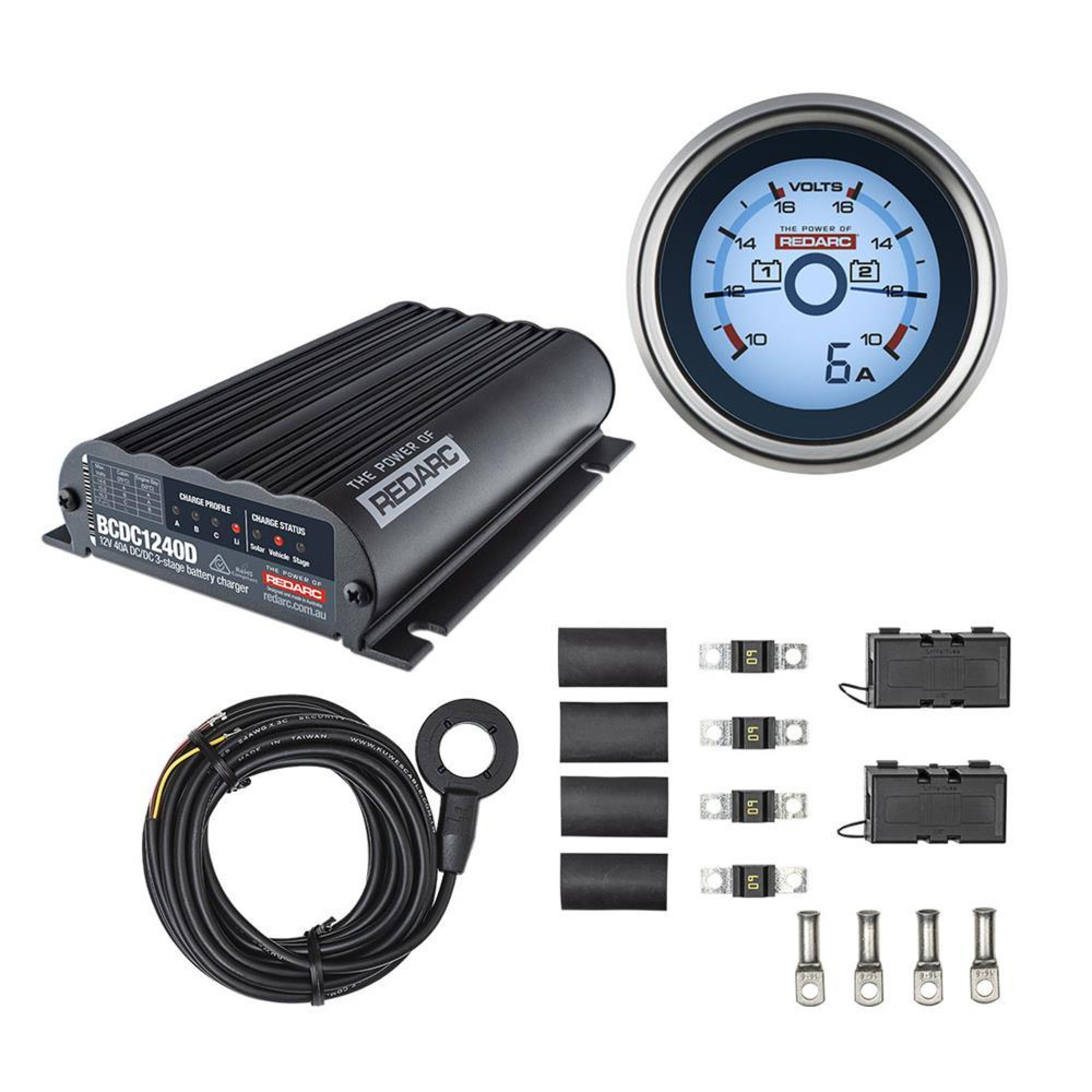
| Redarc | Up to 200Ah | Tray or cabin | 40Amp DC-DC | Yes |
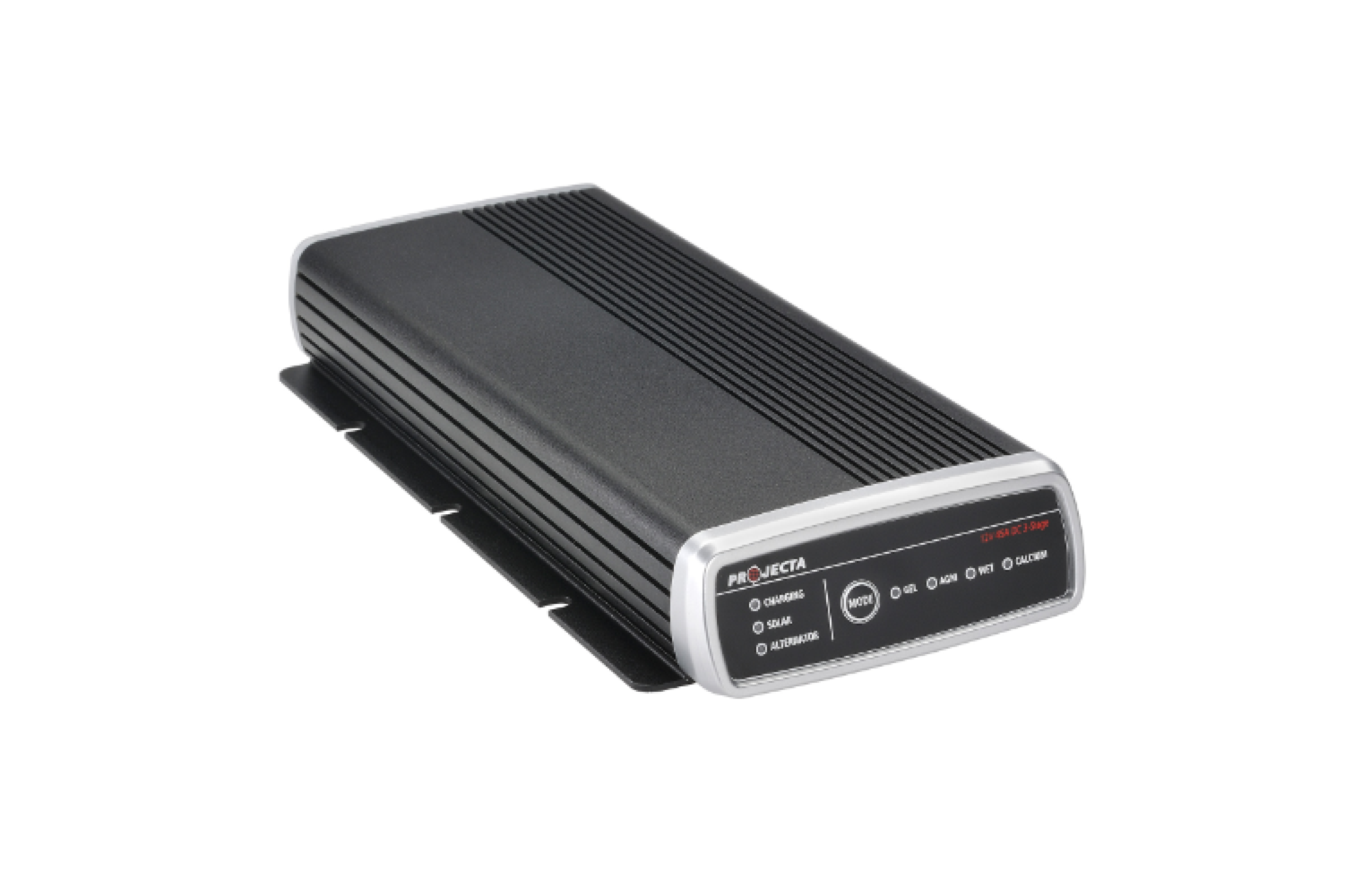
| Projecta | Up to 300mm x W174mm x H220mm, 17kg | Under bonnet | 25Amp DC-DC | No |
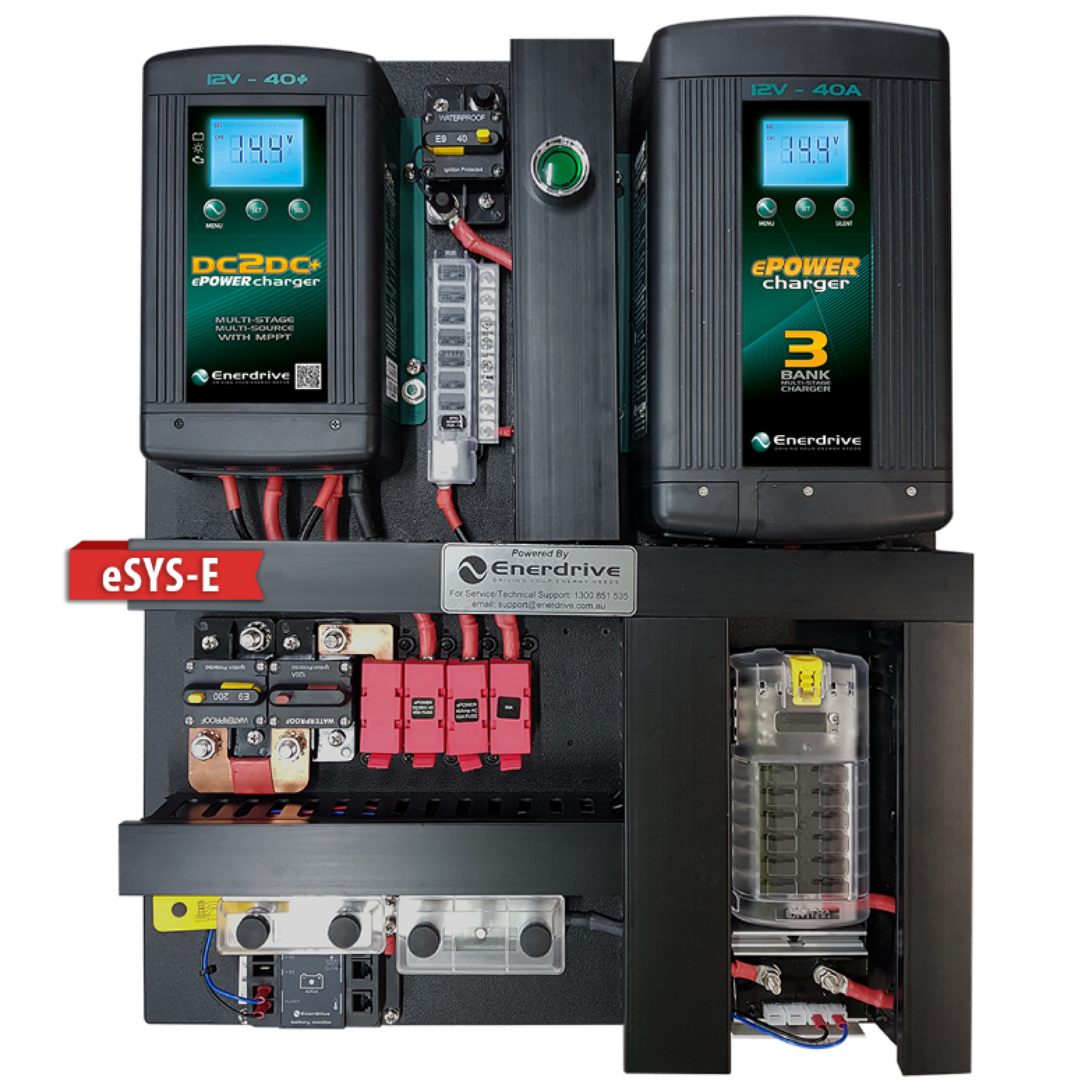
| Enerdrive Esystem | Up to 200Ah | Tray or cabin | 40Amp DC-DC | Yes |
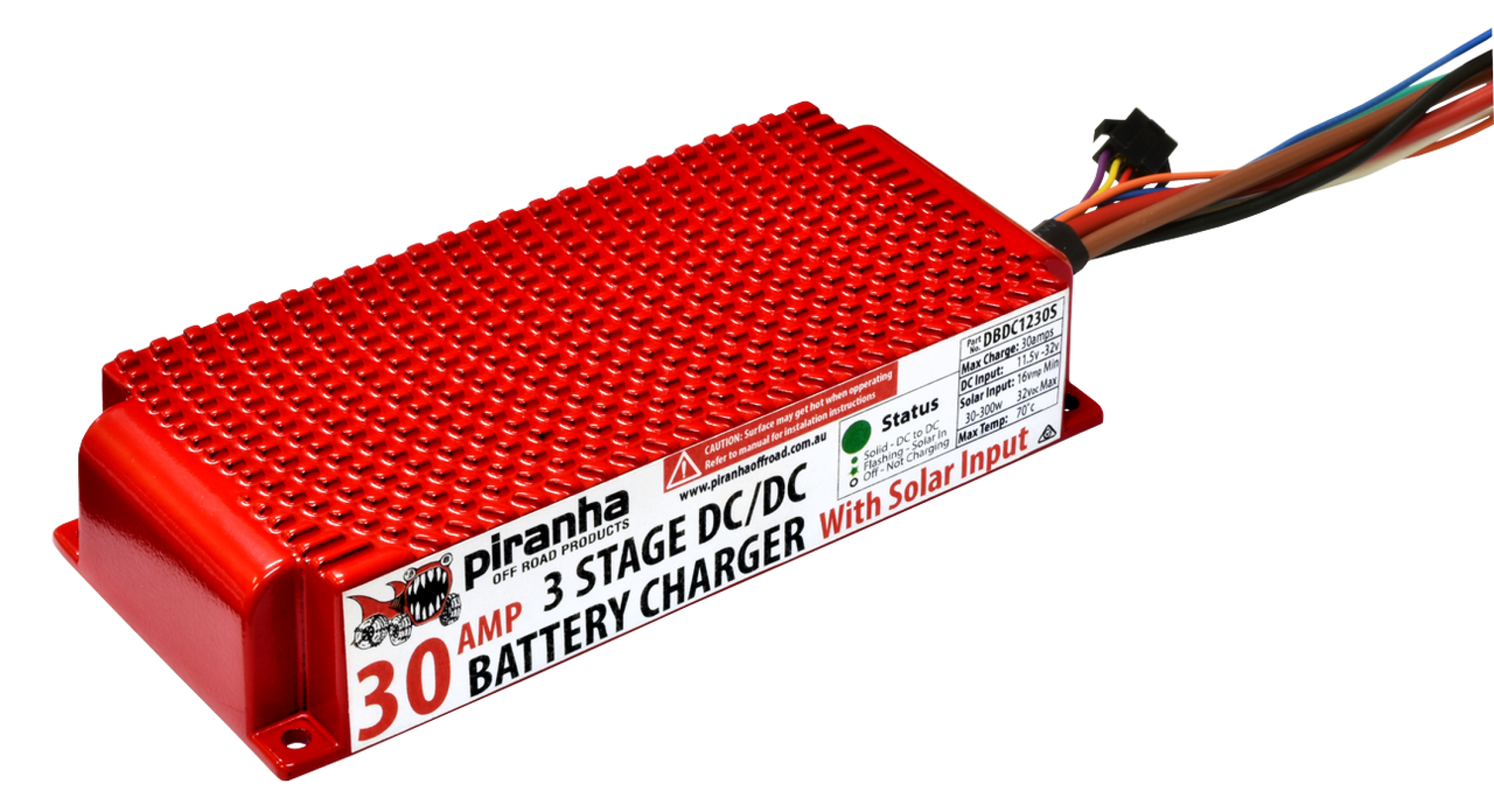
Pairing an Australian-made battery tray designed for under-bonnet mounting with the 30Amp DC-DC charger from Piranha Offroad provides a reliable and effective solution to your power requirements.
Featuring selectable output voltages for lithium, sealed lead acid, vented lead acid, AGM or lead crystal batteries and solar input, the charger will take just about any input and convert it to usable power to charge your auxiliary battery.
With 40 amps of output, this DC-DC charger from Redarc is suitable for batteries up to 200AH, including lithium. The kit comes with required wiring, fuses and a dual-battery voltage gauge. Pick up a battery and find somewhere in your cabin or tray to mount it and you’re ready to go.
This combo from Projecta includes a heavy duty-battery tray designed for under-bonnet mounting, made with 2mm steel. It’s combined with a 45Amp DC-DC charger that is equally at home under the bonnet. The charger is rated up to 80°C, meaning this combo is a simple under-bonnet solution for those not interested in jumping on the lithium bandwagon.
For those who want an off-the-shelf full system solution to bolt into that fancy service body or canopy, the complete Enderdrive Esystem is for you. The system includes a 40Amp DC-DC charger, fuse block and 2000W inverter for those 240v appliances.
4X4 Australia has been reviewing four-wheel drive vehicles and aftermarket products for more than 40 years.
When looking for the best accessories for your make and model of 4WD, there are some things essential to making sure you have the best off-roading experience.
When we compare products, here are some of the things we consider:
Disclosure: When you buy through our links, we may earn a commission. We also include products that we do not earn a commission from.
Be warned – while there are ice cold beers to be found in Adavale, there is no fuel available here, with Quilpie the nearest if you need to top up your rig.
The current Adavale Hotel was developed by chance, only morphing into a pub when the Green Gates Hotel burnt down while the townsfolk were attending a funeral. That was back in 1974 and it made sense that the General Store would take over the off-premise licence immediately after that event, and eventually the on-premise licence sometime later.
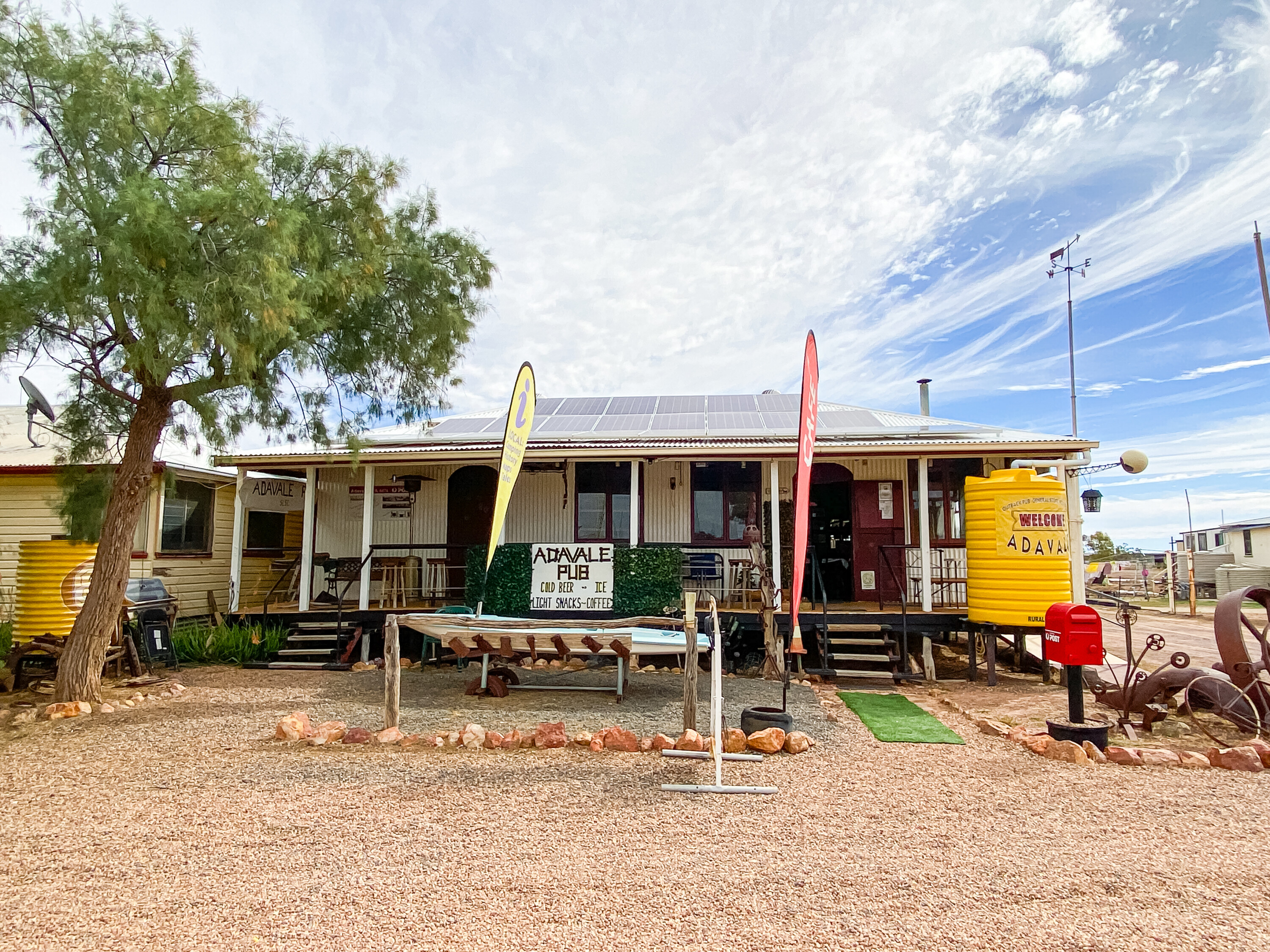
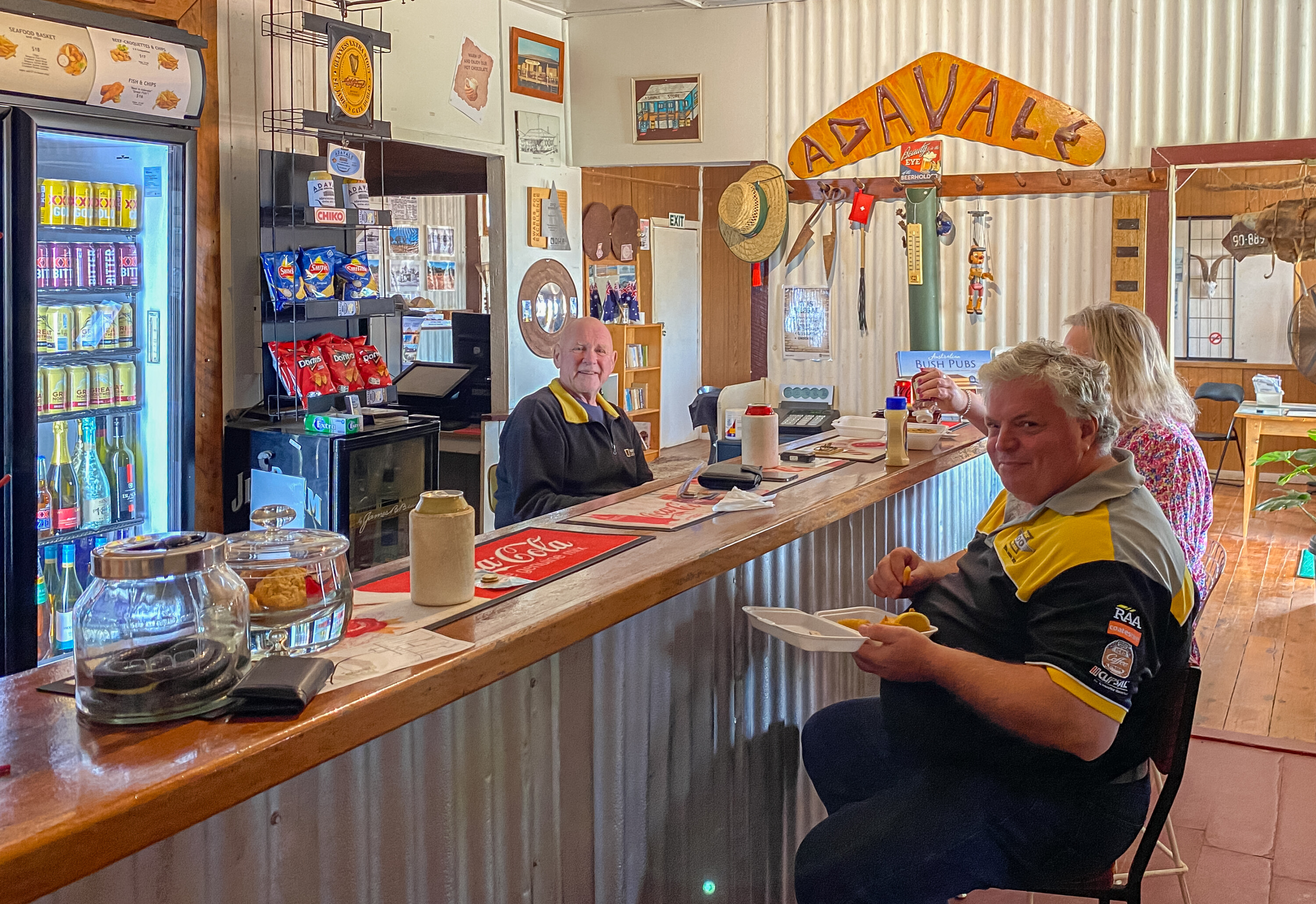
As well as a pub, the Adavale Hotel is the tourist information centre and post office all in one. The pub is owned by Koss Siwers, a former music teacher from Brisbane for the past 11 years, and he bought the place after driving through town and noticing a small cardboard ‘For Sale’ sign nailed to a tree.
Koss is a happy fella and keen historian who has explored this region extensively during his time here. If there is anything you want to know about Adavale’s story, Hell Hole Gorge or anything else, he is more than happy to help out.
Settled around 1865, Adavale was gazetted in 1878 and at one time had a population of 300 residents. Back then they would have enjoyed six pubs, a police station, Chinese market gardens, a bakery, a general store, a school, a hospital and a post office. These days you could transport the residents in one minibus, with the township home to just 15 souls.
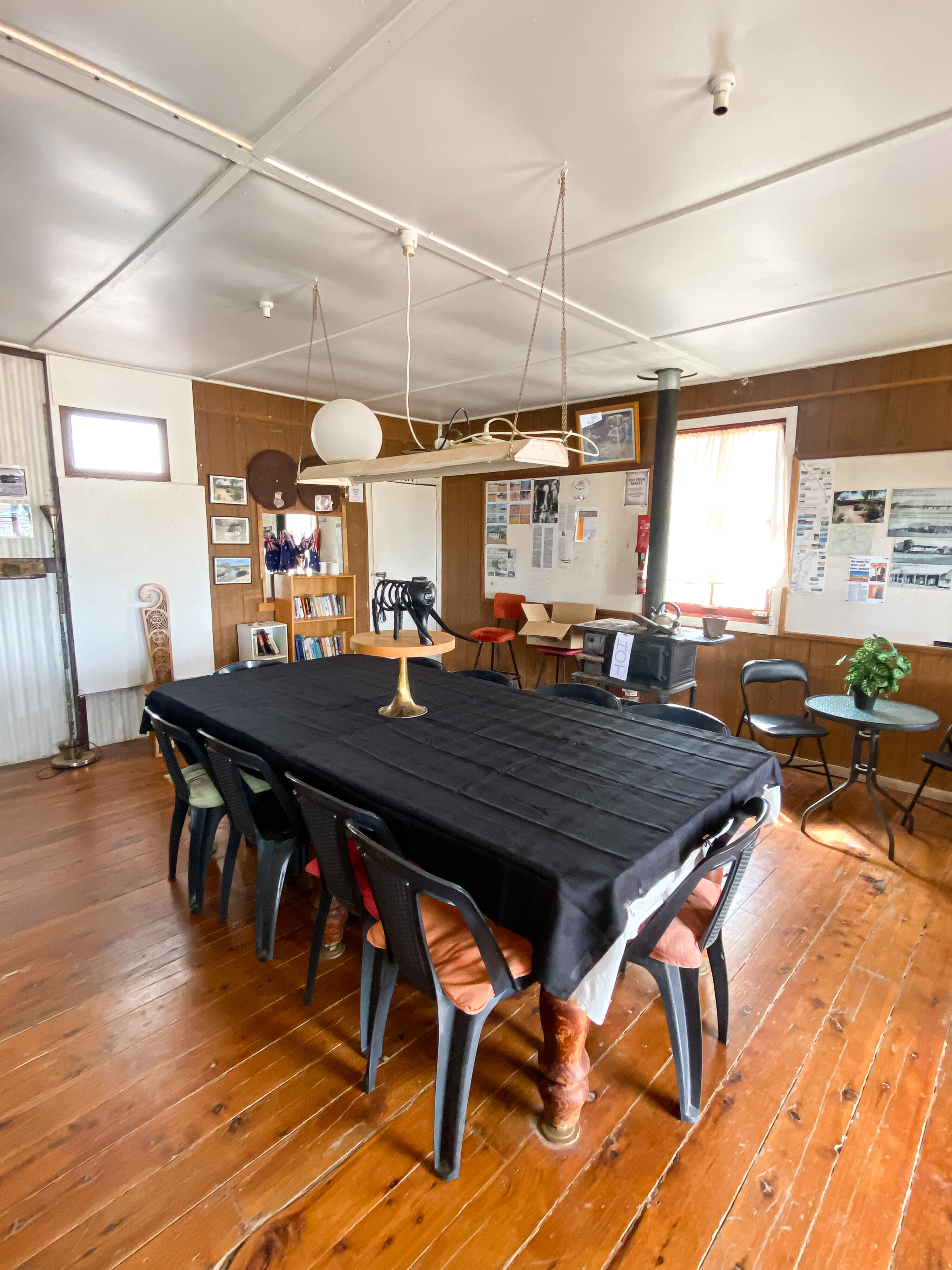
There is an interpretive town walk that offers some insight into what the Adavale was like when it was booming. The locals have developed a quirky Outdoor Mini Museum in an old meat house, and nearby is the Police Museum, along with an outstanding photographic display on the external walls of the Shire Hall.
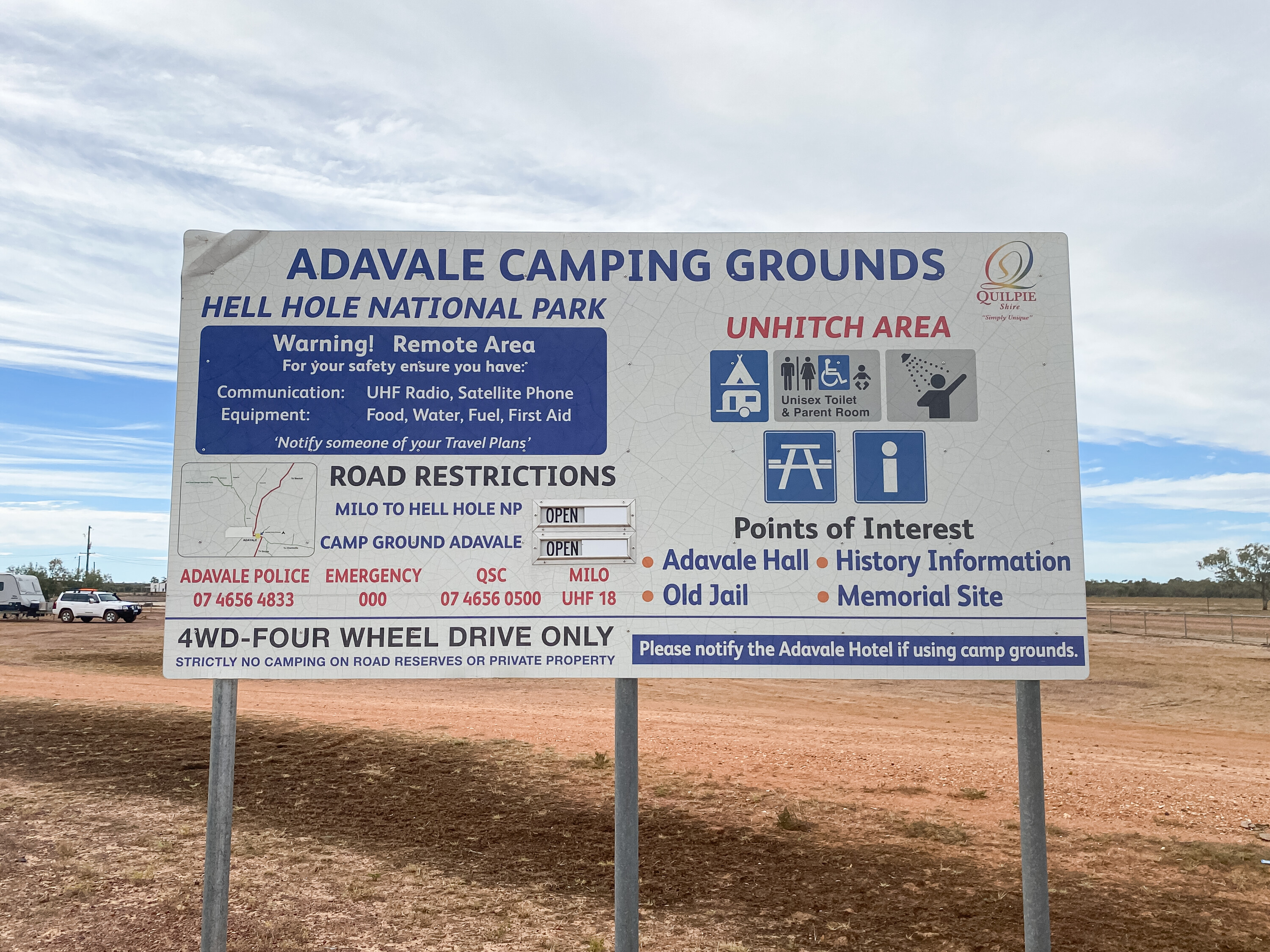
Free camping is encouraged beside the Shire Hall and offers a coin-operated gas barbecue, toilet and shower, all just a short walk from the Adavale Hotel. Make sure you drop some money into the box for donations that go to the Royal Flying Doctor Service. There’s also free bush camping and fishing holes along Brigalow Creek; just ask Koss for directions.
One thing you’d least expect to find in a place like Adavale is the Elegant Emu, where Christina Zito offers a small selection of handmade and home-baked patisseries, along with a fabulous High Tea Experience. You can also purchase ‘Christina For Fair Trade’ handbags here.
The locals don’t visit the Adavale Hotel very often but not because of Koss; the story goes that the constabulary used to wait for the locals to finish enjoying some liquid refreshments and then pull them over and breathalyse them. There was also something about a former owner of the pub mucking things up with the locals. This means that these days it’s mostly tourism that keeps the pub going.
In the old days, Adavale was the end of the line for Cobb & Co, and Koss can draw you a mud map so you can drive out to the hidden mail exchange out on the floodplain amongst a copse of gidgee. There are also remnants of the old coach road that can be seen in Adavale.
Grog for the pub comes via Australia Post, purchased through First Choice, as well as supplies from Quilpie or Charleville. Alcohol for the locals also comes via the post and because the pub is also the post office, Koss knows exactly what they are buying.
While the food menu is limited and made up of items that can be deep fried or microwaved, this is a one-man show and Koss has to disappear into the small kitchen to watch the frier as he doesn’t want this pub to burn down like the previous ones in Adavale. You can enjoy a meal and icy beverage at the bar, in the lounge or on the verandah.
The pub is open every day from 8am to midnight, from April to November, after which Koss returns to his wife in Brisbane and the pub closes. There is someone who looks after the post office while he is away from town.
There are other times that Koss returns to Brisbane, so it is always best to ring the pub to make sure the beers are cold and that the pub is open before dropping in.
While Rob had stripped said alternator in an effort to fix it, it was to no avail, so while he headed to Kalgoorlie to get a new one, we struck to the north, and would meet up with him at Warburton in a few days’ time.
Rawlinna has been a major railway siding from the time the Trans Australian Railway was established in 1917 to the demise of the steam engines in 1951 that had once necessitated a major engine support facility in the town.
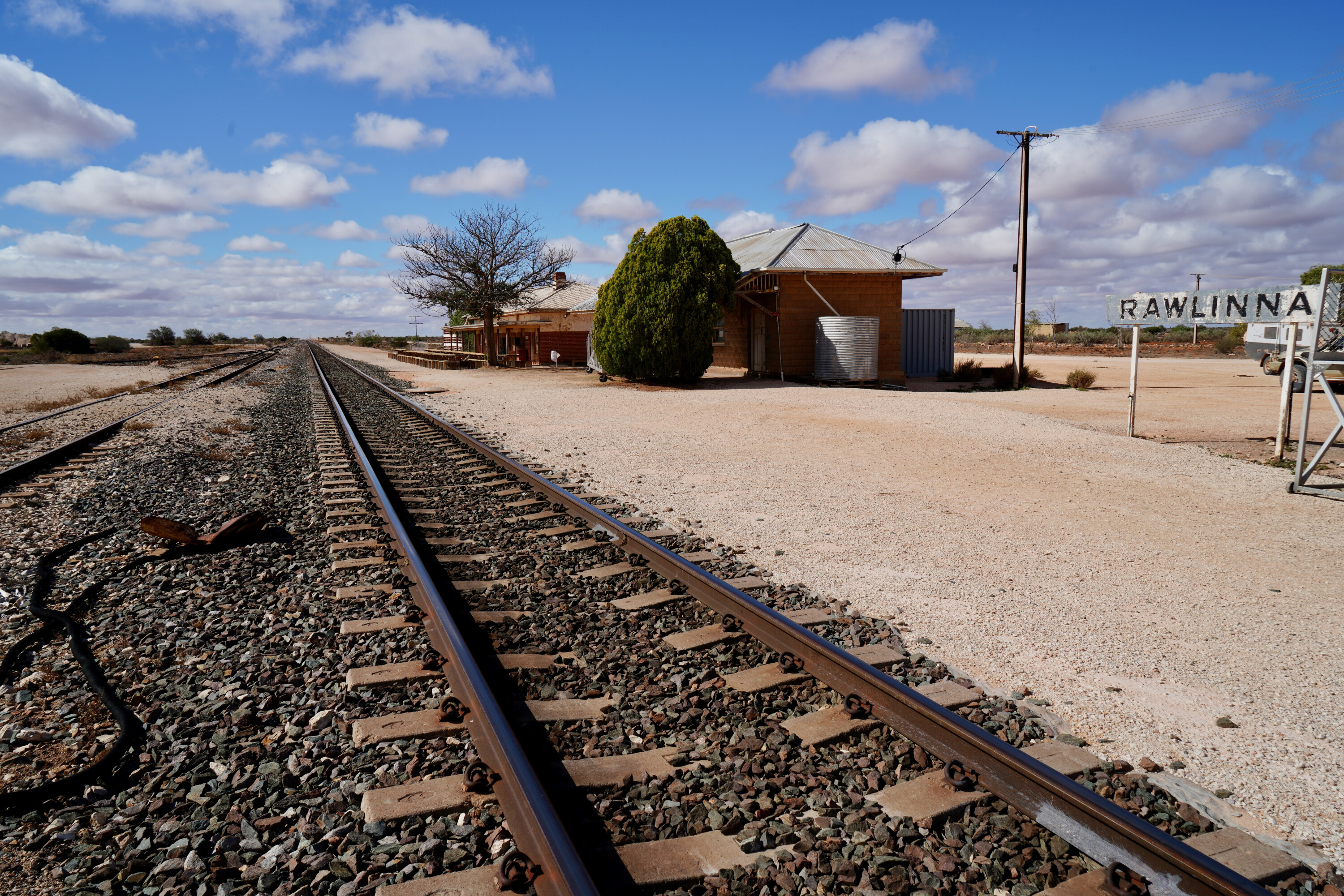
With diesel-electric trains now hauling people and freight across the continent, the railway siding has seen less and less maintenance workers, but it is not completely abandoned with occasional telephone people and railway maintenance crews still making use of its facilities.
Today the weekly Indian-Pacific train stops here for a barbecue so passengers can get a ‘real’ taste of the remoteness. And the hamlet gets a huge influx of people during the annual Nullarbor Muster, usually held during April; the 41st running of the event is scheduled for 2024 (www.nullarbormuster.org).
Rawlinna Station, the biggest sheep property in Australia (and the world) at over 10,000 sq km (2.5 million acres), runs between 60,000 and 80,000 sheep, and has its main homestead about 11km south-west of the railway siding.
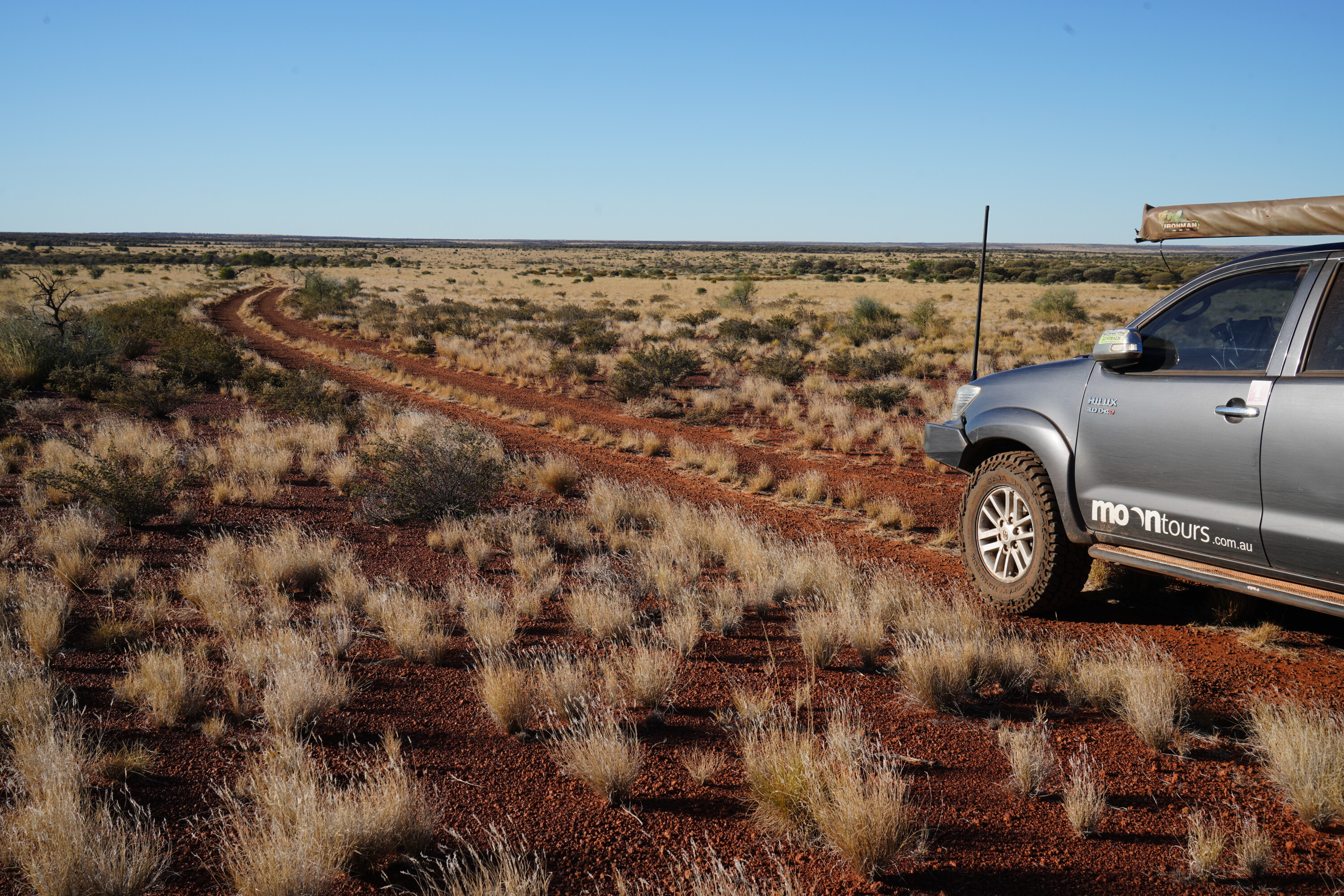
It was, rather surprisingly in the pastoral history of Australia, only established in 1962. That was about the same time as the first tentative steps were made to push a track, later to become the Connie Sue Highway, south from Warburton to the railway line.
Just getting to Rawlinna is an adventure in itself. The easiest way is from Kalgoorlie where a good graded road, paralleling the railway line, runs 380km to Rawlinna. A rough track from the east also follows the railway line, while another limestone studded route heads north from Cocklebiddy on the Eyre Highway.
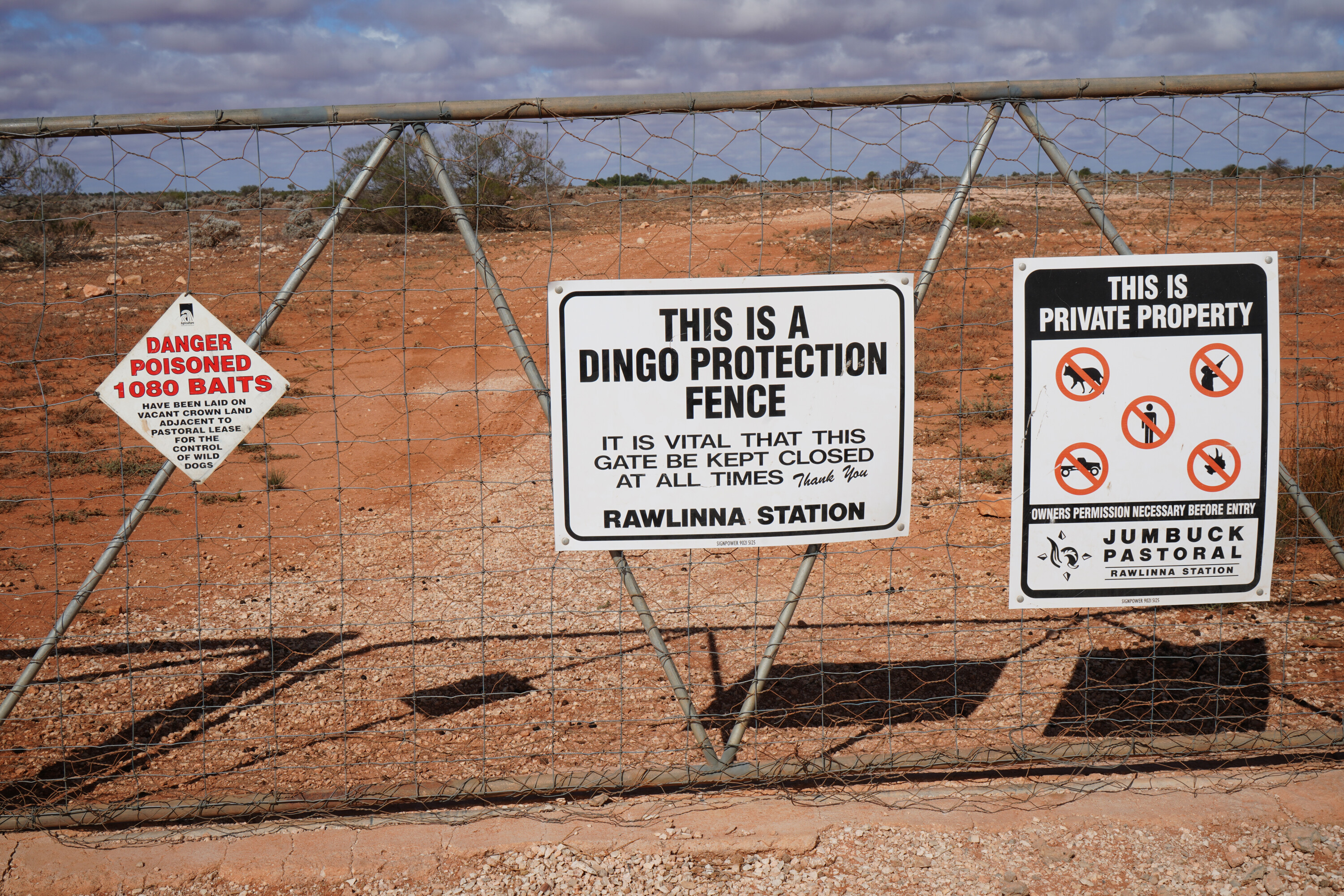
No matter which way you come though, you’ll pass along some of the 370km long dingo-proof fence that skirts the Rawlinna sheep property, recently sold to ‘Twiggy’ Forrest’s Fortescue Metals Group for supposedly future green energy and carbon-reduction projects; not sure if the fence will be of any benefit for that though!
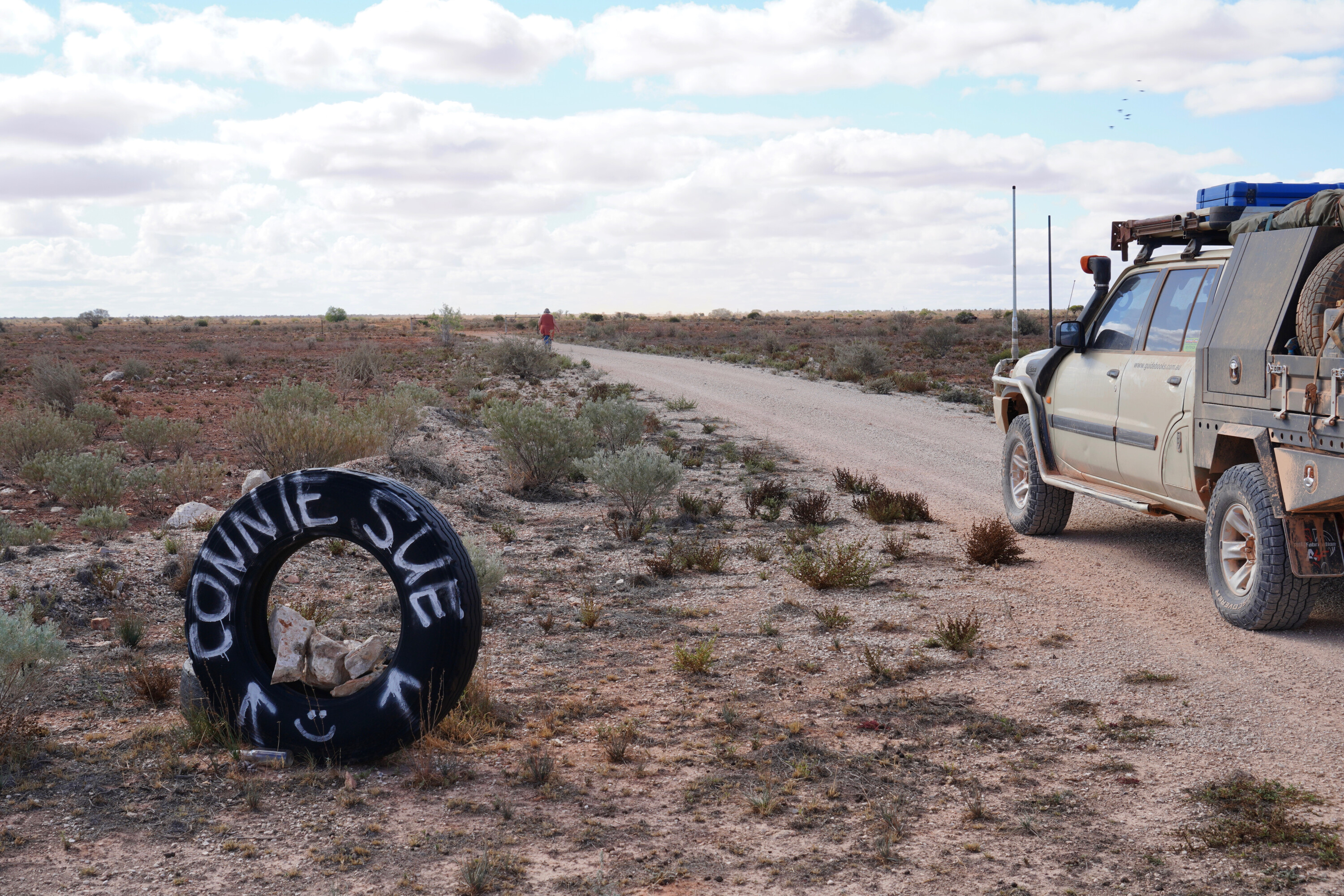
We had joined the Connie Sue Highway (CSH) on the eastern side of Rawlinna siding, where a rough sign indicated we were at the right place and heading in the right direction. The last time I had been here was over 30 years ago and the track wasn’t much different, or at least the start of it didn’t seem any different to what it was back then.
As previously indicated, the road that became the CSH had first been established when Len Beadell and his famed Gunbarrel Road Construction Party (GRCP) started pushing a track north from the Anne Beadell Highway to Warburton in August 1962.
In October of that year the party returned to what Len called Neale Junction and pushed a track south to the railway line, all his tracks being part of the A-bomb and ICBM tests that Britain was conducting in the 1950 and 60s. Today those tracks, nearly 6000km of them, make up one of the great 4×4 desert adventures in the country.
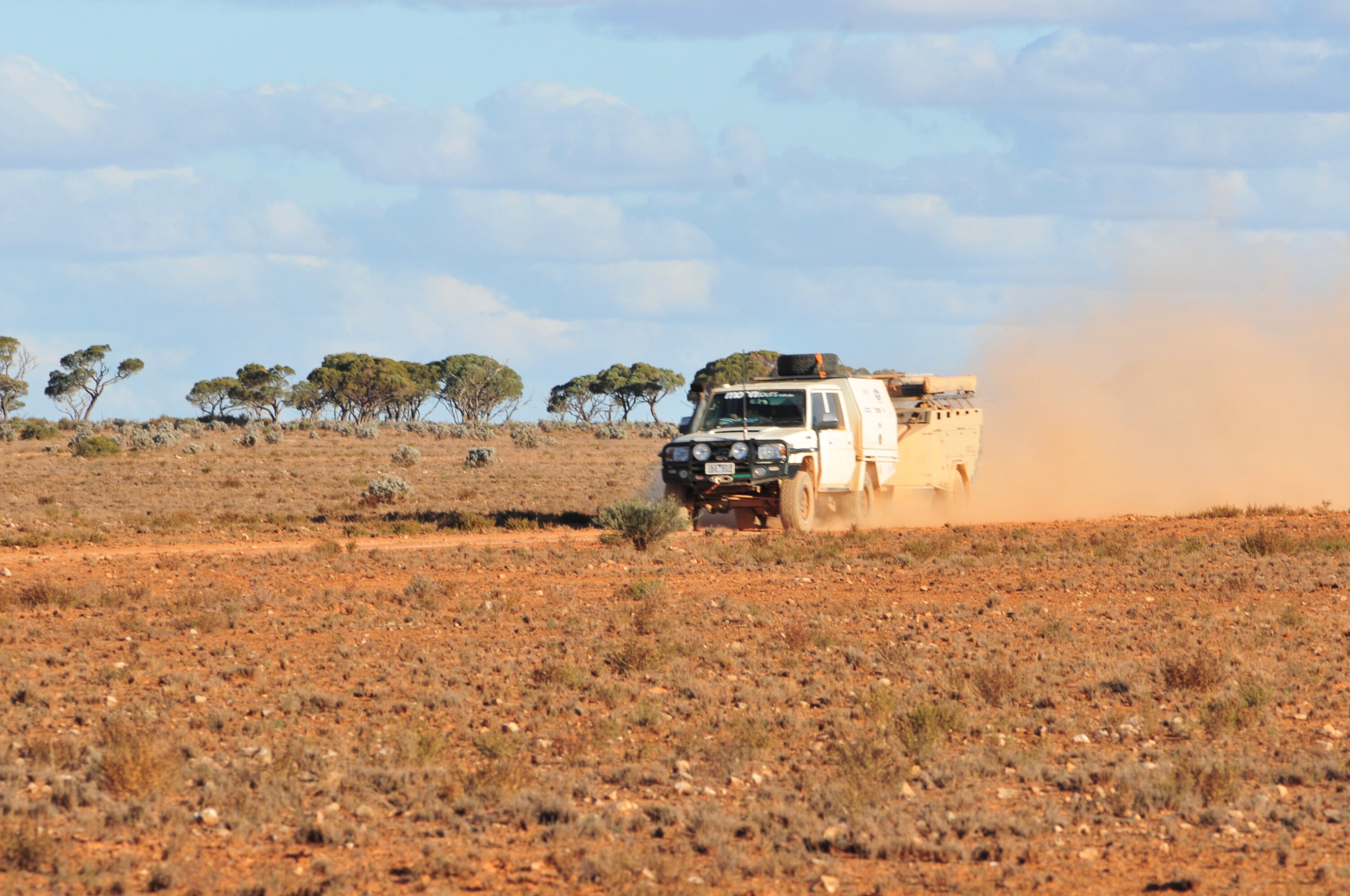
For the first 50km or so we crossed near treeless limestone plains on what was the edge of the vast Nullarbor Plain, but as we slowly pushed on, more trees and scrub began to appear.
Station tracks crossed the Connie Sue at numerous spots but the ‘highway’, while still not much more than a dozer blade swipe across the ground, was distinctive enough that there was no danger of taking the wrong turn. After an easy run, considering the late start, we pulled up for the night’s camp about 90km north of Rawlinna.
After we got away the next morning, the track condition remained reasonable and arrow straight, heading almost true north. About 15km from our camp, and 105km from Rawlinna, an Aboriginal Business Road (no access) joins the CSH and immediately the road condition improves, becoming wider and more recently graded. A shelter shed and water tank nearby make for a popular campsite but having just started out for the day we pushed on, just stopping to see if the tank had water, which it did.
Nearly 70km north from where the business road joins the CSH, it spears off to the north east and the small remote Aboriginal community of Tjuntjuntjarra. Here again, at this second major junction, there is another shelter and water tank.
The country and vegetation changed quite a bit as we cruised north on the CSH – first across bluebush plains with some large stands of trees here and there, into mulga scrub, and then mallee scrub, with a thick covering of spinifex and hardly any bluebush anywhere.
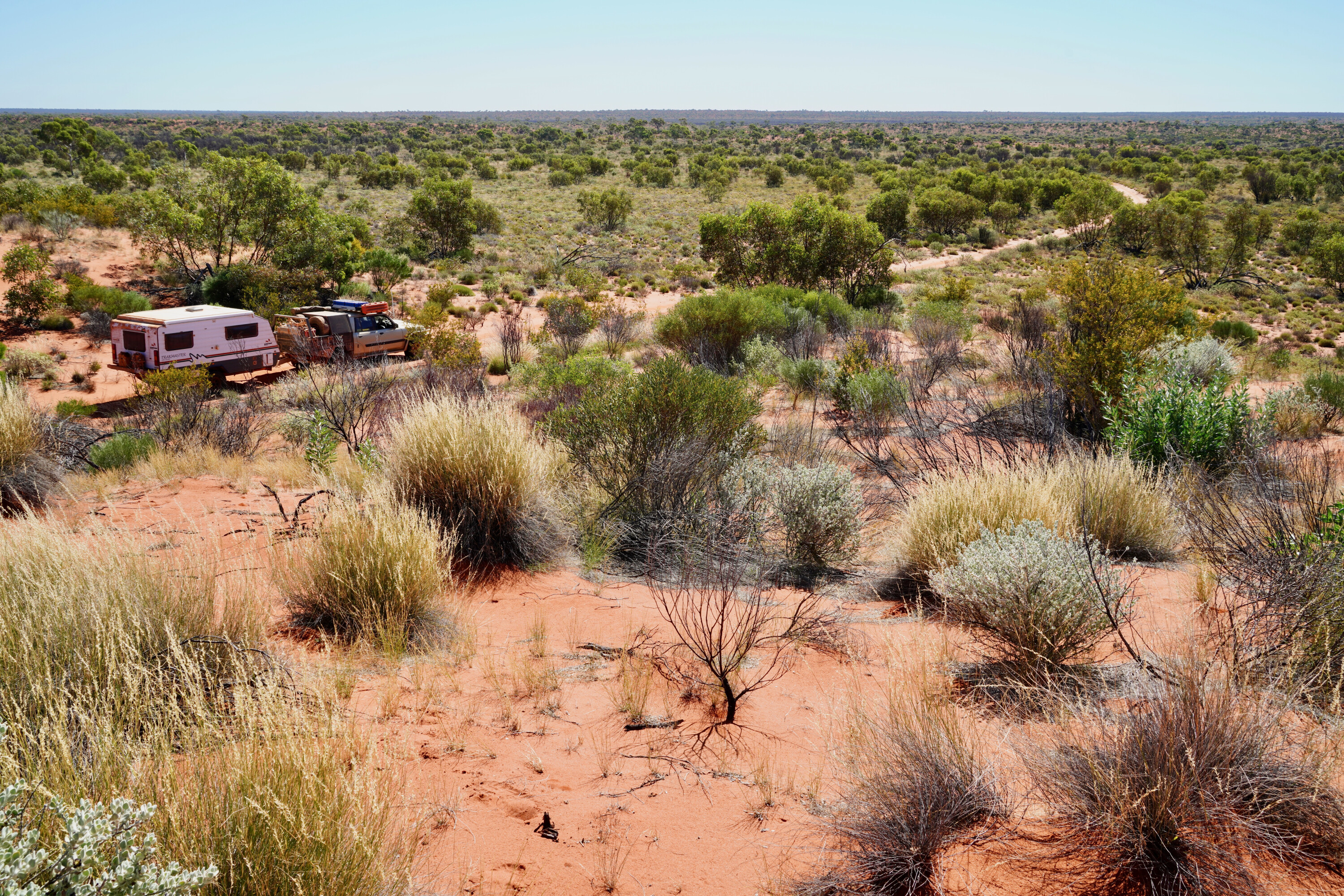
We were soon passing through more treed areas with native pine and white gums along with small stands of desert poplars – the latter having been given a hard time by the feral camels. Then we crossed the first of a few widely spaced red dunes, making us feel like we were really in desert country at last.
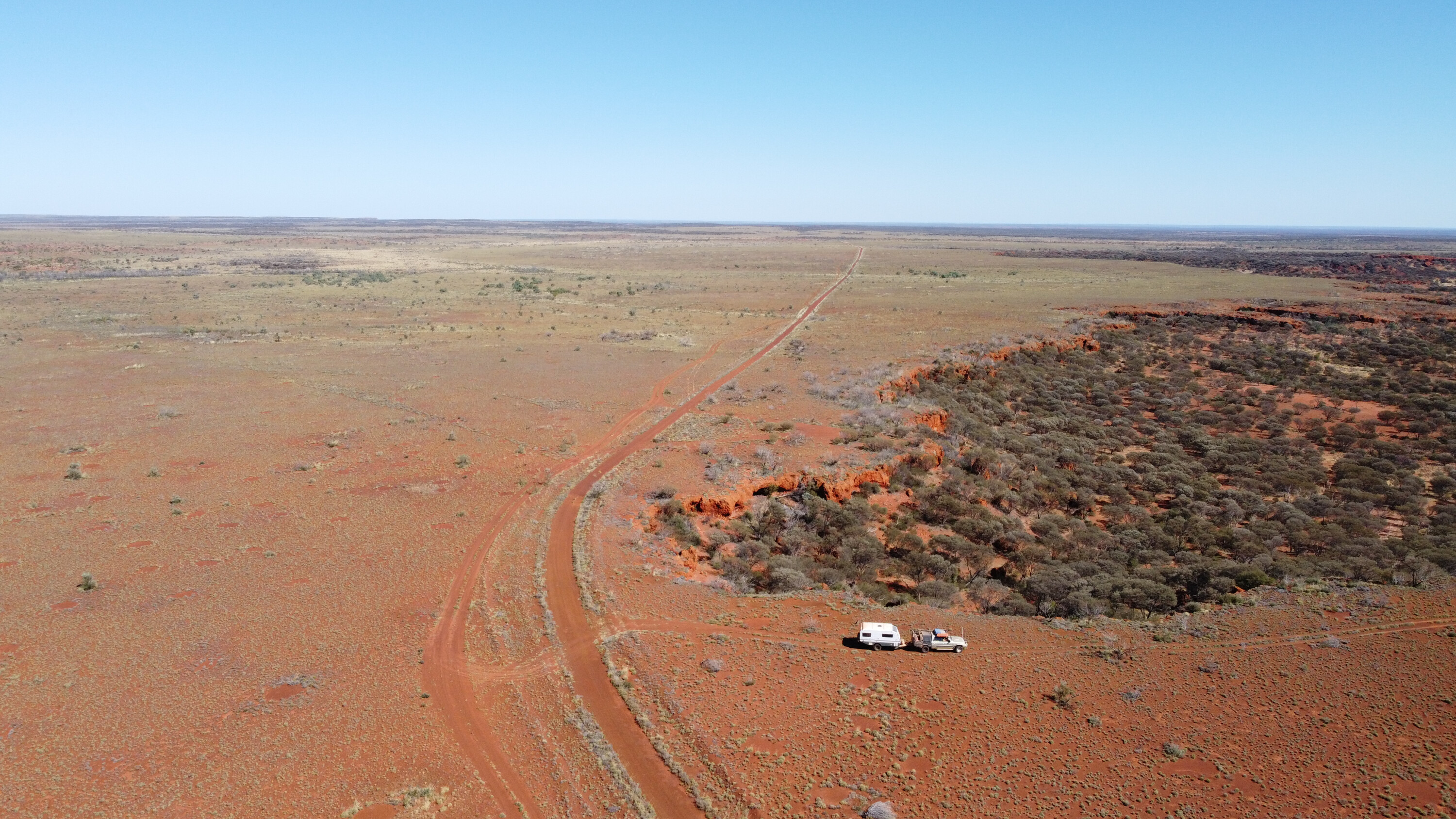
We continued on the CSH which was, at that moment, a well-formed double-track through the scrub in a near straight line, with the road surface as smooth as you could want. Only occasionally were there any corrugations or a few low rocky limestone outcrops to mar the smooth running, and we made good time cruising at around 75km/h.
As we crossed the southern boundary of the Neale Junction Nature Reserve, we were deep within the 349,000sq km Great Victoria Desert, the largest desert in Australia. Much of this desert country is open woodland with spinifex understory, but the stately marble gum is one endemic species while black oak trees are more widespread but equally spectacular.
The desert supports more than 100 species of reptiles and more than 200 bird species, along with 20 or so different mammals, but apart from the birds, the most common animals you’ll see are the bloody camels and the occasional wily dingo.
Ernest Giles had crossed through this vast desert near here in September 1875 and he and his party were in a dire situation before they discovered life-giving water at what Giles called Queen Victoria Springs, some 220km further west. David Lindsay, in charge of the Elder Scientific Expedition of 1891-92, crossed a little further to the north, while inveterate explorer Frank Hann explored much of this area during the early 1900s.
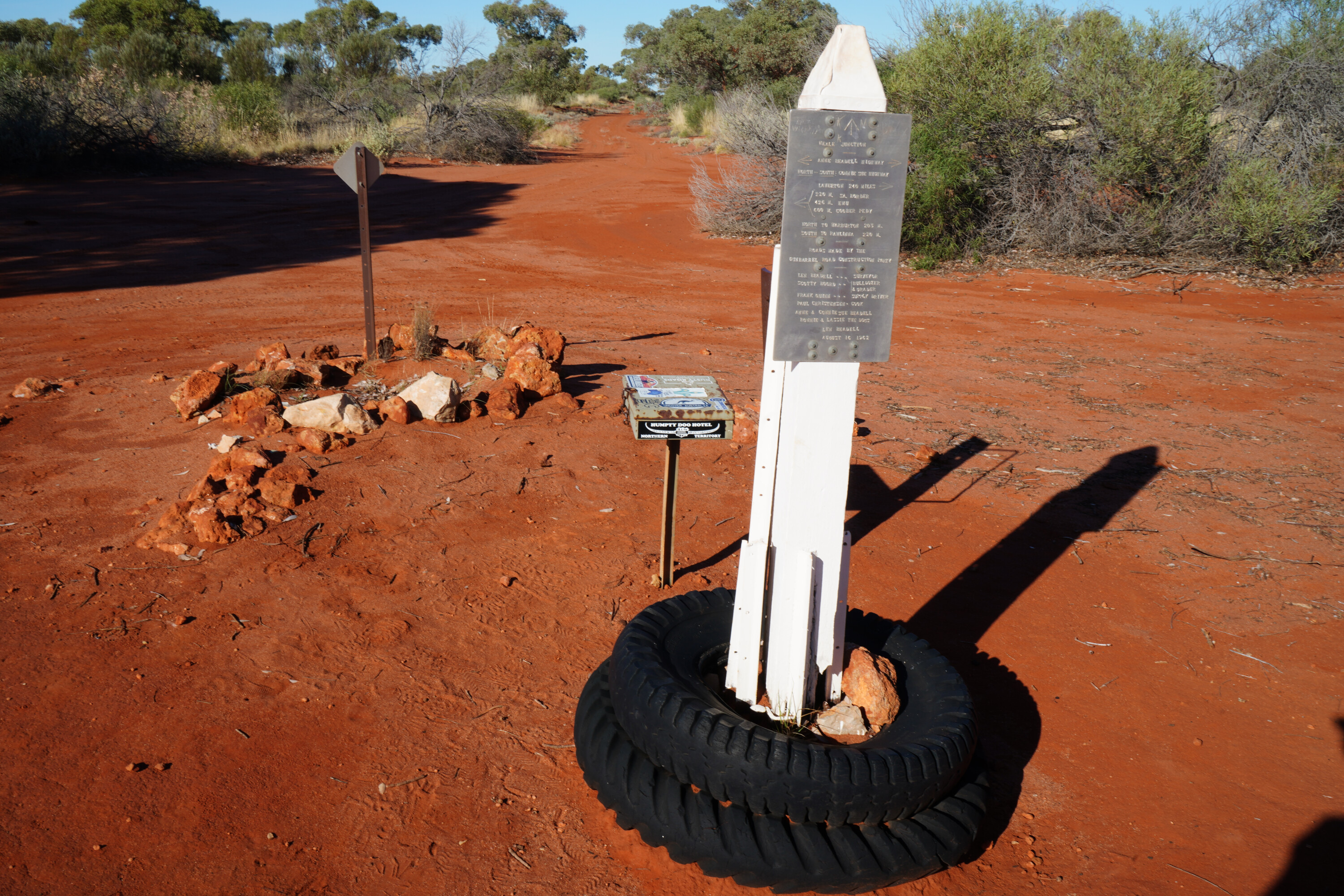
That evening, after travelling a lot easier and a lot quicker than those early explorers, we stopped at Neale Junction where the Anne Beadell Highway (another of Len Beadell’s roads) crosses the CSH. Here you’ll find a small campground complete with shelter shed, water tank and a few fireplaces, making it a good spot to stop.
The next morning we pushed on, our route winding through dunes before exiting the nature reserve and then heading over vast slightly undulating sand plains, much of them thickly speckled by ironstone pebbles. With less maintenance, the track was decidedly more demanding and included washouts and long stretches of teeth-chattering corrugations, while thick patches of mulga slowed our group to a crawl.
We turned off the main track and wound our way through thick vegetation which got even thicker as white gums heralded a section of flood-out country, the ground covered in a mat of thick grass. Suddenly we broke out of the foliage and had an escarpment of red rock beside us as we made our way across a bluebush dotted plain to a small camping spot tucked in amongst the low carmine-coloured bluffs of Point Lillian.
Frank Hann was the first European to reach this spot in June 1903 and on subsequent trips he visited here a total of eight times, the last in September 1908 when he was attacked by a small party of Aboriginal men and was lucky to escape with his life.
The following morning we found our way to the top of the plateau to the east of our camp and then wandered south where a sharp-edged east-west running gorge halted our progress. Finding our way down into the canyon via a smaller less-steep chasm we scrambled over rocks and around and through the branches of pine trees and mulga to eventually find a large cave, its walls adorned with ancient Aboriginal painted rock art.
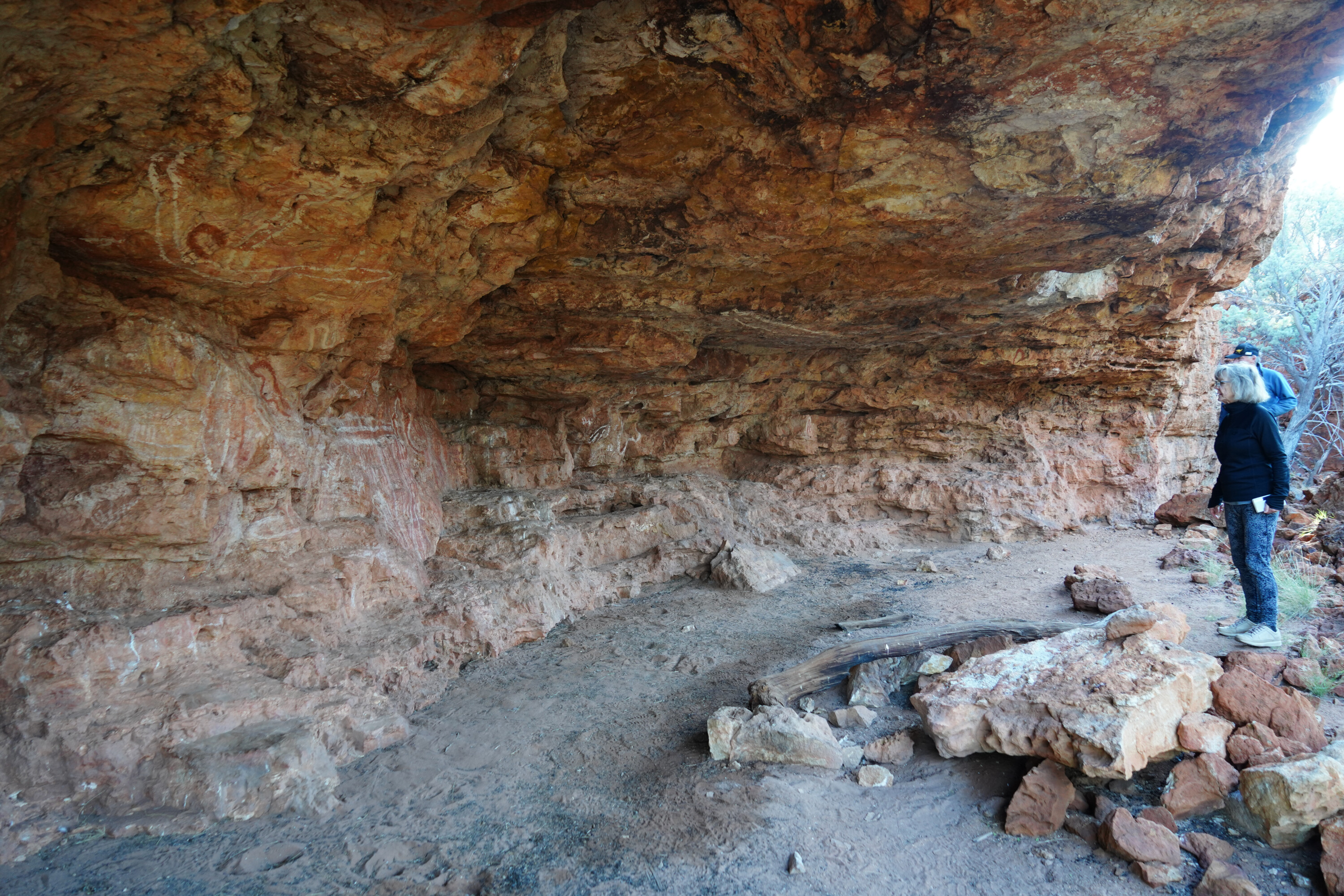
The cave floor showed signs of long-ago human habitation, but the only recent signs were of wallabies and kangaroos. We didn’t find any water in the gullies but if any did flow through, it would stay here longer than elsewhere given the protection from the sun and wind offered by the rock walls and thick scrub.
Pleased with our exertions and explorations we headed back to camp and had a brew before heading out to the main track and continuing north on the CSH. We passed the track to Point Sandercock, another bluff named by Hann, and continued along the CSH running north-east for 15km before tracking north-west for a short distance around the almost imperceptible undulations of the Cooper Hills.
These rocky hills give rise to the ephemeral Cooper Creek which crosses the CSH about 5km further north, where a short side track leads to the Cooper Hills Bore. We stopped to check out this solar-powered bore and after a bit of fiddling with the wiring got the pump working, and we were rewarded with a flow of beautiful water.
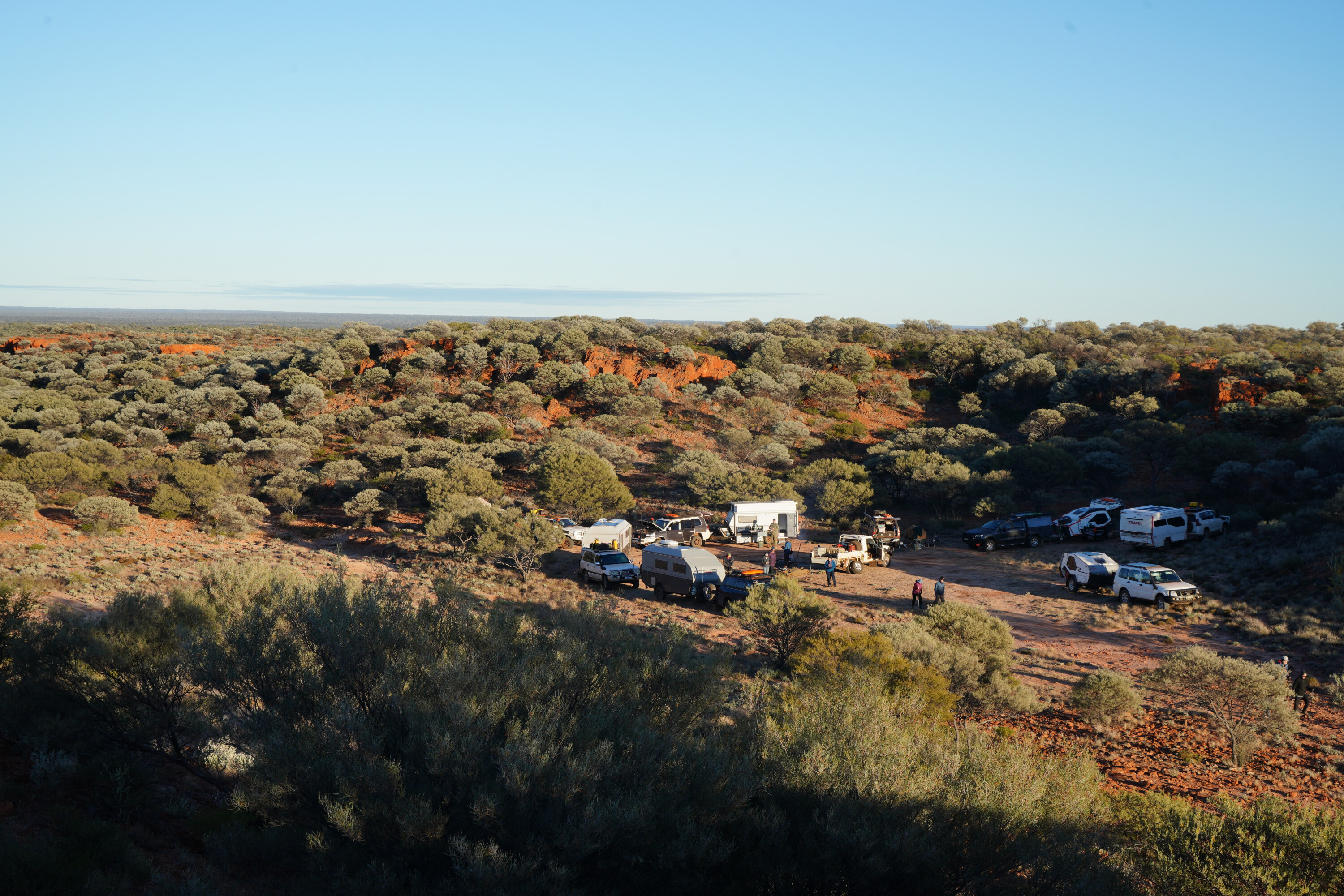
Back on the Connie we soon passed the turn-off to Sykes Bluff and then Ryans Bluff before taking the track out to Woods Pass and Woods Gnamma Hole, all spots named by Hann in his exploration in 1903. While stopped at Woods Pass for a bite to eat, we found one of the campers had a broken camber adjustment bolt on the trailing arm, so we spent a bit of time replacing that.
Turning onto the CSH we soon passed Hanns Tabletop Hill, named in honour of the wide wandering explorer by geologist H. Talbot in 1916. Further north a track leads out to Sydney Yeo Chasm and then a short distance later to Waterfall Gorge but sadly both of these places have been declared out-of-bounds by the Traditional Owners as they are of great importance to the local Aboriginal people. We pushed on, pulling up to camp just off the Connie and on the edge of Mackenzie Gorge, which was an enjoyable spot to watch the sun set far to the west.
Track conditions the following morning alternated between easy going and corrugated, then 50km from camp we veered right at a junction and the route became easier as we left the dunes and ironstone hills behind. The country improved too, with introduced buffel grass replacing the spinifex, and an indication that this area was once cattle grazing country, while white-barked snappy gums dotted the line of the briefly flowing Elder Creek just off to our east.
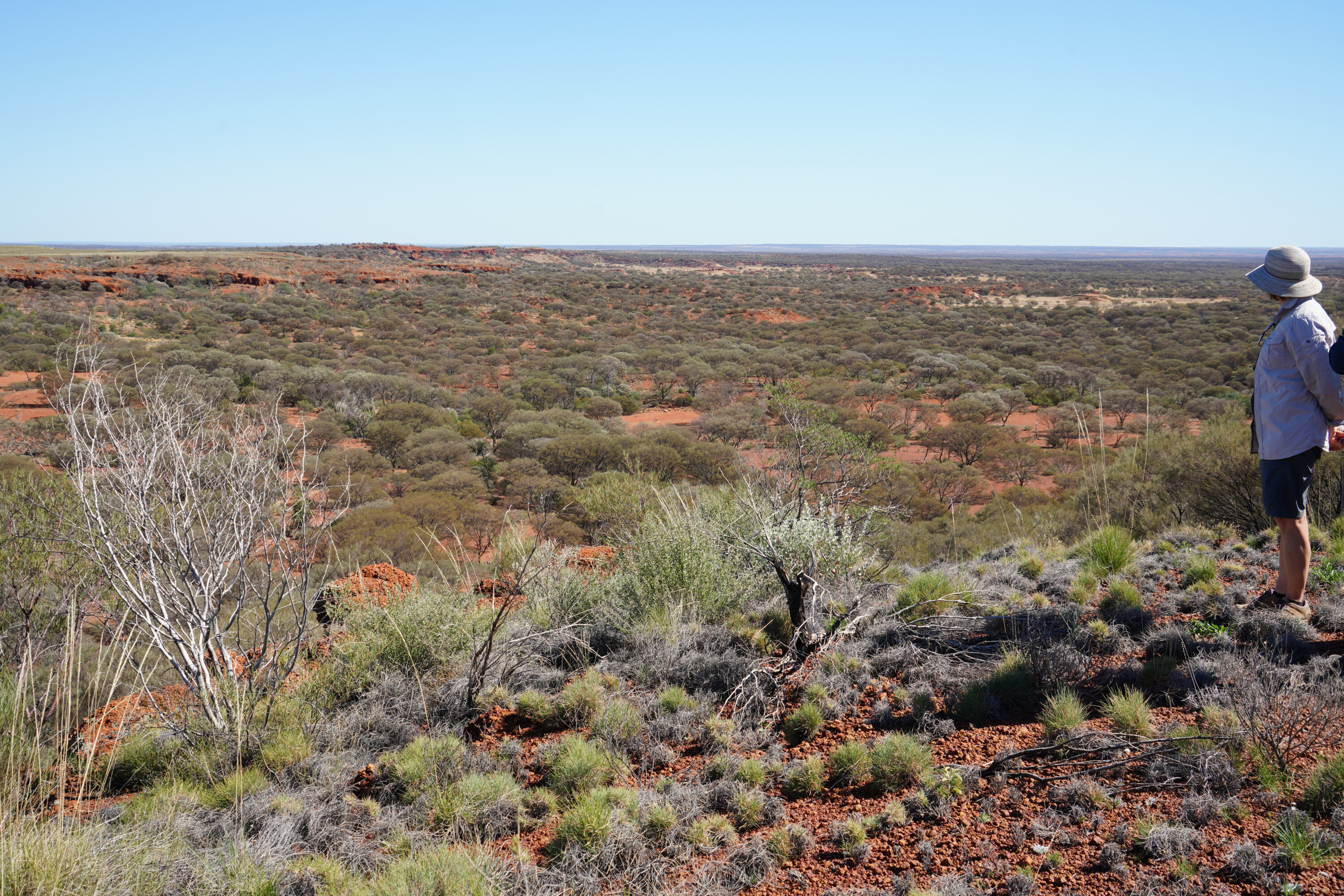
Suddenly we came onto the wide graded Great Central Road and turned east for the 4km or so of smooth road to the large Aboriginal community of Warburton.
Our journey along the Connie Sue Highway was nearly over but with a few things needing repair or replacement we took the opportunity for a shower and to wash clothes at the well-established roadhouse and caravan park.
It had certainly been a memorable trip.
To obtain a permit to traverse the Connie Sue Highway you can apply online or email: [email protected]
It’s a 635km drive from Rawlinna to Warburton. There is no fuel at Rawlinna nor any services. Rawlinna is 145km north of Cocklebiddy on the Eyre Highway (the closest fuel).
The big news, as previously reported, is the addition of a 2.8-litre turbo diesel four-cylinder from the current Prado, HiLux and Fortuner and new Aisin six-speed auto.
This ‘1GD’ engine-auto combination becomes the standard powertrain, with a $4100 premium applied to the carryover ‘1VD’ 4.5-litre V8 turbo diesel and five-speed manual.
V8-powered LC70 models have increased by between $8300 and $8800, with the most affordable variant – the $83,900 GXL wagon – starting just above the most expensive four-cylinder diesel model.
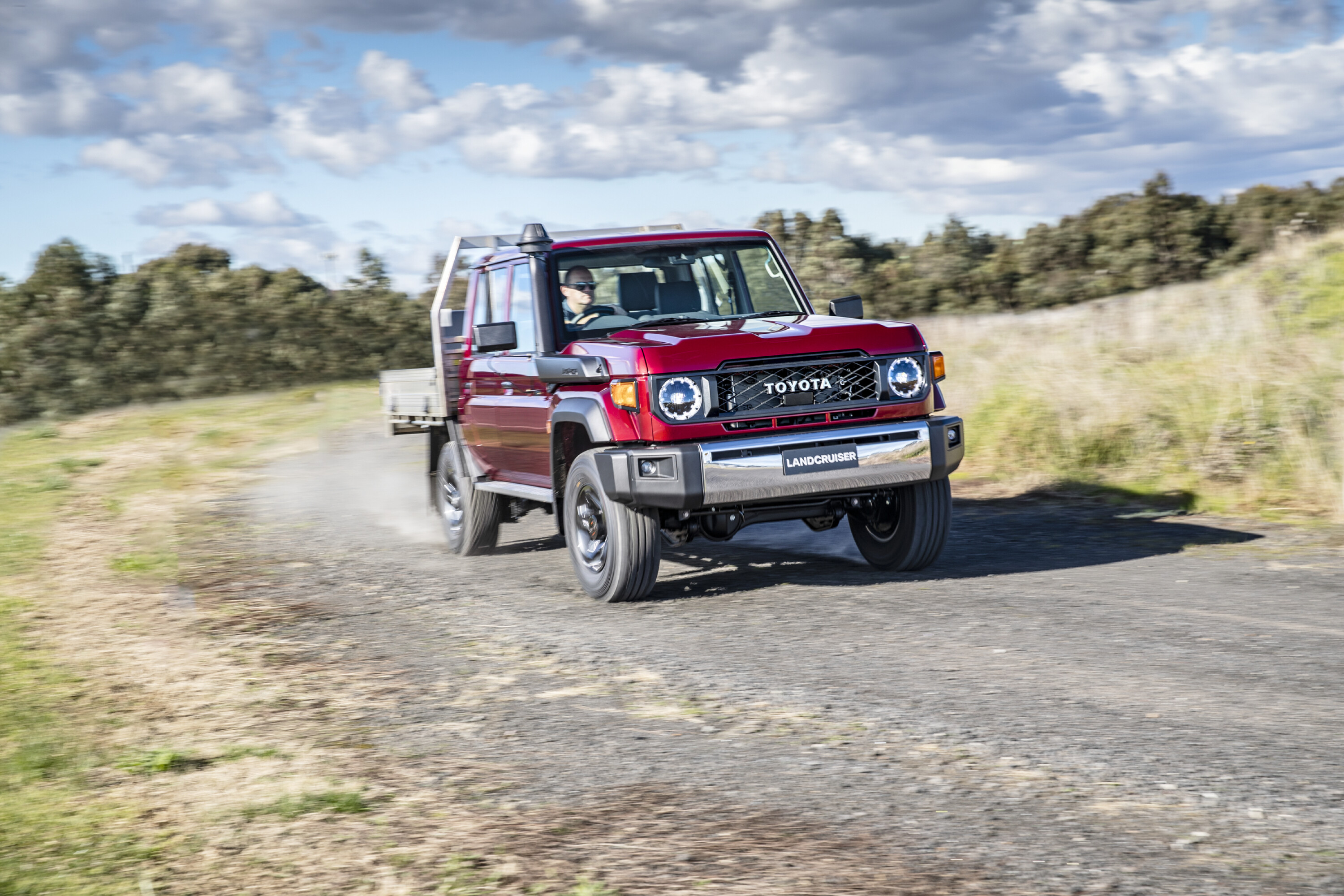
The ‘1GD’ turbo diesel four-cylinder produces 150kW at 3400rpm and 500Nm between 1600 and 2800rpm. That gives it near identical power yet superior torque to the V8, which produces 151kW (at the same 3400rpm) and 430Nm (albeit from an even lazier 1200rpm, up to 3200rpm).
Toyota has applied the 2.8-litre turbo-diesel four-cylinder to all three grades (Workmate, GX, and GXL) and four body styles – single and dual cab, wagon, and troop carrier. Only the Workmate wagon misses out on the V8.
The company expects the smaller engine and automatic gearbox to broaden the 4×4 vehicle’s appeal to business operators including mining companies, as well as people looking to tow.
The auto comes with a Power/Haul mode that Toyota says maximises the 70 Series’ 3500kg braked towing capacity.
The sole option for all models is premium paint that carries a $675 cost.
Front and rear differential locks are available on single-cab GX and dual-cab Workmate models for $1500.
“The LandCruiser 70 Series has built up a loyal and passionate fanbase with customers drawn to its rugged styling and legendary off-road performance and this substantially upgraded model builds upon those strengths,” said Toyota Australia president sales, marketing and franchise operations, Sean Hanley.
“Now with a new powertrain including an automatic transmission for the first time, along with the significant increase in safety and convenience technology, the LC70 is an ideal vehicle for those working on the land or as a tool of trade and recreational users heading off on an outback adventure,” Mr Hanley added.
The updated LC70 range is on sale from November. Orders for the V8 LC70 model are currently paused “due to supply and demand factors” and Toyota has yet to confirm when they will recommence.
The stories below will give you a guide to everything we learned about the new Prado when it was unveiled. All fresh stories published since then will be found on our Toyota Prado model page here.
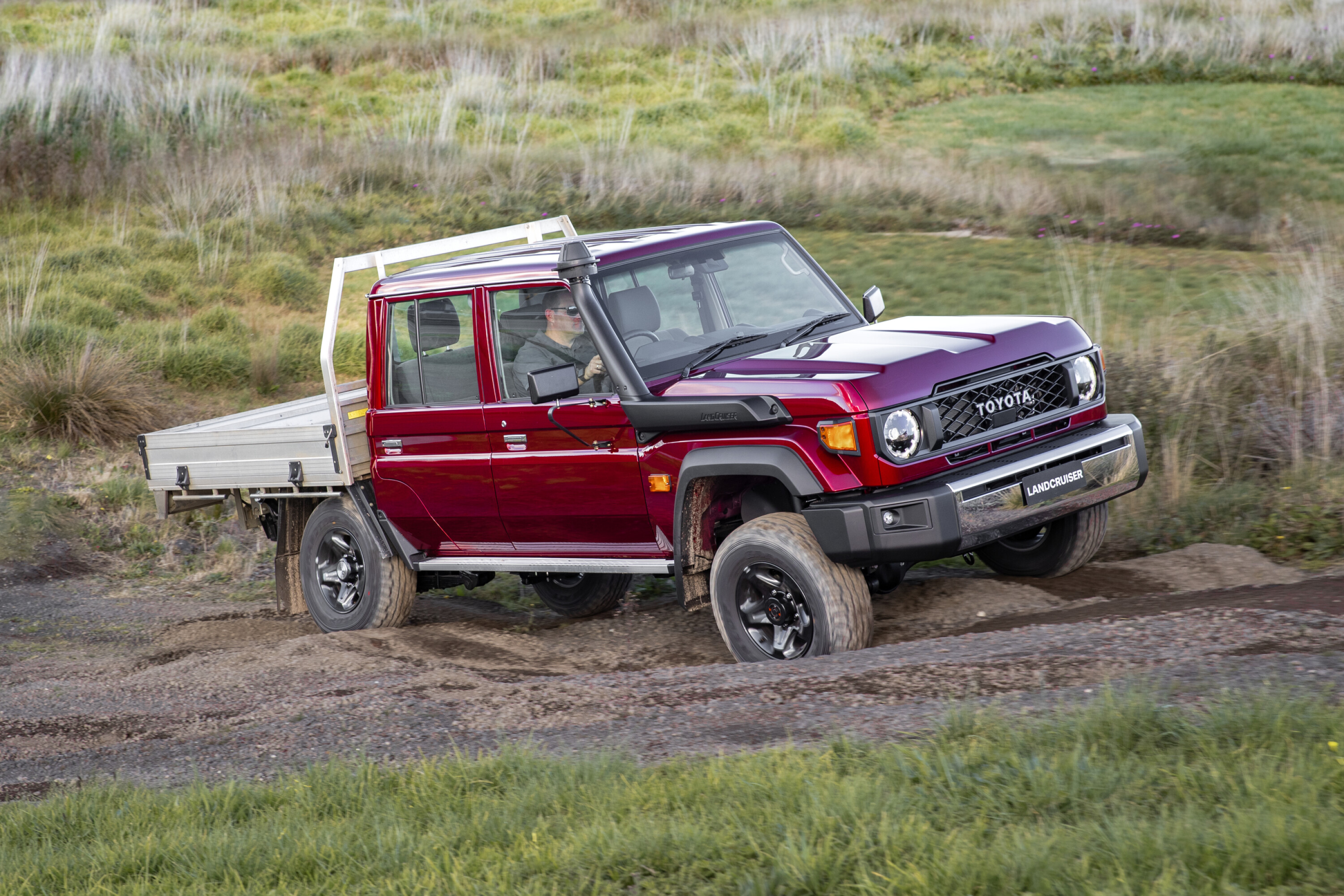
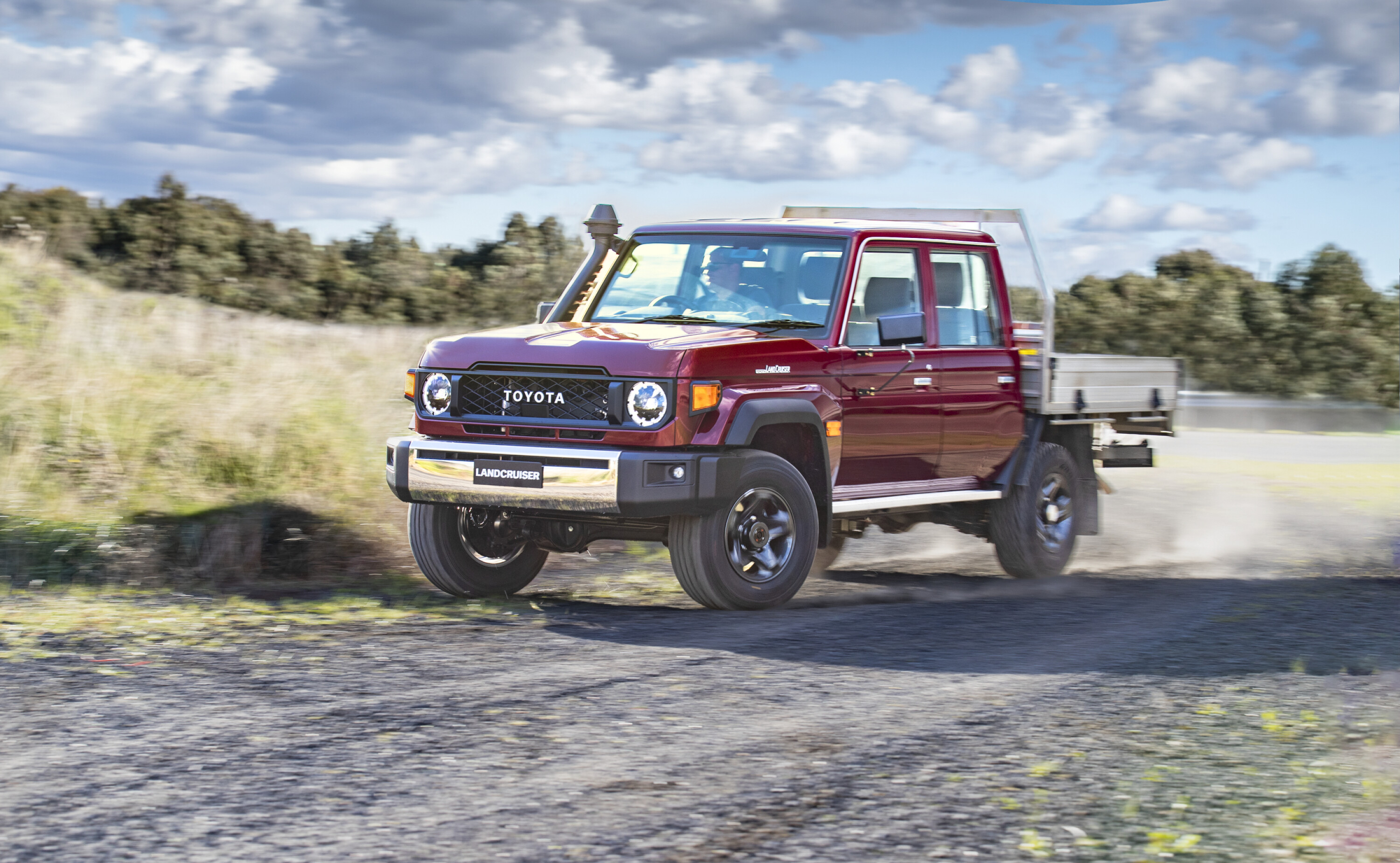
There are new bumpers at the front, with black wheel-arch extensions stuck on and a more prominent bonnet – the old-school snorkel continues.
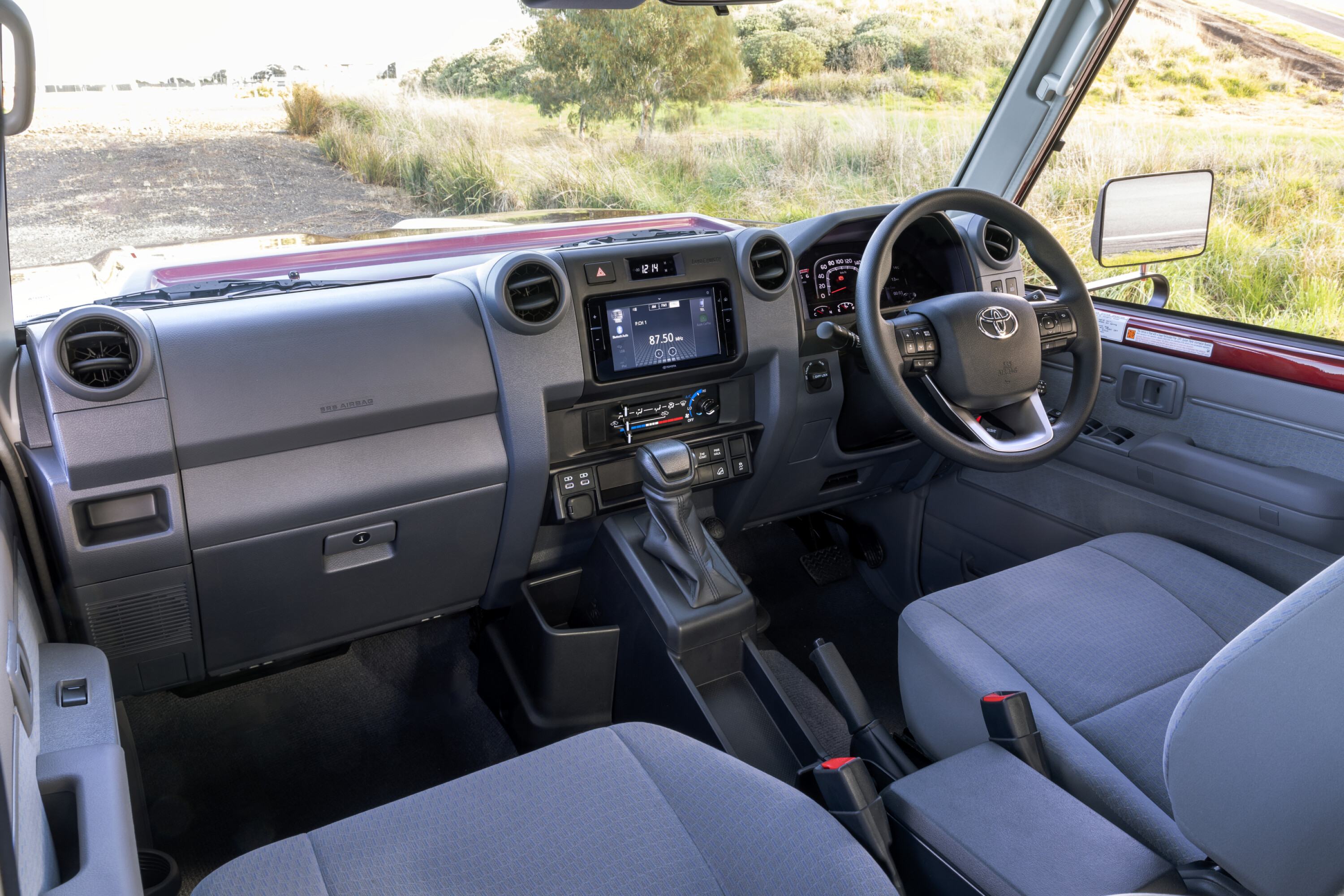
Inside, the dash architecture is also very familiar – including the awkward cup holder that was added with the 70 Series’ last update. The plastics appear unchanged, although the new head unit has a 6.7-inch touchscreen that’s compatible with Apple CarPlay and Android Auto via a cable.
The old-school circular dials have been replaced by a new interpretation with a 4.2-inch multi-information display for information such as fuel consumption.
Underneath, the 70 Series ladder-frame chassis remains identical, though it does roll on new alloy wheel designs.
Safety features such as lane-departure alert, traffic sign recognition and automatic high-beam assist.
The latest additions join an autonomous emergency braking assist that was announced in November last year and operates between 10-160km/h. Blind-spot monitoring and rear-cross traffic alert features are still absent, though a reversing camera is standard.
Here are four products we recommend for the HiLux. They’re intended as a starting point, to give you an idea of what’s available.
| Materials | Covering | Slides | Load rating | |
|---|---|---|---|---|
| ARB | Marine ply, galvanised steel | Marine Carpet | Roller bearings | 150kg per drawer |
| MSA | Marine ply, galvanised steel | Marine Carpet | Roller bearings | Not stated |
| Drifta | Marine ply | Marine carpet | Teflon slides | Not stated |
| Ironman | Galvanised steel | Marine carpet | Roller bearings | 100kg per drawer |
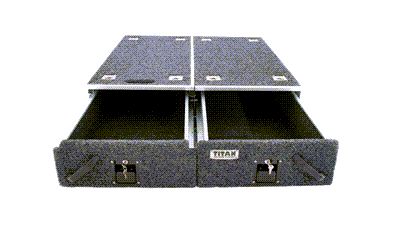
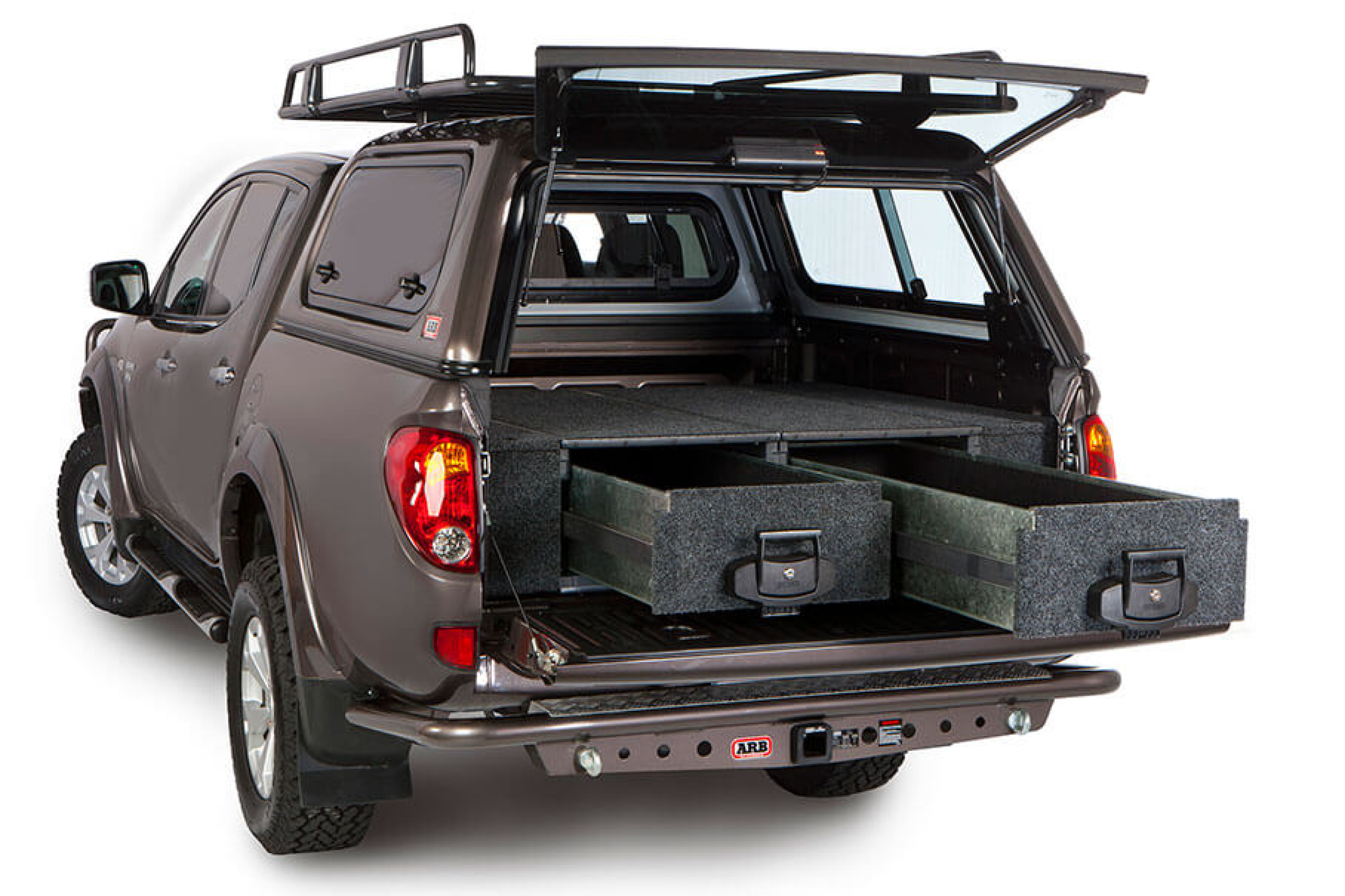
For those who want choice, the ARB modular system offers that in spades. With more than 200 potential configurations, you can set up a storage system that best suits your needs. With options such as a stainless-steel slide-out table and various fridges slides, these drawers can be made to be amazingly functional.
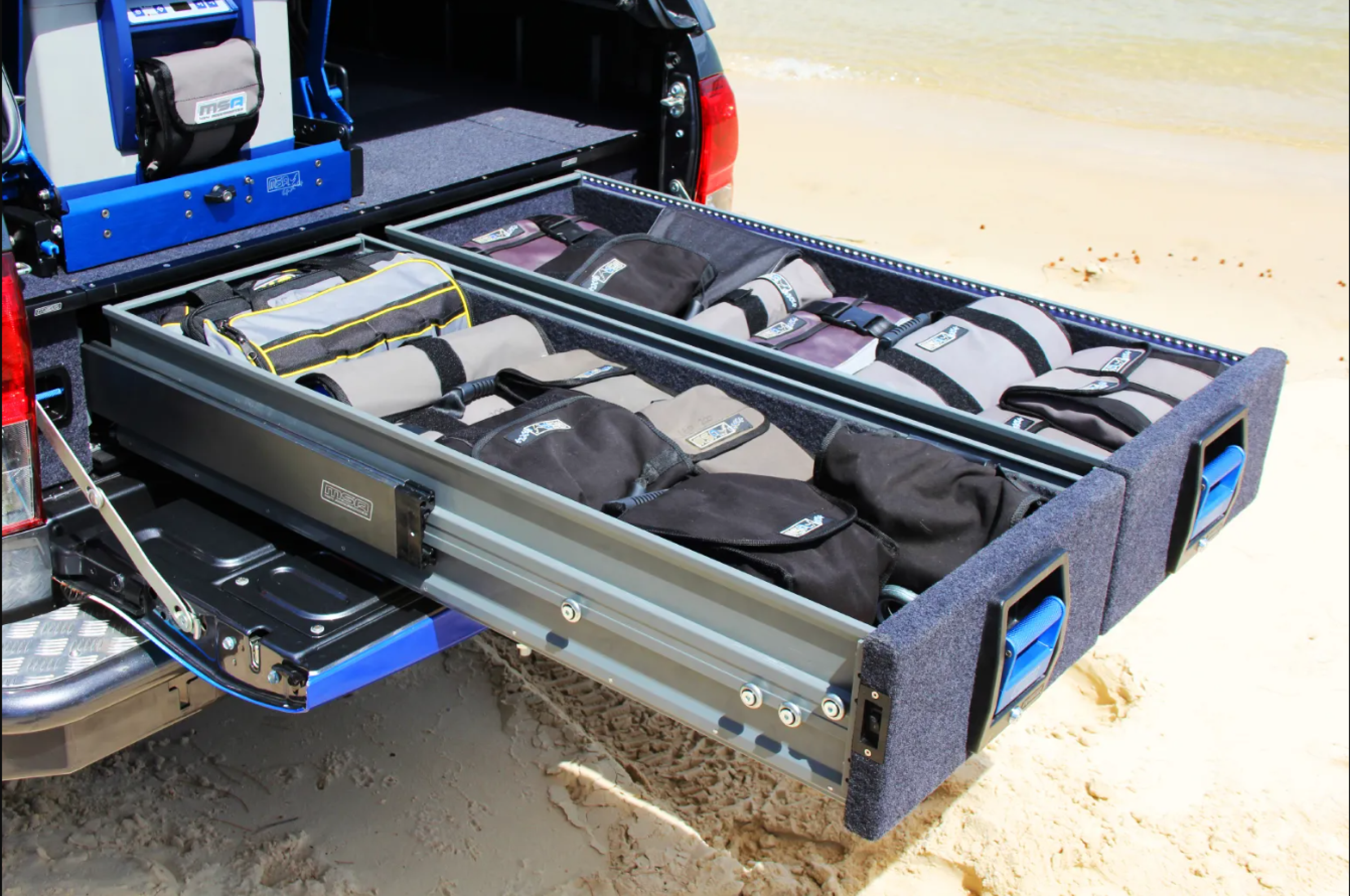
Another premium option, these MSA drawers include a patented “Stay-Open Block”, which allows the drawer to remain in an open position even on a 30-degree slope. They also feature an LED light strip that activates at full extension and has a manual override switch. Weighing in at 114kg, they are on the heavy side, but that comes with build quality.
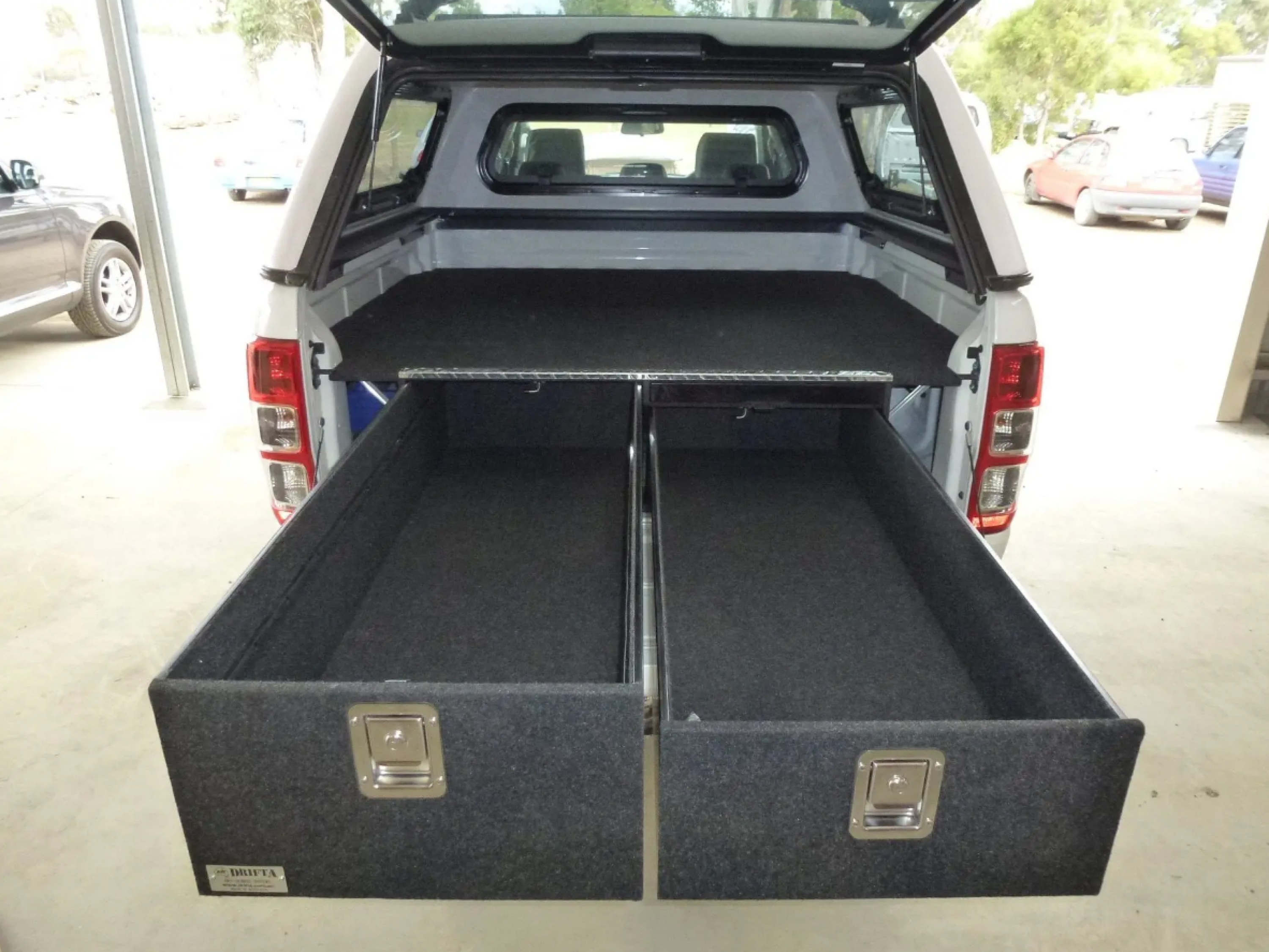
Custom-made to suit any vehicle and almost any storage requirements, the Drifta drawers are ideal for those with unique storage needs. With options for wing storage, water tanks and kitchen tables, these drawers can provide features that off-the-shelf options can’t match. The Teflon slides mean the weight of the drawer is on the base, rather than on the runners bolted on the sides.
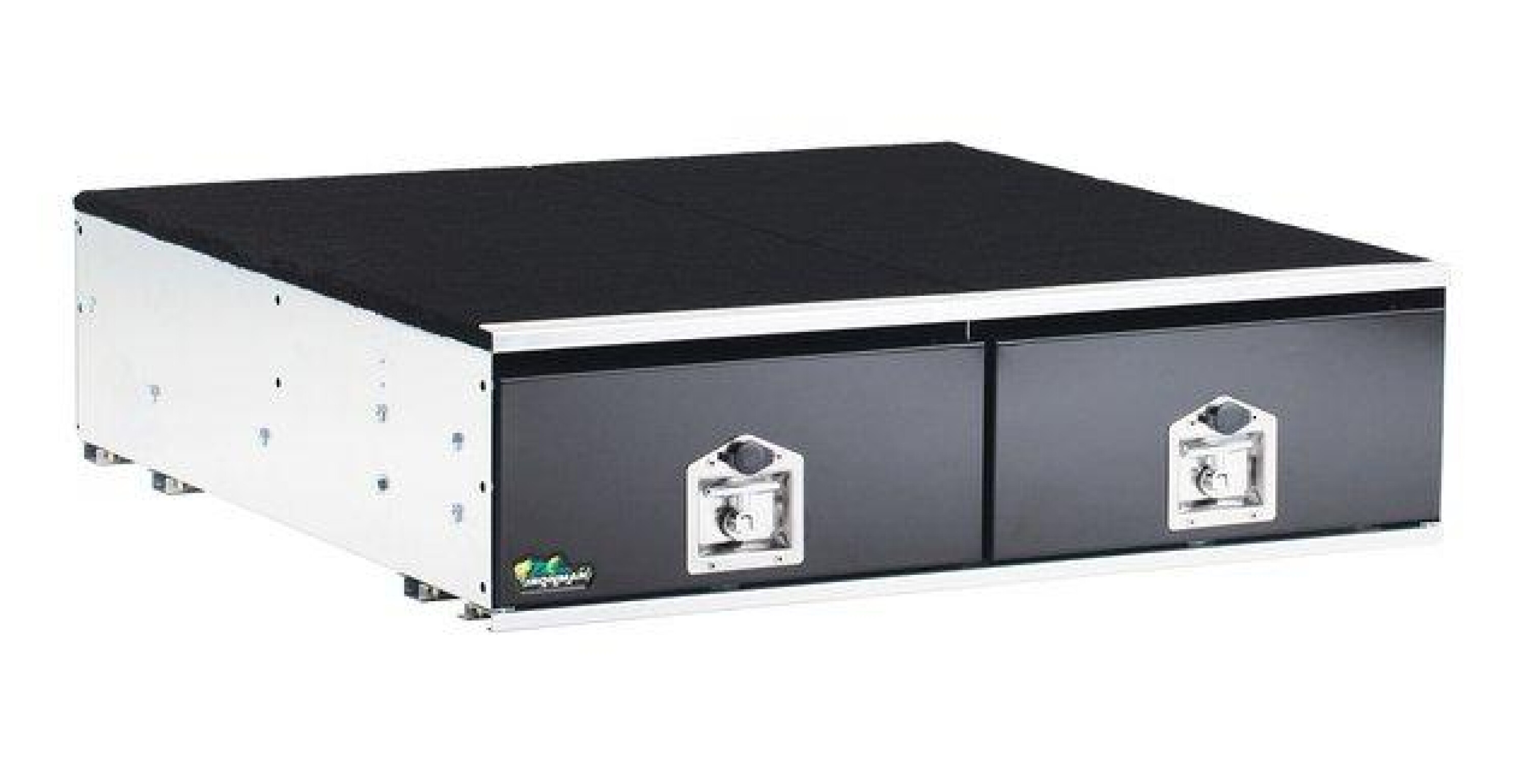
Simple and budget-friendly, these drawers from Ironman 4×4 provide a basic and cost-effective storage solution for the rear of your HiLux. An off-the-shelf generic design that will fit most dual-cab utes, these drawers are no-fuss, no-bells and just work.
4X4 Australia has been reviewing four-wheel drive vehicles and aftermarket products for more than 40 years.
When looking for the best accessories for your make and model of 4WD, there are some things essential to making sure you have the best off-roading experience.
When we compare products, here are some of the things we consider:
We also consider user reviews and our own experience with these products to make sure our recommendations are for the best on the market.
Disclosure: When you buy through our links, we may earn a commission. We also include products that we do not earn a commission from.
Ahead of the 2023 Japan Mobility Show (previously the Tokyo Motor Show), Mitsubishi has released a teaser image of a concept that will be on display.
Described as an “electrified crossover MPV”, it’s likely what we’re seeing here is the next-generation ‘D:6’ Delica that may very well make its way to Australia.
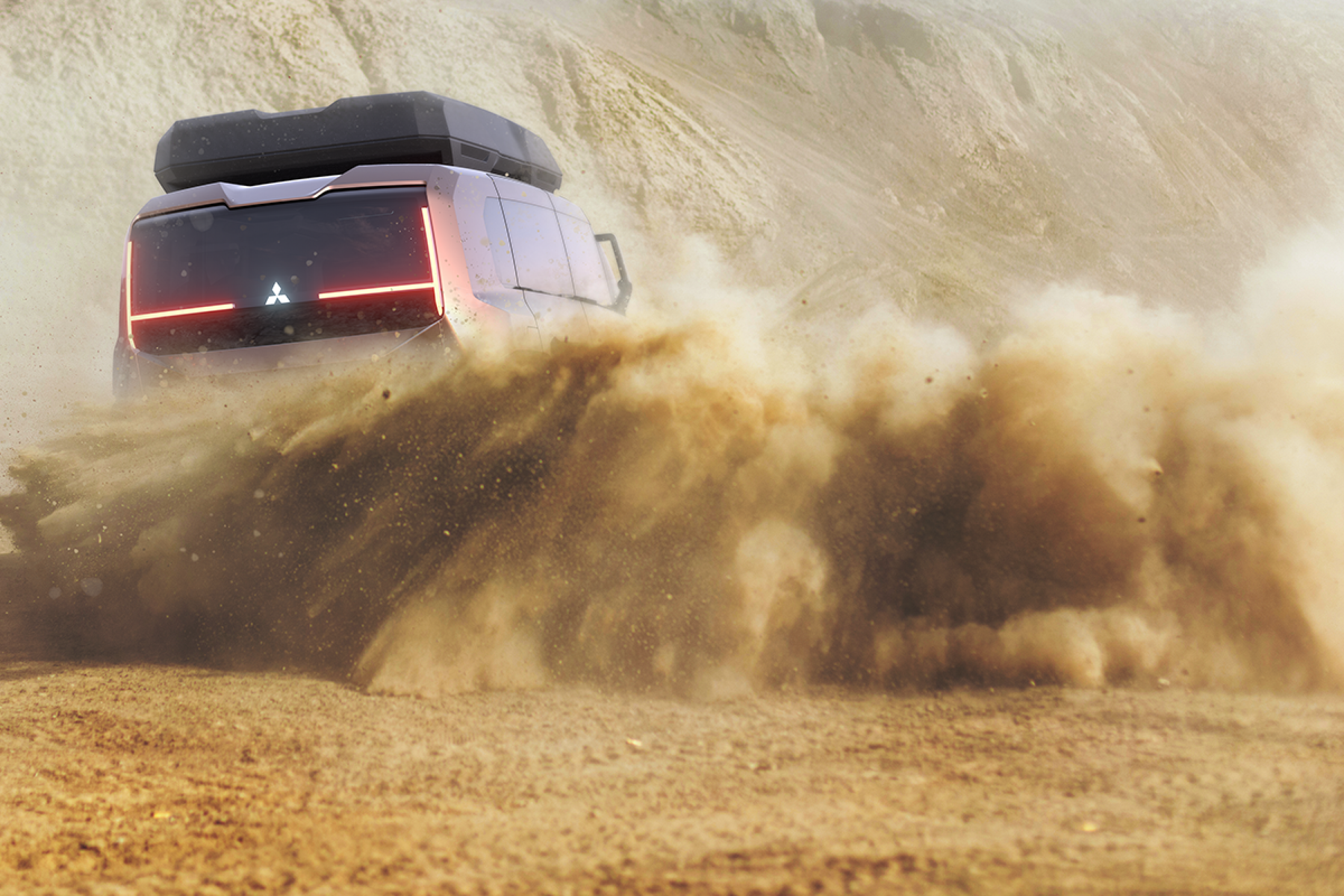
The CGI image shows a tall one-box vehicle sliding through sand with narrow LED taillights and a roof box. Mitsubishi says the vehicle is based on “the concept of Borderless Adventure” with a spacious and open cabin design.
Like the current Delica D:5 (that launched in 2007), the concept car is four-wheel drive with generous ground clearance and provisions for chunky all-terrain tyres.
Mitsubishi describes the ‘Delica’s’ all-wheel drive system as an electric one. Presumably, this would be borrowed from the capable plug-in hybrid Outlander medium SUV. There are also various drivetrain modes mentioned, something already found on Outlander plug-in hybrids.
We know the concept that Mitsubishi will show isn’t a pure EV, as the brand promises there are “no limits to the destinations it can reach”.
Mitsubishi’s also spruiking a comfortable and insulated driving experience on all surfaces, suggesting it won’t ride on a ladder-frame chassis. It’s possible a new Delica would adopt the same CMF-C/D platform found under the Outlander SUV, and use that car’s powertrains.
The Mitsubishi off-road concept will be on display at the Japan Mobility Show from October 25.
Mitsubishi Australia has a current D:5 Delica in Adelaide as an exercise to “explore as a concept, whether it would be of interest in the context of the Australian market”, according to Mitsubishi Oz boss of marketing and product strategy Oliver Mann.
The brand has no intentions of bringing the current vehicle to Australia owing to safety rating concerns. The next-gen though? With the Australian public’s renewed interest in local tourism, it could be a hit…
The Mitsubishi Australia team will be keeping a close eye on Delica developments, with 2025 being the year things may begin to happen.
Soon after, it was confirmed to be the same Hilux Revo BEV concept created by Toyota Thailand to mark 60 years of the big T.
Now though, the intriguing zero-emissions ute is doing the rounds in Australia for ‘internal review’ purposes, says its steward Toyota Australia.
However, the local team has pored over the vehicle and now it’s been handed over for a little external review, with a precious few laps of the private test track at the Melbourne headquarters in the hands of the media. That’s us.
Not the Revo BEV though.
On first inspection its pearl white paint is well finished, the LED headlights with cool blue inserts are still in one piece, and the ventless grille appears to be a production part.
It’s the same story with the ‘oily’ bits too. Photography of the rear axle and underside of the chassis was not allowed, but we can say that what we saw during a dive under the BEV was a single drive motor integrated into the De Dion rear axle, rear leaf springs and a battery pack carefully fashioned to fit within the legs of an apparently standard ladder chassis. It all looked exceptionally well-engineered and typically Toyota.
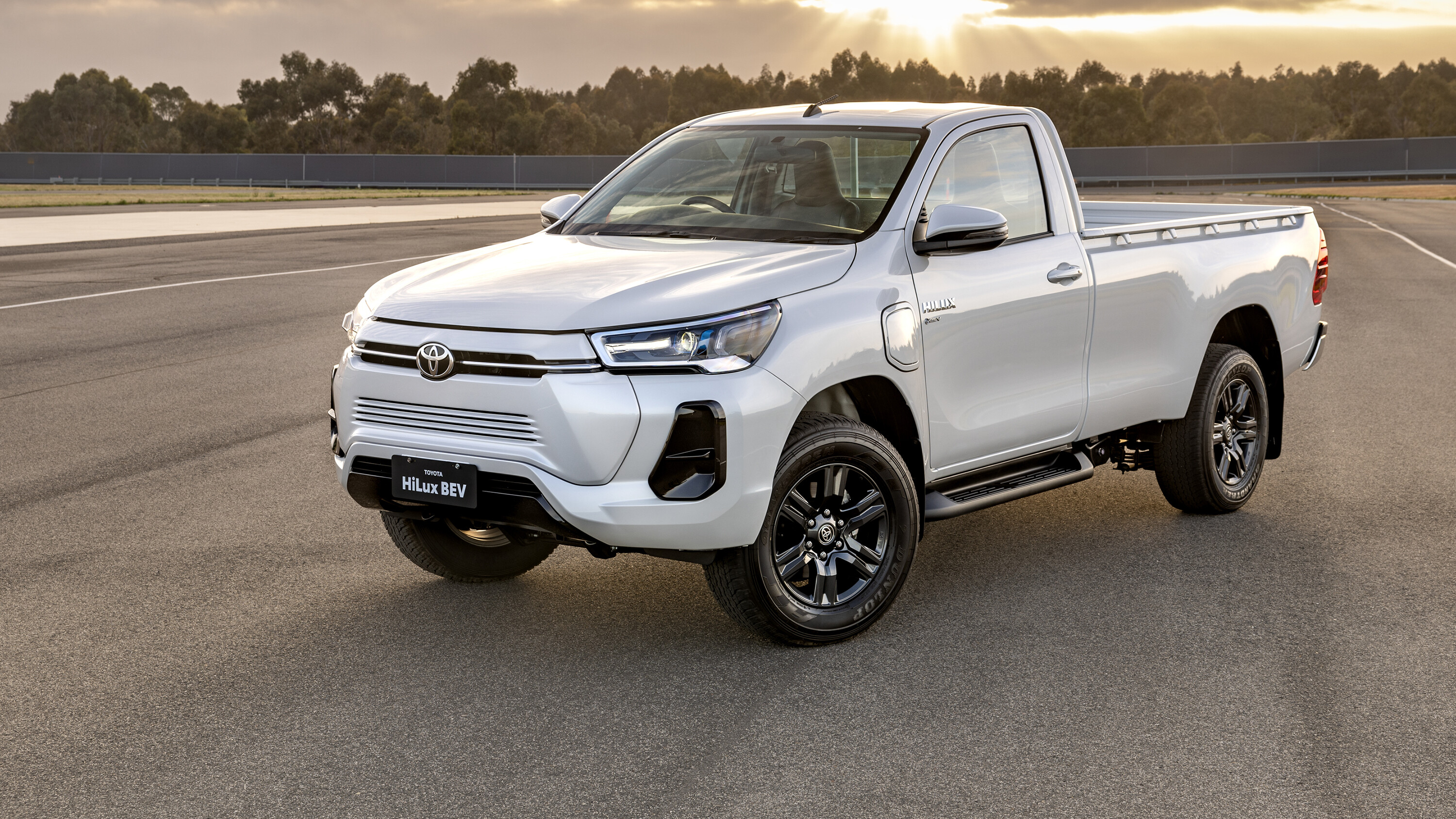
What was completely off-limits was what lies under the bonnet, presumably to protect a serious amount of IP and where we suspect the power management electronics and inverter are hiding.
It’s not known if Toyota collaborated with any other brands on the development of the Revo BEV, but a glimpse under the hood might reveal if any of Subaru’s hardware is involved, which would continue the collaboration forged with the Toyota BZ4X and Subaru Solterra project.
The Hilux’s gear selector serves as a clue – it’s the same rotary controller used in the pair of fraternal-twin electric SUV models.
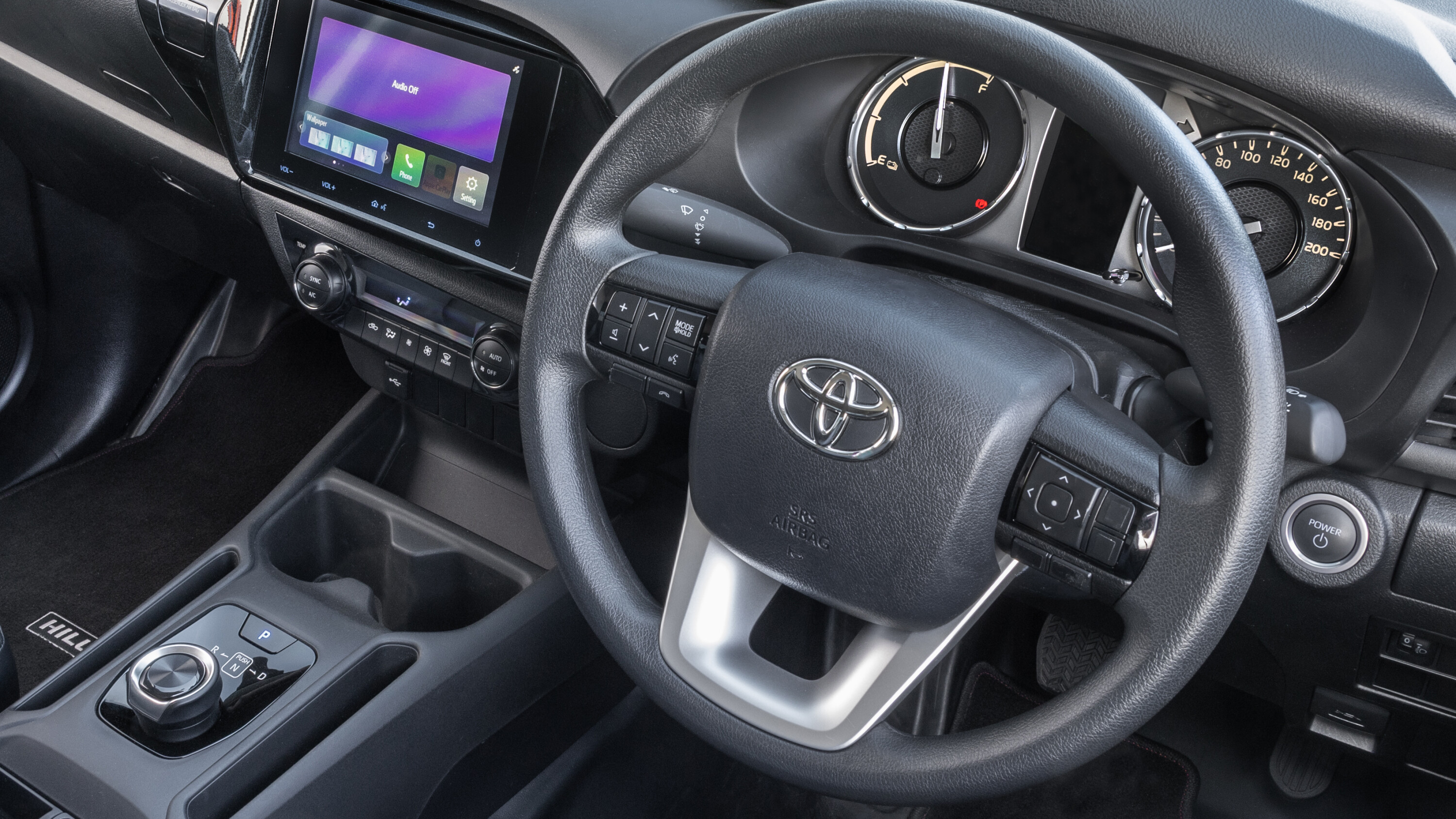
In one way, the Revo feels exactly like a HiLux with utilitarian interior, commercial driving position, durable (if a little dull) interior materials, and generally familiar feel.
However, press the accelerator and this particular version sneaks away from stationary in eerie silence. Acceleration is not incendiary but the typical linear thrust of electric drive makes it feel faster than it probably claims zero-to-100km/h dashing – another figure not yet publicised.

It feels exactly like a regular HiLux, but press the accelerator and this particular version sneaks away from stationary in eerie silence
There’s a little electric whine in report of full acceleration and the throttle calibration has been fine tuned – again, this does not feel like some show pony hastily bolted together for the sake of a marketing or photo opportunity.
What leaves even more of an impression is the handling. No Hilux turns-in with as much eagerness as this engineering study and the weight distribution appears to be midship if not a little rearward.
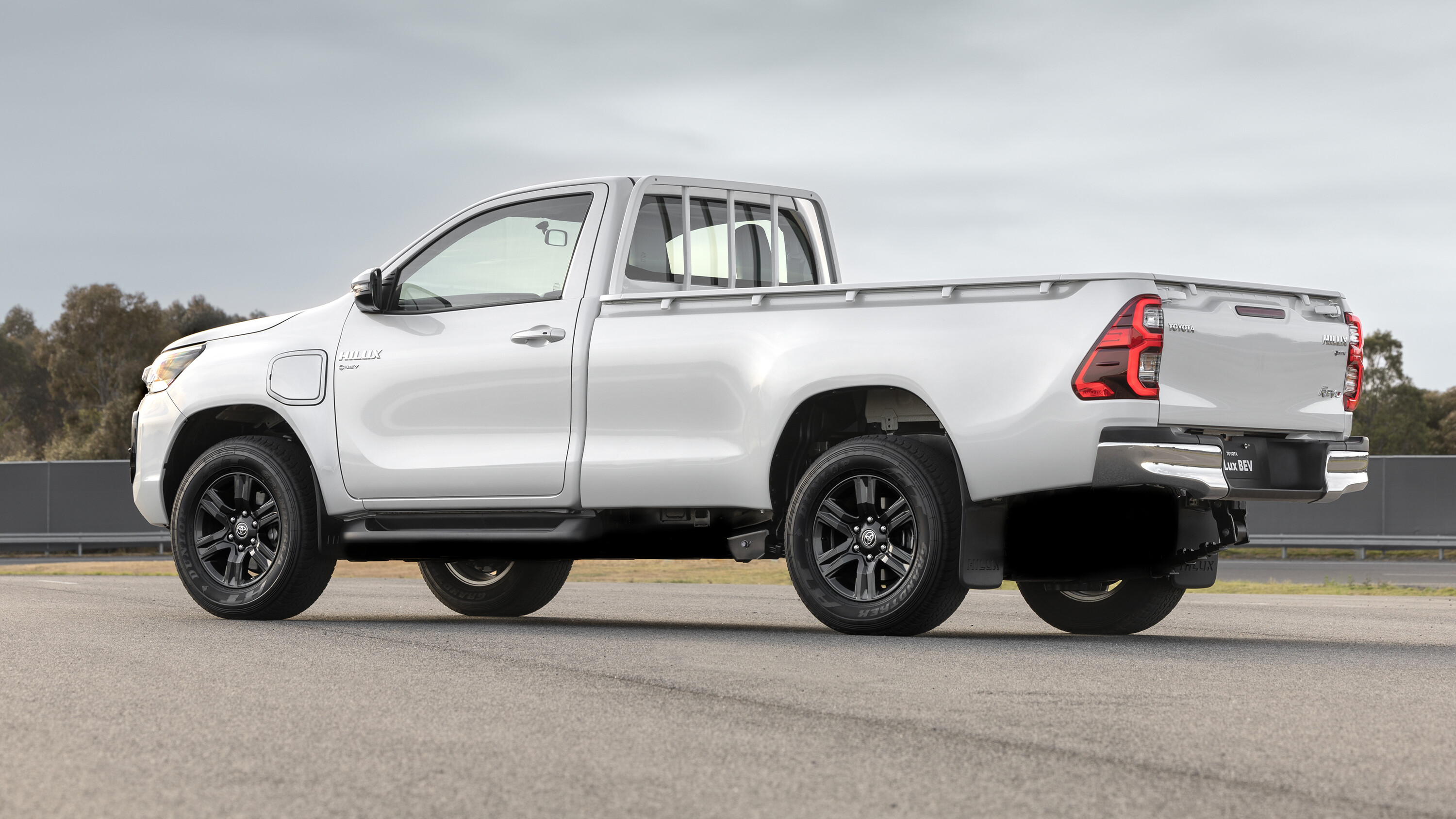
Only a handful of test-track surface imperfections hint at a very similar ride quality to regular HiLux variants and, the steering is also decidedly familiar.
The Revo BEV feels exactly like a HiLux but simultaneously, nothing like a HiLux.
Other intriguing interior clues include a steering column cowl which, unlike virtually every other part, appears to be very much prototyped and 3D printed with a charge or proximity RFID symbol embossed on the top side. Hmmm…
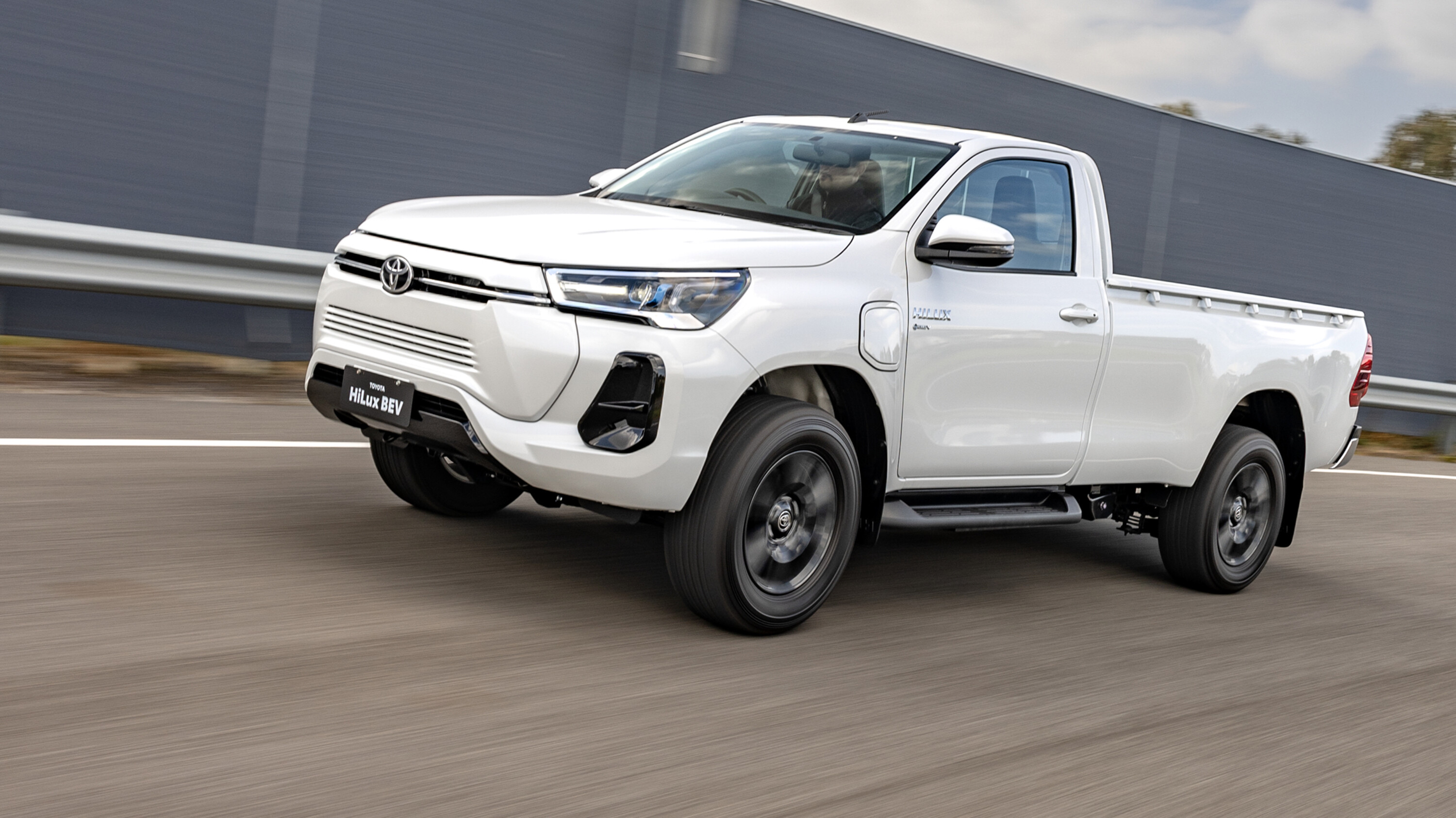
And then there’s the central digital information display nestled between analogue dials – nothing new to a HiLux you’d say – except for one of its screens, which indicates the proportion of available electrical power that’s being used as the accelerator is pressed.
There’s also a ‘charge’ portion which indicates the amount of regenerative braking that’s being performed on overrun too. This wouldn’t be quite so revealing if the concept wasn’t capable of re-gen braking, rendering the lower portion of the digital dial superfluous … for now.
To our minds this is a clear sign a version of the HiLux Revo BEV will follow that does offer the completed drivetrain, including regenerative braking and perhaps a longer range as a result.
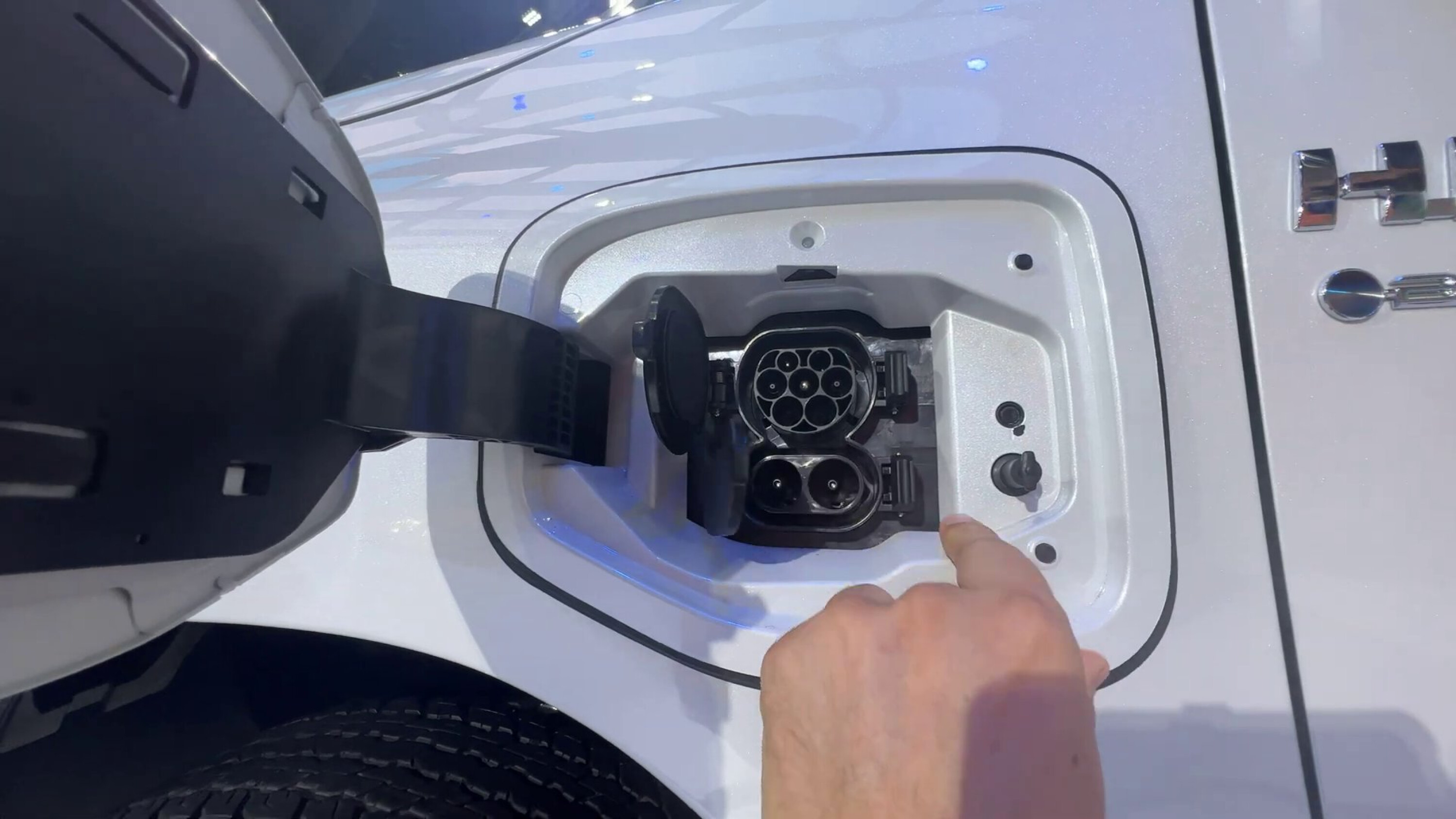
Well, one already has been all but confirmed. In the concept’s native Thailand, a small fleet of ‘production’ Revo BEV versions will roll out in a taxi trial.
We’re not talking limo transport here, but rather the almost inconceivable public transport option offered in Thailand where the tray of a ute is converted into a pair of longitudinal bench seats to accommodate up to 12, plus another couple of passengers riding freestyle on the rear step.
Toyota is yet to speak of a production electric HiLux for Australia, but don’t for a second expect something like this.
Perhaps not. Firstly, it’s a single-cab to maximise the tray space whereas the dual-cab reigns supreme Down Under.
Secondly, it’s rear-wheel-drive and Aussies are obsessed with all-wheelers when it comes to the work horse.
And, finally, its relatively modest circa-200km range would be slashed if a trailer was hooked up – another of the nation’s favourite automotive habits.
Earlier this year, Toyota signed an MoU with mining giant BHP for “lowering vehicle operation emissions” and specifically “safety in light vehicle design”. You’d be hard pressed to find a better vehicle to achieve that than a production model based on the concept seen here.
And if Toyota is gearing up to introduce its first battery powered HiLux to Thailand, Australia and the rest of the world in single-cab, rear-drive variety, you can expect more versions to follow…
Voting is now open for the 2023 Maxxis Custom 4×4 of the Year, and in this issue we’ve dedicated more than 20 pages to discuss all 12 contenders vying for the title.
Just by voting for the 2023 Custom 4×4 of the Year, you’ll go into the draw to win our epic voter prize – a MAXXIS voucher valued at $1000, an MSA 4×4 Accessories voucher valued at $500, and a MAXTRAX voucher valued at $500. Get voting!
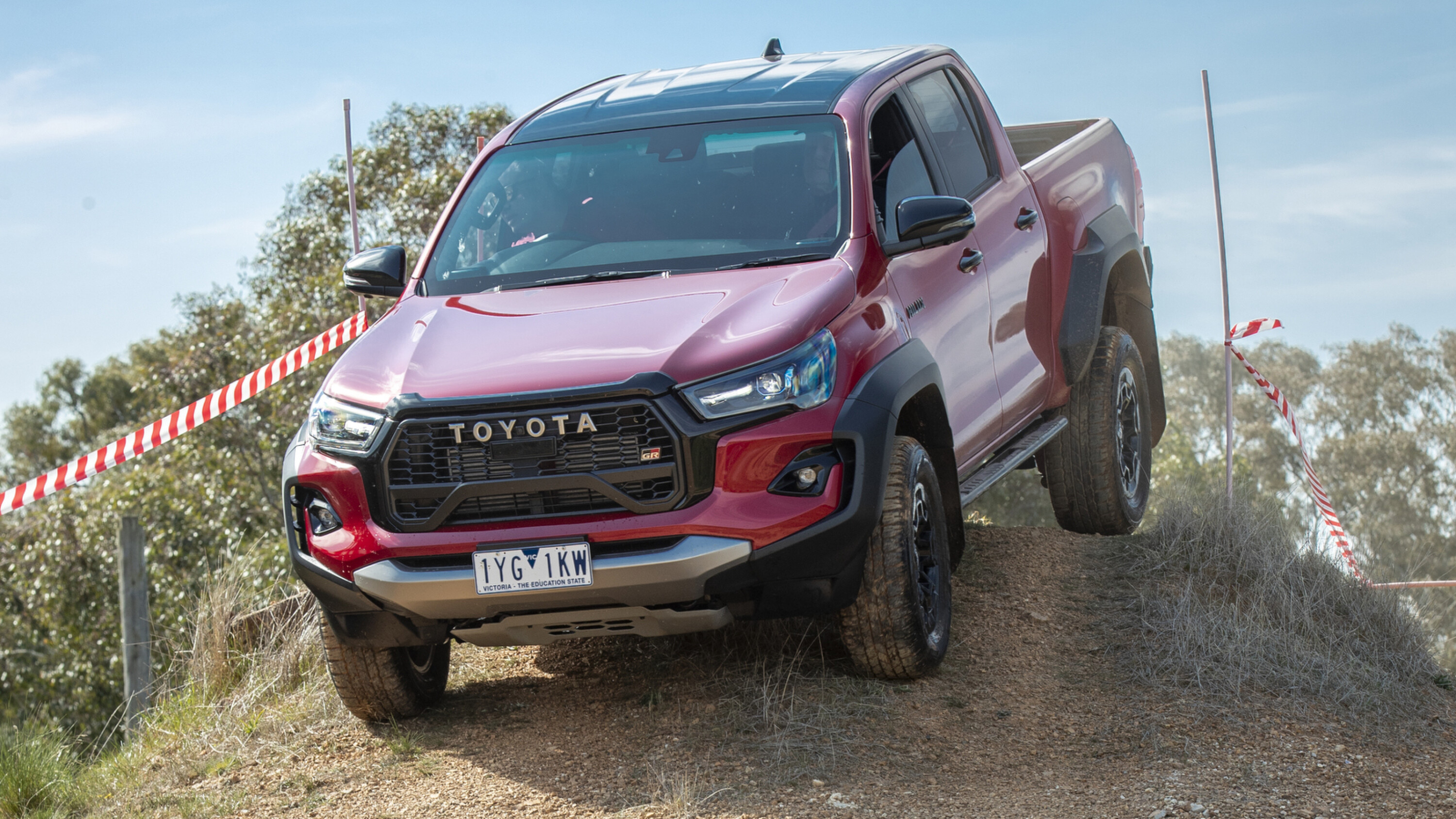
On the new car front, Toyota has released its new halo HiLux model, the GR Sport. Benefitting from retuned coil-sprung suspension with KYB dampers, as well as an engine tickle to eke out an extra 15kW and 50Nm from the 2.8-litre engine, is the GR Sport the best HiLux in the line-up? We drive it to find out.
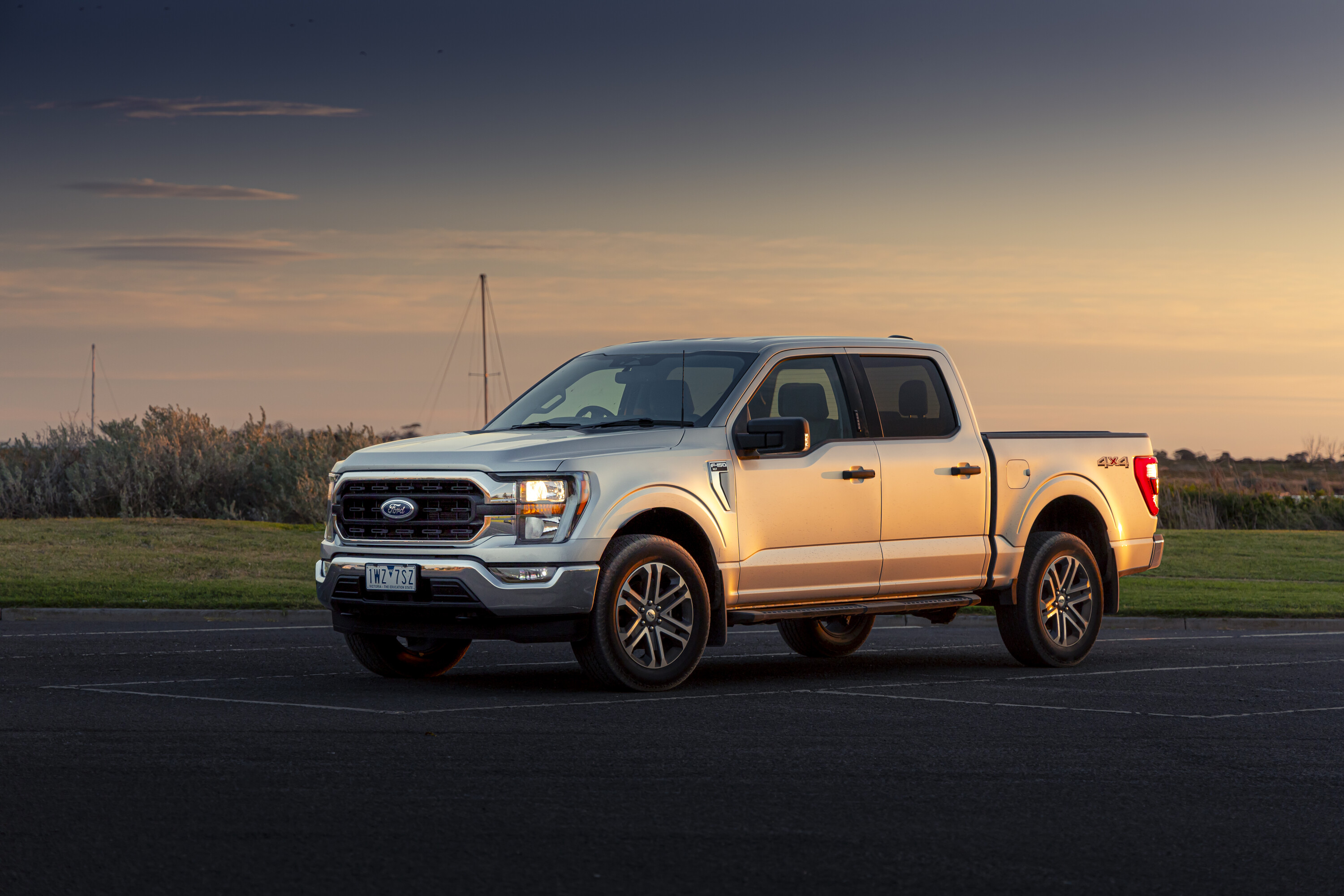
Another extremely popular vehicle – especially in the USA – is Ford’s F-truck, and Ford Australia has now landed the F-150 on local soil, following its LHD-to-RHD conversion at RMA’s purpose-built Melbourne facility. Matt Raudonikis spent some time in the XLT SWB variant at the vehicle’s Australian launch, to find out whether it has the chops to steal the mantle from RAM’s 1500 as Australia’s best-selling full-size pick-up.
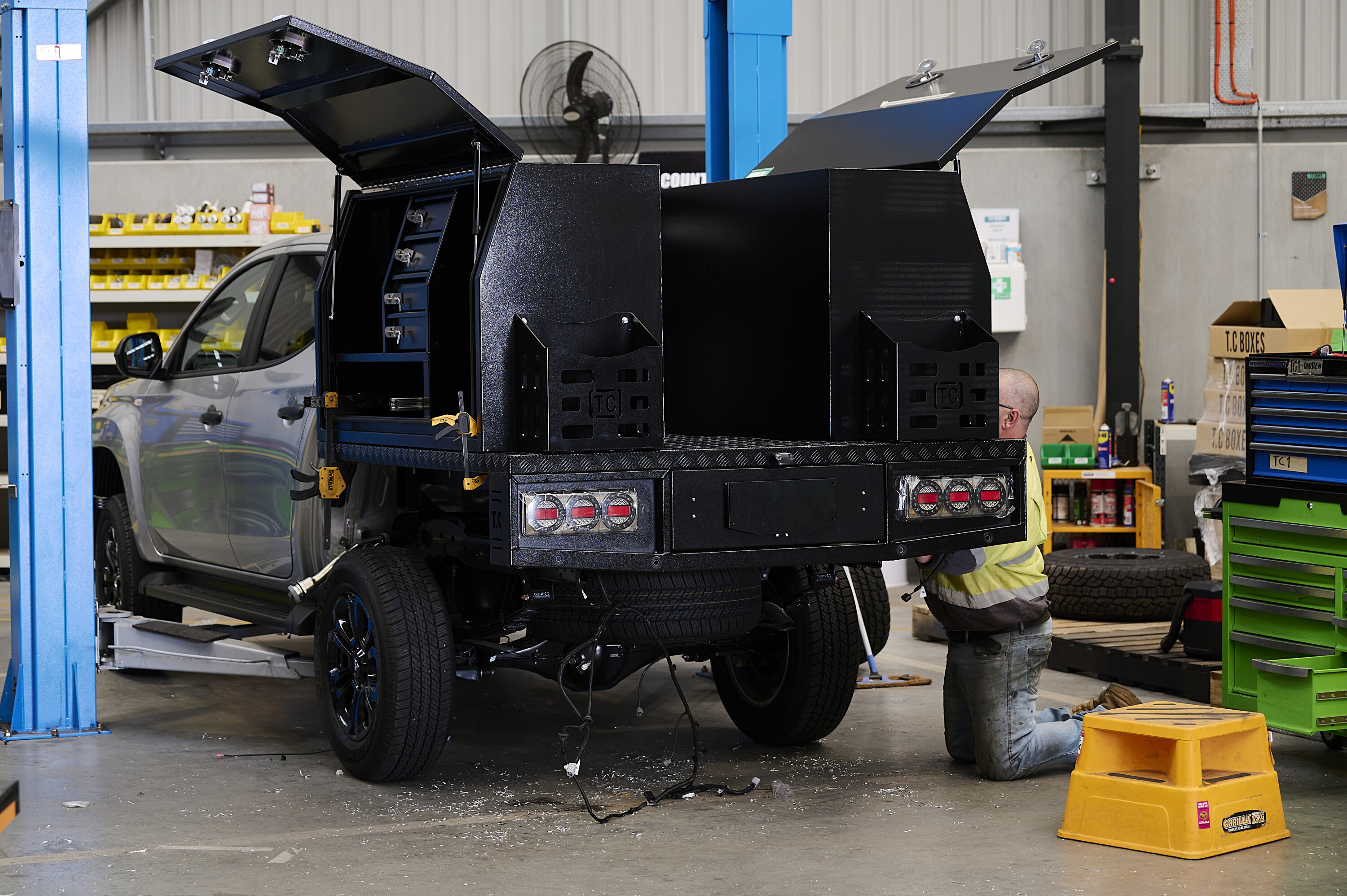
There have been big changes with our ‘Triton Tradie’ project, with the build receiving the complete TC Boxes treatment. Renowned for its specialised trays and toolboxes, the new TC Boxes set-up has completely transformed our vehicle. Watch the video here.
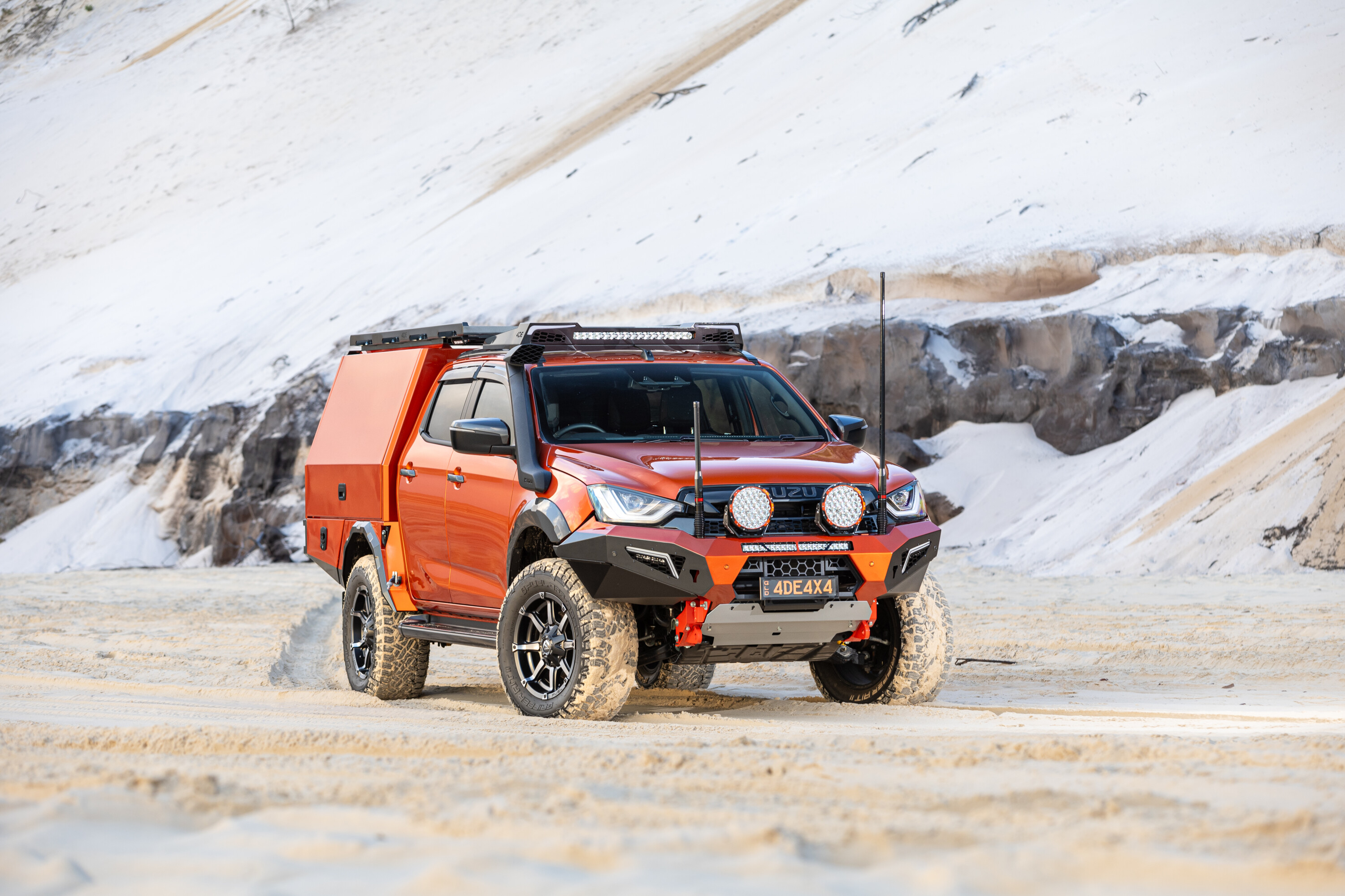
Speaking of state-of-the-art equipment, we also take a deep dive into the nitty gritty of an epic D-MAX custom. The Crew Cab on steroids is the showcase vehicle for 4D Engineering, a business which builds trick custom canopies like the one you see here.
With years of four-wheeling experience on all sorts of terrain, Chris Collard has experienced more than a couple of flat tyres over the years. In this issue he explains how to fix a flat when in the field, covering everything from a simple puncture to major rubber repair.
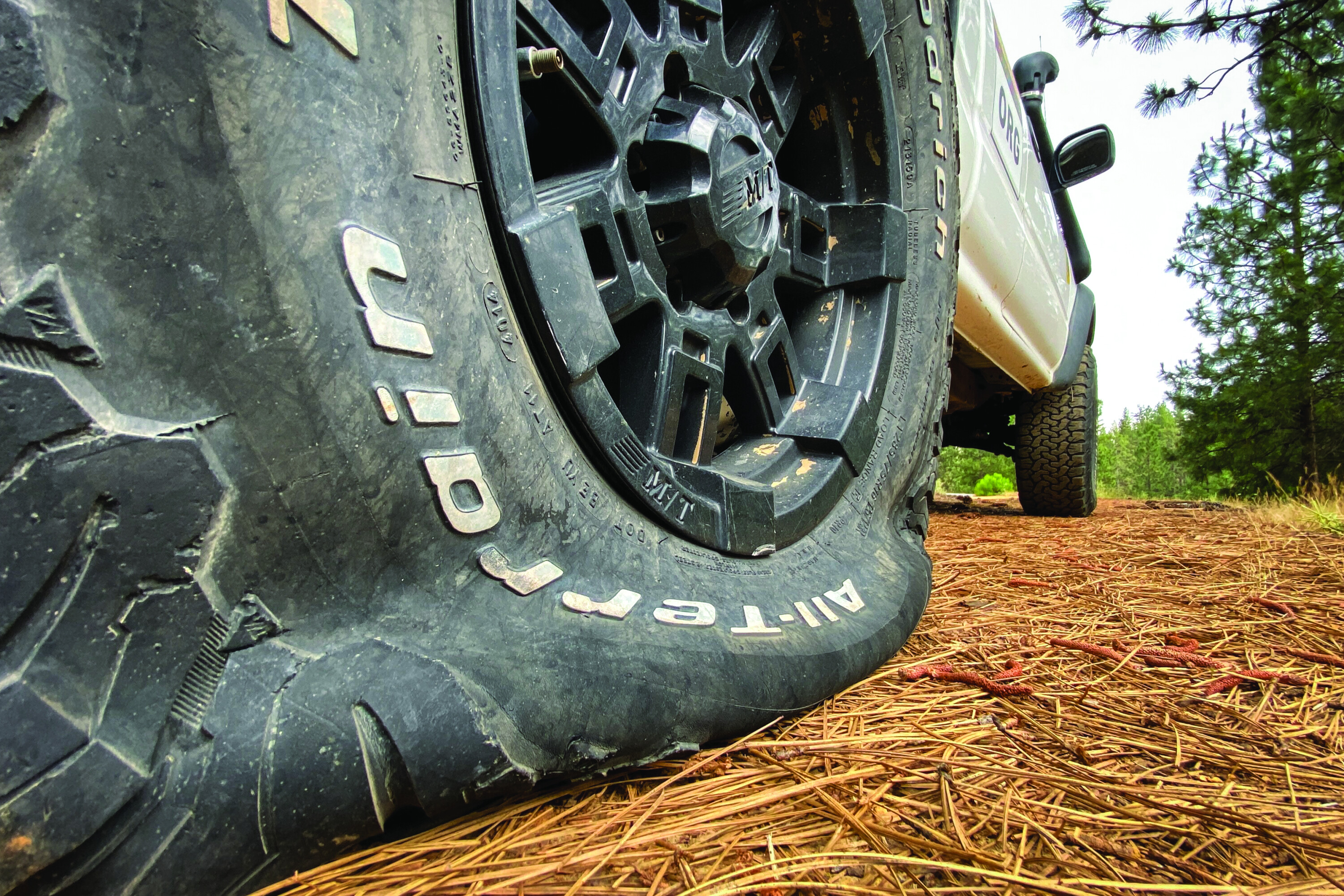
We also point our tyres toward some essential off-road destinations this month, touring the beautiful Blackbraes National Park in Queensland and Victoria’s unforgettable High Country.