
Our 4X4 of the Year awards make a long-overdue return to 4X4 Australia! And in 2025, we’ve split the award into two segments: Best 4×4 Wagon and Best 4×4 Ute.
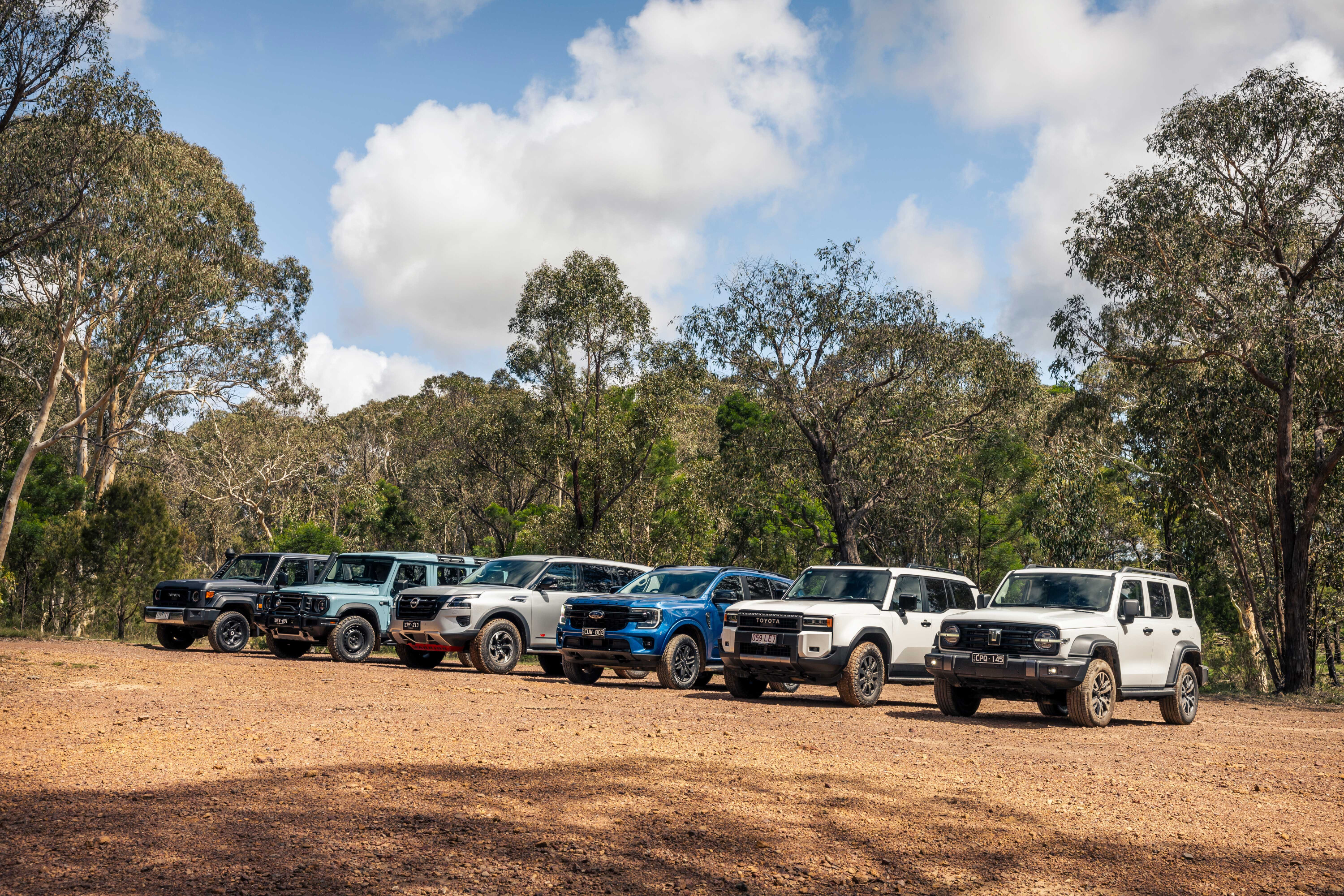
First off the rank, we’ve lined up the top wagons – Ford Everest Sport, GWM Tank 300, INEOS Grenadier Trialmaster, Nissan Patrol Warrior, Toyota Prado Altitude and a 76 LandCruiser – to tussle it out for the title. The vehicles are scored against our trusted criteria – value for money; breaking new ground; built tough; bushability; and doing the job – and the final tally is nail-bitingly close.
Keep an out later in 2025 for our Best 4×4 Ute awards!
We road- (and dirt-) tested the new-for-2025 Isuzu MU-X, with a new upmarket X-Terrain model added atop the model line-up in Australia. The MU-X remains powered by either the proven 3.0-litre and relatively new 1.9, but what is new is the addition of new interior and exterior features, new tech, and added safety.
Also tested in this issue is the new GWM Cannon, which has received a midlife makeover including a more powerful powertrain, improved tech and safety and a revamped interior. All-in-all, these changes culminate to represent a huge step up in terms of performance, comfort and style.
Speaking of new metal, we put Ford’s recently launched Everest Tremor through the off-road ringer. It may be built for off-road escapes thanks to its extra clearance and flex, but Matt reckons better value can be found at the lower tiers of the Everest line-up.
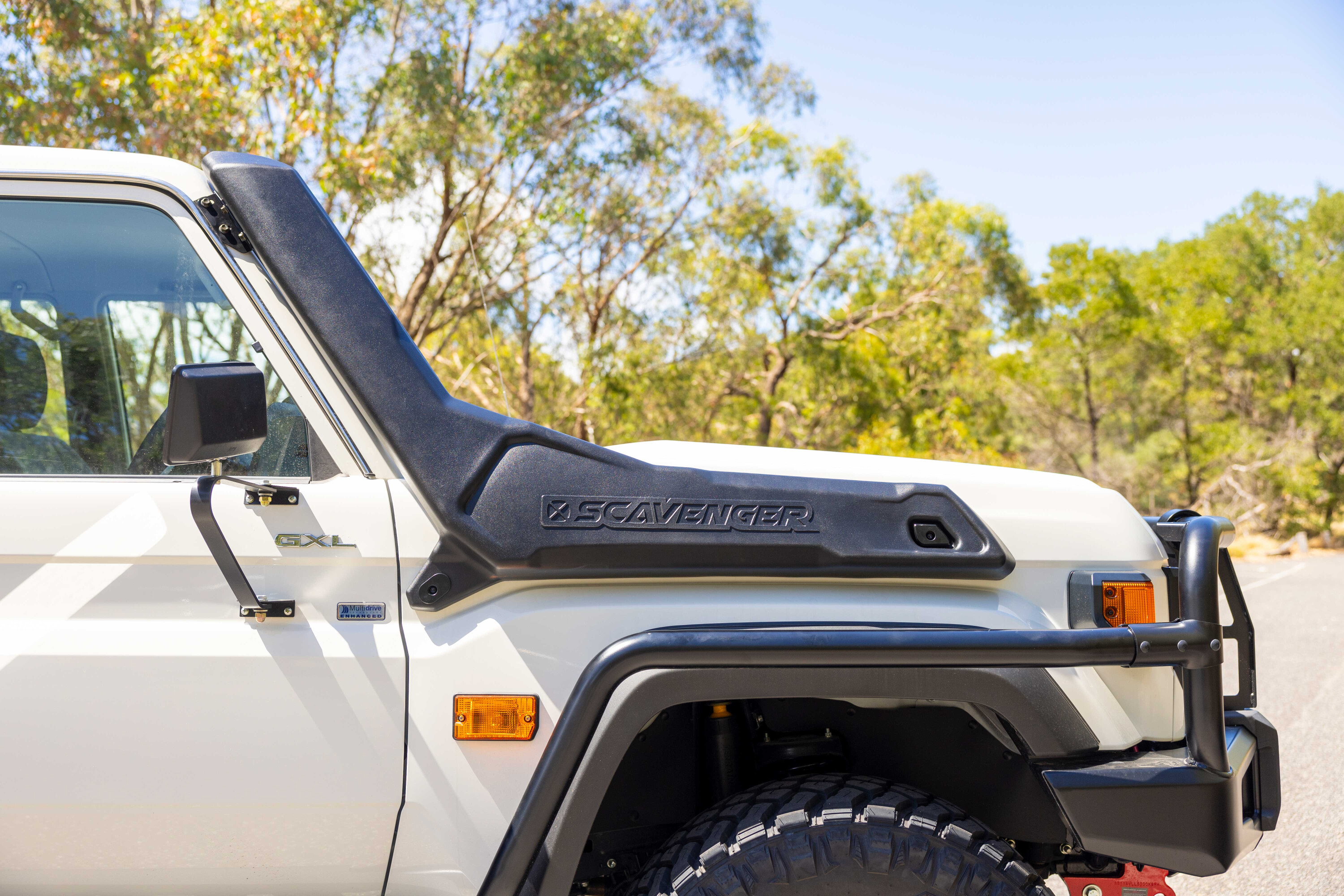
Work on our 79 Series build continues to intensify, with no signs yet of it slowing down! This month we installed an all-new, Aussie-made Scavanger Snorkel, which not only looks great on the Cruiser, but is said to be extremely quiet and is loaded with high-quality materials to provide ultimate protection for the Cruiser’s engine.
Plus, we pointed our tyres towards some quintessential Australian locales this month, including the Frenchmans Track in Far North Queensland, and the New England region of NSW.
What else is there?
- Triton GLS and BT-50 GLS in the shed
- Bush Company awning tested
- Gripsport bike rack reviewed
- A closer look at DownUnderLust’s canvas products
- New products, news and more!
The April 2025 issue of 4X4 Australia magazine is out now!
Owning a LandCruiser 79 reinforces that you don’t buy one of these for their features and standard equipment, but for their durability and go-anywhere dependability.
The coolest 4×4 in our shed at the moment is our VDJ79 LandCruiser. Cool because it’s ours and we’re fitting great products to it to turn it into a great off-road tourer.
We can’t comment as to how this particular vehicle drove in standard form as we had the suspension, GVM and rear track correction/diff replacement all done pre-registration under the Second Stage Manufacturer (SSM) scheme. We had all this work done before the Cruiser was first registered so that it’s covered by SSM approvals and certified nationwide. By the time we got to drive it, it was already on the way to becoming a better-than-standard vehicle.
There’s no denying that the 70 Series LandCruiser is a basic workhorse. Even in this GXL trim, the interior is spartan and it’s hard to believe that a vehicle costing the best part of $100k on the road still doesn’t have any sort of phone mirroring or satellite navigation. Even basic HiLux models get better infotainment for a lot less money.
The interior is certainly liveable as the seats are good, visibility is great and the driving position suits me, but the infotainment and lack of storage or useable drink bottle holders is unbelievable at this price point. At least these are things that are easy to fix and there’s a swag of aftermarket gear available to remedy the problems.
We’ve had the Cruiser for six months now and it’s just clicked over 600km and will be ready for its first service soon. Usage has been getting the vehicle between workshops and out for a couple of photo shoots to show what’s been happening with it and these little adventures have reinforced our belief that the 79 is the best platform on which to build an off-road touring vehicle. It might be basic but there’s nothing else built as tough and dependable as the 70 Series.
Our drive in a 2.8-litre manual gearbox LC76 gave us a feeling of how the two engines available in the 70 compare. Yes, the 79 is bigger and heavier than the 76, and our 79 has performance-draining bigger tyres on it, but drive the two Toyotas one day after the other and it becomes obvious that the four-cylinder engine will outgun the old V8 to 100km/h.
While the oversize tyres might rob the LC79 of some acceleration, the light truck construction Maxxis muddies provide the confidence to drive over rocks and logs without worrying too much about tyre damage. Quality off-road tyres need to be the first part of every tourer build and we’ve always been more than happy with the Maxxis RAZRs.
Combined with the Terrain Tamer suspension upgrades the set-up we have now gives the confidence to tackle any terrain but the 79 has its limitations there too; thankfully the GXL comes with factory diff locks because it needs them. The heavy duty chassis that makes the 70 so tough and dependable doesn’t flex much and the leaf springs don’t provide a heap of travel either.
The Cruiser does have electronic traction control but that is disabled when you go into low range so when the rear axle picks up a wheel over regular erosion mounds, it’s left spinning wheels until you engage one or both of the diff locks. Even with just the rear diff locked, the Cruiser feels unstoppable.
We’ve still got a lot of gear to fit to our LandCruiser from some great suppliers and when it’s all done, we’ll be able to get out for a proper test.
The crowd-pleasing Nissan Patrol has reached a sales milestone, notching up its 250,000th Australian delivery.
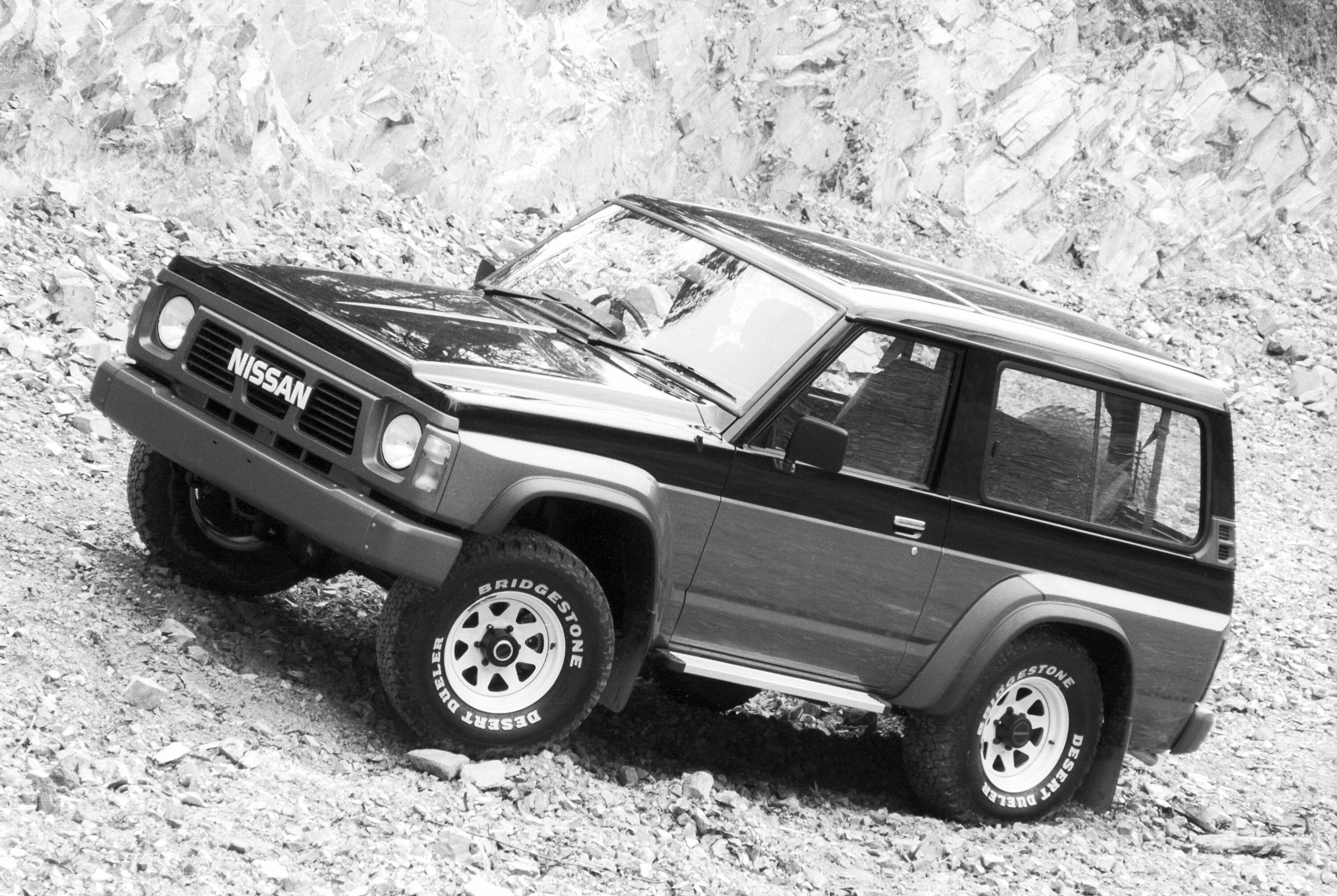
Since its local arrival in 1961 in 60 Series guise, powered by the 4.0-litre six-cylinder P engine, the Patrol has evolved through multiple generations – MQ, the highly customisable GQ, the Y61 and the current Y62 – to become a beloved off-road vehicle.
“Few models reach legend status, and even fewer are still cementing that legacy today, but that’s exactly what the Patrol has achieved across each of its generations in Australia,” said Andrew Humberstone, Vice President and Managing Director, Nissan Oceania.
That legendary status was established when the vehicle first arrived on local soil, with the G60 completing the first motorised crossing of the Simpson Desert throughout a two-week odyssey from Andado Station in the NT to Birdsville in Queensland, in 1962.
Since those early days, the Patrol nameplate has strengthened with each generation. In 2024, Nissan posted a total of 8293 sales of its Patrol, which was a 6.2 per cent increase on 2023 where the brand shifted a total of 7812 units.
“Last year, saw Nissan Australia record its best sales on record for the Y62 Patrol and record the best sales for the Patrol nameplate since 2004. That momentum continues, with the Patrol achieving number one in its segment for the last three months,” added Humberstone.
“What makes this milestone particularly meaningful is how Australia has shaped the Patrol. The best example of that is in Nissan showrooms now – the Patrol Warrior by Premcar. It’s a Patrol that is second-stage engineered for Australians, in Australia.
“While we like to think of the Patrol as legendary, so too are all of its owners, for it’s their stories, memories and adventures that have shaped the legend of Patrol in Australia, and continue to do so today.”
When tackling Australia’s toughest terrains, lighting isn’t just about visibility, it’s about confidence, safety and style.
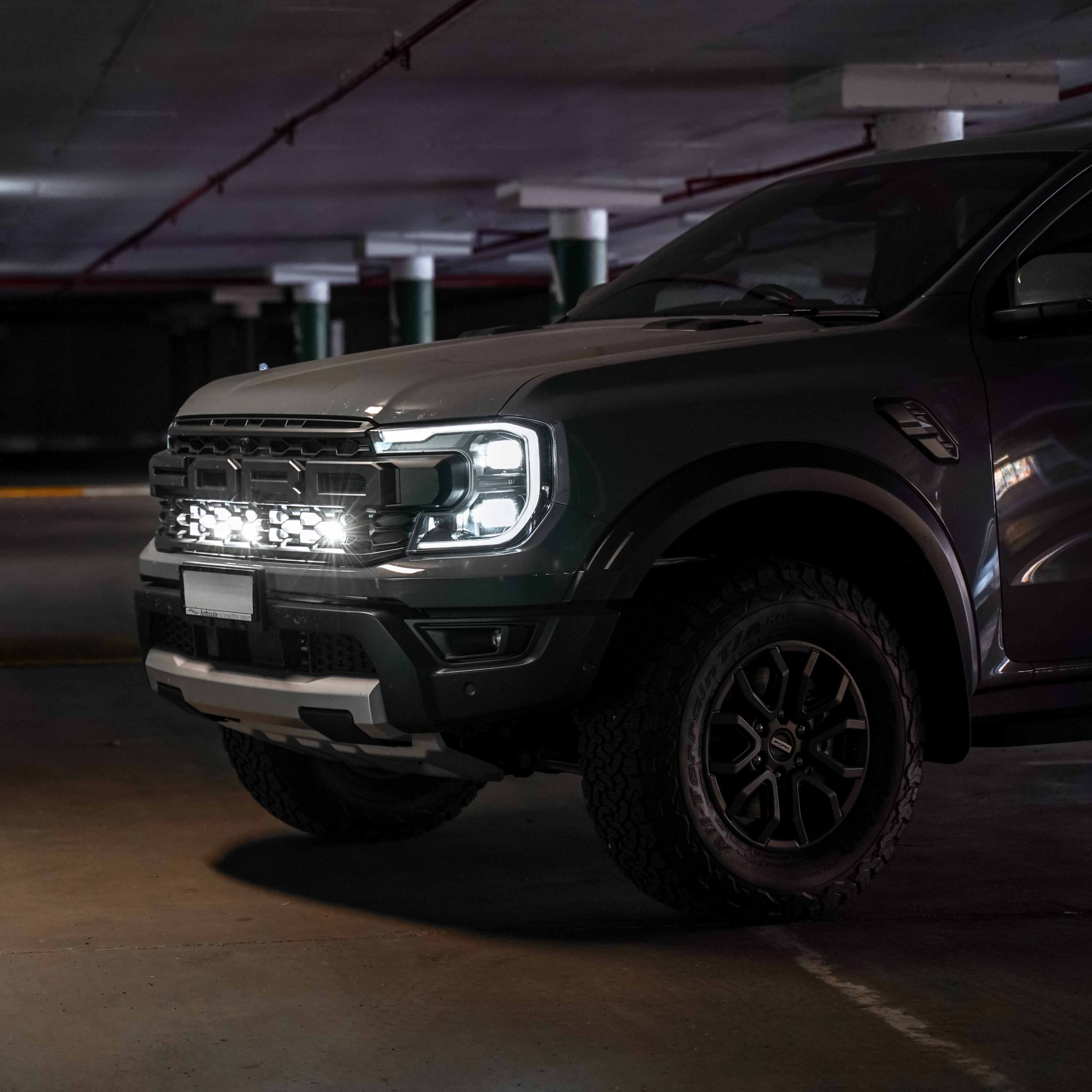
Ultra Vision, a proudly Australian company, has taken vehicle lighting to the next level with its Integration and Behind-Grille kits. These kits allow you to add enhanced lighting to your rig in a seamless and stealthy way, while keeping the factory look you love. These kits are perfect for all types of vehicles, giving you much improved visibility without having the bulk of a bull bar.
Designed for those who demand more
For every journey, high-performance lighting is essential to help you see and be seen.
Ultra Vision’s range of Integration and Behind-Grille kits offer impressive beam width and distance, so that you’ll never miss a thing on any drive. Plus, if you’re not a fan of traditional mounting solutions, these vehicle-specific kits allow for a seamless installation behind or within the grille, preserving your vehicle’s clean, original aesthetic while delivering industry-leading, powerful lighting.
Aussie-made for the toughest environments
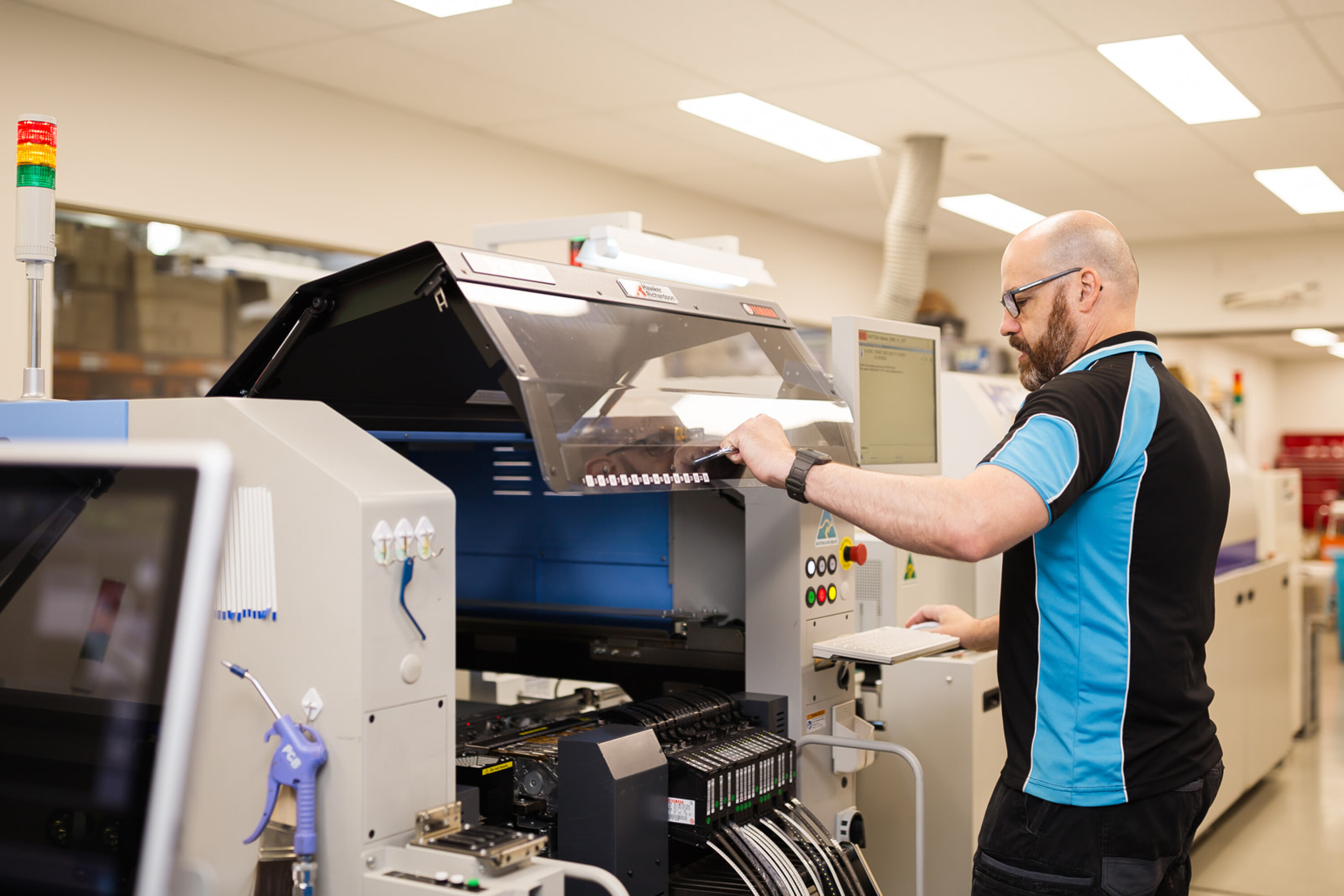
Ultra Vision is at the forefront of LED vehicle lighting, engineering and manufacturing its products right here in Australia.
That means it knows what it takes to build a light that can withstand the harshest conditions, from searing outback heat to relentless downpours – its lights are known for durability, performance and precision. When you choose Ultra Vision, you’re not only getting premium power, but you’re also supporting Australian innovation and quality.
The perfect fit for your vehicle
One of the many advantages of Ultra Vision’s Integration and Behind-Grille kits is the vehicle-specific mounting design.
Each kit is engineered for a hassle-free, plug-and-play installation that blends seamlessly with a vehicle’s looks and wiring. With kits already available to suit 25 models from 9 major vehicle manufacturers, there are many more on the way including for the Chevrolet Silverado 1500, Mitsubishi Triton MV, RAM 1500 DT, and Toyota RAV4, as the range continually expands to accommodate Australia’s most popular vehicles.
Each kit comes with everything you need including Ultra Vision Nitro Maxx or Raptor light bar/s, a wiring harness, mounting hardware, plug and play wiring adaptor and OE switch (dependent on vehicle model), and a fitting guide.
Here are a few of the best-selling kits that are already available 👇
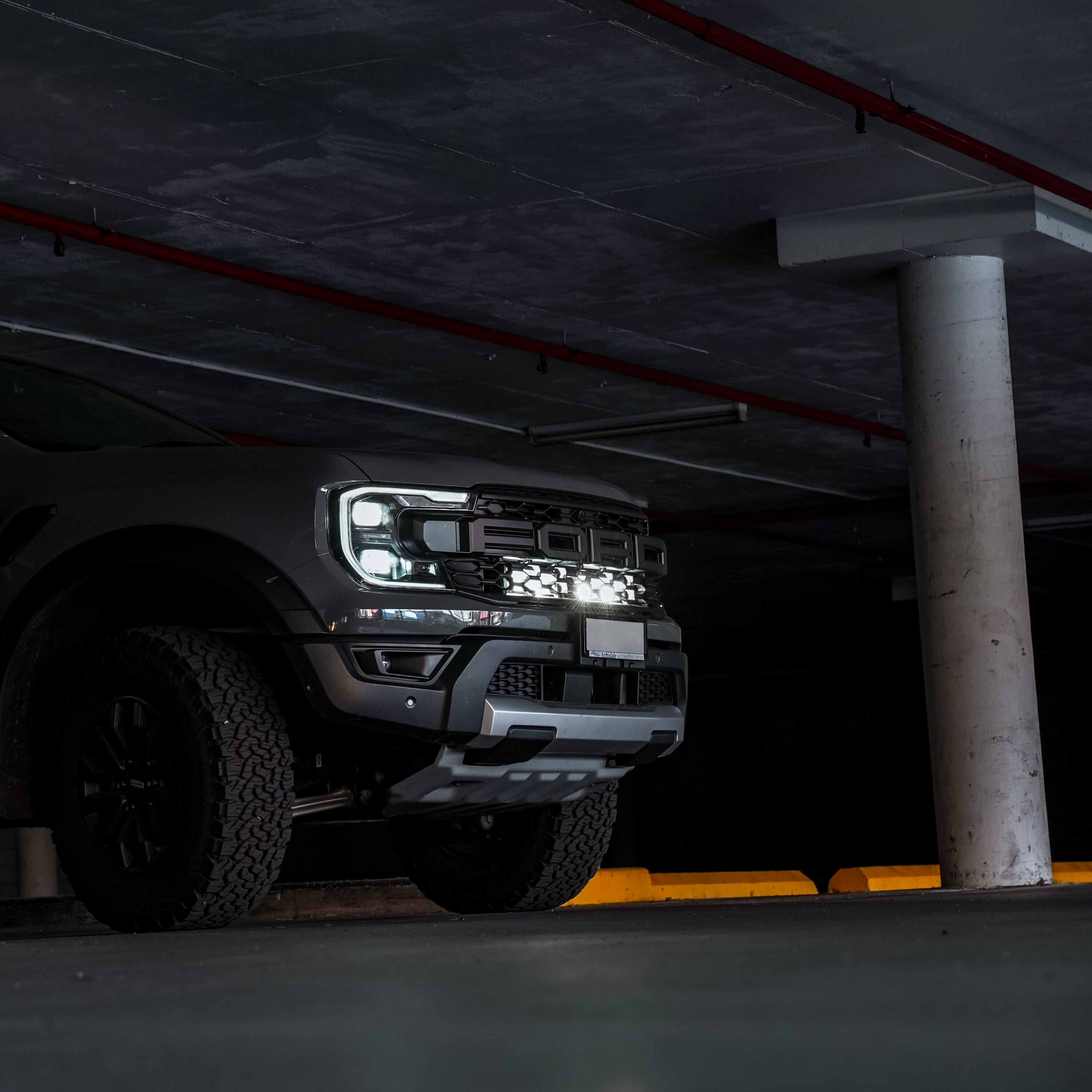
Next-gen Ford Ranger Raptor Light Bar Behind Grille kit
Precision fitment and powerful lighting make this kit a must-have for Raptor owners looking to push their adventures further. Choose from either Nitro Maxx 105w 13-Inch LED lights bars or Raptor 165w 26.5-Inch LED light bars. View the kit
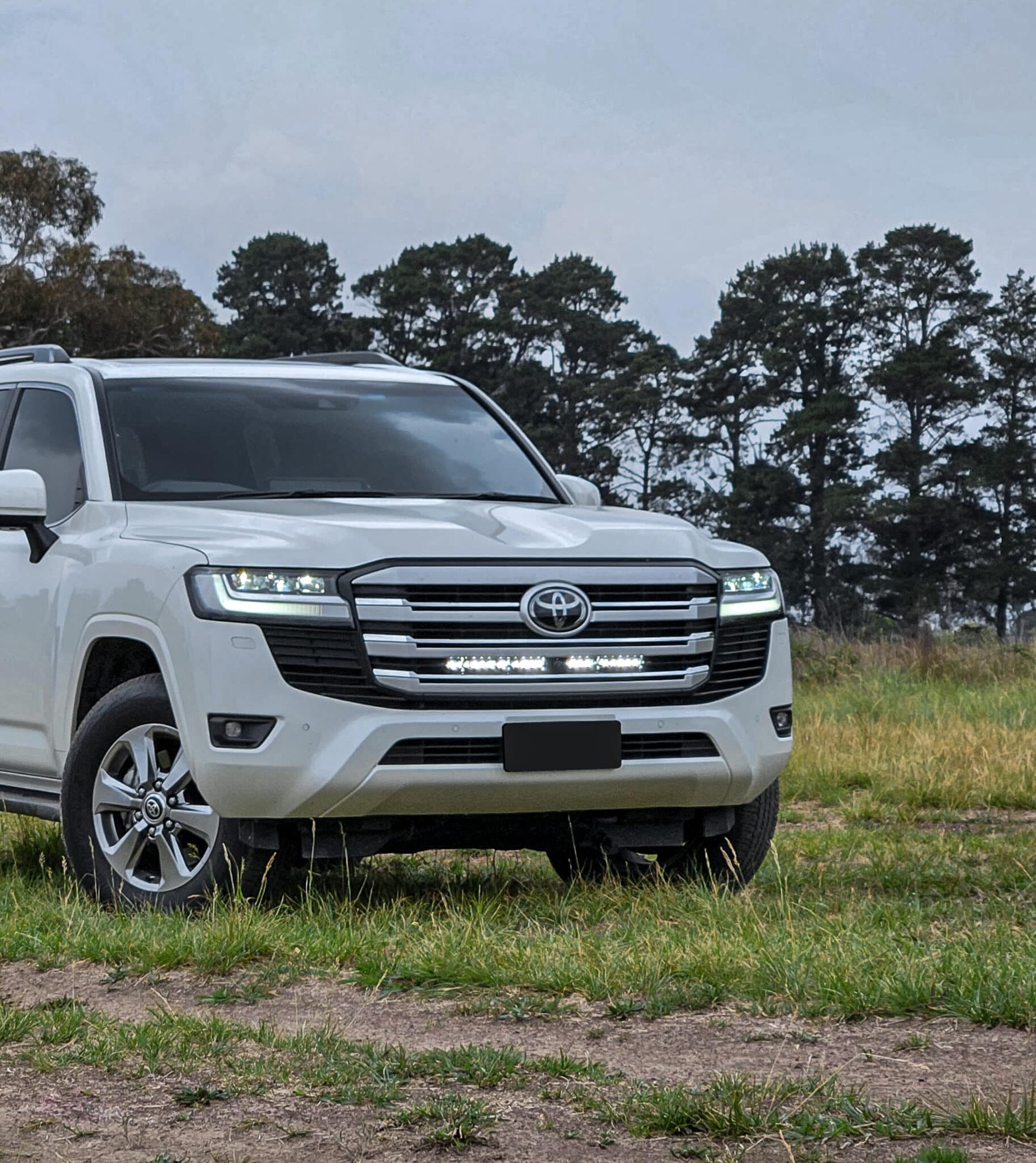
Toyota 300 Series LandCruiser Behind Grille Light Bar kit
The LandCruiser is built for the outback, and with Ultra Vision’s behind-grille lighting, you’ll have superior lighting power for any journey with a Raptor 165w 26.5-Inch LED light bar. View the kit
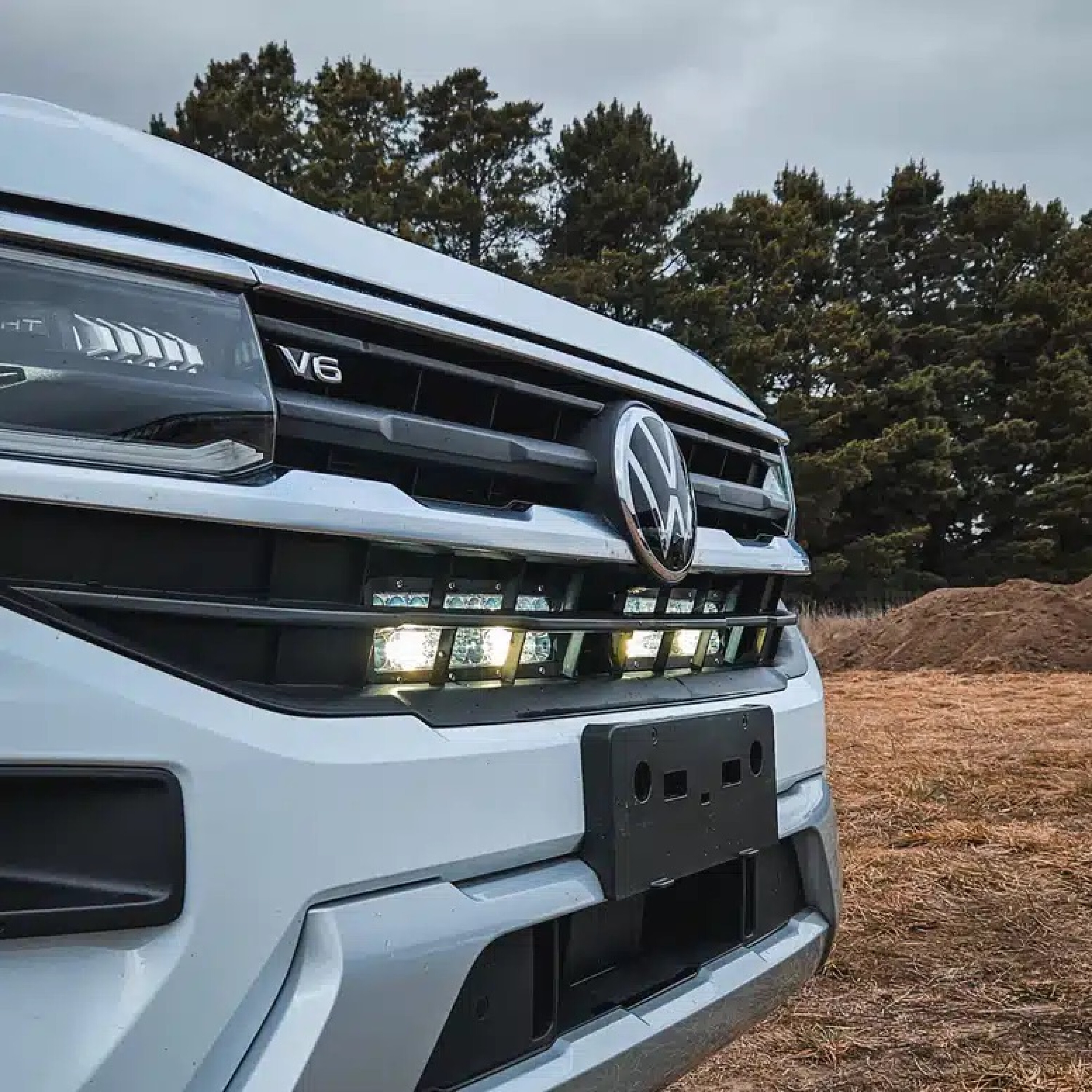
2023+ VW Amarok Behind Grille Light Bar kit (all models)
Sleek, stylish and incredibly powerful, this lighting solution is designed to enhance an Amarok’s capabilities. Choose from either a 1 x Raptor 165w 26.5-Inch LED light bar or 2 x Nitro Maxx 105w 13-inch LED light bars. View the kits
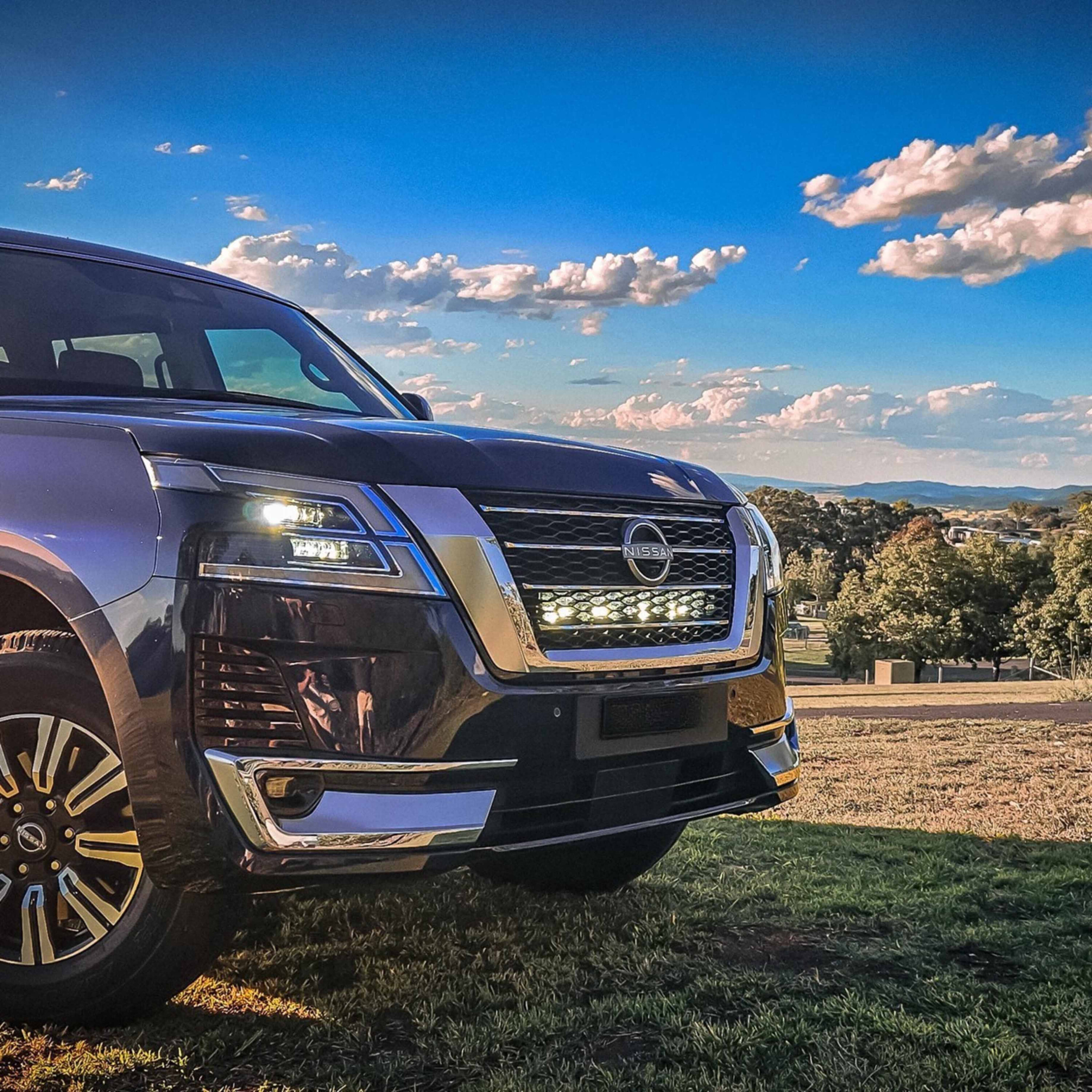
2020+ Nissan Patrol Y62 Series 5 Behind Grille Light Bar kit
Tackle the toughest tracks with confidence, thanks to Ultra Vision’s high-performance lighting. Choose from a Nitro Maxx 155w 18-Inch LED light bar, Nitro Maxx 205w 24-inch LED light bar, Raptor 125w 20.5-inch LED light bar/s OR a Raptor 165w 26.5-inch LED light bar. View the kit
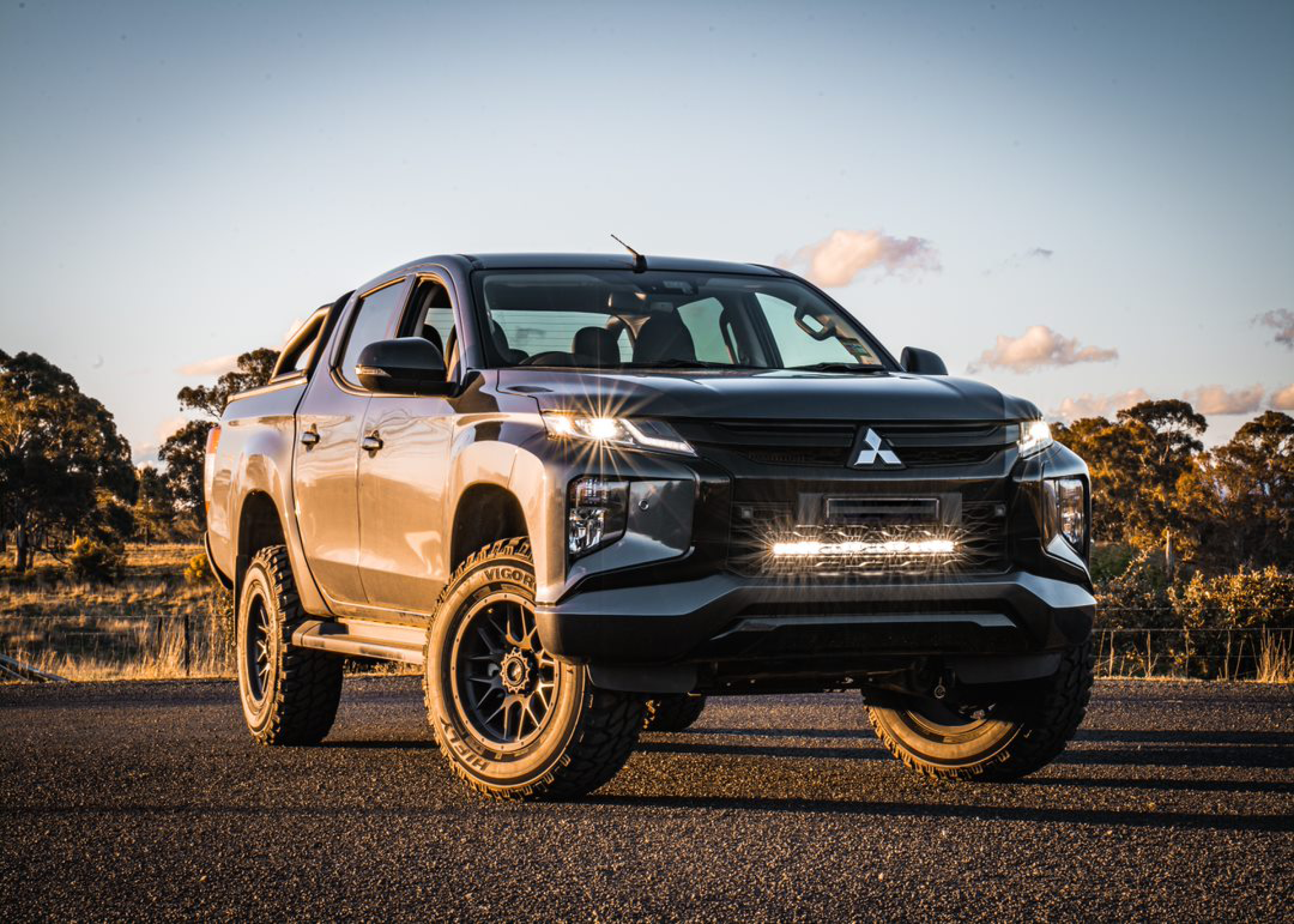
Mitsubishi Triton MR (Nov 2018+) Behind Grille Light Bar kit
A game-changer for Triton owners, providing enhanced night-driving safety without compromising style. Includes 1x Raptor 165w light bar, view the full kit
2021+ Isuzu D-MAX RG Behind Grille Light Bar kit
Tough, durable and designed to complement the rugged nature of the D-MAX. Choose from either a Raptor 125w 20.5-Inch LED light bar or Nitro Maxx 155w 18-Inch LED light bar. View the kit
Substance AND style
Ultra Vision’s kits aren’t just about looks – they’re designed for serious performance.
They offer the best of both worlds with effortless installation and uncompromised light output. By using advanced LED technology along with Ultra Vision’s patented optics, these kits provide outstanding brightness and beam precision for improved driving visibility.
With plug-and-play capabilities tailored to specific vehicle models, these kits eliminate the hassle of complex wiring or modifications. Sitting discreetly behind or within the grille, they deliver powerful lighting without the need to cut or drill, and the results mean your vehicle will look as slick as when it came out of the factory. The fact you don’t need a bull bar is not only an aesthetic bonus, it also keeps down any added weight and means that your new lights won’t interfere with sensors or your original headlights.
Whether you’re exploring remote tracks, towing a caravan across the country, or simply adding to your vehicle’s capabilities, Ultra Vision’s Integration and Behind-Grille Kits deliver the ultimate combination of form and function. Upgrade your vehicle today and get the power to light up the night.
Explore the full range now and be ready for your next adventure!
Australian pricing and specs have been revealed for the 2025 Ram 1500, with the Hurricane-powered US-bred pick-up set to be available in local showrooms next month.
Two variants will be available at launch, the Laramie Sport at $141,950 (before on-road costs) and the Limited at $159,950 (before on-road costs), with Ram stating that the MY25 models will join the MY24 HEMI V8-powered variants – Big Horn, Laramie and Limited – in dealerships, while stock lasts.
Comparatively, the V8-powered Ram 1500 is currently priced at $119,950 (Big Horn); $137,850 (Laramie); $141,950 (Laramie with RamBox) and $156,950 (Limited with RamBox).
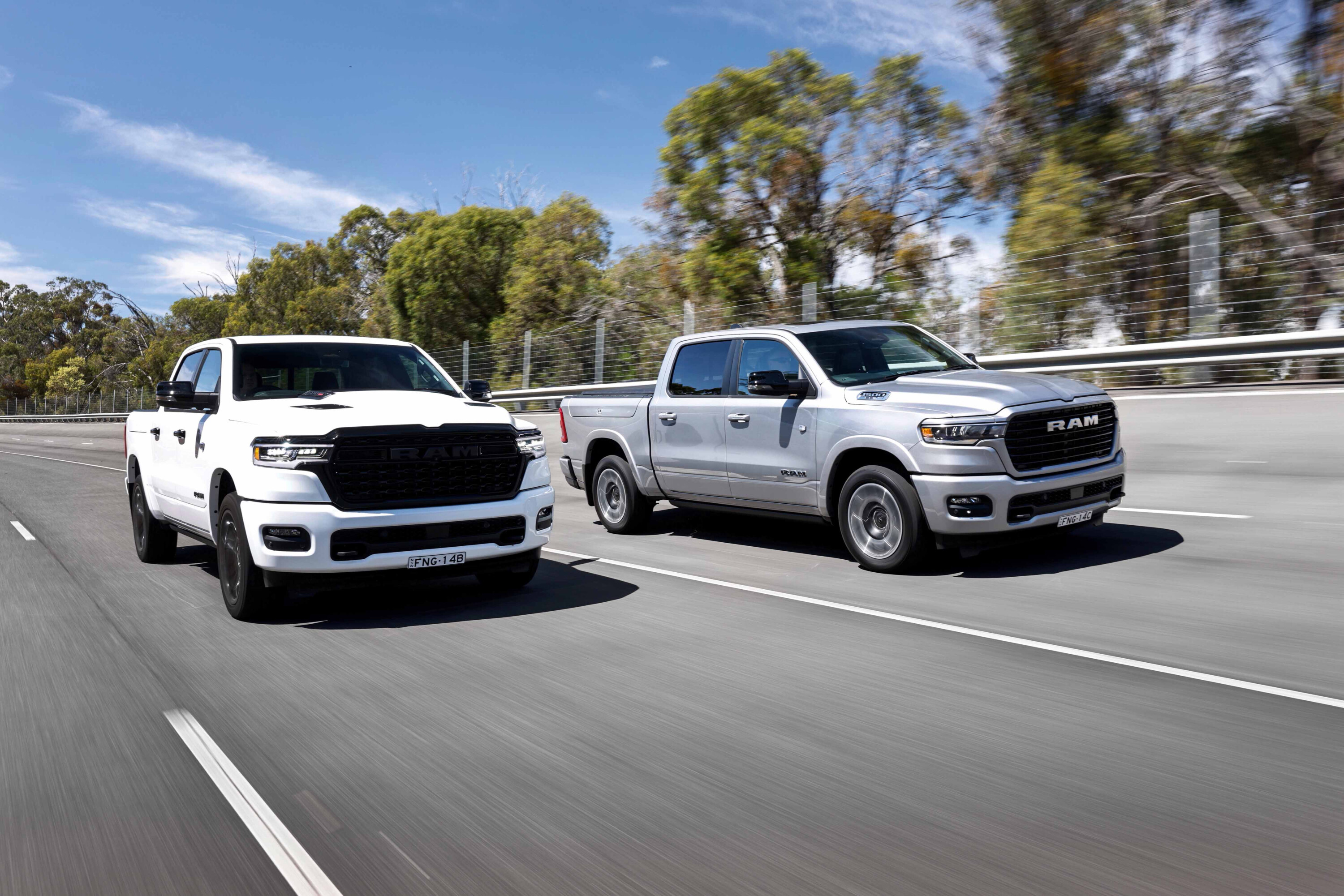
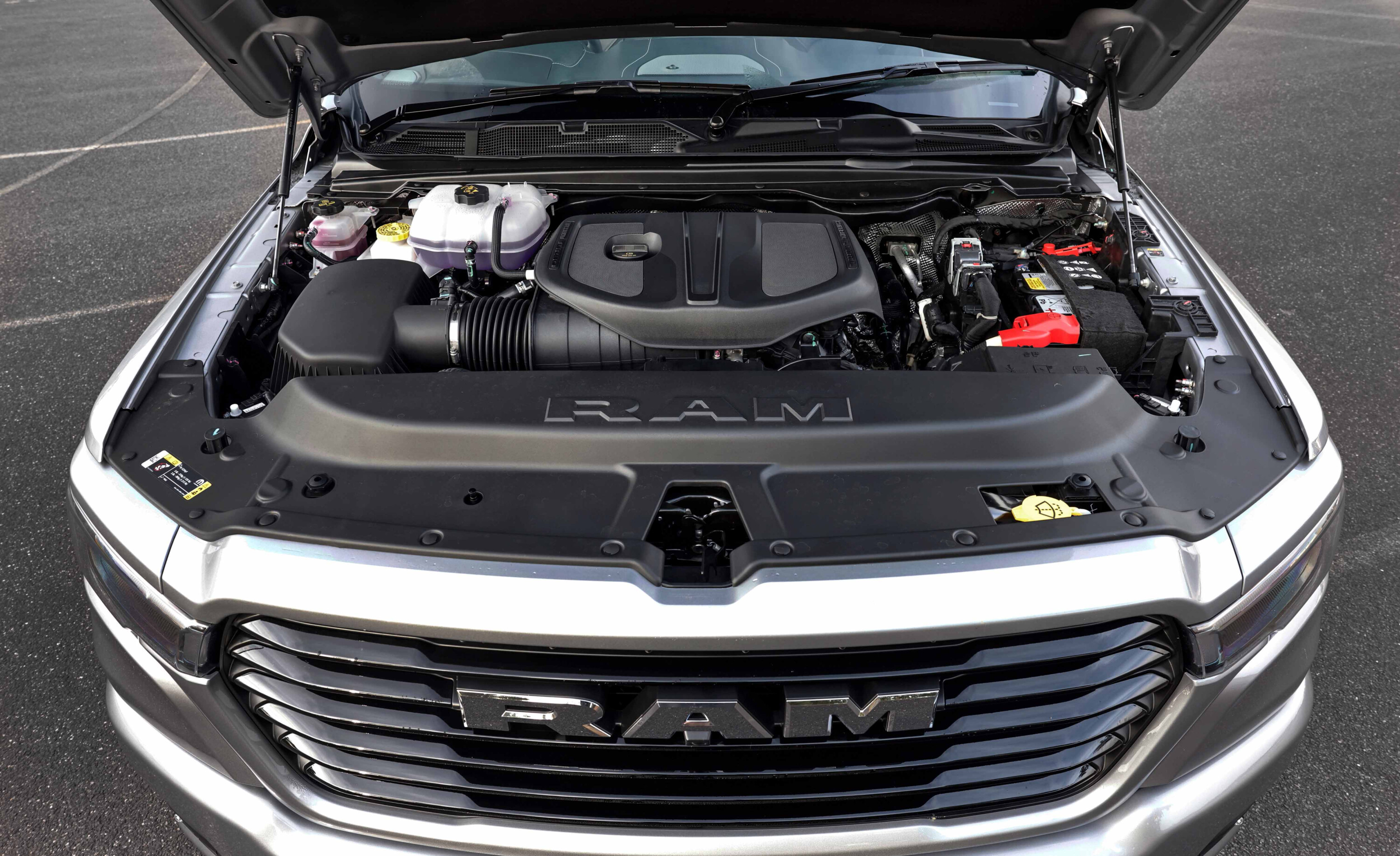
Both MY25 variants will be powered by a Hurricane twin-turbo in-line 3.0-litre six-cylinder, but will be offered in different states of tune. The lower-spec Laramie Sport will get a Standard Output (SO) version that generates 313kW and 635Nm; while the upper-spec Limited gets a High Output (HO) version of the Hurricane which produces 403kW and 707Nm.
Any reservations about the transition from V8 to straight-six power are quelled by the fact the Hurricane produces significantly more power and torque in either tune than the outgoing HEMI, which musters 291kW and 556Nm.
Breaking down the numbers reveals the SO Hurricane produces 7.6 per cent more power and 14.2 per cent more torque than the 5.7-litre V8; while the HO Hurricane generates a staggering 38.5 per cent more power and 27.2 per cent more torque.
“We know a lot of people love the sound of the Hemi V8, but we think the Hurricane engines will become iconic in their own right,” said Jeff Barber, the General Manager of Ram Trucks Australia.
“With more power and more torque than the 5.7-litre Hemi V8, the Hurricane engines take the Ram 1500 – and, frankly, US pick-ups – to a new level of performance.
“Once people experience the power of the Hurricane engine series they will see what the fuss is all about.”
The MY25 update also introduces a suite of mid-life spec and tech advancements including new front fascia and grilles; a 14.4-inch infotainment screen; an interactive 10.25-inch infotainment touchscreen for the front passenger (covered with privacy film so the display cannot be viewed by the driver); a panoramic sunroof; 19-speaker audio system; retractable side steps; and a power-operated tailgate. Plus, the top-spec Limited variant comes with massaging seats for the driver and front passenger. Full list of specs and features can be found here 👇
2025 Ram 1500 Laramie Sport
- Twin-turbo in-line 3.0-litre six-cylinder Hurricane engine (Standard Output) – NEW
- 313kW and 635Nm – NEW
- Eight-speed automatic
- All-wheel-drive or two-wheel-drive
- Five driving modes (auto, sport, tow, snow, off-road) – NEW
- 98-litre fuel tank
- Redesigned LED headlights – NEW
- Redesigned tail-lights – NEW
- Redesigned front fascia – NEW
- Redesigned 20-inch alloy wheels (275/55/20 tyres) – NEW
- 19-speaker Harmon Kardon sound system
- Dual pane panoramic sunroof
- 14.4-inch infotainment screen – NEW
- 10.25-inch front passenger infotainment touchscreen – NEW
- Dual wireless phone charging – NEW
- Wireless and wired Apple CarPlay and Android Auto
- Automatic lowering and retracting power side steps
- Power tailgate (up and down, also with one-touch function for losing) – NEW
- RamBox storage system
- Spray-in bedliner
- Rear-view camera
- Front and rear parking sensors
- Towing capacity 4500kg (70mm tow ball), 3500kg (50mm tow ball)
- Payload 863kg
- Four colour options: Bright White, Billet Silver, Delmonico Red, Diamond Black
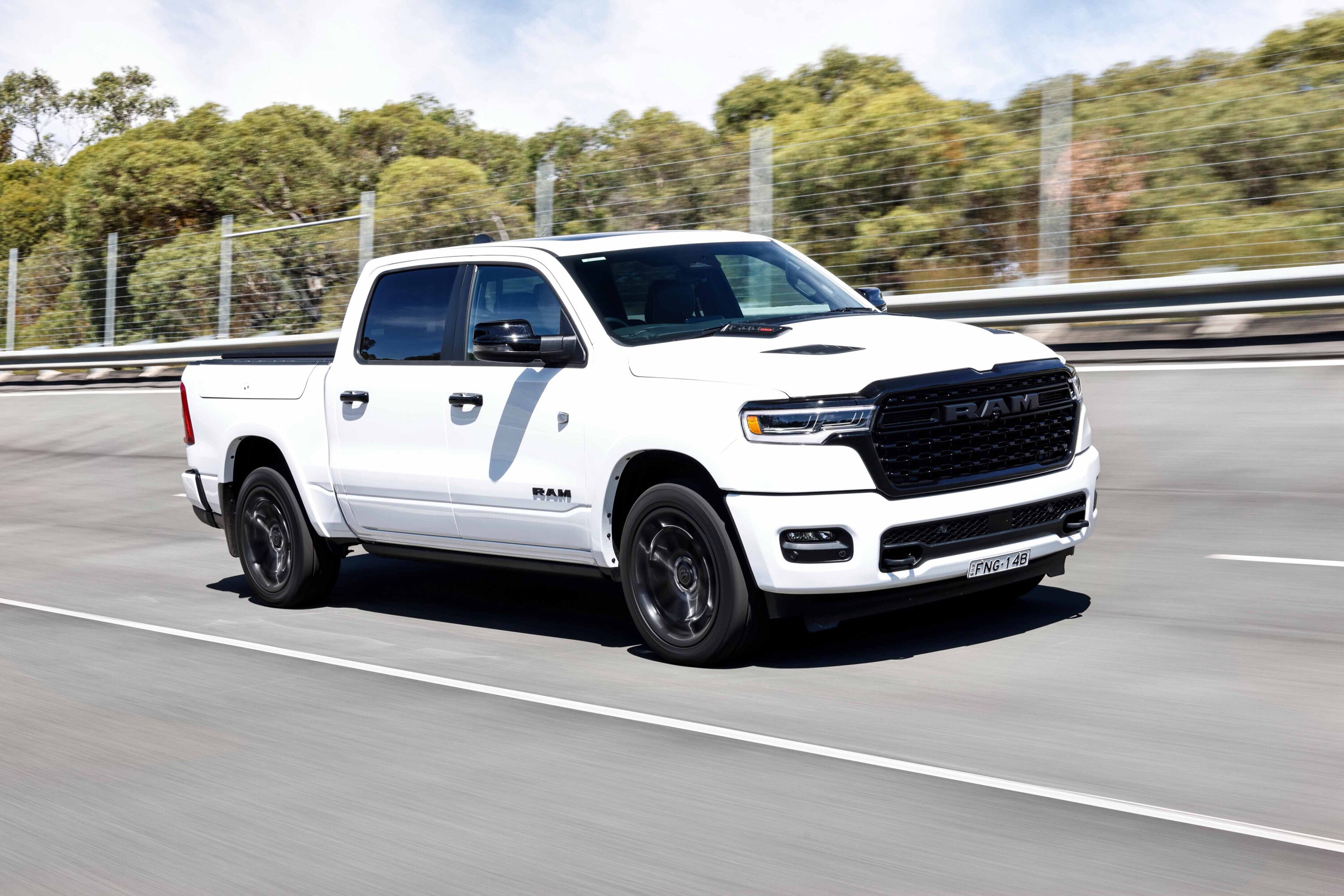
2025 Ram 1500 Limited
- Twin-turbo in-line 3.0-litre six-cylinder Hurricane engine (High Output) – NEW
- 403kW and 707Nm – NEW
- Eight-speed automatic
- All-wheel-drive or two-wheel-drive
- Air-suspension with three modes (normal, aero and off-road)
- Five driving modes (auto, sport, tow, snow, off-road) – NEW
- 125-litre fuel tank – NEW
- Traffic sign recognition – NEW
- LED headlights with animation on unlock – NEW
- LED tail-lights with animation on unlock – NEW
- Proximity lighting on unlock at night (with Ram logo projection) – NEW
- Redesigned front fascia – NEW
- Redesigned 22-inch alloy wheels (285/45/22 tyres) – NEW
- 19-speaker Harmon Kardon sound system
- Massaging seats (with five settings and three speeds) – NEW
- Dual pane panoramic sunroof
- 14.4-inch infotainment screen – NEW
- 10.25-inch front passenger infotainment touchscreen – NEW
- Dual wireless phone charging – NEW
- Wireless and wired Apple CarPlay and Android Auto
- Switchable digital rear-view mirror
- Automatic lowering and retracting power side steps
- Power tailgate (up and down, also with one-touch function for closing) – NEW
- RamBox storage system
- Spray-in bedliner
- 360-degree view camera
- Front and rear parking sensors
- Towing capacity 4200kg (70mm tow ball), 3500kg (50mm tow ball)
- Payload 782.5kg
- Four colour options: Bright White, Billet Silver, Delmonico Red, Diamond Black
The all-electric JAC T9 EV dual-cab will make its Australian debut at the upcoming 2025 Melbourne Motor Show, to be held at the Melbourne Convention and Exhibition Centre on April 5 and 6.
First revealed at the Guangzhou Motor Show in China in 2024, the zero-emissions ute utilises the same platform as its diesel sibling but replaces the 125kW/410Nm 2.0-litre single-turbo four-cylinder diesel engine with an 88kW LFP battery and dual electric motors.
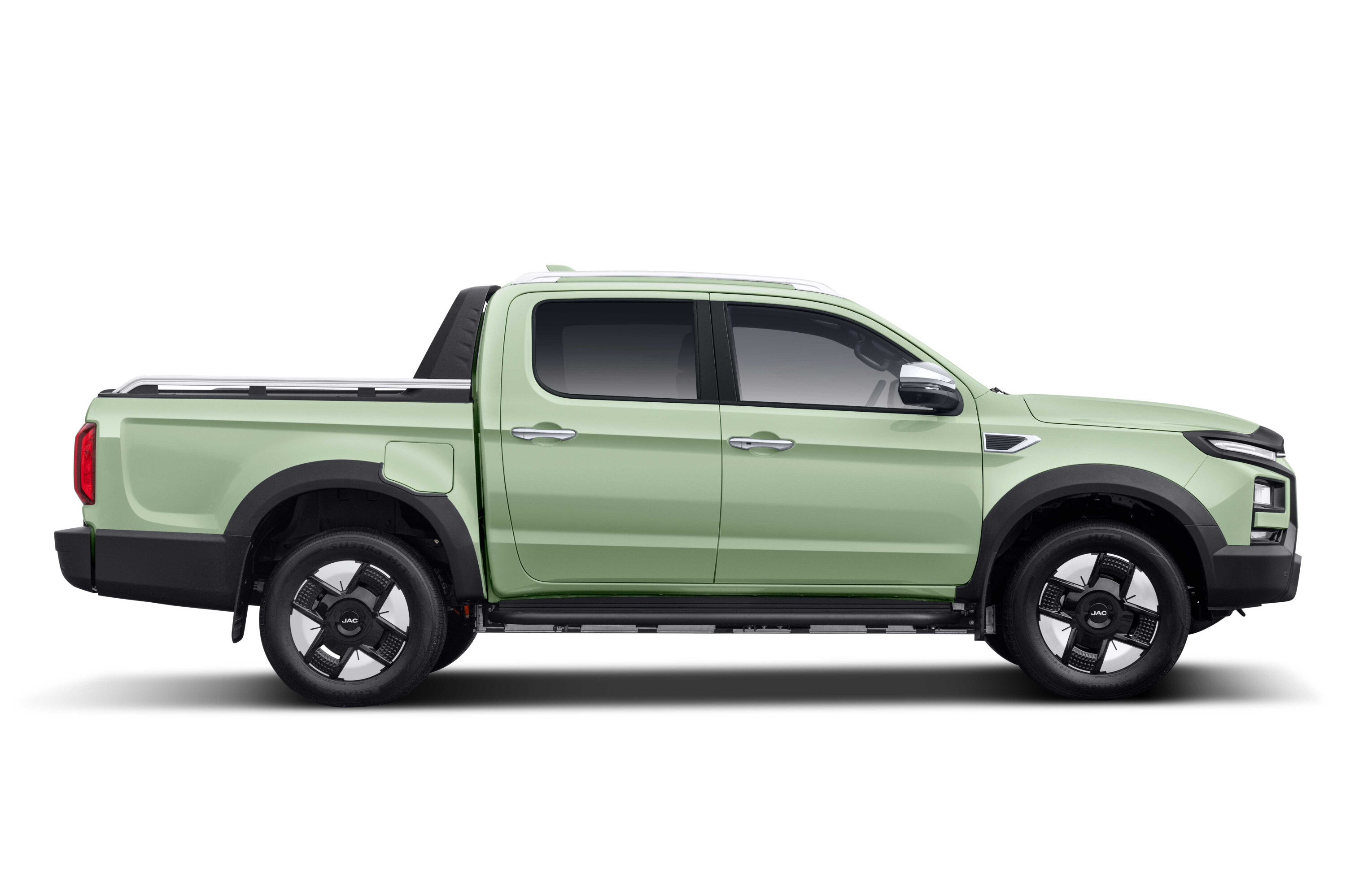
This EV drivetrain reportedly gives the T9 a driving range of 330km, according to the WLTP (Worldwide Harmonised Light Vehicle Test Procedure). It can also send the T9 from 0-100km/h in just 8.5 seconds. These figures are based on the specs of T9s sold in China.
The T9 EV will feature both AC and DV charging, with JAC stating it can recharge the battery from 15 to 80 per cent in 40 minutes. Plus, it will come equipped with an external socket to power tools or campsite electronics.
Tech, safety kit and interior fit-out is expected to be based on the top-spec Haven grade, which gets black/brown leather-accented upholstery; a four-way power-adjustable passenger seat; heated front seats; a 360-degree camera; and front parking sensors. Full T9 features listed here 👇
2024 JAC T9 features
| 2024 JAC T9 Oasis features | |
|---|---|
| 18-inch alloy wheels | Remote window open/close control |
| Highway terrain tyres | Rain-sensing wipers |
| 10.4-inch infotainment system | Tyre pressure monitoring |
| Six-speaker audio system | Rear parking sensors |
| Apple CarPlay and Android Auto | Electronic parking brake with auto-hold function |
| DAB+ digital radio | Forward and reverse autonomous emergency |
| Keyless entry and push-button start | Lane-keep assist |
| Wireless phone charger.u00a0 | Lane departure warning |
| Exterior LED lights | Lane change assist |
| Black leather-accented upholstery | Blind-spot monitoring |
| Six-way power-adjustable driveru2019s seat | Rear cross-traffic alert |
| Leather-accented steering wheel | Traffic sign recognition |
| 7-inch digital instrument cluster | Driver monitoring system |
| Cooled or heated centre console | Adaptive cruise control with traffic jam assist |
| Power-adjustable side mirrors | Automatic high-beam |
2024 JAC T9 Haven features
| In addition to Oasis | |
|---|---|
| Front parking sensors | Black/brown leather-accented upholstery, |
| 360-degree camera system | Auto-dimming rear-view mirroru00a0u00a0 |
| Roof rails | Four-way power-adjustable passenger seat |
| Rear privacy glass | Heated front seats |
| Puddle lamps | Rear USB charge port |
| Auto-folding side mirrors with chrome caps | Rear 220-volt power outlet |
“The JAC T9 EV dual-cab ute is further proof of JAC Motors’ standing as one of China’s leading innovators in sustainable motoring and EV technology,” said Ahmed Mahmoud, Managing Director of JAC Motors Australia.
“With its powerful electric drivetrain, comfortable interior and hard-working credentials, the JAC T9 EV proves that environmental responsibility and work-life versatility can co-exist.”
The T9 EV is listed with a maximum payload capacity of 900kg, as well as the width to fit a full-size pallet between the wheel arches. The T9 received a five-star ANCAP safety score in August 2024.
An Australian company has transformed the iconic 79 Series LandCruiser into an all-electric tourer with up to 400kW on tap.
The brains of Australian Electric Vehicle Specialists (Australian EVS) – a Newcastle-based mob that specialises in electric conversions – this EV Cruiser made its public debut at the 2025 Everything Electric Show held recently in Sydney.
“This LandCruiser represents more than just another project; it’s a step forward in the future of sustainable off-road driving, combining rugged reliability with advanced EV technology,” Australian EVS said of the converted 79.
The 151kW V8 powertrain that powers the 2024 LC79 dual-cab ute was ditched in lieu of an advanced bolt-in e-kit 8 plug-and-play system. The conversion reportedly increases the Cruiser’s output by almost 250kW, to 400kW.
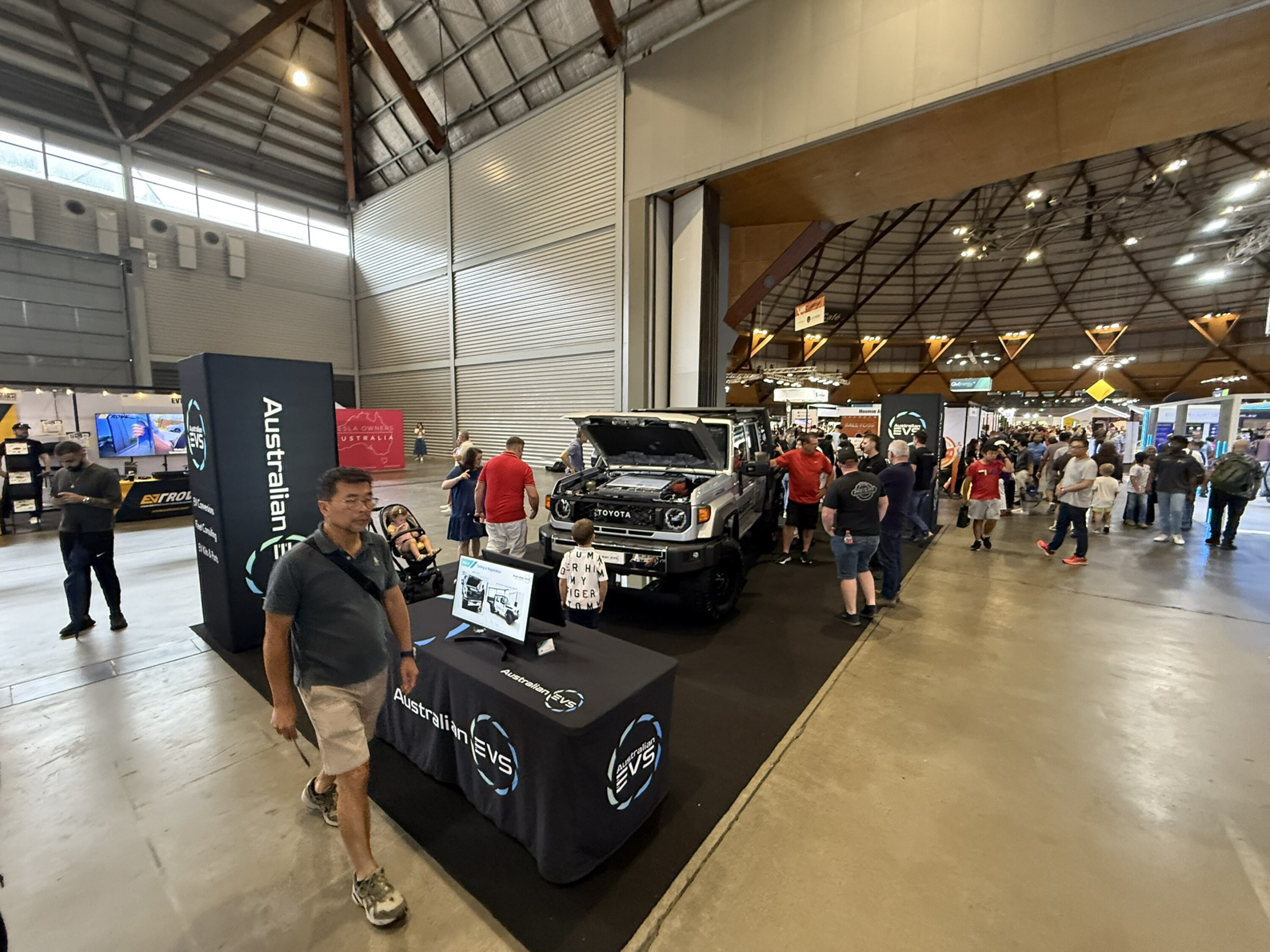
Images sourced from Australian Electrical Vehicle Specialists Facebook page
The e-kit 8 utilises a Cascadia iM-375 e-motor sourced from the USA, as well as a 106kWh LifePO4 battery. Peak torque and power are listed at 580Nm and 400kW respectively. When using direct drive, Australian EVS says the e-kit 8 can produce up to a mind-numbing 1800Nm. The Cruiser is said to race from 0-100km/h in about six seconds, and its long-range batteries can provide up to 700km of range.
“The process begins with removing the old engine and gearbox to begin prepping the car for 3D scanning. From here, the team develops unique parts to mount our new motor to its direct-drive gearbox and to the factory Toyota 4WD system. These parts are then manufactured and ready to fit our new e-kit 8 powertrain,” Australian EVS says of the build.
This is said to leave plenty of room up front for batteries and other key components.
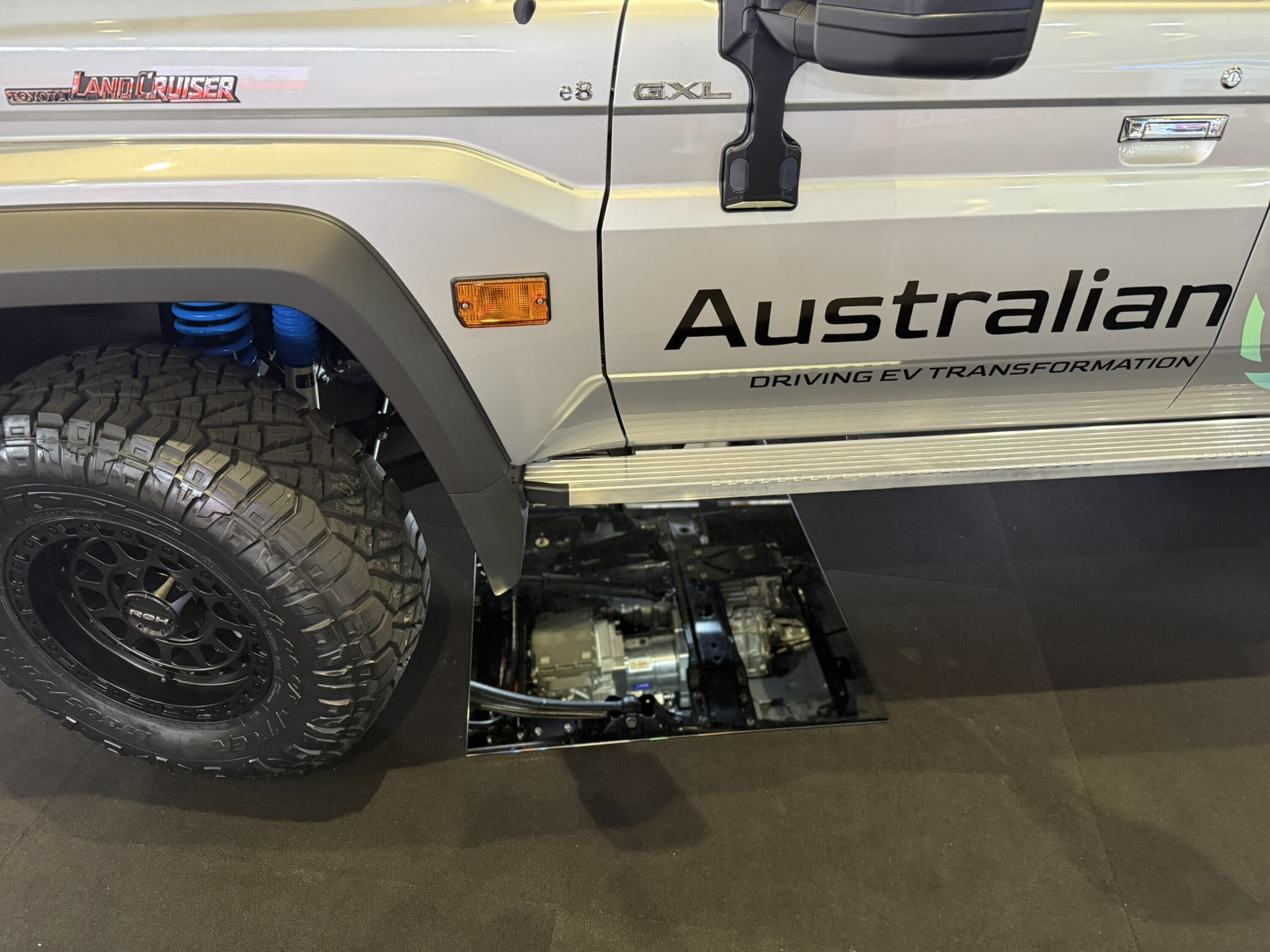
The vehicle also features a Lovells two-inch lift, a GVM upgrade, multiple 240v outlets and a fast charger at the rear. It retains its 3500kg braked towing capacity, and can support up to 1000kg on the tray.
The fully electrified vehicle will be fully engineered for road use and ready to drive away by mid-2025, according to the company’s own Facebook page.
Runva winches have graced two of my previous 4x4s.
And while I perused the market to see what else was available this time, as every prospective buyer should, once I got wind of the brand’s newly released Expedition series, I saw no reason not to give the nod to the 11,000lb version for my HiLux.
Yeah, I know winches have just one job – to winch, right? Yes, but there are a host of features that can make or break your winching experience both during and after the battle.
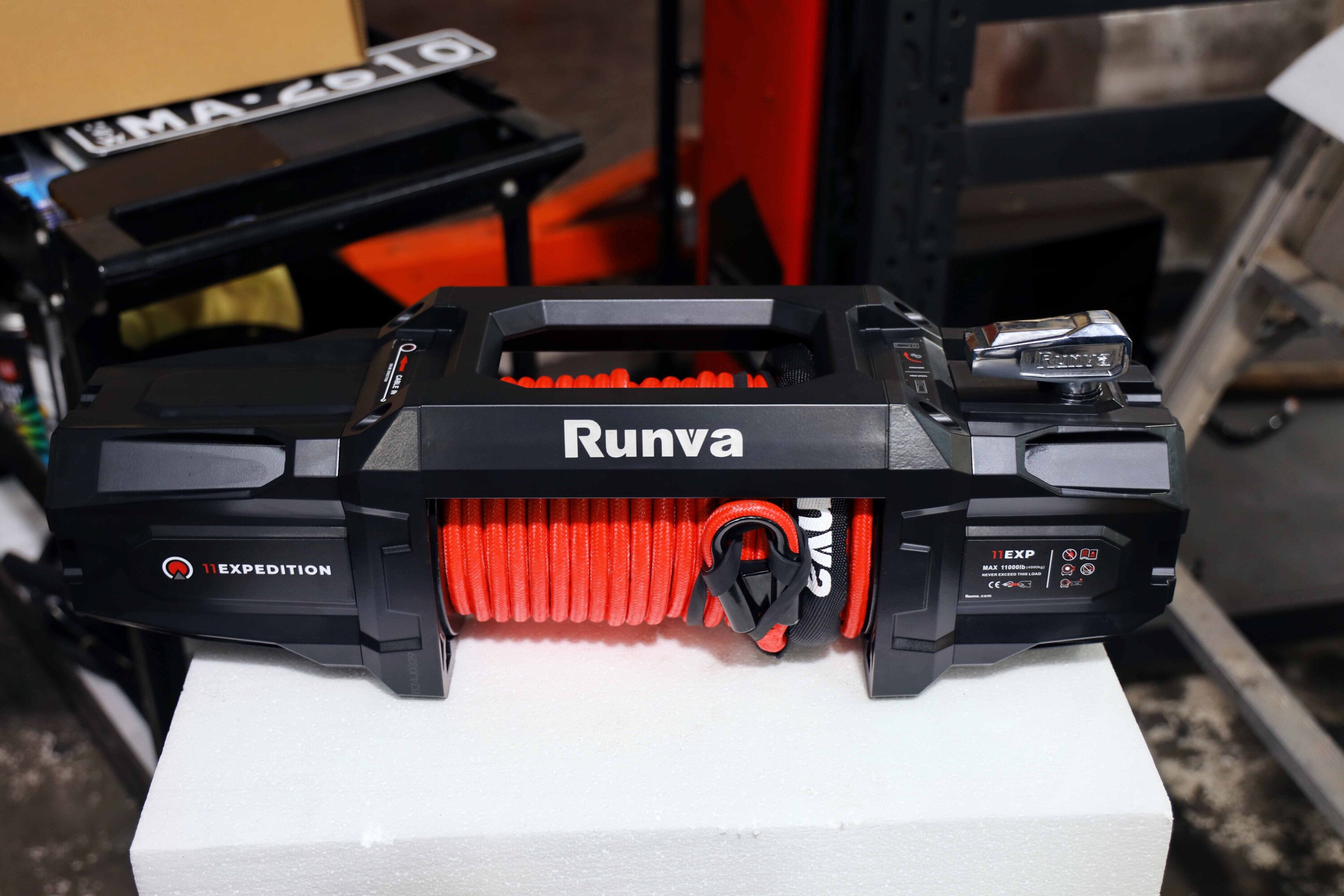
Firstly, let’s rattle off a few specs. This winch is an 11,000lb winch, which equates to 4990kg, and thanks to the combination of a large 6.7hp motor and a fast 191:1 gear ratio, there’s plenty of pulling power for most 4×4 vehicles. For those who need a bit more, there is a larger 13,000lb version. Notably, the 25m of Runva Armortech synthetic rope features a double-braid sheath to enhance its strength and durability, plus higher resistance to abrasion, UV rays and other environmental conditions.
Like most winches, the gearbox can be rotated to suit the fitting application, and the large clutch lever can be easily engaged. On my HiLux I fitted the winch to a new Rockarmor GT bull bar.
The user can winch in/out in one of three ways: with the standard corded remote plugged into the control box; using the integrated wireless control; or via an in-cab toggle switch. That covers every winching situation, making for an easier and safer job. The wireless remote is a rechargeable lithium affair, with a built-in LED torch, battery level indicator and lanyard.
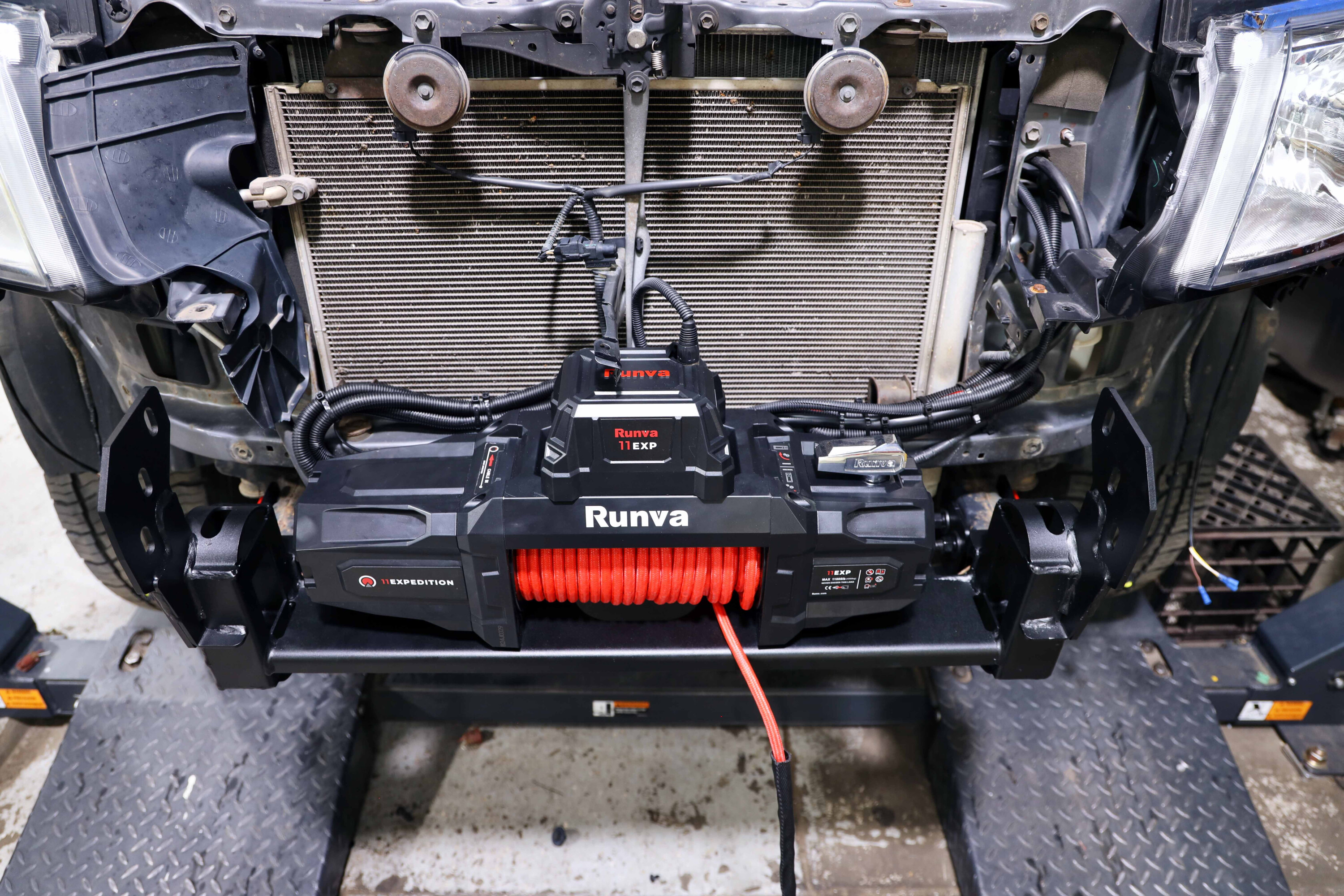
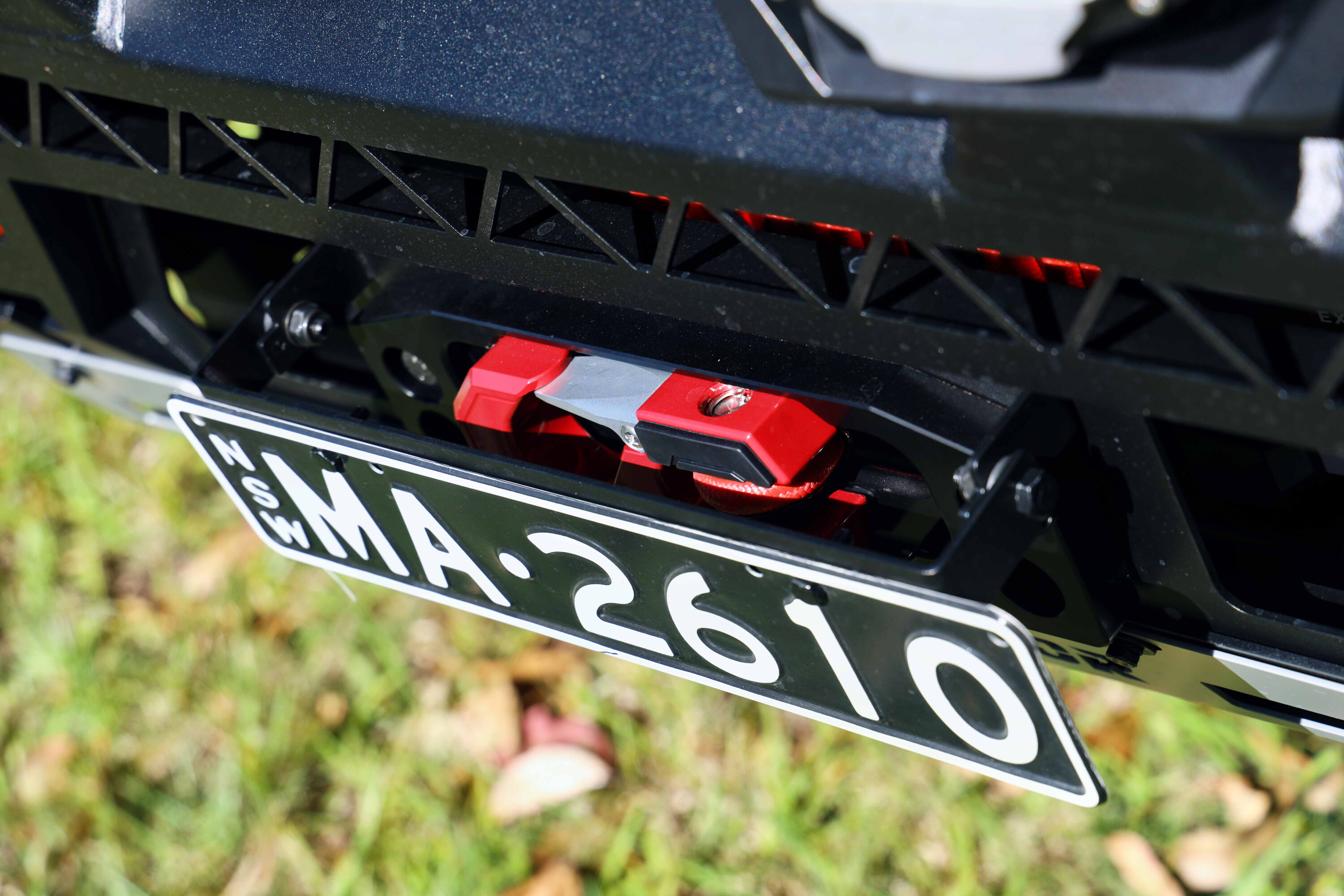
The new fairlead is a work of art. As well as the obvious job of leading the synthetic rope onto the drum, the fairlead is recessed to nest or accept the 16,000lb anodised billet alloy recovery hook. This feature allows the recovery hook to rest flat against the fairlead without overly protruding forward of the bull bar or necessitating it to be attached to a separate hook and wound tight or left dangling from the fairlead, which would leave a short section of the synthetic rope exposed to weather and abrasion – a pet hate of mine.
Check out the hook’s gate, too; it’s not a flimsy folded sheet metal section. Rather, it’s a heavy-duty cast unit that will withstand much more punishment than most others.
The combination of the fairlead and hook allows the system to hide behind the flip-up number plate, ensuring the whole show stays neat, tidy and protected, while the new tie-bars holding the winch together are a work of art.
Another upgraded feature compared to my two previous Runva winches is zero-drag free-spooling. My previous winches were relatively hard to drag out with the clutch disengaged, to the point that often I’d power out to make the job easier. This new 11Expedition winch is much easier, making the job faster and easier with less need to deplete battery power – a winner all around. The whole shebang is IP67-rated for water ingress, making for a long-term, reliable 12v winch.
During my previous winch testing for 4X4 Australia, I found a common design fault with most thimbles located on the end of the winch line: they bend and collapse under load. Not so with this new Runva example; it’s reinforced within the thimble, preventing that problem.
For safety’s sake, an isolator is also included for under-bonnet fitment. A firm and positive switching system sees it either on and ready for action or off, so no one else can operate your winch.
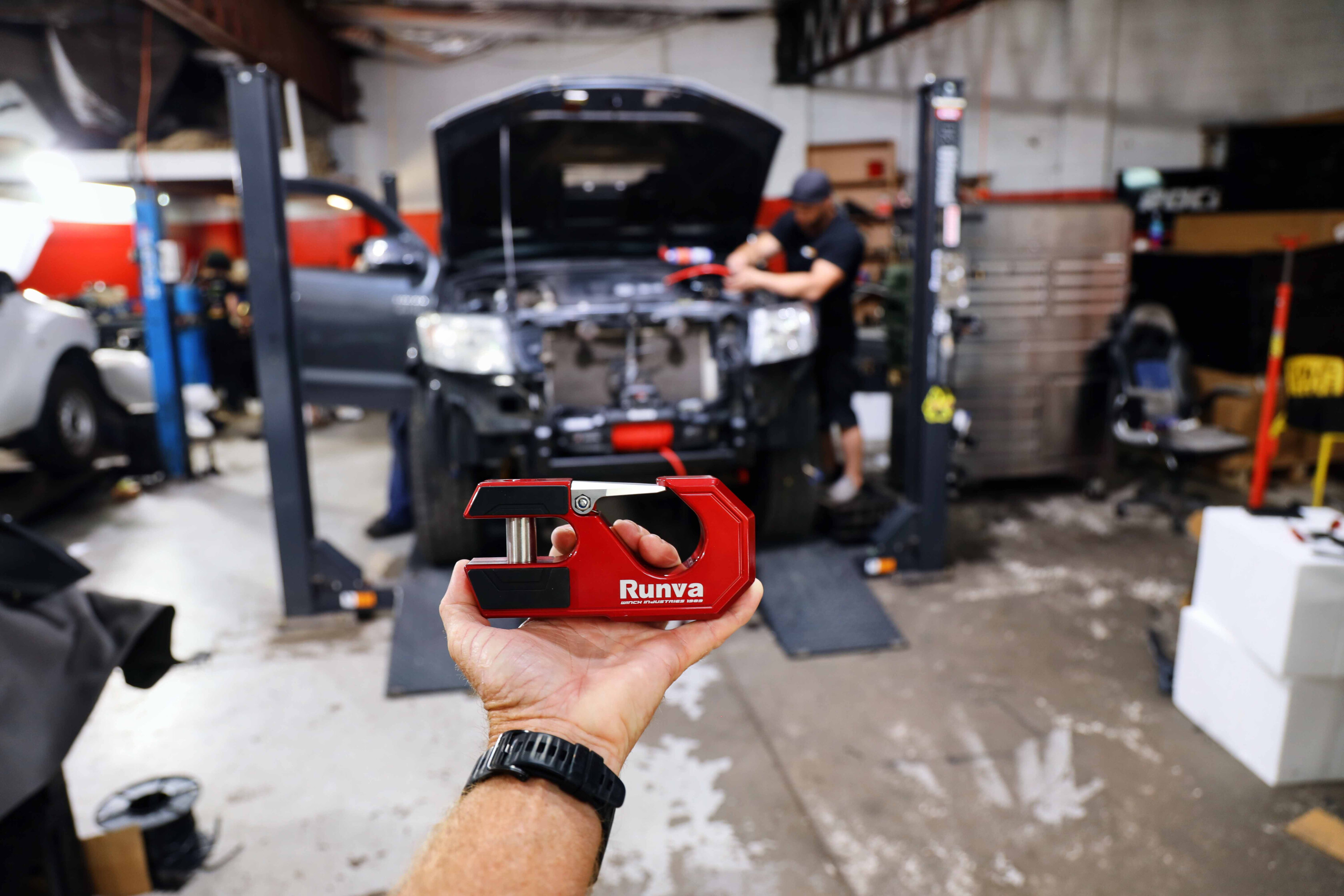
A Runva soft shackle and pulley kit are included, ensuring easy double-line pulls where needed. Although solid and extremely well-made, the whole winch seems more compact, making it easier to fit into most bull bars.
And not that they have anything to do with winching, but this kit came with two Runva stubby holders; they will take pride of place on my transfer case lever for easy access at the campsite.
Can it pull?
I’m confident it can, but the real test is yet to come. Other than unwinding and re-spooling to take up the tension in the synthetic cable, plus a few little stunt winching efforts, I have yet to haul either my HiLux or any other 4×4 from a mudhole or sticky situation.
Nope, I haven’t even been asked to help retrieve the neighbour’s cow from being stuck in the sloppy edges of the dam yet, nor have I needed to clear a fallen tree from a track. So, stay tuned for some real-life use as I settle into the comfort of knowing my HiLux is adorned by one of the best winches on the market.
- RRP: $1295 (11Expedition); $1350 (13Expedition)
- Available from: www.runvawinch.com.au
Rockarmor GT bull bar
When fitting the new RUNVA 11Expedition winch, I chose a Rockarmor GT bull bars to grace the front end of my HiLux.
Why? Besides looking damn fine, this bar offers an impressive array of features aside from being winch compatible. While looks are in the eye of the beholder, the modern styling of this bar, with its aggressive-looking upswept wings, provides high approach angles. Twin-slotted antenna mounts, rated recovery points, sturdy driving light mounts and 55mm tubing mounted to the cleverly designed main section return a modern touch to my older vehicle.
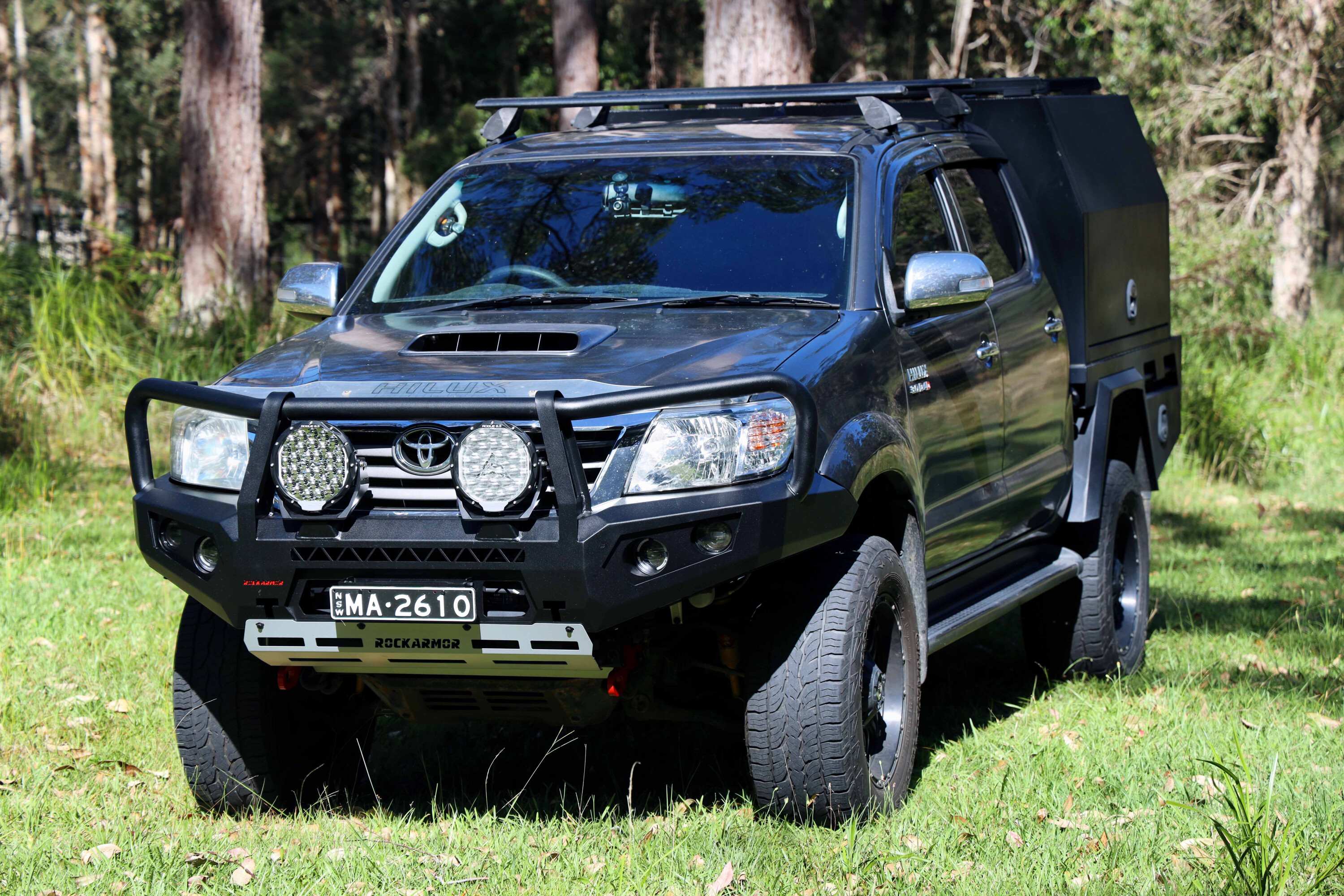
The E-coating and powder coating give the steelwork the best chance of surviving the extremes of outdoor life. The underbody skid plate also protects the HiLux’s radiator, while an integrated LED light bar housing offers recessed fitment if required. Fog and turn indicators are neatly recessed into the wings to give protection and additional modern design cues.
Of course, the bar is ADR-approved and airbag-compatible. While I don’t intend to fit them at the moment, Rockarmor also offers side steps and scrub rails that blend into the bull bar.
A point well worth noting is that the control box fits behind the main section of the GT bull bar, keeping it out of the weather and neatening up the appearance without having to squeeze it under the bonnet.
- RRP: $1799 (hooped); $1499 (hoopless); $299 (brush bars); $649 (rock sliders)
- Available from: www.aussieoffroad.com.au
As K’gari continues to recover from the aftermath of Cyclone Alfred, some areas remain closed due to track damage, fallen trees and sand erosion.
Keeping these parts closed to public access – including commercial tour operators and permit holders – not only protects tourists and wildlife, but allows local authorities to repair damage in a timely manner.
Reports also indicate that tourism on the island is struggling to recover, with cancellations increasing in the lead-up to the busy Easter holiday period.
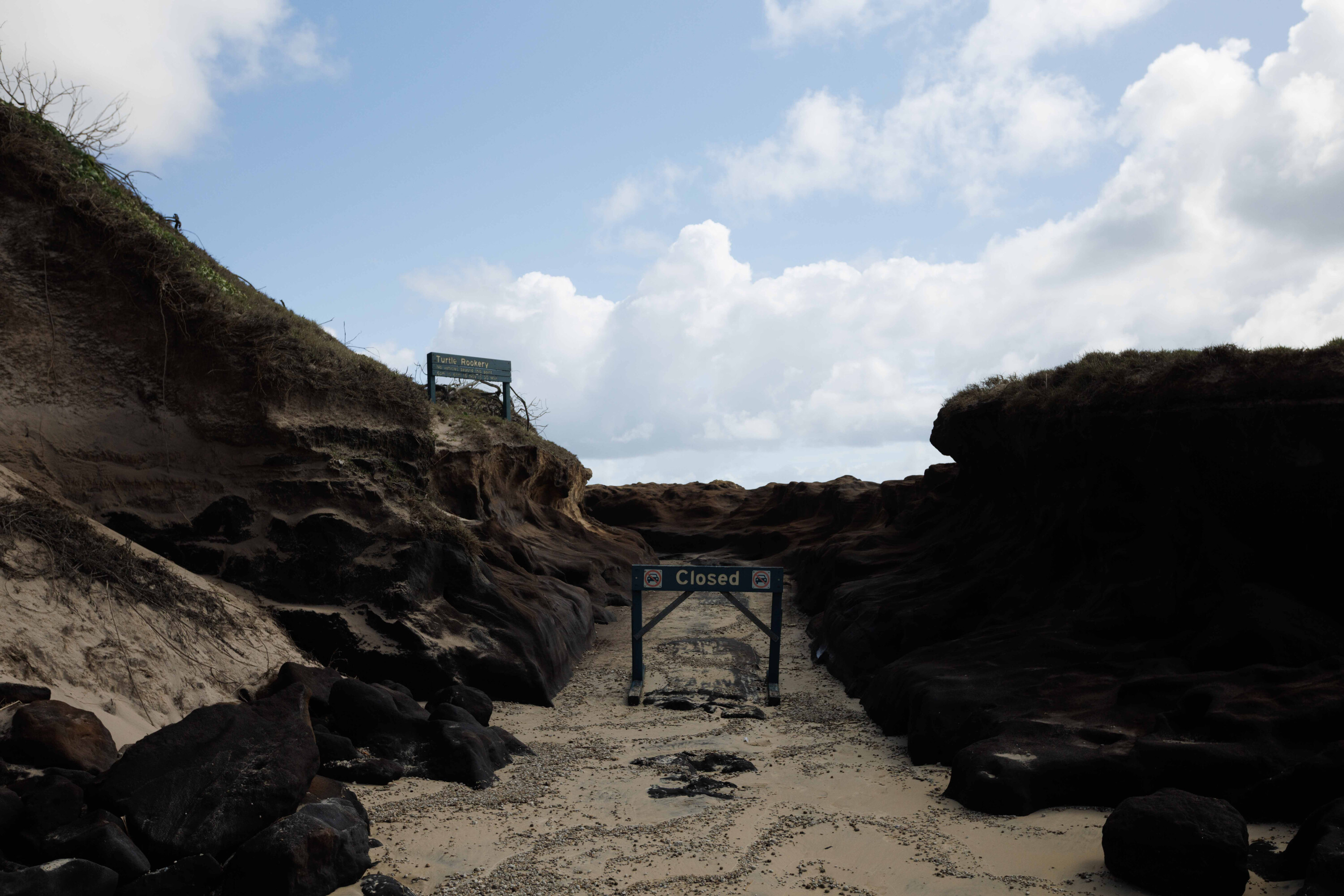
Park closures and alerts 👇
Markwells Break Great Walk, Eastern Beach
The Walk’s access track from the Eastern Beach is currently closed until February 18, 2026, due to water damage caused by the cyclone.
Beach camping zone 9 and access to Ngkala Rocks to Sandy Cape
Fallen trees and significant sand erosion caused by high tides and large ocean swells has forced local authorities to close Beach camping zone 9 – Carree & Diray – with all permits currently suspended until at least April 4, 2025. The report indicates that some tracks within the area are currently impassable.
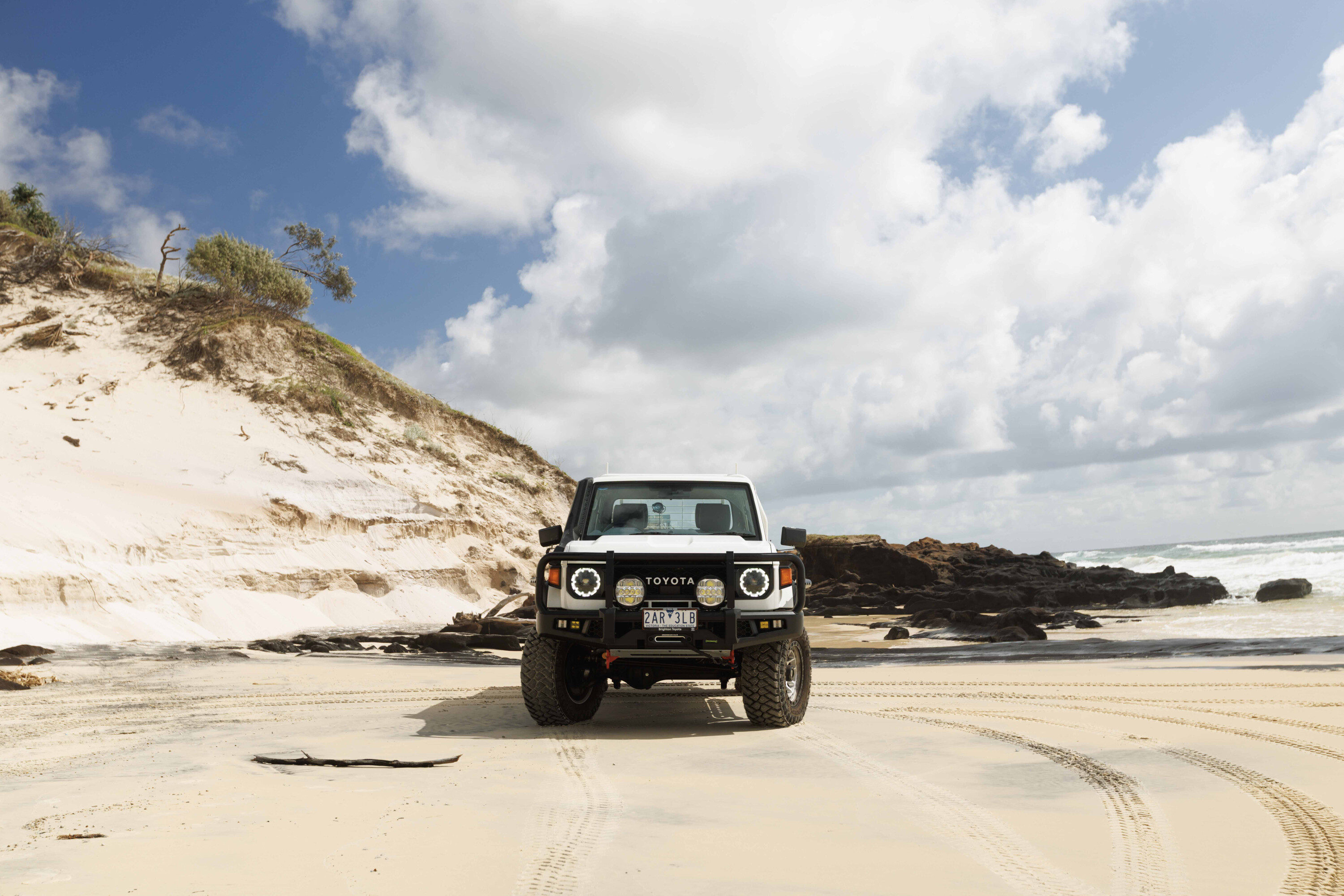
More closures
In addition, the Great Walks campground is also closed. As are the following roads: Central Link Road; Cornwells Road; Lake Wabby Road; Bogimbah Road; and Southern Lakes Drive (from Central Station to Dilli Village).
Local reports also indicate the Happy Valley entry road is under construction, after it was washed-out from the giant waves.
We’ll bring further updates as tracks re-open, so stay tuned.








The Mitsubishi Triton range is expected to expand with a series of dual cab-chassis variants, based on pricing information recently appearing online.
The new model listings were published on the industry database, RedBook, but nothing official has since been declared by Mitsubishi Australia.
The update includes a total of five cab-chassis variants and a single club-cab model, with a Triton GLX cab-chassis listed with a six-speed manual transmission, marking the first stick-shifting Triton to be seen in Australia this generation.
Cab-chassis prices range from $47,240 (GLX manual) to $61,540 (GSR auto), with the sole club-cab (in GLX+ guise) listed at $50,340 – a price point which is $2950 cheaper than the GLX+ dual-cab pick-up variant.
The cab-chassis variants reportedly come without some equipment that comes standard in pick-up variants including rear parking sensors, a surround-view camera and rear autonomous emergency braking (AEB).
The current-generation Mitsubishi Triton launched early in 2024 exclusively in dual-cab pick-up guise, with the Japanese marque that different body configurations would land locally at a future date.
The cab-chassis variants will retain the Triton’s 2.4-litre turbo-diesel powerplant which produces 150kW and 470Nm.
- GLX dual cab-chassis (manual): $47,240
- GLX dual cab-chassis (auto): $49,490
- GLX+ dual cab-chassis: $51,990
- GLS dual cab-chassis: $57,540
- GSR dual cab-chassis: $61,540
- GLX+ club cab pick-up: $50,340