
Get your 4×4 published in our mag or online by sending a photo or two to our Facebook page.
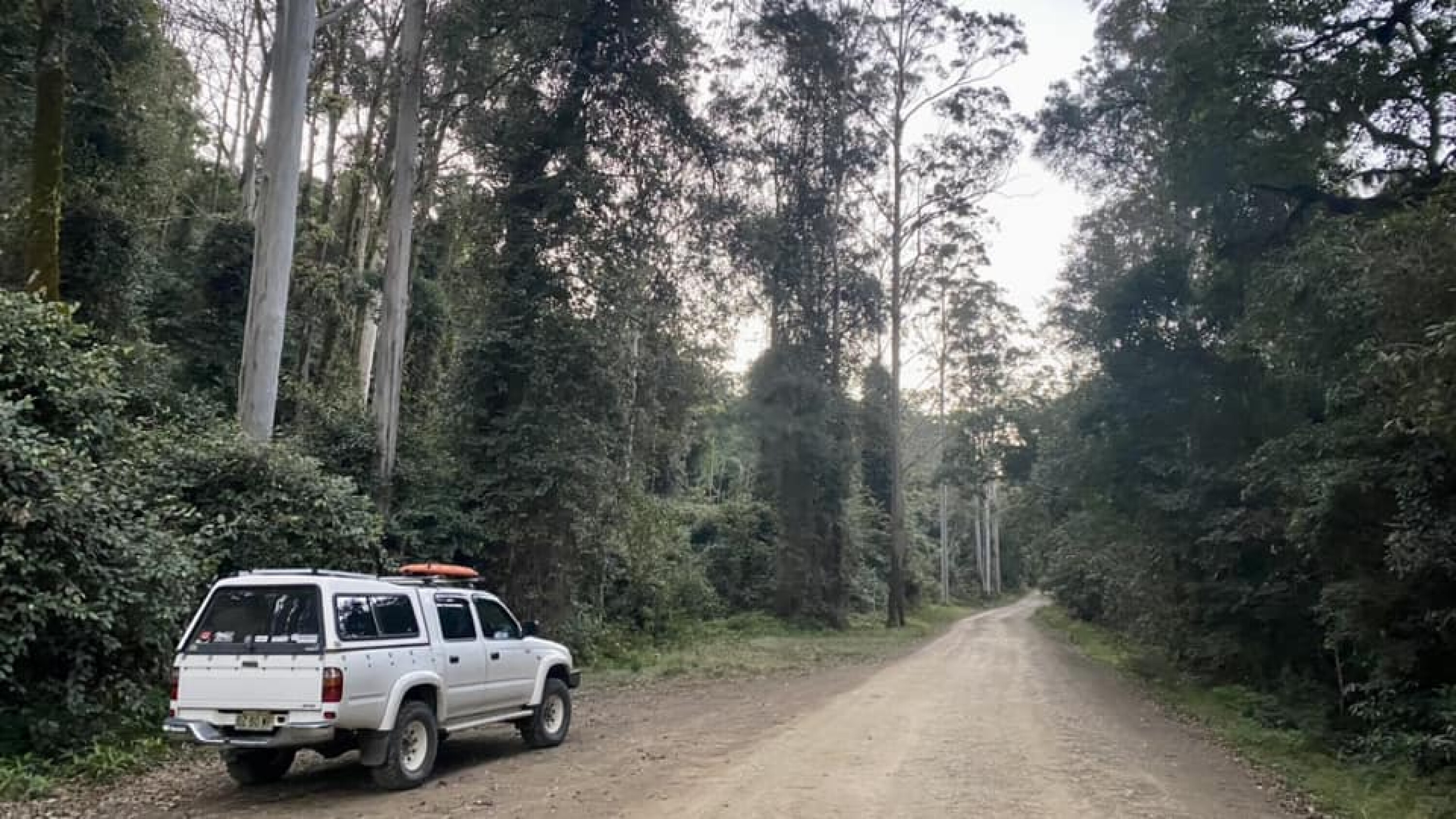
2002 Toyota HiLux SR5
1
It is the 1KT-ZE 3.0-litre turbo-diesel. The modifications I have added since ownership include a steel bar; XTM spotlights; Kingone winch; Uniden UHF; 31-inch Hankook MT2 tyres; straight-through exhaust; single rear drawer with a fridge slide; 60-litre myCOOLMAN; Dune 2.5m awning (270° to come soon); HD Prorack roof racks with custom MAXTRAX mounting system; and a two-inch Fulcrum lift kit is about two weeks away.
It also has a 140amp AGM dual-battery system with a solar controller for solar input. It came with a Safari snorkel and TJM canopy.
The best places I have taken the HiLux would have to be Fraser Island (K’gari), and into the heart of both the Barrington Tops and the Watagans. I’m planning a trip that will include Robe to Beachport, the Great Ocean Road, the Victorian High Country, Kosciuszko and the NSW south coast – Jack Macpherson
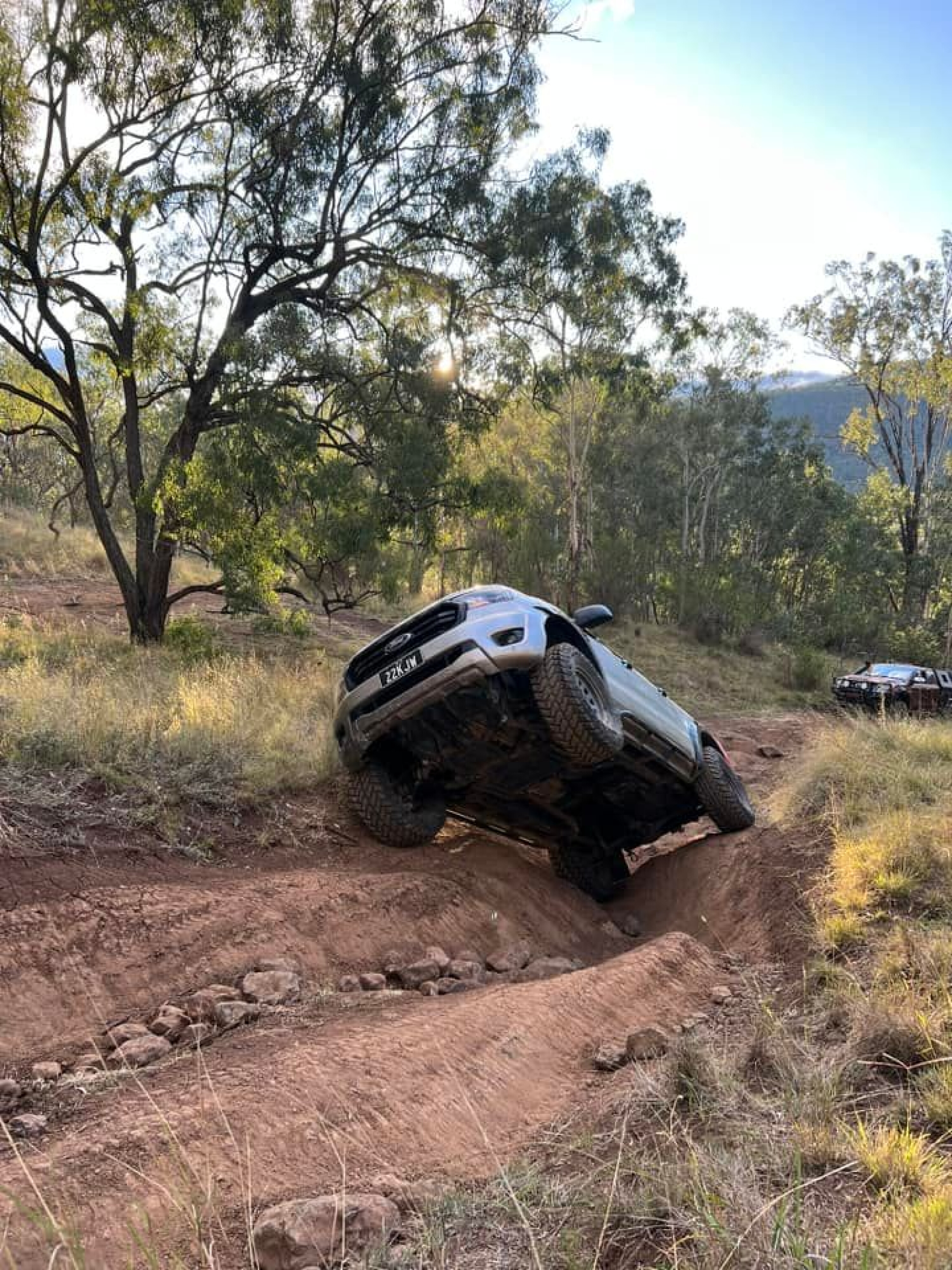
2020 Ford Ranger
1
It’s running Superior Engineering remote-res front struts set at three inches of lift, with 35-inch tyres and custom sliders. It also has a dual-battery setup behind the rear seat that powers my fridge in the tub.
The best place I’ve taken this fourbie is to Janowen Hills 4WD Park (in Queensland), spent with good mates and family – Kayde Woods
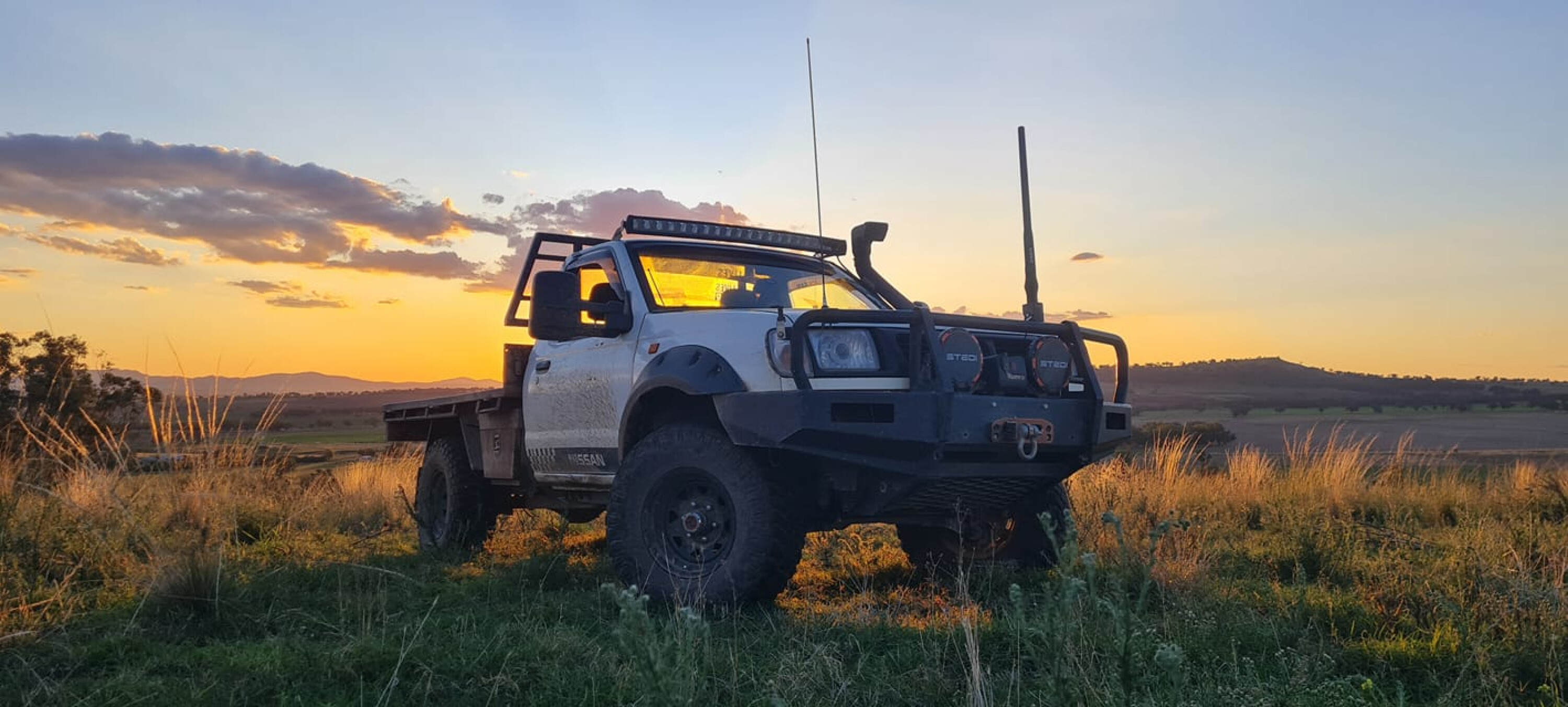
1997 Nissan Navara D22
1
It has the QD32 motor, and mods include aftermarket suspension; a large diesel tank; aftermarket headlights; Stedi light bar and driving lights; custom-made centre console/roof console; and a cut-off exhaust (sounds like a tractor). There are too many mods to remember. Best trip was to Split Rock Dam in NSW – Jamie Roach
2008 Hummer H3 Adventure

1
This picture was taken at Moreton Island, and the best place I’ve taken it was to The Springs 4×4 Park in Queensland. Lots of modifications… and lots of accessories – Shahab Bangash
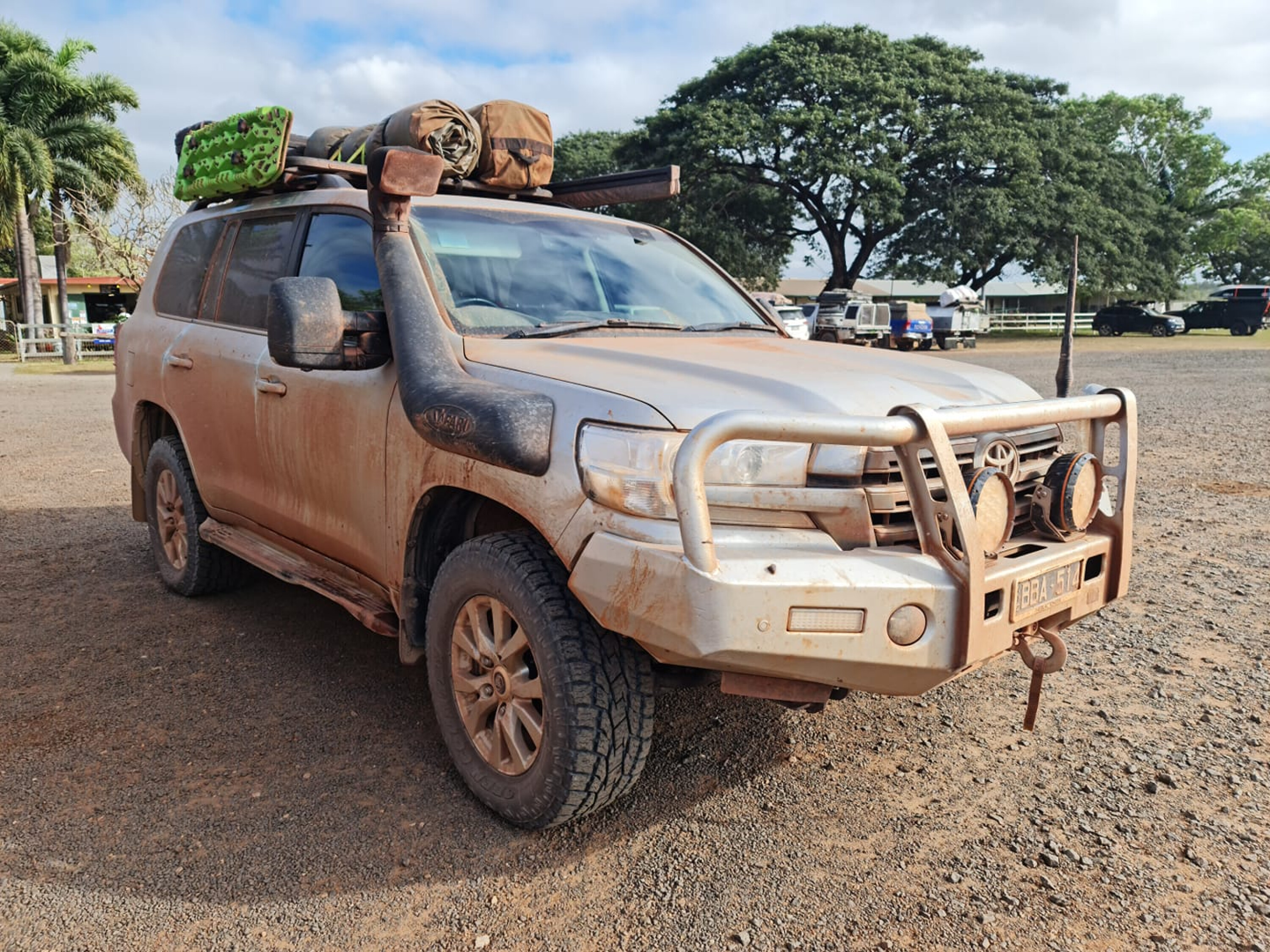
2019 Toyota LandCruiser 200 Series
1
A trip to Cape York was the best place I’ve taken it, but it was cut short due to Covid lockdowns. We went up in July 2021, high-tailed straight to the tip from Western Victoria, with the plan to take our time home. We just got to Loyalty Beach when we got the phone call from home saying NSW was closing the border to Queensland. So we had to pack up and head home.
I had to get a service in Cairns, so most of the group went home through SA, but that border closed before I could get out of Queensland. The car spent three months in Queensland until I could get it home. It was still an awesome trip, but I need to go back at some stage and do it properly.
Mods include a Raslarr rear bar with twin jerry can holder and spare wheel carrier; 4T GVM upgrade with a true two-inch lift; Airbag Man airbags; TJM T13 outback bar; 12,000lb TJM Torq winch; dual-battery system with a 150Ah lithium battery charging via a Victron controller with solar input; Redarc brake controller; tow pack with 12-pin socket; and a grey Anderson socket connected to the second battery.
More kit includes a Safety Dave camera cable; Rhino-Rack Tradesman rack with Tred mounting brackets; Rhino-Rack awning; shovel holder brackets; 285/65R18 Toyo A/T II Extreme tyres; Clearview Next Gen towing mirrors; Safari Armax snorkel; Drifta rear drawer with fridge slide (battery system fits into the drawer system); Stedi Type-X Pro spot lights; Telstra Cel-Fi mobile repeater; vent-mounted GME XRS UHF radio; and mobile phone holder with Type-C connection – Cory Beckett
Latest Gear Guides
2023 Mitsubishi Pajero Sport
Things we like
- Industry-leading warranty and servicing
- Economical engine
- Well-featured for a low price
Not so much…
- Short on tow capacity
- Ride quality
- No safety rating
2023 Toyota Fortuner
Things we like
- Great off-road
- Spacious inside
- Toyota service network
Not so much…
- Gruff diesel engine
- Lacks towing capacity
- Ride quality
There is plenty to choose from in the large SUVs category, but if you’re on a budget, buying in is getting harder as the costs of these wagons creep up.
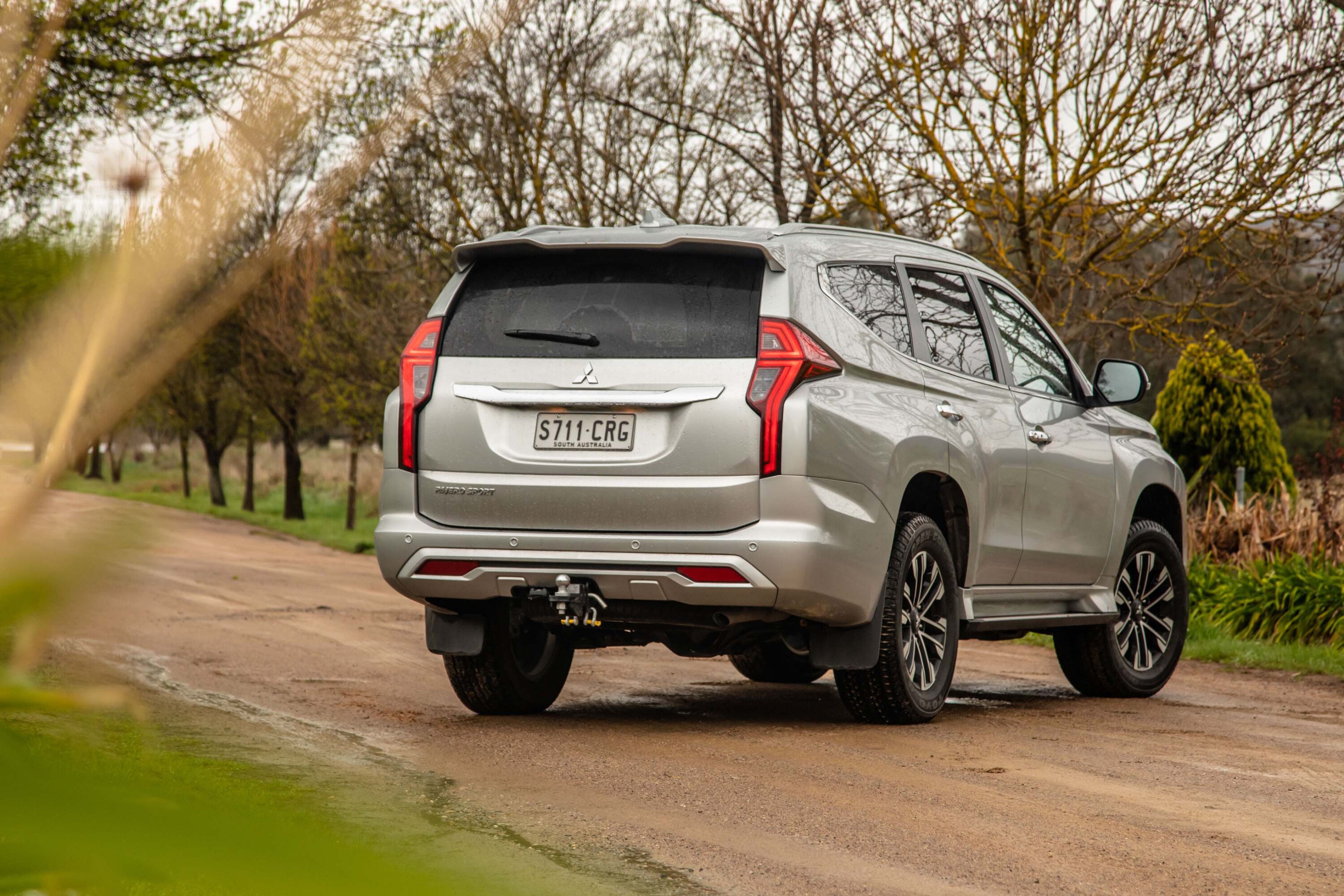
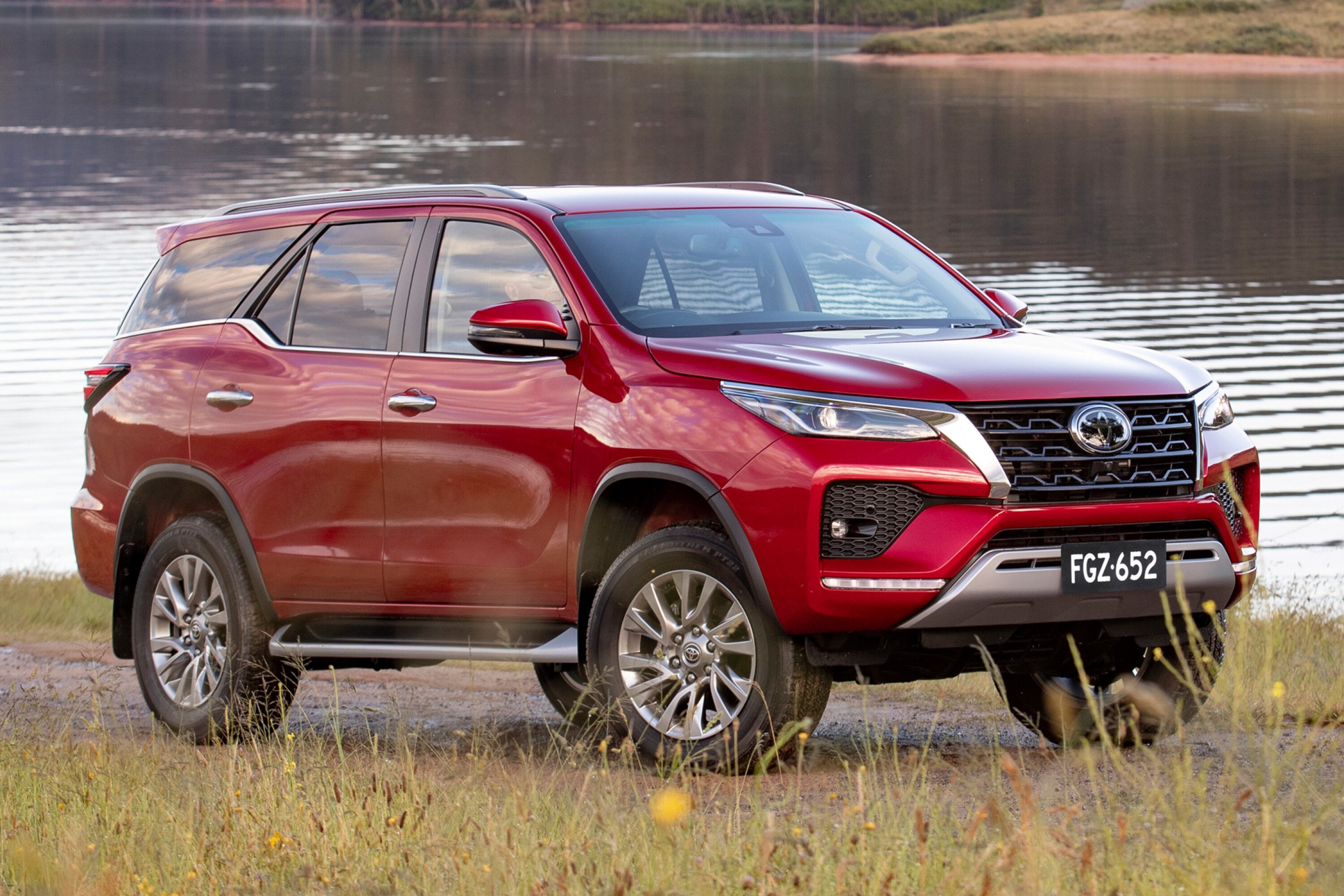
There are some large SUVs that were once very affordable but now spill well into six figures. If that’s too rich for you, and you need a budget friendly seven-seat SUV 4WD from a long-established brand, there are still some models that have not suffered from bracket creep. These are wagons such as the Mitsubishi Pajero Sport and Toyota Fortuner.
Mitsubishi and Toyota are among the best-known brands in Australia with large, well-established dealer networks, meaning not only are they easier to find a dealer to buy from, but also to get a service or buy spare parts or accessories.
1
It’s no secret both the Pajero Sport and Toyota Fortuner are not fresh models on the market; both have been on sale since 2015.
The Pajero Sport has a confirmed replacement coming by 2025, following the new Triton (on which the new model will be based) which arrives here early 2024.
As for the Toyota Fortuner, that will likely soldier on for a few more years, awaiting the arrival of new HiLux (on which Fortuner is based) in 2025, sharing its all-new Toyota New Global Architecture (TNGA) with Tacoma and 4Runner sold in American markets.
As expected in the SUV segment reaching beyond $50K, these these wagons have plenty of features and tech on board. They offer versatile seating for up to seven (except the five-seat Pajero Sport GLX), 4×4 off-road ability (although cheaper, less popular 4×2 Pajero Sport models, not reviewed here, are also available) and, compared to passenger wagons, a relatively high towing capacity.
1
JUMP AHEAD
Pricing and features
For ultimate price savings, on paper the Mitsubishi Pajero Sport looks more attractive than the Toyota Fortuner.
At entry level, it has an almost $4000 saving on the GLX 4WD over the Toyota Fortuner GX. The key point of difference here is that the Mitsubishi is a five-seater only in GLX trim (the rest of the range do have seven seats), while all Toyota Fortuners have seven seats.
Both have a 3100kg/310kg (braked) towing limit, which is 400kg less than the best in class, although argualble more realistic for carrying both payload and a heavy trailer without exceeding GVM or GCM limits.
The Pajero Sport has an eight-speed auto whereas the Toyota has just six forward speeds in its auto box.
1
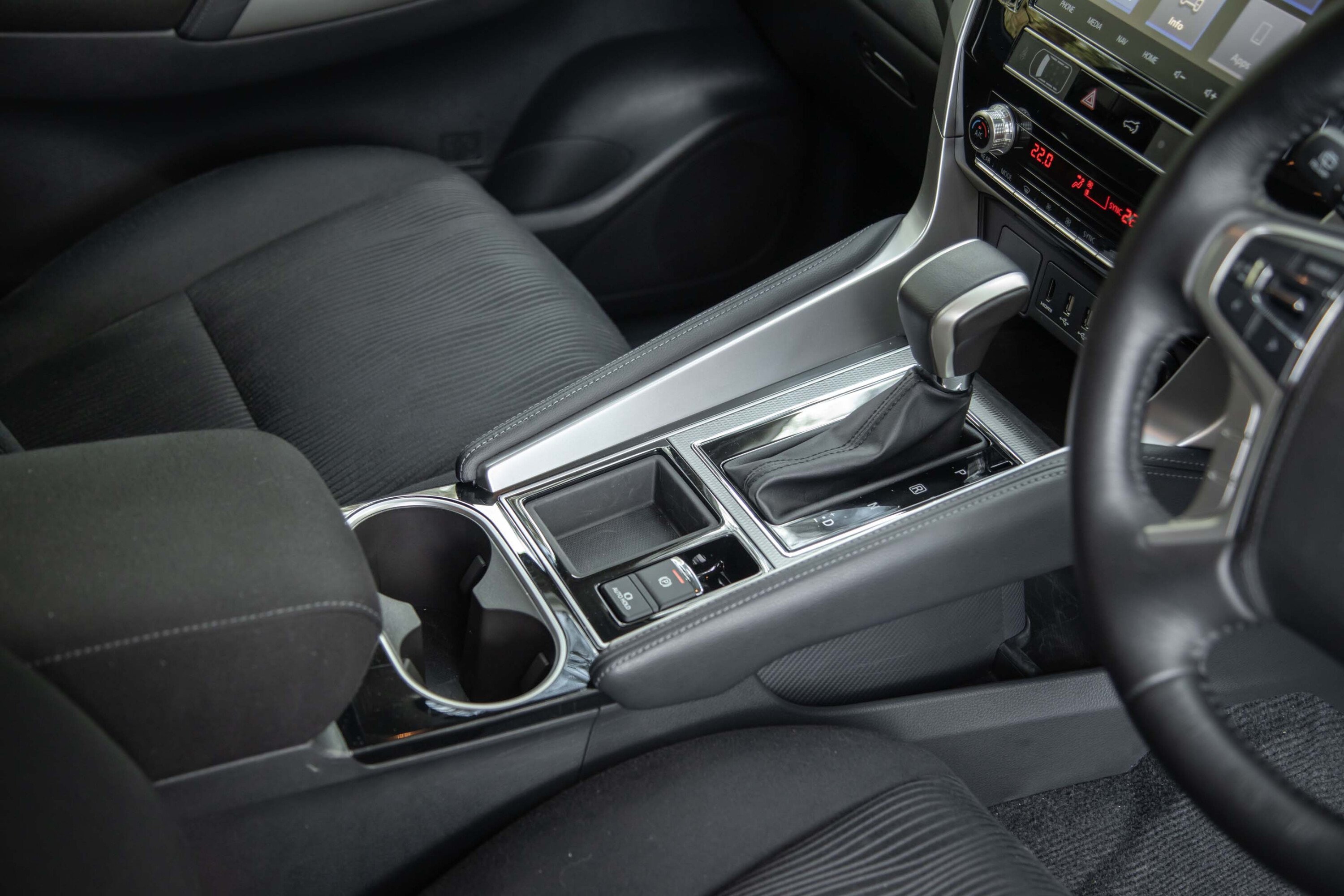
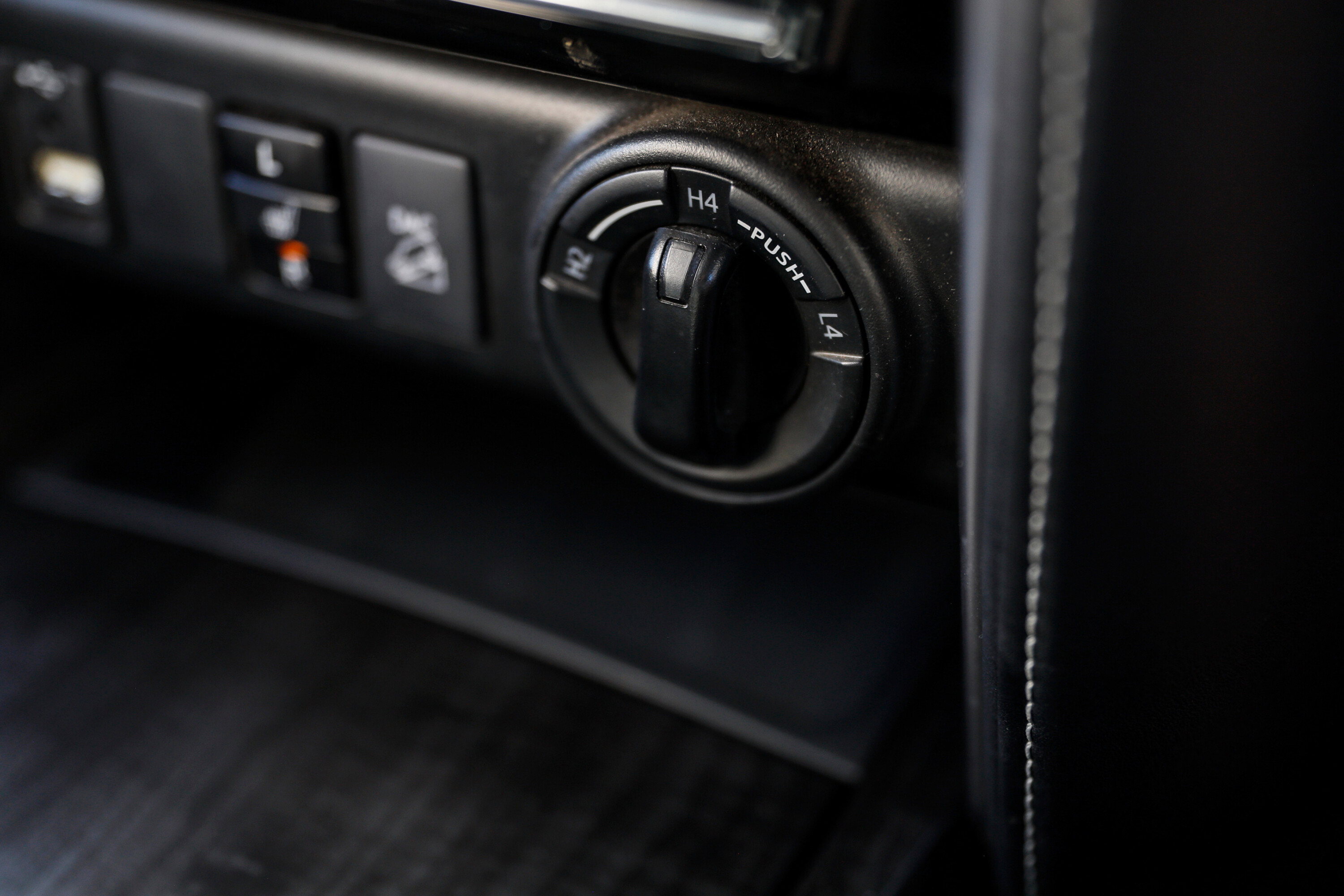
The Mitsubishi has a more sophisticated 4WD system with its Super Select II transfer case. This 4WD system basically means you have the addition of a 4WD setting that can be used on dry, paved roads.
The Toyota has part-time 4WD, which works as rear-drive only on paved surfaces and the driver needs to select 4WD slippery surfaces, and remember to select 2WD again back on dry paved roads to not do damage to the transmission..
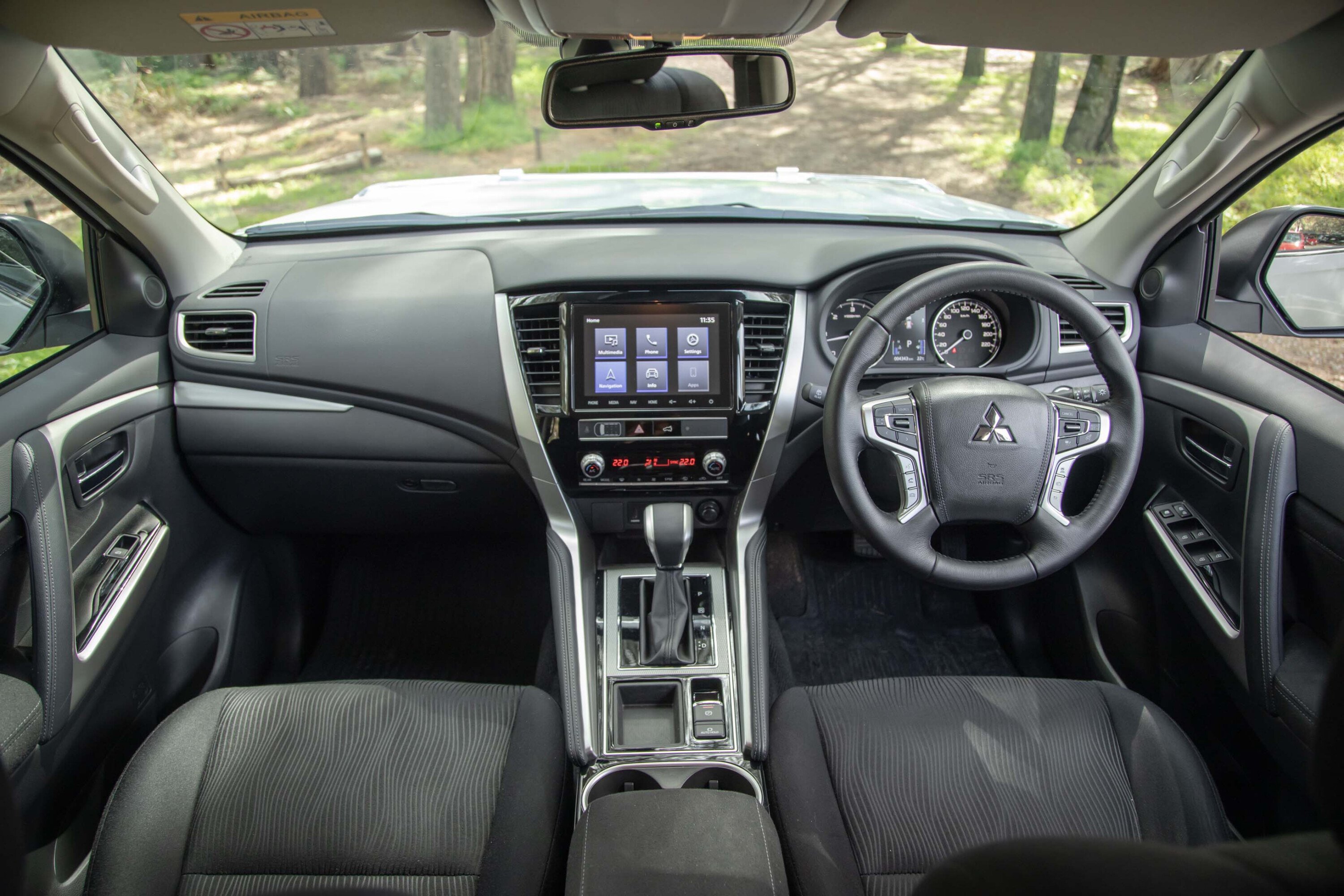
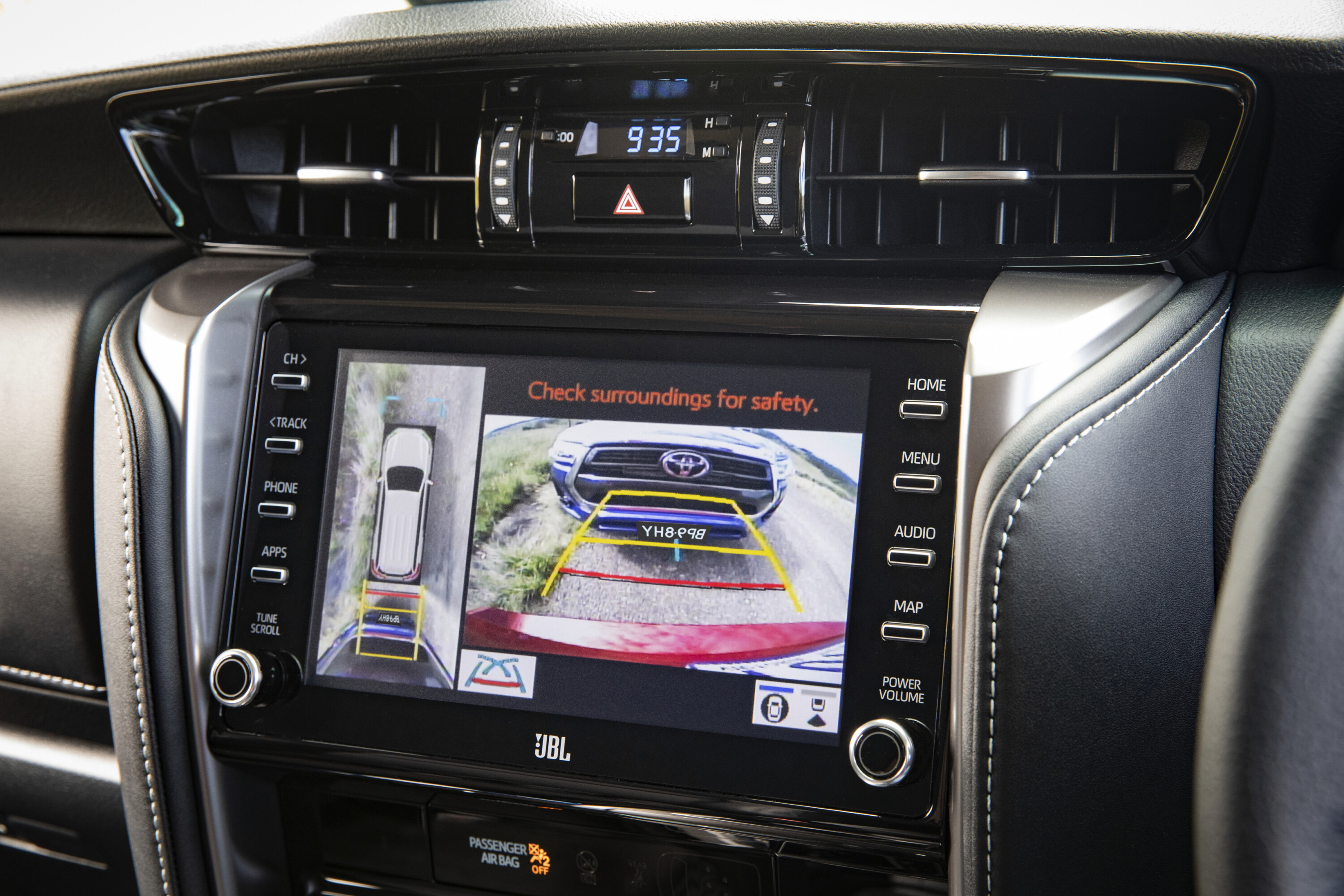
The Mitsubishi and Toyota have similar specs in the two entry models, the Pajero Sport GLX and Fortuner GX. They both share a lot of standard features from adaptive cruise control, dusk-sensing, Bi-LED headlights, rain-sensing wipers, power windows, power-fold side mirrors, keyless entry and start, side steps, rear-view camera, rear parking sensors, lane-change assist, Autonomous Emergency Braking and rear differential lock.
1
The entry level GLX has hill descent control and steering mounted paddle shifters where in the Fortuner range you need to spend on GXL or Crusade for these features.
The Pajero Sport GLX also has driver’s seat power lumbar adjustment. There are only four speakers in the entry Fortuner GX versus six in the Pajero Sport.
The entry-level Fortuner, the GX, has the seating capacity advantage with its seven seats over the Pajero Sport GLX’s five. It also provides superior safety features at this trim level, such as speed sign recognition and front parking sensors.
The next models up the ladder are the Pajero Sport GLS at $55,190 and the $58,895 Fortuner GXL (like all prices mentioned here, these are plus on-road costs).
1
Standard gear for both include embedded satnav, dual zone climate control, power tailgate, power fold side mirrors and rear privacy glass.
The Pajero Sport GLS gets an electrochromatic rear-vision mirror at this trim level that the Fortuner doesn’t, as well as a tyre pressure monitoring system not available in any Fortuner.
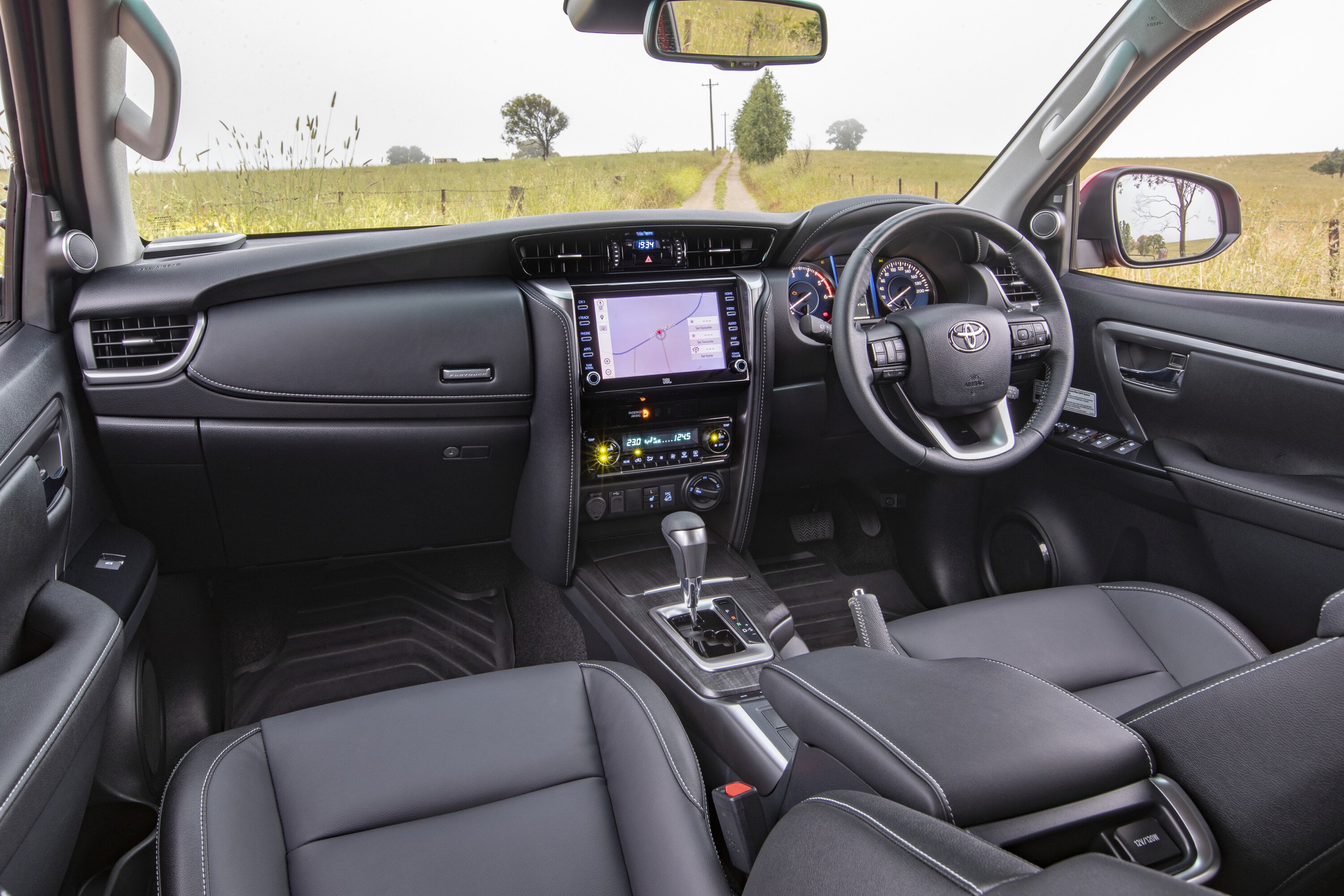
Following the mid-spec variants are the luxury models, the Pajero Sport Exceed and Fortuner Crusade. Both add to the lower spec already mentioned blind-spot warning, rear cross traffic alert and leather seats, heated and power adjustable at the front, and it’s here the Crusade gains a power tailgate and an electrochromatic rear vision mirror.
1
The Crusade offers a 11-speaker JBL premium audio system, where Exceed has an eight speaker ‘premium’ audio system.
While the Fortuner offers a three-tier model range stops at Crusade, the Pajero Sport goes one better – beyond the luxury Exceed model there’s a sporty GSR variant at the top of the model walk. This is basically an Exceed with an appearance package including black painted wheels and trim. There are no powertrain or suspension changes to make it more ‘sporty’.
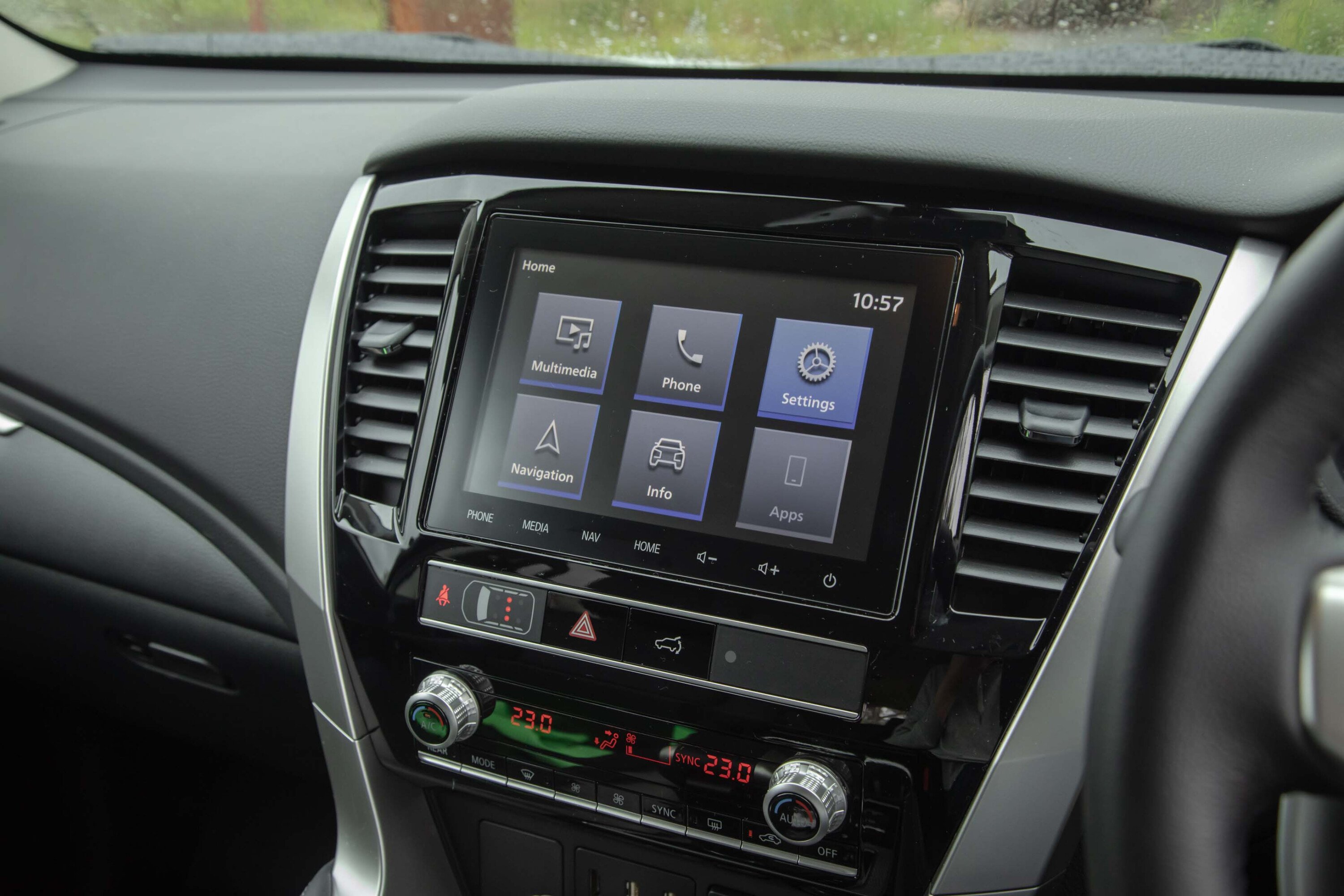
Technology includes smartphone mirroring and an 8-inch screen on both vehicles. The Fortuner in all grades gets Toyota Connected Services, free for three years. This gives stolen vehicle tracking, automatic collision notification and SOS emergency call via an embedded SIM card.
1
The Pajero Sport received a five-star ANCAP safety rating when released back in 2015 – albeit under more lenient guidelines than today’s standards. Because the ANCAP ratings have changed, it is now technically ‘unrated’.
Meanwhile, a five-star score was awarded to the Toyota Fortuner with testing conducted in 2019.
The large SUV scored an extremely impressive 95% score for adult occupant protection 84% for children.
1
| 2023 Mitsubishi Pajero-Sport variant | Fuel consumption | Power | Torque | Price |
|---|---|---|---|---|
| Pajero Sport GLX | 8.0L/100km | 133kW | 430Nm | $49,940 |
| Pajero Sport GLS | 8.0L/100km | 133kW | 430Nm | $55,190 |
| Pajero Sport Exceed | 8.0L/100km | 133kW | 430Nm | $60,690 |
| Pajero Sport GSR | 8.0L/100km | 133kW | 430Nm | $62,440 |
| 2023 Toyota Fortuner variant | Fuel consumption | Power | Torque | Price |
|---|---|---|---|---|
| Fortuner GX | 7.6L/100km | 150kW | 500Nm | $53,775 |
| Fortuner GXL | 7.6L/100km | 150kW | 500Nm | $58,895 |
| Fortuner Crusade | 7.6L/100km | 150kW | 500Nm | $66,755 |
The large 4×4 wagon category starting under $60K has another seven contenders: the Ford Everest ($58,290-$77,000), GWM Tank ($46,990-$60,990), Isuzu MU-X (LDV D90 ($46,832-$52,095), Mahindra Scorpio ($41,990-$45,990) and SsangYong Rexton ($47,990-$56,585. All prices except the GWM, LDV, Mahindra and SsangYong are plus on-road costs.
1
What would have been included (until they became too expensive) are the Jeep Grand Cherokee ($77,950-$129,950) and Toyota Prado ($62,830-$87,468).
Of the above vehicles, the Ford Everest and Isuzu MU-X (both also based on ute models) are the closest competitors to the Pajero Sport and Fortuner.
| Scoring | Pajero Sport | Fortuner |
|---|---|---|
| Pricing and features | 8 | 7.5 |
1
Comfort and space
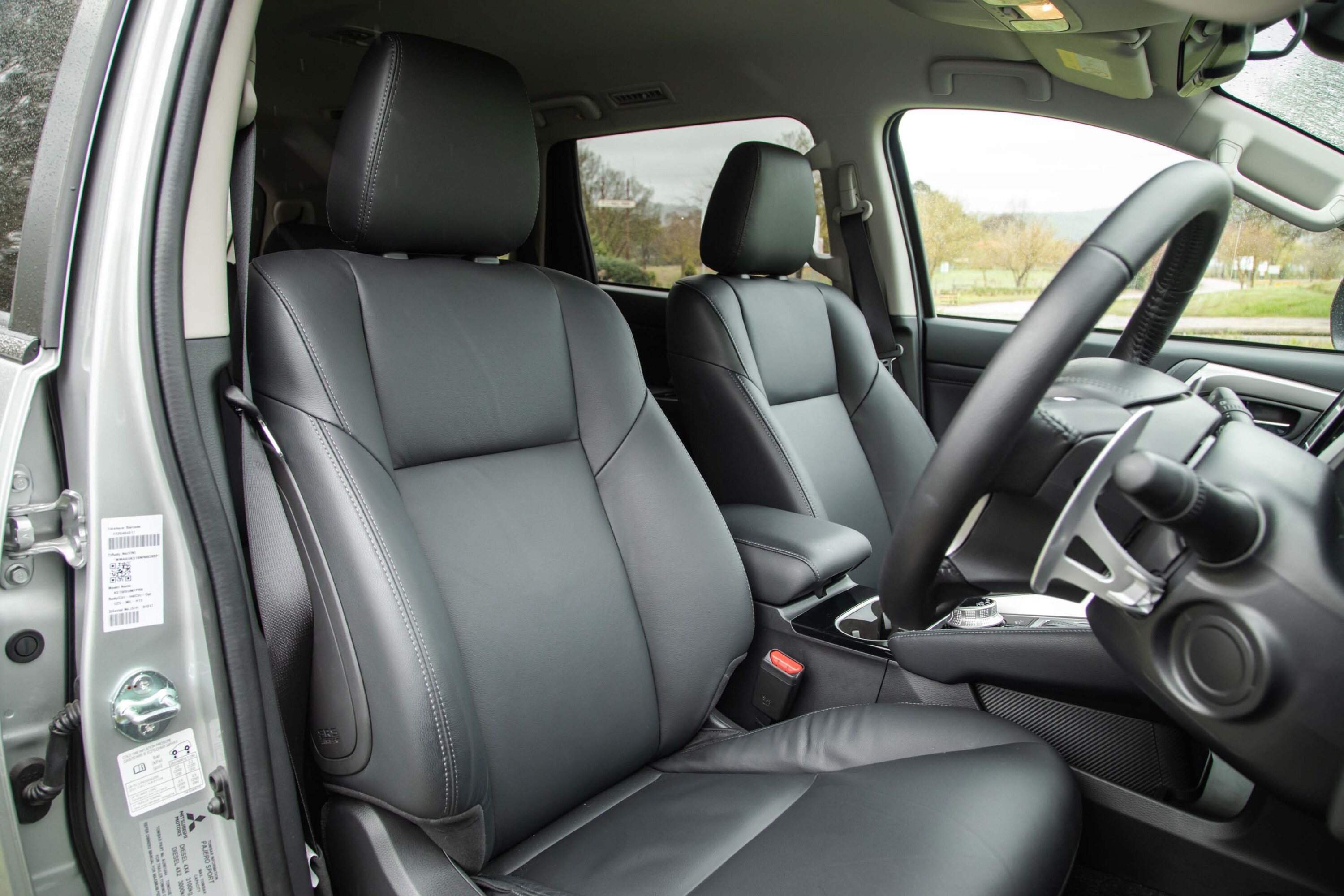
Both vehicles need a bit of a step up to get into, each obviously an older body-on-chassis philosophy where seats seems close to the floor.
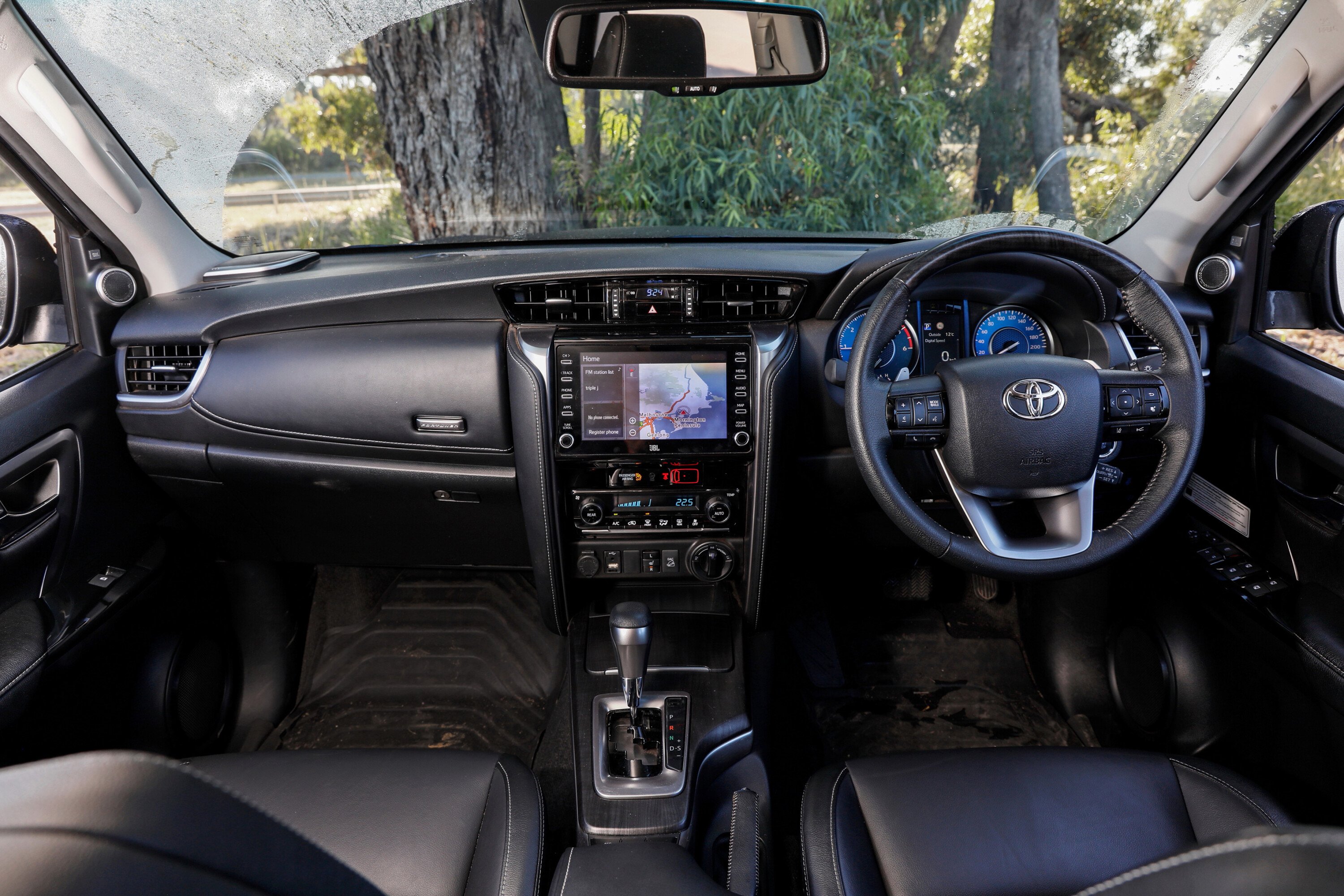
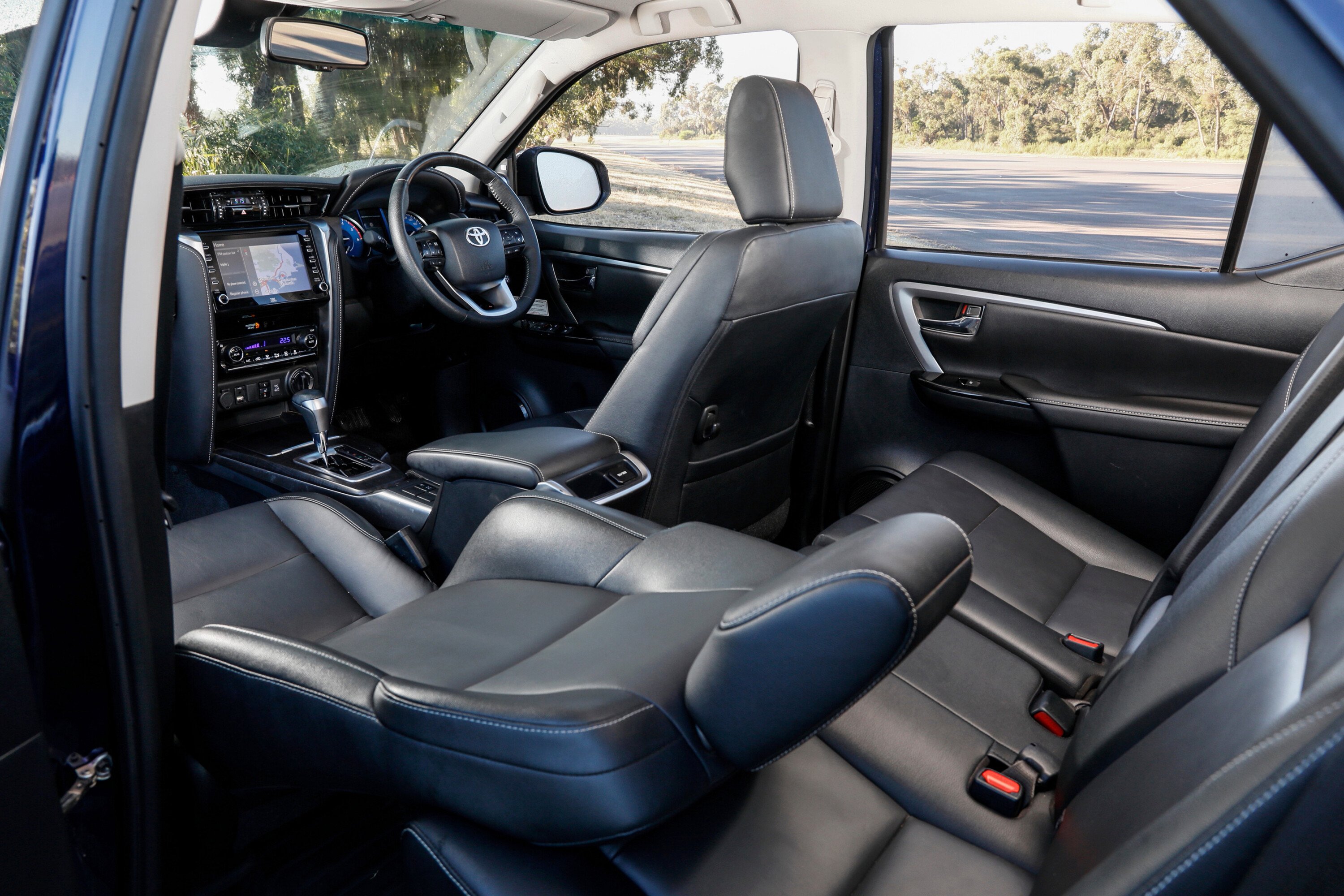
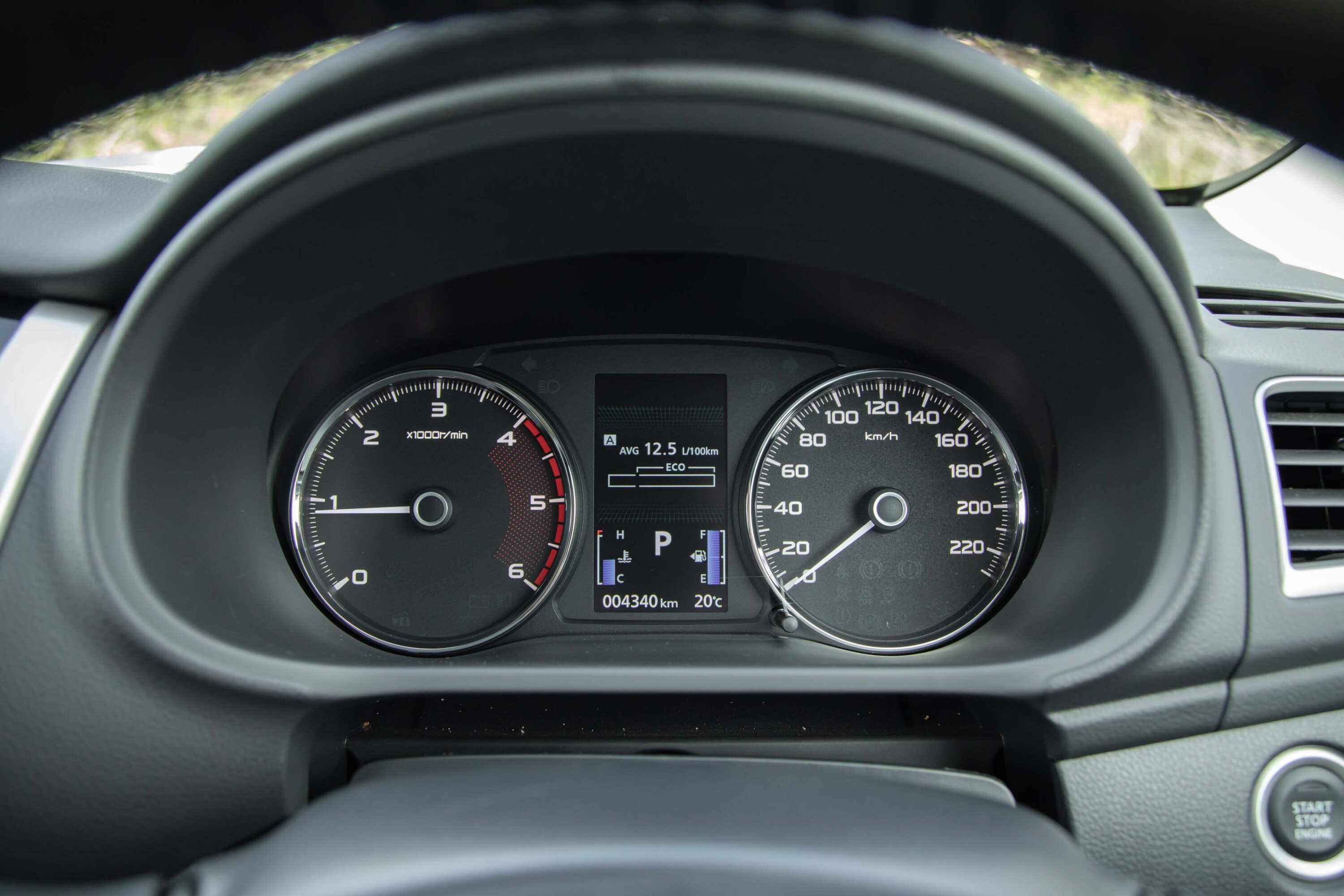
The Fortuner is getting a little long in the tooth, though, and the analogue dials, old-school infotainment system and the plethora of curved edges stamp its time card pretty convincingly. Yet the Fortuner’s cabin is roomy, comfortable, and impressively quiet, thanks to soundproofing that isolates a lot of the tyre and road noise.
It’s an easy and relaxing place to sit on long journeys. The cabin’s layout is also simple and easy to navigate. And while the interior finish feels more commercial vehicle than premium passenger car, most of the hard plastics are suitably durable.
1
However that doesn’t mean the Pajero Sport feels cheap, especially when you get to the upper-tier leather lined Exceed or GSR models, which in fact benefit from a fully digital dash the Fortuner lacks at any trim level.
Where both models most clearly shows their age inside the cabin is with the eight-inch touchscreen, which is small by modern standards.
1
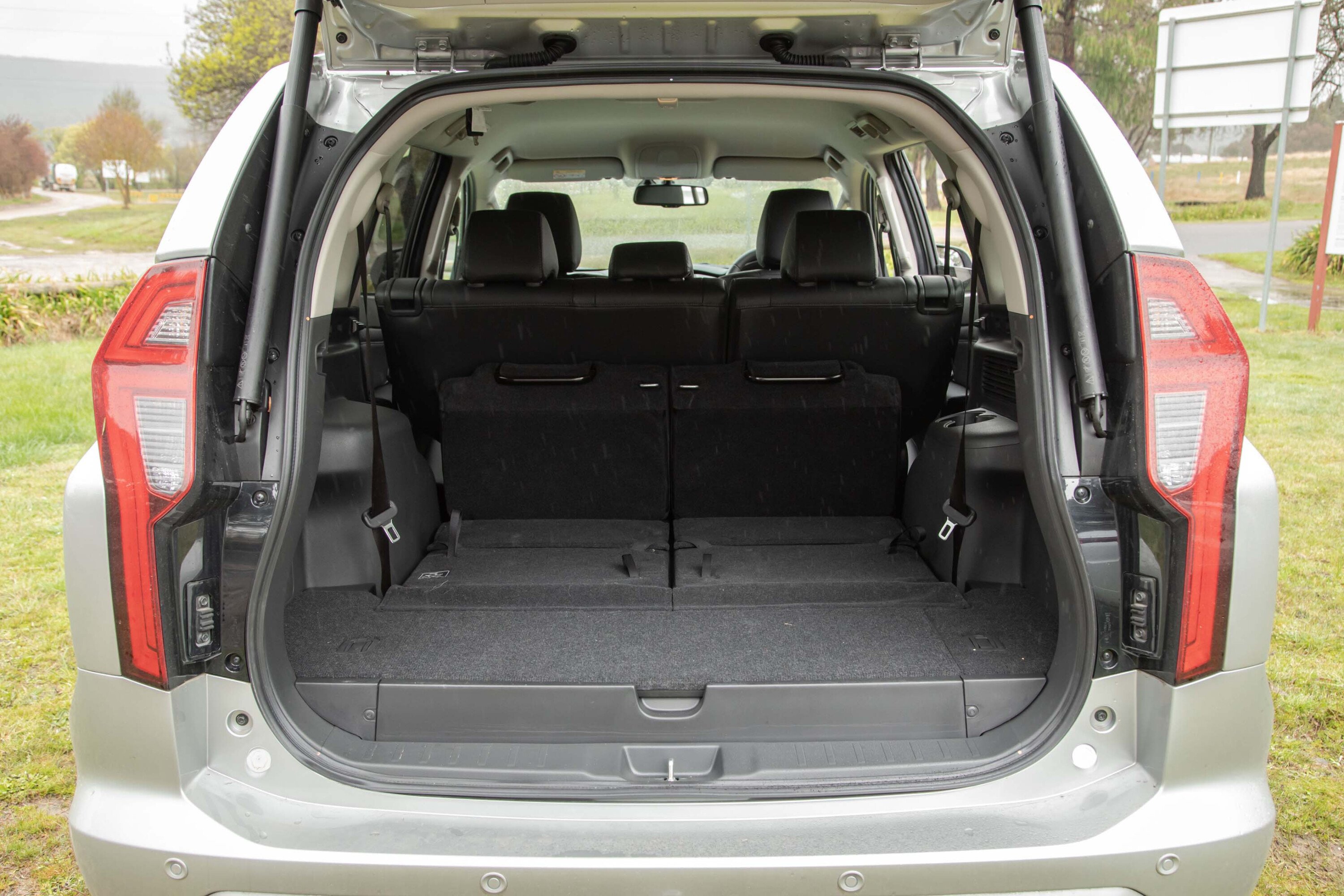
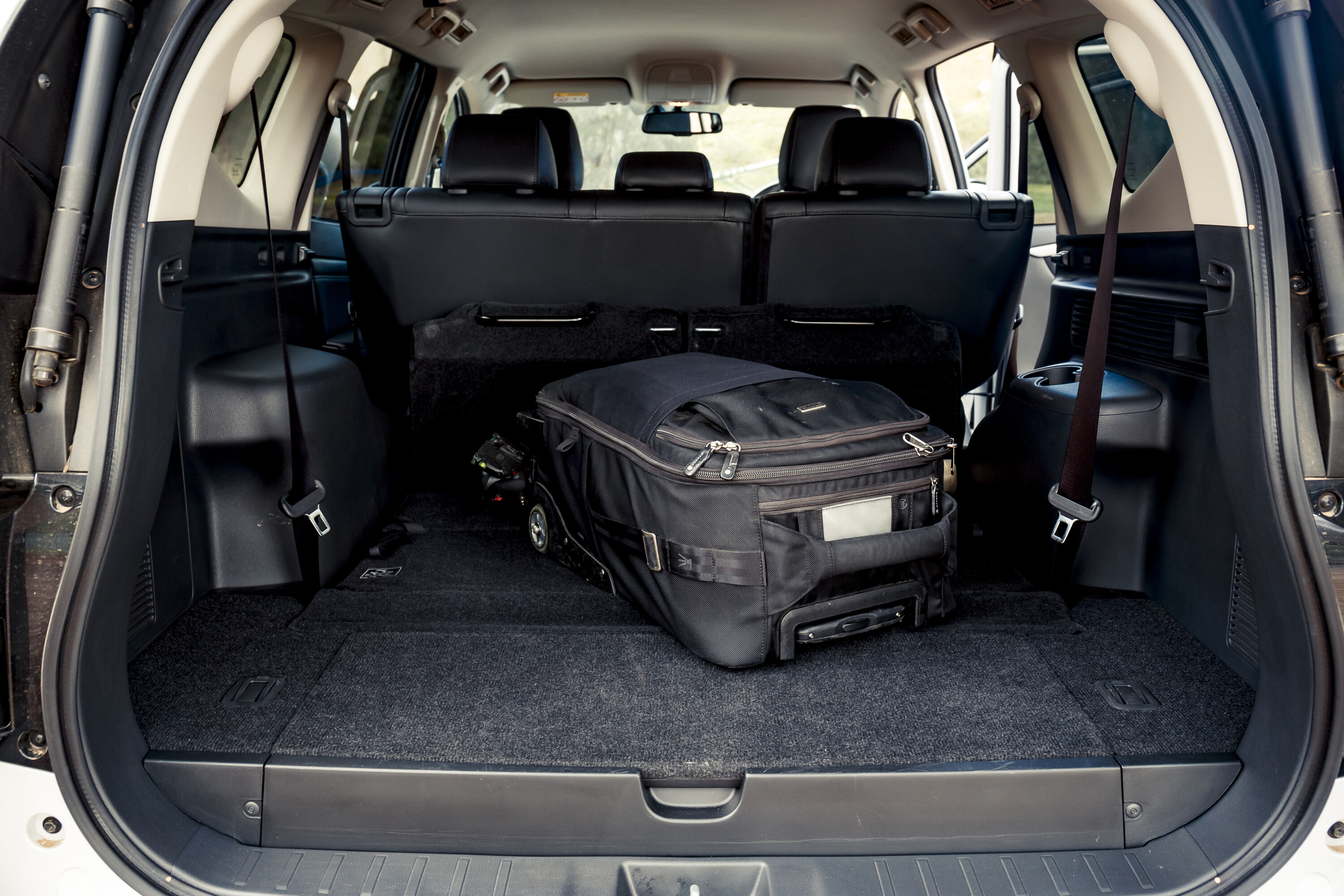
Storage space: Mitsubishi Pajero Sport vs Toyota Fortuner
| Boot space | Pajero Sport | Fortuner |
|---|---|---|
| Behind 3rd row | 131L | N/A |
| Behind 2nd row | 502L | 654L |
| Behind 1st row | 2138L | N/A |
1
The Pajero Sport and Fortuner are very close in cabin space and amenity.
The Fortuner’s second row of seats that slides forward and back boosts interior flexibility: second-row passengers can maximise their leg room or can add leg room for people riding in the third row.
The second row seat doesn’t slide forward for third-row access in the Pajero Sport.
| Scoring | Pajero Sport | Fortuner |
|---|---|---|
| Comfort and space | 8 | 8.5 |
1
On the road
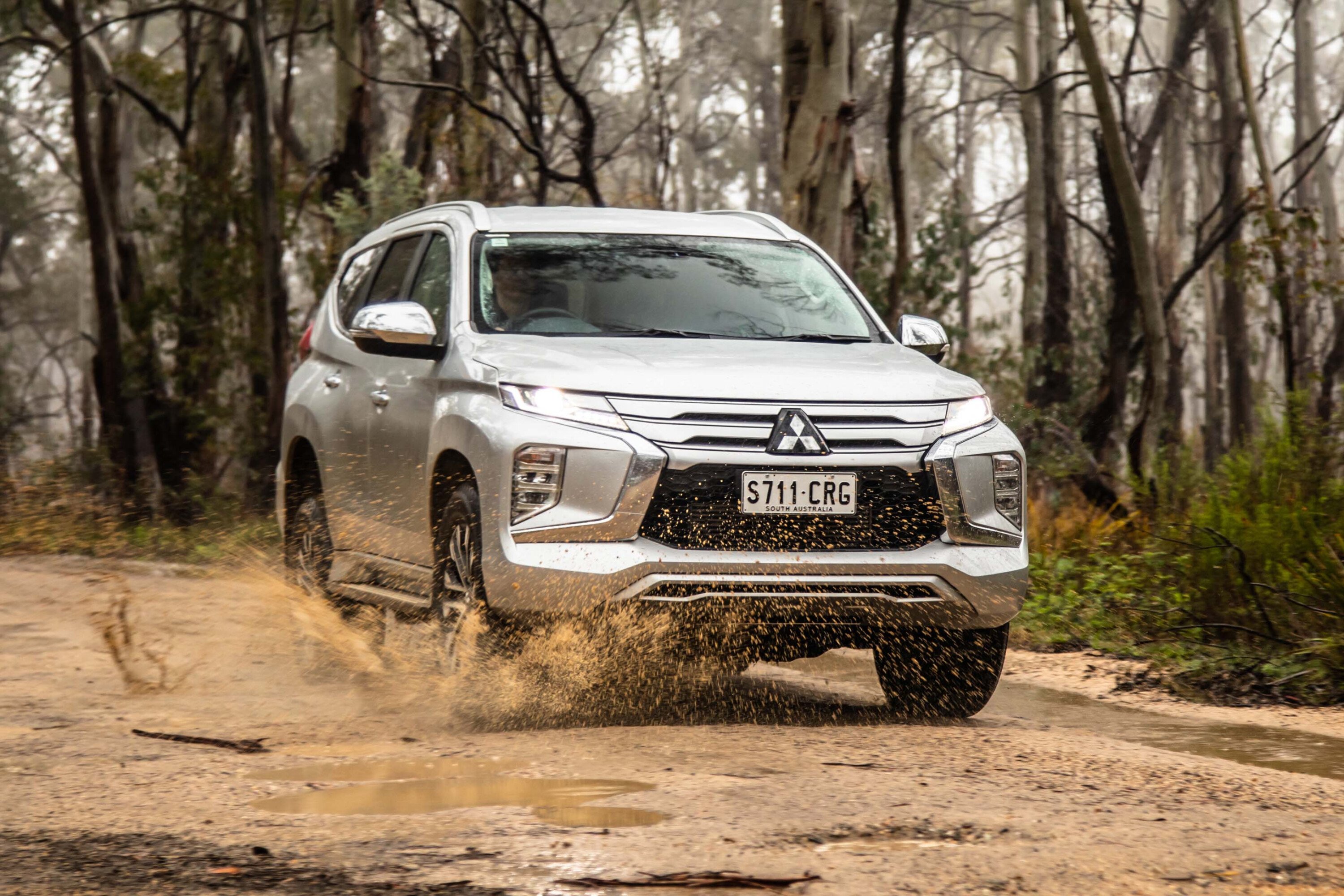
The Pajero Sport’s ability to adapt to both tarmac and dirt is one of its most endearing attributes.
Its 2.4-litre MIVEC DID turbo-diesel engine may be slightly underpowered in its attempt to push the weight (2209kg for GSR), and you can hear it working hard to do so, but it’s not a mitigating factor. The engine is actually relatively quiet, if a little underpowered.
The Mitsubishi is also not the most refined when travelling on long stretches of bitumen. The eight-speed automatic transmission feels well-calibrated and smooth by large SUV standards.
1
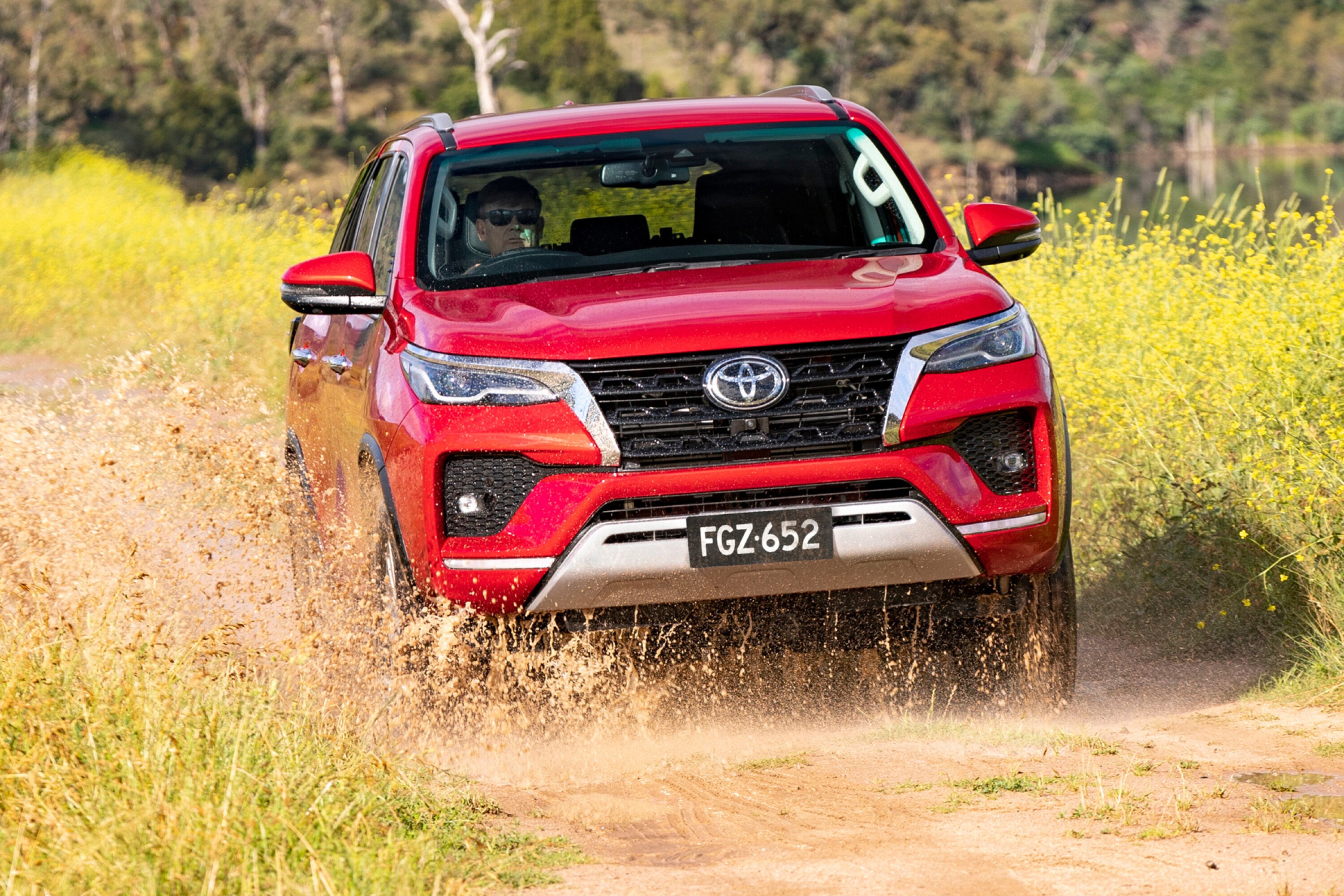
The Fortuner’s diesel engine exhibits some gruff diesel clatter around town but it is quiet at freeway speeds.
It supplies enough grunt for comfortable highway cruising and hill-climbing, and accelerates moderately when overtaking.
The biggest dynamic let downs are slow steering that does not feel intimately connected with the front wheels, and the rear wheels’ tendency to skip and move around over corrugations – a legacy of the ute-based, live-axle rear suspension.
| Scoring | Pajero Sport | Fortuner |
|---|---|---|
| On the road | 7 | 7.5 |
1
- What is a Powertrain or Drivetrain?
- Power vs torque
- Car suspension explained
- Automatic transmissions (‘gearboxes’) explained
- Chassis control systems explained
- Car vs Ute vs SUV: How the vehicle you buy should guide the way you drive
- What is the WLTP emissions and range test?
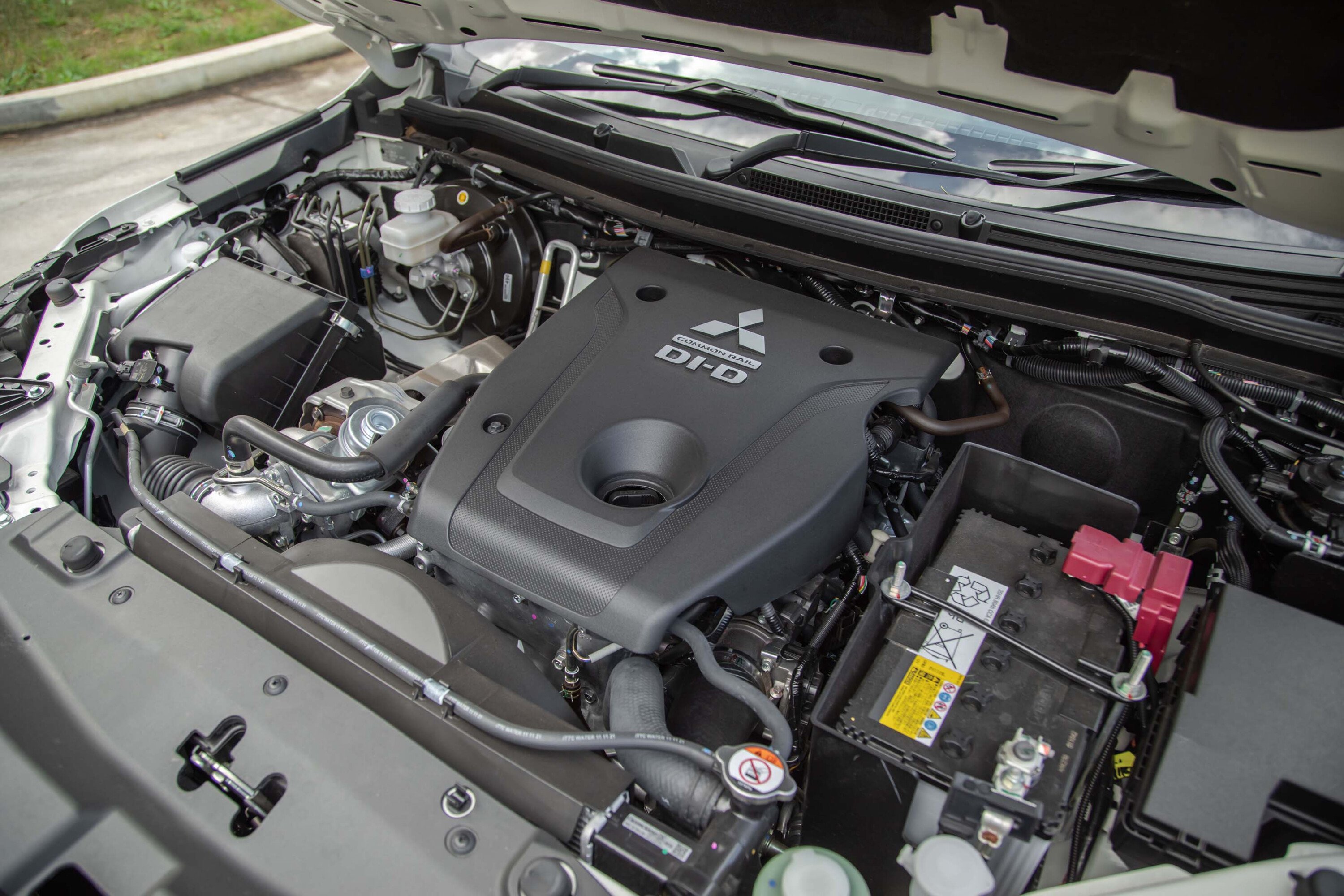
Mitsubishi is industry leading when it comes to after-sales support, with all Mitsubishi vehicles covered by a five-year/100,000km vehicle warranty, that extends to a 10-year or 200,000km warranty if owners keep scheduled servicing with Mitsubishi.
Servicing intervals are every 12 months or 15,000km, whichever comes first. Mitsubishi will also cap servicing costs for the first ten years or 150,000km, and includes 10 years roadside assist provided services are done yearly at Mitsubishi.
1
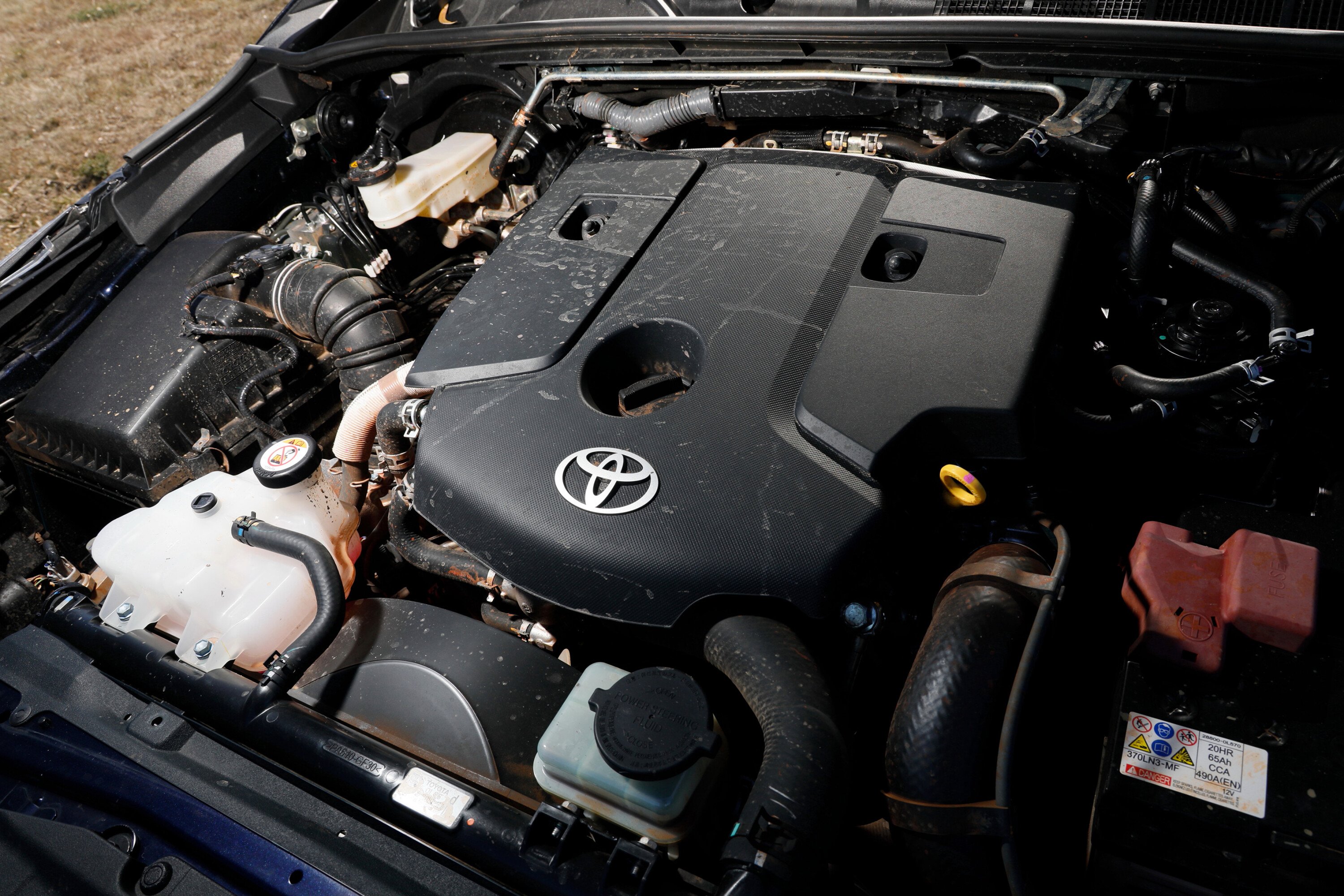
Meanwhile the Toyota comes standard with a five-year/unlimited km warranty. Roadside assistance is covered for up to seven years, if the call-out was caused by a defect with the vehicle covered by warranty.
If you stick to the annual service schedule, Toyota will extend the engine and driveline warranty from five to seven years, The CPS Program covers the first seven scheduled services, due every 12 months or 15,000km.
| Mitsubishi warranty coverage | |
|---|---|
| Warranty | 10 years 200,000km |
| Roadside assistance | 10 years |
| Capped price servicing | 10 years |
1
| Toyota warranty coverage | |
|---|---|
| Warranty | Five years unlimited km |
| Roadside assistance | Seven years |
| Capped price servicing | Five years |
| Scoring | Pajero Sport | Fortuner |
|---|---|---|
| Ownership | 8 | 7.5 |
1
VERDICT
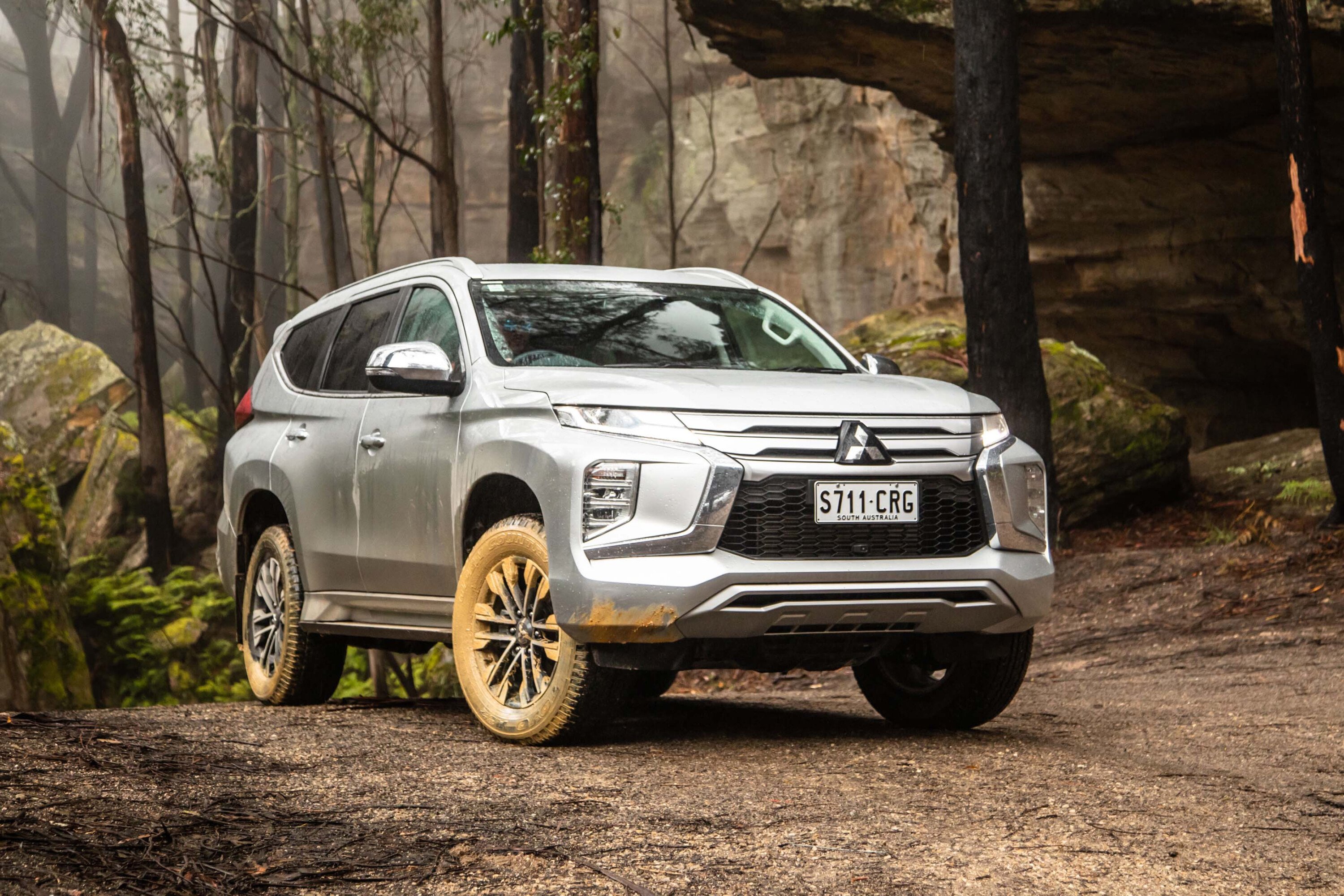
That Mitsubishi has kept the Pajero Sport relatively fresh yet attractively priced over eight years in a fast-developing market is a testament to the clarity of the original design.
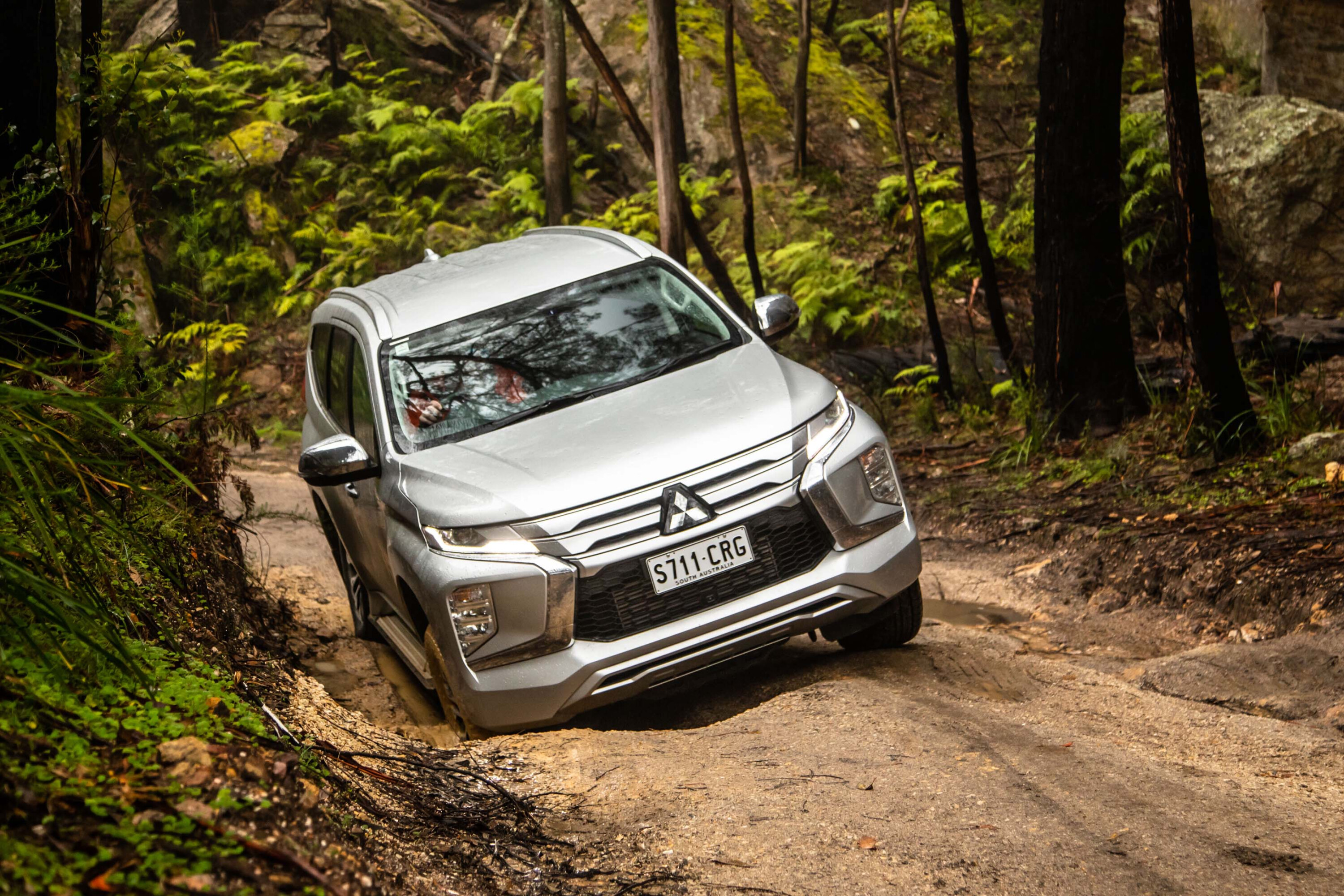
It offers plenty of tech and comfort features for not much money, and its 4WD system is very good – as is the efficient, if not powerful engine. However, there’s no denying it is fast becoming outdated against more advanced and sophisticated machines – such as the MU-X.
The Pajero Sport also lacks a safety rating now, and also lacks a 3500kg towing capacity for those that consider that important.
1
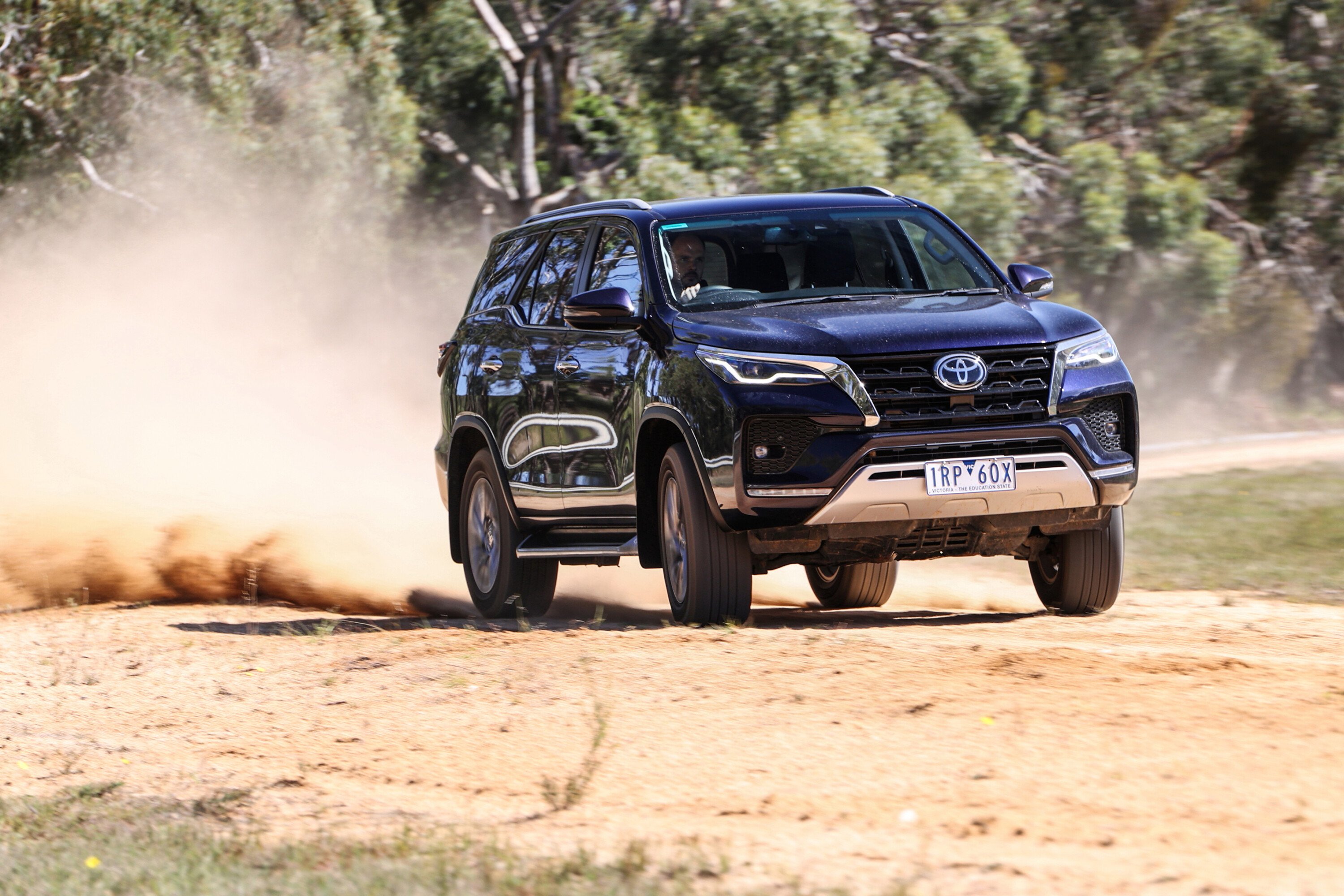
Meanwhile, the Toyota Fortuner drives respectably for a ute-based SUV. is a hardy family wagon that’s good off-road but not quite as good on the road as less rugged alternatives.
It’s neck-and-neck between these two models, with the better 4WD system, features and value going to the Pajero Sport, although the more up-to-date (and still current) ANCAP safety rating is also compelling for the Fortuner.
1
OVERALL SCORING: 2023 Mitsubishi Pajero Sport v 2023 Toyota Fortuner
| Overall scoring | Pajero Sport | Fortuner |
|---|---|---|
| Pricing and features | 8 | 7.5 |
| Comfort and space | 8 | 8.5 |
| On the road | 7 | 7.5 |
| Ownership | 8 | 7.5 |
| OVERALL | 8 | 7.5 |
1
| Mitsubishi Pajero Sport Toyota Fortuner | Toyota Fortuner | |
|---|---|---|
| Body | 5-door, 7-seat large SUV | 5-door, 5/7-seat large SUV |
| Engine | I4 diesel | I4 diesel |
| Transmission | 8-speed automatic | 6-speed automatic |
| Power | 133kW at 3500rpm | 150kW at 3000-3400rpm |
| Torque | 430Nm at 1600-2600rpm | 500Nm at 1600-2800rpm |
| ADR fuel claim | 8.0L/100km | 7.6L/100km |
| Weight | From 2145kg | From 2175kg |
| Suspension FR/RR | IFS/live axle | IFS/live axle |
| L/W/H (mm) | 4825x1815x1835 | 4795x1855x1835 |
| Wheelbase (mm) | 2800 | 2745 |
| Tyres | 265/60R18 | 265/65R17 |
| Wheels | 18-inch alloy | 17-inch alloy |
| Price | From $49,940 | From $53,775 |
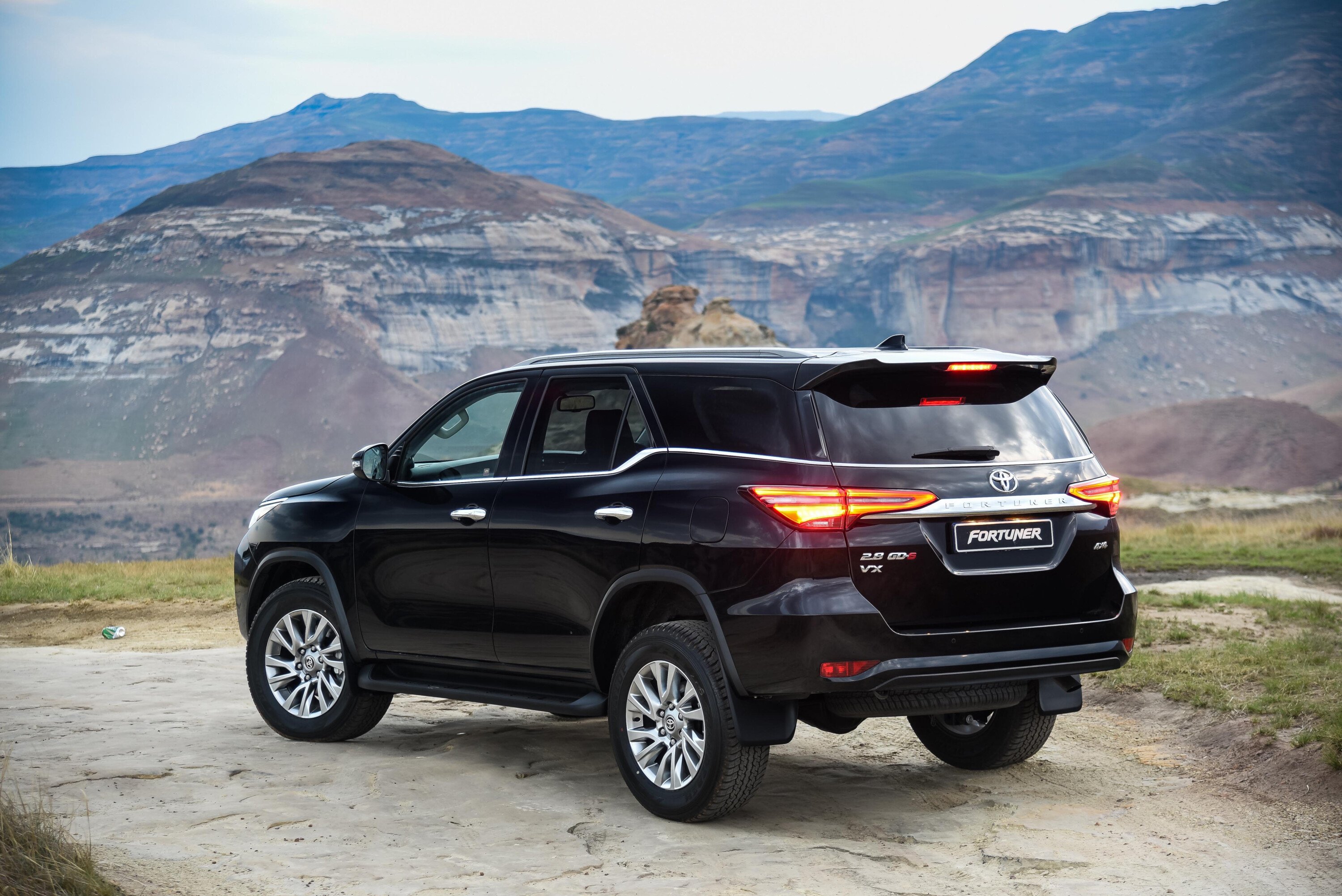
1
Scores from single car reviews
| Pajero Sport | Fortuner | |
|---|---|---|
| Safety, value and features | 7 | 6 |
| Comfort and space | 8.5 | 6 |
| Engine and gearbox | 7 | 6 |
| Ride and handling | 7.5 | 6 |
| Technology | 7 | 6 |
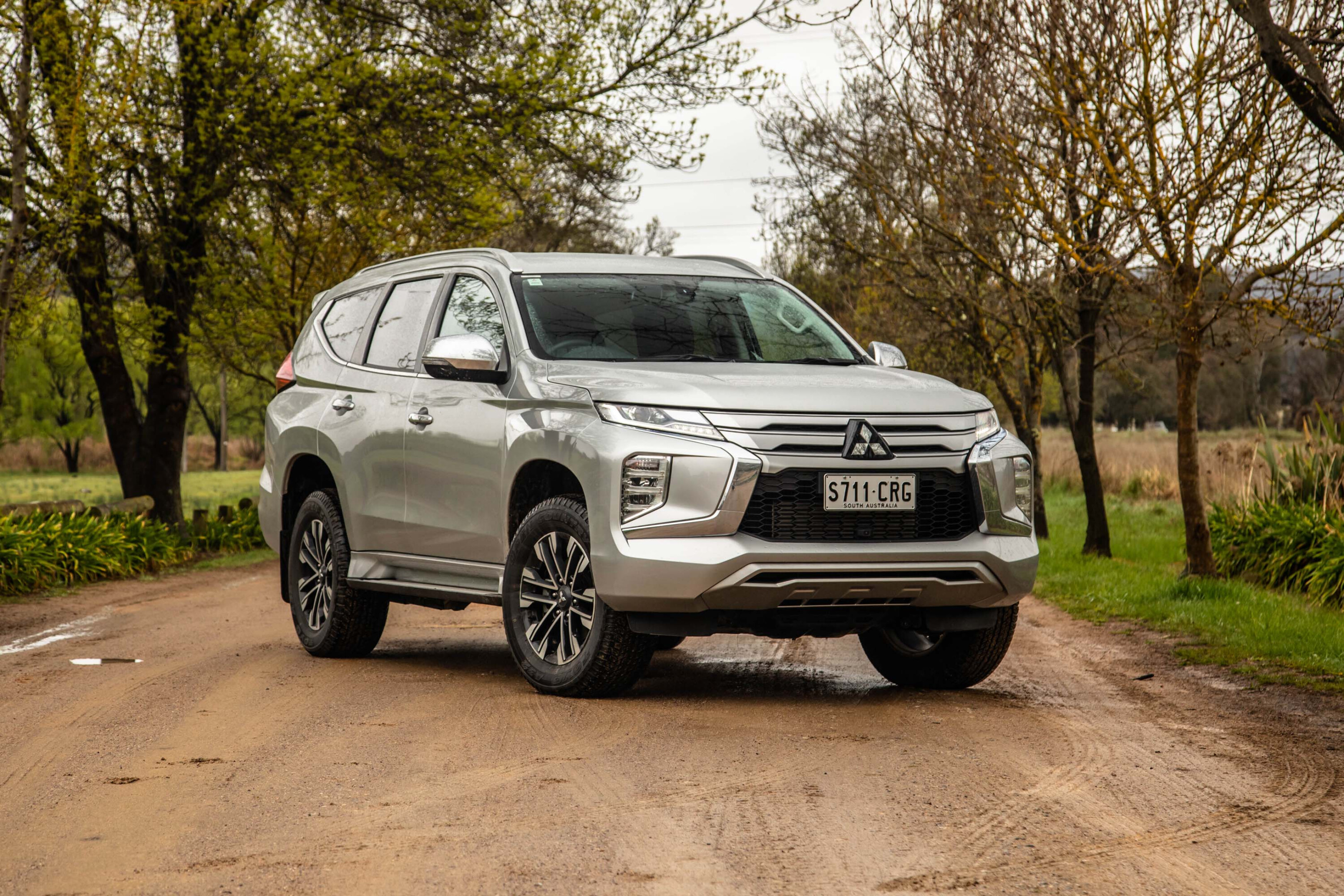
1
2023 Mitsubishi Pajero Sport
Things we like
- Industry-leading warranty and servicing
- Economical engine
- Well-featured for a low price
Not so much…
- Short on tow capacity
- Ride quality
- No safety rating
2023 Toyota Fortuner
Things we like
- Great off-road
- Spacious inside
- Toyota service network
Not so much…
- Gruff diesel engine
- Lacks towing capacity
- Ride quality
MORE
Everything Toyota
Travel to where streetlights no longer exist, and non-functioning headlights could genuinely risk your life.
Debris has the potential to whip up and damage your headlights, and light protectors are cheap insurance to prevent finding yourself in such a situation.
This is why it’s important to consider installing light protectors and surrounds, as they protect headlights and tail-lights and enhance the overall appearance of your vehicle.
- What it is: A headlight protector or cover is a protective barrier that covers the light clusters and surrounds. Headlight or tail-light trim is a rubber or plastic that surrounds vulnerable edges of light clusters.
- Why you need it: To provide a layer of protection to stop minor damage that would otherwise leave you stranded in the dark.
- Buying tips: Consider the quality of the plastic, as cheap versions may yellow over time.
JUMP AHEAD
| Material | UV-resistant | Headlight cover or trim | |
|---|---|---|---|
| Toyota | Acrylic | Yes | Cover |
| Bossco | ABS plastic | Not specified | Trim |
| Ultimate 4×4 | ABS plastic | Not specified | Trim |
Toyota headlight covers
Currently the only headlight covers available for post-2020 Hiluxes, these covers attach via robust metal clips for easy install and removal. They are made from a clear, high-strength acrylic that’s resistant to cracking and UV discolouration. The covers are suitable for either LED lights or halogen headlamps.
Specifications
- Material: Acrylic
- UV-resistant: Yes
- Cover or trim: Cover
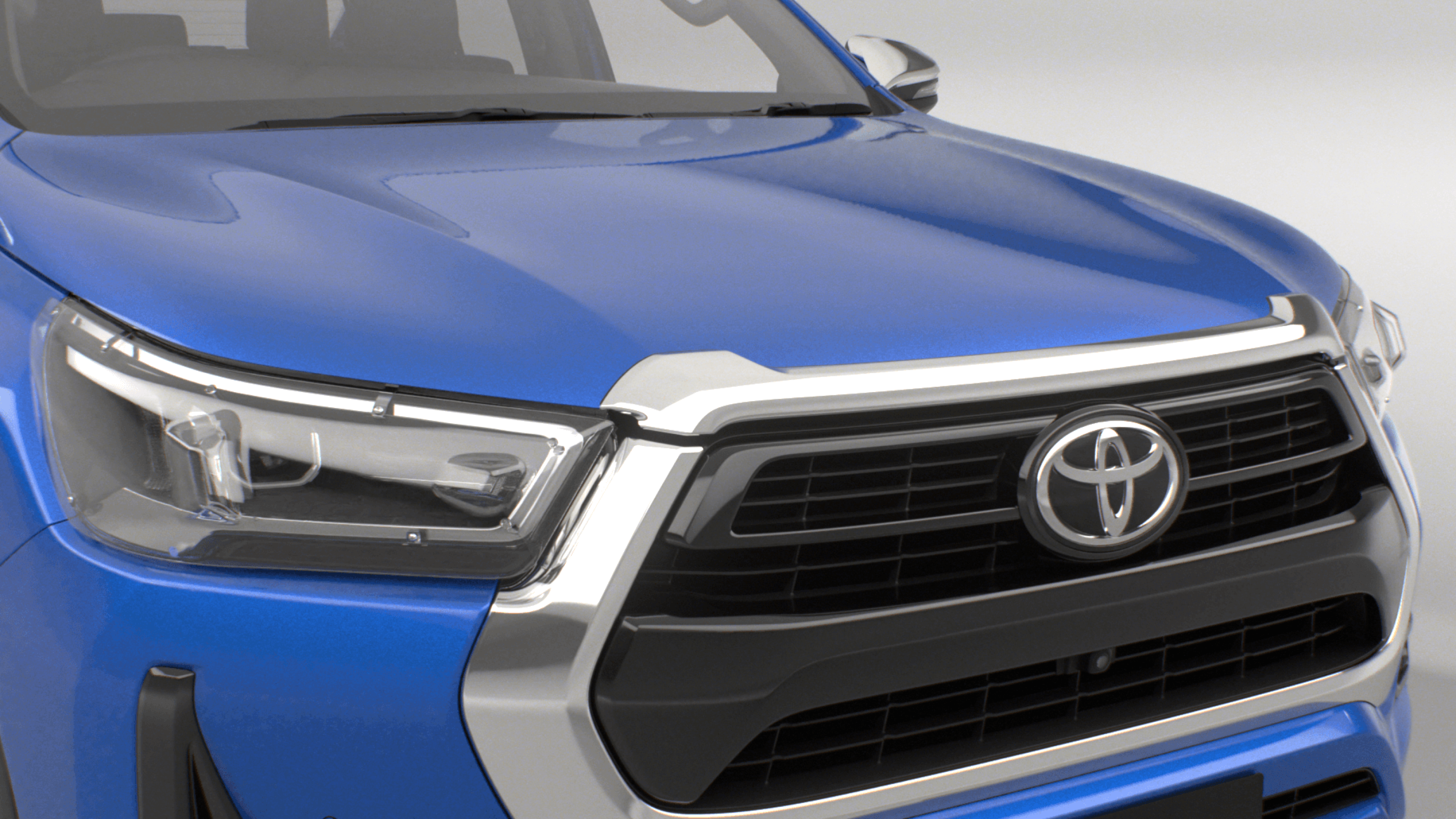
1
Pros
- Factory look
- Quality UV-resistant acrylic
- Clip on and off for easy cleaning
Cons
- Not the cheapest option
Bossco light trims
These headlight and tail-light trims protect the most vulnerable parts of the light clusters and reduce the risk of damage.
Specifications
- Material: Acrylic
- UV-resistant: Not specified
- Cover or trim: Trim
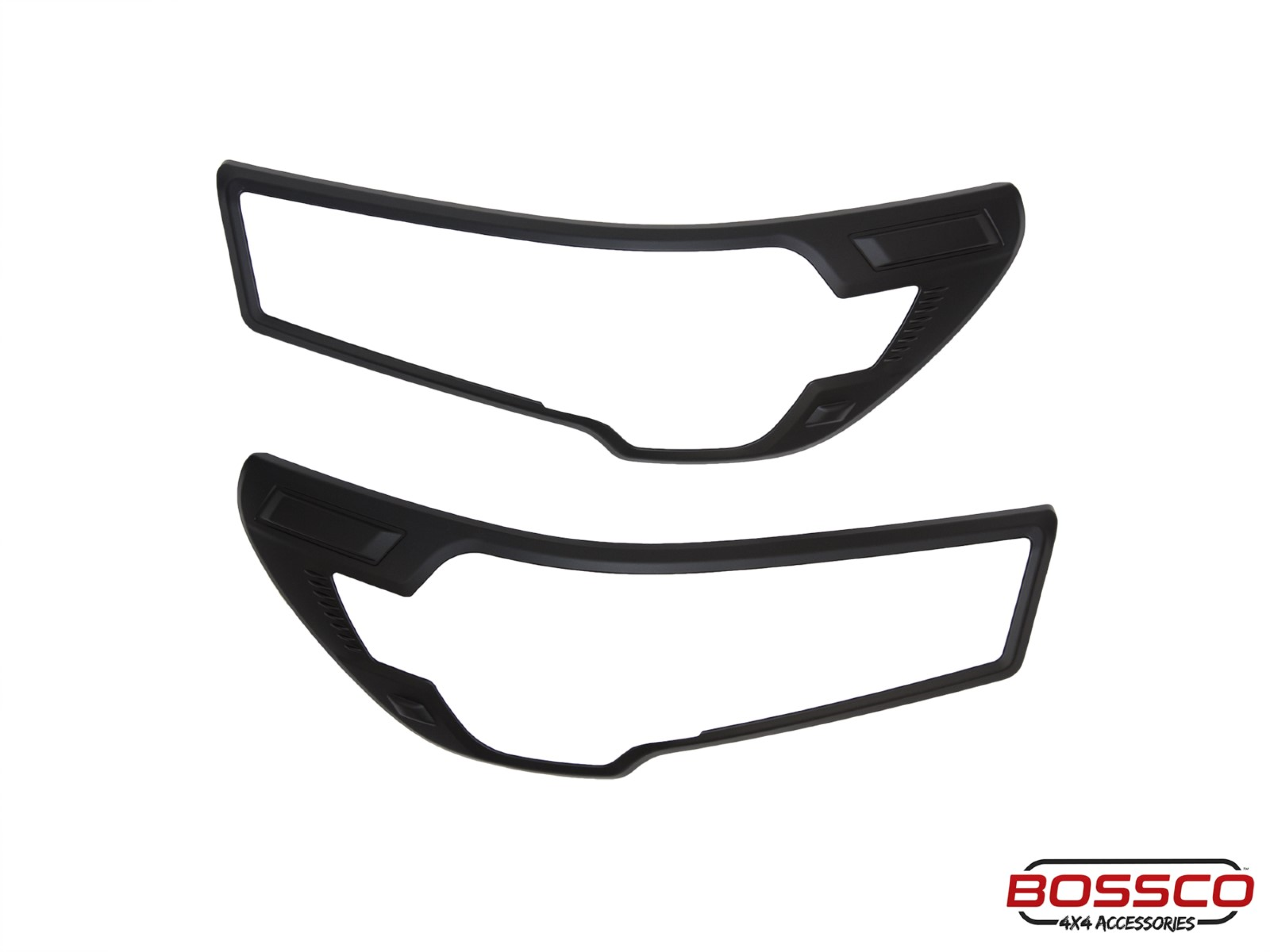
1
Pros
- Looks tough
- Full set included
- No cutting, no drilling, easy install
Cons
- Trim only protects the exposed edges of lights
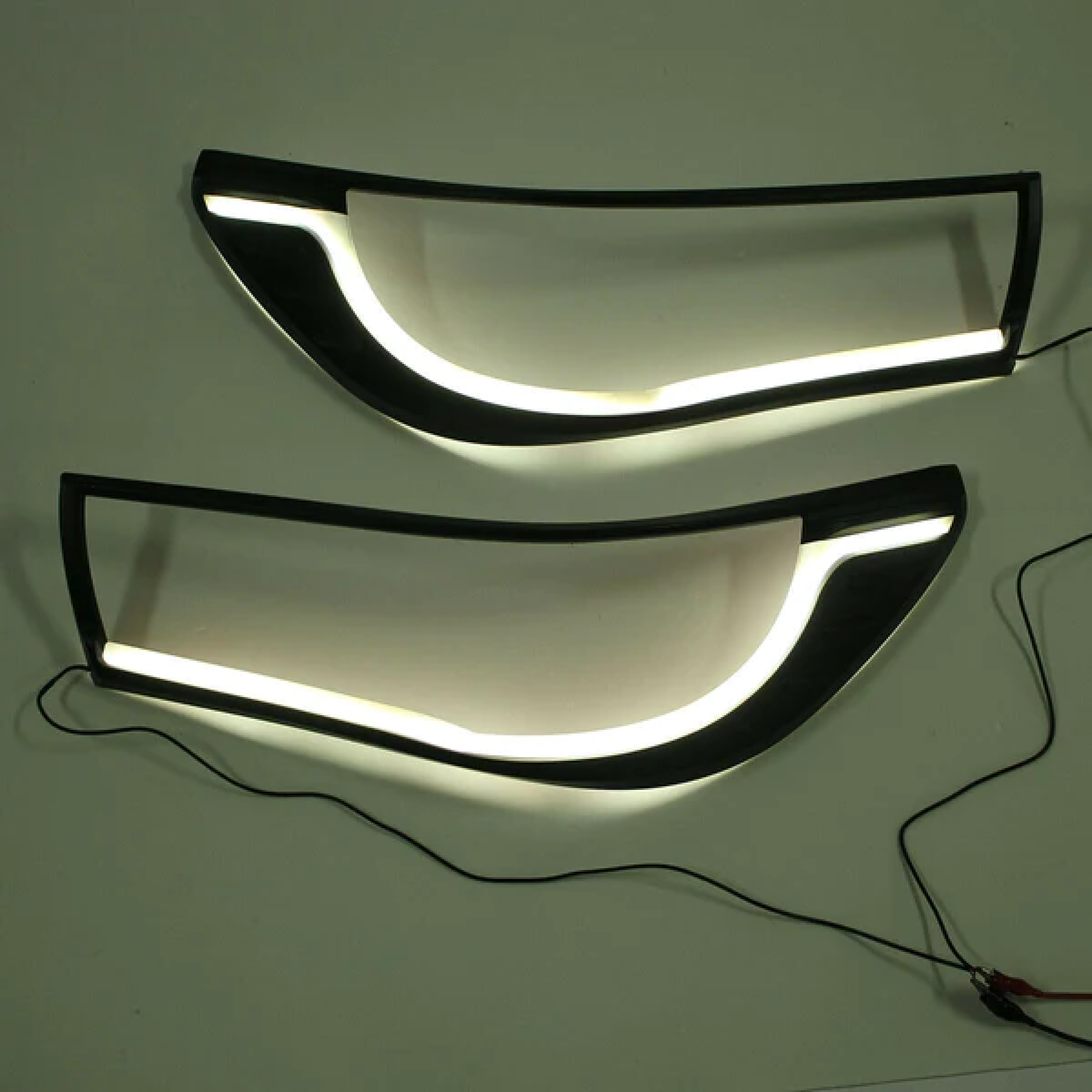
Ultimate 4×4 headlight trims
These also protect the most vulnerable parts of the headlight clusters and reduce the risk of damage. For that show-pony look, these include speccy LED lights.
Specifications
- Material: ABS plastic
- UV-resistant: Not specified
- Cover or trim: Trim
1
Pros
- Looks tough
- Fancy LED lights included
- No cutting, no drilling, easy install
Cons
- Trim only protects the exposed edges of lights
- Trim is for headlights only
How we review products
4X4 Australia has been reviewing four-wheel drive vehicles and aftermarket products for more than 40 years.
When looking for the best accessories for your make and model of 4WD, there are some things essential to making sure you have the best off-roading experience.
When we compare products, here are some of the things we consider:
- Warranty
- Build quality
- Value for money
- Time and ease to set-up/install
- Weight
- Fit and finish
- How well it gets the job done
- What materials they’re made from
- Corrosion/UV resistance
- Coatings
- Compatibility with other accessories
- Compliance with ADRs and vehicle safety systems
- Country of manufacture
- Load ratings, to determine what’s the best product across each price point.
Disclosure: When you buy through our links, we may earn a commission. We also include products that we do not earn a commission from.
Born with a vision to “Bring Green Energy to All”, US brand Jackery is bringing its next generation of emissions free, solar generators to Australia.
With more than 11 years of expertise and three million units sold worldwide, Jackery is a pioneer and global leader in harnessing sustainable energy and utilising it in remote locations throughout the world.
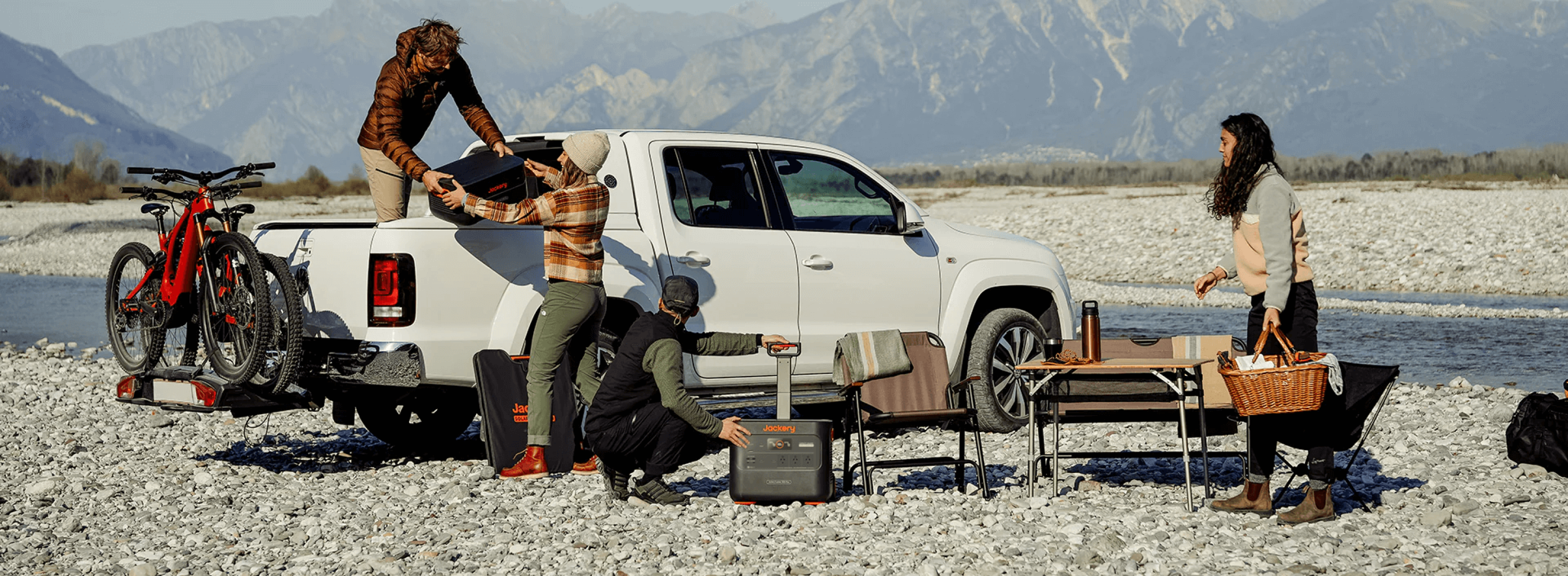
Ideal for outdoor enthusiasts, nature lovers and off-roaders who venture beyond the bright lights of the city, Jackery’s range of solar generators allow the adventurous to stay charged wherever they go, and for weeks at a time.
1
Founded in 2012 in California, USA, Jackery launched its outdoor portable power stations in 2016. However, it wasn’t until 2018 when the company developed the world’s first portable solar panels and introduced solar generators to the great outdoors.
The Solar Generator Plus series is Jackery’s latest sustainable power solution, with the innovative 2000 Plus consisting of groundbreaking technology and countless features. Let’s take a closer look.
What is a solar generator?
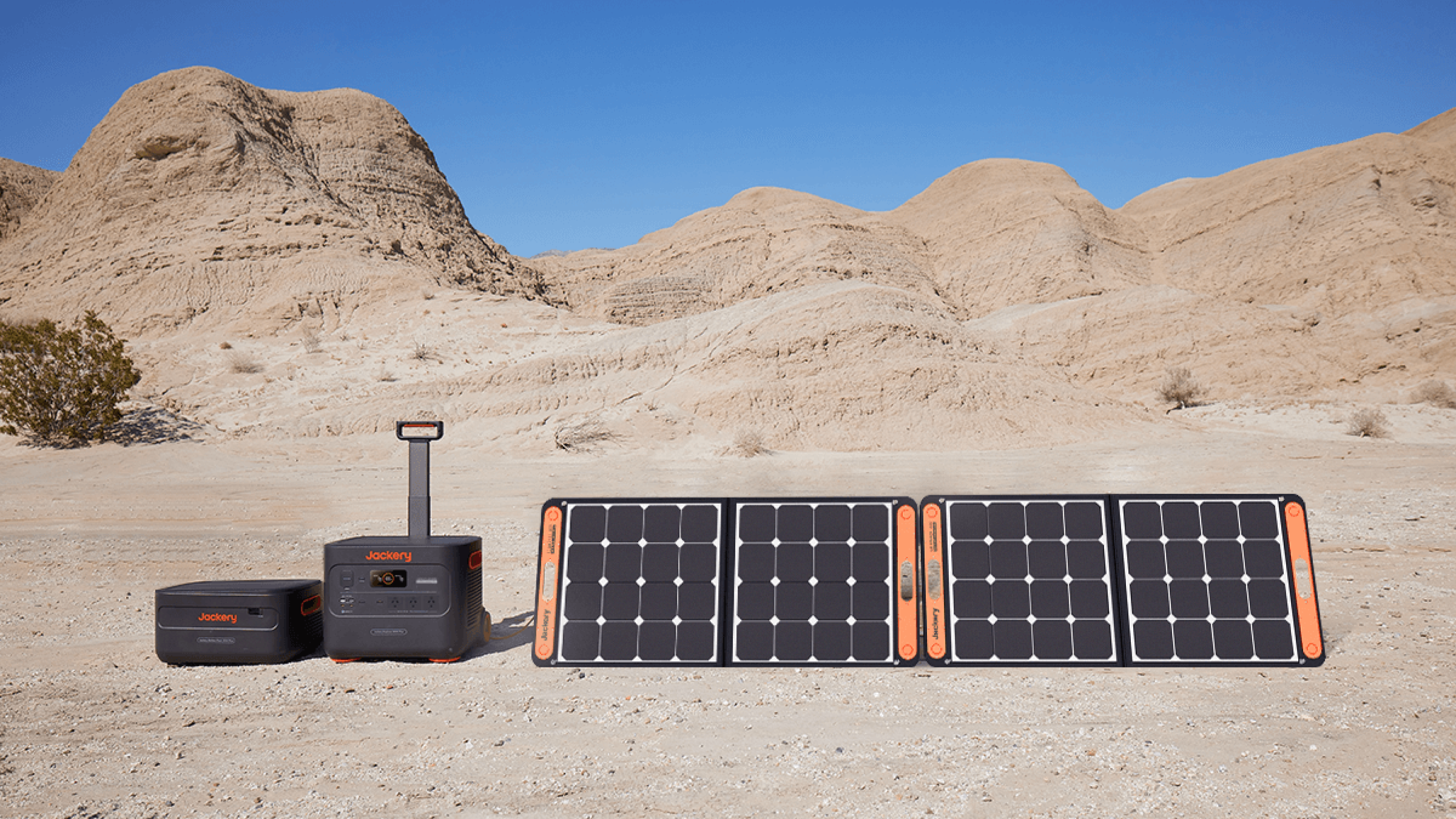
A solar generator is essentially a portable power station that receives and stores electric energy from portable solar panels – the solar panels collect and convert power, sending the electric energy to the portable power station, which receives and stores the power for later use.
1
2000 Plus
Jackery’s Solar Generator 2000 Plus is ideal for outdoor 4×4 adventures and off-grid lifestyles such as towing a caravan around the country, but it’s also fitting for myriad other uses including as an emergency back-up and for emergency responses.
It’ll also come in handy around the home in places where access to power is inhibited – home DIY projects and outdoor parties, for example. So whether you need to power a coffee machine, fridge, induction cooker, grill pan or myriad tools for off-road use, the 2000 Plus has you covered.
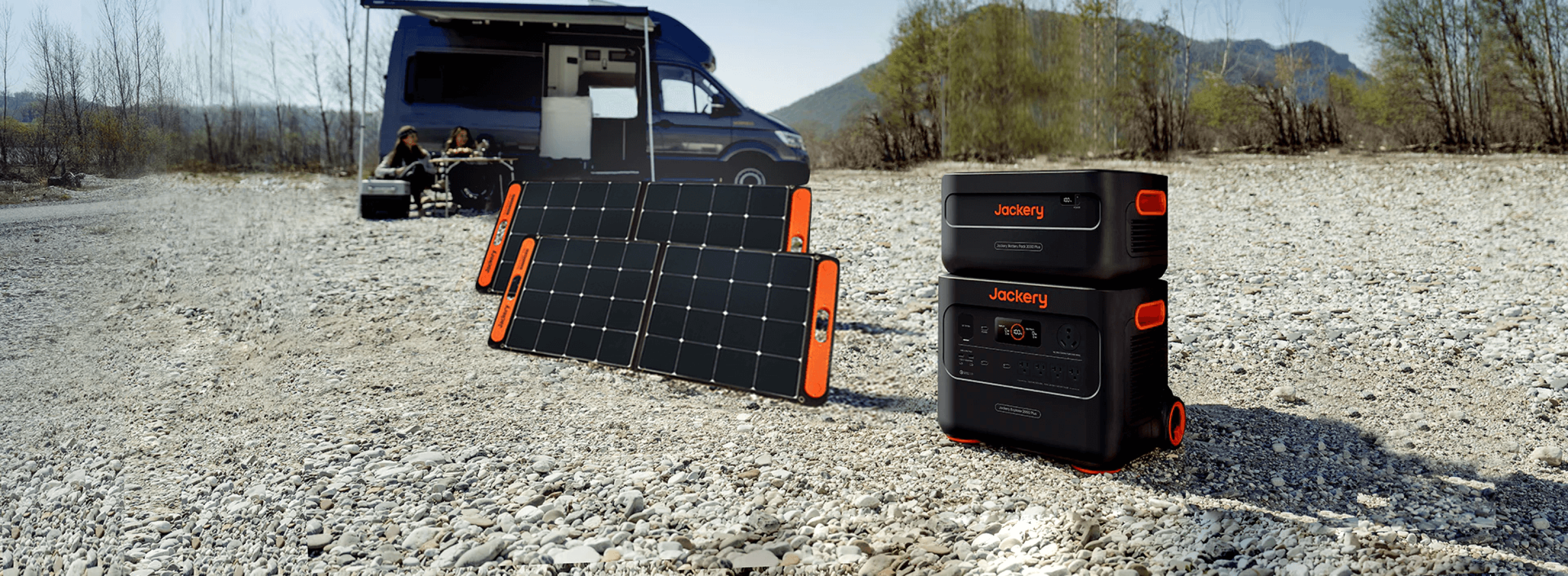
The unit features expandable capacity, with the flexibility allowing for versatile charging scenarios. For example, 2kWh (45.6Ah) will sufficiently provide enough power for one day of camping; but it can be expanded to an exceptional 12kWh/13A/638.4Ah capacity as it can support up to five add-on battery packs at a time. That’s a lot of off-grid power!
With long-lasting LFP (LiFePO4) battery technology, it’s claimed to last up to 10 years, even with daily use. It achieves up to 4000 charge cycles to maintain 70 per cent battery health. Plus, it comes with a generous 3+2 years full warranty.
The 2000 Plus is exceptionally safe, featuring innovative ChargeShield technology which incorporates 62 safety features and finds an ideal balance between charging speed and overall battery safety. The unit has been stamped with high-level FCC/CE certification, and it’s UL-certified for safety, which includes flame retardancy, fall protection and grade 9 shock resistance.
1
The whisper-quiet, emissions free solar generator utilises industry-leading IBC panels with up to 25 per cent efficiency, for rapid solar charging. Plus, it’s convenient, with three charging options: solar, car and wall outlet. Dual PD ports can deliver up to 100W of charging power, and the unit comes with a smart app for complete control.
This easy-to-use product is the next generation in sustainability, providing users with an reliable, emissions-free unit that can be taken on that next adventure to a remote campsite.
With soaring costs across the board, signing on the dotted line for an adventure-ready off-roader is now more daunting than ever.
A quick glance at used car markets highlights how ridiculous it can now be to buy a feature-packed 4×4 tourer prepared for a lap of the map. It’s enough to sour any ambition to begin your own off-road journey.
We don’t blame you – these days you typically have to leave behind a briefcase stuffed with life savings just to leave the showroom floor with an off-road-ready 4×4 wagon.
1
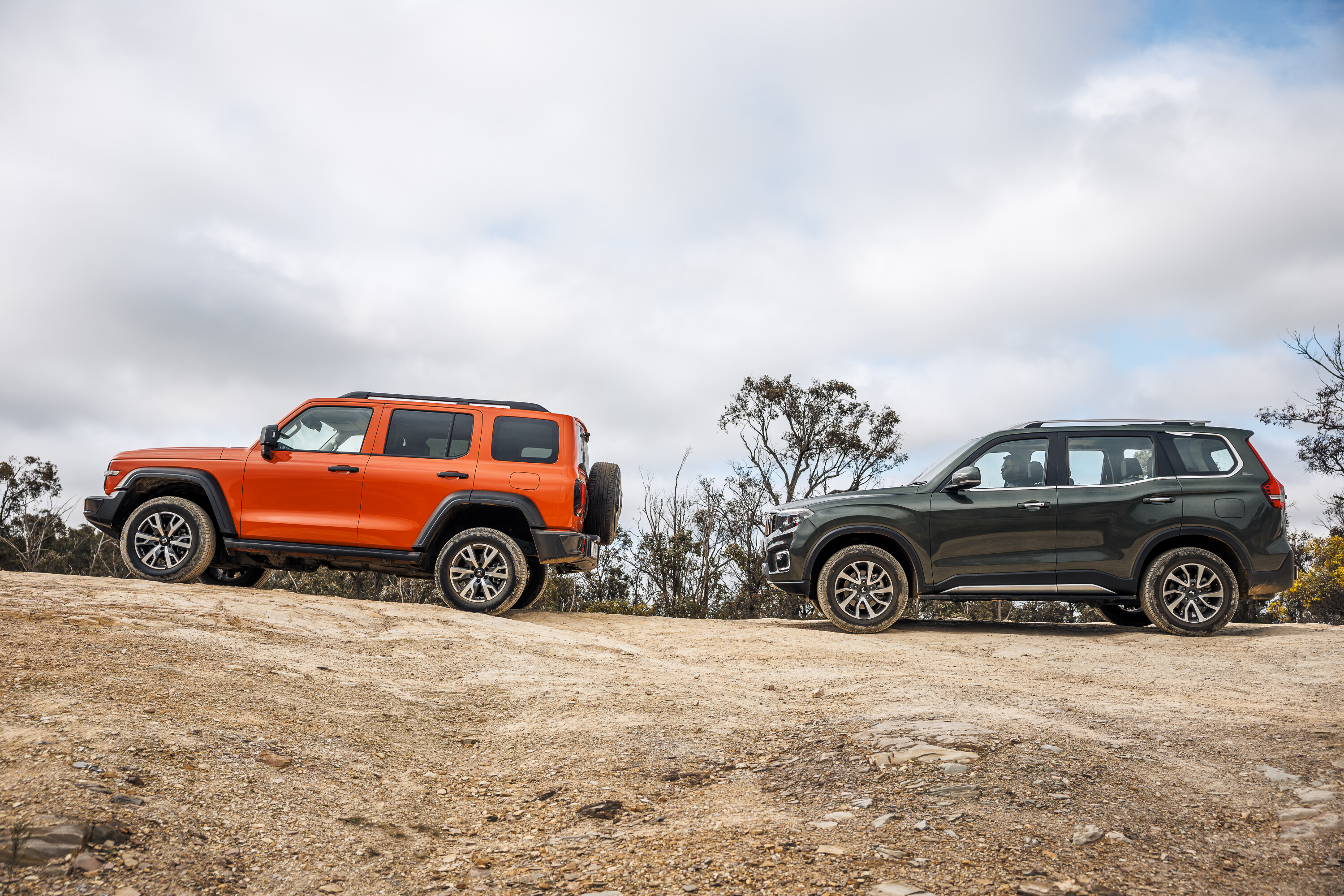
But what if we told you there was an alternative way to get into a brand-new 4×4 wagon, loaded with all the space and mod-cons you desire to make it an adventure-ready package – and you’ll only have to part with $50K (give or take) of your hard-earned?
In fact, there are two such options now available in Australia. One hails from India, the other China, and both are loaded with kit and surprisingly capable on both bitumen and dirt.
Enter the GWM Tank 300 in top-spec Ultra guise, and the Mahindra Scorpio in top-spec Z8L guise.
JUMP AHEAD
- How much are they, and what do you get?
- How do rivals compare on value?
- Interior comfort, space and storage
- What are they like to drive?
- How safe are they?
- Warranty and running costs
- VERDICT
- Specifications
How much are they, and what do you get?
Both of these vehicles are value-packed for their respective asking prices.
The Tank 300 is stamped with a $50,990 RRP, while the Scorpio Z8L is $5000 cheaper at $44,990. Thriftier versions of both vehicles are available, with the Tank 300 Lux costing $46,990 and a Scorpio Z8 $41,990.
| Prices (RRP) | |
|---|---|
| 2023 Tank 300 Ultra | $50,990 |
| Mahindra Scorpio Z8L | $44,990u00a0 |
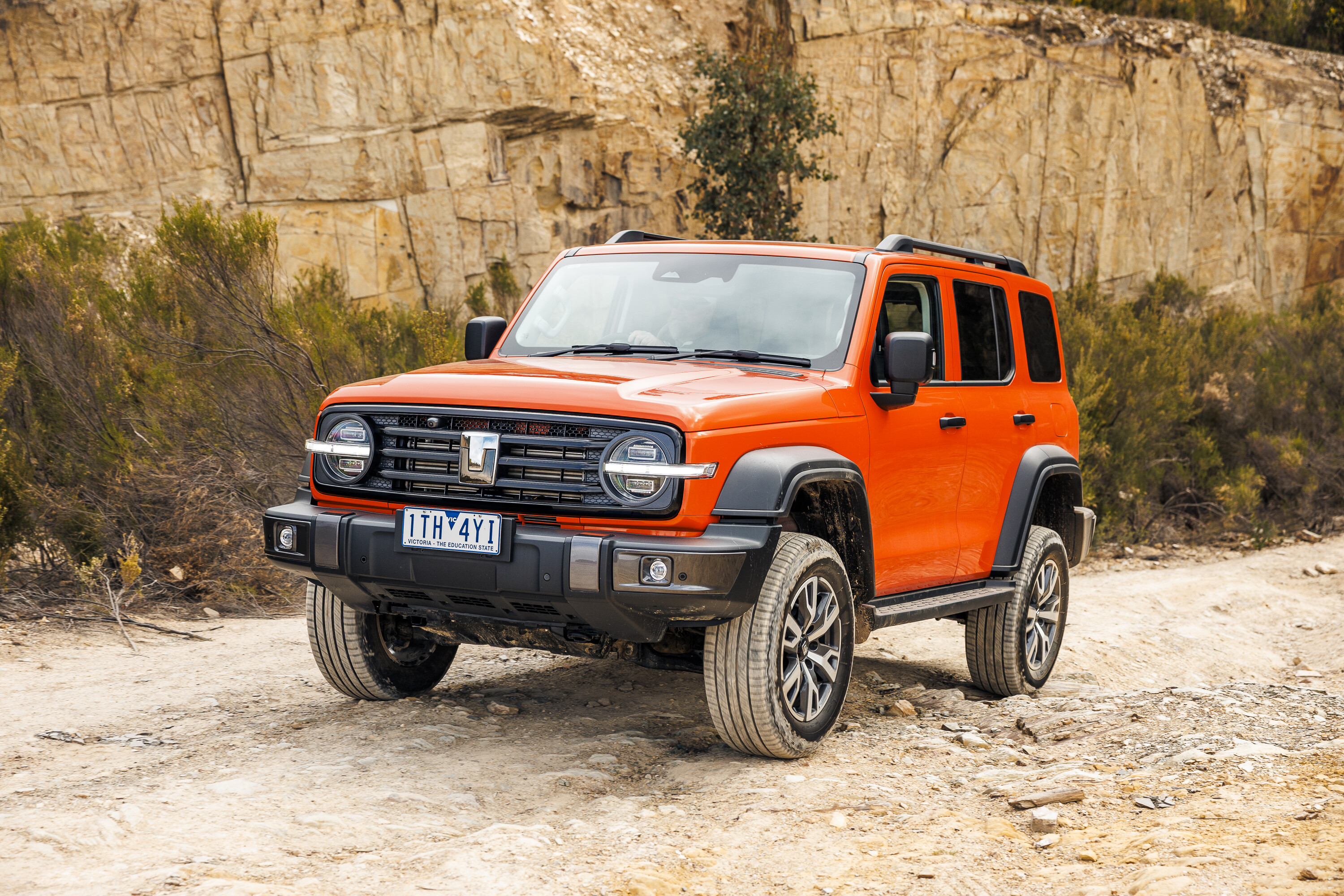
The Tank 300 Lux comes with 17-inch black alloy wheels; LED lighting; a 12.3-inch digital instrument cluster; a 12.3-inch infotainment touchscreen with Apple CarPlay and Android Auto; faux leather seats; a sunroof; nine-speaker sound system; ambient interior lighting; a suite of driver assistance technologies; a rear diff lock; roof rails; a tyre-pressure monitoring system; front and rear parking sensors; a 360-degree camera; and crawl control and tank turn functions.
1
Step up to the Z8L and buyers will receive a 12-speaker Sony audio system; front camera with front parking sensors
Upgrade to the Ultra spec and owners get Nappa leather seating; a massage function for the driver’s seat; heated and cooled front seats; 18-inch chrome alloys; an Infinity sound system; wireless smartphone charging; 64-colour ambient interior lighting; both a front and rear diff lock; and a 220-volt power outlet in the boot.
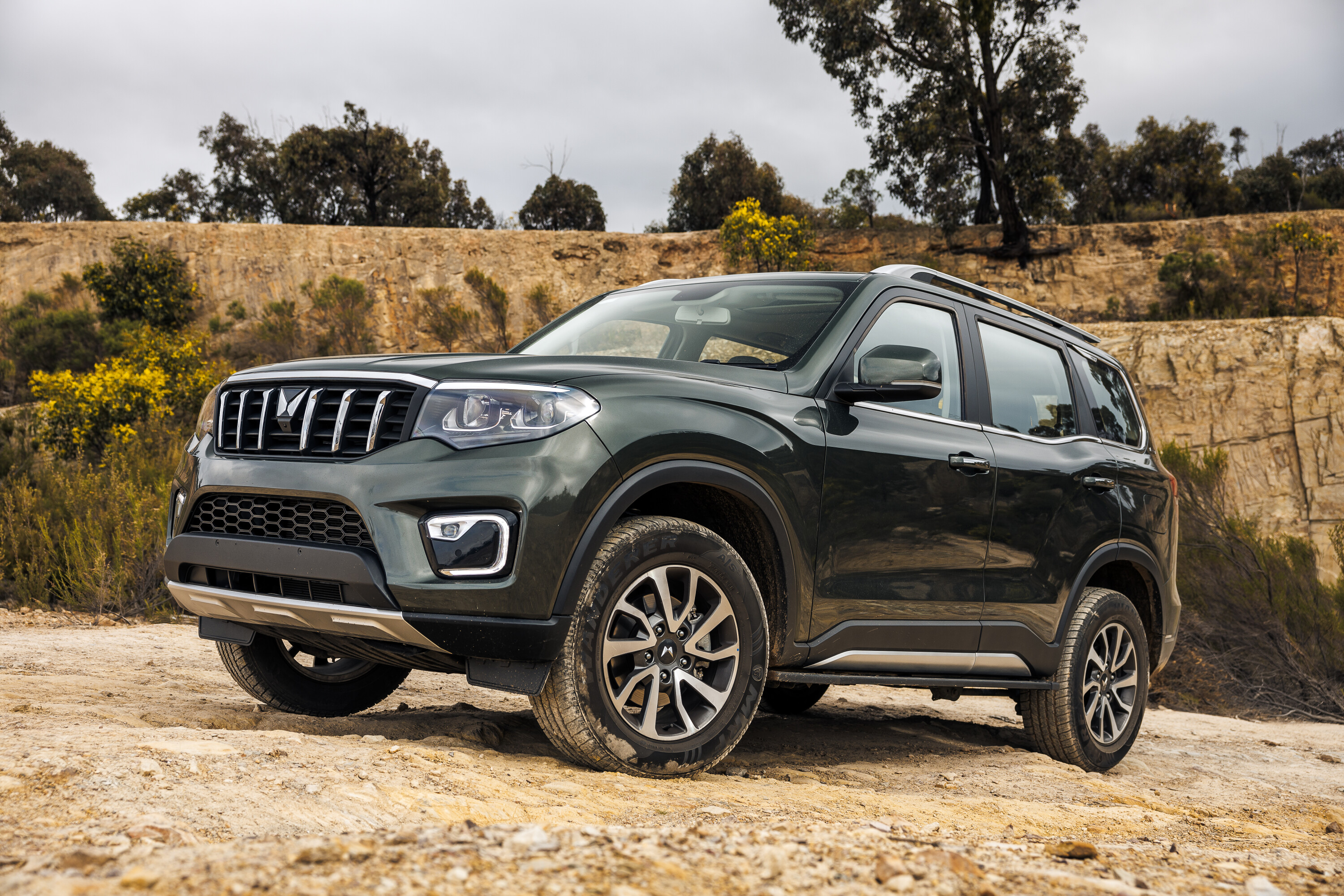
The entry-level Scorpio Z8 is well-equipped with 18-inch alloy wheels, tan-coloured leather interior trim, an 8.0-inch infotainment system, wired Apple CarPlay and Android Auto, automatic wipers, projector LED headlights, dual-zone climate control, a reversing camera and rear parking sensors, push-button start, keyless entry, and a tyre pressure monitoring system.
Step up to the Z8L and buyers will receive a 12-speaker Sony audio system; front camera with front parking sensors; six-way powered front seating; a seven-inch coloured driver display; and wireless charging.
1
How do rivals compare on value?
There aren’t many obvious rivals to these two vehicles when you take into account both price and level of standard equipment.
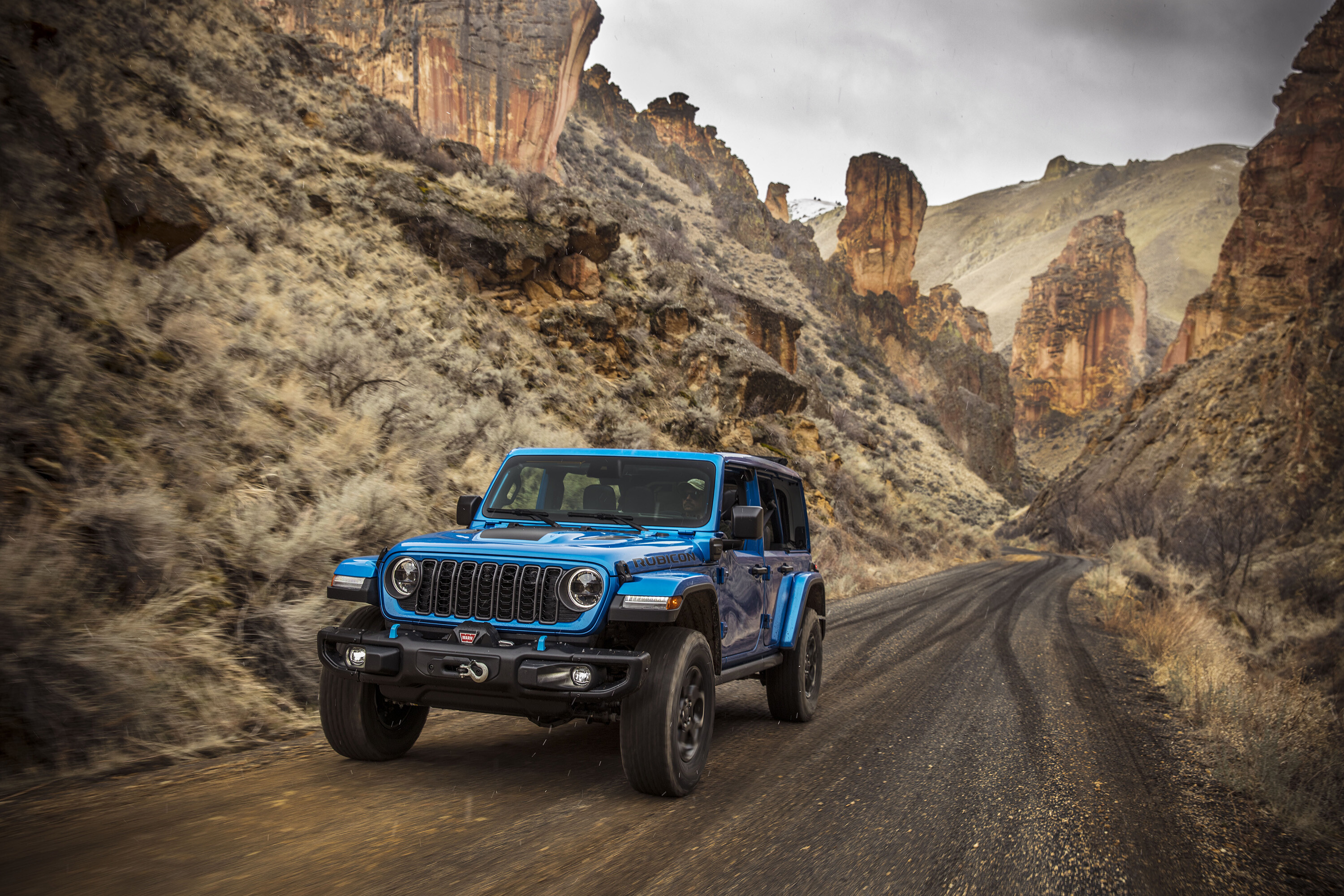
Sure, at first glance the Tank 300 could be compared to the Jeep Wrangler due to its shape and style, but similarities between it and the legendary off-roader become quite thin the deeper you dive.
Vehicles like the MU-X and Everest occupy the large SUV space and are therefore not a like-for-like comparison, while something like a Pajero Sport with its 133kW/430Nm 2.4-litre engine is more in line with these vehicles due to its smaller size and cheaper price tag. However, opt for the feature-packed Exceed or GSR variants and you’re looking at spending more than $60K.
At the other end of the scale is the Suzuki Jimny, but it’s considerably smaller and lacks the premium mod-cons found in these two vehicles – but it’s better off-road and costs (according to the books and not real life) less than $30K.
1
Interior comfort, space and storage
The interiors of both vehicles are plush and brimming with features, and both build qualities are at a level one wouldn’t expect for vehicles at this price point.
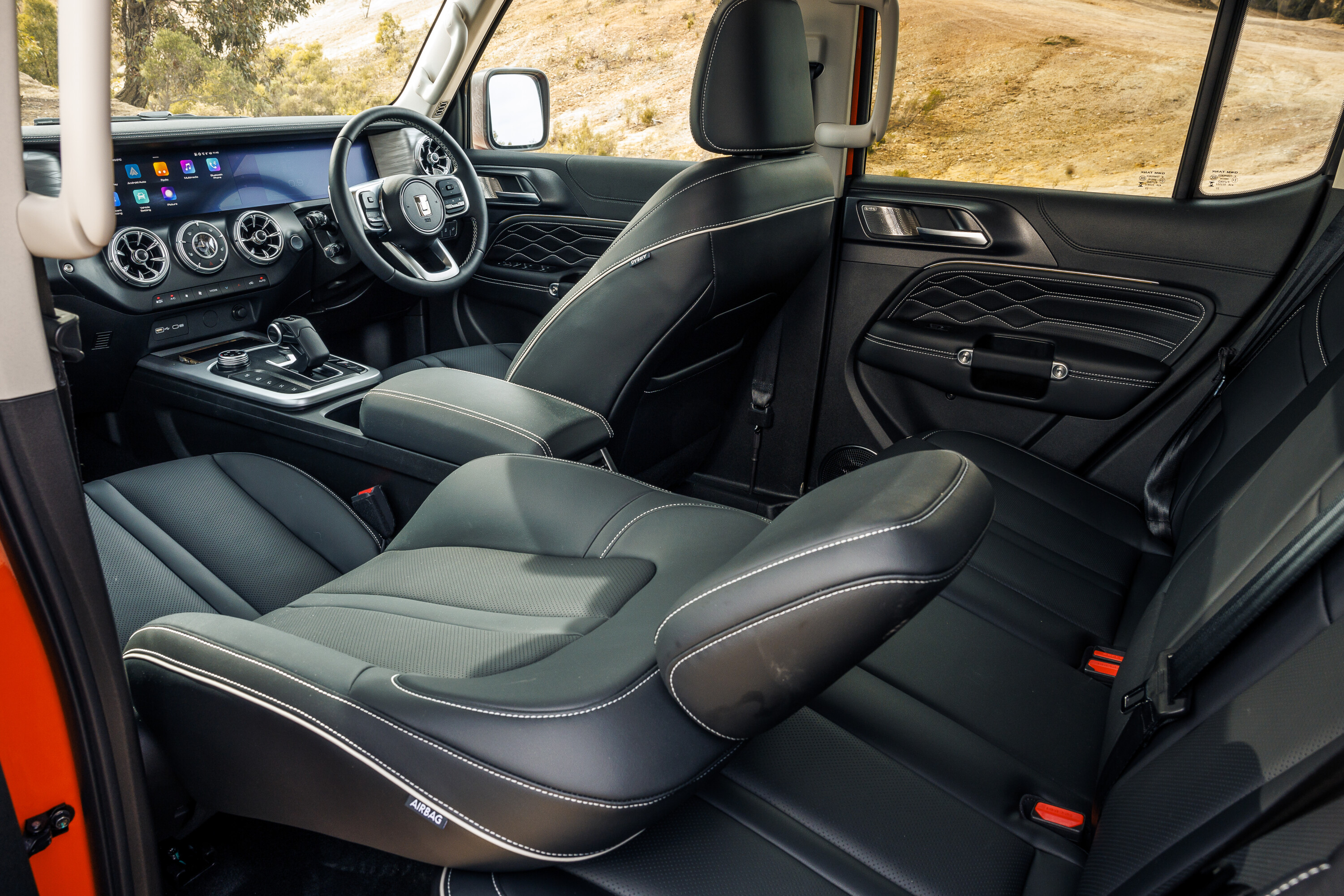
The Tank gets Nappa leather with white stitching; heated and cooled front seats; and a sizable 12.3-inch central touchscreen with Apple CarPlay and Android Auto functionality that’s easy to navigate and use.
The omission of physical dials and buttons is disappointing, as the only physical buttons are for climate control functions – all other functions are controlled via the steering wheel or touchscreen.
The front seats – eight-way powered adjustment and four-way lumbar support adjustment for the driver – are well-bolstered, comfortable and provide adequate support. As a boon, a massage function is standard in Ultra variants only.
1
USB ports are within easy reach for both front and rear passengers, while copious storage bins and pockets will swallow most items and accessories – though the door pockets are quite narrow.
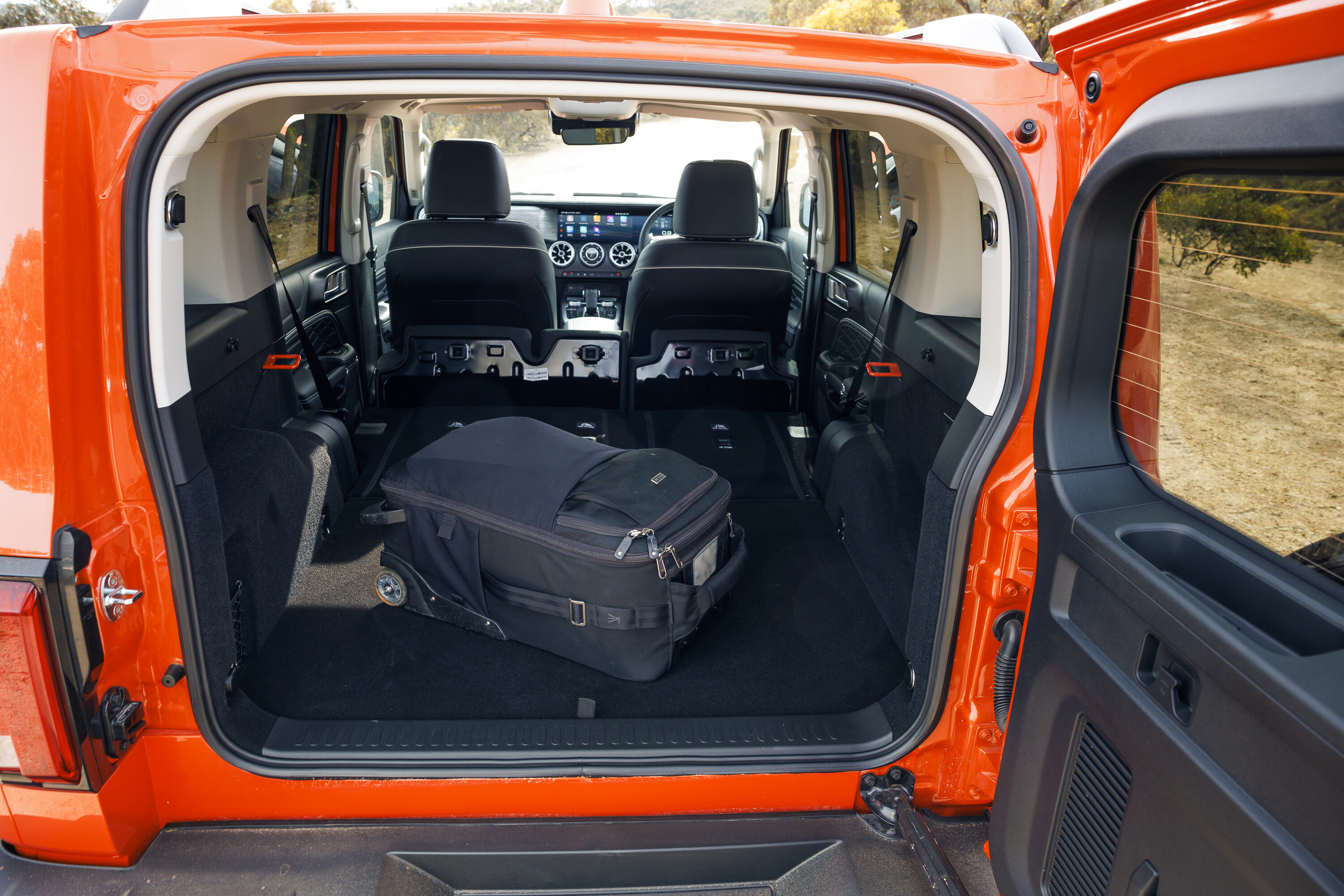
For additional storage, the rear seats can be lowered manually to a flat position; but doing so does impinge on front legroom. With the seats lowered, there’s plenty of space to load up for a camping adventure, but be wary of the vehicle’s limited payload capacity of just 446kg. A 220v outlet can be found in the boot of Ultra variants.
As noted in our single-car review of the Tank 300, the metallic trim adorning the front dash and steering wheel has a tendency to reflect sunlight. And for off-roaders, the carpet flooring is prone to get dirty quite easily, and a set of durable floor mats would be high on the shopping list.
1
Don’t let the Scorpio’s size confuse you. Exterior dimensions alone may lead observers to conclude that it’s a five-seater; but it can actually squeeze in six passengers in its three rows.
Six not seven, you ask? Due to the second-row captain’s chairs, the vehicle can only sit six backsides, with plenty of space between the two seats for passengers to access the third row.
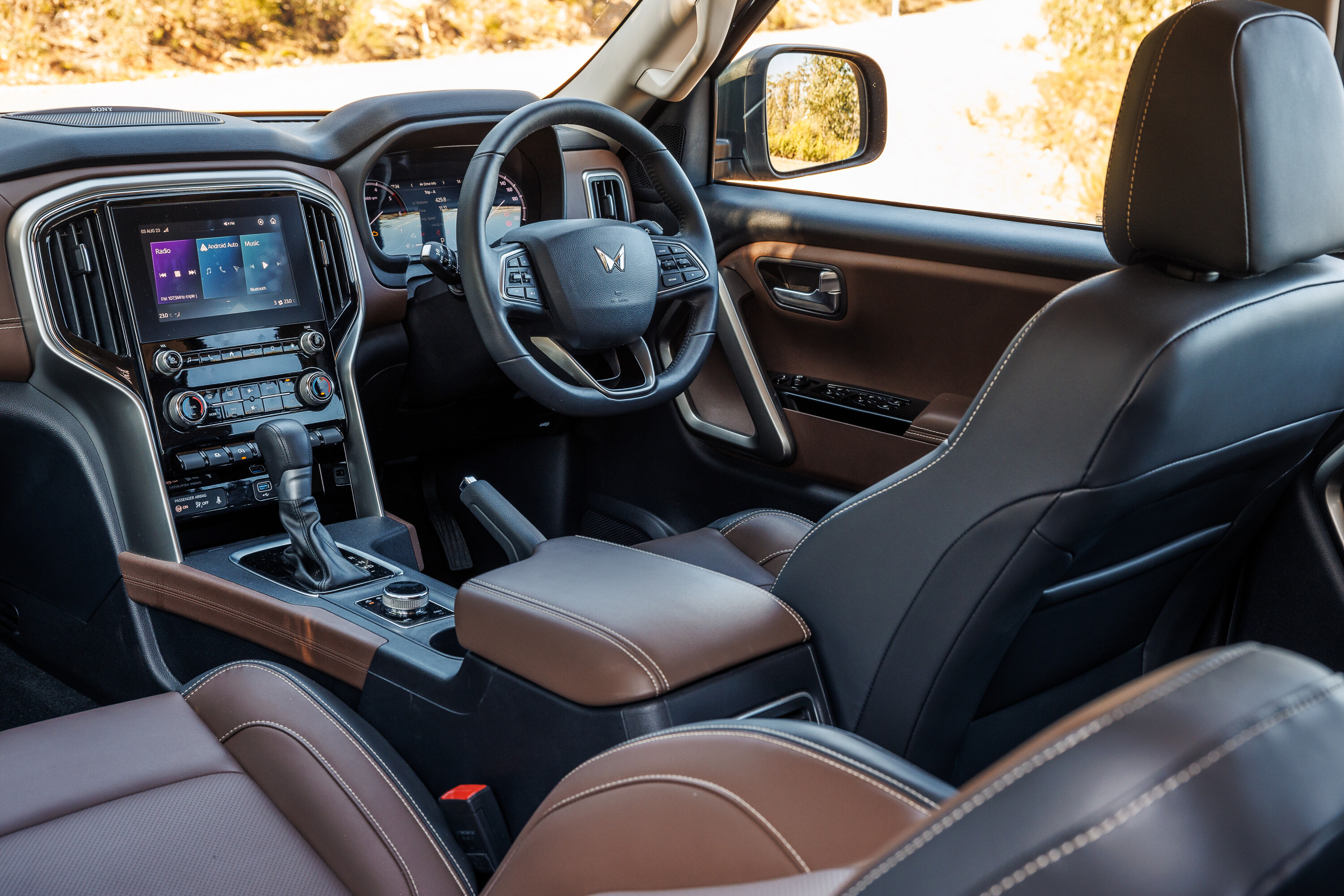
The front seats and second-row captain’s pews are trimmed in faux leather and are extremely comfortable, supportive and not something you don’t expect at this price point.
Unlike the Tank, the Scorpio doesn’t have an excess of storage bins, pockets and cupholders, so the design isn’t as forgiving for those with a tendency to scatter items and coffee cups within a cabin.
1
Third-row seats can be folded down to open up more space, but park two passengers in the third row and you’re left with essentially zero room for any luggage or equipment.
The Scorpio is equipped with a smaller 8.0-inch touchscreen that gets wireless Apple CarPlay and Android Auto – Z8L only – and the UI of the screen is well laid-out and easy to use, albeit a little bit delayed in its operation.
What are they like to drive?
Neither of these two vehicles are going to set any benchmarks on bitumen.
The Scorpio’s 129kW/400Nm diesel engine feels somewhat underpowered at times, but it’s counteracted in part by the fact the Z8L weighs in at a lightweight 2100kg. The mHawk is also quiet and refined, and it’s well-calibrated to the Aisin six-speed automatic transmission, making it an easy vehicle to live with day-to-day and on freeway runs.
Feel through the steering wheel tends to be quite light and vague, but the OE suspension (Watt’s linkage rear and independent front) is smooth and compliant over bumps and on most road surfaces.
1
Not so good is the Z8L’s automatic stop/start, which had a few gremlins in its system during our test run but has since been rectified with a software update.
On multiple occasions, the engine failed to re-engage after we toggled with the automatic stop/start button while waiting at a set of traffic lights. Initially we put this down to user error, but further research suggested this has happened to others and is a quirk with the car’s system. Thankfully it has since been fixed.
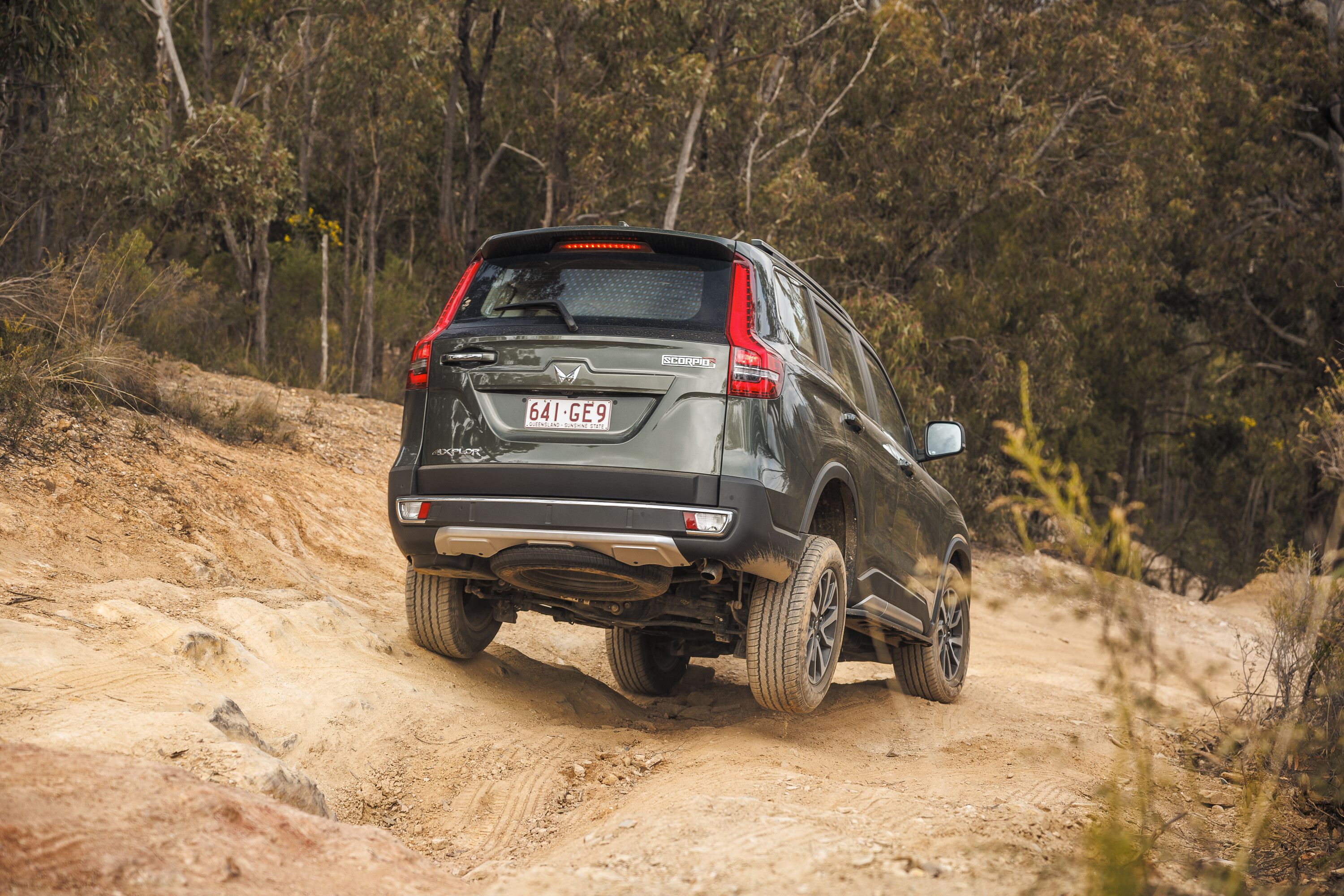
The Mahindra’s auto-locking diff lock activated accordingly (albeit somewhat clunky to dispatch) and aided in our pursuit of navigating uneven terrain. And the forward-facing camera that’s standard with the Z8L model is beneficial when cresting or descending steep climbs.
Its articulation won’t blow the segment away, but it’s sufficient to overcome most types of moderate terrain, and the suspension soaks up larger bumps quite nicely.
| Mahindra Scorpio Z8L off-road specs | |
|---|---|
| Approach angle | 27.2u00b0 |
| Rampover angle | 23.3u00b0 |
| Departure angle | 21.3u00b0 |
| Ground clearance | 227mm |
| Wading depth | 500mm |
With its double wishbone (front) and multi-link (rear) suspension, the Tank feels noticeably firmer than the Mahindra on blacktop and country roads, which is most obvious on pothole-littered back roads.
Similar to the Mahindra, though, the Tank’s steering feels somewhat vague and off-centre.
The Tank’s 2.0-litre turbocharged petrol engine is quiet and refined, generating slightly more power than the Scorpio: 162kW/380Nm. As mentioned in our solo review of the Tank 300, it would benefit from replacing the road-focused Michelin Primacy SUV 265/60 R18s with a set of more aggressive tyres for on- and off-road duties. As they sit from the showroom, the Michelins err towards on-road rather than off-road comfort.
1
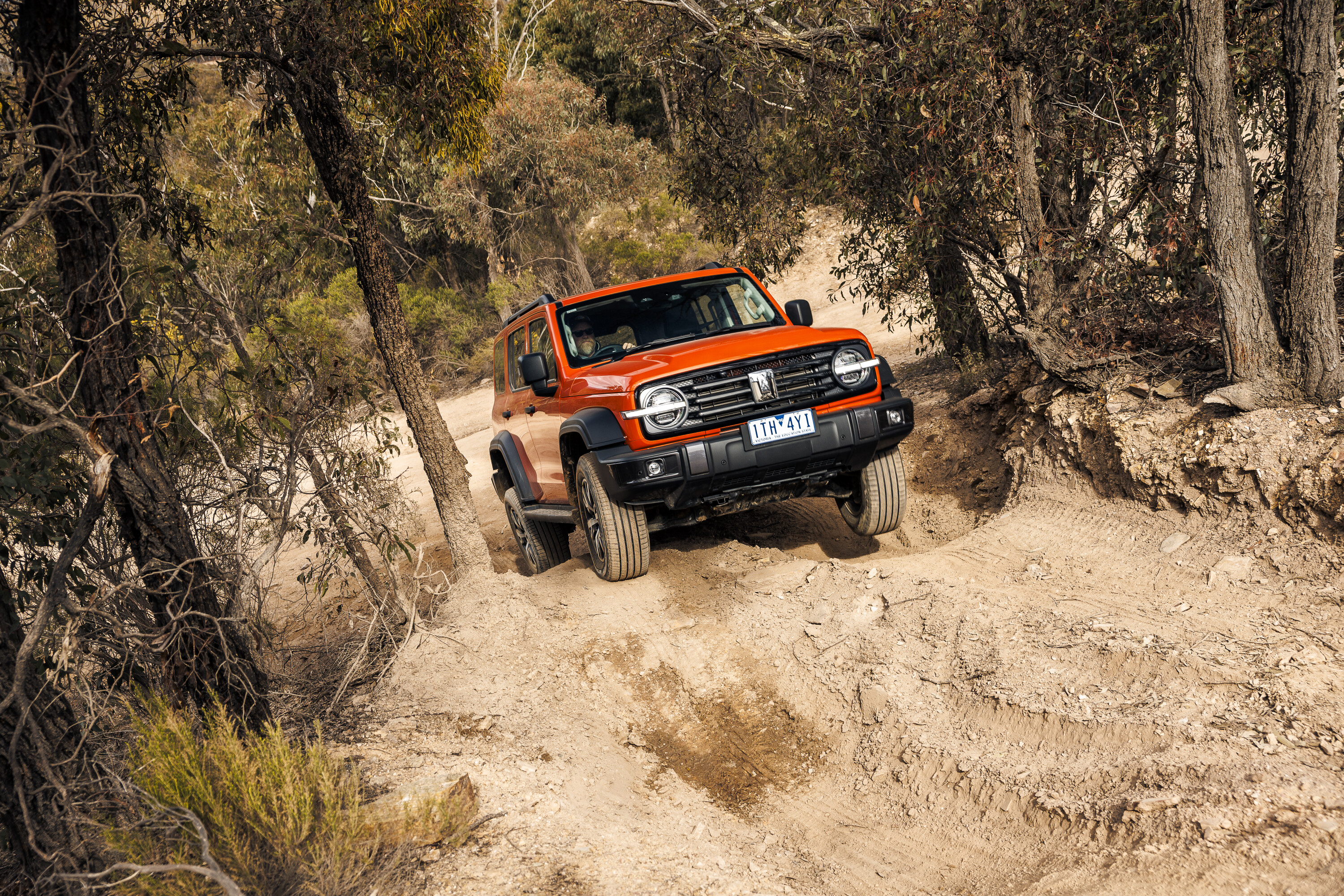
With a suite of off-road-ready features, the Tank 300 excels off-road.
A slight on the Tank is the obtrusive nature of some of its driving aids. The 300 comes with a suite of aids – autonomous emergency braking, lane-departure warning, lane-keep assist, traffic sign recognition, rear cross-traffic alert, adaptive cruise control, hill start assist, and hill descent control – and Lane Keep Assist can be overbearing and abrupt in its operation.
Other quirks include the lack of haptic feedback when operating the indicators, blind-spot cameras remaining active when they shouldn’t, and the strange design of the key fob which lacks a loop to attach to a keyring.
With a suite of off-road-ready features, the Tank 300 excels off-road. A combination of front and rear lockers, adequate articulation – 33-degree approach, 34-degree departure and 224mm of ground clearance – a ‘tank turn’ function, three-piece chassis protection, and a well-matched eight-speed automatic transmission make it a great showroom-ready off-roader.
| Tank 300 off-road specs | |
|---|---|
| Departure angle | 34.0 degrees |
| Approach angleu00a0 | 33.0 degrees |
| Ground clearanceu00a0 | 224mmu00a0 |
So while it’s more of a line-ball decision on bitumen, it’s easier to split this pair when the terrain gets dusty and dirty.
When it comes down to crunch, the Tank 300’s weaponry of off-road arsenal makes it a more capable off-roader, giving the driver more confidence to take it further into the wilderness than the Scorpio.
| ADR fuel use | Fuel tank capacity | |
|---|---|---|
| Mahindra Scorpio Z8L | 7.2L/100km | 57 litres |
| Tank 300 Ultra | 9.5L/100km | 75 litres |
How safe are they?
Where the Mahindra also loses ground to the Tank 300 is when you assess its suite of standard safety kit.
The Scorpio may have a five-star Global NCAP rating, but it wouldn’t achieve five stars within the ANCAP parameters due to the lack of what is now deemed essential safety equipment.
Missing from the Scorpio’s arsenal of safety equipment is autonomous emergency braking, lane-keep assist, lane-departure warning, forward collision warning, blind-spot monitoring, rear cross-traffic alert, and reverse autonomous braking. Rear-row airbags are also absent. What it does get is an anti-lock braking system, front and rear parking sensors, and side and curtain airbags.
Unlike the Scorpio, the Tank is equipped with a full suite of safety systems including autonomous emergency braking; lane-departure warning; lane-keep assist; traffic sign recognition rear cross-traffic alert; adaptive cruise control; hill start assist; hill descent control; and a surround-view camera with ‘transparent chassis function’. The cabin has seven airbags (front, side, curtain and centre), and a TPMS is a welcome standard addition.
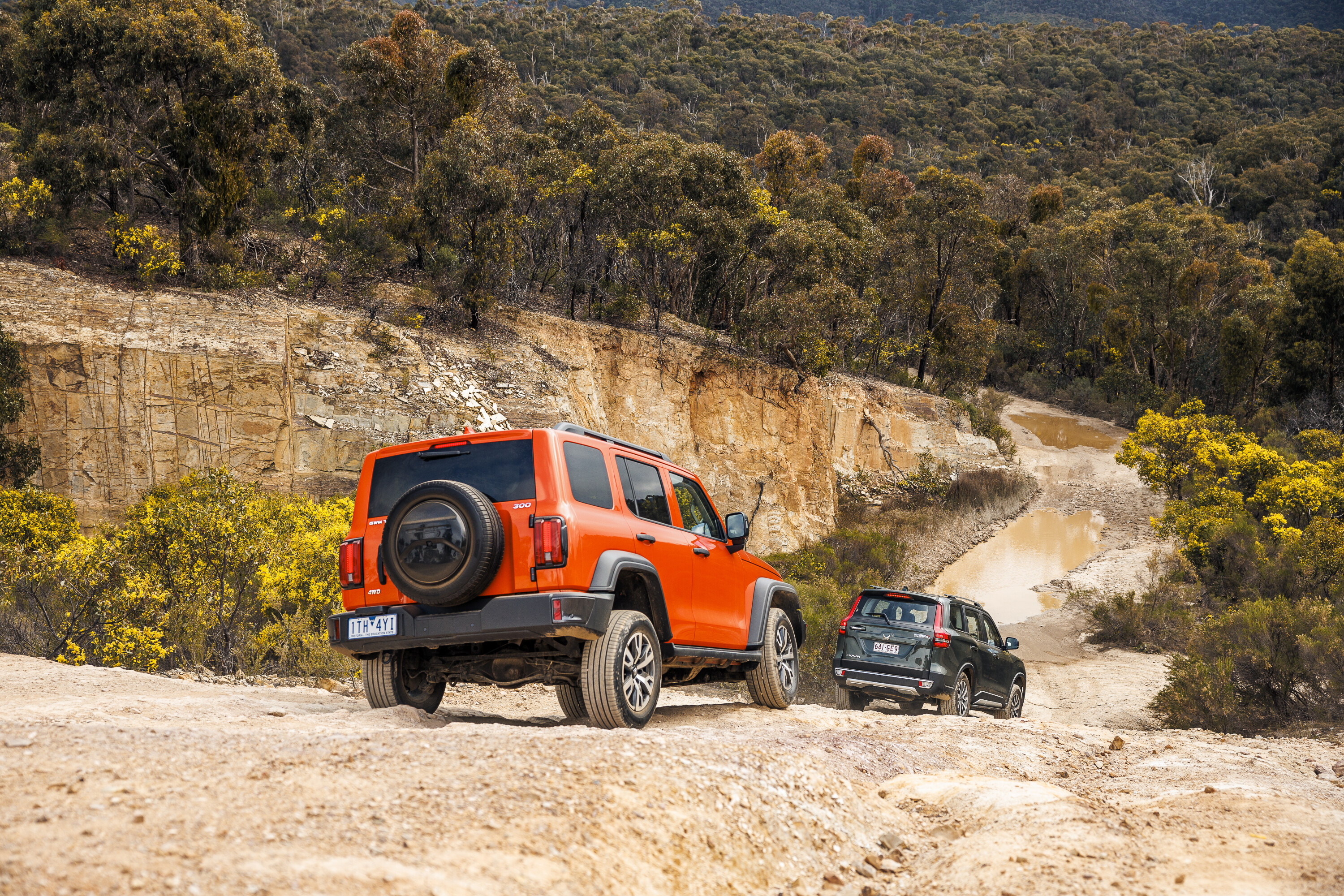
This all combines to give the Tank 300 a five-star ANCAP safety rating – received in December 2022 – with scores of 88% for adult occupant protection, 89% for child occupant protection; 81% for vulnerable road user protection; and 85% for safety assist.
1
Warranty and running costs
The Scorpio comes with a seven-year /150,000km factory warranty and seven years of roadside assistance. Five years (or up to 60,000km) of capped-price servicing totals $2358.
| Time/Distance | Cost |
|---|---|
| 3 months/3000km | Free |
| 12 months/10,000km | $460 |
| 24 months/20,000km | $370 |
| 36 months/30,000km | $450 |
| 48 months/40,000km | $728 |
| 60 months/50,000km | $350 |
The Tank 300 is covered by an impressive seven-year unlimited-kilometre warranty. Capped price servicing covers the first five services and totals $2000. The Tank is also covered by GWM’s roadside assistance, which is complimentary for the first five years of ownership.
| Time/Distance | Cost |
|---|---|
| 12 months/10,000km | $300 |
| 24 months/25,000km | $300 |
| 36 months/40,000km | $550 |
| 48 months/55,000km | $550 |
| 60 months/70,000km | $300 |
VERDICT
Despite their flaws, there’s no arguing that both of these vehicles offer exceptional value. The level and quality of equipment makes them both worthy of consideration at their respective price points.
On-road, the Scorpio holds its own against the Tank, and it’s a justifiable choice if you spend 90 per cent of time on bitumen, occasionally chasing campsites. However, it falls behind the Tank when off-road, and the lack of standard safety features is a genuine concern for prospective buyers and families.
As an all-rounder, the GWM dealership is where we’d be heading. With a suite of safety kit and off-road weaponry – did we say it has front and rear lockers – at its disposal, what quirks and shortfalls the 300 Ultra does have are more forgivable.
SCORING
- GWM Tank 300: 7/10
- Mahindra Scorpio Z8L: 6.5/10
Specifications
| 2023 Tank 300 Ultra | |
|---|---|
| Price | $50,990 |
| Engine | 2.0L I4 |
| Capacity | 1967cc |
| Max power | 162kW @ 5500u00a0u00a0 |
| Max torque | 380Nm @ 1800-3600 |
| Transmission | 8-speed automatic |
| 4×4 system | Part-time 4×4 |
| Suspension (front and rear) | Double wishbone (front); Multi-link (rear) |
| Tyres | 265/60 R18 |
| Kerb weight | 2155kg |
| GVM | 2552kg |
| Payload | 446kg |
| Towing capacity | 2500kgu00a0 |
| Seats | 5 |
| Fuel tank capacity | 75Lu00a0 |
| ADR fuel claim | 9.5L/100km |
| 2023 Mahindra Scorpio Z8L | |
|---|---|
| Price | 44,990 driveaway* |
| Engine | 4-cylinder diesel |
| Capacity | 2.2 litre |
| Max power | 129kW @3000rpm |
| Max torque | 400Nm @ 1750-2750rpm |
| Transmission | 6-speed automatic |
| 4×4 system | Part-time, dual-range |
| Crawl ratio | N/a |
| Construction | 5-door wagon of ladder chassis |
| Front suspension | IFS with double wishbone and coil springs |
| Rear suspension | Live axle with multi links, Watts link and coils |
| Tyres | 255/60-18 on alloy wheels |
| Weight | 2100kg kerb (Z8L) |
| GVM | 2610 |
| GCM | 5155 |
| Towing capacity | 2500 |
| Payload | 510 (Z8L) |
| Seats | 6 |
| Fuel tank | 57L |
| ADR fuel consumption | 7.2L/100km combined |
The Ford Ranger posted its best monthly sales result so far in 2023, with the Blue Oval shifting a total of 5949 new 4×4 vehicles in October.
When combining these 4×4 sales with 4×2 figures, the Ranger ranks as the best-selling new vehicle in the country for the month, with a total of 6215 units delivered. This places it ahead of its perennial rival, the Toyota HiLux, which registered a total of 5766 sales (4829 of which were 4×4 variants).
1
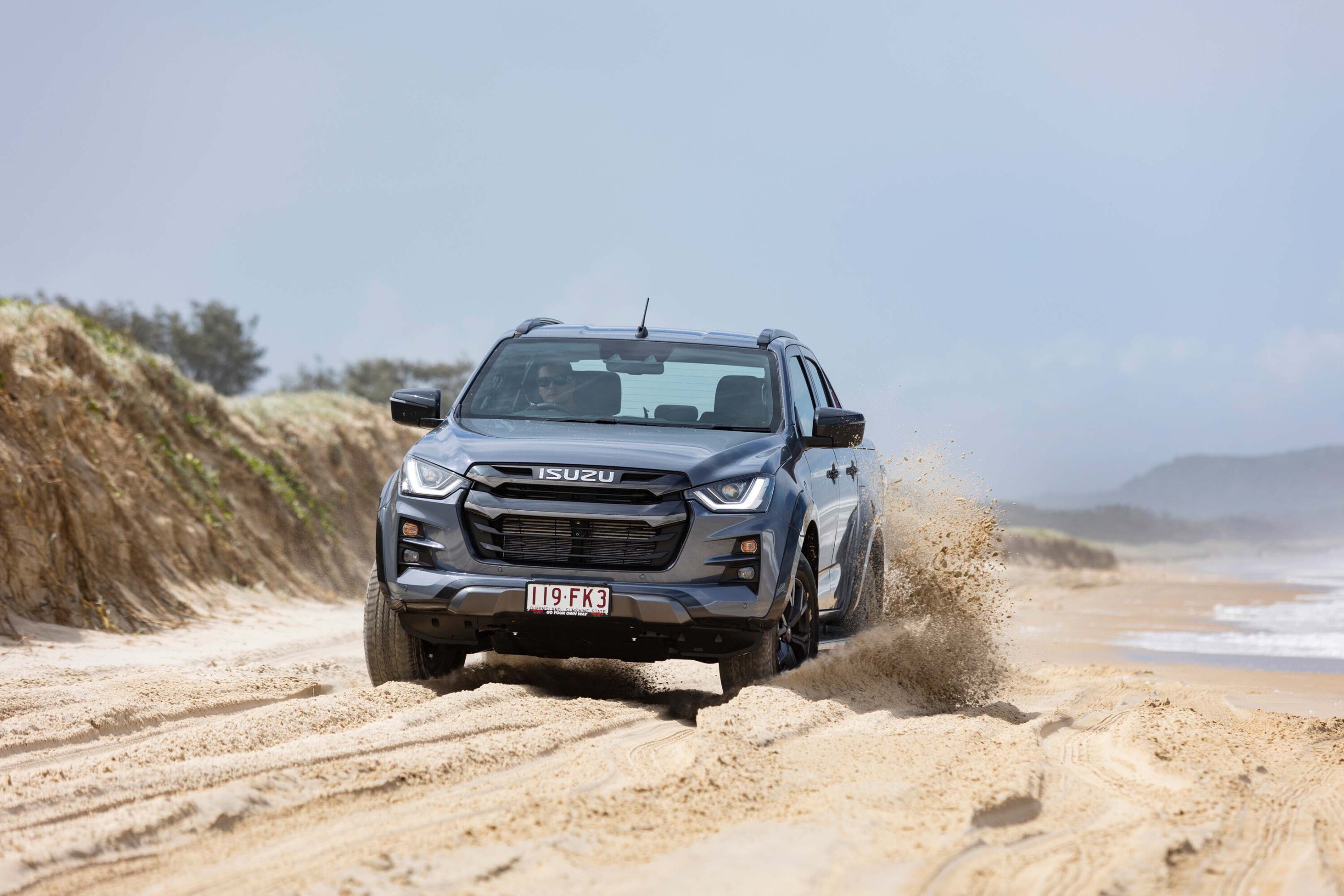
Isuzu’s D-MAX rounds out the top three on the overall sales charts and continues to be a success story for the Japanese marque. Isuzu delivered a total of 3198 D-MAX models in October (2591 of which were 4×4 variants), with the ute surpassing 20,000 4×4 sales so far in 2023.
The Toyota Prado regained the mantle as the best-selling SUV on the 4×4 charts, outselling the Ford Everest and LandCruiser 300 Series in October.
Absent from the top 10 charts last month, both the Triton and Amarok reappear with 1324 and 1024 sales respectively. Still missing from the charts, though, is the Nissan Navara, with just 374 sales posted in October.
1
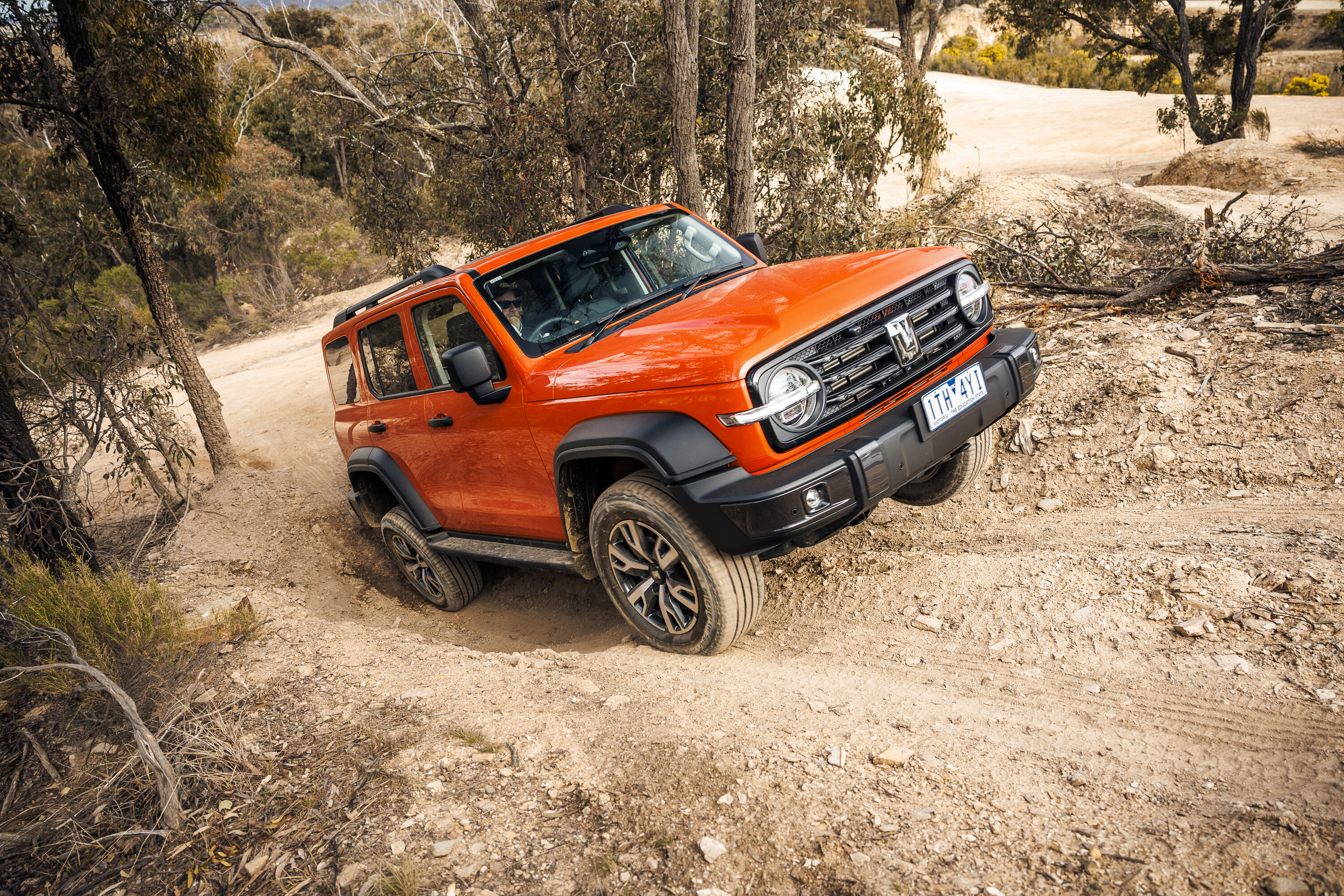
The GWM Ute leapfrogged the LDV’s T60 to become the best-selling budget buy, registering a total of 553 sales compared to 463 for the T60. A total of 268 SsangYong Musso 4x4s were delivered in October, while GWM also shifted 99 Tank 300s for the month.
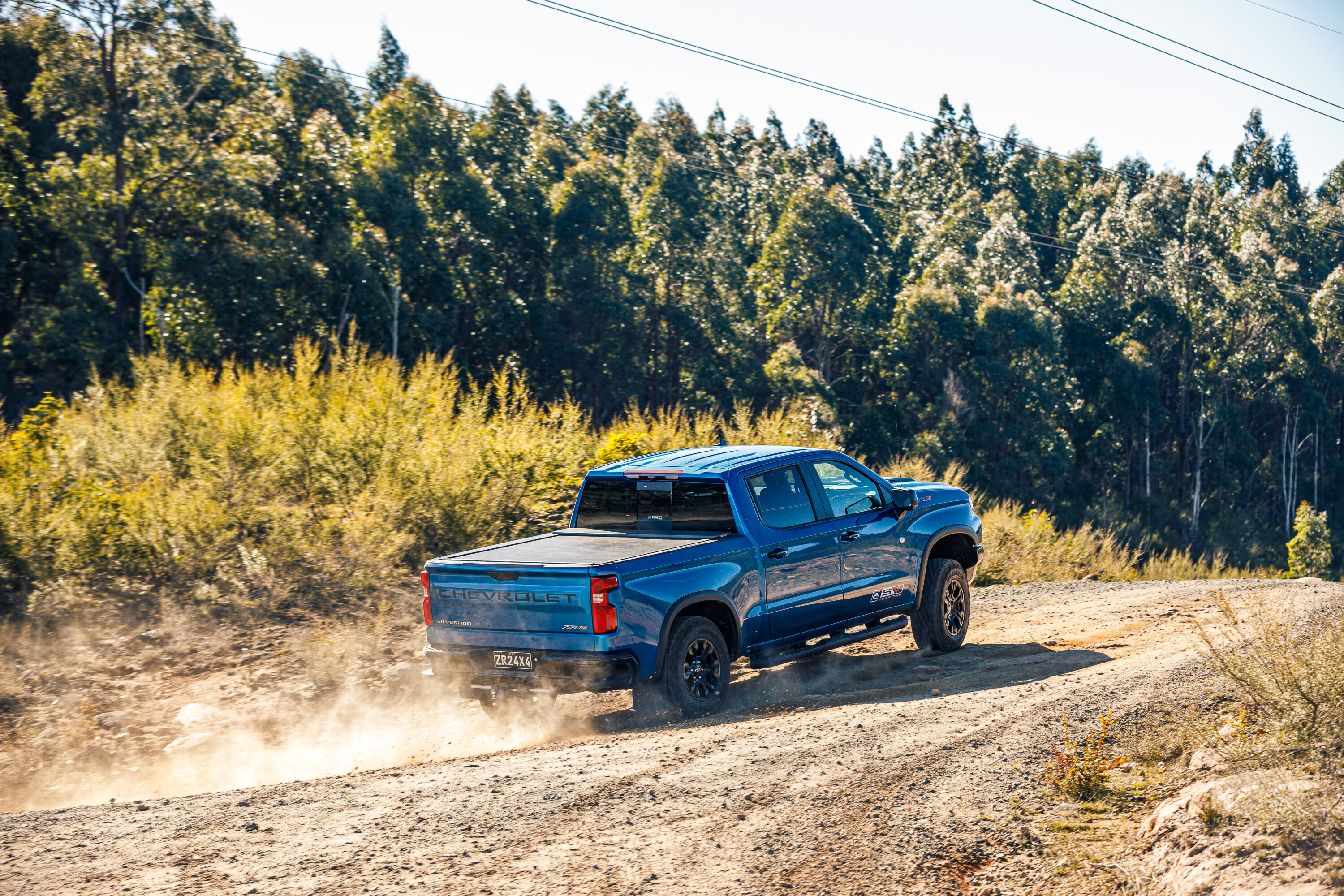
In the battle of the brutes, the RAM 1500 outsold the Chevrolet Silverado by 282 units to 217.
More than one million new vehicles have now been delivered so far in 2023 continues to break all-time sales records. In October, 38.3 per cent of sales were either in LCV, large, or upper large SUV categories.
1
Top-selling 4x4s in October 2023
| Vehicle | Units |
|---|---|
| 1. Ford Ranger | 5949 |
| 2. Toyota HiLux | 4829 |
| 3. Isuzu D-MAX | 2591 |
| 4. Toyota Prado | 2320 |
| 5. Ford Everest | 1803 |
| 6. Toyota LandCruiser 300 | 1450 |
| 7. Mitsubishi Triton | 1321 |
| 8. Toyota LandCruiser 70 | 1111 |
| 9. Volkswagen Amarok | 1024 |
| 10. Mazda BT-50 | 1002 |
Top-selling 4×4 models YTD 2023
| Vehicle | Units |
|---|---|
| 1. Ford Ranger | 44,902 |
| 2. Toyota HiLux | 39,705 |
| 3. Isuzu D-MAX | 20,026 |
| 4. Toyota Prado | 15,145 |
| 5. Toyota LandCruiser 300 | 12,266 |
| 6. Ford Everest | 12,186 |
| 7. Mazda BT-50 | 11,831 |
| 8. Isuzu MU-X | 11,824 |
| 9. Mitsubishi Triton | 11,369 |
| 10. Toyota LandCruiser 70 | 9366 |
KAON is an emerging brand in the booming 4×4 aftermarket space in Australia, specialising in protection, storage and touring solutions; but, as with many family-built companies, its foundations originate in a garage.
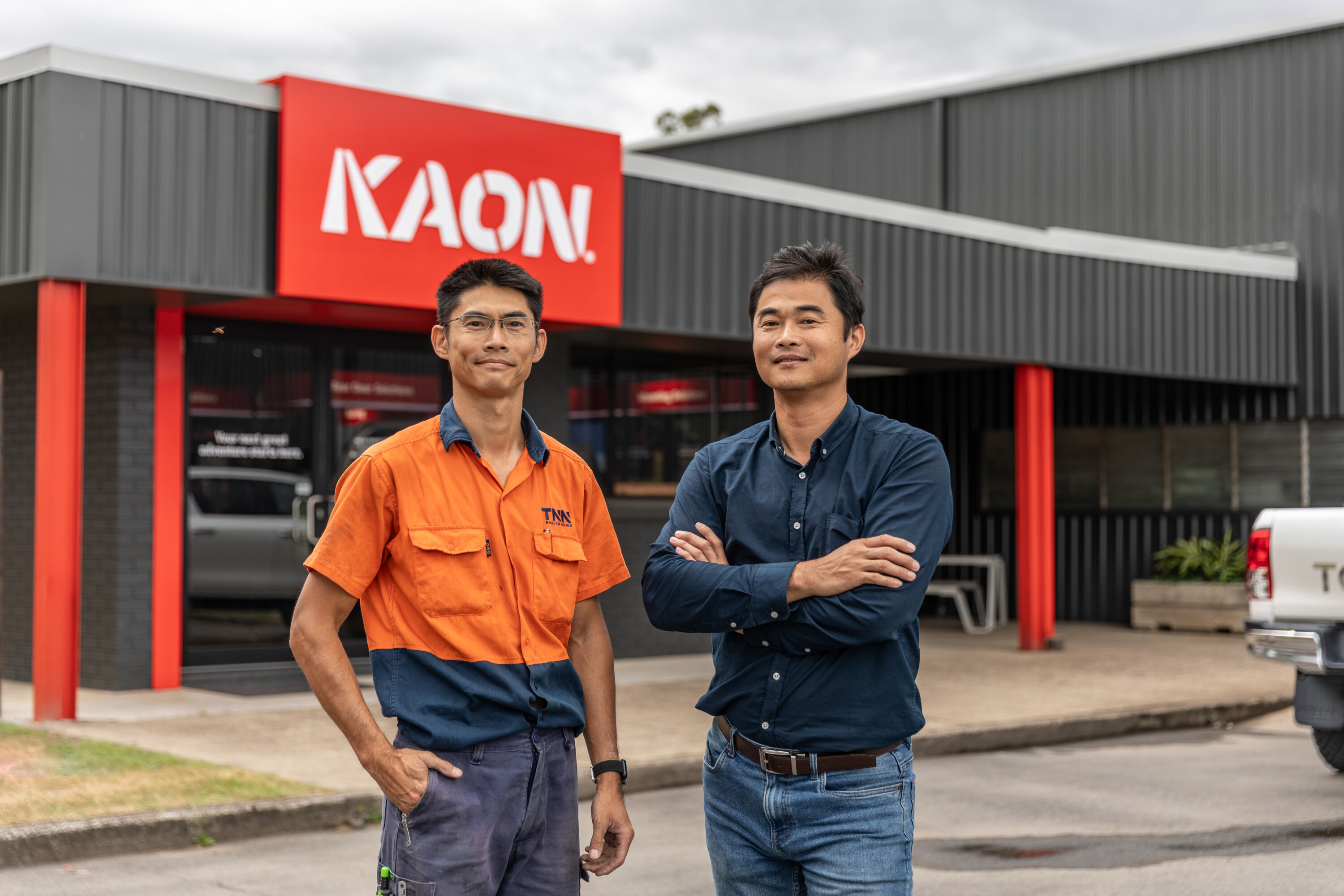
The business is currently run by Tin (MD) and Le (Operations) Hua, brothers who have carried on the family-run operations from their parents, Thang and Nu, who immigrated from Vietnam to Brisbane as refugees in the 1980s, settling down in West End in Brisbane.
Despite speaking very little English, Thang’s career progressed from sweeping floors to becoming a fully qualified fitter and tuner at a large mining manufacturer. Following a redundancy, Thang spent his life savings on a small lathe and a basic drill press, and founded the business TNN Engineering – now a massive metal manufacturing and precision engineering business – in his West End garage.
1
The family garage couldn’t contain the expanding business for long, as the business relocated to a rural property in Richlands where a 200m2 purpose-built shed was erected.
It’s this business that eventually formed the foundation of KAON in the 4×4 and camping space, which was established by Tin in 2014 after he successfully created products – things like transmission cooler brackets and cargo barriers – to solve touring problems on his own family adventures throughout Australia.
1
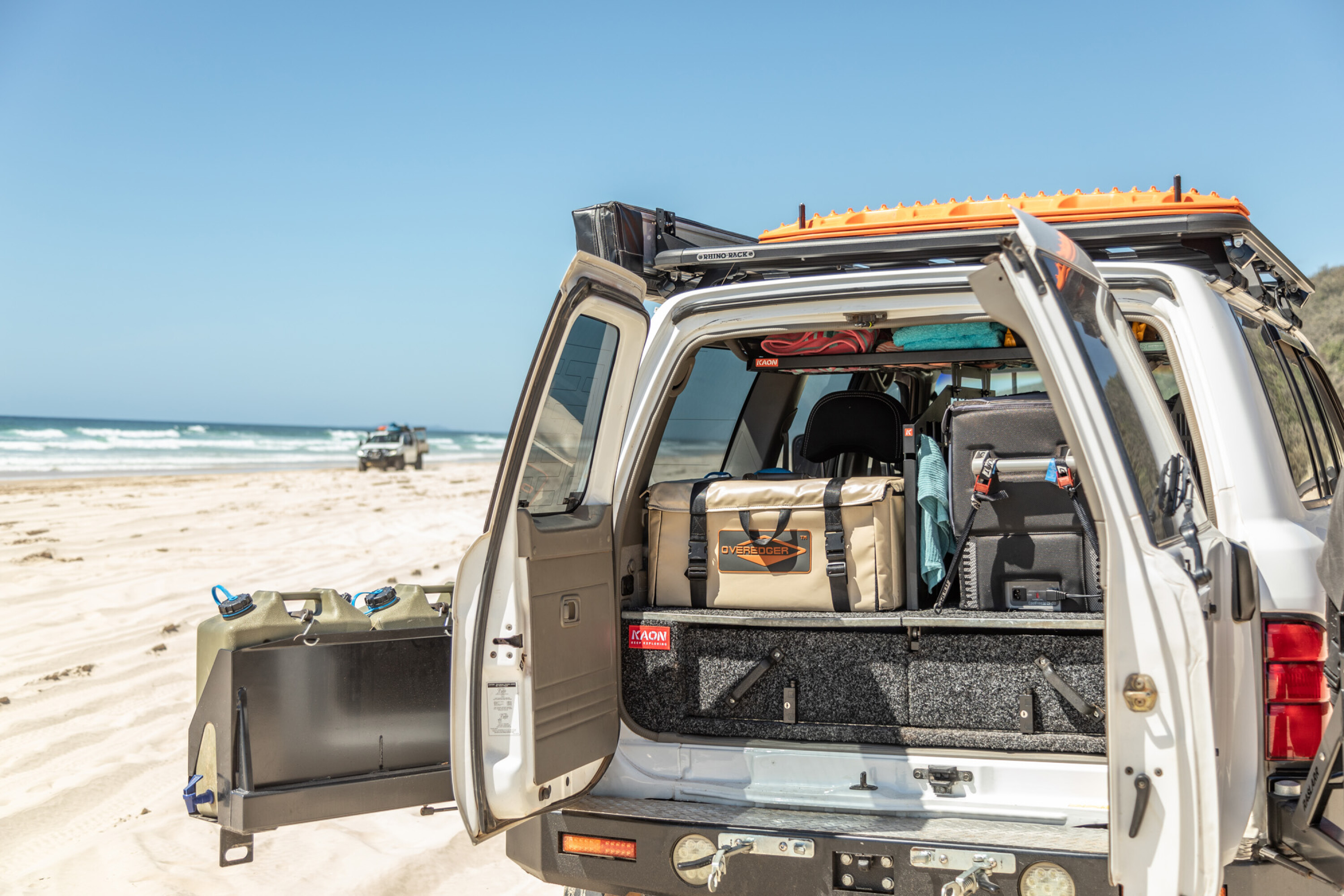
Since its inception, the business has grown from a few simple products to a vast range of protection, storage and touring solutions for a variety of vehicles, with the business now operating out of its massive facility in Carole Park, Brisbane. Better still, all products are manufactured locally and stamped with an ‘Australian made and owned’ certification.
A specific range of products KAON is immensely proud of is its range of Interior Storage Solutions, which is led by the brand’s Standalone Shelves.
PRODUCTS AVAILABLE
- Standalone Rear Roof Shelves
- Light Cargo Barriers
- Side Molle Panels
- Cargo/Fridge Dividers
- Storage Accessories
Standalone Rear Roof Shelves
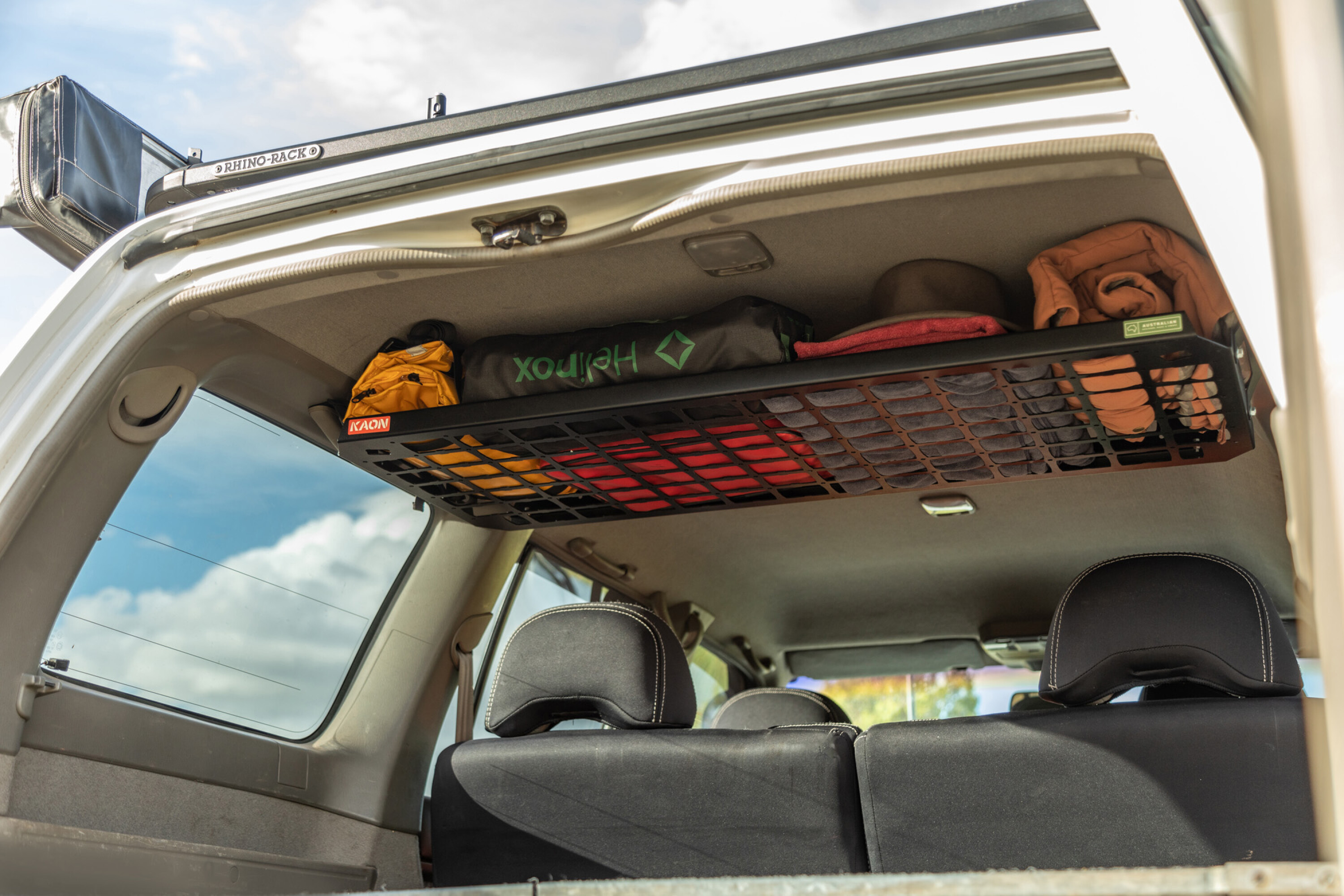
KAON’s extensive range of Standalone Shelves are designed to maximise storage space in a vehicle and utilise otherwise wasted space.
Manufactured using precision laser cut and pressed steel and then powder-coated in a hard-wearing, textured matte black finish, the shelves are purposefully designed to suit the shape of specific vehicles. This means they hug the roofline to not only look great and be out of the way, but maximise visibility out of the rear windows.
11
The shelves are an easy DIY installation, with no drilling required as the mounts attach to the rear grab handle points. Many of the shelves available are adjustable, often with two or three height settings and three horizontal (forwards/backwards) settings.
Most of the models in the KAON catalogue are freestanding, or can be set-up with the support of Side Molle Panels to provide additional mounting options. The shelves are also designed to be compatible with KAON’s Light Cargo Barriers or other cargo barrier brands.
Currently, KAON’s standalone shelves are designed to primarily cater for the wagon market and are available to suit many leading wagon models. The shelves have a 10kg load rating.
Light Cargo Barriers
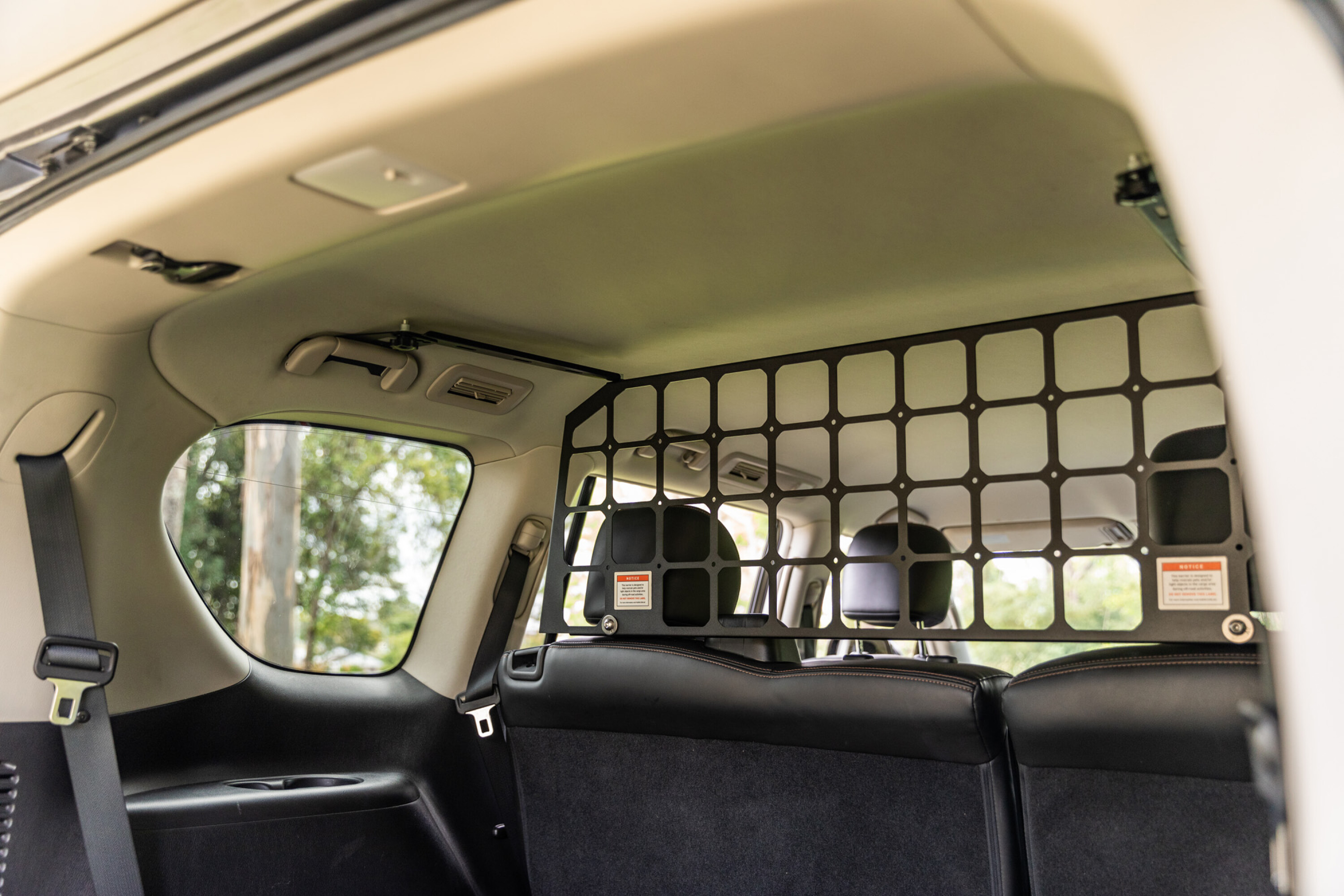
A real benefit of KAON’s Light Cargo Barrier is that it can be set-up or removed from the second row of seats in less than two minutes, with no tools required for installation as it again utilises the vehicle’s rear grab handle points.
Like the rest of KAON’s storage range, the barrier is made from precision laser cut and pressed steel, powder-coated in a textured matte black finish, and it features M5 holes and cutouts designed to allow easy mounting of accessories.
7
The barrier is compatible with most child restraints and baby car seats, and it comes with adjustable brackets to accommodate varying second-row seating positions.
It’s important to note that it has not been tested to the Australian Cargo Barrier Standards, and is intended for light cargo, as a pet barrier or for use when off-road. It’s available for many leading wagon models.
Side Molle Panels
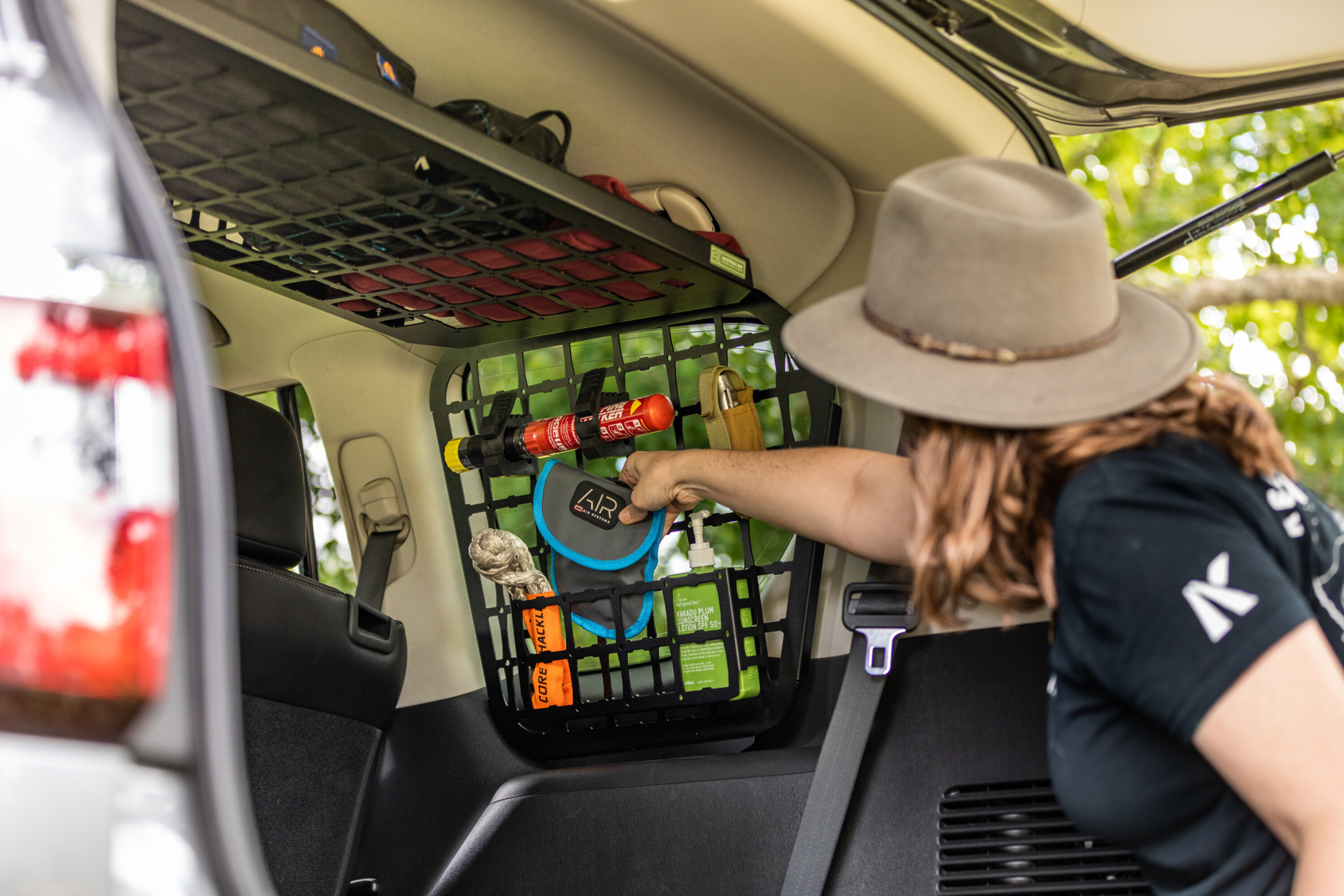
The slimline profile of KAON’s range of Side Molle Panels allows tourers to personalise their interior storage and utilise what would essentially be wasted space.
Perfect for hanging and storing lightweight items, the panels allow the user to easily and quickly access items in a hurry.
9
Much like the shelves, the panels are made using precision laser cut and pressed steel, and powder-coated in a hard-wearing matte black finish. The panels also feature M5 mounting holes and cutouts to suit Molle storage system products.
Cleverly, the panels are designed to be used in tandem with the Standalone Shelves – as well as KAON’s Light Cargo Barriers and Cargo Dividers – and they fit snugly in the rear-row window for a stealthy appearance.
Cargo/Fridge Dividers
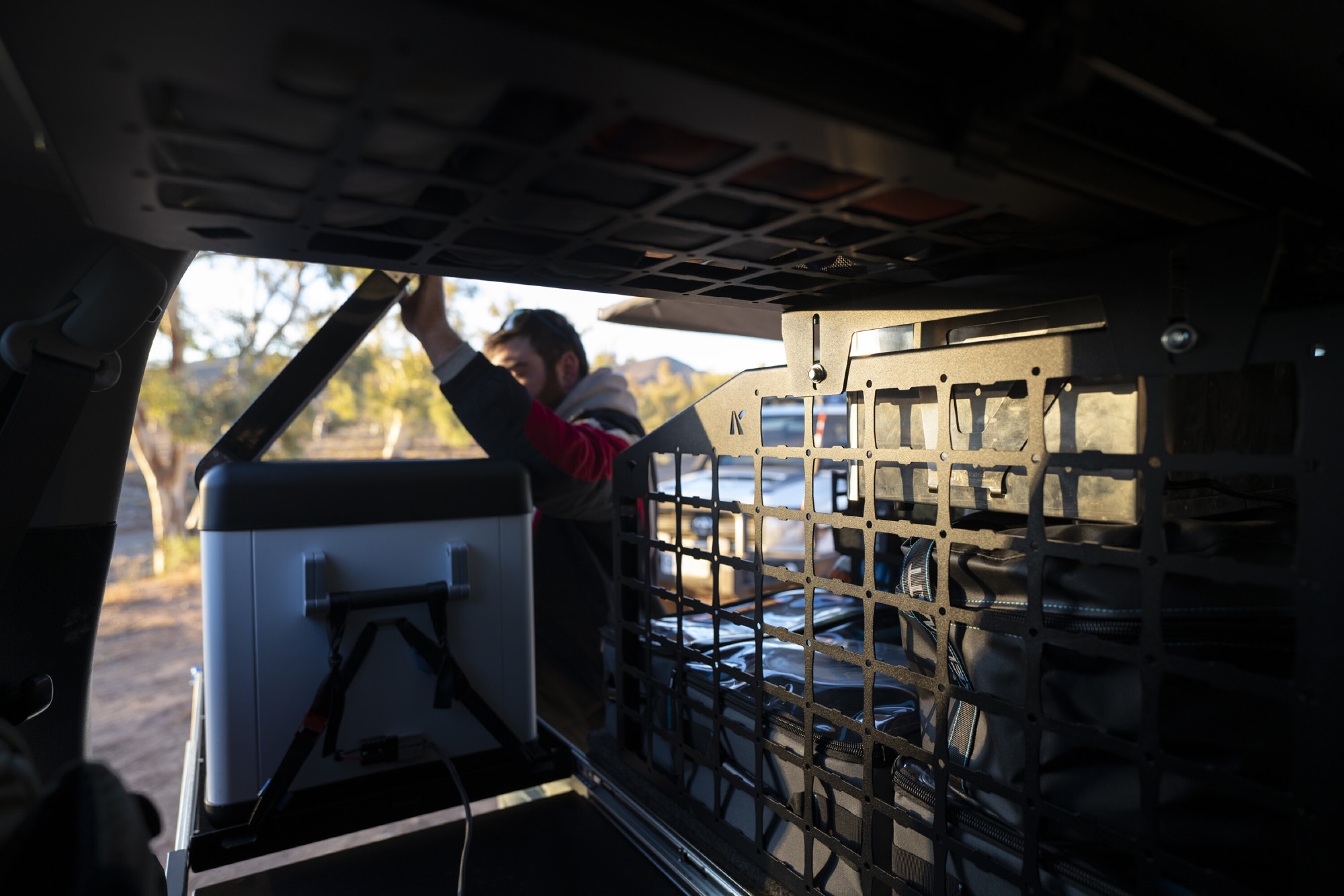
KAON’s cargo dividers have been designed to secure to the underside of the brand’s range of roof shelves and on top of drawer systems, and they’re compatible with KAON Light Cargo Barriers.
2
Once installed KAON says the dividers are incredibly secure, with no rattles or noises, and the slimline design doesn’t hinder rearwards visibility.
Made using the same finish as the rest of the storage range, the dividers include both a bottle opener and a towel holder.
Storage Accessories
KAON also stocks a range of accessories that can be added to your storage set-up. These include storage pods, QuickFist clamps, and electrical panels and an electrical console for quick and easy access to all of your power needs.
The beauty of KAON’s range of modular storage solutions is that they can be used individually or combined together to create an unbeatable package that perfectly suits individual requirements.
One of the very first additions to any 4WD that heads off-road is a set of tyres.
Typically, these are bigger than factory offerings and sit a little wider, and the problem this creates is twofold: Tyres must remain within wheel arches to be legal, and the wider the tyre sits the more mud and debris is going to flick up and potentially land on the paintwork of your shiny new HiLux.
The solution is to add mouldings or flares, to ensure you remain legal and to protect your investment and enhance its style. Even without larger tyres, these simple yet effective accessories provide protection from damage caused by debris on the road. Plus, they give your HiLux a more rugged look.
- What it is: A protective barrier that covers the edge of the car’s wheel arch or the lower portion of doors, which are common areas that can be struck by stones and debris that tyres can fling up.
- Why you need it: To provide a layer of protection to stop minor damage that can build over time and affect your vehicle’s resale.
- Buying tips: Body mouldings will help protect your doors from debris but won’t do anything to solve legality problems with wider tyres or larger offset. Wheel arch flares will do both.
JUMP AHEAD
| Material | No-drill | Flare or side moulding | |
|---|---|---|---|
| Toyota | Not specified | Yes | Side moulding |
| Maxliner | ABS Plastic | Yes | Flare |
| PDP Performance | ABS Plastic | Yes | Flare |
| TJM | Fibreglass | Yes | Flare |
Toyota OE body mouldings
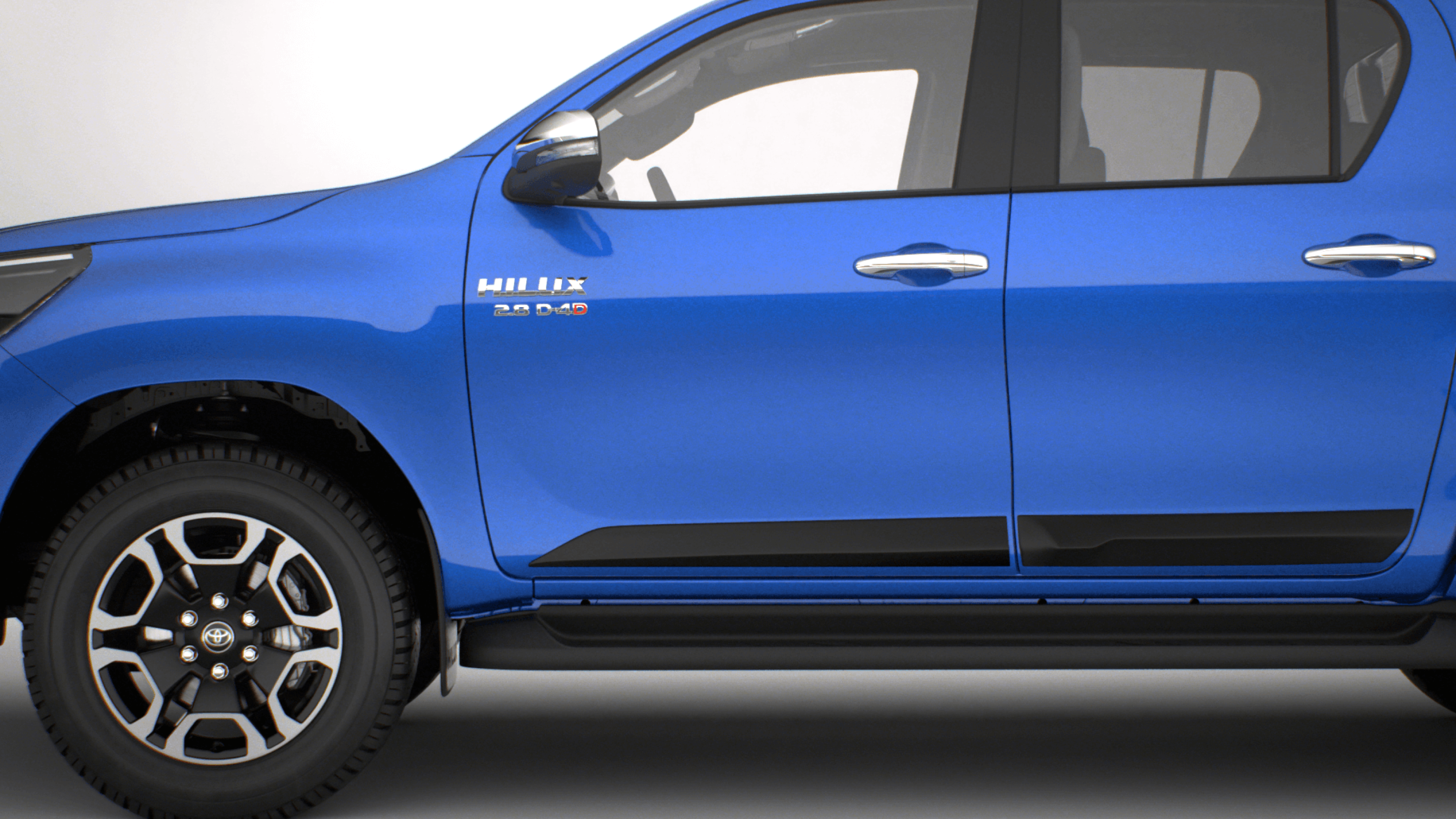
Toyota body mouldings feature a sleek design and matte black finish. The mouldings will integrate seamlessly with the side of your vehicle, enhancing its profile and offering protection.
Specifications
- Material: Not specified
- No-drill: Yes
- Flare or side moulding: Side moulding
1
Pros
- The factory option that looks factory
- Matte black matches other mouldings on the vehicle
- Simple stick-on install
Cons
- Only protects the doors
Maxliner flares
Maxliner fender flares fit over the existing flares to provide extra protection against road debris and stone chips, making them ideal for off-roaders. The kit comes in a scratch-free ABS with a black texture.
Specifications
- Material: ABS plastic
- No-drill: Yes
- Flare or side moulding: Flare
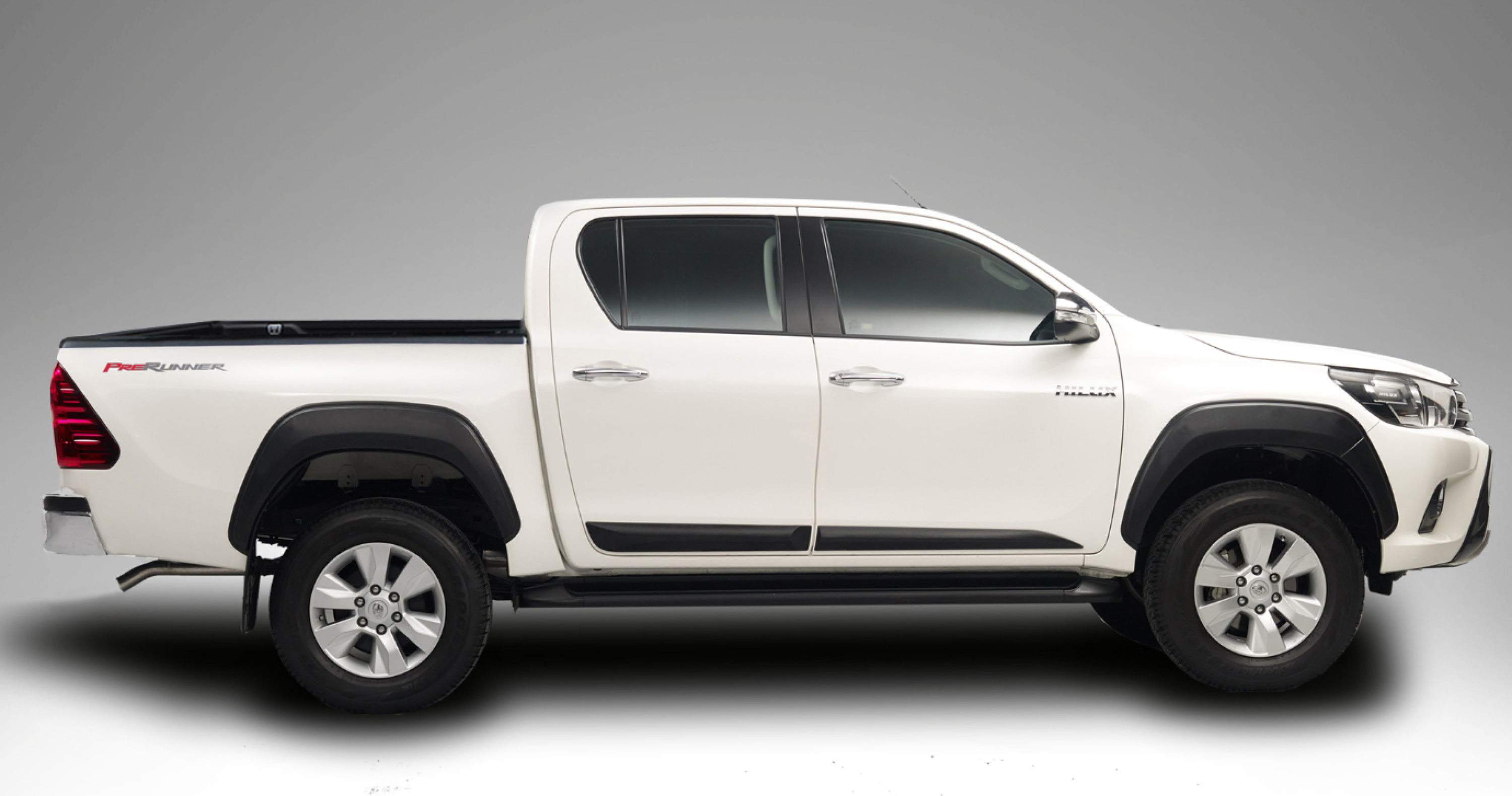
1
Pros
- Fits over existing wheel-arch flares
- Matte black matches other mouldings on the vehicle
- Provides protection plus additional wheel-arch width
Cons
- Does not fit models after 2020
PDP Performance flares
These CAD-designed flares are a perfect fit, made from vacuum-formed, UV-stable ABS plastic. The flares are designed for an OEM-level fit, and they utilise the existing vehicle attachment points and specifically designed hardware. These flares will provide protection as well as the extra width required when fitting larger tyres.
Specifications
- Material: UV-stable ABS plastic
- No-drill: Yes
- Flare or side moulding: Flare
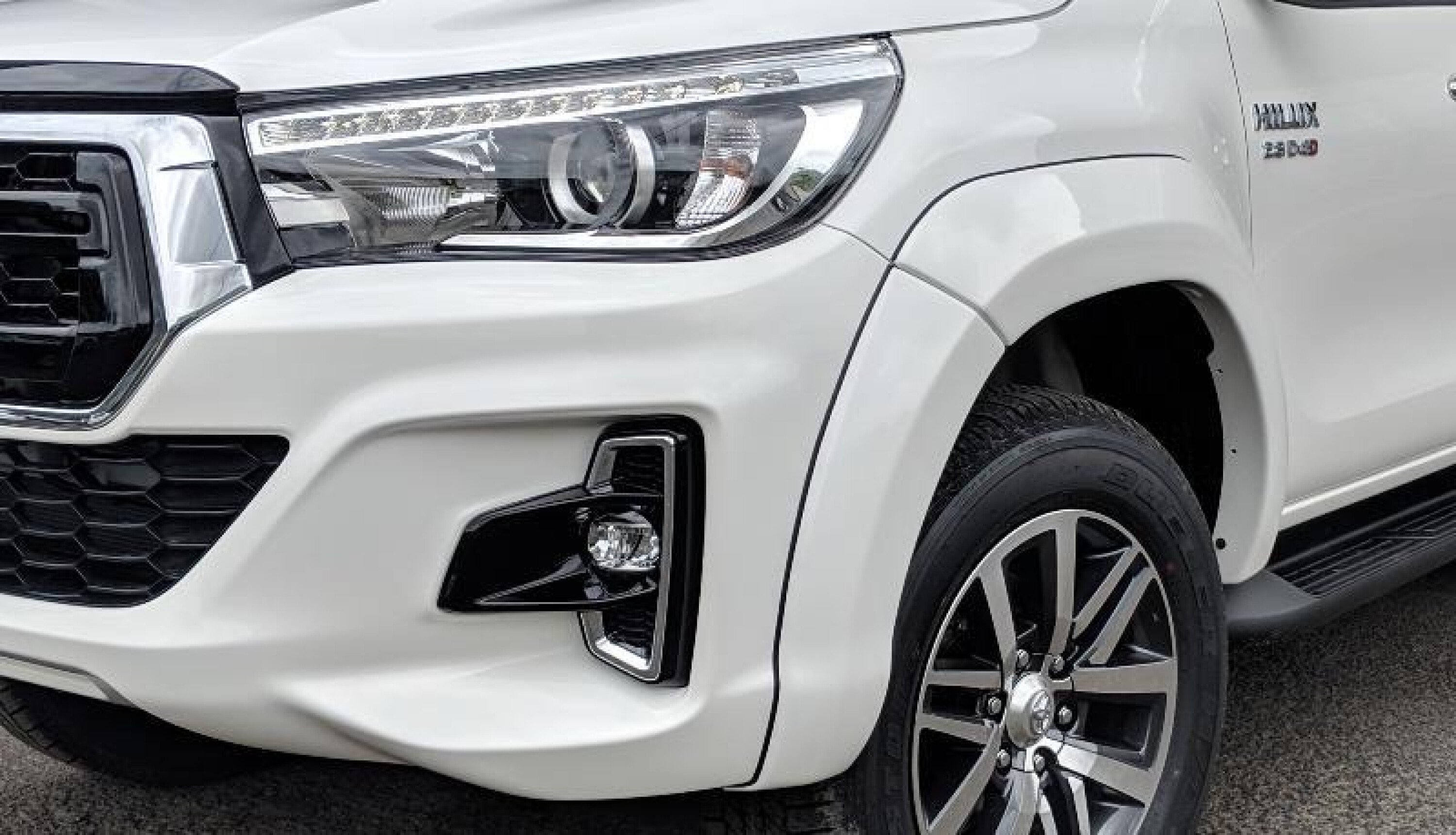
1
Pros
- Various colour options, plus unpainted
- Uses factory mounting points
- Two-year warranty
Cons
- Pricey but the clear quality leader
TJM flares
For those with a tray instead of tub, these deluxe flares have a black-gel coat finish and suit Toyota HiLux narrow body (09/2015+) vehicles. TJM flares feature fibreglass construction with a smooth gel coat finish, or they can be colour-matched as required. These under-lip single skin flares protect paint from debris, sand and mud thrown up by the tyres.
Specifications
- Material: Fibreglass
- No-drill: Yes
- Flare or side moulding: Flare
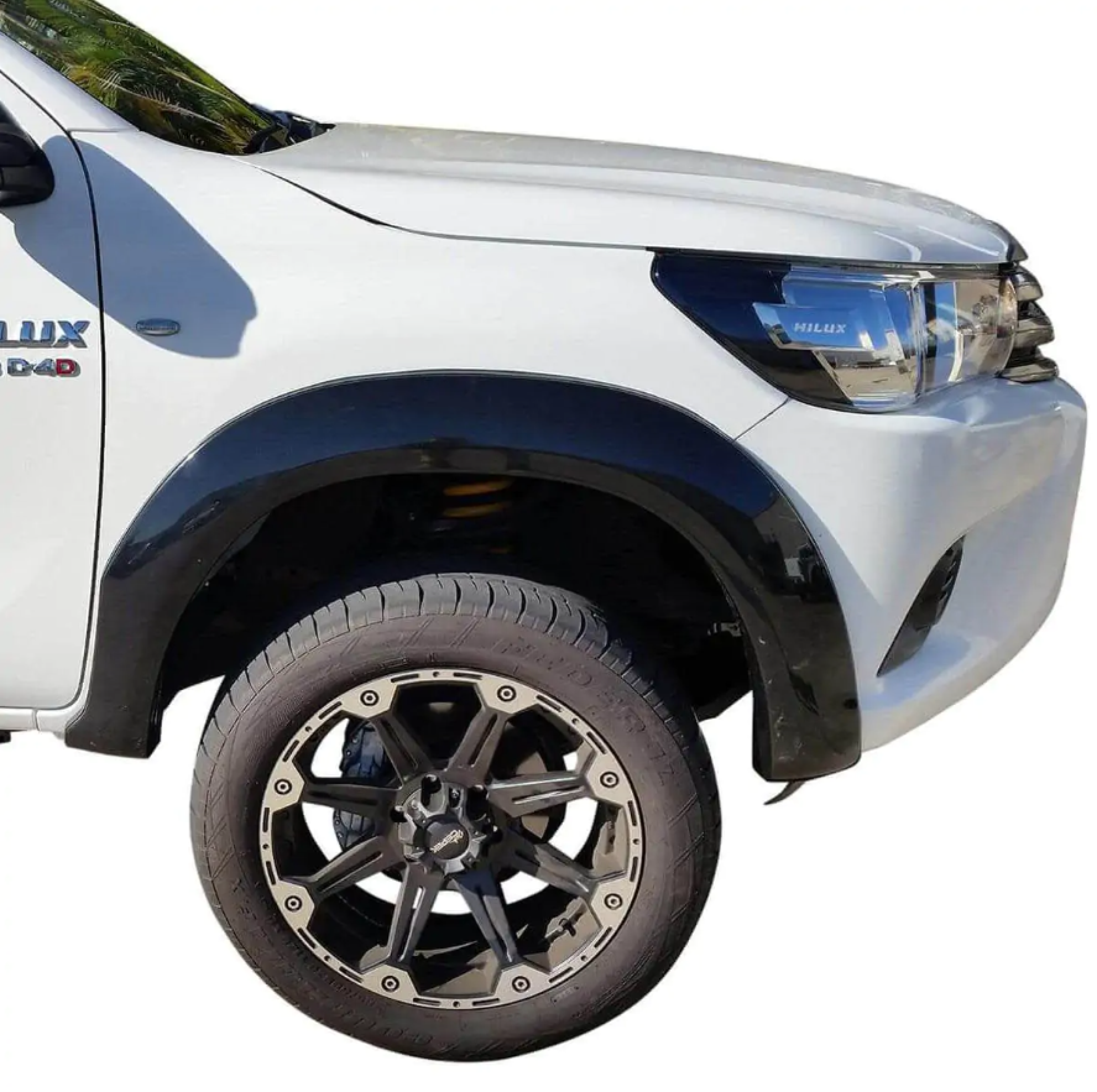
1
Pros
- Gloss finish really stands out
- Fibreglass construction provides a point of difference
- Uses factory mounting points
Cons
- Suits narrow body model only
How we review products
4X4 Australia has been reviewing four-wheel drive vehicles and aftermarket products for more than 40 years.
When looking for the best accessories for your make and model of 4WD, there are some things essential to making sure you have the best off-roading experience.
When we compare products, here are some of the things we consider:
- Warranty
- Build quality
- Value for money
- Time and ease to set-up/install
- Weight
- Fit and finish
- How well it gets the job done
- What materials they’re made from
- Corrosion/UV resistance
- Coatings
- Compatibility with other accessories
- Compliance with ADRs and vehicle safety systems
- Country of manufacture
- Load ratings, to determine what’s the best product across each price point.
Disclosure: When you buy through our links, we may earn a commission. We also include products that we do not earn a commission from.
We present the Top 10 4×4 tracks in Australia to put on the bucket list, in no particular order.
With countless 4WD tracks scattered throughout Australia, no doubt we’ve had to omit a few worthy of this list – so please let us know what we’ve missed in the comments section below.
JUMP AHEAD
- Binns Track, NT
- Oodnadatta Track, SA
- Canning Stock Route, WA
- Birdsville Track, Queensland
- Madigan Line, NT
- Simpson QAA Line, NT
- Blue Rag Range Track, Victoria
- Border Track, Victoria/SA
- Old Telegraph Track, Queensland
- Climies Track, Tasmania
- State-by-state guide
Binns Track, NT
If a Northern Territory adventure is on the agenda, then the famous Binns Track should be at the very top of the itinerary.
Named after Bill Binns, a ranger with 32 years of experience in the NT, the track snakes from the north of South Australia, into Central Australia and then the NT, leading to a number of iconic – and not-so-iconic – spots.
The starting point for the track is at Mount Dare in SA, within the Simpson Desert, which itself is an adventure to reach. Pointing the bullbar north will cross over into the NT, where the Old Andado Road leads to Alice Springs, a poorly maintained route with several (usually dry) river crossings. From here, the track cuts through the East MacDonnell Ranges and works its way further north.
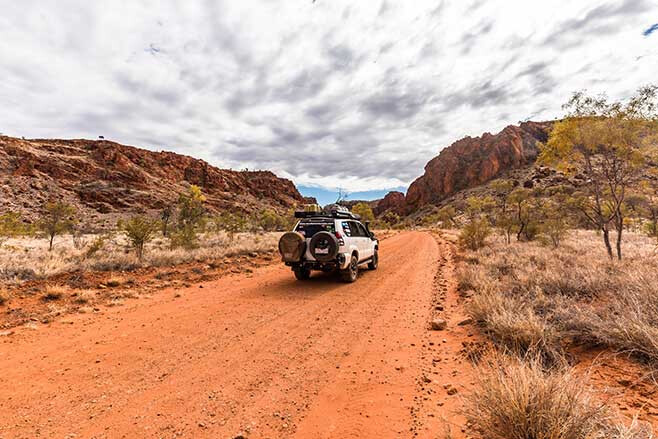
1
There are plenty of turn-offs scattered along the track that lead to many well-known locations including N’Dhala Gorge, Old Andando, the abandoned gold mines at Arltunga, Gemtree, Devils Marbles, the Boxhole Meteorite Crater, Tower Rock and Davenport Range. If tracking south-to-north, the township of Timber Creek in the NT completes the epic trip.
The majority of the track is gravel, with plenty of corrugations to rattle teeth and unsettle vertebrae, so it’s essential to have a 4WD-capable rig, a decent suspension setup, and good off-road/all-terrain tyres.
There are plenty of fuel stops along the route – Mount Dare, Santa Teresa, Alice Springs, Gemtree, Atitjere, Tennant Creek, Daly Waters, Mataranka, Katherine and Timber Creek – but it’s essential to be entirely self-sufficient.
Track length: 2230km Permits: A Simpson Desert Parks Pass is required to access Mt Dare.
Oodnadatta Track, SA
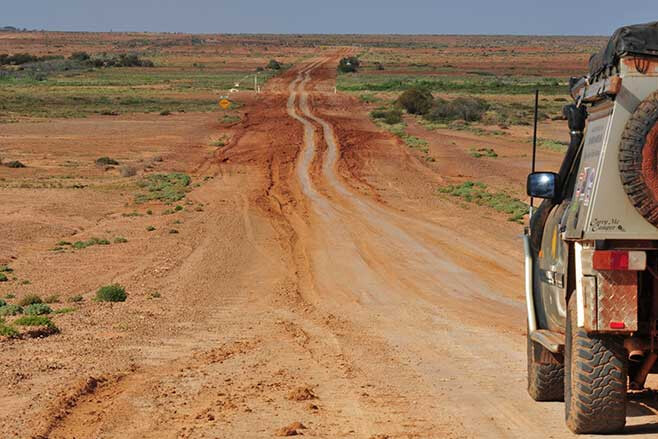
The Oodnadatta Track isn’t overly difficult, with the dirt road only challenging following an onslaught of rain – and the only real threat, a pierced sidewall from a wayward rock.
This makes it an ideal track for all 4WDers, with plenty to love about the route. Like most outback roads, The Track is usually closed following rain to protect its surface.
The track begins at Marree in the south, a quaint, historically significant town located 589km north of Adelaide in SA. Marree is actually at the junction of the Oodnadatta and the Birdsville Track (another track to make this list). It ends 405km later at Oodnadatta.
1
The track follows the Old Ghan Railway Line, which runs from Adelaide to Alice Springs, and for most of the way is within eyeshot. At about the halfway point between Maree and Oodnadatta you’ll arrive at William Creek, and it’s the perfect spot to refuel and have a feed at the hotel – plus, there’s a well-maintained camping ground.
Lake Eyre is another landmark en route, with the Oodnadatta Track skirting the majestic lake’s southern edge. Lake Eyre is one of the world’s largest internally-draining freshwater systems, and its pink hue is worth stopping for.
Then there’s the famous Pink Roadhouse in Oodnadatta, an ideal spot to end your adventure with air-conditioned cabins, warm showers and a hearty meal on the cards.
Track length: 405km Permits: Not required
Canning Stock Route, WA
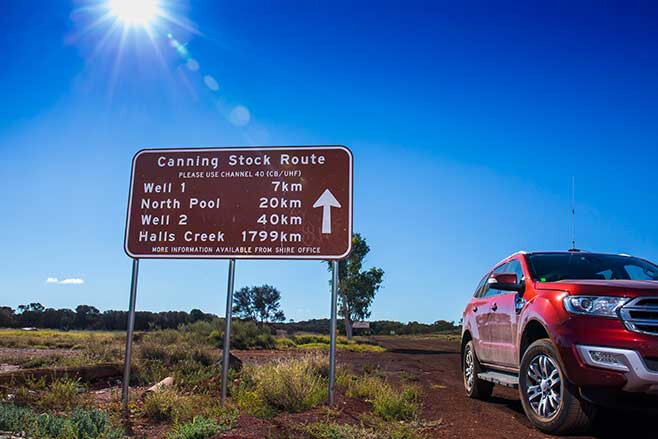
When the topic of Australia’s most famous tracks enters the campfire conversation, there’s one track that’s guaranteed to get a mention: the Canning Stock Route (CSR) in Western Australia.
The tough outback slog isn’t for the fainthearted, with the long-distance journey right up there as one of Australia’s (if not the world’s) most challenging tracks. The remoteness of the track means you’ll need a well-prepared vehicle, with adequate suspension and a tray-full of spares and supplies. Experienced 4x4ers need only apply.
1
Cutting through WA’s vast outback, the CSR runs from Wiluna in the south to Halls Creek in the north and passes through the Gibson, Great Sandy and Tanami deserts. Stretching close to 1800km, the track comprises extremely difficult ruts, as well as hundreds of sand dunes, making it a multi-week adventure.
The start of the track can be reached via Tanami Road from the Bililuna turn-off, and its origins date back to 1910 when it was used to connect 51 wells that watered the stock travelling to market. Stopping at a number of these well-known wells along the way is an essential part of the adventure.
Remember, only travel this route if you have plenty of off-road experience and your vehicle is properly set up. And it’s better to travel with others in a convoy. If you don’t have a buddy willing to join you on the adventure, there are 4WD tours you can sign up to that run throughout the year.
Track length: 1850km Permits: A CSR permit is required to travel between Wells 5 to 51.
Birdsville Track, Queensland
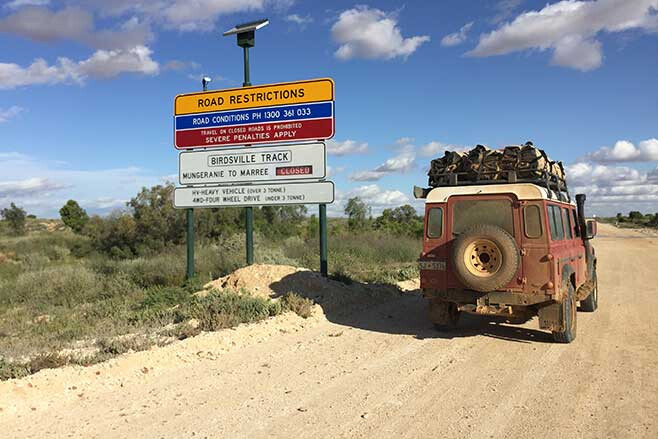
If you want to tick off an outback 4×4 adventure, the Birdsville Track is an ideal option.
Much like the Oodnadatta Track, the Birdsville Track begins at the small town of Marree in SA. However, unlike the Oodnadatta Track, the Birdsville Track heads in a north-easterly direction towards the famous outback Queensland town of Birdsville.
1
Developed way back in the 1860s as a cattle/stock route from Queensland and the NT to Port Augusta, the Birdsville Track has become a popular track for 4x4ers as they head for Birdsville.
Due to the track’s popularity in recent times, it’s not as difficult a trip as it once was; now a graded dirt track where previously only high-clearance 4WDs were recommended. Still, the track runs through some of the driest and most-barren regions of the country, so it’s essential to always carry spare water and to ensure your vehicle is properly prepared.
Track highlights include camping at Kalamurina Station Camping, exploring the Mulka Ruins, and having a brew and warm food at the Mungerannie Hotel. The eastern edge of Lake Eyre is also only a quick detour away.
Track length: 517km Permits: Not required
Madigan Line, NT
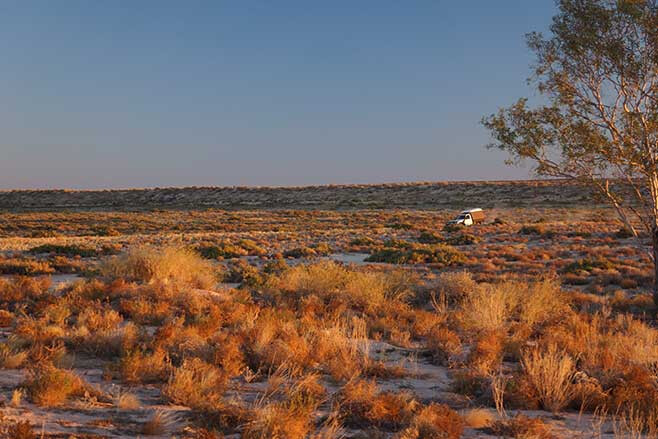
Desert driving is popular with Aussie tourers, with another Simpson Desert track – the Madigan Line – making this list.
The track begins north of Old Andado Station, a cattle station located approximately 360km south-east of Alice Springs, and strikes east into Queensland, eventually meeting up with another track on this list, the QAA Line, to complete your desert exploration.
1
As expected, prepare to cross a gauntlet of sand dunes on this trip, and prepare to be challenged. The track should only be attempted by those with plenty of experience 4x4ing on desert sand, as it’s extremely remote and recovery can be very expensive. As always, your 4×4 needs to be tailored for desert exploration
The track was named after Cecil Madigan, who blazed the route through the desert back in 1939 with a convoy of camels. These days, signposted camps along the route make it easier for travellers to find their way – a highlight is Camp 16, were a gum tree blazed by Madigan still stands.
Track length: 500km Permits: A CLC permit is required to travel the NT section.
Simpson QAA Line, NT
A more challenging Simpson Desert trek is to follow the QAA Line from Big Red near Birdsville all the way to just across the NT border, to the junction of the K1 Line near Poeppel Corner.
We recommend beginning the adventure at Big Red, located just 35km from the popular outback town of Birdsville. Big Red is an iconic 40m-tall sand dune and a worthy adversary of many a four-wheeler – it’s also one of the best spots in the country to watch a sunset. Cresting Big Red as your bullbar points west provides a brilliant view of the desert and countless dunes on the horizon, and where your journey lies.
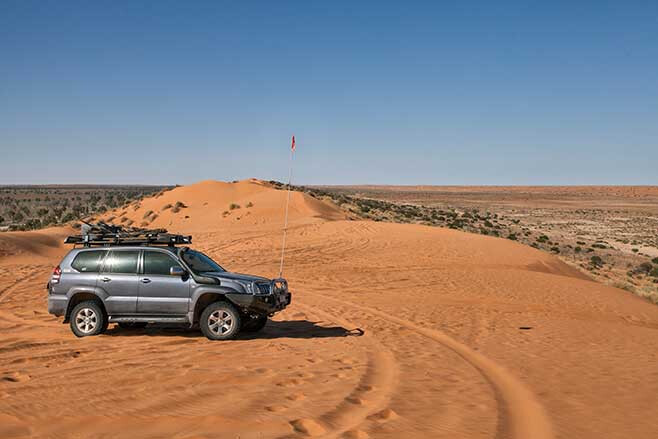
1
The high amount of traffic that utilises this route means the sand dunes are fairly churned up, so it’ll be a chore overcoming the track’s relatively short distance. Ensure your vehicle is adequately prepared – a sand flag is essential – and that you’re entirely self-sufficient.
The challenging, soft tracks are well worth the effort once you set-up camp for the night beneath the wide expanse of stars, with no distractions.
At the junction in the NT, travels through the Simpson Desert can continue via the French Line, the Rig Road and/or the WAA Line, all varying in length and difficulty. The short but challenging QAA Line, in particular, provides a great taste of desert driving.
Track length: 122km Permits: Camping permit required at Munga-Thirri.
Blue Rag Range Track, Victoria
Arguably one of the most scenic tracks in the Victorian High Country, Blue Rag provides breathtaking views across Alpine National Park.
Rated as a difficult track, a low-range 4×4 with good suspension is non-negotiable. With extremely steep (especially following rain) climbs, tight turns, as well as very steep drop-offs on either side of the track, it’ll definitely get the heart rate ticking. Still, people with off-road experience – and no fear of heights – shouldn’t encounter too many stressful situations.
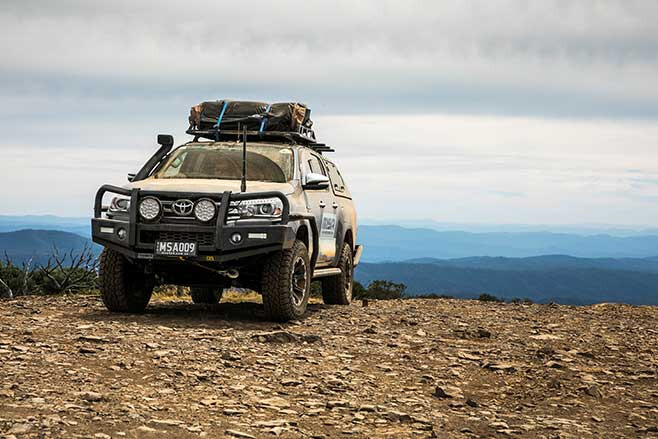
1
At 1600m above sea level, snow is prone to fall in the region; hence why the track is subject to closure during the cooler months between May and November. Still, snow has been known to fall outside of these times, so keep an eye on park and track notices.
The track’s greatest challenge is just prior to the highest peak, but it’s this main climb to Mount Blue Rag and its trig point which provides the best photo opportunities.
There’s only one way in and out of the remote track, and that entry point can be found along Dargo High Plains Road between Dargo and Bright. The small town of Bright, about four hours’ drive from Melbourne, is a great base to refuel and prepare for the trip.
Track length: 6.9km each way Permits: Not required
Border Track, Victoria/SA
The Border Track is aptly named, as certain sections of the route run along the border between Victoria and South Australia.
Your journey to the Border Track can begin in Hopetoun, Victoria, cutting west through Wyperfeld National Park followed by a jaunt through the Big Desert National Park. The Border Track itself begins once you’ve entered the sandy landscape known as the Ngharkat Conservation Park.
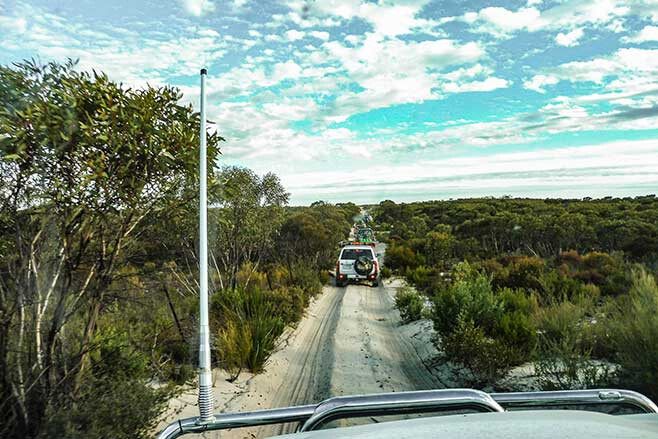
1
The Border Track runs through quintessential mallee country, with soft sand typically underfoot – so always remember to air down. The relatively short track – only around 50 clicks or so – encompasses a bounty of challenging driving conditions including a handful of imposing sand dunes. There are chicken routes to bypass some of the steeper dunes, but the track is nonetheless classified as difficult.
To access all the track has to offer, a vehicle with high clearance and low range is essential. It’s also remote country, so have a well set-up rig and appropriate recovery gear.
Track length: 50km (approx.) Permits: Not required
Old Telegraph Track, Queensland
The iconic Old Telegraph Track in Cape York is a no-brainer for this list.
Leading to ‘the tip’, the track is awash with water crossings, slippery terrain and plenty of spots to get stuck axles deep. While arguably not as challenging as Cape York’s Old Coach Road, the OTT is not without risk.
With limited passing opportunities, travelling in a northerly direction is the popular choice. It’s not advised to travel the route in a southerly direction, although it is possible.
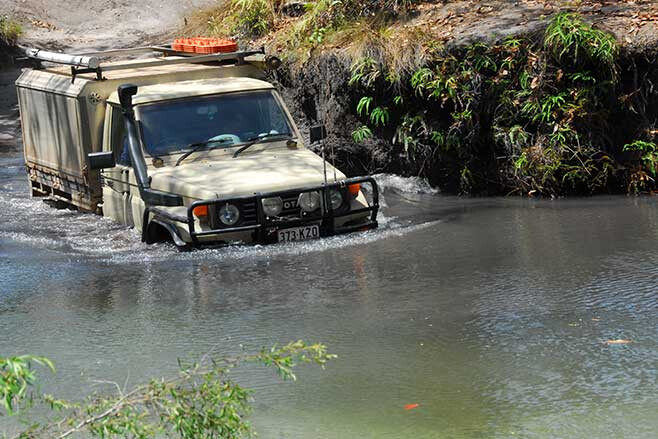
1
Perhaps the most memorable section of the track is the infamous Gunshot Creek, located just past the crossing of the Bertie River. No doubt you’ve seen countless photos of 4x4s sliding over the steep drop, which will undeniably get the sweat glands pumping.
The going doesn’t get much easier farther north either, with the northern section of the OTT considerably more challenging than the southern stint. However, there are bypass routes if you’re not up to the challenge.
Another must-do is to camp on the river at the Jardine National Park. But remember, this is croc country, so only swim in places that have been designated safe to do so.
Still, the area’s many waterholes make the OTT and Cape York a cornerstone of Australian 4×4 expedition.
Track length: 350km Permits: Permit required to camp in Jardine River National Park at the Jardine River and Eliot Falls sites.
Climies Track, Tasmania
Climies Track, on the wild west coast of Tasmania, is an ocean-side track littered with difficult obstacles.
With deep ruts, scrambly climbs, knee-deep mud and deep water crossings, it requires precise wheel control to be beaten. Hence why it’s recommended for highly experienced steerers only.
A capable 4×4 with low-range is a requirement, as well as appropriate rubber. Also, it’s a smart move to travel with friends, as you’ll need some winch support more than once to get out of trouble.
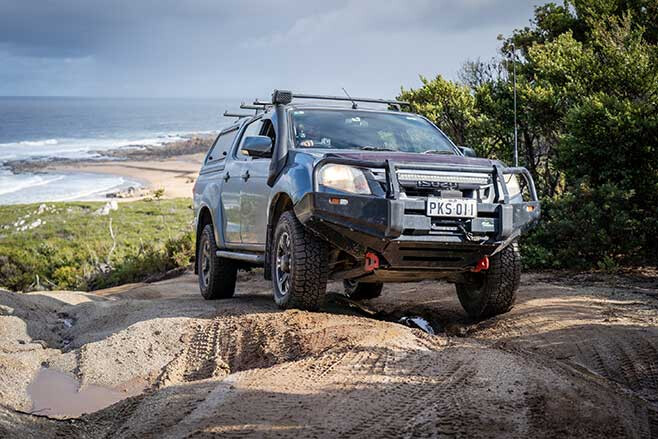
1
The rewards are well worth it, though, with a sense of accomplishment accompanied by trance-like views overlooking the freezing blue seas washing in from Antarctica.
The northern end of the track can be reached via Granville Harbour Road, which is about 26km from the town of Zeehan. The track’s southern end can be reached en route to Zeehan, by taking the turnoff onto Trial Harbour Road.
The track was once used as a major route between two shack towns at Granville Harbour and Trial Harbour, but neglect has resulted in a twisted maze of deep gullies and wild boulders the size of cars.
Climies is an unforgiving track, and its 20km length can take more than 10 hours – so be prepared to be in for the long haul if you want to tick it off the bucket list.
Track length: 20km Permits: Not required
Explore by state








I took the high-lift jack off the Patrol the other day, after returning from a long desert and Cape York jaunt. It’s the first time I’ve removed the jack from its roof-rack mount in a year or two, maybe even more.
It’s not that I’m fed up with carrying it and not using it much (a typical lament about high-lift jacks from many I’ve heard), it’s just that I’ve come across a couple of better pieces of kit. But anyway, for a start, let’s go back to the basics.
JUMP AHEAD
Bottle jack
Most good 4WD vehicles come with a bottle jack for lifting a vehicle to change a tyre, and in most cases they are the basic screw-type jack that are simple, strong and reliable.
They aren’t particularly user friendly and the fold-in-half or two-piece handle that comes with them can be frustrating to use. Most people, from the short survey I did, carry more than one.
Still, they have a place in our tool kit even though one of the major disadvantages of a bottle jack – whether screw or hydraulic – is their height when depressed. They are often too tall to slide under an axle at the preferred spot when you have a flat tyre. At the other end of the game, their fully extended height often isn’t high enough to remove a flat tyre or fit a fully inflated tyre.
One thing you really need for a jack (of near any sort), for those situations off-road, is a jacking plate, which can be as simple as a piece of milled timber – say about 300 x 200mm and 15mm or so thick. Or you can buy a custom-made base plate that a bottle jack can lock in to. For years, I’ve just carried a piece of wood and it works fine.
Latest Gear Guides
1

A lot of people (from the survey I carried out), myself included, have added a hydraulic bottle jack to their jacking repertoire. These jacks are easier to use than the screw-type jacks but after a few years use, they can leak fluid to the stage they can’t lift any heavy weights.
For the last few years, I’ve also carried a supplementary kit for my bottle jacks: a Safe Jack Bottle Jack Recovery Kit. These are available through Pro-Quip International in Melbourne. An American sourced kit, it comes complete with a six-tonne bottle jack, a six-inch (15cm) extension, a three-inch extension, an 8.5- to 12-inch (21.6-30cm) extension, a flat jack pad and an axle jack pad (the most handy of all the items), all in a heavy-duty Husky bag.
I opted for everything but the bottle jack itself, as I had a few of these at home. Mind you, a couple of the jacks weren’t suitable for the other accessories as their lifting ram was not the right size – 18mm is the magical diameter of the ram.
Price wise you’ll pay between $40 and $150 for a good four- to eight-tonne bottle jack. If you are adding an hydraulic to what you already have, get one with a different profile and minimum height; you’ll find that offers flexibility when the time comes to sliding it under an axle to change a tyre.
Some vehicles come with a scissor-type jack. They are not my favourite, as they are unstable at the best of times. My advice is to replace them with a bottle jack, at least.
High-lift jack
The high-lift jack (‘Hi-Lift’ being a brand as well as now a style of jack) was the second most common jack mentioned and used by my fellow four wheelers in my survey.
A couple of people reckoned that’s all they carried, but most people who had a high-lift also carried a bottle jack of some sort, or maybe two or three. Certainly, my preferred jacking equipment has, for a long time, consisted of a screw-type bottle jack, at least one hydraulic bottle jack and a high-lift jack.
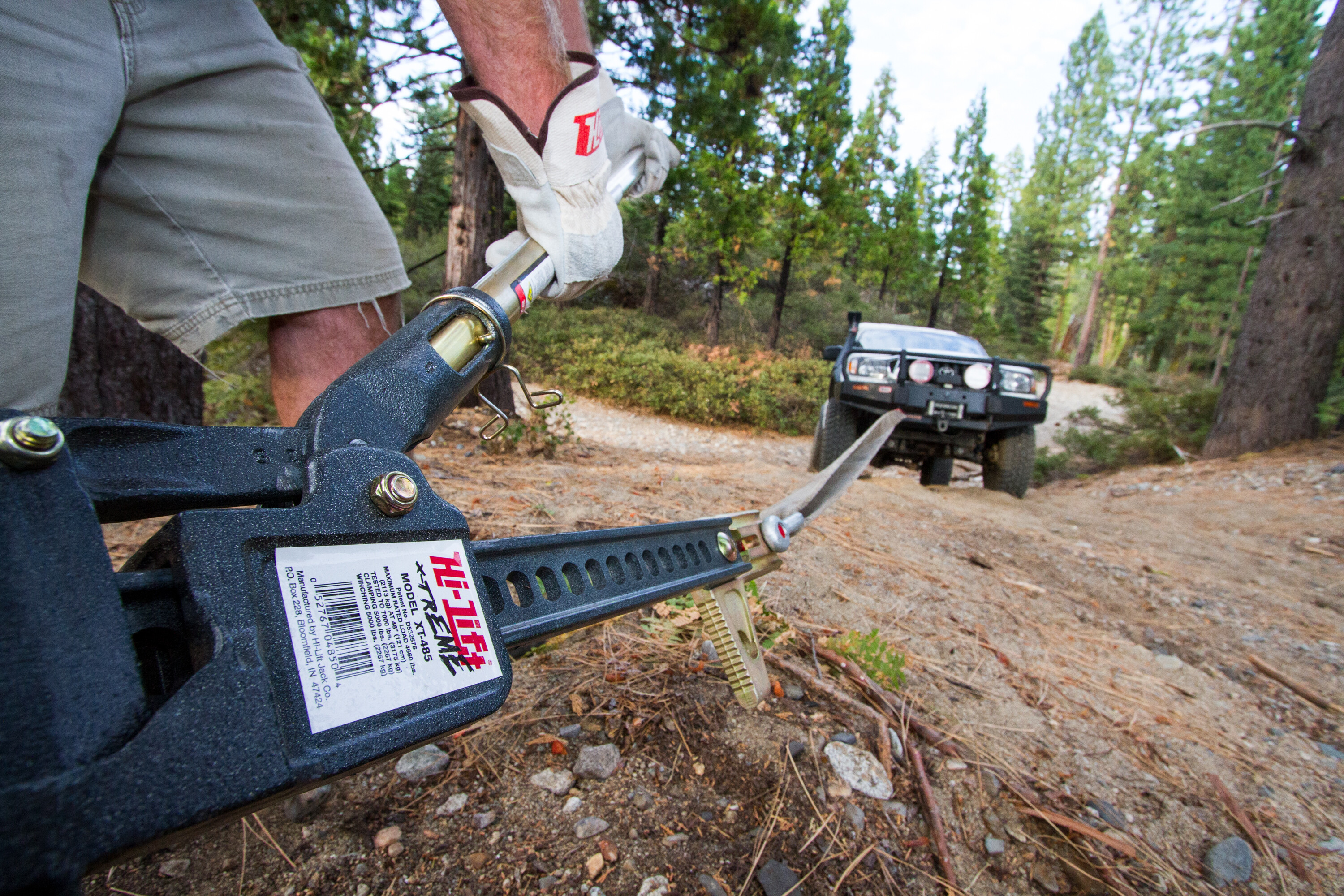
The high-lift jack is a pretty flexible piece of gear – for not only jacking but winching and spreading – but it demands a lot of respect, as any careless misuse can result in somebody getting hurt … or worse. As well, modern vehicles don’t lend themselves to being jacked up with a high-lift jack. At the very least you’ll need side rails, aftermarket rear steps and a bullbar – all with provision to take the tongue of the jack – to make full use of its lifting potential.
2
High-lift jacks are pretty unstable and need a bit of muscle power, especially when jacking a fully loaded vehicle. Pro-Quip has a stabiliser system and base plate that makes the high-lift jack safer to use when jacking, while ARB has a range of custom accessories to make the jack safer and more usable in a number of roles. They are worth checking out if the high-lift jack is your preferred piece of jacking equipment.
One thing I noticed when researching for this article is the wide disparity of pricing when it comes to high-lift jacks, with prices ranging from $90 to well over $300, for something that looks very similar. Something used for jacking a vehicle up, itself fraught with danger, demands equipment that is made to the highest standard, which by its very nature would exclude the cheapest brands on the market.
Exhaust jack
Before we move on to some of the later players in the jacking field, we’ll mention exhaust jacks here.
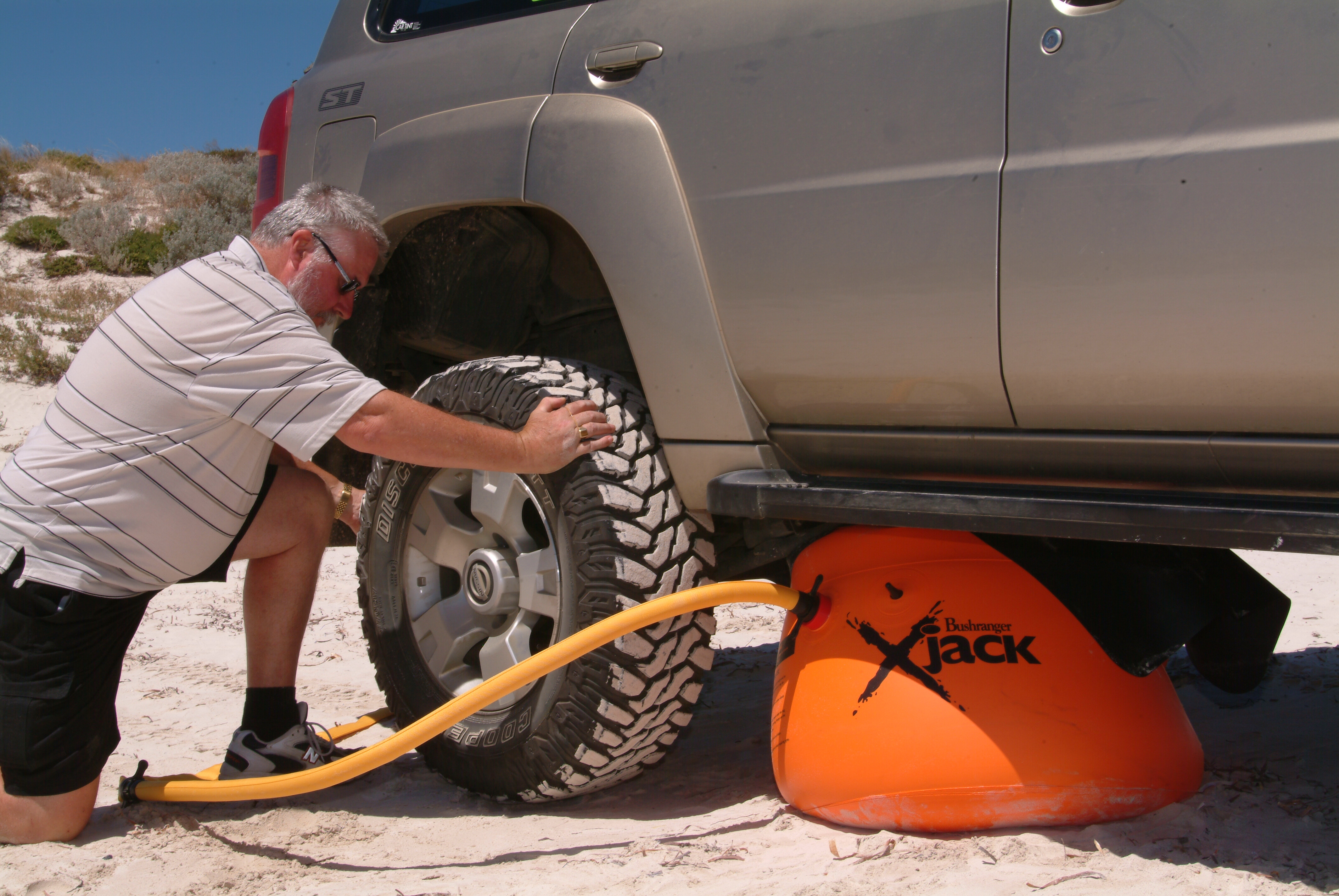
I’ve used a number of brands on numerous occasions and in many different situations. I’ve found they work best in sandy situations, but, even at the best of times, they can be fiddly and frustrating.
1
You need to be very careful where you fit them and what you lay them on as they are easily punctured which results in rapid – very rapid – deflation. Once punctured, they are irreparable and over the years I’ve thrown a number away. In recent times, I’ve basically given up carrying them, even on beach trips, even though I have a near brand-new one in the shed. You’ll pay $250 and up for a quality exhaust jack, but are they really worth it?
ARB jack
That brings us to some of the later players in the jacking arena … and the most expensive.
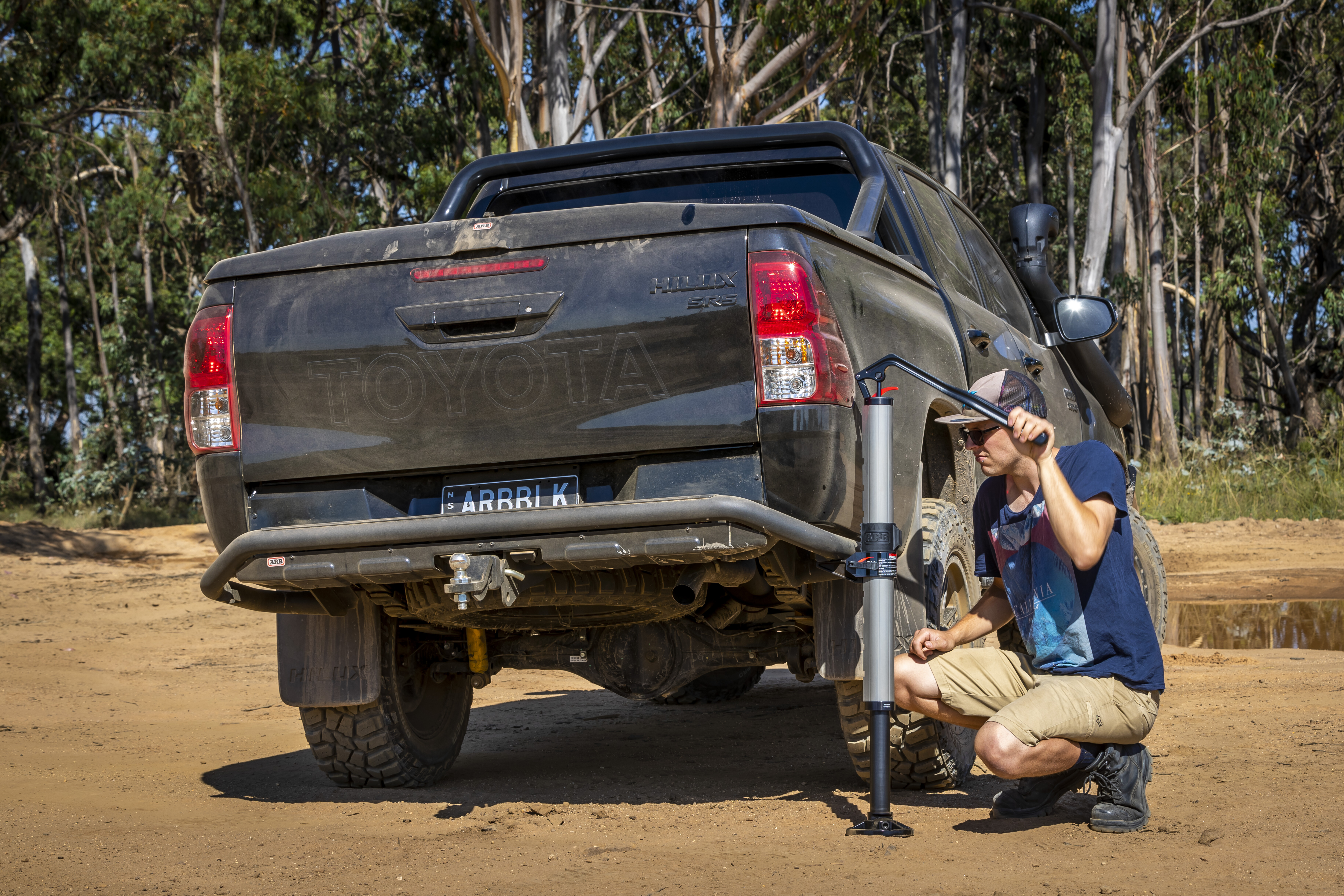
A few years back ARB came out with its jacking masterpiece, simply called, Jack, when it released its all-new hydraulic version of what is essentially a high-lift jack. With a body made from aircraft-grade T6 aluminium, this unit is capable of lifting two tonnes from a minimum lift height of 160mm to a maximum height of over a metre.
The all-up weight of Jack is 10.5kg, while the hydraulics allow easy and controllable lifting and lowering without many of the hassles or dangers lurking with a normal high-lift jack. Still, to make it more stable on rough ground, there is a plastic jack base to suit it and, once again, like any high-lift jack, you really require side rails, bullbars, etc, to make the most of its capability.
1
When I first saw this unit, priced at over $1000, I was sceptical about how good it could be and whether I’d trade my old high-lift for it.
Over the last four months, I’ve been away with my son on his Moon Toursa expeditions wandering the Simpson Desert, Central Australia, the western deserts and Cape York, and we’ve used Jack quite a few times in different situations. I’m now impressed with its ease of use, its jacking ability, the amount of control you have when lifting and lowering, along with its inherent safety compared to a normal high-lift jack. Is it worth its grand price tag? I’ve gotta say, yes!
Pro Eagle trolley jack

The last jack is the trolley jack from Pro Eagle Australia. I’d never heard of one of these units until one of Trent’s clients rolled one out for a repair job on his Cruiser while on our Cape York jaunt.
Now don’t compare the Pro Eagle with your normal trolley jack from Autobarn or Supercheap, which I have a couple in my shed. Some (many) years ago, we took one of these trolley jacks on an off-road trip, but they were so difficult to handle they never went on another.
The Pro Eagle is a different can of capabilities. Made in the good ol’ US of A, it exudes precision and quality and comes in three different models and lifting capabilities up to three-tonne; I bought the big-un. Priced at just under a grand for this top-of-the-line model, it’s not cheap and if you need a custom mounting kit, or the tool kit (aka, a wheel-nut socket set) you’ll add a few more hundred to the bill. If there is a drawback to the Pro Eagle, it is its weight, with the three-tonne unit I have weighing in at 27kg.
1
The Pro Eagle, though, is designed for off-road work and its big wheels make it easy to use in rough terrain, while its belly plate gives it a huge flat base that doesn’t sink in to sand or mud, even if the wheels tend to. It makes lifting, even the back end of my Patrol or a 2500 Ram, a cinch, and it can slip under an axle even easier than any of my bottle jacks – and lift the vehicle higher. The Pro Eagle comes with a standard eight-inch extension for those vehicles that sit on portals or the like.
The lifting and the lowering of the jack, even when fully loaded, is easy and well-controlled with the hydraulics. What is also a great safety point is that, even when it’s at its highest jacking position, it is much more stable than any of the units mentioned earlier.
As a relative newcomer to the Aussie market, my survey only turned up a couple of people who have the Pro Eagle jack, but, like me, they are rapt in the unit, its capability and how easy they are to use.
Finally, whenever and with whatever jack you are using, make sure you play it safe (see below for safety tips). The last thing you need is a jack slipping and falling and hurting or trapping someone!
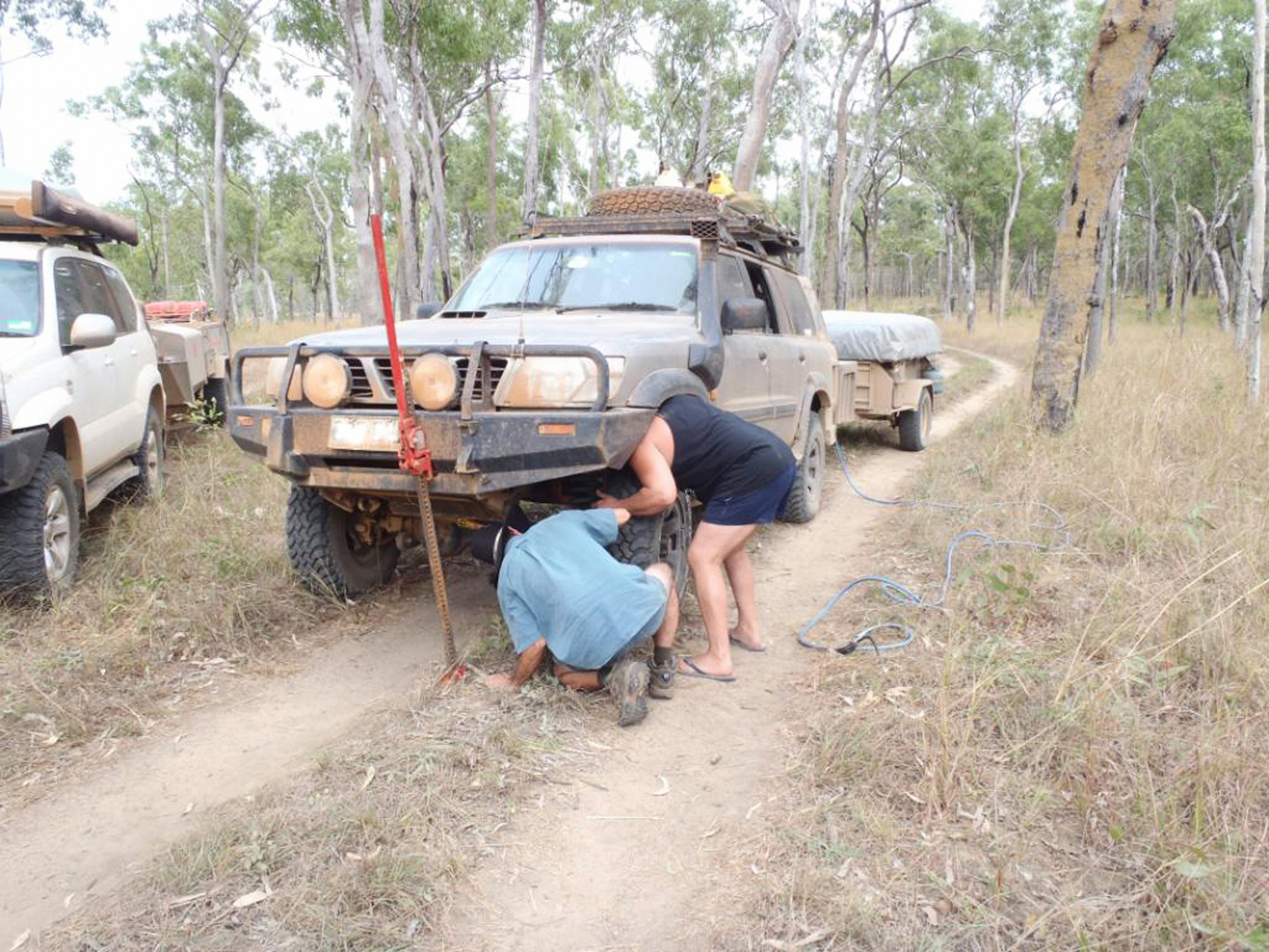
1
10 steps to minimise the risks
Research by the ACCC has shown that more than 120 Australians have died as a result of DIY car maintenance accidents in the last 20 years, while hundreds have been hospitalised due to injuries.
Most of these incidents happen when working under a vehicle and using gear incorrectly, with many of the fatalities involving vehicle jacks.
The risks of jacking and working under a vehicle in the bush and on uneven surfaces are greatly increased, so you need to take extra care.
- Never get under a car that is only supported by a jack.
- Always place safety stands, or at the very least, a spare tyre under the axle or chassis.
- Apply the handbrake, with the vehicle in gear or Park.
- Always ‘chock’ the wheels on a raised vehicle.
- Never place any part of your body under a vehicle unless it is sitting securely on some form of safety stand.
- Never allow a person or pet to remain in the vehicle.
- Never exceed the weight capacity of the jack.
- On sand, mud or soft surfaces, use a jacking plate.
- Always perform jacking, where possible, on steady ground. If on rocky, rough ground, level the ground before placing the jacking plate and jack in position.
- If using makeshift supports in the bush, such as blocks of wood, rocks or a spare tyre, be extremely careful and ensure their stability.