4x4 Comparisons

Gallery 1
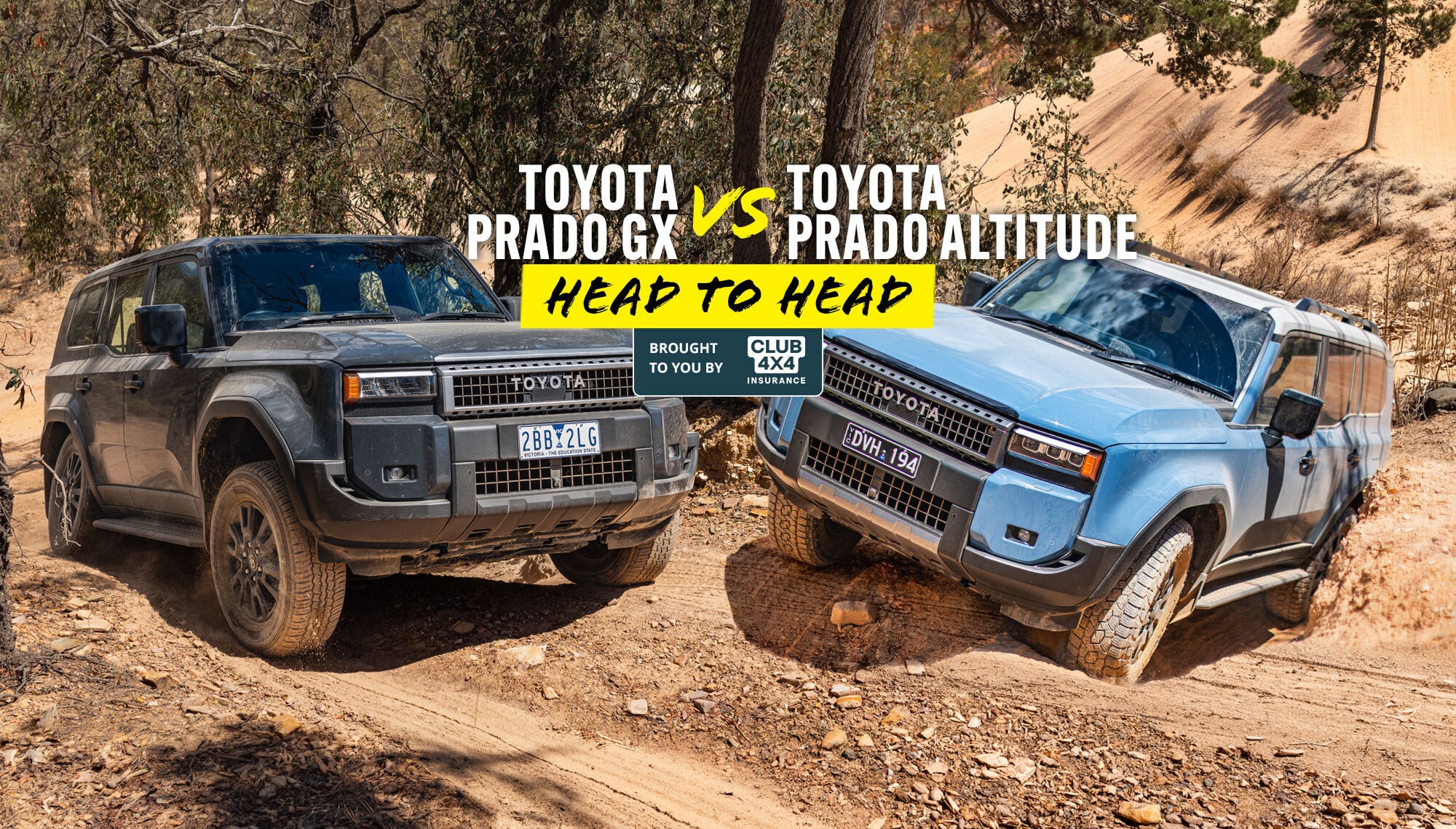
There’s a problem with flagship four-wheel drives: They’re usually brilliant but they’re also usually expensive enough that modifying them properly becomes painful.
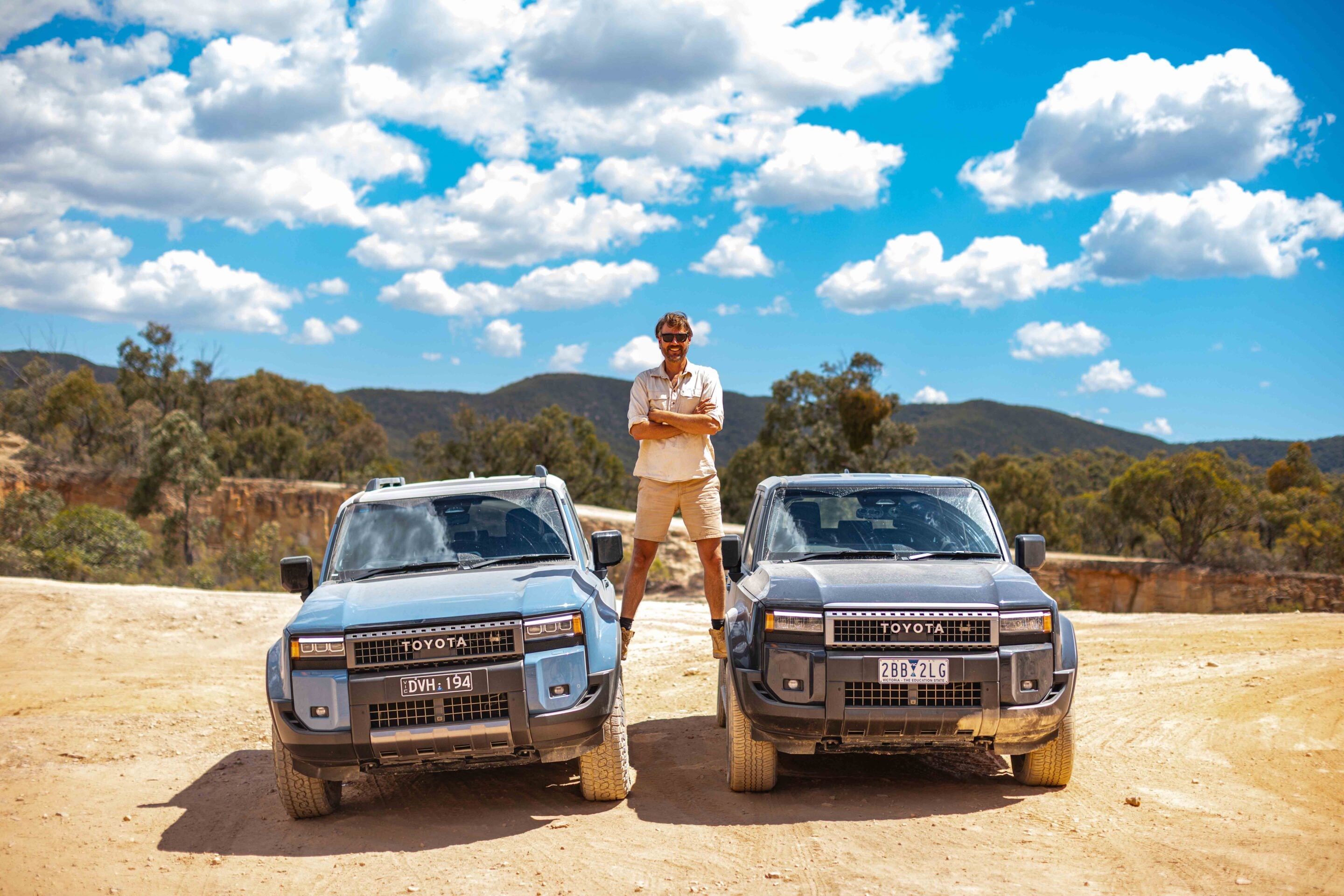
That’s exactly where the Toyota Prado 250 Series range gets interesting, because while the Toyota Prado Altitude sits near the top of the 250 Series line-up with a locking rear differential, disconnecting sway bar and better tyres, the base Toyota Prado GX shares the same ladder-frame chassis, the same 2.8-litre turbo-diesel hybrid drivetrain, and the same excellent full-time four-wheel-drive system.
So we wanted to answer a simple question: Is the Altitude actually worth the extra money? To find out, we took both into tough Victorian terrain and drove them back-to-back through moguls, steep climbs and one track that has historically embarrassed plenty of modified four-wheel drives. What happened surprised us.
JUMP AHEAD
- Key differences
- Traction control
- Building a GX tourer
- Payload and GVM limits
- On-road comfort
- Which Prado should you buy?
- Specs
Toyota Prado GX vs Altitude: Key differences
Under the bonnet, these two Prados are almost identical.
Both run Toyota’s 2.8-litre four-cylinder turbo-diesel hybrid making 150kW and 500Nm, paired to an eight-speed automatic and full-time four-wheel drive system. Both are mild hybrids, both run AdBlue, and both share the same chassis, wheelbase and overall dimensions.
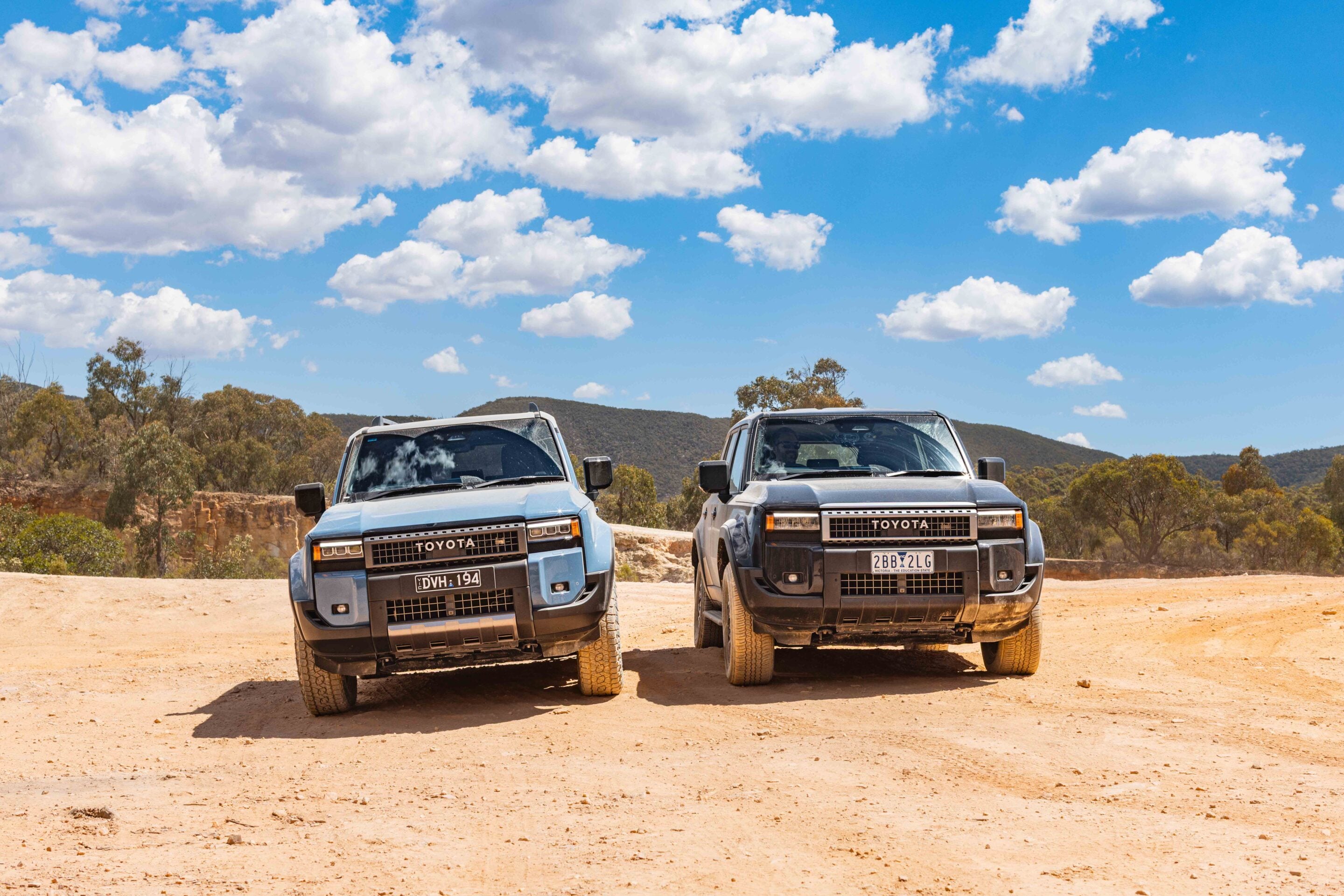
However, Toyota has positioned these vehicles for very different buyers. The GX is the stripped-back touring base. Cloth seats, smaller screens, rubber mats and fairly average OEM tyres. It’s aimed at practical owners and buyers who’ll likely modify it anyway.
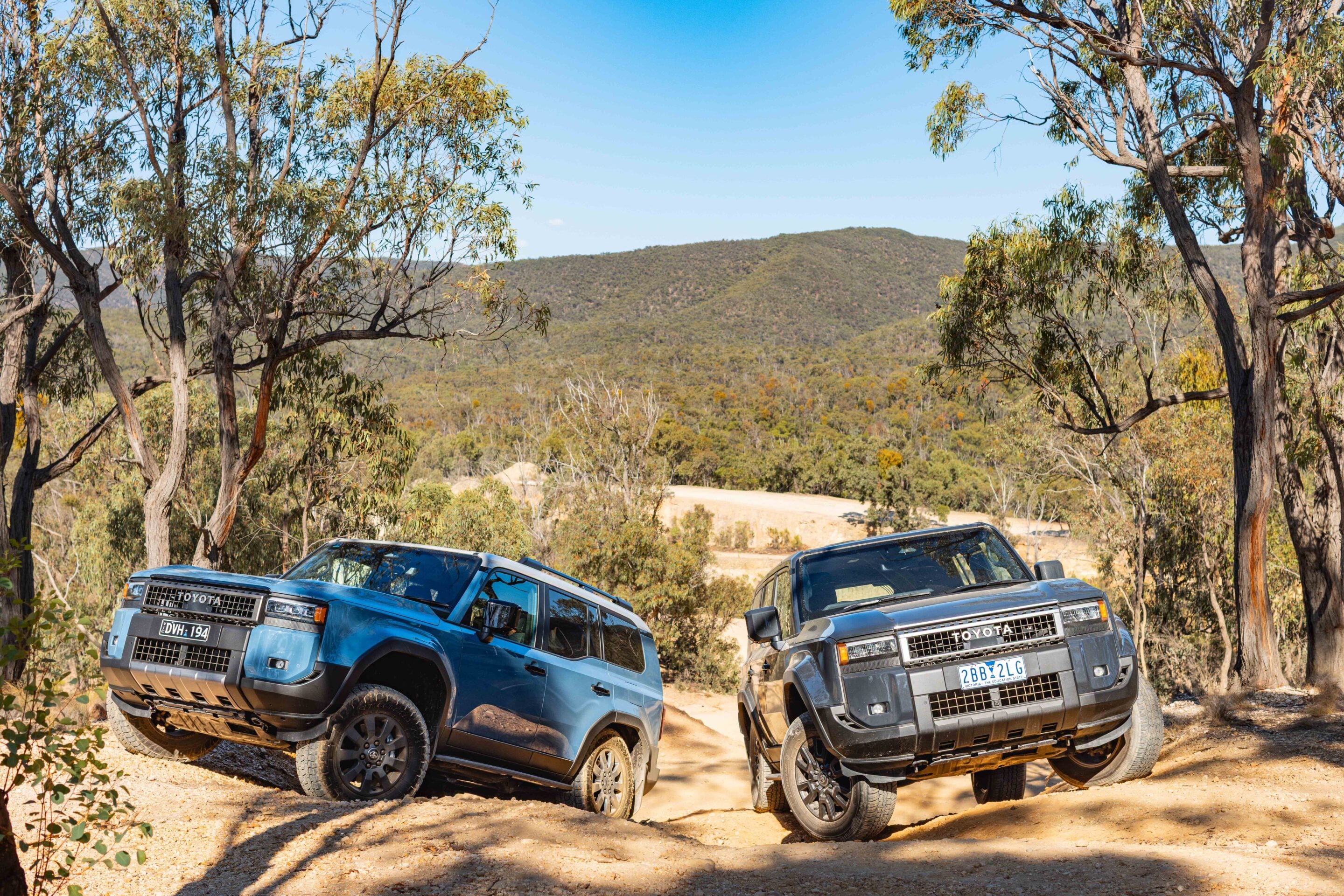
The Altitude, meanwhile, leans hard into the premium off-road lifestyle market. You get Toyo Open Country all-terrains, a disconnecting front sway bar, a locking rear differential, leather-accented trim, heated and ventilated seats, JBL audio and enough extra tech to make it feel like a completely different vehicle inside. And to be fair to Toyota, it absolutely is better off-road. The question is whether it’s $22,000 better.
1
The Prado’s exceptional traction control
The hardest thing about testing modern four-wheel drives is separating genuine mechanical capability from electronic wizardry.
Because these days, traction control systems are so good that vehicles with open differentials can embarrass older rigs running proper lockers. And honestly? The Prado GX is one of the best examples of that I’ve driven in years. That mirrors what we saw during 4X4 Australia’s 2025 4X4 Of The Year testing, where Toyota’s ETC calibration repeatedly stood out as the benchmark against rivals including the Ford Everest, Nissan Patrol and Ineos Grenadier.
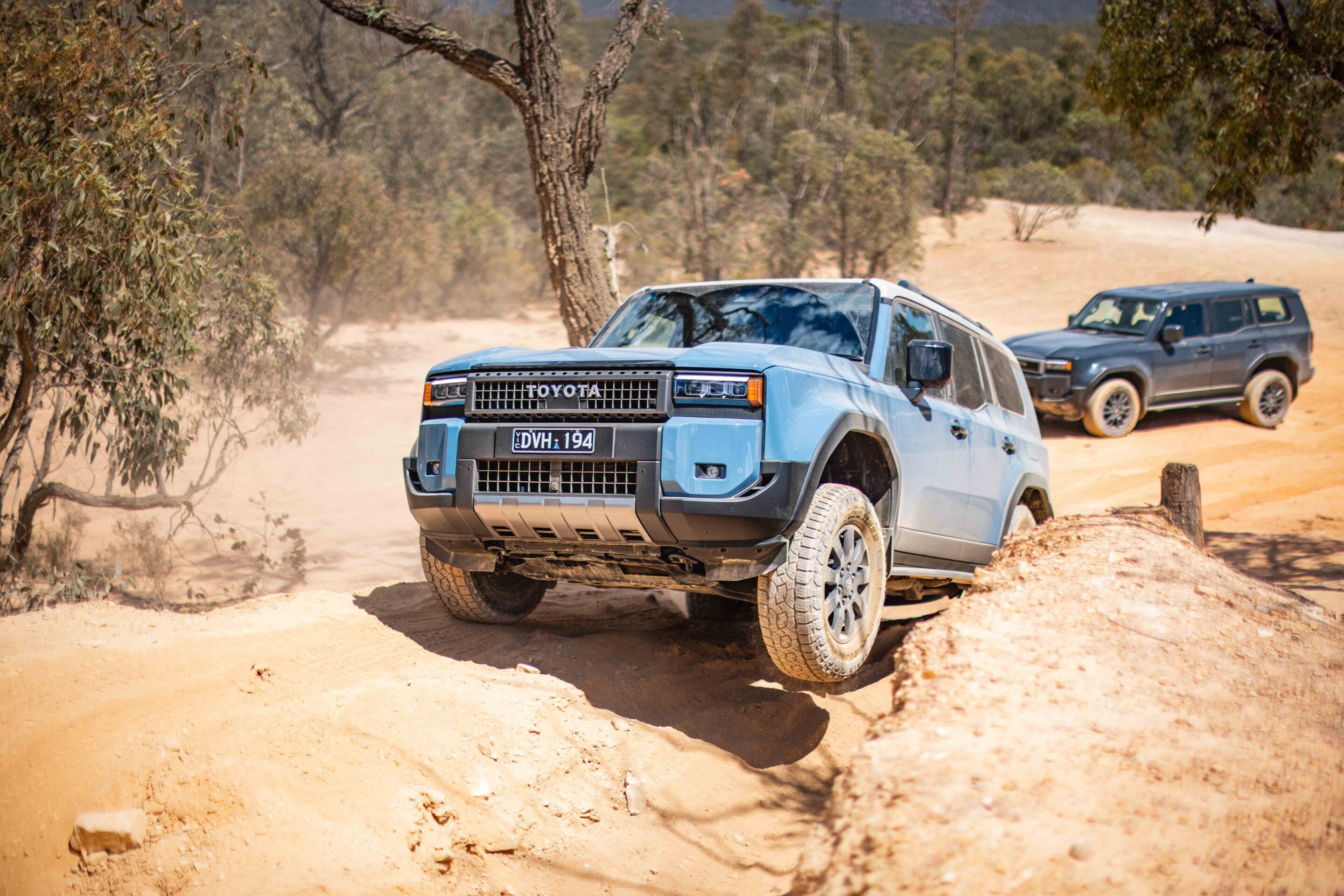
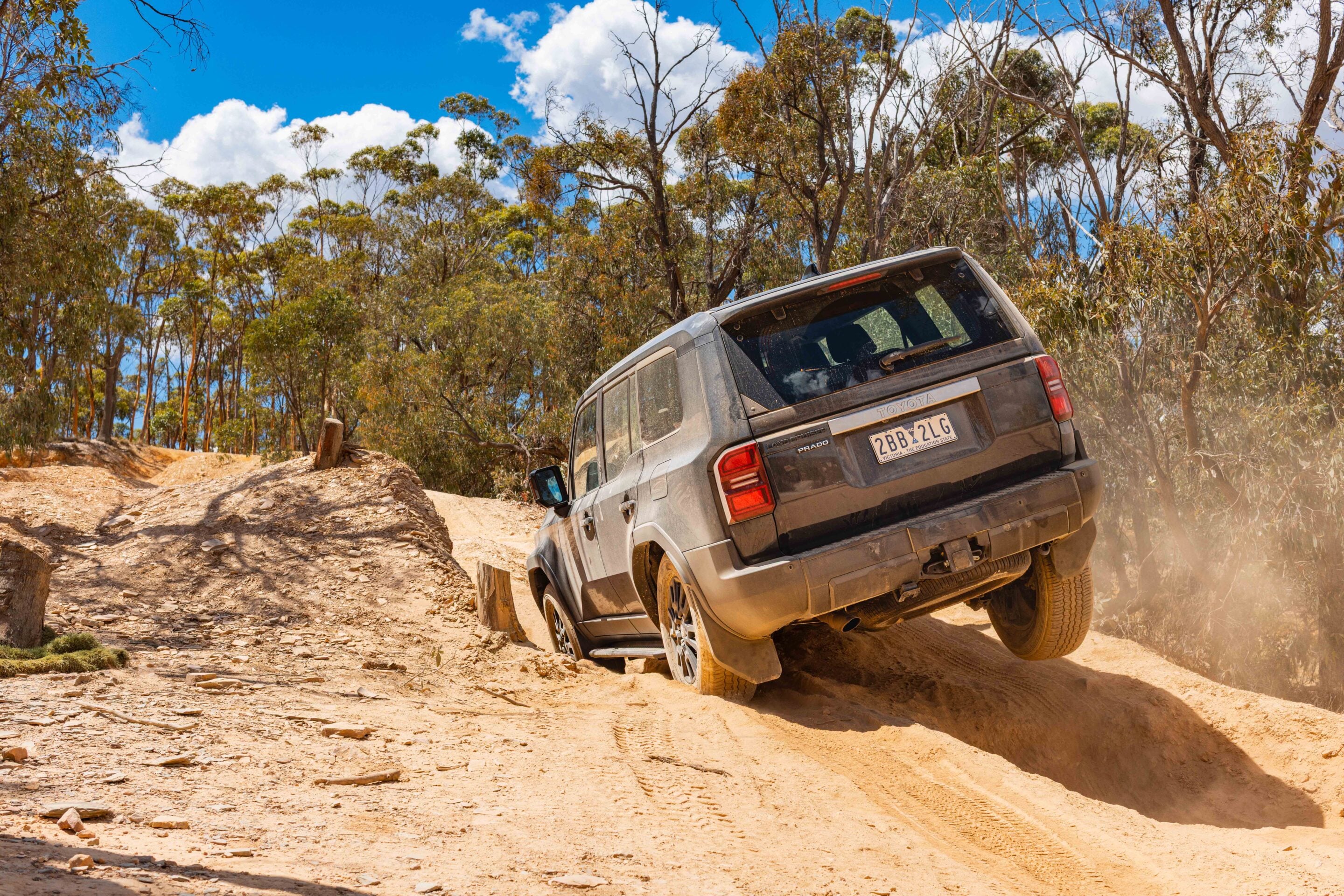
We tested both Prados on the same steep, deeply rutted Victorian tracks we used during 4X4 Australia’s Ute of the Year testing, climbs that regularly expose weak traction control calibrations, poor wheel travel or overly aggressive throttle mapping. Some of these climbs routinely stop dual-cab utes with rear diff locks fitted. Others simply run out of articulation and start lifting wheels. The GX Prado just kept crawling. And the biggest surprise was how little drama there was doing it.
That wasn’t the first time the GX had surprised us, either. In previous 4X4 Australia testing against the Ford Everest Trend, the Prado’s rear articulation and aggressive traction control calibration repeatedly allowed it to crawl over obstacles the Ford needed a rear locker to clear.
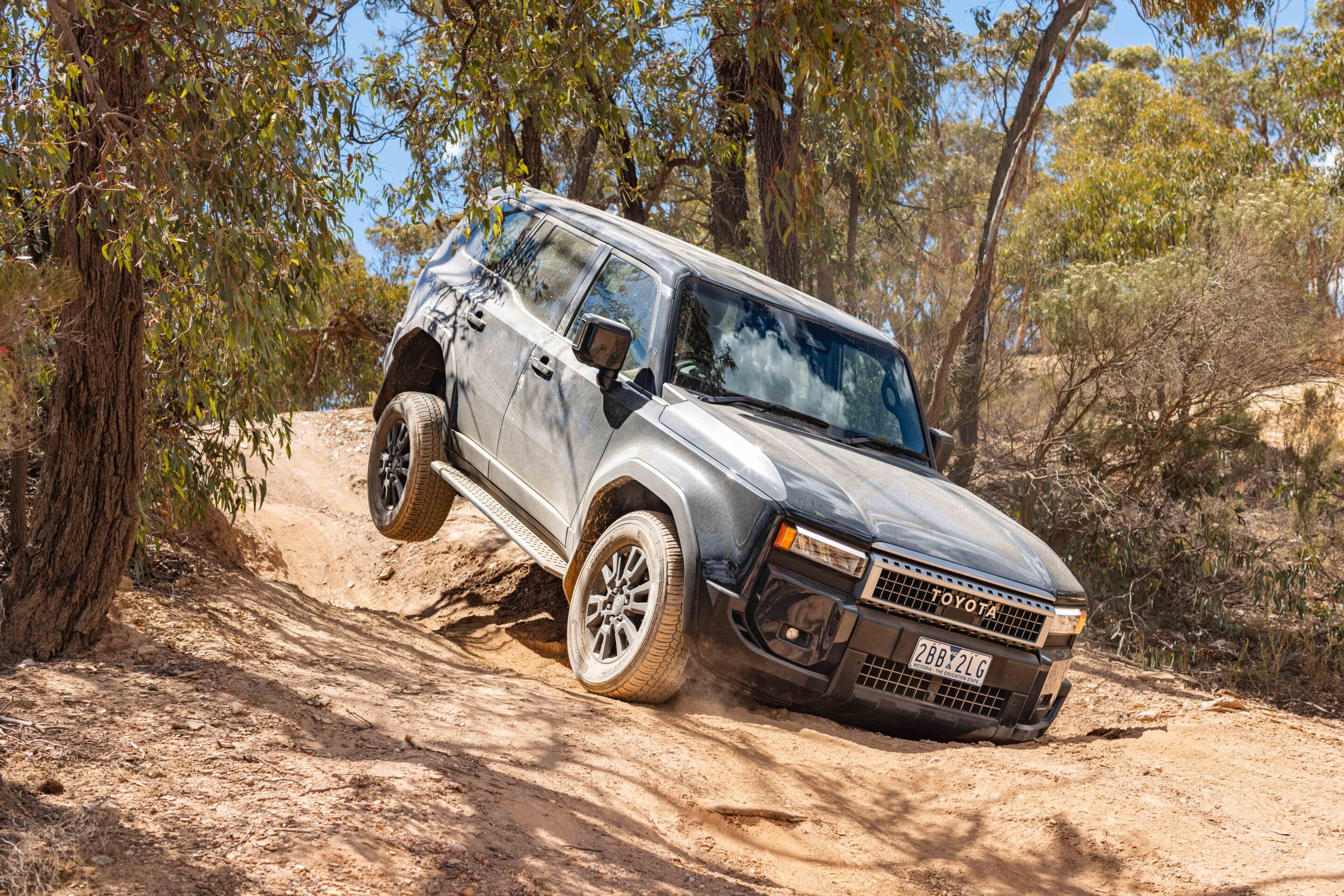
The 250 Series Prado has excellent rear axle articulation, something Toyota has become very good at with the TNGA-F platform shared with the Toyota LandCruiser 300 Series, and you can physically see it working on track. The rear axle drops deep into holes, tucks tyres hard into the guards and keeps the vehicle stable even when the terrain gets awkward and crossed up. That articulation matters because it reduces reliance on traction control intervention in the first place.
But when the GX did start lifting wheels, Toyota’s traction control calibration was astonishingly aggressive. You could physically hear the brake calipers biting almost instantly, grabbing spinning wheels and transferring drive across the axle before momentum disappeared. There was very little flare, hesitation or sense that the system was panicking. It just worked.
1
The result was a base-model Prado on average OEM tyres climbing obstacles that genuinely had no business being this easy. At one point we pointed the GX at a climb normally reserved for heavily modified vehicles. Locals jokingly call it “Jeep Track” because Jeep Wranglers were among the few showroom vehicles that could comfortably clear it. The GX Prado made it. Not gracefully. Not effortlessly. But cleanly enough that I sat there afterwards laughing slightly at how absurd the whole thing felt. And importantly, it did it without a rear locker. That’s the part that really matters here.
Because yes, the Altitude absolutely is the better off-roader. There’s no debate there. In fact, during 4X4 Australia’s 2025 4X4 Of The Year testing, the Prado Altitude was repeatedly praised for its comfort, refinement and outright off-road capability, particularly its rear locker, sway bar disconnect system and excellent Crawl Control calibration. The Toyo Open Country tyres offer noticeably more grip, while the rear differential lock changes the way the vehicle attacks climbs.
You feel it immediately. Where the GX occasionally chatted its way through obstacles using traction control, the Altitude simply shoved its way forward with mechanical grip. Obstacles felt calmer. Easier. More controlled. The disconnecting sway bar system is brilliant, too. Through deeper washouts and larger moguls, the Altitude stayed flatter and more composed without tossing the cabin around nearly as much.
1
Interestingly, that extra grip occasionally made the Altitude feel more aggressive on climbs. Because the rear locker allowed it to hold momentum more confidently, there were moments where it would crest harder or land more abruptly than the GX. In reality, that wasn’t a vehicle problem, it was driver error. I simply carried more speed because the vehicle made difficult obstacles feel easier. That says a lot about how effective the Altitude actually is off-road.
Still, here’s the thing: the GX kept getting there too. And once you realise the cheaper Prado is making climbs that challenge properly equipped dual-cab utes, the whole conversation changes. Because suddenly the question stops being: “Is the Altitude better?” And becomes: “Do you actually need better?”
Building a touring Prado GX
Skip the Altitude, build the GX properly. Instead of spending six figures on an Altitude and then trying to justify modifying an already expensive vehicle, you can buy a GX and immediately fix the Prado’s biggest weakness: Payload.
Like most modern wagons, the 250 Series Prado is frustratingly tight on carrying capacity. The GX officially carries 605kg, while the Altitude drops slightly to 580kg thanks to its extra equipment. That sounds acceptable until you start adding reality. Bull bar. Side steps. Recovery gear. Roof rack. Fridge. Passengers. Towball weight. Suddenly you’re running out of GVM very quickly.
So the first thing I’d do is fit a proper GVM upgrade and suspension package. Tough Dog already offers a 3800kg GVM upgrade for the 250 Series Prado, with pricing typically landing between roughly $3550 and $4500 before fitting. Pair that with an Ironman 4×4 Apex bull bar and light kit at roughly $3424, plus Premium Side Steps at another $1499, and you’ve already solved most of the Prado’s biggest touring weaknesses. Realistically, you’d budget around another $1500 to $2000 to install the suspension, front bar and side steps together.
That’s a massive jump over the Prado’s standard 3100kg GVM unlocking up to another 700kg of legal carrying capacity depending on final configuration. And honestly? That completely changes the Prado. Because suddenly you’re not constantly doing payload maths every time you throw camping gear into the back or hook a caravan onto the towball.
Add a quality all-terrain wheel and tyre package, realistically somewhere between $4000 to $7000 depending on how aggressive you want to get, and you’ve still comfortably landed inside the roughly $22,000 gap between the GX and Altitude. But now you’ve fundamentally changed the vehicle.
Instead of a nicer Prado, you’ve built a far more usable one. You have more payload, more clearance, better tyres, proper underbody protection and suspension actually designed to carry weight once loaded for touring. And importantly, you’re improving the Prado in exactly the areas that matter most to Australian four-wheel drivers:
- Load carrying
- Durability
- Touring usability
- Clearance
- Tyre performance
- Suspension control once loaded
That’s why I’d start with the GX. Because while the Altitude is unquestionably the better showroom vehicle, the GX gives you far more freedom to build something genuinely tailored to how Australians actually use four-wheel drives.
1
Prado payload and GVM limits
Both of these Prados can legally tow 3500kg. That sounds fantastic on paper, right up until you start doing the maths properly.
The GX carries 605kg of payload. The Altitude drops to 580kg because of all its extra equipment. Now subtract passengers, accessories, recovery gear, luggage, fridge, roof rack, and towball download. And suddenly neither Prado feels particularly generous anymore. A 350kg towball download alone eats more than half the Altitude’s payload.
That’s the reality modern touring wagons are dealing with, and honestly, it’s why GVM upgrades have become almost mandatory for serious Australian touring setups. Which again swings the argument back toward the GX. Because if you’re going to spend money solving payload limitations anyway, I’d rather start with the cheaper Prado and build it properly than spend over $100K on an Altitude before accessories even begin. Especially when the GX already proved itself outrageously capable off-road.
1
GX vs Altitude: On-road comfort
The funny thing about these two Prados is that despite the price gap, they’re both genuinely nice things to spend time in.
The ride quality in both is excellent, and honestly, it’ll probably get even better once owners move to slightly smaller wheels and more compliant all-terrain tyres. Toyota’s chassis tuning on the 250 Series is seriously good, and combined with the platform’s wheel travel, both vehicles feel stable, comfortable and confidence inspiring on rough roads.
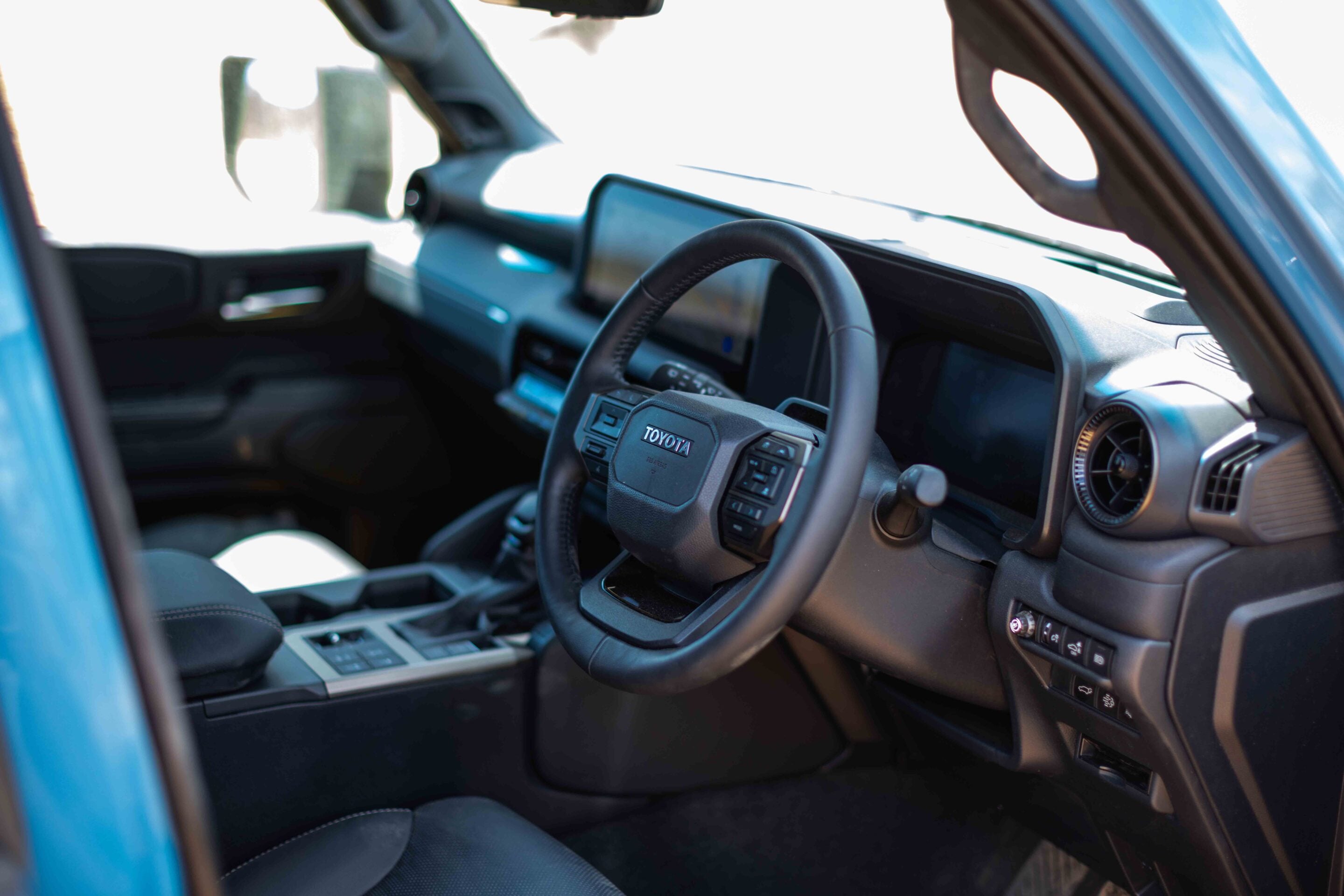
The Altitude is unquestionably the nicer cabin. You get better materials, more premium touch points, heated and ventilated seats, JBL audio and a generally more upmarket feel throughout. But honestly? I preferred the GX seats. The cloth trim feels more supportive, more breathable and far better suited to long Australian touring days. Leather sounds premium until you’ve spent ten hours sweating through the outback smelling like deli meat because the cooling system can’t keep up with the heat.
1
The GX just feels simpler. More honest. That simplicity works in its favour, too. Less luxury gear means less weight, more usable payload and less guilt about scratching things when you actually start using the vehicle properly off-road.
It’s also not the first time the GX has impressed us. In previous long-term testing at 4X4 Australia, the entry-level Prado repeatedly stood out as the sweet spot of the 250 Series range thanks to its simplicity, practicality and touring potential. That said, both still suffer the same payload limitations discussed earlier. Neither Prado is particularly generous once you start adding touring gear and towball download, which is exactly why I’d still prioritise a GVM upgrade before almost anything else.
One area Toyota still needs to improve is camera quality. For a vehicle this expensive, the cameras remain surprisingly average, even in the higher-spec models. But thankfully, the fundamentals are excellent: Great driving position, comfortable ergonomics, excellent visibility, outstanding off-road calibration, and a chassis that feels incredibly confidence-inspiring off-road. Which brings us to the obvious conclusion.
Which Prado should you buy?
The Prado Altitude is the better four-wheel drive. It has more grip, more hardware, better tyres and more off-road capability straight out of the box. There’s no point pretending otherwise.
But if it was my money? I’d buy the GX every single time. Because what shocked me during this test wasn’t how good the Altitude was, it was how unbelievably capable the GX already is. Toyota’s traction control calibration is outrageously good, the platform itself is excellent, and the cheaper Prado still climbs tracks that regularly stop properly equipped dual-cab utes.
Then you remember there’s roughly $22,000 left sitting in your bank account. That’s enough money to solve the Prado’s biggest weakness (payload) while also fitting suspension, tyres, protection and the gear needed to turn it into a genuinely capable Australian touring platform. So yes, the Altitude is better. But the GX is smarter. And honestly, that might make it the best Prado in the range.
24
Specs
| Spec | Prado GX | Prado Altitude |
|---|---|---|
| Price | $72,500 +ORC | $92,700 +ORC |
| Engine | 4-cyl turbo-diesel | 4-cyl turbo diesel |
| Capacity | 2755cc | 2755cc |
| Max power | 150kW @ 3000-3400rpm | 150kW @ 3000-3400rpm |
| Max torque | 500Nm @ 1600-2800rpm | 500Nm @ 1600-2800rpm |
| Transmission | 8-speed automatic | 8-speed automatic |
| 4×4 system | Full-time 4WD, dual range | Full-time, dual range, lockable centre & rear diffs |
| Construction | Ladder-frame 5-door wagon | Ladder-frame 5-door wagon |
| Front suspension | Double wishbone IFS with coil springs | Double wishbone IFS with coil springs |
| Rear suspension | Live axle, coil springs, multi-links, Panhard rod | Live axle, coil springs, multi-links, Panhard rod |
| Tyres | 265/65R18 on alloys | 265/65R18 on alloys |
| Kerb weight | 2495kg | 2595kg |
| GVM | 3100kg | 3200kg |
| GCM | 6600kg | 6600kg |
| Towing capacity | 3500kg | 3500kg |
| Payload | 605kg | 605kg |
| Seats | 5 | 5 |
| Fuel tank | 110L + 17.4L AdBlue | 110L + 17.4L AdBlue |
| ADR fuel consumption | 7.6L/100km | 7.6L/100km |
Follow 4X4 Australia on Google
Get more 4x4 news, reviews and gear stories from 4X4 Australia in your Google feeds.