4x4 Comparisons


Gallery 1
The rise of Chinese four-wheel drives has been impossible to ignore.
Every month, another arrives promising more power, more technology and more luxury than the established players, often for less money. But impressive specification sheets don’t mean much once the bitumen ends.
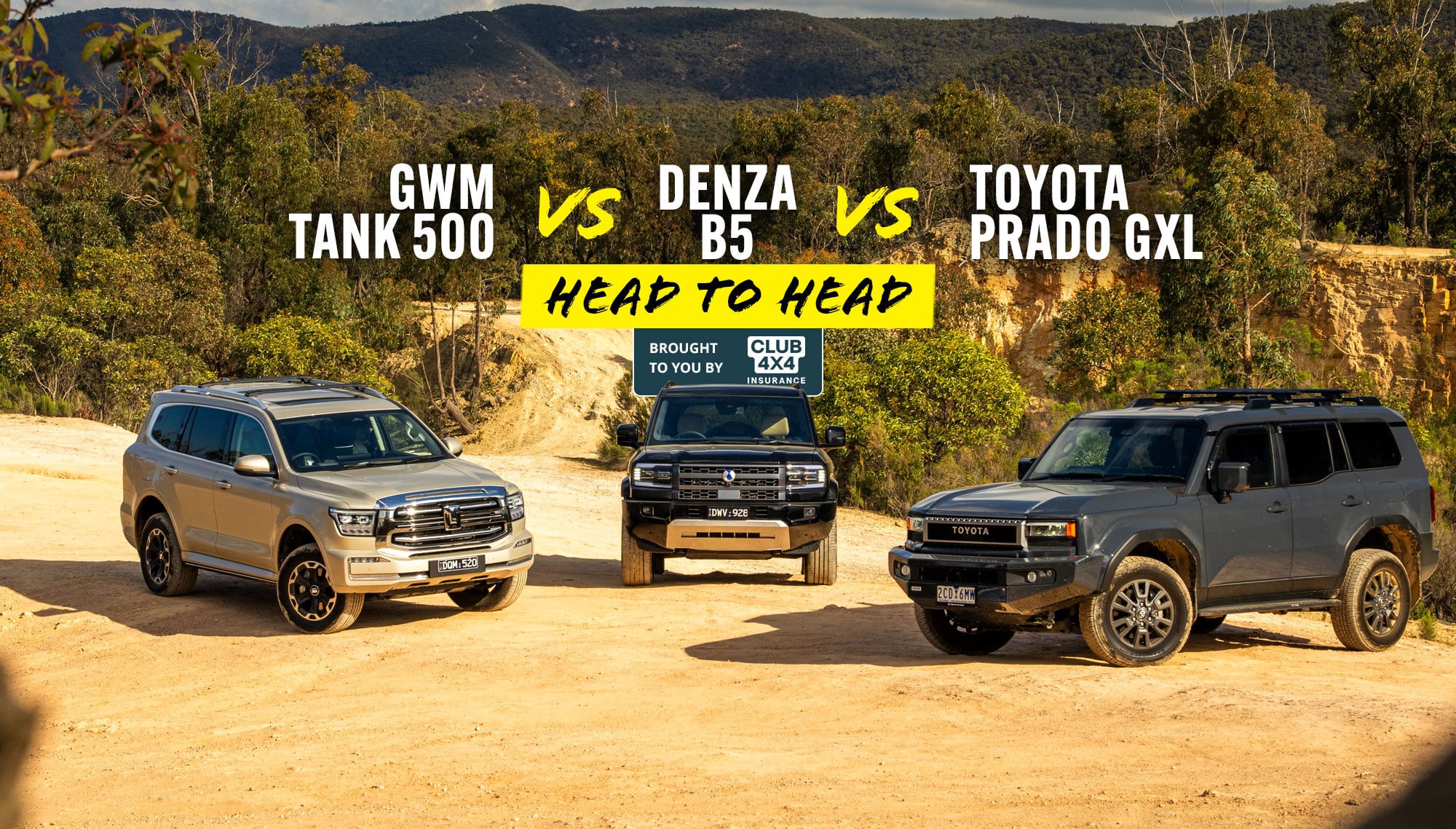
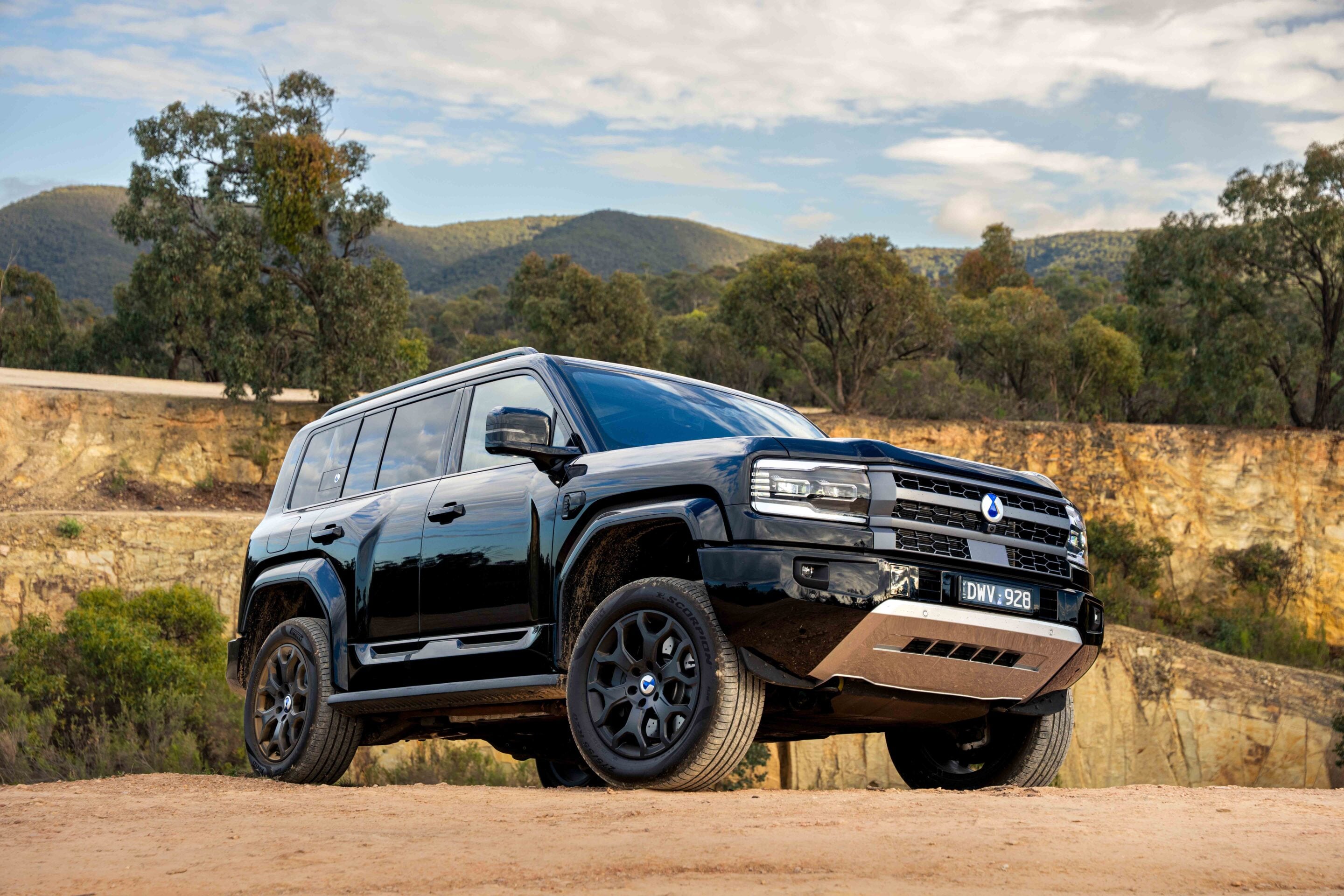
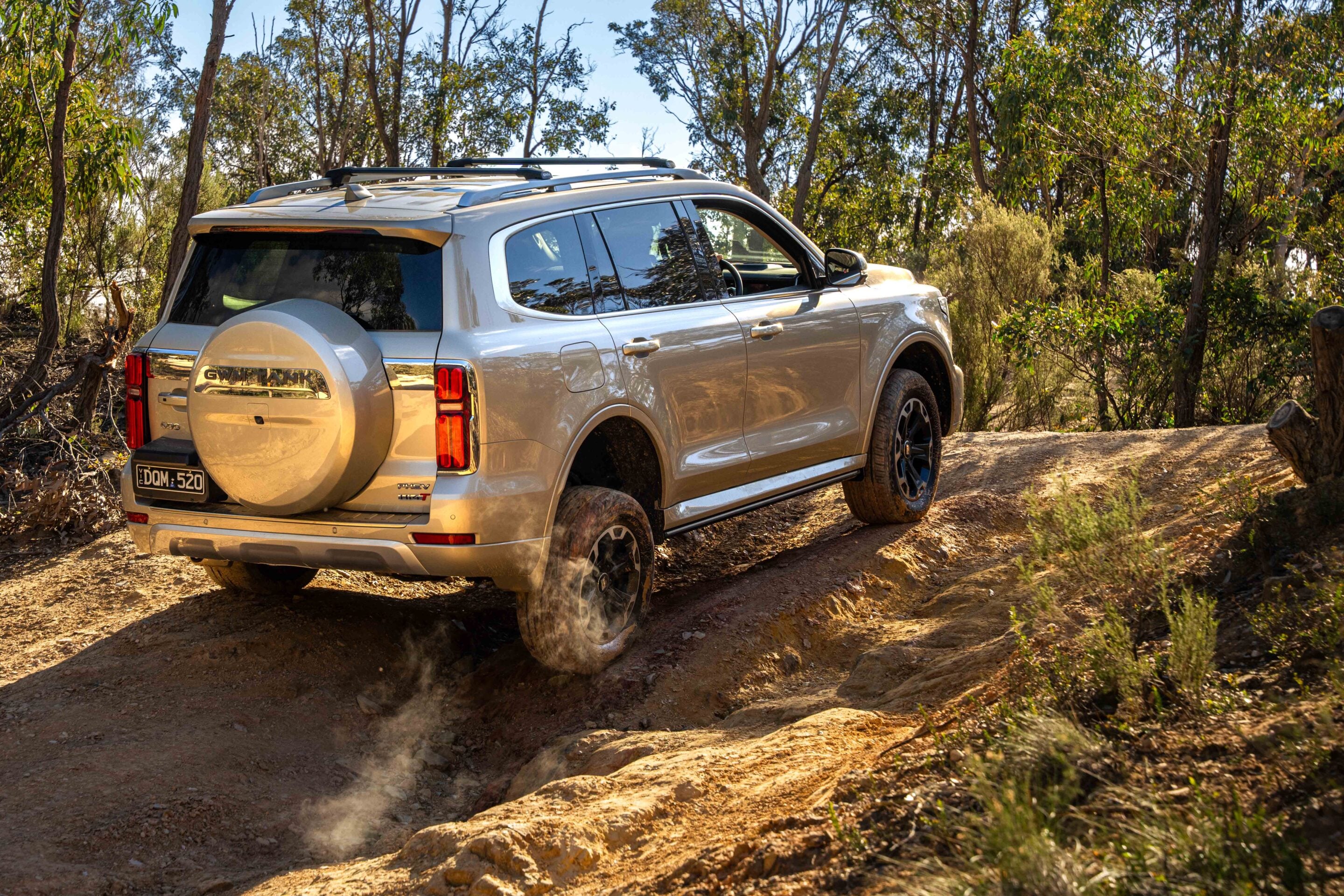
To find out how close the challengers really are, we spent a week living with three very body-on-chassis wagons before taking them to one of Victoria’s toughest off-road test facilities. Toyota’s Prado GXL is the benchmark, with decades of touring credibility, unmatched aftermarket support and a reputation for getting people home from almost anywhere. Challenging it are two very different newcomers. The GWM Tank 500 Hi4-T relies on traditional four-wheel drive hardware, including front and rear locking differentials, while the Denza B5 combines an electrified drivetrain, adaptive air suspension and enough technology to embarrass many luxury SUVs and wagons costing far more.
The questions were simple. Which is the best vehicle to live with every day? Which inspires the most confidence on gravel roads? Which has the off-road ability to venture well beyond the campsite? And once the driving is done, which makes the most sense to own, modify and tour Australia? That’s what we set out to find.
Toyota Prado vs Tank 500 vs Denza B5
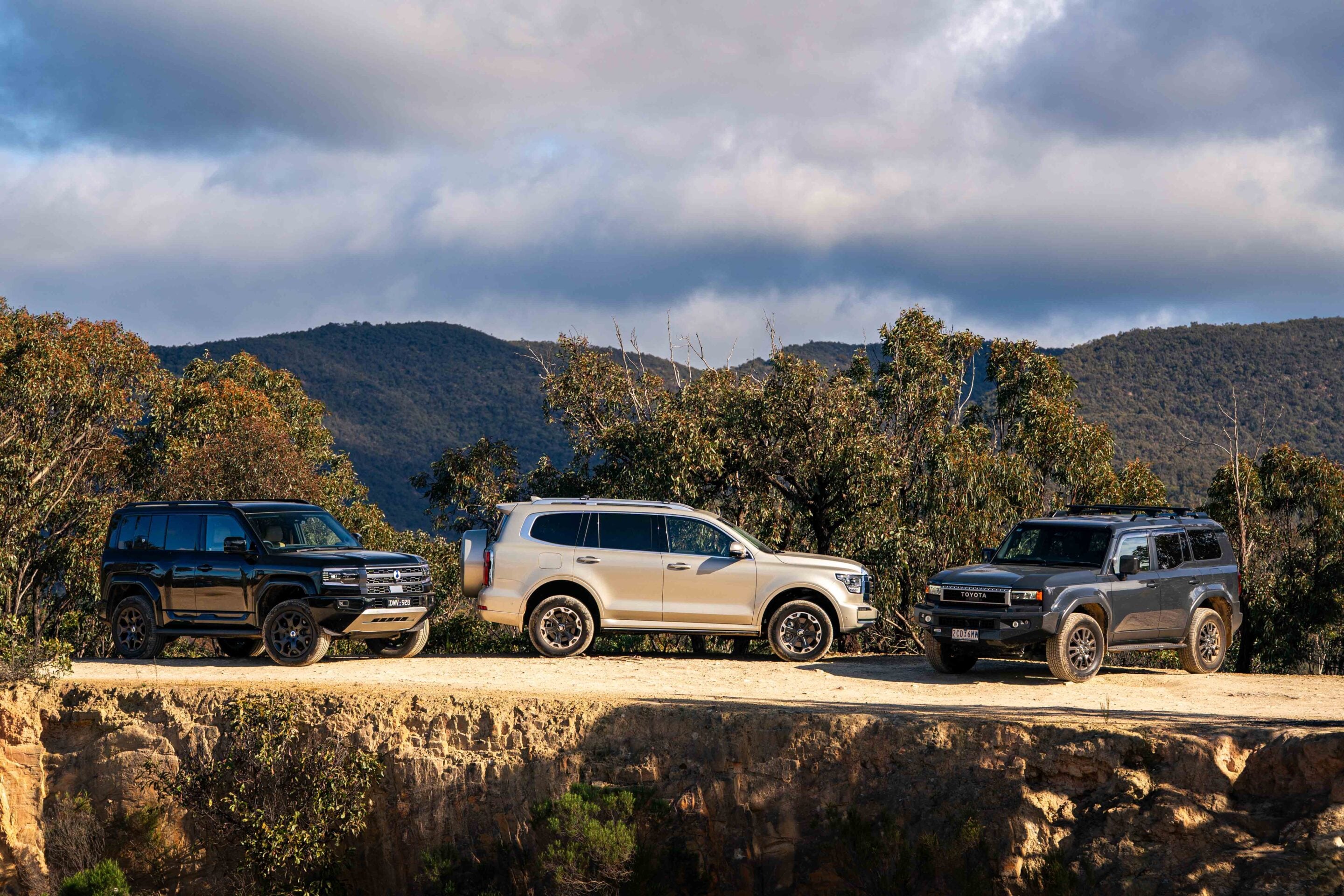
On paper, these three wagons couldn’t be more different, despite arriving at almost exactly the same price point.
The Prado GXL, Denza B5 and Tank 500 Hi4-T all sit around the $80,000 mark before on-road costs, all ride on ladder-frame chassis and all promise genuine off-road ability. That’s where the similarities begin to end.
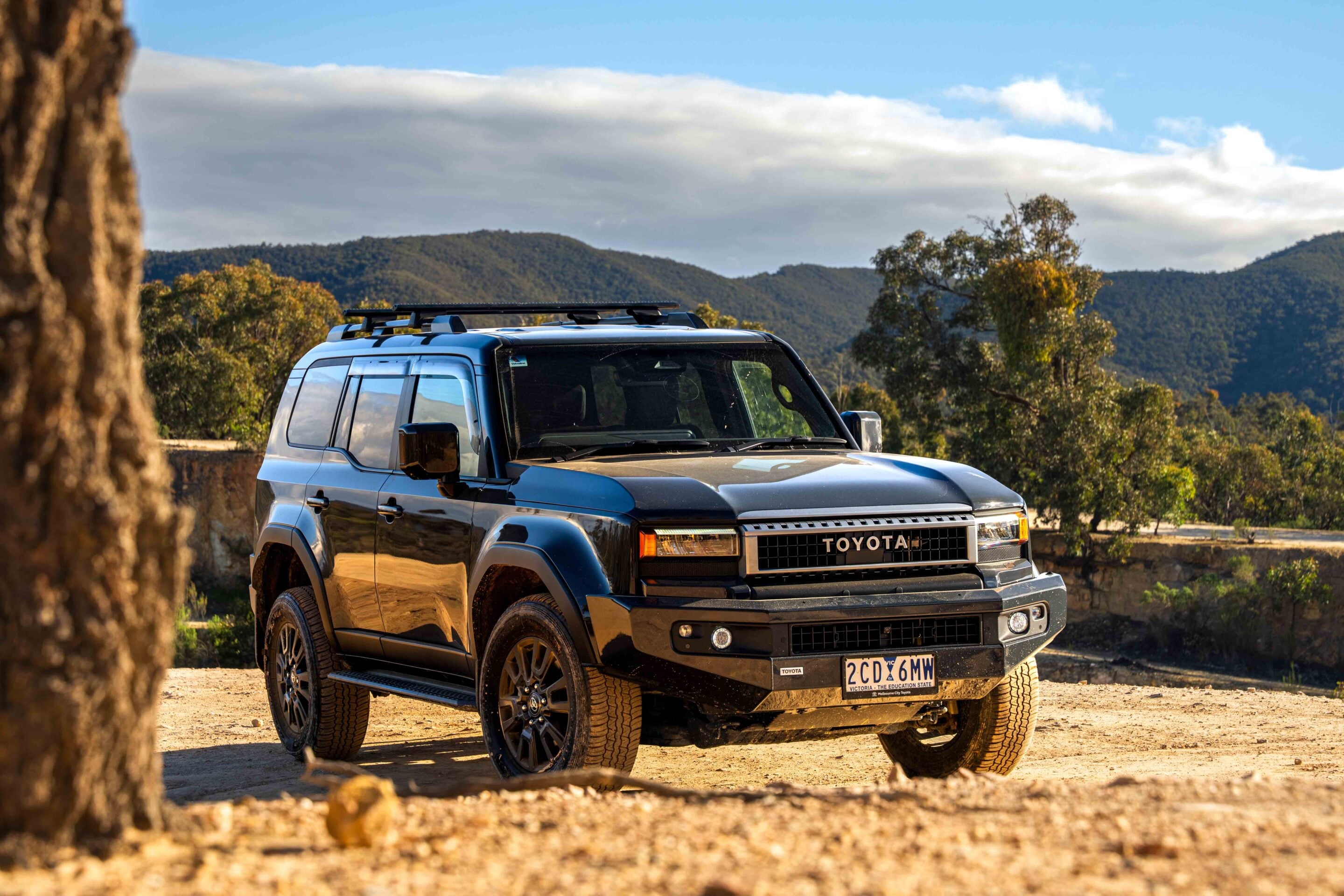
The Prado is the traditional choice. A 2.8-litre turbo-diesel backed by Toyota’s 48-volt mild-hybrid system produces 150kW and 500Nm, driving through an eight-speed automatic, dual-range transfer case and locking centre differential. At 2,530kg, it’s comfortably the lightest vehicle here, giving it useful advantages for payload, towing and overall agility.
1
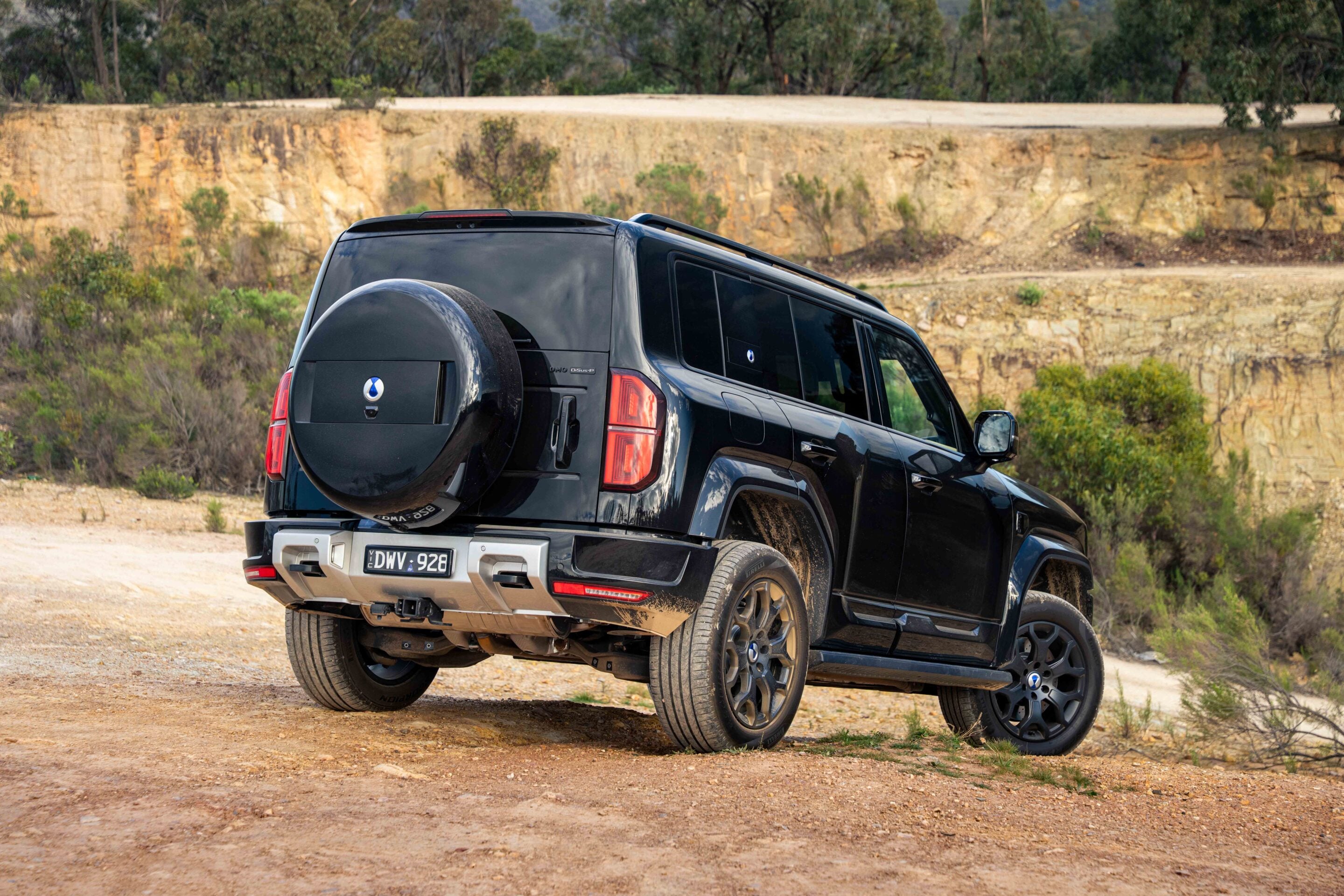
The Tank 500 sits somewhere between old and new thinking. Its turbocharged 2.0-litre petrol engine works alongside an electric motor integrated into the nine-speed automatic transmission, producing a combined 300kW and 750Nm. Unlike the Denza, it retains a conventional full-time four-wheel-drive system with low-range transfer case and locking front, centre and rear differentials. At 2,820kg it’s substantially heavier than the Prado, but brings genuine EV commuting capability without abandoning traditional driveline hardware.
Then there’s the wildcard. At 3,007kg, the Denza B5 is by far the heaviest vehicle here, but also the most powerful. Its 1.5-litre turbo-petrol engine acts primarily as part of an extended-range plug-in hybrid system, working with front and rear electric motors to deliver a combined 400kW and 760Nm. There’s no conventional transfer case. Instead, the electric motors provide all-wheel drive while adaptive air suspension and sophisticated software do much of the heavy lifting off-road. On paper, it’s the least conventional touring wagon here by some margin.
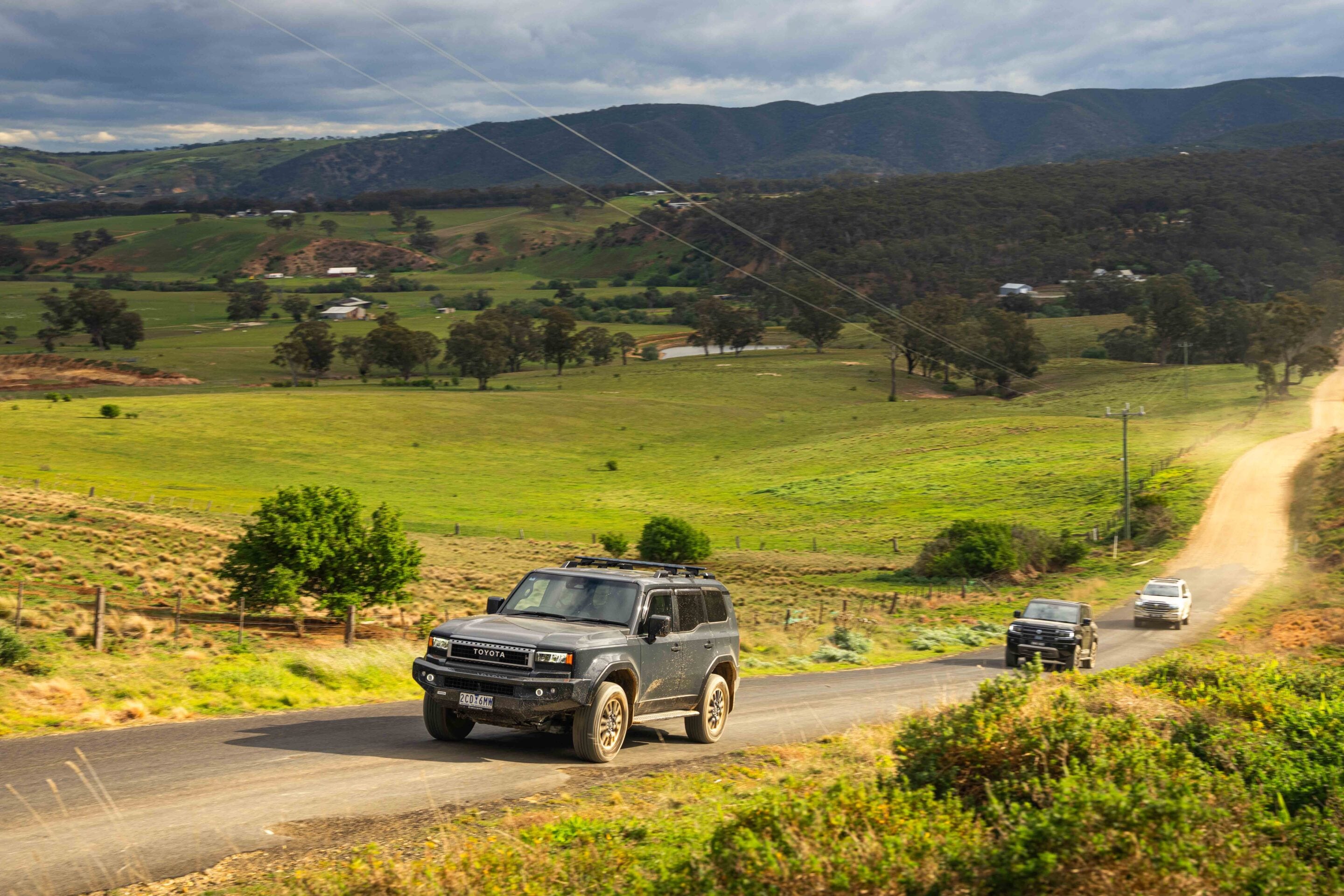
Three vehicles. Three very different philosophies. One question remained: which approach actually works best once the road disappears?
1
Towing and payload
Maximum towing capacity tells only part of the story. To see what these wagons can realistically carry, we assumed each was towing a 3,000kg caravan with a 300kg towball download.
The Prado begins with a 620kg payload, leaving 320kg once the towball weight is accounted for. That’s enough for two 85kg adults and around 150kg remaining for luggage and other items. The Tank 500 starts with a 565kg payload, leaving 265kg. Two adults reduce that to around 95kg remaining. The Denza B5 has the tightest margins. Its 490kg payload drops to just 190kg with the caravan attached. Two adults leave around 20kg before reaching GVM. Its 6,232kg GCM also leaves only 225kg of combined mass in reserve before passengers or luggage are added. These figures assume each vehicle remains in standard trim. Any accessories or modifications further reduce the available payload.
For anyone towing regularly, the Prado offers the greatest flexibility; the Tank remains workable with careful loading; while the Denza’s payload becomes the limiting factor long before its 3,000kg towing capacity.
1
A loaded trailer also compounds the efficiency issue raised earlier: towing accelerates battery depletion, so anyone planning long tows should budget for petrol-only economy for most of the trip. V2L remains the one PHEV advantage that survives the tow. Running camp fridges, induction cooktops or even your caravan AC straight off the built-in battery at the end of a long towing day is a genuine edge the diesel Prado can’t match without spending a small fortune on upgrades.
It’s worth putting some numbers to this. Both PHEVs post genuinely impressive claimed fuel consumption figures with the battery topped up — 3.9L/100km for the Denza, 2.1L/100km for the Tank — figures that make the Prado’s 7.6L/100km diesel claim look thirsty by comparison.
But those numbers only apply while there’s charge to draw on. Once the battery drops below around 25 per cent, the claimed figures jump to 10.9L/100km for the Denza and 8.4L/100km for the Tank, both worse than the Prado’s unchanging diesel number. On sustained highway or touring running, without stop-start driving to recover energy, that’s the number both cars settle into, trailer or no trailer.
1
Interior and everyday practicality
The reality is these three wagons will spend far more time in suburban traffic than they ever will on a technical four-wheel drive track. School drop-offs, weekend sport, commuting and the supermarket run account for the vast majority of kilometres. That’s also where plug-in hybrid technology starts to make sense.
Both the Denza B5 and GWM Tank 500 can be plugged in at home overnight, allowing many owners to complete most of their weekday driving on electricity alone. If you’ve got a power point in the garage or even the shed you could go weeks between fuel stops. For buyers covering 50 or 60 kilometres a day, that’s a genuine advantage over a conventional diesel.
1
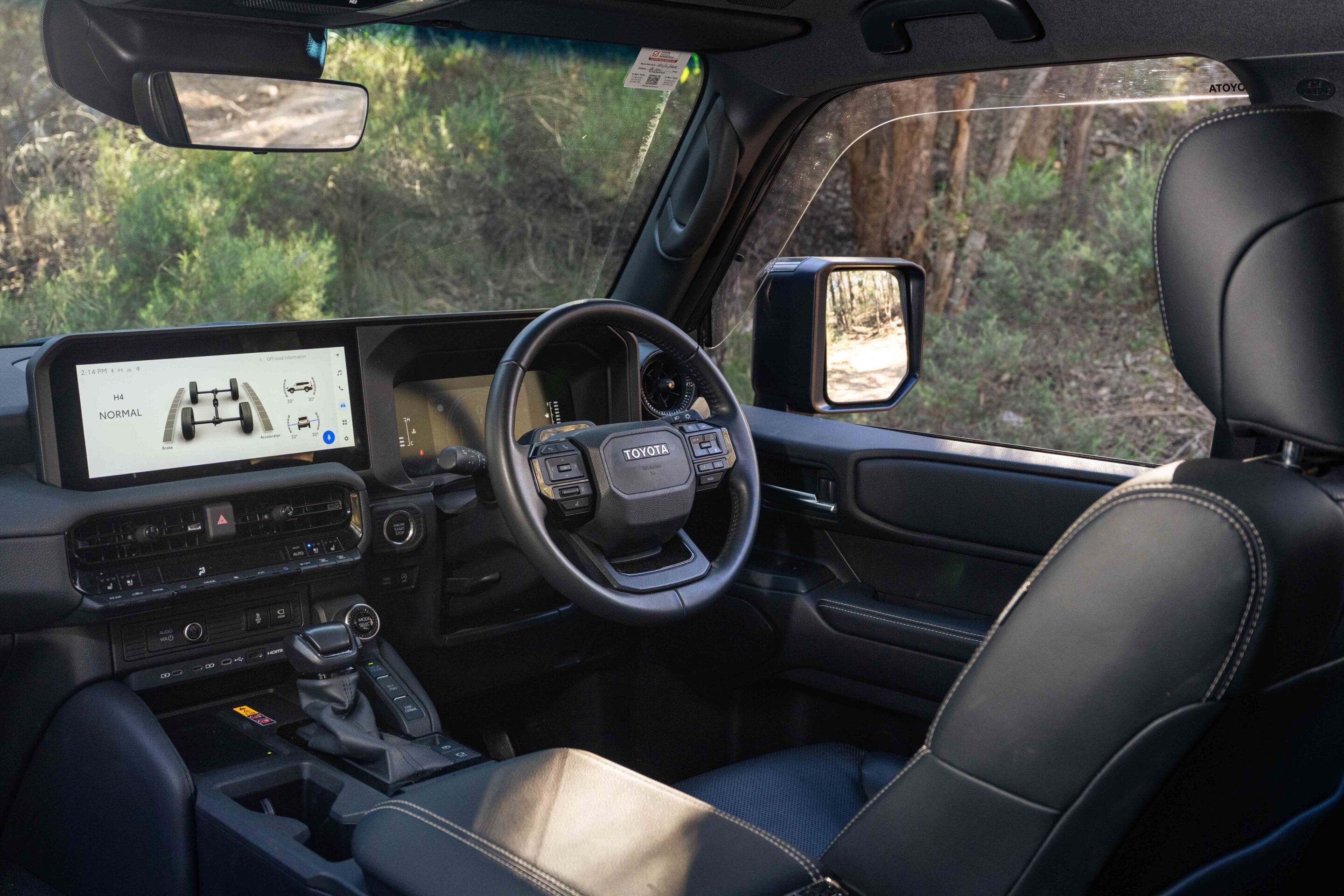
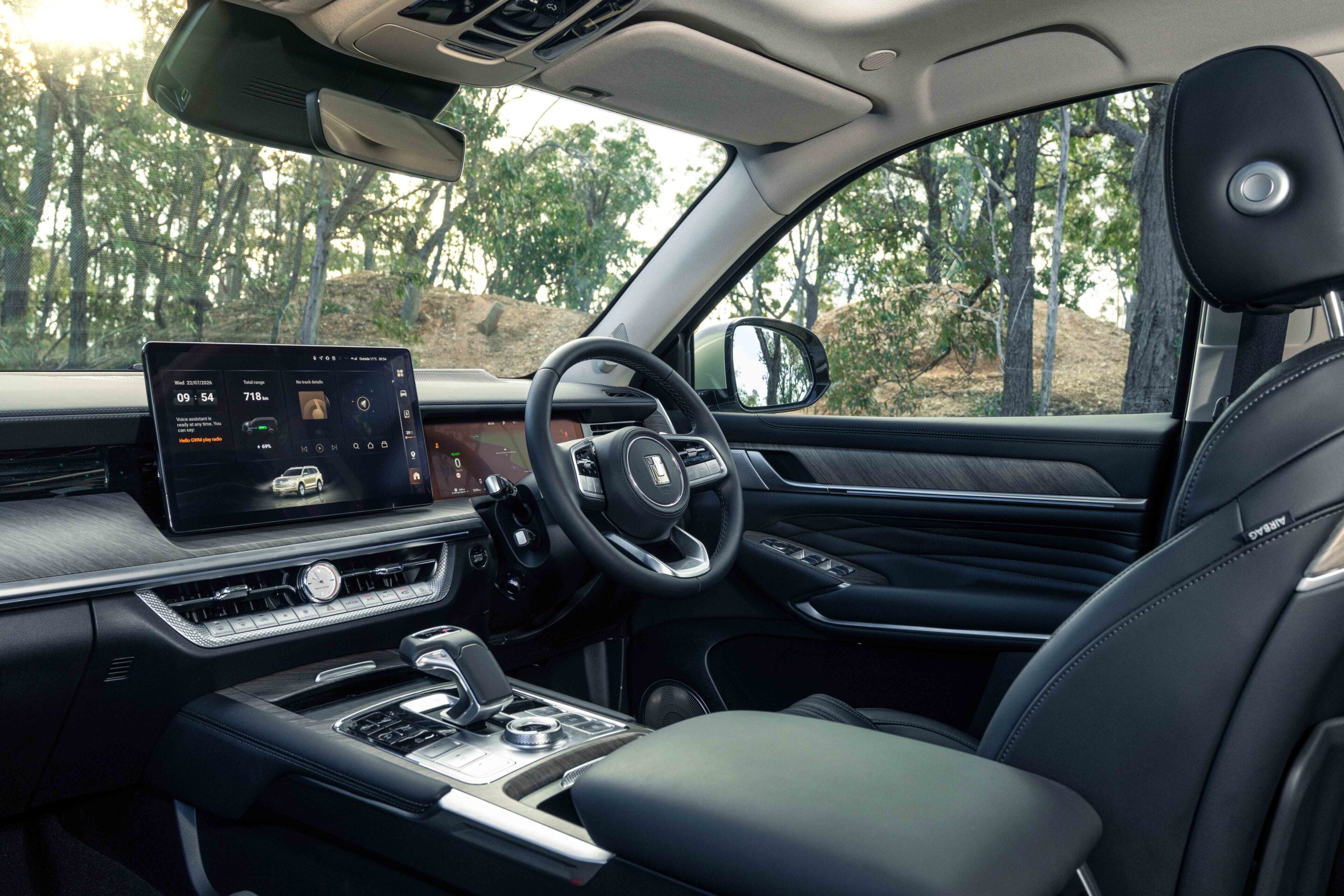
It’s also where the Denza establishes itself as the class leader. The seats are exceptionally comfortable, the cabin materials feel genuinely premium and the technology is excellent. It has the best camera system here, a bright, crisp head-up display and a digital rear-view mirror that largely eliminates the visibility compromises common in wagons. If this cabin wore a European badge, few would question it.
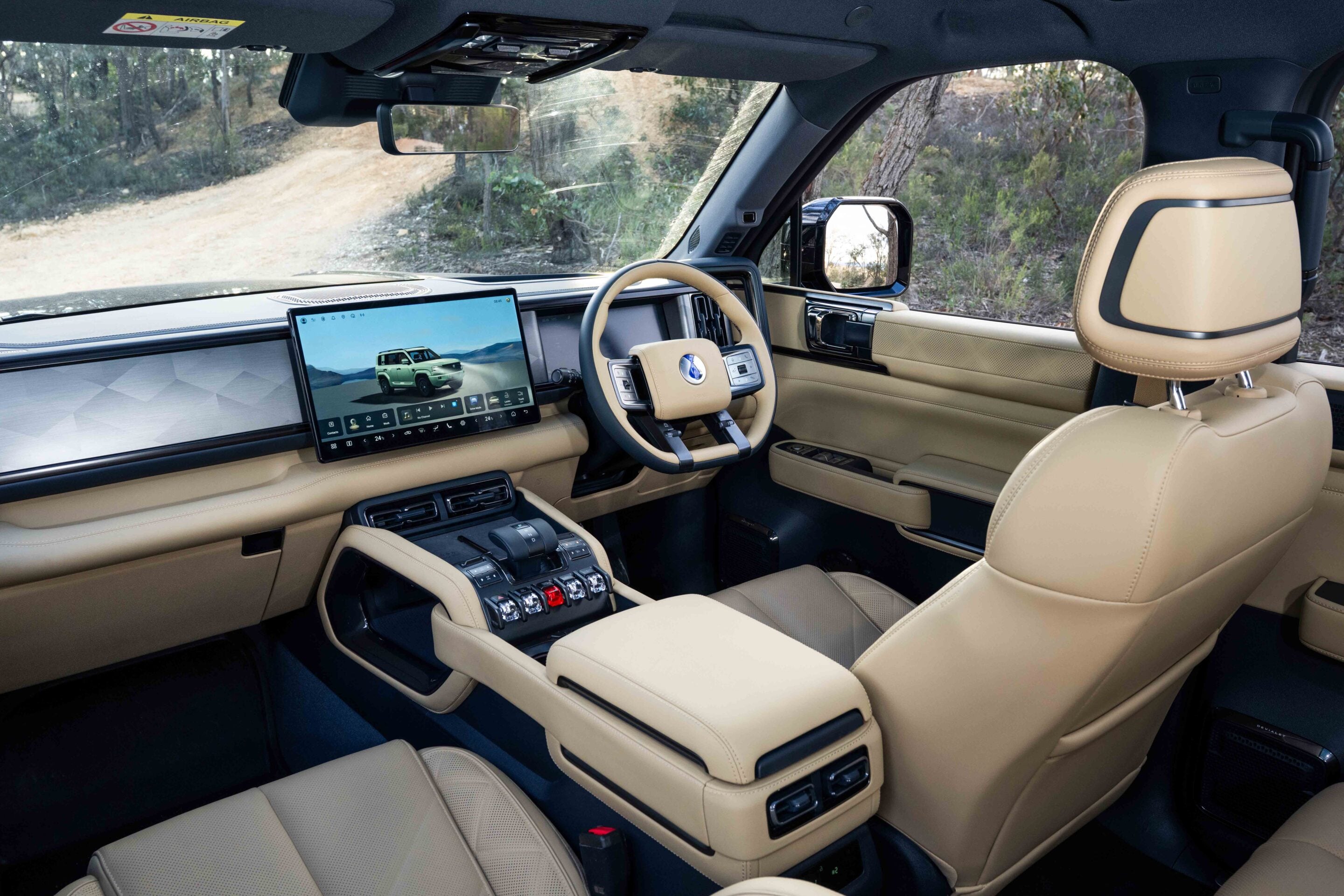
The Tank 500 also impresses with a generous equipment list, comfortable seats and excellent massage functions, although the driving position never quite suited my six-foot-seven frame. More disappointing were the squeaks and trim noises that developed on-road, something the Denza simply didn’t exhibit.
The Prado feels conservative by comparison. Its infotainment and camera quality trail both Chinese rivals, while the abundance of hard plastics reminds you Toyota prioritised durability over showroom appeal. Yet everything feels solid. Nothing rattled, nothing squeaked and nothing suggested it wouldn’t still feel the same after years of rough Australian roads.
1
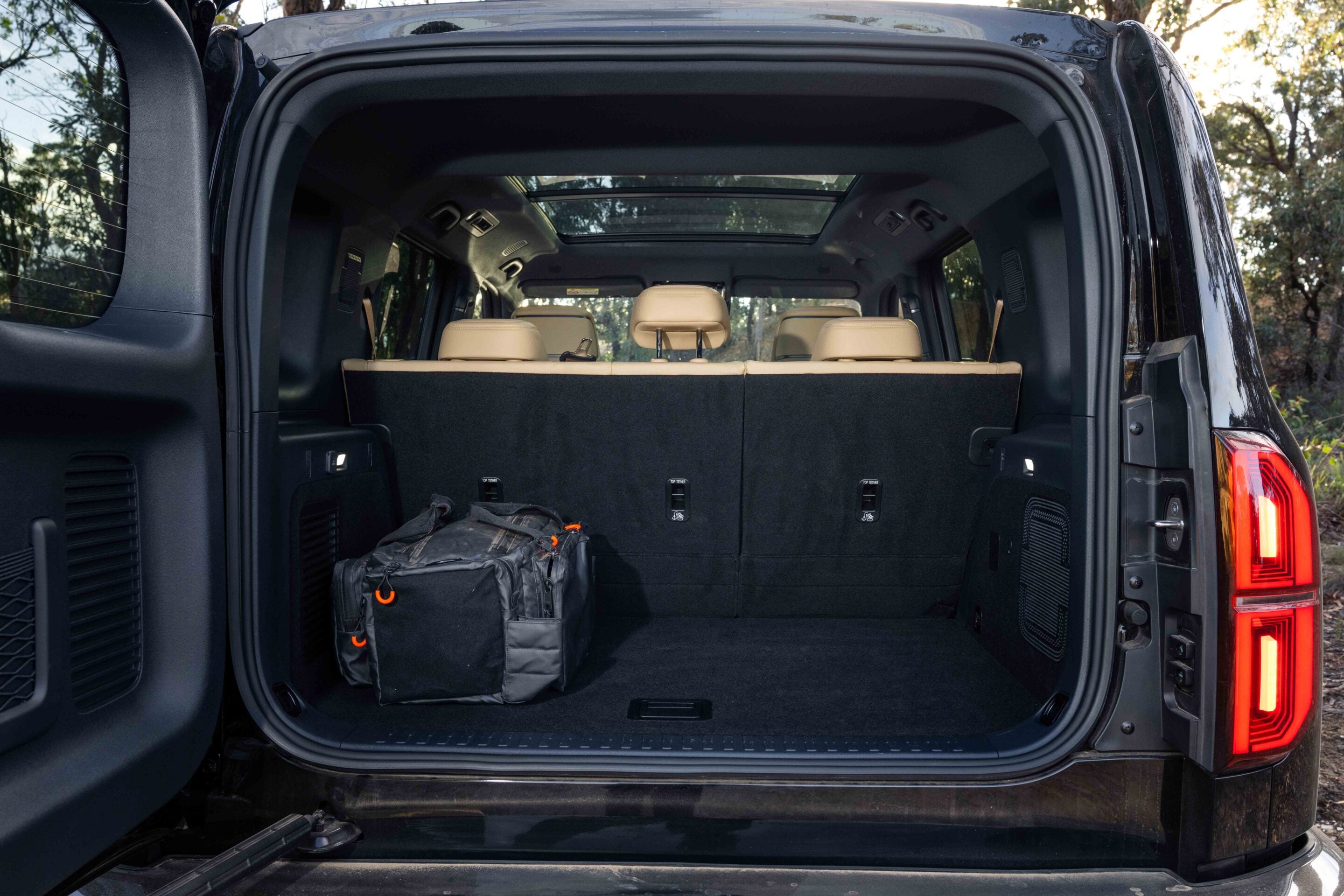
Practicality deserves consideration, too. Payload disappears quickly once you add passengers, luggage and towball weight, and all three require careful loading. The Prado benefits from a mature aftermarket offering GVM upgrades, while equivalent solutions for the Tank and Denza are still developing. Its biggest compromise, however, is the raised boot floor in the seven-seat GXL. Packaging the hybrid battery beneath the cargo area noticeably reduces luggage space, something families will quickly notice.
If most of your driving is around town, the Denza is the standout. It’s the most comfortable, the most refined and the easiest vehicle here to live with. But that wasn’t enough to decide this comparison.
1
Gravel roads and touring
Before we headed into the technical off-road work, we spent plenty of time on fast gravel roads.
It’s here that suspension tuning matters most. Anyone can build a vehicle that climbs a steep obstacle once. Covering hundreds of kilometres of corrugated gravel in comfort is what separates a capable off-roader from a great touring wagon.
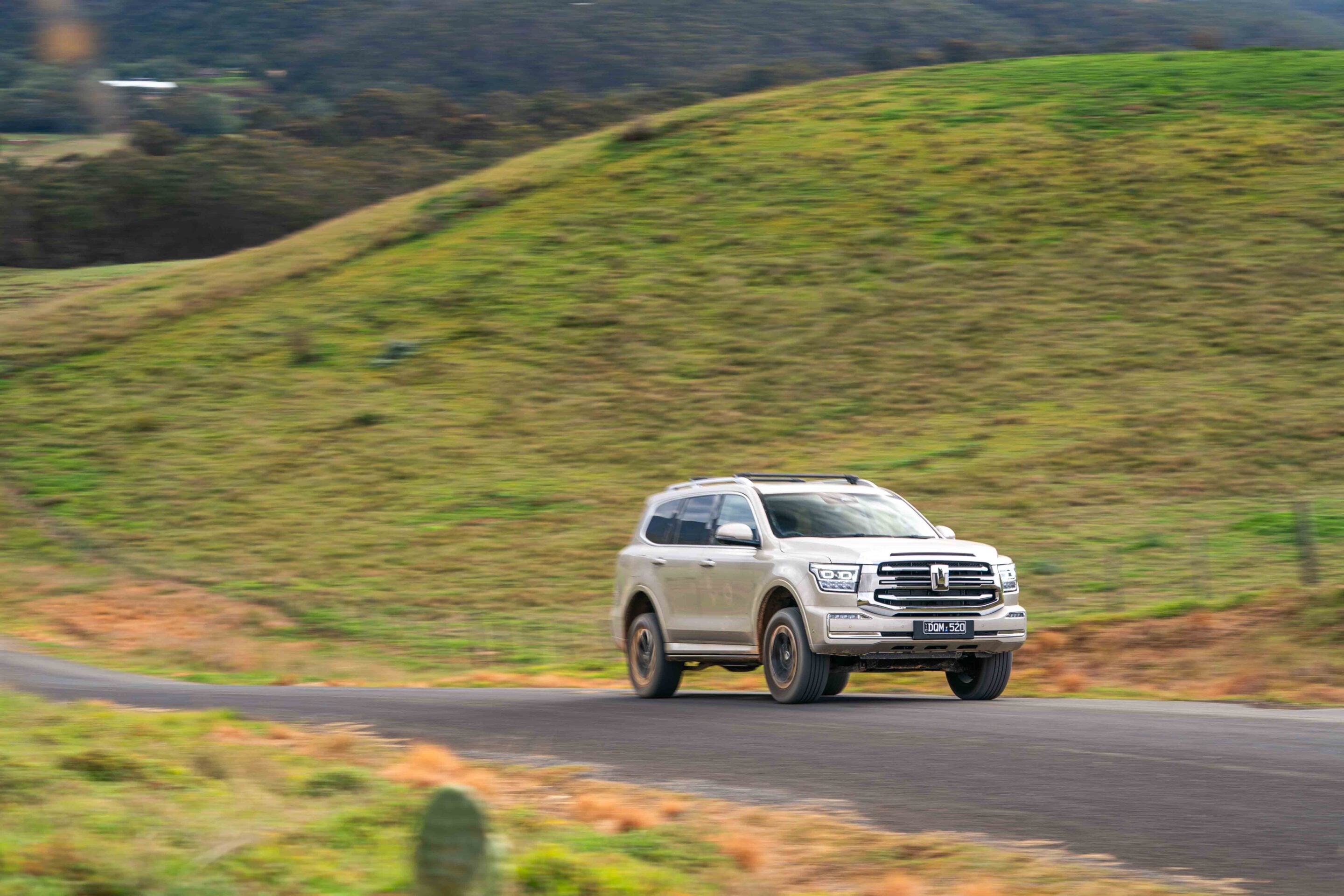
The Prado immediately reminded us why it’s long been the best-seller. The suspension feels settled at speed, absorbing corrugations without excessive body movement and allowing you to maintain a comfortable touring pace with confidence. After hours behind the wheel, you’re noticeably less fatigued.
The Denza was the biggest surprise. On smoother gravel it felt refined, with little drivetrain noise and a cabin that could easily pass for a premium European SUV. Push the pace or introduce larger undulations, however, and the air suspension began to lose its composure. The body floated, took an extra movement to settle and never inspired the same confidence as the Prado. It remained impressively quiet throughout, but beneath the refinement was a chassis that never felt quite as tied down as Toyota’s.
1
The Tank landed somewhere between the two. Its suspension controlled larger bumps better than the Denza’s and felt more settled over successive undulations, but you were always conscious of the vehicle’s weight. More noticeable were the squeaks and trim noises as the body worked over rough gravel, something the Denza simply didn’t exhibit. The massage seats are genuinely excellent on a long drive, but they couldn’t disguise a vehicle that always felt like it was working harder than the Prado.
Both plug-in hybrids add another dimension once the driving is over. Pull into camp and V2L lets you boil the kettle, run an induction cooktop or charge camera batteries straight from the traction battery. It’s a genuinely useful feature for weekend camping, and one the diesel Prado simply can’t match without additional equipment.
By the time the road narrowed into ruts and washouts, a clear pattern had already emerged. The Prado was the most confidence-inspiring, the Denza the most refined, and the Tank still searching for the same level of composure.
1
Wombat Holes: When wheels leave the ground
Cross-axle obstacles quickly expose the strengths and weaknesses of a four-wheel drive.
As opposing wheels lift clear of the ground, traction disappears and the vehicle has to find another way forward. Whether that’s through suspension articulation, brake-based traction control or locking differentials says a lot about how each manufacturer has approached off-road capability.
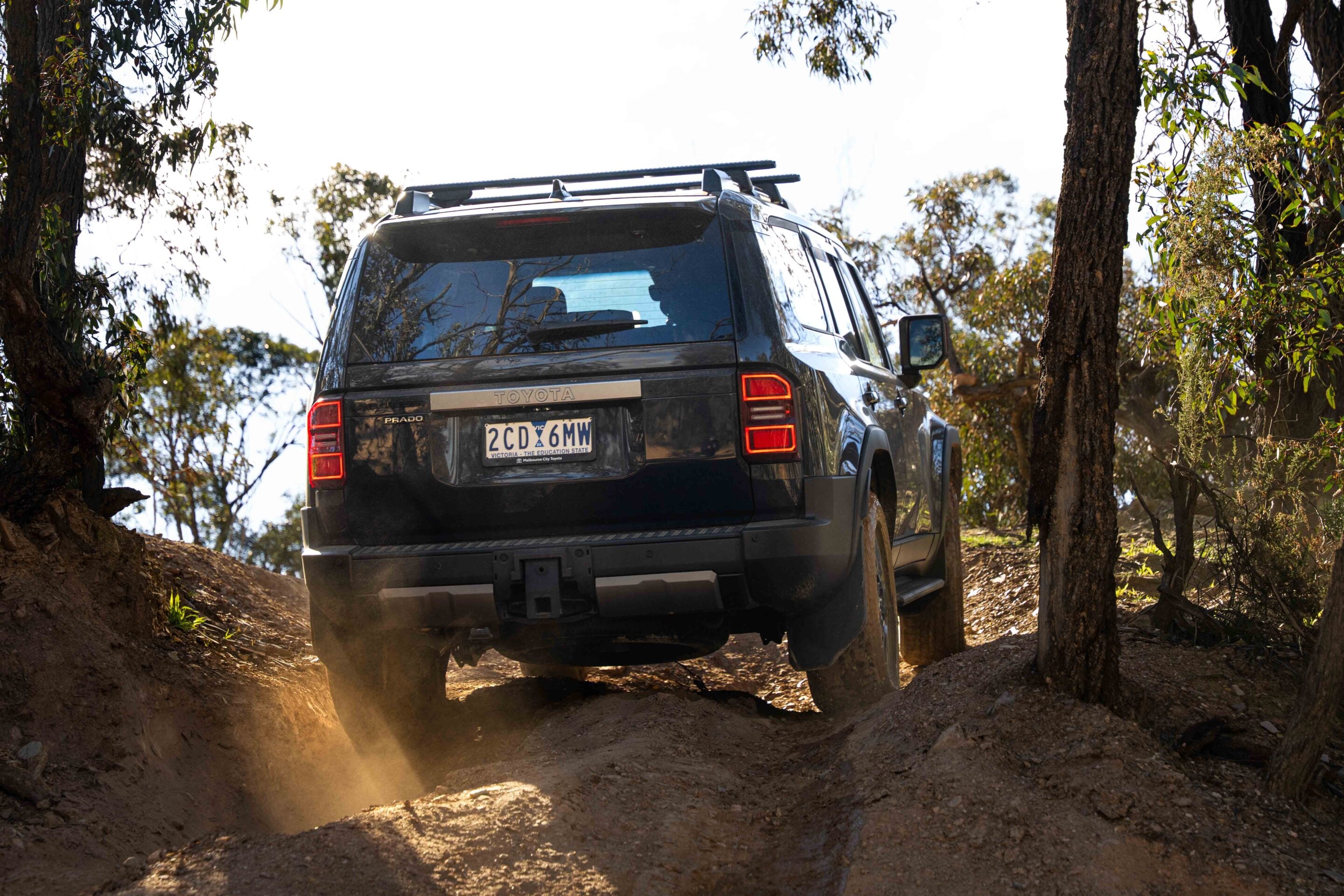
The Prado tackled the obstacle exactly as expected. With the centre differential open, it made respectable progress before running out of traction. Lock the centre diff, select low range and it simply walked through the ruts. Toyota’s traction control remains among the best in the business, intervening quickly and smoothly without excessive wheelspin. Combined with excellent rear axle articulation, the Prado always seemed to have another tyre finding grip.
1
The Denza approached the same obstacle very differently. Raising the adaptive air suspension increased ground clearance, while the electric drivetrain shuffled torque almost instantly between the axles. There were several moments where it looked like it had run out of options, only for the software to quietly find another path forward. The lack of engine noise made the whole experience feel almost effortless. The limiting factor wasn’t the drivetrain, it was the suspension. Wheel travel simply couldn’t match the Prado, leaving the electronics to compensate more often than they should have needed to.
The Tank’s personality became obvious almost immediately. With the front and rear differential locks disengaged, progress stalled earlier than expected as the suspension lifted wheels clear of the ground. Engage both lockers, however, and the Tank simply drove through. The Prado flexed its axle travel, the Denza let its computers do the thinking, and the Tank just locked everything up and muscled its way through.
All three completed the obstacle, but they did so in very different ways. The Prado felt like the most complete package, with the suspension, traction control and driveline working seamlessly together. The Denza demonstrated just how capable modern software has become, while the Tank proved lockers will push anything up a hill.
1
Steep climbs: Chassis control
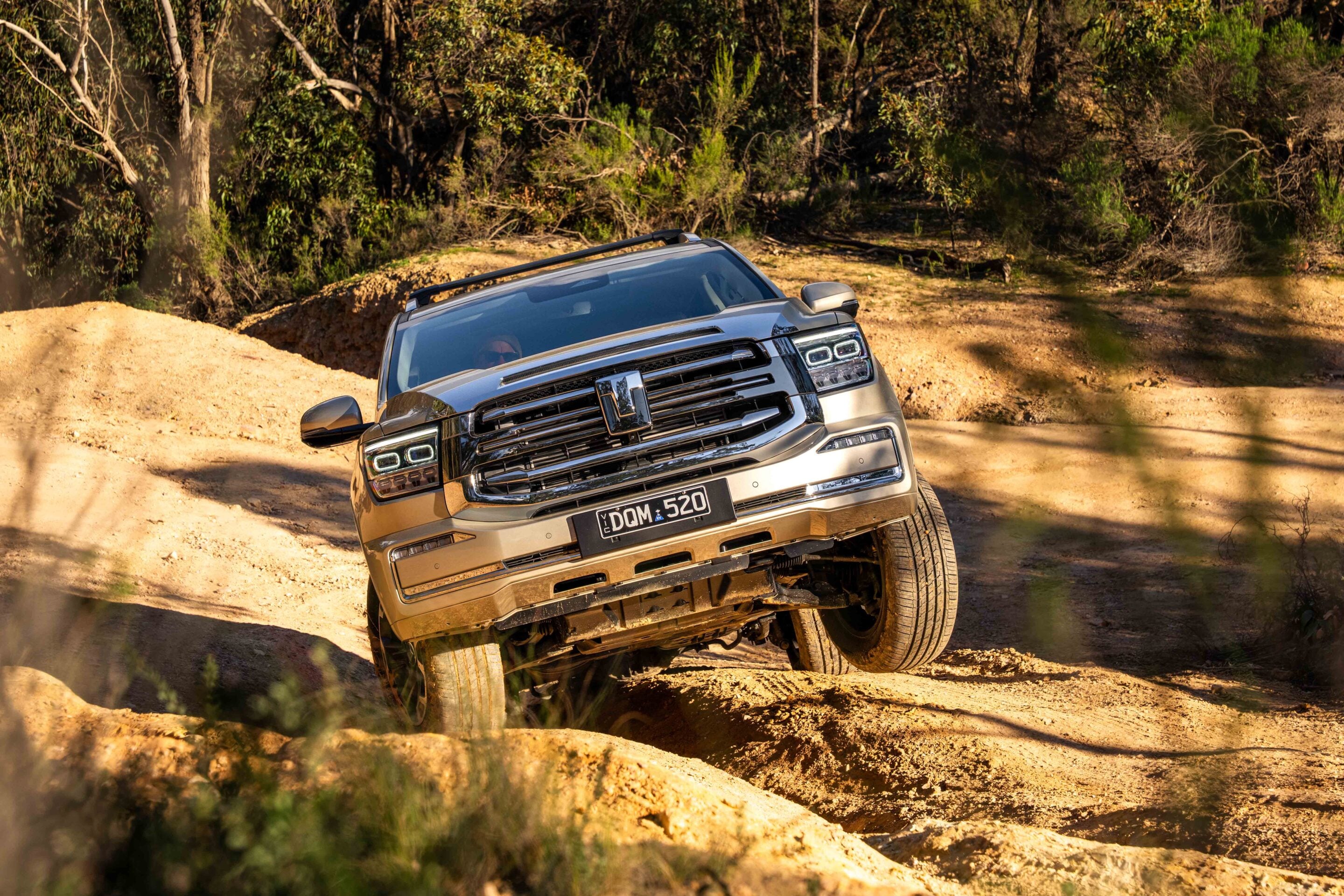
If the first obstacle exposed how each vehicle found traction, the second showed how well the whole package worked together. A steep, deeply rutted climb demanded careful throttle control, stable body movements and enough suspension travel to keep the tyres working.
The Prado again felt like the one to beat. Its suspension kept the body composed as individual wheels climbed and dropped through the ruts, while the traction control worked so seamlessly it almost disappeared into the background. Progress was slow, deliberate and predictable, allowing you to focus on wheel placement rather than what the driveline might do next.
The Denza continued to impress with its drivetrain. Crawl Mode delivered beautifully measured throttle inputs, making it easy to place the vehicle precisely despite the instant torque available. Once again, however, the suspension became the limiting factor. With less articulation than the Prado, the body pitched more noticeably and the electronics had to work harder to maintain momentum. It never lacked capability, but it lacked some of the Prado’s composure.
1
The Tank approached the climb much as it had the first obstacle. With both engaged pushed to the top with a lot of body movement and a busier experience from behind the wheel. The suspension never felt as settled as either rival, and on the climb up, the rear bumper dragged the ground, a reminder that published approach and departure angles don’t always tell the full story. Honestly, lockers might work but if a Prado can do it without them and without damaging itself, are they enough? Or is the Tank relying on lockers to fix its bad suspension?
By this point, the personalities of all three vehicles were obvious. The Prado inspired the greatest confidence because every system worked together naturally. The Denza repeatedly demonstrated what clever software can achieve, while the Tank relied on locking differentials to overcome its shortcomings.
Off-road specs
| Spec | Toyota Prado GXL | Denza B5 Leopard | GWM Tank 500 Hi4-T |
|---|---|---|---|
| Approach angle | 31 | 39 raised / 35 normal | 30 |
| Departure angle | 22 | 35 raised / 32 normal | 24 |
| Ramp-over angle | 25 | 27 raised / 20 normal | 22.5 |
| Ground clearance | 221mm | 310mm raised / 220mm normal | 213mm |
| First-gear ratio | 4.923:1 | Fixed-ratio electric drive; not directly comparable | 5.288:1 |
| Low-range transfer ratio | Approximately 2.53:1 | NA | Approximately 2.64:1 |
| Approx. lowest mechanical reduction* | Approximately 44.6:1 | NA | Approximately 57.2:1 |
Servicing, aftermarket and touring
Off-road ability is only part of the ownership equation. If you’re planning to tour Australia, dealer support, servicing and aftermarket availability matter just as much.
Toyota Prado: the safe bet
This is where the Prado’s long history pays dividends. Toyota has dealers in some of Australia’s most remote communities, independent workshops know the platform inside out, and the aftermarket is second to none. Whether you’re chasing suspension upgrades, bullbars, recovery gear, long-range fuel tanks or a GVM upgrade, you’ll find multiple options. The only real downside is Toyota’s six-month or 10,000km service intervals, which can become a nuisance if you regularly cover big distances.
GWM Tank 500: catching up
GWM has quietly established a substantial national dealer network and is no longer the niche player it once was. While you won’t find the same level of rural coverage as Toyota, servicing in metropolitan and regional Australia is becoming increasingly straightforward. The aftermarket is growing steadily, although it still trails the Prado by a fair margin. China already has a healthy Tank modification scene, with suspension, protection equipment and touring accessories readily available. The challenge is that much of it hasn’t yet been developed or certified for Australian conditions, so local support is still catching up.
Denza B5: the unknown quantity
The Denza is the biggest unknown. While the vehicle itself is new, it arrives backed by BYD, one of Australia’s fastest-growing automotive brands. Every new showroom and service centre supporting BYD strengthens the ownership proposition for Denza, but it’s still early days compared with Toyota’s decades-long network. Aftermarket support remains limited, particularly for owners wanting suspension upgrades or increased carrying capacity, although that will almost certainly improve as more vehicles reach customers. The adaptive air suspension also makes future GVM upgrades more complicated than they are on the conventional coil-sprung Prado and Tank.
If you’re buying a touring vehicle today, the Prado remains the safest long-term bet. GWM has closed much of the gap on dealer support and is steadily building aftermarket options, while Denza’s biggest challenge isn’t the vehicle itself, it’s giving the aftermarket and network time to catch up.
1
Verdict: Which 4WD wagon should you buy?
A few years ago, this comparison would have been over before it began. The Prado would have been the obvious choice, and the Chinese challengers dismissed before they reached the first obstacle. Not anymore.
The biggest surprise wasn’t that the Denza B5 could keep up with the Prado. It was how often it made me rethink what a modern four-wheel drive can be. Around town, it’s comfortably the nicest vehicle here. The cabin is genuinely premium, the technology is excellent and, if most of your driving is local, charging it at home could dramatically reduce your fuel bill. It’s a luxury wagon first, but it’s also a remarkably capable off-roader.
The Tank 500 left me less convinced. Its locking differentials give it serious off-road ability, but too often it felt like the hardware was compensating for shortcomings elsewhere. The suspension never inspired the same confidence as the Prado, and when the Denza delivers a more polished overall experience for similar money, it’s the harder vehicle to recommend.
1
Which brings us back to the Prado. Toyota hasn’t won because it has the most powerful drivetrain or the biggest screens. It won because every part of the vehicle works together. The suspension, traction control and driveline feel like a cohesive package, whether you’re climbing ruts, covering hundreds of kilometres of corrugated gravel or heading into the High Country with a camper in tow.
If I lived in suburbia and spent most weekends at a caravan park or campsite, I’d buy the Denza B5. It genuinely feels like a glimpse of where family four-wheel drives are heading. But if I were spending my own money on one vehicle to tow, tour and explore Australia, I’d still buy the Prado. Not because it’s perfect; because it’s still the benchmark.
Other 4WD wagons to consider
If these three don’t quite fit your needs, there are several other capable wagons worth considering.
The Ford Everest Sport (from around $77,000) is arguably the Prado’s closest rival. Its 3.0-litre turbo-diesel V6 produces 184kW and 600Nm, making it the most powerful diesel in the class. Having tested the Everest and Prado back-to-back, we’d still give the nod to the Prado for suspension composure on rough roads, but the Everest counters with stronger engine performance, excellent towing manners and a polished interior. It’s one of the most complete touring wagons on sale.
For buyers with a bigger budget, the Toyota LandCruiser 300 GX (from around $97,000) delivers 227kW and 700Nm from its twin-turbo V6 diesel. It offers more space, greater refinement, a 3.5-tonne tow rating and outstanding long-distance touring credentials, albeit at a significantly higher asking price.
The Isuzu MU-X X-Terrain (around $75,000) takes a simpler approach. Its 140kW and 450Nm 3.0-litre turbo-diesel won’t match the performance of the Prado, Tank or Denza, but it has earned a reputation for reliability, sensible running costs and excellent aftermarket support. For buyers prioritising dependable long-distance touring over outright performance, it’s still a compelling package.
Then there’s the INEOS Grenadier Station Wagon (from around $105,000). Powered by a 210kW and 450Nm BMW-sourced 3.0-litre turbo-petrol or a 183kW and 550Nm turbo-diesel, it’s arguably the most capable off-roader of the group. Live axles, heavy-duty driveline components and outstanding wheel travel give it an advantage once the terrain becomes genuinely difficult. The trade-off is a firmer on-road ride, higher purchase price and a smaller dealer network than the mainstream alternatives.
4×4 quick take
- Toyota Prado GXL: Still the undisputed king for outback touring, towing, and long-term support, even if the cabin tech feels a generation behind.
- Denza B5: The surprise star around town; insanely fast, ultra-luxurious, and capable off-road, but let down by suspension travel and a non-existent touring aftermarket.
- GWM Tank 500: Heavy-duty triple-lock hardware means it gets everywhere, but lacks the suspension composure and cabin refinement of its rivals.
Pros and cons
Prado pros
- Excellent suspension composure
- Strong traction control
- Best payload and aftermarket support
Prado cons
- Conservative interior and tech
- Raised boot floor reduces cargo space
- Short six-month/10,000km service intervals
Tank 500 pros
- Front, centre and rear lockers
- Strong 300kW/750Nm output
- Genuine EV commuting capability
Tank 500 cons
- Heavy and feels its weight
- Suspension lacks composure
- Squeaks and trim noises developed on-road
Denza B5 pros
- Most comfortable and refined
- Excellent technology and premium cabin
- Impressive off-road software and drivetrain
Denza B5 cons
- Tightest payload margins
- Limited suspension articulation
- Aftermarket and servicing support still developing
Specs
| Spec | Toyota Prado GXL 7-seat | Denza B5 Leopard | GWM Tank 500 Ultra Hi4-T |
|---|---|---|---|
| Price | $79,990 before on-roads | $77,990 before on-roads | $77,990 before on-roads |
| Powertrain | 2.8L four-cylinder turbo-diesel with 48V assistance | 1.5L turbo-petrol PHEV with front and rear electric motors | 2.0L turbo-petrol PHEV with electric motor |
| Power | 150kW | 400kW combined | 300kW combined |
| Torque | 500Nm | 760Nm combined | 750Nm combined |
| Transmission | 8-speed automatic | E-CVT / dedicated hybrid transmission | 9-speed hybrid automatic |
| 4×4 system | Full-time 4WD, locking centre differential, dual-range transfer case | Electric AWD, virtual front and rear differential locks | Mechanical full-time 4WD, low range, centre, front and rear differential locks |
| Construction | Ladder frame / body-on-frame | Ladder frame / body-on-frame | Ladder frame / body-on-frame |
| Suspension | Double-wishbone front / four-link live rear axle | Independent double-wishbone front and rear, DiSus-P air suspension | Double-wishbone front / multi-link live rear axle |
| Kerb weight | 2530kg | 3007kg | 2820kg |
| GVM | 3150kg | 3497kg | 3,430kg |
| Payload | 620kg | 490kg | 565kg |
| Braked towing | 3500kg | 3000kg | 3000kg |
| GCM | 6600kg | 6232kg | 6395kg |
| Fuel tank | 110L | 83L | 70L |
| Battery | Small 48V lithium-ion battery | 31.8kWh Blade LFP | 37.1kWh lithium-ion |
| Claimed EV range | NA | 90km WLTC | 110km (WLTC) |
Follow 4X4 Australia on Google
Get more 4x4 news, reviews and gear stories from 4X4 Australia in your Google feeds.

We recommend
-
 4x4 Comparisons
Toyota HiLux vs Nissan Navara: Can the new Navara topple Australia’s perennial favourite?
Nissan has thrown everything at its latest dual-cab, but the HiLux’s decades-long reputation won’t be easy to overcome
-
 4x4 Comparisons
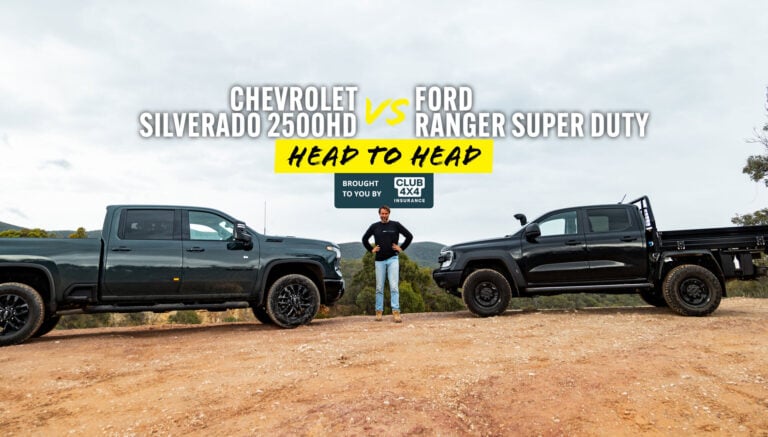
Ranger Super Duty vs Silverado 2500HD: Can a Ranger really rival a Silverado?
Ford’s Ranger Super Duty delivers genuine heavy-duty capability in a midsize package, but how does it compare with a full-size American tow rig built for the same kind of work?
-
 4x4 Comparisons
Prado GX vs Altitude: Is the flagship worth the extra money?
Is the Prado Altitude worth the premium, or does the GX make more sense as a smarter base for building a proper 4x4?