News


Gallery 1
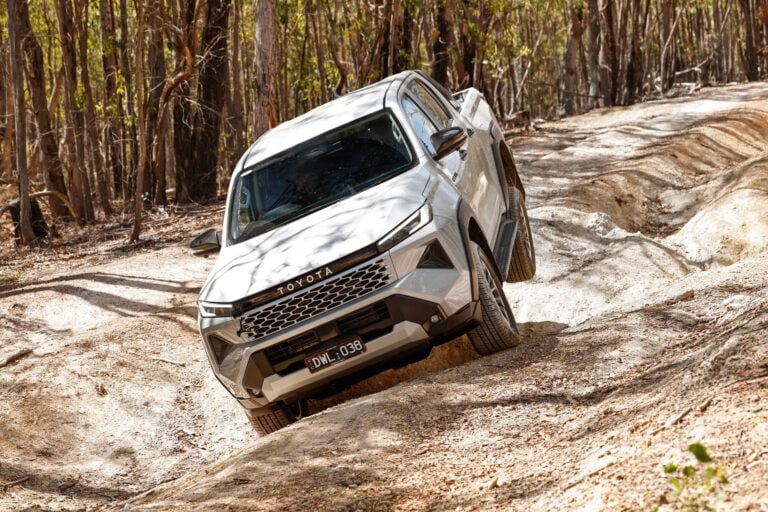
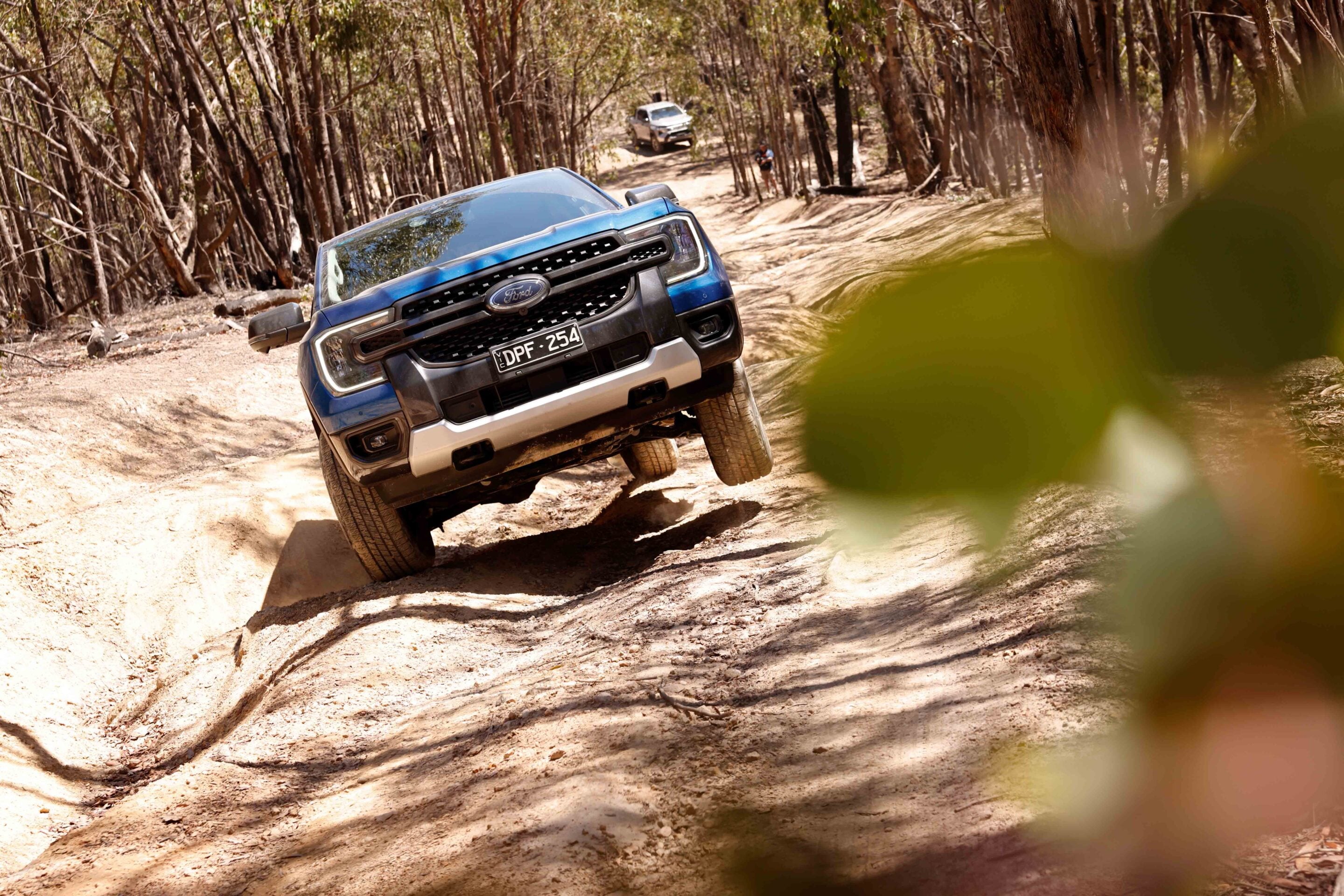
The Ford Ranger has reclaimed the title of Australia’s best-selling 4×4 vehicle, outselling the Toyota HiLux in September after the Toyota held the crown for the previous two months.
The Ranger recorded 4824 4×4 sales in September 2026, compared with 3975 for the HiLux. Adding 4×2 sales to the mix, the Ranger was also Australia’s best-selling vehicle overall for the month, with 5062 sales compared with 4455 for the HiLux.
The Ranger and HiLux topped a broader top 10 that included a mix of internal-combustion, plug-in hybrid, hybrid and battery-electric models. The Toyota RAV4 ranked third overall on 4624 sales, followed by the BYD Sealion 7 (2687), Chery Tiggo 4 Pro (2059), GWM Haval Jolion (2018), Geely EX5 (2008), Toyota Prado (2006), Isuzu D-MAX (1866) and MG ZS (1805). In the PU/CC 4×4 segment, the Ranger and HiLux were followed by the BYD Shark (1492 sales), Isuzu D-MAX (1393) and Mitsubishi Triton (1016).
Further down the ute sales charts, the Kia Tasman again struggled to find traction on the Australian market, recording just 336 sales for the month. The Nissan Navara was only slightly ahead on 338 sales, while the Volkswagen Amarok managed 244. The Mazda BT-50 fared better but still recorded just 606 sales.
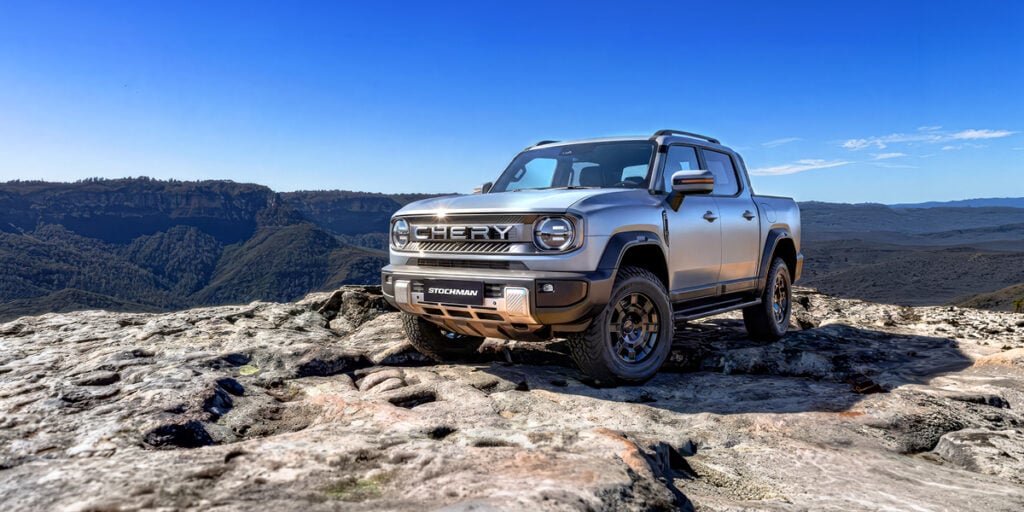
At the more budget-focused end of the market, the GWM Cannon and Cannon Alpha combined for 788 sales, followed by the LDV T60 (375) and LDV Terron9 (239). The Foton Tunland V7/V9 recorded 126 sales, ahead of the MG U9 (119), KGM Musso/Musso XLV (75) and JAC T9 (58).
Among the larger premium pick-ups, the Chevrolet Silverado and Silverado HD combined for 293 sales, ahead of the Ram 1500 (145), Ford F-150 (128) and Toyota Tundra (104).
The Toyota Prado continued to lead the 4×4 SUV market in September with 2006 sales, while the Ford Everest recorded 1713. The Toyota LandCruiser 300 Series outsold the Nissan Patrol, with 854 sales compared with 544, while the Isuzu MU-X recorded 830. The GWM Tank 300 and Tank 500 recorded 411 and 183 sales respectively.
Despite this, the Everest remains the best-selling SUV on the year-to-date charts, with 16,203 sales, ahead of the Prado on 15,665, the MU-X on 10,556 sales, and the 300 Series on 9787 sales.
*The sales figures in this article are based on VFACTS data, which does not include Tesla sales results. As a result, the rankings and EV figures reflect VFACTS-reported sales only and do not represent the entire Australian new-vehicle market.
LCV market continues to slide
The wider LCV market was significantly weaker than a year ago, with 20,627 sales recorded in September compared with 23,762 in September 2025, a 13.2 per cent decline.
That drop was offset by 6.3 per cent growth in passenger vehicle sales and 6.1 per cent growth in SUV sales across the broader market. The downturn in LCV sales is also evident across the year, with 184,328 LCVs sold to the end of September compared with 208,710 at the same point last year, down 11.7 per cent.
The PU/CC 4×4 market has performed similarly, with September sales falling 13.1 per cent year-on-year from 18,472 to 16,045. Year-to-date sales are down 13.6 per cent, with 140,410 4×4 utes sold compared with 162,457 during the same period in 2025.
In saying that, Australia’s new-vehicle market recorded 102,924 sales in September 2026, up 0.9 per cent compared with the same month last year. The headline growth was modest, but the fuel mix is changing quickly, with electrified vehicles accounting for an increasingly large share of the market.
Battery-electric vehicles accounted for 24.2 per cent of all new-vehicle sales in September, more than double their 11.3 per cent share in September 2025. Plug-in hybrid sales rose 122.7 per cent year-on-year, while conventional hybrid sales increased by 20.7 per cent.
That growth came as petrol sales fell 36.2 per cent and diesel sales declined 18.4 per cent compared with September 2025. Across the first nine months of 2026, BEVs account for 18.9 per cent of the total new-vehicle market, compared with 8.1 per cent at the same point in 2025.
“Australian motorists are embracing a broader range of powertrains, following greater model choice offered by manufacturers and growing competition,” said Dianne O’Hara, Acting Chief Executive. “The changes seen throughout this year are continuing. Many consumers are making practical decisions and selecting from the range of available technologies that best meet their needs.”
September sales included 26,018 petrol vehicles, 25,173 diesel vehicles and 20,433 BEVs. With EV sales now within striking distance of the two traditional fuel types, it may only be a matter of time before battery-electric vehicles overtake petrol or diesel in a monthly result. As mentioned, Tesla sales are not included in the VFACTS report, so the reported BEV figures do not represent every electric vehicle sold in Australia.
The shift is also showing up in the LCV market. Year to date, diesel LCV sales are down 12.2 per cent and petrol is down 38.8 per cent, while electric LCV sales have increased 299.5 per cent. Hybrid LCV sales are up 19.2 per cent and PHEV sales have increased 10.7 per cent.
| 4×4 sales: September 2026 | |
|---|---|
| 1: Ford Ranger | 4,824 |
| 2: Toyota HiLux | 3,975 |
| 3: Toyota Prado | 2,006 |
| 4: Ford Everest | 1,713 |
| 5: BYD Shark | 1,492 |
| 6: Isuzu D-MAX | 1,393 |
| 7: Mitsubishi Triton | 1,016 |
| 8: Toyota LC300 | 854 |
| 9: Isuzu MU-X | 830 |
| 10: GWM Cannon/Cannon Alpha | 788 |
| 4×4 sales: Year-to-date | |
|---|---|
| 1: Ford Ranger | 35,744 |
| 2: Toyota HiLux | 32,238 |
| 3: Ford Everest | 16,203 |
| 4: Toyota Prado | 15,665 |
| 5: BYD Shark | 13,586 |
| 6: Isuzu D-MAX | 13,340 |
| 7: Mitsubishi Triton | 11,821 |
| 8: Isuzu MU-X | 10,556 |
| 9: Toyota LC300 | 9,787 |
| 10: GWM Cannon/Cannon Alpha | 8,001 |
Follow 4X4 Australia on Google
Get more 4x4 news, reviews and gear stories from 4X4 Australia in your Google feeds.