General Motors has revealed the GMC HUMMER X concepts, a pair of mid-size electric vehicles in pickup and SUV form developed as a testbed for technology and design. The concept is not intended for production.
The HUMMER X is built on a modular platform and uses a manufacturing approach GM calls FLEX FAB, which allows small-batch production without specialised stamping tools. Multiple body designs can be produced from the same machines. Externally, the concept is characterised by a flat-topped silhouette, radiused edges, laser-welded seams and visible precision bolts.
Inside, stackable displays let drivers configure the digital interface for different uses, whether rock crawling, trail running or highway travel. The SUV runs 37-inch Goodyear tyres on 18-inch alloys and sits on 334mm of ground clearance, with approach and departure angles of 44 and 46 degrees. The pickup runs 35-inch Goodyears on 22-inch alloys, with 317mm of ground clearance and a 41.5-degree approach angle.
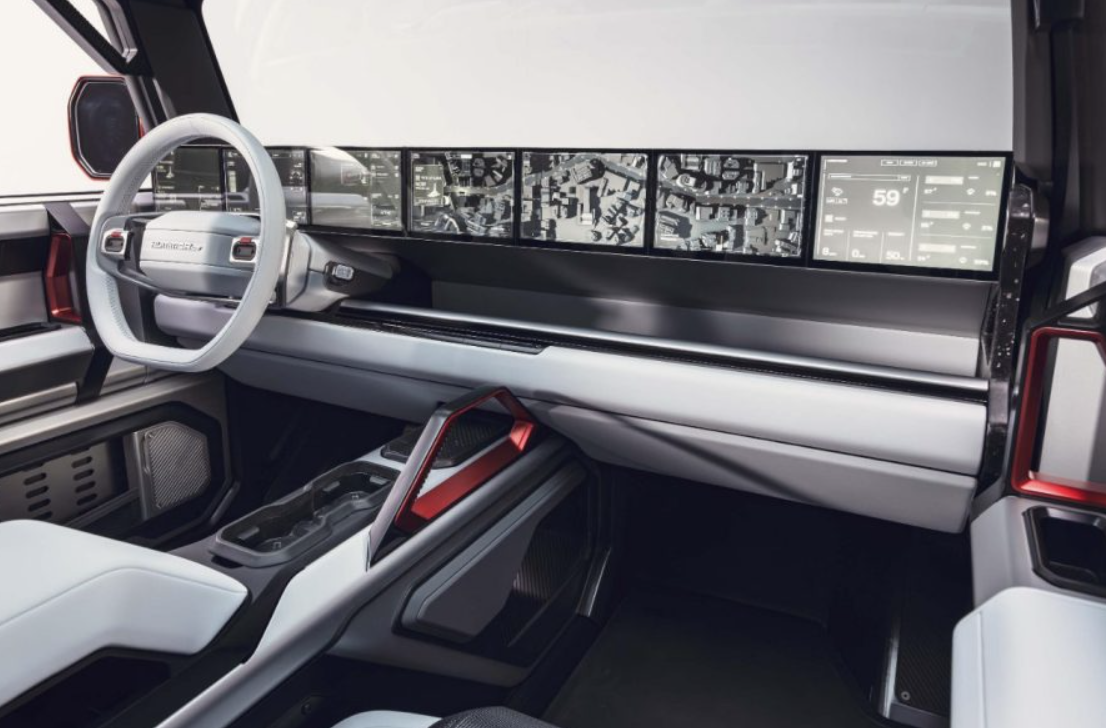
GM has also developed a connected app suite called HUMMER HUB that links to the vehicle before, during and after trips. It includes a scout drone that flies ahead on trails, feeds real-time terrain data back to the vehicle, and docks when not in use.
Construction uses mono-material components, snap-fit fasteners in place of adhesives, and parts designed for disassembly and recirculation. Seatbacks, headrest backs and instrument panel ends are made from recycled car fascias.
The HUMMER X concepts were unveiled alongside the opening of GM’s new Advanced Design studio in Pasadena, developed through collaboration between GM Advanced Engineering, Advanced Manufacturing and the Advanced Design team.
GMC Hummer X SUV
- Wheelbase: 2945mm
- Length: 4782mm
- Height: 1852mm
- Width: 2032mm
- Approach angle: 44
- Departure angle: 46
- Breakover angle: 30.9
- Ground clearance: 334mm
- Tyres: Goodyear 315/75R18 (37-inch OD)
- Wheels: 18-inch alloy
GMC Hummer X pick-up
- Wheelbase: 3318mm
- Length: 5264mm
- Height: 1854mm
- Width: 2032mm
- Approach angle: 41.5
- Departure angle: 29.7
- Breakover angle: 24.9
- Ground clearance: 317mm
- Tyres: Goodyear 305/55R22 (35-inch OD)
- Wheels: 22-inch alloy
Reports indicate the upcoming Nissan Navara Warrior will be differentiated from Mitsubishi’s Triton Raider, despite both vehicles sharing the same platform and being developed by Australian engineering firm Premcar.
The similarity between the two flagship utes has drawn attention since Mitsubishi revealed the Triton Raider, with both vehicles based on the same underlying architecture and receiving Australian-developed off-road enhancements from Premcar.
A Premcar-developed Warrior concept was previewed late last year alongside Nissan’s reveal of the all-new D27 Navara, signalling the return of Australia’s locally engineered off-road flagship treatment.
The new Navara is heavily based on the Mitsubishi Triton as part of the Renault-Nissan-Mitsubishi Alliance, but receives Australian suspension tuning from Premcar, including upgraded dampers and local calibration for road conditions. It continues with Mitsubishi’s 2.4-litre four-cylinder twin-turbo diesel producing 150kW and 470Nm, paired with a six-speed automatic and dual-range 4WD system.
The Triton Raider builds on the Triton GSR with a range of modifications, including revised steering calibration, Monroe dampers with unique internal tuning, 18-inch ROH alloy wheels, Bridgestone Dueler A/T 002 all-terrain tyres, front underbody protection and metal side steps. The package also delivers a 25mm increase in front ride height, a 15mm increase at the rear and a 20mm wider track. Unique exterior and interior badging further distinguish the Raider from the standard Triton range.
Nissan has already confirmed a next-generation Navara Warrior, though final specifications have not yet been detailed. While specifications remain unannounced, reports suggest the Warrior is expected to retain the same 2.4-litre twin-turbo diesel used elsewhere in the Navara range and is expected to be based on the flagship PRO-4X grade. Expected upgrades include a wider stance, model-specific suspension tuning, additional underbody protection, a dedicated wheel-and-tyre package and visual updates inside and out.
According to reports, Premcar says the two programs have been developed with different objectives, resulting in distinct tuning and component packages. While both vehicles share a platform and receive Premcar enhancements, Mitsubishi and Premcar say different customer profiles and development objectives have resulted in unique suspension settings and hardware for the Triton Raider.
Orders for the Triton Raider are now open, with deliveries scheduled to commence in June 2026, while the next-generation Navara Warrior is expected to arrive later in 2026.
The gap between a good tradie ute and a great one rarely shows up on a spec sheet. The real separation comes once the tray is bolted on, toolboxes are mounted underneath, and the rig is covering ground between job sites in heat, dust and stop-start traffic all day.
That last part matters more than most ute guides acknowledge. The majority of working tradies are not running factory tubs. They are running aluminium trays with under-tray toolboxes, or full canopy builds with drawers and shelving, or stripped-back cab-chassis setups fitted out for a specific trade. The ute beneath it all needs to be chosen with that fitout in mind, not as a passenger vehicle that happens to carry tools.
This guide focuses on the specific variants that make sense for tray-back and toolbox-equipped trade use. That means cab-chassis availability, payload headroom after the fitout, fitout flexibility, and long-term durability under sustained load. Cabin refinement matters less here than it does for a site manager’s comfy transport. Reliability and how much usable payload is left once the tray, boxes and gear are on board matter more.
The fitout decision comes before the ute decision
Most tradies get this backwards. The tray and toolbox configuration should drive the ute choice, not the other way around.
There are three practical fitout tiers most working utes end up in. The first is a flat aluminium tray with under-tray toolboxes bolted beneath the deck, leaving the full tray surface open for materials, equipment and larger loads. This is the lowest-cost, most flexible setup and the one that preserves the most usable tray space. Under-tray boxes in aluminium are straightforward to mount with U-bolts and basic hand tools. No fabrication required. A set of Ironman 4×4 side steps or a bash plate while you are at it and the rig is work-ready without a body shop involved.
The second tier is a cross-tray or full-length toolbox sitting on top of the tray. These bolt down without professional installation, suit tradies who need quick access to hand tools without climbing into a canopy, and are available off the shelf from most auto and trade suppliers. Aluminium over steel is the right call for payload reasons. A decent pair of aluminium under-tray boxes adds 30-40 kg to the build. The steel equivalents can be double that.
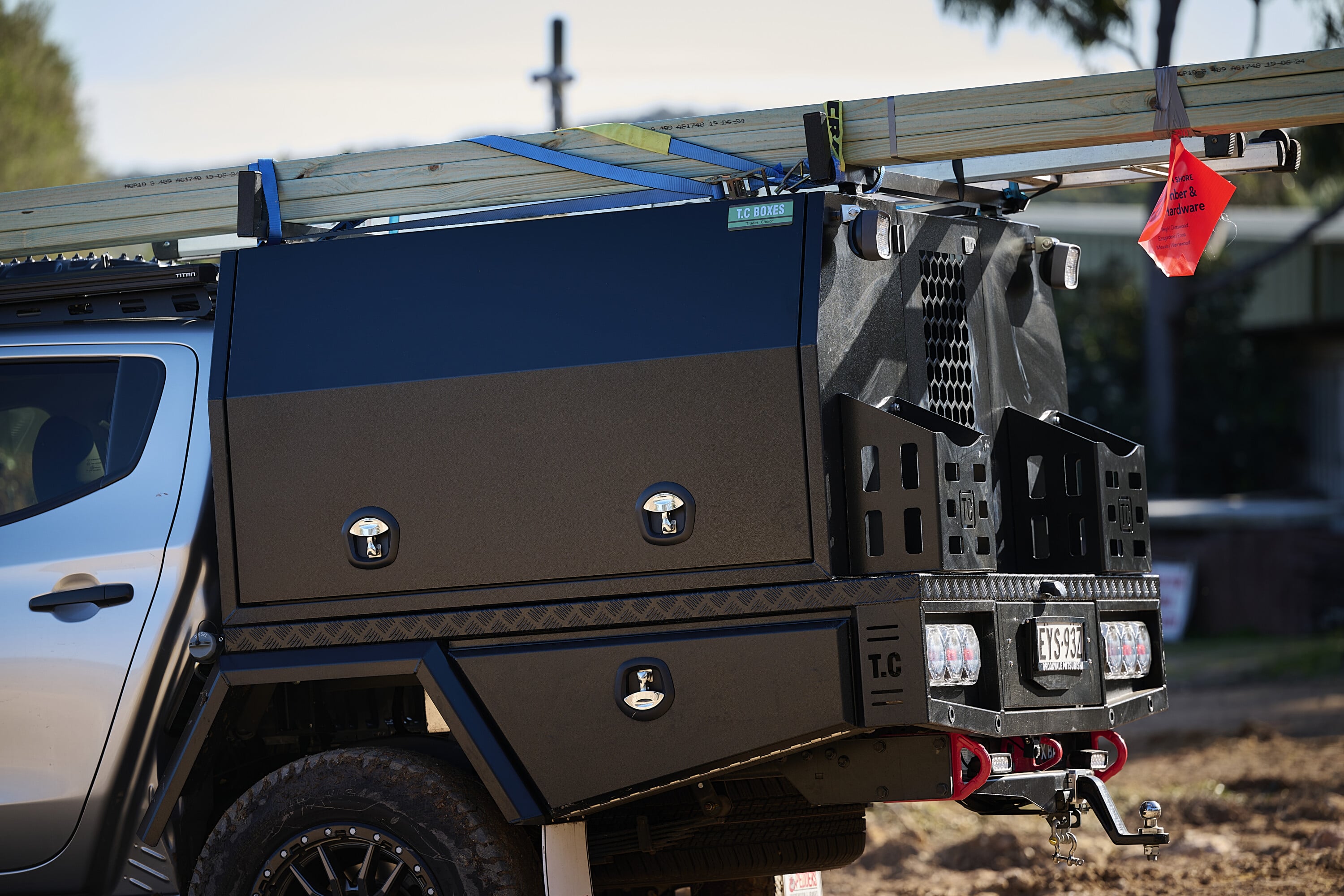
The third tier is a full canopy build with integrated toolboxes, shelving and drawers. This is the most useful setup for electricians, plumbers and service technicians who need organised, weather-sealed storage for a full kit. An ARB bull bar and winch on the front, long-range tank underneath, canopy and drawers in the back: each item makes sense in isolation, together they add up fast. It is also the heaviest and most expensive option, and the weight adds up faster than most tradies expect.
Weigh up your intended fitout before committing to a ute: the finished build weight directly determines what payload is left for passengers, fuel, materials and gear. Fitment requires a body shop or fitout specialist. The tub comes off, the tray goes on, and the tail lights, reverse camera and fuel filler all need relocating. Get a quote from your intended fitout shop before you order the ute, not after.
The GVM implication of all of it: Know your payload number before you buy the ute, and know what the finished fitout will weigh before you order the tray. The utes rated at higher payload are not all equal on paper and they are definitely not equal once the real-world build is done. Cab-chassis variants generally offer more flexibility here because they start without a tub, which saves the disposal cost and occasionally frees up a little more payload than the dual-cab pick-up equivalent.
Ford Ranger XL
The XL is where most serious fleet tray builds start, and Ford has engineered it with that in mind.
Available as a cab-chassis in single, extra and dual cab configurations, the XL is the Ranger variant best suited to custom fitout work. The cab-chassis body removes the tub entirely, which means the builder works with a clean frame rail and no conversion costs. The vinyl interior, steel wheels and simplified spec are not compromises for a tray-back build. They are the right call.
Engine options are the 2.0-litre bi-turbo diesel at 500Nm or the 3.0-litre V6 diesel at 600Nm, both with a 10-speed automatic. The V6 is worth considering for heavy tray builds carrying consistent loads across the Pilbara or the Queensland cattle country, as it keeps the engine in its torque band without working as hard. Fitout shops across the country know this platform well, and the aftermarket support from the likes of TJM and ARB is as deep as any ute on sale.
Ford Ranger XLT
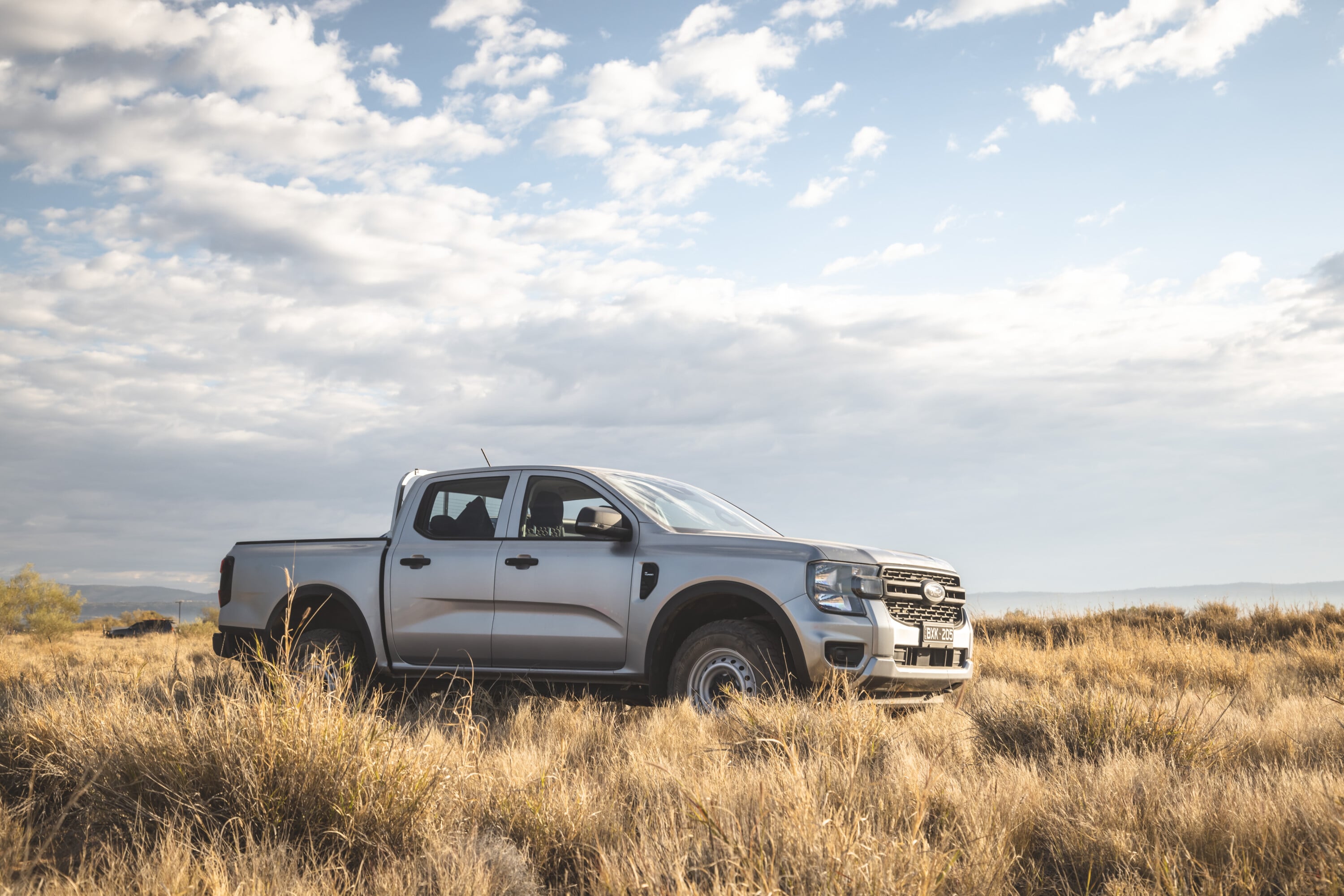
The XLT is the pick-up variant most tradies who want a factory tub and a bolt-on toolbox setup end up choosing.
Same engine family as the XL but with more comfort and safety tech, and still available with enough payload headroom for a pair of under-tray alloy boxes and a full tool load. It works equally well running highway legs between regional centres and covering rough access tracks around Snowy Mountains job sites.
For tradies who do not need a full tray build, the XLT with under-tray boxes bolted to the factory tub or a cross-tray toolbox over the tub floor is a practical and cost-effective setup. The tub is already there. No fitout shop required. A competent tradie can have a pair of alloy under-tray boxes mounted on a Saturday morning. Hard to beat as a starting point for that tier of build.
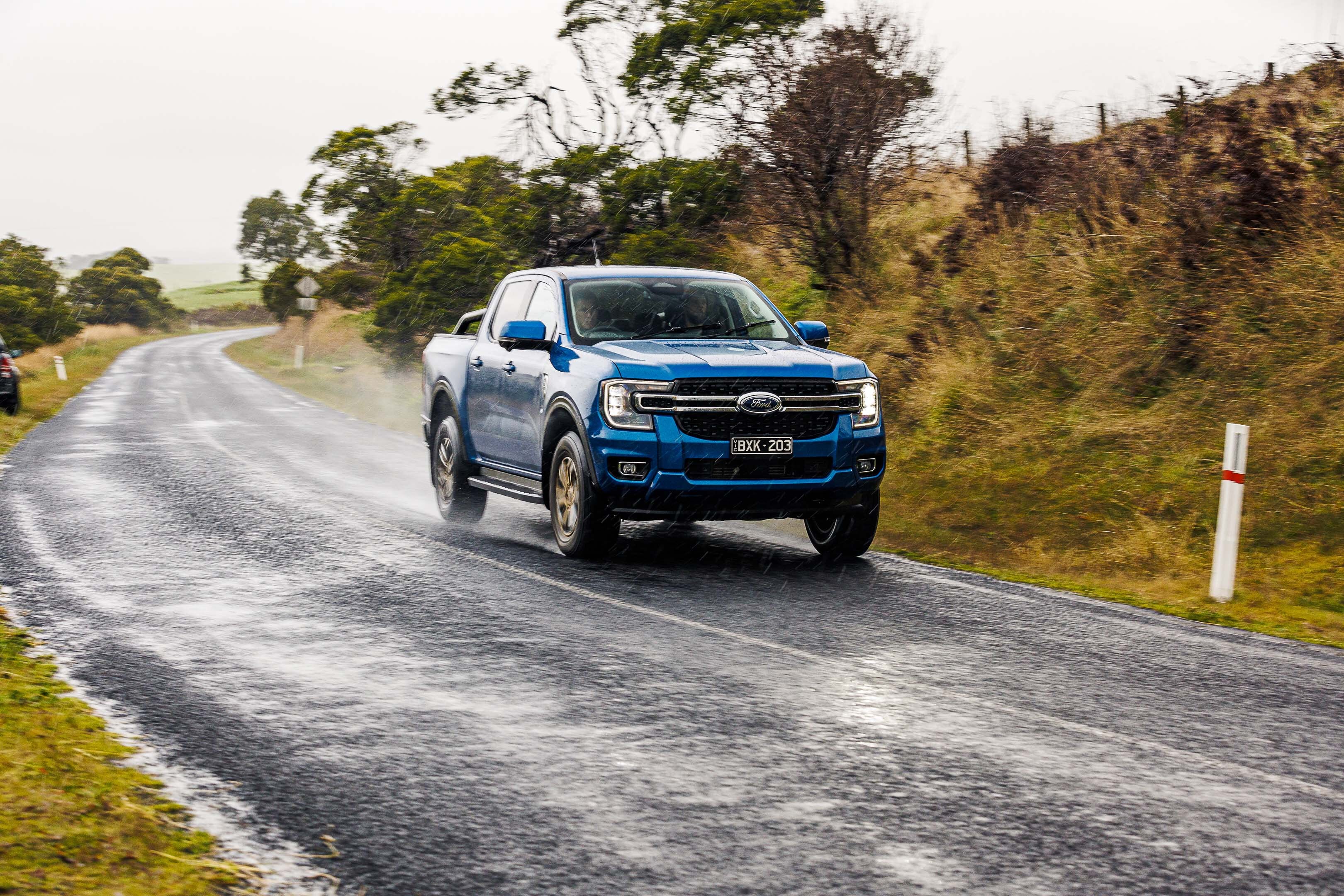
Toyota HiLux WorkMate
The WorkMate is the HiLux variant that makes the most sense for serious tray-back fitout work.
Available as a cab-chassis across single, extra and dual cab body styles, it is the starting point for a large share of the steel tray and service body builds running across regional Queensland, the Territory and WA. The 2.8-litre turbo-diesel producing 500Nm has earned its reputation in mining, farming and construction abuse over many years. It is simple, proven and one of the more reliable engines in this segment.
Fitout shops know the HiLux frame intimately. The WorkMate cab-chassis is the single most common base for custom service body work in Australia, which means parts, knowledge and second-hand fitout options are everywhere. Resale after five years in working condition is the strongest in the segment. For a fleet operator running five or ten utes, that number matters as much as the purchase price.

Toyota HiLux SR
The SR splits the difference between the stripped WorkMate and the more refined SR5, and for tray-back builds it is often the smarter buy.
It runs the same 2.8-litre diesel with 500Nm and adds more comfort and safety tech than the WorkMate without paying for the SR5’s interior upgrades that a canopy build effectively hides anyway. Available as a cab-chassis. Confirm payload figures for your specific configuration with your dealer before ordering.
For tradies who want a slightly more liveable cab on long drives between sites but are still putting a full tray and canopy over the back, the SR is the honest choice. The SR’s price advantage over the SR5 can go toward the fitout instead.
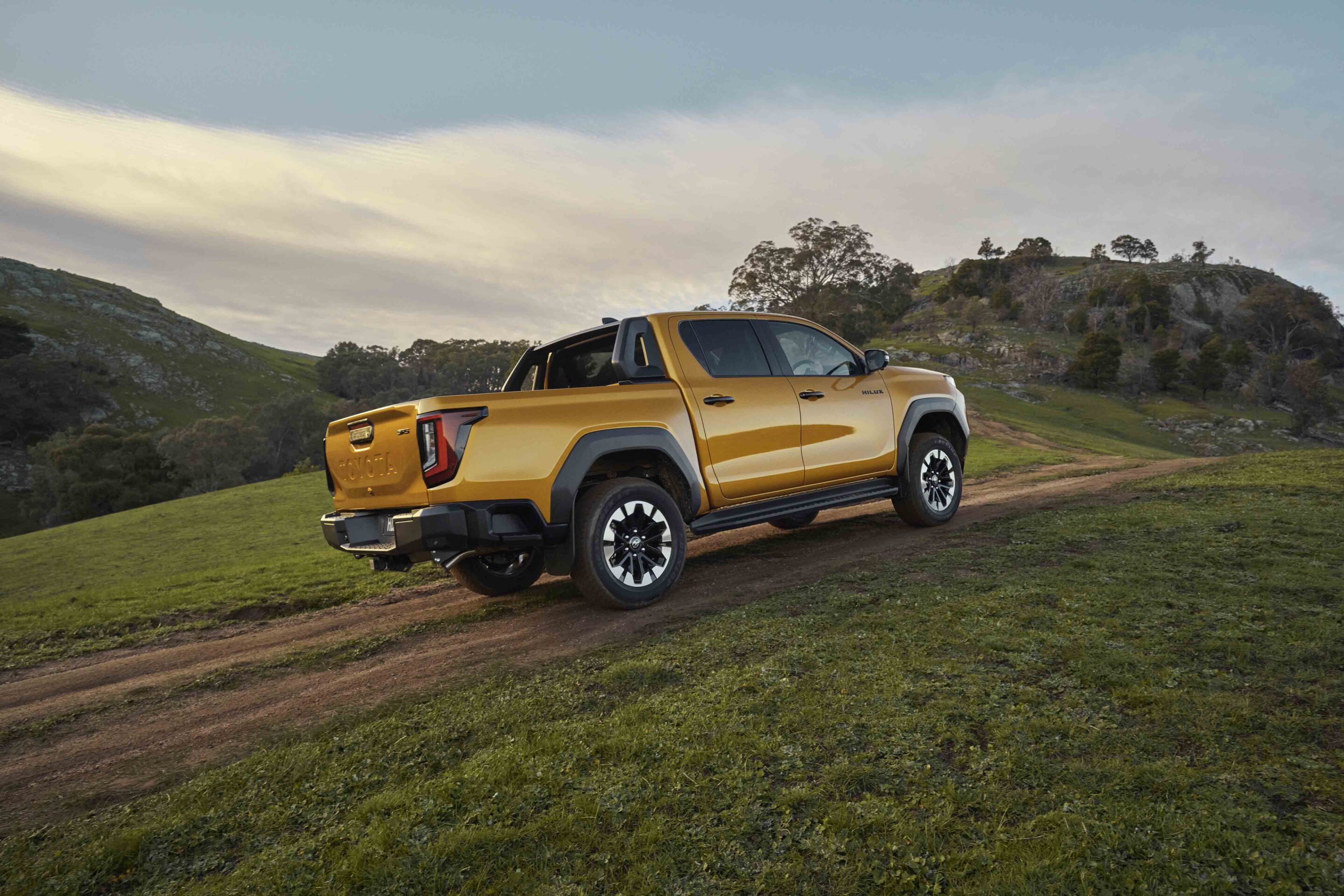
Isuzu D-MAX SX
The D-MAX SX is built around low operating stress and consistent performance under sustained load, which makes it a natural fit for fleet tray builds.
The 3.0-litre turbo-diesel produces 450Nm and is tuned for durability over long service intervals rather than headline torque. It is now also available with Isuzu’s newer 2.2-litre turbo-diesel option, paired with an eight-speed automatic, offering a more efficient alternative for lighter duty fleet applications.
Available as a cab-chassis in single and crew cab configurations, fitout flexibility is strong, and the platform has enough market presence that most specialist body builders are familiar with it.
Fleet operators choose the D-MAX SX because it spends less time off the road and delivers predictable servicing costs over high kilometres. A REDARC dual-battery system and a GME UHF are common additions for remote-area fleets, and both fit the platform without drama.
Where the SX is a pure fleet workhorse, the LS-U is the D-MAX variant for tradies who spend as much time behind the wheel as on tools.
Same powertrains, more comfortable cabin, better infotainment and reduced NVH over long highway legs. Still available in configurations that suit a tray or canopy build. The added cabin quality reduces fatigue on regional runs, which for tradies working remote areas or covering wide service territories is a safety consideration as much as a comfort one.
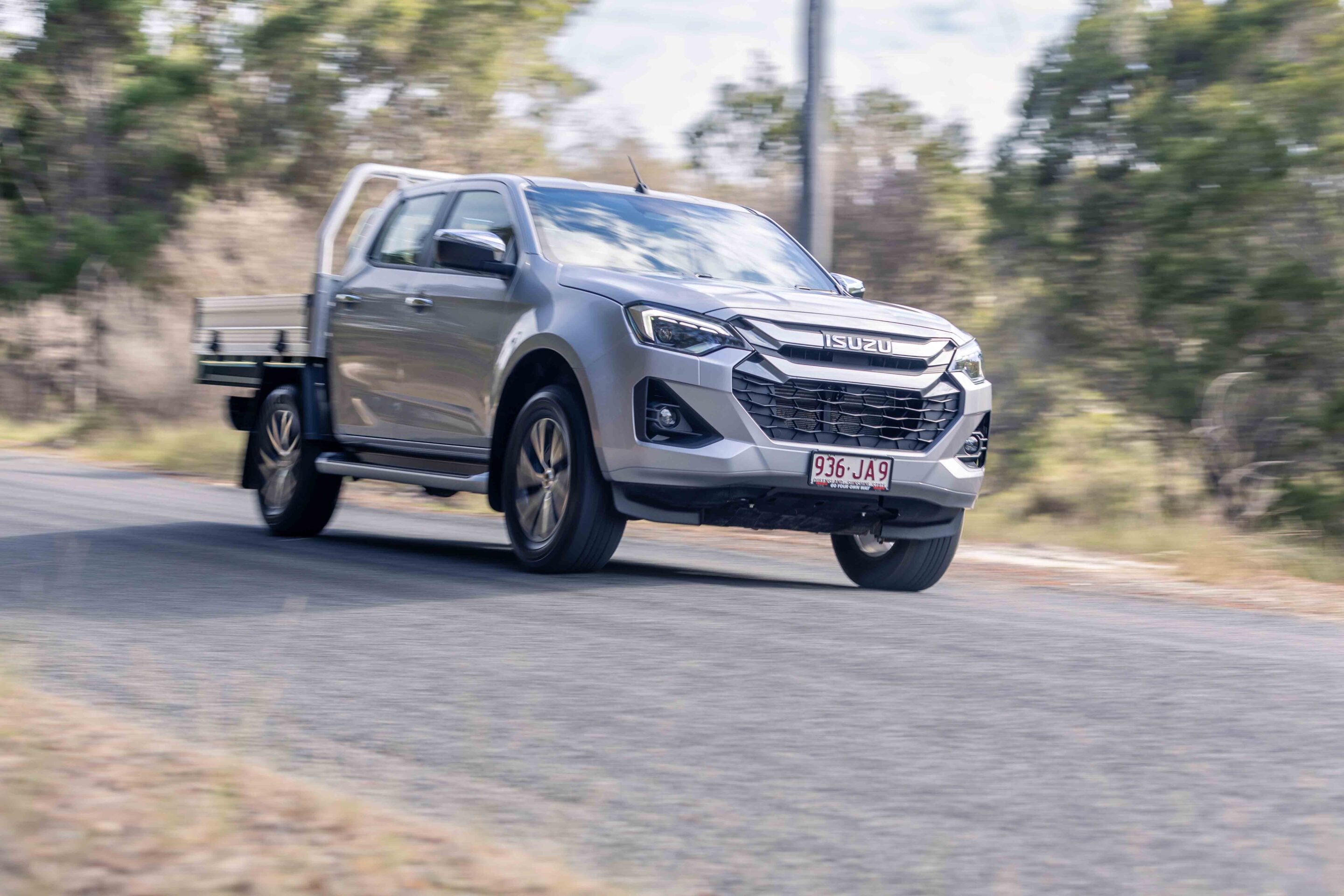
Mazda BT-50 XT and XTR
The BT-50 shares its platform with the D-MAX, which means fitout compatibility and durability credentials carry across.
The XT is the work-spec entry with 450Nm paired to a six-speed automatic. The XTR steps up in interior quality and ride comfort without changing the mechanical picture in ways that affect the tray-back build. Both are available as cab-chassis variants.
The practical reason to consider a BT-50 over a D-MAX is price: the BT-50 typically sits a few thousand dollars lower at the same spec level, which can go toward the fitout. The trade-off is a slightly smaller service network in some regional areas. Worth checking dealer proximity before committing if the ute is working far from a capital city.
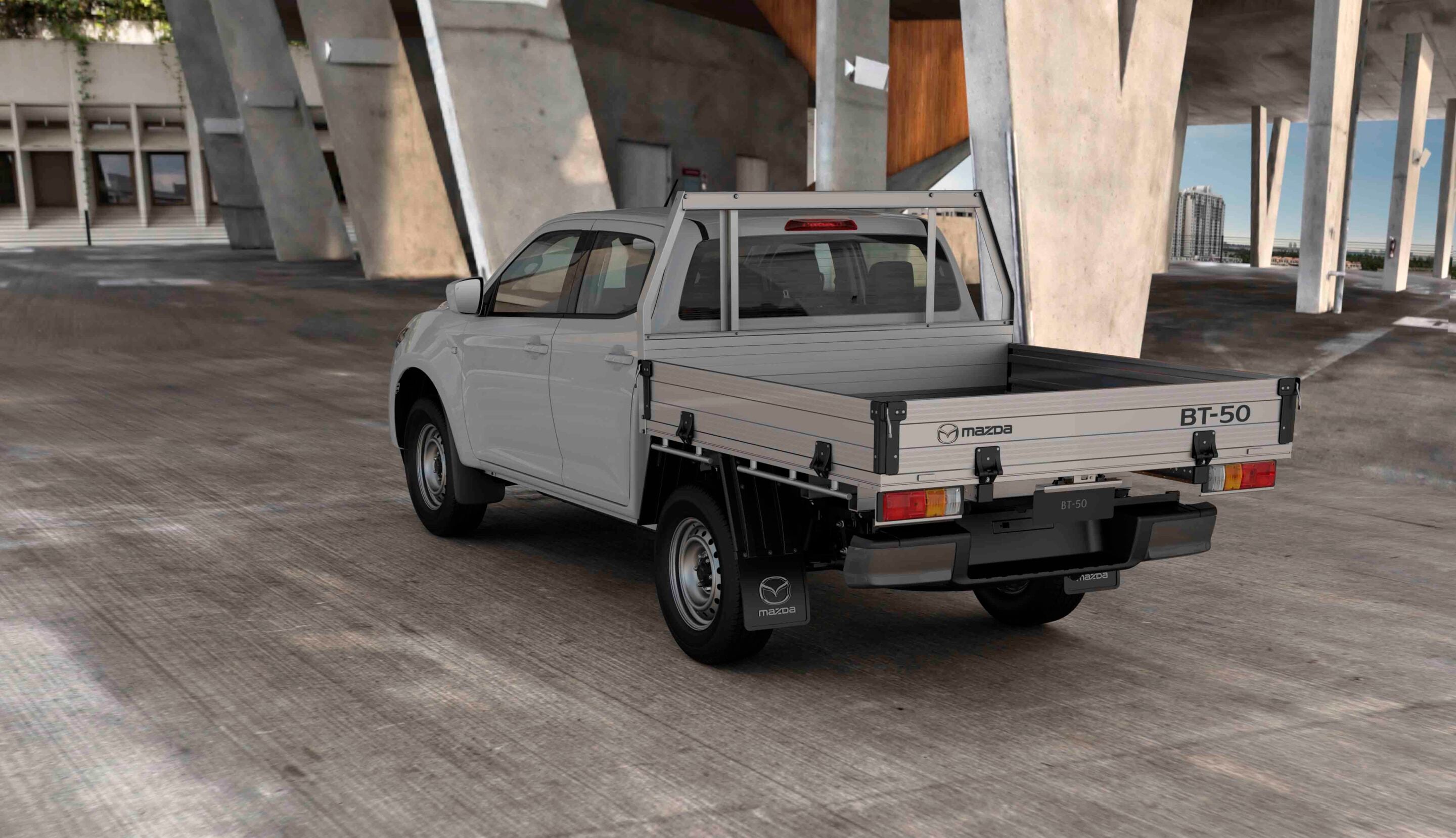
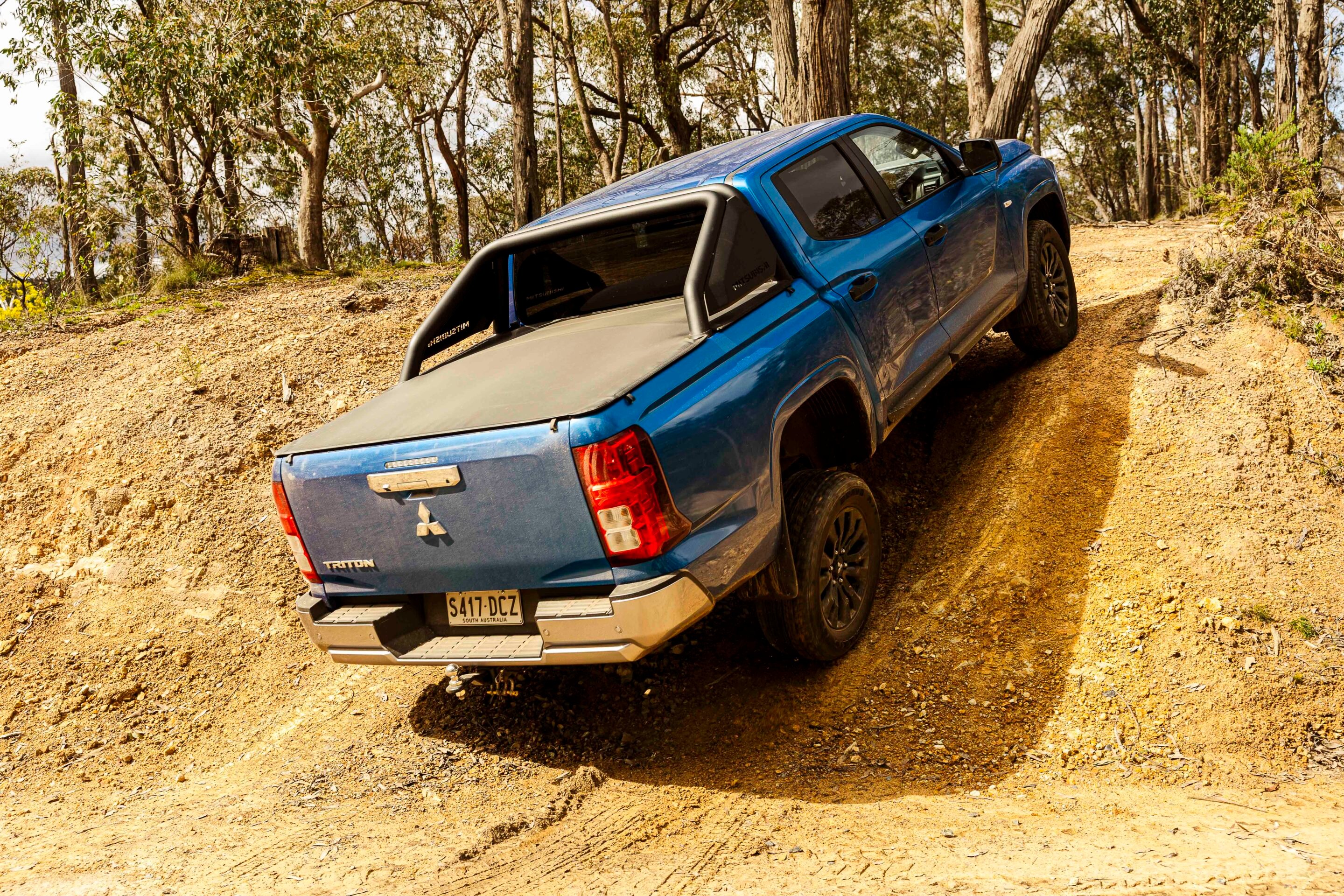
Mitsubishi Triton GLX
The Triton GLX is the most accessible 4×4 entry point for a tradie who needs a tray-back ute and is watching the purchase price closely.
The 2.4-litre diesel at around 470Nm is adequate for the job. It is not the gruntiest option in the field, but for a single-operator tradie running a flat tray with under-tray boxes and a moderate tool load, it gets on with it without drama. The lighter ladder-frame chassis keeps the kerb weight down, which helps preserve payload headroom once the fitout is on.
For apprentices, small operators, or businesses scaling up fleet numbers on a tight capital budget, the GLX is a cost-effective path into a current-generation 4×4 ute with proper cab-chassis availability. The 2026 Triton Raider is a different conversation entirely, aimed at a different buyer with a different budget.
The rest of the field
Not every ute in the current market makes sense once a tray and toolboxes are the goal.
The GWM Cannon and LDV T60 offer aggressive pricing and reasonable equipment, but cab-chassis availability is limited and fitout shop familiarity is patchy outside major metro areas. For a fleet operator in regional WA or Queensland, that matters. Parts access, fitout knowledge and service network gaps in remote areas are real operating risks.
The Nissan Navara ST also sits in this group, but for different reasons. It is a dual-cab pick-up only, with no cab-chassis option, which immediately limits its suitability for full tray or service body conversions. It runs a 2.4-litre bi-turbo diesel producing 470Nm paired with a seven-speed automatic, and its strengths are in long-distance comfort and highway refinement rather than hard-fitout flexibility. It is a capable ute in its own right, but it is fundamentally designed as a pick-up rather than a tray-build platform, which places it outside the core use case of this guide.
The BYD Shark 6 and Ford Ranger PHEV are genuinely interesting platforms but tray-back fitout experience is limited. The Shark 6 also carries a towing limitation that may rule it out for tradies who regularly pull trailers. Both belong in a separate guide covering electrified utes as that category matures.
The site manager tier – Ranger Wildtrak, HiLux Rogue, D-MAX X-Terrain and their equivalents – are good vehicles being used wrong if they end up under a full trade canopy build. Their cabin upgrades disappear behind the fitout and their purchase price premium goes to waste. Start with the work-spec variant and spend the difference on the tray.
The Kia Tasman is worth a mention on its own terms. Available in dual-cab pick-up and cab-chassis configurations with a 2.2-litre turbo-diesel, it is a properly engineered new entrant rather than a rebadged passenger vehicle. But it is too early to recommend it for trade use with any confidence. Wait until the first round of real-world fleet builds has accumulated, fitout shops are familiar with the platform, and it has a season or two of the Queensland heat and the WA dust behind it. Check back in twelve months.
What actually matters for tradies
- Effective payload after fit-out: Tray, canopy, tools, fuel, racks
- Torque delivery under load: Not peak figures, but drivability at 80 to 110km/h towing
- Transmission behaviour: How well the auto holds gears when loaded
- Chassis durability once modified: Suspension sag, braking stability, long-term wear
- Service access and downtime: How quickly the ute can be turned around
The verdict
The Toyota HiLux WorkMate and Ford Ranger XL are the strongest starting points for full tray and service body builds.
Both are available as cab-chassis across multiple body configurations, both have decades of fitout shop familiarity behind them, and both carry payload headroom that survives a complete trade build with something left for the actual job. Throw a pair of Maxtrax on the tray and a GME UHF on the dash and the rig is ready for whatever the job site throws at it. The HiLux WorkMate holds its resale value better than anything else in the segment after five years of hard work, which matters for fleet operators thinking about total cost of ownership rather than just purchase price.
Whatever ends up on the tray, opt for aluminium over steel on the fitout wherever you can, know your finished build weight before you sign the order form, and leave enough payload margin to actually do the job.
All prices AUD. Cab-chassis availability and payload figures vary by configuration and state regulations. Confirm GVM, payload and fitout compliance with your dealer and body builder before ordering.
Isuzu UTE Australia has introduced a limited-time offer providing three years of free scheduled servicing across its MU-X range, covering the first three scheduled services on all eligible new 25.5MY MU-X purchases made between June 1 and July 31, 2026.
The offer applies across the entire Isuzu MU-X line-up, including both the updated 2.2-litre turbo-diesel paired with an eight-speed automatic transmission and the established 3.0-litre four-cylinder turbo-diesel, as well as the Tour Mate special edition, which returned late last year as a factory touring package based on the LS-T 4×4.
Eligible customers will receive complimentary scheduled servicing covering the first three scheduled services, up to 36 months or 45,000km from the warranty start date. With Isuzu’s capped-price servicing program currently set at $469 per visit (↗), the offer represents a saving of approximately $1400 over the first three years of ownership.
“While global issues continue to pressure everyday cost of living, IUA understands that it’s increasingly difficult for many Australians to manage the ongoing costs of their vehicle,” says IUA Managing Director Junta Matsui.
“Complementing IUA’s comprehensive 6-year/150,000km warranty, this offer will give buyers more certainty when anticipating life with one of Australia’s most respected cars.”
The offer is available to private, ABN and business fleet customers. Demonstrator vehicles are excluded.
The Mitsubishi Pajero is officially set to return, with Mitsubishi Motors Corporation confirming an all-new model will be unveiled at a world premiere later this year.
The announcement marks the return of the Pajero nameplate since 2021, when overseas sales of the long-running SUV ended. In Australia, the Pajero was also phased out in 2021, with final run-out stock sold into 2022. While the Pajero name disappears for only a few years, Mitsubishi’s local 4×4 lineup has continued with the Mitsubishi Pajero Sport, which remains on sale in Australia as a smaller, ladder-frame alternative below the former flagship.
The original Pajero, launched in 1982, became one of Mitsubishi’s defining models by combining serious off-road capability with everyday usability. Over four generations it sold more than 3.25 million units across more than 170 markets. Its reputation was cemented in motorsport, with the Pajero entering the Dakar Rally in 1983 and going on to secure 12 overall victories, including seven consecutive wins, to help establish its global reputation for durability and long-distance off-road performance.
The new-generation model will be based on a ladder-frame platform derived from the Mitsubishi Triton, with bespoke suspension and body development aimed at balancing off-road capability with improved on-road refinement.
Key rivals are expected to include the Toyota LandCruiser Prado, Ford Everest, Isuzu MU-X and Nissan Patrol, placing the revived Pajero squarely back into Australia’s competitive touring and off-road SUV segment.
A teaser published on Mitsubishi Japan’s website (↗) signals the brand’s intent, reading: “More than just a car. The Pajero demanded our patience – our obsession – every hour of every day until we got it right. We’ve poured everything we have into this moment: the innovation, the spirit, the relentless pursuit of something greater than before. For those who never stopped believing. To everyone just arriving.”
The world premiere is scheduled for Autumn 2026 in Japan (September to November). Local specification and on-sale timing for Australia is still to be confirmed.
Ford Australia has updated its Ranger and Everest 4×4 range for the 2026.5 model year with revised model line-ups, new nameplates and significant diesel engine changes.
As reported here, the 500Nm 2.0-litre bi-turbo has been dropped due to emissions requirements and replaced by a revised single-turbo version producing 125kW and 405Nm. To fill the gap in performance, the 3.0-litre V6 diesel is now offered more widely across the range at a higher price point.
Our recent drive was in a 2.0-litre-powered Everest and was on-road only, all on the highway. And the big question was how well the single-turbo engine would power the Ford wagon?
One thing that hasn’t changed is how smooth the 2.0-litre engine is compared to larger-capacity four-cylinder diesel engines in this class of vehicle. The bi-turbo was always smoother and more refined than the 2.4-, 2.5-, 2.8- and 3.0-litre engines used by competitors, and this trait continues in the updated single-turbo engine, even with its heavier steel pistons. This is something drivers will appreciate in the Everest more so than the Ranger.
The four-cylinder Everest reaches highway speeds easily on the open road and cruises along effortlessly. The road to Geelong is as mundane as they come and did not really give us much of a chance to put the car through its paces. Slowing down and planting the boot to get back up to speed revealed modest acceleration, and certainly nothing like what we were accustomed to in the old bi-turbo engine. It was okay in a relatively unladen vehicle on a flat highway but gave the impression it would work hard in the hills with a load or trailer on the back.
This is not an engine I would want to use to tow two tonnes or more over long distances. Whereas Ford’s four-cylinder diesel engine used to offer class-leading performance, the loss of that second turbocharger has relegated it way back in the pack. Thankfully, Ford still offers the V6 diesel for hauling loads and other heavy-duty usage.
Ranger and Everest off-road at You Yangs
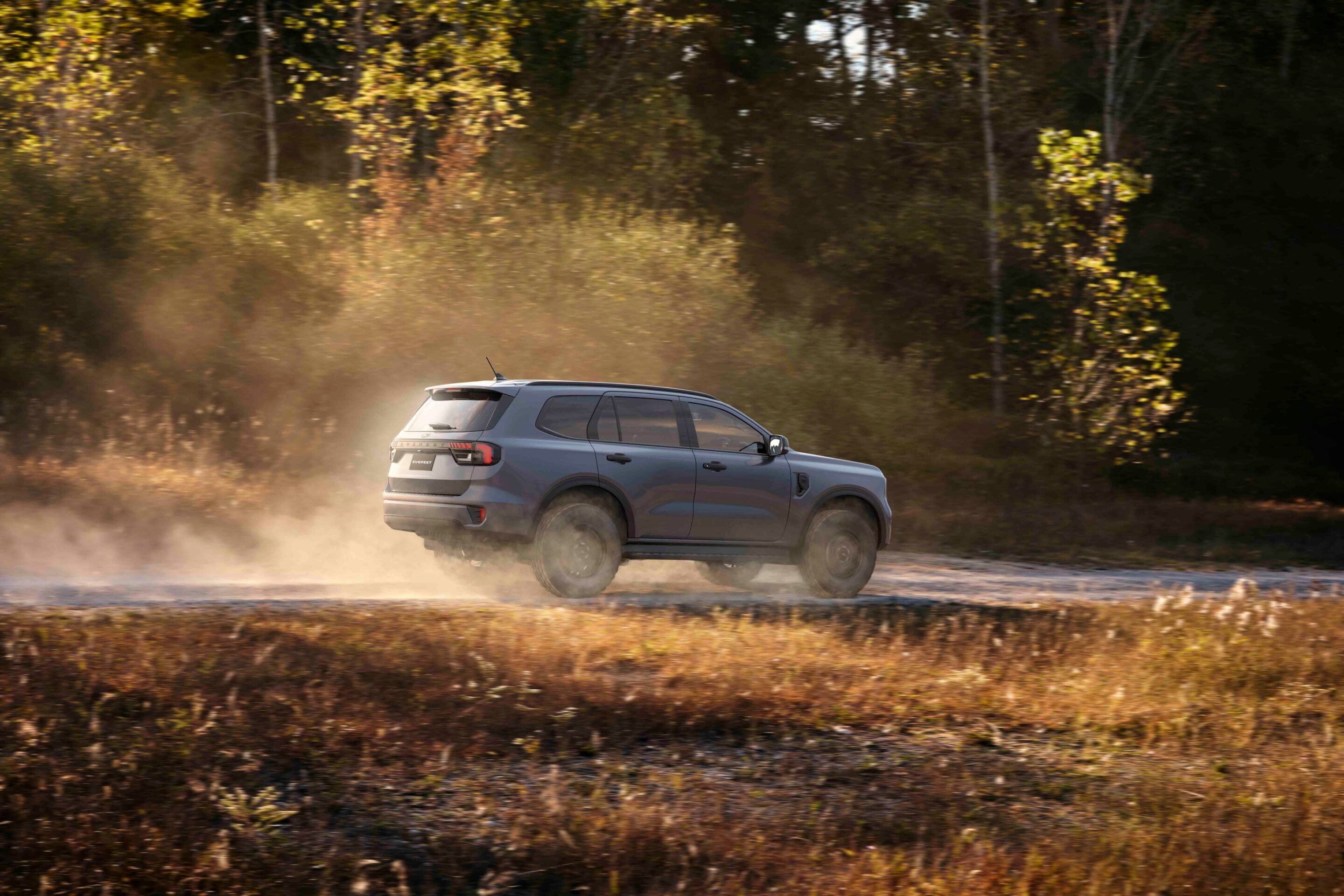
At Ford’s You Yangs proving ground, we were able to sample the V6 and four-cylinder-powered Everest and Ranger models over a series of off-road obstacles and various road surfaces.
Both the wagon and ute tackled all of these with ease, using the various drive modes and rear differential lock to make light work of them. The Ranger Raptor and Super Duty remain the only models in Ford Australia’s 4×4 range to offer both front and rear locking differentials.
With the Ranger being the top-selling vehicle in Australia for the past three years and the Everest the best-selling 4×4 wagon, Ford is doing just enough with new styling, models and features to keep its vehicles interesting and in the minds of buyers.
The company is also rolling out drive-away pricing and models to extend the vehicles’ appeal to more buyers in order to ensure it stays on top throughout 2026.
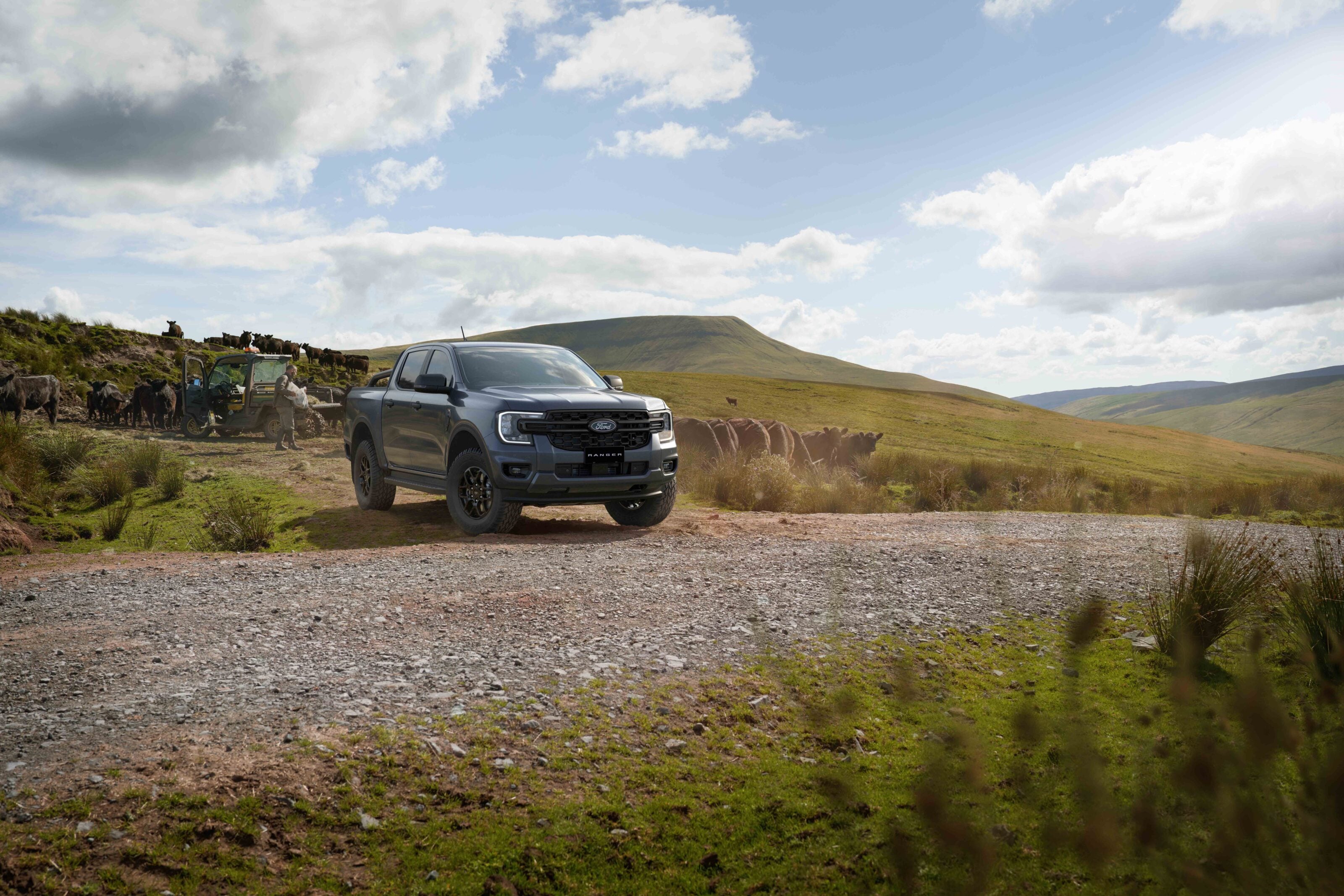
| 2026.5 Ranger variant | Engine | Price |
|---|---|---|
| XL Single Cab Chassis | 2.0L Turbo Diesel | $45,600 |
| XL Single Cab Chassis | 3.0L V6 Diesel | $52,100 |
| XL Super Cab Chassis | 2.0L Turbo Diesel | $48,100 |
| XL Super Cab Chassis | 3.0L V6 Diesel | $54,500 |
| XL Double Cab Chassis | 2.0L Turbo Diesel | $50,000 |
| XL Double Cab Chassis | 3.0L V6 Diesel | $56,500 |
| XL Double Cab Pickup | 2.0L Turbo Diesel | $51,400 |
| XL Double Cab Pickup | 3.0L V6 Diesel | $57,900 |
| XLS Double Cab Chassis | 3.0L V6 Diesel | $58,450 |
| Black Edition Double Cab Pickup | 2.0L Turbo Diesel | $53,490 |
| Black Edition Double Cab Pickup | 3.0L V6 Diesel | $59,990 |
| XLT Super Cab Pickup | 3.0L V6 Diesel | $63,790 |
| XLT Double Cab Chassis | 3.0L V6 Diesel | $66,590 |
| XLT Double Cab Pickup | 3.0L V6 Diesel | $67,990 |
| Wolftrak Double Cab Pickup | 3.0L V6 Diesel | $70,990 |
| Tremor Double Cab Pickup | 3.0L V6 Diesel | $75,090 |
| Wildtrak Double Cab Pickup | 3.0L V6 Diesel | $75,090 |
| Platinum Double Cab Pickup | 3.0L V6 Diesel | $80,890 |
| Raptor Double Cab Pickup | 3.0L V6 EcoBoost | $90,690 |
| 2026.5 Everest variant | Engine | Price |
|---|---|---|
| Active | 2.0L Turbo Diesel | $58,990 |
| Active | 3.0L V6 Diesel | $66,990 |
| Sport | 2.0L Turbo Diesel | $68,990 |
| Sport | 3.0L V6 Diesel | $76,990 |
| Tremor | 3.0L V6 Diesel | $79,990 |
| Platinum | 3.0L V6 Diesel | $83,490 |
Ford Australia has given its line-up of Ranger and Everest 4×4 vehicles a considerable shake-up for the 2026.5 model year.
The rehash includes some new nameplates and a reconfiguration of existing models, plus revisions to the diesel powertrains. The powertrain changes come as a result of the 500Nm 2.0-litre bi-turbo four-cylinder engine being discontinued from the Australian range. We are told this is due to it not meeting forthcoming emissions standards.
The class-leading bi-turbo has been replaced with a heavily revised version of the engine that uses a single turbocharger and makes a claimed 125kW at 3500rpm and 405Nm from 1750–2500rpm.
To cover for the loss of the more powerful four-cylinder engine, Ford has now made the 3.0-litre V6 diesel engine available across all models in the 4×4 line-up. It comes at a premium over the four-cylinder of around $6000 to $7000.
Ford drops bi-turbo for upgraded single-turbo diesel
The single-turbo four-cylinder engine benefits from an extensive engineering makeover.
This includes wholesale changes at the front of the engine, where the cam belt that previously ran in oil has been replaced with a more durable timing chain. Stronger steel pistons replace the alloy items in the old engine, while a refreshed top-end and injection system are employed to get the most out of the engine in terms of performance and durability.
All Rangers and Everest 4×4 variants now use the 10-speed automatic transmission, with the previous six-speed that was used in some grades sent to the bin along with the bi-turbo engine.
Ford Ranger line-up overview
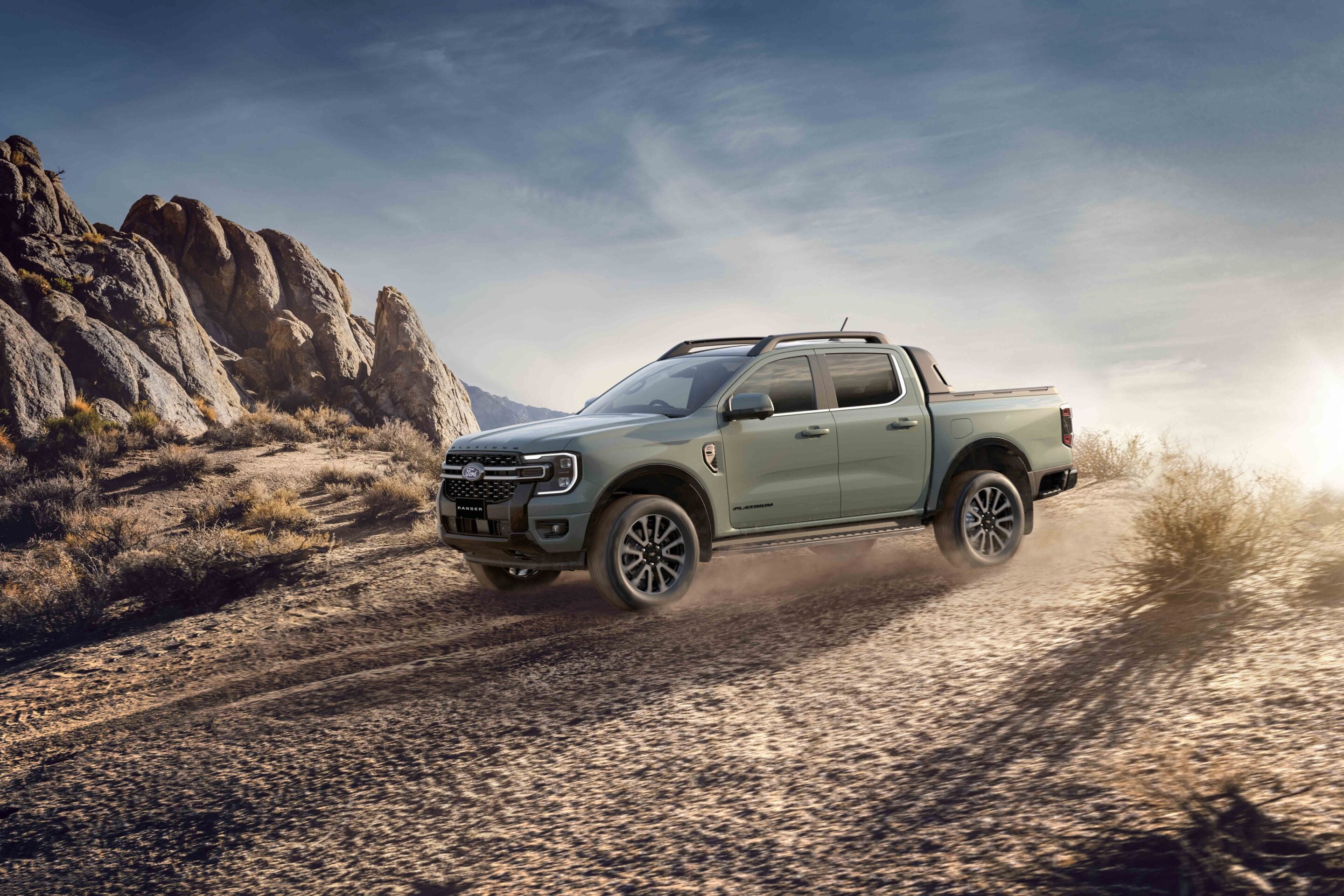
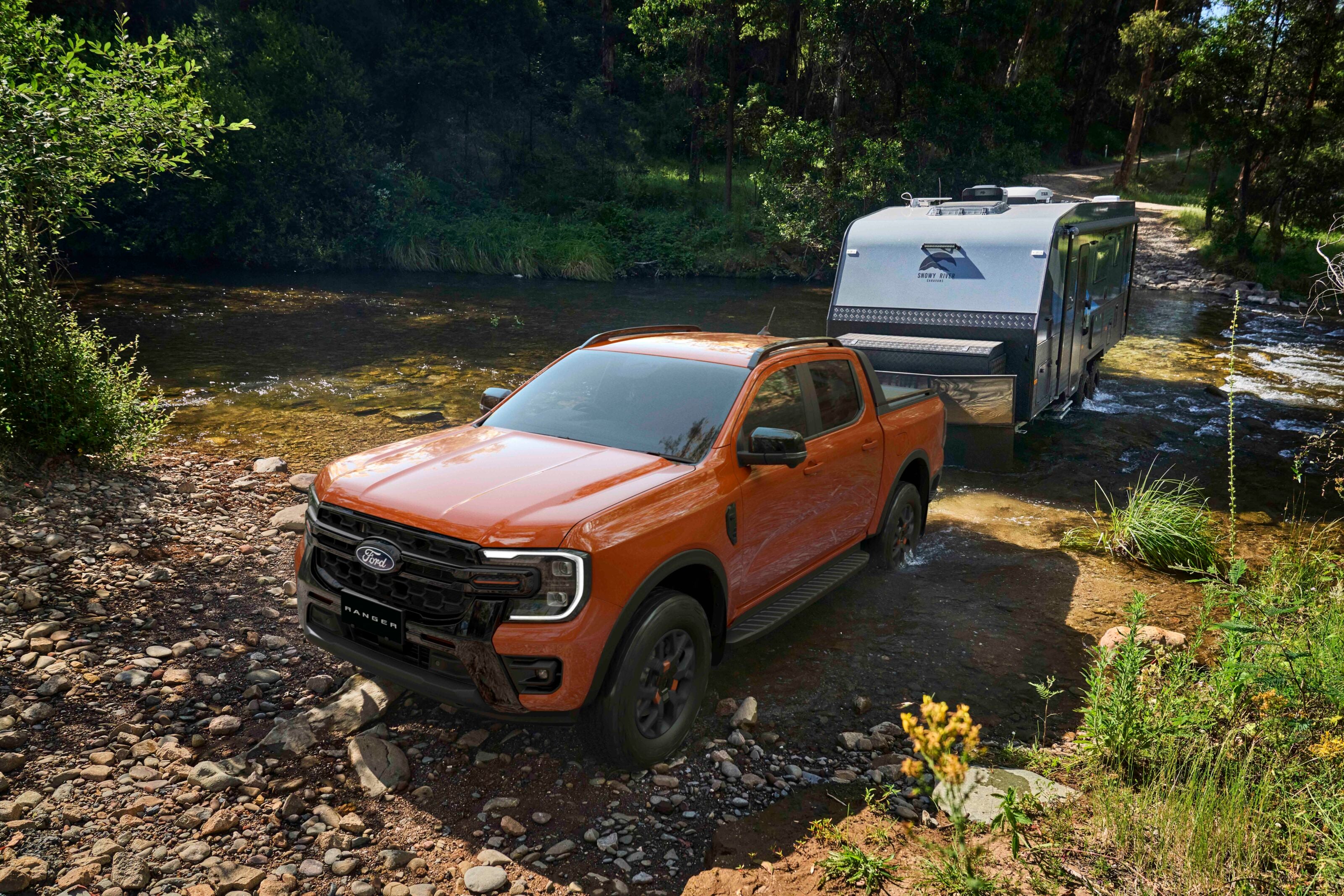
The Ranger continues to be offered in cab-chassis and ute variants, in a wide range of specifications to suit everyone from the tradesman to the outback tourer.
The line-up starts at XL and runs through to the Raptor model, which, along with the Ranger PHEV, remains one of the only variants to be powered by a petrol-fuelled engine. The Black Edition is back as a value-packed model with the four-cylinder or V6 engine, while the V6-powered Tremor joins the regular line-up for a limited time.
The new nameplate in the Ranger line-up is the Wolftrak. Wolftrak is a double-cab-only variant that slots in between the Ranger XLT and Tremor models, and offers a premium look at a lower price than Wildtrak or Tremor. Offered only in Traction Green, a colour taken from the Super Duty range, it adds bright lime highlights, gloss-black 17-inch alloy wheels and honeycomb grille, HD Terrain Management, sports bar, auxiliary switch bank, vinyl seat trim, front tow hooks and the Pro Trailer Backup Assist system.
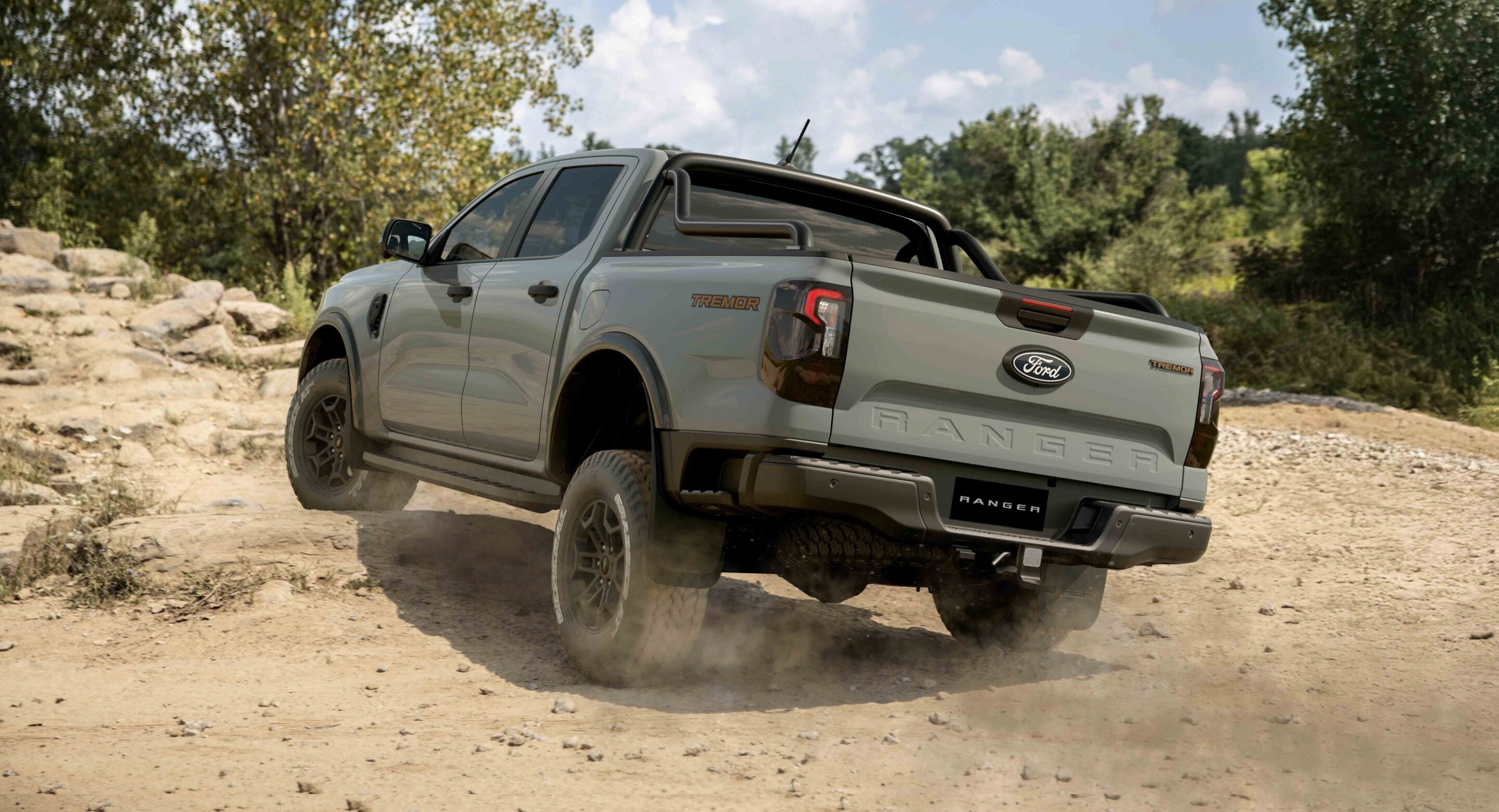
The whole Ranger line-up gets a styling refresh with darker colours on grilles and other trims, plus neon accents on wheels and other details. The Tremor is more substantial than just cosmetics, adding General Grabber all-terrain tyres and Bilstein-equipped suspension for increased ride height and improved handling.
| 2026.5 Ranger variant | Engine | Price |
|---|---|---|
| XL Single Cab Chassis | 2.0L Turbo Diesel | $45,600 |
| XL Single Cab Chassis | 3.0L V6 Diesel | $52,100 |
| XL Super Cab Chassis | 2.0L Turbo Diesel | $48,100 |
| XL Super Cab Chassis | 3.0L V6 Diesel | $54,500 |
| XL Double Cab Chassis | 2.0L Turbo Diesel | $50,000 |
| XL Double Cab Chassis | 3.0L V6 Diesel | $56,500 |
| XL Double Cab Pickup | 2.0L Turbo Diesel | $51,400 |
| XL Double Cab Pickup | 3.0L V6 Diesel | $57,900 |
| XLS Double Cab Chassis | 3.0L V6 Diesel | $58,450 |
| Black Edition Double Cab Pickup | 2.0L Turbo Diesel | $53,490 |
| Black Edition Double Cab Pickup | 3.0L V6 Diesel | $59,990 |
| XLT Super Cab Pickup | 3.0L V6 Diesel | $63,790 |
| XLT Double Cab Chassis | 3.0L V6 Diesel | $66,590 |
| XLT Double Cab Pickup | 3.0L V6 Diesel | $67,990 |
| Wolftrak Double Cab Pickup | 3.0L V6 Diesel | $70,990 |
| Tremor Double Cab Pickup | 3.0L V6 Diesel | $75,090 |
| Wildtrak Double Cab Pickup | 3.0L V6 Diesel | $75,090 |
| Platinum Double Cab Pickup | 3.0L V6 Diesel | $80,890 |
| Raptor Double Cab Pickup | 3.0L V6 EcoBoost | $90,690 |
Everest adds V6, new entry model
The Ranger’s wagon sibling, the Everest, also benefits from mid-year changes.
Like the ute, the Everest loses the bi-turbo diesel engine and gets the updated single-turbo version in its place. Also mirroring the Ranger is the addition of the 3.0-litre V6 diesel across the Everest range, while all variants are now backed by the 10-speed automatic transmission and 4×4.
The big change to the Everest line-up is that the previous Ambiente and Trend entry-level models have been replaced with the Active model. The Everest Active joins the Sport, Tremor and Platinum models in the 4×4 wagon range. The Tremor and Platinum are only offered with the V6 engine, while the lower grades give you a choice of diesel engines.
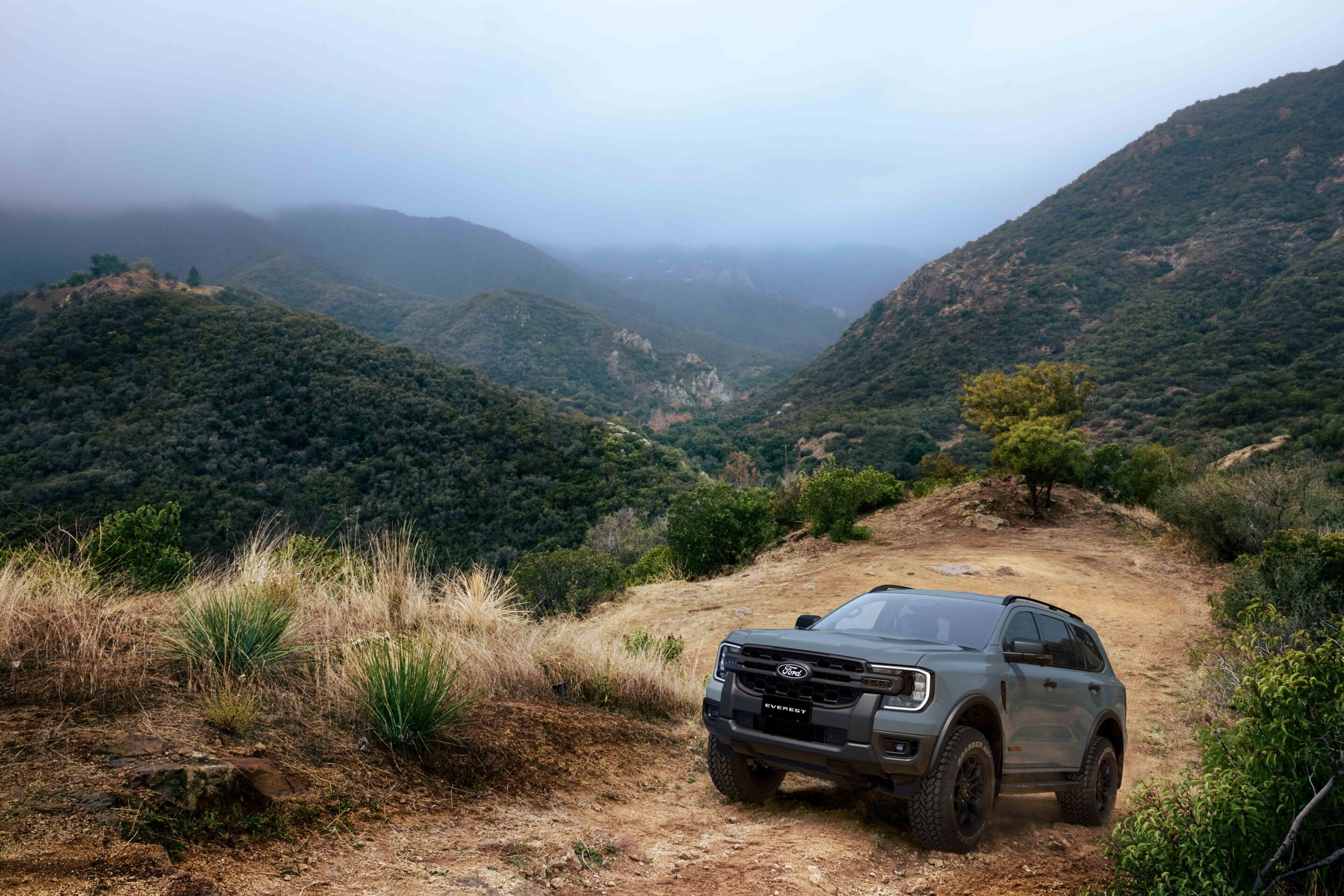
You can pick the new Ford models by the darker grille and exterior details in lieu of chrome but once you get inside, it’s a pretty familiar affair. One notable change is that the 10-inch multimedia screen previously fitted to lower grades is gone, and all Ranger and Everest variants now get the 12-inch screen.
The cabin remains spacious, comfortable and functional, all the attributes that have made the Ford T6 duo favourites of ours, as well as of the buying public.
| 2026.5 Everest variant | Engine | Price |
|---|---|---|
| Active | 2.0L Turbo Diesel | $58,990 |
| Active | 3.0L V6 Diesel | $66,990 |
| Sport | 2.0L Turbo Diesel | $68,990 |
| Sport | 3.0L V6 Diesel | $76,990 |
| Tremor | 3.0L V6 Diesel | $79,990 |
| Platinum | 3.0L V6 Diesel | $83,490 |
Denza has announced its first major over-the-air software update for the B5 and B8 in Australia, introducing a range of towing, off-road, safety and convenience changes delivered digitally to owners.
The update follows feedback from Australian customers and work from a local engineering team tuning both models for local conditions.
“We are listening to customer feedback, not only through our local engineering team but also through real-world experiences shared by owners driving on Australian roads and tracks,” said Mark Harland, Denza Australia Chief Operating Officer. “Whether it’s improved towing capability, greater off-road confidence or enhanced convenience and safety features, these updates are designed to deliver meaningful improvements that customers will notice in everyday driving.”
Towing functionality has been expanded across both vehicles. The B5 gains cruise control while towing, a dedicated towing mode switch, and trailer weight selection that allows the vehicle to adjust performance parameters for stability. The B8 adds cruise control in towing mode and dynamic range estimation for more realistic range calculations under load.
Off-road performance has also been revised following testing at Beer O’Clock Hill earlier this year. Data from that testing informed updates to the Dual Mode Off-Road platform, including revised traction control calibration designed to better coordinate wheel speed and motor torque. The changes are aimed at improving control on low-grip surfaces and in sandy conditions.
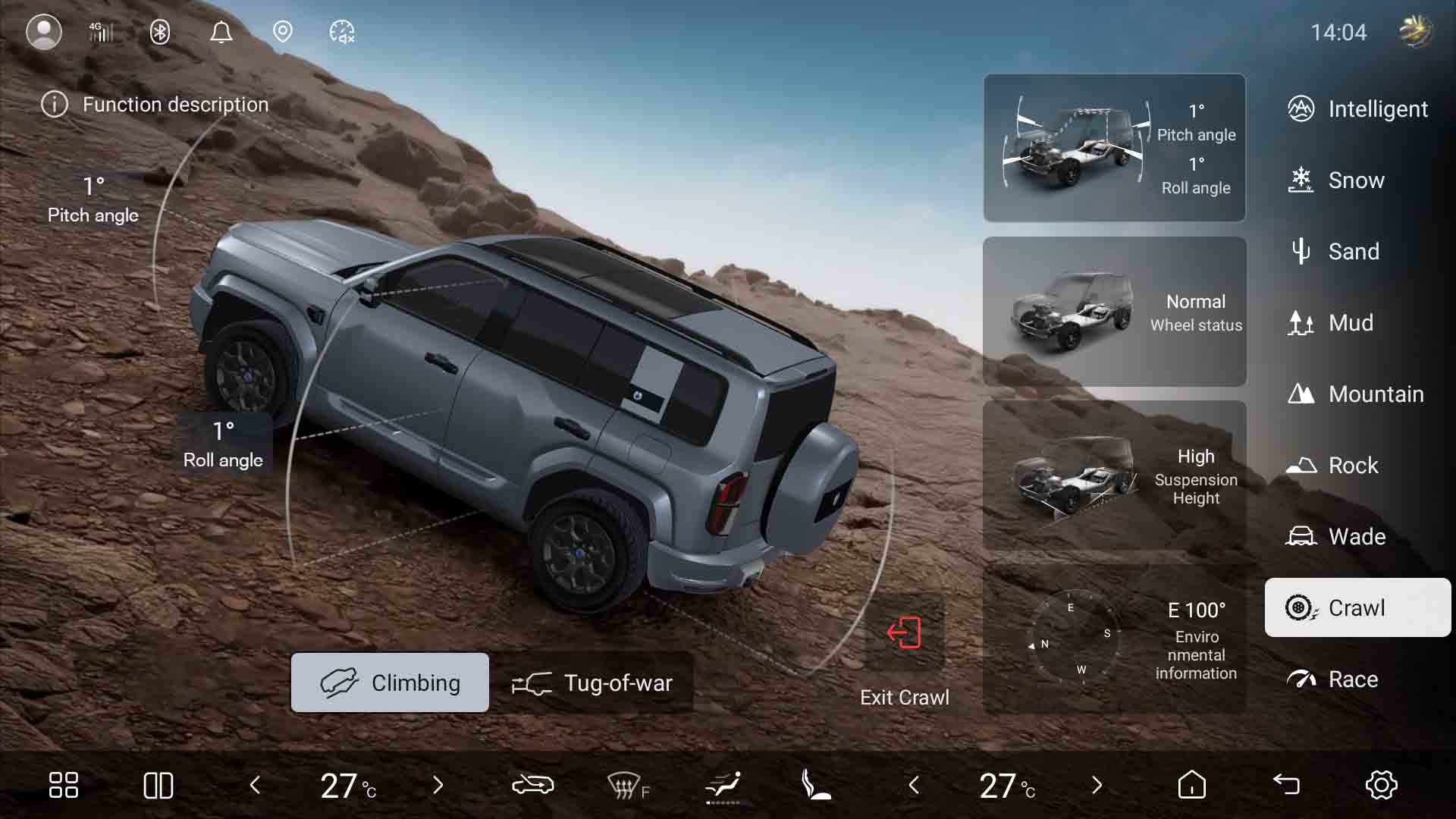
Inside the cabin, both models gain Head-Up Display functionality that now shows turn signals, along with a driver password lock for added security. The B8 also receives updated anti-jam resistance for its second- and third-row folding seats, designed to prevent movement if resistance is detected during operation.
Version 1.1.0 is rolling out to Australian owners now as an over-the-air download, with no dealership visit required.
Good lighting can completely change how usable a camping or touring setup feels once the sun goes down.
Whether you’re cooking under the awning, digging through drawers for recovery gear, or setting up camp late in the evening, having reliable lighting in the right spots makes life a lot easier. It’s one of those upgrades that doesn’t seem essential at first but quickly becomes something you rely on every trip.
That’s why LED strip lighting has become so common across modern 4WD builds. They’re compact, low-draw, easy to install, and work well in everything from canopy setups through to wagons, ute trays, and camper trailers. Because they can be cut to length and mounted almost anywhere, they also suit both simple weekend touring rigs and more complex full-time setups without taking up usable space.
Options like the Tuff Terrain LED Strip Light range (↗) are designed specifically for touring setups, with compact 30cm, versatile 60cm and larger 80cm sizes available to suit everything from drawers and canopies through to full awning setups.
Benefits of LED strip lighting for touring
Unlike standalone camp lights or torches, strip lighting becomes part of the vehicle setup itself.
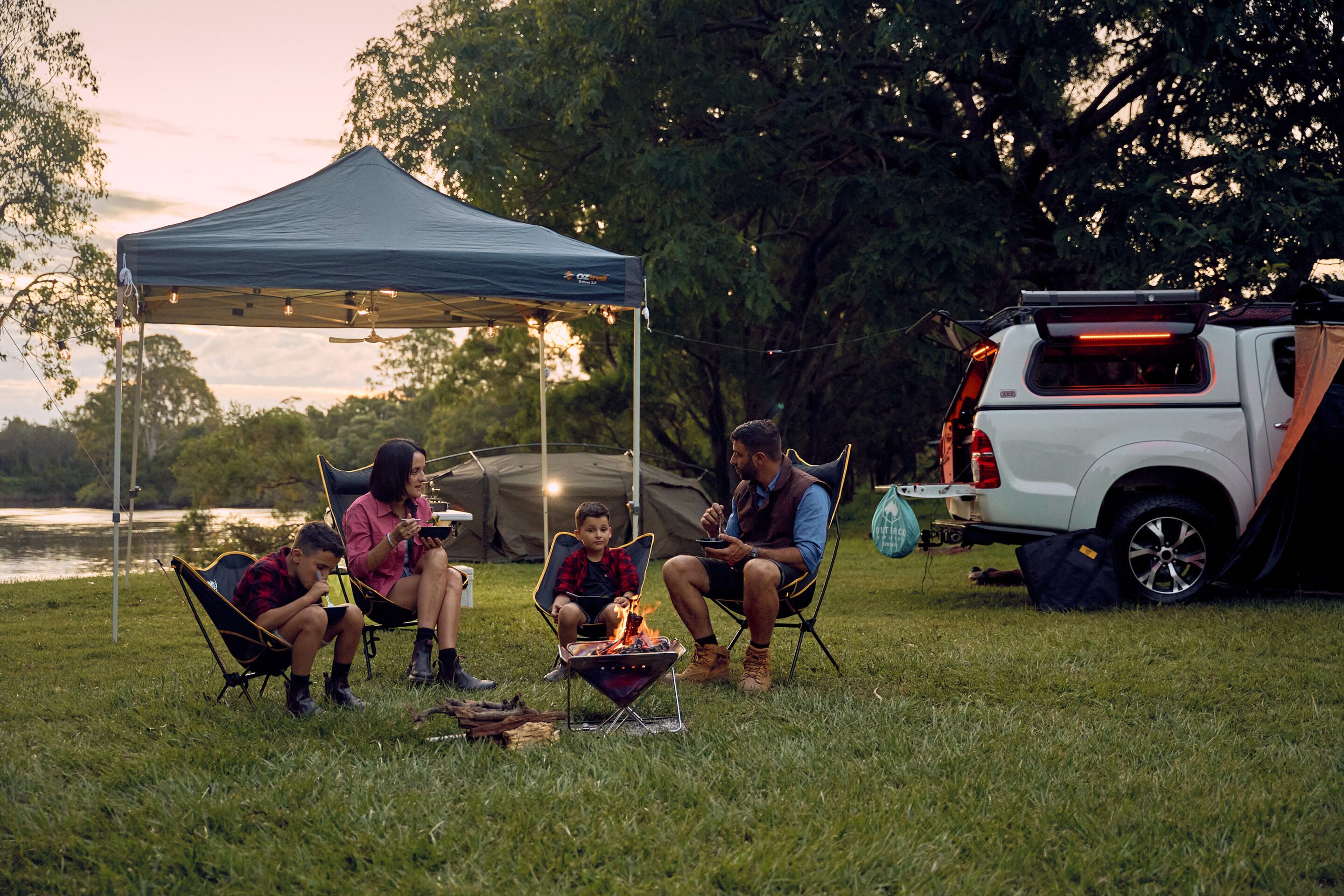
Mounted properly, they provide clean, even lighting exactly where you need it without taking up valuable space or needing constant repositioning. Popular mounting locations include:
• Under awnings
• Inside canopies
• Drawer systems
• Rear tailgates
• Roof racks
• Toolboxes and ute trays
The other big advantage is power efficiency. Most quality 12V LED strip lights draw very little power, making them ideal for dual-battery and lithium touring setups where battery management matters on longer trips. Even running them for extended periods at camp typically has minimal impact compared to traditional lighting options, which helps when you’re off-grid for multiple nights.
Types of 12V LED strip lights for 4WD setups
Not all LED strip lights are the same, and choosing the right type makes a big difference in reliability and performance.
For most touring builds, dual-colour waterproof strips offer the best balance of flexibility and durability. Common types include:
• Single-colour strips: basic white or amber lighting for general use
• Dual-colour strips: Switch between white (task lighting) and amber (camp lighting)
• Waterproof sealed strips: Epoxy-coated for dust and water resistance
• Flexible adhesive strips: Easiest for canopy and drawer installs
• High-output strips: Brighter setups for large awnings or work areas
White vs amber LED lighting
One thing that’s become increasingly popular in recent years is dual-colour lighting.
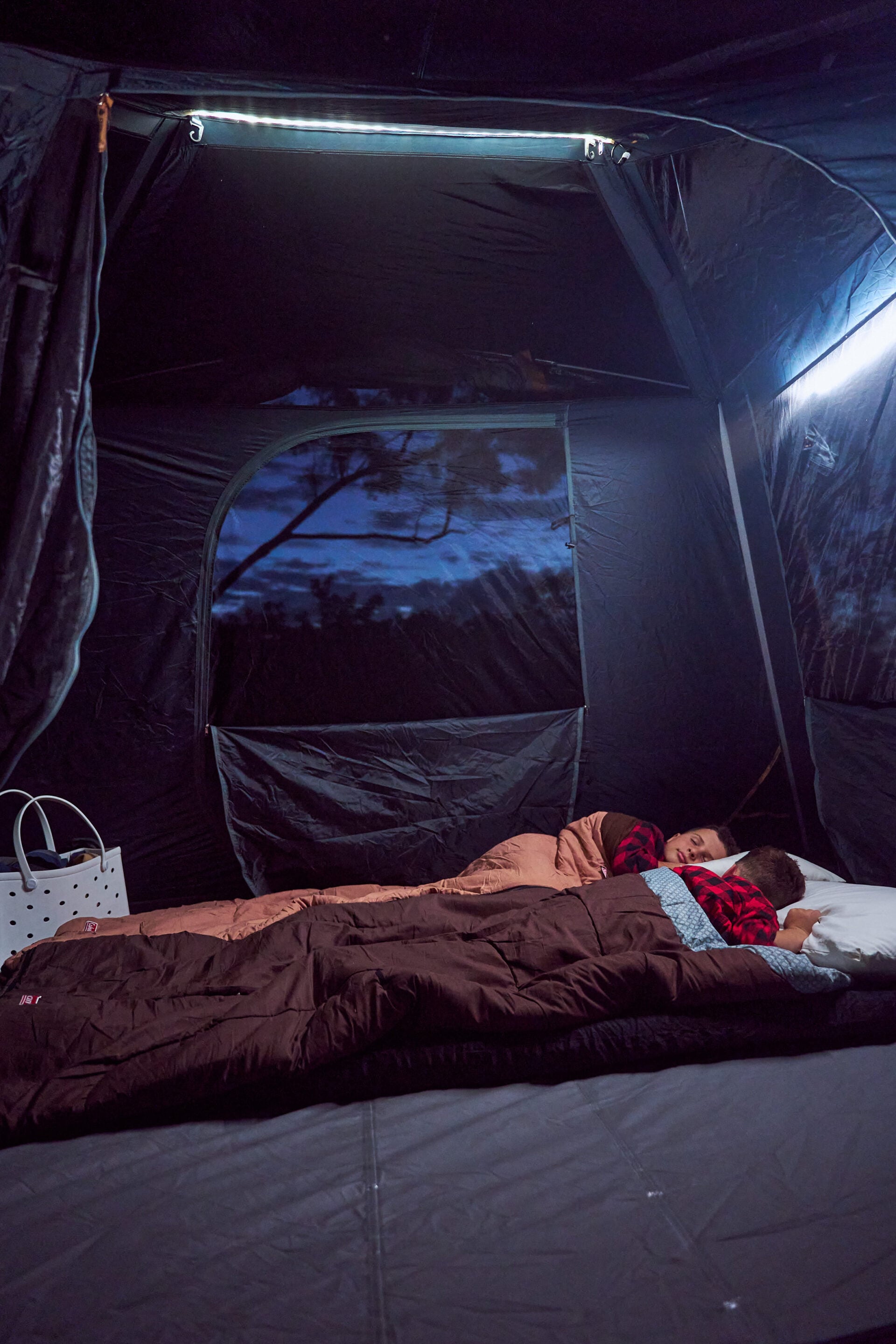
Bright white LEDs are ideal for cooking, repairs, and general tasks where you need maximum visibility and accuracy. On the other hand, amber lighting creates a softer camp atmosphere and is generally easier on the eyes at night.
Amber also tends to attract fewer insects, which makes a noticeable difference in warmer or more humid environments. A lot of touring setups now run dual-colour strips so they can switch between the two depending on the situation.
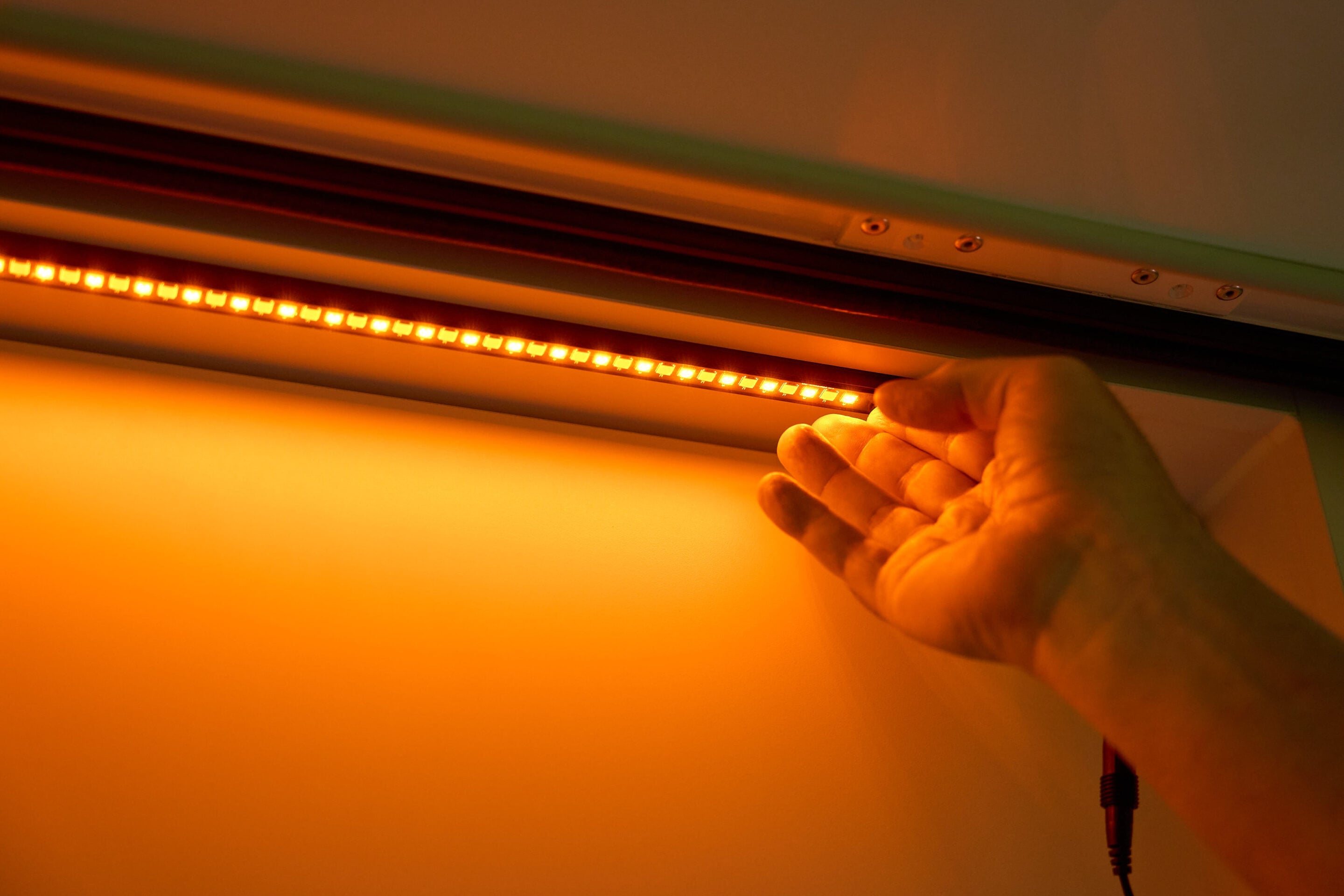
The Tuff Terrain LED Strip Lights (↗) feature dimmable white and orange lighting modes, allowing you to switch between bright task lighting and softer ambient camp lighting depending on the environment and time of night. These strips are particularly handy because they can be tucked neatly into awnings, canopies, and drawer systems without getting in the way, while still giving you flexibility for different camp scenarios.
Best awning LED strip lighting
If you only fit one strip light to your setup, under the awning is probably the best place to start. It’s the most-used lighting zone at camp and often where you spend the most time in the evenings.
A good awning light spreads light evenly across the whole campsite rather than creating the harsh glare you often get from spot-style camp lights. This makes it easier to cook, sit, and move around without constantly being blinded or casting heavy shadows. It also keeps the lighting fixed and ready to go every time you pull into camp, removing the need to set up separate lights.
For most setups, a slim 60cm or 90cm strip works well mounted along the underside of the awning housing or frame. Longer runs can also be used on larger awnings, but the key is even distribution rather than raw brightness.
Canopy and drawer LED lighting solutions
One of the most useful additions on any touring build is proper canopy lighting.
Once you’ve used it, it’s hard to go back to fumbling around with torches or headlamps, especially when you’re trying to find small items at night. LED strip lights work particularly well:
• Along canopy roof rails
• Inside gullwing doors
• Under drawer tops
• Beside fridge slides
• Inside storage compartments
Smaller 12V strip light options are ideal for these tighter spaces where you want usable light without bulky fittings. They help eliminate dark corners and make it much easier to stay organised, particularly on longer trips where gear gets moved around regularly. They also improve safety when accessing tools or recovery equipment in low-light conditions.
Easy DIY LED strip light installation
Most strip light setups are fairly straightforward to install and can usually be done at home with basic tools.
They’re generally low-complexity compared to other electrical mods, which is part of why they’re so popular in DIY touring builds. The general process is:
• Measure the mounting area
• Clean the surface properly
• Mount the strip securely
• Run wiring back to a switch panel or power source
• Test both lighting modes
Many touring builds now integrate strip lighting into switch panels or battery management systems for a cleaner overall setup. This not only improves usability but also reduces visible wiring and makes the install look more factory-finished once complete.
Durable off-road LED strip lighting
Anything permanently mounted to a 4WD needs to survive dust, vibration, corrugations, and wet weather.
Cheap lighting kits often struggle once they’ve spent time on rough tracks or been exposed to the elements, with issues like peeling adhesive, moisture ingress, or inconsistent output.
That’s why sealed epoxy-style strip lights are worth considering for touring vehicles, particularly if the setup sees regular off-road use. These are better protected against water and dust ingress and tend to hold up more reliably over time when mounted externally or in high-exposure areas.
The newer generation of 12V camping LED strip lights (↗) is designed specifically for harsh touring conditions while still keeping power draw low for extended off-grid trips. They’re also more resistant to flex and vibration, which is important in canopies, tailgates, and awning mounts that constantly move and shake on rough terrain.
What to look for when buying LED strip lights
If you’re choosing LED strip lights for a 4WD or camping setup, a few key specs make a big difference in real-world use.
Choosing the right strip upfront avoids issues like dim ends, peeling mounts, or premature failure on corrugated roads. Important factors include:
• IP rating: IP65 minimum for camping use, IP67–IP68 for exposed mounting
• Brightness: Higher lumens for awnings, moderate for canopy/drawer use
• Power draw: Important for dual-battery and lithium setups
• Mounting method: Adhesive-backed vs screw-mounted channels
• Voltage drop: Longer runs may need thicker wiring or multiple feed points
• Cut-and-join capability: Useful for custom canopy and drawer layouts
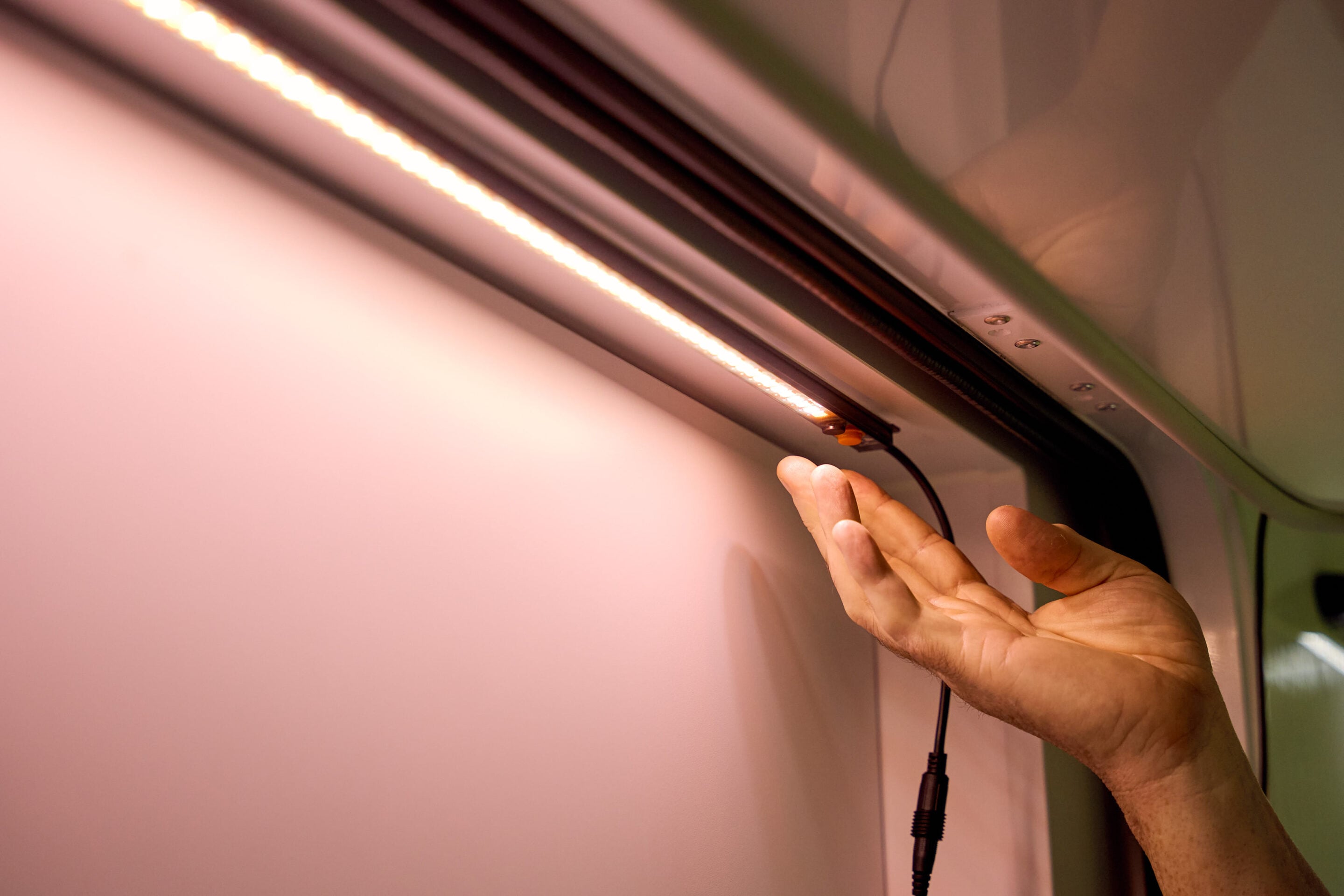
LED strip lights vs traditional camp lighting
LED strip lighting has largely replaced portable camp lights in many touring setups due to practicality. This makes them more efficient for both short trips and extended off-grid touring. Compared to traditional lights:
• No setup or pack-down required
• More consistent lighting coverage
• Lower power consumption
• Cleaner integration into vehicle builds
Final thoughts on LED strip lighting
LED strip lighting (↗) is one of those upgrades that seems simple but genuinely improves day-to-day usability around camp.
From awning lighting through to canopy and drawer setups, having reliable lighting where you actually use your gear makes a big difference on any trip, especially once you’re off-grid and relying on your own setup.
Dual-colour lighting is also worth considering for anyone spending extended time camping, particularly for the softer amber light around camp at night. It improves comfort, reduces glare, and makes evenings more relaxed without sacrificing functionality when you need proper task lighting.
Compact, low-draw 12V LED strip light setups are well suited to anyone planning a canopy build or upgrading their touring setup for camping and 4WD use, especially where space efficiency, reliability, and simple installation are priorities.
FAQs
Q: Are LED strip lights good for camping setups?
A: Yes. They’re ideal for camping and 4WD setups because they provide even, low-power lighting that can be mounted permanently in key areas like awnings, canopies, and drawers.
Q: How much power do 12V LED strip lights use?
A: Most quality 12V LED strip lights use very little power, making them suitable for dual-battery or lithium setups. Even extended use at camp typically has a low impact on battery capacity.
Q: Can LED strip lights run off a dual-battery system?
A: Yes. They’re commonly run off dual-battery or auxiliary lithium systems and are well suited to long off-grid trips due to their low draw.
Q: What should I look for in LED strip lights for 4WD use?
A: Look for a good IP rating (IP65+), solid adhesive or mounting system, appropriate brightness for your setup, and low voltage drop for longer runs.
Q: What’s better for camping: white or amber LED lighting?
A: White light is best for tasks like cooking and repairs, while amber light is softer, reduces glare, and attracts fewer insects. Many setups use dual-colour strips for flexibility.
Q: Where is the best place to install LED strip lights in a 4WD?
A: Common locations include under awnings, inside canopies, drawer systems, tailgates, roof racks, and ute trays. Awning lighting is often considered the most useful starting point.
Q: Are LED strip lights easy to install?
A: Yes. Most setups are DIY-friendly, typically involving surface mounting, basic wiring to a switch or power source, and minimal tools.
Q: Do LED strip lights hold up off-road?
A: Quality sealed or epoxy-style strips are designed for dust, vibration, and weather exposure, making them suitable for corrugated tracks and long-term touring use.
Aside from the couple of comparison tests it has been part of, our Toyota HiLux has been sitting idle as we planned what we wanted to do with it and what gear we’d be fitting.
As one of the most popular 4×4 vehicles in Australia, the aftermarket accessories industry gets behind the Toyota ute as soon as any new model is introduced, and this generation HiLux is no exception.
There’s plenty of new product coming to market for the 2026 HiLux, and we couldn’t wait to get stuck into the catalogues. Starting at the front of the vehicle, we were pleased to welcome ARB to our build for the first time since we started running project vehicles a few years ago. ARB has established itself as one of the premier manufacturers of quality 4×4 accessories, and the brand is highly regarded wherever we travel.
JUMP AHEAD
- Front-end protection and ARB bull bar
- Integrated winch and recovery system
- Performance driving lighting package
- Underbody protection and off-road armour
- How much?
Front-end protection and ARB bull bar
Renowned globally for its bull bars and vehicle protection gear, it was only fitting that ARB would kit out the front of our ‘Lux with a comprehensive protection, recovery and lighting package.
Starting with the front end, the team at ARB’s HQ in Kilsyth, Victoria fitted a Summit MkII steel bullbar, a Bushranger Covert winch, Intensity IQ driving lights and under-vehicle protection (UVP) plates to our HiLux.
Over the past half-century, bull bars have been one of ARB’s signature products, and the company has been at the forefront of vehicle protection development as new-vehicle design and mandated safety systems have rapidly progressed. While modern vehicles present ongoing challenges for engineers and designers, ARB has maintained its leading position in the industry.
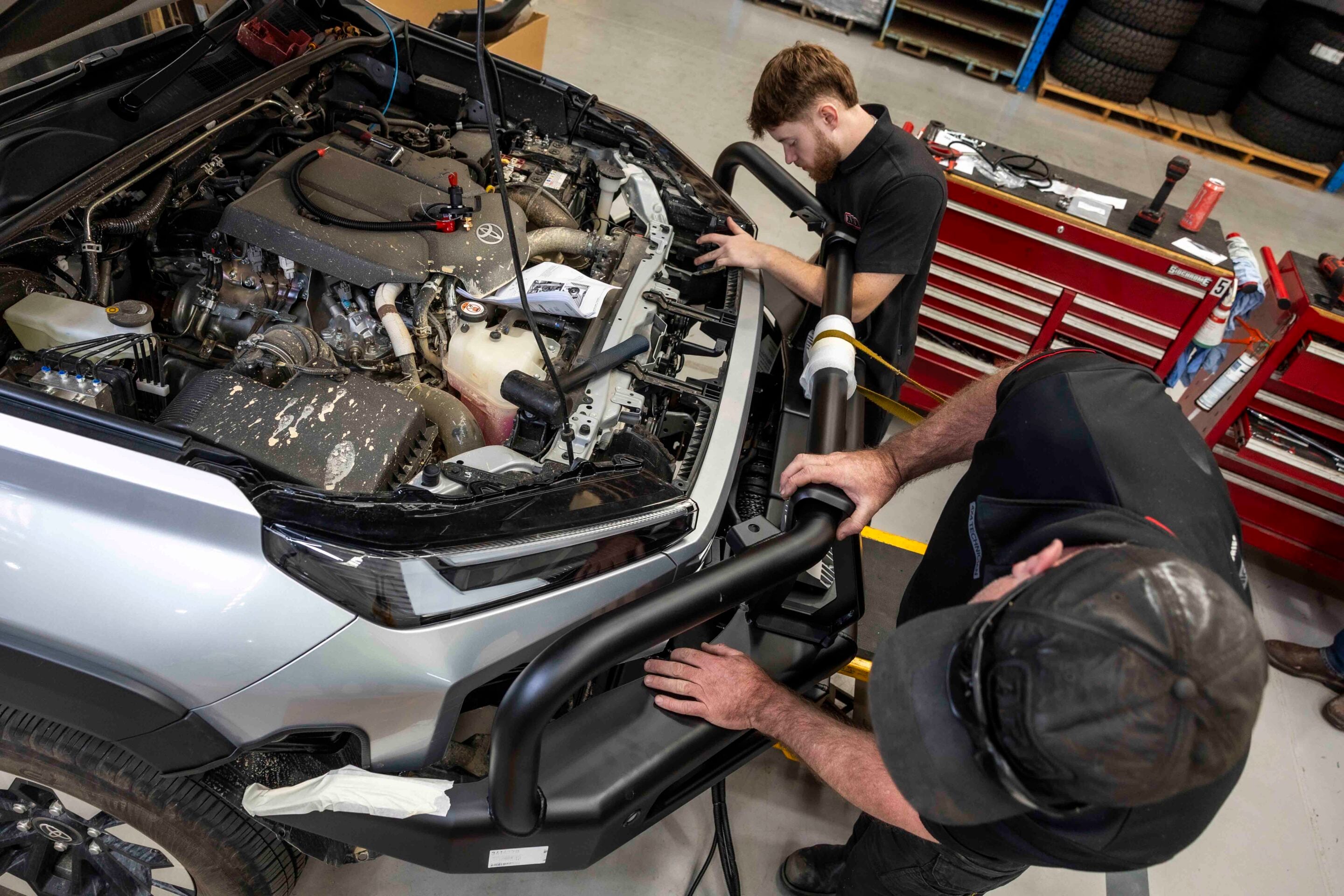
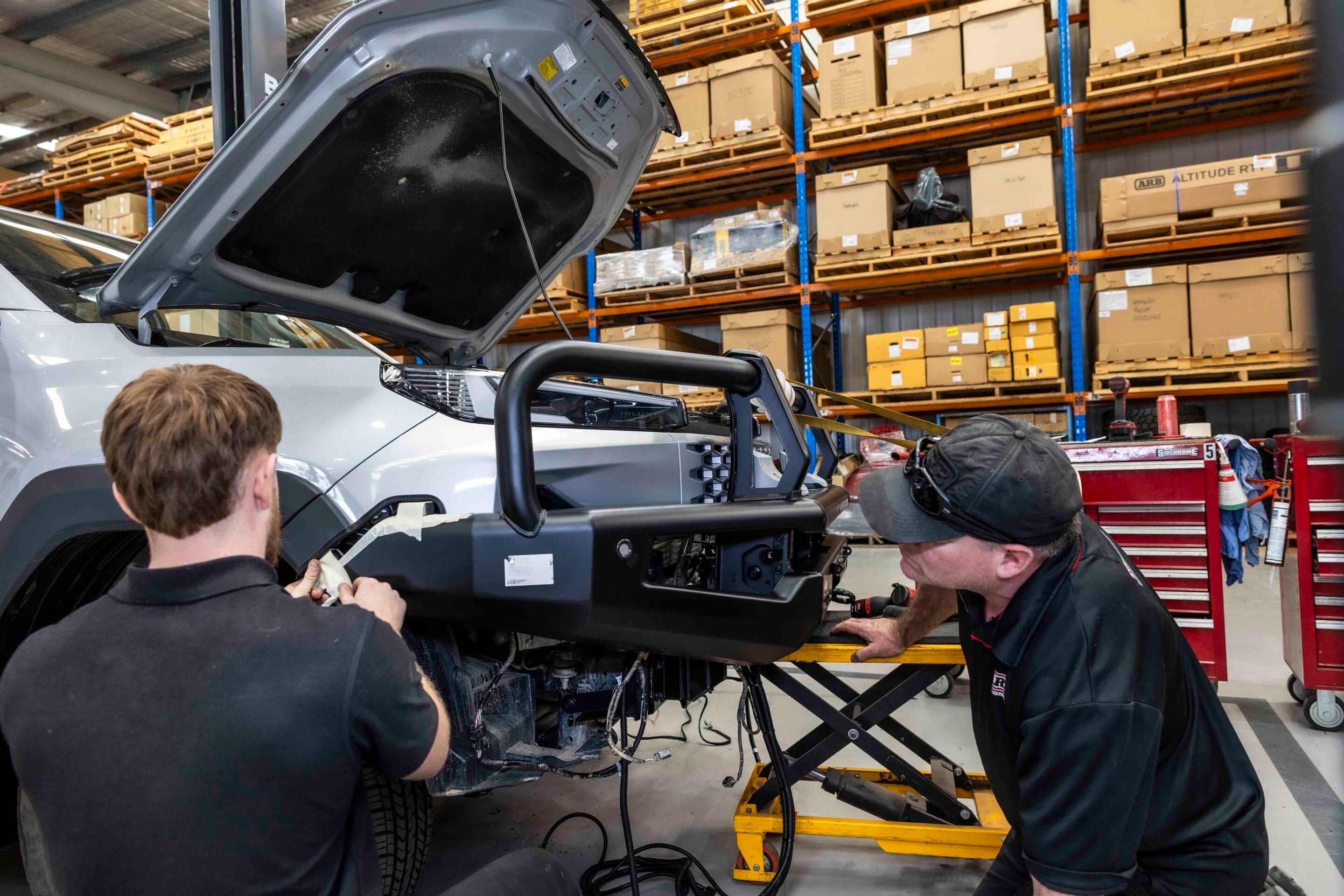
The Summit MkII bar is no exception. Designed and made to maintain all of the electronic and passive safety systems of the OE vehicle, the mounting system retains the vehicle’s crush points so that all ADAS systems work as intended.
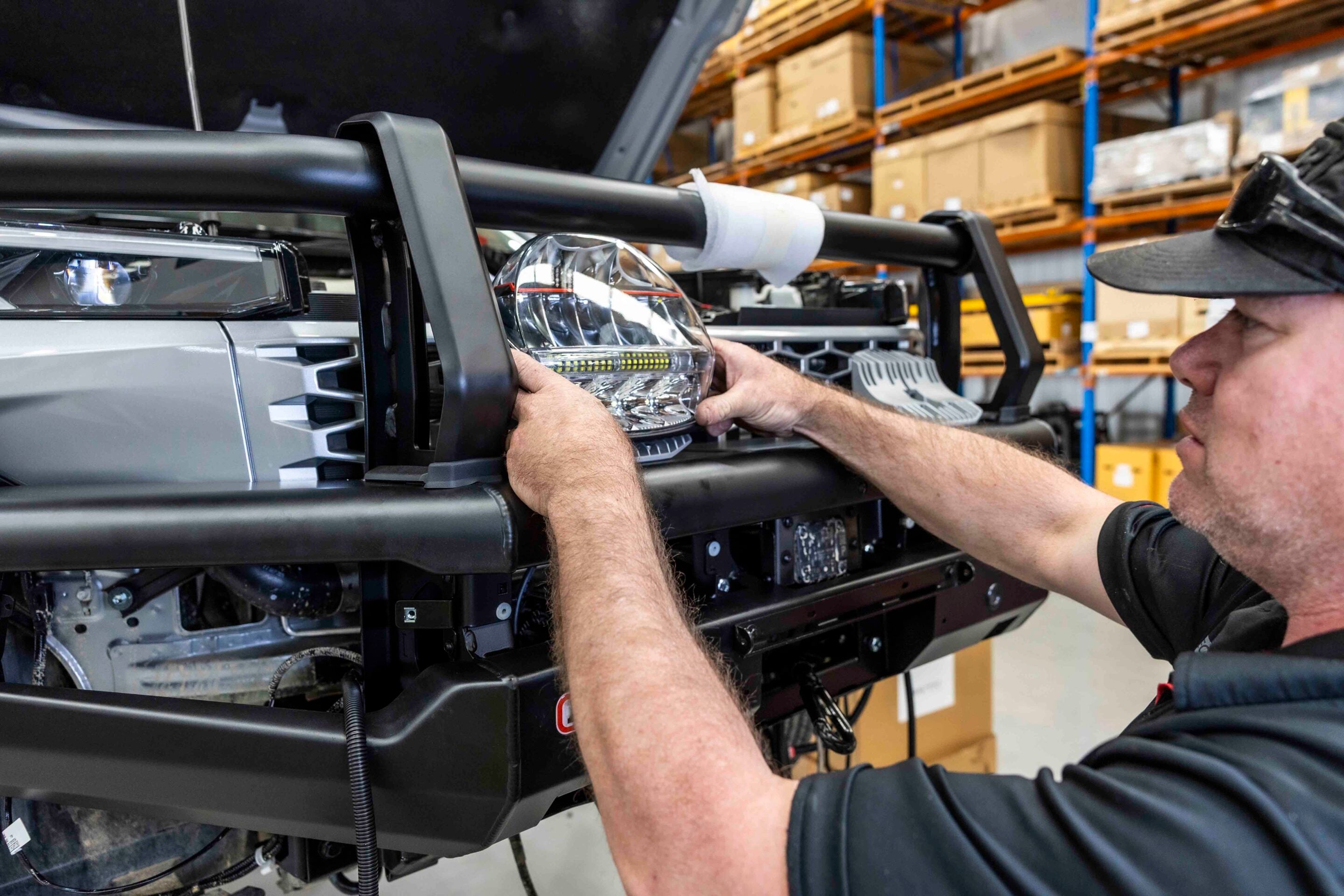
For functionality, the Summit bar is winch-compatible, includes provisions for factory parking and radar sensors, and offers mounting points for driving lights, along with integrated LED foglights. These are ARB units and should offer a step up in performance over the OE foggies your vehicle may have had.
Lastly, and for many users most importantly, ARB bars are designed to look good while protecting the vehicle and its occupants without compromising appearance. Rounded edges, quality finishes, an infill grille, LED lighting and integrated indicators all add to the aesthetic rather than detract from it. It’s a premium product, and I’ve got to say the front end of our HiLux looks a whole lot better now with the Summit bar and ARB kit fitted.
Integrated winch and recovery system
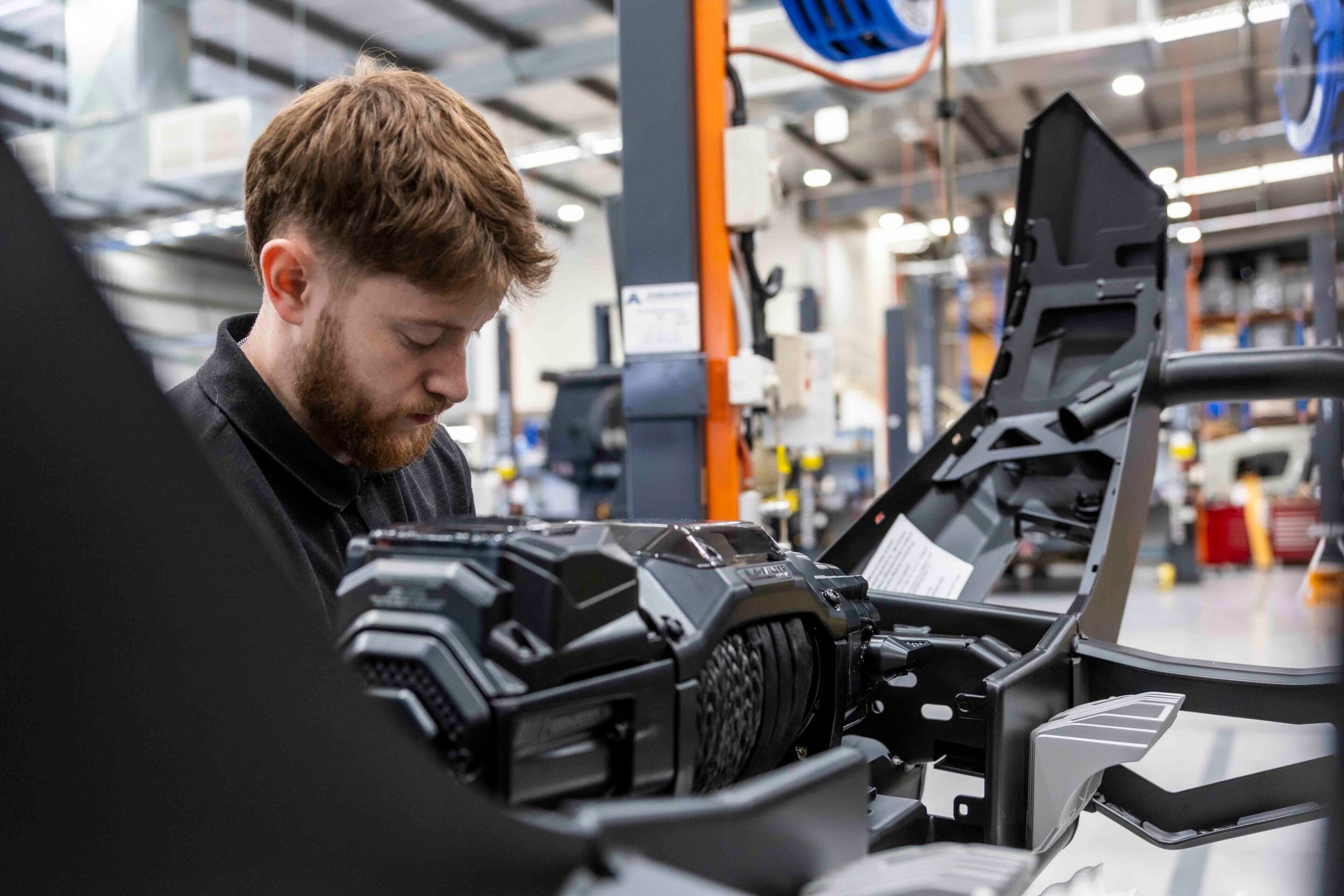
For those times when we slip into a rut, underestimate a bog hole or just need to pull a mate out of trouble, the ARB team fitted a Bushranger Covert 10S electric winch to the Summit bar before the assembly was bolted onto the HiLux.
The Bushranger Covert 10S is a premium winch without the premium price tag. It features Albright solenoids neatly tucked away inside the winch housing, so there’s no external control box. The 5.3hp series-wound 12V motor drives a four-stage gearbox with 17:1 gearing for smooth control and dependable braking.
The zero-drag braking system uses a gearbox-mounted brake that provides 100 per cent load holding, along with the ability to power-unspool under no load without damaging the winch. The Covert comes with synthetic rope, a hook, hawse fairlead, wireless and wired hand controllers, and a 500A winch power isolator.
As mentioned, the ARB technicians fitted the winch into the bar before mounting it to the vehicle. They ‘clocked’ the gearbox to ensure the clutch handle was easy to access through the grille, installed the isolator and control gear in the engine bay, and finished it off with a flip-up number plate bracket.
Performance driving lighting package
A pair of ARB Intensity IQ driving lights are mounted to the nicely curved Summit bar. These are ARB’s premium lights, and they offer multiple beam patterns to suit a range of driving conditions.
The lights have four main modes – Super Spot, Spot, Mid-range and Flood – and you can tailor them using the IQ phone app to suit your needs. Super Spot uses four Cree XP-P LEDs to deliver the furthest light projection. Spot uses three XP-P LEDs to provide a broader yet still focused beam. Mid-range uses four Cree XM-L3 LEDs to strike a balance between distance and spread, while the Flood beam is made up of 18 Cree XT-E LEDs to provide strong peripheral illumination. As mentioned, you can mix and match the settings to find what works best for you.
We haven’t had a chance to properly test the lights yet, but we’re looking forward to getting the HiLux out on some long, dark tracks to see how they perform.
Underbody protection and off-road armour
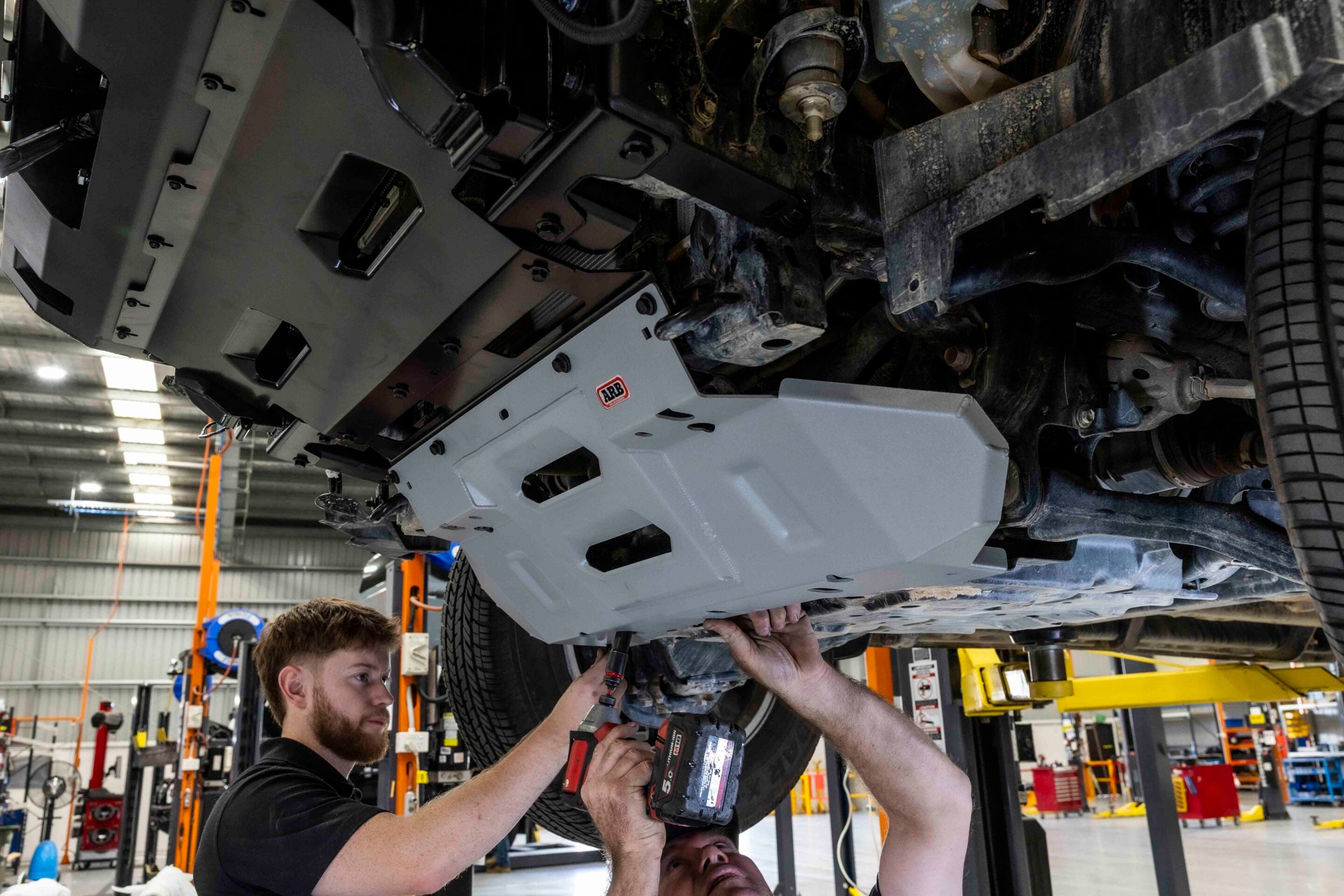
The last piece of ARB kit fitted was the UVP, or under-vehicle protection.
ARB’s UVP is made from stamped and powder-coated steel to ensure a good fit and long-term durability. It replaces the plastic OE under-tray with a stronger steel setup to properly protect the engine sump and other vital components when you’re bouncing over rocks, logs and other obstacles off road.
The front panel of the UVP is vented to maintain airflow to the engine bay, while notches and access holes in the panels allow you to get to components like the sump plug. It’s reassuring to know there’s something more substantial than a flimsy plastic cover shielding the underside of the HiLux.
It was a full-day job for two ARB technicians to carry out the installation, and the result is a great-looking front end with lighting, recovery and protection components that make driving in rough terrain more secure. Now to get out there and get it dirty!
How much?
- ARB Summit MkII bull bar (↗): $4880 fitted
- ARB Intensity IQ driving lights (↗): $2474 fitted
- Bushranger Covert 10S winch (↗): $2279 fitted
- ARB under-vehicle protection (↗): $970 fitted