An off-road trip to the Sandhurst Reservoir in Bendigo could’ve taken a seriously nasty turn, as a young P-Plater bit off way more than he could chew.
A video uploaded to the Edge247 Recover & Salvage Facebook and TikTok pages has proven that some vehicles should not venture away from tarmac. Especially when the tracks are seriously hardcore and the vehicle in question is a Subaru Forester.
According to the video, the 19-year-old took the Subaru Forester for an off-road adventure on Australia Day – on private property, mind you – before getting hung up on a track that even modified 4x4s would struggle on.
@edge247.recovery This is one place you shouldn’t take a #subaru #forester , if you do you’ll need #edge247recovery #tow #winch #recovery #offroad #4×4 #4wd247 #fyp #fypage #extreme #needhelp #mountain #smurf #landcruiser ♬ original sound – IronBird Collectibles
In fact, the Edge247 Recover & Salvage’s own rescue rig – a blue 80 Series LandCruiser aptly dubbed ‘Smurf – could be seen struggling at times while descending the same track.
Caught between a rock and a hard place, the driver soon realised there was no way to progress any further and he legged it to the highway to call for help. ‘Smurf’ then winched the Forester to flat ground, before aiding the wagon on its 14km journey back to the entry point.
Always remember, incidents like this can quickly become dangerous, so just don’t do it!
Credit: Edge247 Recovery & Salvage
The Ford Ranger has started the New Year just as it finished 2024, comfortably atop the 4×4 sales charts.
The Blue Oval registered a total of 3993 sales for its Ranger 4×4 variants, giving it a comprehensive lead on the sales charts ahead of the Prado (2847) and HiLux (2794). It was then a tight tussle between the Everest (1679) and D-MAX (1677) for the remaining spots in the top five on the 4×4 charts.
The Toyota Prado continues to be Australia’s most desired SUV, as Toyota continues to fulfil orders of the relatively new vehicle. A total of 2847 sales were registered for the large SUV for the month, which places it well ahead of both the Ford Everest (1679 sales) and Isuzu MU-X (786 sales). In the Upper Large SUV segment, the Patrol (621 sales) outsold the LC300 (413 sales).
Despite a new Cannon launching imminently, GWM’s value ute remains the best of the budget-friendly buys. A total of 625 Cannons arrived in new driveways last month, which is more than both LDV’s T60 (533 sales) and SsangYong’s Musso (144). At the opposite end of the market, the Chevrolet Silverado (HD included; 285 sales) outsold both the F-150 (230 sales) and RAM 1500 (212 sales).
The sales data shows that overall numbers are down in January 2025 compared to the same month last year. A total of 86,804 sales were registered last month, which is 2978 fewer than January 2024. The LCV segment is reflective of this slow start overall in 2025, with 18,448 LCV variants registered in January. A total of 20,601 LCVs were sold in January 2024, representing a decline of 10.5 per cent. Digging a bit deeper reveals that sales in the PU/CC 4×4 segment also dipped compared to the start of 2024 by a substantial 11.7 per cent – 14,103 sales versus 15,966.
VFACTs data from January 2025 also indicates that buyers have slightly shifted away from the Passenger (-3.6 per cent compared to January 2024) and LCV (-1.7 per cent) segments, preferring instead to opt for an SUV (+5.3 per cent).
Also interesting is the growing appetite for Hybrid and PHEV vehicles. Comparing January 2024 to January 2025 shows a massive spike in sales for both Hybrid from 9791 to 14,836 (+51.5 per cent) and, on a smaller scale, PHEV, from 1012 to 1908 (+88.5 per cent). At the opposite end of the spectrum is the decline of both diesel (-12.3 per cent) and petrol (-9.0 per cent) sales. Consumers have also appeared to waver in their desire for all-electric vehicles, with electric sales dropping a massive 38.5 per cent.
“Sales of hybrids and plug-in hybrid vehicles continued to grow and now make up nearly one in five of new sales representing 17.1 per cent and 2.2 per cent of sales respectively,” said FCAI Chief Executive, Tony Weber.
“However, sales of battery electric vehicles were remarkably low and based on data from all sources, EVs accounted for just 4.4 per cent of sales, the lowest since October 2022. This is a major concern because consumers are turning away from EVs at the time the Commonwealth Government has introduced the New Vehicle Efficiency Standard.
“The industry continues to increase the range of zero and low-emission vehicles providing consumers with an increased choice of models and varying price points. However, the Government needs to reconsider the steps it can take to build consumer confidence in EVs, otherwise their ambitious NVES targets will not be met,” Weber said.
The overall best-selling cars in January 2025 were the Toyota RAV4 (5076 sales), Ford Ranger (4254 sales), Toyota HiLux (3302 sales), Toyota Prado (2847 sales), and Mitsubishi Outlander (2090 sales).
| Best-selling 4x4s in January 2025 | |
|---|---|
| 1: Ford Rangeru00a0 | 3993 |
| 2. Toyota LandCruiser Prado | 2847 |
| 3. Toyota HiLuxu00a0 | 2794 |
| 4. Ford Everestu00a0 | 1679 |
| 5. Isuzu D-MAX | 1677 |
| 6. Mitsubishi Tritonu00a0 | 1051 |
| 7. Mazda BT-50 | 991 |
| 8. Isuzu MU-X | 786 |
| 9. Toyota LC70 | 730 |
| 10. Nissan Navara | 717 |
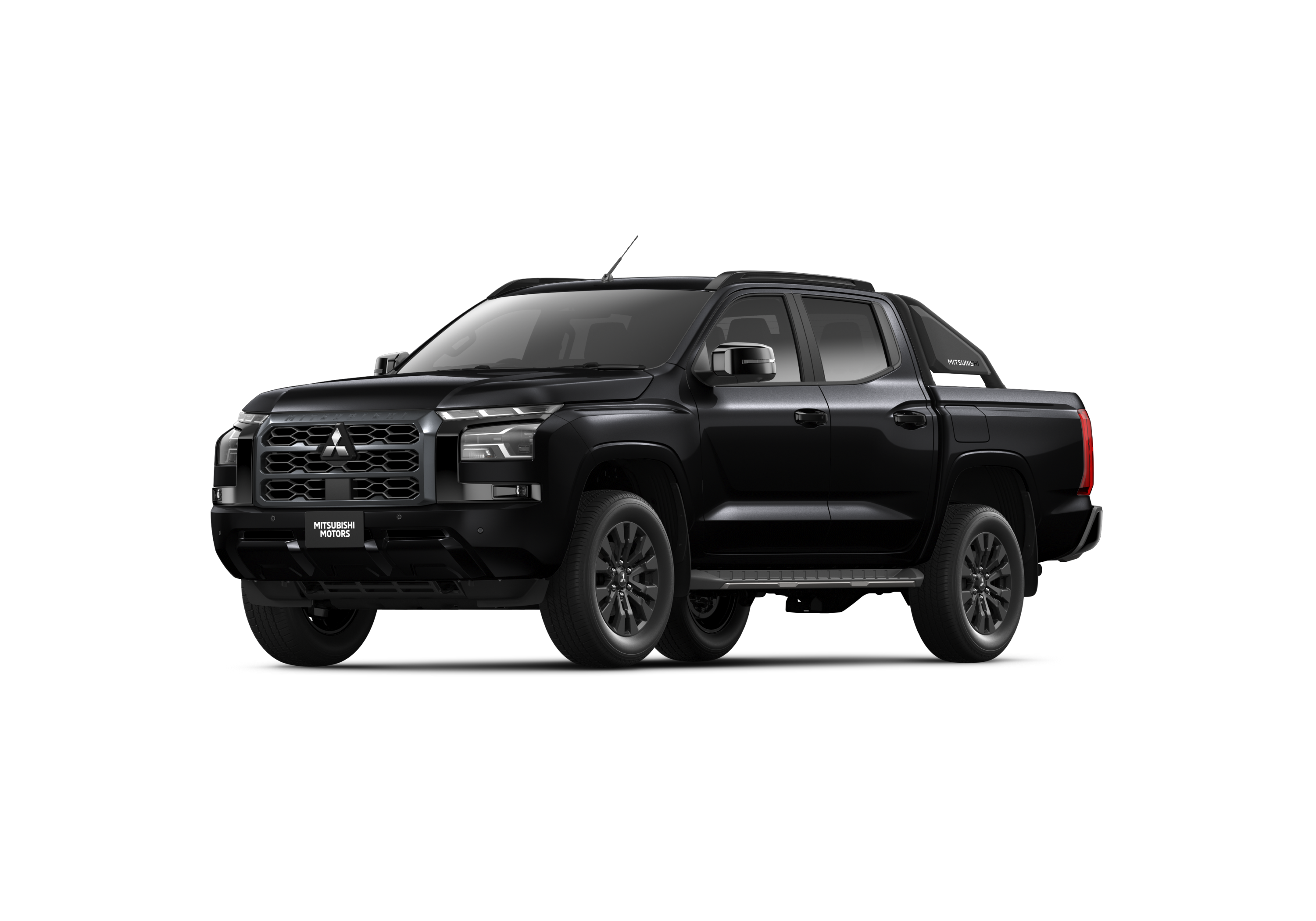
Mitsubishi has introduced the GSR Special Edition model to its Australian line-up, with the limited-run model benefitting from a handful of exterior changes.
Priced at $63,140 – strangely cheaper than the regular Triton GSR, which asks for $63,840 – the GSR Special Edition is equipped with a new-look Graphite Grey grille with embossed MITSUBISHI lettering. Mitsubishi also replaced the regular GSR’s sailplane with a black sports bar; and body-coloured wheel arch flares now feature in lieu of the GSR’s fender flares.
The GSR Special Edition also gets the enhanced Adaptive Cruise Control system that is now standard across the range – in fact, all Tritons built from November 2024 have this updated system as standard. How it differs from the old system is that it now remains engaged until the vehicle is stationary, whereas it previously cancelled at approximately 25km/h.
Aside from the above mentioned tweaks, the GSR Special Edition remains identical to the GSR it’s based on – so it has the 150kW/470Nm 2.4-litre turbo-diesel engine; Mitsubishi’s Super Select II 4WD system; 18-inch alloy wheels; dual-zone climate control; roof rails; and leather upholstery.
“As part of our commitment to continuous improvement, we constantly take feedback from our dealer partners and customers,” said Bruce Hampel, MMAL’s General Manager of Product Strategy.
“Through this, we saw an opportunity to enhance customer choice for the Triton GSR, with a more rugged appearance. The GSR Special Edition combines the GSR’s impressive specification with a distinctively-themed exterior package that further broadens its appeal,” he said.
Mitsubishi Australia says an initial batch of 500 Triton GSR Special Editions will be produced, with plans for it to continue through the next model year update.
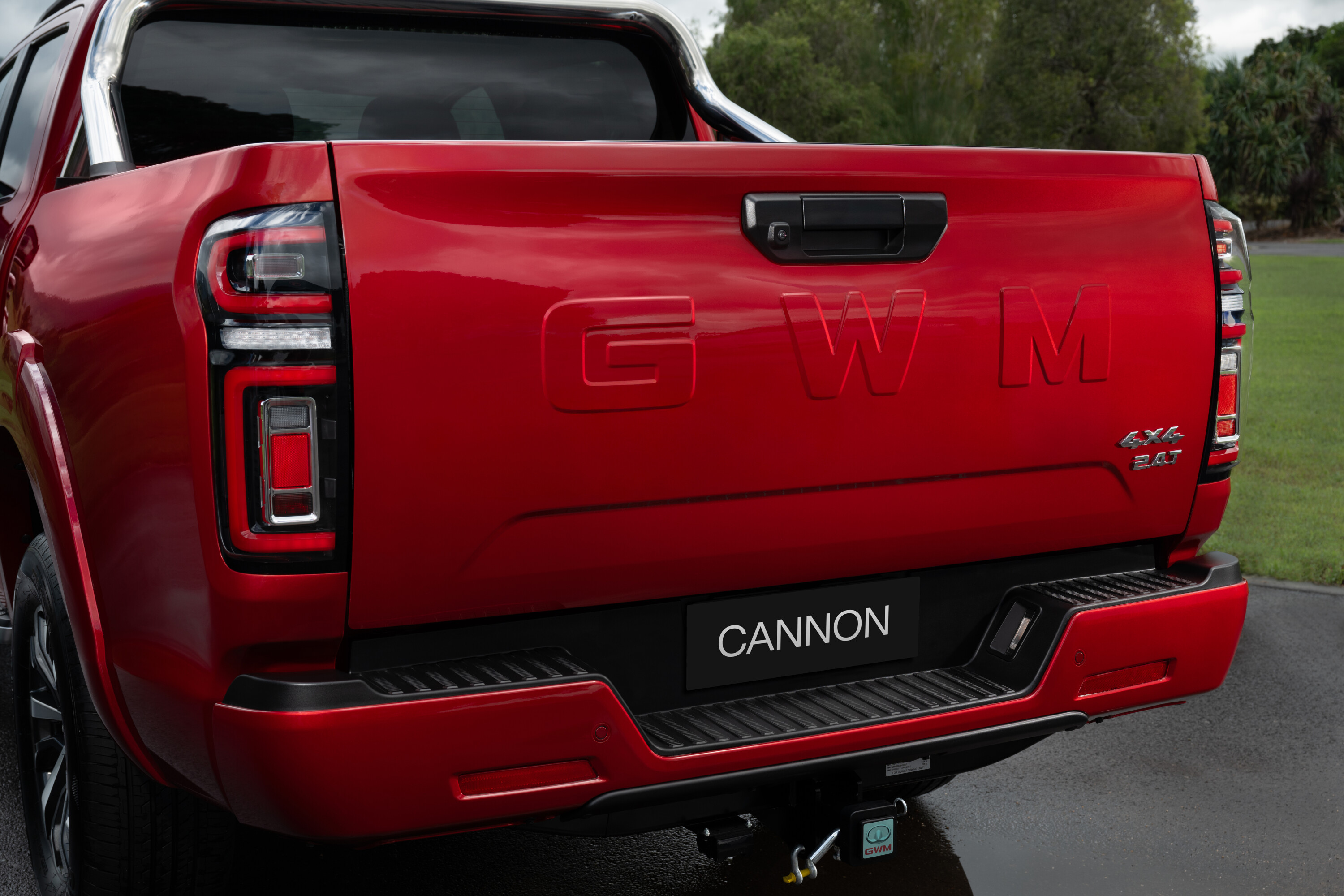
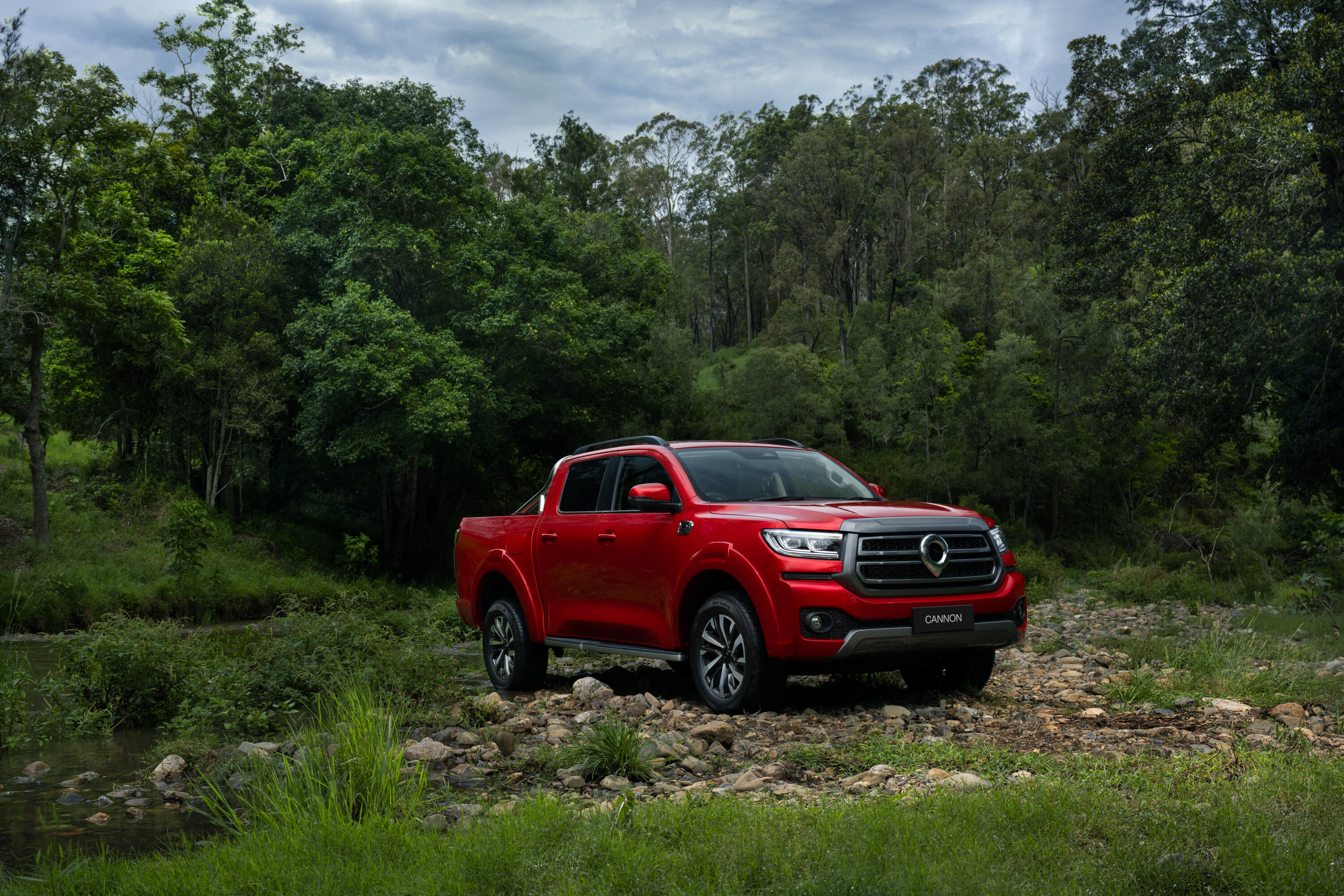
GWM’s revised Cannon – no longer dubbed the ‘Ute’ – will be available to order in showrooms around the country this month, with a bigger, more powerful 2.4-litre turbo-diesel engine replacing the outgoing 2.0-litre turbo-diesel.
The larger displacement engine – the same unit seen in the Cannon Alpha – produces 135kW at 3600rpm and 480Nm between 1500 and 2500rpm, a substantial increase over the 120kW and 400Nm generated by the 2.0. The new engine features a Variable Geometry Turbocharger, which will in theory optimise both low-speed off-road grunt and high-speed highway touring, as well as reduce turbo lag.
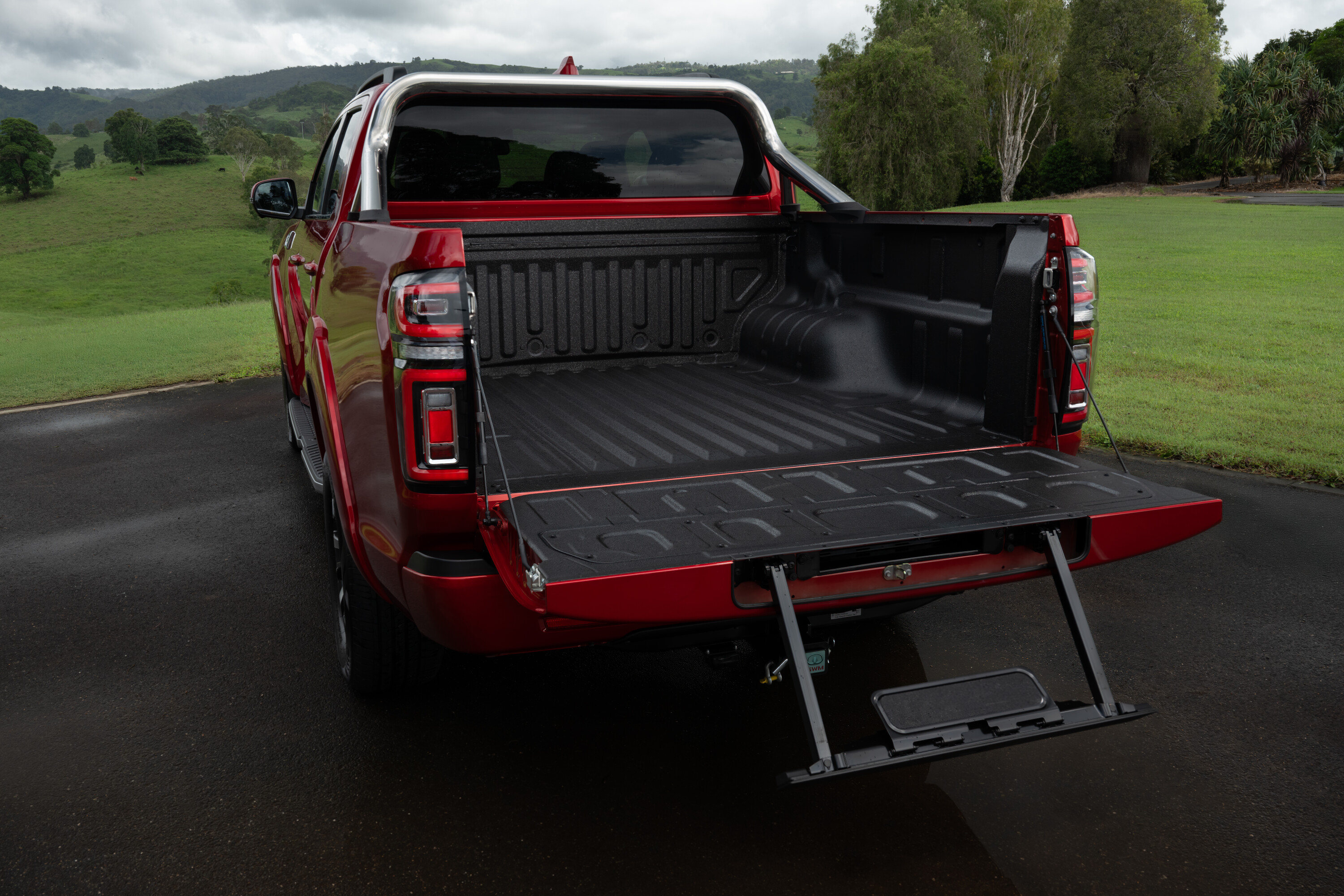
A nine-speed automatic transmission replaces an eight-speed auto, and the new drivetrain now runs a broader selection of driving modes including Normal, Eco, Sport, Snow, Mud, and Sand (depending on model grade). All models in the line-up are equipped with a rear diff lock as standard, while a front diff is standard on the top-spec XSR model only (also the only vehicle running a part-time 4×4 system).
That XSR sits atop a four-model line-up, starting with the base-spec Lux priced at $40,490 driveaway (private buyers only). The Ultra sits above the Lux on the model hierarchy, asking for $43,490 driveaway, followed by the Vanta ($45,490 driveaway) and then the top-spec XSR ($49,990). The line-up consists exclusively of 4×4 dual-cab pick-up models.
The Cannon’s five-star ANCAP safety rating achieved in 2021 carries over to this new variant – excluding the untested XSR variant. Due to changes to its exterior design, the top-spec XSR is not equipped with the full suite of advanced safety systems and as a result would likely not receive a five-star ANCAP score. It loses Emergency Lane Keeping; Smart Dodge; door open/vehicle warning; Rear Collision Warning; Blind Spot Detection; Lane Change Assist; and Rear Cross Traffic Alert with brake.
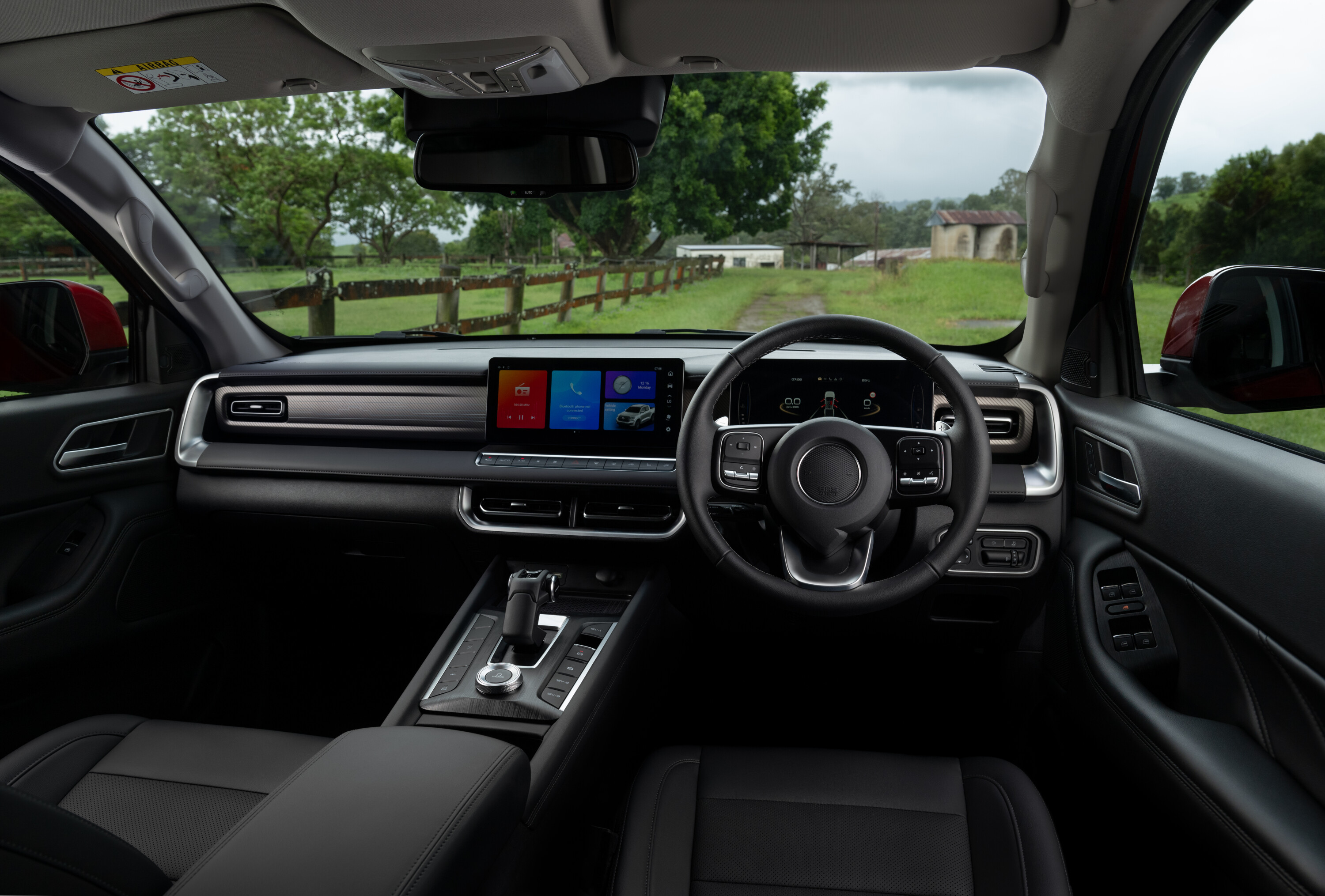
The revamped interior brings the Cannon more in line with more premium competitors, with GWM claiming, “the interior features an elegant blend of premium materials, including soft-touch surfaces on the dashboard and door panels, elevating the ute segment with its refined aesthetic”.
To this end, a 12.3-inch touchscreen – with wireless Apple CarPlay and Android Auto connectivity – is standard on all models. Here’s what you get in each model ?
GWM Cannon Lux
- Rear differential lock (electric)
- Front and rear ventilated discs
- Front suspension: coil spring double wishbone
- Rear suspension: leaf spring live axle
- Electric power steering
- Low range transfer case
- Torque on demand 4×4
- 18-inch two tone chrome alloy wheels
- GWM-embossed tailgate
- Chrome sports bar
- Auto LED headlights with DRL + electric levelling
- Auto high beam
- Fog lights with steering illumination
- LED taillights with sequential LED indicators
- Front grille – machine grey
- Power fold exterior mirrors
- Side steps
- Roof rails
- Tailgate dampener / struts
- Central locking with tailgate locking
- Body coloured wheel arches, door handles, mirror caps
- Spray-in bedliner
- Smart keyless entry (front)
- Faux leather seats
- Faux leather steering wheel
- Driver 6-way manual adjustable seat
- Front passenger 4-way manual adjustable seat
- 60:40 rear seats with centre armrest
- Single zone climate control with rear outlet
- Wireless phone charger
- 3 x pre-wired 12v accessory buttons
- Power windows – auto windows + anti pinch (driver)
- Sunvisor with illuminated vanity mirror
- 12.3” touchscreen with wireless Apple CarPlay® and Android Auto
- 6-speaker audio with DAB+ digital radio
- Voice command
- Front and rear USB outlets (USB-A / USB-C)
- 7-inch digital instrument cluster
- 4-way steering column adjustment
- Electronic park brake with auto hold
- Automatic rain-sensing front wipers
- Paddle shift
- Multi-function steering wheel
- Push-button start
- Remote engine start (key)
- Adaptive cruise control (ACC)
GMW Cannon Ultra adds
- Electric sunroof
- Tailgate step
- Rear privacy glass
- Leather-accented seats
- Front heated and ventilated seats
- Heated steering wheel
- Power windows – auto windows + anti pinch (all)
- Driver 6-way power adjustable seat
- Front passenger 4-way power adjustable seat
- USB port for dash camera
- Ambient lighting
- Front footwell lamp
- Auto-dimming rear-view mirror
- 360° rearview camera
- Front parking sensors
GWM Cannon Vanta adds
- 18-inch black alloy wheels
- Sports bar – black (XSR)
- Side step – black
- Front grille – matte black
- Wheel arches – matte black
- Mirror covers – matte black
- Door handles – matte black
GWM Cannon XSR adds
- Front differential lock (electric)
- Part time 4×4
- Drive modes: Standard, Mud, Sand, 2H, 4H, 4L
- All-terrain response
- Expert mode
- Front grille – XSR style
- Snorkel
- Side step – metal
- Exterior mirrors – body coloured
- Door handles – body coloured
2025 GWM Cannon specs
| u00a0 | Lux | Ultra | Vanta | XSR |
|---|---|---|---|---|
| GCM (kg) | 6200 | 6200 | 6200 | 6300 |
| GVM | 3225 | 3225 | 3225 | 3205 |
| Vehicle Tare Weight | 2173 | 2173 | 2173 | 2273 |
| Kerb weight | 2230 | 2230 | 2230 | 2330 |
| Payload | 995 | 995 | 995 | 875 |
| Towing capacity | 3500 | 3500 | 3500 | 3500 |
| Unbraked towing capacity | 750 | 750 | 750 | 750 |
| Downball weight | 350 | 350 | 350 | 350 |
2025 GWM Cannon off-road specs
| u00a0 | Lux | Ultra | Vanta | XSR |
|---|---|---|---|---|
| Length (mm) | 5416 | 5416 | 5416 | 5439 |
| Width (mm) | 1947 | 1947 | 1947 | 1958 |
| Height (mm) | 1884 | 1884 | 1884 | 1893 |
| Wheelbase (mm) | 3230 | 3230 | 3230 | 3230 |
| Wading depth (mm) | 500 | 500 | 500 | 700 |
| Approach angleu00a0 | 27u00b0 | 27u00b0 | 27u00b0 | 30u00b0 |
| Departure angle | 25u00b0 | 25u00b0 | 25u00b0 | 26u00b0 |
| Turning Circle (m) | 13.1 | 13.1 | 13.1 | 13.7 |
All Cannons are backed by a seven-year/unlimited kilometre standard new car warranty, as well as five years of roadside assistance, and five years of capped price servicing.
As our 4×4 vehicles get bigger and heavier, and more and more four-wheel drivers are having the GVM increased on their builds to accommodate heavier loads legally, something often forgotten about is wheels and tyres.
A key part of most GVM upgrades is uprated suspension components but between the suspension and the track are the wheels and tyres.
Wheels and tyres are rated and stamped with the loads they are made to carry and a lot of OE alloys that come standard on new 4x4s, as well as many aftermarket wheels, won’t meet the load rating of a vehicle with an increased GVM.
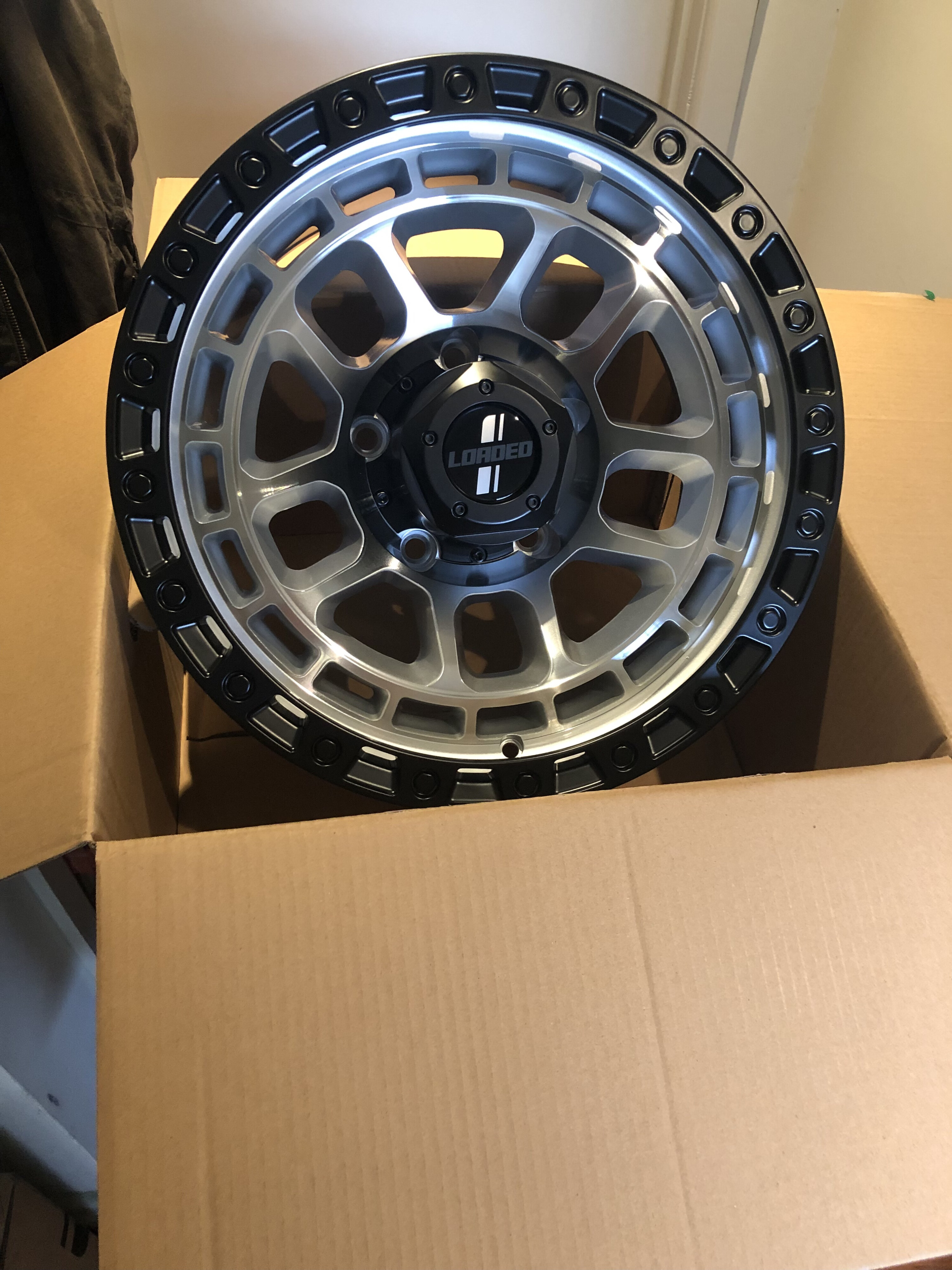
There are a few wheel companies promoting high-load rated wheels for such vehicles but one that caught our attention last year was Loaded Wheels. The reason? Loaded Wheels not only has some great looking wheel designs, but it’s a Queensland business staffed by blokes with a long history in the wheel and tyre business; blokes who know what 4×4 vehicles need in Australian conditions and who saw a gap in the market for quality high-load rated wheels.
Loaded Wheels launched with just two designs, each named after iconic Australia destinations – the Stockton and the Gunbarrel – but it was the company’s new-for-2025 Gibb 1675 wheel that won us over when researching rims for our LC79 build.
Named after the usually rough and rugged Gibb River Road in the Kimberley region of Western Australia, the 1675 part of the name refers to the load rating which is 1675kg per wheel. All three wheel designs in the Loaded range share this 1675kg rating for heavier vehicles.
Using flow from manufacturing, Loaded Wheels are able to manufacture stronger wheels without adding mass to them, so the wheels themselves aren’t excessively heavy. This process and design also leaves more space within the wheels to accommodate large brake rotors as found on many modern 4x4s.
Currently the Stockton, Gunbarrel and Gibb wheels are available to suit most popular 4x4s on the market in a range of 17-inch and 18-inch diameters, and with a variety of finishes including machined, matt black, bronze and grey.
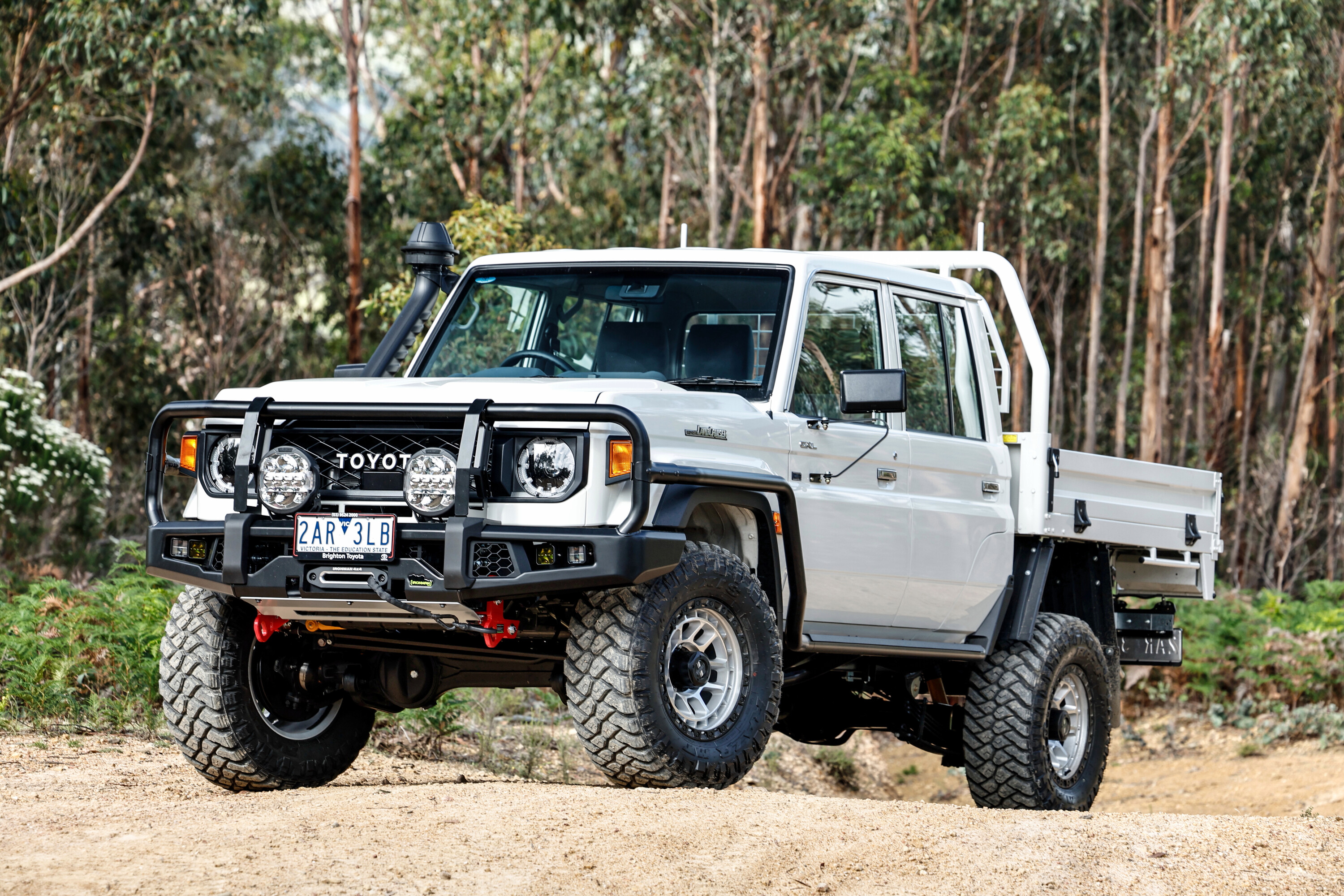
We went with the machined finish for the centres of the Gibb wheels with black outer rings, and we reckon they suit our white LandCruiser beautifully.
Pricing: $425 (each)
Nissan has revamped its aftersales support by essentially doubling its new-car warranty in Australia to a 10-year 300,000km warranty, but only if customers service their vehicles with Nissan.
The new warranty program will not only apply to all new Nissan models sold in 2025 and beyond, but Nissan has confirmed the 10-year 300,000km warranty will be backdated to eligible Nissan vehicles purchased new since January 1, 2021. To be eligible, these vehicles “must have completed all scheduled services with Nissan at the correct interval/time to qualify for the warranty extension”.
The existing five-year unlimited kilometre warranty otherwise remains in place.
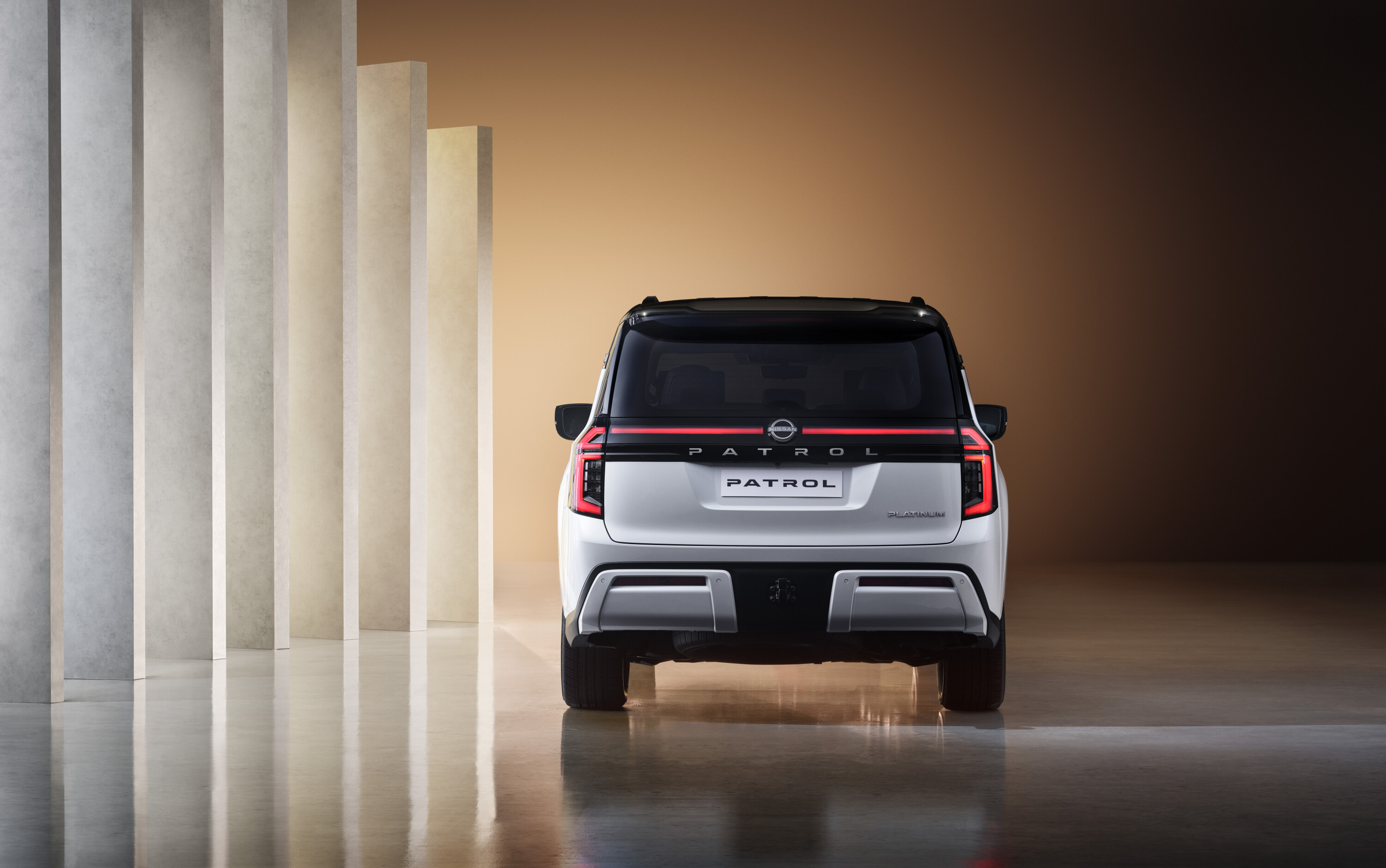
“The new service-activated warranty is Australia’s only 10-year 300,000km warranty and is industry leading. It’s designed to deliver peace of mind to our customers. Peace of mind that Nissan has your back. Peace of mind that Nissan is with you for the long term,” Michael Hill, Director of Aftersales, Nissan Oceania, said.
Nissan has also revealed a new five-year Flat Price Service (FPS) program, which will see service costs slashed on all new Nissan models. For example, servicing a Patrol at Nissan will cost a flat fee of $499 for each of the first five services. Previously, the first five services for a Patrol cost $452, $581, $560, $917 and $509 – resulting in a saving of $524 with the new fees.
“Nissan Genuine Service is the best solution for a customer’s car. When our customers service with a Nissan dealer, they can have the confidence of knowing that they are covered under our Nissan Customer Service Promise. Customers can be assured their vehicle will be serviced by factory-trained technicians using only Nissan genuine parts – giving the best care for their car in the long term.
“And this is not just about new cars. We’re sure this inclusive industry-leading ownership program will also ensure that your Nissan will be even more attractive when it comes time to buy your next car, as the warranty is fully transferable to the next owner aiding and supporting your future resale value,” Hill said.
It has been a long journey since the first 4X4 Australia magazine landed on shelves back in 1981.
We’ve taken readers to every corner of the country, driven countless 4×4 vehicles throughout the years, and tested thousands of aftermarket products – and this issue hits a massive milestone.
The February 2025 mag – out now and en-route to subscribers – is our 500th issue! To help us celebrate this special edition, we asked three of our editorial elders – Ron Moon, Dean Mellor and Michael Ellem – to share their most memorable off-road trips. And trust us when we say, these guys have travelled an eye-bulging amount of kilometres around the country.
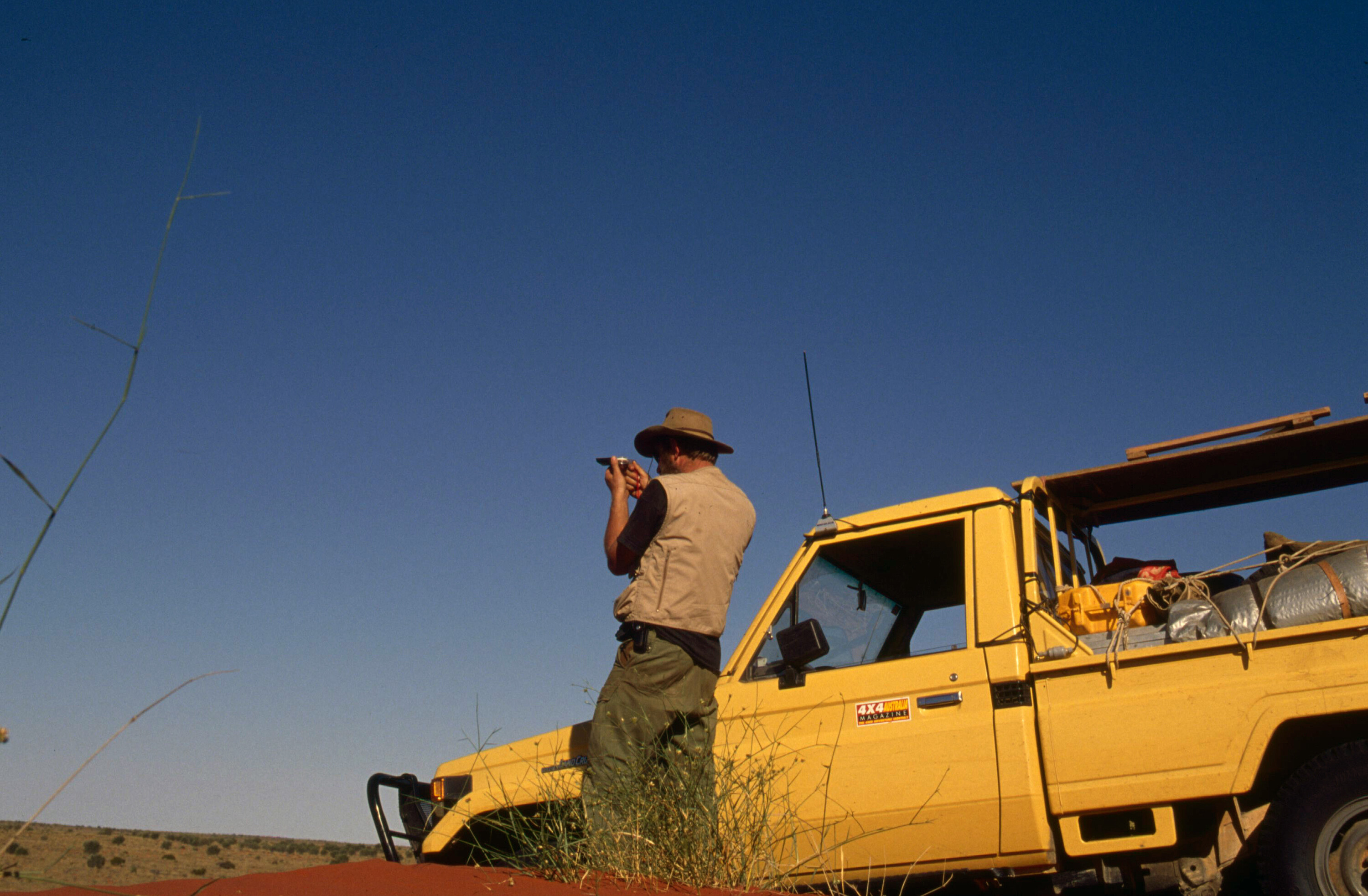
On the travel front, we also ventured to two famous 4×4 destinations: Flinders Ranges in South Australia, and Finke Gorge National Park in the Northern Territory. These two trips should be on every tourer’s bucket list.
It’s poetic that in this special issue we have a comparison between two heavyweight SUVs of the modern era: the Ford Everest and Toyota Prado. There’s a significant price difference between the models tested here – the Prado Kakadu is about $30,000 dearer than the Everest Trend – but is it the better vehicle? The result may shock you.
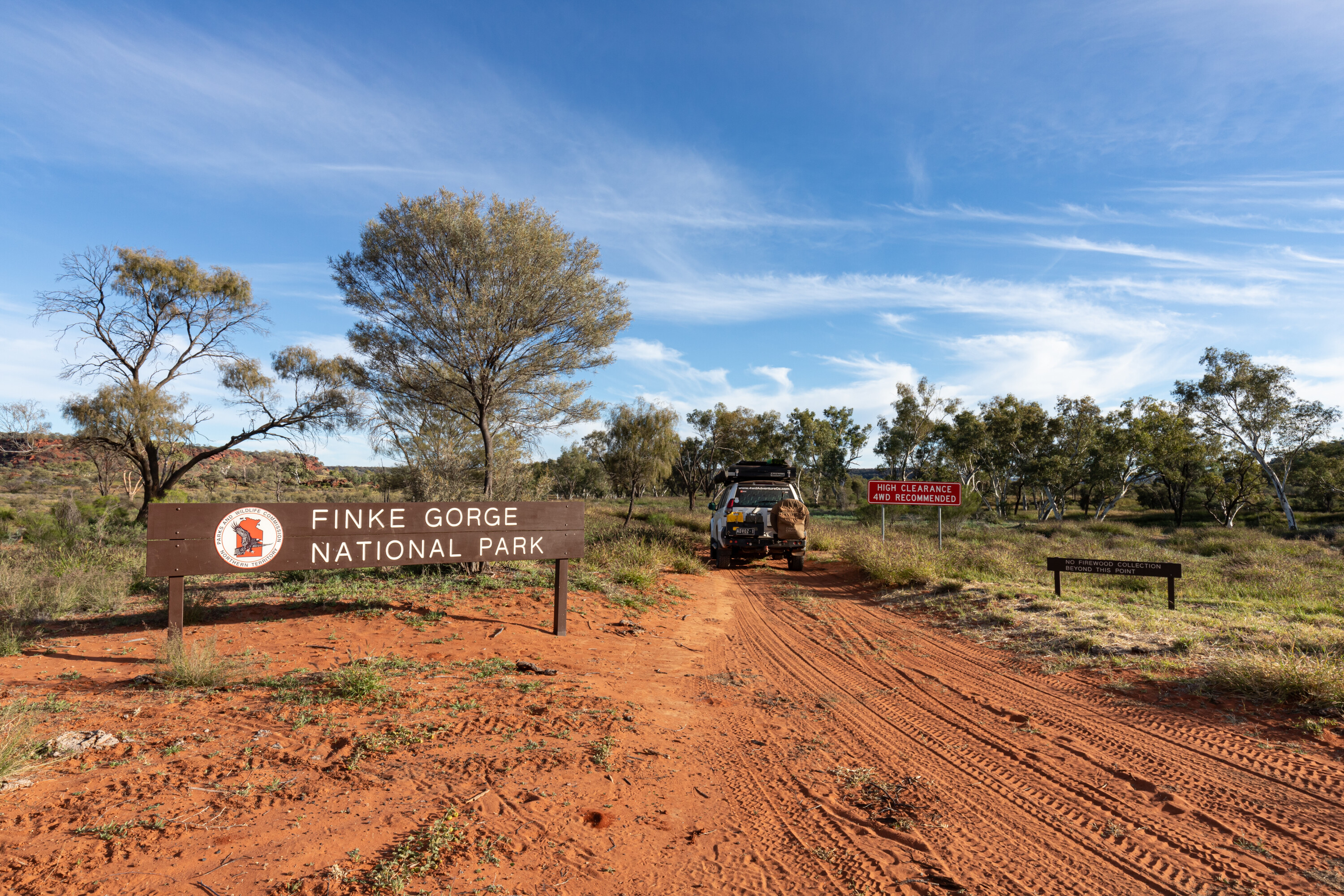
We also take an up-close look at a battle-hardened INEOS Grenadier fettled by Melbourne mob, GrenX; as well as a custom HJ61 LandCruiser that has been modified to be a better all-terrain tourer without losing its classic good looks. The retro-cool vehicle is not only stunning to look at, but it has been built to tackle all corners of the map.
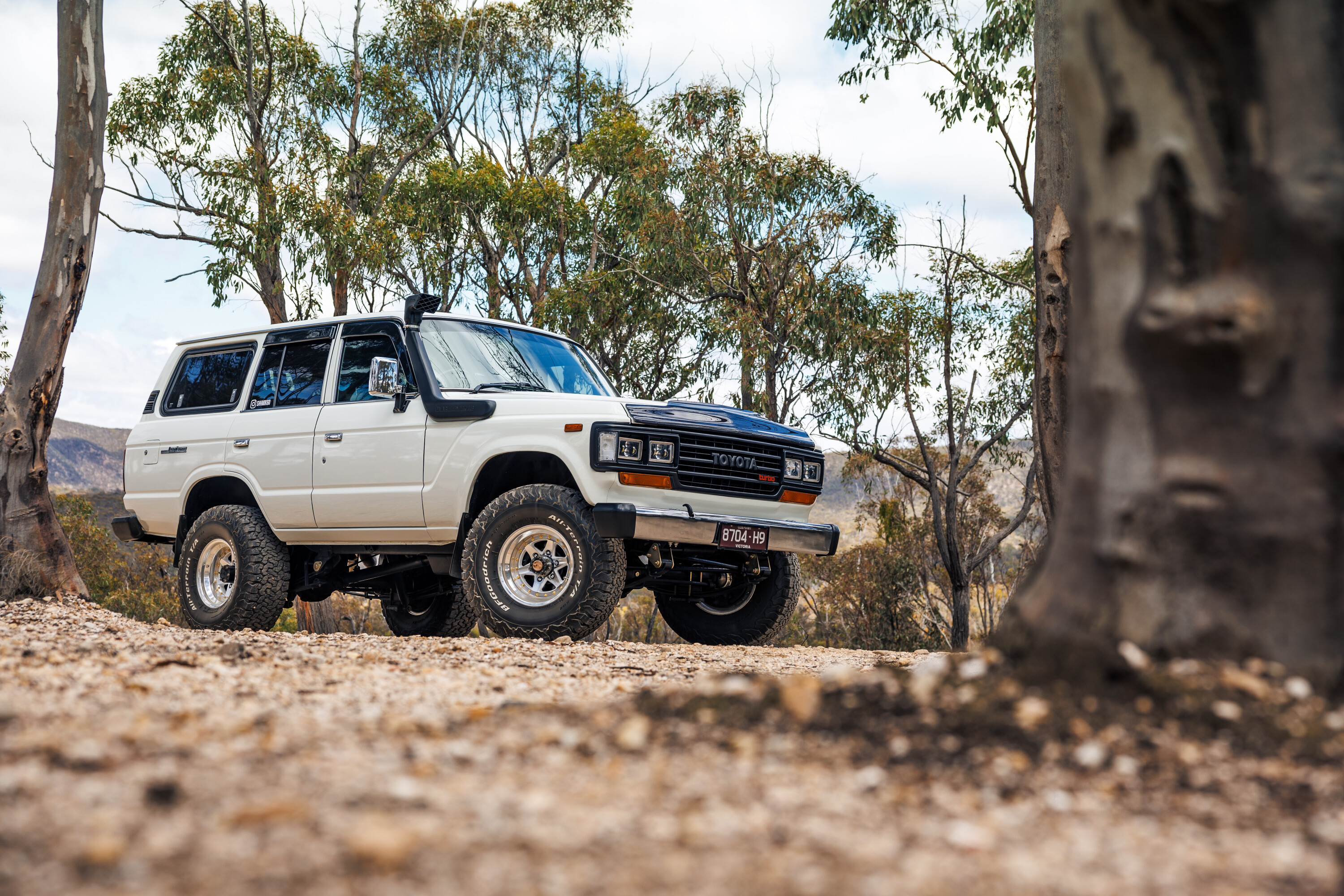
Progress on our custom LandCruiser build is ramping up significantly. This month we equipped the 79 Series with a new set of Loaded Gibb 1675 alloy wheels and wrapped them in Maxxis RAZR mud-terrain rubber. Plus, we installed a Marks 4WD High Clearance tow bar to the rear end.
We also continue our long-term reviews of the Triton GLS and Ford F-150. This month the Triton ferried our resident photographer to a number of jobs; while the F-150 took a long-distance trip down the highway over the holiday period.
What else is there?
- Runva 11Expedition winch tested
- DMOS Delta shovel tested
- RV Storage premium alloy drawers tested
- Readers’ Rigs
- New products, news and more!
The milestone February 2025 issue of 4X4 Australia magazine is out now!
Lexus has confirmed it will add an Overtrail variant to its Australian LX line-up, with the flagship SUV ready for adventure courtesy of front, centre and rear lockers.
The LX Overtrail follows on from the GX550 Overtrail that launched in Australia in 2024 – and excelled both on- and off-road – at $122,250 (plus on roads). Pricing for the LX Overtrail is yet to be determined, with Lexus set to reveal pricing and major specifications for the revised 2025 LX range later this year.
In addition to the trio of locking diffs, the LX Overtrail is equipped with a suite of off-road traction aids including Multi-Terrain Select, Downhill Assist Control, Crawl Control, a Multi-Terrain Monitor and Active Height Control. Lexus has also given the Overtrail bigger wheels and tyres in the form of 18-inch Overtrail alloy wheels wrapped in 265/70R18 Toyo Open Country all-terrain tyres.
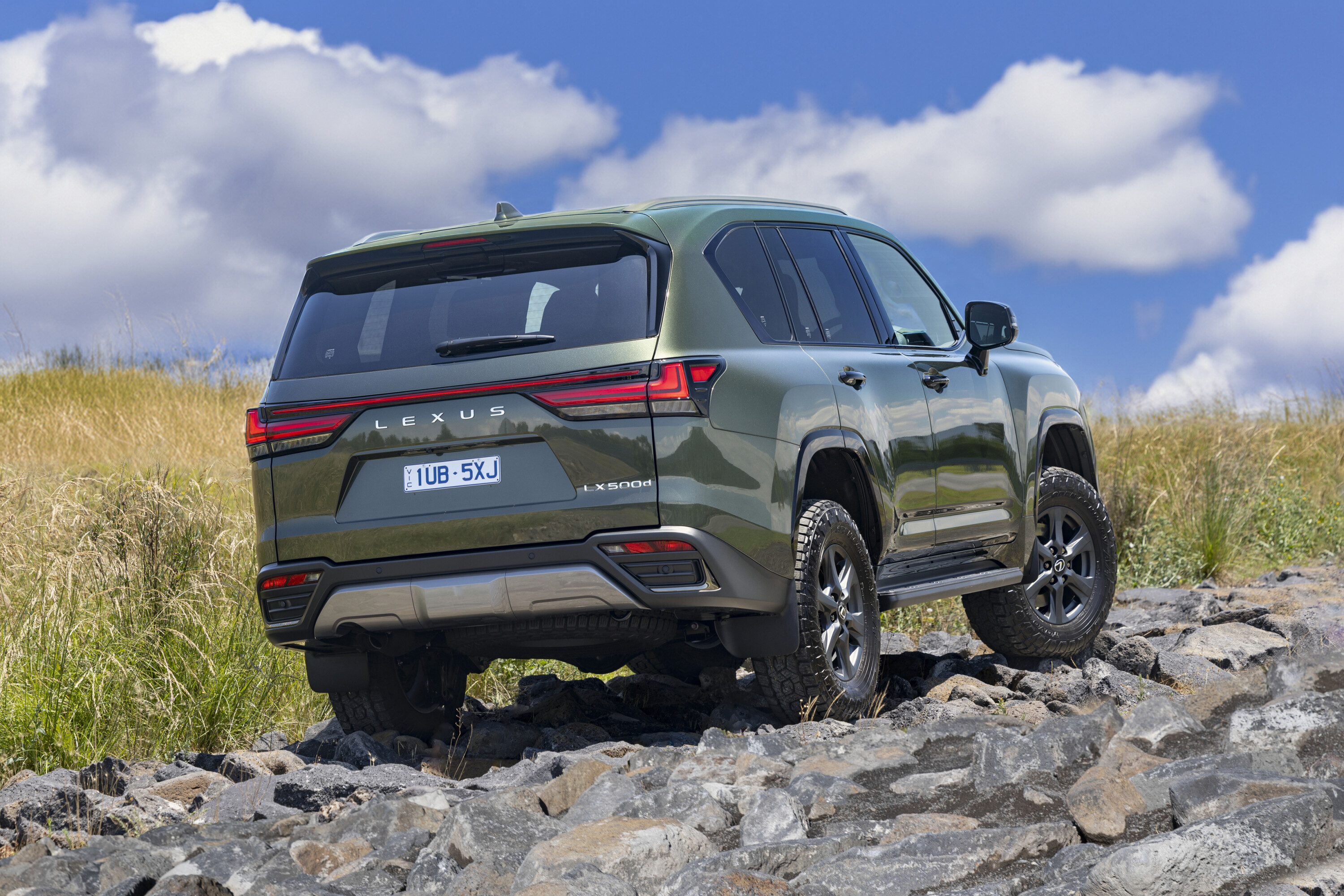
Two powertrains are available: a 227kW/700Nm 3.3-litre twin-turbo V6 diesel, and a 305kW/650Nm 3.5-litre twin-turbo V6 petrol. Lexus is also evaluating the viability of introducing a hybrid powertrain to Australia, but nothing has been confirmed yet.
“Since its introduction to the Lexus Australia range in 1998, the LX has enabled customers to navigate Australia’s tough terrains with unwavering reliability and unparalleled comfort,” said John Pappas, Lexus Australia Chief Executive.
“The LX combines luxurious appointments and thoughtful comfort features with the rugged performance of a full-size luxury SUV, delivering outstanding off-road, towing and hauling capability,” he added.
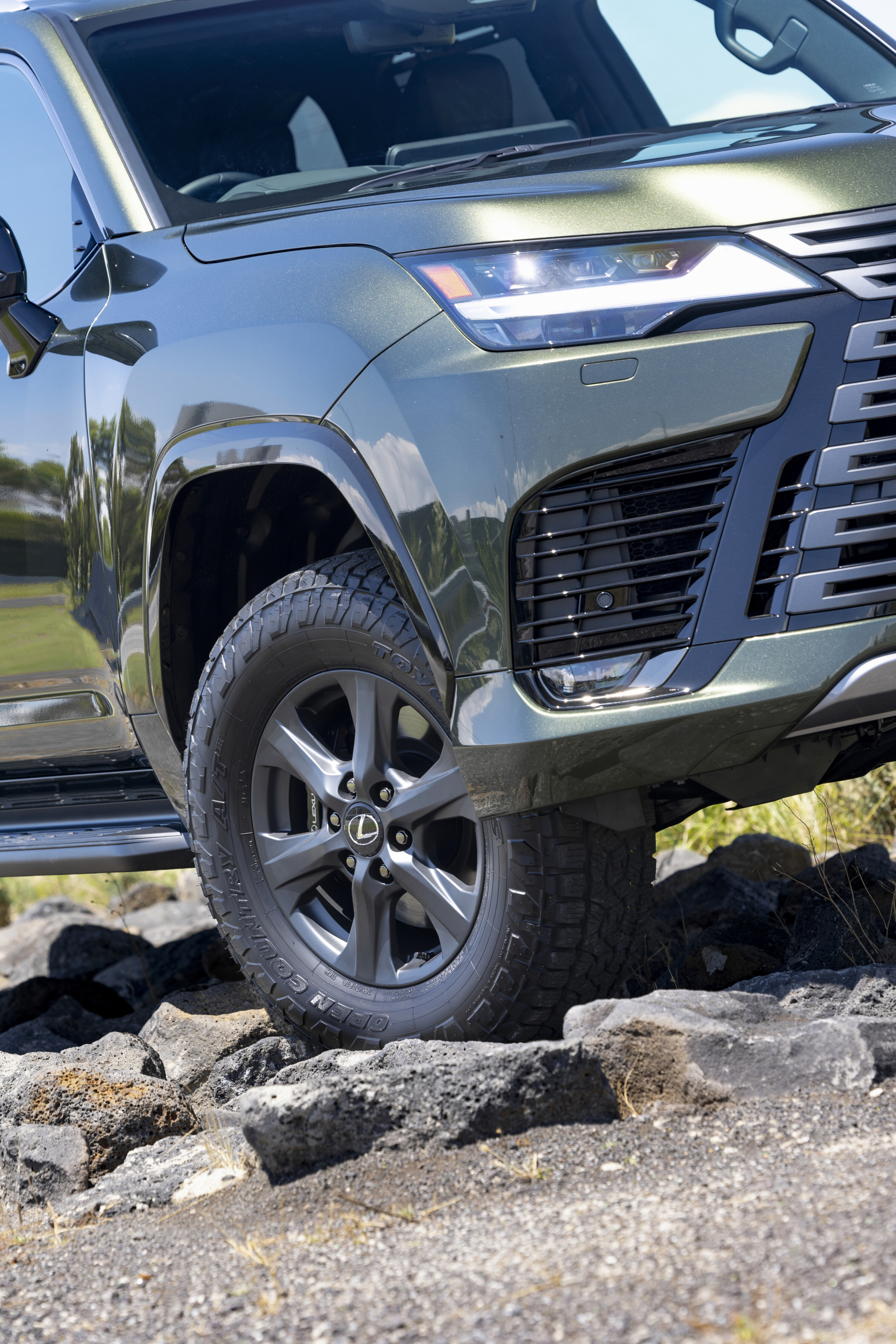
As a point of difference between other LX variants, the Overtrail’s exterior has received black highlights for the front spindle grille, front and rear bumpers, wheel arches, side mirrors, door handles, window mouldings and roof rails.
More information is expected in the first half of 2025, so stay tuned.
Full pricing and specifications has been revealed for the five-model 2025 BT-50 line-up, with the revamped and restyled D-MAX twin on sale now in dealerships across Australia.
The single-cab XT is the cheapest entry point into the BT-50 4×4 line-up, priced at $47,250 MLP; the freestyle-cab XT is marginally more expensive at $51,000 (MLP); while the dual-cab XT cab-chassis is $54,620 (MLP). To get a 4×4 in a pick-up configuration, you now need $56,220 (MLP) for the XT.
Unsurprisingly, all prices are up across the board compared to its predecessor. A glance at just the dual-cab pick-up 4×4 variants indicates price increases of $990 (XT), $3470 (XTR), $3180 (GT) and $2810 (SP). Full pricing below ?
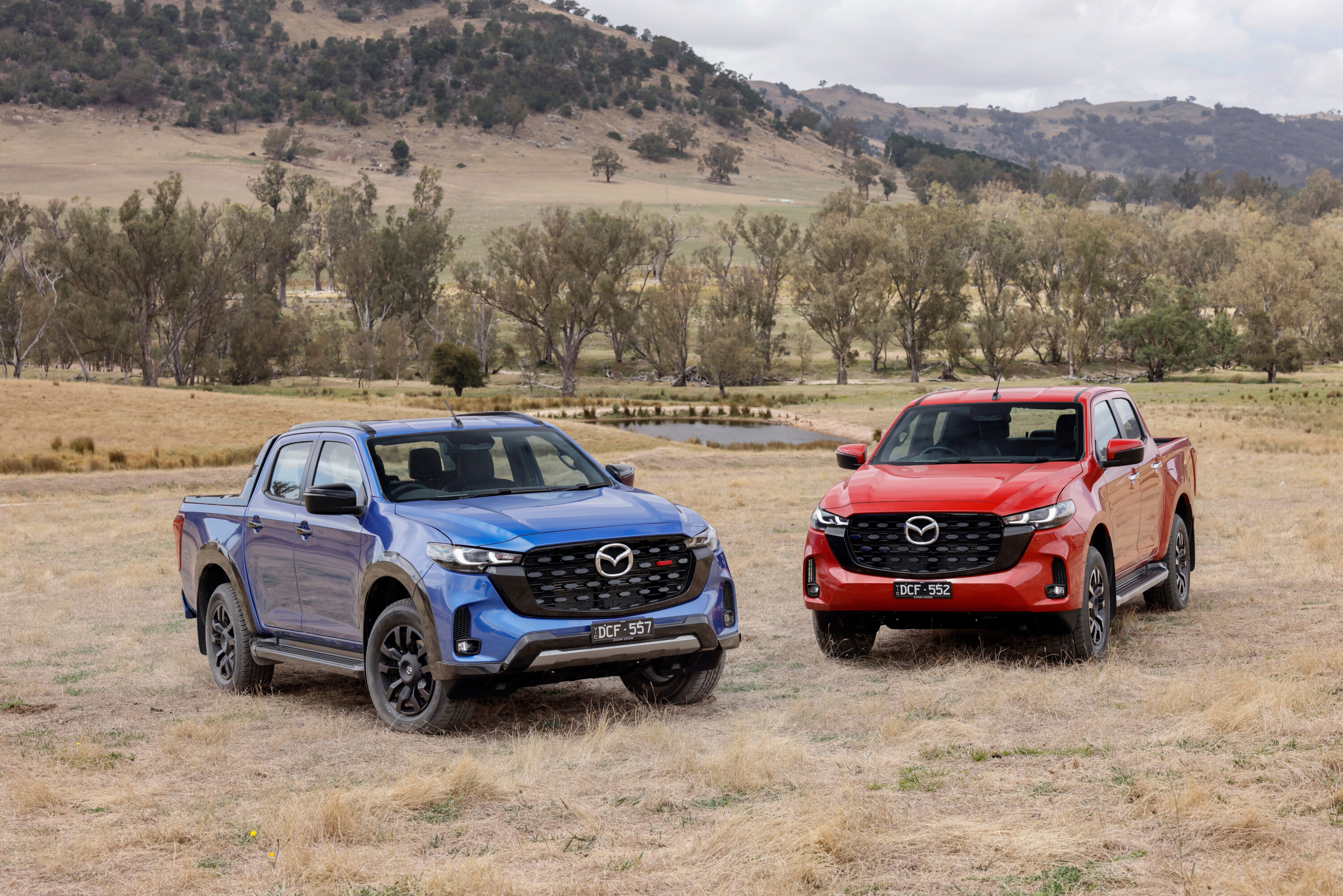
Absent from the 2025 line-up is the top-spec BT-50 Thunder. All manual variants have also been axed.
New for 2025 is a mild facelift encompassing a more aggressive front bumper, new radiator grille and LED headlights. The rear end was also mildly revised, now utilising an easy-down tailgate and integrated LED tail lamps. An enhanced infotainment system has also been added – spanning from eight inches (XS and XT) to nine inches (XTR and above).
Wireless Android Auto now joins wireless Apple CarPlay, and the centre screen can now display information previously only found within the MID screen – things like real-time vehicle steering and tilt angles, TPMS status, drive mode/diff lock status, and Rough Terrain Mode status.
The full suite of advanced safety tech includes Lane Keep Assist System (LAS), Blind Spot Monitoring (BSM), Rear Cross Traffic Alert and Braking, Traffic Sign Recognition and Trailer Sway Control (TSC).
The powertrain for all 4×4 models remains unchanged, with Mazda carrying over the 140kW/450Nm 3.0-litre, four-cylinder turbocharged engine. It remains linked to a six-speed automatic transmission.
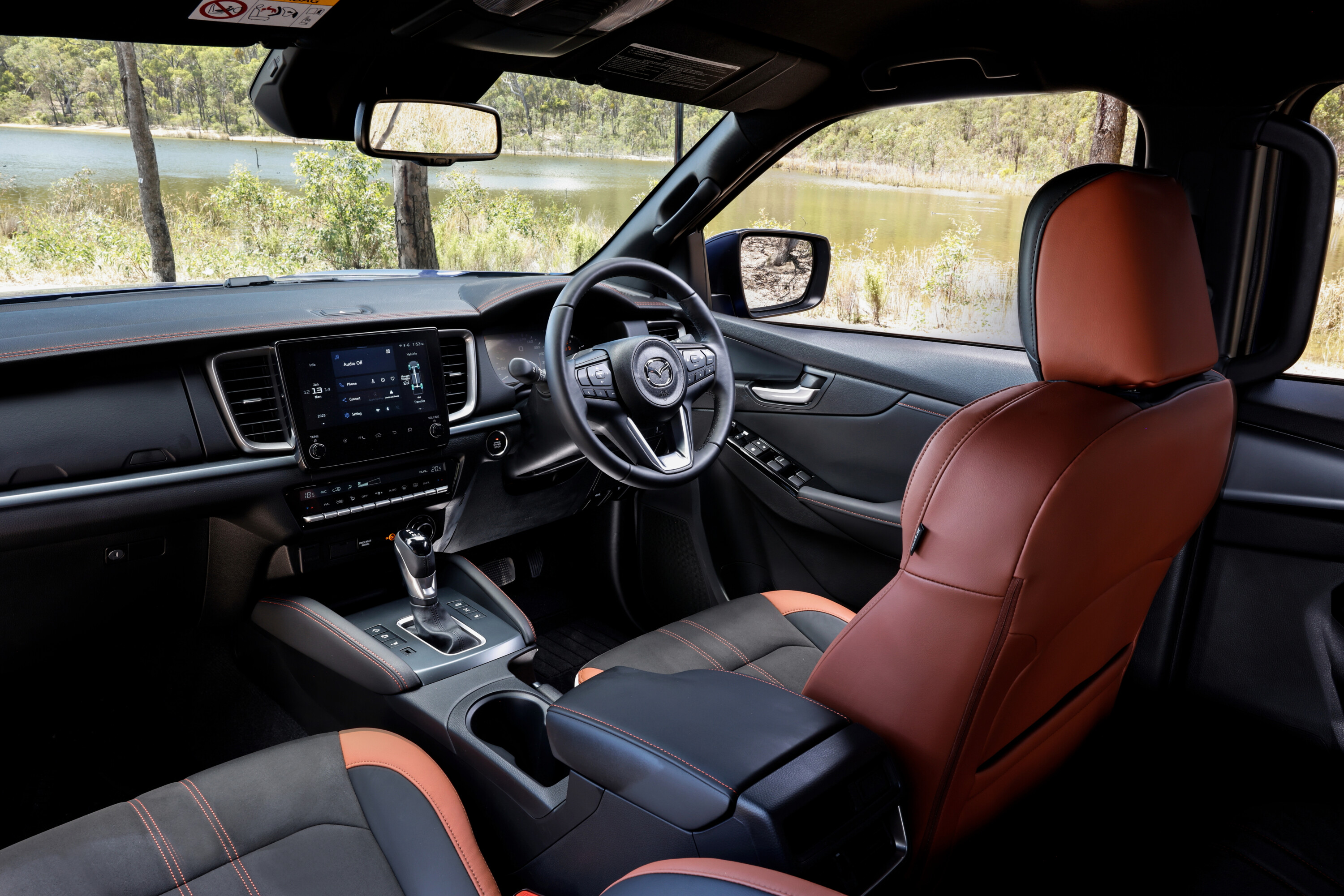
Mazda has also developed in collaboration with industry an extensive selection of Genuine Accessories for the new-look BT-50, with the gear locally tested and backed by the manufacturer warranty.
“We know that vehicle customisation plays a significant part in four-wheel driving culture,” said Jarrod Gieschen, Director of Sales and Marketing for Mazda Australia.
“We are therefore proud to have developed such an extensive list of accessories to complement the new Mazda BT-50, providing our customers with the ability to tailor their vehicle to best suit their needs – all while having the peace of mind of being backed by our leading five-year warranty.”
Mazda says first customer deliveries of its 2025 BT-50 will commence shortly.
What do you get?
BT-50 XS
- Intelligent Adaptive Cruise Control (i-ACC) with stop-and-go
- 8.0-inch full-colour touchscreen display
- Apple CarPlay and Android Auto (wireless and USB)
- 17-inch steel wheels
- LED headlamps
- Black cloth seats
- Emergency Lane Keeping (ELK) with road edge detection
- Rear Cross Traffic Brake (RCTB)
- Reverse camera
BT-50 XT adds
- 17-inch alloy wheels
- 3.0-litre in-line 4-cylinder diesel engine
- Option of 4×2 or 4×4 drivetrains
- Locking rear differential (4×4 models only)
- Tailgate assist (pickup models only)
- Rear air-conditioning vents (dual cab models only)
- Rough-Terrain Mode (4×4 models only)
- Rear-parking sensors (pickup model only)
BT-50 XTR adds
- 18-inch machined alloy wheels
- Front LED fog lamps
- LED headlamps with auto-levelling
- Power-folding exterior mirrors
- Side-steps
- Signature daytime running lamps (DRL)
- Tow bar with receiver, tongue and wiring harness (pickup models only)
- Tub liner (pickup models only)
- 9-inch full-colour touchscreen
- Advanced keyless entry
- Dual-zone climate control
- Satellite navigation
- Tyre-pressure monitoring system (TPMS)
BT-50 GT adds
- Heated exterior mirrors
- Black leather seats
- Electric driver’s seat with eight-way power adjustment
- Heated front seats
- Remote engine start
- Front parking sensors
BT-50 SP adds
- 18-inch gloss black alloy wheels
- Gloss black sail plane sports bar
- Gloss black side steps
- Gloss black fender flares
- Gloss black roof rails
- Gloss black exterior mirror caps
- Gloss black door and tailgate handles
- Roller tonneau cover (manual operation
- Black and terracotta Maztex and suede seats
2025 Mazda BT-50: Pricing
| BT-50 Singe Cab | Engine | Drivetrain | MLP |
|---|---|---|---|
| Single Chassis XT | 3.0-litre Turbocharged Diesel | 4X4 | $47,250 |
| BT-50 Freestyle cab | Engine | Drivetrain | MLP |
|---|---|---|---|
| Freestyle Chassis XT | 3.0-litre Turbocharged Diesel | 4×4 | $51,000 |
| BT-50 dual cab | Engine | Drivetrain | MLP |
|---|---|---|---|
| Dual Cab Chassis XT | 3.0-litre Turbocharged Diesel | 4×4 | $54,620 |
| Dual Cab Chassis XTR | 3.0-litre Turbocharged Diesel | 4×4 | $59,650 |
| Dual Cab Chassis GT | 3.0-litre Turbocharged Diesel | 4×4 | $63,070 |
| Dual Cab Pickup XT | 3.0-litre Turbocharged Diesel | 4×4 | $56,220 |
| Dual Cab Pickup XTR | 3.0-litre Turbocharged Diesel | 4×4 | $62,750 |
| Dual Cab Pickup GT | 3.0-litre Turbocharged Diesel | 4×4 | $66,170 |
| Dual Cab Pickup SP | 3.0-litre Turbocharged Diesel | 4×4 | $71,500 |
Let’s say you wanted to tow something big, like a 22ft caravan around Australia.
Let’s also say you wanted a ute with a canopy for practicality, and acres of storage, and just to make it even curlier, say you had to do it on a relatively sane budget.
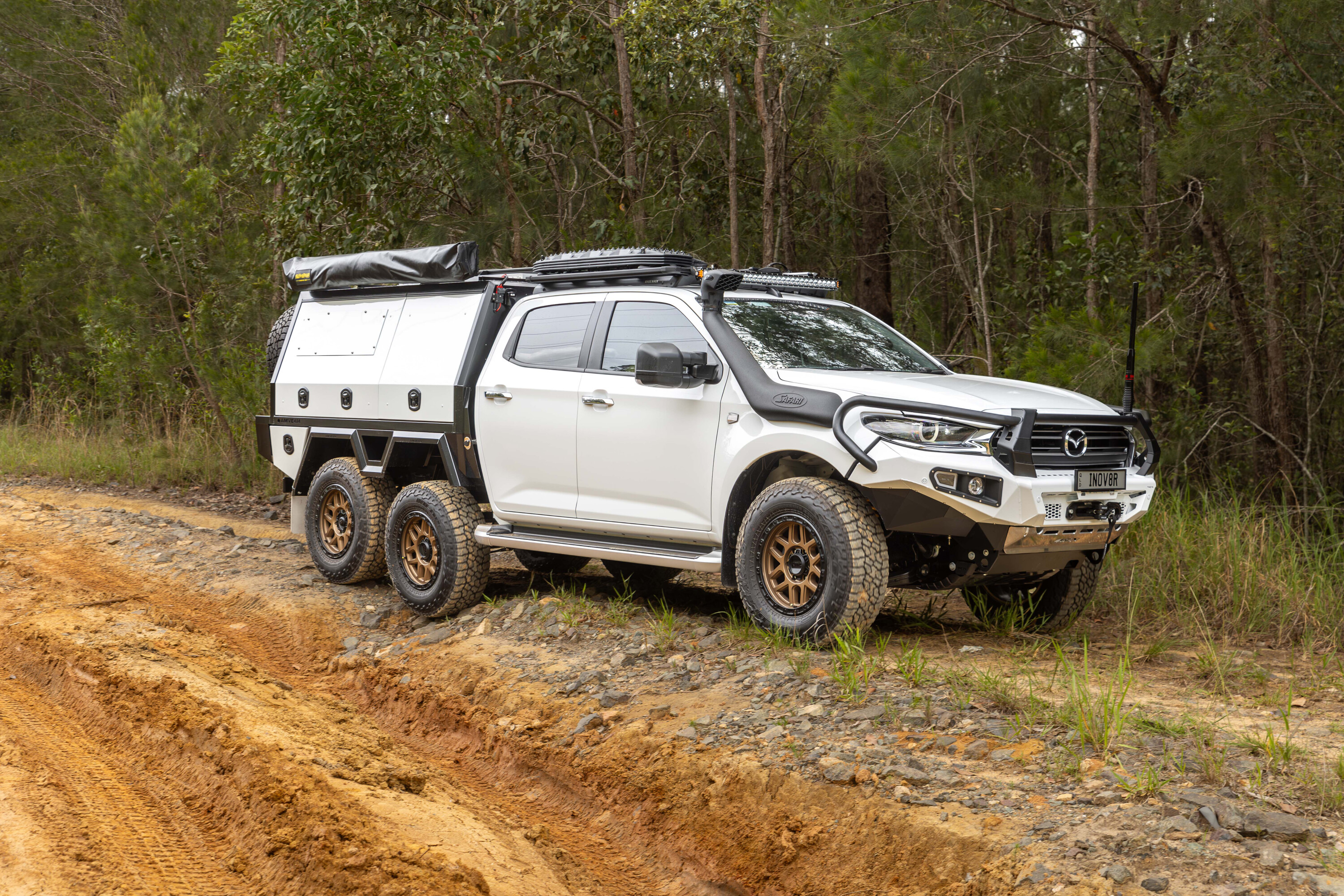
That was the conundrum facing Jen and James back in 2023. Rather than opt for a full-size American diesel ute or light truck that can be tricky to manoeuvre down tight tracks, and cost a kidney to purchase, they instead went for a Mazda BT-50. As you do.
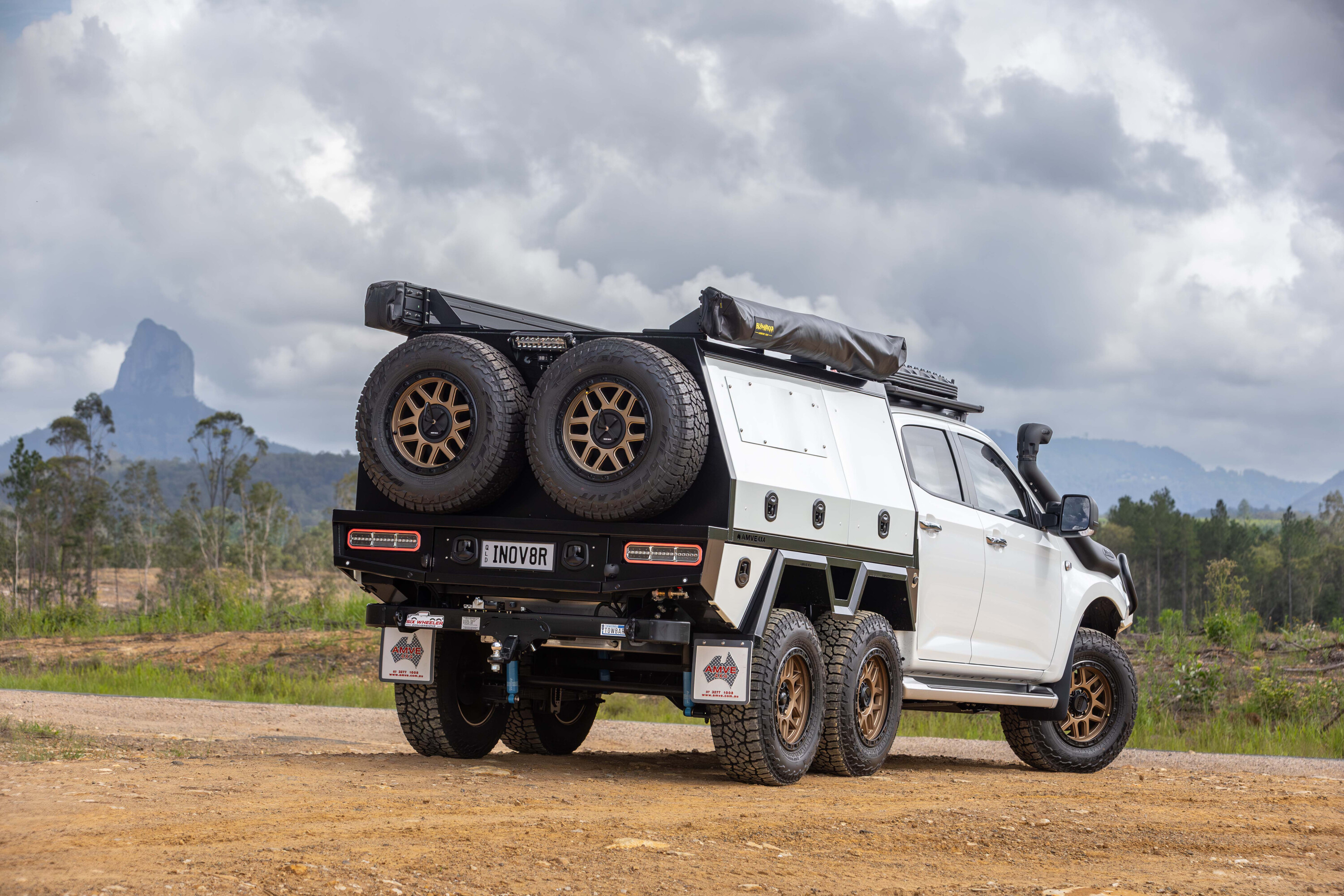
While the stock Mazda is no slouch, it’s not exactly the first thing you think of when you need a heavy-duty tow rig, but Jen and James had a plan. And despite our initial misgivings, it was one that actually made a lot of sense the more we thought about it.
“We love Mazdas and the Isuzu engine made it ideal for what we were building it for,” James told us. “On top of that, this was the most economical way for us to be able to build something that can legally tow 4.5t with a full canopy on the back.”
Hmmm… 4.5t legal towing capability when loaded up with all of the camping gear, fuel, water and their son’s quadbike? We needed to find out more about this weapon…
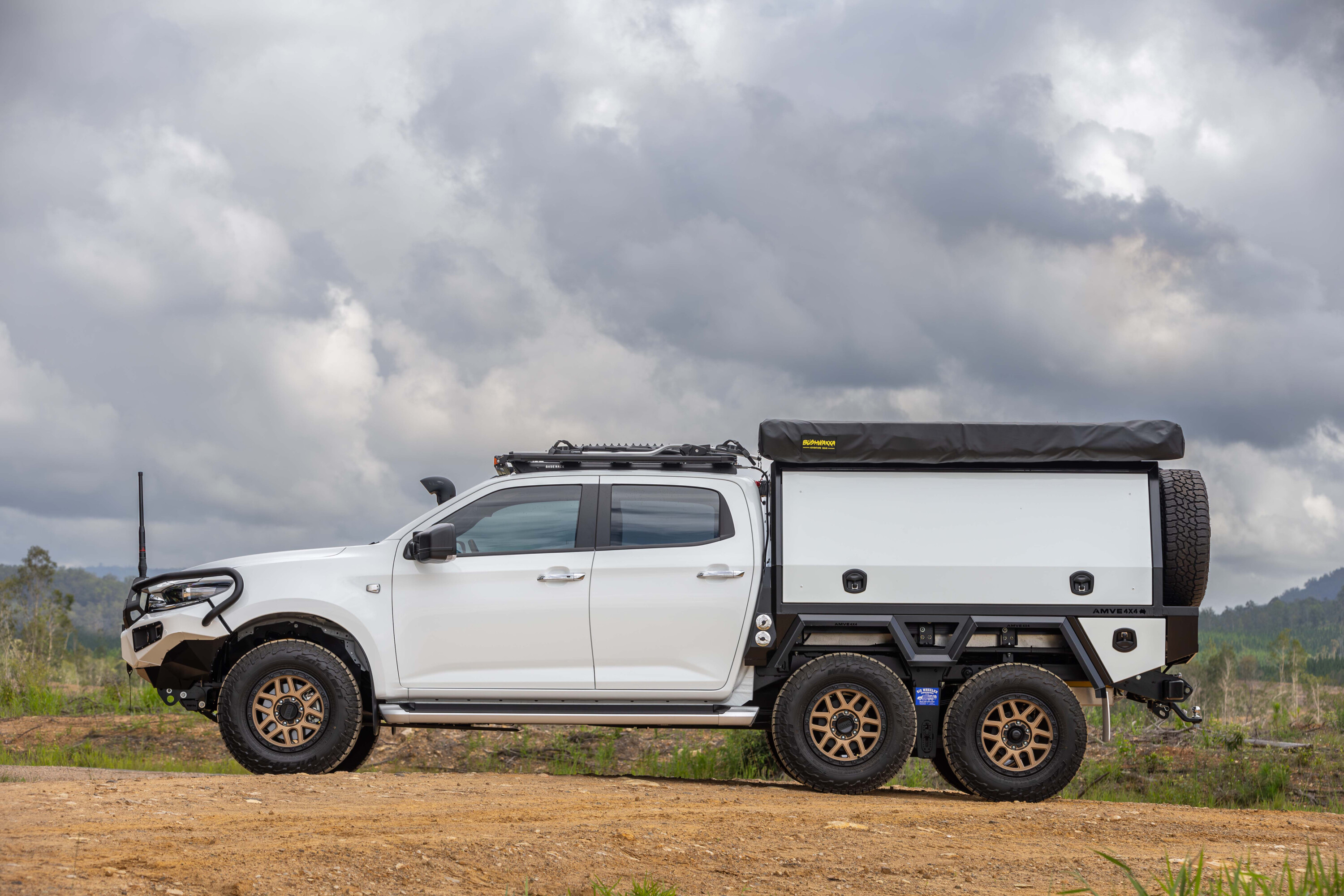
The third wheel… er, axle
“We ordered it brand new in 2023,” James says. “Before we even got it registered it was delivered to Six-Wheel Conversions in Toowoomba where the chassis and suspension mods were carried out.”
The conversion involves stretching and reinforcing the frame to accommodate the new lazy axle, as well as the installation of new leaf springs, with the whole show being designed to distribute the weight in a 60:40 split between the drive axle and the new lazy boy.
Interestingly, the off-road ability is not unduly hampered by the new addition. In fact, on sand the floatation is increased (especially when loaded up compared to a regular 4×4) and the articulation is still a respectable 300mm thanks to the leverage effect of the second axle tube.
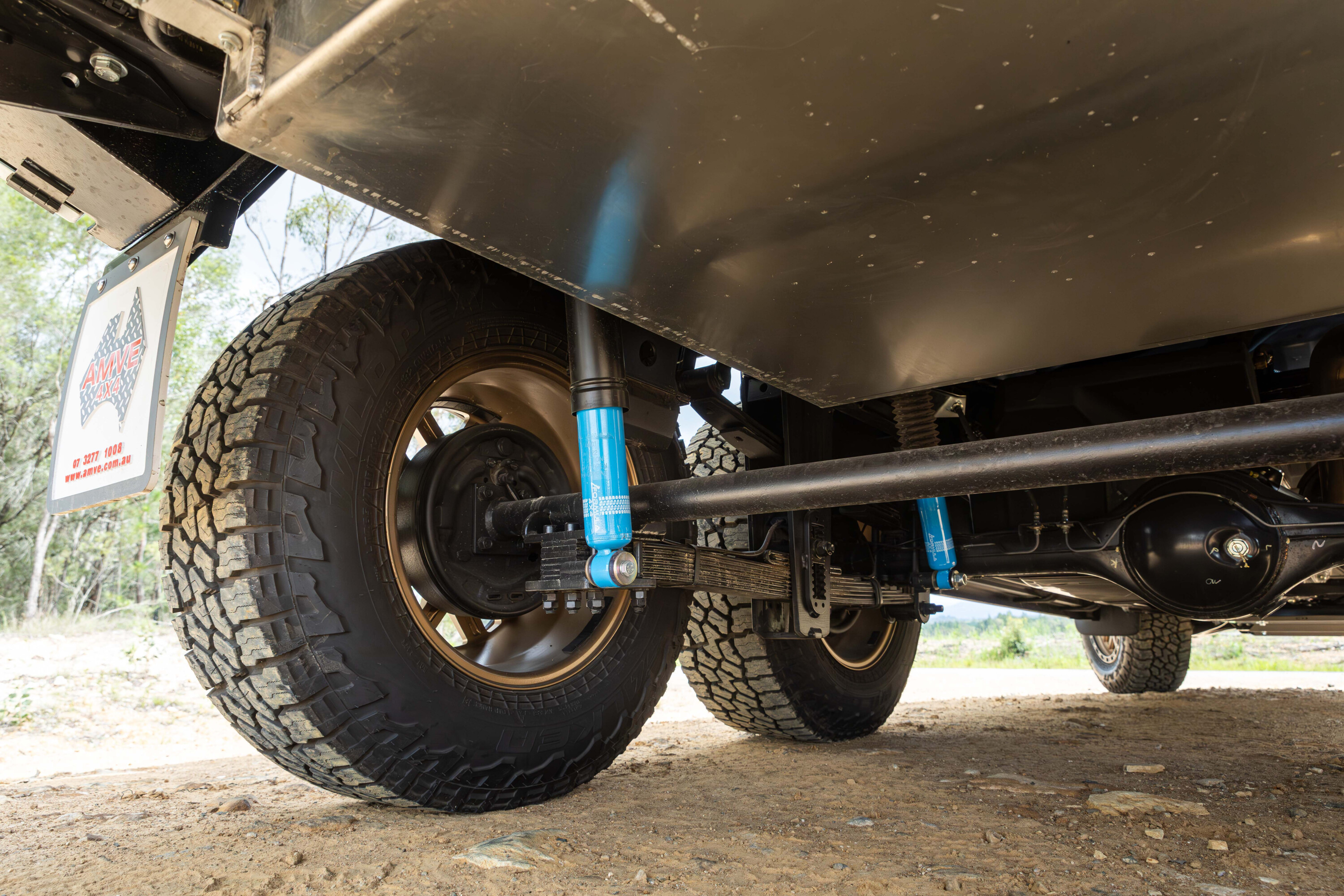
On-road driving and towing manners are also improved thanks to the extra wheelbase and optimum weight distribution between the six tyres’ contact patches.
As for the numbers, well, they’re pretty impressive. The new GVM is 4630kg (3100kg as stock) and the GCM is a hulk-like 8130kg (up from 6000kg). And in case you’re wondering, the front axle load is 1450kg while the rear axle group is rated at a massive 3183kg.
All of this necessitated registering the BT-75 as a truck, so a licence upgrade to LR is required to drive it, but the results and not having to worry about what is being carried or towed is priceless.
That cavernous canopy
With the chassis stretch completed, a lot more real estate was made available for the canopy which, to put it mildly, is expansive.
A full custom setup, James initially sketched out what he was after and gave it to Jamie and his team at AMVE who turned it into a scale drawing and fabricated it into reality.
In keeping with the theme of the build, the canopy is divided into six compartments – three primary ones for the essentials and three secondary storage areas for the rest of the gear. There are two of the primary housings on the driver’s side, the first of which holds a pair of 100Ah Revolution Power lithium batteries that are overseen by enough Victron gear to fill a catalogue, and topped up by a 140W solar panel up on the roof.
The second is the housing for the quadbike, which has to be the coolest thing ever, but if we spent too much time on every cool aspect of this rig we’d be here forever, so let’s move on.
The passenger’s side compartment spans the length of the canopy and houses a full custom kitchen that’d be right at home in a luxury apartment.
A fully functional bench is made possible thanks to the three slide-outs, two of which are double-slide, and a pair of pantries for huge amounts of storage.
There’s also a coffee machine, air-fryer, induction cooktop, griller, microwave (of course) and an 85L Bushman upright fridge centrally mounted for easy access. We’re guessing Jen and James don’t often resort to the home-brand loaf of white bread and cheap snags, or a tin of cold soup for their evening meals when out in the bush.
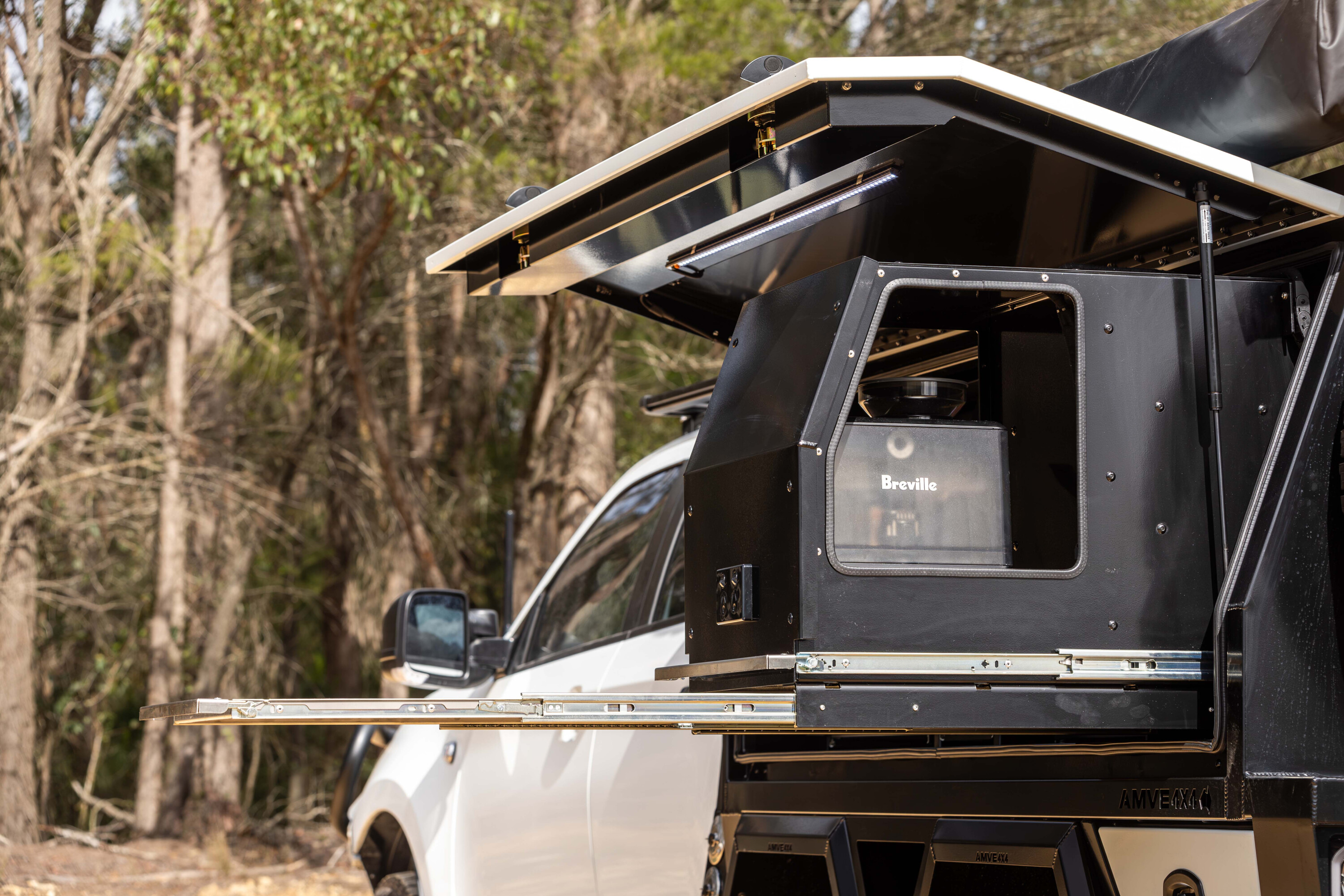
The secondary drop-down storage boxes house the ARB twin-pump compressor and accessories, the shower and water-based gear, and the tools and recovery gear should they be required at short notice.
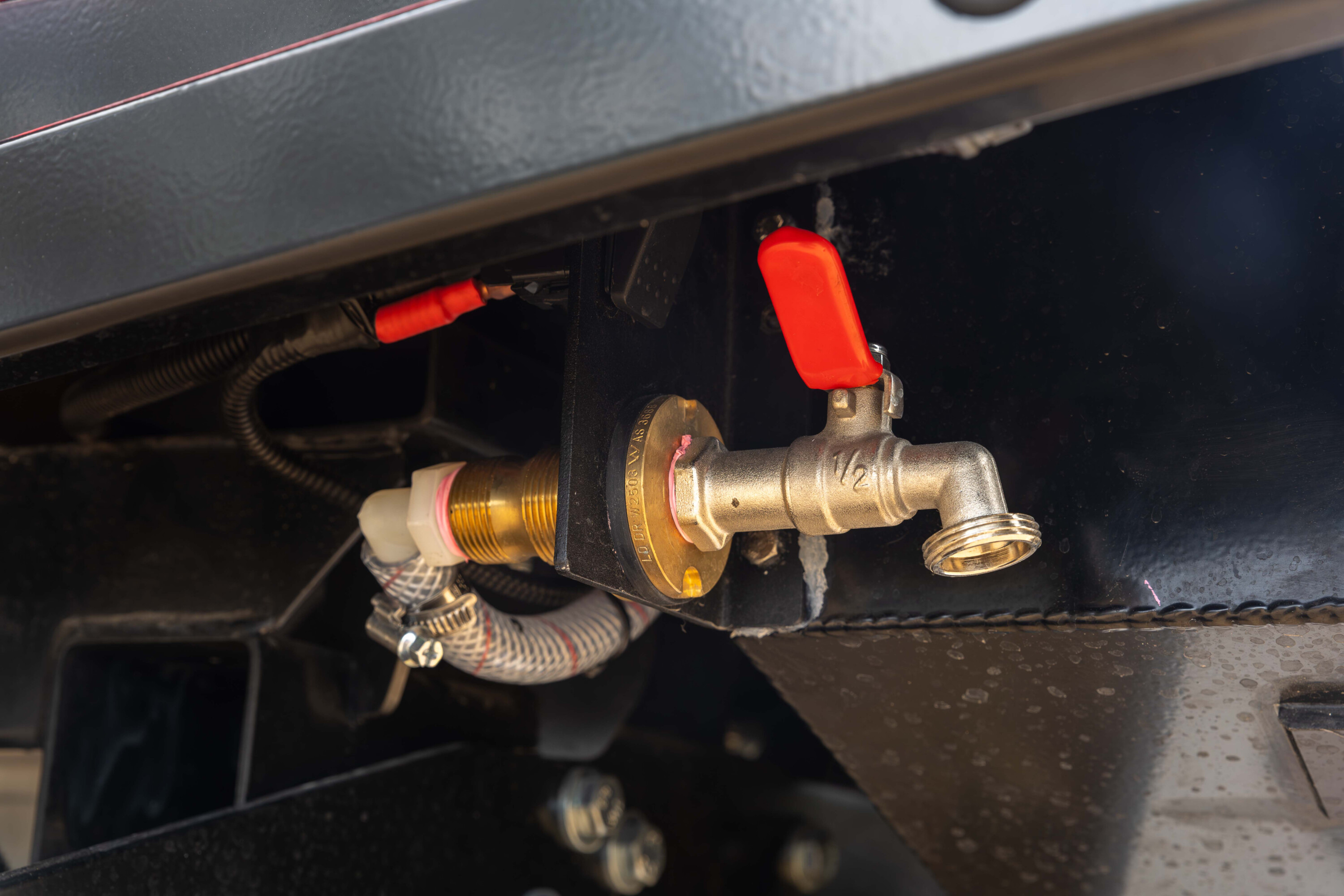
Under the tray there’s 191L of diesel available thanks to the ARB Frontier tank and BOAB 58L feeder tank, which gives this rig well north of 1200km of range, opening up trips like the Canning Stock Route or pretty much anywhere else for that matter. Water is stored in an AMVE custom made 80L stainless tank that feeds the 58L BOAB poly water tank. A high-pressure pump then sends it to the shower, sink or wash-down outlet after a run near the salt water.
The Bushwakka 270 awning and Bushwakka double ensuite rounds out what has to be one of the most comprehensive canopies we’ve ever seen.
The other bits
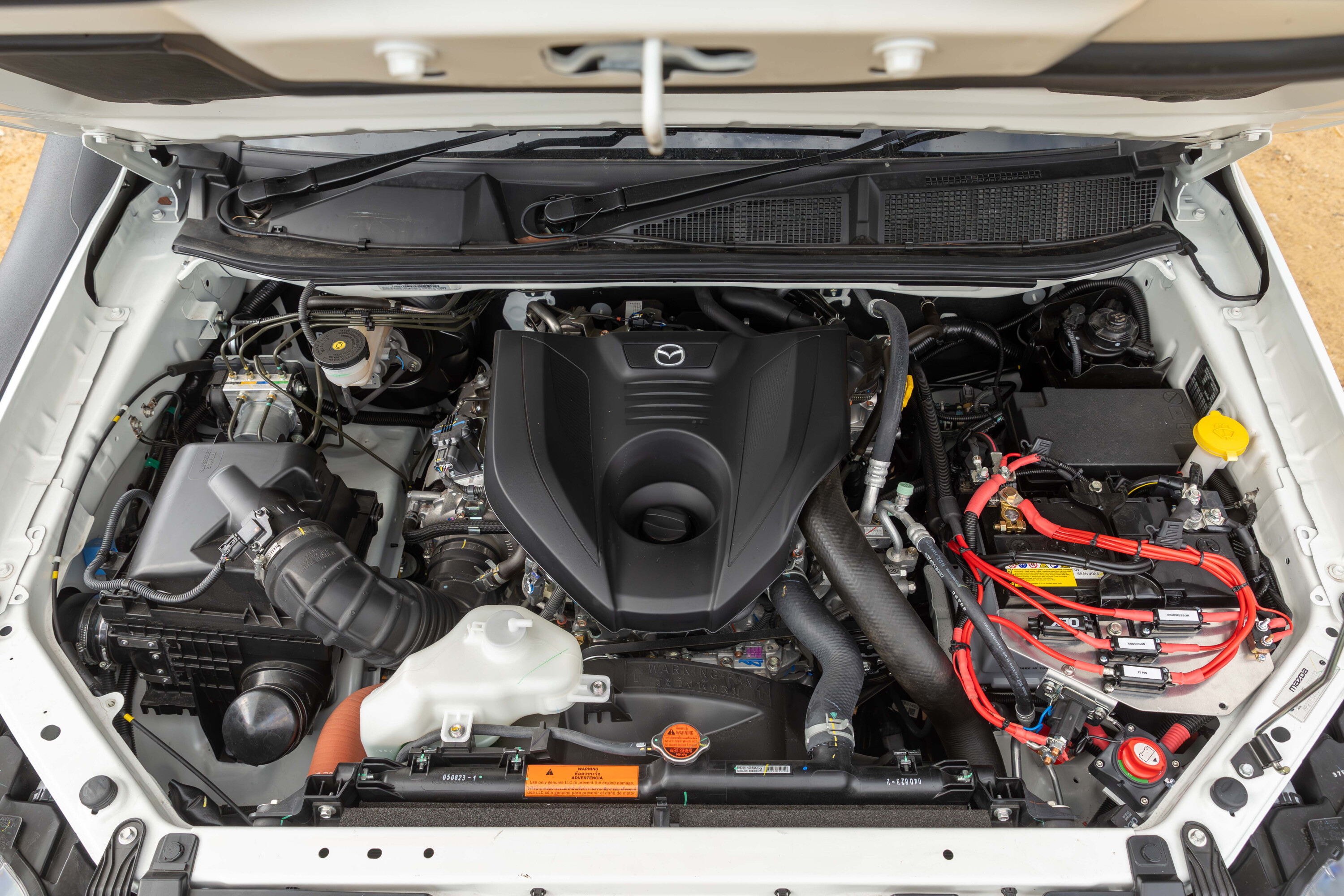
The Isuzu 4J engine family has long been accepted as one of the best four-cylinder turbo-diesels on the block.
Under-stressed from stock and capable of big dyno numbers and bigger kays when treated right, it’s a solid engine for a tow rig like this. A Safari snorkel, PWR radiator, intercooler upgrade and trans cooler have been installed ready for the tune, which should be done by the time you read this.
As for the exhaust, a custom dump pipe from the turbo flows into the standard DPF for legal reasons, then into 2.75-inch pipe to keep things moving along nicely.
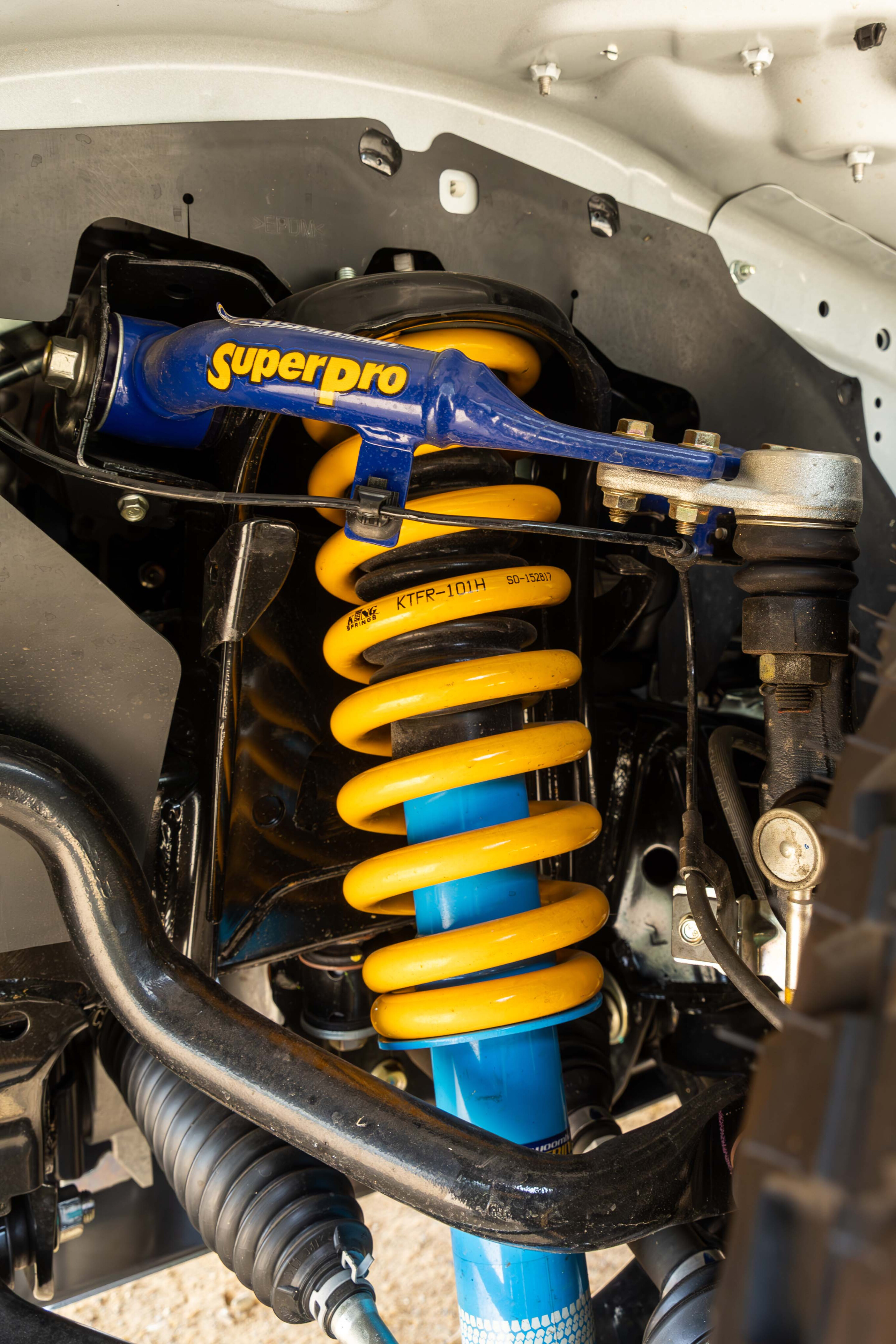
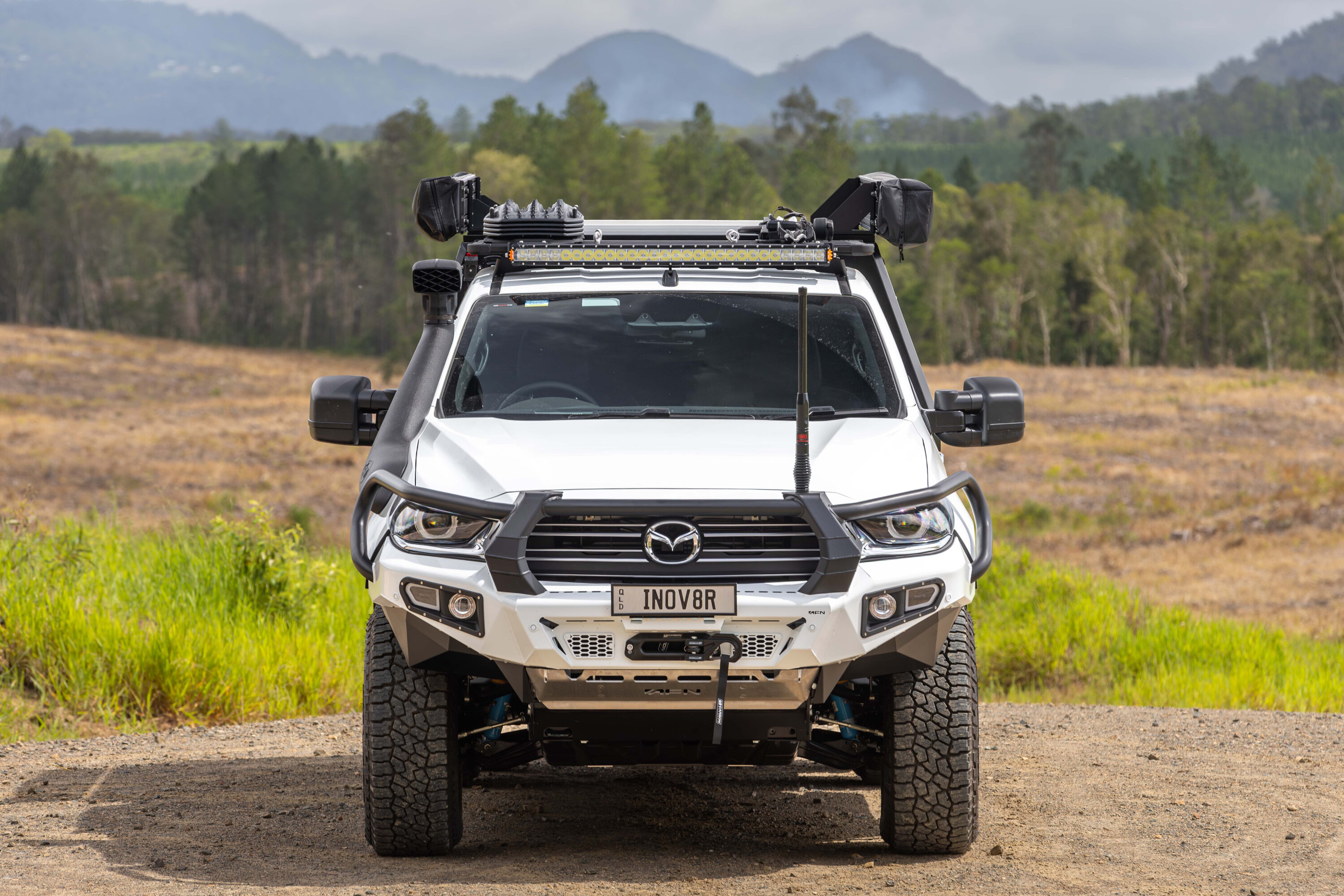
The suspension is roughly two-inches higher than stock which allowed fitment of the 265/75R17 Falken Wildpeak rubber.
To keep the front end protected an AFN colour-matched bar leads the way while a Custom Off Road stainless steel three-piece bashplate covers everything underneath back to the rear diff solednoid. A Carbon 12,000lb electric winch is also installed should the big rig encounter something it can’t power through on its own.
A Stedi lightbar keeps the ’roos visible after dark and there are LEDs pointing rearward and on all the canopy doors and underside of the awning so meal-prep or camp-chair-to-fridge journeys are well catered for.
What next?
Or rather, where next? Jen and James have a much shorter list than when they started this build and are more focused on getting out with their van and using the Light Truck BT-75 for what they designed it to do.
With that said, there are still plans for a boat loader (if the scales permit) and a full vehicle wrap to make it really stand out like the dog’s jangly bits. They’re never 100 per cent done, right?
After that there are plans to head to the left coast to see Ningaloo and the thousands of other spots worth stopping at over in WA. Oh, and K’gari has also been calling and daring the big BT and 22ft van to come try its luck on the sand. If we were betting men, we’d be quietly putting a pineapple on the Mazda.
Either way, when it comes to living life on (and off) the road in comfort and style this is one set-up that’s tough to beat.